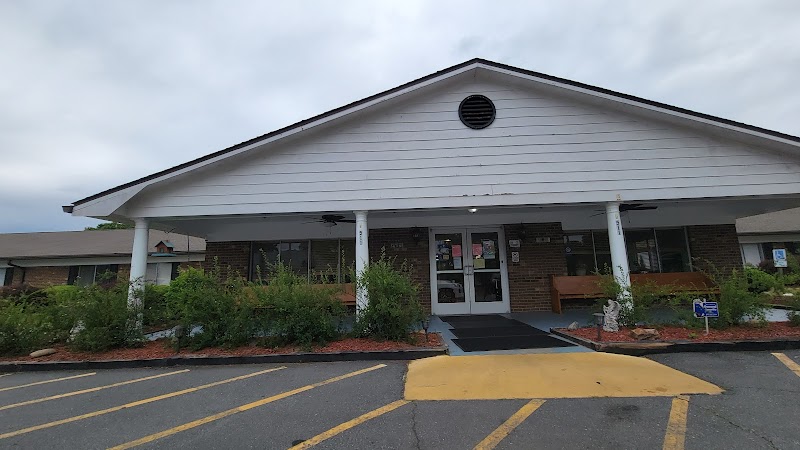
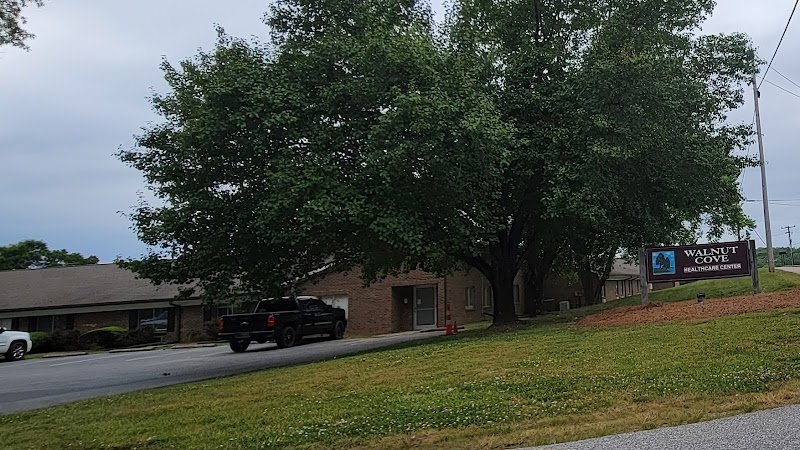
Walnut Cove Health and Rehabilitation Center

511 Windmill Street, Walnut Cove, NC 27052 (336) 591-4353
For profit - Limited Liability company 90 Beds CONSULATE HEALTH CARE/INDEPENDENCE LIVING CENTERS/NSPIRE HEALTHCARE/RAYDIANT HEALTH CARE Data: November 2025 3 Immediate Jeopardy citations
Trust Grade
0/100
#304 of 417 in NC
Last Inspection: August 2025

Inspected within the last 6 months. Data reflects current conditions.

Overview

Walnut Cove Health and Rehabilitation Center has received a Trust Grade of F, indicating significant concerns about the quality of care provided. With a state rank of #304 out of 417 facilities in North Carolina, they are in the bottom half, and #3 out of 4 in Stokes County means only one local option is considered better. The facility is on an improving trend, decreasing from 13 issues in 2024 to 4 in 2025, but they still reported a concerning number of incidents, including a resident who fell from a transport van due to improper procedure and another resident who was allowed to smoke near a combustible oxygen tank, creating a serious safety risk. Staffing is average, with a 50% turnover rate, and RN coverage is also average, which is essential for catching potential problems. Additionally, the facility has incurred fines totaling $40,149, which is concerning and suggests ongoing compliance issues.

Trust Score
F
0/100
In North Carolina
#304/417
Bottom 28%
Safety Record
High Risk
Review needed
Inspections
Getting Better
13 → 4 violations
Staff Stability
⚠ Watch
50% turnover. Above average. Higher turnover means staff may not know residents' routines.
Penalties
✓ Good
$40,149 in fines. Lower than most North Carolina facilities. Relatively clean record.
Skilled Nurses
⚠ Watch
Each resident gets only 25 minutes of Registered Nurse (RN) attention daily — below average for North Carolina. Fewer RN minutes means fewer trained eyes watching for problems.
Violations
⚠ Watch
23 deficiencies on record. Higher than average. Multiple issues found across inspections.
★★☆☆☆
2.0
Overall Rating
★★☆☆☆
2.0
Staff Levels
★★★☆☆
3.0
Care Quality
★★☆☆☆
2.0
Inspection Score
Stable
2024: 13 issues
2025: 4 issues

The Good

  • Full Sprinkler Coverage · Fire safety systems throughout facility
  • No fines on record

Facility shows strength in fire safety.

The Bad

2-Star Overall Rating

Below North Carolina average (2.8)

Below average - review inspection findings carefully

Staff Turnover: 50%

Near North Carolina avg (46%)

Higher turnover may affect care consistency

Federal Fines: $40,149

Above median ($33,413)

Moderate penalties - review what triggered them

Chain: CONSULATE HEALTH CARE/INDEPENDENCE

Part of a multi-facility chain

Ask about local staffing decisions and management

The Ugly 23 deficiencies on record

3 life-threatening
Aug 2025 4 deficiencies
CONCERN (D) 📢 Someone Reported This

A family member, employee, or ombudsman was alarmed enough to file a formal complaint

Potential for Harm - no one hurt, but risky conditions existed

Deficiency F0602 (Tag F0602)

Could have caused harm · This affected 1 resident

**NOTE- TERMS IN BRACKETS HAVE BEEN EDITED TO PROTECT CONFIDENTIALITY** Based on record reviews, and staff, resident and resident RP (Responsible Party) interviews, the facility failed to protect a re...

Read full inspector narrative →
**NOTE- TERMS IN BRACKETS HAVE BEEN EDITED TO PROTECT CONFIDENTIALITY** Based on record reviews, and staff, resident and resident RP (Responsible Party) interviews, the facility failed to protect a resident's right to be free from misappropriation of property leading to a monetary loss of $1309.99 for 1 of 3 residents reviewed for misappropriation of resident property (Resident #23).The findings included:Resident #23 was admitted to the facility on [DATE] with diagnoses that included cerebral infarction.Resident #23's admission Minimum Data Set (MDS) assessment revealed she was cognitively intact.The facility 24 Hour Initial Allegation Report completed by the Administrator dated 6/25/25 revealed the Director of Nursing was notified of an allegation that Resident #23 reported a missing debit card on 6/25/25 at 5:56 PM. The Administrator was notified on 6/25/25 by the Director of Nursing about the allegation. The report noted Resident #23's RP (Responsible Party) informed her there were potentially unauthorized charges on her debit card. Resident #23's RP informed her she had called the company that processed the charge and was informed the charge was related to a monthly rent payment. There was no physical injury or harm. There was no mental anguish. No alleged perpetrator was identified in the initial report, and the local police were notified. The facility 5 Day Investigation Report completed by the Director of Nursing and dated 7/1/25 documented the following:- Resident #23 reported her RP had informed her about the transaction on her debit card. She reported that her RP had contacted the company that made the charge for the funds to clarify the purpose of the charges. The manager of the company reviewed the charge and indicated it was related to a rent payment for a tenant of the apartment community. The manager disclosed the tenants' name to the RP. Resident #23 asked the facility to call her RP for more details. Resident #23's RP confirmed there was a charge made to the apartment community for a tenant that was an employee (Nursing Assistant #5) of the facility.- Resident #23 and her RP were informed by the facility that Nursing Assistant (NA) #5 would be suspended pending investigation. NA #5 was called and suspended pending the results of the investigation.- On 6/25/25 the local Sheriff's Department was notified and a deputy came to the facility and interviewed Resident #23. The facility followed up with the deputy and was informed that the case had been turned over to the criminal investigative unit and a detective would be available to answer any additional questions.-On 6/26/25 the Director of Nursing notified Adult Protective Services (APS) of the incident.An addendum to the facility investigation dated 7/16/25 written by the Director of Nursing noted the detective had notified the facility that a warrant had been issued for the arrest of NA #5 who used Resident #23's debit card. The detective indicated enough evidence had been collected to charge NA #5 with three separate felony charges related to the unauthorized use of Resident #23's debit card.An attempt to contact the law enforcement officer on 8/19/25 at 3:38 PM was unsuccessful.An attempt to contact the alleged perpetrator (NA #5) on 8/19/25 at 3:42 PM was unsuccessful.During an interview with Resident #23 on 8/20/25 at 9:45 AM she stated she had called to check her account balance the morning of 6/25/25 because she was expecting a deposit. Resident #23 reported her account balance was at $51.00 and a charge of $1309.99 had been charged to her card. Resident #23 stated she called her RP to have her find out information about the charge. Resident #23 stated she kept her debit card in her purse in the top drawer of the dresser. Resident #23 stated she never missed her debit card. Resident #23 denied that she used the funds to pay for any part of her stay at the facility. Resident #23 stated she was surprised that someone used her debit card without her consent. Resident #23 stated she did not feel afraid or that she could not trust staff that worked with her. Resident #23 stated the bank reimbursed her the money back in July.An interview with Resident #23's RP on 8/19/25 at 3:21 PM revealed she was notified by Resident #23 the morning of 6/25/25 to review her debit card account because she was missing some money. The RP stated she noticed a charge for $1309.99 was charged to Resident #23's account and neither the RP nor resident recognized the charge. The RP stated she called the number attached to the transaction and learned that the payment was to a rental agency for NA #5. The RP stated she explained to Resident #23 that she needed to report the charge to the facility. The RP stated she had not had any interaction with NA #5. The RP stated the facility notified both Resident #23 and her that the local law enforcement would be notified. During an interview with Nurse #4 on 8/19/25 at 4:53 PM she stated she was informed by another NA on the unit on 6/25/25 that Resident #23 had made a complaint about missing money from her debit card. She was unable to recall which NA informed her of this. Nurse #4 stated she went to speak with Resident #23, and she reported that someone had made an unauthorized charge to her debit card. Nurse #4 stated she immediately reported the information to the Director of Nursing via phone. Nurse #4 stated the Director of Nursing came in and went to interview Resident #23. During an interview with the Director of Nursing on 8/19/25 at 3:45 PM she stated she learned about the unauthorized charge when Resident #23 came to her and stated she had received a call from her RP the morning of 6/25/25. The Director of Nursing stated she asked Resident #23 if she had loaned her card out or given it to any of the staff. Resident #23 denied she had given the debit card to anyone else, and Resident #23 stated she always kept the card in her purse located in the top dresser drawer located at the bedside. The Director of Nursing revealed the facility had never seen Resident #23's debit card. The Director of Nursing stated that the facility offered all residents a place to keep their valuables upon admission and Resident #23 declined. During an interview with the Administrator on 8/20/25 he stated that he became aware of the unauthorized charges to Resident #23's debit card on 6/25/25 by the Director of Nursing. The Administrator stated Resident #23 reported she had unauthorized charges on her debit card. The Administrator indicated he notified local law enforcement on 6/25/25. The facility provided a plan of correction that was not acceptable to the State Agency. When identifying other residents who had the potential to be affected by the same deficient practice the facility interviewed cognitively intact residents, but they did not comprehensively assess if any non-interviewable residents were affected. The interventions used to identify if non-interviewable residents were affected were skin assessments and the fact that no new allegations of misappropriation were made by family members during the 5-day investigation period. Additionally, the facility's monitoring procedures only addressed interviewable residents.
CONCERN (D)

Potential for Harm - no one hurt, but risky conditions existed

Comprehensive Care Plan (Tag F0656)

Could have caused harm · This affected 1 resident

**NOTE- TERMS IN BRACKETS HAVE BEEN EDITED TO PROTECT CONFIDENTIALITY** Based on observations, record review, and resident and staff interviews, the facility failed to develop a person-centered care p...

Read full inspector narrative →
**NOTE- TERMS IN BRACKETS HAVE BEEN EDITED TO PROTECT CONFIDENTIALITY** Based on observations, record review, and resident and staff interviews, the facility failed to develop a person-centered care plan in the areas of diabetes management (Resident #13) and smoking status (Resident #23). This deficient practice was for 2 of 29 residents whose care plans were reviewed. The findings included: 1. Resident #13 was admitted to the facility on [DATE] with diagnoses which included diabetes. An active physician order included insulin glargine (long-acting insulin) inject 15 units subcutaneously in the morning related to diabetes. An active physician order included insulin glargine inject 20 units subcutaneously at bedtime for diabetes. An active physician order included metformin (medication used to treat diabetes) 500 milligram tablet; give one tablet twice a day for diabetes. Resident #13’s care plan which was last reviewed on 7/08/25 revealed no care plan for the management of diabetes. The Minimum Data Set (MDS) quarterly assessment dated [DATE] revealed Resident #13 had moderate cognitive impairment. Resident #13 was coded for diabetes diagnosis and the use of hypoglycemic (which included insulin) medication. An interview was conducted with the MDS Nurse on 8/21/25 at 9:37 am who revealed she was responsible for Resident #13’s care plan. The MDS Nurse reviewed Resident #13’s care plan in the presence of the surveyor and reported that she did not see that a care plan for diabetes had ever been implemented. The MDS Nurse stated she should have caught the missing care plan when she completed the comprehensive review, but she just missed it. An interview was conducted with the Director of Nursing (DON) on 8/21/25 at 12:35 pm who revealed the MDS Nurse was responsible to ensure that Resident #13’s care plan for medical diagnoses were in place when she completed the review. 2. Resident #23 was admitted to the facility on [DATE]. Review of the admission MDS assessment with an Assessment Reference Date (ARD) dated 5/1/25 revealed Resident #23 was cognitively intact. Review of the medical record revealed a smoking assessment dated [DATE] which indicated the resident was a safe smoker and she required assistance to get outside to go smoke. Resident #23’s care plan last revised on 8/12/25 revealed no care plan for smoking. During an interview and observation of Resident #23’s medical record with the MDS Nurse on 08/21/2025 at 10:53 AM she stated she was responsible for completing the care plan. Review of Resident #23’s care plan by the MDS Nurse revealed she did not see a smoking care plan for Resident #23 had been implemented. During an interview with the Director of Nursing on 8/21/25 at 3:00 PM, she stated the MDS Nurse was responsible for making sure Resident #23’s care plan reflected her smoking status. During an interview with the Administrator on 08/21/2025 at 3:16 PM, he stated the MDS nurse was responsible for care plans.
CONCERN (D)

Potential for Harm - no one hurt, but risky conditions existed

Deficiency F0657 (Tag F0657)

Could have caused harm · This affected 1 resident

**NOTE- TERMS IN BRACKETS HAVE BEEN EDITED TO PROTECT CONFIDENTIALITY** Based on observations, record review, resident and staff interviews, the facility failed to revise the care plan in the areas of...

Read full inspector narrative →
**NOTE- TERMS IN BRACKETS HAVE BEEN EDITED TO PROTECT CONFIDENTIALITY** Based on observations, record review, resident and staff interviews, the facility failed to revise the care plan in the areas of use of a wander/elopement alarm (Resident #13) and smoking status (Resident #39) for 2 of 29 residents whose care plans were reviewed. The findings included:1. Resident #13 was admitted to the facility on [DATE] with diagnoses which included Alzheimer's Disease. The Elopement Risk Evaluation assessment completed on 6/24/25 revealed Resident #13 was not determined to be at risk for elopement. The care plan which was last reviewed on 7/08/25 revealed Resident #13 had a care plan in place for elopement risk with an intervention for the use of a wander/elopement alarm. The Minimum Data Set (MDS) quarterly assessment dated [DATE] revealed Resident #13 had moderate cognitive impairment and was not coded for the use of the wander/elopement alarm. Review of Resident #13's active physician orders revealed no physician order for the use of a wander/elopement alarm.An observation on 8/18/25 at 12:47 of Resident #13 revealed no wander/elopement alarm was in place. An interview was conducted with the MDS Nurse on 8/21/25 at 9:37 am who confirmed Resident #13 did not have a wander/elopement alarm in use. The MDS Nurse stated she did not see the wander/elopement alarm was still listed as an intervention for Resident #13 when she completed her care plan review and it was just missed. An interview was conducted with the Director of Nursing (DON) on 8/21/25 at 12:35 pm who revealed Resident #13 had a wander/elopement alarm in the past but no longer had the wander/elopement alarm. The DON stated the MDS Nurse was responsible to ensure that Resident #13's care plan was accurate when she completed the review. 2. Resident #39 was admitted to the facility on [DATE] with diagnoses which included major depressive disorder and nicotine dependence.The Minimum Data Set (MDS) quarterly assessment dated [DATE] revealed Resident #39 was cognitively intact. The quarterly smoking evaluation dated 8/02/25 revealed Resident #39 was determined to be an unsafe smoker.The care plan last reviewed on 8/14/25 revealed Resident #39 was a safe smoker with a goal that Resident #39 would not participate in unsafe smoking practices. The care plan had interventions which included educating the resident on the smoking policy, smoking locations and times. During an interview on 8/18/25 at 3:55 pm Resident #39 stated he smoked cigarettes daily and the facility had him on the unsafe smoking list, so he was not allowed to go out by himself to smoke. An observation was conducted on 8/20/25 at 2:10 pm of Resident #39 smoking with staff present with no identified concerns.An interview was conducted with Nurse Aide (NA) #1 who revealed Resident #39 had previously been a safe smoker and was allowed to go out by himself to smoke. NA #1stated Resident #39 was recently changed to an unsafe smoker and he now needed to be supervised when smoking. During an interview with the MDS Nurse on 8/21/25 at 9:46 am she revealed she was aware that Resident #39 was determined to be an unsafe smoker, but she had not updated Resident #39's care plan yet. The MDS Nurse stated she should have updated Resident #39's care plan to reflect the unsafe smoker status when she completed the review. The Director of Nursing (DON) was interviewed on 8/21/25 at 12:38 pm who revealed Resident #39 was determined to be an unsafe smoker and the MDS Nurse was notified of the change. The DON stated the MDS Nurse should have updated Resident #39's smoking care plan to reflect the current smoking status.
MINOR (B)

Minor Issue - procedural, no safety impact

MDS Data Transmission (Tag F0640)

Minor procedural issue · This affected multiple residents

**NOTE- TERMS IN BRACKETS HAVE BEEN EDITED TO PROTECT CONFIDENTIALITY** Based on record review and staff interviews, the facility failed to complete a discharge Minimum Data Set (MDS) assessment withi...

Read full inspector narrative →
**NOTE- TERMS IN BRACKETS HAVE BEEN EDITED TO PROTECT CONFIDENTIALITY** Based on record review and staff interviews, the facility failed to complete a discharge Minimum Data Set (MDS) assessment within 14 days of the discharge date for 3 of 3 residents reviewed for resident assessment (Resident #55, Resident #81, Resident #85).The findings included:a.Resident #55 was admitted to the facility on [DATE].Review of Resident #55's medical record revealed he was discharged to another facility on 4/11/25.Review of Resident #55's medical record revealed the last completed MDS assessment was a comprehensive assessment dated [DATE]. There was no discharge assessment completed or transmitted.b. Resident #81 was admitted to the facility 3/27/25.Review of Resident #81's medical record revealed he was discharged home on 4/12/25.Review of Resident #81's medical record revealed the last completed MDS assessment was a comprehensive assessment dated [DATE]. There was no discharge assessment completed or transmitted.c. Resident #85 was admitted to the facility on [DATE].Review of Resident #85's medical record revealed she was discharged home on 4/10/25.Review of Resident #55's medical record revealed the last completed MDS assessment was a comprehensive assessment dated [DATE]. There was no discharge assessment completed or transmitted.During an interview with the MDS Coordinator on 08/21/25 at 10:53 AM while viewing the medical records she stated all three residents had missing discharge MDS assessments. The MDS Coordinator stated when she knew a person was discharged , she completed a discharge MDS assessment that indicated whether the person was coded as discharge return not anticipated, or discharge return anticipated. The MDS Coordinator indicated the discharge MDS assessment had to be completed 14 days after discharge. The MDS Coordinator stated she was not sure how she had missed completing the discharge MDS assessments for the three residents. She further stated the assessments did not trigger on her MDS progress list. During an interview with the Administrator on 08/21/25 at 3:16 PM, he stated he expected that the discharge MDS assessment would be completed and transmitted according to guidelines.
Dec 2024 1 deficiency 1 IJ
CRITICAL (J) 📢 Someone Reported This

A family member, employee, or ombudsman was alarmed enough to file a formal complaint

Immediate Jeopardy (IJ) - the most serious Medicare violation

Accident Prevention (Tag F0689)

Someone could have died · This affected 1 resident

**NOTE- TERMS IN BRACKETS HAVE BEEN EDITED TO PROTECT CONFIDENTIALITY** Based on observation, record review, and interviews with facility staff including Transport Aide/Driver #1, the facility failed ...

Read full inspector narrative →
**NOTE- TERMS IN BRACKETS HAVE BEEN EDITED TO PROTECT CONFIDENTIALITY** Based on observation, record review, and interviews with facility staff including Transport Aide/Driver #1, the facility failed to ensure the lift gate/platform was in the elevated position before unloading a resident from the back of the facility van for 1 of 3 residents sampled for accidents (Resident #1). On 10/24/24 Transport Aide Driver #1 pushed Resident #1 backwards out of the van and he fell approximately 17 and ½ inches out of the transport van to a lift platform that was located on the ground. Resident #1 fell out of his wheelchair and landed on his left side with half of his body on the lift platform and the other half of his body on the asphalt, and he struck his head on the asphalt. Resident #1 was prescribed and administered a blood thinner twice a day which increases the risk of bleeding. After being assessed by the nurse, the resident was transported to the hospital via Emergency Medical Services (EMS) transport and at the hospital. Resident #1 was found to have sustained a subarachnoid hemorrhage (bleeding on the brain), a small laceration to the left side/back of his head, and a skin tear to his left elbow. There is a high likelihood of a serious adverse outcome or injury when the manufacturer's instructions for unloading residents from the transportation van are not followed. The findings included: Review of the manufacturer's operating instructions showed the following instructions for the use of the transportation van lift to unload a resident in a wheelchair. 1. Stand clear and press the unfold switch until the platform stops (reaches floor level of the vehicle - unfold fully). 2. Load passenger onto platform from floor level of the vehicle and lock wheelchair brakes. Notice: Passenger must be positioned fully inside yellow boundaries, roll stop must be UP, and roll stop latch must be engaged. 3. Press the DOWN switch until the entire platform reaches ground level and the roll stop unfolds fully (ramp position). 4. Unlock wheelchair brakes and unload passenger from platform. Resident #1 was admitted to the facility on [DATE]. The resident's diagnoses included in part a history of vascular dementia, chronic atrial fibrillation, chronic muscle weakness, abnormal gait, and chronic lumber pain. Resident #1's annual Minimum Data Assessment, dated 8/7/24, coded the resident as moderate cognitive impairment. The resident was coded to use a wheelchair for ambulation, and as needing substantial to maximum assistance to wheel at least 150 feet. Record review of Transportation Aide/Driver #1's personnel file showed she had completed initial transportation web classes and return demonstrations when using the lift. Further review showed annual transportation training review with the most recent training being completed on 10/17/24. The training included web-based courses which consisted of driving basics, defensive driving, how to prepare a resident for transport, and a return demonstration of using the lift to load and unload a resident checklist. Review of physician orders showed Resident #1 had an order dated 8/23/24 for apixaban (a blood thinner) 5 milligrams, take one tablet twice daily. Review of the October 2024 Medication Administration Record showed Resident #1 he was administered the apixaban twice daily including the a dose on the morning of 10/24/24. There had been no documented dose omissions for October 2024. Review of a statement signed by Transportation Aide/Driver #1 dated 10/24/24 read in part, I unsecured Resident #1 and removed his seatbelt and unlocked his brakes. I leaned over so that I could push his wheelchair back onto the lift. I didn't realize that the lift was still on the ground, so his wheelchair fell, landed in a sitting position on the lift, but then the wheelchair fell over backwards. When the wheelchair fell over backwards, he fell backwards out of the wheelchair. I jumped out of the van to see that he was conscious. The statement continued to say I ran to the door to inform staff I needed help and returned to Resident #1's side. I did not see anyone anywhere outside when he fell as I looked around to see if there was anyone outside that could help me. An interview was conducted by phone with Transportation Aide/Driver #1 on 12/11/24 at 11:38 AM. She stated she had worked at the facility for 3 years as a Social Service Assistant/Transportation Aide/Driver fill-in. Transportation Aide/Driver #1 said she had been trained on how to transport residents by the facility Director of Nursing (DON) who was the acting Staff Development Coordinator at that time. Transportation Aide/Driver #1 also said she completed her annual review on 10/17/24. Transportation Aide/Driver #1 confirmed how to use the facility van lift was part of that training and she felt very comfortable transporting residents to their appointments. Transportation Aide/Driver #1 said she would fill in for Transportation Aide/Driver #2 who normally drove the transport van. Transportation Aide/Driver #1 said on 10/24/24, the DON asked her to transport two residents to and from their appointments. Transportation Aide/Driver #1 said that when she returned to the facility, she opened up the back door of the transport van and moved the lift from its stowed position. Transportation Aide/Driver #1 said she unsecured the first resident, moved that resident onto the lift, used the lift control to lower the resident, and then rolled the resident into the facility. Transportation Aide/Driver #1 then said she returned to the van and stepped into the van through the side door entrance, unsecured Resident #1 by unhooking the straps, disengaging his wheelchair brakes, and began pushing him backwards out of the van to where the lift should have been. She said Resident #1's wheelchair rolled backwards out of the van and landed about 2 feet onto the lift that was still at ground level. She stated the next thing she knew Resident #1 was lying on his left side, completely out of the wheelchair, halfway onto the asphalt and half on the lift with his wheelchair off to the side of him. She added she couldn't remember exactly if Resident #1 flipped over backwards in his wheelchair before he landed or if he dropped 2 feet and then fell out of the wheelchair because, It all happened so quickly. Transportation Aide/Driver #1 said she knew immediately that she had forgotten to raise the lift back up and it was still at the ground level when she attempted to unload him from the van. Transportation Aide/Driver #1 said she knew she was supposed to check the lift was in the right position prior to moving the second resident. She said she didn't know why she didn't check the lift and that she must have had her mind on something else. The transportation aide/driver went to the front door of the facility to get assistance. Transportation Aide/Driver #1 said both Nursing Assistant (NA) #1 and NA #2 heard her banging on the front door and came to help. She said one of them, couldn't remember which one, ran to get Nurse #1 who also responded quickly. Transportation Aide/Driver #1 thought she may have moved Resident #1's wheelchair out of the way but wasn't sure. An interview was conducted with NA #2 on 12/11/24 at 11:25 AM. She said during the afternoon on 10/24/24, unsure of the time, she heard someone banging on the front door. She stated both her and NA #1 responded to the banging on the door. She said when she saw Resident #1 on the ground, she went out to help while NA #1 went to find a nurse. She stated Resident #1 was partially on the blacktop and half on the lift. She said she may have moved the wheelchair out of the way but could not remember if she did or if Transportation Aide/Driver #1 did. NA #2 remarked she noticed a skin tear on the left side of his head and one on his left arm. She explained neither area was bleeding very much, and she didn't notice any blood on the ground or lift. She said Resident #1 was lying on his left side and was conscious. NA #1 also stated Transportation Aide/Driver #1 told the NA#1 she had moved another resident off the van and forgot to raise the lift again before attempting to push Resident #1 off of the transport van. She further stated another staff member had called 911, unsure who, and EMS came to get him pretty quickly and transported him to the hospital for assessment. An interview was conducted with Nurse Aide (NA) #1 on 12/11/24 at 11:14 AM. NA #1 stated on 10/24/24 in the afternoon, unsure of time, she heard banging on the front door, came around the corner and saw it was Transportation Aide/Driver #1. She said both her and NA #2 responded to the banging on the door. She said when she saw Resident #1 on the ground, she immediately turned around to go find a nurse while NA #2 went outside to assist with Resident #1. NA #1 said when she went out to the van, she observed Resident #1 to be lying partially on the van lift and partially on the ground toward his left side. She did not remember seeing where his wheelchair was at that time. She commented she also noticed a small amount of blood on Resident #1's left arm and Resident #1 was conscious. She said she was unsure how Resident #1 fell at that time. Review of Resident #1's electronic medical record revealed an incident entry by Nurse #1 on 10/24/24 at 3:30 PM noting in part, Staff alerted nurse that resident was on the ground behind the van .skin tear to head and left elbow noted and occurred during transfer off of transportation van upon return from an appointment. Vital signs obtained. Skin tears are cleansed and dressed. Resident is being transported to the ER [emergency room] for evaluation by EMS [emergency medical services]. An interview was conducted with Nurse #1 on 12/11/24 at 12:12 PM. Nurse #1 said on the afternoon of 10/24/24, unsure of time, one of the NAs came to get her and told her that a resident was lying in the front parking lot. She said she grabbed her blood pressure monitor and pulse oximeter (a device used to measure the percentage of oxygen in the blood and pulse) and responded immediately. She said she found Resident #1 lying partially on the van lift and partially on the blacktop. She said he was conscious and was bleeding minimally from a wound on the left side/back of his head and from a small laceration on his left elbow. She further stated she performed an assessment, his vital signs were normal, and he was alert. She stated his hearing aid was not attached so communication was difficult, but he responded appropriately to her questions and pointed to his head when she asked if he had any pain. She explained she called 911 from her phone and the volunteer rescue squad arrived within a few minutes. Nurse #1 said she stayed on the ground with Resident #1 talking with him until the county EMS ambulance arrived and transported him to the hospital A review of Emergency Medical Services (EMS) record for showed the call was received by dispatch at 3:06 PM and EMS arrived at the facility on 10/24/24 at 3:33 PM. The record read Resident #1 was alert and wearing a cervical collar with abrasion noted to left arm and side/back of head. The record further read Patient fell backwards off an estimated 18-inch platform striking his head on the asphalt. No loss of consciousness per staff. Noted to be on a blood thinner. The record said Resident #1 remained alert during transport to the hospital for evaluation. A review of hospital records for Resident #1 for the hospitalization period of 10/24/24 through 10/28/24 revealed the following. Resident # 1 was seen in the emergency room (ER) on 10/24/24 following the fall out of a van. The physician noted the resident was alert and in no acute distress at the time of the physician's assessment. The physician's head to toe assessment of Resident #1 was normal except for a small laceration to the left side of head and another small laceration to the left elbow. The radiology report indicated that a computed tomography (CT) (a CT is a noninvasive medical imaging procedure that uses x-rays to create cross-sectional detailed pictures of the inside of the body) scan showed a small volume of acute subarachnoid hemorrhage along Resident #1's left frontal lobe. The report explained the volume of hemorrhage was not enough to cause pressure on the brain. Resident #1 was admitted to the hospital for observation. A follow-up CT dated 10/28/24 revealed the bleed had not grown in size and there were no new areas of concern identified. The physician discharge note dated 10/28/24 documented Resident #1's hospital course was unremarkable. Resident #1 was discharged from the hospital back to the facility on [DATE] with no new orders. An interview was conducted on 12/11/24 at 2:45 PM with the acting Director of Nursing (DON). She stated she was not in the role of DON when the incident occurred but was made aware of what happened the same day. She explained Transportation Aide/Driver #1 had completed the necessary training to safely load and unload residents from the facility van. The DON explained the Transportation Aide/Driver #1 stated she didn't know what happened other than she made a mistake and should have followed the steps on how to unload residents from the van laid out in her training. The DON stated Transportation Aide/Driver #1 no longer worked at the facility. An interview was conducted on 12/11/24 at 3:37 PM with the Administrator. She stated the facility immediately identified the incident on 10/24/24 as needing a plan of correction and it was implemented to ensure all residents were kept safe. She also said no other staff member will be allowed to operate the transport van lift if they have not fully completed the necessary training. During a follow-up call with the Administrator on 12/18/24 at 3:34 PM, she confirmed the measurement from the floor of the van to the ground was 17 and one half inches. On 12/11/24 at 4:03 PM, the Administrator was notified of immediate jeopardy. The facility implemented the following corrective action plan: 1.Address how corrective action will be accomplished for those residents found to have been affected by the deficient practice; On October 24, 2024, at approximately 3:30 pm, 2 residents were returning to the facility from scheduled outside appointments via facility transportation service. Transportation Aide/Driver #1 pulled up outside the facility at the front entrance. Transportation Aide/Driver #1 unloaded Resident #2 from the lift that is located at the back doors of the van. Transportation Aide/Driver #1 then took Resident #2 inside the facility. When Transportation Aide/Driver #1 returned to the van, she did not raise the van lift to rear entrance of the van, she entered the van from the side door, and did not realize the van lift was still on the ground. Transportation Aide/Driver #1, while facing Resident #1 and the rear of the van, began to remove the wheelchair tie down straps and seatbelt from Resident #1's wheelchair, and unlocked the brakes of the wheelchair. The Transportation Aide/Driver #1 bent over forward and began to push Resident #1's wheelchair backward, towards the rear of the van. The Transportation Aide/Driver was unaware the lift remained on the ground. When Resident #1 reached the rear exit of the van, the wheelchair fell backward and resident #1 fell out of wheelchair onto the lift that was on the ground. As a result of the fall, Resident #1 hit his head on the base of the van lift. Resident #1 landed in a position where he was on his left side with his head and body in a fetal position with wheelchair on the left side, beside of resident #1. Transportation Aide/Driver #1 then jumped off the back of the van to check on the resident. Resident #1, who was alert and oriented, stated to her that his head hurt. Transportation Aide/Driver #1 ran 10 feet to the front door to call for help and returned to the resident's side. The Transportation Aide/Driver did not move Resident #1. Registered Nurse (RN) #1 responded to Resident #1 and assessed him. During RN #1's assessment, it was noted that he had a laceration (cut) to the back of his head with small amount of bleeding, and that his left arm was bleeding with superficial (on the surface of the skin) lacerations. RN #1 notified 911 and stayed with Resident #1 until local emergency services arrived. Emergency Medical Services (EMS) arrived at the facility after the local emergency services arrived and the resident was transported to the local hospital via EMS. The facility also notified the responsible party, and the facility physician. At the hospital, a Computed Tomography (CT) scan of Resident #1's head was completed that revealed a small volume left frontal subarachnoid hemorrhage, which is when there is bleeding in the space between the brain and the membrane that covers it. Resident #1 was admitted to the hospital on [DATE]. During his stay at the hospital, the small volume frontal subarachnoid hemorrhage resolved, and Resident #1 continued at baseline cognitive status. Resident #1 returned to the facility on October 28, 2024, and is a current resident in the facility. The resident did not have any long-term effects from his injury. Resident #1 was taking anticoagulant for a diagnosis of Atrial Fibrillation at the time of the fall. 2. Address how the facility will identify other residents having the potential to be affected by the same deficient practice; On October 25, 2024, the Executive Director, the Regional Nurse Consultant, and the Director of Nursing completed an audit of all appointments in the last 90 days, and it was determined any resident could be at risk for this deficient practice if they were transported to an appointment on the facility van. Residents with a Brief Interview for Mental Status (BIMS) indicating mild cognitive loss to being cognitively intact were interviewed by the Social Worker and there were no concerns identified regarding the van ride or use of the lift. On October 25, 2024, skin sweeps were conducted on all current residents by the nurse managers with no issues. The Transportation Aide/Driver was interviewed by the Executive Director and the Human Resources Director on October 24, 2024, regarding any other falls during the onloading, off-loading or transport of any resident and there were no issues noted. 3. Address what measures will be put into place or systemic changes made to ensure that the deficient practice will not recur. The Transportation Aide/Driver #1 was immediately suspended on October 24, 2024, and an investigation was initiated. At the conclusion of the investigation, it was determined that the expected standards of safety procedures were not followed. The Transportation Aide/Driver #1 stated that when she exited the building after taking Resident #2 into the building that she entered the open door on the side of the van, not remembering that she had not put the lift back up into the receiving position. She said that because of her posturing in front of the resident to release the safety devices, she could not see that the lift was not in place. As she rolled Resident #1 backwards toward the lift, she was in a bent forward position and again, could not see that the lift was not in proper position. The Transportation Aide/Driver #1 is no longer employed at the facility. The 1 other facility van driver, Transportation Aide/Driver #2 was provided education regarding the use of the facility van and the proper use of the lift, utilizing the manufacturer's lift instructions, to include safe practice provided by the Executive Director on October 25, 2024. The Executive Director also completed a competency training with Transportation Aide/Driver #2. This was followed by an evaluation of her knowledge of the training which was conducted through observation utilizing the competency checklist by the Executive Director. This education and competency will be completed for all newly hired Transportation Aides/Drivers prior to being allowed to use the facility van or lift by the Executive Director, the Director of Nursing, or the Assistant Director of Nursing. All facility van transportation will have another staff member riding along and observing all on and off loading of the residents going to outside appointments on the van for 90 days starting on the afternoon of October 28, 2024. The observer is a patient care assistant (PCA) assigned to go on outside appointments as needed to ensure the safety of the residents. The PCA was educated by the Executive Director on October 25, 2024. Any further observers will receive the training by the Executive Director prior to riding on the transportation van. This education included what to observe while onloading and offloading of residents. This included safe transferring from van to lift (offloading) and from the lift to the van (onloading). The observer was also made aware to inform the Transportation Aide/Driver of any unsafe practice so it could be immediately corrected or intervene if necessary to ensure resident safety. If the unsafe practice was not immediately corrected, the PCA was educated to call the Executive Director immediately. All residents who had outside appointments were taken by outside transport vendors during the time when the facility van was not in service, October 24, 2024, through October 28, 2024. The outside transport companies were contacted by the Executive Director to confirm that their drivers/transportation aides were properly trained on how to onload and offload residents safely on their van. Outside transport vendors provided proof of education about onloading and offloading residents while using the lift prior to transportation services to ensure the safety of the residents. The van lift was inspected on October 28, 2024, by an authorized lift service station, and the lift was deemed safe for use. The van was ready for routine operation after it was inspected on the morning of October 28, 2024, and began providing service to our residents on the afternoon of October 28, 2024. Transportation Aide/Driver #2 is currently utilizing the facility van to transfer residents to and from appointments and there have been no wheelchair van related incidents. 4. Indicate how the facility plans to monitor its performance to make sure that solutions are sustained. Quality monitoring will be performed by the Executive Director, or a nurse manager, Director of Nursing, or Unit Manager, in the absence of the Executive Director. This will be conducted on 2 different residents weekly that are being loaded and unloaded by the transportation aides/drivers, to ensure residents are safely loaded and unloaded from facility van prior to transporting to and from appointments per manufacturer's instructions for 12 weeks and then monthly for 3 months. Any observed unsafe practices will be drawn to the attention of the Transportation Aide/Driver for correction. In the case of any unsafe practice, the Transportation Aide/Driver will be re-educated, that will include a competency at the conclusion of the education. The facility made the decision to monitor/audit and bring this to Quality Assurance (QA) on October 24, 2024, to include review of the Quality Monitoring. 5. Include dates when corrective action will be completed. The facility's corrective action plan was validated by the following: The facility provided documentation of Transportation Aide/Driver #2 web-based training courses on driving basics, defensive driving, and a checklist that included return demonstrations on how to load and upload residents from the transportation van. The facility provided documentation of van service records provided by an outside company which validated the lift was working properly following the incident, along with evidence of their audits as outlined in their plan of correction. Their audits included observation of Transportation Aide/Driver #2 to ensure she continues to follow lift and van safety instructions regarding boarding safety, patient securement, and patient assistance, including Resident #1. Daily monitoring of all residents using the transport van lift was being conducted and that information was presented in the facility's weekly QA meetings. On 12/11/24 at 2:19 PM Transportation Aide/Driver #2 was observed loading and unloading Resident #5 from the facility van using the lift. Transportation Aide/Driver #2 explained in detail the steps she takes and the safety measures she followed when using the lift as she was loading and unloading Resident #5. An interview conducted with a resident who had been recently transported to an appointment revealed he had no concerns with being loaded or unloaded from the van, being secured safely in the van, and felt the transport was safe. Transportation Aide/Driver #2 stated she completed the refresher course as part of the facility plan of correction on 10/24/24 following the incident. Transportation Aide/Driver #2 provided documentation showing she was cleared to transport residents using the lift. The facility's implementation for corrective action plan with a date of compliance of 10/29/24 was validated on 12/11/24. The IJ removal date was 10/29/24.
Jul 2024 12 deficiencies 1 IJ
CRITICAL (J) 📢 Someone Reported This

A family member, employee, or ombudsman was alarmed enough to file a formal complaint

Immediate Jeopardy (IJ) - the most serious Medicare violation

Accident Prevention (Tag F0689)

Someone could have died · This affected 1 resident

**NOTE- TERMS IN BRACKETS HAVE BEEN EDITED TO PROTECT CONFIDENTIALITY** Based on observation, record review, staff and resident interviews and a life safety surveyor interview the facility failed to e...

Read full inspector narrative →
**NOTE- TERMS IN BRACKETS HAVE BEEN EDITED TO PROTECT CONFIDENTIALITY** Based on observation, record review, staff and resident interviews and a life safety surveyor interview the facility failed to ensure the safety of residents in the designated smoking area of the facility when a staff member supervising the residents who smoked lit Resident #78's cigarette and allowed the resident to smoke with a combustible tank of compressed oxygen attached to the back of her wheelchair while she sat in the wheelchair. Residents who were also smoking were seated near the oxygen tank. The oxygen tank was turned off while the residents smoked. Even if turned off, it is not safe to smoke around an oxygen tank, oxygen-enriched levels can remain on tubing, clothing, hair, and skin increasing the risk for fire and/or explosion. Supplemental oxygen can make fires burn faster and hotter. This practice was for 1 of 8 sampled residents but placed 7 additional residents at risk for the high likelihood of serious injury or harm. Immediate jeopardy began on 6/26/24 when a staff member lit Resident #78's cigarette with an oxygen tank attached to her wheelchair. The immediate jeopardy was removed on 06/27/24 when the facility implemented an acceptable credible allegation of immediate jeopardy removal. The facility will remain out of compliance at a lower scope and severity level of E (no actual harm with a potential for minimal harm that is not Immediate Jeopardy) to ensure monitoring of systems are put in place and to complete employee in-service training. The findings included: Resident #78 was readmitted to the facility on [DATE]. Her diagnoses included chronic obstructive pulmonary disease. Review of Resident #78's physician's orders dated 04/10/24 included an order for continuous oxygen at 3.5 liters via nasal canula. Resident #78's smoking evaluation dated 04/10/24 revealed the Resident was a smoker and was able to communicate why oxygen must always be shut off prior to lighting cigarettes. Resident #78 was not able to light cigarettes safely with a lighter. Resident #78 was marked as smokes safely (Does not allow ashes or lit material to fall while smoking, inhaling or holding smoking item. Remains alert and aware while smoking. Does not forget he/she is smoking or falls asleep holding item. Does not endanger self or others while smoking. Does not burn furniture, clothing, skin, self, or others. Turns oxygen off prior to lighting cigarette. Smokes only in designated area). The summary of the evaluation revealed resident was marked as required supervision while smoking. Review of Resident #78's admission Minimum Data Set (MDS) dated [DATE] revealed she had moderate cognitive impairment and was on oxygen therapy. The Current Tobacco Use section was marked No. Review of Resident #78's care plan dated 04/17/24 revealed a focused area for smoking and interventions included the Resident would not smoke with oxygen tank attached to wheelchair. On 06/26/24 at 9:15 AM an observation of residents in the designated smoking area, from the vending room exit door, revealed Resident #78 sitting in a wheelchair, smoking a lit cigarette and had a portable oxygen tank attached to the back of her wheelchair. Her nasal canula tubing was draped over the back of the wheelchair. There were 7 other residents smoking in the smoking area along with 5 staff. The 5 staff in the smoking area included the Maintenance Director, the Human Resources Coordinator, the Central Supply/Scheduler, and 2 contract housekeepers. This surveyor went to the Director of Nursing (DON) and asked her to observe the residents in the smoking area. There was no designated area for oxygen tank storage at the exit door. On 06/26/24 at 9:22 AM an observation was conducted of the designated smoking area with the DON. The DON stated, Oh no and went to the smoking area and removed the oxygen tank from the sleeve on the back on Resident #78's wheelchair. The DON stated the oxygen tank should have been removed from the wheelchair prior to exiting the building to go to smoke. The DON did not indicate why the oxygen tank should not be attached to the resident's wheelchair while she smoked. An interview was conducted with the Maintenance Director 06/26/24 at 10:15 AM and he stated he monitored the 2:00 PM smoke break. He stated one of the Nurse Aides (NA) usually escorted the residents to the smoking area. He stated all the residents were already outside when he got to the smoking area. He was unable to specifically recall the exact time he arrived in the smoking area. The Maintenance Director recalled he had opened the door for the residents to exit to the smoking area before he went to get the cigarette box containing the residents' smoking materials. He stated the Scheduler/Central Supply staff, Housekeeper #3, and the Human Resources Coordinator were already in the designated smoking area. He stated after opening the door for the residents to exit, he went to the nursing station to retrieve the residents' smoking materials. The Maintenance Director explained he took the cigarettes out to the smoking area. He said he lit all the residents' cigarettes because they were not allowed to keep smoking materials with them. He stated on 06/26/24 during the 9:00 AM smoke break, he lit Resident #78's cigarette. He said he did not notice the portable oxygen tank on the back of her wheelchair. He stated he had not received any education related to smoking and oxygen tanks. He further stated he knew oxygen was flammable and could explode. He said there were no signs warning against oxygen use in the smoking area. He stated, when the DON removed the oxygen tank from her wheelchair, Resident #78 told him the nurse had told her she could go to the smoking area with her portable oxygen tank if it was set on zero (0). The Maintenance Director stated the NAs usually removed the oxygen tanks prior to escorting the resident outside to smoke. He stated he did not know where the NAs stored the tanks when they removed them from the residents' wheelchairs. He stated he had no instructions in his office and no books containing instructions for storing portable oxygen. On 06/26/24 at 11:15 AM an observation and follow-up interview were conducted with the Maintenance Director. During the observation, measurements were obtained to show the proximity of the tank to the facility and to the resident for the risk of fire. The Maintenance Director measured from the vending room exit door to the location where Resident #78 was positioned in the designated smoking area. The measurements revealed Resident #78 was sitting 67 feet from the vending room exit door and 4 feet from other residents on each side of her wheelchair. There was a fire extinguisher with a full charge on one post and a fire blanket located in a metal box on another post. There were two Designated Smoking Area signs. There were no signs to warn against having oxygen in the designated smoking area. An interview was conducted with Resident #78 on 06/26/24 at 11:45 AM and she stated her portable oxygen tank was off when she went to the designated smoking area at 9:00 AM. She stated she had been going outside with her portable oxygen tank attached to the back of her wheelchair for the last month. She stated she had been in the facility for three months and had started smoking regularly one month ago. She stated no one had ever told her she could not go outside with her portable oxygen tank attached to the back of her wheelchair until the DON removed her portable oxygen that morning (6/26/24). Resident #78 stated she transfers herself to her wheelchair and propels her wheelchair herself to the smoking area. The Resident stated prior to 06/26/24, Unit Manager #3 had gone out to the smoking area when Resident #78 had her portable oxygen tank on her wheelchair. She stated Unit Manager #3 told her it was okay to go outside to smoke with the portable oxygen tank on her chair as long as it was off. She stated she goes outside once in the morning and once in the evening. On 06/26/24 at 1:45 PM a follow up interview with Resident #78 was conducted and she stated she turned off her oxygen tank before she went to smoke. She stated she stopped at the nursing station on her way to the smoking area for the 9:00 AM smoke break, she got out of her wheelchair, turned off her oxygen, got back in the wheelchair and wheeled herself down the hall to the smoking area. She stated she did not recall if there was a nurse or other staff at the nursing station when she stopped there. On 06/26/24 at 3:35 PM during an observation Resident #78 demonstrated her ability to transfer from her bed to her wheelchair and from her wheelchair she stood and walked to the back of her wheelchair. She demonstrated she could turn her portable oxygen tank setting from 0 to 3 on the tank stationed in the portable tank holder on her wheelchair. Resident #78 stated she never removed or had staff remove her oxygen tank prior to going to the smoking area to smoke. She stated she always had her oxygen tank attached to her wheelchair when she went to smoke. On 06/26/24 at 12:15 PM an interview was conducted with NA #3 stated Resident #78 got up on her own every morning, transferred herself to her wheelchair, and transported herself to the smoking area. NA #3 stated Resident #78 was very independent and did not wait for staff to assist her with transfers or escort her to the smoking area. NA #3 stated she did not adjust the setting on Resident #78's portable oxygen tank. She stated Resident #78 adjusted the settings on her oxygen tank on her own. An interview was conducted on 06/26/24 at 12:20 pm with Unit Manager #3. She stated she had smoked with Resident #3 in the past. She stated she did not go to Resident #78's room and talk to her on the morning of 06/26/24. She stated Resident #78 had started going out to smoke 1 month ago after being in the facility for about 3 months. Unit Manager #3 stated she stocked the cigarette box and knew Resident #78 did not smoke much. Unit Manager #3 stated Resident #78 may have asked her to turn off her portable oxygen tank prior to going to smoke but she did not know Resident #78 was going to smoke. Unit Manager #3 stated she probably assumed Resident #78 was going back to her room. Unit Manager stated Resident #78's oxygen order was for continuous oxygen. Unit Manager #3 stated she was not sure where Resident #78 went after she turned the oxygen off. Unit Manager #3 stated she should not have turned off Resident #78's oxygen when she did not know where the Resident went after she turned the oxygen off. She stated Resident #78 could have gone to smoke or could have gone to her room; she did not know which. Unit Manager #3 stated that it was Resident #78's right to request the oxygen be turned off. On 06/26/24 at 12:55 PM an interview was conducted with Housekeeper #3. She stated at times she went to the designated smoking area to smoke while on her break while the residents were smoking. She stated she worked for a housekeeping agency and did not monitor residents. She stated she did not assist residents outside to the smoking area because it was not part of her job duties. She said she did not notice whether Resident #78 had a portable oxygen tank on her wheelchair that morning. She added she had not received training or education that pertained to smoking or oxygen tanks. An interview was conducted on 06/26/24 at 1:10 PM with the Central Supply/Scheduler and she stated she was in the smoking area 5 minutes prior to residents' arrival to the area. Central Supply/Scheduler stated from where she was positioned in the smoking area, she did not see the portable oxygen tank on back of Resident #78's wheelchair on 06/26/24. She stated she had never changed the setting on Resident #78's oxygen tank. She stated if asked, she would take a resident's oxygen tank to their room and put it in portable holder. She stated she received oxygen tank training during orientation and yearly through an online training program. She stated the training included the dangers of oxygen, flammables, and smoking. She added if she had noticed the oxygen tank on the back of Resident #78's wheelchair, she would have removed the tank from the smoking area due to the danger. On 06/26/24 at 1:25 PM an interview was conducted with Housekeeper #2. She stated she was not responsible for monitoring residents. She further stated she did not assist in escorting residents to the smoking area because it is 'not in her scope'. She said she had never paid attention to or noticed an oxygen tank on Resident #78's wheelchair. She stated that although she had not received training that pertained to smoking or oxygen use, she knew it could cause an explosion. An interview was conducted with the Human Resources Coordinator on 06/26/24 at 1:30PM and she stated she assisted with smoke breaks at times. She stated she assisted with monitoring the 9:00 AM smoke break on the morning of 06/26/24. The Human Resources Coordinator said she was already outside when the residents exited the building to smoking area. She stated she did not notice the oxygen tank on Resident #78's wheelchair. She stated she had never witnessed the Resident #78 with an oxygen tank on her wheelchair. She said if she had observed the oxygen tank on the back of the wheelchair, she would have removed the tank and she would have asked the Central Supply/Scheduler what to do with the tank. She stated she knew an oxygen tank was not supposed to go outside. On 06/26/24 at 2:30 PM a phone interview was conducted with the NC DHHS Life Safety Surveyor, and he stated that smoking and/or an open flame in the vicinity of a compressed oxygen cylinder is a fire hazard. He further stated it did not matter if the oxygen tank was off, it still posed a risk of fire and/or explosion. An interview was conducted on 06/26/24 at 5:15 PM with the Administrator and DON. The Administrator stated Resident #78's oxygen tank should not have been in the smoking area. She stated it was not the Maintenance Director's designated job duty to monitor the residents while they smoked. She stated the staff in the smoking area were responsible for monitoring the residents while they smoked. The DON stated she the daily assignment sheets included the NAs' names assigned to smoke breaks on each shift. The DON stated the Maintenance Director often offered to monitor the smoke breaks when the assigned NA was busy. The DON stated on weekends the assigned NA monitored the smoke breaks. She stated the smoke break assignment was subject to change to meet the facility needs. The Administrator stated the smoke break assignment falls under the Other duties as assigned description. The DON stated training related to smoking and oxygen use was provided for facility staff during orientation and yearly but was not provided to housekeeping, dietary, and therapy. The Administrator stated all staff were responsible for residents' safety while on the facility grounds. She stated that included break time if the staff were in the smoking area while residents were there smoking. She stated staff should have made sure Resident #78 did not enter the designated smoking area with her portable oxygen tank attached to her wheelchair because she was aware that oxygen was flammable and smoking near a tank whether it was turned on or off could potentially explode and harm residents. The Administrator was notified of immediate jeopardy on 06/26/24 at 6:36 PM. The facility provided the following credible allegation of immediate jeopardy removal. Identify those recipients who have suffered, or are likely to suffer, a serious adverse outcome as result of the noncompliance; and 1. The corrective action for alleged deficient practice was accomplished by: Prior to the incident, Resident # 78 was in her bed, utilizing the Oxygen concentrator in her room. Resident #78 self-transferred into her wheelchair with a portable oxygen tank that was turned off, on the back of her wheelchair. The resident attached the end of the tubing to the portable oxygen tank and placed the nasal canula tubing in the bag on the wheelchair. The oxygen was not turned on and the nasal canula was not applied. Resident self-propelled into smoking area while Maintenance Director held the door for her and other residents as they were entering the courtyard to smoke. The resident was observed smoking in the courtyard with a portable oxygen tank attached to her wheelchair by the surveyor. The surveyor observed the tank on the back of the wheelchair while the resident was in the courtyard smoking, the surveyor left the courtyard observation to notify the Director of Nursing (DON) who was in her office that she had a concern in the courtyard and asked her to walk to the courtyard. When the DON arrived at the door that enters the courtyard, the surveyor asked the DON if she saw anything wrong. The Director of Nursing immediately went to the courtyard and removed the oxygen tank from the back of resident #78's wheelchair on 06/26/2024. The surveyor observed 4 staff members, the Maintenance Director, the Human Resources Director and 2 housekeepers, in the designated smoking area while the resident was smoking with a portable oxygen tank on the back of her wheelchair. Immediately after the Director of Nursing removed the tank from the resident's wheelchair and placed the tank in the secured portable holder in residents #78's room, the Director of Nursing assessed the smoking area through observation for safety signage as it related to no smoking with oxygen and identified there was no signage regarding no oxygen in smoking area. The only sign posted was Designated Smoking Area. The Maintenance Director, Human Resources Director nor the 2 housekeepers were educated or trained on the importance of monitoring for the use of oxygen. None of the staff in the designated smoking area noticed the oxygen tank on the back of the wheelchair. Resident #78 was assessed for smoking on 4/11/24. The assessment identified the resident required supervision due to the inability to safely light a cigarette with a lighter. The maintenance director was assigned to supervise the smoke break at 9 am and failed to notice and remove the oxygen tank on the back of the wheelchair on resident #78 on 6/26/24. The Director of Nursing and Unit Manager identified residents with oxygen use through active physician orders on 06/26/2024. The list of these residents was provided to the social worker who educated the residents that oxygen / oxygen tanks are prohibited in or around the designated smoking area on 06/26/2024 and documented education provided in the residents' chart. The Director of Nursing and Unit Manager identified residents that smoke through smoking assessments on 06/26/2024 and this was verified against the list of current smokers. The list of residents was provided to the social worker who educated the identified residents on ensuring oxygen tanks were to be removed from the wheelchair before entering the smoking area on 06/26/2024 and documented education provided in the resident's chart. Specify the action the entity will take to alter the process or system failure to prevent serious adverse outcome from occurring or recurring, and when the action will be complete. The Director of Nursing educated the Maintenance Director on ensuring oxygen is removed from the wheelchair prior to entering smoking area and the dangers of smoking around oxygen, which is combustible and could cause a fire and/or burns on 06/26/2024. The Unit Manager placed an oxygen rack next to the exit to the courtyard, in the vending machine room, for the oxygen tanks to be placed in before exiting the building, on 06/26/2024. 100% of facility staff to include contract staff were educated by the Director of Nursing and Unit Manager on removing oxygen tanks and placing portable oxygen tanks in the secure oxygen rack prior to residents entering the courtyard smoking area on 06/26/2024. The Director of Nursing re-educated licensed nurses, certified nursing assistants, non-direct staff, contracted staff that includes therapy, housekeeping and dietary staff on the smoking policy, which includes oxygen is not permitted in the designated smoking area, and ensuring oxygen tanks are removed from the wheelchair and or ambulatory residents before entering the smoking area due to the dangers of smoking around oxygen on 06/26/2024. The Executive Director placed signs on the door entering the smoking area as a reminder to ensure oxygen tanks removed from the wheelchair and placed in oxygen rack before entering smoking area as well as signs that state NO OXYGEN OR OXYGEN TANKS BEYOND THIS POINT on 06/26/2024. The Executive Director placed NO OXYGEN / NO OXYGEN TANKS signs in the designated smoking area on 06/26/2024. The Director of Nursing and Unit Manager completed Skilled Check Off Competency for Smoking Safety in accordance with policies and procedures for oxygen safety precautions for oxygen use and not smoking around oxygen, for Licensed nurses, certified nursing assistants, department managers, receptionist, maintenance assistant and activity assistant; these are the staff members that are allowed to supervise smokers. These individuals listed have completed the skills check off competency includes smoking times, where to obtain smoking materials, oxygen tank removal, apron use, the location of fire blankets, fire extinguishers, and where to obtain the list of unsafe smokers on 06/26/2024. The daily assignment sheets identify who is assigned to supervise the smokers and the daily assignment sheets are posted at both nurse's stations. If the assignments are changed, the nurse is responsible to communicate that to the newly assigned personnel. The skilled check off sheet that identifies the responsibilities for supervising the smokers is in notebooks placed in the vending machine room near the entrance to the designated smoking area and at each nurse's station. The responsibilities of the supervisor of the smokers are: o To know where smoke times are posted, at exit to courtyard o To obtain smoking materials from the South Hall Medication Cart o Assists residents to smoke area as needed o Removes any Oxygen tank and places in designated storage area in vending room (ask nurse for assistance in turning off oxygen as needed) o Prior to beginning smoke breaks, ensures that there is no oxygen or oxygen tanks anywhere in the courtyard o Utilizes smoking aprons from the designated smoking area located in the grey bin o Sanitize hands o Passes out cigarettes to each resident o Lights each resident's cigarette o Faces the residents smoking and continuously monitor their safety o Knows location of fire extinguisher o Knows location of fire blanket o Assists the residents back in the building after smoke break o Replaces any oxygen tanks from storage to the resident (ask nurse to turn on oxygen if needed) o Knows to return smoking materials to designated South Hall Medication Cart An ADHOC Quality Assurance Performance Improvement Committee was held on 06/26/2024 to formulate and approve a plan of correction for the deficient practice. Date of Immediate Jeopardy Removal 6/27/24. The title of the person responsible for implementing the acceptable credible allegation for immediate jeopardy removal. The Administrator is responsible for the credible allegation of immediate jeopardy removal. Alleged date of IJ removal 06/27/24. A validation of immediate jeopardy removal was conducted on 06/27/24 as evidenced by the following verification of education for licensed nurses, certified nursing assistants, non-direct care staff, contracted staff that included therapy, housekeeping, and dietary staff on the smoking policy, which included oxygen is not permitted in the designated smoking area, and ensuring oxygen tanks are removed from the wheelchair and or ambulatory residents before entering the smoking area. Observation revealed a tank holder in the vending area next to the exit door leading to the smoking area. The exit door had a sign that read No Oxygen or Oxygen Tanks Beyond This Point and signs in the smoking area that read No Oxygen/No Oxygen Tanks. The IJ removal date of 6/27/24 was validated.
CONCERN (D) 📢 Someone Reported This

A family member, employee, or ombudsman was alarmed enough to file a formal complaint

Potential for Harm - no one hurt, but risky conditions existed

Deficiency F0561 (Tag F0561)

Could have caused harm · This affected 1 resident

**NOTE- TERMS IN BRACKETS HAVE BEEN EDITED TO PROTECT CONFIDENTIALITY** Based on observations, record reviews, residents and staff interviews, the facility failed to honor 1 resident (Resident #30) of...

Read full inspector narrative →
**NOTE- TERMS IN BRACKETS HAVE BEEN EDITED TO PROTECT CONFIDENTIALITY** Based on observations, record reviews, residents and staff interviews, the facility failed to honor 1 resident (Resident #30) of 2 residents reviewed for safe smoking the right to take smoking breaks at their preferred times. Findings included: Resident #30 was admitted to the facility on [DATE]. Review of the facility's Smoking Evaluation dated 5/22/24 indicated Resident #30 was alert, oriented and could consistently perform safe smoking techniques. The resident demonstrated fine motor skills needed to light a cigarette safely with a lighter, securely hold a cigarette, and was able to communicate the risks associated with smoking. The facility assessed Resident #30 as a safe smoker. The care plan dated 5/28/24 revealed Resident #30 was educated on the facility's smoking policies and was able to verbalize smoking safety. Interventions included: the resident will smoke during designated smoking times; and required constant supervision while smoking. The quarterly minimum data set (MDS) dated [DATE] indicated Resident #30 was cognitively intact. A review of the facility's smoking schedule indicated residents who smoked were allowed to smoke in the designated area on the facility's compound at 9:00 a.m., 2:00 p.m., and 9:00 p.m. with staff supervision. During an interview on 6/23/24 at 1:50 p.m., Resident #30 revealed he was only allowed to smoke at the facility three times each day per the smoking schedule and supervised by facility staff. During an interview on 6/26/24 at 10:43 a.m., the Maintenance Director stated Resident #30 was a safe smoker; had never dropped cigarettes or burned his clothing or skin while smoking. He further revealed that if a resident requested to be escorted to the designated smoke area and it was not during the scheduled smoke time, he would refuse because he would have to supervise the resident, and he could get in trouble. He did not differentiate between safe & unsafe smokers. On 6/26/24 at 4:18 p.m., the Executive Director stated that according to the smoking assessments, Resident #30 was an unsafe smoker but did not provide a reason as to why he as an unsafe smoker. She indicated that she would meet with the interdisciplinary team to discuss changing the process to allow residents deemed safe smokers the opportunity to smoke independently during times of their choosing.
CONCERN (D)

Potential for Harm - no one hurt, but risky conditions existed

Grievances (Tag F0585)

Could have caused harm · This affected 1 resident

**NOTE- TERMS IN BRACKETS HAVE BEEN EDITED TO PROTECT CONFIDENTIALITY** Based on staff interviews and record reviews, the facility failed to document the steps taken to investigate a complaint/grievan...

Read full inspector narrative →
**NOTE- TERMS IN BRACKETS HAVE BEEN EDITED TO PROTECT CONFIDENTIALITY** Based on staff interviews and record reviews, the facility failed to document the steps taken to investigate a complaint/grievance expressed on behalf of a resident, the findings or conclusions reached based on the investigation, and whether the investigation results were reported to the complainant with a written grievance decision. This occurred for 1 of 1 resident reviewed for grievances (Resident #284). The findings included: A review of the facility's Complaint / Grievance Policy and Procedure (Document Name: N-1042; Revised on 10/24/22) was conducted. The Policy stated, The Center will support each resident's right to voice a complaint / grievance without fear of discrimination or reprisal. The center will make prompt efforts to resolve the complaint / grievance and informed [inform] the resident of progress towards resolution The resident should have reasonable expectations of care and services and the center should address those expectations in a timely, reasonable, and consistent manner The Procedures outlined in this Policy included the following, in part: #3 [of 8]. The Grievance Officer / designee shall act on the grievance and begin follow-up of the concern or submit it to the appropriate department director for follow-up. #4. The grievance follow-up should be completed in a reasonable time frame; this should not exceed 14 days. #5. The findings of the grievance shall be recorded on the Complaint/Grievance Form #8. The individual voicing the grievance will receive follow up communication with the resolution, a copy of the grievance resolution will be provided to the resident upon request. Note: North Carolina will provide a copy of the resolution to the resident. Resident #284 was admitted to the facility on [DATE]. Her cumulative diagnoses included early onset Alzheimer's disease, generalized muscle weakness, and adult failure to thrive. A review of Resident #284's electronic medical record (EMR) revealed her admission Minimum Data Set (MDS) assessment was dated 6/8/24. The resident was assessed to have severe cognitive impairment. She was independent with eating, required supervision for walking, and extensive assistance from staff for the remainder of her activities of daily living (ADLs). Information from an Incident / Accident Report dated 7/5/23 at 2:00 AM and authored by Nurse #1 reported Resident #284 had an unwitnessed fall. She was found on the floor of her room and described to be asleep, naked. The Incident / Accident report documented the resident was assisted off the floor and dressed. Her provider and family were contacted, and she was transported to the Emergency Department (ED) for further evaluation due to sustaining a significant hematoma to her right side of her forehead. Resident #284 was discharged from the facility to the hospital on 7/5/23. A review of the facility's Grievance Log from June 2023 through the date of the review on 6/23/24 indicated that one grievance dated 7/6/23 was expressed on behalf of Resident #284 by a family member. --The first section of the Complaint / Grievance Report dated 7/6/23 described the details of the concern as follows: [Resident #284] was sent out to hospital inappropriate on 7-5-23. --The second section of the Complaint / Grievance Report included the Documentation of Investigation. The staff member(s) assigned responsibility for the investigation read, Nursing. Departments impacted by the complaint or grievance had an x next to Nursing. The Findings of Investigation was left blank on the form. The plan to resolve the complaint / grievance read: staff educated. Nurse #2 signed this section as completed, but it was not dated. --The third section of the Complaint / Grievance Report was labeled as the Post-Investigation Follow Up. This section of the report included questions addressing whether the Complaint / Grievance was resolved; if the complainant was satisfied; the complainant remarks; whether the investigation results and resolution steps were reported to the Family, Resident, and/or Resident Council; and whether the results were communicated verbally, in writing, or by other means. No documentation was completed within this section of the Complaint / Grievance Report. Nurse #2 signed this section as completed, but it was not dated. A telephone interview was conducted on 6/27/24 at 4:10 PM with Nurse #2. Nurse #2 was the staff member who completed the second and third sections of the Complaint / Grievance Report dated 7/6/23 for Resident #284. Nurse #2 recalled some of the situation related to this grievance and stated she thought it was due to how the resident was dressed when she went out to the ED. When asked what the facility's process for handling grievances involved, the nurse stated whoever took the grievance (as she did) would pass it on to the Social Worker or the Department Head for resolution. She stated she did remember providing education to Nurse #1 about this situation involving Resident #284 but could not recall any additional details. An interview was conducted on 6/26/24 at 3:10 PM with the facility's Director of Nursing (DON). At the time of the interview, the DON provided additional documentation to supplement the Complaint / Grievance Report dated 7/6/23. A Huddle Report dated 7/6/23 read, in part: Nurses: Any patient who goes out to the hospital is to be clothed appropriately, clean, and dry before transferring to hospital . A Huddle Report Signature sheet (not dated) included 12 day shift nursing staff signatures and 4 night shift nursing staff signatures. At that time, the DON reported no other documentation could be located related to the 7/6/23 Complaint / Grievance Report for Resident #284. An interview was conducted on 6/27/24 at 1:05 PM with the facility's Administrator. During the interview, the Administrator reported the facility's Social Worker was designated as the Grievance Officer. However, the current Social Worker was not working at the facility when the Complaint / Grievance Report was filed for Resident #284. When the Administrator was asked what her thoughts were regarding the documentation on this Complaint / Grievance Report, she stated, It should have been more comprehensive. Upon further inquiry, the Administrator added that the report should have included what education was provided and who received the education (and when). She also stated the Complaint / Grievance Report should have documented what follow-up was done with Resident #284's family.
CONCERN (D) 📢 Someone Reported This

A family member, employee, or ombudsman was alarmed enough to file a formal complaint

Potential for Harm - no one hurt, but risky conditions existed

Employment Screening (Tag F0606)

Could have caused harm · This affected 1 resident

Based on record review and staff interviews the employee file was missing evidence of pre-employment screening documents for history of abuse, neglect, exploitation, or misappropriation of residents o...

Read full inspector narrative →
Based on record review and staff interviews the employee file was missing evidence of pre-employment screening documents for history of abuse, neglect, exploitation, or misappropriation of residents on a staff reviewed for allegation of staff to resident abuse (Nurse Aide #1). The findings included: The facility's policy on abuse, neglect, exploitation and misappropriation dated 11/30/14 and revised on 11/16/22 was reviewed during the survey. The screening paragraph stated persons applying for employment will be screened for a history of neglect, exploitation, or misappropriation of resident property. This includes but not limited to employment history, criminal background checks, abuse check with appropriate licensing board and registries prior to hire, sworn disclosure statement prior to hire, licensure or registration verification prior to hire, documentation of status of any disciplinary actions form licensing or registration boards and other registries, information from former employees. Review of NA #1's employee file revealed he was hired by the facility on 9/4/19. The employee file had orientation documents. There were no pre-employment screening documents in the employee file. During a discussion on 6/25/24 at 12:01 pm, the Executive Director stated they have looked everywhere for NA #1's pre-employment screening documents but could not find them. She stated there was a high turnover with the Human Resources (HR) job and the files may have been misplaced. The Executive Director stated they would keep searching for NA #1's file. During a follow up discussion on 6/26/24 at 11:22 am, the Executive Director stated they still could not find NA #1's files. She stated she asked NA #1 to sign a consent for a criminal background check on 6/25/24. She stated she did not allow him to work starting 6/25/24 until the facility receives the criminal background check. The Executive Director stated the new HR staff started conducting audits of all the facility employees' files.
CONCERN (D) 📢 Someone Reported This

A family member, employee, or ombudsman was alarmed enough to file a formal complaint

Potential for Harm - no one hurt, but risky conditions existed

Report Alleged Abuse (Tag F0609)

Could have caused harm · This affected 1 resident

**NOTE- TERMS IN BRACKETS HAVE BEEN EDITED TO PROTECT CONFIDENTIALITY** Based on record review and staff interviews, the facility failed to report an initial allegation of staff to resident abuse to A...

Read full inspector narrative →
**NOTE- TERMS IN BRACKETS HAVE BEEN EDITED TO PROTECT CONFIDENTIALITY** Based on record review and staff interviews, the facility failed to report an initial allegation of staff to resident abuse to Adult Protective Services (APS) for 1 of 5 residents reviewed for abuse (Resident #71). The findings included: A review of the facility's Abuse, Neglect, Exploitation and Misappropriation policy, last revised 11/16/22, revealed the Administrator ensured the reporting is completed timely and appropriately to appropriate officials in accordance with Federal and State regulations. Resident #71 was admitted on [DATE]. The facility's Executive Director completed an Initial Allegation Report to the State Agency on 6/16/24. The report designated the type of allegation as Resident Abuse and indicated the facility became aware of the allegation on 6/16/24 at 6:15 pm. Allegation details revealed Nurse Aide #1 (NA) was rough to Resident #71 when assisting him back to bed that morning on 6/16/24. The facsimile receipt provided by the facility was dated and timed as 6/16/24 at 8:11pm when the report was faxed to the State Agency. Further review of the report indicated APS was not notified of the allegation of abuse. During an interview on 6/25/24 at 11:28 AM, the Assistant Director of Nursing (ADON) stated she was in front the Resident # 71's room when his roommate made the allegation to her on 6/16/24. She stated she could not remember the time, but it was close to lunch time. Resident #71's family member was also present in the room when his roommate said Resident #71 was thrown against the wall by NA #1 that morning. She stated she immediately reported it to the Executive Director around noon but did not know the specifics of the allegation since the resident could not verbalize what happened. The ADON stated she called NA #1 and the night nurse to come back and write a statement. She stated she assessed Resident #1 and completed a skin check. She did not see any injuries or bruises. Both staff told her the incident happened around 5:30 am and both staff were present. The ADON stated both staff heard the roommate yelling for help and observed Resident #71 standing beside his roommate's bed. The resident was unsteady on his feet and was holding on to the bedside table so both staff assisted him to the floor then back to his bed. Both staff wrote statements and they both denied the resident was thrown against the wall. During an interview on 6/25/24 at 9:35 am, the Executive Director revealed the Assistant Director of Nursing (ADON) notified her close to dinner time. The ADON told her that Resident #71's roommate told her that NA #1 threw Resident #71 against the wall. The Executive Director stated she went to talk to Resident #71's roommate and the roommate reported that NA #1 threw Resident #71 against the wall. She stated the resident did not have injuries or bruises when the ADON assessed the resident. The nurse was assisting NA #1 during the incident and wrote a statement that the allegation did not occur. The nurse reported that NA #1 did not throw resident against the wall. The Executive Director stated she did not notify APS. She stated she thought she did not need to since the resident was safe and was in the facility. During a discussion on 6/26/24 at 5:15 pm with the Corporate Consultant and Executive Director, the Corporate Consultant stated she remembered the requirement to notify APS on 6/17/24 and discussed this with the Executive Director. The Executive Director revealed she did not notify APS about the abuse allegation. She stated that she thought the resident was safe in the facility and did not think to report it. The Corporate Consultant asked the Executive Director to notify APS via email during the discussion on 6/26/24.
CONCERN (D)

Potential for Harm - no one hurt, but risky conditions existed

Comprehensive Assessments (Tag F0636)

Could have caused harm · This affected 1 resident

**NOTE- TERMS IN BRACKETS HAVE BEEN EDITED TO PROTECT CONFIDENTIALITY** Based on staff interviews and record review, the facility failed to complete a comprehensive Minimum Data Set (MDS) assessment a...

Read full inspector narrative →
**NOTE- TERMS IN BRACKETS HAVE BEEN EDITED TO PROTECT CONFIDENTIALITY** Based on staff interviews and record review, the facility failed to complete a comprehensive Minimum Data Set (MDS) assessment at least every 12 months for 1 of 34 residents (Residents #29) whose MDS assessments were reviewed. The findings included: Resident #29 was admitted to the facility on [DATE]. Her cumulative diagnoses included non-traumatic brain dysfunction, Alzheimer's dementia, and manic depression. A review of Resident #29's Minimum Data Set (MDS) assessments revealed her last comprehensive (annual) assessment was dated 5/4/23. The resident's electronic medical record (EMR) indicated on the date of the review (6/24/24), her next comprehensive MDS assessment dated [DATE] had not yet been completed. The EMR included a banner at the top of the listing of Resident #29's MDS assessments which read: Next Full: ARD (Assessment Reference Date): 5/4/2024 39 days overdue [calculated from 5/4/24 to 6/12/24]. An interview was conducted on 6/26/24 at 8:49 AM with the facility's MDS Coordinator. The MDS Coordinator stated she was new to the facility with a start date of 6/19/24. She reported she had pulled a report to show late or missing MDS assessments when she came to work on 6/21/24. The MDS Coordinator stated Resident #29 initially had a quarterly MDS scheduled for 6/12/24. However, when she saw an annual MDS was due on 5/4/24, she changed the quarterly MDS to an annual MDS assessment. The MDS Coordinator confirmed the annual MDS assessment was overdue. An interview was conducted on 6/27/24 at 1:05 PM with the facility's Administrator. During the interview, the concern related to an annual MDS not having been completed every 12 months was discussed. The Administrator reported she felt confident the timeliness of MDS assessments would improve with the new MDS nurse now in place.
CONCERN (D)

Potential for Harm - no one hurt, but risky conditions existed

Assessment Accuracy (Tag F0641)

Could have caused harm · This affected 1 resident

**NOTE- TERMS IN BRACKETS HAVE BEEN EDITED TO PROTECT CONFIDENTIALITY** 2. Resident #59 was readmitted to the facility on [DATE]. The resident's cumulative diagnoses included coronary artery disease, ...

Read full inspector narrative →
**NOTE- TERMS IN BRACKETS HAVE BEEN EDITED TO PROTECT CONFIDENTIALITY** 2. Resident #59 was readmitted to the facility on [DATE]. The resident's cumulative diagnoses included coronary artery disease, diabetes mellitus, and wound infections left hip and right heel. The resident's most recent quarterly Minimum Data Set (MDS) assessment dated [DATE] indicated Resident #59 had severe cognitive impairment. During an interview and observation with Resident #59 on 6/23/24 at 11:05 am, he was observed lying in his bed watching television. During the interview, Resident #59 was able to recall recent and remote events, including, past where he grew up, most recent employment and job duties, and current health concerns and treatments. He stated that he was first admitted in November 2023, he stated that he wasn't thinking clearly due to bad infections in his wounds. He stated that he had felt more like himself since coming back to the facility in January 2024. During an interview with Nurse #4 on 6/23/24 at 1:15 pm, she stated that she worked with Resident #59 often and stated that he was alert and oriented and was able to make his needs known. She stated that he had some confusion months ago but been cognitively intact since being readmitted following an extensive hospital stay for an infection. During an interview on 6/28/24 at 2:23 pm with the facility's social worker, she stated she was responsible for completing the cognitive mental status score for all residents. She stated that the cognitive score for Resident #59 was incorrect. She would not clarify why she had been scoring him so low since he was readmitted in January 2024 other than to say it was done in error and would be corrected. During an interview with the Director of Nursing on 6/28/24 at 2:25 pm, she stated that Resident #59 was alert and oriented per her assessment of him on a day-to-day basis. She stated that the social worker would be doing a new assessment of Resident #59's current cognitive mental status for his current quarterly MDS assessment that is in progress. During an interview with the facility's Administrator on 6/28/24 at 2:40 pm, she stated she would expect the MDS Nurse and Social worker to conduct accurate chart reviews and assessments of all residents. Based on staff interviews and record reviews, the facility failed to accurately complete a Minimum Data Set (MDS) assessment to reflect the use of an anticoagulant and antipsychotic medication for 1 of 5 residents (Resident #54) reviewed for unnecessary medications and failed to accurately complete a Minimum Data Set (MDS) assessment to reflect a resident's cognitive mental state for 1 of 23 residents (Resident #59) reviewed for MDS accuracy. The findings included: 1. Resident #54 was admitted to the facility on [DATE]. The resident's cumulative diagnoses included a history of transient ischemic attack (a temporary condition caused by a reduction in blood flow to a portion of the brain) and cerebral infarction (a stroke which may occur because of disrupted blood flow to the brain), atrial fibrillation (a type of heart arrhythmia), major depressive disorder, and psychotic disturbance. A review of Resident #54's electronic medical record (EMR) revealed the following physician orders were received as follows: --On 1/12/22, an order was received for 150 milligrams (mg) dabigatran (an anticoagulant medication) to be administered as one capsule by mouth twice a day for venous thromboembolism prophylaxis (prevention of blood clots). Dabigatran was continued for Resident #54 up to the date of the review on 6/27/24. --On 6/28/23, an order was received for 5 mg of aripiprazole (an antipsychotic medication) to be administered to the resident as one-half tablet by mouth twice daily for psychosis. This order for aripiprazole was discontinued on 11/2/23 with a new order received on 11/3/23 for 5 mg aripiprazole to be administered to the resident as one tablet by mouth once daily. The resident's most recent comprehensive Minimum Data Set (MDS) was an annual assessment dated [DATE]. The Medication section of this MDS assessment reported the resident received, in part, an antipsychotic during the 7-day look back period. However, the MDS did not report that an anticoagulant was administered to Resident #54 during this look back period. A review of the resident's November 2023 Medication Administration Record (MAR) confirmed Resident #54 received both an antipsychotic and anticoagulant medication during the 7-day look back period. Resident #54's next assessment was a quarterly MDS dated [DATE]. The Medication section of the 11/29/23 MDS assessment indicated the resident received an antipsychotic during the 7-day look back period. The MDS did not report an anticoagulant was administered to Resident #54 during this look back period. A review of the resident's November 2023 MAR confirmed Resident #54 received both an antipsychotic and an anticoagulant medication during the 7-day look back period. A quarterly MDS assessment was completed on 2/29/24. The Medication section of the 2/29/24 MDS assessment indicated Resident #54 received an antipsychotic during the 7-day look back period. The MDS did not report an anticoagulant was administered to Resident #54 during this look back period. A review of the resident's February 2024 MAR confirmed Resident #54 received both an antipsychotic and an anticoagulant during the 7-day look back period. On 3/18/24, Resident #54's order (dated 11/3/23) for 5 mg aripiprazole was discontinued. A new order was written for 5 mg aripiprazole to be given as one tablet by mouth daily for mood. This order was discontinued on 3/22/24. A quarterly MDS assessment was completed on 3/29/24. The Medication section of the 3/29/24 MDS assessment continued to indicate Resident #54 received an antipsychotic during the 7-day look back period. The MDS did not report an anticoagulant was administered to Resident #54 during this look back period. A review of the resident's March 2024 MAR confirmed Resident #54 did not receive the antipsychotic medication. However, he did receive an anticoagulant during the 7-day look back period. Another quarterly MDS assessment was completed on 5/16/24 for Resident #54. The Medication section of the 5/16/24 MDS assessment no longer indicated the resident received an antipsychotic during the 7-day look back period. However, it again indicated the resident did not receive an anticoagulant during this look back period. A review of the resident's May 2024 MAR confirmed Resident #54 did not receive the antipsychotic, but he did receive an anticoagulant medication during the 7-day look back period. An interview was conducted on 6/27/24 at 4:25 PM with the facility's MDS Coordinator. During the interview, concerns regarding the accurate reporting of Resident #54's medications on his MDS assessments was discussed. The Medication section of each MDS assessment dated [DATE], 11/29/23, 2/29/24, 3/29/24, and 5/16/24 was reviewed, along with Resident #54's corresponding MARs. Upon review, the MDS Coordinator confirmed Resident #54's MDS assessments dated 11/23/23, 11/29/23, and 2/29/24 should have reported the resident received an anticoagulant during the 7-day look-back period. She also confirmed the 3/29/24 MDS should not have indicated the resident received an antipsychotic but should have reported he received an anticoagulant. And finally, Resident #54's 5/16/24 MDS should have reported the resident received an anticoagulant during the 7-day look-back period. The MDS Coordinator stated she was new to the facility with a start date of 6/19/24. She reported she would need to correct the Medication section on each of Resident #54's MDS assessments discussed. An interview was conducted on 6/27/24 at 4:40 PM with the facility's Administrator. At that time, the concerns related to inaccuracies on Resident #54's MDS assessments was discussed. The Administrator reported she would expect the MDS Nurse to conduct an accurate chart review which included the resident's MARs when completing the MDS assessments.
CONCERN (D)

Potential for Harm - no one hurt, but risky conditions existed

PASARR Coordination (Tag F0644)

Could have caused harm · This affected 1 resident

**NOTE- TERMS IN BRACKETS HAVE BEEN EDITED TO PROTECT CONFIDENTIALITY** Based on staff interviews and record reviews, the facility failed to incorporate a resident's Preadmission Screening and Residen...

Read full inspector narrative →
**NOTE- TERMS IN BRACKETS HAVE BEEN EDITED TO PROTECT CONFIDENTIALITY** Based on staff interviews and record reviews, the facility failed to incorporate a resident's Preadmission Screening and Resident Review (PASRR) Level II determination and recommendations into the resident's care planning for 2 of 3 residents (Resident #4 and Resident #72) who were reviewed for PASRR. The findings included: 1. Resident #4 was admitted to the facility on [DATE] with cumulative diagnoses which included general anxiety disorder, major depressive disorder, mood disorder, bipolar disorder, and schizophrenia. A review of the resident's Electronic Medical Record (EMR) included a PASRR Level II Determination Notification letter dated 5/4/23. The letter indicated Nursing Facility Placement was appropriate with no end date. A determination of the specialized services required to meet Resident #4's needs consisted of follow-up psychiatric services provided by a psychiatrist. Resident #4's most recent comprehensive Minimum Data Set (MDS) was an annual assessment dated [DATE]. The Identification Information section of the MDS indicated the resident did not have a PASRR Level II status. An MDS modification to this assessment was completed on 6/21/24. The modification corrected a data entry error and changed the Identification Information section to report Resident #4 was a PASRR Level II due to serious mental illness. A review of Resident #4's current care plan (last revised on 5/23/24) revealed it did not include an area of focus which addressed the resident's PASRR Level II determination. An interview was conducted on 6/26/24 at 8:43 AM with the facility's MDS Coordinator. Upon request, the MDS Coordinator reviewed Resident #4's past and current care plans to see if an area of focus related to her PASRR Level II determination had been completed for this resident. She reported it had not been done. The MDS Coordinator stated she was new to the facility with a start date of 6/19/24. The Coordinator reported she had found an error on the resident's 12/2/23 MDS related to her PASRR Level II status and submitted a modification to correct the error. The MDS Coordinator stated she had not reviewed Resident #4's care plan but confirmed the resident had been determined to have PASRR Level II status on a prior comprehensive assessment (a significant change of condition MDS dated [DATE]). An interview was conducted on 6/26/24 at 10:25 AM with the facility's Director of Nursing (DON) in the presence of the MDS Coordinator. During the interview, the DON reported she was unsure as to who assumed the responsibility to develop a care plan related to a resident's PASRR Level II determination. When both the MDS nurse and the DON were asked if there should be an area of focus related to a resident's PASRR Level II determination included in a care plan, they both agreed there should be. An interview was conducted on 6/27/24 at 10:43 AM with the facility's Administrator. During the interview, an inquiry was made as to who was responsible to develop a PASRR Level II care plan for residents requiring one. The Administrator reported the facility's Social Worker (SW) was responsible for initiating a PASRR Level II care plan when it was appropriate to do so. She stated the MDS Nurse was then responsible to ensure that care area was included in the care planning process. 2. Resident #72 was admitted to the facility on [DATE] with cumulative diagnoses which included schizophrenia. A review of the resident's Electronic Medical Record (EMR) included a PASRR Level II Determination Notification letter dated 12/20/23. The letter indicated the PASRR expiration date was 1/19/24. The letter read in part: Placement Determination: Nursing Facility Placement is appropriate for limited nursing facility stay, lasting no more than thirty (30) calendar days. Resident #72's admission Minimum Data Set (MDS) assessment was dated 12/27/23. The Identification Information section of the MDS indicated the resident did not have a PASRR Level II status. An MDS modification to this assessment was completed on 6/21/24. The modification corrected a data entry error and changed the Identification Information section to report Resident #72 was a PASRR Level II due to intellectual disability. Further review of the resident's EMR included a PASRR Level II Determination Notification letter dated 1/30/24. The letter indicated Nursing Facility Placement was appropriate with no end date. A determination of the specialized services required to meet Resident #72's needs consisted of follow-up psychiatric services provided by a psychiatrist. A review of Resident #72's current care plan (last revised on 5/16/24) revealed it did not include an area of focus which addressed the resident's PASRR Level II determination. An interview was conducted on 6/26/24 at 8:35 AM with the facility's MDS Coordinator. Upon request, the MDS Coordinator reviewed Resident #72's past and current care plans to see if an area of focus related to his PASRR Level II determination had been completed for this resident. She reported it had not been done. The MDS Coordinator stated she was new to the facility with a start date of 6/19/24. The Coordinator reported she had found an error on the resident's 12/27/23 MDS related to his PASRR Level II status and submitted a modification to correct the error. The MDS Coordinator stated she had not reviewed Resident #72's care plan. An interview was conducted on 6/26/24 at 10:25 AM with the facility's Director of Nursing (DON) in the presence of the MDS Coordinator. During the interview, the DON reported she was unsure as to who assumed the responsibility to develop a care plan related to a resident's PASRR Level II determination. When both the MDS nurse and the DON were asked if there should be an area of focus related to a resident's PASRR Level II determination included in a care plan, they both agreed there should be. An interview was conducted on 6/27/24 at 10:43 AM with the facility's Administrator. During the interview, an inquiry was made as to who was responsible to develop a PASRR Level II care plan for residents requiring one. The Administrator reported the facility's Social Worker was responsible for initiating a PASRR Level II care plan when it was appropriate to do so. She stated the MDS Nurse was then responsible to ensure that care area was included in the care planning process.
CONCERN (D)

Potential for Harm - no one hurt, but risky conditions existed

Deficiency F0657 (Tag F0657)

Could have caused harm · This affected 1 resident

**NOTE- TERMS IN BRACKETS HAVE BEEN EDITED TO PROTECT CONFIDENTIALITY** 2. Resident #59 was readmitted to the facility on [DATE]. The resident's most recent quarterly Minimum Data Set (MDS) assessmen...

Read full inspector narrative →
**NOTE- TERMS IN BRACKETS HAVE BEEN EDITED TO PROTECT CONFIDENTIALITY** 2. Resident #59 was readmitted to the facility on [DATE]. The resident's most recent quarterly Minimum Data Set (MDS) assessment dated [DATE] indicated Resident #59 had severe cognitive impairment. Resident #59's most recent care plan dated 11/23/23 included an area of focus which reported Resident #59 had a history of falls. Interventions included Resident #59's bed was to be against the wall and he should have fall mats at his bedside. During an interview with Nurse Aide #3 on 6/23/24 at 12:35 pm, she stated had worked with Resident #59 several times and she had never noticed any fall mats at his bedside and his bed had always been in the center of his side of the room. She stated she had been working at the facility for 5 months. During an interview with Nurse #4 on 6/23/24 at 1:15 pm, she stated that Resident #59 has had no mats by his bedside since returning from the hospital earlier in the year. She stated that he was out of it when he was first admitted in 11/16/23. She stated Resident #59 was combative and would attempt to throw himself out of bed and they were worried he would also try to get up out of the bed without assistance even though he couldn't stand on his own, so they had placed fall mats by his bed and had pushed his bed against the wall for his own safety. She stated he had been alert and oriented since returning from the hospital with no fall concerns at this time and they had not used the interventions of placing the resident's bed against the wall and/or using floor mat. Attempts to reach previous MDS coordinator were unsuccessful. During an interview with the Director of Nursing (DON) on 6/28/24 at 2:25 pm she stated Resident #59 was first admitted in November 2023 and was discharged a week later to the hospital with terrible infections to his wounds that he was admitted with. She stated that Resident #59 was combative and was very confused. Fall mats and the bed against the wall were ordered and added to the care plan. The DON stated the resident was readmitted [DATE] with no cognitive issues. She stated fall mats were not needed and the bed was in the center of the room. She stated the intervention for the fall mats and bed against the wall for Resident #59 should have been removed months ago when he returned to the facility. She stated Resident #59's care plan had not been updated and that would be corrected immediately. The DON added that she had not been able to keep up with updating the care plans and that the previous MDS coordinator was responsible for assisting with that. She stated the facility had a brand new MDS coordinator, who started on 6/19/23, and part of her job would be to help her review and update care plans. Based on record review and staff interviews, the facility failed to review and revise a care plan after a resident's antipsychotic medication was discontinued and after fall mats were no longer used. This occurred for 2 of 5 residents (Resident #54 and #59) whose care plans were reviewed for accuracy. The findings included: 1. Resident #54 was admitted to the facility on [DATE]. A review of Resident #54's electronic medical record (EMR) revealed the following physician orders were received as follows: --On 6/28/23, an order was received for 5 milligrams (mg) of aripiprazole (an antipsychotic medication) to be administered to the resident as one-half tablet by mouth twice daily for psychosis. This order for aripiprazole was discontinued on 11/2/23 with a new order received on 11/3/23 for 5 mg aripiprazole to be administered to the resident as one tablet by mouth once daily. Resident #54's most recent care plan included an area of focus which reported Resident #54 was on antipsychotic therapy related to psychosis (Initiated 1/28/22). The planned goal was for the resident to remain free of antipsychotic drug-related complications (Initiated 1/28/22). On 3/18/24, Resident #54's 11/3/23 order for 5 mg aripiprazole was discontinued. A new order was written for 5 mg aripiprazole to be given as one tablet by mouth daily. This order was discontinued on 3/22/24. A quarterly MDS assessment was completed on 3/29/24. The Medication section of the 3/29/24 MDS assessment continued to indicate Resident #54 received an antipsychotic during the 7-day look back period. A review of the resident's March 2024 Medication Administration Record (MAR) confirmed Resident #54 did not receive the antipsychotic medication. Resident #54's most recent MDS assessment was completed on 5/16/24. The Medication section of this 5/16/24 MDS assessment no longer indicated the resident received an antipsychotic during the 7-day look back period. A review of the resident's May 2024 MAR also confirmed Resident #54 did not receive the antipsychotic during the look back period. An interview was conducted on 6/27/24 at 4:25 PM with the facility's MDS Coordinator. During the interview, concerns regarding Resident #54's care plan was discussed. The Medication section of his 3/29/24 and 5/16/24 MDS assessments were reviewed, along with the resident's corresponding MARs. Upon review, the MDS Coordinator confirmed Resident #54's aripiprazole was discontinued on 3/22/24. The MDS Coordinator stated she was new to the facility with a start date of 6/19/24. She reported that she would have wanted to remove the use of an antipsychotic medication from Resident #54's care plan when he was taken off of it on 3/22/24. The MDS Coordinator noted there were two assessments reviews completed (3/29/24 and 5/16/24) when Resident #54's care plan should have been reviewed and revised to reflect the discontinuation of the antipsychotic medication.
CONCERN (D)

Potential for Harm - no one hurt, but risky conditions existed

Dental Services (Tag F0791)

Could have caused harm · This affected 1 resident

**NOTE- TERMS IN BRACKETS HAVE BEEN EDITED TO PROTECT CONFIDENTIALITY** Based on observation, record reviews, resident and staff interview, the facility failed to provide dental services to 1 of 1 sam...

Read full inspector narrative →
**NOTE- TERMS IN BRACKETS HAVE BEEN EDITED TO PROTECT CONFIDENTIALITY** Based on observation, record reviews, resident and staff interview, the facility failed to provide dental services to 1 of 1 sampled resident (Resident #30) with several missing and/or chipped teeth who requested dental services. Findings included: Resident #30 was admitted to the facility on [DATE] with diagnoses which included: chronic obstructive pulmonary disease, congestive heart failure, and nicotine dependence (cigarettes). The admission assessment dated [DATE] indicated Resident #30 had loose, broken/chipped teeth. The physician's order dated 2/22/24 indicated the facility was to provide Resident #30 with dental services as needed. The quarterly minimum data set (MDS) dated [DATE] indicated Resident #30 was cognitively intact; had no weight loss; and received a diet of regular texture. The care plan dated 6/13/24 revealed Resident #30 had oral/dental health problems related to poor dental hygiene. Interventions included: coordinate arrangements for dental care, transportation as needed/as ordered. During an interview on 6/23/24 at 1:35 p.m., Resident #30 was observed finishing his lunch of chicken, mixed vegetables, and potato wedges. The resident stated he was able to eat baked chicken but had problems chewing some meats. There was also a fresh peach observed on his overbed table. The resident revealed a family member brought the peach to him and he hoped it was soft enough for him to chew. The resident had missing bottom front teeth with only one bottom front tooth. The resident stated that in the six months since his admission to the facility, he had requested dental services because chewing meat was sometimes difficult. He did not recall the names of the facility staff to whom he made the request for dental services. During an interview on 6/26/24 at 12:28 p.m., the Social Worker revealed the facility's contracted dental provider conducted monthly exam visits, as well as triage visits to the facility. She further explained that when a resident required a social service referral, the nursing staff would notify her verbally or place the referral in the designated notebook located at each of the two nursing stations which she checked every week. The Social Worker confirmed Resident #30 had not been seen by the contracted dental provider since his admission to the facility and was not currently on the upcoming scheduled dental visit for July 2024. She stated she was not made aware of the resident's dental needs but would immediately include the resident on the list of residents to be examined by the dentist during the upcoming July 2024 visit.
CONCERN (D)

Potential for Harm - no one hurt, but risky conditions existed

Room Equipment (Tag F0908)

Could have caused harm · This affected 1 resident

Based on record review, observations. and interviews with facility staff, the Dietary District Manager, and an Appliance Service Technician, the facility failed to notify the Administration of a conce...

Read full inspector narrative →
Based on record review, observations. and interviews with facility staff, the Dietary District Manager, and an Appliance Service Technician, the facility failed to notify the Administration of a concern related to the ignition of the stovetop burners, turn off the gas to the pilot lights of the malfunctioning gas burners and oven, and provide the maintenance required to keep 1 of 1 gas stove/oven combination appliance in safe operating condition. The findings included: An initial kitchen tour was conducted of the Dietary Department on 6/23/24 at 10:35 PM. The Dietary Manager was not available at the time of the initial tour. A follow-up kitchen tour was conducted with the Dietary Manager on 6/24/24 at 2:21 PM. An observation made during the follow-up tour revealed the Dietary Department's gas stove / oven combination was aged with one control knob missing on the front of the appliance. Two other control knobs were each missing one-half of the knob on the front of the appliance. At that time, the Dietary Manager reported the missing and damaged control knobs had melted off when flames ignited from the front of the stove top when it was turned on. Upon further inquiry regarding the ignition and burning of the stove top control knobs, the Dietary Manager reported one of the times this occurred was when [NAME] #1 worked. [NAME] #1 was working at the time of the follow-up kitchen tour. Accompanied by the Dietary Manager, an interview was conducted on 6/24/24 at 2:42 PM [NAME] #1. During the interview, [NAME] #1 was asked to describe what had occurred when a control knob from the stove burned off. She stated, For me, it happened about a month ago I turned it [the stove top] on and the flame just ignited and came out the front of the stove top and burned off the right side [of the 2nd to the left knob]. The cook stated the flame went out when she turned off the control knob. When the Dietary Manager was asked who knew about this problem, she stated the District Manager was aware of the concerns about the stove / oven and had noted the Department's need for a new appliance on recent monthly reports. At that time, further inspection of the gas stove top and oven revealed the grease tray under the stove top had a 12-inch diameter hole which appeared to have rusted through. The Dietary Manager reported the grease tray posed too much of a hazard to use the oven. She reported the oven was no longer used due to this risk and stated the kitchen's convection oven was utilized instead of the gas oven. A return to the kitchen was made on 6/24/24 at 3:05 PM. At that time, a follow-up interview was conducted with [NAME] #1. When asked, the cook reported she had worked at the facility for approximately 10 years. When asked what she did when the flame came out the front of the stove, she reported she hurried up and turned the burner off. She waited for a little while, then re-started the stove top because she had to use it. The stove top ignited properly that time. A follow-up interview was conducted on 6/24/24 at 3:10 PM with the Dietary Manager. During the interview, the Dietary Manager reported one day when the control knobs on the front of the stove stop caught on fire, she told the facility's Maintenance Director about it. A request was then made for the facility's Maintenance Director to come to the Dietary Department. On 6/24/24 at 3:15 PM, the Maintenance Director joined the Dietary Manager in the kitchen. Another observation was conducted of the stove / oven combination appliance at that time. From the observation, the stove top initially had 6 knobs plus an oven control knob on the front of the appliance. The 2nd and 3rd knobs from the left appeared partially burned off and the 2nd knob from the right was completely missing. At 3:23 PM, the Maintenance Director removed the control knob for the oven to prevent inadvertent use of the oven due to the large hole in the grease tray. When asked if he thought the stove top was a safety hazard, he said Well, I don't know. The Maintenance Director reported he had not previously been told of an occasion when a flame came out the front of the stove. On 6/24/24 at 3:35 PM, the facility's Administrator was asked to come to the Dietary Department to join the Dietary Manager and Maintenance Director. The Corporate Consultant accompanied the Administrator to the kitchen. When the Administrator and Corporate Consultant were shown the gas stove / oven appliance and told of the concerns with it, the Administrator stated, How come nobody told me before? When the Administrator was asked if she thought it would be safe to use the appliance, she stated she was not an expert. Therefore, she reported they would make calls to find someone who could determine whether the appliance could be safely used. On 6/24/24 at 5:00 PM, the Administrator reported the stovetop and oven had been tagged off so they would not be used. She stated someone was coming to the facility to repair the appliance on this date (6/24/24). Accompanied by an appliance service technician and the Maintenance Director, a follow-up interview was conducted on 6/24/24 at 5:45 PM with the Administrator. The Administrator reported the gas company had already been out and the appliance service technician had now worked on the stove / oven. The stovetop had 6 burners. The Administrator reported the left two burners and the middle two burners were now deemed operable per the gas company. She stated the gas company service technician told her the burners were clogged, causing a blow back when they were ignited. The appliance service technician also reported the pilot lights for the right two burners were turned off and he was going to put a lock out on them. Also, the pilot assembly on the oven had broken off so this pilot light also needed to be turned off (which he did). The service technician stated the bottom line was that it was now safe to use 4 (of the 6) burners on the stove top. He stated that the other two burners and the oven could not be used. During the interview conducted with the appliance service technician, he was asked whether the gas stove / oven posed a potential hazard prior to its cleaning, repair and the pilot light being turned off for two burners and the oven. He stated since he came to the facility after the gas company had already been there, he couldn't speak to the potential hazard the appliance may have posed. A follow-up interview was conducted on 6/25/24 at 2:18 PM with the Maintenance Director. At that time, the Maintenance Director was asked if any maintenance requests had been made related to the stove / oven in the Dietary Department over the past one year. The Director stated, I don't think I have any. An interview was conducted on 6/25/24 at 2:44 PM with the Dietary District Manager. At that time, the District Manager stated, I was never aware of it [the gas stovetop] catching on fire before this survey. I was never told it caught on fire. However, the District Manager stated she was aware the pilot light on this appliance was hard to light and that the oven was not being used. When asked what her thoughts were with regards to the condition of this appliance, she stated, I felt like it was very dangerous. The District Manager reported she had been suggesting a replacement of the appliance because it was old. She added that if she had known more about the problems with the stove / oven, she would have talked with the facility's Administrator. When asked how long the problems with the stove / oven existed, the District Manager stated she understood it started about a month ago. Upon inquiry as to what she would have preferred to have happened, the District Manager stated she would have wanted the Dietary Manager to report the problems to maintenance first, put a request into the Maintenance Log, and bring up the concerns to the Administrator during the morning meeting. The District Manager also reported she should have been informed of these concerns herself. A follow-up interview was conducted on 6/27/24 at 9:49 AM with the Dietary Manager and Dietary District Manager. At that time, the District Manager reported she had instructed the dietary staff not to use the gas stove top at all. She confirmed a new appliance was ordered for the Dietary Department. On 7/15/24, the Administrator provided the facility's semi-annual (dated 10/9/23) and annual (dated 4/10/24) Fire Suppression Inspection Certificates for review. Results from the Inspection and Testing of the Emergency Power Off (gas shut off) for the kitchen indicated this item passed the inspection on both 10/9/23 and 4/10/24.
CONCERN (F)

Potential for Harm - no one hurt, but risky conditions existed

Food Safety (Tag F0812)

Could have caused harm · This affected most or all residents

**NOTE- TERMS IN BRACKETS HAVE BEEN EDITED TO PROTECT CONFIDENTIALITY** 3. a) An observation of the long hall nourishment room on 6/24/24 at 10:37 am in the presence of Nurse Aide (NA) #2 revealed bla...

Read full inspector narrative →
**NOTE- TERMS IN BRACKETS HAVE BEEN EDITED TO PROTECT CONFIDENTIALITY** 3. a) An observation of the long hall nourishment room on 6/24/24 at 10:37 am in the presence of Nurse Aide (NA) #2 revealed black dried powdery substance on a white blanket crammed behind the ice machine. The same black dried powdery substance was noted on the wall behind the pipes that were attached to the ice machine. The plastic baseboard under the pipes behind the ice machine was peeling off the wall. The black dried powdery substance was observed between the wall and the baseboard that was peeling off. The floor tiles in the nourishment room were dull and had debris. NA #2 stated she did not know what the black stuff was. b) An observation of the corner wall opposite the ice machine on 6/24/24 at 10:37 am in the presence of NA #2 revealed black dried powdery substance under the refrigerator and behind it. The plastic baseboard on the side of the refrigerator was peeling off and black dried powdery substance was noted in between the wall and the baseboard that was peeling off. Parts of the floor tiles under the refrigerator were missing and the black dried powdery substance was noted in their place. The black powdery substance was also noted to have extended to the tiles in front of the refrigerator. NA #2 stated she did not know what they were. She stated she obtained ice and snacks for the residents inside the long hall nourishment room and left immediately. She did not stay inside the nourishment room longer than necessary, so she did not pay attention to the room situation. c) An observation on 6/24/24 at 10:37 am of the cabinet under the sink in the nourishment room revealed debris all over the cabinet floor. A greenish round furry circle approximately 3 inches x 3 inches was noted at the right corner of the cabinet floor. NA #2 stated she never opened the cabinet door and never saw how it looked. During an interview on 6/24/24 at 10:55 am, Housekeeper #1 stated she was assigned to clean the long hall nourishment room. She stated they had three housekeepers that were scheduled daily. She stated she was able to clean all her assigned rooms daily. The Housekeeper stated she picked up the trash and checked the rooms first thing in the morning. She went back to wipe surfaces and swept and mopped the floors. She stated she reported any repairs needed to the Maintenance Director. During an interview on 6/24/24 at 11:07 am, the Maintenance Director stated he cleaned parts of the ice machine every month and drained it every 3 months. He showed the cleaning log posted beside the ice machine and pointed out that it was last cleaned on 5/7/24. He removed the white blanket with black dried powdery substance and stated he did not know what the black substance was. He stated the water filter for the ice machine was changed in March 2024. The pipes behind the ice machine started to leak slowly so he placed the blanket to catch the slow drip and forgot to take it off. The Maintenance Director stated the black substance on the wall behind the pipes was from the condensation from the pipes attached to the ice machine. He observed the cabinet under the sink and stated somebody had removed the screws. He stated all the cabinets under the sink were screwed shut. The Maintenance Director stated housekeeping was responsible in cleaning the nourishment room. During a follow up interview on 6/24/24 at 11:20 am, the Housekeeper was shown the black dried powdery substance at the back of the ice machine and beside and under the refrigerator. She stated she cleaned the long hall nourishment room yesterday. She stated she observed the black powdery substance behind the ice machine last week but did not have stuff to clean it. She stated she did not report it. Housekeeper #1 observed the cabinet under the sink and stated she never opened those. She further stated she did notice the black powdery substance beside and under the refrigerator. Housekeeper #1 stated she would clean the nourishment room as soon as she could. During a walking tour on 6/25/24 at 9:50 am, the Executive Director observed the dried black powdery substance behind the ice machine and beside and under the refrigerator. She also observed the debris and the greenish furry area at the corner of the cabinet under the sink. She stated housekeeping should be cleaning this. She stated she would have maintenance repair the nourishment room. During an interview on 6/25/24 at 10:59 am, Unit Manager #2 stated she went into the long hall nourishment room only to obtain snacks or ice for the resident when she worked the cart. She stated she observed the condition of the ice machine and refrigerator two months ago and saw housekeepers going inside the nourishment room daily and thought they were cleaning the room. During an interview on 6/26/24 9:29 am, Unit Manager #1 stated she was assigned the long hall and stated she rarely went into the nourishment room, so she was not aware of the condition of the cabinet under the sink and the black substance behind the ice machine, beside the refrigerator, and under the refrigerator. She stated management did room rounds every morning and checked their assigned residents and their rooms. The team looked at wall paint, vents, toilets, air conditioner units, and other things that might need maintenance or cleaning. She stated checking the nourishment room should be added to the management team assignments. During a follow up interview on 6/26/24 at 10:59 am, the Executive Director stated the housekeeper cleaned the nourishment room and the maintenance staff fixed the tile under the refrigerator and the base boards. The wall had been cleaned and repainted around the refrigerator and the ice machine. The cabinet under the sink had been cleaned and repainted. Based on record review, observations and interviews with the facility staff and Dietary District Manager, the facility failed to: 1) Wash hands / change gloves between handling soiled and clean dishes to prevent cross-contamination and failed to allow all clean service ware and dishware to air dry during 1 of 1 observation of the dish washing practices; 2) Label, date, and seal food items stored in the Dietary Department's walk-in freezer and dry food storage room; and 3) Maintain a sanitary environment in 1 of 2 nourishment rooms by having black dried substances behind the ice machine and beside and under the refrigerator (Long Hall nourishment room). The findings included: 1. A continuous observation was conducted on 6/26/24 from 9:15 AM to 9:30 AM of the facility's dish washing process using a high temperature dish machine. Upon entering the dish room, one Dietary Assistant (DA #1) was observed to be working on the dirty side of the dish machine as he stripped down meal trays and loaded the dish racks. Upon entry to the dish room, the second Dietary Aide (DA #2) was also observed to be working on the dirty side of the dish machine as he sprayed the meal trays and plates with water, loaded the dish rack, and slid the dish rack into the dish machine. Without washing his hands and donning gloves, DA #2 was observed as he crossed over to the clean side of the dish machine, removed the clean dish rack and slid it to the clean side of the machine after the wash/rinse cycle was completed. DA #2 removed the meal trays individually from the dish rack and used a white towel (kept on the windowsill above the countertop on the clean side) to wipe each tray prior to stacking them on a rolling cart. After doing so, DA #2 was observed to don a pair of disposable gloves without washing his hands. He then returned to the dirty side of the dish machine. At that time, the facility's District Manager entered the dish room and instructed DA #2 to wash his hands and to be sure to stay on the clean side of the dish machine. Details of the observations made over the last 5 minutes were discussed with the District Manager. The District Manager was observed as she educated DA #1 and DA #2 and instructed them to re-wash the meal trays that had been wiped with a towel and placed on the rolling cart. She then removed two white towels (including one on the windowsill) kept in the dish machine area. An interview was conducted with both the Dietary Manager and District Manager on 6/27/24 at 9:49 AM. During the interview, the Dietary Manager reported the Department's staff have been educated in the past that if someone worked on the clean side of the dish machine, he/she must stay on that side while the staff member on the dirty side stayed on the dirty side. When asked what their thoughts were regarding the observed practice of using a towel to dry the clean service ware, the District Manager stated, Everything has to be air-dried. 2. An initial tour was conducted of the Dietary Department on 6/23/24 at 10:35 AM. The Dietary Manager was not available to join the initial tour of the Department. Observations made at the time of the initial tour identified the following concerns in the walk-in freezer: --An opened box dated 5/28 with an opened and unsealed interior plastic bag was observed to contain approximately 16 beef patties. The plastic bag was not closed, leaving the beef patties exposed to air (not sealed). The patties had a thin layer of ice crystals on them at the time of the observation. --An opened box dated 6/11 with an opened and unsealed interior plastic bag was observed to contain 13 beef patties. Neither the box nor the plastic bag was closed, leaving the beef patties exposed to air (not sealed). --An opened box dated 6/11 with an opened and unsealed interior plastic bag was observed to contain approximately 20 [NAME] fish filets. The plastic bag was not closed, leaving the filets exposed to the air (not sealed) in the walk-in freezer. --An opened box dated 5/7 with an opened and unsealed interior plastic bag was observed to contain sheet pan-sized frozen pizza dough. The plastic bag was not closed (not sealed), leaving the frozen dough exposed to the air in the walk-in freezer. Ice crystals were observed on the surface of the frozen dough. Observations made at the time of the initial tour on 6/23/24 at 10:55 AM identified the following concerns in the dry food storage room (pantry): --A 5 pound (#) opened bag of bread crumbs stored in the pantry was not sealed or dated as to when it had been opened. There was approximately 1# of bread crumbs remaining in the unsealed bag. --A 5# partial can of dehydrated mashed potatoes was observed to be stored on a pantry shelf. The can's foil seal was completely pulled off the can and laid loosely on top of it. Plastic wrap was also observed to be loosely placed around the plastic container. The container was not sealed. It was dated as having been opened on 6/11. A follow-up tour of the Dietary Department was conducted on 6/24/24 at 2:21 PM with the facility's Dietary Manager. At that time, the concerns identified in the initial tour conducted on 6/23/24 were again observed in both the walk-in freezer and the dry food storage room. On 6/24/24 at 2:21 PM, a review of the concerns identified during the 6/23/24 initial tour of the Department was shared with the Dietary Manager. Accompanied by the Dietary Manager, a follow-up observation was conducted of the food items in both the walk-in freezer and dry food storage room that had been identified with concerns. Upon inquiry, the Dietary Manager reported staff were expected to store food items in sealed containers labeled with the date the food item was opened. An interview was conducted on 6/25/24 at 2:44 PM with the Dietary District Manager. At that time, the findings of the Dietary Department's initial and follow-up tours were discussed. The Dietary District Manger reported that each time a food product was used, the inner plastic lining should be tied (or somehow sealed), the box closed completely and dated as to when it had been opened.
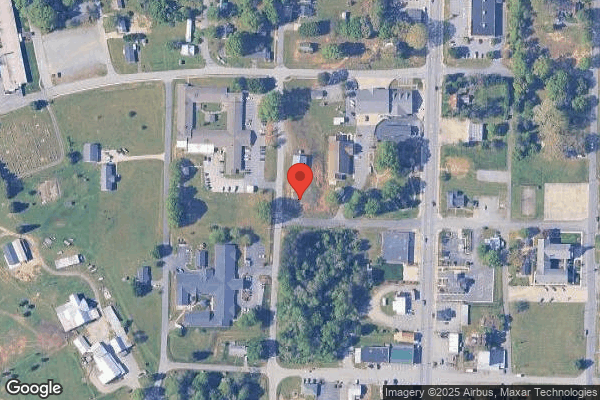
Dec 2023 2 deficiencies 1 IJ
CRITICAL (J) 📢 Someone Reported This

A family member, employee, or ombudsman was alarmed enough to file a formal complaint

Immediate Jeopardy (IJ) - the most serious Medicare violation

Free from Abuse/Neglect (Tag F0600)

Someone could have died · This affected 1 resident

**NOTE- TERMS IN BRACKETS HAVE BEEN EDITED TO PROTECT CONFIDENTIALITY** Based on observations, record review, and resident, family, staff, Psychiatric Nurse Practitioner and Law Enforcement interviews...

Read full inspector narrative →
**NOTE- TERMS IN BRACKETS HAVE BEEN EDITED TO PROTECT CONFIDENTIALITY** Based on observations, record review, and resident, family, staff, Psychiatric Nurse Practitioner and Law Enforcement interviews the facility failed to protect a resident's right to be free from physical abuse when Nurse Aide (NA) #1 and NA #2 forcefully turned Resident #1 causing her forehead and left knee to hit the wall. The two NAs continued to provide incontinence care after the resident yelled and screamed for them to stop. Resident #1 reported she no longer felt safe when new staff came in to provide care to her. One of three sampled residents were affected by the deficient practice (Resident #1). The findings included: Resident #1 was admitted to the facility on [DATE]. The Resident was discharged to the hospital on [DATE] and readmitted to the facility on [DATE]. She was admitted with diagnoses that included acute cystitis, unspecified dementia without behavioral disturbances, fibromyalgia, lack of coordination, muscle weakness, chronic pain syndrome and osteoarthritis. Resident #1's care plan dated 09/03/23 revealed no focused area, goals, or interventions for behaviors such as resistance to care or physical or verbal aggression. The care plan included the focused area of care for an activities of daily living self-care performance deficit with interventions to include the Resident required extensive to total assistance by 1-2 staff for toileting needs. No intervention for brief size or color preference was noted. A review of the physician's orders dated 11/28/23 revealed when Resident #1 returned from a stay in the hospital on [DATE] she was prescribed the blood thinner, Apixaban 5 milligrams 1 tablet daily, for deep vein thrombosis prevention. Resident #1's skin assessment dated [DATE] revealed a body chart marked with greenish bruising to the left antecubital area (front of the elbow), purple bruising on the left knee, yellow bruising on her ankle, purple bruising on both wrists, yellow bruising on left forearm, and greenish/yellow bruising to back of upper right arm. Also noted were small, open areas on each buttock. A quarterly Minimum Data Set (MDS) dated [DATE] indicated Resident #1 was cognitively intact. She required substantial/maximal assistance for bed mobility, toileting, and personal hygiene. The assessment indicated Resident #1 was frequently incontinent of bowel and bladder. The assessment further indicated Resident #1 had no behaviors such as resistive to care or physical or verbal aggression, hallucinations, or delusions. On 12/07/23 at 7:45 AM an interview with Resident #1 revealed on 12/01/23 at approximately 11:30 PM, NA #1 and NA #2 entered her room to provide incontinence care after she pressed her call bell. She stated she needed to be changed because she had been incontinent of urine only. She stated she did not have a bowel movement. She stated the NAs brought a yellow brief (extra-large) with them and Resident #1 informed them she wore blue briefs (large). She stated she told them her blue briefs were in her top drawer, but they refused to get one from the drawer. She stated the NAs said they were not going to look in her drawer. Resident #1 stated NA #1 said, You will wear what I want you to wear. She said she told the NAs to just leave her wet and go on their way. They refused, saying they could not leave her wet and insisted she be changed. Resident #1 stated NA #1 was positioned at her legs and NA #2 was positioned at her shoulders. NA #2 proceeded to forcefully turn her in the bed, causing her head and left knee to hit the wall. She stated she yelled and screamed for them to stop because she did not want to wear the yellow brief and they were hurting her. Resident #1 stated they would not stop when she asked. She stated she kept screaming and yelling for them to stop. Resident #1 stated they finally rolled her back over and forcefully pulled the brief up between her legs. They turned off the light, left and closed the door. Resident #1 stated she called her family member and told her what happened, and her family member called the Administrator and informed her of the incident. She further stated she doesn't feel safe anymore when new staff come in to provide care to her. She stated incontinence care for her was usually provided by only one NA. An observation on 12/07/23 at 7:45 AM of the room revealed Resident #1's bed was on the right side of the room, lengthwise along the wall, with the head of the bed at the doorway entrance. A curtain separated the beds of Resident #1 and Resident #2. Resident #2's bed was 3-4 feet crosswise with the head of her bed at a 90° angle to the foot of and approximately 3- 4 feet away from the foot of Resident #1's bed. In a follow-up interview with Resident #1 on 12/07/23 at 1:10 PM she stated she did not recall a third NA being in the room. She stated she never heard anyone mention NA #3's name while they were in her room. Resident #1 became tearful and stated while in therapy the Social Worker (SW) and another administrative person came to the therapy room and said they wanted to measure her to see if her brief fit her correctly. She stated they informed her none of this would have happened if she had been wearing the right brief. Resident #1 said she knew they meant to put her in yellow briefs even though she said she explained to them she doesn't like the yellow briefs because they bunched up between her legs, they were bulky, and they allowed urine to leak through. On 12/07/23 at 5:50 PM during a phone interview with NA #1 she revealed she was in the hallway charting at the kiosk when NA #2 went to answer a call light for Resident #1. She stated NA #2 came and got her to assist her to turn the Resident with the draw pad. She stated the Resident requested a certain brief they were out of at the time. NA #1 stated she told her they were out of that color. NA #1 added she told Resident #1 they needed to change her because she had had a bowel movement. NA #1 stated they provided incontinence care and put a yellow brief on the Resident. NA #1 explained they slid the yellow brief under Resident #1 and left the room to get the nurse because the Resident was screaming loudly. NA #1 stated she was in Resident #1's room with NA #2 and NA #3. The nurse aide stated the resident was just screaming, she did not say any words just made sounds. NA #1 stated they continued to put the yellow brief on Resident #1 after Resident # 1 told her to stop because she could not leave her in a soiled brief. On 12/07/23 at 5:38 PM a phone interview was conducted with NA #2. NA #2 stated Resident #1 rang her call bell and she went into the room to change her. She stated Resident #2 was out of blue briefs. She stated she told the Resident and that the blue briefs were too small. She stated she told the resident she would have to use a yellow brief. NA #2 stated when she turned Resident #1 over with the draw pad the Resident started screaming. NA #2 stated they cleaned Resident #1 up quickly and left the room. NA #2 stated Resident #1 kept screaming about the yellow brief. NA #2 added Resident #1 screamed Stop, I don't want the yellow brief. NA #2 stated at that point she stopped and went in the hallway to get NA #1 because they usually worked together. She stated NA #3 was in the room with her when she went to get NA #1. She stated NA #3 was there to observe. NA #2 explained she was at Resident #1's shoulder and NA #1 came and helped turn the Resident over to change her. NA #2 said the resident didn't refuse to be changed, it was just all about the brief. NA #2 stated they continued to put the yellow brief on Resident #1 after Resident #1 told her to stop because she could not leave her in a soiled brief. On 12/07/23 at 6:01 PM a phone interview was conducted with NA #3, and she stated NA #1 asked her for assistance to provide incontinence care to Resident #1. She stated she was in the room with NA #1 and NA #2. NA #3 stated when she got in the room, NA #1 and NA #2 were cleaning the Resident. She stated the Resident was fussing about the brief. NA #3 stated the Resident said she always wore a blue brief not the yellow ones. NA #3 stated Resident #1 was screaming Leave me alone and kept screaming she only wore blue briefs. She stated she tried to calm and comfort Resident #1. After the incident, NA #3 stated she went back in Resident #1's room and offered to change her into a blue brief. She stated the Resident declined because she was still upset. She offered to change her from the yellow brief to the blue brief because she saw how much it had upset the resident. NA #3 said when she went back later, and the Resident did allow her to change her to a blue brief. When asked why she didn't intervene, NA #3 stated she planned to go back to Resident #1 after NA #1 and NA #2 left to put a blue brief on her and help her calm down. On 12/07/23 at 9:18 AM an interview was conducted with Resident #1's roommate (Resident # 2). Resident #2 was cognitively intact. Resident #2 stated two NAs had a yellow brief with them when they came into the room and pulled the curtain. Resident #1 told them she didn't wear a yellow brief; she wore blue ones. Resident #2 stated one of the NAs said something to the effect of you are going to wear these ones now. She stated she heard Resident #1 screaming, No. Resident #2 said she could see between the curtain and the wall and saw the NAs slam Resident #1 into the wall roughly. She stated that was all she could see but she heard Resident #1 screaming a lot. Resident #2 said she went to the door and called out for help for Resident #1. Resident #2 added the two NAs came and stood at the door laughing and listening to the conversation between Nurse #1 and Resident #1. Resident #2 stated she had never witnessed any NAs behave in such a manner in the two years she had been a resident in the facility. She said she had not seen anyone as rude or hateful as the two NAs. Resident #2 stated to her knowledge there were only two NAs, NA #1, and NA #2, in the room providing care to Resident #1. On 12/08/23 at 9:40 AM a telephone interview was conducted with Resident #1's Family Member who was her Responsible Person (RP). The Family Member stated her mother called her on Friday night, 12/01/23 at 11:22 PM. She stated her mother's exact words were, [NA #1 and NA#2] manhandled me. She stated they made her hit her head on the wall. She stated her mother told her she yelled for help, and no one came to help her. She stated her mother said NA #1 and NA #2 told her she was going to do as they said. The Family Member stated her mother said she told them no and she asked them to stop. The Family Member said her mother said NA #1 and NA #2 insisted she put on a yellow brief. The Family Member stated her mother always wore a blue brief until this occurred. She said NA #1 and NA #2 put the yellow brief on her and didn't tape the brief on, turned off the light, left the room, and closed the door. The Family Member stated she called the Administrator on her cell phone. The Family Member stated she told the Administrator what had happened and didn't want NA #1 and NA #2 back in her mother's room. The Family Member stated she told the Administrator exactly what her mother said that NA #1 and NA #2 had manhandled her and put a yellow diaper on her and pushed her head against the wall. The Family Member stated she had not talked to the Administrator again until 12/07/23, when the Administrator called her with the Director of Nursing [DON] on the line with her. She stated the Administrator apologized for not communicating sooner with her. The Family Member stated the Administrator told her that she knew exactly how things happened because there were three NAs in the room not two. The Family Member stated that the Administrator told her there was another NA in the Resident's room who saw and heard everything. The Family Member stated, so now my Mama is the one who is combative, and all her bruises are from the hospital. The Family Member stated that she told the Administrator and DON it was hard to believe there were three NAs in her mother's room because she could hardly ever even get one in there when she pressed her call bell. The Family Member stated this was the first time she had ever received a report that her mother was combative with staff. She stated she had never reviewed a care plan which included a plan for combative behavior. The Family Member stated her mother told her she was measured in therapy yesterday, 12/07/23, to determine her brief size. The Family Member stated her mother told her the Social Worker (SW) and another staff told her none of this would have happened if she had been wearing the right brief. She stated the SW called her on 12/07/23 and told her she needed to talk to her mother (Resident #1) about wearing a yellow brief. The Family Member stated the SW worker said her mother had it in her head that she needed the blue brief. The Family Member stated her mother preferred the blue brief because it didn't bunch up between her legs and it did not leak. The Family Member stated she felt it should be her mother's choice. She stated her mother had never been combative. The Family Member stated when she visited her mother on 12/02/23 at about 7:00 AM the day shift nurse, Nurse #3, told her she called the police and reported the incident. The Family Member stated Nurse #3 said the events from the previous night on 12/01/23 had not been reported to her. The Family Member said she asked Nurse #3 to help roll Resident #1 over so she could look at her and she herself took pictures of her mother's bruises. A phone interview with Nurse #1 on 12/08/23 at 10:16 AM. Nurse #1 stated, on Friday 12/01/23, NA #1 and NA #2 came to her and told her Resident #1 was upset. She stated she went to assess the resident and Resident #1 told her she was upset and angry because the NAs had put a yellow brief on her instead of a blue brief. Nurse #1 stated the Resident was irritated and didn't want NA #1 and NA #2 back in her room. She stated she told the resident she was sorry they upset her and didn't do as she requested. Nurse #1 stated she told the Resident she would talk to them about it and switch their assignments, and they should never come in her room again. She stated she did not observe any bruises or red marks when she assessed the Resident. She stated the Resident said she told the NAs not to put a yellow brief on her, but they did it anyway. Nurse #1 said she asked Resident #1 if she was okay and the Resident said she was mad about the brief. Nurse #1 stated she reassigned NA #1 and NA #2 to another hall. Nurse #1 stated she told NA #3 to change the resident to a blue brief the next time the resident needed changed. She stated NA #3 went back in later and offered to change the resident, but she declined because she was still upset. Nurse #1 stated the Resident never said anything about the NAs being rough or abusive. Nurse #1 stated she checked on the Resident hourly throughout the night and the Resident slept without any issues. She stated the Resident eventually did allow NA #3 to change her during the next rounds. A phone witness statement was given by Nurse #1 to the DON on 12/07/23, untimed. The statement related to the accusation of abuse that was reported on December 2, 2023. The statement read, NA #1 and NA #2 told her Resident #1 was mad because they had put a yellow brief on her instead of a blue brief. The statement revealed Nurse #1 asked if Resident #1 was okay and the NAs told her Yes. Nurse #1 told the NAs she had changed their assignment and Resident #1 was ok with the change. She said she then asked Resident #2 if she had heard or seen anything, and Resident #2 stated I haven't heard or seen anything because my curtain was pulled. Nurse #1 stated in the phone statement NA #3 went into the room and offered to place a blue brief on Resident #1 and she stated, I'm ok, get out, I will be fine. Nurse #1 stated in her phone witness statement she checked on Resident #1 four more times, and she was asleep. The phone witness statement given by Nurse #1 to the Administrator on 12/07/23 at 8:00 PM revealed Nurse #1 stated she told Resident #1 the assignments had been changed and asked her if she was okay and she said, Yes, I am just mad. When Nurse #1 asked her why she was mad, she said, Because I told them that I wanted a blue brief and they put a yellow one on me. The phone statement revealed Nurse #1 asked Resident #1 if she would feel better if they changed her into a blue brief and she said, No, I am fine for now, but I am glad that they will not be back in my room. [NA #3] already offered to change me, I'm okay. Nurse #1 said Resident #1 told her she had talked to her family member and felt better. In her phone statement, Nurse #1 stated on her rounds during the night she went in Resident #1's room four times and she was sleeping. In a phone witness statement given by Nurse #1 to the Administrator and DON on 12/07/23 at 8:00 PM Nurse #1 stated on 12/01/23 between 11:50 PM and midnight, she was informed that Resident #1 did not want NA #1 and NA #2 to work with her, so the assignments were changed. She stated she went to Resident #1 to let her know the assignments were changed. She said, Resident #1 said, Good. A review of Nurse #3's witness statement written on 12/02/23 revealed Nurse #3 assessed Resident #1 during the morning medication pass. Resident #1 stated her left shoulder hurt because NA #1 and NA #2 had been extremely rough with her the previous night. Resident #1 told Nurse #3 the NAs forced the wrong brief on her and pushed her into the wall. Bruising was noted to the left kneecap and small round marks noted to left arm and wrist. Resident #1 stated she hit her head and shoulder against the wall. Nurse #3's statement revealed she notified the Resident's RP who directly called the Administrator. Nurse #3 stated she immediately contacted the Administrator who notified both the DON and the ADON. The witness statement revealed the County Sheriff's Department was also notified and they went to the facility and took statements. An interview was conducted on 12/08/23 at 10:55 AM with Nurse #3. Nurse #3 stated when she came in the morning of 12/02/23 she did not receive report of any concern from night shift regarding Resident #1. She stated when she went to give Resident #1 her medications and take vital signs, she noticed the Resident was upset and asked her what was wrong. Nurse #3 said the Resident told her two girl NAs were rough with her. She said the Resident told her the NAs put the wrong color brief on her. Nurse #3 stated the Resident said when they rolled her, they were very aggressive, and her head and knee hit the wall. Nurse #3 stated the Resident started pointing out bruises. She stated the Resident had several small bruises and discolorations on her forearms that were not phlebotomy or Intravenous (IV) sticks from the hospital. She stated these bruises were small, circular, dime-sized and she had a noticeable bruise on her inner left knee. Nurse #3 stated after she assessed Resident #1, she reported Resident #1's allegation to the Administrator. She stated the DON instructed her to call the police and report suspected abuse. She stated she called the police as instructed. She stated when the Assistant Director of Nursing [ADON] arrived she collaborated with her on the report. She stated the ADON notified the medical provider and completed the investigation. Nurse #3 stated the police arrived about the same time as the Resident's son and took everyone's info and took Resident #1's statement. Nurse #3 stated when the Resident's Family Member (RP) arrived she assessed her mother head-to-toe and took pictures. Nurse #3 stated she assisted the Family Member with assessing her mother and pointed out the small bruises on her arm and leg. Nurse #3 stated the bruises were there, but she did not imply to the Resident's Family Member how they got there. On 12/07/23 at 1:22 PM an interview was conducted with NA #5. She stated she was familiar with Resident #1. She further stated she was able to change her brief and provide care for Resident #1 by herself. She said she had never needed two or more people to care for Resident #1. She stated Resident #1 preferred the blue briefs. She added she could not recall a time when the resident was combative or refused care. In an interview with NA #4 on 12/07/23 at 1:25 PM she revealed she had worked at the facility for about one year. She stated she did not use two people to provide incontinence care for the Resident #1. She further stated she had never had to use three people with Resident #1. She said she had not observed Resident #1 refuse care or be combative. She stated Resident #1 used blue briefs. On 12/11/23 at 9:05 an interview was conducted with the County Detective in charge of Resident #1's case. He stated he was still in the process of investigating the allegation. He revealed the initial police report was filed on 12/02/23 and the investigation was ongoing. A late entry progress note entered by the ADON on 12/07/23 at 8:01 AM revealed she performed a skin assessment on Resident # 1 on 12/02/23 at 12:49 PM. The note revealed upon full body assessment, there was a small area of discoloration to the left knee. Three small areas of discoloration noted to the left forearm, very light yellow in color, and old in appearance. The progress note read the Resident pointed to an area on her right forehead and stated, that is where my head hit the wall. The progress note revealed upon inspection of the area, there was no raised area, redness, bruising, abrasions, or other evidence of recent trauma present. Scattered bruising to bilateral hands. The note added the Resident stated those bruises were from IV sites. Review of the witness statement written by the ADON on 12/02/23 revealed she was contacted by the Director of Nursing at approximately 11:30 AM regarding an incident reported by Resident #1. She obtained a statement from Resident #1 who had notified the day shift nurse of an issue with the night shift CNAs. After obtaining her statement, the ADON wrote that she completed a full body assessment to identify any skin issues. Her written assessment revealed there were scattered bruises noted to both hands. When questioned about the bruises, Resident #1 stated those bruises were from the IVs and needle sticks during her recent hospitalization. There was a half-dollar sized bruise noted to her right wrist. Resident #1 stated that bruise was also from an IV previously placed there. Resident #1 pointed out an area on right forehead and stated, this is where they slammed my head against the wall. The ADON wrote she was unable to identify any abnormalities to the area. There was no redness, bruising, swelling, raised areas, or other discoloration indicating any trauma. The written statement read Resident #1 then held up her left arm and stated, you can see the fingerprints here. The ADON statement read, upon inspection of area, there were three small areas of discoloration, very dull yellow in color and the areas appeared older in age. She wrote Resident #1 denied pain to area. The only other area noted was a small area of discoloration on the left knee. No other skin issues were identified. The ADON's written statement further revealed she observed no signs of recent trauma. In an interview on 12/07/23 at 4:00 PM with the ADON she revealed on 12/02/23 she took statements from NA #1, NA #2, NA #3, and Resident #1. When asked if she interviewed the Roommate, she stated no. The ADON stated Resident #1 told her that the roommate turned on the light and opened the door, but the ADON said the Roommate did not tell her she did so. The ADON said the roommate told her that the Resident was upset but that she did not see anything. The ADON stated that during her interview with Resident #1, the Roommate got back in bed and faced the wall like she did not want to get involved. The ADON revealed Resident #1 said she didn't want to get anyone in trouble, but NA #1 had been rough with her. The ADON stated the resident kept going on and on about the brief. She stated the NAs told her they had to use the yellow brief. The ADON said NA #2 said they explained to the resident that the blue briefs wouldn't fit her. The ADON said Resident #1 told her that NA #1 and NA #2 said she was going to have to do what they said do. The ADON stated Resident #1 told her the two nurse aides rolled her over and hit her knee against the wall and slammed her head against the wall. The ADON said she assessed Resident #1 and there was no trauma to her right forehead. The ADON said she did a full body audit and asked Resident #1 about the needlestick bruises. She said she saw discoloration on the left knee. The ADON stated the resident wanted her to check the bruises on her arm. The ADON said she observed very light yellowed old bruises. The ADON added the resident informed her that some of the bruises were caused by intravenous fluid administration and blood draws that were performed in the hospital. The ADON stated that NA #2 told her that she had worked with Resident #1 before, and she had been pleasant. The ADON stated that on 12/01/23 NA #2 said the resident was very agitated when she first went in the room. The ADON said NA #2 told the resident she was going to change her because the resident said she was wet. The ADON said NA #2 told her she went and got a yellow brief and when she returned Resident #1 became more agitated because NA #2 had a yellow brief in her hand. The ADON said NA #2 told her Resident #1 started yelling about wearing a blue brief not a yellow brief. NA #2 told the ADON that she explained to the Resident that the blue brief would not fit around her hips. The ADON stated NA #2 said the resident told her she was only a little wet and she didn't have to change her. At that time NA #2 explained to Resident #2 once they knew a resident was wet, they had to go ahead and change them to prevent skin breakdown. The ADON said NA #2 told her the Resident calmed down and became agreeable to being changed. The ADON said NA #2 told her she stepped out and went to get her NA #1 to help change Resident #1. The ADON said NA #2 told her when they got back to the room and started to change the Resident, she saw the yellow brief and started refusing again. The ADON said NA #2 said she saw the resident had had a large bowel movement. The ADON stated NA #2 said when the Resident looked back over her shoulder, she saw the yellow brief and began pushing against the wall to keep them from putting the yellow brief under her. The ADON stated that NA #2 told her that NA #3 was in the room and explained to the Resident that they were trying to get her clean and she needed to stop pushing against the wall. The ADON said the NAs told her they were not able to get Resident #1 completely clean, so they pulled the brief up but didn't attach the sides and left to give her time to calm down. An interview with the Director of Nursing (DON) was conducted on 12/07/23 at 12:44 PM. The DON stated she did not make assignment sheets for night shift. She stated when night shift staff arrived the nurse on the hall assigned them to a set of rooms on each hall. She stated on 12/01/23 NA #1 and NA #2 were assigned to the hall on which Resident #1 resided. She explained NA #3 was assigned to a different hall but had been asked by NA #1 and NA #2 to assist with incontinence care for Resident #1. On 12/07/23 at 1:30 PM an interview was conducted with the Psychiatric Mental Health Nurse Practitioner (PMHNP). The PMHNP stated he was familiar with the resident. He further stated he had not seen her since July when she went to the hospital. He stated when she came back from the hospital, she had not been picked up by him. He stated when he saw her today, he had come into the room to see her roommate. He said after speaking with Resident #1 he was going to reactivate her or pick her back up for services because she was upset and anxious during his conversation with her earlier in the day. In a second interview with the DON on 12/07/23 at 2:02 PM she stated when Resident #1 got upset, she became fixated on whatever upset her and would not let it go. She further stated the resident would continuously talk about whatever upset her and stayed worked up about small issues. She explained there were three NAs in the room the night of 12/01/23 because NA #1 was still orienting. The DON stated NA #1 was not a new NA, but she was slower about picking up on things and needed more guidance. She stated NA #1 worked with NA #2. The DON stated that NA #3 was assigned to another hall but was helping on that hall that night. The DON stated NA #1 and NA #3 had informed her when they turned Resident #1 over, she had feces on her. The DON stated NA #1 and NA #3 told her when the resident saw the yellow brief, she got mad and started swinging and became combative. She stated that the NAs told her they wanted to leave Resident #1 safe but had to get the feces off her. The DON explained NAs are trained to leave a resident when they are combative, but they had to leave her safe. In an interview on 12/07/23 at 3:43 PM with the Administrator and the DON, the Administrator revealed the incident occurred on 12/01/23 at approximately 11:20 PM to 11:30 PM. She stated Resident #1's Family Member called her and said she didn't want NA #1 and NA #2 in her mother's room because her mother was upset about the brief. The Administrator stated she called the DON at 11:40 PM and told her to move [NA #1 and NA #2] because they had put a yellow brief on the resident and that's not what the Resident preferred. The DON stated they moved NA #1 and NA #2 because they thought it would lessen Resident #1's anxiety so she could rest. The DON stated she tried to call Nurse #1's cell phone. Nurse #1 did not answer so Nurse #2 was called. Nurse #1 was the nurse assigned to Resident #1's hall. The DON stated when Nurse #2 went to Resident #1's room she heard the resident yell, Get out. When asked again why there were three NAs in the room, the DON stated NA #3 assisted NA #1 and NA #2 to turn the resident. When asked if it was necessary for three NAs to provide incontinence care for Resident #1, the DON stated sometimes. On 12/07/23 at 5:00 PM an interview was conducted with the Administrator. Present during the interview were the ADON, the DON, and the Admissions Coordinator. The Administrator stated she didn't think the NAs intentionally abused Resident #1, but they did violate her rights. The Administrator stated the NAs should have left the room when the Resident told them to leave her alone. The Administrator stated she would have explained to Resident #1 what was in her best interest and then she would have put the brief of her preference on her. The Administrator stated, as a nurse we know we always want what is in the best interest of the resident, but we must take into consideration their rights, wishes, and preferences. All staff mentioned above stated they agreed with the Administrator's statement that Resident #1's choice of brief color/size should have been honored and NA #1 and NA #2 should have left the room when Resident #1 told them to leave her alone. The Administrator was notified of immediate jeopardy on 12/08/23 at 4:45 PM. The facility provided the following corrective action plan with a completion date of 12/07/23. Immediate Action: NA #1 and NA #2 were suspended on 12/2/23. Resident #1 was immediately informed that NA #1 and NA #2 would no longer be working with her. Night shift RN on duty 12-2-23, emotionally assessed Resident #1 when informed that she was mad. Night shift RN checked on Res. #1 throughout the night. The RN Charge nurse completed a skin check on 12-2-23 @ 11:10 am. The Director of Nursing performed a skin check on 12-2-23 @ 11:45 am of Resident #1. These skin checks were compared to the readmission skin assessment performed by Unit Manager on 11/28/23 at 9:30 am Identification of other Residents: Skin sweeps were completed on all residents with a BIMS 8 or less by the Assistant Director of Nur[TRUNCATED]
CONCERN (D) 📢 Someone Reported This

A family member, employee, or ombudsman was alarmed enough to file a formal complaint

Potential for Harm - no one hurt, but risky conditions existed

Report Alleged Abuse (Tag F0609)

Could have caused harm · This affected 1 resident

**NOTE- TERMS IN BRACKETS HAVE BEEN EDITED TO PROTECT CONFIDENTIALITY** Based on record review and staff interviews, the facility failed to complete and submit an Initial Report within 2 hours to the ...

Read full inspector narrative →
**NOTE- TERMS IN BRACKETS HAVE BEEN EDITED TO PROTECT CONFIDENTIALITY** Based on record review and staff interviews, the facility failed to complete and submit an Initial Report within 2 hours to the state regulatory agency for staff to resident abuse (Resident #1) for 1 of 3 residents reviewed in facility reported incidents. Findings included: Resident #1was admitted to the facility on [DATE] from an acute healthcare facility with diagnoses which included acute cystitis, unspecified dementia without behavioral disturbances, fibromyalgia, lack of coordination, muscle weakness, chronic pain syndrome and osteoarthritis. The quarterly Minimum Data Set (MDS) assessment dated [DATE] revealed Resident #1 was cognitively intact for daily decision making. Resident #1 required extensive to total assistance by 1-2 staff for toileting needs. On 12/08/23 at 9:40 AM a telephone interview was conducted with Resident #1's Family Member who is her Responsible Person (RP). The Family Member stated her mother called her on Friday night, 12/01/23, at 11:22 PM. She stated Resident #1's exact words were [NA #1 and NA#2] manhandled me. She stated they made her hit her head on the wall. She stated Resident #1 told her she yelled for help, and no one came to help her. She stated Resident #1 said NA #1 and NA #2 told her she was going to do as they said. The Family Member stated Resident #1 said she told them no and she asked them to stop. The Family Member said Resident #1 said NA #1 and NA #2 insisted she put on a yellow diaper. The Family Member stated Resident #1 always wore a blue brief until this occurred. The Family Member stated she called the Administrator at approximately 11:30PM on her cell phone. The Family Member stated she told the Administrator what had happened and didn't want NA #1 and NA #2 back in her mother's room. The Family Member stated she told the Administrator exactly what her mother said that NA #1 and NA #2 had manhandled her and put a yellow diaper on her and pushed her head against the wall. A review of the initial report revealed on 12/02/23 at 11:30 AM the facility was made aware Resident #1 alleged she had been treated roughly by two NAs on 12/01/23 at approximately 11:00 PM. The Initial Report alleged abuse and injury of unknown origin. The details of physical harm included bruising to the left inner knee, and left forearm with fingerprint pattern. In an interview on 12/07/23 at 4:00 PM with the Assistant Director of Nursing (ADON) she revealed on 12/02/23 at 11:30 AM Resident #1 made an abuse allegation. The ADON stated she initiated the investigation and filed the initial report. An interview with the Director of Nursing (DON) on 12/07/23 at 12:44 PM. The DON stated the incident on 12/01/23 was not reported to her as an allegation of abuse. She stated she was only made aware Resident #1 was upset about the color of the brief NA #1 and NA #2 put on her. In an interview on 12/07/23 at 3:43 PM with the Administrator and the DON, the Administrator revealed the incident occurred on 12/01/23 at approximately 11:20 PM to 11:30 PM. She stated Resident #1's daughter (RP) called her 12/01/23 at approximately 11:30 PM and said she didn't want NA #1 and NA #2 in Resident #1's room because Resident #1 was upset about the brief. The Administrator stated she called the DON at 11:40 PM and told her to move NA #1 and NA #2 because they had put a yellow brief on Resident #1 and that's not what the Resident preferred. The DON stated they moved NA #1 and NA #2 because they thought it would lessen Resident #1's anxiety so she could rest. On 12/07/23 at 5:00 PM an interview was conducted with the Administrator. Present during the interview were the ADON, the DON, and the Admissions Coordinator. The Administrator stated she would have explained to Resident #1 what was in her best interest and then she would have put the brief of her preference on her. The Administrator stated, as a nurse we know we always want what is in the best interest of the resident, but we must take into consideration their rights, wishes, and preferences. The Administrator stated she didn't think the NAs intentionally abused the resident, but they did violate her rights. The Administrator stated the NAs should have left the room when the Resident told them to leave her alone.
Mar 2023 4 deficiencies
CONCERN (D) 📢 Someone Reported This

A family member, employee, or ombudsman was alarmed enough to file a formal complaint

Potential for Harm - no one hurt, but risky conditions existed

Resident Rights (Tag F0550)

Could have caused harm · This affected 1 resident

**NOTE- TERMS IN BRACKETS HAVE BEEN EDITED TO PROTECT CONFIDENTIALITY** Based on observations, record review, and staff interviews the facility failed to maintain a resident's dignity by dressing the ...

Read full inspector narrative →
**NOTE- TERMS IN BRACKETS HAVE BEEN EDITED TO PROTECT CONFIDENTIALITY** Based on observations, record review, and staff interviews the facility failed to maintain a resident's dignity by dressing the resident in a gown with a brown stain across the neckline that extended below the chest area for 1 of 3 residents (Resident #38) reviewed for dignity. A reasonable person would expect to be treated with dignity and be dressed in apparel that was not stained. The findings included: Resident #38 was admitted to the facility on [DATE]. A review of the quarterly Minimum Data Set (MDS) dated [DATE] for Resident #38, revealed she had severe cognitive impairment and required extensive assistance of one staff member with personal hygiene and dressing. A review of Resident #38's care plan, dated 3/20/2023, revealed a focused area that read, the Reside nt had an activity of daily (ADL) self-care performance deficit related to activity intolerance, disease process, and impaired balance. The interventions identified the Resident was totally dependent on one staff member to assist her with dressing. An observation was conducted on 3/29/2023 at 11:01 a.m. of Resident #38 lying in bed with a gown that had a brown stain across the neckline and extended below the chest area. An interview was conducted with Nursing Assistant (NA) #1 on 3/29/2023 at 11:02 a.m. and she stated she had just conducted activities of daily living care for Resident #38 that included placing a clean gown on the Resident and was finished providing care. She had a bag of dirty linen in her hand that contained the gown that had been removed. When asked if she had observed the stain on the gown Resident #38 was wearing, she stated yes. She revealed there had been an increase in stained linens, to include gowns, over the past few months and she had reported it to the hall nurses. When asked why the Resident was wearing a gown at 11:02 a.m. the NA replied, the Resident preferred a gown when in bed and the facility staff only got her out of bed every other day as tolerated. When asked what would be done regarding the stained gown, she then stated she would get another gown that had no stains for Resident #38. An interview was conducted with the Administrator on 3/30/2023 at 2:34 p.m. and she revealed the staff had made her aware of an increase in stained linens, that included gowns, around a month prior. She had completed an investigation that revealed the chemicals used for the stains had been changed by the contracted laundry company and the incorrect settings were being used on the washing machine. This resulted in the chemicals not working effectively. She added the settings had been corrected and the facility was still working on removing stained linens from the facility. She revealed it was her expectation that the residents at the facility be provided stain free linens and clothing and that a clothing item be replaced with an unstained item, if excessive staining had been identified by a staff member.
CONCERN (D)

Potential for Harm - no one hurt, but risky conditions existed

Assessment Accuracy (Tag F0641)

Could have caused harm · This affected 1 resident

**NOTE- TERMS IN BRACKETS HAVE BEEN EDITED TO PROTECT CONFIDENTIALITY** Based on resident and staff interviews and record reviews, the facility failed to accurately code cognition and fall history on ...

Read full inspector narrative →
**NOTE- TERMS IN BRACKETS HAVE BEEN EDITED TO PROTECT CONFIDENTIALITY** Based on resident and staff interviews and record reviews, the facility failed to accurately code cognition and fall history on the Minimum Data Set (MDS) assessments for 2 of 20 residents (Residents #79, and #23) reviewed for MDS accuracy. Findings included: 1. Resident #79 was admitted to the facility on [DATE]. Diagnosis included, in part, aphasia. The admission MDS assessment dated [DATE] revealed Resident #79 was coded as usually understands others and was usually understood by others. He was coded as not assessed for the resident's cognitive status interview. Additionally, the staff assessment for cognition was also coded as not assessed. A note in the medical record, authored by Social Worker (SW) #1 read, Resident BIMS (Brief Interview for Mental Status) cannot accurately be assessed due to diagnosis of expressive aphasia. When asked to repeat words he thinks he is saying the correct words, however, they come out as different words. Resident #79 was interviewed on 3/27/23 at 11:44 AM. During the interview, the resident's speech was clear, and he responded with accurate wording during the conversation. Resident #79 shared he had some trouble with remembering things. During an interview with SW #1 on 3/29/23 at 9:54 AM, she verified she completed the cognition section of the MDS assessment. She stated the resident had aphasia and at the time of the assessment, she didn't think he could accurately be assessed for memory. She added, because of Resident #79's aphasia, she couldn't complete the resident interview and didn't complete the staff assessment of his cognition. The MDS Coordinator was interviewed on 3/29/23 at 10:43 AM. He assessed Resident #79's communication ability when he completed the admission MDS assessment. He said the resident processed information but it didn't come out the way he wanted it to and so the MDS Coordinator coded the communication section as usually understood by others and usually understands others. He added Resident #79 was able to intermittently make his needs known by gestures and pointing or if he used a communication board. The MDS Coordinator stated SW #1 wrote a note that she attempted to assess the resident's cognition and when SW #1 asked the resident to repeat back 3 words she said to him, he stated 3 different words, and so she coded the resident interview for cognitive ability as not assessed. The MDS Coordinator explained SW #1 should have coded the resident's response as incorrect on the assessment instead of not assessed. During an interview with the Administrator on 3/30/23 at 11:46 AM, she explained SW #1 was not familiar with assessing a resident who had expressive aphasia and education was provided by the MDS Coordinator. 2. Resident #23 was originally admitted to the facility on [DATE] with diagnoses which included: cerebral vascular accident and hemiplegia affecting the left nondominant side. Resident #23 fell on 1/10/23 and was discharged to the hospital. The resident was diagnosed with a displaced fracture of the left femur. She was re-admitted to the facility on [DATE] after hospitalization. The quarterly minimum data set (MDS) dated [DATE] indicated Resident #23 did not have a history of falls or any fracture related to a fall in the 6 months prior to her re-entry date of 1/16/23. During an interview on 3/29/23 at 3:15 p.m., after reviewing Resident #23's 1/18/23 MDS, the MDS Coordinator indicated due to software error, the MDS inaccurately indicated this was not the first assessment since the resident's re-entry to the facility; thereby, disabling the fall history questions.
CONCERN (D)

Potential for Harm - no one hurt, but risky conditions existed

Deficiency F0761 (Tag F0761)

Could have caused harm · This affected 1 resident

**NOTE- TERMS IN BRACKETS HAVE BEEN EDITED TO PROTECT CONFIDENTIALITY** Based on observation, resident and staff interviews and record review, the facility failed to secure medications for 1 of 1 resi...

Read full inspector narrative →
**NOTE- TERMS IN BRACKETS HAVE BEEN EDITED TO PROTECT CONFIDENTIALITY** Based on observation, resident and staff interviews and record review, the facility failed to secure medications for 1 of 1 resident (Resident #40) observed with medications at bedside. Findings included: Resident #40 was admitted to the facility on [DATE]. Diagnoses included, in part, hypertension and diabetes. The admission Data Collection assessment, dated 1/9/23, indicated Resident #40 was assessed as not self-administering medications. The quarterly Minimum Data Set assessment dated [DATE] revealed Resident #40 had moderately impaired cognition. An observation of Resident #40's room was completed on 3/27/23 at 11:31 AM. The resident was alert and lying in bed. A medication cup that contained nine pills was on the overbed table next to the resident's bed. During an interview with Resident #40 on 3/27/23 at 11:35 AM, he stated he did not know what the medications were for but said sometime during the morning, the nurse brought them in and left them on the table for him to take. He added normally the nurse watched him swallow his medications before she left his room. Nurse #2 was interviewed on 3/27/23 at 12:35 PM. She explained when she gave medication to a resident she watched the resident swallow the medication before she left the room. She verified she was Resident #40's nurse for the day and shared the resident typically took his medication with a spoon and only took one to two pills at a time, so it took a while to administer his medications. She had not noticed a cup of pills on his overbed table when she gave him the medications earlier in the day. She said the cup of pills on his overbed table were not left by her. On 3/28/23 an interview was conducted with Nursing Assistant (NA) #2. She worked with Resident #40 during the day on 3/27/23. She recalled she delivered his breakfast tray and said she had not seen a cup of pills on his overbed table. She shared sometimes Resident #40 didn't want to take his medications or told the nurse he wanted the medications left on his table. In an interview with Unit Manager #1 on 3/28/23 at 11:03 AM, she stated she was the nurse who worked with Resident #40 on 3/26/23 during the evening shift and gave him medications. She recalled she gave Resident #40 a cup of pills; the resident swallowed all the medications at once and she took the plastic cup out of the room when he was finished. Unit Manager #1 added sometimes Resident #40 took medication one at a time or wanted the medication placed in pudding or applesauce. Typically when she administered medication she watched the resident swallow the medication before she left the room. She stated it was never appropriate to leave medications with the resident and added Resident #40 was not capable of self-administering medications. During an interview with the Director of Nursing on 3/29/23 at 2:49 PM, she expressed staff were supposed to stay with a resident until all medications were swallowed and then leave the room. She said Resident #40 was not capable of self-administering his medications. She added the resident's pattern of taking medications frequently changed; at times he wanted to take his pills one at a time, sometimes he wanted them in applesauce and other times he wanted staff to leave the medications in the room. She stated it was not appropriate for staff to have left the medication in his room and she had been unable to determine which staff member left the cup of pills on the overbed table in Resident #40's room.
CONCERN (D)

Potential for Harm - no one hurt, but risky conditions existed

QAPI Program (Tag F0867)

Could have caused harm · This affected 1 resident

Based on observations, record review, resident and staff interviews, the facility's Quality Assessment and Assurance (QAA) committee failed to maintain implemented procedures and monitor interventions...

Read full inspector narrative →
Based on observations, record review, resident and staff interviews, the facility's Quality Assessment and Assurance (QAA) committee failed to maintain implemented procedures and monitor interventions the committee put into place following the recertification and complaint survey dated 12/2/2021. This was for four deficiencies that were cited in the areas of resident rights (F550), notice requirements (F623), accuracy of assessments (F641), and label/store drugs and biologicals (F761). The four areas were recited on the current recertification and complaint survey of 3/30/2023. The duplicate citations during two federal surveys of record demonstrate a pattern of the facility's inability to sustain an effective QAA program. The findings included: This tag is cross referenced to: 1. F550 - Based on observations and staff interviews the facility failed to maintain a homelike environment when they failed to provide linens free from excessive stains in 1 of 2 residents (Resident #38) reviewed for clean laundry. During the recertification and complaint survey of 12/2/2021, the facility failed to maintain the dignity of a dependent resident as evidenced by two staff members use of the term feeder to describe a resident who needed assistance with eating for 1 of 4 residents reviewed for dignity. An interview was conducted with the Administrator on 3/30/2023 at 5:14 p.m. and she revealed the QAA committee meets monthly and consist of the Director of Nursing, Medical Director, executive director, minimum data set nurse, unit managers, nursing assistants, housekeeping supervisor, maintenance director, infection control nurse, human resources, admission coordinator, rehabilitation manager, medical records, activities director, pharmacy consultant, dietary manger, and the Social Worker. She stated the committee reviewed any areas of identified concerns in the mock survey, morning meetings, trends with grievances, staff retention, the admission process, dietary, nursing, vaccinations, wounds, falls, and antibiotic usage. She stated in regard to the environment and dignity issue, it was identified by the front-line staff previously and brought to the Administrator's attention. A plan of correction was put into place but had not been completed at the time of the survey. She added the team would continue to work on the issue with stained linens until it was resolved. 2. F623 - Based on staff interviews, interview with the Resident Representative and record review, the facility failed to provide the resident and resident representative a written notification for the reason for transfer to the hospital and failed to provide a copy of the transfer/discharge notice to the Ombudsman for 1 of 2 residents (Resident #79) reviewed for hospitalization. During the recertification and complaint survey dated 12/2/2021, the facility failed to notify the Ombudsman and provide the resident representative a written notification for the reason for transfer to the hospital for 2 of 2 residents reviewed for hospitalization. An interview was conducted with the Administrator on 3/30/2023 at 5:14 p.m. and she revealed the QAA committee meets monthly and consist of the Director of Nursing, Medical Director, executive director, minimum data set nurse, unit managers, nursing assistants, housekeeping supervisor, maintenance director, infection control nurse, human resources, admission coordinator, rehabilitation manager, medical records, activities director, pharmacy consultant, dietary manger, and the Social Worker. She stated the committee reviewed any areas of identified concerns in the mock survey, morning meetings, trends with grievances, staff retention, the admission process, dietary, nursing, vaccinations, wounds, falls, and antibiotic usage. She stated the admission process had been improved with the plan of correction put into place by the QAA committee after the 12/2/2021 recertification. She added the nurse that completed the transfer/discharge identified during the 3/30/2023 recertification survey, was new to the facility and education would be provided. 3. F641 - Based on resident and staff interviews and record reviews, the facility failed to accurately code cognition and fall history on the Minimum Data Set (MDS) assessments for 2 of 20 residents (Resident #79 and #23) reviewed for MDS accuracy. During the recertification and complaint survey, dated 12/2/2021, the facility failed to accurately code urinary incontinence, failed to accurately code a prognosis of less than six months and failed to accurately code the Pre-admission Screening and Resident Review (PASRR) on the comprehensive MDS assessment for 3 of 24 residents reviewed for MDS accuracy. An interview was conducted with the Administrator on 3/30/2023 at 5:14 p.m. and she revealed the QAA committee meets monthly and consist of the Director of Nursing, Medical Director, executive director, minimum data set nurse, unit managers, nursing assistants, housekeeping supervisor, maintenance director, infection control nurse, human resources, admission coordinator, rehabilitation manager, medical records, activities director, pharmacy consultant, dietary manger, and the Social Worker. She stated the committee reviewed any areas of identified concerns in the mock survey, morning meetings, trends with grievances, staff retention, the admission process, dietary, nursing, vaccinations, wounds, falls, and antibiotic usage. She stated the MDS accuracy had improved according to the plan of correction follow up reviews from the previous survey in 2021. She added the identified concern for the current recertification was due to the new software system being used that might have caused a glitch that led to a coding error. 4. F761 - Based on observation, resident and staff interviews and record review, the facility failed to secure medications for 1 of 1 resident (Resident #40) observed with medications at bedside. During the recertification and complaint survey, dated 12/2/2021, the facility failed to remove expired medications from 1 of 1 medication room reviewed for medication storage. An interview was conducted with the Administrator on 3/30/2023 at 5:14 p.m. and she revealed the QAA committee meets monthly and consist of the Director of Nursing, Medical Director, executive director, minimum data set nurse, unit managers, nursing assistants, housekeeping supervisor, maintenance director, infection control nurse, human resources, admission coordinator, rehabilitation manager, medical records, activities director, pharmacy consultant, dietary manger, and the Social Worker. She stated the committee reviewed any areas of identified concerns in the mock survey, morning meetings, trends with grievances, staff retention, the admission process, dietary, nursing, vaccinations, wounds, falls, and antibiotic usage. She stated the medication storage concern identified in 2021 had been due to the storage room and a plan of correction was put into place.
Understanding Severity Codes (click to expand)
Life-Threatening (Immediate Jeopardy)
J - Isolated K - Pattern L - Widespread
Actual Harm
G - Isolated H - Pattern I - Widespread
Potential for Harm
D - Isolated E - Pattern F - Widespread
No Harm (Minor)
A - Isolated B - Pattern C - Widespread

Questions to Ask on Your Visit

  • "What changes have you made since the serious inspection findings?"
  • "What safeguards are in place to prevent abuse and neglect?"
  • "Can I speak with families of current residents?"
  • "What's your RN coverage like on weekends and overnight?"

Our Honest Assessment

Strengths
  • • Licensed and certified facility. Meets minimum state requirements.
Concerns
  • • Multiple safety concerns identified: Federal abuse finding, 3 life-threatening violation(s), $40,149 in fines. Review inspection reports carefully.
  • • 23 deficiencies on record, including 3 critical (life-threatening) violations. These warrant careful review before choosing this facility.
  • • $40,149 in fines. Higher than 94% of North Carolina facilities, suggesting repeated compliance issues.
  • • Grade F (0/100). Below average facility with significant concerns.
Bottom line: This facility has a substantiated abuse finding. Extreme caution advised. Explore alternatives.

About This Facility

What is Walnut Cove Health And Rehabilitation Center's CMS Rating?

CMS assigns Walnut Cove Health and Rehabilitation Center an overall rating of 2 out of 5 stars, which is considered below average nationally. Within North Carolina, this rating places the facility higher than 0% of the state's 100 nursing homes. A rating at this level reflects concerns identified through health inspections, staffing assessments, or quality measures that families should carefully consider.

How is Walnut Cove Health And Rehabilitation Center Staffed?

CMS rates Walnut Cove Health and Rehabilitation Center's staffing level at 2 out of 5 stars, which is below average compared to other nursing homes. Staff turnover is 50%, compared to the North Carolina average of 46%.

What Have Inspectors Found at Walnut Cove Health And Rehabilitation Center?

State health inspectors documented 23 deficiencies at Walnut Cove Health and Rehabilitation Center during 2023 to 2025. These included: 3 Immediate Jeopardy (the most serious level, indicating potential for serious harm or death), 19 with potential for harm, and 1 minor or isolated issues. Immediate Jeopardy findings are rare and represent the most serious regulatory concerns. They require immediate corrective action.

Who Owns and Operates Walnut Cove Health And Rehabilitation Center?

Walnut Cove Health and Rehabilitation Center is owned by a for-profit company. For-profit facilities operate as businesses with obligations to shareholders or private owners. The facility is operated by CONSULATE HEALTH CARE/INDEPENDENCE LIVING CENTERS/NSPIRE HEALTHCARE/RAYDIANT HEALTH CARE, a chain that manages multiple nursing homes. With 90 certified beds and approximately 81 residents (about 90% occupancy), it is a smaller facility located in Walnut Cove, North Carolina.

How Does Walnut Cove Health And Rehabilitation Center Compare to Other North Carolina Nursing Homes?

Compared to the 100 nursing homes in North Carolina, Walnut Cove Health and Rehabilitation Center's overall rating (2 stars) is below the state average of 2.8, staff turnover (50%) is near the state average of 46%, and health inspection rating (2 stars) is below the national benchmark.

What Should Families Ask When Visiting Walnut Cove Health And Rehabilitation Center?

Based on this facility's data, families visiting should ask: "What changes have been made since the serious inspection findings, and how are you preventing similar issues?" "What safeguards and monitoring systems are in place to protect residents from abuse or neglect?" "Can you walk me through typical staffing levels on day, evening, and night shifts?" "Can I visit during a mealtime to observe dining assistance and food quality?" These questions are particularly relevant given the facility's Immediate Jeopardy citations, the substantiated abuse finding on record, and the below-average staffing rating.

Is Walnut Cove Health And Rehabilitation Center Safe?

Based on CMS inspection data, Walnut Cove Health and Rehabilitation Center has documented safety concerns. The facility has 1 substantiated abuse finding (meaning confirmed case of resident harm by staff or other residents). Inspectors have issued 3 Immediate Jeopardy citations (the most serious violation level indicating risk of serious injury or death). The facility has a 2-star overall rating and ranks #100 of 100 nursing homes in North Carolina. Families considering this facility should ask detailed questions about what corrective actions have been taken since these incidents.

Do Nurses at Walnut Cove Health And Rehabilitation Center Stick Around?

Walnut Cove Health and Rehabilitation Center has a staff turnover rate of 50%, which is about average for North Carolina nursing homes (state average: 46%). Moderate turnover is common in nursing homes, but families should still ask about staff tenure and how the facility maintains care continuity when employees leave.

Was Walnut Cove Health And Rehabilitation Center Ever Fined?

Walnut Cove Health and Rehabilitation Center has been fined $40,149 across 3 penalty actions. The North Carolina average is $33,480. While any fine indicates a compliance issue, fines under $50,000 are relatively common and typically reflect isolated problems that were subsequently corrected. Families should ask what specific issues led to these fines and confirm they've been resolved.

Is Walnut Cove Health And Rehabilitation Center on Any Federal Watch List?

Walnut Cove Health and Rehabilitation Center is not on any federal watch list. The most significant is the Special Focus Facility (SFF) program, which identifies the bottom 1% of nursing homes nationally based on persistent, serious quality problems. Not being on this list means the facility has avoided the pattern of deficiencies that triggers enhanced federal oversight. This is a positive indicator, though families should still review the facility's inspection history directly.