ST BENEDICTS HEALTH CENTER
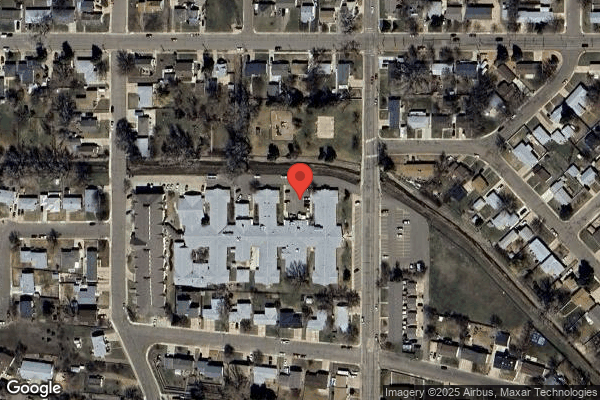
851 4TH AVE E, DICKINSON, ND 58601 (701) 456-7242
Non profit - Corporation 120 Beds BENEDICTINE HEALTH SYSTEM Data: November 2025
Trust Grade
90/100
#15 of 72 in ND
Last Inspection: April 2025

Within standard 12-15 month inspection cycle. Federal law requires annual inspections.

Overview

St. Benedict's Health Center in Dickinson, North Dakota, has received a Trust Grade of A, indicating it is an excellent facility highly recommended for care. It ranks #15 out of 72 nursing homes in the state, placing it in the top half, and #2 of 3 in Stark County, meaning only one local option is better. The facility is on an improving trend, with issues reducing from 3 in 2024 to 1 in 2025, which is encouraging. Staffing is a strength here, earning a 4 out of 5 stars, although the turnover rate at 52% is slightly above the state average of 48%. While there have been no fines issued, which is a positive sign, some concerns were noted, such as lapses in infection control practices for several residents and inadequate oral care for some individuals. Overall, St. Benedict's has strong points but also areas that need attention.

Trust Score
A
90/100
In North Dakota
#15/72
Top 20%
Safety Record
Low Risk
No red flags
Inspections
Getting Better
3 → 1 violations
Staff Stability
⚠ Watch
52% turnover. Above average. Higher turnover means staff may not know residents' routines.
Penalties
✓ Good
No fines on record. Clean compliance history, better than most North Dakota facilities.
Skilled Nurses
✓ Good
Each resident gets 54 minutes of Registered Nurse (RN) attention daily — more than average for North Dakota. RNs are trained to catch health problems early.
Violations
○ Average
6 deficiencies on record. Average for a facility this size. Mostly minor or procedural issues.
★★★★★
5.0
Overall Rating
★★★★☆
4.0
Staff Levels
★★★★☆
4.0
Care Quality
★★★★★
5.0
Inspection Score
Stable
2024: 3 issues
2025: 1 issues

The Good

  • 4-Star Staffing Rating · Above-average nurse staffing levels
  • 4-Star Quality Measures · Strong clinical quality outcomes
  • Full Sprinkler Coverage · Fire safety systems throughout facility
  • No fines on record

Facility shows strength in staffing levels, quality measures, fire safety.

The Bad

Staff Turnover: 52%

Near North Dakota avg (46%)

Higher turnover may affect care consistency

Chain: BENEDICTINE HEALTH SYSTEM

Part of a multi-facility chain

Ask about local staffing decisions and management

The Ugly 6 deficiencies on record

Apr 2025 1 deficiency
CONCERN (D)

Potential for Harm - no one hurt, but risky conditions existed

Infection Control (Tag F0880)

Could have caused harm · This affected 1 resident

Based on observation, review of facility policy, and staff interviews the facility failed to follow standards of infection control and prevention for 3 of 22 sampled residents (Residents #16, #29 and ...

Read full inspector narrative →
Based on observation, review of facility policy, and staff interviews the facility failed to follow standards of infection control and prevention for 3 of 22 sampled residents (Residents #16, #29 and #88) observed during cares. Failure to practice infection control standards related to enhanced barrier precautions (EBP), dressing changes, and hand hygiene, has the potential to spread infection throughout the facility. Findings include: Review of the facility policy titled Enhanced Barrier Precautions occurred on 04/24/25. This policy, revised April 2024, stated, . Enhanced Barrier Precautions (EBP) is a strategy in nursing homes to decrease transmission of . important multidrug-resistant organisms (MDROs). Additionally, residents at risk for MDROs, specifically those with an indwelling medical device . will be required to use EBP. (EBP) expands the use of Personal Protective Equipment (PPE) . refers to the use of gown and gloves during high-contact resident care activities . When to use: . All residents with any of the following: . Indwelling medical devices (e.g. central lines, urinary catheters .) . During high-contact resident care activities: . Indwelling medical device care or use: central line, urinary catheter . Gloves and gown prior to the high-contact care activity . Review of the facility policy titled Dressing Change occurred on 04/24/25. This policy, revised October 2015, stated, . Procedure: . 3. Set up clean field and place supplies on clean field. - Observation on 04/02/25 at 11:13 a.m. showed Resident #16 seated in a wheelchair in his/her room with a peripherally inserted central catheter (PICC) line to the right arm. A sign on the wall outside of the room indicated EBP. A staff nurse (#6) entered the room with two syringes and an intravenous (IV) medication bag, performed hand hygiene, gathered additional supplies, applied gloves, removed the PICC line dressing, removed gloves, performed hand hygiene, and applied a new dressing. The nurse (#6) flushed the PICC line and started the IV medication The staff nurse (#6) failed to wear a gown during the PICC line dressing change and administration of the IV medication. - Review of Resident #29's medical record occurred on all days of survey. The current care plan stated, . I have a foley catheter . Enhanced Barrier Precautions . Observation on 04/23/25 at 6:35 a.m. showed Resident #29 resting in bed. A sign on the wall outside of the room indicated EBP. A nurse (#5) entered the resident's room with a bag of dressing supplies from the medication cart. The nurse set the bag on the bedside table, performed hand hygiene, applied a gown and gloves, obtained supplies from the bag, and performed the dressing change to Resident #29's arm and lower legs. The nurse (#5) returned the bag of dressing supplies to the medication cart with other dressing supplies, emesis bags, and a catheter kit. The staff nurse (#5) failed to disinfect the bedside table before placing the bag of dressing supplies on it and failed to disinfect the bag prior to returning it to the medication cart with medical supplies. - Observation on 04/22/25 at 8:13 a.m. showed Resident #88 seated in a wheelchair. A nurse aide (NA) (#4) applied gloves, placed Resident #88's dentures in his/her mouth, removed her gloves, and without performing hand hygiene, wheeled the resident to the dining room for breakfast. The NA (#4) failed to perform hand hygiene after removing gloves and before exiting Resident #88's room. During an interview on 04/23/25 at 4:20 p.m., two administrative nurses (#1 and #2) confirmed they expected staff to perform hand hygiene after glove removal.
Mar 2024 3 deficiencies
CONCERN (D)

Potential for Harm - no one hurt, but risky conditions existed

Assessment Accuracy (Tag F0641)

Could have caused harm · This affected 1 resident

**NOTE- TERMS IN BRACKETS HAVE BEEN EDITED TO PROTECT CONFIDENTIALITY** Based on record review, review of the Long-Term Care Facility Resident Assessment Instrument (RAI) 3.0 User's Manual (Version 1....

Read full inspector narrative →
**NOTE- TERMS IN BRACKETS HAVE BEEN EDITED TO PROTECT CONFIDENTIALITY** Based on record review, review of the Long-Term Care Facility Resident Assessment Instrument (RAI) 3.0 User's Manual (Version 1.18.11), and staff interview, the facility failed to ensure accurate coding of the Minimum Data Set (MDS) for 2 of 19 sampled residents (Resident #45, and #56). Failure to accurately complete the MDS does not allow each resident's assessment to reflect their current status/needs and may affect the accurate development of a comprehensive care plan and the care provided to the residents. Findings include: SECTION H - BLADDER AND BOWEL The Long-Term Care Facility RAI User's Manual, revised October 2023, page H-2, states, . Check next to each appliance that was used at any time in the past 7 days. H0100A, indwelling catheter . - Review of Resident #56's medical record occurred on all days of survey. The physician's orders dated 12/23/23, included Foley Catheter [indwelling catheter] to gravity drainage; . Review of the significant change in status assessment MDS, dated [DATE], Section H0100A, indwelling catheter, lacked documentation to indicate the presence of an indwelling catheter. During an interview on 03/19/24 at 12:55 p.m., a clinical manager (#1) confirmed Resident #56's MDS section H0100A lacked the documentation for the presence of an indwelling catheter. SECTION O - SPECIAL TREATMENTS, PROCEDURES, AND PROGRAMS The Long-Term Care Facility RAI User's Manual, revised October 2023, page O-7, states, . Code residents identified as being in a hospice program for terminally ill persons where an array of services is provided for the palliation and management of terminal illness and related conditions. - Review of Resident #45's medical record occurred on all days of survey. The current care plan identified, . I am at the end of my life/receiving hospice service related to Alzheimer's Disease. Review of the admission MDS, dated [DATE], Section O110K1, hospice, lacked the documentation to indicate the presence of hospice services. During an interview on 03/19/24 at 5:14 p.m., an administrative nurse (#2) confirmed Resident #45's MDS section O110K1 lacked the documentation for the presence of hospice services.
CONCERN (D)

Potential for Harm - no one hurt, but risky conditions existed

ADL Care (Tag F0677)

Could have caused harm · This affected 1 resident

Based on observation, record review, review of facility policy, resident interview, and staff interview, the facility failed to ensure activities of daily living (ADLs) were appropriately completed fo...

Read full inspector narrative →
Based on observation, record review, review of facility policy, resident interview, and staff interview, the facility failed to ensure activities of daily living (ADLs) were appropriately completed for 1 of 1 sampled resident (Resident #9) and 1 supplemental resident (Resident #296) observed with poor oral care and/or grooming. Failure to ensure residents are assisted to maintain oral hygiene and grooming may result in lack of personal hygiene and decreased self-esteem. Findings include: Review of the facility policy titled ORAL CARE occurred on 03/19/24. This policy, dated May 2000, stated, OBJECTIVE: 1. To keep the teeth, gums and mouth in good condition. 2. To clean and freshen mouth. Review of the facility policy titled SHAVING THE RESIDENT occurred on 03/19/24. This policy, dated January 2000, stated, . Shaving the Female Residents. 1. Observe for facial hair during bathing procedure & [and] PRN [as needed]. - Review of Resident #9's medical record occurred on all days of survey. The resident's care plan stated, . I require assist with dressing and personal hygiene . Resident to shave as needed . The record identified Resident #9 receives weekly baths/showers on Thursdays and has an electric shaver. Random observations on all days of survey showed Resident #9 seated in her room with visible facial hair on her chin. Review of Resident #9's progress notes, dated 03/14/24 to 03/18/24, identified: - 03/14/24 at 11:05 p.m. - Needed 2 person [usually 1 person] assist this shift. MD [medical doctor] informed. - 03/16/24 at 9:29 a.m. and 5:48 p.m. - . Noted confusion. resident noted productive cough and congestion . increased confusion . reminded verbally and with written signage to stay in room. - 03/18/24 at 2:31 p.m. resident continues with increased confusion. - Review of Resident #296's medical record occurred on all days of survey. Diagnoses included dislocation of a shoulder joint. The resident's care plan stated, . Resident requires set up assistance with oral Care [sic] . I require staff assist with dressing and personal hygiene . Resident to shave as needed . The record identified Resident #296 receives baths/showers twice a week on Mondays and Thursdays and has an electric shaver. Observation on 03/18/24 at 7:33 a.m. showed Resident #296 seated in a wheelchair in her room wearing a shoulder immobilizer sling to the right arm. While interviewing the resident she appeared to have dried saliva between her lips and debris noted in her teeth. When asked if she had brushed her teeth today, the resident stated, I have been here since Monday [since admission 7 days ago] and I have brushed my teeth once, and further stated, I don't have a toothbrush. Do they throw them [toothbrushes] away after using them once? Further observations of Resident #296 showed the following: * On 03/18/24 at 4:59 p.m., resident reported she still does not have a toothbrush in her room and staff had not offered assistance with oral cares. * On 03/19/24 at 8:37 a.m., visible facial hair on the resident's chin. When asked if the chin hair were a concern, the resident stated, I shave them when I am at home. I have a shaver in my bag and pointed across the room. The resident reported she is right hand dominant and is not very good with her left hand. Observation showed the resident with debris/food present in her teeth. * On the afternoon of 03/19/24, resident reported she still does not have a toothbrush in her room and staff had not offered assistance with oral cares. During an interview on 03/19/24 at 10:45 a.m. an administrative staff member (#4) stated shaving is completed with scheduled bathing, and due to transmission precautions, Residents #9 and #296 received bed baths. The facility failed to ensure Resident #9 and Resident #296 completed ADLs for teeth brushing and/or chin hair removal, and staff assisted as needed for proper grooming/appearance.
CONCERN (D)

Potential for Harm - no one hurt, but risky conditions existed

Infection Control (Tag F0880)

Could have caused harm · This affected 1 resident

Based on observation, review of facility policy, and staff interview, the facility failed to follow standards of infection control for 4 of 14 sampled residents (Resident #7, #38, #45, and #54) and 1 ...

Read full inspector narrative →
Based on observation, review of facility policy, and staff interview, the facility failed to follow standards of infection control for 4 of 14 sampled residents (Resident #7, #38, #45, and #54) and 1 supplemental resident (Resident #4) observed during personal cares. Failure to follow infection control practices during cares and/or related to hand hygiene/glove use has the potential to spread infection throughout the facility. Findings include: Review of the facility policy titled HAND HYGIENE occurred on 03/19/24. This policy, dated November 2017, stated, . If hands are not visibly soiled and/or the resident does not have infectious diarrhea, an alcohol based hand hygiene product may be used. If hands are visibly soiled . soap and water must be used for hand hygiene. - Observation on 03/17/24 at 11:17 a.m. showed a certified nurse aide (CNA) (#5) donned gloves, removed and bagged Resident #54's soiled pants, removed her soiled gloves, and then donned a new pair of gloves before performing other tasks. The CNA (#5) failed to perform hand hygiene after removing Resident #54's soiled clothing and prior to performing other tasks. - Observation on 03/17/24 at 2:43 p.m. showed two CNAs (#8 and #9) donned gloves and completed personal cares for Resident #45. After completion of cares, CNA (#9) held onto the tip of a straw and offered Resident #45 a drink of water. The CNA (#9) failed to remove her soiled gloves and perform hand hygiene after providing personal care and prior to offering her a drink of water. - Observation on 03/18/24 at 10:00 a.m. showed Resident #7 with a catheter in place. Two CNAs (#10 and #11) donned gloves and provided perineal care for Resident #7. The CNA (#10) cleansed the rectal area of stool, removed her soiled gloves, and washed her hands. The CNA (#11) placed a new brief on the resident, removed her gloves, performed hand hygiene, and covered the resident with a blanket. The CNAs (#10 and #11) failed to cleanse the front perineal area. - Observation on 03/18/24 at 11:17 a.m. showed a CNA (#3) donned gloves and provided perineal care for Resident #4. The CNA cleansed the rectal area of stool using a wet wipe and without removing the soiled gloves, applied a protective barrier ointment to the resident's bottom. The CNA (#3) failed to remove her soiled gloves and perform hand hygiene after cleaning the rectal area and prior to applying ointment. - Observation on 03/18/24 at 4:18 p.m. showed two CNAs (#6 and #7) donned gloves, transferred Resident #38 onto the bed, lowered the soiled shorts and brief, and provided perineal cares. The CNAs (#6 and #7) removed their gloves and completed the transfer. After providing personal cares for Resident #38, the CNA (#6) offered Resident #38 a drink of water before performing hand hygiene. The CNAs (#6 and #7) failed to perform hand hygiene after removing their visibly soiled gloves, after removing Resident #38's soiled clothing, and prior to performing other tasks. During an interview on 03/19/24 at 4.46 p.m., a managerial nurse (#12) confirmed she expects staff to perform complete perineal cares and to perform hand hygiene after removing soiled gloves and prior to completing other tasks.
Apr 2023 2 deficiencies
CONCERN (D)

Potential for Harm - no one hurt, but risky conditions existed

Deficiency F0658 (Tag F0658)

Could have caused harm · This affected 1 resident

**NOTE- TERMS IN BRACKETS HAVE BEEN EDITED TO PROTECT CONFIDENTIALITY** Based on observation, record review, review of professional reference, and record and staff interview, the facility failed to fo...

Read full inspector narrative →
**NOTE- TERMS IN BRACKETS HAVE BEEN EDITED TO PROTECT CONFIDENTIALITY** Based on observation, record review, review of professional reference, and record and staff interview, the facility failed to follow professional standards of practice regarding physician's orders for 1 of 1 sampled resident (Resident #21) with an order for a pain ointment. Failure to carry out the physician's orders resulted in Resident #21 experiencing pain and discomfort. Findings include: [NAME], [NAME], and Frandsen's Kozier & Erb's Fundamentals of Nursing: Concepts, Process, and Practice, 10th ed., Pearson Education, Inc., Massachusetts, page 68, states, . Carrying Out a Physician's Order . If the order is neither ambiguous nor apparently erroneous, the nurse is responsible for carrying it out. Review of Resident #21's medical record occurred on all days of the survey. The current physician's orders identified, . apply Voltaren gel [a pain medication] . topically, two times a day as scheduled to right trunk, back and lower legs for chronic pain . Observation of a medication pass on 04/24/23 at 3:34 p.m., showed a container of Voltaren gel sitting on Resident #21's bedside table. When asked if he received his early morning dose of Voltaren, Resident #21 stated, No . I am a little sore right now. When asked if Resident #21 had received his medication, a staff nurse (#4) reviewed the Medication Administration Record (MAR) and stated the MAR showed a nurse administered the Voltaren gel between 4:00 a.m. and 7:00 a.m. During an interview on 04/25/23 at 7:48 a.m., the staff nurse (#3) stated she forgot to apply Resident #21's pain medication between 4:00 a.m.- 7:00 a.m., left the Voltaren container on his bedside table, and documented in the MAR as if she had administered the medication. During an interview on 04/26/23 at 7:45 a.m., an administrative nurse (#2) indicated she expected nursing staff to administer medications as ordered by the physician.
CONCERN (D)

Potential for Harm - no one hurt, but risky conditions existed

Deficiency F0761 (Tag F0761)

Could have caused harm · This affected 1 resident

Based on observation, facility policy review, and staff interview, the facility failed to ensure safe and secure storage of medications for 1 of 3 medication carts (Unit 2) observed during medication ...

Read full inspector narrative →
Based on observation, facility policy review, and staff interview, the facility failed to ensure safe and secure storage of medications for 1 of 3 medication carts (Unit 2) observed during medication pass. Failure to store all medications securely may result in unauthorized access to medications. Findings include: Review of the facility policy titled Pharmacy Services occurred on 04/26/23. This policy, revised October 2022, stated, . During the administration of medications, the medication cart is kept closed and locked when out of sight of the medication nurse or aide . no medications are kept on top of the cart . the cart must be clearly visible to the personnel administering medications . all other sides must be inaccessible to residents or others passing by . Observation on 04/25/23 at 7:52 a.m., showed a staff nurse (#1) preparing the residents' medications in the hallway. The staff nurse (#1) left the medication cart unlocked and unattended in the hallway when she entered the dining room to deliver the medications. The nurse (#1) left eight medication cartridges, two unlabeled cups containing medications and one insulin pen on top of the cart. Observation showed the top drawer open and medications visible. A number of residents, staff members, and construction workers passed by the unlocked/unattended medication cart during the observation. During an interview on 04/25/23 at 8:03 a.m., the staff nurse (#1) confirmed she left the medication cart in the hallway unlocked and unattended. An administrative nurse (#2) indicated she expected the medication cart to be locked when not in clear view and/or within reach of the person administering medications.
Understanding Severity Codes (click to expand)
Life-Threatening (Immediate Jeopardy)
J - Isolated K - Pattern L - Widespread
Actual Harm
G - Isolated H - Pattern I - Widespread
Potential for Harm
D - Isolated E - Pattern F - Widespread
No Harm (Minor)
A - Isolated B - Pattern C - Widespread

Questions to Ask on Your Visit

  • "Can I speak with families of current residents?"
  • "What's your RN coverage like on weekends and overnight?"

Our Honest Assessment

Strengths
  • • Grade A (90/100). Above average facility, better than most options in North Dakota.
  • • No major safety red flags. No abuse findings, life-threatening violations, or SFF status.
  • • No fines on record. Clean compliance history, better than most North Dakota facilities.
Concerns
  • • No significant concerns identified. This facility shows no red flags across CMS ratings, staff turnover, or federal penalties.
Bottom line: Generally positive indicators. Standard due diligence and a personal visit recommended.

About This Facility

What is St Benedicts's CMS Rating?

CMS assigns ST BENEDICTS HEALTH CENTER an overall rating of 5 out of 5 stars, which is considered much above average nationally. Within North Dakota, this rating places the facility higher than 99% of the state's 100 nursing homes. This rating reflects solid performance across the metrics CMS uses to evaluate nursing home quality.
How is St Benedicts Staffed?

CMS rates ST BENEDICTS HEALTH CENTER's staffing level at 4 out of 5 stars, which is above average compared to other nursing homes. Staff turnover is 52%, compared to the North Dakota average of 46%.

What Have Inspectors Found at St Benedicts?

State health inspectors documented 6 deficiencies at ST BENEDICTS HEALTH CENTER during 2023 to 2025. These included: 6 with potential for harm.

Who Owns and Operates St Benedicts?

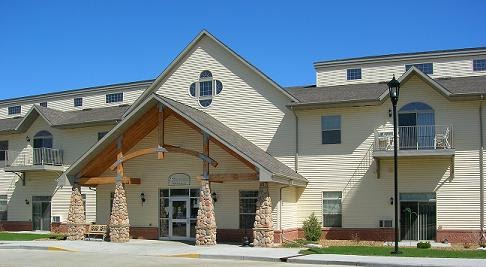
ST BENEDICTS HEALTH CENTER is owned by a non-profit organization. Non-profit facilities reinvest revenue into operations rather than distributing to shareholders. The facility is operated by BENEDICTINE HEALTH SYSTEM, a chain that manages multiple nursing homes. With 120 certified beds and approximately 108 residents (about 90% occupancy), it is a mid-sized facility located in DICKINSON, North Dakota.
How Does St Benedicts Compare to Other North Dakota Nursing Homes?

Compared to the 100 nursing homes in North Dakota, ST BENEDICTS HEALTH CENTER's overall rating (5 stars) is above the state average of 3.1, staff turnover (52%) is near the state average of 46%, and health inspection rating (5 stars) is much above the national benchmark.

What Should Families Ask When Visiting St Benedicts?

Based on this facility's data, families visiting should ask: "Can I visit during a mealtime to observe dining assistance and food quality?" "How do you handle medical emergencies, and what is your hospital transfer rate?" "Can I speak with family members of current residents about their experience?"

Is St Benedicts Safe?

Based on CMS inspection data, ST BENEDICTS HEALTH CENTER has a clean safety record: no substantiated abuse findings (meaning no confirmed cases of resident harm), no Immediate Jeopardy citations (the most serious violation level indicating risk of serious injury or death), and is not on the Special Focus Facility watch list (a federal program monitoring the lowest-performing 1% of nursing homes). The facility has a 5-star overall rating and ranks #1 of 100 nursing homes in North Dakota. While no facility is perfect, families should still ask about staff-to-resident ratios and recent inspection results during their visit.

Do Nurses at St Benedicts Stick Around?

ST BENEDICTS HEALTH CENTER has a staff turnover rate of 52%, which is 6 percentage points above the North Dakota average of 46%. Moderate turnover is common in nursing homes, but families should still ask about staff tenure and how the facility maintains care continuity when employees leave.

Was St Benedicts Ever Fined?

ST BENEDICTS HEALTH CENTER has no federal fines on record. CMS issues fines when nursing homes fail to meet care standards or don't correct problems found during inspections. The absence of fines suggests the facility has either maintained compliance or corrected any issues before penalties were assessed. This is a positive indicator, though families should still review recent inspection reports for the full picture.

Is St Benedicts on Any Federal Watch List?

ST BENEDICTS HEALTH CENTER is not on any federal watch list. The most significant is the Special Focus Facility (SFF) program, which identifies the bottom 1% of nursing homes nationally based on persistent, serious quality problems. Not being on this list means the facility has avoided the pattern of deficiencies that triggers enhanced federal oversight. This is a positive indicator, though families should still review the facility's inspection history directly.