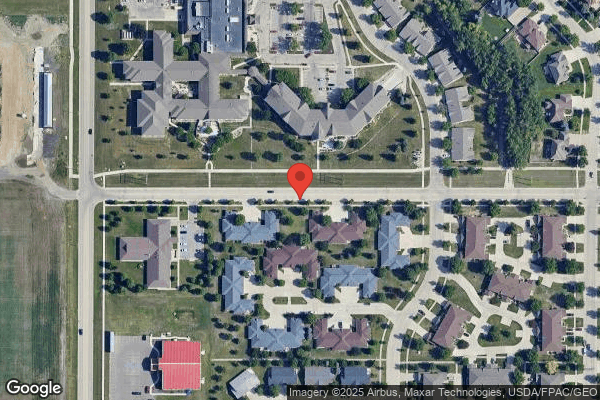
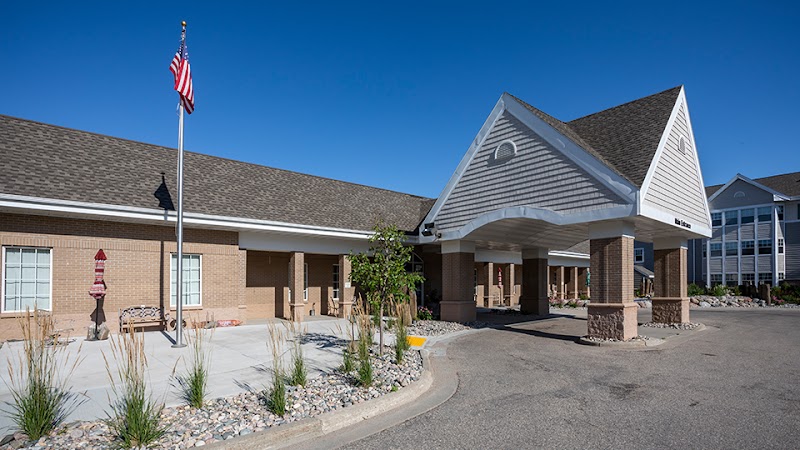
WOODSIDE VILLAGE

4000 24TH AVE S, GRAND FORKS, ND 58201 (701) 787-7500
Non profit - Church related 138 Beds Independent Data: November 2025
Trust Grade
78/100
#20 of 72 in ND
Last Inspection: January 2025

Within standard 12-15 month inspection cycle. Federal law requires annual inspections.

Overview

Woodside Village in Grand Forks, North Dakota, holds a Trust Grade of B, indicating it is a good choice but not without its issues. It ranks #20 out of 72 facilities in the state, placing it in the top half, and #1 out of 3 in Grand Forks County, meaning it is the best option locally. However, the facility is experiencing a worsening trend, with reported issues increasing from 1 in 2024 to 2 in 2025. Staffing is a strong point, with a 5/5 star rating and a turnover rate of 45%, which is below the state average, although RN coverage is concerning as it is less than 75% of other facilities in North Dakota. Despite $8,278 in fines being average for the area, there have been serious concerns, including a failure to properly supervise residents, resulting in facial injuries from improper wheelchair use, and lapses in infection control practices, such as inadequate hand hygiene during medical procedures.

Trust Score
B
78/100
In North Dakota
#20/72
Top 27%
Safety Record
Moderate
Needs review
Inspections
Getting Worse
1 → 2 violations
Staff Stability
⚠ Watch
45% turnover. Above average. Higher turnover means staff may not know residents' routines.
Penalties
⚠ Watch
$8,278 in fines. Higher than 85% of North Dakota facilities, suggesting repeated compliance issues.
Skilled Nurses
✓ Good
Each resident gets 49 minutes of Registered Nurse (RN) attention daily — more than average for North Dakota. RNs are trained to catch health problems early.
Violations
⚠ Watch
13 deficiencies on record. Higher than average. Multiple issues found across inspections.
★★★★★
5.0
Overall Rating
★★★★★
5.0
Staff Levels
★★★★★
5.0
Care Quality
★★★☆☆
3.0
Inspection Score
Stable
2024: 1 issues
2025: 2 issues

The Good

  • 5-Star Staffing Rating · Excellent nurse staffing levels
  • 5-Star Quality Measures · Strong clinical quality outcomes
  • Full Sprinkler Coverage · Fire safety systems throughout facility
  • No fines on record

Facility shows strength in staffing levels, quality measures, fire safety.

The Bad

Staff Turnover: 45%

Near North Dakota avg (46%)

Higher turnover may affect care consistency

Federal Fines: $8,278

Below median ($33,413)

Minor penalties assessed

The Ugly 13 deficiencies on record

1 actual harm
Jan 2025 2 deficiencies 1 Harm
SERIOUS (G) 📢 Someone Reported This

A family member, employee, or ombudsman was alarmed enough to file a formal complaint

Actual Harm - a resident was hurt due to facility failures

Accident Prevention (Tag F0689)

A resident was harmed · This affected 1 resident

**NOTE- TERMS IN BRACKETS HAVE BEEN EDITED TO PROTECT CONFIDENTIALITY** Based on record review, review of the facility reported incident and investigation documents, and review of facility policy, the...

Read full inspector narrative →
**NOTE- TERMS IN BRACKETS HAVE BEEN EDITED TO PROTECT CONFIDENTIALITY** Based on record review, review of the facility reported incident and investigation documents, and review of facility policy, the facility failed to provide appropriate supervision and devices to prevent an accident for 1 of 9 sampled residents (Resident #87) investigated for falls. Failure to ensure staff utilized footrests properly on the wheelchair caused facial injuries to Resident #87 and placed all residents transferred via wheelchair at risk for falls and/or injury. This citation is considered past non-compliance based on review of the corrective actions the facility implemented immediately following the incident. Findings include: The surveyor determined a deficient practice existed on 09/07/24. The facility completed the corrective action on 09/13/24. The final facility reported incident report, dated 09/13/24, stated, . [Resident #87] was being pushed in her wheelchair by CNA [certified nurse aide #8] and [Resident #87's] foot pedals were on her wheelchair but moved off to the side and not in position. When [CNA #8] started to push the wheelchair forward, [Resident #87] placed her feet down on the floor and as a result she fell face first onto the floor. The wheelchair foot pedals were not in the proper position nor used during this transport. [Resident #87] suffered a small laceration on the bridge of her nose from her glasses . She had a laceration and a hematoma to her forehead as well as swelling under her R [right] eye. Review of the facility policy titled Standards of Care occurred on 01/08/25. This policy, dated 05/01/24, stated, . Foot pedals will be used for all residents being transported for extended distances and removed when stationary or unless Care Planned. Review of Resident #87's medical record occurred on all days of survey. The quarterly Minimum Data Set (MDS), dated [DATE], identified dependance on staff for wheelchair transfers. The current care plan stated, . Locomotion . I use a manual WC [wheelchair] for locomotion. staff assist of one for longer distances . Foot pedals need to be on my WC when pushing the WC. The progress notes stated the following: * 09/07/24 at 1:57 p.m., . Resident on floor in hallway . * 09/10/24 at 10:14 a.m., . Res [resident] had a fall from her wheelchair 9/7/2024 and was injured. Further investigation of the fall revealed that foot pedals were on the wheelchair but not in proper position and not utilized while res was being transported in the hallway. Based on the following information, non-compliance at F689 is considered past non-compliance. The facility implemented corrective actions to ensure the deficient practice does not recur by: * Completed an investigation on 09/13/24, including an interview with the CNA #8 who transferred Resident #87 via wheelchair. * Determined the CNA #8 provided wheelchair transport to Resident #87 without the foot pedals in the proper position. * Placed CNA #8 on administrative leave on 09/10/24 until further investigation and education was provided. * Email education to all staff, dated 09/10/24, stated, Foot pedals or leg rests always need to be used when pushing a resident in a wheelchair. It is never acceptable to allow a resident's feet to dangle when pushing them, not even for a short distance. * Memo dated 09/13/24 addressed to all staff, stated, ANYTIME a resident is being pushed in their wheelchair the foot pedals MUST BE ON. * CNA #8 and all other nursing staff signed rosters indicating review and understanding of the 09/13/24 memo. * The charge nurses were responsible for reviewing education provided in the 09/13/24 memo after the 09/07/24 fall. * Continue weekly quality assurance audits to ensure resident safety during wheelchair transport.
CONCERN (D) 📢 Someone Reported This

A family member, employee, or ombudsman was alarmed enough to file a formal complaint

Potential for Harm - no one hurt, but risky conditions existed

Infection Control (Tag F0880)

Could have caused harm · This affected 1 resident

Based on observation, record review, review of facility policy, and staff interview, the facility failed to follow standards of infection control and prevention for 1 of 1 sampled resident (Resident #...

Read full inspector narrative →
Based on observation, record review, review of facility policy, and staff interview, the facility failed to follow standards of infection control and prevention for 1 of 1 sampled resident (Resident #126) observed during tracheostomy cares and 1 of 1 supplemental resident (Resident #283) observed during insulin administration. Failure to practice infection control standards related to glove use/hand hygiene has the potential to spread infection throughout the facility. Findings include: Review of the facility policy titled Handwashing/Hand Hygiene occurred on 01/08/25. This policy, dated October 2024, stated, . Hand hygiene is indicated . After contact with blood, body fluids or contaminated surfaces; After touching a resident; After touching the resident's environment . The use of gloves does not replace hand washing/hygiene. Review of the facility policy titled Insulin Pen Injections occurred on 01/08/25. This policy, dated January 2023, stated, . Technique . Gather equipment . Perform hand hygiene . Preparing insulin pen . Apply clean gloves . Select appropriate site . Administer injection. - Review of Resident #126's medical record occurred on all days of survey. The record identified a tracheostomy, enhanced barrier precautions, and a recent Influenza A infection. Observation on 01/09/25 at 11:38 a.m. showed a staff nurse (#5) applied a gown and gloves, prepared for the sterile portion of Resident #126's tracheostomy cares, and handed the resident a paper napkin to cough into during care. The nurse (#5) completed the sterile portion of the care, removed the sterile gloves, performed hand hygiene, and applied clean gloves to complete the non-sterile portion of the care. The nurse removed the used paper napkin from Resident #126's hands, cleansed the ostomy site with cotton swabs and a solution of peroxide and saline, and threw the cotton swabs into the garbage. The nurse (#5) handed the same used paper napkin to the resident, and with the same gloves, touched many items in the resident's room, then removed the gown and gloves, performed hand hygiene, and exited the room. The nurse (#5) failed to remove the soiled gloves, perform hand hygiene, and apply new gloves before moving on to other tasks. During an interview on 01/08/25 at 2:35 p.m., two administrative nurses (#6 and #7) stated they expected staff to remove their contaminated gloves and perform hand hygiene before moving on to other tasks. - Review of Resident #283's medical record occurred on 01/08/25. Physician's orders showed Insulin Glargine 12 units and Novolog 3 units sub-cutaneous injections daily. Observation on 01/08/25 at 8:41 a.m. showed a nurse (#4) performed hand hygiene and without applying gloves, administered Resident #283's insulin injections. During an interview on 01/08/25 at 4:53 p.m., an administrative staff member (#2) confirmed she expected nurses to wear gloves while administering an injection.
Jan 2024 1 deficiency
CONCERN (D) 📢 Someone Reported This

A family member, employee, or ombudsman was alarmed enough to file a formal complaint

Potential for Harm - no one hurt, but risky conditions existed

Notification of Changes (Tag F0580)

Could have caused harm · This affected 1 resident

**NOTE- TERMS IN BRACKETS HAVE BEEN EDITED TO PROTECT CONFIDENTIALITY** Based on information provided by the complainant, record review, review of the facility's policy and staff interview, the facili...

Read full inspector narrative →
**NOTE- TERMS IN BRACKETS HAVE BEEN EDITED TO PROTECT CONFIDENTIALITY** Based on information provided by the complainant, record review, review of the facility's policy and staff interview, the facility failed to notify the resident representative for 1 of 1 confidential resident (Resident A) who experienced a fall. Failure to notify the resident representative of a fall limits their ability to make informed decisions regarding medical care. Findings include: Information received from the complainant indicated the facility staff failed to notify the resident's representative of a fall. Review of the facility policy titled Fall Investigation occurred on 01/23/24. This policy, dated December 2022, stated, . Calls and notifications . These notifications are a standard of care. include notification to family or responsible party. Include name, date and time of notification. Licensed nurse completing form needs to sign and date upon completion. Review of Resident A's medical record occurred on 01/23/24. An admission Minimum Data Set (MDS), dated [DATE], identified receiving an anticoagulant (blood thinner) and hemodialysis. Diagnoses included atrial fibrillation and a history of deep vein thrombosis (blood clot). Medications included apixaban (anticoagulant) 2.5 milligrams twice daily. An artriovenous fistula (access for hemodialysis) located in the resident's left arm and utilized for dialysis on Monday, Wednesday, and Friday. Resident A's progress notes showed the following: * 12/24/23 at 2:54 a.m., . Resident was found in his bathroom by staff at 0045 [12:45 a.m.]. Resident was sitting in the corner right below his sink and bathroom cupboard. Resident stated that he was trying to move his W/C [wheelchair] in his bathroom as it was blocking the toilet. Resident stated he couldn't find his call light and tried to call for assistance but instead transferred himself. While moving the W/C in the bathroom he slipped and fell. Vitals and resident was assessed for injury. Resident denied pain and was only complaining of a cold bottom from sitting on the bathroom floor. Total hoyer lift [full body mechanical lift] used to get resident off the floor. Resident then used toilet after getting assisted off the floor. * 12/26/23 at 11:29 a.m., Health Status Note Data: Discoloration noted to left low back. Action: NP [nurse practitioner] notified. Voicemail left with PDM [primary decision maker]. No further documentation noted in the progress notes regarding the discoloration on Resident A's left low back or PDM's response. The medical record lacked evidence staff notified the resident representative of Resident A's fall or cause for bruising. During an interview on 01/23/24 at 5:00 p.m., an administrative staff member (#1) confirmed staff failed to notify the resident representative of Resident A's fall.
Nov 2023 4 deficiencies
CONCERN (D)

Potential for Harm - no one hurt, but risky conditions existed

Assessment Accuracy (Tag F0641)

Could have caused harm · This affected 1 resident

**NOTE- TERMS IN BRACKETS HAVE BEEN EDITED TO PROTECT CONFIDENTIALITY** Based on record review, review of the Long-Term Care Facility Resident Assessment Instrument (RAI) 3.0 User's Manual (Version 1....

Read full inspector narrative →
**NOTE- TERMS IN BRACKETS HAVE BEEN EDITED TO PROTECT CONFIDENTIALITY** Based on record review, review of the Long-Term Care Facility Resident Assessment Instrument (RAI) 3.0 User's Manual (Version 1.18.11), and staff interview, the facility failed to ensure accurate coding of the Minimum Data Set (MDS) for 1 of 26 sampled residents (Resident #103). Failure to accurately code the MDS does not allow each resident's assessment to reflect their status/needs and may affect the accurate development of a comprehensive care plan and the care provided to the residents. Findings include: The Long-Term Care Facility RAI User's Manual, revised October 2023, pages J-34 and J-36 stated, . J1800: Any Falls Since Admission/Entry . Code 1, yes, if the resident has fallen since the last admission . J1900: Number of Falls Since Admission/Entry . Code 1, one, if the resident had one major injurious fall since admission/entry or reentry or prior assessment . - Review of Resident #103's medical record occurred on all days of survey. A progress note, dated 10/18/2023 at 2:25 p.m., stated, . Aware of activity [fall] that occurred on 10/17/2023. [Resident #103] is independent with transfers and ambulation. [Resident #103] was taking [sic] to [Hospital] via ambulance which x-rays showed closed displaced fracture of right femoral neck. Resident was admitted to [Hospital] . The discharge/return anticipated MDS, dated [DATE], failed to identify a fall at J1800 and a fall with major injury at J1900 C. During an interview on 11/30/23 at 10:00 a.m., a managerial nurse (#6) confirmed staff failed to code a fall with major injury on the MDS.
CONCERN (D)

Potential for Harm - no one hurt, but risky conditions existed

Accident Prevention (Tag F0689)

Could have caused harm · This affected 1 resident

Based on observation, record review, review of the facility's policy, and staff interview, the facility failed to ensure residents received adequate supervision/assistance to prevent accidents for 1 o...

Read full inspector narrative →
Based on observation, record review, review of the facility's policy, and staff interview, the facility failed to ensure residents received adequate supervision/assistance to prevent accidents for 1 of 12 sampled residents (Resident #112) observed during stand-lift transfers. Failure to ensure proper use of a mechanical stand-lift resulted in Resident #112 experiencing pain and placed him at risk for possible accidents with/without injury. Findings include: Review of the facility policy titled . Sit-to-Stand Lift occurred on 11/30/23. This policy, revised January 2017, stated, . Encourage the resident to use their arms and legs while being lifted. Note: Resident must be able to weight bear during transfer. - Review of Resident #112's medical record occurred on all days of survey. Diagnoses included a history of falls. The current care plan stated, . I transfer with the stand lift with assist of 1 from wheelchair or toilet and assist of one to get out of bed. Observation showed the following: * 11/27/23 at 3:21 p.m., a certified nurse aide (CNA) (#7) toileted Resident #112. The CNA lifted Resident #112 approximately six inches in a sit-to-stand lift before transferring him into and out of the bathroom. Resident #112 remained in a semi-seated position with the harness straps pulling upward into his armpits, raising his shoulders to ear level, extending his elbows out horizontally. As the CNA (#7) transferred Resident #112 out of the bathroom, one of the resident's elbows hit the doorframe, and he stated, ow, ow, ow in a loud voice. The CNA failed to ensure Resident #112 could bear weight while in the stand lift and failed to ensure his arms cleared the doorframe before pushing him out of the bathroom. * 11/28/23 at 9:40 a.m. and at 3:01 p.m., two CNAs (#8 and #10) toileted Resident #112. The CNAs lifted Resident #112 approximately twelve inches in the sit-to-stand lift before transferring him into and out of the bathroom. Resident #112 remained in a semi-seated position with the harness straps pulling upward into his armpits, raising his shoulders to ear level. The CNA (#8 and #9) failed to ensure Resident #112 could bear weight while in the stand lift. During an interview on 11/30/23 at 10:00 a.m., an managerial nurse (#6) confirmed staff should ensure residents can bear weight while utilizing the stand lift and should report to the charge nurse if they are unable to do so.
CONCERN (D)

Potential for Harm - no one hurt, but risky conditions existed

Food Safety (Tag F0812)

Could have caused harm · This affected 1 resident

Based on observation and staff interview, the facility failed to maintain the food preparation and service area in a sanitary manner for 1 of 3 kitchenettes (Prairieview) observed. Failure to serve fo...

Read full inspector narrative →
Based on observation and staff interview, the facility failed to maintain the food preparation and service area in a sanitary manner for 1 of 3 kitchenettes (Prairieview) observed. Failure to serve food in a sanitary environment has the potential to result in contamination of food and could result in a foodborne illness. Findings Include: Observation of the Prairieview kitchenette occurred on 11/29/23 at 11:00 a.m. with an administrative dietary staff member (#9). Observation showed a tower fan with accumulated dust clumps blowing toward the food service area where staff prepared food for residents. During an interview on 11/30/23 at 8:33 a.m., an administrative dietary staff member (#9) confirmed the facility does not have a process or schedule for cleaning fans and expected them to be dust free.
CONCERN (D)

Potential for Harm - no one hurt, but risky conditions existed

Infection Control (Tag F0880)

Could have caused harm · This affected 1 resident

Based on observation, review of facility policy, and staff interview, the facility failed to follow standards of infection control for 1 of 4 neighborhoods (Oakcrest) observed with Covid-19 outbreak, ...

Read full inspector narrative →
Based on observation, review of facility policy, and staff interview, the facility failed to follow standards of infection control for 1 of 4 neighborhoods (Oakcrest) observed with Covid-19 outbreak, and 1 of 1 sampled residents (#60) observed with a catheter. Failure to practice infection control standards related to use of personal protective equipment (PPE), and proper care of a catheter has the potential to spread infection throughout the facility. Findings Include: PERSONAL PROTECTIVE EQUIPMENT Review of the facility policy titled Transmission-Based Precautions occurred on 11/30/23. This policy, revised July 2023, stated . Transmission-Based Precautions are initiated when a resident develops signs and symptoms of a transmissible infection . are additional measures that protect staff, visitors, and other residents from becoming infected . Droplet precautions may be implemented for an individual documented or suspected to be infected with microorganisms transmitted by droplets . Masks and eye protection will be worn when entering the room . During an interview on 11/27/23 at 1:30 p.m., an administrative staff member (#1) identified Covid positive residents on the Oakcrest neighborhood and stated staff were to wear N95 respirators and eye protection while on the neighborhood. Observation showed the following: * 11/27/23 at 6:00 p.m., an administrative nurse (#2) left the Oakcrest neighborhood without removing her N95 facemask and goggles and went to the administrative wing to make copies. * 11/28/23 at 7:57 a.m., an unidentified staff member exited the closed double doors of the Oakcrest neighborhood wearing an N95 facemask and goggles. The staff member stood by the elevator, looked at her phone, then re-entered the neighborhood. The staff members failed to remove their PPE before exiting the Covid area. URINARY CATHETER CARE Review of the facility policy titled Guidelines for Preventing Urinary Tract Infections Catheter-Associated occurred on 11/30/23. This policy revised June 2019 stated, . always practice hygiene and standard precautions when handling catheter systems . do not place the drainage bag on the floor . Review of resident #60's medical record occurred on all days of survey. A physician's order, dated 03/02/23, identified an indwelling Foley catheter. The current care plan, dated 3/01/23 stated . I have an indwelling Foley catheter related to urinary retention . history of urinary tract infections (UTI's) . I have a dignity bag for my catheter . ensure catheter bag cover is on (Dignity Bag) Observation on 11/28/23 at 9:05 a.m. showed a urine collection bag attached to Resident #60's lower leg. As the resident propelled in a wheelchair, the drainage tip of the collection bag dragged on the carpeted floor. Facility staff failed to secure the urine collection bag to the resident's leg to prevent the tip from touching the floor and failed to place the collection bag in dignity bag for privacy and protection. During an interview on 11/30/23 at 10:43 a.m., an administrative nurse (#1) stated she expects staff to position urine bags to keep them from dragging on the floor and to place them in a dignity bag.
Nov 2022 6 deficiencies
CONCERN (D)

Potential for Harm - no one hurt, but risky conditions existed

Deficiency F0637 (Tag F0637)

Could have caused harm · This affected 1 resident

**NOTE- TERMS IN BRACKETS HAVE BEEN EDITED TO PROTECT CONFIDENTIALITY** Based on record review, staff interview, and review of the Long-Term Care Facility Resident Assessment Instrument (RAI) 3.0 User...

Read full inspector narrative →
**NOTE- TERMS IN BRACKETS HAVE BEEN EDITED TO PROTECT CONFIDENTIALITY** Based on record review, staff interview, and review of the Long-Term Care Facility Resident Assessment Instrument (RAI) 3.0 User's Manual, the facility failed to complete a significant change in status assessment (SCSA) for 1 of 2 sampled residents (Resident #14) who experienced a significant change in status. Failure to determine the need for and complete a SCSA in response to a resident's decline limited the facility's ability to accurately assess the resident's status, and identity and implement appropriate care approaches. Findings include: The Long-Term Care Facility RAI 3.0 User's Manual (Version 1.15), dated October 2017, page 2-22 stated, . A 'significant change' is a major decline or improvement in a resident's status that: 1. Will not normally resolve itself without staff intervention . 2. Impacts more than one area of the resident's health status; and 3. Requires interdisciplinary review and/or revision of the care plan. and page 2-25 stated, A SCSA is appropriate if there are either two or more areas of decline or two or more areas of improvement. This may include two changes within a particular domain (e.g., [for example] two areas of ADL [Activities of Daily Living] decline or improvement. Review of Resident #14's medical record occurred on all days of survey. An admission Minimum Data Set (MDS) dated [DATE] identified the resident was independent with bed mobility, transfers, walking in the room and corridor, locomotion on and off the unit, eating, toilet use, and supervision with hygiene. The medical record identified Resident #14 was hospitalized [DATE] - 07/21/22. A quarterly MDS, dated [DATE], identified the resident required extensive assistance with bed mobility, transfers, walk in room, locomotion on and off the unit, dressing, eating, toilet use, and hygiene. A resident progress note dated 07/28/22 at 1:49 p.m., stated, [resident] triggered for significant change in status on MDS, however, it was expected upon return from hospital on [DATE], that he would have a change, but would improve . Continued improvements expected. A Quarterly MDS dated [DATE] identified the resident required extensive assist with bed mobility, transfers, walk in room, locomotion on and off the unit, dressing, eating, toilet use, and hygiene. The record lacked evidence why staff failed to complete a SCSA following Resident #14's continued decline. During an interview on 11/02/22 at 8:00 a.m., a care coordinator (#4) confirmed staff failed to complete a significant change in status assessment after Resident #14 did not return to status after hospital return 07/21/22 and after further observation from the Quarterly MDS completed 07/27/22.
CONCERN (D)

Potential for Harm - no one hurt, but risky conditions existed

Pressure Ulcer Prevention (Tag F0686)

Could have caused harm · This affected 1 resident

**NOTE- TERMS IN BRACKETS HAVE BEEN EDITED TO PROTECT CONFIDENTIALITY** Based on observation, record review, review of facility policy, and staff interview, the facility failed to implement pressure u...

Read full inspector narrative →
**NOTE- TERMS IN BRACKETS HAVE BEEN EDITED TO PROTECT CONFIDENTIALITY** Based on observation, record review, review of facility policy, and staff interview, the facility failed to implement pressure ulcer prevention measures for 1 of 5 sampled residents (Resident #87) utilizing pressure-relieving devices. Failure to ensure orders for pressure-relieving boots were followed and consistent with the care plan and the treatment administration record (TAR) (and updated on the care plan and TAR) may result in the development of new and/or reopening of previously healed pressure ulcers. Findings include: Review of the facility policy titled Skin Prevention Protocol occurred on 11/03/22. This policy, revised November 2020, stated, . Purpose: To prevent the breakdown of skin integrity . and incorporating interventions to alleviate/minimize pressure . Review of the facility policy titled Physician Orders, Transcription of occurred on 11/03/22. This policy, revised June 2007, stated, . All new orders are to be transcribed to the appropriate location, such as . TAR . Review of Resident #87's medical record occurred on all days of survey and showed the following: * Current signed physician's orders included, Prevalon boot (specialized boot to relieve pressure) to bilateral feet for potential for high risk skin breakdown to be worn at all times . A skin assessment dated [DATE], showed the resident had a stage 2 pressure ulcer to his left foot first toe acquired in the facility and healed on 09/07/22. A second skin assessment, dated 09/20/22, showed another stage 2 pressure ulcer to his right foot second toe acquired in the facility and healed on 9/20/22. * Current care plan stated, . I have an actual impairment to skin integrity on my left great toe and right second toe . Please follow prescribed treatments and/or interventions as ordered. I wear prevalon boots and heel protectors on when in bed. The October and November 2022 TAR included the following, Prevalon boot to bilateral feet for potential for high risk skin breakdown to be worn at all times . The facility failed to ensure the care plan matched the current orders and TAR. Random observations on all days of survey showed Resident #87 in his wheelchair or recliner without Prevalon boots. During an interview on 11/02/22 at 11:34 a.m., a nurse (#1) verified Resident #87's record contained no order for the change of Prevalon boots at all times to only when in bed. The facility failed to ensure the medical record correctly and consistently reflected the use of pressure-relieving boots to prevent new pressure ulcers and/or the reoccurrence of healed pressure ulcers.
CONCERN (D)

Potential for Harm - no one hurt, but risky conditions existed

Accident Prevention (Tag F0689)

Could have caused harm · This affected 1 resident

Based on observation, record review, review of facility policy, and staff interview, the facility failed to provide adequate supervision and assistive devices necessary to prevent accidents for 2 of 8...

Read full inspector narrative →
Based on observation, record review, review of facility policy, and staff interview, the facility failed to provide adequate supervision and assistive devices necessary to prevent accidents for 2 of 8 sampled residents (Resident #12 and #41) observed during a transfer. Failure to use a gait belt and or use it correctly when transferring a resident placed the residents at risk for falls and injury. Findings include: Review of the facility policy titled Gait Belt occurred on 11/03/22. This policy, revised 2017, stated, 1. Policy: Valley Senior Living will utilize gait belts to aid in the transfer of residents from a sitting to standing position for residents who are partially dependent, have some weight-bearing capacity, and are cooperative. - Review of Resident #12's medical record occurred on all days of survey. The current care plan stated, TRANSFER . I transfer with assist of one with a gait belt . Observation on 11/02/22 at 1:50 p.m. showed a certified nursing assistant (CNA) (#2) assisted Resident #12 off the toilet with a gait belt placed around the resident's waist. The CNA instructed the resident to stand as she lifted under the resident's arms. The CNA failed to use the gait belt to transfer the resident from the toilet to the wheelchair. - Review of Resident #41's medical record occurred on all days of survey. The current care plan stated, TRANSFER . I transfer with assist of one and a gait belt . Observation on 11/01/22 at 9:42 a.m. showed a CNA (#3) transferred Resident #41 from the wheelchair to the bed. The CNA pulled on the back of the resident's pants during the transfer. The CNA failed to use a gait belt during the transfer. During an interview on the morning of 11/03/22, an administrative nurse (#1) confirmed she expected staff to follow the care plan and utilize a gait belt to transfer Resident #12 and #41.
CONCERN (D)

Potential for Harm - no one hurt, but risky conditions existed

Deficiency F0692 (Tag F0692)

Could have caused harm · This affected 1 resident

Based on observation, record review, and staff interview, the facility failed to provide/offer fluids to 1 of 6 sampled residents (Resident #8) observed during cares and required staff assistance for ...

Read full inspector narrative →
Based on observation, record review, and staff interview, the facility failed to provide/offer fluids to 1 of 6 sampled residents (Resident #8) observed during cares and required staff assistance for fluid intake. Failure to offer/encourage fluid intake may result in dehydration, constipation, and urinary tract infections. Findings include: Review of Resident #8's medical record occurred on all days of survey. Diagnoses included cerebral vascular disease, and dementia. The care plan stated, . I have an ADL [Activity of Daily Living] self-care performance deficit r/t [related to] Dementia and right-sided weakness . I require total assistance by staff to eat . Provide and serve a pureed diet and honey/moderately thick liquids . Encourage good nutrition and hydration in order to promote healthier skin. Observation on 11/01/22 at 10:45 a.m. showed a certified nursing assistant (CNA) (#9) and an unidentified CNA assisted Resident #8 with cares and transferred the resident to the wheelchair. The resident had a disposable cup full of thickened liquid and a nosey cup (cup with opening for the nose) on the bedside table. The CNAs failed to offer the resident thickened liquids with cares. Observation on 11/02/22 at 10:40 a.m. two CNAs (#9 and #10) assisted the resident into bed and failed to offer fluids to the resident. Observation on 11/02/22 at 4:15 p.m. showed two CNAs (#11 and #12) assisted Resident #8 into the wheelchair and transported the resident to the TV area. The CNAs failed to offer fluids to the resident. A large nosey cup full of an orange thickened liquid and a disposable cup of thickened water sat on the resident's bedside table, untouched. During an interview on 11/03/22 at 10:30 a.m., an administrative nurse (#8) stated she expected staff to offer Resident #8 fluids with every interaction.
CONCERN (D)

Potential for Harm - no one hurt, but risky conditions existed

Medication Errors (Tag F0758)

Could have caused harm · This affected 1 resident

Based on record review, facility policy review, and staff interview, the facility failed to ensure orders for as needed (PRN) psychotropic drugs were limited to 14 days for 1 of 1 sampled resident (Re...

Read full inspector narrative →
Based on record review, facility policy review, and staff interview, the facility failed to ensure orders for as needed (PRN) psychotropic drugs were limited to 14 days for 1 of 1 sampled resident (Resident #105) receiving a PRN antianxiety medication. Failure to ensure the physician renewed the PRN order after 14 days may result in the resident receiving an unnecessary medication. Findings include: Review of the facility's policy titled Psychotropic Drugs occurred on 11/03/22. This policy, revised April 2017, stated, . PRN orders for psychotropic drugs are limited to 14 days. Except if the attending physician or prescribing practitioner believes that it is appropriate for the PRN order to be extended beyond 14 days, he or she should document their rationale in the resident's medical record and indicate the duration [sic] the PRN order. Review of Resident #105's medical record occurred on all days of survey. Diagnoses included Alzheimer's disease, depression, and anxiety. The current physician's orders identified Lorazepam [antianxiety medication] Tablet 0.5 MG [milligrams]. Give 0.5 mg by mouth every 4 hours as needed for anxiety . re-eval [re-evaluate] with hospice nurse every 30 days and document visit. Resident #105's medical record identified the resident discharged from hospice care on 09/23/22. The medical record identified the physician last evaluated the PRN Lorazepam on 10/04/22. The record lacked evidence the attending physician or prescribing practitioner evaluated the resident for the appropriateness of the medication every 14 days after discharged from hospice. During an interview on 11/02/22 at 10:38 a.m., a care coordinator (#4) confirmed the provider failed to review the PRN medication every 14 days.
CONCERN (E)

Potential for Harm - no one hurt, but risky conditions existed

Food Safety (Tag F0812)

Could have caused harm · This affected multiple residents

Based on observation, review of facility policy, and staff interview, the facility failed to store food and beverages in a sanitary manner for 3 of 4 dining/kitchenette areas (Heartland, Prairieview, ...

Read full inspector narrative →
Based on observation, review of facility policy, and staff interview, the facility failed to store food and beverages in a sanitary manner for 3 of 4 dining/kitchenette areas (Heartland, Prairieview, and Oakcrest). Failure to discard milk-based nutritional beverages by the throw by date, maintain clean refrigerators for storage of food and beverages, and label food prior to placing in the refrigerator or freezer has the potential to result in the spread of foodborne illness to residents, staff, and visitors. Findings include: Review of the facility policy titled Food Storage occurred on 11/02/22. This policy, revised 2017, stated the following: . N. All refrigerator units are kept clean . O. Refrigeration: . All foods should be covered, labeled and dated. P. Frozen Foods: . Foods should be covered, labeled and dated. Observation of the posting on the main kitchen's freezer door on 11/02/22 at 2:13 p.m. stated, Starting Monday August 9th Mighty Shakes [a milk-based nutritional supplement] will be labeled with a throw by date instead of the date they were pulled from the freezer. Observation during the dietary tour on 11/02/22 at 12:28 p.m. with the food service supervisor (#5) showed the following: * Heartland: - One unlabeled/undated container of food in a hallway refrigerator. * Prairieview: - Three unlabeled/undated food containers in a kitchenette freezer. - Four containers of chocolate Mighty Shakes with throw by dates of 10/31/22 in a kitchenette refrigerator. * Oakcrest: - Four containers of vanilla Mighty Shakes with throw by dates of 10/31/22 in a kitchenette refrigerator. - A small overflow resident refrigerator contained an unlabeled/undated bag of corn on the cob and plastic food container, and an orange substance covered the bottom of the refrigerator. During an interview on 11/02/22 at 2:13 p.m., the food service supervisor (#5) stated she expected staff to dispose of unlabeled/undated food found in the refrigerators/freezers and dispose of Mighty Shakes based on the throw by date.
Understanding Severity Codes (click to expand)
Life-Threatening (Immediate Jeopardy)
J - Isolated K - Pattern L - Widespread
Actual Harm
G - Isolated H - Pattern I - Widespread
Potential for Harm
D - Isolated E - Pattern F - Widespread
No Harm (Minor)
A - Isolated B - Pattern C - Widespread

Questions to Ask on Your Visit

  • "Can I speak with families of current residents?"
  • "What's your RN coverage like on weekends and overnight?"

Our Honest Assessment

Strengths
  • • Licensed and certified facility. Meets minimum state requirements.
Concerns
  • • 13 deficiencies on record, including 1 serious (caused harm) violation. Ask about corrective actions taken.
Bottom line: Generally positive indicators. Standard due diligence and a personal visit recommended.

About This Facility

What is Woodside Village's CMS Rating?

CMS assigns WOODSIDE VILLAGE an overall rating of 5 out of 5 stars, which is considered much above average nationally. Within North Dakota, this rating places the facility higher than 99% of the state's 100 nursing homes. This rating reflects solid performance across the metrics CMS uses to evaluate nursing home quality.

How is Woodside Village Staffed?

CMS rates WOODSIDE VILLAGE's staffing level at 5 out of 5 stars, which is much above average compared to other nursing homes. Staff turnover is 45%, compared to the North Dakota average of 46%. This relatively stable workforce can support continuity of care.

What Have Inspectors Found at Woodside Village?

State health inspectors documented 13 deficiencies at WOODSIDE VILLAGE during 2022 to 2025. These included: 1 that caused actual resident harm and 12 with potential for harm. Deficiencies causing actual harm indicate documented cases where residents experienced negative health consequences.

Who Owns and Operates Woodside Village?

WOODSIDE VILLAGE is owned by a non-profit organization. Non-profit facilities reinvest revenue into operations rather than distributing to shareholders. The facility operates independently rather than as part of a larger chain. With 138 certified beds and approximately 132 residents (about 96% occupancy), it is a mid-sized facility located in GRAND FORKS, North Dakota.

How Does Woodside Village Compare to Other North Dakota Nursing Homes?

Compared to the 100 nursing homes in North Dakota, WOODSIDE VILLAGE's overall rating (5 stars) is above the state average of 3.1, staff turnover (45%) is near the state average of 46%, and health inspection rating (3 stars) is at the national benchmark.

What Should Families Ask When Visiting Woodside Village?

Based on this facility's data, families visiting should ask: "Can I visit during a mealtime to observe dining assistance and food quality?" "How do you handle medical emergencies, and what is your hospital transfer rate?" "Can I speak with family members of current residents about their experience?"

Is Woodside Village Safe?

Based on CMS inspection data, WOODSIDE VILLAGE has a clean safety record: no substantiated abuse findings (meaning no confirmed cases of resident harm), no Immediate Jeopardy citations (the most serious violation level indicating risk of serious injury or death), and is not on the Special Focus Facility watch list (a federal program monitoring the lowest-performing 1% of nursing homes). The facility has a 5-star overall rating and ranks #1 of 100 nursing homes in North Dakota. While no facility is perfect, families should still ask about staff-to-resident ratios and recent inspection results during their visit.

Do Nurses at Woodside Village Stick Around?

WOODSIDE VILLAGE has a staff turnover rate of 45%, which is about average for North Dakota nursing homes (state average: 46%). Moderate turnover is common in nursing homes, but families should still ask about staff tenure and how the facility maintains care continuity when employees leave.

Was Woodside Village Ever Fined?

WOODSIDE VILLAGE has been fined $8,278 across 1 penalty action. This is below the North Dakota average of $33,162. While any fine indicates a compliance issue, fines under $50,000 are relatively common and typically reflect isolated problems that were subsequently corrected. Families should ask what specific issues led to these fines and confirm they've been resolved.

Is Woodside Village on Any Federal Watch List?

WOODSIDE VILLAGE is not on any federal watch list. The most significant is the Special Focus Facility (SFF) program, which identifies the bottom 1% of nursing homes nationally based on persistent, serious quality problems. Not being on this list means the facility has avoided the pattern of deficiencies that triggers enhanced federal oversight. This is a positive indicator, though families should still review the facility's inspection history directly.