PEMBILIER NURSING CENTER
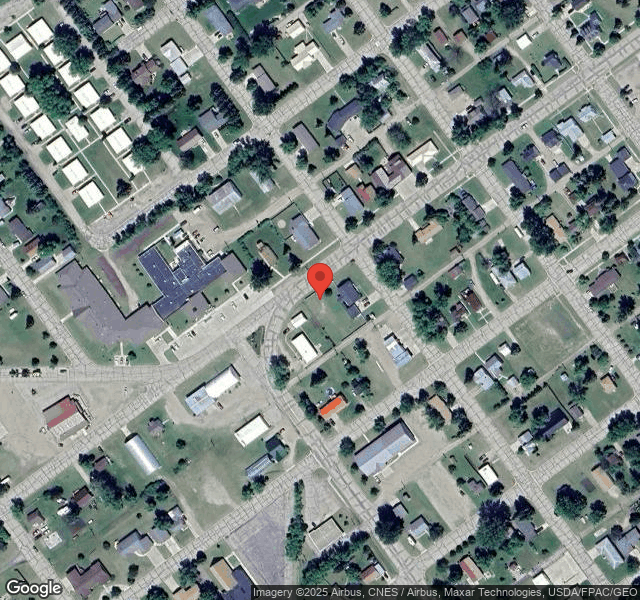
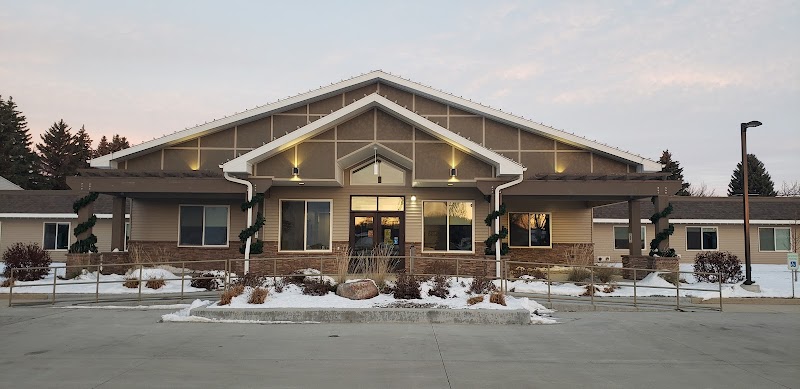
500 DELANO AVE, WALHALLA, ND 58282 (701) 549-3831
Non profit - Corporation 31 Beds Independent Data: November 2025
Trust Grade
78/100
#8 of 72 in ND
Last Inspection: March 2025

Within standard 12-15 month inspection cycle. Federal law requires annual inspections.

Overview

Pembilier Nursing Center in Walhalla, North Dakota, has a Trust Grade of B, indicating it is a good option for families, as it ranks solidly in the middle range for facilities. It ranks #8 out of 72 in North Dakota, placing it in the top half, and is the best choice in Pembina County. The facility shows an improving trend, having reduced its issues from five in 2024 to zero in 2025, although there were still eight deficiencies found during inspections, including a serious concern related to a resident's delayed hospitalization due to inadequate monitoring. Staffing is rated at 4 out of 5 stars, which is good, but the turnover rate of 58% is average compared to the state. While the nursing home has a good overall rating, it has faced issues such as failing to notify a physician about a resident's COVID-19 diagnosis and not securely storing controlled medications, which are important safety concerns that families should consider.

Trust Score
B
78/100
In North Dakota
#8/72
Top 11%
Safety Record
Moderate
Needs review
Inspections
Getting Better
5 → 0 violations
Staff Stability
⚠ Watch
58% turnover. Above average. Higher turnover means staff may not know residents' routines.
Penalties
✓ Good
$3,250 in fines. Lower than most North Dakota facilities. Relatively clean record.
Skilled Nurses
✓ Good
Each resident gets 47 minutes of Registered Nurse (RN) attention daily — more than average for North Dakota. RNs are trained to catch health problems early.
Violations
○ Average
8 deficiencies on record. Average for a facility this size. Mostly minor or procedural issues.
★★★★★
5.0
Overall Rating
★★★★☆
4.0
Staff Levels
★★☆☆☆
2.0
Care Quality
★★★★★
5.0
Inspection Score
Stable
2024: 5 issues
2025: 0 issues

The Good

  • 4-Star Staffing Rating · Above-average nurse staffing levels
  • Full Sprinkler Coverage · Fire safety systems throughout facility
  • No fines on record

Facility shows strength in staffing levels, fire safety.

The Bad

Staff Turnover: 58%

12pts above North Dakota avg (46%)

Frequent staff changes - ask about care continuity

Federal Fines: $3,250

Below median ($33,413)

Minor penalties assessed

Staff turnover is elevated (58%)

10 points above North Dakota average of 48%

The Ugly 8 deficiencies on record

1 actual harm
Jan 2024 5 deficiencies 1 Harm
SERIOUS (G)

Actual Harm - a resident was hurt due to facility failures

Quality of Care (Tag F0684)

A resident was harmed · This affected 1 resident

**NOTE- TERMS IN BRACKETS HAVE BEEN EDITED TO PROTECT CONFIDENTIALITY** Based on record review, review of professional reference, and review of facility policy, the facility failed to provide care and...

Read full inspector narrative →
**NOTE- TERMS IN BRACKETS HAVE BEEN EDITED TO PROTECT CONFIDENTIALITY** Based on record review, review of professional reference, and review of facility policy, the facility failed to provide care and services to maintain the resident's highest level of well-being for 1 of 1 closed record (Resident #83) transferred to the emergency room (ER) for a change in health status. Failure to monitor and assess the resident's condition on a continuing basis resulted in a worsening of symptoms delay in hospitalization, and possible death. Findings include: Kozier & Erb's Fundamentals of Nursing: Concepts, Process, and Practice, 11th Edition eText, 2021, Pearson, Boston, Massachusetts, page 189, stated, . Nurses have responsibilities related to both medical and nursing diagnoses. Nursing diagnoses relate primarily to the nurse's independent functions, that is, the areas of healthcare that are unique to nursing and separate and distinct from medical management. However, the nurse is still responsible for identifying and responding to data that indicate real or potential medical problems. Independent nursing interventions for a collaborative problem focus mainly on monitoring the client's condition and preventing development of the potential complication. Definitive treatment of the condition requires both medical and nursing interventions. Review of the facility policy titled Notification of Changes occurred on [DATE]. This policy, dated, [DATE], stated, Policy: The purpose of this policy is to ensure the facility promptly informs the resident, consults the resident's physician; and notifies, consistent with his or her authority, the resident's representative when there is a change requiring notification. Circumstances requiring notification include: . Significant change in the resident's physical, mental or psychosocial condition . Review of the facility policy titled Physician, Physician Assistant, Nurse Practitioner or Clinical Nurse Specialist Lab Notification occurred on [DATE]. This policy, dated, [DATE], stated, The facility must promptly notify the attending physician, physician assistant, nurse practitioner or clinical nurse specialist of lab results that fall outside of clinical reference ranges . Delayed notification may contribute to delays in changing the course of treatment or care plan. Review of Resident #83's medical record occurred on [DATE]-25, 2024. Diagnoses included a history of rheumatoid arthritis, cerebral infarction (stroke) without residual deficits, neoplasm of breast, in remission, and respiratory bronchiolitis/interstitial lung disease. A quarterly Minimum Data Set (MDS), dated [DATE], identified extensive assist with activities of daily living (ADLs) such as bed mobility, transfers, dressing, toileting, hygiene, and bathing, assist with wheelchair mobility, and not ambulating due to progressive rheumatoid arthritis to feet/knees. A document titled, Resuscitation Guidelines signed by Resident #83 on [DATE] and signed by the resident's physician on [DATE], stated, . By signing this part of the form, I am requesting a status of DNR [do not resuscitate] DNR means no CPR [Cardiopulmonary resuscitation]. You call 911 except for a cardiac arrest [stoppage of heart]. Active treatment up to the point of cardiac arrest is given. Review of Resident #83's primary physician's most recent progress note, dated [DATE], stated, Physical exam . lungs clear, heart sinus rhythm in 70's [sic] without murmur [irregular heart sound]. Abdomen scaphoid [inward], no signs of pain with palpation . Assessment and Plan: Rheumatoid Arthritis . history of left lower extremity deep vein thrombosis . Plan: follow up in one month. She has as needed Tramadol 50 mg [milligrams] up to three times a day for pain. Current physician's orders included: * Complete daily and record oxygen level and temperature * Eliquis (an anti-platelet blood thinner) 5 mg twice a day * Methotrexate Sodium (anti-cancer drug) 2.5 mg, 8 tablets once a day on Wednesday * Arthritic strength extended-release Acetaminophen (Tylenol) (pain/fever reducer) 1300 mg three times a day * Tramadol (pain medication) 50 mg three times a day-as needed (PRN) Resident #83's nurses' notes showed the following: * [DATE] 5:08 p.m. is alert & [and] oriented with confusion noted. Speech is clear, able to make her needs known. Limited to extensive assist needed with washing, dressing. Independent, assist as needed with toileting & transfers. No SOB [shortness of breath] noted. No c/o's [complaints of] pain. * [DATE] 10:41 a.m. is a close contact and is not experiencing any COVID symptoms. She tested negative for COVID on 4/27. * [DATE] 7:20 a.m. Test for COVID performed on day 3 after exposure. Results negative. No symptoms. * [DATE] 4:13 p.m. Res [resident] c/o of not feeling well. She could not sit on the edge of her bed by herself. VS [vital signs]: T [temperature] 99.8, P [pulse]112, RR [respiratory rate] 20. BP [blood pressure] 122/77. O2 [oxygen] sats [saturation] (a measure of oxygen in the blood) 95% R/A. [room air]. Res settled into bed & told to stay in her room for the rest of the day. Res was tested for Covid this AM & was negative. *[DATE] 7:13 p.m. has temp of 99.6 and O2 saturation on [sic] 97% on room air. She is alert but has some confusion. Scheduled Tylenol given tonight with other medication crushed in pudding. Encouraged oral intake while in room. * [DATE] 6:14 a.m. Covid test positive this morning. Resident remains afebrile [without a fever] and on room air. She is alert with confusion at this time. * [DATE] 12:07 p.m. refused both breakfast & lunch. Resident has been resting in bed with c/o's tired/weakness. Extensive assist needed with washing, dressing, toileting & transfers. Temp. 98.6 O2-93%. * [DATE] 7:30 p.m. is afebrile and 02 saturation 93% on room air. She has had some confusion noted this evening. has had increased weakness but has improved and is able to pivot transfer to wheelchair and self-propel in room. Scheduled medication given tonight. *[DATE] 12:14 p.m. is more tired and continues to be weak. She is afebrile and 02 saturation 94% on room air. Confusion noted. Denies SOB no c/o pain. Took meds as normal. Has been resting in bed. Has been yelling out for help, rather than use call light. Is confused and not making sense at times. * [DATE] 7:42 p.m. has been hollering out for help this evening. When nurse went to check on resident and she was lying in bed. requested her HS [hour of sleep-bedtime] medication. call-light is within reach. * [DATE] 8:32 p.m. is afebrile, 94% on room air. * [DATE] 5:05 a.m. could be heard hollering out for help in her room. Nurse entered room and resident requested to use bathroom. Call-light was within reach, . confused and didn't use call-light. Resident taken to bathroom, she was very weak and needed a lot of assistance with pivot transferring to wheelchair and toilet. * [DATE] 3:20 p.m. continues to be weak. She is afebrile and 02 saturation 94% on room air. Denies SOB. Took [sic] spooned to her. Has been restless, is yelling out for help rather than use call light does not know what she wants most of the time. Has been back and forth between bed and w/c [wheelchair] several times. Isn't comfortable in either place for long. C/o pain in bilateral l/e [both lower extremities] this afternoon, Tramadol given prn. * [DATE] 12:05 a.m. has been very restless tonight. Hollering out for help constantly. States she is uncomfortable. Scheduled tylenol administered earlier and tramadol given at this time. Different positioning attempted, with no results. Resident does calm down when staff sit and talk with her, but then starts hollering again. Afebrile at 98.9 tympanic [by ear]. 02 sat 91% on RA. Fresh ice water given, will monitor. * [DATE] 12:53 a.m. Checked on resident. She is resting in bed, quietly at this time. * [DATE] 3:24 a.m. Resident continues to holler out all night. When asked what she needs, just states she wants to get up, no other specific needs. When talked to, she calms down for a short while. Afebrile. Respirations even, non-labored. Voices [sic] is very raspy, resident is weak. Oral hydration offered. * [DATE] 7:26 a.m. condition remains same. Continues to yell out help throughout the night. Resident checked on frequently. Unable to voice specific need/concern. Oral fluids encouraged/offered. Voice is raspy. Complains of generalized pain/aches throughout her body. Scheduled tylenol given at the time. * [DATE] 2:25 p.m. condition remains same. She remains confused & continues to call out help periodically T/O [throughout] the day shift. When asked what she needs she is unable to voice specific need/concern. Oral fluids encouraged/offered. Voice is raspy. Complains of generalized pain/aches throughout her body. Scheduled tylenol & PRN Tramadol given for same. * [DATE] 7:48 p.m. is constantly yelling help. Appears very dehydrated. Mucosa dry. Skin turgor delayed. Confused, disoriented. Unable to take medicine/fluids orally. Everything just leaks out the side of her mouth. Called physician on call, [physician name] and received order to send her in for evaluation. Called emergency contact, [family name] and he is ok with the plan as well. * [DATE] 7:56 p.m. Resident is noted to have scant amount of bright red blood around her lips/mouth at this time. Perhaps from dry mouth/constant yelling. Will monitor. * [DATE] 8:04 p.m. Call placed to ambulance at this time. * [DATE] 8:05 p.m. Unable to take BP with our machine at this time, upon several attempts. May attempt a manual later. O2 sats in the 80's on RA. afebrile at 97.7 temporal, [forehead] respirations raspy, 22 rpm [respirations per minute], unable to tell me her name, just hollers help all the time, not able to respond to questions. Pale. * [DATE] 8:19 p.m. resident left facility via ambulance to [facility name]. * [DATE] 5:28 p.m. [Family name] called to inform nurse that resident expired [passed away] @ [at] 1:30 pm @ [facility name]. Resident #83's vital signs and point of care records identified the following: * Intakes: - [DATE]: Fluids: 300 ml (milliliters); Meals: Breakfast: 76-100%; Lunch and Dinner: no documentation - [DATE]: Fluids: 120 ml; Meals: Breakfast and Lunch: refused; Dinner: no documentation - [DATE]: Fluids: no documentation; Meals: Breakfast, Lunch, and Dinner: no documentation - [DATE]: Fluids: 180 ml; Meals: Breakfast and Lunch: no documentation; Dinner: None - [DATE]: Fluids: no documentation; Meals: Breakfast, Lunch, and Dinner: no documentation Resident #83's [DATE] medication administration record (MAR) identified the following pain medications administered: * Tylenol 1300 mg PRN administered three times a day from [DATE] to [DATE] and twice a day on [DATE]. * Tramadol 50 mg PRN administered: - [DATE] - 7:06 p.m. - [DATE] - 1:54 a.m. and 8:20 p.m. - [DATE] - 2:56 p.m. and 11:24 p.m. - [DATE] - 11:46 a.m. Documentation before and after Tramadol showed restless, yelling help, and complaints of generalized aches and pains. Facility staff failed to notify the resident's physician of the positive COVID-19 test on [DATE], symptoms of increased pain and confusion, and decreased intakes, until the emergency room transfer on [DATE].
CONCERN (D)

Potential for Harm - no one hurt, but risky conditions existed

Notification of Changes (Tag F0580)

Could have caused harm · This affected 1 resident

**NOTE- TERMS IN BRACKETS HAVE BEEN EDITED TO PROTECT CONFIDENTIALITY** Based on information from the facility reported incident, record review, review of facility policy, and staff interview, the fac...

Read full inspector narrative →
**NOTE- TERMS IN BRACKETS HAVE BEEN EDITED TO PROTECT CONFIDENTIALITY** Based on information from the facility reported incident, record review, review of facility policy, and staff interview, the facility failed to notify the resident's physician and resident's authorized representative of a change in condition for 1 of 1 closed record (Resident #83) who had a positive COVID-19 test. Failure to notify the physician of this change may have prevented the physician from altering the treatment/care provided to the resident and the representative's ability to make informed decisions regarding medical care. Findings include: The survey team determined a deficient practice existed on 05/01/23. The facility implemented corrective action on 05/05/23 and completed nursing education on 05/11/23. Review of the facility policy titled Notification of Changes occurred on 01/23/24. This policy, dated, 10/12/22, stated, Policy: The purpose of this policy is to ensure the facility promptly informs the resident, consults the resident's physician; and notifies, consistent with his or her authority, the resident's representative when there is a change requiring notification. Circumstances requiring notification include: . Significant change in the resident's physical, mental or psychosocial condition . Review of the facility policy titled Physician, Physician Assistant, Nurse Practitioner or Clinical Nurse Specialist Lab Notification occurred on 01/23/24. This policy, dated, 10/12/22, stated, The facility must promptly notify the attending physician, physician assistant, nurse practitioner or clinical nurse specialist of lab results that fall outside of clinical reference ranges . Delayed notification may contribute to delays in changing the course of treatment or care plan. Review of Resident #83's medical record occurred on January 24-25, 2024. The progress notes showed the following: * 05/01/23 4:13 p.m. Res [resident] c/o [complained of] of not feeling well. She could not sit on the edge of her bed by herself. VS: [vital signs] T [temperature] 99.8, P [pulse] 112, RR [respiratory rate] 20. BP [blood pressure] 122/77. O2 sats [oxygen saturation] 95% R/A [room air]. Res settled into bed & told to stay in her room for the rest of the day. Res was tested for Covid this AM & was negative. * 05/02/23 6:14 a.m. Covid test positive this morning. Resident remains afebrile [without an elevated temperature] and on room air. The medical record lacked documentation the facility notified Resident #83's physician or authorized representative regarding the positive COVID-19 test. During an interview on 01/25/24 at 10:00 a.m., two administrative staff members (#1 and #3) agreed the facility failed to notify the resident's physician and family of positive Covid result. Based on the following information, non-compliance at F580 is considered past non-compliance. The facility implemented the corrective action for the resident affected by the deficient practice by: * Completing an investigation with interviews of staff who cared for the resident from 05/02/23 to 05/05/23. * Determining the investigation showed staff failed to notify the physician and authorized representative of resident's irregular lab results on 05/02/23. * Reviewing the facility policies regarding notification of physician and authorized representative in place at the time of the incident and finding them to be up to date. * Educating nursing staff of notification policies at a meeting held on 05/11/23 as multiple staff were involved in the communication breakdown. The facility addressed measures put in place and implemented systemic changes to ensure the deficient practice does not recur by: * Adding a quality assurance program titled, Family/Physician Notification - Purpose: Notification to family/physician of resident issues/events is required, including but not limited to: fall events, skin issues, change of condition, change of medication or treatment, appointments, infections. This will be monitored via nurse's notes and reports, notifications must be documented for each occurrence. Facility audits began on 06/01/23 and continued monthly. * Providing education to all nursing staff on 05/11/23. * Implementing new nurse training requirements on 11/01/23 requiring a review of notification of changes, transfer & discharge, and lab notification policies with subsequent written testing.
CONCERN (D)

Potential for Harm - no one hurt, but risky conditions existed

Deficiency F0761 (Tag F0761)

Could have caused harm · This affected 1 resident

Based on observation, review of facility policy, and staff interview, the facility failed to ensure safe and secure storage of controlled medications for 1 of 1 medication cart. Failure to store medic...

Read full inspector narrative →
Based on observation, review of facility policy, and staff interview, the facility failed to ensure safe and secure storage of controlled medications for 1 of 1 medication cart. Failure to store medications securely may result in unauthorized access to medications and/or medication errors. Findings include: Review of the facility policy titled Controlled Substance Administration and Accountability occurred on 01/24/24. This undated policy, stated, . Patient specific controlled substances (e.g. [such as] narcotic/epidural infusions, tablets etc.) are stored under double lock until administered to the patient. Observation of medication pass on 01/24/24 at 8:07 a.m. showed a staff nurse (#4) administered Resident #29's morning medications. The resident received two controlled medications, alprazolam (an antianxiety) and gabapentin (nerve pain medication). Observation showed staff failed to double lock these controlled medications. During an interview on the morning of 01/25/24 an administrative nurse (#1) confirmed staff failed to double lock the controlled medications.
CONCERN (D)

Potential for Harm - no one hurt, but risky conditions existed

Deficiency F0849 (Tag F0849)

Could have caused harm · This affected 1 resident

Based on record review and staff interview, the facility failed to ensure resident's records contained the certification of a terminal illness for 1 of 1 sampled resident (Resident #27) receiving hosp...

Read full inspector narrative →
Based on record review and staff interview, the facility failed to ensure resident's records contained the certification of a terminal illness for 1 of 1 sampled resident (Resident #27) receiving hospice services. Failure to have these documents in the resident's records limits staff's ability to ensure coordination of care between the facility and hospice. Findings include: Review of Resident #27's medical record occurred on all days of survey. Resident #27 elected hospice services on 12/15/23. The medical record lacked the physician's certification of a terminal illness. During an interview on 01/24/24 at 4:23 p.m., an administrative nurse (#1) confirmed the medical record lacked the certification of terminal illness related to hospice.
CONCERN (D)

Potential for Harm - no one hurt, but risky conditions existed

Infection Control (Tag F0880)

Could have caused harm · This affected 1 resident

Based on observation, review of facility policy, and staff interview, the facility failed to follow standards of infection control for 2 of 8 sampled residents (Resident #9 and #14) observed during pe...

Read full inspector narrative →
Based on observation, review of facility policy, and staff interview, the facility failed to follow standards of infection control for 2 of 8 sampled residents (Resident #9 and #14) observed during perineal cares. Failure to follow infection control standards during perineal cares has the potential to transmit infections to residents, staff, and visitors. Findings include: Review of the policy/procedure titled Handwashing/Hand Hygiene occurred on 01/25/24. This undated policy stated, Hand hygiene is indicated . After contact with blood, body fluids or contaminated surfaces; d. after touching a resident; e. after touching the resident's environment; . g. immediately after glove removal . - Observations for Resident #14 showed the following: * 01/23/24 at 9:45 a.m., showed two certified nurse aides (CNA) (#5 and #6) assisted Resident #14 onto the toilet using a mechanical lift. After toileting, the CNA (#6) performed perineal care, and without removing her gloves, applied a new brief, pulled up the resident's pants, and straightened the resident's clothes. The CNA (#6) pushed the lift out of the bathroom and lowered the resident into the wheelchair. The CNA (#6) removed her gloves and without performing hand hygiene applied the resident's protective boot, tied up the garbage bag and left the room with the garbage. The CNA (#6) failed to remove gloves and perform hand hygiene before assisting the resident and leaving the room. * 01/24/24 at 10:30 a.m., showed two CNAs (#7 and #8) assisted Resident #14 onto the toilet using a mechanical lift. After toileting, the CNA (#8) performed perineal cares, discarded the perineal wipes in a garbage bag and tied up the bag. The CNA (#8) pulled up the resident's pants, removed her gloves, and held the gloves and garbage bag in her hands while the CNA (#7) pushed the lift out of the bathroom and lowered the resident into the wheelchair. The CNA (#8) still holding the soiled gloves and garbage in her hand, offered the resident a canister with wipes for her hands. The resident took a wipe, and the CNA placed the canister back on the nightstand. The CNA (#8) failed to perform hand hygiene and exited the room with the garbage bag and soiled gloves. - Observation on 01/23/24 at 10:50 a.m. showed two CNAs (#6 and #8) assisted Resident #9 onto the toilet using the mechanical lift. The CNA (#6) donned gloves, performed perineal care, removed the gloves, and without performing hand hygiene, obtained a sweater from the closet and assisted Resident #9 with the sweater, and adjusted the oxygen tubing. The CNA (#6) failed to perform hand hygiene after perineal care and before assisting the resident with other tasks. During an interview on 01/25/24 at 10:05 a.m., an administrative nurse (#1) stated she expected staff to perform hand hygiene after removing gloves.
Feb 2023 3 deficiencies
CONCERN (D)

Potential for Harm - no one hurt, but risky conditions existed

Assessment Accuracy (Tag F0641)

Could have caused harm · This affected 1 resident

**NOTE- TERMS IN BRACKETS HAVE BEEN EDITED TO PROTECT CONFIDENTIALITY** Based on record review, review of the Long-Term Care Facility Resident Assessment Instrument (RAI) 3.0 User's Manual (Version 1....

Read full inspector narrative →
**NOTE- TERMS IN BRACKETS HAVE BEEN EDITED TO PROTECT CONFIDENTIALITY** Based on record review, review of the Long-Term Care Facility Resident Assessment Instrument (RAI) 3.0 User's Manual (Version 1.17), and staff interview, the facility failed to ensure the Minimum Data Set (MDS) accurately reflected the residents' status for 1 of 12 sampled residents (Resident #8). Failure to accurately complete Section N (Medications) of the MDS, may negatively affect the development of a comprehensive care plan, and the care provided to the residents. Findings include: The Long-Term Care Facility RAI Manual, revised October 2019, page N-7, states, . N0410H, Opioid: Record the number of days an opioid medication was received by the resident at any time during the 7-day look-back period. Review of Resident #8's medical record occurred on 01/31/23. The current physician's orders lacked an order for an opioid. A quarterly MDS, dated [DATE], identified staff coded section N for opioid use all seven days of the look-back period. During an interview on the afternoon of 01/31/23, an administrative nurse (#1) confirmed staff coded section N of the MDS incorrectly for Resident #8.
CONCERN (D)

Potential for Harm - no one hurt, but risky conditions existed

Accident Prevention (Tag F0689)

Could have caused harm · This affected 1 resident

Based on review of the facility reported incident, record review, review of facility policy, review of facility documents, and resident and staff interview, the facility failed to provide adequate ass...

Read full inspector narrative →
Based on review of the facility reported incident, record review, review of facility policy, review of facility documents, and resident and staff interview, the facility failed to provide adequate assistance for 1 of 2 sampled residents (Resident #32) reviewed for transfers with a full body mechanical lift. Failure to ensure the correct use of transfer devices resulted in an injury for Resident #32, and placed all residents requiring full body mechanical lifts at risk for falls and injury. Findings include: A review of the facility policy titled Safe Resident Handling/Transfers occurred on 02/01/23. This undated policy stated, . Two staff members must be utilized when transferring residents with a mechanical lift. Review of the initial incident report sent to the State Survey Agency (SSA), dated 05/12/22, concerning Resident #32 and a certified nursing assistant (CNA) (#3) on 05/11/22 stated, . Staff member was transferring resident with a hoyer lift [full body mechanical lift]. Lift tilted to side and resident slid out of hoyer canvas and bumped her head on arm of hoyer. TLC [tender loving care] was provided and first aid (ice) provided to resident as a comfort measure only. The facility's plan to protect all residents during the investigation stated, . Staff were brought together at shift change and reviewed policy which states two people with hoyer transfers. During an interview on 01/29/23 at 4:35 p.m., Resident #32 stated No if she had ever fallen, and further stated, A long time ago I slid in that thing [full body mechanical lift] and bumped my head. I had a little goose egg. Review of Resident #32's medical record occurred on 01/31/23 and 02/01/23, and included diagnoses of Alzheimer's disease, and osteoarthritis. The current care plan stated, , , , I need extensive to total assistance with ADLs [activities of daily living] . Transfers - Hoyer lift with staff assist of 2. Review of the facility provided documentation regarding Resident #32's injury with the hoyer lift identified the following: * 06/14/22 Nurse (#2) reported [CNA #3] reported to me last evening that she didn't have the legs set wide enough apart on the lift and that the swinging bars on the hoyer lift swung against a residents [sic] forehead, [resident name]. [Resident #32's name] was laying [sic] in bed with no bruising or any bumps observed to forehead or anywhere. She said it 'Hurt a little' but declined offer of Tylenol. Vitals and neuro [neurological] assessment were normal. I was able to get another set of vitals this morning, which were also normal, and still no bumps or bruises present. Review of the facility's investigation report identified the following: . [CNA #3] was attempting to raise the lift up over the bed to sit [resident name] up but 'did not have the legs open far enough so it started to tip forward. the crossbars were swinging, did not hit her directly in the head but swung across her forehead.' She then stated that she was immediately able to stabilize the lift and [resident name] was laying on the bed, she then called another CNA on the walkie [portable voice system] that came to assist her and [resident name] was transferred safely into her wheelchair. During an interview on the afternoon of 01/31/23, an administrative nurse (#1) stated the facility conducted annual skills validations, which included mechanical lifts, for all staff in July 2022, and further stated the Quality Assurance committee monitored competencies and any risks for falls or injury. Based on the following information, non-compliance at F689 is considered past non-compliance. The facility implemented the corrective action for the resident affected by the deficient practice by: * CNA (#3's) counseling form, dated 06/14/22, stated the following: 1. Observation of employee's conduct: Will monitor proper use of transfers using lifts for minimum of 90 days (and ongoing). * Documentation dated June 14-16, 2022 titled, Electronic Total Lift Competency *Hoyer Lift showed the facility assessed all the CNAs' competency with full body mechanical lifts. * Completed an investigation with interviews of the resident and staff involved during the incident on 05/11/22. * Determined the investigation showed CNA #3 failed to follow the mechanical lift policy, which resulted in minor harm (little goose egg) per the nurse (#2's) assessment. * Provided education to staff following incident regarding the requirement of two staff with all mechanical lift transfers. The facility addressed measures put in place to ensure the deficient practice does not recur by: * Providing competency validation for mechanical lifts with all staff in July 2022. * Providing monitoring by the Quality Assurance committee of staff competence with mechanical lifts.
CONCERN (D)

Potential for Harm - no one hurt, but risky conditions existed

Infection Control (Tag F0880)

Could have caused harm · This affected 1 resident

Based on observation, review of facility policy, and staff interviews, the facility failed to follow standards of infection prevention and control for 1 of 1 sampled resident (Resident #22) observed d...

Read full inspector narrative →
Based on observation, review of facility policy, and staff interviews, the facility failed to follow standards of infection prevention and control for 1 of 1 sampled resident (Resident #22) observed during nebulizer treatment. Failure to follow infection control standards related to performing aerosol-generating procedures has the potential to transmit infections to other residents, staff, and visitors. Findings Include: Review of the facility policy/procedure titled Coronavirus Preventions and Response occurred on 01/31/2023. This policy, dated October 2022, stated, . consider implementing broader use of respirators and eye protection by HCP [healthcare personnel] during resident care encounters . having HCP use PPE [personal protective equipment] . particulate respirators with N95 filters or higher used for . all aerosol-generating procedures . Observation on 01/30/23 at 10:32 a.m., showed Resident #22's resting in bed receiving a nebulizer [breathing] treatment. The open door lacked signage for aerosol precautions and the staff nurse (#5) administering the treatment failed to wear an N95 mask. During an interview on 02/01/23 at 08:30 a.m., with two administrative staff members (#1 and #4), confirmed staff should follow infection control guidelines.
Understanding Severity Codes (click to expand)
Life-Threatening (Immediate Jeopardy)
J - Isolated K - Pattern L - Widespread
Actual Harm
G - Isolated H - Pattern I - Widespread
Potential for Harm
D - Isolated E - Pattern F - Widespread
No Harm (Minor)
A - Isolated B - Pattern C - Widespread

Questions to Ask on Your Visit

  • "Why is there high staff turnover? How do you retain staff?"
  • "Can I speak with families of current residents?"
  • "What's your RN coverage like on weekends and overnight?"

Our Honest Assessment

Strengths
  • • $3,250 in fines. Lower than most North Dakota facilities. Relatively clean record.
Concerns
  • • 8 deficiencies on record, including 1 serious (caused harm) violation. Ask about corrective actions taken.
  • • 58% turnover. Above average. Higher turnover means staff may not know residents' routines.
Bottom line: Generally positive indicators. Standard due diligence and a personal visit recommended.

About This Facility

What is Pembilier Nursing Center's CMS Rating?

CMS assigns PEMBILIER NURSING CENTER an overall rating of 5 out of 5 stars, which is considered much above average nationally. Within North Dakota, this rating places the facility higher than 99% of the state's 100 nursing homes. This rating reflects solid performance across the metrics CMS uses to evaluate nursing home quality.

How is Pembilier Nursing Center Staffed?

CMS rates PEMBILIER NURSING CENTER's staffing level at 4 out of 5 stars, which is above average compared to other nursing homes. Staff turnover is 58%, which is 12 percentage points above the North Dakota average of 46%. High turnover can affect care consistency as new staff learn residents' individual needs.

What Have Inspectors Found at Pembilier Nursing Center?

State health inspectors documented 8 deficiencies at PEMBILIER NURSING CENTER during 2023 to 2024. These included: 1 that caused actual resident harm and 7 with potential for harm. Deficiencies causing actual harm indicate documented cases where residents experienced negative health consequences.

Who Owns and Operates Pembilier Nursing Center?

PEMBILIER NURSING CENTER is owned by a non-profit organization. Non-profit facilities reinvest revenue into operations rather than distributing to shareholders. The facility operates independently rather than as part of a larger chain. With 31 certified beds and approximately 26 residents (about 84% occupancy), it is a smaller facility located in WALHALLA, North Dakota.

How Does Pembilier Nursing Center Compare to Other North Dakota Nursing Homes?

Compared to the 100 nursing homes in North Dakota, PEMBILIER NURSING CENTER's overall rating (5 stars) is above the state average of 3.1, staff turnover (58%) is significantly higher than the state average of 46%, and health inspection rating (5 stars) is much above the national benchmark.

What Should Families Ask When Visiting Pembilier Nursing Center?

Based on this facility's data, families visiting should ask: "How do you ensure continuity of care given staff turnover, and what is your staff retention strategy?" "Can I visit during a mealtime to observe dining assistance and food quality?" "How do you handle medical emergencies, and what is your hospital transfer rate?" "Can I speak with family members of current residents about their experience?" These questions are particularly relevant given the facility's high staff turnover rate.

Is Pembilier Nursing Center Safe?

Based on CMS inspection data, PEMBILIER NURSING CENTER has a clean safety record: no substantiated abuse findings (meaning no confirmed cases of resident harm), no Immediate Jeopardy citations (the most serious violation level indicating risk of serious injury or death), and is not on the Special Focus Facility watch list (a federal program monitoring the lowest-performing 1% of nursing homes). The facility has a 5-star overall rating and ranks #1 of 100 nursing homes in North Dakota. While no facility is perfect, families should still ask about staff-to-resident ratios and recent inspection results during their visit.

Do Nurses at Pembilier Nursing Center Stick Around?

Staff turnover at PEMBILIER NURSING CENTER is high. At 58%, the facility is 12 percentage points above the North Dakota average of 46%. High turnover means new staff may not know residents' individual needs, medications, or preferences. It can also be disorienting for residents, especially those with dementia who rely on familiar faces. Families should ask: What is causing the turnover? What retention programs are in place? How do you ensure care continuity during staff transitions?

Was Pembilier Nursing Center Ever Fined?

PEMBILIER NURSING CENTER has been fined $3,250 across 1 penalty action. This is below the North Dakota average of $33,111. While any fine indicates a compliance issue, fines under $50,000 are relatively common and typically reflect isolated problems that were subsequently corrected. Families should ask what specific issues led to these fines and confirm they've been resolved.

Is Pembilier Nursing Center on Any Federal Watch List?

PEMBILIER NURSING CENTER is not on any federal watch list. The most significant is the Special Focus Facility (SFF) program, which identifies the bottom 1% of nursing homes nationally based on persistent, serious quality problems. Not being on this list means the facility has avoided the pattern of deficiencies that triggers enhanced federal oversight. This is a positive indicator, though families should still review the facility's inspection history directly.