AMHERST MANOR NURSING HOME
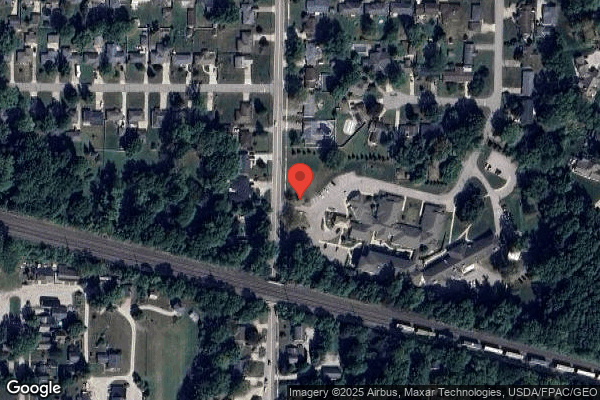
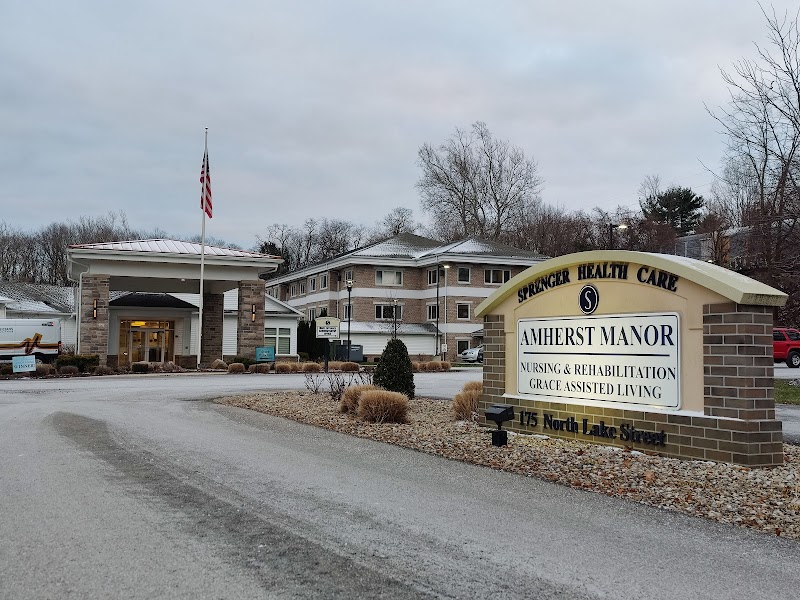
175 N LAKE STREET, AMHERST, OH 44001 (440) 988-4415
For profit - Corporation 114 Beds SPRENGER HEALTH CARE SYSTEMS Data: November 2025
Trust Grade
60/100
#392 of 913 in OH
Last Inspection: March 2025

Within standard 12-15 month inspection cycle. Federal law requires annual inspections.

Overview

Amherst Manor Nursing Home has a Trust Grade of C+, which means it is considered decent and slightly above average among nursing homes. It ranks #392 out of 913 in Ohio, placing it in the top half, but only #14 out of 20 in Lorain County, indicating there are better local options available. The facility is currently worsening, with reported issues increasing from 1 in 2023 to 5 in 2025. Staffing is a concern, rated 2 out of 5 stars and with a turnover rate of 59%, which is close to the state average. Although there have been no fines reported, some specific incidents include improperly discarded smoking materials around the facility and insufficient medication temperature controls, which could affect residents' health and safety. Overall, while there are strengths like a decent trust grade and no fines, the facility does have significant weaknesses in staffing and compliance that families should consider.

Trust Score
C+
60/100
In Ohio
#392/913
Top 42%
Safety Record
Low Risk
No red flags
Inspections
Getting Worse
1 → 5 violations
Staff Stability
⚠ Watch
59% turnover. Above average. Higher turnover means staff may not know residents' routines.
Penalties
✓ Good
No fines on record. Clean compliance history, better than most Ohio facilities.
Skilled Nurses
○ Average
Each resident gets 35 minutes of Registered Nurse (RN) attention daily — about average for Ohio. RNs are the most trained staff who monitor for health changes.
Violations
⚠ Watch
19 deficiencies on record. Higher than average. Multiple issues found across inspections.
★★★☆☆
3.0
Overall Rating
★★☆☆☆
2.0
Staff Levels
★★★★☆
4.0
Care Quality
★★★☆☆
3.0
Inspection Score
Stable
2023: 1 issues
2025: 5 issues

The Good

  • 4-Star Quality Measures · Strong clinical quality outcomes
  • Full Sprinkler Coverage · Fire safety systems throughout facility
  • No fines on record

Facility shows strength in quality measures, fire safety.

The Bad

3-Star Overall Rating

Near Ohio average (3.2)

Meets federal standards, typical of most facilities

Staff Turnover: 59%

13pts above Ohio avg (46%)

Frequent staff changes - ask about care continuity

Chain: SPRENGER HEALTH CARE SYSTEMS

Part of a multi-facility chain

Ask about local staffing decisions and management

Staff turnover is elevated (59%)

11 points above Ohio average of 48%

The Ugly 19 deficiencies on record

Mar 2025 5 deficiencies
CONCERN (D)

Potential for Harm - no one hurt, but risky conditions existed

Deficiency F0692 (Tag F0692)

Could have caused harm · This affected 1 resident

**NOTE- TERMS IN BRACKETS HAVE BEEN EDITED TO PROTECT CONFIDENTIALITY** Based on record review, staff interview, and policy review, the facility failed to ensure accurate weights were obtained for Res...

Read full inspector narrative →
**NOTE- TERMS IN BRACKETS HAVE BEEN EDITED TO PROTECT CONFIDENTIALITY** Based on record review, staff interview, and policy review, the facility failed to ensure accurate weights were obtained for Resident #34. This affected one resident (#34) of one resident reviewed for nutrition. The facility census 105. Findings include: Review of the medical record revealed Resident #34 was admitted to the facility on [DATE] with diagnoses including adenovirus, atrial fibrillation and muscle weakness. Review of Resident #34's most recent Minimum Data Set (MDS) 3.0 assessment dated [DATE] revealed Resident #34 was severely cognitively impaired and required extensive assistance of one staff person for completing her activities of daily living. Review of the weight record for Resident #34 revealed a documented weight of 126 pounds on 02/13/25 and a weight of 116 pounds on 02/14/25 indicating a weight loss of 7.94 percent (%). Review of both the electronic and hard chart reveled no documented evidence to suggest such a weight change over a 24-hour period noted in Resident #34 chart was present. No evidence of re-weight was noted in either chart. Interview with Registered Dietician (RD) #799 on 03/06/25 at 11:00 AM, verified that Resident #34's weights for 2/13/25 and 2/14/25 were inaccurate and he was unaware of the weight discrepancy. Review of the policy dated 08/01/29 revealed it is the policy of (the facilities corporation) to ensure weight are obtained as ordered and are monitored appropriately. The policy further noted that re-weights will be obtained to verify weights.
CONCERN (D)

Potential for Harm - no one hurt, but risky conditions existed

Respiratory Care (Tag F0695)

Could have caused harm · This affected 1 resident

**NOTE- TERMS IN BRACKETS HAVE BEEN EDITED TO PROTECT CONFIDENTIALITY** Based on record review, staff interview, review of Centers for Disease Control (CDC) recommendation and review of manufacturers ...

Read full inspector narrative →
**NOTE- TERMS IN BRACKETS HAVE BEEN EDITED TO PROTECT CONFIDENTIALITY** Based on record review, staff interview, review of Centers for Disease Control (CDC) recommendation and review of manufacturers instructions the facility failed to ensure necessary respiratory equipment was utilized in a manner to provide maximum efficiency and benefit to the resident. The affected one (Resident #77) of two residents identified by the facility as requiring a bilevel positive airway pressure (bipap) machine while sleeping to address sleep apnea and other similar and related conditions. The facility census was 105. Findings include: Review of the medical record for Resident #77 revealed Resident #77 was admitted to the facility on [DATE] with diagnoses including end stage renal disease, obstructive sleep apnea, and type two diabetes. Review of the Minnimum Data Set (MDS) 3.0 assessment dated [DATE] revealed Resident #77 was cognitively intact and required extensive assistance of one staff person for completing his activities of daily living Review of the current physicians orders for the month of March 2025 revealed Resident #77 required the use of a bipap (a non-invasive ventilation system through which positive airway pressure is delivered and assists with breathing) machine to address Resident #77's diagnosis of sleep apnea (condition in which an individual intermittently stops and starts breathing during sleep). Observation of the Resident #77's room on 03/05/25 at 3:45 P.M. revealed Resident #77's bipap machine was plugged in with a gallon of spring water next to it that was 75% full. An interview on 03/05/25 at 3:45 P.M. with Licensed Practical Nurse (LPN) #479 verified that Resident #77's bipap machine contained spring water rather than distilled water as recommended. Review of the manufacturers instructions dated 04/2020 for the bipap machine utilized by Resident #77 revealed the machine called for water to be added to the machine for humidification. The humidifier assisted with reducing nasal dryness and irritation by adding moisture to the airflow. The instructions included distilled water is recommended. Review of the Centers for Disease Control webpage entitled Preventing Waterborne Germs at Home dated 03/15/24 revealed bipap machines should use distilled or sterilized water in the humidifier.
CONCERN (E)

Potential for Harm - no one hurt, but risky conditions existed

Infection Control (Tag F0880)

Could have caused harm · This affected multiple residents

Based on observation, interview, policy review, and review of Centers for Disease Control (CDC) recommendations, the facility failed to ensure appropriate hand hygiene was performed during meal tray d...

Read full inspector narrative →
Based on observation, interview, policy review, and review of Centers for Disease Control (CDC) recommendations, the facility failed to ensure appropriate hand hygiene was performed during meal tray distribution. This affected nine residents (#2, #13, #16, #38, #71, #73, #74, #90 and #101) out of nine residents observed for dining on the second floor. The facility census was 105. Findings include: Observation on 03/03/25 at 11:27 A.M. revealed Certified Nursing Assistant (CNA) #657 began to distribute meal trays on the second floor. CNA #657 was not observed cleansing her hands before pushing the food cart from the nurse's station area to the first resident's room. CNA #657 went into Resident #2's room and grabbed a used, facility-provided coffee cup, took it out of the room and put it on top of the food cart before she returned to the meal tray cart without having cleansed her hands. CNA #657 then took a meal tray from the food cart and carried it into Resident #2 and put it on Resident #2's bedside table. CNA #657 proceeded to take a meal tray and a cup of coffee into Resident #101's room. CNA #657 removed personal items off the resident's bedside table before placing the meal tray on it. CNA #657 exited the room, was not observed to cleanse her hands, and proceeded to retrieve a meal tray for Resident #74. CNA #657 proceeded into Resident #74's room, placed the tray on the resident's bedside table, before exiting the room. CNA #657 was not observed to cleanse her hands. CNA #657 retrieved Resident #38's meal tray, entered the resident's room, and placed the meal tray down on the resident's bedside table. CNA #657 exited the resident's room, did not cleanse her hand, and returned to the meal cart, where she retrieved Resident #73's tray. She entered Resident #73's room, moved a used coffee cup out of the way, before placing the meal tray on Resident #73's table. CNA #657 exited the room, still did not cleanse her hands, and retrieved the meal tray for Resident #13. CNA #657 entered Resident #13's room, moved personal items off of the resident's bedside table, before placing the tray down. CNA #657 handled a used cup, the resident's television remote, and elevated the resident's head of the bed before uncovering all the food items on the resident's meal tray. CNA #657 proceeded to provide a few bites of the resident's chocolate pudding and pureed vegetable to Resident #13 before exiting the room. CNA #657 did not wash her hands before returning to the meal cart. CNA #657 obtained a meal tray and a cup of coffee and took it to Resident #16's room. After dropping off the tray, she left Resident #16's room, retrieved another meal tray and a cup of hot water, and took it into Resident #90's room without performing hand hygiene. CNA #657 set the tray down, moved a used cup, opened all the residents' containers, and placed a tea bag in the cup of hot water. CNA #657 left the room, did not wash her hands, and proceeded to obtain Resident #71's tray. After providing the tray to Resident #71, CNA #657 opened all containers and moved the bedside table closer to Resident #71, who was sitting in her recliner. After delivering the tray to Resident #71, CNA #657 used alcohol-based hand sanitizer to cleanse her hands for the first time during the observation. An interview on 03/03/25 at 11:37 A.M. with CNA #657 confirmed she did not cleanse her hands between meal tray distribution to the above residents and should have. Review of the facility policy, Infection Control Program dated 10/22 revealed the facility has an infection control program designed to help prevent the development and transmission of disease and infection. Review of the Centers for Disease Control (CDC) website page titled Clinical Safety: Hand Hygiene for Healthcare Workers revised 02/27/24, revealed hand hygiene is important to protect yourself and your patients from deadly germs by cleaning your hands. Hand hygiene refers to handwashing with soap and water or by using an antiseptic hand rub (alcohol-based foam or gel hand sanitizer). Hand hygiene should be completed immediately before touching a patient, after touching a patient or patient's surroundings, and after contact with contaminated surfaces.
CONCERN (F)

Potential for Harm - no one hurt, but risky conditions existed

Garbage Disposal (Tag F0814)

Could have caused harm · This affected most or all residents

Based on observation and staff interview the facility failed to ensure its dumpster area was maintained in a clean and sanitary condition. This had the potential to affect all residents. The facility ...

Read full inspector narrative →
Based on observation and staff interview the facility failed to ensure its dumpster area was maintained in a clean and sanitary condition. This had the potential to affect all residents. The facility census was 105. Findings include: Observation of the dumpster area with Dietary Manager (DM) #700 on 03/03/25 between 8:30 A.M. and 8:45 A.M. revealed an industrial sized dumpster and a small approximately one yard deep dumpster next to it. The industrial sized dumpster was approximately 60 percent full with its top lid and side door open. The small dumpster was noted to overflowing with multiple bags of trash piled approximately four feet high. Multiple bags of trash were also noted around the small dumpster on the ground. Interview on 03/03/25 at 8:45 A.M. with DM #700 verified the above findings at the time of observation.
CONCERN (F)

Potential for Harm - no one hurt, but risky conditions existed

Smoking Policies (Tag F0926)

Could have caused harm · This affected most or all residents

Based on observation, record review, and staff interview, the facility failed to develop and implement a smoking policy in accordance with federal, state and local laws and regulations in regards to s...

Read full inspector narrative →
Based on observation, record review, and staff interview, the facility failed to develop and implement a smoking policy in accordance with federal, state and local laws and regulations in regards to smoking, smoking areas, and smoking safety for both smoking and non-smoking residents and staff. This had the potential to affect all residents. The facility census was 105. Findings include: 1. On 03/05/25 at 10:10 A.M., tour of the facility with Director of Maintenance (DM) #479 noted improperly discarded smoking materials on and around the second-floor patio near the nurse's station. Five cigarette butts were observed on the cement patio around a metal chair and table sitting in the corner near the door. Additionally, numerous cigarette butts were noted in gutter intermixed with leaves and within proximity to the asphalt roof shingles. Interview with the DM #479 verified the above findings at the time of observation. 2. Observation of the front of the building on 03/05/25 at 11:30 A.M. revealed a resident from the facility's attached residential care facility (RCF) was seated in her walker with a friend outside on a common sidewalk. Both the resident and friend were observed smoking and were witnessed discarding their used cigarettes onto the ground. Interview on 03/05/25 at 11:35 A.M. with Receptionist #925 verified the individuals were outside smoking in a non permitted area. 3. Observation on 03/05/25 at 2:00 P.M., during a second tour of the facility with DM #479, five cigarette butts were observed laying on the ground near the main entry to the facility. A no smoking sign was observed posted and clearly visible in the same area. No ashtrays, or metal cans with self-closing covers were observed during the survey. Interview with the DM #479 verified the above findings at the time of observation. Review of the policy entitled Non-smoking Policy dated 03/01/22 revealed smoking is not permitted for anyone, anywhere in the building, and/or on the campus.
Nov 2023 1 deficiency
CONCERN (D) 📢 Someone Reported This

A family member, employee, or ombudsman was alarmed enough to file a formal complaint

Potential for Harm - no one hurt, but risky conditions existed

Deficiency F0558 (Tag F0558)

Could have caused harm · This affected 1 resident

Based on observation, staff interview, and policy review, the facility failed to ensure residents had access to call lights. This affected three (Residents #24, #104, and #20) of five residents review...

Read full inspector narrative →
Based on observation, staff interview, and policy review, the facility failed to ensure residents had access to call lights. This affected three (Residents #24, #104, and #20) of five residents reviewed for call lights. The facility census was 108. Findings include: 1. Review of the medical record for Resident #24 revealed an admission date of 05/26/21. Medical diagnoses included dementia with behavioral disturbance, restlessness and agitation, emphysema, and anxiety. Review of the Minimum Data Set (MDS) 3.0 quarterly assessment, dated 10/10/23, revealed Resident #24 to have moderately impaired cognition. Resident #24 was not coded to have any behaviors. Resident #24 was coded to have clear speech, was able to make self understood and understand others. Observation on 11/27/23 at 8:32 A.M. revealed Resident #24 repeatedly called out for help. Resident #24 was in the bed and had her bed control remote in her hand pushing various buttons. Her call light was draped over a fixture on the wall approximately three feet away from Resident #24. An interview on 11/27/23 at 8:41 A.M. with State Tested Nursing Assistant (STNA) #290 verified the call light was out of reach and should not be hanging on the wall. 2. Review of the medical record for Resident #104 revealed an admission date of 04/13/23. Medical diagnoses included dementia, glaucoma, anxiety, and altered mental status. Review of the MDS 3.0 quarterly assessment, dated 10/17/23, revealed Resident #104 was cognitively impaired. Resident #104 was coded to have clear speech, was usually able to make self understood and usually able to understand others. Observation on 11/27/23 at 8:36 A.M. revealed Resident #104 in the bed. Her call light call light was observed on the floor, tucked under the right side of the bed. An interview on 11/27/23 at 8:42 A.M. with STNA #290 verified the call light was out of reach for Resident #104. 3. Review of the medical record for Resident #20 revealed an admission date of 08/15/22. Medical diagnoses included dementia without behavioral disturbance, cerebral infarction (stroke) with hemiplegia (paralysis) affecting the right dominant side, and anxiety. Review of the MDS 3.0 quarterly assessment, dated 10/30/23, revealed Resident #20 was cognitively impaired. Resident #20 was not coded to have any behaviors. Resident #20 was coded to have clear speech, was able to make self understood and understand others. Observation on 11/27/23 at 8:38 A.M. revealed Resident #20 in bed. Resident #20's call light was observed on the floor underneath the head of her bed. An interview on 11/27/23 at 8:39 A.M. with STNA #290 verified the call light was out of reach for Resident #20 who stated it looked like the call light was thrown behind the bed onto the floor. Review of the Call Light Response Time policy, dated 02/2022, revealed it is the facility's policy to ensure resident needs and requests are responded to in a timely manner. This deficiency represents non-compliance investigated under Complaint Number OH00147984.
Dec 2022 9 deficiencies
CONCERN (D)

Potential for Harm - no one hurt, but risky conditions existed

Deficiency F0558 (Tag F0558)

Could have caused harm · This affected 1 resident

**NOTE- TERMS IN BRACKETS HAVE BEEN EDITED TO PROTECT CONFIDENTIALITY** Based on observation, medical record review, review of the facility's policy, and staff interview, the facility failed to ensure...

Read full inspector narrative →
**NOTE- TERMS IN BRACKETS HAVE BEEN EDITED TO PROTECT CONFIDENTIALITY** Based on observation, medical record review, review of the facility's policy, and staff interview, the facility failed to ensure the call lights were within reach and accessible for the residents. This affected two (Residents #37 and #242) of 26 residents observed for call lights within reach. The facility census was 80. Findings include: 1. Record review for Resident #242 revealed the resident was admitted to the facility on [DATE]. Diagnoses included dementia, type II diabetes mellitus, and hypertensive heart disease. Review of the Minimum Data Set (MDS) 3.0 assessment dated [DATE] revealed Resident #242 was severely cognitively impaired and required extensive assistance of two for activities of daily living. Review of the care plan dated 11/22/22 revealed Resident #242 was at risk for falls with an intervention to have a call light within reach. Observation on 11/28/22 at 8:44 A.M. revealed Resident #242 was in her room, sitting in tilt-in-space wheelchair and appeared teary-eyed. The call light was noted to be located behind Resident #242's wheelchair, wrapped around the back of nightstand, and placed in the top draw adjacent to, and out of reach of Resident #242. Interview with Registered Nurse (RN) #865 on 11/28/22 at 8:47 A.M. verified the call light was out of reach for Resident #242. 2. Record review for Resident #37 revealed the resident was admitted to the facility on [DATE]. Diagnoses included Parkinson's disease and spinal stenosis. Review of the MDS 3.0 assessment dated [DATE] revealed Resident #37 was alert and oriented and required extensive assistance of one for activities of daily living. Observation on 11/28/22 at 9:18 A.M. revealed Resident #37 was in her room, sitting in tilt-in-space wheelchair. Resident #37's call light was noted to be on the floor and out of reach. Interview on 11/28/22 at 9:22 A.M. with State Tested Nurse Assistant (STNA) #894 verified Resident #37's call light was out of reach. STNA #894 stated Resident #37 would be able to use the call light if it was within reach. Review of the facility's policy titled Call Light Response Time Policy, revised February 2022, revealed the facility had a policy in place to ensure resident needs and request were responded to in a timely manner by utilizing the call light. Review of the document revealed the facility did not implement the policy.
CONCERN (D)

Potential for Harm - no one hurt, but risky conditions existed

Comprehensive Assessments (Tag F0636)

Could have caused harm · This affected 1 resident

Based on medical record review, review of the facility's policy, and staff interview, the facility failed to ensure cognition and mood were assessed on the comprehensive Minimum Data Set (MDS) assessm...

Read full inspector narrative →
Based on medical record review, review of the facility's policy, and staff interview, the facility failed to ensure cognition and mood were assessed on the comprehensive Minimum Data Set (MDS) assessments for three (#23, #41, and #70) of 20 residents reviewed for cognition and mood. The facility census was 80. Findings include: 1. Review of Resident #41's medical record revealed an admission date of 10/19/22. Diagnoses included respiratory failure and chronic kidney disease. Review of the admission Minimum Data Set (MDS) assessment, dated 10/26/22, revealed Resident #41's cognition and mood were not assessed. The resident was marked as resident is rarely/never understood. The resident's preferred language was Spanish and the resident was noted to need or want an interpreter to communicate with a doctor or health care staff. Interview on 11/29/22 at 2:30 P.M. with Registered Nurse (RN) #846 verified Resident #41's cognition and mood were not assessed on the comprehensive assessment. RN #846 reported Resident #41 was marked as being rarely or never understood due to the language barrier. 2. Review of Resident #23's medical record revealed an admission to the facility occurred on 08/17/22. Diagnoses included Alzheimer's disease, dementia, and stroke. Review of the admission MDS assessment, dated 08/24/22, revealed the assessment was not completed fully. The sections identified C that assessed mental status and section D that assessed mood were not completed. Interview with RN/MDS Coordinator #846 on 11/29/22 at 2:35 P.M. confirmed two of the sections on the MDS assessment were not completed for Resident #23 and should have been. The RN/MDS Coordinator #846 stated Licensed Social Worker (LSW) #872 and herself were working on a system to ensure sections C and D were completed. 3. Review of Resident #70's medical record revealed an admission to the facility occurred on 08/26/22. Diagnoses included Parkinson's disease and Lewy body dementia. Review of the admission MDS assessment, dated 09/02/22, revealed the assessment was not completed fully. The sections identified C that assessed mental status and section D that assessed mood were not completed. Interview with RN/MDS Coordinator #846 on 11/29/22 at 2:35 P.M. confirmed two of the sections of the MDS were not completed for Resident #70 and should have been. RN/MDS Coordinator #846 stated Licensed Social Worker (LSW) #872 and herself were working on a system to ensure sections C and D were completed. Review of the facility's policy titled MDS 3.0 Policy, dated May 2017, revealed it was the facility's policy to follow the guidelines and requirements set forth in the MDS 3.0 Manual including, but not limited to, completion, coding, storage and submission of MDS assessments.
CONCERN (D) 📢 Someone Reported This

A family member, employee, or ombudsman was alarmed enough to file a formal complaint

Potential for Harm - no one hurt, but risky conditions existed

Deficiency F0676 (Tag F0676)

Could have caused harm · This affected 1 resident

**NOTE- TERMS IN BRACKETS HAVE BEEN EDITED TO PROTECT CONFIDENTIALITY** Based on observation, medical record review, review of the facility policy, and staff interviews, the facility failed to provide...

Read full inspector narrative →
**NOTE- TERMS IN BRACKETS HAVE BEEN EDITED TO PROTECT CONFIDENTIALITY** Based on observation, medical record review, review of the facility policy, and staff interviews, the facility failed to provide a resident with an effective restorative ambulation program. This affected one (Resident #23) of four residents reviewed for restorative programs. The facility census was 80. Findings include: Review of Resident #23's medical record revealed an admission to the facility occurred on 08/17/22. Diagnoses included Alzheimer's disease, COVID-19 (11/26/22), dementia, stroke, falls, and generalized weakness. Review of Resident #23's quarterly Minimum data set (MDS) assessment dated [DATE] revealed Resident #23 was severely impaired cognition. Resident #23 was able to ambulate with one person assistance, with the use of a walker. Review of the occupational therapy (OT) notes revealed Resident #23 received services from 08/23/22 through 09/19/22. The OT therapy notes revealed discharge instructions included Resident #23's prognosis to maintain current level of functioning (CLOF) was good with consistent staff follow through. The notes revealed to encourage the use of rollator during activities of daily living (ADLs). Review of the physical therapy (PT) notes dated 09/29/22 revealed Resident #23 received services from 09/01/22 through 09/29/22. The notes revealed recommended discharge instructions included a restorative nursing program for ambulation with forward wheeled walker (rollator). Review of the facilities physician orders for Resident #23 revealed on 09/16/22, a Floor Maintenance Program (FMP) which encouraged the resident's ambulation with rollator and assist with one person as tolerated, every shift. The physician order did not include the specific time or duration for the resident to be ambulating with the rollator walker. Review of the facilities restorative nursing documentation was completed for the month of November 2022. The report revealed Resident #23 was ambulated six times for the month of November. The records revealed all other days were marked as non-applicable. Observation of Resident #23's room on 11/28/22 at 8:08 A.M. revealed Resident #23 was observed to be sitting in a wheelchair and a red walker (rollator) was noted folded against the wall. Interview with State Tested Nursing Assistants (STNAs) #840 and #861 on 11/29/22 at 7:36 A.M. revealed they worked 6:00 A.M. to 6:00 P.M. (day shift). The staff were asked if Resident #23 ambulates with them. STNA #840 and #861 revealed Resident #23 was currently in isolation (COVID-19 positive) but has not been walking for about the last two months, since they have worked on the unit. The STNAs confirmed there was no specified time or duration of when to ambulate Resident #23. The STNAS stated they document in the facility's electronic medical record system for Resident #23 if they ambulate her. Interview with Registered Nurse/Restorative Nurse (RN) #828 on 11/30/22 at 7:49 A.M. confirmed there was a lack of specific measurable goals and specified approaches for Resident #23's ambulation program. RN #828 confirmed most days in the month of November 2022 were marked not applicable for ambulation for Resident #23. Review of the facilities restorative nursing policy, dated 10/2014, revealed services will be provided to any residents who had been revealed as having a need for such service. These services will include consistent and structured programs designed by Restorative Nurse and carried out by floor nursing assistants and specialized trained restorative aides on a day to day basis. The purpose of the program is to restore each resident to his or her fullest capacity in functioning at a level of independence consistent with his or her wishes or capabilities. The plan should include definition of the problem, measurable goals, and specific approaches. The policy revealed the floor aides will implement the program and document on a daily basis. This deficiency represents non-compliance investigated under Master Complaint OH00135938.
CONCERN (D)

Potential for Harm - no one hurt, but risky conditions existed

Pressure Ulcer Prevention (Tag F0686)

Could have caused harm · This affected 1 resident

Based on observations, medical record review, and staff interviews, the facility failed to ensure the resident's wound dressing changes were completed as physician ordered and were accurately document...

Read full inspector narrative →
Based on observations, medical record review, and staff interviews, the facility failed to ensure the resident's wound dressing changes were completed as physician ordered and were accurately documented in the resident's medical record. This affected for one (Resident #18) of two residents reviewed for pressure ulcers. The facility identified 11 residents with pressure ulcers. The facility census was 80. Findings include: Review of Resident #18's medical record revealed an admission to the facility occurred on 12/07/18. Diagnoses included stroke, dementia/Alzheimer's disease, fractured right femur, and protein calorie malnutrition. Resident #18 was admitted to hospice services for end of life care starting on 10/17/22. Review of the physician progress note dated 11/07/22 revealed Resident #18 had unstageable pressure ulcers (slough and/or eschar: known but not stageable due to coverage of wound bed by slough and/or eschar) to her right heel and buttock. Review of the facilities wound assessments dated 11/22/22 revealed Resident #18 had a pressure ulcer to the right heel. The wound was noted to be unstageable and it was developed on 11/07/22. Review of the physician orders dated 11/07/22 revealed an order to apply skin prep and pad and protect with ABD (thick dressing) and Kerlix (wrap dressing), every day shift Monday, Wednesday and Friday to the right heel. Observation of Resident #18 on 11/28/22 at 9:35 A.M. revealed Resident #18's feet were sticking out of the bottom of her blankets. Resident #18's right heel was observed with a dressing in place. The dressing had a piece of tape to secure the dressing in place that was dated 11/22/22. Observation and interview with Licensed Practical Nurse (LPN) #853 of Resident #18's right foot dressing occurred on 11/28/22 at 10:08 A.M. LPN #853 confirmed the dressing to Resident #18's foot was dated 11/22/22, and it was the last time the wound was measured. LPN #841 confirmed she had signed off the treatment had been completed on 11/23/22 and 11/25/22 and confirmed it was actually not completed on 11/23/22 and 11/25/22.
CONCERN (D)

Potential for Harm - no one hurt, but risky conditions existed

Incontinence Care (Tag F0690)

Could have caused harm · This affected 1 resident

Based on observation, staff interview, medical record review, and review of the facility policy, the facility failed to ensure an indwelling urinary catheter was stabilized and maintained in a manner ...

Read full inspector narrative →
Based on observation, staff interview, medical record review, and review of the facility policy, the facility failed to ensure an indwelling urinary catheter was stabilized and maintained in a manner to prevent urinary tract infection (UTI). This affected one (Resident #83) of two residents reviewed for an indwelling urinary catheter. The facility identified eight residents with an indwelling or external catheter. The facility census was 80. Findings include: Review of the medical record for Resident #83 revealed an admission date of 10/21/22. Diagnoses included type II diabetes mellitus, lack of coordination, muscle weakness, and retention of urine. Review of Resident #83's admission Minimum Data Set (MDS) 3.0 assessment, dated 10/28/22, revealed Resident #83 was cognitively intact. Resident #17 required the extensive assistance of two staff members for bed mobility, transfers, and toileting. Resident #17 had an indwelling catheter for urine and was always incontinent of bowel. Review of the plan of care, dated 10/28/22, revealed Resident #83 had an indwelling urinary catheter due to urinary retention. Interventions included catheter care per policy and after each incontinent episode of bowel, maintaining patency of elimination equipment, and keep catheter bag below level of bladder at all times. Review of the physician orders for November 2022, revealed an orders for Foley catheter 16 French with five cubic centimeter (CC) balloon to continuous drainage, and catheter care per policy every shift. Observation on 11/29/22 at 10:52 A.M. revealed Resident #83 was lying in bed and the foot of the bed was elevated. Resident #83's urinary catheter bag was lying on the foot of the bed, was unsecured, and was located above the resident's bladder. Observation and interview on 11/29/22 at 10:53 A.M. with Licensed Practical Nurse (LPN) #855 verified the unsecured urinary catheter bag was lying on the foot of Resident #83's bed. LPN #855 stated she was not sure why it was placed that way and proceeded to move and secure the catheter drainage bag on the side of Resident #83's bed. Observation on 12/01/22 at approximately 7:10 A.M. revealed Resident #83 was lying in bed and stating she had to go to the bathroom. Resident #83's urinary catheter drainage bag was unable to be seen. Observation and interview on 12/01/22 at approximately 7:12 A.M. with State Tested Nurse Aide (STNA) #893 revealed Resident #83's urinary catheter tubing and drainage bag were lying on the foot of the bed, located underneath of the resident's sheet and blanket. Once STNA #893 secured the urinary catheter drainage bag on the side of the bed, urine began flowing out and down the urinary catheter's tubing. STNA #893 reported another staff member was providing care to Resident #83 and a call light went off so the staff member must have left the catheter in the bed. Review of the facility's policy titled Catheters: Infection Control Methods, revised September 3013, revealed the urinary catheter drainage bag would remain below the bladder.
CONCERN (E) 📢 Someone Reported This

A family member, employee, or ombudsman was alarmed enough to file a formal complaint

Potential for Harm - no one hurt, but risky conditions existed

ADL Care (Tag F0677)

Could have caused harm · This affected multiple residents

**NOTE- TERMS IN BRACKETS HAVE BEEN EDITED TO PROTECT CONFIDENTIALITY** 4. Review of Resident #292's medical record revealed the resident was admitted to the facility on [DATE]. Resident #292 died in ...

Read full inspector narrative →
**NOTE- TERMS IN BRACKETS HAVE BEEN EDITED TO PROTECT CONFIDENTIALITY** 4. Review of Resident #292's medical record revealed the resident was admitted to the facility on [DATE]. Resident #292 died in the facility on 07/28/22. Diagnoses included chronic pancreatitis, chronic obstructive pulmonary disease (COPD), muscle weakness (generalized), unsteadiness on feet, history of falling, and presence of right artificial hip joint. Review of the significant change MDS assessment dated [DATE] revealed Resident #292 had moderate cognition impairment. Resident #292 required extensive assistance of one staff for bathing. Review of the hospice documentation revealed hospice provided baths to Resident #292 on 07/19/22, 07/21/22, and 07/26/22. Review of the bathing task sheet from 05/13/22 to 07/27/22 revealed Resident #292 did not get a bath or shower on 05/17/22, 05/20/22, 05/24/22, 05/27/22, 06/24/22, 06/28/22, 07/08/22, and 07/12/22. There were 22 scheduled opportunities for Resident #292 to receive a bath or shower and Resident #292 did not receive eight of the 22 scheduled baths or showers. There was no documentation Resident #292 refused any baths or showers. Interview on 12/01/22 at 10:15 A.M. with the Director of Nursing (DON) verified there was no documentation proving Resident #292 was bathed every Tuesday and Friday per schedule. Review of the facility's policy titled Bathing Protocol, revised January 2021, revealed all residents were assigned to receive a bath/shower twice per week, residents would be interviewed on preference of frequency and time of day upon admission, the preference would be indicated in the resident specific task, the bathing scheduled would be altered according to resident preference as needed, and documentation of the bath/shower would be noted. This deficiency represents non-compliance investigated under Complaint Number OH00133892. Based on observations, medical record reviews, review of the facility policies, and resident, family and staff interviews, the facility failed to ensure residents who were dependent on staff for assistance with Activities of Daily living (ADLs) received assistance with eating, bathing, and dressing. This affected four (#18, #42, #62, and #292) of five residents reviewed for ADLs. The facility revealed 79 residents required assistance from staff with one or more ADLs. The facility census was 80. Findings include: 1. Review of Resident #18's medical record revealed an admission to the facility occurred on 12/07/18. Diagnoses included stroke, dementia/Alzheimer's disease, protein calorie malnutrition, dysphasia and COVID-19 (tested positive on 11/25/22). Resident #18 was admitted to hospice services for end of life care starting on 10/17/22. Review of a significant change Minimum Data Set (MDS) assessment dated [DATE] revealed Resident #18 required supervision from one person with eating. Review of Resident #18's written plan of care revealed to assist with meals and feed the resident as needed. Review of the physician progress notes dated 10/04/22 revealed Resident #18 has had a continual decline in health since the hip fracture in August 2022. Observation of the meal services on 11/28/22 at 8:19 A.M. revealed staff were delivering meals to residents throughout the unit. Resident #18 was provided her meal tray, inside her room. The tray was placed on her bedside table that was over her bed. Resident #18 was alone in her room and attempting to eat. Resident #18 was trying to open a container of applesauce that she was not able to open. Resident #18 was able to get food onto the spoon; however when attempting to take a bite, the food was mostly dropping off the spoon. Observation of Resident #18 on 11/29/22 at 8:29 A.M. revealed Resident #18 was in her bed, eating alone with her breakfast tray, and a towel was placed over her chest. Resident #18 was attempting to eat scrambled eggs and the eggs kept dropping off the spoon before she could get them to her mouth. Resident #18 was also observed to pick up a glass of juice and spilled the entire cup down the front of her before she could drink it. Resident #18 was observed to toss the spoon down on the plate in what appeared to be frustration. Interview with Registered Nurse (RN) #828 on 11/29/22 at 8:42 A.M. confirmed Resident #18 was not able to feed herself alone in bed. RN #828 confirmed staff were going to have to assist the resident when needed. Interview and observation with State Tested Nursing Assistant (STNA) #861 on 11/29/22 at 8:43 A.M. revealed Resident #18 would typically eat in the main dining room of the facility. However, Resident #18 was in isolation due to being positive for COVID-19 and Resident #18 had to eat her meals in her room alone. STNA #861 confirmed Resident #18 really needed some staff assistance while she was eating in bed due to the amount of food that was sitting on the towel of Resident #18's chest. 2. Review of Resident #62's medical record revealed an admission to the facility occurred on 08/15/22. Diagnoses included dementia, stroke affecting her right side, and insomnia. Review of the admission MDS assessment dated [DATE] revealed Resident #62 required extensive assistance of one staff person for dressing, due to her limited range of motion on the right side of her body. Observations of Resident #62 on 11/29/22 at 8:58 A.M. and 1:11 P.M. revealed Resident #62 was wearing a solid pink sweatshirt and solid grey sweatpants. Resident #62 was observed to ambulate with a cane and had white Tennis shoes one. Subsequent observation of Resident #62 on 11/30/22 at 7:44 A.M. revealed Resident #62 was wearing a solid pink sweatshirt and solid grey sweatpants, with what appeared as the same clothing she had on the day prior (11/29/22). Observation of Resident #62 on 12/01/22 at 7:39 A.M. revealed Resident #62 was sitting in the dinning room Resident #62 had the same solid pink sweatshirt and solid grey sweatpants that she had on 11/29/22 and 11/30/22. Interview with Registered Nurse (RN) #828 on 12/01/22 at 7:45 A.M. stated Resident #62 was moved into another room temporally due to COVID-19 outbreak within the facility. RN #828 confirmed Resident #62's clothing may not have been moved during the room change. RN #828 confirmed Resident #62 was not capable of dressing herself and Resident #62 was wearing a solid pink sweatshirt and grey sweatpants. RN #828 confirmed staff should be assisting her to change clothing and she should not be wearing the same clothing for three days in a row. 3. Review of Resident #42's medical record revealed the resident was admitted to the facility on [DATE]. The resident was discharged to the hospital on [DATE] and returned to the facility on [DATE]. Diagnoses included Parkinson's disease, muscle weakness, rheumatoid arthritis, and adult failure to thrive. Review of the admission MDS assessment, dated 10/07/22, revealed Resident #42 had intact cognition. Resident #42 required physical assistance of one staff for bathing. Resident #42 did not refuse or resist care. Review of the plan of care, dated 11/01/22, revealed Resident #42 had a self-care deficit related to Parkinson's, underlying disease, and weakness. Interventions included assisting with hygiene. The plan of care did not mention Resident #42 refused care. Review of the shower schedule revealed Resident #42 was to receive assistance with bathing on Tuesdays and Fridays on first shift. Review of the facility's task records for showers/baths for 11/01/22 through 11/28/22 revealed no evidence that Resident #42 was offered or received assistance bathing on 11/04/22, 11/08/22, 11/15/22, 11/25/22, or 11/28/22 as scheduled. Resident #42 was not documented as refusing on any of these dates. Resident #42 was documented as receiving two showers and refusing two showers within this time period. Interview with Resident #42 and Resident #42's family member on 11/28/22 at 9:44 A.M. revealed Resident #42 was supposed to receive showers twice per week and only had around three showers since residing in the facility. Interview on 11/29/22 at 3:38 P.M. with Licensed Practical Nurse (LPN) #837 verified Resident #42 only received two showers between 11/01/22 and 11/28/22 and there were no documented refusals for 11/04/22, 11/08/22, 11/15/22, 11/25/22, or 11/28/22.
CONCERN (F)

Potential for Harm - no one hurt, but risky conditions existed

Deficiency F0761 (Tag F0761)

Could have caused harm · This affected most or all residents

Based on observation, staff interview, review of the temperature logs, and review of the facility policy review, the facility failed to ensure medications were stored with proper temperature controls....

Read full inspector narrative →
Based on observation, staff interview, review of the temperature logs, and review of the facility policy review, the facility failed to ensure medications were stored with proper temperature controls. This affected two of four medication storage rooms reviewed for medication storage. This had the potential to affect all 80 residents residing in the facility. Findings include: 1. Observation and interview of the medication storage room on the Sandstone Hall on 11/30/22 at 1:33 P.M., with Licensed Practical Nurse (LPN) #855 revealed the temperature log was missing daily temperature recordings. There was no documentation at all for the months of 07/2022 and 08/2022. There were two days (09/02/22 and 09/13/22) with recorded temperatures for the month 09/2022. There was no recorded temperatures at all for the months of 10/2022 and 11/2022. LPN #855 verified there were no temperature recording form the months of 07/2022, 08/2022, 10/2022, and 11/2022 and only two temperatures recorded in 09/2022. Observation and interview of the medication refrigerator on the Sandstone Hall on 11/30/22 at 1:35 P.M. with LPN #855 revealed it was 20 degrees Fahrenheit (F). In the refrigerator, there was a frozen solid 46-ounce (oz) box of lemon-flavored thickened water, a 46 oz box of juice, Narcan (treats narcotic overdose) four milligrams (mg), Ozempic (antidiabetic medication) injection two milligrams (mg), Influenza vaccine opened and not dated, three unopened Tuberculin Purified Protein Derivative (Mantoux) Tuberson multi-dose vial 10 tests five TU. The Mantoux stated to store at 35-46 degrees F and DO NOT FREEZE. There were two new boxes of Influenza vaccine Afluria Quadrivalent five milliliter (ml) multi-dose vial that stated on it: DO NOT FREEZE. There were five Promethegan (treats allergies and motion sickness) 25 mg suppositories. Dronabinol (treats nausea and vomiting) capsules 2.5 mg 59 capsules. One capsule of Dronabinol five mg and stated to keep in the refrigerator and DO NOT FREEZE. There were three Lorazepam Intensol (anti-anxiety medication) oral concentrate United States Pharmaceutical (USP) two mg/ml a total of 30 ml bottles and three Lorazepam injection two mg/ml and were one ml each. LPN #855 verified the refrigerator temperature registered 20 degrees F and should have been between 36 degrees F and 40 degrees F. 2. Observation and interview on 11/30/22 at 2:58 P.M., of the medication room on the 600 Hall with Registered Nurse (RN) #856 revealed the refrigerator did not have a thermometer or temperature log. In the refrigerator, there were Dronabinol capsules 2.5 mg each and a total of 17 capsules. Written on the card was: DO NOT FREEZE. There was one Levemir injection insulin detemir solution pre-injector pen 100, three unopened Enbrel sure click autoinjector (treats autoimmune diseases) 50 mg/ml, Mekinist (a cancer drug) oral tablet two mg bottle 30 tablets unopened and two other bottles, one with 19 tablets and the other with 27 tablets. RN #856 verified there should be a thermometer in the medication refrigerator and a log to record daily readings. Interview with the Administrator on 12/01/22 at 11:30 A.M. revealed the facility did not have a policy pertaining to medication room refrigerator temperatures. Review of the Refrigerator Temperature Chart revealed the temperature must be between 36-40 degrees F.
MINOR (C) 📢 Someone Reported This

A family member, employee, or ombudsman was alarmed enough to file a formal complaint

Minor Issue - procedural, no safety impact

Deficiency F0552 (Tag F0552)

Minor procedural issue · This affected most or all residents

Based on observations, review of the employee handbook, interview with residents at the resident council meeting, and staff interviews, the facility failed to ensure all staff were wearing name badges...

Read full inspector narrative →
Based on observations, review of the employee handbook, interview with residents at the resident council meeting, and staff interviews, the facility failed to ensure all staff were wearing name badges for residents to know whom was caring for them. This had the potential to affect all 80 residents residing in the facility. Findings include: Observation on 11/29/22 at 12:49 P.M. revealed the Director of Nursing (DON) entered the conference room without a name badge. Interview on 11/29/22 at 12:49 P.M. with the DON verified she did not have a name badge on, and it was located in her office. Observations of the second floor secured unit occurred on 12/01/22 at 7:49 A.M. The observation identified Licensed Practical Nurse (LPN) #853 and State Tested Nursing Assistant (STNA) #850 were working on the floor with the residents. The observations identified both staff persons did not have name tags on to identify themselves or their position. The staff persons both identified they would go and get their name tags and put them on. LPN #853 and STNA #850 confirmed they did not have their name badges with them. Interviews with residents occurred on 12/01/22 at 9:00 A.M. during the resident council meeting. The residents were asked about staff wearing name badges. The residents stated there were times staff do not have their badges on and they were not sure who the staff member was. The residents stated the facility was using agency staff and they do not know who they were. Review of the facilities employee handbook, undated, revealed under the section titled Name Badges, the company expects and requires all employees to wear name badges when working at the facility. The company will provide you with an appropriate badge which you must wear while on duty. If your badge is lost or stolen, you should immediately notify your supervisor so that a replacement badge can be made. This deficiency represents non-compliance investigated under Complaint Number OH00135049.
MINOR (C)

Minor Issue - procedural, no safety impact

Deficiency F0813 (Tag F0813)

Minor procedural issue · This affected most or all residents

Based on record review and staff interview, the facility failed to have a policy in place regarding use and storage of foods brought to residents by family and other visitors to ensure safe and sanita...

Read full inspector narrative →
Based on record review and staff interview, the facility failed to have a policy in place regarding use and storage of foods brought to residents by family and other visitors to ensure safe and sanitary storage, handling, and consumption. This had the potential to affect 80 residents residing in the facility who were able to receive food from outside sources. Findings include: Review of the facility's policy revealed there was no policy in place regarding the use and storage of foods brought to residents by family and other visitors. Interview with Dining Services Director (DSD) #805 on 11/28/22 at 10:45 A.M. verified there was no policy in place regarding the use and storage of foods brought to residents by family and other visitors to ensure safe and sanitary storage, handling, and consumption. Interview with the Administrator on 11/30/22 at 10:11 A.M. revealed residents and/or visitors were able to bring in food from outside sources into the facility.
Aug 2019 4 deficiencies
CONCERN (D)

Potential for Harm - no one hurt, but risky conditions existed

Resident Rights (Tag F0550)

Could have caused harm · This affected 1 resident

**NOTE- TERMS IN BRACKETS HAVE BEEN EDITED TO PROTECT CONFIDENTIALITY** Based on observation, record review and interview, the facility failed to ensure a resident was treated with dignity at all time...

Read full inspector narrative →
**NOTE- TERMS IN BRACKETS HAVE BEEN EDITED TO PROTECT CONFIDENTIALITY** Based on observation, record review and interview, the facility failed to ensure a resident was treated with dignity at all times. This affected one (Resident #39) of 23 sampled residents. The census was 104. Findings include: Review of Resident #39's medical record revealed she was admitted to the facility on [DATE]. Diagnoses included dementia, high blood pressure, delusional disorder and a fractured femur. During observation of Resident #39 on 08/06/19 at 8:00 A.M., Licensed Practical Nurse (LPN) #21 came from behind Resident #39's high back Broda chair, grabbed the chair and pulled the resident backwards down the hall to her room. Resident #39 was startled and slightly raised her arms. LPN #21 did not inform Resident #39 prior to moving her and or pulling her backwards in her chair. During interview on 08/06/19 at 8:06 A.M, LPN #21 confirmed she did not tell Resident #39 that she was getting ready to move her and pulled her backwards from the dining room to her resident room. LPN #21 stated she should have notified Resident #39 she was going to move her and should have pushed her forwards so she could see where she was going.
CONCERN (D)

Potential for Harm - no one hurt, but risky conditions existed

Deficiency F0558 (Tag F0558)

Could have caused harm · This affected 1 resident

**NOTE- TERMS IN BRACKETS HAVE BEEN EDITED TO PROTECT CONFIDENTIALITY** Based on observation, record review and interview the facility failed to ensure call lights were within reach and accessible. Th...

Read full inspector narrative →
**NOTE- TERMS IN BRACKETS HAVE BEEN EDITED TO PROTECT CONFIDENTIALITY** Based on observation, record review and interview the facility failed to ensure call lights were within reach and accessible. This affected three (Residents #45, #79 and #98) of 104 residents reviewed for call light placement. Findings include: 1. Record review revealed Resident #45 was readmitted to the facility on [DATE] with diagnoses that included Parkinson's disease, dementia with behavioral disturbance, and atherosclerotic heart disease. Review of the most recent Minimum Data Set (MDS) assessment dated [DATE] revealed Resident #45 was cognitively intact and required extensive assistance of activities of daily living. Review of Resident #45's care plan dated 05/05/18 revealed interventions state that call light should be within reach and resident is encourage to ask and use call light for assistance. During observation of Resident #45 on 08/05/19 at 10:01 A.M., she was sitting in her wheelchair located near the end of the bed and her call light was located at the head of the bed. Resident #45 stated that she could not reach the call light. This was verified at the time of observation by State Tested Nursing Assistant (STNA) #72. During observation of Resident #45 on 08/07/19 at 7:48 A.M., she was sitting in her wheelchair located near the end of the bed and her call light was located at the head of the bed. Resident #45 stated that she could not reach the call light. This was verified at the time of observation by Licensed Practical Nurse (LPN) #53. 2. Record review revealed Resident #79 was admitted to the facility on [DATE] with diagnoses that included chronic obstructive pulmonary disease, atrial fibrillation, major depressive disorder and dementia without behavioral disturbances. Review of the most recent MDS assessment dated [DATE] revealed Resident #79 was moderately cognitively impaired and required extensive assistance for activities of daily living. Review of Resident #79's care plan dated 09/09/16 revealed interventions state that call light should be within reach and resident is encourage to ask and use call light for assistance. During observation on 08/07/19 at 8:00 A.M. Resident #79 was sitting in her wheelchair next to the bed. Resident #79's call light was inside her night stand drawer and was out of her reach. This was verified at the time of observation by Licensed Practical Nurse (LPN) #53. 3. Review of the medical record for Resident #98 revealed the resident was admitted to the facility on [DATE] with diagnoses including cerebral palsy, anxiety disorder, and peripheral vascular disease. Review of the most recent MDS 3.0 assessment dated [DATE] revealed Resident #98 was moderately cognitively impaired and required extensive assistance for activities of daily living. Review of Resident #98's care plan dated 08/19/18 revealed interventions state that call light should be within reach and resident is encourage to ask and use call light for assistance. During observation on 08/07/19 at 8:15 A.M., Resident #98 was sitting in her wheelchair next to the foot of the bed. Resident #98's call light was wrapped around her bed rail and was out of her reach. This was verified at the time of observation by State Tested Nursing Assistant (STNA) #68 Interview with Assistant Director of Nursing #48 on 08/07/18 at 3:41 P.M. revealed that employees are told during orientation that call lights must be within reach, call lights should be answered as quickly as possible and there is a call light panel and the desk which will tell a person the room number and the amount of time the call light was on.
CONCERN (D)

Potential for Harm - no one hurt, but risky conditions existed

Laboratory Services (Tag F0770)

Could have caused harm · This affected 1 resident

Based on record review and interview, the facility failed to ensure resident's laboratory orders were completed as ordered. This affected one of one resident (#60) reviewed for laboratory services. Th...

Read full inspector narrative →
Based on record review and interview, the facility failed to ensure resident's laboratory orders were completed as ordered. This affected one of one resident (#60) reviewed for laboratory services. The facility census was 104 residents. Findings include: Review of Resident #60's medical record revealed diagnoses including diabetes. The resident had a physician order dated 02/11/19 for a Glycohemoglobin-HGBA1C laboratory test (a blood test that checks the amount of glucose bound to the hemoglobin in the red blood cells) to be performed every three months for diabetes monitoring. Review of the medical record revealed the HGB A1C was completed on 02/11/19. There was no evidence the test was performed in May 2019 as ordered. Interview with 08/08/19 08:36 A.M. LPN #21 verified the only HGB A1C was drawn on 02/11/19.
CONCERN (F)

Potential for Harm - no one hurt, but risky conditions existed

Deficiency F0839 (Tag F0839)

Could have caused harm · This affected most or all residents

Based on record review and interview, the facility failed to thoroughly check the Nurse Aide Registry prior to hiring a nurse aide. This affected one (STNA #100) of five personnel files reviewed. This...

Read full inspector narrative →
Based on record review and interview, the facility failed to thoroughly check the Nurse Aide Registry prior to hiring a nurse aide. This affected one (STNA #100) of five personnel files reviewed. This had the potential to affect all 102 residents who resided at the facility. Findings include: Review of the personnel file for STNA #100, revealed date of hire 05/15/19; last day worked 08/02/19; and termination on 08/06/19 for no call no show. During interview on 08/12/19 at 10:13 A.M., Scheduling Resources (SR) #550 reported when searching the Ohio Nurse Aide Registry, the employee's first and last name along with the last four digits of the social security number are used. SR #550 stated she missed entering the last four digits of STNA #100 into the Nursing Aide Registry for verification. Observation on 08/12/19 at 11:05 A.M. of the Nurse's Aide Registry search with (SR) #550 revealed STNA #100's first and last name only yielded a registry number and good standing; however when STNA #100's name AND last four digits of the social security number was searched in the Ohio Nurse Aide Registry, it yielded no results. STNA #100 had the same first and last name as another STNA. The other STNA was on the registry in good standing; STNA #100 was actually not on the registry at all. Review of facility policy titled Ohio New Hire Policy, undated, revealed hiring manager reviews application and performs nurse aide registry check on all potential candidates prior to scheduling interview. This deficiency substantiates Complaint Number 106275.
Understanding Severity Codes (click to expand)
Life-Threatening (Immediate Jeopardy)
J - Isolated K - Pattern L - Widespread
Actual Harm
G - Isolated H - Pattern I - Widespread
Potential for Harm
D - Isolated E - Pattern F - Widespread
No Harm (Minor)
A - Isolated B - Pattern C - Widespread

Questions to Ask on Your Visit

  • "Why is there high staff turnover? How do you retain staff?"
  • "Can I speak with families of current residents?"
  • "What's your RN coverage like on weekends and overnight?"

Our Honest Assessment

Strengths
  • • No major safety red flags. No abuse findings, life-threatening violations, or SFF status.
  • • No fines on record. Clean compliance history, better than most Ohio facilities.
Concerns
  • • 19 deficiencies on record. Higher than average. Multiple issues found across inspections.
  • • 59% turnover. Above average. Higher turnover means staff may not know residents' routines.
Bottom line: Mixed indicators with Trust Score of 60/100. Visit in person and ask pointed questions.

About This Facility

What is Amherst Manor's CMS Rating?

CMS assigns AMHERST MANOR NURSING HOME an overall rating of 3 out of 5 stars, which is considered average nationally. Within Ohio, this rating places the facility higher than 0% of the state's 100 nursing homes. This mid-range rating indicates the facility meets federal standards but may have areas for improvement.
How is Amherst Manor Staffed?

CMS rates AMHERST MANOR NURSING HOME's staffing level at 2 out of 5 stars, which is below average compared to other nursing homes. Staff turnover is 59%, which is 13 percentage points above the Ohio average of 46%. High turnover can affect care consistency as new staff learn residents' individual needs. RN turnover specifically is 81%, which is notably high. RNs provide skilled clinical oversight, so turnover in this role can affect medical care quality.

What Have Inspectors Found at Amherst Manor?

State health inspectors documented 19 deficiencies at AMHERST MANOR NURSING HOME during 2019 to 2025. These included: 17 with potential for harm and 2 minor or isolated issues.
Who Owns and Operates Amherst Manor?

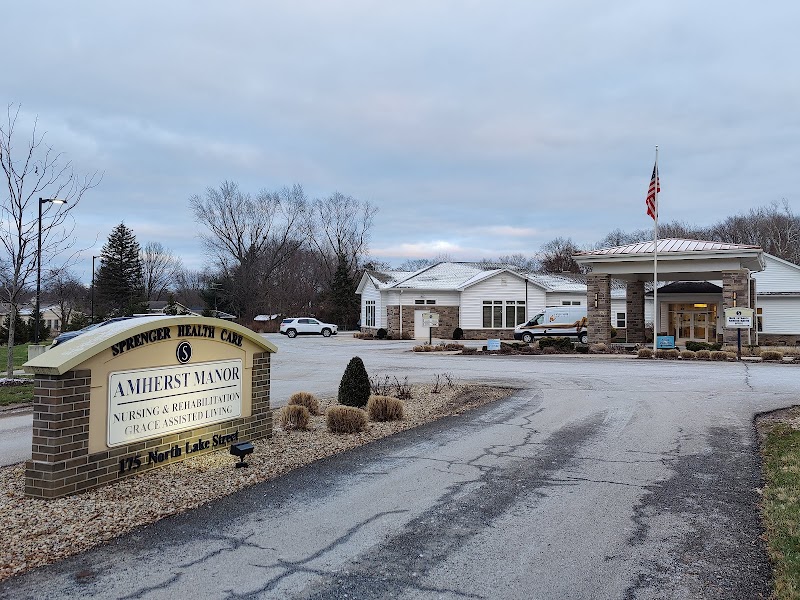
AMHERST MANOR NURSING HOME is owned by a for-profit company. For-profit facilities operate as businesses with obligations to shareholders or private owners. The facility is operated by SPRENGER HEALTH CARE SYSTEMS, a chain that manages multiple nursing homes. With 114 certified beds and approximately 99 residents (about 87% occupancy), it is a mid-sized facility located in AMHERST, Ohio.
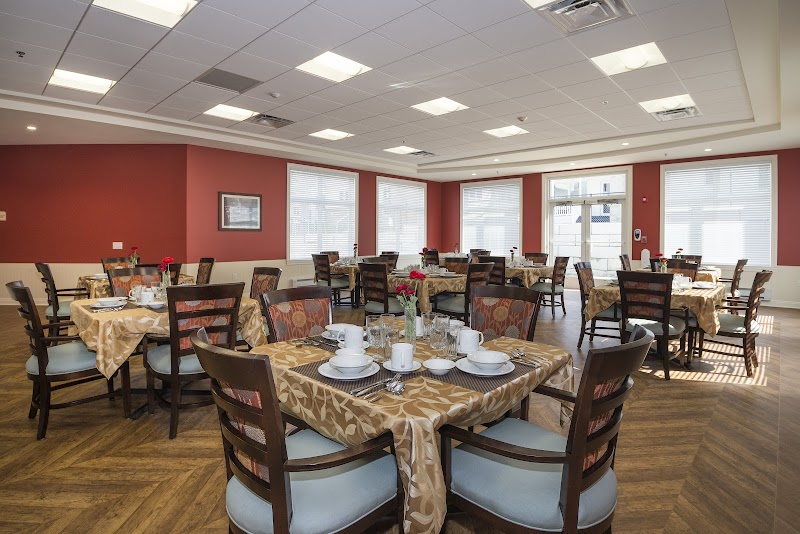
How Does Amherst Manor Compare to Other Ohio Nursing Homes?

Compared to the 100 nursing homes in Ohio, AMHERST MANOR NURSING HOME's overall rating (3 stars) is below the state average of 3.2, staff turnover (59%) is significantly higher than the state average of 46%, and health inspection rating (3 stars) is at the national benchmark.

What Should Families Ask When Visiting Amherst Manor?

Based on this facility's data, families visiting should ask: "How do you ensure continuity of care given staff turnover, and what is your staff retention strategy?" "Can you walk me through typical staffing levels on day, evening, and night shifts?" "Can I visit during a mealtime to observe dining assistance and food quality?" "How do you handle medical emergencies, and what is your hospital transfer rate?" These questions are particularly relevant given the facility's high staff turnover rate and the below-average staffing rating.

Is Amherst Manor Safe?

Based on CMS inspection data, AMHERST MANOR NURSING HOME has a clean safety record: no substantiated abuse findings (meaning no confirmed cases of resident harm), no Immediate Jeopardy citations (the most serious violation level indicating risk of serious injury or death), and is not on the Special Focus Facility watch list (a federal program monitoring the lowest-performing 1% of nursing homes). The facility has a 3-star overall rating and ranks #100 of 100 nursing homes in Ohio. While no facility is perfect, families should still ask about staff-to-resident ratios and recent inspection results during their visit.

Do Nurses at Amherst Manor Stick Around?

Staff turnover at AMHERST MANOR NURSING HOME is high. At 59%, the facility is 13 percentage points above the Ohio average of 46%. Registered Nurse turnover is particularly concerning at 81%. RNs handle complex medical decisions and coordinate care — frequent RN changes can directly impact care quality. High turnover means new staff may not know residents' individual needs, medications, or preferences. It can also be disorienting for residents, especially those with dementia who rely on familiar faces. Families should ask: What is causing the turnover? What retention programs are in place? How do you ensure care continuity during staff transitions?

Was Amherst Manor Ever Fined?

AMHERST MANOR NURSING HOME has no federal fines on record. CMS issues fines when nursing homes fail to meet care standards or don't correct problems found during inspections. The absence of fines suggests the facility has either maintained compliance or corrected any issues before penalties were assessed. This is a positive indicator, though families should still review recent inspection reports for the full picture.

Is Amherst Manor on Any Federal Watch List?

AMHERST MANOR NURSING HOME is not on any federal watch list. The most significant is the Special Focus Facility (SFF) program, which identifies the bottom 1% of nursing homes nationally based on persistent, serious quality problems. Not being on this list means the facility has avoided the pattern of deficiencies that triggers enhanced federal oversight. This is a positive indicator, though families should still review the facility's inspection history directly.