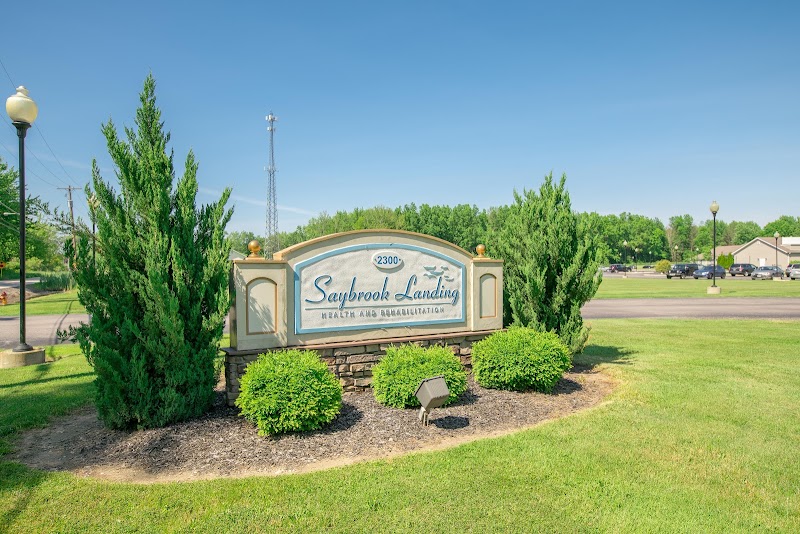
SAYBROOK LANDING

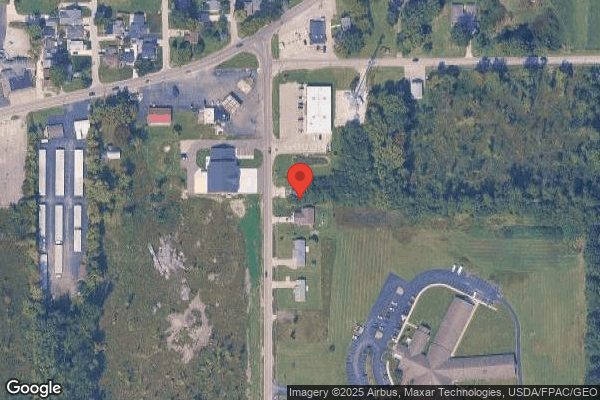
2300 CENTER ROAD, ASHTABULA, OH 44004 (440) 969-1509
For profit - Corporation 99 Beds FOUNDATIONS HEALTH SOLUTIONS Data: November 2025
Trust Grade
95/100
#161 of 913 in OH
Last Inspection: July 2024

Within standard 12-15 month inspection cycle. Federal law requires annual inspections.

Overview

Saybrook Landing in Ashtabula, Ohio, has received a Trust Grade of A+, indicating it is an elite facility with top-tier services. It ranks #161 out of 913 nursing homes in Ohio, placing it in the top half of all state facilities, and #5 out of 12 in Ashtabula County, suggesting only a few local options are better. However, the facility is experiencing a worsening trend, with the number of identified issues increasing from 1 in 2023 to 3 in 2024. Staffing has some strengths with a turnover rate of 24%, which is well below the state average of 49%, but it has a below-average staffing rating of 2 out of 5 stars, indicating potential challenges in consistent care. Notably, there have been concerns raised, such as incomplete staffing records and failure to implement pharmacy recommendations, which could impact resident care. Despite these weaknesses, the facility has not incurred any fines and provides excellent quality measures, showcasing a commitment to high standards in other areas.

Trust Score
A+
95/100
In Ohio
#161/913
Top 17%
Safety Record
Low Risk
No red flags
Inspections
Getting Worse
1 → 3 violations
Staff Stability
✓ Good
24% annual turnover. Excellent stability, 24 points below Ohio's 48% average. Staff who stay learn residents' needs.
Penalties
✓ Good
No fines on record. Clean compliance history, better than most Ohio facilities.
Skilled Nurses
⚠ Watch
Each resident gets only 28 minutes of Registered Nurse (RN) attention daily — below average for Ohio. Fewer RN minutes means fewer trained eyes watching for problems.
Violations
✓ Good
Only 4 deficiencies on record. Cleaner than most facilities. Minor issues only.
★★★★★
5.0
Overall Rating
★★☆☆☆
2.0
Staff Levels
★★★★★
5.0
Care Quality
★★★★☆
4.0
Inspection Score
Stable
2023: 1 issues
2024: 3 issues

The Good

  • 5-Star Quality Measures · Strong clinical quality outcomes
  • Low Staff Turnover (24%) · Staff stability means consistent care
  • Full Sprinkler Coverage · Fire safety systems throughout facility
  • No fines on record
  • Staff turnover is low (24%)

    24 points below Ohio average of 48%

Facility shows strength in quality measures, staff retention, fire safety.

The Bad

Chain: FOUNDATIONS HEALTH SOLUTIONS

Part of a multi-facility chain

Ask about local staffing decisions and management

The Ugly 4 deficiencies on record

Jul 2024 3 deficiencies
CONCERN (D)

Potential for Harm - no one hurt, but risky conditions existed

Drug Regimen Review (Tag F0756)

Could have caused harm · This affected 1 resident

**NOTE- TERMS IN BRACKETS HAVE BEEN EDITED TO PROTECT CONFIDENTIALITY** Based on medical record review, review of pharmacy recommendations and staff interview, the facility failed to ensure a physicia...

Read full inspector narrative →
**NOTE- TERMS IN BRACKETS HAVE BEEN EDITED TO PROTECT CONFIDENTIALITY** Based on medical record review, review of pharmacy recommendations and staff interview, the facility failed to ensure a physician approved pharmacy recommendation was implemented. This affected one (#34) of five residents reviewed for unnecessary medications. The facility census was 95. Findings include: Review of the medical record for resident #34 revealed an admission date of 12/06/21. Diagnoses included bipolar disorder, cirrhosis of the liver, protein calorie malnutrition, anorexia, repeated falls and kidney disease. Review of the quarterly Minimum Data Set (MDS) assessment dated [DATE] revealed Resident #34 was moderately cognitively impaired. Resident #34 required supervision or touching assistance with eating and oral hygiene, partial to moderate assistance with toileting and substantial or maximum assistance with showering and personal hygiene. Review of the care plan dated 06/12/24 revealed Resident #34 was at risk for adverse effects of psychoactive medication use. Interventions included assessing for behaviors, assessing for adverse effects, giving medications as ordered and reporting negative outcomes to the physician. Review of current physician's orders revealed Resident #34 had an order for Latuda 60 milligrams (mg) by mouth (PO) once per day (QD). Review of a pharmacy recommendation/note to attending physician/prescriber, dated 03/19/24, revealed Latuda was being given upon rise and the medication had better efficacy when provided with at least 350 calories. A request was made to verify the medication was given at breakfast or with at least 350 calories. The physician agreed with the recommendation and signed the document. Interview on 07/24/24 at 1:03 P.M. with the Director of Nursing (DON) confirmed the ordered for Latuda was not updated to indicate Resident #34 should receive the medication with breakfast or with at least 350 calories. Review of the facility policy titled Physician Orders - Telephone and Verbal dated 08/16/10 revealed physician's orders would be received and confirmed in writing by the prescriber. When a new order changed an old order, the older order would be discontinued and the new order written completely.
CONCERN (F)

Potential for Harm - no one hurt, but risky conditions existed

Staffing Data (Tag F0851)

Could have caused harm · This affected most or all residents

Based on review of the Payroll-Based Journal (PBJ) report, review of the daily assignment sheets, review of the staffing tool, review of staff timecards, review of the facility Centers for Medicare an...

Read full inspector narrative →
Based on review of the Payroll-Based Journal (PBJ) report, review of the daily assignment sheets, review of the staffing tool, review of staff timecards, review of the facility Centers for Medicare and Medicaid Services (CMS) submission report and staff interview, the facility failed to submit complete and accurate staffing information to CMS. Additionally, the facility failed to maintain records of staffing hours for audit. This had the potential to affect all 95 residents in the facility. The facility census was 95. Findings Include: Review of the PBJ report for Fiscal Year (FY) Quarter Two 2024 (01/01/24 through 03/31/24) revealed the facility triggered an area of concern for excessively low weekend staffing. Review of the staffing tool from 03/29/24 through 03/31/24 revealed the facility did not meet the minimum daily staffing requirement of 2.50 hours on 03/31/24. Interview on 07/24/24 at 11:21 A.M. with State Tested Nursing Assistant/Scheduler (STNA/Scheduler) #467, and concurrent review of the Daily Assignment Sheets (DAS), revealed STNA/Scheduler #467 stated the DAS accurately reflected the staff who were scheduled and worked on 03/31/24. STNA/Scheduler #467 confirmed on 03/31/24 the minimum daily staffing requirement of 2.50 was not met and stated she would have to follow-up with the Director of Nursing (DON) about staffing for that date. Interview on 07/24/24 at 1:16 P.M. with the DON and STNA/Scheduler #467 revealed the facility had a concern on 03/31/24 and additional staff were brought in on that day to assist. In addition to the staffing identified on the DAS, STNA/Scheduler #467 stated Activities Director (AD) #401 worked 5.6 hours, Assistant Director of Nursing (ADON) #468 worked ten hours and the facility Nurse Practitioner (NP) provided four hours of direct resident care. Review of the Time and Attendance Detail Report confirmed AD #401 worked on 03/31/24 from 7:02 A.M. through 12:37 P.M. Further review revealed no evidence ADON #468 or the NP worked on 03/31/24. Follow-up interview on 07/25/24 at 2:32 P.M. with the DON verified the facility did not accurately report staffing levels on 03/31/24 and had no evidence of ADON #468 or the NP's working hours on 03/31/24. Review of the facility document titled CMS Submission Report PBJ Final File Validation Report dated 06/24/24 confirmed the facility submitted PBJ staffing information for FY Quarter Two. However, the facility was unable to produce any other documentation regarding the PBJ for FY Quarter 2.
CONCERN (F)

Potential for Harm - no one hurt, but risky conditions existed

Deficiency F0868 (Tag F0868)

Could have caused harm · This affected most or all residents

Based on review of Quality Assessment and Assurance (QAA) sign in sheets and staff interview, the facility failed to ensure the required members attended QAA committee meetings at least quarterly. Thi...

Read full inspector narrative →
Based on review of Quality Assessment and Assurance (QAA) sign in sheets and staff interview, the facility failed to ensure the required members attended QAA committee meetings at least quarterly. This had the potential to affect all residents. The census was 95. Findings include: Review of the facility QAA committee agenda/minutes sign in sheets for the second quarter 2023 (April, May, June), third quarter 2023 (July, August, September), fourth quarter 2023 (October, November, December) and first quarter 2024 (January, February, March) revealed the Director of Nursing (DON), who was also the Infection Control Preventionist (ICP), was not in attendance for the third quarter 2023 and first quarter 2024 QAA committee meetings. Interview on 07/25/24 at 1:48 P.M. with the Administrator confirmed the facility's QAA committee met every three months (quarterly). The Administrator verified the DON/ICP was not in attendance for the third quarter 2023 and first quarter 2024 QAA committee meetings. The Administrator stated Assistant Director of Nursing (ADON) #468 functioned as the DON and attended the QAA meetings during the DON's leave. However, the Administrator confirmed ADON #468 was not a trained ICP. The Administrator indicated a corporate ICP covered those duties during the DON's absence, but did not attend the QAA meetings. The Administrated stated she would follow-up to determine who covered as the ICP at QAA meetings during the DON's leave. Follow-up interview on 07/25/24 at 2:30 P.M. with the Administrator verified there was no evidence of an ICP in attendance during the third quarter 2023 and first quarter 2024 QAA committee meetings.
Nov 2023 1 deficiency
CONCERN (D) 📢 Someone Reported This

A family member, employee, or ombudsman was alarmed enough to file a formal complaint

Potential for Harm - no one hurt, but risky conditions existed

Accident Prevention (Tag F0689)

Could have caused harm · This affected 1 resident

**NOTE- TERMS IN BRACKETS HAVE BEEN EDITED TO PROTECT CONFIDENTIALITY** Based on record review, interview, and facility policy review the facility failed to ensure falls were thoroughly investigated a...

Read full inspector narrative →
**NOTE- TERMS IN BRACKETS HAVE BEEN EDITED TO PROTECT CONFIDENTIALITY** Based on record review, interview, and facility policy review the facility failed to ensure falls were thoroughly investigated and post fall assessments were thorough and timely. This affected two residents (#79 and #92) of three residents reviewed for falls. The facility census was 91. Findings include: 1.Review of the medical record for Resident #79 revealed an admission date of 05/10/23. Diagnoses included difficulty walking, acute respiratory failure, scoliosis, and myocardial infarction (heart attack). Review of the physician's orders for September 2023 revealed orders for a night light, Dycem (non-skid mat) above and below her wheelchair cushion and a toilet riser. Review of the fall risk evaluation dated 08/08/23 revealed Resident #79 was at risk for falls. Review of the quarterly Minimum Data Set (MDS) assessment dated [DATE] revealed Resident #79 was moderately cognitively impaired. She required extensive assistance of two people for bed mobility and toilet use, extensive assistance of one person for transfers, limited assistance of one person for dressing, supervision and set up help for eating, she was independent with one-person physical assistance for hygiene. She had one no falls since the previous assessment. Review of the care plan dated 08/15/23 revealed Resident #79 was at risk for falls due to weakness, neurological impairment, and a history of falls. Interventions included a Dycem (non-slip mat) above and below the cushion in her wheelchair, ensuring the environment is free of clutter, night light, and encouraging use of her call light. Review of a progress note dated 09/09/23 at 12:15 A.M. revealed the State Tested Nursing Assistant (STNA) was called to the resident's bathroom and observed Resident #79 sitting on her bathroom floor and an upright position with her legs extended out in front of her. Her walker was lying on the floor beside her. The resident was previously lying in bed. The resident stated she had pain at a level three (on a scale of zero to ten, ten being the worst) but refused pain medication. She requested Bengay (arthritis relief cream) to be applied to her left elbow and left knee. Resident #79 was assessed prior to moving and then assisted by three staff with the use of a gait belt to stand and sit on the toilet. The resident reported she was walking to the bathroom and her sensory system gave out and she fell to the ground. She was noted to have a two centimeter (cm) by two cm hematoma on the left back side of her head and her left elbow was red. Neurological checks were initiated, and the resident was referred to therapy. Orthostatic blood pressure checks were initiated. Review of the pain assessment dated [DATE] at 12:29 A.M. revealed Resident #79 received Bengay to her left elbow and an ice pack was applied to her head. She reported chronic pain all over. Review of the fall investigation dated 09/09/23 revealed no evidence of pain, though the resident said she had a pain level of three at the time of the fall. There was no evidence a night light was in use, or the environment was free of clutter. Interview on 11/13/23 at 10:26 A.M. with the Director of Nursing (DON) revealed the investigation listed all items which should have been in place at the time of the fall. She could provide no evidence a night light was in use, or the area was free of clutter as part of the investigation. Interview with the Administrator on 11/03/23 at 11:29 A.M. confirmed the fall investigation provided was complete and provided no evidence a night light was in use, or the area was free of clutter as part of the investigation. 2. Review of the medical record for Resident #92 revealed an admission date of 09/12/23 and a discharge date of 09/22/23. Diagnoses included congestive heart failure, dementia, muscle weakness, difficulty walking, and osteoporosis. Review of Resident #92's physician's orders for September 2023 revealed orders for personal alarm to the resident's bed and a low bed. Review of the comprehensive MDS assessment dated [DATE] revealed Resident #92 was severely cognitively impaired. She required extensive assistance of two people for bed mobility, extensive assistance of one person for transfers, dressing, toileting, and hygiene and limited assistance of one person for eating. She had no history of falls. Review of the falls risk evaluation dated 09/12/23 revealed Resident #92 was at risk for falls. Review of the care plan dated 9/19/23 revealed Resident #92 was at risk for falls due to weakness, impaired cognition, history of falls, and an unsteady gait. Interventions included a bed alarm, her bed to be in the lowest position, a chair alarm, and ensuring her call light was within reach. Review of a progress note dated 9/21/23 at 4:10 P.M. revealed the STNA was called to Resident #92's room and observed the resident sitting on the floor in front of her bathroom. The resident was sitting up with her back against the wall and her legs straight out in front of her. The STNA observed the resident fall as she was responding to her chair alarm. Said she was being nosy and wanted to see what was going on in the hall when she lost her balance walking. She grabbed onto the bathroom door and fell to the floor landing on her right knee then sitting down. A head-to-toe assessment was completed, and the resident was found to have a skin tear to her left elbow. She denied pain at the time of the incident. Range of motion was within normal limits. The physician was notified with new orders to place a sign in the room to remind the resident to call for assistance, a medication review, and a clean, dry dressing every three days to the skin tear to the left elbow until healed. There was no documented evidence vital signs were assessed at the time of the fall. Review of the medical record for Resident #92 revealed the vital signs were not assessed until 09/21/23 at 10:10 P.M., six hours after the fall. Review of the pain assessment for 09/22/23 at 8:01 A.M. revealed Resident #92 complained of pain at a level three on a one to ten scale with ten being the worst. Review of the physician's orders for 09/22/23 at 8:45 A.M. revealed an order for an x-ray of the left hip and thigh as well as an order at 11:45 A.M. for an x-ray of the right femur for post fall pain. Review of the x-ray results dated 09/22/23 revealed an acute displaced fracture of the right femur. Review of the progress note dated 09/22/23 at 2:45 P.M. revealed the physician was notified of an acute right femur fracture and ordered a transfer to the Emergency Department (ED) for further evaluation and treatment. The resident left at that time. Interview on 11/03/23 at 11:00 A.M. with Registered Nurse (RN) #201 revealed residents should be assessed immediately after a fall. RN #201 confirmed there was no evidence of vital signs were assessed for Resident #92 immediately after her fall on 09/21/23. Interview on 11/13/23 at 10:36 A.M. with the DON revealed when a fall occurs, the next shift would reassess the resident. If Resident #92 fell around 4:00 P.M. the next shift would start at 6:30 P.M. and should have done another assessment. She verified a thorough follow-up post-fall assessment was not completed in timely manner. Review of the facility policy titled Fall Management, dated 10/17/16, revealed a resident would be assessed for vital signs, injury, and medical attention after a fall. The facility assesses the need for follow up measures that may reduce the risk of recurrence. The deficiency represents non-compliance investigated under Complaint Number OH00147425.
Understanding Severity Codes (click to expand)
Life-Threatening (Immediate Jeopardy)
J - Isolated K - Pattern L - Widespread
Actual Harm
G - Isolated H - Pattern I - Widespread
Potential for Harm
D - Isolated E - Pattern F - Widespread
No Harm (Minor)
A - Isolated B - Pattern C - Widespread

Questions to Ask on Your Visit

  • "Can I speak with families of current residents?"
  • "What's your RN coverage like on weekends and overnight?"

Our Honest Assessment

Strengths
  • • Grade A+ (95/100). Above average facility, better than most options in Ohio.
  • • No major safety red flags. No abuse findings, life-threatening violations, or SFF status.
  • • No fines on record. Clean compliance history, better than most Ohio facilities.
  • • Only 4 deficiencies on record. Cleaner than most facilities. Minor issues only.
Concerns
  • • No significant concerns identified. This facility shows no red flags across CMS ratings, staff turnover, or federal penalties.
Bottom line: Generally positive indicators. Standard due diligence and a personal visit recommended.

About This Facility

What is Saybrook Landing's CMS Rating?

CMS assigns SAYBROOK LANDING an overall rating of 5 out of 5 stars, which is considered much above average nationally. Within Ohio, this rating places the facility higher than 99% of the state's 100 nursing homes. This rating reflects solid performance across the metrics CMS uses to evaluate nursing home quality.

How is Saybrook Landing Staffed?

CMS rates SAYBROOK LANDING's staffing level at 2 out of 5 stars, which is below average compared to other nursing homes. Staff turnover is 24%, compared to the Ohio average of 46%. This relatively stable workforce can support continuity of care.

What Have Inspectors Found at Saybrook Landing?

State health inspectors documented 4 deficiencies at SAYBROOK LANDING during 2023 to 2024. These included: 4 with potential for harm.

Who Owns and Operates Saybrook Landing?

SAYBROOK LANDING is owned by a for-profit company. For-profit facilities operate as businesses with obligations to shareholders or private owners. The facility is operated by FOUNDATIONS HEALTH SOLUTIONS, a chain that manages multiple nursing homes. With 99 certified beds and approximately 90 residents (about 91% occupancy), it is a smaller facility located in ASHTABULA, Ohio.

How Does Saybrook Landing Compare to Other Ohio Nursing Homes?

Compared to the 100 nursing homes in Ohio, SAYBROOK LANDING's overall rating (5 stars) is above the state average of 3.2, staff turnover (24%) is significantly lower than the state average of 46%, and health inspection rating (4 stars) is above the national benchmark.

What Should Families Ask When Visiting Saybrook Landing?

Based on this facility's data, families visiting should ask: "Can you walk me through typical staffing levels on day, evening, and night shifts?" "Can I visit during a mealtime to observe dining assistance and food quality?" "How do you handle medical emergencies, and what is your hospital transfer rate?" "Can I speak with family members of current residents about their experience?" These questions are particularly relevant given the below-average staffing rating.

Is Saybrook Landing Safe?

Based on CMS inspection data, SAYBROOK LANDING has a clean safety record: no substantiated abuse findings (meaning no confirmed cases of resident harm), no Immediate Jeopardy citations (the most serious violation level indicating risk of serious injury or death), and is not on the Special Focus Facility watch list (a federal program monitoring the lowest-performing 1% of nursing homes). The facility has a 5-star overall rating and ranks #1 of 100 nursing homes in Ohio. While no facility is perfect, families should still ask about staff-to-resident ratios and recent inspection results during their visit.

Do Nurses at Saybrook Landing Stick Around?

Staff at SAYBROOK LANDING tend to stick around. With a turnover rate of 24%, the facility is 22 percentage points below the Ohio average of 46%. Low turnover is a positive sign. It means caregivers have time to learn each resident's needs, medications, and personal preferences. Consistent staff also notice subtle changes in a resident's condition more quickly. Registered Nurse turnover is also low at 20%, meaning experienced RNs are available to handle complex medical needs.

Was Saybrook Landing Ever Fined?

SAYBROOK LANDING has no federal fines on record. CMS issues fines when nursing homes fail to meet care standards or don't correct problems found during inspections. The absence of fines suggests the facility has either maintained compliance or corrected any issues before penalties were assessed. This is a positive indicator, though families should still review recent inspection reports for the full picture.

Is Saybrook Landing on Any Federal Watch List?

SAYBROOK LANDING is not on any federal watch list. The most significant is the Special Focus Facility (SFF) program, which identifies the bottom 1% of nursing homes nationally based on persistent, serious quality problems. Not being on this list means the facility has avoided the pattern of deficiencies that triggers enhanced federal oversight. This is a positive indicator, though families should still review the facility's inspection history directly.