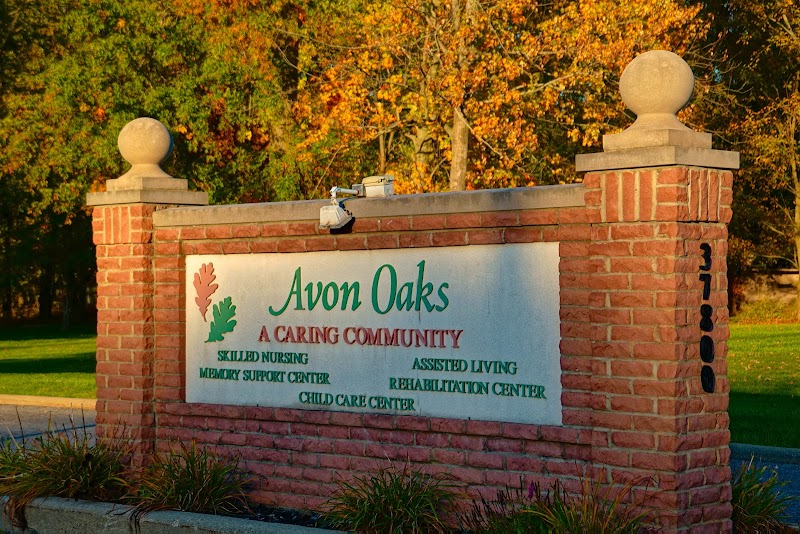
AVON OAKS NURSING HOME


37800 FRENCH CREEK RD, AVON, OH 44011 (440) 934-5204
For profit - Corporation 99 Beds COLEV GESTETNER Data: November 2025
Trust Grade
75/100
#219 of 913 in OH
Last Inspection: January 2025

Within standard 12-15 month inspection cycle. Federal law requires annual inspections.

Overview

Avon Oaks Nursing Home has a Trust Grade of B, indicating it is a good choice among nursing facilities, though not without its issues. It ranks #219 out of 913 facilities in Ohio, placing it in the top half of the state, and #8 out of 20 in Lorain County, meaning there are only a few local options that are better. Unfortunately, the facility is trending worse, with the number of reported issues increasing from 6 in 2019 to 10 in 2025. Staffing is a relative strength, with a 4 out of 5 star rating and a turnover rate of 45%, which is below the state average. However, there have been concerning incidents, such as unlabeled and expired food items in the kitchen, failure to notify family members about a resident's change in condition, and inadequate precautions for residents who tested positive for COVID-19. Overall, while there are strengths in staffing and a solid rating, families should be aware of the facility's increasing issues and specific concerns regarding care practices.

Trust Score
B
75/100
In Ohio
#219/913
Top 23%
Safety Record
Low Risk
No red flags
Inspections
Getting Worse
6 → 10 violations
Staff Stability
○ Average
45% turnover. Near Ohio's 48% average. Typical for the industry.
Penalties
✓ Good
No fines on record. Clean compliance history, better than most Ohio facilities.
Skilled Nurses
✓ Good
Each resident gets 52 minutes of Registered Nurse (RN) attention daily — more than average for Ohio. RNs are trained to catch health problems early.
Violations
⚠ Watch
16 deficiencies on record. Higher than average. Multiple issues found across inspections.
★★★★☆
4.0
Overall Rating
★★★★☆
4.0
Staff Levels
★★★★★
5.0
Care Quality
★★★☆☆
3.0
Inspection Score
Stable
2019: 6 issues
2025: 10 issues

The Good

  • 4-Star Staffing Rating · Above-average nurse staffing levels
  • 5-Star Quality Measures · Strong clinical quality outcomes
  • Full Sprinkler Coverage · Fire safety systems throughout facility
  • No fines on record
  • Staff turnover below average (45%)

    3 points below Ohio average of 48%

Facility shows strength in staffing levels, quality measures, fire safety.

The Bad

Staff Turnover: 45%

Near Ohio avg (46%)

Typical for the industry

Chain: COLEV GESTETNER

Part of a multi-facility chain

Ask about local staffing decisions and management

The Ugly 16 deficiencies on record

Jan 2025 10 deficiencies
CONCERN (D)

Potential for Harm - no one hurt, but risky conditions existed

Notification of Changes (Tag F0580)

Could have caused harm · This affected 1 resident

**NOTE- TERMS IN BRACKETS HAVE BEEN EDITED TO PROTECT CONFIDENTIALITY** Based on review of the medical record, resident representative interview, staff interview, and policy review, the facility faile...

Read full inspector narrative →
**NOTE- TERMS IN BRACKETS HAVE BEEN EDITED TO PROTECT CONFIDENTIALITY** Based on review of the medical record, resident representative interview, staff interview, and policy review, the facility failed to ensure a resident's representative was provided notification of the resident's change in condition. This affected one (#23) of one resident reviewed for notification of change in condition. The facility census was 88. Finding include: Review of the medical record revealed Resident #23 had an admission date of 12/09/16. Diagnoses included hemiplegia and hemiparesis, aphasia, obstructive and reflux uropathy, benign prostatic hyperplasia, and hypertension. Review of the quarterly Minimum Data Set (MDS) assessment dated [DATE] revealed the resident was cognitively impaired. The resident had an indwelling catheter. Review of a nurses progress note dated 01/04/25 at 12:33 A.M., revealed the resident had new physician orders for the antibiotic gentamicin 160 milligrams intramuscular three times a day for seven days for a urinary tract infection. The resident was also ordered laboratory (labs) testing including a complete blood count and basic metabolic panel on 01/06/25. Interview on 01/13/25 at 10:08 A.M., with Resident #23's guardian revealed the facility was not consistently providing updates regarding changes and concerns with the resident's care. Interview on 01/14/25 at 2:12 P.M., with Registered Nurse (RN) #218 revealed she had not notified the resident's representative of the new orders for antibiotics and labs. RN #218 revealed it was too late to call and passed the information onto the day shift nurse to notify the resident's representative. Interview on 01/14/25 at 2:18 P.M., with RN #215 revealed RN #218 had let her know to notify the resident's representative of the new orders. RN #215 thought she notified the family but looked in the progress notes and verified there was no documentation of the notification. Review of the policy titled, Change of Condition Notification, revised March 2024, revealed the facility would notify the resident's responsible party of significant changes in the resident's status and when there was a need to alter the resident's treatment significantly. Nurses would record the notification in the resident's medical record.
CONCERN (D)

Potential for Harm - no one hurt, but risky conditions existed

Deficiency F0582 (Tag F0582)

Could have caused harm · This affected 1 resident

Based on record review and staff interview, the facility failed to ensure Notice of Medicare Non Coverage (NOMNC) notification was provided in writing to the resident or family member prior to service...

Read full inspector narrative →
Based on record review and staff interview, the facility failed to ensure Notice of Medicare Non Coverage (NOMNC) notification was provided in writing to the resident or family member prior to services ending. This affected two (#198 and #199) of three reviewed for notices. The facility census was 88. Findings include: Review of the medical record revealed Former Resident #198 received Medicare Part A skilled services with an episode start date of 07/24/24 and a last date of coverage of Part A Service being 09/23/24. Review of the undated and untimed NOMNC revealed a telephonic notification was communicated to the family. There was no evidence of the written NOMNC being sent to the resident or family regarding the discharge date of 09/23/24. Review of the medical record revealed Former Resident #199 received Medicare Part A skilled services with an episode start date of 09/13/24 and a last date of coverage of Part A Service being 10/29/24. Review of the NOMNC revealed a telephonic notification was communicated on 10/26/24 to family. There was no evidence of the written NOMNC being sent to the resident or family regarding the discharge date of 10/29/24. Interview on 01/15/25 at 11:54 A.M., with the Administrator revealed that the previous social worker was recently terminated and is unable to locate the signed NOMNC. The Administrator then offered to give a signed statement of NOMNC notification.
CONCERN (D)

Potential for Harm - no one hurt, but risky conditions existed

Deficiency F0676 (Tag F0676)

Could have caused harm · This affected 1 resident

**NOTE- TERMS IN BRACKETS HAVE BEEN EDITED TO PROTECT CONFIDENTIALITY** Based on observation, staff interview, family interview, resident interview, and medical record review, the facility failed to e...

Read full inspector narrative →
**NOTE- TERMS IN BRACKETS HAVE BEEN EDITED TO PROTECT CONFIDENTIALITY** Based on observation, staff interview, family interview, resident interview, and medical record review, the facility failed to ensure alternative methods of communication were provided to facilitate adequate communication for a resident who spoke limited English. This affected one (#349) of one resident reviewed for alternate methods of communication. The facility census was 88. Findings include: Review of the medical record revealed Resident #349 was admitted to the facility on [DATE]. Diagnoses included type II diabetes mellitus, chronic kidney disease, hypertension, muscle weakness, and difficulty in walking. Review of the admission Minimum Data Set assessment dated [DATE] revealed a brief interview for mental status was not completed due to Resident #349 being rarely or never understood. Resident #349's primary language was Serbian and the resident needed/wanted an interpreter to communicate with a doctor or health care staff. Review of the current plan of care dated 10/31/24 revealed Resident #349 had an interpretation need, spoke Serbian, and was able to navigate and communicate through a translation application and/or a family interpreter. Interventions included the resident having translation needs (interpreter), and the resident's preferred language being Serbian. Review of the current plan of care dated 11/04/24 revealed Resident #349 had a psychosocial well-being problem related to family discord, a language barrier, and recent admission. Interventions included allowing the resident time to answer questions and to verbalize feelings through an interpreter or a translation application. Review of the nursing progress notes dated 10/30/24 and timed 9:38 A.M. revealed Resident #349 did well following directions in therapy when using a language translating device. Review of the nursing progress notes dated 11/09/24 and timed 10:02 P.M. revealed Resident #349 was difficult to understand due to a language barrier. Review of the nursing progress notes dated 11/18/24 and timed 3:31 A.M. revealed Resident #349 engaged in conversation, which was limited due to a language barrier. Review of the nursing progress notes dated 12/30/24 and timed 10:37 P.M. revealed Resident #349 was very chatty and speaking excessively to staff in her native language. Review of the nursing progress notes dated 01/10/25 and timed 5:11 A.M. revealed Resident #349 was yelling at staff in her foreign language. Observation on 01/15/25 at 8:45 A.M. revealed Certified Nursing Assistant (CNA) #320 exited Resident #349's room and stated to an unidentified staff member that Resident #349 was trying to say something but did not speak any English, only Spanish. CNA #320 then asked the nurse on duty if they spoke Spanish. The nurse stated they did not and asked if the resident's family was present. CNA #320 reported the family was not present and resumed caring for other residents. As of 9:14 A.M., no staff members entered the room of Resident #349 in effort to determine what they were previously attempting to communicate. CNA #320 then proceeded to give report and stated they would return later in the day. Interview on 01/15/25 at 9:22 A.M. with CNA #320 revealed Resident #349 spoke very little English. CNA #320 reported the resident would use non-verbal communication, knew a few words in English, and sometimes had someone visiting who could translate. CNA #320 reported no knowledge of an interpreter being available outside of that, or any communication devices or applications. Interview on 01/15/25 at 11:03 A.M. with Resident #349's family member revealed the family member visited the facility regularly. The family member reported facility staff tried their best to understand and communicate with Resident #349 were not really able to. The family member was unaware of any communication devices or an accessible interpreter, aside from family. The family member reported an unknown nurse recently reported attempting to use a translation application but that it did not work for the resident. Observation on 01/16/25 at approximately 8:22 A.M. revealed Resident #349 was sitting up in their room. There was no signage regarding how the resident communicated or any communication device/information observed. There were two signs hanging on the wall near the head of the resident's bed which were printed in English. One of the signs stated to please call the nurse if having pain, and the other stated your telephone number is, followed by a telephone number. An interview, at the time of observation, revealed Resident #349 spoke limited English and was unable to fully answer questions.
CONCERN (D)

Potential for Harm - no one hurt, but risky conditions existed

Pressure Ulcer Prevention (Tag F0686)

Could have caused harm · This affected 1 resident

**NOTE- TERMS IN BRACKETS HAVE BEEN EDITED TO PROTECT CONFIDENTIALITY** Based on review of the medical record, observation, staff interviews, and policy review, the facility failed to a pressure ulcer...

Read full inspector narrative →
**NOTE- TERMS IN BRACKETS HAVE BEEN EDITED TO PROTECT CONFIDENTIALITY** Based on review of the medical record, observation, staff interviews, and policy review, the facility failed to a pressure ulcer was assessed according to policy, physician ordered dressing was applied, and interventions were implemented to promote wound healing. This affected one (#30) of one resident reviewed for pressure ulcers. The facility identified five residents with pressure ulcers. The facility census was 88. Findings include: Review of the medical record revealed Resident #30 had an admission date of 09/03/24 and a readmission date of 10/24/24. Diagnoses included cerebral edema, malignant neoplasm of the bronchus, secondary malignant neoplasm of the brain, type two diabetes mellitus, and chronic obstructive pulmonary disease. Review of the quarterly Minimum Data Set (MDS) assessment dated [DATE] revealed the resident had intact cognition. The resident was dependent on staff for bed mobility. The resident was identified with one stage three pressure ulcer. The resident was identified as risk for pressure ulcers. Review of the care plan revised on 04/24/24 reviewed the resident was at risk for skin breakdown due to decreased mobility, weakness and incontinence. Interventions included to frequent repositioning, float heels or utilize heel protector boots while in bed, low air loss mattress and pressure reduction cushion to wheelchair. Review of a skin assessment dated [DATE] revealed the resident had an open area to the right heel measuring 1.2 centimeters (cm) in length, 1.2 cm in width, with a depth of 0.3 cm. The wound was described as circular, with pink edges, pink moist wound bed with scant clear watery drainage. The wound was not classified or staged. A treatment was initiated and administered per physician orders. The resident was discharged from the facility on 10/17/24 and returned on 10/24/24. Review of a readmission skin assessment dated [DATE] at 3:06 P.M., revealed the resident had an open area to the right heel measuring 1.1 cm in length by 1.3 cm in width by 0.2 cm in depth. The type of wound was not documented and there was no assessment of the wound bed. Review of the physician orders dated 10/24/24 revealed the resident had orders for frequent turning and repositioning and a pressure reduction mattress. A wound treatment was ordered and documented as completed per physician orders. Review of skin observation note dated 10/28/24 revealed the resident had a vascular wound to the right heel measuring 1.1 cm in length by 1 cm in width by 0.2 cm in depth. There was no description of the wound bed. Review of a wound nurse practitioner (NP) progress note dated 10/31/24 at 10:00 A.M. revealed the resident had a stage three pressure ulcer to the right heel. The wound was shallow full thickness comprised primarily of 90 percent red, moist tissue with 10 percent yellow slough noted to the dermal layer. The surrounding skin was dry intact with edema and medium serosanguinous drainage. There was no sign of infection. The wound measured 1.7 cm in length by 0.9 cm in width by 0.2 cm in depth. A treatment was ordered and documented as completed per physician orders. Review of the care plan initiated 11/11/24 revealed the resident had a stage three pressure ulcer to the right heel. Interventions included to administer treatments as ordered and monitor for effectiveness, assess, monitor, record wound healing, monitor nutritional status, offload pressure on bilateral heels, encourage frequent position changes, float heels while in bed with pillows or heel suspension boots, pressure reduction devices, and nutritional support as appropriate. Review of a physician order dated 01/03/25 revealed an order for Vashe wound external solution 0.033 percent apply to right heel topically one time a day every Monday, Wednesday, Friday for right heel wound. Cleanse with Vashe and gauze, pat dry. Apply dime thick medihoney and cut to fit calcium alginate. Cover heel and back of right leg/posterior calf with abdominal pad and wrap with Kerlix, change three times week and as needed. Review of wound NP note dated 01/10/25 at 4:26 P.M., revealed the stage three pressure ulcer to the right heel measured 1.3 cm in length by 1 cm in width by 0.2 cm in depth. The wound was 50% red and 50% scattered thin slough with moderate serosanguinous drainage. The NP noted the residents heel boots were not in place and the resident was agreeable to wearing. Review of the medication administration records (MAR) and treatment administration records (TAR) from 12/01/24 through 01/15/25 revealed wound treatments and pressure reducing interventions were documented as completed per physician orders. Observation on 01/13/25 at 11:00 A.M. revealed Resident #30 was in bed. The resident's feet were lying flat on the bed and not elevated. The resident was not wearing heel boots. The boots were in the room. Interview on 01/13/25 at 11:00 A.M., with Certified Nursing Assistant (CNA) #301 verified the resident's feet were not elevated off the bed and the resident was not wearing the heel boots. CNA #301 was unsure when the resident needed to wear the heel boots. Further interview with CNA #301 revealed she found out the resident should be wearing the heel boots when she was in bed. Review of the nurses notes for 01/12/25 and 01/13/25 revealed no documentation the resident had refused to wear the heel boots or elevate her heels. Interview on 01/13/25 at 10:36 A.M., with the Director of Nursing (DON) revealed the nurses were instructed to not stage pressure ulcers as they do not stage correctly. The DON stated she would have to check what the facility policy was regarding staging and assessing wounds. Review of a physician order dated 01/14/25 revealed the resident was admitted to hospice with end stage diagnoses of malignant neoplasm of unspecified lung. No further labs or therapy. Observation on 01/15/25 at 11:27 A.M., of wound care with LPN #222 and RN #218 revealed there was no wound dressing on the right heel. The resident had a circular wound on the bottom of the heel with 80 percent granulation tissue and 20 percent slough. There was no drainage or odor. The surrounding skin was intact and dry. LPN #222 measured the wound. The wound measured 2.2 cm in length by 1.6 cm in width by 0.1 cm in depth. The wound treatment was completed per physician orders. Interview on 01/15/25 at 11:27 A.M., with LPN #222 verified the nursing assistants had not notified her the dressing was off of the resident's right heel. Interview on 01/15/25 at 1:15 P.M., with Certified Nurse Assistant (CNA) #294 revealed removing the resident's heel boots this morning to clean the resident. CNA #294 revealed when she removed the heel boots there was no wound dressing in place to the right heel. CNA #294 revealed she found the wound dressing on the floor. CNA #294 revealed she had not notified the nurse the wound dressing was not in place. Review of the policy titled, Prevention and Treatment of Pressure Ulcers and Other Skin Conditions, revised March 2024, revealed nurses would complete as assessment of wound characteristics including location, type of skin condition, length, width, depth, stage as defined by NPUAP guidelines, drainage, necrotic tissue, evidence of granulation and color of wound tissue and pain in wound or with treatment. Further review of the policy revealed staff would ensure a reduction in tissue load and would float heels off surfaces if indicated. Additionally, the dietician would complete a nutritional assessment on admission, quarterly, and as needed. The dietician would document interventions as appropriate including nutritional supplement in orders and in care plan as needed.
CONCERN (D)

Potential for Harm - no one hurt, but risky conditions existed

Accident Prevention (Tag F0689)

Could have caused harm · This affected 1 resident

**NOTE- TERMS IN BRACKETS HAVE BEEN EDITED TO PROTECT CONFIDENTIALITY** 2. Review of the medical record revealed Resident #38 was admitted to the facility on [DATE]. Diagnoses included Parkinson's dis...

Read full inspector narrative →
**NOTE- TERMS IN BRACKETS HAVE BEEN EDITED TO PROTECT CONFIDENTIALITY** 2. Review of the medical record revealed Resident #38 was admitted to the facility on [DATE]. Diagnoses included Parkinson's disease, muscle weakness, dysphagia, anxiety, depression, and hypertension. Review of the quarterly Minimum Data Set assessment dated [DATE] revealed Resident #38 was cognitively intact. The resident was dependent on staff assistance for a majority of the activities of daily living. Review of the plan of care dated 04/04/24 revealed Resident #38 was at high risk for falls related to confusion, deconditioning, gait/balance problems, incontinence, and psychoactive drug use. Interventions included a body pillow while in bed. Review of Resident #38's physician orders identified an active order dated 04/26/24 for body pillow while in bed every day and night shift for fall intervention. Observation on 01/13/25 at 12:02 P.M., revealed Resident #38 was lying in bed on their back. There was no body pillow observed next to the resident or in or near the bed. A body pillow was observed folded and in a chair in the room. Interview on 01/13/25 at 12:06 P.M., with Certified Nursing Assistant #299 verified the body pillow was supposed to be in place and was not. Based on observation, staff interviews, and record review, the facility failed to ensure fall interventions were implemented to prevent resident at risk from falls. This affected two (#28 and #38) of two residents reviewed for falls. The facility census was 88. Findings include: 1. Review of the medical record revealed Resident #28 was admitted to the facility on [DATE], with diagnoses including: acute respiratory failure with hypoxia, asthma, Type II diabetes mellitus, chronic combined systolic and diastolic heart failure, hypoglycemia, cellulitis of part of limb, hypertensive heart and chronic kidney disease with heart failure, hypothyroidism, hyperlipidemia, benign prostatic hyperplasia, sick sinus syndrome, personal history of transient ischemic attack and cerebral infarction, anxiety disorder, glaucoma, atrial fibrillation, chronic kidney disease stage 3, heart failure, atherosclerotic heart disease, presence of cardiac pacemaker. Review of the Quarterly Minimum Data Set (MDS) 3.0 assessment, dated 11/14/24, revealed the resident had intact cognition. The resident required moderate staff assistance for bed mobility, supervision/touching assist with upper body dressing, and substantial maximum assist with toileting hygiene, shower and or bathing, and lower body dressing. The assessment indicated the resident was frequently incontinent of bowel and bladder. Review of the fall risk assessment completed 01/08/25 revealed the resident was at high risk for falls. Review of progress note dated 01/08/25 at 8:39 P.M., revealed at 2:45 A.M., Resident #28 stated he was attempting to get up out of bed and transfer to wheelchair in order to use the restroom. Resident #28 attempted to utilize the call light but at the time could not locate it and needed to go. During the attempt to transfer, Resident #28 started to slide and slid down the side of the bed to the floor where he then started to holler for help and the nurse aid came to assist. Nurse assessed for injuries, per nurse no injuries noted. Range of Motion (ROM) intact to all extremities. Review of the revised plan of care, dated 01/09/25, revealed Resident #28 is at risk for falls/behaviors related to impulsivity, impaired cognition and diagnosis of hypotension . Interventions included appropriate fitting clothing, appropriate fitting footwear, call light attached to clothing, call light in reach, call light is to be clipped to resident when resident is in bed, do not leave wheel chair alongside bed when resident is in bed, fall matt alongside bed when resident is in bed, extra lighting, glasses, hearing aides, or other sensory items in place/reach, instruct on use of call light, keep items in reach, night light, noise and stimulation reduction, recliner chair. Observation on 01/13/25 at 9:47 A.M., revealed Resident #28 was sleeping in bed. There was no fall mat observed alongside the bed and the wheelchair was located next to exit of bed. Observation on 01/13/25 at 12:13 P.M., revealed Resident #28 was awake lying in bed. There was no fall mat observed alongside of bed and the wheelchair was located next to exit of bed. Interview on 01/13/25 at 4:41 P.M., with Registered Nurse (RN) #217 verified Resident #28 had orders from 12/07/24, for do not leave wheelchair alongside bed when resident is in bed every day and night shift; and a fall mat alongside bed when resident is in bed every day and night shift. RN#217 and verified the measures were not in place at this time. Observation on 01/14/25 at 3:40 P.M., revealed Resident #28 was lying in bed, wheelchair at foot of bed and fall mat was folded in corner behind the nightstand. Interview on 01/14/25 at 3:51 P.M., with Certified Nurse Aide (CNA) #264 confirmed the fall mat was folder up behind the night stand and the wheel chair was beside the bed. Observation on 01/15/25 at 12:30 P.M., revealed Resident #28 was lying asleep in bed, the wheelchair was next to bed, and the fall mat was folded in corner behind nightstand. Interview on 01/15/25 at 12:33 P.M., with CNA #264 confirmed the fall the fall mat was folder up behind the night stand and the wheel chair was beside the bed.
CONCERN (D)

Potential for Harm - no one hurt, but risky conditions existed

Deficiency F0692 (Tag F0692)

Could have caused harm · This affected 1 resident

**NOTE- TERMS IN BRACKETS HAVE BEEN EDITED TO PROTECT CONFIDENTIALITY** Based on review of the medical record, observation, staff interview, resident interview, and policy review, the facility failed ...

Read full inspector narrative →
**NOTE- TERMS IN BRACKETS HAVE BEEN EDITED TO PROTECT CONFIDENTIALITY** Based on review of the medical record, observation, staff interview, resident interview, and policy review, the facility failed to ensure recommended nutritional interventions were implemented for significant weight loss. This affected one (#30) of seven residents reviewed for nutrition. The facility census was 88. Findings include Review of the medical record revealed Resident #30 had an admission date of 09/03/24 and a readmission date of 10/24/24. Diagnoses included cerebral edema, malignant neoplasm of the bronchus, secondary malignant neoplasm of the brain, type two diabetes mellitus, and chronic obstructive pulmonary disease. Review of the quarterly Minimum Data Set (MDS) assessment dated [DATE] revealed the resident had intact cognition. The resident was dependent on staff for bed mobility. The resident was identified with one stage three pressure ulcer and had unplanned significant weight loss. Review of the nutritional care plan revised 12/05/24 revealed the resident was at risk with clinically significant weight loss. Interventions included to provide supplements and protein modules per dietician recommendations. Review of a nutritional assessment dated [DATE] at 9:22 A.M., revealed the resident had a ten percent weight loss in the past 30 days and 13% in the last 90 days. The resident had a regular diet with an average intake of 50 percent to 75 percent. The dietician noted the resident had increased nutritional needs due to skin concerns and was at risk clinically for significant weight loss. The dietician recommended Glucerna (nutritional supplement) daily to help meet needs and liqucel (protein supplement) 30 milliliters (ml) twice daily to promote skin healing. Care plan updated and will monitor. Further review of the medical record revealed no documentation the resident had refused the recommendation for nutritional and protein supplementation. Review of the physician orders for December 2024 and January 2025 revealed no orders for the Glucerna or liqucel. Review of the weight documentation on 07/01/24 the resident weighed 271 pounds. On 01/02/25 the resident weighed 224 pounds. A 17 percent weight loss. Review of the medication administration records (MAR) and treatment administration records (TAR) from 12/01/24 through 01/15/25 revealed no documentation the resident had received the recommended nutritional interventions. Review of a physician order dated 01/14/25 revealed the resident was admitted to hospice with end stage diagnoses of malignant neoplasm of unspecified lung. No further labs or therapy. Interview on 01/16/25 at 9:14 A.M., with Registered Nurse (RN) #225 verified the recommendation for liqucel and Glucerna. RN #225 verified orders for the supplements were never entered into the electronic health record. RN #225 revealed the dietician usually would put the orders in. RN #225 revealed she was unable to see where any nutritional interventions were implemented for the resident's significant weight loss. RN #225 revealed the dietician and physician were notified when the resident had significant weight loss. Interview on 01/16/25 at 10:06 A.M., with Resident #30 revealed she weighed too much and was okay with some weight loss. Resident #30 revealed had not been receiving any nutritional supplements and would take them to help with her wound. Interview on 01/16/25 at 10:43 A.M., with Registered Dietician (RD) #600 revealed she had recommended nutritional and protein supplements for Resident #30. RD #600 revealed the resident had significant weight loss and wounds. RD #600 revealed interventions were put in place for residents with significant weight loss. RD #600 revealed she was responsible to enter orders for nutritional supplements. RD #600 was not sure why the orders were not entered. RD #600 revealed if the resident would have refused the recommendation, then she would have documented the refusal. Observation on 01/16/25 at approximately 10:50 A.M. with RN #225 revealed two nursing assistants obtained the resident's weight in the mechanical lift. The resident weighed 206 pounds, a 23 percent weight loss from 07/01/24. Interview on 01/16/25 at 1:11 P.M., the Director of Nursing (DON) revealed the dietician was responsible for entering physician orders for nutritional recommendations. Review of the policy titled, Weight Management, revised 03/2024, revealed resident weights would be monitored and interventions initiated in an attempt to prevent unplanned significant weight changes. The facility would encourage residents to follow outlined procedures as they have the right to refuse.
CONCERN (D)

Potential for Harm - no one hurt, but risky conditions existed

Deficiency F0698 (Tag F0698)

Could have caused harm · This affected 1 resident

Based on medical record review, policy review, and staff interview, the facility failed to ensure residents on dialysis were assessed and monitored routinely and according to policy. This affected one...

Read full inspector narrative →
Based on medical record review, policy review, and staff interview, the facility failed to ensure residents on dialysis were assessed and monitored routinely and according to policy. This affected one (#10) of one resident reviewed for dialysis. The facility census was 88. Findings include: Review of the medical record for Resident #10 revealed an admission date of 11/01/24 and diagnoses including end stage renal disease, dependence on renal dialysis, breakdown of surgically created arteriovenous shunt, diabetes mellitus, dementia, and renal osteodystrophy. Review of physician's order dated 11/01/24 revealed Resident #10 had dialysis on Tuesdays, Thursdays, and Saturdays. Review of physician's order dated 01/13/25 revealed to monitor fistula site for bruit and thrill, signs and symptoms of infection, and placement daily. Resident #10 was to be monitored upon return from dialysis with blood pressure, signs and symptoms of bleeding, and adverse reaction to treatment. Review of Care Plan updated 01/13/25 revealed Resident #10 was on dialysis with interventions including to monitor fistula site daily, nursing to perform assessment upon return from dialysis including blood pressure, bleeding, adverse reactions and response to treatments, monitor vital signs, and monitor for signs of infection to access site. Review of the electronic medical record and physical paper chart revealed there was no evidence of ongoing assessment or monitoring of Resident #10's dialysis site or condition following treatments from 11/01/24 to 01/13/25. Interview on 01/15/25 at 10:25 A.M. with Director of Nursing (DON) confirmed there was no documented evidence of ongoing assessment or monitoring of Resident #10's dialysis site completed by the facility. DON confirmed the orders for fistula monitoring and return assessments were added on 01/13/25. Review of the policy titled Residents receiving Dialysis Outside of the Facility - Communication and Transportation dated February 2024 revealed the facility would monitor fistula sites daily for signs and symptoms of infection and significant changes in functioning. Qualified staff would perform an assessment upon the resident's return from dialysis treatments including dialysis center weights, any adverse reactions to treatment, blood pressure, and signs and symptoms of bleeding.
CONCERN (D)

Potential for Harm - no one hurt, but risky conditions existed

Deficiency F0805 (Tag F0805)

Could have caused harm · This affected 1 resident

**NOTE- TERMS IN BRACKETS HAVE BEEN EDITED TO PROTECT CONFIDENTIALITY** Based on observation, staff interview, record review, and review of policy, the facility failed to ensure a resident on was prov...

Read full inspector narrative →
**NOTE- TERMS IN BRACKETS HAVE BEEN EDITED TO PROTECT CONFIDENTIALITY** Based on observation, staff interview, record review, and review of policy, the facility failed to ensure a resident on was provided the appropriate meal consistency per physician orders. This affected one (#3) of 10 residents reviewed for food and nutrition. The facility census was 88. Findings include: Review of the medical record revealed Resident #3 was initially admitted to the facility on [DATE]. The resident went out to the hospital on [DATE] and returned to the facility on [DATE]. Review of the Medicare five-day Minimum Data Set assessment dated [DATE] revealed Resident #3 was cognitively impaired and required assistance from staff for a majority of the activities of daily living. Review of the nursing progress notes dated 01/14/25 and timed 6:17 P.M., revealed Resident #3 returned from the hospital. The dietitian at the hospital indicated a pureed diet was appropriate, however the resident would be pleasure feeds. Review of Resident #3's current physician orders identified an order dated 01/14/25 for a pureed diet with pureed texture. The order was revised on 01/15/25 to state that the resident may have pleasure foods outside of orders per their request. Observation on 01/15/25 at approximately 12:50 P.M., revealed Activities Staff Member #342 delivered a meal tray containing chicken [NAME], pasta fagioli soup, rice pilaf, green beans, and mandarin oranges, all of which were regular texture, to Resident #3's room. Resident #3's daughter was present and in the room and informed Activities Staff Member #342 the resident was now on a pureed diet. Activities Staff Member #342 took the tray back to the cart containing meal trays and asked another staff member how to let the kitchen know Resident #3's diet had changed, as they were now on a pureed diet. Review of the meal ticket on the meal tray revealed Resident #3 was listed as being on a regular diet. Interview immediately following the observation with Activities Staff Member #342 verified Resident #3 had received a meal tray containing food items of a regular texture and that the resident was now supposed to receive a pureed diet. Interview on 01/15/25 at approximately 1:15 P.M., with Dietary Manager #235 was informed Resident #3 had a diet order for pureed texture and had received a meal tray containing food items of regular texture for the lunch meal. Dietary Manager #235 reported the resident had recently returned from the hospital and had previously been receiving a diet of regular texture. Review of the undated policy titled Resident Centered Dining, revealed diet spreads and allergy reports would be utilized during meal service to ensure accuracy and resident safety.
CONCERN (E)

Potential for Harm - no one hurt, but risky conditions existed

Infection Control (Tag F0880)

Could have caused harm · This affected multiple residents

**NOTE- TERMS IN BRACKETS HAVE BEEN EDITED TO PROTECT CONFIDENTIALITY** 2. Review of the medical record for Resident #10 revealed an admission date of 11/01/24. Diagnosed included end stage renal dise...

Read full inspector narrative →
**NOTE- TERMS IN BRACKETS HAVE BEEN EDITED TO PROTECT CONFIDENTIALITY** 2. Review of the medical record for Resident #10 revealed an admission date of 11/01/24. Diagnosed included end stage renal disease, type two diabetes mellitus, dementia, atrial fibrillation, and hypertension. Review of a physician order dated 01/11/25 revealed Resident #10 was ordered droplet precautions after testing positive for COVID-19. Review of the medical record for Resident #349 revealed an admission date of 10/19/24. Diagnoses included type two diabetes mellitus, hypertension, atrial fibrillation, and chronic kidney disease. Review of a physician order dated 01/09/25 revealed Resident #349 was ordered droplet precautions after testing positive for COVID-19. Review of the medical record for Resident #98 revealed an admission date of 01/08/25. Diagnoses included type two diabetes mellitus and hypertension. Review of a physician order dated 01/15/25 revealed Resident #98 was ordered droplet precautions after testing positive for COVID-19 on 01/14/25. Observation on 01/14/25 beginning at 8:17 A.M., during medication administration revealed Licensed Practical Nurse (LPN) #205 wore personal protective equipment (PPE) including a N 95 respirator into Resident #10's room to check the resident's blood sugar. Resident #10 was on droplet precautions for COVID-19. Before applying the N 95 respirator, LPN #205 lowered her surgical mask below her chin, where it remained. Upon exiting the room LPN #205 walked to the medication cart in the 300 hallway and removed the N 95 respirator and placed the contaminated mask on top of the medication cart then pulled up the contaminated surgical mask from below her chin to cover her face. LPN #205 then prepared Resident #10's medications. LPN #205 once again lowered the surgical mask below her chin then picked up the contaminated N 95 respirator and put it back on. LPN #205 then donned PPE before entering the room and administered the resident's medications. LPN #205 removed the PPE except the contaminated surgical mask and contaminated N 95 respirator and returned to the medication cart. LPN #205 removed the contaminated N 95 and placed in her pocket. Observation on 01/14/25 beginning at 8:36 A.M., revealed LPN #205 applied PPE to check Resident #349's blood sugar. Resident #349 was on droplet precautions for COVID-19. LPN #205 removed the contaminated N 95 from her pocket and placed the contaminated N 95 mask over the contaminated surgical mask that had been previously worn in Resident #10's room. LPN #205 checked the resident's blood sugar, removed the PPE except the surgical mask and N 95 and returned to the medication cart in the hallway. LPN #205 removed the contaminated N 95 and placed in her pocket. LPN #205 prepared Resident #349's medications. LPN #205 then applied PPE, lowered the contaminated surgical mask below her chin, reapplied the contaminated N 95 respirator and administered medications to Resident #349. LPN #205 removed the PPE before exiting the room except for the contaminated N 95 and surgical masks and returned to the medication cart in the 300 hallway. Observation on 01/14/25 beginning at 8:45 A.M., revealed LPN #205 continued to wear the contaminated masks with the surgical mask below her chin and the N 95 respirator covering her face. LPN #205 prepared medications for Resident #98. Further observation on 01/14/25 at 8:50 A.M., revealed LPN #205 administered medications to Resident #98 while wearing both contaminated masks then returned to the medication cart in the 300 hallway. At the time of the medication administration Resident #98 was not positive for COVID-19 and was not on droplet precautions. Interview on 01/14/25 at 9:14 A.M., with LPN #205 verified not discarding the contaminated masks when removing the PPE. LPN #205 verified wearing the contaminated surgical mask and N 95 respirator in the hallway after administering medication to Resident #10 and continuing to wear the contaminated masks into the rooms of Resident #349 and Resident #98. Review of the undated policy titled, How to Safely Remove Personal Protective Equipment, revealed to remove all PPE before exiting the resident room except the respirator. Remove the respirator and discard after leaving the resident room. 3. Review of the medical record for Resident #58 revealed an admission date of 03/02/24. Diagnoses included type two diabetes mellitus, chronic obstructive pulmonary disease, and hypertension. Review of a physician order dated 01/14/25 revealed Resident #58 tested positive for COVID-19 and was placed on droplet precautions. Observation on 01/15/25 beginning at 11:50 A.M., revealed a sign on the resident's door indicated the resident was on enhanced droplet precautions and to apply PPE including a N 95 respirator, protective eyewear, gown, and gloves before entering the room. Further observation revealed Certified Nursing Assistant (CNA) #317 was wearing a surgical mask. CNA #317 applied PPE but had not applied a N 95 respirator mask and entered Resident #58's room. Further observation revealed CNA #317 exited the resident's room on the 100 hallway without removing the contaminated PPE. Interview on 01/15/25 at 11:53 A.M., with CNA #317 verified not wearing a N 95 respirator into the room and not removing her PPE before exiting the room. CNA #317 stated I forgot. Review of the undated policy titled, How to Safely Remove Personal Protective Equipment, revealed to remove all PPE before exiting the resident room except the respirator. Remove the respirator and discard after leaving the resident room. Review of the Centers for Disease Control and Prevention Infection Control Guidance SARS CoV-2 dated 06/24/24 revealed in healthcare setting including nursing homes indicated a NIOSH Approved particulate respirator with N 95 filters or higher during the care of a patient with SARS-CoV2 infection and should be removed and discarded after the patient care encounter. Based on observation, staff interview, review of facility Transmission Based Precautions (TBP) postings, review of the Centers for Disease Control and Prevention (CDC) guidelines, and review of facility policies and documents, the facility failed to ensure proper infection control practices were implemented related to residents on TBP. This affected seven residents (#10, #46, #58, #63, #98, and #349), and had the potential to affect 55 ( Resident #2, #3, #4, #6, #7, #11, #12, #14, #15, #16, #17, #19, #22, #23, #24, #25, #28, #30, #31, #32, #34, #35, #36, #38, #39, #40, #42, #43, #48, #52, #54, #59, #60, #64, #67, #68, #70, #71, #72, #74, #76, #77, #79, #83, #86, #87, #97, #99, #100, #101, #198, #347, #348, #350, and #351) additional residents residing on the 100-hall, 300-hall, and 400-hall. The facility census was 88. Findings include: 1. Review of the medical record revealed Resident #25 revealed an admission date of 02/20/24. Diagnoses included encounter for palliative care, asthma, hyperlipidemia, peripheral vascular disease, hypertension, macular degeneration, and lymphedema. Review of the quarterly Minimum Data Set (MDS) assessment dated [DATE] revealed Resident #25 was cognitively intact. The resident was dependent on assistance from staff for a majority of the activities of daily living. Review of the nursing progress notes dated 12/21/24 and timed 12:08 A.M., revealed on 12/20/24 at approximately 8:00 P.M., a nursing assistant notified the nurse that Resident #25 had red rashes to their right-lower abdomen, all the way around their right-lower back. The physician was in the building and diagnosed the resident with Zoster and the resident was placed on Zoster precautions. Review of the nursing progress notes dated 01/12/25 and timed 9:53 A.M., revealed Resident #25 was having nausea, emesis, and diarrhea. The resident was on precautions due to nausea, vomiting, and diarrhea. Review of Resident #25's current physician orders identified an order dated 12/20/24 for Zoster precautions, an order dated 01/12/25 for contact precautions due to loose stools and vomiting, and an order dated 01/12/25 for a stool sample to check for norovirus. Review of the plan of care dated 12/22/24 revealed Resident #25 had an active shingles infection. Interventions included covering the rash, following Zoster precautions, and washing hands often for at least 20 seconds before and after care, toileting and all tasks. Observation on 01/13/25 at 12:53 P.M., of Resident #25's room revealed signage was posted indicating the resident was on contact precautions. The signage indicated those entering must clean their hands before entering and when leaving the room. Providers and staff must also put on gloves and a gown before room entry and discard the gloves and the gown before exiting the room. Additional posted signage stated Zoster Precautions Plus Airborne and Contact Precautions. There was no signage posted specifically indicating what was required for the airborne precautions. Observation on 01/13/25 at 12:54 P.M., revealed Certified Nursing Assistant (CNA) #267 entered Resident #25's room wearing a medical-surgical mask which was currently required throughout resident care areas. CNA #267 did not put on a gown, gloves, or an N-95 respirator. Interview on 01/13/25 at 12:56 P.M., with CNA #267 revealed staff were supposed to wear a gown, gloves and a N-95 respirator when entering Resident #25's room. Interview on 01/13/25 at 1:04 P.M., with Registered Nurse #217 revealed Resident #25 was on precautions shingles and for a gastrointestinal illness that was going around. Registered Nurse #217 was unsure of whether staff were required to wear an N-95 respirator into the room. Observation on 01/13/25 between 1:10 P.M. and 1:55 P.M., revealed CNA #267 entered Resident #25's room to retrieve a meal tray and placed it on a cart located in the hallway. CNA #267 was not wearing a gown, gloves, or N-95 respirator when entering or while in the resident's room. CNA #267 then went into the shared room of Resident #46 and #63 and retrieved Resident #46's meal tray, placing it on the cart located in the hallway. CNA #267 then went down the hallway and retrieved a mechanical lift, retrieved gloves from a cart located in the hallway, and re-entered Resident #25's room. CNA #267 was not wearing a gown, gloves, or respirator when entering Resident #25's room for the third time. CNA #267 also did not wash or sanitize their hands between going into Resident #25's room and retrieving the meal tray, going into the shared room of Resident #46 and #63, retrieving the mechanical lift, or going back into Resident #25's room. Interview on 01/13/25 at 1:57 P.M., with CNA #267 verified the staff member was not wearing a gown, gloves, or an N-95 respirator when entering Resident #25's room. CNA #267 reported they thought they only needed to don personal protective equipment and practice precautions when providing direct care, not when retrieving meal trays. Review of the facility signage provided for residents who were on airborne precautions revealed those entering resident rooms were to put on a fit-tested N-95 or higher level respirator before room entry. Review of the undated facility document titled Contact Precautions, revealed contact precautions were intended to prevent transmission of infectious agents which were spread by direct or indirect contact with the resident or resident environment. The document further stated organisms could be spread by contact with the person or contaminated surfaces.
CONCERN (F)

Potential for Harm - no one hurt, but risky conditions existed

Food Safety (Tag F0812)

Could have caused harm · This affected most or all residents

Based on observation, staff interview, and review of policy, the facility failed to ensure food items were labeled and dated and further failed to ensure refrigerators did not contain expired items. T...

Read full inspector narrative →
Based on observation, staff interview, and review of policy, the facility failed to ensure food items were labeled and dated and further failed to ensure refrigerators did not contain expired items. This had the potential to affect all 87 residents who received food from the kitchen. The facility identified one Resident (#32) as receiving nothing by mouth (NPO). The facility census was 88. Findings include: 1. Observation on 01/13/25 from approximately 8:10 A.M. to 8:45 A.M. with Dietary Aide #223 revealed the following concerns: In the refrigerator located in the kitchen, there were two undated and unlabeled cups containing a yellow substance, one undated and unlabeled zip-lock bag containing crackers, one undated and unlabeled plate containing an unknown food substance, one undated and unlabeled cup containing an unknown liquid, and two undated and unlabeled cups with straws. Interview at the time of observation, with Dietary Aide #223, confirmed the areas of concern and stated all items in the refrigerator belonged to staff, and stated although staff were not supposed to store items in the refrigerator located in the kitchen. 2. Observation on 01/15/25 at 11:55 A.M., of the unit refrigerator located on the secured unit with Registered Nurse #219 revealed the following concerns: In the refrigerator, there was an undated and unlabeled lunch tote, one unlabeled and undated cup containing a brown, creamy substance, three undated and unlabeled cups containing diced peaches, eleven undated and unlabeled plastic cups which contained watermelon, one undated and unlabeled brown paper bag which contained two hard rolls and a disposable container with an unknown food item. The freezer compartment contained three undated and unlabeled disposable cups containing an unknown orange substance, and three undated and unlabeled popsicles. Signage posted on the refrigerator stated to Please label ALL food and drink items: name, content, date, and discard date. Interview at the time of observation, Registered Nurse #219 confirmed the areas of concern and reported items should be dated and labeled. Observation on 01/15/25 at approximately 12:10 P.M., of the refrigerator located near the dining area of the 300-hall and the 400-hall with Dietary Aide #223 revealed the following concerns: In the refrigerator, there was one brown paper bag containing chips and salsa labeled with a staff member's name and dated September 26th of an unknown year, one undated and unlabeled paper bag containing food items from a donut shop, two opened pop bottles which were not labeled with a name, one opened bottle of lemon juice which expired on 09/11/24, and one bottle of flavored water which expired on 10/02/24. Signage posted on the refrigerator stated to Please label ALL food and drink items: name, content, date, and discard date. Interview at the time of observation, with Dietary Aide #223 confirmed the areas of concern and reported items should be dated and labeled. Dietary Aide #223 reported the chips and salsa, pop bottles, and flavored water likely belonged to staff. 3. Observation on 01/15/25 at approximately 1:15 P.M. of the refrigerator located near the dining area of the 100-hall and 200-hall with Dietary Manager #235 revealed the following concern: In the refrigerator, there was one sandwich labeled with a name and dated 01/05/25. Signage posted on the refrigerator stated to Please label ALL food and drink items: name, content, date, and discard date. Interview at the time of observation, Dietary Manager #235 confirmed the areas of concern and disposed of the sandwich. Review of the policy titled Outside Food, dated 08/20/21, revealed food brought in from the outside would be labeled with the resident's name, content, the date it was prepared, and a discard/use-by date. In addition, all refrigeration units would have internal thermometers to monitor for safe food temperatures. Review of the policy titled Food Receiving and Storage, dated March 2024, revealed food items would be stored in a manner that complied with safe food handling practices. Food items stored in refrigerators would be labeled and dated with a use-by date. Food items kept in refrigerators located on nursing units would be labeled with a use-by date and if belonging to a resident would be labeled with the resident's name, the item, and the use-by date. Beverages would be dated when opened and discarded after 24 hours.
Jul 2019 6 deficiencies
CONCERN (D)

Potential for Harm - no one hurt, but risky conditions existed

Notification of Changes (Tag F0580)

Could have caused harm · This affected 1 resident

**NOTE- TERMS IN BRACKETS HAVE BEEN EDITED TO PROTECT CONFIDENTIALITY** Based on medical record review, staff interview, and review of a facility policy, the facility failed to notify the Certified Nu...

Read full inspector narrative →
**NOTE- TERMS IN BRACKETS HAVE BEEN EDITED TO PROTECT CONFIDENTIALITY** Based on medical record review, staff interview, and review of a facility policy, the facility failed to notify the Certified Nurse Practitioner (CNP) or Physician of a residents elevated blood pressure in accordance with a physician order. This affected one (#63) out of five residents reviewed for unnecessary medications. The facility census was 97. Findings include: Medical record review revealed Resident #63 admitted to the facility on [DATE]. Diagnosis included Alzheimer's disease, hypertension, hypertensive encephalopathy, non-traumatic subdural hemorrhage, hypertensive heart disease and anemia. Review of Resident #63's physician orders revealed an order dated 02/12/19 instructing staff to notify the CNP if the resident's systolic blood pressure was greater than 160 millimeters of mercury (mmHg). Review of the residents vital signs record revealed Resident #63's systolic blood pressure was greater than 160 mmHg on the following instances: on 06/17/19 at 7:35 A.M. blood pressure reading 160/62; on 06/18/19 at 4:18 P.M. blood pressure reading 167/71; on 06/23/19 at 8:00 A.M. blood pressure reading 178/60; on 06/23/19 at 4:33 PM. blood pressure reading 178/73; on 06/26/19 at 8:12 A.M. blood pressure reading 183/62; on 06/27/19 at 8:04 A.M. blood pressure reading 181/75; on 07/01/19 at 6:13 P.M. blood pressure reading 166/62; on 07/02/19 at 7:36 A.M. blood pressure reading 162/63; on 07/03/19 at 7:51 A.M. blood pressure reading 176/74; on 07/11/19 at 9:46 A.M. blood pressure reading 186/69; on 07/12/19 at 7:46 A.M. blood pressure reading 164/69 and on 07/15/19 at 4:27 P.M. blood pressure reading 162/73 Review of Resident #63's progress notes revealed no evidence the facility notified the CNP or Physician of the residents systolic blood pressure readings greater than 160 mmHg on the dates listed. Interview on 07/17/19 at 3:26 P.M. the Director of Nursing (DON) confirmed the resident's systolic blood pressure was greater than 160 mmHg on 06/17/19, 06/18/19, 06/23/19, 06/26/19, 06/27/19, 07/01/19, 07/02/19, 07/03/19, 07/11/19, 07/12/19 and 07/15/19. The DON further confirmed the facility was unable to provide evidence the facility notified the CNP or Physician of the blood pressure readings. Review of a facility policy titled, Monitoring of Vital Signs for Residents, most recent revision date 12/18/19, revealed if a resident's vital signs were out of normal range, or specific perimeter as ordered by physician, the nurse was to call and inform the physician or hold medications as ordered.
CONCERN (D)

Potential for Harm - no one hurt, but risky conditions existed

Comprehensive Care Plan (Tag F0656)

Could have caused harm · This affected 1 resident

**NOTE- TERMS IN BRACKETS HAVE BEEN EDITED TO PROTECT CONFIDENTIALITY** Based on medical record review, staff interview, and review of a facility policy, the facility failed to develop a comprehensive...

Read full inspector narrative →
**NOTE- TERMS IN BRACKETS HAVE BEEN EDITED TO PROTECT CONFIDENTIALITY** Based on medical record review, staff interview, and review of a facility policy, the facility failed to develop a comprehensive plan of care for a resident who was receiving anticoagulation therapy. This affected one resident (#25) out of five residents reviewed for comprehensive care plans. The facility census was 97. Findings included: Review of the medical record revealed Resident #25 admitted to the facility on [DATE]. Diagnoses included paroxysmal atrial fibrillation and Diabetes mellitus. Review of the quarterly Minimum Data Sets (MDS) assessment, dated 06/30/19, revealed the resident's cognition was intact. Further review revealed the resident received an anticoagulant medication seven of the seven review days. Review of the resident's physician orders, dated 05/24/19, revealed the resident was ordered Eliquis (blood thinning medication) five milligram twice a day. Review of the administration record for 07/2019 revealed the medication was administered as ordered. Review of the most recent plan of care, dated 05/21/19, revealed no plan of care developed for the resident's anticoagulation therapy. Interview on 07/18/19 at 9:37 A.M., Registered Nurse (RN) #300 revealed all resident's who were on anticoagulant medication were supposed to have a plan of care initiated to monitor the anticoagulation therapy. RN #300 confirmed a plan of care for Resident #25's anticoagulation therapy was not developed. Review of a facility policy titled, MDS 3.0 Comprehensive Assessment and Care Planning, most recent revision date 06/18/19, revealed the facility was supposed to develop a comprehensive assessment and plan of care for each resident. The plan of care was to include measurable objectives and timetables to meet residents' medical, functional, mental and psychosocial needs.
CONCERN (D)

Potential for Harm - no one hurt, but risky conditions existed

Quality of Care (Tag F0684)

Could have caused harm · This affected 1 resident

**NOTE- TERMS IN BRACKETS HAVE BEEN EDITED TO PROTECT CONFIDENTIALITY** Based on medical record review, staff interview, and review of a facility policy, the facility further failed to initiate their ...

Read full inspector narrative →
**NOTE- TERMS IN BRACKETS HAVE BEEN EDITED TO PROTECT CONFIDENTIALITY** Based on medical record review, staff interview, and review of a facility policy, the facility further failed to initiate their bowel protocol when a resident did not have a bowel movement for three days. This affected one (#63) out of five residents reviewed. The facility census was 97. Findings include: Medical record review revealed Resident #63 admitted to the facility on [DATE]. Diagnosis included Alzheimer's disease, hypertension, hypertensive encephalopathy, non-traumatic subdural hemorrhage, hypertensive heart disease and anemia. Review of the resident's bowel tracking revealed the resident did not have a bowel movement for three consecutive days on 05/15/19 through 05/17/19, 05/20/19 through 05/22/19, 06/03/19 through 06/05/19 and 07/02/19 through 07/04/19. Review of the residents physician orders revealed an order to administer Milk of Magnesia every 24 hours as needed for constipation. If ineffective, the resident was to be administered a Biscolax suppository every 24 hours. If the suppository was ineffective, the resident was supposed to be administered a Phosphate Enema. Review of the resident's 05/2019, 06/2019 and 07/2019 Medication Administration Record, revealed no documented evidence the resident was administered Milk of Magnesia, Biscolax suppository or Phosphate Enema on 05/15/19 through 05/17/19, 05/20/19 through 05/22/19, 06/03/19 through 06/05/19 or 07/02/19 through 07/04/19. Interview on 07/17/19 at 1:57 P.M., the Director of Nursing (DON) confirmed the resident had no documented bowel movements on 05/15/19 through 05/17/19, 05/20/19 through 05/22/19, 06/03/19 through 06/05/19 or 07/02/19 through 07/04/19. The DON further confirmed there was no evidence staff followed the facility bowel protocol for Resident #63. Review of a facility policy titled, Bowel Program, most recent revision date 04/2019, revealed if a resident had not had a bowel movement in three days the resident would be administered Milk of Magnesium, on day three, with the bedtime medication administration. If ineffective by breakfast ends the following morning, the resident was to be administered a Bisacodyl suppository. If that was not effective staff were to administer an enema. If no results, the physician was to be notified.
CONCERN (D)

Potential for Harm - no one hurt, but risky conditions existed

Pharmacy Services (Tag F0755)

Could have caused harm · This affected 1 resident

**NOTE- TERMS IN BRACKETS HAVE BEEN EDITED TO PROTECT CONFIDENTIALITY** Based on medical record review, review of controlled drug records, staff interview and policy review, the facility failed to ens...

Read full inspector narrative →
**NOTE- TERMS IN BRACKETS HAVE BEEN EDITED TO PROTECT CONFIDENTIALITY** Based on medical record review, review of controlled drug records, staff interview and policy review, the facility failed to ensure accurate documentation of administered Ativan (anti-anxiety medication) on the medication administration record. This affected one (#46) of five residents reviewed for medications. The facility identified 12 residents receiving as needed antianxiety medications. The facility census was 97. Findings include: Medical record review revealed Resident #46 was admitted to the facility on [DATE]. Diagnoses included Alzheimer's disease, depressive disorder, diabetes mellitus type two, depression, psychotic disorder with delusions and dementia with behavioral disturbances. Review of a physician orders dated 03/26/19 and 07/10/19 revealed Resident #46 was ordered Ativan 0.5 milligrams by mouth every eight hours as needed (PRN) for agitation. Review of the controlled drug records (CDR) and medication administration record (MAR) from 05/09/19 through 07/15/19 revealed 12 doses of Ativan were signed out on the CDR and not documented on the MAR. These included doses of Ativan administered on 05/09/19, 06/12/19, 06/17/19, 06/27/19, 06/29/19, 07/03/19, 07/09/19, 07/10/19 and 07/15/19. Interview on 07/18/19 at 10:48 A.M. with the Unit Manager Registered Nurse (RN) #308 verified 12 tablets of Ativan were not documented as administered on the MAR on 05/09/19, 06/12/19, 06/17/19, 06/27/19, 06/29/19, 07/03/19, 07/09/19, 07/10/19 and 07/15/19. Review of the policy for the Standards for Medication Administration, dated 03/2015 revealed after administering medication it was the responsibility of the nurse to document the administration of the medication on the medication administration record.
CONCERN (D)

Potential for Harm - no one hurt, but risky conditions existed

Deficiency F0757 (Tag F0757)

Could have caused harm · This affected 1 resident

**NOTE- TERMS IN BRACKETS HAVE BEEN EDITED TO PROTECT CONFIDENTIALITY** Based on medical record review, staff interview, and review of a facility policy, the facility failed to ensure residents did no...

Read full inspector narrative →
**NOTE- TERMS IN BRACKETS HAVE BEEN EDITED TO PROTECT CONFIDENTIALITY** Based on medical record review, staff interview, and review of a facility policy, the facility failed to ensure residents did not receive unnecessary medication when they administered mediation outside of administration parameters set forth by the physician. This affected one (#63) out of five residents reviewed for unnecessary medications. The facility census was 97. Findings include: Medical record review for Resident #63 admitted to the facility on [DATE]. Diagnosis included Alzheimer's disease, hypertension, hypertensive encephalopathy, non-traumatic subdural hemorrhage, hypertensive heart disease and anemia. Review of Resident #63's physician orders revealed the resident was ordered Carvedilol (a medication to treat high blood pressure and heart failure) 3.125 milligrams to be administered twice a day. Further review revealed the medication was supposed to be withheld if the resident systolic blood pressure was less than 100 millimeters of mercury (mmHg) or if her heart rate was less than 55 beats per minute (BPM). Review of Resident #63's Medication Administration Record (MAR) revealed the resident was administered Carvedilol seven separate times despite the resident's heart rate being below 55 BPM. The resident received Carvedilol on the following instances and with the following pulse readings: on 05/07/19 at 8:00 A.M. pulse was 52 BPM; on 05/27/19 at 8:00 A.M. pulse was 49 BPM; on 05/30/19 at 8:00 A.M. pulse was 51 BPM; on 05/31/19 at 5:00 P.M. pulse was 54 BPM; on 06/13/19 pulse was 53 BPM and on 07/02/19 at 8:00 A.M. pulse was 52 BPM. Interview on 07/17/19 at 1:57 P.M , the Director of Nursing (DON) confirmed the resident's Carvedilol was ordered to be withheld if her systolic blood pressure was less than 100 and/or her heart rate was less than 55 BPM. The DON verified the resident was administered the medication on 05/07/19, 05/27/19, 05/30/19, 05/31/19, 06/13/19 and 07/02/19, and the resident's heart rate was less than 55 BPM when administered. Review of a facility policy titled, Standards for Medication Administration, dated 03/2015, revealed when a resident's medication administration was dependent upon laboratory values or vital sign measures, monitoring and appropriate documentation would occur according to the facility policy.
CONCERN (D)

Potential for Harm - no one hurt, but risky conditions existed

Laboratory Services (Tag F0770)

Could have caused harm · This affected 1 resident

**NOTE- TERMS IN BRACKETS HAVE BEEN EDITED TO PROTECT CONFIDENTIALITY** Based on medical record review, staff interview, and review of a facility policy, the facility failed to ensure laboratory testi...

Read full inspector narrative →
**NOTE- TERMS IN BRACKETS HAVE BEEN EDITED TO PROTECT CONFIDENTIALITY** Based on medical record review, staff interview, and review of a facility policy, the facility failed to ensure laboratory testing was completed per physician orders. This affected one (#25) out of four residents sampled. The facility census was 97. Findings include: Review of the medical record revealed Resident #25 admitted to the facility on [DATE]. Diagnoses included paroxysmal atrial fibrillation and Diabetes mellitus. Review of the quarterly Minimum Data Sets (MDS) assessment, dated 06/30/19, revealed the resident's cognition was intact. Further review revealed the resident received an anticoagulant medication seven of the seven review days. Review of a laboratory test result, dated 06/17/19, revealed the resident's red blood cell count, hemoglobin and hematocrit were low. Written on the lab was stool for occult (a fecal test to check for blood). The laboratory test was signed by the physician on 06/17/19. Review of the resident's 06/2019 and 07/2019 physician orders revealed no order to test the resident's stool for occult blood. Further review of the resident's Medication Administration and Treatment Record for 06/2019 and 07/2019 revealed no evidence the testing was completed. Interview on 07/18/19 at 9:32 A.M., the Director of Nursing (DON) confirmed an order to obtain stool for testing was written on a laboratory test result dated 06/17/19. The DON revealed staff failed to transcribe the information and the order was never initiated nor was the testing completed. Review of a facility policy titled, Laboratory results-verification system, most recent revision date 12/2018, revealed the facility was to ensure laboratory services were accurate and timely and results were reviewed and acted upon, so the utility of laboratory testing for diagnosis, treatment, prevention or assessment was maximized to meet the needs of residents.
Understanding Severity Codes (click to expand)
Life-Threatening (Immediate Jeopardy)
J - Isolated K - Pattern L - Widespread
Actual Harm
G - Isolated H - Pattern I - Widespread
Potential for Harm
D - Isolated E - Pattern F - Widespread
No Harm (Minor)
A - Isolated B - Pattern C - Widespread

Questions to Ask on Your Visit

  • "Can I speak with families of current residents?"
  • "What's your RN coverage like on weekends and overnight?"

Our Honest Assessment

Strengths
  • • No major safety red flags. No abuse findings, life-threatening violations, or SFF status.
  • • No fines on record. Clean compliance history, better than most Ohio facilities.
  • • 45% turnover. Below Ohio's 48% average. Good staff retention means consistent care.
Concerns
  • • 16 deficiencies on record. Higher than average. Multiple issues found across inspections.
Bottom line: Generally positive indicators. Standard due diligence and a personal visit recommended.

About This Facility

What is Avon Oaks's CMS Rating?

CMS assigns AVON OAKS NURSING HOME an overall rating of 4 out of 5 stars, which is considered above average nationally. Within Ohio, this rating places the facility higher than 99% of the state's 100 nursing homes. This rating reflects solid performance across the metrics CMS uses to evaluate nursing home quality.

How is Avon Oaks Staffed?

CMS rates AVON OAKS NURSING HOME's staffing level at 4 out of 5 stars, which is above average compared to other nursing homes. Staff turnover is 45%, compared to the Ohio average of 46%. This relatively stable workforce can support continuity of care.

What Have Inspectors Found at Avon Oaks?

State health inspectors documented 16 deficiencies at AVON OAKS NURSING HOME during 2019 to 2025. These included: 16 with potential for harm.
Who Owns and Operates Avon Oaks?

AVON OAKS NURSING HOME is owned by a for-profit company. For-profit facilities operate as businesses with obligations to shareholders or private owners. The facility is operated by COLEV GESTETNER, a chain that manages multiple nursing homes. With 99 certified beds and approximately 93 residents (about 94% occupancy), it is a smaller facility located in AVON, Ohio.
How Does Avon Oaks Compare to Other Ohio Nursing Homes?

Compared to the 100 nursing homes in Ohio, AVON OAKS NURSING HOME's overall rating (4 stars) is above the state average of 3.2, staff turnover (45%) is near the state average of 46%, and health inspection rating (3 stars) is at the national benchmark.

What Should Families Ask When Visiting Avon Oaks?

Based on this facility's data, families visiting should ask: "Can I visit during a mealtime to observe dining assistance and food quality?" "How do you handle medical emergencies, and what is your hospital transfer rate?" "Can I speak with family members of current residents about their experience?"

Is Avon Oaks Safe?

Based on CMS inspection data, AVON OAKS NURSING HOME has a clean safety record: no substantiated abuse findings (meaning no confirmed cases of resident harm), no Immediate Jeopardy citations (the most serious violation level indicating risk of serious injury or death), and is not on the Special Focus Facility watch list (a federal program monitoring the lowest-performing 1% of nursing homes). The facility has a 4-star overall rating and ranks #1 of 100 nursing homes in Ohio. While no facility is perfect, families should still ask about staff-to-resident ratios and recent inspection results during their visit.

Do Nurses at Avon Oaks Stick Around?

AVON OAKS NURSING HOME has a staff turnover rate of 45%, which is about average for Ohio nursing homes (state average: 46%). Moderate turnover is common in nursing homes, but families should still ask about staff tenure and how the facility maintains care continuity when employees leave.

Was Avon Oaks Ever Fined?

AVON OAKS NURSING HOME has no federal fines on record. CMS issues fines when nursing homes fail to meet care standards or don't correct problems found during inspections. The absence of fines suggests the facility has either maintained compliance or corrected any issues before penalties were assessed. This is a positive indicator, though families should still review recent inspection reports for the full picture.

Is Avon Oaks on Any Federal Watch List?

AVON OAKS NURSING HOME is not on any federal watch list. The most significant is the Special Focus Facility (SFF) program, which identifies the bottom 1% of nursing homes nationally based on persistent, serious quality problems. Not being on this list means the facility has avoided the pattern of deficiencies that triggers enhanced federal oversight. This is a positive indicator, though families should still review the facility's inspection history directly.