EMERALD POINTE HEALTH AND REHAB CTR
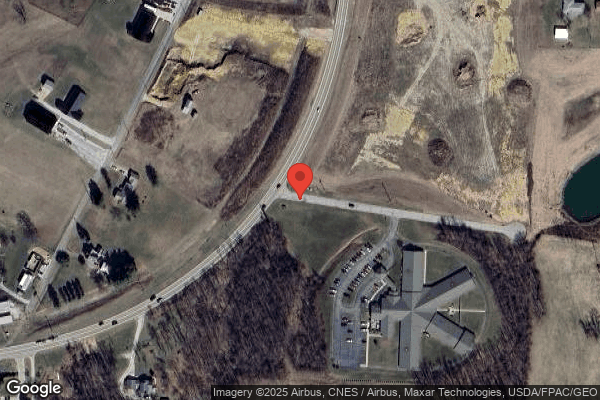

100 MICHELLI STREET, BARNESVILLE, OH 43713 (740) 425-5400
For profit - Corporation 64 Beds FOUNDATIONS HEALTH SOLUTIONS Data: November 2025
Trust Grade
73/100
#256 of 913 in OH
Last Inspection: March 2025

Within standard 12-15 month inspection cycle. Federal law requires annual inspections.

Overview

Emerald Pointe Health and Rehab Center has a Trust Grade of B, indicating it is a good choice but not without its concerns. It ranks #256 out of 913 facilities in Ohio, placing it in the top half statewide, and is #2 out of 10 in Belmont County, meaning there is only one other local option that is better. The facility's trend is stable, with the number of issues remaining consistent over the past two years. Staffing is a weakness here, with a rating of 2 out of 5 stars, although the turnover rate of 28% is significantly lower than the state average. Despite not having any fines, there are notable incidents. For example, the facility failed to properly store food, which could potentially affect residents receiving meals, and there were concerns regarding inadequate staffing levels to assist residents with daily activities, impacting their care. While Emerald Pointe has strengths, such as a solid quality measure rating of 5 out of 5, these weaknesses should be carefully considered by families looking for a nursing home.

Trust Score
B
73/100
In Ohio
#256/913
Top 28%
Safety Record
Low Risk
No red flags
Inspections
Holding Steady
9 → 9 violations
Staff Stability
✓ Good
28% annual turnover. Excellent stability, 20 points below Ohio's 48% average. Staff who stay learn residents' needs.
Penalties
✓ Good
No fines on record. Clean compliance history, better than most Ohio facilities.
Skilled Nurses
⚠ Watch
Each resident gets only 29 minutes of Registered Nurse (RN) attention daily — below average for Ohio. Fewer RN minutes means fewer trained eyes watching for problems.
Violations
⚠ Watch
47 deficiencies on record. Higher than average. Multiple issues found across inspections.
★★★★☆
4.0
Overall Rating
★★☆☆☆
2.0
Staff Levels
★★★★★
5.0
Care Quality
★★★☆☆
3.0
Inspection Score
Stable
2024: 9 issues
2025: 9 issues

The Good

  • 5-Star Quality Measures · Strong clinical quality outcomes
  • Low Staff Turnover (28%) · Staff stability means consistent care
  • Full Sprinkler Coverage · Fire safety systems throughout facility
  • No fines on record
  • Staff turnover is low (28%)

    20 points below Ohio average of 48%

Facility shows strength in quality measures, staff retention, fire safety.

The Bad

Chain: FOUNDATIONS HEALTH SOLUTIONS

Part of a multi-facility chain

Ask about local staffing decisions and management

The Ugly 47 deficiencies on record

Mar 2025 9 deficiencies
CONCERN (D)

Potential for Harm - no one hurt, but risky conditions existed

Notification of Changes (Tag F0580)

Could have caused harm · This affected 1 resident

**NOTE- TERMS IN BRACKETS HAVE BEEN EDITED TO PROTECT CONFIDENTIALITY** Based on medical record review and interview, the facility failed to ensure physician notification of a resident's blood pressur...

Read full inspector narrative →
**NOTE- TERMS IN BRACKETS HAVE BEEN EDITED TO PROTECT CONFIDENTIALITY** Based on medical record review and interview, the facility failed to ensure physician notification of a resident's blood pressure when outside of listed blood pressure parameters. This affected one resident (#27) of five residents reviewed for unnecessary medications. The census was 63. Findings include: Medical record review revealed Resident #27 was admitted on [DATE] with diagnoses including breast cancer, chronic kidney disease, cardiac murmur, atrial septal defect, hypertension, diabetes mellitus, renal insufficiency and urinary tract infection. Review of the nurse practitioner Nurse's Note dated 06/08/23 revealed to discontinue amlodipine 5 milligrams (mg) due to edema. Continue atenolol 50 (mg) and lisinopril 10 (mg) daily. Monitor blood pressure (BP) and consider increasing lisinopril if greater than (>) 130/80 mmHg with close monitoring of BMP. Continue atorvastatin 20 (mg) and will obtain echocardiogram due to murmur. Review of the cardiology advanced practice professional Progress Note dated 08/21/24 revealed Resident #27 was seen for routine follow-up evaluation for diagnoses including a murmur and essential hypertension. Orders included no discontinued medications and plan was to continue atenolol 50 (mg) and lisinopril 40 (mg) daily with a target blood pressure less than 130/80 mmHg. Review of the electronic Medication Administration Record (MAR) dated December 2024, January 2025 and February 2025 revealed a physician order to monitor BP/pulse every shift and as needed. The physician was to be notified if the resident's BP was greater than 130/80 mmHg with close monitoring of BMP. Review of the medical record revealed no evidence the physician was notified of the following BP readings greater than 130/80 as per order: On 12/02/24, night BP 146/82 with pulse of 62. On 12/13/24, day BP 134/86 with pulse 86. On 12/13/24, night BP 148/86 with pulse 62. On 12/14/24 , day BP 146/81 with pulse 73. On 12/14/24, night BP 132/84 with pulse 76. On 12/17/24 night BP 146/84 with pulse 60. On 12/21/24, night BP 136/84 with pulse 62. On 12/22/24,day BP 138/82 with pulse 82. On 12/22/24, night BP 140/84 with pulse 60. On 12/26/24, night BP 152/82 with pulse 66. On 01/13/25, night BP 140/84 with pulse 60. On 01/14/25, night BP 134/86 with pulse 62. On 01/16/25, day BP 158/92 with pulse 58. On 01/16/25, night BP 132/82 with pulse 62. On 01/26/25, day BP 138/88 with pulse 67. On 02/01/25, day BP 132/82 with pulse 54. On 02/05/25, day BP 140/86 with pulse 59. On 02/05/25, night BP 146/88 with pulse 63. On 02/14/25, night BP 173/82 with pulse 64. On 02/24/25, day BP 132/86 with pulse 65. On 02/26/25 at 5:27 P.M., interview with the Director of Nursing verified there was no evidence Resident #27's physician was notified of the above BP's exceeding the ordered parameters.
CONCERN (D)

Potential for Harm - no one hurt, but risky conditions existed

Comprehensive Care Plan (Tag F0656)

Could have caused harm · This affected 1 resident

**NOTE- TERMS IN BRACKETS HAVE BEEN EDITED TO PROTECT CONFIDENTIALITY** Based on medical record review and interview, the facility failed to develop comprehensive and individualized care plans. This a...

Read full inspector narrative →
**NOTE- TERMS IN BRACKETS HAVE BEEN EDITED TO PROTECT CONFIDENTIALITY** Based on medical record review and interview, the facility failed to develop comprehensive and individualized care plans. This affected one resident (#3) of two residents reviewed for Communication-Sensory concerns. The facility census was 63. Findings include: Medical record review revealed Resident #3 was admitted on [DATE] with diagnoses including end-stage macular degeneration and cerebral infarction. Review of the admission Minimum Data Set 3.0 (MDS) assessment dated [DATE] revealed Resident #3 was cognitively intact for daily decision-making, had highly impaired vision (object identification in question but eyes appear to follow objects) with corrective lenses and had obvious, likely cavities or broken natural teeth. Review of the Eye Care Chart Note dated 12/04/24 revealed the resident complained of right eye poor vision for many years and glasses help the left eye a little. The resident's visual acuity of the right eye was 20/80 and his visual acuity of the left eye was 20/30. On 02/24/25 between 3:15 P.M. and 3:33 P.M., interview with Resident #3 revealed he cannot see out of one eye and has had the same glasses for a long time. Resident #3 stated the dietary/menu card print was too small to read and he could not see/read the card to choose what he would like to eat for the upcoming meals. Resident #3 stated it was frustrating and just picks without knowing what he was choosing. During the interview, Resident #3 was observed wearing glasses, his upper teeth and a lower tooth appeared decayed and in poor condition. Resident #3 stated his teeth bother him and he had seen a dentist before Christmas but they never did anything about his teeth and was told his teeth condition was too bad to get an implant. On 02/25/25 at 3:15 P.M., Resident #3 was observed wearing glasses while working on a puzzle. On 02/26/25 at 7:20 A.M., Resident #3 was observed sitting at a table in the main dining room wearing glasses. At 7:25 A.M., certified nurse aide (CNA) #242 was observed giving a meal card to Resident #3 for him to choose his meal options for lunch and dinner. Resident #3 was looking at the menu card without choosing any meal options. The surveyor asked Resident #3 what he was going to have for lunch and he stated he was unable to read the menu card as the print was too small and could not see what the menu options were. CNA #237 was observed walking past the resident's table and stopped to see if the resident was done filling out the menu card when Resident #3 stated he could not see the menu. CNA #237 stated she was unaware Resident #3 could not see the printed words on the menu card. On 02/27/25 at 12:59 P.M., interview with Social Services #216 verified Resident #3 did not have a individualized care plan for vision or dental. On 02/27/25 at 3:40 P.M., interview with Regional Director of Clinical Services #276 verified Resident #3 did not have a comprehensive vision or dental care plan.
CONCERN (D)

Potential for Harm - no one hurt, but risky conditions existed

Incontinence Care (Tag F0690)

Could have caused harm · This affected 1 resident

**NOTE- TERMS IN BRACKETS HAVE BEEN EDITED TO PROTECT CONFIDENTIALITY** Based on medical record review and interviews the facility failed to ensure identification, assessment, and appropriate interven...

Read full inspector narrative →
**NOTE- TERMS IN BRACKETS HAVE BEEN EDITED TO PROTECT CONFIDENTIALITY** Based on medical record review and interviews the facility failed to ensure identification, assessment, and appropriate interventions were put in place to achieve [NAME] bowel function for Resident #13, Resident #46, and Resident #51. This affected three residents (#13, #46, and #51) out of four residents reviewed for bowel and bladder. Facility census was 63. Findings include: 1. Review of the medical record revealed Resident #13 was admitted on [DATE] with diagnoses of metabolic encephalopathy, asthma, cognitive communication, acute kidney failure, chronic kidney disease stage 4, and urinary retention. A care plan dated 11/07/24 revealed Resident #13 was at risk for constipation. Interventions included to administer medication as ordered and monitor for constipation and causes. The quarterly Minimum Data Set (MDS) dated [DATE] revealed Resident #13 was cognitively intact, occasionally incontinent of urine and always continent of bowel. Resident #13 required substantial/maximal assistance for toilet hygiene and partial/moderate assistance for toilet transfer. Review of the bowel elimination documentation revealed Resident #13 had a bowel movement on 02/14/25. The bowel elimination documentation from 02/15/25 to 02/25/25 revealed Resident #13 did not have a bowel movement. The next bowel elimination documentation was on 02/26/25. Review of the medication administration record (MAR) revealed on 02/16/25 Resident #13 was administered Bisacodyl enteric-coated delayed release (laxative) five milligrams. The Bisacodyl was effective. Further review of the MAR revealed no other medication being administered to help facilitate a bowel movement. Interview on 02/26/25 at 12:42 P.M. the Director of Nursing (DON) verified the facility did not have a bowel protocol in place and did not use standing orders for medications to help facilitate a bowel movement. The DON verified if a resident did not have a bowel movement for three days, the physician should be notified and orders obtained as needed. An additional interview on 02/26/25 at 2:17 P.M. the DON verified there was no documentation of Resident #13 having a bowel movement from 02/17/25 through 02/25/25. 2. Review of the medical record revealed Resident #46 was admitted on [DATE] with diagnoses that included normal pressure hydrocephalus, dysphagia, Alzheimer's disease, chronic kidney disease, anxiety, and acute kidney failure. A care plan dated 08/14/24 revealed Resident #46 was at risk for constipation. Interventions included to administer medications as ordered and to monitor for constipation and causes. The 5-day MDS dated [DATE] revealed Resident #46 had cognitive impairment and was always incontinent of bowel and bladder. Review of the bowel elimination documentation from 02/15/25 to 02/18/25 revealed Resident #46 did not have a bowel movement. Resident #46 had a bowel movement on 02/19/25 and 02/22/25. The bowel elimination documentation from 02/23/25 to 02/27/25 revealed Resident #46 did not have a bowel movement. Review of the MAR for February 2025 revealed no evidence of Resident #46 being administered medication to help facilitate a bowel movement. Interview on 02/26/25 at 12:42 P.M. the Director of Nursing (DON) verified the facility did not have a bowel protocol in place and did not use standing orders for medications to help facilitate a bowel movement. The DON verified if a resident did not have a bowel movement for three days, the physician should be notified and orders obtained as needed. An additional interview on 02/27/25 at 1:42 P.M. the DON verified there was no documentation of Resident #46 having a bowel movement from 02/15/25 through 02/18/25 and 02/23/25 through 02/27/25. 3. Record review revealed Resident #51 was admitted to the facility on [DATE] with diagnoses including dementia, Alzheimer's, muscle weakness, thyrotoxicosis, osteoporosis, glaucoma, constipation, anxiety, vitamin D deficiency, and major depressive disorder. Review of the Minimum data set (MDS) completed on 01/29/25 revealed Resident #51 had a brief interview for mental status (BIMS) score 00, which indicated cognitive impairment. The MDS also revealed Resident #51 had bowel continence, required substantial/maximal assistance for toileting, and had a history of constipation. Record review of Resident #51 task for bowel assessment revealed no documentation of a bowel movement (BM) on 02/13/25, 02/14/25, 02/15/25, or 02/16/25. Record review of Resident #51 task for bowel assessment revealed no documentation of a bowel movement on 02/23/25, 02/24/25, 02/25/25, 02/26/25. Record review of Resident #51 medication administration record (MAR) and treatment administration record (TAR) for February 2025 revealed no documentation Resident #51 had received interventions to assist in a bowel movement. Record Review of Resident #51's care plan dated 02/11/25 revealed Resident #51 was at risk for constipation related to decreased mobility, medication use, malnutrition, and a history of constipation. Interventions included monitoring for constipation. Interview on 02/24/25 11:20 A.M. resident representative for Resident #51 stated that Resident #51 did have issues with constipation. Family representative stated she will ask staff if Resident #51 has had a bowel movement but she was not sure how honest staff are being. Resident #51's representative was not sure if Resident #51 had been getting any laxatives' or stool softeners to assist in relieving bowels. Interview on 02/26/25 at 12:43 P.M. with the Director of Nursing (DON) revealed implementation of interventions to promote bowel movements would depend on the residents but the expectation is around day two to three (with no bowel movement) they would begin to investigate the issue. She stated the nurses on the floor monitor frequency of bowel movements on their shift. A nurse or certified nursing assistant (CNA) should document if the resident has had a bowel movement and communicate information in report. It should flag on the dashboard of the electronic medical record (EMR) if someone has not had a bowel movement in a certain number of days. It should be communicated in report from shift to shift if the resident has had a BM or not; there is no record or protocol it is just the expectation. The DON stated the nurse would need to call the doctor for a stool softener or laxative because there was no standing orders. The DON confirmed Resident #51 had gone four days with no bowel movement, no identification of no bowel movement by staff, and no interventions implemented.
CONCERN (D)

Potential for Harm - no one hurt, but risky conditions existed

Deficiency F0757 (Tag F0757)

Could have caused harm · This affected 1 resident

**NOTE- TERMS IN BRACKETS HAVE BEEN EDITED TO PROTECT CONFIDENTIALITY** Based on medical record review and interview, the facility failed to ensure a resident did not receive unnecessary medication wh...

Read full inspector narrative →
**NOTE- TERMS IN BRACKETS HAVE BEEN EDITED TO PROTECT CONFIDENTIALITY** Based on medical record review and interview, the facility failed to ensure a resident did not receive unnecessary medication when a resident was administered antibiotics not at the ordered dose. This affected one resident (#27) of five residents reviewed for unnecessary medications. The census was 63. Findings include: Medical record review revealed Resident #27 was admitted on [DATE] with diagnoses including breast cancer, chronic kidney disease, cardiac murmur, atrial septal defect, hypertension, diabetes mellitus, renal insufficiency and urinary tract infection. Review of the Progress Note dated 02/06/25 revealed facility had received a call from Resident #27's urology office stating the urinalysis done at their office showed the resident had an UTI. The physician office sent in an order for Bactrim DS (antibiotic) twice a day to be administered for 10 days. A Physician order was written and the antibiotic was started on 02/07/25 and administered through 02/17/25. Review of the electronic Medication Administration Record dated February 2025 revealed Resident #27 received 21 doses of Bactrim DS instead of the ordered 20 doses. On 02/27/25 at: 10:45 A.M., interview with Director of Nursing verified the resident was only ordered to receive two doses a day for 10 days.
CONCERN (D)

Potential for Harm - no one hurt, but risky conditions existed

Deficiency F0761 (Tag F0761)

Could have caused harm · This affected 1 resident

**NOTE- TERMS IN BRACKETS HAVE BEEN EDITED TO PROTECT CONFIDENTIALITY** Based on observation, review of the medical record, and interview with staff revealed the facility failed to ensure safe storage...

Read full inspector narrative →
**NOTE- TERMS IN BRACKETS HAVE BEEN EDITED TO PROTECT CONFIDENTIALITY** Based on observation, review of the medical record, and interview with staff revealed the facility failed to ensure safe storage of medications. This affected one resident (#7) of five residents reviewed for accidents. Finding included: Review of the medical record revealed Resident #7 was admitted to the facility on [DATE]. Diagnoses included fracture of the T5 and T6 vertebra, fracture of one rib, ankylosing spondylitis of the thoracic, acute respiratory failure, muscle weakness, dysphagia, pneumonia, hemothorax, atrial fibrillation, congestive heart failure, generalized anxiety disorder, peripheral vascular, hyperglycemia, gout, vertigo, osteoarthritis, chronic pain syndrome, chronic rhinitis, major depressive disorder, hypertension, hypothyroidism, insomnia and a pacemaker. Review of the Quarterly Minimum Data Set, dated [DATE] revealed Resident #7 had intact cognition. Review of the February 2025 physician's order revealed Resident #7 had an order for Fluticasone Propionate Nasal Suspension 50 micrograms, one spray in both nostrils once daily. Resident #7 did not have an order to self administration or have nasal spray at bedside. Observation on 02/24/25 at 4:35 P.M. revealed she had a bottle of Fluticasone propionate nasal spray on top of her refrigerator in her room Observation on 02/25/25 at 9:50 A.M. revealed she had a bottle of Fluticasone propionate nasal spray on top of her refrigerator in her room. On 02/25/25 at 9:50 A.M. an interview with Licensed Practical Nurse #224 confirmed Resident #7 had a bottle to Fluticasone propionate nasal in her room. She verified Resident #7 did not have an order to self administer or to have her Fluticasone propionate nasal spray at bedside.
CONCERN (D)

Potential for Harm - no one hurt, but risky conditions existed

Deficiency F0773 (Tag F0773)

Could have caused harm · This affected 1 resident

**NOTE- TERMS IN BRACKETS HAVE BEEN EDITED TO PROTECT CONFIDENTIALITY** Based on medical record review and interview, the facility failed to ensure a resident's nephrologist was notified of abnormal l...

Read full inspector narrative →
**NOTE- TERMS IN BRACKETS HAVE BEEN EDITED TO PROTECT CONFIDENTIALITY** Based on medical record review and interview, the facility failed to ensure a resident's nephrologist was notified of abnormal laboratory results. This affected one resident (#27) of five residents reviewed for unnecessary medications. The census was 63. Findings include: Medical record review revealed Resident #27 was admitted on [DATE] with diagnoses including breast cancer, chronic kidney disease, cardiac murmur, atrial septal defect, hypertension, diabetes mellitus, renal insufficiency and urinary tract infection. Review of the Comprehensive Metabolic Panel dated 07/26/24 revealed BUN (blood urea nitrogen) was 28 (normal 7-17 mg/dL), creatinine 1.40 (normal 0.5-1.0 mg/dL), BUN/Crea ratio was 20 (normal was 6-20) and estimated GFR was 41 (normal >60 mL/min/L). Physician #279 ordered to follow-up with Resident #27's renal physician (nephrologist) regarding the above lab results. Review of the Comprehensive Metabolic Panel dated 01/02/25 revealed abnormal laboratory findings including: BUN was 37 (normal 7-17 mg/dL), creatinine was 1.44 (normal 0.5-1.0 mg/dL), BUN/Crea ratio was 26 (normal was 6-20), estimated GFR was 40 (normal >60 mL/min/L), hemoglobin was 11.0 (normal 11.5-16.0 g/dL) and hematocrit was 34.3 (normal 34.8-46.0%). Physician #279 ordered to follow-up with Resident #27's renal physician regarding the above lab results. Review of the medical record revealed no evidence Resident #27's renal physician/nephrologist was notified of the above lab results on 07/26/24 or 01/02/25. Review of the annual Minimum Data Set 3.0 assessment dated [DATE] revealed Resident #27 was cognitively intact for daily decision-making, had no UTI in the last 30 days and was receiving a diuretic, On 02/27/25 at 10:17 A.M., interview with the Director of Nursing verified there was no evidence Resident #27's abnormal labs were reported to the nephrologist.
CONCERN (D)

Potential for Harm - no one hurt, but risky conditions existed

Medical Records (Tag F0842)

Could have caused harm · This affected 1 resident

**NOTE- TERMS IN BRACKETS HAVE BEEN EDITED TO PROTECT CONFIDENTIALITY** 3. Medical record review revealed Resident #18 was admitted on [DATE] with diagnoses including atrial fibrillation, history of v...

Read full inspector narrative →
**NOTE- TERMS IN BRACKETS HAVE BEEN EDITED TO PROTECT CONFIDENTIALITY** 3. Medical record review revealed Resident #18 was admitted on [DATE] with diagnoses including atrial fibrillation, history of venous thrombosis/ embolism, end stage renal disease and dependence on renal dialysis. a. Review of the care plan: At Risk for Bleeding, Bruising, Abnormal Labs related to use of anticoagulant/thrombolytic medications initiated 06/01/23 revealed the resident was receiving coumadin (anticoagulant). Review of the electronic Physician Orders dated February 2025 revealed Resident #18 received apixaban (Eliquis) 5 milligrams twice a day. There was no evidence Resident #18 was receiving coumadin. b. Review of Resident #18's Kardex revealed the resident went to dialysis three times a week on Tuesday, Thursday and Saturday. On 02/26/25 at 12:48 P.M., interview with the Director of Nursing (DON) stated the resident dialysis days changed a long time ago due to transportation concerns and resident convenience. The DON verified the information in the Kardex was not accurate for dialysis scheduled days. Based on medical record review, policy review and interview, the facility failed to ensure accurate and thorough medical records were maintained. This affected three residents (#13, #18, and #34) of 19 residents sampled. The census was 63. Findings include: 1. Record review revealed Resident #34 was admitted to the facility on [DATE] with diagnoses including heart failure, anemia, coronary artery disease, atrial fibrillation, cellulitis, hypertension, diabetes mellitus, hyperlipidemia, arthritis. Record review of the minimum data set 3.0 (MDS) assessment completed on 01/20/25 revealed a brief interview for mental status score (BIMS) of 14, which indicated Resident #34 was cognitively intact. Record review of the MDS section N for medications completed on 01/30/25 revealed Resident #34 was on antibiotics. Record review revealed an order placed on 01/29/25 by the Medical Director for antibiotic oral capsule 500 milligram (mg) (Cephalexin) to be given 1 capsule by mouth two times a day for right hand cellulitis for eight days starting 01/29/25 with a stop date of 02/05/25. Record review of the medication administration record (MAR) revealed no documentation of Keflex 500 mg being administered on 02/04/25 for the evening dose. Interview on 02/25/25 at 10:23 A.M. with assistant director of nursing (ADON) verified Keflex was not documented as given on Tuesday 02/04/25 P.M. for dinner dose and progress note from 02/04/25 at 10:44 P.M. stated Resident #34 remained on antibiotic therapy with no adverse effects. No notes of the dose being missed/refused, no one notified of missing dose. No documentation of why the dose was not documented or a physician being notified of a missing dose. Review of medication administration policy 5.3 (effective 06/21/2017) the resident had the right to refuse medication. It is, however, the nurses responsibility to review with the resident the consequences of their refusal and document accordingly. If a medication is unavailable, contact the pharmacy and document accordingly. If a resident refuses medication, document on the medication administration record (MAR). Note refusal or ingestion of less than 100% of dose on the MAR in the designated area. 2. Medical record review revealed Resident #13 admitted to the facility on [DATE] with diagnoses including chronic obstructive pulmonary disorder (COPD), asthma, cognitive communication deficit, muscle weakness, acute kidney failure, chronic kidney disease stage four, pleural effusion, atrial fibrillation, generalized anxiety disorder. Medical record review of Resident #13's minimum data set (MDS) completed 1/24/25 revealed a brief interview for mental status (BIMS) score of 15. Medical record review revealed an immunization consent form dated 01/07/25 Resident #13 consented to the Prevnar 20 Pneumococcal vaccine (PCV20). Medical record review revealed, an order placed on 01/14/25 by the Medical Director that ordered Prevnar 20 Suspension Prefilled Syringe 0.5 milliliter (ML) (Pneumococcal 20-[NAME] Conj Vacc) Inject 0.5 ml intramuscularly one time only for vaccine for 1 Day. Record review of Resident #13's medication administration record (MAR) for January of 2025 revealed no documentation the PCV20 vaccination had been administered to Resident #13. Interview on 02/27/25 at 1:23 P.M. with the ADON confirmed in point click care documentation is not on the MAR for the PCV20 immunization being administered. She stated she was not sure if something was wrong with their point click care but she was going to put in a work order.
CONCERN (D)

Potential for Harm - no one hurt, but risky conditions existed

Infection Control (Tag F0880)

Could have caused harm · This affected 1 resident

**NOTE- TERMS IN BRACKETS HAVE BEEN EDITED TO PROTECT CONFIDENTIALITY** Based on observations, review of the medical record and interview with staff the facility failed to appropriately monitor a resi...

Read full inspector narrative →
**NOTE- TERMS IN BRACKETS HAVE BEEN EDITED TO PROTECT CONFIDENTIALITY** Based on observations, review of the medical record and interview with staff the facility failed to appropriately monitor a resident experiencing signs and symptoms of a contagious respiratory illness and failed to implement contact isolation precautions for a resident with an infectious microorganism in the urine. This affected one resident (#21) of two residents reviewed for respiratory care and one resident (#27) of three residents reviewed for antibiotic usage. Findings included: 1. Review of the medical record revealed Resident #21 was admitted to the facility on [DATE]. Diagnoses chronic obstructive pulmonary disease, diabetes, asthma, acute respiratory failure, schizophrenia, psychosis, hypertension, fibromyalgia, sleep apnea, migraine, generalized anxiety disorder, peripheral vascular disease, and insomnia. Review of the Quarterly Minimum Data Set assessment dated [DATE] revealed Resident #21 had intact cognition and refused the influenza vaccine. Review of the February Medication Administration Record (MAR) and Treatment Administration Record (TAR) revealed no documentation Resident #21's temperature was monitored from 02/20/25 to 02/25/25. Review of the vital signs, including temperature, documented in Point Click Care revealed the last documented temperature for Resident #21 was on 02/19/25 at 98 degrees Fahrenheit. Review of the February 2025 physician's orders revealed Resident #21 had an order for Allegra 180 milligrams at bedtime for cold symptoms and nasal congestion dated 02/20/25 Review of the health status note dated 02/20/25 at 6:43 P.M. revealed Resident #21 complained of sinus congestion and cold symptoms. The Physician was updated and a new order was received for Allegra once a day for seven days. The resident was afebrile, lungs were clear, skin was warm, dry and flesh tone. There was no documentation regarding the resident's respiratory status (lung sounds, cold symptoms), including temperature, on 02/21/25. Review of the health status note dated 02/22/25 at 6:23 A.M. revealed Resident #21 complained of continued sinus congestion, dizziness, cough. Her vital signs were temperature 98.0 degrees Fahrenheit, oxygen saturation was 96 percent on room air, lungs were clear, respiration were 18 and her blood pressure was 122/70. She continues on Allegra at bedtime for sinus congestion. There was no documentation regarding the resident's respiratory status (lung sounds, cold symptoms), including temperature, on 02/23/25. There was no evidence Resident #21 was tested for COVID or influenza even though she exhibited signs and symptoms of a respiratory illness that could be contagious to others. On 02/24/25 at 8:55 A.M. an interview with Resident #21 revealed she felt like she was getting the flu. She stated she was coughing, had nasal congestion, was having some nausea but no vomiting or diarrhea. Observation on 02/24/25 at 11:15 A.M. revealed Resident #21 was out in the dining room sitting. The resident was not wearing a mask. Observation on 02/25/25 at 10:20 A.M. revealed Resident #21 was out in the dining room for an activity. The resident was not wearing a mask. On 02/26/25 at 1:15 P.M. an interview with Director of Nursing (DON) indicated she would expect the staff to monitor and take the temperature routinely for a resident experiencing respiratory signs and symptoms to make sure they were not getting worse. On 02/27/25 at 2:21 P.M. an interview with Regional Director of Clinical Services #27 indicated they should assess the resident, monitor, and if symptoms continue they would test for COVID. She stated they were doing a respiratory assessment however there was a glitch and the temperature section was never added so they were never done. On 02/27/25 at 2:31 P.M. an interview with the DON confirmed there was no monitoring from the first signs of flu like symptoms 02/20/25 to 02/22/25 then from 02/22/25 to 02/26/25. Review of the Centers for Disease Control website, Testing and Management Considerations for Nursing Home Resident with Acute Respiratory Illness Symptoms when SARS_CoV-2 and influence Viruses are Co-circulating (dated 11/14/23) revealed you could not tell the difference between flu and COVID-19 by symptoms alone because many signs and symptoms are the same. Testing was needed to confirm a diagnoses. Signs and Symptoms of both COVID-19 and flu included fever but not everyone with the flu would have a fever, cough, shortness of breath, fatigue, sore throat, runny or stuffy nose, muscle pains, headache, vomiting , diarrhea and change in or loss of taste and smell. Review of the facility policy titled, Infection Control-Infection Surveillance, (dated 11/28/17) revealed the system of surveillance was utilized for prevention, identifying, reporting, investigating, and controlling infections and communicable disease for all residents, staff, volunteers, visitors, and other individuals providing services under a contractual arrangement based upon a facility assessment and accepted national standards. Nurses participate in surveillance thorough assessment of resident and reporting changes in condition to the resident's physicians and management staff. 2. Medical record review revealed Resident #27 was admitted on [DATE] with diagnoses including renal insufficiency, non-Alzheimer dementia and urinary tract infection (UTI). Review of the annual Minimum Data Set 3.0 assessment dated [DATE] revealed Resident #27 was cognitively intact for daily decision-making and had no UTI's in the last 30 days. Review of the Progress Note dated 02/06/25 revealed facility had received a call from Resident #27's urology office stating the urinalysis done at their office showed the resident had an UTI. The physician office sent in an order for Bactrim DS (antibiotic) twice a day to be administered for 10 days. Copies of laboratory results and progress note was requested. A Physician order was written and the antibiotic was started on 02/07/25 and administered through 02/17/25. Review of the electronic Medication Administration Record dated February 2025 revealed Resident #27 received 21 doses of Bactrim DS instead of the ordered 20 doses. Review of the medical record revealed no evidence the results of the urinalysis obtained on 02/04/25 or results of the urine culture was received between 02/06/25 and 02/17/25. On 02/27/25 at 8:09 A.M. Resident #27's Molecular Pathology Report (dated 02/05/25) was faxed to the facility revealing Streptococcus Agalactiae (Group B Strep) and Staphylococcus aureus (MRSA) had been detected and the microbial load was less than 100,000 CFU/mL with a potential resistance to Methicillin, carbapenems, cephalosporins, penicillins and beta-lactamase inhibitors was detected. Review of the record revealed the facility did not have the resident on any type of contact isolation precautions between 02/06/25 and 02/17/25. Review of the Minimum Criteria for Initiating Antibiotic Therapy form dated 02/07/25 revealed Resident #27 complained of urgency and frequency. No other symptoms were documented. Date of infection was 02/06/25 when order received for antibiotic. There was no documentation of the organism or determination if an infection criteria was met. On 02/27/25 at 9:52 A.M., interview with Assistant Director of Nursing (ADON) #200 verified the facility had not received the urinalysis/pathogens detected report from the urologist until today and verified contact isolation should have been initiated for MRSA/Group B Strep urine results. On 02/27/25 at: 10:45 A.M., interview with Director of Nursing verified facility requested the urine culture but had not received result until after requested by the surveyor and the resident was only ordered to receive two doses a day for 10 days.
CONCERN (D)

Potential for Harm - no one hurt, but risky conditions existed

Antibiotic Stewardship (Tag F0881)

Could have caused harm · This affected 1 resident

**NOTE- TERMS IN BRACKETS HAVE BEEN EDITED TO PROTECT CONFIDENTIALITY** Based on record review and interview the facility failed to ensure antibiotics were not ordered without meeting the required cri...

Read full inspector narrative →
**NOTE- TERMS IN BRACKETS HAVE BEEN EDITED TO PROTECT CONFIDENTIALITY** Based on record review and interview the facility failed to ensure antibiotics were not ordered without meeting the required criteria for Resident #32. This affected one resident (#32) of three residents reviewed for antibiotic use. Facility census was 63. Findings include: Review of the medical record revealed Resident #32 was admitted on [DATE] and readmitted on [DATE] with diagnoses that included chronic kidney disease, hydronephrosis, neuromuscular dysfunction of bladder, type 2 DM, urinary tract infection, acute kidney failure with tubular necrosis, and paraplegia. A care plan dated 08/09/24 revealed Resident #32 was at risk for infection related to suprapubic catheter, type 2 diabetes, and urinary retention. Interventions included to administer antibiotics as ordered and monitor of signs and symptoms of a urinary tract infection. A health status note dated 12/23/24 at 3:22 A.M. revealed Resident #32 reported testicle pain. Resident #32 reported he usually had a urinary tract infection when he felt testicle pain. Resident #32 requested his urine to be checked. A urine test strip, used as a basic diagnostic tool to determine pathological changes, was positive. An order was received for urinalysis. Urine results faxed to the facility on [DATE] revealed Resident #32's urine was abnormal with moderate leukocytes and blood, and was positive for nitrites. A health status note dated 12/23/24 at 4:20 P.M. revealed the facility physician was notified of urinalysis results. The facility physician instructed the nurse to contact Resident #32's urologist. The infection control log revealed Resident #32 had onset of symptoms of testicle pain on 12/23/24 and chronic urinary tract infections. The urine results identified mixed flora. Cipro (antibiotic) 250 milligram (mg) was ordered twice a day for seven days by the urologist. The Loeb's minimum criteria (a set of clinical guidelines used to determine the need for antibiotic therapy in long-term care residents) form for initiating antibiotic therapy revealed no minimum criteria marked. A handwritten note on the form revealed Resident #32 had a history of chronic infections and complaints of testicular pain which was a usual sign of infection. A culture and sensitivity was done. The urologist was notified and ordered an antibiotic for Resident #32. A health status note date 12/24/24 at 12:10 P.M. revealed the urologist ordered Cipro for Resident #32. Review of the medication administration record (MAR) revealed Resident #32 was administered the first dose of Cipro the evening of 12/24/24. Urine culture results faxed to the facility on [DATE] revealed Resident #32's urine culture had mixed commensal flora. Mixed commensal flora in a urine sample is a mix of different bacteria that usually reside in the urinary tract without causing infection. This does not necessarily indicate a problem, and could be a sign of contamination during the sample collection. The quarterly Minimum Data Set (MDS) dated [DATE] revealed Resident #32 was cognitive intact. Interview on 02/26/25 at 10:12 A.M. Director of Nursing (DON) verified a culture and sensitivity was not completed due to urine results had mixed flora. The DON verified the use of Cipro did not meet the criteria and had been ordered by urologist.
Nov 2024 2 deficiencies
CONCERN (D) 📢 Someone Reported This

A family member, employee, or ombudsman was alarmed enough to file a formal complaint

Potential for Harm - no one hurt, but risky conditions existed

Free from Abuse/Neglect (Tag F0600)

Could have caused harm · This affected 1 resident

**NOTE- TERMS IN BRACKETS HAVE BEEN EDITED TO PROTECT CONFIDENTIALITY** THE FOLLOWING DEFICIENCY REPRESENTS AN INCIDENT OF PAST NONCOMPLIANCE THAT WAS SUBSEQUENTLY CORRECTED PRIOR TO THIS SURVEY. Base...

Read full inspector narrative →
**NOTE- TERMS IN BRACKETS HAVE BEEN EDITED TO PROTECT CONFIDENTIALITY** THE FOLLOWING DEFICIENCY REPRESENTS AN INCIDENT OF PAST NONCOMPLIANCE THAT WAS SUBSEQUENTLY CORRECTED PRIOR TO THIS SURVEY. Based on record review, interview, review of camera footage, employee statement review and policy review, the facility failed to provide care and services, including appropriate supervision levels, to prevent resident neglect. This affected one resident (Resident #10) of three residents reviewed for neglect. The facility census was 58. Findings included: Review of the medical record revealed Resident #10 was admitted to the facility on [DATE] with diagnoses including Alzheimer's disease, dementia, muscle weakness, osteoporosis, vertigo, anxiety, and restlessness and agitation. Review of Resident #10's care plan, dated 05/23/23, revealed the resident was at risk for alteration in comfort with interventions including to reposition the resident for comfort. Further review revealed the resident was at risk for falls related to weakness, poor safety awareness, osteoporosis, glaucoma, vertigo, and anxiety with interventions including to encourage and remind the resident to ask for assistance and to monitor/anticipate/intervene for causative factors. Review of the care plan, dated 09/23/24, revealed the resident had an alteration in skin integrity as evidenced by moisture-associated skin damage (MASD) of the right buttock with interventions including to provide skin care as needed. Review of the quarterly Minimum Data Set (MDS) assessment, dated 10/09/24, revealed Resident #10 was severely cognitively impaired and required moderate/substantial staff assistance with toileting and showers/baths. The assessment indicated the resident was occasionally incontinent of urine and was at risk for developing pressure ulcers. Review of the facility's Fall Investigation, dated 10/28/24, revealed on 10/28/24 at 7:45 A.M., Resident #10 was observed in her room, on her bottom with her feet in front of her. She was incontinent of urine, fully dressed, and wearing anti-skid socks. The resident was wincing in pain, but unable to tell where the pain was located. Range of Motion (ROM) was within normal limits and vital signs were stable. The resident was assisted up with the assistance of three staff. The physician and the family were notified. Review of nursing progress note, dated 10/28/24 at 10:15 A.M. (noted as a late entry), revealed Resident #10's daughter contacted the nurse regarding her mother's fall. Resident #10 was reassessed for injury by performing a head to toe assessment. Vitals signs were at baseline and the resident showed no visible signs of injury. Soreness was apparent with range of motion (ROM). The resident was assisted to bed and no pain medication was required. The resident was resting comfortably with call light in place. Review of nursing progress noted, dated 10/30/24 at 1:14 P.M., revealed the physician reviewed the x-ray of the left wrist and stated there is no suspicion of a fracture per his assessment. Review of the camera footage provided by Resident #10's Family Member #20 dated/timestamped 10/27/24 at 10:57 P.M. through 10/28/24 at 4:42 A.M., revealed Resident #10 was located on the floor in front of her recliner, in either a sitting, reclining, or lying position. Review of CNA #60's Witness Statement, dated 10/28/24 at 4:00 P.M., revealed Resident #10 was in her recliner and had no issues or complaints. CNA #60 stated she did not check on the resident for the rest of the night shift because the resident is usually independent and will come into the hall if she needs anything. CNA #60 stated she was aware of the two hour check and change standard, however, she thought Resident #10 would come out into the hall to get her if she needed anything. Interview on 11/12/24 at 1:29 P.M. with Resident #10 revealed she could not recall the incident on 10/27/24. Interview on 11/12/24 at 2:00 P.M. with Human Resources Director #50 revealed Certified Nursing Assistant (CNA) #60 was terminated following the incident of lack of care for Resident #10 on 10/27/24. Interview on 11/12/24 at 2:51 P.M. with Registered Nurse (RN) #64 revealed she worked on 10/27/24 until 11:00 P.M. RN #64 stated she last observed Resident #10 sitting in her recliner, and she appeared to be happy and in no distress, with ice water on her bedside table and her call light within reach. RN #64 stated that she administered Resident #10's medications and left the room. Interview on 11/12/24 at 3:15 P.M. with Director of Nursing (DON) revealed it was her expectation that the staff should do rounds every two hours. The DON stated Resident #10 did prefer to have her door closed and would sometimes get upset if she was awakened, however, staff should still observe the resident. The DON confirmed CNA #60 was terminated due to the incident on 10/27/24 involving Resident #10. Interview on 11/12/24 at 3:32 P.M. with Administrator revealed he was notified in the morning of 10/28/24 by RN #67 that Resident #10 was found on the floor when her breakfast tray was delivered, and the Resident's daughter was on the phone and upset. The Administrator stated he spoke with Resident #10's daughter on the phone and assured her that a full investigation would be initiated. It was determined through interviews that CNA #60 did not check on the resident after 10:30 P.M. and the resident did not receive proper care. The Administrator stated that he did not believe there was malice or willful neglect on the part of CNA #60; however, the Administrator stated CNA #60 was terminated because this is not something we are comfortable with and not our standard of care. Interview on 11/12/24 at 3:38 P.M., Corporate RN #240 confirmed Resident #10 was a fall risk and on a toileting program and should have been checked on multiple times throughout the night. Review of the facility policy titled, Abuse, Neglect, Exploitation, and Misappropriation of Resident Property, dated 11/21/2016, revealed it is the facility's policy to investigate all alleged violation involving abuse, neglect, exploitation, mistreatment of a resident, or misappropriation of resident property. Additionally, the facility should immediately report all such allegations to the Administrator and to the state agency. The definition of neglect is the failure of the facility, its employees, or facility service providers to provide goods and services to a resident necessary to avoid physical harm, pain, mental anguish, or emotional distress. Review of the facility policy titled, Resident Supervision, dated 06/11/24, revealed it is the policy of this facility to ensure residents receive adequate supervision and assistance, while making every attempt to balance safety needs, resident rights, and quality of life issues that will positively impact each resident's individual situation. As a result of the incident, the facility took the following actions to correct the deficient practice by 10/30/24: • Immediately following notification of the incident on 10/28/24, Resident #10 was assessed for injury by Licensed Practical Nurse (LPN) #67. • The Unit Nurse immediately notified the physician and family. • X-rays were ordered on 10/28/24 by physician at the family's request. The x-rays resulted negative. • Interviews were conducted by the Administrator and Human Resources Director on 10/28/24 with staff who were working on 10/27/24 night shift into the morning on 10/28/24. • Initial audit completed on 10/28/24 by the Minimum Data Set (MDS) nurse and Assistant Director of Nursing (ADON) of like residents who keep their door shut when in room, independent for most activities of daily living (ADLs), residents who keep to themselves and don't like disruption, resistant to care. Care plans were reviewed for those identified. • Staffing numbers were reviewed by the Administrator on 10/28/24 to ensure proper staffing numbers for the acuity of the facility. Staffing was found to be appropriate for care needs. • Fall during the last 90 days were reviewed by the Regional Clinician on 10/29/24 and completed on 10/30/24 with fall interventions noted to be appropriate. • Direct care staff and licensed staff were reeducated by the Administrator, ADON, and HR Director on 10/28/24 the fall management policy, falls best practice and ensuring supervision and care rounds of residents throughout the shift. Education was completed via conference call with 100% participation. • Ongoing audits were initiated on 10/28/24 by the Administrator/and or designee weekly for four weeks or as directed by the Quality Assurance (QA) committee, observational rounds to ensure safety checks/routine rounds are being conducted by the direct care staff. Negative findings will be corrected by reeducation of staff and performing a round ensuring the safety/wellbeing of current residents. • Ongoing audits were initiated on 10/28/24 by the Administrator/and or designee weekly for four weeks or as directed by the Quality Assurance (QA) committee, the Administrator or designee will interview five random residents to ensure their needs are met timely and that the residents are being checked on consistently by staff. Negative findings will be corrected by reeducating staff. • QA committee meeting will be conducted weekly for four weeks to review audit results. This deficiency represents non-compliance investigated under Complaint Number OH00159347.
CONCERN (D) 📢 Someone Reported This

A family member, employee, or ombudsman was alarmed enough to file a formal complaint

Potential for Harm - no one hurt, but risky conditions existed

Report Alleged Abuse (Tag F0609)

Could have caused harm · This affected 1 resident

**NOTE- TERMS IN BRACKETS HAVE BEEN EDITED TO PROTECT CONFIDENTIALITY** Based on record review, interview, review of camera footage, employee statement review, self-reported incident review, and polic...

Read full inspector narrative →
**NOTE- TERMS IN BRACKETS HAVE BEEN EDITED TO PROTECT CONFIDENTIALITY** Based on record review, interview, review of camera footage, employee statement review, self-reported incident review, and policy review, the facility failed to report an allegation of resident neglect to the state survey agency This affected one (Resident #10) of three residents reviewed for neglect. The facility census was 58 Findings include: Review of the medical record revealed Resident #10 was admitted to the facility on [DATE] with diagnoses including Alzheimer's disease, dementia, muscle weakness, osteoporosis, vertigo, anxiety, and restlessness and agitation. Review of Resident #10's care plan, dated 05/23/23, revealed the resident was at risk for alteration in comfort with interventions including to reposition the resident for comfort. Further review revealed the resident was at risk for falls related to weakness, poor safety awareness, osteoporosis, glaucoma, vertigo, and anxiety with interventions including to encourage and remind the resident to ask for assistance and to monitor/anticipate/intervene for causative factors. Review of the care plan, dated 09/23/24, revealed the resident had an alteration in skin integrity as evidenced by moisture-associated skin damage (MASD) of the right buttock with interventions including to provide skin care as needed. Review of the quarterly Minimum Data Set (MDS) assessment, dated 10/09/24, revealed Resident #10 was severely cognitively impaired and required moderate/substantial staff assistance with toileting and showers/baths. The assessment indicated the resident was occasionally incontinent of urine and was at risk for developing pressure ulcers. Review of the facility's Fall Investigation, dated 10/28/24, revealed on 10/28/24 at 7:45 A.M., Resident #10 was observed in her room, on her bottom with her feet in front of her. She was incontinent of urine, fully dressed, and wearing anti-skid socks. The resident was wincing in pain, but unable to tell where the pain was located. Range of Motion (ROM) was within normal limits and vital signs were stable. The resident was assisted up with the assistance of three staff. The physician and the family were notified. Review of nursing progress note, dated 10/28/24 at 10:15 A.M. (noted as a late entry), revealed Resident #10's daughter contacted the nurse regarding her mother's fall. Resident #10 was reassessed for injury by performing a head to toe assessment. Vitals signs were at baseline and the resident showed no visible signs of injury. Soreness was apparent with range of motion (ROM). The resident was assisted to bed and no pain medication was required. The resident was resting comfortably with call light in place. Review of the camera footage provided by Resident #10's Family Member #20 dated/timestamped 10/27/24 at 10:57 P.M. through 10/28/24 at 4:42 A.M., revealed Resident #10 was located on the floor in front of her recliner, in either a sitting, reclining, or lying position. Review of CNA #60's Witness Statement, dated 10/28/24 at 4:00 P.M., revealed Resident #10 was in her recliner and had no issues or complaints. CNA #60 stated she did not check on the resident for the rest of the night shift because the resident is usually independent and will come into the hall if she needs anything. CNA #60 stated she was aware of the two hour check and change standard, however, she thought Resident #10 would come out into the hall to get her if she needed anything. Review of the Self-Reported Incidents submitted to the state survey agency (from this provider) between 10/28/24 and 11/14/24 did not include any SRI reports that pertained to Resident #10 and an allegation of neglect. Interview on 11/12/24 at 2:00 P.M. with Human Resources Director #50 revealed Certified Nursing Assistant (CNA) #60 was terminated following the incident of lack of care for Resident #10 on 10/27/24. Interview on 11/12/24 at 3:15 P.M. with Director of Nursing (DON) revealed it was her expectation that the staff should do rounds every two hours. The DON stated Resident #10 did prefer to have her door closed and would sometimes get upset if she was awakened, however, staff should still observe the resident. The DON confirmed CNA #60 was terminated due to the incident on 10/27/24 involving Resident #10. Interview on 11/12/24 at 3:32 P.M. with Administrator revealed he was notified in the morning of 10/28/24 by RN #67 that Resident #10 was found on the floor when her breakfast tray was delivered, and the Resident's daughter was on the phone and upset. The Administrator stated he spoke with Resident #10's daughter on the phone and assured her that a full investigation would be initiated. It was determined through interviews that CNA #60 did not check on the resident after 10:30 P.M. and the resident did not receive proper care. The Administrator stated that he did not believe there was malice or willful neglect on the part of CNA #60; however, the Administrator stated CNA #60 was terminated because this is not something we are comfortable with and not our standard of care. The Administrator confirmed he did not report the incident to the state survey agency because he did not believe it was neglect. Interview on 11/12/24 at 3:38 P.M., Corporate RN #240 confirmed Resident #10 was a fall risk and on a toileting program and should have been checked on multiple times throughout the night. Review of the facility policy titled, Abuse, Neglect, Exploitation, and Misappropriation of Resident Property, dated 11/21/2016, revealed it is the facility's policy to investigate all alleged violation involving abuse, neglect, exploitation, mistreatment of a resident, or misappropriation of resident property. Additionally, the facility should immediately report all such allegations to the Administrator and to the state agency. The definition of neglect is the failure of the facility, its employees, or facility service providers to provide goods and services to a resident necessary to avoid physical harm, pain, mental anguish, or emotional distress. This deficiency is an incidental finding discovered during the complaint investigation.
May 2024 1 deficiency
CONCERN (D) 📢 Someone Reported This

A family member, employee, or ombudsman was alarmed enough to file a formal complaint

Potential for Harm - no one hurt, but risky conditions existed

Deficiency F0726 (Tag F0726)

Could have caused harm · This affected 1 resident

**NOTE- TERMS IN BRACKETS HAVE BEEN EDITED TO PROTECT CONFIDENTIALITY** Based on record review, review of a medication error report and the facility's related investigation, resident interview, staff ...

Read full inspector narrative →
**NOTE- TERMS IN BRACKETS HAVE BEEN EDITED TO PROTECT CONFIDENTIALITY** Based on record review, review of a medication error report and the facility's related investigation, resident interview, staff interview, review of employee personnel files, and policy review, the facility failed to have competent nurse staffing to ensure medications were administered to residents to meet professional standards of nursing. This affected two residents (#41 and #44) of four residents reviewed. Findings include: 1 a.) Review of Resident #44's medical record revealed she was admitted to the facility on [DATE]. Her diagnoses included congestive heart failure (CHF), chronic ischemic heart disease, hypertension (HTN), and atrial fibrillation. Review of Resident #44's quarterly Minimum Data Set (MDS) assessment dated [DATE] revealed the resident did not have any communication issues and was cognitively intact. She was not known to have displayed any behaviors or reject care during the seven days of the assessment period. Review of Resident #44's physician's orders revealed she received the following cardiac related medications: Digoxin 250 micrograms (mcg) by mouth (po) every day; Diltiazem HCL 60 milligrams (mg) po three times a day for HTN; Isosorbide Mononitrate 60 mg po once daily for angina; Metoprolol Tartrate 25 mg po twice a day for HTN. Review of Resident #44's medication administration record (MAR's) for February 2024 revealed she received the following medication the morning of 02/07/24: Eliquis 5 mg po, Aspirin (ASA) 81 mg po, B-12 1,000 mcg po, Digoxin 250 mcg po, Diltiazem HCL 60 mg po, Isosorbide Mononitrate 60 mg po, Jardiance 10 mg po, Levothyroxine Sodium 88 mcg po, Loratadine 10 mg po, Metformin 1000 mg po, Metoprolol Tartrate 25 mg po, Miralax 17 Grams po, Protonix 40 mg po, and UTI Stat 30 ml po. All medications were signed off as having been given by Registered Nurse (RN) #100. Review of Resident #44's progress notes revealed a nurse's note dated 02/07/24 at 11:37 A.M. that revealed the resident was awake and alert. She denied any problems or discomforts at that time. She was seated in her chair at the bedside. She stated her blood pressure was being monitored by the nurse. She was aware of receiving medications that morning. Her physician was updated regarding medication clarification and medications taken that morning and her vital signs. No new orders were given at that time. They planned to continue to monitor the resident. Further review of Resident #44's progress notes revealed a nurse's note dated 02/07/24 at 6:50 P.M. that indicated the nurse updated the physician that the resident's blood pressure just reached 100/51 mm/hg. The nurse continued to monitor the resident all day and she had been asymptomatic with her blood pressure slowly rising. The physician gave a verbal order to send the resident to the emergency room, if her BP went below 100 systolic or she became symptomatic. Review of Resident #44's blood pressures recorded under the vital sign tab of the electronic medical record (EMR) revealed the following blood pressure readings: 02/07/24 at 10:31 A.M.- 98/53; 02/07/24 at 11:12 A.M.- 98/51; 02/07/24 at 12:28 P.M.- 87/55; 02/07/24 at 2:42 P.M.- 81/43; 02/07/24 at 6:46 P.M.- 100/51. 1 b.) Review of Resident #41's EMR revealed she was admitted to the facility on [DATE]. Her diagnoses included atrial fibrillation, CHF, HTN, chronic ischemic heart disease, atherosclerotic heart disease, and schizo-affective disorder. Review of Resident #41's quarterly MDS assessment dated [DATE] revealed she had no communication issues and was cognitively intact. She was not known to have displayed any behaviors or reject care during the seven day assessment period. Review of Resident #41's MAR's for February 2024 revealed the resident was due to receive the following po medications the morning of 02/07/24: Apixaban 5 mg po, Carafate 1 Gm po, Lasix 80 mg po, Januvia 100 mg po, Jardiance 25 mg po, Lactulose 15 ml po, Linzess 145 mcg po, Lisinopril 20 mg po, Loratadine 10 mg po, Metformin 1000 mg po, Metoprolol Succinate ER 50 mg po, Nexium 40 mg po, Senna Plus 8.6 mg-50 mg po, and Synthroid 137 mcg po. The medication administration times when those medications were given were for 6:00 A.M. or rising. All of the above medications were signed off as having been given by RN #100. Review of the facility's medication error report from 01/01/24 through 05/21/24 revealed they only had one medication error incident that allegedly occurred during that time period. Resident #44 was identified as being the resident involved. Review of the incident report for the alleged medication error for Resident #44 revealed it was dated for 02/07/24 at 6:00 A.M. The facility's Director of Nursing (DON) was the one who completed the medication error report. Information provided on the medication error report indicated the resident with the same last name with rooms across from each other. They were sisters who requested to be across the hall from one another. Notes included as part of the medication error report indicated the DON was informed of a possible medication error by the day shift nurse. They monitored the resident's blood pressure and pulse frequently. The resident had no complaints, concerns, or discomforts. Her daily routine by the resident was indicated to be as per her usual. Her appetite had been good and she was taking fluids well. The physician was notified of the possible medication error. Nurses were interviewed and voiced no medications were administered wrongly. The intervention added was all residents with the same last name were identified with alerts added to medication carts to identify such. Review of the facility's related investigation into the alleged medication error involving Resident #44 revealed statements were obtained from RN #100 and RN #225. RN #100's statement dated 02/07/24 indicated, while passing morning medications on the 300 hall, she took Resident #41's medications to her. Resident #41 only wanted her Carafate and Synthroid at that time. Another nurse assisting her with the medication pass administered Resident #44's medications. RN #100 indicated she returned Resident #41's medicine cup in Resident #44's slot in the medication administration cart in error. RN #225's written statement indicated during the 4:00 A.M. medication pass, he had pulled Resident #44's medications out from the medication administration cart and administered medication to the resident on 02/07/24. Further review of the facility's investigation into the alleged medication error revealed it included interview notes from the DON with conversations she had with RN #100, RN #225, and RN #300. The interview notes with RN #300 revealed the nurse was concerned Resident #41's morning medications were in a cup in Resident #44's slot in the medication administration cart. She reported her concerns to Human Resources, who in turn, notified the DON. The DON interviewed RN #100 and was told she gave Resident #41's Carafate and Synthroid. The rest had been placed back into the drawer of the medication cart. The DON's interview with RN #225 indicated he gave all of Resident #41's medications to her. The DON's interview with Resident #41 indicated she got her thyroid medication and her stomach medication. The DON's interview with Resident #41 indicated she got all of her medications. A second page of interview notes with RN #100 revealed the medications placed in Resident #44's slot in the medication cart by the night shift nurse were the ones the day shift nurse saw in the wrong slot and was unsure about the medications. The DON indicated in her notes that she had verbally educated both night shift nurses on the need to destroy opened/ not taken medications as opposed to returning them to the medication administration cart and only to sign off medications that they have administered. On 05/21/24 at 12:25 P.M., an interview with Resident #44 (while she was visiting with Resident #41) revealed she suspected she was given the wrong medication, which was intended for her sister, the morning of 02/07/24. The medication she thought she had received in error included blood pressure medication. She claimed she did not take any blood pressure medications herself, despite her having HTN and medications ordered to treat HTN. She claimed she was informed she received her sister's blood pressure medication, but was not sure what other medications she may have been given along with it. Resident #41 added that she took Metoprolol for her blood pressure. Resident #44 indicated it was a new male nurse that gave it to her. She was not sure of his name, but when the male nurse's name was mentioned she stated yes that was it. Resident #44 also stated the male nurse did not sign off on her being given her medications and another nurse signed it off instead. She reported as a result of getting that medication, her blood pressure was low. She was not sure how low it got, but they were worried about it. She claimed she felt lightheaded, dizzy, and weak after she was given that medication (not supported by the nurses' progress notes). She reported the facility was very secretive about the whole situation. On 05/21/24 at 1:48 P.M., an interview with RN #100 revealed she was the nurse that worked on 02/07/24, when the alleged medication error occurred. She stated she was the night shift nurse that night and it was at the end of the shift. She was helping with the end of the medication pass on the 300 hall. She was not familiar with the residents over there, as she was normally in the office. She pulled the medications for Resident #41 and went to give them to her. Resident #41 only wanted to take a couple of them at that time. She did not want all of her medications at once and only took her Synthroid and the Carafate. The remaining medications were in a plastic medicine cup and taken back to cart. She had a nurse with her helping pass the medications (RN #225). He was working nights with her and she instructed him to go ahead and give Resident #41's medications to her. She stated she handed him the medications to give to Resident #41, after she had pulled them from the medication cart. She admitted she had placed Resident #41's medications back into the medication cart under Resident #44's slot. She denied that Resident #44 was given the wrong medication. She gave report to the day shift nurse and informed her that Resident #41 only took a couple of her morning medications. The day shift nurse assumed Resident #44 received Resident #41's medications due to Resident #41's medications erroneously being put in Resident #44's slot in the top drawer of the medication cart. They monitored Resident #44 following that as a precaution. She reported they were not supposed to sign off on a resident's medications if they were not the one who gave them. She confirmed she had done that that night as it was a crazy night and they were behind in their medication pass. She signed off Resident #44's medications the morning of 02/07/24, despite RN #225 being the one who gave them. She also signed off all of Resident #41's day shift medications, even though she only gave the Carafate and Synthroid and her other morning medications were given by the day shift nurse. She could not recall if she signed the medications off ahead of time or not. She denied they had been given by the day shift nurse at the time she signed the eMAR to reflect they had been given. On 05/21/24 at 2:26 P.M., an interview with the DON/ Administrator revealed they were not able to determine Resident #44 received the wrong medications that was ordered for Resident #41. Resident #41's medications were allegedly returned to the medication cart, when she did not take them all. The DON denied that she checked the medications that had been returned to the medication cart to see what they were or which resident they belonged to. She did not try to determine if they were Resident #41's to rule out Resident #44 being given them by mistake. She just disposed of them as they should not have been returned to the medication cart, after they had been opened. She took the nurses word for it that Resident #44 was not given the wrong medications. She acknowledged Resident #44 had a drop in her blood pressure that was not her normal readings on 02/07/24, when the alleged error occurred. She stated Resident #44 had a lot of cardiac problems going on and she could not say for sure that her drop in blood pressure wasn't related to that. She also stated they were not regularly obtaining Resident #44's blood pressure to see if it had been running low prior to them checking it on 02/07/24. She reported both residents were on similar medications and both received similar medications for HTN. She was not concerned with the male nurse giving medications to a resident that he did not pull from the medication cart himself. She stated he was in the general area and likely observed what was going on. She acknowledged nurses were taught in nursing school to never administer medications to a resident that they did not prepare themselves. They were required to review the orders and verify the labels on medications when pulling them out of the medication cart to verify the five rights of drug administration were followed. Attempted to interview RN #225 regarding the alleged medication error without success. Calls were placed on 05/21/24 at 4:36 P.M. and again on 05/22/24 at 10:06 A.M. with messages left on voicemail. A call back number was provided with each message, but no return call was received. The facility's DON reported he no longer worked at the facility and had taken a job elsewhere. On 05/22/24 at 10:10 A.M., a follow up interview with the facility's DON revealed, although she could not confirm whether a medication error occurred, she was able to identify concerns with RN #100 returning opened medications back to the medication administration cart when refused by a resident. She stated the nurse should have just went away and discarded the medications as they could not have an unlabeled medicine cup in the top of the medication cart where the medications could not be identified as to what they were or who they belonged to. She also identified concerns with a nurse signing off the MAR's to show medications had been administered, when she was not the nurse that gave them. She confirmed she provided education to the nurses about both those areas. Out of an abundance of caution, she also implemented an alert system in the medication cart when residents had the same last names. She did not want a similar situation to occur in the future, even though they could not prove either resident was given the wrong medications. On 05/22/24 at 10:48 A.M., a phone interview with RN #300 revealed she was the day shift nurse that worked on 02/07/24 and found Resident #41's medications in the wrong slot of the medication cart. She did not use them to give to the resident the morning of 02/07/24. She pulled the morning medications for the following day to be given to Resident #41 as hers that were left in the medicine cup in the top of the medication cart had been disposed of. She did not look at them closely enough to see for certain they were Resident #41's medications. She reported they were similar, but she could not say for certain that they were or weren't Resident #41's. She confirmed she monitored Resident #44's blood pressure throughout the day and it was low for the resident. She denied the resident reported any problems when she asked her if she was lightheaded, dizzy, or was having any chest pain. She denied she would ever administer medications to a resident that she did not pull out of the medication cart herself. Review of the employee personnel files for RN #100 and RN #225 revealed both nurses had active licenses. Both employees received education on medication pass procedures and five rights of drug administration as part of their orientation process. Their orientation checklist indicated the employee and their preceptor signed off to reflect both were reviewed upon hire. It did not include a competency check-off for medication administration, but the orientation checklist included a column to mark if additional training was being requested. The facility's DON confirmed new nurses were observed to administer medications as part of their orientation process and the employee and preceptor signed off when that had been completed. Review of the facility's Medication Administration policy (effective 06/21/17) revealed medications would be administered by legally-authorized and trained persons in accordance to applicable State, Local, and Federal laws consistent with accepted standards of practice. The procedure included the need for the nurse administering the medication to read the label comparing it to the MAR before preparing the medication. After the medication was given, the nurse was to return to the medication cart and document medication administration with initials on the MAR immediately after administering medication to each resident. Once removed from the package or container, unused doses should be destroyed following facility policy. This deficiency represents non-compliance investigated under Complaint Number OH00152938.
Mar 2024 6 deficiencies
CONCERN (D) 📢 Someone Reported This

A family member, employee, or ombudsman was alarmed enough to file a formal complaint

Potential for Harm - no one hurt, but risky conditions existed

Deficiency F0561 (Tag F0561)

Could have caused harm · This affected 1 resident

Based on interview and record review, the facility failed to ensure bathing and showers were provided as requested. This affected one resident (#14) of three residents reviewed for showers. The census...

Read full inspector narrative →
Based on interview and record review, the facility failed to ensure bathing and showers were provided as requested. This affected one resident (#14) of three residents reviewed for showers. The census was 58. Findings include: Review of Resident #14's record revealed a 10/29/20 admission with diagnoses including Alzheimer's disease, hypertension, gastroesophageal reflux disease, depressive disorder, vitamin D deficiency, pruritus, chronic pain syndrome, peripheral vascular disease, anxiety disorder, dementia, and cough. Review of the 01/04/24 quarterly Minimum Data Set Assessment revealed the resident was independent for daily decision making, dependent of two or more for shower/bathing, and resident does none of the effort to complete activity. Interview on 02/26/24 at 1:35 P.M. with Resident #14 revealed she was to get a shower every Monday. She said it has been two weeks and they have not asked her if she wanted a shower. Review of shower sheets included the resident received one shower in January 2024 on 01/24/24, with no refusals noted. In February 2024 the resident had a shower on 02/06/24, 02/07/24 and 02/10/24. Refused all bathing 02/13/24, refused a shower on 02/20/24 and had a bed bath on 02/24/24. There was no evidence of the resident having a shower in the last two weeks as the resident stated. Review of the shower schedule revealed the resident was to receive a bed bath daily. Review of the bathing documentation in the electronic TASK record and the paper shower sheets revealed the resident was bathed ten (10) of 31 days in January 2024 and ten (10) of 26 days in February 2024, not daily as requested. Interview on 02/26/24 at 6:57 P.M. with the Director of Nursing and Administrator revealed they had no evidence of the resident being interviewed for personal preference. The Administrator included the staff asked each resident in October (2023) what their preferences were and they documented preferences on a shower schedule. The shower schedule was not part of the permanent record. The resident did not receive daily bed baths as scheduled or a shower in the last two weeks, The Director of Nursing indicated she believed showers were being provided as requested since they had a shower aide. This deficiency represents non-compliance investigated under Master Complaint Number OH00151400.
CONCERN (D) 📢 Someone Reported This

A family member, employee, or ombudsman was alarmed enough to file a formal complaint

Potential for Harm - no one hurt, but risky conditions existed

Notification of Changes (Tag F0580)

Could have caused harm · This affected 1 resident

Based on record review, policy review, and interview, the facility failed to ensure resident representatives and physician were notified of changes in treatment and condition. This affected two reside...

Read full inspector narrative →
Based on record review, policy review, and interview, the facility failed to ensure resident representatives and physician were notified of changes in treatment and condition. This affected two residents (#59, #61) of three residents reviewed for notification. The census was 58. Findings include: 1. Record review of Residents #61 revealed a 09/09/22 admission with diagnoses including unspecified dementia, proximal atrial fibrillation, atherosclerotic heart disease, sick sinus syndrome, chronic kidney disease stage four, psoriasis, hypertension, hyperlipidemia, aortic aneurysm, peripheral vascular disease, anemia in chronic kidney disease, major depressive disorder, Anxiety, Gastroesophageal reflux disease, hemiplegia, gout, constipation, angina pectoris, overactive bladder, insomnia, Hydronephrosis, chronic pain syndrome, vitamin D deficiency, macular degeneration, cough, puritis, shortness of breath, hyperglycemia, old myocardial infarction, personal history of neoplasm with the breast, personal history of pulmonary embolism and dry eye syndrome. Review of the quarterly 01/15/24 Minimum Data Set Assessment included the resident was independent for daily decision making, had functional impairment of bilateral lower extremities, and needed maximal assist for toileting. Record review revealed on 01/12/24 at 3:47 P.M. Resident #61 reported she did not feel well. The resident reported having a cough that has become increasingly worse. Resident #61 felt warm to touch. Noted forehead temperature of 103.5 degrees Fahrenheit, blood pressure 170/72, pulse 83 beats per minute and respirations 22 breaths per minute and requested to be sent to the emergency room. The resident returned with a diagnosis of Influenza A on supplemental oxygen. Record review revealed on 01/15/24 the nephrologist was notified of a 01/12/24 urinalysis that was positive for escherichia coli. The resident was started on Cipro, an antibiotic, 250 milligrams (mg) twice a day for seven days. Review of physician orders revealed the antibiotic (Cipro) was to be administered until 12:00 P.M. on 01/22/24. Record review revealed on 01/15/24 the dietician note indicated resident may benefit from supplement usage at present (Influenza A) diagnosis. Interventions included a recommendation for the resident to receive 120 milliliters (ml) of House Supplement at bedtime. A physician order was written 01/15/24 for 120 ml of house supplement at bedtime. Record review revealed on 01/21/24 at 6:30 P.M. a physician order was written for Immodium A-D Oral Tablet 2 MG (Loperamide HCl), antidiarrheal, give one tablet by mouth every six hours as needed for diarrhea. No more than four tablets in 24 hour period. Record review revealed at 6:39 P.M. on 01/21/24 Immodium 2 mg was administered for diarrhea. On 01/22/24 at 6:20 A.M. it was documented the Immodium was ineffective. On 01/22/24 at 6:36 A.M. Immodium was administered for diarrhea. At 1:53 P.M. the follow up note said the Immodium was effective. Record review revealed on 01/22/24 at 2:15 P.M. the physician was notified of the resident having multiple episodes of foul smelling diarrhea with mucous, and is currently on oral antibiotics. An order was received to collect specimen and send for testing for Clostridium difficile. Review of an occupational therapy treatment encounter note written on 01/23/24 at 9:02 A.M. included on 01/22/24 the resident was observed with loose stools, nausea and vomiting. Therapist notified nurse of reported symptoms for further assessment. Therapist provided education on use of call light to minimize fall risk and if symptoms worsen. Review of treatment sheets revealed the resident did not ever consume any of the house supplement ordered 01/15/24 for twice a day. Review of the meal percentages revealed there were no meals documented for 01/21/24. The resident consumed 50 percent of breakfast and refused lunch and supper on 01/22/24. On 01/23/24 the resident refused breakfast. The resident was sent to the emergency room at lunch time 01/23/24. Record review revealed on 01/23/24 at 12:04 P.M. there was a progress note for the resident to be sent out. Record review revealed on 01/23/24 at 12:08 A.M. a note that included resident noted with increased lethargy. No oral intake this shift. Dry mucous membranes. Skin turgor poor. Opens eyes slightly to verbal stimuli. Asked resident if she would like to go to the emergency room, shakes her head yes. Resident has had one incontinent episode of liquid stool this shift. Unable to obtain specimen for C-Diff due to brief absorbed all of the liquid. Will not drink fluids. The physician was updated. Record review revealed there was no evidence of the resident's emergency contact being notified of the urinary tract infection, start of antibiotics, diarrhea and medication order, order for laboratory test for stool, refusing meals, order for house supplement, refusing house supplement, and nausea and vomiting. There was no evidence of the physician being notified of refusal of house supplement, meal refusal or nausea and vomiting. Interview on 02/27/24 at 11:42 A.M. with the Director of Nursing verified there was no evidence of family notification related to the change in condition, urinary tract infection, start of antibiotics, diarrhea and medication order for diarrhea, order for laboratory test for stool, refusing meals, order for house supplement, refusing house supplement, and nausea and vomiting. Further, there was no evidence of the physician being notified of refusal of house supplement, meal refusal or nausea and vomiting. Review of the facility Change of Condition policy (revised 04/2013), which the facility indicated was also the physician notification policy, included a change in condition is defined as deterioration in the health, mental, or psychosocial status of a resident related to a life threatening condition, a significant alteration in treatment or a significant change in the resident's clinical condition or status. The unit supervisor or charge nurse will notify the resident, physician, guardian/interested family members of all changes as stated above and of any other situations requiring notification. The person doing the notification may document all notification. A competent resident may request that their family not be notified if they choose to exercise their right to privacy. If they do not choose the right to privacy the family must be notified. 2. Record review for Resident #59 revealed a 11/09/23 admission with diagnoses including pneumonia, acute respiratory failure with hypoxia, partial intestinal obstruction, diverticulosis, muscle wasting and atrophy, dysphasia, anxiety disorder, neuropathy, hypertension, protein calorie malnutrition, hyperlipidemia, depressed mood, chronic obstructive pulmonary disease, atrial fibrillation, hypocalcemia, osteoarthritis, retention of urine, myocardial infarction, anemia, dementia, constipation, and vitamin D deficiency. Review of a 11/16/23 admission MDS revealed the resident was moderately impaired for daily decision making. Review revealed on 01/31/24 the resident returned from the pulmonologist with orders for nebulizer treatments, albuterol 2.5 milligrams (mg) four times a day and as needed. There was no evidence of the family representative being notified of the new order. The surveyor was provided an undated handwritten note from Transport #80 noting the resident's son would not be able to go with the resident to the doctor appointment. The surveyor was provided an undated handwritten note from Registered Nurse #93 that he informed the son about choosing a nephrologist because the resident had been refusing appointments. During the conversation he indicated he updated the son on the resident's current condition and new orders received for breathing treatments. Interview on 02/27/24 at 11:42 A.M. with the Director of Nursing verified there was no evidence of family notification related to the new breathing treatment being added to the resident's plan of care. This deficiency represents non-compliance investigated under Complaint Number OH00150989.
CONCERN (D) 📢 Someone Reported This

A family member, employee, or ombudsman was alarmed enough to file a formal complaint

Potential for Harm - no one hurt, but risky conditions existed

Comprehensive Care Plan (Tag F0656)

Could have caused harm · This affected 1 resident

Based on record review and interview, the facility failed to ensure a plan of care was in place related to a blister from spilled coffee. This affected one resident (#15) of three residents reviewed f...

Read full inspector narrative →
Based on record review and interview, the facility failed to ensure a plan of care was in place related to a blister from spilled coffee. This affected one resident (#15) of three residents reviewed for skin conditions. The census was 58. Findings include: Review of Resident #15's medical record revealed a 07/01/18 admission with diagnoses including type two diabetes mellitus without complications, chronic obstructive pulmonary disease, unspecified, diastolic congestive heart failure, atherosclerotic heart disease, essential primary hypertension, rheumatoid arthritis, hyperlipidemia, arthritis, iron deficiency anemia, morbid severe obesity, hypokalemia, Gastroesophageal reflux disease without esophagitis,allergic rhinitis, adjustment disorders with depressed mood, vitamin D deficiency, encounter for orthopedic aftercare following a surgical amputation, muscle weakness, and a personal history of Covid. Review of a quarterly 01/09/24 Minimum Data Set Assessment indicated the resident was independent for daily decision making, with lower extremity impairment on one side, Interview on 02/26/24 at 11:22 A.M. with Resident #15 revealed she spilled coffee on herself twice and had red areas and a blister. She stated the kitchen ran out of lids for the coffee. One day her coffee cup was covered with saran wrap. When she took the saran wrap off the coffee cup she spilled the coffee on her stomach. Another day her coffee was covered with aluminum foil. She also spilled her coffee on her stomach. Both times she burned herself. Resident #15 indicated after she has her breakfast she gets a bath. She included she told the aides both times when they came in to give her a bath. She lifted her shirt to reveal several red areas nickel to quarter size remaining from the spills. Review of a 01/09/24 Skin Grid Non -Pressure included a new skin problem, a left upper quadrant blister 1.0 centimeter (cm) by 3.0 cm unable to determine depth, with a red dry periwound. Resident states she spilled coffee on herself. Order received to cleanse with normal saline and leave open to air until healed. Review of a 01/09/24 Skin Grid Non -Pressure included a right upper quadrant burn. It was 1.5 cm length by 2.5 cm width unable to determine depth. No drainage. No odor, no tunneling, no undermining and had no prior assessment. It was red and dry. Review of a Health Status Note dated 01/09/24 included resident has a reddened, dry area on right and left upper quadrants. Right area is 1.5 cm X 2.5 cm and left area is 1.0 cm X 3.0 cm. Resident said I spilled coffee on myself a couple weeks ago. Area assessed and cleansed with normal saline. Interview on 02/26/24 at 3:41 P.M. with Dietary Manager #79 revealed the coffee comes out of the kitchen between 140-150 degrees Fahrenheit. Review of the temperature logs revealed the coffee temperatures ranged from 135-161 degrees Fahrenheit. Record review revealed on 01/29/24 an Occupational Therapy referral was made to assess self feeding. On 02/16/24 restorative nursing assessment included active range of motion exercises and bilateral hand/wrist splints. Review of the current comprehensive plans of care revealed none of the plans identified the resident had a history of burning herself with spilled coffee to alert the staff of the potential for reoccurrence. Interview on 03/04/24 at 3:12 P.M. with the Director of Nursing revealed she found a discontinues plan of care for the blister. There was not an active plan of care to remind staff the resident had a blister from spilling coffee on herself. This deficiency represents an incidental finding of non-compliance investigated under Master Complaint Number OH00151400.
CONCERN (D) 📢 Someone Reported This

A family member, employee, or ombudsman was alarmed enough to file a formal complaint

Potential for Harm - no one hurt, but risky conditions existed

Quality of Care (Tag F0684)

Could have caused harm · This affected 1 resident

Based on record review and interview, the facility failed to ensure timely intervention for a resident with nausea and vomiting. This affected one resident (#61) of three residents reviewed for change...

Read full inspector narrative →
Based on record review and interview, the facility failed to ensure timely intervention for a resident with nausea and vomiting. This affected one resident (#61) of three residents reviewed for change in condition. The census was 58. Findings include: Record review of Residents #61 revealed a 09/09/22 admission with diagnoses including unspecified dementia, proximal atrial fibrillation, atherosclerotic heart disease, sick sinus syndrome, chronic kidney disease stage four, psoriasis, hypertension, hyperlipidemia, aortic aneurysm, peripheral vascular disease, anemia in chronic kidney disease, major depressive disorder, Anxiety, Gastroesophageal reflux disease, hemiplegia, gout, constipation, angina pectoris, overactive bladder, insomnia, Hydronephrosis, chronic pain syndrome, vitamin D deficiency, macular degeneration, cough, puritis, shortness of breath, hyperglycemia, old myocardial infarction, personal history of neoplasm with the breast, personal history of pulmonary embolism and dry eye syndrome. Review of the quarterly 01/15/24 Minimum Data Set Assessment included the resident was independent for daily decision making, had functional impairment of bilateral lower extremities, and needed maximal assist for toileting. Record review revealed on 01/12/24 at 3:47 P.M. Resident #61 reported she did not feel well. The resident reported having a cough that has become increasingly worse. Resident #61 felt warm to touch. Noted forehead temperature of 103.5 degrees Fahrenheit, blood pressure 170/72, pulse 83 beats per minute and respirations 22 breaths per minute and requested to be sent to the emergency room. The resident returned with a diagnosis of Influenza A on supplemental oxygen. Record review revealed on 01/15/24 the dietician note indicated resident may benefit from supplement usage at present (Influenza A) diagnosis. Interventions included a recommendation for the resident to receive 120 milliliters (ml) of House Supplement at bedtime. A physician order was written 01/15/24 for 120 ml of house supplement at bedtime. Record review revealed on 01/21/24 at 6:30 P.M. a physician order was written for Immodium A-D Oral Tablet 2 MG (Loperamide HCl), antidiarrheal, give one tablet by mouth every six hours as needed for diarrhea. No more than four tablets in 24 hour period. Record review revealed at 6:39 P.M. on 01/21/24 Immodium 2 mg was administered for diarrhea. On 01/22/24 at 6:20 A.M. it was documented the Immodium was ineffective. On 01/22/24 at 6:36 A.M. Immodium was administered for diarrhea. At 1:53 P.M. the follow up note said the Immodium was effective. Record review revealed on 01/22/24 at 2:15 P.M. the physician was notified of the resident having multiple episodes of foul smelling diarrhea with mucous, and is currently on oral antibiotics. An order was received to collect specimen and send for testing for Clostridium difficile. Review of an occupational therapy treatment encounter note written on 01/23/24 at 9:02 A.M. included on 01/22/24 the resident was observed with loose stools, nausea and vomiting. Therapist notified nurse of reported symptoms for further assessment. Therapist provided education on use of call light to minimize fall risk and if symptoms worsen. Review of treatment sheets revealed the resident did not consume any of the house supplement ordered 01/15/24 for twice a day. Review of the meal percentages revealed there were no meals documented for 01/21/24. The resident consumed 50 percent of breakfast and refused lunch and supper on 01/22/24. On 01/23/24 the resident refused breakfast. The resident was sent to the emergency room at lunch time 01/23/24. Record review revealed on 01/23/24 at 12:04 P.M. there was a progress note for the resident to be sent out. Record review revealed on 01/23/24 at 12:08 P.M. a note that included resident noted with increased lethargy. No oral intake this shift. Dry mucous membranes. Skin turgor poor. Opens eyes slightly to verbal stimuli. Asked resident if she would like to go to the emergency room, shakes her head yes. Resident has had one incontinent episode of liquid stool this shift. Unable to obtain specimen for C-Diff due to brief absorbed all of the liquid. Will not drink fluids. The physician was updated. Record review revealed a 01/23/24 note the facility received a call from the hospital stating the resident passed away at 10:26 P.M. The facility conducted an investigation after the death and determined on 01/21/24 no meal percentages were documented. An undated handwritten interview of State Tested Nurse Aide (STNA) #83 included she ate better Sunday than on Saturday. For breakfast she ate 25%, lunch 60% and supper she did not eat. A statement included on 01/20/24 the resident was tired. On 01/21/24 she was doing a lot better. Her mood improved and she had more pep. She had a bedbath 01/21/24. She did not want a shower. She was drinking and her bowels moved once. A statement written and dated 01/25/24 by Licensed Practical Nurse (LPN) #96 who worked 7:00 A.M.-7:00 P.M. on 01/20/24 and 01/21/24 included the resident was not her usual self. She was recovering from the flu but said she was feeling better. She was having diarrhea, she got an order for Immodium which seemed to help. The resident said they told her she had diarrhea. She said she was eating and drinking fluids. The resident said she was not coughing as bad. A written statement dated 01/24/24 by Registered Nurse (RN)#93 who worked 7:00 A.M. to 7:00 P.M. on 01/22/24 included the resident was feeling better. He sat her up and she took her medicine. The STNA reported diarrhea, mucous and foul smelling. He received an order for a stool for c-diff and told the aide to get him the next time she went. RN #93 told staff to push fluids. The resident's lips were moist and she drank two cups of water with each medication pass. A written statement dated 01/24/24 by LPN #105 who worked 7:00 P.M.-7:00 A.M. 01/22/24 included the resident was her usual talkative self and coughing. She did not have diarrhea that shift. A written statement dated 01/25/24 by LPN #97 who worked 7:00 A.M. to 7:00 P.M. on 01/23/24 included night shift staff gave the medication. The resident was sleeping when she peeked in. No reports from anyone of any problems. There was nothing in report about a change of condition. The STNA reported she was not acting right. She (LPN #97) assessed and asked the resident if she wanted to go to the emergency room and she shook her head yes. The STNA reported diarrhea times one. She told the STNA she needed a stool specimen. The facility did not interview the STNA's who worked 01/22/24 or 01/23/24. Interview on 02/27/24 at 11:03 A.M. with STNA #81 revealed Resident #61 wanted to stay at the hospital when she was diagnosed with Influenza A but they told her there was nothing they could do for her that was not being done at the nursing home. Resident #61 told her she had a urinary tract infection and was on antibiotics. She was short of breath from the flu. The resident was a very picky eater. They knew she would eat a bacon cheeseburger, hot dog, grilled cheese. For breakfast the resident ate toast, little Debbie's, cereals, and juice. She was eating less when she had the flu, just the cereal,and half her juice. We were constantly filling up her water glass. We would fill up the four ounce water glasses, and she was drinking tons of water and apple juice. She was saying her tongue was dry from oxygen. She noted when passing trays the resident had diarrhea. A few days before she was sent out she was coughing. On 01/20/24 she seemed like she was feeling better. She was coughing up mucus on 01/21/24 and spitting into tissues. Interview on 02/27/24 at 11:42 A.M. with the Director of Nursing revealed she did not know there was a therapy note indicating the therapist reported Resident #61 had nausea and vomiting. She indicated she interviewed the nurses and no one reported nausea but acknowledged the therapist wrote she notified the nurse of nausea, vomiting and diarrhea. She verified if the nurse was aware of vomiting he/she should have requested medication for nausea. Interview on 02/27/24 at 1:06 P.M. with Occupational Therapist #146 included when she went into the resident's room on 01/22/24 for therapy the resident had a basin in front of her and was vomiting. She told the nurse the resident was vomiting as she had documented. Interview on 02/27/24 at 1:41 P.M. with STNA #84 revealed on 01/23/24 Resident #61 was still having diarrhea, weak, fatigued and vomited once. She told LPN #97 the resident was not acting right. LPN #97 did not go back to assess the resident. This deficiency represents non-compliance investigated under Complaint Number OH00150989.
CONCERN (D) 📢 Someone Reported This

A family member, employee, or ombudsman was alarmed enough to file a formal complaint

Potential for Harm - no one hurt, but risky conditions existed

Pressure Ulcer Prevention (Tag F0686)

Could have caused harm · This affected 1 resident

Based on observation, record review, and interview, the facility failed to ensure pressure reduction measures were in place as ordered. This affected two residents (#4, #15) of three residents reviewe...

Read full inspector narrative →
Based on observation, record review, and interview, the facility failed to ensure pressure reduction measures were in place as ordered. This affected two residents (#4, #15) of three residents reviewed for skin impairment. Findings include: 1. Record review of Resident #4 revealed a 01/24/24 admission with diagnoses including hemiplegia,hemiparesis following cerebral infarct affecting left non dominate side, protein calorie malnutrition, muscle weakness, dysphasia, muscle wasting and atrophy, proximal atrial fibrillation, tremor, hypercalcemia, gastrointestinal hemorrhage, pulmonary hypertension, major depressive disorder, hypertension, iron deficiency, anemia, hyperlipidemia, heart failure, pain, nausea and vomiting, urine retention, and benign prosthetic hyperplasia. Review of a 01/31/24 admission Minimum Data Set Assessment (MDS) revealed the resident was independent for daily decision making, had upper extremity impairment on one side, and required maximum assist for turning and rolling in bed. Review of a 02/15/24 Pressure Skin Grid revealed a right heel unstageable (full thickness tissue loss where the depth of the wound or bed sore is completely obscured by eschar in the wound bed) pressure ulcer measuring 1.5 centimeters (cm) by 2 cm with a red eschar/wound bed. The resident required (dependent) of one staff for bed mobility. Physician orders included a 02/15/24 order to wear heel protectors while in bed as tolerated every shift for pressure wound and cleanse right heel with normal saline, apply betadine, cover with a ABD and cover with Kerlix. Review of a 02/20/24 Pressure Skin Grid revealed a right heel deep tissue injury (persistent non-blanchable deep red, purple or maroon areas of intact skin, non-intact skin or blood-filled blisters )pressure ulcer measuring 1.8 centimeters (cm) by 1.9 cm with a 100% purple wound bed and fleshtone periwound. Observation on 02/26/24 at 1:35 P.M. revealed Resident #4 was in bed without heel bows. There was a pillow under his calves but his heels were resting on the bed. Observation on 02/26/24 at 3:06 P.M. of a dressing change to the right heel revealed the resident did not have heel bows on. After the dressing change, Registered Nurse (RN) #95 and Licensed Practical Nurse (LPN) #96 did not apply heel bows. Interview on 02/26/24 at 6:05 P.M. with State Tested Nurse Aide (STNA) #84 revealed she never had seen heel bows on Resident #4. She looked in his room and could not find any heel bows. Review of the February 2024 treatment administration record (TAR) revealed Resident #4 was to wear heel protectors while in bed as tolerated every shift for pressure wound. This treatment was signed daily as completed. The TAR was signed 02/26/24 as being applied when they were not. Interview on 02/26/24 at 6:10 P.M. with Licensed Practical Nurse (LPN) #96 verified the resident did not have heel bows in place as ordered. 2. Record review of Resident #15 revealed a 07/01/18 admission with diagnoses including type two diabetes mellitus without complications, chronic obstructive pulmonary disease, unspecified, diastolic congestive heart failure, atherosclerotic heart disease, essential primary hypertension, rheumatoid arthritis, hyperlipidemia, arthritis, iron deficiency anemia, morbid severe obesity, hypokalemia, Gastroesophageal reflux disease without esophagitis,allergic rhinitis, adjustment disorders with depressed mood, vitamin D deficiency, encounter for orthopedic aftercare following a surgical amputation, muscle weakness, and a personal history of Covid. Review of a 01/09/24 quarterly MDS revealed the resident was independent for daily decision making, had lower extremity impairment on one side, and required touch assist for turning and rolling in bed. Review revealed a pressure skin grid dated 09/08/23 revealed 3.5 cm by 3.0 cm deep tissue injury (persistent non-blanchable deep red, purple or maroon areas of intact skin, non-intact skin or blood-filled blisters caused by damage to the underlying soft tissues with a dark purple wound bed) to left heel. Record review revealed a 09/08/23 order for a heel boot to left foot when up in wheelchair and in bed every shift for protection. Review of a pressure ulcer skin grid revealed the left heel on 02/20/24 was unstageable, 0.8 cm by 0.5 cm with 100% thin dry scab. Observation on 02/26/24 at 11:22 A.M. revealed the resident was sitting up in her wheelchair without a boot on as ordered. Interview on 02/26/24 at 11:25 A.M. with STNA #82 revealed she did not know the resident was to wear a boot. She indicated she had not seen the boot for months. Review of the February 2024 TAR revealed the boot was signed off as applied for 02/26/24 and signed off for all the days of February 2024 up to this point. Interview on 02/26/24 at 3:26 P.M. with Registered Nurse (RN) #72 verified the boot was ordered and should be on and not marked as on when it is not. Interview on 02/26/24 at 3:32 P.M. with LPN #97 revealed she doesn't know when the last time was she saw the boot on the resident. She verified the boot was not on as ordered. This deficiency represents non-compliance investigated under Master Complaint Number OH00151400.
CONCERN (D) 📢 Someone Reported This

A family member, employee, or ombudsman was alarmed enough to file a formal complaint

Potential for Harm - no one hurt, but risky conditions existed

Medical Records (Tag F0842)

Could have caused harm · This affected 1 resident

Based on observation, record review, and interview, the facility failed to ensure accurate medical records. This affected two residents (#4, #15) of three residents reviewed for skin impairment. Findi...

Read full inspector narrative →
Based on observation, record review, and interview, the facility failed to ensure accurate medical records. This affected two residents (#4, #15) of three residents reviewed for skin impairment. Findings include: 1. Record review of Resident #4 revealed a 01/24/24 admission with diagnoses including hemiplegia,hemiparesis following cerebral infarct affecting left non dominate side, protein calorie malnutrition, muscle weakness, dysphasia, muscle wasting and atrophy, proximal atrial fibrillation, tremor, hypercalcemia, gastrointestinal hemorrhage, pulmonary hypertension, major depressive disorder, hypertension, iron deficiency, anemia, hyperlipidemia, heart failure, pain, nausea and vomiting, urine retention, and benign prosthetic hyperplasia. Review of a 01/31/24 admission Minimum Data Set Assessment (MDS) revealed the resident was independent for daily decision making, had upper extremity impairment on one side, and required maximum assist for turning and rolling in bed. Review of a 02/15/24 Pressure Skin Grid revealed a right heel unstageable (full thickness tissue loss where the depth of the wound or bed sore is completely obscured by eschar in the wound bed) pressure ulcer measuring 1.5 centimeters (cm) by 2 cm with a red eschar/wound bed. The resident required (dependent) of one staff for bed mobility. Physician orders included a 02/15/24 order to wear heel protectors while in bed as tolerated every shift for pressure wound and cleanse right heel with normal saline, apply betadine, cover with a ABD and cover with Kerlix. Review of a 02/20/24 Pressure Skin Grid revealed a right heel deep tissue injury (persistent non-blanchable deep red, purple or maroon areas of intact skin, non-intact skin or blood-filled blisters )pressure ulcer measuring 1.8 centimeters (cm) by 1.9 cm with a 100% purple wound bed and fleshtone periwound. Observation on 02/26/24 at 1:35 P.M. revealed Resident #4 was in bed without heel bows. There was a pillow under his calves but his heels were resting on the bed. Observation on 02/26/24 at 3:06 P.M. of a dressing change to the right heel revealed the resident did not have heel bows on. After the dressing change, Registered Nurse (RN) #95 and Licensed Practical Nurse (LPN) #96 did not apply heel bows. Interview on 02/26/24 at 6:05 P.M. with State Tested Nurse Aide (STNA) #84 revealed she never had seen heel bows on Resident #4. She looked in his room and could not find any heel bows. Review of the February 2024 treatment administration record (TAR) revealed Resident #4 was to wear heel protectors while in bed as tolerated every shift for pressure wound. This treatment was signed daily as completed. The TAR was signed 02/26/24 as being applied when they were not. Interview on 02/26/24 at 6:10 P.M. with Licensed Practical Nurse (LPN) #96 verified the resident did not have heel bows in place as ordered. 2. Record review of Resident #15 revealed a 07/01/18 admission with diagnoses including type two diabetes mellitus without complications, chronic obstructive pulmonary disease, unspecified, diastolic congestive heart failure, atherosclerotic heart disease, essential primary hypertension, rheumatoid arthritis, hyperlipidemia, arthritis, iron deficiency anemia, morbid severe obesity, hypokalemia, Gastroesophageal reflux disease without esophagitis,allergic rhinitis, adjustment disorders with depressed mood, vitamin D deficiency, encounter for orthopedic aftercare following a surgical amputation, muscle weakness, and a personal history of Covid. Review of a 01/09/24 quarterly MDS revealed the resident was independent for daily decision making, had lower extremity impairment on one side, and required touch assist for turning and rolling in bed. Review revealed a pressure skin grid dated 09/08/23 revealed 3.5 cm by 3.0 cm deep tissue injury (persistent non-blanchable deep red, purple or maroon areas of intact skin, non-intact skin or blood-filled blisters caused by damage to the underlying soft tissues with a dark purple wound bed) to left heel. Record review revealed a 09/08/23 order for a heel boot to left foot when up in wheelchair and in bed every shift for protection. Review of a pressure ulcer skin grid revealed the left heel on 02/20/24 was unstageable, 0.8 cm by 0.5 cm with 100% thin dry scab. Observation on 02/26/24 at 11:22 A.M. revealed the resident was sitting up in her wheelchair without a boot on as ordered. Interview on 02/26/24 at 11:25 A.M. with STNA #82 revealed she did not know the resident was to wear a boot. She indicated she had not seen the boot for months. Review of the February 2024 TAR revealed the boot was signed off as applied for 02/26/24 and signed off for all the days of February 2024 up to this point. Interview on 02/26/24 at 3:26 P.M. with Registered Nurse (RN) #72 verified the boot was ordered and should be on and not marked as on when it is not. Interview on 02/26/24 at 3:32 P.M. with LPN #97 revealed she doesn't know when the last time was she saw the boot on the resident. She verified the boot was not on as ordered. This deficiency represents incidental findings of non-compliance investigated under Master Complaint Number OH00151400.
Dec 2023 3 deficiencies
CONCERN (D) 📢 Someone Reported This

A family member, employee, or ombudsman was alarmed enough to file a formal complaint

Potential for Harm - no one hurt, but risky conditions existed

Deficiency F0557 (Tag F0557)

Could have caused harm · This affected 1 resident

**NOTE- TERMS IN BRACKETS HAVE BEEN EDITED TO PROTECT CONFIDENTIALITY** Based on record review, in room camera video review, resident interview, staff interview, and facility education review, the fac...

Read full inspector narrative →
**NOTE- TERMS IN BRACKETS HAVE BEEN EDITED TO PROTECT CONFIDENTIALITY** Based on record review, in room camera video review, resident interview, staff interview, and facility education review, the facility failed to ensure Resident #63 received a dignified experience during a meal service and during incontinence care. This affected one resident (#63) of three residents reviewed for dignity. Findings include: A review of Resident #63's medical record revealed she was admitted to the facility on [DATE]. Her diagnoses included Down's Syndrome, senile degeneration of the brain, muscle weakness, depression, and anxiety disorder. A review of Resident #63's admission Minimum Data Set (MDS) assessment dated [DATE] revealed the resident had unclear speech and was sometimes able to make herself understood. She was sometimes able to understand others. Her vision was moderately impaired without the use of any corrective lenses. She had short and long term memory impairment and her cognitive skills for daily decision making was severely impaired. She was known to have hallucinations, physical behaviors directed at others, verbal behaviors directed at others, other behaviors not directed at others, and was known to reject care at times. The resident was indicated to be dependent on staff for eating. She required substantial/ maximal assistance with toileting. A review of Resident #63's care plans revealed she had a care plan in place for an altered cognitive function related to Down's Syndrome, senile degeneration of the brain, and anxiety. She was sometimes able to make simple needs known to the staff at times. Interventions included announcing self and all procedures prior to starting care, be patient with the resident, provide a calm and relaxing environment, use a calm and relaxed tone during conversations, and use simple direct statements during communication to ensure the resident understood. Her activities of daily living (ADL) care plan revealed she required total care for toileting and eating and was known to be incontinent of her bowel and bladder. 1 a.) A review of videos from an in room camera that was present in Resident #63's room during her stay in the facility and was provided as part of the complaint information revealed there were nine videos that lasted anywhere between 14 seconds and one minute and 27 seconds each and included audio. Six of the videos (videos #1, #2, #3, #4, #6, and #9) were of State Tested Nursing Assistant (STNA #16) providing feeding assistance to Resident #63 during a meal. The video was not dated but all involved the same meal. In all, there was three minutes and 51 seconds of footage from the six videos of the meal process provided for review. Observations of those videos noted STNA #16 to not be engaging in conversation with Resident #63. She was also noted to be documenting on a work issued cell phone during the meal process with her head down. There was only a couple times STNA #16 was noted to provide feeding assistance to Resident #63 when she helped guide the resident's hand holding a sandwich to her mouth and to place a couple fries in the resident's mouth. STNA #63 was observed to remove the clothing protector from around Resident #63's neck in the last video and used it to wipe the resident's mouth without any verbal communication with the resident. She pulled the tray away while the resident continued to chew on a bite of food and continued doing so when the STNA was out of view of the camera. On 12/19/23 at 1:23 P.M., an interview with Resident #1 revealed she was the mother of Resident #63 and was the resident observed sitting in a recliner in Resident #63's room while the resident was being fed by STNA #16. She reported STNA #16 and other staff did not converse much with Resident #63 when they fed her. She stated the most she would hear them say would be to provide her instructions during the meal such as take a bite. She felt they could interact more with the resident while feeding her. She indicated the staff were always on their cell phones when she saw them. On 12/19/23 at 2:38 P.M., an interview with STNA #16 revealed she was the STNA in the videos that involved the feeding of Resident #63. She was asked to review the video that was from Resident #63's in room camera showing her providing feeding assistance to the resident. She agreed she was not engaged in conversation with the resident during the meal. She acknowledged the video showed her more focused on the cell phone with her head down than it did on providing feeding assistance to the resident. She reported the cell phone in most of the videos was what was provided to them by the facility and was what they used to do their charting. She confirmed in video #2 she did pull her personal cell phone out of her pocket and used it while Resident #63 was eating. She agreed it did not provide a dignified dining experience for Resident #63 when she was not interacting with her during the meal or when she was doing her charting when she should have been assisting the resident. 1 b.) A review of video #7 and #8 revealed they contained two minutes and 33 seconds of footage showing incontinence care being provided to Resident #63 by two STNA's. The two STNA's in the video were identified as STNA #45 and #68. The videos did not include a date but showed the STNA's transferring Resident #63 from her chair into bed and then the provision of incontinence care. Resident #1 (Resident #63's mother) was in the room at the time and was observed sitting in a recliner while the care was provided. STNA #45 and #68 was noted to be rushed during the care. Once the resident was laid down in bed, STNA #45 rapidly pulled her pants down to the resident's ankle area before completely removing them after taking off her shoes. They then removed her soiled brief and discarded it on the floor next to the bed. STNA #45 was heard in the video telling the resident sweetheart, if you cooperate, this could go a lot easier on her and the other aide. The aides did not provide care in a calm and relaxing tone, nor did they provide simple instructions to the resident explaining what they were doing before doing it. The resident was rapidly turned from side to side while the aides removed her soiled brief and applied a new one. The resident appeared startled with the rapid movements and was making ow sounds. The incontinence care was not provided in a dignified manner and the aides left the resident exposed in view of the in room camera and in the presence of Resident #1, who remained in the room while the care was being provided. On 12/19/23 at 3:05 P.M., the above videos from Resident #63's in room camera was reviewed with the Assistant Director of Nursing (ADON), Director of Nursing (DON) and the facility's Administrator. They acknowledged Resident #63 was not provided a dignified dining experience when STNA #16 was observed to feed her in six of the nine videos without engaging in any conversation with the resident and when using the cell phone for charting and personal reasons while the resident was eating. They also acknowledged Resident #63 was not provided incontinence care in a manner that promoted dignity for the resident as STNA #45 and #68 were rushed in their care and performed the incontinence care in a manner that was not dignified. They acknowledged Resident #63 was left exposed in view of her in room camera with no effort to provide privacy during the care by covering her private areas while changing her. They reported they were aware of the concerns with staff being rushed with the resident's care as one of the videos had been shared with one of their nurses prompting them to investigate. They reported they approached it as a customer service concern and provided education to the staff to address the concerns. A review of education that had been provided to the staff on 11/23/23 revealed it included helpful ways to supply a resident with good customer care. They were to treat them with respect, communicate clearly and concisely, and to focus on resident satisfaction to name a few. This deficiency represents non-compliance investigated under Complaint Number OH00149090.
CONCERN (D) 📢 Someone Reported This

A family member, employee, or ombudsman was alarmed enough to file a formal complaint

Potential for Harm - no one hurt, but risky conditions existed

Accident Prevention (Tag F0689)

Could have caused harm · This affected 1 resident

**NOTE- TERMS IN BRACKETS HAVE BEEN EDITED TO PROTECT CONFIDENTIALITY** Based on record review, review of videos from an in room camera, resident interview, staff interview, and review of facility edu...

Read full inspector narrative →
**NOTE- TERMS IN BRACKETS HAVE BEEN EDITED TO PROTECT CONFIDENTIALITY** Based on record review, review of videos from an in room camera, resident interview, staff interview, and review of facility education information, the facility failed to ensure a resident was transferred in a safe and orderly manner. This affected one resident (#63) of three residents reviewed. Findings include: A review of Resident #63's medical record revealed she was admitted to the facility on [DATE]. Her diagnoses included Down's Syndrome, senile degeneration of the brain, muscle weakness, depression, and anxiety disorder. A review of Resident #63's admission Minimum Data Set (MDS) assessment dated [DATE] revealed the resident had unclear speech and was sometimes able to make herself understood. She was sometimes able to understand others. Her vision was moderately impaired without the use of any corrective lenses. She had short and long term memory impairment and her cognitive skills for daily decision making was severely impaired. She was known to have hallucinations, physical behaviors directed at others, verbal behaviors directed at others, other behaviors not directed at others, and was known to reject care at times. She required substantial/ maximal assistance for going from a sitting to a standing position and for chair to bed transfers. A review of Resident #63's care plans revealed she had a care plan in place for requiring assistance with activities of daily living (ADL's) related to Down's Syndrome, senile degeneration of the brain, rheumatoid arthritis, and anxiety. The interventions indicated the resident could transfer with assist but was non-ambulatory. A review of video #8 that lasted for a minute and four seconds revealed State Tested Nurse Aide (STNA) #45 and STNA #68 was providing Resident #63 transfer assistance from her chair into bed. The video showed the aides grab the resident under her arms and use the waistband of her pajama pants to stand the resident up and to pivot her around to the bed. Her waistband was pulled upward to about her mid-back area. They did not use a gait belt during the transfer. When placing the resident onto the bed, the bed was noted to move as it was not in a locked position. On 12/19/23 at 1:23 P.M., an interview with Resident #1 revealed she was the mother of Resident #63 and spent most of the day in the room with the resident when she still resided in the facility. She confirmed she was in video #8 that showed the transfer of Resident #63 from the chair to the bed. She denied the staff used a gait belt when transferring Resident #63 in and out of bed. She indicated they had them available as they were hanging on the inside of the bathroom door, but was not typically used. On 12/19/23 at 2:20 P.M., an interview with STNA #68 verified she was one of the two aides that was in video #8 and transferred Resident #68 from her chair to bed. She confirmed they did not utilize a gait belt during the transfer despite having them available for use. She acknowledged the video showed them holding the resident up under her arms and had a hold of her waistband while standing and pivoting her. She denied she had been trained to transfer residents that way and they should have been using a gait belt for a safe transfer. On 12/19/23 at 3:05 P.M., an interview with the Assistant Director of Nursing (ADON), Director of Nursing (DON), and the facility's Administrator revealed they had not been shown any videos from Resident #63's in room camera but had heard there had been some concerns with her care. A nurse had been shown a video by the resident's sister that showed staff being rushed when providing care. They followed up on the concern as a customer service complaint. They reviewed the video and acknowledged the aides in the video failed to utilize a gait belt during the transfer. They reported gait belts were available to staff and they had provided education on the need to use them when transferring a resident. A review of the education on the use of gait belts that were provided to the facility's staff revealed using a gait belt while transferring or walking a resident would provide them and the resident increased safety and security. They could control a resident's balance and keep the resident from falling by using a gait belt. This deficiency represents non-compliance investigated under Complaint Number OH00149090.
CONCERN (D) 📢 Someone Reported This

A family member, employee, or ombudsman was alarmed enough to file a formal complaint

Potential for Harm - no one hurt, but risky conditions existed

Infection Control (Tag F0880)

Could have caused harm · This affected 1 resident

Based on in room camera video review, staff interview, and policy review, the facility failed to ensure appropriate infection control practices were followed during feeding assistance and with the pro...

Read full inspector narrative →
Based on in room camera video review, staff interview, and policy review, the facility failed to ensure appropriate infection control practices were followed during feeding assistance and with the provision of incontinence care. This affected one resident (#63) of three residents reviewed. Findings include: A review of in room camera videos from Resident #63's room revealed there were nine separate videos that lasted between 14 seconds to one minute and 27 seconds in length. Six of the nine videos (videos #1, #2, #3, #4, #6, and #9) involved feeding assistance that was provided to Resident #63 by State Tested Nursing Assistant #16. Two of the nine videos were of Resident #63 receiving incontinence care as provided by State Tested Nurse Aide (STNA) #45 and #68. Of the six videos that showed Resident #63 being assisted with her meal, five of the videos (video #1, #2, #4, #6, and #9) had identified infection control concerns. STNA #16 was observed in those videos to be seated on the resident's bed assisting her with her meal. The aide was observed to wipe her nose with the outside of her hand, touch her face, use her cell phone, and handle the resident's food with her bare hands without performing proper hand hygiene, after coming into contact with those things. She was also observed in video #2 to cough over the resident's food without following proper cough etiquette by turning her head and coughing in the bend of her arm. Of the two videos that showed Resident #63 being provided incontinence care, both videos had identified infection control concerns being provided to Resident #63 (videos #7 and #8). STNA #45 was observed to remove Resident #63's soiled incontinent brief and dropped it directly on the floor next to the bed. The aides continued to provide incontinent care by putting a new incontinent brief on the resident without providing proper peri-care. Her skin that had been exposed to urine was not washed with soap and water, and a perineal wash was not used to properly clean the resident. On 12/19/23 at 2:20 P.M., an interview with STNA #68 revealed she was one of the two aides in videos #7 and #8 when incontinence care was provided to Resident #63. She confirmed STNA #45 dropped the soiled brief on the resident's floor next to her bed, as was seen on the video, and they failed to provide proper peri-care in between removing the soiled brief and applying the new incontinent brief. She acknowledged the soiled incontinence brief should have been discarded in a plastic bag or a trash can and not thrown on the floor. She further acknowledged they should have washed and rinsed the resident's perineal area, as part of their incontinence care, to help reduce the risk of infections. On 12/19/23 at 2:38 P.M., an interview with STNA #16 confirmed she did not perform proper hand hygiene after wiping her nose, touching her face, or handling her cell phone before she touched Resident #63's food with her bare hands. She also confirmed in video #2 she coughed in the direction of the resident's food without turning her head or coughing in the bend of her arm as she should have. She acknowledged cough etiquette should be followed to help limit the spread of respiratory viruses. A review of the facility's policy on Skin: Incontinence Care Protocol revised September 2017 revealed the facility would provide incontinence care for the resident to assist in maintaining skin integrity, preventing skin breakdown, controlling odor and providing comfort and self-esteem for the resident. The procedure included cleansing area with perineal wash or with a mild cleanser. They were then to pat dry and apply a protective or barrier ointment per product directions. A review of the facility's policy on Hand Hygiene revised 11/28/17 revealed hand hygiene would be properly performed to assist in the prevention of spreading infections. Hand hygiene was a general term that applied to either handwashing or the use of an antiseptic hand rub. Staff would perform hand hygiene when indicated, using proper technique. This deficiency represents non-compliance investigated under Complaint Number OH00149090.
Apr 2023 10 deficiencies
CONCERN (D)

Potential for Harm - no one hurt, but risky conditions existed

PASARR Coordination (Tag F0644)

Could have caused harm · This affected 1 resident

**NOTE- TERMS IN BRACKETS HAVE BEEN EDITED TO PROTECT CONFIDENTIALITY** Based on record review and interview the facility failed to ensure the Preadmission Screening and Resident Review (PASARR) Ident...

Read full inspector narrative →
**NOTE- TERMS IN BRACKETS HAVE BEEN EDITED TO PROTECT CONFIDENTIALITY** Based on record review and interview the facility failed to ensure the Preadmission Screening and Resident Review (PASARR) Identification Screen was accurate. This affected one resident (Resident #3) of one resident reviewed for PASARR. The facility census was 52. Findings included: Review of Resident #3's medical record revealed an admission date of 04/18/10. Additional diagnoses were added including generalized anxiety entered 05/15/12, major depressive disorder recurrent, unspecified entered 08/25/15, and unspecified psychosis not due to substance or known physiological condition entered 08/25/15. Review of Resident #3's significant change Minimum Data Set (MDS) 3.0 assessment dated [DATE] revealed the resident was cognitively impaired and had active diagnoses including anxiety disorder, depression and a psychotic disorder (other than schizophrenia). Review of Resident #3's PASARR dated 03/16/23 revealed in Section E: Indications of serious mental illness, the diagnoses of mood disorder was marked with an X. The boxes beside other psychotic disorder(s) or another mental disorder that may lead to a chronic disability was not marked. Review of Resident #3's PASARR Result Notice dated 03/16/23 revealed Resident #3 had no indications of a serious mental illness and/or developmental disability. Interview on 04/11/23 at 2:00 P.M. with Social Worker #103 revealed she completed Section E from Resident's #3's medical diagnoses screen in the electronic health record. She verified she missed the diagnosis of unspecified psychosis and did not put it on the PASARR. She verified Resident #3's PASARR was incorrect and by not completing a PASARR correctly, it could have influenced Resident #3 being referred for a level II evaluation for serious mental illness services.
CONCERN (D)

Potential for Harm - no one hurt, but risky conditions existed

Deficiency F0657 (Tag F0657)

Could have caused harm · This affected 1 resident

Based on record review, interview, and facility policy review the facility failed to ensure care planning conferences were conducted quarterly. This affected one Resident (Resident #27) of one residen...

Read full inspector narrative →
Based on record review, interview, and facility policy review the facility failed to ensure care planning conferences were conducted quarterly. This affected one Resident (Resident #27) of one resident reviewed for care planning. The facility census was 52. Findings included: Review of Resident #27's medical record revealed an initial admission date of 12/22/20 with diagnoses including fibromyalgia, major depressive disorder, anxiety disorder, hyperlipidemia, and muscle weakness. Review of Resident #27's quarterly Minimum Data Set (MDS) 3.0 assessment, dated 03/15/23, revealed she was moderate cognitive impairment. Review of Resident #27's care conferences revealed care conferences were conducted on 09/23/21, 10/28/21, 05/19/22, 08/18/22 and 02/23/23 Review of Resident #27's progress notes revealed she declined a care planning conference on 11/28/22 and had a care planning conference scheduled 02/22/23. There was no documentation to confirm the care planning conference scheduled for 02/22/23 occurred. Interview on 04/10/23 at 11:20 A.M. with Resident #27 revealed she did not remember having care conferences every quarter and would like to have care conferences every quarter. Interview on 04/11/23 at 3:02 P.M. with Social Worker (SW) #103 revealed care planning conferences are to be completed quarterly or every three months. She reported she started in the position 01/22 and did not know why care planning conferences were not completed quarterly for Resident #27. She reported she keeps track of care planning conferences in a book and must have missed the February 2023 care conference. Interview on 04/12/23 at 11:30 A.M. with SW #103 revealed she did find a progress note dated 02/22/23 that revealed a care conference was scheduled but there is no documentation to support it was completed. Review of the facility policy titled, Resident/Resident Representative Care Conference, revised 05/09/18, revealed on admission, the resident and/or resident representative will be informed of the facility's care conference protocols. They will be offered an initial care conference meeting. They will also be informed of a projected schedule for quarterly care conferences for the year, and that they may request a care conference at any time.
CONCERN (D)

Potential for Harm - no one hurt, but risky conditions existed

ADL Care (Tag F0677)

Could have caused harm · This affected 1 resident

**NOTE- TERMS IN BRACKETS HAVE BEEN EDITED TO PROTECT CONFIDENTIALITY** Based on observation, record review and interview the facility failed to ensure residents were assisted with activities of daily...

Read full inspector narrative →
**NOTE- TERMS IN BRACKETS HAVE BEEN EDITED TO PROTECT CONFIDENTIALITY** Based on observation, record review and interview the facility failed to ensure residents were assisted with activities of daily living. This affected one resident (Resident #35) of two residents reviewed for activities of daily living (ADL). The facility census was 52. Findings included: Review of Resident #35's medical record revealed an initial admission date of 07/17/18 and readmission on [DATE] with diagnoses including Alzheimer's disease, type two diabetes, essential hypertension, and muscle weakness. Review of Resident #35's quarterly Minimum Data Set (MDS) 3.0 assessment, dated 02/18/23, revealed she was cognitively impaired and needed limited assistance of one person with personal hygiene. Review of Resident #35's current care plan revealed she required assistance with ADLs and may be at risk of developing complications associated with decreased ADL self-performance (weakness, pain, impaired cognition, wheelchair for mobility and non-ambulatory). Interventions included resident can groom (nails, shave, hair) herself with assistance. Review of Resident #35's Shower/Bath Skin Sheets dated 02/01/23, 02/02/23, 02/08/23, 02/10/23, 02/15/23, 02/17/23, 02/22/23, 02/24/23, 03/01/23, 03/03/23, 03/08/23, 03/10/23, 03/15/23, 03/17/23, 03/22/23, 03/24/23, 03/29/23, 03/31/23, 04/01/23, 04/05/23, and 04/07/23 revealed no check mark or x beside shaved and there was no documentation regarding facial hair. Observation on 04/10/23 at 10:18 A.M. of Resident #35 revealed multiple long facial hairs noted on her chin. An interview at the time with Resident #35 revealed staff had never offered to remove her chin hairs and she would like them removed. Observation on 04/11/23 at 11:50 P.M. of Resident #35 sitting in her recliner and the multiple long hairs remaining on her chin. Interview on 04/11/23 at 3:35 P.M. with State Tested Nursing Assistant (STNA) #114 revealed ADL care included bathing, brushing teeth, cleaning nails, brushing hair, applying deodorant and removing facial hair from both men and women. Observation on 04/11/23 at 3:36 P.M. with STNA #114 of Resident #35's face verified several long chin hairs. An interview after leaving the room with STNA #114 verified Resident #35's multiple chin hairs were close to one inch long and should have been removed during ADL care. Interview on 04/11/23 at 3:48 P.M. with the Assistant Director of Nursing (ADON) verified facial hair should be assessed when ADL care is provided and should be removed per the resident's wishes.
CONCERN (D)

Potential for Harm - no one hurt, but risky conditions existed

Respiratory Care (Tag F0695)

Could have caused harm · This affected 1 resident

**NOTE- TERMS IN BRACKETS HAVE BEEN EDITED TO PROTECT CONFIDENTIALITY** Based on observation, medical record review, interview and policy review, the facility failed to properly store nebulizer masks ...

Read full inspector narrative →
**NOTE- TERMS IN BRACKETS HAVE BEEN EDITED TO PROTECT CONFIDENTIALITY** Based on observation, medical record review, interview and policy review, the facility failed to properly store nebulizer masks for two residents (Resident #3 and Resident #9) and failed to change oxygen tubing weekly for one resident (Resident #14). This affected three residents (Resident #3, #9 and #14) of four residents reviewed for respiratory care. The facility census was 52. Findings include: Record review revealed Resident #9 was admitted to the facility on [DATE] with diagnoses of congestive heart failure, pneumonia, and unspecified cough. Review of current medication orders revealed Resident #9 was ordered Albuterol Sulfate inhalation solution 2.5 milligrams per three milliliters four times per day via nebulizer for unspecified cough. Observation of Resident #9, on 04/10/23 at 11:31 A.M., revealed the resident was in their room, seated in a wheelchair and receiving two liters of oxygen via nasal cannula. A nebulizer machine (used to administer breathing treatments) was sitting on a nightstand. A handheld nebulizer mouthpiece was laying on the floor without a barrier or bag and was connected to the nebulizer by undated tubing Observation and interview on 04/10/23 at 3:57 P.M. with Licensed Practical Nurse (LPN) #129 verified the nebulizer handheld mouthpiece was not properly stored as it was laying on the floor and the tubing was not dated. 2. Review of Resident #3's medical record revealed an admission of 04/18/10 with diagnoses including chronic respiratory failure and chronic obstructive pulmonary disease (COPD). Review of the significant change Minimum Data Set (MDS) 3.0 assessment, dated 03/20/23, revealed the resident was not cognitively intact and had current diagnosis including chronic respiratory failure, chronic lung disease and the resident used oxygen. Review of the current physician orders revealed an order for ipratropium-albuterol solution 0.5-2.5 three milligrams (mg)/three milliliters (ml) give one dose inhalation every four hours as needed for shortness of breath or wheezing via nebulizer and one dose inhalation three times a day (scheduled) for shortness of breath. Review of the April 2023 Medication Administration Record (MAR) revealed the resident received nebulizer treatments of ipratropium-albuterol solution 0.5-2.5 three mg/three ml three times a day for shortness of breath as scheduled through 04/12/23. Review of the current care plan revealed the resident had a potential for impaired respiratory function related to COPD, chronic respiratory failure, cardiac disease, rhinitis, required oxygen as times and became short of breath lying flat and with exertion at times. Interventions included administering oxygen as ordered and aerosol (nebulizer) treatments as ordered. Observation on 04/10/23 at 9:10 A.M. of Resident #3's mask and tubing for the nebulizer treatments was laying on a table in the resident's room. The mask was not in a bag and there was no date to verify when the mask was changed. Observation and interview on 04/10/23 at 4:01 P.M. with Registered Nurse (RN) #107 verified the nebulizer mask and tubing were not in a bag and the mask was not dated. RN #107 also verified the mask and tubing should be in a dated storage bag when not in use. Interview on 04/10/23 at 5:05 P.M. with RN #170 verified nebulizer masks should be stored in a bag to keep them clean. 3. Review of the medical record revealed Resident #14 was admitted to the facility on [DATE]. Diagnoses included chronic kidney disease, chronic obstructive pulmonary disease (COPD), hypertension, heart disease, restless leg syndrome, anemia, and muscle weakness. Review of the Minimum Data Set (MDS) assessment, dated 03/03/23, revealed Resident #14's Brief Interview for Mental Status (BIMS) score was 15, which indicated intact cognition. There were no behaviors or rejection of care. The resident received oxygen therapy. Review of the physician order dated 07/09/22 revealed oxygen per nasal cannula to maintain saturation above 90 % every shift related to COPD and an order dated 07/15/22, revealed to change oxygen tubing every night shift every Friday. Observation on 04/10/23 at 3:50 P.M. revealed Resident #14's oxygen tubing was dated 01/27/23. During interview on 04/10/23 at 3:57 P.M., the Assistant Director of Nursing (ADON) confirmed Resident #14's oxygen tubing was dated 01/27/23 and had not been changed weekly as ordered. Review of the facility policy titled, Respiratory Equipment Cleaning/Disinfecting, revised 09/14/18, revealed nebulizer tubing and medication cup was to be changed weekly or as needed and stored clean and dry in a plastic bag between usages.
CONCERN (D)

Potential for Harm - no one hurt, but risky conditions existed

Deficiency F0757 (Tag F0757)

Could have caused harm · This affected 1 resident

Based on interview and record review the facility failed to ensure antibiotics were discontinued per physician orders. This affected one resident (Resident #15) of six residents reviewed for unnecessa...

Read full inspector narrative →
Based on interview and record review the facility failed to ensure antibiotics were discontinued per physician orders. This affected one resident (Resident #15) of six residents reviewed for unnecessary medication use. The facility census was 52. Findings included: Review of Resident #15's medical record revealed an admission date of 09/09/22 with diagnoses including unspecified dementia, atherosclerotic heart disease of native coronary artery, chronic kidney disease - stage four, essential hypertension, and hemiplegia affecting the left nondominant side. Review of Resident #15's quarterly Minimum Data Set (MDS) 3.0 assessment, dated 01/25/23, revealed she was not cognitively intact and during the assessment period, received one day of an antibiotic. Review of Resident #15's progress note dated 01/24/23 at 2:58 P.M. revealed a urinalysis result was reviewed by the physician and ampicillin 500 milligrams (mg) bid (twice a day) for three days was ordered. The progress note was entered by Registered Nurse (RN) #163. Review of Resident #15's physician orders revealed an order dated 01/24/23 for ampicillin oral capsule 500 mg, give one capsule by mouth two times a day for urinary tract infection. Registered Nurse (RN) #163 entered the order and there was no stop date entered until 01/30/23. Review of Resident #15's January 2023 Medication Administration Record (MAR) revealed she received the ampicillin 500 mg oral capsule two times a day from 01/25/23 to 01/29/23 and in the morning on 01/30/23. Resident #15 had received the ampicillin for five- and one-half days. Interview on 04/12/23 at 4:53 P.M. with RN #163 revealed she did enter the order for the ampicillin for Resident #15 on 01/24/23. She verified there was no stop date on the order she entered and the order should have had a stop date. She verified she entered the progress note on 01/24/23 at 2:58 P.M. regarding the physician ordering the ampicillin twice a day for three days. RN #163 verified Resident #15 received five extra doses of ampicillin which was an unnecessary medication due to the order not being entered correctly.
CONCERN (D)

Potential for Harm - no one hurt, but risky conditions existed

Medication Errors (Tag F0758)

Could have caused harm · This affected 1 resident

Based on record review and interview, the facility failed to provide an appropriate diagnosis for a resident receiving an antipsychotic medication. This affected one resident (Resident #48) of six res...

Read full inspector narrative →
Based on record review and interview, the facility failed to provide an appropriate diagnosis for a resident receiving an antipsychotic medication. This affected one resident (Resident #48) of six residents reviewed for unnecessary medications. The facility census was 52. Findings include: Review of the medical record for Resident #48 revealed an admission date of 0/19/22. Diagnoses included Alzheimer's disease, dementia with psychotic disturbance, hypertension, muscle weakness, and severe protein-calorie malnutrition. Review of the Minimum Data Set (MDS) assessment, dated 01/26/23, indicated Resident #48's Brief Interview for Mental Status (BIMS) score was 04, which indicated severely impaired cognition. The resident did not have any hallucinations, delusions, physical or verbal behaviors, or rejection of care. Review of a psychiatric nurse practitioner progress note, dated 02/06/23, revealed the resident did not have behaviors or paranoia. Review of a physician progress note, dated 02/25/23, revealed the resident denied depression, anxiety, or nervousness. Review of a physician order, dated 02/09/23, revealed the order for Risperdal oral tablet, 0.25 milligrams (mg) by mouth at bedtime for mood disorder. Review of the Medication Administration Record (MAR), dated April 2023, indicated the resident received Risperdal 0.25 milligrams (mg) every night. During an interview on 04/11/23 at 2:26 P.M., the Director of Nursing (DON) verified the resident received Risperdal, which is an antipsychotic medication. The DON confirmed the physician order, dated 02/09/23, stated the indication for use was a mood disorder and this was not an approved diagnosis for the use of an antipsychotic medication.
CONCERN (D)

Potential for Harm - no one hurt, but risky conditions existed

Garbage Disposal (Tag F0814)

Could have caused harm · This affected 1 resident

Based on observation and interview the facility failed to ensure outside garbage was contained in a receptacle. This had the potential to affect all 52 residents residing in the facility. Findings inc...

Read full inspector narrative →
Based on observation and interview the facility failed to ensure outside garbage was contained in a receptacle. This had the potential to affect all 52 residents residing in the facility. Findings included: Observation on 04/11/23 at 11:25 A.M. with Dietary Supervisor (DS) #102 revealed two garbage dumpsters in the back corner of the facility parking lot. Each dumpster had two lids which could be moved to create an approximate six-inch gap between them. There was a large amount of garbage observed on the ground. The garbage started around six feet from the dumpsters and went down the hill into the woods approximately 20 yards. An interview at the time of the observation with DS #102 revealed she believed raccoons got in the dumpsters and took out items. She stated the garbage down the bank into the woods was from raccoons and the garbage had been down the bank and into the woods for quite a long time. Interview on 04/11/23 at 1:55 P.M. with the Administrator verified garbage should be in the dumpsters and not scattered down the hill.
CONCERN (D)

Potential for Harm - no one hurt, but risky conditions existed

Infection Control (Tag F0880)

Could have caused harm · This affected 1 resident

Based on observation, record review, interview and facility policy review the facility failed to ensure the appropriate transmission based precautions were posted for a resident in isolation. This aff...

Read full inspector narrative →
Based on observation, record review, interview and facility policy review the facility failed to ensure the appropriate transmission based precautions were posted for a resident in isolation. This affected one resident (Resident #36) of one resident reviewed for transmission based precautions. The facility census was 52. Findings include: Review of Resident #36's medical record revealed an initial admission date of 05/04/21 with diagnoses including Guillain-Barre syndrome (a rapid- onset muscle weakness caused by the body's immune system damaging the peripheral nervous system), type two diabetes mellitus without complications, essential hypertension, hyperlipidemia, and muscle weakness. Review of Resident #36's quarterly Minimum Data Set (MDS) 3.0 assessment, dated 01/09/23, revealed he was cognitively intact. Review of Resident #36's physician order dated 03/31/23 to 04/10/23 revealed he was on contact isolation for Methicillin Resistance Staphylococcus Aureus (MRSA) (a staph bacteria that has become resistant to many of the antibiotics used to treat ordinary staph infections and is the bacteria is contagious) in his urine. Review of Resident #36's progress note dated 03/31/23 to 04/10/23 revealed only one noted documentation of contact isolation. This was on 04/10/23 at 2:33 P.M. when the order was received to discontinue isolation. Observation on 04/10/23 at 9:47 A.M. of an isolation cart outside of Resident #36's room containing hand sanitizer, gowns, surgical masks, and alcohol wipes. The signage on Resident #36's door revealed he was in droplet isolation (health care personnel caring for a resident on these precautions must wear a face mask for close resident contact). Speech Therapist (ST) #171, exited the door wearing a surgical mask and personal glasses and was rubbing her hands. She reported she had a gown and gloves on and removed them prior to exiting the room and used hand sanitizer to clean her hands. The ST denied wearing any other eye protection or face shield. She changed her surgical mask to a new surgical mask. When ST #171 was asked the type of isolation Resident #36 required, she responded, I think for MRSA in a wound. She verified that the signage outside the door was for droplet isolation and not contact precautions (requiring a gown and gloves while in the resident's room to prevent the spread of infection). She verified she did not use an N-95 mask or eye protection as needed for droplet precautions as indicated on the resident's door. She verified if Resident #36 did have MRSA of a wound, he should be on contact isolation and not droplet precautions. Interview on 04/10/23 at 9:50 A.M. with ST #171 revealed she had just spoke with the nurse and Resident #36 was on contact isolation precautions due to MRSA in his urine and not his wound. The ST verified the signage posted was incorrect. Review of the facility policy titled, Standard and Transmission-based Precautions, revised 11/28/17, revealed information regarding the particular type of precaution to be utilized will be communicated through verbal reports, written in-house communication forms, and signage.
CONCERN (D)

Potential for Harm - no one hurt, but risky conditions existed

Antibiotic Stewardship (Tag F0881)

Could have caused harm · This affected 1 resident

Based on record review, interview, Loeb's Minimum Criteria for Initiating Antibiotic Therapy review and facility policy review the facility failed to ensure residents met the minimum criteria for init...

Read full inspector narrative →
Based on record review, interview, Loeb's Minimum Criteria for Initiating Antibiotic Therapy review and facility policy review the facility failed to ensure residents met the minimum criteria for initiating antibiotic use. This affected one resident (Resident #15) of six residents reviewed for unnecessary medication use. The facility census was 52. Findings included: Review of Resident #15's medical record revealed an admission date of 09/09/22 with diagnoses including unspecified dementia, atherosclerotic heart disease of native coronary artery, chronic kidney disease - stage four, essential hypertension, and hemiplegia affecting the left nondominant side. Review of Resident #15's quarterly Minimum Data Set (MDS) 3.0 assessment, dated 01/25/23, revealed she was not cognitively intact and during the assessment period, received one day of an antibiotic. Review of Resident #15's progress note dated 01/24/23 at 2:58 P.M. revealed a urinalysis result was reviewed by the physician and ampicillin 500 milligrams (mg) bid (twice a day) for three days was ordered. The progress note was entered by Registered Nurse (RN) #163. Review of Resident #15's physician orders revealed an order dated 01/24/23 for ampicillin oral capsule 500 mg, give one capsule by mouth two times a day for urinary tract infection. Registered Nurse (RN) #163 entered the order and there was no stop date entered until 01/30/23. Review of Resident #15's January 2023 Medication Administration Record (MAR) revealed she received the ampicillin 500 mg oral capsule two times a day from 01/25/23 to 01/29/23 and in the morning on 01/30/23. Resident #15 had received the ampicillin for five- and one-half days. Review of Resident #15's urinalysis with culture and sensitivity, collected on 01/19/23, revealed it was faxed to the resident's physician on 01/21/23. In handwriting was the information indicating the resident was asymptomatic and her medication allergies. The results revealed she had more than 100,000 colonies per milliliter of urine of Escherichia Coli (E. Coli) and the bacteria was susceptible to the antibiotic, ampicillin. Review of Resident #15's Loeb's Minimum Criteria for Initiating Antibiotic Therapy, dated 01/19/23, revealed the resident did not meet the requirements for an antibiotic for a urinary tract infection for a resident without a catheter. The Loeb's revealed the minimum criteria for starting antibiotic therapy for a urinary tract infection without a catheter were either of the following criteria: acute dysuria (pain with urination), OR a temperature greater than 100 degrees Fahrenheit or 2.4 degrees above baseline, AND greater or equal to one of the following (new or worsening symptoms: urgency, suprapubic pain, urinary incontinence, frequency, gross hematuria, costovertebral angle tenderness). Review of Resident #15's progress notes revealed no documentation of symptoms to warrant the use of the antibiotic or evidence her physician was notified that she did not meet the requirement for antibiotic use. Interview on 04/12/23 at 5:20 P.M. with the Director of Nursing (DON), who is also the Infection Preventionist (IP), revealed the faxed urine culture results had handwritten on it that Resident #15 did not have urinary symptoms. She verified she did not reach out to Resident #15's physician to inform the physician Resident #15 did not meet the requirements for antibiotic use. The DON revealed she relied on the nurses to inform the physicians when they get the order. Interview on 04/12/23 at 5:25 P.M. with RN #163 revealed she did not inform the physician when she received the order for the ampicillin that Resident #15 did not meet the requirements for the use of an antibiotic. Review of the facility policy titled Antibiotic Stewardship Program, dated 11/28/17, revealed it is the policy of this facility to implement an Antibiotic Stewardship Program as part of the facility's overall infection prevention and control program. The purpose of the program is to optimize the treatment of infections while reducing the adverse events associated with antibiotic use. Further review revealed the Loeb Minimum Criteria are used to determine whether or not to treat an infection with antibiotics.
CONCERN (F)

Potential for Harm - no one hurt, but risky conditions existed

Food Safety (Tag F0812)

Could have caused harm · This affected most or all residents

Based on observation, interview, and facility policy review the facility failed to store foods properly to prevent spoilage and/or contamination. This had the potential to affect 51 residents receivin...

Read full inspector narrative →
Based on observation, interview, and facility policy review the facility failed to store foods properly to prevent spoilage and/or contamination. This had the potential to affect 51 residents receiving food from the kitchen. The facility identified one resident (Resident #155) as receiving nothing by mouth. The facility census was 52. Findings included: Observation on 04/10/23 at 8:15 A.M. of the kitchen revealed the following items in the walk-in refrigerator which were opened and not dated: one large bag of mixed green salad, one squeeze bag of whipped cream, and a partial ham wrapped in aluminum foil. There was also one resealable plastic bag of hot dogs, dated 04/08/23, with the seal not completely closed. Observation on 04/10/23 at 8:23 A.M. of the following items in the reach in the dining refrigerator which were opened and not dated: one large container of International Delight Amaretto coffee creamer which was one-half full. Observation on 04/10/23 at 8:25 A.M. of the cooks' reach in refrigerator revealed the following items, opened, and not labeled or dated: a five-gallon container and a smaller container of an unidentifiable gravy/soup-like substance. Interview on 04/10/23 at 8:30 A.M. with Dietary Supervisor (DS) #102 verified the observations and all food should be labeled and dated when it was opened and/or prepared. Review of the facility policy titled, Date Labeling - use By Dates for Perishable food, dated August 2017, revealed items must be dated after opening with an Open date and a Used by Date, unless specified in the table below. The use-by-date will be seven days (today plus six), unless the original manufacturer expiration date is before the seven days (meaning, the food service operation may not exceed a manufacturer's use-by-date). All food should be discarded prior to or on day seven. Further review revealed all foods should be properly labeled with the food name unless it is unmistakably recognized (such as dried pasta). All food should be securely closed to avoid being exposed to air.
May 2021 16 deficiencies
CONCERN (D)

Potential for Harm - no one hurt, but risky conditions existed

Resident Rights (Tag F0550)

Could have caused harm · This affected 1 resident

Based on observation, interview, record review, and policy review the facility failed to ensure Resident #200's urinary catheter bag was covered to maintain dignity. This affected one out of two resid...

Read full inspector narrative →
Based on observation, interview, record review, and policy review the facility failed to ensure Resident #200's urinary catheter bag was covered to maintain dignity. This affected one out of two residents reviewed for urinary catheters (Resident #14 and Resident #200). The facility census was 48. Findings include: Medical record review for Resident #200 revealed an admission date of 05/12/21 with diagnoses that included acute kidney failure, hypertension, and chronic ischemic heart disease. Review of Resident #200's May 2021 physician's orders revealed an order for an indwelling urinary (Foley) Catheter to gravity drainage related to intractable pain. Observations on 05/17/21 at 10:38 A.M. and 05/18/21 at 8:37 A.M. revealed Resident #200's bedroom door was open and the resident's Foley catheter drainage bag and tubing were exposed and visible from the hallway. Interview on 05/18/21 at 8:56 A.M. Director of Nursing (DON) #35 confirmed that Resident #200's catheter bag and tubing was exposed and visible from the hallway. Review of the facility's admission packet which contained Resident Rights, of the facility revealed residents have the right to be treated with dignity, respect, and consideration at all times. It further revealed privacy will be provided in the treatment and care of the resident's personal needs.
CONCERN (D)

Potential for Harm - no one hurt, but risky conditions existed

PASARR Coordination (Tag F0644)

Could have caused harm · This affected 1 resident

**NOTE- TERMS IN BRACKETS HAVE BEEN EDITED TO PROTECT CONFIDENTIALITY** Based on record review and interview the facility failed to ensure Resident #24, who had indicators of serious mental illness, h...

Read full inspector narrative →
**NOTE- TERMS IN BRACKETS HAVE BEEN EDITED TO PROTECT CONFIDENTIALITY** Based on record review and interview the facility failed to ensure Resident #24, who had indicators of serious mental illness, had a pre-admission screening and resident review (PASARR) completed to determine whether the resident qualified for Level II services. This affected one (Resident #24) of one reviewed for PASARR. Findings include: Record review revealed Resident #24 was admitted to the facility on [DATE]. The resident's current mental health diagnoses include schizoaffective disorder, psychosis, major depressive disorder, anxiety, and mental disorder. Review of Resident #24's problematic manner plan of care revealed risk related to inappropriate behaviors as evidence by easily angered, irritable, unstable mood, cures at staff and family members at times, anxiousness, and repetitive concerns. The resident demonstrated difficulty adjusting to change in routine, attempted to manipulate staff/family members, and had a poor appetite at times. The resident stated feelings of sadness, little interest in group activities, and feeling bad about self. At times he was noncompliant with care and disliked different staff members who provided him care. Review of a Social Service note dated 05/09/21 revealed the resident had diagnoses of unspecified psychosis, major depressive disorder, anxiety, and schizoaffective disorder. He had five documented incidents of yelling/screaming. Review of Resident #24's PASARR dated 09/01/92 revealed the resident had no mental health diagnoses. Review of Resident #24's Minimum Data Set (MDS) dated [DATE] revealed the resident was not currently considered by the state level II PASARR process to have a serious mental illness. Further review revealed the resident had psychiatric/mood disorders including anxiety, depression, psychotic disorder, and schizophrenia. Interview on 05/19/21 at 8:37 A.M., with the Administrator confirmed Resident #24 had not have an updated PASARR to reflect his current mental health diagnoses. The last MDS on file was from 1992 which reflected the resident did not have any mental health diagnoses. Interview on 05/20/21 at 12:05 P.M., with Register Nurse (RN) #76 revealed the facility did not have a PASARR policy, however a new PASARR should been completed when there was a new mental health diagnosis.
CONCERN (D)

Potential for Harm - no one hurt, but risky conditions existed

Quality of Care (Tag F0684)

Could have caused harm · This affected 1 resident

**NOTE- TERMS IN BRACKETS HAVE BEEN EDITED TO PROTECT CONFIDENTIALITY** Based on observation, interview, medical record review, and policy review the facility failed to ensure Resident #32 received tr...

Read full inspector narrative →
**NOTE- TERMS IN BRACKETS HAVE BEEN EDITED TO PROTECT CONFIDENTIALITY** Based on observation, interview, medical record review, and policy review the facility failed to ensure Resident #32 received treatments per her physician's orders and Resident #28's skin intervention were in place. This affected two of three residents reviewed for skin conditions (Residents #24, #28 and #32). The facility census was 48. Findings include: 1. Medical record review revealed Resident #32 was admitted to the facility on [DATE] with diagnoses of Parkinson's Disease, diabetes mellitus type two, and dementia. Review of Resident #32's quarterly Minimum Data Set (MDS) dated [DATE] revealed she required extensive assistance of one person for bed mobility and two person extensive assistance for transfers. Review of the facility provided skin grid documentation, dated 05/17/21, revealed Resident #32 had Moisture Associated Skin Damage (MASD) that was first noted on 05/05/21. Review of Resident #32's May 2021 physician's orders revealed an order from 05/06/21 to 05/10/21 for zinc oxide to buttocks every six hours and as needed during incontinence care. The order was scheduled to be done at 12:00 A.M., 6:00 A.M., 12:00 P.M., and 6:00 P.M., and an order dated 05/10/21 for zinc oxide to MASD on coccyx every six hours and as needed during incontinence care. The order was scheduled to be done at 12:00 A.M., 6:00 A.M., 12:00 P.M., and 6:00 P.M. Review of the Medication Administration Record (MAR) for May 2021 revealed zinc oxide was not applied every six hours per Resident #32's physician's orders. Zinc oxide was not applied on 05/07/12 at 6:00 A.M., on 05/08/21 at 6:00 A.M. and 6:00 P.M., on 05/09/21 at 6:00 A.M. and 6:00 P.M., on 05/11/21 at 6:00 P.M., on 05/12/21 at 6:00 P.M., on 05/13/21 at 6:00 A.M. and 6:00 P.M., on 05/14/21 at 6:00 A.M. and 6:00 P.M., on 05/15/21 at 6:00 A.M. and 6:00 P.M., and on 05/16/21 at 6:00 A.M. Interview on 05/20/21 at 12:00 P.M. with the Director of Nursing (DON) #35 confirmed that the facility was not completing the treatments on the Resident #32 as ordered by the physician. Review of the facility policy, Skin Assessment Policy, dated 12/02/15 and revised 09/2017, revealed areas of alternation in skin that are present, or which develops subsequently to admission, are treated according to medical direction and are conscientiously followed. 2. Record review revealed Resident #28 was admitted to the facility on [DATE] with diagnoses including heart disease, osteoarthritis, weakness, muscle wasting and atrophy. Review of Resident #28's current orders revealed to apply lamb's wool to the legs of the wheelchair for skin protection and tubal grips to bilateral lower legs to be applied in the morning and removed at night. Review of Resident #28's care plan revealed alteration in skin integrity as evidence by skin tears to the right leg, right ankle, right lower distal leg, right lateral lower leg, left medial lower leg, left lower leg above the ankle, left lateral proximal log, and left wrist. Interventions included lambs wool to the top of the bed frame and tubal grips to bilateral lower legs to be applied in the morning and taken off at night. There was no information regarding applying lambs wool to the legs of the wheelchair. Review of Resident #28's care plan revealed at risk for alteration in skin integrity related to weakness, decreased mobility, fragile skin, incontinence, pain, medication use, arthritis, self-propels wheelchair, bumps extremities when self-propelling, and bites fingernails. Interventions included to encourage the resident to wear geri sleeves and tubal grips as ordered to protect skin. There was no mention of applying lambs wool to the legs of the wheelchair. Review of Resident #28's non-pressure skin assessments dated 05/17/21 revealed the resident currently had six skin tears/abrasions on her lower body. Observation of Resident #28 on 05/17/21 at 10:17 A.M. revealed there was no lambs wool on the legs of the wheelchair or tubal grips to her bilateral lower extremities. Observation and interview of Resident #28 on 05/18/21 at 7:46 A.M. revealed she was sitting in her wheelchair in the dining room. The resident only had one geri sleeve on the right arm. There was no geri sleeve on her left arm. There was no lambs wool on the wheelchair legs nor tubal grips on either of her lower legs. The resident pulled up her pant legs to show her lower legs. Observation of Resident #28 on 05/19/21 at 7:39 A.M. with Registered Nurse (RN) #64 revealed the resident did not have lambs wool on the legs of her wheelchair or the top of the bed frame per the plan of care and orders. Observation of Resident #28 on 05/19/21 at 9:12 A.M. with the DON revealed the resident did not have lambs wool on the legs of her wheelchair or the top of the bed frame. The DON verified the plan of care was not updated to reflect the new order on 05/03/21 to apply lambs wool to the wheelchair legs. The DON confirmed the resident currently had several skin tears due to bumping into objects when she self-propelled in her wheelchair. This deficiency is a recite to the survey dated 03/11/21.
CONCERN (D)

Potential for Harm - no one hurt, but risky conditions existed

Pressure Ulcer Prevention (Tag F0686)

Could have caused harm · This affected 1 resident

**NOTE- TERMS IN BRACKETS HAVE BEEN EDITED TO PROTECT CONFIDENTIALITY** Based on record review, interviews, and policy review the facility failed to ensure pressure ulcer treatments were administered ...

Read full inspector narrative →
**NOTE- TERMS IN BRACKETS HAVE BEEN EDITED TO PROTECT CONFIDENTIALITY** Based on record review, interviews, and policy review the facility failed to ensure pressure ulcer treatments were administered per physician orders. This affected one (Resident #26) of two residents reviewed for pressure ulcers. The facility census was 48. Findings include: Resident #26 was admitted to the facility on [DATE] with diagnoses including osteomyelitis, cerebral infarction, Parkinsonism, type two diabetes, hemiplegia and hemiparesis, and muscle weakness. Review of Resident #26's orders and Medication Administration Records (MAR) dated 04/2021 to 05/2021 revealed to apply zinc to right upper buttocks every six hours and as needed. There were 38 times the zinc was not signed off as administered per the orders. Review of Resident #26's alteration in skin integrity plan of care revealed the resident had pressure areas on the left heel, the right buttocks, and on the right heel. The intervention included to provide treatments per physician orders. Review of Certified Nurse Practitioner (CNP) wound notes dated 05/04/21 revealed the resident had a stage 3 (full-thickness skin loss) area on the coccyx measuring 0.9 centimeters (cm) by 0.5 cm by 0.1 cm. The wound base was composed of 90% granulation tissue and 10% slough (nonviable tissue). Orders included to continue to apply the zinc every six hours and as needed with a notation indicating they would consider debridement the following week. Review of the CNP wound notes dated 05/10/21 revealed the area on the coccyx measured 0.9 cm by 0.5 cm by 0.1 cm and the wound base was 50% granulation and 50% slough. The area was very similar in size; however, this week there was more slough. The area was cauterized with silver nitrate. Orders included to continue to apply zinc every six hours and as needed. There was an additional notation to please consider applying the zinc widely and thickly over the open area. Review of the CNP wound note dated 05/17/21 revealed the area on the coccyx measured 0.9 cm by 0.6 cm and the depth was not able to be determined. The wound base was composed of 80% granulation tissue and 20% slough. Orders included to continue to apply a thick glob of zinc every six hours and as needed. Interview on 05/19/21 at 8:35 A.M. with the Director of Nursing (DON) confirmed lack of evidence the zinc was administered for 38 times in April and May 2021. Interview on 05/20/21 at 10:18 A.M.,with Physician #73 revealed he did write the order for zinc to be applied every six hours as needed. The Physician reported he would like to see the zinc applied every time the resident was moist/wet which may vary during the day, however, he would expect the zinc to be applied at least three to eight times daily. The Physician was not aware the staff were not applying the zinc per his orders and indicated it was not good if the staff were not even applying the zinc at least every six hours. Physician #73 indicated he would usually use a more aggressive treatment than zinc for a wound with more than 20% slough, however, he would need to investigate the concern and talk with the CNP. Interview on 05/20/21 at 11:15 A.M. with Corporate Nurse #300 revealed the facility staff were assessing the wounds at the same time as the CNP and were charting what the CNP was stating about the wound healing process (improving) due to the CNP was the expert. Interview with CNP #74 on 05/24/21 at 10:00 A.M. revealed her expectation would be for the zinc to be applied at least three to eight times daily depending on how moist the resident's skin was, however, the order was written for the zinc to be applied every six hours and as needed. The CNP reported she had to cauterize the coccyx wound on 05/10/21 due to the wound had deteriorated slightly and the wound bed was covered with 50% slough. She reported usually zinc was not appropriate for a wound with 50% slough, however, she felt after she cauterized the wound the zinc could be continued. The CNP reported her wound notes had indicated the wound had improved on every visit because the drop box only had two options to choose from. She didn't feel the declines were huge, so she chose the drop box for improving. Review of the skin assessment policy dated 09/2017 revealed areas of skin alteration are treated according to medical directions.
CONCERN (D)

Potential for Harm - no one hurt, but risky conditions existed

Deficiency F0688 (Tag F0688)

Could have caused harm · This affected 1 resident

**NOTE- TERMS IN BRACKETS HAVE BEEN EDITED TO PROTECT CONFIDENTIALITY** 2. Record review revealed Resident #24 was admitted to the facility on [DATE] with diagnoses including focal traumatic brain inj...

Read full inspector narrative →
**NOTE- TERMS IN BRACKETS HAVE BEEN EDITED TO PROTECT CONFIDENTIALITY** 2. Record review revealed Resident #24 was admitted to the facility on [DATE] with diagnoses including focal traumatic brain injury, hemiplegia, muscle spasm, and peripheral vascular disease. Review of Resident #24's noncompliance plan of care revealed the resident refused to wear a left hand splint to prevent further contractures. Review of self-care deficit activity of daily living (ADL) plan of care revealed decline may be expected related to dependence on staff for mobility, hemiplegia, traumatic brain injury, cardiac disease, schizophrenia, behaviors, and incontinence. The goal was to maintain and prevent decline in range of motion (ROM) through the review date. The interventions included to perform active/passive ROM to upper and lower extremity during routine completion of dressing, bathing, and personal hygiene, and restorative nursing to evaluate and treat as needed. Review of Resident #24's task and progress notes revealed no evidence the resident was receiving ROM services. Review of Resident #24's MDS dated [DATE] revealed no evidence of splints or ROM. The resident was noted to have limited ROM with upper and lower extremities. Interview on 05/19/21 at 7:51 A.M. with STNA #20 revealed she was not aware the resident had splints. The STNA reported she was also not aware of any order/plan of care the resident was to receive ROM. Interview on 05/19/21 at 9:41 A.M., with TD #29 revealed she had recently taken over as manager, however, had been with the company for seven years. She reported the resident had refused to wear the splints in the past and his ROM had not been assessed since 2018. Interview on 05/20/21 at 10:58 A.M. revealed STNA #5 reported Resident #24 did not have a ROM plan of care/order or an order for splints. The STNA reported she only performed ROM exercises if it was ordered for restorative and noted on the resident task list. The STNA verified she did not perform ROM during ADL care with Resident #24 and stated he hardly did anything for himself during ADL care. Interview on 05/20/21 at 11:18 A.M. RN #76 revealed the facility did not have a policy for ROM. Based on observation, medical record review, and interview the facility failed to provide range of motion services to two (Residents #14 and #24) of 16 residents observed for and/or interviewed regarding range of motion. The facility identified eight residents with contractures. Findings include: 1. Review of Resident #14's medical record revealed diagnoses included quadriplegia (paralysis of all four limbs), muscle spasms, and chronic pain syndrome. A quarterly Minimum Data Set (MDS) assessment dated [DATE] revealed Resident #14 was cognitively intact and was able to make herself understood. The MDS indicated Resident #14 had functional limitation in range of motion (ROM) to both upper and both lower extremities. There were no orders, no care plan, and no record of any ROM services. On 05/17/21 at 11:45 A.M. Resident #14 verified she had limitations in ROM of all her joints due to quadriplegia. Resident #14 reported she did not get ROM services provided, even during hands on care. On 05/18/21 at 5:16 P.M. State Tested Nursing Assistant (STNA) #20 stated Resident #14 was not provided ROM services. On 05/19/21 at 2:00 P.M. the lack of ROM services was addressed with Registered Nurse (RN) #76. On 05/20/21 at 9:47 A.M. Resident #14 revealed she did feel as if her joints were stiffening. Resident #14 stated she addressed the feeling of her joints stiffening with Therapy Director #29 a few weeks prior to this interview, stating she requested Therapy Director #29 speak to the Administrator to determine if she could get services to address the concern. On 05/20/21 at 10:29 A.M. Therapy Director #29 stated Resident #14 had been screened by therapy on 11/24/20, 12/15/20, and 02/02/21. A screen dated 02/02/21 indicated Resident #14 was referred to therapy and Occupational Therapy (OT) assessed her for positioning/use of heel boots. OT services were not initiated. Therapy Director #29 was interviewed regarding whether ROM services would be beneficial for Resident #14. Therapy Director #29 stated Resident #14 had stayed at baseline and there was no justification for therapy. Therapy Director #29 stated she did not recall a conversation with Resident #14 about her joints being stiff or wanting to pursue any services due to that. Therapy Director #29 stated therapy and ROM services would not improve Resident #14's functional status. When Resident #14's statements about feeling her joints tightening and possible risk of contractures which could lead to additional complications were addressed, Therapy Director #29 acknowledged that there were additional complications which could present if Resident #14 developed contractures. Therapy Director #29 stated she could probably evaluate Resident #14 and provide short term services to develop a ROM program and do staff education.
CONCERN (D)

Potential for Harm - no one hurt, but risky conditions existed

Incontinence Care (Tag F0690)

Could have caused harm · This affected 1 resident

**NOTE- TERMS IN BRACKETS HAVE BEEN EDITED TO PROTECT CONFIDENTIALITY** Based on medical record review and interview the facility failed to ensure catheter care for a resident in accordance with the p...

Read full inspector narrative →
**NOTE- TERMS IN BRACKETS HAVE BEEN EDITED TO PROTECT CONFIDENTIALITY** Based on medical record review and interview the facility failed to ensure catheter care for a resident in accordance with the plan of care and physician's orders. This affected one (Resident #14) of two residents reviewed for urinary catheters. The facility identified eight residents with indwelling urinary catheters. Findings include: During an interview on 05/17/21 at 11:39 A.M. Resident #14 reported she had an indwelling urinary catheter since March of 2020. Upon inquiry about catheter care, Resident #14 stated she did not receive routine catheter care. Catheter care was provided during showers once or twice a week. Resident #14 indicated she was very prone to urinary tract infections, especially since the catheter was initiated. Review of Resident #14's medical record revealed diagnoses including quadriplegia (paralysis of all four limbs) and neuromuscular dysfunction of the bladder. On 12/04/20, a physician's order was written for Foley catheter care every shift and as necessary. A plan of care initiated 12/07/20 indicated Resident #14 had an alteration in elimination and used a Foley catheter. Interventions included providing catheter care every shift and as necessary. A quarterly Minimum Data Set (MDS) assessment dated [DATE] revealed Resident #14 was cognitively intact and did not reject care. Resident #14 was dependent for physical hygiene and bathing. Resident #14 had an indwelling urinary catheter. On 05/18/21 at 8:08 A.M. Licensed Practical Nurse (LPN) #49 stated catheter care was supposed to be provided twice a day. Nurses provided catheter care to Resident #14 on night shift. On 05/18/21 at 5:16 P.M. State Tested Nursing Assistant (STNA) #20 stated Resident #14 was provided catheter care on her shower days. STNA #20 was uncertain if night shift did catheter care also but thought they did. This deficiency is a recite to the surveys dated 03/11/21 and 04/12/21.
CONCERN (D)

Potential for Harm - no one hurt, but risky conditions existed

Infection Control (Tag F0880)

Could have caused harm · This affected 1 resident

**NOTE- TERMS IN BRACKETS HAVE BEEN EDITED TO PROTECT CONFIDENTIALITY** Based on observation, interview, medical record review, and policy review the facility failed to ensure proper infection control...

Read full inspector narrative →
**NOTE- TERMS IN BRACKETS HAVE BEEN EDITED TO PROTECT CONFIDENTIALITY** Based on observation, interview, medical record review, and policy review the facility failed to ensure proper infection control procedures were followed during catheter care for Resident #200. This affected one of two residents reviewed for the use of indwelling urinary catheters (Resident #200 and #14). The facility census was 48. Findings include: Resident #200 was admitted to the facility on [DATE] with diagnoses including acute kidney failure, hypertension, and chronic ischemic heart disease. Review of Resident #200's May 2021 physician orders revealed an order for an indwelling urinary catheter (Foley) to gravity drainage related to intractable pain, and for catheter care every shift. Observation on 05/19/21 at 2:45 P.M. of catheter care for Resident #200 revealed State Tested Nursing Assistant (STNA) #16 gathered supplies, washed her hands, and donned gloves. The Director of Nursing (DON) was present and helped position the resident. STNA #16 began by cleaning the tubing of the catheter from the point of insertion to approximately four inches down the tubing. STNA #16 then used a another wash cloth which she dipped in the basin of water, and applied perineal cleanser to and cleansed the resident's vaginal area. STNA #16 then obtained a dry towel and dried the resident's vaginal area. Next she picked up the perineal cleanser and the basin of water, walked to the resident's bathroom, opened the bathroom door with the same soiled gloves she used during catheter care, emptied the basin of water and left the basin and perineal cleanser in the bathroom. STNA #16 exited the bathroom removed her gloves and used hand sanitizer before exiting the resident's room. Interview on 05/19/21 at 3:00 P.M. with STNA #16 and the DON confirmed proper infection control procedures were not followed. STNA #16 should have cleansed the vaginal area first. Then disposed of the used water, washed her hands and applied clean gloves prior to completing catheter care, and washed her hands before exiting the room. Review of the facility policy, Catheter Care/Urinary revised 07/2006, stated the facility staff should wash the resident's genitalia and perineum with soap and water, rinse the area well, towel dry, dispose of the water, wash dry hands, apply clean gloves, and then complete catheter care. The policy further revealed after completing catheter care the staff should discard disposable items in to designated containers, remove gloves, wash and dry hands thoroughly, make the resident comfortable, clean the wash basin, return it to designated storage area, clean bedside stand, and wash and dry hands thoroughly. This deficiency is a recite to the survey dated 03/11/21.
CONCERN (D)

Potential for Harm - no one hurt, but risky conditions existed

Antibiotic Stewardship (Tag F0881)

Could have caused harm · This affected 1 resident

**NOTE- TERMS IN BRACKETS HAVE BEEN EDITED TO PROTECT CONFIDENTIALITY** Based on record review, review of the infection control log, review of antibiotic stewardship log, review of Loeb and McGeer cri...

Read full inspector narrative →
**NOTE- TERMS IN BRACKETS HAVE BEEN EDITED TO PROTECT CONFIDENTIALITY** Based on record review, review of the infection control log, review of antibiotic stewardship log, review of Loeb and McGeer criteria, interviews, and policy review the facility failed to ensure appropriate use of antibiotics. This affect two (Resident #18 and #19) of four reviewed for infections. The facility census was 48. Findings include: 1. Closed record review revealed Resident #18 was admitted to the facility on [DATE] with diagnoses including urinary tract infection (UTI) and benign prostatic hyperplasia with lower urinary tract symptoms. Review of Resident #18's progress note dated 03/31/21 revealed the resident continued to have gross hematuria (blood in the urine). The resident denied urinary pain or discomfort. Review of Resident #18's progress notes dated 04/03/21 revealed the resident returned from the emergency room with an order for Bactrim DS (antibiotic) to be given twice daily for 10 days for hematuria. Review of Resident #18's urine culture report dated 04/03/21 revealed there was no growth. The physician recommended a urology consult. Review of Resident #18's orders and the Medication Administration Record (MAR) dated 04/2021 revealed Resident #18 received Bactrim DS twice daily from 04/04/21 to 04/13/21 for an UTI. There was no evidence the resident had an indwelling urinary catheter. Review of the infection control log dated 04/2021 revealed Resident #18 received Bactrim DS twice daily for 10 days for and UTI and hematuria. There was nothing noted on the log regarding a date or results from the urine culture specimen. Review of the antibiotic stewardship log dated 04/2021 revealed Resident #18 was ordered Bactrim for 10 days for a UTI and hematuria. The antibiotic was not warranted. Review of the Loeb minimum criteria for initiation of antibiotics (undated) revealed with an indwelling catheter at least one of the following must be met: fever increased above baseline temperature, new costovertebral tenderness, rigors, or new onset of delirium. Foul smelling or cloudy urine was not a valid indication for imitating antibiotics. Asymptomatic bacteria should not be treated with antibiotics. Review of the McGeer criteria dated 10/2013 revealed for residents with an indwelling catheter criterion one and two must be present. Criteria one included at least one of the following: fever, change in mental status, new onset of pain in suprapubic or costovertebral area, and purulent discharge. Criteria two the urine specimen culture must have a least 100,000 cfu/ml of any organism. Interview on 05/24/21 at 10:57 A.M. with the Director of Nursing (DON) revealed the resident was sent to the emergency room and came back with the antibiotic order. The resident had a urinary catheter at the time the specimen was collected. The DON confirmed the resident did not meet criteria for treatment and the physician did not indicate the antibiotic was necessary. The DON confirmed the urine culture indicated there was no growth and she should have not been treated with the Bactrim. The facility utilized both Loeb and McGeer criteria to determine antibiotic treatment. 2. Closed record review revealed Resident #19 was admitted to the facility on [DATE] with diagnoses including UTI, diabetes, and chronic kidney disease. Review of Resident #19's progress notes dated 02/25/21 revealed the resident was admitted from the hospital with abdominal pain, UTI, and weakness. Further review of progress notes dated 02/26/21 to 03/02/21 revealed no evidence the resident had dysuria or frequency. The assessment indicated the gastro-intestinal and the genitourinary assessments were completed with negative findings. Review of Resident #19's orders and MAR dated 02/2021 revealed the resident received two antibiotics for a UTI. The Augmentin was given twice daily from 02/26/21 to 03/02/21 and Azithromycin daily from 02/26/21 to 03/02/21. Review of the infection control log dated 02/2021 revealed Resident #19 had a UTI. The culture date and results were blank. The resident received Augmentin was given twice daily from 02/26/21 to 03/02/21 and Azithromycin daily from 02/26/21 to 03/02/21. Review of the antibiotic stewardship log dated 02/2021 revealed Resident #19 was ordered Augmentin and Azithromycin for five days for a UTI. The resident had frequency and dysuria. Review of the Resident #19's hospital records dated 02/24/21 revealed the urine culture was a clean catch urine that had greater than 10,000 of mixed gram positive and negative flora. Further review revealed the resident had abdominal pain related to diverticulosis and constipation. The resident had lower lobe infiltrate suspected pneumonia. Azithromycin was started in addition to the Rocephin for UTI. The resident did not have fever/chills, no burning, no flank pain, no urinary frequency, no urinary hesitancy, no urinary urgency, and no confusion. Review of the Loeb minimum criteria for initiation of antibiotics with no indwelling catheter revealed acute dysuria or fever or new or worsening urgency, frequency, suprapubic pain, gross hematuria, tenderness, or urinary incontinence. Review of McGeer criteria for UTI without indwelling Foley catheter revealed the resident must meet criteria one and two. In criteria one the resident must have one of the following: acute dysuria, fever, and if absent of fever or leukocytosis they must have at least two of the following: suprapubic pain, gross hematuria, new or increased urinary incontinence, urgency, or frequency. The second criteria that must be meet was the urine culture must no show more than two species of a microorganism and a least 100, 000 cfu/ml. Interview on 05/24/21 at 10:57 A.M. with the DON confirmed Resident #19 did not meet criteria for antibiotic treatment due to the culture results showed more than two organisms. The DON reported she did not have documentation from the physician indicating treatment was necessary. Review of the antibiotic stewardship program policy dated 11/28/17 revealed the program included to use protocols and a system to monitor the antibiotic use. Laboratory testing shall be in accordance with the current standard of practice. The McGeer criteria would be used to define infections and the Loeb to be used to determine whether to treat an infection with antibiotics. Reassessment of empiric antibiotics was conducted for appropriateness and necessity, factoring in results of diagnostic testing, laboratory reports, and/or changes in the clinical status of the resident. The facility would monitor antibiotic use. Antibiotic orders obtained on admission or re-admission to the facility shall be reviewed for appropriateness, as well as those obtained from consulting, specialty, and emergency providers.
CONCERN (D)

Potential for Harm - no one hurt, but risky conditions existed

Deficiency F0883 (Tag F0883)

Could have caused harm · This affected 1 resident

**NOTE- TERMS IN BRACKETS HAVE BEEN EDITED TO PROTECT CONFIDENTIALITY** Based on record review, interview, and policy review the facility failed to ensure residents received pneumococcal immunizations...

Read full inspector narrative →
**NOTE- TERMS IN BRACKETS HAVE BEEN EDITED TO PROTECT CONFIDENTIALITY** Based on record review, interview, and policy review the facility failed to ensure residents received pneumococcal immunizations timely. This affected two (Residents #151 and #200) of five residents reviewed for immunizations. The facility census was 48. Findings include: 1. Resident #151 was admitted to the facility on [DATE] with diagnoses including hypertension and cough. Review of Resident #151's updated consents revealed the resident and physician had signed consents for pneumococcal consent. Review of Resident #151's medical record revealed no evidence the resident had received the pneumococcal vaccine. 2. Resident #200 was admitted to the facility on [DATE] with diagnoses including heart disease, kidney failure, and shortness of breath. Review of Resident #200's consents dated 05/13/21 revealed the resident representative had signed consent for the pneumococcal vaccine. Review of Resident #200's medical record revealed no evidence the resident had received the pneumococcal vaccine. Interview on 05/19/21 at 11:11 P.M. with Registered Nurse (RN) #60 verified Resident #151 and #200 did not received their pneumococcal vaccine and should have received them by now. Interview on 05/24/21 at 8:15 A.M. with the Director of Nursing (DON) revealed upon admission the nurses completes the consents for pneumococcal vaccine. The consents were given to her to review, then she would put the order into the computer. The DON confirmed Residents #151 and #200 had signed consents for the pneumococcal vaccine and they had not received them timely. The DON reported ideally the vaccines should be given within 72 hours after the consents were signed. Review of the resident immunization policy dated 11/2015 revealed the facility would facilitate the delivery of appropriate vaccinations in a timely manner accordance with current Centers for Disease Control (CDC) guidelines and recommendations. Following admission, residents would be offered a pneumococcal vaccine unless contraindicated or the individual had already been immunized. A physician order would be obtained for the vaccine. The appropriate pneumococcal vaccine would be administered in accordance with the current CDC guidelines and recommendations.
CONCERN (E)

Potential for Harm - no one hurt, but risky conditions existed

ADL Care (Tag F0677)

Could have caused harm · This affected multiple residents

**NOTE- TERMS IN BRACKETS HAVE BEEN EDITED TO PROTECT CONFIDENTIALITY** 8. Resident #5's medical record revealed an admission date of 04/13/21 with diagnoses that included muscle weakness, unsteadines...

Read full inspector narrative →
**NOTE- TERMS IN BRACKETS HAVE BEEN EDITED TO PROTECT CONFIDENTIALITY** 8. Resident #5's medical record revealed an admission date of 04/13/21 with diagnoses that included muscle weakness, unsteadiness on feet, and anxiety disorder. Review of Resident #5's admission MDS dated [DATE] revealed the resident required one-person physical help in part of the bathing activity. Review of the facility's shower schedule revealed Resident #5 preferred her bed baths to be done twice a week. Review of the facility task information for bathing from 05/06/21 through 05/18/21 revealed Resident #5 only received a bed bath on 05/11/21, 05/12/21, and 05/17/21. Interview on 05/20/21 at 12:44 P.M. interview DON #35 confirmed Resident #5's bed bath was not completed on 05/15/21 per the resident's preference. This deficiency substantiates Complaint Number OH00122215. This deficiency is a recite to the survey dated 04/12/21. Based on record review, review of the facility shower schedule, review of bathing preferences, review of the facilities shower preference and shower documentation process, and interviews the facility failed to ensure dependent residents were provided showers per their schedule/preference. This affected eight (Resident #5, #14, #28, #34, #36, #41, #44, and #151) of nine reviewed for bathing/showers. The current census was 48. Findings include: 1. Resident #9 was admitted to the facility on [DATE] with diagnoses including dementia, muscle weakness, chronic pain, osteoporosis, and cerebral infarction. Review of Resident #9's Minimum Data Set (MDS) dated [DATE] revealed the resident required extensive assistance of one person for bathing. Review of Resident #9's self-care deficit plan of care revealed her intervention included to bathe per the resident's preference and to see bathing schedule. Review of Resident #9's current shower schedule and bathing preference revealed Resident #9 requested showers twice weekly on Wednesday and Saturday day shift. Review of Resident #9's bathing documentation dated 05/06/21 to 05/18/21 revealed the resident did not receive a shower on Saturday 05/15/21. There was no evidence of resident refusal. Interview on 05/20/21 at 8:01 A.M. and 12:44 P.M. with the Director of Nursing (DON) confirmed Resident #9 did not receive a shower on Saturday 05/15/21 per the shower schedule and resident's preference. The DON reported she was unable to locate a shower sheet for 05/15/21. 2. Resident #36 was admitted to the facility on [DATE] with diagnoses including unsteadiness on feet, muscle weakness, fatigue, and malaise. Review of Resident #36's MDS dated [DATE] revealed Resident #36 required extensive assistance of two or more persons with bathing. Review of Resident #36's plan of care for activities of daily living (ADL) revealed the resident could bathe with assistance. Review of Resident #36's current shower schedule and bathing preference revealed the resident preferred bed baths on Tuesday and Saturday day shift. Review of Resident #36's bathing documentation dated 05/06/21 to 05/18/21 revealed the resident did not receive or refuse a bed bath on Saturday 05/15/21. Interview on 05/20/21 at 8:01 A.M. and 12:44 P.M. with the DON confirmed Resident #36 did not receive a bed bath on Saturday 05/15/21 per the shower schedule and resident's preference. The DON reported she was unable to locate a shower sheet for 05/15/21. Interview on 05/20/21 at 10:13 A.M. with Resident #36 confirmed she did not get a bed bath on Saturday 05/15/21. 3. Resident #34 was admitted to the facility on [DATE] with diagnoses including Alzheimer's disease. Review of Resident #34's MDS dated [DATE] revealed Resident #36 required extensive assistance of two or more persons with bathing. Review of Resident #34's current shower schedule and bathing preference revealed the resident preferred bed baths daily on day shift. Review of Resident #34's bathing documentation dated 05/06/21 to 05/18/21 revealed the resident did not receive or refuse a bed bath on 05/07/21, 05/10/21, 05/15/21, or 05/16/21. Interview on 05/20/21 at 8:01 A.M. and 12:44 P.M., with the DON confirmed Resident #34 did not receive a bed bath on 05/07/21, 05/10/21, 05/15/21, or 05/16/21 per the shower schedule and resident's preference. The DON reported she was unable to find shower sheets for 05/15/21. 4. Resident #151 was admitted to the facility on [DATE] with diagnoses including cellulitis and muscle spasm. Review of Resident #151's MDS dated [DATE] revealed the resident required extensive assistance of one with bathing. Review of Resident #151's plan of care for ADLs revealed the resident required assistance with bathing. Review of Resident #151's current shower schedule and bathing preference revealed the resident preferred bed baths on Thursday and Saturday day shift. Review of Resident #151's bathing documentation dated 05/06/21 to 05/18/21 revealed the resident only received one bath during the 14 day time frame. There was no evidence the resident refused a bath. Interview on 05/20/21 at 8:01 A.M. and 12:44 P.M. with the DON confirmed Resident #151 did not receive a bed bath per the shower schedule and resident's preference. The DON verified she was unable to find shower sheets for 05/15/21. Interview on 05/20/21 at 9:03 A.M. interview with Resident #151 verified he had only had one bath since his admission. Review of the facility shower preference and shower documentation process (undated) revealed shower were completed per a resident's preference. The nurse would hand out shower sheets for residents requiring a shower for that shift based on the shower schedule. The shower sheet would be filled out based on what was completed and signed off by the State Tested Nurse Aide (STNA). The Unit Nurse would be responsible for reviewing shower sheets and re-evaluation of shower needs if a resident refused. The shower sheets would be reconciled to the shower schedule to ensure all sheets were completed and returned and then signed off. The Point of Care documentation should reflect if a shower/bath was given or if resident refused for that day. Documentation for the shower day should reflect what occurred. The shower sheets should be turned in at the end of the shift to the Assistant Director of Nursing (ADON). The facility currently did not have an ADON. 5. Resident #14's medical record revealed diagnoses including quadriplegia (paralysis of all four limbs), chronic pain syndrome, and anxiety disorder. A quarterly MDS assessment dated [DATE] revealed Resident #14 was able to make herself understood, was able to understand others, was cognitively intact, did not reject care, and was totally dependent for ADLs including bathing. A plan of care indicated Resident #14 required assistance with ADLs and could be at risk of developing complications associated with decreased ADL self-performance. Resident #14 would get up in the shower chair for showers. Interventions included bathing per Resident #14's preference and referred to the bathing schedule. The care plan indicated Resident #14 preferred a shower. On 05/17/21 at 11:32 A.M., Resident #14 stated she wanted a shower at least twice a week. Although staff tried really hard to provide two showers a week, she was sometimes only able to receive one shower. Review of shower schedules revealed Resident #14 was scheduled for showers twice a week on Monday and Saturday. Review of bathing records indicated Resident #14 received one shower the week of 05/09/21 to 05/15/21. On 05/18/21 at 5:16 P.M. STNA #20 verified residents did not get a shower on day shift on 05/15/21. 6. Resident #28's medical record revealed diagnoses including heart disease, osteoarthritis, depression, and Alzheimer's disease. A care plan initiated 06/08/20 indicated Resident #28 required assistance with ADLs and could be at risk of developing complications associated with decreased ADL self-performance. Interventions included bathing per preference with instructions to see the bathing schedule. A quarterly MDS dated [DATE] indicated Resident #28 was severely cognitively impaired and required physical help in part of the bathing activity. Review of the facility's shower schedule revealed Resident #28 was to receive a shower on day shift (6 A.M. to 6 P.M.) on Wednesday and Saturday. The shower schedule was dated 05/15/21. Review of shower records revealed Resident #28 did not receive a shower on Saturday, 05/15/21. On 05/18/21 at 5:16 P.M. STNA #20 verified residents did not get a shower on day shift on 05/15/21. On 05/20/21 at 10:52 A.M. Temporary Nursing Assistant (TNA) #28 verified showers were not provided on day shift on 05/15/21. 7. Resident #44's medical record revealed diagnoses including muscular dystrophy, contracture, and asthma. A care plan initiated 10/30/18 revealed Resident #44 preferred bed baths, stating he did not like water. Interventions included to bathe per preference and refer to the bathing schedule. A quarterly MDS dated [DATE] revealed Resident #44 was cognitively intact and was dependent on staff for bathing. Review of the facility's shower schedule revealed Resident #44 was to receive a bed bath on Tuesday, Thursday and Saturday day shift. Review of Resident #44's bathing records revealed no bath was documented as provided on 05/15/21. On 05/18/21 at 5:16 P.M. STNA #20 verified residents did not get a shower on day shift on 05/15/21.
CONCERN (E)

Potential for Harm - no one hurt, but risky conditions existed

Deficiency F0679 (Tag F0679)

Could have caused harm · This affected multiple residents

**NOTE- TERMS IN BRACKETS HAVE BEEN EDITED TO PROTECT CONFIDENTIALITY** Based on record review, review of the activity schedule, review of the facility assessment, and interviews the facility failed t...

Read full inspector narrative →
**NOTE- TERMS IN BRACKETS HAVE BEEN EDITED TO PROTECT CONFIDENTIALITY** Based on record review, review of the activity schedule, review of the facility assessment, and interviews the facility failed to timely comprehensively assess resident preferences for activities and failed to provide activities on the weekend per preferences. This affected four (Residents #2, #26, #27, and #42) and had the potential to affect all 48 residents currently residing in the facility. Findings include: 1. Resident #26 was admitted to the facility on [DATE] with diagnoses including stroke, diabetes, major depressive disorder, aphasia, hemiplegia, dysphagia, and difficulty walking. Review of Resident #26's plan of care revealed no evidence of an activity plan of care. Review of Resident #26's activity assessments revealed no evidence of an activity assessment was completed. Review of Resident #26's admission Minimum Data Set (MDS) dated [DATE] revealed no evidence the activities and preference section F was completed. Review of Resident #26's activity documentation dated April 01, 2021 to May 19, 2021 revealed no evidence the resident received activities from 04/02/21 to 04/05/21, 04/07/21 to 04/08/21, 04/11/21 to 04/18/21, 05/01/21 to 05/02/21, 05/05/21 to 05/13/21, or 05/15/21 to 05/19/21. Random observation of Resident #26 during the day on 05/17/21 to 05/19/21 revealed no evidence Resident #26 participated in activities. The resident was seen sleeping in bed during the observations. Interview on 05/17/21 at 4:01 P.M. with Resident #26's representative revealed the facility did not offer many activities the resident was able to participate in due to his health condition and cognition. Interview on 05/19/21 at 12:11 P.M. with Register Nurse (RN) #60 verified section F (resident activities and preferences) were not completed on several resident MDS assessments due to the Activities Director (AD) was the only one working in the activities department and she was not able to complete the section F before the ARD (due) date. The MDS were submitted without section F completed due to the AD could not complete timely. Interview on 05/19/21 at 11:56 A.M. and 12:30 P.M. with Activities Director (AD) #31 verified Resident #26 did not have an activity assessment on admission and she had just recently completed a paper assessment on 05/03/21. However, it was missed and not entered into the electronic medical record nor was a plan of care initiated for activities. The facility was aware assessments had not been completed and they brought a team from a sister facility to audit charts, however, Resident #26 was missed. The AD verified there was no documented evidence the resident received activities on the above dates. The facility had recently started an electronic charting program and she stopped keeping paper records of resident activity participation. 2. Review of the activity schedules dated 02/2021 to 05/2021 revealed only in-room activities (TV time, reading, puzzles) were offered on Saturday and Sunday. There was no evidence of group activities. A. Resident #2 was admitted to the facility on [DATE] with diagnoses including major depression disorder and cerebral palsy. Review of Resident #2's annual MDS dated [DATE] revealed section F (activities and preferences) was not completed. Review of Resident #2's activity plan of care revealed to invite and encourage the resident to attend daily activity groups of interest. He was interested in socializing with other residents and staff. Interview on 05/20/21 at 9:59 A.M., with Resident #2 and his sister confirmed the facility did not have a staff member to provide activities on the weekends. Resident #2 and his sister reported they would like to have activities on the weekend. The resident confirmed he would attend if they were offered. B. Resident #27 was admitted to the facility on [DATE] with diagnoses including major depression disorder, and Parkinson's disease. Review of Resident #27's annual MDS dated [DATE] revealed section F (activities and preferences) was not completed. Review of Resident #27's activity plan of care revealed he liked to do things with a group of people. Interview on 05/20/21 at 9:45 A.M. with Resident #27 confirmed the facility did not have activities on the weekends and he wished the facility would offer them. Resident #27 confirmed he would attend activities on the weekends if they were offered. C. Resident #42 was admitted to the facility on [DATE] with diagnoses including major depressive disorder and heart disease. Review of Resident #42's activity plan of care revealed the resident was interested in socializing. Her interventions included to engage the resident in group activities. Review of Resident #42's MDS dated [DATE] revealed it was very important for the resident to do activities with a group of people. Interview on 05/20/21 at 9:45 A.M. with Resident #42 confirmed the facility did not have activities on the weekends and she would attend activities on the weekend if they were offered. Interview on 05/19/21 at 11:56 A.M. and 12:30 P.M. with AD #31 revealed she had been the only staff member working in the activities department since March of 2020. She only worked Monday through Friday. AD #31 verified there were no group activities offered on the weekends due to no activity staff available on the weekends. AD #31 said she tried to leave crossword puzzles and games out in the common area for the residents. Review of the facilities assessment dated [DATE] revealed the facility would have one full time AD and one to two activity staff.
CONCERN (E)

Potential for Harm - no one hurt, but risky conditions existed

Deficiency F0761 (Tag F0761)

Could have caused harm · This affected multiple residents

**NOTE- TERMS IN BRACKETS HAVE BEEN EDITED TO PROTECT CONFIDENTIALITY** Based on observation, interview, record review, and policy review the facility failed to ensure prescription drugs were dated wh...

Read full inspector narrative →
**NOTE- TERMS IN BRACKETS HAVE BEEN EDITED TO PROTECT CONFIDENTIALITY** Based on observation, interview, record review, and policy review the facility failed to ensure prescription drugs were dated when opened and properly stored in their original packaging. This affected three residents (Resident #1, #13 and #16) whose medications were found opened and not dated and had the potential to affect all 48 residents currently residing in the facility. Findings include: 1. Resident #1 was admitted to the facility on [DATE] with diagnoses of Parkinson's disease, hypertension, and vitamin d deficiency. Review of Resident #1's [DATE] physician orders revealed an order for Fluticasone propionate suspension 50 micrograms to be administered one spray in each nostril one time a day for nasal congestion. Observation on [DATE] at 2:06 P.M. of the 400 hall medication cart with Registered Nurse (RN) #62 revealed Resident #1's Fluticasone nasal spray was opened, but was not labeled with the date it was opened. Interview on [DATE] at 2:10 P.M. RN #62 confirmed than nasal spray was open and should have the date opened marked on it in order to determine the expiration date. RN #62 verified all medications should be labeled with the date when they were opened and without knowing the date opened she would not be able to tell when it had expired. 2. Resident #13 was admitted to the facility on [DATE] with diagnoses of dementia, hypertension, and osteoarthritis. Review of Resident #13's [DATE] physician orders revealed and order for Fluticasone propionate suspension 50 micrograms to be administered one spray in each nostril one time a day for chronic rhinitis. Observation on [DATE] at 2:06 P.M. of the 400 hall medication cart revealed Resident #13's Fluticasone nasal spray was opened but did not have an opened date marked on it. Interview on [DATE] at 2:10 P.M. with RN #62 confirmed that the medication was open and did not have a date indicating when it was opened. Therefore, she would not be able to tell when it had expired. 3. Resident #16 was admitted to the facility on [DATE] with diagnoses of diabetes mellitus, heart failure, and hypertension. Review of Resident #16's [DATE] physician orders revealed and order for calcitonin salmon solution 200 units to be administered by one spray into one nostril daily and alternate nostril used daily. Observation on [DATE] at 2:06 P.M. of the 400 hall medication cart with RN #62 revealed Resident #16's calcitonin salmon nasal spray was opened but did not have an opened date marked on it. Interview on [DATE] at 2:10 P.M. RN #62 confirmed that the medication was open and did not have a date indicating when it was opened. Therefore, she would not be able to tell when it had expired. 4. Observation on [DATE] at 2:06 P.M. of the 200 hall medication cart with RN #62 revealed a loose tablet sitting in an open medication cup. Interview on [DATE] at 2:06 P.M. RN #62 confirmed the medication was a docusate (stool softener) tablet that she borrowed from the 400 hall medication cart since there was none on the 200 hall medication cart. Review of the facility's policy, Medication Storage dated [DATE] revealed medications and biological's are stored safely, securely and properly following manufacturer's recommendations.
CONCERN (F)

Potential for Harm - no one hurt, but risky conditions existed

Deficiency F0725 (Tag F0725)

Could have caused harm · This affected most or all residents

**NOTE- TERMS IN BRACKETS HAVE BEEN EDITED TO PROTECT CONFIDENTIALITY** Based on observation, record review, review of the facility assessment and interview the facility failed to ensure adequate staf...

Read full inspector narrative →
**NOTE- TERMS IN BRACKETS HAVE BEEN EDITED TO PROTECT CONFIDENTIALITY** Based on observation, record review, review of the facility assessment and interview the facility failed to ensure adequate staffing levels to provide timely care and services including assistance with activities of daily living, individualized activity programs, and weekend activities. This affected 12 (Residents #9, #36, #34, #151, #26, #2, #27, #42, #5, #14, #28 and #44) and had the potential to affect all 48 residents currently residing in the facility. Findings include: 1. Resident #9 was admitted to the facility on [DATE] with diagnoses including dementia, muscle weakness, chronic pain, osteoporosis, and cerebral infarction. Review of Resident #9's Minimum Data Set assessment (MDS) dated [DATE] revealed the resident required extensive assistance of one person for bathing. Review of Resident #9's self-care deficit plan of care revealed interventions included to bathe per the resident's preference and to see the bathing schedule. Review of Resident #9's current shower schedule and bathing preference revealed Resident #9 requested showers twice a week on Wednesday and Saturday day shift. Review of Resident #9's bathing documentation dated 05/06/21 to 05/18/21 revealed the resident did not receive a shower on Saturday 05/15/21. There was no evidence of resident refusal. Interview on 05/20/21 at 8:01 A.M. and 12:44 P.M. with the Director of Nursing (DON) confirmed Resident #9 did not receive a shower on Saturday 05/15/21 per the shower schedule and resident's preference. The DON reported she was unable to locate a shower sheet for 05/15/21. 2. Resident #36 was admitted to the facility on [DATE] with diagnoses including unsteadiness on feet, muscle weakness, fatigue, and malaise. Review of Resident #36's MDS dated [DATE] revealed Resident #36 required extensive assistance of two or more persons with bathing. Review of Resident #36's plan of care for activities of daily living (ADLs) revealed the resident could bathe with assistance. Review of Resident #36's current shower schedule and bathing preference revealed the resident preferred bed baths on Tuesday and Saturday day shift. Review of Resident #36's bathing documentation dated 05/06/21 to 05/18/21 revealed the resident did not receive or refuse a bed bath on Saturday 05/15/21. Interview on 05/20/21 at 8:01 A.M. and 12:44 P.M. with the DON confirmed Resident #36 did not receive a bed bath on Saturday 05/15/21 per the shower schedule and resident's preference. The DON reported she was unable to locate a shower sheet for 05/15/21. Interview on 05/20/21 at 10:13 A.M. with Resident #36 confirmed she did not get a bed bath on Saturday 05/15/21. 3. Resident #34 was admitted to the facility on [DATE] with diagnoses including Alzheimer's disease. Review of Resident #34's MDS dated [DATE] revealed Resident #34 required extensive assistance of two or more persons with bathing. Review of Resident #34's current shower schedule and bathing preference revealed the resident preferred bed baths daily on day shift. Review of Resident #34's bathing documentation dated 05/06/21 to 05/18/21 revealed the resident did not receive or refuse a bed bath on 05/07/21, 05/10/21, 05/15/21, or 05/16/21. Interview on 05/20/21 at 8:01 A.M. and 12:44 P.M. with the DON confirmed Resident #34 did not receive a bed bath on 05/07/21, 05/10/21, 05/15/21, or 05/16/21 per the shower schedule and resident's preference. The DON reported she was unable to find shower sheets for 05/15/21. 4. Resident #151 was admitted to the facility on [DATE] with diagnoses including cellulitis and muscle spasm. Review of Resident #151's MDS dated [DATE] revealed he required extensive assistance of one with bathing. Review of Resident #151's plan of care for assistance with ADLs revealed the resident required assistance with bathing. Review of Resident #151's current shower schedule and bathing preference revealed he preferred bed baths on Thursday and Saturday day shift. Review of Resident #151's bathing documentation dated 05/06/21 to 05/18/21 revealed the resident only received one bath during the 14 day time frame. There was no evidence the resident refused a bath. Interview on 05/20/21 at 8:01 A.M. and 12:44 P.M. with the DON confirmed Resident #151 did not receive a bed bath per the shower schedule and resident's preference. The DON verified she was unable to find shower sheets for 05/15/21. On 05/20/21 at 9:03 A.M. Resident #151 verified he had only had one bath since his admission. Review of the facility shower preference and shower documentation process (undated) revealed showers were completed per the resident's preference. The nurse would hand out shower sheets for residents requiring a shower for that shift based on the shower schedule. The shower sheet would be filled out based on what was completed and signed off by the STNA. The Unit Nurse would be responsible for reviewing shower sheets and re-evaluation shower needs if a resident refused. The shower sheets would be reconciled to the shower schedule to ensure all sheets were completed and returned and then signed off. The Point of Care documentation should reflect if a shower/bath was given or if resident refused for that day. Documentation for the shower day should reflect what occurred. The shower sheets should be turned in at the end of the shift to the Assistant Director of Nursing (ADON). 5. Resident #26 was admitted to the facility on [DATE] with diagnoses including stroke, diabetes, major depressive disorder, aphasia, hemiplegia, dysphagia, and difficulty walking. Review of Resident #26's plan of care revealed no evidence of an activity plan of care. Review of Resident #26's activity assessments revealed no evidence an activity assessment was completed. Review of Resident #26's admission MDS dated [DATE] revealed no evidence the activities and preference section F was completed. Review of Resident #26's activity documentation for April and May 2021 revealed no evidence the resident received activities from 04/02/21 to 04/05/21, 04/07/21 to 04/08/21, 04/11/21 to 04/18/21, 05/01/21 to 05/02/21, 05/05/21 to 05/13/21, or 05/15/21 to 05/19/21. Random observation of Resident #26 during the day on 05/17/21 to 05/19/21 revealed no evidence Resident #26 participated in activities. The resident was noted asleep in bed during the observations. Interview on 05/17/21 at 4:01 P.M. with Resident #26's representative revealed the facility did not offer many activities the resident was able to participate in due to his health condition and cognition. Interview on 05/19/21 at 12:11 P.M. with Registered Nurse (RN) #60 verified section F of the MDS (resident activities and preferences) was not completed on several residents due to the Activities Director (AD) being the only one working in the activities department and she was not able to complete the section F before the ARD (Assessment Reference Date) date. They had to submit them without section F being completed due to the AD could not complete it timely. Interview on 05/19/21 at 11:56 A.M. and 12:30 P.M. with AD #31 verified Resident #26 did not have an activity assessment on admission and she had just recently completed a paper assessment on 05/03/21. However, it was missed and not entered into the electronic medical record nor was a plan of care initiated for activities. The facility was aware assessments had not been completed and they brought a team from a sister facility to audit charts, however, Resident #26 was missed. The AD verified there was no documented evidence the resident received activities on the above dates. The facility had recently started an electronic charting program and she stopped keeping paper records of resident activity participation. 6. Review of the activity schedules dated 02/2021 to 05/2021 revealed only in-room activities (TV time, reading, puzzles) were offered on Saturday and Sundays. There was no evidence of group activities. A. Resident #2 was admitted to the facility on [DATE] with diagnoses including major depression disorder and cerebral palsy. Review of Resident #2's annual MDS dated [DATE] revealed section F (activities and preferences) was not completed. Review of Resident #2's activity plan of care revealed to invite and encourage the resident to attend daily activity groups of interest. He was interested in socializing with other residents and staff. Interview on 05/20/21 at 9:59 A.M. with Resident #2 and his sister confirmed the facility did not have a staff member to provide activities on the weekends. Resident #2 and his sister reported they would like to have activities on the weekend. The resident confirmed he would attend if they were offered. B. Resident #27 was admitted to the facility on [DATE] with diagnoses including major depression disorder, and Parkinson's disease. Review of Resident #27's annual MDS dated [DATE] revealed section F (activities and preferences) was not completed. Review of Resident #27's activity plan of care revealed he liked to do things with a group of people. Interview on 05/20/21 at 9:45 A.M. with Resident #27 confirmed the facility did not have activities on the weekends and he wished the facility would offer them. Resident #27 confirmed he would attend activities on the weekends if they were offered. C. Resident #42 was admitted to the facility on [DATE] with diagnoses including major depressive disorder and heart disease. Review of Resident #42's activity plan of care revealed the resident was interested in socializing. Her interventions included to engage the resident in group activities. Review of Resident #42's MDS dated [DATE] revealed it was very important for the resident to do activities with a group of people. Interview on 05/20/21 at 9:45 A.M. with Resident #42 confirmed the facility did not have activities on the weekends and she would attend activities on the weekend if they were offered. Interview on 05/19/21 at 11:56 A.M. and 12:30 P.M. with AD #31 revealed she was the only staff member working in the activities department since March of 2020. She only worked Monday through Friday. AD #31 verified there were no group activities offered on the weekends due to no activity staff being available on the weekend. She tried to leave crossword puzzles and games out in the common area for the residents. The AD verified section F of the MDS assessments had not been completed on several residents regarding activities. Interview on 05/19/21 at 12:54 P.M. with RN #64 confirmed there was no one in the activities department on the weekend for activities. 7. Interview during the survey process with Licensed Practical Nurse (LPN) #49 and RN #46 revealed the staffing had not changed. Sometimes it was rough with only two nurses on days and night shift. RN #46 reported call lights were not answered timely and residents were not getting the attention they needed. The nurses were not able to complete a thorough assessment for the residents, especially on 400 hall. The 400 hall was split between the two nurses. 8. Review of shower schedules, documentation in the electronic health record, and shower sheets revealed Residents #5, #14, #28, and #44 had bathing scheduled but did not have records of bathing provided for 05/15/21. Interview of a staff member, who requested anonymity, revealed the facility was not consistently staffed sufficiently to provide needed care to it's residents. On 05/15/21, showers were not provided related to lack of sufficient staffing. 9. Review of the facilities staffing list (undated) revealed the last day worked by Human Resources (HR) staff was 03/29/21 and the wound nurse's last day worked was 02/02/21. The HR position was split between the Business Office Manger (BOM) and Social Services Designee (SSD). The wound nurse position was not replaced. There was no ADON and only one staff member for the activities department. Review of the facility assessment dated [DATE] revealed the facility would have a full time (40 hours per week) ADON/RN, a full time Nurse Manger/Wound Care/LPN, one full time HR staff person, one full time BOM, one full time SSD, and one full time AD plus one to two additional activity staff. This deficiency substantiates Complaint Number OH00122215. This deficiency is a recite to a complaint survey completed 04/12/21.
CONCERN (F)

Potential for Harm - no one hurt, but risky conditions existed

QAPI Program (Tag F0867)

Could have caused harm · This affected most or all residents

Based on record review, policy review, and interview, the facility failed to develop a sustainable plan of correction to correct staffing deficiencies identified and cited during previous survey activ...

Read full inspector narrative →
Based on record review, policy review, and interview, the facility failed to develop a sustainable plan of correction to correct staffing deficiencies identified and cited during previous survey activity exited 04/12/21. This had the potential to affect all 48 residents currently residing in the facility. Findings include: Review of survey activity Statement of Deficiencies from a previous survey with an exit date of 04/12/21 revealed deficient practices were identified with staffing and activities of daily living. During the current survey, deficient practices were identified with staffing and activities of daily living. Review of the facility's Quality Assurance Performance Improvement (QAPI) policy, dated 11/28/17, revealed the QAPI program would address performance improvement processes and a system for tracking performance to ensure improvements were realized and sustained. The Administrator was responsible for ensuring the QAPI program was sustained during transitions of leadership and staffing, the QAPI program was adequately resourced, including ensuring staff time, equipment and technical training as needed. On 05/24/21 at 3:52 P.M. the Director of Nursing (DON) was interviewed. The DON stated most of the staffing shortages were a result of staff reporting off work. The DON stated when the facility was previously cited for staffing and inability to provide care they were working with three to four aides and two nurses. The DON stated although the facility strived to have 4-5 aides they generally still worked with 3-4 aides and two nurses. The facility was using agency staffing but were unable to cover all needs. The DON stated after the facility's previous citations and violations were issued regarding staffing and assistance with activities of daily living she told staff to notify her if they were unable to provide activities of daily living for residents. Staff failed to notify her that baths/showers were not able to be provided on 05/15/21. The DON verified the facility continued to staff the same as when they were previously cited. During an interview on 05/25/21 initiated at 10:42 A.M., the Administrator stated the facility had recently hired 11 direct care staff with eight of the 11 having been added to the schedule. The DON, who was present, stated some staff were cross-trained and were able to provide direct care. Staff members who were cross trained were identified as the Administrator, Business Office Manager (BOM) #37, and Medical Records clerk #63. The Administrator indicated the facility strove for five nursing assistants on day shift and four nursing assistants on night shift. The Administrator indicated when there was a report off she attempted to get management who were cross trained to work as nursing assistants. The Administrator and DON indicated there had to be a minimum of three aides (one for each hall). The management employees who were cross trained would be expected to take a section if needed to ensure there was a nursing assistant for each hall. Staffing schedules for night shift on 05/15/21 were discussed as daily assignment sheets indicated there were three nursing assistants and an orientee from 6:00 P.M. until 12:00 A.M. After 12:00 A.M., staffing levels decreased to two nursing assistants and the orientee. Instructions on the assignment sheet requested the two other nursing assistants help the orientee after the third nursing assistant left. The Administrator stated there was probably a group text out to managers to try to cover the shift and stated the orientee was already a State Tested Nursing Assistant (STNA) with experience. On 05/25/21 at 12:31 P.M., the Administrator verified the night of 05/15/21 was the orientee's first night worked. Although the orientee was a STNA she was not familiar with the residents. The Administrator verified the orientee had an assignment once her preceptor left but stated there were two other nursing assistants to provide any assistance she needed. The Administrator also provided communication with other staff that been sent out asking if they were available to work the night of 05/15/21 and verified it was known that additional nursing assistants were needed for night shift on 05/15/21. The Administrator was unable to locate any communication with the managers who were cross-trained stating it was probably verbal communication and none of them could work.
MINOR (C)

Minor Issue - procedural, no safety impact

Deficiency F0576 (Tag F0576)

Minor procedural issue · This affected most or all residents

Based on interviews and review of residents rights, the facility failed to ensure mail delivered on weekends was provided to residents in a timely manner. This had the potential to affect all 48 resid...

Read full inspector narrative →
Based on interviews and review of residents rights, the facility failed to ensure mail delivered on weekends was provided to residents in a timely manner. This had the potential to affect all 48 residents currently residing in the facility. Findings include: During a meeting with resident council members on 05/18/21 at 10:04 A.M., Residents #27 and #42 reported residents were only able to receive mail on Monday through Friday. No mail was delivered on Saturdays. On 05/18/21 at 10:14 A.M., Activity Director #31 stated when mail was delivered to the facility, the Business Office Manager sorted mail or that she (Activity Director #31) would sort through the mail for cards or items she was sure needed delivered to residents then the mail was delivered. Activity Director #31 indicated she and the Business Office Manager worked Monday through Friday. On weekends, nurses and nursing assistants would deliver newspapers. If a package was delivered for a resident on Saturday nursing staff would deliver the package but not the mail. On 05/19/21 at 11:35 A.M., Registered Nurse (RN) #64 stated when mail was delivered to the facility on Saturdays, it was placed up front and nurses did not receive it to deliver it to residents. Review of the Residents' Rights revealed the residents had the right to receive mail.
MINOR (C)

Minor Issue - procedural, no safety impact

Abuse Prevention Policies (Tag F0607)

Minor procedural issue · This affected most or all residents

Based on review of the facility new hire list, review of timecards, review of Bureau of Criminal Investigation (BCI) log, interviews, and policy review the facility failed to ensure the facility maint...

Read full inspector narrative →
Based on review of the facility new hire list, review of timecards, review of Bureau of Criminal Investigation (BCI) log, interviews, and policy review the facility failed to ensure the facility maintained a comprehensive BCI log. This had the potential to affect all 48 residents currently residing in the facility. Findings include: Review of the facility new hire staffing list dated 04/20/21 to 05/20/21 revealed the facility hired 16 new staff including State Tested Nurse Aide (STNA) #200, Temporary Nurse Aide (TNA) #28, Hospitality Aide (HA) #201, STNA #202, Registered Nurses (RN) #203, HA #204, Licensed Practical Nurse (LPN) #205, HA #206, STNA #207, and HA #208. Review of timecards for 05/2021 revealed STNA #200's first day providing direct care was 05/03/21, TNA #28's first day of direct care was 05/04/21, and HA #204's first day of work was 05/20/21. Review of the BCI log revealed no evidence STNA #200, TNA #28, HA #201, STNA #202, RN #203, HA #204, LPN #205, HA #206, STNA #207, and HA #208 were listed on the BCI log. Interview on 05/25/21 at 8:53 A.M., with the Administrator confirmed the facility did not have a Human Resource (HR) staff and the HR job duties were currently split between the Social Service Designee and the Business Office Manager. The facility's sister facility was currently performing fingerprints upon hire. The Administered confirmed STNA #200 had provided direct care to residents one day, then she was terminated for no call no show. TNA #28 and HA #204 had been and were currently working with residents. HA #201, STNA #202, RN #203, HA #204, LPN #205, HA #206, STNA #207, and HA #208 had been hired, however, had not yet been put on the schedule to work at this time. The Administrator confirmed STNA #200, TNA #28, HA #201, STNA #202, RN #203, HA #204, LPN #205, HA #206, STNA #207, and HA #208 were not on the BCI log and it must have been overlooked. Interview on 05/25/21 at 10:31 A.M., with Social Service Designee (SSD) #70 confirmed the facility did not have copies of BCI results for STNA #200, TNA #28, HA #201, STNA #202, RN #203, HA #204, LPN #205, HA #206, STNA #207, and HA #208. She had to call their sister facility to obtain copies of BCI results today for STNA #200, TNA #28, HA #204 and #206, and would obtain the others. SSD #70 confirmed STNA #200, TNA #28, and HA #204 had been scheduled to work, however, the other new hires had not been scheduled to work at this time. SSD #70 reported two sister facilities had been helping with the hiring process and the BCI results were never sent to her and she totally forgot about updating the BCI log. Review of the abuse policy and procedure dated 11/21/16 revealed prior to hiring a new employee, the facility would conduct a criminal background check in accordance with Ohio laws and policies. Review of the Human Resource (HR) job description undated revealed the responsibility of the HR would be to interpret all federal, state, and local regulations related to human resource, payroll, and benefits administration.
Understanding Severity Codes (click to expand)
Life-Threatening (Immediate Jeopardy)
J - Isolated K - Pattern L - Widespread
Actual Harm
G - Isolated H - Pattern I - Widespread
Potential for Harm
D - Isolated E - Pattern F - Widespread
No Harm (Minor)
A - Isolated B - Pattern C - Widespread

Questions to Ask on Your Visit

  • "Can I speak with families of current residents?"
  • "What's your RN coverage like on weekends and overnight?"

Our Honest Assessment

Strengths
  • • No major safety red flags. No abuse findings, life-threatening violations, or SFF status.
  • • No fines on record. Clean compliance history, better than most Ohio facilities.
  • • 28% annual turnover. Excellent stability, 20 points below Ohio's 48% average. Staff who stay learn residents' needs.
Concerns
  • • 47 deficiencies on record. Higher than average. Multiple issues found across inspections.
Bottom line: Mixed indicators with Trust Score of 73/100. Visit in person and ask pointed questions.

About This Facility

What is Emerald Pointe Health And Rehab Ctr's CMS Rating?

CMS assigns EMERALD POINTE HEALTH AND REHAB CTR an overall rating of 4 out of 5 stars, which is considered above average nationally. Within Ohio, this rating places the facility higher than 99% of the state's 100 nursing homes. This rating reflects solid performance across the metrics CMS uses to evaluate nursing home quality.

How is Emerald Pointe Health And Rehab Ctr Staffed?

CMS rates EMERALD POINTE HEALTH AND REHAB CTR's staffing level at 2 out of 5 stars, which is below average compared to other nursing homes. Staff turnover is 28%, compared to the Ohio average of 46%. This relatively stable workforce can support continuity of care.

What Have Inspectors Found at Emerald Pointe Health And Rehab Ctr?

State health inspectors documented 47 deficiencies at EMERALD POINTE HEALTH AND REHAB CTR during 2021 to 2025. These included: 45 with potential for harm and 2 minor or isolated issues.

Who Owns and Operates Emerald Pointe Health And Rehab Ctr?

EMERALD POINTE HEALTH AND REHAB CTR is owned by a for-profit company. For-profit facilities operate as businesses with obligations to shareholders or private owners. The facility is operated by FOUNDATIONS HEALTH SOLUTIONS, a chain that manages multiple nursing homes. With 64 certified beds and approximately 62 residents (about 97% occupancy), it is a smaller facility located in BARNESVILLE, Ohio.

How Does Emerald Pointe Health And Rehab Ctr Compare to Other Ohio Nursing Homes?

Compared to the 100 nursing homes in Ohio, EMERALD POINTE HEALTH AND REHAB CTR's overall rating (4 stars) is above the state average of 3.2, staff turnover (28%) is significantly lower than the state average of 46%, and health inspection rating (3 stars) is at the national benchmark.

What Should Families Ask When Visiting Emerald Pointe Health And Rehab Ctr?

Based on this facility's data, families visiting should ask: "Can you walk me through typical staffing levels on day, evening, and night shifts?" "Can I visit during a mealtime to observe dining assistance and food quality?" "How do you handle medical emergencies, and what is your hospital transfer rate?" "Can I speak with family members of current residents about their experience?" These questions are particularly relevant given the below-average staffing rating.

Is Emerald Pointe Health And Rehab Ctr Safe?

Based on CMS inspection data, EMERALD POINTE HEALTH AND REHAB CTR has a clean safety record: no substantiated abuse findings (meaning no confirmed cases of resident harm), no Immediate Jeopardy citations (the most serious violation level indicating risk of serious injury or death), and is not on the Special Focus Facility watch list (a federal program monitoring the lowest-performing 1% of nursing homes). The facility has a 4-star overall rating and ranks #1 of 100 nursing homes in Ohio. While no facility is perfect, families should still ask about staff-to-resident ratios and recent inspection results during their visit.

Do Nurses at Emerald Pointe Health And Rehab Ctr Stick Around?

Staff at EMERALD POINTE HEALTH AND REHAB CTR tend to stick around. With a turnover rate of 28%, the facility is 18 percentage points below the Ohio average of 46%. Low turnover is a positive sign. It means caregivers have time to learn each resident's needs, medications, and personal preferences. Consistent staff also notice subtle changes in a resident's condition more quickly.

Was Emerald Pointe Health And Rehab Ctr Ever Fined?

EMERALD POINTE HEALTH AND REHAB CTR has no federal fines on record. CMS issues fines when nursing homes fail to meet care standards or don't correct problems found during inspections. The absence of fines suggests the facility has either maintained compliance or corrected any issues before penalties were assessed. This is a positive indicator, though families should still review recent inspection reports for the full picture.

Is Emerald Pointe Health And Rehab Ctr on Any Federal Watch List?

EMERALD POINTE HEALTH AND REHAB CTR is not on any federal watch list. The most significant is the Special Focus Facility (SFF) program, which identifies the bottom 1% of nursing homes nationally based on persistent, serious quality problems. Not being on this list means the facility has avoided the pattern of deficiencies that triggers enhanced federal oversight. This is a positive indicator, though families should still review the facility's inspection history directly.