BELLBROOK HEALTH AND REHAB
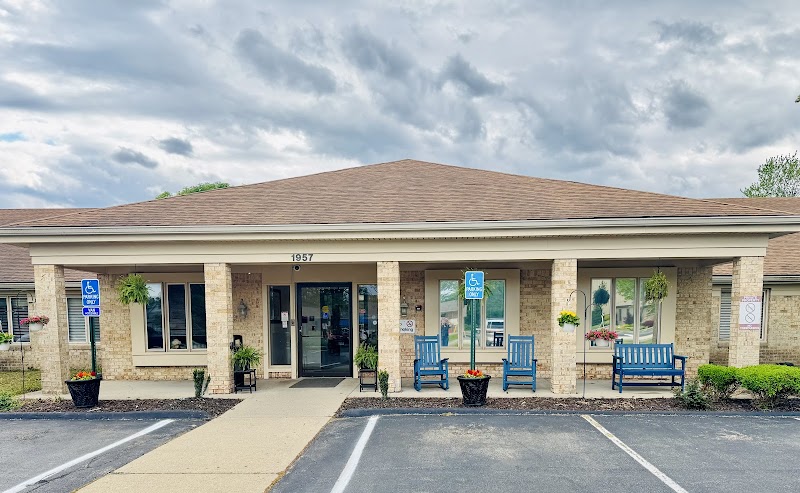
1957 NORTH LAKEMAN DRIVE, BELLBROOK, OH 45305 (937) 848-7800
For profit - Corporation 65 Beds SIMCHA HYMAN & NAFTALI ZANZIPER Data: November 2025
Trust Grade
45/100
#416 of 913 in OH
Last Inspection: September 2022

Over 2 years since last inspection. Current conditions may differ from available data.

Overview

Bellbrook Health and Rehab has a Trust Grade of D, indicating below-average performance with some significant concerns. It ranks #4 out of 10 facilities in Greene County, meaning only one local option is better, and #416 out of 913 in Ohio, placing it in the top half of the state. The facility's trend is stable, maintaining three issues in both 2023 and 2024, but it has a high staff turnover rate of 66%, which is concerning compared to the Ohio average of 49%. The nursing home has also accumulated $75,323 in fines, which is higher than 92% of facilities in Ohio, signaling potential compliance issues. While there is average RN coverage, past inspections revealed that for several days, there was no RN working the required hours, potentially affecting all residents. Additionally, staff training was inadequate, as one nursing assistant did not receive the mandated annual training, and infection control practices during wound care were not properly maintained, posing risks to residents' safety.

Trust Score
D
45/100
In Ohio
#416/913
Top 45%
Safety Record
Moderate
Needs review
Inspections
Holding Steady
3 → 3 violations
Staff Stability
⚠ Watch
66% turnover. Above average. Higher turnover means staff may not know residents' routines.
Penalties
✓ Good
$75,323 in fines. Lower than most Ohio facilities. Relatively clean record.
Skilled Nurses
✓ Good
Each resident gets 46 minutes of Registered Nurse (RN) attention daily — more than average for Ohio. RNs are trained to catch health problems early.
Violations
⚠ Watch
27 deficiencies on record. Higher than average. Multiple issues found across inspections.
★★★☆☆
3.0
Overall Rating
★☆☆☆☆
1.0
Staff Levels
★★★★☆
4.0
Care Quality
★★★★☆
4.0
Inspection Score
Stable
2023: 3 issues
2024: 3 issues

The Good

  • 4-Star Quality Measures · Strong clinical quality outcomes
  • Full Sprinkler Coverage · Fire safety systems throughout facility
  • No fines on record

Facility shows strength in quality measures, fire safety.

The Bad

3-Star Overall Rating

Near Ohio average (3.2)

Meets federal standards, typical of most facilities

Staff Turnover: 66%

20pts above Ohio avg (46%)

Frequent staff changes - ask about care continuity

Federal Fines: $75,323

Well above median ($33,413)

Moderate penalties - review what triggered them

Chain: SIMCHA HYMAN & NAFTALI ZANZIPER

Part of a multi-facility chain

Ask about local staffing decisions and management

Staff turnover is elevated (66%)

18 points above Ohio average of 48%

The Ugly 27 deficiencies on record

Aug 2024 2 deficiencies
CONCERN (D) 📢 Someone Reported This

A family member, employee, or ombudsman was alarmed enough to file a formal complaint

Potential for Harm - no one hurt, but risky conditions existed

Pressure Ulcer Prevention (Tag F0686)

Could have caused harm · This affected 1 resident

Based on observation, record review, facility staff interview, and policy review the facility failed to timely repositioning and turn one resident (#36) of three reviewed for pressure ulcers. The faci...

Read full inspector narrative →
Based on observation, record review, facility staff interview, and policy review the facility failed to timely repositioning and turn one resident (#36) of three reviewed for pressure ulcers. The facility census was 42. Findings Included: Review of medical record for Resident #36 revealed a re-admission date of 08/11/24, and an initial admission date of 06/17/24. Diagnoses included anoxic brain damage, stage four pressure ulcer of left elbow and sacrum which were documeted to be present on admission to the facility. Review of plan of care dated 06/18/24 revealed that Resident #36 had actual stage four pressure ulcer to the left elbow. Interventions included turning and repositioning schedule per assessment, turn side to side in bed every one to two hours, and treatments as ordered. Resident #36 also had a stage four pressure ulcer to right sacrum plan of care that included interventions of pillows for positioning, low air loss mattress, turning and repositioning and weekly wound assessment. Resident #36 was at risk for pressure ulcers due to impaired mobility. Interventions included weekly skin inspection, and repositioning schedule per assessment. Review of Braden Scale for predicting pressure ulcer risk dated 08/11/24 revealed Resident #36 was at high-risk to develop pressure ulcer with a score of 10.0. The Braden scale scoring criteria was severe risk scored 9 or less, high risk scored 10 through 12, moderate risk scored 13 through 14, mild risk scored 15 through 18, and no risk scored 19 through 23. Observation on 08/14/24 from 9:40 A.M. through 11:42 A.M. revealed Resident #36 was laying in bed on their left side. At 11:42 A.M. Registered Nurse #329 and State Tested Nursing Assistant (STNA) #405 were observed to provide Resident #36 incontinence care, wound care and repositioning. Interview on 08/14/24 at 10:50 A.M. with STNA #405 confirmed she was caring for Resident #36 and verified she had not turned or repositioned Resident #36 on the day shift on 08/14/24. STNA #406 stated she clocked in later due to being called in to work. Interview on 08/14/24 at 1:43 P.M. with STNA #284 who stated Resident #36 was on her assignment and verified she worked the day shift but left the facility around 8:30 A.M. due to not feeling well. STNA #284 verified she had not provided any care, repositioning or turning to Resident #36 on 08/14/24. Interview on 08/14/24 at 3:37 P.M. with STNA #369 who worked the overnight shift verified stated Resident #36 was changed and repositioned in bed at 5:00 A.M. on 08/14/24 to his left side. STNA #369 stated she remembered that time, because she assisted the nurse with treatments. This was the only repositioning care staff remembered providing the resident on 08/14/24 from 5:00 A.M. through 11:42 A.M. when RN #329 and STNA #405 were observed to provide incontinent care, wound care and repositioning for Resident #36. Review of policy titled Prevention of Pressure Injuries with a revision date of April, 2020 revealed The purpose of this procedure is to provide information regarding identification of pressure injury risk factors and interventions for specific risk factors. Review the resident's care plan and identify the risk factors as well as the interventions designed to reduce or eliminate those considered modifiable. Reposition the resident as indicated on the care plan. This deficiency represents non-compliance investigated under Complaint Number OH00156007.
CONCERN (D) 📢 Someone Reported This

A family member, employee, or ombudsman was alarmed enough to file a formal complaint

Potential for Harm - no one hurt, but risky conditions existed

Infection Control (Tag F0880)

Could have caused harm · This affected 1 resident

Based on observations, interview, and facility policy review the facility failed to ensure enhanced barrier precautions were followed for one resident (#36) and failed to ensure soiled gloves were rem...

Read full inspector narrative →
Based on observations, interview, and facility policy review the facility failed to ensure enhanced barrier precautions were followed for one resident (#36) and failed to ensure soiled gloves were removed prior to touching clean items for one (#36) of three residents reviewed. The facility census was 42. Findings Included: Review of medical record for Resident #36 revealed a re-admission date of 08/11/24, and an initial admission date of 06/17/24. Diagnoses included anoxic brain damage, stage four pressure ulcer of left elbow and sacrum which were documeted to be present on admission to the facility. Observation on 08/14/24 at 11:42 A.M. Registered Nurse (RN) #329 and State Tested Nurse Aide (STNA) #405 enter Resident #36 room to perform incontinence care, repositioning, wound care, and to check urinary catheter for position. The staff were observed to bring the wound treatment cart into Resident #36's room and the staff were observed to put on gloves to provide care to the resident. No other personal protective equipment (PPE) was used by the staff during the observation. STNA #405 was observed to uncover the resident, reposition the resident and open the incontinent brief prior to assisting RN #329 with wound care. STNA #405 had touched Resident #36's linens, and incontinent brief. RN # 329 asked STNA # 405 to get an additional four-by-four dressing out of the treatment cart during wound care. STNA #405 did not remove her soiled gloves, perform hand hygiene and don new gloves prior to searching in the treatment cart's first and second drawers to grab another four-by-four sterile dressing. STNA #405 was observed to open the first and second drawer of the treatment cart with her soiled gloves on, locate a four-by-four dressing and give it to the RN #329 to finish cleansing Resident #36 coccyx wound. Interview on 08/14/24 at 1:00 P.M. with Director of Nursing (DON) confirmed the treatment cart should have not been taken into Resident #36's room, due to the resident being in enhanced barrier precaution. Interview on 08/14/24 at 1:42 P.M. with DON confirmed she expected staff to use correct ppe when taking care of a resident. Interview on 08/14/24 at 5:00 P.M. with RN #329 stated yes, that STNA #405 should have never reached into the treatment cart for supplies when having dirty gloves while caring for Resident #36 in his room for personal, and wound care. Review of the facility policy titled Enhanced Barrier Precautions (EBP) dated 08/2022 revealed that the facility enhanced barrier precaution are used as a infection prevention and control interventions to reduce the spread of multi-drug resistant organisms (MDRO) to residents. 2. EBP employ targeted gown and glove use during high contact resident care activities when contact precautions do not otherwise apply. EBP use of gown and gloves is required for high contact care activities including toileting, wound care, and device care including urinary foley care.
Apr 2024 1 deficiency
CONCERN (E) 📢 Someone Reported This

A family member, employee, or ombudsman was alarmed enough to file a formal complaint

Potential for Harm - no one hurt, but risky conditions existed

Safe Environment (Tag F0921)

Could have caused harm · This affected multiple residents

Based on observation, resident interview, and staff interview, the facility failed to ensure exterior windows in resident rooms were maintained. This affected seven (Residents #03, #09, #11, #25, #26,...

Read full inspector narrative →
Based on observation, resident interview, and staff interview, the facility failed to ensure exterior windows in resident rooms were maintained. This affected seven (Residents #03, #09, #11, #25, #26, #30, and #31) of 37 residents residing at the facility. Findings include: Observation of the facility on 04/26/24 at 11:21 A.M. revealed there was plastic covering Resident #09 and Resident #11's windows and blinds, and the blinds could not be opened without poking a hole in the plastic. Further observation of the facility revealed there were no screens in the exterior windows in Resident #03, #25, #26, #30, and #31's rooms. Interview with Maintenance Director #80 on 04/26/24 at 11:21 A.M. verified there was plastic covering Resident #09 and Resident #11's windows and blinds, and the blinds could not be opened without poking a hole in the plastic. Maintenance Director #80 stated Resident #09 and Resident #11 had plastic over their exterior windows and blinds because the windows were old and allowed cold air in Resident #09 and Resident #11's rooms. Maintenance Director #80 stated the plastic was placed on the windows to keep the cold air from coming in the room. Maintenance Director #80 also confirmed there were no screens in the exterior windows in Resident #03, #25, #26, #30, and #31's rooms and that all windows were made with screens. Maintenance Director #80 stated some of the windows had been missing screens for a long time. Interview on 04/26/24 at 11:28 A.M. with Resident #25 revealed she was not able to open her window because there was not a screen in her window. Resident #25 stated that a squirrel came in her room one time when she had her window open because there was no screen in the window. Interview with Resident #09 on 04/26/24 at 11:35 A.M. revealed he had plastic over his window in his room because his room got cold. Resident #09 stated his room had been warmer since the plastic was applied over the window. Interview with Resident #11 on 04/26/24 at 11:42 A.M. revealed he had plastic over his window in his room because he had big temperature fluctuations in his room. Resident #11 stated the plastic has helped with the fluctuations. Resident #11 stated he thought the fluctuations were due to the windows being old. Interview with Resident #03 on 04/26/24 at 11:54 A.M. revealed he did not think he had a screen in his exterior window in his room. Resident #03 stated he enjoyed opening the window in his room and did not have any issues with bugs entering his room. Interview with Maintenance Director #80 on 04/26/24 at 11:51 A.M. revealed he did not have any documentation of any window invoices, repairs, or assessments for Resident #03, #25, #26, #30, and #31's missing screens in their windows or Resident #09 or Resident #11's windows that allowed in cold air and were covered with plastic. Interview with Maintenance Director #80 on 04/26/25 at 1:06 P.M. revealed the plastic was placed over Resident #09 and Resident #11's windows and blinds in December 2023 or January 2024. This deficiency represents non-compliance investigated under Complaint Number OH00152112.
Dec 2023 3 deficiencies
CONCERN (D) 📢 Someone Reported This

A family member, employee, or ombudsman was alarmed enough to file a formal complaint

Potential for Harm - no one hurt, but risky conditions existed

Notification of Changes (Tag F0580)

Could have caused harm · This affected 1 resident

**NOTE- TERMS IN BRACKETS HAVE BEEN EDITED TO PROTECT CONFIDENTIALITY** Based on record review, interview and policy review, the facility failed to notify a resident's representative of a change in co...

Read full inspector narrative →
**NOTE- TERMS IN BRACKETS HAVE BEEN EDITED TO PROTECT CONFIDENTIALITY** Based on record review, interview and policy review, the facility failed to notify a resident's representative of a change in condition and failed to notify the resident's representative and physician of test results timely. This affected one (Resident #45) of three residents reviewed for a change in condition. The facility census was 42. Findings include: Review of the closed medical record for Resident #45 revealed he was admitted to the facility on [DATE], transferred to the hospital on [DATE], and discharged on 11/17/23. Diagnoses included cerebral infarction due to embolism of unspecified cerebral artery, cerebral edema, hemiplegia and hemiparesis following cerebral infarction affecting left non-dominant side, occlusion and stenosis of unspecified carotid artery, acute embolism and thrombosis of left femoral vein, chronic atrial fibrillation, other low back pain, atherosclerosis of coronary artery bypass graft (s) without angina pectoris, congestive heart failure, chronic obstructive pulmonary disease, rheumatoid arthritis, other intervertebral disc degeneration lumbar region, old myocardial infarction, hyperlipidemia, and major depressive disorder. Review of the nursing progress note dated 11/13/23 at 3:06 P.M. revealed Resident #45 reported having pain in his lower abdomen. Resident #45 stated he last had a bowel movement the previous day that was loose. The on-call provider was notified and gave an order for a kidney, ureter, and bladder (KUB) X-ray. There is no documentation that Resident #45's representative was notified of the X-ray order. Review of the nursing progress notes on 11/14/23 between 5:02 A.M. and 11:47 A.M. revealed no documentation that the physician or Resident #45's representative had been notified of the KUB X-ray results. During interview on 12/11/23 at 12:55 P.M., the Assistant Director of Nursing (ADON) #2 verified no documentation in Resident #45's medical record of notification to the physician or Resident #45's representative of his change in condition or the X-ray results. Review of the facility policy titled Notification of Changes, dated 09/29/22, revealed the facility must inform the resident, consult with the resident's physician and/or notify the resident's family member or legal representative when there is a change requiring such notification. The policy indicated circumstances requiring notification included significant change in the resident's physical, mental or psychosocial condition such as deterioration in health, mental or psychosocial status, and circumstances that require a need to alter treatment. This deficiency represents non-compliance investigated under Complaint Number OH00148932.
CONCERN (D) 📢 Someone Reported This

A family member, employee, or ombudsman was alarmed enough to file a formal complaint

Potential for Harm - no one hurt, but risky conditions existed

Quality of Care (Tag F0684)

Could have caused harm · This affected 1 resident

**NOTE- TERMS IN BRACKETS HAVE BEEN EDITED TO PROTECT CONFIDENTIALITY** Based on of open and closed medical record review, staff interviews, resident representative interview, review of hospital recor...

Read full inspector narrative →
**NOTE- TERMS IN BRACKETS HAVE BEEN EDITED TO PROTECT CONFIDENTIALITY** Based on of open and closed medical record review, staff interviews, resident representative interview, review of hospital records, review of the death certificate, and review of facility policy, the facility failed to appropriately assess and provide timely intervention for Resident #45 following a change in condition. This resulted in Immediate Jeopardy and placed Resident #45 at risk for serious life-threatening harm, negative health outcomes, and/or death when on [DATE] at approximately 3:06 P.M., Resident #45 complained of lower abdominal pain to Assistant Director of Nursing (ADON) #02 and was unable to tolerate palpation to his abdomen. After Resident #45 complained of abdominal pain, his bowel sounds were not assessed and the physician ordered imaging results, which indicated a possible bowel obstruction, and the results were not relayed to the physician timely. Consequently, Resident #45 was transferred to the hospital on [DATE] at 11:47 A.M. at the request of Resident #45 and his representative and was treated for severe sepsis before passing away on [DATE]. This affected one (Resident #45) of three residents reviewed for a change in condition. The facility census was 42. On [DATE] at 12:08 P.M., the Administrator, Director of Nursing (DON), Regional Director of Operations (RDO) #300, and Regional Nurse #400 were notified Immediate Jeopardy began on [DATE] at approximately 3:06 P.M. when Resident #45 complained of abdominal pain and was not adequately assessed by licensed nursing staff. Resident #45 had test results that indicated a possible bowel obstruction, which was not addressed until Resident #45, and his representative requested Resident #45 be transferred out to the hospital for further evaluation. Resident #45 passed away on [DATE] due to pneumoperitoneum (air or gas in the abdominal cavity). The Immediate Jeopardy was removed on [DATE] when the facility implemented the following corrective actions: • On [DATE] at 1:00 P.M., Registered Nurse (RN) #500, Licensed Practical Nurse (LPN) #12, LPN #14, LPN #68, Minimum Data Set (MDS) LPN #72, and LPN #600 completed comprehensive assessments on all residents in the facility to identify any change of condition, evidence of constipation, and confirming dates of last bowel movement. Physicians will be notified of any changes as appropriate. • On [DATE] at 1:00 P.M., MDS LPN #72 reviewed the records of all residents receiving opioids and/or who are assessed to be at risk for constipation, to ensure care plans addressing the risk have been implemented, if appropriate. • On [DATE] at 1:00 P.M., Regional Nurse #400 reviewed all test results completed today to ensure the physician has been notified of the results, if appropriate. • On [DATE] at 1:05 P.M., RN [NAME] President of Clinical Services (VPCS) #800 reviewed the Change in Condition and Notification Policy to include steps on physician notification. • On [DATE] at 2:00 P.M., the DON initiated in servicing for all nursing staff and respiratory staff in the facility on the revised Change in Condition and Notification policy, and on the need to ensure assessments are completed and documented if a resident experiences a change in condition. Licensed nurses will also be in serviced on the need to ensure that the physician is timely notified of all diagnostic testing results. Staff who are not educated by [DATE] will not be permitted to work until the in-servicing is completed. • On [DATE] at 5:00 P.M., an ad hoc Quality Assurance (QA) Meeting was held with Medical Director (MD) #700, the Administrator, and DON, and reviewed the findings, discussed, and approved the plan of action. • The DON, ADON #02, and MDS LPN #72 will audit 24-hour reports and bowel movement records for physician and family notification of change in condition and diagnostic test results, and assessment of residents who experienced a change in condition or who had no bowel movement for three days and/or complaints of constipation. Audits will be completed daily for two weeks, and then three times a week for two weeks. • The QA Committee will monitor the results of the audits and follow-up as needed. • Review of the QA meeting minutes dated [DATE] from 5:00 P.M. to 6:00 P.M. revealed the Administrator, DON, and MD #700 participated in a meeting regarding change in condition and notification. • Interviews on [DATE] from 6:00 P.M. to 6:15 P.M. with LPN #16 and LPN #68 verified they had received education related to change in condition and bowel assessments. • Review of assessments dated [DATE] for Residents #12, #25, #27, #28, and #29 revealed they had been assessed by the facility for any changes in condition. • Review of staff education dated [DATE] confirmed LPN #16 and LPN #68 acknowledged they had received education on this date. The education included policies on pain management and notification of change as well as charts on how to respond to gastrointestinal signs and symptoms and laboratory tests/diagnostic procedures. Although the Immediate Jeopardy was removed on [DATE], the facility remains out of compliance at Severity Level 2 (no actual harm with potential for more than minimal harm that is not Immediate Jeopardy) as the facility is still in the process of implementing their corrective action plan and monitoring to ensure on-going compliance. Findings include: Review of the closed medical record for Resident #45 revealed he was admitted to the facility on [DATE], transferred to the hospital on [DATE], and passed away on [DATE]. Diagnoses included cerebral infarction due to embolism of unspecified cerebral artery, cerebral edema, hemiplegia and hemiparesis following cerebral infarction affecting left non-dominant side, occlusion and stenosis of unspecified carotid artery, acute embolism and thrombosis of left femoral vein, chronic atrial fibrillation, other low back pain, atherosclerosis of coronary artery bypass graft(s) without angina pectoris, congestive heart failure, chronic obstructive pulmonary disease, rheumatoid arthritis, other intervertebral disc degeneration lumbar region, old myocardial infarction, hyperlipidemia, and major depressive disorder. Review of the admission assessment dated [DATE] revealed Resident #45 ' s bowel elimination pattern was constipation. Review of the plan of care initiated on [DATE] and revised on [DATE] revealed Resident #45 was at nutritional/dehydration risk related to diagnoses of cerebral infarction due to embolism of unspecified cerebral artery, hypertension, hypotension constipation, depression, atrial fibrillation, hyperlipidemia, and chronic obstructive pulmonary disease. Interventions included administering medications per order and monitoring for ineffectiveness and/or side effects and notifying physician of abnormal findings. Review of the plan of care initiated on [DATE] and revised on [DATE] revealed Resident #45 required pain management and monitoring related to chronic back pain. Interventions included administer pain medication as ordered, evaluate, and establish level of pain on numeric scale/evaluation tool, evaluate characteristics and frequency/pattern of pain, evaluate need for routinely scheduled medications rather than as needed pain medication administration, evaluate what makes the pain worse, and observe for potential medication side effects. Review of the physician orders revealed Resident #45 had orders with start dates of [DATE] for MiraLax Oral Powder 17 grams (GM)/scoop to be given as one scoop by mouth one time a day for constipation, Sennosides-Docusate Sodium 8.6-50 milligrams (mg) with a dosage of one tablet by mouth at bedtime for constipation, Docusate Sodium 100 mg with a dosage of one tablet by mouth two times a day for constipation, and Bisacodyl Rectal Suppository with instructions to insert one suppository rectally as needed for constipation once daily. Review of the quarterly Minimum Data Set (MDS) assessment, dated [DATE], revealed Resident #45 had moderately impaired cognition. This resident was assessed to require extensive assistance for bed mobility, transfer, dressing, toilet use, and personal hygiene as well as supervision and setup assistance for eating. Review of the pain levels documented under the vitals tab of the electronic health record, revealed Resident #45 reported a pain score of eight on a zero to ten pain scale on [DATE] and [DATE]. Review of the medication administration notes dated [DATE] and [DATE] revealed Resident #45 received as needed oxycodone hydrochloride oral tablet 5 mg with a dosage of one tablet by mouth every six hours as needed for pain. Review of the progress note dated [DATE] at 11:50 P.M. revealed Resident #45 complained of nausea and a new order for Zofran 4 mg as needed every six hours was ordered. Review of the medication administration notes dated [DATE] at 12:52 A.M. and 3:23 A.M. revealed Resident #45 complained of constipation and requested as needed rectal suppository, and the administration was noted as effective due to the resident having a medium bowel movement. There is no documentation related to an assessment of Resident #45 ' s bowels or that Resident #45 ' s representative had been notified. Review of the nursing progress note dated [DATE] at 3:06 P.M. revealed Resident #45 reported having pain in his lower abdomen. Resident #45 stated he last had a bowel movement the previous day that was loose. The on-call provider was notified and gave an order for a kidney, ureter, and bladder (KUB) X-ray. Review of the KUB X-ray results electronically signed by the interpreting physician on [DATE] at 5:02 A.M. documented Resident #45 had dilated loops of bowel, colonic fecal residual noted, an ileus type pattern favored, and an obstruction not excluded. The results recommended a computed tomography (CT) scan or follow-up as clinically warranted. Review of the nursing progress notes on [DATE] between 5:02 A.M. and 11:47 A.M. revealed no documentation that the physician or Resident #45 ' s representative had been notified of the KUB X-ray results. Review of the nursing progress note dated [DATE] at 11:47 A.M. revealed Resident #45 complained of severe abdominal pain and being unable to urinate. Resident #45 and his representative requested for him to be sent to the emergency room (ER) for further evaluation. Certified Nurse Practitioner (CNP) #200 was contacted, and Resident #45 was transferred to the hospital. Review of the hospital triage complaint dated [DATE] revealed Resident #45 presented to the ER with a complaint of abdominal pain that was a ten out of ten across his lower abdomen, which started yesterday morning. Resident #45 reported the pain was sharp, constant, and gradually worsening. Resident #45 expressed he had been constipated for the last two or three days. The complaint indicated Resident #45 ' s abdomen was distended with involuntary guarding particularly all across the lower abdomen and there was tenderness to percussion. Per the triage complaint, Resident #45 had a CT scan that noted free air and fluid in the abdominal cavity, which was compatible with perforation. The suspected perforation was located within the sigmoid colon (portion of large intestine before reaching the rectum), and secondary to acute sigmoid colonic diverticulitis (occurs when colon wall protrusions become infected; usually caused by a blockage of the inside space of a structure such as intestine or obstruction from stool; can burst open and spill fecal matter into the bloodstream causing sepsis). The CT scan also noted an associated small bowel obstruction. The triage complaint listed diagnoses of pneumoperitoneum, acute renal failure, severe sepsis, small bowel obstruction, abdominal aortic aneurysm without rupture, complete intestinal obstruction, and diverticulitis of sigmoid colon for Resident #45. Resident #45 was transferred to another ER for further evaluation and treatment. Review of the hospital history and physical dated [DATE] revealed Resident #45 ' s abdomen was distended, and no bowel sounds were heard. Review of the hospital attending note dated [DATE] revealed Resident #45 appeared visibly uncomfortable and had a nasogastric tube with bilious output (bile). The physician relayed to Resident #45 regarding concerns for perforated colon and how sick he is and could continue to become if he does not get prompt surgical intervention. The note indicated that treatment was discussed with Resident #45 and his wife, including the possible complications and concerns related to Resident #45 ' s medical history and current medical conditions. It was noted Resident #45 declined to pursue aggressive treatment with his wife in agreement. The recommended treatment plan was antibiotics administered intravenously as Resident #45 and his wife were likely pursuing comfort care. Review of the death certificate dated [DATE] revealed Resident #45 died on [DATE] from pneumoperitoneum due to sigmoid diverticulitis at the hospital. During a telephone interview on [DATE] at 10:01 A.M. with Resident #45 ' s representative stated Resident #45 was septic and in organ failure when he arrived at the hospital. The representative stated Resident #45 had started feeling sick on [DATE], complained of pain, and had vomited what he described to her as grass green throw-up. Surgery was an option, but there were concerns related to Resident #45 ' s prognosis because of his condition. Resident #45 ' s representative stated no staff from the facility alerted her to his condition when he first started feeling sick, and she only received information from Resident #45 via telephone. During an interview on [DATE] at 12:55 P.M., ADON #02 stated Resident #45 reported to her that he was having pain in his lower abdomen. ADON #02 stated when she went to palpate his stomach that Resident #45 would not allow her to palpate much or with pressure due to pain. ADON #02 expressed that she contacted the on-call provider and received an order for the KUB to determine if Resident #45 had a blockage. ADON #02 indicated Resident #45 had some bowel movements that were loose. ADON #02 advised the results from the KUB were received the next day, but that she was unaware what night shift had done with the results. ADON #02 stated she contacted Resident #45 ' s representative when she saw the results, and advised his wife that it was up to her if she wanted him sent out. ADON #02 stated she contacted the provider for Resident #45 to be sent out for evaluation. ADON #02 stated it would be normal to listen to bowel sounds when a resident had complaints like Resident #45 ' s, but ADON #02 confirmed she had not listened to Resident #45 ' s bowel sounds on [DATE]. ADON #02 also verified no documentation in Resident #45 ' s medical record of notification to his representative of his change in condition, or to the physician and Resident #45 ' s wife regarding the KUB results. During an interview via telephone on [DATE] at 2:14 P.M., LPN #54 stated she had received report at the start of her shift on [DATE] between 7:00 A.M. to 7:30 A.M. that Resident #45 had a KUB, and the results indicated he was impacted. LPN #54 stated the aide informed her that Resident #45 was in pain, and LPN #54 expressed she noted Resident #45 ' s abdomen was distended upon her examination of him prior to Resident #45 being transferred to the hospital but advised Resident #45 refused to allow much palpation due to pain. During an interview on [DATE] at 2:32 P.M., the DON and Regional Nurse #400 stated the facility had no procedure related to residents with constipation. Regional Nurse #400 stated a bowel assessment would be performed based on resident symptoms and if they had continued issues with constipation. Regional Nurse #400 advised Resident #45 had bowel movements on [DATE] and [DATE], and therefore would not pose a concern to staff, despite Resident #45 complaining of constipation and abdominal pain on [DATE]. During an interview on [DATE] at 8:53 A.M., the DON and MDS LPN #72 revealed Resident #45 was at risk for constipation and prescribed routine and as needed medications for treatment of constipation. The DON verified the intervention on Resident #45 ' s care plan related to constipation was to administer medications as ordered. The DON and MDS LPN #72 advised bowel assessments would be conducted based on clinical judgement and on a case-by-case basis but were unable to elaborate how facility staff should know when such assessment should be performed. The DON advised Resident #45 had two bowel movements on [DATE] that were documented as constipated/hard. During an interview via telephone on [DATE] at 9:08 A.M., CNP #200 stated she had been made aware that Resident #45 had complained of abdominal pain on [DATE] and had a KUB. CNP #200 indicated a possible obstruction would be an urgent situation like appendicitis, and that a resident should be sent out within a matter of hours following review of X-ray results, and even earlier than that based on individual symptoms. CNP #200 inquired as to the timeframe between when the X-ray results were received by the facility and when Resident #45 was transferred out to the hospital because based on her understanding Resident #45 was transferred out shortly following review of the X-ray results. Review of the facility policy titled Notification of Changes, dated [DATE], revealed the facility must inform the resident, consult with the resident ' s physician and/or notify the resident ' s family member or legal representative when there is a change requiring such notification. The policy indicated circumstances requiring notification included significant change in the resident ' s physical, mental or psychosocial condition such as deterioration in health, mental or psychosocial status, and circumstances that require a need to alter treatment. This deficiency represents non-compliance investigated under Complaint Number OH00148932.
CONCERN (D) 📢 Someone Reported This

A family member, employee, or ombudsman was alarmed enough to file a formal complaint

Potential for Harm - no one hurt, but risky conditions existed

Medical Records (Tag F0842)

Could have caused harm · This affected 1 resident

**NOTE- TERMS IN BRACKETS HAVE BEEN EDITED TO PROTECT CONFIDENTIALITY** Based on record review and staff interview, the facility failed to ensure resident medical records were complete. This affected ...

Read full inspector narrative →
**NOTE- TERMS IN BRACKETS HAVE BEEN EDITED TO PROTECT CONFIDENTIALITY** Based on record review and staff interview, the facility failed to ensure resident medical records were complete. This affected one (Resident #45) out of three residents reviewed for documentation. The facility census was 42. Findings include: Review of the closed medical record for Resident #45 revealed he was admitted to the facility on [DATE], transferred to the hospital on [DATE], and discharged on 11/17/23. Diagnoses included cerebral infarction due to embolism of unspecified cerebral artery, cerebral edema, hemiplegia and hemiparesis following cerebral infarction affecting left non-dominant side, occlusion and stenosis of unspecified carotid artery, acute embolism and thrombosis of left femoral vein, chronic atrial fibrillation, other low back pain, atherosclerosis of coronary artery bypass graft (s) without angina pectoris, congestive heart failure, chronic obstructive pulmonary disease, rheumatoid arthritis, other intervertebral disc degeneration lumbar region, old myocardial infarction, hyperlipidemia, and major depressive disorder. Review of the bladder elimination report from 11/01/23 through 11/14/23 revealed the last documented urine output was 11/13/23 at 12:26 A.M. Review of the bowel movement report from 11/01/23 through 11/14/23 revealed several blank spaces for 11/07/23 through 11/12/23. Review of the meal intake report from 11/01/23 through 11/14/23 revealed no data was documented for 11/13/23. During interview on 12/11/23 at 12:55 P.M., Assistant Director of Nursing (ADON) #2 revealed aides should document meal intakes after meals, and bladder and bowel eliminations after they occurred, and verified the incomplete documentation. This deficiency represents non-compliance investigated under Complaint Number OH00148932.
Sept 2022 5 deficiencies
CONCERN (D)

Potential for Harm - no one hurt, but risky conditions existed

Deficiency F0569 (Tag F0569)

Could have caused harm · This affected 1 resident

**NOTE- TERMS IN BRACKETS HAVE BEEN EDITED TO PROTECT CONFIDENTIALITY** Based on staff interview , facility personal funds account review, and policy review, the facility failed to close the resident'...

Read full inspector narrative →
**NOTE- TERMS IN BRACKETS HAVE BEEN EDITED TO PROTECT CONFIDENTIALITY** Based on staff interview , facility personal funds account review, and policy review, the facility failed to close the resident's account after the resident expired. This affected one resident (#137) of three residents who have expired with money in the facility's personal funds account. The facility failed to provide a notice of spend down for a resident whose balance exceeded the maximum asset permitted. This affected one resident (#30) of three resident records reviewed for personal funds accounts. The facility census was 33. Findings include: 1. Review of Resident #137's medical record revealed an admission dated of [DATE]. admission diagnoses included hemiplegia and hemiparesis following cerebral infarction. Review of Resident #137's progress note dated [DATE] revealed the hospital called to inform the facility the resident had passed away. Review of the facility's current personal funds account balances for all residents revealed Resident #137 had a balance of $983.35. Interview on [DATE] at 9:22 A.M. with Business Office Manager (BOM) #136 confirmed the resident expired [DATE]. The BOM #136 confirmed the facility was required to close the resident's personal fund account thirty days after the resident expired. The BOM #136 revealed Resident #137 did not receive state funds. BOM #136 revealed the account was put on hold due to concerns with the resident's pension. The BOM #136 confirmed the facility should have closed the account. 2. Review of Resident #30's medical record revealed an admission date of [DATE]. admission diagnoses included acute and chronic respiratory failure, encephalopathy, cerebral infarction, diabetes and schizoaffective disorder. Further review of the resident's record revealed her son was the Power of Attorney (POA). Review of the facility's personal funds account balance revealed Resident #30 had a balance of $1132.07. Review of a separate-second statement account log for Resident #30 revealed Resident #30 had a balance of $13,000.00 additional spend down dollars. Interview on [DATE] at 9:22 A.M. with the Business Office Manager (BOM) #136 revealed the Resident #30 transitioned to Medicaid in [DATE]. The BOM #136 stated she did not list Resident's $13,000 on the current facility's Personal Fund Resident balances because she was trying to protect the resident's money for the resident. The BOM #136 stated she had called the son (POA) and informed him of the spend down several weeks ago and encouraged him to purchase funeral expenses. The BOM #136 confirmed she was aware of the spend down requirement. The BOM #136 confirmed she had never sent any spend down notices. The BOM #136 confirmed she had no documentation or evidence she notified the family of Resident #30's account balance and the need to spend down. The BOM #136 revealed the Resident had exceeded the #2000 maximum allowable amount since [DATE]. The BOM confirmed the total amount in Resident #30's account was $14,132.07. Interview on [DATE] at 10:40 A.M. with the Administrator confirmed the facility was aware of Resident #30's personal fund account had exceeded the maximum allowable amount. The Administrator confirmed spend-down notices are required when resident's accounts are near or exceed the maximum allowable amount. Review of the undated facility policy titled, Patient Resident Trust Fund Policy, revealed the facility will maintain all trust fund accounts in compliance with state and federal regulations.
CONCERN (D)

Potential for Harm - no one hurt, but risky conditions existed

Deficiency F0625 (Tag F0625)

Could have caused harm · This affected 1 resident

Based on medical record review and interviews the facility failed to issue a bed hold notification letter to residents who went to the hospital. This affected Resident #13 and #34 who were reviewed fo...

Read full inspector narrative →
Based on medical record review and interviews the facility failed to issue a bed hold notification letter to residents who went to the hospital. This affected Resident #13 and #34 who were reviewed for hospitalizations. The facility census was 33. Findings include: 1. Review of medical record for Resident #13 revealed admission date of 10/14/21 with server cognitive deficits. Resident #13 diagnoses included atrial fibrillation , type two diabetic , and encephalopathy. On 06/19/22, he was transferred to the hospital due to problems with his Foley catheter. On 06/24/22, Resident #13 was readmitted to the facility. Review of Resident #13 nurses progress notes from 06/01/22 to 07/01/22 revealed the facility did not send the representative a bed hold notification letter. On 09/20/21 at 5:15 P.M. interview with the Director of Nursing (DON) confirmed a bed hold letter was not issued to Resident #34 or his representative. 2. Review of medical record for Resident #34 revealed admission date of 7/21/22. The resident was admitted with diagnoses chronic respiratory failure with hypoxia, chronic obstructive pulmonary disease and type two diabetic. On 7/27/22, Resident #34 was sent out to dialysis, while receiving treatment, her vitals dropped and was sent out to the hospital. She did not return to the facility. Review of the nurses progress notes revealed Resident #34 or her representative was not notified of the bed hold policy and procedure. On 09/20/21 at 5:15 P.M. interview with the DON confirmed a bed hold letter was not issued to Resident #34 or her representative.
CONCERN (D)

Potential for Harm - no one hurt, but risky conditions existed

Deficiency F0688 (Tag F0688)

Could have caused harm · This affected 1 resident

**NOTE- TERMS IN BRACKETS HAVE BEEN EDITED TO PROTECT CONFIDENTIALITY** Based on observation, staff interview and record review, the facility failed to provide services to prevent further decrease in ...

Read full inspector narrative →
**NOTE- TERMS IN BRACKETS HAVE BEEN EDITED TO PROTECT CONFIDENTIALITY** Based on observation, staff interview and record review, the facility failed to provide services to prevent further decrease in range of motion and mobility. This affected one resident (Resident #33) out of two resident reviewed with splints. The facility census was 33. Findings include: Review of the medical record for Resident #33 revealed an admission date of 08/29/13 with medical diagnoses of unspecified intracranial injury with loss of consciousness, obstructive hydrocephalus, quadriplegia, and immobility syndrome, aphasia, contracture to joints, unspecified, and traumatic brain injury. Review of the medical record revealed the Minimum Data Set (MDS) dated [DATE] which stated Resident #33 was sometime able to understand information and rarely/never able to make self-understood. The MDS revealed Resident #33 had moderate impaired cognition. Further review of MDS revealed resident required extensive staff assistance of two staff members for bed mobility and toileting and was dependent upon staff for transfers and bathing. Review of the MDS revealed Resident #33 had limited range of motion (ROM) to one side of the body upper extremity and one side of the body lower extremity. Review of the medical record for Resident #33 revealed an order dated 08/15/19 which stated the resident was to wear elbow extension splint four to six hours per day seven days per week per resident tolerance. Review of the medical record for Resident #33 does not have documentation to support the resident had been offered or had worn the elbow extension splints as ordered. Observation on 09/19/22 at 9:00 A.M. revealed Resident #33 lying in bed without elbow splints in place. Resident #33 was observed to have contracture to right hand. Interview on 09/21/22 8:22 AM with State Tested Nursing Aide (STNA) #134 and STNA #127 stated Resident #33 did not have any splints for his contracture's. STNA #134 and STNA #127 stated they take care of Resident #33 routinely. Interview on 09/21/22 at 1:38 PM with Director of Nursing Services (DNS) #133 confirmed Resident #33 had an order for elbow extension splints to be applied four to six hours per day seven days per week per resident tolerance dated 08/15/19. DNS #133 confirmed Resident #33 did not have elbow extensive splints.
CONCERN (D)

Potential for Harm - no one hurt, but risky conditions existed

Infection Control (Tag F0880)

Could have caused harm · This affected 1 resident

**NOTE- TERMS IN BRACKETS HAVE BEEN EDITED TO PROTECT CONFIDENTIALITY** Based on observation, staff interview, and policy review, the facility failed to follow infection control procedures when distri...

Read full inspector narrative →
**NOTE- TERMS IN BRACKETS HAVE BEEN EDITED TO PROTECT CONFIDENTIALITY** Based on observation, staff interview, and policy review, the facility failed to follow infection control procedures when distributing medications and completing wound care. This affected two residents (Resident #10 and Resident #11) out of five residents reviewed. The facility census was 33. Findings include: 1. Review of medical record for Resident #10 revealed an admission date of 02/05/22 with medical diagnoses of acute osteomyelitis, Diabetes Mellitus (DM), chronic kidney disease (CKD) stage 2, neuromuscular dysfunction of bladder, congestive heart failure (CHF), morbid obesity, major Depressive disorder, and status post partial traumatic amputation of right foot. Review of the medical record for Resident #10's revealed a Minimum Data Set (MDS) dated [DATE] which stated the Brief Interview for Mental Status (BIMS) was 15 indicating the resident had no cognitive impairment. Further review of the MDS revealed Resident #10 required extensive staff assistance of two staff members for bed mobility, transfers, dressing, toileting, and bathing. The MDS revealed the resident had an indwelling urinary catheter and was always incontinent of bowel. The MDS revealed Resident #10 admitted with one Stage III pressure ulcer, two unstageable pressure ulcers, one deep tissue injury and one surgical wound. Review of Resident #10's physician orders revealed an order dated 08/31/22 for left lower heel to be cleansed with wound wash, pat dry, apply skin prep and cover with abdominal (ABD) pad and then wrap with kerlix. Observation on 09/21/22 at 2:21 P.M. revealed Licensed Practical Nurse (LPN) #130 completed wound care to Resident #10's left foot surgical wound. LPN #130 was observed removing old dressing from Resident #10's left foot surgical wound. The old dressing was noted to have tannish colored drainage on the dressing. LPN #130 discarded the old dressing into the trash and proceeded to complete the treatment as ordered to left foot surgical wound without changing his gloves. Interview on 09/21/22 at 2:41 P.M. with LPN #130 confirmed he did not change his gloves after removing the soiled dressing for Resident #10's left foot surgical wound and before he applied the new treatment and dressing. 2. Review of medical record for Resident #11 revealed an admission date of 01/19/22 with medical diagnoses chronic respiratory failure with hypoxia, asthma, major Depression, Diabetes Mellitus (DM), hypertension (HTN), and anxiety disorder. Review of the medical record for Resident #11 revealed the MDS dated [DATE] which stated Resident #11 was alert and oriented to person, place, and time. Further review of the MDS revealed the resident required extensive staff assistance with bed mobility, transfers, dressing and toileting and was dependent upon staff for bathing. Review of the medical record revealed physician orders for aspirin 81 milligrams (mg) by mouth once daily, multivitamin 1 tablet by mouth once daily, claritin 10 mg by mouth once daily, losartan potassium-hydrochlorothiazide 100-25 mg one tablet by mouth once daily, ropinirole 0.25 mg one tablet by mouth once daily, effexor XR 37.5 mg by mouth once daily, and tamsulosin 0.4 mg one capsule by mouth once daily. Observation on 09/20/22 at 7:36 AM revealed LPN #130 place Resident #11's medications into his bare hands prior to putting the medications into a medication cup. LPN #130 did not wash or sanitize his hands prior to touching Resident #11 medications. LPN #130 was observed giving the medications to Resident #11 in the medication cup. Interview on 09/21/22 8:37 AM with LPN #130 confirmed LPN #130 put Resident #11 medications directly into his bare hands from the medication packages and then put the medications into a medication cup. LPN #130 confirmed he gave the medication cup to Resident #11. LPN #130 confirmed he did not wash or sanitize his hands prior to putting Resident #11's medications into his bare hands or wear gloves during the medication pass. Review of facility policy titled Standard Precautions, revealed staff are to change gloves between tasks and procedures on the same resident after contact with material that may contain a high concentration of microorganisms. The policy also stated staff are to wash hands between tasks and procedures on the resident when contaminated with body fluids to prevent cross-contamination of different body sites.
CONCERN (D)

Potential for Harm - no one hurt, but risky conditions existed

Deficiency F0883 (Tag F0883)

Could have caused harm · This affected 1 resident

**NOTE- TERMS IN BRACKETS HAVE BEEN EDITED TO PROTECT CONFIDENTIALITY** Based on staff interview, resident record review, and policy review, the facility failed to ensure residents were offered their ...

Read full inspector narrative →
**NOTE- TERMS IN BRACKETS HAVE BEEN EDITED TO PROTECT CONFIDENTIALITY** Based on staff interview, resident record review, and policy review, the facility failed to ensure residents were offered their pneumococcal vaccine. This affected two residents (Resident #9 and #21) of five residents reviewed for immunizations. The facility census was 33. Findings include: 1. Review of Resident #9 revealed an admission dated of 07/30/18. admission diagnoses included acute and chronic respiratory failure, anoxic brain damage, chronic obstructive pulmonary disease, congestive heart failure, and dependence on respiratory ventilator. Review of Resident #9's Minimum Data Set (MDS) dated [DATE] revealed a Brief Interview Mental Status (BIMS) unable to be completed. The MDS revealed the resident required total two-person dependence for bed mobility, dressing, toileting and personal hygiene. The MDS revealed transfers and eating had not occurred during the evaluation period. Review of Resident #9's plan of care dated 08/05/22 revealed the resident had an alteration in respiratory status due to chronic obstructive pulmonary disease and was dependent on the ventilator. Review of Resident #9's immunization record revealed a historical pneumovax was administered on 04/18/18. The resident's medical record was silent for a second pneumococcal vaccine. Interview on 09/22/22 at 9:22 A.M. with the Director of Nursing confirmed the resident had not been offered her second pneumococcal vaccine. 2. Review of Resident #21's medical record revealed an admission date of 11/21/17. admission diagnoses included chronic respiratory failure, persistent vegetative state, chronic obstructive pulmonary disease, disease, dependence on respirator, sepsis, and diabetes. Review of Resident #21's MDS dated [DATE] revealed a BIMS unable to be assessed. The MDS revealed the resident required two-person total dependence for bed mobility, dressing, toileting, and personal hygiene. The MDS revealed transfers and eating had not occurred during the evaluation time period. Review of Resident #21's plan of care dated 07/28/22 revealed he had an alteration in respiratory status due to chronic obstructive pulmonary disease and was dependent on the ventilator. Review of Resident #21's immunization record revealed Resident #21 received her Prevnar-13 on 06/30/17. Interview on 09/22/22 at 9:22 A.M. with the Director of Nursing confirmed the resident had not been offered her second pneumococcal vaccine. Interview on 09/22/22 at 1:11 P.M. with the Director of Nursing confirmed Resident #9 and #21 should have been offered a second pneumococcal vaccine. Review of the facility policy titled, Pneumococcal Vaccinations, dated 02/2022 revealed adults older than sixty-five years old or those with underlying medical conditions should receive one dose of pneumococcal vaccine followed by a second dose of pneumococcal vaccine greater than or one year later.
Nov 2019 9 deficiencies
CONCERN (D)

Potential for Harm - no one hurt, but risky conditions existed

Quality of Care (Tag F0684)

Could have caused harm · This affected 1 resident

**NOTE- TERMS IN BRACKETS HAVE BEEN EDITED TO PROTECT CONFIDENTIALITY** Based on medical record review, resident and staff interviews, the facility failed to consistently provide physician ordered com...

Read full inspector narrative →
**NOTE- TERMS IN BRACKETS HAVE BEEN EDITED TO PROTECT CONFIDENTIALITY** Based on medical record review, resident and staff interviews, the facility failed to consistently provide physician ordered compression leg cuffs. This affected one (#18) of five residents reviewed for unnecessary medications. The census was 31. Finding include: Review of Resident #18's medical record revealed an admission date of 02/20/19, with diagnoses including deep vein thrombosis. Review of the Minimum Data Set (MDS) assessment dated [DATE] revealed the resident's cognition was intact. Review of physician's order initiated 03/28/19 revealed to apply compression cuffs bilaterally to the resident's lower extremities 45 minutes twice per day. Review of the recent Treatment Administration Records (TAR) for the resident revealed no evidence the compression cuffs were applied on day shift on 10/01/19, 10/04/19, 10/12/19, 10/20/19, 10/22/19, 10/23/19, 10/24/19, 10/25/19, 10/30/19, 11/04/19, 11/06/19, 11/10/19, 11/19/19 and 11/24/19. There was no information on the TAR that the resident refused the compression cuffs or why they were not provided as ordered on those dates. Interview with Resident #18 on 11/24/19 at 10:17 A.M., revealed she had an order for leg compression cuffs to improve her circulation. She stated they were to be applied for 45 minutes twice per day and the staff don't bother applying the compression cuffs at times. Interview with the Director of Nursing (DON) on 11/25/19 at 2:15 P.M. verified the TAR for the leg compression cuffs was blank for 14 day shift times including: 10/01/19, 10/04/19, 10/12/19, 10/20/19, 10/22/19, 10/23/19, 10/24/19, 10/25/19, 10/30/19, 11/04/19, 11/06/19, 11/10/19, 11/19/19 and 11/24/19. There was no information on the TAR for these dates regarding resident refusals or why the leg compression cuffs were not provided to the resident as ordered by the physician.
CONCERN (D)

Potential for Harm - no one hurt, but risky conditions existed

Incontinence Care (Tag F0690)

Could have caused harm · This affected 1 resident

**NOTE- TERMS IN BRACKETS HAVE BEEN EDITED TO PROTECT CONFIDENTIALITY** Based on medical record review, staff and resident interview, the facility failed to ensure catheter care was provided to reside...

Read full inspector narrative →
**NOTE- TERMS IN BRACKETS HAVE BEEN EDITED TO PROTECT CONFIDENTIALITY** Based on medical record review, staff and resident interview, the facility failed to ensure catheter care was provided to residents utilizing an urinary catheter. This affected two (#20 and #30) of two residents reviewed for catheter care. The facility identified seven residents with urinary catheters. The facility census was 31. Findings included: 1. Review of Resident #20's medical record revealed an admission date of 07/31/19. Medical diagnosis included neurogenic bladder. Review of admission Minimum Data Set (MDS) assessment dated [DATE] revealed Resident #20 was cognitively intact. Review of physician orders dated 07/31/19 for Resident #20 revealed to provide catheter care every day and night shift. Review of care plan dated 08/01/19 for Resident #20 revealed she had an alteration in bladder related to urinary catheter for a diagnosis of neuromuscular dysfunction of bladder. Review of the Treatment Administration Record (TAR) from 10/01/19 through 10/31/19 revealed there was no documented evidence of catheter care being provided nine times on day shift and four times on night shift. Further review of the TAR from 11/01/19 through 11/25/19 revealed catheter care wasn't not documented as be provided seven times on day shift and three times on night shift. Interview with Resident #20 on 11/24/19 at 1:37 P.M., revealed she doesn't refuse any care offered and she does not get catheter care provided twice a day. Interview on 11/25/19 at 4:07 P.M., with Licensed Practical Nurse (LPN) #124 verified the catheter care wasn't provided as ordered. Interview on 11/26/19 at 12:00 P.M., with the interim Director of Nursing (DON) verified the catheter care wasn't provided as ordered for the month of October 2019. The DON indicated only being at the facility for two weeks and didn't know why the care wasn't provided. 2. Review of Resident #30's medical record revealed an admission date of 08/08/19 with diagnoses including Stage IV pressure ulcer of the sacral region, neuropathic bladder and dependence on respirator status. Review of Resident #30's MDS assessment dated [DATE] revealed the resident had intact cognition. The resident required total two-person dependence for dressing and toileting and total one-person assistance for eating and personal hygiene. Review of Resident #30's plan of care dated 09/12/19 revealed the resident had an alteration in elimination related to an indwelling urinary catheter. Interventions included catheter care every shift and as needed. Review of Resident #30's TAR for November revealed no documentation of catheter care for Resident #30. Interview on 11/26/19 at 12:40 P.M., with LPN #124 confirmed there was no documentation of catheter care having been provided for Resident #30 for the month of November. Interview on 11/26/19 at 1:22 P.M., with DON confirmed there was no documentation of any catheter care for Resident #30 for the month of November. The DON confirmed the facility expectation was the resident was to have catheter care every shift and as needed.
CONCERN (D)

Potential for Harm - no one hurt, but risky conditions existed

Tube Feeding (Tag F0693)

Could have caused harm · This affected 1 resident

**NOTE- TERMS IN BRACKETS HAVE BEEN EDITED TO PROTECT CONFIDENTIALITY** Based on medical record review, observation and staff interview, the facility failed to ensure tube feeding was administered at ...

Read full inspector narrative →
**NOTE- TERMS IN BRACKETS HAVE BEEN EDITED TO PROTECT CONFIDENTIALITY** Based on medical record review, observation and staff interview, the facility failed to ensure tube feeding was administered at the correct infusion rate. This affected two (#9, #131) of two residents reviewed for tube feed administration. The facility identified 15 residents who received tube feeding. The census was 31. Findings included: 1. Medical record review for Resident #9 revealed an admission date of 06/15/19. Medical diagnosis included heart failure and diabetes. Review of significant change Minimum Data Set (MDS) assessment dated [DATE] revealed Resident #9 was fed by a feeding tube. Review of the monthly weight records revealed no significant weight loss for the resident. Review of physician order dated 10/15/19 for Resident #9 revealed an Enteral feeding every day and night shift for Glucerna 1.5 at 55 milliliters per hour (ml/hr). Observation of the tube feeding pump on 11/24/19 at 11:52 A.M., for Resident #9 revealed the infusion was at 45 ml/hr. Interview with Licensed Practical Nurse (LPN) #104 on 11/24/19 at 12:00 P.M., verified the physician order didn't match the rate on the tube feeding pump. She stated she had no idea why it was different than the order. 2. Medical record review for Resident #131 revealed an admission date of 01/29/19. Medical diagnosis included Amyotrophic Lateral Sclerosis (ALS). Review of quarterly Minimum Data Set (MDS) dated [DATE] revealed she was severely cognitively impaired. She was coded for a feeding tube. Review of the monthly weight records revealed no significant weight loss for the resident. Review of physician order dated 11/21/19 for Resident #131 revealed Enteral feed everyday and night shift Jevity 1.5 at 55 cc/hour. Observation of the tube feeding pump on 11/24/19 at 11:35 A.M. for Resident #131 revealed the infusion rate was going at a 45 ml/hr. Interview with LPN #104 on 11/24/19 at 11:39 A.M., verified the physician's order stated to infuse at 55 ml/hr and she didn't know why it was set at 45 ml/hr and didn't have any idea how long it had been running at 45 ml/hr.
CONCERN (D)

Potential for Harm - no one hurt, but risky conditions existed

Deficiency F0800 (Tag F0800)

Could have caused harm · This affected 1 resident

**NOTE- TERMS IN BRACKETS HAVE BEEN EDITED TO PROTECT CONFIDENTIALITY** Based on medical record review, observations, review of the menu and recipe, and staff interviews, the facility failed to provid...

Read full inspector narrative →
**NOTE- TERMS IN BRACKETS HAVE BEEN EDITED TO PROTECT CONFIDENTIALITY** Based on medical record review, observations, review of the menu and recipe, and staff interviews, the facility failed to provide dessert as specified on the approved menu for two (#21 and #5) of five diabetic residents observed with physician's orders for controlled carbohydrate diet. The census was 31. Findings include: 1. Medical record review for Resident #21 revealed she was admitted on [DATE], with diagnosis including insulin dependent diabetes. Review of the Minimum Data Set (MDS) assessment dated [DATE] revealed the resident had intact cognition. Review of the Medication Administration Record (MAR) for the past month revealed the resident's accuchecks ranged from 93 to 209 milligrams/deciliter which indicated her blood sugars were elevated at times. The resident's current diet order was for a controlled carbohydrate diet. Observations on 11/24/19 at 12:29 P.M., revealed chocolate cake was served to Resident #21 at lunch topped with chocolate syrup/chocolate chips. 2. Medical record review for Resident #5 revealed an admission date of 09/12/19. Medical diagnoses included heart failure and diabetes. Review of admission Minimum Data Set (MDS) assessment dated [DATE] for Resident #5 revealed she was cognitively intact. Review of physician orders dated 11/21/19 for Resident #5 revealed she was to start on a consistent carbohydrate diet. Observation and interview was conducted on 11/24/19 at 12:13 P.M., revealed Resident #5 receive her lunch tray and on it there was a large piece of chocolate cake with icing and chocolate chips on the top. The resident stated the facility didn't have a diabetic diet and she was served items that were not permitted on a diabetic diet. Review of the facility menu approved by a registered dietitian for the lunch meal revealed the controlled carbohydrate diet menu had the same dessert as the regular diet which was a chocolate satin pound cake. Review of the recipe for chocolate satin pound cake revealed there was no chocolate syrup/chocolate chips topping. Interview with [NAME] #121 on 11/24/19 at 1:30 P.M., verified he served the chocolate satin cake topped with chocolate syrup/chocolate chips to all the diabetic residents on the controlled carbohydrate diet. [NAME] #121 verified the recipe for chocolate satin pound cake did not specify to top the cake with chocolate syrup/chocolate chips. Interview with Registered/Licensed Dietitian #150 on 11/25/19 at 9:45 A.M., verified the diabetic residents with controlled carbohydrate diets ordered should not receive chocolate satin cake topped with chocolate syrup/chocolate chips.
CONCERN (E)

Potential for Harm - no one hurt, but risky conditions existed

Deficiency F0568 (Tag F0568)

Could have caused harm · This affected multiple residents

Based on review of the fund account authorization agreements and staff interview, the facility failed to provide authorizations with complete information. This affected five (#2, #3, #13, #17 and #24)...

Read full inspector narrative →
Based on review of the fund account authorization agreements and staff interview, the facility failed to provide authorizations with complete information. This affected five (#2, #3, #13, #17 and #24) of five reviewed for resident fund accounts. The facility identified 11 residents with fund accounts. The census was 31. Findings include: Review of the authorization agreements for five Residents (#2, #3, #13, #17 and #24) identified as having fund accounts revealed there was no evidence of the date the fund accounts were authorized. In addition, the authorization for Resident #2 revealed he marked his name with an X and had only one witness signature. The authorization agreement form indicated two witness signatures were required if a resident marked a name with an X. Interview on 11/25/19 at 8:47 A.M. with Business Office Manager (BOM) #100 verified none of the five authorization agreements were dated for Residents #2, #3, #13, #17 and #24. BOM #100 verified Resident #2 signed with an X and there was only one witness signature. The authorization form stated there should be two witnesses if a resident's signature was illegible or an X. BOM #100 stated Resident #2's mother was his power of attorney (POA) and there was no evidence his mother was involved in the fund account authorization.
CONCERN (F)

Potential for Harm - no one hurt, but risky conditions existed

Deficiency F0727 (Tag F0727)

Could have caused harm · This affected most or all residents

Based on review of the facility time punches and schedules and staff interviews, the facility failed to ensure a Registered Nurse (RN) was working at least eight hours a day. This had the potential to...

Read full inspector narrative →
Based on review of the facility time punches and schedules and staff interviews, the facility failed to ensure a Registered Nurse (RN) was working at least eight hours a day. This had the potential to affect 31 of 31 residents at the facility. The facility census was 31. Findings included: Review of the weekend staffing schedules and payroll punches from 10/19/19 through 11/24/19, revealed the facility did not have a RN working for at least eight hours a day on 10/19/19, 10/20/19, 11/02/19, 11/03/19, 11/16/19 and 11/17/19. Interview on 11/26/19 at 2:11 P.M., with Human Resources Director (HR) #101 confirmed there was no RN staffed on 10/19/19, 10/20/19, 11/02/19, 11/03/19, 11/16/19 and 11/17/19. Interview on 11/26/19 at 2:30 P.M., with the Administrator confirmed there was no RN staffed on 10/19/19, 10/20/19, 11/02/19, 11/03/19, 11/16/19 and 11/17/19.
CONCERN (F)

Potential for Harm - no one hurt, but risky conditions existed

Deficiency F0730 (Tag F0730)

Could have caused harm · This affected most or all residents

Based on review of personnel files and staff interview, the facility failed to ensure State Tested Nursing Assistants (STNA) received 12 hours of training annually. This affected one (#109) of one STN...

Read full inspector narrative →
Based on review of personnel files and staff interview, the facility failed to ensure State Tested Nursing Assistants (STNA) received 12 hours of training annually. This affected one (#109) of one STNA reviewed who worked at the facility greater than one year. This had the potential to affect 31 of 31 residents at the facility. The facility census was 31. Findings include: Review of the personnel file for STNA #109 revealed a hire date of 10/15/13. Further review of STNA #109's file revealed no evidence of 12 hours of annual in-services. Interview on 11/26/19 at 11:03 A.M., with Human Resource Director (HR) #101 confirmed the facility was not able to provide a record of on-going training or in-services for STNA #109. HR #101 confirmed there were no other STNAs who had been at the facility greater than one year. Interview on 11/26/19 at 3:54 P.M., with the Director of Nursing (DON) verified the facility had no documentation to support STNA #109 received 12 hours of on-going in-services.
CONCERN (F)

Potential for Harm - no one hurt, but risky conditions existed

Infection Control (Tag F0880)

Could have caused harm · This affected most or all residents

**NOTE- TERMS IN BRACKETS HAVE BEEN EDITED TO PROTECT CONFIDENTIALITY** Based on observation, medical and personnel record reviews, facility Tuberculosis Risk Assessment review, policy reviews and sta...

Read full inspector narrative →
**NOTE- TERMS IN BRACKETS HAVE BEEN EDITED TO PROTECT CONFIDENTIALITY** Based on observation, medical and personnel record reviews, facility Tuberculosis Risk Assessment review, policy reviews and staff interviews, the facility failed to maintain infection control measures while providing wound care. This affected one (#30) of two residents reviewed for infection control with wounds. The facility identified six residents with pressures wounds at the facility. The facility also failed to provide initial two-step Mantoux testing to three new hired employees. This affected two State Tested Nursing Assistant (STNA) (#115 and #120) and Social Services (SS) #127 of seven personnel files reviewed. This had the potential to affect 31 of 31 residents at the facility. The facility census was 31. Findings include: 1. Review of Resident #30's medical record revealed an admission date of 08/08/19, with diagnoses including a Stage IV pressure ulcer of the sacral region at admission, neuropathic bladder and dependence on respirator (ventilator) status. Review of Resident #30's minimum data set (MDS) assessment dated [DATE] revealed a brief interview mental status of thirteen. MDS also revealed resident required total two-person dependence for dressing and toileting and total one-person assistance for eating and personal hygiene. Review of Resident #30's plan of care dated 09/12/19 revealed resident had a stage IV sacral pressure ulcer upon admission. Resident also had bilateral unstageable heel wounds and a stage II right outer foot wound. Review of Resident #30's physician order dated 10/31/19 revealed an order to cleanse the open area to coccyx with Normal Saline, pat dry, Apply Ca+ Alginate and cover with bordered foam dressing every day. Observation of Resident #30's wound care on 11/26/19 at 1:55 P.M., with Licensed Practical Nurse (LPN) #124, revealed LPN #124 failed to remove her gloves and wash her hands after removing the old dressing and prior to applying the clean dressing. Interview on 11/26/19 at 2:08 P.M., with LPN #124 verified she did not remove her gloves and wash her hands between removing the old dressing and applying the new, clean dressing. Interview on 11/26/19 at 4:11 P.M., with the Director of Nursing verified it is the expectation of the facility that gloves should be removed, and hands should be washed after removing the old dressing and prior to applying a new dressing. Review of the undated facility policy titled, Wound Management, revealed to observe the old dressing for the amount, type, color and odor of the drainage. Discard the old dressing and your gloves in the appropriate receptacle. Perform hand hygiene and put on a new pair of gloves prior to cleaning the wound. 2. Review of the personnel files for STNA #115 and #120 and SS #127 revealed the facility-required two-step Mantoux testing was not completed. Interview on 11/26/19 at 11:03 A.M., with Human Resource Director (HR) #101 verified STNA #115, STNA #120 and SS #127 had not completed the new hire initial two-step Mantoux testing. Review of the facility Tuberculosis Risk assessment dated [DATE] revealed baseline skin testing will be performed with two-step Mantoux testing for new hires. Review of the facility policy titled, Employee Health, dated 02/2017 revealed all new employees will receive Tuberculosis (TB) screening prior to being placed.
MINOR (C)

Minor Issue - procedural, no safety impact

Garbage Disposal (Tag F0814)

Minor procedural issue · This affected most or all residents

Based on observation and staff interview, the facility staff failed to contain trash in a sanitary manner. The potentially could affect 31 of 31 residents in the facility. The facility census was 31. ...

Read full inspector narrative →
Based on observation and staff interview, the facility staff failed to contain trash in a sanitary manner. The potentially could affect 31 of 31 residents in the facility. The facility census was 31. Findings include: Observations on 11/24/19 at 8:50 A.M., with [NAME] #121 revealed the outside trash dumpster was almost full of trash with the door to the dumpster open. The trash inside the dumpster was visible from the kitchen. At that time [NAME] #121 verified the open door to the dumpster almost full of trash. Observation on 11/25/19 at 7:43 A.M., of the outdoor trash area revealed an overflow of trash over the top of the dumpster with the lid open. Interview with Dietary Manager #139, at that time, verified the lid to the dumpster was open with trash overflowing over the top of the dumpster. Interview on 11/25/19 at 11:20 A.M., with the Administrator revealed there was no policy for containing the dumpster trash.
Jan 2019 7 deficiencies
CONCERN (D)

Potential for Harm - no one hurt, but risky conditions existed

Deficiency F0568 (Tag F0568)

Could have caused harm · This affected 1 resident

Based on resident trust account review, and staff interview, the facility failed to have receipts to support the withdraw of monies from one resident's account. This affected one resident (#13) of fiv...

Read full inspector narrative →
Based on resident trust account review, and staff interview, the facility failed to have receipts to support the withdraw of monies from one resident's account. This affected one resident (#13) of five reviewed for resident funds. The facility managed 16 resident's accounts. The facility census was 27. Findings include: Review of resident accounts with Business Office Manager (BOM) #19 on 01/23/19, revealed Resident #13 had an account managed by the facility. The resident's statement indicated the resident had two withdrawals on 09/05/18, one for $26.56 and one for $25.33. The facility had no receipts or any other documentation to account for those funds. During interview on 01/23/19 at 4:03 P.M., BOM #19 revealed the withdrawals from Resident # 13's account were made before she had started employment at the facility and verified the facility had no receipts or documentation to reconcile the withdrawals.
CONCERN (D)

Potential for Harm - no one hurt, but risky conditions existed

Deficiency F0730 (Tag F0730)

Could have caused harm · This affected 1 resident

Based on personnel file review and staff interview, the facility failed to ensure State Tested Nursing Assistants (STNAs) received annual performance evaluations. This affected two STNAs (#42 and #50)...

Read full inspector narrative →
Based on personnel file review and staff interview, the facility failed to ensure State Tested Nursing Assistants (STNAs) received annual performance evaluations. This affected two STNAs (#42 and #50) of two reviewed. This had the potential to affect all 27 residents of the facility. Findings include: Review of personal files with Business Office Manager (BOM) #19 on 01/22/19 at 5:27 P.M., revealed STNA #42 and #50, both had been employed over one year. Further review revealed the STNAs had not received an annual performance evaluation. BOM #19 confirmed the two STNAs had not received an annual performance evaluation.
CONCERN (D)

Potential for Harm - no one hurt, but risky conditions existed

Medication Errors (Tag F0758)

Could have caused harm · This affected 1 resident

**NOTE- TERMS IN BRACKETS HAVE BEEN EDITED TO PROTECT CONFIDENTIALITY** Based on medical record review and staff interview, the facility failed to attempt non-pharmacological interventions prior to th...

Read full inspector narrative →
**NOTE- TERMS IN BRACKETS HAVE BEEN EDITED TO PROTECT CONFIDENTIALITY** Based on medical record review and staff interview, the facility failed to attempt non-pharmacological interventions prior to the administration of an as needed (PRN) psychotropic medication. This affected one resident (#22) of three reviewed who received PRN medications for anxiety. The facility census was 27. Findings include: Review of Resident #22's medical record revealed being admitted to the facility on [DATE] with diagnoses including respiratory failure, anxiety disorder and major depressive disorder. Resident #22 has a tracheostomy and was nonverbal. Review of Resident #22's physician orders dated 10/15/18, revealed an order for Lorazepam (Ativan) 0.5 milligram (mg.) give one tablet via gastric (G-tube) tube every six hours as needed for anxiety. Review of Resident #22's plan of care dated 12/19/18, revealed no interventions related to Resident #22's anxiety diagnosis or the major depressive diagnosis. Resident #22's plan of care additionally did not reveal any non-pharmacological interventions to be attempted prior to administering Resident #22's PRN medication (Ativan) for anxiety. Review of Resident #22's medication administration record (MAR), revealed Resident #22 received the PRN Ativan on 01/02/19 at 10:55 P.M., and again on 01/07/19 at 11:50 P.M. Review of Resident #22's nursing progress note dated 01/02/19 at 10:55 P.M., revealed Resident #22 had increased agitation and anxiety and Ativan was administered. There was no documentation related to any non-pharmacological interventions prior to the administration of the PRN Ativan. Review of Resident #22's nursing progress note dated 01/07/19 at 11:50 P.M., revealed increased agitation. There was no documentation related to any non-pharmacological intervention prior to the administration of the PRN Ativan. Interview on 01/24/19 at 1:25 P.M., with Director of Nursing (DON) verified there was no evidence of any non-pharmacological interventions prior to administering the PRN Ativan to Resident #22 on 01/02/19 or on 01/07/19. The facility did not have a policy regarding the administration of as needed medications.
CONCERN (D)

Potential for Harm - no one hurt, but risky conditions existed

Infection Control (Tag F0880)

Could have caused harm · This affected 1 resident

Based on personnel file review, Tuberculosis (TB) risk assessment review, and staff interview, the facility failed to ensure new employees were screen timely for TB. This affected three employees (Mai...

Read full inspector narrative →
Based on personnel file review, Tuberculosis (TB) risk assessment review, and staff interview, the facility failed to ensure new employees were screen timely for TB. This affected three employees (Maintenance #4, State Tested Nursing Assistant (STNA) #5 #35) of six new employees reviewed. This had the potential to affect all 27 residents of the facility. Findings include: Review of personal files with Business Office Manager (BOM) #19 on 01/22/19 at 5:27 P.M. revealed Maintenance # 4 was hired on 01/02/19, however did not receive a TB test until 01/14/19. STNA was hired on 12/07/18 and received no TB test. STNA #35 was hired on 10/19/18 and received the first step of the TB test, however never received a second step. These findings were verified by BOM #19. BOM #19 revealed it was the facility's policy to have all new employees complete the two step TB screening process. Review of the facility's TB risk assessment dated 01/2018, revealed the facility was at low risk for the transmission of TB and that all new employees would have a baseline two- step tuberculin skin test completed.
CONCERN (E)

Potential for Harm - no one hurt, but risky conditions existed

Comprehensive Care Plan (Tag F0656)

Could have caused harm · This affected multiple residents

**NOTE- TERMS IN BRACKETS HAVE BEEN EDITED TO PROTECT CONFIDENTIALITY** 2. Review of Resident # 7's medical record revealed the resident was admitted to the facility on [DATE] with diagnosis including...

Read full inspector narrative →
**NOTE- TERMS IN BRACKETS HAVE BEEN EDITED TO PROTECT CONFIDENTIALITY** 2. Review of Resident # 7's medical record revealed the resident was admitted to the facility on [DATE] with diagnosis including schizophrenia, bipolar (manic depression), anxiety disorder, major depressive disorder, weakness and hypothyroidism. Review of Resident #7's Minimum Data Set (MDS) assessment dated [DATE] revealed no cognitive impairments. Review of Resident #7 plan of care, revealed no interventions related to Resident #7's mental health diagnosis of schizophrenia, bipolar, anxiety disorder, and major depressive disorder. Interview on 01/23/19 at 2:29 P.M., with the DON confirmed Resident #7's plan of care did not include interventions related to Resident #7's mental health diagnosis of schizophrenia, bipolar, anxiety disorder and major depressive disorder. 3. Review of Resident #11's medical record revealed the resident was admitted to the facility on [DATE] with diagnosis including anxiety disorder, major depressive disorder, acute respiratory failure, pseudobulbar affect (PBA), cognitive communication deficit, abnormal posture, quadriplegia, impulse disorder, traumatic brain injury (TBI), kidney failure, intracranial injury, contracture and encephalopathy. Resident #11 has a tracheostomy and the resident was non-verbal. Review of Resident #7's plan of care, revealed no interventions related to Resident #7's mental health diagnosis of anxiety disorder major and depressive disorder. Interview on 01/24/19 at 12:22 P.M. with DON, confirmed Resident #7's plan of care did not include interventions related to Resident #7's mental health diagnosis of anxiety disorder and major depressive disorder. 4. Review of Resident #12's medical record revealed the resident was admitted to the facility on [DATE] with diagnosis including major depressive disorder, Alzheimer's disease, muscle weakness, other symbolic dysfunctions, intracranial injury and cognitive communication deficit. Review of Resident #12's plan of care,revealed no interventions related to the resident's mental health diagnosis of major depressive disorder. Interview on 01/24/19 at 2:35 P.M. with DON, confirmed Resident #12's plan of care did not include interventions related to Resident #12's mental health diagnosis of major depressive disorder. Review of undated facility policy titled, Elements of a Nursing Diagnosis revealed work with the patient to identify individualized short-term and long-term goals for each nursing diagnosis. Based on medical record review, staff interview, and facility policy review, the facility failed to provide a plan of care related to resident's mental health diagnoses. This affected four residents (#7, #11, #12 and #22) of six reviewed for unnecessary medications. The facility census was 27. Findings include: 1. Review of Resident #22's medical record revealed the resident was admitted to the facility on [DATE] with diagnoses including respiratory failure, anxiety disorder and major depressive disorder. Resident #22 had a tracheostomy and the resident was non-verbal. Review of Resident #22's plan of care dated 12/19/18, revealed no interventions related to Resident #22's anxiety diagnosis or the major depressive diagnosis. Resident #22's plan of care additionally did not reveal any non-pharmacological interventions to be attempted prior to administering Resident #22's as needed (PRN) medication (Ativan) for anxiety. Interview on 01/24/19 at 1:25 P.M., with the Director of Nursing (DON), confirmed Resident #22's plan of care did not include interventions related to Resident #22's mental health diagnoses of Anxiety or Depression.
CONCERN (F)

Potential for Harm - no one hurt, but risky conditions existed

Deficiency F0729 (Tag F0729)

Could have caused harm · This affected most or all residents

**NOTE- TERMS IN BRACKETS HAVE BEEN EDITED TO PROTECT CONFIDENTIALITY** Based on personnel record review, facility time cards review, and staff interview, the facility failed to ensure the facility's ...

Read full inspector narrative →
**NOTE- TERMS IN BRACKETS HAVE BEEN EDITED TO PROTECT CONFIDENTIALITY** Based on personnel record review, facility time cards review, and staff interview, the facility failed to ensure the facility's nurse aide registry was maintained current and accurate with State Tested Nursing Assistants (STNAs) employed by the facility. This affected one STNA (#45) of five STNAs reviewed for nurse aide verification. This had the potential to affect all 27 residents of the facility. Findings include: Review of STNA's personnel record revealed the nurse aide registery had not received any work verification for the past 24 months, therefore the STNA was not eligible for employment in a long term facility. The STNA's eligibility had expired on [DATE]. Review of the facility's time cards indicated STNA # 45 had worked [DATE] through [DATE], [DATE] through [DATE], and [DATE] through [DATE]. Interview with the Administrator on [DATE] at 11:15 A.M., verified her nurse aide registry had expired because she had not documented that she worked in a facility over the past 24 months. The Administrator stated he did not know if the facility or the STNA was responsible for updating the aides working hours and verified STNA # 45 registry had expired. Interview with the Director of Nursing (DON) on [DATE] at 4:10 P.M., confirmed STNA #45 had worked on the dates listed above.
CONCERN (F)

Potential for Harm - no one hurt, but risky conditions existed

Food Safety (Tag F0812)

Could have caused harm · This affected most or all residents

Based on review of freezer temperature logs, observation, facility staff interview, and facility policy review, the facility failed to ensure the walk in freezer was maintained at an appropriate tempe...

Read full inspector narrative →
Based on review of freezer temperature logs, observation, facility staff interview, and facility policy review, the facility failed to ensure the walk in freezer was maintained at an appropriate temperature to keep food in a frozen state. The facility further failed to ensure resident food in the resident kitchenette refrigerator was discarded by expiration dates. This had the potential to affected 20 of 27 residents who receive food from kitchen. The facility identified 7 residents (#13, #15, #17, #18, #22, #23 and #27) who did not receive food from the kitchen. Findings include: Review of the freezer temperature log for the morning of 01/22/19 indicated the freezer was 5 degrees Fahrenheit (F). On 01/22/19 at 9:26 A.M., tour of the kitchen was completed with Dietary Manager (DM) # 33. The walk in freezer was 27 degrees (F). One half used box of sausage patties and one half used box of beef fajita strips were observed to be soft and partially thawed. In addition, the resident refrigerator located in the kitchenette near the dining room contained an undated salsa jar, a jar of open parmesan cheese with the expiration dated of 12/10/18 and an open mayonnaise container with expiration dated of 12/13/17. DM # 33 revealed she was unaware the freezer was not working correctly and stated she thought it was on defrost mode. DM #33 verified the items had started to thaw. DM # 33 also verified the foods in the resident refrigerator were undated or outdated at the time of the observation. Review of the facility's Frozen Storage policy, undated, indicated freezers shall be maintained at a temperature of 0 to negative 10 degrees (F) and foods shall be in the frozen state. Review of the facility's policy for Use and Storage of Foods Brought to Residents by Family and Visitors dated 10/17/17, revealed disposal of outdated food and cleaning procedures for these areas will follow facility food safety and sanitation practices and the tasks will be completed by designated facility staff or housekeeping.
Understanding Severity Codes (click to expand)
Life-Threatening (Immediate Jeopardy)
J - Isolated K - Pattern L - Widespread
Actual Harm
G - Isolated H - Pattern I - Widespread
Potential for Harm
D - Isolated E - Pattern F - Widespread
No Harm (Minor)
A - Isolated B - Pattern C - Widespread

Questions to Ask on Your Visit

  • "Why is there high staff turnover? How do you retain staff?"
  • "Can I speak with families of current residents?"
  • "What's your RN coverage like on weekends and overnight?"

Our Honest Assessment

Strengths
  • • Licensed and certified facility. Meets minimum state requirements.
Concerns
  • • 27 deficiencies on record. Higher than average. Multiple issues found across inspections.
  • • $75,323 in fines. Extremely high, among the most fined facilities in Ohio. Major compliance failures.
  • • Grade D (45/100). Below average facility with significant concerns.
  • • 66% turnover. Above average. Higher turnover means staff may not know residents' routines.
Bottom line: Trust Score of 45/100 indicates significant concerns. Thoroughly evaluate alternatives.

About This Facility

What is Bellbrook Health And Rehab's CMS Rating?

CMS assigns BELLBROOK HEALTH AND REHAB an overall rating of 3 out of 5 stars, which is considered average nationally. Within Ohio, this rating places the facility higher than 0% of the state's 100 nursing homes. This mid-range rating indicates the facility meets federal standards but may have areas for improvement.

How is Bellbrook Health And Rehab Staffed?

CMS rates BELLBROOK HEALTH AND REHAB's staffing level at 1 out of 5 stars, which is much below average compared to other nursing homes. Staff turnover is 66%, which is 20 percentage points above the Ohio average of 46%. High turnover can affect care consistency as new staff learn residents' individual needs.

What Have Inspectors Found at Bellbrook Health And Rehab?

State health inspectors documented 27 deficiencies at BELLBROOK HEALTH AND REHAB during 2019 to 2024. These included: 26 with potential for harm and 1 minor or isolated issues.

Who Owns and Operates Bellbrook Health And Rehab?

BELLBROOK HEALTH AND REHAB is owned by a for-profit company. For-profit facilities operate as businesses with obligations to shareholders or private owners. The facility is operated by SIMCHA HYMAN & NAFTALI ZANZIPER, a chain that manages multiple nursing homes. With 65 certified beds and approximately 39 residents (about 60% occupancy), it is a smaller facility located in BELLBROOK, Ohio.

How Does Bellbrook Health And Rehab Compare to Other Ohio Nursing Homes?

Compared to the 100 nursing homes in Ohio, BELLBROOK HEALTH AND REHAB's overall rating (3 stars) is below the state average of 3.2, staff turnover (66%) is significantly higher than the state average of 46%, and health inspection rating (4 stars) is above the national benchmark.

What Should Families Ask When Visiting Bellbrook Health And Rehab?

Based on this facility's data, families visiting should ask: "How do you ensure continuity of care given staff turnover, and what is your staff retention strategy?" "Can you walk me through typical staffing levels on day, evening, and night shifts?" "Can I visit during a mealtime to observe dining assistance and food quality?" "How do you handle medical emergencies, and what is your hospital transfer rate?" These questions are particularly relevant given the facility's high staff turnover rate and the below-average staffing rating.

Is Bellbrook Health And Rehab Safe?

Based on CMS inspection data, BELLBROOK HEALTH AND REHAB has a clean safety record: no substantiated abuse findings (meaning no confirmed cases of resident harm), no Immediate Jeopardy citations (the most serious violation level indicating risk of serious injury or death), and is not on the Special Focus Facility watch list (a federal program monitoring the lowest-performing 1% of nursing homes). The facility has a 3-star overall rating and ranks #100 of 100 nursing homes in Ohio. While no facility is perfect, families should still ask about staff-to-resident ratios and recent inspection results during their visit.

Do Nurses at Bellbrook Health And Rehab Stick Around?

Staff turnover at BELLBROOK HEALTH AND REHAB is high. At 66%, the facility is 20 percentage points above the Ohio average of 46%. High turnover means new staff may not know residents' individual needs, medications, or preferences. It can also be disorienting for residents, especially those with dementia who rely on familiar faces. Families should ask: What is causing the turnover? What retention programs are in place? How do you ensure care continuity during staff transitions?

Was Bellbrook Health And Rehab Ever Fined?

BELLBROOK HEALTH AND REHAB has been fined $75,323 across 1 penalty action. This is above the Ohio average of $33,832. Fines in this range indicate compliance issues significant enough for CMS to impose meaningful financial consequences. Common causes include delayed correction of deficiencies, repeat violations, or care failures affecting resident safety. Families should ask facility leadership what changes have been made since these penalties.

Is Bellbrook Health And Rehab on Any Federal Watch List?

BELLBROOK HEALTH AND REHAB is not on any federal watch list. The most significant is the Special Focus Facility (SFF) program, which identifies the bottom 1% of nursing homes nationally based on persistent, serious quality problems. Not being on this list means the facility has avoided the pattern of deficiencies that triggers enhanced federal oversight. This is a positive indicator, though families should still review the facility's inspection history directly.