

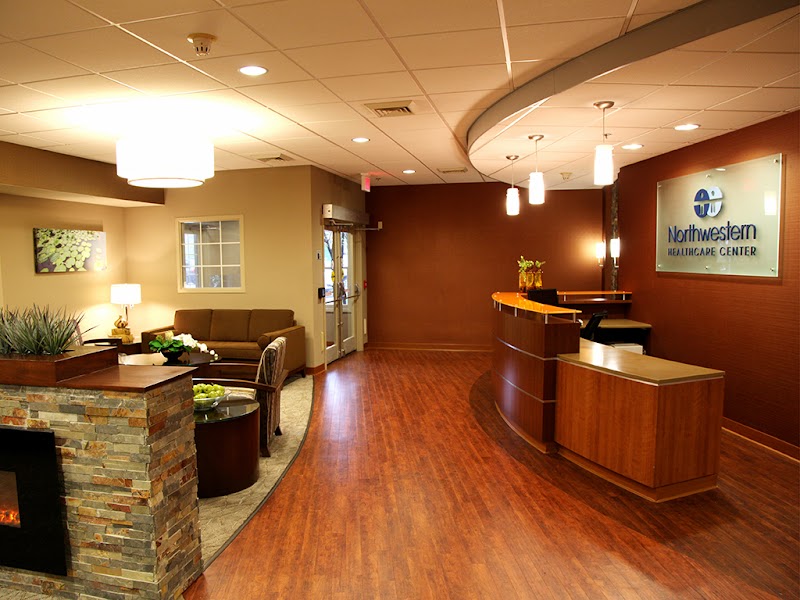


NORTHWESTERN CENTER

570 NORTH ROCKY RIVER DRIVE, BEREA, OH 44017 (440) 243-2122
For profit - Corporation 100 Beds COMMUNICARE HEALTH Data: November 2025 2 Immediate Jeopardy citations
Trust Grade
1/100
#744 of 913 in OH
Last Inspection: December 2023

Within standard 12-15 month inspection cycle. Federal law requires annual inspections.

Overview

Families considering Northwestern Center in Berea, Ohio, should be aware that it has received a Trust Grade of F, indicating significant concerns about the facility. It ranks #744 out of 913 in Ohio, placing it in the bottom half of nursing homes in the state, and #68 out of 92 in Cuyahoga County, meaning only a few local options are worse. Although the facility shows an improving trend, having reduced issues from 11 in 2024 to 3 in 2025, it still has a troubling history, including critical incidents where residents received inappropriate diets leading to choking hazards, and failures in timely medical response that resulted in resident deaths. Staffing is rated poorly with a score of 1 out of 5, and while the turnover is average at 58%, the facility's fines totaling $83,945 are higher than 88% of similar facilities, suggesting ongoing compliance issues. On a positive note, it boasts excellent quality measures with a score of 5 out of 5, indicating strong performance in some care areas, but the serious incidents and overall trust grade raise substantial red flags for potential residents and their families.

Trust Score
F
1/100
In Ohio
#744/913
Bottom 19%
Safety Record
High Risk
Review needed
Inspections
Getting Better
11 → 3 violations
Staff Stability
⚠ Watch
58% turnover. Above average. Higher turnover means staff may not know residents' routines.
Penalties
✓ Good
$83,945 in fines. Lower than most Ohio facilities. Relatively clean record.
Skilled Nurses
○ Average
Each resident gets 30 minutes of Registered Nurse (RN) attention daily — about average for Ohio. RNs are the most trained staff who monitor for health changes.
Violations
⚠ Watch
26 deficiencies on record. Higher than average. Multiple issues found across inspections.
★★☆☆☆
2.0
Overall Rating
★☆☆☆☆
1.0
Staff Levels
★★★★★
5.0
Care Quality
★★☆☆☆
2.0
Inspection Score
Stable
2024: 11 issues
2025: 3 issues

The Good

  • 5-Star Quality Measures · Strong clinical quality outcomes
  • Full Sprinkler Coverage · Fire safety systems throughout facility
  • No fines on record

Facility shows strength in quality measures, fire safety.

The Bad

2-Star Overall Rating

Below Ohio average (3.2)

Below average - review inspection findings carefully

Staff Turnover: 58%

12pts above Ohio avg (46%)

Frequent staff changes - ask about care continuity

Federal Fines: $83,945

Well above median ($33,413)

Moderate penalties - review what triggered them

Chain: COMMUNICARE HEALTH

Part of a multi-facility chain

Ask about local staffing decisions and management

Staff turnover is elevated (58%)

10 points above Ohio average of 48%

The Ugly 26 deficiencies on record

2 life-threatening 2 actual harm
Aug 2025 3 deficiencies 1 IJ
CRITICAL (J) 📢 Someone Reported This

A family member, employee, or ombudsman was alarmed enough to file a formal complaint

Immediate Jeopardy (IJ) - the most serious Medicare violation

Free from Abuse/Neglect (Tag F0600)

Someone could have died · This affected 1 resident

**NOTE- TERMS IN BRACKETS HAVE BEEN EDITED TO PROTECT CONFIDENTIALITY** Based on closed medical record review, staff interviews, interviews with family, family friend, and home health aide, review of ...

Read full inspector narrative →
**NOTE- TERMS IN BRACKETS HAVE BEEN EDITED TO PROTECT CONFIDENTIALITY** Based on closed medical record review, staff interviews, interviews with family, family friend, and home health aide, review of Emergency Medical Services (EMS) run report and call transcripts, review of the facility's Self-Reported Incident (SRI) and investigation, and review of facility policies, the facility failed to prevent an incident of neglect involving Resident #87. This resulted in Immediate Jeopardy, actual harm and death beginning on [DATE] at 11:30 P.M. when Resident #87 complained of chest pain to Certified Nursing Assistant (CNA) #609 who reported the change to Registered Nurse (RN) #422. RN #422 then failed to timely identify and obtain treatment for Resident #87 following an acute change in condition. In addition, the facility failed to ensure cardiopulmonary resuscitation (CPR) was initiated timely at the time Resident #87 was found unresponsive (without vital signs). On [DATE] at 2:50 A.M., Resident #87 expired with cause of death as cardiopulmonary and pulseless electrical activity with onset of 15 minutes prior to death. This affected one (#87) of three residents reviewed for hospitalization. The facility census was 81. On [DATE] at 10:13 A.M., Regional Director of Clinical Operations (RDCO) #417, the Administrator, the Director of Nursing (DON), and Assistant Director of Nursing (ADON) #813 were notified Immediate Jeopardy began on [DATE] at 11:30 P.M. when Resident # 87, who had advance directives for a full code complained of chest pain. CNA #609 reported the residents' complaint to RN #422. However, RN #422 failed to complete a comprehensive assessment or timely transfer the resident to the hospital for evaluation/medical intervention. The resident was subsequently found unresponsive (no time documented), with bluish-purple lips and fingertips. There was no evidence to support staff immediately initiated cardiopulmonary resuscitation (CPR). The facility failed to conduct a thorough investigation to determine the circumstances of the incident. However, interviews conducted by the State Survey Agency revealed staff did not initiate CPR for approximately seven to twenty minutes per seven staff (two nurses and five CNAs). As a result of Resident #87 not being assessed timely, a code not being called, and CPR not being initiated timely, Resident #87 passed away on [DATE]. The Immediate Jeopardy was removed on [DATE] when the facility implemented the following corrective actions: On [DATE] at 2:50 P.M., Resident #87 passed away in the facility. On [DATE] at 9:30 A.M., clinical staff reviewing documentation during morning clinical meeting found no documentation of an occurrence with Resident #87. RN #422 was contacted and was instructed to come in and complete documentation immediately. On [DATE] at 11:12 A.M., RN #422 completed a late-entry progress note. From [DATE] to [DATE] staff interviews and statements were obtained by the Administrator, ADON #813 and Acting DON #424 regarding occurrence with Resident #87. On [DATE], Acting DON #424 educated all licensed nurses on clinical documentation standards, notification of change of condition, CPR/Ohio Do Not Resuscitate (DNR) comfort care (CC) and DNR CC Arrest policies- with emphasis on immediately initiating CPR after verification of a CPR code status, and wound care. All new hire nurses will be educated during the new hire orientation process by DON/designee. All borrowed nurses from sister facilities will be educated prior to shift start by DON/designee. Ongoing education will be completed during quarterly all-staff meetings by Director of Nursing/designee. On [DATE], Acting DON #424 educated CNAs on documentation and CPR with emphasis on their supportive role by the direction of the nurse. On [DATE], Acting DON #424 reviewed all resident's nursing notes for the last 30 days that had a change in condition to validate timely and correct treatment. Timely and correct treatment was based on nursing standards for the specific situation. On [DATE], Acting DON #424 completed whole-house code status audit to ensure orders and care plans were updated and current. All resident code statuses are current and can be found in the resident header of the electronic medical record (EMR). Starting [DATE], DON/designee completed ongoing audit of nurses notes to be reviewed daily (five days per week) during daily clinical meeting to monitor for change of condition, and appropriate assessment/treatment completed, up to and including CPR. Any concerns noted will be addressed immediately. Results will be reviewed at monthly Quality Assurance Performance Improvement (QAPI) meetings. On [DATE], Licensed Practical Nurse (LPN) #503 completed a mock code blue drill which included four other staff during the day shift. On [DATE], RN #422 was terminated for performance and policy violations. Upon investigation, it was determined RN #422 was uncooperative during the investigation process. RN #422 failed to provide an accurate description of what occurred and failed to follow the facility's policies and procedures regarding documentation. On [DATE] at 9:57 A.M., an interview with the Administrator stated the facility had no additional information related to their investigation into Resident #87's change in condition and his death to provide for State Survey Agency review. The facility did not provide any documentation of corrective actions completed by facility after their investigation. On [DATE] an ad hoc QAPI was held to discuss the incident with Resident #87 and reviewed plan for education and ongoing monitoring. Members in attendance included the Administrator, the DON, ADON #813, LPN #410, LPN #503, Social Service Director (SSD) #920, RDCO #417 and Medical Director #435. This will be reviewed at monthly QA meeting for the next six months. By [DATE], the DON educated all licensed nurses on completion and documentation of assessments with emphasis on obtaining current vital signs when assessing resident, CPR policy with emphasis on identifying code status, CPR/Ohio DNR comfort care and DNR CC Arrest policies with emphasis on immediately initiating CPR after verification of a CPR code status, and overhead announcement of code. All new hire nurses will be educated during the new hire orientation process by DON/designee. All borrowed nurses from sister facilities will be educated prior to shift start by DON/designee. Ongoing education will be completed during quarterly all-staff meetings by DON/designee. Starting on [DATE], DON/designee will complete mock code blue audits, three times a week for four weeks across various shifts. Concerns will be addressed in real time and discussed at monthly QA meetings. Starting on [DATE], DON/designee will review three assessments per week for four weeks across various shifts to validate assessment accuracy and completion of vital signs. Starting [DATE], DON/designee will continue ongoing audit of at least five residents' nurse's notes to be reviewed daily for five days/week for 12 weeks during daily clinical meetings to monitor for change of condition, and appropriate assessment/treatment completed, up to and including CPR. Any concerns noted will be addressed immediately. Results will be reviewed at monthly QA meetings. Starting [DATE], when the initiation of CPR is required, a Code Event Minutes form will be completed by a designated scribe with time resident is found and time CPR is initiated. These minutes will be reviewed by DON/designee after the Code Event Minutes form is completed, and any concerns will be addressed as appropriate. Although the Immediate Jeopardy was removed, the facility remains out of compliance at Severity Level 2 (no actual harm with potential for more than minimal harm that is not Immediate Jeopardy) as the facility is still in the process of implementing their corrective action plan and monitoring to ensure on-going compliance. Findings include: Review of Resident #87's closed medical record revealed an admission date of [DATE] and diagnoses included obstructive sleep apnea, hyperlipidemia, weakness, non-pressure chronic ulcer of other part of left lower leg with other specified severity, peripheral vascular disease, chronic kidney disease stage three, chronic obstructive pulmonary disease (COPD), edema and other acute osteomyelitis to bilateral ankles and feet. Review of Resident #87's plan of care for COPD dated [DATE] revealed Resident #87 had shortness of breath while lying flat. An intervention dated [DATE] included the following: staff were to monitor vital signs, report abnormal findings to medical provider, resident/resident representative, staff were to observe for signs and symptoms of COPD: increased shortness of breath, frequent coughing with and without mucus, wheezing, tightness in the chest and anxiety. Report any abnormal findings to medical provider, resident/resident representative. Resident #87 had a physician order dated [DATE] for an advance directive of CPR (Full Code). Review of the five-day Minimum Data Set (MDS) assessment dated [DATE] revealed Resident #87 was cognitively intact and had no behaviors during the review period. Resident #87 utilized a walker for mobility. Resident #87 required substantial/maximum assistance with toileting, partial/moderate assistance with upper body dressing, substantial/maximum assistance from sitting to standing, and partial/moderate assistance for chair to bed and toilet transfers. The discharge MDS assessment dated [DATE] revealed Resident #87 died in the facility. Review of Resident #87's medical record revealed he had wounds to left gluteal fold, left lower extremity, left lateral foot, sacrum/bilateral buttocks and right lateral foot with dressing changes to be done every day and night shift and as needed. Resident #87 received hydrocodone-acetaminophen 5-325 milligrams (mg) every four hours as needed (PRN) for severe pain greater than seven (a pain scale from zero to no pain to 10 the most severe pain). Resident #87 received this pain medication on [DATE] at 8:09 A.M. for a pain level of seven; on [DATE] at 12:32 P.M. for a pain level of eight and on [DATE] at 5:25 P.M. for a pain level of eight. Resident #87did not receive this medication the rest of the night. No administration of hydrocodone-acetaminophen was documented on [DATE]. Resident #87 was not documented as having behaviors during his admission to the facility. Review of Resident #87's vital signs in the medical record revealed the last complete set of vital signs was collected on [DATE] at 8:08 A.M. The following were recorded at 8:08 A.M.: pain at zero; pulse of 79 beats per minute (bpm) (normal resting heart rate); temperature of 97.4 degrees Fahrenheit (F); and blood pressure of 123/67 millimeters of mercury. Review of the skilled assessment dated [DATE] at 8:25 A.M. and authored by LPN #811 revealed no changes since the previous evaluation and indicated Resident #87 was alert and oriented times three. Subsequent vital signs recorded revealed on [DATE] at 8:28 P.M. respirations at 18 breaths per minute (normal resting range for an adult); on [DATE] at 10:59 P.M. oxygen saturation via nasal cannula at 94% (normal range); and on [DATE] at 11:52 P.M. blood glucose at 287 milligrams/deciliter (mg/dL) (blood sugar high (normal range 99 mg/dL or below). Review of an EMS telephone call on [DATE] at 11:49 P.M. revealed Resident #87 stated, I need assistance, I can't stand up. The resident explained he was at the facility and provided his room number and stated he needed lift assistance. The resident explained his former nursing aide for a year and a half came to the facility to change his bandage. When she came and was changing them, the nurse threw her out because she was not an employee. He identified himself as Resident #87. He stated they way he was sitting, it was killing his buttocks, and he can't [unable to determine the rest of what Resident #87 said]. There was no documentation in the resident's medical record this visitor was changing the resident's bandage and was thrown out of the facility. The EMS run sheet dated [DATE] at 11:50 P.M. revealed they were dispatched to the facility for a resident (Resident #87) who cannot stand up. While en route, dispatch updated EMS that a call was placed by the resident, and they will contact the facility to speak with staff. Upon arrival, the scene was determined safe. EMS staff entered the building and met a nurse (not able to be identified) at the front desk who stated the resident does not need to go to the emergency room (ER) and the resident just doesn't want to be here. (This behavior of not wanting to be in the facility was not documented in the medical record and interviews with staff could not corroborate this statement.) The nurse stated Resident #87 had no complaints and they were unaware Resident #87 had called EMS. EMS staff explained to the nurse that this was not an appropriate reason to go to the ER. The nurse agreed and stated she would speak with Resident #87. Resident to be left in care of staff. There was no documentation in Resident #87's medical record of EMS arriving at facility and no nursing assessment including vital signs obtained at this time. Review of a call from Berea Police and Fire Department to the facility on [DATE] at 11:54 P.M. revealed dispatch had gotten a call from Resident #87 for a 911 call from his room. Resident #87 stated he fell and needed assistance getting up, and they do have paramedics en route. LPN #423 answered the facility's telephone and stated she would check to find out what was going on. There was no documentation in the resident's medical record of a nursing assessment including vital signs obtained at this time and the telephone call received by the local police department was not documented in the medical record. Review of an EMS telephone call on [DATE] at 12:02 A.M. revealed Resident #87 called 911 back, the nurse just came in and said he sent 911 away. Dispatch told Resident #87 that staff told EMS they were not needed. Resident #87 stated he had been sitting there for six hours, no pain medications, and the nurse refused to do his bandaging on his feet. A telephone call was then placed to the facility and LPN #423 answered. Dispatch stated Resident #87 called 911 again and was on the other telephone line. LPN #423 stated EMS just left and said they were not going to take him; if they had known he had called they would never have come out. LPN #423 reported that Resident #87 did not fall, he was sitting in a chair, and she was not sure what they could do in that moment. EMS said they would not take him. Dispatch said Resident #87 was on the other line advising he could not stand up for hours. LPN #423 stated Resident #87's nurse [RN #422] was to be in his room with him to do a dressing change. Dispatch said they would talk to Resident #87. Resident #87 stated no nurse was in the room with him. Dispatch stated a male nurse was on his way to him. Resident #87 stated RN #422 has refused to bandage his legs for six hours and now he was gathering supplies, and the resident didn't know how long that takes. Dispatch stated the paramedics were there and staff were advising EMS that Resident #87 did not need transported to the hospital and she called and spoke with staff again. Resident #87 reported no one else was in his room. Dispatch asked to speak to whoever was in the room and RN #422 got on the line and identified himself as Resident #87's nurse [RN #422]. Dispatch told RN #422 that Resident #87 kept calling and he replied, yeah, there was not an emergency. Resident #87 yelled in the background, yes, there is. RN #422 then stated yeah, there's not an emergency, it would be a waste to send people and dispatch indicated EMS just got back in the station. Dispatch stated to advise Resident #87, if he keeps calling, they must send somebody out. RN #422 stated he would try; there was only so much that RN #422 can do and was not able to take Resident #87's telephone (which he implied he could not remove the resident's access to telephone). Dispatch stated at some point they would have to send somebody like police out; they would have to send someone. Resident #87 can be heard in the background saying, if you would do your job. Dispatch started to say, If he is being unreasonable. RN #422 then stated, Well I did not commit a crime. and dispatch indicated per protocol, they would have to send someone out to do a welfare check and she did not indicate anything had been done wrong. There was no evidence this EMS call was documented in Resident #87's medical record. The EMS run sheet dated [DATE] revealed a call received at 1:58 A.M. for a cardiac arrest for Resident #87. EMS was on the scene at 2:05 A.M. Resident #87 was unconscious, drooling, not breathing and had delayed skin capillary refill with pale, cyanotic skin. No blood pressure or pulse could be found. Upon arrival at the scene, Resident #87 was supine on the floor receiving CPR from nursing home staff. Staff stated Resident #87 fell from chair while being changed by nurse and when nurse left to get help to lift him, Resident #87 was found unresponsive and not breathing. No palpable pulse could be felt. Approximate arrest time was 1:55 A.M. Manual CPR was taken over by EMS with ventilations given via bag valve mask ventilation (BVM). Resident #87 was intubated and the cardiac monitor showed asystole (cardiac flatline), then pulseless electrical activity (PEA), then ventricular fibrillation (VFIB) then PEA. Resident #87 was taken to the hospital. Disposition of the call was identified as dead after arrival, resident dead at scene-resuscitation attempted with transport. Review of an EMS call dated [DATE] at 1:58 A.M. revealed a female voice (CNA #620 upon review of the facility's telephone list) was at the facility and they had a resident (Resident #87) that was not responsive and had no pulse or anything and provided the room number. Dispatch asked if a nurse was in there with the resident and CNA #620 indicated RN #422 was in with the resident. Dispatch asked if they were doing CPR. CNA #620 stated yes, they were trying to do CPR now and it looked like the resident fell out of a chair and his back was against the chair, they were trying to lay him down flat on the floor and do CPR. Dispatch stated medics were going to be dispatched and told the caller whoever was performing CPR to keep doing so until the medics got there and to have someone meet the medics at the door. Review of the change in condition evaluation dated [DATE] at 2:40 A.M. and authored by RN #422 revealed Resident #87 was unresponsive and it began this morning [[DATE]]. The assessment stated there were no vital signs obtained after the change in condition occurred, and listed vital signs obtained on [DATE] at 8:08 A.M. which included blood pressure, pulse, heart rate, respirations and temperature. Resident #87's advance directive was listed as CPR and respiratory assessment indicated Resident #87 had apnea (temporary cessation of breathing, preventing the body from getting enough oxygen). The progress note and eInteract Situation, Background, Assessment and Recommendation (SBAR) dated [DATE] at 2:40 A.M. and authored by RN #422 revealed Resident #87 was unresponsive and listed vital signs collected on [DATE] at 8:08 A.M. (blood pressure, pulse, respirations, and temperature), at 8:28 P.M. (blood glucose), at 11:52 P.M. (pulse oximetry). The eInteract transfer to hospital evaluation dated [DATE] at 2:41 A.M. and authored by RN #422 revealed Resident #87 was sent to the hospital at 2:30 A.M. due to unresponsive status. Vital signs (no time listed) were blood pressure at 129/73 mmHg; temperature at 98.7 degrees F; pulse was 68 bpm; respirations were 14 breaths per minute; and oxygen saturation 95%. Review of a death certificate revealed Resident #87's time of death was on [DATE] at 2:50 A.M. with cause of death as cardiopulmonary and pulseless electrical activity with onset of 15 minutes prior to death. No autopsy was performed, and the manner of death was listed as natural. The progress note dated [DATE] at 11:12 A.M. and authored by RN #422 revealed the nurse was performing a dressing change on Resident #87 and needed assistance transferring Resident #87. This writer left the room to get assistance and upon returning, found Resident #87 unresponsive. After a quick assessment, this writer began CPR and instructed nearby personnel to get an automated external defibrillator (AED) and call EMS. EMS arrived and continued CPR and transferred the resident to the emergency room (ER). Family arrived at the scene shortly after. DON and Administrator notified. Review of an e-mail witness statement dated [DATE] at 8:47 A.M. and authored by RN #422 revealed while caring for Resident #87, a CNA began a dressing change without communicating to RN #422 (time not given). At the time, RN #422 was completely unaware of who she was or what her level of licensure was. She repeatedly refused to clarify her identity and level of licensure while making threats to both RN #422 and the facility. Her behavior was extremely aggressive and unprofessional and may even be classified as abuse. Eventually, she explained who she was and her licensure. Upon finally being made aware of her licensure, RN #422 explained how many aspects of the dressing change cannot be performed by CNAs as they were beyond her scope of practice. Namely wound assessment: all assessments cannot be delegated and must be performed by nurses and nurses only. Furthermore, the aspects of the dressing change with which she completed, the dressings were completed incorrectly, putting the resident at risk as well. When explaining the process of a dressing change, the CNA displayed a gross lack of understanding that RN #422, using his clinical judgement, considered unacceptable for practice. Simply put she described a dressing change as ‘just following directions,' when there was such a deeper level of knowledge required. In regard to Resident #87's EMS calls, there were two. During the first EMS call, Resident #87 stated he fell. RN #422 entered Resident #87's room, found him in his chair and asked if he fell. Resident #87 stated he never fell. EMS refused to admit him as an emergency situation was not occurring. EMS was called a second time (time not given) by Resident #87 and refused to travel to the facility. Then RN #422 completed Resident #87's dressing change (time not given). Following the dressing change, RN #422 required assistance with transferring Resident #87 (time not given). RN #422 left the room to get assistance. When RN #422 arrived at Resident #87's room, he was unresponsive (time not given). After a quick assessment (not documented, no time given) RN #422 began CPR and instructed nearby healthcare personnel to get an AED and call EMS. EMS transported Resident #87 to the emergency department (ED). Review of a typed witness statement dated [DATE] for RN #422 revealed on [DATE] (no time given), RN #422 was doing a dressing change to Resident #87's buttocks while he was positioned on walker in front of chair. Resident #87 became weak, and RN #422 had to lower Resident #87 to the floor. RN #422 went to get assistance from other nursing staff (no time given, no staff identified). Resident #87 was responsive at the time (not given) and RN #422 went to get help. Upon arrival at the room with staff assistance (no time given, no staff identified), RN #422 attempted to transfer Resident #87 into bed, he became unresponsive, so the resident was lowered to the floor and CPR was initiated (time not given).Review of RN #422's written witness statement dated [DATE] revealed Resident #87 used his call light and entered the room (time not given). Resident #87 requested to have his dressings changed and RN #422 informed him that RN #422 would gather supplies and change his dressing shortly. Upon re-entering the room (time not given), RN #422 found a home health aide performing his dressing change. RN #422 stopped this home health aide and asked who she was. The home health aide refused multiple times to identify herself, her behavior was very aggressive and unprofessional. Home health aide left with the dressing change incomplete. Resident #87 then called the police stating he fell. EMS arrived and refused to admit him because he was in stable condition. When EMS arrived, Resident #87 stated he did not fall. Resident #87 repeatedly called EMS (times not given) until RN #422 began his dressing change. RN #422 completed the dressing change. After RN #422 completed the dressing change, RN #422 and [Resident #87] were having issues operating his chair (time not given). RN #422 and Resident #87 were unable to bring his chair to a working height, so RN #422 left the room to get assistance transferring Resident #87. When RN #422 looked for help, all the CNAs were not on the floor, and RN #422 was not notified of the CNAs leaving. RN #422 ran to the other side to get CNA #509 (time not given). Resident #87 was not responding to words or stimuli. RN #422 performed an assessment and felt a weak thready pulse (vitals not recorded) and apnea. RN #422 and CNA #509 lowered Resident #87 to the ground and began CPR, called EMS, and instructed a (unidentified) CNA and to get an AED (times not given). No shocks were advised by the AED. EMS arrived and transported Resident #87. Review of CNA #509's typed witness statement dated [DATE] revealed RN #422 came to request her help with Resident #87. When CNA #509 came to the front hall (time not given), Resident #87 was sitting on the floor with his back resting on the chair, unresponsive. Both RN #422 and CNA #509 attempted to arm and arm, two-person assist the resident into the chair. When unsuccessful, RN #422 and CNA #509 went to get a lift sling in attempt to mechanically lift Resident #87 into the chair. Female nurse (not identified) came in to assist (time not given) and observed Resident #87 lying on the floor on lift sling. Female nurse (not identified) questioned RN #422 regarding Resident #87's pulse. CPR initiated (time not given), aide (not identified) was instructed to call 911 by female nurse (not identified) and EMS came in to continue CPR. Review of LPN #423's typed witness statement dated [DATE] revealed Resident #87 had called police/EMS three times that night. First time, EMS stated Resident #87 had fallen. LPN #423 ran to verify Resident #87 was ok and observed him sitting in his recliner chair. LPN #423 advised RN #422 that EMS was called. RN #422 then went to Resident #87's room to observe him in his chair, asked Resident #87 if he had fallen and if he was ok. Once EMS arrived and entered the facility, staff let EMS know Resident #87 had not fallen and he was ok. EMS did not assess or observe Resident #87 and left the scene. RN #422 then advised Resident #87 he was going to dress his wounds. LPN #423 went back to her work area, shortly after she reported back to her own work area, there was a telephone call from EMS a second time. Between 2:00 A.M. and 3:00 A.M., LPN #423 saw RN #422 come to the back for a nasal cannula then go back towards the front. About 20 minutes later, LPN #423 saw RN #422 come to the back of the facility and ask for help because Resident #87 had fallen. CNA #509 went to assist RN #422. Another nurse on shift (not identified) was also prompted to help. Once at Resident #87's room, LPN #423 observed Resident #87 lying on floor on Hoyer (mechanical lift) pad. LPN #423 asked RN #422 if Resident #87 had a pulse. RN #422 stated he checked the pulse (time not given), and a pulse was present (vital signs not recorded); after rechecking the pulse, RN #422 stated no pulse was present, so CPR was initiated (no time given). Review of CNA #620's typed witness statement dated [DATE] revealed on or after 2:00 A.M., CNA #620 was doing rounds. CNA #620 came out of a nearby resident's room and noticed CNA #509 standing by Resident #87's door and he motioned for CNA #509 to come help. CNA #509 asked where RN #422 was, CNA #509 mentioned RN #422 went to get another nurse for help. When LPN #905 and LPN #423 arrived (time not given), CNA #620 and CNA #509 were instructed to clear the room. EMS was called and compressions were started (time not given). Review of LPN #905's witness statement dated [DATE] revealed LPN #905 did not recall much from that night but did remember someone had called the police. LPN #905 ran to the front to observe if Resident #87 was on the floor (time not given). Once LPN #905 noted Resident #87 was not on the floor, she went back to report findings to EMS. LPN #905 stated EMS arrived and stated they could not take Resident #87 if there was nothing reported. EMS never entered Resident #87's room. As the night progressed (time not given), RN #422 stated Resident #87 called the police on him again. When LPN #905 entered the building (time not given), everyone was running towards Resident #87's room and was asking for her help. When LPN #905 ran to Resident #87's room, LPN #905 saw Resident #87 on the floor, his arms were above his head, and he had on a nasal cannula. LPN #905 observed the crash cart outside the door and chest compressions were being performed (staff not identified). After a while EMS ran in (time not given) to continue to assist with CPR. Review of CNA #609's typed witness statement dated [DATE] revealed Resident #87 called EMS around 12:00 A.M. and did not see him go out with EMS upon arrival. CNA #609 asked Resident #87 why he did not go to the hospital, and he responded he did not want to. Later on, that night (no time given), RN #422 informed CNA #609 that Resident #87 was down on the floor. When CNA #609 went into the room to assist, Resident #87 was positioned on the floor with his back against his chair. LPN #905 and LPN #423 arrived (time not given), and CNA #609 got the crash cart to assist. Review of an undated and unauthored document regarding Resident #87 revealed the following information: - On [DATE] (no time listed) RN #422 reported doing a dressing change for Resident #87, went to get assistance and when he returned, Resident #87 was unresponsive. CPR was initiated and continued until EMS arrived and took over CPR. Resident #87 was sent to the ER. - On [DATE] (no time listed) Resident #54 (Resident #87 was his former roommate) said he wanted to talk with the Administrator and the DON. Resident #54 had monitored the care of Resident #87 and reported the approximate time of Resident #87 requesting and receiving pain medications. Resident #54 also believed EMS had been called on two different occasions but believed they had been turned away as they never came into the room. This was concerning to Resident #54, but the concerns reported did not rise to the level of abuse/neglect without further investigation. RN #422 was suspended pending investigation. - No date listed. An investigation was initiated, other residents were assessed with no concerns, staff statements were obtained, and the facility requested the EMS run report.- On [DATE], Admissions #705 called Family Member (FM) #425 to offer condolences. No questions, concerns or requests were made at this time.- From [DATE] to [DATE] (inaccurate dates) it was determined from statements collected that RN #422 stated EMS arrived at the facility because Resident #87 had called them, stating he had fallen. RN #422 had gone to Resident #87's room and talked with Resident #87 who had not fallen and went back to the desk to report this information to EMS. EMS left the facility. Later that night (no time listed) EMS called the facility and stated they received a call from Resident #87; RN #422 talked to EMS and told them Resident #87 was okay. Later than night (no time listed) RN #422 was completing a treatment on Resident #87 when he went unresponsive and was lowered to the floor. RN #422 alerted staff (not specified, no time listed) for additional assistance. At that time (not listed) Resident #87 had a pulse. At some point while trying to place Resident #87 in the bed, he lost his pulse and respirations, and EMS was called, and CPR was initiated. EMS arrived, continued CPR and took Resident #87 to the hospital. A discrepancy was identified regarding RN #[TRUNCA
SERIOUS (G) 📢 Someone Reported This

A family member, employee, or ombudsman was alarmed enough to file a formal complaint

Actual Harm - a resident was hurt due to facility failures

Accident Prevention (Tag F0689)

A resident was harmed · This affected 1 resident

**NOTE- TERMS IN BRACKETS HAVE BEEN EDITED TO PROTECT CONFIDENTIALITY** Based on closed record review, staff and family interview and policy review, the facility failed to develop and implement a comp...

Read full inspector narrative →
**NOTE- TERMS IN BRACKETS HAVE BEEN EDITED TO PROTECT CONFIDENTIALITY** Based on closed record review, staff and family interview and policy review, the facility failed to develop and implement a comprehensive and individualized fall prevention program to ensure Resident #90 was provided adequate assistance during care to prevent a fall with major injury. Actual harm occurred 02/05/25 when Resident #90, who required substantial/maximal staff assistance with bed mobility (rolling left and right) and was dependent on staff for toileting sustained a fall from an elevated bed during the provision of care. As a result of the fall the resident suffered left and right femur fractures, a fibula fracture and a tibia fracture requiring hospitalization and medical intervention. This affected one resident (#90) of three residents reviewed for falls. The facility census was 81. Findings include: Review of the closed medical record for Resident #90 revealed an admission date 11/15/13 with a discharge date of 02/14/25. Resident #90 had diagnoses including severe obesity, chronic respiratory failure, age related osteoporosis with current pathological fracture and type II diabetes mellitus. Resident #90 had been hospitalized from [DATE] to and returned to the facility on [DATE]. Review of the care plan dated 03/29/22 revealed Resident #90 was at risk for falls related to gait, balance problems, incontinence, weakness, vertigo and dizziness. Interventions included ensuring the bed locks were engaged. Review of the physician's orders dated 02/26/23 revealed an order to place an air mattress to bed and check inflation every shift. This order was discontinued on 01/06/25 when Resident #90 was discharged to the hospital. Resident #90 returned to the facility on [DATE]. Upon re-admission there was no physician order in place for the resident to have an air mattress to the bed. In addition, review of the treatment administration record (TAR) and medication administration record (MAR) revealed no documentation the resident's air mattress was checked for inflation from 01/08/25 to 02/05/25. Review of the admission evaluation dated 01/08/25 revealed Resident #90 was at risk for falls. Review of the plan of care dated 01/10/25 revealed Resident #90 had impaired skin integrity, or was at risk for altered skin integrity related to impaired mobility, incontinence, refusing to get out of bed, morbid obesity, diabetes, dry skin, lymphedema and fragile skin. Interventions included to provide appropriate off-loading air mattress. Monitor inflation every shift. The care plan also revealed Resident #90 had a self-care performance deficit, and required assistance with activities of daily living (ADL) related to impaired mobility, morbid obesity and disease process. Interventions included one person assistance for toileting and bed mobility and mechanical lift for transfers with two persons assistance. Review of a change of condition assessment dated [DATE] at 4:20 P.M. revealed Resident #90 fell out of bed and landed on her knees on the floor, with a complaint of pain. Review of a pain observation tool dated 02/05/25 (following the fall) revealed Resident #90 verbalized severe pain to the left leg and left knee. Review of unusual occurrence documentation dated 02/05/25 at 4:20 P.M. revealed Licensed Practical Nurse (LPN) #614 was called to Resident #90's room by Certified Nursing Assistant (CNA) #432. Resident #90 was observed on floor, facing bed with both legs folded underneath the resident. Resident #90 stated she did not hit her head. Resident #90 complained of pain to bilateral lower extremities. LPN #614 called 911 while two additional nurses remained in the room. The documentation revealed Resident #90 was alert and oriented times three. Review of a witness statement for CNA #432, written by LPN #614 on 02/05/25 at 5:13 P.M. revealed Resident #90 was rolled to right of bed to have brief place under her, during incontinent care of bowel. Resident #90's lower body rolled off the bed. Resident #90 was hanging on to grab bar. Resident #90 did not hit her head. The witness statement did not include any information about the resident's air mattress. Review of a witness statement dated 02/05/25 from LPN #614 revealed she was called into Resident #90's room by CNA #432. Upon entering the room Resident #90 was observed on the floor facing the wall with both legs underneath her. Resident #90's head was at roommate's foot board. Resident #90 complained of pain to both legs. Resident #90 was left in room with two other nurses while LPN #614 went and notified Director of Nursing (DON) and called 911. Resident #90 stated CNA #432 was providing incontinence care and Resident #90 rolled off the bed because CNA #432 moved her too far. Staff assisted Emergency Medical Service (EMS) and Resident #90 was transferred to hospital for evaluation. The witness statement did not include any information about the resident's air mattress. Review of the discharge Minimum Data Set (MDS) assessment dated [DATE] revealed Resident #90 had intact cognition. The assessment revealed Resident #90 was dependent on staff for toileting and required substantial/maximal staff assistance to roll left and right. Resident #90 was frequently incontinent with bowels and had an indwelling catheter. Review of documentation from Hospital #1 revealed Resident #90 was diagnosed with left femur fracture, right femur fracture, fibula fracture, and tibia fracture. The plan was to transfer Resident #90 to Hospital #2 for level II trauma on 02/06/25. The hospital documentation included Resident #90 told the hospital (staff) she had a bowel movement and was turned on her side to be cleaned up. The resident stated she told the CNA to be careful because she felt she was going to fall. The resident stated she then fell off the bed and injured her bilateral legs and hips. An attempt to receive medical record information from Hospital #2 for review during the survey was unsuccessful. Interview on 08/13/25 at 10:25 A.M. with Corporate Regional Nurse #421 on 02/05/25 at the time of the fall, CNA #432 was trying to put a clean incontinence product (Depends) under Resident #90 and pushed down too hard and Resident #90 fell out of bed. Interview on 08/14/25 at 3:17 P.M. with Resident #90's sister revealed Resident #90 fell out of bed (on 02/05/25) when personal care was being provided by CNA #432. The sister stated Resident #90 told her that CNA #432 kept scooting her closer to the edge of the bed and Resident #90 told CNA #432 to stop. The sister reported the resident's legs were on the edge of the bed and gravity took over and she could not stop her legs from falling. The resident's bed was also in a high position since care was being provided. The sister revealed Resident #90 was holding onto the grab bar, but her legs fell off the bed and she landed on her knees. Resident #90 was taken to the local hospital and had to be transported to a bigger hospital due to her injuries. The resident's sister reported Resident #90 broke both knees, tibias, fibulas and femurs and broke her left ankle. Resident #90's sister stated Resident #90's left ankle was not being fixed until the other injuries could be taken care of. Interview on 08/13/25 at 3:04 P.M. with Registered Nurse (RN) #507 revealed she had provided care to Resident #90 during the resident's stay at the facility. The RN revealed Resident #90 had an air mattress (prior to and following the hospitalization in January 2025), and the mattress was based upon the resident's weight. The nurse was to check every shift the settings on the air mattress and document it on the TAR. The RN revealed this was the policy for any resident (including Resident #90) with an air mattress. Interview on 08/18/2025 at 10:25 A.M. with LPN #614 revealed on 02/05/25 she was the nurse on duty and it was at the end of her shift when Resident #90 sustained a fall. The LPN revealed CNA #432 was providing incontinence care to Resident #90 and the CNA rolled her to far and Resident #90 fell out of bed on to her knees. In regard to the use of an air mattress, the LPN revealed staff were to check the air mattress every shift for proper inflation and if there was an issue with the mattress it would beep to alert staff. Interview on 08/18/25 at 12:00 P.M. with the Director of Nursing (DON) verified Resident #90 was hospitalized from [DATE] to 01/08/25 and upon return the physician orders for the resident's air mattress were not resumed. However, the resident continued to have the air mattress in place. The DON verified there was no documentation of the nurse's monitoring Resident #90's air mattress between 01/08/25 and 02/05/25 to ensure proper inflation was maintained or evidence the functionality of the air mattress was included as part of the investigation of the resident's fall. An attempt to interview CNA #432 during the survey was unsuccessful. Review of the facility's undated policy titled Specialty Mattresses revealed the nurse would validate the bed was functional, plugged into the proper outlet and the cords and bed were in good working condition. Review of the facility's undated policy titled Routine Resident Care revealed the facility would provide routine daily care by a CNA with specialized training in rehabilitation/restorative care under the supervision of a licensed nurse including but not limited to maintaining proper body position and alignment for all residents. This deficiency represents non-compliance investigated under Complaint Number 2574706, Complaint Number OH00165814 (1317322), Complaint Number OH00162622 (1317319), and OH00162278 (1317317).
CONCERN (D) 📢 Someone Reported This

A family member, employee, or ombudsman was alarmed enough to file a formal complaint

Potential for Harm - no one hurt, but risky conditions existed

Deficiency F0568 (Tag F0568)

Could have caused harm · This affected 1 resident

Based on record review, resident and staff interviews, and facility policy review, the facility failed to ensure the residents received quarterly statements for their resident funds account. This affe...

Read full inspector narrative →
Based on record review, resident and staff interviews, and facility policy review, the facility failed to ensure the residents received quarterly statements for their resident funds account. This affected one (#54) of six residents reviewed for resident trust funds account. The facility identified 38 residents had resident funds account. The facility census was 81.Findings included: Review of the medical record for Resident #54 revealed an admission date of 09/10/24 and was listed as the primary responsible party for billing. Review of the Resident Fund Management Service Authorization Agreement to Handle Resident Funds, revealed Resident #54 signed the document to set up a resident fund account. The document indicated with a signature, the person was authorizing the facility to establish an insured interest-bearing account and the person signing the document would receive a statement at least quarterly.Review of the facility document Resident Fund Statement dated 08/18/25, revealed Resident #54 had a resident fund account with a balance of $300.55. Resident #54's quarterly statements for the period of 04/01/25 through 06/30/25 revealed the resident had a balance of $300.55. Interview with Resident #54 on 08/11/25 at 10:27 A.M. revealed he had not received any quarterly statements and did not know what was in his personal fund account. Resident #54 stated he had asked multiple times to see his balance but was never given a statement as promised. Interview with Business Office Manager (BOM) # 612 stated she was new to the facility and has not provided any of the quarterly statements to the residents or guardians. BOM #612 verified Resident #54 has not received any quarterly statements. Review of the facility's policy titled Resident Trust Fund dated 10/19/17 revealed the purpose was to hold, safeguard, manage, control and reconcile the personal needs funds deposited with the facility by the residents, as authorized, in a manner and in compliance with all laws and regulations to provide the residents with accurate and timely information regarding their personal funds. Employee #1 will mail quarterly Resident Trust Fund Statements once approved by Employee #3.
Dec 2024 4 deficiencies
CONCERN (D) 📢 Someone Reported This

A family member, employee, or ombudsman was alarmed enough to file a formal complaint

Potential for Harm - no one hurt, but risky conditions existed

Quality of Care (Tag F0684)

Could have caused harm · This affected 1 resident

**NOTE- TERMS IN BRACKETS HAVE BEEN EDITED TO PROTECT CONFIDENTIALITY** Based on observation, interview, and record review, the facility failed to arrange for an escort to an outside appointment for R...

Read full inspector narrative →
**NOTE- TERMS IN BRACKETS HAVE BEEN EDITED TO PROTECT CONFIDENTIALITY** Based on observation, interview, and record review, the facility failed to arrange for an escort to an outside appointment for Resident #80, who at previous appointments had always had an escort. This affected one Resident of three residents reviewed for transportation arrangements. The facility census was 87. Findings Include: Review of the medical record for Resident #80 revealed an admission date of 03/30/23. Diagnoses included Parkinson's disease, legal blindness, glaucoma, and schizophrenia. Review of Resident #80's appointment orders revealed an escort needed for appointments scheduled for 09/24/24, 09/27/24, and 10/01/24. Review of the Minimum Data Set (MDS) quarterly assessment dated [DATE] revealed Resident #80 had intact cognition. Resident #80 had highly-impaired vision and used a wheelchair for mobility. Review of the nurse's note on 10/24/24 at 3:01 P.M. revealed for upcoming appointments, an escort was needed. Review of Resident #80's appointment order for 11/05/24 does not mention the need for an escort. Interviews on 12/03/24 at 8:18 A.M. and 1:12 P.M. with LPN #101 and LPN #104 revealed nurses are responsible for setting up appointments and will arrange for an escort if needed when arrange for transportation. Interview 12/03/24 at 11:45 A.M. with Resident #80 staff usually escorted him to appointments since he was blind. There was only one time they didn't. That was on 11/05/24. Interview on 12/04/24 at 11:21 A.M. with the Director of Nursing (DON) confirmed an escort was not sent to the appointment with Resident #80 on 11/05/24. This deficiency represents non-compliance investigated under Complaint Number OH00159778.
CONCERN (D) 📢 Someone Reported This

A family member, employee, or ombudsman was alarmed enough to file a formal complaint

Potential for Harm - no one hurt, but risky conditions existed

Deficiency F0760 (Tag F0760)

Could have caused harm · This affected 1 resident

**NOTE- TERMS IN BRACKETS HAVE BEEN EDITED TO PROTECT CONFIDENTIALITY** Based on interview, record review and review of facility policy, the facility failed to ensure Resident #89 was free from signif...

Read full inspector narrative →
**NOTE- TERMS IN BRACKETS HAVE BEEN EDITED TO PROTECT CONFIDENTIALITY** Based on interview, record review and review of facility policy, the facility failed to ensure Resident #89 was free from significant medication errors when Resident #89's admission orders were not timely transcribed, resulting in a delay in the resident receiving his ordered medications. This affected one Resident (#89) out of three residents reviewed for medication administration. The facility census was 87. Findings included: Review of the closed medical record for Resident #89 revealed an admission date of 10/10/24. Medical diagnoses included paraplegia, fractures to vertebra, seizures, diabetes, gout, depression, and hypertension. Resident #89 was discharged to the hospital on [DATE]. Review of hospital discharge orders dated 10/09/24 revealed Resident #89 was to receive the following orders: acetaminophen 975 milligram (mg) tablet by mouth three times a day for pain, allopurinol 300 mg tablet by mouth every day for gout, amlodipine 10 mg tablet by mouth every day for hypertension, aspirin enteric coated (EC) 81 mg tablet by mouth every day for cardiac prevention, atorvastatin 40 mg tablet by mouth every day for high cholesterol, baclofen (muscle relaxant) 5 mg tablet by mouth every night, bisacodyl suppository 10 mg per rectum every night for constipation, cholecalciferol (vitamin D supplement) 25 mg tablet by mouth every day, cyanocobalamin (vitamin B12 supplement) 1000 microgram (mcg) tablet by mouth every day, dextrose 15 gram (gm) per 37.5 gm orally if blood sugar was less than 70 or symptomatic and give 30 gm if blood sugar less than 54 as needed for diabetic management, give dextrose 50 percent in water injection 25 gm per 50 milliliter (ml) as needed if unconscious or unable to swallow as needed, diclofenac one percent gel 4 gm topically to left shoulder four times a day, diclofenac one percent gel 4 gm topically to knuckles, elbows, and shoulders four times a day as needed for pain, docusate sodium 100 mg capsule by mouth every day for constipation, furosemide (hypertension/ diuretic) 20 mg tablet by mouth every day, gabapentin (seizures) 600 mg capsule by mouth three times a day, glucagon injection (diabetic management) 1 mg per ml subcutaneous (SQ) as needed if patient was unconscious and unable to swallow, hydroxyzine hydrochloride (HCL) (hypertension) 20 mg tablet by mouth every night, lactobacillus acidophilus (probiotic) chewable tablet every day, lamotrigine (seizures) 250 mg tablet by mouth twice a day, levetiracetam (seizures) 1250 mg tablet by mouth twice a day, lidocaine five percent topical patch one patch every day applied to chest and remove after 12 hours for pain, lidocaine patch five percent topically apply two patches every day to back for pain, losartan (hypertension) 50 mg tablet by mouth every day, meloxicam (anti-inflammatory pain medication) 15 mg tablet by mouth every day, metformin (diabetes) 750 mg tablet by mouth twice a day with meals, methocarbamol (muscle relaxant)1000 mg tablet by mouth three times a day, and oxycodone 2.5 mg tablet by mouth every six hours as needed for pain. Review of nursing note dated 10/10/24 at 3:51 P.M. and authored by the former Assistant Director of Nursing (ADON)/ Registered Nurse (RN) #117 revealed Resident #89 was admitted to the facility. There was no documentation regarding medication administration orders. Review of nursing note dated 10/10/24 at 5:33 P.M. and authored by Licensed Practical Nurse (LPN) #116 revealed Resident #89 had arrived at the facility at 2:00 P.M. and the note revealed the nurse practitioner and physician were notified regarding his admission. The note revealed the ADON RN #117 had verified the physician orders and pain medications. There was nothing in the nursing note regarding discontinuing or not following any of the orders listed on the discharge hospital orders. Review of physician orders dated 10/10/24 for Resident #89 revealed the only medication order that was transcribed on the date of admission was Oxycodone 5 mg give one half tablet by mouth every six hours as needed for mild to moderate pain for two weeks and Oxycodone 5 mg give one tablet by mouth every six hours as needed for moderate to severe pain for two weeks. There were no orders discontinuing, holding, or providing clarification to of any of the orders per the hospital discharge orders. Review of Nurse Practitioner (NP) #105's progress note dated 10/11/24 at 9:18 P.M. revealed she had evaluated Resident #89 and revealed per the note there were no hospital records available. The progress note that Resident #89's medication list included the following: Tricor 48 mg tablet by mouth at bedtime for elevated triglycerides, lidocaine patch four percent apply to right lumbar area topically one time a day for back pain and remove the patch every 12 hours, cyclobenzaprine HCL 10 mg tablet by mouth three times a day for muscle spasm relief, amlodipine 10 mg tablet by mouth one time a day for hypertension, diclofenac sodium topical gel one percent apply to anterior thorax topically every six hours as needed for pain, tramadol 50 mg tablet by mouth every six hours as needed for moderate to severe pain, diclofenac sodium gel one percent apply to top of left hand, right hand and left shoulder topically every 12 hours as needed for pain. The note revealed to restart his home medications: metformin, Norvasc, and losartan. Review of October 2024 Physician Orders and October 2024 Medication Administration Record (MAR) revealed Resident #89 had not received and/or his order was not transcribed timely per hospital discharge orders including: allopurinol 300 mg tablet by mouth every day was (not transcribed or administered) until 10/18/24 A.M. dose (eight days after admission), Aspirin 81 mg chewable tablet by mouth every day was (not transcribed or administered) until 10/18/24 A.M. dose (eight days after admission), atorvastatin 40 mg tablet by mouth every day was (not transcribed or administered) until 10/17/24 bedtime dose (seven days after admission), bisacodyl suppository 10 mg per rectum one suppository at bedtime every Tuesday, Thursday, and Saturday was (not transcribed or administered) until 10/15/24 bedtime dose (five days after admission), cholecalciferol 1000 unit tablet by mouth every day was (not transcribed or administered) until 10/19/24 A.M. dose (nine days after admission), furosemide 20 mg by mouth every day was (not transcribed or administered) until 10/18/24 (eight days after admission), lactobacillus acidophilus chewable tablet every day was (not transcribed or administered) until 10/18/24 A.M. dose (eight days after admission), gabapentin 600 mg capsule by mouth three times a day was (not transcribed or administered) until 10/12/24 at A.M. dose (two days after admission), lidocaine four percent topical patch one patch every day applied to left chest and remove at night was (not transcribed or administered) until 10/15/24 at 9:00 A.M. (five days after admission), lidocaine patch four percent topically apply to right chest one every day and remove at night was (not transcribed or administered) until 10/16/24 at 9:00 A.M. (six days after admission), lidocaine patch four percent apply to right lumbar area topically every day and remove 12 hours later was (not transcribed or administered) until 10/12/24 at 9:00 A.M. (two days after admission), methocarbamol 1000 mg tablet by mouth at bedtime was (not transcribed or administered) until 10/19/24 U.S. dose (nine days after admission), methocarbamol 1000 mg tablet by mouth in the afternoon was (not transcribed or administered) until 10/19/24 afternoon dose (nine days after admission), methocarbamol 1000 mg tablet by mouth in the morning was (not transcribed or administered) until 10/19/24 A.M. dose (nine days after admission), losartan 50 mg tablet by mouth at bedtime was (not transcribed or administered) until 10/18/24 bedtime dose (eight days after admission), amlodipine 10 mg tablet by mouth every day was (not transcribed or administered) until 10/12/24 A.M. dose (two days after admission), levetiracetam 1250 mg tablet by mouth twice a day was (not transcribed or administered) until 10/17/24 BEDTIME dose (seven days after admission), lamotrigine 250 mg tablet by mouth twice a day was (not transcribed or administered) until 10/17/24 BEDTIME dose (seven days after admission), metformin 750 mg tablet by mouth twice a day before breakfast and dinner was (not transcribed or administered) until 10/12/24 at 9:00 A.M. (two days after admission), cyanocobalamin 10 mg tablet by mouth three times a day was (not transcribed or administered) until 10/12/24 A.M. dose (two days after admission), colace 100 mg capsule by mouth as needed was (not transcribed or administered) until 10/15/24 (five days after admission). Review of admission Minimum Data Set (MDS) dated [DATE] revealed Resident #89 had intact cognition. He received one injection in the last seven days during the assessment period. He was on hypoglycemic medications. There was no documentation he was on diuretics. Review of care plan dated 10/22/24 revealed Resident #89 was at risk for dehydration or potential fluid deficit related to diuretic use. Interventions included administering medications as ordered, and nutritional consultation on admission, quarterly and as needed. An additional care plan focus revealed Resident #89 had diabetes and was on hypoglycemic medication. Interventions included observe for signs of hypoglycemia and hyperglycemia. Resident #89 also had a neurological disorder related to thoracic fractures sustained after a fall down the stairs at home resulting in paralysis. Resident #89 also had a seizure disorder. Interventions included administer medications per orders, observe for side effects and effectiveness of the medications, observe for changes in mental status, and altered neurological status. Attempted interviews on 12/04/24 at 1:39 P.M., 12/04/24 at 1:40 P.M. and 12/05/24 at 11:13 P.M. with the former ADON RN #117 were unsuccessful. There was no answer and ADON RN #117's voicemail box was full. Interview on 12/04/24 at 2:14 P.M. with LPN #116 (nurse assigned when Resident #89 was admitted ) revealed that she did not recall Resident #89's name or any details regarding his admission. LPN #116 revealed she was unsure why the orders were not transcribed but stated the former ADON RN #117 usually handled transcribing the admission orders into the electronic medical record. Interview on 12/04/24 at 1:01 P.M. with Regional Director of Nursing (RDN) #99 verified Resident #89's discharge orders from the hospital were not transcribed the day he was admitted , and he was not administered his medications as ordered. Interview on 12/04/24 at 3:26 P.M. and 12/05/24 at 11:18 A.M. with the Director of Nursing (DON) revealed she was new to the facility and was not working at the facility when Resident #89 was admitted . She verified Resident #89's discharge orders from the hospital were not transcribed as well as Resident #89 did not receive his medication in a timely manner as some of the orders were not transcribed for up to nine days after Resident #89 was admitted . The DON revealed, upon review, she was not able to explain why the orders were not transcribed the day he was admitted as there was no documentation to explain the reason in the medical record. She revealed former ADON RN #117 no longer worked at the facility and she had attempted to contact her to see if there was a reason but was unable to reach her. The DON revealed if the facility was not to transcribe an order from the discharge instructions on admission there should have been an order from a physician discontinuing the order and/or documentation in the medical record as to why the medication was not transcribed and administered. Review of the undated facility policy Medication Administration revealed the purpose of the policy was to provide guidance for general medication administration. The policy included administer medications only as prescribed by the provider. There was nothing in the policy in regard to transcribing physician orders including on admission. Review of facility policy Physician Orders dated 4/17/24 revealed the provider may write the order in the medical record or in the electronic medical record. The policy revealed the nurse may receive an order over the phone; the nurse would provide a read-back to the provider for accuracy and transcribe the order into the electronic medical record. The policy revealed the nurse would discontinue any previous contradicting orders. There was nothing in the policy regarding transcribing admission orders. This deficiency represents non-compliance investigated under Complaint Number OH00159560.
CONCERN (D) 📢 Someone Reported This

A family member, employee, or ombudsman was alarmed enough to file a formal complaint

Potential for Harm - no one hurt, but risky conditions existed

Infection Control (Tag F0880)

Could have caused harm · This affected 1 resident

**NOTE- TERMS IN BRACKETS HAVE BEEN EDITED TO PROTECT CONFIDENTIALITY** Based on observation, record review, and interviews, the facility failed to maintain acceptable infection control practices dur...

Read full inspector narrative →
**NOTE- TERMS IN BRACKETS HAVE BEEN EDITED TO PROTECT CONFIDENTIALITY** Based on observation, record review, and interviews, the facility failed to maintain acceptable infection control practices during medication administration to prevent the spread of infection. This affected one Resident (#39) and had the potential to affect eight residents (Residents #16, # 28, #47, #55, 60, #65, #77, and #87) residing on the Back North Hall. The facility census was 87. Findings include: Review of the medical record for Resident #39 revealed an admission date of 07/09/22. Diagnosis included but not limited to schizoaffective disorder, bipolar type, type 2 diabetes mellitus, chronic obstructive pulmonary disease (COPD), vascular dementia, and repeated falls. Review of the Minimum Data Set (MDS) 3.0 quarterly assessment dated [DATE] revealed the resident had impaired cognition. Review of the physician's orders for December 2024 revealed Resident #39 was ordered daily accuchecks, (accu-check is a brand of products for people with diabetes to help them monitor and manage their blood sugar levels) without coverage and to notify physician or NP if blood glucose is less than 70 or greater than 400, one time a day for DM. On 12/03/24 at 8:31 A.M. Licensed Practical Nurse (LPN) 100 was observed administering medications to Resident #39. During the medication administration observation, LPN #100 went into the resident room to take a blood sugar test and placed the glucometer on the resident's bed with no barrier. Interview on 12/03/24 at 8:39 A.M. with LPN #100 verified she placed the glucometer on the resident's bed without placing a barrier first. LPN #100 reported she forgot. Interview on 12.03/24 at 10:34 A.M. with the Director of Nursing (DON) confirmed a barrier is to be placed under the glucometer. The DON reported she would provide education to LPN #100. Review of facility policy, Blood Glucose Point of Care Testing, undated, revealed to place a clean barrier under glucometer until disinfected. This deficiency represents an incidental finding of non-compliance identified while investigating OH00157560.
CONCERN (E) 📢 Someone Reported This

A family member, employee, or ombudsman was alarmed enough to file a formal complaint

Potential for Harm - no one hurt, but risky conditions existed

Deficiency F0558 (Tag F0558)

Could have caused harm · This affected multiple residents

Based on observation, interview, and record review, the facility failed to complete personal laundry and return it to residents in a timely manner. This affected three of three residents (#49, #74, an...

Read full inspector narrative →
Based on observation, interview, and record review, the facility failed to complete personal laundry and return it to residents in a timely manner. This affected three of three residents (#49, #74, and #80) reviewed and had the potential to affect all 81 residents in the facility who had their laundry done by the facility. The family did the laundry for six residents (#2, #11, #22, #51, #55, #74). The facility census was 87. Findings include: Interview on 12/03/24 at 8:18 AM through 10:41 A.M. with Licensed Practical Nurse (LPN) #101, LPN #104, Certified Nursing Assistant (CNA) #114, and CNA #115 revealed there had been some issues with laundry. The staff members reported they had received complaints from residents and families about missing clothes or clothes that had not yet returned from laundry. Interview on 12/03/24 at 11:49 A.M. with Resident #49 revealed it took two weeks for him to get his clothing back from laundry. Interview on 12/03/24 at 12:03 P.M. with Resident #79 stated residents did not get their laundry back in a timely manner. Resident #79 stated in the last resident council meeting a bunch of residents complained. An unnamed staff member at the meeting took the residents' names and wrote down what was missing. Resident #79 stated she went down to the laundry room and asked them to look for her missing items. Sometimes laundry is able to locate some missing items. Resident #79 reported names were in every item that was lost. Resident #79 stated the laundry department was bad, had gotten better, and now it is bad again. Interview on 12/03/24 at 11:45 A.M. with Resident #80 revealed the laundry was not done promptly and that items were not always returned. Resident #80 estimated that sometimes it was a couple weeks before he got his laundry back. Interview on 12/03/24 at 12:55 A.M. with the Laundry Account Manager (LAM) #111 revealed CNAs pick up all of the laundry and put it in bins in the soiled room. Laundry aides pick up the laundry from the soiled room. Laundry is collected three times a day. Staff tried to work four hours a day on residents' personal laundry. Linens were done separately. Laundry aides sorted items and placed personal clothes in a bin. The facility had two medium washers which only held up to 45 pounds of laundry, and two dryers. Observation on 12/03/24 at 12:59 P.M. of the soiled-side of the laundry room revealed a large bin of residents' dirty personal clothing. The pile was over five feet tall. Interview on 12/03/23 at 2:46 P.M. with the Administrator revealed she was going to go look at the laundry room. The Administrator stated two weeks was not an acceptable turnaround time for laundry to be returned to the residents. Interview on 12/03/24 at 3:05 P.M. with the Administrator verified that the amount of residents' dirty personal clothing awaiting to be laundered was a problem. Interview on 12/04/24 at 5:56 P.M. with Regional Environmental Services Manager #120 revealed they had hired two people since 12/02/24. The company had people at the facility all night on 12/03/24 and throughout the day on 12/04/24 doing laundry. They laundered all the residents' personal laundry and delivered it back to all of the residents. Review of the facility's Resident Council Minutes dated 11/30/24 revealed residents reported at the meeting reported the facility's laundry service was poor. Review of the facility's Grievance/Complaint Log from 08/18/24 through 11/04/24. revealed 16 separate complaints of residents with missing clothing. This deficiency represents non-compliance investigated under Complaint Number OH00159778.
Sept 2024 1 deficiency
CONCERN (D) 📢 Someone Reported This

A family member, employee, or ombudsman was alarmed enough to file a formal complaint

Potential for Harm - no one hurt, but risky conditions existed

Unnecessary Medications (Tag F0759)

Could have caused harm · This affected 1 resident

Based on observation of medication pass, staff interview, medical record review, review of manufacturer's instructions, review of medication card instructions and review of facility policy, the facili...

Read full inspector narrative →
Based on observation of medication pass, staff interview, medical record review, review of manufacturer's instructions, review of medication card instructions and review of facility policy, the facility failed to maintain a medication error rate of less than five percent. The facility medication error rate was calculated to be 10.34 percent (%) and included three medication errors of 29 observed medication opportunities. This affected two residents (#58 and #75) of four residents observed for medication pass. The facility census was 96. Findings include: 1. Review of the medical record for the Resident #58 revealed an admission date of 01/04/22. Diagnoses included cerebral infarction (stroke), dementia, syncope (fainting), type II diabetes, chronic kidney disease and depression. Review of the September 2024 physician orders revealed an order for potassium chloride extended release (ER) 20 milliequivalent (meq) by mouth, vitamin C 50 milligram (mg), ferrous sulfate 325 mg, losartan 25 mg and a multivitamin. Observation on 09/18/24 at 8:40 A.M. of medication pass with Licensed Practical Nurse (LPN) #250 revealed LPN #250 prepared Resident #58's morning medications, including the potassium chloride ER. Resident #58 requested LPN #250 cut the pill in half due to difficulty swallowing. Resident #58 was unable to swallow the potassium chloride ER. LPN #250 then crushed the potassium chloride ER, mixed the crushed medication in pudding and administered the crushed potassium chloride ER to Resident #58. Interview on 12/08/20 at 8:51 A.M. with LPN #250 verified she crushed the potassium chloride ER and administered the crushed medication to Resident #58. LPN #250 stated the pill was scored and able to be crushed. LPN #250 stated she called the pharmacy about crushing potassium for another resident and was told potassium could be crushed. Review of the manufacture's prescribing instructions for potassium chloride ER revealed the formulation was intended to slow the release of potassium so the likelihood of a high localized concentration of potassium chloride within the gastrointestinal tract is reduced. Potassium chloride ER tablets are to be swallowed whole without crushing, chewing or sucking the tablets. 2. Review of the medical record for Resident #75 revealed an admission date of 01/04/24. Diagnoses included chronic kidney disease, heart failure, anxiety disorder, peripheral vascular disease, hypothyroidism and constipation. Review of the September 2024 physician orders revealed morning medications included levothyroxine (used to treat hypothyroidism) 50 microgram (mcg) by mouth in the morning, simethicone (used to treat flatulence) 80 mg, Eliquis (anticoagulant) 2.5 mg, aspirin 81 mg, carvedilol (used to treat high blood pressure) 6.25 mg, clopidogrel (used to treat heart problems) 75 mg, gabapentin (used to treat pain) 100 mg losartan 50 mg and omeprazole (used to treat gastroesophageal reflux) 40 mg. Instructions included resident requests not to receive medication before 8:00 A.M. Observation of medication pass on 09/19/24 at 8:30 A.M. with Medication Technician (MT) #240 revealed the MT prepared levothyroxine and simethicone, along with seven additional medications, and administered the medications to Resident #75. Review of the levothyroxine medication card revealed instructions to give the medication on an empty stomach and four hours after receiving an antacid, iron and/or simethicone. Concurrent interview with Resident #75 revealed he had breakfast, including a muffin and cereal, proportionately 20 minutes prior to his medications being administered. Interview on 09/19/24 at 8:45 A.M. with MT #240 revealed she administered Resident #75's medications based on his preference. MT #240 stated she was unaware levothyroxine was to be given on an empty stomach and should not be administered with simethicone. Review of the manufactures prescribing instructions for levothyroxine revealed the medication should be administered on an empty stomach, one-half hour to one hour before breakfast, and administer at least four hours before or after drugs that are known to interfere with absorption, including simethicone. Review of the facility policy titled Medication Administration, undated, revealed follow manufacture's recommendations for medications that note do not crush. This deficiency represents noncompliance investigated under Complaint Number OH00157286 and Complaint Number OH00157231.
Aug 2024 5 deficiencies 1 Harm
SERIOUS (G) 📢 Someone Reported This

A family member, employee, or ombudsman was alarmed enough to file a formal complaint

Actual Harm - a resident was hurt due to facility failures

Pressure Ulcer Prevention (Tag F0686)

A resident was harmed · This affected 1 resident

**NOTE- TERMS IN BRACKETS HAVE BEEN EDITED TO PROTECT CONFIDENTIALITY** Based on observation, interview, record review, and review of the facility policy the facility failed to ensure individualized c...

Read full inspector narrative →
**NOTE- TERMS IN BRACKETS HAVE BEEN EDITED TO PROTECT CONFIDENTIALITY** Based on observation, interview, record review, and review of the facility policy the facility failed to ensure individualized care planned interventions were developed and followed to prevent Resident #46 from developing pressure ulcers, and failed to ensure the pressure ulcers were timely identified, properly treated, and interventions were initiated to promote healing. Actual Harm occurred on 08/20/24 when Resident #46, who was at risk for developing pressure ulcers, and was dependent on staff for bed mobility and incontinence care was identified to have new areas of in-house acquired skin impairment with no additional assessment or new treatment at that time. On 08/21/24 the facility assessed the resident to have two new, in-house acquired Stage III pressure ulcers (full-thickness loss of skin that extended to the subcutaneous tissue, but did not cross the fascia beneath it) on her proximal and distal right posterior thigh, without proper prevention, treatment, and interventions implemented. The resident reported increased pain to the areas and also voiced concerns staff did not provide timely incontinence care or assistance with turning and repositioning. This affected one resident (#91) of three residents reviewed for pressure ulcers. The facility census was 90. Findings include: Review of Resident #46's medical record revealed an admission date of 04/10/24 and diagnoses included hemiplegia (paralysis) and hemiparesis (weakness) following cerebral infarction affecting the right dominant side, muscle weakness, type two diabetes mellitus, and morbid obesity due to excess calories. Review of Resident #46's care plan dated 04/11/24 included Resident #46 had activity of daily living (ADL) self-care performance due to hemiparesis, history of cerebrovascular accident (CVA), decreased functional mobility, pain, incontinence and other diagnoses. The goal included Resident #46 would maintain current level of function. Interventions included Resident #46 required the use of a mechanical lift with two person support. The resident also had a plan of care reflecting impaired skin integrity or being at risk for altered skin integrity due to hemiparesis, history of cerebrovascular accident and other diagnoses, pain and incontinence, and decreased functional mobility. The goal included Resident #46 would have improved or maintain current skin status through next review date of 10/27/24. Interventions included to complete weekly skin checks; encourage Resident #46 to turn and reposition or assist as needed as resident allows. Review of Resident #46's quarterly Minimum Data Set (MDS) 3.0 assessment dated [DATE] revealed Resident #46 had moderate cognitive impairment. Resident #46 was dependent for ability to roll from lying on back to left and right side, and return to lying on back on the bed. Sit to lying, lying to sitting on side of bed, sit to stand, and toilet transfer were not attempted due to medical condition or safety concerns. Resident #46 was dependent for chair, bed-to-chair transfers, and ADL care except for eating. Resident #46 was always incontinent of urine and bowel. Resident #46 was at risk for developing pressure ulcers, injuries and did not have a pressure injury. Review of Resident #46's Nursing admission Evaluation dated 08/01/24 revealed Resident #46's was evaluated to be at low risk for developing a pressure ulcer or injury, there were no skin areas noted, and to turn and reposition the resident as needed. Review of Resident #46's physician orders dated 08/01/24 revealed an order for a wound care consult. Review of Resident #46's physician orders dated 08/02/24 revealed Triad cream to groin, thighs, buttocks every day and evening shift. Review of Resident #46's physician orders dated 08/01/24 through 08/22/24 did not reveal orders to turn and reposition. Review of Resident #46's medical record including progress notes, Medication and Treatment Administration Records, and aide charting from 08/01/24 through 08/22/24 did not reveal evidence Resident #46 was turned and repositioned. There was no evidence Resident #46 refused to be turned and repositioned. Further review revealed there were no Weekly Skin Checks completed during this time period. During an observation on 08/20/24 at 9:51 A.M. with State Tested Nursing Assistant/Power of Attorney (STNA/POA) #279 of Resident #46's incontinence care the resident stated the aides did not complete her incontinence care timely and did not offer to turn and reposition her when she was in bed, and if they did offer to turn and reposition her she would not refuse. Observation of Resident #46's right upper posterior thigh revealed two open areas, one area that was approximately an inch and a half long and a half inch wide, and the second area that was approximately an inch long and a half inch wide. The wound bed of both open areas was a medium red to dark red color, and there was a small amount of serosanguineous drainage. The open areas did not have a dressing on then. STNA #279 stated she was Resident #46's POA and was also an STNA at the facility. STNA/POA #279 stated Resident #46 needed a mechanical lift for transfers and after Resident #46 was transferred to her chair on day shift a lot of the STNAs would not bring her back to her room and transfer her back to her bed so her incontinence brief could be changed, and her skin checked, and would wait for second shift to do it. STNA/POA #279 indicated Resident #46 had the two open areas about two weeks and she told the nurses including Licensed Practical Nurse (LPN) #258 and Wound Nurse/Unit Manager (WN/UM) #271 about the two open areas and they did not do anything except to tell her to put Triad on the open areas, and sometimes they did not even look at the open areas and told her to put Triad on the area. After surveyor intervention, LPN #258 entered Resident #46's room and before she looked at the open areas stated Resident #46 had Triad ordered. After looking at the two open areas LPN #258 stated she was going to have Wound Nurse/Unit Manager (WN/UM) #271 evaluate the open areas because Resident #46 only had Triad ordered. Resident #46 indicated the aides did not change her incontinence brief timely. WN/UM #271 entered Resident #46's room, looked at her two open areas, and said she needed to get supplies, left the room and returned with dressing items. WN/UM #271 cleansed the wounds and Resident #46 cried out and said that hurt, WN/UM #271 finished cleaning the open areas, applied Triad and a border dressing. Resident #46 stated the nurses and WN/UM #271 did not thoroughly evaluate the open areas before today. Interview on 08/20/24 at 11:12 A.M. with WN/UM #271 revealed Resident #46 was admitted to the facility with a wound to her right posterior thigh, it was resolved (date not provided), and today she had a wound on her left side (the two open areas were on Resident #46's right thigh). WN/UM #271 indicated Resident #46's skin was fragile and Triad was ordered on 08/02/24 by facility Nurse Practitioner (NP) #312. WN/UM #271 then stated Resident #46 did not have any wounds from 05/2024 until now. WN/UM #271 stated she looked at Resident #46's skin a lot due to discomfort, the felt the nurses had also seen her skin. Observation on 08/20/24 at 12:00 P.M. of Resident #46 revealed she was lying in her bed, was on her back with the head of bed elevated. No observation of an STNA turning and repositioning Resident #46 or offering to reposition her occurred at that time. Observation on 08/20/24 at 2:00 P.M. of Resident #46 revealed she was lying in her bed, was on her back with the head of bed elevated. No observation of an STNA turning and repositioning Resident #46 or offering to reposition her occurred at that time. Interview on 08/20/24 at 4:02 P.M. with STNA #248 revealed Resident #46 told her she waited long periods of time before the STNAs came into her room to help her. STNA #248 stated quite a few residents told her the STNAs do not go in their rooms to help them. STNA #248 indicated a lot of the STNAs do not like taking care of Resident #46 because she is a bigger lady, was kind of needy and could not do anything for herself. Interview on 08/21/24 at 6:54 A.M. with Wound Nurse Practitioner (WNP) #311 revealed Resident #46's two open areas looked like the open areas were some pressure with pressure injuries. WNP #311 stated she ordered silver alginate with border gauze dressing and Triad to the surrounding tissue. WNP #311 stated she had not seen Resident #46 in quite a while. Review of Resident #46's Wound Assessment Report dated 08/21/24 completed by Wound Nurse Practitioner (WNP) #311 included Resident #46 had a new Stage III pressure ulcer to her right distal posterior thigh. The pressure ulcer was acquired in house on 08/20/24. Measurements were length 1.40 cm (centimeters), width 2.40 cm, and depth was 0.10 cm. The wound had 10 percent epithelial tissue, 90 percent granulation tissue and 0 percent slough. The periwound was fragile with scarring. There was a moderate amount of serosanguineous drainage. Treatment was cleanse the wound with wound cleanser, apply silver alginate, bordered foam dressing, and Triad (wound healing, barrier cream) to periwound daily and as needed. Further Review of Resident #46's Wound Assessment Report dated 08/21/24 completed by WNP #311 included Resident #46 had a new Stage III pressure ulcer to her right proximal posterior thigh. The pressure ulcer was acquired in house on 08/20/24. Measurements were length 0.4 cm, width 4.0 cm, and depth was 0.10 cm. The wound had 90 percent granulation tissue and 10 percent slough. The periwound was fragile with scarring and there was a moderate amount of serosanguineous drainage. Treatment was cleanse with wound cleanser, apply silver alginate, bordered foam dressing, and Triad to periwound daily and as needed. Interview on 08/22/24 at 4:46 P.M. with WN/UM #271 and Regional Director of Clinical Operations (RDCO) #310 revealed Resident #46 returned from the hospital on [DATE] and the order for a wound consult was a standing order when a resident was admitted or readmitted to the facility, and to be used as needed. WN/UM #271 stated the Wound Nurse Practitioners did a skin check on all new residents and readmissions to the facility, and did a quarterly skin sweep as well. RDCO #310 stated if there were no wounds the nurse practitioners did not document in the resident records, but would send an email stating the residents they evaluated and whether or not each had a wound. RDCO #310 stated nurses on the floor should do weekly skin checks, and both RDCO #310 and WN/UM #271 confirmed Resident #46 did not have weekly skin checks from 08/01/24 through 08/22/24. WN/UM #271 stated Resident #46 had a previous ulcer that healed back in May, and she was not seen by the Nurse Practitioner until 08/21/24. Review of the facility undated policy titled Skin Care and Wound Management Overview included each resident was evaluated upon admission and weekly thereafter for changes in skin condition. Resident skin condition was also reevaluated with a change in clinical condition, prior to transfer to the hospital and upon return from the hospital. Skin care and wound management program included identification of residents at risk for the development of pressure ulcers, implementation of prevention strategies to decrease the potential for developing pressure ulcers, develop a care plan with individualized interventions to address risk factors, communicate risk factors and interventions to the care giving team. This deficiency represents non-compliance investigated under Complaint Number OH00156946.
CONCERN (D) 📢 Someone Reported This

A family member, employee, or ombudsman was alarmed enough to file a formal complaint

Potential for Harm - no one hurt, but risky conditions existed

ADL Care (Tag F0677)

Could have caused harm · This affected 1 resident

**NOTE- TERMS IN BRACKETS HAVE BEEN EDITED TO PROTECT CONFIDENTIALITY** Based on observation, interview, record review and review of facility policy, the facility failed to ensure Resident #46's incon...

Read full inspector narrative →
**NOTE- TERMS IN BRACKETS HAVE BEEN EDITED TO PROTECT CONFIDENTIALITY** Based on observation, interview, record review and review of facility policy, the facility failed to ensure Resident #46's incontinence care was provided timely. This affected one resident (Resident #46) out of three residents reviewed for incontinence care. The facility census was 90. Findings include: Review of Resident #46's medical record revealed an admission date of 04/10/24 and diagnoses included hemiplegia (paralysis) and hemiparesis (weakness) following cerebral infarction affecting the right dominant side, muscle weakness, type two diabetes mellitus, and morbid obesity due to excess calories. Review of Resident #46's care plan dated 04/11/24 included Resident #46 had ADL self-care performance due to hemiparesis, history of CVA (cerebrovascular accident), decreased functional mobility, pain, incontinence and other diagnoses. Resident #46 would maintain current level of function. Interventions included Resident #46 required the use of a mechanical lift with two person support. Resident #46 was incontinent of bowel and bladder due to hemiparesis, decreased functional mobility and other diagnoses. Resident #46 would remain free of skin breakdown due to incontinence. Interventions included check Resident #46 for incontinence, wash, rinse and dry perineum, change clothing as needed after incontinence episodes; Resident #46 used disposable briefs, change as needed. Review of Resident #46's Quarterly Minimum Data Set (MDS) 3.0 assessment dated [DATE] revealed Resident #46 had moderate cognitive impairment. Resident #46 was dependent for ability to roll from lying on back to left and right side, and return to lying on back on the bed. Sit to lying, lying to sitting on side of bed, sit to stand, and toilet transfer were not attempted due to medical condition or safety concerns. Resident #46 was dependent for chair, bed-to-chair transfers, and ADL's (Activity of Daily Living)'s except for eating. Resident #46 was always incontinent of urine and bowel. Review of Resident #46's aide charting in the electronic record for bowel and bladder incontinence from 08/19/24 at 7:00 P.M. until 08/20/24 at 7:00 A.M. revealed Resident #46 was incontinent of urine and bowel at 6:42 A.M. (only one time in twelve hours). Observation on 08/20/24 at 9:51 A.M. of State Tested Nursing Assistant (STNA) #279 revealed she was preparing to provide incontinence care for Resident #46. Resident #46 stated she often did not get changed timely when she was incontinent. Resident #46 stated she was wet all last night, she had her light on all night until STNA #248 answered it around 4:00 A.M. STNA #279 stated even if they were short staffed during the night the call light should have been answered at some point. Observation of Resident #46's incontinence care revealed STNA #279 stated this was the first time Resident #46 was changed since she arrived for work at 7:00 A.M. and Resident #46 was not in her assignment. Resident #46's incontinence brief was soaked with urine and feces. STNA #279 stated the day shift aides transfer Resident #46 to a padded wheelchair, do not transfer her back to her bed for an incontinence check, and Resident #46 had to wait until the second shift aides lay her down to receive incontinence care. Resident #46 stated staff did not change her incontinence brief timely most of the time. Resident #279 stated Resident #46 frequently urinates and if she did not get changed she just lays in urine and bowel movement. Interview on 08/20/24 at 4:02 P.M. of STNA #248 revealed she picked up a shift to work on 08/20/24 from 3:00 A.M. until 7:00 A.M. STNA #248 stated she was sitting at the nurses station and she saw Resident #46's call light was activated and heard Resident #46 calling her aides name, she waited five to ten minutes and Resident #46's aide did not answer her call light or go in the room so STNA #248 went in the room to assist Resident #46. STNA #248 stated Resident #46's bed, gown and incontinence brief were saturated with urine and feces, and she washed her up and changed the linens on Resident #46's bed. STNA #248 stated she did not know how long Resident #46 was calling her aides name before she arrived for work. STNA #248 indicated Resident #46 told her she waited long periods of time before the STNA's go in her room to help her. STNA #248 stated quite a few residents told her the STNA's do not go in their rooms to help them. STNA #248 indicated a lot of the STNA's do not like taking care of Resident #46 because she is a bigger lady, was kind of needy and could not do anything for herself. Review of the facility policy titled Routine Resident Care undated included it was the policy of the facility to promote resident centered care by attending to the physical, emotional, social, and spiritual needs and honor resident lifestyle preferences while in the care of the facility. Provide routine daily care by a certified nursing assistant with specialized training in rehabilitation, restorative care under the supervision of a licensed nurse including but not limited to toileting, providing care for incontinence with dignity and maintaining skin integrity. This deficiency represents non-compliance investigated under Complaint Number OH00156946 and OH00156175.
CONCERN (D) 📢 Someone Reported This

A family member, employee, or ombudsman was alarmed enough to file a formal complaint

Potential for Harm - no one hurt, but risky conditions existed

Quality of Care (Tag F0684)

Could have caused harm · This affected 1 resident

**NOTE- TERMS IN BRACKETS HAVE BEEN EDITED TO PROTECT CONFIDENTIALITY** Based on interview, record review, review of hospital records and facility policy the facility failed to ensure Resident #91's l...

Read full inspector narrative →
**NOTE- TERMS IN BRACKETS HAVE BEEN EDITED TO PROTECT CONFIDENTIALITY** Based on interview, record review, review of hospital records and facility policy the facility failed to ensure Resident #91's left knee contusion with fracture blisters, hematoma and effusion was evaluated, monitored, and treated timely. This affected one resident (Resident #91) out of three residents reviewed for wounds. The facility census was 90. Findings include: Review of Resident #91's emergency department (ED) Provider Note, prior to admission to the facility, dated 07/11/24 included Resident #91 fell on [DATE] at around 3:00 A.M. and around 7:00 A.M. she noted her left knee had become very swollen and noted bruising to the area. The ED Clinical Impression included contusion of left knee, injury of left knee, initial encounter. Review of Resident #91's medical record revealed an admission date to the facility of 07/17/24 and diagnoses included hemiplegia and hemiparesis following nontraumatic intracerbral hemorrhage affecting the left non-dominant side, repeated falls, generalized anxiety disorder, nondisplaced fracture of the third and fourth metatarsal bone, left foot and contusion of left knee. Resident #91 was discharged from the facility on 07/24/24. Review of Resident #91's After Visit Summary for hospital stay 07/11/24 through 07/17/24 included Orthopaedic Discharge Note stated no weight bearing to the left leg, maintain the post-op shoe while ambulating. Left knee immobilizer at all times, may open, remove while resting in bed, icing, hygiene and skin checks. No bending the knee for now, soft tissue rest. Final diagnosis was left knee contusion with evolving fracture blisters, hematoma and effusion. Review of Resident #91's care plan dated 07/17/24 included Resident #91 had an ADL self care performance deficit. Resident #91 would maintain current level of function. Interventions included Resident #91 was totally dependent of two staff members for eating, oral hygiene, toileting hygiene. Further review of the care plan did not reveal a care plan for Resident #91's left knee immobilizer and left knee contusion with evolving fracture blisters, hematoma and effusion. Review of Resident #91's Nursing admission Evaluation dated 07/17/24 included Resident #91 had a left lower leg immobilizer in place. PT (Physical Therapy) to evaluate, wound consult, NP consult for orders for immobilizer. Immobilizer not to be removed until assessment done by NP and PT, wound to follow. Review of Resident #91's physician orders dated 07/17/24 revealed Weekly Skin assessment to be completed. Documentation to be completed on Weekly Skin assessment every evening shift, every Saturday for Skin Assessment. Further review of Resident #91's physician orders revealed wound care consult. Review of Resident #91's Treatment Administration Record (TAR) dated 07/20/24 revealed Weekly Skin assessment to be completed. Documentation to be completed on Weekly Skin Assessment every evening shift, every Saturday for skin assessment. Resident #91's Skin Assessment was not documented it was completed and the medical record including progress notes and assessments did not reveal evidence the Skin Assessment was completed. Review of Resident #91's medical record including progress notes and physician orders dated 07/17/24 through 07/23/25 did not reveal evidence Resident #91 had skin assessments or documentation regarding size, appearance of her left knee contusion and fracture blisters. There were no physician orders for the care of the left knee contusion and fracture blisters. Review of Resident #91's Physical Therapy Evaluation and Plan of Treatment included care was started on 07/18/24 and clinical impressions were Resident #91 presented with left knee lower extremity pain and weakness, impaired bed mobility, transfers, gait and balance. Resident #91 was issued a wheelchair and she was presently non ambulatory. Left elevating leg rest due to left knee immobilizer. Review of Resident #91's Wound Assessment Report dated 07/24/24 included Resident #91's left anterior wound Bullae (large fluid filled blisters on the skin that are more than 0.5 cm in diameter) measured length 9.0 cm, width 8.5 cm and depth 0.0 cm. The Bullae was present on admission and was 100 percent epithelial. The periwound had edema, was fragile and had ecchymosis (bruising). Treatment was cleanse with normal saline daily and as needed and cover with ABD (abdominal pad). Review of Resident #91's progress notes revealed a late entry Clinical Meeting Note dated 07/25/24 at 8:03 P.M. included on 07/18/24 at 10:57 P.M. Resident #91 was S/P (status post) hospitalization for a left knee contusion with fracture blisters, hematoma and effusion with sever tricompartmental OA (osteoarthritis) with complex lateral meniscus tear. Resident #91 noted with immobilizer to RLE (right lower extremity) to remain in place until PT consult with follow up with sports medicine and ortho. Review of Resident #91's admission and Discharge documents for hospital stay from 07/24/24 through 07/26/24 included Resident #91 refused to return to the facility and planned to return home, have assistance from family, and receive home health services. Resident #91 transferred to the hospital from the local Emergency Department for left knee evolving hemorrhagic bursitis. Resident #91 was originally admitted on [DATE] for a fall with left knee injury followed by orthopaedics. Resident #91 was placed in a knee immobilizer and to follow-up in outpatient setting with sports medicine. Resident #91 presented for severe hemorrhagic prepatellar bursitis. Resident #91 stated over the past several days she had worsening left knee pain and had the aide at the facility take her knee immobilizer off which had blood on it. Resident #91 had concern with current care she was receiving, ongoing left knee pain and concern for wound check. Resident #91 had ecchymosis, healing blister, and hematoma to left anterior knee. Review of Resident #91's Final Report for a CT (computerized tomography) of the left knee dated 07/24/24 revealed the reason for the scan was new knee swelling and skin wound since most recent admission. Result included slightly increased size of the evolving prepatellar blood products, now measuring approximately 11.7 cm by 2.8 cm by 10.8 cm and was previously 11.1 cm by 2.1 cm by 10.5 cm. Resident #91 was known to the physician from multiple medical issues and recent fall with severe prepatellar hematoma and bursitis came to the hospital after not being cared for at the nursing home. Interview on 08/19/24 at 3:07 P.M. of Physical Therapist (PT) #231 revealed Resident #91 was very cooperative and was making progress. Resident #91's left knee contusion was treated conservatively with a knee immobilizer. PT #231 stated Resident #91 was not very happy with her nursing care. PT #231 stated he took Resident #91's immobilizer off her leg the first day he evaluated her and it looked bruised and swollen, and he did not remember seeing blisters or drainage. PT #231 indicated when he took the immobilizer off Resident #91 had an ABD (abdominal) pad on and it had a small amount of dried dark red drainage on it, he told the nurse there was drainage and the area should be looked at. PT #231 stated he did not remember which nurse he told or if the nurse looked at Resident #91's left leg. Interview on 08/19/24 at 3:18 P.M. of the Director of Nursing (DON), Regional Director of Clinical Operations (RDCO) #310 and Wound Nurse/Unit Manager (WN/UM) #271 revealed Resident #91 could be verbally aggressive when she became agitated. The DON stated Resident #91 was transported to the hospital per her request. The DON and WN/UM #271 confirmed Resident #91 did not have a skin assessment until 07/24/24, and there were no treatment orders until 07/24/24. The DON stated Resident #91's dressing was to remain in place until she was seen by the wound physician, the wound team saw her on 07/24/24, and a full skin assessment was done on 07/24/24 (a week after Resident #91 was admitted to the facility). The DON stated Resident #91 would not let us touch the dressing (there was no evidence of this in the documentation). The DON confirmed there was no order stating the dressing was to remain in place until Resident #91 was seen by the wound physician, but a lot of times the nurses got verbal reports that did not match the orders from hospitals. Interview on 08/19/24 at 5:04 P.M. of hospital Social Worker (SW) #313 revealed Resident #91 was discharged from the hospital without a wound and she returned with a wound and the hospital staff was concerned because the wound was now open and it was not open before. Interview on 08/20/24 at 8:47 A.M. of the DON revealed she could not find additional information about the dressing remaining in place until Resident #91 was seen by the wound physician, and it was an oversight. The DON stated going forward she would have a better plan so it did not happen again. The DON stated Resident #91 would not let her look at her left knee, and she should have written a note that she would not let me look at it. Review of the facility policy titled Skin Care and Wound Management Overview undated included each resident was evaluated upon admission and weekly thereafter for changes in skin condition. Resident skin condition was also reevaluated with a change in clinical condition, prior to transfer to the hospital and upon return from the hospital. This deficiency represents non-compliance investigated under Complaint Number OH00156175.
CONCERN (D) 📢 Someone Reported This

A family member, employee, or ombudsman was alarmed enough to file a formal complaint

Potential for Harm - no one hurt, but risky conditions existed

Accident Prevention (Tag F0689)

Could have caused harm · This affected 1 resident

**NOTE- TERMS IN BRACKETS HAVE BEEN EDITED TO PROTECT CONFIDENTIALITY** Based on observation, interview, record review, and review of facility policy the facility failed to ensure care and services we...

Read full inspector narrative →
**NOTE- TERMS IN BRACKETS HAVE BEEN EDITED TO PROTECT CONFIDENTIALITY** Based on observation, interview, record review, and review of facility policy the facility failed to ensure care and services were provided to ensure Resident #46 was safely transferred and transported to an appointment, and failed to ensure fall interventions were implement to prevent Resident #76's from falling. This affected two residents (#46 and #76) of three residents reviewed for accident hazards. The facility census was 90. Findings include: 1. Review of Resident #46's medical record revealed an admission date of 04/10/24 with diagnoses including hemiplegia (paralysis) and hemiparesis (weakness) following cerebral infarction affecting the right dominant side, muscle weakness, type two diabetes mellitus, and morbid obesity due to excess calories. Review of Resident #46's care plan dated 04/11/24 included Resident #46 had activity of daily living (ADL) self-care performance due to hemiparesis, history cerebrovascular accident (CVA), decreased functional mobility, pain, incontinence and other diagnoses. The goal included Resident #46 would maintain current level of function. Interventions included Resident #46 required the use of a mechanical lift with two person support. Review of Resident #46's physician orders dated 07/16/24 revealed Resident #46 had an appointment with Rheumatology on 08/14/24 at 2:00 P.M., and pick-up was at 1:15 P.M. Review of Resident #46's quarterly Minimum Data Set (MDS) 3.0 assessment dated [DATE] revealed Resident #46 had moderate cognitive impairment. The assessment revealed Resident #46 was dependent for ability to roll from lying on back to left and right side, and return to lying on back on the bed. Sit to lying, lying to sitting on side of bed, sit to stand, and toilet transfer were not attempted due to medical condition or safety concerns. Resident #46 was dependent for chair, bed-to-chair transfers, and ADL care except for eating. Resident #46 was always incontinent of urine and bowel. Review of Resident #46's weight dated 08/01/24 revealed she weighed 317 pounds. Review of the facility incident log revealed Resident #46 experienced a fall on 08/14/24 at 4:30 P.M. Review of Resident #46's progress note dated 08/14/24 at 6:21 P.M. revealed Resident #46 returned from her appointment at 4:30 P.M. The driver was unable to get Resident #46 out of the van. Resident #46's hoyer pad (mechanical lift pad) was not placed under her correctly, staff were unsuccessful trying to help Resident #46 out of the van, and she had to be lowered to the ground. Resident #46 was then able to be positioned into a bariatric chair without difficulty. Resident #46 had no complaints of pain or discomfort, her vital signs were stable and range of motion was within normal limits. Review of Resident #46's Falls Details Report dated 08/14/24 at 4:30 P.M. included Resident #46 had a fall outside the facility which required a transfer. The incident was reported on 08/14/24 at 6:15 P.M. and the resident's power of attorney, POA #279 and the physician were notified. Witnesses were State Tested Nursing Assistants (STNA) #214, STNA #280, Licensed Practical Nurse (LPN) #204 and LPN #208. Resident #46's vital signs included blood sugar 134, temperature 97.8 Fahrenheit, blood pressure 119/74, respirations 18, pulse 72, and oxygen saturation 95 percent. Resident #46 was oriented times two (to person and place). Resident #46 was lowered to the ground outside after she was transported out of van to the wheelchair. The conclusion did not have a root cause identified and not applicable (N/A) was written next to root cause. Review of facility witness statements revealed a statement dated 08/14/24 by STNA #214 who wrote Resident #46 pulled up from appointment and was sliding out of the wheelchair, and staff had to lower her to the ground just to get the hoyer pad (mechanical lift pad) up under her to put her in the proper chair. There was no injury. Review of a witness statements dated 08/14/24 by LPN #208 revealed she wrote she was called out to the transportation van, and Resident #46 was halfway out of her wheelchair, and her mechanical lift pad was up near her umbilicus. Five staff members were present and were unable to get Resident #46 back into the wheelchair. Resident #46 was placed gently on van floor with assistance of five. Resident #46 was laid down and the hoyer pad was adjusted under her. Resident #46 was brought out of the van and hoyered into her Broda chair (padded wheelchair). Resident #46 did not hit her head at any time. Review of a witness statement dated 08/14/20 (08/14/24) revealed STNA #261 wrote she went with Resident #46 to her appointment and during her appointment she needed repositioned frequently using the hoyer pad. When Resident #46 was in the transport van she continued to slide in the wheelchair. Resident #46 was buckled in the back of the van. During the ride from the appointment to the facility I noticed it was not going to be safe the entire ways with the way she was sliding. STNA #261 had the driver pull over and assist with repositioning, the driver ensured the buckles were in place. STNA #261 called the facility to tell them to meet the van outside with a hoyer (mechanical lift), and stayed on the phone with the facility. The driver drove at the lowest speed until they reached the facility. Three nurses and three STNAs assisted with lowering Resident #46 to the van floor removing the wheelchair with the hoyer (mechanical lift) pad in place. Resident #46 was hoyered to her wheelchair. Resident #46 was on the phone with her granddaughter the whole time. Resident #46 was yelling out and upset, but not complaining of pain. Nobody saw any injuries. Observation on 08/20/24 at 9:51 A.M. revealed Resident #46 was lying in bed with the head of the bed elevated. At the time of the observation, Resident #46 stated last week she went to an appointment, the van driver did not put the seat belt on and she slid off the chair to the end. The van driver stopped the van a lot to get me in and her escort told the van driver she can't get the resident up in the chair. Resident #46 stated the escort called the facility and said she needed four people to help when they reached the facility. Resident #46 stated they had to drag me out from behind the seat, and dragged me like I was a piece of tissue. Resident #46 stated she had to be dragged off the van, onto the ground, and dragged to the hoyer and was put in a chair. Resident #46 stated she was in pain when they were dragging me. Resident #46 indicated she did not know why the driver forgot the seat belt, he drove slow and had to keep stopping. Resident #46 stated she was upset, very frightened and scared she was going to fall over and get injured, and felt very bad when this happened and repeated very bad and I was embarrassed. Interview on 08/20/24 at 11:25 A.M. with STNA #214 revealed she received a call from Resident #46's escort and was told to bring the hoyer (mechanical lift) to the front because Resident #46 was sliding out of her chair and she was in a chair not for her. STNA #214 stated Resident #46 had to be put in a regular bariatric wheelchair to be transported to her appointment, but she couldn't bend her legs and started sliding, and Resident #46 told her when the van hit a bump she slid. STNA #214 stated we were trying to figure out what to do and tried to pull the hoyer pad (mechanical lift pad) out and that made her fall to the floor. Resident #46 had to be lowered to the floor of the van, and she was already halfway there. Once Resident #46 was on the floor, the wheelchair was removed, and there was no way out of the van without pulling her, and it took all six of us to pull her while she was on the ground. STNA #214 stated Resident #46 was on the hoyer pad and they had to pull her and pull her off the van ramp to the ground, got the mechanical lift and used it to place Resident #46 in her padded wheelchair. STNA #46 stated Resident #46's custom padded wheelchair was broken and the bariatric broda chair (padded wheelchair) Resident #46 was using since her chair was broken did not fit in the van, and she did not know who put her in the regular bariatric wheelchair for transportation to her appointment. STNA #214 indicated it was very upsetting to see Resident #46 in this situation and Resident #46 was very upset this happened. Interview on 08/20/24 at 11:39 A.M. with Physical Therapist (PT) #231 revealed Resident #46 used a tilt-in-space wheelchair, and about a month ago the back fastener snapped off which secured the back of the wheelchair to the rest of the wheelchair. PT #231 stated the wheelchair company who made the tilt-in-space chair was contacted, a tech evaluated the chair, the broken part was ordered, but the part was not received yet and they were waiting for it so Resident #46's chair could be fixed. PT #231 stated the wheelchair company was called multiple times regarding the ordered part and the facility was told the part had not arrived. A tan bariatric padded wheelchair which was located in the common area was being used when Resident #46 was out of bed until her wheelchair was repaired, but the tan bariatric wheelchair was too big to fit on the transportation van. PT #231 stated no one asked him to okay the use of the bariatric wheelchair the facility used to transport Resident #46 to her appointment. PT #231 stated he did not know if the bariatric wheelchair used was weighted for her, did not know if they had dycem on the seat of the wheelchair. PT #231 stated he did not place Resident #46 in the bariatric wheelchair, did not know if the chair was appropriate for her, and would be [NAME] of her sitting on something in a van. Observation on 08/20/24 at 11:58 A.M. with PT #231 of Resident #46's wheelchair revealed a plastic fastener was broken, the plastic fastener secured the back of the wheelchair to a metal bar which would securely connect the back of the chair to the body of the chair. PT #231 stated since the fastener was broken the back of the chair could not be connected to the body of the chair and Resident #46 could not use the chair. Interview on 08/20/24 at 12:28 P.M. with LPN #208 revealed on 08/14/24 Resident #46 was transported to an appointment in a standard bariatric wheelchair and there were some problems with Resident #46 sliding out of the wheelchair at the physician's office. When Resident #46 returned to the facility LPN #208 stated she was called to help because staff could not get the resident into her into the wheelchair, and she went to help along with another nurse. LPN #208 stated Resident #46 was a large woman and was half out of the wheelchair, the wheelchair was locked in, and she crawled in the van by Resident #46's feet to help move her back into the wheelchair. LPN #208 stated five staff members were trying to move Resident #46 back into her wheelchair, they were huffing and puffing, but they were unable to do it. There were two blankets in the van and the staff decided to sit Resident #46 on the ground, lay her down and position the mechanical lift pad under her correctly. LPN #208 stated the mechanical lift pad was up by her belly button and the whole situation was a mess. LPN #208 indicated the staff placed Resident #46's head on the blanket and pulled Resident #46 out of the van and down the ramp of the van as safely as they could. LPN #208 stated Resident #46 did not hit her head and she was not injured. The mechanical lift was used to transfer Resident #46 from the ground to the tan padded broda chair, and she was taken into the facility. LPN #208 stated she did not know how Resident #46 slid out of the wheelchair, the wheelchair had foot rests and one of Resident #46's feet were on the foot rest and one was off the foot rest. LPN #208 indicated the foot rests had to be removed when Resident #46 was assisted off the van. Interview on 08/20/24 at 12:43 P.M. with the Director of Nursing (DON) and Regional Director of Clinical Operations (RDCO) #310 revealed on 08/14/24 Resident #46 was transported to an appointment, Resident #46 kept sliding out of the wheelchair, and the DON called the transport company during her investigation to talk to the driver, but the transport company did not call her back. The DON stated she would try again today to contact the driver of the van. The DON stated she did not understand why the driver would transport her if there were issues with Resident #46 sliding out of the wheelchair, or why Emergency Medical Services (EMS) were not contacted. The DON stated the transportation company told her in the past EMS was called to assist with issues like this and they would not come. The DON indicated Resident #46 was a bigger woman, she slides, and the mechanical lift was typically used to reposition her. The escort stated she was improperly placed in the wheelchair at the physician's office. The DON stated Resident #46 told her she did not have a seat belt securing her in the van. The DON stated Resident #46 had her own wheelchair, it was broken, and staff must have made a decision on their own to use the standard bariatric wheelchair the day of the appointment and did not notify anyone. The DON stated an STNA could have made the decision to use the standard bariatric wheelchair. Review of an email sent to Director of Rehab (DOR) #308 on 08/20/24 at 1:09 P.M. from the Medical Supply company revealed the company received a service request via phone for Resident #46 on 07/18/24 stating Resident #46 needed her chair repaired. A service tech evaluated Resident #46's chair on 07/25/24. A quote for parts was received on 08/01/24, a prior authorization was submitted on 08/01/24 and received authorization approval back on 08/08/24. Parts for Resident #46's wheelchair were ordered on 08/08/24, came in on 08/15/24 and installation was scheduled for 08/28/24. Interview on 08/20/24 at 1:30 P.M. with DOR #308 revealed Resident #46's wheelchair parts were on order and it was taking so long due to insurance authorization. DOR #308 stated the parts came in and were getting installed on 08/28/24. DOR #308 stated we would never have recommended that Resident #46 was transported in the standard bariatric wheelchair used for her appointment on 08/14/24. DOR #308 stated the standard bariatric wheelchair belonged to Resident #12 and was not an appropriate chair for Resident #46. Interview on 08/20/24 at 2:34 P.M. with Certified Occupational Therapy Assistant (COTA) #229 revealed on 08/14/24 Resident #46's custom tilit-in-space wheelchair was broken, she was transferred in Resident #12's standard bariatric wheelchair and it was not an appropriate wheelchair to transfer Resident #46. COTA #229 stated Resident #46 needed a tilt-in-space wheelchair because she did not have the strength to hold herself up in the proper position. COTA #229 stated Resident #46 leaned back and her hips go forward and she did not have the lower body strength to hold herself properly, and that was why she needed the custom tilt-in-space chair. Interview on 08/21/24 at 10:06 A.M. with STNA #261 revealed on 08/14/24 she escorted Resident #46 to her appointment, but she did not transfer Resident #46 to the bariatric wheelchair used for transportation. STNA #261 stated the wheelchair was not suitable for Resident #46 and by the time she got to her Resident #46 was loaded in the van. STNA #261 stated while they were at the physician's office she had to keep picking her legs up and putting them back on the foot rests. STNA #261 stated the doorways and halls were not wheelchair friendly and when she made a turn through a doorway she had to pick up the back of the wheelchair and reposition it so she could continue down the hall. Resident #46's leg popped off the foot rest every time she had to do that, and she would have to reposition her legs back on the foot rests. On the way back to the facility STNA #261 called Resident #46's granddaughter. STNA #261 stated during the drive Resident #46's foot popped off the leg rest and was down, the van driver stopped in a parking lot and the two of them tried to readjust her, but were unable to. STNA #261 stated she called the facility to let them know what was going on, the van driver had to drive slow, Resident #46 was properly secured and there was a seat belt across her lap. STNA #261 stated she stood behind Resident #46 the whole time. STNA #261 stated when they got to the facility staff came out and helped lower Resident #46 to the ground and she was pulled out of the van and transferred to a padded wheelchair using a mechanical lift. STNA #261 stated Resident #46 was very upset because her hat came off when staff were pulling her out of the van and her hair was not fixed. Interview on 08/26/24 at 9:33 A.M. of the DON revealed the staff should have checked with therapy to make sure Resident #46 was transported to her appointment in an appropriate wheelchair for her. The DON stated resident safety was very important and the facility was working to put new processes in place so this situation did not happen again. Review of the facility undated policy titled Resident Transportation included it was the policy of the facility to provide resident centered care that met the psychosocial, physical and emotional needs and concerns of the residents. The facility would assist the resident in making transportation arrangements to and from the source of any needed service, such as dental visits, or physician visits in the event the resident required such assistance. Social Services would collaborate with nursing for a needs assessment for transportation. Provide an escort with a cell phone, as needed to contact the facility in the event of an emergency. 2. Review of Resident #76's medical record revealed an admission date of 02/16/24 and a re-entry of 07/05/24. Resident #76's diagnoses included dementia with behavioral disturbance, mood disturbance, and anxiety, repeated falls, contusion of left hip, fracture of left pubis, fracture of left acetabulum, displaced comminuted fracture of shaft of humerus, left arm. Review of Resident #76's progress notes dated 07/05/24 revealed Resident #76 arrived to the facility at around 5:00 P.M., vital signs were stable, Resident #76 was alert and oriented times four (person, place, time, event), had no wounds. Resident #76 had a patent left forearm fistula. Review of Resident #76's care plan dated 07/06/24 included Resident #76 was at risk for falls and had a history of falls. Resident #76 would not sustain a major injury related to falls through the review date. Interventions included to ensure Resident #76's room was free of potential visible hazards; place call light in reach and remind resident to call for assistance; ensure Resident #76 was wearing appropriate non-skid footwear (initiated 07/17/24); provide assistive devices as needed (07/17/24). Review of Resident #76's admission Minimum Data Set (MDS) 3.0 assessment dated [DATE] revealed Resident #76 was cognitively intact. Resident #76 required partial to moderate assistance for toileting, bathing, lower body dressing, personal hygiene and putting on and taking off foowear. Resident #76 required supervision or touching assistance when walking 10 feet and 50 feet. Review of Resident #76's physician progress notes dated 07/23/24 at 1:00 A.M. included Resident #76 had a fall and hit his head. Found Resident #76 in his room on his knees leaning over his bed and had a pool of blood next to his bedside. Assisted back to bed by Registered Nurse (RN) #286 and State Tested Nursing Assistant (STNA) #224. Resident #76's vital signs were stable, his neurological status was unchanged and pupils equal and reactive to light. Resident #76 had a large laceration left parietal area about two inches by two inches where the epidermis was scraped off. Resident #76 did not remember how he fell. Resident #76 was transferred via 911 to the local Emergency Department. Review of Resident #76's progress notes dated 07/23/24 at 12:18 P.M. included RN #286 heard help yelling out in the hall, and with Nurse Practitioner (NP) #312 entered Resident #76's room to find him on his knees bending forward and holding his head. A puddle of blood was next to Resident #76 on the floor, resident was alert and oriented times three (person, place, time), and had a laceration to the top of his left skull. Bleeding was controlled by nursing, NP #312 evaluated Resident #76 and his blood pressure was 149/76, heart rate 79, temperature 97.3 Fahrenheit and oxygen saturation was 96 percent, neuro checks within normal limits. Resident #76 was sent via 911 to the local Emergency Department. Next of kin notified. Review of Resident #76's Fall Details Report dated 07/23/24 at 12:18 P.M. included Resident #76 was visually observed on 07/23/24 at 12:00 P.M. but there was no documentation regarding events leading up to the fall. N/A (not applicable) was marked for toileted, given fluids, repositioned, medicated for pain, and medicated for anxiety. Further review revealed Resident #76 was visually observed on the floor on his knees, and his hands were on his forehead. The report stated Resident #76 was independent for toileting (Resident #76 required partial to moderate assistance with toileting). Resident stated the floor was slippery causing him to fall. Resident #76 was observed without any footwear on, the floor was dry and free of clutter. The report had not applicable written in the area for Resident #76's statement of what happened and not applicable in the area for witness statement of what happened. Recommendations were ED transfer, non-slip footwear (although already care planned on 07/17/24), proper footwear for ambulation and transfers. Review of Resident #76's skin and wound progress notes dated 07/24/24 at 4:50 A.M. included Resident #76 had a scalp skin tear, laceration which measured length 5.0 centimeters (cm), width 4.5 cm, depth 0.1 cm. wound base 25 to 49 percent epithelial, 50 to 74 percent granulation, 0 percent slough. The scalp laceration had a scant amount of serosanguineous drainage. Treatment cleanse with normal saline, apply xeroform to base of the wound and secure with ABD (abdominal pad) daily and as needed. Review of Resident #76's progress notes dated 07/24/24 at 9:00 A.M. included on 07/23/24 at 12:18 P.M. Resident #76 was observed calling out and upon entering Resident #76's room he was observed on the floor of his room on his knees with both hands on his head in the center of the room. Large amount of blood noted to floor, on Resident #76's head, hands and clothing. Resident #76 stated the floor was slippery causing him to fall. Resident #76 was observed without any footwear on, the floor was dry and free of clutter. NP #312 evaluated Resident #76. No other injuries noted. Physician and family were notified. Resident #76 to have non-skid socks on when out of bed as tolerated with proper footwear for ambulation and transfers to prevent falls. Observation on 08/19/24 at 8:40 A.M. of Resident #76 revealed he was sitting in a wheelchair and a large dark red dried scab could be seen on the left side of his head. The scab was about one and a half inches in diameter. When asked what happened Resident #76 stated he fell about three weeks ago when he was at the hospital. Interview on 08/22/24 at 9:31 A.M. with the Director of Nursing (DON) revealed Resident #76 liked to be independent and did not realize his physical limitations. When Resident #76 fell on [DATE] he did not have shoes on and that was why he fell. Interview on 08/22/24 at 12:41 P.M. with Certified Occupational Therapy Assistant (COTA) #229 revealed therapy was providing Resident #76 with strengthening for balance because he was unsteady due to weakness. COTA #229 stated Resident #76 lived at home and had a fall before coming to the facility. COTA #229 indicated she worked with Resident #76 for the first time on 07/09/24, he used a walker and she evaluated his functional mobility using a walker. COTA #229 stated Resident #76 needed supervision when he was walking and anytime he was out of bed he required supervision because he was weak and unsteady. COTA #229 stated she spoke with staff and they were aware Resident #76 needed supervision, and she verbally told staff he was unsafe, and was not safe to stand in shower. Review of the facility policy titled Fall Prevention and Management undated included the resident should not be moved until assessed by a licensed nurse. If the resident can be safely moved they could be transferred to a bed or a chair with the assistance of other staff and, or mechanical lift. Once the resident was safely transferred a fall investigation should begin. Ask the resident what they were doing when they fell (this should be asked even if the resident had dementia). Identify if there were any witnesses to the fall and ask what they saw and have them write a statement immediately if possible. The IDT team should review all information for all falls at the next Daily Clinical Meeting and a deep root cause investigation should be discussed. This deficiency represents non-compliance investigated under Complaint Number OH00156991 and Complaint Number OH00156946.
CONCERN (E) 📢 Someone Reported This

A family member, employee, or ombudsman was alarmed enough to file a formal complaint

Potential for Harm - no one hurt, but risky conditions existed

Infection Control (Tag F0880)

Could have caused harm · This affected multiple residents

**NOTE- TERMS IN BRACKETS HAVE BEEN EDITED TO PROTECT CONFIDENTIALITY** Based on observation, interview, record review and review of the facility policy the facility failed to ensure infection control...

Read full inspector narrative →
**NOTE- TERMS IN BRACKETS HAVE BEEN EDITED TO PROTECT CONFIDENTIALITY** Based on observation, interview, record review and review of the facility policy the facility failed to ensure infection control practices were implement during incontinence care and high risk care activities. This affected two residents (Resident's #12 and #31) and had the potential to affect 18 residents (#1, #4, #9, #10, #12, #13, #16, #24, #31, #38, #43, #45, #49, #52, #57, #59, #67, #68) requiring enhanced barrier precautions. findings include: 1. Review of Resident #31 medical record revealed an admission date of 11/27/23 and diagnoses included unspecified dementia with mood disturbance, type two diabetes mellitus with hyperglycemia and hypoglycemia, and difficulty in walking. Review of Resident #31's care plan dated 11/27/23 included Resident #31 had an ADL self care performance deficit related to dementia with mood disturbance, behavioral disturbance and other diagnoses. Resident #31 would be without decline in ROM (range of motion). Interventions included Resident #31 was totally dependent of one for personal hygiene and toileting hygiene. Review of Resident #31's Quarterly Minimum Data Set 3.0 assessment dated [DATE] revealed Resident #31 had severe cognitive impairment. Resident #31 was dependent for toileting hygiene, upper body dressing and personal hygiene. Resident #31 required substantial to maximal assistance with lower body dressing. Resident #31 was frequently incontinent of urine and bowel. Review of the facility Wound Report dated 08/14/24 revealed Resident #31 had a diabetic foot ulcer of the left heel, it was full thickness, and improving without complications. Observation on 08/19/24 at 11:30 A.M. of Resident #31's room revealed a sign taped to his door which stated Enhanced Barrier Precautions and everyone must wear gloves and a gown for the following High-Contact Resident Care Activities: dressing, bathing, showering, transferring, changing linens, providing hygiene, changing briefs or assisting with toileting, device care, wound care including wounds that required more than a band-aid or similar covering. Observation on 08/19/24 at 11:30 A.M. of State Tested Nursing Assistant (STNA) #224 revealed he was preparing to provide incontinence care for Resident #31. Resident #31 was lying in bed with his shirt off and his pants were soaking wet in the back. STNA #224 stated he just changed Resident #31's clothes and incontinence brief and he just let loose with a huge pee and now he had to change him again. STNA #223 donned gloves but did not don a gown and proceeded to remove Resident #31's soiled clothes including his padded heel protectors, and urine saturated incontinence brief without a gown on. STNA #223 finished changing Resident #31, did not remove his soiled gloves and touched Resident #31's drawer, his clean sheets and pillow. STNA #223 picked up Resident #31's padded heel protectors, felt them, stated they were damp with urine, but not too wet and found two wash cloths and placed them in the heel protectors to soak up the urine, then placed the heel protectors on Resident #31's bilateral heels. STNA #224 confirmed he there was an Enhanced Barrier Precaution sign on Resident #31's door and he did not wear a gown when providing his incontinence care. STNA #224 confirmed Resident #31 had dressings on his bilateral heels, but he was not sure what the wounds looked like or if Resident #31 had a wound. Interview on 08/19/24 at 3:18 P.M. of the Director of Nursing (DON), Regional Director of Clinical Operations (RDCO) #310 and Wound Nurse/Unit Manager (WN/UM) #271 revealed the facility stocked padded heel protectors and the heel protectors were able to be washed. When told about STNA #224 placing wash cloths in Resident #31's heel protectors to soak up excess urine the DON stated the heel protectors should have been replaced and wash cloths should not have been placed in the heel protectors to soak up excess urine. The DON stated anyone with wounds and have treatments, open wounds (nothing superficial), indwelling catheters, MDRO's, TPN, drains, any ostomies and residents with dialysis ports would be placed on Enhanced Barrier Precautions. The DON and WN/UM #271 stated staff needed more education regarding Enhanced Barrier Precautions, and STNA #224 should have donned a gown before providing incontinence care. 2. Review of Resident #12's medical record revealed an admission date of 11/15/13 and a re-entry date of 04/30/18. Resident #12's diagnoses included morbid obesity, chronic kidney disease, and retention of urine. Review of Resident #12's care plan dated 05/16/24 included Resident #12 required Enhanced Barrier Precautions for an indwelling medical device. Resident #12 would not verbalize or demonstrate symptoms of isolation related to Enhanced Barrier Precautions placement while reducing risk of infection transmission while caring for indwelling catheter. Interventions included appropriate PPE (personal protective equipment) would be utilized during high contact care by care givers; to provide education to resident and resident representative as appropriate. Review of Resident #12's physician orders revealed Enhanced Barrier Precautions related to Foley (indwelling) catheter when dressing, bathing, showering, transferring in room or therapy gym, personal hygiene, changing linen, providing hygiene, changing briefs or assisting with toileting every shift. Observation on 08/20/24 at 9:38 A.M. of Resident #12's door revealed a sign taped to her door which stated Enhanced Barrier Precautions and everyone must wear gloves and a gown for the following High-Contact Resident Care Activities: dressing, bathing, showering, transferring, changing linens, providing hygiene, changing briefs or assisting with toileting, device care, wound care including wounds that required more than a band-aid or similar covering. Observation on 08/20/24 at 9:38 A.M. of Resident #12 revealed she had an indwelling catheter and STNA's #218, #279 and Licensed Practical Nurse (LPN) #258 were transferring Resident #12 with a mechanical lift to her padded wheelchair. Neither STNA #218, #279 or LPN #258 had gowns on. Observation revealed during the transfer STNA's #218, #279 and LPN #258's clothing brushed against Resident #12 while they were assisting her. When asked about the Enhanced Barrier Precaution sign taped to Resident #12's door LPN #258 stated she did not know what the sign meant and would make sure and wear a gown going forward when appropriate. STNA's #218 and #279 confirmed they did not have gowns on and they would make sure they wore gowns in the future. Interview on 08/20/24 at 11:12 A.M. of WN/UM #271 revealed the facility was working on education related to Enhanced Barrier Precautions. Review of the facility list of residents on enhanced barrier precautions revealed Resident #1, #4, #9, #10, #12, #13, #16, #24, #31, #38, #43, #45, #49, #52, #57, #59, #67, #68 were on precautions. Review of the facility policy titled Standard Precautions revised 03/20/20 included it was the policy of the facility to provide resident centered care that met the psychosocial, physical and emotional needs and concerns of the residents. Proper cleaning of hands could prevent the spread of germs, including those that were resistant to antibiotics and were becoming resistant to antibiotics. When to perform hand hygiene included when hand moved from a contaminated body site to a clean body site during resident care. Review of the facility policy titled Enhanced Barrier Precautions revised 02/02/23 included Enhanced Barrier Precautions included PPE was used during high-contact resident care activities including bathing, showering, transferring, dressing, providing hygiene, changing linens, changing briefs or assisting with toileting, device care or use including urinary catheter, and wound care, any skin opening requiring a dressing. Change PPE before caring for another resident.
May 2024 1 deficiency 1 IJ (1 affecting multiple)
CRITICAL (K) 📢 Someone Reported This

A family member, employee, or ombudsman was alarmed enough to file a formal complaint

Immediate Jeopardy (IJ) - the most serious Medicare violation

Deficiency F0805 (Tag F0805)

Someone could have died · This affected multiple residents

**NOTE- TERMS IN BRACKETS HAVE BEEN EDITED TO PROTECT CONFIDENTIALITY** Based on observation, closed medical record review, review of an emergency medical services run report, review of facility witne...

Read full inspector narrative →
**NOTE- TERMS IN BRACKETS HAVE BEEN EDITED TO PROTECT CONFIDENTIALITY** Based on observation, closed medical record review, review of an emergency medical services run report, review of facility witness statements, review of the diet guide sheet and recipes, review of the facility's diet manual, review of employee disciplinary action and interviews, the facility failed to ensure residents with physician orders for mechanically altered diets were provided the correct texture food items to prevent choking and to meet their individual needs. This resulted in Immediate Jeopardy and actual harm/death on 04/23/24 during the dinner meal when Resident #91, who was ordered a Dysphagia Advanced diet, was edentulous and care planned for oral problems, was served a broccoli salad; the resident was subsequently found unconscious, required cardiopulmonary resuscitation (CPR) and when Emergency Medical Services (EMS) arrived, intubation was initially unsuccessful due to a piece of broccoli being found in the resident's airway. Resident #91 was pronounced deceased as a result of the incident. This affected one resident (#91) and had the potential to affect 15 additional residents (#3, #16, #19, #20, #21, #22, #24, #27, #31, #37, #38, #56, #57, #59 and #61) who the facility identified as being on a Dysphagia Advanced diet ordered by their physician or other delegated provider. The facility census was 90. On 05/06/24 at 11:28 A.M., the Administrator, Director of Nursing (DON) and Regional Director of Clinical Operations (RDCO) #8 were notified Immediate Jeopardy began on 04/23/24 at approximately 5:10 P.M. when Resident #91 was served a meal tray with a broccoli salad cut into bite size pieces in his room while sitting on the edge of his bed. At approximately 5:50 P.M., Resident #91 was found unconscious and not breathing, slumped over with his face on his dinner tray and CPR was started by facility staff. EMS was notified and arrived at the facility at 6:00 P.M. Initially, intubation was unsuccessful and [NAME] forceps were used to remove a piece of broccoli from the airway. Resident #91 expired at the facility. According to the EMS run report, the presumed cardiac arrest etiology was possible obstructed airway (broccoli removed). The Immediate Jeopardy was removed on 05/06/24 when the facility implemented the following corrective actions: • On 04/23/24 at 6:25 P.M., Physician #17 was notified of Resident #91's death by Registered Nurse (RN) #9. At 6:39 P.M., Resident #91's daughter was notified of Resident #91's death by Licensed Practical Nurse (LPN) #10. • On 04/23/24 by 7:00 P.M., LPN/Unit Manager #2 interviewed all residents with Dysphagia Advanced diet orders about their meal consistency for the dinner meal on 04/23/24 with no additional concerns identified. • On 04/23/2024 at 7:00 P.M., the DON and LPN/Unit Manager #2 initiated a house audit to identify any residents on Dysphagia Advanced diet. In addition, Regional Director of Operations Registered Dietitian (RDORD) #13 and RN #1 audited validation diet orders in the electronic medical record to ensure the meal tickets matched. • On 04/23/24, the DON began conducting interviews and obtained witness statements from nursing staff working the time of the event involving Resident #91. All the interviews/witness statements were completed on 04/24/24 at 4:30 P.M. • On 04/23/24, the DON initiated education with facility staff on Dysphagia Advanced diet, the difference between diets/food textures/thickened liquids/obstructed airway care and meal service policy. Education included dietary staff to serve food consistencies as ordered and nursing staff to validate meal being served to resident matches meal ticket prior to serving to residents. The education was completed on 04/24/24 at 4:30 P.M. • On 4/24/2024 at 7:30 A.M., the DON audited the breakfast meal to ensure Dysphagia Advanced diets were prepared appropriately with no concerns identified. • On 04/24/2024 at 12:30 P.M., the Administrator and DON reviewed all notes from Speech Language Pathologist (SLP) #15 and interviewed SLP #15 with no concerns identified. • On 04/24/2024 at 1:00 P.M., RDORD #13 reviewed Resident #91's meal ticket and dietary profile. • On 04/24/2024 at 1:30 P.M., RDORD #13 audited all diets in the electronic medical record and from the dietary meal tracker master list. Three (Residents #31, #20 and #12) residents' diet orders were fixed due to duplicate orders in the electronic medical record. • On 04/24/24 at 2:00 P.M., the Administrator gave a verbal warning and suspended [NAME] #5 pending investigation in an effort to investigate the event prior to [NAME] #5 returning to work. • On 04/24/24 at 2:00 P.M., the DON requested the EMS run report from the City Fire Department. • On 04/24/2024 at 5:30 P.M., RN #18 educated all residents/responsible parties with Dysphagia Advanced diets that refused to eat in dining room for potential risks of unsupervised dining. Education record assessment completed, and care plans were updated. • On 04/28/24 at 11:00 A.M., Dietary Manager (DM) #4 educated [NAME] #5 on preparing a Dysphagia Advanced diet with a return demonstration completed successfully. • On 05/06/24 at 11:50 A.M., the DON conducted an audit of all residents in house to identify residents ordered Dysphagia Advanced diet. The DON assessed all residents ordered a Dysphagia Advanced diet with no concerns identified. • On 05/06/24 at 2:48 P.M., RDORD #19 in collaboration with Regional Speech Therapy Director #20 updated the Dysphagia Advanced diet policy/manual to define the appropriate size of chopped vegetables to be approximately 0.5 inches. There were no food exclusions outside what was listed on the Dysphagia Advanced policy as long as the food items met the size requirement. • On 05/06/24 at 3:08 P.M., the DON conducted education with facility staff related to the updated Dysphagia Advanced policy/manual with the adjusted size of chopped vegetables to be approximately 0.5 inches via electronic communication to be completed on 05/07/24 by 12:00 P.M. Any staff not able to be educated by that time would be educated prior to the start of their next scheduled shift. • On 05/06/24, DM #4 initiated education with all Cooks related to preparing Dysphagia Advanced diet, including a return demonstration. All additional Cooks would be trained prior to the start of their next scheduled shift. • Beginning on 05/06/24, the Administrator/DON/Designee with support of interdisciplinary team bean audits which will be scheduled to be conducted on meal trays at different mealtimes to ensure correct meal consistencies were being served as ordered. Auditing would occur five times a week for two weeks, then three times a week for two weeks. Results of the audits will be reviewed with the Quality Assurance Performance Improvement (QAPI) committee with additional recommendations as warranted. • Beginning on 05/06/24, Director of Therapy #21 conducted an audit of residents ordered a Dysphagia Advanced diet to identify date of last therapy screen. For any resident not screened in the last 90 days or that have not received speech therapy in the last 90 days, a screen would be completed by 05/07/24. Although the Immediate Jeopardy was removed on 05/06/24, the deficiency remained at Severity Level II (no actual harm with potential for more than minimal harm that is not Immediate Jeopardy) as the facility was in the process of implementing their corrective action and monitoring for effectiveness and on-going compliance. Findings include: Review of the closed medical record for Resident #91 revealed an admission date of 10/13/22 and discharge date of 04/23/24. Resident #91 had diagnoses including memory deficit following cerebral infarction, diabetes, peripheral vascular disease, hypertensive heart disease, hepatitis C, and hyperlipidemia. Review of the oral/dental care plan dated 10/19/22 revealed Resident #91 had oral/dental problems related to (being) edentulous (lacking teeth) and did not wear dentures with an intervention that included provide a mechanically altered diet. Review of the Speech Therapy (ST) evaluation dated 06/14/23 revealed Resident #91 was referred to ST due to exacerbation of decreased safety awareness during oral intake, increased signs and symptoms of dysphagia (difficulty swallowing) and risk for aspiration (when food or liquid enters the airway and eventually the lungs by accident). Review of the ST Discharge summary dated [DATE] revealed Resident #91 had met short- and long-term goals and reached maximum potential with skilled services. Resident #91 was safely consuming the least restrictive diet consistency without overt signs and symptoms of difficulty/aspiration. Resident #91's recommended discharge diet order was mechanical soft textures (Dysphagia Advanced). Review of the MDS 3.0 quarterly assessment dated [DATE] revealed Resident #91 was severely cognitively impaired and was independent with eating. Review of the nutritional assessment dated [DATE] revealed Resident #91 was ordered a Dysphagia Advanced texture diet with good appetite and oral intake. Review of the April 2024 physician orders revealed Resident #91 was ordered a Dysphagia Advanced texture diet and could have regular ground beef (hamburger on bun, patty, meatballs, meatloaf and regular fish). The order had been in place since 02/22/23. Review of the nurse's note dated 04/23/24 timed 6:39 P.M. revealed Resident #91 was noted to be without vital signs, CPR started and 911 (EMS) and Power of Attorney (POA) notified. Continued CPR until EMS arrived and took over care of resident. EMS notified hospital emergency department and physician called time of death 6:19 P.M. Review of the Prehospital Care Report Summary (EMS run report) dated 04/23/24 revealed dispatch requested a squad for [AGE] year-old male not breathing at [address and name of facility]. Staff performing CPR and respirations on pulseless and apneic (not breathing) patient. Staff stated patient was last known well at 5:45 P.M. while eating dinner. Patient found unresponsive at approximately 5:52 P.M. at which time a Code was called by nurse supervisor. EMS crew took over manual CPR. Attempted intubation - no success. During resuscitation attempt, a piece of broccoli was removed from patient's airway with [NAME] forceps. Patient remained in asystole (without heartbeat) during code. Resuscitation attempt terminated per [name of physician]. Time of death was 6:19 P.M. Presumed cardiac arrest etiology: possible obstructed airway (broccoli removed). Review of a facility witness statement dated 04/24/24 authored by RN #9 revealed, I was passing dinner trays on [Front North]. I went into [Resident #91's room] and announced that I was bringing in dinner. [Resident #100] (Resident #91's wife/roommate) was sitting on her bed. [Resident #91] was lying down .[Resident #91] sat up and was sitting on the side of his bed like he always does to eat. He was acting his norm. I served [Resident #91] his tray. His tray was consistent with his diet order. Review of a facility witness statement dated 04/23/24 authored by State Tested Nurse Aide (STNA) #15 revealed, I started collecting trays and when I got to [Resident #91's] room, found [Resident #91] slumped over his tray. I yelled for the nurse and the nursing staff came when it was called Code Blue. Review of a facility witness statement dated 04/23/24 authored by STNA #14 revealed, At approximately 5:50 P.M., I other aides and I went down the hall to collect trays. Upon entering the room, we found resident faced down in his food tray. At that point, we all screamed for help down the nurses station. Review of a facility witness statement dated 04/23/24 authored by LPN #10 revealed, I was at the nurses' cart charting, when aide called, and I ran down to patients room. Patient was face down in dinner tray. This nurse pushed and assisted patient back on bed to obtain vitals and start CPR . Review of the Diet Guide Sheet for Dinner Day 3, Week 1 on Tuesday revealed ½ cup of broccoli salad, chop for resident's ordered a Dysphagia Advanced diet. Review of the recipe for Broccoli (floret) Salad revealed steam or boil broccoli, cook until tender, drain off excess liquid and chop or slice into pieces. For Dysphagia Advanced: chop to small, appropriate small. Review of the facility's 2019 Diet and Nutrition Care Manual for Dysphagia Advanced diets revealed this diet was used for individuals with mild oral and/or pharyngeal phase dysphagia. Foods that were difficult to chew were chopped, ground, shredded, cooked, or altered to make them easier to chew and swallow. Foods to avoid included cooked rubbery or non-tender cooked vegetables. There was no definition of what the measurement was for small, appropriate size. Review of the Employee Corrective Action Form dated 04/24/24 revealed [NAME] #5 was given a verbal warning and suspended pending investigation due to incident that occurred on 04/23/24. Review of the Teachable Moment form dated 04/24/24 revealed RN #9 was educated related to diet consistency and texture types and validating that meal matched diet type prior to serving residents. Interview on 04/29/24 at 8:05 A.M. with Dietary Manager (DM) #4 revealed broccoli salad was on the menu for dinner on 04/23/24 and the salad was served cold. DM #4 had observed [NAME] #5 steam and chop the broccoli; however, DM #4 was not at the facility when dinner was served. DM #4 was told that Resident #91 had received a piece or a couple of pieces of broccoli that were not properly chopped, the resident choked and passed away. Interview on 04/29/24 at 10:50 A.M. with RN #9 revealed she served Resident #91 his dinner on 04/23/24 while the resident was sitting on the edge of his bed. RN #9 placed a fork into the broccoli salad and the broccoli was chopped and soft. RN #9 felt the dinner served was consistent with his diet order. RN #9 stated after CPR was completed and EMS called Resident #91's time of death, a paramedic told RN #9 that, we did pull a piece of broccoli out of his airway. Interview on 04/29/24 at 11:40 A.M. with [NAME] #5 revealed for dinner on 04/23/24, he cooked the broccoli in the steamer for approximately 25 minutes, ran the broccoli under cool water to cool it off, then cut up the broccoli in to bite size pieces using a chef's knife. [NAME] #5 stated if the broccoli salad was served to residents on a Dysphagia Advanced diet, he would have had to chop the broccoli into finer/smaller pieces rather than bite size pieces. During the interview, [NAME] #5 could not recall if he made a separate broccoli salad for residents on a Dysphagia Advanced diet. [NAME] #5 did not respond when asked if he referenced the broccoli recipe while preparing the broccoli salad. Observation of the lunch tray line on 04/29/24 at 12:00 P.M. revealed [NAME] #6 was serving lunch which included Capri Vegetable Blend which contained cooked, diced carrots. [NAME] #6 served the Carpi Vegetable Blend to the meal tray intended for Residents #31 and #21 who were ordered a Dysphagia Advanced diet. The diced carrots were approximately the size of a half dollar-sized coin. Interview, during the observation, with DM #4 revealed she trained the cooks to chop food items into ½ inch pieces for a Dysphagia Advanced diet. Review of the recipe for Capri Vegetable Blend revealed Capri Blend included 35% Julienne cut carrots strips, 27% bias cut green beans, 23% half round yellow squash, and 15% crinkle cut zucchini. Steam or boil vegetables until tender, toss lightly with margarine. For Dysphagia Advanced: chop to small, approximate size. Interview on 04/29/24 at 1:45 P.M. with DM #4, (Dietary District Manager (DDM) #11 and the Administrator were present) verified the Capri Vegetable Blend recipe called for Julienne cut carrots rather than diced carrots and verified the diced carrots in the Capri Vegetable Blend were larger than ½ inch. Interview on 04/29/24 at 2:20 P.M. with RDORD #13 verified there was no definition for small, appropriate size in the diet manual for a Dysphagia Advanced diet. Interview on 04/29/24 at 3:05 P.M. with STNA #15 revealed Resident #91 was a good eater and normally cleaned his plate. On 04/23/24, STNA #15 was assisting STNA #14 with collecting meal trays and STNA #15 began collecting trays from the back of the hallway. STNA #15 arrived at Residents #100 and #91's room, and STNA #15 began to collect Resident #100's tray (Resident #100 was not in the room) when STNA #15 looked up and observed Resident #91 slumped over his overbed table with his face down on his plate. STNA #15 rubbed Resident #91's head stating Resident #91's name. STNA #15 began yelling for LPN #10. Interview on 04/29/24 at 4:00 P.M. with the Administrator revealed the facility conducted an investigation after Resident #91 expired and the investigation concluded that Resident #91 had choked. Interview on 04/29/24 at 4:25 P.M. with Speech Language Pathologist (SLP) #16 revealed she worked with Resident #91 in June/July 2023 to determine his diet order. Resident #91 was edentulous. SLP #15 would expect that broccoli be served in ½ inch chopped, soft pieces and soft enough to mash with a fork for resident's ordered a Dysphagia Advanced diet. SLP #15 revealed broccoli stems were not able to be mashed. Interview on 04/30/24 at 10:15 A.M. with LPN #10 revealed she was Resident #91's nurse on 04/23/24. That evening, LPN #10 was passing medications while three STNAs and one nurse passed meal trays to the residents on the hall. At approximately 5:20 P.M. or 5:30 P.M., LPN #10 administered medications to Resident #100 (Resident #91's roommate) in the hallway. At that time, LPN #10 observed Resident #91 sitting on the edge of his bed feeding himself without any concerns. LPN #10 returned to the nursing station and was standing at the medication cart when STNAs alerted the nurses to come to Resident #91's room. LPN #10 ran down the hallway into Resident #91's room and the resident's face was in his tray. A follow-up interview on 05/06/24 at 2:25 P.M. with SLP #16 revealed she had not screened Resident #91 for swallowing since October 2023 and a therapy screening list including Resident #91 should have been provided to the therapy department in March 2024 but that did not occur. The facility identified 15 additional residents, Resident #3, #16, #19, #20, #21, #22, #24, #27, #31, #37, #38, #56, #57, #59 and #61 who required a Dysphagia Advanced diet ordered by their physician or other delegated provider. The facility's failure to ensure food items were properly prepared and/or served at an appropriate size during the dinner meal on 04//23/24 and lunch meal on 04/29/24 placed these additional residents at risk for choking and/or adverse outcomes. Review of the facility's Meal Distribution policy revised September 2017 revealed all meals would be assembled in accordance with the individualized diet order, plan of care and preferences. The nursing staff would be responsible for verifying meal accuracy and timely delivery of meals to residents/patients. For point-of-service dining, the Dining Services department staff, under the supervision of the licensed nurse, would assemble the meal in accordance with the individual meal card and present it to the resident/patient or care staff for delivery to the resident/patient. This deficiency represents non-compliance investigated under Complaint Number OH00153286 and OH00153283.
Sept 2023 1 deficiency
CONCERN (D) 📢 Someone Reported This

A family member, employee, or ombudsman was alarmed enough to file a formal complaint

Potential for Harm - no one hurt, but risky conditions existed

Quality of Care (Tag F0684)

Could have caused harm · This affected 1 resident

**NOTE- TERMS IN BRACKETS HAVE BEEN EDITED TO PROTECT CONFIDENTIALITY** Based on interview and record review the facility failed to ensure Resident #87 was free from skin impairment. This affected one...

Read full inspector narrative →
**NOTE- TERMS IN BRACKETS HAVE BEEN EDITED TO PROTECT CONFIDENTIALITY** Based on interview and record review the facility failed to ensure Resident #87 was free from skin impairment. This affected one resident (Resident #87) out of three residents reviewed for wounds. The facility census was 85. Findings include: Review of Resident 87's medical record revealed an admission date of 08/03/23 and a discharge date of 08/08/23. Resident #87's diagnoses included senile degeneration of the brain, Alzheimer's Disease, dementia and chronic diastolic (Congestive) heart failure. Review of Resident #87's admission Initial Evaluation dated 08/03/23 revealed Resident #87 was identified as a potential risk for skin breakdown. Review of Resident #87's care plan dated 08/04/23 included Resident #87 had an ADL (activity of daily living) self care performance deficit and required assistance with ADL's. Resident #87 required assistance of one staff for bed mobility and toileting, and required assistance of two staff for transfers. Resident #87 had impaired skin integrity, or at risk for altered skin integrity related to diagnoses and impaired mobility, weakness. MASD (moisture associated skin damage) to Resident #87's bilateral buttocks was noted on 08/08/23. Resident #87 would not exhibit complications from altered skin integrity through the next review date. Interventions included to complete skin at risk assessment upon admission, readmission, quarterly and as needed; provide peri-care as needed to avoid skin breakdown due to incontinence. Review of Resident #87's Minimum Data Set (MDS) 3.0 assessment dated [DATE] revealed Resident #87 had severe cognitive impairment. Resident #87 required extensive assistance of staff for bed mobility and toilet use. Resident #87 was frequently incontinent of urine and bowel. Review of Resident #87's hospice notes dated 08/08/23 included Resident #87 had new wounds on her bilateral buttocks, skin tears times two. The wounds were cleaned using wound cleanser, calazime cream was applied topically , then mepilex. Change dressing daily and as needed when soiled. To be completed by Resident #87's daughter and the hospice nurse during nurse visits. Assistant Director of Nursing (ADON #402) and floor nurse made aware. Resident #87 was lying in bed when Hospice Nurse (HN) #427 arrived. Resident #87 was about to be changed, and HN #427 suggested placing Resident #87 on the bedside commode. Resident #87 stood strong, could not bear full weight, shuffle pivot with most weight on two caregivers. Resident #87 leaned forward while sitting on the bedside commode. Resident #87 had a small bowel movement, voided in incontinence brief and bedside commode, and had swollen ankles and feet. Family Member (FM) #426 called and updated regarding new findings of skin. Review of Resident #87's Skin Grid Non-Pressure of the left buttock dated 08/09/23 revealed the skin impairment was a new non-pressure area. The area was first observed on 08/08/23 and measurements were length 2 centimeters (cm) and width 2 cm. The area was described as MASD, partial thickness skin loss, color was red, epithelialization (light pink with a shiny pearl appearance) occuring, and no exudate (pus). Review of Resident #87's Skin Grid Non-Pressure of the right buttock dated 08/09/23 revealed the skin impairment was new non-pressure area. The area was first observed on 08/08/23 and measurements were length 9 cm and width was 4 cm. The area was described as MASD, partial thickness skin loss, color was red, epithelialization occuring, and no pus. Interview on 08/30/23 at 10:39 A.M. of Family Member (FM) #426 revealed she complained to the staff because they did not use the potty chair which was delivered on 08/03/23, and Resident #87 was lying in feces. FM #426 stated Resident #87 could pivot and sit on the potty chair. FM #426 stated Licensed Practical Nurse (LPN ) #384 worked on 08/03/23 when Resident #87 was admitted to the facility and worked on 08/08/23 when two new wounds were found on Resident #87's buttocks. FM #426 stated when Resident #87 was admitted to the facility she had a dime size wound on her coccyx, but no wounds on her buttocks. FM #426 indicated Resident #87 wore pull ups and developed open sores on her bilateral buttocks because she was not changed and she was not put on the potty chair. FM #426 stated the family wanted to use their personal surveillance camera , but it did not work with the facility's system. FM #426 stated she had a conversation with ADON #402 and he admitted the facility dropped the ball. FM #426 stated she was very upset and angry Resident #87 developed two new wounds on her buttocks. FM #426 stated family was at the facility on 08/04/23 and 08/05/23 and gave staff instructions regarding Resident #87's care. FM #426 stated on 08/06/23 Resident #87 did not have bilateral buttock wounds. FM #426 stated the new wounds looked like a burn on Resident #87's skin. Interview on 08/30/23 at 2:42 P.M. of ADON #402 revealed Resident #87 was admitted with an unstageable pressure wound to the coccyx. ADON #402 indicated Resident #87 had poor mobility, the family told him Resident #87 could be toileted using the bedside commode, but for safety reasons she was made a check and change while she resided in the facility. ADON #402 revealed on 08/08/23 HN #427 brought it to his attention that Resident #87 had new skin impairments on her buttocks. ADON #402 stated the bilateral buttock wounds looked like a cross between shearing and MASD. ADON #402 stated HN #427 arrived around 11:30 A.M. but did not report the bilateral buttock wounds until she had been at the facility for a couple hours. ADON #402 indicated it could not be determined when the bilateral buttock wounds first occurred, but on 08/06/23 FM #426 provided care for Resident #87 and the buttock wounds were not present. ADON #402 stated FM #426 was upset about Resident #87's bilateral buttock wounds and the staff was also upset Resident #87 developed the buttock wounds. ADON #402 stated an investigation was conducted and the nurses and aides who cared for Resident #87 did not notice any new wounds on her buttocks. Interview on 08/31/23 at 11:44 A.M. of State Tested Nursing Assistant (STNA) #406 revealed on 08/08/23 she had Resident #87 in her assignment from 7:00 A.M. to 9:00 A.M. STNA #406 stated she checked Resident #87's incontinence brief, it was dry so she did not change the incontinence brief or see Resident #87's bottom during that time. STNA #406 did not know if Resident #87 had bilateral buttock wounds. Interview on 08/31/23 at 12:54 PM. of Licensed Practical Nurse (LPN) #384 revealed on 08/03/23 she admitted Resident #87 to the facility for a five day respite stay. LPN #384 stated when she did her evaluation, Resident #87 was not able to stand and pivot and LPN #384 felt it was a safety concern and thought it would be better if Resident #87 had her incontinence brief checked and changed while she was in bed. LPN #384 stated Resident #87 was admitted with a pressure wound to her coccyx that needed packed, but had no wounds on her buttocks. LPN #384 stated on 08/08/23 when Resident #87's bilateral buttock wounds were found HN #427 was with Resident #87 a long time assisting her with ADL's. LPN #384 indicated HN #427 came out of Resident #87's room after providing care for her and told her Resident #87 had two new wounds, one on each buttock. LPN #384 stated the wounds on each buttock looked fresh, like they just happened, but HN #427 stated the wounds were there when she provided care. LPN #384 revealed she immediately reported the wounds to ADON #402. Interview on 08/31/23 at 1:33 P.M. of ADON #420, HN #427 and Hospice Supervisor #428 revealed HN #427 provided care for Resident #87 on 08/08/23. HN #427 stated Resident #87's skin tears on her buttocks were discovered during the visit sometime between 11:00 A.M. and 1:00 P.M. HN #427 stated she found one large skin tear to the right buttocks and one small skin tear to the left buttocks. HN #427 stated she did not notice the skin tears before she took Resident #87 to the bedside commode, and did not look at Resident #87's bottom before she had her use the bedside commode. HN #427 stated Resident #87's facility aide helped her pivot Resident #87 to use the bedside commode. HN #427 stated Resident #87 was steady, was a two person assist, and did not fall to the side when she sat down. HN #427 stated she spoke to the hospice aide who took care of Resident #87 on 08/07/23 and the aide told her Resident #87 did not have bilateral buttock wounds. Interview on 08/31/23 at 2:43 P.M. of STNA #375 revealed on 08/08/23 at 9:00 A.M. she was assigned to care for Resident #87. STNA #375 stated she checked Resident #87's incontinence brief, it was dry and she did not remove the brief or see Resident #87's bottom. STNA #375 indicated HN #427 arrived to care for Resident #87, and she assisted her to place Resident #87 on the bedside commode. STNA #375 indicated she did not see Resident #87's bottom because she was standing in front of Resident #87 and did not have a view of her bottom. STNA #375 stated HN #427 did not say Resident #87 had new wounds on her buttocks when they transferred her to the bedside commode. This deficiency represents non-compliance investigated under Complaint Number OH00145718.
Dec 2022 1 deficiency
CONCERN (D) 📢 Someone Reported This

A family member, employee, or ombudsman was alarmed enough to file a formal complaint

Potential for Harm - no one hurt, but risky conditions existed

Pressure Ulcer Prevention (Tag F0686)

Could have caused harm · This affected 1 resident

**NOTE- TERMS IN BRACKETS HAVE BEEN EDITED TO PROTECT CONFIDENTIALITY** Based on observation, interview, and record review the facility failed to provide wound care as ordered by the physician or nurs...

Read full inspector narrative →
**NOTE- TERMS IN BRACKETS HAVE BEEN EDITED TO PROTECT CONFIDENTIALITY** Based on observation, interview, and record review the facility failed to provide wound care as ordered by the physician or nurse practitioner. This affected one resident (Resident #53) of three residents observed for wound care. The facility census was 88. Findings include: Review of Resident #53's medical records revealed an admission date of 11/20/29. Diagnosis included stroke, dysphasia, and malnutrition. Review of the care plan dated 09/21/22 revealed Resident #53 had a self-care deficit related to diagnosis of stroke with an intervention to assist with care as needed. Resident #53 was at risk for skin impairments related to lack of mobility and incontinence and had a stage four pressure ulcer (full thickness tissue loss with exposed bone, tendon, or muscle; slough may be present on some parts of the wound bed) to his coccyx. Interventions included turn and repositioned and monitor the area for changes and report. Review of the Minimum Data Set (MDS) 3.0 assessment dated [DATE] revealed Resident #53 had no recorded cognition score due to resident was rarely understood. Review of the physician orders dated 11/10/22 revealed to cleanse the coccyx wound with normal saline, apply silver alginate (absorbent wound dressing) and cover with a dry dressing once daily. Observation of incontinence care on 11/30/22 at 9:26 A.M. for Resident #53 with State Tested Nursing Assistant (STNA) #341 revealed resident was incontinent of a small amount of stool. Further observation revealed Resident #53 had an undated dressing to his sacrum (tailbone). At the time of the observation, Licensed Practical Nurse (LPN) #374 entered the resident's room to assist. LPN #374 confirmed Resident #53 had a wound to his sacrum, and the dressing was undated. LPN #374 was unable to state the type of dressing that was on the wound and stated it was not a typical dressing she had used. Resident #53 was not interviewable. LPN #374 stated she would need to check the resident's orders to see what the dressings were supposed to be. Observation of wound care on 11/30/22 at 12:21 P.M. with wound Nurse Practitioner (NP) #376 for Resident #53 revealed the unidentified dressing was not the type of dressing she had ordered. NP #376 stated she had seen the resident on 11/23/22 and ordered sliver alginate and a foam dressing. NP #376 removed the old dressing and confirmed there was no silver alginate underneath it. Further observation revealed the area surrounding the wound was macerated (softened by moisture). NP #376 stated the type of dressing that was removed was not the appropriate type due to it was not an absorbent dressing. This deficiency represents non-compliance investigated under Complaint Number OH00137412.
Sept 2021 7 deficiencies
CONCERN (D)

Potential for Harm - no one hurt, but risky conditions existed

Safe Environment (Tag F0584)

Could have caused harm · This affected 1 resident

Based on observation, staff interview and policy review, the facility failed to ensure privacy curtains were cleaned and in sanitary condition. This affected one resident (Resident #70) observed for s...

Read full inspector narrative →
Based on observation, staff interview and policy review, the facility failed to ensure privacy curtains were cleaned and in sanitary condition. This affected one resident (Resident #70) observed for soiled privacy curtains. The facility census was 89. Findings include: Observation on 09/07/21 at 3:31 P.M. of Resident #70's privacy curtain revealed a soiled and stained privacy curtain with brown spots located near the bottom. Interview on 09/07/21 at 3:31 P.M. with Assistant Director of Nursing (ADON) #106 confirmed the privacy curtain for Resident #70 was soiled and stained. ADON #106 revealed all staff were responsible to check resident rooms and report any necessary upkeep to housekeeping or the maintenance department. Review of the facility document titled Complete Room Cleaning, dated 01/01/00, revealed the facility had a policy in place to check and report any soil or damage to cubicle curtains. This deficiency substantiates Complaint Number OH00111707.
CONCERN (D)

Potential for Harm - no one hurt, but risky conditions existed

Deficiency F0657 (Tag F0657)

Could have caused harm · This affected 1 resident

**NOTE- TERMS IN BRACKETS HAVE BEEN EDITED TO PROTECT CONFIDENTIALITY** 2. Record review was conducted for Resident #62 who was admitted to the facility on [DATE] with diagnoses including prostate can...

Read full inspector narrative →
**NOTE- TERMS IN BRACKETS HAVE BEEN EDITED TO PROTECT CONFIDENTIALITY** 2. Record review was conducted for Resident #62 who was admitted to the facility on [DATE] with diagnoses including prostate cancer and heart failure. A physician's order dated 07/28/21 stated he was to have pain monitoring every shift. On 07/28/21 a physician's order was written for docusate sodium (stool softener) 200 milligrams (mg) by mouth twice a day for constipation. On 08/06/21 that order was changed to 200 mg daily as needed for constipation. A physician's order dated 09/01/21 stated the resident was to ambulate with staff to promote digestive health. On 09/09/21 a physician's order was written to give docusate sodium 100 mg every morning and bedtime for constipation. Record review of the Progress Notes from 09/01/2021 to 09/11/2021 revealed Resident #62 was being treated for a mild ileus, constipation, and increased pain. He had recurrent complaints of increased back pain beginning on 09/01/2021 and Tramadol (pain medication) one half 50 mg tablet by mouth as needed for pain every six hours was ordered. Review of the Medication Administration Record (MAR) dated September 2021 revealed he was being medicated for pain every one to two days. Review of the Plan of Care initiated on 08/09/21 revealed there was no initial care plan to address constipation nor revision made to the plan of care to address the ongoing constipation and ordered interventions to treat the constipation. There was also no initial care plan to address pain nor revision made to the plan of care to address the ongoing pain. Observation and interview were conducted with Resident #62 on 09/13/21 at 11:59 A.M. The resident was a tall, thin man of advanced age who was alert and oriented to person, place, time, and conversation. He presented as calm and well spoken. He revealed he developed back pain due to issues with constipation but had chronic pain in his knees for many, many years. He expressed his pain was constant, but he did get some relief with the Tramadol. He said he had been quite constipated which had also resolved. Interview was conducted on 09/13/21 at 3:54 P.M. with Registered Nurse (RN) #215 who verified he had no care plan to address pain management nor constipation. Based on observation, interview and record review, the facility failed to ensure residents care plans were updated and revised to the meet the individual needs of its residents. This affected two residents (Resident #9, and Resident #62) of 44 residents whose care plans were reviewed. The facility census was 87. Findings include: 1. Review of the medical record revealed Resident #9 was admitted to the facility on [DATE] with diagnoses including schizophrenia, morbid obesity, dementia, Alzheimer's disease, and sensorineural hearing loss. Review of the Minimum Data Set (MDS) 3.0 assessment dated [DATE] revealed the resident was cognitively intact. She primarily spoke the Spanish language. Functionally, she was independent for bed mobility, transfers, and dressing. For eating, toileting, and personal hygiene she required supervision and set-up only. Attempts to interview the resident on 09/09/21 were unsuccessful due to the resident was hard of hearing. Per the Director of Nursing (DON) on 09/09/21, she is hard of hearing and she tries to read lips. She would be able to understand some words while lip reading if they were in Spanish. Interview with Resident #30 who stated he is an advocate for all residents in this facility on 09/06/21 at 11:40 A.M. revealed he had a concern regarding Resident #9 getting hearing aids replaced. He further stated the facility lost Resident #9's hearing aids while rearranging rooms due to the COVID outbreak, and they have never replaced them. Resident #30 further stated it has been over a year since the hearing aids were lost. Per the Administrator on 09/13/21, the lost hearing aids were in the process of being replaced by the facility. Review of this resident's plan of care initiated on 03/17/21 revealed Resident #9 had the potential risk for communication problems related to sensorineural hearing loss, Spanish speaking symbolic dysfunction. Review of the interventions revealed no documented evidence interventions were put into place regarding the resident's lost hearing aids and/or what interventions were put into place to maintain communication between the resident and staff. Interview with MDS Nurse #102 on 09/13/21 at 2:00 P.M. revealed the resident did have a care plan for her hearing aids, but no interventions were noted in that plan to address her loss of hearing due to the hearing aids being lost.
CONCERN (D)

Potential for Harm - no one hurt, but risky conditions existed

Deficiency F0661 (Tag F0661)

Could have caused harm · This affected 1 resident

**NOTE- TERMS IN BRACKETS HAVE BEEN EDITED TO PROTECT CONFIDENTIALITY** Based on record review and interviews the facility failed to provide a complete discharge summary to Resident #91 prior to her d...

Read full inspector narrative →
**NOTE- TERMS IN BRACKETS HAVE BEEN EDITED TO PROTECT CONFIDENTIALITY** Based on record review and interviews the facility failed to provide a complete discharge summary to Resident #91 prior to her discharge. This affected one of two residents reviewed for discharge. The facility census was 89. Findings include: Record review was conducted for Resident #91 who was admitted to the facility on [DATE] and discharged home on [DATE]. She was her own responsible party and her diagnoses included femur fracture. She was at the facility for skilled therapy. Review of the document titled Discharge Summary Recapitulation of Stay OH V6 dated 07/02/21 revealed the form was signed by the resident on 07/02/21 and by the physician on 07/02/21. The form was incomplete and lacked any homegoing information from social services, facility staff contact information, dietary services, and the activity director. Review of the Progress Notes dated 06/30/21 by Social Service Designee (SSD) #180 revealed she was going to find out which home health care company she wanted to use and identified which pharmacy the resident preferred. This information was not included on the discharge summary for the resident. Review of additional progress notes from 06/30/21 to 07/02/21 showed no recapitulation of stay information from dietary services or the activity department. Review of a second Discharge Summary Recapitulation of Stay OH V6 opened in the electronic medical record on 07/02/21 and completed on 07/05/21 by Registered Nurse (RN) #119 revealed the parts previously left blank on the resident copy sent home with her were filled out on 07/05/21. Record review and interview were conducted on 09/09/21 at 1:17 P.M. with the Director of Nursing who verified the resident was sent home with an incomplete discharge summary and RN #119 had gone into the medical record on 07/05/21 three days after the resident went home and completed the parts that had been left blank on the discharge summary.
CONCERN (D)

Potential for Harm - no one hurt, but risky conditions existed

Deficiency F0685 (Tag F0685)

Could have caused harm · This affected 1 resident

**NOTE- TERMS IN BRACKETS HAVE BEEN EDITED TO PROTECT CONFIDENTIALITY** Based on record review and interview, the facility failed to ensure a resident's lost hearing aid was replaced in a timely manne...

Read full inspector narrative →
**NOTE- TERMS IN BRACKETS HAVE BEEN EDITED TO PROTECT CONFIDENTIALITY** Based on record review and interview, the facility failed to ensure a resident's lost hearing aid was replaced in a timely manner. This affected one (Resident #9) of two (Resident's #18 and #61) with hearing aids. The facility census was 89. Findings include: Review of the medical record for Resident #9 revealed she was admitted to the facility on [DATE] with diagnoses including schizophrenia, morbid obesity, dementia, Alzheimer's disease, and sensorineural hearing loss. Review of the Minimum Data Set (MDS) 3.0 assessment dated [DATE] revealed the resident was cognitively intact. She primarily spoke the Spanish language. Functionally, she was independent for bed mobility, transfers, and dressing. She required supervision and set-up only for eating, toileting, and personal hygiene. Review of the facility concern form dated 03/15/21 revealed Resident #9 lost her hearing aids on 03/15/21. The concern form stated the facility searched and if the hearing aids were not found, the facility would replace the hearing aids. Attempts to interview the resident on 09/09/21 were unsuccessful due to the resident was hard of hearing. Per the Director of Nursing (DON) on 09/09/21, she was hard of hearing and she tried to read lips. She could understand some words while lip reading if they were in Spanish. Interview with Resident #30 who stated he is an advocate for all residents in this facility on 09/06/21 at 11:40 A.M. revealed he had a concern regarding Resident #9 getting hearing aids replaced. He further stated the facility lost Resident #9's hearing aids while rearranging rooms due to the COVID outbreak, and they have never replaced them. Interview with the Administrator on 09/13/21 at 8:04 A.M. revealed Resident #9 did lose her hearing aids during the rearranging of rooms. She further stated she did not know who was responsible for the lost hearing aids. The Administrator then stated the facility was replacing them. On 04/08/21 Mobile Care Group came to assess the resident and gave the facility an invoice with the cost of the replacement hearing aids. Review of the form titled internal check request revealed this form was completed by the Administrator on 08/11/21. Review of the copy of the check cut to pay for the hearing aids revealed it was issued until 09/08/21. Interview with the Administrator on 09/13/21 at 12:30 P.M. verified she did not request a check for the payment of the hearing aids until 08/11/21. She also verified they did find out about the missing hearing aids in March, but nothing further was done to get the replacement hearing aids for this resident until August of 2021. As of 09/13/21, the resident was still waiting on her replacement hearing aids.
CONCERN (E)

Potential for Harm - no one hurt, but risky conditions existed

Resident Rights (Tag F0550)

Could have caused harm · This affected multiple residents

Based on observations and interviews the facility failed to ensure the residents could easily identify employees by their name and title on a badge violating the resident's right to dignity and respec...

Read full inspector narrative →
Based on observations and interviews the facility failed to ensure the residents could easily identify employees by their name and title on a badge violating the resident's right to dignity and respect in their home. This affected all six (Resident's #11, #20, #29, #35, #53 and #68) present at resident council and had the potential to affect all residents in the facility. The facility census was 89. Findings include: Interviews and observation were conducted on 09/08/2021 at 2:19 P.M. at the resident council meeting as part of the annual survey facility task. Residents in attendance were Resident's #11, #20, #29, #35, #53 and #68. While the residents were expressing concerns regarding staff coming in their rooms to respond to call lights, turning them off then never coming back to do what the resident wanted in the first place, the subject came up that many staff do not wear name tags so the residents would not even know who to report to management regarding the issue of call light responses. All residents expressed agreement at the meeting there had been an increase of agency staff in the facility, and many did not wear a name badge. As the conversation was taking place, a nurse came into the meeting who identified herself as a traveling nurse and she did not have a name badge on her uniform. The nurse identified herself as Licensed Practical Nurse (LPN) #221 and verified she was not wearing a name tag, nor did she have one to put on herself. Observations and interviews were conducted intermittently on 09/08/2021 from 3:10 P.M. to 3:29 P.M. with Certified Nursing Assistant (CNA) #131, CNA #222, LPN #118, and Registered Nurse (RN) #121. CNA #131 was not wearing a name badge. She said it was in her car and she just did not think to bring it in so she would just put her name on a piece of tape and stick it to her top. CNA #222 was not wearing any identifiable name badge, said she worked for agency, did not have an agency badge with her nor was she given a badge by the facility. LPN #118 was not wearing a badge but pulled an illegible, very worn badge out of her scrub top pocket and said she needed to get a new one because the badge was broken and would not clip to her shirt any longer. She had a sticker on her top with her first name written on it. RN #121 had a badge on her shirt clearly identifying her name and title. She explained badges are part of the nursing services uniform and expected to be worn on duty. The above findings were shared with the Administrator on 09/08/2021 who indicated staff were permitted to wear a piece of tape with their name on it in place of a name badge if they did not have one.
CONCERN (E)

Potential for Harm - no one hurt, but risky conditions existed

Unnecessary Medications (Tag F0759)

Could have caused harm · This affected multiple residents

Based on observation, interview, record review and policy review, the facility failed to ensure a medication error rate of less than 5 percent (%). Two errors were observed in 32 opportunities resulti...

Read full inspector narrative →
Based on observation, interview, record review and policy review, the facility failed to ensure a medication error rate of less than 5 percent (%). Two errors were observed in 32 opportunities resulting in a 6.25 % medication error rate. This affected one (Resident #21) of eight residents observed for medication administration. The facility census was 89. Findings include: Review of the medical record for the Resident #21 revealed an admission date of 06/28/21 with diagnoses including acute respiratory failure, acute kidney failure, and iron deficiency. Review of the resident's September 2021 physician's orders revealed orders for levofloxacin 500 milligrams (mg) (an antibiotic), ferrous sulfate 325 mg (an iron supplement), and aspirin enteric coated 81 mg delayed release tablet. Observation of medication administration on 09/09/21 at 8:18 A.M. revealed Licensed Practical Nurse (LPN) #114 passing medications to Resident #21. She prepared multiple medications for the resident, including a levofloxacin, iron, and aspirin. LPN #114 walked into the room and handed the medications to Resident #21. LPN #114 was asked to stop the administration and review the order for instructions for levofloxacin. The levofloxacin obtained from the card stated not to take iron two hours before or after the medication. The aspirin tablet obtained from the bottle stated it was 81 mg and chewable. Interview with LPN #114 on 09/09/21 at 8:45 A.M. verified she did not see the instructions printed on the card not to give with iron and did not realize the aspirin she administered was not enteric coated. Interview with the Director of Nursing (DON) on 09/09/21 at 9:38 A.M. verified the above findings. Review of the facility policy on Medication Administration, revised 12/14/17, revealed to read the label three times and administer mediations in accordance with manufacture guidelines. This deficiency substantiates Master Complaint Number OH00125207.
CONCERN (E)

Potential for Harm - no one hurt, but risky conditions existed

Infection Control (Tag F0880)

Could have caused harm · This affected multiple residents

**NOTE- TERMS IN BRACKETS HAVE BEEN EDITED TO PROTECT CONFIDENTIALITY** 3. Record review was conducted for Resident #291 who was admitted to the facility on [DATE] with diagnoses including left side h...

Read full inspector narrative →
**NOTE- TERMS IN BRACKETS HAVE BEEN EDITED TO PROTECT CONFIDENTIALITY** 3. Record review was conducted for Resident #291 who was admitted to the facility on [DATE] with diagnoses including left side hemiplegia and pulmonary embolism. He was transferred to the hospital on [DATE], readmitted to the facility on [DATE] and had a transfer to the emergency room of a local hospital then back to the facility on [DATE]. The MDS 3.0 assessment dated [DATE] was in progress during the annual survey. A physician's order dated 09/01/21 indicated he would be monitored for signs and symptoms of COVID-19 and placed in droplet precautions for 14 days for COVID-19 precautions. Review of a progress note dated 09/01/21 and authored by Registered Nurse (RN) #121 revealed he was admitted on [DATE] at 3:27 P.M., had not received a COVID-19 vaccination, tested positive for COVID-19 in the last 90 days and would be placed into isolation. Observation was conducted on 09/07/21 at 6:23 A.M. outside the room of Resident #291 who had signs posted outside of his door for Droplet Precautions. The sign listed instructions to stop, put on PPE including washing or gelling hands, a gown, mask, eye cover and gloves before entering the room. The sign listed instructions to discard gown, gloves, mask, eye cover and wash or gel hands prior to leaving the room. There was a container of PPE just below the sign. During the observation, Certified Nursing Assistant (CNA) #171 came walking towards the surveyor wearing a N95 mask with a surgical mask underneath and eye protection. She walked directly into the room of Resident #291 without washing or using gel sanitizer on her hands and without putting on any additional PPE. She stood approximately two feet from him and spoke with him for a minute before she exited the room in the same N95 mask, surgical mask, and eye protection. She did not wash her hands, did not sanitize her hands nor change or wipe down her eye protection or masks. Interview was conducted with CNA #171 when she exited the room. The surveyor asked why the resident had signs posted for droplet isolation and what did that mean to her as a CNA. She replied she was not sure why he was in droplet isolation but thought it was either because he was a new admission or had not been tested for COVID-19 yet. She said before entering his room she should have put on a gown but did not and was to wear a mask and eye shield at all times while in the room. She verified she did not change her mask or eye protection and did not wash and/or sanitize her hands before exiting the room. Review of the facility policy titled Standard Precautions and Transmission Based Precautions, date revised 06/25/21. The review revealed for residents on droplet precautions staff will utilize the proper PPE before entering the room such as gown, gloves, eye protection before coming into contact with the resident or the environment and will discard the PPE before leaving the room. Staff are to also perform hand hygiene before leaving the room. Interview was conducted on 09/13/21 at 9:12 A.M. with the DON who verified when a resident was newly admitted and/or returned from a hospital visit, they were placed on droplet precautions for 14 days. This deficiency substantiates Complaint Number OH00111428. 2. Review of the medical record for Resident #51 revealed the resident was discharged to the hospital on [DATE] and readmitted to the facility on [DATE]. Diagnoses included hemiplegia and hemiparesis following cerebral infarction. The resident was unvaccinated for COVID-19. Review of the nurse's note by Assistant Director of Nursing (ADON) #106 on 08/27/21 at 10:39 P.M. revealed Resident #51 was readmitted from the hospital at 10:00 P.M. The resident was up in a wheelchair self-propelling throughout the facility. Observation on 09/07/21 at 10:30 A.M. of Resident #51's room revealed a cart with Personal Protective Equipment (PPE) outside the room. There was a Droplet Precaution sign on the door that revealed the resident was only to leave the room for essential transport and wear a mask when out of the room. Observation on 09/07/21 at 10:32 A.M. of Resident #51 revealed the resident was wheeling around the hallway in his wheelchair with his mask under his chin. Observation on 09/07/21 at 11:12 A.M. revealed Resident #51 wheeling around hallway with his mask under his chin. Interview on 09/13/21 at 9:12 A.M. with the DON revealed when a resident returned from the hospital, they are placed on droplet precautions for 14 days. The resident was not supposed to come out of their room, however some residents needed to. If they needed to leave their room, they were to wear mask. Staff were to help direct them back to their room, as well as remind them to put mask on and keep it pulled up. Interview on 09/13/21 11:50 A.M. with State Tested Nurse Aide (STNA) #156 revealed staff asked Resident #51 to try to stay in his room. When he couldn't, he was asked to use a mask. Review of the COVID Tracking and Cohorting policy, updated 06/22/21, revealed all new admissions or readmissions who are not fully vaccinated are placed on droplet precautions. Based on observation, interview, record review and policy review, the facility failed to maintain infection control during medication administration and ensure transmission-based precautions (TBP) were maintained for new admissions and readmissions. This affected two of two residents reviewed for TBP (Resident's #51 and #291) and one (Resident #50) of one resident observed for medication administration through a percutaneous endoscopic gastrostomy (PEG) tube. The facility census was 89. Finding include: 1. Review of the medical record for Resident #50 revealed an admission date of 07/20/18 with diagnoses including dysphagia, dementia, and chronic duodenal (small intestine) ulcer. The annual Minimum Data Set (MDS) 3.0 assessment dated [DATE] revealed the resident had a PEG tube. Review of the resident's September 2021 physician's orders revealed the resident was order Reglan 10 milligram (mg) (a medication used to relieve heartburn), a diet order for nothing by mouth (NPO), an order for Jevity 1.5 (nutritional supplement) by PEG tube at 50 milliliter (ml) an hour for 20 hours a day. Observation of medication administration on 09/07/21 at 12:40 P.M. with Licensed Practical Nurse (LPN) #118 revealed she prepared and crushed the Reglan to administer through the PEG tube. LPN #118 placed water for the flushes on the nightstand next to the bed. She turned off and disconnected the feeding tube and wrapped the tubing around the tube feeding pump that was place behind her. LPN #118 backed up to the tube feeding pole touching the uncapped insertion tip of the feeding tube. LPN #118 continued administering the medication and then reconnected the feed tube. Interview on 09/07/21 at 12:45 P.M. with LPN #118 stated usually there is a cap to cover the insertion tip, but it was missing. Interview on 09/07/21 at 12:58 PM. with the Director of Nursing (DON) verified the above findings. Review of the facility policy titled Medication Administration by Enteral Tube, revised 05/28/19, revealed to plug the devise or clamp the tube between medications to prevent contamination.
Feb 2020 3 deficiencies
CONCERN (D)

Potential for Harm - no one hurt, but risky conditions existed

Infection Control (Tag F0880)

Could have caused harm · This affected 1 resident

Based on observation, interview and policy review the facility failed to ensure proper handling of medications by nurses during administration to prevent possible contamination. This affected two (Res...

Read full inspector narrative →
Based on observation, interview and policy review the facility failed to ensure proper handling of medications by nurses during administration to prevent possible contamination. This affected two (Residents #15 and #82) of four residents observed during medication pass. The facility census was 97. Findings include: 1. Medication pass on 02/06/20 at 8:22 A.M. with Licensed Practical Nurse (LPN) #400 was observed for Resident #15. LPN #400 opened the medication cart with a set of keys, assembled his medications, searching through bottles of medications and files of cards, and frequently touched the computer keyboard as she verified his medications. LPN #400 popped several pills from the blister pack cards into a cup for the resident. LPN #400 held the blister card over the cup for most of the medications but when removing a tablet of Hydrochlorothiazide, a diuretic medication, she expelled the tablet into her hand and put it in the cup. After completing the medication pass for Resident #15, LPN #400 verified at 8:33 A.M. that she had touched the Hydrochlorothiazide with her bare hands after touching multiple items on the medication cart. 2. Medication pass on 02/05/20 at 9:32 A.M. with LPN #405 was observed for Resident #82. LPN #405 opened the medication cart with a set of keys, assembled his medications, searching through bottles of medications and files of cards, and frequently touched the computer keyboard as she verified his medications. LPN #405 popped several pills from the blister pack cards into a cup for the resident. LPN #405 held the blister card over the cup for most of the medications but when removing two large tablets of Sevelamer, a medication used to treat high level of phosphate associated with dialysis treatments, she expelled the tablets into her hand and put them in the cup. After completing the medication pass for Resident #82, LPN #405 verified at 9:45 A.M. that she had touched the Sevelamer tablets with her bare hands after touching multiple items on the medication cart. On 02/06/20 at 1:30 P.M. the Director of Nursing verified the nurses should not have touched medications with their bare hands. Review of the facility Medication Administration policy, revised 12/14/17, revealed the nurse should not touch medications, either when opening a liquid or dose pack.
CONCERN (E)

Potential for Harm - no one hurt, but risky conditions existed

Deficiency F0808 (Tag F0808)

Could have caused harm · This affected multiple residents

Based on observation, interview, and review of dietary guidelines and policy the facility failed to ensure accurate portion sizes were served for the mechanical altered diets. This had the potential t...

Read full inspector narrative →
Based on observation, interview, and review of dietary guidelines and policy the facility failed to ensure accurate portion sizes were served for the mechanical altered diets. This had the potential to affect 28 residents (#1, #5, #8, #15, #16, #23, #24, #26, #27, #28, #30, #37, #45, #50, #53, #54, #57, #58, #65, #69, #71, #72, #84, #85, #93, #94, #95, and #96) who received mechanically altered diets. The facility census was 97 Findings include: Observation on 02/04/20 at 5:30 P.M. of tray line for the dinner meal revealed Dietary [NAME] (DC) #503 served ground meatloaf using a blue handled scoop. DC #503 stated the blue handled scoop was a number (#) 16 scoop. The pureed meatloaf and pureed carrots were also being served with the blue handled #16 scoop. On 02/04/20 at 5:30 P.M. DC #503 and Dietary Manager (DM) #502 verified the scoop sizes for the pureed meatloaf, pureed carrots, and the ground meatloaf were all inaccurate. Review of the Diet Guide Sheet revealed the ground meatloaf serving size was indicated as 1/2 cup (four ounces). The pureed meat serving size scoop was #8 (four ounces) and the pureed carrots serving size scoop was a #10 (three ounces). Review of the posted Portion Control Chart in the kitchen revealed the blue colored scoop #16 served two ounces, the light gray colored #10 scoop served three ounces, and the dark gray #8 scoop served four ounces. Review of the facility policy titled Food: Quality and Palatability (revised September 2017) revealed food will be prepared by methods that conserve nutritive value, flavor and appearance. Food will be palatable, attractive and served at a safe and appetizing temperature. Menu items are prepared according to the menu, production guidelines, and standardized recipes.
CONCERN (F)

Potential for Harm - no one hurt, but risky conditions existed

Food Safety (Tag F0812)

Could have caused harm · This affected most or all residents

Based on observation, interview, and record review the facility failed to maintain the kitchen in a clean and sanitary manner. This had the potential to affect all 97 residents currently residing in t...

Read full inspector narrative →
Based on observation, interview, and record review the facility failed to maintain the kitchen in a clean and sanitary manner. This had the potential to affect all 97 residents currently residing in the facility Findings include: Initial tour of the kitchen on 02/03/20 from 8:53 A.M. to 9:10 A.M. with Dietary Manager (DM) #500 revealed a moderate buildup of lime on the top of and on gauges of the dish machine. There was a total of 11 dish racks with clean soup bowls on each rack stacked under the clean side of the dish machine. Six of these dish racks had a moderate amount of a tannish material, possibly lime build up and appeared unclean. In the dry storage area on the bread rack were three unopened sleeves of English muffins that were dated with use by date of 01/18/20. The walk-in cooler had various food debris all over the floor. The mixer was not in use, uncovered, and had a small amount of food crumbs and a dried white colored stain in the bowl. All the above findings were verified by DM #500 during the kitchen tour. During preparation of pureed meatloaf on 02/04/20 at 5:01 P.M. observation of the fire suppression system tank located above the robocoup, revealed it was heavily covered in dust. On 02/04/20 at 5:09 P.M. District Manager of Dietary services (DMD) #501 and DM #502 verified the findings. DM #502 stated they would take care of it. Review of the facility policy titled Equipment revised September 2017 revealed all food service equipment will be clean, sanitary, and in proper working order. All food contact equipment will be cleaned and sanitized after every use. All non-food contact equipment will be clean and free from debris. Review of the facility policy titled Environment revised September 2017 revealed all food preparation areas, food service areas, and dining areas will be maintained in a clean and sanitary condition.
Understanding Severity Codes (click to expand)
Life-Threatening (Immediate Jeopardy)
J - Isolated K - Pattern L - Widespread
Actual Harm
G - Isolated H - Pattern I - Widespread
Potential for Harm
D - Isolated E - Pattern F - Widespread
No Harm (Minor)
A - Isolated B - Pattern C - Widespread

Questions to Ask on Your Visit

  • "What changes have you made since the serious inspection findings?"
  • "Why is there high staff turnover? How do you retain staff?"
  • "Can I speak with families of current residents?"
  • "What's your RN coverage like on weekends and overnight?"

Our Honest Assessment

Strengths
  • • Licensed and certified facility. Meets minimum state requirements.
Concerns
  • • Multiple safety concerns identified: 2 life-threatening violation(s), 2 harm violation(s), $83,945 in fines. Review inspection reports carefully.
  • • 26 deficiencies on record, including 2 critical (life-threatening) violations. These warrant careful review before choosing this facility.
  • • $83,945 in fines. Extremely high, among the most fined facilities in Ohio. Major compliance failures.
  • • Grade F (1/100). Below average facility with significant concerns.
Bottom line: Trust Score of 1/100 indicates significant concerns. Thoroughly evaluate alternatives.

About This Facility

What is Northwestern Center's CMS Rating?

CMS assigns NORTHWESTERN CENTER an overall rating of 2 out of 5 stars, which is considered below average nationally. Within Ohio, this rating places the facility higher than 0% of the state's 100 nursing homes. A rating at this level reflects concerns identified through health inspections, staffing assessments, or quality measures that families should carefully consider.

How is Northwestern Center Staffed?

CMS rates NORTHWESTERN CENTER's staffing level at 1 out of 5 stars, which is much below average compared to other nursing homes. Staff turnover is 58%, which is 12 percentage points above the Ohio average of 46%. High turnover can affect care consistency as new staff learn residents' individual needs. RN turnover specifically is 71%, which is notably high. RNs provide skilled clinical oversight, so turnover in this role can affect medical care quality.

What Have Inspectors Found at Northwestern Center?

State health inspectors documented 26 deficiencies at NORTHWESTERN CENTER during 2020 to 2025. These included: 2 Immediate Jeopardy (the most serious level, indicating potential for serious harm or death), 2 that caused actual resident harm, and 22 with potential for harm. Immediate Jeopardy findings are rare and represent the most serious regulatory concerns. They require immediate corrective action.

Who Owns and Operates Northwestern Center?

NORTHWESTERN CENTER is owned by a for-profit company. For-profit facilities operate as businesses with obligations to shareholders or private owners. The facility is operated by COMMUNICARE HEALTH, a chain that manages multiple nursing homes. With 100 certified beds and approximately 86 residents (about 86% occupancy), it is a mid-sized facility located in BEREA, Ohio.

How Does Northwestern Center Compare to Other Ohio Nursing Homes?

Compared to the 100 nursing homes in Ohio, NORTHWESTERN CENTER's overall rating (2 stars) is below the state average of 3.2, staff turnover (58%) is significantly higher than the state average of 46%, and health inspection rating (2 stars) is below the national benchmark.

What Should Families Ask When Visiting Northwestern Center?

Based on this facility's data, families visiting should ask: "What changes have been made since the serious inspection findings, and how are you preventing similar issues?" "How do you ensure continuity of care given staff turnover, and what is your staff retention strategy?" "Can you walk me through typical staffing levels on day, evening, and night shifts?" "Can I visit during a mealtime to observe dining assistance and food quality?" These questions are particularly relevant given the facility's Immediate Jeopardy citations, the facility's high staff turnover rate, and the below-average staffing rating.

Is Northwestern Center Safe?

Based on CMS inspection data, NORTHWESTERN CENTER has documented safety concerns. Inspectors have issued 2 Immediate Jeopardy citations (the most serious violation level indicating risk of serious injury or death). The facility has a 2-star overall rating and ranks #100 of 100 nursing homes in Ohio. Families considering this facility should ask detailed questions about what corrective actions have been taken since these incidents.

Do Nurses at Northwestern Center Stick Around?

Staff turnover at NORTHWESTERN CENTER is high. At 58%, the facility is 12 percentage points above the Ohio average of 46%. Registered Nurse turnover is particularly concerning at 71%. RNs handle complex medical decisions and coordinate care — frequent RN changes can directly impact care quality. High turnover means new staff may not know residents' individual needs, medications, or preferences. It can also be disorienting for residents, especially those with dementia who rely on familiar faces. Families should ask: What is causing the turnover? What retention programs are in place? How do you ensure care continuity during staff transitions?

Was Northwestern Center Ever Fined?

NORTHWESTERN CENTER has been fined $83,945 across 2 penalty actions. This is above the Ohio average of $33,918. Fines in this range indicate compliance issues significant enough for CMS to impose meaningful financial consequences. Common causes include delayed correction of deficiencies, repeat violations, or care failures affecting resident safety. Families should ask facility leadership what changes have been made since these penalties.

Is Northwestern Center on Any Federal Watch List?

NORTHWESTERN CENTER is not on any federal watch list. The most significant is the Special Focus Facility (SFF) program, which identifies the bottom 1% of nursing homes nationally based on persistent, serious quality problems. Not being on this list means the facility has avoided the pattern of deficiencies that triggers enhanced federal oversight. This is a positive indicator, though families should still review the facility's inspection history directly.