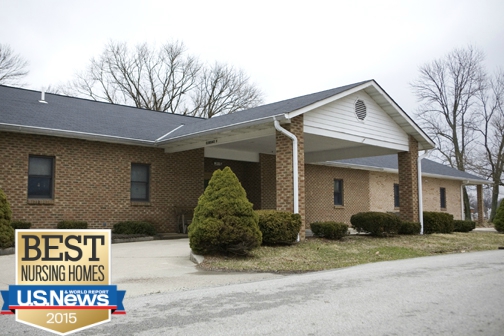
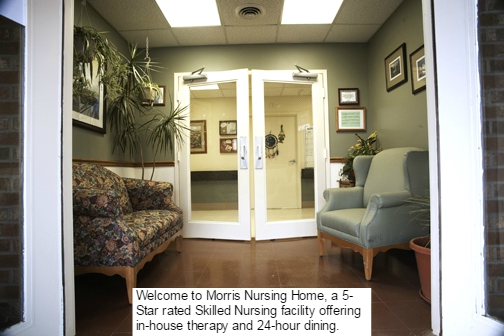
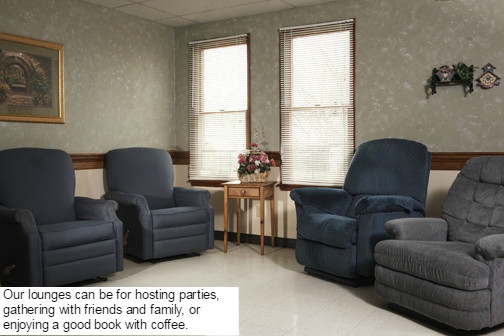
MORRIS NURSING HOME

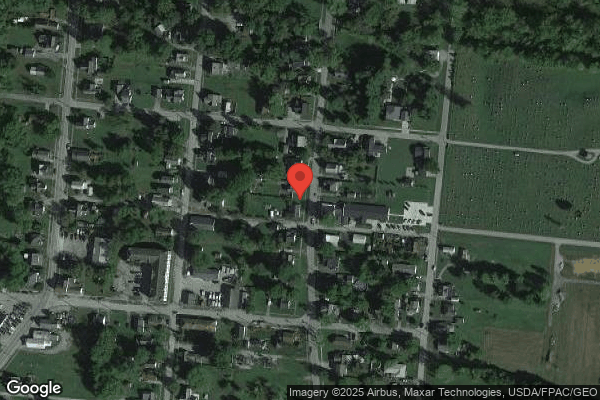
322 SOUTH CHARITY STREET, BETHEL, OH 45106 (513) 734-7401
For profit - Partnership 18 Beds Independent Data: November 2025
Trust Grade
83/100
#300 of 913 in OH
Last Inspection: August 2022

Over 2 years since last inspection. Current conditions may differ from available data.

Overview

Morris Nursing Home in Bethel, Ohio, holds a Trust Grade of B+, which indicates it is above average and recommended for potential residents. It ranks #300 out of 913 facilities in Ohio, placing it in the top half, and #9 out of 15 in Clermont County, meaning there are only a few local options that perform better. However, the facility is experiencing a worsening trend, with issues increasing from 1 in 2018 to 2 in 2022. Staffing is a concern, rated at only 1 out of 5 stars, but the turnover rate at 26% is a positive sign, being significantly lower than the Ohio average of 49%. Notably, there have been no fines, which is encouraging. On the downside, an inspector found that a resident requiring two-person assistance for transfers was not receiving the necessary help, increasing their fall risk. Additionally, care plans for residents were not updated to reflect their dental and fall prevention needs, affecting several individuals. While there are strengths in the facility's health inspection rating, families should weigh these concerns when considering Morris Nursing Home.

Trust Score
B+
83/100
In Ohio
#300/913
Top 32%
Safety Record
Low Risk
No red flags
Inspections
Getting Worse
1 → 2 violations
Staff Stability
✓ Good
26% annual turnover. Excellent stability, 22 points below Ohio's 48% average. Staff who stay learn residents' needs.
Penalties
✓ Good
No fines on record. Clean compliance history, better than most Ohio facilities.
Skilled Nurses
✓ Good
Each resident gets 61 minutes of Registered Nurse (RN) attention daily — more than 97% of Ohio nursing homes. RNs are the most trained staff who catch health problems before they become serious.
Violations
✓ Good
Only 3 deficiencies on record. Cleaner than most facilities. Minor issues only.
★★★★☆
4.0
Overall Rating
★☆☆☆☆
1.0
Staff Levels
★★★★☆
4.0
Care Quality
★★★★★
5.0
Inspection Score
Stable
2018: 1 issues
2022: 2 issues

The Good

  • 4-Star Quality Measures · Strong clinical quality outcomes
  • Low Staff Turnover (26%) · Staff stability means consistent care
  • Full Sprinkler Coverage · Fire safety systems throughout facility
  • No fines on record
  • Staff turnover is low (26%)

    22 points below Ohio average of 48%

Facility shows strength in quality measures, staff retention, fire safety.

The Bad

No Significant Concerns Identified

This facility shows no red flags. Among Ohio's 100 nursing homes, only 1% achieve this.

The Ugly 3 deficiencies on record

Aug 2022 2 deficiencies
CONCERN (D)

Potential for Harm - no one hurt, but risky conditions existed

Deficiency F0657 (Tag F0657)

Could have caused harm · This affected 1 resident

**NOTE- TERMS IN BRACKETS HAVE BEEN EDITED TO PROTECT CONFIDENTIALITY** Based on medical record review, staff interview, and policy review, the facility failed to timely revise care plans to accuratel...

Read full inspector narrative →
**NOTE- TERMS IN BRACKETS HAVE BEEN EDITED TO PROTECT CONFIDENTIALITY** Based on medical record review, staff interview, and policy review, the facility failed to timely revise care plans to accurately reflect dental and fall prevention needs. This affected two (#10 and #165) of sixteen residents reviewed for care plans. The facility census was 17. Findings include: 1. Review of Resident #10's medical record review admitted to the facility on [DATE], with diagnoses including: type II diabetes, unspecified persistent mood disorder, unspecified psychosis, unspecified hallucinations, and unspecified cerebral infarction. Review of the most recent quarterly Minimum Data Set (MDS) assessment dated [DATE] revealed the resident had moderately impaired cognition, was delusional, had no behaviors, did not wander, and rejected care one-to-three out of seven days per week. Resident #10 was independent with Activities of Daily Living (ADL's) and required supervision and setup assistance. Review of admission assessment dated [DATE] revealed Resident #10 had full lower dentures and an upper partial/bridge. Review of the facility consent form dated 03/25/20 revealed Resident #10's daughter (POA) declined consent for dental services. Review of Baseline care plan dated 12/07/19 revealed Resident # 10 had dietary care which included diabetic diet, preferred location for eating in the dining room, and wore dentures/partials. Review of the medical record revealed care plan dated 06/02/19 did not represent Resident's #10's need for supervision of dental care, including monitoring that denture and partial were intact/in place, resident behavior of misplacing denture/partial, resident behavior of making frequent statements that denture/partial were broken/missing, or POA's decline of dental services. During an interview on 08/15/22 at 10:17 A.M., Resident #10 stated she had broken her dentures at Christmas eating hard candy and needed new dentures. During an interview on 08/17/2022 at 11:51 A.M., Licensed Practical Nurse (LPN) #46 stated Resident # 10 frequently complained that her dentures were broken or missing. During an interview on 08/17/2022 at 11:57 A.M., the Director of Nursing (DON) stated Resident#10's family did not like taking her out for appointments and did not like to pay for additional services. Interview on 08/17/22 at 1:01 P.M., with Resident #10 re-stated she was out Christmas shopping with her family the Christmas before last (2020) and broke a tooth out of her upper partial. It hurt when it first happened to eat without her partial, but she had no problems now and was not sure if her family was going to replace her partial. The resident stated she had the broken partial in her purse but declined to show it. Interview on 08/17/22 at 3:42 P.M., the DON reviewed Resident #10's care plan dated 06/02/19 and verified there was no care plan for dentures or dental care/concerns. Interview via telephone on 08/18/22 at 8:50 A.M., Resident #10's daughter/POA states the resident had had a lower denture and upper partial for years, and she had regularly broke one of them. The family had them repaired/replaced by a local dentist. For quite a while, especially during COVID, it was difficult to get her to appointments. Around end of July 2022, Resident #10 told the POA's sister during a visit to the facility that her dentures had been stolen, but the dentures were observed by family to be intact in her denture cup on the nightstand. Family had received no recent reports from the facility about broken or missing dentures. Resident #10 frequently misplaced her things, was very forgetful, and became aggressive at times if people tried to look through her possessions. 2) Review of the electronic record revealed Resident # 165 was admitted to the facility on [DATE]. Her diagnoses included urinary tract infection, history of COVID-19, constipation, glaucoma, major depressive disorder, protein-calorie malnutrition, hypertension, dementia without behavioral disturbance, disorder of the thyroid, fracture of part of the neck of the right femur, displaced intertrochanteric fracture of the right femur, iron deficiency anemia, and encephalopathy. She had an admission Minimum Data Set (MDS) assessment completed on 07/26/22. She had severe cognitive impairment. She needed extensive assist of two staff for bed mobility, transfer, walking, locomotion, dressing, toilet use, and personal hygiene. She needed extensive assist of one staff for eating. She was totally dependent on one staff for bathing. She was frequently incontinent of bowel and bladder. Review of the medical record revealed Resident #165 had physician orders related to safety including non-skid socks at all times (08/06/22), sensor pads to bed/chair (08/09/22), and night light/frequently used items within reach (08/17/22). Review of facility post-fall review dated 08/08/22 revealed Resident #165 had an unwitnessed fall with minor injury in her room on 08/06/22 at 2:20 P.M., Resident #165 was re-educated to call light use and asking for assistance prior to transfer. New interventions for the fall included non-skid socks at all times and signs placed at eye-level to remind the resident to use the call light for assistance. The resident had dementia with poor safety awareness. Review of facility post-fall review dated 08/18/22 revealed Resident #165 had an unwitnessed fall with no injury in her room on 08/17/2022 at 12:17 A.M. Previous interventions already in place included non-skid socks, scoop mattress and sensor alarms. The new fall interventions included to keep frequently used items within reach and provide a night light. Interview on 08/18/22 at 1:15 P.M., the DON verified Resident #165's care plan for falls was not updated timely to represent all fall prevention interventions implemented after Resident #165 fell on [DATE]. The DON verified the care plan did not have the intervention for the visual signs which was initiated after the fall on 08/06/2022. The DON stated floor nurse did not make changes to the care plan. The DON, MDS nurse, or clinical manager updated care plans after reviewing falls. Review of a facility policy undated titled Care Planning and Discharge Care Planning Policy/Procedure revealed the chronic care plans will accurately reflect the resident's status and needs.
CONCERN (E)

Potential for Harm - no one hurt, but risky conditions existed

Deficiency F0700 (Tag F0700)

Could have caused harm · This affected multiple residents

**NOTE- TERMS IN BRACKETS HAVE BEEN EDITED TO PROTECT CONFIDENTIALITY** 4.) Review of the medical record revealed Resident #5 admission on [DATE], with diagnoses including: Parkinson's disease, Malign...

Read full inspector narrative →
**NOTE- TERMS IN BRACKETS HAVE BEEN EDITED TO PROTECT CONFIDENTIALITY** 4.) Review of the medical record revealed Resident #5 admission on [DATE], with diagnoses including: Parkinson's disease, Malignant neoplasm of the prostate, and Malignant neoplasm of the colon. Review of the most recent Minimum Data Set (MDS) assessment dated [DATE] revealed Resident # 5 had moderately impaired cognition, had no behaviors, did not wander, and rejected care one to three out of seven days per week. Resident # 5 was a two-person assist and required extensive assistance with bed mobility, transfers, locomotion, dressing, toileting, and personal hygiene. Review of admission assessment dated [DATE] Resident # 5 had half side rails indicated to promote independence and bed mobility and no consent received for bilateral side rails. Review of side rail assessments dated 03/06/21, 09/08/21, 12/07/21, 03/07/21, and 06/03/21 revealed Resident # 5 had expressed no desire to use side rails, Resident # 5 did not use side rails for positioning/support, and use of side rails was not indicated. Review of the medical record revealed Resident # 5 had no signed consent for side rails and there was no risk agreement for using side rails without clinical indication. Review of the medical record revealed Resident # 5 had physician orders dated 03/05/021 for 1/2 side rails up times two to promote bed mobility due to weakness. Check placement every day and night shift. Interview on 08/17/22 at 12:42 P.M., with Resident # 5 stated he did not request side rails, he did not use side rails to assist with mobility, and the rails had been on the bed since admission. Resident # 5 stated he had never had any accidents related to side rails. Interview via telephone on 08/18/22 at 11:09 A.M., with Resident #5's daughter/ Power of Attorney (POA) stated she gave consent to provide services to promote all aspects of care upon admission. Stated she was aware of risks versus benefits of side rails. Based on observation, resident, family and staff interviews, bed manual review, policy review, and review of the Food and Drug Administration (FDA) guidance, the facility failed to ensure the resident's side rails did not present an entrapment hazard and consent to utilize the side rails was obtained. This affected four (#5, #9, #163 and #164) of 15 residents identified as having side rails. The facility census was 17. Findings included: 1) Review of the medical record for Resident #9 revealed an admission on [DATE]. Resident #9's diagnoses included: acute and chronic respiratory failure with hypoxia, heart failure, chronic obstructive pulmonary disease, constipation, hemorrhoids, occlusion and stenosis of bilateral carotid arteries, chronic kidney disease, myalgia, obesity, polyosteorarthritis, encephalopathy, Vitamin D deficiency, pure hypercholesterolemia, hypertension, paroxysmal atrial fibrillation, hypertrophic osteoarthropathy multiple sites, pulmonary hypertension, panlobular emphysema, hyperosmolality and hypernatremia, non-ischemic myocardial injury (non-traumatic), supraventricular tachycardia, acute and chronic respiratory failure with hypercapnia, sick sinus syndrome, COVID-19, pneumonia, dementia without behavioral disturbance, hypotension, chronic venous hypertension (idiopathic) with ulcer of the left lower extremity, non-pressure chronic ulcer of part of the left lower leg, chronic venous hypertension (idiopathic) with ulcer to right lower extremity, non-pressure chronic ulcer of part of the right lower leg, chronic diastolic (congestive) heart failure, abnormalities of plasma proteins, presence of cardiac pacemaker, amnesia, nonrheumatic aortic (valve) stenosis, age-related osteoporosis, and peripheral vascular disease. She had an admission Medicare 5-day Minimum Data Set (MDS) assessment dated [DATE]. She had severe cognitive impairment. She needed extensive assist of two staff for bed mobility, transfer, locomotion, dressing, toilet use, and personal hygiene. She needed extensive assist of one staff for eating. She was totally dependent on two staff for bathing. Review of the physician order summary revealed an order dated 07/01/22 for half upper side rails up times two to promote bed mobility. Observation on 08/15/22 at 1:05 P.M., of Resident #9 lying on an air mattress, with bilateral upper side rails raised and one half foot rail raised. It was noted there was a large gap in the center of the side rails at the top and bottom measured by the surveyor at that time to be 9 inches x 8 inches (all three openings) with a two inch gap between the mattress and side rail. 2) Review of the medical record for Resident #163 revealed an admission on [DATE]. Resident #163's diagnoses included: obstructive and reflux uropathy, type II diabetes, mild protein-calorie malnutrition, adult failure to thrive, neuromuscular dysfunction of the bladder, unsteadiness on feet, reduced mobility, major depressive disorder, muscle weakness, hypertension, urinary tract infection, accidental puncture and laceration of skin and subcutaneous tissue during a procedure, Alzheimer's disease with early onset, encounter with palliative care, hyperlipidemia, occular hypertension, retention of urine, benign prostatic hyperplasia without lower urinary tract symptoms, Methicillin Susceptible Staphylococcus aureus infection, hypertensive heart disease without heart failure, insomnia, and dementia with behavioral disturbance. He did not have a comprehensive assessment due to being newly admitted . Review of the physician order summary revealed an order dated 08/13/22 for half upper side rails times two to promote bed mobility due to weakness. On 08/15/22 at 12:24 P.M., revealed Resident #163 was observed to be lying in a bed with bilateral side rails raised. There was a large opening in the middle of the side rails. The same style side rail (identified by the facility as being an Advance Series Bed From Hill Rom) was measured by the surveyor as being 9 inches by 8 inches. 3) Review of the medical record for Resident #164 revealed an admission date of 08/13/22. Resident #164's diagnoses included: bipolar disorder, type II diabetes with hyperglycemia, severe protein-calorie malnutrition, acute respiratory failure with hypoxia, diabetic neuropathy, morbid obesity, dysphagia, unsteadiness on feet, pneumonia due to gram-negative bacteria, muscle weakness, iron deficiency anemia, hypothyroidism, anxiety disorder, sleep apnea, hypertension, gastro-esophageal reflux disease, drug induced constipation, major depressive disorder, ocular hypertension bilaterally, hypokalemia, edema, chronic pain, major depressive disorder, chronic pain syndrome, irritable bowel syndrome and nonalcoholic steatohepatitis. She did not have a comprehensive assessment due to being newly admitted . Review of the physician order summary revealed an order dated 08/13/22 for half upper side rails times two to promote bed mobility due to weakness. Observations on 08/15/22 at 12:26 P.M., revealed Resident #164 was observed to be lying in a bed with bilateral side rails raised. There was a large opening in the middle of the side rails. The same style side rail (identified by the facility as being an Advance Series Bed From Hill Rom) was measured by the surveyor as being 9 inches by 8 inches. Observation on 08/15/22 at 1:28 P.M., with the Director of Patient Services #5 verifying Resident #163's side rail to his right had a large gap in the center measuring 7.5 inches x 7 inches with a two inch gap between the mattress and side rail. The side rail to his left measured 8 inches x 7 inches with a gap of two inches. Resident #164 was also in a bed with the same side rails with a bilateral gap measuring 7.5 inches x 7 inches, with a gap between the mattress and side rails of two inches. Resident #9 had a side rail with an opening measuring 7.5 inches x 8 inches with a two inch gap between the mattress and side rail bilaterally. This was all verified by measurements completed by the Director of Patient Services #5 on 08/15/22 at 1:28 P.M. A list was requested of all residents using the same type of side rail. On 08/15/22 at 1:35 P.M., the Director of Patient Services #5 indicated Resident #5 had the same side rails in use with the same measurements (approximately 7.5 inches x 7 inches). A request was made for a copy of the consent for the side rails. The facility provided consents for each of the residents signed on 08/15/22. There were no previous side rail consents on the record for Residents #5, #9, #163 and #164. This was verified by the DON on 08/17/22 at 3:42 P.M. The facility identified the bed as being an Advance Series Bed From Hill Rom. A review of the service manual did not reveal the dimensions of the side rail openings. Review of the Guidance for Industry and FDA Staff, Hospital Bed System Dimensional and Assessment Guidance to Reduce Entrapment issued on 03/10/06 revealed to reduce the risk of head entrapment, openings in the bed system should not allow the widest part of a small head (head breadth measured across the face from ear to ear) to be trapped. Country-specific anthropometric data show that a 1st percentile female head breadth may be as small as 95 mm (3 ¾ inches). A dimension of 120 mm (4 ¾ inches) encompasses the 5th percentile female head breadth in all data sources used to develop these recommendations, and includes 1st percentile female head breadth as reported in some data sources. It also indicated the FDA was therefore using a head breadth dimension of 120 mm (4 ¾ inches) as the basis for its dimensional limit recommendations. This dimension is consistent with the dimensions recommended by the HBSW (hospital bed safety workshop) and the IEC (international electrotechnical commission). Review of an undated facility policy titled Morris Nursing Home Side Rail Policy/Procedure indicated the FDA (Food and Drug Administration) guidelines for bed rails will be followed.
Jul 2018 1 deficiency
CONCERN (D)

Potential for Harm - no one hurt, but risky conditions existed

Deficiency F0578 (Tag F0578)

Could have caused harm · This affected 1 resident

Based on medical record review and staff interview, the facility failed to ensure the advance directives on file were accurate. This affected two (#4 and #12) of four residents reviewed for advance di...

Read full inspector narrative →
Based on medical record review and staff interview, the facility failed to ensure the advance directives on file were accurate. This affected two (#4 and #12) of four residents reviewed for advance directives. The facility census was 18. Findings include: 1. Medical record review for Resident #4 revealed an admission date of 06/18/17. Medical diagnoses included dementia. Review of the physician's progress note, dated 06/01/18, and face sheet for Resident #4 revealed a code status of Do Not Resuscitate Comfort Care (DNRCC). A review of the advance directive form in the resident's hard chart revealed a code status of DNR Comfort Care Arrest (DNRCCA). 2. Medical record review for Resident #12 revealed an admission date of 02/17/18. Medical diagnoses included Alzheimer's disease. Review of the physician's progress notes, dated 06/07/18 and 02/23/18, revealed a code status of DNRCC. Review of the admission paperwork revealed a code status of DNRCC. Review of the medication administration record for May 2018 revealed a code status of DNR. Review of the advance directive form in the resident's hard chart revealed a code status of DNR. Interview on 07/03/18 at 11:19 A.M. with Director of Nursing (DON) who verified the code status in the electronic chart and in the hard chart did not match for Resident #4 and #12.
Understanding Severity Codes (click to expand)
Life-Threatening (Immediate Jeopardy)
J - Isolated K - Pattern L - Widespread
Actual Harm
G - Isolated H - Pattern I - Widespread
Potential for Harm
D - Isolated E - Pattern F - Widespread
No Harm (Minor)
A - Isolated B - Pattern C - Widespread

Questions to Ask on Your Visit

  • "Can I speak with families of current residents?"
  • "What's your RN coverage like on weekends and overnight?"

Our Honest Assessment

Strengths
  • • Grade B+ (83/100). Above average facility, better than most options in Ohio.
  • • No major safety red flags. No abuse findings, life-threatening violations, or SFF status.
  • • No fines on record. Clean compliance history, better than most Ohio facilities.
  • • Only 3 deficiencies on record. Cleaner than most facilities. Minor issues only.
Concerns
  • • No significant concerns identified. This facility shows no red flags across CMS ratings, staff turnover, or federal penalties.
Bottom line: Generally positive indicators. Standard due diligence and a personal visit recommended.

About This Facility

What is Morris's CMS Rating?

CMS assigns MORRIS NURSING HOME an overall rating of 4 out of 5 stars, which is considered above average nationally. Within Ohio, this rating places the facility higher than 99% of the state's 100 nursing homes. This rating reflects solid performance across the metrics CMS uses to evaluate nursing home quality.

How is Morris Staffed?

CMS rates MORRIS NURSING HOME's staffing level at 1 out of 5 stars, which is much below average compared to other nursing homes. Staff turnover is 26%, compared to the Ohio average of 46%. This relatively stable workforce can support continuity of care. RN turnover specifically is 80%, which is notably high. RNs provide skilled clinical oversight, so turnover in this role can affect medical care quality.

What Have Inspectors Found at Morris?

State health inspectors documented 3 deficiencies at MORRIS NURSING HOME during 2018 to 2022. These included: 3 with potential for harm.

Who Owns and Operates Morris?

MORRIS NURSING HOME is owned by a for-profit company. For-profit facilities operate as businesses with obligations to shareholders or private owners. The facility operates independently rather than as part of a larger chain. With 18 certified beds and approximately 15 residents (about 83% occupancy), it is a smaller facility located in BETHEL, Ohio.

How Does Morris Compare to Other Ohio Nursing Homes?

Compared to the 100 nursing homes in Ohio, MORRIS NURSING HOME's overall rating (4 stars) is above the state average of 3.2, staff turnover (26%) is significantly lower than the state average of 46%, and health inspection rating (5 stars) is much above the national benchmark.

What Should Families Ask When Visiting Morris?

Based on this facility's data, families visiting should ask: "Can you walk me through typical staffing levels on day, evening, and night shifts?" "Can I visit during a mealtime to observe dining assistance and food quality?" "How do you handle medical emergencies, and what is your hospital transfer rate?" "Can I speak with family members of current residents about their experience?" These questions are particularly relevant given the below-average staffing rating.

Is Morris Safe?

Based on CMS inspection data, MORRIS NURSING HOME has a clean safety record: no substantiated abuse findings (meaning no confirmed cases of resident harm), no Immediate Jeopardy citations (the most serious violation level indicating risk of serious injury or death), and is not on the Special Focus Facility watch list (a federal program monitoring the lowest-performing 1% of nursing homes). The facility has a 4-star overall rating and ranks #1 of 100 nursing homes in Ohio. While no facility is perfect, families should still ask about staff-to-resident ratios and recent inspection results during their visit.

Do Nurses at Morris Stick Around?

Staff at MORRIS NURSING HOME tend to stick around. With a turnover rate of 26%, the facility is 20 percentage points below the Ohio average of 46%. Low turnover is a positive sign. It means caregivers have time to learn each resident's needs, medications, and personal preferences. Consistent staff also notice subtle changes in a resident's condition more quickly.

Was Morris Ever Fined?

MORRIS NURSING HOME has no federal fines on record. CMS issues fines when nursing homes fail to meet care standards or don't correct problems found during inspections. The absence of fines suggests the facility has either maintained compliance or corrected any issues before penalties were assessed. This is a positive indicator, though families should still review recent inspection reports for the full picture.

Is Morris on Any Federal Watch List?

MORRIS NURSING HOME is not on any federal watch list. The most significant is the Special Focus Facility (SFF) program, which identifies the bottom 1% of nursing homes nationally based on persistent, serious quality problems. Not being on this list means the facility has avoided the pattern of deficiencies that triggers enhanced federal oversight. This is a positive indicator, though families should still review the facility's inspection history directly.