BURTON HEALTH CARE CENTER
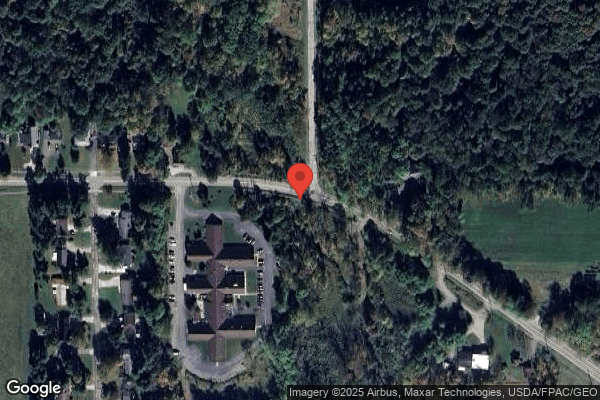
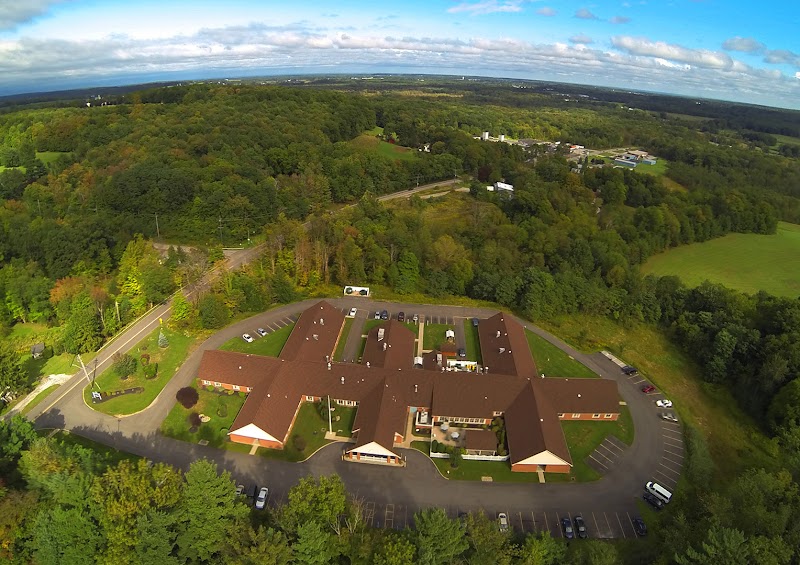
14095 E CENTER ST, BURTON, OH 44021 (440) 834-1084
For profit - Corporation 90 Beds WINDSOR HOUSE, INC. Data: November 2025
Trust Grade
90/100
#37 of 913 in OH
Last Inspection: April 2025

Within standard 12-15 month inspection cycle. Federal law requires annual inspections.

Overview

Burton Health Care Center has earned an impressive Trust Grade of A, indicating it is an excellent facility that is highly recommended. It ranks #37 out of 913 nursing homes in Ohio, placing it in the top half of all facilities in the state, and it is the best option among the 8 homes in Geauga County. The facility's trend is improving, having reduced its issues from 4 in 2022 to none in 2025, which is a positive sign for prospective residents. Staffing is rated at 3 out of 5 stars, with a turnover rate of 42%, slightly below the state average, suggesting that staff generally stay longer and build relationships with residents. While there have been no fines on record, which is a good sign, there were concerns regarding the handling of a Temporary Nurse Aide who was not immediately removed after an allegation of resident abuse, potentially affecting multiple residents. Additionally, incidents related to monitoring and documenting care for residents with specific medical needs have been noted. Overall, while there are notable strengths in care quality and staffing stability, families should be aware of the past concerns to ensure thorough consideration.

Trust Score
A
90/100
In Ohio
#37/913
Top 4%
Safety Record
Low Risk
No red flags
Inspections
Getting Better
4 → 0 violations
Staff Stability
○ Average
42% turnover. Near Ohio's 48% average. Typical for the industry.
Penalties
✓ Good
No fines on record. Clean compliance history, better than most Ohio facilities.
Skilled Nurses
⚠ Watch
Each resident gets only 27 minutes of Registered Nurse (RN) attention daily — below average for Ohio. Fewer RN minutes means fewer trained eyes watching for problems.
Violations
✓ Good
Only 5 deficiencies on record. Cleaner than most facilities. Minor issues only.
★★★★★
5.0
Overall Rating
★★★☆☆
3.0
Staff Levels
★★★★★
5.0
Care Quality
★★★★★
5.0
Inspection Score
Stable
2022: 4 issues
2025: 0 issues

The Good

  • 5-Star Quality Measures · Strong clinical quality outcomes
  • Full Sprinkler Coverage · Fire safety systems throughout facility
  • No fines on record
  • Staff turnover below average (42%)

    6 points below Ohio average of 48%

Facility shows strength in quality measures, fire safety.

The Bad

Staff Turnover: 42%

Near Ohio avg (46%)

Typical for the industry

Chain: WINDSOR HOUSE, INC.

Part of a multi-facility chain

Ask about local staffing decisions and management

The Ugly 5 deficiencies on record

Sept 2022 4 deficiencies
CONCERN (D)

Potential for Harm - no one hurt, but risky conditions existed

Notification of Changes (Tag F0580)

Could have caused harm · This affected 1 resident

**NOTE- TERMS IN BRACKETS HAVE BEEN EDITED TO PROTECT CONFIDENTIALITY** Based on interview and record review the facility failed to ensure the physician was notified when Resident #224 missed five dos...

Read full inspector narrative →
**NOTE- TERMS IN BRACKETS HAVE BEEN EDITED TO PROTECT CONFIDENTIALITY** Based on interview and record review the facility failed to ensure the physician was notified when Resident #224 missed five doses of her muscle relaxant and for Resident #56's elevated blood sugars. This affected two residents (Resident #56 and #224) out of two residents reviewed for physician notification of change in condition. The facility census was 70. Findings included: 1. Review of the medical record for Resident #56 revealed an admission date of 01/16/22 and diagnoses included diabetes with hyperglycemia, hemiplegia and hemiparesis following cerebral infarction affecting right dominant side, hypertension, and depression. Review of the care plan dated 02/07/22 revealed Resident #56 had diabetes. Interventions included medications as ordered, monitor blood sugar per order, monitor, document and record any signs of hyperglycemia including increased thirst, increased appetite, frequent urination, weight loss, fatigue, dry skin, and if breath smells fruity. Review of physician orders for July 2022 and August 2022 revealed Resident #56 had orders that included: Inject Humalog (insulin) solution 100 units per milliliter (ml) per sliding scale subcutaneously (SQ) before meals due to diabetes at 7:30 A.M., 11:00 A.M. and 4:00 P.M. The sliding scale revealed if Resident #56's blood sugar was from 150 to 200 she was to receive two units, from 201 to 250 she was to receive four units, from 251 to 300 she was to receive six units, from 351 to 400 she was to receive 10 units, and 401 and above she was to receive 10 units and the nurse was to call the physician. She also had an order to receive Lantus insulin solution 10 units SQ at bedtime. Review of nursing notes dated 07/01/22 to 08/29/22 for Resident #56 revealed there was no documentation Primary Care Physician (PCP) #900 was notified on 07/24/22 when Resident #56's blood sugar was 533 and she had refused her routine insulin that was ordered at bedtime. The nursing notes revealed there no documentation that PCP #900 was notified when Resident #56's blood sugar was 450 on 08/13/22 at 4:00 P.M. even though the physician order revealed the physician was to be notified if her blood sugar was 401 or above per sliding scale. The nursing notes also revealed no documentation on 08/28/22 at bedtime that PCP #900 was notified when her blood sugar was 543. Review of July 2022 Medication Administration Record (MAR) revealed on 07/24/22 upon bedtime Resident #56's blood sugar was obtained and documented per Licensed Practical Nurse (LPN) #308 as 533. It was also documented per the MAR that Resident #56 refused her Lantus insulin 10 units as ordered at the same time. Review of August 2022 MAR revealed on 08/13/22 at 4:00 P.M. Resident #56's blood glucose level was checked per Registered Nurse (RN) #340 and was documented as 450. The MAR revealed RN #340 administered 10 units of Humalog insulin. The MAR revealed blood sugars above 401 the nurse was to administer 10 units of Humalog insulin but was to also notify the physician. On 08/28/22 upon bedtime Resident #56's blood sugar was checked per LPN #308 and was 543. Resident #56 received Lantus 10 units SQ per her routine physician order. Review of quarterly Minimum Data Set (MDS) dated [DATE] revealed Resident #56 had impaired cognition. She received seven days of insulin during the assessment period. Interview on 08/31/22 at 4:27 P.M. and on 09/01/22 at 8:34 A.M. with the Director of Nursing verified there was no documentation PCP #900 was notified on 07/24/22 at bedtime, 08/13/22 at 4:00 P.M. and 08/28/22 at bedtime when Resident #56's blood sugar was elevated. He verified Resident #56 had a sliding scale order that revealed the nurse was to contact the physician if above 400 and on 08/13/22 at 4:00 P.M. Resident #56's blood sugar was 450. He verified on 07/24/22 at bedtime Resident #56's blood sugar was 533 and she had refused her insulin that was ordered at the same time and on 08/28/22 at bedtime her blood sugar was 543 and revealed he would have expected anytime a resident's blood sugar was above 500 that the nurse would contact the physician as he stated, best practice. Review of facility policy labeled, Change in Condition dated May 2020 revealed the facility would inform the resident and consult with the resident's physician when there was a significant change in resident's physical, mental, or psychosocial status and/ or a need to alter treatment significantly. The policy revealed any sudden or marked change in blood glucose level including below 70 and/ or above or below baseline levels that the nurse was to check the physician order for immediate interventions and notify the physician if intervention ineffective or change in blood glucose level high or low was new for the resident. 2. Review of medical record for Resident #224 revealed an admission date of 08/17/22 and diagnoses included wedge compression fracture of thoracic (T) vertebra 7 through T8 vertebra, rheumatoid arthritis, fracture of right wrist, pain in thoracic spine, and muscle spasms. Review of August 2022 Medication Administration Record (MAR) revealed Resident #224 had a physician order for Methocarbamol 500 milligram (mg) tablet give one tablet by mouth every six hours due to rheumatoid arthritis and muscle spasms. The MAR revealed she did not receive the Methocarbamol on 08/27/22 at 6:00 A.M., 12:00 P.M. and 6:00 P.M. and on 08/28/22 at 12:00 A.M. and 6:00 A.M. She missed a total of five doses. Review of admission/ readmission screener dated 08/17/22 and completed per Licensed Practical Nurse (LPN) #308 revealed Resident #224 had pain and it was a five on a pain scale of zero to ten. The assessment revealed she had pain due to the fractures and intermittent sharp shooting throbbing pain that increased with movement and was alleviated with rest. Review of care plan dated 08/21/22 revealed Resident #224 was on pain medication due to fractures in her back, right wrist, rheumatoid arthritis, and muscle spasms. Interventions included administer medications as ordered and monitor and document side effects and effectiveness. Review of nursing note dated 08/28/22 at 3:25 P.M. and completed by LPN #329 revealed Resident #224 was out of her Methocarbamol since 08/26/22 which caused Resident #224 great distress. LPN #329 revealed she had faxed pharmacy 08/27/22 when she discovered Resident #224 needed a refill and the medication was not sent per the pharmacy which again stressed Resident #224 out. LPN #329 assured Resident #224 that she would contact pharmacy and see if they could bring the medication today, 08/28/22. The nursing note revealed the medication was delivered and LPN #329 administered Resident #224 Methocarbamol immediately which appeared to satisfy her. The nursing note did not include any documentation the Primary Care Physician #900 was notified regarding Resident #224 not having the Methocarbamol available and of the Resident stating it was causing her great distress Review of Medicare five-day Minimum Data Set (MDS) dated [DATE] was in progress. Interview on 08/29/22 at 3:25 P.M. and on 08/31/22 08:58 A.M. with Resident #224 revealed she recently had a miserable day as the facility did not have her Methocarbamol for a couple days and that when she does not take that medication her muscle spasms intensify. She revealed the facility just kept saying they were calling pharmacy for the medication but then still never had the medication. She revealed it was just frustrating as when she knows what medications finally help with the muscle spasms and then the facility did not have, or the facility did not call the physician for maybe another medication to be given with her pain medication to help with the muscle spasms. She revealed she was able to take other as needed medications that she had ordered for the pain that had helped with the pain but not he muscle spasms. Interview on 09/01/22 at 8:44 A.M. with the Director of Nursing revealed he was not aware of the incident where Resident #224 missed five doses and of the nursing note that was documented as Resident #224 was in great distress. He revealed LPN #329 should have contacted the physician regarding the missed doses and see if the physician wanted any other medication that could have been potentially in the starter kit. He revealed Resident #224 had received as needed medications including oxycodone 5-325 milligram on 08/27/22 and 08/28/22 and the medication was documented as effective for her pain. Review of facility policy labeled, Pain Management dated January 2016 revealed the facility would manage a resident's pain to the extent as possible in order to help attain is or her highest practicable level of wellbeing. The policy revealed if a resident had ineffective pain management the facility would re-assess the pain, including determination of underlying cause if possible, and notify the resident's physician. Review of facility policy labeled, Change in Condition dated May 2020 revealed the facility would inform the resident and consult with the resident's physician when there was a significant change in resident's physical, mental, or psychosocial status and/ or a need to alter treatment significantly. The policy revealed any sudden or marked change in blood glucose level including below 70 and/ or above or below baseline levels that the nurse was to check the physician order for immediate interventions and notify the physician if intervention ineffective or change in blood glucose level high or low was new for the resident. The policy revealed any change in resident status that required a potential change to ordered medication and treatment such as resident refusals, and unavailability of ordered medications the physician would be notified. This deficiency substantiates Complaint Number OH00134092.
CONCERN (D)

Potential for Harm - no one hurt, but risky conditions existed

Deficiency F0602 (Tag F0602)

Could have caused harm · This affected 1 resident

**NOTE- TERMS IN BRACKETS HAVE BEEN EDITED TO PROTECT CONFIDENTIALITY** Based on record review, facility Self-Reported Incident (SRI) review and interview the facility failed to prevent the misappropr...

Read full inspector narrative →
**NOTE- TERMS IN BRACKETS HAVE BEEN EDITED TO PROTECT CONFIDENTIALITY** Based on record review, facility Self-Reported Incident (SRI) review and interview the facility failed to prevent the misappropriation of medications for Resident #58 and Resident #122. This affected two residents (#58 and #122) of two residents reviewed for misappropriation of medication. The facility census was 70. Findings Include: Review of the medical record for Resident #58 revealed an admission date of [DATE] with diagnoses including stage three chronic kidney disease, pain and other muscle spasms. Record review revealed Resident #58 had intact cognition. Review of the physician's orders revealed Resident #58 had an order for Tizanidine four milligrams (mg) for muscle spasms and Gabapentin 300 mg for pain. Review of the closed medical record for Resident #122 revealed an admission date of [DATE]. Resident #122 expired on [DATE]. Resident #122 had diagnoses including vascular dementia and multiple sclerosis. Record review revealed Resident #122 had impaired cognition. Record review revealed during his stay, Resident #122 had an order for Gabapentin 400 mg for pain. Review of the facility SRI, tracking number 225178, dated [DATE] revealed the facility was informed by a local enforcement agency on [DATE] that medications had been taken from the facility. The SRI revealed the husband of Alleged Perpetrator (AP) #500 (facility employee) was observed with medication cards in their home for residents (#58 and #122) who resided in the facility where AP #500 currently worked and contacted the agency. The agency contacted the facility and the medication cards were returned to the facility on [DATE] and subsequently destroyed by the facility. Review of the returned medication cards by the facility revealed two empty cards of 30 tablets of Tizanidine (muscle relaxer) four milligrams (mg) and one card with three remaining tablets. There were three cards of 30 tablets of Gabapentin (anticonvulsant/pain) 300 mg that were empty as well. The medication cards were labeled for Resident #58 and Resident #122. A facility investigation revealed the medication cards were for medications that had been previously discontinued for Resident #58 and #122. At the time the medications were discontinued, they should have been returned to the pharmacy. However, it was concluded that AP #500 had instead taken them. On [DATE] at 4:43 P.M. interview with Corporate Quality Assurance Nurse (QAN) and the Director of Nursing (DON) revealed the facility received a call from local enforcement informing them they had found medications belonging to facility residents in the home of a facility employee. QAN revealed the medications taken by the employee were medications that were being sent back to the pharmacy. Following the incident, the QAN revealed all medication carts were reviewed and all residents were interviewed with no additional concerns identified.
CONCERN (D)

Potential for Harm - no one hurt, but risky conditions existed

Deficiency F0658 (Tag F0658)

Could have caused harm · This affected 1 resident

**NOTE- TERMS IN BRACKETS HAVE BEEN EDITED TO PROTECT CONFIDENTIALITY** Based on record review, observation and interview, the facility failed to ensure medications were administered at the time they ...

Read full inspector narrative →
**NOTE- TERMS IN BRACKETS HAVE BEEN EDITED TO PROTECT CONFIDENTIALITY** Based on record review, observation and interview, the facility failed to ensure medications were administered at the time they were prepared per professional standards. This affected two residents (Resident #16 and #17) of six Residents reviewed for medication administration. The facility census was 70. Finding included: Review of Licensed Practical Nurse (LPN) #320's personnel file revealed a date of hire of 06/28/13. There was no education and/ or disciplinary action revealed in her file regarding the concern of preparing medications in advance or leaving medications in rooms unattended. 1. Review of medical record for Resident #17 revealed an admission date of 07/31/20 and diagnoses included chronic atrial fibrillation, chronic kidney disease, cirrhosis of the liver, and peripheral vascular disease. Review of person-centered plan of care dated 07/31/20 revealed there was nothing in her care plan regarding Resident #17 having a preference that she received her medication at the same time as Resident #16. Review of annual Minimum Data Set (MDS) dated [DATE] revealed Resident #17 had intact cognition. 2. Review of medical record for Resident #16 revealed an admission date of 02/08/22 and diagnoses included cerebral infarction affecting right dominant side, gastro-esophageal reflux disease (GERD), convulsions, muscle spasms, and atrial fibrillation. Review of person-centered plan of care dated 02/10/22 revealed there was nothing in her care plan regarding Resident #16 having a preference that she received her medications at the same time as Resident #17. Review of quarterly Minimum Data Set (MDS) dated [DATE] revealed Resident #16 had intact cognition. Observation on 08/30/22 at 8:20 A.M. revealed LPN #320 had two medications cups unlabeled sitting on her medication cart that contained nine tablets and/ or capsules in the one cup and 12 tablets in the other. Interview on 08/30/22 at 8:20 A.M. with LPN #320 revealed she knew she was not supposed to but that she prepared Resident #16 and Resident #17's medications at the same time, and then goes into their room and gives both residents their medications at the same time. She revealed that she did it this way because both residents, Residents #16 and #17 requested that she gives their medications at the same time. Observation on 08/30/22 at 8:29 A.M. with LPN #320 verified the one cup contained nine tablets and/ or capsules for Resident #17 that included: allopurinol 100 mg (milligram) tablet for gout, atenolol 25 mg tablet half tablet to equal 12.5 mg tablet for hypertension, cholecalciferol 2000 units tablet for vitamin D deficiency, potassium 20 milliequivalent (meq) tablet for low potassium, thiamine 100 mg tablet for vitamin B deficiency, torsemide 20 mg half tablet to equal 10 mg for hypertension, Vitamin B 12 1000 (microgram) mcg tablet, lactobacillus one capsule for health maintenance, and pyridoxine (vitamin B 6) 50 mg tablet. LPN #320 then administered Resident #17 her medications. Observation on 08/30/22 at 8:36 A.M. with LPN #320 verified the other cup contained twelve tablets for Resident #16 that included: two tablets of folic acid 1 mg for folic acid deficiency, magnesium oxide 400 mg tablet as a supplement, pantoprazole sodium delayed release 40 mg tablet for GERD, potassium chloride extended release 20 meq tablet, vitamin B 12 2500mcq tablet, vitamin D 3 25 mcg tablet, Zoloft 100 mg tablet for depression, Keppra 750 mg tablet for convulsions, metoprolol tartrate 25 mg tablet for hypertension, baclofen 10 mg half tablet to equal 5 mg for muscle spasms, and gabapentin 300 mg tablet for pain. LPN #320 then administered Resident #16 her medications. Interview on 08/31/22 at 8:38 A.M. with LPN #320 verified she should not have prepared Resident #16 and Resident #17's medications at the same time as she stated, I should give one at a time as that is how mistakes can happen. Interview on 08/30/22 at 9:09 A.M. with State Tested Nursing Assistant (STNA) #304 revealed she had witnessed on several occasions nurses preparing medications in advance. She revealed she had seen several agency nurses and LPN #320 prepare residents medications by putting resident's medications into separate medication cups and placing initials on the cups. She revealed the nurses would have the medication cups lined up on the medication cart. She revealed she was concerned as she had witnessed residents attempting to grab the medication cups off the medication carts. She revealed she felt LPN #320 pre-poured the medications every time she worked. She also revealed LPN #320 would place the medication cups in the residents' rooms without observing the residents take their medications as she found several cups with medication still in the cups in residents' rooms when LPN #320 worked. She revealed she had brought up the concerns to management including the Director of Nursing. Interview on 08/30/22 at 9:12 A.M. with STNA #331 revealed she had witnessed nurses pre-pouring medications as they have multiple medication cups lined up across their medication cart. She revealed she had witnessed LPN #320 pre-pour medications multiple times as well as she revealed some agency nurses. She revealed she had found medication cups in residents' rooms with medication in the cup as the nurses including LPN #320 did not ensure that the resident took their medications. She revealed she had brought the Director of Nursing the medication cups with the medication inside the cup anytime she found cups of medication in a resident's room and that she had reported the nurses pre-pouring medications. She revealed the nurses including LPN #320 continued to pre-pour and leave medication in resident's rooms after she had reported the concern. Interview on 08/31/22 at 8:24 A.M. with Director of Nursing revealed staff had reported to him multiple occasions regarding nurses including LPN #320 pre-pouring medications. He revealed he had educated LPN #320 verbally but did not have anything in writing regarding the education that he had given LPN #320. He revealed the last time he had educated LPN #320 was approximately one month ago and that he had stated to LPN #320 that preparing medication in advance was an unacceptable practice at the facility and that she was to administer one resident at a time their medications. He revealed no residents to his knowledge had a preference of receiving their medications at the same time and that medications should be prepared one resident at a time for all residents including Resident #16 and Resident #17. Interview on 08/31/22 at 3:46 P.M. with Resident #17 revealed she did not have a preference of when she got her medications including any preference that she had to receive her medication at the same time as her roommate, Resident #16. Interview on 08/31/22 at 3:50 P.M. with Resident #16 revealed she did not have a preference of when she got her medications including any preference that she had to receive her medication at the same time as her roommate, Resident #17. Review of pharmacy manual that included undated policy labeled, Preparation for Medication Administration revealed medication were to be administered at the time they were prepared, and medications were not to be pre-poured. This deficiency substantiates Complaint Number OH00134092 and Complaint Number OH00133605.
CONCERN (E)

Potential for Harm - no one hurt, but risky conditions existed

Investigate Abuse (Tag F0610)

Could have caused harm · This affected multiple residents

**NOTE- TERMS IN BRACKETS HAVE BEEN EDITED TO PROTECT CONFIDENTIALITY** Based on record review, facility Self-Reported Incident review, facility policy and procedure review and interview the facility ...

Read full inspector narrative →
**NOTE- TERMS IN BRACKETS HAVE BEEN EDITED TO PROTECT CONFIDENTIALITY** Based on record review, facility Self-Reported Incident review, facility policy and procedure review and interview the facility failed to ensure Temporary Nurse Aide (TNA) #369 was immediately removed from the facility once an allegation of resident abuse involving the TNA was made. This affected one resident (#222) and had the potential to affect 32 additional residents (#1, #7, #9, #10, #12, #13, #15, #18, #21, #30, #34, #30, #36, #40, #43, #44, #45, #47, #49, #51, #55, #56, #58, #59, #61, #62, #66, #67, #71, #231, #232 and #234) residing on the unit where TNA #369 worked. The facility census was 70. Findings include: Record review revealed Resident #222 was admitted to the facility on [DATE] for a respite stay and then transitioned to long term care placement on 08/24/22. Resident #222 had diagnoses including Alzheimer's dementia with behavior, restlessness and agitation, insomnia and depression. Review of a facility Self-Reported Incident (SRI), tracking number 225300, dated 08/13/22 revealed an allegation of abuse involving Resident #222 was reported to the State agency. As a result of the investigation/the SRI noted the facility unsubstantiated the incident with no physical or emotional injury identified to Resident #222. TNA #369 denied the incident that was reported by State Tested Nursing Assistant (STNA) #358 and the facility found no evidence the resident recalled the incident or sustained any physical injury as a result of the incident. Review of the five day Minimum Date Set (MDS) 3.0 assessment, dated 08/17/22 revealed Resident #222 was severely cognitively impaired with physical and verbal behaviors directed toward others, continuous disorganized thinking, rejection of care, wandering and required extensive assist of two staff for most activities of daily living. A plan of care, dated 08/24/22 revealed the facility had developed plans related to limited physical mobility and behavior problems related to combative, aggressive behavior during hands on care. The care plan noted gentle redirection ineffective on most occasions. On 08/31/22 at 4:35 P.M. interview with State Tested Nursing Assistant (STNA) #358 revealed she was working with TNA #369 on the night of 08/12/22. The STNA revealed as the two of them tried to assist Resident #222 with going to bed at approximately 11:30 P.M., the resident grabbed her (STNA #358) shirt and would not let go. TNA #369 then slapped the resident's hand repeatedly, harder than she needed to, telling him to let go. STNA #358 reported she had the situation under control and got the resident to release her shirt by talking to him. STNA #358 revealed she reported the incident to the nurse working the unit, Registered Nurse (RN) #378, who was an agency nurse. However, the STNA revealed the nurse did not report the incident to any of the administrative staff and TNA #369 continued to work her whole shift, the TNA was not removed from the facility. On 08/31/22 at 4:49 P.M. interview with the Licensed Practical Nurse (LPN), who was the STNA supervisor revealed she received a phone call from STNA #358 on 08/13/22 at approximately 10:20 A.M. notifying her of the alleged abuse involving Resident #222. The LPN revealed she immediately called and spoke with the Director of Nursing (DON) who began an investigation. She verified TNA #369 was not removed from the facility after the incident and continued to work her full shift. On 08/31/22 at 4:58 P.M. an attempt to reach RN #378, the agency nurse who was working at the time of the incident was unsuccessful as the phone number provided was no longer in service. On 09/01/22 at 8:05 A.M. interview with the Administrator verified TNA #369 should have been sent home immediately when the incident was reported by STNA #358 and that RN #378 should have known to contact Administration with a report of alleged abuse at the time it occurred. Review of the punch detail for hours worked by TNA #360 for August 2022 revealed the TNA worked from 6:00 P.M. on 08/12/22 to 6:30 A.M. on 08/13/22. The facility identified 32 additional residents, #1, #7, #9, #10, #12, #13, #15, #18, #21, #30, #34, #30, #36, #40, #43, #44, #45, #47, #49, #51, #55, #56, #58, #59, #61, #62, #66, #67, #71, #231, #232 and #234 residing on the unit where TNA #369 worked on 08/12/22 to 08/13/22. Review of the Resident Abuse Prevention Practices policy, dated September 2019 revealed staff received training which included understanding behaviors of residents which may increase abuse and neglect and reporting any suspected abuse.
Sept 2019 1 deficiency
CONCERN (E)

Potential for Harm - no one hurt, but risky conditions existed

Medical Records (Tag F0842)

Could have caused harm · This affected multiple residents

**NOTE- TERMS IN BRACKETS HAVE BEEN EDITED TO PROTECT CONFIDENTIALITY** 3. Record review for Resident #40 revealed she was admitted to facility on 01/10/11 with diagnoses including stroke, dysphagia (...

Read full inspector narrative →
**NOTE- TERMS IN BRACKETS HAVE BEEN EDITED TO PROTECT CONFIDENTIALITY** 3. Record review for Resident #40 revealed she was admitted to facility on 01/10/11 with diagnoses including stroke, dysphagia (trouble swallowing), pain, pneumonia, gastrostomy (a tube inserted through the abdominal wall into the stomach for nutrition/medication), anemia, and gastroesophageal reflux disease (GERD). Physician orders for Resident #40 include: House supplement in the afternoon, six ounces (oz) with lunch. State Tested Nursing Assistants (STNAs) to record percentage consumed in plan of care (POC) with meal documentation. This start date of this order was 07/27/19. Observation on 09/18/19 at 12:09 P.M. during tray line service revealed the house supplement being placed on the lunch tray for Resident #40. The staff who delivered the tray, opened and poured the contents into a cup. The house supplement was delivered to her. Observation on 09/19/19 at 12:28 PM revealed Resident #40 in the dining room. She had a cup on her tray with the house supplement, some of which had been consumed. Review of nutrition tracking for Resident #40, from 08/20/19 through 09/17/19, revealed the house supplement was not offered on six days; 08/23/19, 08/25/19, 08/31/19, 09/01/19, 09/08/19, and 09/16/19. Interview on 09/19/19 at 12:35 P.M. with Registered Nurse (RN) #105 confirmed Resident #40 was documented as not receiving the supplements. He confirmed the kitchen rarely runs out of nutritional supplements and there is always an alternative to be given. 4. Clinical record review for Resident #55 revealed she was admitted to facility on 12/10/18 with diagnoses including failure to thrive, moderate protein calorie malnutrition, GERD, pneumonia, and salivary gland cancer. Physician orders for Resident #55 include: Nutritious juice with meals, six oz with breakfast, lunch, and dinner. STNAs were to record percentage consumed in the plan of care (POC) with meal documentation. The start date was 05/30/19. Observation on 09/18/19 at 12:35 P.M. during tray line service revealed the nutritious juice was placed on the lunch tray for Resident #55. Observation on 09/19/19 at 12:54 P.M. revealed Resident #55 in her room during lunch. She had a full cup on her tray with the nutritious juice. None had been consumed. Review of nutrition tracking for Resident #55, from 08/20/19 through 09/17/19, revealed the nutritious juice was not offered one of three times for eight days; 08/25/19, 08/26/19, 08/27/19, 09/03/19, 09/06/19, 09/07/19, 09/13/19, and 09/15/19. It was not offered for two of three times for four days; 08/20/19, 09/01/19, 09/14/19, and 09/16/19. Interview on 09/19/19 at 12:35 P.M. with RN #105 confirmed Resident #55's supplements were not documented as provided. He confirmed the kitchen rarely runs out of nutritional supplements and there is always an alternative to be given. Based on observation, record review and interview the facility failed to accurately document the intakes of nutritional supplements as ordered by the physician for four of four residents reviewed for nutrition (Resident #10, Resident #22, Resident #40 and Resident #55). The facility census was 69. Findings include: 1. Resident #22 was admitted to the facility on [DATE] with diagnoses including protein-calorie malnutrition, dementia and abnormal weight loss. The care plan dated 08/23/19 indicated the resident was at risk for weight loss. She had a physician's order dated 07/26/19 for nutritious juice twice a day with breakfast and lunch and a physician's order dated 07/29/19 for six ounces of a liquid nutritional supplement with supper. Review of documentation for the intakes of the supplements from 08/20/19 through 09/17/19 revealed the supplements were only documented for two meals on 08/20/19, 08/22/19, 08/23/19, 08/24/19, 08/29/19, 08/31/19, 09/01/19, 09/02/19, 09/03/19, 09/08/19, 9/10/19, 09/11/19, 09/14/19, 09/15/19 and 09/17/19 and for only one meal on 09/09/19. This concern was verified with Registered Dietician/Licensed Dietician (RDLD) #100 on 09/18/19 at 12:35 P.M. 2. Resident #10 was admitted to the facility on [DATE] with diagnoses including dementia with behavioral disturbance, Alzheimer's disease and epigastric pain. The care plan dated 06/20/19 indicated the resident was at risk for weight loss. Dietary notes dated 08/16/19 indicated the resident had a significant weight loss of 4.64 percent for one month and had variable meal intakes. The resident had a physician order dated 08/29/19 for six ounces of a nutritional supplement with lunch and dinner. Review of documentation for the intakes of the supplement from 09/01/19 through 09/17/19 revealed the supplements were only documented one time on 09/02/19, 09/04/19, 09/05/19, 09/06/19, 09/08/19, 09/10/19, 09/11/19, 09/12/19 and 09/17/19 and were not documented at all on 09/01/19, 09/03/19, 09/07/19, 09/13/19, 09/14/19 and 09/15/19. This concern was verified with RDLD #100 on 09/18/19 at 12:40 P.M.
Understanding Severity Codes (click to expand)
Life-Threatening (Immediate Jeopardy)
J - Isolated K - Pattern L - Widespread
Actual Harm
G - Isolated H - Pattern I - Widespread
Potential for Harm
D - Isolated E - Pattern F - Widespread
No Harm (Minor)
A - Isolated B - Pattern C - Widespread

Questions to Ask on Your Visit

  • "Can I speak with families of current residents?"
  • "What's your RN coverage like on weekends and overnight?"

Our Honest Assessment

Strengths
  • • Grade A (90/100). Above average facility, better than most options in Ohio.
  • • No major safety red flags. No abuse findings, life-threatening violations, or SFF status.
  • • No fines on record. Clean compliance history, better than most Ohio facilities.
  • • Only 5 deficiencies on record. Cleaner than most facilities. Minor issues only.
Concerns
  • • No significant concerns identified. This facility shows no red flags across CMS ratings, staff turnover, or federal penalties.
Bottom line: Generally positive indicators. Standard due diligence and a personal visit recommended.

About This Facility

What is Burton Health's CMS Rating?

CMS assigns BURTON HEALTH CARE CENTER an overall rating of 5 out of 5 stars, which is considered much above average nationally. Within Ohio, this rating places the facility higher than 99% of the state's 100 nursing homes. This rating reflects solid performance across the metrics CMS uses to evaluate nursing home quality.
How is Burton Health Staffed?

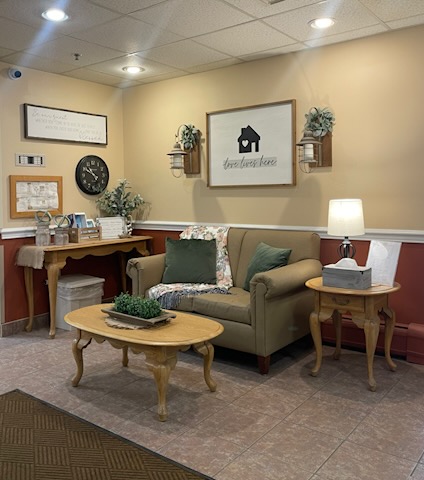
CMS rates BURTON HEALTH CARE CENTER's staffing level at 3 out of 5 stars, which is average compared to other nursing homes. Staff turnover is 42%, compared to the Ohio average of 46%. This relatively stable workforce can support continuity of care.

What Have Inspectors Found at Burton Health?

State health inspectors documented 5 deficiencies at BURTON HEALTH CARE CENTER during 2019 to 2022. These included: 5 with potential for harm.
Who Owns and Operates Burton Health?

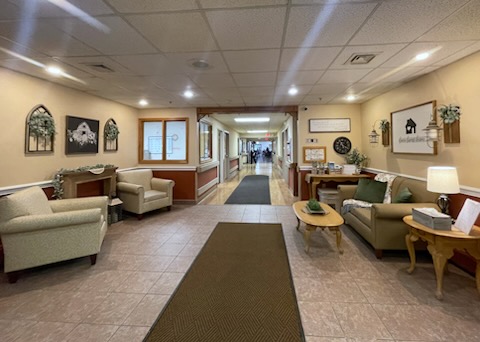
BURTON HEALTH CARE CENTER is owned by a for-profit company. For-profit facilities operate as businesses with obligations to shareholders or private owners. The facility is operated by WINDSOR HOUSE, INC., a chain that manages multiple nursing homes. With 90 certified beds and approximately 81 residents (about 90% occupancy), it is a smaller facility located in BURTON, Ohio.
How Does Burton Health Compare to Other Ohio Nursing Homes?

Compared to the 100 nursing homes in Ohio, BURTON HEALTH CARE CENTER's overall rating (5 stars) is above the state average of 3.2, staff turnover (42%) is near the state average of 46%, and health inspection rating (5 stars) is much above the national benchmark.

What Should Families Ask When Visiting Burton Health?

Based on this facility's data, families visiting should ask: "Can I visit during a mealtime to observe dining assistance and food quality?" "How do you handle medical emergencies, and what is your hospital transfer rate?" "Can I speak with family members of current residents about their experience?"

Is Burton Health Safe?

Based on CMS inspection data, BURTON HEALTH CARE CENTER has a clean safety record: no substantiated abuse findings (meaning no confirmed cases of resident harm), no Immediate Jeopardy citations (the most serious violation level indicating risk of serious injury or death), and is not on the Special Focus Facility watch list (a federal program monitoring the lowest-performing 1% of nursing homes). The facility has a 5-star overall rating and ranks #1 of 100 nursing homes in Ohio. While no facility is perfect, families should still ask about staff-to-resident ratios and recent inspection results during their visit.

Do Nurses at Burton Health Stick Around?

BURTON HEALTH CARE CENTER has a staff turnover rate of 42%, which is about average for Ohio nursing homes (state average: 46%). Moderate turnover is common in nursing homes, but families should still ask about staff tenure and how the facility maintains care continuity when employees leave.

Was Burton Health Ever Fined?

BURTON HEALTH CARE CENTER has no federal fines on record. CMS issues fines when nursing homes fail to meet care standards or don't correct problems found during inspections. The absence of fines suggests the facility has either maintained compliance or corrected any issues before penalties were assessed. This is a positive indicator, though families should still review recent inspection reports for the full picture.

Is Burton Health on Any Federal Watch List?

BURTON HEALTH CARE CENTER is not on any federal watch list. The most significant is the Special Focus Facility (SFF) program, which identifies the bottom 1% of nursing homes nationally based on persistent, serious quality problems. Not being on this list means the facility has avoided the pattern of deficiencies that triggers enhanced federal oversight. This is a positive indicator, though families should still review the facility's inspection history directly.