EMBASSY OF CAMBRIDGE
1471 WILLS CREEK VALLEY DRIVE, CAMBRIDGE, OH 43725 (740) 439-4437
For profit - Corporation 95 Beds EMBASSY HEALTHCARE Data: November 2025 2 Immediate Jeopardy citations
Trust Grade
0/100
#668 of 913 in OH
Last Inspection: May 2024

Within standard 12-15 month inspection cycle. Federal law requires annual inspections.

Overview

Embassy of Cambridge has received a Trust Grade of F, indicating significant concerns for the facility’s overall care quality. Ranked #668 of 913 in Ohio, they are in the bottom half, and #2 of 3 in Guernsey County, meaning only one local facility is rated better. While the facility is improving, with a drop in reported issues from 63 in 2024 to 1 in 2025, it still faces serious challenges. Staffing is average with a 52% turnover rate, and RN coverage also falls within the average range. However, the facility has concerning fines totaling $211,687, which is higher than 97% of Ohio facilities, reflecting ongoing compliance problems. Specific incidents have raised red flags, such as a resident with severe cognitive impairment who was able to exit the facility without staff knowledge, posing a significant risk. Another alarming finding involved a resident with a C-Diff infection who did not receive timely treatment, leading to a nine-day hospitalization. Additionally, there was a failure to manage pain adequately for a resident with serious health issues, resulting in uncontrolled pain that affected their daily activities. While there are some strengths, such as excellent quality measures, the facility's serious deficiencies should be carefully considered by families looking for care.

Trust Score
F
0/100
In Ohio
#668/913
Bottom 27%
Safety Record
High Risk
Review needed
Inspections
Getting Better
63 → 1 violations
Staff Stability
⚠ Watch
52% turnover. Above average. Higher turnover means staff may not know residents' routines.
Penalties
✓ Good
$211,687 in fines. Lower than most Ohio facilities. Relatively clean record.
Skilled Nurses
⚠ Watch
Each resident gets only 26 minutes of Registered Nurse (RN) attention daily — below average for Ohio. Fewer RN minutes means fewer trained eyes watching for problems.
Violations
⚠ Watch
112 deficiencies on record. Higher than average. Multiple issues found across inspections.
★★☆☆☆
2.0
Overall Rating
★★☆☆☆
2.0
Staff Levels
★★★★★
5.0
Care Quality
★☆☆☆☆
1.0
Inspection Score
Stable
2024: 63 issues
2025: 1 issues

The Good

  • 5-Star Quality Measures · Strong clinical quality outcomes
  • Full Sprinkler Coverage · Fire safety systems throughout facility
  • No fines on record

Facility shows strength in quality measures, fire safety.

The Bad

2-Star Overall Rating

Below Ohio average (3.2)

Below average - review inspection findings carefully

Staff Turnover: 52%

Near Ohio avg (46%)

Higher turnover may affect care consistency

Federal Fines: $211,687

Well above median ($33,413)

Significant penalties indicating serious issues

Chain: EMBASSY HEALTHCARE

Part of a multi-facility chain

Ask about local staffing decisions and management

The Ugly 112 deficiencies on record

2 life-threatening 4 actual harm
Mar 2025 1 deficiency
CONCERN (F) 📢 Someone Reported This

A family member, employee, or ombudsman was alarmed enough to file a formal complaint

Potential for Harm - no one hurt, but risky conditions existed

Food Safety (Tag F0812)

Could have caused harm · This affected most or all residents

Based on observation and interview, the facility failed to ensure an ice machine was clean and sanitary. This had the potential to affect all residents residing in the facility. The census was 76. Fin...

Read full inspector narrative →
Based on observation and interview, the facility failed to ensure an ice machine was clean and sanitary. This had the potential to affect all residents residing in the facility. The census was 76. Findings include: Observation on 3/19/25 at 12:35 P.M. with Dietary [NAME] # 100 revealed brownish-black, mold-like appearing areas located on the white plastic shield inside of the facility's ice machine. The exterior of the ice machine appeared to have water stains, fingerprints, and dust-like debris. The ice machine was located outside of the kitchen, in a dining room/common area. Interview on 03/19/25 at 12:36 P.M. with Dietary [NAME] #100 confirmed there was brownish-black, mold-like appearing areas located on the white plastic shield located inside of the ice machine, and stated she was unaware of a cleaning schedule or cleaning log for the ice machine. Interview and observation on 03/19/25 at 12:40 P.M. with the Administrator confirmed there was brownish-black, mold-like appearing areas located on the white plastic shield inside of the ice machine and the exterior of the ice machine did not appear to be clean. The Administrator stated the ice machine would be taken out of commission until it was cleaned and sanitized. This deficiency demonstrates non-compliance investigated under Master Complaint Number OH00163676 and Complaint Numbers OH00163596 and OH00162928.
Dec 2024 3 deficiencies
CONCERN (D) 📢 Someone Reported This

A family member, employee, or ombudsman was alarmed enough to file a formal complaint

Potential for Harm - no one hurt, but risky conditions existed

Grievances (Tag F0585)

Could have caused harm · This affected 1 resident

**NOTE- TERMS IN BRACKETS HAVE BEEN EDITED TO PROTECT CONFIDENTIALITY** Based on record review, review of personal inventory sheets, review of grievance/concern logs, review of email correspondence be...

Read full inspector narrative →
**NOTE- TERMS IN BRACKETS HAVE BEEN EDITED TO PROTECT CONFIDENTIALITY** Based on record review, review of personal inventory sheets, review of grievance/concern logs, review of email correspondence between a resident representative and the facility, interviews, and policy review, the facility failed to ensure resident representative reports of missing personal items were addressed in a timely manner. This affected one (Resident #2) of three residents reviewed for missing personal items. Findings include: Review of Resident #2's medical record revealed she was admitted to the facility on [DATE]. Her diagnoses included chronic obstructive pulmonary disease, post-traumatic stress disorder, anxiety disorder, age-related macular degeneration, and bilateral hearing loss. Review of Resident #2's significant change Minimum Data Set (MDS) assessment dated [DATE] revealed the resident had minimal difficulty in hearing and her speech was clear. She was able to make herself understood and was usually able to understand others. Her cognition was on the high end of being moderately impaired. She was not known to reject care or display any behaviors. On 12/04/24 at 11:27 A.M., an interview with Resident #2's representative revealed she reported to the facility that the resident was missing personal items that included a white/maroon colored fleece blanket and a gray t-shirt that was 2X in size. She stated she reported the items missing to the facility's Social Service Director (SSD) about three weeks ago. She also stated she had sent an email to the facility's management team about the missing personal items, but had not heard anything back yet. She claimed the items were still missing and had not been replaced or reimbursed. She provided a copy of the email that she had sent to the facility regarding the resident's missing items. Review of the email correspondence from Resident #2's representative to the facility staff revealed the representative sent an email to the facility's Admissions Director, Administrator, Director of Nursing (DON), Social Service Director (SSD), and the Business Office Manager on 10/02/24 at 2:42 P.M. The email indicated she had attached a scan of her Amazon clothing orders for the resident in order to try to keep track of what she had and what was missing. She had to visit the laundry area the night before because the resident only had two tops hanging in her closet and another in the laundry basket that the family brought in so they could do her laundry. They had two signs hanging in the resident's room to let the staff know that the family was doing the resident's laundry. The family opted to do her laundry because they did not want her clothing to be worn out prematurely due to the heat of the water used by the facility and the dryers they used. The scanned Amazon clothing order list indicated a short sleeve nightgown that was aqua-green and a size XX-large was missing. There was also a women's plus size V-neck rolled short sleeve casual soft Summer t-shirt medium gray and 2 XL in size that was indicated to be missing. Review of an email correspondence from the facility's DON to Resident #2's representative dated 10/02/24 at 2:50 P.M. revealed the DON acknowledged receiving the email and thanked the representative for sending the email to allow them to address some of the issues she was having. The DON indicated the facility's Administrator was out of the building on that date, but she would make sure her concerns were addressed with their team. The email correspondence further showed Resident #2's representative responded to the DON's email on 10/02/24 at 2:54 P.M. thanking her for the response and she told the DON an all points bulletin (APB) on the missing clothing probably wouldn't hurt either. Review of Resident #2's personal belongings inventory sheets revealed an inventory of the resident's personal belongings was obtained upon her admission to the facility on [DATE] and again on 07/23/24. The inventory sheet for 07/23/24 revealed the resident was known to have in her possession a three stretch t-shirts size 2X, with one of the three being [NAME] gray in color. There was no indication that a white and maroon colored fleece blanket was part of the resident's belongings. The resident personal belongings inventory sheet for 07/23/24 was signed by both the resident's representative and a facility nurse indicating they had read and acknowledged that was an accurate listing of her belongings. Review of the facility's grievance/concern log for the past three months revealed there was no documentation to indicate there had been any reports of missing personal items pertaining to Resident #2 during the past three months. Missing items were included on the logs for other residents. On 12/04/24 at 3:10 P.M., an interview with Resident #2 revealed she has had issues with some of her personal items coming up missing. She was not sure exactly what was missing and indicated her daughter had been handling that. On 12/05/24 at 10:38 A.M., an interview with Certified Nursing Assistant (CNA) #125 revealed she was aware of Resident #2 having a white/maroon colored fleece blanket while in the facility. She stated it was usually draped across the foot of her bed. She was not sure if the resident had the blanket in her possession as she did not recall still seeing it across her bed. She was aware there was a gray t-shirt that was reported as being missing, but she believed it was found on another resident and returned to the resident. On 12/05/24 at 11:44 A.M., an interview with CNA #133 revealed she recalled a couple of weeks ago one of Resident #2's shirts was found on another resident. She stated they saw the other male resident wearing it, but noticed it just did not look right on him. It looked like a woman's shirt as it had a V-neck and the short sleeves were rolled at the end. They took it off the other resident and found it had Resident #2's name on it. They placed it in the resident's laundry basket so the family could take it home and wash it. She reported she believed that t-shirt was teal in color and was not a gray one. She was not aware of a gray t-shirt being missing or anything about a white and maroon fleece blanket. Personal inventory sheets were completed on paper and were to be done upon a resident's admission. They gave them to the nurse's after they were completed. She denied inventory sheets would be updated after the resident's admission even if things were brought in by the family later. On 12/05/24 at 2:04 P.M., an interview with SSD #200 revealed she had been the facility's SSD for the past two years. She was aware of their being reports of missing personal items for Resident #2. She stated it was a [NAME] gray t-shirt and a maroon/white swirl pattern blanket that was reported missing. The daughter had sent her a photo of the blanket and she was told what else was missing and had passed it on to management. She reported everyone was made aware to include the Administrator, DON, and laundry staff. She checked her phone and verified the reports of the missing clothing was received on 11/18/24. She indicated she received a phone call from the daughter about 10 minutes before getting the photo sent to her to let her know about the missing items. She was asked what she did when a resident or family reported it missing. She stated she usually passed the information along and it got put on the grievance/concern log. She was not sure if she had put it on there, or if someone else did. She stated she was in the middle of a few things when that call was received. She did not hear anything back from the resident's daughter and just quite frankly forgot everything about it. She was given a copy of the grievance/concern log and verified there were no reports of missing items indicated for Resident #2 on 10/02/24, when the initial email was sent about missing items or on 11/18/24, when she was called again about the missing items. On 12/05/24 at 2:45 P.M., an interview with the facility's Administrator revealed she had a soft file on concerns they had received from Resident #2's family. She confirmed there had been reports of missing personal items to include a blanket and a gray colored t-shirt. She acknowledged the missing items had not been logged onto their grievance/ concern log where missing items were recorded. She did not have a missing item report for the missing blanket or shirt. She confirmed an email was received from the resident's daughter about the missing items, but they did not have any evidence she had a blanket in her possession that fit that description. She indicated the staff documented items present upon admission on a personal inventory list, but it was the responsibility of the family to complete a personal inventory list for any additional items brought in after their admission. She confirmed a personal belongings inventory sheet dated 07/23/24 did show the resident was known to have a gray t-shirt that was 2X in size. She reported it was the facility's corporate policy that they were not responsible for lost items, especially if the resident's family was doing their laundry. She claimed the resident's daughter did not want them to mark the resident's name in her clothing, since it was their intent to launder her clothing. She acknowledged the facility would be responsible for keeping the resident's personal belongings inventory sheet updated and was responsible for replacing missing items the resident was known to have while in the facility. She acknowledged the facility staff were still sending the resident's clothing to their laundry room to be processed at times when it had been made known that the family would do that. On 12/05/24 at 4:05 P.M., an observation noted the Administrator and the DON to enter the room of Resident #2 to discuss her missing personal items. The Administrator informed the resident the facility would be replacing her lost items for her. On 12/05/24 at 4:12 P.M., a follow up interview with the Administrator revealed she had talked to the corporate office and it was decided that they would go ahead and replace the resident's missing personal items. Review of the facility's policy from Embassy Healthcare on Concerns/ Grievances revealed it was the policy of the facility and in accordance with 483.10 (f) (1) Grievances, the facility would honor the resident's right to voice concerns and/or grievances without discrimination or reprisal. Such concerns and/or grievances would include, but was not limited to, treatment which had been furnished or not furnished. Other forms of grievances could include management of funds, lost items, and/or violation of rights. The SSD would coordinate the facility system for collecting concerns and tracking concerns for timely and appropriate response. Social services would instruct facility staff to submit to the SSD that all concerns received would be investigated within 72 hours following receipt of the concern. Within seven days following the receipt of the concern, the facility would inform the complainant with the results of the investigation. The resident/ family concern form was to be completed when a resident and/or family member had a concern that must be addressed by the facility. The form should be used to document specific concerns and in the event of missing items brought forth by the resident and/or family. When the concern was related to missing items, complete the missing items form. Time frames for resolution would remain the same as above. Concerns submitted to the SSD would be presented to the Administrator as soon as the form was completed. The administrator/designee would forward the concern form to the appropriate management representative. Social services would maintain a concern log in order to track concerns and/or missing items. This deficiency represents non-compliance investigated under Complaint Number OH00160107 and is an example of continued non-compliance from the survey 11/22/24.
CONCERN (D) 📢 Someone Reported This

A family member, employee, or ombudsman was alarmed enough to file a formal complaint

Potential for Harm - no one hurt, but risky conditions existed

ADL Care (Tag F0677)

Could have caused harm · This affected 1 resident

**NOTE- TERMS IN BRACKETS HAVE BEEN EDITED TO PROTECT CONFIDENTIALITY** Based on record review, and interviews the facility failed to ensure a resident, who was dependent on staff for personal care, r...

Read full inspector narrative →
**NOTE- TERMS IN BRACKETS HAVE BEEN EDITED TO PROTECT CONFIDENTIALITY** Based on record review, and interviews the facility failed to ensure a resident, who was dependent on staff for personal care, received appropriate incontinence products needed for proper incontinence care and was assisted up in her chair daily as per her normal routine. This affected one (Resident #2) of three residents reviewed for incontinence care. Findings include: Review of Resident #2's medical record revealed she was admitted to the facility on [DATE]. Her diagnoses included chronic obstructive pulmonary disease (COPD), obstructive and reflux uropathy, post traumatic stress disorder, gastrostomy status, macular degeneration, and bilateral hearing loss. Review of Resident #2's significant change Minimum Data Set (MDS) assessment dated [DATE] revealed the resident had minimal difficulty with her hearing and clear speech. She was able to make herself understood and was usually able to understand others. Her cognition was moderately impaired with a brief interview for mental status (BIMS) score of 12 (a score of 13-15 was being cognitively intact). She was not known to display any behaviors nor was she known to reject any care. She was dependent on staff for transfers and toilet use. She was coded as always being incontinent of her bladder and bowel. Review of Resident #2's care plans revealed she had a care plan in place for needing assistance for activities of daily living (ADL's) related to cognitive impairment and immobility. The care plan was initiated on 07/02/24. The goal was for the resident to continue to participate in ADLs as able and have no decline in ADLs through next review and for her to be clean, odor-free and appropriately dressed on a daily basis. The interventions included her being a mechanical lift x2 (two staff) for transfers. She required the assist of two for toileting hygiene and for chair to bed transfers. Review of Resident #2's physician's orders revealed the resident went under the care and services of hospice for the diagnosis of COPD on 10/11/24. An order was received for the resident to have the use of an indwelling urinary catheter beginning on 11/22/24. Review of Resident #2's point of care response history for bed to chair and chair to bed transfers for the past 30 days (11/08/24 to 12/07/24) revealed there was a two day period in which the resident was not indicated to have been transferred from her bed to her chair. On 11/21/24 and again on 11/22/24, the nursing assistants documented that activity did not occur. On 12/04/24 at 11:27 A.M., an interview with Resident #2's daughter revealed the facility had issues with supplies more often than she cared to recall. She reported there had been an issue with not having the proper size incontinent brief the resident needed to wear and she was made to wear ones that were too small for her. The resident was a 3 X in incontinent brief sizes and the facility staff had to use medium sized briefs on her. It resulted in her leaking or being saturated through her clothing due to the incontinent brief not being a proper fit. That had been an issue as recent as two weeks ago, but had also happened in the past sometime between 06/26/24 (when she was admitted ) and 10/03/24 (when she finished working with therapy at the completion of her 100 days of skilled services). On 12/04/24 at 3:10 P.M., an interview with Resident #2 revealed there had been problems with the facility not having the proper size of incontinent briefs for her resulting in her having to wear smaller ones that did not properly fit. She claimed there had been a time in the past when she was in therapy and was wearing a smaller sized brief. She recalled being incontinent and making a mess, which was embarrassing to her. On 12/02/24 at 3:50 P.M., an interview with Central Supply Employee #250 revealed she was the employee that used to be responsible for ordering supplies. She had been in central supply since July 2023, but did not start being in charge of ordering supplies until January 2024. The facility decided they would start having the corporate office order supplies in October or November of 2024. They only did that for a month or so before they began having issues with the availability of supplies sometime in November 2024. On 12/05/24 at 10:38 A.M., an interview with Certified Nursing Assistant (CNA) #125 revealed Resident #2 did require the use of incontinent briefs. She used to be incontinent of her bladder, but now had the use of a catheter and was only incontinent of her bowels now. The resident needed a size 3 brief. There was a three day time span in which they were out of size 3 briefs. They had to use pull ups or use a blue brief under Resident #2 and another blue brief down the front of her. She reported they were constantly telling the DON, Assistant Director of Nursing (ADON), the unit manager, and the nurses that they were out and would be told they were working on it. She could not recall if that was prior to Resident #2 being under hospice's care or if it was after that. She stated the messes were massive and they were unable to get Resident #2 up out of bed due to that. She used to be up daily, but during that time when they did not have the appropriate size brief, they had to leave her in bed. The family of the resident was mad at them. She denied the management team offered to go to the store to purchase any of the briefs they needed, while they were waiting for them to be delivered. There was a time three to four weeks ago they had no briefs at all. Everyone was wearing pull ups during that time. On 12/05/24 at 11:44 A.M., an interview with CNA #133 revealed Resident #2 had her indwelling urinary catheter for about a month now. They continued to check her for bowel incontinence though. She confirmed the facility definitely had issues with supplies. It happened a lot when they were out of incontinent briefs. The problem with not having incontinent briefs was about two weeks ago or at least within the last month. She reported they were completely out of briefs and only had a few pull ups, if any at all. Pull ups were very limited as well. She reported Resident #2 wore size 3 briefs. She then recalled there was a time they were using the two blue briefs for Resident #2. One was placed under her and another was placed up the front of her. She confirmed that resulted in them having to leave the resident in bed, so she did not have any accidents in her chair. She thought the supply issue was a communication problem. Before they would tell the nurses when they needed something. The nurses would in turn pass it on to the facility's prior DON. Now they tell the new DON or the unit manager. Central Supply Employee #250 used to handle the ordering of supplies, but had been taken off of it. She was not sure who took over after that. This deficiency represents non-compliance investigated under Complaint Number OH00160107.
CONCERN (D) 📢 Someone Reported This

A family member, employee, or ombudsman was alarmed enough to file a formal complaint

Potential for Harm - no one hurt, but risky conditions existed

Administration (Tag F0835)

Could have caused harm · This affected 1 resident

**NOTE- TERMS IN BRACKETS HAVE BEEN EDITED TO PROTECT CONFIDENTIALITY** Based on record review, observation, and interviews the facility failed to ensure administrative staff maintained sufficient sup...

Read full inspector narrative →
**NOTE- TERMS IN BRACKETS HAVE BEEN EDITED TO PROTECT CONFIDENTIALITY** Based on record review, observation, and interviews the facility failed to ensure administrative staff maintained sufficient supplies to adequately care for the residents residing in the facility. This affected one (Resident #2) of three residents reviewed for incontinence and enteral tube feedings. Findings include: Review of Resident #2's medical record revealed she was admitted to the facility on [DATE]. Her diagnoses included chronic obstructive pulmonary disease (COPD), obstructive and reflux uropathy, post traumatic stress disorder, gastrostomy status, macular degeneration, and bilateral hearing loss. Review of Resident #2's significant change Minimum Data Set (MDS) assessment dated [DATE] revealed the resident had minimal difficulty with her hearing and clear speech. She was able to make herself understood and was usually able to understand others. Her cognition was moderately impaired with a brief interview for mental status (BIMS) score of 12 (a score of 13-15 was being cognitively intact). She was not known to display any behaviors nor was she known to reject any care. She was dependent on staff for transfers and toilet use. She was coded as always being incontinent of her bladder and bowel. She was indicated to have a feeding tube that was providing 51% or more of her nutritional intake. Review of Resident #2's physician's orders revealed she was placed under the care and services of hospice on 10/11/24 for the diagnosis of COPD. She also had an order to receive Isosource 1.5 cal at 55 milliliters (ml)/ hour x 10 hours from 6:00 P.M. until 4:00 A.M. every night. The order was in place between 11/01/24 and 11/25/24. She received a second order for her to receive Jevity 1.5 cal at 55 ml/ hour per peg tube via pump to be ran over 10 hours from 6:00 P.M. to 4:00 A.M. every night. That order was in place from 11/26/24 until 12/04/24. She received a third order on 12/04/24 to resume the first order and for the resident to receive Isosource 1.5 cal at a rate of 55 ml/ hour per peg tube via pump to be ran for 10 hours between 6:00 P.M. and 4:00 A.M. Her orders also reflected she was placed under the care and services of hospice on 10/11/24 for the diagnosis of COPD. She had an indwelling urinary catheter placed on 11/22/24. Review of Resident #2's medication administration record (MAR's) for November 2024 revealed the resident did receive Isosource 1.5 cal at 55 ml/ hour between 6:00 P.M. to 4:00 A.M. every night from 11/01/24 through 11/25/24. She was then given Jevity 1.5 cal at 55 ml/ hour every night between the hours of 6:00 P.M. to 4:00 A.M. from 11/26/24 through 11/30/24. Review of Resident #2's MAR's for December 2024 revealed the resident continued to receive Jevity 1.5 cal at 55 ml/ hour nightly between the hours of 6:00 P.M. to 4:00 A.M. from 12/01/24 through 12/03/24. The MAR then reflected she was changed back to Isosource 1.5 cal at 55 ml/ hour between the hours of 6:00 P.M. to 4:00 A.M. beginning the evening of 12/04/24. Review of Resident #2's progress notes revealed a nurse's note dated 11/22/24 at 5:21 P.M. that indicated the nurse had spoke with the certified nurse practitioner and received an approval to change the resident's Isosource to Jevity if needed. Another progress note dated 11/22/24 at 5:30 P.M. revealed the approval to supplement Isosource with Jevity 1.5 call was due to the Isosource being on back order. Another nurse's note dated 12/03/24 at 8:00 P.M. revealed the nurse spoke with the nurse practitioner and the resident's daughter regarding an order change back to Isosource related to it's availability. On 12/04/24 between 8:54 A.M. and 9:41 A.M., an observation of Resident #2 noted her to be lying in bed in a supine position with the head of her bed up. The resident had her eyes closed with oxygen on per nasal cannula and in no apparent distress. She was noted to have a couple of rolls of toilet paper sitting on the top of the nightstand next to her bed. She did not have a box of facial tissues in her room at the time the observation was made. She had an indwelling urinary catheter draining to gravity drain. She was covered with a blanket and it was not visible if she was wearing any type of incontinent product. On 12/04/24 at 11:27 A.M., an interview with Resident #2's daughter revealed they have had issues with supplies more often than she cared to recall. She confirmed the resident had to have her enteral tube feeding changed to another type due to supply problems. She has also had issues with not having the proper size incontinent brief to wear and was made to wear ones that were too small for her. She stated the resident was a 3 X in incontinent brief sizes and the facility staff had to use medium sized briefs on her. It resulted in her leaking or being saturated through her clothing due to the incontinent brief not being a proper fit. That had been an issue as recent as two weeks ago, but had also happened in the past sometime between 06/26/24 when she was admitted and 10/03/24, when she finished working with therapy at the completion of her 100 days of skilled services. There had also been a problem with the facility not having facial tissues for the residents. She had found a couple rolls of toilet paper on the resident's nightstand in place of a box of tissues that the resident liked to have on hand. The resident used them to tuck in the front of her shirt collar to help when she drooled or dribbled when taking drinks. She blamed the supply issue to a particular employee that was in charge of ordering supplies. She stated she did not know what the issue was, but the employee evidently did not understand how much they needed to order to be able to meet the demands of the residents they were taking care of. On 12/04/24 at 3:10 P.M., an interview with Resident #2 revealed there had been times where she has ran out of facial tissues and the facility did not have any to give her. She was not too concerned about it and was usually able to get them if she really needed them. Her daughter had brought her in some when the facility did not have any. She also confirmed there had been problems with the facility not having the proper size of incontinent briefs for her resulting in the facility staff putting smaller ones on her that did not properly fit. She claimed there had been a time in the past in which she was in therapy and was wearing a smaller sized brief. She recalled being incontinent of her bowels and making a mess, which was embarrassing to her. She denied any recent issues with not having the proper size of incontinent briefs, but they were now being supplied through hospice. On 12/02/24 at 3:50 P.M., an interview with Central Supply Employee #250 revealed she was the employee that used to be responsible for ordering supplies. She had been in central supply since July 2023, but did not start being in charge of ordering supplies until January 2024. The facility started having the corporate office order supplies in October or November of 2024. They only did that for a month or so, before they began having issues with the availability of supplies sometime in November 2024. She placed orders every Monday and Wednesday for deliveries on Tuesdays and Thursdays. When the corporate office took over ordering supplies, they wanted to place orders every couple of weeks. The first order the corporate office placed in November did not come until 11/20/24. They were in need of briefs as their supply was running low. She was not made aware the staff were using smaller size briefs on residents, due to not having the proper size they needed. They got a hold of the corporate office when supplies were low and fast tracked an order. They placed an order on 11/20/24 and got it the next day. They (facility's management staff) told the corporate office, after that happened, that they would go back to having her (Central Supply Employee #250) order the supplies. She denied any issues with not having facial tissues available. When she was in charge of supplies, she would check daily Monday through Friday to see what they had on hand and put out supplies as needed. The corporate office did not have anyone on site to check supplies like she did. She was asked to place a case of briefs in Resident #2's room about two or four weeks ago. The facility used to supply her with briefs, but believed hospice was doing that now since she was under their care. She was not aware of any problems with enteral tube feeding solutions not being available. She was aware that some had been changed to Jevity from Isosource, but thought that was due to the corporate office wanting them to use up the Jevity they had on hand. She was not sure exactly what Resident #2 currently had ordered in regards to her tube feeding. She stated she would have to get with the nurse to see what they were actually using (1000 ml closed bags or the 250 ml cartons) to get her the 550 ml she received nightly. She used a running inventory list to keep track of what supplies they had on hand before, when she handled the ordering of supplies. When the corporate office took over ordering supplies, she handed that all over to them. She stated since she took over the ordering of the supplies on 12/01/24, she would start a running inventory again. On 12/04/24 at 4:52 P.M., an interview with LPN #100 revealed the facility has had some issues with ordering supplies when the corporate office took over. When they were low on supplies, they were required to put it in the dashboard. She stated she felt, by the time they let them know and when they received it, they were usually out. She stated it was a lot better when Central Supply Employee #250 was in charge of ordering supplies. Facial tissues not being available for resident use had been an issue a couple weeks ago. They had some, but were getting low the last time she saw them. She was not sure if they ran completely out. She confirmed Resident #2's daughter did tell her they had to bring facial tissues in for the resident due to her not having any. She recalled that was two or three weeks ago and she was informed of that over the phone during shift change. She shared that information with the night shift nurse. She denied she actually checked to see if they had any tissues or not. The night shift nurse was aware of them having some in the medication room and was to take the resident some back. They were using the 1000 ml closed bags of Isosource 1.5 cal for Resident #2. She denied they had any 250 ml cartons of Isosource 1.5 cal on the South unit and she did not think they had any on the North unit. She reported the other resident that had Isosource bolus feedings on the South unit may have had some in the medication cart. She called the nurse practitioner and got the okay to switch to Jevity 1.5 cal that they had on hand, in the event that they ran out of Isosource before the shipment was received. She stated they were interchangeable and just made by a different company. She was not aware of there being any problems with incontinent briefs. Hospice had been providing briefs to Resident #2 since she had been under their care and services since October 2024. On 12/05/24 at 10:38 A.M., an interview with Certified Nursing Assistant (CNA) #125 revealed Resident #2 did require the use of incontinent briefs. She used to be incontinent of her bladder, but now had the use of a catheter and was only incontinent of her bowels now. The resident needed a size 3 brief. There had been an issue in the past in which the facility ran out of size 3 briefs. She stated it was a supply issue and they had since changed suppliers. Since the facility's new Director of Nursing (DON) took over, they were not having as much of an issue with that anymore. There was a three day time span in which they were out of size 3 briefs and that was after the new DON was there. They had to use pull ups or use a blue brief under Resident #2 and another blue brief down the front of her. She reported they were constantly telling the DON, Assistant Director of Nursing (ADON), the unit manager, and the nurses that they were out and would be told they were working on it. She could not recall if that was prior to Resident #2 being under hospice's care or if it was after that. She reported that problem occurred before the resident had her indwelling urinary catheter placed. She stated the messes were massive and they were unable to get Resident #2 up out of bed due to that. She used to be up daily, but during that time when they did not have the appropriate size brief, they had to leave her in bed. The family of the resident was mad at them. She felt they were threw them under the bus because the family was told it would be taken care of it and blamed the aides for the lack of care provided. She denied the management team offered to go to the store to purchase any of the briefs they needed, while they were waiting for them to be delivered. She denied they had ever went to the store to purchase anything they were out of. They just got the facial tissues in and had been out of those for quite a while. There was a two week period she worked in which tissues were not available. The facility just recently opened a CNA closet for supplies to be readily available. When they were out of tissues, it was before the CNA supply closet was created. They checked five different areas in which they might have been stored in, but were not able to find any. They were not able to find any during that two week period. She reported they have had issues with incontinent briefs not being available that was more than just with the size 3's. There was a time three to four weeks ago they had no briefs at all. Everyone was wearing pull ups during that time. The corporate office took over ordering supplies when there had been previous issues with supplies not being available. She felt it only got worse after corporate took that over. That was when they were told they were getting new suppliers. They (corporate office) were not on-site to see what they had and what was needed. She felt there was a communication issue as to why supplies were not readily available. It would get passed on to management, but did not make it's way to the corporate level to order. It had been getting better after they changed things back to the way they were. Central Supply Employee #250 had things set up prior to the corporate office taking over. It was getting back to how it was before. It was not drastic when Central Supply Employee #250 was in charge of supplies before. Shipments were usually received the following day and they did not completely run out of things. Supplies at that time were just getting low. On 12/05/24 at 11:44 A.M., an interview with CNA #133 revealed Resident #2 had her indwelling urinary catheter for about a month now. They continued to check her for bowel incontinence though. She confirmed the facility definitely had issues with supplies. It happened a lot when they were out of incontinent briefs, cups, lids, straws etc. They have had issues with facial tissues as well not being available. The problem with not having incontinent briefs was about two weeks ago or at least within the last month. They were completely out of briefs and only had a few pull ups, if any at all. Pull ups were very limited. She reported Resident #2 wore size 3 briefs. Since hospice has cared for her, she has had the incontinence briefs she needed. She believed the issue they had with that might have happened after Resident #2 was getting hers through hospice. The issue had been since the facility's new DON started there, but she could not recall how long that had been. She recalled there was a time they were using two blue briefs for Resident #2 putting one under her and the other up the front of her. She confirmed that resulted in them having to leave the resident in bed, so she did not have any accidents in her chair. She also confirmed they had been completely out of facial tissues during that same time period (two to four weeks ago). She recalled one former resident that was in need of some, but they looked everywhere and could not find any. She had heard a nurse talk about not having enough supplies and made the comment that it was embarrassing that they did not even have enough supplies on hand to take care of the residents. She thought the supply issue was a communication problem. Before, they would tell the nurses when they needed something. The nurses would in turn pass it on to the facility's prior DON. Now they tell the new DON or the unit manager. Central Supply Employee #250 used to handle the ordering of supplies, but had been taken off of it. She was not sure who took over after that. This deficiency represents non-compliance investigated under Complaint Number OH00160107.
Nov 2024 12 deficiencies 1 Harm
SERIOUS (G) 📢 Someone Reported This

A family member, employee, or ombudsman was alarmed enough to file a formal complaint

Actual Harm - a resident was hurt due to facility failures

Deficiency F0697 (Tag F0697)

A resident was harmed · This affected 1 resident

**NOTE- TERMS IN BRACKETS HAVE BEEN EDITED TO PROTECT CONFIDENTIALITY** Based on medical record review, interview, and policy review the facility failed to implement an effective pain management progr...

Read full inspector narrative →
**NOTE- TERMS IN BRACKETS HAVE BEEN EDITED TO PROTECT CONFIDENTIALITY** Based on medical record review, interview, and policy review the facility failed to implement an effective pain management program, including the administration of scheduled and as needed opioid medication for Resident #7. Actual Harm occurred on 11/09/24, when Resident #7, who was identified with chronic pain and a new onset of acute pain related to a fall resulting in a fractured sternum, did not receive her scheduled or as needed Percocet (narcotic pain medication) as requested, resulting in uncontrolled pain that affected the resident's ability to participate in activities of daily living and required the administration of a one-time emergent dose of Percocet to re-gain control of the resident's pain. This affected one resident (#7) of five residents reviewed for pain. Findings included: Record review revealed Resident #7 was admitted to the facility on [DATE] with diagnoses including chronic pain, diabetes, osteoarthritis, carpal tunnel, cervicalgia, muscle spasm, and chest pain. Review of Resident #7's pain care of plan, initiated on 05/10/21 and revised 04/16/24, revealed the resident had pain related to peripheral neuropathy, peripheral vascular disease, osteoporosis, gastric reflux disease, muscle spasms, cardiac disease, restless leg syndrome, bilateral knee and rib pain, and carpal tunnel release. Interventions included encourage to request pain medication before pain becomes severe, offer analgesics per physician order, and attempt non-pharmacological intervention prior to administering medications. Review of the October 2024 physician's orders revealed an order (dated 07/24/24) for the narcotic pain medication, Percocet 5/325 milligrams (mg) one tablet twice daily for chronic pain. Review of Resident #7's annual Minimum Date Set (MDS) assessment dated [DATE] revealed the resident had taken scheduled and as needed pain medication. The assessment noted the resident's pain had rarely or not at all affected activities of daily living. The resident's pain, at its worst on a scale of 0-10 and in the last five days, been a three (on a 0-10 scale with 0 meaning no pain and 10 being the worst pain ever) during the assessment period. Review of Resident #7's progress note dated 10/23/24 at 2:32 A.M., revealed a Certified Nursing Assistant (CNA) reported to the nurse that the resident fell in (her) bathroom. The resident was sitting on her bed when the nurse walked in. Noted a moderately raised bump to the crown of the head. Tender to touch. Resident reported neck, shoulders and top of chest feeling sore from being jolted. Resident explained that she fell asleep on the toilet and woke up when she fell forward and hit her head on the sink. Resident explained that she got herself back to bed before ringing her call light. Review of Resident #7's progress note dated 10/26/24 at 11:48 A.M., revealed the resident approached the nurse and reported she was hurting in her back, chest and she reported something was wrong and wanted a computed tomography (CT) scan. The resident was transferred to the emergency room. Review of Resident #7's progress note dated 10/26/24 at 3:55 P.M., revealed the resident returned to the facility via cot accompanied by paramedics. Resident received a final diagnosis of a closed fracture of the sternum (breastbone) resulting from her fall that occurred on 10/23/24. New order received for Percocet Oral Tablet 5-325 mg one tablet by mouth every eight hours as needed for pain for 30 days. The resident received as needed (PRN) pain medication and stated that it was effective. Review of Resident #7's progress note dated 11/04/24 at 4:11 P.M., revealed the resident denied worsening pain or discomfort associated with (her) sternum fracture at this time. Review of Resident #7's provider note dated 11/08/24 revealed the resident was seen for a follow up on chronic conditions including pain and chronic obstructive pulmonary disease. The note revealed the resident's pain was controlled with Percocet, Tylenol, Voltaren gel, and muscle rub. The note also reflected the resident's pain was exacerbated due to a recent fall and sternal fracture. The resident started Percocet 5/325 twice daily on 07/28/24 and Percocet 5/325 mg every eight hours as needed for 30 days on 10/26/24 for better control which had been helpful. Further review of the provider note revealed the resident was seen today in her room and reported her chronic pain continued to be exacerbated due to the recent fall and sternal fracture. The resident reported the addition of as needed Percocet has been helpful at bringing her pain to a tolerable level. No noted adverse effect of additional pain medication availability. Resident reported it was difficult to take a deep breath due to the pain associated with it (the sternal fracture). Review of Resident #7's undated Percocet control sheet revealed on 11/09/24 Registered Nurse (RN) #700 (a contracted agency staff nurse) had signed out Percocet 5/325 mg at 7:11 A.M., 11:00 A.M., and 12:00 P.M. (each time a narcotic is removed from the double locked narcotic drawer, the number assigned to the pill removed from the bubble pack is documented on the narcotic control sheet in order to quickly identify the number of narcotics contained in that bubble packet are remaining according to the narcotic control sheet and account for removed doses of the narcotic medication). Review of Resident #7's orders and Medication Administration Records (MAR) dated 11/2024 revealed the resident was ordered Percocet 5/325 mg one tablet by mouth twice daily upon rise (6:00 A.M. to 10:00 A.M.) and bedtime (6:00 P.M. to 10 P.M) and as needed every eight hours for pain. RN #700 documented she administered the rise dose of Percocet 5/325 mg on 11/09/24. There was no documented evidence on the MAR that the as needed Percocet was administered on 11/09/24 (the 11:00 A.M. or the 12:00 P.M. doses as signed out on the Percocet Control Sheet). Further review of the medical record revealed there also was no evidence a pain assessment (numerical pain rating or location of the resident's pain) was completed at the time the prn doses of Percocet were documented on the narcotic sheet. Review of the MAR and Percocet Control Sheet revealed a one-time dose of Percocet 5/325 mg was administered on 11/09/24 at 3:08 P.M for pain assessed to be rated a 10 out of 10. However, review of Resident #7's progress notes revealed no documentation the resident was having increased pain on 11/09/24 resulting in the one-time order of Percocet 5/325 mg. Interview on 11/12/24 at 9:00 A.M. and 10:02 A.M. with Resident #7 revealed she didn't get several of her scheduled morning medications on Saturday 11/09/24 which included a scheduled pain pill. The resident reported she recently had a fall and fractured her sternum. The resident stated on the morning of 11/09/24 she waited and waited for her morning medication. Finally, RN #700 arrived at her room and put the medication cart right in front of her door. The nurse left the cart in front of her door but never gave her any medications. The resident reported she used her good arm and pushed the medication cart out of the way so she could exit her room. Resident #7 asked the nurse for her meds and RN #700 responded No, I'm going up the hall. Resident #7 followed the nurse up the hall and requested her morning medications. The resident stated RN #700 gave her medication, however there was no Percocet in the medication cup. The resident reported she could not get out of bed most of the day and could not participate in activities because the pain in her sternum was so severe. Interview on 11/13/24 at 1:56 P.M., with Regional Support Nurse (RSN) #116 confirmed Resident #7 did not get her pain medication on 11/09/24 resulting in increased pain requiring a one-time order for Percocet 5/325 mg to be administered (because RN #700 had documented on the narcotic sheet she had removed three Percocet from the narcotic drawer for Resident #7 but did not document the administration of two of the doses). RSN #116 verified the facility had confirmed Resident #7 had not received her scheduled medication, resulting in a pain rating of 10/10 and the physician had to order a one-time dose since too many doses had already been signed out for Resident #7. Interview on 11/13/24 at 2:35 P.M., with Licensed Practical Nurse (LPN) #600 revealed she had worked dayshift on 11/09/24 and Resident #7, who is alert and oriented and knowledgeable about her medications, reported she didn't receive any pain medications on 11/09/24 (it was after 2:00 P.M. this date) and her pain was not controlled due to not receiving medications for pain, especially with a sternum fracture. The LPN verified the resident's physician had to be contacted for a one-time dose of Percocet for the resident's pain. Review of the facility's policy titled Pain Management dated 08/22/22 revealed the facility must ensure that pain management is provided to residents who require such services, consistent with professional standards of practice, the comprehensive person-centered care plan, and the resident's goals and preferences. The facility would use a pain assessment tool, which was appropriate for the resident cognitive status, to assist in consistent assessment of the resident's pain. This deficiency represents non-compliance investigated under Master Complaint Number OH00159408 and Complaint Number OH00159399.
CONCERN (D) 📢 Someone Reported This

A family member, employee, or ombudsman was alarmed enough to file a formal complaint

Potential for Harm - no one hurt, but risky conditions existed

Resident Rights (Tag F0550)

Could have caused harm · This affected 1 resident

**NOTE- TERMS IN BRACKETS HAVE BEEN EDITED TO PROTECT CONFIDENTIALITY** Based on medical record review, review of concern log and report, interview, and policy review the facility failed to ensure a r...

Read full inspector narrative →
**NOTE- TERMS IN BRACKETS HAVE BEEN EDITED TO PROTECT CONFIDENTIALITY** Based on medical record review, review of concern log and report, interview, and policy review the facility failed to ensure a resident was treated with respect and dignity. This affected one (Resident #4) of three residents reviewed for respect and dignity. Findings included: Medical record review revealed Resident #4 was admitted to the facility on [DATE] with diagnoses including but not limited to lymphedema, diabetes, neuropathy, depression, anxiety, and insomnia. Review of the facility's concern log and report dated 10/31/24 revealed Resident #4 reported to the Ombudsman that Agency Certified Nursing Assistant (CNA) #545 was engaging in a political view conversation and the resident had asked him to stop the conversation during care. The CNA had also stretched the resident's leg too far during care. The Assistant Director of Nursing (ADON) #153 spoke to CNA #545 and he recalled having a conversation months ago about politics but be thought they were just having fun because how blown up it all was now. The ADON educated the CNA not to provide care or engage with the resident and to assign another staff to his room assignment and education was provided to the CNA on 10/31/24 and 11/01/24 to avoid offensive conversations particularly religion/politics. There was no evidence the concern regarding the resident's leg being stretched was addressed. Review of Resident #4's progress notes dated 09/07/24 to 11/07/24 revealed no evidence of any incident involving Resident #4's and CNA #545 was documented. Interview on 11/05/24 at 7:07 A.M., 11/06/24 at 7:42 A.M., and 11/13/24 at 7:30 A.M., with Resident #4 revealed an Agency CNA (CNA #545) did not treat him with respect and dignity recently and the facility permits the Agency CNA to work. The resident reported CNA #545 was providing care to him and was making comments about his music and saying the singers were witches, Satan, and belonged to cults. He made inappropriate comments about a singer. Then he started on him about voting for (a said presidential candidate). Resident #4 reported he kept telling CNA #545 he didn't want to discuss politics, and the staff member kept on and on and asking him if he was (a said presidential candidate) and told him he better not vote for (a said presidential candidate). CNA #545 then pulled his leg up to wash under it which was a very uncomfortable position for the resident and caused him pain the rest of the day. He has never had anyone left his leg to wash under it. Staff usually have him roll to his side to wash the back side of his body. The resident had reported his concerns to the Ombudsman and the ADON came and spoke to him. He told the ADON he preferred that CNA #545 not provide care to him anymore and the ADON kept asking if the facility hired CNA #545 full time, would he permit the CNA to provide care to him. The resident reported the ADON kept asking him the same question and he kept telling her No, he didn't want the CNA to provide care to him. Resident #4 reported he felt CNA #545 had mentally abused him related to the politics and music comments and physically abused him for raising his leg in a position that caused him increased pain. The facility didn't address his concern regarding the CNA lifting his leg. The ADON was just concerned about what would happen if they hired the CNA full-time, according to Resident #4. Interview on 11/05/24 at 8:25 A.M. with the Ombudsman revealed Resident #4 was upset and had reported concerns to her regarding CNA #545 discussing politics and music views. She had reported the concern to the Administrator and was told the Agency CNA would not be returning to the facility. Interview on 11/12/24 at 4:23 P.M., via email with the Director of Nursing (DON) revealed Resident #4 reported his concern to the ombudsman on 10/31/24 indicating issues with CNA #545 were not acute. The resident was assessed on 10/30/24 by the ADON and wound doctor and verbalized zero complaints of pain/discomfort at that time. The CNA provided a statement and education was provided on 11/01/24 and assignment changes per request. The ADON reassessed the resident on 11/06/24 with the wound doctor. An allegation of abuse was reported on 11/06/24 and a self-reported investigation (SRI) submitted, and investigation begun. Interview on 11/18/24 at 8:42 A.M., with the DON revealed the facility had completed the Abuse investigation and determined the allegation was not abuse. The Resident had perceived it as a respect and dignity issue. Review of the facility's policy titled Customer Service undated revealed every person in the facility deserves to be always treated with respect and dignity. No matter Who they were before they were here, once they come through our door, they are our resident or guest, and every staff person will treat them with respect. Always treat our residents as you would want them to treat you. Know each person's preference about care and ask them how they would like it done. Treat each person as an adult no matter what their cognitive function level is. All residents are entitled to self-choice-speak to the resident respectfully, explaining care as needed and giving the resident the chance to respond and to refuse. Be as gentle as possible-a resident may have pain, pain on movement, stiffness, fragile skin, etc. that was not apparent to you. Review of the facility's policy titled Resident Rights dated 06/01/24 revealed the resident had a right to be treated with respect and dignity. This deficiency represents non-compliance investigated under Master Complaint Number OH00159408 and Complaint Number OH00159399
CONCERN (D) 📢 Someone Reported This

A family member, employee, or ombudsman was alarmed enough to file a formal complaint

Potential for Harm - no one hurt, but risky conditions existed

Investigate Abuse (Tag F0610)

Could have caused harm · This affected 1 resident

**NOTE- TERMS IN BRACKETS HAVE BEEN EDITED TO PROTECT CONFIDENTIALITY** Based on medical record review, review of controlled drug receipts, review of the medication administration audit report, review...

Read full inspector narrative →
**NOTE- TERMS IN BRACKETS HAVE BEEN EDITED TO PROTECT CONFIDENTIALITY** Based on medical record review, review of controlled drug receipts, review of the medication administration audit report, review of controlled medication shift change logs, review of staff schedules, review of the facility investigation, review of a self-reported incidents (SRI), interviews, and policy review the facility failed to thoroughly investigate an allegation of misappropriation. This affected two resident (#51, #56) of five residents reviewed for misappropriation. The facility census was 72. The facility identified eight residents affected by misappropriation (#7, #12, #13, #16, #21, #22, #31, and #37). Findings included: 1. Medical record review revealed Resident #51 was admitted to the facility on [DATE] with diagnoses including malignant neoplasm of the mouth and tongue, dysphagia, and gastrostomy. Review of Resident #51's medication administration record (MAR) and orders dated 11/2024 revealed the resident was ordered Oxycodone 10 milligrams (mg) one tablet via nasogastric (NG) tube every four hours (midnight, 4:00 A.M., 8:00 A.M., noon, 4:00 P.M., and 8:00 P.M.). On 11/07/24 Agency Registered Nurse (ARN) #700 administered an Oxycodone 10 mg at midnight, 4:00 A.M., 8:00 A.M., noon. On 11/09/24 ARN #700 administered one dose of Oxycodone 10 mg at 8:00 A.M. Review of Resident #51's medication administration audit report dated 11/06/24 to 11/08/24 revealed ARN #700 had signed off she administered Oxycodone 10 mg on 11/07/24 at midnight, 4:57 A.M., 8:25 A.M., and 12:17 P.M. On 11/09/24 ARN #700 had only administered one dose of Oxycodone 10 mg at 8:39 A.M. Review of Resident #51's controlled drug receipts for Oxycodone 10 mg revealed on 11/07/24 ARN #700 signed out #26 of Oxycodone 10 mg on 11/07/24 the time was not legible, #25 on 11/07/24 time was not legible, #24 at 5:30 A.M., #23 at 8:00 A.M., and #22 at noon. The ARN #700 had removed five doses in twelve hours (midnight to noon) and the resident was only ordered four doses from midnight to noon (midnight, 4:00 A.M., 8:00 A.M., and noon). On 11/09/24 ARN #700 had removed #11 of the Oxycodone at 8:00 A.M., #10 at 11:00 A.M., and #9 2:00 P.M. from the controlled drug receipt. The resident was not due or ordered Oxycodone at 2:00 P.M. There was no evidence ARN #700 had documented the 11:00 A.M. or the 2:00 P.M. dose on the MAR. Review of Agency Licensed Practical Nurse (LPN) #503's statement dated 11/09/24 revealed she had taken over ARN #700's medication cart at 2:00 P.M. Upon taking over med cart, this nurse noticed that medications had been signed out in the MAR but were not given as they were still present in the medication cart. Medication was also signed out in the narcotic accountability log, however, were not signed out on the MAR. Review of the facility SRI Tracking Number 253897 investigation undated revealed the facility only identified that ARN #700 did not sign administration on the MAR for Resident #51's Oxycodone on 11/17/24 at 2:00 A.M., 11/19/24 at 8:00 A.M., 11:00 A.M. and 2:00 P.M. The facility did not identify the discrepancies on 11/07/24 when the resident received an extra dose of Oxycodone on 11/07/24 at 5:30 A.M. nor did the facility identify the resident was not ordered a 2:00 P.M. of Oxycodone, however ARN #700 signed out an Oxycodone at 2:00 P.M. on 11/09/24. Review of Resident #51's statement dated 11/09/24 revealed when asked if he received his medication as ordered he had responded he only had two feedings. There was no evidence an additional statement was obtained for clarification. Interview on 11/13/24 at 2:35 P.M., with Licensed Practical Nurse (LPN) #114 revealed on 11/09/24 there was an incident with ARN #700 and the ARN left around 2:00 P.M. Another agency nurse (Licensed Practical Nurse #503), who was working as an aide that day, took over the medication cart. LPN #503 had noticed Resident #51's scheduled medication were signed off as administered, however his bag of medication was still in the cart, except for the Oxycodone. The control sheet indicated Resident #51 had three Oxycodone removed on 11/09/24 and ARN #700 had signed out one at 2:00 P.M., however she didn't have access to the cart at that time and she didn't document all the Oxycodone doses on the MAR. The LPN #114 and #503 went to speak to the Resident #51 and he had confirmed ARN #700 had only been in his room twice that day and confirmed ARN #700 had only flushed his g-tube twice and there was no way she administered three Oxycodone. The resident was not sure what medication ARN #700 had given him due to his medication were crushed and administered in his tube. Interview on 11/13/24 at 4:21 P.M., with Resident #51 confirmed he did not receive three Oxycodone on 11/09/24 from ARN #700 due to she had only administered medication/flushed his tube twice that morning. The resident was not sure which medication, if any, was administered that day due to medication were administered via his g-tube. The resident recalled having pain in his mouth/face that day. Interview on 11/18/24 at 4:17 P.M., with the Director of Nursing (DON) and Corporate Nurse (CN) #116 confirmed the facility had not identified ARN #700 had signed out a dose on 11/07/24 at 5:30 A.M. that was not documented on the MAR and ARN #700 had documented she administered a 2:00 P.M. dose on 11/09/24 when the resident was not due for an Oxycodone. CN #116 reported they would add Resident #51 to the SRI for misappropriation for the 5:30 A.M. dose on 11/07/24 and the 2:00 P.M. dose on 11/09/24. 2. Medical record review revealed Resident #56 was admitted to the facility on [DATE] with diagnoses including depression, post-traumatic stress disorder, migraines, sleep apnea, and panic disorder. Review of Resident #56's MAR and orders dated 11/2024 revealed the resident was ordered Ativan 0.5 mg twice daily (rise and bedtime) and one as needed every 24 hours for anxiety. The resident received the rise and bedtime dose on 11/09/24 and didn't receive any as needed Ativan on 11/09/24. Review of Resident #56's controlled drug receipts dated 10/24/24 revealed the pharmacy had sent 60 tablets of Ativan 0.5 mg. The last dose signed out was 11/09/24 at 9:13 A.M. leaving one Ativan remaining in the narcotic card. Review of Resident #56's-controlled drug receipts dated 11/07/24 revealed the pharmacy had sent 60 tablets of Ativan 0.5 mg. The first dose was signed out 11/09/24 at 9:00 P.M. Review of the controlled medication shift change log for Southeast medication cart dated 11/06/24 to 11/15/24 revealed no evidence ARN #700 had reconciled the controlled medication count with LPN #503, who resumed responsibility for the medication at 2:00 P.M. per LPN #503's statement. Further review ARN #700 had removed an Ativan 0.5 mg card from the cart on 11/09/24 and didn't have a second signature. There should have one Ativan remaining in the card per the controlled drug receipt form. Review of the facility SRI investigation revealed no evidence the facility had identified the discrepancy regarding the one missing Ativan 0.5 mg on 11/09/24. The controlled medication sift change log was not a part of the facility's investigation. Review of Resident #56's statement dated 11/09/24 revealed the resident reported she was unsure if she receives her medication as ordered. There was no evidence of a follow up interview. Interview on 11/13/24 at 2:35 P.M., with Licensed Practical Nurse (LPN) #114 revealed on 11/09/24 there was an incident with ARN #700 and the ARN left around 2:00 P.M. Residents were voicing they didn't receive medication and when staff reconciled the controlled medication counts, they found discrepancies. Resident #56 had requested to talk to the Agency nurse because she thought she gave her a Melatonin instead of her Ativan. LPN #114 reported Resident #56 was alert and oriented and knew her medications. Interview on 11/13/24 at 4:23 P.M. and 11/18/24 at 8:39 A.M. with Resident #56 confirmed on Saturday 11/09/24 she didn't receive her as needed Ativan upon request from the tall agency nurse. Interview on 11/18/24 at 3:28 P.M. with the DON and CN #116 verified there was an unaccounted-for Ativan that was removed from the medication cart, no reconciliation of the narcotics completed when ARN #700 left and LPN #503 assumed responsibility of the cart. Lastly, they verified ARN #700 removed the card of Ativan from the medication cart without a second nurse to witness the removal which is a facility requirement. Interview on 11/18/24 at 3:28 P.M., with the DON and CN #116 confirmed the facility didn't identify the discrepancy with Resident #56's missing Ativan during their investigation, however they would add it to the misappropriation investigation for ARN #700. Review of the facility's policy titled Abuse, Neglect, and Exploitation dated 01/01/24 revealed the facility provides protection for the health, welfare and rights of each resident by developing and implementing written policies and procedures that prohibit and prevent abuse, neglect, exploitation and misappropriation of resident property. Misappropriation means the deliberate misplacement, exploitation, or wrongful, temporary or permanent, use of a resident's belongings or money without the resident's consent. An immediate investigation is warranted when suspicion of abuse, neglect or exploitation, or reports of abuse, neglect or exploitation occur. Written procedures for investigations include: Identifying staff responsible for the investigation determining if abuse, neglect, exploitation, and/or mistreatment has occurred, the extent, and cause; and providing complete and thorough documentation of the investigation. This deficiency represents non-compliance investigated under Master Complaint Number OH00159408 and Complaint Number OH00159399.
CONCERN (D) 📢 Someone Reported This

A family member, employee, or ombudsman was alarmed enough to file a formal complaint

Potential for Harm - no one hurt, but risky conditions existed

Safe Transfer (Tag F0626)

Could have caused harm · This affected 1 resident

**NOTE- TERMS IN BRACKETS HAVE BEEN EDITED TO PROTECT CONFIDENTIALITY** Based on closed record review, review of hospital records, review of hearing results, review of the facility assessment, intervi...

Read full inspector narrative →
**NOTE- TERMS IN BRACKETS HAVE BEEN EDITED TO PROTECT CONFIDENTIALITY** Based on closed record review, review of hospital records, review of hearing results, review of the facility assessment, interviews, and policy review the facility failed to ensure Resident #1 was permitted to return to the facility after an emergency room evaluation. This affected one resident (Resident #1) of three residents reviewed for discharge. Findings included: Closed record review revealed Resident #1 was originally admitted to the facility on [DATE] and discharged with anticipated return on 08/22/24. The resident was re-admitted on [DATE] and discharged [DATE]. The resident's diagnoses included encephalopathy, hallucination, disorientation, hypothyroidism, tension headaches, absence of larynx and history of larynx, thyroid, and brain cancer. Review of Resident #1's preadmission screening and resident review (PASARR) dated 08/26/24 revealed the resident hallucinated that caused functional limitations. The resident was receiving anti-psychotics. A referral was made for a level II evaluation. Review of Resident #1's level II results dated 09/10/24 revealed the resident had a diagnosis of psychotic disorder due to hallucinations. The resident's care needs were appropriate to be serviced in any nursing facility setting. The resident required hands on assist with mobility, grooming, toileting, dressing, eating, bathing and hands on assistance for all instrumental activities of daily living (IADL). The resident required care for tracheostomy, intravenous fluids, and 24/7 supervision for safety. The results revealed the nursing facility was required to provide behavioral health services including a comprehensive psychiatric assessment in order to identify behavioral health supports and services that would help mitigate psychotic decompensation and improve quality of life. A behavior management safety plan to decrease inappropriate behaviors and ensure safety. Yearly comprehensive psychiatric evaluation to clarify current psychiatric diagnosis and appropriate treatment. Ongoing evaluation of the effectiveness of current psychotropic medication on target symptoms. Ongoing medication review by a psychiatrist or similar-credentialed professional. The reason for the services were to promote the best quality of life, ongoing medication review to ensure your psychiatric conditions are treated appropriately and a behavior management safety plan addressing your physical aggression. Other recommended services the resident would need to be provided to optimize the resident's health and wellness included informal support from the nursing facility staff, medication evaluation and monitoring for the nursing home designated physician, socialization and recreation activities to decrease isolation, improve mood, and increase peer interactions, respiratory evaluation, family involvement in the individual's care. Review of Resident #1's admission assessment with baseline care plan dated 10/07/24 revealed the resident arrived via stretcher from the hospital. The resident had cognitive ability to be oriented to room/surroundings. The resident had speech he used when he chooses to, however frequently foregos verbal communication. He was alert to person only and had impaired cognition or decision-making skills. Interventions included to encourage resident to make routine daily decisions, administer medication as ordered, anticipate needs, communicate with staff, family, and providers regarding needs, do not rush or show impatience/annoyance, and promote dignity. The resident was one-person physical assist for self-care performance and mobility. The resident was able to communicate easily with staff and understand staff. The resident exhibits behaviors and the intervention included to attempt to establish a routine to reduce confusion for the resident, in the event there is a disruptive behavior, re-direct the resident and report the behavior, orient resident to surroundings, and report any behaviors that could affect the resident's quality of life and/or could affect other residents. The resident (representative) plans for a discharge to home and staff would work with resident and family to facilitate a safe discharge. Review of Resident #1's orders dated 10/2024 revealed the resident had a wander guard placed on the left ankle on 10/07/24 and staff were to check function of wander guard daily. On 10/08/24 the resident was ordered Ativan 0.5 milligrams (mg) every eight hours as needed for anxiety/aggression for 14 days, quetiapine 25 mg one tablet daily and two tablet at bedtime for hallucinations. On 10/09/24 the resident was ordered Haldol intramuscular (IM) two mg intramuscularly every eight hours as needed for agitation for 14 days and Risperidone 1 mg/ml administer 0.5 mg twice daily for hallucination and 1 mg at bedtime for hallucinations to start on 10/10/24. Review of Resident #1's progress note dated 10/07/24 revealed report was called from the discharging facility indicating the resident had extremely impulsive behaviors at their facility that required one on one supervision due to his lack of predictability. The resident frequently lost balance during change of direction or position. Resident tended to lean back in a wheelchair and attempts to capsize the seat. Resident was alert and oriented times one. He frequently threw food items and other belongings at staff. Did attempt to hit staff. The resident was administered Haldol (anti-psychotic) at the facility to assist with safety concerns related to his impulsivity and behaviors, however the medication was discontinued prior to discharge. The resident was incontinent to bowel and bladder but does at times request to go to the bathroom and can use the toilet when he chooses to do so. The resident was standby assist for ambulation and transfers. Medication was to be crushed, and mouth checks performed due to resident pockets medicine and spits them out, required feeding assistance. On 10/07/24 and 10/08/24 staff documented the resident's behaviors included wandering, grabbing at staff, defecating in common areas, impulsive behaviors, refusing medication, restlessness, and disrobing. On 10/08/24 at 4:17 P.M. review of a skilled progress note revealed the resident was unaware of safety needs. Unsteady gait and required direct supervision since re-admission due to wandering aimlessly without purpose. Incontinent of bowel and bladder. Sister visits daily for short periods at time. Review of Resident #1's physician note (history and physical) dated 10/08/24 revealed the resident was recently hospitalized for encephalopathy of unclear etiology and had an extended inpatient psychiatric hospitalization. Testing showed epileptic tendencies. He was transferred to skilled nursing for ongoing care and therapy. The resident ambulated throughout the facility with brother assisting. He appeared comfortable but very confused. He had difficulty manipulating communication device. Nursing staff concerned with wandering behavior and going into other resident room. Review of the resident's psych progress note dated 10/08/24 and amended on 10/09/24 revealed the resident was seen for medication check and evaluation of hallucinations. The resident was originally admitted to the facility on [DATE]. The resident unable to report when the presenting problems began, however current stressors were coming into the facility. The resident used an electronic device to help with speech due to surgery on his larynx. The nurse helps with clarifying. On approach the resident was resting in bed. He was calm and doesn't appear to be in any pain. He was restless in bed. Later he was noted wandering about the unit with his sister. When approached he becomes upset and agitated. He refused medication and became agitated when offered them. The sister reported the resident had been in the hospital since he was last sent to the hospital with a pink slip. He was manually retrained or one on one for most of his visit. He would become agitated and combative with staff. He has had weight loss because he was not able to feed self. He had been agitated, confused, and combative since his return. He urinated and defecated in the common area last night. He had been difficult to redirect. He has a wander guard on for safety. The resident reported he was having nightmares and flashbacks at times. The diagnosis, assessment, and plan were depression which required monitoring, anxiety (severe exacerbation) requiring interventions, psychosis requiring interventions, agitation (severe exacerbation) requiring interventions, and history of malignant neoplasm of brain which was a possible contributory factor to the hallucinations. The plan included to decrease the Risperdal and increase the Seroquel to target his symptoms. Plan to increase Exelon patch to target cognition and inappropriate urination and defecation. Will provide as needed Ativan and attempt to prescribe both ABH gel and Ativan gel, however the pharmacy was unable to get the Haldol and Ativan powder to make these. Due to his refusal to take medications and severity of his symptoms at times will provide as needed IM medication. Orders to start Exelon patch 9.5 mg every 24 hours, Seroquel 25 mg daily and 50 mg at bedtimes, Ativan 1 mg IM every eight hours as needed, and Risperidone 1 mg at bedtime. Continue to monitor of side effects, monitor mood/behaviors, and encourage resident to participate in groups and activities. Addendum dated 10/09/24 revealed at 9:00 A.M. the facility notified the provider that resident had become aggressive in the middle of the night and threw a dresser drawer on sleeping resident. Facility NP suggested resident to be enrolled in a day program for his behaviors, however he would be unable to participate due to the severity of his current system. At 1:00 P.M. call placed to facility times two and no answer. 2:45 P.M. called facility and spoke to staff who shared the resident refused his medications this morning and was currently on an outing with his sister. Additional orders given to staff to stop the Risperdal tablet and start Risperdal 1 mg per milliliter (ml) solution give 0.5 mg twice a day with meals and 1 mg by mouth at bedtime. May mix in beverage of choice with family's permission. At 7:40 P.M. the facility contracted the provider. The resident became very agitated and was unable to be redirected. He had remained noncompliant with medication. He was entering others rooms and was not redirectable. Given the situation that happened again this morning and his history of combative, aggressive behavior will give an order for Haldol 2 mg IM every eight hours as needed for 14 days. This medication would only be used when nonpharmacological interventions have failed, and the resident was experiencing severe, distressing symptoms. Further review of the progress notes revealed on 10/09/24 at 5:30 A.M. the resident had wandered in another resident's room and removed a dresser drawer from the nightstand and dropped it on the resident's legs while she was lying in bed. The resident's sister was contacted and was coming in to sit with the resident. At 7:36 A.M. the resident's sister reported she was unable to stay any longer, the resident was sound asleep. It was explained she would have to stay due to the resident requiring one on one and the facility was awaiting another staff member to get to the facility to relieve her. The sister agreed to stay. Review of a progress note revealed on 10/09/24 at 3:17 P.M., resident returned after a leave of absence with sister. The resident's sister was provided admission consents that needed signed. The sister indicated she would take them home and review them and return tomorrow. Continued review of progress notes revealed on 10/09/24 at 3:30 P.M., a social service note indicated multiple referrals were sent on this date for placement for the resident. On 10/09/24 at 6:14 P.M. staff called sister to see if she was able to come into the facility to attempt to redirect and calm the resident down, but she reported she was unable to come in this evening. On 10/09/24 at 8:12 P.M. the Director of Nursing (DON) arrived at facility at 7:50 P.M. and the resident was running down the hallway with staff member attempting to catch up with him. The resident was visibly agitated. Not able to sit down. The psych nurse practitioner (NP) was notified with a new order for Haldol two milligrams (mg) every eight hours as needed for 14 days for agitation/psychosis. The resident's sister was notified and reported He just needs to be able to rest. Registered Nurse (RN) administered Haldol in left upper arm. One on one remained in place. On 10/10/24 the resident continued to wander hallways attempting to enter other resident rooms. At 3:00 P.M. the resident's sister arrived at facility and was directed to administrator's office at this time. At 3:30 P.M. Community ambulance arrived at the facility to transport the resident to emergency room for a psych evaluation. Review of psych progress note dated 10/10/24 revealed an audio visit was conducted for ongoing agitation. The resident was a male resident presenting with a history of anxiety, agitation, and hallucinations. Per staff the resident was having ongoing agitation and combative behavior. He had been intrusive and wandering in and out of other's rooms. He was not complaint with medication and had not been receptive to redirection. When redirected his behaviors escalate. In the past 24 hours he had been very impulsive and threw a drawer of a dresser on a sleeping peer. The facility would like to send the resident to the hospital for a psychiatric evaluation. Plan to pink slip to the hospital due to the severity of his symptoms. The note included the resident had been a danger to others. The resident was not able to be assessed due to telephone visit. The telephone encounter lasted 12 minutes. Review of Resident #1's discharge Minimum Data Set (MDS) dated [DATE] revealed the resident had an unplanned discharge with return not anticipated. The assessment noted the resident had severe cognition impairment and had behaviors symptoms not directed towards others and rejection of care. The resident was dependent for personal hygiene, dressing, and bathing. He required supervision of oral hygiene and eating. The resident received antipsychotics, antianxiety, and anticonvulsant medications. Review of Resident #1's pink slip dated 10/10/24 at 1:10 P.M. revealed the slip was to the Chief Clinical Office at a local hospital from the facility's psych NP. The pink slip indicated the resident was mentally ill subject to hospitalization by court order under division B Section 5122.01 of the revised code due to the resident representing a substantial risk of physical harm to others as manifested by evidence of recent homicidal or other violent behaviors, evidence of recent threats that places another in reasonable fear of violent behavior and serous physical harm, or other evidence of present dangerousness. The NP also checked the resident would benefit from treatment in a hospital for his mental illness and needs such treatment as manifested by evidence of behavior that creates a grave and imminent risk to substantial rights of others. There was an additional type note for statement of belief that indicated the resident had been restless, agitated, combative and not been complaint with medication since returning to the facility. He was confused and becomes upset when his is redirected. He was intrusive and becomes combative at time. He had been impulsive and over the past few days has demonstrated behaviors consistent with a risk to other residents, such as throwing a dresser drawer on a sleeping peer. This resident would benefit from inpatient evaluation and stabilization due to the severity of his behaviors. Further review of Resident #1's medical record revealed no evidence of a court order for the hospitalization. Review of Resident #1's interact communication form dated 10/10/24 at 3:00 P.M. revealed the resident symptoms had gotten worse since 10/07/24. The resident had symptoms prior. The resident had received Haldol 2 mg IM after all interventions unsuccessful. What makes the condition worse and better was blank. The form included the resident was danger was to self or other, physical aggression, and behavioral changes. The resident would be transferred to a local hospital for behavioral symptoms. Review of Resident #1's transfer form dated 10/10/24 at 2:00 P.M. revealed the resident's sister was aware of the clinical situation and was notified of the transfer. The transfer form indicated the resident was uneasy to redirect, wandering around building and in other resident rooms, aggressive towards staff and residents. refusing care, running down halls, slamming doors on people, hallucinating, and destruction of facility property. He was at risk to harm self and others. Review of Resident #1's immediate discharge notice dated 10/10/24 revealed the notice was hand delivered in person to Resident #1's sister. The notice included due to the circumstance noted below, the resident would be transferred from the facility immediately or as soon as appropriate arrangements for transfer can be made. Th reason for the transfer was the safety of individuals in the home were endangered and the reason for the urgency was the safety of individuals in the home were endangered. The notice included how to appeal. Review of Resident #1's emergency room notes dated 10/10/24 at 5:20 P. M, revealed the psychiatrist would not admit the resident and indicated the resident needed to be transferred back to the nursing home. At 5:23 P.M. the emergency room physician note revealed the resident was brought into the emergency room from a nursing facility for psychiatric evaluation. The resident had a history of dementia and reportedly yesterday was running up and down the halls and throwing furniture. He hit a fellow with a drawer, so they sent him here (to the hospital) on a pink slip. He was reportedly not allowed back at the facility. His sister was on her way (to the hospital). Upon hospital assessment, the patient was in no acute distress. The nursing home was refusing to take the resident back and sent him with discharge papers. Patient was evaluated by psychiatric nurse provider who discussed patient with psychiatrist on-call. The resident was not appropriate for admission to the (hospital) behavioral unit. Plan to admit patient to as he will need nursing home placement. Case management was involved. On 10/10/24 at 5:59 P.M. hospital staff spoke to Resident #1's sister in the emergency room, per the sister the nursing facility sent the resident to the hospital via squad due to the resident's continued behaviors. Call placed to the nursing home director. At 6:24 P.M. case manager (CM) had spoken to the facility Director of Nursing (DON) to discuss potential discharge back to their facility. The DON stated that there had been multiple situations which had put the other residents and staff in danger at their facility. CM placed call to social worker and Administrator at the nursing home and awaiting call back from both. At 7:26 P.M. the Unit Manger Consultant spoke to the Administrator at the nursing facility, and they had contacted the State ombudsman regarding the immediate discharge of the resident from the facility due to the resident's behaviors and safety for their residents. Call place to hospital social worker to discuss case. At 7:48 P.M. the Unit Manger Consultant spoke to the Administrator again at the nursing facility and she reported they had sent out referrals (to other facilities) and were awaiting acceptance. The Administrator recommended referrals to a home in Cleveland. Review of Resident #1's hospital history and physical dated 10/10/24 revealed per the emergency room the resident was no longer able to return to the nursing facility. The sister was at bedside and felt this had caused more confusion for the resident. She also felt the resident receive adequate help at the facility. Work-up in the emergency room thus far was unremarkable. Case management was consulted for placement. His mood was appropriate, and he was calm and cooperative. He was hungry. Review of Resident #1's hospital social service note dated 10/14/24 revealed there was a court hearing regarding if the resident's immediate discharge notice was appropriate. Review of the hearing officer results dated 10/19/24 revealed on 10/10/24 the Ombudsman had filed an emergency appeal to challenge the facility discharge notice. The primary challenge made by the Ombudsman on Resident #1's behalf to the discharge was that the nursing home failed to adequately prepare for a safe and orderly discharge of Resident #1. The Ombudsman asserted that there was no true emergency to justify an emergency discharge, and that Resident #1 was entitled to a 30-day Discharge Notice and a discharge to a place that would accept him and meet his health care and safety needs. The Ombudsman also contends the hospital where Resident #1 was discharged was incapable of meeting Resident #1's health care and safety needs. The Ombudsman asserted that hospital was a short-term hospital, not appropriate for long-term care, and therefore, not capable of meeting Resident #1's health care and safety needs. According to the testimony of a Social Worker at the hospital, Resident #1 was not able to be admitted to the psych unit because he did not meet the admission criteria of indications, he was not homicidal or suicidal. The hospital was ready to discharge Resident #1 because there was no further care they could have provided him. The nursing home facility believed they had exhausted all available options to address and care for Resident #1's behavioral issues. Before a facility may involuntarily transfer or discharge a resident, the facility must provide written notice to the resident and the resident's representative. The written notice must include the information mandated by Ohio law. Normally, the notice must be provided a least thirty days in advance of the transfer or discharge, unless certain specified circumstances exist. In the matter of the discharge of Resident #1 the Immediate Discharge Notice was provided to the resident and his representative/sister on October 10, 2024, the same day he was discharged to the hospital. The reason for not providing a thirty-day notice in advance of the discharge was listed in the Notice as An emergency exists in which the safety of individuals in the home is endangered. An issue was noted as to whether giving the resident and his representative/sister notice of his discharge just hours before he was transported to the hospital meets the statute's requirement that the notice shall be provided as many days in advance of the transfer or discharge as is practicable. A notice to transfer or discharge served on a resident less than twenty-four hours before discharge would not be in compliance with the language. There was little or no evidence presented by the nursing facility to sufficiently establish that an emergency existed on 10/10/24 that endangered the safety of individuals in the home to justify providing the resident and his representative a few hours' notice, at most, that resident was being immediately discharged and removed from facility. The nursing facility failed to prove by a preponderance of the evidence that its Immediate Discharge Notice complied with O.A.C. 3701-61-03(A), and R.C. 3721.16(A)(1). Residents and staff at a skilled nursing facility such as nursing facility have the right not to have their safety threatened or endangered by anyone. Disruptive or agitated behavior by a resident, however, may not be adequate alone to justify a discharge from a facility. Skilled nursing facilities which should have the experience and ability to address such behaviors. A facility should have a comprehensive care plan with input from mental health professionals when needed to address the particulars of the behavioral status of a resident. A facility should ameliorate behavior problems exhibited by a resident as best it can before proposing to discharge or transfer the resident. The facility did not include any reports or assessments from Psych of Resident #1's behaviors or care plans. There were indications in the progress notes that beginning on 10/08/24 there were orders to administer medications to address the resident specific behaviors, i.e. Ativan, Exelon Transdermal Patch, Vimpat, Quetiapine Furnarate, Risperdal, and finally IM Haldol. But the resident was discharged from nursing facility within approximately 72 hours after readmission, with little time to determine whether these medications or other clinical methods would be successful. The location proposed in the Discharge Notice to discharge Resident #1 does not comply with State requirements (at O.A.C. 3701-61-05(A)) because there was inadequate preparation to ensure a safe and orderly discharge from skilled facility. It was significant that the hospital would not keep the resident because it was unable or unwilling to meet Resident #1's applicable health care and safety needs. The licensed social worker employed at the hospital, testified that Resident #1 was only admitted to the hospital because the skilled nursing facility refused to take him back. She further stated that technically the resident should be discharged from the hospital right away. To provide adequate preparation to ensure a safe and orderly transfer or discharge of the resident there should be a plan formulated prior to the transfer or discharge. If skilled nursing facility had a discharge care plan in anticipation of Resident #1's discharge, the facility did not describe or present it at the hearing. Ideally the development of the plan would include participation from the resident's representatives and/or family members and would address the resident's orientation and adjustment to the alternative living location. There was nothing in the records presented by the nursing facility which evidence that physician or any psychologist or psychiatrist justified or agreed with facility's decision to immediately discharge and transfer the resident to the hospital. The facility failed to show by a preponderance of the evidence that prior to the immediate discharge of Resident #1 on October 10, 2024, the facility adequately prepared the resident to ensure a safe and orderly transfer and discharge to a facility that was obligated to have accepted Resident #1 and was able to meet Resident #1's mental health care and safety needs. Interview on 11/05/24 at 8:24 A.M. with the Ombudsman revealed Resident #1 was improperly discharged from the facility on 10/10/24. The resident had been re-admitted on [DATE] and had an incident on 10/09/24 (entered a resident room and threw a dresser drawer), however there was no incident on 10/10/24 that warranted an emergency discharge. The notice provided to the family indicated an immediate discharge or until he could be placed in a safe environment. On 10/10/24 the facility transferred the resident to the hospital; however, he was not admitted originally, but since the facility refused to permit the resident to return, the hospital had to keep him until the 10/18/24 when they found alternative placement for him. Following the discharge, an appeal was filed and the resident did win, however at that time the resident's sister was afraid to have him return to the facility for fear they (the facility) would just discharge him again. The sister tried to help and would come in and sit with him because the facility reported they didn't have enough staff. The Ombudsman revealed the Administrator just handed the resident's sister a discharge notice and told her they called the squad to take him to the hospital without any type of notice. The Ombudsman felt the resident fell through the cracks. Interview on 11/06/24 at 11:02 A.M., with Resident #1's sister revealed she was not aware the facility was going to transfer her brother to the hospital on [DATE] or give him a discharge notice until she had stopped by the facility to drop of some papers that she had to sign for her brother's admission and to visit. When she arrived the administrator handed her the immediate discharge notice, a bed hold paper with zero days remaining, and a transfer notice and told her the ambulance was on the way to get her brother. The sister stated, the facility dumped her brother at the hospital. The emergency room wanted to send him back a few hours later but the facility would not take him back. The resident had to stay in the hospital for a week before the case manager could find her brother placement at another facility. The sister revealed the facility had been trying to push him out since August 2024 and kept giving her the run around. The facility would call her to come and sit with her brother because they didn't have enough staff to provide care to him. She felt like she was a babysitter. They were supposed to provide one on one care, but they only did it if they had the time and staff. The staff would refuse to provide care to him and would say he stunk or he was gross. The facility the resident was at now had someone from Medicaid who comes and sits with him. The facility was supposed to arrange that for her brother, but they never did. The resident has dementia and was scared to death and with his communication barrier, due to having larynx cancer, he was not able to communicate with staff and would get agitated. The facility didn't try to communicate appropriately with the resident. The resident would get frustrated because he could not find his room or communicate with the staff. During the interview, the sister shared she had appealed the discharge notice that had been issued, and the judge ruled in their favor but she didn't feel the facility would treat her brother any better and would just issue another discharge notice and not try to rehabilitate the resident. She felt the facility just wanted him out. The sister did indicate the location of the new facility where the resident was residing was inconvenient for the family due to being an hour away and they can't visit as much. When he lived at this facility, it was convenient as she lived near by and could visit often. Interview on 11/06/24 at 1:33 P.M. with the hospital licensed social worker (LSW) revealed the facility had dumped the resident in the emergency room in October 2024. The resident had been seen by psych and deemed not appropriate for admission, nor did he need psych treatment. When the hospital went to discharge the resident back to the facility, they were told they would not accept him back and she was referred to speak to the Administrator. The Administrator would not return her calls nor did the facility assist in finding alternative placement for the resident. The resident had to stay at the hospital until she could find placement. The LSW reported she was part of the hearing that was in favor of the resident but the resident had not returned to the facility for treatment since. Interview on 11/12/24 at 9:29 A.M. with the Administrator confirmed Resident #1 was re-admitted to the facility on [DATE] and on 10/09/24 he was having behaviors and threw a dresser drawer on another resident. On the 10/10/24, she issued the resident's sister an immediate discharge notice and transfer notice. The resident was immediately transferred to the hospital and it was her understanding the resident was admitted to the hospital. The resident did not return to the facility. Review of the facility assessment dated [DATE] revealed that the facility provides care psychiatric/mood disorders including psychosis (hallucination, delusions, etc.), impaired cognition, mental disorder, depression, bipolar, schizophrenia, post-traumatic stress disorder, anxiety, and behavior that needs interventions. The facility would mange the medical conditions and medication-related issues causing psychiatric symptoms and behavior, identify and implement interventions to help support individuals with issues such as dealing with anxiety, care of someone with cognitive impairment,
CONCERN (D) 📢 Someone Reported This

A family member, employee, or ombudsman was alarmed enough to file a formal complaint

Potential for Harm - no one hurt, but risky conditions existed

Quality of Care (Tag F0684)

Could have caused harm · This affected 1 resident

**NOTE- TERMS IN BRACKETS HAVE BEEN EDITED TO PROTECT CONFIDENTIALITY** Based on record review, observation, and interview the facility failed to ensure residents received assistance and supervision d...

Read full inspector narrative →
**NOTE- TERMS IN BRACKETS HAVE BEEN EDITED TO PROTECT CONFIDENTIALITY** Based on record review, observation, and interview the facility failed to ensure residents received assistance and supervision during lunch dining. This affected one (Resident #62) of three residents reviewed for meal assistance. Findings include: Record review revealed Resident #62 was admitted to the facility on [DATE] with diagnoses including traumatic subarachnoid hemorrhage, dysphagia, gastrostomy, hypothyroidism, for assistance with personal care, Alzheimer's, dementia, and heart disease. Review of Resident #62's [NAME] Data Set (MDS) dated [DATE] revealed the resident had a feeding tube and was ordered a mechanically alter diet. The resident required substantial/maximal assistance (helper does more than half the effort) with eating. The resident had severe cognition impairment. Review of Resident #62's nutritional plan of care dated 10/17/24 revealed to address any chewing/swallowing/signs of aspiration, assist with feeding needs as needed, monitor weights every month and as needed, and provided diet as ordered. Review of Resident #62's speech therapy notes dated 10/17/24 to 11/06/24 revealed the resident had failed a bedside swallowing exam in the hospital and a PEG (feeding tube) was placed and speech therapy was working with the resident. The resident arrived at the facility with a puree diet consistencies and thin liquids and with tube feeding orders. The resident had impaired laryngeal/pharyngeal performance. The resident exhibited difficulty with oral containment/secretion management 0-25% of the time and required supervision/assistance at mealtime due swallowing safety 26-49%. The resident benefitted from cuing to clear oral cavity and lip seal. Review of Resident #62's weight dated 10/22/24 revealed the resident weighed 134.6 and 11/05/24 she weighed 131.2. Review of Resident #62' meal intakes dated 10/13/24 to 11/06/24 revealed there was 24 meals without documentation, ten refusals, 18 meals she ate 0-25%, 14 meals she ate 26-50%, 3 meals she ate 51-75%, and one meal 76-100%. Review of Resident #62's skilled note dated 10/22/24 to 11/06/24 revealed the resident required one on one with meals/feeding. Review of Resident #62's physician orders dated 11/2024 revealed a pureed diet with regular thin liquids. Observation on 11/06/24 at 1:00 P.M., revealed four residents were sitting in the dining area on South. There was no staff present. Resident #47 and Resident #62 were sitting at the same table. Resident #47 had a regular textured diet and Resident #62 had a pureed texture diet. Neither resident had eaten anything off their trays, nor was there any observation of staff cueing or assisting the residents. Certified Nurse's Aide (CNA) #133 returned a cart to the kitchen and spoke a few words to the residents, however, didn't notice they were eating or encourage them to eat, and then left. Resident #47 then attempted to feed her regular diet to Resident #62 who required a pureed diet. At no time did staff intervene or check on the residents. The surveyor left the dining room to walk up the hall to get the Director of Nursing (DON). The day prior the Surveyor had briefly observed the same two ladies while walking by the dining room due to Resident #62 didn't have a meal tray and Resident #47 did. The DON returned to the South dining room with the Surveyor and confirmed Resident #47 was still attempting to feed Resident #62 her dinner. The DON confirmed there was no staff present and Resident #62 should be supervised because she was on an altered diet. The DON left the dining room to find staff. The surveyor continued to observe the two residents and Resident #47 continued to try to feed her tray to Resident #62 and there still was no staff present. The DON was standing by the nurse's station and there were two staff observed behind the nurse station. The DON asked staff to come to the dining room after they finished their charting. The DON reported the area on South was not a dining room anymore, however the tables have not been removed. The facility was going to move the tables and new furniture was ordered. Interview on 11/07/24 at 8:30 A.M., with the DON confimred Resident #62 should have not been left unattended in the lounge yesterday (11/06/24) with her lunch tray. The lounge was a dining room, however it was closed before she started. The new furniture should arrive today and the tables were removed. She didn't believe the issue was a staffing issue why the resident was left unattended, however it was a staff being non-compliant.
CONCERN (D) 📢 Someone Reported This

A family member, employee, or ombudsman was alarmed enough to file a formal complaint

Potential for Harm - no one hurt, but risky conditions existed

Pharmacy Services (Tag F0755)

Could have caused harm · This affected 1 resident

**NOTE- TERMS IN BRACKETS HAVE BEEN EDITED TO PROTECT CONFIDENTIALITY** Based on medical record review, review of concern form, review of pharmacy communication, interview, and policy review the facil...

Read full inspector narrative →
**NOTE- TERMS IN BRACKETS HAVE BEEN EDITED TO PROTECT CONFIDENTIALITY** Based on medical record review, review of concern form, review of pharmacy communication, interview, and policy review the facility failed to ensure medication were readily available and administered as ordered. This affected one (Resident #4) of three residents reviewed for pain management. Findings included 1. Medical record review revealed Resident #4 was admitted to the facility on [DATE] with diagnoses including diabetes and neuropathy. a. Review of Resident #4's orders dated 09/2024 revealed the resident was ordered Insulin Glargine Solution 100 units/milliliter (ml) 14 units subcutaneously at bedtime for diabetes. Review of Resident #4's and Medication Administration Record (MAR) dated 09/2024 revealed on 09/18/24 the resident did not receive his Insulin Glargine Solution 100 units/milliliter (ml) 14 units subcutaneously at bedtime for diabetes and to see nurses note. The resident was to have his blood sugar obtained at bedtime and documented with the Administration of the insulin. There was no evidence the resident blood sugar was obtained. Review of Resident #4's EMAR progress note dated 09/18/24 revealed Insulin Glargine Solution 100 units/milliliter (ml) 14 units subcutaneously at bedtime for diabetes was not administered due to the resident blood sugar was too low to give this medication. There was no evidence the provider was notified nor was there orders to hold. Review of Resident #4's concern form dated 09/19/24 revealed the resident reported the agency nurse brought him the wrong pills and he told her, and she then brought him the correct pills, but he never got his insulin, nasal spray or his yucky drink. The resolution was the agency nurse was provided education and no longer permitted to provide care to Resident #4 per the resident request. There was an additional typed noted provided with the concern log indicating the agency company was notified the nurse was not permitted to return to the facility. There was no evidence an investigation was completed regarding the possible medication error. Interview on 11/06/24 at 7:42 A.M., with Resident #4 confirmed on 09/18/24 he didn't receive his insulin, nasal spray and the nasty drink. Interview on 11/13/24 at 8:08 A.M. and 9:19 A.M., with the Director of Nursing (DON) confirmed there was no documented evidence the resident's blood sugar was obtained on 09/18/24 or evidence the provider was notified the insulin was not administered. The DON confirmed there was no parameters to hold the insulin and there was no statement from the nurse as part of the investigation. b. Interview on 11/12/24 at 8:58 A.M. and 9:57 A.M. with Resident #4 revealed on Saturday 11/09/24 the agency nurse never gave him his Lyrica for neuropathy pain all day. Review of Resident #4's orders dated 11/2024 revealed to administer Lyrica 150 milligrams (mg) twice daily (early and dinner) for chronic neuropathy pain. Review of Resident #4's MAR dated 11/2024 revealed on 11/09/24 the dinner dose of Lyrica 150 mg for chronic neuropathy pain was not administered and coded 9 (other-see nurses note). Review of Resident #4's EMAR progress note, and nursing note dated 11/09/24 revealed no documented evidence why the Lyrica 150 mg was not administered nor was there documentation the provider was notified. Review of a fax to pharmacy dated 11/09/24 at 6:41 A.M., revealed the facility had sent a fax to pharmacy to re-order Resident #4's Lyrica 150 milligrams (mg). Interview on 11/13/24 at 8:08 A.M. and 9:19 A.M., with the DON revealed during their investigation it was determined that the resident's Lyrica was not available for administration. The DON confirmed staff failed to re-order the Resident #4's Lyrica timely resulting in the medication not being available to administer. The DON confirmed staff didn't send the re-ordered Lyrica until 11/09/24 at 6:41 A.M. and the medication never arrived in time to administer. 2. Review of the medication times provided by the facility undated revealed early was 3:00 A.M. to 6:00 A.M. and dinner was 2:00 P.M. to 5:00 P.M. Review of Resident #4's orders dated 11/2024 revealed to administer Lyrica 150 milligrams (mg) twice daily (early and dinner) for chronic neuropathy pain. Review of Resident #4's Lyrica 150 mg control sheet dated 10/25/24 to 11/09/24 revealed the resident received his Lyrica on 10/26 at 1:43 P.M., 10/27/24 at 6:16 A.M., 10/28/24 1:00 P.M., 10/29/24 at 1:30 P.M., 10/31/24 1:10 P.M., 11/04/24 1:40 P.M., and 11/05/24 1:00 P.M. Interview on 11/13/24 at 10:13 A.M., with the DON confirmed Resident #4 had received his Lyrica on 10/26 at 1:43 P.M. which would have been too early for the dinner dose, 10/27/24 at 6:16 A.M., which would have been too late for the early dose, 10/28/24 1:00 P.M., which was too early for the dinner dose, 10/29/24 at 1:30 P.M., which was too early for the dinner dose, 10/31/24 1:10 P.M., which was too early for the dinner dose, 11/04/24 1:40 P.M., which was too early for the dinner dose, and 11/05/24 1:00 P.M. Which was too early for the dinner dose. Interview on 11/13/24 at 1:20 P.M. with Corporate Nurse (CN) #116 revealed the facility didn't have a policy on medication times for early, rise, lunch, dinner, or bedtime, however the electronic medical record software company permits nurses to administer the medication an hour before and after the time frame. For example, early was 3:00 A.M. to 6:00 A.M. and the software allows nurse to administer form 2:00 A.M. to 7:00 A.M. Rise would be 5:00 A.M. to 11:00 A.M., lunch would be 9:00 A.M. to 3:00 P.M., dinner would by 1:00 P.M. to 6:00 P.M., and bedtime 5:00 P.M. to 11:00 P.M. Nurses would have to use their nursing judgement to ensure medication times didn't overlap inappropriately. Interview on 11/13/24 at 2:12 P.M., with the facility pharmacy (Pharmacist #1000) revealed there would be no one hour before or after if the facility wasn't using specific times. For example, if a mediation was scheduled at 6:00 A.M., staff would have an hour before or an hour after to administer medication. If the facility was using upon rise, they would have from 6:01 A.M. to 9:59 A.M. to administer the medication and bedtime would be 6:01 P.M. to 9:59 P.M. There would be no one hour leeway and the medication would have to be administered within the time frame. Review of the facility's policy titled Medication Administration dated 08/22/22 revealed medication is administered by licensed nurses, or other staff who are legally authorized to do so in this state, as ordered by the physician and in accordance with professional standards of practice. Medication times include twice daily (9:00 A.M. to 9:00 P.M., bedtime (9:00 P.M.), daily (9:00 A.M.), four times daily (9:00 A.M., 1:00 P.M., 5:00 P.M., and 9:00 P.M.,) and every eight hours (6:00 A.M., 2:00 P.M., and 10:00 P.M.). This deficiency represents non-compliance investigated under Master Complaint Number OH00159408 and Complaint Number OH00159399
CONCERN (E) 📢 Someone Reported This

A family member, employee, or ombudsman was alarmed enough to file a formal complaint

Potential for Harm - no one hurt, but risky conditions existed

Deficiency F0602 (Tag F0602)

Could have caused harm · This affected multiple residents

**NOTE- TERMS IN BRACKETS HAVE BEEN EDITED TO PROTECT CONFIDENTIALITY** Based on medical record review, review of controlled drug receipts, review of the medication administration audit report, review...

Read full inspector narrative →
**NOTE- TERMS IN BRACKETS HAVE BEEN EDITED TO PROTECT CONFIDENTIALITY** Based on medical record review, review of controlled drug receipts, review of the medication administration audit report, review of controlled medication shift change logs, review of staff schedules, review of the facility investigation, review of a self-reported incidents (SRI), interviews, and policy review the facility failed to ensure resident narcotics were not misappropriated. This affected four (Resident #7, #12, #51, and #56) of five records reviewed for misappropriation. The facility had identified 46 residents (#2, #3, #4, #5, #6, #7, #8, #9, #10, #12, #13, #14, #15, #16, #19, #21, #22, #23, #24, #24, #26, #28, #29, #30, #31, #32, #33, #34, #35, #36, #37, #38, #39, #40, #42, #48, #51, #52, #53, #54, #55, #56, #57, #58, #500, and #501) that had medication/treatment errors. The facility identified eight residents affected by misappropriation (#7, #12, #13, #16, #21, #22, #31, and #37). Findings included: 1. Medical record review revealed Resident #51 was admitted to the facility on [DATE] with diagnoses including malignant neoplasm of the mouth and tongue, dysphagia, and gastrostomy. Review of Resident #51's medication administration record (MAR) and orders dated 11/2024 revealed the resident was ordered Oxycodone 10 milligrams (mg) one tablet via nasogastric (NG) tube every four hours (midnight, 4:00 A.M., 8:00 A.M., noon, 4:00 P.M., and 8:00 P.M.). On 11/07/24 Agency Registered Nurse (ARN) #700 administered an Oxycodone 10 mg at midnight, 4:00 A.M., 8:00 A.M., noon. On 11/09/24 ARN #700 administered one dose of Oxycodone 10 mg at 8:00 A.M. Review of Resident #51's medication administration audit report dated 11/06/24 to 11/08/24 revealed ARN #700 had signed off she administered Oxycodone 10 mg on 11/07/24 at midnight, 4:57 A.M., 8:25 A.M., and 12:17 P.M. On 11/09/24 ARN #700 had only administered one dose of Oxycodone 10 mg at 8:39 A.M. Review of Resident #51's controlled drug receipts for Oxycodone 10 mg revealed on 11/07/24 ARN #700 signed out #26 of Oxycodone 10 mg on 11/07/24 the time was not legible, #25 on 11/07/24 time was not legible, #24 at 5:30 A.M., #23 at 8:00 A.M., and #22 at noon. The ARN #700 had removed five doses in twelve hours (midnight to noon) and the resident was only ordered four doses from midnight to noon (midnight, 4:00 A.M., 8:00 A.M., and noon). On 11/09/24 ARN #700 had removed #11 of the Oxycodone at 8:00 A.M., #10 at 11:00 A.M., and #9 2:00 P.M. from the controlled drug receipt. The resident was not due or ordered Oxycodone at 2:00 P.M. There was no evidence ARN #700 had documented the 11:00 A.M. or the 2:00 P.M. dose on the MAR. Review of Agency Licensed Practical Nurse (LPN) #503's statement dated 11/09/24 revealed she had taken over ARN #700's medication cart at 2:00 P.M. Upon taking over med cart, this nurse noticed that medications had been signed out in the MAR but were not given as they were still present in the medication cart. Medication was also signed out in the narcotic accountability log, however, were not signed out on the MAR. Interview on 11/13/24 at 2:35 P.M., with Licensed Practical Nurse (LPN) #114 revealed on 11/09/24 there was an incident with ARN #700 and the ARN left around 2:00 P.M. Another agency nurse (Licensed Practical Nurse #503), who was working as an aide that day, took over the medication cart. LPN #503 had noticed Resident #51's scheduled medication were signed off as administered, however his bag of medication was still in the cart, except for the Oxycodone. The control sheet indicated Resident #51 had three Oxycodone removed on 11/09/24 and ARN #700 had signed out one at 2:00 P.M., however she didn't have access to the cart at that time and she didn't document all the Oxycodone doses on the MAR. The LPN #114 and #503 went to speak to the Resident #51 and he had confirmed ARN #700 had only been in his room twice that day and confirmed ARN #700 had only flushed his g-tube twice and there was no way she administered three Oxycodone. The resident was not sure what medication ARN #700 had given him due to his medication were crushed and administered in his tube. Interview on 11/13/24 at 4:21 P.M., with Resident #51 confirmed he did not receive three Oxycodone on 11/09/24 from ARN #700 due to she had only administered medication/flushed his tube twice that morning. The resident was not sure which medication, if any, was administered that day due to medication were administered via his g-tube. The resident recalled having pain in his mouth/face that day. Interview on 11/18/24 at 4:17 P.M. with the Director of Nursing (DON) and Corporate Nurse (CN) #116 verified the MAR and the controlled drug receipts for the Oxycodone entries. 2. Medical record review revealed Resident #56 was admitted to the facility on [DATE] with diagnoses including depression, post-traumatic stress disorder, migraines, sleep apnea, and panic disorder. Review of Resident #56's MAR and orders dated 11/2024 revealed the resident was ordered Ativan 0.5 mg twice daily (rise and bedtime) and one as needed every 24 hours for anxiety. The resident received the rise and bedtime dose on 11/09/24 and didn't receive any as needed Ativan on 11/09/24. Review of Resident #56's controlled drug receipts dated 10/24/24 revealed the pharmacy had sent 60 tablets of Ativan 0.5 mg. The last dose signed out was 11/09/24 at 9:13 A.M. leaving one Ativan remaining in the narcotic card. Review of Resident #56's-controlled drug receipts dated 11/07/24 revealed the pharmacy had sent 60 tablets of Ativan 0.5 mg. The first dose was signed out 11/09/24 at 9:00 P.M. Review of the controlled medication shift change log for Southeast medication cart dated 11/06/24 to 11/15/24 revealed no evidence ARN #700 had reconciled the controlled medication count with LPN #503, who resumed responsibility for the medication at 2:00 P.M. per LPN #503's statement. Further review ARN #700 had removed an Ativan 0.5 mg card from the cart on 11/09/24 and didn't have a second signature. There should have one Ativan remaining in the card per the controlled drug receipt form. Review of Resident #56's statement dated 11/09/24 revealed the resident reported she was unsure if she received her medication as ordered. There was no evidence of a follow up interview. Interview on 11/13/24 at 2:35 P.M., with Licensed Practical Nurse (LPN) #114 revealed on 11/09/24 there was an incident with ARN #700 and the ARN left around 2:00 P.M. Residents were voicing they didn't receive medication and when staff reconciled the controlled medication counts, they found discrepancies. Resident #56 had requested to talk to the Agency nurse because she thought she gave her a Melatonin instead of her Ativan. LPN #114 reported Resident #56 was alert and oriented and knew her medications. Interview on 11/13/24 at 4:23 P.M. and 11/18/24 at 8:39 A.M. with Resident #56 confirmed on Saturday 11/09/24 she didn't receive her as needed Ativan upon request from the tall agency nurse. Interview on 11/18/24 at 3:28 P.M. with the DON and CN #116 verified there was an unaccounted-for Ativan that was removed from the medication cart, no reconciliation of the narcotics completed when ARN #700 left and LPN #503 assumed responsibility of the cart. Lastly, they verified ARN #700 removed the card of Ativan from the medication cart without a second nurse to witness the removal which is a facility requirement. 3. Medical record review revealed Resident #12 was admitted to the facility 12/11/22 with diagnoses including Huntington's disease, aphasia, and heart failure. Review of Resident #12's MAR and orders dated 11/2024 revealed the resident was ordered Percocet 5-325 mg one tablet every eight hours as needed for pain. The resident had received one dose on 11/07/24 at 11:18 A.M., that was administered by ARN #700. Review of Resident #12's Percocet 5/325 mg-controlled drug receipt dated 08/07/24 revealed the pharmacy had dispensed 10 pills. ARN #700 signed out #2 on 11/24 (documented as written, no year provided) at 11:18 A.M and 11/24 (documented as written; no year provided) at 8:00 A.M. Prior to ARN #700 signing out the Percocet the resident last dose was administered on 09/29/24. Review of Resident #12's second Percocet 5/325 mg-controlled drug receipt dated 08/15/24 revealed the Pharmacy dispensed 60 pills. ARN #700 had signed out on 11/08 (no year documented) at 10:00 A.M., 11/09 (no year documented) at 7:15 A.M., and 11/09 (no year documented) at 1:00 P.M. Interview on 11/13/24 at 2:35 P.M., with Licensed Practical Nurse (LPN) #114 revealed on 11/09/24 there was an incident with ARN #700 and the ARN left around 2:00 P.M. Residents were voicing they didn't receive medication and when staff reconciled the controlled medications, they found discrepancies. When she was re-reconciling narcotics on Northeast cart, they noticed Resident #12 had four Percocet removed. Interview on 11/13/24 at 4:27 P.M, with Resident #12 revealed he doesn't take pain medication, nor does he have pain Interview on 11/18/24 at 8:30 A.M, with Agency LPN #518 confirmed the resident has not voiced any concerns including pain and has never requested pain medication. Interview on 11/18/24 at 8:35 A.M., with Certified Nursing Aide (CNA) #149 confirmed the resident never reports or request pain medication. The resident had surgery a few months ago and was in some discomfort but has recovered. Interview on 11/18/24 at 3:28 P.M., with the DON and CN #116 confirmed during the SRI investigation the facility had identified there was four of the five Percocet's for Resident #12 that were not documented on the MAR. The facility would replace the four Percocet's that were not documented on the MAR. ARN #700 only documented one Percocet on 11/07/24 at 11:17 A.M. 4. Medical record review revealed Resident #7 was admitted to the facility on [DATE] with diagnoses including diabetes, osteoarthritis, restless leg syndrome, carpal tunnel, cervicalgia, muscle spasm, osteoporosis, and polyneuropathy. Review of Resident #7's MAR and orders dated 11/2024 revealed Percocet 5-325 mg every eight hours as needed for pain for 30 days and scheduled twice daily (rise and bedtimes). On 11/09/24 the resident received a onetime order for Percocet that was administered at 3:08 P.M. on 11/09/24. The resident did not receive the as needed Percocet on 11/09/24. Review of Resident #7's Percocet 5/325 mg-controlled drug receipt dated 11/08/24 to 11/12/24 revealed ARN #700 removed #28 at 11:00 A.M. and #27 at noon. Review of unwitnessed statement dated 11/09/24 revealed the DON took a verbal statement from Resident #7 on 11/09/24 that indicated on 11/09/24 she waited, and waited, and waited for her morning medication and lunch time came. The nurse (ARN #700) pulled the medication cart and parked it in front of the door. She took scissors, opened them up (medication packet) she was in the drawer popping staff in her mouth, looked like it was from the left-hand side where the narcs are. I couldn't tell if she was talking to someone else because she said, hey girl she took off down the hallway leaving the cart blocking the doorway. My eyes aren't great. I pushed the cart out of my way. She came back and took the cart up to the nurse's station, I followed her. She asked if I was going to smoke, and I said no I want my meds. You said you were going to give me my meds. She gave me my meds. I looked at my meds and my Percocet was not in there. I didn't say anything to her about my Percocet missing. I know why my Percocet looks like, they are white and round. Review of the MAR revealed several missing med administrations for the 11/09/24. The resident had a onetime dose of Percocet given at 3:08 P.M. for pain rated a 10 on a 0-10 pain scale. Interview on 11/12/24 at 9:00 A.M and 10:02 A.M., with Resident #7 revealed on Saturday 11/09/24 she didn't receive her medication as ordered. She waited all morning for her medication and finally the nurse came to her room and placed the medication in the doorway. The nurse (ARN #700) took three pills out of the narcotic box and put them in her mouth. The resident reported by that time she was in so much pain from recently fracturing her sternum she didn't know what to do. The nurse then put something in her bra and walked away leaving the medication cart in her doorway. The nurse returned and started to walk up the hallway. She asked the nurse for her meds, and she told her NO. The resident reported she followed the nurse up the hall because she needed her medications. The nurse finally gave her medication except for the Percocet. She observed the nurse trying to give another resident the wrong medication and then another resident reported he didn't get his Neurontin. She knew something was not right, so she reported her concerns to staff. Interview on 11/12/24 at 12:29 P.M, with the DON revealed the facility initiated on SRI for misappropriation on 11/10/24. Resident #7 had voiced concerns she didn't receive her Percocet and staff noticed discrepancies when they reconciled the controlled medications. The facility called the physician and received a onetime order for Percocet for pain for Resident #7. Interview on 11/13/24 at 2:35 P.M., with Licensed Practical Nurse (LPN) #114 revealed on 11/09/24 there was an incident with ARN #700 and the ARN left around 2:00 P.M. Resident #7 reported to nursing staff she didn't get her Percocet that morning. Resident #7 was alert and oriented and knew her medications. Interview on 11/18/24 at 3:28 P.M., with the DON and CN #116 confirmed during the SRI investigation the facility had identified there were two Percocet's on 11/09/24 at 11:00 A.M. and 12:00 P.M., that were not documented on the MAR and the resident confirmed she did not receive her Percocet. The facility would replace the two Percocet. 5. Review of the facility's SRI #253897 dated 10/10/24 revealed on 10/09/24 there was an allegation ARN #700 had misappropriate controlled medications for eight residents (#7, #12, #13, #16, #21, #22, #31, and #37). The perpetrator was suspended immediately, residents interviewed and assessed who could have been affected, staff statements obtained, local police department notified, staffing agency notified. Alerted by staff that they had concerns with the nurse's demeaner. The nurse was suspended and police notified. A drug screen was completed with negative results. Investigation was started with resident interviews where concerns were noted with medication discrepancies with documentation and concerns with residents stating they did not receive their medications. No witnesses to the event or concerns. Nurse denied any wrongdoing. All resident responsible parties were made aware of the situation with no further concerns. Allegations reported to the local police department, staffing agency, medical board, board of nursing, and board of pharmacy. As a result of the investigation the facility cannot conclude misappropriation occurred. Due to the process breakdown and lack of documentation the investigation was inconclusive at this time. The perpetrator stated no wrongdoing and had negative drug screen results. Review of the DON's undated timeline for 11/09/24 revealed at 1:19 P.M. she was notified by LPN #114 that ARN #700 was falling asleep. At 1:24 P.M. the DON spoke to the ADON and agreed to send ARN #700 home. At 2:20 P.M., the DON received notification from LPN #114 that there were medication discrepancies. The medication count was correct, but concerns with accuracy of how medication were signed off and resident's were verbalizing not receiving pain medication. At 2:23 P.M., the administrator was called and discussed calling 911 for evaluation. At 2:30 P.M. ARN #700 was in the facility parking lot. Staff were directed to get license plate number and at 2:36 P.M. reported to police; At 2:43 P.M. spoke to ARN #700 but had to hang up related to the police calling back; At 2:48 P.M. the police department phoned the DON and stated she was no longer at the facility. At 2:49 P.M. the DON phoned ARN #700 back to determine her location. At 2:53 P.M. the DON called the police department back to communicate. At 2:57 P.M., the DON phoned the corporate clinician to update on the situation and drove to the facility to begin the investigation. Review of Resident statements dated 11/09/24 revealed 15 residents voiced concerns they didn't receive medication as ordered. Resident reported the nurse was sleepy, gripey, firm, giving the impression not to cross her, argumentative, refusing to recheck blood pressure, and yelled NO when asked to recheck blood pressure, kept hiccupping like she drank too much alcohol, eyes rolling in her head, talking and laughing to self, acting strange, acted like she was on cloud nine, out in out space, acting weird, and smart mouth. Review of LPN #102 written statement dated 11/09/24 revealed she had noticed the agency nurse appeared impaired and Resident #7 didn't think she received her pain medications. LPN #103 recounted the narcotics with LPN #102, and they noticed the agency nurse had signed out several doses of Percocet, however they were not signed out correctly, not dated or timed properly. Review of LPN #103's written statement dated 11/09/24 revealed the agency nurse approached the nurse and asked for Tylenol for a headache. LPN #103 gave her Excedrin, and the agency nurse picked up the Tylenol 500 mg bottle and poured some in her hands and went down the northeast hall. Later when doing count with LPN #102 in the top of Northeast medication cart we witnessed three Tylenol 500 mg round white pills. LPN #102 looked them up on her phone to verify. Review of CNA #131's written statement undated revealed on 11/08/24 the nurse seemed to be sleepy while doing medication pass. Around 11:30 P.M.-12:00 A.M. Resident #37 came to the desk and asked for his as needed medication. The nurse told him that she had given him his as needed medication around 8:00 P.M. They started arguing and the resident was very persistent that she didn't get his as needed medication. Review of CNA #124's written statement dated 11/09/24 revealed Resident #31 rang her call light and said she chewed her pill, and it tasted different. In an hour she wanted me to come back and check on her because she was really worried it wasn't the right pill. The CNA told the other nurse because it really worried her, and we continued to watch her. Resident #22 thought she didn't get her as needed medication and wanted the CNA to check with nurse twice. Resident #37 stated he didn't get his as needed medications. Review of ARN #700's statement dated 11/13/24 revealed she was writing a statement to address the recent allegation of medication diversion on 11/09/24 from 6:00 A.M to 2:00 P.M. On the day in question the night before she had worked 6:00 P.M. to 1:00 A.M. and had to be back up at 6:00 A.M. to work on the floor. She was very tired and sleepy the next morning, but she needed to work that shift for an important bill she had to pay as soon as possible. In hindsight, she didn't get enough rest the night before and should have called off for the 6:00 A.M. shift. She affirmed she did not engage in any form of diversion. Review of ARN #700's time sheet dated 11/06/24 to 11/09/24 revealed on 11/06/24 the nurse clocked in at 6:57 P.M. and clocked out 6:00 A.M., on 11/08/24 the nurse clocked in at 6:21 A.M. and clocked out at 12:27 A.M., and 11/09/24 the nurse clocked in at 6:19 A.M. and clocked out at 2:21 P.M. Review of LPN #114's statement undated revealed ARN #700 kept falling asleep at the medication cart. LPN attempted to inform the ARN of issues with her residents but the ARN would not answer. The nurse would not make eye contact with the nurse. The ARN could not walk straight down the hallway and kept swaying. LPN #114 did count with both LPN #103 and LPN #503. ARN had to correct count on Northeast medication cart. Review of a written statement by an unknown author dated 11/09/24 revealed the writer was working on North Hall. The Agency Nurse ARN #700 was falling asleep standing up at the medication cart. She was swerving while walking and slurring her speech. The writer had many complaints from residents that they didn't receive their medications. Review of CNA #130's written statement dated 11/09/24 revealed as she was asked to get the Agency nurse that was working split to remove her personal belongings out of a room because a new admission was coming. The nurse was standing in the hallway in front of the medication cart, nodded out. When CNA #130 got closer she jumped and started moaning. CNA reported the incident to the nurse. They kept an eye on her and she got worse and started stumbling and couldn't form a sentence. That was when the CNA was asked to inform the nurse on South and made sure the DON and Administrator were aware. Review of Dietary Aide (DA) #701's written statement dated 11/09/24 revealed the agency lady asked DA to take her to the bio room. I did and she went in and fell back, and her eyes rolled in the back of her head. Then she asked the DA where Resident #133 was, and she took her to the resident. She gave her a spoon full of medications with a little pudding and left. The resident still had pills in her mouth, so the DA gave her a drink. Review of CNA #143's written statement dated 11/09/24 revealed the nurse was staggering outside to give a resident medication and she found a pill on the ground. The nurse didn't make sure that the resident took his medication or not. Review of ARN #700's drug screen dated 11/12/24 (three days after the incident) and resulted on 11/14/24 revealed ARN's drug screen was negative. Interview on 11/12/24 at 10:14 A.M., 12:29 P.M., and 5:09 P.M., with the DON revealed an Agency Nurse (ARN #700) worked Friday (11/08/24) night 6:00 P.M. till Midnight and then returned at 6:00 A.M. Saturday (11/09/24) until 2:00 P.M., when suspicious behavior was reported to her. ARN #700 had slept in a vacant resident room Friday night without permission from the facility. Dietary staff had also reported concerns to the Administrator regarding the ARN's behavior. The facility had the ARN reconcile medication, and no discrepancies were noted at that time. Resident's started voicing concerns with medications. The facility didn't want to alert the Agency staff to any concerns because they didn't know how she would react, so the DON was going to call the emergency medical service (EMS), however the nurse left prior to her calling the EMS. The facility called the police and called the Agency company to notify the company of their concerns. She cancelled the Agency schedule to return on 11/10/24. The Agency staff called the facility inquiring why her shift was cancelled for 11/10/24. The DON reported she returned ARN #700's call and tried to get information (location) from her to report the police. The Agency nurse was to have a drug screen yesterday (11/11/24) but the facility has not received the results of the drug screen at this time. The Agency staff did not have a drug screen done immediately due to there was no place to complete the drug screen. The facility was going to meet with the physician/Medical Director today to discuss the issue. The Agency company was to get a written statement from the Agency staff member as well. The investigation was still on-going however the facility had identified 22 medication errors. The facility had not notified the Board of Nursing or Pharmacy because they wanted to wait until the investigation was completed. Interview on 11/13/24 at 1:51 P.M., with Dietary Aide (DA) #701 revealed on Saturday (11/09/24) ARN #700 was in the hall looking for the biohazard room. DA went to show ARN where the biohazard room was located. The nurse placed her trash in the biohazard ben and then she fell back against the wall and slid down the wall and her eyes rolled back into her head. The nurse then stood up and asked where a resident was so she could administer her medications. The DA directed the nurse to the resident. The nurse gave the resident her pills whole, and she required her pills to be crushed. The resident still had the whole pills in her mouth and the nurse left. The DA went and got the resident a shake so she could swallow her pills. The DA told a Certified Nurse's Aide (CNA) #143 what happened, and she advised the DA to report her concerns to the nurse (LPN #114) The ARN was fine at the beginning of the shift. The DA also called the Administrator to report the incident. The staff started counting narcotic and residents started complaining they never got their medications. The staff tried to keep ARN in the building, but the nurse must have overheard staff talking about calling the police and she said, I'm not staying. Staff was worried for resident safety and there were several kids who play on the street near the facility. They didn't want ARN #700 driving. Interview on 11/13/24 at 2:35 P.M., with LPN #114 revealed ARN #700 worked Friday (11/08/24) 6:00 P.M to midnight and returned the next day (11/09/24) at 6:00 A.M. and was to work till 6:00 P.M. During morning report the nurse kept talking about how tired she was. ARN #700 passed her medication on the front hall and went back to the back hall to pass medication. CNA #130 had reported that ARN #700 was not acting right and was nodding off at the nurse's station. Around 1:00 P.M. LPN #114 called the DON and wanted to know what she wanted her to do. LPN #114 reported originally, she didn't witness the nurse nodding off, but after talking with the DON she noticed the nurse nodding off and a family member noticed the nurse nodding off and was inquiring what was going on. She still thought ARN #700 was just tired. She was directed to pull LPN #503 who was working as an aide to replace ARN #700. She told ARN #700 that they were over staffed and since she worked last night she could leave. ARN #700 reported she was staying till at least 2:00 P.M. LPN #114 reported it was already 1:40 P.M., so she instructed ARN #700 to do narcotic count and give report and it would be around 2:00. ARN #700 took off and went to the bathroom and didn't' give LPN #503 the keys to the medication cart. The next thing they knew ARN #700 was on the other side building counting with LPN #103. LPN #103 only saw a date that was wrong but no discrepancy in the count. Then later when herself and LPN #103 were reconciling narcotics LPN #103 realized four pills were gone for Resident #12 and other issues. Residents started voicing concerns they didn't receive medications. She tried to keep ARN #700 from driving, but the nurse reported Honey, I'm fine. ARN #700 would not make eye contact with her. Interview on 11/18/24 at 7:27 A.M., with Resident #31 revealed she had concerns last week ARN #700 didn't give her prn Oxycodone. The medication the nurse gave her tasted metallic which was not normal. She had reported her concerns to CNA #124, which she must have reported to the DON. The resident reported she trusted ARN #700 was going to give her the correct medications. Interview on 11/18/24 at 3:28 P.M., with the DON and CN #116 confirmed there was a breakdown in the system to prevent drug diversion. The facility could not determine ARN #700 had misappropriated the medication, however the facility could confirm there were narcotics that were missing. The DON and CN #116 confirmed ARN #700's written statement was not obtained until 11/13/24 and she was not drug screened until 11/12/24, which was three days after the allegation/suspicion. The Board of Nursing and Pharmacy were not notified until 11/15/24. The facility had originally identified eight residents that narcotics were misappropriate, however three more residents were identified after the investigation was completed and 46 residents with medication/treatment errors. Review of the facility's policy titled Abuse, Neglect, and Exploitation dated 01/01/24 revealed the facility provides protection for the health, welfare and rights of each resident by developing and implementing written policies and procedures that prohibit and prevent abuse, neglect, exploitation and misappropriation of resident property. Misappropriation means the deliberate misplacement, exploitation, or wrongful, temporary or permanent, use of a resident's belongings or money without the resident's consent. The facility would develop and implement written policies and procedures that would prohibit and prevent misappropriation of resident's property. The facility would provide ongoing oversight and supervision of staff in order to assure that it polices are implemented as written. Background, references, and credential checks shall be conducted on contracted temporary staff and consultants. The facility would maintain documentation of proof that the screening occurred. The facility would assure that the staff assigned have knowledge of the individual resident's care needs and behavioral symptoms. Reporting all alleged violations to the state agency and all other required agencies immediately, but no later than two hours if the event that cause the allegation involves abuse or results in serious bodily injury or no later than 24 hours if the events that cause the allegation do not involve abuse and do not result in serious bodily injury. This deficiency represents non-compliance investigated under Master Complaint Number OH00159408 and Complaint Number OH00159399.
CONCERN (F) 📢 Someone Reported This

A family member, employee, or ombudsman was alarmed enough to file a formal complaint

Potential for Harm - no one hurt, but risky conditions existed

Grievances (Tag F0585)

Could have caused harm · This affected most or all residents

**NOTE- TERMS IN BRACKETS HAVE BEEN EDITED TO PROTECT CONFIDENTIALITY** Based on medical record review, review of the facility concern log, review of a facility soft file, interviews, and policy revie...

Read full inspector narrative →
**NOTE- TERMS IN BRACKETS HAVE BEEN EDITED TO PROTECT CONFIDENTIALITY** Based on medical record review, review of the facility concern log, review of a facility soft file, interviews, and policy review the facility failed to ensure timely and appropriate efforts were implemented to achieve resolution regarding Ombudsman, resident representatives, and/or resident concerns. This had the potential to affect all 72 residents residing in the facility. Finding included: 1. Review of the facility's soft file related to the Ombudsman's concerns revealed on 09/05/24 at 3:00 P.M., the Ombudsman had visited, and she was here two weeks ago and had the same issues she had this day. Today's concerns include a resident was still not getting bologna sandwiches at bedtime, grilled cheese sandwiches and potatoes were burnt, call lights not being answered timely (worse on weekends), residents not getting what they asked for with meals, food over cooked, always available items not always available, and sheets not being changed on shower days. There was no documented evidence who attended the meeting. A meeting was held on 10/15/24 that included handwritten notes that Agency staff were not setting up meal trays, residents not getting milk, concern with changing linens, and call lights. There was no documented evidence who attended the meeting. An additional handwritten note with the Ombudsman's concerns dated 10/31/24 revealed they would like to meet the Director of Nursing (DON). There were concerns with Resident #68 that included receiving assistance with meal trays, not getting supplements, and barrier cream not always available. On Saturday (date not provided) residents didn't have new cups of ice water. Staff told residents they didn't have cups. No fruity pebbles, burnt food, linens not changed on shower days, call lights take 1/2 to one hour to be answered, issues with Direct TV channels, Resident #4 was uncomfortable about talking about politics with a staff member. It was not documented who attended the meeting. Interview on 11/05/24 at 8:25 A.M., with the Ombudsman revealed on 10/15/24 she had requested a meeting with Corporate Staff due to resident concerns (fresh water, bed linens, call lights, dietary concerns, medication administration, Hoyer lift education, etc.) she has reported to the facility staff (Administrator and previous DON, whom now is the Assistant Director of Nursing) and are not being addressed. The Ombudsman reported she tried reaching out to the new Director of Nursing (DON) however she has not been able to talk with her because she was either busy or in a meeting. The residents were still voicing concerns with not receiving fresh water, bed linens, dietary concerns, etc. as of today. The Ombudsman was having another care conference today with the facility due to Resident #68's family concerns from 09/17/24, that still have not been addressed to the family's or her satisfaction. She had requested Corporate Staff to attend this meeting as well. The facility was not addressing resident concerns she has reported over the last few months. 2. Review of Resident #68's care conference note in the electronic medical record dated 09/17/24 revealed concerns (meal tray preferences, boost time frames, medication, and staffing issues) were reviewed with the daughter, social worker, nursing administration, Administrator, and Ombudsman. Review of the facility's soft file dated 09/17/24 revealed handwritten notes with a list of concerns including needs fed at all meals, if daughter not here, sometimes takes 30 plus minutes, if she eats less than 50% she gets a boost, always gets peanut butter and jelly (PBJ) sandwich with all meals, doesn't' like lemonade or OJ, never gets water on meal trays, doesn't' get hot tea, weekends no help with meals and eating, make sure aides notice thing on trays if missing, issues with constipation lately, making sure medication given daily, laid in bed for four days straight, needs twenty minutes to sit on bedside to have bowel movement, fresh new cups, floating heels daily, repositioning needs every two hours, missing two shirt protectors, therapy not updating, prune juice daily, hair washed once weekly, Hoyer lift training/education, and go to church on Sunday. There was an additional note that was labeled Ombudsman that indicated no improvement with ice water. Review of Resident #68's care conference note in the electronic medical record dated 11/05/24 revealed concerns reviewed included PBJ with all meals, audits to be done for ice water, up and down schedule, ancillary services, staffing, and boost instead of boost breeze. There was a handwritten note to add a peanut butter and jelly sandwich (PBJ) to all meals, ice water, up and down schedule, ancillary services, boost, and night managers. Review of the facility's soft file dated 11/05/24 revealed handwritten notes with a list of concerns including boost administration, magic cups not being substituted with mighty shakes, barrier cream availability, break down on heels, repositioning, education on Hoyer lift, call lights on chair and bed, not getting fresh cups and water, not getting help with meals, PBJ, still getting Lemonade, staffing issues, and ensure staff do bed baths instead of waiting on hospice. Interview on 11/05/24 at 8:25 A.M., with the Ombudsman revealed she had another care conference set up today for Resident #68 at 2:00 P.M. and had requested corporate staff to attend due to previous concerns from 09/17/24 involving Resident #68 and other resident concerns from 10/15/24 have not been addressed. The family had documentation and photos to support concerns. The resident needs assistance with meals and the family came in and the resident's meal tray was sitting next to her. The resident was supposed to have a supplement four times a day and it still wasn't being administered, the facility doesn't have barrier cream for the resident and all the residents had to share one tube of barrier cream. The nurse would give staff a medication cup with a small amount of barrier cream in it. The resident's daughter had photos of medication left on her beside table, and concerns medication not administered per orders. There were concerns of lack of communication with staff. The facility was to put a communication book together for the agency staff to know the resident's routines and likes but it was never done. The facility just put a turn schedule in the closet. The dietary staff were not reading the meal tickets and kept giving the resident lemonade when it's on her dislikes on the meal tickets. The family have concerns with ice water not being given. The family were told the facility was out of foam cups and the Administrator reported they had some, but agency staff don't know where they were at. Resident #68's daughter reported there were no cups this weekend after staff were supposed to be educated on where to find the cups. Resident #68s' family had concerns with improper use of the Hoyer lift and where afraid staff were going to break the resident's (recliner) chair. In the September meeting the Administrator was supposed to educate staff on the Hoyer lift but education was not provided. and said she thought the concern was staff was not washing the resident's hair. Even after having meetings nothing gets resolved. Interview on 11/06/24 at 1:30 P.M., with Resident #68's daughter revealed she had a care conference 09/17/24, with the facility and again yesterday (11/05/24) and discussed the same concerns she had in September. The daughter reported she wasn't asking for much but felt like giving up and just going with it because it was a losing battle, and it could be worse. The family member shared text messages and photos from 07/26/24 to present between the Administrator, the DON (who is now the Assistant Director of Nursing), and herself. The messages included photos of pain patches that had not been changed for three days, pills found on the floor and bed in the resident's room, etc. The family showed pictures of meal tray not in reach, call light not in reach, fluids not in reach, heel boots not in-place, heels not elevated, alternative meals not provided per request, etc. The family also had meal tickets with notes they had kept supporting photos. The facility keeps sending Lemonade on her meal trays even though her meal ticket said no lemonade, the meal ticket indicated to provide water with each meal and the resident doesn't get it. Resident #68 doesn't' get fresh ice water, supplements as ordered, assistance with meals, nor does staff transfer her safely in a Hoyer lift, and she was afraid they were going to break the resident's recliner chair. Interview on 11/06/24 at 3:17 A.M., with Corporate Nurse (CN) #116 confirmed the facility had a general meeting in October with the Ombudsman to discuss general concerns. The facility had a meeting with Resident #68's daughter and the Ombudsman and had discussed concerns including assistance with meals, supplements, barrier cream, heel boots, call light, request to be up in chair, staff training on Hoyer lift, changing clothes, new chair, PBJ sandwich with each meal, ground meat, staff education on reading meal tickets, and having more staff on weekends. CN #116 reported the facility doesn't document every concern in the medical record and there should have been concern forms completed, however the general meeting in October with the Ombudsman was not documented on a concern form. She had educated Resident #68's family to report concerns in real time when the incidents occur to help the facility identify the problem. Some of the resolutions to the family's concerns were to administer boost four ounces seven times a day with meals and med pass. The facility ordered barrier cream that can be kept in the resident's room. Before it was a zinc product and could not be kept in the room. They are going to have two call lights one for the bed and one for the chair to help detect movement since the resident can't use the call light. Staff would be educated to provide care even if hospice was coming, staff would be trained on the Hoyer lift, a new broda chair for comfort was ordered by hospice, and staff would get the resident up more and during times the family requested. The order for the ground meat was corrected due to it was put in for a one-time order, the resident's meal ticket was updated, dietary would be educated, and the facility was going to add a weekend manager and/or late-night manager. Interview on 11/07/24 at 12:35 P.M., with the Director of Nursing (DON) revealed the facility was currently working on audits for supplements, unattended medications, meal preferences, ice water, and changing bed linens after a shower. Interview on 11/12/24 at 11:09 A.M., with Resident #68's daughter revealed the concerns addressed in September and on 11/05/24 were still not addressed. The daughter provided photos that the heel boots nor was the resident's feet elevated while she was in bed over the weekend. The photos showed the boots sitting in the chair near the bed. The resident still didn't have barrier cream. The staff finally broke her mom's recliner due to not using the Hoyer correctly. The daughter demonstrated that one staff stands behind the recliner and leans over of the back of the recliner and grabs the Hoyer lift pad and pulls the resident back and lets her slide down the back of the recliner. The daughter reported the weight of the staff member leaning over the back of the recliner and resident's weight on the back of recliner back snapped the bars on the back of the recliner. The resident didn't get supplements twice over the weekend while she was visiting. During the last care conference on 11/05/24 her mom was to get seven small cups of boost (four times a day with her Tylenol and with each meal). She didn't' get fresh water on Saturday. The cup still had Friday's date and the same smiling face someone had drawn on the cup. The daughter shared a photo of the resident call light hanging off the bed over the weekend when she arrived. They still haven't brought the second call light for the recliner/chair as discussed in the meeting on 11/05/24. On Thursday she was left up six hours and was not checked and changed and she had confirmed that with one of aides. She has another care conference set up on 11/19/24 to follow up on concerns. Interview on 11/13/23 at 12:15 P.M., with the DON revealed she could not find any staff education regarding assisting residents with meals, whoever she provided education on 11/11/24 (after surveyor observed concern with resident not receiving assistance with lunch meal). The DON confirmed Resident #68 medication administration record had missing documentation that the supplements was administered. The maintenance director added a second call light in Resident #68's room today. There was no documented evidence staff were educated on the Hoyer lift and the staff did break the recliner over the weekend and the facility will replace the recline. The DON reported she was not aware staff were not implementing heel boots or elevating heels and would start audits. 3. Medical record review revealed Resident #4 was admitted to the facility on [DATE] with diagnoses including but not limited to lymphedema, diabetes, neuropathy, depression, anxiety, and insomnia. Review of the facility's concern log and report dated 10/31/24 revealed Resident #4 reported to the Ombudsman that Agency Certified Nursing Assistant (CNA) #545 was engaging in a political view conversation and the resident had asked him to stop the conversation during care. The CNA had also stretched the resident's leg too far during care. The Assistant Director of Nursing (ADON) #153 spoke to CNA #545 and he recalled having a conversation months ago about politics but be thought they were just having fun because how blown up it all was now. The ADON educated the CNA not to provide care or engage with the resident and to assign another staff to his room assignment and education was provided to the CNA on 10/31/24 and 11/01/24 to avoid offensive conversations particularly religion/politics. There was no evidence the concern regarding the resident's leg being stretched was addressed. Review of Resident #4's progress notes dated 09/07/24 to 11/07/24 revealed no evidence of any incident involving Resident #4's and CNA #545 was documented. Interview on 11/05/24 at 7:07 A.M., 11/06/24 at 7:42 A.M., and 11/13/24 at 7:30 A.M., with Resident #4 revealed an Agency CNA (CNA #545) did not treat him with respect and dignity recently and the facility permits the Agency CNA to work. The resident reported CNA #545 was providing care to him and was making comments about his music and saying the singers were witches, Satan, and belonged to cults. He made inappropriate comments about a singer. Then he started on him about voting for (a said presidential candidate). Resident #4 reported he kept telling CNA #545 he didn't want to discuss politics, and the staff member kept on and on and asking him if he was (a said presidential candidate) and told him he better not vote for (a said presidential candidate). CNA #545 then pulled his leg up to wash under it which was a very uncomfortable position for the resident and caused him pain the rest of the day. He has never had anyone left his leg to wash under it. Staff usually have him roll to his side to wash the back side of his body. The resident had reported his concerns to the Ombudsman and the ADON came and spoke to him. He told the ADON he preferred that CNA #545 not provide care to him anymore and the ADON kept asking if the facility hired CNA #545 full time, would he permit the CNA to provide care to him. The resident reported the ADON kept asking him the same question and he kept telling her No, he didn't want the CNA to provide care to him. Resident #4 reported he felt CNA #545 had mentally abused him related to the politics and music comments and physically abused him for raising his leg in a position that caused him increased pain. The facility didn't address his concern regarding the CNA lifting his leg. The ADON was just concerned about what would happen if they hired the CNA full-time, according to Resident #4. Interview on 11/05/24 at 8:25 A.M. with the Ombudsman revealed Resident #4 was upset and had reported concerns to her regarding CNA #545 discussing politics and music views. She had reported the concern to the Administrator and was told the Agency CNA would not be returning to the facility. Interview on 11/12/24 at 4:23 P.M., via email with the Director of Nursing (DON) revealed Resident #4 reported his concern to the ombudsman on 10/31/24 indicating issues with CNA #545 were not acute. The resident was assessed on 10/30/24 by the ADON and wound doctor and verbalized zero complaints of pain/discomfort at that time. The CNA provided a statement and education was provided on 11/01/24 and assignment changes per request. The ADON reassessed the resident on 11/06/24 with the wound doctor. An allegation of abuse was reported on 11/06/24 and a self-reported investigation (SRI) submitted, and investigation begun. Interview on 11/18/24 at 8:42 A.M., with the DON revealed the facility had completed the Abuse investigation and determined the allegation was not abuse. The resident had perceived it as a respect and dignity issue. Review of the facility's policy titled Customer Service undated revealed every person in the facility deserves to be always treated with respect and dignity. No matter Who they were before they were here, once they come through our door, they are our resident or guest, and every staff person will treat them with respect. Always treat our residents as you would want them to treat you. Know each person's preference about care and ask them how they would like it done. Treat each person as an adult no matter what their cognitive function level is. All residents are entitled to self-choice-speak to the resident respectfully, explaining care as needed and giving the resident the chance to respond and to refuse. Be as gentle as possible-a resident may have pain, pain on movement, stiffness, fragile skin, etc. that was not apparent to you. Review of the facility's policy titled Resident Rights dated 06/01/24 revealed the resident had a right to be treated with respect and dignity. This deficiency represents non-compliance investigated under Master Complaint Number OH00159408 and Complaint Number OH00159399.
CONCERN (F) 📢 Someone Reported This

A family member, employee, or ombudsman was alarmed enough to file a formal complaint

Potential for Harm - no one hurt, but risky conditions existed

Employment Screening (Tag F0606)

Could have caused harm · This affected most or all residents

Based on personnel file review, review of the facility Bureau of Criminal Identification (BCI) log, review of employee time sheets, interview, and policy review the facility failed to ensure staff wer...

Read full inspector narrative →
Based on personnel file review, review of the facility Bureau of Criminal Identification (BCI) log, review of employee time sheets, interview, and policy review the facility failed to ensure staff were not permitted to work in a direct care capacity with a disqualifying offense. This had the potential to affect all 72 residents residing in the facility. Findings included: An anonymous concern made on 11/12/24 revealed the Administrator employed staff with criminal backgrounds (felony). This concern was investigated as part of the onsite complaint survey. Review of Certified Nursing Assistant (CNA) #702's application dated 08/12/24 revealed CNA #702 had checked yes to having been convicted or pled guilty to a crime. The CNA documented on the application she had a felony on 07/07/24 in (location) county. The CNA's at the facility work history included she worked as an CNA in a skilled nursing facility from 12/23/23 until 07/03/24. Review of the facility BCI log dated 04/17/24 to 11/11/24 revealed CNA #702 was hired on 08/13/24 and the BCI was submitted on 08/13/24. There was no documented evidence when the BCI report was received, however the background check was documented as being completed on 08/29/24. The log noted the employee was not hired using the personal character standards. The log further noted the employee was terminated for a disqualifying offense that required termination. Review of CNA #702's time sheet revealed the employee worked (providing direct resident care) on 09/08/24 from 6:00 A.M. to 6:15 P.M. and on 09/09/24 from 5:45 A.M. to 3:00 P.M. (after BCI results were completed and the employee was determined to have a disqualifying offense that required termination). Interview on 11/18/24 at 4:42 P.M., with the Administrator confirmed the BCI log did not indicate when the facility received the BCI results, however the log indicated the check was completed on 08/29/24. The facility was unable to provide written evidence as to when the results were actually received. The Administrator confirmed CNA #702 worked on 09/08/24 and 09/09/24 after the BCI was completed on 08/29/24 with a disqualifying offense that required termination. The Administrator also verified CNA #702 documented on her application she had been convicted of or plead guilty to a felony on 07/07/24. Review of the facility's policy titled Background Screening Investigation dated 11/2015 revealed the facility conducts employment background screening checks, references, and criminal conviction investigation checks on direct access employees. Should the background investigation disclose any misrepresentation on the application form or information indicating that the individual had been convicted of abuse, neglect, mistreatment of individuals, or theft of property, the applicant would not be employed and/or would be terminated from employment. This deficiency represents non-compliance investigated under Complaint Number OH00159408.
CONCERN (F) 📢 Someone Reported This

A family member, employee, or ombudsman was alarmed enough to file a formal complaint

Potential for Harm - no one hurt, but risky conditions existed

Deficiency F0802 (Tag F0802)

Could have caused harm · This affected most or all residents

Based on review of concern log, review of food committee meeting minutes, observation, interviews, and policy review the facility failed to ensure dietary staff were competent to carry out functions o...

Read full inspector narrative →
Based on review of concern log, review of food committee meeting minutes, observation, interviews, and policy review the facility failed to ensure dietary staff were competent to carry out functions of food delivery. This had the potential to affect all 72 residents, except Resident #51, whom the facility identified as nothing by mouth (NPO). Findings included: Review of the concern log dated 09/06/24 to 10/31/24 revealed 10 concerns were reported regarding food preferences and receiving food items per order. Review of food committee meeting minutes dated 10/02/24 revealed the kitchen was running out of wheat bread and they needed more snacks and more of a variety. Interview on 11/05/24 at 7:07 A.M. and 11/06/24 at 7:42 A.M. with Resident #4 revealed the food was not much better since the last time the kitchen was surveyed in September and received citations. One day he didn't even receive a meal tray. The facility uses the excuse the truck didn't come and that was why they were running out of food, but he heard it was because of the budget, and they can only order so much, and it was not enough for all the residents. Review of the breakfast menu for 11/05/24 revealed cream of rice, sausage patty, and apple muffin. Interview on 11/05/24 at 7:21 A.M. and 2:22 P.M. with an anonymous staff member #800 revealed the food was burnt, dietary was not following menus, meals are late almost every day, they run out of food, not providing the correct fluid textures and portion sizes, or the correct adaptive equipment ordered. The staff member provided photos showing small portion sizes, which a resident only got a meatball sandwich and slaw, and the meal ticket said no slaw. Another photo provided was of a former resident meal tray that received pureed, and she was supposed to be on a regular diet. Observation on 11/05/24 at 7:37 A.M. of breakfast meal revealed the residents were to receive a cream of rice, apple muffin and sausage patty, however there was no muffins or sausage patty. [NAME] #200 reported there was no more sausage patties and only the residents in the dining room and northeast received sausage patties and everyone else received bacon. The cook reported the apple cake was made in place of the apple muffin. The pureed and mechanical soft diets received sausage gravy because she didn't have sausage for them. Resident #71 was to receive fruit loops three days a week, however the facility didn't have fruit loops so [NAME] #200 replaced them with cornflakes. Interview on 11/05/24 at 8:25 A.M. with the Ombudsman revealed residents have voiced concerns with not receiving diets as ordered, mealtimes, not receiving requested items, residents not receiving assistance with meals Interview on 11/05/24 at 1:52 with Licensed Practical Nurse (LPN) #115 revealed some days meal trays are received late and the kitchen does run out of the main food items frequently. Interview on 11/05/24 at 2:14 P.M., with LPN #114 revealed meals were not delivered timely all the time and residents have voiced concerns they were not getting food items they ordered. Interview on 11/05/24 at 2:40 P.M., with anonymous staff member #801 revealed meals were late a lot of the time. The kitchen was running out of food and coffee. Interview on 11/06/24 at 10:18 A.M., with Resident #2 revealed meals were hit and miss. The facility was still running out of food items. Interview on 11/06/24 at 11:18 A.M., with Resident #66 revealed the food was no better than when the facility received kitchen citations in September 2024. The meal times still vary and were too far apart and the food was still awful. Interview on 11/06/24 at 11:30 A.M., with Resident #71 confirmed she didn't get her fruit loops yesterday. The resident reported she doesn't like corn flakes because they are difficult for her to swallow sometimes when they get soft, but she ate them yesterday anyway. Interview on 11/06/24 at 12:00 P.M., with Resident #56 revealed she doesn't' always get food items she orders, and the mealtimes vary. Interview on 11/06/24 at 9:34 A.M., with the Assistant Director of Nursing (ADON) #153 revealed occasional meals were late and she has heard occasional food items were not available, however it has improved. Interview on 11/07/24 at 6:24 A.M. with Certified Nursing Aide (CNA) #150 revealed last night meal trays were late and didn't come out until 6:30 P.M. The mealtimes vary and residents have complained they are not getting food items they ordered. Interview on 11/07/23 at 6:30 A.M., with CNA #117 revealed mealtimes vary and run late frequently. Interview on 11/07/24 at 7:36 A.M., with Resident #31 revealed the kitchen frequently runs out of food. She usually orders tomato soup and peanut butter and jelly sandwiches. The eggs are usually raw and smell like raw eggs and it makes her sick to her stomach to smell. Interview on 11/07/24 at 8:14 A.M. with Dietary Manger #201 revealed she had just started on 10/01/24 and the left side of the oven has not been working properly and the staff had not been using it. The right-side seal was not working properly; however, the oven was still functional. The DM reported she looked in the freezer and found sausage patties, but the staff never looked or called her on 11/05/24 or she would been able to tell them where it was since she put the delivery away. She was not aware the staff used sausage gravy for the pureed and mechanical soft diets on 11/05/24. The DM confirmed trays were late last night 11/06/24 because they were trying to get the apples up to temp. The DM reported she had just provided education on 10/28/24 regarding mealtimes, food temperatures, reading meal tickets, adaptive equipment, and stocking (supplies). Review of mealtimes undated revealed the dining room on north was 7:00 A.M., 12:00 P.M., and 5:00 P.M. Northeast Hall was 7:15 A.M., 12:15 P.M., 5:15 P.M., Northwest Hall 7:25 A.M., 12:25 P.M. and 5:25 P.M. Southwest Hall 7:40 A.M., 12:40 P.M., and 5:40 P.M., and Southeast 7:50 A.M., 12:50 P.M., and 5:50 P.M. Observation on 11/06/24 at 8:30 A.M. revealed the breakfast trays had just arrived at Southwest Hall. Observation confirmed with DON at 8:30 A.M. on 11/06/24. The DON confirmed the mealtime sheet indicated 7:40 A.M. for breakfast. Interview on 11/07/24 at 1:30 P.M., with Resident #68's daughter revealed she requires assistance with meals and she doesn't get it. The daughter reported you never know what time meals will arrive. Sometimes lunch will come at 12:30 P.M. and sometimes it may be 1:30 P.M. Sunday dinner didn't come to 7:30 P.M., and her mom was usually in bed by that time. Her mom has trouble swallowing food and she was to have ground meats and doesn't always receive ground meats. The kitchen sends lemonade even though the meal ticket states no lemonade. They are to send water and tea on the tray and she rarely receives water on her tray. The daughter had notes on meal tickets that she shared with the surveyor. On 10/24/24 they were having a cold sandwich, and her mom doesn't like cold sandwiches, so they ordered grilled cheese, tomato soup, and cottage cheese, which was on the meal ticket, however she never received it. This deficiency represents non-compliance investigated under Complaint Number OH00159399.
CONCERN (F) 📢 Someone Reported This

A family member, employee, or ombudsman was alarmed enough to file a formal complaint

Potential for Harm - no one hurt, but risky conditions existed

Menu Adequacy (Tag F0803)

Could have caused harm · This affected most or all residents

Based on review of the concern log, review of the food committee meeting minutes, interview, observation, and policy review the facility failed to ensure meals were provided per menu and resident pref...

Read full inspector narrative →
Based on review of the concern log, review of the food committee meeting minutes, interview, observation, and policy review the facility failed to ensure meals were provided per menu and resident preferences. This had the potential to affect 71 of 72 residents who receive meals from the facility kitchen. The facility identified one resident(Resident #51)to receive nothing by mouth. Findings included: Review of the concern log dated 09/06/24 to 10/31/24 revealed 10 concerns were reported regarding food preferences and receiving food items per order. Review of food committee meeting minutes dated 10/02/24 revealed the kitchen was running out of wheat bread and they needed more snacks and more of a variety. Review of the breakfast menu for 11/05/24 revealed cream of rice, sausage patty, and apple muffin. Observation on 11/05/24 at 7:37 A.M. of the breakfast meal revealed the residents were to receive a cream of rice, apple muffin and sausage patty, however there was no muffins or sausage patties. [NAME] #200 reported there were no more sausage patties and only the residents in the dining room and northeast received sausage patties and everyone else received bacon. The cook reported the apple cake was made in place of the apple muffin. The pureed and mechanical soft diets received sausage gravy because she didn't have sausage for them. Resident #71 was to receive fruit loops three days a week, however the facility didn't have fruit loops so [NAME] #200 replaced them with cornflakes. Interview on 11/05/24 at 7:07 A.M. and 11/06/24 at 7:42 A.M. with Resident #4 revealed the food was not much better from the last ast survey in September when the kitchen was issued citations. One day he didn't even receive a meal tray. The facility uses the excuse the truck didn't come and why they were running out of food, but he heard it was because of the budget, and they can only order so much, and it was not enough for all the residents. Interview on 11/06/24 at 11:30 A.M., with Resident #71 confirmed she didn't get her fruit loops yesterday. The resident reported she doesn't like corn flakes because they are difficult for her to swallow sometimes when they get soft, but she ate them yesterday anyway. Interview on 11/06/24 at 12:00 P.M., with Resident #56 revealed she doesn't' always get food items she orders. Interview on 11/07/24 at 1:30 P.M., with Resident #68's daughter revealed her mom has trouble swallowing food and she was to have ground meats and doesn't always receive ground meats. The kitchen sends lemonade even though the meal ticket states no lemonade. They are to send water and tea on the tray and she rarely receives water on her tray. On 10/24/24 they were having a cold sandwich, and her mom doesn't like cold sandwiches, so they ordered grilled cheese, tomato soup, and cottage cheese, which was on the meal ticket, however she never received it. Interview on 11/07/24 at 8:14 A.M. with Dietary Manger #201 revealed she had just started on 10/01/24 The DM reported she looked in the freezer and found sausage patties, but the staff never looked or called her on 11/05/24 or she would been able to tell them where it was since she put the delivery away. She was not aware the staff used sausage gravy for the pureed and mechanical soft diets on 11/05/24. The DM reported she had just provided education on 10/28/24 regarding mealtimes, food temperatures, reading meal tickets, adaptive equipment, and stocking and the concerns were still an issue. Interview on 11/07/24 at 7:36 A.M., with Resident #31 revealed the kitchen frequently runs out of food. She usually orders tomato soup and peanut butter and jelly sandwiches. The eggs are usually raw and smell like raw eggs and it makes her sick to her stomach to smell. This deficiency represents non-compliance investigated under Complaint Number OH00159399.
CONCERN (F) 📢 Someone Reported This

A family member, employee, or ombudsman was alarmed enough to file a formal complaint

Potential for Harm - no one hurt, but risky conditions existed

Deficiency F0809 (Tag F0809)

Could have caused harm · This affected most or all residents

Based on review of mealtimes, observation, and interview, the facility failed to ensure meals were delivered timely. This had the potential to affect 71 of 72 residents receiving meals from the facili...

Read full inspector narrative →
Based on review of mealtimes, observation, and interview, the facility failed to ensure meals were delivered timely. This had the potential to affect 71 of 72 residents receiving meals from the facility kitchen. The facility identified one resident (Resident#51) to receive nothing by mouth. Findings included: Interview on 11/05/24 at 7:21 A.M. and 2:22 P.M. with an anonymous staff member #800 revealed meals are late almost every day. Interview on 11/05/24 at 1:52 with Licensed Practical Nurse (LPN) #115 revealed some days meal trays were delivered late. Interview on 11/05/24 at 2:14 P.M., with LPN #114 revealed meals were not delivered timely all the time. Interview on 11/05/24 at 2:40 P.M., with anonymous staff member #801 revealed meals were late a lot of the time. Observation on 11/06/24 at 8:30 A.M. revealed the breakfast treys had just arrived at Southwest Hall. Observation confirmed with DON at 8:30 A.M. on 11/06/24. The DON confirmed the mealtime sheet indicated 7:40 A.M. for breakfast. Interview on 11/06/24 at 12:00 P.M., with Resident #56 revealed meal times vary. Interview on 11/07/24 at 6:24 A.M. with Certified Nursing Aide (CNA) #150 revealed last night meal trays were late and didn't come out until 6:30 P.M. The mealtimes vary. Interview on 11/07/23 at 6:30 A.M., with CNA #117 revealed mealtimes vary and run late frequently. Interview on 11/07/24 at 1:30 P.M., with Resident #68's daughter revealed you never know what time meals will arrive. Sometimes lunch will come at 12:30 P.M. and sometimes it may be 1:30 P.M. Sunday dinner didn't come to 7:30 P.M., and her mom was usually in bed by that time. Interview on 11/07/24 at 8:14 A.M. with Dietary Manger #201 revealed she had just started on 10/01/24 and the left side of the oven has not been working properly and the staff had not been using it. The right-side seal was not working properly; however, the oven was still functional. The DM confirmed trays were late last night 11/06/24 because they were trying to get the apples up to temp. The DM reported she had just provided education on 10/28/24 regarding mealtimes but the issues were still occurring. Review of mealtimes undated revealed the dining room on north was 7:00 A.M., 12:00 P.M., and 5:00 P.M. Northeast Hall was 7:15 A.M., 12:15 P.M., 5:15 P.M., Northwest Hall 7:25 A.M., 12:25 P.M. and 5:25 P.M. Southwest Hall 7:40 A.M., 12:40 P.M., and 5:40 P.M., and Southeast 7:50 A.M., 12:50 P.M., and 5:50 P.M. This deficiency represents non-compliance investigated under Complaint Number OH00159399.
Oct 2024 2 deficiencies
CONCERN (D) 📢 Someone Reported This

A family member, employee, or ombudsman was alarmed enough to file a formal complaint

Potential for Harm - no one hurt, but risky conditions existed

Accident Prevention (Tag F0689)

Could have caused harm · This affected 1 resident

**NOTE- TERMS IN BRACKETS HAVE BEEN EDITED TO PROTECT CONFIDENTIALITY** Based on medical record review, review of a facility Self-Reported Incident (SRI) and investigation, interviews with staff and r...

Read full inspector narrative →
**NOTE- TERMS IN BRACKETS HAVE BEEN EDITED TO PROTECT CONFIDENTIALITY** Based on medical record review, review of a facility Self-Reported Incident (SRI) and investigation, interviews with staff and residents, the facility failed to take reasonable precautions, including providing adequate supervision, to prevent a resident-to-resident altercation. This affected one resident (Resident #3) of three residents reviewed for abuse. The facility census was 72. Findings Include: Review of the medical record revealed Resident #3 was admitted to the facility on [DATE] with diagnoses including unspecified fracture of right humerus, asthma, diabetes mellitus, multiple fractures of ribs, fracture of right femur, heart disease, and history of cerebral infarction. The resident was moderately cognitively impaired and was dependent on staff for activities of daily living (ADLs) assistance. Review of the admission Minimum Data Set (MDS) assessment dated [DATE] revealed Resident #3 had a Brief Interview for Mental Status (BIMS) score of 09 of 15, indicating moderately impaired cognition. Review of the medical record revealed Resident #4 was admitted to the facility on [DATE] with diagnoses including hallucinations, history of malignant neoplasm of brain, thyroid, and larynx, disorientation, and shortness of breath. The resident was moderately cognitively impaired and was dependent on staff for activities of daily living (ADLs) assistance. Review of a psychiatry progress note, dated 08/13/24, revealed Resident #4 was admitted to the facility on [DATE]. Staff reports the resident continues on one-to-one monitoring and has ongoing behaviors. The resident has been paranoid and paces the unit. Numerous inpatient psychiatric facilities have been contacted for possible admission; however, all have denied admission related to his medical condition. The resident has concerns that others may be against him in the facility and reports feeling stressed. Review of the care plan dated 08/14/24 revealed Resident #4 had impaired cognitive process for daily decision making due to disorientation, personal history of malignant neoplasm of brain, hallucinations, and other symptoms and signs involving cognitive functions and awareness. Interventions included to provide a stable and supportive environment and to reorient and redirect as needed. Further review of the care plan revealed the resident had a potential for change in psychosocial well-being related to hallucinations and disorientation. Interventions included one-to-one, and staff caring for resident to be alert for possible changes in psychosocial status. Review of a hospital emergency admission application, dated 08/22/24, revealed Resident #4 had a history of combative and aggressive behaviors toward staff and has been unreceptive to redirection. Medications had been ineffective in helping to decrease his agitation/aggressiveness. The resident has a history if hallucinations and delusional thinking. There were concerns for safety of his peers and staff. The resident would benefit from inpatient hospitalization and stabilization due to these factors. Review of a nursing progress note, dated 10/09/24 at 6:43 A.M., revealed Resident #3 was yelling for help. The nurse went into the resident's room and the resident stated that a man covered in tattoos came into her room and removed a drawer from her dresser and threw it at her leg. The resident sated she told the man to stop but he did not. A broken drawer was observed lying on the floor near the bottom of the resident's bed. Resident #3's right lower extremity was observed to have a reddened area, and the resident complained of a pain level of seven on a (1-10) pain scale. A pain medication was administered. Resident #3 stated that the man scared her, and she felt unsafe. The resident identified the aggressor to be Resident #4. The Director of Nursing (DON), Administrator, and family members of both residents were notified. Review of a nursing progress note (authored by the DON), dated 10/09/24 at 7:00 A.M., revealed Resident #3 as resting quietly in bed with call light within reach. The resident was alert and pleasant and her mood was at baseline. The note indicated the resident denied feeling scared and afraid at this time and agreed to allow this nurse to place a stop sign across her doorway. There was no redness, bruising, or swelling noted to bilateral lower legs, and the resident denied pain. Review of a facility Self-Reported Incident (SRI), tracking number 252795, submission date of 10/09/24 and discovery date of 10/09/24, revealed the facility reported an allegation/suspicion of physical abuse with the initial source of the allegation being a resident victim. The SRI indicated on 10/09/24 Resident #3 was heard yelling help and when the nurse entered the resident's room, she alleged that a man covered in tattoos had come into her room and took a drawer from her dresser and threw it at her leg. The nurse observed a broken drawer on the floor and the resident had a new, red area on her right lower extremity. The resident stated she was scared and had pain in her leg. The nurse administered pain medication and assured the resident of her safety. Staff were interviewed and did not witness the incident but did observe Resident #4 wandering about the hallway. Residents were interviewed and voiced concern that perpetrator wanders and was not easily re-directed at times. Another resident down the hall heard the yell for help but was not sure what happened. Resident #4 could not recall the incident and was unable to communicate when asked questions. A stop sign was placed on Resident #3's door, Resident #4 was place on one-to-one observation and both families and physician were notified. The facility's conclusion following investigation revealed the allegation was unsubstantiated and abuse did not occur. The facility concluded that there was no willful intent and Resident #4 did not act deliberately. Interview on 10/24/24 at 2:02 P.M., with Resident #3 revealed a man came in her room and took that drawer out and dropped it on her bed and it hit her leg. The resident stated she had pain in her leg where the drawer first hit her leg, but it went away. The resident stated the incident scared her when it occurred, but they (staff) put something on my door to keep him out and I wasn't scared anymore. Interview on 10/24/24 at 3:10 P.M. with the Administrator confirmed Resident #4, while unsupervised and with ongoing behaviors including entering other resident rooms, entered Resident #3's room and threw a drawer at her while she was in her bed. The Administrator stated she reported the incident to the State agency, however, unsubstantiated the allegation of abuse because Resident #4 had no idea what he was doing at the time of the incident and because Resident #3 did not sustain an (significant) injury. This deficiency represents an incidental finding discovered during the course of this complaint investigation.
CONCERN (D) 📢 Someone Reported This

A family member, employee, or ombudsman was alarmed enough to file a formal complaint

Potential for Harm - no one hurt, but risky conditions existed

Deficiency F0807 (Tag F0807)

Could have caused harm · This affected 1 resident

**NOTE- TERMS IN BRACKETS HAVE BEEN EDITED TO PROTECT CONFIDENTIALITY** Based on observation, record review, policy review, and interview, the facility failed to ensure ice water was provided to resid...

Read full inspector narrative →
**NOTE- TERMS IN BRACKETS HAVE BEEN EDITED TO PROTECT CONFIDENTIALITY** Based on observation, record review, policy review, and interview, the facility failed to ensure ice water was provided to residents in their rooms, consistent with their preferences, to maintain hydration. This affected one (Resident #3) of three residents reviewed for hydration. The facility census was 72. Findings include: Review of the medical record revealed Resident #3 was admitted to the facility on [DATE] with diagnoses including unspecified fracture of right humerus, multiple fractures of ribs, fracture of right femur, asthma, diabetes mellitus, heart disease, and history of cerebral infarction. The resident was moderately cognitively impaired and was dependent on staff for activities of daily living (ADLs) assistance. Interview on 10/24/24 at 9:39 A.M. with Ombudsman #70 revealed she has received numerous complaints from residents regarding ice water not being provided to them in their rooms. Interview on 10/24/24 at 10:05 A.M. with Resident #7 revealed sometimes ice and water is not provided on a schedule. Resident #7 stated there have been some days when there was none passed until after lunch and on those days, she had to ask the staff for ice and water. Observation and interview on 10/24/24 at 2:02 P.M. with Resident #3 revealed ice water was not available on her bedside table or in her room. Resident #3 stated she would like to have ice water. Interview on 10/24/24 at 2:20 P.M. with the Assistant Director of Nursing (ADON)/former Director of Nursing (DON) revealed she had received concerns from some staff and residents of ice water not being provided to the residents consistently and sometimes not until 1:00 P.M. on some days. Review of the facility policy titled, Hydration/Fresh Water and Fluids, dated November 2018, revealed it is the policy of this facility to offer each resident fluids daily. State-Tested Nursing Assistant (STNA)s will provide fresh ice water to residents each shift. Repeat fresh water delivery as needed throughout the shift and upon request for fresh water. This deficiency represents non-compliance investigated under Complaint Number OH00158883.
Sept 2024 17 deficiencies
CONCERN (D) 📢 Someone Reported This

A family member, employee, or ombudsman was alarmed enough to file a formal complaint

Potential for Harm - no one hurt, but risky conditions existed

Deficiency F0557 (Tag F0557)

Could have caused harm · This affected 1 resident

Based on review of submitted concerns to the state survey agency, interviews, and policy review the facility failed to ensure residents were treated with respect and dignity. This affected four reside...

Read full inspector narrative →
Based on review of submitted concerns to the state survey agency, interviews, and policy review the facility failed to ensure residents were treated with respect and dignity. This affected four residents (#3, #33, #41, and #49) of nine residents reviewed for respect and dignity. Findings included: Review of submitted concerns to the state survey agency, dated 07/16/24 to 09/03/24 revealed several concerns with staff not treating residents with respect and dignity. On 07/16/24 a submitted concern indicated staff had extremely cold manners, 08/02/24 aides had bad attitudes, very disrespectful towards residents, and talked about other residents to residents. On 08/05/24 a submitted concern revealed staff were yelling at residents and rough with care. On 08/22/24, a submitted concern revealed Licensed Practical Nurse (LPN) #145 was rude to residents and 09/03/24 LPN #145 told a male resident who fell Are you kidding me. I don't have time for this. I have a family emergency. Interview on 08/26/24 at 2:24 P.M., with Resident #3 revealed he has concerns with staff not treating him with respect and dignity. There was one staff member (Licensed Practical Nurse) #145 who was not permitted to come in his room. The LPN was very religious and had made racial remarks that were not appropriate. He has heard she had been in trouble before. Resident #3 also reported the Dietary Manager (DM) #192 has been disrespectful to residents when residents ask for alternative meals. Interview on 08/26/24 at 2:50 P.M., with Maintenance Director (MD) #160 confirmed he had recently received a letter from an anonymous visitor who reported staff didn't treat them with respect and dignity. Interview on 8/26/24 at 3:14 P.M., with the Administrator revealed she was not aware of any incidents that occurred with DM #192; however, the staff member left a note resigning immediately on Friday. Interview on 08/26/24 at 4:23 P.M., with anonymous health care worker #207 revealed she was visiting a resident recently and as she was walking down the hall behind two staff members; she had overheard them talking poorly about Resident #41. Resident #41 had reported to the health care worker that Licensed Practical Nurse (LPN) #145 had been rude to her and made her come to the door to get her medication when she was on isolation for COVID because the nurse didn't want to come in the room or apply the protective equipment. Interview on 08/27/24 at 5:06 P.M., with Resident #41 and the Director of Nursing (DON) revealed the Resident reported LPN #145 was rude and has made her come to the door to get her medication on a few occasions due to the nurse didn't want to come in her room when she had COVID a couple weeks ago. The resident also reported other staff members had been disrespectful and tell her to quit feeling sorry for yourself. Interview on 08/29/24 at 9:14 A.M., with Resident #33 revealed the previous Dietary Manger (DM)#192 was one of the meanest persons he had encountered at the facility. On Friday he had voiced concerns to the DM #192 about the poor food quality and she got mad and slammed the door in his face. The incident was witnessed by a male staff member. Interview on 08/29/24 at 11:05 A.M., with Resident #49 revealed the staff don't treat her with respect and dignity. The staff call her Little (proper name) referring to a staff member who talks to herself and she finds that very offensive and it is upsetting to her. Review of the facility's policy titled Customer Services (undated) revealed every person in the facility deserves to be treated with respect and dignity at all times. Always treat our residents as you would be want to treat you. Call each person by their name or a nick name only if they request it. Speak to the residents respectfully. Be as gentle as possible. Always speak the truth respectfully, do not show annoyance or frustration. Every resident should feel important and special. This deficiency represents non-compliance investigated under Complaint Numbers OH00157045, OH00156496, and OH00156413.
CONCERN (D) 📢 Someone Reported This

A family member, employee, or ombudsman was alarmed enough to file a formal complaint

Potential for Harm - no one hurt, but risky conditions existed

Deficiency F0602 (Tag F0602)

Could have caused harm · This affected 1 resident

**NOTE- TERMS IN BRACKETS HAVE BEEN EDITED TO PROTECT CONFIDENTIALITY** Based on medical record review, review of timecards, review of the facility investigation, review of self-reported incidents (SR...

Read full inspector narrative →
**NOTE- TERMS IN BRACKETS HAVE BEEN EDITED TO PROTECT CONFIDENTIALITY** Based on medical record review, review of timecards, review of the facility investigation, review of self-reported incidents (SRI), interviews, and policy review the facility failed to ensure resident narcotics were not misappropriated. This affected two residents (#42 and #51) of three records reviewed. Findings included: 1. Medical record review revealed Resident #51 was admitted to the facility on [DATE] with diagnoses including anxiety, insomnia, dementia, depression, and senile degeneration of the brain. Review of Resident #51's orders dated 08/2024 revealed the resident was ordered Ativan 0.5 milligrams (mg) every four hours for anxiety/agitation. There was an additional order to administer an additional 0.5 mg at bedtime with the other 0.5 mg scheduled Ativan. Review of Licensed Practical Nurse (LPN) #198's timecard revealed on [DATE] the LPN clocked in at 2:36 P.M. and clocked out at 2:00 A.M. on [DATE]. Review of Resident #51's Ativan 0.5 mg control drug receipt form dated [DATE] revealed on [DATE] Licensed Practical Nurse (LPN) #198 had signed out one Ativan 0.5 mg at 0330 (3:30 A.M.) (one and half hours after clocking out) on [DATE]. Review of Resident #51's Medication Administration Record (MAR) dated 08/2024 revealed Resident #51's Ativan 0.5 mg was scheduled at midnight, 4:00 A.M., 8:00 A.M., Noon, 4:00 P.M. and two 0.5 mg at 8:00 P.M. There was no evidence LPN #198 had signed out the Ativan 0.5 mg at 4:00 A.M. on [DATE]. On [DATE] LPN #208 had signed off the 4:00 A.M. dose and entered a progress note. Review of Resident #51's progress notes dated [DATE] at 3:13 A.M. revealed a notation that Ativan 0.5 mg was given by the previous nurse. Interview on [DATE] at 12:57 P.M. and [DATE] at 11:19 A.M. with Registered Nurse (RN) #206 and the Director of Nursing (DON) revealed a nurse, who no longer works for the facility, had reported that if LPN #198 wanted to be helpful he needed to start signing off the MAR when he administered medications. The DON reported she was not aware the LPN was administering narcotics and not signing them off the MAR. The DON reported when the facility had their annual survey in [DATE] the facility was cited for inaccurate medical records due to LPN #198 not signing off medication administration records when administering medications and she thought it was the same issue. The DON reported the nurse (LPN #208) that worked on [DATE] no longer works at the facility and LPN #198 had expired last week and there was no way to complete an investigation at this time to determine why LPN #198 signed out the Ativan at 3:30 A.M. when he clocked out at 2:00 A.M. on [DATE]. The DON reported the facility did not do an investigation because they were not aware the issue was narcotic related. Interview on [DATE] from 3:00 P.M. to 5:00 P.M., with Anonymous Licensed Staff Member #210 and #211 revealed there had been times they had followed LPN #198, and he would have administered scheduled and as needed narcotics and would not sign off the MAR. The nurse reported for example just this month he had signed out Resident #51's Ativan and he wasn't even in the building. He had left after midnight, and he signed out he administered Resident #51's Ativan around 3:00 A.M. The concerns were reported to the DON. The staff reported when LPN #198 didn't sign off the MAR they wrote a progress note stating the medication was administered by the previous nurse. 2. Medical record review revealed Resident #42 was admitted to the facility on [DATE] with diagnoses including radiculopathy, cervical disc degeneration, low back pain, and need for assistance with personal care. Review of Resident #42's orders dated 08/2024 revealed Oxycodone 10 milligrams (mg) three times daily for pain. Review of Resident #42's MAR dated 08/2024 revealed the resident's Oxycodone was scheduled at 3:00 A.M., 11:00 A.M., and 7:00 P.M. Review of an anonymous complaint dated [DATE] revealed there were concerns that LPN #198 was working under the influence of drugs because he was always sitting at the nurse's station nodding off and he was found in rooms with his pants down and fighting the air. Some of the aides have pictures of him eating at the nurse's station with eyes closed or sitting there nodding off. There were concerns with resident medication being misappropriated. Review of the facility's Self Reported Incidents (SRI) dated [DATE] to [DATE] revealed no evidence the facility had reported an incident of misappropriation. Interview on [DATE] at 1:17 P.M. with Consulting Pharmacist #203 revealed the facility had reported nine missing Oxycodone at the beginning of the month ([DATE]). The Pharmacist reported she could not recall the resident name or details, however, would have the pharmacy email the information to the surveyor, however the information was never received. Interview on [DATE] at 3:14 P.M. with the Administrator and DON revealed there was an incident this month when Resident #42 had approximately nine Oxycodone 10 milligram (mg) that were missing. The facility did not report the missing narcotics due to the resident didn't miss a dose and the facility paid to replace the medication. The Administrator reported the facility started an investigation but was not able to determine what happened to the medication. The Oxycodone blister pack and the control sheets were both missing. Review of the facility investigation revealed there was a typed statement signed by the DON dated [DATE] that indicated LPN #198 had removed an empty narcotic sheet from the Northwest cart and documented (-1) on the narcotic log and placed the completed narcotic card of Resident #42 in the medical records box and tore the name off the top of the actual narcotic card and placed it in the shred box. The second statement was handwritten by LPN #145 dated [DATE] that indicated when she asked LPN #198 if they needed to count (narcotics), he reported no he had already counted with LPN #169 and LPN #145 took the keys for A.M. medication pass. After completing A.M. medication pass, the narcotic count was completed and was correct and LPN #145 exited the building due to, she only picked up to help with morning med pass. The third statement was handwritten by LPN #169 dated [DATE] revealed the day before on [DATE] she was joking with Resident #42 about his new card of Oxycodone 10 mg were pink, however told him he had about 1/2 pack of the white one to finish first before starting the new ones. On [DATE] LPN #169 had taken the keys from LPN #145 due to LPN #145 came in from 6:30 A.M. to 9:00 A.M. to help pass medications. When she was administering medication, she noticed the resident only had the pink Oxycodone. The LPN continued med pass and then took her concern to LPN #121. The staff realized the card and sheet were both missing. Concerns were reported to the DON and Administrator. Review of the controlled medication shift change log dated [DATE] to [DATE] revealed on [DATE] the 6:00 A.M. shift LPN #198 was the off going nurse and the on-coming nurse was LPN #169. The 6:00 P.M. off-going nurse was LPN #169 and on-coming nurse was LPN #198. On [DATE] 6:00 A.M. shift the off-going nurse was LPN #198 and on-coming nurse was LPN #145. At 8:45 A.M. LPN #145 was the off-going nurse, and the on-coming nurse was LPN #169. There was no documented evidence a count sheet was removed for Resident #42. The DON educated all licensed staff on [DATE] on the narcotic process. All narcotic sheets on Northwest were reviewed and no discrepancy noted. Seven residents were interviewed to ensure they were receiving medication as ordered. No concerns documented. LPN #198 received a final disciplinary on [DATE] for not following policy and procedure at shift change to ensure proper communication with all nurses. Audits were completed on four residents weekly for four weeks with no discrepancies noted. There was no evidence the other three medication carts were audited to ensure accuracy due to LPN #198 and LPN #169 had access to the other carts in the past few days. (There were concerns with Resident #51's medication (see example 1) which the resident resided on a different unit and LPN #198 was involved as well). Interview on [DATE] at 3:30 P.M., with LPN #169 revealed there had been concern with LPN #198 and he had been spiraling out of control the last 3-4 weeks. The LPN reported the only reason she caught that Resident #42's Oxycodone was missing was because the new package was pink, which was a different color than the ones the resident was currently taking, and she was joking with the resident on [DATE] about the color. The resident still had about a half of card of the white ones left on [DATE]. Interview on [DATE] at 11:05 A.M., with Resident #49 revealed she has had concerns with three staff members working under the influence. One of the nurses no longer worked at the facility, one just expired, and one was still working but it was a rumor she had heard and had not actually seen for herself. Resident #49 reported LPN #198 would rock back and forth with his eyes closed at the nursing station like he was on something, not because he was tired. Interview on [DATE] at 3:34 P.M. with RN #206, Director of Nursing (DON) and RN #149 confirmed the facility was not able to determine the exact amount of Oxycodone missing due to the control sheet and blister packet were both missing. The facility calculated the missing amount by determining the amount of Oxycodone sent on [DATE] (60 tablets) and subtracted the amount administered each day form [DATE] to [DATE] which would have been 51 tablets. The facility then subtracted 51 from the 60 sent on [DATE] to determine nine tablets were missing. RN #206 confirmed there was a big breakdown in the reconciliation system. Staff were not having two nurses sign in or out the control sheets, LPN #198 didn't sign out the control sheet for Resident #42 per his statement, LPN #145 signed she verified count with LPN #198 on [DATE] when her statement indicated she didn't count with LPN #198, and staff were not counting sheets correctly. On [DATE] the facility had completed an audit from [DATE] to [DATE] with the pharmacy delivery invoice to ensure all medication were accounted for. There was no discrepancy except for Resident #42. The facility didn't report the incident to the state agency and could not determine what happened to the Oxycodone. The facility only interviewed the three nurses because they were the only three that had access to the cart on [DATE] and [DATE]. LPN #198 received a final disciplinary notice due to he told LPN #145 he already did count with LPN #169 when he did not. Review of the facility policy titled Abuse (dated [DATE]) revealed it was the facility policy to provide protection for the health, welfare and rights of each resident by developing and implementing written policies and procedures that prohibit and prevent abuse, neglect, and exploitation, and misappropriation of resident's property. Misappropriation of resident property means the deliberate misplacement, exploitation, or wrongful, temporary or permanent, use of a resident's belongings or one without a resident's consent. The facility should reported all alleged violations to the Administrator, state agency, adult protective services and to all other required agencies with specified timeframes: Immediately, but no later than two hours after the allegation was made, if the events that cause the allegation involved abuse or result in serious bodily injury or no later than 24 hours if the event that causes the allegation do not involve abuse and do not result in serious bodily injury. Reporting to the state nurse aide registry of licensing authorities any knowledge it has of any action by a court of law which would indicate an employee is unfit for services. The administrator will follow up with government agencies, during business hours, to confirm the initial report received, and to report result of the investigation when final within five working days of the incident, as required by state agencies. Review of the facility's policy titled Control Substance (dated [DATE]) revealed narcotics were to be counted at the beginning and end of each shift by the on-coming nurse and authorized by the off-going nurse. Any discrepancies would be reported the DON immediately for further action. This deficiency represents non-compliance investigated under Complaint Number OH00156496.
CONCERN (D) 📢 Someone Reported This

A family member, employee, or ombudsman was alarmed enough to file a formal complaint

Potential for Harm - no one hurt, but risky conditions existed

Report Alleged Abuse (Tag F0609)

Could have caused harm · This affected 1 resident

**NOTE- TERMS IN BRACKETS HAVE BEEN EDITED TO PROTECT CONFIDENTIALITY** Based on medical record review, review of timecards, review of the facility investigation, review of self-reported incidents (SR...

Read full inspector narrative →
**NOTE- TERMS IN BRACKETS HAVE BEEN EDITED TO PROTECT CONFIDENTIALITY** Based on medical record review, review of timecards, review of the facility investigation, review of self-reported incidents (SRI), interviews, and policy review the facility failed to ensure misappropriation of resident narcotics was reported to the state survey agency within the required timeframe. This affected two residents (#42 and #51) of three records reviewed. Findings included: 1. Medical record review revealed Resident #51 was admitted to the facility on [DATE] with diagnoses including anxiety, insomnia, dementia, depression, and senile degeneration of the brain. Review of Resident #51's orders dated 08/2024 revealed the resident was ordered Ativan 0.5 milligrams (mg) every four hours for anxiety/agitation. There was an additional order to administer an additional 0.5 mg at bedtime with the other 0.5 mg scheduled Ativan. Review of Licensed Practical Nurse (LPN) #198's timecard revealed on [DATE] the LPN clocked in at 2:36 P.M. and clocked out at 2:00 A.M. on [DATE]. Review of Resident #51's Ativan 0.5 mg control drug receipt form dated [DATE] revealed on [DATE] Licensed Practical Nurse (LPN) #198 had signed out one Ativan 0.5 mg at 0330 (3:30 A.M.) (one and half hours after clocking out) on [DATE]. Review of Resident #51's Medication Administration Record (MAR) dated 08/2024 revealed Resident #51's Ativan 0.5 mg was scheduled at midnight, 4:00 A.M., 8:00 A.M., Noon, 4:00 P.M. and two 0.5 mg at 8:00 P.M. There was no evidence LPN #198 had signed out the Ativan 0.5 mg at 4:00 A.M. on [DATE]. On [DATE] LPN #208 had signed off the 4:00 A.M. dose and entered a progress note. Review of Resident #51's progress notes dated [DATE] at 3:13 A.M. revealed a notation that Ativan 0.5 mg was given by the previous nurse. Interview on [DATE] at 12:57 P.M. and [DATE] at 11:19 A.M. with Registered Nurse (RN) #206 and the Director of Nursing (DON) revealed a nurse, who no longer works for the facility, had reported that if LPN #198 wanted to be helpful he needed to start signing off the MAR when he administered medications. The DON reported she was not aware the LPN was administering narcotics and not signing them off the MAR. The DON reported when the facility had their annual survey in [DATE] the facility was cited for inaccurate medical records due to LPN #198 not signing off medication administration records when administering medications and she thought it was the same issue. The DON reported the nurse (LPN #208) that worked on [DATE] no longer works at the facility and LPN #198 had expired last week and there was no way to complete an investigation at this time to determine why LPN #198 signed out the Ativan at 3:30 A.M. when he clocked out at 2:00 A.M. on [DATE]. The DON reported the facility did not do an investigation because they were not aware the issue was narcotic related. Interview on [DATE] from 3:00 P.M. to 5:00 P.M., with Anonymous Licensed Staff Member #210 and #211 revealed there had been times they had followed LPN #198, and he would have administered scheduled and as needed narcotics and would not sign off the MAR. The nurse reported for example just this month he had signed out Resident #51's Ativan and he wasn't even in the building. He had left after midnight, and he signed out he administered Resident #51's Ativan around 3:00 A.M. The concerns were reported to the DON. The staff reported when LPN #198 didn't sign off the MAR they wrote a progress note stating the medication was administered by the previous nurse. 2. Medical record review revealed Resident #42 was admitted to the facility on [DATE] with diagnoses including radiculopathy, cervical disc degeneration, low back pain, and need for assistance with personal care. Review of Resident #42's orders dated 08/2024 revealed Oxycodone 10 milligrams (mg) three times daily for pain. Review of Resident #42's MAR dated 08/2024 revealed the resident's Oxycodone was scheduled at 3:00 A.M., 11:00 A.M., and 7:00 P.M. Review of an anonymous complaint dated [DATE] revealed there were concerns that LPN #198 was working under the influence of drugs because he was always sitting at the nurse's station nodding off and he was found in rooms with his pants down and fighting the air. Some of the aides have pictures of him eating at the nurse's station with eyes closed or sitting there nodding off. There were concerns with resident medication being misappropriated. Review of the facility's Self Reported Incidents (SRI) dated [DATE] to [DATE] revealed no evidence the facility had reported an incident of misappropriation. Interview on [DATE] at 1:17 P.M. with Consulting Pharmacist #203 revealed the facility had reported nine missing Oxycodone at the beginning of the month ([DATE]). The Pharmacist reported she could not recall the resident name or details, however, would have the pharmacy email the information to the surveyor, however the information was never received. Interview on [DATE] at 3:14 P.M. with the Administrator and DON revealed there was an incident this month when Resident #42 had approximately nine Oxycodone 10 milligram (mg) that were missing. The facility did not report the missing narcotics due to the resident didn't miss a dose and the facility paid to replace the medication. The Administrator reported the facility started an investigation but was not able to determine what happened to the medication. The Oxycodone blister pack and the control sheets were both missing. Review of the facility investigation revealed there was a typed statement signed by the DON dated [DATE] that indicated LPN #198 had removed an empty narcotic sheet from the Northwest cart and documented (-1) on the narcotic log and placed the completed narcotic card of Resident #42 in the medical records box and tore the name off the top of the actual narcotic card and placed it in the shred box. The second statement was handwritten by LPN #145 dated [DATE] that indicated when she asked LPN #198 if they needed to count (narcotics), he reported no he had already counted with LPN #169 and LPN #145 took the keys for A.M. medication pass. After completing A.M. medication pass, the narcotic count was completed and was correct and LPN #145 exited the building due to, she only picked up to help with morning med pass. The third statement was handwritten by LPN #169 dated [DATE] revealed the day before on [DATE] she was joking with Resident #42 about his new card of Oxycodone 10 mg were pink, however told him he had about 1/2 pack of the white one to finish first before starting the new ones. On [DATE] LPN #169 had taken the keys from LPN #145 due to LPN #145 came in from 6:30 A.M. to 9:00 A.M. to help pass medications. When she was administering medication, she noticed the resident only had the pink Oxycodone. The LPN continued med pass and then took her concern to LPN #121. The staff realized the card and sheet were both missing. Concerns were reported to the DON and Administrator. Review of the controlled medication shift change log dated [DATE] to [DATE] revealed on [DATE] the 6:00 A.M. shift LPN #198 was the off going nurse and the on-coming nurse was LPN #169. The 6:00 P.M. off-going nurse was LPN #169 and on-coming nurse was LPN #198. On [DATE] 6:00 A.M. shift the off-going nurse was LPN #198 and on-coming nurse was LPN #145. At 8:45 A.M. LPN #145 was the off-going nurse, and the on-coming nurse was LPN #169. There was no documented evidence a count sheet was removed for Resident #42. The DON educated all licensed staff on [DATE] on the narcotic process. All narcotic sheets on Northwest were reviewed and no discrepancy noted. Seven residents were interviewed to ensure they were receiving medication as ordered. No concerns documented. LPN #198 received a final disciplinary on [DATE] for not following policy and procedure at shift change to ensure proper communication with all nurses. Audits were completed on four residents weekly for four weeks with no discrepancies noted. There was no evidence the other three medication carts were audited to ensure accuracy due to LPN #198 and LPN #169 had access to the other carts in the past few days. (There were concerns with Resident #51's medication (see example 1) which the resident resided on a different unit and LPN #198 was involved as well). Interview on [DATE] at 3:30 P.M., with LPN #169 revealed there had been concern with LPN #198 and he had been spiraling out of control the last 3-4 weeks. The LPN reported the only reason she caught that Resident #42's Oxycodone was missing was because the new package was pink, which was a different color than the ones the resident was currently taking, and she was joking with the resident on [DATE] about the color. The resident still had about a half of card of the white ones left on [DATE]. Interview on [DATE] at 11:05 A.M., with Resident #49 revealed she has had concerns with three staff members working under the influence. One of the nurses no longer worked at the facility, one just expired, and one was still working but it was a rumor she had heard and had not actually seen for herself. Resident #49 reported LPN #198 would rock back and forth with his eyes closed at the nursing station like he was on something, not because he was tired. Interview on [DATE] at 3:34 P.M. with RN #206, Director of Nursing (DON) and RN #149 confirmed the facility was not able to determine the exact amount of Oxycodone missing due to the control sheet and blister packet were both missing. The facility calculated the missing amount by determining the amount of Oxycodone sent on [DATE] (60 tablets) and subtracted the amount administered each day form [DATE] to [DATE] which would have been 51 tablets. The facility then subtracted 51 from the 60 sent on [DATE] to determine nine tablets were missing. RN #206 confirmed there was a big breakdown in the reconciliation system. Staff were not having two nurses sign in or out the control sheets, LPN #198 didn't sign out the control sheet for Resident #42 per his statement, LPN #145 signed she verified count with LPN #198 on [DATE] when her statement indicated she didn't count with LPN #198, and staff were not counting sheets correctly. On [DATE] the facility had completed an audit from [DATE] to [DATE] with the pharmacy delivery invoice to ensure all medication were accounted for. There was no discrepancy except for Resident #42. The facility didn't report the incident to the state agency and could not determine what happened to the Oxycodone. The facility only interviewed the three nurses because they were the only three that had access to the cart on [DATE] and [DATE]. LPN #198 received a final disciplinary notice due to he told LPN #145 he already did count with LPN #169 when he did not. Review of the facility policy titled Abuse (dated [DATE]) revealed it was the facility policy to provide protection for the health, welfare and rights of each resident by developing and implementing written policies and procedures that prohibit and prevent abuse, neglect, and exploitation, and misappropriation of resident's property. Misappropriation of resident property means the deliberate misplacement, exploitation, or wrongful, temporary or permanent, use of a resident's belongings or one without a resident's consent. The facility should reported all alleged violations to the Administrator, state agency, adult protective services and to all other required agencies with specified timeframes: Immediately, but no later than two hours after the allegation was made, if the events that cause the allegation involved abuse or result in serious bodily injury or no later than 24 hours if the event that causes the allegation do not involve abuse and do not result in serious bodily injury. Reporting to the state nurse aide registry of licensing authorities any knowledge it has of any action by a court of law which would indicate an employee is unfit for services. The administrator will follow up with government agencies, during business hours, to confirm the initial report received, and to report result of the investigation when final within five working days of the incident, as required by state agencies. Review of the facility's policy titled Control Substance (dated [DATE]) revealed narcotics were to be counted at the beginning and end of each shift by the on-coming nurse and authorized by the off-going nurse. Any discrepancies would be reported the DON immediately for further action. This deficiency represents non-compliance investigated under Complaint Number OH00156496.
CONCERN (D) 📢 Someone Reported This

A family member, employee, or ombudsman was alarmed enough to file a formal complaint

Potential for Harm - no one hurt, but risky conditions existed

Investigate Abuse (Tag F0610)

Could have caused harm · This affected 1 resident

**NOTE- TERMS IN BRACKETS HAVE BEEN EDITED TO PROTECT CONFIDENTIALITY** Based on medical record review, review of timecards, review of the facility investigation, review of self-reported incidents (SR...

Read full inspector narrative →
**NOTE- TERMS IN BRACKETS HAVE BEEN EDITED TO PROTECT CONFIDENTIALITY** Based on medical record review, review of timecards, review of the facility investigation, review of self-reported incidents (SRI), interviews, and policy review the facility failed to ensure misappropriation of resident narcotics was thoroughly investigated. This affected two residents (#42 and #51) of three records reviewed. Findings included: 1. Medical record review revealed Resident #51 was admitted to the facility on [DATE] with diagnoses including anxiety, insomnia, dementia, depression, and senile degeneration of the brain. Review of Resident #51's orders dated 08/2024 revealed the resident was ordered Ativan 0.5 milligrams (mg) every four hours for anxiety/agitation. There was an additional order to administer an additional 0.5 mg at bedtime with the other 0.5 mg scheduled Ativan. Review of Licensed Practical Nurse (LPN) #198's timecard revealed on [DATE] the LPN clocked in at 2:36 P.M. and clocked out at 2:00 A.M. on [DATE]. Review of Resident #51's Ativan 0.5 mg control drug receipt form dated [DATE] revealed on [DATE] Licensed Practical Nurse (LPN) #198 had signed out one Ativan 0.5 mg at 0330 (3:30 A.M.) (one and half hours after clocking out) on [DATE]. Review of Resident #51's Medication Administration Record (MAR) dated 08/2024 revealed Resident #51's Ativan 0.5 mg was scheduled at midnight, 4:00 A.M., 8:00 A.M., Noon, 4:00 P.M. and two 0.5 mg at 8:00 P.M. There was no evidence LPN #198 had signed out the Ativan 0.5 mg at 4:00 A.M. on [DATE]. On [DATE] LPN #208 had signed off the 4:00 A.M. dose and entered a progress note. Review of Resident #51's progress notes dated [DATE] at 3:13 A.M. revealed a notation that Ativan 0.5 mg was given by the previous nurse. Interview on [DATE] at 12:57 P.M. and [DATE] at 11:19 A.M. with Registered Nurse (RN) #206 and the Director of Nursing (DON) revealed a nurse, who no longer works for the facility, had reported that if LPN #198 wanted to be helpful he needed to start signing off the MAR when he administered medications. The DON reported she was not aware the LPN was administering narcotics and not signing them off the MAR. The DON reported when the facility had their annual survey in [DATE] the facility was cited for inaccurate medical records due to LPN #198 not signing off medication administration records when administering medications and she thought it was the same issue. The DON reported the nurse (LPN #208) that worked on [DATE] no longer works at the facility and LPN #198 had expired last week and there was no way to complete an investigation at this time to determine why LPN #198 signed out the Ativan at 3:30 A.M. when he clocked out at 2:00 A.M. on [DATE]. The DON reported the facility did not do an investigation because they were not aware the issue was narcotic related. Interview on [DATE] from 3:00 P.M. to 5:00 P.M., with Anonymous Licensed Staff Member #210 and #211 revealed there had been times they had followed LPN #198, and he would have administered scheduled and as needed narcotics and would not sign off the MAR. The nurse reported for example just this month he had signed out Resident #51's Ativan and he wasn't even in the building. He had left after midnight, and he signed out he administered Resident #51's Ativan around 3:00 A.M. The concerns were reported to the DON. The staff reported when LPN #198 didn't sign off the MAR they wrote a progress note stating the medication was administered by the previous nurse. 2. Medical record review revealed Resident #42 was admitted to the facility on [DATE] with diagnoses including radiculopathy, cervical disc degeneration, low back pain, and need for assistance with personal care. Review of Resident #42's orders dated 08/2024 revealed Oxycodone 10 milligrams (mg) three times daily for pain. Review of Resident #42's MAR dated 08/2024 revealed the resident's Oxycodone was scheduled at 3:00 A.M., 11:00 A.M., and 7:00 P.M. Review of an anonymous complaint dated [DATE] revealed there were concerns that LPN #198 was working under the influence of drugs because he was always sitting at the nurse's station nodding off and he was found in rooms with his pants down and fighting the air. Some of the aides have pictures of him eating at the nurse's station with eyes closed or sitting there nodding off. There were concerns with resident medication being misappropriated. Review of the facility's Self Reported Incidents (SRI) dated [DATE] to [DATE] revealed no evidence the facility had reported an incident of misappropriation. Interview on [DATE] at 1:17 P.M. with Consulting Pharmacist #203 revealed the facility had reported nine missing Oxycodone at the beginning of the month ([DATE]). The Pharmacist reported she could not recall the resident name or details, however, would have the pharmacy email the information to the surveyor, however the information was never received. Interview on [DATE] at 3:14 P.M. with the Administrator and DON revealed there was an incident this month when Resident #42 had approximately nine Oxycodone 10 milligram (mg) that were missing. The facility did not report the missing narcotics due to the resident didn't miss a dose and the facility paid to replace the medication. The Administrator reported the facility started an investigation but was not able to determine what happened to the medication. The Oxycodone blister pack and the control sheets were both missing. Review of the facility investigation revealed there was a typed statement signed by the DON dated [DATE] that indicated LPN #198 had removed an empty narcotic sheet from the Northwest cart and documented (-1) on the narcotic log and placed the completed narcotic card of Resident #42 in the medical records box and tore the name off the top of the actual narcotic card and placed it in the shred box. The second statement was handwritten by LPN #145 dated [DATE] that indicated when she asked LPN #198 if they needed to count (narcotics), he reported no he had already counted with LPN #169 and LPN #145 took the keys for A.M. medication pass. After completing A.M. medication pass, the narcotic count was completed and was correct and LPN #145 exited the building due to, she only picked up to help with morning med pass. The third statement was handwritten by LPN #169 dated [DATE] revealed the day before on [DATE] she was joking with Resident #42 about his new card of Oxycodone 10 mg were pink, however told him he had about 1/2 pack of the white one to finish first before starting the new ones. On [DATE] LPN #169 had taken the keys from LPN #145 due to LPN #145 came in from 6:30 A.M. to 9:00 A.M. to help pass medications. When she was administering medication, she noticed the resident only had the pink Oxycodone. The LPN continued med pass and then took her concern to LPN #121. The staff realized the card and sheet were both missing. Concerns were reported to the DON and Administrator. Review of the controlled medication shift change log dated [DATE] to [DATE] revealed on [DATE] the 6:00 A.M. shift LPN #198 was the off going nurse and the on-coming nurse was LPN #169. The 6:00 P.M. off-going nurse was LPN #169 and on-coming nurse was LPN #198. On [DATE] 6:00 A.M. shift the off-going nurse was LPN #198 and on-coming nurse was LPN #145. At 8:45 A.M. LPN #145 was the off-going nurse, and the on-coming nurse was LPN #169. There was no documented evidence a count sheet was removed for Resident #42. The DON educated all licensed staff on [DATE] on the narcotic process. All narcotic sheets on Northwest were reviewed and no discrepancy noted. Seven residents were interviewed to ensure they were receiving medication as ordered. No concerns documented. LPN #198 received a final disciplinary on [DATE] for not following policy and procedure at shift change to ensure proper communication with all nurses. Audits were completed on four residents weekly for four weeks with no discrepancies noted. There was no evidence the other three medication carts were audited to ensure accuracy due to LPN #198 and LPN #169 had access to the other carts in the past few days. (There were concerns with Resident #51's medication (see example 1) which the resident resided on a different unit and LPN #198 was involved as well). Interview on [DATE] at 3:30 P.M., with LPN #169 revealed there had been concern with LPN #198 and he had been spiraling out of control the last 3-4 weeks. The LPN reported the only reason she caught that Resident #42's Oxycodone was missing was because the new package was pink, which was a different color than the ones the resident was currently taking, and she was joking with the resident on [DATE] about the color. The resident still had about a half of card of the white ones left on [DATE]. Interview on [DATE] at 11:05 A.M., with Resident #49 revealed she has had concerns with three staff members working under the influence. One of the nurses no longer worked at the facility, one just expired, and one was still working but it was a rumor she had heard and had not actually seen for herself. Resident #49 reported LPN #198 would rock back and forth with his eyes closed at the nursing station like he was on something, not because he was tired. Interview on [DATE] at 3:34 P.M. with RN #206, Director of Nursing (DON) and RN #149 confirmed the facility was not able to determine the exact amount of Oxycodone missing due to the control sheet and blister packet were both missing. The facility calculated the missing amount by determining the amount of Oxycodone sent on [DATE] (60 tablets) and subtracted the amount administered each day form [DATE] to [DATE] which would have been 51 tablets. The facility then subtracted 51 from the 60 sent on [DATE] to determine nine tablets were missing. RN #206 confirmed there was a big breakdown in the reconciliation system. Staff were not having two nurses sign in or out the control sheets, LPN #198 didn't sign out the control sheet for Resident #42 per his statement, LPN #145 signed she verified count with LPN #198 on [DATE] when her statement indicated she didn't count with LPN #198, and staff were not counting sheets correctly. On [DATE] the facility had completed an audit from [DATE] to [DATE] with the pharmacy delivery invoice to ensure all medication were accounted for. There was no discrepancy except for Resident #42. The facility didn't report the incident to the state agency and could not determine what happened to the Oxycodone. The facility only interviewed the three nurses because they were the only three that had access to the cart on [DATE] and [DATE]. LPN #198 received a final disciplinary notice due to he told LPN #145 he already did count with LPN #169 when he did not. Review of the facility policy titled Abuse (dated [DATE]) revealed it was the facility policy to provide protection for the health, welfare and rights of each resident by developing and implementing written policies and procedures that prohibit and prevent abuse, neglect, and exploitation, and misappropriation of resident's property. Misappropriation of resident property means the deliberate misplacement, exploitation, or wrongful, temporary or permanent, use of a resident's belongings or one without a resident's consent. The facility should reported all alleged violations to the Administrator, state agency, adult protective services and to all other required agencies with specified timeframes: Immediately, but no later than two hours after the allegation was made, if the events that cause the allegation involved abuse or result in serious bodily injury or no later than 24 hours if the event that causes the allegation do not involve abuse and do not result in serious bodily injury. Reporting to the state nurse aide registry of licensing authorities any knowledge it has of any action by a court of law which would indicate an employee is unfit for services. The administrator will follow up with government agencies, during business hours, to confirm the initial report received, and to report result of the investigation when final within five working days of the incident, as required by state agencies. Review of the facility's policy titled Control Substance (dated [DATE]) revealed narcotics were to be counted at the beginning and end of each shift by the on-coming nurse and authorized by the off-going nurse. Any discrepancies would be reported the DON immediately for further action. This deficiency represents non-compliance investigated under Complaint Number OH00156496.
CONCERN (D) 📢 Someone Reported This

A family member, employee, or ombudsman was alarmed enough to file a formal complaint

Potential for Harm - no one hurt, but risky conditions existed

Transfer Requirements (Tag F0622)

Could have caused harm · This affected 1 resident

**NOTE- TERMS IN BRACKETS HAVE BEEN EDITED TO PROTECT CONFIDENTIALITY** Based on closed medical record review, staff interview, and policy review the facility failed to ensure all required information...

Read full inspector narrative →
**NOTE- TERMS IN BRACKETS HAVE BEEN EDITED TO PROTECT CONFIDENTIALITY** Based on closed medical record review, staff interview, and policy review the facility failed to ensure all required information upon transfer was communicated and/or documented in the resident's medical record. This affected one resident (#74) of three residents reviewed for transfer and discharge. Findings include: Closed record review revealed Resident #74 was admitted to the facility on [DATE] with diagnoses including hallucinations, disorientation, and other symptoms and signs involving cognitive functions and awareness. Review of Resident #74's progress note dated 08/22/24 revealed the resident was transferred to the emergency room. Review of Resident #74's Psych 360 note dated 08/22/24 revealed the resident's behaviors have continued to escalate. The resident was sent to the emergency room and returned to the facility. The facility called requesting a pink slip to send him to another emergency room. Offered to find bed placement, however per the facility, transport was currently at the facility and waiting on a pink slip to transport him. Due to the facility's wishes and the resident's unsafe behavior with the risk of harm to others, a pink slip was emailed to the Administrator. Review of Resident #74's application for emergency mental health admission dated 08/22/24 revealed the resident had a history of combative, aggressive, delusional thinking, and hallucination behaviors. There were concerns for safety with his peers and staff. The resident would benefit from in patient hospitalization to stabilize these factors. Review of Resident #74's discharge Minimum Data Set, dated [DATE] revealed the resident's active diagnoses including hallucinations, disorientation, and other symptoms and signs involving cognitive functions and awareness. The resident was anticipated to return to the facility. Review of Resident #74's closed medical record on 08/26/24 revealed no documented evidence the required information was communicated to the receiving health care facility/provider. Interview on 08/29/24 at 4:32 P.M., with the Administrator confirmed there was no documented evidence the facility provided the required information to the receiving health care facility/provider for Resident #74's transfer to the Emergency Room. Review of the facility's policy and procedure titled Transfer and Discharge (dated 08/22/22) revealed the facility's policy was to permit each resident to remain in the facility, and not initiate transfer or discharge for the resident from the facility, except in limited circumstances. The facility would evaluate and determine the level of care needed for the resident prior to admission to ensure the facility's ability to meet the resident's needs. For a transfer to another provider, for any reason, the following information must be provided to the receiving provider: Contact information of the practitioner who was responsible for the care of the resident, resident representative information, resident status, advance directives, diagnoses, allergies, medications including when last received, most recent relevant labs, test, and immunizations, all special instructions, the resident comprehensive plan of care, and any additional information outline in the transfer agreement with the acute care provider. The original transfer form would be sent with the resident and a copy placed in the medical record. This deficiency represents non-compliance investigated under Complaint Number OH00156733.
CONCERN (D) 📢 Someone Reported This

A family member, employee, or ombudsman was alarmed enough to file a formal complaint

Potential for Harm - no one hurt, but risky conditions existed

Transfer Notice (Tag F0623)

Could have caused harm · This affected 1 resident

**NOTE- TERMS IN BRACKETS HAVE BEEN EDITED TO PROTECT CONFIDENTIALITY** Based on closed medical record review, staff interview, and policy review the facility failed to ensure the resident and residen...

Read full inspector narrative →
**NOTE- TERMS IN BRACKETS HAVE BEEN EDITED TO PROTECT CONFIDENTIALITY** Based on closed medical record review, staff interview, and policy review the facility failed to ensure the resident and resident representative received a transfer notice as soon as practicable prior to being transferred to the hospital. This affected one resident (#74) of three residents reviewed for transfer and discharge. Findings include: Closed record review revealed Resident #74 was admitted to the facility on [DATE] with diagnoses including hallucinations, disorientation, and other symptoms and signs involving cognitive functions and awareness. Review of Resident #74's progress note dated 08/22/24 revealed the resident was transferred to the emergency room. Review of Resident #74's Psych 360 note dated 08/22/24 revealed the resident's behaviors have continued to escalate. The resident was sent to the emergency room and returned to the facility. The facility called requesting a pink slip to send him to another emergency room. Offered to find bed placement, however per the facility, transport was currently at the facility and waiting on pink slip to transport him. Due to the facility's wishes and the resident's unsafe behavior with the risk of harm to others a pink slip was emailed to the Administrator. Review of Resident #74's application for emergency mental health admission dated 08/22/24 revealed the resident had a history of combative, aggressive, delusional thinking, and hallucination behaviors. There were concerns for safety with his peers and staff. The resident would benefit from in patient hospitalization to stabilize these factors. Review of Resident #74's discharge Minimum Data Set (dated 08/22/24) revealed the resident's active diagnoses included hallucinations, disorientation, and other symptoms and signs involving cognitive functions and awareness. The resident was anticipated to return to the facility. Review of Resident #74's closed medical record on 08/26/24 revealed no evidence the resident or resident representative received a transfer notice when the resident was transferred on 08/22/24. Interview on 08/29/24 at 4:32 P.M., with the Administrator confirmed there was no documented evidence the facility completed a transfer notice, or the resident or resident representative received a transfer notice. Review of the facility's policy and procedure titled Transfer and Discharge (dated 08/22/22) revealed the facility's policy to permit each resident to remain in the facility, and not initiate transfer or discharge for the resident from the facility, except in limited circumstances. The facility would evaluate and determine the level of care needed for the resident prior to admission to ensure the facility's ability to meet the resident's needs. The facility's transfer/discharge notice would be provided to the resident and the resident representative in a language and manner in which they can understand. The notice would include all of the following at the time it is provided: The specific reason and basis for transfer or discharge, effective date of transfer or discharge, specific location, an explanation of the right to appeal, contact information of the State entity witch receives such appeal hearing request, information on how to obtain a appeal form and assistance on completing the form, Ombudsman information, and contact information for state agency responsible for protection and advocacy of resident with mental health illness. The notice must be provided to the resident, resident's representative if appropriate, and the ombudsman as soon as practicable before the transfer or discharge. This deficiency represents non-compliance investigated under Complaint Number OH00156733.
CONCERN (D) 📢 Someone Reported This

A family member, employee, or ombudsman was alarmed enough to file a formal complaint

Potential for Harm - no one hurt, but risky conditions existed

Deficiency F0625 (Tag F0625)

Could have caused harm · This affected 1 resident

**NOTE- TERMS IN BRACKETS HAVE BEEN EDITED TO PROTECT CONFIDENTIALITY** Based on closed medical record review, staff interview, and policy review the facility failed to ensure the resident and residen...

Read full inspector narrative →
**NOTE- TERMS IN BRACKETS HAVE BEEN EDITED TO PROTECT CONFIDENTIALITY** Based on closed medical record review, staff interview, and policy review the facility failed to ensure the resident and resident representative received a bed hold notice when the resident was transferred. This affected one resident (#74) of three residents reviewed for transfer and discharge. Findings include: Closed record review revealed Resident #74 was admitted to the facility on [DATE] with diagnoses including hallucinations, disorientation, and other symptoms and signs involving cognitive functions and awareness. Review of Resident #74's progress note dated 08/22/24 revealed the resident was transferred to the emergency room. Review of Resident #74's Psych 360 note dated 08/22/24 revealed the resident's behaviors have continued to escalate. The resident was sent to the emergency room and returned to the facility. The facility called requesting a pink slip to send him to another emergency room. Offered to find bed placement, however per the facility, transport was currently at the facility and waiting on pink slip to transport him. Due to the facility's wishes and the resident's unsafe behavior with the risk of harm to others a pink slip was emailed to the Administrator. Review of Resident #74's application for emergency mental health admission dated 08/22/24 revealed the resident had a history of combative, aggressive, delusional thinking, and hallucination behaviors. There were concerns for safety with his peers and staff. The resident would benefit from in patient hospitalization to stabilize these factors. Review of Resident #74's discharge Minimum Data Set, dated [DATE] revealed the resident's active diagnoses including hallucinations, disorientation, and other symptoms and signs involving cognitive functions and awareness. The resident was anticipated to return to the facility. Review of Resident #74's closed medical record on 08/26/24 revealed no evidence the resident or resident representative received the bed hold policy when the resident was transferred on 08/22/24. Interview on 08/29/24 at 4:32 P.M., with the Administrator confirmed there was no documented evidence the resident or resident representative received the bed hold notice. The Administrator had the facility reach out to Resident #74's sister and she wanted his bed held but the Administrator reported she would follow up with the sister again to ensure she knows she would be responsible to pay for the bed hold. Review of the facility's policy and procedure titled Bed Hold Notice Upon Transfer (dated 06/01/24) revealed at the time of transfer for hospitalization or therapeutic leave, the facility would provide to the resident and/or representative written notice which specifies the duration of the bed-hold policy and addresses information explaining the return of the resident to the next available bed. In the event of an emergency transfers of a resident, the facility would provide within 24 hours written notice of the facility's bed-hold policies, as stipulated in the State's plan. The facility would keep a signed and dated copy of the bed-hold notice information given to the resident and/or resident representative in the resident's file. This deficiency represents non-compliance investigated under Complaint Number OH00156733.
CONCERN (D) 📢 Someone Reported This

A family member, employee, or ombudsman was alarmed enough to file a formal complaint

Potential for Harm - no one hurt, but risky conditions existed

PASARR Coordination (Tag F0644)

Could have caused harm · This affected 1 resident

**NOTE- TERMS IN BRACKETS HAVE BEEN EDITED TO PROTECT CONFIDENTIALITY** Based on closed medical record review, review of information submitted to the state survey agency, staff interview, and policy r...

Read full inspector narrative →
**NOTE- TERMS IN BRACKETS HAVE BEEN EDITED TO PROTECT CONFIDENTIALITY** Based on closed medical record review, review of information submitted to the state survey agency, staff interview, and policy review the facility failed to ensure a resident's Pre-admission Screening and Resident Review (PASARR) documents accurately reflected the resident's diagnoses. This affected one resident (#74) of three residents reviewed for PASARR assessment. Findings include: Closed record review revealed Resident #74 was admitted to the facility on [DATE] with diagnoses including hallucinations, disorientation, and other symptoms and signs involving cognitive functions and awareness. Review of a neurology note dated 07/31/24 (prior to admission) revealed the resident had intermittent hallucinations and was still having bizarre behaviors. Review of Resident #74's PASARR dated 08/08/24 indicated the resident had no serious mental illness. Review of Resident #74's progress note dated 08/10/24 revealed the resident was agitated and entered an empty room at the end of the hall and removed a wooden bar from the closet and busted out both windows in the room. Staff attempted to deescalate the resident, but it further agitated the resident. The resident was hitting staff with a closed fist. The staff called 911 and the resident's sister. The resident was transferred to the local emergency room. Review of anonymous information submitted to the state survey agency dated 08/12/24 revealed the facility didn't secure proper PASARR and documentation needed to ensure the facility was able to provide care to Resident #74. The facility put the safety and security of all their residents in danger. Review of Resident #74's application for emergency mental health admission dated 08/22/24 revealed the resident had a history of combative, aggressive, delusional thinking, and hallucination behaviors. There were concerns for safety with his peers and staff. The resident would benefit from in patient hospitalization to stabilize these factors. Review of Resident #74's discharge Minimum Data Set, dated [DATE] revealed the resident's active diagnoses included hallucinations, disorientation, and other symptoms and signs involving cognitive functions and awareness. The resident was admitted from home/community. Interview on 08/29/24 at 4:32 P.M., with the Administrator confirmed Resident #74's PASARR was inaccurate and did not reflect the resident's admission diagnosis of hallucinations. The resident was pink slipped on 08/22/24 to inpatient mental health hospital. Review of the facility's policy and procedure titled Resident Assessment-Coordination with PASARR Program (dated 2021) revealed the facility coordinates assessment with the PASARR program to ensure that individuals with a mental disorder, intellectual disability, or a related condition receives care and services in the most integrated setting appropriate to their needs. This deficiency represents non-compliance investigated under Complaint Number OH00156733.
CONCERN (D) 📢 Someone Reported This

A family member, employee, or ombudsman was alarmed enough to file a formal complaint

Potential for Harm - no one hurt, but risky conditions existed

Accident Prevention (Tag F0689)

Could have caused harm · This affected 1 resident

**NOTE- TERMS IN BRACKETS HAVE BEEN EDITED TO PROTECT CONFIDENTIALITY** Based on observation, interview, and policy review the facility failed to ensure fall interventions were implemented for a resid...

Read full inspector narrative →
**NOTE- TERMS IN BRACKETS HAVE BEEN EDITED TO PROTECT CONFIDENTIALITY** Based on observation, interview, and policy review the facility failed to ensure fall interventions were implemented for a resident at risk of falls. This affected one resident (#51) of three residents reviewed for falls. Findings included: Record review revealed Resident #51 was admitted to the facility on [DATE] with diagnoses included history of falls, history of healed traumatic fracture, and muscle weakness. Review of Resident #51's quarterly Minimum Data Set (MDS) dated [DATE] revealed the resident had two or more falls with no injuries since the last admission/entry, reentry, or prior assessment. Review of Resident #51's fall plan of care initiated 12/04/21 and revised on 03/19/24 revealed the resident required a soft call light, ensure call light was in reach at all times, low bed, and a full mattress on the floor beside the bed. Review of Resident #51's activity of daily living (ADL) plan of care initiated on 05/12/21 and revised on 03/19/24 revealed to call light in reach when in bed. Observation on 09/03/24 at 8:26 A.M. revealed Resident #51's was lying in bed. The resident's bed was in the high position and the full mattress was not on the floor beside the bed. The full mattress was leaned up against the furniture at the end of the resident bed. The surveyor activated the resident's call light. Two staff members walked by Resident #51's room and didn't respond. State Tested Nurse's Aide (STNA) #135 returned shortly and confirmed the call light outside the room was not lighting up to alert staff the call light was activated. The STNA reported she was the float STNA today and she just came over to help assist the resident with breakfast and didn't really know what the resident's fall intervention were. The STNA then placed the full mattress on the floor, lowered the bed, and reported she would let the staff know about the call light malfunction. Interview on 09/03/24 at 3:45 P.M., with the Director of Nursing (DON), Registered Nurse (RN) #206, and RN #149 revealed Resident #51's call light was immediately fixed and staff education was started regarding fall interventions. The DON reported the resident had not sustained a fall in the last three months and confirmed the resident's plan of care indicated the resident's bed would be in low position and a full mattress would be placed on the floor beside the bed. Review of the facility policy and procedure titled Fall Prevention Program (dated 06/01/24) revealed each resident would be assessed for fall risk and would receive care and services in accordance with their individualized level of risk to minimize the likelihood of falls. Each resident's risk factors, and environmental hazards would be evaluated when developing the resident's comprehensive plan of care. Intervention would be monitored for effectiveness. This deficiency represents non-compliance investigated under Complaint Number OH00157045.
CONCERN (D) 📢 Someone Reported This

A family member, employee, or ombudsman was alarmed enough to file a formal complaint

Potential for Harm - no one hurt, but risky conditions existed

Pharmacy Services (Tag F0755)

Could have caused harm · This affected 1 resident

Based on review of narcotic control sheets, interview, and policy review the facility failed to ensure staff followed the systems in place for managing narcotic medications to assist in the prevention...

Read full inspector narrative →
Based on review of narcotic control sheets, interview, and policy review the facility failed to ensure staff followed the systems in place for managing narcotic medications to assist in the prevention of narcotic diversion. This had the potential to affect all 69 residents residing in the facility. Finding included: Review of the Northwest controlled medication form dated 07/30/24 to 08/07/24 revealed no evidence a second nurse witnessed/signed when a narcotic medication count sheet was added or removed from the inventory. Interview on 08/27/24 at 12:57 P.M., with Registered Nurse (RN) #206 and the Director of Nursing (DON) confirmed nurses were not ensuring a second nurse was witnessing when narcotic count sheets were added or removed from the narcotic inventory. The facility recently had nine oxycodone missing. The resident's blister card and control sheet were both removed and not documented on the control sheets per staff. The staff reported the only reason the missing medication was discovered was the nurse that had worked the prior day noticed the resident's new blister pack of oxycodone was pink and she had joked with the resident about the change in color. The following day during administration the same nurse noted the previous card she used the day prior was missing and there was several pills left in the card yesterday and should have not been used. Review of the facility's policy titled Control Substance (dated 06/21/17) revealed narcotics were be counted at the beginning and end of each shift by the on-coming nurse and authorized by the off-going nurse. Any discrepancies would be reported the DON immediately for further action. This deficiency represents incidental findings of non-compliance investigated under Complaint Number OH00156496.
CONCERN (D) 📢 Someone Reported This

A family member, employee, or ombudsman was alarmed enough to file a formal complaint

Potential for Harm - no one hurt, but risky conditions existed

Deficiency F0800 (Tag F0800)

Could have caused harm · This affected 1 resident

**NOTE- TERMS IN BRACKETS HAVE BEEN EDITED TO PROTECT CONFIDENTIALITY** Based on medical record review, observation, and interview the facility failed to ensure a resident received their diet as order...

Read full inspector narrative →
**NOTE- TERMS IN BRACKETS HAVE BEEN EDITED TO PROTECT CONFIDENTIALITY** Based on medical record review, observation, and interview the facility failed to ensure a resident received their diet as ordered. This affected one resident (#41) of three records reviewed. Findings included: Medical record review revealed Resident #41 was admitted to the facility on [DATE] with diagnoses including Parkinson's, dysphagia, and gastro-esophageal reflux disease. Review of Resident #41's nursing note dated 08/26/24 revealed the resident returned from the hospital with new orders for six small mechanical soft meals daily and aspiration precautions due to the resident had failed a swallowing evaluation. Review of Resident #41's orders dated 08/26/24 revealed the resident's diet order was changed to six small mechanical soft texture meals daily. Interview and observation on 08/28/24 at 11:41 A.M., of Resident #41 with Registered Nurse (RN) #206 revealed the resident had only received one meal thus far today and it was breakfast. Observation of the resident's meal ticket from breakfast revealed no evidence of the new order for six small meals daily. The resident confirmed she had not been receiving six small meals. RN #206 confirmed the resident had new orders written on 08/26/24 for six small meals. Interview on 08/28/24 at 11:46 A.M., with [NAME] #151 confirmed she was not aware the resident was ordered six small meals daily and confirmed the order was not on the resident's meal ticket. [NAME] #151 confirmed she only sent one meal to the resident thus far today and it was breakfast. This deficiency represents non-compliance investigated under Complaint Number OH00156496.
CONCERN (D) 📢 Someone Reported This

A family member, employee, or ombudsman was alarmed enough to file a formal complaint

Potential for Harm - no one hurt, but risky conditions existed

Deficiency F0807 (Tag F0807)

Could have caused harm · This affected 1 resident

**NOTE- TERMS IN BRACKETS HAVE BEEN EDITED TO PROTECT CONFIDENTIALITY** Based on medical record review, observation, and interview the facility failed to ensure a resident received fluids as ordered. ...

Read full inspector narrative →
**NOTE- TERMS IN BRACKETS HAVE BEEN EDITED TO PROTECT CONFIDENTIALITY** Based on medical record review, observation, and interview the facility failed to ensure a resident received fluids as ordered. This affected one resident (#41) of three records reviewed. Findings included: Medical record review revealed Resident #41 was admitted to the facility on [DATE] with diagnoses including Parkinson, dysphagia, and gastro-esophageal reflux disease. Review of Resident #41's nursing note dated 08/26/24 revealed the resident returned from the hospital with new orders for nectar thickened liquids and aspiration precautions due to the resident had failed a swallowing evaluation. Review of Resident #41's orders dated 08/26/24 revealed the resident's diet order was changed to nectar thickened liquids. Observation on 08/28/24 at 5:31 P.M. of Resident #41's dinner meal revealed the resident had a red juice on her meal tray that was thin consistency. The resident had no other fluids on her tray except the red juice. The resident's meal ticket was handwritten with the resident's name, mechanical soft, and nectar written on the paper. Interview and observation on 08/28/24 at 5:31 P.M. of Resident #41's dinner meal with the Director of Nursing (DON) confirmed the resident's handwritten meal ticket and orders indicated the resident was ordered nectar thickened liquids and the resident's red juice on her meal tray was thin consistency and not nectar thick. The DON removed the red juice from the meal tray and requested nectar thickened juice for the resident. This deficiency represents non-compliance investigated under Complaint Number OH00157045 and OH00156496.
CONCERN (D) 📢 Someone Reported This

A family member, employee, or ombudsman was alarmed enough to file a formal complaint

Potential for Harm - no one hurt, but risky conditions existed

Medical Records (Tag F0842)

Could have caused harm · This affected 1 resident

**NOTE- TERMS IN BRACKETS HAVE BEEN EDITED TO PROTECT CONFIDENTIALITY** Based on medical record review, observation, interview, and policy review the facility failed to ensure resident medical records...

Read full inspector narrative →
**NOTE- TERMS IN BRACKETS HAVE BEEN EDITED TO PROTECT CONFIDENTIALITY** Based on medical record review, observation, interview, and policy review the facility failed to ensure resident medical records including medication administration records and narcotic administration records were complete and accurate. This affected three residents (#31, #37, and #42) of 28 residents residing on Northwest. Findings included: 1. Record review revealed Resident #37 was admitted to the facility on [DATE] with diagnoses including chronic pain syndrome and presence of a neurostimulator. Observation on 09/03/24 at 1:02 P.M. of Northwest medication cart revealed Resident #37 had a blister package of 51 Oxycodone (15 milligram (mg) tablets). Review of Resident #37's controlled drug receipt form revealed the resident had 52 Oxycodone (15 mg) remaining. 2. Record review revealed Resident #31 was admitted to the facility on [DATE] with diagnoses including knee pain, diabetes, and lymphedema. Observation on 09/03/24 at 1:02 P.M. of Northwest medication cart revealed Resident #31 had a blister package of 15 Oxycodone (5 mg) and an empty blister package of Ativan (0.5 mg). Review of Resident #31's controlled drug receipt form revealed the Resident had 16 Oxycodone (5 mg) tablets and one Ativan left. 3. Medical record review revealed Resident #42 was admitted to the facility on [DATE] with diagnoses including radiculopathy, cervical disc degeneration, low back pain, and need for assistance with personal care. Observation on 09/03/24 at 1:02 P.M. of Northwest medication cart revealed Resident #42 had a blister package of 36 Oxycodone (10 mg left). Review of Resident #42's controlled drug receipt form revealed the Resident had 37 Oxycodone (10 mg) left. During the observation Registered Nurse (RN) #129 reported she had administered Resident #42's Oxycodone at 12:00 P.M. and forgot to sign it out in the narcotic book and signed it out before copies were received. The RN confirmed she had administered Resident #31 and #37's medication earlier today and also forgot to sign the narcotics out of the narcotic book. Interview on 09/03/24 at 1:10 P.M. with RN #206 confirmed RN #129 should have signed the narcotics out at the time of administration. The RN reported she had pulled up the administration records for the three residents to ensure what time the residents received their medications. Resident #37 had received his Oxycodone 15 mg at 11:00 A.M., Resident #31 received her Oxycodone 5 mg and Ativan 0.5 mg at 7:58 A.M., this morning, and Resident #42 received his Oxycodone at 11:12 A.M., not noon as the RN documented during the observation. Review of the facility's policy titled Medication Administration (dated 08/22/22) revealed to sign the Medication Administration Record (MAR) after administration. If a medication was controlled substance, sign narcotic book. Correct any discrepancies and report to the nurse manger. This deficiency represents incidental findings of non-compliance investigated under Complaint Number OH00156496.
CONCERN (D) 📢 Someone Reported This

A family member, employee, or ombudsman was alarmed enough to file a formal complaint

Potential for Harm - no one hurt, but risky conditions existed

Deficiency F0919 (Tag F0919)

Could have caused harm · This affected 1 resident

**NOTE- TERMS IN BRACKETS HAVE BEEN EDITED TO PROTECT CONFIDENTIALITY** Based on observation, interview, and policy review the facility failed to ensure a resident's call light was functional at the r...

Read full inspector narrative →
**NOTE- TERMS IN BRACKETS HAVE BEEN EDITED TO PROTECT CONFIDENTIALITY** Based on observation, interview, and policy review the facility failed to ensure a resident's call light was functional at the resident's bedside. This affected one resident (#51) of three residents reviewed for falls. Findings included: Record review revealed Resident #51 was admitted to the facility on [DATE] with diagnoses included history of falls, history of healed traumatic fracture, and muscle weakness. Review of Resident #51's quarterly Minimum Data Set (MDS) dated [DATE] revealed the resident had two or more falls with no injuries since the last admission/entry, reentry, or prior assessment. Review of Resident #51's fall plan of care initiated 12/04/21 and revised on 03/19/24 revealed the resident required a soft call light and to ensure call light was in reach at all times. Review of Resident #51's activity of daily living (ADL) plan of care initiated on 05/12/21 and revised on 03/19/24 revealed to have call light in reach when in bed. Observation on 09/03/24 at 8:26 A.M. revealed the surveyor activated the resident's call light. Two staff members walked by Resident #51's room and didn't respond. State Tested Nurse's Aide (STNA) #135 returned shortly and confirmed the call light outside the room was not lighting up to alert staff the call light was activated. The STNA reported she was the float STNA today and she just came over to help assist the resident with breakfast. Review of the facility policy titled Call Lights: Accessibility and Timely Response (dated 04/01/22) revealed the purpose of the policy was to assure the facility was adequately equipped with a call light at each resident's bedside to allow residents to call for assistance. Each resident would be evaluated for unique needs and preferences to determine any special accommodations that may be needed in order for the resident to utilize the call system. This deficiency represents incidental findings of non-compliance investigated under Complaint Number OH00156496.
CONCERN (F) 📢 Someone Reported This

A family member, employee, or ombudsman was alarmed enough to file a formal complaint

Potential for Harm - no one hurt, but risky conditions existed

Deficiency F0725 (Tag F0725)

Could have caused harm · This affected most or all residents

Based on review of information submitted to the state survey agency, interview, resident council minutes review, review of the concern log, and policy review the facility failed to ensure adequate sta...

Read full inspector narrative →
Based on review of information submitted to the state survey agency, interview, resident council minutes review, review of the concern log, and policy review the facility failed to ensure adequate staffing to answer call lights timely and provide care timely. This had the potential to affect all 69 residents residing in the facility. Findings include: Interview on 08/26/24 at 12:26 P.M. with anonymous staff member #300 revealed the facility was understaffed. The anonymous staff member reported it was difficult to provide incontinence care and answer call lights timely when there was only one aide per hall and by the time she completed the first rounds half of her day was gone. Interview on 08/26/24 at 2:24 P.M. with Resident #3 revealed the facility was understaffed. The resident reported there was only one aide for each unit. The resident reported one aide was not enough for his unit and the facility kept adding residents but not adding staff to care for them. He had to beg for a bed bath daily. It took staff an hour or so to answer call lights. Interview on 08/27/24 at 8:22 A.M., with Resident #65 revealed the facility was understaffed and provided no effort to get her out of bed and if they did they put her in a wheelchair and left her up for hours. She had to wait two to four hours on night shift for someone to answer her call lights because there was only one aide for North (two units) and one for South (two units). She had voiced concerns, but no one ever listened. She told the Director of Nursing (DON) to come in one night and see for herself. The resident reported she was incontinent of urine and the staff don't check on her. She has to ring to let them know she needs changed. The staffing on the weekends is worse. If you need changed around mealtime you might as well forget it because they won't do it, and she has to lay for two hours wet. Interview on 08/27/24 at 5:06 P.M., with Resident #41 (with the DON present) revealed there was not enough staff to meet her needs. She has had to wait an hour for someone to answer her call light. The other night she had to go to the bathroom and staff told her to urinate on herself and they would be back to clean her up. The resident reported she had laid on the floor after a fall recently for 45 minutes to an hour before staff heard her screaming. The resident reported she understands she isn't the only resident in the building, but she still needs assistance. Interview on 08/27/24 at 10:30 A.M., with Resident #24 revealed staff was thin. It takes anywhere from 15-30 minutes for staff to answer the call lights. Interview on 08/29/24 at 11:05 A.M., with Resident #49 revealed there was not enough staff. The resident reported it takes staff one to two hours to answer her call light and it's hard to find staff. Interview on 08/29/24 at 11:48 A.M., with Medical Care Provider (MCP) #207 revealed when she had visited a client yesterday (08/28/24) she had turned on the call light while she was there to check the response time due to the client had been reporting she had been waiting for an hour for staff to respond to her call light. The MCP reported she had waited 20 minutes and staff still had not responded when she left. The MCP reported early this month her client had wet socks from spilling water on them and she had asked staff for some clean socks and staff never did get them, so she went to the client's room and obtained the socks and changed them herself. Review of information submitted to the state survey agency in the form of complaints dated 08/02/24 to 08/22/24 revealed concerns related to staff not answering call lights timely (up to an hour wait), staff answering call lights and not returning as promised, not providing incontinence care timely, and not assisting residents timely upon request. Review of the facility concern log revealed on 08/17/24 Resident #69's niece had voiced concerns the resident had not been dressed and was incontinent. The staff provided incontinence care and clean linens and clothes. The staff had placed the incontinent linens on the floor. The niece demanded that management be called. The nurse was instructed to provide education to staff on not placing soiled linen/pads on the floor and instructed staff to clean the room. There was no evidence the concern of incontinence care not provided timely or not being dressed was addressed. Review of Resident Council Minutes dated 08/07/24 revealed call light response times were slower on the weekends. Fifteen (15) of 15 residents who attended the resident council meeting voiced concerns. The facility's response was to initiate call light audits for the weekend. The facility did three call light audits on Saturday 08/10/24 (2:00 P.M, 2:15 P.M., and 3:30 P.M.), three call light audits on Sunday 08/11/24 (9:00 A.M., 10:20 A.M., and 10:25 A.M.), two on 08/24/24 (10:00 A.M. and 11:28 A.M.) and one on 08/25/24 (1:55 A.M.). All the call light audits were conducted on one shift. Review of the facility's policy titled Call Light: Accessibility and Timely Response (dated 04/01/22) revealed all staff members who see or hear an activated call light are responsible for responding. If assistance is needed with a procedure, summon help by using the call light. Stay with the resident until help arrives. Review of the facility's policy titled Customer Service (undated) revealed call lights should be answered as soon as possible and the issue resolved. Everyone answers call lights. If you tell a resident, you will be back in a few minutes go back as promised. If you are not able to do so, notify another staff person to complete the needed task. You lose credibility when you promise to return and don't. Don't tell a resident not to use the call light no matter how many times they use it. This deficiency represents non-compliance investigated under Complaint Number OH00156535, OH00156496, and OH00156413.
CONCERN (F) 📢 Someone Reported This

A family member, employee, or ombudsman was alarmed enough to file a formal complaint

Potential for Harm - no one hurt, but risky conditions existed

Deficiency F0727 (Tag F0727)

Could have caused harm · This affected most or all residents

**NOTE- TERMS IN BRACKETS HAVE BEEN EDITED TO PROTECT CONFIDENTIALITY** Based on review of daily nurse staff posting, review of staffing schedule, review of time sheets, review of the facility assessm...

Read full inspector narrative →
**NOTE- TERMS IN BRACKETS HAVE BEEN EDITED TO PROTECT CONFIDENTIALITY** Based on review of daily nurse staff posting, review of staffing schedule, review of time sheets, review of the facility assessment, policy review, and interview the facility failed to provide a registered nurse (RN) for at least eight consecutive hours daily on 08/04/24. This had the potential to affect all 69 residents residing in the building. Findings included: Review of the facility's daily staff posting dated 08/04/24 revealed the census was 64. There was no RN or RN hours for dayshift or night shift noted. There was 3.75 Licensed Practical Nurses (LPN) for 44 hours on dayshift and 2.75 LPN for 32 hours on nightshift. Review of the staffing schedule dated 08/04/24 revealed no evidence a RN was scheduled. Review of time sheets dated 08/04/24 revealed no evidence a RN had worked on 08/04/24. Interview on 09/03/24 at 3:45 P.M., with the Director of Nursing (DON) confirmed there was no evidence a RN had worked eight consecutive hours on 08/04/24. The DON reported she had come into the facility on [DATE] to investigate an allegation of missing narcotics, however she never clocked in and could not say she was at the facility for eight hours that day. Review of the facility policy and procedure titled Staffing (dated 10/2017) revealed the facility provides sufficient numbers of staff with the skills and competency necessary to provide care and services for all residents in accordance with resident care plans and the facility assessment. Review of the Facility assessment dated [DATE] and revised 08/29/24 revealed the facility would have one to four RN's daily. The federal regulation requires that a facility must provide 3.48 hours per resident day (HPRD) of direct care with 0.55 HPRD from RN's. This deficiency represents non-compliance investigated under Complaint Number OH00156535, OH00156496, and OH00156413.
CONCERN (F) 📢 Someone Reported This

A family member, employee, or ombudsman was alarmed enough to file a formal complaint

Potential for Harm - no one hurt, but risky conditions existed

Deficiency F0804 (Tag F0804)

Could have caused harm · This affected most or all residents

Based on review of photos, review of daily food temperature logs, interview, observation, and policy review the facility failed ensure food was palatable. This had the potential to affect all 69 resid...

Read full inspector narrative →
Based on review of photos, review of daily food temperature logs, interview, observation, and policy review the facility failed ensure food was palatable. This had the potential to affect all 69 residents residing in the building. Finding includes: 1. Observation on 09/03/24 at 12:31 P.M., of lunch tray line revealed the mechanical soft chicken patty on the steam table temperature was 117.8 degrees Fahrenheit (F) and the pureed chicken patty on the steam table was 115.1 degrees Fahrenheit. At the time of the observation, interview with the Dietary Manager (DM) #212 from a sister facility reported the food should be held at 135 degrees F on the steam table. The DM #212 reported the knobs were missing on the steam table and she didn't know what temperature the steam table was set on. During the observation, [NAME] # 151 made a mechanical soft meal tray for Resident #53 from the steam table without re-heating the mechanical soft chicken patty after the surveyor confirmed the chicken didn't reach holding temperature. The surveyor intervened prior to the dietary aide delivering the meal tray to the resident in the dining room. DM #212 reported staff should have removed the food items that didn't meet temperatures and re-heated them prior to serving. 2. Review of the daily food temperature logs dated 09/01/24 to 09/03/24 revealed on 09/01/24 the facility did not obtain food temperatures for all three meals. On 09/02/24 the facility did not obtain food temperatures for dinner meal and 09/03/24 food temperatures were not obtained for lunch. The temperature log indicated all food temperatures should be taken before tray line starts. It was the responsibility of the cook to be sure that all temperatures were taken at each meal. Interview on 09/03/24 at 12:30 P.M. with [NAME] #151 and DM #212 confirmed on 09/01/24 no food temperatures were recorded for all three meals, 09/02/24 the dinner temperatures were not recorded, and today 09/03/24 the lunch temperatures were not recorded. [NAME] #151 confirmed she did not write the temperatures down for today because she was running behind. The cook reported she took the temperatures of the food when she removed the food from the oven but did not check the holding temps in the steam table before she started meal services. Review of the facility policy titled Record of Food Temperatures (dated 07/01/24) revealed it was the facility's policy to record food temperatures daily to ensure food was at the proper serving temperature before trays were assembled. Hot food would be held at 135 degrees Fahrenheit or greater. Measure and record the temperatures for each food product and record the temperature log. If food temperatures fall into an unsafe range, immediately follow procedures for reheating previously cooked food. No food would be served that doesn't meet the food code standard temperatures. 3. Observation of a photo dated 08/03/24 revealed the resident was served raw porkchops. Interview on 08/27/24 at 3:00 P.M., with the Administrator confirmed on 08/03/24 there were four residents that actually ingested the raw porkchops. Staff had pulled all the pork and offered resident alternative meals. A nurse bought pizza for her unit as well. The ovens were audited, and the thermometers were calibrated. The Corporate Dietician provided staff with education. Interview on 08/26/24 at 12:26 P.M., with State Tested Nurse's Aide (STNA) #123 confirmed residents voice food concerns frequently. Interview on 08/26/24 at 2:24 P.M. and 08/28/24 at 9:43 A.M., with Resident #3 confirmed he received the raw porkchop on 08/03/24 and also had picture to confirm the porkchops were raw. The resident reported the food was terrible and he had Walmart delivered food items he can keep in his room for backup. Interview on 08/27/24 at 8:22 A.M., with Resident #65 confirmed the food was usually cold. Interview on 08/28/24 at 9:56 A.M., with Resident #6 confirmed the food was sometimes really bad. Interview on 08/28/24 at 10:02 A.M., with Resident #8 confirmed the food was iffy. Interview on 08/28/24 at 3:30 P.M., with Licensed Practical Nurse (LPN) #169 confirmed residents had received raw meat recently and she had received several food concerns from residents. Interview on 08/28/24 at 3:39 P.M., with LPN #134 revealed there was several residents that have door dash deliver food due to the facility food quality. Interview on 08/29/24 at 9:44 A.M., with Resident #33 revealed the food was terrible. He orders door dash almost every day. His roommate had been losing weight due to the poor quality of food and they started him on supplements to help prevent further weight loss. Resident #33 reported he tried speaking to the Dietary Manager and she slammed the door in his face and quit on Friday. Interview on 08/29/24 at 10:31 A.M. with Resident #40 confirmed the food was not good. The resident reported her food was usually burnt. Interview on 08/29/24 at 11:05 A.M., with Resident #49 confirmed she received raw pork recently. This deficiency represents non-compliance investigated under Complaint Number OH00157223, OH00156535 and OH00156496.
May 2024 16 deficiencies 1 Harm
SERIOUS (G)

Actual Harm - a resident was hurt due to facility failures

Accident Prevention (Tag F0689)

A resident was harmed · This affected 1 resident

**NOTE- TERMS IN BRACKETS HAVE BEEN EDITED TO PROTECT CONFIDENTIALITY** Based on medical record review, review of hospital records, staff interview, and policy review, the facility failed to ensure fa...

Read full inspector narrative →
**NOTE- TERMS IN BRACKETS HAVE BEEN EDITED TO PROTECT CONFIDENTIALITY** Based on medical record review, review of hospital records, staff interview, and policy review, the facility failed to ensure fall interventions were implemented and residents were provided the appropriate level of assistance to prevent falls. This affected one (Resident #27) of six residents reviewed for accidents. The facility census was 68. Actual Harm occurred on 04/29/24 at approximately 4:30 A.M. when Resident #27, who was assessed to have severely impaired cognition, required physical assistance of one staff member for lower body dressing and was identified as a high fall risk, fell after having been instructed by staff (while in the shower room with the resident) to stand up and remove his pants, without staff assistance on a wet floor. Resident #27 sustained a displaced, comminuted (broken into several pieces) fracture of the left radius (one of the two large bones of the forearm) and a displaced fracture of the right ulna styloid process (small bony projection at the end of the ulna bone that maintains wrist stability and facilitates wrist movements). Findings include: Medical record review revealed Resident #27 was admitted to the facility on [DATE] with diagnoses including dementia with agitation, bipolar disorder, anxiety disorder, cognitive communication deficit, alcohol abuse with encephalopathy, cerebral atherosclerosis, and contracture of the left ankle. Review of the Care Plan, last reviewed 03/20/24, revealed Resident #27 was at risk for falls related to alcohol induced dementia, neuropathies, cognitive communication deficit, confusion, shuffling gait, poor communication/comprehension, unawareness of safety needs, medication use, and wandering with interventions which included ensuring the call light was always within reach and wearing non-skid footwear while out of bed. Review of the quarterly Minimum Data Set (MDS) assessment, dated 03/09/24, revealed the resident had severely impaired cognition, with no behaviors or rejection of care. The assessment further revealed the resident required moderate/partial physical assistance for lower body dressing and putting on/taking off footwear; and was dependent for showers and baths. The assessment indicated the resident had impairment, on one side of a lower extremity, and his mobility device was a wheelchair. Review of the Fall Risk Assessment, dated 04/02/24, revealed Resident #27 was determined to be a high fall risk. Review of a nursing progress note (authored by Licensed Practical Nurse (LPN) #205), dated 04/29/24 at 4:30 A.M., revealed while State-Tested Nursing Assistant (STNA) #132 was getting the shower ready, Resident #27 stood up quickly to take his pants off, lost his balance, and landed on his left wrist/arm. The fall was witnessed. Resident #27 denied pain and stated he just fell over. Review of the Incident Report and Fall Investigation, dated 04/29/24 at 4:30 A.M., revealed the incident location was the shower. While the STNA was getting the shower ready, Resident #27 stood up quickly to take his pants off and lost balance, landing on his left wrist/arm. The fall was witnessed with no head injury noted. The resident was assessed, and a darkened area was noted to the left wrist. The family and physician were notified. A mobile x-ray of the left wrist and shoulder was ordered by the physician. The incident report indicated at the time of the fall, the resident was alert and oriented to person only; the predisposing psychological factors were confusion and impaired memory; and the predisposing environmental factors were a wet floor and non-skid socks not being in place. Review of the Post-Fall Investigation form, dated 04/29/24, revealed Resident #27 fell on [DATE] at 4:30 A.M. The investigation form was completed by LPN #205 and the Director of Nursing (DON). The section on the form titled Care Plan Interventions in Place was blank. The new interventions listed for Resident #27 were an x-ray of the left upper extremity, and for the STNA to have the shower room ready. The bottom section of the form, which was completed by the DON, indicated with check marks that the intervention was appropriate and documented in the care plan. Review of a nursing progress note (authored by the DON), dated 04/29/24 at 8:20 A.M., revealed the interdisciplinary team (IDT) met and reviewed Resident #27's fall on 04/29/24 at 4:30 A.M. in the shower room. While STNA #132 was getting the shower ready, the resident stood up quickly to take his pants off and lost balance, landing on his left wrist/arm. The fall was witnessed with no head injury. The resident denied pain and stated he just fell over. Vital signs were obtained, and a skin assessment revealed a darkened area to the left wrist. The resident denied pain. A mobile x-ray was ordered of the left wrist. The post fall intervention put into place was for the STNA to have the shower ready for the resident prior to taking the resident into the shower room and the STNA was to assist the resident with removing his clothes. Review of the Emergency Department Provider Notes, dated 04/29/24 at 11:45 A.M., revealed Resident #27 presented after an outpatient x-ray obtained at his nursing facility indicated a left wrist fracture. The resident, who has a history of dementia, stated he did not remember when he sustained the injury. The resident complained of tenderness and pain to the left wrist. The musculoskeletal examination revealed significant edema, subacute ecchymosis, and tenderness to palpation without active or passive range of motion testing performed. The x-ray impression was an impacted intra-articular distal radius fracture with comminution and mild dorsal angulation resulting in posttraumatic ulnar positive variance and a small displaced ulnar styloid process fracture. X-rays were discussed and reviewed with orthopedic surgery who recommended splint placement and close follow-up at their office. A fiberglass splint was placed. Review of STNA #132's Witness Statement, dated 04/29/24, revealed she was in the southeast shower room with Resident #27 when he fell. STNA #132 stated Resident #27 was usually a partial/moderate assist with footwear but required supervision for upper and lower dressing. The STNA stated I told him to go ahead and stand up to get his pants off. After the resident stood up, he lost his balance and fell over, falling on his left side. STNA #27 stated the resident hit his wrist fairly hard, but he didn't hit his head. STNA #132 went to the hallway and yelled for the nurse. LPN #205 came and assessed the resident. The resident stated his wrist pain was a five out of 10 (zero was no pain and ten was the worst pain possible). Review of an in-service, dated 04/29/24, revealed the topic: STNA to have shower room set-up and ready for the resident prior to taking the resident to the shower room. The in-service was signed by 11 nursing staff members. Review of a Nurse Practitioner (NP) progress note, dated 05/01/24 and untimed, revealed a follow-up visit with Resident #27 for an acute left wrist fracture and previously identified neck mass. The assessment indicated Resident #27 had a fracture at wrist/and or hand level with the plan for surgical intervention with an open reduction and internal fixation (ORIF) or closed reduction with casting on 05/07/24. Resident #27 reported some mild pain in his left wrist. The resident fell on [DATE] in the shower with immediate pain that was progressive to the left wrist. Interview on 05/14/24 at 3:23 P.M. with the DON confirmed the fall investigation determined STNA #132 was getting the shower room ready when Resident #27 stood up and sustained a fall. The DON verified the investigation determined the predisposing factors were a wet floor, non-skid socks not in place, as well as the resident's confusion and his impaired memory. The DON confirmed following the incident, the intervention initiated was for staff to have the shower room ready prior to taking a resident into the shower room. The DON further confirmed some staff received an in-service on this topic. Interview on 05/14/24 at 4:34 P.M. with STNA #132 revealed prior to Resident #27's fall, she walked with him to the shower room. STNA #132 stated normally she will turn the shower on to have the water already running before bringing the resident into the shower room. STNA #132 stated she did not turn on the water ahead of time and prior to bringing the resident from his room because she had given two other showers that night and she was afraid the water would get too hot. STNA #132 stated, I turned around to turn the water on to let it heat up and I told him to pull his pants off. When I turned around, I saw that he was falling backwards, he fell on his side and tried to catch himself. STNA #132 revealed that she went to the shower room door and called for the nurse to come and help. Resident #27 complained that his wrist was hurting. The STNA stated when LPN #205 came to assess the resident, he was already completely undressed, and was not wearing non-skid socks. STNA #132 stated the resident's wrist was beginning to swell and he complained that it felt stiff. Interview on 05/15/24 at 7:40 A.M. with the DON confirmed STNA #132 should have had the shower room ready before bringing Resident #27 into the shower room. The DON confirmed STNA #132 should have assisted Resident #27 with removing his pants, and Resident #27 should have been wearing his non-skid socks. Interview on 05/15/24 at 8:17 A.M. with STNA #113 revealed Resident #27 required physical assistance from staff for lower body dressing and undressing. Interview on 05/20/24 at 8:10 A.M. with the DON revealed on Friday evening, 05/17/24, STNA #132 came to her and stated that in fact, Resident #27 had been wearing non-skid socks, the shower room floor was not wet, and she was facing the resident when he was removing his pants. The DON confirmed STNA #132's new statement had changed from her post-fall witness statement and did not reflect the information documented in the facility's fall investigation. Interview on 05/20/24 at 9:38 A.M. with STNA #114 verified Resident #27's call light was not within reach, and she would place it on his bedrail. Interview on 05/20/24 at 11:28 A.M. with the DON confirmed a care planed fall intervention for Resident #27 was for the call light to be within reach. During a second interview on 05/20/24 at 9:52 A.M., STNA #132 stated on Friday evening, 05/17/24, she spoke with the DON about Resident #27's fall. STNA #132 stated prior to Resident #27's fall, the floor was not wet, and the resident was wearing non-skid socks. When asked by the state surveyor why her second interview was inconsistent and differed from her first interview regarding Resident #27's fall, STNA #132 stated the whole incident had made her nervous and about 30 minutes prior to her first interview with the state surveyor, the DON called her and spoke to her about the incident. STNA #132 stated at the time of her first interview, nothing was fresh in my mind, but once I read my statement, it refreshed my memory, and it wasn't that I lied in my first statement. STNA #132 stated she walked with the resident from his room into the shower room. While the resident started to remove his shirt, she placed a bath blanket on a floral chair and then told the resident to sit down. The resident sat down in the chair and then she told him to remove his pants. Next, the resident then stood up to remove his pants. STNA #132 stated prior to the fall, she was standing in front of Resident #27 when he started stumbling. The resident was able to regain his balance and then removed his pants. The resident started stumbling again and lost his balance and fell to the side and hit his wrist. STNA #132 stated, I completely remember being with him. I didn't think to have him sit back down when he started stumbling, I felt bad. I felt terrible. STNA #132 further stated that following the fall and assessment by LPN #205, Resident #27 did complain of wrist pain, however, she proceeded to give him his shower. Following the shower, she dressed him and walked him back to his room. STNA #132 stated she was not told of any new fall intervention after the fall and did not receive an in-service regarding the incident. Interview on 05/20/24 at 11:56 A.M. with LPN #205 revealed STNA #132 activated the shower room's call light and he responded. LPN #205 observed the resident sitting on the floor beside a white shower chair and the resident was naked. LPN #205 stated he did not see any non-skid socks and assumed the resident had not been wearing any, which is why he indicated this in his nursing progress note following the fall; however, following a subsequent conversation with STNA #132 on Friday evening, 05/17/24, she told him that Resident #27 had been wearing his non-skid socks prior to the fall. LPN #205 stated following Resident #27's fall, he observed the shower room's floor to be wet (as documented in his nursing progress note), and the room was hot and steamy. LPN #205 stated the immediate fall intervention initiated was to make sure the shower room floors were dry before taking a resident into the shower room and for Resident #27 to be assisted by two staff members for showers. Review of the facility policy titled, Fall Prevention Program, dated 07/19/23, revealed each resident will be assessed for fall risk and will receive care and services in accordance with their individualized level of risk to minimize the likelihood of falls. Fall interventions may include call light and frequently used items to be within reach and to encourage residents to wear shoes or slippers with non-slip soles when ambulating. Each resident's risk factors and environmental hazards will be evaluated when developing the resident's comprehensive plan of care, interventions will be monitored for effectiveness.
CONCERN (D)

Potential for Harm - no one hurt, but risky conditions existed

Notification of Changes (Tag F0580)

Could have caused harm · This affected 1 resident

Based on medical record review, staff interview and review of the facility policy, the facility failed to notify physicians of significant weight changes. This affected one (Resident #50) of five resi...

Read full inspector narrative →
Based on medical record review, staff interview and review of the facility policy, the facility failed to notify physicians of significant weight changes. This affected one (Resident #50) of five residents reviewed for nutrition. The facility census was 68. Findings include: Review of the medical record for Resident #50 revealed an admission date of 10/10/22 with diagnoses including anoxic brain injury damage, adult failure to thrive, unspecified protein-calorie malnutrition, gastrostomy, aphasia, dysphagia, contracture of left and right hand, drug induced dyskinesia, and cognitive communication deficit. Review of the quarterly Minimum Data Set (MDS) assessment for Resident #50 dated 03/20/24 revealed the resident had severely impaired cognition and was dependent on the assistance of staff for eating. Resident #50 had symptoms of a swallowing disorder including loss of liquids or solids from mouth when eating or drinking, holding food in mouth or residual food in mouth after meals, coughing or choking during meals or when swallowing medications, and complaints of difficulty or pain when swallowing. Resident #50 weighed 103 pounds with no significant weight changes. Resident #50 had a feeding tube and a mechanically altered diet. The feeding tube provided 51 percent (%) or more of total calories and 501 milliliters (ml) per day or more of fluids. Review of the weight records for Resident #50 revealed on 10/03/23 the resident weighed 108.8 pounds, and on 11/21/23 she weighed 102.2 pounds which was a 6.06 % weight loss over one month. Review of the medical record for Resident #50 revealed it did not include documentation of physician notification of the resident's significant weight loss. Interview on 05/15/24 at 3:40 P.M. with Dietitian #202 confirmed she was unsure if the physician was notified of Resident #50's significant weight loss. Interview on 05/16/24 at 10:00 A.M. with Regional Director of Clinical Services (RDCS) #201 verified there was no evidence the physician was notified of Resident #50's significant weight change. Review of the facility policy titled Notification of Changes dated 04/15/21 revealed the facility must inform the resident, consult with the physician, and notify the resident's family or legal representative when there was a change requiring notification. These changes included significant changes in the resident's physical, mental or psychological condition or circumstances that required a need to alter treatment.
CONCERN (D)

Potential for Harm - no one hurt, but risky conditions existed

PASARR Coordination (Tag F0644)

Could have caused harm · This affected 1 resident

**NOTE- TERMS IN BRACKETS HAVE BEEN EDITED TO PROTECT CONFIDENTIALITY** Based on medical record review and staff interview, the facility failed to ensure resident Pre-admission Screening and Resident ...

Read full inspector narrative →
**NOTE- TERMS IN BRACKETS HAVE BEEN EDITED TO PROTECT CONFIDENTIALITY** Based on medical record review and staff interview, the facility failed to ensure resident Pre-admission Screening and Resident Review (PASARR) documents accurately reflected resident diagnoses. This affected one (Resident #27) of two residents reviewed for PASARR documents. The facility census was 68 residents. Findings include: Review of the medical record for Resident #27 revealed the resident was admitted to the facility on [DATE] with diagnoses including dementia with agitation, bipolar disorder, cognitive communication deficit, and alcohol abuse with encephalopathy. Review of the quarterly Minimum Data Set (MDS) assessment for Resident #27 dated 03/09/24 revealed the resident had severely impaired cognition, and had diagnoses of dementia, anxiety disorder, depression, and bipolar disorder. Review of the PASSAR document for Resident #27 dated 04/11/17 revealed diagnoses of schizophrenia and mood disorder were listed. Review of the cumulative diagnosis list for Resident #27 revealed the diagnoses of anxiety disorder was added on 06/14/22. Interview on 05/15/24 at 10:13 A.M. with Social Services Designee (SSD) #106 confirmed Resident #27's PASARR document did not include the diagnosis of an anxiety disorder, and the document should have been updated.
CONCERN (D)

Potential for Harm - no one hurt, but risky conditions existed

Comprehensive Care Plan (Tag F0656)

Could have caused harm · This affected 1 resident

Based on medical record review and staff interview, the facility failed to develop a care plan that addressed palliative care. This affected one (Resident #43) out of one resident reviewed for hospice...

Read full inspector narrative →
Based on medical record review and staff interview, the facility failed to develop a care plan that addressed palliative care. This affected one (Resident #43) out of one resident reviewed for hospice. The facility census was 68. Findings include: Review of the medical record for Resident #43 revealed an admission date of 03/24/23 with diagnoses including unspecified protein-calorie malnutrition, depression, atherosclerotic heart disease, spinal stenosis, adult failure to thrive, low back pain, cognitive communication deficit, osteoarthritis, anxiety disorder, and unspecified dementia. Review of the comprehensive Minimum Data Set (MDS) 3.0 assessment, dated 03/18/24, revealed Resident #43 was severely cognitively impaired. Review of the hospice visit, dated 12/04/23, revealed Resident #43's initial palliative assessment was completed. Review of Resident #43's physician order, dated 03/05/24, revealed an order for hospice palliative care. Review of Resident #43's plan of care, last reviewed 03/31/24, revealed Resident #43 receiving palliative care was not addressed in the care plan. Interview on 05/16/24 at 3:20 P.M. with MDS Nurse #116 verified Resident #43 admitted to palliative care in December 2023. She reported palliative care did not have it's own care area because they did not do care plans for palliative care.
CONCERN (D)

Potential for Harm - no one hurt, but risky conditions existed

Deficiency F0657 (Tag F0657)

Could have caused harm · This affected 1 resident

2. Review of the medical record for Resident #33 revealed an admission date of 12/22/23 with diagnoses including chronic kidney disease stage three, severe protein-calorie malnutrition, type two diabe...

Read full inspector narrative →
2. Review of the medical record for Resident #33 revealed an admission date of 12/22/23 with diagnoses including chronic kidney disease stage three, severe protein-calorie malnutrition, type two diabetes mellitus, depression, retention of urine, obstructive and reflux uropathy, and acute on chronic diastolic heart failure. Review of the quarterly MDS assessment for Resident #33 dated 03/25/24 revealed the resident had intact cognition. She received injections and insulin during the lookback period, antidepressants, anticoagulant, antibiotics, and diuretics. Review of the after-visit summary for Resident #33 dated 01/03/24 revealed the physician started the resident on Macrobid once daily for recurrent urinary tract infections (UTIs.) Review of the physician's orders for Resident #33 revealed an order dated 01/03/24 for Macrobid oral capsule 100 mg one capsule to be given one time a day for UTI. Review of Resident #33's plan of care on 05/16/24 revealed the care plan had not been updated to include the use of Macrobid for UTIs. Interview on 05/20/24 at 10:49 A.M. with Regional Director of Operations (RDCO) #203 confirmed Resident #33's care plan had not been updated to include the use of Macrobid for UTIs. Review of the facility policy titled Comprehensive Care Plans dated 08/22/22 revealed the facility would develop and implement a comprehensive person-centered care plan for each resident, consistent with resident rights, that included measurable objectives and timeframes to meet a resident's medical, nursing, and mental and psychosocial needs that were identified in the resident's comprehensive assessment. Based on medical record review, staff interview, and review of the facility policy, the facility failed to ensure comprehensive resident care plans were updated with changes in treatment. This affected two (Residents #32 and #33) of 24 residents reviewed for care plans. The facility census was 68. Findings include: 1. Review of the medical record for Resident #32 revealed an admission date of 11/30/22 with diagnoses including paraplegia, hypertensive heart disease, history of transient ischemic attack and cerebral infarction, hypoxemia, diabetes mellitus, and chronic kidney disease. Review of the Minimum Data Set (MDS) assessment for Resident #32 dated 04/10/24 revealed the resident had moderate cognitive impairment. Review of the care plan for Resident #32 dated 09/03/22 revealed the resident experienced pain/discomfort related to paraplegia, wounds, and immobility. Interventions included the following: administer pain medications as ordered, observe for side effects and effectiveness. The care plan was not updated to reflect the resident's order for methadone. Review of the physician's orders for Resident #32 revealed an order dated 12/16/23 fir methadone five milligram (mg) tablet by mouth three times a day for pain. Interview on 05/16/24 at 11:00 A.M. with Licensed Practical Nurse (LPN) #116 confirmed Resident #32's care plan did not reflect the use of methadone for pain management. Interview on 05/20/24 at 11:20 A.M. with the Director of Nursing (DON) confirmed Resident #32's care plan was not updated to reflect the use of methadone for pain management. Review of the facility policy titled Pain Management dated 08/22/22 revealed the interventions for pain management would be incorporated into the components of the comprehensive care plan, addressing conditions or situations that might be associated with pain or might be included as a specific pain management need or goal.
CONCERN (D)

Potential for Harm - no one hurt, but risky conditions existed

ADL Care (Tag F0677)

Could have caused harm · This affected 1 resident

Based on medical record review, observation, staff interview, resident interview and review of the facility policy, the facility failed to provide proper nail care to dependent residents. This affecte...

Read full inspector narrative →
Based on medical record review, observation, staff interview, resident interview and review of the facility policy, the facility failed to provide proper nail care to dependent residents. This affected two (Residents #23 and #32) of five residents reviewed for activities of daily living (ADL) care. The facility census was 68 residents. Findings include: 1. Review of the medical record for Resident #23 revealed an admission date of 03/28/24 with diagnoses including diabetes mellitus, obsessive compulsive personality disorder, moderate intellectual disabilities, and muscle weakness. Review of the Minimum Data Set (MDS) assessment for Resident #23 dated 04/08/24 revealed the resident had severely impaired cognition and was dependent on staff assistance with bathing and personal hygiene. Review of the care plan for Resident #23 dated 04/29/24 revealed the resident was totally dependent and did not participate in any aspect of the tasks of personal hygiene. Interventions included staff would assist the resident as needed with daily hygiene. Observations on 05/13/24 at 9:58 A.M., 05/14/24 at 12:53 P.M., and 05/15/24 at 2:04 P.M. revealed Resident #23 had brown material caked underneath the nailbeds of all fingers on both hands. Interview on 05/15/24 at 2:04 P.M. with Licensed Practical Nurse (LPN) #144 confirmed Resident #23 had a brown substance underneath the nailbeds of all fingers on both hands. Interview on 05/16/24 at 12:07 P.M. with Resident #23 confirmed he would like to have his nails cleaned and trimmed. 2. Review of the medical record for Resident #32 revealed an admission date of 11/30/22 with diagnoses including paraplegia, hypertensive heart disease, history of transient ischemic attack and cerebral infarction, hypoxemia, diabetes mellitus, and chronic kidney disease. Review of the MDS assessment for Resident #32 dated 04/10/24 revealed the resident had moderately impaired cognition and was dependent on staff for assistance with bathing and personal hygiene. Review of the care plan for Resident #32 dated 12/14/22 revealed the resident required staff assistance with ADLs. Interventions included staff to provide assistance for personal hygiene as the resident was totally dependent and did not participate in any aspect of the task. Observation on 05/13/24 at 2:22 P.M. of Resident #32 revealed the resident's fingernails were long and extended beyond the tip of his fingers. Interview on 05/15/24 at 2:15 P.M. with Resident #32 confirmed his nails were too long and he had asked the staff to cut them, but they had not done so. Interview on 05/15/24 at 2:48 P.M. with State-Tested Nursing Assistant (STNA) #151 confirmed Resident #32's nails were long and needed to be trimmed. STNA #151 stated the facility policy required a nurse to trim the nails of any resident who was diabetic, and she would notify the nurse. Interview on 05/15/24 at 2:58 P.M. with LPN #168 confirmed Resident #32's nails were long and needed to be trimmed. Review of the facility policy titled Resident Care revised June 2018 revealed facility staff would provide general care as necessary for each resident per their preferences when able, and per physician orders. Staff would assist dependent residents with cleaning and cutting of fingernails.
CONCERN (D)

Potential for Harm - no one hurt, but risky conditions existed

Deficiency F0692 (Tag F0692)

Could have caused harm · This affected 1 resident

Based on medical record review, review of a tray ticket, observation, staff interview, and policy review, the facility failed to ensure residents who were not supposed to receive liquids by mouth were...

Read full inspector narrative →
Based on medical record review, review of a tray ticket, observation, staff interview, and policy review, the facility failed to ensure residents who were not supposed to receive liquids by mouth were not provided liquids by mouth and failed to ensure nutritional supplements were provided as ordered. This affected one resident (#50) out of five residents reviewed for nutrition. The facility census was 68. Findings include: Review of the medical record for Resident #50 revealed an admission date of 10/10/22 with diagnoses including anoxic brain injury damage, adult failure to thrive, unspecified protein-calorie malnutrition, gastrostomy, aphasia, dysphagia, contracture of left and right hand, drug induced dyskinesia, and cognitive communication deficit. Review of Resident #50's quarterly Minimum Data Set 3.0 assessment, dated 03/20/24, revealed the resident had severely impaired cognition and was dependent on staff for eating. Resident #50 had symptoms of a swallowing disorder including loss of liquids or solids from mouth when eating or drinking, holding food in mouth or residual food in mouth after meals, coughing or choking during meals or when swallowing medications, and complaints of difficulty or pain when swallowing. She weighed 103 pounds with no significant weight changes. She had a feeding tube and mechanically altered diet. The tube feeding was coded as providing 51% or more of total calories and 501 cc/day or more of fluids. Review of Resident #50's plan of care, dated 04/04/23, revealed she had a potential alteration in nutrition or hydration status related to impaired chewing and swallowing function, significant weight loss prior to admission, a body mass index (BMI) that indicated she was underweight, and dependence on enteral support. Interventions included medications according to physician orders, monitoring weight every month and as needed, providing diets as ordered, she was to receive a modified meal tray of one pureed item, providing meal assistance as needed, providing supplements as ordered, dietitian evaluation, and referring to speech therapy. Review of Resident #50's physician order, dated 01/03/23 to 05/13/24, revealed the resident was on a pureed texture diet and she was to receive one cold item at breakfast, lunch, and dinner. There was no order for liquids. Review of Resident #50's weights, from 12/05/23 to 05/06/24, revealed on 12/05/23 she weighed 104.0 pounds, on 01/02/24 she weighed 102.0 pounds, on 02/05/24 she weighed 104.0 pounds, on 03/01/24 she weighed 103.0 pounds, on 04/01/24 she weighed 102.6 pounds, and on 05/06/24 she weighed 103.2 pounds. As of 05/06/23, Resident #50's BMI was 17.7 which indicated she was underweight. Review of Resident #50's active physician order, dated 12/05/23, revealed an order for Magic Cup (nutritional supplement) three times daily with meals. Review of Resident #50's active physician order, dated 02/27/24, revealed an order for bolus tube feeds of Isosource 1.5 calorie, give 375 milliliters (ml) every six hours at 6:00 A.M., 12:00 P.M., 6:00 P.M., and 12:00 A.M. Observation on 05/13/24 at 12:25 P.M. of the lunch meal revealed State Tested Nursing Assistant (STNA) #119 approached Resident #50 to assist her with her meal. STNA #119 was observed telling STNA #103 that she was told Resident #50 drank thin liquids. STNA #119 left Resident #50 and obtained a glass of lemonade. STNA #119 was observed giving Resident #50 two sips of the thin liquid. Resident #50 was observed holding the lemonade in her mouth with it leaking down the sides of her mouth. STNA #119 reported the resident was holding the liquid and stopped feeding her. Resident #50 was served applesauce and a bowl of a pureed item as the lunch meal. STNA #119 was observed feeding the resident and when Resident #50 was done eating, STNA #119 walked away from the table. Observation of Resident #50's tray ticket revealed a magic cup was not indicated on the tray ticket and liquids were not listed on the tray ticket. Interview on 05/13/24 following the 12:25 P.M. observation, with STNA #119 verified Resident #50's tray ticket did not address orders for liquids. STNA #119 reported she had been told the resident could tolerate thin liquids, so she gave them to her. STNA #119 verified she had given Resident #50 thin liquids and she had not tolerated them. The interview verified Resident #50 had not been given a magic cup. STNA #119 additionally verified Resident #50 had an order for a magic cup however it was not on the tray ticket. Interview on 05/13/24 following the 12:25 P.M. observation with Registered Nurse (RN) #164 revealed she did not think Resident #50 was supposed to get any liquids as she received liquids through the tube feeding and water flushes. RN #164 verified Resident #50 did not have an order for liquids. RN #164 asked STNA #190 what kind of liquids Resident #50 was supposed to receive, and STNA #190 reported Resident #50 was supposed to get thickened liquids. Interview with STNA #103 on 05/13/24 following the observation at 12:25 P.M., revealed Resident #50 used to receive a magic cup but had not received a magic cup in months and she was unsure why it had stopped. Interview on 05/15/24 at 9:39 A.M. with Dietary Manager #149 revealed the kitchen had not been sending Resident #50 magic cup since Speech Therapist #176 told them she could only get one cold item per meal. She reported she was aware of the observation on 05/13/24 and that it had since been clarified to do one bowl of a pureed item and a magic cup at meals. Dietary Manager #149 verified liquids were not on Resident #50's tray ticket because she was told by the speech therapist not to give them. Interview on 05/15/24 at 10:00 A.M. with Speech Therapist #176 revealed Resident #50 should only receive one item per meal. She reported a magic cup could be that item, however, she only recommended one item as the resident fatigued quickly. Speech Therapist #176 reported it had been a while since she made that recommendation, and when referring to the 01/03/23 diet order, Speech Therapist #176 said it was probably around then. Speech Therapist #176 indicated Resident #50 was not to receive any liquids by mouth. Interview on 05/15/24 at 10:11 A.M. with STNA #190 revealed she was familiar with Resident #50. She reported it had been a long time since she saw Resident #50 receive a magic cup. Interview on 05/15/24 at 3:40 P.M. with Dietitian #202 revealed she expected Resident #50's cold item at meals to be the magic cup. She was unaware the kitchen had not been sending it. Review of the policy titled Use of Nutritional Supplements, revised July 2018, revealed supplements may be added to meals, snacks or used with medication administration. Products will be provided by the kitchen on the meal tray, or kept on the unit to be distributed by staff.
CONCERN (D)

Potential for Harm - no one hurt, but risky conditions existed

Tube Feeding (Tag F0693)

Could have caused harm · This affected 1 resident

Based on medical record review, observation, staff interview and review of the facility policy, the facility failed to label, date, and initial an enteral formula for a resident receiving enteral nutr...

Read full inspector narrative →
Based on medical record review, observation, staff interview and review of the facility policy, the facility failed to label, date, and initial an enteral formula for a resident receiving enteral nutrition. This affected one (Resident #62) of three facility-identified residents who received tube feedings. The facility census was 68 residents. Findings include: Review of the medical record for Resident #62 revealed an admission date of 03/08/24 with diagnoses including acute dilation of stomach, partial intestinal obstruction, iron deficiency anemia, esophagitis with bleeding, dysphagia, bipolar disorder, and gastroesophageal reflux disease. Observation on 05/13/24 at 9:12 A.M. of Resident #62 revealed a bag of tube feeding was infusing via pump at a rate of 60 milliliters per hour (ml/hr.) The disposable enteral feeding bag was not labeled, dated, or initialed. Interview on 05/13/24 at 9:32 A.M. of Licensed Practical Nurse (LPN) #125 confirmed she had hung the tube feeding bag for Resident #62 on 05/13/24 at 6:00 A.M. but she had not labeled, dated, or initialed the bag to indicate information regarding the type of tube feeding, date and time of hanging the bag, and the initials of the nurse hanging the bag. LPN #125 confirmed the nurse should label, date, and initial the bag when initiating the tube feeding. Review of the facility policy titled Nursing Services Policy and Procedure Manual for Long Term Care Under General Guidelines, Preventing Contamination revised May 2014 revealed when administering a tube feeding the nurse should label the formula, document initials of the nurse hanging the formula and write the date and time the formula was hung/administered on the bag or tube feeding container. The nurse should also check the information on the bag/container of tube feeding against the physician's order for tube feeding.
CONCERN (D)

Potential for Harm - no one hurt, but risky conditions existed

Respiratory Care (Tag F0695)

Could have caused harm · This affected 1 resident

**NOTE- TERMS IN BRACKETS HAVE BEEN EDITED TO PROTECT CONFIDENTIALITY** Based on medical record review, observation, staff interview, and review of the facility policy the facility failed to ensure re...

Read full inspector narrative →
**NOTE- TERMS IN BRACKETS HAVE BEEN EDITED TO PROTECT CONFIDENTIALITY** Based on medical record review, observation, staff interview, and review of the facility policy the facility failed to ensure resident oxygen flow rates were set as ordered by the physician and failed to ensure the humidifier bottles were emptied and changed weekly. This affected one (Resident #32) of three residents reviewed for respiratory care. The facility identified seven residents receiving oxygen therapy. The facility census was 68 residents. Findings include: Review of the medical record revealed Resident #32 was admitted to the facility on [DATE]. Diagnoses included paraplegia, hypertensive heart disease, history of transient ischemic attack and cerebral infarction, hypoxemia, diabetes mellitus, and chronic kidney disease. Review of the care plan for Resident #32 dated 12/12/22 revealed the resident had an alteration in cardiac output with the intervention to administer oxygen as ordered by the physician. Review of the physician's orders for Resident #32 revealed an order dated 08/04/23 for oxygen at three liters per minute to be infused continuously via nasal cannula as needed. Review of the Minimum Data Set (MDS) assessment for Resident #32 dated 04/10/24 revealed the resident had moderately impaired cognition and received oxygen therapy. Observation on 05/13/24 at 12:43 P.M. revealed Resident #32 was receiving oxygen via nasal canula with the oxygen flow rate set at four liters per minute. There was an empty oxygen humidification bottle attached to the oxygen concentrator which was dated 04/08/24. Interview on 05/13/24 at 12:45 P.M. with Licensed Practical Nurse (LPN) #163 confirmed Resident #32's oxygen flow rate was incorrectly infusing at four liters per minute and should be infusing at 3 liters per minute as ordered by the physician. LPN #163 further confirmed the oxygen humidifier bottle was empty and had not been changed since 04/08/24 as indicated on the humidifier bottle. Review of the facility policy titled Oxygen Administration undated revealed oxygen was administered to residents who needed it, consistent with professional standards of practice, the comprehensive person-centered care plans, and the resident's goals and preferences. Oxygen was administered under orders of a physician. The humidifier bottle should be changed when empty, every 72 hours or per facility policy, or as recommended by the manufacturer.
CONCERN (D)

Potential for Harm - no one hurt, but risky conditions existed

Deficiency F0700 (Tag F0700)

Could have caused harm · This affected 1 resident

Based on medical record review, staff interview and review of the facility policy the facility failed to residents were assessed for the safe use of bed rails prior to implementation. This affected on...

Read full inspector narrative →
Based on medical record review, staff interview and review of the facility policy the facility failed to residents were assessed for the safe use of bed rails prior to implementation. This affected one (Resident #50) of two residents reviewed for skin impairment. The facility census was 68 residents. Findings include: Review of the medical record for Resident #50 revealed an admission date of 10/10/22 with diagnoses including anoxic brain injury damage, adult failure to thrive, unspecified protein-calorie malnutrition, gastrostomy, aphasia, dysphagia, contracture of left and right hand, drug induced dyskinesia, and cognitive communication deficit. Review of the quarterly Minimum Data Set (MDS) assessment for Resident #50 dated 03/20/24 revealed the resident had severely impaired cognition. Review of the plan of care for Resident #50 dated 10/16/23 revealed the resident required assistance for activities of daily living (ADLs) related to cognitive impairment, poor safety awareness, and contracture to bilateral hands. Interventions included the following: assist with oral care per facility policy, apply bilateral geri sleeves, keep the call light in reach while the resident in bed. Review of the physician's orders for Resident #50 revealed an order dated 04/24/24 for an all-care bed with side rails with a perimeter mattress. The order was discontinued on 05/06/24. Review of the medical record for Resident #50 from 04/24/24 to 05/06/24 revealed it did not include a side rail assessment. Review of the progress note for Resident #50 dated 04/26/24 revealed during State Tested Nursing Assistant (STNA) rounds the resident was noted to have new bruising to the right hand, left cheek near her ear, and above the left eyebrow. The STNA indicated the resident had been noted earlier to have rolled onto her left side and had her face against the side rail on the bed. The bruising was consistent with the resident hitting her face and hand on the side rail of the bed. The new intervention was to have side rails padded at all times to prevent recurrence. Review of the facility skin alteration investigation for Resident #50 dated 04/26/24 revealed the STNA noted resident had bruising to her hand, left cheek, and above the left eyebrow related to the resident rolling onto her left side and having her face against the side rail of the bed. Resident #50 was oriented to person only, was nonverbal, and moved frequently in her bed and was able to roll from side to side. Further review of the facility investigation revealed the predisposing situational factors that led to Resident #50's bruises included bilateral side rails to the bed. Predisposing physiological factors included history of falls, gait imbalance, psychotropic medications, and recent changes in medications. Review of the non-pressure skin grid for Resident #50 dated 04/26/24 revealed the resident had bruising above her left eye, her left upper eye, left cheek, and right hand. Review of the progress note for Resident #50 dated 04/26/24 revealed the interdisciplinary team met and reviewed the resident's new bruised areas. The team agreed to implement padding to bilateral side rails to prevent injury. Review of Resident #50's physician order dated 04/29/24 revealed the bilateral siderails on the bed were to be padded to prevent injury. Review of plan of care for Resident #50 revised 04/29/24 revealed the resident had the potential for alteration in skin integrity and required protective or preventable skin care maintenance related to incontinence, decreased mobility, impaired cognition, and presence of gastrostomy. Interventions included the following: apply house moisture barrier as ordered, assist with transfers as needed, conduct weekly skin assessments, pressure reducing mattress and cushion to chair, padding to bilateral side rails (added 04/29/24). Interview on 05/14/24 at 3:08 P.M. with the Director of Nursing (DON) confirmed Resident #50 received a new bed with side rails on 04/24/24 to assist with her falls. The DON confirmed bed rail assessments should be completed upon on admission and with a change in beds. The DON confirmed the facility did not complete a bed rail assessment for Resident #50 when the resident received her new bed with side rails on 04/24/24. The DON further confirmed the facility attempted padding Resident #50's bed rails on 04/29/24 because the resident sustained bruises to her face and hands on 04/26/24 related to the bed rails. The DON confirmed Resident #50's bruises had healed, and the facility had decided to discontinue Resident #50's bedrails on 05/06/24. Review of the facility policy titled Proper Use of Bed Rails dated 10/01/22 revealed as part of the resident's comprehensive assessment, the following components were to be considered when determining the resident's needs, and whether or not the use of bed rails met those needs: medical diagnosis, conditions, symptoms, and/or behavioral symptoms, size and weight, sleep habits, medication, acute and medical or surgical interventions, underlying medical conditions, existence of delirium, ability to toilet self safely, cognition, communication, mobility, risk of falling. Additionally, the resident assessment must include an evaluation of the alternatives that were attempted prior to the installation or use of bed rails and how these alternatives failed to meet the resident's assessed needs. The resident assessment must also assess the resident's risk from using bed rails. These potential risks included accident hazards, barrier to residents from safely getting out of bed, physical restraint, decline in function, skin integrity issues, and other potential negative psychosocial outcomes.
CONCERN (D)

Potential for Harm - no one hurt, but risky conditions existed

Deficiency F0761 (Tag F0761)

Could have caused harm · This affected 1 resident

Based on medical record review, observation, staff interview, and review of the facility policy, the facility failed to ensure medications were not left at the bedside unattended. This affected two (R...

Read full inspector narrative →
Based on medical record review, observation, staff interview, and review of the facility policy, the facility failed to ensure medications were not left at the bedside unattended. This affected two (Resident #3 and #37) of six residents reviewed for accidents. The facility census was 68 residents. Findings include: 1. Review of the medical record for Resident #3 revealed an admission date of 12/26/22 with diagnoses including human immunodeficiency virus disease, atrial fibrillation, hypertension, major depressive disorder, chronic pain syndrome, and chronic obstructive pulmonary disease (COPD.) Review of the Minimum Data Set (MDS) assessment for Resident #3 dated 03/22/24 revealed the resident had intact cognition. Review of the May 2024 physician's orders for Resident #3 revealed an order dated 03/22/24 for an Incruse Ellipta inhaler. Resident #3 did not have an order to self-administer the inhaler nor to leave it at the bedside. Observation of Resident #3's room on 05/13/24 at 9:30 A.M. revealed there was an Incruse inhaler unattended by staff on the resident's bedside stand. Interview on 05/13/24 at 9:35 A.M. with Licensed Practical Nurse (LPN) #116 confirmed Resident #3 had an unattended inhaler at the bedside with no order for the inhaler to be at bedside nor for the resident to be able to self-administer. 2. Review of the medical record for Resident #37 revealed an admission date of 12/26/22 with diagnoses including vertigo, COPD, major depressive disorder, anxiety disorder hypothyroidism, asthma, and cerebral infarction. Review of the quarterly MDS for Resident #37 dated 03/05/24 revealed revealed the resident had moderately impaired cognition. Review of the May 2024 physician's orders for Resident #37 revealed an order for revealed an order for Flonase nasal spray. Resident #37 did not have an order to self-administer the nasal spray nor to leave it at the bedside. Observation of Resident #37's room on 05/13/24 at 9:32 A.M. revealed there was a bottle of Flonase nasal spray unattended by staff on the resident's bedside stand. Interview on 05/13/24 at 9:35 A.M. with LPN #116 confirmed Resident #37 had an unattended bottle of nasal spray at the bedside with no order for the medication to be at bedside nor for the resident to be able to self-administer. Review of the facility policy titled Self-Administration of Medication dated 12/26/23 revealed the resident had the right to self-administer medications if the interdisciplinary team had determined that it was clinically appropriate and safe for the resident to do so.
CONCERN (D)

Potential for Harm - no one hurt, but risky conditions existed

Dental Services (Tag F0791)

Could have caused harm · This affected 1 resident

Based on medical record review, observation, staff interview, and review of the facility policy, the facility failed to ensure residents received timely dental care. This affected one (Resident #15) o...

Read full inspector narrative →
Based on medical record review, observation, staff interview, and review of the facility policy, the facility failed to ensure residents received timely dental care. This affected one (Resident #15) of one residents reviewed for dental services. The facility census was 68 residents. Findings include: Review of the medical record for Resident #15 revealed an admission date of 12/26/22 with diagnoses including cerebral infarction, major depression, epilepsy, hemiplegia of the right side, and dementia with psychotic disturbance. Review of the progress note for Resident #15 dated 10/13/23 timed at 5:36 P.M. revealed the resident requested to see the dentist. Review of the dentist report for Resident #16 dated 10/23/23 revealed the resident lost his partial for his front teeth and the dentist recommended extraction of tooth number seven so they could make a new partial for teeth numbers seven, eight, and nine. There was no pathology, but the resident had extensive decay. Review of the plan of care for Resident #15 dated 01/13/24 revealed the resident had impaired dental status related to loss of natural teeth. Interventions included the following: arrange for periodic dental consultation, follow visits by dentistry, inspect oral mucous membranes and dental status during oral hygiene, look for changes in weight. Review of the physician's clearance for dental treatment for Resident #15 dated 03/09/24 revealed the resident was cleared for tooth extraction of the number seven tooth. Review of the quarterly Minimum Data Set (MDS) assessment for Resident #15 dated 04/11/24 revealed the resident had moderately impaired cognition. Observation on 05/13/24 at 9:45 A.M. revealed Resident #15 had a decayed lateral incisor (number seven tooth) with only half of the tooth left. Interview on 05/13/24 at 9:45 A.M. with Resident #15 confirmed they had been awaiting a tooth extraction for a long time. Interview on 05/14/24 at 3:30 P.M. with Social Service Director (SSD) #106 confirmed the dentist visited the facility quarterly. SSD #106 confirmed Resident #15 needed to have a tooth removed, but the resident the resident had not yet had the extraction. Interview on 05/14/24 at 3:55 P.M. with SSD #106 confirmed she called the dental provider who confirmed they had seen Resident #15 in October 2023, and told the resident a tooth extraction was needed. SSD #106 confirmed the dental company had been in the facility for the first quarter of 2024, but they did not see Resident #15 and were unsure why the resident had not been seen at that time. Review of the facility policy titled Dental Services revealed routine and emergency dental services were available to meet the resident's oral health services in accordance with the resident's assessment and plan of care.
CONCERN (D)

Potential for Harm - no one hurt, but risky conditions existed

Deficiency F0810 (Tag F0810)

Could have caused harm · This affected 1 resident

**NOTE- TERMS IN BRACKETS HAVE BEEN EDITED TO PROTECT CONFIDENTIALITY** Based on medical record review, review of a meal ticket, observation, and staff interview, the facility failed to ensure residen...

Read full inspector narrative →
**NOTE- TERMS IN BRACKETS HAVE BEEN EDITED TO PROTECT CONFIDENTIALITY** Based on medical record review, review of a meal ticket, observation, and staff interview, the facility failed to ensure residents received adaptive equipment with meals as ordered. This affected one (Resident #48) of five residents reviewed for nutrition. The census was 68. Findings include: Review of Resident #48's medical record revealed Resident #48 was admitted to the facility on [DATE]. Diagnoses included cerebral infarction, diabetes, acute kidney failure, dysphagia, anxiety disorder, depression, obstructive sleep apnea, hypertension, metabolic encephalopathy, and atherosclerotic heart disease. Review of the quarterly Minimum Data Set assessment, dated 03/02/24, revealed Resident #48 had moderately impaired cognition and required set up assistance with eating. Review of the Resident #48's physician order, dated 03/16/24, revealed an order to have built up utensils and a divided plate with meals. Review of the plan of care, dated 03/16/24, revealed Resident #48 had a potential alteration in nutrition and/or hydration related to cognitive compromise related to cerebral infarction, dysphagia, and diabetes. Interventions included to provide built up utensils and a divided plate. Review of the undated meal ticket revealed Resident #48 was on a pureed regular diet with nectar thick liquids. Resident #48's adaptive equipment included built-up utensil handles and a divided plate. He may have one mechanical soft item at each meal. Review of the undated [NAME] revealed Resident #48 required extensive assist with eating and required built-up utensils for meals. Observation on 05/13/24 at 12:45 P.M. revealed Resident #48 was rolled up in bed with his lunch tray on his over the bed table which was in front of him. He had dropped his spoon onto his chest, and his fork and knife were still on his tray. The utensils were not built-up utensils however, his meal ticket stated he was to have built-up utensils. Interview at the time of the observation with State Tested Nursing Assistant #119 confirmed Resident #48 was not provided with built-up utensils for his meal. Observation on 05/14/24 at 5:28 P.M. revealed Resident #48 was in bed eating and Resident #48's utensils were not built-up utensils. Interview at the time of the observation with Licensed Practical Nurse #116 confirmed Resident #48 did not have his physician ordered built-up utensils on his meal tray. Interview on 05/15/24 at 9:15 A.M. with Dietary Manager #149 revealed she was watching the tray line closer to make sure Resident #48 received built-up silverware as ordered. She stated he would take the built-up foam pieces off his utensils sometimes but she verified they had not been sent out on his trays. Review of the undated facility policy titled, Adaptive Devices, revealed all residents that were assessed to require adaptive equipment to enhance self-feeding and independence at meals would be provided adaptive equipment as ordered by the physician.
CONCERN (D)

Potential for Harm - no one hurt, but risky conditions existed

Medical Records (Tag F0842)

Could have caused harm · This affected 1 resident

Based on medical record review and staff interview, the facility failed to ensure medications were accurately documented as administered. This affected one resident (#50) of six residents reviewed for...

Read full inspector narrative →
Based on medical record review and staff interview, the facility failed to ensure medications were accurately documented as administered. This affected one resident (#50) of six residents reviewed for behaviors and/or medications. The facility census was 68. Findings include: Review of the medical record for Resident #50 revealed an admission date of 10/10/22 with diagnoses including anoxic brain injury damage, adult failure to thrive, unspecified protein-calorie malnutrition, gastrostomy, aphasia, dysphagia, contracture of left and right hand, drug induced dyskinesia, and cognitive communication deficit. Review of Resident #50's quarterly Minimum Data Set 3.0 assessment, dated 03/20/24, revealed the resident had severely impaired cognition. Review of Resident #50's physician orders revealed an order, dated 10/10/22, for Bromcriptine Mesylate 2.5 milligrams (mg) two times a day. Review of Resident #50's physician orders revealed an order, dated 10/10/22, for Melatonin (used to regulate sleep/wake cycles) 10 mg at bedtime. Review of Resident #50's physician orders revealed an order, dated 10/10/22, for Gabapentin (anticonvulsant medication) 300 mg at bedtime. Review of Resident #50's physician orders revealed an order, dated 10/11/22, for Vitamin D (supplement) tablet 2000 units one time a day. Review of Resident #50's physician orders revealed an order, dated 11/19/22, for Ingrezza Capsule 80 mg one capsule one time a day. Review of Resident #50's physician orders revealed an order, dated 03/14/23, for Prozac (antidepressant medication) 20 mg one time a day. Review of Resident #50's physician orders revealed an order, dated 05/22/23, for Senna (medication used to treat constipation) oral tablet 8.6 mg two tablets at bedtime. Review of Resident #50's physician orders revealed an order, dated 05/23/23, for Gabapentin oral capsule 100 mg. Review of Resident #50's physician orders revealed an order, dated 03/02/24, for Famotidine (medication used to decrease the amount of acid in the stomach) oral suspension five milliliters (ml) by mouth one time a day. Review of Resident #50's physician orders revealed an order, dated 03/05/24, for Trazodone (antidepressant medication) oral tablet 25 mg by mouth at bedtime. Review of Resident #50's physician orders revealed an order, dated 03/23/24, for Lorazepam (medication used to relieve anxiety) 0.5 mg three times a day. Review of Resident #50's Medication Administration Record (MAR) for April 2024 revealed the following medications were not documented as having been administered for their early dose on 04/18/24, 04/19/24, 04/21/24, 04/23/24, and 04/28/24: Famotidine five ml, Ingrezza Capsule 80 mg, Prozac 20 mg, Vitamin D 2000 units, Bromocriptine Mesylate 2.5 mg, and Gabapentin 100 mg Review on 05/13/24 of Resident #50's MAR for May 2024 revealed the following medications were not documented as having been administered for their early dose on 05/12/24: Famotidine five ml, Ingrezza 80 mg, Prozac 20 mg, Vitamin D 2000 units, Bromocriptine Mesylate, and Gabapentin 100 mg. The following medications were not documented as having been administered for their 6:00 P.M. dose on 05/12/24: Melatonin 10 mg, senna 8.6 mg, Trazodone 25 mg, Gabapentin 300 mg. Additionally, Lorazepam 0.5 mg was not documented as having been administered on 05/12/24 at 10:00 P.M. Interview on 05/14/24 at 2:10 P.M. with the Director of Nursing (DON) revealed she was aware of the 05/12/24 missing documentation. She reported she had talked to the nurse and he had been unable to log medications in the electronic medical record but had administered them. She verified he did not use alternate methods of documentation available to him such as printing off a paper administration record or creating a progress note. Additional interviews on 05/15/24 at 4:30 P.M. with the DON verified the missing April 2024 medication administration documentation. She reported she had spoken to each nurse responsible and the nurses administered the medication but did not document it.
CONCERN (E)

Potential for Harm - no one hurt, but risky conditions existed

Food Safety (Tag F0812)

Could have caused harm · This affected multiple residents

**NOTE- TERMS IN BRACKETS HAVE BEEN EDITED TO PROTECT CONFIDENTIALITY** Based on observation, staff interview and review of the facility policy, the facility failed to ensure staff performed proper ha...

Read full inspector narrative →
**NOTE- TERMS IN BRACKETS HAVE BEEN EDITED TO PROTECT CONFIDENTIALITY** Based on observation, staff interview and review of the facility policy, the facility failed to ensure staff performed proper hand hygiene while distributing meal trays to the residents. This affected eight (Resident #3, #20, #30, #37, #38, #52, #57, and #65) out of the 26 residents (#3, #13, #15, #20, #21, #25, #30, #35, #37, #38, #41, #43, #44, #46, #48, #50, #51, #52, #54, #57, #58, #60, #61, #65, #67, and #224) residents residing on the Northwest Unit who ate their meals in their rooms. Additionally, the facility failed to ensure residents were not provided milk that was past the best by date. This affected one resident (Resident #3) out of 67 residents who received food from the facility kitchen. Resident #270 was identified as not receiving meals from the kitchen. The facility census was 68. Findings include: 1. Observation of staff delivering meal trays on 05/13/24 at 12:35 P.M. revealed State Tested Nursing Assistant (STNA) #119 started to pass out the trays on the Northwest Unit. She went into Resident #52's room and set the tray down on the bedside stand and moved the bedside stand over to the resident, took the lid and base off the plate and took them out into the hallway and placed them on the three-tiered cart. She then got the tray off the cart for Resident #65 and took it into the room and placed it in Resident #65's wheelchair and took Resident #65's breakfast tray off her over the bed table and put her lunch tray on her over the bed table then she took the breakfast tray out of the room and placed it on the three-tiered cart in the hallway. She then retrieved the meal tray off the meal cart for Resident #57 and took it into the room and placed it on her over the bed table and removed the lid and base and took them out of the room and placed them on the three-tiered cart. She then took the meal tray into the room of Resident #30 and placed it on the over the bed table and moved the over the bed table up to the resident, removed the lid and base, and went back out into the hallway and placed it on the three-tiered cart. She took the next meal tray off the meal cart and took it into Resident #20's room and placed it on the over the bed table, moved the over the bed table up to Resident #20 and took the bed remote and raised the head of Resident #20's bed up. STNA #119 then took the lid and base off the meal and took them out to the three-tiered cart. STNA #119 then took the meal tray into the room for Resident #37 and placed it on her over the bed table and removed the lid and base, and took it out and placed it on the three-tiered cart. STNA #119 then took the meal tray into the room for Resident #3 and placed it on Resident #3's bed to remove his breakfast tray. STNA #119 then placed the breakfast tray onto the bed and put the lunch tray on Resident #3's bedside stand. STNA #119 then removed the lid and base from Resident #3's lunch tray and went out into the hallway and placed them on the three-tiered cart. Next, STNA #119 took Resident #38's meal tray into Resident #38's room and placed the meal tray on his bed. STNA #119 then removed Resident #38's breakfast tray from his over the bed table, placed it on his bed then placed his lunch tray on his over the bed table. STNA #119 removed the lid and base, and took them out of the room. STNA #119 never washed her hands or used hand sanitizer at any point during the observation of her distributing the meal trays to the residents. Interview on at 05/13/24 at 12:50 P.M. with STNA #119 verified she had not washed or sanitized her hands at any point while distributing meal trays to the residents in their rooms. Review of the facility policy titled, Handwashing/Hand Hygiene, revised August 2015, revealed the facility considered hand hygiene the primary means to prevent the spread of infection. Use an alcohol-based hand rub containing at least 62 percent alcohol or alternatively, soap and water before and after assisting a resident with meals. 2. Review of Resident #3's medical record revealed Resident #3 was admitted to the facility on [DATE]. Diagnoses included human immunodeficiency virus disease, atrial fibrillation, hypertension, major depression disorder, viral hepatitis C, chronic pain syndrome, cardiac murmur, insomnia, and chronic obstructive pulmonary disease. Review of the Significant Change Minimum Data Set assessment, dated 03/22/24, revealed Resident #3 had intact cognition and required set up assistance for all activities of daily living. Observation on 05/13/24 at 9:30 A.M. revealed Resident #3's breakfast tray was on the over-the-bed table and it was untouched. Interview with Resident #3 at that time revealed he stated his milk was expired and was dated 05/09/24. Interview on 05/13/24 at 9:35 A.M. with Licensed Practical Nurse #116 confirmed Resident #3's milk was dated 05/09/24.
CONCERN (F)

Potential for Harm - no one hurt, but risky conditions existed

Safe Environment (Tag F0921)

Could have caused harm · This affected most or all residents

Based on observation and staff interview, the facility failed to ensure the laundry room was maintained in a safe, functional and sanitary conditon. This had the potential to affect all the residents ...

Read full inspector narrative →
Based on observation and staff interview, the facility failed to ensure the laundry room was maintained in a safe, functional and sanitary conditon. This had the potential to affect all the residents in the facility. The facility census was 68. Findings include: Observation in the laundry room with Laundry Aide #120 on 05/14/24 at 1:10 P.M. revealed the eyewash station was not functioning and was in pieces, the front of the washing machine was off and leaning up against the side of the washing machine, there was a large hole in the wall beside the hot water tank from a metal railing which was separating the laundry barrels from the hot water heater, the dry wall behind the washing machine was crumbling and had large holes in it, the water facet behind the washing machine was leaking into a bucket and the bucket was overflowing onto the floor, the four air vents in the ceiling were covered with a greyish substance and debris. Additionally, one of the air vents had a leaf sticking out of it, there was a drainage pipe coming out of the wall to the left of the washing machines and there was a large amount of dirt buildup under it and the pellets the detergent was stored on had a large amount of built up dirt under them. An interview with Laundry Aide #120 at that time revealed the laundry room had been this way for awhile. Interview on 05/15/24 at 11:02 A.M. with Regional Maintenance Director #204 verified all the above findings except for the eye wash station which had been fixed by the time of the interview.
Apr 2024 5 deficiencies
CONCERN (D) 📢 Someone Reported This

A family member, employee, or ombudsman was alarmed enough to file a formal complaint

Potential for Harm - no one hurt, but risky conditions existed

ADL Care (Tag F0677)

Could have caused harm · This affected 1 resident

**NOTE- TERMS IN BRACKETS HAVE BEEN EDITED TO PROTECT CONFIDENTIALITY** Based on observation, medical record review and interview, the facility failed to ensure dependent residents received assistance...

Read full inspector narrative →
**NOTE- TERMS IN BRACKETS HAVE BEEN EDITED TO PROTECT CONFIDENTIALITY** Based on observation, medical record review and interview, the facility failed to ensure dependent residents received assistance with personal hygiene. This affected one resident (#27) of three residents sampled. The census was 70. Findings include: Medical record review revealed Resident #27 was admitted on [DATE] with diagnoses including dementia, muscle weakness, syncope, collapse and cerebral infarction. Review of the quarterly Minimum Data Set 3.0 assessment dated [DATE] revealed Resident #27 was moderately impaired for daily decision-making, required set-up/clean-up assistance with oral care, substantial/maximal assist with shower/bathe self, and partial/moderate assist with personal hygiene. Review of the Head-to-Toe Skin Observation sheets and Task Shower/Bathe documentation revealed Resident #27 had not received or been offered a shower between 03/16/24 and 03/23/24 or between 03/27/24 and 04/04/24. Review of the care plan: Assistance Needed with ADL's (activities of daily living) revised 12/11/23 revealed the resident required weight bearing assistance with ADL's including bathing and staff was to assist him with daily hygiene as needed and showering per policy. On 04/03/24 at 7:30 P.M., observation of Resident #27 revealed he was in his room in a gown with his television on. The resident had heavy, stubble facial hair growth and his hair appeared greasy and uncombed. On 04/03/24 at 7:30 P.M., an interview with State Tested Nurse Aide #101 verified the above observation and stated she was working her way down the hall helping residents on the hallway and providing them water. On 04/04/24 at 10:17 A.M., Resident #27 was observed sitting in his room in a wheelchair with heavy stubble facial hair growth, his hair was greasy and uncombed. At the time of the observation, Resident #27 stated he does not receive his showers all the time, do not receive help with oral care routinely and staff do not change his bed linens. The bed was observed to be unmade and the bed sheets had brown stains and appeared soiled. Resident #27 also stated he was not trying to grow a beard. On 04/04/24 at 4:42 P.M., interview with Registered Nurse #107 stated residents were assigned showers per policy at least twice a week and if the resident refused the aides should document that. This deficiency represents non-compliance investigated under Complaint Number OH00152327.
CONCERN (D) 📢 Someone Reported This

A family member, employee, or ombudsman was alarmed enough to file a formal complaint

Potential for Harm - no one hurt, but risky conditions existed

Unnecessary Medications (Tag F0759)

Could have caused harm · This affected 1 resident

**NOTE- TERMS IN BRACKETS HAVE BEEN EDITED TO PROTECT CONFIDENTIALITY** Based on observation, medical record review, manufacturer guideline review, policy review and interview, the facility failed to ...

Read full inspector narrative →
**NOTE- TERMS IN BRACKETS HAVE BEEN EDITED TO PROTECT CONFIDENTIALITY** Based on observation, medical record review, manufacturer guideline review, policy review and interview, the facility failed to ensure medications were administered as ordered. This affected two residents (#10 and #17) of five residents observed, four observed errors during 38 medication opportunities resulting in a medication error rate of 10.52%. The facility census was 70. Findings include: 1. Medical record review revealed Resident #10 was admitted on [DATE] with diagnoses including diabetes mellitus. Review of the quarterly Minimum Data Set 3.0 (MDS) assessment dated [DATE] revealed Resident #10 was cognitively intact for daily decision-making and received insulin injections daily. Review of the monthly Physician Orders dated April 2024 revealed Resident #10 was ordered Lantus (long acting insulin to treat diabetes) 60 units subcutaneous at bedtime. On 04/03/24 at 6:59 P.M., observation of Resident #10's medication administration revealed Registered Nurse (RN) #100 dispensed the resident's oral medications and obtained a Lantus insulin pen from the medication cart and dialed the insulin pen to administer 60 units. RN #100 did not prime the insulin pen and administered the 60 units of insulin to the lower left quadrant of the resident's abdomen. On 04/03/24 at 7:09 P.M., interview with RN #100 verified she did not prime Resident #10's insulin pen prior to administration stating she has never done that. Review of the Lantus manufacturer guidelines dated 2022 revealed a safety test of two units was to always be performed before each injection. The pen was to be held with the needle pointing up and lightly tap the insulin reservoir so the air bubbles rise to the top of the needle. This will help you get the most accurate dose. Press the injection button all the way in and check to see that insulin comes out of the needle. The dial will automatically go back to zero after you perform the test. Once the test was successful and insulin was observed coming out of the needle, the pen will show zero and you can select your ordered dose to be administered. 2. Medical record review revealed Resident #17 was admitted on [DATE] with diagnoses including cerebral infarction, hemiplegia and atrial fibrillation. Review of the quarterly MDS assessment dated [DATE] revealed Resident #17 was cognitively intact for daily decision-making. Review of the monthly Physician Orders dated April 2024 revealed orders including daily administration of aspirin 81 milligrams (mg), Levothyroxine (hypothyroidism) 75 micrograms (mcg) and Calcium Carbonate with Vitamin D 600 mg/400 units. On 04/04/24 at 10:23 A.M., observation of Resident #17's medication administration revealed Licensed Practical Nurse (LPN) #108 administered medications including aspirin EC (enteric coated) 81 mg, Levothyroxine 75 mcg and Calcium Carbonate with Vitamin D 600 mg/400 units. On 04/04/24 at 10:45 A.M., interview with LPN #108 verified the above medications were administered to the resident at the time of the observation. Review of the Levothyroxine prescribing information dated 2024 revealed administering Levothyroxine and calcium carbonate should be separated by at least four hours due to administering these drugs together may decrease the effects of Levothyroxine. Review of the undated policy: Administering Medications revealed medications were to be administered in a safe and timely manner and as prescribed. This deficiency represents non-compliance investigated under Master Complaint Number OH00152327 and Complaint Number OH00152325. This deficiency represents continued non-compliance from the survey dated 03/04/24.
CONCERN (D) 📢 Someone Reported This

A family member, employee, or ombudsman was alarmed enough to file a formal complaint

Potential for Harm - no one hurt, but risky conditions existed

Deficiency F0760 (Tag F0760)

Could have caused harm · This affected 1 resident

**NOTE- TERMS IN BRACKETS HAVE BEEN EDITED TO PROTECT CONFIDENTIALITY** Based on medical record review, policy review and interview, the facility failed to ensure residents were free of significant me...

Read full inspector narrative →
**NOTE- TERMS IN BRACKETS HAVE BEEN EDITED TO PROTECT CONFIDENTIALITY** Based on medical record review, policy review and interview, the facility failed to ensure residents were free of significant medication errors when a resident was administered intravenous antibiotics not in accordance with physician orders. This affected one resident (#1) of four sampled residents. The census was 70. Findings include: Medical record review revealed Resident #1 was admitted on [DATE] with diagnoses including osteomyelitis of thoracic spine, diarrhea of presumed infectious origin, type II DM, cardiomyopathy, and status post placement of cardiac pacemaker. Review of the hospital admission orders revealed Resident #1's physician was to be asked about medications including ozempic, Sertraline, sodium bicarbonate, topiramate, tuberculin and vancomycin. The vancomycin was to given every 24 hours for 41 days intravenously (IV). Review of the medical record revealed no documented evidence the hospital admission orders were addressed by Resident #1's physician or follow-up with the infectious disease physician from the discharging hospital upon admission. Review of the Nurses Notes dated 03/30/24 at 4:33 P.M. revealed Licensed Practical Nurse (LPN) #110 went over the medication list with the hospitalist and new orders were entered into the electronic medical record including the vancomycin 750 milligram (mg) IV once a day. The pharmacy was notified of the vancomycin (antibiotic used to treat serious gram-positive bacterial infections) IV; however, this was not delivered to the facility until 03/31/24. Review of the electronic Medication Administration Record (eMAR) dated March 2024 revealed Resident #1 did not receive vancomycin intravenous until 03/31/24. On 04/04/24 at 1:18 P.M., interview with the Director of Nursing (DON) verified Resident #1 had not received vancomycin until 03/31/24. On 04/04/24 at 4:30 P.M., interview with the DON verified Resident #1 missed an IV dose of vancomycin. 2. Review of Resident #1's laboratory vancomycin trough (a blood test that measures the level of vancomycin in the blood just before the next dose. Vancomycin trough toxic range is >20 ug/mL and this can result in nephrotoxicity and hearing damage) results revealed: On 04/03/24, vancomycin trough was 21.1 ug/mL. On 04/04/24, vancomycin trough was 22.5 ug/mL. On 04/05/24, vancomycin trough was 17.0 ug/mL. On 04/09/24, vancomycin trough was 19.8 ug/mL. On 04/10/24, vancomycin trough was 24.4 ug/mL. Review of Resident #1's Progress Notes and eMAR Notes revealed: a. On 04/10/24 at 6:53 A.M., the facility was notified by the hospital lab of a critical vancomycin trough level of 24.4 ug/mL. The pharmacy was consulted and instructed to hold vancomycin, check trough again in the morning and hold the IV vancomycin until the trough level was below 20 ug/mL. The nurse practitioner and resident were both notified. b. On 04/11/24 at 4:41 A.M., Registered Nurse (RN) #100 documented vancomycin 750 mg was to be held due to elevated trough level. c. On 04/11/24 at 5:31 A.M. and 5:35 A.M., RN #107 documented vancomycin was already being administered when she noted the order to hold the medication. RN #107 notified On-call nurse practitioner (NP) #112 who ordered to obtain the trough level on 04/12/24 prior to the administration of vancomycin. Review of the on-call nurse practitioner (NP) #112's Quick Notes dated 04/11/24 at 5:34 A.M. revealed relevant history was reviewed with the nurse. The resident was supposed to have a vancomycin trough drawn prior to his IV vancomycin this morning but the nurse accidentally gave the med prior to the trough being drawn. Will have trough drawn tomorrow morning prior to next vancomycin dose. On 04/11/24 at 10:20 A.M., interview with the director of nursing (DON) verified Resident #1 had a critical vancomycin level on 04/10/24 with an order to hold the medication this morning. The DON verified the vancomycin should not have been infused today. A call was placed to RN #107; however, no return call was received. On 04/11/24 at 10:40 A.M., the DON interviewed Resident #1 who stated he did receive his IV this morning until 'the bag was empty'. On 04/11/24 at 12:13 P.M., phone interview with Director of Advanced Practitioner Post-acute team ([NAME]) #114 revealed NP #112 was unable to be reached at this time; however, she reviewed the documentation regarding Resident #1. [NAME] #114 stated it was her understanding that the IV vancomycin had already infused when it was discovered that a trough was ordered; therefore, the nurse notified NP #112. [NAME] #114 stated she would email NP #112 and if there was any additional information to provide, she would call the surveyor back. As of 5:52 P.M. on 04/11/24, no call had been received. This deficiency represents non-compliance investigated under Master Complaint Number OH00152327 and Complaint Number OH00152325.
CONCERN (D) 📢 Someone Reported This

A family member, employee, or ombudsman was alarmed enough to file a formal complaint

Potential for Harm - no one hurt, but risky conditions existed

Administration (Tag F0835)

Could have caused harm · This affected 1 resident

**NOTE- TERMS IN BRACKETS HAVE BEEN EDITED TO PROTECT CONFIDENTIALITY** Based on medical record review, policy review, transportation calendar review and interview, the facility failed to be administe...

Read full inspector narrative →
**NOTE- TERMS IN BRACKETS HAVE BEEN EDITED TO PROTECT CONFIDENTIALITY** Based on medical record review, policy review, transportation calendar review and interview, the facility failed to be administered in a manner to ensure residents were able to be transported to scheduled appointments. This affected one resident (#1) of four residents sampled. The census was 70. Findings include: Medical record review revealed Resident #1 was admitted on [DATE] with diagnoses including osteomyelitis of thoracic spine, type II DM, cardiomyopathy, and status post placement of cardiac pacemaker. Review of Resident #1's after-visit hospital Discharge Instructions dated 03/29/24 revealed future appointments included a cardiology appointment at 10:40 A.M. on 04/01/24. Review of the eMAR (electronic Medication Administration Record) Note dated 04/01/24 revealed Resident #1's Follow up appointment with Cardiology on 04/01/24 was rescheduled for 04/11/24. There was no explanation or reason for rescheduling the appointment. On 04/11/24 at 7:23 A.M., interview with Transporter #120 stated the facility bus had been in the shop and she was unavailable to transport residents to appointments. On 04/11/24 at 10:20 A.M., interview with the Administrator and the Director of Nursing verified the facility bus did not pass inspection due to a hole in the [NAME] and a missing mud flap, and the bus was not able to transport residents until it was fixed. The Administrator verified Resident #1's appointment had to be rescheduled due to the facility could not provide or find alternative transportation to his appointment. This deficiency represents incidental findings of non-compliance investigated under Complaint Number OH00152325. This deficiency represents continued non-compliance investigated on 03/04/24.
CONCERN (F) 📢 Someone Reported This

A family member, employee, or ombudsman was alarmed enough to file a formal complaint

Potential for Harm - no one hurt, but risky conditions existed

Infection Control (Tag F0880)

Could have caused harm · This affected most or all residents

**NOTE- TERMS IN BRACKETS HAVE BEEN EDITED TO PROTECT CONFIDENTIALITY** Based on observation, medical record review, policy review, and interview, the facility failed to initiate enhanced barrier prec...

Read full inspector narrative →
**NOTE- TERMS IN BRACKETS HAVE BEEN EDITED TO PROTECT CONFIDENTIALITY** Based on observation, medical record review, policy review, and interview, the facility failed to initiate enhanced barrier precautions as required. This affected one resident (#48) of three residents sampled. The census was 70. Findings include: Medical record review revealed Resident #48 was admitted on [DATE] and readmitted on [DATE] with diagnoses including dementia, aortic artery aneurysm, sepsis, urinary tract infection, Vancomycin Resistant Enterococci (VRE) infection and percutaneous endoscopic gastrostomy (an endoscopic medical procedure in which a tube is passed into a patient's stomach through the abdominal wall, most commonly to provide a means of feeding when oral intake is not adequate). Review of Certified Nurse Practitioner #116's Progress Note dated 03/19/24 revealed Resident #48 was seen at a local hospital from [DATE] to 03/19/24 for altered mental status and fever. The hospital course included an acute workup in which his urine culture was positive for VRE. He was initiated on Zyvox (antibiotic used to treat bacterial infection) receives enteral tube feedings due to NPO status (nothing by mouth), requires a midline catheter (vascular access inserted to administer intravenous medications) and was receiving zyvox (antibiotic administered intravenously) for the treatment of VRE. On 04/03/24 at 7:33 A.M., observation revealed Resident #48's call light was on and staff was observed going into the resident's room. No sign was posted and no personal protective equipment (PPE) was observed upon entrance to the room for use. On 04/04/24 at 3:56 P.M., observation of Resident #48 revealed the door to his room was open and a family member was walking him to the bathroom from his recliner chair. No PPE was in use at the time of the observation. This was verified by Licensed Practical Nurse #108. On 04/04/24 at 4:00 P.M., interview with the Director of Nursing (DON) revealed the visitor was a family member and there was no PPE available for use in Resident #48's room for enhanced based precautions (EBP). The DON stated the facility had the policy and a binder for EBP but currently no residents had been placed on EBP. Review of the policy: Enhanced Barrier Precautions (revised 03/20/24) revealed it was the policy of the facility to implement enhanced barrier precautions for the prevention of transmission of multidrug-resistant organisms. An order for Enhanced Barrier Precautions was to be obtained for residents with wounds and/or indwelling medical devices even if the resident in not known to be infected or colonized with a MDRO (multidrug-resistant organisms). Gowns and gloves were to be available immediately outside of the resident's room. This deficiency represents incidental findings of non-compliance investigated under Complaint Number OH00152327. This deficiency represents continued non-compliance from surveys dated 02/01/24 and 03/04/24.
Mar 2024 1 deficiency 1 IJ
CRITICAL (J) 📢 Someone Reported This

A family member, employee, or ombudsman was alarmed enough to file a formal complaint

Immediate Jeopardy (IJ) - the most serious Medicare violation

Accident Prevention (Tag F0689)

Someone could have died · This affected 1 resident

**NOTE- TERMS IN BRACKETS HAVE BEEN EDITED TO PROTECT CONFIDENTIALITY** THE FOLLOWING DEFICIENCY REPRESENTS AN INCIDENT OF PAST NON-COMPLIANCE THAT WAS SUBSEQUENTLY CORRECTED PRIOR TO THIS SURVEY. Ba...

Read full inspector narrative →
**NOTE- TERMS IN BRACKETS HAVE BEEN EDITED TO PROTECT CONFIDENTIALITY** THE FOLLOWING DEFICIENCY REPRESENTS AN INCIDENT OF PAST NON-COMPLIANCE THAT WAS SUBSEQUENTLY CORRECTED PRIOR TO THIS SURVEY. Based on observation, medical record review, review of the facility incident log, review of a facility investigation, review of the facility elopement policy and interview, the facility failed to provide adequate supervision to Resident #58, who had a developmental disability, exhibited severe cognitive impairment (with a Brief Interview for Mental Status score of four), had exit seeking behaviors and required the use of a wander guard device (a special bracelet to alert staff when a resident exits the facility), to prevent the resident from exiting the facility without staff knowledge. This resulted in Immediate Jeopardy and the potential for serious life-threatening harm, injuries and/or death on [DATE] at 4:30 P.M. when Resident #58 was unable to be located inside or outside on facility property. On [DATE] at 4:38 P.M. a passerby notified the facility that a possible resident was seen walking near the baseball diamonds at the city park, approximately one mile from the facility. Social Services Director #46 and Admissions Assistant #134 drove to the city park and identified the possible resident to be Resident #58. The resident had walked approximately one mile from the facility using either a walking path not directly visible to the community, crossed a creek using a foot bridge and arrived at the city park without assistance from staff or walked an alternate route with no sidewalks on the street, crossed a bridge and walked uphill to arrive at the destination. The resident returned to the facility with staff at 4:50 P.M. This affected one resident (#58) of three residents reviewed for wandering and elopement. The facility census was 74. On [DATE] at 3:05 P.M. the Administrator, Director of Nursing (DON), and the Regional Nurse Consultant (RNC) #290 were notified Immediate Jeopardy began on [DATE] at 4:30 P.M. when Resident #58 was unable to be located inside the facility or outside on facility property and had exited the building without staff knowledge despite interventions to keep the resident safe from wandering and leaving the facility unsupervised. The Immediate Jeopardy was removed and subsequently corrected on [DATE] when the facility implemented the following corrective actions: • On [DATE] at 4:38 P.M. a headcount was completed by the Director of Nursing (DON) and 74 of 75 residents were observed in the facility. (The in-house census on [DATE] was 75) • On [DATE] at 4:45 P.M. the DON audited the elopement binder to ensure current pictures and pertinent information was included in the binder. Pertinent resident information contained in the binder included resident weight, height, race, eye color, nicknames, last known address, and emergency contact. No concerns were identified. • Beginning on [DATE] at 4:45 P.M. and continuing through [DATE] at 5:05 P.M. staff education was conducted by the DON and included education on the facility elopement policy and procedure, facility abuse policy and procedure and not giving door codes out to residents, families, or visitors. The education was provided to 102 of 103 facility staff. The facility implemented a plan for any staff not educated during this time to be educated prior to their next scheduled shift. • The facility implemented a plan for all new hires to be educated on the facility elopement policy by the DON/designee during facility orientation. • On [DATE] beginning at 4:50 P.M. Resident #58 was placed on 1 on 1 (1:1) supervision by the DON/designee. Resident #58 remained on 1:1 supervision through the on-site complaint investigation. A head-to-toe assessment of the resident was also completed following his return and neurological checks were initiated with no abnormal findings. At 6:00 P.M. Designated Social Services #46 completed a Brief Interview for Mental Status which resulted in a score of four out of 15, indicating the resident had severe cognitive impairment. • On [DATE] at 5:05 P.M. the DON checked seven total residents (Resident #58, #41, #40, #75, #32, #59 and #24) with wander guard bracelets to ensure placement, function, and expiration dates were appropriate with no adverse findings. • On [DATE] at 5:15 P.M. the Maintenance Director and Administrator checked all outgoing doors to ensure they were all functioning properly with no concerns noted. This check included testing of 15 second or less egress, function of wander management system to include alarming when appropriate; when checking doors, the wander guard was held in the staff's hand, walked up to door, the door locked, and staff were unable to open using visitor code due to wander guard being within range. When the door was open and the wander guard fob then came in range, the door alarmed as it should. • On [DATE] at 5:20 P.M. the Maintenance Director #166 changed all door codes and ensured the doors were all functioning properly with no concerns. • On [DATE] at 5:23 P.M. the DON and Administrator notified Medical Director #300 and Nurse Practitioner (NP) #302, via phone, of the incident and no new orders were given. • On [DATE] at 5:30 P.M. the DON and Administrator collected written statements from staff in the building during the incident. Statements from staff included Licensed Practical Nurse (LPN) #114, State Tested Nursing Assistant (STNA) #28, STNA #36, STNA #152, Physical Therapy #236, RN #246, Director of Nursing, Administrator, Assistant DON #86, Social Services (SS) #46, Human Resources Assistant #134, Admissions #62, LPN #146, LPN #32, STNA #20, STNA #82, Laundry #54, Dietary #150 and Dietary #174. • On [DATE] at 5:45 P.M. the DON and Administrator contacted frequent visitors to get their statements if applicable. Frequent visitors #400, #401, and #402 were interviewed by phone to add to the investigation. • On [DATE] at 7:00 P.M. the DON posted bright colored signage at the front doors to remind/educate staff and/or visitors to not allow anyone out of the facility when they enter/leave the facility. (Signage was already at the front door but on white paper) • On [DATE] at 7:19 P.M. the DON sent a CareFeed message (a system of being able to send out text messages and emails per family's preference) to all families to educate them on proper protocol when entering/leaving the facility and ensuring they do not allow anyone out when the door is open for entrance/exit. • On [DATE] at 10:30 P.M. the DON verified all orders for wander guards were entered correctly for Resident #58, #41, #40, #75, #32, #59 and #24 with no concerns identified. • On [DATE] at 11:00 P.M. the DON reviewed all residents for elopement risk. No new residents identified at risk for elopement. • On [DATE] at 11:30 P.M. the DON reviewed the treatment record of each resident with a wander guard, Resident #58, #41, #40, #75, #32, #59 and #24 to ensure the nurses were documenting the wander guards were in place and functioning properly. • On [DATE] at 8:00 A.M. Regional Maintenance Director #292 arrived to inspect the doors to ensure functionality with no concerns. This inspection included testing of 15 second or less egress, function of wander management system to include alarming when appropriate. When checking doors, the wander guard fob was held in staff's hand, the staff walked up to the door, the door locked, and staff was unable to open the door (using the visitor code) due to wander guard being within range. When the door was open and the wander guard came within range, the door alarmed as it should. • On [DATE] at 11:45 A.M. the Administrator and DON conducted an elopement drill for first shift. • On [DATE] at 1:13 P.M. the facility conducted an ad hoc (not planned) Quality Assurance Performance Improvement (QAPI) meeting with Medical Director #300, the Administrator, DON, Regional Director of Operations (RDO) #296, Assistant Director of Nursing (ADON) #86, Admissions Assistant #62 and Maintenance #166. A Root Cause Analysis was completed with the following systemic analysis reviewed which included the root cause of the incident being Resident #58 stating he had followed a lady out the doors. A visitor was determined to have the staff code to the door with corrective action being education to all families to not let others follow them out of the facility and education to all staff on elopement policy and not giving out the staff door codes to visitors, completed on [DATE]. On-going monitoring is needed with corrective action being establish on-going door audits for review at Quality Assurance and Performance Improvement meetings with initial audits on [DATE] and ongoing for four weeks. Visitors letting others out behind them with corrective action being new bright colored signage to alert them not to let others out behind them was posted on the front doors on [DATE]. Staff door codes were given out to others with corrective action being door codes were changed by maintenance and completed on [DATE]. • On [DATE] at 1:45 P.M. Minimum Data Set (MDS) Nurse #24 reviewed the care plans for all 75 residents with no changes made. • On [DATE] at 3:30 P.M. the Administrator and DON conducted an elopement drill for the second shift. • On [DATE] at 11:30 P.M. the Administrator and DON conducted an elopement drill for third shift. • Beginning on [DATE], the Administrator/designee implemented a plan to audit exit doors to ensure correct alarm conditions weekly for four weeks. This audit included testing of 15 second or less egress, function of wander management system to include alarming when appropriate using a wander guard fob to check the doors. When checking the doors, the wander guard will be held in the staff's hand while walking up to the door; verify the door is locked and the staff is unable to open the door using the visitor code due to the wander guard being within range. When the door is open and the wander guard then comes within range, the door will alarm. • The Regional Maintenance Director/designee would also continue to audit functionality of doors and alarm system five days a week for four weeks (this was currently in place but would continue for four additional weeks, beginning [DATE]). This audit included testing of 15 second or less egress, function of wander management system to include alarming when appropriate. When checking the doors, a wander guard was held in the staff's hand, the staff walked up to door, the door locked and was unable to open using the visitor code due to the wander guard being within range. When the door opens and a wander guard then comes in range, the door alarms. • Beginning on [DATE], the facility implemented a plan for the Administrator/designee to check placement and function of wander guards weekly for four weeks. All audits would be brought to the monthly QAPI meeting with the next meeting scheduled for [DATE]. Findings Include: Review of the medical record for Resident #58 revealed an admission date of [DATE] with diagnoses including encephalopathy, type two diabetes mellitus, unspecified intellectual disabilities, and depression. Review of the admission progress note authored by Licensed Practical Nurse (LPN) #76 on [DATE] at 8:40 P.M. revealed Resident #58 arrived at the facility via ambulance service from the hospital with diagnoses of unspecified encephalopathy. Resident #58 was independent with a steady gait while ambulating. Review of the admission Embassy Wander/Elopement Assessment authored by Licensed Practical Nurse (LPN) #76 dated [DATE] revealed Resident #58 was at low risk for elopement with a score of three. A score of five or higher reflected a high risk for elopement. Review of the baseline care plan for Resident #58 dated [DATE] revealed Resident #58 required limited assistance from staff, was ambulatory, and was low risk for elopement. Review of the admission Assessment Section D: Neurological authored by LPN #76 dated [DATE] at 11:45 P.M. revealed Resident #58 was alert to self and place, had impaired cognition, and had clear verbal communication. Review of the physician orders dated [DATE] at 10:13 A.M. revealed Medical Director #300 ordered a wander guard to the (resident's) left ankle. The order indicated to check function/placement every shift. Review of the Embassy Wander/Elopement Assessment authored by the Director of Nursing (DON) dated [DATE] at 10:15 A.M. revealed Resident #58's elopement score increased to four (a score of five or higher reflected a high risk for elopement) due to Resident #58's verbalization of wanting to leave the facility. There was no corresponding progress note or further documentation regarding the resident's expression of wanting to leave the facility resulting in the application of a wander guard bracelet at this time. Review of the Treatment Administration Record (TAR) for February 2024 revealed Resident #58's wander guard was applied on [DATE] and the first entry for monitoring was documented on [DATE] during night shift. Review of a progress note for Resident #58 dated [DATE] at 4:30 P.M. and authored by the DON revealed, during mealtime the resident was unable to be located. Code [NAME] initiated. Resident located and brought back into the facility. No injuries noted. Denies pain. Range of Motion (ROM) within normal limits (WNL) to all extremities. Neuro checks initiated. Wander guard left ankle in place and functioning to left ankle. CNPs (not identified) notified. Head to toe assessment completed with no skin issues noted. Placed on one on one at this time. Review of the facility incident logs for February 2024 and [DATE] revealed on [DATE] a wandering incident occurred involving Resident #58. There were no other wandering/elopement incidents documented on the incident log during this timeframe. Review of the facility's completed investigation initiated on [DATE] included the following staff statements: A written statement completed by LPN #114 on [DATE] revealed Around 4:30 P.M. I noticed the resident was not in the dining room (DR)/table for meal. Sent STNAs/staff to get the resident (R) when they didn't find him in his room; I instructed staff to search facility and notified Admin/DON during search. Nurse Practitioner (NP) (unidentified) also made aware. Last time I seen R was in DR/table eating a snack. Checked FSBS (fingerstick blood sugar) at 3:35 P.M. read 245. (Normal blood sugar level is between 70-100). A written statement completed by STNA #152 on [DATE] at 5:01 P.M. revealed, I saw R on Northwest (NW) hallway walking up and down the hall. He spent most of the day at the nurses' station and sitting at a table in the dining room. I saw him between 2:00 P.M. and 3:00 P.M. on NW hallway walking. A written statement completed by SS #46 on [DATE] at 5:03 P.M. revealed, Alerted by the DON via phone at 4:46 P.M. that R was not found in the building. SS and the admission Assistant were enroute to the facility (they had been out searching for Resident #58), spotted R walking on 8th street. R name was called out the window and he stopped and stated hey. SS tells him it's time to go home, he gets into SS vehicle and is returned to the facility. A written statement by admission Assistant (AA) #134 on [DATE] at 5:04 P.M. revealed, Alerted to Resident missing by the DON at 4:46 P.M. SS and AA were on the way to the facility, spotted R walking on 8th street. SS yelled R name out the window and he stopped and said hey. SS told him it's time to go home, he got into the car and returned to the facility. A written statement completed by STNA #36 on [DATE] at 5:41 P.M. revealed, I saw R in the north dining room, sitting at the table. He spent most of the day in the dining room and at the nurses' station. Around 3:00 P.M. I last saw him in the dining room on North. At 4:30 P.M. my nurse asked me to get him from his room. He was not there. I alerted my nurse, she had me check the south dining room. I then called my DON at 4:35 P.M. to alert her that he was unable to be found, she told me and the nurse to start checking each hallway. At 10:13 A.M. my nurse and I placed the wander guard on his left ankle. Review of a Root Cause Analysis completed on [DATE], during the special QAPI meeting, revealed a systemic analysis and root cause of the incident included Resident #58 stated he had followed a lady out the doors. A visitor had the staff code to the door. This resulted in the door alarm being deactivated and not sounding when the resident exited. Observation on [DATE] at 10:00 A.M. revealed Resident #58 was participating in activities with an (unidentified) staff member sitting with Resident #58 providing one on one monitoring. There was a wander guard bracelet observed to Resident #58's left ankle. Interview on [DATE] at 10:25 A.M. with the DON revealed on the morning of [DATE] Resident #58 had walked to the front door with his case manager. Resident #58 had started to verbalize the desire to leave the facility and at approximately 10:15 A.M. Medical Director #300 was notified, and an order was received for a wander guard. LPN #114 and STNA #36 assisted in placing the wander guard on Resident #58's left ankle. The DON confirmed at 4:35 P.M. she had been notified that Resident #58 was not in the facility and the elopement protocols had been implemented. At approximately 4:38 P.M. a passerby had observed Resident #58 walking along Eighth Street near the city baseball diamonds. At 4:46 P.M. the DON notified SS #46 and AA #134, who were out searching for Resident #58 via a car, and were enroute back to the facility, of the location of Resident #58 on Eighth Street. At 4:50 P.M. Resident #58 was returned to the facility by SS #46 and AA #134. The DON revealed when Resident #58 was questioned about how he left the facility, he had pointed to the front door and stated, I followed a lady out. Interview on [DATE] at 10:45 A.M. with STNA #36 revealed she and LPN #114 had placed a wander guard on Resident #58 on [DATE] at approximately 10:15 A.M. STNA #36 stated she was the staff member who observed Resident #58 not being in his room at 4:30 P.M. and participated in searching for Resident #58. STNA #36 stated there were no alarms sounding in the facility before Resident #58 was identified as missing. Interview on [DATE] at 10:50 A.M. with STNA #152, scheduled to work on the North hallway, revealed Resident #58 was observed on the Northwest hallway ambulating up and down the hallway between 2:00 P.M. and 3:00 P.M. on [DATE]. STNA #152 stated she had not heard Resident #58 say he wanted to leave the facility. Interview on [DATE] at 11:01 A.M. with LPN #114 revealed she was Resident #58's nurse and on [DATE] at approximately 10:15 A.M. she had placed the wander guard on Resident #58's left ankle due to his verbalizations of wanting to the leave the facility. LPN #114 stated she last saw him in his room on [DATE] at 3:35 P.M. during the evening meal blood sugar check. At 4:30 P.M. LPN #114 realized Resident #58 was not in the dining room for the evening meal and requested STNA #36 go to Resident #58's room and encourage him to come up to the dining room. LPN #114 stated STNA #36 came back to the dining room and reported Resident #58 was not in his room. LPN #114 initiated the facility's elopement protocols and notified the DON. LPN #114 stated the door alarm never sounded during the afternoon of [DATE]. On [DATE] at 11: 14 A.M. interview with STNA #82 revealed Resident #58 was observed standing around the nurses' desk, located across from the front door, for most of the day on [DATE]. STNA #82 stated she did not hear Resident #58 wanting to leave the facility and there were no alarms sounding during the afternoon of [DATE] at the time Resident #58 would have left the facility. Interview on [DATE] at 2:37 P.M. with the Administrator revealed Resident #58 had been admitted to the facility on [DATE] and was at a low risk for elopement. On the morning of [DATE] Resident #58's case manager visited. At the end of the visit, Resident #58 walked the case manager to the door, which leads to the entrance lobby. At 10:15 A.M. the Resident #58 was verbalizing the desire to leave the facility. Licensed Practical Nurse #114 and STNA #36 placed a wander guard bracelet on Resident #58's left ankle at that time. At 3:35 P.M. LPN #114 had been to Resident #58's room to conduct a blood sugar test prior to the supper meal. At 4:30 P.M. LPN #114 noticed Resident #58 was not in the dining room for the supper meal and requested STNA #36 go check on Resident #58 in his room. STNA # 36 reported Resident #58 was not in his room and elopement protocols were initiated. At 4:38 P.M. a passerby contacted the DON that a resident (Resident #58) was seen by the baseball diamonds approximately one mile from the facility. At 4:50 P.M. Resident #58 was returned to the facility by Social Services (SS) #46 and AA #134. When the DON asked Resident #58 how he left the facility, as he pointed at the front door leading out to the front lobby, he stated, I followed a lady out the door. The facility does not maintain a visitor log and the visitor the resident potentially followed out of the building could not be determined during the on-site investigation. Interview on [DATE] at 3:15 P.M. with SS #46 revealed SS #46 and AA #134 were returning to the facility from searching for Resident #58 (by car) when she was alerted by the DON Resident #58 was not found in the facility. The DON reported Resident #58 was seen by a passerby at the city baseball diamonds at the city park. SS #46 drove to the area and spotted Resident #58 walking along the street. Resident #58's name was called, and he responded to SS #46 when told it was time to go home. Resident #58 then got into the vehicle and was returned to the facility at 4:50 P.M. Observation on [DATE] at 4:30 P.M. revealed two potential routes which Resident #58 could have taken when he left the facility. Route one included a walking path not directly visible to the community where he would have crossed a creek using a foot bridge and arrived near the city baseball diamonds. This route was approximately 1.2 miles from the facility. Route two, would have required Resident #58 to have walked along the street with no sidewalks, turned onto Eighth Street, crossed a bridge, and continued up a hill and across the ridge to arrive at the city baseball diamonds. This route was approximately 2.3 miles from the facility. On [DATE] at 8:10 A.M. interview with the DON verified there were likely two possible routes the resident may have taken when he eloped from the facility. One route had a walking path and foot bridge and the other followed paved roads. The DON was unaware which route the resident took after he left the facility unsupervised and without staff knowledge. Interview on [DATE] at 9:15 A.M. with Regional Maintenance #292 revealed the door code, which the visitors would use, would unlock the door for exiting off the unit (known as the visitors' code). The alarm would immediately sound if a resident with a wander guard in place were to come within four to five feet of the opened door. The door must manually be reset to stop the alarm from sounding. The staff have another code which would override the system allowing for an escorted resident to be taken out the door without the alarm sounding. (This code is referred to as the staff code). During the investigation, attempts were made to contact Medical Director #300 via phone call and voice mail; however, no return call was provided. During the investigation, attempts were made to contact Case Manager #500 via phone call and voice mail; however, no return call was provided. Interview on [DATE] at 11:11 A.M. with the Administrator revealed the staff code should never be given out to family members or residents. The code was only to be known by the administrator, the facility staff, regional maintenance, and the transport staff. The codes were reset (the code is changed) by either the Administrator or the facility maintenance when staff terminate their employment or when a resident knows the code. Interview on [DATE] at 9:53 A.M. with RF Technologies (Code Alert) Technician (RFT) #310 revealed the two bypass codes (the staff code and visitor code) on the door alarm must be different so the system will be activated when a wander guard fob (magnetic part of the wander guard that sets off the alarms when the fob nears the system) is within four to five feet of the antennas located at the door. The frequency of resetting the codes is made by the facility and their preference. RFT #310 stated, The only way a resident with a wander guard would be able to leave through an opened door is if the staff code had been entered to by-pass the system. When the visitor code is used and the door is opened, the alarm should have sounded immediately when the wander guard came into range of the antennas, which would be four to five feet from the door. Review of the facility's policy titled, Elopements and Wandering Residents revised date [DATE] revealed, This facility ensures that residents who exhibit wandering behavior and/or are at risk for elopement receive adequate supervision to prevent accidents and receive care in accordance with their person-centered plan of care addressing the unique factors contributing to wandering or elopement risk. This deficiency represents non-compliance investigated under Complaint Number OH00151916.
Mar 2024 6 deficiencies
CONCERN (D) 📢 Someone Reported This

A family member, employee, or ombudsman was alarmed enough to file a formal complaint

Potential for Harm - no one hurt, but risky conditions existed

Quality of Care (Tag F0684)

Could have caused harm · This affected 1 resident

**NOTE- TERMS IN BRACKETS HAVE BEEN EDITED TO PROTECT CONFIDENTIALITY** Based on medical record review and interview, the facility failed to ensure treatments were completed as ordered. This affected ...

Read full inspector narrative →
**NOTE- TERMS IN BRACKETS HAVE BEEN EDITED TO PROTECT CONFIDENTIALITY** Based on medical record review and interview, the facility failed to ensure treatments were completed as ordered. This affected two residents (#123 and #141) of three residents reviewed for treatments. The facility census was 73. Findings include: 1. Medical record review revealed Resident #141 was admitted on [DATE] with diagnoses including end stage renal disease, right knee amputation (BKA) on 12/26/23 and an I&D with revision on 02/06/24. Surgical culture of the site revealed vancomycin-resistant enterococci (VRE) and Methicillin-resistant staphylococcus aureus (MRSA). The resident was discharged back to facility on 02/12/24. Review of the Discharge summary dated [DATE] revealed Infectious Disease recommended zyvox (antibacterial drug used to treat susceptible Gram-positive infections) and augmentin (penicillin class of antibiotics) with an end of treatment being 02/20/24 for the treatment of VRE and MRSA. Review of the Medication Administration Record dated February 2024 revealed Resident #141 did not receive two doses of zyvox 600 milligram (evening dose on 02/13/24 or morning dose on 02/14/24) and he did not receive a dose of augmentin 500mg/125mg on 02/13/24. On 02/29/24 at 3:30 P.M., interview with the Director of Nursing (DON) verified the resident did not receive antibiotics as ordered to treat his infection upon return to the facility. The DON verified the medications were not available in the emergency dose stock; however, the pharmacy should have been notified to provide a drop shipment in order to receive the medications quickly. 2. Medical record review revealed Resident #123 was admitted on [DATE] with diagnoses including diabetes mellitus and complications of amputation stump. Review of the Nurse-to-Nurse admission Intake Form dated 02/16/24 revealed Resident #123 had a right above the knee amputation with a clean, dry, intact dressing to the area. Review of the Hospital Discharge Instructions dated 02/16/24 revealed dressing changes for the surgical incisional care was to use a non-adherent dressing over the incision line, then kerlix and stump sock or ace wrap. The incision was to be washed with soap and water twice a day and left open to air. Review of the Treatment Administration Record dated February 2024 revealed Resident #123's surgical incisional care was to be completed as needed when there was wound drainage. The surgical incisional care was documented as being completed once between 02/16/24 and 02/29/24. On 02/22/24 at 9:50 A.M., interview with the DON verified upon return from the hospital there was no evidence treatments to the incisional site were completed as ordered. On 02/29/24 at 10:30 A.M., interview with the Administrator verified the surgeon order did not match what the facility wrote for the surgical incision site. The Administrator stated this was confusion because there was both an incision care order and dressing order and verified this should have been clarified. On 02/29/24 at 3:30 P.M., interview with the DON verified the dressing order was confusing and was not completed as ordered by the resident's surgeon. The DON verified the facility was to follow the surgeons treatment orders and Resident #123's surgical incision treatment order should have been clarified. This deficiency represents non-compliance investigated under Complaint Number OH00150687.
CONCERN (D) 📢 Someone Reported This

A family member, employee, or ombudsman was alarmed enough to file a formal complaint

Potential for Harm - no one hurt, but risky conditions existed

Deficiency F0698 (Tag F0698)

Could have caused harm · This affected 1 resident

**NOTE- TERMS IN BRACKETS HAVE BEEN EDITED TO PROTECT CONFIDENTIALITY** Based on medical record review, transportation calendar review, dialysis contract review, policy review and interview, the facil...

Read full inspector narrative →
**NOTE- TERMS IN BRACKETS HAVE BEEN EDITED TO PROTECT CONFIDENTIALITY** Based on medical record review, transportation calendar review, dialysis contract review, policy review and interview, the facility failed to ensure residents were transported to dialysis as scheduled. This affected one resident (Resident #141) of three residents reviewed for transportation to appointments. The facility census was 73. Findings include: Medical record review revealed Resident #141 was admitted on [DATE] with diagnoses including end stage renal disease, renal dialysis dependent and diabetes mellitus. Review of the hospitalist Discharge summary dated [DATE] revealed Resident #141 received hemodialysis every Monday, Wednesday and Friday. Review of the 2024 Transportation Calendar revealed no evidence transportation was scheduled for 01/01/24. Review of the Progress Notes dated 01/01/24 at 5:30 A.M. revealed the nurse notified the dialysis center that Resident #141 would not be able to make his 6:00 A.M. dialysis treatment due to a transportation problem. Review of the care plan: Potential for Complications related to diagnosis of Renal Failure/End Stage Renal Disease requiring dialysis treatment (revised 02/21/24) revealed the facility was to arrange for transportation to dialysis as scheduled. On 02/22/24 at 6:03 A.M., interview with Registered Nurse Supervisor (RN) #2 stated on 01/01/24 Resident #141 was not able to go to scheduled dialysis due to no transportation to get him there. RN #2 verified Resident #141 was dependent on hemodialysis, she called local transportation but they don't do appointment transports; therefore, she notified the Director of Nursing (DON). The resident had to miss the appointment and the DON stated if they had known about it, they could have arranged for transport to dialysis. On 02/22/24 at 9:50 A.M., interview with the DON verified Resident #141 did not have transportation set-up to take him to dialysis on 01/01/24. The DON stated she received a phone call at home that morning asking who was to transport the resident to dialysis. The DON stated the admitting nurse did not notify anyone he was to go to dialysis on 01/01/24; otherwise, staff would have transported him. Review of the Long Term Care Facility Dialysis Services Agreement (dated 04/07/18) revealed Care Facility Obligations included the facility had the responsibility for arranging, and will bear all costs relating to, transportation of any resident to and from the dialysis center. Review of the policy: Resident Medical Appointments and Transportation (reviewed/revised 01/01/24) revealed it was the policy of the facility to support and facilitate a resident's right to proper transportation to necessary medical appointments. This deficiency represents non-compliance investigated under Complaint Number OH00150687.
CONCERN (D) 📢 Someone Reported This

A family member, employee, or ombudsman was alarmed enough to file a formal complaint

Potential for Harm - no one hurt, but risky conditions existed

Unnecessary Medications (Tag F0759)

Could have caused harm · This affected 1 resident

**NOTE- TERMS IN BRACKETS HAVE BEEN EDITED TO PROTECT CONFIDENTIALITY** Based on observation, medical record review, policy review and interview, the facility failed to ensure medications were adminis...

Read full inspector narrative →
**NOTE- TERMS IN BRACKETS HAVE BEEN EDITED TO PROTECT CONFIDENTIALITY** Based on observation, medical record review, policy review and interview, the facility failed to ensure medications were administered as ordered. This affected two of two residents (#127 and #130), three observed errors during 28 medication opportunities resulting in a medication error rate of 10.71%. Findings include: 1. Medical record review revealed Resident #130 was admitted on [DATE] with diagnoses including chronic lymphocytic leukemia, hypertension and total retinal detachment of both eyes. Review of the monthly Physician Orders dated February 2024 revealed Resident #130 was to receive magnesium chloride delayed release 64 milligrams (mg) daily. On 02/21/24 at 9:36 A.M., observation of Registered Nurse (RN) #1 administration of Resident #130's medications revealed the resident was administered magnesium chloride 400 milligrams. 2. Medical record review revealed Resident #127 was admitted on [DATE] with diagnoses including chronic obstructive pulmonary disease, allergic rhinitis and anxiety. Review of the monthly Physician Orders dated February 2024 revealed Resident #127 was to receive Flonase (allergies) 50 micrograms two sprays each nostril and stiolto respimat (inhaler for chronic lung disease) 2.5 micrograms inhalation two puffs orally. On 02/21/24 between 9:44 A.M. and 10:16 A.M., observation of RN #1 administration of Resident #127's medications revealed the resident received one spray of Flonase and one inhalation of stiolto respimat. On 02/21/24 at 2:49 P.M., interview with RN #1 verified the above observations for Resident #127 and Resident #130. Review of the Review of the policy: Administering Medications through a Metered Dose Inhaler revised October 2010 revealed the purpose was to provide guidelines for the safe administration of inhaled medications including verifying the physician order. Review of the policy: Administering Oral Medications (revised October 2010) included to verify the medication order. Review of the undated policy: Nasal Spray Administration revealed nasal spray medications were to be administered as ordered by the physician and verify the correct medication including dose. This deficiency represents non-compliance investigated under Complaint Number OH00150687.
CONCERN (D) 📢 Someone Reported This

A family member, employee, or ombudsman was alarmed enough to file a formal complaint

Potential for Harm - no one hurt, but risky conditions existed

Administration (Tag F0835)

Could have caused harm · This affected 1 resident

**NOTE- TERMS IN BRACKETS HAVE BEEN EDITED TO PROTECT CONFIDENTIALITY** Based on medical record review, policy review, transportation calendar review, and interview, the facility failed be administere...

Read full inspector narrative →
**NOTE- TERMS IN BRACKETS HAVE BEEN EDITED TO PROTECT CONFIDENTIALITY** Based on medical record review, policy review, transportation calendar review, and interview, the facility failed be administered in a manner to ensure residents were able to be transported to scheduled appointments. This affected two residents (#25 and #141) of three residents reviewed for transportation. The census was 73. Findings include: 1. Medical record review revealed Resident #141 was admitted on [DATE] with diagnoses including end stage renal disease, dependent on renal dialysis and diabetes mellitus. Review of the hospitalist Discharge summary dated [DATE] revealed Resident #141 was to receive hemodialysis every Monday, Wednesday and Friday. Review of the 2024 Transportation Calendar revealed no evidence transportation had been arranged for Resident #141's dialysis on 01/01/24. Review of the Progress Notes dated 01/01/24 at 5:30 A.M. revealed the nurse called the dialysis center to notify them Resident #141 would not be able to make his 6:00 A.M. appointment today due to transportation problems. On 02/22/24 at 6:03 A.M., interview with Registered Nurse #2 stated on 01/01/24 Resident #141 was not able to go to scheduled dialysis due to no transportation to get him there. On 02/22/24 at 7:19 A.M., interview with Transporter #4 verified she was not notified of Resident #141's need for transport to dialysis the morning of 01/01/24. Transporter #4 stated if she had known they could have transported him. 2. Medical record review revealed Resident #25 was admitted on [DATE] with diagnoses including atrial fibrillation, diabetes mellitus and meningioma. Review of the 2024 Transportation Calendar revealed the following appointments required facility transportation on 02/15/24: a. Resident #135 had a local, scheduled physician appointment at 9:00 A.M. b. Resident #25 had an oncology appointment at 1:00 P.M This appointment was marked as rescheduled. c. Resident #11 had an appointment at 1:00 P.M. This appointment was marked as being canceled. d. Resident #83 had a vision appointment at 1:30 P.M On 02/22/24 at 7:19 A.M. to 7:50 A.M., interview with Transporter #4 stated the facility has one transportation van for resident appointments. Transporter #4 stated when a resident has an appointment that requires transportation, facility staff notify her and she puts it on the calendar. When there are multiple appointments that are around the same time or require a longer trip time due to appointment/distance, she will tell the Director of Nursing and Assistant Director of Nursing. The team will determine which appointment is more important to keep and the other appointments are rescheduled for the next available appointment. Transporter #4 stated they do the best they can and verified there was no current tracking system to know how many times an appointment had been changed or canceled. Transporter #4 stated nursing staff was to document the reason why the appointment was changed but does not know if this had been done. Resident #25's oncology appointment (scheduled 02/15/24) was a consult in order to have treatment closer to this area but another appointment was deemed to be more important because it was a status-post hospitalization appointment therefore Resident #25 was not able to attend the oncology appointment scheduled for 02/15/24. Review of the policy: Resident Medical Appointments and Transportation (reviewed/revised 01/01/24) revealed it was the policy of the facility to support and facilitate a resident's right to proper transportation to necessary medical appointments. This deficiency represents non-compliance investigated under Complaint Number OH00150687.
CONCERN (D) 📢 Someone Reported This

A family member, employee, or ombudsman was alarmed enough to file a formal complaint

Potential for Harm - no one hurt, but risky conditions existed

Medical Records (Tag F0842)

Could have caused harm · This affected 1 resident

**NOTE- TERMS IN BRACKETS HAVE BEEN EDITED TO PROTECT CONFIDENTIALITY** Based on medical record review and interview, the facility failed to maintain accurate resident records. This affected one resid...

Read full inspector narrative →
**NOTE- TERMS IN BRACKETS HAVE BEEN EDITED TO PROTECT CONFIDENTIALITY** Based on medical record review and interview, the facility failed to maintain accurate resident records. This affected one resident (#141) of three individuals reviewed for treatments. The census was 73. Findings include: Medical record review revealed Resident #141 was admitted on [DATE] with diagnoses including end stage renal disease, renal dialysis dependent and diabetes mellitus. Review of the hospitalist Discharge summary dated [DATE] revealed Resident #141 had a below the knee right stump surgical incision. Review of the Order Summary dated February 2024 revealed Resident #141 had a daily wound treatment to the left stump. Review of the Treatment Administration Record (TAR) dated February 2024 revealed staff had been documenting the surgical site was the left not right stump since 02/13/24. On 02/29/24 at 10:30 A.M., interview with the Administrator verified the amputation extremity was not accurately identified on the TAR. This deficiency represents non-compliance investigated under Complaint Number OH00150687.
CONCERN (D) 📢 Someone Reported This

A family member, employee, or ombudsman was alarmed enough to file a formal complaint

Potential for Harm - no one hurt, but risky conditions existed

Infection Control (Tag F0880)

Could have caused harm · This affected 1 resident

Based on observation, policy review and interview, the facility failed to utilize appropriate handwashing and gloving during medication administration. This affected two residents (#127 and #130) of t...

Read full inspector narrative →
Based on observation, policy review and interview, the facility failed to utilize appropriate handwashing and gloving during medication administration. This affected two residents (#127 and #130) of two residents observed for medication administration. The census was 73. Findings include: On 02/21/24 observation of medication administration revealed the following: a. Between 9:25 A.M. and 9:36 A.M., Registered Nurse (RN) #1 was observed using hand sanitizer and then pulled medication pouches from the cart to administer Resident #130's morning medications. RN #1 was observed breaking the following tablets in half with her bare hands including: Vitamin C 1000 milligrams (mg), Phospha 250 Neutral Tablet and two tablets of potassium chloride extended release 20 miliequivalents and placed the broken tablets into the medication cup. RN #1 then entered Resident #130's room and administered the medications to the resident. b. Between 9:44 A.M. and 10:16 A.M., RN #1 was observed using hand sanitizer and then pulled a medication pouch containing Resident #127's oral medications. RN #1 reached back into the medication cart and pulled out a nicotine patch, a nasal spray bottle and an inhaler. RN #1 entered the resident's room, donned gloves without washing her hands, administered the nasal spray, handed the resident the inhaler, removed a nicotine patch from the resident's arm, applied a new nicotine patch, removed gloves and washed her hands in the bathroom. RN #1 was not observed changing her gloves or washing her hands until she was done administering all routes of medications and already leaving the resident's room. On 02/21/24 at 2:49 P.M., interview with RN #1 verified the above observations. Review of the policy: Administering Oral Medications (revised October 2010) included medications were not to be touched with your hands. Review of the policy: Hand Hygiene (revised February 2019) revealed hands should be washed with soap and water or an antiseptic agent used before putting on gloves, after removing gloves, before and after providing routine care. This deficiency represents an incidental finding of non-compliance investigated under Complaint Number OH00150687. This deficiency is evidence of continued non-compliance from the survey dated 02/01/24.
Feb 2024 1 deficiency
CONCERN (F) 📢 Someone Reported This

A family member, employee, or ombudsman was alarmed enough to file a formal complaint

Potential for Harm - no one hurt, but risky conditions existed

Infection Control (Tag F0880)

Could have caused harm · This affected most or all residents

Based on observation, staff interview, and policy review, the facility failed to ensure appropriate signage was posted at the main entrance to notify residents, families, and visitors of active Covid-...

Read full inspector narrative →
Based on observation, staff interview, and policy review, the facility failed to ensure appropriate signage was posted at the main entrance to notify residents, families, and visitors of active Covid-19 cases in the building, what symptoms of Covid-19 were, encouragement not to visit if having symptoms of those symptoms, importance of hand hygiene, and respiratory/ cough etiquette to follow when in the facility. This had the potential to affect all residents residing in the facility. The facility's census was 71. Findings include: On 02/01/24 at 8:40 A.M., an observation upon entrance to the facility revealed there was no signs posted that identified the facility as having active Covid-19 cases in the facility. An employee that was present at the front reception desk area confirmed they had active Covid-19 cases in the building. There was also no signs posted that informed visitors of the symptoms common with Covid-19 or encouragement for families/ visitors not to visit if any of those symptoms were present. Furthermore, there were no signs posted that encouraged visitors of the facility to perform hand hygiene or to practice respiratory/ cough etiquette when in the facility. On 02/01/24 from 9:18 A.M. to 9:41 A.M., observations during the tour of the facility revealed there were no signs posted anywhere in the facility that encouraged staff/ visitors to practice good hand hygiene while in the facility to help limit the spread of Covid-19. There was only one sign posted that pertained to following cough etiquette and that was on a bathroom door that was in a short hall that led out to a courtyard behind the front nurses' station. It was not in an area that was readily assessable or in an area that residents or visitors would see unless using that bathroom or going out to the courtyard. On 02/01/24 at 2:39 P.M., an interview with the Director of Nursing (DON) and the facility's Infection Preventionist confirmed they did have active Covid-19 cases in the facility with their most recent outbreak beginning on 01/19/24. Since the onset of the outbreak, they had had 14 residents and 12 staff members test positive for Covid-19. They denied they had a sign posted at the front entrance that would notify any families or visitors of active Covid-19 cases in the building. They also denied they had any signs that informed visitors of what the symptoms of Covid-19 were or encouragement to not visit if any of those symptoms were present. They further acknowledged there were no signs posted at the front entrance area that encouraged staff or visitors to practice good hand hygiene in the building. They acknowledged the location where they had the sign that encouraged the following of cough etiquette was not in a highly visible area and would not be seen by residents or visitors who did not use the restroom in the short hall that led out to the courtyard. The Infection Preventionist indicated she thought they had signs pertaining to hand hygiene and respiratory/ cough etiquette in other areas of the building, but those were not found. A review of the facility's policy on Infection Prevention and Control Program revised 08/01/23 revealed the facility had established and maintained an infection prevention and control program designed to provide a safe, sanitary, and comfortable environment and to help prevent the development and transmission of communicable diseases and infections as per accepted national standards and guidelines. Information under Resident/ Family/ Visitor Education and Screening indicated passive screening, such as signs, were posted in the facility to alert family members and visitors to adhere to handwashing, respiratory etiquette, and other infections control principles to limit the spread of infection from family members and visitors. This deficiency represents non-compliance investigated under Complaint Number OH00150467.
Sept 2023 1 deficiency 1 Harm
SERIOUS (G) 📢 Someone Reported This

A family member, employee, or ombudsman was alarmed enough to file a formal complaint

Actual Harm - a resident was hurt due to facility failures

Quality of Care (Tag F0684)

A resident was harmed · This affected 1 resident

**NOTE- TERMS IN BRACKETS HAVE BEEN EDITED TO PROTECT CONFIDENTIALITY** Based on closed medical record review, policy review, and interview, the facility failed to timely identify a change in conditio...

Read full inspector narrative →
**NOTE- TERMS IN BRACKETS HAVE BEEN EDITED TO PROTECT CONFIDENTIALITY** Based on closed medical record review, policy review, and interview, the facility failed to timely identify a change in condition and failed to address and manage complaints of pain following a fall with injury for Resident #8 that occurred on 09/18/23. Actual Harm occurred on 09/22/23 when Resident #8, who was assessed to have severe cognitive impairment, was observed by staff moaning in pain while being turned and repositioned during personal care. The staff failed to notify the resident's nurse of her signs/symptoms of pain and failed to pursue pain relief for the resident. On 09/23/23 the resident was sent to the emergency room for further evaluation and was found to have an obvious deformity of the right leg and diagnostic imaging revealed thoracic, rib, sacral, and hip fractures. The resident was transferred to a trauma center. This affected one (Resident #8) of three residents reviewed for pain. Findings include: Review of Resident #8's closed medical record revealed the resident was admitted to the facility on [DATE] with diagnoses including dementia, chronic obstructive pulmonary disease, history of malignant neoplasm of the breast, muscle weakness, and history of falling. The resident was discharged from the facility following hospitalization on 09/23/23. Review of the plan of care, dated 12/21/22, revealed Resident #8 had impaired expressive or receptive communication and was rarely understood. Interventions included for staff to anticipate the residents needs if resident was unable to communicate needs. Review of the plan of care, dated 12/22/22, revealed the resident has the risk for pain/discomfort. Interventions included complete pain assessment, observe characteristics of pain (location, duration, quality) and observe for pain every shift. Review of the plan of care, dated 12/23/22, revealed the resident was at risk for falls related to impaired cognition, poor safety awareness, wandering, and ambulating without her walker at times. Interventions included to maintain bed in lowest position when occupied, non-skid footwear, non-skid strips in front of recliner, call light to be within reach, and therapies as indicated. Review of the quarterly Minimum Data Set 3.0 (MDS) assessment, dated 09/07/23, revealed the resident had severely impaired cognition and wandering behavior. The assessment indicated the resident walked in her room and corridor independently. The resident required limited, one-person physical assistance for dressing, personal hygiene, and toileting. There were no falls since admission on the prior assessment. Review of a nursing progress note, dated 09/08/23 at 6:55 A.M., revealed Resident #8 was found on the floor. The resident was assessed, and no injuries were noted. An investigation noted the resident was attempting to ambulate without assistance. On 09/10/23 at 11:24 P.M. the resident was assessed to have non-verbal signs/symptoms of pain related to the fall. The resident was grabbing at her middle/lower back and grimacing. The provider was notified, and new orders were received for a Lidocaine patch, a cold compress, and x-rays of the thoracic and lumbar spine. The resident also received Tylenol for pain on 09/13/23 and 09/18/23. Review of the lumbar and thoracic x-rays, dated 09/11/23, revealed the findings for the thoracic spine x-ray indicated an age-indeterminate wedge deformity as above. Computerized tomography (CT) or magnetic resonance imaging (MRI) was recommended in the setting of point tenderness or trauma. The findings for the lumbosacral spine x-ray indicated no acute osseous abnormality. Review of the nurse practitioner progress note, dated 09/15/23, revealed the resident was examined for follow-up for fall and review of x-ray. The resident was assessed to be at her baseline level of confusion. Palpation of the spine did not elicit any pain from the resident and there was no facial grimacing or behaviors during the assessment. There was no point tenderness. The resident was ambulating without issue. The plan was to continue the Lidocaine patch and Tylenol as needed (PRN). The resident was essentially non-verbal and her adult failure to thrive was stable. Review of a nursing progress note, dated 09/18/23 at 9:00 P.M., revealed the nurse was summoned to the resident's room where the resident was found to be lying on the floor, in the middle of the room. The resident denied injury but was unable to tell the nurse if she had fallen. The resident was assessed to have full range of motion (ROM) and the neurological check was within normal limits at this time. The resident was last observed in her bed prior to being found on the floor. The Nurse Practitioner and family were notified. Review of the Incident Report, dated 09/18/23, revealed Resident #8 was lying face down on her belly, in the middle of her room when she was found by STNAs. The resident appeared to have no injuries and a ROM of all extremities was performed. Vital signs and neurological checks were performed per facility policy. The resident was helped off of the floor by two STNAs and walked back to bed. The resident was not sure how she fell. The resident was oriented to person only and was ambulating without assistance. Review of the nurse practitioner progress note, dated 09/19/23, revealed the resident was lying in bed and appeared comfortable. The resident had stable adult failure to thrive. The resident was alert but confused, and her mood was flat and withdrawn. The resident's past medical history included failure to thrive. The nurse practitioner note documented the resident's thoracic/lumbar/sacral assessment revealed no palpable deformity or signs of pain. Review of the nurse progress note dated 09/22/23 at 12:47 P.M. revealed the resident's bowel sounds were assessed due to no documented bowel movement. (The resident had) active bowel sounds. The resident does not show any sign of pain to the abdomen. Abdomen is flat/soft. There was no additional information related to the resident's previous fall and/or pain. Review of the nurse progress note dated 09/22/23 at 1:10 P.M. revealed the resident had no complaints at this time. An additional note at 4:51 P.M. revealed the resident's diet was downgraded to a puree diet and magic cup supplement orders put into place. There was no additional information related to the resident's previous fall and/or pain. Review of Physician #400's progress note, dated 09/23/23, revealed a fall was reported last week, (09/08/23), without injury. Per the nurse practitioner's progress notes, the resident had another fall on 09/18/23 and had been bed bound since and no longer responded verbally. The resident had decreased oral intake and previously would be slow to respond, but would respond appropriately at times. During the physician's examination on 09/23/23, Resident #8 was lying in bed and appeared to be in significant discomfort. The resident had a right hip deformity which was not tender to touch and there was no palpable spine deformity. The resident was immediately sent to the ER for evaluation at this time. Review of the nurse progress note dated 09/23/23 at 4:12 P.M. revealed the physician was in to do rounds and ordered the resident to be sent to the emergency room for evaluation and due to complaints of pain and decline. Review of the nurse progress note dated 09/23/23 at 4:20 P.M. revealed the resident had functional decline (worsening function and/or mobility) and pain (uncontrolled). The doctor was in and evaluated patient and ordered to send to the emergency room (ER) for evaluation and treatment. Review of the nurse progress note dated 09/23/23 at 4:26 P.M. revealed this nurse spoke with a nurse in the emergency room about the resident and this nurse verified the resident walked and talked as the ER nurse stated she and the ER physician don't think she (the resident) had for a very long time. This nurse reassured the ER nurse that patient does in fact do both but does have confusion and disorientation. Lab results, last dose of antibiotic, x-ray results and fall information reviewed. The ER nurse stated she still did not believe this nurse and thinks we are talking about two different patients and verified patient name again which I stated yes, we are talking about the same patient and the ER nurse states she would let the ER physician know. Review of the September 2023 Treatment Administration Record (TAR) revealed to monitor for and document pain. Document pain level and non-pharmacological interventions. Is the pain program effective: yes or no. Further review revealed no directive to monitor the resident for non-verbal signs and/or symptoms of pain or what those signs and/or symptoms would be. From 09/18/23 through 09/23/23 the every shift (day and night) pain monitoring indicated a pain level of 0. The staff were directed to assess the resident twice a day for pain. However, the assessment/documentation did not indicate if the resident was receiving care during the assessment or the time the assessment was completed. Review of a hospital report, dated 09/23/23, revealed per the nursing home, Resident #8 had a fall five days ago. At that time, she was evaluated by a physician and deemed medically cleared. Today, the resident was re-evaluated by a physician at the local nursing home and was noted to be in severe pain. The resident is nonverbal and unable to provide detailed history. The resident was sent to the ER for further evaluation. At the time of evaluation, the resident was noted to be lethargic, cachectic, and appeared to be in distress due to pain symptoms. The resident did have an obvious deformity of the right leg. Diagnostic work-up findings are concerning for acute kidney failure, electrolyte imbalance, acute appearing, nondisplaced fractures involving left, transverse processes of T9, T10, and T11; minimally displaced fracture involving left 10 th rib head; acute, nondisplaced fracture involving the lower sacrum; and right intertrochanteric hip fracture with moderate displacement. The resident was transferred to a trauma center. Review of the hospital records from the trauma center, dated 09/23/23, revealed the resident would be undergoing surgical repair of the right hip fracture after medical stabilization. During interview on 09/26/23 at 2:29 P.M., Licensed Practical Nurse (LPN) #102 revealed she was never told by the STNA staff of Resident #8 crying out or moaning in pain during personal care prior to the resident being transferred to the hospital. Interview on 09/26/23 at 3:15 P.M. with State Tested Nursing Assistant (STNA) #100 revealed Resident #8 did not moan during personal care until after the second fall that occurred on 09/18/23. STNA #100 stated she provided care to the resident on 09/22/23 and 09/23/23 and she recalled the resident was moaning (in pain) when she repositioned the resident onto her side during personal care. The STNA stated she did not report this to the nursing staff because she thought that the nurses knew and because she was told the resident did not sustain injuries during her falls and her x-rays were negative. STNA #100 stated on 09/23/23, Physician #400 was in the room talking to the other resident (the resident's roommate) when he heard Resident #8 scream during personal care. STNA #100 stated the physician came over and examined the resident and immediately sent her to ER. During interview on 09/26/23 at 3:47 P.M. interview with LPN #104 revealed she was working during the second fall. The STNA came and got her and said the resident was found on her belly in the middle of the room. The staff rolled her over slowly. The LPN stated she checked the resident's shoulders, elbows and there was no bruising on her fingers, knees or hips. The resident denied pain and the resident wasn't grimacing. The staff sat her up and two STNAs stood her up and walked her and laid her in bed and placed a fall mat (on the floor). The nurse stated she assessed the resident again and the resident said she had no pain. The resident stayed in bed the rest of the shift. Further interview revealed LPN #104 cared for the resident once or twice after the fall and a decline was noticed. The resident wouldn't swallow her medications and the staff crushed the medications. During shift report, they said that she had been declining and after the second fall, not wanting to take her medications or get out of bed. Interview on 09/26/23 at 4:24 P.M. with STNA #103 confirmed Resident #8 was moaning and appeared to be in pain during personal care on 09/22/23 and 09/23/23. STNA #103 could not remember if she reported this to the nurse. During interview on 09/27/23 at 8:33 A.M., Nurse Practitioner (NP) #401 revealed she was notified of both of Resident #8's falls. NP #401 revealed on 09/15/23, she and NP #402 examined Resident #8's spine and palpated her hips. The NP revealed they considered ordering a CT scan, but the resident was standing and bearing weight, and they didn't feel a CT scan was warranted. A medication review was completed to determine why the resident was falling and did a reduction of Remeron because often a lower dose of Remeron would stimulate the appetite. NP #401 revealed Resident #8 had been pacing and ambulating frequently after the first fall. The resident had a urinary tract infection (UTI) and was started on an antibiotic. NP #401 stated during examination on 09/19/23, Resident #8 was resting without complaint and there was nothing that gave her suspicion there was an injury. NP #401 stated she did not feel there was a change of condition following the second fall. NP #401 stated that she did not recall being notified of Resident #8 moaning or exhibiting pain during personal care and that she would expect to be notified of a resident exhibiting symptoms of pain. Interview on 09/27/23 at 9:35 A.M. with Resident #7 revealed she was Resident #8's roommate and on the night of the fall (on 09/18/23), witnessed the resident get out of bed, walk into the middle of the room, and fall on her stomach. Resident #7 stated Resident #8 did not hit her head. Resident #7 stated she called for help and staff came in and checked the resident and then put her back into bed. During interview on 09/27/23 at 10:45 A.M., the Director of Nursing (DON) stated STNA #100 and STNA #101 should have immediately reported Resident #8's signs of symptoms of pain during personal care on 09/22/23 to the nursing staff for further assessment/follow up care. Review of the facility policy titled, Notification of Changes, dated 10/01/22, revealed the facility must inform the resident, consult with the resident's physician and /or notify the resident's family member when there is a change requiring such notification. Circumstances requiring notification include accidents that result in injury with the potential to require physician intervention; a significant change in the resident's physical, mental, or psychosocial condition such as deterioration in health, mental, or psychosocial status. This deficiency represents non-compliance investigated under Master Complaint Number OH00146825 and Complaint Number OH00146737
Jun 2023 2 deficiencies
CONCERN (D) 📢 Someone Reported This

A family member, employee, or ombudsman was alarmed enough to file a formal complaint

Potential for Harm - no one hurt, but risky conditions existed

Deficiency F0583 (Tag F0583)

Could have caused harm · This affected 1 resident

**NOTE- TERMS IN BRACKETS HAVE BEEN EDITED TO PROTECT CONFIDENTIALITY** Based on observation, review of the medical record, and staff interview the facility failed to protect the privacy of Resident #...

Read full inspector narrative →
**NOTE- TERMS IN BRACKETS HAVE BEEN EDITED TO PROTECT CONFIDENTIALITY** Based on observation, review of the medical record, and staff interview the facility failed to protect the privacy of Resident #32 by discarding medication envelopes in the trash with resident information printed on them. This affected one resident (#32) but had the potential to affect all the residents in the facility. Findings include: Review of the medical record revealed Resident #32 was admitted to the facility on [DATE]. Diagnoses included cerebral infarction, obstructive sleep apnea, hypertension, atherosclerotic heart disease, acute kidney disease, anxiety disorder, and depression. Review of the quarterly Minimum Data Set assessment dated [DATE] revealed Resident #32 had severely impaired cognition. Observation of medication administration on 06/20/23 at 8:40 A.M. revealed Licensed Practical Nurse (LPN) #101 threw a medication envelope in the trash container on the medication cart for Resident #32. The envelope had his name, room number, the facility name, and all his medication listed. The trash can was full of envelopes with other residents' names. An interview at this time with LPN #101 revealed she always throws the envelopes in the trash and the trash goes out to the trash to be composted.
CONCERN (D) 📢 Someone Reported This

A family member, employee, or ombudsman was alarmed enough to file a formal complaint

Potential for Harm - no one hurt, but risky conditions existed

Free from Abuse/Neglect (Tag F0600)

Could have caused harm · This affected 1 resident

**NOTE- TERMS IN BRACKETS HAVE BEEN EDITED TO PROTECT CONFIDENTIALITY** Based review of the medical record, review of the facility investigation, staff interviews, and facility policy review the facil...

Read full inspector narrative →
**NOTE- TERMS IN BRACKETS HAVE BEEN EDITED TO PROTECT CONFIDENTIALITY** Based review of the medical record, review of the facility investigation, staff interviews, and facility policy review the facility failed to protect Resident #52 from intimidation from another resident. This affected one resident (#52) of three residents reviewed for behaviors and had the potential to affect all residents residing in the facility. Findings include: Review of the medical record revealed Resident #52 was admitted to the facility on [DATE]. Diagnoses included cervicalgia, cognitive communication deficit, bursitis, post-traumatic stress disorder, major depressive disorder, bipolar disorder, nausea with vomiting, dry eye syndrome, atrial fibrillation, transient cerebral ischemic attack, chronic obstructive pulmonary disease, anxiety disorder, hearing loss, glaucoma, peripheral vascular disease, artificial eye, insomnia, and carpal tunnel syndrome. Review of the Minimum Data Set assessment dated [DATE] revealed Resident #52 had intact cognition and had no behaviors. She was independent with activities of daily living. Review of the medical record revealed Resident #49 was admitted to the facility on [DATE]. Diagnoses included chronic obstructive pulmonary disease, atrial fibrillation, hypertension, dyspnea, dementia with alcoholism, and atherosclerotic heart disease. Review of the quarterly Minimum Data Set assessment dated [DATE] revealed Resident #49 had intact cognition with no signs and symptoms of delirium and no behaviors. She required supervision with all activities of daily living. Review of the psychiatric progress note for Resident #49 dated 04/24/23 revealed per staff the resident had been walking to the store and purchasing alcohol. Upon returning she was intoxicated and became belligerent. She was looking to transfer to an assisted living. The resident continued to be irritable and agitated with staff. She had been leaving the facility to drink alcohol and returning intoxicated. She was not receptive to starting any medication for her mental health at this time and was minimally cooperative with the assessment. The resident was currently not on any psychotropic medications and there were no new orders at this time. The resident would be seen again in three months to monitor depression. The staff was instructed to notify Psych360 of any increase in behaviors or worsening symptoms. Review of the late entry dated 05/12/23 at 5:00 P.M. the facility nurse notified the Director of Nursing (DON) Resident # 49 had an angry outburst Friday evening and the police were called to the facility because the resident allegedly made a threatening comment. The guardian for the resident was notified and she was placed on one-on-one supervision for the remainder of the shift. Review of the SRI dated 05/12/23 at 10:24 P.M. revealed it was reported Resident #49 had allegedly threatened Resident #52 in the smoking courtyard. After interviewing witnesses, Resident #52 had not personally heard Resident #49 threaten her. Resident #52 had already walked back into the facility. Resident #7 stated he overheard Resident #49 talking to herself and she said Resident #52 had better not go starting [expletive] on her or she would [expletive] her up. This was hearsay and no other residents or staff heard this statement. Resident #49 had been seen drinking alcohol and was placed on one-on-one supervision. Her Guardian was notified, and the family of Resident #52 were notified. The police department was called by Resident #52 and the police officer explained that there was nothing they could do because it was all hearsay. Resident #49 denied making this statement. No injuries or negative outcome was noted. Review of the unsigned undated Witness Statement revealed Resident #52 had indicated on 05/12/23 at approximately 6:30 P.M. she was outside in the smoking area with the other residents. She stated Resident #49 was out there laughing and mumbling to herself. She stated her hearing was poor so she could not hear what she was saying. She stated she went back to her room. She stated she had returned to the smoking area around 7:30 P.M. and was warned by Resident #7 that Resident #49 stated if she had gone inside to make trouble for her over her drinking, she would [expletive] her up. She stated she went back to her room and reported it to the police, and the police came out and spoke to her about the incident. Review of the late entry nurse's note dated 05/15/23 at 10:39 A.M. revealed the DON spoke with Resident #52 regarding a situation on Friday where she felt the need to call the police department to report another resident's behavior. The resident reported she did not hear the comment but was told about it by another resident. The Ombudsman was contacted and notified about the situation and the resident's power of attorney was notified. Review of the nurse's progress notes dated from 05/15/23 at 12:00 P.M. revealed the nurse spoke to Resident #49 regarding her outburst Friday evening. She denied saying anything negative towards anyone. She refused counseling services and refused psychiatric services and stated she talked to her family. She wants to return to the Columbus Area to live. She was reassured her guardian was working on finding her placement. Review of the signed witness statement dated 05/15/23 revealed the statement was signed by Resident #7 and Resident # 55. The stated indicated about 6:00 P.M. to 7:00 P.M. they were sitting outside in the smoking area when Resident #49 came out drunk and was talking and laughing. When Resident #52 went into the building Resident #49 started calling her names and was throwing cigarette butts on the ground stating that [expletive] Resident #52 could clean them up because it was her job. She also stated she was going to [expletive] her up. Review of the facility questionnaire dated 05/16/23 revealed Resident #52 indicated she had been abused in the facility and had reported it to the Administrator, DON, and Ombudsman. On 06/14/23 at 8:50 A.M. an interview with Licensed Practical Nurse (LPN) #101 revealed Resident #49 drank daily and was drunk quite often. She stated she leaves the building and purchases alcohol. She stated they had been told to redirect her, but it was not that easy, and the police had been called. She stated Resident #49 had become verbally aggressive with other residents but had never become physical or hit any of them. On 06/14/23 at 9:10 A.M. an interview with LPN #100 indicated Resident #49 drinks every day. She stated she signs herself out and buys alcohol. She stated they were working on alternate placement. She stated the staff was instructed to redirect her back to her room when she becomes belligerent, but it does not always work. She indicated the police have been called and they isolate her away from everyone else. She stated they have not attempted counseling or had the physician get involved. She stated the Ombudsman had been involved. On 06/14/23 at 3:10 P.M. an interview with Resident #52 revealed she was afraid of Resident #49. She stated Resident #49 goes out and gets drunk then comes back and starts yelling and screaming at everyone. She stated she was told by the nurses to just stay out of her way, but she should not have to hide because of her. She stated this was her home too. She stated one night when they were out smoking, she had come inside and Resident #49 stated she was going to [expletive] her up and she got scared and called the police to file a report. She had not said anything else to her, but she was still afraid of her. On 06/15/23 at 7:30 A.M. an interview with Resident #10 revealed Resident #49 was drunk all the time and goes around threatening other residents and the staff. He stated she has been caught smoking in her room and was drunk all the time. He stated this was his home and they should not be threatened or feel scared because of her. On 06/15/23 at 10:27 A.M. an interview with the DON revealed Resident #49 has not had any other outbursts it was not a typical everyday thing for her, and she stated she had told the staff when Resident #49 had an outburst she must be put on one-on-one supervision. She stated they had been told to take her outside, let her smoke, and let her vent. She stated the incident with Resident #52 happened when they were all smoking outside. She stated they tend to buddy up out there. She stated Resident #52 cannot hear well and Resident #7 had heard Resident #49 say that if Resident #52 goes into the facility and made trouble for her then she made a threatening comment. She stated she told Resident #52 what Resident #49 had said and Resident #52 had gotten upset and called the police. On 06/20/23 at 11:15 A.M. an interview with Guardian #102 revealed she was aware of the incidents with Resident #49, her outbursts, and her drinking. She stated she had not told her she could not buy alcohol that agreed upon by both her and the facility when she moved into the facility. She stated she was only supposed to be there for one week and then go back to her old assisted living but they would not take her back now. She stated they have her on a waiting list for an assisted living and they were going to limit her funds while she was at the nursing home. She stated she would not tell Resident #49 she could not leave the facility because she would just leave anyways and then the facility would be at fault. She stated Resident #49 does not want to be there, so she was acting out. She stated she was trying to work with the facility to get some of her behaviors addressed; however, she stated it was Resident #49's prerogative to refuse counseling and medication. She said as her guardian she could not force her to take any type of medication. She has stated it was her understanding that she will also Door Dash alcohol and have it delivered to the facility. She stated it was Resident #49's choice to go outside and walk. She stated she was not someone who follows the rules. Review of the facility policy titled Abuse, Neglect, Exploitation, and Misappropriation of Resident Property, dated 10/20, revealed it was the facility policy to investigate all alleged violations involving Abuse, Neglect Exploitation and Mistreatment of a Resident or Misappropriation of Resident Property. Facility staff should immediately report all such allegations to the Administrator and to the Ohio Department of Health. Abuse was the willful infliction of injury, unreasonable confinement, intimidation, or punishment with resulting physical harm, pain, or mental anguish. This deficiency represents non-compliance investigated under Complaint Number OH00143315.
Feb 2023 17 deficiencies 1 IJ
CRITICAL (J) 📢 Someone Reported This

A family member, employee, or ombudsman was alarmed enough to file a formal complaint

Immediate Jeopardy (IJ) - the most serious Medicare violation

Quality of Care (Tag F0684)

Someone could have died · This affected 1 resident

**NOTE- TERMS IN BRACKETS HAVE BEEN EDITED TO PROTECT CONFIDENTIALITY** Based on medical record review, review of hospital records, review of the facility policy and procedures related to change of co...

Read full inspector narrative →
**NOTE- TERMS IN BRACKETS HAVE BEEN EDITED TO PROTECT CONFIDENTIALITY** Based on medical record review, review of hospital records, review of the facility policy and procedures related to change of condition, diagnostic testing services, culture and sensitivity lab results, and physical assessment and interviews with staff and Resident #65's family, the facility failed to provide timely and adequate care and treatment for Resident #65 who exhibited acute changes in condition with resident/family requests for hospitalization. This resulted in Immediate Jeopardy with serious life-threatening harm beginning on 12/23/22 when Resident #65, who was symptomatic of a C-Diff infection was not tested for the infection as ordered by the physician, properly treated or transferred to the hospital until 01/02/23 where he was admitted for nine days for treatment of C-Diff, colitis due to Clostridial Difficile, bilateral effusion, urinary tract infection, acute on chronic renal failure, elevated troponin, and adult failure to thrive. The Immediate Jeopardy continued 01/24/23 when Resident #65 experienced a second acute change/decline in condition and the resident, and his family requested the resident be transferred to the emergency room for evaluation and treatment. Registered Nurse (RN) #39 denied the resident's request to be transferred, failed to identify the significant change in condition, and failed to notify the resident's physician resulting in a delay in treatment until Resident #65's eventual transfer to the hospital (four hours after the change in condition and request by the resident) where he required aggressive critical care treatment including intravenous (IV) insulin push and drip, IV fluids, BiPap (respiratory care) and vasopressor medication and was transferred to the intensive care unit (ICU) for continuous monitoring and treatment of septic shock, diabetic ketoacidosis (DKA), acute respiratory failure related to COVID-19, hyperglycemia (blood sugar greater than 700) acute on chronic renal failure and dyspnea. In addition, a concern that did not rise to the level of Immediate Jeopardy was identified related to the facility's failure to appropriately and timely treat Resident #56's post surgical right wrist infection. Actual Harm occurred to Resident #56 on 01/07/23 when the facility was notified of the final culture results identifying a right wrist surgical wound infection and the facility failed to notify the resident's physician of the results thereby delaying treatment of the surgical wound for two days resulting in worsening of the infection requiring hospitalization and treatment with IV antibiotics. This affected two residents (#65 and #56) of three residents reviewed for change in condition. The facility census was 74. On 02/02/23 at 4:34 P.M., the Director of Nursing (DON), Regional Director of Clinical Operations #55, and Assistant Director of Nursing (Registered Nurse (RN)) #59, were notified Immediate Jeopardy began on 12/23/22 when the facility failed to timely identify and provide medical treatment to Resident #65 following an acute change in his medical condition resulting in a nine-day hospitalization. Following the resident's return, on 01/24/23 Resident #65 exhibited nausea and vomiting and requested to be transferred to the emergency room, however, RN #39 declined to send the resident and did not notify the physician. Resident #65 was sent to the hospital four hours after he requested additional evaluation and treatment at the hospital where he was admitted to the intensive care unit. The Immediate Jeopardy was removed on 02/06/23 when the facility implemented the following corrective actions: • On 02/02/23 at 4:07 P.M. Medical Director (MD) #56 was notified by the Director of Nursing (DON)/designee Resident #65 stool cultures were not obtained on 12/23/22 and 12/30/22 which contributed to the resident's hospitalization. In addition, MD #56 was notified Registered Nurse (RN) #39 had not afforded Resident #65 the right to timely transfer to the emergency room on [DATE] and 01/24/23 per the resident/family request. MD #65 was also notified of the facility's plan of correction and agreed with the plan moving forward. • On 02/02/23 (no time identified)- the facility identified that all 72 residents had the potential to be affected by labs not being completed timely, physical assessment not being completed and notification of change to physician not being completed. • On 02/02/23 at 5:41 P.M. Regional Director of Clinical Operations #55 reviewed the facility notification of change and culture and sensitivity lab results policies with no changes made. • On 02/02/23 at 5:45 P.M. RN #3, RN #43 and LPN #60 completed physical assessments for all 72 residents to identify any changes in condition and notification was made to the physician of any noted changes. • On 02/02/23 at 6:00 P.M. Regional Director of Clinical Operations #55 reviewed resident discharges to the hospital from [DATE] to 02/02/23 for proper communication/notification. • On 02/02/23 at 6:40 P.M. the DON educated RN #39 on following policies for changes in condition, lab procedures and resident/family requests. • On 02/02/23 at 6:40 P.M. the DON was educated by Regional Director of Clinical Operations #55 to review the facility 24-hour report and Order Listing report identifying any changes of conditions with notifications that need completed and following up on all labs ordered to ensure they were completed timely. • On 02/02/23 at 8:30 P.M. the DON and ADON #59 reviewed all labs ordered from 12/23/22 to 02/02/23 to ensure labs were obtained. As a result of the review, laboratory testing that had not been completed was identified. Laboratory testing for Resident #41, Resident #43, Resident #38, and Resident #65 were obtained as needed following the audit/review. • On 02/02/23 at 9:05 P.M. Resident #65 was re-admitted to the facility. A head-to-toe assessment (including vital signs), skin observation, oral assessment, neurological assessment, respiratory assessment, cardiovascular assessment, GI/GU assessment, pain assessment, mobility and psychosocial assessment were completed by Registered Nurse (RN) #57. • Beginning on 02/02/23 the DON/designee provided staff education via in person and/or via telephone related to notification of changes, performing an assessment, and obtaining labs as ordered. The facility identified ten RN's and nine LPN's were educated. Seven (7) staff members did not receive the education (RN #5, LPN #19, LPN #21, RN #26, RN #30, RN #31, and RN #42) and are not permitted to work a shift until education had been completed by the DON/designee. • Beginning on 02/02/23 (no time identified) the DON/designee implemented a plan for new hire licensed nurses to be educated on notification of changes, obtaining labs as ordered and performing an assessment. • Beginning on 02/03/23 (no time identified) the facility implemented a plan for the DON/designee to audit the 24-hour report daily and Order Listing report to monitor for change in resident condition, labs ordered, and notification daily for two weeks, then three times a week for two weeks. This would monitor to ensure labs ordered were being completed timely and changes with residents included notifications completed timely. The facility identified changes in condition could include the following: Accidents Resulting in injury. Potential to require physician intervention. Significant change in the resident's physical, mental or psychosocial condition such as deterioration in health, mental or psychosocial status. This may include: Life-threatening conditions, or Clinical complications. Circumstances that require a need to alter treatment. This may include: New treatment. Discontinuation of current treatment due to: Adverse consequences. Acute condition. Exacerbation of a chronic condition. A transfer or discharge of the resident from the facility. A change of room or roommate assignment. A change in resident rights. • Beginning on 02/03/23 (no time identified) the facility implemented a plan for the DON/designee to complete chart audits on three (3) residents randomly weekly for four weeks to ensure labs ordered were completed timely, notification was completed and assessments for residents were properly documented with notifications of change completed if applicable. • On 02/06/23 from 9:10 A.M. and 9:17 A.M. interviews with LPN #2, LPN #38, LPN #60, and RN #59 revealed the staff could not recall the education they were provided on 02/02/23. LPN #2 reported she was educated on elopements and change of condition was all she could recall. LPN #38 reported she was educated on elopements and couldn't think of anything else. LPN #60 reported she was educated on elopements and transfers. She could not recall being educated on notification of change or laboratory testing. RN #59 reported she could not recall what she was educated about and asked LPN #2 and #60 if they could recall. • On 02/06/23 at 12:35 P.M. interview with the DON and Regional Director of Clinical Operations #55 verified all licensed nurse staff were not knowledgeable on the education they were supposed to have received on 02/02/23. Based on the staff's lack of knowledge, Regional Director of Clinical Operation #55 indicated additional re-education would be completed on this date. • On 02/06/23 from 3:46 P.M. to 3:48 P.M. interview with RN #59, RN #61, LPN 38, and LPN #60 revealed they were acknowledgeable on notification of changes, laboratory testing, and physical assessments. • Beginning on 02/09/23 the facility identified all audits would be brought to the facility Quality Assessment Performance Improvement (QAPI) meeting and reviewed beginning with a meeting scheduled for 02/09/23. Although the Immediate Jeopardy was removed on 02/06/23, the facility remained out of compliance at Severity Level 3 (actual harm that is not Immediate Jeopardy) due to the identified deficiency for Resident #56 and as the facility was in the process of implementing their corrective action plan and monitoring related to the Immediate Jeopardy findings. Findings Include: 1. Review of Resident #65's medical record revealed the resident was admitted to the facility on [DATE] with diagnoses including acute osteomyelitis in left ankle and foot, gastric reflux disease, heart failure dysphagia, anxiety, type two diabetes, and benign prostatic hyperplasia. Review of Resident #65's admission Minimum Data Set (MDS) dated [DATE] revealed the resident had a Brief Interview for Mental Status (BIMS) score of 10 which reflected moderate cognitive impairment (score 8-12 moderate; score 13-15 intact cognition). The assessment also reflected the resident was always incontinent of bowel. Record review revealed a plan of care, initiated 11/14/22 related to bowel and bladder incontinence. The care plan did not include any interventions related to monitoring the resident's bowel function, identification of changes or physician notification. A second plan of care, initiated 11/19/22 revealed the resident was at risk for hyperglycemia. Interventions included to be alert for signs/symptoms of hyperglycemia including increased lack of appetite, fatigue, abdominal cramps, nausea/vomiting, and blood glucose greater than 200. Interventions included laboratory testing as ordered. Review of a Nurse Practitioner (NP) note, dated 12/23/22 revealed staff requested the resident be seen for frequent loose stools for several days and occasional nausea and poor appetite. The resident denied diarrhea and vomiting, however had loose stools. The NP provided new orders for stool cultures and the medication Questran (bile acid sequestrant) as needed and noted to continue Zofran medication for nausea. Review of the nursing progress notes for this time period revealed no additional assessment, monitoring or notation identifying or addressing these symptoms the resident was having at that time. Record review revealed no evidence the stool culture ordered on 12/23/22 was obtained by the facility. Review of Resident #65's nursing progress notes dated 12/23/22 to 01/01/23 revealed Resident #65 was alert, but had impaired decision making, normal breathing, and was incontinent of bowel and bladder. The progress notes failed to contain any additional follow up or evidence of monitoring related to the NP note dated 12/23/22. Review of a progress note from Physician #56, dated 12/31/22 revealed the resident's daughter had requested the resident be seen due to the resident having diarrhea and weakness. New orders for laboratory testing, including a complete blood count (CBC), complete metabolic profile (CMP) and the stool culture was already ordered (12/30/22). Record review revealed no evidence the stool culture ordered on 12/30/22 was obtained by the facility. The next nursing progress note (following the physician note on 12/31/22), dated 01/02/23 at 8:00 P.M. and authored by RN #39 revealed Resident #65 complained of persistent nausea and had emesis times two. RN #39 documented the resident was given medication for nausea with not much relief. Resident #65's wife and daughter were at the bedside and insisted the resident be sent to the emergency room for an evaluation for nausea and vomiting. The progress note indicated Resident #65's vital signs were within normal limits. The resident's blood sugar was elevated at 408 milligrams per deciliter (mg/dL) and a COVID-19 swab was negative. A nursing progress note, dated 01/02/23 at 9:15 P.M. and authored by RN #39 revealed the nurse made the physician on-call service aware of Resident #65's nausea and vomiting that occurred on this date. The physician on-call service gave orders to start the mediation, Protonix (a medication to reduce stomach acid) 40 milligrams (mg) twice daily, a kidney ureter bladder (KUB) x-ray, and noted if the family insisted to send Resident #65 to the emergency room. A nursing progress note dated 01/02/23 at 9:20 P.M. and authored by RN #39 revealed Resident #65's family wanted the resident sent to the emergency room. On 01/02/23 at 9:45 P.M. transportation arrived to take the resident to the emergency room. Review of Resident #65 hospital note, dated 01/02/23 revealed the resident was admitted to the hospital with C-Diff, colitis due to Clostridial Difficile, bilateral effusion, urinary tract infection (UTI), acute on chronic renal failure, elevated troponin, and adult failure to thrive. Following treatment, the resident was re-admitted to the facility on [DATE]. Review of nursing progress notes dated 01/12/23 to 01/23/23 revealed Resident #65 continued to have loose stools and swelling in the right abdomen that would come and go. NP #65 was aware and ordered ultrasound on 01/13/23. On 01/15/23 at 4:50 P.M., the abdomen ultrasound was completed at the facility. Review of the abdominal ultrasound, dated 01/15/23 revealed the resident had 2.2 centimeter (cm) by 2.3 cm area suspicious for hernia in the right lower quadrant. Review of a nursing progress note dated 01/24/23 at 7:00 P.M. and authored by RN #39 revealed Resident #65's wife stated the resident had some emesis. The resident's wife wanted the resident sent to the emergency room. The note revealed RN #39 administered the medication Zofran, assessed the resident's lungs (which were clear) and documented will continue to monitor. There was no documented evidence the RN assessed the resident's vital signs, including temperature, blood pressure, pulse, or oxygen saturation at that time. In addition, record review revealed no evidence the physician or on call services were notified of Resident #65's family request to send the resident to the emergency room for evaluation and treatment or Resident #65's emesis. There was no documented evidence RN#39 assessed Resident #65 after 7:00 P.M. Review of a nursing progress note dated 01/24/23 at 11:05 P.M. and authored by LPN #52 revealed she was called to Resident #65's room by the State Tested Nursing Assistant (STNA). Resident #65 was vomiting, shaky, stated he had chills and was assessed to have adventitious lung sounds with rhonchi in his upper lobes. The resident was assessed to have an elevated temperature of 99.5 degrees Fahrenheit and requested to go to the emergency room for evaluation. The resident's wife was called at this time and stated she wanted the resident transferred to the hospital for evaluation. The emergency squad was called for transport, and report was called to the hospital. Resident #65's wife was at the facility when the resident left. Review of Resident #65's hospital notes, dated 01/24/23 revealed the resident was seen in the emergency room at 11:55 P.M., was unstable and required constant supervision by the physician for 45 minutes. The resident was placed on a BiPap (respiratory machine) secondary to respiratory distress. The resident's blood glucose/sugar level was greater than 700 (hyperglycemic) requiring an IV insulin push followed by an insulin drip. The resident required four liters of normal saline (fluids) due to being in septic shock with depressed renal perfusion as well as hypovolemia from nausea and vomiting and poor intakes. The resident was transferred to ICU for close observation and aggressive management as mentioned. The resident's admitting diagnoses were diabetic ketoacidosis (DKA), acute respiratory failure due to COVID-19, hyperglycemia, acute and chronic renal failure, dyspnea, acute confusion, and severe sepsis. On 01/30/23 at 9:41 A.M., interview with Resident # 65's wife and daughter revealed they had concerns with the resident's care and treatment at the facility. Resident #65's family requested the DON and ADON (RN) #59 be present for the interview. Resident #65's family members reported they had requested Resident #65 be transferred to the emergency room twice and both times RN #39 refused to send the resident. Both times RN #39 told Resident #65 and family the resident just needed something for nausea. Per Resident #65's family, the first incident was on 01/02/23, however RN #39 eventually called the on-call provider, and the provider gave permission to send the resident to the emergency room if the family insisted, but indicated they were told the provider just wanted to try something stronger for the resident's nausea. Resident #65's family insisted the resident be sent to the emergency room and RN #39 did make the arrangements. The hospital told Resident #65's family it was a good thing they got him there when they did because he (Resident #65) was almost dead due to his body being filled with infection. Resident #65's family also indicated the resident was ordered stool testing for C-Diff prior to being sent to the hospital and it was never completed. The family was told the first specimen was lost and the second was still in the refrigerator and was never sent. Resident #65's family reported a second incident with RN #39 occurred on 01/24/23. RN #39 refused to send Resident #65 to the emergency room upon resident/family request. The resident's wife reported she knew the resident was in bad shape when he asked to go to the emergency room. This time, RN #39 did not call the physician. The resident deteriorated and was sent to the emergency room a few hours later by another nurse who took over the resident's care at 10:00 P.M. When Resident #65 was admitted to the hospital on [DATE], the family revealed he was diagnosed with COVID-19, a bowel infection, dehydration, and C-Diff. Resident #65 remained in the hospital as of 01/30/23 at 9;41 A.M. (the date and time of this interview). On 01/31/23 at 1:26 P.M. interview with STNA #50 revealed on 01/24/23 Resident #65 was fine during the day and then at dinner time he refused his dinner and had vomited. Resident #65's wife reported the resident had consumed water and milk and it caused him to be sick. Resident #65's wife had voiced concerns to STNA #50 that RN #39 refused to let her husband go to the emergency room. During the interview, STNA #50 reported there was an incident prior to 01/24/23 when Resident #65 was exhibiting signs and symptoms of C-Diff and he was not placed in isolation until he returned from the hospital (on 01/11/23). Resident #65 had orders for stool cultures, however they were never sent to the laboratory for testing. Per STNA #50, there had been complaints the on-call (physician) services don't want to send residents to the emergency room. On 01/31/23 at 3:17 P.M. interview with STNA #40 revealed Resident #65's family had voiced concerns regarding RN #39 refusing to send Resident #65 to the hospital after the family had demanded he be sent to the hospital. Resident #65's family reported there were two incidents RN #39 refused to send the resident out upon request of the family and resident. STNA #40 reported she was the one who had reported the resident was having loose stools to the nurse. The STNA revealed Resident #65 was quiet and sleeping a lot which was a change of condition for him. At first Resident #65's stools were just loose then they were more frequent and had an odor. The STNA indicated there were two stool samples collected for Resident #65, however the samples were never sent to the laboratory for testing. On 01/31/23 at 5:57 P.M. interview with RN #39 revealed she could not remember much about Resident #65's first hospitalization on 01/02/23. RN #39 thought maybe Resident #65's family wanted to have the resident sent out, but stated she was passing medications at that time. Per RN #39, she did call the nurse practitioner (NP) and indicated the NP wanted to treat Resident #65 in-house, but stated if the family really wanted the resident sent out then she (RN #39) could do so. Per RN #39, on 01/24/23, she only worked 6:00 P.M. to 10:00 P.M., that night. The aides came to her and reported she was needed in Resident #65's room. The resident had vomited and was nauseated. RN #39 recalled she had offered Resident #65 Zofran for the nausea. She listened to the resident's lungs, and they were fine. RN #39 touched the resident's head and said she didn't think he was running a fever. RN #39 reported she doesn't think she checked the resident's temperature at that time with a thermometer. Per RN #39, Resident #65's wife wanted the resident sent to the hospital and RN #39 told her there was no reason to send him and to let the Zofran work. Resident #65's wife also wanted a chest x-ray; RN #39 told the resident's wife there was no need for a chest x-ray. Resident #65's wife told RN #39 If it turns into pneumonia, it is back on you. RN #39 checked the resident's blood sugar and gave him his scheduled insulin. RN #39 did not contact the physician regarding Resident #65's condition and gave report of the incident to LPN #52 at 10:00 P.M., when the LPN took over her shift. On 01/31/23 at 6:30 P.M. interview with LPN #52 revealed she had worked beginning on 01/24/23 at 10:00 P.M. and during report, RN #39 noted Resident #65 had vomited once and she checked his lung sounds and was monitoring him. RN #39 had reported the family wanted the resident sent out (to the hospital), but she (RN #39) did not send Resident #65 out and wanted to know LPN #52's opinion on what she should have done. LPN #52 told RN #39 she would have sent Resident #65 out to the hospital if the family requested. Shortly after report, staff reported to LPN #52 that Resident #65 had vomited again. Per LPN #52, upon her assessment, Resident #65's lungs were raspy, and he was chilled. LPN #52 used her nursing judgement and sent Resident #65 to the hospital. Resident #65's wife had voiced concerns she had requested the resident be sent out earlier and the nurse (RN #39) refused to send him. Per LPN #52, Resident #65 now had a fever and she thought he had aspirated on his vomit causing his lungs to be raspy. LPN #52 knew with Resident #65's history of sepsis and comorbidities she needed to get him sent out to the hospital fast. LPN #52 confirmed she did not check Resident #65's blood sugar or call the physician to approve Resident #65's transfer to the hospital. On 02/02/23 at 9:30 A.M. interview with the DON and Regional Director of Clinical Operations #55 verified Resident #65's stool cultures were not obtained per order on 12/23/22 or 12/30/22 and Resident #65 was hospitalized from [DATE] to 01/11/23 for diagnosis and treatment of C-Diff. In addition, an interview on 02/06/23 at 1:20 P.M. with Regional Director of Clinical Operations #55 verified Resident #65's laboratory testing ordered on 12/31/22 had not been obtained as ordered. Review of the facility policy titled Notification of Changes dated 10/01/22 revealed the facility would promptly inform the resident, consult the resident's physician; and notify, consistent with his or her authority, the resident's representative when there was a change requiring notification. The facility is required to inform the residents of his/her rights upon admission and during the resident's stay. Review of the facility policy titled Diagnostic Testing Services dated 10/01/22 revealed the facility would provide the appropriate diagnostic services (laboratory and radiology) required to maintain the overall health of its residents and in accordance with State and Federal guidelines. The facility would maintain a schedule of diagnostic tests in accordance with the physician orders. No diagnostic test will be performed without specific physician, physician assistant, nurse practitioner or clinical nurse specialist orders in accordance with State law to include scope of practice law. Qualified nursing personnel will receive and review the diagnostic teste reports and communicate the results to the ordering physician within 24 hours of receipt unless that report results fall outside the clinical reference ranges and require immediate attention at which time the physician would be notified upon receipt. Documentation of the test results, date/time of Physician notification would be maintained in the resident's clinical records. Review of the facility undated policy titled Culture and Sensitivity Lab Results revealed culture and sensitivity refers to laboratory testing of various specimens for the identification of pathogens and the susceptibility of those pathogens to treatment with antibiotics. Laboratory testing shall be in accordance with providers orders and current standards of practice. Specimens for culture and sensitivity testing shall be collected and transported in accordance with facility and laboratory policies for collection and transport. Review of the facility undated policy titled Validation Checklist Physical Assessment revealed the purpose of the checklist was to ensure the individual performing the physical assessment of the resident was doing so in accordance with current standards of practice. Assess all organ systems, verbalize which findings are abnormal and which ones require immediate physician notification. Notify physician, where applicable, and document findings appropriately. 2. Review of the medical record for Resident #56 revealed an original admission date of 12/23/22 and re-admission date of 01/17/23. Diagnoses included acute pain related to trauma, laceration of the spleen, fractured shaft of right femur, open [NAME] fracture, fracture distal end of right radius, multiple rib fractures, and low back pain. Review of nursing progress note dated 01/04/23 at 12:49 P.M., revealed Resident #56 reported that her right wrist had a different pain to it. Upon observation of the right wrist, the pin site was red in color, swollen, and scant amount of yellow drainage noted. Resident stated that she doesn't receive pain medication in the middle of the night but once she wakes up her pain was out of control. The Nurse Practitioner (NP) #65 was notified of the residents' concerns and orders were given for the resident to receive scheduled Oxycodone 5 milligrams (mg) every hour, culture of pin site, apply ice to right wrist every two hours and as needed. Culture was collected at this time. Review of nursing progress note dated 01/05/23 at 10:23 A.M., revealed the wound culture was picked up by the lab. Further review of nursing progress notes dated 01/05/23 to 01/10/23 revealed no evidence of assessment of the right wrist wound, however on 01/09/23 the resident was ordered Augmentin Oral Tablet 875-125 MG (Amoxicillin & Pot Clavulanate) give 1 tablet by mouth two times a day for wound infection for seven days. On 01/11/23 the nursing note indicated the nurse was summoned to Resident #56's room. The resident was holding her right wrist in the air and stated that she was concerned about her wrist. The right wrist was visually swollen, redness noted to bilateral side of the incision line, two centimeter distal incision note to be an early eruption starting. No drainage noted at the moment. The NP #65 was notified and recommended resident be transferred back to the university hospital where she would have better continuity of care. The resident and spouse agree, and spouse will transport resident. Review of Resident #56's wound culture results dated 01/05/23 revealed on 01/07/23 the final culture indicated the organism was staphylococcus aureus (moderate) and was sensitive to Augmentin. Review of Resident #56's Medication Administration Records (MAR) and orders dated 01/09/23 revealed the resident received one dose of Augmentin on 01/09/23, two doses on 01/10/23, one dose on 01/11/23, and one dose was sent with the resident on 01/11/23. Review of Resident #56's hospital discharge records dated 01/17/23 revealed on 01/11/23 a [AGE] year old female presented with pain, swelling, and infection to a post-surgical right wrist incision site. The redness and pain had increased over the last two weeks and now progressed significantly to redness, pain, and purulent drainage. The resident was in a severe motor vehicle collision on 12/09/22 and sustained multiple fractures. Upon evaluation at the hospital on [DATE], Resident #56 did have significant white pus drainage to right wrist. The surgical site had a partial dehiscence with the distal one third of the wound with some serous drainage. The resident was diagnosed with cellulitis and possibly osteomyelitis that [TRUNCATED]
SERIOUS (G) 📢 Someone Reported This

A family member, employee, or ombudsman was alarmed enough to file a formal complaint

Actual Harm - a resident was hurt due to facility failures

Deficiency F0697 (Tag F0697)

A resident was harmed · This affected 1 resident

**NOTE- TERMS IN BRACKETS HAVE BEEN EDITED TO PROTECT CONFIDENTIALITY** Based on record review, review of narcotic control sheet, review of starter kit replacement forms, observation, interview, and p...

Read full inspector narrative →
**NOTE- TERMS IN BRACKETS HAVE BEEN EDITED TO PROTECT CONFIDENTIALITY** Based on record review, review of narcotic control sheet, review of starter kit replacement forms, observation, interview, and policy review the facility failed to implement an effective and timely pain management program, including the timely administration of the opioid medication, Percocet administered at the correct ordered dose, for Resident #56. This affected one (#56) of three residents reviewed for pain. Actual Harm occurred to Resident #56 on 01/26/23 when Nurse Practitioner (NP) #65 increased the resident's Percocet to 7.5/325 milligrams (mg) every four hours as needed for acute pain. The order was written, however the Percocet 5 mg/325 mg tablets were not removed from the narcotic box and the resident received the lower dose (5 mg/325 mg) from 01/27/23 until 01/29/23 resulting in Resident #56 experiencing unnecessary and unmanaged pain leading to Resident #56 being unable to participate in stair training therapy on 01/27/23 and 01/30/23 due to right lower extremity pain and being unable to participate in therapy on 01/31/23 due to her pain being uncontrolled. Findings included: Record review revealed Resident #56 was originally admitted to the facility on [DATE] and re-admitted [DATE] with diagnoses including acute pain related to trauma, laceration of the spleen, fractured shaft right femur, open [NAME] fracture, fractured distal end right radius, multiple rib fractures, and low back pain. Review of Resident #56's pain plan of care related to bilateral rib fracture, right wrist fracture, right tibia fracture, surgical incisions with external fixation, and spleen laceration revised on 01/18/23 revealed make sure pain medication was ordered, administered, and evaluated. a. Observation revealed on 01/25/23 at 12:28 P.M., Resident #56's call light sounding as State Tested Nurse's Aide (STNA) #25 was getting ready to take in Resident #56's lunch meal tray. The resident refused the lunch tray and requested a Tylenol and pain pill. The nurse was three doors down from Resident #56's room getting ready to administer medication to another resident. STNA #25 went immediately to Registered Nurse (RN) #59 and reported Resident #56 was requesting medication for pain. The nurse never returned to administer pain medication to Resident #56. The resident reported to the surveyor, her pain was currently rated a 7-8 on a scale of one to 10 and indicated her tolerable pain level was 3-4. On 01/25/23 at 1:05 P.M., the surveyor went to the nurse's station. RN #59 was not visible, however the medication cart was sitting across from the nurse's station. The surveyor explained to RN #3 and the Administrator that Resident #56 had requested something for pain around 12:28 P.M. from RN #59 and she still had not received her pain medication. RN #3 reported RN #59 had gone to lunch, however she would address it immediately. Interview on 01/25/23 at 1:31 P.M. with the Administrator revealed he had spoken to RN #59 and she did not have a reason why she did not administer pain medication to Resident #56 upon request and would go apologize to the resident. b. Interview on 01/25/23 at 12:30 P.M., with Resident #56 reported she had requested to see a physician since she was re-admitted [DATE] due to her pain not being managed. The resident also voiced concerns staff didn't administer her pain medication timely and she has had to wait up to 40 minutes for staff to answer call light to request pain medications before. The resident reported was not full weight bearing yet and was not supposed to get up on her own, but if she didn't she would never get pain medication or assistance timely. The resident reported she usually had to track the nurse down because she could not wait any longer because the pain would be so bad. Interview on 01/25/23 at 2:29 P.M., with the Director or Nursing (DON) confirmed the resident had not been seen by a physician since she had returned from the hospital on [DATE]. The DON indicated physician had been out of town and the Nurse Practitioner (NP) was covering his residents. The NP would be in the facility tomorrow and the DON indicated she would see if the NP would see the resident for pain and anxiety. Observation on 01/25/23 at 4:58 P.M. revealed Resident #56 was in the hall waiting for the nurse to come out of a room. The resident requested pain medication and RN #3 administered a Percocet 5/325 mg to the resident. RN #3 asked the resident her pain level. The resident reported no one had ever asked her her pain level before. Review of Resident #56's NP note, dated 01/26/23 revealed the resident reported her pain was not controlled in her wrist and leg. The resident was requesting to see pain management. New orders were received to increase Percocet to 7.5/325 mg every four hours and if not effective she would refer to orthopedics for adjustments. Review of Resident #56's physician orders, dated January 2023 revealed on 01/26/23 an order to administer Percocet 5/325 mg every four hours until 6:00 A.M. on 01/27/23. On 01/27/23 a new order was written for Percocet 7.5/325 mg every four hours as needed for pain. Review of Resident #56's narcotic control sheet dated 01/21/23 revealed 60 (5/325) mg Percocet tablets were delivered on 01/21/23. On 01/27/23 one tablet was administered at 8:30 A.M. and 8:00 P.M. On 01/28/23 one tablet was administered at midnight, 4:30 A.M., 8:21 P.M., and on 01/29/23 one tablet was administered at 4:23 A.M., 10:30 A.M., and 1:00 P.M The Percocet 5/325 mg order was discontinued on 01/27/23 at 6:00 A.M., however staff continued to administer this dose of the medication. Review of Resident #56's narcotic control sheet dated 01/29/23 revealed 60 Percocet 7.5/325 mg tablets were signed in 01/29/23. The label was dated 01/28/23 and the instructions were to administer one tablet every four hours as needed. On 01/29/23 one tablet was administered at 7:18 P.M. and 11:42 P.M. Review of the starter kit replacement forms dated 01/17/23 to 01/31/23 revealed no evidence Percocet 7.5/325 mg tablets were removed for Resident #56. Review of Resident #56's Medication Administration Records (MAR) dated 01/2023 revealed the Percocet 5/325 mg was administered on 01/27/23 at 9:05 A.M., on 01/28/23 at 8:21 P.M., and 01/29/23 at 4:23 A.M., 10:17 A.M., 1:00 P.M., 7:18 P.M., and 11:42 P.M. when it was supposed to have been discontinued on 01/27/23 at 6:00 A.M. Review of Resident #56's therapy notes dated 01/27/23 to 01/31/23 revealed the resident was not able to participate in stair training therapy on 01/27/23 and 01/30/23 due to right lower extremity pain. The resident was not able to participate in therapy at all on 01/31/23 due to pain. Interview on 01/30/23 at 10:25 A.M., with Resident #56 revealed she did not complete therapy today due to her pain not being controlled. The NP wrote new orders for medication Thursday (01/26/23) night, however staff reported the pharmacy had not delivered it yet. Observation and interview on 01/30/23 at 3:02 P.M., with Director of Nursing and Registered Nurse (RN) #59 revealed the Percocet 5/325 mg and the 7/325 mg reconcile with the narcotic sheets, which indicated the MARs were incorrect. The DON confirmed the resident received eight doses of the wrong strength of Percocet from 01/27/23 to 01/29/23. The resident should have received 7.5/325 mg, however received 5/325 mg. Interview on 01/31/23 at 5:30 P.M., with Resident #56's reported she was miserable and in pain over the weekend. The resident indicated the pain medication was still not helping today. She stated she did not go to therapy at all today due to the pain being so bad. The resident reported, the NP (NP #65) told her she didn't think she needed pain management, even though the hospital recommended it. Review of the facility's policy titled Pain Management dated 08/22/22 revealed the facility must ensure that pain management was provided to residents who require such services, consistent with professional standards of practice, the comprehensive person-centered care plan, and the resident's goals and preferences. Referral to pain management clinic for other interventions that need to administer under the close supervision of pain management specialist will be considered for residents with more advanced, complex, or poorly controlled pain. Review of the facility's policy titled Medication Administration dated 08/22/22 revealed mediation would be administered as ordered by a physician and in accordance with professional standards of practice, in a manner to prevent contamination or infection. Review MAR to identify mediation to be administered and if the medication was a controlled substance, sign narcotic book. This deficiency represents non-compliance investigated under Complaint Number OH00138950.
CONCERN (D) 📢 Someone Reported This

A family member, employee, or ombudsman was alarmed enough to file a formal complaint

Potential for Harm - no one hurt, but risky conditions existed

Deficiency F0565 (Tag F0565)

Could have caused harm · This affected 1 resident

**NOTE- TERMS IN BRACKETS HAVE BEEN EDITED TO PROTECT CONFIDENTIALITY** Based on review of the concern log, review of anonymous complaint, review of resident council minutes, interview, and policy rev...

Read full inspector narrative →
**NOTE- TERMS IN BRACKETS HAVE BEEN EDITED TO PROTECT CONFIDENTIALITY** Based on review of the concern log, review of anonymous complaint, review of resident council minutes, interview, and policy review the facility failed to provide written evidence of response and rationale to resident/representative/family concerns. This affected four sampled residents (#36 #75, #76, #79) reviewed for resident and family concerns. The facility census was 74. Findings included: 1. Confidential information provided from a facility visitor revealed Resident #79 had not received his intravenous antibiotics nor did the facility administer his wound vac all week and it was Saturday. Review of the facility's concern log dated [DATE] to [DATE] revealed no concern related to Resident #79 nor concern related to wound vac/intravenous antibiotics. Interview on [DATE] at 2:00 P.M., with the Director of Nursing (DON) revealed Resident #79's and his family had voiced concerns to her, however she did not complete a concern form nor had documented evidence response or rational to voiced concerns. The DON reported she doesn't keep track of family/resident concerns. 2. Interview on [DATE] at 8:38 A.M. with the Ombudsman revealed she had been working on an open case regarding Resident #76 missing wallet that contained his social card, driver's license, and a credit card. The Ombudsman reported the family reported the missing items to the Director of Nursing (DON) on [DATE] and there still was no resolution. Interview on [DATE] at 8:52 A.M., with the DON revealed Resident #76 niece had reported the wallet and its contents missing on [DATE], however the facility did not complete a concern form or facility reported incident (FRI) due to the resident had expired the day before the family reported the missing items. The DON reported she doesn't keep track of family/resident concerns. Interview on [DATE] 9:00 A.M., interview with Administrator revealed the facility was aware of the wallet and missing contents, however the facility did not complete and concern form or FRI. Review of the facility's concern log dated [DATE] to [DATE] revealed no evidence of Resident #79's missing wallet reported by the family to the facility on [DATE] was on the log. 3. Confidential information provided from a facility visitor revealed revealed on [DATE] at 11:00 P.M., the family had reported to Licensed Practical Nurse (LPN) #35 that Resident #75 had stopped breathing. The resident was under hospice care. The nurse came in and stated the resident still had a pulse. The nurse did not have a stethoscope at that time or listened to her heart for a pulse. The nurse mumbled and said she would be back. A half hour later the nurse never returned. The family gathered the resident items and exited the room knowing she had passed away. The nurse was at the nurse's station and the family told her they were leaving since the resident was gone. A family member called into the facility that works there and asked the nurse why she hasn't checked on the resident. The family that was there stated she had stopped breathing and no one has checked on her. The nurse stated she would check and hung up. The nurse had the State Tested Nurse's Aide (STNA) call the family back and stated that the resident was still breathing. The family member told the nurse well you better call the family and tell them she's alive since they left thinking she was gone. The nurse hung up. The DON called in and spoke to nurse again and then the nurse finally stated patient was gone and hung up. The resident was released to the wrong funeral home and the family tracked down the resident and had her transported to the correct funeral home. Interview on [DATE] at 2:29 P.M., with the DON revealed there was concerns voiced regarding Resident #75's death. The granddaughter of Resident #75, whom also works at the facility, felt LPN #35 did not properly assess Resident #75 when family reported she had passed and being transported to the wrong funeral home after she expired. The DON reported she had the staff write written statements that night the resident expired regarding the assessment issue because she knew it was going to be a problem when a family member called in and yelled at nurse regarding her grandmother's care. Review of the facility's concern log dated [DATE] to [DATE] revealed no evidence Resident #75's family's concerns regarding care and transporting to the wrong funeral home were addressed. 4. Interview on [DATE] at 2:35 P.M., with Resident #36 revealed he had concerns with the new residents that were temporarily placed at the facility around Christmas time. He had reported his concern to the DON and Administrator, however nothing was resolved. The new resident was not following rules (smoking, drinking, threatening other residents). Interview on [DATE] at 3:26 P.M., with the DON revealed she was aware of Resident #36 issues and had talked with in several times. Review of the facilities concern log dated [DATE] to [DATE] revealed no evidence Resident #36's concerns or evidence they were addressed. 5. Interview on [DATE] at 12:30 P.M., with Resident #56 revealed she has voiced several concerns to the facility and the DON always makes excuses up for the staff and states they are short staffed. Interview on [DATE] at 2:00 P.M., with the Administrator and DON revealed not all concerns are logged and documented on. The staff confirmed there was only two concerns documented on the log since [DATE]. Review of the facility's concern log dated [DATE] to [DATE] revealed there was only two concerns on the entire log. One dated [DATE] regarding a missing $20, which was found in the laundry and [DATE] regarding a missing gift card that was replaced. Review of Resident Council Minutes dated [DATE], [DATE], [DATE], [DATE], [DATE], [DATE], and [DATE] revealed there was no concerns voiced. Review of the facility's policy titled Concerns/Grievance dated 01/2020 revealed it was the facility to honor the resident's right to voice concerns and/or grievances without discrimination or reprisal. Such concerns and/or grievances will include, but not limited to, treatment which has been furnished as well as that which has not been furnished and instances of behavior of other residents. Other forms of grievances could include management of funds, lost items and/or violation of rights. The Administrator/designee will forward the concern form to the appropriate management representative. The representative will investigate all concerns by interviewing staff present at the time of the event and reviewing all pertinent records for information. A copy of these records is to be attached to the form. The findings of the investigation are to be documented in the Investigation section of the form. Social Services will maintain a Concern Log in order to track concerns and/or missing items. This deficiency is cited as an incidental finding to Master Complaint Number OH00138950.
CONCERN (D) 📢 Someone Reported This

A family member, employee, or ombudsman was alarmed enough to file a formal complaint

Potential for Harm - no one hurt, but risky conditions existed

Report Alleged Abuse (Tag F0609)

Could have caused harm · This affected 1 resident

**NOTE- TERMS IN BRACKETS HAVE BEEN EDITED TO PROTECT CONFIDENTIALITY** Based on record review, interviews, review of Facility Reported Incidents (FRI), review of concern log, review of the facility's...

Read full inspector narrative →
**NOTE- TERMS IN BRACKETS HAVE BEEN EDITED TO PROTECT CONFIDENTIALITY** Based on record review, interviews, review of Facility Reported Incidents (FRI), review of concern log, review of the facility's investigation, review of disciplinary action form, and policy review, the facility failed to ensure allegations of misappropriation and verbal abuse was reported timely to the state agency. This affected two residents ( #76 and #77) of three records reviewed for abuse. Findings included: 1. Interview on [DATE] at 8:38 A.M., with the Ombudsman revealed Resident #76 expired on [DATE]. On [DATE] his niece had reported to the facility that her uncle's wallet containing his credit card, driver's license, and social security card was missing. The Ombudsman reported she was still awaiting on information from the facility before she can close her case. The Ombudsman indicated the facility never reported the incident to the state agency. Interview on [DATE] at 8:52 A.M., with the Director of Nursing (DON) verified Resident #76's expired on [DATE] and the next day the resident's niece had visited the facility looking for her uncle's wallet that contained his social security card, driver's license, and a credit card. The DON reported she searched the residents room and checked the medication carts and medication rooms, called the funeral home, and was not able to find the wallet and its contents. The DON reported the Administrator called the facilities corporate office and the corporate office directed the Administrator not to file and FRI due to the resident was no longer a resident at the facility since he expired the day before and the facility was not required to file an FRI since he was not a current resident. There was documented evidence the facility completed a thorough investigation, however the DON reported she had verified with an STNA (STNA #25) that the resident did have a wallet during his stay. Interview on [DATE] at 9:00 A.M., with the Administrator revealed the facilities corporate office told him he was not required to file and FRI since Resident #76 was deceased and not in the facilities system. The Administrator confirmed the resident expired on [DATE] and the misappropriation was reported on [DATE]. Interview on [DATE] at 10:00 A.M., with STNA #25 verified Resident #76 had a wallet in his possession since he was admitted to the facility. The last time she worked was on Thursday and the wallet was lying on the corner of the resident's bedside table. She did not know what the wallet contained. Interview on [DATE] at 2:29 P.M., with the DON revealed she had typed up a statement today with a timeline of events regarding Resident #76's missing wallet. Review of undated statement from the DON revealed on [DATE] Resident #76's niece came into the facility and reported the resident's black wallet was missing that contained his driver's license, social security care, and credit card. The room was searched, and no personal belongings were found. The medication carts and rooms and laundry were also searched, and no wallet was found. The house keeper was interviewed who cleaned the room, the day shift STNA recalls seeing the wallet last week but could not recall the day. STNA #50 reported she seen the wallet on his tray table on [DATE] before the end of her shift. On [DATE] the medication and carts were searched again and not wallet was found. On [DATE] the funeral home was contacted, and no wallet was taken to the funeral home. The DON posted a message twice on the dashboard regarding the messing wallet, but no response. Review of the facility's FRI dated [DATE] to [DATE] revealed no evidence of FRI was submitted regarding Resident #76's wallet and contents. Review of the facility's concern log dated [DATE] to [DATE] revealed no evidence of a concern related to Resident #76's missing wallet and contents. 2. Interview on [DATE] at 8:38 A.M., with the Ombudsman revealed one of her co-workers witnessed a facility staff member verbally abuse a resident (Resident #77). The staff member yelled This is too much; I can't take it. The staff members voice was so loud staff had come running to see what was going on. The Assistant Director of Nursing (ADON) ran in and took over the situation. The ombudsman had reported to the facility the resident was verbally abused by the staff member, however the facility never reported the incident to the state. On [DATE] the ombudsman had spoken to the resident and reported he didn't feel the staff was abusive. Interview on [DATE] at 8:52 A.M., with the DON revealed the facility did not complete a FRI regarding the incident involving the nurse and former Resident #77 due to she had interviewed the resident and he did not feel the nurse was verbally abusive and was just overwhelmed and he was just trying to comfort her and let her vent. The DON reported the nurse was Registered Nurse (RN) #31. The DON confirmed she did not interview any other resident or staff to ensure the nurse had not verbally abused any other residents. Interview on [DATE] at 9:00 A.M., with the Administrator confirmed he did not file a FRI or concerns form regarding the incident between RN #31 and former Resident #77. Review of Resident #77 typed statement dated [DATE] revealed Resident #77 signed a statement that contained two question, which he answered No to both question. The first question was do you feel like you were verbally abuse and the second question was do you feel like the nurse was angry with you. The was a typed statement at the end I was glad she was able to vent and I was trying to help her calm down. There was no evidence of statements from staff, residents, or the ombudsman, or anyone who might have witnessed the incident. There was no statement from the RN, no evidence of date and time of the incident, no evidence what the nurse said to indicate the allegation of verbal abuse, or no evidence residents were assessed that were not interviewable to ensure the nurse did not verbally abuse any other residents. Review of RN #31's disciplinary action form dated [DATE] revealed the RN receive a verbal warning for code of conduct. There were no details of the incident. The form was signed by DON and RN #31. Review of the facility's FRI dated [DATE] to [DATE] revealed no evidence of FRI was submitted regarding allegation of verbal abuse involving former Resident #77. Review of the facility's concern log dated [DATE] to [DATE] revealed no evidence of a concern related to allegation of verbal abuse regarding former Resident #77. Review of the facility's policy titled Abuse, Neglect, Exploitation, and Misappropriation of Resident Property dated 10/20 revealed It was the facility's policy to investigate all alleged violation of abuse, neglect, exploitation, and mistreatment of a resident, or misappropriation of resident's property. Facility staff should immediately report all such allegations to the Administrator and the State Agency in accordance with the procedures in this policy. Residents interested family members, or other persons may contact any member of the administration or the facilities nursing staff at any time with the concerns relating to abuse, neglect, exploitation, or misappropriation. Misappropriation of resident property was defined as the deliberate misplacement, exploitation, or wrongful temporary or permanent use of the resident's belongings or money without the consent. Abuse was defined as willful (the individual must have acted deliberately) infliction of injury, unreasonable confinement, intimidation, or punishment with resulting physical harm, pain, or mental anguish. The Administrator or designee would notify the state agency of alleged violation as soon as possible, but in no event later than 24 hours from the time the incident/allegation was made known to the staff member. Once the Administrator and state agency are notified, an investigation of the allegation violation would be conducted. This deficiency represents non-compliance investigated under Master Complaint Number OH00138950 and Complaint Number OH00136553.
CONCERN (D) 📢 Someone Reported This

A family member, employee, or ombudsman was alarmed enough to file a formal complaint

Potential for Harm - no one hurt, but risky conditions existed

Investigate Abuse (Tag F0610)

Could have caused harm · This affected 1 resident

**NOTE- TERMS IN BRACKETS HAVE BEEN EDITED TO PROTECT CONFIDENTIALITY** Based on record review, interviews, review of Facility Reported Incidents (FRI), review of concern log, review of the facility's...

Read full inspector narrative →
**NOTE- TERMS IN BRACKETS HAVE BEEN EDITED TO PROTECT CONFIDENTIALITY** Based on record review, interviews, review of Facility Reported Incidents (FRI), review of concern log, review of the facility's investigation, review of disciplinary action form, and policy review, the facility failed to ensure allegations of misappropriation, sexual abuse, and verbal abuse was thoroughly investigated and residents were protected during the investigation. This affected three residents (#31, #76 and #77) of three residents reviewed for abuse. The facility was 74. Findings included: 1. Interview on [DATE] at 8:38 A.M., with the Ombudsman revealed Resident #76 expired on [DATE]. On [DATE] his niece had reported to the facility that her uncle's wallet containing his credit card, driver's license, and social security card was missing. The Ombudsman reported she was still awaiting on information from the facility before she can close her case. The Ombudsman indicated the facility never reported the incident to the state agency. Interview on [DATE] at 8:52 A.M., with the Director of Nursing (DON) verified Resident #76's expired on [DATE] and the next day the resident's niece had visited the facility looking for her uncle's wallet that contained his social security card, driver's license, and a credit card. The DON reported she searched the residents room and checked the medication carts and medication rooms, called the funeral home, and was not able to find the wallet and its contents. The DON reported the Administrator called the facilities corporate office and the corporate office directed the Administrator not to file and FRI due to the resident was no longer a resident at the facility since he expired the day before and the facility was not required to file an FRI since he was not a current resident. There was no documented evidence the facility completed a thorough investigation, however the DON reported she had verified with an STNA (STNA #25) that the resident did have a wallet during his stay. Interview on [DATE] at 9:00 A.M., with the Administrator revealed the facility's corporate office told him he was not required to file a FRI since Resident #76 was deceased and not in the facility's system. The Administrator confirmed the resident expired on [DATE] and the misappropriation was reported on [DATE]. Interview on [DATE] at 10:00 A.M., with STNA #25 verified Resident #76 had a wallet in his possession since he was admitted to the facility. The last time she worked was on Thursday and the wallet was lying on the corner of the resident's bedside table. She did not know what the wallet contained. Interview on [DATE] at 2:29 P.M., with the DON revealed she had typed up a statement today with a timeline of events regarding Resident #76's missing wallet. Review of undated statement from the DON revealed on [DATE] Resident #76's niece came into the facility and reported the resident's black wallet was missing that contained his driver's license, social security care, and credit card. The room was searched, and no personal belongings were found. The medication carts and rooms and laundry were also searched, and no wallet was found. The house keeper was interviewed who cleaned the room, the day shift STNA recalls seeing the wallet last week but could not recall the day. STNA #50 reported she seen the wallet on his tray table on [DATE] before the end of her shift. On [DATE] the medication and carts were searched again and not wallet was found. On [DATE] the funeral home was contacted, and no wallet was taken to the funeral home. The DON posted a message twice on the facility message dashboard regarding the missing wallet, but no response. 2. Interview on [DATE] at 8:38 A.M., with the Ombudsman revealed one of her co-workers witnessed a facility staff member verbally abuse resident (Resident #77). The staff member yelled This is too much; I can't take it. The staff members voice was so loud staff had come running to see what was going on. The Assistant Director of Nursing (ADON) ran in and took over the situation. The ombudsman had reported to the facility the resident was verbally abused by the staff member, however the facility never reported the incident to the state. On [DATE] the ombudsman had spoken to the resident and reported he didn't feel she was abusive. Interview on [DATE] at 8:52 A.M., with the DON revealed the facility did not complete a FRI regarding the incident involving the nurse and former Resident #77 due to she had interviewed the resident and he did not feel the nurse was verbally abusive and was just overwhelmed and he was just trying to comfort her and let her vent. The DON reported the nurse was Registered Nurse (RN) #31. The DON confirmed she did not interview any other resident or staff to ensure the nurse had not verbally abused any other residents. Interview on [DATE] at 9:00 A.M., with the Administrator confirmed he did not file a FRI or concerns form regarding the incident between RN #31 and former Resident #77. Review of Resident #77 typed statement dated [DATE] revealed Resident #77 signed a statement that contained two question, which he answered No to both question. The first question was do you feel like you were verbally abuse and the second question was do you feel like the nurse was angry with you. The was a typed statement at the end I was glad she was able to vent and I was trying to help her calm down. There was no evidence of statements from staff, residents, or the ombudsman, or anyone who might have witnessed the incident. There was no statement from the RN, no evidence of date and time of the incident, no evidence what the nurse said to indicate the allegation of verbal abuse, or no evidence residents were assessed that were not interviewable to ensure the nurse did not verbally abuse any other residents. Review of RN #31's disciplinary action form dated [DATE] revealed the RN receive a verbal warning for code of conduct. There were no details of the incident. The form was signed by DON and RN #31. Review of the facility's FRI dated [DATE] to [DATE] revealed no evidence of FRI was submitted regarding allegation of verbal abuse involving former Resident #77. Review of the facility's concern log dated [DATE] to [DATE] revealed no evidence of a concern related to allegation of verbal abuse regarding former Resident #77. 3. Interview (via sign language and written communication due to the resident was deaf) on [DATE] at 2:10 P.M., with Resident #31 revealed the resident reported she had been in the hospital recently because of a sexual assault. The resident handed the surveyor the hospital discharge paperwork. The hospital records dated [DATE] indicated a man had touched her breast, private area, and kissed her neck. The resident reported the incident happened between 8:00 P.M. and 10:00 P.M. The resident reported she was lying in bed, and she felt someone (Resident #48) touching her on the outside of her clothing and kissing up and down her neck. She told the resident to stop. He left her room and then sent her a text message afterwards apologizing. She had known Resident #48 because he volunteers helping with bingo and projects in the facility. Resident #31 reports she was afraid of Resident #48 and thought he was going to have sex with her. She reported the incident to staff but could not remember the staff member's name. Review of the FRI (231336) and investigation dated [DATE] revealed on [DATE] about 5:00 P.M., Social Service Director (SSD) #104 received a text from Resident #31 indicating she might need to call 911 but couldn't indicate why on the phone. At 6:00 P.M., the DON notified the Administrator. The incident occurred on [DATE] between 8:00 P.M. to 10:00 P.M. and the alleged perpetrator was Resident #48. Resident #31 reported Resident #48 had put his hands on her breast and rubbed her thighs and kissed her neck. Resident #31 was sent to emergency room for evaluation. Resident #48 denied entering the resident's room on [DATE] and any time he had been in her room the door was opened. Resident #48 was told he should not be in any female residents' rooms. The incident was reported to the local police department. Further review of the investigation revealed two female residents reported Resident #48 had made comments to them in the past but denied being afraid of him or feeling unsafe in the facility. Staff had observed Resident #48 on Resident #31 unit the night of the alleged incident, but not in Resident #31's room. Staff reported Resident #48 was getting a TV out of the storage room on Resident #31 unit around 7:45 P.M. Resident #48 resides in room [ROOM NUMBER], which is in the front of building and Resident #31 resides in room [ROOM NUMBER] which was in the back of the building. Review of the text messages that was part of the investigation dated [DATE] to [DATE] revealed Resident #48 had sent an emoji with heart eyes and a second message of two people kissing. Resident #31 responded back No thank. On [DATE] Resident #48 sent a kiss emoji and texted he missed her. Resident #31 responded back Stop. Review of text message undated between Social Services Designee #104 and Resident #31 revealed at 4:57 P.M. (date unknown) Resident #31 had asked to speak to someone who could interpret and was a serious big boss about a private matter she did not want anyone to know about. She also indicated she needed someone to watch her room. She indicated she could not tell by phone due to it was private and she might need to call 911. Review of staff statements indicated Licensed Practical Nurse (LPN) #35 reported the resident was observed on Resident #31's hall (North) around 8:00 P.M., getting a television out of storage for a new resident. Review of Resident #48 statement dated [DATE] (date was an error) revealed he visits Resident #31 every day for months because they are friends. As he was coming down the hall he saw her light was on, so he asked what she needed and she said a box of tissues. He went and got her a box of tissues from the nurse. He left and told her he would be back later and patted her wrist like he always does when he leaves. Resident #48 reported she hit him up first on messenger. There was no evidence of dates or times of the events. Review of text message from Resident #48 to Resident #31 that was not part of the originally investigation and was requested by surveyor revealed on [DATE] at 5:40 P.M., Resident #48 asked Resident #31 if she was mad at him. The facility's corrective action was to advise Resident #48 to stay out of female resident rooms. There was no evidence Resident #48 was monitored during the investigation to ensure he had no contract with Resident #31 or entered other female resident rooms. There was no evidence of statement from Resident #31 including details of the incident. There was discrepancy in Resident #48 statement and the investigation. The investigation indicated Resident #48 was not in her room on [DATE], however Resident #48's statement indicated he was in her room and retrieved tissues from the nurse for the resident. The female resident were interviewed but the statements only asked if they have been touched or felt uncomfortable by a male resident. There was no evidence if residents who reside around Resident #31's room was interviewed to see if they had heard or seen anything on [DATE]. Interview on [DATE] at 10:22 A.M., with Resident #48 revealed no concern regarding abuse. The resident did not mention the allegation against him. Resident #48 had a facility badge on and reported he volunteered a lot because he can't sleep. Resident #48 reported he helps paint, helps in activities, and any type of maintenance work. He worked maintenance in the past. The resident was ambulatory in wheelchair and was observed all over the facility and outside. Interview on [DATE] at 1:53 P.M., with Resident #6 revealed Resident #48 has asked her to go to bed with him several times in the last three months. Resident #6 indicated she had reported her concerns to staff already. Resident #6 reported she doesn't feel unsafe around the resident, but his statements were getting old. Interview on [DATE] at 4:44 P.M. with Administrator and DON revealed they had one more day to complete the investigation regarding Resident #31 and Resident #48, however they provided what information they had collected thus far. The Administrator confirmed there was no interview with Resident #31 due to it was difficult to communicate with her and she did not have a copy of the emergency room report. The Administrator and DON denied any negative interviews from residents and provided the residents interviews to the surveyor. The surveyor reported she had interview with Resident #6, and she reported an incident that involved Resident #48 as well. The DON retrieved a statement from her office that was not provided to the surveyor. The statement was from Resident #6. The Administrator reported he was not aware of the statement until the surveyor had asked for copies of the investigation and there were two statements that needed followed up on. He was originally told all the statements were negative for abuse. Resident #48 has not been monitored, however was educated on staying out of female rooms. Review of the facility's policy titled Abuse, Neglect, Exploitation, and Misappropriation of Resident Property dated 10/20 revealed It was the facility's policy to investigate all alleged violation of abuse, neglect, exploitation, and mistreatment of a resident, or misappropriation of resident's property. Facility staff should immediately report all such allegations to the Administrator and the State Agency in accordance with the procedures in this policy. Residents interested family members, or other persons may contact any member of the administration or the facilities nursing staff at any time with the concerns relating to abuse, neglect, exploitation, or misappropriation. Misappropriation of resident property was defined as the deliberate misplacement, exploitation, or wrongful temporary or permanent use of the resident's belongings or money without the consent. Abuse was defined as willful (the individual must have acted deliberately) infliction of injury, unreasonable confinement, intimidation, or punishment with resulting physical harm, pain, or mental anguish. Sexual abuse was non-consensual sexual contact of any type with a resident. The facility should take action to protect the resident and preventing access to the resident during the investigation. The Administrator or designee would notify the state agency of alleged violation as soon as possible, but in no event later than 24 hours from the time the incident/allegation was made known to the staff member. Once the Administrator and state agency are notified, an investigation of the allegation violation would be conducted. The investigation should include interview from the resident, the accused, and all witness. This deficiency represents non-compliance investigated under Master Complaint Number OH00138950 and Complaint Number OH00136553.
CONCERN (D) 📢 Someone Reported This

A family member, employee, or ombudsman was alarmed enough to file a formal complaint

Potential for Harm - no one hurt, but risky conditions existed

ADL Care (Tag F0677)

Could have caused harm · This affected 1 resident

**NOTE- TERMS IN BRACKETS HAVE BEEN EDITED TO PROTECT CONFIDENTIALITY** Based on record review, review of shower documentation, policy review, and interviews the facility failed to ensure Resident #65...

Read full inspector narrative →
**NOTE- TERMS IN BRACKETS HAVE BEEN EDITED TO PROTECT CONFIDENTIALITY** Based on record review, review of shower documentation, policy review, and interviews the facility failed to ensure Resident #65 received showers per his preference. This affected one (#65) of three residents reviewed for showers. Findings included: Record review revealed Resident #65 was originally admitted to the facility on [DATE] and readmitted on [DATE] with diagnoses including clostridium difficile (C-diff), muscle weakness, adult failure to thrive, and needs assistance with personal care. The resident was discharged again to the hospital on [DATE] and re-admitted [DATE]. Review of Resident #65's admission Minimum Data Set (MDS) dated [DATE] revealed the resident and staff section of the resident preferences was blank. Review of Resident #65's quarterly MDS dated [DATE] revealed the resident required one-person physical assist with bathing and two-person extensive assist with personal hygiene and dressing. Review of Resident #65's activity of daily living (ADL) plan of care dated 11/18/22 revealed the resident was dependent on staff for bathing and staff would assist as needed with daily hygiene and would assist with showering residents as per facility policy weekly. Review of Resident #65's ADL task/shower documentation dated 01/12/23 to 01/24/23 revealed no evidence the resident received a shower. Interview on 01/30/23 at 9:41 A.M., with Resident #65's wife and daughter and the Director of Nursing (DON) present revealed the resident was told he could not have a shower since he was diagnosed with C-diff. Night shift staff had been giving him a bed bath, but the resident would really like a shower at least twice a week if not more. The DON told the family Resident #65 should have been getting a shower. The staff would just have to take him last to the shower room and clean the shower afterward with bleach. Interview on 01/30/23 at 3:15 P.M., with anonymous Staff Member #102 confirmed residents who were diagnosed with C-diff only received bed baths. Interview via email on 02/09/23 at 11:04 A.M., with the DON verified findings and said she would have staff offer the resident a shower today. Review of the facility's policy titled Personal Care Procedure date 07/2018 revealed it was the facility's policy to assist in care and hygiene to each resident based on their individual status and needs. Shower may be given at any time the resident chooses. A shower may only be necessary 2-3 times per week if the resident chooses this. A bed bath should be given on days a resident doesn't get a shower per their preferences. Residents who are incontinent of stool may need to be given personal hygiene more than one time a day. Staff are to document refusals and care provided. This deficiency represents non-compliance investigated under Complaint Number OH00136553.
CONCERN (D) 📢 Someone Reported This

A family member, employee, or ombudsman was alarmed enough to file a formal complaint

Potential for Harm - no one hurt, but risky conditions existed

Deficiency F0679 (Tag F0679)

Could have caused harm · This affected 1 resident

**NOTE- TERMS IN BRACKETS HAVE BEEN EDITED TO PROTECT CONFIDENTIALITY** Based on record review, review of the activity schedule, observation, interviews, and policy reviews revealed the facility faile...

Read full inspector narrative →
**NOTE- TERMS IN BRACKETS HAVE BEEN EDITED TO PROTECT CONFIDENTIALITY** Based on record review, review of the activity schedule, observation, interviews, and policy reviews revealed the facility failed to ensure cognitively impaired residents received activities per plan of care, evaluate resident's activities needs, offer activities at varied times (evening), encourage resident to participate, and offer activities to meet the resident's cognitive needs. This affected three (#44, #55, and #59) of three residents reviewed for activities and resided on the facility's previous memory care unit. The facility census was 74. Findings included: 1. Review of the medical record revealed Resident #44 was admitted to the facility on [DATE] with diagnoses including dementia, heart failure, and depression. Review of Resident #44's significant Minimum Data Set (MDS) dated [DATE] revealed the resident activity preference was not conducted due to the resident was not interviewable. The staff section was all answered No Review of Resident #44's activity plan of care initiated on 11/02/22 revealed the resident needed encouragement to participate in activities of interest. The resident required dependence of staff for activities, cognitive stimulation, and social interaction due to dementia. He enjoyed watching television and visiting with others. Interventions included one to one room visits, assist, encourage, and escort to activities of choice, and turn on TV, music in room to provide sensory stimulation. Review of Resident #44's activity evaluation dated 11/03/22 revealed the resident activity preferences included card/games, watch television, and socialize. The resident requires strong encouragement to participate as tolerated. Review of Resident #44's activity documentation dated 01/11/23 to 02/08/23 revealed the resident had only attended one activity. He refused bingo three times, television once, church service once, and exercise once. Review of Resident #44's fall documentation dated 11/14/22 to 01/31/23 revealed the resident had sustained 17 falls. Observations of Resident #44 during the survey timeframe (01/25/23-02/08/23) revealed no evidence the resident participated in activities. The resident was noted wandering around the facility, sitting at nurses' station, or the nursing staff had the resident follow them around as they administered medication. There was no evidence staff encouraged the resident to attend activities. 2. Review of medical record revealed Resident #55 was admitted to the facility on [DATE] with diagnoses including Alzheimer's disease, anxiety, and major depression. Review of Resident #55's annual MDS dated [DATE] revealed the resident activity preference was not conducted due to the resident was not interview able and the staff section indicated the resident liked music and group activities. Review of Resident #55's activity plan of care initiated 12/28/18 revealed the resident required dependence on staff for activities, cognitive stimulation, and social interactions related to cognitive deficits. Intervention included all staff to converse with resident while providing care, assure the resident attends activities compatible with physical and mental capabilities, invite resident to activities, and provide resident with materials for activities. Review of Resident #55's elopement plan of care dated 12/01/21 revealed an activity program would be developed to divert attention and meet individual needs. Review of Resident #55's activity evaluation revealed no evidence an evaluation had been completed. Review of Resident #55's activities documentation dated 01/11/23 to 02/08/23 revealed no evidence the resident had attended any activities. The resident had refused to go to bingo three times, television once, and church once. Observation of Resident #55 during the survey timeframe (01/25/23 - 02/08/23) revealed the resident was wandering the hallways, until 02/01/23 when she was placed on one on one supervision due several attempts to elope from the facility over the weekend. There was no evidence the resident was encouraged to attend activities. 3. Review of the medical record revealed Resident #59 was admitted to the facility on [DATE] with diagnoses including anxiety, depression, alcohol induced dementia, and schizoaffective disorder. Review of Resident #59's annual MDS dated [DATE] revealed music and participating in his favorite activities were very important to him. Review of Resident #59's activities plan of care (revised on 09/18/22) revealed the resident required dependence of staff for activities, cognitive stimulation, and social interaction related to cognitive deficit, behaviors, and anxiety. The resident enjoys one on one conversation, watching television, and resting. The resident was a night owl. Interventions included all staff to converse with care, invite to activities, one on one bedside in room visits, and provide activities which do not involve overly demanding cognitive tasks. Review of Resident #59's activity evaluation revealed no evidence an evaluation had been completed. Review of Resident #59's activities documentation dated 01/11/23 to 02/08/23 revealed no evidence Resident #59 had attended any activities. Th resident refused bingo three times, television once, church once, and exercise once. Observation of Resident #59 during the survey timeframe (01/25/23 to 02/08/23) revealed the resident was in his room asleep. The resident woke up for meals and then straight back to bed. There was no evidence the resident was encouraged to attend activities. Observation on 01/25/23 at 8:10 A.M., revealed Resident's #44, #55, and #59 were on the previous memory care unit that had been recently closed in December, 2022. Review of an anonymous complaint dated 02/06/23 revealed concerns the residents that resided on the previous memory care unit were not receiving activities or encouraged to attend activities. Review of January 2023 and February 2023 activities calendars revealed in January 2023 activities were offered 9:00 A.M. to 1:00- 2:30 P.M. There was no evidence of evening activities being offered. The schedule was the same every Sunday. At 10:00 A.M. one on one activity, 11:00 A.M. patio time, and church at 1:00 P.M. Monday to Saturday was the same as well except for the 2:30 P.M. activity varied daily, however this activity was the same week after week. At 9:00 A.M. was daily chronicle, 10:00 A.M., one on one on Monday and other days was happy hour, 11:00 A.M., patio time, and at 2:30 P.M., it was bingo, art, volleyball, and movie weekly. February 2023 activity schedule was reviewed. On Sundays at 10:00 A.M., was happy hour, 11:00 A.M. and 2:00 P.M. was patio time, 1:00 P.M. and 2:30 P.M. church. Monday to Saturday at 10:00 AM was happy hour, 11:00 A.M., patio time, 1:00 P.M. exercise club, 2:00 P.M. patio time again, and 2:30 P.M. activity rotated from bingo, volleyball, craft, volleyball, bingo, move and snacks and then repeated every week. There was no evidence evening activities were offered. Interview on 02/07/23 at 4:27 P.M., with Social Service Designee (SSD)/Activity Director (AD)#104 verified she had no documented evidence Resident's #44, #55, and #59 had participated in activities. The SSD reported she was hired to be the activities director and then after a month they added SSD to her job duties. There was an activity assistant (AA #64) that was not working her scheduled times and she was in the process of being terminated. The activity aides do not have access to the electronic medical records to access activity assessment/evaluations, plans of care, or document activities. The SSD was responsible for charting all activities and can't believe she had never caught the residents were not attending activities before this. The SSD provided a new one on one schedule that she was going to implement immediately to include Residents #44, #55, and #59. Interview on 02/08/23 at 8:29 A.M., with Resident #6 verified she helps with all activities and Resident's #44, #55, and #59 never attend activities. Per Resident #6, Activities Aide (AA) #64 never encouraged residents to attend activities and she had removed extra tables limiting the number of residents that could attend activities. Resident #6 reported it was usually the same people that attend activities. Interview on 02/08/23 at 9:11 A.M., with State Tested Nurse's Aide (STNA) #50 revealed Resident #44, #55, and #59 are not provided appropriate activities to meet their cognition needs. The activities director was trying to perform two jobs and the social service job only was enough for one person. Interview on 02/08/23 at 10:24 A.M., with STNA #25 and #40 revealed Residents #44, #55, and #59 are not encouraged to attend activities or participate in activities. If a resident can't take themselves to activities, then they don't go. Per STNA #25 and #50, on Sunday the only reason residents were encouraged to go to church was because the people from the church are related to one of the staff members. Interview on 02/08/23 at 10:49 A.M., with Director of Nursing and Corporate Nurse #55 revealed they were not aware of the concerns with activities. Corporate Nurse #55 verified Residents #55 and #59 did not have activity assessment/evaluation completed and there was no evidence the residents attended or refused activities in the last 23 days. Review of the facility's policy titled Activity Program dated 11/2020 revealed the facility provides activity programs that are designed to meet the needs of the resident and are available on a daily basis. Various activities are provided to meet the needs of residents with range of cognitive and physical level of functioning. Unless care planned, the facility's goal was to provide 2-3 activities, group or one on one as tolerated by residents. The facility provides activities that reflect the choices of the residents, offered at various hours including morning, afternoon, evening, holidays, and weekends. Assistance is provided to residents to attend the activities of their choices with their individual medical and safety abilities. This deficiency represents non-compliance investigated under Complaint Number OH00136553.
CONCERN (D) 📢 Someone Reported This

A family member, employee, or ombudsman was alarmed enough to file a formal complaint

Potential for Harm - no one hurt, but risky conditions existed

Deficiency F0692 (Tag F0692)

Could have caused harm · This affected 1 resident

**NOTE- TERMS IN BRACKETS HAVE BEEN EDITED TO PROTECT CONFIDENTIALITY** Based on record review, interview, and policy review the facility failed to ensure a resident was identified with significant we...

Read full inspector narrative →
**NOTE- TERMS IN BRACKETS HAVE BEEN EDITED TO PROTECT CONFIDENTIALITY** Based on record review, interview, and policy review the facility failed to ensure a resident was identified with significant weight loss. This affected one resident (#55) of three reviewed for weight loss. Findings included: Record review revealed Resident #55 was admitted to the facility on [DATE] with diagnoses including Alzheimer's, dysphagia, psychosis, anxiety, hyperglycemia, gastro-esophageal reflux disease, depression, insomnia, and hypertension. Review of Resident #55's orders dated 01/2023 revealed the resident was ordered a regular diet, mechanical soft texture, regular-thin consistency liquids and house supplements 120 milliliters (ml) twice daily. Review of Resident #55's weight revealed the resident weighed 124 pounds on 01/04/23. Review of Resident #55's meal intakes dated 01/01/23 to 01/30/23 revealed the resident's meal intakes varied from 0-100%. Review of Resident #55's care plan for alteration in nutrition status related to variable by mouth intakes, revealed the resident required a mechanical altered diet, received oral nutrition supplements to maintain nutritional status, history of abnormal blood glucose to weigh at same time of day, using the same scale, and record per order. Monitor/record/report to the provider of malnutrition: Emaciation (Cachexia), muscle wasting, significant weight loss: 3lbs in 1 week, >5% in 1 month, >7.5% in 3 months, >10% in 6 months. Interview on 01/30/23 at 12:39 P.M., with Resident #55's daughter revealed she had visited her mom on Sunday (01/29/23) and her mom appeared to have lost some weight. Her normal body weight was usually around 126. The Director of Nursing (DON) was notified on 01/30/23 at 1:13 P.M., of Resident #55's daughter concerns about the resident's weight loss and requested the resident to be weighed. On this date, the resident weighed 113 pounds. Interview on 01/31/23 at 12:09 P.M., with the DON revealed Resident #55's first weight was 113 pounds (on 01/30/23 after the surveyor requested the resident be weighed) and staff re-weighed the resident later and she was 115 pounds. The DON confirmed the resident was 124 pounds on 01/04/23, which indicates a 7.3%-pound weight loss in one month. The DON reported she had a conference call with the Nurse Practitioner (NP), Resident #55's daughter, and herself last night. The NP was going to started Remeron at night for weight stimulant and staff was going to bring the resident out to the dining room for meals. Review of the facility's policy titled 'Weight Policy dated 03/01/22 revealed it was the facility policy to attain/maintain a resident's weight within the recommended range as appropriate in relation to their medical and physical status. This deficiency represents non-compliance investigated under Master Complaint Number OH00138950.
CONCERN (D) 📢 Someone Reported This

A family member, employee, or ombudsman was alarmed enough to file a formal complaint

Potential for Harm - no one hurt, but risky conditions existed

Deficiency F0760 (Tag F0760)

Could have caused harm · This affected 1 resident

**NOTE- TERMS IN BRACKETS HAVE BEEN EDITED TO PROTECT CONFIDENTIALITY** Based on record review, observation, interview, and policy review the facility failed to ensure residents were free of significa...

Read full inspector narrative →
**NOTE- TERMS IN BRACKETS HAVE BEEN EDITED TO PROTECT CONFIDENTIALITY** Based on record review, observation, interview, and policy review the facility failed to ensure residents were free of significant medication errors for psychotropic medications. This affected two residents (#55 and #56) of three reviewed for medication review. Findings included: 1. Record review revealed Resident #55 was admitted to the facility on [DATE] with diagnoses including psychosis, anxiety, depression, and anxiety. Review of Resident #55's nursing progress notes indicated the resident had exit seeking behaviors on 01/27/23, 01/28/23, and 01/29/23. Review of Resident #55's Medication Administration records (MAR) and orders dated 01/2023 revealed the resident was ordered Ativan 0.5 milligrams (mg) three times daily by mouth for anxiety, Buspar 5 mg three times daily for anxiety, Paxil 40 mg daily for depression, and Perphenazine 6 mg twice daily for psychosis. The Perphenazine morning dose was decreased to 2 mg from 01/17/23 to 01/24/23. The medication times had been changed on 01/24/23 and then changed back on 01/27/23. Further review of the MAR indicated on 01/25/23 the early dose of Ativan, Buspar, Paxil, and Perphenazine were not signed off as administered and on 01/27/23 the 2-5 P.M. dose of Ativan and Buspar were not signed off as administered. Review of the Ativan control sheet dated 01/17/23, with the Director of Nursing on 01/30/23 at 3:02 P.M., revealed the Ativan label indicated one tablet by mouth two times daily and one tablet by mouth two times a day as needed for anxiety and agitation. There was only one Ativan card, and the label did not match the order. Further review of the Ativan control sheet revealed on 01/22/23 the resident received four Ativan (order was for only TID) and the administration times were out of sequence. According to the control sheet, the first dose was given at 6:00 A.M., second dose at 1:00 A.M. which should have been signed out before the 6:00 A.M. dose, third dose at 11:30 A.M., and fourth dose at 8:00 P.M. The MAR only indicated three doses were administered. On 01/23/23, the control sheet only indicated two doses of Ativan was signed out at 6:00 A.M. and 8:00 P.M., however the MAR indicated three doses of Ativan were administered. On 01/26/23 there was four doses of Ativan signed out as administered, however there was three doses signed off on the MAR. At this time, the DON confirmed staff administered Resident #55 Ativan without orders on 01/22/23 and 01/26/23 when they administered a fourth dose of Ativan and on 01/23/23 staff only administered two doses of Ativan's and the order was for three times. The DON confirmed the MAR did not match the narcotic control sheets on 01/22/23, 01/23/23, and 01/26/23. Staff were administering Ativan without orders on 01/22/23 and 01/26/23 and the MAR did not match the narcotic sheets on 01/22/23, 01/23/23, and 01/26/23. Interview on 01/30/23 at 12:39 P.M., with Resident #55's daughter revealed she was unaware of any medication changes, including dose reductions and discontinuing the as needed Ativan, and changing medication times. Resident #55's daughter indicated when she had visited the resident on 01/29/23 the resident was tearful and had increased exit seeking behaviors. Interview on 01/30/23 at 3:02 P.M., with the Registered Nurse (RN) #59 confirmed on 01/25/23 the early dose of Ativan, Buspar, Paxil, and Perphenazine were not signed off as administered and on 01/27/23 the 2-5 P.M. dose of Ativan and Buspar were not signed off as administered as well. The RN reported the MDS nurse had changed times of resident medication on 01/24/23 to even out the medication administration pass between day and night shift not considering the medications. The RN gave an example of the Resident's Ativan's lunch does could be administer between 11-12 P.M. and then she had it scheduled again at 2-5 P.M. So, the resident could possible get Ativan at 12 and then again at 2 P.M., which would be too close together to administered. On 01/28/23 a nurse reviewed the medication times again and moved some medications back to the original times. Resident #55's Ativan 2-5 P.M. dose was moved back to at night 6 P.M. The RN reported Resident #55 needed her medication administered further apart to prevent behaviors occurring in the evening. Interview on 01/31/23 at 12:09 P.M., with the DON revealed she has spoken to the residents daughter and the Nurse Practitioner (NP) via phone last night in regards to the elopements, medication changes/errors, and weight loss. The NP ordered Ativan as needed for 14 days and the resident was placed on one on one supervision until Resident #55's behaviors improved. 2. Record review revealed Resident #56 was originally admitted to the facility on [DATE] and readmitted on [DATE] with depression and anxiety. Interview on 01/25/23 at 12:30 P.M., with Resident #56 revealed she had returned to the facility on [DATE] and had requested to see a physician for anxiety and pain, however she still had not seen a physician. Interview on 01/25/23 at 2:29 P.M., with the DON confirmed Resident #56 had not seen a medical provider since she had returned from the hospital on [DATE] and she will see if the Nurse Practitioner (NP) will see her tomorrow. Interview on 01/30/23 at 10:25 A.M. with Resident #56 revealed the NP had visited her Thursday (01/26/23) and had ordered Ativan, however when the resident requested the Ativan, staff told her that pharmacy had not delivered the Ativan yet and it was not available. Resident #56 reported her anxiety was so bad she was having trouble sleeping. Review of Resident #56's NP note dated 01/26/23 revealed the NP ordered Ativan as needed for 14 days for anxiety. Review of Resident #56's control sheet dated 01/29/23 revealed the facility received Ativan 0.5 milligrams (mg) daily at bedtime as needed. Further review of the control sheet revealed Resident #56 received the first dose of Ativan on 01/29/23 at 11:42 P.M. Interview on 01/30/23 at 3:02 P.M., with the DON confirmed the NP ordered Ativan on 01/26/23, however the pharmacy did not fill the order until 01/28/23 and the facility did not receive the medication until 01/29/23. Review of the facility's policy titled Medication Administration dated 08/22/22 revealed medication would be administered as ordered by a physician and in accordance with professional standards of practice, in a manner to prevent contamination or infection. Review MAR to identify medication to be administered and if the medication was a controlled substance, sign narcotic book. This deficiency represents non-compliance investigated under Complaint Number OH00136553.
CONCERN (D) 📢 Someone Reported This

A family member, employee, or ombudsman was alarmed enough to file a formal complaint

Potential for Harm - no one hurt, but risky conditions existed

Laboratory Services (Tag F0770)

Could have caused harm · This affected 1 resident

**NOTE- TERMS IN BRACKETS HAVE BEEN EDITED TO PROTECT CONFIDENTIALITY** Based on medical record review, interview, and policy review the facility failed to ensure stool samples were collected per phys...

Read full inspector narrative →
**NOTE- TERMS IN BRACKETS HAVE BEEN EDITED TO PROTECT CONFIDENTIALITY** Based on medical record review, interview, and policy review the facility failed to ensure stool samples were collected per physician orders. This affected two residents (#65 and #79) of three residents reviewed for laboratory services. Findings included: 1. Review of Resident #65's medical record revealed the resident was admitted to the facility on [DATE] with diagnoses including acute osteomyelitis in left ankle and foot, gastric reflux disease, heart failure dysphagia, anxiety, type two diabetes, and benign prostatic hyperplasia. Review of Resident #65's orders revealed stool cultures were ordered on 12/23/22 and 12/30/22. Record review revealed no evidence the stool culture ordered on 12/23/22 was obtained by the facility. Record review revealed no evidence the stool culture ordered on 12/30/22 was obtained by the facility. Interview on 01/30/23 at 9:41 A.M., with Resident #65's family revealed the resident was ordered stool testing for C-Diff prior to being sent to the hospital and it was never completed. The family was told the first specimen was lost and the second was still in the refrigerator and was never sent. Interview on 02/02/23 at 9:30 A.M. with the Director of Nurse (DON) and Regional Director of Clinical Operations #55 verified Resident #65's stool cultures were not obtained per order on 12/23/22 or 12/30/22 and Resident #65 was hospitalized from [DATE] to 01/11/23 for a diagnosis and treatment of C-Diff. 2. Closed record review revealed Resident #79 was admitted to the facility on [DATE] with diagnoses including dependence of renal dialysis, atrial fibrillation, and diabetes. Review of Resident #79's orders dated 12/26/22 revealed to obtain stool sample x 3 to check for occult blood per dialysis. Record review revealed no evidence the stool samples ordered on 12/26/22 were obtained by the facility. Interview on 02/08/23 at 3:18 P.M., with the DON confirmed Resident #79's stools were not collected per orders. Review of the facility policy titled Diagnostic Testing Services dated 10/01/22 revealed the facility would provide the appropriate diagnostic services (laboratory and radiology) required to maintain the overall health of its residents and in accordance with State and Federal guidelines. The facility would maintain a schedule of diagnostic tests in accordance with the physician orders. No diagnostic test will be performed without specific physician, physician assistant, nurse practitioner or clinical nurse specialist orders in accordance with State law to include scope of practice law. Qualified nursing personnel will receive and review the diagnostic teste reports and communicate the results to the ordering physician within 24 hours of receipt unless that report results fall outside the clinical reference ranges and require immediate attention at which time the physician would be notified upon receipt. Documentation of the test results, date/time of Physician notification would be maintained in the resident's clinical records. This deficiency represents non-compliance investigated under Complaint Number OH00136553.
CONCERN (D) 📢 Someone Reported This

A family member, employee, or ombudsman was alarmed enough to file a formal complaint

Potential for Harm - no one hurt, but risky conditions existed

Medical Records (Tag F0842)

Could have caused harm · This affected 1 resident

**NOTE- TERMS IN BRACKETS HAVE BEEN EDITED TO PROTECT CONFIDENTIALITY** Based on medical record review, interview, and policy review the facility failed to ensure a complete and accurate medical recor...

Read full inspector narrative →
**NOTE- TERMS IN BRACKETS HAVE BEEN EDITED TO PROTECT CONFIDENTIALITY** Based on medical record review, interview, and policy review the facility failed to ensure a complete and accurate medical record in the area of resident change of condition related to death. This affected one resident (#80) of four reviewed for death. Findings included: Record review revealed Resident #80 was admitted to the facility on [DATE] and expired on [DATE]. Review of Resident #80's orders dated 10/2022 revealed the resident was a full code. Review of Resident #80's nursing notes dated [DATE] to [DATE] revealed the resident was admitted on [DATE] at 3:00 P.M. and had complaints of shortness of breath at times and rhonchi noted in his lungs. The resident was a smoker. The resident was alert and oriented and denied pain. The next nursing note dated [DATE] at 3:00 A.M., indicating the resident's lungs were clear and the resident was tired and had little energy. The next nursing note dated [DATE] at 4:47 P.M., indicated the family arrived to make final visit before the body was transferred to a university hospital. The last nursing note dated [DATE] at 10:45 P.M., revealed the resident's body left the facility to be donated to science. There was no documented evidence of the resident's change of condition, if cardiopulmonary resuscitation was performed, and when the resident was pronounced dead, or physician notification. Interview on [DATE] at 4:03 P.M. with Registered Nurse (RN)#18 revealed after she had received report that morning, she had started her medication pass when an aide reported she did not think Resident #80 was breathing. She ran into his room and assessed the resident. The resident did not have a pulse or respiration. RN #5, the other nurse in the facility, arrived and reported the resident was a full code and CPR was initiated. The aide called 911 and CPR was continued until the squad had arrived about 20 minutes later. #18 reported thought she had charted the incident. Interview on [DATE] at 4:05 P.M., with RN #5 confirmed she had assisted RN #18 with CPR when Resident #80 was found unresponsive. RN #5 was not the resident's nurse that day, but therapy had come to her unit and reported a resident was coding on the other unit. Resident #80 was a full code and when she entered Resident #80's room the staff were standing over the resident. RN #5 started CPR and another staff member called the physician and was told to continue CPR until the squad arrived. RN #5 confirmed she did not document the incident and she returned to her unit to continue care with her residents. Interview on [DATE] at 11:04 A.M., via email with the Director of Nursing (DON) confirmed Resident #80's medical was not complete and accurate regarding Resident #80's change in condition and the initiation of CPR. Review of the facility's policy titled Notification of Change dated [DATE] revealed the physician would be notified of the resident death immediately. Review of the facility's policy titled Pronouncement of Death dated 08/2018 revealed the documentation should include: time the resident was noted to be without vital signs, action completed, who pronounced death and time, times of notification and attempts of notification, and other relevant information. This deficiency represents non-compliance investigated under Complaint Number OH00136553.
CONCERN (D) 📢 Someone Reported This

A family member, employee, or ombudsman was alarmed enough to file a formal complaint

Potential for Harm - no one hurt, but risky conditions existed

Deficiency F0849 (Tag F0849)

Could have caused harm · This affected 1 resident

**NOTE- TERMS IN BRACKETS HAVE BEEN EDITED TO PROTECT CONFIDENTIALITY** Based on medical record review, review of statements, review of hospice contract, interviews, and policy review the facility fai...

Read full inspector narrative →
**NOTE- TERMS IN BRACKETS HAVE BEEN EDITED TO PROTECT CONFIDENTIALITY** Based on medical record review, review of statements, review of hospice contract, interviews, and policy review the facility failed to ensure hospice services were provided to meet professional standards regarding a resident's release to a funeral home. This affected one resident (#75) of three reviewed for hospice services. Findings included: Closed record review revealed Resident #75 was admitted to the facility on [DATE] and expired on [DATE] under hospice care. The resident's diagnoses included respiratory failure, heart failure, and diabetes. Review of Resident #75's nursing progress notes dated [DATE] revealed at 11:00 A.M., the hospice nurse visited the resident and family was at the bedside. The progress note identified the resident had cyanosis noted to hands, nailbeds, feet, toes, and lips. The progress note on [DATE] at 4:30 P.M., revealed Resident #75 remained resting in bed with head of bed (HOB) elevated. Family remained at bedside, respirations were 6, mouth breathing noted. Both feet were cyanotic, hands, nailbeds dark purple in color. Resident #75 was medicated PRN per physician order and family's request. Resident #75's skin was pale, cool to touch, and the resident was non-responsive to any stimuli. On [DATE] at 11:38 P.M., the nurse checked Resident #75 for apical/carotid pulse and respirations. The resident's apical pulse was slow and sporadic and respiration shallow with periods of apnea noted. Family made aware. On [DATE] at 11:55 P.M., Resident #75 was noted to have not taken breaths for a few minutes. A second nurse confirmed Resident #75 was absent of vital signs at this time. Resident #75's son was notified. On [DATE] at midnight, the hospice provider was notified. Review of Resident #75's nursing progress note dated [DATE] revealed at 2:30 A.M., the resident's body was released to the funeral home. Further review of Resident #75's medical record revealed no evidence the resident's preference of funeral home was documented in the medical record. There was no evidence staff verified the funeral home preference with family. Interview on [DATE] at 2:29 P.M., with the Director of Nursing (DON) verified the facility did not have Resident #75's funeral home preference documented in the medical record; however, the hospice provider notified the wrong funeral home. Interview on [DATE] at 4:27 P.M., with Hospice Nurse #111 verified Resident #75 was admitted to hospice on [DATE] and was a DNR. A hospice nurse had visited that day, [DATE], (not sure of time). The resident was having periods of apnea. The visiting hospice nurse answered end of life questions for the family, which was present during the visit. Staff were told to report any changes, uncontrolled symptom, death, or call if the family would like hospice to be there. The family did not voice any concern about her care at that time. Hospice Nurse #111 reported it was partially her error regarding the nursing funeral. She had done the resident's admission and had two residents with the same first name and last initial that day and entered the same funeral home for both residents. She had the correct funeral home on the intake paper, however transcribed incorrectly when entering the information in the computer. The nurse that took the call from the nursing home did not verify the funeral home. Resident #75's son had called the next day and left her a message. When she called him back, he told her that his mom was sent to the wrong funeral home. Per Hospice Nurse #111, sometimes the facilities call the funeral home after death and sometimes Hospice does. This case (with Resident #75) the on-call hospice nurse called the funeral home and did not verify with the family as well. Review of the facility's contract with Resident #75's hospice service (dated [DATE]) revealed hospice and the facility would communicate with each other regarding the hospice patient's condition through telephone, in-person verbal communication, and if appropriate written communication in the medical record. The facility shall immediately notify hospice if there was a significant change in the patients physical, mental, social, or emotional status. Review of the facility's policy titled Pronouncement of Death (dated 08/2018) revealed a nurse would assess the clinical indications of death such as: absence of respiration by use of stethoscope, absence of pulse by listening for apical heartbeat, absence of blood pressure, and absence of pupil contraction/dilation by use of a flashlight. A resident may be declared dead by a Licensed Physician or other licensed healthcare provider within the scope of their practice. A nurse was not authorized to pronounce death unless authorized by a physician, or a Hospice Registered Nurse in accordance with state law. In a case of the death of a resident the physician and family would be notified and the pre-determined, funeral home, or one chosen by the family would be notified. A release form would be signed by the funeral home representative upon pickup of the body. Documentation should include the time the resident was noted to be without vital sings, actions completed, times of notification or attempts of notification, when and by whom the body was picked up, disposition of personal property, and other relevant information. This deficiency represents non-compliance investigated under Complaint Number OH00136553.
CONCERN (E) 📢 Someone Reported This

A family member, employee, or ombudsman was alarmed enough to file a formal complaint

Potential for Harm - no one hurt, but risky conditions existed

Safe Environment (Tag F0584)

Could have caused harm · This affected multiple residents

**NOTE- TERMS IN BRACKETS HAVE BEEN EDITED TO PROTECT CONFIDENTIALITY** Based on review of work orders, observation, interviews, and policy review the facility failed to ensure the resident's environm...

Read full inspector narrative →
**NOTE- TERMS IN BRACKETS HAVE BEEN EDITED TO PROTECT CONFIDENTIALITY** Based on review of work orders, observation, interviews, and policy review the facility failed to ensure the resident's environment was clean and safe. This affected 17 residents ( #44, #45, #46, #47, #48, #49, #50, #51, #52, #53, #54, #55, #56, #57, #58, #59, and #60) of 17 residents who use the Southeast shower room and one (#56) of three resident bathrooms observed for water leaks. The facility census was 74. Findings included: 1a. Interview on 01/25/23 at 12:30 P.M., with Resident #56 revealed the Southeast shower room was filthy dirty and filled with equipment. The Resident reported there had been a huge ball of hair near the chair in the shower room that's been there a month. Observation on 01/25/23 at 1:58 PM., of Southeast shower room with State Tested Nurse's Aide (STNA) #25 verified there was a ball of hair as large as a baseball near the chair next to sink in the shower room. There were three shower stalls in the bathroom, however two of three were filled with equipment and supplies. All three showers, including the shower stall the residents were using were filthy dirty. There was soap scum build-up, hair, and dusty in the showers and on the floors. STNA #25 confirmed findings during the observation. Interview on 01/25/23 at 2:29 P.M. with the Director of Nursing (DON) revealed she would have staff clean/scrub the bathroom and remove the extra equipment and supplies. 1b. Observation on 01/31/23 at 2:00 P.M., of Southeast shower room with DON and Administrator revealed the shower stalls were still filthy dirty. The surveyor made a S in the soap scum with her finger on the resident's shower stall wall. The other two shower stalls were still dirty. They still had dust and hair in them that was originally observed on 01/25/23 by the surveyor. The supplies and extra equipment were removed. Interview on 01/31/23 at 2:00 P.M., with the DON and Administrator verified the shower stalls were still dirty and would have maintained clean the shower stalls. Interview on 01/30/23 at 9:11 A.M. to 10:45 A.M., with anonymous staff members #100, #102, and #103 revealed the male housekeeping staff don't always do a thorough job cleaning on South hall as the female housekeeper that had worked there for years. 2. Observation on 01/25/23 at 9:09 A.M., of Resident #56 toilet in room [ROOM NUMBER], with the MD revealed the toilet in the residents' bathroom was leaking at the base of the toilet and there was a wet bath blanket wrapped the base of the toilet. The MD reported the toilet concern was just reported to him yesterday (01/24/23) and he was going to replace it today with an extra toilet he had in storage. Interview on 01/25/23 at 12:30 P.M., with Resident #56 revealed the toilet in her room had been leaking since she was admitted at the end of December 2023. The resident confirmed staff were aware the toilet was leaking and would occasionally replace the bath blanket when it was wet. The other day one of the custodian told her she would put a work ticket in to have it repaired but no one had come to work on it or repair it yet. Interview on 01/30/23 at 10:45 A.M., with Resident #56 revealed the MD told her Thursday (01/26/23) he would replace her toilet on Monday (01/30/23), however Friday she tripped and slid on the wet bath blanket in the bathroom resulting in her twisting her ankle and tore off her great toenail, so the MD came in on Saturday and replaced the toilet. Review of Resident #56 therapy note dated 01/30/23 revealed the resident reported she had twisted her right ankle and ripped her big toe nail off in the bathroom last Friday due to water on the floor. Review of work order dated 01/20/23 revealed room [ROOM NUMBER]'s toilet was leaking. On 01/23/23 a note indicating it was completed, however the MD reported in an interview on 01/25/23 at 9:09 A.M., he was just notified the toilet was leaking. Review of the facilities policy titled Routine Cleaning and Disinfection dated 2020 revealed the facility policy to ensure the provision of routine cleaning and disinfection in order to provide a safe, sanitary environment and to prevent the development of and transmission of infections to the extent possible. Cleaning was defined as the removal of visible soil from the objects and surfaces and was normally accomplished manually or mechanically using water and detergents or enzymatic products. This deficiency represents non-compliance investigated under Complaint Number OH00136553.
CONCERN (E) 📢 Someone Reported This

A family member, employee, or ombudsman was alarmed enough to file a formal complaint

Potential for Harm - no one hurt, but risky conditions existed

Accident Prevention (Tag F0689)

Could have caused harm · This affected multiple residents

**NOTE- TERMS IN BRACKETS HAVE BEEN EDITED TO PROTECT CONFIDENTIALITY** Based on record review, review of fall investigation, observation, interviews, and policy review the facility failed to ensure f...

Read full inspector narrative →
**NOTE- TERMS IN BRACKETS HAVE BEEN EDITED TO PROTECT CONFIDENTIALITY** Based on record review, review of fall investigation, observation, interviews, and policy review the facility failed to ensure fall interventions were in place per resident's plan of care and failed to ensure all falls were investigated. The facility also failed to ensure water temperatures were not greater than 120 degrees Fahrenheit and failed to provide adequate supervision to prevent elopements. This affected one (#44) of three residents reviewed for falls, 17 residents (#44, #45, #46, #47, #48, #49, #50, #51, #52, #53, #54, #55, #56, #57, #58, #59, and #60) of 17 residents that reside on the Southeast unit, and one resident (#55) of three residents reviewed for elopements. Findings included: 1a. Record review revealed Resident #44 was admitted to the facility on [DATE] with diagnoses including dementia, repeated falls, hypertension, depression, heart failure, muscle weakness, and difficulty walking. Review of Resident #44's nursing progress note dated 12/18/22 at 8:11 A.M., revealed the State Tested Nurse's Aide (STNA) walked into Resident #44's room and the resident was noted to be on the floor. Resident #44 stated he dropped his tray and was trying to clean it up. A skin tear was noted to the right forearm. No other injuries were noted. Resident #44 was assisted up per staff and arm cleansed and dressed. Review of Resident #44's fall investigation revealed no evidence a fall investigation or neurological checks were completed on 12/18/22 after the resident sustained a fall per the nurse's note. Interview on 02/07/23 at 11:41 A.M., with Corporate Nurse #55 confirmed Resident #44's fall on 12/18/22 was not listed on the incident log, no evidence the fall was investigated, and no evidence an IDT note was completed. 1b. Review of Resident #44's fall plan of care initiated on 11/05/22 revealed the resident was high risk for falls related to poor cognition and safety awareness, wandering, and use of antidepressants. Intervention included dycem to wheelchair and hipsters as resident allows. Observation on 01/26/23 at 4:35 P.M., of Resident #44 with State Tested Nurse's Aide (STNA) #25 revealed the resident did not have hipsters in-place or dycem in wheelchair. Review of anonymous complaint dated 11/22/22 revealed the caller's family member keeps falling and it was getting ridiculous. There weren't staff available to help the family member as needed. The falls always occur in the evenings or night shift on the weekends. Review of the facility's policy titled Fall Prevention Program dated 08/01/22 revealed each resident would be assessed for fall risk and will receive care and services in accordance with their individualized level of risk to minimize the likelihood of falls. Intervention would be to address unique risk factors measured by the risk assessment tool: medication, psychological, cognitive status, or recent change in function in functional status. Additional interventions as directed by the resident's assessment, including but not limited to assistive devices, increased frequency of rounds, sitter, and medication regimen review, low bed, alternative call system access, scheduled ambulation or toileting assistance, family/caregiver or resident education, or therapy services referrals. Interventions would be monitored for effectiveness and plan of care would be revised as needed. When a resident experiences a fall, the facility would assess the resident, complete a post-fall assessment, complete an incident report, notify physician and family, review residents plan of care and update it document all assessments and actions, obtain witness statements in case of injury, and start neuro checks for any witnessed fall or fall that involves the resident hitting their head. 2. Observation on 01/25/23 at 9:29 A.M., of water temperatures with the Maintenance Director (MD) revealed in room [ROOM NUMBER] (furthest room from hot water tank) the temperature in the resident's sink was 124.3 degrees Fahrenheit and room [ROOM NUMBER] (closer to the hot water tank) was 121 degrees Fahrenheit. The hot water tank was set at 140 degrees Fahrenheit. Temperatures were obtained and confirmed by the MD. Observation on 01/30/23 from 8:18 A.M. to 8:29 A.M. of water temperatures with Maintenance Assistant (MA) #108 revealed the water temperature in room [ROOM NUMBER] was 125.2 degrees Fahrenheit, room [ROOM NUMBER] was 128.3 degrees Fahrenheit, the shower room on Southeast was 125.7 degrees Fahrenheit, and room [ROOM NUMBER] was 120.4. The temperatures were obtained and confirmed by MA #108. The MA confirmed the water temperatures should have been between 110-120. Review of the facility room listing revealed the elevated water temperatures were only affecting those 17 residents residing on the Southeast unit of the facility: Residents #44, #45, #46, #47, #48, #49, #50, #51, #52, #53, #54, #55, #56, #57, #58, #59, and #60. Review of the facility's policy titled Water Temperatures dated 12/2009 revealed tap water should kept within at temperature rang to prevent scalding residents. Water heaters that service residents' room, bathrooms, common areas, and tub/showers areas shall be set at temperatures of no more than 120 degrees Fahrenheit, the maximum temperature per state regulation. 3a. Record review revealed Resident #55 was admitted to the facility on [DATE] with diagnoses including Alzheimer's, difficulty walking, psychosis, anxiety, depression, insomnia, and chronic lymphocytic leukemia. Review of Resident #55's progress notes dated 01/27/23, 01/28/23 and 01/29/23 revealed no evidence the resident was exit seeking, wandering, or eloped to an unsupervised area. Review of Resident #55's wander/elopement assessment dated [DATE] revealed Resident #55 was at high risk for elopement related to wandering behaviors and successful elopements. The resident also tries to tailgate visitors. A wander guard was put in-place. Intervention included to record, report, and observe any risk factor for potential elopements. Review of Resident #55's quarterly Minimum Date Set (MDS) dated [DATE] revealed the resident had 1-3 days of wandering behaviors. Review of Resident #55's elopement plan of care dated 12/01/21 revealed the resident had a wander guard to reduce risk of elopement, an activity program would be developed to divert attention and meet individual needs, observe, and record any unsafe behaviors/risk of elopement and notify the physician. Review of Resident #55's behavioral documentation in the task tab dated 01/03/23 to 02/01/23 revealed the resident had wandering behaviors on 01/03/23, 01/07/23, 01/09/23, 01/11/23, 01/12/23, 01/13/23, 01/14/23, 01/16/23, 01/19/23, 01/20/23, 01/23/23, 01/25/23, 01/28/23. There was no evidence the resident was wandering on 01/27/23 or 01/29/23. In the behavioral documentation task tab there was no option staff could check indicating if the resident had exit seeking behaviors or elopement. Interview on 01/30/23 at 10:25 AM with Resident #56 revealed she was concerned with Resident #55's safety. Over the weekend (01/27/23, 01/28/23, and 01/29/23) Resident #55 had exited out the side door and it was approximately five minutes before staff came to address the sounding alarm. Interview on 01/30/23 at 11:00 A.M. and 12:12 P.M., with the DON confirmed she was not aware of any allegations that Resident #55 had eloped over the weekend. There was no evidence charted in the resident's medical record as well. At 12:12 P.M., the DON reported she had called some staff that worked over the weekend and confirmed Resident #55 had attempted to elope out the end of the hall and out of the main lobby doors. Staff reported they had told Resident #55's family when they were visiting on Sunday. The DON reported she was told the resident did not leave the facility property. Interview on 01/30/23 at 12:39 P.M., with Resident #55's daughter confirmed the facility did not call her to notify her Resident #55 was exit seeking or exited the building. On Sunday. Resident #55's daughter was visiting the resident with her sister and the resident was tearful. Resident #55's daughter had asked STNA #50 if her mom could have her as needed Ativan for her anxiety. The STNA reported that Resident #55 was better today because the last few days she had been very anxious and had eloped. Resident #55 was found out in the parking lot a few times. The first time she had followed a resident out the front door and the resident kept her safe until staff came and the second time Resident #55 had exited out the side doors several times as well. Resident #55's daughter reported since the facility had closed the secured unit due to, they could not justify having one staff member on the secure unit for six residents per the DON, Resident #55's behaviors had escalated. Interview on 01/31/23 at 1:26 P.M., with STNA #50 revealed she had worked Friday, Saturday, and Sunday (01/27/23, 01/28/23, and 01/29/23). Resident #55 was exit seeking and the resident was aware if she held the door for 15 seconds the doors will open. Resident #55 was found exiting out the side doors, which lead out into a secured gated area and Resident #55 had followed a resident out the front door once. Interview on 01/31/23 at 3:17 P.M., with STNA #40 revealed on Friday (01/27/23) Resident #55 had the glaze in her eyes. Staff were busy, however they were trying to watch her the best they could. On Friday (01/27/23) she walked out the front door with a group of visitors and was found in the parking lot by a resident, however earlier that day she had exited out the side doors into a gated area. The nurse went to get her due to the alarm was sounding. On Saturday (01/28/23) Resident #55 had exited out the side door twice before lunch and exited out the front doors once. On Sunday (01/29/23) Resident #55 was exit seeking, however she never made it outside. Resident #55's family was visiting Sunday and asked for an Ativan to help her anxiety. Interview on 01/31/23 at 5:15 P.M., with Resident #36 confirmed Resident #55 had followed him outside on Saturday (01/28/23). The resident reported he tried to get Resident #55 to come back inside but she wouldn't come back in. He went inside and got the transport lady and she went and got staff to come out and assist the resident back inside. Interview on 02/01/23 at 12:49 P.M., with the DON revealed she was still investigating Resident #55's elopements and exit seeking behaviors. The DON confirmed Resident #55 had exited the front door twice and the side doors a few times per the interviews she had collected at this time. Observation on 02/01/23 at 11:39 A.M. of the front door with the MD revealed there was no wander guard system on the front doors. The front doors had a secure code to enter to exit or if the doors are held for 15 seconds they would alarm and open. When Resident #36 had exited he had enter the code therefore the alarm did not sound when Resident #55 had exited. 3b. Observation on 02/01/23 at 12:38 P.M., revealed Resident #55 was attempting to exit out the side doors. Staff members were running down the hall to intervene. Interview on 02/01/23 at 10:05 A.M., with Corporate Nurse #55 revealed the facility had brought extra staff in this morning at 10:00 A.M. to provide one on one supervision to Resident #55 due to her exit seeking behaviors. The Corporate Nurse reported she did not know where the one-on-one person was during the incident witnessed by the surveyor at 12:38 P.M., however she would investigate. Interview on 02/01/23 at 4:22 P.M., with Corporate Nurse #55 revealed she provided education to STNA #25, (the staff member assigned to provide one on one supervision to Resident #55). The STNA reported she was helping staff deliver meal trays when Resident #55 was attempting to exit out the side doors earlier. Review of the Elopement and Wandering Resident policy (dated 10/01/22) revealed the facility would ensure that residents who exhibit wandering behavior and/or at risk for elopement receive adequate supervision to prevent accidents, and receive care in accordance with their person centered plan of care addressing the unique factors contributing to wandering or elopement risk. Wandering is a random or receptive locomotion that may be goal-directed, or no-goal directed or aimless. Elopement occurs when a resident leaves the premises or a safe area without authorization and/or any necessary supervision to do so. The facility is equipped with door locks/alarms to help avoid elopements. Alarms are not a replacement for necessary supervision. Staff are to be vigilant in responding to alarms in a timely manner. The facility shall establish and utilize a systematic approach to monitoring and managing residents at risk for elopement or unsafe wandering, including identification and assessment of risk, evaluation and analysis of hazards and risk, implementing intervention to reduce hazards and risk, and monitoring for effectiveness and modifying interventions when necessary. Also contained in the policy for monitoring and managing residents at risk for elopement or unsafe wandering revealed residents will be assessed for risk of elopement and unsafe wandering up admission and throughout their stay by the interdisciplinary. The interdisciplinary team will be evaluated the unique factors contributing to risk in order to develop a person-centered care plan. Interventions to increase staff awareness of the resident's risk, modify the resident's behaviors, or to minimize risk associated with hazards will be added to the resident's care plan and communicated to appropriate staff. Adequate supervision will be provided to help prevent accidents or elopements. Charge nurse and unit manager will monitor the implementation of interventions, response to interventions, and document accordingly. The effectiveness of interventions will be evaluated, and changes will be made as needed. Any changes or new interventions will be communicated to relevant staff. Also contained in the procedure for post-elopement the nurse will perform a physical assessment, document, and report findings to the physician. Any new physician orders will be implemented and communicated to the family/authorized representative. A social service designee will re-assess the resident and make any referrals for counseling or psychological/psychiatric consult. The resident and family would be included in the plan of care. Staff may be educated on the reasons for elopement and possible strategies for avoiding such behavior. When repeated elopements attempts occur, after the facility had exhausted possible care approaches, the resident may be refereed for alternate placement in an appropriate facility. Documentation in the medical record will include finding from nursing and social service assessments, physician/family notification, care plan discussion, and consults notes as applicable. This deficiency represents non-compliance investigated under Complaint Number OH00136553.
CONCERN (F) 📢 Someone Reported This

A family member, employee, or ombudsman was alarmed enough to file a formal complaint

Potential for Harm - no one hurt, but risky conditions existed

Resident Rights (Tag F0550)

Could have caused harm · This affected most or all residents

Based on record review, review of anonymous complaint, observation, review of statements, interviews, and policy review the facility failed to ensure residents were treated respect and dignity. This h...

Read full inspector narrative →
Based on record review, review of anonymous complaint, observation, review of statements, interviews, and policy review the facility failed to ensure residents were treated respect and dignity. This had the potential to affect all 74 residents residing in the building. Findings included: 1. Confidential information provided from a facility visitor revealed prior to 11/04/22 (exact date not provided) the visitor saw and heard Resident #77 be verbally abusive to another female resident and staff. The resident yelled profanity and made inappropriate comments to multiple individuals all the time. The family member had also seen the resident sit by the nurse's station with his private areas hanging out and the resident did not care. The visitor stated he/she avoided leaving the resident's room they were visiting with unitl Resident #77 calmed down because of how violent Resident #77 gets. Interview on 01/25/23 at 8:38 A.M., with the Ombudsman revealed back in first part of December 2022 (exact date unknown) her co-worker overheard a facility staff member verbally abuse Resident #77. The Ombudsman stated her co-worker had reported the incident to the facility, however the facility did not complete a facility reported incident (FRI) to the state upon reporting the incident and recommendations. The Ombudsman reported she had followed up with the resident at a later time and he reported he did not feel the nurse was abusive towards him. Interview on 01/25/23 at 8:52 A.M., with the Director of Nursing (DON) revealed the facility did not complete and FRI, because she had interviewed Resident #77 and he felt the nurse was just overwhelmed and the resident reported he was happy she could vent. The nurse was sent home and has not returned since the incident. Interview on 01/25/23 at 10:00 A.M., with anonymous staff member #100 revealed there was an incident a staff member verbally abused a resident. The staff member did not know details on what was said but it did involve Resident #77. Review of Resident #77 typed statement involving an incident the Ombudsman had observed dated 12/08/22 revealed the resident had signed a typed statement that stated the resident denied being verbally abused and reported he was glad the nurse was able to vent and he was trying to help her calm down. Review of Resident #77 progress notes dated 12/01/22 to 01/05/23 revealed the resident was discharged home with Activities Aide #66. The resident was noted to yell and curse down the hallway to staff when medication was not available. Interview on 01/26/23 at 10:22 A.M., with Resident #48 reported there was a resident (Resident #77) that would be in public areas with his genitals exposed and his shirt raised above his belly. Interview on 01/26/23 at 1:53 P.M., with Resident #6 revealed Resident #77 private areas were frequently visible and he had frequent outburst towards residents and staff, including to her. He has threaten to hit her and had a verbal altercation with her recently. Interview on 01/31/23 at 1:26 P.M., with an anonymous staff member #103 confirmed Resident #77 had explosive behaviors and would be disrespectful/argumentative with residents and staff. Interview on 01/31/23 at 3:15 P.M., with an anonymous staff member #102 confirmed Resident #77 would flip out on resident and staff. He would yell, curse, and scream at them. His clothes did not fit properly, and his privates were exposed. The activities aide was buying him clothes that fit better. 2. Interview on 01/30/23 at 9:41 A.M., with Resident #65's wife and daughter revealed staff were constantly using the F word and it really bother them. State Tested Nurse's Aide (STNA) #40 used the F word six hours straight on Christmas Day. Interview on 01/31/23 at 3:17 P.M., with STNA #40 verified she had used an illicit word on Christmas Day when the pipes above her head had busted and water fell on her head. 3. Interview on 01/25/23 at 12:30 P.M., with Resident #56 revealed she has heard staff using illicit words towards cognitively impaired Resident #44 when staff found him incontinent of urine. Interview on 01/30/23 at 10:35 A.M., with Resident #6 revealed on Saturday she had asked the Activities Assistant #66 if she could have her cigarettes and the Activities Assistance replied smartly Why don't you have them, you have them another time. Resident #6 reported she had a verbal altercation with Resident #77, whom the Activities Assistance was now living with because she was having an inappropriate relationship with the resident and took him home after the altercation between her and Resident #77. She did not feel the Activities Assistant treated resident with respect and dignity on several occasions. Interview on 01/31/23 at 8:45 A.M., with Resident #36 confirmed staff do not treat residents with respect or dignity. Resident #36 had concerns just this past weekend with Licensed Practical Nurse (LPN) #38. LPN #38 wanted him to take a shower on Sunday instead of Monday (his scheduled shower day) and he did not want a shower Sunday, because he had a doctor's appointment Monday and wanted a shower prior to going to his appointment. The LPN yelled down the hall He refused his shower and now I will have to re-document everything. He was also having bowel issues and he was trying to tell her. The LPN kept repeating What when he was trying to talk to her. The resident reported he did not want the resident in the dining room to hear his issues, but the LPN kept just saying What, so he spoke up and then looked at the resident in the dining room and said I hope everyone heard. The same nurse also leaves his pills in his room on the bedside table when he was sleeping or when he was not in his room. Interview on 01/31/23 at 1:26 P.M., with an anonymous staff member #103 confirmed staff do curse but it's not directed towards residents. Observation on 02/01/23 at 12:38 P.M., revealed two surveyors were sitting in the conference room on 100 halls with the door closed when a staff member yelled God damn that alarm is going off again. The surveyor opened the door and confirmed with STNA #50 what was heard, and she indicated it was not intentional. Review of the facilities policy titled Resident Rights and Facility Responsibilities undated the resident has a right to a dignified existence. A facility must treat each resident with respect and dignity and care for each resident in a manner and in an environment that promotes maintenance or enhancement of his or her quality of life, recognizing each resident's individuality. This deficiency represents non-compliance investigated under Master Complaint Number OH00138950 and Complaint Number OH00136553.
CONCERN (F) 📢 Someone Reported This

A family member, employee, or ombudsman was alarmed enough to file a formal complaint

Potential for Harm - no one hurt, but risky conditions existed

Deficiency F0725 (Tag F0725)

Could have caused harm · This affected most or all residents

**NOTE- TERMS IN BRACKETS HAVE BEEN EDITED TO PROTECT CONFIDENTIALITY** Based on record review, review of the facility's assessment, review of the staffing shortage letter, interviews, and observation...

Read full inspector narrative →
**NOTE- TERMS IN BRACKETS HAVE BEEN EDITED TO PROTECT CONFIDENTIALITY** Based on record review, review of the facility's assessment, review of the staffing shortage letter, interviews, and observation revealed the facility failed to ensure adequate staffing levels to ensure residents care needs were met. This affected Residents #36, #44, #48, #55,#56, #59, #65 and had the potential to affect all 74 residents residing in the building. Findings include: 1. Review of anonymous complaints dated 11/16/22, 11/22/22, 01/04/23, and 02/06/23 revealed the facility was understaffed and not able to supervise residents to prevent falls and elopements. In addition showers and activities are not being done was well. The staffing issues were worse on evening and night shifts and weekends. 2. Review of Resident #44's medical record and fall documentation dated 11/14/23 to 01/31/23 revealed the resident had sustained 17 falls. Observation on 02/01/23 at 12:48 P.M. and 02/08/23 at 8:14 A.M., revealed Resident #44 attempting to stand without supervision and the surveyor had to intervene to prevent resident from falling until staff arrived. 3. Review of Resident #55's medical record and progress notes revealed the resident had eloped out of the building without staff supervision into an unsupervised area on 01/27/23 and 01/28/23. Observation on 02/01/23 at 12:28 P.M., revealed Resident #55 was attempting to exit a fire door without staff supervision. The resident was supposed to be on one on one supervision at the time of incident. 4. Review of Resident #44, #55, and #59's medical records revealed no evidence the residents were receiving activities per their plan of care. 5. Review of Resident #65's medical record revealed no evidence Resident #65 received showers per his preference. Interviews on 01/25/23 at 8:38 A.M., with the Ombudsman revealed she recently had concerns with staffing and call lights. Interview on 01/25/23 at 10:00 A.M., with anonymous staff #100 revealed the facility was short staffed. Sometimes showers are not completed. Interview on 01/25/23 at 12:30 P.M. and 01/30/23 at 10:25 A.M., with Resident #56 revealed the facility was short staffed. Call lights ring 40 minutes and then you still have to go look for staff. Resident #56 reported her pain was not managed due to staff not administering medication timely. Night and weekends the staffing was worse. There was not enough staff to supervise residents from eloping and falling. Interview on 01/25/23 at 4:01 P.M., with Registered Nurse (RN) #5 verified the facility was short staffed. Interview on 01/26/23 at 10:22 A.M., with Resident #48 revealed the facility was short staffed. He volunteers to help around the facility. Resident #48 reported he doesn't use his call light, however he hears them going off for hours. He also has a friend in the facility that has not had a shower for three weeks. Interview on 01/26/23 at 2:35 P.M., with Resident #36 revealed the facility was short staffed. He had not had a shower for three weeks. He doesn't use his call light but hears them going off for long periods of time. Interview on 01/30/23 at 9:41 A.M., with Resident #65's family revealed there was not enough staff to answer call light, supervise wandering residents, and change bed linens. Call lights ring for 45 minutes and Resident #65 has called her at home for help and she would either call the facility or she would come to the facility to assist him. Interview on 01/30/23 at 1:13 P.M., with the Director of Nursing (DON) revealed she was aware there was a staffing issue, however she cannot get staff to apply. The facility was permitted to have three nurses on dayshift but they cannot find staff to work to fill those positions. This weekend they had one staff call off and one staff member that was a no call no show. Interviews on 01/31/23 from 1:26 P.M. to 6:00 P.M., with anonymous individuals #100, #101, #102, and #103 revealed there was not enough staff to supervise residents to prevent falls and elopements. Review of staffing storage letter dated 02/07/23 revealed the facility had two full Registered Nurse (RN) dayshift, one parttime RN night position, two full time dayshift Licensed Practical Nurse (LPN), three full time night shift LPNs, and one parttime night LPN, five full time dayshift State Tested Nurses' Aides (STNA) and one full time night STNA positions that needed filled. Review of the facility's assessment dated [DATE] revealed under resident population there was 44 residents and the facility had 95 beds. The most common admitting diagnoses were diabetes, heart failure, wounds, dementia, fractures, sepsis, surgical aftercare, stokes, and Alzheimer's. The facility assessment revealed services/care offered based on the residents needs include assistance with activity of daily living, medication administration, pain management, infection prevention and control, nutrition services, skin care, fall and injury prevention, and pharmacy. The facility assessment revealed the facility cannot care for every applicant who wishes to receive our services. The facility cannot care for any residents with any of the following diagnoses and/or identified problems: person with major mental illness, and aggressive behaviors towards others. The facility assessment revealed the facility's staffing is based on resident population and acuity. The facility staffing will be maintained minimum of 2.5 hours per patient day with variance dependent upon acuity. The organizational chart included the Administrator, DON, licensed staff, skin nurse, infection preventionist, scheduler, nurses' aides, and hospitality aides, human resources, billing officer, social service, activities director and staff, dietician, medical records, central supply manger, and environmental staff. There is no evidence of the number of staffing the facility would maintain. This deficiency represents non-compliance investigated under Master Complaint Number OH00138950 and Complaint Number OH00136553.
CONCERN (F) 📢 Someone Reported This

A family member, employee, or ombudsman was alarmed enough to file a formal complaint

Potential for Harm - no one hurt, but risky conditions existed

Deficiency F0804 (Tag F0804)

Could have caused harm · This affected most or all residents

Based on interviews and observation the facility failed to ensure meals were appetizing and palatable. This had the potential to affect all 74 residents residing in the building. Findings included: O...

Read full inspector narrative →
Based on interviews and observation the facility failed to ensure meals were appetizing and palatable. This had the potential to affect all 74 residents residing in the building. Findings included: Observation on 01/25/23 at 12:38 P.M., of lunch meal service revealed the beef and noodles were dry and shaped like a scoop (ball) and the vegetables had no color. During the observation, an unidentified male resident in the dining room had pointed at the beef and noodles and asked staff what it was supposed to be. Interview on 01/25/23 at 12:38 P.M., with anonymous staff member #100 revealed residents complain the food was not good or served cold. Interview on 01/25/23 at 12:30 P.M., with Resident #56 revealed the food was awful. Resident #56 reported she was not aware there was an alternative menu. At the time of the interview, observation revealed the resident's breakfast tray was still in her room untouched. Per Resident #56, staff tell her they don't have food for people her age. Interview on 01/26/23 at 2:10 P.M., with Resident #31 revealed the food was too hard to chew and she was tired of eating grilled cheese. Interview on 01/26/23 at 2:35 P.M., with Resident #36 revealed the food tastes like crap. Resident #36 reported he had lost 51 pounds since 10/01/22. The dietician ordered double portions. The resident reported now he was getting double portions of crap. The kitchen doesn't prepare nutritional meals. A cup of soup and peanut butter and jelly sandwich was not a balanced meal for dinner. He goes to bed hungry and wakes up hungry, but he must eat the food because that's all he had to eat. The facility cut the dietary budget when the census was low and now it was in the 70 and they did not increase the budget. Interview on 01/30/23 at 9:41 A.M., with Resident #65's wife and daughter revealed the resident had lost weight, however he was diabetic and the kitchen sends him mashed potatoes every day and he should not have so many carbohydrates. Interview on 01/30/23 at 10:25 A.M., with Resident #56 revealed she had requested an alternative meal on Friday and never got it or explanation on why she did not receive it. Interview on 01/30/23 at 1:13 P.M., with the Dietary Manger revealed the floor staff don't always turn in the alternative meal tickets for residents and the food carts out on the floor too long causing the food to be cold. Interview on 01/31/23 from 1:26 P.M. to 3:17 P.M., with anonymous staff #102 and #103 revealed residents complain every day about the food. Some residents feel the food was dry and they cannot chew most of the food because they don't have teeth or don't wear their dentures. The kitchen was frequently out of alternative foods. This deficiency represents non-compliance investigated under Master Complaint Number OH00138950.
Aug 2022 16 deficiencies
CONCERN (D)

Potential for Harm - no one hurt, but risky conditions existed

Deficiency F0558 (Tag F0558)

Could have caused harm · This affected 1 resident

**NOTE- TERMS IN BRACKETS HAVE BEEN EDITED TO PROTECT CONFIDENTIALITY** Based on observation, record review and interview the facility failed to provide a call light to accommodate Resident #193's nee...

Read full inspector narrative →
**NOTE- TERMS IN BRACKETS HAVE BEEN EDITED TO PROTECT CONFIDENTIALITY** Based on observation, record review and interview the facility failed to provide a call light to accommodate Resident #193's needs and ability to obtain staff assistance upon his request. This affected one resident (#193) of 24 residents reviewed for call light function/accessibility. Findings Include: Record review revealed Resident #193 was admitted to the facility on [DATE] with diagnoses including anoxic brain damage, essential hypertension, type two diabetes mellitus with hypoglycemia with coma, acute respiratory distress syndrome and Lennox-Gastaut syndrome. Resident #193's admission Minimum Date Set (MDS) 3.0 assessment, dated 08/03/22 revealed the resident's cognition was not assessed but Resident #193 had a problem with short-term and long-term memory. The admission MDS revealed Resident #193 was totally dependent or needed extensive assistance from staff for bed mobility, transfers, and personal hygiene and he had functional limitation in range of motion on both sides of us upper extremities (shoulder, elbow, wrist, and hand). On 08/08/22 at 4:35 P.M. interview with Resident #198's family member revealed a concern the resident had no way to call for assistance. The family member reported the facility had ordered a call light the resident could breathe into, but it hadn't arrived yet. The interview also revealed the family member was concerned Resident #193 was unable to call for assistance if he had extra secretions from his tracheostomy and needed suctioned. On 08/15/22 at 9:58 A.M. Resident #193 was observed lying in bed with his oxygen mask for his tracheostomy off and lying to the left side of his neck. There was a large amount of mucus noted outside the tracheostomy on the resident's upper chest. Resident #193 was moving his head from side to side and up and down and widening his eyes. Resident #193 had a soft touch call light lying to the left side of his body. On 08/15/22 at 10:01 A.M. Registered Nurse (RN) #103 was observed entering the resident's room to provide care to Resident #193. At the time of the observation, interview with RN #103 revealed Resident #193 did not have a way to summon assistance because he was unable to use either the thumb push call light or the soft touch call light. On 08/15/22 at 10:21 A.M. interview with the Director of Nursing (DON) verified Resident #193 was not able to activate either a thumb push or soft touch call light. She verified the facility does not have any other type of call lights Resident #193 could use, and he had no way to request assistance. The DON reported Resident #193 could communicate his needs by the facial expressions he makes. At the time of the interview, the DON reported there was not a call light on order for Resident #193 to breathe into for assistance as indicated by the family.
CONCERN (D)

Potential for Harm - no one hurt, but risky conditions existed

Notification of Changes (Tag F0580)

Could have caused harm · This affected 1 resident

Based on record review and interview the facility failed to ensure Resident #21's physician was notified when blood glucose (sugar) results were outside ordered parameters (blood sugar less than 60 or...

Read full inspector narrative →
Based on record review and interview the facility failed to ensure Resident #21's physician was notified when blood glucose (sugar) results were outside ordered parameters (blood sugar less than 60 or greater than 500). This affected one resident (#21) of five residents reviewed for medication administration. Findings include: Review of Resident #21's medical record revealed a diagnosis of diabetes mellitus. A physician's order, dated 12/24/21 revealed to obtain blood glucose (sugar) levels before meals and at bedtime and notify the physician if results were below 60 or above 500. Review of the June 2022 Medication Administration Record (MAR) revealed on 06/29/22 at 4:00 P.M. the resident's blood sugar was 511. There was no documented evidence of physician notification. Review of the July 2022 MAR revealed on 07/06/22 the resident's blood sugar reading was 49 upon rising. There was no documented evidence of Resident #21's physician being notified when the reading was obtained. The MAR revealed gvoke (used to treat hypoglycemia) was administered at 6:30 A.M. On 08/10/22 at 10:09 A.M. the Director of Nursing (DON) was informed there was no evidence of physician notification when the blood glucose level of 511 was obtained on 06/29/22 or at the time a blood glucose level of 49 was obtained the morning of 07/06/22. On 08/11/22 at 12:35 P.M. interview with the DON revealed there was no additional information to provide regarding physician notification, stating the expectation was for staff to notify the physician as ordered.
CONCERN (D)

Potential for Harm - no one hurt, but risky conditions existed

Deficiency F0582 (Tag F0582)

Could have caused harm · This affected 1 resident

Based on review of the Skilled Nursing Facility Beneficiary Protection Notification Review Sheet and staff interview the facility failed to ensure residents who received Medicare Part A Services, did ...

Read full inspector narrative →
Based on review of the Skilled Nursing Facility Beneficiary Protection Notification Review Sheet and staff interview the facility failed to ensure residents who received Medicare Part A Services, did not exhaust skilled days and remained in the facility received a Centers for Medicare and Medicaid Services (CMS)-10055 form as required. This affected three residents (#4, #7 and #19) of three residents reviewed for beneficiary notices. Findings Include: Review of the Skilled Nursing Facility Beneficiary Protection Notification Review Sheet for Resident #4, #7 and #19 revealed all three residents were discharged from Medicare Part A Services, had not exhausted their skilled days and remained in the facility. The facility marked each residents did not receive a CMS-10055 form related to the discontinuation of skilled services, however, did not give any explanation why the residents did not receive the form. On 08/09/22 at 3:27 P.M. interview with Registered Nurse (RN) #200 revealed the social worker, who was responsible for providing residents with beneficiary notices, did not know what the CMS-10055 form was and therefore had not been issuing the form to residents who remained in the facility who had Medicare Part A Services and had not exhausted their skilled days. RN #200 revealed the social worker had been in the position for 11 months. The facility did not have a policy and procedure for beneficiary notices and indicated they followed CMS guidelines.
CONCERN (D)

Potential for Harm - no one hurt, but risky conditions existed

Transfer Notice (Tag F0623)

Could have caused harm · This affected 1 resident

**NOTE- TERMS IN BRACKETS HAVE BEEN EDITED TO PROTECT CONFIDENTIALITY** Based on record review and interview the facility failed to ensure the ombudsman was notified of Resident #2's transfer to the h...

Read full inspector narrative →
**NOTE- TERMS IN BRACKETS HAVE BEEN EDITED TO PROTECT CONFIDENTIALITY** Based on record review and interview the facility failed to ensure the ombudsman was notified of Resident #2's transfer to the hospital as required. This affected one resident (#2) of one reviewed for hospitalization. Findings Include: Record review revealed Resident #2 was admitted to the facility on [DATE] with diagnoses including paroxysmal atrial fibrillation and kidney stones. Review of Resident #2's progress note, dated 04/12/22 revealed the resident was admitted to the hospital with atrial fibrillation with rapid ventricular rate and chest pain. Further review of Resident #2's progress note, dated 07/24/22 revealed the resident was admitted to the hospital for kidney stones. On 08/08/22 at 2:54 P.M. interview with Resident #2 confirmed she had been admitted to the hospital twice in the last four to five months for atrial fibrillation and kidney stones. On 08/15/22 at 9:05 A.M. interview with the Director of Nursing (DON) revealed the facility had no evidence the Ombudsman received a copy of the transfer form or notification of Resident #2's two discharges to the hospital on [DATE] and 07/24/22. The DON reported the social worker was supposed to send a monthly report to the Ombudsman with a list of discharges but stated she had not been doing it. On 08/15/22 at 11:41 A.M. interview with Registered Nurse (RN) #200 confirmed the social worker had not been sending any type notification of discharges to the ombudsman.
CONCERN (D)

Potential for Harm - no one hurt, but risky conditions existed

Deficiency F0645 (Tag F0645)

Could have caused harm · This affected 1 resident

**NOTE- TERMS IN BRACKETS HAVE BEEN EDITED TO PROTECT CONFIDENTIALITY** Based on record review and staff interview the facility failed to ensure the admission Pre-admission Screening and Resident Revi...

Read full inspector narrative →
**NOTE- TERMS IN BRACKETS HAVE BEEN EDITED TO PROTECT CONFIDENTIALITY** Based on record review and staff interview the facility failed to ensure the admission Pre-admission Screening and Resident Review (PASARR) form for Resident #4 was accurate to reflect the resident's mental health and psychotropic medication use in the last six months. This affected one resident (#4) of two residents reviewed for PASARR. Findings Include: Record review revealed Resident #4 was admitted to the facility on [DATE] with diagnoses including bipolar disorder, depression, anxiety and substance abuse. Review of Resident #4's PASARR, dated 04/29/22 indicated the resident had no mental health disorders and had not taken any prescribed psychotropic (anti-depressants or anti-anxiety) medications in the past six months. Review of Resident #4's hospital admission orders, dated 04/29/22 revealed the resident was to continue psychoactive medications, Buspar 15 milligrams (mg) twice daily and Paxil to 20 mg daily, however there was no indication for either medication use. The hospital records indicated the resident was on Buspar and Paxil prior to his hospitalization. Review of Resident #4's admission Minimum Data Set (MDS) 3.0 assessment, dated 05/03/22 revealed the resident was not currently considered by the State Level II PASARR process to have a serious mental illness or related condition. Review of Resident #4's plan of care revealed the resident was verbally abusive toward staff, using profanity, had drug seeking behaviors, depression and anxiety. Review of Resident #4's Medication Administration Records (MAR) dated 08/2022 revealed Resident #4 had been receiving Paxil 20 mg once daily since admission for depression and Buspar 15 mg twice daily for anxiety since admission. On 08/09/22 at 11:01 A.M. interview with Social Worker #133 confirmed the admission PASARR was not accurate to reflect the resident's mental health diagnoses or psychotropic medication use. The SW indicated she had not submitted a new PASARR for correction after admission, but would do one today to reflect the resident's current mental health diagnoses.
CONCERN (D)

Potential for Harm - no one hurt, but risky conditions existed

Deficiency F0685 (Tag F0685)

Could have caused harm · This affected 1 resident

**NOTE- TERMS IN BRACKETS HAVE BEEN EDITED TO PROTECT CONFIDENTIALITY** Based on observation, record review, review of ancillary service records of resident visits and interview the facility failed to...

Read full inspector narrative →
**NOTE- TERMS IN BRACKETS HAVE BEEN EDITED TO PROTECT CONFIDENTIALITY** Based on observation, record review, review of ancillary service records of resident visits and interview the facility failed to ensure Resident #6's hearing aid was in working condition and Resident #12 received new glasses timely. This affected two residents (#6 and #12) of two residents reviewed for hearing/vision. Findings Include: 1. Record review revealed Resident #6 was admitted to the facility on [DATE] with a diagnosis of hearing deficit. The resident's payor source was Medicaid. Review of Resident #6 ancillary consent, dated 05/13/22 revealed the resident had Medicaid and signed a consent for audiology services. Review of Resident #6's admission orders, dated 05/12/22 and current orders (for 08/2022) revealed orders for ancillary services including hearing (audiology) services. Review of Resident #6's admission assessment, dated 05/12/22 revealed the resident had a left hearing aid device. Review of Resident #6's progress note, dated 05/12/22 revealed the hospital called report and indicated the resident was hard of hearing. Review of Resident #6's admission Minimum Data Set (MDS) 3.0 assessment, dated 05/12/22 revealed the resident had adequate hearing with a hearing aid Review of Resident #6's care plans revealed the resident had a hearing aid for the left ear. On 08/08/22 at 10:31 A.M. interview with Resident #6 revealed he was having difficulty hearing out of his left ear due to the charger to his hearing aid being lost during his transfer to the facility from the hospital. The resident showed the surveyor his hearing aid and reported he had not had a charger or been able to use his hearing aid since he was admitted to the facility. On 08/08/22 at 10:31 A.M. observation of Resident #6's room revealed the resident had one chargeable hearing aid, however there was no charger observed in the room. Further review of Resident #6's medical record revealed no evidence the resident had been seen by an audiologist or for audiology services since admission. Review of the an undated ancillary service record of visits for the facility verified there was no evidence Resident #6 had been seen for audiology services since admission on [DATE], however the audiologist had visited the facility on 05/16/22. On 08/10/22 at 7:46 A.M. and 2:46 P.M. interview with Social Worker (SS) #133 revealed when the facility receives a new admission the resident would be scheduled to see the ancillary service they consented to on the ancillary services next visit. SS #133 verified Resident #6 was not seen by audiology on 05/16/22 and indicated she was not aware the resident hearing aid was not in working condition. SS #133 confirmed the resident had Medicaid insurance and had signed consent on 05/13/22 to see the audiologist. 2. Record review revealed Resident #12 was admitted to the facility on [DATE] with diagnoses including impaired vision and type 2 diabetes mellitus. Review of Resident #12's physician's order, dated 09/01/21 revealed it was ok to utilize the facility ancillary services including the optometrist. Review of Resident #12's ancillary consent form, for Medicaid dated 12/20/21 revealed the resident consented to all ancillary services. Review of Resident #12's optometrist note, dated 02/25/22 revealed the resident reported she was having blurry vision in both eyes and needed new glasses. The note revealed glasses would be ordered when Medicaid was approved. Review of Resident #12's payor source revealed the resident was Medicaid pending and was awarded Medicaid on 03/16/22. Review of Resident #12's quarterly MDS 3.0 assessment, dated 06/03/22 revealed the resident had adequate vision with corrective lenses. Review of an optometrist note, dated 06/09/22 revealed new glass would be ordered pending insurance approval. Patient reported she had Medicaid number now but does not appear updated in the record. Asked the social worker to send the number so it can be added to the system so glasses could be ordered. Review of an eye optometrist invoice revealed an invoice was sent to the facility on [DATE] to order new glasses for Resident #12. On 08/08/22 at 10:21 A.M. interview with Resident #12 revealed she was supposed to get new glasses eight months to a year ago but never got them. The resident reported her vision was blurred and she really needed new glasses. Record review revealed Resident #12 had a plan of care related to risk for visual decline/undetected eye disease, or currently exhibiting deficits as evidence by use of eyeglasses/contacts. Interventions included to arrange eye appointments if increased visual deficit were noted. Encourage resident to wear glasses. On 08/10/22 at 9:36 A.M. and 10:15 A.M. interview with the Director of Nursing (DON) revealed the DON stated the resident was pending Medicaid and Medicare on admission. The resident was approved Medicaid in March 2022, however, was never approved Medicare. The DON confirmed the resident had signed consent to see optometrist, however, the DON indicated the facility was not aware of the recommendation for new eyeglasses until the surveyor had inquired and requested the information.
CONCERN (D)

Potential for Harm - no one hurt, but risky conditions existed

Accident Prevention (Tag F0689)

Could have caused harm · This affected 1 resident

**NOTE- TERMS IN BRACKETS HAVE BEEN EDITED TO PROTECT CONFIDENTIALITY** Based on observation, record review, facility policy and procedure review and interview the facility failed to ensure fall inter...

Read full inspector narrative →
**NOTE- TERMS IN BRACKETS HAVE BEEN EDITED TO PROTECT CONFIDENTIALITY** Based on observation, record review, facility policy and procedure review and interview the facility failed to ensure fall interventions were in place for Resident #16 as care planned to prevent falls and failed to ensure the resident's responsible party was notified timely of a fall. This affected one resident (#16) of two residents reviewed for accidents. Findings include: Record review revealed Resident #16 was initially admitted to the facility on [DATE] and re-admitted on [DATE] with diagnoses of unspecified dementia without behavioral disturbance, personal history of healed traumatic fracture, essential hypertension, repeated fall,and encounter for other orthopedic aftercare. Review of quarterly Minimum Date Set (MDS) 3.0 assessment, dated 03/18/22 revealed Resident #16 was cognitively impaired, required extensive assistance from two staff for bed mobility, total assistance from two staff for transfers and extensive assistance from one staff for toileting. Review of Resident #16's nursing progress note, dated 06/10/22 at 7:33 P.M. revealed the resident had a fall with an abrasion to her thoracic spine measuring 13.8 centimeters (cm) in length by one cm width with 0.1 cm depth The area was cleansed with normal saline, blotted dry and left open to air. Resident #16 was provided with padding to the spine to ensure comfort. The facility notified medical staff on call and the Hospice provider. There is no documented evidence Resident #16's responsible party was notified of the fall nor was there documentation Resident #16 did not want the responsible party notified. Review of Resident #16's plan of care, dated 06/15/22 revealed the resident was a high fall risk due to cognition/poor safety awareness, medication use, incontinence, chronic fracture of her left hip/left pubis ramus, pain, attempting to get up without assist, intentionally putting self on the floor and anxiety. The goal was for Resident #16 to be at a reduced risk for injury related to fall risk. Interventions included non-skid strips in bathroom and to one side of bed. On 08/08/22 at 9:15 A.M. Resident #16 was observed lying in bed. There were no non-skid strips on the floor in the bathroom or beside the bed. On 08/10/22 at 10:13 A.M. Resident #16 was observed lying in her bed. There continued to be no non-skid strips on the floor in the bathroom or beside the resident's bed. On 08/10/22 at 10:12 A.M. interview with State Tested Nursing Assistant (STNA) #123 verified there were no non-skid strips on the floor in the bathroom or beside the bed for Resident #16. On 08/10/22 at 11:02 A.M. interview with MDS Coordinator/Licensed Practical Nurse (LPN) #102 verified the resident's care plan was accurate and indicated there should be non-skid strips on the floor in the bathroom and beside the bed for Resident #16. On 08/10/22 at 10:28 A.M. interview with Registered Nurse (RN) #200 verified the responsible party was to be notified of a resident fall unless the resident did not want the responsible party notified. On 08/10/22 at 11:02 A.M. interview with MDS Coordinator/LPN #102 verified there was no documentation to support Resident #16's responsible party was notified of the fall on 06/10/22 or that Resident #16 did not want her responsible party notified. Review of facility policy titled Notification of Responsible Party and Physician Procedure, revised 07/2018 revealed under Section A: The physician should be notified of a resident fall with or without injury. Section B revealed the nurse or designee would notify the responsible party regarding change in the resident's clinical status as outlined under Section A. The policy also revealed notification and attempts to notify the physician, responsible party, and third-party vendors should be documented.
CONCERN (D)

Potential for Harm - no one hurt, but risky conditions existed

Respiratory Care (Tag F0695)

Could have caused harm · This affected 1 resident

**NOTE- TERMS IN BRACKETS HAVE BEEN EDITED TO PROTECT CONFIDENTIALITY** Based on observation, record review, facility policy and procedure review and interview the facility failed the ensure oxygen tu...

Read full inspector narrative →
**NOTE- TERMS IN BRACKETS HAVE BEEN EDITED TO PROTECT CONFIDENTIALITY** Based on observation, record review, facility policy and procedure review and interview the facility failed the ensure oxygen tubing was dated and changed per physician order, failed to ensure residents who were receiving oxygen had a physician's order for use and/or failed to ensure a resident's oxygen saturation was maintained above 92% as ordered. This affected three residents (#13, #17, and #193) of four residents reviewed for respiratory care. Findings Include: 1. Record review revealed Resident #13 was admitted to the facility on [DATE] with diagnoses including generalized muscle weakness, hypertensive heart disease without heart failure, atherosclerotic heart disease of native coronary artery and legal blindness. Review of Resident #13's quarterly Minimum Data Set (MDS) 3.0 assessment, dated 06/07/22 revealed the resident had moderately impaired cognition and did not use oxygen. Review of Resident #13's current physician orders revealed no physician order for oxygen use or oxygen tubing change. Review of Resident #13's current care plan, dated 06/21/22 revealed the resident had no care plan for oxygen use except for if the resident was having a myocardial infarct (heart attack). On 08/08/22 at 10:40 A.M. Resident #13 was observed wearing oxygen at two liters/minute via nasal cannula. The resident's oxygen tubing was dated 07/15/22 and was connected to an oxygen concentrator. On 08/08/22 at 1:11 P.M. State Tested Nursing Assistant (STNA) #123 verified the resident was currently wearing oxygen and had oxygen tubing that was dated 07/15/22. On 08/09/22 at 1:42 P.M. the resident continued to have oxygen in place with the oxygen tubing dated 07/15/22. On 08/09/22 at 1:30 P.M. interview with Registered Nurse (RN) #103 revealed the facility does develop care plans for all residents with oxygen use in the facility. On 08/09/22 at 2:46 P.M. interview with the Assistant Director of Nursing (ADON) verified there was no order for Resident #13 to use oxygen or orders for the frequency of oxygen tubing changes as there should be. The ADON also verified there was no care plan developed regarding oxygen administration other than when Resident #13 was having a myocardial infarct. 2. Record review revealed Resident #17 was admitted to the facility on [DATE] with diagnoses of chronic kidney disease, stage three, chronic respiratory failure with hypoxia and viral pneumonia. Resident #17's physician's order, dated 03/16/22 revealed the resident was to receive oxygen via a nasal cannula (through his nose) at two liters/minute continuously. The order indicated the oxygen may be removed for transfers, hygiene, and as resident requested. A physician order, (initiated 02/05/22) revealed Resident #17 was to have his oxygen tubing changed every Friday on nightshift. Resident #17's care plan, dated 05/17/22 revealed the resident had signs and symptoms of pneumonia. A goal was for the resident to be free of signs and symptoms of pneumonia. Interventions included to administer oxygen as ordered. Resident #17's quarterly MDS 3.0 assessment, dated 06/16/22 revealed the resident was cognitively intact and used oxygen. On 08/08/22 at 10:08 A.M. observation revealed Resident #17's oxygen tubing was dated 07/15/22, was connected to an oxygen concentrator and was set at two liters/minute. The resident was using the oxygen at the time of the observation. On 08/08/22 at 12:50 P.M. interview with STNA #123 verified the date on the oxygen tubing was 07/15/22. On 08/09/22 at 2:56 P.M. observation revealed the oxygen tubing remained dated 07/15/22, was connected to the oxygen concentrator and was set at two liters/minute. At the time of this observation, Resident #17 was observed rising from his bed and did not have the oxygen tubing in his nose as ordered. On 08/09/22 at 2:46 P.M. interview with the Assistant Director of Nursing (ADON) revealed oxygen tubing should be changed weekly. 3. Record review revealed Resident #193 was admitted to the facility on [DATE] with diagnoses including anoxic brain damage, essential hypertension, type two diabetes mellitus with hypoglycemia with coma, acute respiratory distress syndrome and Lennox-Astute syndrome. Resident #193's physician's orders revealed an order, dated 07/22/22 for oxygen was to be titrated to maintain a blood oxygen saturation greater or equal to 92%. The resident also had an order for oxygen tubing to be changed weekly on Sunday night shift and as needed. Review of Resident #193's care plan, dated 07/22/22 revealed under tracheostomy care to administer humidified oxygen as prescribed. Resident #193's MDS 3.0 assessment, dated 08/03/22 revealed the resident's cognition was not assessed and he utilized oxygen. a. On 08/08/22 at 10:34 A.M. Resident #193's oxygen tubing was observed without a date. The oxygen was set at four liters/minute via a tracheostomy mask. Resident #193's tracheostomy mask for oxygen delivery was over his tracheostomy. On 08/08/22 at 12:50 P.M. interview with STNA #123 verified there was no date on the oxygen tubing for Resident #193. On 08/09/22 at 12:49 P.M. Resident #193's oxygen tubing was observed to remain without a date and the resident was wearing oxygen set at four liters/minute via a tracheostomy mask. Resident #193's tracheostomy mask for oxygen delivery was over his tracheostomy. On 08/09/22 at 1:30 P.M. interview with RN #103 verified Resident #193's oxygen tubing was not dated as to when it was last changed. On 08/09/22 at 2:46 P.M. interview with the Assistant Director of Nursing (ADON) verified oxygen tubing should be changed weekly per physician orders. b. On 08/15/22 at 9:58 A.M. Resident #193 was observed lying in bed with his oxygen mask for his tracheostomy off and lying to the left side of his neck. There was a large amount of mucus noted lying outside of his tracheostomy on the resident's upper chest. At the time of the observation, Resident #193 was moving his head from side to side and up and down and widening his eyes. On 08/15/22 at 10:01 A.M. RN #103 was observed entering the room to provide care to Resident #193. RN #103 obtained an oxygen saturation level by using a pulse oximeter device and found Resident #193's oxygen saturation to be 91%. On 08/15/22 at 10:21 A.M. interview with the Director of Nursing (DON) verified there was no equipment or method to notify the nursing staff when Resident #193's oxygen saturation fell below 92%. The DON reported she would reach out to the respiratory therapist to assess any equipment which could be put in place to notify staff of Resident #193's oxygen saturation dropping below 92%. Review of policy titled Cleaning Oxygen Concentrators, revised 07/2018 revealed (oxygen) tubing would be changed per facility procedure.
CONCERN (D)

Potential for Harm - no one hurt, but risky conditions existed

Deficiency F0757 (Tag F0757)

Could have caused harm · This affected 1 resident

Based on record review and interview the facility failed to ensure medication orders were accurately transcribed upon admission and failed to obtain laboratory testing for medication monitoring to ens...

Read full inspector narrative →
Based on record review and interview the facility failed to ensure medication orders were accurately transcribed upon admission and failed to obtain laboratory testing for medication monitoring to ensure all medications were justified and administered at the most effective dose. This affected two residents (#21 and #194) of five residents reviewed for unnecessary medication use. Findings Include: 1. Review of Resident #21's medical record revealed diagnoses including type 2 diabetes mellitus, hyperlipidemia, and bipolar disorder. Record review revealed Resident #21's medication regimen included physician's orders for Lipitor (antihyperlipidemic), Novolog insulin per sliding scale, Basaglar insulin, Depakote (bipolar therapy agent) and Trulicity insulin. On 06/23/21 an order was written for a laboratory testing, Hemoglobin A1c (Hgb A1c) (a test used to measure a three month average of blood glucose levels). No laboratory testing results were available between 07/19/21 and 12/23/21. Review of a pharmacy medication regimen review, dated 12/15/21 revealed the pharmacist was unable to locate a Hgb A1c result since July (2021) after it had been ordered every three months. The pharmacist asked for clarification. A response (signature not legible) dated 12/20/21 indicated was being completed. Review of drug manufacturer information for Trulicity revealed it could help lower the Hgb A1c. On 04/22/22 a physician order was written for a liver function test (LFT) to be obtained annually in May. Record review revealed no evidence of a LFT being completed in May 2022. Review of drug manufacturer information for Depakote revealed hepatic failure resulting in fatalities had occurred in some patients receiving Valproate and its derivatives. These incidents had usually occurred during the first six months of treatment. Serum liver tests should be performed prior to therapy and at frequent intervals thereafter. Review of drug manufacturer information for Lipitor revealed persistent elevation in hepatic transaminases could occur. Liver enzyme tests should be obtained before initiating therapy and as clinically indicated thereafter. On 08/10/22 at 3:50 P.M. interview with the Director of Nursing (DON) verified she was unable to locate a LFT completed in May 2022. The DON also verified she was unable to locate a Hgb A1c completed between July 2021 and December 2021 though it was ordered to be completed every three months. The DON then stated she located documentation of a refusal of a Hgb A1c on 10/18/21. The DON verified it was the only refusal in that time frame specifying the Hgb A1c was attempted. The DON revealed she would expect the lab to attempt to obtain the ordered laboratory test more than once. 2. Review of Resident #194's medical record revealed diagnoses including hypertension, chronic obstructive pulmonary disease, and history of a renal transplant. Review of a hospital discharge medication list revealed the resident had an order for Loratadine (antihistamine) 10 milligrams (mg) every day as needed for allergies. Review of Resident #194's physician's orders revealed the Loratadine order was transcribed as Loratadine 10 mg every day. On 08/10/22 at 3:28 P.M. interview with the Director of Nursing verified the Loratadine order had been transcribed incorrectly and Resident #194 should have had it administered on an as needed basis instead of routinely daily.
CONCERN (D)

Potential for Harm - no one hurt, but risky conditions existed

Dental Services (Tag F0791)

Could have caused harm · This affected 1 resident

**NOTE- TERMS IN BRACKETS HAVE BEEN EDITED TO PROTECT CONFIDENTIALITY** Based on observation, record review, review of axillary service records and interview, the facility failed to ensure residents r...

Read full inspector narrative →
**NOTE- TERMS IN BRACKETS HAVE BEEN EDITED TO PROTECT CONFIDENTIALITY** Based on observation, record review, review of axillary service records and interview, the facility failed to ensure residents received routine dental services. This affected two residents (#6 and #12) of three residents reviewed for dental care. Findings Include: 1. Record review revealed Resident #6 was admitted to the facility on [DATE] with diagnoses including nicotine dependence and gastric reflux disease. The resident's payer source was Medicaid. Review of Resident #6's progress note, dated 05/12/22 revealed the hospital called report and indicated the resident had no teeth or dentures. Review of Resident #6's admission orders, dated 05/12/22 and current orders dated 08/2022 revealed orders for ancillary services including dental services. Review of Resident #6 oral assessment, dated 05/15/22 revealed the resident had no natural teeth and had one tooth on the bottom of his mouth. The assessment revealed the resident indicated he would like dentures. Review of Resident #6's admission assessment, dated 05/12/22 inaccurately noted the resident was edentulous. Review of Resident #6's admission Minimum Data Set (MDS) 3.0 assessment, dated 05/12/22 revealed the resident had no dental concerns. Review of Resident #6's ancillary consent form, dated 05/13/22 revealed the resident had Medicaid and signed a consent for dental services. Review of Resident #6's care plan, dated 05/26/22 revealed the resident was at risk for dental and chewing problems related to only having one natural tooth left with no dentures. The resident requested dentures (social services was notified to add resident to the 360 dentist list to be seen). Interventions included to arrange for periodic dental consults. On 08/08/22 at 10:31 A.M. interview with Resident #6 revealed he needed a tooth pulled on the bottom due as it was sharp and cutting his gums. The resident also reported he needed upper dentures. Observation of Resident #6 at the time of the interview revealed the resident had one decayed tooth on the bottom and he was edentulous (no teeth) on the top. Further review of Resident #6's medical record revealed no evidence the resident had been seen by the dentist since his admission. Review of the undated ancillary service records of visits verified there was no evidence Resident #6 had been seen by dentist since his admission on [DATE]. On 08/10/22 at 7:46 A.M. and 2:46 P.M. interview with Social Worker (SS)#133 revealed when the facility receives a new admission the resident would be scheduled to see the ancillary service, they consented to on the ancillary services next visit. SS #133 confirmed Resident #6 had signed Medicaid consent to be seen by the dentist. The SS reported she thought dental services came every quarter, but stated she called them today, and they don't. The SS indicated she thought when she faxed the resident's information to the ancillary service, they would put the resident on their list to be seen. On 08/10/22 at 8:49 A.M. observation of Resident #6 with the Director of Nursing (DON) verified the resident had one decayed tooth in his mouth that was brown, sharp and pointing. The resident reported to the DON his tooth needed pulled because it was cutting his gums. The resident also reported he needed fitted for upper dentures and it still had not been done. 2. Record review revealed Resident #12 was admitted to the facility on [DATE] with diagnoses including impaired vision and type 2 diabetes. Review of Resident #12's physician's orders, dated 09/01/21 revealed it was ok to utilize the facility ancillary services including dental services. Review of Resident #12's ancillary consent form for Medicaid, dated 12/20/21 revealed the resident consented to all ancillary services including dental services. Review of Resident #12's payer source revealed the resident was Medicaid pending and was awarded Medicaid on 03/16/22. Review of Resident #12's quarterly MDS dated [DATE] revealed the resident had no broken teeth or pain or difficulty with chewing. Review of Resident #12's plan of care revealed the resident had impaired dental status as evidenced by being edentulous. The care plan revealed the resident had upper dentures but no lower dentures. Interventions included to arrange for periodic dental consult. Record review revealed Resident #12 had a plan of care for being at risk for malnutrition and altered hydration needs related to difficulty chewing and only having upper dentures. Further review of Resident #12's medical records revealed no evidence the resident had seen a dentist since admission. On 08/08/22 at 10:21 A.M. interview with Resident #12 revealed she was supposed to get dentures months ago but never got them. The resident reported her gums were sore and she had difficulty eating. On 08/10/22 8:00 A.M. interview with SS #133 confirmed the resident was admitted on [DATE] and had not seen the dentist. SS #133 revealed the dentist had been in the facility on 01/11/22 and 03/22/22, however she was not sure why the resident had not been seen. On 08/10/22 at 9:36 A.M. and 10:15 A.M. interview with the DON revealed she believed the resident was pending Medicaid and Medicare on admission. The resident was approved for Medicaid in March 2022, however, was never approved Medicare. The DON confirmed the resident had signed consent to see dentist, however she was never seen.
CONCERN (D)

Potential for Harm - no one hurt, but risky conditions existed

Deficiency F0805 (Tag F0805)

Could have caused harm · This affected 1 resident

Based on observation, record review, facility policy and procedure review and interview the facility failed to ensure pureed food was the correct consistency for Resident #296. This affected one resid...

Read full inspector narrative →
Based on observation, record review, facility policy and procedure review and interview the facility failed to ensure pureed food was the correct consistency for Resident #296. This affected one resident (#296) of one resident identified to receive a pureed diet. Findings Include: Review of a list of resident diets, dated 08/08/22 revealed Resident #296 was the only resident identified to receive a pureed diet. On 08/11/22 at 9:40 A.M. observation of pureed meal preparation revealed Dietary [NAME] (DC) #154 attempted three times to prepare pureed chicken. Following the first two attempts there were chunks of chicken still visible and after the third attempt the chicken was stringy. When tasting the chicken after the third attempt, the chicken balled up in the surveyor's mouth when placed on the roof of the pallet. On 08/11/22 at 10:10 A.M. interview with Dietary Manager (DM) #145 confirmed the pureed chicken was not the correct consistency after all three attempts. The DM tasted the third attempt and confirmed the chicken was stringy and not smooth to the roof of the palate. The DM reported pureed foods should have a baby food consistency. Review of the facility undated policy titled Consistency Modified Diets revealed pureed food should be pudding-like with no coarse textures and raw fruits or vegetable were not allowed.
CONCERN (D)

Potential for Harm - no one hurt, but risky conditions existed

Safe Environment (Tag F0921)

Could have caused harm · This affected 1 resident

Based on observation and interview the facility failed to maintain a sanitary and comfortable environment and failed to ensure a mold like organism was not growing in a resident room. This affected on...

Read full inspector narrative →
Based on observation and interview the facility failed to maintain a sanitary and comfortable environment and failed to ensure a mold like organism was not growing in a resident room. This affected one resident (#22) of three residents whose rooms were observed on the Northwest hall of the facility. The facility census was 52. Findings Include: On 08/15/22 at 9:33 A.M. observation of Resident #22's closet nearest the corner revealed a dark spotted substance on the ceiling and approximately 24 inches down the walls. An interview with Resident #22 at the time of the observation revealed he was unaware of the substance. On 08/15/2022 at 9:37 A.M. interview with Maintenance Director (MD) #128 revealed the facility had a problem with the sprinkler system and there had been leaking water from the system. MD #128 revealed the mold like substance in this area was re-occurring issue from the leak. Observation of Resident #22's closet nearest to the corner with MD #128 during the interview, verified the black mold like spots on the ceiling and coming down the walls. MD #128 reported he would need to have the area cleaned with bleach. This violation substantiates Complaint Number OH00133035.
CONCERN (E)

Potential for Harm - no one hurt, but risky conditions existed

Assessment Accuracy (Tag F0641)

Could have caused harm · This affected multiple residents

**NOTE- TERMS IN BRACKETS HAVE BEEN EDITED TO PROTECT CONFIDENTIALITY** 4. Record review revealed Resident #15 was admitted to the facility on [DATE] and re-admitted on [DATE] with diagnoses including...

Read full inspector narrative →
**NOTE- TERMS IN BRACKETS HAVE BEEN EDITED TO PROTECT CONFIDENTIALITY** 4. Record review revealed Resident #15 was admitted to the facility on [DATE] and re-admitted on [DATE] with diagnoses including spinal stenosis, weakness, unspecified osteoarthritis and peripheral vascular disease. Resident #15's quarterly MDS 3.0 assessment, dated 06/14/22 coded the resident had received anticoagulant medication for all seven days during the assessment reference period. On 08/10/22 at 1:44 P.M. interview with MDS Coordinator/LPN #102 verified she had been erroneously coding Aspirin as an anticoagulant on the MDS assessment. LPN #102 verified Resident #15 had not received any anticoagulant medication and the MDS dated [DATE] was inaccurate. 5. Record review revealed Resident #33 was admitted to the facility on [DATE] with the diagnoses of psoriasis, COPD, schizophrenia and essential hypertension. Resident #33's quarterly MDS 3.0 assessment, dated 07/12/22 coded the resident had received anticoagulant medication for all seven days during the assessment reference period. On 08/10/22 at 1:44 P.M. interview with MDS Coordinator/LPN #102 revealed she had been erroneously coding Aspirin as an anticoagulant on the MDS assessment. LPN #102 verified Resident #33 had not received an anticoagulant medication and the MDS dated [DATE] was inaccurate. 6. Record review revealed Resident #40 was admitted to the facility on [DATE] with diagnoses of unspecified dementia with behavioral disturbance, essential hypertension, cardiac arrhythmia, anxiety, major depression, schizoaffective disorder and delusional disorder. Resident #40's admission MDS 3.0 assessment, dated 07/13/22 coded the resident had received anticoagulant medication for all seven days during the assessment reference period. On 08/10/22 at 1:44 P.M. interview with MDS Coordinator/LPN #102 revealed she had been erroneously coding Clopidogrel (Plavix) as an anticoagulant on the MDS assessment. LPN #102 verified Resident #40 had not received anticoagulant medication and the MDS dated [DATE] was inaccurate. Review of facility policy titled Charting and Documentation, revised July 2017 revealed documentation in the medical record would be objective (not opinionated or speculative), complete, and accurate. Based on record review, review of medication information, review of the Long Term Care Facility Resident Assessment Instrument 3.0 Users Manual, review of facility policy and interview the facility failed to ensure Minimum Data Set (MDS) 3.0 assessments were accurate for all residents. This affected six residents (#4, #15, #33, #40, #41, and #43) of 17 residents whose assessments were reviewed. Findings Include: 1. Review of Resident #4's medical record revealed diagnose including atrial fibrillation, heart disease and diabetes mellitus. Review of the physician's orders revealed an order, dated 04/30/22 for delayed release Aspirin 81 milligrams (mg) once a day. Review of the quarterly Minimum Data Set (MDS) 3.0 assessment, dated 08/03/22 revealed the assessment was coded the resident received an anticoagulant all seven days of the assessment reference period. On 08/09/22 at 5:13 P.M. during an interview with MDS Coordinator/Licensed Practical Nurse (LPN) #102, the coordinator revealed she had learned on 08/09/22 that she had been erroneously coding Aspirin as an anticoagulant on resident MDS assessments. On 08/11/22 at 12:20 P.M. interview with MDS Coordinator #102 verified Resident #4 had not received anticoagulant medication during the assessment period and the MDS assessment, dated 08/03/22 was inaccurate. 2. Review of Resident #41's medical record revealed diagnoses including bipolar disorder, depression, anxiety, panic disorder and insomnia. Review of the July 2022 electronic Medication Administration Record (eMAR) revealed between 07/10/22 and 07/16/22 Resident #41 was administered the hypnotic medication, Temazepam 30 milligrams (mg) at bedtime six nights and the antihistamine/anti-anxiety medication, Vistaril 25 mg on three days. Review of a Medicare five day Minimum Data Set (MDS) 3.0 assessment, dated 07/16/22 revealed a hypnotic was coded as being administered seven days and no anti-anxiety medications were coded as being administered. Further review of the July 2022 eMAR revealed between 07/24/22 and 07/30/22 Resident #41 was administered Vistaril six days and Temazepam six days. Review of the Long-Term Care Facility Resident Assessment Instrument 3.0 User's Manual Version 1.17.1, October 2019, section N revealed instructions for coding of medication administration on the MDS. The manual instructed for medications to be coded according to the pharmacological classification, not how they were being used. Medications that had more than one therapeutic category and/or pharmacological classification should be coded in all categories/classifications assigned to the medication, regardless or how its used. In circumstances where reference materials varied in identifying a medication's therapeutic category and/or pharmacological classification, consult the resources links cited in section N of the manual or consult the medication package insert, which was available through the facility's pharmacy or the manufacturer's website. The resources links provided included links to the Global RPh Drug Reference, USP Pharmacological Classification of Drugs, and Medline Plus. All three sources revealed classification of Vistaril included anti-anxiety. Review of Pfizer (manufacturer of Vistaril) revealed Vistaril uses included short term treatment of anxiety. On 08/09/22 at 5:13 P.M. interview with MDS Coordinator/Licensed Practical Nurse (LPN) #102 verified coding for hypnotic use on both the the 07/16/22 and 07/30/22 MDS assessments were incorrect regarding the number of days a hypnotic was administered, as it should have been six days on each assessment instead of seven days. LPN #102 revealed she did not code Vistaril as an anti-anxiety because when she googled it the resource she used did not indicate it fell under the category of anti-anxiety. LPN #102 stated she was unable to identify what source was used. 3. Review of Resident #43's medical record revealed diagnoses including type 2 diabetes mellitus, hypothyroidism, hypertension, anemia and insomnia. A history and physical, dated 06/09/22 indicated Resident #43 was in the facility for skilled therapy for strengthening. A social service note dated 06/16/22 at 9:47 A.M. indicated a care conference was held with the interdisciplinary team to discuss discharge. Discharge was planned for 06/21/22. A nursing note, dated 06/21/22 at 2:13 P.M. indicated Resident #43 was discharging home. Medication and belongings were sent with Resident #43. A Minimum Data Set (MDS) assessment dated [DATE] indicated Resident #43 discharged to an acute care hospital with return not anticipated. On 08/09/22 at 5:13 P.M. interview with MDS Coordinator/Licensed Practical Nurse (LPN) #102 verified Resident #43 discharged home on [DATE] and the MDS was coded incorrectly as the resident being discharged to an acute care hospital.
CONCERN (F)

Potential for Harm - no one hurt, but risky conditions existed

Deficiency F0761 (Tag F0761)

Could have caused harm · This affected most or all residents

Based on observation, record review, facility policy and procedure review and interview the facility failed to ensure Tuberculin and insulin were discarded once the vials were open greater than 30 day...

Read full inspector narrative →
Based on observation, record review, facility policy and procedure review and interview the facility failed to ensure Tuberculin and insulin were discarded once the vials were open greater than 30 days. The facility also failed to ensure the Southwest medication cart was locked when unattended to prevent unauthorized access. This affected one resident (#21) who had insulin that was outdated, had to potential to affect all residents who could require the use of Tuberculin for Mantoux/TB testing and had the potential to affect eight residents (#7, #8, #9, #15, #21, #31, #40, and #197) who were independently mobile, cognitively impaired and who did not reside on the locked memory care unit. The facility census was 52. Findings Include: 1. On 08/08/22 at 2:40 P.M. observation of the Southwest medication cart revealed it was unlocked and unattended by staff located by the South nurses' station with the front of the cart facing out toward the hallway. There were no staff near the cart. State Tested Nursing Assistant (STNA) #123 was sitting at the nurses' station desk. On 08/08/22 at 2:43 P.M. the Director of Nursing (DON) was observed walking up to the cart and pushing the lock in. Interview with the DON at the time of the observation verified the Southwest medication cart was left unlocked and it should not have been. On 08/08/20 at 2:45 P.M. interview with STNA #123, who had remained at the nurse's station since 2:40 P.M. verified no staff had been near the Southwest medication cart from 2:40 P.M. until the DON locked the cart. The facility identified eight residents, Resident #7, #8, #9, #15, #21, #31, #40 and #197 who were independently mobile, cognitively impaired and who did not reside on the locked memory care unit who could have accessed the unlocked medication cart. Review of facility policy titled Storage of Mediation, revised April 2007 revealed compartments (including but not limited to, drawers, cabinets, rooms, refrigerators, carts, and boxes) containing drugs and biologicals shall be locked when not in use, and trays or carts used in transport such items shall not be left unattended if open or otherwise potentially available to others. 2. On 08/11/22 at 7:55 A. M. observation of the South medication storage room with Minimum Data Set (MDS) Coordinator /Licensed Practical Nurse (LPN) #102 revealed an opened vial of Tuberculin solution (an injectable biological used to skin test for tuberculosis testing for staff/residents) in the medication storage refrigerator. On the box was marked an open date of 07/06/22. Interview with MDS Coordinator LPN #102 at the time of the observation revealed she believed the Tuberculin solution was good for 60 days once opened. Review of the facility policy titled Storage of Medications, revised April 2007 revealed the facility shall not use discontinued, outdated, or deteriorated drugs or biologicals. All such drugs shall be returned to the dispensing pharmacy or destroyed. Review of the facility undated form titled Medications with Shortened Expiration Dates revealed Tuberculin should be discarded after opened 28 days. 3. On 08/11/22 at 8:10 A.M. observation of the Northeast medication cart with Registered Nurse (RN) #103 revealed an open vial of Aspart Novolog insulin (an injectable medication used to treat elevated blood sugar) for Resident #21 in the top drawer of the medication cart. The insulin vial had an open date of 07/10/22. Interview with RN #103 at the time of the observation revealed she had administered insulin to Resident #21 from the vial on 08/11/22 at 6:38 A.M. and indicated the vial should have been discarded on 08/10/22. Review of Resident #21's Medication Administration Record (MAR) for August 2022 revealed the Aspart Novolog insulin had been administered the A.M. of 08/11/22. Review of the facility policy titled Storage of Medications, revised April 2007 revealed the facility shall not use discontinued, outdated, or deteriorated drugs or biologicals. All such drugs shall be returned to the dispensing pharmacy or destroyed. Review of the facility undated form titled Medications with Shortened Expiration Dates Aspart Novolog insulin should be discarder after opened 28 days.
CONCERN (F)

Potential for Harm - no one hurt, but risky conditions existed

QAPI Program (Tag F0867)

Could have caused harm · This affected most or all residents

Based on record review, facility policy and procedure review and interview the facility failed to ensure the Medical Director (MD) attended Quality Assurance and Performance Improvement (QAPI) meeting...

Read full inspector narrative →
Based on record review, facility policy and procedure review and interview the facility failed to ensure the Medical Director (MD) attended Quality Assurance and Performance Improvement (QAPI) meetings as required. This had the potential to affect all 52 residents residing in the facility. Findings Include: Review of an undated QAPI member list revealed the MD was a member of the facility QAPI committee. Review of the staff sign in sheets for the facility QAPI meetings, dated 05/24/22, 06/24/22 and 07/28/22 revealed no signature for the MD to indicate the MD was in attendance at any of the meetings held during this time period. On 08/15/22 a 2:51 P.M. interview with the Administrator, Director of Nursing (DON) and Registered Nurse (RN) #200 revealed the following facility staff/positions were part of the QAPI committee: The Administrator, DON, Medical Director (MD), Pharmacy, Laboratory, Dietitian, Social Services, Therapy, Human Resources, Medical Records, Activities, Maintenance and Business Office Manager. On 08/15/22 at 2:56 P.M. interview with the Administrator verified the MD had not attended the any QAPI meeting held from May to July 2022. Review of the facility policy titled Medical Director, revised 07/2018 revealed the MD was responsible for participating in the QA/QI activities to review the quality of care provided to residents to verify it meets expected standards, to identify areas of concern, and provide direction to the DON, Administrator, and other clinical staff regarding facility policies and procedures.
CONCERN (F)

Potential for Harm - no one hurt, but risky conditions existed

Deficiency F0885 (Tag F0885)

Could have caused harm · This affected most or all residents

Based on review of time card punches, staff COVID-19 testing logs, review of website data and information communicated from the facility, facility policy and procedure review and interview the facilit...

Read full inspector narrative →
Based on review of time card punches, staff COVID-19 testing logs, review of website data and information communicated from the facility, facility policy and procedure review and interview the facility failed to provide timely notification of positive COVID-19 cases to staff, residents and family/esponsible parties. This had the potential to affect all 52 residents. Findings Include: Review of [NAME] #158's time card punches revealed on 07/25/22 she clocked in for work at 6:30 A.M. and out (on 07/25/22) at 12:38 P.M. Review of staff COVID-19 testing logs revealed [NAME] #158 tested positive for COVID- 19 on 07/25/22. On 08/09/22 9:00 A.M. interview with Director of Nursing (DON) revealed staff tell residents personally when there were positive or suspected cases of COVID-19 and families were notified through Care Feed. Human Resources (HR) tracked notifications. Review of the website for Care Feed indicated the company would broadcast texts, emails, voicemails to the facility's entire community, provide templates for all types of communications and could automatically upload messages to the resident's chart in the electronic health record. Review of medical records for Resident #4, #26, #27, #29, and #193 revealed no documentation or recordings revealing notification of residents or families after a new outbreak (positive COVID staff member) was identified on 07/25/22. On 08/10/22 at 5:25 P.M. the DON was informed there were no uploads or notification to residents or families located in the medical records reviewed. On 08/11/22 at 4:16 P.M. the DON provided a copy of a message, dated 07/27/22 that indicated: All staff: we had an employee test positive for COVID. All staff needed to go into the facility that day to get tested. If the staff member worked that night they were required to test and wait for results prior to starting work. On 08/11/22 at 5:10 P.M. the DON indicated this same notification sent to staff was provided to families to inform them of the new COVID-19 case. On 08/11/22 at 5:17 P.M. the DON indicated information was on the website. However, the DON was informed the website had been reviewed with no details noted. At 5:22 P.M., the website information shared by the DON revealed a notice on the corporation's general website with an update, dated 05/07/21 indicating the corporation continued to follow Federal and Center for Disease Control (CDC) guidelines related to COVID-19 regulations and requested the visitor to the site contact the center they were interested in for more details regarding visitation and tours. At 5:36 P.M., attempts were made to verify with the DON the cook tested positive for COVID on 07/25/22 and notifications were not provided until 07/27/22. No additional information was provided. On 08/11/22 at 5:21 P.M. interview with Resident #4's emergency contact revealed she had been the resident's contact for a month and denied being notified of any COVID-19 cases in the facility. On 08/15/22 at 9:00 A.M. interview with the DON verified the staff member tested positive for COVID-19 on 07/25/22 and the facility did not notify staff of the COVID positive employee until 07/27/22. Review of facility policy titled COVID Reporting Requirements, revised on 05/08/20 revealed the facility would inform residents, their representative, and the staff by 5:00 P.M. the next calendar day from the occurrence of a single confirmed COVID-19 infection or three or more residents or staff with new-onset of respiratory symptoms that occur within 72 hours.
Oct 2019 12 deficiencies
CONCERN (D)

Potential for Harm - no one hurt, but risky conditions existed

Deficiency F0578 (Tag F0578)

Could have caused harm · This affected 1 resident

**NOTE- TERMS IN BRACKETS HAVE BEEN EDITED TO PROTECT CONFIDENTIALITY** Based on medical record review and staff interview the facility failed to ensure advance directive information was consistently ...

Read full inspector narrative →
**NOTE- TERMS IN BRACKETS HAVE BEEN EDITED TO PROTECT CONFIDENTIALITY** Based on medical record review and staff interview the facility failed to ensure advance directive information was consistently documented between medical record/data sources. This affected one resident (#79) of 24 residents records reviewed. Findings include: Record review revealed Resident #79 was admitted to the facility on [DATE] with diagnoses including rhabdomyolysis, spasmodic torticollis, viral hepatitis, peripheral vascular disease, post-traumatic stress disorder, idiopathic peripheral autonomic neuropathy, hypertension, hypokalemia, hypothyroidism, gastro-esophageal reflux disease, major depression, chronic obstructive pulmonary disease, anxiety, insomnia, type two diabetes mellitus, alcohol abuse, sedative, hypnotic or anxiolytic dependence and bipolar disorder. Review of Resident #79's signed advance directive dated 03/25/13 (faxed to the facility on [DATE]) and the resident's advance directive plan of care indicated the resident's code status was do not resuscitate comfort care (DNRCC). Further review of the plan of care revealed a signed copy of advanced directives would be place in chart. Review of Resident #79's current orders and her face sheet on the electronic medical record indicated the resident code status was full code. Interview on 10/22/19 at 9:14 A.M., with the Director of Nursing (DON) verified there was a discrepancy the resident's code status. The DON reported staff would locate the resident code status in the electronic medical record on the orders/or on the top right corner of face sheet and verify it with the signed advance directive located under the miscellaneous tab in the electronic medical record. The DON verified all code status including full codes would have a signed consent in the electronic medical record. The DON confirmed the orders indicated the resident was a full code, however her signed consent and plan of care indicated the resident was a DNRCC. The DON reported she would verify the resident's code status and updated the electronic medical record to ensure all the advance directives were consistently documented.
CONCERN (D)

Potential for Harm - no one hurt, but risky conditions existed

Notification of Changes (Tag F0580)

Could have caused harm · This affected 1 resident

**NOTE- TERMS IN BRACKETS HAVE BEEN EDITED TO PROTECT CONFIDENTIALITY** Based on medical record review, policy review and interview the facility failed to notify Resident #17's physician of vomiting, ...

Read full inspector narrative →
**NOTE- TERMS IN BRACKETS HAVE BEEN EDITED TO PROTECT CONFIDENTIALITY** Based on medical record review, policy review and interview the facility failed to notify Resident #17's physician of vomiting, increased weakness, and continued complaints of pain, during the treatment of a urinary tract infection (UTI). This affected one resident (#17) of two residents reviewed for hospitalizations. Findings include: Medical record review revealed Resident #17 was admitted to the facility on [DATE] with diagnoses including chronic kidney disease, urinary tract infection (UTI), diabetes mellitus and muscle weakness. Review of the Minimum Data Set (MDS) 3.0 assessment, dated 10/16/19 revealed the resident was cognitively intact. Review of a nursing progress note, dated 09/21/19 at 8:48 P.M. revealed Resident #17's urinalysis was positive for Klebsiella and the physician ordered the antibiotic, Bactrim DS one tablet, by mouth, twice daily for ten days. Review of a nursing progress note, dated 09/22/19 at 2:06 P.M. revealed Resident #17 continued to complain of lower back pain and had remained in bed throughout that day. Review of a physician's progress note, dated 09/23/19 revealed Resident #17 did not complain of abdominal pain, nausea, vomiting and would be monitored for new signs and symptoms. Review of a nursing progress note, dated 09/28/19 at 10:13 A.M., revealed Resident #17 continued to receive the antibiotic for her UTI; however, continued to complain of lower back and abdominal pain. Review of a progress note, dated 09/29/19 at 7:25 P.M., revealed the resident had vomited three times, and the emesis was described as green and bile-like. There as no evidence of physician notification in the documentation. Review of a progress note, dated 09/28/19 at 10:09 P.M., revealed Resident #17 was sitting on the toilet and was observed to be weak and with poor trunk control, her skin was cool, pale, and pasty. Review of a nursing progress note, dated 09/29/19 at 10:11 P.M., revealed the physician's assistant (PA) was notified of the resident's condition and an order was received to transfer the resident to the emergency room. Review of a nursing progress note, dated 09/30/19 at 06:48 A.M., revealed the resident remained hospitalized doing poorly and her admitting diagnoses were altered mental status, UTI, and acute renal failure. During interview on 10/24/19 at 10:02 A.M., the Director of Nursing (DON) confirmed that the nursing progress notes revealed the resident did vomit three times and continued to complain of pain while being treated for a UTI. The DON confirmed the physician was not notified of the continued pain and new onset of vomiting and weakness prior to her hospitalization. Review of the policy, Change in a Resident's Condition or Status, revised December 2016 revealed regardless of the resident's current mental or physical conditions, a nurse will inform the physician of any changes in his/her medical care or nursing treatments.
CONCERN (D)

Potential for Harm - no one hurt, but risky conditions existed

PASARR Coordination (Tag F0644)

Could have caused harm · This affected 1 resident

**NOTE- TERMS IN BRACKETS HAVE BEEN EDITED TO PROTECT CONFIDENTIALITY** Based on record review and interview the facility failed to ensure Resident #4 and #13, who had indicators of serious mental ill...

Read full inspector narrative →
**NOTE- TERMS IN BRACKETS HAVE BEEN EDITED TO PROTECT CONFIDENTIALITY** Based on record review and interview the facility failed to ensure Resident #4 and #13, who had indicators of serious mental illness had a pre-admission screening and resident review (PASARR) completed to determine whether the resident qualified for Level II services. This affected two residents (#4 and #13) of three residents reviewed for PASARR. Findings include: 1. Record review revealed Resident #4 was admitted to the facility on [DATE] with diagnoses including diabetes type 2, hypertension, gastroparesis, major depression, anemia, hypoglycemia, chronic pain, and diverticulitis. On 05/07/14 a diagnosis of anxiety was added to the diagnoses list and on 12/13/15 a diagnosis of bipolar disorder was added to the diagnoses list. Review of Resident #4's PASARR dated 05/02/13 revealed the resident had no indications of serious mental illness effective 05/02/13. There was no evidence a new PASARR was completed after 05/02/13. Review of Resident #4's medication administration records (MAR) dated 10/2019 revealed the resident was receiving Abilify 10 milligram (mg) daily for bipolar disorder and Ativan 0.5 mg at bedtime for bipolar disorder Further review revealed the resident had behaviors including refusal of care, screaming/yelling out, restless, and verbal aggression. Interview on 10/21/19 at 2:46 P.M., with Social Service (SS) #8 verified the resident's most recent PASARR was completed on 05/02/13 that indicated she had no mental disorders. She confirmed the resident was admitted with major depression, anxiety was added on 05/07/14, and bipolar disorder was added on 12/13/15. The SS verified the resident should have had a new PASARR completed to see if she qualified for level II services due to her new serious mental diagnoses. 2. A review of Resident #13's medical record revealed the resident was admitted to the facility on [DATE]. His diagnoses included bipolar disorder and major depressive disorder. A PASARR (pre-admission screening and resident review) completed on 06/26/19 prior to his admission revealed his pre-admission screen determination was not applicable. He was not marked as having or not having any serious mental illnesses on the screen. A review of Resident #13's admission Minimum Data Set (MDS) 3.0 assessment, an assessment tool used by the facility to identify a resident's level of care for reimbursement purposes, dated 07/08/19 revealed he was not coded as being considered by the state level II PASARR process to have a serious mental illness. Section (I.) of the MDS that coded active diagnosis did have the resident marked as having manic depression (bipolar disease). A review of Resident #13's diagnoses list revealed the resident was given the added diagnoses of schizophrenia, after he was admitted to the facility. The diagnosis was given on 10/11/19. A review of Resident #13's electronic health record revealed no evidence of a new PASARR being completed after the resident was newly diagnosed with schizophrenia on 10/11/19 to see if he required any level II services. Findings were verified by Administrative Assistant #8. On 10/22/19 at 3:57 P.M., an interview with Administrative Assistant #8 revealed she was the facility's social service designee. She was not sure why Resident #13's initial PASARR indicated he did not have any indications of a serious mental illness when he had the diagnosis of bipolar disorder. She reported he was also in the psychiatric unit of the hospital before he was admitted to the facility. She denied that she was aware the resident had a new diagnosis of schizophrenia added on 10/11/19. She was not aware until it was brought to her attention to determine if a new PASARR had been completed. She denied that he had any additional PASARR's completed since the initial one was completed on 06/26/19 prior to his admission. She was not aware she needed to complete another PASARR when a resident was given a new diagnosis of a mental illness such as schizophrenia. She stated she would have to find a better way to track when new diagnoses were added so she could be sure a new PASARR was submitted to see if the resident required level II services.
CONCERN (D)

Potential for Harm - no one hurt, but risky conditions existed

Quality of Care (Tag F0684)

Could have caused harm · This affected 1 resident

Based on record review, interview and policy the facility failed to implement an effective and individualized bowel regimen to address Resident #3's constipation. This affected one resident (#3) of fi...

Read full inspector narrative →
Based on record review, interview and policy the facility failed to implement an effective and individualized bowel regimen to address Resident #3's constipation. This affected one resident (#3) of five residents reviewed for unnecessary medication use. Findings include: Review of Resident #3's medical record revealed an admission date of 02/13/19 with diagnoses including vascular dementia with behavioral disturbances, depression with severe psychotic symptoms and anxiety. Review of the physician's orders revealed an order for Milk of Magnesia 400 milligrams (mg) per five milliliters (ml) give 30 milliliters (ml) orally every 24 hours as needed for constipation dated 02/13/19 and Norco (pain medication) 5/325 mg one tablet every six hours as needed for pain; give one tablet by mouth one time a day for pain dated 07/29/19. Review of the pain medication therapy related to signs and symptoms of pain plan of care dated 03/07/19 revealed interventions including observe the resident for constipation. Review of the at risk for constipation plan of care dated 03/07/19 revealed interventions including follow bowel protocol as needed, observe medications for side effects of constipation. Keep the physician informed of any problems. Review of the quarterly Minimum Data Set (MDS) 3.0 assessment, dated 10/08/19 revealed the resident had severe cognitive impairment and required extensive assistance of two staff members with bed mobility, transfers, dressing, toilet use and personal hygiene. The resident was always incontinent of bladder and frequently incontinent of bowel. Review of the bowel movement (BM) record, part of the electronic health record, revealed the resident did not have a BM from 10/10/19 to 10/21/19. On 10/24/19 at 1:00 P.M. interview with State Tested Nursing Assistant (STNA) #43 revealed the resident does have issues with constipation and the nurses have to give the resident medications at times for her bowels to move. STNA #43 revealed the STNA staff were responsible to report if a resident didn't have a BM every three days. On 10/24/19 at 1:04 P.M. interview with Registered Nurse (RN) #11 revealed residents were given laxatives if they did not have a BM regularly. The RN verified regularly meant approximately every three days and indicated the resident would be given whatever laxative was ordered by the physician. On 0/24/19 at 3:00 P.M. interview with RN #50 verified Resident #3 did not have a BM for 11 days per the documentation. The RN also verified the resident should have had an intervention for constipation and no as needed medications for constipation were administered from 10/10/19 to 10/21/19. Review of the Bowel (Lower Gastrointestinal Tract Disorders) Clinical Protocol, dated 2001 and revised 09/2012 revealed examples of lower GI tract conditions and symptoms may include alteration in bowel movements and the nurse shall assess and document/report the flowing: signs of dehydration, abdominal assessment, all current medications and all active diagnoses. The staff and physician would characterize symptoms related to bowel function. The physician would identify and order cause specific and symptomatic interventions including institute a regiment to prevent constipation.
CONCERN (D)

Potential for Harm - no one hurt, but risky conditions existed

Incontinence Care (Tag F0690)

Could have caused harm · This affected 1 resident

**NOTE- TERMS IN BRACKETS HAVE BEEN EDITED TO PROTECT CONFIDENTIALITY** Based on record review, observation, and interview the facility failed to ensure a resident had justification and orders for use...

Read full inspector narrative →
**NOTE- TERMS IN BRACKETS HAVE BEEN EDITED TO PROTECT CONFIDENTIALITY** Based on record review, observation, and interview the facility failed to ensure a resident had justification and orders for use of a urinary catheter and failed to ensure appropriate urinary catheter care/monitoring was provided. This affected one (Resident #22) of three residents reviewed for urinary catheters. Findings include: Record review revealed Resident #22 was initially admitted to the facility on [DATE] and readmitted on [DATE] with diagnoses including cellulitis, fibromyalgia, splenomegaly, difficulty walking, hypertension, viral hepatitis C, anemia, diabetes type II and rheumatoid arthritis. Observation on 01/06/20 at 8:32 A.M., revealed Resident #22 was sitting in a wheelchair and a urinary catheter bag was hanging from the arm rest of her wheelchair. The bag was above the resident's bladder. The resident and her son reported that staff had placed the bag on the handle. Observation on 01/06/20 at 8:41 A.M., with Registered Nurse (RN) #41 verified Resident #22's urinary catheter bag was placed above the bladder and RN #41 removed the catheter bag and placed it below the resident's bladder during the observation. RN #41 reported she thought the resident had returned from the hospital on Friday (01/03/20) with the catheter. Further review of Resident #22's medical record revealed no evidence the resident had an order for the urinary catheter or justification for use. There was no evidence of a plan of care for the catheter or evidence urinary catheter care had been provided. The resident re-admission assessment dated [DATE] indicated the resident had dribbling /stress incontinence, however, no evidence the resident had a urinary catheter. A catheter assessment was initiated on 01/05/20 that indicated the resident had catheter due to painful, open lesions to bilateral lower extremities and trunk, which caused transfers difficult and it exhausted her. Review of Resident #22's hospital discharge records dated 01/06/20 revealed no evidence of orders for a urinary catheter. Interview on 01/06/20 at 1:11 P.M. and 3:13 P.M., with the Director of Nursing (DON) revealed the resident had returned from the hospital on [DATE] with the urinary catheter. The DON confirmed the hospital discharge orders did not indicate orders for the urinary catheter, the facility did not have orders for the catheter, there was no justification for the use of the catheter, there was no initial care plan for the catheter, and there was no evidence catheter care or monitoring of outputs had been provided or documented. The DON reported the facility contacted the resident's physician today and received orders to discontinue the urinary catheter today.
CONCERN (D)

Potential for Harm - no one hurt, but risky conditions existed

Respiratory Care (Tag F0695)

Could have caused harm · This affected 1 resident

**NOTE- TERMS IN BRACKETS HAVE BEEN EDITED TO PROTECT CONFIDENTIALITY** Based on observation, record review, policy review and staff interview the facility failed to ensure emergency tracheostomy supp...

Read full inspector narrative →
**NOTE- TERMS IN BRACKETS HAVE BEEN EDITED TO PROTECT CONFIDENTIALITY** Based on observation, record review, policy review and staff interview the facility failed to ensure emergency tracheostomy supplies were maintained in Resident #25's room. This affected one resident (#25) of one resident reviewed for tracheostomy care. Findings include: Record review revealed Resident #25 was admitted to the facility on [DATE] with diagnoses including tracheostomy, chronic obstructive pulmonary disease, down syndrome, dementia, hypoxemia, anxiety, and obstructive sleep apnea. Review of Resident #25's physician's orders, dated 10/2019 revealed an order for oxygen at two liters per minute via tracheostomy mask and tracheostomy humidification tubing at bedtime. An order was also in place that indicated may remove oxygen during transfers, hygiene, and as resident tolerates. Tracheostomy care every shift and as needed. Review of Resident #25's tracheostomy plan of care revealed the plan was implemented related to the resident's impaired breathing mechanics. The care plan revealed the resident was dependent on staff for tracheostomy care. The care plan revealed no emergency tracheostomy at beside due to an inability of the facility to obtain metal tracheostomy replacement. The care plan also revealed the resident had excessive secretions, refused dressing changes to stoma site, mother does tracheostomy care without using universal precautions, resident has poor neck control and sits in chair/bed with neck down causing increase secretion in tracheostomy and decreased respiratory status, and staff to reposition. Review of Resident #25's oxygen plan of care revealed the plan was developed related to the resident's ineffective gas exchange. Interventions included to change position every two hours to facilitate lung secretion movement and drainage. Monitor the resident for signs and symptoms of respiratory distress and report to physician. Suction as needed. Observation on 10/21/19 10:31 A.M., of Resident #25's room revealed no evidence of an ambu bag or extra emergency tracheostomy. Interview with Licensed Practical Nurse (LPN) #2 at the time of the observation verified the findings. Interview on 10/22/19 03:19 PM with the Director of Nursing (DON) verified the facility did not have an emergency metal tracheostomy (or any tracheostomy) available. She stated she had Hospice bring a plastic replacement tracheostomy today in case of an emergency and she would call the doctor to get an order for the plastic tracheostomy. Review of tracheostomy care policy, dated 08/2013 revealed to ensure there was always an emergency tracheostomy set up at resident's beside.
CONCERN (D)

Potential for Harm - no one hurt, but risky conditions existed

Unnecessary Medications (Tag F0759)

Could have caused harm · This affected 1 resident

**NOTE- TERMS IN BRACKETS HAVE BEEN EDITED TO PROTECT CONFIDENTIALITY** Based on observation, record review and interview the facility failed to maintain a medication error rate of less than five perc...

Read full inspector narrative →
**NOTE- TERMS IN BRACKETS HAVE BEEN EDITED TO PROTECT CONFIDENTIALITY** Based on observation, record review and interview the facility failed to maintain a medication error rate of less than five percent (%). The medication error rate was calculated to be 11.11% and included three medication administration errors of 27 opportunities. This affected one (Resident #73) of three residents reviewed for medication administration. Findings include: Record review revealed Resident #73 was admitted to the facility on [DATE] with diagnoses including chronic obstructive pulmonary disorder (COPD), asthma, constipation, and dry mouth. Review of #73's current physician's orders dated 10/2019 revealed an order for Pilocarpine five milligram (mg) tablets three times a day for a saliva stimulator, Advair hydrofluoroalkane (HFA) Aerosol 230-21 microgram (mcg) one inhalation orally two times a day for COPD, and Polyethylene Glycol 17 grams by mouth once a day for constipation. Observation on 10/22/19 at 8:00 A.M., of Resident #73's medication administration with Licensed Practical Nurse (LPN) # 23 revealed the LPN had given the resident two Pilocarpine 5 mg tablets, she instructed the resident to take two inhalations of the Advair HFA inhaler, she did not direct the resident to rinse his mouth out after the use of the Advair, and she omitted giving the Polyethylene Glycol per orders. Interview on 10/22/19 at 8:30 A.M., with LPN #73 verified she have given Resident #73 the incorrect dose of Pilocarpine and Advair, she did not instruct the resident to rinse his mouth after the use of Advair, and she did not administer the Polyethylene per orders. She reported there were two 5 mg blister cards for the Pilocarpine, and she had removed one from each blister card in error resulting in the resident receiving 10 mg instead of 15 mg. The LPN also confirmed she had instructed the resident to take two inhalations of the Advair and the order was only for one inhalation and she did not administer the Polyethylene. Review of the facilities drug handbook called PharMerica dated 2014 revealed the resident should rinse their mouth with water after use of Advair and spit to reduce the risk of oral candidiasis. Review of medication administration policy dated 10/2010 revealed the purpose of this procedure was to provide guidelines for the safe administration of oral medications. The physician's medications orders would be verified. Check the label on the medication and confirm the medication name and dose with the medication administration record (MAR). Check the medication dose and re-check to confirm the proper dose.
CONCERN (D)

Potential for Harm - no one hurt, but risky conditions existed

Dental Services (Tag F0791)

Could have caused harm · This affected 1 resident

**NOTE- TERMS IN BRACKETS HAVE BEEN EDITED TO PROTECT CONFIDENTIALITY** 2. Record review revealed Resident #67 was admitted to the facility on [DATE] with diagnoses including specified disorder of tee...

Read full inspector narrative →
**NOTE- TERMS IN BRACKETS HAVE BEEN EDITED TO PROTECT CONFIDENTIALITY** 2. Record review revealed Resident #67 was admitted to the facility on [DATE] with diagnoses including specified disorder of teeth and supporting structures, hemiplegia and hemiparesis, aphasia, heart disease, and kidney disease. Interview on 10/21/19 at 11:08 A.M. and 10/23/19 at 9:05 A.M., with Resident #67 revealed he was having tooth pain on the top right upper tooth near the back of his mouth. He reported staff was aware but had not set up for a dental appointment. Review of Resident #67's physician's orders dated 09/27/19 revealed the resident had received Augmentin 500-125 milligrams (mg) twice a day for seven days for a toothache. Review of Resident #67's quarterly MDS 3.0 assessment, dated 09/28/19 revealed the resident had facial pain. Review of Resident #67 Nurse Practitioner note dated 10/15/19 revealed the resident reported teeth abnormalities and snoring, however there was no evidence the resident concerns were addressed. The staff reported no concerns. Review of Resident #67's progress notes dated 09/01/19 to 10/23/19 revealed no evidence of a comprehensive assessment was documented regarding the resident tooth pain, including location of the pain or tooth. There was no evidence the dentist was notified, or appointment was arranged. Review of Resident #67's plan of care for oral/dental problems related to poor oral hygiene revealed the resident was resistive to let staff assist him to brush his teeth. The resident had his own teeth that were in poor condition with probable cavities. His interventions included the resident would be free of infection, pain or bleeding in the oral cavity. Staff would coordinate arrangements for dental care and transportation as needed. The facility would monitor, document, and report and signs and symptoms to the physician as needed for any dental problems needing attention. Further review of Resident #67's communication plan of care revealed the resident had hearing problems and problem making self-understood. He was able to answer yes and no question and make hand gestures to communicate needs to staff due to a stroke. Review of the antibiotic stewardship log dated 09/2019 revealed the resident had received Augmentin for a toothache, however he did not met criteria. Interview on 10/23/19 at 6:46 A.M. and 6:57 A.M., with Social Services (SS) #8 revealed she was unaware of the resident's dental concerns and confirmed the resident did not have an appointment to see the facility dentist, nor was an outside dental appointment arranged. Interview on 10/23/19 at 7:06 A.M., with the Director of Nursing (DON) verified there was no comprehensive assessment regarding the location of the resident tooth pain. She reported she was unaware he was still having concerns due to a progress note dated 10/07/19 which indicated the resident had no pain and had finished the antibiotic. She was not aware the resident had voiced concerns to the Nurse Practitioner on 10/15/19 and confirmed the resident did not met criteria for antibiotic treatment for the toothache. 3. Record review revealed Resident #79 was admitted to the facility on [DATE] with diagnoses including diabetes, alcohol abuse, bipolar, depression, chronic obstructive pulmonary disease, gastro-reflux disease, and pneumonia. The resident dental assessment completed 03/14/19 indicated the resident only had upper dentures and no bottom teeth or dentures. There was no documented evidence the resident had sore/irritated gums. There was no documented evidence the resident had seen a dentist since admission. Review of Resident #79's dental consents dated 03/14/19 revealed the resident consented to dental services. Review of Resident #79's dietary progress note dated 10/21/19 revealed the resident had poor intake at meals related to her lower gums being sore. Interview on 10/21/19 at 1:36 P.M., with Resident #79 revealed she had recently been hospitalized with pneumonia and she had sores on her gums since returning from the hospital last week on 10/13/19. She reported the dietician wanted her to gain five pounds, however she was having difficult eating and drinking due to her gums being sore. The resident reported she had voiced concerns to staff however no referral was made for her to see the dentist nor had she seen a dentist since her admission. Interview and observation of Resident #79 with the Director of Nursing (DON) on 10/22/19 at 12:59 P.M., revealed the resident reported her bottom gums were sore and have been sore for about one week and three days. The resident's boyfriend was present during the interview and reported he had been bringing in anbesol for her gums. The resident reported they had asked Licensed Practical Nurse (LPN) #2 and she said it was ok. The boyfriend reported he thought it should have been the facility responsibility to provide the anbesol. The resident reported the dietician wants her to gain five pounds, however she could only eat the soft foods. The DON reported she was not aware the resident had issues with her gums. Interview on 10/22/19 at 1:13 P.M., with LPN #2 verified a week ago the resident had showed her a bottle with brown medication in it. The LPN reported she advised the resident to throw the bottle away in her trash, however she did not remove the bottle from the resident possession nor did she observer the resident discard the medication. The LPN #2 confirmed it was not appropriate to throw medication in the regular trash. Interview on 10/22/19 at 2:56 P.M. and 3:35 P.M., with SS #8 reported the dentist was here in July 2019 and Resident #79 was not seen nor had been seen since her admission. She reported she was new to the position and was not aware of the regulation and did not have process in-place for new residents to ensure those residents who signed consents were seen by the dentist. She reported the dentist was going to come on 10/29/19 to see an emergency referral and she was going to add Resident #79 to the emergency list to be seen. Review of dental policy, dated 12/2016 revealed routine and emergency dental service were available to meet the residents oral health services in accordance with the resident assessment. Social service representatives/designee would assist the resident to appointments. Based on observation, record review and interview the facility failed to ensure residents who consented to receive dental services received those services timely for routine and emergency services. This affected three residents (#15, #67 and #79) of four residents reviewed for dental services. Findings include: 1. A review of Resident #15's medical record revealed the resident was admitted to the facility on [DATE]. Her diagnoses included muscle weakness, difficulty walking, repeated falls, end stage renal disease, heart failure and chronic obstructive pulmonary disease. Her payer status was Medicaid. A review of Resident #15's consent for ancillary services (dental, podiatry, vision and audiology) dated 05/28/19 revealed the resident signed consent to receive dental services while in the facility. A review of Resident #15's significant change Minimum Data Set (MDS) 3.0 assessment, an assessment tool used by the facility to identify a resident's level of care for reimbursement purposes, dated 07/30/19 revealed the resident did not have any communication issues. She was able to make herself understood and was able to understand others. She was cognitively intact and was not known to have any behaviors nor was she known to reject care. She was coded on the MDS as having had obvious or likely cavities or broken natural teeth. A review of Resident #15's care plans revealed she had a care plan in place for the potential for oral/ dental health problems due to needing assistance with oral care, having an upper denture that was known to be loose and having natural teeth with many missing or chipped. The interventions included the need to coordinate arrangements for dental care, completing mouth inspections as needed and monitoring/ documenting and reporting to the physician as needed for signs and symptoms of dental problems needing attention such as teeth missing/ broken/ eroded or decayed. Resident #15's medical record provided no documented evidence of the resident being seen by a dentist since her admission to the facility on [DATE]. There were no dental consult reports of any kind from the facility's contracted dental company 360 Care. On 10/21/19 at 2:42 P.M., an observation of Resident #15 noted her to have some missing teeth in the front lower left side of her mouth. There was evidence of some tooth fragments being present just visible protruding from the gums. On 10/21/19 at 2:42 P.M., an interview with Resident #15 revealed she did have some dental issues that she would like to have addressed. She reported she thought she had signed up to receive dental services when she was first admitted but denied she had been seen by a dentist in the five months she had been there. She stated she had some teeth that had fallen out in the front lower left side of her mouth. She reported they had fallen out after she sustained a fall in July 2019. They did not immediately come out but had been loosened following the fall and they fell out sometime after that. She was eating pudding one day and crunched down on something and noticed it was one of her teeth. She complained of some pain if she bit down on it a certain way. She reported she had told the staff some of her teeth had fallen out but she was not sure if they had done anything about it. A review of Resident #15's nurses' progress notes confirmed she had fallen twice in July 2019. One of the falls occurring 07/02/19 revealed she fell face first when trying to stand unassisted to take her pants off and she hit her head causing a bruise. There was not any mention of her hitting her mouth or having any sign of mouth trauma. Subsequent nurses' progress notes did not mention anything about any of the resident's teeth falling out as she indicated she reported to the staff. There was no progress notes that mentioned anything about a dental visit or problems with her teeth until 10/15/19 when a nurse's note indicated the resident was going to be seen by the facility's dentist with their next visit due to the resident's request. A social service progress note dated 10/18/19 revealed the resident was going to be seen at the resident's request due to teeth issues in the front left bottom. A review of the scheduling report for 360 Care Dental revealed the facility's contracted dentist visited the facility on 07/02/19. Resident #15 was not on that list as having been one of the residents seen on that date despite her being admitted on [DATE], consented to receive dental services while in the facility and having known dental issues (loose upper denture and missing/ chipped natural teeth on bottom). On 10/23/19 at 2:50 P.M., an interview with the Director of Nursing (DON) revealed it was the responsibility of social services to put a resident on the dental visit list when a resident was admitted to the facility and wanted dental services. She confirmed their contracted dentist was in the facility on 07/02/19 and Resident #15 should have been seen on that date since she was admitted in May 2019 and wanted to receive dental services while in the facility. She acknowledged the resident was known to have loose upper dentures and missing/ chipped lower natural teeth as indicated on the dental care plan. She reported the resident was on the list to be seen by the dentist when they returned to the facility later that month. On 10/23/19 at 3:05 P.M., an interview with Administrative Assistant #8 revealed she was the facility's social service designee. She confirmed Resident #15 had consented to receive dental services but had not been seen since her admission on [DATE]. She denied the resident was on the list to be seen on 07/02/19, when the dentist last visited. She stated it was an oversight on her part as to why the resident was not added on that list. She stated the resident did voice concerns with her chipped teeth and was added to the list for the dental visit they have scheduled for 10/29/19. It was not until 10/18/19 that she heard the resident had any dental issues that she wanted to be seen about. She acknowledged the resident was known to have a loose fitting upper denture and some missing chipped natural teeth on her lower gums that was indicated in her care plan. She agreed, if the resident wanted to receive dental services while in the facility, they should have added her to the list to be seen 07/02/19 when the dentist was last there. Not having her seen on that date, delayed the resident getting anything done to address her loose fitting upper denture and she was not screened timely to identify any additional dental issues that may have needed to be taken care of. A review of the dental services policy revised December 2016 revealed routine and emergency dental services were available to meet the resident's oral health services in accordance with the resident's assessment and plan of care. Routine and emergency dental services were to be provided to the residents through a contract agreement with a licensed dentist that comes to the facility monthly, referral to the resident's personal dentist, referral to a community dentist or referral to other healthcare organizations that provide dental services. Medicare and Medicaid residents would be billed for routine and emergency dental services. The social services designee would assist residents with appointments, transportation, arrangements and for reimbursement of dental services under the state plan. All dental services provided were to be recorded in the resident's medical record.
CONCERN (D)

Potential for Harm - no one hurt, but risky conditions existed

Antibiotic Stewardship (Tag F0881)

Could have caused harm · This affected 1 resident

**NOTE- TERMS IN BRACKETS HAVE BEEN EDITED TO PROTECT CONFIDENTIALITY** Based on record review and interview the facility failed to implement a comprehensive antibiotic stewardship program to monitor ...

Read full inspector narrative →
**NOTE- TERMS IN BRACKETS HAVE BEEN EDITED TO PROTECT CONFIDENTIALITY** Based on record review and interview the facility failed to implement a comprehensive antibiotic stewardship program to monitor and prevent unnecessary/inappropriate use of antibiotics. This affected three residents (#59, #67, and #73) of five residents reviewed for unnecessary medication use. Findings include: 1. Record review revealed Resident #67 was admitted to the facility on [DATE] with diagnoses including specified disorder of teeth and supporting structures, hemiplegia and hemiparesis, aphasia, heart disease, and kidney disease. Review of Resident #67's orders dated 09/27/19 revealed the resident had received Augmentin 500-125 milligrams (mg) twice a day for seven days for a toothache. Review of Resident #67's progress notes dated 09/01/19 to 10/23/19 revealed no evidence of a comprehensive assessment was documented regarding the resident tooth pain, including location of the pain or tooth. There was no evidence the dentist was notified, or appointment was arranged. Review of the antibiotic stewardship log dated 09/2019 revealed the resident had received Augmentin for a toothache, however he did not met criteria. Interview on 10/23/19 at 7:06 A.M., with the Director of Nursing (DON) verified there was no comprehensive assessment regarding the location of the resident tooth pain. She confirmed the resident did not met criteria for antibiotic treatment for the toothache, however he received Augment for seven days. 2. Record review revealed Resident #73 was admitted to the facility on [DATE] with diagnoses including peripheral vascular disease, amputation, non-pressure chronic ulcer of left foot, charcots joint left ankle and foot, contracture of left ankle, diabetes, and non-pressure chronic ulcer of other part of right foot. A. Review of antibiotic stewardship log dated 08/2019 revealed Resident #73 had received Keflex antibiotic from 08/07/19 to 08/11/19 for cellulitis, soft tissue or wound infection. The log indicated the resident met the McGeer criteria for treatment. Further review of the criteria form revealed the resident had to have new or increasing presence of at least four signs and symptoms to meet criteria. The DON checked the resident had swelling to the affected site, serous drainage at the affected site, redness at the affected site, and tenderness or pain at the affected site. Review of Resident #73's medical record revealed on 08/07/19 the resident had increases edema to legs due to the resident refusing to take Lasix (a diuretic water pill) while out of the facility. On 08/08/19 the resident continued to have edema to the bilateral lower extremity and had a large fluid blister to right lower extremity. The resident was educated to elevate legs while in bed. There was no documented evidence the resident had serous drainage, redness, tenderness or pain to the affected area. B. Review of antibiotic stewardship log dated 08/2019 revealed Resident #73 received Levaquin antibiotic from 08/09/19 to 08/12/19 for cellulitis, soft tissue, or wound infection. The log indicated the resident met the McGeer criteria for treatment. Further review of the criteria form revealed the resident had to have new or increasing presence of at least four signs and symptoms to meet criteria. The DON checked the resident had heat at the affected site, swelling to the affected site, serous drainage at the affected site, redness at the affected site, and tenderness or pain at the affected site. Review of Resident #73's progress notes dated 08/09/19 revealed the physician was going to send an order over for Levaquin for the resident. There was no evidence the resident had heat, redness, tenderness, or drainage of the area to warrant the use of the antibiotic. Interview on 10/24/10 at 1:38 P.M. with the Director of Nursing (DON) confirmed Resident #73 did not met criteria for antibiotic treatment for cellulitis/wound and there was no documented evidence to support the resident had heat, serous drainage, redness, tenderness or pain to the affected area per the McGeer criteria form. The DON confirmed the resident was on Keflex and Levaquin at the same time. She reported the Keflex was for cellulitis and Levaquin was for the a wound, however there was no documented evidence that supported the resident had met the McGeer criteria. The DON reported she was still learning the process and the McGeer was new to her as well as logging the log into the computer. Review of the antibiotic stewardship program policy dated 08/2016 revealed the focus of the antibiotic stewardship would be to ensure appropriate antibiotic practices were in-place, to promote optimal therapeutic care of our residents which would ultimately, reduce the likelihood of developing multi-drug resistant organisms. The stewardship develops and implements protocol to optimize the treatment of infections by ensuring residents who required an antibiotic, were prescribed the appropriate antibiotic. The surveillance tools would be utilized to ensure capturing of true infections that may necessitate antibiotic usage. 3. Review of Resident #59's medical record revealed an admission date of 03/28/18 with diagnoses including dementia, hypertension and falls. Review of the quarterly Minimum Data Set (MDS) 3.0 assessment, dated 09/17/19 revealed the resident was not cognitively intact and required extensive assistance of two staff with bed mobility and transfers. The resident also required extensive assistance of one staff member with dressing, toilet use and personal hygiene. Lastly, the resident was frequently incontinent of bladder. Review of the progress notes dated 08/29/19 revealed the physician gave orders for a complete blood count (CBC) on 08/28/19. On 08/29/19 at 8:05 A.M. the results of the CBC were received and the resident had an elevated white blood cell count (WBC). Orders were received for Zithromax (antibiotic) for five days, a chest x-ray and urine culture. Review of the physician's orders revealed on 09/01/19 the resident had E-coli in her urine and the antibiotic was changed to Cipro 500 mg twice a day for 10 days. Review of the urine culture dated 09/01/19 revealed E-coli in the urine, resistant to Cipro but was susceptible to Macrobid. Further review of the physician's orders revealed on 09/06/19 the antibiotic was changed to Macrobid 100 mg twice a day until 09/12/19. On 10/23/19 at 2:51 P.M. interview with the DON verified the resident was given an antibiotic for her UTI that was not appropriate for the organism as evidenced by the urine culture. Further interview revealed the antibiotic stewardship program should have identified the resident was receiving an antibiotic that was ineffective in treating the resident's UTI before the resident received the antibiotic for five days. Review of the Antibiotic Stewardship Program Policy dated 2001 and revised 08/2016 revealed the focus of the antibiotic stewardship program would be to ensure appropriate antibiotic practices were in place, to promote optimal therapeutic care of the facility's residents which would ultimately reduce the likelihood of developing multi-drug resistant organisms. The stewardship develops and implements protocols to optimize the treatment of infections by ensuring that residents who require an antibiotic are prescribed the appropriate antibiotic; reduces the risk of adverse events, including the development of antibiotic resistance of organisms from unnecessary or inappropriate antibiotic use.
CONCERN (D)

Potential for Harm - no one hurt, but risky conditions existed

Safe Environment (Tag F0921)

Could have caused harm · This affected 1 resident

Based on observation, staff interview, and policy review the facility failed to ensure that wheelchairs were clean and maintained in good repair. This affected four (Resident #9, #18, #78, and #81) of...

Read full inspector narrative →
Based on observation, staff interview, and policy review the facility failed to ensure that wheelchairs were clean and maintained in good repair. This affected four (Resident #9, #18, #78, and #81) of five resident wheelchairs observed. Findings include: 1. Observation on 01/06/20 at 8:21 A.M., with Registered Nurse (RN) #41 revealed Resident #78's left arm rest on his wheelchair was cracked down the side exposing the padding. Resident #9's wheelchair was dirty, and the brake locks had rust spots on them. Resident #81's left arm rest on her wheelchair was cracked down the side exposing the padding. Findings confirmed during observation with RN #41. 2. Observation on 01/06/20 at 8:42 A.M., with State Tested Nurse's Aide (STNA) #61 revealed Resident #18's left arm rest on her wheelchair was cracked down the side exposing the padding and the seat had two holes the size of dime and nickel. Findings confirmed with STNA #61 during observation. Review of the assistive device and equipment policy dated 07/2017 revealed wheelchairs would be maintained on schedule. Defective or worn devices would be discarded or repaired.
CONCERN (E)

Potential for Harm - no one hurt, but risky conditions existed

Deficiency F0661 (Tag F0661)

Could have caused harm · This affected multiple residents

Based on interview, record review, and policy review the facility failed to develop a discharge summary which included a recapitulation of stay including course of treatments and a final summary of th...

Read full inspector narrative →
Based on interview, record review, and policy review the facility failed to develop a discharge summary which included a recapitulation of stay including course of treatments and a final summary of the resident's status; documentation of summary information regarding the additional assessment performed on the care areas triggered by the completion of the minimum data set (MDS); and documentation of participation in assessment for three (Resident #84, #85, and #86) of three residents reviewed for discharge documentation. Findings include: 1. Review of Resident #84's discharge documentation dated 01/03/20 revealed no evidence of a recapitulation of stay or a final summary of the resident's status. 2. Review of Resident #85's discharge documentation dated 12/30/19 revealed no evidence of a completed recapitulation of stay or a final summary of the resident's status. 3. Review of Resident #86's discharge documentation dated 12/28/19 revealed no evidence of a recapitulation of stay or a final summary of the resident's status. Interview on 01/07/20 at 9:25 A.M. and 9:56 A.M., with the Director of Nursing (DON) verified the facility doesn't send the recapitulation of stay/discharge summary with the resident, to the provider, or transferring facility. After the recapitulation of stay/discharge summary was completed, it was sent to the facility's physician for a signature, and then filed in the resident medical record. The DON confirmed the facility started Resident #84's and #85's recapitulation of stay/discharge summary today (01/07/20) and Resident #86's was started on 12/30/19, however, was not completed. The DON also verified the recapitulation of stay/discharge summary did not include all the required components of the regulation for the summary of the resident's current status. The form only included a section to be completed by social service, activities, dietary, nursing, and therapy, however, did not include guidelines on what needed to be included per the regulation. Review of the discharge summary and plan policy dated 12/2016 revealed when a resident's discharge was anticipated, a discharge summary and post-discharge plan would be developed to assist the resident to adjust to his/her new living environment. The discharge summary would include a recapitulation of the resident's stay at the facility and a final summary of the resident's status at the time of the discharge in accordance with established regulation governing release of resident information and as permitted by the resident. As part of the discharge summary, the nurse would reconcile all pre-discharged medication with the resident's post-discharged medication. The mediation reconciliation would be documented. A copy of the following would be provided to the resident and receiving facility and a copy would be filed in the resident's medical record: an evaluation of the resident's discharge needs, post-discharge plan; and discharge summary.
CONCERN (E)

Potential for Harm - no one hurt, but risky conditions existed

Infection Control (Tag F0880)

Could have caused harm · This affected multiple residents

**NOTE- TERMS IN BRACKETS HAVE BEEN EDITED TO PROTECT CONFIDENTIALITY** 2. Observation on 10/21/19 from 11:22 A.M. to 11:56 A.M. of Northeast hall lunch dining revealed STNA #7 delivered a lunch tray ...

Read full inspector narrative →
**NOTE- TERMS IN BRACKETS HAVE BEEN EDITED TO PROTECT CONFIDENTIALITY** 2. Observation on 10/21/19 from 11:22 A.M. to 11:56 A.M. of Northeast hall lunch dining revealed STNA #7 delivered a lunch tray to Resident #28. She moved the resident's bedside table closer to the resident and then opened her straw touching the straw and placing it directly into the resident's drink. The STNA left the resident room without performing any type of hand hygiene and then delivered the next lunch tray to Resident #27. She touched Resident #27's bedside table and opened all her items on her tray. The STNA left Resident #27's room without performing any type of hand hygiene. She then delivered Resident #79's meal tray. The STNA moved Resident #79 bedside table closer to the resident. She set up the tray and opened the resident's straw and placed it directly into the resident's drink. The STNA dropped the straw paper on the floor and picked it off the floor. The STNA had washed her hands at this time with soap and water. At 11:50 A.M., the STNA delivered Resident #70's meal tray. She touched the resident's beside table, set her tray up, and filled out the resident's meal tickets. The STNA left the resident's room without performing any type of hand hygiene. The STNA went into Resident #19's room to help another staff member arouse the resident. The STNA had her hands on the foot board trying to arouse the resident. She left the resident's room without providing any type of hand hygiene. She pushed the meal cart down the hall near room [ROOM NUMBER]. She then delivered Resident #48's meal tray. She set up the resident's tray and then moved his bedside table closer to the resident. She left the room without performing any type of hand hygiene. She then delivered Resident #1's meal tray and assisted setting up the resident's tray. She opened his straw and placed it into his drink. The STNA then washed her hands with soap and water. On 10/21/19 at 11:56 A.M. interview with STNA #7 verified the above findings and lack of hand washing/hand hygiene during the meal delivery process. Review of the Handwashing/Hang hygiene Policy dated 2001 and revised 08/2015 revealed the facility considered hand hygiene the primary means to prevent the spread of infection. Use an alcohol based hand rub containing at least 62% alcohol; or, alternatively, soap and water following situations: before and after direct contact with residents, after contact with a resident's intact skin, before and after handling food; before and after assisting a resident with meals. Based on observation, record review and interview the facility failed to ensure hand hygiene was completed during meal delivery to prevent the spread of infection. This affected three residents (#51, #59 and #74) of 10 residents residing on the secured unit and affected seven residents (#1, #19, #27, #28, #48, #70 and #79) who resided on the Northeast hall. The facility census was 76. Findings include: 1. On 10/21/19 at 11:12 A.M. State Tested Nursing Assistant (STNA) #37 was observed to assist Resident #74 from her room to the dining room. The STNA then returned Resident #74's walker back to her room and returned to the dining room. STNA #37 then touched her face with her right hand and then touched the back of Resident #51 while Resident #51 was walking to the dining table. At 11:14 A.M. STNA #37 obtained Resident #74's lunch tray from the hall cart and placed the tray in front of Resident #74. Activity Supervisor #17 began to assist Resident #74 while STNA #37 began to assist Resident #51, opening butter packets and removing Resident #51's silverware from the packaging. At 11:16 A.M. STNA #37 was observed to place both of her hands in the back of her pants waist band and pull her work pants up and then obtained Resident #59's meal tray from the hallway cart. STNA #37 sat Resident #59's meal tray on the counter top behind the resident and placed the resident's chicken and bottle of water on the dining table for the resident to begin her meal. At 11:18 A.M. STNA #37 was observed to wash her hands. This was the first hand hygiene completed by the STNA since 11:12 A.M. On 10/21/19 at 2:37 P.M. interview with STNA #37 verified she did not complete hand hygiene, such as the use of hand sanitizer, after each interaction with residents and was taught to use hand sanitizer after every third meal tray assisted and to wash her hands every seven to eight trays. STNA #37 revealed she had hand sanitizer in her uniform pocket. On 10/21/19 at 4:16 P.M. interview with the Administrator verified staff were to use hand sanitizer or wash their hands between each meal tray passed. Review of the Handwashing/Hang hygiene Policy dated 2001 and revised 08/2015 revealed the facility considered hand hygiene the primary means to prevent the spread of infection. Use an alcohol based hand rub containing at least 62% alcohol; or, alternatively, soap and water following situations: before and after direct contact with residents, after contact with a resident's intact skin, before and after handling food; before and after assisting a resident with meals.
Understanding Severity Codes (click to expand)
Life-Threatening (Immediate Jeopardy)
J - Isolated K - Pattern L - Widespread
Actual Harm
G - Isolated H - Pattern I - Widespread
Potential for Harm
D - Isolated E - Pattern F - Widespread
No Harm (Minor)
A - Isolated B - Pattern C - Widespread

Questions to Ask on Your Visit

  • "What changes have you made since the serious inspection findings?"
  • "What safeguards are in place to prevent abuse and neglect?"
  • "Can I speak with families of current residents?"
  • "What's your RN coverage like on weekends and overnight?"

Our Honest Assessment

Strengths
  • • Licensed and certified facility. Meets minimum state requirements.
Concerns
  • • Multiple safety concerns identified: Federal abuse finding, 2 life-threatening violation(s), Special Focus Facility, 4 harm violation(s), $211,687 in fines. Review inspection reports carefully.
  • • 112 deficiencies on record, including 2 critical (life-threatening) violations. These warrant careful review before choosing this facility.
  • • $211,687 in fines. Extremely high, among the most fined facilities in Ohio. Major compliance failures.
  • • Grade F (0/100). Below average facility with significant concerns.
Bottom line: This facility has a substantiated abuse finding. Extreme caution advised. Explore alternatives.

About This Facility

What is Embassy Of Cambridge's CMS Rating?

CMS assigns EMBASSY OF CAMBRIDGE an overall rating of 2 out of 5 stars, which is considered below average nationally. Within Ohio, this rating places the facility higher than 0% of the state's 100 nursing homes. A rating at this level reflects concerns identified through health inspections, staffing assessments, or quality measures that families should carefully consider.

How is Embassy Of Cambridge Staffed?

CMS rates EMBASSY OF CAMBRIDGE's staffing level at 2 out of 5 stars, which is below average compared to other nursing homes. Staff turnover is 52%, compared to the Ohio average of 46%. RN turnover specifically is 58%, which is notably high. RNs provide skilled clinical oversight, so turnover in this role can affect medical care quality.

What Have Inspectors Found at Embassy Of Cambridge?

State health inspectors documented 112 deficiencies at EMBASSY OF CAMBRIDGE during 2019 to 2025. These included: 2 Immediate Jeopardy (the most serious level, indicating potential for serious harm or death), 4 that caused actual resident harm, and 106 with potential for harm. Immediate Jeopardy findings are rare and represent the most serious regulatory concerns. They require immediate corrective action.
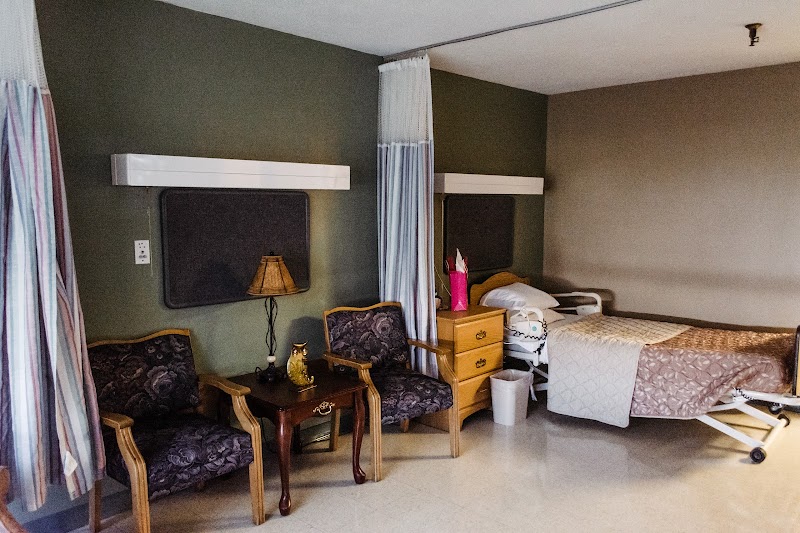
Who Owns and Operates Embassy Of Cambridge?

EMBASSY OF CAMBRIDGE is owned by a for-profit company. For-profit facilities operate as businesses with obligations to shareholders or private owners. The facility is operated by EMBASSY HEALTHCARE, a chain that manages multiple nursing homes. With 95 certified beds and approximately 70 residents (about 74% occupancy), it is a smaller facility located in CAMBRIDGE, Ohio.
How Does Embassy Of Cambridge Compare to Other Ohio Nursing Homes?

Compared to the 100 nursing homes in Ohio, EMBASSY OF CAMBRIDGE's overall rating (2 stars) is below the state average of 3.2, staff turnover (52%) is near the state average of 46%, and health inspection rating (1 stars) is much below the national benchmark.

What Should Families Ask When Visiting Embassy Of Cambridge?

Based on this facility's data, families visiting should ask: "What changes have been made since the serious inspection findings, and how are you preventing similar issues?" "What safeguards and monitoring systems are in place to protect residents from abuse or neglect?" "Can you walk me through typical staffing levels on day, evening, and night shifts?" "Can I visit during a mealtime to observe dining assistance and food quality?" These questions are particularly relevant given the facility's Immediate Jeopardy citations, the substantiated abuse finding on record, and the below-average staffing rating.

Is Embassy Of Cambridge Safe?

Based on CMS inspection data, EMBASSY OF CAMBRIDGE has documented safety concerns. The facility has 1 substantiated abuse finding (meaning confirmed case of resident harm by staff or other residents). Inspectors have issued 2 Immediate Jeopardy citations (the most serious violation level indicating risk of serious injury or death). The facility is currently on the Special Focus Facility watch list (a federal program monitoring the lowest-performing 1% of nursing homes nationwide). The facility has a 2-star overall rating and ranks #100 of 100 nursing homes in Ohio. Families considering this facility should ask detailed questions about what corrective actions have been taken since these incidents.

Do Nurses at Embassy Of Cambridge Stick Around?

EMBASSY OF CAMBRIDGE has a staff turnover rate of 52%, which is 6 percentage points above the Ohio average of 46%. Moderate turnover is common in nursing homes, but families should still ask about staff tenure and how the facility maintains care continuity when employees leave.

Was Embassy Of Cambridge Ever Fined?

EMBASSY OF CAMBRIDGE has been fined $211,687 across 5 penalty actions. This is 6.0x the Ohio average of $35,196. Fines at this level are uncommon and typically indicate a pattern of serious deficiencies, repeated violations, or failure to correct problems promptly. CMS reserves penalties of this magnitude for facilities that pose significant, documented risk to resident health or safety. Families should request specific documentation of what issues led to these fines and what systemic changes have been implemented.

Is Embassy Of Cambridge on Any Federal Watch List?

EMBASSY OF CAMBRIDGE is currently an SFF Candidate, meaning CMS has identified it as potentially qualifying for the Special Focus Facility watch list. SFF Candidates have a history of serious deficiencies but haven't yet reached the threshold for full SFF designation. The facility is being monitored more closely — if problems continue, it may be added to the official watch list. Families should ask what the facility is doing to address the issues that led to this status.