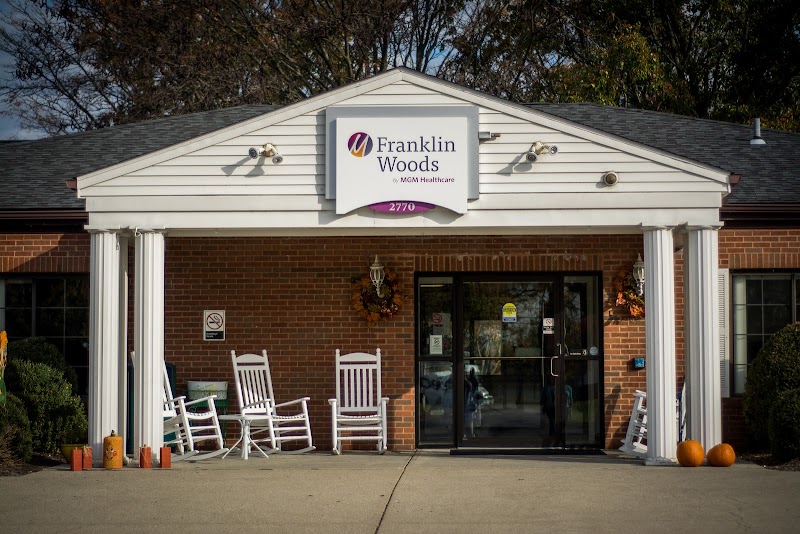
EMBASSY OF WOODVIEW

2770 CLIME ROAD, COLUMBUS, OH 43223 (614) 276-8222
For profit - Corporation 95 Beds EMBASSY HEALTHCARE Data: November 2025 1 Immediate Jeopardy citation
Trust Grade
13/100
#457 of 913 in OH
Last Inspection: May 2025

Inspected within the last 6 months. Data reflects current conditions.

Overview

Embassy of Woodview in Columbus, Ohio, has a Trust Grade of F, indicating significant concerns about the facility's quality and care. They rank #457 out of 913 in Ohio, placing them in the bottom half of nursing homes in the state, and #14 out of 56 in Franklin County, meaning only 13 local options are worse. The facility is experiencing worsening conditions, with the number of issues increasing from 7 in 2024 to 8 in 2025. Staffing is a notable concern, with a rating of 2/5 stars and a high turnover rate of 72%, which is significantly above the state average. Additionally, the facility has incurred $181,773 in fines, raising alarms about compliance problems, and while they have average RN coverage, recent incidents include a critical failure to schedule necessary medical appointments for a resident, leading to potential life-threatening harm, and serious lapses in care that resulted in worsening pressure ulcers for multiple residents. Overall, while there are some strengths in quality measures, the weaknesses in staffing and care delivery are alarming and should be carefully considered by families.

Trust Score
F
13/100
In Ohio
#457/913
Top 50%
Safety Record
High Risk
Review needed
Inspections
Getting Worse
7 → 8 violations
Staff Stability
⚠ Watch
72% turnover. Very high, 24 points above average. Constant new faces learning your loved one's needs.
Penalties
✓ Good
$181,773 in fines. Lower than most Ohio facilities. Relatively clean record.
Skilled Nurses
⚠ Watch
Each resident gets only 26 minutes of Registered Nurse (RN) attention daily — below average for Ohio. Fewer RN minutes means fewer trained eyes watching for problems.
Violations
⚠ Watch
51 deficiencies on record. Higher than average. Multiple issues found across inspections.
★★★☆☆
3.0
Overall Rating
★★☆☆☆
2.0
Staff Levels
★★★★★
5.0
Care Quality
★★☆☆☆
2.0
Inspection Score
Stable
2024: 7 issues
2025: 8 issues

The Good

  • 5-Star Quality Measures · Strong clinical quality outcomes
  • Full Sprinkler Coverage · Fire safety systems throughout facility
  • No fines on record

Facility shows strength in quality measures, fire safety.

The Bad

3-Star Overall Rating

Near Ohio average (3.2)

Meets federal standards, typical of most facilities

Staff Turnover: 72%

26pts above Ohio avg (46%)

Frequent staff changes - ask about care continuity

Federal Fines: $181,773

Well above median ($33,413)

Significant penalties indicating serious issues

Chain: EMBASSY HEALTHCARE

Part of a multi-facility chain

Ask about local staffing decisions and management

Staff turnover is very high (72%)

24 points above Ohio average of 48%

The Ugly 51 deficiencies on record

1 life-threatening 2 actual harm
May 2025 6 deficiencies 1 Harm
SERIOUS (G)

Actual Harm - a resident was hurt due to facility failures

Pressure Ulcer Prevention (Tag F0686)

A resident was harmed · This affected 1 resident

**NOTE- TERMS IN BRACKETS HAVE BEEN EDITED TO PROTECT CONFIDENTIALITY** Based on interviews, record reviews, hospital documentation, observation and review of facility policy, the facility failed to i...

Read full inspector narrative →
**NOTE- TERMS IN BRACKETS HAVE BEEN EDITED TO PROTECT CONFIDENTIALITY** Based on interviews, record reviews, hospital documentation, observation and review of facility policy, the facility failed to initiate treatment and complete an accurate assessment for a suspected deep tissue injury (SDTI) [persistent non-blanchable deep red, maroon or purple discoloration of the skin] to the bilateral buttocks upon admission on [DATE] for Resident #174. Actual Harm occurred on 05/07/25 when Resident #174's SDTI to the bilateral buttocks worsened to four stage III pressure ulcers (full thickness skin loss in which the fat is visible in the ulcer and granulation tissue as well as rolled wound edges are often present) due to not following the Wound Certified Nurse Practitioner's recommendations. The facility also failed to implement pressure ulcer wound care treatments timely for two additional residents (#27 and #47) that placed the residents at risk for the potential for more than minimal harm that was not actual harm. This affected three of three residents reviewed for pressure ulcer treatments and care. The facility census was 70. Findings include: 1. Review of the medical record for Resident #174, revealed an admission date of 04/29/25. Diagnoses included but were not limited to acute embolism and thrombosis unspecified deep veins of left lower extremity, anxiety disorder, need for assistance with personal care, muscle weakness, unspecified lack of coordination, and Type two Diabetes Mellitus without complications. Review of the hospital discharge documentation dated 04/24/25 for Resident #174 revealed a SDTI to the bilateral buttocks that measured 6 centimeters (cm) x 12 cm x 0.5 cm with a treatment of zinc oxide hydrophilic paste (triad) cream to be applied twice a day and as needed. Review of the admission assessment dated [DATE] revealed the resident required one-person assist with toilet hygiene, bathing and bed mobility. Further review revealed a skin assessment with scattered wounds described as wounds, scrapes, redness with bleeding and weeping on the entire body. The assessment had no documented measurements and no documentation of the SDTI to the bilateral buttocks as indicated on the hospital paperwork. There was no documentation of Resident #174 refusing a full body assessment. Review of a Brief Interview for Mental Status (BIMS) dated 04/29/25 revealed Resident #174 scored a 15 out of 15 indicating the resident was cognitively intact. Review of the plan of care dated 04/29/25 for Resident #174 revealed the potential for alteration in skin integrity with the intervention including but not limited to a complete head to toe assessment upon admission. Resident #174 additionally had a care plan focus of actual area of skin impairment with interventions including but not limited to initiate wound treatment and continue treatments as ordered by the MD/NP. Review of Resident #174's Braden Scale for Predicting Pressure Sore Risk dated 04/29/25 revealed a score of 11.0 on a scale of 6 (high risk) to 23 (no risk) which indicated the resident was at high risk for skin breakdown. Review of Resident #174's physician orders dated 04/29/25 revealed the triad cream to the SDTI twice daily and as needed was not included in the physician orders as indicated in the hospital discharge documentation. Review of a skin grid pressure documentation dated 04/30/25 for Resident #174 revealed a SDTI on the bilateral buttocks with no measurements indicating it was acquired in the hospital on [DATE]. The skin grid revealed the resident refused a full assessment with no indication of the reason, or education provided for the importance of the evaluation, and no follow up attempt to reassess the area. Review of Wound Certified Nurse Practitioner #203's (CNP) note dated 04/30/25 at 2:16 P.M. for Resident #174 revealed when hospitalized prior to admission, it was noted the resident had a SDTI to his bilateral buttocks and was treated with triad cream upon discharge. The Wound CNP #203 documented they were unable to do a complete assessment of the bilateral buttocks at this time due to resident pain, per hospital records recommends triad application twice a day and as needed following the hospital's treatment and will plan to reevaluate and amend recommendations at next visit. Review of the physician's orders from 04/30/25 through 05/07/25 for Resident #174 revealed the treatment for the SDTI to the bilateral buttocks of triad cream twice a day and as needed, as recommended by Wound CNP # 203, was not present in the orders. Further review of Resident #174's record revealed no attempts to reassess the SDTI area and complete a full body assessment. Interview on 05/07/25 at 8:35 A.M. with Resident #174 revealed the facility had not been applying any cream to his buttocks since he had been at the facility and he only refuses care due to pain, if he is medicated prior, he is willing to comply with treatments and care. Interview on 05/07/25 at 8:43 A.M. with the Director of Nursing (DON) revealed when a resident is admitted , the floor nurse does the full body assessment which includes measurements of all wounds and skin conditions. The DON stated Resident #174 was admitted on [DATE], he did not want a full body assessment due to pain, so the admitting nurse described the all over skin in the assessment. Upon assessment of the potential SDTI to the bilateral buttocks on 04/30/25 it was not fully completed due to the resident refusing so she stated she used the last hospital assessment of the wound prior to admission to the facility for the wound type and wound measurements and confirmed she did not actually assess Resident #174's SDTI to the bilateral buttock. Observation on 05/07/25 at 9:45 A.M. of Resident #174's SDTI to the bilateral buttocks with Wound CNP #203 revealed no triad cream present on the SDTI of the bilateral buttocks. There were four areas to the bilateral buttocks observed that were stage III pressure ulcers. The areas were: left inferior buttock measured 1 cm x 0.5 cm x 0.2 cm, left medial buttock measured 1 cm x 1 cm x 0.2 cm, left lateral buttock measured 1.5 cm x 2 cm x 0.2 cm and the right buttock measured 11 cm x 7 cm x 0.3 cm. Treatment orders for all four areas were ordered to be cleanse with wound cleanser, apply medical grade honey, and silver alginate, secure with abdominal pad with triad twice a day and as needed. Interview on 05/07/25 at 10:09 A.M. with Wound CNP #203 revealed she is a consulting company for the facility for wound care and comes to the facility once a week. The facility is required to enter her orders, and the house physician signs off on the treatments. She completes her notes prior to leaving the facility for the day so her recommendations can be entered for the residents. When she first assessed Resident #174 on 04/30/25, she reviewed his discharge paperwork from the hospital and he had SDTI to the bilateral buttocks and she was unable to fully assess the area herself, so she recommended continuing the triad cream twice a day and as needed continuing the hospital recommended treatment and felt it was an appropriate treatment. Interview on 05/07/25 at 11:26 A.M. with the DON revealed the facility did not reattempt to do a full body assessment upon admission on [DATE] of Resident #174 with no documentation of the resident refusing due to pain. The DON also verified no re attempts to assess the SDTI to the bilateral buttocks from 04/30/25 through 05/07/25 since the assessment on 04/30/25 was copied from the hospital paperwork and not an actual assessment completed by the facility. The DON was also aware this resident was receiving triad cream in the hospital for the SDTI to bilateral buttocks, but it was not ordered upon admission through 05/07/25 even after CNP #203 recommended it on 04/30/25. Interview via telephone on 05/13/25 at 2:20 P.M. with Facility CNP #202 revealed for wound care, she refers to Wound CNP #203 for all recommendations and treatments. She would also expect the facility to reattempt a full body skin assessment on admission and an assessment of a potential pressure ulcer area if unable to do so at the first attempt. Review of the facility policy titled Pressure Injury Prevention and Management revised 01/08/25 revealed a licensed nurse will conduct a full body skin assessment on all residents upon admission and weekly and treatments in accordance with current standards of practice will be provided for all residents who have a pressure injury present. 2. Review of the medical record for Resident #27, revealed an admission date of 3/30/25. Diagnoses included but were not limited to dementia, cerebral infarction, muscle weakness, anxiety disorder, and chronic kidney disease stage 3. Review of the most recent Minimum Data Set (MDS) 3.0 assessment dated [DATE] revealed a Brief Interview for Mental Status (BIMS) of nine indicating moderate cognitive impairment. The resident was assessed to require total dependence on toilet hygiene, shower/bathe self, bed mobility and transfers. This resident was also assessed to have a Foley catheter, to always be incontinent of bowel and to be at risk for pressure ulcer injury. Review of the plan of care dated 3/30/25 for Resident #27 revealed this resident has an actual area of skin impairment related to pressure ulcers and potential for alteration in skin integrity with no interventions involving treatments as ordered. Review of the admission assessment dated [DATE] for Resident #27 revealed a left elbow unstageable pressure ulcer that measured 4 cm x 5 cm x 0.1 cm. Review of the medical record for Resident #27 from admission on [DATE] through 03/31/25 at 2:46 P.M. revealed no treatment order for the left elbow unstageable pressure ulcer. Review of the physician order dated 03/31/25 at 2:46 P.M. for Resident #27 revealed wound care for the left arm (elbow) cleanse with normal saline, pat dry. Apply mepilex and change every three days. Review of the skin grid pressure assessment dated [DATE] for Resident #27 revealed a pressure ulcer stage II to the scrotum that measured 1.5 cm x 0.3 cm x 0.10 cm. Review of the medical record for Resident #27 from 04/02/25 through 04/04/25 at 5:20 P.M. revealed no treatment order for the scrotum stage II pressure ulcer. Review of physician orders dated 04/04/25 at 5:20 P.M. for Resident #27 revealed a scrotal wound, cleanse with wound cleanser, pat dry, apply triad paste to wound base and leave open to air every shift and as needed. Interview on 05/12/25 at 11:35 A.M. with the Director of Nursing (DON) verified for the left elbow unstageable pressure ulcer documented on admission on [DATE], no treatments were in place until 03/31/25 at 2:46 P.M. The DON also verified for the scrotum stage II pressure ulcer documented on 04/02/25, no treatments were in place until 04/04/25 at 5:20 P.M. Review of the facility policy titled Pressure Injury Prevention and Management revised 01/08/25 revealed treatments in accordance with current standards of practice will be provided for all residents who have a pressure injury present. 3. Review of the medical record revealed Resident #47 admitted to the facility on [DATE]. Diagnoses included a pressure ulcer of the left heel, deep tissue and a pressure ulcer of the right heel, unstageable. Review of Resident #47's physician's order dated 09/24/24 revealed she was to wear pressure relief boots daily for preventative skin and comfort. There was no end date for the order. Review of Resident #47's medical record revealed the order was discontinued by the facility staff on 10/14/24. Interview with DON on 05/13/25 at 1:36 P.M. confirmed the order was discontinued by the facility staff and there was no corresponding order from the physician to discontinue donning the boots daily. Review of Resident #47's physician order dated 10/25/24 revealed the left heel wound was to be cleansed with normal saline, betadine and wrapped with gauze daily. Review of Resident #47's medical record revealed there was no documentation the treatments were completed 10/26/24, 10/27/24 and 10/30/24. Review of Resident #47's physician order dated 10/25/24 revealed the right heel wound was to be cleansed with normal saline, betadine applied and wrapped with gauze daily. Review of Resident #47's medical record revealed there was no documentation the treatments were completed 10/26/24, 10/27/24 and 10/30/24. Interview with DON on 05/13/25 at 1:38 P.M. confirmed the treatments were not completed as ordered. Review of the facility policy titled Wound Treatment Management, dated 1/08/25, revealed to promote wound healing of various types of wounds, it is the policy of this facility to provide evidence-based treatments in accordance with current standards of practice and physician orders. Wound treatments will be provided in accordance with physician orders, including the cleansing method, type of dressing and frequency of dressing change.
CONCERN (D)

Potential for Harm - no one hurt, but risky conditions existed

Safe Environment (Tag F0584)

Could have caused harm · This affected 1 resident

**NOTE- TERMS IN BRACKETS HAVE BEEN EDITED TO PROTECT CONFIDENTIALITY** Based on observations, resident interviews, staff interviews and record review, the facility failed to ensure there was a suffic...

Read full inspector narrative →
**NOTE- TERMS IN BRACKETS HAVE BEEN EDITED TO PROTECT CONFIDENTIALITY** Based on observations, resident interviews, staff interviews and record review, the facility failed to ensure there was a sufficient supply of washcloths, hand towels and bath towels to complete resident care. This shortage affected two residents (#8 and #21) and had potential to affect all 70 residents residing in the facility. The facility census was 70. Findings include: Resident #8 was admitted to facility on 10/27/22 with primary diagnosis of Parkinson's Disease and additional diagnoses of congestive heart failure, Type II Diabetes, anxiety and depression. Review of Resident #8's Minimum Data Set (MDS) assessment, dated 02/10/25, revealed a Brief Interview for Mental Status (BIMS) score of 15 which indicated she was cognitively intact. Interview on 05/08/25 at 8:28 A.M. with Resident #8 revealed she believed there was a shortage of washcloths and towels every other day. Resident #8 said because of the shortage, her showers had been delayed until 3rd shift on multiple occasions. Resident #8 stated her preference was to receive a shower after breakfast in the morning on day shift. Review of shower schedule revealed Resident #8 was scheduled to receive showers on Mondays and Thursdays between 7:00 A.M. and 7:00 P.M. Interview on 05/08/25 at 9:24 A.M. with Director of Nursing (DON) revealed the shower schedule did not change from week to week between day shift and night shift. Review of facility documentation of Resident #8's shower record revealed on 04/28/25, Resident #8 received a bed bath during 3rd shift between 7:00 P.M. and 7:00 A.M. There was no documentation of Resident #8 either receiving or refusing a bath or shower on day shift of 04/24/25. There was documentation from 04/24/25 that Resident #8 refused a shower the evening of 04/24/25 during third shift. Interview on 05/08/25 at 8:35 A.M. with Certified Nursing Assistant (CNA) #135 revealed the CNA prioritized which residents received towels based on who woke up first. Observation on 05/08/25 at 8:49 A.M. of the room shared by Resident #39 and Resident #4 revealed no washcloths, hand towels or towels were available in the room. Observation on 05/08/25 at 8:59 A.M. of the linen closet revealed a single towel in the linen closet. Staff #147 verified the single towel in the linen closet at the time of the observation. Observation on 05/08/25 at 9:00 A.M. of the laundry room revealed 11 washcloths, no hand towels and no towels on shelving. Interview on 05/08/25 at 9:00 A.M. in the laundry room with Environmental Services Staff #160 confirmed there were no hand towels or towels on shelving. She said they were all being laundered. Observation on 05/08/25 at 9:05 A.M. in the shared room of Resident #54 and Resident #18 revealed no washcloths, hand towels or bath towels in the room. Resident #54 was present during the observation and confirmed the room had no bath linen available. Observation on 05/08/25 at 9:07 A.M. of the room shared by Resident #2 and Resident #23 revealed no washcloths, hand towels, towels or toilet paper in the room. Resident #23 was present during the observation and verified there were no bath linens present and stated at the moment she was more concerned with not having toilet paper. 2. Resident #21 was admitted to the facility on [DATE] with a primary diagnoses of respiratory failure with hypoxia and additional diagnoses of deep vein thrombosis, discitis, morbid obesity, muscle weakness and depression. Review of Resident #21's Minimum Data Set (MDS) assessment, dated 04/18/25, revealed a Brief Interview for Mental Status (BIMS) score of 14 which indicated she was cognitively intact. Observation on 05/08/25 at 9:48 A.M. revealed no washcloths, hand towels or towel in Resident #21's room. Interview with Resident #21 on 05/28/25 at 9:48 A.M. the resident stated the towels were in the room and were taken away to be used for someone else which upset her since she was waiting to be cleaned up. Resident #21 said she really wanted to wash her face. Observation on 05/08/25 at 11:38 A.M. of the laundry room revealed an out of order sign on a dryer and empty linen shelving with no washcloths, hand towels or towels. Interview on 05/08/25 at 11:30 A.M. with Environmental Services Staff #160 who confirmed dryer had been out of order at least since the previous Friday (six days). She confirmed the cart was usually empty. She said they were always coming up short on linens though noted it has been especially bad lately. She said she had asked management multiple times for more. She said staff has tried to take the linens off the stretchers when residents came from the hospital in order to use those, but those sheets didn't fit the beds. She said they are short on washcloths, hand towels, towels, sheets and Hoyer pads. Interview on 05/08/25 at 12:06 P.M. with Certified Nursing Assistant (CNA) #132 who confirmed there were times when there was a shortage of towels, hand towels, and washcloths. CNA #132 attributed this to one of the laundry machines being out of order, though noted this was an ongoing issue. The aide shared that more than once when he was unable to find towels in the storage closet, in the laundry room, or on the other unit, he had to resort to using a pillowcase in place of a towel to dry the resident. He said he would rather do this than to not bathe the resident.
CONCERN (D)

Potential for Harm - no one hurt, but risky conditions existed

Deficiency F0604 (Tag F0604)

Could have caused harm · This affected 1 resident

**NOTE- TERMS IN BRACKETS HAVE BEEN EDITED TO PROTECT CONFIDENTIALITY** Based on observation, interview and record review the facility failed to ensure one (Resident #47) had access to her personal pr...

Read full inspector narrative →
**NOTE- TERMS IN BRACKETS HAVE BEEN EDITED TO PROTECT CONFIDENTIALITY** Based on observation, interview and record review the facility failed to ensure one (Resident #47) had access to her personal property a motorized wheel chair. This affected one (#47) of two reviewed for personal property. The facility census was 70. Findings include: Resident #47 was admitted to the facility on [DATE] with diagnoses which included acquired absence of left and right leg below the knee, congestive heart failure, chronic obstructive pulmonary disease, osteoarthritis, pain and peripheral vascular disease. Review of Resident 47's admission record reveals she arrived to the facility with an electric wheelchair. Review of the medical record revealed there was no assessments completed for the safe use of the electric wheelchair. Review of the admission minimum data set (MDS) 3.0 dated 02/22/25 revealed Resident #47 mobility is severely limited and requires the use of a wheelchair. Review of progress note dated dated 08/18/24 at 8:23 P.M. revealed Resident #47 ran into another resident in her electric wheelchair. Resident #47 was to be evaluated by occupational therapy for safe operation of her electric wheelchair. Review of Resident #47's record revealed on 09/27/24 occupational therapy noted Resident #47 had poor depth perception when operating a chair and should be evaluated by an optometrist. Review of Resident #47's record revealed on 10/07/24 Resident #47 was discharged from occupation therapy and deemed incapable of safely operating her custom power wheelchair. In an interview with Resident #47 on 05/05/25 at 10:18 A.M. she revealed the facility had taken her electric wheelchair, which was preventing her from being able to move around the premises as she wanted to. Interview with Occupational Therapist (OT) #141 on 05/13/25 at 10:26 A.M. revealed Resident #47 had not yet had her vision evaluated. Interview with DON on 05/13/25 at 10:31 A.M. revealed due to the determination by occupational therapy that Resident #47 could not safely operate her wheelchair, on 12/18/24 the control panel for the wheelchair was moved to the back of the chair so the resident would not be able to operate it herself. During an interview on 05/13/25 at 10:35 A.M., DON and OT #188 verified there was no order, assessment or plan of care for restricting Resident #47's electric wheelchair operation. They both acknowledged that by limiting the resident's ability to operate the electric wheelchair, it restricted her mobility.
CONCERN (D)

Potential for Harm - no one hurt, but risky conditions existed

Quality of Care (Tag F0684)

Could have caused harm · This affected 1 resident

**NOTE- TERMS IN BRACKETS HAVE BEEN EDITED TO PROTECT CONFIDENTIALITY** Based on observations, medical record review, staff interview, and facility policy review, the faciltiy failed to monitor and pr...

Read full inspector narrative →
**NOTE- TERMS IN BRACKETS HAVE BEEN EDITED TO PROTECT CONFIDENTIALITY** Based on observations, medical record review, staff interview, and facility policy review, the faciltiy failed to monitor and provide timely/adequate treatments and care for non-pressure skin issues. This affected two (Resident #27 and #47) of six residents reviewed for skin issues. The census was 70. Findings Include: 1. Review of the medical record for Resident #27, revealed an admission date of 3/30/25. Diagnoses included but were not limited to dementia, cerebral infarction, muscle weakness, anxiety disorder, and chronic kidney disease stage III. Review of the most recent Minimum Data Set (MDS) 3.0 assessment dated [DATE] revealed a Brief Interview for Mental Status (BIMS) of 09 suggested moderate cognitive impairment. The resident was assessed to require total dependence on toilet hygiene, shower/bathe self, bed mobility and transfers. The resident was also assessed to have a foley catheter, to always be incontinent of bowel and to be at risk for pressure ulcer injury. Review of the plan of care dated 3/30/25 for Resident #27 revealed the resident has an actual area of skin impairment and potential for alteration in skin integrity with no interventions involving treatments as ordered. Review of the admission assessment with baseline care plan assessment dated [DATE] for Resident #27 revealed a peri area moisture-associated skin damage (MASD) that measured 8 centimeter (cm) x 15 cm x 0.1 cm. Review of the medical record dated 03/30/25 through 04/01/25 at 10:10 A.M. for Resident #27 revealed no treatments in place for the peri-area MASD. Further review of physician orders dated 04/01/25 at 10:10 A.M. for this resident revealed MASD to peri-area, cleanse with soap and water, rinse, pat dry and apply triad paste every shift for wound care. Review of the skin grid non pressure assessment dated [DATE] for Resident #27 revealed a left hip skin tear that measured 0.5 cm x 3 cm x 0.10 cm. Review of the medical record dated 04/02/25 through 04/04/25 at 5:15 P.M. for Resident #27 revealed no treatments in place for the left hip skin tear. Review of the physician order dated 04/04/25 at 5:15 P.M. for Resident #27 revealed left hip skin tear to cleanse with wound cleanser, pat dry, and cover with hydrocolloid dressing to wound base every Monday, Wednesday and Friday, and as needed for wound care. Review of the skin grid non pressure assessment dated [DATE] for Resident #27 revealed a right inner thigh abrasion that measured 4.7 cm x 2.2 cm x 0.10 cm. Review of the medical record dated 04/23/25 through 04/25/25 at 11:40 A.M. for Resident #27 revealed no treatments in place for the right inner thigh abrasion. Review of the physician order dated 04/25/25 at 11:40 A.M. for Resident # 27 revealed a right inner thigh wound, cleanse with wound cleanser, pat dry, apply collagen to the wound base and cover with a foam dressing every shift and as needed. Interview on 05/12/25 with the Director of Nursing verified for the peri area MASD documented on admission on [DATE] did not have a treatment in place until 04/01/25 at 10:10 A.M., the left hip skin tear documented on 04/02/25 did not have a treatment in place until 04/04/25 at 5:15 P.M. and the right inner thigh abrasion documented on 04/23/25 did not have an order in place until 04/25/25 at 11:40 A.M. 2. Review of the medical record revealed Resident #47 admitted to the facility on [DATE]. Diagnoses included moisture associated skin damage, (MASD) of the right and left buttocks, respectively, venous ulcer of the left lateral shin, and a venous ulcer of the left lateral ankle. Review of Resident # 47's physician's order dated 09/24/24 revealed she was to wear pressure relief boots daily for preventative skin and comfort. There was no end date for the order. Review of Resident #47's medical record revealed the order was discontinued by the facility staff on 10/14/24. Interview with DON on 05/13/25 at 1:36 P.M. confirmed that the order was discontinued by the facility staff and there was no corresponding order from the physician to discontinue donning the boots daily. Review of Resident #47's provider order dated 09/23/24 revealed the left and right buttocks wounds were to be cleansed and an adhesive foam dressing applied to each wound daily. Review of Resident #47's medical record revealed the treatments were not initiated as ordered until 09/27/24. Review of Resident #47's provider order dated 09/23/24 revealed the venous ulcer of the left lateral shin was to be cleansed and an adhesive foam dressing applied. Review of Resident #47's medical record revealed the treatments were not initiated as ordered until 09/26/24. Review of Resident #47's provider order dated 09/23/24 revealed the venous ulcer of the left lateral ankle was to be cleansed, silver alginate applied and covered with an adhesive foam dressing three times per week. Review of Resident #47's medical record revealed the treatments were not initiated as ordered until 09/30/24. Interview with DON on 05/13/25 at 1:38 P.M. confirmed the treatments were not completed as ordered. Review of the facility policy titled Wound Treatment Management, dated 1/08/25, revealed to promote wound healing of various types of wounds, it is the policy of this facility to provide evidence-based treatments in accordance with current standards of practice and physician orders. Wound treatments will be provided in accordance with physician orders, including the cleansing method, type of dressing and frequency of dressing change.
CONCERN (D)

Potential for Harm - no one hurt, but risky conditions existed

Deficiency F0757 (Tag F0757)

Could have caused harm · This affected 1 resident

**NOTE- TERMS IN BRACKETS HAVE BEEN EDITED TO PROTECT CONFIDENTIALITY** Based on medical record review, staff interview, and facility policy review, the facility failed to provide proper parameters fo...

Read full inspector narrative →
**NOTE- TERMS IN BRACKETS HAVE BEEN EDITED TO PROTECT CONFIDENTIALITY** Based on medical record review, staff interview, and facility policy review, the facility failed to provide proper parameters for as needed pain medications. This affected two (Resident #3 and #48) of five residents reviewed for medications. Also, the facility failed to follow parameters prior to administering medications. This affected two (Residents #48 and #5) of five residents reviewed for medications. The census was 70. Findings Include: 1. Resident #3 was admitted to the facility on [DATE]. His diagnoses were alcoholic cirrhosis of liver, hypertension, hyperlipidemia, depression, anemia, adult failure to thrive, alcohol dependence, schizoaffective disorder, personal history of traumatic brain injury, diabetes mellitus, type II diabetes, dementia, cognitive communication deficit, dysphagia, and bipolar II disorder. Review of his Minimum Data Set (MDS) assessment, dated 04/17/25, revealed he was cognitively intact. Review of Resident #3 current physician orders found the following: Ibuprofen (non steroidal anti inflammatory) 800 milligrams (mg) every eight hours as needed for pain and Acetaminophen (analgesic) 325 mg, two tabs every six hours as needed for pain. Review of Resident #3 current orders of these two medications found no pain parameters as to when each medication should be administered. 2. Resident #48 was admitted to the facility on [DATE]. His diagnoses were cellulitis, dependence on respirator, morbid obesity, chronic embolism and thrombosis, muscle weakness, anxiety disorder, depression, shortness of breath, hyperlipidemia, difficulty in walking, chronic obstructive pulmonary disease, anemia, alcohol dependence, palpitations, vitamin A deficiency, acute infection following transfusion, atrial fibrillation, history of pulmonary embolism, lymphedema, hypertension, and acute and chronic respiratory failure with hypercapnia. Review of his minimum data set (MDS) assessment, dated 04/05/25, revealed he was cognitively intact. Review of Resident #48 current physician orders found the following: Tylenol 325 mg, two tablets every eight hours as needed for pain, starting 03/06/25, Oxycodone (opioid) five mg, one tab every six hours as needed for pain ranking four to seven and Oxycodone five mg, two tablets every six hours as needed for pain raining eight to ten, which was ordered from 02/20/25 to 03/03/25 and 03/24/25 to 04/27/25; Review of the as needed pain medication orders, there were no parameters for pain levels one to three for any of the as needed pain medications, and there were no parameters for pain levels eight to ten from 03/04/25 to 03/23/24, and 04/27/25 to current. Interview with Assistant Director of Nursing (ADON) #116 on 05/12/25 at 2:31 P.M. confirmed there should have been pain parameters for both residents regarding their as needed pain medications. She confirmed there needed to be pain parameters for the as needed pain medications. 3. Review of Resident #48 current physician orders found the following: Oxycodone five mg, one tablets every six hours as needed for pain ranking four to seven, which was started on 03/06/25; Oxycodone five mg, two tablets every six hours as needed for pain raining eight to ten, which was ordered from 02/20/25 to 03/03/25 and 03/24/25 to 04/27/25; Metoprolol Tartrate (used to control high blood pressure) 25 mg, give 0.5 tablet by mouth twice daily and hold for systolic blood pressure (SBP) was less than 110 starting 03/06/25, and Hydrochlorothiazide (diuretic) oral tablet 12.5 mg once daily and hold for SBP less than 110, which was ordered from 03/08/25 to 05/05/25. Review of Resident #48 medication administration records (MAR), dated December 2024 to May 2025, revealed the following medications given outside of parameters: May 2025: Oxycodone five mg was given 10 times for pain outside of pain level four to seven on the following dates: 1st at 8:51 A.M. for a pain rating of eight, 2nd at 8:41 A.M. for a pain rating of an eight; 3rd at 10:01 A.M. for a pain rating of eight, 4th at 11:31 P.M. for a pain rating of eight, the 5th at 8:00 A.M., 3:39 P.M. and 10:54 P.M. for a pain rating of eight, 6th at 3:20 P.M. for pain rating of eight, 7th at 4:57 P.M. for pain rating of eight, and 10th at 10:22 P.M. for a pain rating of eight. April 2025: Hydrochlorothiazide 12.5 mg was given twice when SBP was below 110, Metoprolol Tartrate 25 mg, 0.5 tablet was given twice when SBP was below 110, on the 1st with a blood pressure reading of 100/78 and on the 25th with a blood pressure reading of 108/62. Oxycodone five mg, two tablets was given eight times for pain outside of pain level eight to ten on the following days; 2nd at 11:50 P.M. for a pain rating of seven, 5th at 1:01 A.M. for a pain rating of five, 6th at 12:41 A.M. for a pain rating of seven, 7th at 12:52 A.M. for a pain rating of seven, 10th at 10:22 P.M. for a pain rating of zero, 13th at 3:00 P.M. with no pain rating provided, 24th at 4:12 P.M. for a pain rating of seven and on the 27th at 12:31 A.M. for a pain rating of six. March 2025: Oxycodone five mg, one tablet was give one time for pain outside of pain level four to seven on the 20th at 11:44 P.M. for a pain rating of eight, and Oxycodone five mg, two tablets was given 17 times for pain outside of pain level eight to ten on the following days: 1st at 12:48 A.M. for a pain rating of zero, 8th at 10:08 P.M. for a pain rating of six, 12th at 4:24 P.M. for a pain rating of five, 13th at 5:32 P.M. for a pain rating of five, 15th at 12:36 A.M. for a pain rating of zero, and at 3:16 P.M. for a pain rating of six, 16th at 3:05 P.M. for a pain rating of five, 17th at 5:31 P.M. for a pain rating of six and at 11:25 P.M. for a pain rating of seven, 18th at 3:15 P.M. for a pain rating of six, 19th at 4:10 P.M. for a pain rating of five, 20th at 12:03 A.M. for a pain rating of seven, and at 3:23 P.M. for a pain rating of six, 21st at 9:09 P.M. for a pain rating of zero, 23rd at 1:44 A.M. for a pain rating of seven, 24th at 4:17 P.M. for a pain rating of six, and 27th at 3:50 P.M. for a pain rating of zero. February 2025: Oxycodone five mg, two tablets was given six times for pain outside of pain level eight to ten on the following days: 22nd at 5:49 P.M. for a pain rating of seven, 23rd at 6:12 P.M. for a pain rating of four, 25th at 12:55 A.M. for a pain rating of six, 26th at 11:14 A.M. and 5:25 P.M. for a pain rating of three, and 27th at 5:17 P.M. for a pain rating of four. Interview with Assistant Director of Nursing (ADON) #116 on 05/12/25 at 2:31 P.M. confirmed the above medications were administered outside the parameters. She confirmed they will have to review the medications and the parameters to ensure they remain appropriate for the resident. Review of facility Pain Management policy, dated 08/22/22, revealed based on professional standards of practice, an assessment or evaluation of pain by the appropriate members of the interdisciplinary team may necessitate gathering the following information, as applicable to the resident: current prescribed pain medications, dosage and frequency, and the resident's goals for pain management and his/her satisfaction with the current level of pain control. Based upon the evaluation, the facility, in collaboration with the attending physician/prescriber, other health care professionals, and the resident and/or resident's representative will develop, implement, monitor, and revise as necessary interventions to prevent or manage each individual resident's pain beginning at admission. 4. Review of the medical record for Resident #5, revealed an admission date of 04/29/23. Diagnoses included but were not limited to cerebrovascular disease, mild cognitive impairment, essential primary hypertension, and unspecified disorder of adult personality and behavior. Review of the most recent Minimum Data Set (MDS) 3.0 assessment dated [DATE] revealed a Brief Interview for Mental Status (BIMS) of 14. The resident was assessed to require set up or clean up assistance with toilet hygiene, shower/bathe self, bed mobility and transfers. Review of the plan of care dated 02/05/25 for Resident #5 revealed an alteration in tissue perfusion related to hypertension (high blood pressure) with interventions that included but are not limited to administer medications as ordered. Review of the physician order dated 05/31/24 at 4:30 P.M. for Resident #5 revealed Hydralazine Hydrochloride (blood pressure medication) oral tablet 50 milligrams (mg) give one tablet by mouth every eight hours as needed for treatment of high blood pressure (bp). Give hydralazine if systolic pressure is over 160. Review of the physician order dated 05/31/24 at 4:31 P.M. for Resident #5 revealed to measure and record blood pressure, give Hydralazine Hydrochloride if systolic blood pressure is greater than 160 every eight hours. Review of the medication record administration (MAR) for July 2024 revealed for the 28th at midnight Resident #5's blood pressure was 169/77 with no administration of hydralazine hydrochloride. Review of the MAR for August 2024 revealed for the following dates and time Hydralazine Hydrochloride was not administered for Resident #5: the 1st bp was 163/78 at midnight, the 5th bp was 163/89 at 4:00 P.M., the 21st bp was 173/109 at 8:00 A.M. and 165/100 at 4:00 P.M. Review of the MAR for October 2024 revealed the following dates and times Hydralazine Hydrochloride was not administered for Resident #5: the 5th bp was 162/92 at midnight and the 29th bp was 164/99 at midnight. Review of the MAR for November 2024 revealed the following dates and times Hydralazine Hydrochloride was not administered for Resident #5: the 9th bp was 164/88 at midnight, the 11th bp was 162/59 at midnight, the 13th bp was 161/78 at midnight and 199/122 at 4:00 P.M., the 16th bp was 166/78 at midnight, the 17th bp was 166/93 at midnight, the 21st bp was 161/78 at midnight, the 22nd bp was 169/67 at 8:00 A.M., the 23rd bp was 170/96 at 8:00 A.M., and the 28th bp was 179/102 at 8:00 A.M. Review of the MAR for December 2024 revealed the following dates and times Hydralazine Hydrochloride was not administered for Resident #5: the 2nd bp was 168/116 at 8:00 A.M., the 6th bp was 186/120 at 4:00 P.M., the 7th bp was 195/110 at 8:00 A.M., the 11th bp was 177/91 at midnight, the 16th bp was 167/97 at midnight, the 20th bp was 169/98 at midnight, the 30th bp was 162/97 at midnight and 176/98 at 4:00 P.M. Review of the MAR for January 2025 revealed the following dates and times Hydralazine Hydrochloride was not administered for Resident #5: the 1st bp was 168/101 at 8:00 A.M. and 182/102 at 4:00 P.M., the 3rd bp was 162/108 at 8:00 A.M., the 7th bp was 163/109 at midnight, the 8th bp was 166/76 at midnight, the 13th bp was 166/85 at midnight, and the 16th bp was 169/90 at 8:00 A.M. Review of the MAR for April 2025 revealed the following date and time Hydralazine Hydrochloride was not administered for Resident #5: the 3rd bp was 164/88 at midnight. Interview on 05/08/25 at 10:31 A.M. with the Director of Nursing verified Resident #5 had missing doses of Hydralazine Hydrochloride from July 2024 through April 2025 for systolic blood pressures over 160 per order. Review of the facility policy titled Medication Administration revised on 08/22/22 revealed medications are administered by licensed nurses as ordered by the physician.
CONCERN (E)

Potential for Harm - no one hurt, but risky conditions existed

Infection Control (Tag F0880)

Could have caused harm · This affected multiple residents

Based on observation, interview, record review and facility policy review, the facility failed to implement enhanced barrier precautions for Resident #174. This affected one resident of one resident r...

Read full inspector narrative →
Based on observation, interview, record review and facility policy review, the facility failed to implement enhanced barrier precautions for Resident #174. This affected one resident of one resident reviewed for enhanced barrier precautions and had the potential to affect all 23 residents on the hall. The facility census was 70. Findings include: Review of the medical record for Resident #174, revealed an admission date of 04/29/25. Diagnoses included but were not limited to acute embolism and thrombosis unspecified deep veins of left lower extremity, anxiety disorder, need for assistance with personal care, muscle weakness, unspecified lack of coordination, and Type II Diabetes Mellitus without complications. Review of a Brief Interview for Mental Status (BIMS) dated 04/29/25 revealed Resident #174 to be a 15 indicated cognitive intactness. Review of the plan of care dated 04/29/25 for Resident #174 revealed the resident had an actual area of skin impairment with no interventions for enhanced barrier precautions. Review of a skin grid pressure documentation dated 04/30/25 for Resident #174 revealed a SDTI on the bilateral buttocks. Review of the physician's orders dated 04/30/25 through 05/07/25 for Resident #174 revealed no order for enhanced barrier precautions. Observation on 05/07/25 at 9:40 A.M. of Resident #174's room revealed no sign for enhanced barrier precautions and no enhanced barrier precautions cart with items for staff to wear when entering the residents room. Verified with the Assistant Director of Nursing this resident was supposed to be on enhanced barrier precautions, and he was not. Review of the facility policy titled Enhanced Barrier Precautions revised 07/13/22 revealed an order for enhanced barrier precautions will be obtained for residents with wounds. Also, implementation of enhanced barrier precautions which includes making gowns and gloves available immediately outside of the residents room and positioning of a trash can inside the resident room and hear the exit for discarding of the personal protection equipment after removal.
Apr 2025 2 deficiencies
CONCERN (D) 📢 Someone Reported This

A family member, employee, or ombudsman was alarmed enough to file a formal complaint

Potential for Harm - no one hurt, but risky conditions existed

Medical Records (Tag F0842)

Could have caused harm · This affected 1 resident

**NOTE- TERMS IN BRACKETS HAVE BEEN EDITED TO PROTECT CONFIDENTIALITY** Based on record reviews, staff interview, review of a Medication Error form, and review of facility policy, the facility failed ...

Read full inspector narrative →
**NOTE- TERMS IN BRACKETS HAVE BEEN EDITED TO PROTECT CONFIDENTIALITY** Based on record reviews, staff interview, review of a Medication Error form, and review of facility policy, the facility failed to ensure accurate and complete documentation was maintained in residents medical records. This affected three (#50, #63, and #71) out of the seven residents whose medical records were reviewed. The facility census was 70. Findings include: 1. Record review for Resident #63 revealed the resident was admitted to the facility on [DATE]. Diagnoses included acute osteomyelitis of the right of the right ankle and foot, sepsis, and diabetes mellitus. Review of the physicians order, dated 12/24/24, revealed the resident was to be administered the antidiabetic medication Rybelsus 3 mg once daily in the morning. Review of the Medication Administration Record (MAR) for 01/2025 revealed scheduled doses of Rybelsus were documented to have been administered as ordered on 01/01/25, 01/02/25, 01/07/25, 01/08/25, and 01/10/25. Review of the progress note, dated 01/05/25, revealed Rybelsus not available, awaiting medication to arrive from pharmacy. Review of the progress note, dated 01/06/25, revealed Rybelsus not available, waiting on medication to arrive from pharmacy. Review of the progress note, dated 01/09/25, revealed Rybelsus not available, awaiting medication to arrive from pharmacy. Review of the progress note, dated 01/11/25, revealed Rybelsus not available, pending pharmacy delivery. Review of the progress note, dated 01/13/25, revealed Rybelsus not available, pending pharmacy delivery. Review of the progress note, dated 01/14/25, revealed awaiting Rybelsus to arrive from pharmacy. Review of the progress note, dated 01/15/25, revealed Rybelsus to arrive from pharmacy today. Review of the progress note, dated 01/16/25, revealed Rybelsus pending delivery from pharmacy. Review of the progress note, dated 01/23/25, revealed awaiting Rybelsus from pharmacy. Review of the progress note, dated 01/28/25, revealed awaiting Rybelsus to arrive from pharmacy. Review of the progress note, dated 01/29/25, revealed awaiting Rybelsus to arrive from pharmacy. Interview with the Director of Nursing (DON) on 04/09/25 at 12:10 P.M. confirmed Resident #63 was ordered to receive Rybelsus 3 mg once a day, but the medication was not sent to the facility until 01/15/25 according to pharmacy records. The DON confirmed the medication was not kept in the emergency drug kit maintained at the facility so the resident could not have received ordered doses of the medication from the time the resident was admitted on [DATE] until the medication was delivered on 01/15/25. The DON confirmed doses of Rybelsus documented to have been administered on the MAR from 01/01/25 through 01/15/25 were completed in error and were inaccurate. 2. Review of the medical record for Resident #71 revealed this resident was admitted to the facility on [DATE]. Diagnoses included urinary tract infections, osteomyelitis, hypertension, hyperlipidemia, respiratory failure, morbid obesity, chronic left leg ulcer, and bacteremia. Review of physician orders revealed the resident was to receive Methadone 35 mg by mouth twice daily for chronic pain. Review of the Medication Error form, completed on 02/18/25, revealed Resident #71 received Oxycodone 5 mg (7 tablets) by mouth instead of Methadone 5 mg (7 tablets). Resident #71 received the wrong medication on that date. This form was provided by the facility and was not included in the permanent resident record. The form states these pages are privileged and confidential and not part of the medical record. The medical record contained no documentation of this error. Interview with the DON on 04/07/25 at 3:00 P.M. verified Resident #71 had received the wrong medication of Oxycodone 35 mg instead of Methadone 35 mg. Review of the the facility policy titled Medication Error, revision date of 01/01/25, revealed all medications are to be provided per physician orders. It also states that if a medication error occurs the facility will document medication errors in the official medical record. 3. Review of the medical record for Resident #50 revealed the resident was admitted to the facility on [DATE]. Diagnoses included osteomyelitis, anemia, bacteremia, Hepatitis C, opioid dependence, muscle weakness, anxiety, and depression. Review of physician orders revealed this resident was to receive Methadone 35 mg by mouth twice daily for chronic pain. Review of the Medication Error form completed on 03/15/25 revealed this resident received Methadone 10 mg (7 tablets)by mouth instead of Methadone 5 mg (7 tablets). This form was provided by the facility and was not included in the permanent resident record. The form states these pages are privileged and confidential and not part of the medical record. The medical record contained no documentation of this error. Interview with the DON on 04/07/25 at 3:00 P.M. verified Resident #50 had received the wrong dosage of Methadone 70 mg instead of Methadone 35 mg. The Director of Nursing also verified this medication error should be included in the permanent medical record of this resident. This represents an incidental finding of non-compliance discovered during the complaint investigation.
CONCERN (E) 📢 Someone Reported This

A family member, employee, or ombudsman was alarmed enough to file a formal complaint

Potential for Harm - no one hurt, but risky conditions existed

Deficiency F0760 (Tag F0760)

Could have caused harm · This affected multiple residents

**NOTE- TERMS IN BRACKETS HAVE BEEN EDITED TO PROTECT CONFIDENTIALITY** Based on record reviews, staff interviews, review of a Medication Error form, and review of facility policy, the facility failed...

Read full inspector narrative →
**NOTE- TERMS IN BRACKETS HAVE BEEN EDITED TO PROTECT CONFIDENTIALITY** Based on record reviews, staff interviews, review of a Medication Error form, and review of facility policy, the facility failed to ensure residents medications were administered as ordered. This affected four (#42, #50, #63 and #71) out of the seven residents reviewed for medication administration. The facility census was 70. Findings include: 1. Record review for Resident #42 revealed the resident was admitted to the facility on [DATE]. Diagnoses included acute respiratory failure with hypoxia, cerebral infarction, and anoxic brain damage. Review of the physicians order, dated [DATE], revealed the resident was to be administered the anticoagulant Lovenox 15 milligrams (mg) once a day to prevent deep vein thrombosis (blood clot). Review of the physicians order, dated [DATE], revealed the resident was to be administered the anticonvulsant levetiracetam 7.5 mg twice a day for seizures. Review of the Medication Administration Record (MAR) for 02/2025 revealed scheduled doses of Lovenox were documented to have not been administered on [DATE] or [DATE]. The scheduled doses of levetiracetam were documented to have not been administered in the evening on [DATE] or the morning on [DATE]. Review of the progress note, dated [DATE] and timed 8:50 P.M., revealed levetiracetam was not available for administration, waiting on pharmacy to supply. Review of the progress note, dated [DATE] and timed 2:13 P.M. revealed levetiracetam was not available for administration, waiting on pharmacy to deliver. Review of the nurses progress note, dated [DATE], revealed the nurse notified the physician the resident did not receive levetiracetam on [DATE] or [DATE] as ordered due to the pharmacy not delivering the medication. Review of the progress note, dated [DATE] and timed 10:28 A.M., revealed the Lovenox was not available, reordered from pharmacy. Review of the progress note, dated [DATE] and timed 10:30 A.M., revealed the physician and resident's spouse were notified of the missed dose of Lovenox. The medication was reordered from pharmacy. Review of the progress note, dated [DATE] and timed 9:51 A.M., revealed the Lovenox was not available for administration, will call pharmacy. Interview with the Director of Nursing (DON) on [DATE] at 3:00 P.M. confirmed Resident #42 did not receive doses of Lovenox and levetiracetam as ordered due to the medications not being available. Review of the facility policy titled Medication Errors, dated [DATE], revealed the facility shall ensure medications will be administered according to physicians orders. 2. Record review for Resident #63 revealed the resident was admitted to the facility on [DATE]. Diagnoses included acute osteomyelitis of the right of the right ankle and foot, sepsis, and diabetes mellitus. Review of the physicians order, dated [DATE], revealed the resident was to be administered the antidiabetic medication Rybelsus 3 mg once daily in the morning. Review of the MAR for for 01/2025 revealed scheduled doses of Rybelsus were documented to have not been administered as ordered on [DATE], [DATE], [DATE], [DATE], [DATE], [DATE], [DATE], [DATE], [DATE], [DATE], [DATE], [DATE], [DATE], or [DATE]. Review of the progress note, dated [DATE], revealed Rybelsus not available, awaiting medication to arrive from pharmacy. Review of the progress note, dated [DATE], revealed Rybelsus not available, waiting on medication to arrive from pharmacy. Review of the progress note, dated [DATE], revealed Rybelsus not available, awaiting medication to arrive from pharmacy. Review of the progress note, dated [DATE], revealed Rybelsus not available, pending pharmacy delivery. Review of the progress note, dated [DATE], revealed Rybelsus not available, pending pharmacy delivery. Review of the progress note, dated [DATE], revealed awaiting Rybelsus to arrive from pharmacy. Review of the progress note, dated [DATE], revealed Rybelsus to arrive from pharmacy today. Review of the progress note, dated [DATE], revealed Rybelsus pending delivery from pharmacy. Review of the progress note, dated [DATE], revealed awaiting Rybelsus from pharmacy. Review of the progress note, dated [DATE], revealed awaiting Rybelsus to arrive from pharmacy. Review of the progress note, dated [DATE], revealed awaiting Rybelsus to arrive from pharmacy. Review of the physicians order, dated [DATE], revealed the resident was to be administered the antibiotic Bactrim 800-160 mg twice daily for 10 days for signs and symptoms of a wound infection. Review of the MAR for 03/2025 and 04/2025 revealed scheduled doses of Bactrim were documented to have not been administered in the morning or evening on [DATE] or [DATE]. Review of the progress note, dated [DATE] and timed 12:23 P.M., revealed Bactrim on order and supply in the emergency kit depleted. Review of the progress note, dated [DATE] and timed 9:03 P.M., revealed Bactrim not available, on order from pharmacy. Review of the progress note, dated [DATE] and timed 9:43 A.M., revealed Bactrim not available. Pharmacy was notified and will send medication on next delivery. Review of the progress note, dated [DATE] and timed 11:46 P.M., revealed waiting for pharmacy to deliver Bactrim. Interview with the DON on [DATE] at 12:10 P.M. confirmed Resident #63 was ordered to receive Rybelsus 3 mg once a day, but the medication was not sent to the facility until [DATE] according to pharmacy records. The DON confirmed the medication was not kept in the emergency drug kit maintained at the facility so the resident could not have received ordered doses of the medication from the time the resident was admitted on [DATE] until the medication was delivered on [DATE]. The DON confirmed additional doses were documented to have not been administered after [DATE] and was unsure why since the medication should have been available. The DON additionally confirmed doses of Bactrim were not administered as ordered due to the medication not being available. 3. Review of the medical record for Resident #71 revealed this resident was admitted to the facility on [DATE]. Diagnoses included urinary tract infections, osteomyelitis, hypertension, hyperlipidemia, respiratory failure, morbid obesity, chronic left leg ulcer, and bacteremia. Review of physician orders revealed the resident was to receive Methadone 35 mg by mouth twice daily for chronic pain. Review of the MAR for the month of [DATE] revealed the resident had missed the evening dose of this medication on [DATE], both doses on [DATE] and [DATE], and the morning dose on [DATE] as they were not available from the pharmacy due to an expired prescription. Review of the Medication Error form, completed on [DATE], revealed Resident #71 received Oxycodone 5 mg (7 tablets) by mouth instead of Methadone 5 mg (7 tablets). Resident #71 received the wrong medication on that date. Interview with the DON [DATE] at 3:00 P.M. verified Resident #71 had received the wrong medication of Oxycodone 35 mg instead of Methadone 35 mg. The Director of Nursing also verified this resident had multiple missed dosages of Methadone. 4. Review of the medical record for Resident #50 revealed the resident was admitted to the facility on [DATE]. Diagnoses included osteomyelitis, anemia, bacteremia, Hepatitis C, opioid dependence, muscle weakness, anxiety, and depression. Review of physician orders revealed the resident was to receive Methadone 35 mg by mouth twice daily for chronic pain. Review of the Medication Error form, completed on [DATE], revealed the resident received Methadone 10 mg (7 tablets) by mouth instead of Methadone 5 mg (7 tablets). Interview with the DON on [DATE] at 3:00 P.M. verified Resident #50 had received the wrong dosage of Methadone 70 mg instead of Methadone 35 mg. This citation represents noncompliance identified during the investigation of Complaint OH00163995.
Oct 2024 5 deficiencies 1 IJ
CRITICAL (J) 📢 Someone Reported This

A family member, employee, or ombudsman was alarmed enough to file a formal complaint

Immediate Jeopardy (IJ) - the most serious Medicare violation

Quality of Care (Tag F0684)

Someone could have died · This affected 1 resident

**NOTE- TERMS IN BRACKETS HAVE BEEN EDITED TO PROTECT CONFIDENTIALITY** Based on observation, medical record review, review of hospital records, review of physician's notes and wound assessments, appo...

Read full inspector narrative →
**NOTE- TERMS IN BRACKETS HAVE BEEN EDITED TO PROTECT CONFIDENTIALITY** Based on observation, medical record review, review of hospital records, review of physician's notes and wound assessments, appointment reminder notice review, interviews with residents, family, outside entities, and staff, and policy review, the facility failed to provide adequate, timely and necessary care and services, including timely re-scheduling of vascular surgeon appointments for Resident #100, who had vascular wounds to meet the resident's total care needs. This resulted in Immediate Jeopardy and the potential for serious life-threatening harm beginning on 07/16/24 when a vascular surgery follow-up appointment (with plans to discuss blood flow to the resident's lower extremities) was canceled with no evidence of attempts by facility staff to re-schedule or schedule a new vascular surgery consult until 08/14/24, when an appointment was made for the following week with a new vascular surgeon. However, prior to the appointment, on 08/18/24, Resident #100 suffered a significant change in condition with increasing lower extremity pain unrelieved by as-needed opioid narcotic analgesics and bleeding from his lower extremity wounds resulting in the resident being transferred to a local hospital. Resident #100 was admitted to the intensive care stepdown unit and required a 25-day inpatient hospitalization for sepsis (systemic infection) and infected vascular wounds. The hospital vascular surgeon noted the resident's potential for lower extremity re-vascularization procedures as limited if not non-existent. Resident #100 required lengthy courses of multiple intravenous antibiotics, extensive wound care, and his hospital course was complicated by an acute kidney injury requiring temporary hemodialysis treatments. Resident #100's wounds and overall health continued to decline, and on 09/06/24, Resident #100's legs were documented to be not salvageable with discussion of possible emergent amputations. Resident #100 and his family considered the options and ultimately decided against amputations and opted for end-of-life care with hospice at another skilled nursing facility. Additionally, the facility failed to transcribe and schedule appointments for Residents #27 and #34, whose hospital after visit summaries listed the need for follow up appointments with outside specialists, which placed Residents #27 and #34 at risk for the potential for more than minimal harm that was not Immediate Jeopardy. This affected three residents (#100, #27, and #34) of eight residents reviewed for missed appointments and changes in condition. The facility census was 72. On 09/19/24 at 10:29 A.M., the Administrator, Director of Nursing (DON), and Regional Director of Clinical Services (RCDS) #490 were notified Immediate Jeopardy began on 07/16/24 when Resident #100 arrived at a scheduled follow-up appointment and was notified the appointment had been canceled. Resident #100, who was accompanied by a facility staff member, returned to the facility. There was no evidence of attempts by facility staff to re-schedule or schedule a new vascular surgery consult until 08/14/24, when an appointment was made for the following week with a new vascular surgeon. On 08/18/24, Resident #100 suffered a change in condition with increasing lower extremity pain unrelieved by his as-needed opioid narcotic analgesics and bleeding from lower extremity wounds, for which he was transferred to a local hospital. Resident #100 was admitted to the intensive care stepdown unit and required a 25-day inpatient hospitalization for sepsis (systemic infection) and worsening vascular wounds. The hospital vascular surgeon noted the resident's potential for re-vascularization procedure as limited if not non-existent. Resident #100 required lengthy courses of intravenous antibiotics, extensive wound care, and his hospital course was complicated by an acute kidney injury and progressive gangrene to his left lower extremity. Resident #100's wounds and overall health continued to decline, and on 09/06/24 Resident #100's legs were recorded as not salvageable and discussed possible emergent amputations. Resident #100 and his family considered the options and ultimately decided against amputations and opted for end-of-life care with hospice at another skilled nursing facility. The Immediate Jeopardy was removed on 09/23/24 when the facility implemented the following corrective actions: • On 08/18/24, Resident #100 was transferred to the hospital and admitted for treatment. The resident did not return to the facility. • On 09/19/24 at approximately 11:00 A.M., the Administrator, RDCS #490 and Regional Director of Operations (RDO) #485 educated DON, Licensed Practical Nurse (LPN)/ Assistant Director of Nursing (ADON) #238 and Scheduler #376 on proper documentation, uploading of new orders, and setting up transportation for new appointments. • On 09/19/24 at approximately 1:25 P.M., all staff education was completed on the facility abuse policy. This was completed by the Administrator. • On 09/19/24 at approximately 2:45 P.M., an initial audit of all outside resident appointments for all current residents was completed by the DON and Scheduler #376. Any discrepancies were fixed immediately. • On 09/19/24 at 3:25 P.M., all current residents received a head-to-toe assessment completed with no change in conditions or negative outcomes noted. This was completed by LPN #392, Agency Registered Nurse (RN) #645 and Agency RN #678. • On 09/19/24 at 3:37 P.M., the DON notified facility Medical Director (MD) #900 of the concerns involving Resident #100 identified by the State agency. • On 9/19/2024 at approximately 3:50 P.M., an ad hoc Quality Assurance Performance Improvement (QAPI) committee met to review the facility appointment scheduling process. The Administrator, DON, RDCS #490 and RDO #485 attended. • On 09/19/24, a new tracking log was implemented to track additional details of residents outside appointments. The log included the resident's name, the appointment date and time, transportation arrangements, the need for staff assistance, whether the appointment was completed, whether the appointment needed re-scheduled, and if there was any follow up needed. Scheduler #376 is responsible for maintaining and updating the log five days per week with oversight from the Administrator. Pertinent information regarding appointments will be shared with the interdisciplinary team five days a week, weekly on an ongoing basis. • Beginning on 09/19/24, the DON or designee will monitor 24-hour report and all new orders 5 days a week on an ongoing basis. • Beginning on 09/19/24, an ongoing audit of post-admission chart reviews will be completed to ensure the admitting nurse accurately transcribed physician's orders. This will be completed by LPN/ADON #238 on the first business day following resident admission or re-admission, with the DON as a back-up reviewer. • Beginning on 09/20/24, an ongoing audit of appointments and transportation will be conducted to ensure appointments are accurately transcribed into the resident's record and are added to the appointment tracking log for verification of appointment attendance. This will be completed by the DON or designee, five times weekly, on an ongoing basis and communicated to the interdisciplinary team during morning meetings. • Beginning on 09/20/24, an ongoing audit of outside resident appointments and transportations as listed on the appointment tracking log and will be conducted three times weekly, on random days of the week, by the Administrator. This will be completed 3 times/week on an ongoing basis. • Beginning on 09/20/24, a staffing huddle was implemented with direct care staff to communicate upcoming scheduled appointments, needs for the appointment, and transportation arrangements. This huddle will occur five times weekly, Monday through Friday, at approximately 10:00 A.M., following the conclusion of morning meeting. Any potential weekend appointments will be communicated on Fridays. The staffing huddle will be coordinated by the Administrator and/or DON or designee. • Beginning on 09/23/24, the Administrator will send the appointment tracking log to RDO #485 and RDCS #490, three times weekly on Monday, Wednesday and Fridays, for four weeks. • Beginning the week of 09/23/24, a random audit of outside resident appointments and transportations will be conducted weekly, by RDO #485 or RDCS #490, for additional oversight for a duration of 4 weeks. • On 09/23/24 at approximately 4:00 P.M., staff nurses were educated on scheduling appointments, transcribing appointment orders, and monitoring appointment attendance. This was completed by the Administrator. • On 09/23/24 at approximately 4:30 P.M., two communication binders were implemented and contained pertinent policies, including written appointment scheduling expectations for communication for both agency and staff nurses. Pertinent policies and updates will be placed in the communication book on an ongoing basis by the DON or designee. • Results of ongoing audits will be reported and reviewed through the facility QAPI committee for 6 months and randomly thereafter. The next regularly scheduled QAPI meeting is planned for 09/27/24 at 12:30 P.M. • During interviews conducted on 09/23/24 between 3:53 P.M. and 1:10 P.M., and on 09/24/24 between 7:21 A.M. and 3:10 P.M., Licensed Practical Nurse (LPN) #392, Registered Nurse (RN) #294, LPN #300, LPN #222, RN #398, RN #334, LPN #305, LPN/ADON #238, and Scheduler #376 verified receiving education on the facility appointment scheduling process. Although the Immediate Jeopardy was removed on 09/23/24, the deficiency remained at Severity Level 2 (no actual harm with the potential for more than minimal harm as the facility is still in the process of implementing their corrective action plan and monitoring to ensure on-going compliance. Findings include: 1. Review of the closed medical record for Resident #100 revealed an original admission date of 04/25/24. Medical diagnoses included peripheral vascular disease (PVD), cellulitis, and an unspecified disorder of arteries and arterioles. Resident #100 was noted to have chronic vascular wounds to his bilateral lower extremities, for which he had been previously hospitalized and treated from 06/02/24 to 06/07/24. Resident #100 was transferred to a local hospital on [DATE] and did not return to the facility. A plan of care initiated on 04/25/24 (and revised on 07/03/24), noted Resident #100 had actual areas of skin impairment related to chronic venous stasis ulcers to multiple locations on the bilateral lower extremities. Listed interventions included to provide the ordered treatment, ask resident regarding pain levels prior to dressing changes and medicate as needed, enhanced barrier precautions in place, elevate legs as tolerate, and encourage movement of legs and walking. A plan of care dated 05/10/24, noted Resident #100 had inadequate blood circulation or ineffective tissue perfusion related to peripheral vascular disease (PVD). Listed interventions included to administer medications as ordered, observed for side effects and effectiveness, complete laboratory/diagnostic work as ordered, and to follow up as indicated. An additional focus care plan dated 07/10/24, listed the resident as noncompliant with care and treatment as ordered by the physician, with specifics listing the resident was non-compliant with a post-operative shoe, COVID isolation precautions, and rolling his own tobacco. There were no recorded specifics about the resident refusing ordered wound care or ADL care. Listed interventions included to stop care when resident upset and try again later, approach calmly, without rushing and speak in a calm voice, explain procedures and observe and document mood and behavior changes in the nurse's notes or monthly tracking forms if indicated. Review of Resident #100's physician's orders revealed an original order dated 04/26/24, for a vascular surgery appointment on 07/16/24. The order was revised on 06/27/24 and 07/11/24 to provide transportation details and to add start and end dates. Review of Resident #100's prior hospitalization discharge summary from Hospital #02, dated 06/07/24, noted Resident #100 was transferred from Hospital #01 on 06/02/24 for an evaluation of his lower extremity wounds. Resident #100 was noted to have sepsis secondary to his lower extremity vascular wounds at this time. Resident #100 was noted to have diffuse peripheral arterial disease (PAD)/PVD and recommended a revascularization evaluation. The summary indicated Resident #100 was not able to have any vascular intervention during the hospitalization as the resident lacked decision-making capacity to consent to a surgery with complex risks due to altered mental status. The discharge summary noted no health care power of attorney (HCPOA) was in place and no alternate decision makers were able to be located or contacted. Resident #100's mental status improved during the hospitalization, but the concern was still present regarding capacity to understand the risks and benefits completely for a serious procedure. Resident #100 had shared he was established with Vascular Surgeon #500, who was affiliated with Hospital #01, and wanted to get a second surgical opinion from him post-hospital discharge. The summary indicated the plan was to discharge Resident #100 back to the facility, and for the resident to follow up with Vascular Surgeon #500 as an outpatient at the provider's office. The discharge summary noted there was a poor prognosis for Resident #100's legs without vascular intervention, with salvage unlikely even if revascularization was possible. The discharge summary listed Resident #100 as having a follow up appointment with Vascular Surgeon #500 on 06/18/24 to discuss blood flow to the legs, and to call the office to confirm the appointment. Review of Resident #100's hospital after visit summary, dated 06/07/24, revealed Resident #100 had follow up appointments scheduled prior to hospital discharge. On 06/18/24 at 2:00 P.M., Resident #100 was scheduled for a cardiovascular ultrasound of the carotid (neck) arteries, with the address and phone number listed. A second appointment following the ultrasound was listed for 06/18/24 at 3:00 P.M., with Vascular Surgeon #500. A third appointment was listed for 07/16/24 at 10:00 A.M., also with Vascular Surgeon #500, with the provider's office address and phone number listed. Review of Resident #100's interdisciplinary progress notes revealed a note dated 06/18/24 at 1:30 P.M., which stated the resident was transported to his appointment. He was alert and oriented times three (indicating orientation to person, place and time) with no signs of distress as he was escorted to his appointment. A subsequent note also dated 06/18/24 and timed 2:30 P.M., revealed Resident #100 returned to the facility from appointment in stable condition with no signs of distress. The resident's appointment had been rescheduled to 07/16/24 at 10:00 A.M. Review of an appointment reminder notice, dated 06/18/24, revealed Resident #100 was noted to have an upcoming vascular surgery appointment on 07/16/24 at 10:00 A.M. Listed instructions included to bring photo identification, a current list of medications, and any insurance information and a copayment if required. The office address, phone and fax number were listed on the notice and the notice listed to call the office at a provided number to cancel or reschedule the appointment. Resident #100 had an order dated 07/03/24, for bilateral lower extremity wound dressings. The order instructed to cleanse wounds with normal saline and pat dry. Apply normal saline moist-to-dry dressing, cover with abdominal pads, wrap with kerlix (rolled gauze) and wrap with ACE (compression) wraps, change daily and as needed. Review of Resident #100's Treatment Administration Record (TAR) for July 2024 revealed Resident #100's daily bilateral wound dressings were completed as ordered, except on four days, 07/05/24, 07/07/24, 07/11/24, and 07/19/24, on which the resident was recorded to have refused. The TAR was blank for 07/30/24, indicating Resident #100 did not receive his ordered treatment on this date. Review of a nurse's note for July 2024 revealed there was no notation of education being provided on wound care or rationale for why the resident refused ADL and/or wound care on the days listed. Subsequent review of the progress notes revealed no corresponding documentation on the reason Resident #100 refused his wound care, that education was provided, or that staff had re-approached or re-offered wound care on the dates he refused. Subsequent review of Resident #100's interdisciplinary progress notes between 06/18/24 and 08/14/24, revealed no notes on or around 07/16/24, reflecting attendance to an outside vascular surgery appointment on this date. There were no notes during the time frame regarding any missed appointments, any attempts to reschedule an appointment, or any attempts finding the resident a new vascular surgeon. Resident #100 was recorded as seeing MD #900 on 06/20/24 and 07/10/24, who noted the resident was previously seen by a vascular surgeon while in the hospital who recommended an outpatient visit to discuss a revascularization procedure versus amputation of the lower extremities, and to follow up with Vascular Surgeon #500. Resident #100 was recorded as seeing Certified Nurse Practitioner (CNP) #875 on 06/21/24 and 07/19/24, who noted the resident had a vascular surgery follow up appointment scheduled on 07/16/24. Resident #100 was additionally seen by CNP #825 on 07/01/24, 07/08/24, 07/18/24, 07/22/24, 08/01/24, 08/05/24, and 08/12/24. Each of CNP #825's visits noted the resident needed to follow up with a vascular surgeon. The note dated 08/01/24, indicated specifically to schedule a follow up appointment to discuss bilateral below the knee amputations. CNP #825's note dated 08/05/24, noted a vascular surgery consult was pending, and the note dated 08/12/24, noted Resident #100's prior vascular surgeon no longer accepted his insurance and to refer the resident to a different health system to see a vascular surgeon. A note dated 08/14/24 at 9:00 A.M., authored by LPN/ADON #238 noted an appointment was made with an unnamed vascular surgeon for 08/21/24. Review of Resident #100's Minimum Data Set (MDS) quarterly assessment, dated 08/02/24, revealed the resident had intact cognition. Resident #100 was not recorded to have hallucinations, delusions, verbal or physical behaviors, or rejection of care. Resident #100 was noted to functional limitations in range of motion to both of his lower extremities and required partial/moderate assistance with bathing and applying and removing footwear. Resident #100 required only supervision/set-up assistance with other activities of daily living (ADLs). Resident #100 was non-ambulatory but required only setup or supervision assistance with mobility tasks. Resident #100 was noted to have four venous and/or arterial ulcers at the time of the assessment, for which he received non-surgical dressings. Review of Resident #100's TAR for August 2024 revealed Resident #100's daily bilateral lower extremity wound dressings were documented as administered as ordered on all but two days, 08/10/24 and 08/17/24, on which the resident was recorded as refusing dressing changes. Review of a nurse's note dated 08/18/24 at 5:32 A.M. and 6:55 A.M., noted the resident refused his wound care. A subsequent note dated 08/18/24 at 6:56 P.M., noted the resident refused wound care and ADLs four times. There was no notation education was provided on wound care or rationale for why the resident refused ADL and/or wound care on that day. Subsequent review of the progress notes revealed no corresponding documentation on the reason Resident #100 refused his wound care, that education was provided, or that staff had re-approached or re-offered wound care on the dates he refused. Review of Resident #100's eINTERACT Change in Condition Evaluation, dated 08/18/24, revealed Resident #100 had a noted change to his skin wound or ulcer on 08/18/24. There was no description of what types of wound changes were seen to Resident #100's wounds. Review of Resident #100's eINTERACT Transfer Evaluation, dated 08/18/24, revealed Resident #100 was sent to the hospital on the evening of 08/18/24, due to bleeding from the legs. The form listed the resident as having no pain. The form listed the resident as having pressure ulcers to the lower extremities and provided no description for the number of wounds, appearance of the wound bed or any wound characteristics, nor did the form list what ordered treatments were. Review of Resident #100's emergency department (ED) records, dated 08/18/24, revealed Resident #100 arrived at the ED of Hospital #01 for bilateral lower leg pain. The ED note indicated Resident #100 voiced he had infections in his legs since January 2024 and was scheduled to see a surgeon somewhere in Ohio later that week to discuss possible amputations. Resident #100 told the ED provider the pain in his bilateral legs was what brought him to the ED, and the note indicated Resident #100 was alert and oriented upon arrival. Resident #100 described his pain as usually controlled with as-needed oxycodone (a narcotic opioid analgesic), but on 08/18/24 the pain was out of control. The ED physician's physical examination described Resident #100 as disheveled with poor personal hygiene upon arrival. Resident #100 was tachycardic (heart rate greater than 100 beats per minute). The physician recorded Resident #100's lower extremity dressings as dirty and saturated upon arrival. Multiple open wounds were observed to Resident #100's bilateral lower extremities, with skin sloughed (dead tissue) from the left foot with surrounding erythema (redness) and edema (swelling). The wounds to the bilateral extremities had a foul odor and purulent drainage (indicative of possible infection). The ED physician was unable to palpate pulses in Resident #100's bilateral lower extremities (a sign of impaired blood flow). Resident #100 was noted to have an elevated white blood cell count (WBC) of 21.00 (normal range 4.5-11.0 K/mcL, indicative of infection). A second ED physician saw Resident #100 and noted the lower extremity wounds to the resident's bilateral lower extremities appeared grossly necrotic with foul smelling drainage, and in conjunction with laboratory evaluation and imaging, there was a concern for significant bilateral lower extremity infection. Imaging of Resident #100's leg showed significant vascular compromise, chronic in nature, and noted the patient would benefit from bilateral lower extremity partial amputation once more stabilized. Resident #100 met criteria for admission to the intensive care stepdown unit for sepsis and severe cellulitis of the bilateral lower extremities. Review of Resident #100's vascular surgery consult note dated 08/19/24 while inpatient at the hospital, noted the resident to have chronic limb-threatening ischemia to his bilateral lower extremities and bilateral lower extremity venous ulcers. The note indicated Resident #100 was known to have chronic bilateral lower extremity wounds that had worsened since the last recorded documentation within the hospital system from June 2024. The note indicated Resident #100's options for revascularization may be limited if not non-existent. Additional review of Resident #100's hospital medical records noted the resident required the coordination and care of various specialties throughout a 25-day hospitalization. Resident #100 was seen by an infectious disease physician on 09/19/24. The provider noted leukocytosis (elevated white blood count (WBC) count, indicative of infection), sepsis, and bacteremia (bacteria in the bloodstream) with two multiple infectious organisms identified. The assessment and plan section of the note noted the resident was being treated for bacteremia, bilateral lower extremity wound infections, leukocytosis and PAD. The resident required three intravenous antibiotics to treat the infection and indicated to continue local wound care and supportive care. The note listed Resident #100's prognosis as guarded. Resident #100 was seen by a podiatrist on 08/20/24. The note indicated no podiatric surgery was recommended at that time and agreed with vascular that bilateral below the knee amputations may be the patient's best option. A subsequent note dated 08/22/24, by a second podiatrist noted Resident #100's legs would be salvageable with vascular intervention. The note indicated aggressive surgical intervention could put the resident's legs back together, but without vascular intervention and the levels of disease, an above the knee amputation would be the appropriate course of action. The note stated if Resident #100 did not undergo some procedure, either vascular intervention or above the knee amputation, Resident #100's severe and deep wounds involving the tendons would become severely infected, and Resident #100 would not be able to fight the infection off. Resident #100 saw a nephrologist on 08/23/24, for an acute kidney injury (AKI), severe PAD, hypertension and an elevated vancomycin (antibiotic) level. The note indicated the resident had an AKI related to comorbidity of PAD, receiving intravenous contrast for radiology tests, and multiple intravenous antibiotics with an elevated vancomycin level. The plan indicated the vancomycin was on hold, and nephrology would monitor the patient's laboratory results and symptoms. A subsequent note dated 08/28/24, from an interventional radiologist noted Resident #100 would require the placement of a temporary tunneled internal jugular intravenous line through which the hospital would be able to perform hemodialysis (filtering of the blood when the kidneys are not adequately functioning). Resident #100 received hemodialysis on 08/29/24, 08/30/24, and 08/31/24. A follow-up vascular surgery note dated 09/05/24 revealed the vascular surgeon discussed with Resident #100 that his legs are potentially the source of his deteriorating medical status and that vascular surgery, and his other teams recommend bilateral above the knee amputations. The risks of not proceeding, including worsening infection, sepsis, clinical deterioration to the point of altered mental status (AMS), cardiac arrest, multiorgan failure and death were discussed. Given the risks, Resident #100 declined intervention and was adamant he did not want to live without his legs. The note concluded with a note indicating that the patient was able to properly participate in decision making and the vascular surgery team could not with good conscious proceed with surgery with the patient adamantly declining. The palliative care team was consulted, and after multiple discussions regarding Resident #100's complex and comorbid healthcare needs, Resident #100 and his family ultimately opted to decline amputation and decided to elect for end-of-life care with hospice services at another skilled nursing facility. Interview on 09/12/24 at 10:20 A.M., with Advocate #990, who wished to remain anonymous, revealed familiarity with Resident #100's stays at the facility and hospital admission since 08/18/24. Advocate #990 reported Resident #100, was still inpatient at the hospital, was not doing well. Resident #100 was described as having a lot of pain. Advocate #990 stated Resident #100 and his family had discussed care with the various specialists and elected for end-of-life care with hospice services. Advocate #990 stated Resident #100's legs were so infected that specialists did not believe he would survive a surgery. Advocate #990 stated another concerning aspect to Resident #100's care was that a surgeon was consulted in early June 2024 during a prior hospitalization, and were talking potential lower extremity amputations then, and questioned why Resident #100 did not have any vascular surgery follow up appointments since that time. A telephone interview on 09/12/24 at 10:32 A.M., with Anonymous Individual #860 revealed the individual was familiar with Resident #100's care and hospital stay. Anonymous Individual #860 stated when Resident #100 arrived at the hospital he appeared to have been neglected at the facility. When he arrived at the ED, he was disheveled; his wound bandages to his lower extremities had been on for a long period of time, and once removed, his vascular wounds appeared infected with a foul odor and purulent drainage. Resident #100 was known to have extensive vascular disease with chronic vascular wounds to his legs. He had previously been seen by a vascular surgeon and had discussed a prior amputation. Anonymous Individual #860 wondered what the hold up was? following up with a vascular surgeon and described Resident #100's decline in condition as heartbreaking and horrifying and questioned how it got to this point. An interview on 09/12/24 at 2:10 P.M., with Scheduler #376 revealed she was the staffing scheduler and scheduled transportation for outside resident appointments. Scheduler #376 assisted in updating a spreadsheet of upcoming appointments but was unable to provide a copy of the current or past months' appointment schedule as entries get deleted after the appointment date had passed. An interview on 09/12/24 at 3:35 P.M., with the Administrator revealed the facility was unable to provide a monthly appointment calendar for outside resident appointments. The facility utilized a spreadsheet to track upcoming resident appointments, but once the appointment date/time passed, the facility deleted the resident and appointment from the spreadsheet. The Administrator reported there was no way to see prior months' data, nor was there a way to see prior versions of the log. The Administrator stated the facility's process was to type orders into the resident's electronic health record (EHR), and the scheduler with review the orders for upcoming appointments to ensure transportation was scheduled. When asked about the process of ensuring residents attend scheduled appointments, the Administrator stated nurses should enter a progress note to indicate the resident attended an appointment and to note any new orders reflected on the hospital paperwork following the appointment. Appointment paperwork would then be scanned into the resident's EHR record as the facility does not have any physical charts. An interview on 09/17/24 at 8:58 A.M., with the DON revealed she was familiar with Resident #100's care. She described Resident #100 as having terrible leg wounds that she believed had progressed because the resident was non-compliant with wound care. The DON reported Resident #100 had longstanding vascular compromise and not enough blood flow to his bilateral lower extremities. The DON reported the resident did see a vascular surgeon and went back and forth with a decision to amputate his legs but was unsure when the resident's last appointment with vascular surgery
CONCERN (D) 📢 Someone Reported This

A family member, employee, or ombudsman was alarmed enough to file a formal complaint

Potential for Harm - no one hurt, but risky conditions existed

Deficiency F0561 (Tag F0561)

Could have caused harm · This affected 1 resident

Based on staff and resident interview, medical record review, and policy review, the facility failed to ensure a resident's preference for showers was honored. This affected one (#110) of six resident...

Read full inspector narrative →
Based on staff and resident interview, medical record review, and policy review, the facility failed to ensure a resident's preference for showers was honored. This affected one (#110) of six resident reviewed for choices. The facility census was 72. Findings include Review of the closed medical record for Resident #110 revealed an admission date of 04/29/24. Medical diagnoses for Resident #110 included: chronic obstructive pulmonary disease (COPD), acute respiratory failure, osteoarthritis, anxiety, and depression. Review of Resident #110's Minimum Data Set (MDS) quarterly assessment, dated 08/24/24, revealed the resident had intact cognition. The resident's ability to shower/bathe self was coded as resident refused. Review of Resident #110's care plan, dated 04/30/24 and revised on 09/09/24, revealed the resident required assistance for activities of daily living (ADLs) related to diagnoses of COPD, acute respiratory failure, and osteoarthritis. Listed interventions included the resident required weight-bearing assistance with showers by one helper. An additional care plan focus identified Resident #110 as noncompliant with care/treatment ordered by the physician; Resident #110 was listed to refuse treatments, would transfer without assistance, was non-compliant with covid isolation protocols, refused intravenous antibiotic therapy, refused to allow staff members to obtain her weight, and was non-compliant with replacement of intravenous access. There was no mention in the care plan that Resident #110 refused showers. Review of Resident #110's Activity Interview for Daily and Activity Preferences assessment, dated 06/10/24, revealed the resident indicated it was very important for her to choose between a tub bath, shower, bed bath or sponge bath. A subsequent assessment, dated 08/18/24, revealed the resident indicated it was somewhat important for her to choose between a tub bath, shower, bed bath, or sponge bath. Review of the undated facility shower schedule revealed showers were scheduled by room number on assigned days and shifts. While a resident, Resident #110 was scheduled for day shift (7:00 A.M. to 7:00 P.M.) showers on Wednesdays and Saturdays. Review of Resident #110's shower sheets between 06/19/24 and 09/11/24, revealed the resident was not recorded as offered a shower on 06/29/24, 08/17/24, or 08/31/24. Resident #110 refused her showers on 06/19/24, 07/13/24, 07/17/24, 07/20/24, 07/31/24, 08/01/24, 08/03/24, and 08/28/24 with the reason for refusal listed as the resident preferred nighttime showers. A telephone interview on 09/12/24 at 12:27 P.M., with Resident #110 stated she did not receive adequate care while she as a resident of the facility. Resident #110 specified she did not get her showers routinely. Resident #110 wanted her showers at night, and staff would approach her about showers during the daytime. An interview on 09/25/24 at 11:06 A.M., with the Director of Nursing (DON) revealed showers are scheduled by room numbers and Scheduler #376 tracks shower sheets for shower completion. The DON stated Scheduler #376 had the ability to change or revise the shower schedules to accommodate resident preferences. An interview on 09/25/24 at 1:20 P.M., with the DON and Scheduler #376 confirmed Resident #110 had multiple instances of shower refusals, and verified the frequent refusals recorded due to being offered outside the resident's preferences. Scheduler #376 stated she had never adjusted the written shower schedule to accommodate Resident #110's preferences but thought she had verbally told staff to offer the resident showers at night instead. The DON and Scheduler #376 stated the written schedule should have been adjusted to accommodate Resident #110's preferences. Review of the policy titled, Activities of Daily Living (ADLs), revised 10/01/22, revealed the facility will, based on the resident's comprehensive assessment and consistent with the resident's needs and choices, ensure a resident's abilities in ADLs do not deteriorate unless deterioration is unavoidable. Care and services will be provided for ADLs which included bathing, dressing, grooming, and oral care. Review of the policy titled, Resident Rights, revised 06/01/24, revealed the resident has the right to and the facility must promote and facilitate resident self-determination through support of resident choice, including but not limited to choose activities, schedules, health care and providers consistent with his or her interest, assessments and plan of care. The resident has the right to make choices about aspects of his or her life in the facility that are significant to the resident. The policy listed conditions which may demonstrate unavoidable decline in ADLs as including refusals of care and treatment by the resident to maintain functional abilities after efforts by the facility to inform and educate about benefits/risks of proposed care and treatment, and counsel and/or offer alternatives to the resident. This deficiency represents noncompliance investigated under OH00157521 and OH00157624.
CONCERN (D) 📢 Someone Reported This

A family member, employee, or ombudsman was alarmed enough to file a formal complaint

Potential for Harm - no one hurt, but risky conditions existed

Notification of Changes (Tag F0580)

Could have caused harm · This affected 1 resident

Based on observation, resident interview, staff interview, medical record review, and policy review, the facility failed to timely notify a resident's family of a change in condition. This affected on...

Read full inspector narrative →
Based on observation, resident interview, staff interview, medical record review, and policy review, the facility failed to timely notify a resident's family of a change in condition. This affected one (#58) of six residents reviewed for notification of change in condition. The facility census was 72. Findings include: Review of the medical record for Resident #58 revealed an admission date of 05/03/23. Medical diagnoses included vascular dementia, congestive heart failure, and acute COVID-19. Review of Resident #58's Minimum Data Set (MDS) quarterly assessment, dated 08/14/24, revealed the resident had a Brief Interview for Mental Status (BIMS) score of 13, indicating intact cognition. Review of Resident #58's interdisciplinary progress notes revealed a note dated 09/10/24 at 1:05 P.M. which stated Resident #58 tested positive for COVID-19 infection. Certified Nurse Practitioner (CNP) #825 was notified and new orders were received. Resident #58 was seen by Medical Director (MD) #900 on 09/11/24 who noted the resident had an acute COVID-19 infection. Resident #58 was recorded as asymptomatic, but MD #900's note stated to monitor the resident's hydration and oral intake. Review of subsequent notes revealed no recorded notification to the resident's family recorded in the resident's record. An observation on 09/18/24 at 1:02 P.M., revealed a family member of Resident #58 approached the front desk and asked who she could speak to regarding Resident #58's care. The family member's voice was raised and she stated she arrived at the facility to visit Resident #58, entered his room, and gave him a big hug. Resident #58 informed her to back up as he did not want to get her sick and subsequently told her he had tested positive for COVID-19 approximately a week earlier. The family member stated she was never notified and was one of Resident #58's listed emergency contacts. The family member was escorted to an administrative office for further discussion. An observation and interview on 09/18/24 at 1:15 P.M., revealed Resident #58 seated in his room in his wheelchair. Signage outside the doorway revealed the resident was in transmission based precautions. Personal protective equipment (PPE) was noted as directly outside the resident's room. Resident #58 stated he was not feeling ill and had no symptoms, but he had tested positive for COVID-19 on 09/10/24. Resident #58 stated he was surprised no one notified his family and confirmed his family member who just visited was listed as one of his emergency contacts. An interview on 09/19/24 at 7:26 A.M., with the Director of Nursing (DON) confirmed Resident #58's family member was not notified of his positive COVID-19 test result on 09/10/24. She spoke with Resident #58's family member yesterday and apologized to them for the confusion. The DON stated the facility was utilizing multiple agency nurses at that time who were not aware of the facility's policy regarding notification of changes. The DON confirmed the resident's family should have been notified of Resident #58's positive test result and had initiated re-education of all nurses on notification of change in condition. Review of the policy titled, Notification of Changes, dated 06/01/24, revealed the facility must inform the resident, consult with the resident's physician, and/or notify the resident's family member or legal representative when there is a change. Circumstances requiring notification include circumstances that require a need to alter treatment. This may include a new treatment, or discontinuation of a current treatment, due to adverse consequences, an acute condition, or an exacerbation of a chronic condition. Other circumstances requiring notification include a transfer or discharge of a resident from the facility. The policy stated that for competent individuals, the facility still must contact the resident's physician and notify the resident's representative, if known, of significant changes in the resident's health status because the resident may not be able to notify them personal in the case of sudden illness or accident. This deficiency represents an incidental finding identified during the course of the complaint investigation.
CONCERN (D) 📢 Someone Reported This

A family member, employee, or ombudsman was alarmed enough to file a formal complaint

Potential for Harm - no one hurt, but risky conditions existed

Transfer Notice (Tag F0623)

Could have caused harm · This affected 1 resident

**NOTE- TERMS IN BRACKETS HAVE BEEN EDITED TO PROTECT CONFIDENTIALITY** Based on medical record review, staff interview, family interview, resident interview, and policy review, the facility failed to...

Read full inspector narrative →
**NOTE- TERMS IN BRACKETS HAVE BEEN EDITED TO PROTECT CONFIDENTIALITY** Based on medical record review, staff interview, family interview, resident interview, and policy review, the facility failed to ensure Resident #110's family and the Office of the State Long-Term Care Ombudsman was timely notified of the resident's facility-initiated 30-day discharge notice, emergency transfer and subsequent emergency discharge. This affected one (#110) of three residents reviewed for discharges. The facility census was 72. Findings include: Review of the closed medical record for Resident #110 revealed an original admission date of 04/29/24. Medical diagnoses included bipolar disorder, anxiety, and depression. Resident #110 was emergently transferred to out outside hospital on [DATE] and did not return to the facility. Review of Resident #110's Minimum Data Set (MDS) quarterly assessment, dated 08/24/24, revealed the resident had a Brief Interview for Mental Status score of 15 which indicated intact cognition. Resident #110 was not recorded as having any hallucinations, delusions, or behaviors during the review period. Resident #110 was listed as having rejected care on 1-3 days during the lookback period. Review of Resident #110's care plan, dated 06/21/24, revealed the resident does not conform to or understand boundaries of socially accepted behaviors. Resident #110 is verbally abusive towards staff, uses profanity towards staff, and has the potential for continued behaviors. Listed interventions included to discuss with the resident regarding unacceptable behavior, refer to psych services for evaluation if behaviors continue, remind resident of the need to respect other resident's rights, and remove from anger inducing situations immediately. An additional care plan focus indicated the resident exhibited manipulative behavior and had pocketed narcotics, made false accusations toward and threatening staff, attempted to run others over with her motorized wheelchair and attempting to hit staff with her reacher. Listed interventions included to not argue, bargain or debate with the resident, observe the resident's behavior with family, and to initiate 1:1 monitoring with Resident #110 as needed. Review of Resident #110's census status revealed the resident was hospitalized from [DATE] to 09/06/24. Resident #110 had an emergency department (ED) transfer on 09/09/24 and returned to the facility on [DATE]. Resident #110 was transferred to a local ED on 09/11/24 and did not return to the facility. Review of Resident #110's medical record revealed the resident experienced verbal and physical aggression aimed towards staff and other residents. Resident #110 had an inpatient psychiatric hospitalization from 09/03/24 to 09/06/24 after being placed on a 72-hour hold by Medical Director (MD) #900. Resident #110 re-admitted to the facility on [DATE]. Resident #100's behaviors continued to escalate and the resident had an emergency department (ED) visit on 09/09/24, also for behavioral health concerns. Resident #110 returned to the facility on [DATE] at which time she was placed 1:1 with a staff member for enhanced supervision. Resident #110 was noted to have continued verbal and physical aggression, following staff members, verbally aggressive with interactions, and attempting to follow staff into other residents' rooms without permission. Resident #110 was transferred to a local hospital and provided with an emergency transfer notice which stated she was not able to return to the facility. Review of Resident #110's 30-day discharge notice, dated 09/03/24, revealed the resident's reason for discharge was listed as the safety of individuals in the home is endangered or would otherwise be endangered. The form had Resident #110's name on it, listing her address as the facility's address. The section for representative name and address was blank. Underneath the representative's information was a statement the notice was to be sent to the representative by certified mail, with a return receipt requested. The form stated Resident #110's discharge would take place on 10/03/24 and would not be discharged before this date unless the facility and the resident or resident representative agreed to an earlier date. The form indicated that copies of this notice had been sent to the Office of the State Long-Term Care Ombudsman and the Ohio Department of Health, Legal Services Office. Review of Resident #110's Application for Emergency admission (commonly known as a pink slip or 72-hour hold), dated 09/11/24, revealed the resident remained aggressive towards other residents and staff since hospital observation. Patient is a safety concern following staff and trying to run them over with her wheelchair. She is recording other residents and staff without their permission. She has threatened to kill another resident and is saying she will get on top of her and attempt suffocation. Resident #110's family had tried to break into facility after hours with the local police department involved. The formed was signed by MD #900. Review of Resident #110's Transfer Notice, dated 09/11/24, noted due to the circumstances noted on the form, the resident will be transferred from the facility immediately or as soon as appropriate arrangements for transfer can be made. The form noted Resident #110 was currently residing in the facility. The form listing the representative's information (name, email, and address) were blank. The transfer location was blank. The reason for transfer was listed as the safety of individuals in the home is endangered and the reason for urgency was listed as an emergency exists in which the safety of individuals in the home is endangered. The form indicated a copy of the notice has been sent to the Ohio Department of Health (ODH) Office of General Council via email. The form listed the Office of the State Long-Term Care Ombudsman would be notified within 30 days from the date of transfer. A telephone interview with Resident #110 on 09/12/24 at 12:27 P.M., with Resident #110 revealed she was at a local hospital awaiting to find new placement as the facility would not allow her to re-admit. Resident #110 stated although she did not receive great care at the facility, she thought of the facility as her home and wished to return. When asked if she had appealed the discharge, Resident #110 stated she was unsure what the appeal process was and denied receiving a copy of her 30-day discharge notice dated 09/03/24 or immediate transfer/discharge notice dated 09/11/24. An interview on 09/17/24 at 10:25 A.M., with a family member of Resident #110 revealed she had not been notified of Resident #110's hospital transfers on 09/03/24, 09/09/24 or 09/11/24. The family member stated she found out after-the-fact the facility had pink slipped Resident #110. She was never phoned about any of Resident #110's behaviors, hospital transfer, or her returns to the facility. The family member stated she was contacted by a local hospital a few days ago informing her that the facility evicted Resident #110 and would not allow the resident to return. The family member said none of Resident #110's family members has the ability to care for Resident #110 in the community. The family member indicated she was the resident's emergency contact and had not received a call or letter in the mail regarding any discharge or transfer notices. An interview on 09/25/24 at 11:15 A.M., with the Administrator confirmed the facility did not phone to notify the resident's family upon her transfer to the hospital on [DATE], 09/09/24, or 09/11/24. The Administrator stated she overheard Resident #110 on the phone while she was exiting the facility on 09/11/24, believed her to be speaking to a family member, and stated they are sending me back to the hospital. Administrator confirmed she did not have evidence to support Resident #110's family being notified of the transfer, or that the resident was not welcome to return to the facility and confirmed the resident's representative was not provided or sent written copies of Resident #110's 30-day and immediate transfer notices. A subsequent interview on 09/25/24 at 1:50 P.M., with the Administrator confirmed the Office of the State Long-Term Care Ombudsman and ODH had not been notified of the resident's 30-day and immediate discharge/transfer notices dated 09/03/24 and 09/11/24 respectively. The Administrator stated she believed she only had to submit the transfer/discharge log to the ombudsman on a monthly basis. The Administrator confirmed when Resident #110 exited the facility on 09/11/24, it was intended to be permanent and not a temporary therapeutic leave from the facility. Review of the policy titled, Transfer and Discharge (including AMA), revised 01/01/24, revealed the facility's transfer/discharge notice will be provided to the resident and the resident's representative in a language and manner in which they can understand. The notice will include all of the following at the time it is provided: the specific reason and basis for transfer or discharge, effective date of transfer or discharge, the specific location to which the resident is being transferred or discharged to, an explanation of the right to appeal the transfer or discharge to the State, the name, address, and telephone number of the State entity which receives such appeal hearing requests, information on how to obtain an appeal form, information on obtaining assistance in completing and submitting the appeal hearing request, and the name, address and phone number of the representative of the Office of the State Long-Term Care Ombudsman. Generally, the notice must be provided at least 30 days prior to a facility-initiated discharge. Exceptions to the 30-day requirement apply when the transfer or discharge is effected because the health and/or safety of individuals in the facility would be endangered due to the clinical or behavioral status of the resident. In these exceptional cases, the notice must be provided to the resident, resident's representative, and the Long Term Care ombudsman as soon as practicable before the transfer or discharge. The facility will maintain evidence that the notice was sent to the Ombudsman. This deficiency represents non-compliance investigated under Complaint Number OH00157521.
CONCERN (D) 📢 Someone Reported This

A family member, employee, or ombudsman was alarmed enough to file a formal complaint

Potential for Harm - no one hurt, but risky conditions existed

Infection Control (Tag F0880)

Could have caused harm · This affected 1 resident

Based on observation, staff interview, record review, and policy review, the facility failed to ensure safe and sanitary infection control practices were maintained during a dressing change. This affe...

Read full inspector narrative →
Based on observation, staff interview, record review, and policy review, the facility failed to ensure safe and sanitary infection control practices were maintained during a dressing change. This affected one (#27) and had the potential to affect sixteen residents who the facility identified as receiving wound care. The facility census was 72. Findings include: Review of Resident #27's medical record revealed an admission date of 07/13/24. Medical diagnoses included sepsis, chronic kidney disease stage III, and peripheral vascular disease. Review of Resident #27's Minimum Data Set (MDS) admission assessment, dated 07/20/24, revealed the resident was identified as cognitively intact. He had no recorded behaviors or rejection of care. Resident #27 was identified to require partial/moderate to dependent assistance with activities of daily living and utilized a wheelchair for mobility. Review of Resident #27's care plan, dated as initiated 07/13/24 and revised on 09/12/24, revealed the resident had actual areas of skin impairment as the resident was admitted with vascular wounds to his bilateral lower extremities. Listed interventions included enhanced barrier precautions, wound care treatments as ordered by the provider, and for nursing staff to observe the wound dressing daily to ensure the dressing remains intact and that there are no signs or symptoms of infection or increased drainage. Review of Resident #27's physician's orders revealed an order dated 07/16/24 for gown and gloves to be worn when providing dressing, bathing/showering, transferring, providing hygiene, changing linens or briefs, assisting with toileting, and providing wound care. Resident #27 also had orders dated 09/06/24 for his left plantar foot, right heel and left heel wounds to cleanse with normal saline and pat try. Apply collagen, cover with a foam dressing, cover with ABD (abdominal pad, an absorbent dressing), wrap with kerlix (rolled gauze) and wrap with an ACE (compression) wrap. Change daily on night shift and as needed. An observation on 09/18/24 at 7:29 A.M., revealed Certified Nurse Practitioner (CNP) #825 arrived outside Resident #27's room and prepared to perform his weekly wound assessment rounds and dressing changes. CNP #825 stated he was usually assisted by Licensed Practical Nurse (LPN)/Assistant Director of Nursing (ADON) #238 but LPN/ADON #238 was out sick. Signage outside of Resident #27's room indicated enhanced barrier precautions were required. CNP #825 was observed to apply a disposable blue gown and clean gloves, knocked, and entered Resident #27's room. The treatment cart was placed in the doorway of the resident's room. CNP #825 removed Resident #27's bilateral lower extremity dressings. He measured the areas, applied the resident's ordered Ammonium Lactate cream to the intact skin on the resident's bilateral lower extremities, and wrote the measurements from each area on a piece of paper on top of the treatment cart. CNP #825 was still wearing the same original pair of gloves he entered the room with, and was observed to open two drawers of the treatment cart, touch supplies inside the drawers, and then close the drawers to the treatment cart. CNP #825 stated he was looking for wound care supplies but they were not located in the cart. CNP #825 exited the resident's room and walked down to the end of the 100-hallway, approximately 60 feet while still wearing his gown and soiled gloves. CNP #825 was observed to open drawers of a second treatment cart positioned against the wall directly in front of the coral nurse's station, and rummage through the drawers, while still wearing the gown and gloves. CNP #825 retrieved supplies from the second treatment cart and proceeded to return towards Resident #27's room. CNP #825 was still wearing the same blue gown and gloves. Just before getting to the doorway of Resident #27's room, CNP #825 removed his gown, previous gloves and applied a new disposable gown and gloves before re-entering Resident #27's room. He was not observed to perform hand hygiene before applying the new gown or gloves. CNP #825 completed the ordered treatment, removed his PPE, performed hand hygiene and exited the resident's room. An interview on 09/18/24 at 7:42 A.M., with CNP #825 confirmed he should have removed his gloves after removing the soiled dressing change, and should have removed both his gown and gloves prior to exiting the resident's room. CNP #825 confirmed it was not good infection control practice to touch the resident's soiled dressings, apply his ordered cream, and touch wound care supplies inside two separate treatment carts with soiled gloves. CNP #825 additionally confirmed he did not wash his hands between PPE changes. An interview on 09/19/24 at 7:26 A.M., with the Director of Nursing (DON) confirmed gloves and gown should be worn in rooms requiring enhanced barrier precautions, such as for residents with chronic wounds. The DON stated gloves and gowns should be removed prior to leaving the resident's room and hand hygiene performed. Gloves worn to remove soiled dressings should be removed and hand hygiene performed prior to application of a new pair of gloves. The DON stated CNP #825 was likely out of sorts without his usual helper, LPN/ADON #238. Review of the policy titled, Enhanced Barrier Precautions, dated 07/13/22, revealed it is the policy to implement enhanced barrier precautions for preventing transmission of novel or targeted multi-drug resistant organisms. An order for enhanced barrier precautions will be obtained for residents with wounds and other indwelling medical devices. Gowns and gloves will be available immediately outside the resident's room. Ensure access to alcohol-based hand rub in every resident room (ideally both inside and outside of the room). Position a trash can inside the resident's room and near the exit for discarding personal protective equipment (PPE) after removal, prior to exit of the room, or before providing care for another resident in the same room. Review of the policy titled, Clean Dressing Change, dated 06/01/24, revealed it is the policy of the facility to provide wound care in a manner to decrease potential for infection and/or cross-contamination. The policy included steps to wash hands and put on clean gloves. Remove the existing dressing. Remove gloves, pulling inside out over the dressing and discard into appropriate receptacle. Wash hands and put on clean gloves. Cleanse the wound as ordered, taking care not to contaminate other surfaces and pat dry with gauze. Measure the wound, wash hands and put on clean gloves. Apply topical ointments or creams and dress the wound as ordered. This deficiency represents non-compliance investigated under Complaint Number OH00157624.
Feb 2024 2 deficiencies
MINOR (C) 📢 Someone Reported This

A family member, employee, or ombudsman was alarmed enough to file a formal complaint

Minor Issue - procedural, no safety impact

Transfer Notice (Tag F0623)

Minor procedural issue · This affected most or all residents

**NOTE- TERMS IN BRACKETS HAVE BEEN EDITED TO PROTECT CONFIDENTIALITY** Based on closed record review and interview, the facility failed to provide written notice of discharge to two residents when th...

Read full inspector narrative →
**NOTE- TERMS IN BRACKETS HAVE BEEN EDITED TO PROTECT CONFIDENTIALITY** Based on closed record review and interview, the facility failed to provide written notice of discharge to two residents when they transferred to the hospital. This affected two residents (#13, #87) of three residents reviewed for hospitalization with the potential to affect all 73 residents as facility does not have a process in place for discharge or transfer notices. The facility census was 73. Findings included: 1. Record review revealed Resident #13 was admitted to the facility on [DATE] with diagnoses including adult failure to thrive, anemia, anxiety disorder, and muscle weakness. Review of a nursing note dated 12/19/23 at 10:05 A.M. by Licensed Practical Nurse (LPN) #114 revealed Resident #13 was seen by the facility nurse practitioner due to refusal to eat and edema to upper and lower extremities. The provider gave an order for Resident #13 to be sent to the hospital for evaluation. Resident #13's responsible party was notified by phone of the transfer. Review of Resident #13's record revealed no written notice of transfer or discharge. 2. Record review revealed Resident #87 admitted to the facility on [DATE] with diagnoses including intracranial injury with loss of consciousness, dementia, borderline personality disorder, type II diabetes, and personal history of traumatic brain injury. Review of a nursing note dated 01/17/24 at 2:01 P.M. by LPN #127 revealed Resident #87 was exhibiting agitation, pacing back and forth, raising her voice, and made the statement she wanted to kill herself and needs mental health. Resident #87 was placed on one to one supervision and the Director of Nursing was notified. Review of a nursing note dated 01/17/24 at 2:30 P.M. by Registered Nurse (RN) #148 revealed the physician was updated on Resident #87's behaviors and gave an order for Resident #87 to be sent to the hospital for a psychiatric evaluation. While awaiting transport, Resident #87 stated she wanted to harm herself by running out of the door, going into the street and getting hit by a car. Resident #87 made several attempts to leave and five staff members stood near the door to block the exit due to Resident #87 trying to push the door for 15 seconds until it opened. Resident #87 stated multiple times to the staff she needed psychiatric help. Resident's responsible party was made aware of the situation and in agreement to send Resident #87 to the hospital for evaluation. Review of Resident #87's record revealed no written notice of transfer or discharge on file. Interview on 02/09/24 at 3:06 P.M. with Administrator confirmed there was not a written notice of transfer or discharge on file for Resident #13 or Resident #87. Administrator stated the facility does not have a process in place for discharge or transfer notices. Review of a policy titled Transfer and Discharge (including AMA) (dated 01/01/24) revealed once a resident is transferred or discharged from the facility, a transfer/discharge notice will be provided to the resident and the resident's representative in a language and manner in which they can understand. The notice should contain the specific reason and basis for the transfer or discharge, the effective date, the specific location, and an explanation of the right to appeal the transfer or discharge. This deficiency represents non-compliance investigated under Complaint Number OH00150275.
MINOR (C) 📢 Someone Reported This

A family member, employee, or ombudsman was alarmed enough to file a formal complaint

Minor Issue - procedural, no safety impact

Deficiency F0625 (Tag F0625)

Minor procedural issue · This affected most or all residents

**NOTE- TERMS IN BRACKETS HAVE BEEN EDITED TO PROTECT CONFIDENTIALITY** Based on closed record review and interview, the facility failed to offer bed hold notices to two residents. This affected two r...

Read full inspector narrative →
**NOTE- TERMS IN BRACKETS HAVE BEEN EDITED TO PROTECT CONFIDENTIALITY** Based on closed record review and interview, the facility failed to offer bed hold notices to two residents. This affected two residents (#13, #87) of three residents reviewed for hospitalization with the potential to affect all 73 residents as the facility does not have a process in place for bed hold notices. The facility census was 73. Findings included: 1. Record review revealed Resident #13 was admitted to the facility on [DATE] with diagnoses including adult failure to thrive, anemia, anxiety disorder, and muscle weakness. Review of a nursing note dated 12/19/23 at 10:05 A.M. by Licensed Practical Nurse (LPN) #114 revealed Resident #13 was seen by the facility nurse practitioner due to refusal to eat and edema to upper and lower extremities. The provider gave an order for Resident #13 to be sent to the hospital for evaluation. Resident #13's responsible party was notified by phone of the transfer. Review of Resident #13's record revealed no written notice of transfer or discharge. 2. Record review revealed Resident #87 was admitted to the facility on [DATE] with diagnoses including intracranial injury with loss of consciousness, dementia, borderline personality disorder, type II diabetes, and personal history of traumatic brain injury. Review of a nursing note dated 01/17/24 at 2:01 P.M. by LPN #127 revealed Resident #87 was exhibiting agitation, pacing back and forth, raising her voice, and made the statement she wanted to kill herself and needs mental health. Resident #87 was placed on one to one supervision and the Director of Nursing was notified. Review of a nursing note dated 01/17/24 at 2:30 P.M. by Registered Nurse (RN) #148 revealed the physician was updated on Resident #87's behaviors and gave an order for Resident #87 to be sent to the hospital for a psychiatric evaluation. While awaiting transport, Resident #87 stated she wanted to harm herself by running out of the door, going into the street and getting hit by a car. Resident #87 made several attempts to leave and five staff members stood near the door to block the exit due to Resident #87 trying to push the door for 15 seconds until it opened. Resident #87 stated multiple times to the staff she needed psychiatric help. Resident's responsible party was made aware of the situation and in agreement to send Resident #87 to the hospital for evaluation. Review of Resident #87's record revealed no written notice of transfer or discharge on file. Interview on 02/09/24 at 3:06 P.M. with Administrator confirmed there was not a written notice bed hold on file for Resident #13 or Resident #87. Administrator stated the facility does not have a process in place for bed hold notices. This deficiency represents non-compliance investigated under Complaint Number OH00150275.
Sept 2023 4 deficiencies
CONCERN (D) 📢 Someone Reported This

A family member, employee, or ombudsman was alarmed enough to file a formal complaint

Potential for Harm - no one hurt, but risky conditions existed

Deficiency F0557 (Tag F0557)

Could have caused harm · This affected 1 resident

**NOTE- TERMS IN BRACKETS HAVE BEEN EDITED TO PROTECT CONFIDENTIALITY** Based on observation of video footage, record review, and interviews, the facility failed to ensure one resident (#66) was treat...

Read full inspector narrative →
**NOTE- TERMS IN BRACKETS HAVE BEEN EDITED TO PROTECT CONFIDENTIALITY** Based on observation of video footage, record review, and interviews, the facility failed to ensure one resident (#66) was treated with respect and dignity. This affected one (Resident #66) of three residents reviewed for dignity. The facility census was 74. Findings Include: Review of the medical record for Resident #66 revealed an initial admission date of 02/03/23 with diagnoses including cerebrovascular accident (CVA) with left sided hemiplegia, aphasia, dysphagia, hypertension, hyperlipidemia, chronic obstructive pulmonary disease (COPD), polyneuropathy, vascular dementia with behavioral disturbances, major depressive disorder, constipation, cannabis use, nicotine dependence, and history of COVID-19. Review of the resident's quarterly Minimum Data Set (MDS) assessment dated [DATE] revealed the resident had moderate cognitive deficit. Review of the mood and behavior revealed the resident displayed no behaviors. The resident required extensive assistance of two residents for bed mobility, transfers, toilet use, dressing, personal hygiene, shower and supervision with eating and locomotion on/off the unit. The resident is occasionally incontinent of both bowel and bladder. Review of the motion video footage dated 09/07/23 at 11:15 P.M., revealed State Tested Nursing Assistant (STNA) #148 was observed telling the resident she was there to put him to bed to clean his wheelchair. Resident #66 was visibly agitated and was reluctant to be assisted to bed. The STNA stated, I don't got time to play all night, so you want me to put you to bed I'm here, if not I am going to go. STNA #148 continued to tell the resident she had to clean his wheelchair. Review of the motion video footage dated 09/07/23 at 11:20 P.M., revealed STNA #148 was standing behind the resident sitting in his wheelchair with the door open telling him to go ahead and stand up. I will get it out. The STNA then tried to pull his incontinence brief out of the back of his pants. The resident struggled using the head board of his bed to stand with no assistance or safety measures in place by the STNA. The STNA attempted to pull the incontinence brief again and the resident yelled to stop. Review of the motion video footage dated 09/21/23 at 5:12 A.M. revealed an unknown State Tested Nursing Assistant (STNA) moved the resident's wheelchair in front of the resident while he was sitting on the bed. The STNA instructed the resident to pull himself up using the wheelchair. The STNA stood by him while he struggled to stand up. The STNA pulled the residents pants up and the resident fell back onto the bed. The resident continued to tell the STNA he was unable to use the wheelchair to transfer. The STNA continued to place the resident's hands on the wheelchair instructing the resident to transfer. The STNA exited the room leaving the resident sitting on the side of the bed. Further review of the motion video footage revealed the resident grew tired and was having difficulty sitting on the side of the bed. The STNA did not return to the resident's room unit 6:23 P.M. The STNA stated, Are you ready to stand up now? The STNA placed his right had on the right arm rest and instructed him to scoot himself around. Further observation revealed the STNA pulled him over into the wheelchair using the back of his pants with the resident telling her not to do that. The motion video footage showed the resident's door remained open. On 09/20/23 at 12:20 P.M., interview with Resident #66 revealed he did not like the STNA #148. He said she always comes in and states, Look at you, you pissed your pants. He said she hit him in the back of the head while he was trying to transfer into bed. He said she then shoved him down onto the bed. He said she left him laying across the bed nude. Interview on 09/21/23 at 9:35 A.M. with the resident's family revealed resident called and reported STNA #138 had abused him. The family reviewed the motion video footage from the electronic monitoring device they placed in the resident's room. The family revealed they felt the resident was not being treated with respect and dignity. On 09/21/23 at 10:45 A.M., interview with the Director of Nursing (DON) #163 verified the STNA #148 was not treating Resident #66 with dignity after watching the motion video footage provided by the family. This deficiency represents non-compliance investigated under Master Complaint Number OH00146438.
CONCERN (D) 📢 Someone Reported This

A family member, employee, or ombudsman was alarmed enough to file a formal complaint

Potential for Harm - no one hurt, but risky conditions existed

Free from Abuse/Neglect (Tag F0600)

Could have caused harm · This affected 1 resident

**NOTE- TERMS IN BRACKETS HAVE BEEN EDITED TO PROTECT CONFIDENTIALITY** Based on medical record review, observation of video footage, staff interviews, and review of facility policy and procedure, the...

Read full inspector narrative →
**NOTE- TERMS IN BRACKETS HAVE BEEN EDITED TO PROTECT CONFIDENTIALITY** Based on medical record review, observation of video footage, staff interviews, and review of facility policy and procedure, the facility failed to ensure a resident was free from abuse. This affected one (#66) of three residents reviewed for abuse. The facility census was 74. Findings Include: Review of the medical record for Resident #66 revealed an initial admission date of 02/03/23 with diagnoses including cerebrovascular accident (CVA) with left sided hemiplegia, aphasia, dysphagia, hypertension, hyperlipidemia, chronic obstructive pulmonary disease (COPD), polyneuropathy, vascular dementia with behavioral disturbances, major depressive disorder, constipation, cannabis use, nicotine dependence, and history of COVID-19. Review of the plan of care dated 02/13/23 revealed the resident required assistance with activities of daily living (ADL) related to CVA with left sided hemiplegia. Interventions included assist in choosing appropriate clothing as needed, check nails daily for length and cleanliness, trim and clean as necessary, encourage and allow resident to complete self care as able, inspect skin condition daily during personal care and report an impaired areas to charge nurse, keep call light in reach while in bed, observe for changes in ADL ability and adjust assistance as needed, provide incontinence care with routine rounds and as needed, resident is totally dependent and does not participate in any aspect of the task for bathing, resident requires set-up and/or clean-up for meals, requires one assist with oral hygiene, locomotion on/off the unit (motorized wheelchair), resident requires weight bearing assistance including holding, lifting or supporting trunk or limbs, resident requires one to two assist for bed mobility, transfers, dressing, toileting, and personal hygiene, staff will assist as needed with daily hygiene and will assist with showering and therapy as ordered for improvement in ADL, self care. Review of the plan of care dated 05/09/23 revealed the resident does not conform to/understand boundaries of socially accepted behaviors, resident made negative statements towards others and had the potential to continue. Interventions included discuss with resident in a straight forward, but kind manner that his behavior is unacceptable, remind resident of needs to respect other resident rights and remove from anger inducing situation immediately. Review of the resident's quarterly Minimum Data Set (MDS) assessment dated [DATE] revealed the resident had moderate cognitive deficit. Review of the mood and behavior revealed the resident displayed no behaviors. The resident required extensive assistance of two residents for bed mobility, transfers, toilet use, dressing, personal hygiene, shower and supervision with eating and locomotion on/off the unit. The resident is occasionally incontinent of both bowel and bladder. Review of the motion video footage dated 09/07/23 at 11:15 P.M., revealed State Tested Nursing Assistant (STNA) #148 was observed telling the resident she was there to put him to bed to clean his wheelchair. Resident #66 was visibly agitated and was reluctant to be assisted to bed. The STNA stated, I don't got time to play all night, so you want me to put you to bed I'm here, if not I am going to go. STNA #148 continued to tell the resident she had to clean his wheelchair. Review of the motion video footage dated 09/07/23 at 11:20 P.M., revealed STNA #148 was standing behind the resident sitting in his wheelchair with the door open telling him to go ahead and stand up. I will get it out. The STNA then tried to pull his incontinence brief out of the back of his pants. The resident struggled using the head board of his bed and his right hand to stand with no assistance or safety measures in place by the STNA. The STNA attempted to pull the incontinence brief again and the resident yelled to stop and fell onto his bed. STNA #148 then pulled the incontinence brief out the front of his pants when she pulled him up by his affected weak arm. STNA #148 then let the resident fall back onto the very edge of the bed. The resident yelled out Oh, as the STNA pulled the brief out of his pants. Resident #66, who was at high risk for falls was left sitting on the very edge of the bed while STNA #148 walked to the bathroom to throw away the incontinence brief. The STNA then placed the resident's wheelchair in the bathroom. The STNA exited the room and the resident yelled out, where is my damn wheelchair? The STNA entered the room and told Resident #66 his wheelchair was in the bathroom. The resident requested the wheelchair be placed by his bed. STNA #148 provided care the resident with to the resident with his door open and the hallway visible. Review of the motion video footage dated 09/21/23 at 5:12 A.M. revealed an unknown STNA moved the resident's wheelchair in front of the resident while he was sitting on the bed. The STNA instructed the resident to pull himself up using the wheelchair. The STNA stood by him while he struggled to stand up. The STNA pulled the residents pants up and the resident fell back onto the bed. The resident continued to tell the STNA he was unable to use the wheelchair to transfer. The STNA continued to place the resident's hands on the wheelchair instructing the resident to transfer. The STNA exited the room leaving the resident sitting on the side of the bed. Further review of the motion video footage revealed the resident grew tired and was having difficulty sitting on the side of the bed. The STNA did not return to the resident's room unit 6:23 P.M. The STNA stated, Are you ready to stand up now? The STNA placed his right had on the right arm rest and instructed him to scoot himself around. Further observation revealed the STNA pulled him over into the wheelchair using the back of his pants with the resident telling her not to do that. On 09/20/23 at 12:20 P.M., interview with Resident #66 revealed he did not like the STNA #148. He said she always comes in and states, Look at you, you pissed you pants. He said she hit him in the back of the head while he was trying to transfer into bed. He said she then shoved him down onto the bed. He said she left him laying across the bed nude. Interview on 09/21/23 at 9:35 A.M. with the resident's family revealed resident called and reported STNA #138 had abused him. The family reviewed the motion video footage from the electronic monitoring device they placed in the resident's room. The family revealed they were appalled at the treatment the resident was shown and felt the staff were abusing him. The family felt the resident was being punished related to the inability to transfer himself the morning of 09/21/23. On 09/21/23 at 10:45 A.M., interview with the Director of Nursing (DON) #163 verified the STNA #148 abused Resident #66 after watching the motion video footage provided by the family. Review of facility policy titled Abuse, Neglect, Exploitation & Misappropriation of Resident Property, last reviewed 10/20, revealed the facility will not tolerate Abuse, Neglect and Exploitation of its residents or the Misappropriation of resident property. It is the facility's policy to investigate all alleged violations involving abuse, neglect, exploitation and mistreatment of a resident or property. This deficiency represents non-compliance investigated under Master Complaint Number OH00146438.
CONCERN (D) 📢 Someone Reported This

A family member, employee, or ombudsman was alarmed enough to file a formal complaint

Potential for Harm - no one hurt, but risky conditions existed

ADL Care (Tag F0677)

Could have caused harm · This affected 1 resident

**NOTE- TERMS IN BRACKETS HAVE BEEN EDITED TO PROTECT CONFIDENTIALITY** Based on observation, record review, interview and facility policy review, the facility failed to ensure one resident (#66), who...

Read full inspector narrative →
**NOTE- TERMS IN BRACKETS HAVE BEEN EDITED TO PROTECT CONFIDENTIALITY** Based on observation, record review, interview and facility policy review, the facility failed to ensure one resident (#66), who was dependent on staff received routine nail care. This affected one (Resident #66) of three residents reviewed for activities of daily living (ADL). The facility census was 74. Findings Include: Review of the medical record for Resident #66 revealed an initial admission date of 02/03/23 with diagnoses including cerebrovascular accident (CVA) with left sided hemiplegia, aphasia, dysphagia, hypertension, hyperlipidemia, chronic obstructive pulmonary disease (COPD), polyneuropathy, vascular dementia with behavioral disturbances, major depressive disorder, constipation, cannabis use, nicotine dependence, and history of COVID-19. Review of the plan of care dated 02/13/23 revealed the resident required assistance with activities of daily living (ADL) related to CVA with left sided hemiplegia. Interventions included assist in choosing appropriate clothing as needed, check nails daily for length and cleanliness, trim and clean as necessary, encourage and allow resident to complete self care as able, inspect skin condition daily during personal care and report an impaired areas to charge nurse, keep call light in reach while in bed, observe for changes in ADL ability and adjust assistance as needed, provide incontinence care with routine rounds and as needed, resident is totally dependent and does not participate in any aspect of the task for bathing, resident requires set-up and/or clean-up for meals, requires one assist with oral hygiene, locomotion on/off the unit (motorized wheelchair), resident requires weight bearing assistance including holding, lifting or supporting trunk or limbs, resident requires one to two assist for bed mobility, transfers, dressing, toileting, and personal hygiene, staff will assist as needed with daily hygiene and will assist with showering and therapy as ordered for improvement in ADL, self care. Review of the resident's quarterly Minimum Data Set (MDS) assessment dated [DATE] revealed the resident had moderate cognitive deficit. Review of the mood and behavior revealed the resident displayed no behaviors. The resident required extensive assistance of two staff for personal hygiene, including nail care. Observation on 09/18/23 at 12:20 P.M. with Resident #66 revealed his finger nails were long, jagged and had a brown substance under them. Interview with Resident #66 at the time of the observation revealed he had asked for his nails to be cut but the aides never cuts them. Interview on 09/18/23 at 2:45 P.M. with State Tested Nursing Assistant (STNA) #178 verified the resident's fingernails were long, jagged and dirty. Review of the facility policy titled, Nail Care, last revised on 04/01/23 revealed the purpose of the procedure is to provide guidelines for the provision of care to a resident's nails for good grooming and health. Routine cleaning and inspection of nails will be provided during ADL care on an ongoing basis. This deficiency represents non-compliance investigated under Master Complaint Number OH00146239 and Complaint Number OH00146239.
CONCERN (D) 📢 Someone Reported This

A family member, employee, or ombudsman was alarmed enough to file a formal complaint

Potential for Harm - no one hurt, but risky conditions existed

Accident Prevention (Tag F0689)

Could have caused harm · This affected 1 resident

**NOTE- TERMS IN BRACKETS HAVE BEEN EDITED TO PROTECT CONFIDENTIALITY** Based on observation of video footage, record review, interviews, and facility policy review, the facility failed to ensure one ...

Read full inspector narrative →
**NOTE- TERMS IN BRACKETS HAVE BEEN EDITED TO PROTECT CONFIDENTIALITY** Based on observation of video footage, record review, interviews, and facility policy review, the facility failed to ensure one resident (#66) who was at high risk for falls and had a history of falls received the care and supervision for safe transfers. This affected one (Resident #66) of three residents reviewed for transfers. The facility census was 74. Findings Include: Review of the medical record for Resident #66 revealed an initial admission date of 02/03/23 with diagnoses including cerebrovascular accident (CVA) with left sided hemiplegia, aphasia, dysphagia, hypertension, hyperlipidemia, chronic obstructive pulmonary disease (COPD), polyneuropathy, vascular dementia with behavioral disturbances, major depressive disorder, constipation, cannabis use, nicotine dependence, and history of COVID-19. Review of the plan of care dated 02/13/23 revealed the resident required assistance with activities of daily living (ADL) related to CVA with left sided hemiplegia. Interventions included assist in choosing appropriate clothing as needed, check nails daily for length and cleanliness, trim and clean as necessary, encourage and allow resident to complete self care as able, inspect skin condition daily during personal care and report an impaired areas to charge nurse, keep call light in reach while in bed, observe for changes in ADL ability and adjust assistance as needed, provide incontinence care with routine rounds and as needed, resident is totally dependent and does not participate in any aspect of the task for bathing, resident requires set-up and/or clean-up for meals, requires one assist with oral hygiene, locomotion on/off the unit (motorized wheelchair), resident requires weight bearing assistance including holding, lifting or supporting trunk or limbs, resident requires one to two assist for bed mobility, transfers, dressing, toileting, and personal hygiene, staff will assist as needed with daily hygiene and will assist with showering and therapy as ordered for improvement in ADL, self care. Review of the plan of care dated 03/21/23 revealed the resident was at risk for falls related to age, decrease physical function, diagnosis of hemiplegia to left side and vascular dementia. Interventions included assist with transfers as needed, dycem to wheelchair, encourage resident to participate in therapies as ordered, encourage resident to use assistive device for transfers/ambulation, ensure call light within reach at all times, fall mat on left side of bed when resident is in bed, non-skid footwear while out of bed and high-low bed to be in lowest position while occupied. Review of the resident's quarterly Minimum Data Set (MDS) assessment dated [DATE] revealed the resident had moderate cognitive deficit. Review of the mood and behavior revealed the resident displayed no behaviors. The resident required extensive assistance of two residents for transfers. Review of the fall risk assessment dated [DATE] revealed the resident was at high risk for falls. Review of the motion video footage dated 09/07/23 at 11:20 P.M., revealed State Tested Nursing Assistant (STNA) #148 was standing behind the resident sitting in his wheelchair with the door open telling him to go ahead and stand up. I will get it out. The STNA then tried to pull his incontinence brief out of the back of his pants. The resident struggled using the head board of his bed and his right hand to stand with no assistance or safety measures in place by the STNA. The STNA attempted to pull the incontinence brief again and the resident yelled to stop and fell onto his bed. STNA #148 then pulled the incontinence brief out the front of his pants when she pulled him up by his affected weak arm. STNA #148 then let the resident fall back onto the very edge of the bed. The resident yelled out Oh, as the STNA pulled the brief out of his pants. Resident #66, who was at high risk for falls was left sitting on the very edge of the bed while STNA #148 walked to the bathroom to throw away the incontinence brief. Review of the motion video footage dated 09/21/23 at 5:12 A.M. revealed an unknown STNA moved the resident's wheelchair in front of the resident while he was sitting on the bed. The STNA instructed the resident to pull himself up using the wheelchair. The STNA stood by him while he struggled to stand up. The STNA pulled the residents pants up and the resident fell back onto the bed. Further observation revealed the resident had regular white socks on. The resident continued to tell the STNA he was unable to use the wheelchair to transfer. The STNA continued to place the resident's hands on the wheelchair instructing the resident to transfer. The STNA was exited the room leaving the resident sitting on the side of the bed. The STNA did not return to the resident's room unit 6:23 P.M. The STNA placed his right had on the right arm rest and instructed him to scoot himself around. Further observation revealed the STNA pulled him over into the wheelchair using the back of his pants. The STNA had no gait belt on the resident. On 09/21/23 at 10:45 A.M., interview with the Director of Nursing (DON) #163 verified the staff were transferring the resident unsafely and had the potential for falls. Review of the facility policy titled, Safe Resident Handling/Transfers, last revised 10/01/22 revealed it was the policy of the facility to ensure that residents are handled and transferred safely to prevent or minimize risks and provide and promote safe, secure and comfortable experience for the resident while keeping the employee safe in accordance with current standards and guidelines. This deficiency represents non-compliance investigated under Master Complaint Number OH00146438.
Mar 2023 1 deficiency 1 Harm
SERIOUS (G) 📢 Someone Reported This

A family member, employee, or ombudsman was alarmed enough to file a formal complaint

Actual Harm - a resident was hurt due to facility failures

Free from Abuse/Neglect (Tag F0600)

A resident was harmed · This affected 1 resident

**NOTE- TERMS IN BRACKETS HAVE BEEN EDITED TO PROTECT CONFIDENTIALITY** Based on medical record review, observation, review of a facility self-reported incident (SRI), staff and Sexual Assault Nurse E...

Read full inspector narrative →
**NOTE- TERMS IN BRACKETS HAVE BEEN EDITED TO PROTECT CONFIDENTIALITY** Based on medical record review, observation, review of a facility self-reported incident (SRI), staff and Sexual Assault Nurse Examiner (SANE) #19 interviews, and review of the facility abuse and neglect policy, the facility failed to ensure a resident was free from resident-to-resident sexual abuse. This resulted in Actual Harm when Resident #01 was sexually abused by Resident #02 and subsequently required hospital evaluation/treatment for an abrasion to the fascia of her vagina. This affected one (#01) of three residents reviewed for abuse. Facility census was 70. Findings include: Review of the medical record for Resident #01 revealed an admission date of 02/18/23. Diagnoses included metabolic encephalopathy, adult failure to thrive, weakness, need for assistance with personal care, hearing loss, hypertension, and urinary incontinence. Review of Resident #01's comprehensive Minimum Data Set (MDS) assessment, dated 02/22/23, revealed the resident had severely impaired cognition. Resident #01 was totally dependent for all activities of daily living except bed mobility, and she was a two person assist. The MDS also revealed Resident #01 did not exhibit any moods or behaviors. The MDS did reveal Resident #01 had an indwelling catheter in place. Review of Resident #01's nurse progress notes dated from 02/23/23 at 1:45 A.M. revealed a head-to-toe skin assessment was completed and no injuries noted. Physician notified and family made aware. On 02/23/23 at 8:45 A.M. the police detective arrived. At 9:00 A.M. Resident #01 was sent to the local hospital to be evaluated. Further review of Resident #01's medical record revealed there were no other documented details as to what incident occurred that would warrant a head-to-toe assessment, physician/family notification, police involvement and/or a transfer to the local hospital. Review of Resident #02's medical record revealed an admission date of 07/07/21. Diagnoses included chronic obstructive pulmonary disease, nontraumatic chronic subdural hemorrhage, muscle weakness, depressive disorder, and cognitive communication deficit. Resident #02 was discharged from the facility on 02/23/23. Review of Resident #02's quarterly MDS dated [DATE] revealed the resident was cognitively intact. Resident #02's functional status was listed as independent, set up only. The MDS also listed Resident #02 as always continent of urine and bowel. Review of the plan of care dated 12/30/22 revealed Resident #02 was noncompliant with care/treatment as ordered by physician. Resident #02 refused ancillary services, noted removing the Coronavirus Disease 2019 (COVID-19) isolation equipment from room, and frequently refuses to allow staff to remove meal trays from room after meals. Refuses dietary supplements, refusing weights, and noncompliant with facility smoking policy. Further review of Resident #02's medical record revealed there was no documentation regarding any sexually inappropriate behaviors prior to 02/23/23. Review of the Ohio Attorney General's Office Offender Watch sex offender management, mapping and email alert program report dated 02/23/23 revealed Resident #02 was not an offender. Review of a facility SRI dated 02/23/23 at 1:45 A.M. revealed the initial SRI regarding resident-to-resident sexual abuse was started before 24 hours but was not completed as of this date. Review of State Tested Nurse Aide (STNA) #100's statement dated 02/23/23 revealed she was walking down the hall towards the nurse's station when she looked into the Resident #01's room and noted Resident #02 was in his wheelchair, leaning over Resident #01. STNA #100 revealed she quietly stepped into the room and saw Resident #02 have his fingers inserted into Resident #01's vagina. STNA #100 revealed she startled Resident #02, and he yanked his hand back. STNA #100 revealed she could see his left hand's ring finger and middle finger were wet. STNA #100 revealed she asked Resident #02 what he was doing in Resident #01's room, and he said he was covering her up. STNA #100 revealed she told Resident #02 to leave the room and he followed her down to the nurse's station. STNA #100 revealed she told the nurse, and the nurse went immediately to do a head-to-toe assessment and Resident #02 was put on one on one. Review of the facility investigation dated 02/23/23 at 1:45 A.M. revealed STNA #100 notified Registered Nurse (RN) #200 at this time, that she witnessed Resident #02 sticking his fingers into Resident #01's vagina and when he noticed her presence in the room he pulled his hand back. Resident #01's brief was pulled to the side and Resident #02's hands were wet with vagina secretions. When interviewed by the nurse (RN #200), Resident #02 said he went into Resident #01's room to cover her up with a blanket. Residents #01 and #02 were immediately separated, and Resident #02 was escorted out of the room to his room. A skin assessment was completed for Resident #01 by RN #200 and no injuries were noted. At 7:20 A.M., nine-one-one (911) was called along with medics to transport Resident #01 to the hospital for examination. Resident #02 was put on one-on-one observation immediately. Resident #01's Power of Attorney (POA), niece, and Clinical Nurse Practitioner (CNP) were made aware. Review of the local hospital record dated 02/23/23 revealed SANE #19 did an examination on Resident #01 but the full report was unavailable at the time of this survey. The hospital notes documented Resident #01 was noted with a small amount of stool and blood in her depends. Resident #01 was treated and released back to the facility. Review of the local law enforcement preliminary investigation report, dated 02/23/23 at 9:59 A.M. revealed a call from the facility came into police station. The officer reported going to the facility at 11:53 A.M. to do an investigation of sexual assault. The report revealed Resident #02 was arrested for rape/sexual assault. Observation of Resident #01 on 02/28/23 at 8:35 A.M. and again at 1:30 P.M. revealed she was blind, hard of hearing, and unable to get out of bed. Resident #01 was not interviewable. Interview on 02/28/23 at 9:10 A.M., with SANE #19 revealed Resident #01 was examined at the hospital on [DATE] related to a resident-to-resident sexual abuse allegation. SANE #19 confirmed Resident #01 did have an abrasion of her fascia in her vagina. The fascia is a thin structure separating the vagina and the rectum. Interview on 02/28/23 at 12:06 P.M., with STNA #100, revealed on 02/23/23 at 1:45 A.M. she was doing her rounds and noticed Resident #01's legs could not be seen from the hallway. STNA #100 revealed she went in the Resident #01's room and Resident #02 was leaning over Resident #01 with his fingers in her vagina. STNA #100 revealed she asked him what he was doing in Resident #01's room, and it startled him, and he yanked his fingers out of her vagina and said he was just making sure she was coved up. STNA #100 revealed she asked Resident #02 to leave the room and went and got the nurse (RN #200) who immediately went and did a head-to-toe assessment. Interview on 02/28/23 at 12:52 P.M. with RN #200 revealed on 02/23/23, STNA #100 came to the nurse's station and told her that she witnessed Resident #02 sexually abusing Resident #01. RN #200 revealed Resident #02 kept saying she was wrong, and he wasn't doing anything. RN #200 revealed she did a head-to-toe assessment on Resident #01 and then notified the Director of Nursing (DON) who told her to place Resident #02 on one-on-one and call 911. RN #200 revealed upon entering the Resident #01's room the resident had a facility gown on and her incontinence brief was pulled to the side. RN #200 confirmed Resident #01's representatives were made aware of the resident-to-resident sexual abuse incident and initially did not want Resident #01 transferred to the hospital but later the representatives changed their minds. Review of facility policy titled Abuse, Neglect, Exploitation and Misappropriation of Resident Property, dated 10/2020, revealed the facility failed to implement the policy regarding keeping residents safe from sexual abuse. This deficiency represents non-compliance investigated under Complaint Number OH00140613.
Jan 2023 4 deficiencies
CONCERN (D) 📢 Someone Reported This

A family member, employee, or ombudsman was alarmed enough to file a formal complaint

Potential for Harm - no one hurt, but risky conditions existed

Deficiency F0558 (Tag F0558)

Could have caused harm · This affected 1 resident

Based on medical record review, observation, and resident and staff interviews, the facility failed to ensure resident call lights were accessible. This affected one (Resident #18) out of three reside...

Read full inspector narrative →
Based on medical record review, observation, and resident and staff interviews, the facility failed to ensure resident call lights were accessible. This affected one (Resident #18) out of three residents reviewed for dignity. The facility census was 72. Findings include: Review of the medical record for Resident #18 revealed an admission date of 10/02/14. Resident #18's medical diagnoses included cerebral infarction, hemiplegia and hemiparesis following cerebral infarction affecting unspecified side, contracture of left forearm, contracture of unspecified shoulder, and need for assistance with personal care. Review of the quarterly Minimum Data Set assessment, dated 01/03/23, revealed Resident #18 had impaired cognition. Resident #18 required total dependence on one to two staff to complete Activities of Daily Living (ADLs). Review of the plan of care, dated 10/20/18, revealed Resident #18 required assistance with ADLs. Interventions included keep call light within reach. Observation on 01/24/23 at 10:55 A.M. revealed Resident #18 was laying in bed. Resident #18's call light was on the floor on the left side of the bed behind Resident #18's head of bed. Observation on 01/24/23 at 12:45 P.M. revealed Resident #18 was laying in bed. Resident #18's call light was on the floor on the left side of the bed behind Resident #18's head of bed. Observation and interview on 01/25/23 at 10:30 A.M. with Resident #18 revealed Resident #18 was able to point to where her call light was located which was on the left side of her bed on the floor behind her head of bed. However, Resident #18 was not able to pull the call light cord in order to place the call light within her reach. Interview and observation on 01/25/23 at 10:35 A.M. with Hospitality Aide (HA) #143 confirmed Resident #18's call light was on the floor on the left side of her bed behind the head of her bed. The call light cord was wrapped around the bed railing on the left side. Interview on 01/26/23 at 10:38 A.M. with Licensed Practical Nurse (LPN) #99 revealed Resident #18's call light should always be kept on her right side because Resident #18 has a contracture on her left side and would not be able to use the call light on her left side. This deficiency represents non-compliance investigated under Complaint Number OH00138947. This is an example of continued non-compliance from the annual survey dated 11/22/22.
CONCERN (D) 📢 Someone Reported This

A family member, employee, or ombudsman was alarmed enough to file a formal complaint

Potential for Harm - no one hurt, but risky conditions existed

ADL Care (Tag F0677)

Could have caused harm · This affected 1 resident

Based on medical record review, observation, and resident and staff interviews, the facility failed to ensure dependent residents received assistance with nail care. This affected one (Resident #18) o...

Read full inspector narrative →
Based on medical record review, observation, and resident and staff interviews, the facility failed to ensure dependent residents received assistance with nail care. This affected one (Resident #18) of three residents reviewed for dignity. The facility census was 72. Findings include: Review of the medical record for Resident #18 revealed an admission date of 10/02/14. Resident #18's medical diagnoses included cerebral infarction, hemiplegia and hemiparesis following cerebral infarction affecting unspecified side, contracture of left forearm, contracture of unspecified shoulder, and need for assistance with personal care. Review of the quarterly Minimum Data Set assessment, dated 01/03/23, revealed Resident #18 had impaired cognition. Resident #18 required total dependence on one to two staff to complete Activities of Daily Living (ADLs). Review of the plan of care, dated 10/20/18, revealed Resident #18 required assistance with ADLs. Interventions included check nails daily for length and clean/trim as necessary. Observation on 01/24/23 at 10:55 A.M. revealed Resident #18 had long and dirty fingernails. Observation on 01/24/23 at 12:45 P.M. revealed Resident #18 was laying in bed. Resident #18's fingernails were observed to be long and dirty. Observation and interview on 01/25/23 at 10:30 A.M. with Resident #18 revealed Resident #18 had long and dirty fingernails. When Resident #18 was asked if she would like to have her nails trimmed, Resident #18 stated yes. Interview and observation on 01/25/23 at 10:35 A.M. with Hospitality Aide (HA) #143 confirmed Resident #18 had long and dirty fingernails. This deficiency represents non-compliance investigated under Master Complaint Number OH00139404 and Complaint Number OH00138947.
CONCERN (D) 📢 Someone Reported This

A family member, employee, or ombudsman was alarmed enough to file a formal complaint

Potential for Harm - no one hurt, but risky conditions existed

Accident Prevention (Tag F0689)

Could have caused harm · This affected 1 resident

Based on medical record review, observation, staff interview, and policy review, the facility failed to ensure residents were provided appropriate supervision while smoking. This affected one (Residen...

Read full inspector narrative →
Based on medical record review, observation, staff interview, and policy review, the facility failed to ensure residents were provided appropriate supervision while smoking. This affected one (Resident #62) out of three residents reviewed for smoking. The facility census was 72. Findings include: Review of the medical record for Resident #62 revealed a readmission date of 09/05/22. Resident #62's medical diagnoses included multiple sclerosis, schizoaffective disorder, legal blindness, paraplegia, and contracture of joint. Review of the plan of care, revised 10/19/22, revealed Resident #62 had potential for safety hazard or injury related to smoking. Resident #62 was able to smoke with supervision by staff or family. Resident #62 was unable to smoke independently and required assistance by staff or family. Interventions included Resident #62 would have direct supervision by staff or family member while smoking. Review of the quarterly Minimum Data Set (MDS) assessment, dated 11/08/22, revealed Resident #62 had impaired cognition. Resident #62 required extensive assistance to total dependence on two staff to complete Activities of Daily Living (ADLs). Review of the Smoking Assessment, dated 11/17/22, revealed Resident #62 had a visual deficit, dexterity problem, conditions that affect motor control, and an inability to light his own cigarette. Resident #62 needed a smoking apron, supervision, and one-on-one assistance. Resident #62 was a supervised smoker. Observation on 01/24/23 at 11:10 A.M. revealed Resident #24 and Resident #62 entered the Activities room and exited onto the smoking patio. There were no staff present with Resident #24 and Resident #62. Resident #24 assisted Resident #62 with lighting a cigarette. There were no staff observed on the smoking patio. Interview on 01/24/23 at 11:10 A.M. with Activities Director (AD) #153 in the activities room confirmed Residents #24 and Resident #62 exited to the smoking patio. AD #153 confirmed Resident #62 was supposed to be a supervised smoker. Interview on 01/24/23 at 11:12 A.M. with AD #153 confirmed Resident #24 and Resident #62 were outside on the smoking patio smoking cigarettes without any staff present. AD #153 again confirmed Resident #62 was a supervised smoker. AD #153 stated it was not a scheduled smoke break time. Observation on 01/25/23 at 10:40 A.M. of the smoking patio revealed four residents, including Resident #62, were outside smoking cigarettes without staff present. Interview on 01/25/23 at 10:42 A.M. with AD #153, who was in the activities room, confirmed Resident #62 was outside smoking without any staff supervision. Interview on 01/25/23 at 5:15 P.M. with the Administrator revealed she had only been the interim Administrator for approximately two weeks but had identified the facility's smoking procedures as a concern. Review of the facility policy titled Resident Smoking, dated 12/13/21, revealed the policy stated supervision will be provided as indicated on each resident's care plan. This deficiency represents non-compliance investigated under Complaint Number OH00139404.
CONCERN (D) 📢 Someone Reported This

A family member, employee, or ombudsman was alarmed enough to file a formal complaint

Potential for Harm - no one hurt, but risky conditions existed

Safe Environment (Tag F0921)

Could have caused harm · This affected 1 resident

Based on medical record review, observation, staff interview, and facility policy review, the facility failed to provide a safe, clean, and sanitary environment. This affected three (Residents #18, #2...

Read full inspector narrative →
Based on medical record review, observation, staff interview, and facility policy review, the facility failed to provide a safe, clean, and sanitary environment. This affected three (Residents #18, #26, and #61) out of seven residents reviewed for environment. The facility census was 72. Findings include: Review of the medical record for Resident #18 revealed an admission date of 10/02/14. Resident #18's medical diagnoses which included but were not limited to schizoaffective disorder, cerebral infarction, and hemiplegia and hemiparesis following cerebral infarction affecting unspecified side. Review of the quarterly Minimum Data Set (MDS) assessment, dated 01/03/23, revealed Resident #18 had impaired cognition. Review of the medical record for Resident #61 (Resident #18's roommate) revealed an admission date of 01/29/21. Resident #61's medical diagnoses which included but were not limited to schizophrenia, cognitive communication deficit, and major depressive disorder recurrent. Review of the significant change MDS assessment, dated 08/15/22, revealed Resident #61 had intact cognition. Observation on 01/24/23 at 10:55 A.M. of Residents #18 and #61's room revealed there was a cable outlet box pulled out from the wall and hanging over the end of Resident #18's bed. There was a visible hole in the wall and the wires from the cable box were visible. In addition, there was an outlet located behind Resident #61's bed without a cover on it and the paint was scraped off of the wall behind the resident's bed. Observation on 01/25/23 at 10:29 A.M. of Residents #18 and #61's room revealed the same issues that were observed on 01/24/23 at 10:55 A.M. Observation of Residents #18 and #61's room and interview with Hospitality Aide #143 on 01/25/23 at 10:35 A.M. confirmed the cable outlet box had been pulled out of the wall and was hanging over Resident #18's bed with a hole in the wall and wires visible. Observation and interview on 01/26/23 at 10:25 A.M. with Maintenance Director #151 confirmed there was paint scraped off of the wall behind Resident #61's bed and there was an outlet behind Resident #61's bed without a cover on it. 2. Review of the medical record for Resident #26 revealed a readmission date of 07/06/22. Resident #26's medical diagnoses which included but were not limited to schizophrenia, unspecified psychosis not due to a substance, delusional disorders, and cognitive communication deficit. Review of the quarterly MDS assessment, dated 12/31/22, revealed Resident #26 had intact cognition. Observation on 01/24/23 at 10:45 A.M. and 11:40 A.M. of Resident #26's room revealed paint was scraped off the wall in the bathroom approximately two feet long, there were three cuts in the drywall by the door approximately one foot long, the floor was dirty with black dirt was built up along the edges of the walls, debris and trash was around Resident #26's bed including paper and balls of dust, and over ten dirty dishes with food on them were stacked on both bed side tables on either side of Resident #26's head of bed. Interview on 01/26/23 at 10:11 A.M. with the Maintenance Director #151 revealed Resident #26 had some behaviors and did not like male staff so unless there was a serious concern, he left Resident #26 alone and did not enter Resident #26's room. Observations on 01/26/23 at 10:20 A.M. with Maintenance Director (MD) #151 confirmed Resident #26's room had paint scraped off the wall in the bathroom approximately two feet long, there were three cuts in the drywall by the door approximately one foot long, the floor was dirty with black dirt was built up along the edges of the walls, debris and trash was around Resident #26's bed including paper and balls of dust, and over ten dirty dishes with food on them were stacked on both bed side tables on either side of Resident #26's head of bed. MD #151 stated his room needs some attention. Interview on 01/26/23 at 10:38 A.M. with Licensed Practical Nurse (LPN) #99 revealed he was not aware Resident #26 hoarded dirty dishes in his room or that his room needed cleaned. LPN #99 stated Resident #26 was not territorial and LPN #99 was not aware of any instances when the resident refused to have his room cleaned. Interview on 01/26/23 at 1:00 P.M. with the Administrator revealed housekeeping was able to clean Resident #26's room without difficulty. Review of the facility policy titled Environmental Services Inspection, dated 01/01/22, revealed the policy stated the facility will regularly monitor environmental services to ensure the facility is maintained in a safe and sanitary manner and assessed on a regular basis. This deficiency represents non-compliance investigated under Master Complaint Number OH00139404 and Complaint Number OH00138947.
Nov 2022 22 deficiencies
CONCERN (D)

Potential for Harm - no one hurt, but risky conditions existed

Deficiency F0558 (Tag F0558)

Could have caused harm · This affected 1 resident

**NOTE- TERMS IN BRACKETS HAVE BEEN EDITED TO PROTECT CONFIDENTIALITY** Based on observations, resident interview, staff interviews, and medical record review, the facility failed to ensure a bed rail...

Read full inspector narrative →
**NOTE- TERMS IN BRACKETS HAVE BEEN EDITED TO PROTECT CONFIDENTIALITY** Based on observations, resident interview, staff interviews, and medical record review, the facility failed to ensure a bed rail was installed as ordered to assist with bed mobility. The deficient practice affected one (#61) of one record reviewed for accommodations of needs. The facility census was 66. Findings include: Review of the medical record for Resident #61 revealed and original admission date on 07/13/22 and a re-admission date on 09/20/22. Medical diagnoses included end stage renal disease, anxiety disorder, obesity, and personal history of stroke. Review of the physician orders dated November 2022 revealed Resident #61 had the following order: attach bed rails to bed approved by hospice dated 10/21/22. Review of the quarterly Minimum Data Set (MDS) assessment dated [DATE] revealed Resident #61 had intact cognition and scored a 15 out of 15 on the Brief Interview for Mental Status (BIMS) assessment. Resident #61 required total dependence on two staff for bed mobility, transfers, and toileting. Review of the plan of care revised 10/19/22 revealed Resident #61 elected hospice care services. Interventions included coordinate plan of care with resident, family, and hospice staff, and encourage physical mobility within the resident's ability. Observation and interview on 11/14/22 at 3:33 P.M., with Resident #61 revealed he had been waiting for a bed rail to be installed to the left side of his bed for three to four weeks. The resident stated he was not able to turn himself to the left side without the bed rail in place. There was not a bed rail observed on the left side of the resident's bed. There was a bed rail observed laying on the floor in Resident #61's closet. Observations on 11/15/22 at 3:16 P.M. and 11/16/22 at 4:19 P.M., revealed Resident #61 did not have a bed rail in place on the left side of his bed. A bed rail was observed on the floor of the resident's closet. Observation and interview on 11/16/22 at 6:29 P.M., with Licensed Practical Nurse (LPN) #341 confirmed there was not a bed rail in place on the left side of Resident #61's bed. LPN #341 asked Resident #61 to demonstrate ability to use the bed rail for assistance with bed mobility by using her arm at the approximate height as the bed rail. Resident #61 was able to grab a hold of LPN #341's arm and turn himself to the side holding on to the nurse's arm. Interview on 11/16/22 at 6:30 P.M., with the Director of Nursing (DON) confirmed Resident #61 had an order to have bed rails placed on both sides of his bed. The DON stated she thought the hospice provider was going to replace the resident's bed with bed enabler bars instead of bed rails but hospice placed an order to have bed rails installed instead and the order was missed. A facility policy related to accommodation of resident needs was requested during the survey but a policy was not produced.
CONCERN (D)

Potential for Harm - no one hurt, but risky conditions existed

Deficiency F0582 (Tag F0582)

Could have caused harm · This affected 1 resident

**NOTE- TERMS IN BRACKETS HAVE BEEN EDITED TO PROTECT CONFIDENTIALITY** Based on medical record review and staff interview, the facility failed to provide an appropriately completed Skilled Nursing Fa...

Read full inspector narrative →
**NOTE- TERMS IN BRACKETS HAVE BEEN EDITED TO PROTECT CONFIDENTIALITY** Based on medical record review and staff interview, the facility failed to provide an appropriately completed Skilled Nursing Facility Advance Beneficiary Notice of Non-coverage (SNFABN). This affected one (#61) of the three residents reviewed for Beneficiary Notices. The facility census was 66. Finding include: Review of the medical record for Resident #61 revealed an admission date of 07/13/22 with an re-entry date of 09/20/22. Diagnoses included end stage renal disease, transient ischemic attach, and cerebral infarction. Review of Resident #61's quarterly Minimum Data Set (MDS) assessment dated [DATE] revealed a Brief Interview for Mental Status (BIMS) score of 15 indicating an intact cognition for daily decision making abilities. Resident #61 was noted to reject care 1 to 3 days a week. Required total dependence from two staff members for bed mobility, transfers, toilet use, extensive assistance from two staff members for dressing, personal hygiene, supervision with set up help for eating. No noted impairment to bilateral upper or lower extremities and required the use of a wheelchair for mobility. Review of Notice of Medicare Non-Coverage (NOMNC) form provided to Resident #61 revealed the resident's skilled services will end on 09/02/22. Review of the SNFABN form provided to Resident #61 revealed that Beginning on 09/03/22 you may have to pay out of pocket for this care therapy services if you do not have other insurance that may cover these cost. Noted Care- Inpatient stay at this facility. Reason Medicare may not pay- Not participating with therapy. Estimated Cost- $240 per day. Interview on 11/15/22 at 4:00 P.M., with Social Services Designee #346 reveled the noted cost of $240 dollars was the price per day for Resident #61 to remain in the facility, not the cost of therapy services per day if paid out of pocket.
CONCERN (D)

Potential for Harm - no one hurt, but risky conditions existed

Deficiency F0625 (Tag F0625)

Could have caused harm · This affected 1 resident

**NOTE- TERMS IN BRACKETS HAVE BEEN EDITED TO PROTECT CONFIDENTIALITY** Based on medical record review, and staff interview, this facility failed to ensure residents received accurate bed hold notices...

Read full inspector narrative →
**NOTE- TERMS IN BRACKETS HAVE BEEN EDITED TO PROTECT CONFIDENTIALITY** Based on medical record review, and staff interview, this facility failed to ensure residents received accurate bed hold notices/reserve bed payment information and establish a written bed-hold and reserve bed payment policy. This affected two (#35 and #44) of the three residents reviewed for bed hold notices/ reserve bed payment. The facility census was 66. Findings include: 1. Review of medical record for Resident #35 revealed an initial admission date of 08/12/22 and a re-entry date of 11/08/22. Diagnosis included heart failure, chronic kidney disease stage 3, chronic obstructive pulmonary disease, and Atrial fibrillation. Review of Resident #35's medical record revealed in the resident's admission Paperwork dated 08/12/22, documented the resident had indicated that she would like the facility to hold her bed at the facility when transferred to the hospital, visits with friends or family, or any other leaves of absences. Review of progress note dated 11/02/22 at 5:20 P.M., created by Licensed Practical Nurse (LPN) #500 documented resident transferred to the hospital for shortness of breath, agitation, and wheezing, physician notified. Review of progress note dated 11/08/22 at 10:27 P.M. created by LPN #306 documented resident re-admitted to facility this evening at 5:00 P.M. Review of the medical record revealed no evidence of a Bed Hold Notice being provided at the time of the transfer or within 24 hours for the most recent hospital discharge that occurred on 11/02/22 through 11/08/22. Interview on 11/21/22 at 12:20 P.M., with the Administrator revealed that due to Resident #35's payer being CareSource, which does not pay for bed holds, the facility did no issue Resident #35 with a bed hold notice or a reserve bed payment option. 2. Review of the closed medical record for Resident #44 revealed an admission date on 11/13/21 and a discharge date on 10/29/22. Medical diagnoses included atrioventricular block, altered mental status, congestive heart failure (CHF), dependence on renal dialysis, and unspecified dementia. Review of the census for Resident #44 revealed the resident had been hospitalized from [DATE] to 07/21/22 and 10/26/22. The resident was discharged from the facility on 10/29/22 while in the hospital. Review of progress notes dated 07/16/22 at 6:45 P.M., revealed Resident #44 was sent to the emergency room due to chest pain and shortness of breath. On 10/26/22 at 7:24 P.M., Resident #44 was transferred to a local hospital due to complaint of shortness of breath. Review of the Bed Hold notices dated 07/21/22 and 10/26/22 revealed the notices did not explain or provide any information related to the facility's reserve bed payment policy. Interview on 11/17/22 at 5:07 P.M., with Business Office Manager (BOM) #332 confirmed the transfer notices did not include a written explanation of the facility's reserve bed payment policy or a room rate. BOM #332 stated the facility followed the Medicaid rate and the rate fluctuated. BOM #332 confirmed this was not written in the transfer notice. BOM #332 stated the policy was verbally explained to residents and/or representatives. A facility policy was requested mulitple times throughout the survey but a policy was not provided.
CONCERN (D)

Potential for Harm - no one hurt, but risky conditions existed

Assessment Accuracy (Tag F0641)

Could have caused harm · This affected 1 resident

**NOTE- TERMS IN BRACKETS HAVE BEEN EDITED TO PROTECT CONFIDENTIALITY** 2) Review of Resident #65's medical record revealed an admission date of 05/12/22 and a discharge date of 11/03/22. Diagnoses in...

Read full inspector narrative →
**NOTE- TERMS IN BRACKETS HAVE BEEN EDITED TO PROTECT CONFIDENTIALITY** 2) Review of Resident #65's medical record revealed an admission date of 05/12/22 and a discharge date of 11/03/22. Diagnoses included heart disease, hypertension, and muscle weakness. Review of Resident #65's Death in Facility MDS assessment dated [DATE], revealed the resident passed away in the facility on 11/03/22. Review of progress note dated 11/03/22 at 9:33 A.M., created by Agency Licensed Practical Nurse (LPN) #33 revealed, Resident not responsive. Resident could not communicate. Vital signs blood pressure -155/81 milliliters of mercury (mmHg), Respiration - 19 breaths per minute, Temperature - 97.9 degrees Fahrenheit, and oxygen saturation at 93% room air. Resident was sweating and was a little cold to touch. Call placed to on call and ordered to send resident out to emergency room (ER). Review of progress note dated 11/03/22 at 11:01 P.M., created by Agency LPN #33 revealed, 911 team can in and took over care, sent resident to ER. Review of Resident #65's eInteract Transfer Form dated 11/03/22 revealed Resident #65 was transferred to the hospital due to an Altered Mental Status. Interview on 11/21/22 10:32 A.M., with the DON verified Resident #65's assessment documented the resident passed away in the facility. The DON verified this assessment was not correct since Resident #65 did not expire in the facility but was transferred out where he passed away at the hospital. Based on medical record reviews and staff interviews, the facility failed to ensure assessments accurately reflected resident's condition. This affected two (#59 and #65) of 22 resident assessments reviewed. The total facility census was 66. Findings include: 1. Review of Resident #59's medical record revealed an admission date of 02/17/22, with diagnoses including: schizophrenia, insomnia, and weakness. Review of the most recent quarterly Minimum Data Set (MDS) assessment completed on 10/14/22, revealed the resident is cognitively intact, had no delusions, hallucinations or behaviors. The assessment had the resident coded as receiving seven days of antibiotics during the assessment look back period. Review of Resident #59's medication administration record (MAR) for October 2022 revealed the resident had no antibiotics used in his care during the entire month of October 2022. Review of physician orders revealed there were no orders for the resident to receive antibiotics during the month of October 2022. Interview on 11/17/22 at 4:30 P.M., with the Director of Nursing (DON), verified Resident #59's MDS was coded incorrectly for the resident as the resident had no antibiotics used in his care during the look back period.
CONCERN (D)

Potential for Harm - no one hurt, but risky conditions existed

PASARR Coordination (Tag F0644)

Could have caused harm · This affected 1 resident

**NOTE- TERMS IN BRACKETS HAVE BEEN EDITED TO PROTECT CONFIDENTIALITY** Based on medical record review, staff interview, and policy review, the facility failed to completed an updated PASARR screening...

Read full inspector narrative →
**NOTE- TERMS IN BRACKETS HAVE BEEN EDITED TO PROTECT CONFIDENTIALITY** Based on medical record review, staff interview, and policy review, the facility failed to completed an updated PASARR screening when a Resident was diagnosed with a new mental illness. This affected one (#36) of the three residents reviewed for accurate PASARR screenings. The facility census was 66. Findings include: Review of medical record for Resident #36 revealed an admission date of 11/01/17 with a re-entry date of 11/08/19. Diagnoses included schizoaffective disorder identified on 04/06/21, major depressive disorder identified on 06/03/20, psychosis, and psychoactive substance dependence. Review of Resident #36's quarterly Minimum Data Set (MDS) assessment dated [DATE] revealed the resident with a modified independence for daily cognitive decision making abilities. No behaviors noted with this assessment review. Resident #36 noted to receive antidepressants and opioids 7 days a week. No antipsychotics were received. Review of plan of care dated 11/13/17 revealed Resident #36 uses antidepressant medication related to depression. Interventions include to educate about risk or benefits and side effects of the use of antidepressants, administer medication as ordered, and observe and monitor for sign and symptoms of adverse reactions. Review of plan of care dated 04/12/18 revealed Resident #36 uses psychotropic medication related to behavior management. Interventions include to administer medication as ordered, and observe/record occurrence for target behavior. Review of Resident #36's physician orders for November 2022 revealed the following orders: Trazodone HCL 100 milligram (mg) tablet, give one tablet at night time for major depressive disorder (MDD). Review of Resident #36's Preadmission Screening/Resident Review (PAR/RR) Identification Screen dated 11/01/17 revealed under Section C: Medical Diagnosis, NA was noted for the question 2) Please indicate current diagnosis if different from diagnosis submitted at admission. No diagnosis was noted on this screening. Interview on 11/21/22 at 10:18 A.M., with Social Service Designee #346 confirmed the PASARR had not been completed with new diagnoses of major depressive disorder and schizoaffective disorder. SSD #346 stated an audit was completed in October and it was identified Resident #36 required an updated PASARR screening but it had not been completed yet. Review of the policy titled Resident Assessment-Coordination with Preadmission Screening and Resident Review (PASARR) Program, dated October 2019 revealed, any resident who exhibits a newly evident or possible serious mental disorder, intellectual disability or a related condition will be referred promptly to the state mental health or intellectual disability authority for a level II resident review.
CONCERN (D)

Potential for Harm - no one hurt, but risky conditions existed

Deficiency F0645 (Tag F0645)

Could have caused harm · This affected 1 resident

**NOTE- TERMS IN BRACKETS HAVE BEEN EDITED TO PROTECT CONFIDENTIALITY** Based on medical record review, staff interview and policy review, the facility failed to complete a full resident review for a ...

Read full inspector narrative →
**NOTE- TERMS IN BRACKETS HAVE BEEN EDITED TO PROTECT CONFIDENTIALITY** Based on medical record review, staff interview and policy review, the facility failed to complete a full resident review for a resident who enter the facility under the hospital exemption and remained in the facility longer than 30 days. This affected one (#59) of two residents reviewed for preadmission screening. The total facility census was 66. Findings include: Review of Resident #59's medical record revealed an admission date of [DATE], with diagnoses including schizophrenia, insomnia, and weakness. Review of the most recent quarterly Minimum Data Set assessment completed on [DATE], revealed the resident is cognitively intact, had no delusions, hallucinations or behaviors during the review period. The assessment had the resident coded with the diagnosis of schizophrenia. The resident received seven days of antipsychotic, antidepressant, and antibiotic medication and four days of opioid medication. Review of the resident medical record revealed the resident had a hospital exemption review completed on [DATE] indicating the resident would be in the facility less than 30 days. The medical record was silent to any other Preadmission Screening and Resident Review (PASARR) assessment being completed. Interview on [DATE] at 8:33 A.M., with the Social Service Designee (SSD) #346 confirmed Resident #59's hospital exemption expired and the facility had not performed a Resident Review for the resident timely. SSD #346 stated a Resident Review was completed which indicated the resident needed a level II assessment completed due to his mental illness. The level II was completed on [DATE]. The SSD confirmed the facility did not timely complete the PASARR documents when the Hospital Exemption expired. Review of policy titled: Resident Assessment - Coordination with PASARR Program revealed: This facility coordinates assessments with the preadmission screening and resident review (PASARR) program under Medicaid to ensure that individuals with a mental disorder, intellectual disability, or a related condition receives care and services in the most integrated setting appropriate to their needs. Exceptions to the preadmission screening program include those individuals who: are readmitted directly from a hospital. and are admitted directly from a hospital, requires nursing facility services for the condition for which the individual received care in the hospital, and has been certified by the attending physician before admission that the individual is likely to require less than 30 days of nursing facility services. If a resident who was not screened due to an exception above and the resident remains in the facility longer than 30 days: The facility must screen the individual using the State's Level I screening process and refer any resident who has or may have MD, ID or a related condition to the appropriate state designated authority for Level II PASARR evaluation and determination. The Level II resident review must be completed within 40 calendar days of admission.
CONCERN (D)

Potential for Harm - no one hurt, but risky conditions existed

Comprehensive Care Plan (Tag F0656)

Could have caused harm · This affected 1 resident

**NOTE- TERMS IN BRACKETS HAVE BEEN EDITED TO PROTECT CONFIDENTIALITY** 3. Review of the medical record for Resident #38 revealed an admission date of 01/14/21. Diagnoses included generalized anxiety ...

Read full inspector narrative →
**NOTE- TERMS IN BRACKETS HAVE BEEN EDITED TO PROTECT CONFIDENTIALITY** 3. Review of the medical record for Resident #38 revealed an admission date of 01/14/21. Diagnoses included generalized anxiety disorder, malignant neoplasm of breast, malignant neoplasm of right kidney, edema of left orbit, cognitive communication deficit and unspecified dementia. Review of the quarterly MDS assessment dated [DATE] revealed Resident #38 had impaired cognition and scored a seven out of 15 on the Brief Interview for Mental Status (BIMS) assessment. Resident #38 required extensive assistance from one staff to complete personal hygiene task and supervision with set up help only to one staff to complete other Activities of Daily Living (ADLs). Review of progress notes dated 09/11/22 at 11:58 A.M., documented Resident #38 was noted with swelling to left side of face below the eye. Physician advised to put ice on area and lay to the right side of her face and monitor. Review of progress notes dated 09/15/22 at 9:45 A.M., revealed the Certified Nurse Practitioner (CNP) #100 saw Resident #38 for follow-up of orbital edema of left eye. Swelling was improved with as needed use of cold compress. Some residual swelling remained under the eye. Continue intermittent use of cold compress/ice. Review of progress notes dated 11/07/22 at 3:41 P.M., revealed the staff requested CNP #100 see Resident #38 for left eye edema. The CNP #100 had seen Resident #38 for the issue previously and no changes. Dependent edema below left eye noted. Continue with cool compress for 20 minutes three times daily as needed. Review of the care plan dated 01/14/21 and revised on 11/14/22 revealed the plan of care was absent for addressing the edema to Resident #38's left eye. Interview on 11/15/22 at 11:16 P.M., via telephone with Resident #38's son revealed the resident had swelling around her left eye. The resident's son stated, I don't feel her water issues are being addressed. Interview and observation on 11/15/22 at 3:45 P.M., with Resident #38 revealed the resident had swelling under her left eye. Resident #38 stated, it is always swollen. Resident #38 stated she slept on her left side all the time because it was comfortable. The resident denied any pain or trouble with her vision related to the swelling. Resident #38 stated she used cold packs on her eye sometimes for the swelling. Interview on 11/17/22 at 4:43 P.M., with the Director of Nursing (DON) confirmed Resident #38's care plan did not address edema to the resident's left eye. Review of the policy, Care Planning-Resident Participation, dated 10/01/22, revealed the policy stated, the facility supports the resident's right to be informed of, and participate in, his or her care planning and treatment (implementation of care). The facility will notify the resident and/or resident representative, in advance of the care to be furnished and the type of caregiver or professional that will furnish care, as well as changes to the plan of care. Based on observation, record review, staff interviews, and policy review, the facility failed to ensure residents had comprehensive care plans developed to addressed their individualized needs. This affected four ( #49, #59, and #38) of 22 residents reviewed for care plans. The total facility census was 66. Findings include: 1. Review of Resident #49's medical record revealed an admission date of 06/30/22, with diagnoses including myocardial infarction, tracheostomy status, and type two diabetes. Review of the most recent quarterly Minimum Data Set (MDS) assessment dated [DATE] revealed the resident did not have a mental status change. The resident was coded as having a tracheostomy tube. Review of Resident #49's care plan revealed a care plan was in place related to the resident having a tracheostomy and the risk and complications of respiratory distress related to the tracheostomy tube. The care plan was silent to the type and size of tracheostomy tube the resident utilized and to what steps to take in the event of an emergency where the tracheostomy tube would dislodge from the resident. Interview on 11/17/22 at 4:29 P.M.,with the Director of Nursing (DON), verified the resident's care plan did not address the care needed for the tracheostomy tube including the size and type of tracheostomy tube the resident used and what to do in the case of an emergency dislodgement. 2. Review of Resident #59's medical record revealed an admission date of 02/17/22, with diagnoses including schizophrenia, insomnia, and weakness. Review of the most recent quarterly MDS assessment completed on 10/14/22, revealed the resident is cognitively intact, had no delusions, hallucinations or behaviors during the review period. The assessment had the resident coded with the diagnosis of schizophrenia and the resident was coded to have received seven days of antipsychotic, antidepressant, and antibiotic medication and four days of opioid medication. Review of Resident #59's care plans revealed there is no care plan in place to address the resident's diagnoses of schizophrenia. Interviewon 11/17/22 at 4:30 P.M., with the DON, verified the resident had no care plan to address his schizophrenia; the care the resident would require and what interventions staff could use to assist the resident to reach his highest level.
CONCERN (D)

Potential for Harm - no one hurt, but risky conditions existed

Quality of Care (Tag F0684)

Could have caused harm · This affected 1 resident

**NOTE- TERMS IN BRACKETS HAVE BEEN EDITED TO PROTECT CONFIDENTIALITY** Based on record review, resident and staff interview, and policy review the facility failed to timely address a resident's const...

Read full inspector narrative →
**NOTE- TERMS IN BRACKETS HAVE BEEN EDITED TO PROTECT CONFIDENTIALITY** Based on record review, resident and staff interview, and policy review the facility failed to timely address a resident's constipation. This affected one (#117) of one reviewed for constipation. The facility census was 66. Findings include: Review of Resident #117's medical record revealed an admission date of 10/27/22, from another skilled nursing facility to be closer to family. Resident #117's diagnoses included Parkinson's disease, type two diabetes, obesity, paroxysmal atrial fibrillation, dysphagia, anxiety and depression. Review of most recent admission MDS assessment dated [DATE] revealed the resident was cognitively intact, had no behaviors, resident was assessed as dependent on staff for transfers and toileting. Resident was assessed as always incontinent of bowel and bladder. Review of current monthly physician orders revealed orders for Miralax 17 grams daily, and an ordered Bisacodyl 10 milligram (mg), one suppository rectally every 24 hours as needed for constipation. Interview on 11/14/22 at 1:00 P.M., with Resident #117, revealed the resident stated she had a suppository a week ago and she has not had any results yet. The resident stated she has issues with constipation. Review of the Resident #117's medication administration record (MAR) revealed the resident received one dose of Bisacodyl on 11/16/22 at 3:17 A.M., no other as needed doses of Bisacodyl were provided to the resident in the month of November 2022. Review of Resident #117's bowel movement record task revealed the resident had no bowel movement from 11/02/22 through 11/09/22. Interview on 11/21/22 at 9:21 A.M.,with Licensed Practical Nurse (LPN) #401 confirmed Resident #117 did not have bowel movement tracking in the MAR or treatment administration record (TAR). LPN #401 stated if the nurses are to track a resident's bowel movements it is on the MAR or TAR. The State Tested Nursing Aides (STNA), who are working with the nurse, communicates to the nurse if the specific resident had a bowel movement or not. Observation and interview on 11/21/22 at 10:35 A.M., with LPN #401 confirmed the STNA resident task documentation revealed Resident #117 had no documented bowel movement from 11/02/22 to 11/09/22. Review of Resident #117's November 2022 MAR with LPN #401, confirmed there was no administration of the as needed Bisacodyl documented during this time. Interview on 11/21/22 at 10:29 A.M., with Director of Nursing (DON), confirmed the resident had no bowel movement form 11/02/22 to 11/09/22; the progress notes were silent to the resident's condition; and the medical record was silent to administration of Bisacodyl during this time period. Review of the policy titled Routine Bowel Regime undated and revised on August 2018 revealed: it is the policy of this facility that the bowel movements of residents are monitored. In general, it is expected residents will have a bowel movement at least every three days, unless a resident has a different typical routine of more or less often and resident has no indications of distress. The procedure included: resident's BM's will be documented by the STNA or nurse who observes or is notified by the resident or other person, and reviewed by the charge nurse routinely; if a resident does not have a BM for three days a nurse will assess and notify the physician if any issues are identified.; Residents who have been determined to have a typical BM schedule other than 3 days, will implement the BM protocol relevant to their personal routine; unless contraindicated, or the physician has given a different order; a laxative will be administered; if no results from the laxative, the nurse on the next shift will give a suppository; ff no results from the suppository, the nurse on the next shift will give an enema; if poor or no results, the physician will be notified for further direction; the results of each intervention will be documented; the physician will be notified of a resident who has not had a bowel movement or has only had occasional small or liquid bowel movements, and also has additional symptoms such as decreased or absent bowel sounds, vomiting, abdominal distention or pain, rectal bleeding or black, tarry stools; and the physician will be notified of patterns of not having routine bowel movements, for a review of the medications or other interventions.
CONCERN (D)

Potential for Harm - no one hurt, but risky conditions existed

Deficiency F0685 (Tag F0685)

Could have caused harm · This affected 1 resident

**NOTE- TERMS IN BRACKETS HAVE BEEN EDITED TO PROTECT CONFIDENTIALITY** Based on medical record review, resident, family and staff interviews, and policy review, the facility failed to ensure vision s...

Read full inspector narrative →
**NOTE- TERMS IN BRACKETS HAVE BEEN EDITED TO PROTECT CONFIDENTIALITY** Based on medical record review, resident, family and staff interviews, and policy review, the facility failed to ensure vision services were arranged and received timely. The deficient practice affected two (#28 and #38) of two residents reviewed for communication and sensory services. The facility census was 66. Findings include: 1. Review of the medical record for Resident #38 revealed an admission date of 01/14/21. Diagnoses included generalized anxiety disorder, malignant neoplasm of breast, malignant neoplasm of right kidney, edema of left orbit, cognitive communication deficit and unspecified dementia. Review of the quarterly Minimum Data Set (MDS) assessment dated [DATE], revealed Resident #38 had impaired cognition and required extensive assistance from one staff to complete personal hygiene task and supervision with set up help only to one staff to complete other Activities of Daily Living (ADLs). Review of the optometry consent form dated 05/25/21 revealed Resident #38 consented to receive optometrist services. Review of progress notes dated from 06/01/22 through current revealed Resident #38 was seen by the facility optometrist on 06/15/22. There were no additional notes related to the resident's scheduled appointment on 10/19/22. Review of the care plan dated 01/14/21 and revised 11/14/22 revealed Resident #38 was at risk for visual decline and wore prescription eye glasses. Interventions included to encourage resident to wear glasses, keep call light within reach, keep resident's glasses in a safe place when not in use, and keep room and hallways well lit and free of hazardous objects. The care plan did not address optometrist visits. Review of the list of residents scheduled to be seen by the eye doctor on 10/19/22 revealed Resident #38 was on the list to be seen. The list also showed Resident #38 was last seen on 06/15/22. Review of eye examination reports for residents who were seen in October 2022 revealed Resident #38 was not seen by the eye doctor on 10/19/22 as scheduled. Interview via telephone, on 11/15/22 at 11:13 A.M., with Resident #38's son revealed Resident #38 had cataracts and should see an eye doctor but he was not sure when the resident had an eye examination. Interview on 11/15/22 at 5:42 P.M., with Social Services Designee (SSD) #346 confirmed Resident #38 was not seen by the optometrist as scheduled on 10/19/22 and the missed visit had not been rescheduled. SSD #346 stated the optometrist was bought by another company effective 10/02/22 and was not able to make the scheduled visit in October to the facility. The optometrist's last visit to the facility was 09/21/22. SSD #346 stated she was working on obtaining new consent forms for the new company. SSD #346 stated residents were typically seen quarterly by the optometrist and Resident #38 was last seen in June 2022. 2. Review of Resident # 28's record revealed an admission date of 08/20/20, with the most recent hospitalization from 07/30/22 to 08/04/22. Resident #28's diagnoses included: dementia, history of falls, myasthenia gravis, unspecified symptoms and signs involving cognitive functions and awareness, cognitive communication deficit, problems related to unspecified psychosocial circumstances. Review of the quarterly MDS assessment dated [DATE] revealed the resident has clear speech, is usually understood and usually understands others and has adequate vision with corrective lenses. Resident is cognitively intact. Review of optometry visits revealed the resident was referred to have cataracts removed 12/16/21 and the surgery had yet to be completed. Interview on 11/14/22 at 3:15 P.M., with Resident #28 revealed the resident stated she was supposed to have cataract surgery but it has not been completed and she did not know why. Interview on 11/17/22 at 10:10 A.M., with SSD #346 confirmed Resident #28 had a referral from the eye provided to have cataract removal surgery since 12/16/21. SSD #346 stated she had surgery set up for 08/02/22 and the resident unfortunately was in the hospital at the time of the scheduled surgery. The SSD #346 confirmed the surgery had not been rescheduled. SSD #346 verified there has been a delay in resident receiving the referred service. Review of the undated policy titled, Hearing and Vision Services, revealed the policy stated, it is the policy of the facility to ensure all residents have access to hearing and vision services and receive adaptive equipment as indicated. Once vision or hearing services have been identified, the social worker/social service designee will assist the resident by making appointments and arranging for transportation.
CONCERN (D)

Potential for Harm - no one hurt, but risky conditions existed

Pressure Ulcer Prevention (Tag F0686)

Could have caused harm · This affected 1 resident

**NOTE- TERMS IN BRACKETS HAVE BEEN EDITED TO PROTECT CONFIDENTIALITY** Based on medical record review, observation of wound care, resident and staff interview, and review of hospice notes, National P...

Read full inspector narrative →
**NOTE- TERMS IN BRACKETS HAVE BEEN EDITED TO PROTECT CONFIDENTIALITY** Based on medical record review, observation of wound care, resident and staff interview, and review of hospice notes, National Pressure Injury Advisory Panel (NPIAP) guidelines review, the facility failed to identify a new pressure area, assess the wounds, and provides treatments. The deficient practice affected one (#61) of one reviewed for pressure ulcers. The facility census was 66. Findings include: Review of the medical record for Resident #61 revealed an original admission date on 07/13/22 and a re-admission date on 09/20/22. Medical diagnoses included end stage renal disease, anxiety disorder, obesity, and personal history of stroke. Review of the quarterly Minimum Data Set (MDS) assessment dated [DATE] revealed Resident #61 had intact cognition and scored a 15 out of 15 on the Brief Interview for Mental Status (BIMS) assessment. Resident #61 required total dependence on two staff for bed mobility, transfers, and toileting. Resident #61 had one unstageable deep tissue injury noted on the assessment with pressure reducing devices in use and pressure ulcer care was provided. Review of care plan dated 07/14/22 and revised 10/19/22 revealed Resident #61 had an actual area of skin impairment related to pressure ulcer to right and left buttocks. The left buttocks was noted as resolved. Interventions included initiate wound treatment and continue treatment as ordered by the physician/CNP, nursing to observe the wound dressing daily to ensure the dressing remained intact and there were no signs or symptoms of infection, observe for clinical changes such as worsening of wound, and skin observation and documentation on bath/shower days with the charge nurse to notify the wound nurse, physician, and family of any new areas. The care plan did not indicate Resident #61 had any pressure ulcer areas to his spine or back. Review of the hospice visit note dated 10/31/22 revealed the hospice nurse noted Resident #61 had a mid back stage III pressure ulcer. The wound was cleansed with wound wash, calcium alginate was applied, and the wound was covered with a foam dressing. The treatment order was obtained from physician. The note stated the dressing should be changed daily. The facility staff nurse was to change the dressing twice a week and the additional dressing changes were to be completed by hospice. The area measured 1.6 centimeter (cm) length X 2.0 cm width X 0.1 cm depth and was described as full thickness. Facility staff nurse made aware to call hospice service with any issues. Review of the facility skin grid assessments dated 11/03/22 and 11/10/22 revealed Resident #61 only had a skin alteration to the right buttock. Review of additional hospice documentation dated 11/04/22, 11/09/22, and 11/11/22 revealed the hospice nurse did not assess the wound due to being completed by the facility staff. On 11/15/22, an assessment was not completed due to Resident #61's caregiver completed care. The documentation revealed the wound was not assessed again following the initial identification of the area on Resident #61's lower spine/mid back. Review of the progress noted dated 11/10/22 at 1:34 P.M., revealed wound rounds were completed with the Certified Nurse Practitioner (CNP) #1 for the right buttock. No new orders were received and all parties were notified. There was not any mention of an area to Resident #61's lower spine and there were not any additional progress notes related to a dressing being applied to the resident's lower spine. Interview on 11/14/22 at 3:29 P.M., with Resident #61 revealed he had developed pressure ulcer areas during his stay in the facility. Resident #61 stated he had one or two areas on his left buttocks and one on his back. Review of the facility skin grid assessments dated 11/15/22 revealed Resident #61 was noted to not have any new skin areas. Observation on 11/16/22 at 10:00 A.M., of Resident #61's right buttock dressing change revealed Licensed Practical Nurse (LPN) #343 performed the dressing change as ordered and followed appropriate infection control procedures. During the observation, there was a dressing observed on Resident #61's lower spine that was undated. LPN #343 was not sure why the dressing was in place and removed the dressing. Upon removal of the dressing, a wound to the back covered in slough was revealed. During the observation, Resident #61 stated the area had been present for a while but was not sure of the exact date it appeared. LPN #343 confirmed the dressing was undated. Review of the current physician orders on 11/16/22 at 10:19 A.M., with LPN #343 revealed there were not any orders in place for the wound on the resident's lower spine. LPN #343 stated she would measure the wound, cleanse it, and cover it with a dry dressing until the physician was able to provide the orders necessary for the treatment of the area. LPN #343 cleansed the area and the area measured 2.0 centimeters (cm) length X 1.0 cm width X 0.1 cm depth and the peri wound was red. Resident #61 was on an alternating pressure air mattress and received hospice services. A foam dressing was applied. Interview on 11/16/22 at 11:35 A.M., with the Chief Nursing Officer (CNO) #600 confirmed hospice identified the pressure area to Resident #61's lower spine/mid back on 10/31/22 and it measured 1.6 cm length X 2.0 cm width and was a Stage III pressure ulcer. CNO #600 confirmed the facility made wound rounds with the wound CNP #1 and there was no indication of the area note and there were no orders to treat the area provided. CNO #600 verified there was no assessment of the wound by the facility. CNO #600 stated he was talking to the hospice provider regarding communication with the facility. Interview on 11/16/22 at 12:23 P.M., with CNO #600 confirmed hospice documentation had an order for the wound on the initial assessment that was not communicated or signed by a physician in the facility. CNO #600 also confirmed the hospice documentation had four visits after the initial identification of the wound where the hospice provider did not assess the wound per their agreement. Review of the NPIAP guidelines dated 2014 pages 70-71 at https://npiap.com/general/custom.asp?page=2014Guidelines revealed facilities should educate health professionals on how to undertake a comprehensive skin assessment that includes the techniques for identifying blanching response, localized heat, edema, and induration. Further review of the guidelines revealed ongoing assessment of the skin was necessary in order to detect early signs of pressure damage. Visual assessment for erythema (redness of the skin) was the first component of every skin inspection. Skin redness and tissue edema resulting from capillary occlusion was a response to pressure. Further review revealed an unstageable pressure injury is obscured full-thickness skin and tissue loss. Full-thickness skin and tissue loss in which the extent of tissue damage within the ulcer cannot be confirmed because it is obscured by slough or eschar. If slough or eschar is removed, a Stage three or Stage four pressure injury will be revealed. Stable eschar (i.e., dry, adherent, intact without erythema or fluctuance) on the heel or ischemic limb should not be softened or removed. Staff should conduct a head-to-toe assessment with particular focus on skin overlying bony prominences including the sacrum, ischial tuberosities, greater trochanters and heels and each time the patient was repositioned was an opportunity to conduct a brief skin assessment.
CONCERN (D)

Potential for Harm - no one hurt, but risky conditions existed

Deficiency F0688 (Tag F0688)

Could have caused harm · This affected 1 resident

**NOTE- TERMS IN BRACKETS HAVE BEEN EDITED TO PROTECT CONFIDENTIALITY** Based on medical record review, observations, family and staff interviews, and review of therapy notes, the facility failed to e...

Read full inspector narrative →
**NOTE- TERMS IN BRACKETS HAVE BEEN EDITED TO PROTECT CONFIDENTIALITY** Based on medical record review, observations, family and staff interviews, and review of therapy notes, the facility failed to ensure a resting hand splint was applied as ordered. This affected one (Resident #5) of three residents reviewed for position and mobility. The facility census was 66. Findings include: Review of the medical record for Resident #5 revealed an admission date on 04/19/22. Medical diagnoses included cognitive communication deficit, contracture of left hand, cerebral infarction (stroke) affecting left non-dominant side, hemiplegia and hemiparesis following cerebral infarction affecting left non-dominant side, and muscle weakness. Review of Resident #5's physician orders revealed Resident #5 had an order, dated 10/26/22, for occupational therapy (OT) to issue a left handed resting hand splint for patient to wear up to eight hours a day as well as skin checks after removing the splint. Review of Resident #5's physician orders revealed Resident #5 had an order, dated 02/23/22, for Resident #5 to wear left resting hand splint four to eight hours at a time with skin checks as needed, in order to prevent contractures to left hand. Review of the quarterly Minimum Data Set (MDS) assessment, dated 10/04/22, revealed Resident #5's short-term memory and long-term memory were intact and Resident #5 was alert and oriented. Resident #5 required extensive assistance from one staff for personal hygiene, toileting, dressing, and bed mobility tasks and total dependence from two staff for transfers. Resident #5 had an impairment of upper extremity (shoulder, elbow, wrist, or hand) on one side. Review of Resident #5's care plan, dated 10/19/22, revealed the care plan did not address Resident #5's contracture to her left hand or the need for a resting hand splint. Review of Occupational Therapy (OT) Discharge summary, dated [DATE], revealed Resident #5 was tolerating resting hand splint for four hours. Nursing and activities staff were instructed on splinting/orthotic schedule and self care/skin checks in order to preserve current level of function, and increase safety as well as reduce the risk of further medical complications that may result from impairments/condition with variable carryover demonstrated by caregivers. Observations on 11/15/22 at 10:24 A.M., on 11/15/22 at 3:02 P.M., on 11/16/22 at 10:22 A.M., on 11/16/22 at 4:04 P.M., and on 11/16/22 at 4:13 P.M., revealed Resident #5 was laying in bed without a resting hand splint in place. Interview and observation on 11/16/22 at 4:05 P.M. with Resident #5's husband in Resident #5's room revealed Resident #5's husband had not seen the resting hand splint in over one month. Resident #5's husband stated he had observed the hand splint on Resident #5 one time and had not seen it since. Interview and observation on 11/16/22 at 4:13 P.M. with Licensed Practical Nurse (LPN) #343 confirmed Resident #61 did not have a resting hand splint in place on her left hand. LPN #343 stated nursing was responsible for applying splints when ordered for residents. LPN #343 found the hand splint in a drawer in the resident's dresser in her room. Interview on 11/16/22 at 6:00 P.M. with LPN #341 revealed she was not aware Resident #61 had an order for a resting hand splint. LPN #341 stated an order for a splint should appear on the Treatment Administration Record (TAR) however the order was not Resident #5's TAR. LPN #341 stated she was familiar with Resident #5 and had cared for her frequently. LPN #341 stated she had never placed a resting hand splint on Resident #5. LPN #341 looked at the order and stated the order did not have a specific shift assigned to it, therefore, it would not appear on the TAR and the nursing staff would not have been made aware of the order. Interview on 11/16/22 at 6:30 P.M. with the Director of Nursing (DON) confirmed Resident #5's resting hand splint had not been placed on the resident due to how the order was written.
CONCERN (D)

Potential for Harm - no one hurt, but risky conditions existed

Respiratory Care (Tag F0695)

Could have caused harm · This affected 1 resident

**NOTE- TERMS IN BRACKETS HAVE BEEN EDITED TO PROTECT CONFIDENTIALITY** Based on medical record review, observation, staff interview, and policy review, the facility failed to ensure emergency tracheo...

Read full inspector narrative →
**NOTE- TERMS IN BRACKETS HAVE BEEN EDITED TO PROTECT CONFIDENTIALITY** Based on medical record review, observation, staff interview, and policy review, the facility failed to ensure emergency tracheostomy supplies were readily available. This affected one (#49) of two residents reviewed for tracheostomy services. The facility census was 66. Findings include: Review of Resident #49's medical record revealed the resident was admitted on [DATE] with diagnoses which included but were not limited to myocardial infarction, tracheostomy status, and type two diabetes. Review of the most recent quarterly Minimum Data Set assessment, dated 10/13/22, revealed Resident #49 was coded as having a tracheostomy tube. Review of Resident #49's physician orders revealed there was no order to address what to do with the tracheostomy tube in an emergency, or what type or size of tracheostomy tube Resident #49 utilized in her care. Review of Resident #49's care plan revealed a care plan was in place related to the resident having a tracheostomy and the risk and complications of respiratory distress related to the tracheostomy tube. The care plan was silent to the type and size of tracheostomy tube the resident utilized and what steps to take in the event of an emergency where the tracheostomy tube became dislodged from the resident. Observation of Resident #49's room on 11/15/22 at 7:51 A.M. revealed there was no emergency replacement tracheostomy tube in the room. Observation of Resident #49's room on 11/15/22 at 9:40 A.M. revealed there was no replacement tracheostomy tube visible in the resident room. Observation of Resident #49's room with Registered Nurse (RN) #308 on 11/15/22 at 3:15 P.M. confirmed Resident #49 had no replacement tracheostomy tube in the room. Observation of Resident #49's room on 11/16/22 at 8:07 A.M. revealed there was no replacement tracheostomy tube visible in the resident room. Observation of Resident #49's room on 11/16/22 at 9:40 A.M. with RN #335 confirmed Resident #49 had no replacement tracheostomy tube in the room. Observation of Resident #49's room on 11/16/22 at 3:30 P.M. revealed there was no replacement tracheostomy tube in the resident room. Observation of Resident #49's room on 11/17/22 at 8:59 A.M. with the Director of Nursing (DON) revealed the DON was able to find a replacement tracheostomy tube in the resident closet on the floor under other tracheostomy supplies. The DON confirmed the emergency tracheostomy tube was not easily found and would not have been available for timely use by staff in the event of an emergency. Interview with the Director of Nursing (DON) on 11/17/22 at 4:29 P.M. verified Resident #49's care plan did not address the care needed for Resident #49's tracheostomy tube including the size and type of tracheostomy tube the resident used and what to do in the case of an emergency dislodgement. Review of the policy titled Tracheostomy Care, undated, revealed tracheostomy care will be provided according to the physician's orders, comprehensive assessment and the individualized care plan such as monitoring for residents specific risk for possible complications, psychosocial needs as well as suctioning as appropriate. The policy further revealed general considerations include provide tracheostomy care at least twice daily, and maintain a suction machine, a supply of suction catheters, correctly sized cannulas, and an ambu bag easily accessible for immediate emergency care.
CONCERN (D)

Potential for Harm - no one hurt, but risky conditions existed

Deficiency F0742 (Tag F0742)

Could have caused harm · This affected 1 resident

Based on medical record review, staff interview, and facility policy review, the facility failed to provide psychiatric services and/or alcohol counseling services as care planned for a resident with ...

Read full inspector narrative →
Based on medical record review, staff interview, and facility policy review, the facility failed to provide psychiatric services and/or alcohol counseling services as care planned for a resident with substance seeking behavior. This affected one (Resident #58) out of the one resident reviewed for behavioral health services. The facility census was 66. Findings include: Review of the medical record for Resident #58 revealed an admission date of 03/11/22. Diagnoses included hypertension, difficulty in walking, and chronic obstructive pulmonary disease. Review of Resident #58's quarterly Minimum Data Set assessment, dated 08/29/22, revealed Resident #58 had moderate cognitive impairment. Review of the plan of care, dated 08/09/22, revealed Resident #58 did not conform to or understand boundaries of socially accepted behaviors. Resident #58 was verbally abusive towards staff and used profanity with staff and residents. Resident #58 had the potential for continued behaviors. Interventions included to discuss with the resident in a straight forward, but kind manner, that his/her behavior is unacceptable. May use appropriate crisis prevention intervention techniques as needed. Refer to psychiatric services for evaluation if behaviors continue. Remind resident of needs to respect other resident rights and remove from anger inducing situations immediately. Review of the plan of care, dated 10/06/22, revealed Resident #58 had a history of substance seeking behavior including alcohol and narcotics and had potential for complications such as substance abuse, withdrawal symptoms, mood and/or behavioral disturbance. Interventions included to administer medication as ordered and observe for effectiveness and/or side effects. Discuss behavioral limits and expectations with the resident. If the resident returns from a leave of absence (LOA) and appears impaired, notify MD/NP (physician/nurse practitioner) for directions regarding administration of regularly scheduled medication. Keep physician notified of drug seeking behaviors and document the notifications, observe for indicators the resident may be storing drugs or alcohol in his/her room or on person and notify MD/NP if found. Offer resident alcoholic anonymous (AA) and counseling for alcohol consumption. Psychiatric referral as indicated to assist resident to manage substance abuse and develop coping skills. Review of the progress note, dated 08/08/22 at 12:00 A.M., created by Licensed Practical Nurse (LPN) #342 revealed, Resident #58 went LOA earlier and returned about 10:10 P.M. talking loudly and accusing staff of being slow delivering his medication. When it was pointed out that he was not present for the initial medication pass, Resident #58 became belligerant and continued to accuse staff of being slow with his medication. Instructed Resident #58 to return to his room and that his medication would be delivered. Resident #58 returned to his room and continued to talk loudly to his roommate. You know how they are. I'm calling my doctor tomorrow. and so on. Resident from across the hall walked to the entrance to Resident #58's room and asked Resident to Tone it down. Resident #58 became hostile and threatened physical violence to other Resident. Resident #58 stood up and postured self to fight. Resident from across the hall turned around and went back to his own room. Resident #58 followed other Resident to room and continued to yell and deliver a very profane diatribe to the other Resident, and continued to threaten physical violence. Resident #58 was redirected back to his room. It was obvious to everyone, Resident #58 was intoxicated. Review of the progress note, dated 08/11/22 at 6:11 P.M., created by the Director of Nursing (DON) revealed, Clarification on incident documented on 08/08/22. Resident #58 returned from LOA and was noted to be very loud. He went to his room and a resident from across the hallway went to the doorway telling him to be more quiet. Resident #58 began yelling as the other resident walked away. The resident from across the hall is noted to have hearing deficit, and went back to his room. Resident #58 then got up to confront the other resident when staff stepped in and redirected Resident #58 with success. Review of the progress note, dated 08/14/22 at 7:50 P.M., created by Licensed Practical Nurse (LPN) #321 revealed, This nurse walked up on Resident #58 sitting in another resident's room with a open can of a alcoholic beverage with 12% (percent) alc/vol (alcohol/volume). Resident #58 denied any knowledge of how the drink got into the other resident room. Review of the progress note, dated 09/30/22 at 8:30 P.M., created by LPN #342 revealed Resident #58 presently being loud, rude, slurring words at times, menacing, and threatening physical violence towards roommate. Resident #58 apparently was standing over roommate and threatened physical violence. Resident #58 redirected by charge nurse. Roommate denied being struck by Resident #58 each time when asked by this nurse. Incident verbal only. Roommate and family desired law enforcement intervention due to threats of physical violence. Resident #58 moved to another room on the other side of the building away from roommate and monitored closely by all staff. Resident #58 continued with loud and belligerant talk but less threatening and menacing after the move. Local police did arrive and spoke with roommate and left after this nurse assured officers that Resident #58 would not have access to roommate. Physician notified by this nurse of Resident #58's behavior and room change. No new orders. Review of the progress note, dated 10/12/22 at 5:06 A.M., created by Agency LPN #02 revealed, Resident #58 stood up threatening to hit nurse and pushing wheelchair towards nurse calling nurse racial slurs. When nurse noted Resident #58 in another resident's (female) room while both were sleeping and requested Resident #58 to come back when they were awake or to knock and wait for an answer before entering their room. Resident #58 was not happy, cursing and yelling until one of the female residents in said room woke up and talked to him. Review of the progress note, dated 10/12/22 at 6:17 A.M., created by LPN #342 revealed, Resident #58 has been imitating loud, belligerant, accusatory of staff, slurring of words, and with a strong odor to breath. Resident #58 redirected by this nurse when verbally attacking staff. Other nurse reported to this nurse that Resident #58 at one point had attacked her verbally and jumped out of his wheelchair and postured himself as if to fight. No physical contact made. Resident #58 apparently ended the interaction by calling the nurse the N word. Resident #58 presently sleeping in his bed. Review of the progress note, dated 10/19/22 at 11:37 P.M., created by the DON revealed, While passing ice water, found a cup in the room with some alcohol, and verified with another staff member. With Resident #58's consent, Resident #58 declined the cup that belonged to him but also states that he had a beer yesterday. Education was provided on safety and medication interaction with medications. Resident #58 voices understanding. Medical Director updated and would follow up with the patient on the next visit. Review of Resident #58's medical record revealed no evidence of care planned interventions having been implemented including referral for psychiatric services and/or AA counseling having been offered for the documented behaviors. Interview on 11/21/22 at 2:54 P.M. with Social Services #346 and the DON confirmed care planned interventions for Resident #58 regarding behaviors had not been implemented after each documented behavior. Review of the facility policy titled Behavioral Health Services, dated 10/2022, revealed it is the policy of this facility to ensure all residents receive necessary behavioral health services to assist them in reaching and maintaining their highest level of mental and psychosocial functioning.
CONCERN (D)

Potential for Harm - no one hurt, but risky conditions existed

Medication Errors (Tag F0758)

Could have caused harm · This affected 1 resident

**NOTE- TERMS IN BRACKETS HAVE BEEN EDITED TO PROTECT CONFIDENTIALITY** Based on medical record review, staff interview, and policy review, the facility failed to adequately monitor residents who rece...

Read full inspector narrative →
**NOTE- TERMS IN BRACKETS HAVE BEEN EDITED TO PROTECT CONFIDENTIALITY** Based on medical record review, staff interview, and policy review, the facility failed to adequately monitor residents who received psychotropic medications. This affected one (#59) out of five residents reviewed for unnecessary medications. The facility census was 66. Findings include: Review of Resident #59's medical record revealed the resident was admitted to the facility on [DATE] with diagnoses which included but were not limited to schizophrenia, insomnia, and weakness. Review of the most recent quarterly Minimum Data Set assessment, completed on 10/14/22, revealed Resident #59 was cognitively intact, had no delusions, no hallucinations and no behaviors during the review period. Resident #59 was coded as having received seven days of antipsychotic and antidepressant during the review period. Review of Resident #59's physician orders revealed Resident #59 had orders for Remeron (antidepressant) 7.5 mg daily for depression, Trazodone (antidepressant) 100 mg daily for insomnia, and Haloperidol (antipsychotic) 10 mg daily for schizophrenia. Review of Resident #59's November 2022 Behavior Flow Record, Medication Administration Record, and Treatment Administration Record revealed there was no documentation of behavior monitoring or monitoring for potential side effects of the psychotropic medications ordered for Resident #59. Review of Resident #59's medical record revealed Resident #59 had an Abnormal Involuntary Movement Scale (AIMS) assessment completed on 02/17/22 with no adverse findings, and no subsequent assessments being completed. There was no evidence additional AIMS assessment's had been completed for Resident #59. Interview with the Director of Nursing (DON) on 11/17/22 at 4:30 P.M. confirmed Resident #59 had no behavior monitoring ordered or documented, and Resident #59 had no monitoring of potential side effects related to the use of psychotropic medications. Interview with the DON on 11/21/22 at 3:46 P.M. confirmed the Resident #59's only AIMS test was completed on 02/17/22 and the assessment had not been completed at the frequency required per the facility policy. Review of policy titled Psychotropic medication, revised 10/01/22, revealed residents are not given psychotropic drugs unless the medication is necessary to treat a specific condition, as diagnosed and documented in the clinical record, and the medication is beneficial to the resident, as demonstrated by monitoring and documentation of the resident's response to the medication(s). The policy revealed a psychotropic drug is any drug that affects brain activities associated with mental processes and behavior. Psychotropic drugs include, but are not limited to the following categories: antipsychotics, antidepressants, anti-anxiety, and hypnotics. The policy revealed the attending physician will assume leadership in medication management by developing, monitoring, and modifying the medication regimen in collaboration with residents, their families and/or representatives, other professionals, and the interdisciplinary team. The policy revealed the indications for use of any psychotropic drug will be documented in the medical record and non-pharmacological interventions that have been attempted, and the target symptoms for monitoring shall be included in the documentation. Residents who receive an antipsychotic medication will have an Abnormal Involuntary Movement Scale (AIMS) test performed on admission, quarterly, with a significant change in condition, change in antipsychotic medication, PRN or as per facility policy.
CONCERN (D)

Potential for Harm - no one hurt, but risky conditions existed

Laboratory Services (Tag F0770)

Could have caused harm · This affected 1 resident

**NOTE- TERMS IN BRACKETS HAVE BEEN EDITED TO PROTECT CONFIDENTIALITY** Based on medical record review, facility staff interview, and policy review, the facility failed to perform laboratory tests as ...

Read full inspector narrative →
**NOTE- TERMS IN BRACKETS HAVE BEEN EDITED TO PROTECT CONFIDENTIALITY** Based on medical record review, facility staff interview, and policy review, the facility failed to perform laboratory tests as ordered. This affected one (#22) out of five residents reviewed for unnecessary medications. The facility census was 66. Findings include: Review of Resident #22's medical record revealed the resident was admitted on [DATE] with diagnoses including diabetes type two, anoxic brain damage, and spastic hemiplegia affecting the right dominant side. Review of Resident #22's physician orders revealed Resident #22 had an order for a Hemoglobin A1C (lab test that measures average blood glucose over the past three months) level. Additionally, Resident #22 had an order for a Depakote level every six months. Review of Resident #22's laboratory test results revealed Resident #22 had a Depakote level obtained on 03/09/22, and there was no evidence a Hemoglobain A1C level was obtained. Interview with the Director of Nursing on 11/17/22 at 1:44 P.M. confirmed the facility did not complete laboratory testing for Resident #22 as ordered. Review of the policy titled Diagnostic Testing Services, last revised on 10/01/22, revealed the facility will provide the appropriate diagnostic services (laboratory and radiology) required to maintain the overall health of its residents and in accordance with State and Federal guidelines. The policy further revealed the facility will maintain a schedule of diagnostic tests (laboratory and radiology) in accordance with the physician's orders. No diagnostic tests will be performed without specific physician, physician assistant, nurse practitioner or clinical nurse specialist orders in accordance with State law to include scope of practice laws. All diagnostic test results will be filed in the resident's clinical record and will include the date, name, and address of the testing facility.
CONCERN (D)

Potential for Harm - no one hurt, but risky conditions existed

Dental Services (Tag F0791)

Could have caused harm · This affected 1 resident

**NOTE- TERMS IN BRACKETS HAVE BEEN EDITED TO PROTECT CONFIDENTIALITY** Based on observation, medical record review, family and staff interview, and policy review, the facility failed to provide timel...

Read full inspector narrative →
**NOTE- TERMS IN BRACKETS HAVE BEEN EDITED TO PROTECT CONFIDENTIALITY** Based on observation, medical record review, family and staff interview, and policy review, the facility failed to provide timely dental services. This affected one (#22) of three residents reviewed for dental services. The facility census was 66. Findings include: Review of Resident #22's medical record revealed the resident was admitted on [DATE] with diagnoses which included but were not limited to dysphagia, anoxic brain damage, spastic hemiplegia affecting the right dominant side, and depression. Review of the annual Minimum Data Set assessment dated [DATE] revealed Resident #22 was not in a persistent vegetative state, had unclear speech, was usually able to express ideas and wants, and understands others verbal content. Resident #22 was coded to have both short and long term memory problems. Review of Resident #22's Dental Summary Report dated 03/11/22 revealed Resident #22 was seen on this day by the dentist and had several maxillary teeth which were decayed and according to the resident caused pain when eating. The dentist note stated Resident #22's mandibular teeth have heavy calculus. The dentist ordered removal of all remaining maxillary teeth and root tips. The resident was referred to an outside dentist due to her medical conditions. No other dental notes were present in Resident #22's medical record. Observation of the resident's teeth on 11/17/22 at 8:55 A.M. revealed Resident #22 was missing the front four maxillary teeth, but all of the other maxillary teeth were present and were discolored. Interview with Resident #22's mother via phone on 11/15/22 at 9:32 A.M. revealed Resident #22 had her four front teeth removed and was supposed to have all the remaining teeth extracted however that had not occurred. Interview with the Director of Nursing on 11/17/22 at 12:03 P.M. confirmed the dentist recommended Resident #22 have all her maxillary teeth removed in the note on 03/11/22, however the extractions had not occurred. Review of the policy titled Dental Services, undated, revealed it is the policy of this facility to assist residents in obtaining routine (to the extent covered under the State plan) and emergency dental care. The policy further revealed residents and/or resident representatives, during the admission process, are notified of dental services available under the State plan (i.e. state-run programs), and of the potential charges that may apply in the case of routine or emergency dental care provided by outside resources. The facility will assist residents who are eligible and wish to participate to apply for reimbursement of dental services as an incurred medical expense under the State plan. The facility may charge a Medicare or private pay resident an additional amount of money for routine and emergency dental services. The Social Services Director maintains contact information for providers of dental services that are available to facility residents at a nominal cost. The facility will, if necessary or requested, assist the resident with making dental appointments and arranging transportation to and from the dental services location.
CONCERN (E)

Potential for Harm - no one hurt, but risky conditions existed

Deficiency F0553 (Tag F0553)

Could have caused harm · This affected multiple residents

**NOTE- TERMS IN BRACKETS HAVE BEEN EDITED TO PROTECT CONFIDENTIALITY** 5. Review of the medical record for Resident #38 revealed an admission date of 01/14/21. Diagnoses included generalized anxiety ...

Read full inspector narrative →
**NOTE- TERMS IN BRACKETS HAVE BEEN EDITED TO PROTECT CONFIDENTIALITY** 5. Review of the medical record for Resident #38 revealed an admission date of 01/14/21. Diagnoses included generalized anxiety disorder, malignant neoplasm of breast, malignant neoplasm of right kidney, edema of left orbit, cognitive communication deficit and unspecified dementia. Review of the quarterly MDS assessment dated [DATE] revealed Resident #38 had impaired cognition and scored a seven out of 15 on the Brief Interview for Mental Status (BIMS) assessment. Resident #38 required extensive assistance from one staff to complete personal hygiene task and supervision with set up help only to one staff to complete other Activities of Daily Living (ADLs). Review of the progress notes dated from 11/14/21 to current revealed Resident #38 had a quarterly care conference on 04/26/22. There was no evidence of any additional care conference being conducted. Review of the care plan revised 11/14/22 revealed Resident #38 chose to remain in the facility for long term care. The care plan did not address conducting quarterly care conferences. Interview on 11/15/22 at 11:18 A.M., via telephone with Resident #38's son revealed he had not been contacted by the facility regarding attending a care conference for the resident for a long time. Interview on 11/15/22 at 4:03 P.M., with SSD #346 confirmed quarterly care conferences had not been conducted for Resident #38. Review of the policy titled, Care Planning-Resident Participation, revised 10/01/22, revealed the facility policy stated, the facility will discuss the plan of care with the resident and/or representative at regularly scheduled care plan conferences, and allow them to see the care plan, initially, at routine intervals, and after significant changes. The facility will make an effort to schedule the conference at the best time of the day for the resident/resident's representative. The facility will obtain a signature from the resident and/or resident representative after discussion or viewing of the care plan. Based on record review, resident, family and staff interviews, and policy review, the facility failed to include residents in the care planning process. This affected five ( #22, #24, #28, #38 and #117) of five reviewed for care planning. The total facility census was 66 Findings include: Review of Resident #22's medical record revealed an admission date of 11/15/19, with diagnoses of dysphagia, hypoxic ischemic encephalopathy, weakness, diabetes type two, anoxic brain damage, spastic hemiplegia affecting the right dominant side, depression, anxiety and contracture right elbow. Review of the annual Minimum Data Set (MDS) assessment dated [DATE], revealed the resident was coded to have both short and long term memory problems. Resident #22 had no delusions, hallucinations or behaviors during the review period. Resident #22 was dependent on staff for bed mobility, transfers, toileting, required extensive assist with dressing and personal hygiene, and was supervision with eating. Resident received seven days of insulin, antidepressant, and opioid medication during the review period. Review of care plan revealed the resident had care plan in place for use of psychotropic medication related to depression and anxiety with intervention to record occurrence of targeted behavior of pacing, wandering and shuffling gait. Review of the resident care conference documentation revealed the last care plan meeting for the resident was completed on 04/06/22. Interview on 11/15/22 at 4:00 P.M., with the Social Service Director (SSD) #346, confirmed the care plan meetings were not performed timely or on a quarterly schedule for Resident #22 and confirmed the last care conference occurred on 04/06/22. Resident #22 has not been involved in the care planning since April 2022. 2. Review of Resident #24's medical record revealed and admission date of 07/28/21, with diagnoses including atherosclerotic heart disease, heart failure, chronic obstructive pulmonary disease, malignant neoplasm of the prostate, and hyperlipidemia. Review of the quarterly MDS dated [DATE] revealed the resident has mild cognitive impairment, no behaviors, resident required supervision with bed mobility, transfers, dressing, toileting, eating and personal hygiene. Review of Medical record revealed the resident had documented one care plan meeting on 06/07/22. The medical record was silent to the resident having any additional care conferences while a resident at the facility Interview on 11/14/22 at 3:26 P.M., with Resident #24 stated he has not had a care plan meeting. Interview on 11/15/22 at 4:00 P.M., with the SSD #346, confirmed the care plan meetings were not performed timely or on a quarterly schedule and confirmed the care plan meeting for Resident #24 occurred on 06/07/22. 3. Review of Resident #28's medical record revealed and admission date of 08/20/20, with the most recent hospitalization from 07/30/22 to 08/04/22. The resident diagnoses included dementia, history of falls, myasthenia gravis, unspecified symptoms and signs involving cognitive functions and awareness, cognitive communication deficit, problems related to unspecified psychosocial circumstances. Review of the quarterly MDS assessment dated [DATE] revealed the resident has clear speech, is usually understood and usually understands others and has adequate vision with corrective lenses. Resident is cognitively intact had no hallucinations, delusions, or behaviors. Resident #28 required total dependence for toileting, extensive assist for bed mobility, transfers, hygiene, and dressing, and required supervision for eating. Review of care conference documentation revealed the last care plan meeting for the resident was on 06/28/22. Interview on 11/14/22 at 3:14 P.M., with Resident #28 revealed the resident denied having participated in a care plan meeting. Interview on 11/15/22 at 4:00 P.M., with SSD #346, confirmed the care plan meetings were not performed timely or on a quarterly schedule; confirming the last care plan meeting with Resident #28 occurred on 06/28/22. 4. Review of resident medical record revealed the resident was admitted to the facility on [DATE] from another facility. Resident diagnoses include but are not limited to Parkinson's disease, type two diabetes, obesity, respiratory disorders paroxysmal atrial fibrillation, dysphagia, anxiety and depression. Review of most recent admission MDS assessment dated [DATE] revealed the resident was cognitively intact, had no behaviors, requires extensive assist with bed mobility, dressing, and eating, resident was coded as dependent on staff for transfers and toileting. Review of progress notes dated 10/31/22 at 4:02 P.M., indicating she met with the social worker and was admitted for long term placement to be closer to her sister. The resident is noted to be alert and oriented and able to make her needs known and declined counseling services at this time. The resident verified her sister is her power of attorney. Interview on 11/14/22 at 12:49 P.M., with Resident #117 revealed the resident had not had a car plan meeting. Interview on 11/15/22 at 4:00 P.M., with SSD #346 revealed the progress note on 10/31/22 at 4:02 P.M., was documenting of the residents care planning meeting. The SSD #346 was asked if any other members of the interdisciplinary team were included in the meeting; if the resident's care plans were reviewed; and the resident was able to participate in the care planning. SSD #346 confirmed she was the only person who met with the resident and the resident goals and care plans were not reviewed during this meeting.
CONCERN (E)

Potential for Harm - no one hurt, but risky conditions existed

Safe Environment (Tag F0584)

Could have caused harm · This affected multiple residents

**NOTE- TERMS IN BRACKETS HAVE BEEN EDITED TO PROTECT CONFIDENTIALITY** Based on observations, resident and staff interviews, medical record review, and policy review, the facility failed to ensure th...

Read full inspector narrative →
**NOTE- TERMS IN BRACKETS HAVE BEEN EDITED TO PROTECT CONFIDENTIALITY** Based on observations, resident and staff interviews, medical record review, and policy review, the facility failed to ensure the residents resided in a safe, sanitary and homelike environment when there was wallpaper missing on the walls of a resident room affecting two (#59 and #24) and the facility failed to repair a hole in the back hallway floor, that was utilized by residents this had the potential to affect the 52 residents the facility identified as not being bedfast. The total facility census was 66. Findings include: 1. Review of Resident #59's medical record revealed the resident was admitted on [DATE] to the facility and the resident was moved into his current room on 05/27/22 and has remained in the current room since 05/27/22. Observations on 11/14/22 at 1:10 P.M., of Resident #59's room revealed the wall paper border in the room was torn and missing in large pieces around 75 percent of the room. Interview on 11/14/22 at 1:10 P.M., with Resident #59 stated the wallpaper has been that way since he admitted to the facility. 2. Review of Resident #24 medical record revealed the resident was admitted to the facility on [DATE] and was moved to his current room on 05/31/22 and has remained in this room since that time. Resident #24 and Resident #59 are roommates. Observation and interview with State Tested Nursing Assistant (STNA) #354 on 11/16/22 at 8:10 A.M., confirmed the wall paper in Resident 24's room was torn off in large sections over 75 percent of the room. 3. Observation of the back hallway on 11/14/22 at 1:15 P.M., revealed in the middle of the hallway there was observed to be a hole in the floor that was approximately six inches long, by two inches wide by two inches deep. Interview on 11/16/22 at 8:12 A.M., with Housekeeping Worker #327, confirmed the hallway was used by residents and has a hole in the flooring that is approximately six inches long, by two inches wide by two inches deep. Housekeeping Worker #327, stated the location of the hole was in the center of the back hallway between the central supply door and the laundry door. During the interview STNA # 354, was in the hallway and it was asked how long the hole had been in the floor and the STNA #354 stated it had been in the floor as long as she had worked at the facility and she had been employed six and a half years. The two employees verified the residents use the hallway to access the activity room and the smoking area at the facility, and to go from one side of the facility to the other. There are no resident rooms on the back hallway. The facility identified 52 residents that are not bed fast. Review of the undated policy titled Safe Homelike Environment undated revised 10/01/22 revealed: in accordance with residents' rights , the facility will provide a safe, clean, comfortable and homelike environment, allowing the resident to use his or her personal belongings to the extent possible. This includes ensuring that the resident can receive care and services safely and that the physical layout of the facility maximizes resident independence and does not pose a safety risk. Definitions: Environment refers to any environment in the facility that is frequented by residents, including but not limited to the Residents' room, bathroom, hallways, dining areas, lobby , outdoor patios, therapy areas and activity areas.
CONCERN (F)

Potential for Harm - no one hurt, but risky conditions existed

Menu Adequacy (Tag F0803)

Could have caused harm · This affected most or all residents

Based on observations, review of menus, staff interview, and facility policy review, the facility failed to ensure the menu was followed to meet the nutritional needs of the residents. This had the po...

Read full inspector narrative →
Based on observations, review of menus, staff interview, and facility policy review, the facility failed to ensure the menu was followed to meet the nutritional needs of the residents. This had the potential to affect all 64 residents who received meals from the kitchen. The facility identified two residents (Resident #5 and Resident #30) who did not eat anything by mouth. The facility census was 66. Findings include: Review of the menu for the lunch meal on 11/16/22 revealed the menu included: egg salad sandwich, macaroni salad, cucumber salad, a cookie, and milk. Interview on 11/16/22 at 10:43 A.M. with [NAME] #301 revealed the menu was changed since the cucumber salad was not delivered. The interview revealed the substitution would be potato salad. Interview on 11/16/22 at 10:54 A.M. with Dietary Manager (DM) #401 confirmed potato salad was not an appropriate nutritional substitute for cucumber salad due to the high carbohydrate content. Observation of the lunch meal tray service on 11/16/22 at 11:47 A.M. revealed the foods served included an egg salad sandwich, macaroni salad, potato salad, a cookie, and milk. Interview on 11/17/22 at 2:07 P.M. with Registered Dietitian (RD) #400 confirmed substituting potato salad for cucumber salad was not an appropriate nutritional substitute. RD #400 stated an appropriate substitute would have been another vegetable with a lower carbohydrate content such as zucchini. Review of the facility policy, Menus, undated, revealed the policy stated, menus shall meet the nutritional needs of the residents in accordance with established national guidelines. Menus shall be written in advance and followed.
CONCERN (F)

Potential for Harm - no one hurt, but risky conditions existed

Food Safety (Tag F0812)

Could have caused harm · This affected most or all residents

Based on observation, staff interview, and facility policy review, the facility failed to ensure food was stored and dated properly. This had the potential to affect all 64 residents who received meal...

Read full inspector narrative →
Based on observation, staff interview, and facility policy review, the facility failed to ensure food was stored and dated properly. This had the potential to affect all 64 residents who received meals from the kitchen. The facility identified two residents (Resident #5 and Resident #30) who did not eat anything by mouth. The facility census was 66. Findings include: Initial tour of the kitchen with Dietary Manager (DM) #401 revealed the following items were improperly stored and were not dated: In the freezer: A bag of frozen chicken breasts which was opened and was not dated. A bag of frozen hash brown patties which was opened and was not dated. A frozen bag of green beans which was opened and was not dated. In the refrigerator: A half-full bottle of Garlic Parmesan wing sauce which was not dated. A half-full tub of Sweet & Sour sauce which was not dated. A half-full tub of Gourmet Sweet Relish which was not dated. A quarter-full bottle of mustard which was not dated. A quarter-full tub of Mayonnaise which was not dated. Interview on 11/14/22 at 1:40 P.M. with DM #401 confirmed all of the above items were opened and not dated. Review of the facility policy, Food Storage, undated, revealed the policy stated, it is the policy of this facility that food storage areas be maintained in a clean, safe and sanitary manner. The policy did not address appropriate dating of food items.
MINOR (C)

Minor Issue - procedural, no safety impact

Deficiency F0572 (Tag F0572)

Minor procedural issue · This affected most or all residents

Based on observations and staff interviews, the facility failed to have the resident rights posted in the facility. This had the potential to affect 66 of 66 residents in the facility. Findings inclu...

Read full inspector narrative →
Based on observations and staff interviews, the facility failed to have the resident rights posted in the facility. This had the potential to affect 66 of 66 residents in the facility. Findings include: Observation of the facility during the survey on days of 10/14/22, 10/15/22, 10/16/22, 10/17/22 and 10/21/22 revealed there were no postings of resident rights available for residents, in the facility. Interview on 10/21/22 at 9:35 A.M., with the Social Service Designee (SSD) #346 revealed there is a paper copy of the resident rights outside her office door on the main hallway. The SSD #346 went to the file holder which was approximately five feet off the floor and was a plastic file holder with multiple file folders in the holder. The SSD #346 was observed to remove a piece of paper from behind all of the file folders which listed the resident rights. The location of the paper being behind the other file folders prohibited the paper from being seen by looking at the file holder on the wall. When asked how a resident would know the paper with the resident rights was located behind the file folders or how a resident in a wheelchair would access the resident right paper the SSD #346 had no answer. Observation on 09/21/22 at 9:42 A.M., with the Administrator, revealed the entire facility was observed and there were no resident rights posted visibly in the facility for residents to read. The Administrator stated I know I have seen the rights posted somewhere in the facility. When the tour finished, at the Administrator's office door, there were two framed documents observed on the floor leaning against the wall; that stated Resident Rights. Admissions Coordinator (AC) # 333 was standing in the hallway by the framed resident rights documents and stated we found them. When the AC #333 was asked where the resident rights had been,AC #333 stated right there and pointed to the hallway. It was stated the rights were not sitting in the hallway during the timeframe of the survey and again it was asked where the resident right postings were located, and AC #333 stated they were in the Administrator's office.
MINOR (C)

Minor Issue - procedural, no safety impact

Deficiency F0679 (Tag F0679)

Minor procedural issue · This affected most or all residents

Based on activity calendar reviews, staff interview, and policy review, the facility failed to ensure meaningful activities were offered to residents daily and at various times throughout the day. The...

Read full inspector narrative →
Based on activity calendar reviews, staff interview, and policy review, the facility failed to ensure meaningful activities were offered to residents daily and at various times throughout the day. The deficient practice affected had the potential to affect 66 of 66 residents residing in the facility. The facility census was 66. Findings Include: Review of activity calendars dated from August 2022 through November 2022 revealed no activities were scheduled on the weekends in November 2022 and no activities were scheduled after 2:00 P.M. in the afternoon, there were not any evening activities offered. Interview on 11/16/22 at 1:30 P.M., with Activity Director (AD) #300 revealed she was the only activities staff person at the facility currently due to the activities aide quitting. AD #300 stated she worked Mondays through Friday until 5:00 P.M. AD #300 confirmed the last activity daily was scheduled at 2:00 P.M. and there were not any activities scheduled in the evenings due to not having any activities staff to run the activity. AD #300 stated she handed the activity calendars out to the residents but did not post the calendars in resident rooms. Review of the policy titled, Activity Program, revised 08/2022, revealed the policy stated, the facility provides activities that reflect the choices of the residents, are offered at various hours including morning, afternoon, evenings, holidays, and weekends, attempt to reflect interests, hobbies, and personal preferences of the residents, and appeal to men and women as well as those of various age groups residing in the facility.
Mar 2020 5 deficiencies
CONCERN (D)

Potential for Harm - no one hurt, but risky conditions existed

Deficiency F0625 (Tag F0625)

Could have caused harm · This affected 1 resident

**NOTE- TERMS IN BRACKETS HAVE BEEN EDITED TO PROTECT CONFIDENTIALITY** Based on medical record review and staff interview, the facility failed to provide a written bed hold notice to one Resident (#6...

Read full inspector narrative →
**NOTE- TERMS IN BRACKETS HAVE BEEN EDITED TO PROTECT CONFIDENTIALITY** Based on medical record review and staff interview, the facility failed to provide a written bed hold notice to one Resident (#66) of three reviewed for transfers and discharges. The facility census was 69. Findings include Review of the medical record revealed Resident #66 was admitted to the facility on [DATE] with diagnoses including right below the knee amputation, end stage renal disease with dialysis, and diabetes. Review of the progress note dated 12/13/19 revealed Resident #66 complained of flank pain on the right side and increasing pain in the right lower leg stump. Resident #66 wanted to go to the emergency department (ED). The resident's physician and representative were notified, and the resident was sent to the hospital. Resident #66 was readmitted to the facility on [DATE]. There was no evidence the resident received a written bed hold policy notice. Interview on 03/12/20 at 12:53 P.M. with the Regional Director of Clinical Services #92 verified the facility did not provide a bed hold policy notice when Resident #66 was transferred to the hospital on [DATE].
CONCERN (D)

Potential for Harm - no one hurt, but risky conditions existed

Assessment Accuracy (Tag F0641)

Could have caused harm · This affected 1 resident

**NOTE- TERMS IN BRACKETS HAVE BEEN EDITED TO PROTECT CONFIDENTIALITY** Based on medical record review and staff interview, the facility failed to accurately complete the Minimum Data Set (MDS) assess...

Read full inspector narrative →
**NOTE- TERMS IN BRACKETS HAVE BEEN EDITED TO PROTECT CONFIDENTIALITY** Based on medical record review and staff interview, the facility failed to accurately complete the Minimum Data Set (MDS) assessment. This affected two Residents (#37 and #57) of 17 reviewed for MDS accuracy. The facility census was 69. Findings include 1. Review of the medical record revealed Resident #37 was admitted to the facility on [DATE] with diagnoses including hydrocephalus, dysphagia, and type two diabetes. Review of Resident #37's physician's order dated 12/03/19 revealed the resident was ordered Lantus (insulin), 10 units, two times each day for diabetes. Review of the comprehensive assessment dated [DATE] revealed the resident was not receiving insulin. Interview on 03/12/20 at 8:51 A.M., with the Minimum Data Set (MDS) Coordinator #59 verified Resident #37 was receiving insulin during the MDS look back period and an error had been made when coding the MDS. 2. Medical record review revealed Resident #57 was admitted to the facility on [DATE] with extreme cognitive deficits, schizophrenia and pulmonary vascular disease (PVD). Review of Resident #57's physician orders dated from 01/08/20 to 03/11/20 revealed the resident had never received an order for insulin. Review of Resident #57's MDS dated [DATE] revealed the resident had received insulin injections during the last seven days. Interview on 03/12/20 at 8:51 A.M., with MDS Coordinator #59 verified Resident #57 was not receiving insulin during the MDS look back period, and an error had been made when coding the MDS.
CONCERN (D)

Potential for Harm - no one hurt, but risky conditions existed

Pressure Ulcer Prevention (Tag F0686)

Could have caused harm · This affected 1 resident

Based on medical record review, observation, and staff interview, the facility failed to ensure a resident with a pressure ulcer received the necessary treatment to promote healing and prevent new ulc...

Read full inspector narrative →
Based on medical record review, observation, and staff interview, the facility failed to ensure a resident with a pressure ulcer received the necessary treatment to promote healing and prevent new ulcers from developing. This affected one Resident (#7) of one reviewed for pressure ulcers. The facility census was 69. Findings include: Review of the medical record for Resident #7 revealed an admission date of 08/10/19 with diagnoses including dementia, spinal enthesophathy, diabetes, and severe protein-calorie malnutrition. Further review of the record revealed the resident was admitted with three pressure ulcers as follows: 1. A stage four (Full-thickness skin and tissue loss with exposed or directly palpable fascia, muscle, tendon, ligament, cartilage or bone in the ulcer. Slough and/or eschar may be visible on some parts of the wound bed. Epibole (rolled edges), undermining and/or tunneling often occur) on the coccyx measuring 6.0 centimeters (cm) long by 6.8 cm wide by 0.8 cm deep with tunneling. 2. An unstageable (Full-thickness skin and tissue loss in which the extent of tissue damage within the ulcer cannot be confirmed because the wound bed is obscured by slough or eschar) ulcer on the left lateral heel. (This ulcer healed on 11/05/19). 3. An unstageable ulcer on the left medial heel. (This ulcer healed on 01/27/20). Review of the physician's order for Resident #7 dated 08/11/19 for moon boots (padded boots for the feet to prevent pressure to heels) to the feet while in bed to reduce pressure on heels every shift. A Minimum Data Set (MDS) assessment completed 12/18/19 revealed the resident had severe cognitive impairment, was totally dependent upon staff for Activities of Daily Living (ADLs), and had a stage four pressure ulcer and one unstageable pressure ulcer. Review of Resident #7's Treatment Administration Record (TAR) for January 2020 revealed six of 31 days in which the moon boots were not documented as provided. The TAR for February 2020 revealed eight of 29 days in which the moon boots were not documented as provided. The TAR for March 2020 revealed eight of 11 days in which the moon boots were not documented as provided. A pressure ulcer risk assessment completed on 02/10/20 indicated Resident #7 was at a high risk for the development of pressure ulcers. Review of Resident #7's wound measurements on 03/03/20 revealed the resident continued to have a pressure ulcer on the coccyx measuring 1.4 cm long by 0.6 cm wide by 0.1 cm deep. Observation on 03/11/20 at 9:35 A.M. revealed Resident #7 to be in bed with no moon boots on her feet. At 10:45 A.M. Resident #7 was in bed with no moon boots on her feet. The resident's left heel was resting on the mattress and the right leg was bent backwards with the right heel touching her buttock. Interview with Licensed Practical Nurse #28 on 03/11/20 at 10:45 A.M. confirmed Resident #7 did not have the moon boots on and should have. She stated she was not aware the resident did not have them on. Interview with State Tested Nursing Assistant (STNA) #51 on 03/11/20 at 10:50 A.M. confirmed Resident #7 had not had the moon boots on that day. She revealed she did not know where the boots were, as they were not in the resident's room. Interview with the Director of Nursing (DON) on 03/11/20 at 11:17 A.M. confirmed multiple days on the TAR there was no evidence interventions were completed. She confirmed Resident #7 should have had the moon boots on due to her previous history of pressure ulcers on the heels. She confirmed the resident was at high risk for the development of additional pressure ulcers.
CONCERN (D)

Potential for Harm - no one hurt, but risky conditions existed

Deficiency F0761 (Tag F0761)

Could have caused harm · This affected 1 resident

Based on observation, staff interview, and review of facility policy, the facility failed to date insulin pens when they were opened. This affected three Residents (#37, #56, and #67) of seven insulin...

Read full inspector narrative →
Based on observation, staff interview, and review of facility policy, the facility failed to date insulin pens when they were opened. This affected three Residents (#37, #56, and #67) of seven insulin pens observed. The facility census was 69. Findings include Observation on 03/12/20 at 6:30 A.M. revealed three insulin pens were identified as being open and used for Resident #37, #56, and #67. None of the tree pens had an open date identified on the pens. Interview on 03/12/20 at 6:30 A.M. with Registered Nurse (RN) #93 verified the insulin pens for Residents #37, #67, and Resident #56 did not indicated the date the pens were opened. Review of the facility's policy titled Medication Storage, dated 01/1/14, under the heading of Multi-Dose Vials, revealed vials must be dated upon opening and discarded within 30 days unless otherwise specified by manufacturer.
CONCERN (D)

Potential for Harm - no one hurt, but risky conditions existed

Dental Services (Tag F0791)

Could have caused harm · This affected 1 resident

**NOTE- TERMS IN BRACKETS HAVE BEEN EDITED TO PROTECT CONFIDENTIALITY** Based on medical record review, resident and staff interview, the facility failed to assist a resident with obtaining dental ser...

Read full inspector narrative →
**NOTE- TERMS IN BRACKETS HAVE BEEN EDITED TO PROTECT CONFIDENTIALITY** Based on medical record review, resident and staff interview, the facility failed to assist a resident with obtaining dental services. This affected (#35) of three reviewed for dental services. The facility census was 69. Findings include: Medical record review revealed Resident #35 was admitted to the facility on [DATE] with diagnoses including diabetes, hemiplegia, and chronic obstructive pulmonary disease. Review of Resident #35's plan of care revealed the resident had natural teeth and was at risk for oral issues related to obvious broken natural teeth. An intervention was to coordinate arrangements for dental care and transportation as needed. Review of Resident #35's nurse progress noted dated 03/26/19 at 3:05 P.M. revealed Resident #35 had returned from a dental appointment and had six lower teeth removed. Review of the nurse progress note dated 04/13/19 at 1:38 P.M. revealed the resident had teeth extracted recently and was scheduled for remaining teeth to be extracted. Review of Resident #35's annual Minimum Data Set (MDS) assessment dated [DATE] revealed the resident had no cognitive deficits and had obvious, or likely cavities, or broken natural teeth. Review of Resident #35's social service progress note dated 12/12/19 at 4:05 P.M. revealed Resident #35 was seen by a dentist that day. The noted revealed the dentist was giving the resident a referral to another dentist. Interview with Resident #35 on 03/11/20 at 9:20 A.M. revealed she currently had six natural teeth on top and one natural tooth on the bottom. She denied having any partials or dentures. She stated she had all of her teeth but one pulled on the bottom while a resident of the facility. She revealed the dentist told her she needed to see an oral surgeon to have the rest of her teeth pulled. She said she wanted to get dentures after the remaining teeth were pulled. She was unaware if the facility had made any arrangements for her to see an oral surgeon to have the remaining teeth pulled. There was no evidence of any follow up by the facility to assist Resident #35 with having her remaining teeth pulled so she could then get dentures. There was no evidence of any consult notes in the medical record from the dentist for the extractions on 03/26/19 or the dental consult on 12/12/19. Interview with Licensed Practical Nurse (LPN) #7 on 03/11/20 at 1:54 P.M. revealed she was aware of Resident #35 having teeth pulled on 03/26/19. She also revealed she was aware the resident was then to see an oral surgeon to have the rest of the teeth pulled. She was unaware if the appointment had ever been scheduled. She confirmed there were no consultation reports available for the extractions on 03/26/19 or the dental visit on 12/12/19. Interview with Corporate Registered Nurse (CRN) #92 on 03/12/20 at 12:53 P.M. confirmed there were no consultation reports available for dental care on 03/26/19 or 12/12/19. She confirmed there was no evidence of any follow up to arrange for Resident #35 to have her remaining teeth pulled.
Understanding Severity Codes (click to expand)
Life-Threatening (Immediate Jeopardy)
J - Isolated K - Pattern L - Widespread
Actual Harm
G - Isolated H - Pattern I - Widespread
Potential for Harm
D - Isolated E - Pattern F - Widespread
No Harm (Minor)
A - Isolated B - Pattern C - Widespread

Questions to Ask on Your Visit

  • "What changes have you made since the serious inspection findings?"
  • "Why is there high staff turnover? How do you retain staff?"
  • "Can I speak with families of current residents?"
  • "What's your RN coverage like on weekends and overnight?"

Our Honest Assessment

Strengths
  • • Licensed and certified facility. Meets minimum state requirements.
Concerns
  • • Multiple safety concerns identified: 1 life-threatening violation(s), 2 harm violation(s), $181,773 in fines, Payment denial on record. Review inspection reports carefully.
  • • 51 deficiencies on record, including 1 critical (life-threatening) violation. These warrant careful review before choosing this facility.
  • • $181,773 in fines. Extremely high, among the most fined facilities in Ohio. Major compliance failures.
  • • Grade F (13/100). Below average facility with significant concerns.
Bottom line: Trust Score of 13/100 indicates significant concerns. Thoroughly evaluate alternatives.

About This Facility

What is Embassy Of Woodview's CMS Rating?

CMS assigns EMBASSY OF WOODVIEW an overall rating of 3 out of 5 stars, which is considered average nationally. Within Ohio, this rating places the facility higher than 0% of the state's 100 nursing homes. This mid-range rating indicates the facility meets federal standards but may have areas for improvement.

How is Embassy Of Woodview Staffed?

CMS rates EMBASSY OF WOODVIEW's staffing level at 2 out of 5 stars, which is below average compared to other nursing homes. Staff turnover is 72%, which is 26 percentage points above the Ohio average of 46%. High turnover can affect care consistency as new staff learn residents' individual needs. RN turnover specifically is 83%, which is notably high. RNs provide skilled clinical oversight, so turnover in this role can affect medical care quality.

What Have Inspectors Found at Embassy Of Woodview?

State health inspectors documented 51 deficiencies at EMBASSY OF WOODVIEW during 2020 to 2025. These included: 1 Immediate Jeopardy (the most serious level, indicating potential for serious harm or death), 2 that caused actual resident harm, 44 with potential for harm, and 4 minor or isolated issues. Immediate Jeopardy findings are rare and represent the most serious regulatory concerns. They require immediate corrective action.

Who Owns and Operates Embassy Of Woodview?

EMBASSY OF WOODVIEW is owned by a for-profit company. For-profit facilities operate as businesses with obligations to shareholders or private owners. The facility is operated by EMBASSY HEALTHCARE, a chain that manages multiple nursing homes. With 95 certified beds and approximately 71 residents (about 75% occupancy), it is a smaller facility located in COLUMBUS, Ohio.

How Does Embassy Of Woodview Compare to Other Ohio Nursing Homes?

Compared to the 100 nursing homes in Ohio, EMBASSY OF WOODVIEW's overall rating (3 stars) is below the state average of 3.2, staff turnover (72%) is significantly higher than the state average of 46%, and health inspection rating (2 stars) is below the national benchmark.

What Should Families Ask When Visiting Embassy Of Woodview?

Based on this facility's data, families visiting should ask: "What changes have been made since the serious inspection findings, and how are you preventing similar issues?" "How do you ensure continuity of care given staff turnover, and what is your staff retention strategy?" "Can you walk me through typical staffing levels on day, evening, and night shifts?" "Can I visit during a mealtime to observe dining assistance and food quality?" These questions are particularly relevant given the facility's Immediate Jeopardy citations, the facility's high staff turnover rate, and the below-average staffing rating.

Is Embassy Of Woodview Safe?

Based on CMS inspection data, EMBASSY OF WOODVIEW has documented safety concerns. Inspectors have issued 1 Immediate Jeopardy citation (the most serious violation level indicating risk of serious injury or death). The facility has a 3-star overall rating and ranks #100 of 100 nursing homes in Ohio. Families considering this facility should ask detailed questions about what corrective actions have been taken since these incidents.

Do Nurses at Embassy Of Woodview Stick Around?

Staff turnover at EMBASSY OF WOODVIEW is high. At 72%, the facility is 26 percentage points above the Ohio average of 46%. Registered Nurse turnover is particularly concerning at 83%. RNs handle complex medical decisions and coordinate care — frequent RN changes can directly impact care quality. High turnover means new staff may not know residents' individual needs, medications, or preferences. It can also be disorienting for residents, especially those with dementia who rely on familiar faces. Families should ask: What is causing the turnover? What retention programs are in place? How do you ensure care continuity during staff transitions?

Was Embassy Of Woodview Ever Fined?

EMBASSY OF WOODVIEW has been fined $181,773 across 2 penalty actions. This is 5.2x the Ohio average of $34,897. Fines at this level are uncommon and typically indicate a pattern of serious deficiencies, repeated violations, or failure to correct problems promptly. CMS reserves penalties of this magnitude for facilities that pose significant, documented risk to resident health or safety. Families should request specific documentation of what issues led to these fines and what systemic changes have been implemented.

Is Embassy Of Woodview on Any Federal Watch List?

EMBASSY OF WOODVIEW is not on any federal watch list. The most significant is the Special Focus Facility (SFF) program, which identifies the bottom 1% of nursing homes nationally based on persistent, serious quality problems. Not being on this list means the facility has avoided the pattern of deficiencies that triggers enhanced federal oversight. This is a positive indicator, though families should still review the facility's inspection history directly.