MCNAUGHTEN POINTE NURSING AND REHAB
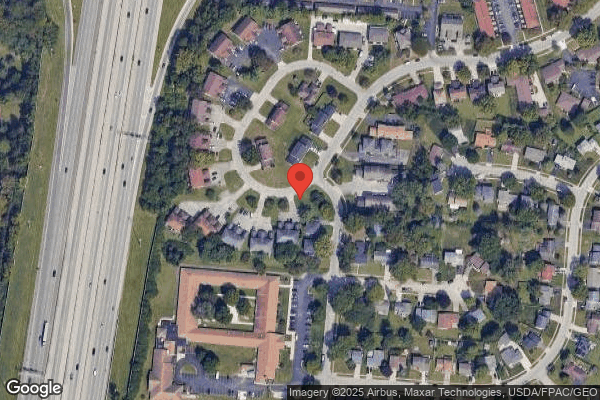
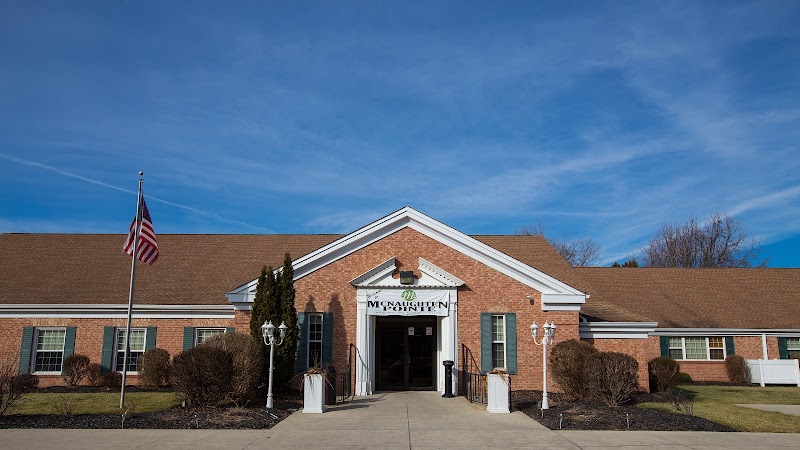
1425 YORKLAND ROAD, COLUMBUS, OH 43232 (614) 751-2525
For profit - Corporation 135 Beds FOUNDATIONS HEALTH SOLUTIONS Data: November 2025
Trust Grade
43/100
#733 of 913 in OH
Last Inspection: March 2024

Within standard 12-15 month inspection cycle. Federal law requires annual inspections.

Overview

McNaughten Pointe Nursing and Rehab has a Trust Grade of D, which indicates below-average performance and raises some concerns about the quality of care provided. They rank #733 out of 913 facilities in Ohio, placing them in the bottom half, and #36 out of 56 in Franklin County, suggesting limited local options. The facility is showing improvement, as the number of reported issues decreased from 14 in 2024 to just 3 in 2025. Staffing is a relative strength, with a 3 out of 5 star rating and a turnover rate of 29%, which is significantly lower than the state average of 49%. However, there have been serious incidents, such as a resident experiencing severe pain after a fall due to a lack of timely pain management and another resident who was not administered necessary vaccinations, leading to a hospitalization for pneumonia.

Trust Score
D
43/100
In Ohio
#733/913
Bottom 20%
Safety Record
Moderate
Needs review
Inspections
Getting Better
14 → 3 violations
Staff Stability
✓ Good
29% annual turnover. Excellent stability, 19 points below Ohio's 48% average. Staff who stay learn residents' needs.
Penalties
✓ Good
No fines on record. Clean compliance history, better than most Ohio facilities.
Skilled Nurses
✓ Good
Each resident gets 63 minutes of Registered Nurse (RN) attention daily — more than 97% of Ohio nursing homes. RNs are the most trained staff who catch health problems before they become serious.
Violations
⚠ Watch
43 deficiencies on record. Higher than average. Multiple issues found across inspections.
★★☆☆☆
2.0
Overall Rating
★★★☆☆
3.0
Staff Levels
★★★☆☆
3.0
Care Quality
★★☆☆☆
2.0
Inspection Score
Stable
2024: 14 issues
2025: 3 issues

The Good

  • Low Staff Turnover (29%) · Staff stability means consistent care
  • Full Sprinkler Coverage · Fire safety systems throughout facility
  • No fines on record
  • Staff turnover is low (29%)

    19 points below Ohio average of 48%

Facility shows strength in staff retention, fire safety.

The Bad

2-Star Overall Rating

Below Ohio average (3.2)

Below average - review inspection findings carefully

Chain: FOUNDATIONS HEALTH SOLUTIONS

Part of a multi-facility chain

Ask about local staffing decisions and management

The Ugly 43 deficiencies on record

2 actual harm
Jul 2025 1 deficiency
CONCERN (D) 📢 Someone Reported This

A family member, employee, or ombudsman was alarmed enough to file a formal complaint

Potential for Harm - no one hurt, but risky conditions existed

Quality of Care (Tag F0684)

Could have caused harm · This affected 1 resident

**NOTE- TERMS IN BRACKETS HAVE BEEN EDITED TO PROTECT CONFIDENTIALITY** Based on interview, record review, and review of the American Nurse's Association standards of professional nursing practice, th...

Read full inspector narrative →
**NOTE- TERMS IN BRACKETS HAVE BEEN EDITED TO PROTECT CONFIDENTIALITY** Based on interview, record review, and review of the American Nurse's Association standards of professional nursing practice, the facility failed to ensure specified parameters were obtained and recorded during medication administration. This affected one resident (#121) of four residents reviewed for medication administration. The facility census was 117.Findings include: Review of the closed medical record for Resident #121 revealed an admission date of 04/22/25 and discharge date of 05/15/25. Diagnoses included but were not limited to Tracheostomy, chronic respiratory status, dependence on ventilator, dysphagia, hemiplegia and hemiparesis following cerebral infarction affecting right dominant side, gastrostomy, epilepsy, pleural effusions, vascular dementia, Down Syndrome, end stage renal disease, dependence on renal dialysis, and depression.Review of the Minimum Data Set (MDS) 3.0 quarterly assessment dated [DATE] revealed a Brief Interview for Mental Status (BIMS) was not able to be completed because Resident #121 did not respond or verbally communicate. Staff reported the resident had both short-term and long-term memory problems. Resident #121 received antidepressant and anticonvulsant medications with indications documented. Resident #121 received oxygen therapy, suctioning, tracheostomy care, invasive mechanical ventilation, dialysis, and had IV access.Review of Resident #121's physician's orders revealed an order dated 05/01/25 for Midodrine (a medication used to raise blood pressure) 5 milligrams (mg), give one tablet via the percutaneous endoscopic gastrostomy (PEG) tube (a tube inserted into the stomach to allow for enteral feedings and medication administration) three times daily for hypotension. Additional instructions included to hold the medication for a systolic blood pressure of greater than 120 millimeters of mercury (mmHg).Review of Resident #121's Medication Administration Record (MAR) for May 2025 revealed multiple doses of Midodrine were administered with no blood pressure readings documented at the corresponding times in the vital signs tab or in the nursing progress notes to indicate the blood pressure readings were within permitted range at the time of administration.Interview on 07/23 25 at 2:25 P.M. with Registered Nurse (RN) #548 revealed all vital signs tied to medication administration are obtained by the nurse at the time of medication administration. Routine vital signs are obtained by the Certified Nursing Assistants (CNA). The CNAs give the nurses the vital signs, and they are documented by the nurse. Vital signs are documented under the vital signs tab or in the progress notes.Interview on 07/23/25 at 2:32 P.M. with RN #503 revealed routine vital signs are completed by the CNAs. Vital signs that need checked to see if it is safe to give medication are done when the medication is due. All vital signs are documented in the vital signs tab by the nurses.Interview on 07/24/25 at 7:45 A.M. with CNA #462 revealed CNAs obtain the residents' vital signs and give them to the nurses to chart.Interview on 07/24/25 at 7:55 A.M. with RN #415 revealed routine vital signs are completed by the CNAs. Vital signs that need checked to see if it is safe to give medication are done when the medication is due. RN #415 reported all vital signs are documented in the vital sign tab by the nurses.Interview on 07/24/25 at 10:53 A.M. with the Director of Nursing (DON) revealed the expectation is the nurses sees that vital signs are obtained prior to medication administration with parameters, and then the nurse documents the vital signs either in a progress note or on the vital signs tab within the electronic medical record. The DON stated the nurses are taught that the expectation is to document the vital signs if the medication needs to be held. When the nurses are administering medications and they decide to withhold a medication, they select a corresponding chart code to indicate why the medication was held. The DON reported there is no trigger to document if the vital sign is within parameters. A policy for medication administration was requested on 07/23/25 and 07/24/25 and was not received during the survey.Review of the American Nurses Association standards of Professional Nursing Practice revealed all professional nurses should maintain accurate and timely documentation of patient care, including assessments, interventions, and outcomes.
Apr 2025 2 deficiencies
CONCERN (D) 📢 Someone Reported This

A family member, employee, or ombudsman was alarmed enough to file a formal complaint

Potential for Harm - no one hurt, but risky conditions existed

Resident Rights (Tag F0550)

Could have caused harm · This affected 1 resident

**NOTE- TERMS IN BRACKETS HAVE BEEN EDITED TO PROTECT CONFIDENTIALITY** Based on record review, review of resident council minutes, review of audio/video footage, observation and interview the facilit...

Read full inspector narrative →
**NOTE- TERMS IN BRACKETS HAVE BEEN EDITED TO PROTECT CONFIDENTIALITY** Based on record review, review of resident council minutes, review of audio/video footage, observation and interview the facility failed to ensure a resident was afforded privacy and dignity during care. This affected one resident (#46) of four residents reviewed for dignity. The facility census was 126. Findings include: Review of Resident #46's medical record revealed an admission date of 02/11/25 with diagnoses including acute and chronic respiratory failure, dependence on a ventilator, dysphagia following cerebral infarction, and hemiplegia and hemiparesis following cerebral infarction unspecified side. Review of Resident #46's admission Minimum Data Set assessment dated [DATE] revealed the resident was rarely or never understood and was dependent on staff for all activities of daily living. Review of audio/video footage taken from Resident #46's room via an audio/video monitoring camera that was placed in the resident's room with the video time stamp dated 03/17/25 at 2:36 P.M. revealed the resident to be lying in her bed and receiving care from two unidentified Certified Nursing Assistants (CNAs). Resident #46 was naked and exposed in front of a window with the window blind open at the time. On 04/07/25 at 1:07 P.M. interview with Resident Representative #100 revealed concern with the resident not being provided privacy during care including not closing the window blind. Resident Representative #100 stated there were children that lived next door and she was afraid they could see into the resident's room through the open blind while she received care. On 04/07/25 at 1:15 P.M. observation of the resident's room and window revealed the resident was lying in bed and the blind was open. The resident's room was on the ground floor and passersby could see into the resident's room if the blind was not closed. In an interview on 04/07/25 at 3:23 P.M. the Director of Nursing reviewed the video and confirmed Resident #46 was unclothed and exposed in front of a window with the window blind open at the time. The DON was unable to identify the two CNAs caring for the resident. Review of Resident Council minutes dated 03/10/25 revealed a request was voiced during the meeting that the CNAs be reminded to knock on doors before entering resident rooms to respect resident privacy. This deficiency represents non-compliance investigated under Complaint Number OH00163801.
CONCERN (D) 📢 Someone Reported This

A family member, employee, or ombudsman was alarmed enough to file a formal complaint

Potential for Harm - no one hurt, but risky conditions existed

Infection Control (Tag F0880)

Could have caused harm · This affected 1 resident

**NOTE- TERMS IN BRACKETS HAVE BEEN EDITED TO PROTECT CONFIDENTIALITY** Based on interview, review of audio/video footage and review of Centers for Disease Control Guidelines for Enhanced Barrier Prec...

Read full inspector narrative →
**NOTE- TERMS IN BRACKETS HAVE BEEN EDITED TO PROTECT CONFIDENTIALITY** Based on interview, review of audio/video footage and review of Centers for Disease Control Guidelines for Enhanced Barrier Precautions, the facility failed to ensure infection control procedures were implemented to prevent the spread of infection. This affected one Resident (Resident #46) of four residents reviewed for infection control. The facility census was 126. Findings include: Review of Resident #46's medical record revealed an admission date of 02/11/25 with diagnoses including acute and chronic respiratory failure, dependence on a ventilator, dysphagia following cerebral infarction, hemiplegia and hemiparesis following cerebral infarction unspecified side. Review of Resident #46's admission minimum data set (MDS) dated [DATE] revealed the resident to be rarely or never understood and to be dependent on staff for all activities of daily living. Further review of the MDS revealed Resident #46 had an enteral feeding tube and a tracheostomy. Review of audio/video footage taken from Resident #46's room via an audio/video monitoring camera that was placed in the resident's room with the video time stamp dated 03/18/25 at 11:51 A.M. revealed Resident #46 was receiving care from an unidentified Certified Nursing Assistants (CNA). The unidentified CNA was wearing gloves and a mask but was not wearing a gown. Resident #46 was on enhanced barrier precautions (EBP). The unidentified CNA proceeded to perform incontinence care on Resident #46 by cleansing her from back (rectum) to front (her urethra) potentially contaminating her urethra with fecal bacteria. The unidentified CNA then repositioned Resident #46 without removing his potentially soiled gloves and performing hand hygiene. In an interview on 04/07/25 at 3:23 P.M. the Director of Nursing (DON) viewed the video and confirmed the unidentified CNA was wearing gloves and a mask but was not wearing a gown. Resident #46 was on enhanced barrier precautions due to her feeding tube and tracheostomy. The unidentified CNA proceeded to perform incontinence care on Resident #46 by cleansing her from back to front potentially contaminating her urethra with fecal bacteria. The DON verified incontinence care should be from from front to back to prevent potential contamination from stool into the urinary tract. The unidentified CNA then repositioned Resident #46 without removing his potentially soiled gloves and performing hand hygiene. The DON stated they did not have an enhanced barrier precautions policy but followed the Center for Disease Control (CDC) guidelines. Review of the CDC's guidelines for Consideration for Use of Enhanced Barrier Precautions in Skilled Nursing Facilities, dated 06/21, revealed residents known to be colonized or infected with a multidrug-resistant organisms (MDRO) as well as those at increased risk of MDRO acquisition (e.g., residents with wounds or indwelling medical devices) should use EBP including a gown and gloves to interrupt the spread of novel or targeted MRDOs. Resident-to resident pathogen transmission in skilled nursing facilities occurs, in part, via healthcare personnel, who may transiently carry and spread MRDOs on their hands or clothing during resident care activities. Residents who have complex medical needs involving wounds and indwelling medical devices are at higher risk of both acquisition and colonization by MRDOs. Examples of indwelling medical devices include but are not limited to feeding tubes and tracheostomy/ventilator. This deficiency represents non-compliance investigated under Complaint Number OH00163801.
Oct 2024 1 deficiency
CONCERN (D) 📢 Someone Reported This

A family member, employee, or ombudsman was alarmed enough to file a formal complaint

Potential for Harm - no one hurt, but risky conditions existed

Quality of Care (Tag F0684)

Could have caused harm · This affected 1 resident

**NOTE- TERMS IN BRACKETS HAVE BEEN EDITED TO PROTECT CONFIDENTIALITY** Based on medical record review and staff interview, the facility failed to offer/complete therapy orders as expected. This affec...

Read full inspector narrative →
**NOTE- TERMS IN BRACKETS HAVE BEEN EDITED TO PROTECT CONFIDENTIALITY** Based on medical record review and staff interview, the facility failed to offer/complete therapy orders as expected. This affected one (Resident #64) of three resident medical records reviewed. The census was 125. Findings Include: Resident #64 was admitted to the facility on [DATE]. Her diagnoses were end stage renal disease, dependence on renal dialysis, type II diabetes, hypertensive heart and chronic kidney disease, anemia, congestive heart failure, hyperlipidemia, mild cognitive impairment, insomnia, anxiety disorder, age related nuclear cataract, macular degeneration, and hyperkalemia. Review of her minimum data set (MDS) assessment, dated 08/13/24, revealed she had a mild cognitive impairment. Review of Resident #64 physician orders, dated 10/15/24, revealed she was ordered physical therapy three to five times per week, for 30 days. Review of Resident #64 physical therapy notes, dated 10/15/24 to 10/31/24, revealed her rolling week of therapy was from Tuesdays to Monday. During the first week of ordered physical therapy (10/15/24 to 10/21/24), she was offered therapy on Tuesday, 10/15/24, Friday, 10/18/24, and Monday 10/21/24 of the first week she was ordered physical therapy. She completed therapy on 10/15/24 and 10/21/24, but she did not complete it on 10/18/24; her documentation stated she was unavailable. On the second week of ordered physical therapy (10/22/24 to 10/30/24), she was offered therapy on Thursday, 10/24/24, Friday, 10/25/24, and Monday, 10/28/24. She completed therapy on 10/28/24, but she did not complete therapy on 10/24/24 (documented as being sick), and 10/25/24 (documented as being unavailable). There was no other documentation to support that she was offered therapy more than three times per week, and she was not offered therapy to make up for the days that she missed to meet the ordered three to five times per week. Interview with Therapy Director #501 on 10/31/24 at 12:45 P.M. confirmed Resident #64 was to have physical therapy three to five times per week. She also confirmed that if a resident misses a therapy session for any reason (being sick, physician/medical appointment, etc), they have enough openings in their schedule each week to offer more therapy opportunities to each of the residents on their case load. She confirmed there were only three attempts to perform physical therapy for Resident #64 and they should have offered it more time. She confirmed she does not know why it wasn't offered more. She also confirmed Resident #64 did not complete physical therapy at least three times per week. Interview with Director of Nursing (DON) on 10/31/24 at 3:30 P.M. confirmed Resident #64 attends dialysis three times weekly, which would affect the dates/times she would be able to perform physical therapy. This deficiency represents non compliance under Complaint Number OH00158713.
Mar 2024 13 deficiencies 2 Harm
SERIOUS (G)

Actual Harm - a resident was hurt due to facility failures

Deficiency F0697 (Tag F0697)

A resident was harmed · This affected 1 resident

**NOTE- TERMS IN BRACKETS HAVE BEEN EDITED TO PROTECT CONFIDENTIALITY** Based on medical record review, review of hospital records, review of a fall investigation, resident and staff interviews, and f...

Read full inspector narrative →
**NOTE- TERMS IN BRACKETS HAVE BEEN EDITED TO PROTECT CONFIDENTIALITY** Based on medical record review, review of hospital records, review of a fall investigation, resident and staff interviews, and facility policy review, the facility failed to provide timely and effective pain management as well as adequately monitor resident pain. Actual harm occurred on 01/11/24 when Resident #65 fell, complained of pain to her right ankle, was not provided effective pain management, and was subsequently unable to get out of bed on 01/12/24 due to increased pain associated with the fall. The resident was transferred to the hospital on [DATE] at 6:52 P.M. (approximately 24 hours after the fall occurred) with complaints of right ankle pain. The resident required Oxycodone-Acetaminophen for pain. Upon assessment, the resident's ankle was resting in an extremely plantarflexed position (top of the foot pointed away from leg) with mild swelling and tenderness to palpation (indicates objective painful symptoms) about the medial and lateral ankle (the inside and outside portions of the ankle). The x-ray of the resident's right foot and ankle revealed a bimalleolar equivalent ankle fracture with medial malleoli avulsion fracture. This affected one (Residents #65) out of two residents reviewed for pain management. The facility also failed to ensure non-pharmacological pain interventions were attempted for a resident who received as needed narcotic pain medication. This affected one (Residents #424) out of two residents reviewed for pain management. The facility census was 117. Findings include: 1. Review of the medical record for Resident #65 revealed an initial admission date of 08/09/20. Medical diagnoses included unspecified sequelae of nontraumatic intra cerebral hemorrhage, secondary Parkinsonism, chronic kidney disease stage four, schizoaffective disorder bipolar type, major depressive disorder, anxiety disorder, and nondisplaced fracture of lateral malleolus of right fibula (added on 01/12/24). Review of the quarterly Minimum Data Set (MDS) 3.0 assessment, dated 01/10/24, revealed Resident #65 had intact cognition and scored a 15 out of 15 on the Brief Interview for Mental Status (BIMS) assessment. The assessment revealed Resident #65 required partial to moderate assistance with transfers and required variable assistance ranging from supervision or touch assistance to substantial or maximum assistance from staff to complete other activities of daily living (ADLs). The resident received scheduled pain medications and had not received any as needed pain medications. No pain had been reported. Review of a Fall Incident Report, dated 01/11/24 at 6:50 P.M., revealed Resident #65 was in the bathroom calling out for help. Licensed Practical Nurse (LPN) #210 entered the bathroom and noted Resident #65 standing with a walker. LPN #210 cleaned the resident and assisted with putting Resident #65's pants back on. Resident #65 continued standing with a walker. LPN #210 reached for the resident's wheelchair. Resident #65 attempted to sit in the wheelchair, lost her balance, and sat on the floor. Resident #65 twisted her right ankle. Resident #65 was transferred to the bed and assessed. Resident #65 complained of pain to her right ankle. Resident #65 stated, I twisted my ankle. LPN #210 checked Resident #65's range of motion (ROM) and Resident #65 complained of pain to her right ankle. Resident #65's vital signs were within normal limits. LPN #210 used a non-verbal pain scale to determine Resident #65's pain level and documented a pain level of three on the incident report. Resident #65 was alert and oriented to person, place, time, and situation. An injury to Resident #65's right inner ankle was noted. Certified Nurse Practitioner (CNP) #329 was notified. Resident #65's brother was contacted, and a message was left to return the phone call to the facility. There was no indication LPN #210 administered any medication or non-pharmacological interventions for Resident #65's reported pain at the time of the incident. Review of the Medication Administration Record (MAR), dated January 2024, revealed Resident #65 had an order for Tylenol Extra Strength 500 milligrams (mg) with instructions to give one tablet by mouth two times daily for pain. The order had a start date of 11/24/23. This medication was administered at bedtime on 01/11/24 for what staff documented was a pain level of zero (out of 10), upon rise on 01/12/24 with a pain level of three (out of 10), and at bedtime on 01/12/24 with a pain level of six (out of 10). Resident #65 had an additional order with a start date of 11/01/23 for Tylenol 325 mg with instructions to give two tablets by mouth every eight hours as needed for pain. This medication was not administered to Resident #65 on 01/11/24 or 01/12/24. Review of the progress notes for Resident #65 revealed on 01/11/24 at 7:47 P.M., LPN #210 noted Resident #65 was in the bathroom, attempting to transfer to the wheelchair, lost balance and sat on the floor, injuring her right ankle. On 01/12/24 at 6:05 P.M., LPN #202 noted Resident #65 was not able to get out of bed today (01/12/24) due to pain in her right ankle as a result of yesterday's (01/11/24) fall. An x-ray was completed and revealed an acute fracture of the distal fibula in the right ankle. Resident #65 was to be transferred to the hospital for further evaluation. Certified Nurse Practitioner (CNP) #329, the Unit Manager (UM), and Resident #65's family were notified. Review of the care plan for Resident #65, revised on 01/12/24, revealed Resident #65 was at risk for an alteration in comfort due to acute fracture of the distal fibula in the right ankle with cast in place. Interventions included administer medications as ordered, monitor for effectiveness of interventions, monitor for increased levels of pain and notify the physician, monitor for side effects of pain and anxiety medications, notify the physician for review of or change in pain medications if needed, complete pain assessment per facility policy, and offer non-pharmacological interventions. Review of the hospital records for Resident #65 revealed the resident arrived at the emergency room on [DATE] at 6:52 P.M. (approximately 24 hours after the fall occurred) with complaints of right ankle pain. X-rays and a computed tomography (CT) scan of the resident's head and cervical spine were completed. Resident #65 was administered Oxycodone-Acetaminophen for pain. Upon assessment, the resident's ankle was resting in an extremely plantarflexed position (top of the foot pointed away from leg). Mild ankle swelling was noted. There was tenderness to palpation (indicates objective painful symptoms) about the medial and lateral ankle (the inside and outside portions of the ankle). The x-ray of the resident's right foot and ankle revealed a bimalleolar equivalent ankle fracture with medial malleoli avulsion fracture. Post splint x-rays revealed persistent anterior subluxation (partial dislocation) of the talus (the large bone in the ankle that articulates with the tibia of the leg and the calcaneum and navicular bone of the foot). Resident #65 underwent a closed reduction to improve alignment of the tibiotalar joint and splinting in the emergency department. Resident #65 was discharged back to the facility from the hospital on [DATE] at 2:02 A.M. Review of the progress notes dated 01/13/24 at 2:40 A.M. revealed Resident #65 returned to the facility at approximately 2:10 A.M. on a stretcher with two Emergency Medical Services (EMS) staff. Resident #65 returned with a new order for Oxycodone-Acetaminophen (narcotic pain medication) 5-325 mg per tablet with instructions to administer one tablet by mouth every six hours if needed for severe pain for up to three days. On 01/14/24 at 5:00 A.M., Resident #65's right ankle had a dry and intact cast. Resident #65's right foot was warm, and color was within normal limits. Resident #65 was able to wiggle toes and denied pain at that time. Interview on 03/07/24 at 12:48 P.M. with LPN #213 (the floor nurse for Resident #65) revealed according to the facility's policy, at rise medications should be administered between 5:00 A.M. and 10:00 A.M. and bed time medications should be administered between 6:00 P.M. and 11:00 P.M. Resident #65 usually received her bed time medications closer to 6:00 P.M. Interview on 03/07/24 at 1:55 P.M. with Resident #65 revealed she was in her bathroom with one staff person (was not sure if it was an aide or a nurse). Resident #65 indicated she attempted to get in her wheelchair and fell. Resident #65 stated the staff member left her alone for a very short time while she went to get help. Resident #65 stated she reported pain in her right ankle and leg. Resident #65 stated she did not receive pain medication until she went to the hospital the next day. Resident #65 stated her right ankle hurt the whole time and it wasn't mild pain. Interview on 03/11/24 at 12:59 P.M. with LPN #202 revealed she was the day shift nurse for Resident #65 on 01/12/24. LPN #202 stated she was told in report that Resident #65 had a fall on 01/11/24 and Resident #65 had an order for an x-ray. LPN #202 stated she did assess Resident #65 and the resident complained of pain when she touched the right ankle. LPN #202 stated Resident #65 refused to give an exact number on the pain scale which was not abnormal for the resident. LPN #202 stated she would consider Resident #65's pain to have been moderate per her nursing judgement. LPN #202 stated she did administer Tylenol to Resident #65 but did not recall exactly when. LPN #202 revealed the resident did not want to get out of bed on 01/12/24 due to having pain in her right ankle. LPN #202 confirmed she had not administered any as needed pain medications to Resident #65. Interview on 03/11/24 at 5:21 P.M. with LPN #210 revealed she was the nurse on duty when Resident #65 had a fall in her bathroom. LPN #210 stated she was with Resident #65 when Resident #65 attempted to pivot from standing with a walker to sit in her wheelchair and lost her balance. Resident #65 twisted her right ankle and sat on the floor. Resident #65 immediately complained of pain to her right ankle. A State Tested Nursing Assistant was called to assist and the resident was assisted off the floor and placed in her wheelchair and then transferred into bed. LPN #210 stated she completed a head-to-toe assessment on Resident #65 but was not able to complete a ROM exam on the resident's right ankle due to the resident's complaints of pain. LPN #210 denied asking the resident what her exact pain level was. LPN #210 stated she contacted CNP #329 who ordered an x-ray but did not order any additional pain medication. LPN #210 stated she administered scheduled Tylenol to Resident #65 with dinner between 5:00 P.M. and 6:00 P.M. (before the resident's fall occurred) but did not administer any additional pain medications after the fall. LPN #210 stated the x-ray had not been completed by the end of her shift. LPN #210 stated she left between 8:00 P.M. and 8:30 P.M. on 01/11/24. LPN #210 confirmed she had not assessed Resident #65 for effectiveness of the pain medication administered prior to the fall and had not administered any as needed pain medication to Resident #65 following the fall. Interview via telephone on 03/12/24 at 6:40 P.M. with LPN #230 revealed she was the night shift nurse for Resident #65 on 01/11/24 into the morning of 01/12/24. LPN #230 stated she was told in report Resident #65 had a fall during day shift on 01/11/24. LPN #230 stated she was not informed Resident #65 had any injuries or had complained of any pain following the fall. LPN #230 stated Resident #65 was alert with some confusion. LPN #230 stated the resident had a history of reporting inaccurate pain levels to the nursing staff and would often either refuse to answer or would give a random number on the pain scale. LPN #230 stated Resident #65 did complain of pain on 01/12/24 in the morning but stated she did not worry about the pain scale number provided by the resident because the Tylenol medication was scheduled and would be administered to Resident #65 regardless of the pain level being reported. LPN #230 stated she administered Tylenol to Resident #65 between 6:00 A.M. and 7:00 A.M. on 01/12/24. LPN #230 stated she had not assessed Resident #65's right ankle or leg during her shift because she was not aware of any injuries or concerns. LPN #230 confirmed she had not administered any as needed Tylenol to Resident #65 or reassessed the resident for effectiveness of the Tylenol that was administered in the early morning. Review of the facility policy titled Pain Assessment and Management, dated 03/31/16, revealed the alert and oriented resident may be asked to describe his/her pain status. Pertinent information may include a numeric rating scale of 0-10; with zero being no pain and ten being the most severe pain the resident can imagine. A verbal descriptor scale including mild, moderate, severe or very severe/horrible. The resident's expectation for pain relief; can he/she live with the pain at the current level, and if not, how much relief is needed to live comfortably. Non-pharmacological methods to reduce pain in a resident may be implemented. Pharmacological interventions should be provided according to physician orders. Evaluate the resident's response to interventions. Notify the physician as needed. 2. Review of Resident #424's medical record revealed Resident #424 was admitted to the facility on [DATE] with diagnoses including fractures of bilateral upper arms, right scapula, and multiple ribs, frostbite to bilateral toes, laceration of the liver, injury to the spleen, alcohol use, anxiety, and depression. Review of the medical record revealed Resident #424 had intact cognition. Review of Resident #424's care plan, dated 03/05/24, revealed Resident #424 was at risk for alteration in comfort related to multiple fractures related to a motor vehicle accident, status post frostbite to bilateral feet with tissue necrosis, and impaired mobility. Resident #424's goals were to decrease Resident #424's pain to an acceptable level for the resident which allows for participation in ADL's, activities, therapy, and treatments. Resident #424's interventions for reaching these goals included administer medications as ordered, encourage and assist resident to turn and reposition every two hours and as needed, encourage relaxation techniques, and provide activities that the resident enjoys as a diversion from pain/discomfort. Review of Resident #424's signed physician orders revealed an order, dated 02/28/24, for Oxycodone HCL (narcotic pain medication) tablet five milligrams (mg) give one tablet by mouth every six hours as needed (PRN) for pain. The order was changed on 03/07/24 to Oxycodone HCL tablet five mg give two tablets every six hours as needed for pain. Additionally, there was an order, dated 02/28/24, for Gabapentin (anticonvulsant medication which can be used for pain) capsule 400 mg give two capsules by mouth three times a day for pain for 14 days. Review of Resident #424's MAR, dated March 2024, revealed Resident #424 was administered Oxycodone as needed on 03/01/24 at 9:01 A.M. and 8:30 P.M. for a pain level of five out of 10; on 03/02/24 at 6:34 A.M. for a pain level of four out of 10, at 12:34 P.M. for pain level of nine out of 10, and at 7:46 P.M. for pain level of four out of 10; on 03/03/24 at 9:45 A.M. for a pain level of eight out of 10, at 3:55 P.M. for a pain level of nine out of 10, at 10:33 P.M. for a pain level of eight out of 10; on 03/04/24 at 5:30 A.M. for a pain level of seven out of 10, at 11:30 A.M. for pain level of eight out of 10, at 5:41 P.M. for a pain level of seven out of 10; on 03/05/24 at 5:19 A.M. for a pain level of four out of 10, at 11:51 A.M. for a pain level of five out of 10, at 6:25 P.M. for a pain level of eight out of 10; on 03/06/34 at 3:35 A.M. for a pain level of eight out of 10, at 10:52 A.M. for a pain level of eight out of 10, at 6:38 P.M. for a pain level of five out of 10, on 03/07/24 at 4:37 A.M. for a pain level at eight out of 10, at 11:08 A.M. for pain level of six out of 10, at 6:35 P.M. for pain level of seven out of 10; on 03/08/24 at 8:19 A.M. for a pain level of five out of 10, at 2:05 P.M. for a pain level of five out of 10; on 03/09/24 at 12:47 A.M. for a pain level of zero out of 10, at 9:09 A.M. for a pain level of eight out of 10, at 3:34 P.M. for a pain level of seven out of 10, at 9:35 P.M. for a pain level of three out of 10; on 03/10/24 at 5:55 A.M. for a pain level of three out of 10, at 12:23 P.M. for a pain level of seven out of 10, at 6:25 P.M. for a pain level of seven out of 10; on 03/11/24 at 12:32 A.M. for a pain level of two out of 10, and at 8:01 A.M. for a pain level of five out of 10. Review of Resident #424's progress notes, dated 02/28/24 to 03/11/24, revealed the following medication administration notes for the PRN Oxycodone without non-pharmacological interventions listed as having been attempted; on 03/11/24 at 8:01 A.M. and 6:49 A.M.; on 03/10/24 at 6:25 P.M. and 12:23 P.M.; on 03/09/24 at 3:34 P.M., 9:09 A.M., and 12:47 A.M.; on 03/08/24 at 2:05 P.M. and 8:19 A.M.; on 03/07/24 at 6:35 P.M., 11:08 A.M., and 4:37 A.M.; on 03/06/24 at 6:38 P.M., 10:52 A.M., and 3:35 A.M.; on 03/05/24 at 6:25 P.M., 3:54 P.M. and 11:51 A.M.; on 03/04/24 at 5:41 P.M., 11:30 A.M., and 5:30 A.M.; on 03/03/24 at 10:33 P.M., 3:55 P.M. and 9:45 A.M.; on 03/02/24 at 7:46 P.M., 12:34 P.M., and 6:34 A.M.; on 03/01/24 at 8:30 P.M. and 9:01 A.M.; on 02/29/24 at 6:58 P.M. and 12:58 P.M. Interview on 03/11/24 at 9:15 A.M. with Administrative Registered Nurse (ARN) #190 revealed the nurses were supposed to ask the resident their pain level and offer other non-pharmacological interventions for pain such as repositioning, ice, music, food, etc to help with relaxation or detraction from the pain. The nurses were to document the interventions on the MAR which will flow over into the progress notes. Interview on 03/11/24 at 10:30 A.M. with Resident #424 revealed the pain has been better controlled since the facility changed the pain medication order on 03/07/24. Resident #424 stated, The nurses will ask me about my pain or I will ask for the medication myself, they don't usually offer me anything else other than the medication. Interview on 03/12/24 at 8:37 A.M. with the Director of Nursing (DON) confirmed there was no evidence non-pharmacological interventions for pain were attempted for Resident #424's pain control prior to Resident #424's PRN pain medication administration. The DON stated, I see with the orders the intervention option was not activated to prompt the nurses in offering non-pharmacological interventions. Review of the facility's policy titled Pain Assessment and Management, dated 03/31/16, revealed non-pharmacological methods to reduce pain in a resident may be implemented.
SERIOUS (G)

Actual Harm - a resident was hurt due to facility failures

Deficiency F0883 (Tag F0883)

A resident was harmed · This affected 1 resident

**NOTE- TERMS IN BRACKETS HAVE BEEN EDITED TO PROTECT CONFIDENTIALITY** Based on medical record review, review of hospital records, staff and resident interview, review of facility policy, and review ...

Read full inspector narrative →
**NOTE- TERMS IN BRACKETS HAVE BEEN EDITED TO PROTECT CONFIDENTIALITY** Based on medical record review, review of hospital records, staff and resident interview, review of facility policy, and review of the Centers for Disease Control and Prevention guidelines, the facility failed to appropriately obtain consent and timely administer a flu and pneumococcal immunizations. Actual harm occurred on 02/29/24, when Resident #104 was diagnosed with pneumonia and was hospitalized for ten days for treatment including intravenous antibiotic therapy. The resident's representative gave permission for the resident to receive the pneumococcal vaccination on 02/01/24 (admission); however, the facility failed to administer the vaccination to the resident. This affected two (Residents #89 and #104) of five residents reviewed for immunizations. The facility census was 117. Findings include: 1. Review of the medical record for Resident #104 revealed an original admission date of 02/01/24. Resident #104 was discharged to the hospital on [DATE] and readmitted back to the facility on [DATE]. Diagnoses included respiratory failure with hypoxia, hemiplegia and hemiparesis, dysphagia, dialysis dependence, diabetes, muscle weakness, chronic embolism, and tracheostomy. Review of Resident #104's Vaccine Consent, dated 02/01/24, revealed Resident #104's representative gave permission for the facility to administer the pneumococcal and flu immunization. Review of the Minimum Data Set (MDS) assessment, dated 02/08/24, revealed Resident #104 was cognitively intact with a Brief Interview for Mental Status (BIMS) score of 13 (out of 15). Review of Resident #104's physician orders from 02/01/24 to 02/29/24 revealed no evidence of the pneumococcal or flu immunization having been ordered or administered to Resident #104. Review of Resident #104's Medication Administration Record (MAR), dated February 2024, revealed no evidence of the flu or pneumococcal immunization having been ordered or administered. Review of Resident #104's immunization history record revealed no evidence the resident received a pneumonia or flu immunization between 02/01/24 and 02/29/24. Review of Resident #104's progress notes, dated 02/01/24 to 02/29/24, revealed no mention of the flu or pneumococcal immunization having been administered. Record review revealed the resident was transported to the hospital on [DATE]. Review of a progress note dated 02/29/24 at 2:28 P.M. revealed Resident #104 had muscle weakness present. Further review of the progress notes revealed there was no mention of what change in condition led to Resident #104 being sent to the hospital on [DATE]. Review of Resident #104's hospital paperwork, dated 02/29/24 to 03/10/24, revealed Resident #104 presented to the emergency department with tachyarrhythmia and a temperature of 102 degrees Fahrenheit. The resident was admitted to the hospital on [DATE] with an admitting diagnosis of pneumonia. Resident #104 was started on intravenous Vancomycin (antibiotic) 0.9% in sodium chloride 500 milligrams/100 milliliters piggyback three times weekly with dialysis and Zosyn 3.375 grams in sodium chloride every 12 hours. A chest Computed Tomography (CT) was done at the hospital on [DATE] which revealed Resident #104 had left lower lob infiltrate with small left pleural effusion which could represent lobar pneumonia. Review of Resident #104 progress note, dated 03/10/24, revealed the resident returned to the facility from the hospital after having been admitted with pneumonia. Interview on 03/12/24 at 11:45 A.M. with the Director of Nursing (DON) revealed Resident #104's daughter had signed the consents for the flu and pneumonia immunizations upon admission on [DATE]. The DON revealed Resident #104 was alert and oriented and should have been offered the opportunity to sign the consents herself. The DON confirmed the flu and pneumonia vaccine was never ordered or administered to Resident #104 and confirmed she was diagnosed with pneumonia during her hospital stay on 02/29/24. Upon return from the hospital, the facility spoke with Resident #104 who stated she was agreeable to receive the pneumococcal immunization but declined to receive the flu immunization. Interview on 03/12/24 at 3:10 P.M. with Resident #104 revealed if she had been offered the choice of getting the pneumococcal vaccine upon admission on [DATE], she would have been agreeable. Resident #104 indicated she was still agreeable to receive the pneumococcal vaccine. Resident #104 revealed she had not previously received a pneumococcal immunization. Interview on 03/12/24 at 5:00 P.M. with the DON revealed the admitting nurse was responsible for obtaining proper consents for immunizations upon admission and if they do not obtain them, the Unit Manager should obtain consent and the resident should be administered the immunization. The DON confirmed Resident #104 was not provided with pneumococcal immunization and was hospitalized and treated for pneumonia. Review of the facility policy titled Immunization for Pneumococcal, Influenza and COVID-19, dated 07/03/23, revealed the facility would minimize the risk of acquiring, transmitting or experiencing complications from pneumonia and influenza by offering immunizations in accordance with national standards of practice. For pneumonia vaccines: each resident shall be evaluated upon admission and each resident shall be offered the pneumococcal vaccine unless medically contraindicated. The facility would provide education and offer vaccination based on CDC guidelines. For Influenza vaccines: shall be routinely offered from October through March unless medically contraindicated. Review of the Centers for Disease Control and Prevention guidelines titled, Pneumonia Vaccine Recommendations, dated 09/12/23, revealed pneumococcal vaccines were recommended for people who have long-term health conditions, like heart disease or respiratory disease. The CDC also provided information which stated for residents who had not received any pneumococcal vaccines or the vaccination history was unknown and were between the ages of 19 and 64, give one dose of PCV15 or PCV20. If PCV20 is used, their pneumococcal vaccinations are complete. If PCV15 is used, follow with one dose of PPSV23 to complete their pneumococcal vaccinations. The recommended interval between PCV15 and PPSV23 is at least one year. The CDC also provided information which stated for residents who had not received any pneumococcal vaccines or the vaccination history was unknown and were age [AGE] or older, give one dose of PCV15 or PCV201. If PCV20 is used, their pneumococcal vaccinations are complete. If PCV15 is used, follow with one dose of PPSV232 to complete their pneumococcal vaccinations. The recommended interval between PCV15 and PPSV23 is at least one year. The minimum interval is eight weeks and can be considered in adults with immunocompromising conditions, cochlear implants, or cerebrospinal fluid leaks. 2. Review of the medical record for Resident #89 revealed an admission date of 09/15/23. Diagnoses included quadriplegia, chronic respiratory failure, dependence on vent, spinal injury, tracheostomy, dysphagia, and muscle weakness. Review of Resident #89's Vaccine Consent, dated 09/15/23, revealed Resident #89's representative signed the consent for Resident #89 to receive the flu and pneumococcal immunization. Review of Resident #89's physician orders revealed an order, dated 09/20/23, for Resident #89 to receive the flu vaccine. Further review of Resident #89's physician orders revealed no evidence of a pneumococcal immunization having been ordered. Review of the MDS assessment, dated 09/22/23, revealed Resident #89 was cognitively impaired with a BIMS of 8 (out of 15). Review of Resident #89's progress notes from September 2023 through October 2023 revealed no evidence of the flu or pneumococcal immunization have been administered or withheld. Additionally, there was no evidence of Resident #89 having a fever around 09/20/23. Review of Resident #89's MAR from September 2023 through March 2024 revealed no evidence Resident #89 received a flu or pneumococcal immunization. Additionally, there was no evidence Resident #89 had a fever around 09/20/23. Interview on 03/12/24 at 11:45 A.M. with the DON revealed Resident #89's representative had signed the consents for Resident #89 to receive the flu and pneumococcal immunizations upon admission. The DON revealed she was waiting to provide Resident #89 the flu vaccine during the flu vaccine blitz on 09/20/23 and revealed it was not provided on 09/20/23 due to Resident #89 having a fever. The DON was unable to provide any information as to why the flu and pneumonia immunizations were not given including evidence of a fever. The DON was unable to explain why the pneumococcal immunization was not given. Review of the facility policy titled Immunization for Pneumococcal, Influenza and COVID-19, dated 07/03/23, revealed the facility would minimize the risk of acquiring, transmitting or experiencing complications from pneumonia and influenza by offering immunizations in accordance with national standards of practice. For pneumonia vaccines: each resident shall be evaluated upon admission and each resident shall be offered the pneumococcal vaccine unless medically contraindicated. The facility would provide education and offer vaccination based on CDC guidelines. For Influenza vaccines: shall be routinely offered from October through March unless medically contraindicated. Review of the Centers for Disease Control and Prevention guidelines titled, Pneumonia Vaccine Recommendations, dated 09/12/23, revealed pneumococcal vaccines were recommended for people who have long-term health conditions, like heart disease or respiratory disease. The CDC also provided information which stated for residents who had not received any pneumococcal vaccines or the vaccination history was unknown and were between the ages of 19 and 64, give one dose of PCV15 or PCV20. If PCV20 is used, their pneumococcal vaccinations are complete. If PCV15 is used, follow with one dose of PPSV23 to complete their pneumococcal vaccinations. The recommended interval between PCV15 and PPSV23 is at least one year. The CDC also provided information which stated for residents who had not received any pneumococcal vaccines or the vaccination history was unknown and were age [AGE] or older, give one dose of PCV15 or PCV201. If PCV20 is used, their pneumococcal vaccinations are complete. If PCV15 is used, follow with one dose of PPSV232 to complete their pneumococcal vaccinations. The recommended interval between PCV15 and PPSV23 is at least one year. The minimum interval is eight weeks and can be considered in adults with immunocompromising conditions, cochlear implants, or cerebrospinal fluid leaks.
CONCERN (D)

Potential for Harm - no one hurt, but risky conditions existed

Safe Environment (Tag F0584)

Could have caused harm · This affected 1 resident

**NOTE- TERMS IN BRACKETS HAVE BEEN EDITED TO PROTECT CONFIDENTIALITY** Based on observations, resident interview and staff interviews, the facility failed to ensure a homelike environment was provide...

Read full inspector narrative →
**NOTE- TERMS IN BRACKETS HAVE BEEN EDITED TO PROTECT CONFIDENTIALITY** Based on observations, resident interview and staff interviews, the facility failed to ensure a homelike environment was provided for two Residents (#8 and #9) of two reviewed for homelike environment. Facility census was 117. Findings include 1. Review of the medical record for Resident #8 revealed an admission date of 12/29/21. Diagnoses included quadriplegia c5-c7 incomplete, respiratory failure, dysphagia, and contracture of multiple unspecified sites. Review of the Minimum Data Set (MDS) assessment dated [DATE] revealed Resident #8 was cognitively intact with a brief interview for mental status (BIMS) of 15 out of 15 and required substantial/maximum assistance dependence on staff for mobility and hygiene. Review of the plan of care dated 02/14/24 revealed resident had oral intake with help of tube feeds with interventions to provide tube feeding as ordered, dressing changes to the tube site and flushes as ordered. Observation and interview on 03/04/24 at 10:49 A.M. revealed resident had a metal cart with over 10 boxes piled on it and resident stated it was likely his tube feeding supplies. The boxes were stacked chest high against the wall across from resident bed. Resident #8 revealed the boxes had been there pretty much since admission. Interview on 03/04/24 at 4:50 P.M. with State Tested Nursing Aide (STNA) #272 confirmed items in residents room included feeding tube supplies and wound dressing supplies she revealed she did not know why they were in resident's room and not in a facility storage area. She confirmed having boxes stacked of medical equipment in the residents room next to his bed is not a clean homelike environment. Interview on 03/04/24 at 5:20 P.M. with Licensed Practical Nurse (LPN) #165 revealed she was working on moving the boxes and placing them in a cabinet that had space in the resident's room. LPN #165 also confirmed having stacked boxes of medical supplies was not homelike. She revealed they were billed under resident's Medicare part B insurance and needed to keep them just for Resident #8. 2. Review of the medical record for Resident #9 revealed an admission date of 01/26/16. Diagnoses included schizoaffective disorder, diabetes, atrial fibrillation, contracture of the right and left hands and unspecified psychosis. Review of the MDS assessment dated [DATE] revealed Resident #9 was cognitively impaired with a BIMS of 8 out of 15 and was dependent on staff assistance for all mobility. Observation and interview on 03/04/24 at 5:12 P.M. revealed her bedside curtain by the window was dirty with over 20 spots or brown and red splattering from four feet high to the ground. Resident also confirmed the curtain looked dirty. Observation on 03/05/24 at 10:05 A.M., 2:40 P.M., and 4:55 P.M. revealed curtain remained soiled with several brown and red spots. Observation on 03/06/24 at 11:20 A.M., 12:50 P.M., and 3:10 P.M. revealed curtain remained soiled with several brown and red spots. Observation and interview on 03/07/24 at 8:50 A.M. with STNA #259 confirmed Resident #9's curtain had numerous stains on it and was dirty. She revealed it should be taken down and washed and replaced with a clean curtain. Facility reported they have no policy related to providing and ensuring a homelike environment.
CONCERN (D)

Potential for Harm - no one hurt, but risky conditions existed

Deficiency F0657 (Tag F0657)

Could have caused harm · This affected 1 resident

**NOTE- TERMS IN BRACKETS HAVE BEEN EDITED TO PROTECT CONFIDENTIALITY** Based on resident interview, staff interviews, and record review ,the facility failed to ensure care conferences were held with ...

Read full inspector narrative →
**NOTE- TERMS IN BRACKETS HAVE BEEN EDITED TO PROTECT CONFIDENTIALITY** Based on resident interview, staff interviews, and record review ,the facility failed to ensure care conferences were held with members of the interdisciplinary team including resident participation. This affected two Residents (#57 and #64) of three reviewed for care conferences. Facility census was 117. Findings include: 1. Review of the medical record for Resident #57 revealed an admission date of 04/18/23. Diagnoses included cerebral infarction, hemiplegia and hemiparesis, diabetes, and muscle wasting and atrophy. Review of the Minimum Data Set (MDS) assessment dated [DATE] revealed Resident #57 was cognitively intact with a brief interview for mental status (BIMS) of 15 out of 15 and required substantial/maximal assist and dependence on staff for activities of daily living. Review progress notes dated 01/09/23 revealed a care conference was held with son upon request as well as a meeting on 02/07/23. Progress note dated 06/30/23 revealed family was sent an invitation to schedule a care conference. Progress note dated 09/30/23 revealed family was sent an invitation to schedule a care conference. Progress note dated 12/29/23 revealed resident and family was sent an invitation to schedule a care conference. Interview on 03/05/24 at 9:04 A.M. with Resident #57 revealed she would like to attend care conferences but revealed she does not know where they were held and when they were. She also revealed she was unsure if she could attend due to not having any shoes to wear when she leaving her room. Resident revealed she was unaware of being invited to attend or getting information about a care conference meeting being offered. 2. Review of the medical record for Resident #64 revealed an admission date of 02/01/22. Diagnoses included dementia, malnutrition, dysphagia, atrial fibrillation, muscle weakness and insomnia. Review of the MDS assessment dated [DATE] revealed Resident #64 had significant cognitive impairment with a BIMS of 99 and required partial to moderate assistance with dressing, toileting, and personal hygiene. Review of care conference forms dated 01/13/23 and 02/07/23 revealed Social Services and a Unit Manager was present. Resident's family was marked as being in attendance one of the meetings. Review progress notes dated 01/13/23 revealed a care conference was held with grandson and a second meeting was held on 02/07/23. Progress note dated 06/30/23 revealed the family was sent an invitation to schedule a care conference. Progress note dated 09/30/23 revealed resident and family was sent an invitation to schedule a care conference. Progress note dated 12/29/23 revealed resident and family was sent an invitation to schedule a care conference. Facility provided documentation (last pages of care plan) where members of the interdisciplinary team signed off each quarter indicating the care plan had been updated. Interview on 03/05/24 at 5:05 P.M. with Social Services #319 revealed care conferences are offered and letters are sent out to families but revealed if family did not schedule or want to attend, no care conferences were held. She confirmed facility had no documentation for who attended care conferences and what was discussed as care conferences were not held for Residents #57 and #64 since first quarter of 2023. Interview on 03/06/24 at 5:00 P.M. with Social Services #319 revealed she was unaware all residents should have quarterly care conference discussions even if the resident and family do not attend. Interview on 03/11/23 at 5:00 P.M. with Social Services #319 provided documentation that the interdisciplinary team reviewed the care plan, but confirmed the interdisciplinary team did not have a discussion regarding residents overall care as part of the quarterly process. Social Services confirmed residents were sent a letter and they can reach out to staff if they want to attend. Revealed she was trained to provide a letter to prove they were offered a care conference instead of talking with the resident to encourage them to participate in a care conference discussion. Social Services also confirmed letters were mailed 6/30/23, 09/30/23, and 12/29/23 to residents and families. Social Services was unable to provide an explanation if these letters were invitations for the following quarter or the current quarter. If the invitations were sent for the current quarter social services was unable to provide reasoning as to why invitations 24 to 72 hour to get the letter and reach out to the facility to meet the timeframe and letters likely would not have reached residents home by mail prior to the end of the quarter. If the letter invitations were for the following quarter, facility was unable to provide any evidence of facility offering or inviting residents and family for Resident #57 and #64 to attend care conferences. Interview on 03/11/23 at 5:20 P.M. with Social Services #319 confirmed again the care plan was signed off by several members of the team but had no evidence a discussion was had on each individual residents and confirmed a discussion did not take place. Interview on 03/12/24 at 6:30 P.M. with Regional Nurse #326 confirmed the employees who signed off on the care plan sheets had updated their sections of the resident's care plan but had not had a meeting or discussion of the revisions that were made. Review of appendix PP revealed the interdisciplinary (IDT) care team would meets its responsibility in developing the care plan through a means determined by the facility. Examples provided included face to face meetings, teleconference and written communication. It also states that when an IDT members participates via written communication, the medical record must reflect involvement of resident, resident representative, and other members of the interdisciplinary team meeting. The Appendix PP also states facility staff have a responsibility to assist residents to engage in care planning process including encouraging participating for resident in care planning and attending care conferences. Facility must provide advanced notice of care planning conferences to enable resident participation. Facility did not have a policy related to care conferences and interdisciplinary discussions related to resident care.
CONCERN (D)

Potential for Harm - no one hurt, but risky conditions existed

ADL Care (Tag F0677)

Could have caused harm · This affected 1 resident

**NOTE- TERMS IN BRACKETS HAVE BEEN EDITED TO PROTECT CONFIDENTIALITY** Based on observations, resident and staff interviews and record review, facility failed to ensure a resident with hand contractu...

Read full inspector narrative →
**NOTE- TERMS IN BRACKETS HAVE BEEN EDITED TO PROTECT CONFIDENTIALITY** Based on observations, resident and staff interviews and record review, facility failed to ensure a resident with hand contracture's was provided with nail trimming and care. This affected one Resident (#8) of one reviewed for nail care for dependent residents. Facility census was 117. Findings include: Review of the medical record for Resident #8 revealed an admission date of 12/29/21. Diagnoses included quadriplegia c5-c7 incomplete, respiratory failure, dysphagia, and contracture of multiple unspecified sites. Review of the Minimum Data Set (MDS) assessment dated [DATE] revealed Resident #8 was cognitively intact with a brief interview for mental status (BIMS) of 15 out of 15 and required substantial/maximum assistance dependence on staff for mobility and hygiene. The MDS also revealed resident had an upper extremity impairment. Review of the plan of care dated 02/14/24 revealed resident required total assistance with activities of daily living (ADL) due to decreased self-performance with diagnoses of spinal cord injury, multiple contracture's, range of motion impaired to bilateral upper and lower extremities with interventions for bathing assistance of one to two staff and grooming assistance including nails, shaving and hair required maximum assistance. Review of shower sheets dated 02/07/24, 02/10/24, 02/14/24, 02/17/24, 02/21/24 and 02/28/24 revealed staff answered no to nails being trimmed and when asked on the form to provide reasoning, staff provided no documented response why nail care was not provided each of these dates. Review of shower sheets dated 02/24/24, 03/02/24, and 03/06/24 revealed the section regarding whether nail care was provided and the section for staff to explain why it was not provided was not completed. Observations and interviews on 03/04/24 at 10:51 A.M. with Resident #8 confirmed his hands were contracted with tips of his fingers having contact with his palms. Resident had several nails that were long (over ½ inch growth past the nail bed). Resident revealed he received showers and revealed staff had not trimmed his fingernails in several weeks. Observation on 03/06/24 at 12:30 P.M. revealed resident was observed to have long fingernails. Observation and interview on 03/07/24 at 8:33 A.M. with Resident #8 revealed he had long nails and was agreeable to have them cut. Resident revealed staff had not offered recently to trim his nails. Observation and interview on 03/07/24 at 8:50 A.M. with State Tested Nursing Aide #259 confirmed Resident #8 had long nails and no protection from his nails and his palm skin. STNA spoke with resident who informed her he was agreeable to have his nails trimmed and STNA revealed she would return and trim resident's nails. Facility had no policy related to resident activity of daily living care for dependent residents.
CONCERN (D)

Potential for Harm - no one hurt, but risky conditions existed

Quality of Care (Tag F0684)

Could have caused harm · This affected 1 resident

**NOTE- TERMS IN BRACKETS HAVE BEEN EDITED TO PROTECT CONFIDENTIALITY** Based on record review, review of skin grid assessments, review of the wound Certified Nurse Practitioner (CNP) notes, review of...

Read full inspector narrative →
**NOTE- TERMS IN BRACKETS HAVE BEEN EDITED TO PROTECT CONFIDENTIALITY** Based on record review, review of skin grid assessments, review of the wound Certified Nurse Practitioner (CNP) notes, review of an After Visit Summary, staff interviews, and facility policy review, the facility failed to complete timely and accurate skin grid assessments, implement treatment changes timely, and follow up on the wound CNP recommendations timely for one resident (Resident #71). The facility also failed to follow up on discharge recommendations as indicated in the After Visit Summary following a hospitalization for one resident (Resident #71). This affected one resident (Resident #71) of one reviewed for non-pressure skin care. The facility census was 117. Findings include: Review of the medical record for Resident #71 revealed an initial admission date on 01/29/24 and a discharge date on 03/08/24. Medical diagnoses included chronic respiratory failure with hypoxia, asthma, dependence on respirator (ventilator) status, tracheostomy status, anoxic brain damage, and persistent vegetative state. Review of the quarterly Minimum Data Set (MDS) 3.0 assessment dated [DATE] revealed Resident #71 was in a persistent vegetative state with no discernible consciousness. Resident #71 was totally dependent on one to two staff to complete all Activities of Daily Living (ADLs). Resident #71 required suctioning, tracheostomy care, invasive mechanical ventilator, intravenous medications, intravenous access, and oxygen. Resident #71 had an open lesion other than ulcers, rashes, cuts present at the time of the assessment as well as a surgical wound. Review of the significant change MDS 3.0 assessment date 02/05/24 revealed Resident #71 had an open lesion other than ulcers, rashes, cuts present at the time of the assessment. Review of Resident #71's census revealed the resident was in the hospital from [DATE] to 11/22/23 and 01/13/24 to 01/29/24. Review of the After Visit Summary (AVS) dated 01/29/24 revealed Resident #71 was hospitalized for sepsis and discharged back to the facility on intravenous (IV) antibiotics. Discharge nursing orders included to fax labs including complete blood count (CBC), sedimentation rate (SR), c-reactive protein (CRP), and creatinine to Infectious Disease physician every Monday and to call the Infectious Disease Physician on 02/12/24 with an update to determine stop date, peripherally inserted central catheter (PICC) line plans, oral antibiotics, and a follow up appointment. Wound care instructions for peg site skin breakdown and wound included: may change outer dressing daily as needed for soilage and reapply Triad to maintain dime thickness. Otherwise, change dressing every three days. Please use a plain foam dressing cut with a slit to accommodate the tubing. Remove previous dressing and cleanse wound with mild soap and water, rinse and pat dry. Careful attention to remove all previous cream. Apply triad cream at dime thickness and cover with gauze. Date and time dressing. This will promote autolytic debridement for healing. Review of Treatment Administration Record (TAR) dated January 2024 revealed Resident #71's wound treatment was implemented to start on 01/30/24. The treatment implemented from 01/30/24 to 02/04/24 was to clean with normal saline, pat dry, and apply calcium silver alginate to small open area and apply quarter size amount of triad paste to site and surrounding area and cover with abdominal (ABD) dressing. The treatment was to be completed every shift and as needed. The treatment order was created by Wound Licensed Practical Nurse (WLPN) #195. Review of the Skin Grid-Non-Pressure assessment dated [DATE] (three days after readmission) and completed by WLPN #195 revealed Resident #71 had a non-pressure area at the peg site (area where gastrostomy tube was placed in the abdomen). The area was an open lesion measuring 1.1 centimeters (cm) long by 2.4 cm wide by 0.2 cm deep with moderate serosanguineous drainage note. The area was unchanged. WLPN #195 noted the area was much improved since last visit with a shallow granular base and surrounding scar tissue. There was no indication of a skin assessment being completed upon admission on [DATE] by WLPN #195. There was no indication of a treatment order for the area in the skin assessment. Review of the Wound Certified Nurse Practitioner (WCNP) #330's note dated 02/01/24 revealed Resident #71 was seen for an open lesion at the resident's peg site. The area measured 1.1 cm long by 2.4 cm wide by 0.2 cm deep. The treatment included to apply triad and silver alginate for moisture control and antimicrobial benefits. WCNP #330 ordered to apply triad first, pack the wound with alginate every shift and as needed. There was no indication to use calcium alginate on the wound or to cover the wound with an ABD dressing. Review of the TAR dated February 2024 revealed the treatment for Resident #71's peg site wound implemented on 02/04/24 was to clean with normal saline, apply triad paste first then silver calcium alginate. Cover with split gauze and secure with tape every shift and as needed. This treatment remained in place until 03/05/24. The treatment was marked as administered every shift as ordered. The treatment was created by WLPN #195. Review of the progress notes for Resident #71 dated from 01/29/24 through 03/05/24 revealed there was no indication of any contact with the Infectious Disease physician on 02/12/24 as indicated in the discharge instructions. There was also no indication of labs being drawn or faxed to the Infectious Physician every Monday as ordered in the discharge instructions on 02/05/24, 02/12/24, 02/19/24, 02/26/24, or 03/04/24. Review of the Skin Grid Non-Pressure assessment dated [DATE] and completed by WLPN #195 revealed the peg site area measured 2.4 cm long by 2.6 cm wide by 0.2 cm deep. The area had moderate serosanguineous drainage. The area was improved with a shallow pink base that was hyper granular area. The area was cauterized. The assessment did not mention any concerns with the surrounding skin. Review of WCNP #330's note dated 02/15/24 revealed Resident #71's open lesion area at the peg site measured 2.4 cm long by 2.6 cm wide by 0.2 cm deep. There was surrounding excoriation to the skin around the site. The area was cauterized. No wound treatment changes were indicated. Review of the Skin Grid Non-pressure assessment dated [DATE] and completed by WLPN #195 revealed Resident #71's peg site open lesion measured 2.2 cm long by 2.8 cm wide by 0.2 cm deep with heavy serosanguineous drainage noted. The area was unchanged but noted a large amount of drainage of tube feeding and stomach contents. Granular tissue was still visible. There was no indication of WCNP #330's recommendation for a general surgery consult or changes to the peri wound. Review of WCNP #330's note dated 02/22/24 revealed Resident #71's peg site open lesion measured 2.2 cm long by 2.8 cm wide by 0.2 cm deep with a large amount of drainage of tube feeding and stomach contents. The surrounding skin had maceration and excoriation. WCNP #330 noted the area would continue to decline until further evaluation and recommended a general surgery consult for evaluation of peg tube placement. The periwound was noted to be excoriated and macerated. WCNP #330 changed the wound treatment to apply triad first, pack wound with alginate, and cover with an ABD pad every shift and as needed. This wound treatment was not implemented as recommended. Review of the Skin Grid Non-pressure assessment dated [DATE] and completed by WLPN #195 revealed Resident #71's peg site open lesion measured 8.9 cm long by 5.9 cm wide by 0.2 cm deep with heavy serosanguineous drainage noted. The area was declined and noted to be much larger with a large amount of drainage with tube feeding and stomach contents. Increased area maceration and excoriation was noted. The area was 30% granulation and 70% excoriation and maceration. There was no indication the area was cauterized, WCNP #330's recommendation for a general surgery consult, or that the area was noted to be unavoidable. Review of WCNP #330's note dated 02/29/24 revealed Resident #71's peg site open lesion measured 8.9 cm long by 5.9 cm wide by 0.2 cm deep with heavy serosanguineous drainage. The area was noted to be declined but unavoidable. WCNP #330 again recommended a general surgery consult. Silver nitrate was used to cauterize the excess granulation tissue. There were no wound treatment changes recommended. There was no evidence of any follow up related to WCNP #330's recommendations for a general surgery consult in Resident #71's medical record. Interview on 03/07/24 at 11:49 A.M. with WCNP #330 revealed she visited the facility one time a week to assess the facility's residents with wounds, including Resident #71. WCNP #330 reported Resident #71 had several wounds upon readmission from her most recent hospitalization on 01/29/24. WCNP #330 stated the resident's peg site needed surgical intervention. Stated she did change the wound treatment today, 03/07/24, due to continued excoriation and maceration of the skin on the resident's abdomen. WCNP #330 confirmed the area declined on 02/29/24 but she did not make any new treatment recommendations until 03/07/24. WCNP #330 confirmed WLPN #195 should have completed an assessment of Resident #71's peg site prior to her visit on 02/01/24 (three days after readmission). WCNP #330 confirmed WLPN #195's skin grid assessments should be the same as her notes because they complete rounds together. WCNP #330 stated she was available for continued consultation as needed via telephone but had not received any communication from WLPN #195 other than during their weekly rounds. WCNP #330 confirmed the treatments provided to Resident #71 should match the treatment recommendations from her notes. Interview on 03/07/24 at 4:28 P.M. with WLPN #195 confirmed she was not a wound certified LPN. WLPN #195 confirmed a full skin grid assessment was not completed on Resident #71 until 02/01/24 (three days after readmission). WLPN #195 confirmed the wound treatment implemented on 01/30/24 did not match the discharge wound treatment recommendations on the After Visit Summary. WLPN #195 confirmed wound treatments for any newly identified areas or if WCNP #330 recommended a treatment change for an ongoing wound, the treatment should be implemented immediately. WLPN #195 confirmed any discharge instructions should be reviewed by herself and the unit managers when a resident was readmitted to the facility. WLPN #195 confirmed Resident #71's peg site wound was noted as declined but no treatment changes were ordered until 03/06/24 (six days later). WLPN #195 stated typically if a wound has declined, the treatment was changed. Interview via telephone on 03/11/24 at 3:15 P.M. with Infectious Disease Registered Nurse (IDRN) #332 confirmed there was not any evidence the facility had faxed any labs to the Infectious Disease Physician's office as ordered in the discharge instructions. IDRN #332 also confirmed there was not any evidence the facility had called the Infectious Disease office on 02/12/24 to determine plans for treatment of Resident #71 as ordered in the discharge instructions. Interview on 03/11/24 at 3:37 P.M. with the Director of Nursing (DON) revealed she did not provide any oversight or assistance with resident wounds. The DON stated WLPN #195 and WCNP #330 handled all the facility's wounds. The DON confirmed the treatment order implemented on 01/30/24 for Resident #71 did not match the treatment recommendations from the discharge instructions. The DON confirmed the wound treatment implemented on 02/04/24 through 03/05/24 did not match the treatment orders recommended by WCNP #330. The DON confirmed the weekly skin assessments should include a full description of the wound area, the treatment order, any changes from the previous week's assessment, and any recommendations made by WCNP #330. The DON confirmed there was no evidence WLPN #195 had consulted with WCNP #330 in the resident's record. Review of the facility policy, Nursing Assessments, dated 03/01/24, revealed the policy stated, Licensed nurses ensure assigned nursing assessments are completed timely by evaluating residents as scheduled and per the resident needs. Licensed nurses collaborate with other members of the healthcare team to ensure appropriate interventions related to data collected for completion of nursing assessments are in place and documented per facility policy. Review of the facility policy, Skin Assessment, dated 09/2107, revealed the policy stated, at the time of admission/re-admission, the resident is evaluated for special needs related to skin care. Residents receive a weekly skin integrity check performed by licensed personnel. Resident response to preventative efforts is monitored and evaluated. Approaches are revised as appropriate. Areas of alteration in skin that are present, or which develop subsequently to admission, are treated according to medical direction and are conscientiously followed. Review of the facility policy, Skin Evaluation, revised 03/01/24, revealed the policy stated, Licensed nurses may collect patient data that includes the LPN's observation, measurement, and comparative analysis of a wound to a staging chart, and document the observation, measurement and comparative analysis in accordance with recognized standards of practice.
CONCERN (D)

Potential for Harm - no one hurt, but risky conditions existed

Pressure Ulcer Prevention (Tag F0686)

Could have caused harm · This affected 1 resident

**NOTE- TERMS IN BRACKETS HAVE BEEN EDITED TO PROTECT CONFIDENTIALITY** Based on record reviews, interviews, observations, and facility policies, the facility failed to ensure accurate and timely woun...

Read full inspector narrative →
**NOTE- TERMS IN BRACKETS HAVE BEEN EDITED TO PROTECT CONFIDENTIALITY** Based on record reviews, interviews, observations, and facility policies, the facility failed to ensure accurate and timely wound assessments and care was provided for three residents (#51, #71, and #89) out of four residents reviewed for wounds. The facility census was 117. Findings include: 1. Review of the medical record for Resident #51, revealed an admission date of 10/20/23. Diagnoses included: moderate protein-calorie malnutrition, vascular dementia, unspecified severity, without behavioral disturbance, psychosis disturbance, mood disturbance and anxiety, and end stage renal disease. Review of the most recent Minimum Data Set (MDS) 3.0 assessment dated [DATE] revealed a Brief Interview for Mental Status (BIMS) of resident is rarely/never understood. The resident was assessed to be dependent with all bed mobility. Review of nursing admission skin assessment for Resident #51 dated 10/20/23 revealed three wounds. Wound #1 was sacrococcygeal moisture-associated skin damage (MASD), wound #2 was a left heel stage 1 (an observable, pressure- related alteration of intact skin whose indicators may include changes in one or more of the following parameters: skin temperature (warmth or coolness); tissue consistency (firm or boggy); sensation (pain, itching); and/or a defined area of persistent redness in lightly pigmented skin, whereas in darker skin tones, the injury may appear with persistent red, blue, or purple hues) pressure ulcer and wound #3 was a right heel stage 1 pressure ulcer. Review of treatment administration record (TAR), progress notes, and skilled nurse's notes, for Resident #51 revealed no documentation on wound treatments for all three wounds upon admission until 10/22/23 and resident was sent to out to the hospital on [DATE]. Review of nursing readmission skin assessment for Resident #51 dated 11/07/23 revealed three wounds. Wound #1 a sacrum stage 4 (full thickness tissue loss with exposed bone, tendon or muscle. Slough or eschar may be present on some parts of the wound bed. Often includes undermining and tunneling) pressure ulcer, wound #2, a surgical site to the abdomen and wound #3, a right heel deep tissue injury (purple or maroon area of discolored intact skin due to damage of underlying soft tissue. The area may be preceded by tissue that is painful, firm, mushy, boggy, warmer or cooler as compared to adjacent tissue). Review of physician order for Resident #51 dated 11/08/23 revealed encourage/assist resident to turn and reposition as tolerated every shift. Review of nursing wound assessments for Resident #51 dated 11/09/23 revealed 6 wounds. Wound #3 was now a right shoulder unstageable (dead or devitalized tissue that is hard or soft in texture; usually black, brown, or tan in color, and may appear scab-like. Necrotic tissue and eschar are usually firmly adherent to the base of the wound and often the sides/ edges of the wound.) wound, wound #5 a left heel deep tissue injury, wound #6 left buttock unstageable pressure ulcer and wound #7 a right buttock stage 2 (partial thickness loss of dermis presenting as a shallow open ulcer with a red or pink wound bed, without slough or bruising) pressure ulcers were not documented on the readmission skin assessment dated [DATE] and all stated they were acquired on admission. Review of physician's order for Resident #51 start date 12/29/23 revealed clean patient sacrum with normal saline and pack with 3 sheets of calcium alginate, then pack with fluff gauze, cover 4 ABD's secure with tape and apply triad paste to surrounding areas. every shift for wound care Review of the TAR for January 2024 for Resident #51 revealed missing treatments for the sacrum wound for day shift on the following dates: 01/20/24, 01/21/24 and 01/22/24 and for night shift on the following dates: 01/01/24, 01/04/24, 01/05/24, 01/08/24, 01/13/24, 01/14/24, 01/18/24 and 01/19/24. Review of readmission skin assessment for Resident #51 dated 02/04/24 revealed three wounds. Wound #1 a coccyx stage 2 pressure ulcer, wound #2 a sacrum stage 4 pressure ulcer and wound #3 was a skin tear. Review of nursing wound assessment for Resident #51 dated 02/05/24 revealed four wounds. Wound #1 a sacrum stage 4 pressure ulcer, wound #4 a right heel unstageable pressure ulcer, wound #5 a left heel unstageable pressure and wound #6 a right buttock stage 3 (full-thickness tissue loss into subcutaneous tissue but does not go into the muscle or bone) pressure ulcer and were all acquired on admission. Observation of Resident #51 on 03/11/24 revealed at 8:56 AM, 10:58 AM, and 2:15 PM the resident was on her back in bed. Observation of Resident #51 on 03/11/24 revealed at 9:12 AM, 11:14 AM and 3:23 PM the resident was on her back in bed. Interview on 03/11/24 at 3:24 P.M. with State Tested Nursing Aide (STNA) #313 revealed Resident #51 was on her back and had not been turned. STNA #313 was also unable to verbalize how often to turn and reposition residents. Review of the TAR for March 2024 revealed documentation of turning and repositioning resident on day shift for 03/07/24 and 03/11/24 during day shift hours. Interview on 03/12/24 at 10:49 A.M. with Licensed Practical Nurse (LPN) #195 verified Resident #51's readmissions to the facility did not contain all the residents' wounds as the facility required and verified missing treatments for the month of January with no explanation as to why they were missed. Reviewed the missing treatments for Resident #51 for admission on [DATE] and stated, That was a weekend, so the floor nurse should have called the physician for orders until Monday, and it looks like she didn't do that. 2. Review of the medical record for Resident #89, revealed an admission date of 09/15/23. Diagnoses included: quadriplegia, chronic respiratory failure, and latent syphilis. Review of the most recent MDS 3.0 assessment dated [DATE] revealed a BIMS of 15 out of 15. The resident was assessed to be dependent with all care including toileting and rolling left and right in bed and was assessed to have one or more unhealed pressure ulcer: one stage 3 that was present upon admission. Review of admission skin assessment for Resident #89 dated 09/15/23 revealed six wounds. Wound #1 a right posterior calf stage 3 pressure ulcer, wound #2 a left heel unstageable pressure ulcer, wound #3 a posterior head stage 2 pressure ulcer, wound #4 a sacrum stage 1 pressure ulcer, wound #5 a left ear stage 2 pressure ulcer and wound #6 a right buttock non pressure blister. Review of readmission skin assessment for Resident #89 dated 10/09/23 revealed five wounds. Wound #1 a left heel unstageable pressure ulcer, wound #2 a right posterior upper calf stage 2 pressure ulcer, wound #3 a sacrum stage 1 pressure ulcer, wound #4 left (unidentified) stage 2 pressure ulcer and wound #5 a right buttock stage 1 pressure ulcer. Review of nursing wound assessment for Resident #89 dated 10/12/23 revealed five wounds but did not include wound #5 right buttock stage 1 pressure ulcer and included a wound #4 posterior head unstageable pressure ulcer documented as being acquired on admission. Review of nursing wound assessment for Resident #89 dated 10/19/23 revealed no documentation on the right buttock stage 1 pressure ulcer documented on readmission. Review of readmission skin assessment for Resident #89 dated 10/24/23 revealed three wounds. Wound #1 a left heel unstageable pressure ulcer, wound #2 a right posterior upper calf stage 1 pressure ulcer, and wound #3 a sacrum stage 2 pressure ulcer. Review of physician's order for Resident #89 dated 10/26/23 revealed encourage/assist to turn and reposition as tolerated every shift. Review of nursing wound assessments for Resident #89 dated 11/02/23 revealed three wounds but did not include wound #3 a sacrum stage 2 pressure wound and included a wound #6 left ear stage 3 pressure ulcer. Review of nursing wound assessments for Resident #89 dated 11/09/23 revealed two wounds. Wound # 6 the left ear stage 3 pressure ulcer was not documented on. Review of Resident #89's progress notes, skilled nursing notes and MAR and TAR for November and December 2023 revealed no documentation of refusal of care. Review of dietary note for Resident #89 dated 01/11/24 revealed current diet provides adequate kcal/protein to promote wound healing. Review of nursing wound assessment for Resident #89 dated 01/18/24 revealed right posterior calf 6.7 centimeters (cm) X 3.1 cm X .4 cm to be a stage 3 pressure ulcer. Review of nursing wound assessment for Resident #89 dated 01/25/24 revealed right posterior calf 15.2 cm X 6.8 cm X .5 cm to be a stage 4 pressure ulcer. Review of dietary note for Resident #89 dated 01/25/24 revealed current diet provides adequate kcal/protein to promote wound healing. Review of progress notes, skilled nurse's notes, MAR and TAR for Resident #89 revealed no documentation of injury and refusal of care occurring to the right posterior calf to worsen wound between the dates of 01/18/24 to 01/25/24. Observation of Resident #89 on 03/06/24 revealed the resident was on back in bed at 9:50 A.M., 11:52 A.M. and 2:15 P.M. Observation of Resident #89 on 03/07/24 revealed the resident on back in bed at 9:02 A.M., 10:31 A.M. and 2:14 P.M. Observation of Resident #89 on 03/11/24 revealed resident on back in bed at 9:34 A.M., 11:45 A.M. and 3:31 P.M. Interview on 03/11/24 at 9:09 A.M. with LPN #204 revealed unsure of how often residents should be turned and repositioned on the ventilator unit and was the nurse for part of the hall for the day. Interview on 03/11/24 at 3:32 P.M. with Resident #89 revealed she had not been turned on today and does not get turned on often by the staff. Denied refusing care for wound and turning and wanted to be turned on her side. Interview on 03/11/24 at 3:46 P.M. with LPN # 204 revealed Resident #89 wanted to be turned and verified she had not been today and stated, I will get an aide to do that. Interview/Observation on 03/11/24 at 4:12 P.M. with Resident #89 revealed the resident on her back and stated, I have not been turned yet. Interview on 03/11/24 at 4:13 P.M. with LPN #204 revealed Resident #89 had not been turned yet and stated, the aide is on break, we will get to it when we do, have a good day. Interview on 03/12/24 at 10:46 P.M. with LPN #195 verified for Resident #89 the discrepancies with documentation from the resident's readmission skin assessments to the weekly wound assessments. Also verified the residents wound worsened on the dates of 01/18/24 to 01/25/24 and denied the resident refuses care and stated sometimes, she wants us to come back at a different time, but she has never refused wound care for me. Verified the readmission assessments should match the weekly wound assessments and verified wounds are typically healed out so the facility can keep track but confirmed wound #5 right buttock stage 1 pressure ulcer and wound #3 a sacrum stage 2 pressure wound were healed out for the resident. 3. Review of the medical record for Resident #71 revealed an initial admission date on 01/29/24 and a discharge date on 03/08/24. Medical diagnoses included chronic respiratory failure with hypoxia, asthma, dependence on respirator (ventilator) status, tracheostomy status, anoxic brain damage, and persistent vegetative state. Review of the quarterly MDS 3.0 assessment dated [DATE] revealed Resident #71 was in a persistent vegetative state with no discernible consciousness. Resident #71 was totally dependent on one to two staff to complete all Activities of Daily Living (ADLs). Resident #71 required suctioning, tracheostomy care, invasive mechanical ventilator, intravenous medications, intravenous access, and oxygen. Resident #71 had one facility acquired unstageable pressure ulcer noted in the assessment. Review of the significant change MDS 3.0 assessment dated [DATE] revealed Resident #71 had four stage 3 pressure ulcers present upon admission or readmission and three unstageable pressure ulcers present upon admission or readmission. Review of Resident #71's census revealed the resident was hospitalized from [DATE] to 01/29/24. Review of the progress note dated 01/29/24 at 5:24 P.M. revealed Resident #71 arrived in the facility at 5:10 P.M. The resident received care at the hospital. A routine assessment was completed on arrival. The progress note did not specify any pressure ulcers identified during the routine assessment of the resident. Review of a Clarification Progress Note dated 01/31/24 at 11:05 A.M., entered by Wound Licensed Practical Nurse (WLPN) #195, revealed clarification of Resident #71's admitting skin assessment. Resident #71 exhibited pressure on the left first knuckle that is (stage 3), left thumb that is (unstageable), right heel (Deep Tissue Injury or DTI), left heel (unstageable), lower right shin area (stage 3), sacrum that is (unstageable), right lateral side (stage 3), and right upper back (stage 3). No further details about these pressure areas were included in the note. Review of the Skin Grid-Pressure dates for Resident #71 revealed there were not any skin grids completed between 01/11/24 and 02/01/24 (three days after Resident #71 was readmitted to the facility). Review of the Skin Grid-Pressure assessments for Resident #71's pressure ulcer on the right heel dated 02/01/24, 02/08/24, and 02/15/24 and completed by Wound Licensed Practical Nurse (WLPN) #195 revealed discrepancies when compared to WCNP #330's notes. The assessment on 02/01/24 revealed an unstageable pressure ulcer to Resident #71's right heel which measured 4.1 centimeters (cm) long by 6.9 cm wide by an unable to be determined (UTD) depth. The area had scant eschar (dead tissue) and was debrided. After debridement a depth of 0.4 cm was determined. There was no indication of the wound treatment recommendation. On 02/08/24, the right heel remained an unstageable pressure ulcer which measured 4.1 cm long by 6.9 cm wide by UTD depth. The area had scant eschar and was debrided. Post debridement, a depth of 0.4 cm was determined. The area consisted of 15% tendon, 80% granulation, and 5% eschar or slough. There was no indication of wound treatment recommendation. On 02/15/24, the right heel remained an unstageable pressure ulcer which measured 3.3 cm long by 3.8 cm wide by UTD depth. There was no further information related to treatment of the wound indicated. Review of WCNP #330's notes on Resident #71's pressure ulcer on the right heel dated 02/01/24, 02/08/24, and 02/15/24 revealed on 02/01/24, WCNP #330 noted the area to be an unstageable pressure ulcer which measured 4.1 cm long by 6.9 cm wide by an UTD depth. The area was debrided down to the tendon and a depth of 0.4 cm was determined post-debridement. There was moist eschar present and the area was unstable. WCNP #330 recommended anasept and oil emulsion first, then cleanse with normal saline (NS), pack the wound with alginate, apply barrier cream, cover with an abdominal (ABD) pad, wrap with kerlix. The treatment was to be completed daily and as needed. On 02/08/24, WCNP #330 noted an unstageable pressure ulcer which measured 3.6 cm long by 5.4 cm wide by UTD depth. The area had moderate gray slough and was debrided to the tendon. A post-debridement depth was not indicated. The periwound was macerated. WCNP #330 recommended to stop oil emulsion. Apply anasept first, cleanse with NS, pack with alginate, apply barrier cream, cover with ABD pad, and wrap with kerlix. Offload with heel boots daily and as needed (prn). On 02/15/24, WCNP #330 noted an unstageable pressure ulcer with visible tendon which measured 3.3 cm long by 3.9 cm wide by UTD depth. The area was 80% granular, 15% tendon, and 5% slough with a macerated periwound. The area was debrided and slough was removed. No treatment order changes were recommended. Review of the TAR dated January 2024 and February 2024 revealed a wound treatment for Resident #71's right heel was not implemented until 02/05/24 (seven days after readmission and four days after WCNP #330 completed assessment). The treatment order started on 02/05/24 and discontinued on 02/07/24, did not include to pack the wound with alginate or apply barrier cream. No treatment was administered on 02/08/24. The treatment administered from 02/09/24 through 03/05/24 was to cleanse with NS, apply anasept gel first then apply calcium alginate (not silver alginate), cover with ABD and wrap with kerlix every day shift for wound care. Review of the Skin Grid-Pressure assessments for Resident #71's pressure ulcer to her right shin dated 02/01/24, 02/08/24, 02/15/24, 02/22/24 and 02/29/24 revealed discrepancies when compared to WCNP #330's wound notes. On 02/01/24, a stage III pressure ulcer to the right shin was identified which measured 1.2 cm long by 1.4 cm wide by 0.1 cm deep. No treatment order was indicated. On 02/08/24, measurements were 1.2 cm long by 1.4 cm wide by 0.1 cm deep. On 02/15/24, measurements were 1.2 cm long by 1.4 cm wide by 0.1 cm deep. On 02/22/24, there was no indication of treatment change being recommended. On 02/29/24, measurements were 0.9 cm long by 0.9 cm wide by UTD depth. There was no indication of the area opening or a treatment change recommendation. Review of WCNP #330's wound notes for Resident #71's pressure ulcer to her right shin dated 02/01/23, 02/08/24, 02/15, 24, 02/22/24, and 02/29/24 revealed a stage III pressure ulcer area to the resident's heel was initially assessed on 02/01/24 which measured 1.2 cm long by 1.4 cm wide by 0.1 cm deep. A treatment to apply triad daily and as needed was recommended. On 02/08/24, measurements were 0.9 cm long by 1.4 cm wide by UTD depth with scabbing noted. On 02/15/24, measurements were 1.1 cm long by 1.1 cm wide by UTD depth with dry scab noted. On 02/22/24, a recommendation to apply betadine daily was recommended. On 02/29/24, measurements were 0.9 cm long by 0.9 cm wide by 0.1 cm deep. The area opened this week. A treatment to apply triad paste and cover with a silicone dressing daily was recommended. Review of the TAR dated January 2024 and February 2024 revealed no treatment orders were implemented until 02/01/24 (three days after readmission) for Resident #71's right shin. From 02/01/24 to 02/04/24, an order to apply triad, cover with ABD pad and wrap with kerlix was implemented (which did not match WCNP #330's recommended treatment). The recommendation to apply betadine daily was not implemented. The treatment ordered from 02/05/24 and discontinued on 03/05/24 was to cleanse right shin with normal saline (NS), pat dry, apply triad paste, and leave open to air every day shift. The treatment recommended on 02/29/24 was not implemented until 03/06/24. Review of the Skin Grid-Pressure assessment for Resident #71's pressure ulcer on the left first knuckle and completed by WLPN #195 dated 02/01/24 and 02/29/24 revealed discrepancies when compared to WCNP #330's wound notes. On 02/01/24, the area was identified as a Stage III pressure ulcer which measured 1.1 cm long by 0.4 cm wide by 0.4 cm deep. No treatment orders were indicated. On 02/29/24, the area measured 0.6 centimeters (cm) long by 0.8 cm wide by 0.2 cm deep. The wound was noted as improved. There was no indication of the area opening or a wound treatment change recommended. Review of the Wound Certified Nurse Practitioner (WCNP) #330's note dated 02/01/24 noted the area was initially assessed and found to be a Stage III pressure ulcer which measured 1.1 cm long by 0.4 cm wide by 0.4 cm deep. A treatment to apply triad daily and as needed and offload was recommended. On 02/29/24, Resident #71's stage III pressure ulcer on her left first knuckle measured 0.6 cm long by 0.8 cm wide by 0.2 cm deep. The area was noted to have opened this week. WCNP #330 recommended a treatment change to apply triad with a silicone dressing daily and as needed. Review of the TAR dated January 2024 and February 2024 revealed no wound treatment was implemented for Resident #71's left first knuckle until 02/05/24 (six days after readmission and four days after WCNP #330's recommendation). The treatment administered from 02/05/24 to 03/04/24 was to cleanse left first knuckle with NS, pat dry and apply triad paste, leave open to air every day shift. The treatment change recommendation made by WCNP #330 was not implemented until 03/05/24. Review of the Skin Grid-Pressure assessments for Resident #71's stage III pressure ulcer to her upper back dated 02/01/24, 02/08/24, and 02/15/24 and completed by WLPN #195 revealed discrepancies when compared to WCNP #330's wound notes. On 02/01/24, the area measured 6.1 cm long by 4.2 cm wide by 0.1 cm deep. There was no indication of a treatment order. On 02/08/24, the area measured 6.8 cm long by 3.6 cm wide by 0.1 cm deep. There was no indication of a wound treatment change being recommended. On 02/15/24, the area measured 6.8 cm long by 3.6 cm wide by 0.1 cm deep. There was no indication of a wound treatment change being recommended. Review of WCNP #330's wound notes for Resident #71's stage III pressure ulcer to her upper back dated 02/01/24, 02/08/24, and 02/15/24 revealed on 02/01/24, the area was noted to be possibly a shear skin injury. A treatment to apply silver alginate and a foam dressing on Tuesday, Thursday, and Saturday and as needed (prn) was recommended. On 02/08/24, increased drainage was noted. A recommendation to stop the foam dressing and increase to daily dressing changes was made. The treatment to apply silver alginate and cover with an abdominal (ABD) pad daily and as needed was recommended. On 02/15/24, measurements were 7.3 cm long by 3.9 cm wide by 0.2 cm deep were noted. Heavy drainage was noted. A treatment change to apply triad first, pack with silver alginate and cover with ABD pad daily and prn was recommended. Review of the TAR dated January 2024 and February 2024 revealed no wound treatment for Resident #71's upper back to apply triad paste and cover with foam was administered from 02/01/24 to 02/04/24. This treatment did not match the recommended treatment by WCNP #330. No wound treatment was administered on 02/05/24. From 02/06/24 to 02/08/24, triad paste and foam Tuesday, Thursday, and Saturday was implemented. This did not match WCNP #330's recommendation. From 02/09/24 to 03/05/24, triad paste and ABD pad daily was administered to Resident #71. This did not match WCNP #330's recommendation to add silver alginate. Review of the Skin Grid-Pressure assessments of Resident #71's unstageable pressure ulcer to her coccyx dated 02/01/24, 02/08/24, and 02/29/24 and completed by WLPN #195 revealed discrepancies with WCNP #330's wound notes. On 02/01/24, there was no indication of a wound treatment recommendation. On 02/08/24, the measurements were 3.1 cm long by 4.2 cm wide by UTD depth. On 02/29/24, the area was noted to be unstageable with 95% granular and 5% tendon. Review of WCNP #330's wound notes of Resident #71's unstageable pressure ulcer to her coccyx dated 02/01/24 revealed a treatment recommendation to pack with silver alginate, cover with foam dressing, daily and leave open to air as well as offload were made. On 02/08/24, measurements were 3.4 cm long by 4.1 cm wide and UTD depth. On 02/29/24, the area was staged as a Stage IV pressure ulcer with visible tendon. Measurements were 1.9 cm long by 2.9 cm wide by 0.3 cm deep. There was 95% granulation and 5% tendon. Review of the TAR dated January 2024 and February 2024 revealed there was not an accurate wound treatment for Resident #71's coccyx wound per WCNP #330's recommendations implemented. A treatment of calcium alginate and foam dressing was implemented from 01/30/24 to 03/05/24. The recommendation was to pack the wound with silver alginate. Additionally, there was a delay in implementing wound treatments for Resident #71's pressure areas to her left heel DTI (not implemented until 02/05/24) and lower back (received inaccurate treatment from 02/05/24 to 02/07/24 and then the recommended treatment on 02/01/24 was implemented on 02/09/24). Interview on 03/07/24 at 11:49 A.M. with WCNP #330 confirmed Resident #71's pressure ulcer areas that were identified in the discharge paperwork on 01/29/24 and identified by WLPN #195 were not fully assessed until 02/01/24. WCNP #330 confirmed treatment order recommendations would be expected to be implemented immediately. WCNP #330 confirmed she and WLPN #195 completed wound rounds together weekly and their assessments should match. Interview on 03/07/24 at 4:28 P.M. with WLPN #195 confirmed there was a delay in identifying all of Resident #71's pressure ulcer areas after she was readmitted on [DATE]. WLPN #195 confirmed the admitting nurse on 01/29/24 did not identify all of the areas. WLPN #195 confirmed she did not note wound treatment recommendations made by WCNP #330 in the resident's wound assessments. WLPN #195 also did not note any wound treatment changes recommended by WCNP #330. WLPN #195 confirmed there were delays in implementing wound treatments for Resident #71 after readmission as well as wound treatments ordered which did not match the recommendations from WCNP #330. Interview on 03/11/24 at 3:37 P.M. with the Director of Nursing (DON) revealed she did not provide any oversight or assistance with resident wounds. The DON stated WLPN #195 and WCNP #330 handled all the facility's wounds. The DON confirmed there were delays in implementing wound treatments for Resident #71 after readmission. The DON confirmed all pressure areas and non-pressure areas should have been identified by the admitting nurse and a treatment should have been started. The DON confirmed there was no evidence WLPN #195 had consulted with WCNP #330 in the resident's record. Review of the facility policy, Nursing Assessments, dated 03/01/24, revealed the policy stated, Licensed nurses ensure assigned nursing assessments are completed timely by evaluating residents as scheduled and per the resident needs. Licensed nurses collaborate with other members of the healthcare team to ensure appropriate interventions related to data collected for completion of nursing assessments are in place and documented per facility policy. Review of the facility policy, Skin Assessment, dated 09/2107, revealed the policy stated, at the time of admission/re-admission, the resident is evaluated for special needs related to skin care. Residents receive a weekly skin integrity check performed by licensed personnel. Resident response to preventative efforts is monitored and evaluated. Approaches are revised as appropriate. Areas of alteration in skin that are present, or which develop subsequently to admission, are treated according to medical direction and are conscientiously followed. Review of the facility policy, Skin Evaluation, revised 03/01/24, revealed the policy stated, Licensed nurses may collect patient data that includes the LPN's observation, measurement, and comparative analysis of a wound to a staging chart, and document the observation, measurement and comparative analysis in accordance with recognized standards of practice.
CONCERN (D)

Potential for Harm - no one hurt, but risky conditions existed

Accident Prevention (Tag F0689)

Could have caused harm · This affected 1 resident

Based on medical record review, observations, staff interview, and policy review, the facility failed to ensure fall interventions were implemented in a timely manner. This affected one (Resident #85)...

Read full inspector narrative →
Based on medical record review, observations, staff interview, and policy review, the facility failed to ensure fall interventions were implemented in a timely manner. This affected one (Resident #85) out of two residents reviewed for falls. The census was 117. Findings include: Review of the medical record for Resident #85 revealed an admission date of 12/07/22. Diagnoses included hypercholesterolemia, osteoporosis, mild cognitive impairment, artificial right and left hip joints, insomnia, and muscle weakness. Review of the progress note, dated 12/20/23, revealed Resident #85 was observed on the floor in a sitting position. The STNA informed the nurse who came to assess the resident. Resident #85 had reported she was coming from the bathroom and wanted to get in bed. An assessment was completed and no injuries were identified. The new intervention was for a call don't fall sign. Resident #85 was educated to ask for assistance when going to the bathroom. Review of the fall investigation, dated 12/20/23, revealed Resident #85 was found sitting on her bottom on the floor in her room with her legs extended outward toward the bathroom door. The fall occurred in Resident #85's room and the call light was not activated. The intervention was to educate Resident #85 to use the call light and a call don't fall sign was to be placed as a visual reminder. Review of the progress note, dated 01/08/24, revealed Resident #85 was observed to have fallen in her room and was on her buttock. Resident #85 stated she was trying to close the window. An assessment was completed and Resident #85 indicated she had left leg pain. A temporary intervention included a chair alarm and STAT (immediate) left leg x-ray was ordered due to complaint of pain. No fractures were found on the x-ray. Review of the fall investigation, dated 01/08/24, revealed Resident #85 was found sitting on her bottom on the floor by the window and the call light was not activated. Resident #85 reported she was trying to close the window but the window was found to not be open. The intervention was for a chair alarm to alert staff to resident transfers. Review of Fall Risk assessment, dated 01/24/24, revealed Resident #85 was at risk for falls. Review of the Minimum Data Set assessment, dated 02/19/24, revealed Resident #85 was cognitively impaired and required partial moderate assistance for hygiene care, substantial maximal assistance for toileting and dressing, and was dependent for putting on and taking off shoes. Review of the plan of care, dated 02/22/24, revealed Resident #85 was at risk for falls with interventions for bed in low position, care conference with residents family, encourage and remind to ask for assistance dated, encourage resident to wear non slip socks or shoes when up, ensure call light was within reach, have commonly used articles within reach, monitor and anticipate/intervene for causative factors, and therapy referral as needed, provide assist of one with transfers as needed, restorative referral as needed and staff assistance with ambulation with use of walker, and non-skid strips to bedside. Review of Resident #85's physician order, dated 03/05/24, revealed an order for a chair alarm to be placed when resident was in the chair and to check for placement and function. Observation on 03/04/24 at 5:44 P.M. revealed Resident #85 was sitting in a chair in the common area. Resident #85 had no chair alarm in place. Observation on 03/05/24 at 12:45 P.M. revealed Resident #85 was sitting in a chair in the common area. No chair alarm was observed in place. Interview on 03/05/24 at 5:45 P.M. with Licensed Practical Nurse (LPN) #215 revealed Resident #85 did not have a chair alarm in place until 03/05/24 in the early evening time. Observation on 03/06/24 at 5:35 P.M. of Resident #85 revealed the resident was sitting in the chair in the common space with a chair alarm in place. Interview on 03/07/24 at 8:50 A.M. with State Tested Nursing Aide #259 revealed she had never seen Resident #85 using a chair alarm when she worked with Resident #85 prior to 03/07/24. Interview on 03/07/24 at 9:13 A.M. with LPN #165 confirmed Resident #85 did not have the chair alarm in place prior to 03/05/24. Interview on 03/07/24 at 5:30 P.M. with Regional Nurse #326 confirmed some of Resident #85's fall interventions were not on the care plan. Interview on 03/07/24 at 2:22 P.M. with LPN #198 revealed Resident #85 had the chair alarm put in place late afternoon on 03/05/24. She revealed Resident #85 did not have it in place prior to 03/05/24. Interview on 03/11/24 at 10:45 A.M. with the Director of Nursing (DON) confirmed Resident #85 had a fall on 12/20/23 with an intervention to place a call don't fall sign. The DON confirmed the call don't fall sign was not added to Resident #85's care plan. The DON confirmed Resident #85 had a fall on 01/08/24 with a new intervention for a chair alarm to be put in place. The DON confirmed the chair alarm was not added to the care plan and was not ordered until 03/05/24. The DON further verified the chair alarm was not put in place until 03/05/24. Review of facility policy titled Fall Management, dated 10/17/16, revealed after a fall a plan would be identified and implemented as necessary to protect the resident and/or others from reoccurrence. This includes development of a care plan to identify the needs and fall interventions and should be reevaluated to ensure resident specific interventions were incorporated as necessary into the plan of care. Fall interventions should be updated as needed and new interventions shall be communicated to care givers as needed.
CONCERN (D)

Potential for Harm - no one hurt, but risky conditions existed

Respiratory Care (Tag F0695)

Could have caused harm · This affected 1 resident

**NOTE- TERMS IN BRACKETS HAVE BEEN EDITED TO PROTECT CONFIDENTIALITY** 2. Review of Resident #83's medical record revealed Resident #83 was admitted to the facility on [DATE] with diagnoses including...

Read full inspector narrative →
**NOTE- TERMS IN BRACKETS HAVE BEEN EDITED TO PROTECT CONFIDENTIALITY** 2. Review of Resident #83's medical record revealed Resident #83 was admitted to the facility on [DATE] with diagnoses including chronic respiratory failure, anoxic brain injury, heart failure, and pneumonia. Review of Resident #83's signed physician orders revealed an order, dated 02/19/24, to clean respiratory equipment and filters every night shift every Saturday and as needed if soiled. Review of Resident #83's signed physician orders revealed an order, dated 03/07/24, to change suction canister, tubing, and yankauer every night shift every Thursday. Review of Resident #83's Treatment Administration Record (TAR), dated February 2024, revealed no evidence the staff changed the suction machine canister, tubing, and yankauer as ordered. Review of Resident #83's TAR, dated March 2024, revealed on 03/07/24, there was documentation to reflect Resident #83's suction machine canister, tubing, and yankauer had been changed. Observation in Resident #83's room on 03/05/24 at 10:39 A.M. revealed there was a suction machine with canister and tubing attached to a yankauer (a hard plastic suctioning tip for tubing) which was located in the opened packaging bag. There was a light yellow to white colored liquid noted in the canister and the canister appeared to be almost full of the liquid. The suction tubing, yankauer, and the container were not dated to reflect a day or time of when they may have been changed. Observation in Resident #83's room on 03/06/24 at 8:18 A.M. revealed the suction machine and undated canister continued to have the same amount of light yellow to white colored liquid, and the tubing and yankauer were still in the opened undated packaging bag located in the drawer of the nightstand. Interview on 03/06/24 at 3:11 P.M. with the Administrative Registered Nurse (ARN) #190 stated we should be emptying the suction canisters when they get full or at least daily and should be changing out the canisters, tubing, and yankauer every Thursday night. ARN #190 confirmed the undated tubing, yankauer, canister, and noted the canister was almost full with a yellow to white colored liquid. Observation in Resident #83's room on 03/07/24 at 9:30 A.M. revealed the suction machine was covered with a large clear plastic bag. The undated canister continued to have the light yellow to white colored liquid, and the tubing and yankauer were still in the undated packaging bag located in the drawer of the nightstand. Based on medical record review, observation, staff interview, and facility policy review, the facility failed to ensure ventilator setting checks were completed as ordered. This affected one (Resident #71) out of four residents reviewed for respiratory care. The facility also failed to ensure respiratory equipment was clean and changed as ordered. This affected one (Resident #83) out of four residents reviewed for respiratory care. The census was 117. Findings include: 1. Review of the medical record for Resident #71 revealed an initial admission date of 01/29/24 and a discharge date of 03/08/24. Medical diagnoses included chronic respiratory failure with hypoxia, asthma, dependence on respirator (ventilator) status, tracheostomy status, anoxic brain damage, and persistent vegetative state. Review of the quarterly Minimum Data Set (MDS) 3.0 assessment, dated 01/10/24, revealed Resident #71 was in a persistent vegetative state with no discernible consciousness. Resident #71 was totally dependent on one to two staff to complete all Activities of Daily Living (ADLs). Resident #71 required tracheostomy care and an invasive mechanical ventilator. Review of the physician orders dated March 2024 revealed Resident #71 had an order with a start date on 01/29/24 to complete vent checks every six hours. Review of the Ventilator Flow Sheets dated from 02/01/24 to 02/29/24 revealed ventilator setting checks were not completed every six hours as ordered on 02/10/24, 02/11/24, and 02/23/24. Interview on 03/11/24 at 3:37 P.M. with the Director of Nursing (DON) confirmed ventilator settings should be checked every six hours. The DON confirmed Resident #71's ventilator settings were not checked every six hours as ordered.
CONCERN (D)

Potential for Harm - no one hurt, but risky conditions existed

Deficiency F0757 (Tag F0757)

Could have caused harm · This affected 1 resident

**NOTE- TERMS IN BRACKETS HAVE BEEN EDITED TO PROTECT CONFIDENTIALITY** Based on medical record review, resident and staff interviews, and facility policy review, the facility failed to ensure non-pha...

Read full inspector narrative →
**NOTE- TERMS IN BRACKETS HAVE BEEN EDITED TO PROTECT CONFIDENTIALITY** Based on medical record review, resident and staff interviews, and facility policy review, the facility failed to ensure non-pharmacological pain interventions were attempted for a resident who received as needed narcotic pain medication. This affected one (Residents #424) out of two residents reviewed for pain management. The facility census was 117. Findings include: Review of Resident #424's medical record revealed Resident #424 was admitted to the facility on [DATE] with diagnoses including fractures of bilateral upper arms, right scapula, and multiple ribs, frostbite to bilateral toes, laceration of the liver, injury to the spleen, alcohol use, anxiety, and depression. Review of the medical record revealed Resident #424 had intact cognition. Review of Resident #424's care plan, dated 03/05/24, revealed Resident #424 was at risk for alteration in comfort related to multiple fractures related to a motor vehicle accident, status post frostbite to bilateral feet with tissue necrosis, and impaired mobility. Resident #424's goals were to decrease Resident #424's pain to an acceptable level for the resident which allows for participation in ADL's, activities, therapy, and treatments. Resident #424's interventions for reaching these goals included administer medications as ordered, encourage and assist resident to turn and reposition every two hours and as needed, encourage relaxation techniques, and provide activities that the resident enjoys as a diversion from pain/discomfort. Review of Resident #424's signed physician orders revealed an order, dated 02/28/24, for Oxycodone HCL (narcotic pain medication) tablet five milligrams (mg) give one tablet by mouth every six hours as needed (PRN) for pain. The order was changed on 03/07/24 to Oxycodone HCL tablet five mg give two tablets every six hours as needed for pain. Additionally, there was an order, dated 02/28/24, for Gabapentin (anticonvulsant medication which can be used for pain) capsule 400 mg give two capsules by mouth three times a day for pain for 14 days. Review of Resident #424's MAR, dated March 2024, revealed Resident #424 was administered Oxycodone as needed on 03/01/24 at 9:01 A.M. and 8:30 P.M. for a pain level of five out of 10; on 03/02/24 at 6:34 A.M. for a pain level of four out of 10, at 12:34 P.M. for pain level of nine out of 10, and at 7:46 P.M. for pain level of four out of 10; on 03/03/24 at 9:45 A.M. for a pain level of eight out of 10, at 3:55 P.M. for a pain level of nine out of 10, at 10:33 P.M. for a pain level of eight out of 10; on 03/04/24 at 5:30 A.M. for a pain level of seven out of 10, at 11:30 A.M. for pain level of eight out of 10, at 5:41 P.M. for a pain level of seven out of 10; on 03/05/24 at 5:19 A.M. for a pain level of four out of 10, at 11:51 A.M. for a pain level of five out of 10, at 6:25 P.M. for a pain level of eight out of 10; on 03/06/34 at 3:35 A.M. for a pain level of eight out of 10, at 10:52 A.M. for a pain level of eight out of 10, at 6:38 P.M. for a pain level of five out of 10, on 03/07/24 at 4:37 A.M. for a pain level at eight out of 10, at 11:08 A.M. for pain level of six out of 10, at 6:35 P.M. for pain level of seven out of 10; on 03/08/24 at 8:19 A.M. for a pain level of five out of 10, at 2:05 P.M. for a pain level of five out of 10; on 03/09/24 at 12:47 A.M. for a pain level of zero out of 10, at 9:09 A.M. for a pain level of eight out of 10, at 3:34 P.M. for a pain level of seven out of 10, at 9:35 P.M. for a pain level of three out of 10; on 03/10/24 at 5:55 A.M. for a pain level of three out of 10, at 12:23 P.M. for a pain level of seven out of 10, at 6:25 P.M. for a pain level of seven out of 10; on 03/11/24 at 12:32 A.M. for a pain level of two out of 10, and at 8:01 A.M. for a pain level of five out of 10. Review of Resident #424's progress notes, dated 02/28/24 to 03/11/24, revealed the following medication administration notes for the PRN Oxycodone without non-pharmacological interventions listed as having been attempted; on 03/11/24 at 8:01 A.M. and 6:49 A.M.; on 03/10/24 at 6:25 P.M. and 12:23 P.M.; on 03/09/24 at 3:34 P.M., 9:09 A.M., and 12:47 A.M.; on 03/08/24 at 2:05 P.M. and 8:19 A.M.; on 03/07/24 at 6:35 P.M., 11:08 A.M., and 4:37 A.M.; on 03/06/24 at 6:38 P.M., 10:52 A.M., and 3:35 A.M.; on 03/05/24 at 6:25 P.M., 3:54 P.M. and 11:51 A.M.; on 03/04/24 at 5:41 P.M., 11:30 A.M., and 5:30 A.M.; on 03/03/24 at 10:33 P.M., 3:55 P.M. and 9:45 A.M.; on 03/02/24 at 7:46 P.M., 12:34 P.M., and 6:34 A.M.; on 03/01/24 at 8:30 P.M. and 9:01 A.M.; on 02/29/24 at 6:58 P.M. and 12:58 P.M. Interview on 03/11/24 at 9:15 A.M. with Administrative Registered Nurse (ARN) #190 revealed the nurses were supposed to ask the resident their pain level and offer other non-pharmacological interventions for pain such as repositioning, ice, music, food, etc to help with relaxation or detraction from the pain. The nurses were to document the interventions on the MAR which will flow over into the progress notes. Interview on 03/11/24 at 10:30 A.M. with Resident #424 revealed the pain has been better controlled since the facility changed the pain medication order on 03/07/24. Resident #424 stated, The nurses will ask me about my pain or I will ask for the medication myself, they don't usually offer me anything else other than the medication. Interview on 03/12/24 at 8:37 A.M. with the Director of Nursing (DON) confirmed there was no evidence non-pharmacological interventions for pain were attempted for Resident #424's pain control prior to Resident #424's PRN pain medication administration. The DON stated, I see with the orders the intervention option was not activated to prompt the nurses in offering non-pharmacological interventions. Review of the facility's policy titled Pain Assessment and Management, dated 03/31/16, revealed non-pharmacological methods to reduce pain in a resident may be implemented.
CONCERN (D)

Potential for Harm - no one hurt, but risky conditions existed

Deficiency F0760 (Tag F0760)

Could have caused harm · This affected 1 resident

**NOTE- TERMS IN BRACKETS HAVE BEEN EDITED TO PROTECT CONFIDENTIALITY** Based on medical record review and staff interview, the facility failed to ensure residents were free from significant medicatio...

Read full inspector narrative →
**NOTE- TERMS IN BRACKETS HAVE BEEN EDITED TO PROTECT CONFIDENTIALITY** Based on medical record review and staff interview, the facility failed to ensure residents were free from significant medication errors. This affected one (Resident #48) out of five residents reviewed for unnecessary medications. The census was 117. Findings include: Review of Resident #48's medical record revealed Resident #48 was admitted to the facility on [DATE] with the diagnoses including diabetes mellitus (DM), heart disease, congestive heart failure, Chronic Obstructive Pulmonary Disease, and chronic kidney disease. Review of Resident #48's signed physician order, dated 06/01/22, revealed an order for insulin lispro solution (fast acting insulin) inject five units subcutaneously before meals for DM. The medication was to be held for blood sugar (BS) less than 120. Review of Resident #48's Medication Administration Record (MAR), dated January 2024, revealed on 01/01/24 at 11:00 A.M. Resident #48's BS reading was 117 and five units of insulin lispro was administered, on 01/03/24 at 4:00 P.M. Resident #48's BS reading was 99 and five units of insulin lispro was administered, on 01/15/24 at 4:00 P.M. Resident #48's BS reading was 112 and five units of insulin lispro was administered, on 01/16/24 at 6:30 A.M. Resident #48's BS reading was 104 and at 4:00 P.M. Resident #48's BS reading was 118 and five units of insulin lispro was administered at both times, on 01/22/24 at 6:30 A.M. there was no entry of BS reading or administration of insulin lispro. Review of Resident #48's MAR, dated February 2024, revealed on 02/01/24 at 6:30 A.M. Resident #48's BS was 115 and five units of insulin lispro was administered, on 02/07/24 at 4:00 P.M. Resident #48's BS was 106 and five units of insulin lispro was administered, on 02/11/24 at 11:00 A.M. Resident #48's BS reading was 91 and five units of insulin lispro was administered, on 02/04/24, 02/05/24, 02/18/24, and 02/19/24 at 6:30 A.M. there were no entries for BS readings or the administration of insulin lispro. Review of Resident #48's MAR, dated March 2024, revealed on 03/01/24 at 11:00 A.M. Resident #48's BS reading was 105 and five units of insulin lispro was administered, on 03/03/24 and 03/04/24 at 6:30 A.M. there were no BS readings documented or any insulin lispro administered. Review of Resident #48's progress notes dated 01/01/24 to 03/12/24 revealed no entry or note regarding physician or Certified Nurse Practitioner (CNP) notification of the BS readings below the ordered parameters and the administration of insulin lispro. Interview on 03/12/24 at 3:30 P.M. with Administrative Licensed Practical Nurse (ALPN) #165 confirmed Resident #48 had been administered the insulin lispro when the BS readings were below the ordered parameters. ALPN #165 stated that is a medication error with the insulin being given when the blood sugar is lower then the order requires. The CNP or physician should have been notified and the insulin held.
CONCERN (E)

Potential for Harm - no one hurt, but risky conditions existed

Deficiency F0761 (Tag F0761)

Could have caused harm · This affected multiple residents

Based on review of medication storage refrigerator daily temperature logs, observation, staff interview, and facility policy review, the facility failed to ensure medication storage refrigerators were...

Read full inspector narrative →
Based on review of medication storage refrigerator daily temperature logs, observation, staff interview, and facility policy review, the facility failed to ensure medication storage refrigerators were maintained at an appropriate temperature and the temperature was routinely monitored. This affected one (South Unit) medication storage room out of three medication storage rooms in the facility and had the potential to affect all 25 residents (#1, #4, #5, #6, #8, #9, #11, #12, #13, #15, #19, #20, #38, #39, #56, #57, #59, #64, #78, #85, #87, #91, #92, #98, and #108) who received medications from the South Unit medication storage room. The census was 117. Findings include: Review of the South Unit medication storage refrigerator daily temperature log for January 2024 and February 2024 revealed four daily temperature entries for the entire month of January 2024 and no daily temperatures for the entire month of February 2024 Observation of the medication storage room located on the South Unit on 03/06/24 at 11:10 A.M. revealed the medication storage refrigerator daily temperature log dated March 2024 only had three daily temperatures recorded from 03/01/24 through 03/06/24. There were no other temperature logs in the medication storage room. The medication refrigerator temperature was observed to be 34 degrees Fahrenheit (F). Interview on 03/06/24 at 11:05 A.M. with Administrative Registered Nurse (ARN) #190 confirmed the temperature of the medication storage refrigerator on the South Unit was not consistently being recorded in January 2024, February 2024, and March 2024. ARN #190 stated the refrigerator temperatures should be checked daily and documented on the temperature logs. Interview on 03/06/24 at 11:15 A.M. with Administrative Licensed Practical Nurse (ALPN) #165 confirmed the daily medication refrigerator temperature logs for January 2024, February 2024, and March 2024 for the medication storage refrigerator located in the South Unit's medication storage room were incomplete and the temperature was not routinely being recorded. Review of the facility policy titled Medication Storage, dated 10/17/16, revealed medications requiring refrigeration or temperatures between 36 degrees F and 46 degrees F shall be kept in a secured refrigerator with a thermometer to allow routine temperature observations and monitoring.
CONCERN (E)

Potential for Harm - no one hurt, but risky conditions existed

Deficiency F0806 (Tag F0806)

Could have caused harm · This affected multiple residents

Based on medical record review, resident interview, staff interview, and review of meal choice sheets, the facility failed to ensure residents were consistently offered meals according to their choice...

Read full inspector narrative →
Based on medical record review, resident interview, staff interview, and review of meal choice sheets, the facility failed to ensure residents were consistently offered meals according to their choices and preferences. This affected two (Residents #34 and #46) out of two residents reviewed for food choices and had the potential to affect all eight Residents (#33, #34, #46, #52, #89, #95, #97, #107) living on the North Hall who receive meals from the kitchen. The census was 117. Findings include: 1. Review of the medical record for Resident #34 revealed an admission date of 06/13/23. Diagnoses included chronic respiratory failure, vent dependence, diabetes, and dysphagia. Review of Resident #34's physician orders, dated 08/22/23, revealed an active order for a regular textured diet with low concentrated sweets and no added salt. Review of the Minimum Data Set (MDS) assessment, dated 02/08/24, revealed Resident #34 was cognitively intact with a Brief Interview for Mental Status (BIMS) score of 15 and required set up assistance for eating. Review of the Plan of Care, dated 02/11/24, revealed Resident #34 had potential for alteration in nutrition and hydration with interventions to honor food preferences as able. Interview on 03/05/24 at 9:42 A.M. with Resident #34 revealed Resident #34 did not get options for food if he did not like what was being served. Resident #34 revealed he asked a staff member for alternatives and they didn't come back to give him the information on what alternatives were available. Interview on 03/06/24 at 12:35 P.M. with Resident #34 revealed staff do not go around the unit to get meal choices and he gets stuck with whatever the main special was. He revealed he has asked staff in the past to check on meal items and alternatives but they do not consistently honor alternatives/preferences and sometimes do not return to provide an update to him if his requested item was not available. 2. Review of the medical record for Resident #46 revealed an admission date of 11/16/23. Diagnoses included chronic respiratory failure, vent dependence, diabetes, pulmonary hypertension, and schizophrenia. Review of Resident #46's physician orders, dated 12/01/23, revealed an active order for a regular textured diet with low concentrated sweets and no added salt. Review of the MDS assessment, dated 02/08/24, revealed Resident #46 was cognitively intact with a BIMS score of 15 and required set up assistance for eating. Review of the Plan of Care, dated 02/12/24, revealed Resident #46 had a potential for alteration in nutrition and hydration with interventions to honor food preferences as able and obtain food preferences. Interview on 03/05/24 at 10:34 A.M. with Resident #46 revealed Resident #46 was concerned about getting choices for food and revealed she only gets offered the main dish. Interview on 03/06/24 at 12:30 P.M. with Kitchen Manager #151 revealed residents are asked about their food choices by the aides or activity staff (depending on the halls). He stated the North Hall had aides go room to room and take orders every few days and would discuss what was on the menu and offer an alternative from the everyday menu. Interview on 03/07/24 at 5:25 P.M. with State Tested Nursing Aide (STNA) #309 revealed activity staff was responsible for asking residents about menu choices and alternative meals. Interview on 03/07/24 at 5:30 P.M. with Licensed Practical Nurse (LPN) #160 revealed activity staff was responsible for asking residents about menu choices and alternative meals. Interview on 03/07/24 at 5:36 P.M. with Activities Director #170 and Activity Staff #180 revealed the activity staff were responsible for all halls except the North Hall and the Rehab Hall. They revealed they read off the menu for the next few days and make note for each resident if they wanted something the alternative meal or something from the every day menu. They revealed the nurse aides were responsible for taking orders and reviewing the menu with the North and Rehab Halls as those residents were typically more medically complex. The Activity Director revealed they had discussed with the Administrator related to menu choices and were working on a plan for better consistency. The Activity Direcor was not familiar with the current status or what interventions were being put in place for the North Hall. They revealed staff fill out a menu change sheet and provide a few days worth to the kitchen at one time. Interviews on 03/11/24 from 8:45 A.M. to 8:52 A.M. with STNA #342 and STNA #313 revealed activity staff was responsible to ask residents about menu choices and alternative meals. Interview on 03/12/24 at 10:30 A.M. with the Administrator revealed the STNA's, kitchen staff and activity staff were responsible for obtaining menu choices from residents. He was unsure who specifically was responsible for the North Hall and revealed they were talking about updating the process, but had no additional information about what the actual the process was. Interview on 03/12/24 at 11:10 A.M. with Diet Technician #172 revealed obtaining menu choices was not a new process and the staff should know what their responsibilities were. Diet Technician #172 revealed the STNA's should be getting meal choices from the residents on the North Hall. Review of resident meal choices sheets dated 03/06/24, 03/10/24, and 03/11/24, revealed there were no entries for the North Hall residents including Residents #34 and #46. There were no additional meal choice forms for 03/06/24, 03/10/24, and 03/11/24 that were provided for review.
Apr 2023 2 deficiencies
CONCERN (D) 📢 Someone Reported This

A family member, employee, or ombudsman was alarmed enough to file a formal complaint

Potential for Harm - no one hurt, but risky conditions existed

Infection Control (Tag F0880)

Could have caused harm · This affected 1 resident

Based on observation, interview, and facility policy review the facility failed to follow proper hand washing and glove use protocols to prevent infection when providing incontinence care and reconnec...

Read full inspector narrative →
Based on observation, interview, and facility policy review the facility failed to follow proper hand washing and glove use protocols to prevent infection when providing incontinence care and reconnected ventilator tubing. This affected one resident (#78) of four residents reviewed for incontinence care. The facility census was 106. Findings included: Review of Resident #78's medical record revealed an admission date of 02/16/22 with diagnoses including chronic respiratory failure with hypoxia, dependence on ventilator, type two diabetes, persistent vegetative state, supraventricular tachycardia, and essential hypertension. Review of Resident #78's quarterly Minimum Data Set (MDS) 3.0 assessment, dated 01/30/23, revealed she was not cognitively independent and always incontinent of bladder and bowel. Observation on 04/05/23 at 10:45 A.M. of bed bath with incontinence care for Resident #78 with State Tested Nursing Assistants (STNAs) #204 and #205 revealed concerns regarding infection control. STNA #204 and STNA #205 washed their hands and donned (put on) gloves to provide incontinence care. The anterior (front) of Resident #78 was cleaned and dried by STNA #205. Resident #78 was then rolled toward STNA #204 and STNA #204 held Resident #78 on her right side as STNA #205 provided incontinence care posteriorly (back) for Resident #78. Resident #78 had been incontinent of stool and STNA #205 cleaned and dried her. STNA #204 and #205 traded locations and STNA #204 was making the bed while STNA #205 held Resident #78 on her right side. The ventilator tubing became disconnected, and the ventilator alarm started to sound. STNA #204 reached up and reconnected the ventilator tubing with the gloved hands she had just provided incontinence care for urine and stool. She then doffed (removed) her gloves and donned (put on) new gloves at the bedside without washing her hands. While the bed was being made, the ventilator tubing became disconnected again and she reconnected the ventilator tubing. Interview on 04/05/23 at 11:10 A.M. with STNA #205 verified she did reconnect the ventilator tubing the first time while wearing the gloves she had on when she provided incontinence care of urine and stool. She also verified she did not wash her hands or use hand sanitizer after doffing (removing) the first pair of gloves and donning (putting on) the second pair of gloves at the bedside. Interview on 04/05/23 at 11:28 A.M. with the Director of Nursing (DON verified that a resident's ventilator tubing which has come disconnected during care should not be reconnected with gloved hands just used to provide incontinence care. Review of the facility policy titled, Hand Hygiene, revised 11/18/17, revealed staff are to perform hand hygiene (even if gloves are used) in the following situations: before and after contact with the resident, after contact with blood body fluids, or visibly contaminated surfaces or other surfaces in the resident's environment, and after removing personal protective equipment (e.g. gloves, gown, facemask). This deficiency is an incidental finding investigated under Complaint Number OH00141360.
CONCERN (E) 📢 Someone Reported This

A family member, employee, or ombudsman was alarmed enough to file a formal complaint

Potential for Harm - no one hurt, but risky conditions existed

Food Safety (Tag F0812)

Could have caused harm · This affected multiple residents

Based on observation, interview, record review and Center for Medicare and Medicaid Services (CMS) food temperature guidance the facility failed to ensure temperatures of food leaving the kitchen were...

Read full inspector narrative →
Based on observation, interview, record review and Center for Medicare and Medicaid Services (CMS) food temperature guidance the facility failed to ensure temperatures of food leaving the kitchen were at the appropriate temperature to prevent food borne illness, and failed to keep the can opener clean. This had the potential to affect all 85 residents receiving food from the kitchen. Residents #1, #8, #10, #12, #14, #15, #28, #30, #31, #36, #50, #51, #54, #57, #58, #61, #62, #74, #78, #105, and #106 did not receive food from the kitchen. The facility census was 106. Findings included: 1. Interview on 04/05/23 at 12:08 P.M. with Dietary Supervisor #209 revealed the facility documented temperature checks on the menus and not all food that had been temperature checked prior to leaving the kitchen. Interview on 04/05/23 at 12:10 P.M. with Registered Dietitian (RD) #202 verified every meal from the kitchen should be temperature checked prior to being served to confirm it has reached a safe temperature to prevent food-borne illness. Review of food temperature logs from 01/29/23 to 04/01/23 revealed food temperatures were not taken during preparation or during holding. The following dates had one meal with no temperature checks: 02/11/23, 03/06/23, 03/07/23, 03/09/23, and 03/11/23. The following dates had two meals with no temperature checks: 02/05/23 and 02/18/23. The following dates had all three meals with no temperature checks: 02/06/23, 02/08/23, 02/09/23. 02/10/23, 02/14/23, 02/15/23, 01/26/23, 02/17/23, 02/26/23, 02/27/23, 02/28/23, 03/01/23, 03/02/23, 03/03/23, 03/04/23, 03/25/23, and 03/26/23. From 01/29/23 to 04/01/23 was 63 days resulting in a total of 189 meals with food which should have been temperature checked. Sixty meals during this time did not have temperature checks resulting in 31.74% of meals with food not temperature checked. The meals which were not temperature checked included chicken, pork, beef, and fish. Review of facility form titled, Food Temperature: CMS Interpretive Guidance, undated, provided by RD #202 revealed poultry should reach a final cooking temperature of 165 degrees Fahrenheit, and ground meat should reach a final cooking temperature of 155 degrees Fahrenheit, and fish and other meats (beef, pork, veal) should reach a final cooking temperature of 145 degrees Fahrenheit. 2. Observation on 04/05/23 at 12:00 P.M. of the large can opener revealed a black dried substance on the piece that punctures the can. Further observation revealed the table base which holds the piece that punctures the can to be dirty. Interview on 04/05/23 at 12:02 P.M. with the Registered Dietitian (RD)#202 verified the can opener was dirty. Interview on 04/05/23 at 12:05 P.M. with Dietary Supervisor #209 verified the can opener was dirty and not just from use on 04/05/23 but from multiple days of use. Review of the kitchen cleaning log for 04/05/23 revealed the can opener and base had been cleaned. This deficiency is an incidental finding investigated under Complaint Number OH00141360.
Nov 2022 2 deficiencies
CONCERN (D) 📢 Someone Reported This

A family member, employee, or ombudsman was alarmed enough to file a formal complaint

Potential for Harm - no one hurt, but risky conditions existed

Quality of Care (Tag F0684)

Could have caused harm · This affected 1 resident

**NOTE- TERMS IN BRACKETS HAVE BEEN EDITED TO PROTECT CONFIDENTIALITY** Based on medical record review, community vendor interview, staff interview, and resident interview, the facility failed to assu...

Read full inspector narrative →
**NOTE- TERMS IN BRACKETS HAVE BEEN EDITED TO PROTECT CONFIDENTIALITY** Based on medical record review, community vendor interview, staff interview, and resident interview, the facility failed to assure proper planning was developed to ensure medical care and treatments were completed. This affected one (Resident #111) of three residents reviewed for medical care. The census was 119. Findings Include: Medical record review revealed Resident #111 was admitted to the facility on [DATE]. Her diagnoses were malignant neoplasm of unspecified part of left bronchus or lung, chronic obstructive pulmonary disease, fracture of nasal bones, hypoosmolality and hyponatremia, type II diabetes, hypokalemia, osteoporosis, panic disorder, post traumatic stress disorder, repeated falls, convulsions, hypothyroidism, bipolar disorder, hypertension, and hyperlipidemia. Review of her Minimum Data Set (MDS) assessment, dated 08/22/22, revealed she was cognitively intact. Review of Resident #111's medical record revealed she was admitted with the diagnosis and disease of malignant neoplasm of unspecified part of left bronchus or lung. She had a diagnostic scan on 10/18/22 and follow-up appointment on 10/19/22 to determine the extent of that disease. Review of her progress notes, dated 10/25/22, revealed she was to have 33 treatments for cancer (radiation and chemotherapy) at the hospital, which it confirmed Resident #111 had chosen to go through with them. Review of Resident #111's progress note, dated 10/28/22 (late entry written on 11/02/22), revealed a call to the hospital social worker to determine if there was any update to getting Resident #111 admitted to the hospital for her treatments. A message was left. A returned call on 11/02/22 from the hospital social worker was documented in the progress notes; stating they had scheduled four of the 33 treatments for Resident #111. This information was given to the facility Administrator to determine the plan to get her to the appointments. There was no other documentation in Resident #111's medical records to state whether Resident #111 would attend those appointments, when the appointments were scheduled, or any other specifics to the plan to get her to the appointments. Interview with Director of Nursing (DON) on 11/02/22 at 9:15 A.M. and 10:30 A.M. and 11/03/22 at 10:15 A.M. revealed she had not been directly involved in the process of getting Resident #111 to her treatments. She was aware that Resident #111 was scheduled for chemotherapy and radiation, but Unit Manager #127 and Administrator were the primary staff persons working on this. Interview with Hospital Social Worker #136 on 11/03/22 at 8:14 A.M. and 4:02 P.M., 11/04/22 at 11:06 A.M., and 11/07/22 at 10:14 A.M. confirmed he scheduled nine total treatment appointments for Resident #111 for 10/24/22 to 10/27/22 and 10/31/22 to 11/04/22, but the facility canceled them because they stated they could not find transportation or a sitter to stay with her while she was in the hospital. He stated the facility has not provided any other information to him about how they are going to get Resident #111 to her appointments. He confirmed Resident #111 wanted to go to the appointments and start her treatment. He is concerned the facility will not send her due to not having enough available staff to sit with her. Interview with Unit Manager #127 on 11/03/22 at 9:30 A.M. confirmed Resident #111 PET scans were done on 10/18/22 (approximately) and course of action was to be determined after that. The hospital ordered 33 radiation/chemotherapy treatments, and she was aware they were to start the week of 10/31/22. The facility had to cancel that week of appointments because they did not have steady transportation and a sitter to be with her for the treatments. She is not aware of the plan to get her to her appointments at this time, other than trying to get her discharged to the hospital so she can do in-patient treatment. But she confirmed the hospital told her that was not an option for Resident #111. Interview with Physician #137 on 11/03/22 at 10: 28 A.M. confirmed he was frustrated that Resident #111 had not started treatment yet, and, in his opinion, it seems like the facility was not trying to get her to the hospital. Interview with Resident #111 on 11/03/22 at 3:23 P.M. confirmed she had not attended any radiation or chemotherapy appointments yet. She confirmed she agreed to go through with the treatments. Interview with Administrator on 11/03/22 at 4:15 P.M. confirmed they were trying to develop a plan to get Resident #111 to her radiation/chemotherapy appointments. He confirmed they currently do not have the staff to send someone five days a week, for up to eight hours per day, to sit with her at the hospital for her treatments. When asked about nurse managers or other managers sitting, doing a rotation, he stated he would review that with his staff and consider that as an option. But he confirmed they did not have a plan in place to get her to any appointments at that time. Follow-up correspondence with the Administrator via email on 11/04/22 revealed the facility had a transportation and supervision plan in place for Resident #111 to receive her ordered treatment beginning 11/07/22. A telephone call with the Administrator on 11/09/22 at 9:25 A.M. revealed Resident #111 had refused to attend her scheduled treatment the previous day stating that she did not feel like attending (per her choice). This deficiency represents non-compliance investigated under Complaint Number OH00137209 and Complaint Number OH00136995.
CONCERN (E) 📢 Someone Reported This

A family member, employee, or ombudsman was alarmed enough to file a formal complaint

Potential for Harm - no one hurt, but risky conditions existed

Unnecessary Medications (Tag F0759)

Could have caused harm · This affected multiple residents

Based on observation, record review, medication insert document review, and staff interview the facility failed to ensure medication errors were not greater than 5% when they omitted two medications f...

Read full inspector narrative →
Based on observation, record review, medication insert document review, and staff interview the facility failed to ensure medication errors were not greater than 5% when they omitted two medications for Resident #99, did not prime an insulin pen for Resident #30, attempted to administer the wrong resident's insulin pen to Resident #102, and administered the wrong dosage amount of a medication to Resident #85. There was 32 opportunities observed with five medication errors for an error rate of 15.6%. This affected four residents (#30, #85, #99, and #102) of 12 residents observed for medication administration. The facility census was 119. Findings include: 1. Record review of Resident #99 revealed an admission date of 10/31/22 with pertinent diagnoses including: chronic respiratory failure with hypoxia, dependence on respirator, hypertension, chronic pain syndrome, end stage renal disease, and anemia. Review of Resident #99 Physicians Orders for 11/01/22 to 11/30/22 revealed medications including polyvinyl alcohol-povidone solution 1.4-0.6% instill two drops in both eyes three times a day for dry eyes. There was also an order for methocarbamol tablet 500 milligrams (mgs) give one tablet by mouth three times a day for muscle spasms. Observation on 11/03/22 at 8:56 A.M. revealed Licensed Practical Nurse (LPN) #142 administering medications for Resident #99 including : eliquis (a blood thinner), oxycodone (a pain medication), and sevelamar (a medication used to treat increased phosphorous). LPN #142 verified that these three mediations were all Resident #99's morning medications. Interview with LPN #142 on 11/03/22 at 9:38 A.M. verified she did not give polyvinyl alcohol-povidone solution eye drops or methocarbamol tablet 500 mgs with morning medication pass per the order. 2. Record review of Resident #30 revealed an admission date of 08/27/19 with pertinent diagnoses of: type two diabetes mellitus, anemia, major depressive disorder, and peripheral vascular disease. Review of Resident #30 Physicians Orders for 11/01/22 to 11/30/22 revealed Novolog Solution 100 unit/milliliter (Insulin Aspart) Inject as per sliding scale: if 0 -150 = 0 IF blood sugar is less than 60, Notify Physician; 151 - 200 = 2; 201 - 250 = 4; 251 - 300 = 6; 301 - 350 = 8; 351 - 400 = 10; 401 - 450 = 12. If BS is greater than 450. Notify Physician. Subcutaneously before meals and at bedtime for diabetes mellitus. Observation on 11/03/22 at 11:29 A.M. revealed Licensed Practical Nurse (LPN) #147 preparing insulin for Resident #30. Resident #30 blood sugar level was 214 and LPN #147 turned the pen dial to 4 units. LPN #147 did not prime the insulin pen before she administered the shot. Interview with LPN #147 on 11/03/22 at 11:38 A.M. verified she did not prime the insulin pen prior to administration and LPN #147 was unaware of what priming the insulin pen meant. Review of the Novolog insulin Aspart prescribing information dated 03/01/21 revealed giving the airshot before each injection small amounts of air may collect in the cartridge during normal use. To avoid injecting air and to ensure proper dosing: turn the dose selector to select two units. Hold the Novolog FlexPen with the needle pointing up. Tap the cartridge gently with a finger a few times to make any air bubbles collect at the top of the cartridge. Keep the needle pointing upwards, press the push-button all the way in. The dose selector returns to 0. A drop of insulin should appear at the needle tip. If not, change the needle and repeat the procedure no more than six times. If you do not see a drop of insulin after six times, do not use the Novolog FlexPen. 3. Record review of Resident #102 revealed an admission date of 07/03/19 with pertinent diagnoses of: type two diabetes mellitus, dysphasia following cerebral infarction, chronic respiratory failure, hemiplegia and hemiparesis following cerebral infarction, gastrostomy status, seizures, and hypertension. Review of Resident #102 Physician's Orders dated 11/01/22 to 11/30/22 revealed Novolog solution 100 unit/milliliter Insulin Aspart inject 12 units subcutaneously before meals for diabetes mellitus. Observation on 11/07/22 at 8:12 A.M. revealed LPN #159 pulled out Resident #30 insulin pen of Novolog insulin Aspart and she was going to administer it to Resident #102. LPN #159 selected 12 units of insulin Aspart on the dial and was walking into the room to administer the insulin when the surveyor intervened. Interview with LPN #159 on 11/07/22 at 8:16 A.M. verified she was going to administer Resident #30 insulin to Resident #102. 4. Record review of Resident #85 revealed an admission date of 10/20/17 with pertinent diagnosis of: epilepsy, obsessive compulsive disorder, hypertension, major depressive disorder, pseudobulbar affect, and anxiety disorder. Review of Resident #85 Physician's Orders dated 11/01/22 to 11/30/22 revealed Oxcarbazepine tablet 600 milligrams (mgs) give one tablet by mouth two times a day for convulsions. Observation on 11/07/22 at 9:15 A.M. revealed LPN #159 administering medications to Resident #85 including Oxcarbazepine. LPN #159 pulled the prepackaged medications out of the pharmacy bag and administered one tab of 300 mgs Oxcarbazepine and one tab of 150 mgs Oxcarbazepine for a total of 450 mgs. Interview with LPN #159 on 11/07/22 at 9:50 A.M. verified she only gave 450 mgs of Oxcarbazepine when the order was for 600 mgs. This deficiency represents non-compliance investigated under Complaint Number OH00136995.
Mar 2022 17 deficiencies
CONCERN (D)

Potential for Harm - no one hurt, but risky conditions existed

Deficiency F0558 (Tag F0558)

Could have caused harm · This affected 1 resident

**NOTE- TERMS IN BRACKETS HAVE BEEN EDITED TO PROTECT CONFIDENTIALITY** Based on observation and staff interview, the facility failed to ensure Resident #116's bed accommodated his height. This affect...

Read full inspector narrative →
**NOTE- TERMS IN BRACKETS HAVE BEEN EDITED TO PROTECT CONFIDENTIALITY** Based on observation and staff interview, the facility failed to ensure Resident #116's bed accommodated his height. This affected one resident (Resident #116) out of one reviewed for accommodations of needs. Findings include: Medical record review for Resident #116 revealed an admission date of 03/01/22 with diagnoses including traumatic brain dysfunction. Review of Resident #116's height dated 03/01/22 revealed he was 76 inches. Review of admission Minimum Data Set (MDS) assessment dated [DATE], revealed Resident #116 was rarely or never understood. His functional status was total dependence for bed mobility, eating, and toileting. Observation of the Resident #116 on 03/21/22 at 10:15 A.M. revealed his knees were bent and his feet were on the back of the foot board. Observation of the Resident #116 on 03/21/22 at 1:46 P.M. revealed his legs were bent and his feet were on the back of the foot board. Interview with Licensed Practical Nurse (LPN) #244 on 03/21/22 at 1:49 P.M. confirmed Resident #116 was tall and his knees were bent and his feet were on the back of the footboard of the bed. She agreed the resident should have been given a bigger bed and said she told maintenance about it, but didn't have any evidence of that happening and she would call maintenance to get a new bed.
CONCERN (D)

Potential for Harm - no one hurt, but risky conditions existed

Deficiency F0578 (Tag F0578)

Could have caused harm · This affected 1 resident

Based on staff interview, resident interview, medical record review, and facility policy review, the facility failed to accurately reflect Resident #21 and Resident #119's chosen advanced directives i...

Read full inspector narrative →
Based on staff interview, resident interview, medical record review, and facility policy review, the facility failed to accurately reflect Resident #21 and Resident #119's chosen advanced directives in the residents' medical records. This affected two residents (Resident #21 and Resident #119) of two residents reviewed for advanced directives. Findings include: 1. Review of the medical record for Resident #119 revealed an admission date of 08/24/20. Diagnoses included cerebral infarction (stroke), pressure ulcer, anxiety disorder, chronic obstructive pulmonary disease (COPD), stable burst fracture of the fourth lumbar vertebra, type two diabetes mellitus (DM2), chronic kidney disease, seizures, atrial flutter, noncompliance with other medical treatment and regimen, disorder of kidney and ureter, chronic pain, hyperlipidemia, hypertension (HTN), and other symptoms and signs concerning food and fluid intake. Review of Resident #119's quarterly Minimum Data Set (MDS) assessment, dated 03/07/22, revealed the resident had intact cognition with a Brief Interview of Mental Status (BIMS) score of 15 out of 15 (no impairment). Review of the plan of care dated 03/04/22, revealed Resident #119's advanced care planning was reviewed with the resident/responsible party/power of attorney (POA) determined the residents code status to be DNRCCA. Interventions included code status and orders reviewed as needed and review of advanced care planning wished upon admission, quarterly, and as needed. Review of Resident #119's electronic medical record revealed an order dated 08/25/20 for Do Not Resuscitate-Comfort Care Arrest (DNR-CCA) (you continue to treat the patient as a full code up until time the patient cardiac arrests). Review of Resident #119's hard (paper) chart revealed a DNR identification form dated 04/17/20, identifying the resident as do not resuscitate-comfort care (DNR-CC) (resident received any care that eased pain and suffering, but no resuscitative measures to save or sustain life were undertaken). Interview on 03/22/22 at 5:09 P.M. with Director of Nursing (DON) and Regional Registered Nurse (RN) #337 confirmed Resident #119 electronic medical record order was DNRCCA and her hard chart revealed she was a DNRCC. 2. Review of the medical record for Resident #21 revealed an admission date of 07/31/16. Diagnoses included Alzheimer's Disease, schizophrenia, bipolar disorder, schizoaffective disorder, major depressive disorder, and Dementia with behavioral disturbance. Review of Resident #21 paper medical record (hard chart) revealed the resident's code status, dated 11/12/19, was Do Not Resuscitate-Comfort Care (DNRCC). Review of the progress note dated 11/29/21 at 12:38 P.M. by Social Worker #256 revealed a care conference was held and the resident remained a full code. Review of the plan of care dated 12/28/21 revealed advanced care planned was reviewed with the guardian and Resident #21's code status was a full code revised on 09/29/16. Interventions included code status and orders were to be reviewed as needed and services per his advanced care planning choices were coordinated. Review of Resident #21's annual Minimum Data Set (MDS) assessment, dated 01/05/22, revealed the resident's cognition was severely impaired with a Brief Interview of Mental Status (BIMS) score of two out of 15 His behaviors included inattention and other behavioral symptoms not directed towards others. Review of physician orders for March 2022 identified an order created 11/01/19 for a full code. This order was discontinued on 03/21/22 after surveyor intervention and a new order was placed on 03/21/22 for a DNRCC. Review of the progress note dated 03/21/22 at 5:59 P.M. by Social Worker #256 revealed she spoke with the resident's guardian who confirmed the residents code status to be a DNRCC. Interview on 03/22/22 at 5:09 P.M. with the Director of Nursing (DON) and Regional Registered Nurse (RN) #337 confirmed Resident #21's electronic medical record order was full code and his hard chart revealed he was a DNRCC. Review of the facility policy titled, Resident's Rights: Treatment and Advance Directives dated 11/26/26, revealed the facility would identify, clarify, and review with the resident or legal representative whether they desire to make any changes related to Advance Directives. Further review of the policy revealed the residents Advance Directives would be copied, placed in the resident's chart and relayed to staff.
CONCERN (D)

Potential for Harm - no one hurt, but risky conditions existed

Deficiency F0676 (Tag F0676)

Could have caused harm · This affected 1 resident

Based on staff interview, resident interview, observation, medical record review, and facility policy review, the facility failed to assist Resident #57 with her communication needs due to her hearing...

Read full inspector narrative →
Based on staff interview, resident interview, observation, medical record review, and facility policy review, the facility failed to assist Resident #57 with her communication needs due to her hearing impairment. This affected one resident (#57) of three resident reviewed for communication/sensory needs. Findings include: Review of the medical record for Resident #57 revealed an admission date of 06/24/21. Diagnoses included Chronic Obstructive Pulmonary Disease (COPD), heart failure, schizophrenia, bipolar disorder, major depressive disorder, dementia without behavioral disturbance, anxiety disorder, and schizoaffective disorder. Review of the quarterly Minimum Data Set (MDS) assessment, dated 11/07/21, revealed the resident had moderate difficulty with the use of a hearing aid or other hearing appliance. Further review of the MDS revealed the resident was sometimes understood and sometimes understood verbal communication. Review of the quarterly Minimum Data Set (MDS) assessment, dated 02/07/22, revealed the resident had intact cognition with a Brief Interview of Mental Status (BIMS) score of 15 out of 15. She had moderate difficulty hearing, did not have hearing aids used during the assessment, was sometimes understood, and sometimes understood verbal communication. The resident required supervision and one-person physical assistance with bed mobility, limited assistance of one staff member for transfers and toilet use, extensive assistance of one staff member for dressing, and set up and supervision for eating and personal hygiene. Further review of the MDS revealed the resident received oxygen therapy. Review of the plan of care dated 02/01/22, revealed Resident #57 had hearing loss, she was sometimes understood, and she sometimes understood what was being said to her. She wore hearing aids that she occasionally refused to give to staff at night. She would fall asleep in her hearing aids in, lose them in the bed or chair in her room, and occasionally hid her hearing aids in tissues in her room. Interventions included asking the resident questions that required one- or two-word answers, provide reassurance and patience when communicating with the resident, and have the resident seen by the nurse practitioner to have her ears checked. Review of the plan of care dated 02/01/22 revealed the resident had impaired communication related to her hearing deficit. She had moderate hearing deficits depending on if she had her hearing aids in or not. She was sometimes understood and sometimes understood what was being said to her. Interventions included deepen voice tones and encourage the use of non-verbal's and gestures. Review of Resident #57's progress notes dated 01/25/22 at 4:33 P.M. by Activities Director #268, revealed the resident liked to have conversations but she continued to have difficulty with her hearing, and it made communicating with her challenging. She was able to read and write so that was helpful. Review of Resident #57's progress notes dated 02/07/22 at 2:54 P.M. by Social Worker #256, revealed the resident was hearing impaired and did not always wear her hearing aids. Review of the progress note dated 03/04/22 at 12:51 P.M. by Social Worker #256, revealed the resident continued to lose glasses, hearing aids, teeth. She would get confused and hide them in places. She kept them in old plastic cups or items that she hoarded. She balled items up in tissue or put in tissue boxes that she saved. She forgot where she put the items. She allowed the writer to search for her hearing aids which she continued to lose. She had refused to give to nursing at night or when she napped and then would lose them or put them places and not remember. She did not remember the last time she had them and thought she may have accidentally thrown them in the trash. Social Worker #256 searched the room and was not able to locate her hearing aids at this time. She had trash items that she hoarded and would not allow staff to clean or discard. She could communicate well with gestures or talking loudly and could read and respond to written communication well. At times she could hear very well with no louder volume possibly due to cognition and auditory hallucinations making it more difficult for her to hear at times. Social Worker #256 reached out to 360 regarding replacement of her hearing aids since she had multiple replacements do to losing or breaking them. Review of the electronic message (email) provided by the Director of Nursing (DON) dated 03/04/22 at 12:51 P.M. by Social Worker #256 to Care Coordinator #777 revealed Social Worker #256 inquired about replacement hearing aids for Resident #57. A response to the email was received from Care Coordinator #777 on 03/07/22 at 8:43 P.M. when she confirmed a replacement for Resident #57's hearing aids, was being placed. Review of the electronic message (email) provided by the DON on 03/22/22, from Care Coordinator #999, undated, revealed 360 cares, approved two replacement hearing aids for the resident on 03/02/20 and 04/14/21, new hearing aids were provided on 09/17/21 and she had not had a replacement since receiving her new hearing aids, so the replacement request had been approved. A request for documentation regarding the resident's noncompliance with hearing aids was made to the DON who provided one progress note dated 03/04/22 by Social Worker #256, which confirmed the resident would lose, hide, and refuse to provide staff with her hearing aids. The DON also provided a copy of the resident's care plan which revealed she would lose, hide, and refuse to provide staff with her hearing aids. There was no further behavior documentation supporting the resident would lose, hide, and refuse to provide staff with her hearing aids. Observation on 03/22/22 at 1:37 P.M. revealed State Tested Nursing Assistant (STNA) #205 talking to Resident #57 while in the resident's closet going through her clothes. Resident #57 kept repeating herself several times and the aide kept repeating herself. There was no written communication or other form of communication. There was no paper or pencils or stationary products visible that could have been used for communication purposes. The STNA wore her mask the entire time. There was no care provided. It was unclear if the resident was able to understand what was being said to her. Observation and interview on 03/22/22 at 1:38 P.M. with Resident #57 revealed she was unable to understand verbal communication. When questions were typed into the computer and shown to the resident, she would answer questions appropriately, without hesitation, and without difficulty. She confirmed she was supposed to wear hearing aids but was unable to locate them. She also revealed her hearing aids had been missing for four or five months. She confirmed the facility informed her that they would get her new hearing aids, but she had yet to receive them. She confirmed staff used verbal communication when talking to her, but she was not always able to understand them. She denied other forms of communication attempts by staff such as sign language and written. She stated she was able to understand verbal communication by staff on occasion but was not able to understand when their back was towards her. She confirmed she had concerns with not being able to hear staff and as a result they did not help her with care except bringing her food and medications. Interview on 03/22/22 at 1:39 P.M. with STNA #329 revealed the resident was very hard of hearing and the STNA communicated with her by speaking close to her. STNA #329 also confirmed the resident had hearing aids but still had issues hearing with them. The STNA did not know if she still had hearing aids but confirmed the resident was not wearing any. Interview and observation on 03/22/22 at 2:05 P.M. with Director of Clinical Registered Nurse (RN) #336 and Regional RN #337 confirmed the resident was hard of hearing (HOH) but was unsure how staff communicated with her. During the observation, RN #337 attempted to speak to the resident verbally, but the resident was not hearing so she began to gesture the need for the resident's finger to check her oxygen saturation. The resident provided her finger but it apparent the resident was not understanding what was occurring, why the State Surveyor, Federal Surveyor, and the two RNs were in her room. Interview on 03/22/22 at 2:10 P.M. with Resident #57 via typed words on the computer screen revealed she was unable to hear the RN's when they were speaking to her. Interview on 03/22/22 at 2:23 P.M. with DON revealed Resident #57 had at least two pairs of hearing aids in the last three years and continued to misplace them in her room. She stated the resident placed them in tissue boxes, and other places that staff cannot find them. When asked if there were any interventions in place to prevent the loss of the hearing aids the DON said there was nothing that could be done since the resident was independent in taking the hearing aids out. Observation on 03/24/22 at 7:36 A.M. revealed Resident #57 was sleeping in bed with no lights on. Observation on 03/24/22 at 7:37 A.M. revealed Unit Manger #237 reminded Resident #57 to wear her oxygen by using verbal communication only when entering the room with her meal tray. No lights were turned on. The resident did not apply her oxygen nor get up to eat her breakfast. Interview on 03/24/22 at 9:25 A.M. with STNA #205 revealed she would try and write things down for Resident #57 with a pen from the resident's cup of pens and a random piece of paper she finds if the resident did not understand her attempts at verbal communication (which she confirmed was most of the time). Interview on 03/24/22 at 9:28 A.M. with Regional RN #337 revealed written communication was used to communicate with Resident #57. She also revealed the resident was able to read lips and when staff socially distanced, removed their mask, and left on a face shield the resident was able to read lips. She also revealed Social Worker #256 informed her that the resident can understand verbal communication without difficulty on occasion and Social Worker #256 was unsure if the residents hearing was an actual impairment or was more related to her known auditory hallucinations. Review of the facility policy titled, Deaf or Hearing-Impaired Patient, revised 04/2002 revealed staff should not shout or speak directly into the resident's ear as it may distort the message and hide visible cues. Further review of the policy revealed the resident should be encouraged to use hearing aids and contact Social Services if the resident needed repair of the hearing aid. Lastly, staff were to teach the resident care of her hearing aid.
CONCERN (D)

Potential for Harm - no one hurt, but risky conditions existed

Deficiency F0685 (Tag F0685)

Could have caused harm · This affected 1 resident

Based on staff interview, resident interview, observation, medical record review, and facility policy review, the facility failed to assist Resident #57 with her communication needs due to her hearing...

Read full inspector narrative →
Based on staff interview, resident interview, observation, medical record review, and facility policy review, the facility failed to assist Resident #57 with her communication needs due to her hearing impairment. This affected one resident (#57) of three resident reviewed for communication/sensory needs. Findings include: Review of the medical record for Resident #57 revealed an admission date of 06/24/21. Diagnoses included Chronic Obstructive Pulmonary Disease (COPD), heart failure, schizophrenia, bipolar disorder, major depressive disorder, dementia without behavioral disturbance, anxiety disorder, and schizoaffective disorder. Review of the quarterly Minimum Data Set (MDS) assessment, dated 11/07/21, revealed the resident had moderate difficulty with the use of a hearing aid or other hearing appliance. Further review of the MDS revealed the resident was sometimes understood and sometimes understood verbal communication. Review of the quarterly Minimum Data Set (MDS) assessment, dated 02/07/22, revealed the resident had intact cognition with a Brief Interview of Mental Status (BIMS) score of 15 out of 15. She had moderate difficulty hearing, did not have hearing aids used during the assessment, was sometimes understood, and sometimes understood verbal communication. The resident required supervision and one-person physical assistance with bed mobility, limited assistance of one staff member for transfers and toilet use, extensive assistance of one staff member for dressing, and set up and supervision for eating and personal hygiene. Further review of the MDS revealed the resident received oxygen therapy. Review of the plan of care dated 02/01/22, revealed Resident #57 had hearing loss, she was sometimes understood, and she sometimes understood what was being said to her. She wore hearing aids that she occasionally refused to give to staff at night. She would fall asleep in her hearing aids in, lose them in the bed or chair in her room, and occasionally hid her hearing aids in tissues in her room. Interventions included asking the resident questions that required one- or two-word answers, provide reassurance and patience when communicating with the resident, and have the resident seen by the nurse practitioner to have her ears checked. Review of the plan of care dated 02/01/22 revealed the resident had impaired communication related to her hearing deficit. She had moderate hearing deficits depending on if she had her hearing aids in or not. She was sometimes understood and sometimes understood what was being said to her. Interventions included deepen voice tones and encourage the use of non-verbal's and gestures. Review of Resident #57's progress notes dated 01/25/22 at 4:33 P.M. by Activities Director #268, revealed the resident liked to have conversations but she continued to have difficulty with her hearing, and it made communicating with her challenging. She was able to read and write so that was helpful. Review of Resident #57's progress notes dated 02/07/22 at 2:54 P.M. by Social Worker #256, revealed the resident was hearing impaired and did not always wear her hearing aids. Review of the progress note dated 03/04/22 at 12:51 P.M. by Social Worker #256, revealed the resident continued to lose glasses, hearing aids, teeth. She would get confused and hide them in places. She kept them in old plastic cups or items that she hoarded. She balled items up in tissue or put in tissue boxes that she saved. She forgot where she put the items. She allowed the writer to search for her hearing aids which she continued to lose. She had refused to give to nursing at night or when she napped and then would lose them or put them places and not remember. She did not remember the last time she had them and thought she may have accidentally thrown them in the trash. Social Worker #256 searched the room and was not able to locate her hearing aids at this time. She had trash items that she hoarded and would not allow staff to clean or discard. She could communicate well with gestures or talking loudly and could read and respond to written communication well. At times she could hear very well with no louder volume possibly due to cognition and auditory hallucinations making it more difficult for her to hear at times. Social Worker #256 reached out to 360 regarding replacement of her hearing aids since she had multiple replacements do to losing or breaking them. Review of the electronic message (email) provided by the Director of Nursing (DON) dated 03/04/22 at 12:51 P.M. by Social Worker #256 to Care Coordinator #777 revealed Social Worker #256 inquired about replacement hearing aids for Resident #57. A response to the email was received from Care Coordinator #777 on 03/07/22 at 8:43 P.M. when she confirmed a replacement for Resident #57's hearing aids, was being placed. Review of the electronic message (email) provided by the DON on 03/22/22, from Care Coordinator #999, undated, revealed 360 cares, approved two replacement hearing aids for the resident on 03/02/20 and 04/14/21, new hearing aids were provided on 09/17/21 and she had not had a replacement since receiving her new hearing aids, so the replacement request had been approved. A request for documentation regarding the resident's noncompliance with hearing aids was made to the DON who provided one progress note dated 03/04/22 by Social Worker #256, which confirmed the resident would lose, hide, and refuse to provide staff with her hearing aids. The DON also provided a copy of the resident's care plan which revealed she would lose, hide, and refuse to provide staff with her hearing aids. There was no further behavior documentation supporting the resident would lose, hide, and refuse to provide staff with her hearing aids. Observation on 03/22/22 at 1:37 P.M. revealed State Tested Nursing Assistant (STNA) #205 talking to Resident #57 while in the resident's closet going through her clothes. Resident #57 kept repeating herself several times and the aide kept repeating herself. There was no written communication or other form of communication. There was no paper or pencils or stationary products visible that could have been used for communication purposes. The STNA wore her mask the entire time. There was no care provided. It was unclear if the resident was able to understand what was being said to her. Observation and interview on 03/22/22 at 1:38 P.M. with Resident #57 revealed she was unable to understand verbal communication. When questions were typed into the computer and shown to the resident, she would answer questions appropriately, without hesitation, and without difficulty. She confirmed she was supposed to wear hearing aids but was unable to locate them. She also revealed her hearing aids had been missing for four or five months. She confirmed the facility informed her that they would get her new hearing aids, but she had yet to receive them. She confirmed staff used verbal communication when talking to her, but she was not always able to understand them. She denied other forms of communication attempts by staff such as sign language and written. She stated she was able to understand verbal communication by staff on occasion but was not able to understand when their back was towards her. She confirmed she had concerns with not being able to hear staff and as a result they did not help her with care except bringing her food and medications. Interview on 03/22/22 at 1:39 P.M. with STNA #329 revealed the resident was very hard of hearing and the STNA communicated with her by speaking close to her. STNA #329 also confirmed the resident had hearing aids but still had issues hearing with them. The STNA did not know if she still had hearing aids but confirmed the resident was not wearing any. Interview and observation on 03/22/22 at 2:05 P.M. with Director of Clinical Registered Nurse (RN) #336 and Regional RN #337 confirmed the resident was hard of hearing (HOH) but was unsure how staff communicated with her. During the observation, RN #337 attempted to speak to the resident verbally, but the resident was not hearing so she began to gesture the need for the resident's finger to check her oxygen saturation. The resident provided her finger but it apparent the resident was not understanding what was occurring, why the State Surveyor, Federal Surveyor, and the two RNs were in her room. Interview on 03/22/22 at 2:10 P.M. with Resident #57 via typed words on the computer screen revealed she was unable to hear the RN's when they were speaking to her. Interview on 03/22/22 at 2:23 P.M. with DON revealed Resident #57 had at least two pairs of hearing aids in the last three years and continued to misplace them in her room. She stated the resident placed them in tissue boxes, and other places that staff cannot find them. When asked if there were any interventions in place to prevent the loss of the hearing aids the DON said there was nothing that could be done since the resident was independent in taking the hearing aids out. Observation on 03/24/22 at 7:36 A.M. revealed Resident #57 was sleeping in bed with no lights on. Observation on 03/24/22 at 7:37 A.M. revealed Unit Manger #237 reminded Resident #57 to wear her oxygen by using verbal communication only when entering the room with her meal tray. No lights were turned on. The resident did not apply her oxygen nor get up to eat her breakfast. Interview on 03/24/22 at 9:25 A.M. with STNA #205 revealed she would try and write things down for Resident #57 with a pen from the resident's cup of pens and a random piece of paper she finds if the resident did not understand her attempts at verbal communication (which she confirmed was most of the time). Interview on 03/24/22 at 9:28 A.M. with Regional RN #337 revealed written communication was used to communicate with Resident #57. She also revealed the resident was able to read lips and when staff socially distanced, removed their mask, and left on a face shield the resident was able to read lips. She also revealed Social Worker #256 informed her that the resident can understand verbal communication without difficulty on occasion and Social Worker #256 was unsure if the residents hearing was an actual impairment or was more related to her known auditory hallucinations. Review of the facility policy titled, Deaf or Hearing-Impaired Patient, revised 04/2002 revealed staff should not shout or speak directly into the resident's ear as it may distort the message and hide visible cues. Further review of the policy revealed the resident should be encouraged to use hearing aids and contact Social Services if the resident needed repair of the hearing aid. Lastly, staff were to teach the resident care of her hearing aid.
CONCERN (D)

Potential for Harm - no one hurt, but risky conditions existed

Deficiency F0688 (Tag F0688)

Could have caused harm · This affected 1 resident

**NOTE- TERMS IN BRACKETS HAVE BEEN EDITED TO PROTECT CONFIDENTIALITY** Based on observation, medical record review, and staff interview the facility failed to ensure range of motion was provided for ...

Read full inspector narrative →
**NOTE- TERMS IN BRACKETS HAVE BEEN EDITED TO PROTECT CONFIDENTIALITY** Based on observation, medical record review, and staff interview the facility failed to ensure range of motion was provided for Resident #118 who had impairment to her upper extremities, and failed to ensure Resident #3's splint devices were in place as ordered. This affected two residents (Resident #3 and Resident #118) out of seven reviewed for range of motion. Findings include: 1. Medical record review for Resident #118 revealed an admission date of 11/07/19. Medical diagnoses included a traumatic spinal cord dysfunction. Review of Minimum Data Set (MDS) assessment dated [DATE], revealed Resident #118 developed impairment in her upper extremities for the first time since admission into the facility. Review of MDS assessment dated [DATE], revealed Resident #118 was rarely or never understood. Functional status was total dependence for bed mobility, transfers, eating, and toilet use. She had impairment to her upper extremities. Review of Resident #118's restorative passive range of motion (PROM) nursing program revealed a program for PROM for at least 15 minutes per day up to seven days a week. The PROM documentation for Resident #118 from 02/27/22 through 03/27/22 revealed out of 30 opportunities there was only four documented entries the program was completed and two days marked not applicable. Observation of Resident #118 on 03/21/22 at 10:07 A.M. revealed she had limited range of motion in her hands. Observation at 1:45 P.M. revealed she was lying in bed. Observation on 03/22/22 at 9:24 A.M. revealed she was lying bed and no PROM was observed. Interview with Licensed Practical Nurse (LPN) #244 on 03/28/22 at 1:02 P.M. revealed the PROM was supposed to be completed 15 minutes a day and documented under tasks, but confirmed it was not completed on a regular basis. Interview with the Therapy Manager (TM) #324 on 03/28/22 at 2:42 P.M. revealed there was no measurements taken of the resident's hands, but staff were to perform PROM with care and the aides or the nurses were supposed to do the program. 2. Review of the medical record for Resident #3 revealed an original admission date of 09/09/20 with most recent admission of 02/16/22. Diagnoses for Resident #3 include chronic respiratory failure with hypoxia, dependence of respirator, diabetes, anxiety, anoxic brain damage, and persistent vegetative state. Review of the MDS assessment dated [DATE] revealed Resident #3 required total dependence on staff for all activities of daily living. The MDS further revealed Resident #3 to have a functional impairment in both upper extremities. Review of the physician's orders dated 02/16/22 revealed orders to apply bilateral resting hand splints as tolerated. Review of the Treatment Administration Record (TAR) for Resident #3 revealed the hand splints were marked by the nurse as being in place during 03/21/22 day shift. Observations of Resident #3 on 03/21/22 at 8:50 A.M. and 12:00 P.M. revealed the resident to be lying in bed with her hands resting at her sides. Both hands were observed to be contracted and no splints or other devices were observed to be in place on Resident #3's hands. Interview on 03/21/22 at 01:47 P.M. with Registered Nursing (RN) #296 revealed she was the nurse caring for Resident #3 today and she was unsure if Resident #3 was ordered hand splints and if they were currently in place. RN #296 was then observed to check the medical record for Resident #3 and confirmed she did mark her initials in the TAR, indicating Resident #3 had hand splints on that morning. RN #296 confirmed that she marked the TAR off without ensuring the hand splints were applied for the resident. RN #296 further revealed she thinks the aides apply hand splints when they are ordered but that is she is unsure. Observation of Resident #3 on 03/23/22 at 2:30 P.M. revealed the resident to by lying in bed with a splint on her left hand and nothing on her right hand. Interview on 03/23/22 at 2:33 P.M. with RN #293 confirmed Resident #3 was wearing a splint on her right hand and nothing on her left hand. RN #293 was then observed to place a palm guard on Resident #3's right hand stating the order was changed on 03/21/22 from a splint to a palm guard. Observation of Resident #3 on 03/24/22 at 9:43 A.M. with Licensed Practical Nurse (LPN) #337 revealed Resident #3 was again wearing a splint on her left hand and nothing on her right hand. LPN #337 revealed she did not yet check to see if Resident #3 was wearing a palm guard on her right hand. LPN #337 stated she should have got this information in report and did not. LPN #337 stated she was not sure where Resident #3's palm guard was. Observation on 03/24/22 at 9:52 A.M. revealed STNA #321 to bring the palm guard into Resident #3's room and place it on the resident. The facility stated they did not have a policy regarding hand splints or palm guards for residents.
CONCERN (D)

Potential for Harm - no one hurt, but risky conditions existed

Incontinence Care (Tag F0690)

Could have caused harm · This affected 1 resident

**NOTE- TERMS IN BRACKETS HAVE BEEN EDITED TO PROTECT CONFIDENTIALITY** Based on interview and record review, the failed to ensure Resident #29's urinary tract infection (UTI) was identified and treat...

Read full inspector narrative →
**NOTE- TERMS IN BRACKETS HAVE BEEN EDITED TO PROTECT CONFIDENTIALITY** Based on interview and record review, the failed to ensure Resident #29's urinary tract infection (UTI) was identified and treated promptly. This affected of one resident (Resident #29) of two residents reviewed for UTI's. Findings include: Review of the medical record revealed Resident #29 was admitted on [DATE]. Diagnoses for Resident #29 included major depressive disorder, chronic obstructive pulmonary disease, diabetes, obesity, congestive heart failure, and chronic kidney disease. Review of the physician progress note dated 11/16/21 revealed Resident #29 was seen by a nurse practitioner (NP) for altered mental status and multiple recent falls. Labs, including basic metabolic panel (BMP), complete blood count (CBC), arterial blood gases (ABG), and a urine analysis culture and sensitivity (UA C&S) were ordered for Resident #29. A UA C&S is a urine culture to check for UTI. Review of the lab results dated 11/17/21 revealed no concerns. However, the UA C&S was not available in the medical record. Review of the nurse progress notes dated 11/25/21 revealed Resident #29 was started on an antibiotic to treat a UTI on this date, nine days after the resident presented with altered mental status and reviewed for multiple falls. Review of the plan of care dated 01/05/22, revealed Resident #29 to be incontinent of bowel and bladder. Interventions included to monitor for signs and symptoms of UTI including elevated temperature, flank pain, dysuria, foul smelling urine, and report to physician to seek diagnoses and treatment promptly. Review of Resident #29's MDS assessment dated [DATE], revealed Resident #29's cognition was intact and was always incontinent of bowel and bladder. Interview with the Director of Nursing (DON) on 03/29/22 at 5:21 P.M. confirmed the UA C&S results were not obtained in a timely manor and the treatment for the UTI was not started until nine days after the lab was ordered for Resident #29.
CONCERN (D)

Potential for Harm - no one hurt, but risky conditions existed

Deficiency F0694 (Tag F0694)

Could have caused harm · This affected 1 resident

**NOTE- TERMS IN BRACKETS HAVE BEEN EDITED TO PROTECT CONFIDENTIALITY** Based on observation, medical record review, and staff interview, the facility failed to ensure Resident #80's peripherally inse...

Read full inspector narrative →
**NOTE- TERMS IN BRACKETS HAVE BEEN EDITED TO PROTECT CONFIDENTIALITY** Based on observation, medical record review, and staff interview, the facility failed to ensure Resident #80's peripherally inserted central (PICC) line dressing was changed before it was charted as completed in the Treatment Adminstration Record (TAR). This affected of one resident (Resident #80) one reviewed for PICC line dressings. Findings include: Medical record review for Resident #80 revealed an admission date of 11/04/20. Medical diagnoses included traumatic brain dysfunction. Review of quarterly Minimum Data Set (MDS) assessment dated [DATE], revealed Resident #80 was moderately impaired. His functional status was extensive assistance for bed mobility, independent for eating, total dependence for toileting, and transfers did not occur on this assessment. He was coded for oxygen, suctioning, tracheostomy, and ventilator treatment. Review of physician orders dated 03/21/22 revealed to change the PICC line dressing every seven days. Review of Treatment Administration Record (TAR) dated 03/21/22 revealed the PICC dressing had been marked as changed. Observation of Resident #80's left antecubital on 03/21/22 at 9:51 A.M. revealed a PICC line to his arm that wasn't dated. Interview and observation of the PICC line dressing for Resident #80 on 03/21/22 at 1:56 P.M. revealed Licensed Practical Nurse (LPN) #244 confirmed the PICC line dressing wasn't changed and wasn't dated and thought she made a mistake in signing off on the dressing. She said it wasn't her practice to sign off on a treatment before actually doing the treatment. Interview with the Director of Nursing (DON) on 03/24/21 at 2:15 P.M. revealed the facility didn't have a policy for PICC line dressings.
CONCERN (D)

Potential for Harm - no one hurt, but risky conditions existed

Deficiency F0740 (Tag F0740)

Could have caused harm · This affected 1 resident

**NOTE- TERMS IN BRACKETS HAVE BEEN EDITED TO PROTECT CONFIDENTIALITY** Based on record review, interview, and observation, the facility failed to monitor for psychotropic side effects and provide pla...

Read full inspector narrative →
**NOTE- TERMS IN BRACKETS HAVE BEEN EDITED TO PROTECT CONFIDENTIALITY** Based on record review, interview, and observation, the facility failed to monitor for psychotropic side effects and provide planned behavioral health interventions for Residents #29. This affected one resident (Resident #29) of two residents reviewed for mood and behavior. Findings include: Review of the medical record revealed Resident #29 was admitted on [DATE]. Diagnoses for Resident #29 included major depressive disorder, chronic obstructive pulmonary disease, obesity, congestive heart failure, and chronic kidney disease. Review of the Minimum Data Set (MDS) assessment dated [DATE], revealed Resident #29 to have intact cognition and did not note any concerns with mood or behaviors. a. Review of the plan of care dated 01/05/22 revealed Resident #29 to be at risk for adverse effects related to psychoactive medication use for depression and anxiety. Interventions include to assess for adverse effects including sedation and non-drug approaches to deal with problem behaviors report changes in behavior or mood. Review of Resident #29's physician orders dated 03/19/22 revealed orders for Paxil 30 milligrams (mg) take two tablets each morning and Buspar 15 mg, take one tablet twice per day for anxiety, and hydroxyzine 26 mg, take one tablet three times daily for anxiety. The medical record did not reveal evidence that adverse effects related to psychoactive medications were being monitored for Resident #29. b. The plan of care further revealed Resident #29 has history of depression and or anxiety. Interventions include to monitor for causing factors, provide activities of interest and refer for counseling as needed. Review of the activity assessment dated [DATE], revealed Resident #29 continued to show no interest in any activities that are offered and verbalized interest in doing beading. The note stated activities would continue to encourage her to take part in activities and will offer beading supplies for in-room activity. Interview with Resident #29 on 03/22/22 at 1:45 P.M. revealed she had history of depression and anxiety and saw a psychiatric nurse practitioner for it. Resident #29 revealed she told a nurse she thought the medication was making her sleepy a couple weeks ago and that she did not remember which nurse. The resident revealed she was unsure if the medication was changed or not. The resident further revealed activities was going to bring beads for her to craft with in her room, but never did. Observations of Resident #29 on 03/21/22 at 8:00 A.M., 10:00 A.M., 1:42 P.M., 4:00 P.M., on 03/22/22 at 8:23 A.M., and 12:00 P.M. revealed the resident to be in bed asleep. Interview on 03/28/22 at 9:00 A.M. with Activities Assistant #311 revealed she thinks the beads for Resident #29 were on order.
CONCERN (D)

Potential for Harm - no one hurt, but risky conditions existed

Deficiency F0761 (Tag F0761)

Could have caused harm · This affected 1 resident

Based on staff interview, resident interview, observation, medical record review, and facility policy review, the facility failed to ensure medication was secured at all times. This had the potential ...

Read full inspector narrative →
Based on staff interview, resident interview, observation, medical record review, and facility policy review, the facility failed to ensure medication was secured at all times. This had the potential to affect two residents (Resident #23 and Resident #58) of two residents reviewed for medication storage. Findings include: Review of the medical record for Resident #23 revealed an admission date of 07/26/17. Diagnoses included paranoid schizophrenia, type II diabetes mellitus (DM2), hyperlipidemia, hypertension (HTN), generalized anxiety disorder, and unspecified psychosis. Review of the quarterly Minimum Data Set (MDS) assessment, dated 10/07/21, revealed Resident #23 had impaired cognition with a Brief Interview of Mental Status (BIMS) score of seven out of 15 (severe cognitive impairment). His behaviors included other behavioral symptoms not directed towards others. The resident was independent with all activities of daily living (ADL's) except required supervision and set up for bed mobility and eating. He did not require any mobility devices. He was always continent of bowel and bladder. Further review of the MDS revealed the resident was receiving insulin, antipsychotic medication, antianxiety medication, antidepressant medication, and diuretic medication. Review of Resident #23's plan of care dated 01/01/22, revealed the resident was at risk for bleeding, bruising, abnormal laboratory related to the use of anticoagulant/thrombolytic medications (aspirin). Interventions included administer medications as ordered. Review of Resident #23's medical record revealed no evidence the resident could self administer medications. Interview on 03/22/22 at 12:21 P.M. with Resident #23 revealed no concerns except they won't let him go out the front door. Observation on 03/22/22 at 12:22 P.M. revealed a pink pill and half of a white pill on the floor in Resident #23's room near and under his bed. Interview and observation on 03/21/22 at 12:57 P.M. with Licensed Practical Nurse (LPN) #299 revealed Resident #23 took his medications whole and his roommate (Resident #58) took his medications crushed. She confirmed a half of a white pill with HI imprinted on it, a pink pill with a 5 imprinted on one side and 894 imprinted on the other side, and med cups were on the floor of the resident's room. She revealed the medication could not have been from her shift since she watched the resident take and swallow the medication she administered. Interview and observation on 03/22/22 at 9:41 A.M. with LPN #295 confirmed fenofibrate (Antihyperlipidemic) 120 milligrams (mg) was the only white pill with HI stamped into it and there was no pink pill in the resident's ordered medications. Interview on 03/24/22 at 11:00 A.M. with Regional Registered Nurse (RN) #337 confirmed the half of a white pill with HI imprinted on it was fenofibrate 120 milligrams (mg) and the pink pill with a 5 imprinted on one side and 894 imprinted on the other side was Eliquis five mg. She confirmed Resident #23 was not ordered Eliquis, but his roommate (Resident #58) was ordered Eliquis. Review of the facility policy titled, Medication Administration, dated 06/21/17, revealed the nurse administering the medication should remain with the resident while the medication was swallowed and never leave the medication in a resident's room without orders to do so. Review of the facility policy titled, Medication Storage, dated 07/23/19, revealed medications were to be stored safely, securely, and properly and accessible only to licensed nursing personnel, pharmacy personnel, or staff members authorized to administer medications.
CONCERN (D)

Potential for Harm - no one hurt, but risky conditions existed

Laboratory Services (Tag F0770)

Could have caused harm · This affected 1 resident

**NOTE- TERMS IN BRACKETS HAVE BEEN EDITED TO PROTECT CONFIDENTIALITY** Based on medical record review and staff interview, the facility failed to ensure labs were drawn for Resident #76 and Resident ...

Read full inspector narrative →
**NOTE- TERMS IN BRACKETS HAVE BEEN EDITED TO PROTECT CONFIDENTIALITY** Based on medical record review and staff interview, the facility failed to ensure labs were drawn for Resident #76 and Resident #118. This affected two residents (Resident #76 and Resident #118) out of six residents reviewed for labs. Findings include: 1. Medical record review for Resident #76 revealed an admission date of 01/29/19. Medical diagnoses included debility and cardiorespiratory conditions. Review of Resident #76's quarterly Minimum Data Set (MDS) assessment dated [DATE], revealed he was cognitively intact. Review of Resident #76's physician orders dated 02/27/22 revealed Thyroid Stimulating Hormone (TSH), Complete Blood Count (CBC), and Basic Metabolic Panel (BMP) labs were to be collected on the first Wednesday of the month. Review of standing order daily log dated 03/02/22 revealed Resident #76's BMP and CBC labs were drawn on 03/02/22. The was no evidence the TSH lab was drawn and no evidence the results of CBC and BMP lab draws were reported. Interview with Director of Nursing (DON) on 03/28/22 at 2:30 P.M. confirmed the facility was in the midst of changing laboratory services and she didn't have the results of the lab results for this resident. She revealed there was not a laboratory services policy either. 2. Medical record review for Resident #118 revealed an admission date of 11/07/19. Medical diagnoses included a traumatic spinal cord dysfunction. Review of MDS assessment dated [DATE], revealed Resident #118 was rarely or never understood. Review of Resident #118's physician orders dated 02/18/22 revealed a CBC and BMP lab was to be collected every Wednesday. Review of standing order daily log dated 03/02/22 revealed Resident #118's labs were listed on the the log. Review of results dated 02/18/22 through 03/29/22 for CBC and BMP labs revealed there Resident #118's lab results were not reported. Interview with DON on 03/29/22 via telephone at 10:34 A.M. revealed the labs for Resident #118 just dropped out and they were consistent until 02/18/22 and doesn't know what happened. She revealed she didn't have any results for the resident's labs and said she didn't have a lab policy.
CONCERN (E)

Potential for Harm - no one hurt, but risky conditions existed

Deficiency F0561 (Tag F0561)

Could have caused harm · This affected multiple residents

**NOTE- TERMS IN BRACKETS HAVE BEEN EDITED TO PROTECT CONFIDENTIALITY** Based on observation, interview, and record review, the facility failed to honor Resident #22, Resident #38, Resident #59, Resid...

Read full inspector narrative →
**NOTE- TERMS IN BRACKETS HAVE BEEN EDITED TO PROTECT CONFIDENTIALITY** Based on observation, interview, and record review, the facility failed to honor Resident #22, Resident #38, Resident #59, Resident #80, and Resident #102's preferences in getting in and out of bed. This affected five (Resident #22, Resident #38, Resident #59, Resident #80, and Resident #102's ) of five residents reviewed for choices. Findings include: 1. Review of the medical record for Resident #59 revealed an admission date of 10/30/21. Diagnoses for Resident #59 included spondylosis, cervical region, spinal stenosis, cervical region, chronic obstructive pulmonary disease, neuralgia and neuritis, major depressive disorder and dependence on wheelchair. Review of the Minimum Data Set 3.0 (MDS) assessment dated [DATE], revealed Resident #59 was noted to require extensive assistance of two staff for transfers. Review of the plan of care dated 01/31/22, revealed Resident #59 required total assistance with activities of daily living (ADLs). Interventions included to assist with bathing, grooming and incontinence care, and to use a hoyer lift for transfers. Review of the progress notes for Resident #59 revealed the medical record had no documented refusals to get of bed. Review of the transfer and locomotion tasks for Resident #59, for 30 days, revealed the resident was out of bed on 02/23/22, 02/24/22, 03/01/22, 03/08/22, 03/16/22 and 03/18/22. One resident refusal to get out of bed was documented for the month. During an interview on 03/21/22 at 10:25 A.M., Resident #59 (who was lying in bed) stated he wants to get out of bed and in the chair for short periods at a time due to his rash hurting him when he sits. Resident #59 revealed that when he does get up, and then asks to return to bed the aides say you were only up for an hour, then he has to wait another hour or two to be assisted back to bed, and that hurts his rash. Resident #59 revealed he doesn't want to get stuck in the chair, so he doesn't ask to get up often. Resident #59 further shared staff do not often offer to get him out of bed. Resident #59 revealed some staff member (he wasn't sure who) asked recently if he wanted to get up three times per week, but he hasn't been out of bed since. Additional observations of Resident #59 on 03/22/22 at 8:18 A.M., 03/23/22 8:25 A.M., 03/23/22 04:29 PM., 03/24/22 9:35 A.M., and 03/28/22 9:14 A.M. revealed Resident #59 to be laying in bed. Interview on 03/23/22 at 4:34 P.M. State Tested Nurse Assistant (STNA) #326 stated it depends on time what time of day it is, but sometimes there is not enough hoyers or staff to get residents out of bed when they want, specifically if the resident requires assistance of two staff to get up. 2. Review of the medical record for Resident #38 revealed an admission date of 01/24/21. Diagnoses for Resident #38 included non-traumatic intracerebral hemorrhage (stroke), chronic respiratory failure, morbid (severe) obesity, neuromuscular dysfunction of the bladder, bipolar disorder and major depressive disorder. Review of the quarterly MDS assessment dated [DATE], revealed Resident #38 required extensive assistance of one staff member for bed mobility, transfer activity did not occur, and she was totally dependent for dressing and toilet use. Review of the plan of care dated 03/22/22, revealed Resident #38 requires assistance with ADLs and chooses to remain in bed most all the time. Interventions included to utilize a Hoyer lift for transfers. Review of the plan of care did not reveal set times to assist Resident #38 out of bed. Interview on 03/22/22 at 3:12 P.M. with Resident #38 during Resident Council revealed she can't always get assistance out of bed when she asks. Resident #38 shared that some of the facility's hoyer lifts need maintenance, that the batteries are out. Resident #38 stated that when she asks to get up staff have to go look for they hoyer lift, then the battery is dead and she states she has to wait. Resident #38 further shared she doesn't ask that often and staff do not encourage her to get up or ask if she wants assistance getting up. Resident #38 states she has set days to get up but staff don't follow the plan and she has been told there are not enough staff to get her up. Observation on 03/22/22 at 3:52 P.M. revealed two handwritten signs on Resident #38's wall. The first sign stating Ask to get up daily. The second handwritten sign stated Getting up goals, Tuesday, Thursday and Saturday. Interview on 03/23/22 at 4:34 P.M. with STNA #326 revealed the aides can't always get residents who require two staff assistance up out of bed, depending on what time of day it is. STNA #326 further stated sometimes, if a lot of residents who require Hoyer lifts want to get up, there are not enough staff and at times, not enough Hoyers, and residents can't always get up when they want to. Observation on 03/28/22 at 8:56 A.M. revealed Resident #38 to be in bed. 3. Review of the medical record for Resident #102 revealed he has a diagnosis of quadriplegia, Chronic respiratory failure, dependence on a respirator (ventilator), chronic heart failure, and diabetes mellitus. He also has a diagnosis of depression, anxiety, and requires a tracheotomy. Review of the Minimum Data Set (MDS) assessment dated [DATE], revealed Resident #102 alert and oriented, was usually able to be understood, usually understands others, and has an intact cognitive status. He requires total assist of one to two staff for most aspects of activities of daily living (ADL) and only able to get out of bed by Hoyer lift. A review of the plan of care for Resident #102 revealed he was to receive range of motion (ROM) to upper and lower extremities during ADL care. A review of the ADL task documentation for Resident #102 revealed all documentation for ADL care in the month of March was marked not applicable. On 03/22/22 at 8:26 A.M. an interview with Resident #102 revealed he wished he was getting therapy. Resident #102 further stated he normally doesn't leave the room and rarely is out of bed. On 03/22/22 at 2:14 P.M. a follow up interview with Resident #102 was conducted. Resident #102 again stated staff rarely get him out of bed. He stated he wanted to have therapy to get some kind of exercise. Resident #102 stated he does not remember any staff performing range of motion during care. On 03/23/22 at 9:48 A.M. an interview with State Tested Nursing Assistant (STNA) #321 and Licensed Practical Nurse (LPN) #299 revealed range of motion of upper and lower extremities is part of normal ADL care that is performed daily but stated it is only documented if a resident is on a restorative program. On 03/23/22 at 12:48 P.M. an interview with Therapy Manager #324 revealed Resident #102 was screened upon admission to the facility but was not appropriate for skilled physical or occupational therapy. Therapy Manager #324 stated she would talk to Resident #102 and offer a restorative therapy plan for him. Therapy Manager #324 further stated during routine activities of daily living (ADL) care, ROM is supposed to be performed. Interview on 03/23/22 at 4:34 P.M. with STNA #326 revealed aides can't always get residents who require two staff assistance up out of bed, depending on what time of day it is. STNA #326 further stated sometimes, if a lot of residents who require Hoyer lifts want to get up, there are not enough staff and at times, not enough Hoyers, and people can't always get up when they want to. A review of the facility's undated policy regarding ROM addressed care plan interventions for ROM was delivered through the restorative program. No information about routine ROM documentation was available. 4. Medical record review for Resident #22 revealed an admission date of 07/03/18. Medical diagnoses included debility, cardiorespiratory conditions. Review of quarterly MDS assessment dated [DATE], revealed Resident #22 was cognitively intact. His functional status was extensive assistance with bed mobility, toilet use and eating was supervision. Transfers did not occur during this timeframe. He was on oxygen, tracheostomy, suctioning, and a ventilator. Review of transferring documentation from 02/27/22 through 03/27/22 revealed out of 24 entries he did not get out of bed 24 times. Observations of Resident #22 on 03/21/22 at 10:25 A.M., 10:46 A.M., 1:45 P.M. to 2:00 P.M. and on 03/22/22 at 8:55 A.M. and 3:05 P.M. revealed he was lying in his bed. He had a wheelchair sitting in his room. Observations and interview with Resident #22 on 03/21/22 at 11:44 A.M. revealed he used to get out of bed all of the time, but he didn't think there was enough staff to get him out of bed and the staff didn't like to get him out of bed either. He said he asked for help to get him up, but they don't return to get him out of bed. He said he couldn't remember when the last time he got out of bed was. A subsequent interview on 03/22/22 at 3:07 P.M. revealed he didn't ask to get up this morning, because he didn't see enough staff to help him get up. Interview on 03/23/22 at 4:34 P.M. with STNA #326 revealed the aides can't always get residents who require two staff assistance up out of bed, depending on what time of day it is. STNA #326 further stated sometimes, if a lot of residents who require Hoyer lifts want to get up, there are not enough staff and at times, not enough Hoyers, and residents can't always get up when they want to. 5. Medical record review for Resident #80 revealed an admission date of 11/04/20. Medical diagnoses included traumatic brain dysfunction. Review of quarterly MDS assessment dated [DATE], revealed Resident #80 was moderately impaired. His functional status was extensive assistance for bed mobility, independent for eating, total dependence for toileting, transfers did not occur on this assessment. He was coded for oxygen, suctioning, tracheostomy, and a ventilator. Review of transferring documentation from 02/27/22 through 03/27/22 out of 28 opportunities the activity did not occur all 28 times for the getting resident out of bed. Observations of Resident #80 on 03/21/22 at 10:25 A.M., 10:46 A.M., 1:45 P.M. to 2:00 P.M. and on 03/22/22 at 8:55 A.M. revealed he was lying in his bed. Interview with Resident #80 on 03/21/22 at 9:51 A.M. revealed he was lying in bed and would like to get up for the day, but when he asks to get up they tell him no and he continues to ask and they tell him no. He didn't know who told him no. A subsequent interview on 03/22/22 at 2:22 P.M. revealed he was in bed and someone came into the room and asked him if he would like to get up and they brought in the Hoyer lift and it was broken so he didn't get up. Interview on 03/23/22 at 4:34 P.M. with STNA #326 revealed aides can't always get residents who require two staff assistance up out of bed, depending on what time of day it is. STNA #326 further stated sometimes, if a lot of residents who require Hoyer lifts want to get up, there are not enough staff and at times, not enough Hoyers, and people can't always get up when they want to. Review of policy entitled, Resident [NAME] of Rights, revised 1990, revealed the resident had the right to a dignified existence, self determination, and communication with adequate access to persons and services inside or outside of the facility. The residents will also have access to opportunities that enable them to achieve their highest potential.
CONCERN (E)

Potential for Harm - no one hurt, but risky conditions existed

ADL Care (Tag F0677)

Could have caused harm · This affected multiple residents

**NOTE- TERMS IN BRACKETS HAVE BEEN EDITED TO PROTECT CONFIDENTIALITY** 4. Review of the medical record for Resident #71 revealed an admission date of 12/16/21. Diagnoses included Chronic Obstructive ...

Read full inspector narrative →
**NOTE- TERMS IN BRACKETS HAVE BEEN EDITED TO PROTECT CONFIDENTIALITY** 4. Review of the medical record for Resident #71 revealed an admission date of 12/16/21. Diagnoses included Chronic Obstructive Pulmonary Disease (COPD), emphysema, Alzheimer's Disease, major depressive disorder, Dementia, generalized anxiety disorder, moderate protein-calorie malnutrition, and constipation. Review of the quarterly Minimum Data Set (MDS) assessment, dated 02/11/22, revealed the resident's cognition was moderately impaired and had no documented behaviors. The resident required extensive assistance of one staff for all activities of daily living (ADLs) including urinal use and dressing. He was frequently incontinent of bowel and bladder. Review of the plan of care dated 03/22/22 revealed Resident #71 required assistance with ADLs and may be at risk for developing complications associated with decreased ADL self-performance, disease process- COPD, emphysema, chronic respiratory failure, dementia, weakness, risk for fluctuations and further decline to be expected related to terminal disease process. Interventions included supervision with dressing, resident was incontinent of bladder, and toileting assistance as needed. Interview and observation on 03/21/22 at 12:34 P.M. of Resident #71 revealed he was sitting in a Geri chair (large, padded chair that is designed to help seniors with limited mobility), reclined with his pants and under garments pulled down around his ankles, and genitals exposed. The blinds to his window were opened to the courtyard area where a female was walking. Interview and observation on 03/21/22 at 12:40 P.M. with State Tested Nursing Assistant (STNA) #262 confirmed the resident pants and undergarments were down and around his ankles. She confirmed the curtain was pulled to provide the resident with privacy from the hall, but the window blinds were open, and the resident was exposed. She stated the resident was using the urinal and was usually independent in pulling his pants up. She then assisted the resident in pulling up his pants. 5. Review of the medical record for Resident #119 revealed an admission date of 08/24/20. Diagnoses included cerebral infarction (stroke), pressure ulcer, anxiety disorder, chronic obstructive pulmonary disease (COPD), stable burst fracture of the fourth lumbar vertebra, type two diabetes mellitus (DM2), chronic kidney disease, seizures, atrial flutter, noncompliance with other medical treatment and regimen, disorder of kidney and ureter, chronic pain, hyperlipidemia, hypertension (HTN), and other symptoms and signs concerning food and fluid intake. Review of Resident #119's task titled ADL-Bathing from 02/23/22 through 03/21/22 revealed the resident received bathing assistance nine days out of the 30 on 02/25/22, 02/26/22, 03/02/22, 03/05/22, 03/07/22, 03/09/22, 03/13/22, 03/16/22, and 03/18/22. There was no documentation regarding hair washing. Review of Resident #119's plan of care dated 03/04/22, revealed the resident was at risk for further alteration in skin integrity related to apathy/lack of concern, cognitive impairment, diabetes, incontinence, mobility impairment, nutritional impairment, obesity, pain, and actual skin impairment/pressure injury. The resident was non-compliant with repositioning and declined getting out of bed most all the time. Interventions included provide assistance with activities of daily living (ADL's) as needed. Review of Resident #119's plan of care dated 03/04/22 revealed the resident was noncompliant with showers-baths. Interventions included documentation of education attempts made with resident in relation to compliance and notify the physician of non-compliance. Review of the quarterly Minimum Data Set (MDS) assessment, dated 03/07/22, revealed the resident had intact cognition with a Brief Interview of Mental Status (BIMS) score of 15 out of 15. Her behaviors included rejection of care. The resident required extensive assistance of one to two or more staff with bed mobility, dressing, and personal hygiene, transfers did not occur, and she required total assistance of one to two or more staff members for toilet use and bathing. She required set up and supervision for meals. Interview on 03/21/22 at 11:41 A.M. with Resident #119 revealed her hair had not been washed in about one month. Her hair appeared greasy (had a wet appearance) and unkept. Interview on 03/24/22 at 8:46 A.M. with STNA #205 revealed residents' hair was supposed to be washed with showers or bathing unless resident requested otherwise. She confirmed hair was washed with a water basin and shampoo with bed baths. Interview and observation on 03/24/22 at 8:50 A.M. with Resident #119, with LPN #336 present, revealed the resident last had her hair washed about one month ago. The resident's hair appeared greasy and unkept. The resident stated she received a bath during the night, but her hair was not washed because staff was too busy. LPN #336 did not dispute any of the observations. Interview on 03/24/22 at 9:07 A.M. with STNA #258 confirmed residents' hair was washed with bathing regardless of bath or shower. She confirmed hair washing was documented in the resident's electronic chart. She stated she was unfamiliar with Resident #119, and she could not say when her hair was last washed. Interview on 03/24/22 at 1:00 P.M. with DON confirmed the facility did not have evidence of hairwashing for Resident #119. 6. Review of the medical record for Resident #21 revealed an admission date of 07/31/16. Diagnoses included Alzheimer's Disease, schizophrenia, bipolar disorder, schizoaffective disorder, major depressive disorder, and dementia with behavioral disturbance. Review of Resident #21's annual Minimum Data Set (MDS) assessment, dated 01/05/22, revealed the resident's cognition was intact. His behaviors included inattention and other behavioral symptoms not directed towards others. The resident was independent with all activities of daily living (ADL's) but required physical help limited to transfer only for bathing and bathing support provided was one-person physical assist. Review of Resident #21's plan of care dated 12/28/21 revealed ADL decline and/or fluctuations may be expected related to cognitive deficit, disease process of Alzheimer's, schizophrenia, bipolar, peripheral vascular disease (PVD) and extrapyramidal & movement disorder. He was able to participate in care and received assistance completing tasks as needed. Interventions included bathing per resident preference, assistance with bathing, set up assistance was needed for nail care, shaving, and hair care. Interview and observation on 03/21/22 at 1:10 P.M. with Resident #21 revealed he complained his head was itching intermittently on days he had not showered, but he did not report it. His fingernails were long, over the tips of his fingers, and he confirmed he would like them clipped. He also reported he liked to be clean shaven, and his lip and chin were growing hair. Interview and observation on 03/21/22 at 1:24 P.M. with Licensed Practical Nurse (LPN) #299 confirmed Resident #21's nails were long and needed trimmed. She confirmed the facial hair stubble present on the resident's lip and chin and stated personal care including shaving was completed daily. The resident informed her about his itching scalp, and he stated it was from not washing his hair routinely. The nurse did not dispute his statement. Review of the task titled, ADL-Bathing from 02/22/22 through 03/23/22 revealed Resident #21 was bathed 02/24/22, 02/28/22, 03/04/22, 03/07/22, 03/10/22, 03/12/22, 03/17/22, 03/18/22, and 03/21/22. There was no documentation regarding hair washing. Interview on 03/24/22 at 1:00 P.M. with the Director of Nursing (DON) confirmed the facility did not have any hair washing documentation for any residents. Review of the facility policy titled, Care of Fingernails and toenails, dated 10/18/01, revealed nail care included daily cleaning and regular trimming. Review of the facility policy titled, Bathing/Shower, dated 10/18/01, revealed showers would be provided to provide cleanliness and comfort, stimulate circulation and observe the condition of the resident and include washing hair as indicated. Based on observation, interview and record review, the facility failed to ensure Resident #52 and Resident #59 received sufficient bathing assistance, Resident #3 and Resident #59 received assistance with nail care, Resident #71 received assistance with dressing, Resident #119 received assistance with hair washing, and Resident #21 received assistance with personal hygiene. This affected six residents (Resident #3, Resident #21, Resident #52, Resident #53, Resident #59, and Resident #118) of seven residents reviewed for activities of daily living (ADLs) care. Findings include: 1. Review of the medical record for Resident #59 revealed an admission date of 10/30/21. Diagnoses for Resident #59 included spondylosis, cervical region, spinal stenosis, cervical region, chronic obstructive pulmonary disease, neuralgia and neuritis, major depressive disorder and dependence on wheelchair. Review of the Minimum Data Set 3.0 (MDS) assessment dated [DATE], revealed Resident #59 to have mildly impaired cognition. Resident #59 was noted to require extensive assistance of one staff for bed mobility, toileting, hygiene and bathing. Review of the plan of care dated 01/31/22, revealed Resident #59 required total assistance with activities of daily living (ADLs). Interventions included to assist with bathing, grooming and incontinence care. No preferences were noted for a bathing schedule in the care plan. Review of the ADL bathing tasks for the past 30 days, revealed Resident #59 received showers or baths on 02/26/22, 03/04/22, 03/11/22, 03/12/22 and 03/18/22. Review of the paper shower sheets, revealed no shower sheets for Resident #59. During an interview on 03/21/22 at 10:25 A.M., Resident #59 stated he has only had two showers since he's been here. Resident #59 shared that he should get a shower once a week and he does not. Resident #59 further shared he gets bed bath less that once per week. During the interview, Resident #59's fingernails were observed to be long (approximately a fourth of an inch long from the tip of his finger) with a brown substance under the nails. Resident #59's hair was also noted to appear oily. Additional observation on 03/22/22 at 8:18 A.M., 03/23/22 at 8:25 A.M., 03/23/22 at 4:29 P.M., 03/24/22 at 9:35 A.M., and 03/28/22 at 9:14 A.M. Resident #59 was in bed, fingernails long dirty, hair greasy. Interview on 03/23/22 at 8:25 A.M. State Tested Nurse Assistant (STNA) #205 revealed she started about two months ago and does showers for residents. STNA #205 shared that she cannot always find fingernail clippers to use on residents. STNA #205 confirmed Resident #59's fingernails appeared to be long and dirty and his hair appeared to be greasy. Interview on 03/23/22 at 10:37 A.M. with Regional Registered Nurse (RN) #337 confirmed the lack of shower sheets for Resident #59. Interview on 03/23/22 at 4:34 P.M. with STNA #326 revealed staff can not get showers completed all the time. 2. Review of the medical record for Resident #52 revealed an admission date of 09/21/21. Diagnoses for Resident #52 included diabetes, Chronic Obstructive Pulmonary Disease (COPD), major depressive disorder, and dementia. Review of the MDS assessment dated [DATE], revealed Resident #52 requires extensive assistance of one staff for transfers and limited assistance of one staff for dressing, hygiene, and bathing. During an interview on 03/21/22 at 9:42 A.M., Resident #52 stated he should get a shower twice a week and only gets one every two weeks. Resident #52 stated he has been in wet depends all morning. Review of the ADL bathing tasks for 30 days, revealed Resident #52 received baths on 03/01/22, 03/04/22, 03/08/22, 03/18/22, 03/22/22, 03/25/22 and 03/26/22. No refusals were noted. Interview on 03/23/22 at 10:37 A.M. with Regional Registered Nurse (RN) #337 confirmed the lack of shower sheets for Resident #52 Interview on 03/23/22 at 4:34 P.M. with STNA #326 revealed staff can't get showers completed all the time. 3. Review of the medical record for Resident #3 revealed an original admission date of 09/09/20 with most recent admission of 02/16/22. Diagnoses for Resident #3 include chronic respiratory failure with hypoxia, dependence of respirator, diabetes, anxiety, anoxic brain damage, acute kidney failure and persistent vegetative state. Review of the Minimum Data Set 3.0 (MDS) assessment dated [DATE], revealed Resident #3 required total dependence on one staff for bathing and hygiene. During an interview on 03/21/22 at 11:23 A.M., Family Member # 600 stated he asked for Resident #3's fingernails to be trimmed, several weeks ago and they've not been trimmed yet. Observations on 03/21/22 at 12:00 P.M., 03/21/22 at 1:47 P.M., and 03/23/22 at 8:19 A.M. revealed Resident #3's fingernails were observed to be long. During an interview on 03/21/22 at 1:47 P.M., RN #296 confirmed Resident #3's fingernails were too long. During an interview on 03/23/22 at 8:25 A.M., STNA #205 revealed aides trim fingernails for residents but cannot always find fingernail clippers. Interview on 03/23/22 at 2:30 P.M. with RN #293 confirmed Resident #3's fingernails were too long, that the resident did not have the ordered palm guard on her right hand, and that there was potential for Resident #3 to puncture her hand or otherwise sustain a skin concern due to the length of her fingernails.
CONCERN (E)

Potential for Harm - no one hurt, but risky conditions existed

Deficiency F0679 (Tag F0679)

Could have caused harm · This affected multiple residents

**NOTE- TERMS IN BRACKETS HAVE BEEN EDITED TO PROTECT CONFIDENTIALITY** 6. Review of the medical record for Resident #102 revealed he has a diagnosis of quadriplegia, chronic respiratory failure, depe...

Read full inspector narrative →
**NOTE- TERMS IN BRACKETS HAVE BEEN EDITED TO PROTECT CONFIDENTIALITY** 6. Review of the medical record for Resident #102 revealed he has a diagnosis of quadriplegia, chronic respiratory failure, dependence on a respirator (ventilator), chronic heart failure, and diabetes mellitus. He also had a diagnosis of depression, anxiety, and requires a tracheostomy. Review of the comprehensive care plan dated 02/22/22, revealed Resident #102 was a sociable person and liked to participate in various activities. The activity care plan also stated Resident #102 was unable to pursue his interests on his own due his physical limitations. The activity care plan stated playing cards, computer activities , music, and spending time outside was important to him. Review of the MDS assessment dated [DATE] for Resident #102, revealed he was alert and oriented, was usually able to be understood, usually understood others, and had an intact cognitive status. Section F of the MDS revealed reading newspapers, books, and magazines was very important to him. It also revealed news, animals, music, being in groups, going outside, and practicing religion where important but he could not do on his own. Review of Resident #102's medical record revealed no documentation that 1:1 activity visits had been conducted. The progress notes revealed no documentation that Resident #102 had been offered any other activities. On 03/22/22 at 8:26 A.M. an interview with Resident #102 revealed he wished to be involved with more activities. Resident #102 further stated he normally doesn't leave the room and only watches television for entertainment. Resident #102 stated no one offers to do anything else activity wise. On 03/22/22 between 1:29 P.M. and 1:48 P.M., an observation of Resident #102 revealed he was awake and watching TV. The activity calendar was posted on the closet door but not visible from Resident #102's bed. On 03/22/22 at 2:06 P.M. an observation of the atrium revealed a birthday party with a guest singer performing. On 03/22/22 at 2:14 P.M., a follow up interview with Resident #102 was conducted. Resident #102 stated he was not aware of the activity that started at 2:00 P.M. and he was not invited. Resident #102 stated he never noticed the activity calendar on his closet door but it didn't matter because he cannot see it without glasses. Resident #102 stated he has never had a 1:1 visit with any activity staff. Resident #102 stated staff rarely get him out of bed. Interview with the Director of Nursing (DON) on 03/24/22 at 2:15 P.M. revealed there wasn't a policy for activities. Interview with the AD #268 on 03/24/22 at 3:04 P.M. revealed a resident activity participation log for Resident #102 was unavailable. Based on interview, observation, review of activity calendar, and record review, the facility failed to provide activities based on the resident preferences and comprehensive assessments. This affected six residents (Resident #12, Resident #22, Resident #66, Resident #80, Resident #102, and Resident #118) of seven residents reviewed for activities. Findings include: 1. Medical record review for Resident #66 revealed an admission date of 08/27/21. Medical diagnoses included traumatic brain dysfunction. Review of Resident #66's care plan dated 08/29/21, revealed the resident was unable to to pursue her interests due to her physical condition. The resident was willing to interact with others and participate in activities as her condition allowed. The following interests were important to the resident: arts and crafts, bingo, computer activities, gardening, music, religious activities, and spending time outside. Interventions were to offer activity program directed toward specific interests and needs of the resident, and one on one visits one time a week. Review of Resident#66's activity assessment dated [DATE] revealed the facility would continue to offer one time per week activity visits. Review of Resident #66's progress notes dated 01/01/22 through 03/29/22 revealed no evidence of activities offered to Resident #66. Review of Resident #66's quarterly Minimum Data Set (MDS) assessment dated [DATE], revealed Resident #66 was rarely or never understood. Her functional status was total dependence for bed mobility, eating, toilet use and transfers did not occur. Review of the activity calendar for 03/21/22 revealed the activity at 9:00 A.M. was music, 10:30 A.M. was word of the day, 2:00 P.M. was jackpot, 3:00 P.M. was snack and chat, and 3:30 P.M. was music. Further review of the calendar revealed on 03/22/22 activity at 9:00 A.M. was music, 10:00 A.M. was store, 10:30 A.M. was card bingo, and 2:00 P.M. was birthday party with a singer. Observations of Resident #66 on 03/21/22 at 10:25 A.M., 10:46 A.M., 1:45 P.M. to 2:00 P.M. and on 03/22/22 at 8:55 A.M. revealed she was lying in her bed and no one from activities came to the hallway for any invitations or interaction with the resident. Interview with family member on 03/21/22 at 11:11 A.M. revealed they didn't know of any activities that were provided to the resident. Interview with the Activity Director (AD) #268 on 03/23/22 at 9:53 A.M. revealed the facility wasn't holding any activities for the residents in the facility due to isolation for the staff for COVID-19 and even though Resident #66 was vaccinated for the virus the activities were not provided in December 2021 and January 2022. She said Resident #66 was scheduled once a week for one on one visits but she didn't have any documentation to show this was completed and said she only has two other staff members besides herself to help out with the activities. 2. Medical record review for Resident #22 revealed an admission date of 07/03/18. Medical diagnoses included debility, cardiorespiratory conditions. Review of care plan dated 12/31/21 revealed Resident #22 had a potential or alteration in activities due to impaired mobility. He was interested in arts and crafts, bingo, cards, computers, puzzles, reading, socializing, movies, and music. Interventions were to encourage to attend group activities and give verbal reminders of activity commencement of activities. Review of Resident #22's progress notes dated 01/01/22 through 03/29/22 revealed there was evidence of activities offered to Resident #22. Review of quarterly MDS dated [DATE], revealed Resident #22 was cognitively intact. His functional status was extensive assistance with bed mobility, toilet use and eating was supervision. Transfers did not occur during this timeframe, and resident received ventilator treatment. Review of the activity calendar for 03/21/22 revealed the activity at 9:00 A.M. was music, 10:30 A.M. was word of the day, 2:00 P.M. was jackpot, 3:00 P.M. was snack and chat, and 3:30 P.M. was music. Further review of the calendar revealed on 03/22/22 activity at 9:00 A.M. was music, 10:00 A.M. was store, 10:30 A.M. was card bingo, and 2:00 P.M. was birthday party with a singer. Observations of Resident #22 on 03/21/22 at 10:25 A.M., 10:46 A.M., 1:45 P.M. to 2:00 P.M. and on 03/22/22 at 8:55 A.M. revealed he was lying in his bed and no one from activities came to the hallway for any invitations or interaction with the resident. Interview with Resident #22 on 03/21/22 at 11:44 A.M. revealed he used to go to activities, but because no one liked to get him up out of bed he didn't go to them anymore. He denied there was any activities on the ventilator unit. He said he was only placed on the ventilator at night time. Interview with AD #268 on 03/23/22 at 9:28 A.M. revealed she saw Resident #22 once a week, but didn't have documentation for the visits. She said he doesn't get out of bed due to his weight. She said of the residents on the ventilator unit, she knew who wanted to come to activities, but confirmed he not was invited to the above listed activities, because he would be a resident who was only invited to the big activities such as the holidays. Interview with Resident #22 on 03/22/22 at 3:08 P.M. revealed he didn't get invited to the activities on this day. 3. Medical record review for Resident #80 revealed an admission date of 11/04/20. Medical diagnoses included traumatic brain dysfunction. Review of activity notes from 01/01/22 through 03/29/22 revealed there was no evidence Resident #80 was offered activities. Review of Resident #80's activity assessment dated [DATE] revealed he loved to socialize and loved people. He enjoyed playing cards with family, listening to music, painting, coloring, and fishing. He was very social and really loved talking and being around others. He loved being outdoors. He also loved cooking and working in the yard. The assessment further revealed it would be great if the resident could be placed in a chair so activities could bring him to an event. Review of care plan dated 02/16/22 revealed Resident #80 revealed he was a sociable person and liked to participate in various activities. The activities that were important to the resident were arts and crafts, music and spending time outside. Review of quarterly MDS assessment dated [DATE] revealed Resident #80 was moderately impaired. His functional status was extensive assistance for bed mobility, independent for eating, total dependence for toileting, and transfers did not occur on this assessment. Resident #80 received ventilator treatment. Review of the activity calendar for 03/21/22 revealed the activity at 9:00 A.M. was music, 10:30 A.M. was word of the day, 2:00 P.M. was jackpot, 3:00 P.M. was snack and chat, and 3:30 P.M. was music. Further review of the calendar revealed on 03/22/22 activity at 9:00 A.M. was music, 10:00 A.M. was store, 10:30 A.M. was card bingo, and 2:00 P.M. was birthday party with a singer. Observations of Resident #80 on 03/21/22 at 10:25 A.M., 10:46 A.M., 1:45 P.M. to 2:00 P.M. and on 03/22/22 at 8:55 A.M. revealed he was lying in his bed and no one from activities came to the hallway for any invitations or interaction with the resident. Interview with Resident #80 on 03/21/22 at 1:27 P.M. revealed he wanted to get out of bed to participate in activities, but when he asked to get up they tell him he can't get up. He says he didn't receive any activities last month and if and when they do come in to talk to him they don't stay very long. He said he was only on the ventilator at night time. He has a wheelchair in his room. Interview with the AD #268 on 03/23/22 at 9:57 A.M. revealed Resident #80 says he wanted to come to activities, but sometimes he wasn't feeling well. She said the staff do not place him in a wheelchair to come. She said he is very conversational and fun, but they see him in his room, but did not have any documentation for one on one activities or refusals for him. She said Resident #80 wouldn't be invited to the small activities only to the bigger ones such as the big holidays. 4. Medical record review for Resident #118 revealed an admission date of 11/07/19. Medical diagnoses included a traumatic spinal cord dysfunction. Review of Resident #118's activity care plan dated 03/04/22, revealed she was unable to pursue her interests due to her physical or cognitive condition. Interventions were to provide friendly visits, bring resident music, inform resident of religious services, offer to read books, magazines, and newspapers. Review of Resident #118's activity assessment dated [DATE], revealed she enjoyed television shows, gospel music and videos, some crafts, religious activity, traveling when able, being outdoors, cooking, socializing, cats, and family. She communicated with her eyes, preferences were not defined but she seemed to enjoy company. She would try to speak or would make nods to participate in conversation. Review of MDS assessment dated [DATE], revealed Resident #118 was rarely or never understood. Functional status was total dependence for bed mobility, transfers, eating and toilet use. Resident #118 received ventilator treatment. Review of the activity calendar for 03/21/22 revealed the activity at 9:00 A.M. was music, 10:30 A.M. was word of the day, 2:00 P.M. was jackpot, 3:00 P.M. was snack and chat, and 3:30 P.M. was music. Further review of the calendar revealed on 03/22/22 activity at 9:00 A.M. was music, 10:00 A.M. was store, 10:30 A.M. was card bingo, and 2:00 P.M. was birthday party with a singer. Observations of Resident #118 on 03/21/22 at 10:25 A.M., 10:46 A.M., 1:45 P.M. to 2:00 P.M. and on 03/22/22 at 8:55 A.M. revealed she was lying in her bed and no one from activities came to the hallway for any invitations or interaction with the resident. Interview with the AD #268 on 03/23/22 at 9:53 A.M. revealed the facility wasn't holding any activities for the residents in the facility due to isolation for the staff for COVID-19 and even though Resident #118 was vaccinated for the virus the activities were not provided in December 2021 and January 2022. She said the Resident #118 was scheduled once a week for one on one visits but she didn't have any documentation to show this was completed, and said she only has two other staff members besides herself to help out with the activities. 5. Medical record review for Resident #12 revealed an admission date of 08/20/20. Her medical diagnoses included debility, cardiorespiratory conditions. Review of care plan dated 03/15/22, revealed Resident #12 was unable to pursue her interests due to physical and or cognitive condition. Interventions were to offer activity program directed specific to interests/needs of the resident, and play music for resident during room visits. Review of Resident #12's activity assessment dated [DATE] revealed there continue to be no changes to the resident's activity level participation. Activities would continue to provide music and or other usable items upon family's request, and will continue to monitor her for changes. Review of the activity calendar for 03/21/22 revealed the activity at 9:00 A.M. was music, 10:30 A.M. was word of the day, 2:00 P.M. was jackpot, 3:00 P.M. was snack and chat, and 3:30 P.M. was music. Further review of the calendar revealed on 03/22/22 activity at 9:00 A.M. was music, 10:00 A.M. was store, 10:30 A.M. was card bingo, and 2:00 P.M. was birthday party with a singer. Review of Resident#12's quarterly MDS assessment dated [DATE], revealed she was persistent vegetative state. Her functional status was total dependence for bed mobility, eating and toilet use, and transfer did not occur. Resident #12 received ventilator services. Observations of Resident #12 on 03/21/22 at 10:25 A.M., 10:46 A.M., 1:45 P.M. to 2:00 P.M. and on 03/22/22 at 8:55 A.M. revealed she was lying in her bed and no one from activities came to the hallway for any invitations or interaction with the resident. Interview with the AD #268 on 03/23/22 at 9:53 A.M. revealed the facility wasn't holding any activities for the residents in the facility due to isolation for the staff for COVID-19 and even though Resident #12 was vaccinated for the virus, activities were not provided in December 2021 and January 2022. She said Resident#12 was scheduled once a week for one on one visits but she didn't have any documentation to show this was completed, and said she only has two other staff members besides herself to help out with the activities. Interview with Director of Nursing (DON) on 03/24/22 at 2:15 P.M. revealed she didn't have an activities policy for the facility.
CONCERN (E)

Potential for Harm - no one hurt, but risky conditions existed

Respiratory Care (Tag F0695)

Could have caused harm · This affected multiple residents

**NOTE- TERMS IN BRACKETS HAVE BEEN EDITED TO PROTECT CONFIDENTIALITY** Based on record review, observation, staff interview, resident interview, and facility policy and procedure review, the facility...

Read full inspector narrative →
**NOTE- TERMS IN BRACKETS HAVE BEEN EDITED TO PROTECT CONFIDENTIALITY** Based on record review, observation, staff interview, resident interview, and facility policy and procedure review, the facility failed to ensure Resident #25 and #44's oxygen tubing was dated or changed per physician orders, failed to ensure Resident #44's respiratory medications were available and able to be administered per physician orders, and failed to ensure a Ambu breathing bag was placed in Resident #66's room. This affected two residents (Resident #25 and Resident #44) out of two residents reviewed for oxygen therapy, and one Resident (Resident #66) out of two residents reviewed for respiratory care. Findings include: 1. Review of the medical record for Resident #25 revealed an admission date of 11/11/21 and the diagnoses of dementia with lewy bodies, need for assistance with personal care, morbid obesity, depression, and acute and chronic respiratory failure. Review of the Resident #25's Minimum Data Set (MDS) assessment dated [DATE] revealed the resident had a Brief Interview of Mental Status (BIMS) of 15 indicating intact cognition and she required extensive assistance of one staff for personal hygiene and bed mobility and extensive assistance of two staff for transfers and toilet use. Review of the care plan dated 01/11/22, revealed Resident #25 required oxygen as needed and a Bipap for obstructive sleep apnea (OSA) and shortness of breath with interventions to administer oxygen as ordered, medications as ordered, and observe for dyspnea. Review of Resident #25's physician orders revealed she had orders to change oxygen tubing/cannula/mask every week on night shift and continuous oxygen from 1 to 5 liters (L) to maintain oxygen above 90% via nasal cannula. The oxygen tubing was signed off as completed/changed on 03/06/22, 03/13/22, and 03/20/22. Observation on 03/21/22 at 11:20 A.M. revealed Resident #25's oxygen tubing was dated 02/26/22. Observation and interview on 03/22/22 at 7:57 A.M. with Licensed Practical Nurse (LPN) #224 confirmed Resident #25's oxygen tubing was not changed for multiple weeks, she stated she thought the tubing was changed weekly on the night shift. Interview on 03/24/22 at 1:08 P.M. with Director of Nursing (DON) confirmed the inaccurate documentation for Resident #25's oxygen tubing. Review of the facility policy and procedure titled, Infection Control: Respiratory - Oxygen Equipment, Cleaning/Disinfecting, dated 01/26/06, revealed oxygen tubing/masks/nasal cannula's should be changed weekly and as needed. 2. Review of the medical record for Resident #44 revealed and initial admission date of 12/05/18, a readmission date of 11/19/21, and the diagnoses of Chronic Obstructive Pulmonary Disease (COPD), chronic respiratory failure, pneumonia, schizoaffective disorder, insomnia, Parkinson disease, kidney disorder, seasonal allergies, adjustment disorder, dyspnea, and obstructive sleep apnea (OSA). Review of the quarterly MDS assessment dated [DATE], revealed the resident had a Brief Interview of Mental Status (BIMS) of 14 indicating intact cognition and he was independent for activities of daily living. Review of Resident #44's care plan dated 11/01/19 revealed he required oxygen/Bipap due to COPD and chronic respiratory failure with interventions to administer oxygen as ordered, aerosol treatments as ordered, inhalers as ordered, medications as ordered, and to observe for signs of dyspnea. Review of Resident #44's physician orders revealed orders to titrate oxygen from 1 to 5 liters (L) via nasal cannula to maintain oxygen above 90%, change oxygen tubing/cannula/mask every week on the night shift, and Symbicort Aerosol 160-4.5 micrograms/actuation with instructions to inhale two puffs twice daily for COPD. The medications were not signed off as administered on 03/22/22 (9:00 P.M. dose) and both doses on 03/23/22. Review of the nurses notes revealed on 03/22/22 the Symbicort medication was not given due to pharmacy was to deliver it, and the nurse practitioner was aware. On 03/23/22 the medication was not given, pharmacy was to deliver and the nurse practitioner was aware. Observation and interview on 03/22/22 at 8:07 A.M. with Registered Nurse (RN) #265 revealed Resident #44's oxygen tubing was without a date. Review on 03/22/22 at 3:33 P.M. of Resident #44's medication order supply information revealed the Symbicort medication was last reordered on 03/05/22 and the received section was blank (without a date) indicating it was not received/dispensed. Interview on 03/22/22 at 3:33 P.M. with Registered Nurse (RN) #265 revealed she thinks Resident #44 took his Symbicort by himself and kept it in his room, they made sure he took it when they took him his other medications. She stated she went into his room for his 9:00 A.M. medications and asked him if he took his Symbicort, he said he took it but she didn't see him do it. She confirmed the supply system stated the medication was ordered on 03/05/22 but the received section was blank, indicating the medication had not been received. Observation on 03/22/22 at 3:40 P.M. with RN #265 revealed Resident #44 didn't have the Symbicort in his room or in the medication cart. Interview on 03/22/22 at 3:40 P.M. with Resident #44 and RN #265 present, revealed Resident #44 stated he had not had his Symbicort, that he had been out a few days or so. RN #265 stated to him that she would reorder it again. Interview on 03/23/22 at 7:44 A.M. with Resident #44 revealed he didn't receive his Symbicort medication last night (03/22/22). On 03/29/22 at 10:14 A.M., review of the medication order supply information revealed the medication was dispensed and received on 03/23/22. Review of the facility policy and procedure titled, Medication Administration, dated 06/21/17, revealed staff should never leave a medication in a residents room without orders to do so, and it also revealed if a medication was unavailable, the pharmacy should be contacted and staff should document accordingly. Review of the facility policy and procedure titled, Infection Control: Respiratory - Oxygen Equipment, Cleaning/Disinfecting, dated 01/26/06, revealed oxygen tubing/masks/nasal cannula's should be changed weekly and as needed. 3. Medical record review for Resident #66 revealed an admission date of 08/27/21. Medical diagnoses included traumatic brain dysfunction. Review of Resident #66's care plan dated 08/29/21, revealed respiratory insufficiency/failure requiring artificial ventilation. Intervention was to keep ambu bag readily available at the bedside at all times. Review of Resident #66's quarterly MDS assessment dated [DATE], revealed Resident #66 was rarely or never understood. Her functional status was total dependence for bed mobility, eating, toilet use and transfers did not occur. Resident #66 received ventilator treatment. Review of the Ventilator Check Sheet for Resident #66 dated 03/22/22 at 7:55 A.M. revealed it was checked marked an ambu breathing bag was in the room. Observation on 03/22/22 at 10:04 A.M. revealed there wasn't an ambu breathing bag in the room. Interview with Respiratory Therapist (RT) #214 on 03/22/22 at 10:15 A.M. confirmed there was not an ambu bag in the resident's room and there should have been. A subsequent interview with RT #214 on 03/29/22 at 2:36 P.M. confirmed the Ventilator Check Sheet said it was documented an ambu bag was in the room and there wasn't and there wasn't any medical emergencies with the resident recently. She said the supplies in the room were checked at least every shift if not more.
CONCERN (E)

Potential for Harm - no one hurt, but risky conditions existed

Food Safety (Tag F0812)

Could have caused harm · This affected multiple residents

**NOTE- TERMS IN BRACKETS HAVE BEEN EDITED TO PROTECT CONFIDENTIALITY** Based on staff interview, observation, and facility policy review, the facility failed to food was properly stored. This had the...

Read full inspector narrative →
**NOTE- TERMS IN BRACKETS HAVE BEEN EDITED TO PROTECT CONFIDENTIALITY** Based on staff interview, observation, and facility policy review, the facility failed to food was properly stored. This had the potential to affect 85 residents who received meals from the kitchen, as 31 residents in the facility received nothing by mouth. The facility census was 116. Findings include: Observation on 03/21/22 at 7:44 A.M. revealed an opened, unsealed, undated, frozen bag of [NAME] dean sausage links. Interview at this time with Diet Technician #302 confirmed the observation. Observation on 03/21/22 at 7:49 A.M. of the walk-in refrigerator revealed an open and unsealed bag containing heads of lettuce. Observation on 03/21/22 at 7:52 A.M. of the free-standing refrigerator revealed an open and undated gallon of orange pineapple drink and unlabeled and undated yellow liquid in pitcher. Observation on 03/21/22 at 7:53 A.M. of the other side of the free-standing refrigerator revealed opened and undated cottage cheese and chicken salad. Interview on 03/21/22 at 7:54 A.M. with Dietary Manager #290 confirmed the above observations. Observation on 03/21/22 at 8:03 A.M. with Dietary Manager #290 revealed an opened, unlabeled, unsealed, and tan ground up appearing substance that was confirmed by the Dietary Manager #290 as pasta. Observation on 03/24/22 at 8:27 A.M. of the walk-in freezer, revealed an opened and unsealed bag of mixed frozen vegetables. This observation was confirmed immediately with the Dietary Manager #290. Observation on 03/24/22 at 8:28 A.M. of the walk-in refrigerator, revealed an unsealed bag of head of lettuce. The observation was confirmed immediately with the Dietary Manager #290. Review of a list of resident diets, revealed 85 residents received food from the kitchen, and 31 residents received nothing by mouth (NPO). Review of the facility policy titled, Food Storage-Labeling and Dating, revised 07/2018, revealed all food must have a date that included month, day, and year on the package indicating the date when the food entered the facility. Further review of the policy revealed all items must be dated after opening with an open dated and a use by date. All foods should be properly labeled with the food name unless it was unmistakably recognized. All food should be securely closed to avoid being exposed to the air.
CONCERN (E)

Potential for Harm - no one hurt, but risky conditions existed

Antibiotic Stewardship (Tag F0881)

Could have caused harm · This affected multiple residents

Based on medical record review, staff interview, review of infection control logs, review of Food and Drug Administration (FDA) information, review of a HealthDay News Study, and facility policy revie...

Read full inspector narrative →
Based on medical record review, staff interview, review of infection control logs, review of Food and Drug Administration (FDA) information, review of a HealthDay News Study, and facility policy review, the facility failed to provide adequate justification for the use of antibiotics as a treatment measure for COVID-19. This affected 13 residents (#11, #13, #15, #24, #33, #34, #43, #59, #224, #225, #226, #227, and #228) out of 31 residents who tested positive for COVID-19 from December 2021 through February 2022. Findings include: Review of the infection control logs and medical record reviews from December 2021 through February 2022 revealed 13 residents (#11, #13, #15, #24, #33, #34, #43, #59, #224, #225, #226, #227, and #228) in December 2021 and January 2022 who tested positive for COVID-19 were prescribed Azithromax/Azithromycin. Interview on 03/29/22 at 10:40 A.M. with Director of Nursing (DON) and the Infection Preventionist/Registered Nurse #293 revealed their COVID-19 positive protocol included Zinc, Vitamin C, Pepcid, an antibiotic, and a steroid. They stated their normal nurse practitioner was out during that time period and the physician was the one who put everyone on those medications, they were not sure why he did that, that was not a normal practice for their facility, and they were not sure if he was asked why he placed residents on an antibiotic for a viral disease. They confirmed all of the COVID-19 positive residents from December 2021 through February 2022 were placed on antibiotics though they did not have a bacterial infection. Review of information on the FDA website (https://www.fda.gov) revealed the following FDA response to the question, Are antibiotics effective in preventing or treating COVID-19? No. Antibiotics do not work against viruses; they only work on bacterial infections. Antibiotics do not prevent or treat COVID-19, because COVID-19 is caused by a virus, not bacteria. Some patients with COVID-19 may also develop a bacterial infection, such as pneumonia. In that case, a health care professional may treat the bacterial infection with an antibiotic. In addition, an article from HealthDay News, dated 08/04/20 revealed the following: Early in the U.S. Coronavirus pandemic, many people landing in the hospital may have been given unnecessary antibiotics, a new study suggests. The findings come from one of the hard-hit hospitals in New York City, the initial epicenter of the U.S. pandemic. Researchers there found that of COVID-19 patients admitted between March and May, just over 70% were given antibiotics. That's despite the fact that COVID-19 is caused by a virus, and very few of those patients actually had a coexisting bacterial infection. Antibiotics kill bacteria, but are useless against viral infections such as the common cold, the flu and COVID-19. Review of the facility policy and procedure titled, Antibiotic Stewardship Program, dated 11/28/17, revealed attending physicians should prescribe appropriate antibiotics in accordance with standards of practice and facility protocols. It further stated the McGreer Criteria would be used to define infections and the Loeb Minimum Criteria would be used to determine whether or not to treat and infection with antibiotics.
CONCERN (F)

Potential for Harm - no one hurt, but risky conditions existed

Infection Control (Tag F0880)

Could have caused harm · This affected most or all residents

**NOTE- TERMS IN BRACKETS HAVE BEEN EDITED TO PROTECT CONFIDENTIALITY** Based on observation, medical record review, staff interview, and facility policy and procedure, the facility failed to maintain...

Read full inspector narrative →
**NOTE- TERMS IN BRACKETS HAVE BEEN EDITED TO PROTECT CONFIDENTIALITY** Based on observation, medical record review, staff interview, and facility policy and procedure, the facility failed to maintain infection control, related to personal protective equipment (PPE) use, proper hand hygiene, and glove use. This affected two residents (Resident #67 and Resident #220) with the potential to affect all residents in the facility. Findings include: 1. Review of the medical record for Resident #220 revealed an admission date of 03/18/22 and the diagnoses of metabolic encephalopathy, Parkinson disease, insomnia, muscle weakness, ataxic gait, malaise, and chronic kidney disease. Review of the admission nursing assessment dated [DATE] revealed Resident #220 was alert and oriented, but confused, and her lungs were clear with a regular respiratory rate. Review of the admission Minimum Data Set (MDS) assessment dated [DATE], revealed the resident had a Brief Interview of Mental Status (BIMS) of 10 indicating impaired cognition and the resident required extensive two staff assistance for bed mobility and transfers, extensive assistance of one staff for personal hygiene, toilet use and dressing, and limited assistance of one staff for eating. Review of the care plan dated 03/18/22 revealed Resident #220 was at risk for impaired respiratory function or respiratory infection related to not being fully vaccinated for COVID-19 and the potential for the COVID-19 virus due to possible exposure with interventions to test as indicated and if on droplet transmission based precautions, the room door may be open for supervision and as requested by the resident for psychosocial wellbeing. Review of the physician orders revealed orders for Resident #220 to be on contact and droplet isolation for seven days, from 03/18/22 through 03/25/22. Interview on 03/21/22 at 10:28 A.M. with Licensed Practical Nurse/Unit Manager (LPN/UM) #313 revealed Resident #220 was on droplet precautions for being a new admission. She stated everyone goes through the precautions for the first week. Observation on 03/22/22 at 8:16 A.M. revealed State Tested Nurse Assistant (STNA) #274 walk into Resident #220's side of the room with only a surgical mask on for personal protective equipment (PPE). She came out of the room with the residents breakfast tray. There were no eye protection or N95 masks in the isolation equipment cart outside of the residents room. Interview on 03/22/22 at 8:18 A.M. with STNA #274 and LPN/UM #313 revealed they were to utilize a gown, gloves, eye protection, and an N95 mask in droplet precaution rooms. LPN/UM #313 confirmed there were no N95 masks or eye protection in the PPE cart. She also stated staff did not utilize N95 masks in Resident #220's room though she requires droplet precautions. STNA #274 confirmed the only PPE worn was the surgical mask in Resident #220's room which required droplet precautions. Observation and interview on 03/23/22 at 7:56 A.M. revealed Physical Therapist (PT) #255 was in Resident #220 room talking to her without eye protection worn. PT #255 confirmed the observation and stated he was just talking to her about their plan for her therapy. 2. Review of the medical record for Resident #67 revealed an admission date of 02/02/22 and the diagnoses of quadriplegia, dysphagia, gastrostomy status, adult failure to thrive, and personal history of traumatic brain injury (TBI). Review of the care plan dated 02/03/22 revealed Resident #67 had an alteration in chewing/swallowing related to dysphagia and on 03/24/22 it was updated to say the resident could not have anything by mouth (NPO). Interventions included to administer the tube feed as ordered and monitor weight loss/dehydration/aspiration pneumonia and notify the physician of concerns or changes. The care plan dated 02/10/22 revealed the resident required total assistance with activities of daily living (ADLs) and may be at risk for developing complications associated with decreased ADL self-performance related to cognitive impairment, disease process/condition, mood/behavior problems, weakness, quadriplegia due to TBI, dypshagia with new PEG tube for nutrition, urinary retention with interventions to utilize attends and provide peri-care for incontinence of bowel and bladder. Review of Resident #67's admission Minimum Data Set (MDS) assessment dated [DATE], revealed the resident had a Brief Interview of Mental Status (BIMS) of 00 indicating he was rarely/never understood and he required extensive two staff assistance for bed mobility, total dependence of two staff for transfers, and total dependence of one staff for dressing, eating and personal hygiene. The resident was incontinent of bowel and bladder and the resident utilized a feeding tube for nutrition. Review of Resident #67's physician orders revealed the resident was ordered Isosource 1.5 calories liquid supplement with instruction sot give 250 milliliters (ml) via PEG Tube bolus five times a day (due at 10:00 A.M.) and 200 ml water flush five times a day (due at 10:00 A.M.). Observation on 03/23/22 at 10:20 A.M. with Licensed Practical Nurse (LPN) #299 revealed an observation of PEG tube administration for Resident #67. Resident #67 was in bed and the LPN completed her tube feed administration. LPN #299 mixed water with the supplement during the administration and followed it up with a water flush at the end. Some of the water dripped onto her gloves and onto a towel she placed next to the resident. LPN #299 touched the residents bedside remote, cleaned up her area, then washed the syringe and plunger with water, and dried them with a paper towel, utilizing the same contaminated gloves. LPN #299 only washed her hands for eight seconds prior to the tube feed administration. Interview on 03/23/22 at 10:30 A.M. with LPN #299 confirmed she was suppose to wash her hands for 15 to 20 seconds, and she confirmed all other infection control breaches, including disinfection with contaminated gloves. Review of the facility policy and procedure titled, Infection Prevention and Control Program (IPCP), dated 08/18/10, revealed all staff should perform hand hygiene between resident contacts, after handling contaminated objects, after PPE removal and before going off duty. Staff should also perform hand hygiene before and after performing resident care procedures. The policy further stated gloves were to be changed and hand hygiene was performed before moving from contaminated body site to a clean body site during resident care. The policy also revealed staff should use PPE according to the facility policy governing the use of PPE. Review of the facility policy and procedure titled, Hand Hygiene, dated 11/28/17, revealed hand hygiene with soap and water should be completed by vigorously rubbing hands together for at least 20 seconds, covering all surfaces of the hands and fingers. 3. Observation on 03/22/22 at 7:38 A.M. revealed a vendor delivering bread in kitchen without a facial covering. Observation on 03/22/22 at 7:40 A.M. revealed Kitchen Staff Member #341 with his mask below nose and chin on the tray line. Observation on 03/22/22 at 7:42 A.M. revealed a vendor delivering milk with without a facial covering. Interview on 03/22/22 at 7:44 A.M. with Diet Technician #302 confirmed the above observations. Interview on 03/22/22 at 8:06 A.M. with Dietary Manager #290 confirmed all kitchen staff and vendors were required to wear a facial covering inside the building. Review of the facility policy titled, Novel Coronavirus Prevention and Response, revised 03/19/21, revealed staff were to wear face masks in accordance with regulatory requirements. Further review of the policy revealed all visitors were to be educated on wearing face coverings and personal protective equipment use through verbal reminders, signage, etc.
Jun 2019 5 deficiencies
CONCERN (D)

Potential for Harm - no one hurt, but risky conditions existed

Deficiency F0573 (Tag F0573)

Could have caused harm · This affected 1 resident

**NOTE- TERMS IN BRACKETS HAVE BEEN EDITED TO PROTECT CONFIDENTIALITY** Based on medical record review, interview and review of facility policy the facility failed to provide requested medical records...

Read full inspector narrative →
**NOTE- TERMS IN BRACKETS HAVE BEEN EDITED TO PROTECT CONFIDENTIALITY** Based on medical record review, interview and review of facility policy the facility failed to provide requested medical records to Resident #377's power of attorney. This affected one of three residents reviewed for short term stay. The facility census was 131. Findings include: Review of Resident #377's medical record revealed admission to the facility on [DATE], from home, for a respite (short term) stay. Resident #377 was [AGE] years old, with mild intellectual disabilities, and had a family member listed as power of attorney (POA). Resident #377 was discharged from the facility on 04/30/19, to home as planned. A telephone interview was conducted with Resident #377's POA on 06/05/19 at 10:46 A.M. The interview identified on May 17, 2019 she personally went to the facility and made a written request for Resident #377's medical records to admission Director #260 and had not received any of the requested information. Interview was conducted with Admissions Director #260 on 06/05/19 at 12:06 P.M. When asked if Resident #377's family requested medical records, Admissions Director #260 confirmed on or around May 17, 2019, Resident #377's family came to her office and made a verbal request for medical records. They were provided a paper form to complete for the request, and she contacted Medical Records Clerk #231 to give her the medical records request form. Interview with Regional Registered Nurse #150 and Medical Records Clerk #231 was conducted on 06/05/19 at 12:35 P.M. Medical Records Clerk #121 denied ever receiving the written request for Resident #377's medical records, but confirmed she was verbally notified by Admission's Director #260, on or around May 17, 2019 of a request. Medical Records Clerk and Regional Registered Nurse #150 reported the facility was not permitted to provide medical records per verbal request. Neither was aware the regulation specified oral or written request was acceptable and a 48 hour time frame, and verified the facility had not provided Resident #377's family the requested records. Review of the facility's medical records release policy dated 05/23/16 revealed no information regarding providing records upon verbal request by the resident and/or family. The policy also identified a possible 60 day waiting period to obtain the medical records. *This deficiency substantiates Complaint OH00104639
CONCERN (D)

Potential for Harm - no one hurt, but risky conditions existed

Comprehensive Care Plan (Tag F0656)

Could have caused harm · This affected 1 resident

**NOTE- TERMS IN BRACKETS HAVE BEEN EDITED TO PROTECT CONFIDENTIALITY** Based on observation, medical record review and staff interview the facility failed ensure a plan of care was developed regardin...

Read full inspector narrative →
**NOTE- TERMS IN BRACKETS HAVE BEEN EDITED TO PROTECT CONFIDENTIALITY** Based on observation, medical record review and staff interview the facility failed ensure a plan of care was developed regarding the use of an indwelling urinary catheter for Resident #100. This affected one of one resident reviewed for urinary catheters. The facility census was 131. Findings include: Review of the medical record for Resident #100 revealed an admission date of 04/03/19. Diagnoses included urinary tract infection, cerebral infarction, dependence on respirator, neuromuscular dysfunction of the bladder, and kidney stones. Review of the current physician's orders revealed an order dated 04/25/19 for a Foley urinary catheter, size 16 French for a diagnosis of neurogenic bladder. Review of the bowel and bladder assessment dated [DATE] for Resident #100 revealed the resident had an indwelling urinary catheter. Review of the plan of care for Resident #100 dated 04/29/19, revealed no documented plan of care for an indwelling urinary catheter Review of the quarterly assessment dated [DATE] revealed Resident #100 had severe cognitive deficits, needed total assistance from staff for all activities of daily living and had an indwelling urinary catheter. Review of Resident #100's treatment administration record (TAR) dated 05/2019 and 06/2019 revealed a treatment order for urinary catheter care. .Observation on 06/05/19 at 11:13 A.M. of catheter care for Resident #100, performed by State Tested Nurse Aide (STNA) #281 revealed the resident had an indwelling urinary catheter. Interview on 06/05/19 at 3:43 P.M. with Licensed Practical Nurse (LPN) #219 revealed he had taken care of Resident #100 many times and the resident had an indwelling urinary catheter. On 06/05/19 at 6:29 P.M. during interview with Corporate Registered Nurse (RN) #150 and review of Resident #100's comprehensive plan of care, she verified no plan of care was found that addressed risk and appropriate interventions related to an indwelling urinary catheter.
CONCERN (D)

Potential for Harm - no one hurt, but risky conditions existed

Pharmacy Services (Tag F0755)

Could have caused harm · This affected 1 resident

**NOTE- TERMS IN BRACKETS HAVE BEEN EDITED TO PROTECT CONFIDENTIALITY** Based on medical record review, family and staff interview, and facility policy review the facility failed to ensure accurate ac...

Read full inspector narrative →
**NOTE- TERMS IN BRACKETS HAVE BEEN EDITED TO PROTECT CONFIDENTIALITY** Based on medical record review, family and staff interview, and facility policy review the facility failed to ensure accurate acquiring, receiving and dispensing of medications for two residents (Resident #377 and Resident #378) identified as using medications from home. This affected two of three residents reviewed for availability of medications. The facility census was 131. Findings include: 1. Resident #377 was admitted to the facility on [DATE], from home, with a planned discharge of 04/30/19 with diagnoses including mild mental retardation, rectal cancer, dysphasia, seizures, liver cancer and congenital hydrocephalus. The admission progress noted revealed on 04/25/19 at 4:44 P.M., Resident #377 arrived to the facility with his family member. Resident #377's medication orders were verified with two nurses and a physician. The notes were silent to any medications received by the facility from the family to give to Resident #377 during his stay. Review of the admission physician orders and the medication administration records (MAR) identified Resident #377 was initialed off, by the nursing staff as having received all ordered medications. Resident #377's medications included; Tylenol-Codeine 300/30 milligrams (mg) every 6-hours as needed (PRN) for pain, ASA (aspirin) 81 mg daily, Xeloda (a cancer treatment drug) 500 mg twice a day, Depakote (anti-seizure medication) 250 mg twice a day, Colace (a stool softener) 100 mg twice a day, Ferrex (an iron supplement) 150 mg twice a day, Lamictal (an anti-seizure medication) 100 mg twice a day, Levothyroxine (for thyroid disorder) 300 mcg daily, Loratadine (an antihistamine) 10 mg daily, Midodrine (for low blood pressure) HCL 5 mg three times a day, Miralax (a laxative) 17 grams twice a day, Mucinex (for cough and congestion) twice a day, Multivitamin every day, Ranitidine (decreases stomach acid) 150 mg twice a day and Sodium Bicarbonate (an antacid) 650 mg three times a day. A telephone interview was conducted with Resident #377's family member on 06/05/19 at 10:46 A.M. The interview revealed when she took Resident #377 to the facility on [DATE] she provided them with medication bottles containing just enough pills to get him through the planned short term stay. When she arrived to pick Resident #377 up on 04/30/19 and was given the pill bottles back, they each had several pills left in the bottle. The family member reported concern Resident #377 could not have received all the medications he should have while residing in the facility. The facility did not count or document any of Resident #377's medications that she brought into the facility upon admission. She said Resident #377 had been to several other facilities in the past for short stays and they had all counted the medications and both signed forms when bringing and picking up the resident, but this facility did not do that. Interview with Regional Nurse #150 occurred on 06/04/19 at 11:11 A.M. The interview confirmed Resident #377 did not receive any medications from the facility pharmacy and the staff used the medications brought in by the family. The interview confirmed the neither facility nor their contracted pharmacy had a policy regarding the use of medications acquired from outside their pharmacy. The interview further confirmed there was no evidence of the name of any medications and or amounts received from the family when Resident #377 was admitted and or discharged home. The interview confirmed the facility did have a pharmacy policy that addressed when a resident was discharged home with medications indicating the name, dosage, RX number and quantity should be given to the resident or responsible party. RN#150 confirmed this was not completed for Resident #377. 2. Resident #378 was admitted to the facility on [DATE] for a respite stay with discharge planned on 05/30/19. The record identified a lack of documentation for the medications the facility received from Resident #378's family for use during his stay. The record contained no information regarding the medications, dosage, RX number or quantity that was sent home with Resident #378 when discharged on 05/30/19. Interview with Regional Nurse #150 occurred on 06/04/19 at 11:11 A.M. The interview confirmed Resident #378 did not receive any medications from the facility pharmacy and the staff used the medications brought in by the family. The interview confirmed the neither facility nor their contracted pharmacy had a policy regarding the use of medications acquired from outside their pharmacy. The interview further confirmed there was no evidence of the name of any medications and or amounts received from the family when Resident #378 was admitted and or discharged home. The interview confirmed the facility did have a pharmacy policy that addressed when a resident was discharged home with medications indicating the name, dosage, RX number and quantity should be given to the resident or responsible party. RN#150 confirmed this was not completed for Resident #378. Review of the facility discharge to home medication policy dated 06/21/17 identified; discharge medication information is entered on the discharge medication receipt form and should include; Resident name, date completed, facility name, date and time leaving, listing of all medications including name, dosage, RX number and quantity. The policy identified the original copy is given to the resident or responsible party and copy placed in the chart with signatures or the discharging nurse and resident/responsible party. *This deficiency substantiates Complaint Number OH00104639
CONCERN (D)

Potential for Harm - no one hurt, but risky conditions existed

Medication Errors (Tag F0758)

Could have caused harm · This affected 1 resident

**NOTE- TERMS IN BRACKETS HAVE BEEN EDITED TO PROTECT CONFIDENTIALITY** Based on observation, medical record review and staff interview the facility failed to ensure adequate indication, monitoring of...

Read full inspector narrative →
**NOTE- TERMS IN BRACKETS HAVE BEEN EDITED TO PROTECT CONFIDENTIALITY** Based on observation, medical record review and staff interview the facility failed to ensure adequate indication, monitoring of target behaviors and gradual dose reductions were in place and completed for the use of psychotropic medications for Resident #15. This affected one of five residents reviewed for unnecessary medications. The facility census was 131. Findings include: Resident #15 was admitted to the facility on [DATE] with diagnoses including; heart disease, diabetes, restlessness and agitation, high blood pressure and dementia. Review of hospital records dated 03/23/18 identified Resident #15 was seen in the hospital for agitation, was found to have a urinary tract infection and was placed on Zyprexa (an antipsychotic) 5 milligrams (mg) twice a day at that time. Review of the physician progress note dated October 2018 identified previous attempts at dose reduction were unsuccessful, however, no evidence of documentation of any attempt at dose reduction of Zyprexa could be found. Review of the comprehensive assessment dated [DATE] identified Resident #15 was rarely understood and had no behaviors. Resident #15's medications included Zyprexa 5 mg twice a day and Ativan (an anti-anxiety) 0.5 mg once a day and 1 mg once a day. Observation of Resident #15 on 06/04/19 at 2:51 P.M. on the secured dementia unit revealed the resident was asleep in bed. Observation of Resident #15 on 06/05/19 at 11:48 A.M. and again at 1:42 P.M. revealed the resident was asleep. Interview with Licensed Practical Nurse (LPN #158) on 06/05/19 at 1:44 P.M. revealed she could not locate any evidence of attempted dose reduction and no documented indication for the use of Zyprexa or Ativan for Resident #15. LPN #158 reported Resident #15 does play with his feet at times while sitting up in his broda (reclining) chair, then verified she could not locate any evidence of specific target behaviors and/or tracking of behaviors for Resident #15 related to the use of Zyprexa or Ativan. This violation is a recite the complaint survey completed on 04/22/19.
CONCERN (D)

Potential for Harm - no one hurt, but risky conditions existed

Deficiency F0760 (Tag F0760)

Could have caused harm · This affected 1 resident

**NOTE- TERMS IN BRACKETS HAVE BEEN EDITED TO PROTECT CONFIDENTIALITY** Based on medication error report review, medical record review and staff interview, the facility failed to ensure a significant ...

Read full inspector narrative →
**NOTE- TERMS IN BRACKETS HAVE BEEN EDITED TO PROTECT CONFIDENTIALITY** Based on medication error report review, medical record review and staff interview, the facility failed to ensure a significant medication error did not occur. This affected one ( Resident #34) of five residents reviewed for unnecessary medications. The facility in house census was 129. Findings include: Medical record review revealed Resident #34 was admitted on [DATE] with medical diagnoses including intracranial injury without loss of consciousness initial encounter, squamous cell carcinoma of skin of unspecified upper limb including shoulder, hemiplegia, vascular dementia, chronic ischemic heart disease, neuromuscular dysfunction of bladder, hypertension, type two diabetes mellitus, depression, hyperlipidemia, hypothyroidism, chronic obstructive pulmonary disease, hypertensive heart disease, and flaccid hemiplegia affective right dominant side. Review of Resident #34's quarterly Minimum Data Set (MDS) dated [DATE] revealed Resident #34's cognition was moderately impaired. Review of Resident #34's progress note dated 04/20/19 at 8:18 A.M. revealed Resident #34 received medications in error. Review of the facility medication error log revealed an error log dated 04/20/19 which revealed a medication error was made on 04/20/19 when nursing administered the wrong medications to Resident #34. Medications belonging to the roommate of Resident #34 were administered in error to Resident #34. Those medications included, Aspirin 81 milligrams (mg), Flomax (for enlarged prostate) 0.4 mg, Geodon (antipsychotic used for schizophrenia) 60 mg, Lexapro (depression) 20 mg, Miralax 17 grams (constipation), Multivitamins (supplement) and Tylenol (pain relief) 325 mg. Review of physician's orders for Resident #34 revealed the medications were not ordered for Resident #34. Interview on 06/05/19 at 1:24 P.M. with Regional Registered Nurse (RN) #150 who verified Resident #34 received medications in error on 04/20/19 that were supposed to be administered to his roommate. Although the resident did not exhibit any physical side effects his impaired cognition made it difficult to assess the effects of the antipsychotic medication and posed a risk for adverse effects. This deficiency substantiates Complaint Number OH00104639.
Understanding Severity Codes (click to expand)
Life-Threatening (Immediate Jeopardy)
J - Isolated K - Pattern L - Widespread
Actual Harm
G - Isolated H - Pattern I - Widespread
Potential for Harm
D - Isolated E - Pattern F - Widespread
No Harm (Minor)
A - Isolated B - Pattern C - Widespread

Questions to Ask on Your Visit

  • "Can I speak with families of current residents?"
  • "What's your RN coverage like on weekends and overnight?"

Our Honest Assessment

Strengths
  • • No fines on record. Clean compliance history, better than most Ohio facilities.
  • • 29% annual turnover. Excellent stability, 19 points below Ohio's 48% average. Staff who stay learn residents' needs.
Concerns
  • • 43 deficiencies on record, including 2 serious (caused harm) violations. Ask about corrective actions taken.
  • • Grade D (43/100). Below average facility with significant concerns.
Bottom line: Trust Score of 43/100 indicates significant concerns. Thoroughly evaluate alternatives.

About This Facility

What is Mcnaughten Pointe Nursing And Rehab's CMS Rating?

CMS assigns MCNAUGHTEN POINTE NURSING AND REHAB an overall rating of 2 out of 5 stars, which is considered below average nationally. Within Ohio, this rating places the facility higher than 0% of the state's 100 nursing homes. A rating at this level reflects concerns identified through health inspections, staffing assessments, or quality measures that families should carefully consider.
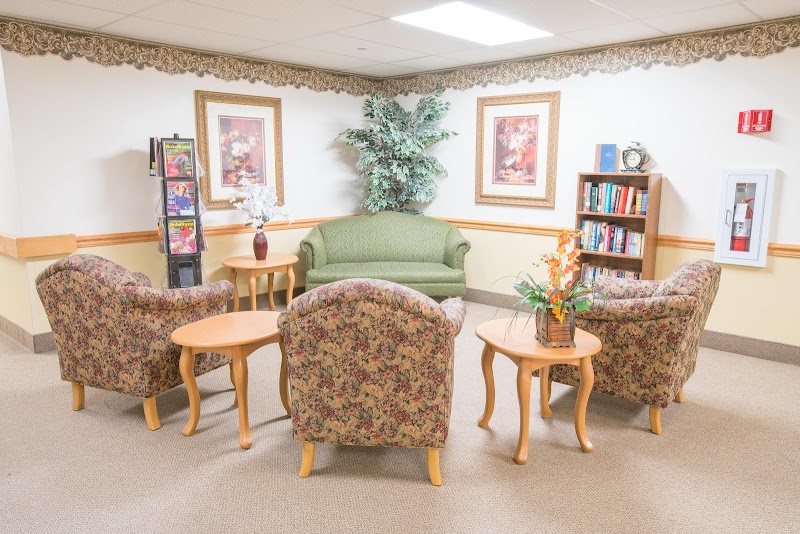
How is Mcnaughten Pointe Nursing And Rehab Staffed?

CMS rates MCNAUGHTEN POINTE NURSING AND REHAB's staffing level at 3 out of 5 stars, which is average compared to other nursing homes. Staff turnover is 29%, compared to the Ohio average of 46%. This relatively stable workforce can support continuity of care.

What Have Inspectors Found at Mcnaughten Pointe Nursing And Rehab?

State health inspectors documented 43 deficiencies at MCNAUGHTEN POINTE NURSING AND REHAB during 2019 to 2025. These included: 2 that caused actual resident harm and 41 with potential for harm. Deficiencies causing actual harm indicate documented cases where residents experienced negative health consequences.
Who Owns and Operates Mcnaughten Pointe Nursing And Rehab?

MCNAUGHTEN POINTE NURSING AND REHAB is owned by a for-profit company. For-profit facilities operate as businesses with obligations to shareholders or private owners. The facility is operated by FOUNDATIONS HEALTH SOLUTIONS, a chain that manages multiple nursing homes. With 135 certified beds and approximately 117 residents (about 87% occupancy), it is a mid-sized facility located in COLUMBUS, Ohio.
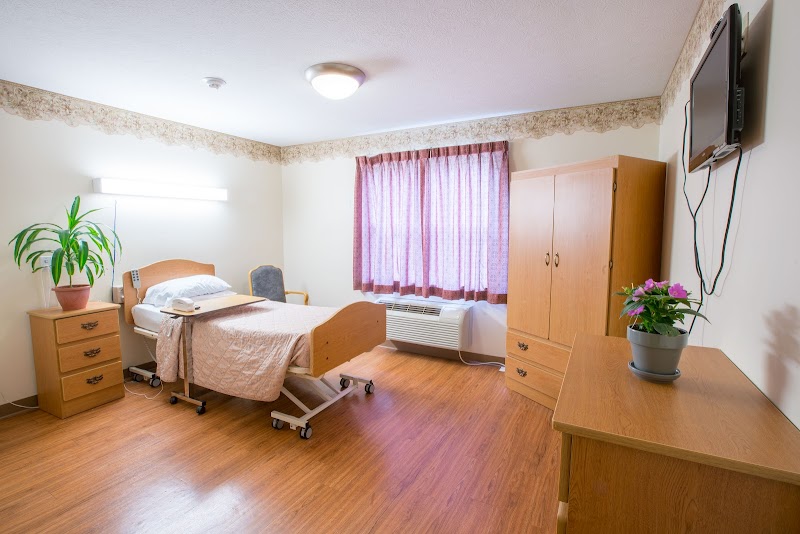
How Does Mcnaughten Pointe Nursing And Rehab Compare to Other Ohio Nursing Homes?

Compared to the 100 nursing homes in Ohio, MCNAUGHTEN POINTE NURSING AND REHAB's overall rating (2 stars) is below the state average of 3.2, staff turnover (29%) is significantly lower than the state average of 46%, and health inspection rating (2 stars) is below the national benchmark.

What Should Families Ask When Visiting Mcnaughten Pointe Nursing And Rehab?

Based on this facility's data, families visiting should ask: "Can I visit during a mealtime to observe dining assistance and food quality?" "How do you handle medical emergencies, and what is your hospital transfer rate?" "Can I speak with family members of current residents about their experience?"

Is Mcnaughten Pointe Nursing And Rehab Safe?

Based on CMS inspection data, MCNAUGHTEN POINTE NURSING AND REHAB has a clean safety record: no substantiated abuse findings (meaning no confirmed cases of resident harm), no Immediate Jeopardy citations (the most serious violation level indicating risk of serious injury or death), and is not on the Special Focus Facility watch list (a federal program monitoring the lowest-performing 1% of nursing homes). The facility has a 2-star overall rating and ranks #100 of 100 nursing homes in Ohio. While no facility is perfect, families should still ask about staff-to-resident ratios and recent inspection results during their visit.

Do Nurses at Mcnaughten Pointe Nursing And Rehab Stick Around?

Staff at MCNAUGHTEN POINTE NURSING AND REHAB tend to stick around. With a turnover rate of 29%, the facility is 17 percentage points below the Ohio average of 46%. Low turnover is a positive sign. It means caregivers have time to learn each resident's needs, medications, and personal preferences. Consistent staff also notice subtle changes in a resident's condition more quickly.

Was Mcnaughten Pointe Nursing And Rehab Ever Fined?

MCNAUGHTEN POINTE NURSING AND REHAB has no federal fines on record. CMS issues fines when nursing homes fail to meet care standards or don't correct problems found during inspections. The absence of fines suggests the facility has either maintained compliance or corrected any issues before penalties were assessed. This is a positive indicator, though families should still review recent inspection reports for the full picture.

Is Mcnaughten Pointe Nursing And Rehab on Any Federal Watch List?

MCNAUGHTEN POINTE NURSING AND REHAB is not on any federal watch list. The most significant is the Special Focus Facility (SFF) program, which identifies the bottom 1% of nursing homes nationally based on persistent, serious quality problems. Not being on this list means the facility has avoided the pattern of deficiencies that triggers enhanced federal oversight. This is a positive indicator, though families should still review the facility's inspection history directly.