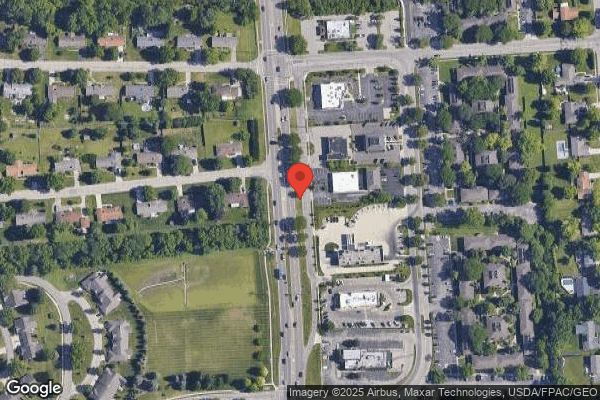
BETHANY VILLAGE

6451 FAR HILLS AVENUE, DAYTON, OH 45459 (937) 436-6841
For profit - Individual 252 Beds Independent Data: November 2025
Trust Grade
85/100
#27 of 913 in OH
Last Inspection: October 2022

Over 2 years since last inspection. Current conditions may differ from available data.

Overview

Bethany Village in Dayton, Ohio, has a Trust Grade of B+, which indicates it is above average and recommended for families seeking care. It ranks #27 out of 913 nursing homes in Ohio, placing it in the top half, and #3 out of 40 in Montgomery County, meaning only two local facilities are rated higher. The facility's performance trend is stable, with only one issue reported in both 2022 and 2025, suggesting consistent care over time. Staffing is a relative strength, with a 4 out of 5-star rating and a turnover rate of 38%, which is lower than the state average, indicating that staff members are more likely to stay long-term and build relationships with residents. However, there are some concerns, such as less RN coverage than 77% of Ohio facilities, potentially impacting the level of care supervision. Specific incidents noted in inspections include a serious issue where a resident fell and suffered head injuries due to staff not using a gait belt during a transfer, and a finding that a resident's privacy was violated. Additionally, there was a concern regarding the documentation for increasing a resident's antipsychotic medication without justification. While the home has strengths in overall quality and staffing stability, these incidents highlight areas that need improvement to ensure resident safety and dignity.

Trust Score
B+
85/100
In Ohio
#27/913
Top 2%
Safety Record
Moderate
Needs review
Inspections
Holding Steady
1 → 1 violations
Staff Stability
○ Average
38% turnover. Near Ohio's 48% average. Typical for the industry.
Penalties
✓ Good
No fines on record. Clean compliance history, better than most Ohio facilities.
Skilled Nurses
○ Average
Each resident gets 31 minutes of Registered Nurse (RN) attention daily — about average for Ohio. RNs are the most trained staff who monitor for health changes.
Violations
✓ Good
Only 3 deficiencies on record. Cleaner than most facilities. Minor issues only.
★★★★★
5.0
Overall Rating
★★★★☆
4.0
Staff Levels
★★★★★
5.0
Care Quality
★★★★★
5.0
Inspection Score
Stable
2022: 1 issues
2025: 1 issues

The Good

  • 4-Star Staffing Rating · Above-average nurse staffing levels
  • 5-Star Quality Measures · Strong clinical quality outcomes
  • Full Sprinkler Coverage · Fire safety systems throughout facility
  • No fines on record
  • Staff turnover below average (38%)

    10 points below Ohio average of 48%

Facility shows strength in staffing levels, quality measures, fire safety.

The Bad

Staff Turnover: 38%

Near Ohio avg (46%)

Typical for the industry

The Ugly 3 deficiencies on record

1 actual harm
Mar 2025 1 deficiency
CONCERN (D) 📢 Someone Reported This

A family member, employee, or ombudsman was alarmed enough to file a formal complaint

Potential for Harm - no one hurt, but risky conditions existed

Deficiency F0557 (Tag F0557)

Could have caused harm · This affected 1 resident

**NOTE- TERMS IN BRACKETS HAVE BEEN EDITED TO PROTECT CONFIDENTIALITY** Based on record review, staff interviews, and policy review, the facility failed to treat a resident with dignity and respect by...

Read full inspector narrative →
**NOTE- TERMS IN BRACKETS HAVE BEEN EDITED TO PROTECT CONFIDENTIALITY** Based on record review, staff interviews, and policy review, the facility failed to treat a resident with dignity and respect by violating their privacy. This affected one (#249) out of four residents reviewed for resident rights. The facility census was 248. Findings include: Review of the closed medical record for Resident #249 revealed an admission date of 07/25/19 and a discharge date of 02/02/25. Diagnoses included viral pneumonia, depression, psoriasis, hypertension, atrial fibrillation, vitamin d deficiency, localized edema, anxiety disorder, and hyperlipidemia. Review of the significant change Minimum Data Set (MDS) assessment dated [DATE] revealed Resident #249 had moderately impaired cognition. Resident #249 was assessed to require setup assistance for eating, and oral hygiene, substantial/maximal assistance for bathing, dressing, personal hygiene, and bed mobility, and was dependent on staff for toileting. Review of the facility's counseling/education forms for State Tested Nursing Assistants (STNA) #12 and #14 dated 01/20/25 revealed they were educated for taking pictures of a resident that was soiled and showing the pictures to other staff at the facility. The form indicated they were advised not to take pictures of residents with their personal phones or share pictures of residents with other staff. Interviews on 03/02/25 from 1:19 P.M. to 1:49 P.M. via telephone with Registered Nurse (RN) Unit Manager (UM) #100 revealed there was an incident where a picture was taken of a resident, and the staff involved were STNAs #12 and #14. RN UM #100 stated the picture did not show the resident's face and only showed their hands and abdominal area that were soiled. RN UM #100 reported she completed a counseling form with both employees involved. Interview on 03/02/25 at 1:45 P.M. with the Director of Nursing (DON) revealed the picture was alleged to be of Resident #249 and showed feces on their hands and abdominal area. Interview on 03/02/25 at 1:52 P.M. via telephone with STNA #14 revealed she delivered a breakfast tray to Resident #249 and discovered her hands were dirty. STNA #14 stated she informed Resident #249's aide, STNA #12, and both staff pulled back the blankets on Resident #249 where it was revealed the resident was soiled with feces. STNA #14 verified she took a picture of Resident #249's legs that had feces on them and sent the picture to STNA #12 who then shared the picture with RN UM #100. Interview on 03/02/25 at 2:12 P.M. via telephone with STNA #16 revealed STNA #12 showed her the picture and said it was of Resident #249. STNA #16 stated she reported the incident to RN UM #100. Review of the policy titled, Residents' Rights, reviewed 10/22/19, revealed residents had the right to be treated with respect and dignity. This deficiency represents non-compliance investigated under Master Complaint Number OH00161794.
Oct 2022 1 deficiency
CONCERN (D)

Potential for Harm - no one hurt, but risky conditions existed

Medication Errors (Tag F0758)

Could have caused harm · This affected 1 resident

**NOTE- TERMS IN BRACKETS HAVE BEEN EDITED TO PROTECT CONFIDENTIALITY** Based on medical record review, staff interview, and review of facility policy, the facility failed ensure a resident was free f...

Read full inspector narrative →
**NOTE- TERMS IN BRACKETS HAVE BEEN EDITED TO PROTECT CONFIDENTIALITY** Based on medical record review, staff interview, and review of facility policy, the facility failed ensure a resident was free from unnecessary psychotropic medications by ensuring staff documented justification for an increase in a resident's antipsychotic medication. This affected one (#117) of five reviewed for unnecessary medications. The census was 239. Findings include: Review of Resident #117's medical record revealed an admission date of 03/06/20. Diagnoses listed included cerebral atherosclerosis, heart failure, restlessness and agitation, depression, and dementia with agitation. Review of an annual Minimum Data Set (MDS) assessment dated [DATE] revealed Resident #117's brief interview for mental status (BIMS) score was 12, indicating the resident had moderate cognitive impairment. Resident #117 was assessed as not having any psychotic disorders. Review of physician orders revealed an order to increase the antipsychotic medication Seroquel from 25 milligrams (mg) twice a day to 50 mg twice a day (BID) by mouth (PO) dated 04/15/22 for unspecified dementia with behavioral disturbance. Resident #117 remained on Seroquel 50 mg PO BID with an order dated 09/10/22. Review of social services progress notes dated 03/14/22 revealed Licensed Social Worker (LSW) met with Resident #117's daughter via telephone. Resident #117 was adjusting favorably to new living environment with no changes in mood or behavior. Review of physician assistant (PA) progress notes dated 04/15/22 revealed Resident #117 had cerebral atherosclerosis with behaviors and was evaluated for delusions. Resident #117's daughter stated her mother had increased delusions, distressed, and tearful. Resident #117's daughter said many things her mother is saying are not based on reality, such as her spouse is cheating, etc. Resident #117 is currently on Seroquel 25 mg PO BID. Review of an facility internal email dated 04/14/22 from Licensed Social Worker (LSW) #9 to members of the Interdisciplinary Team (IDT) members revealed LSW #9 spoke with Resident #117's daughter who expressed concerns regarding her mother's demeanor, citing that Resident #117 had become increasingly delusional, distressed, and tearful. Resident #117's daughter reported Resident #117 says many things that are not based in reality (such as spouse is cheating on her) and wanted the physician to be consulted regarding whether or not an increase in Seroquel was warranted. Nursing staff was to make the physician aware of Resident #117's daughter's request and provide supporting documentation in the clinical record of Resident #117's mood for physician reference. Further review of Resident #117's medical record from admission from 03/09/22 (date of admission to dementia care unit) through 04/15/22 revealed no documentation of any increase in behaviors such as delusions, distress, or tearfulness. Interview with the Director of Nursing (DON) on 10/27/22 at 1:40 P.M. confirmed there was not documentation in the medical record of any increase of Resident #117's behaviors that would justify an increase in the antipsychotic Seroquel on 04/15/22. The DON confirmed nursing staff should monitor and document any increase in behaviors in a resident's medical record. Review of the facility's policy titled Use pf Psychotropic Drugs dated effective 04/16/91 and last revised 05/13/22 revealed the IDT will monitor to verify that residents who receive psychotropic drugs either are currently exhibiting identified symptoms, behaviors or have a history of said behaviors. Behaviors include but are not limited to the following: a. Sundowning; b. Severe anger; c. Aggression; d. Agitation related to sundowning; e. Agitation due to pain (i.e. osteoarthritis); and f. Anxiety. The IDT is responsible for the following: a. Reviewing the resident's behaviors as indicated; b. Monitoring to ensure behaviors are tracked; c. Providing direction to unit nurse regarding consulting with and discussing with the physician any recommended psychotropic drug changes; and d. The MDS nurse will verify that the AIMS (abnormal involuntary movement score) test is done initially and every six months thereafter for antipsychotic drugs.
Sept 2018 1 deficiency 1 Harm
SERIOUS (G)

Actual Harm - a resident was hurt due to facility failures

Accident Prevention (Tag F0689)

A resident was harmed · This affected 1 resident

**NOTE- TERMS IN BRACKETS HAVE BEEN EDITED TO PROTECT CONFIDENTIALITY** Based on medical record review, observation, review of the facility's Gait Belts/Transfer Belts policy and staff interview, the ...

Read full inspector narrative →
**NOTE- TERMS IN BRACKETS HAVE BEEN EDITED TO PROTECT CONFIDENTIALITY** Based on medical record review, observation, review of the facility's Gait Belts/Transfer Belts policy and staff interview, the facility failed to prevent a resident from sustaining injuries from a fall. This resulted in actual harm when a state tested nursing assistant (STNA) did not use a gait belt during transfer of Resident #62 who subsequently fell and sustained head injuries. This affected one (Resident #62) of five residents reviewed for falls. The facility identified 132 residents that required assistance with ambulation or use of an assistive device. The facility census was 250. Findings include: Review of Resident #62's medical record revealed an admission date of 09/29/16 with diagnoses that included dementia, syncope and collapse, history of falling, glaucoma and hypertension. Review of Resident #62's care plan and resident care guide dated 09/29/16 revealed that Resident #62 had potential for falls related to weakness, impaired cognition with decreased safety and was to be physically assisted by one person, using a gait belt and walker for transfers and with ambulation/mobility. Review of Resident #62's quarterly Minimum Data Set (MDS) assessment dated [DATE] revealed the resident's Brief Interview for Mental Status (BIMS) score was a four indicating severe cognitive impairment. Resident #62 was assessed as requiring one person physical assistance with transfers Review of Resident #62's interdisciplinary note dated 07/08/18 revealed STNA #200 was assisting Resident #62 with a transfer from bed to a standing position. STNA #200 was documented as stating Resident #62 stood up and held onto a walker, but as Resident #62 started to take a step she lost her balance, leaned over towards her left side and fell onto the floor, hitting the back of her head on the bed rail. Resident #62's fall was witnessed by STNA #200 and Resident #62 did not lose consciousness. A laceration was noted to the back of Resident #62's head with a heavy amount of bleeding. Resident #62 did not have a gait belt on during the transfer. Resident #62 was transferred to a local hospital emergency department (ED). Review of Resident #62's hospital records dated 07/08/18 through 07/09/18 revealed Resident #62 sustained a mechanical fall with a scalp laceration, small frontal subdural hematoma without pressure effect and limited right frontal subarachnoid hemorrhage. Review of an interdisciplinary note dated 07/10/18 revealed Resident #62 returned to the facility from the hospital with a diagnosis of subdural hematoma and three staples to the back of her head. Interview on 09/12/18 at 1:04 P.M. with Licensed practical nurse (LPN) #300 verified STNA #200 was documented as not using a gait belt while assisting Resident #62 with a transfer on 07/08/18 and the resident fell and sustained a subdural hematoma and a laceration to her head as a result of the fall. LPN #300 verified staff should use gait belts with residents, including Resident #62, who required one person physical assistance. Resident #62 was observed on 09/12/18 at 12:41 P.M. ambulating with a walker with the assistance of an STNA. Resident #62 had a gait belt around her waist that the STNA was holding on to. Review of the Gait Belts/Transfer Belts policy, (revised 06/28/18), revealed gait belts are to be used to promote safe transferring for all weight bearing residents who require hands-on assistance for residents to go to the standing position (whether or not partial of full weight bearing) and to protect residents and/or staff from accidental trauma and/or injury to skin or joints.
Understanding Severity Codes (click to expand)
Life-Threatening (Immediate Jeopardy)
J - Isolated K - Pattern L - Widespread
Actual Harm
G - Isolated H - Pattern I - Widespread
Potential for Harm
D - Isolated E - Pattern F - Widespread
No Harm (Minor)
A - Isolated B - Pattern C - Widespread

Questions to Ask on Your Visit

  • "Can I speak with families of current residents?"
  • "What's your RN coverage like on weekends and overnight?"

Our Honest Assessment

Strengths
  • • Grade B+ (85/100). Above average facility, better than most options in Ohio.
  • • No fines on record. Clean compliance history, better than most Ohio facilities.
  • • 38% turnover. Below Ohio's 48% average. Good staff retention means consistent care.
Concerns
  • • 3 deficiencies on record, including 1 serious (caused harm) violation. Ask about corrective actions taken.
Bottom line: Generally positive indicators. Standard due diligence and a personal visit recommended.

About This Facility

What is Bethany Village's CMS Rating?

CMS assigns BETHANY VILLAGE an overall rating of 5 out of 5 stars, which is considered much above average nationally. Within Ohio, this rating places the facility higher than 99% of the state's 100 nursing homes. This rating reflects solid performance across the metrics CMS uses to evaluate nursing home quality.

How is Bethany Village Staffed?

CMS rates BETHANY VILLAGE's staffing level at 4 out of 5 stars, which is above average compared to other nursing homes. Staff turnover is 38%, compared to the Ohio average of 46%. This relatively stable workforce can support continuity of care.

What Have Inspectors Found at Bethany Village?

State health inspectors documented 3 deficiencies at BETHANY VILLAGE during 2018 to 2025. These included: 1 that caused actual resident harm and 2 with potential for harm. Deficiencies causing actual harm indicate documented cases where residents experienced negative health consequences.

Who Owns and Operates Bethany Village?

BETHANY VILLAGE is owned by a for-profit company. For-profit facilities operate as businesses with obligations to shareholders or private owners. The facility operates independently rather than as part of a larger chain. With 252 certified beds and approximately 236 residents (about 94% occupancy), it is a large facility located in DAYTON, Ohio.

How Does Bethany Village Compare to Other Ohio Nursing Homes?

Compared to the 100 nursing homes in Ohio, BETHANY VILLAGE's overall rating (5 stars) is above the state average of 3.2, staff turnover (38%) is near the state average of 46%, and health inspection rating (5 stars) is much above the national benchmark.

What Should Families Ask When Visiting Bethany Village?

Based on this facility's data, families visiting should ask: "Can I visit during a mealtime to observe dining assistance and food quality?" "How do you handle medical emergencies, and what is your hospital transfer rate?" "Can I speak with family members of current residents about their experience?"

Is Bethany Village Safe?

Based on CMS inspection data, BETHANY VILLAGE has a clean safety record: no substantiated abuse findings (meaning no confirmed cases of resident harm), no Immediate Jeopardy citations (the most serious violation level indicating risk of serious injury or death), and is not on the Special Focus Facility watch list (a federal program monitoring the lowest-performing 1% of nursing homes). The facility has a 5-star overall rating and ranks #1 of 100 nursing homes in Ohio. While no facility is perfect, families should still ask about staff-to-resident ratios and recent inspection results during their visit.

Do Nurses at Bethany Village Stick Around?

BETHANY VILLAGE has a staff turnover rate of 38%, which is about average for Ohio nursing homes (state average: 46%). Moderate turnover is common in nursing homes, but families should still ask about staff tenure and how the facility maintains care continuity when employees leave.

Was Bethany Village Ever Fined?

BETHANY VILLAGE has no federal fines on record. CMS issues fines when nursing homes fail to meet care standards or don't correct problems found during inspections. The absence of fines suggests the facility has either maintained compliance or corrected any issues before penalties were assessed. This is a positive indicator, though families should still review recent inspection reports for the full picture.

Is Bethany Village on Any Federal Watch List?

BETHANY VILLAGE is not on any federal watch list. The most significant is the Special Focus Facility (SFF) program, which identifies the bottom 1% of nursing homes nationally based on persistent, serious quality problems. Not being on this list means the facility has avoided the pattern of deficiencies that triggers enhanced federal oversight. This is a positive indicator, though families should still review the facility's inspection history directly.