VIENNA SPRINGS HEALTH CAMPUS
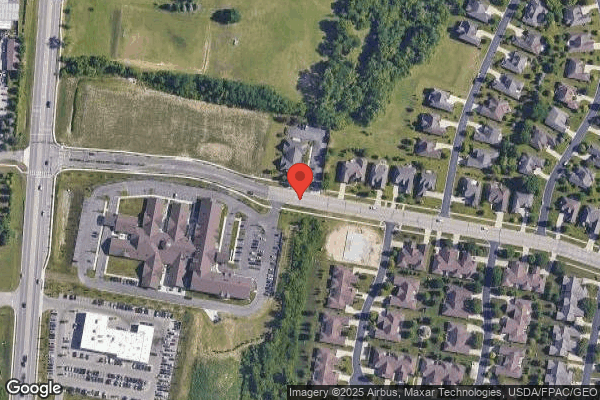
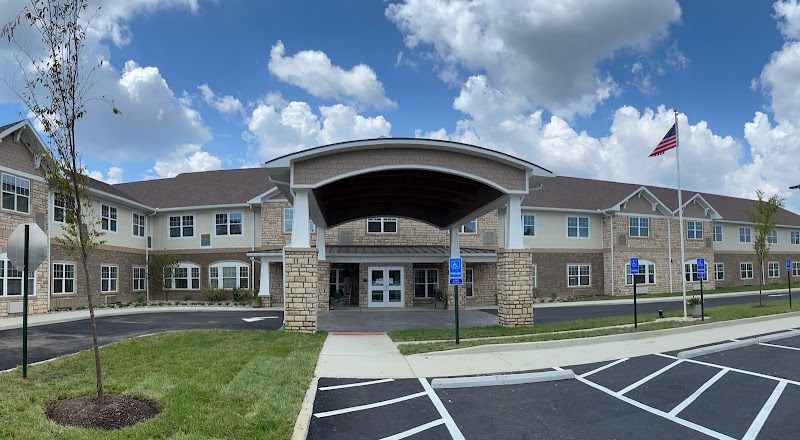
2510 VIENNA PKWY, DAYTON, OH 45459 (937) 741-7896
For profit - Individual 54 Beds TRILOGY HEALTH SERVICES Data: November 2025
Trust Grade
90/100
#189 of 913 in OH
Last Inspection: February 2025

Within standard 12-15 month inspection cycle. Federal law requires annual inspections.

Overview

Vienna Springs Health Campus in Dayton, Ohio, has received a Trust Grade of A, indicating it is an excellent choice, highly recommended for families seeking care. It ranks #189 out of 913 facilities in Ohio, placing it in the top half, and #8 out of 40 in Montgomery County, suggesting only a few local options are better. The facility is improving, with issues decreasing from three in 2024 to two in 2025. While staffing is a weakness, rated at 2 out of 5 stars with a turnover of 54%, which is slightly above the state average, they have good RN coverage, more than 89% of other Ohio facilities, ensuring proper oversight. However, there have been concerns, such as expired food items in the kitchen and a failure to follow care plans for residents with feeding tubes, indicating areas for improvement alongside its strengths.

Trust Score
A
90/100
In Ohio
#189/913
Top 20%
Safety Record
Low Risk
No red flags
Inspections
Getting Better
3 → 2 violations
Staff Stability
⚠ Watch
54% turnover. Above average. Higher turnover means staff may not know residents' routines.
Penalties
✓ Good
No fines on record. Clean compliance history, better than most Ohio facilities.
Skilled Nurses
✓ Good
Each resident gets 49 minutes of Registered Nurse (RN) attention daily — more than average for Ohio. RNs are trained to catch health problems early.
Violations
✓ Good
Only 5 deficiencies on record. Cleaner than most facilities. Minor issues only.
★★★★★
5.0
Overall Rating
★★☆☆☆
2.0
Staff Levels
★★★★★
5.0
Care Quality
★★★★☆
4.0
Inspection Score
Stable
2024: 3 issues
2025: 2 issues

The Good

  • 5-Star Quality Measures · Strong clinical quality outcomes
  • Full Sprinkler Coverage · Fire safety systems throughout facility
  • No fines on record

Facility shows strength in quality measures, fire safety.

The Bad

Staff Turnover: 54%

Near Ohio avg (46%)

Higher turnover may affect care consistency

Chain: TRILOGY HEALTH SERVICES

Part of a multi-facility chain

Ask about local staffing decisions and management

The Ugly 5 deficiencies on record

Feb 2025 2 deficiencies
CONCERN (D)

Potential for Harm - no one hurt, but risky conditions existed

Tube Feeding (Tag F0693)

Could have caused harm · This affected 1 resident

**NOTE- TERMS IN BRACKETS HAVE BEEN EDITED TO PROTECT CONFIDENTIALITY** Based on record review, staff and physician interviews and policy review, the facility failed to ensure residents with gastrosto...

Read full inspector narrative →
**NOTE- TERMS IN BRACKETS HAVE BEEN EDITED TO PROTECT CONFIDENTIALITY** Based on record review, staff and physician interviews and policy review, the facility failed to ensure residents with gastrostomy tubes were administered enteral feedings with a valid physician's order. This affected one (#25) of one residents reviewed for gastrostomy tube care and services. The facility census was 51. Findings include: Review of the medical record revealed Resident #25 was admitted to the facility on [DATE]. Diagnoses included hemiplegia and hemiparesis following cerebral infarction affecting left non-dominant side, dysarthria, dysphagia, type II diabetes, unspecified anxiety disorder, stage II pressure ulcer, and gastrostomy status. Review of the most recent Minimum Data Set (MDS) assessment dated [DATE] revealed Resident #25 had severely impaired cognition, had no behaviors, did not wander, and did not reject care. Review of care plan dated 01/09/23 revealed Resident #25 required tube feeding and an oral diet to meet nutrition and hydration needs to support metabolic demands. Interventions included to provide assistance with meals as needed, provide diet/supplements/medications as ordered, and administer tube feeding as ordered. Review of the medical record revealed Resident # 25 had physician orders for a diet of fortified foods, pureed texture, with nectar thickened liquids and one-on-one (1:1) feeding assistance with all meals. Additionally, Resident #25 had orders to flush gastrostomy tube with 400 cubic centimeters (cc) of water every six hours, and 30 cc of water before and after medication pass. Resident #25 had no active orders for supplemental tube feeding. Review of progress note dated 02/02/25 at 1:19 AM revealed an unidentified aide reported to Registered Nurse (RN) #273 that Resident #25 did not receive dinner. RN #273 documented she administered unspecified tube feeding to supplement the missed meal. Resident #25 coughed up some of the tube feed and required the bed linens to be changed. Review of form titled Teachable Moment dated 02/04/25 revealed RN #273 stated to management she had given Jevity 1.5 in a 240 milliliter (ml) bolus to Resident #25 without an order. During the survey, RN #273 was unable to be reached by telephone for interview on 02/06/25 at 11:42 A.M. During an interview on 02/06/25 at 11:57 A.M. Physician #12 stated Resident #25 took all food by mouth. Physician #12 stated Resident #25 had an order for supplemental tube feeding when less than (<) 50 percent (%) of meals were consumed in the past, but verified Resident #25 did not have a current, active order for supplemental tube feeding on 02/03/25. Physician #12 stated he had not received a request to give orders for Resident #25 to have tube feeding orders. During on interview on 02/06/25 at 12:53 P.M. Regional Nurse # 404 stated the administration error involving RN #273 providing tube feeding to Resident #25 without an order was discovered on 02/04/25. The DON found the progress note referring to the tube feed given on 02/02/25 and called the RN. RN #273 reported to management she had given Resident #25 a 240 ml bolus of Jevity 1.5 Calorie. Regional RN #404 verified Resident #25 had never had an order for Jevity 1.5 and stated the last active order for supplemental feeding was on 08/25/24 for Nepro 1.8 calorie. Review of policy titled Tube Feedings dated 12/20/24 revealed residents who required tube feedings were assessed by a registered dietitian for appropriate tube feeding products to meet estimated calorie, protein and fluid needs. Orders for bolus tube feedings should include the product, amount per bolus, and number of boluses per day.
CONCERN (F)

Potential for Harm - no one hurt, but risky conditions existed

Food Safety (Tag F0812)

Could have caused harm · This affected most or all residents

Based on observations, staff interview, and facility policy review, the facility failed to provide food safely and labeling and dating all food items. This had the potential to affect all 51 residents...

Read full inspector narrative →
Based on observations, staff interview, and facility policy review, the facility failed to provide food safely and labeling and dating all food items. This had the potential to affect all 51 residents residing in the facility. The facility census was 51. Findings include: Observation on 02/03/25 from 8:36 A.M. through 8:50 A.M. of the facility kitchen with the Executive Director revealed the following areas of concern: 1. In freezer the large tub of five gallon chocolate ice cream had the lid off, that exposed ice cream 30 percent (%) in the freezer. 2. In large refrigerator had a large container 12 by 18 by 5 depth of frozen spinach, that had a cute of six inches in the plastic. The spinach appeared to be freezer burned. 3. In refrigerator located by hand sink, there was a gallon of whole milk that had expired date of 02/01/25. The gallon of milk was 1/3 full of milk. 4. In refrigerator located by hand sink, there was cream cheese in a box opened, 1/2 full in zip lock bag in box. There was no open date, or labeling on the opened cream cheese. 5. In refrigerator located by prep area, and large sink, that had large bag of 24 frozen burger patties in bottom of refrigerator. No labeling on plastic bag. On 02/03/25 from 8:35 A.M. through 8:50 A.M., an interview with the Executive Director verified the identified concerns with the kitchen. The facility also confirmed all 51 residents receive their meals from the kitchen. Review of the facility policy titled Food Labeling and Dating Policy dated 04/26/22 revealed that foods in production need both a production date and use by date. Foods are considered to be in production when they have been taken out of the original container and the seal had been broken. The date code genie can provide both dates on one label. It was the best practice to use the Date Code Genie labels on all food items and food products.
Apr 2024 2 deficiencies
CONCERN (D) 📢 Someone Reported This

A family member, employee, or ombudsman was alarmed enough to file a formal complaint

Potential for Harm - no one hurt, but risky conditions existed

Accident Prevention (Tag F0689)

Could have caused harm · This affected 1 resident

**NOTE- TERMS IN BRACKETS HAVE BEEN EDITED TO PROTECT CONFIDENTIALITY** Based on medical record reviews, observations, staff interviews and policy review, the facility failed to ensure fall risk asses...

Read full inspector narrative →
**NOTE- TERMS IN BRACKETS HAVE BEEN EDITED TO PROTECT CONFIDENTIALITY** Based on medical record reviews, observations, staff interviews and policy review, the facility failed to ensure fall risk assessments were completed as per policy. This affected three (#11, #20, and #37) out of three residents reviewed for falls. Additionally, the facility failed to ensure fall preventative measures were in place as per the plan of care. This affected one (#37) out of three residents reviewed for falls. The facility census was 45. Findings include: 1. Review of the medical record for Resident #11 revealed an admission date of 02/01/22 with medical diagnoses of Alzheimer's disease, adult failure to thrive, chronic obstructive pulmonary disease (COPD), schizoaffective disorder, and bipolar disorder. Review of the medical record for Resident #11 revealed a quarterly Minimum Data Set (MDS) assessment, dated 01/12/23, which indicated Resident #11 had moderate cognitive impairment and required maximum staff assistance for toilet hygiene and transfers, was dependent upon staff for bathing, and moderate staff assistance for bed mobility. The MDS revealed Resident #11 had two or more falls without injury and one fall with injury since the last MDS assessment. Review of the medical record for Resident #11 revealed an admission observation tool, dated 12/18/23, which included a fall risk assessment. The fall risk assessment indicated Resident #11 was at risk for falls. Further review of the medical record revealed no documentation to support a comprehensive fall risk assessment had been completed since 12/18/23. 2. Review of the medical record for Resident #20 revealed an admission date of 06/15/22 with medical diagnoses of Alzheimer's disease, dementia with behavioral disturbances, pulmonary fibrosis, morbid obesity, seizures, and right-side orbital fracture. Review of the medical record for Resident #20 revealed a quarterly MDS, dated [DATE], which indicated Resident #20 had severe cognitive impairment and was dependent upon staff for showers, required maximum staff assistance for toilet hygiene, and moderate staff assistance with bed mobility and transfers. Further review of the MDS revealed Resident #20 had a fall with major injury since the last MDS assessment. Review of the medical record for Resident #20 revealed a Resident First Meeting assessment, dated 11/15/23, which included a fall risk assessment. Review of the fall risk assessment revealed Resident #20 was at high risk for falls. Further review of the medical record revealed no documentation to support a comprehensive fall risk assessment had been completed since 11/15/23. 3. Review of the medical record for Resident #37 revealed an admission date of 05/21/22 with medical diagnoses of Alzheimer's disease, atherosclerotic heart disease, anemia, diabetes mellitus, and left below the knee amputation. Review of the medical record for Resident #37 revealed an annual MDS, dated [DATE], which indicated Resident #37 had severely impaired cognition and was dependent upon staff for transfers and toilet hygiene and required maximum staff assistance for bathing and bed mobility. Review of the MDS revealed Resident #37 had a fall since the last MDS. Review of the medical record for Resident #37 revealed a Resident First Meeting assessment, dated 11/29/23, which included the fall risk assessment. Review of the fall risk assessment revealed Resident #37 was at high risk for falls. Further review of the medical record for Resident #37 revealed no documentation to support a comprehensive fall risk assessment had been completed since 11/29/23. Review of the medical record for Resident #37 revealed a physician order dated 08/05/22 for the bed to be against the wall on the right side with a floor mat on the left side of the bed. Review of the medical record for Resident #37 revealed a fall care plan which stated Resident #37 was at risk for falls due to left below the knee amputation, poor cognition, restlessness, agitation, and attempts to get out of bed per self. Interventions included having the bed against the wall with the floor mat on the left side of the bed while the resident was in bed. Observation on 04/23/24 at 11:38 A.M. revealed Resident #37 sleeping in his bed. The bed was noted to be in a low position and against the wall on the right side. The observation revealed the floor mat to up leaning upright against Resident #37's dresser. Interview on 04/23/24 at 11:41 A.M. with State Tested Nursing Assistant (STNA) #124 confirmed he was aware Resident #37 was sleeping in his bed and confirmed the floor mat was leaning upright against Resident #37's dresser and not on the floor next to the bed. Interview on 04/23/24 at 2:00 P.M. with Regional Clinical Support #188 confirmed the medical records for Residents #11, #20, and #37 did not contain documentation to support the facility completed comprehensive fall risk assessments quarterly per the facility policy. Review of the facility policy titled, Fall Management Program Guidelines, revised 12/31/23 stated the facility would strive to maintain a hazard free environment, mitigate fall risk factors, and implement preventative measures. The policy also stated fall risk assessments were to be done with admission and with Quarterly Nursing Observations. This deficiency represents non-compliance investigated under Complaint Numbers OH00152772 and OH00152774.
CONCERN (D) 📢 Someone Reported This

A family member, employee, or ombudsman was alarmed enough to file a formal complaint

Potential for Harm - no one hurt, but risky conditions existed

Incontinence Care (Tag F0690)

Could have caused harm · This affected 1 resident

Based on medical record review, observations, staff interviews and policy review, the facility failed to ensure proper and thorough cleansing was performed during incontinence care. This affected one ...

Read full inspector narrative →
Based on medical record review, observations, staff interviews and policy review, the facility failed to ensure proper and thorough cleansing was performed during incontinence care. This affected one (#11) out of three resident reviewed for incontinence care. The facility census was 45. Findings include: Review of the medical record for Resident #11 revealed an admission date of 02/01/22 with medical diagnoses of Alzheimer's disease, adult failure to thrive, chronic obstructive pulmonary disease (COPD), schizoaffective disorder, and bipolar disorder. Review of the medical record for Resident #11 revealed a quarterly Minimum Data Set (MDS) assessment, dated 01/12/23, which indicated Resident #11 had moderate cognitive impairment and required maximum staff assistance for toilet hygiene and transfers, was dependent upon staff for bathing, and moderate staff assistance for bed mobility. Review of the MDS revealed Resident #11 was frequently incontinent of bladder and bowel. Observation on 04/23/24 at 1:20 P.M. revealed State Tested Nursing Assistant (STNA) #154 transferred Resident #11 into the bathroom via wheelchair and assisted Resident #11 to a standing position next to the toilet with Resident #11 holding onto the grab bar by the toilet. STNA #154 washed her hands and then applied gloves. STNA #154 proceeded to remove Resident #11's urine saturated adult brief and disposed of it in the trash near the toilet. Resident #11 sat on the toilet and attempted to void with no results. STNA #154 assisted Resident #11 to a standing position with Resident #11 facing the wall and holding onto the grab bar near the toilet. STNA #154 stood behind Resident #11 and cleansed Resident #11 two times from front to back using two cleansing wipes. STNA #154 then assisted Resident #11 with applying new adult brief and back into the wheelchair. STNA #154 unlocked the wheelchair brakes and moved the wheelchair out into Resident #11's room. STNA #154 removed her gloves and washed her hands. Interview on 04/23/24 at 1:30 P.M. with STNA #154 confirmed she did not thoroughly cleanse Resident #11's perineal area after Resident #11 was incontinent of bladder. STNA #154 also confirmed she did not remove her gloves or perform hand hygiene prior to assisting Resident #11 back into her wheelchair, unlocking the brakes, and moving Resident #11 out of the bathroom. Review of the facility policy titled, Perineal Care for Incontinence, revised 11/09/17, stated incontinence care was to be done to ensure that urine and feces do not remain on incontinent residents' skin for long periods of time. The policy stated staff are to pay particular attention to infection prevention and control techniques when performing peri care. This deficiency represents non-compliance investigated under Complaint Number OH00152774.
Feb 2024 1 deficiency
CONCERN (D) 📢 Someone Reported This

A family member, employee, or ombudsman was alarmed enough to file a formal complaint

Potential for Harm - no one hurt, but risky conditions existed

ADL Care (Tag F0677)

Could have caused harm · This affected 1 resident

**NOTE- TERMS IN BRACKETS HAVE BEEN EDITED TO PROTECT CONFIDENTIALITY** Based on medical record review, staff interview, and facility shower schedule review, the facility failed to perform showers for...

Read full inspector narrative →
**NOTE- TERMS IN BRACKETS HAVE BEEN EDITED TO PROTECT CONFIDENTIALITY** Based on medical record review, staff interview, and facility shower schedule review, the facility failed to perform showers for dependent residents according to schedule. This affected one (Resident #30) of three residents reviewed for showers. The census was 52. Findings include: Resident #30 was admitted to the facility on [DATE]. Her diagnoses were dementia, Alzheimer's disease, psychosis, pulmonary fibrosis, acute bronchitis, anemia, type II diabetes, hypertensive heart disease, morbid obesity, hypothyroidism, hyperlipidemia, major depressive disorder, anxiety disorder, mood disorder, osteoporosis, dysphagia, and repeated falls. Review of Resident #30's Minimum Data Set (MDS) assessment dated [DATE] revealed she had severe cognitive impairment. Review of Resident #30's shower schedule revealed her showers were to be Wednesdays and Saturdays until 02/15/24, when the facility made the changes to her showers to being on Tuesdays and Fridays. Review of the shower logs from 11/03/23 to 02/15/24 revealed there were 14 showers that were not completed on her scheduled shower days. Also, there were showers that were completely missed from 11/09/23 to 11/16/23, from 11/16/23 to 11/22/23, from 11/29/23 to 12/06/23, and from 12/31/23 to 01/07/24. After the change of scheduled days made on 02/15/24, there was no shower given from 02/14/24 to 02/20/24. Further review of the medical record revealed no documentation showing Resident #30 refused showers. Interview with Registered Nurse (RN) #102 on 02/29/24 at 2:30 P.M. revealed Resident #30 refused care at times but if she refused care, staff would document in the medical record when she refuses. RN #102 further verified if there was no documentation in the medical record of a refusal, it either meant staff forgot to document or the resident didn't get a shower. Interview with RN #101 on 02/29/24 at 3:50 P.M. confirmed showers are to be given on scheduled days, but if a resident refuses, or they are not available, staff are to document that as a refusal/not available in the medical record. RN #101 confirmed Resident #30 did refuse showers at times and this should be documented in the medical record. Interview with the Executive Director and Regional Director #110 on 02/29/24 at 4:10 P.M. verified there were gaps in showers for Resident #30 and Resident #30 did not receive showers as scheduled. This deficiency represents non-compliance investigated under Complaint Number OH00151316.
Understanding Severity Codes (click to expand)
Life-Threatening (Immediate Jeopardy)
J - Isolated K - Pattern L - Widespread
Actual Harm
G - Isolated H - Pattern I - Widespread
Potential for Harm
D - Isolated E - Pattern F - Widespread
No Harm (Minor)
A - Isolated B - Pattern C - Widespread

Questions to Ask on Your Visit

  • "Can I speak with families of current residents?"
  • "What's your RN coverage like on weekends and overnight?"

Our Honest Assessment

Strengths
  • • Grade A (90/100). Above average facility, better than most options in Ohio.
  • • No major safety red flags. No abuse findings, life-threatening violations, or SFF status.
  • • No fines on record. Clean compliance history, better than most Ohio facilities.
  • • Only 5 deficiencies on record. Cleaner than most facilities. Minor issues only.
Concerns
  • • No significant concerns identified. This facility shows no red flags across CMS ratings, staff turnover, or federal penalties.
Bottom line: Generally positive indicators. Standard due diligence and a personal visit recommended.

About This Facility

What is Vienna Springs Health Campus's CMS Rating?

CMS assigns VIENNA SPRINGS HEALTH CAMPUS an overall rating of 5 out of 5 stars, which is considered much above average nationally. Within Ohio, this rating places the facility higher than 99% of the state's 100 nursing homes. This rating reflects solid performance across the metrics CMS uses to evaluate nursing home quality.
How is Vienna Springs Health Campus Staffed?

CMS rates VIENNA SPRINGS HEALTH CAMPUS's staffing level at 2 out of 5 stars, which is below average compared to other nursing homes. Staff turnover is 54%, compared to the Ohio average of 46%.

What Have Inspectors Found at Vienna Springs Health Campus?

State health inspectors documented 5 deficiencies at VIENNA SPRINGS HEALTH CAMPUS during 2024 to 2025. These included: 5 with potential for harm.
Who Owns and Operates Vienna Springs Health Campus?

VIENNA SPRINGS HEALTH CAMPUS is owned by a for-profit company. For-profit facilities operate as businesses with obligations to shareholders or private owners. The facility is operated by TRILOGY HEALTH SERVICES, a chain that manages multiple nursing homes. With 54 certified beds and approximately 49 residents (about 91% occupancy), it is a smaller facility located in DAYTON, Ohio.
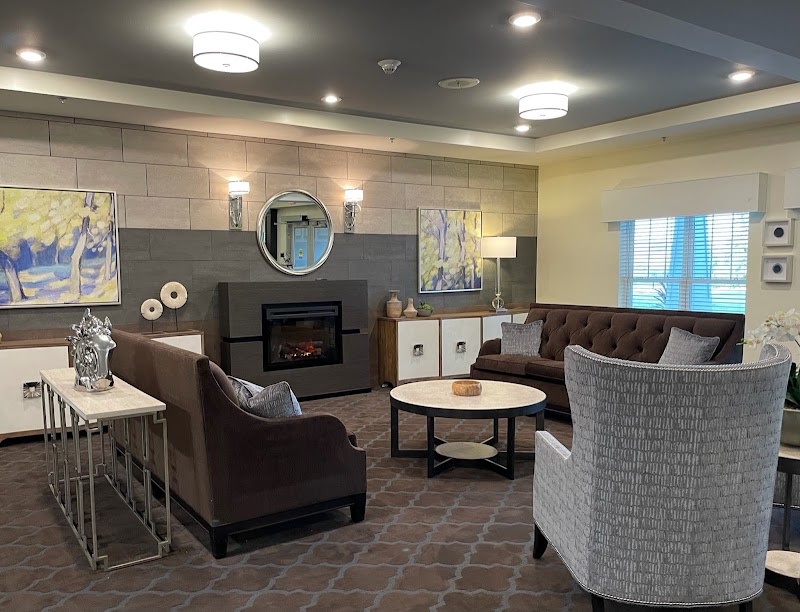
How Does Vienna Springs Health Campus Compare to Other Ohio Nursing Homes?

Compared to the 100 nursing homes in Ohio, VIENNA SPRINGS HEALTH CAMPUS's overall rating (5 stars) is above the state average of 3.2, staff turnover (54%) is near the state average of 46%, and health inspection rating (4 stars) is above the national benchmark.

What Should Families Ask When Visiting Vienna Springs Health Campus?

Based on this facility's data, families visiting should ask: "Can you walk me through typical staffing levels on day, evening, and night shifts?" "Can I visit during a mealtime to observe dining assistance and food quality?" "How do you handle medical emergencies, and what is your hospital transfer rate?" "Can I speak with family members of current residents about their experience?" These questions are particularly relevant given the below-average staffing rating.

Is Vienna Springs Health Campus Safe?

Based on CMS inspection data, VIENNA SPRINGS HEALTH CAMPUS has a clean safety record: no substantiated abuse findings (meaning no confirmed cases of resident harm), no Immediate Jeopardy citations (the most serious violation level indicating risk of serious injury or death), and is not on the Special Focus Facility watch list (a federal program monitoring the lowest-performing 1% of nursing homes). The facility has a 5-star overall rating and ranks #1 of 100 nursing homes in Ohio. While no facility is perfect, families should still ask about staff-to-resident ratios and recent inspection results during their visit.

Do Nurses at Vienna Springs Health Campus Stick Around?

VIENNA SPRINGS HEALTH CAMPUS has a staff turnover rate of 54%, which is 8 percentage points above the Ohio average of 46%. Moderate turnover is common in nursing homes, but families should still ask about staff tenure and how the facility maintains care continuity when employees leave.

Was Vienna Springs Health Campus Ever Fined?

VIENNA SPRINGS HEALTH CAMPUS has no federal fines on record. CMS issues fines when nursing homes fail to meet care standards or don't correct problems found during inspections. The absence of fines suggests the facility has either maintained compliance or corrected any issues before penalties were assessed. This is a positive indicator, though families should still review recent inspection reports for the full picture.

Is Vienna Springs Health Campus on Any Federal Watch List?

VIENNA SPRINGS HEALTH CAMPUS is not on any federal watch list. The most significant is the Special Focus Facility (SFF) program, which identifies the bottom 1% of nursing homes nationally based on persistent, serious quality problems. Not being on this list means the facility has avoided the pattern of deficiencies that triggers enhanced federal oversight. This is a positive indicator, though families should still review the facility's inspection history directly.