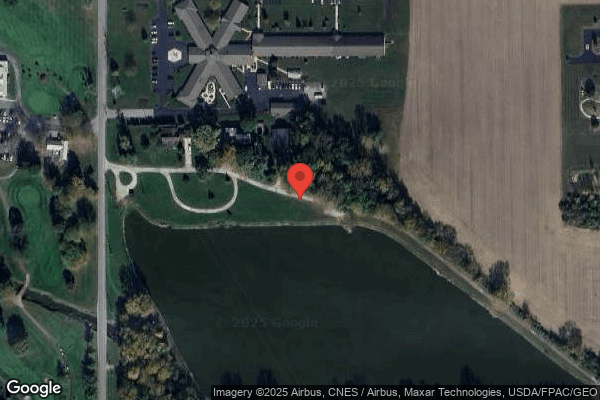
INDEPENDENCE HOUSE

1000 INDEPENDENCE RD, FOSTORIA, OH 44830 (419) 435-8505
Non profit - Corporation 50 Beds Independent Data: November 2025
Trust Grade
85/100
#84 of 913 in OH
Last Inspection: September 2024

Within standard 12-15 month inspection cycle. Federal law requires annual inspections.

Overview

Independence House in Fostoria, Ohio, has a Trust Grade of B+, indicating it is recommended and above average compared to other facilities. It ranks #84 out of 913 nursing homes in Ohio, placing it in the top half, and #2 out of 6 in Hancock County, meaning just one local option is better. The facility is improving, having reduced its issues from 5 in 2019 to only 2 in 2024. Staffing is a relative strength, with a 4-star rating and turnover at 56%, which is average for Ohio, while RN coverage is good, being higher than 81% of state facilities. Although there have been no fines, the facility has faced concerns such as failing to revise a resident's care plan for advanced directive orders and not timely obtaining physician orders for a wound dressing change, which could potentially affect resident safety. Overall, while there are areas for improvement, Independence House shows many strengths in care quality and staffing.

Trust Score
B+
85/100
In Ohio
#84/913
Top 9%
Safety Record
Low Risk
No red flags
Inspections
Getting Better
5 → 2 violations
Staff Stability
⚠ Watch
56% turnover. Above average. Higher turnover means staff may not know residents' routines.
Penalties
✓ Good
No fines on record. Clean compliance history, better than most Ohio facilities.
Skilled Nurses
✓ Good
Each resident gets 53 minutes of Registered Nurse (RN) attention daily — more than average for Ohio. RNs are trained to catch health problems early.
Violations
○ Average
7 deficiencies on record. Average for a facility this size. Mostly minor or procedural issues.
★★★★★
5.0
Overall Rating
★★★★☆
4.0
Staff Levels
★★★★★
5.0
Care Quality
★★★★★
5.0
Inspection Score
Stable
2019: 5 issues
2024: 2 issues

The Good

  • 4-Star Staffing Rating · Above-average nurse staffing levels
  • 5-Star Quality Measures · Strong clinical quality outcomes
  • Full Sprinkler Coverage · Fire safety systems throughout facility
  • No fines on record

Facility shows strength in staffing levels, quality measures, fire safety.

The Bad

Staff Turnover: 56%

Near Ohio avg (46%)

Frequent staff changes - ask about care continuity

Staff turnover is elevated (56%)

8 points above Ohio average of 48%

The Ugly 7 deficiencies on record

Sept 2024 2 deficiencies
CONCERN (D)

Potential for Harm - no one hurt, but risky conditions existed

Deficiency F0657 (Tag F0657)

Could have caused harm · This affected 1 resident

**NOTE- TERMS IN BRACKETS HAVE BEEN EDITED TO PROTECT CONFIDENTIALITY** Based on review of the medical record, staff interview, and policy review, the facility failed to ensure a resident's care plan ...

Read full inspector narrative →
**NOTE- TERMS IN BRACKETS HAVE BEEN EDITED TO PROTECT CONFIDENTIALITY** Based on review of the medical record, staff interview, and policy review, the facility failed to ensure a resident's care plan was revised for advanced directive orders. This affected one (#12) of 13 residents reviewed for care planning. The facility census was 37. Findings include: Review of the medical record for Resident #12 revealed an admission date of 10/10/23. Diagnoses included end stage renal disease, polyneuropathy, and hypertension. Review of the quarterly Minimum Data Set (MDS) assessment dated [DATE] revealed Resident #12 had intact cognition. Review of the plan of care, initiated 10/12/23 and revised on 10/26/23, revealed Resident #12 had elected a full code (cardiopulmonary resuscitation) status. Review of the physician orders revealed dated 08/15/24 revealed the resident's code status orders were changed from Full Code to Do Not Resuscitate Comfort Care (DNRCC). Review of a DNR order form dated 08/15/24 revealed Resident #12 had elected DNRCC. Review of a nurse's note dated 08/14/24 at 9:04 A.M., revealed Resident #12 had changed her code status from full code to DNRCC. Interview on 09/04/24 at 12:49 P.M. with Licensed Practical Nurse (LPN) #212 verified Resident #12's care plan had not reflected the code status changed from full code to DNRCC. Review of the facility policy titled Care Plan -- Comprehensive dated 05/15/15 revealed the care plan would be updated when there was a significant change in resident condition, when a desired outcome was not met, when the resident had been readmitted to the facility from a hospital stay and at least quarterly.
CONCERN (D)

Potential for Harm - no one hurt, but risky conditions existed

Quality of Care (Tag F0684)

Could have caused harm · This affected 1 resident

**NOTE- TERMS IN BRACKETS HAVE BEEN EDITED TO PROTECT CONFIDENTIALITY** Based on medical record review, resident and staff interviews, observations, and policy review, the facility failed to timely ob...

Read full inspector narrative →
**NOTE- TERMS IN BRACKETS HAVE BEEN EDITED TO PROTECT CONFIDENTIALITY** Based on medical record review, resident and staff interviews, observations, and policy review, the facility failed to timely obtain physician orders for a wound dressing change and complete wound dressing changes as physician ordered. This affected one (#23) of one resident reviewed for skin conditions. The facility census was 37. Findings include: Review of the medical record for Resident #23 revealed an admission date of 06/26/23. Diagnoses included hypertension, chronic obstructive pulmonary disease, and depression. Review of the quarterly Minimum Data Set (MDS) assessment dated [DATE] revealed Resident #23 had impaired cognition. Review of a nursing progress note dated 08/22/24 at 12:05 P.M., revealed dietary staff reported Resident #23 got bit by something in the dining room during lunch. The resident's left forearm was noted to have a raised reddened area. The physician was notified and gave a verbal order for Benadryl 25 milligrams every six hours as needed. Review of a nurse's note dated 09/02/24 at 5:11 P.M. revealed the physician was notified of a new skin issue on left forearm. Awaiting response. Review of a wound assessment dated [DATE] revealed the resident had drainage from a wound on her left forearm. Review of a wound assessment dated [DATE] revealed the resident had a skin tear on her left forearm. Observation and interview on 09/03/24 at 8:39 A.M. revealed Resident #23 had a gauze dressing applied to her left forearm. Resident #23 slid the dressing down and there was a nonadherent dressing underneath covering a wound with two steri-strips in place. The dressing was not dated. Resident #23 stated she thought she got bit by a bug and the facility had been placing a dressing on her left forearm for three to four days. Review of the physician orders on 09/03/24 at 1:00 P.M. revealed there were no orders in place for the dressing to Resident #23's left forearm. Review of the treatment administration record (TAR) revealed no documentation of the dressing applied to the wound. Review of a physician order dated 09/03/24 at 3:00 P.M. revealed an order for antibacterial ointment to the left arm wound and tear topically two times a day for wound care. Observation on 09/04/24 at 7:41 A.M., revealed Resident #23 told Licensed Practical Nurse (LPN) #200 the wound dressing to her left arm was too tight. LPN #200 unwrapped a layer of self-adherent wrap then a layer of gauze wrap from around the left forearm revealing a nonadherent dressing covering a skin tear closed with two steri-strips. LPN #200 then cleansed the wound with normal saline, applied a new nonadherent dressing before wrapping the wound with new gauze and a self-adherent wrap. Interview on 09/04/24 at 7:53 A.M. with LPN #200 verified she had removed an undated wound dressing from Resident #23's left forearm. LPN #200 verified she had not checked for a physician order prior to applying the dressing. LPN #200 then checked the physician orders and verified there was no order in place for a wound dressing to the resident's left forearm. LPN #200 verified there was an order for antibacterial ointment to be applied to the wound. LPN #200 verified she had not applied the ordered antibacterial ointment. LPN #200 revealed she would call the physician for an order for the wound dressing. Interview on 09/05/24 at 7:02 A.M. with the Director of Nursing (DON) revealed she called the physician last night and clarified orders for the wound dressing. The DON stated a nurse had received wound care orders from the physician but forgot to enter the orders. The DON revealed the nurses applying the resident's wound dressing should have first ensure there was an order in place before changing the wound dressing and they should have documented the completion of the wound dressing change. Review of the policy titled Skin Care and Ulcer Prevention dated 05/11/21 revealed the physician would be notified to obtain treatment orders for skin impairments. Daily monitoring of the wound dressing and site around wound as well as the wound if visible would be completed.
Jun 2019 5 deficiencies
CONCERN (D)

Potential for Harm - no one hurt, but risky conditions existed

Resident Rights (Tag F0550)

Could have caused harm · This affected 1 resident

Based on observation, staff interview, and medical record review, the facility failed to provide a dignified dining experience while assisting a resident with eating. This affected one (#12) of 14 res...

Read full inspector narrative →
Based on observation, staff interview, and medical record review, the facility failed to provide a dignified dining experience while assisting a resident with eating. This affected one (#12) of 14 residents observed dining on the secured unit. The facility identified Resident #12 as the only resident on the secured unit who required feeding assistance. The facility census was 40. Findings include: Review of Resident #12's medical record revealed an admission date of 04/18/16 with diagnoses including unspecified dementia without behavioral disturbances, dysphagia, lack of coordination, muscle weakness and disorientation. Review of an activities of daily living care plan dated 04/04/18 revealed Resident #12 required reminding, prompting, cueing, and assistance to eat. Review of the most recent Minimum Data Set (MDS) assessment, dated 04/04/19, revealed Resident #12 had short and long term memory issues with severely impaired cognitive skills for daily decision making. Resident #12 was assessed as requiring extensive one person physical assistance for eating. Observation on 06/10/19 at 11:45 A.M. of the lunch time meal revealed residents on the secured unit seated in the common dining area. On 06/10/19 at 11:48 A.M., State Tested Nurse Aide (STNA) #215 was observed standing on the right side of Resident #12 and was noted to be placing food items on a spoon and lifting the spoon to Resident #12's mouth. STNA #215 was also observed lifting cups to Resident #12's lips to take drinks of fluids. The observation continued until 12:15 P.M. on 06/10/19 and STNA #215 was observed standing to assist Resident #12 during the lunch meal the entire observation. At no time did STNA #215 attempt to locate a chair to sit one once she began assisting Resident #12. Interview on 06/10/19 at 12:23 P.M. with STNA #215 verified she stood to assist Resident #12 throughout lunch, and stated she normally sits to assist residents with feeding. However, there were no additional chairs available for her to sit on.
CONCERN (D)

Potential for Harm - no one hurt, but risky conditions existed

ADL Care (Tag F0677)

Could have caused harm · This affected 1 resident

Based on observation, staff interview and record review, the facility failed to ensure a resident who was dependent on staff for fingernail care received adequate fingernail care as care planned. This...

Read full inspector narrative →
Based on observation, staff interview and record review, the facility failed to ensure a resident who was dependent on staff for fingernail care received adequate fingernail care as care planned. This affected one (#9) of one resident reviewed for activities of daily living. This had the potential to affect three residents identified by the facility who were dependent on staff assistance with personal hygiene. The facility census was 40. Findings include: Review of Resident #9's medical record revealed an admission date of 10/15/16 with diagnoses including dementia without behavioral disturbances, Parkinson's disease and anxiety. Review of the Minimum Data Set (MDS) assessment, dated 04/08/19, revealed Resident #9 had severely impaired cognition, did not reject any care during the look back period, and required an extensive two plus person physical assistance with personal hygiene. Review of an activities of daily living (ADL) self-care performance deficit revealed Resident #9 was to have her nail length checked, trimmed, and cleaned on bath day as necessary, and report any changes to the nurse. Review of a shower schedule for facility residents, dated 01/28/19, revealed Resident #9 was scheduled for showers on Mondays and Thursdays on second shift. Review of a shower sheet dated 06/10/19 (Monday) revealed Resident #9 was provided a shower with no concerns noted and no indication of fingernail care provided. Review of additional shower sheets from 05/30/19, 06/03/19, and 06/06/19 revealed Resident #9 received showers with no refusals of care. Review of nursing progress notes and nurse aide ADL documentation between 05/30/19 and 06/12/19 revealed no documentation of Resident #9 refusing care. Observation on 06/10/19 at 12:05 P.M. revealed a dried black substance underneath three fingernails (index, middle, and ring) on her left hand. Observations on 06/11/19 at 1:08 P.M. and 3:23 P.M., and on 06/12/19 at 10:07 A.M. revealed Resident #9's fingernails on her left hand continued to have a dried black substance underneath them. Interview on 06/12/19 3:29 P.M. with State Tested Nurse Aide (STNA) #250 stated Resident #9 was an extensive to total care assist with personal hygiene, and stated Resident #9 would not be able to clean her fingernails on her own. STNA #250 stated the facility staff does provide Resident #9 with fingernail care when it is needed, and if the fingernails were dirty they would be cleaned right away. Observation on 06/12/19 at 3:47 P.M. with STNA #250 and STNA #275, revealed Resident #9 sitting in the common area of the secure unit with her hands under a blanket. When Resident #9 was asked, she lifted her left hand from under the blanket and revealed the dried black substance under her fingernails of her left hand. STNA #250 and STNA #275 verified the dried black substance under Resident #9's fingernails and stated they would clean them right away.
CONCERN (D)

Potential for Harm - no one hurt, but risky conditions existed

Medication Errors (Tag F0758)

Could have caused harm · This affected 1 resident

Based on medical record review and staff interview, the facility failed to provide documentation of a rationale and an extended timeframe for extending the use of an as needed psychotropic medication ...

Read full inspector narrative →
Based on medical record review and staff interview, the facility failed to provide documentation of a rationale and an extended timeframe for extending the use of an as needed psychotropic medication beyond 14 days. This affected one (#1) of five residents reviewed for unnecessary medications with potential to affect nine residents identified by the facility with orders for as needed psychotropic medications. The facility census was 40. Findings include: Review of Resident #1's medical record revealed an admission date of 08/27/18 with diagnoses including Parkinson's disease, dementia without behavioral disturbances, cerebral infarction, major depression, anxiety and obsessive-compulsive disorder. Review of a physician order, dated 08/27/18, revealed Resident #1 was ordered the anti-anxiety medication Lorazepam 0.5 milligrams (mg.) by mouth every 12 hours as needed for anxiety. The physician order had no stop date and remained an active order as of 06/13/19. Review of a physician recommendation form, dated 09/17/18, revealed the facility pharmacy recommended the physician evaluate and update Resident #1's chart with documentation to extend the initial order for as needed Lorazepam beyond 14 days. The physician response to the recommendation was marked as other with a written notation of noted and signed by the physician on 09/21/18. There was no further instructions or orders provided on the physician recommendation form, as well as no additional physician recommendation forms related to Resident #1's order for as needed Lorazepam. Review of Resident #1's entire medical record including nursing and physician progress notes, consultation reports, physician orders, and assessments from 2018 and 2019 revealed no documented evidence of a rationale for extending Resident #1's as needed Lorazepam beyond the initial 14 days when it was ordered on 08/27/18, as well as no timeframe documented for how long the order would be extended. Interview on 06/13/19 at 10:42 A.M. with Director of Nursing (DON) #1 verified Resident #1 had an active order for an as needed anti-anxiety medication since 08/27/19, and verified the medical record contained no documented rationale for extending the physician order or a specified timeframe for the order.
CONCERN (D)

Potential for Harm - no one hurt, but risky conditions existed

Laboratory Services (Tag F0770)

Could have caused harm · This affected 1 resident

Based on medical record review and staff interview, the facility failed to obtained laboratory values as ordered by the physician. This affected one (#4) of five residents reviewed for unnecessary med...

Read full inspector narrative →
Based on medical record review and staff interview, the facility failed to obtained laboratory values as ordered by the physician. This affected one (#4) of five residents reviewed for unnecessary medications with potential to affect 31 residents identified by the facility with orders to obtain laboratory values. The facility census was 40. Findings include: Review of Resident #4's medical record revealed an admission date of 07/06/13 with diagnoses including unspecified dementia without behavioral disturbances, unspecified psychosis, anxiety, major depression, essential hypertension, and peripheral vascular disease. Review of a physician order, dated 02/16/19, revealed Resident #4 was ordered to have a complete blood count (CBC) laboratory test, which was a laboratory test to determine the overall health of a person's blood, obtained every six months with the months of March and September as the intended months to obtain Resident #4's blood. Review of the most recently obtained CBC laboratory values for Resident #4 revealed the laboratory values were obtained on 10/31/18. There were no further CBC laboratory values in the medical record for Resident #4 since 10/31/18. Interview on 06/13/19 at 10:36 A.M., with Director of Nursing (DON) #1 verified the laboratory values from 10/31/18 were the most recently collected CBC laboratory values for Resident #4. DON #1 stated Resident #4 should have had a CBC laboratory value obtained in April 2019, and verified it was done done as ordered.
CONCERN (F)

Potential for Harm - no one hurt, but risky conditions existed

Infection Control (Tag F0880)

Could have caused harm · This affected most or all residents

Based on review of a Legionella environmental assessment form, staff interviews and policy review, the facility failed to complete a Legionella risk assessment and failed to implement a water manageme...

Read full inspector narrative →
Based on review of a Legionella environmental assessment form, staff interviews and policy review, the facility failed to complete a Legionella risk assessment and failed to implement a water management program with defined control measures and testing protocols based on standards from the American Society of Heating, Refrigerating, and Air Conditioning Engineers (ASHRAE) and the Centers for Disease Control and Prevention (CDC) tool kit, Developing a Water management Program to Reduce Legionella Growth and Spread in Buildings, dated 06/05/17. This had the potential to affect all 40 residents residing in the facility. Findings include Review of a Centers for Disease Control and Prevention (CDC) questionnaire for Legionella Environmental Assessment Form, dated 06/2015, utilized by the facility revealed no diagram of the water system outlining all areas of risk for Legionella. Further review of the form revealed the facility also had not specified control measures and testing protocols for Legionella based on standards from the American Society of Heating, Refrigerating, and Air Conditioning Engineers (ASHRAE) and the CDC tool kit Developing a Water Management Program to Reduce Legionella Growth and Spread in Buildings dated 06/05/17. Interview on 06/14/19 at 2:15 P.M. with the Administrator revealed the facility had not conducted a Legionella risk assessment using the CDC tool kit. The Administrator revealed the facility had used a CDC Legionella Environmental Assessment Form from 2015. Interview on 06/13/19 at 3:45 P.M. with the Director of Maintenance (DOM) #120 revealed the facility had not diagrammed the water supply and identified all areas at risk using the CDC tool kit. DOM #112 revealed the facility checked the water temperatures around the building each month. DOM #112 further revealed the facility pool was tested when used. DOM #112 also revealed the water was flushed in rooms or areas not used. Review of the facility policy Maintenance and Monitoring of Water Systems, last reviewed 08/02/16, revealed the facility would perform a clinical and environmental risk assessment to determine if culturing should be performed. Further review of the policy revealed no guidelines for implementing a water management program. Further interview on 06/14/19 at 2:15 P.M. with the Administrator verified the facility policy was last reviewed in 2016.
Understanding Severity Codes (click to expand)
Life-Threatening (Immediate Jeopardy)
J - Isolated K - Pattern L - Widespread
Actual Harm
G - Isolated H - Pattern I - Widespread
Potential for Harm
D - Isolated E - Pattern F - Widespread
No Harm (Minor)
A - Isolated B - Pattern C - Widespread

Questions to Ask on Your Visit

  • "Why is there high staff turnover? How do you retain staff?"
  • "Can I speak with families of current residents?"
  • "What's your RN coverage like on weekends and overnight?"

Our Honest Assessment

Strengths
  • • Grade B+ (85/100). Above average facility, better than most options in Ohio.
  • • No major safety red flags. No abuse findings, life-threatening violations, or SFF status.
  • • No fines on record. Clean compliance history, better than most Ohio facilities.
Concerns
  • • 56% turnover. Above average. Higher turnover means staff may not know residents' routines.
Bottom line: Generally positive indicators. Standard due diligence and a personal visit recommended.

About This Facility

What is Independence House's CMS Rating?

CMS assigns INDEPENDENCE HOUSE an overall rating of 5 out of 5 stars, which is considered much above average nationally. Within Ohio, this rating places the facility higher than 99% of the state's 100 nursing homes. This rating reflects solid performance across the metrics CMS uses to evaluate nursing home quality.

How is Independence House Staffed?

CMS rates INDEPENDENCE HOUSE's staffing level at 4 out of 5 stars, which is above average compared to other nursing homes. Staff turnover is 56%, which is 10 percentage points above the Ohio average of 46%. High turnover can affect care consistency as new staff learn residents' individual needs.

What Have Inspectors Found at Independence House?

State health inspectors documented 7 deficiencies at INDEPENDENCE HOUSE during 2019 to 2024. These included: 7 with potential for harm.

Who Owns and Operates Independence House?

INDEPENDENCE HOUSE is owned by a non-profit organization. Non-profit facilities reinvest revenue into operations rather than distributing to shareholders. The facility operates independently rather than as part of a larger chain. With 50 certified beds and approximately 38 residents (about 76% occupancy), it is a smaller facility located in FOSTORIA, Ohio.

How Does Independence House Compare to Other Ohio Nursing Homes?

Compared to the 100 nursing homes in Ohio, INDEPENDENCE HOUSE's overall rating (5 stars) is above the state average of 3.2, staff turnover (56%) is near the state average of 46%, and health inspection rating (5 stars) is much above the national benchmark.

What Should Families Ask When Visiting Independence House?

Based on this facility's data, families visiting should ask: "How do you ensure continuity of care given staff turnover, and what is your staff retention strategy?" "Can I visit during a mealtime to observe dining assistance and food quality?" "How do you handle medical emergencies, and what is your hospital transfer rate?" "Can I speak with family members of current residents about their experience?" These questions are particularly relevant given the facility's high staff turnover rate.

Is Independence House Safe?

Based on CMS inspection data, INDEPENDENCE HOUSE has a clean safety record: no substantiated abuse findings (meaning no confirmed cases of resident harm), no Immediate Jeopardy citations (the most serious violation level indicating risk of serious injury or death), and is not on the Special Focus Facility watch list (a federal program monitoring the lowest-performing 1% of nursing homes). The facility has a 5-star overall rating and ranks #1 of 100 nursing homes in Ohio. While no facility is perfect, families should still ask about staff-to-resident ratios and recent inspection results during their visit.

Do Nurses at Independence House Stick Around?

Staff turnover at INDEPENDENCE HOUSE is high. At 56%, the facility is 10 percentage points above the Ohio average of 46%. High turnover means new staff may not know residents' individual needs, medications, or preferences. It can also be disorienting for residents, especially those with dementia who rely on familiar faces. Families should ask: What is causing the turnover? What retention programs are in place? How do you ensure care continuity during staff transitions?

Was Independence House Ever Fined?

INDEPENDENCE HOUSE has no federal fines on record. CMS issues fines when nursing homes fail to meet care standards or don't correct problems found during inspections. The absence of fines suggests the facility has either maintained compliance or corrected any issues before penalties were assessed. This is a positive indicator, though families should still review recent inspection reports for the full picture.

Is Independence House on Any Federal Watch List?

INDEPENDENCE HOUSE is not on any federal watch list. The most significant is the Special Focus Facility (SFF) program, which identifies the bottom 1% of nursing homes nationally based on persistent, serious quality problems. Not being on this list means the facility has avoided the pattern of deficiencies that triggers enhanced federal oversight. This is a positive indicator, though families should still review the facility's inspection history directly.