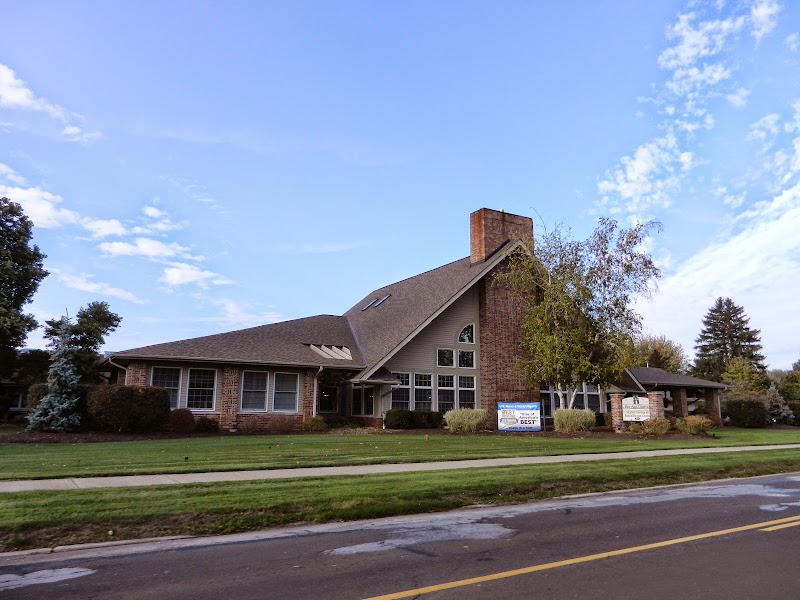
RAE ANN GENEVA

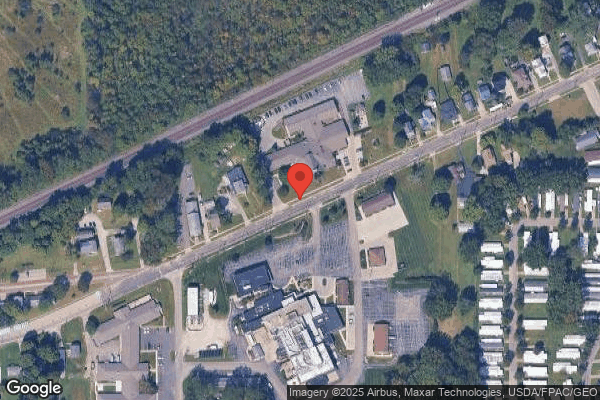
839 W MAIN STREET, GENEVA, OH 44041 (440) 466-5733
For profit - Limited Liability company 76 Beds Independent Data: November 2025
Trust Grade
50/100
#764 of 913 in OH
Last Inspection: May 2025

Inspected within the last 6 months. Data reflects current conditions.

Overview

Ra Ann Geneva has received a Trust Grade of C, which means it is average and falls in the middle of the pack compared to other facilities. It ranks #764 out of 913 in Ohio, placing it in the bottom half, and #12 out of 12 in Ashtabula County, indicating there are no better local options. Unfortunately, the facility's trend is worsening, with issues increasing from 1 in 2024 to 16 in 2025. Staffing is rated 2 out of 5 stars, but the turnover rate is below the Ohio average at 40%, suggesting that staff often remain in their positions. While there were no fines reported, the RN coverage is average, which means that residents may not have as much oversight from nursing staff as in some other facilities. Specific areas of concern include the failure to ensure the medical director attended critical quality meetings, which could affect all residents. Additionally, the facility has not maintained the floors in a safe and clean condition, with visible wear and soil in various areas. There were also reports of food being served at inappropriate temperatures, with residents noting that meals were often cold, which can affect their enjoyment and nutrition. Overall, while there are some strengths like the lack of fines and lower turnover, the increasing issues and specific incidents raise concerns about the quality of care at Ra Ann Geneva.

Trust Score
C
50/100
In Ohio
#764/913
Bottom 17%
Safety Record
Low Risk
No red flags
Inspections
Getting Worse
1 → 16 violations
Staff Stability
○ Average
40% turnover. Near Ohio's 48% average. Typical for the industry.
Penalties
✓ Good
No fines on record. Clean compliance history, better than most Ohio facilities.
Skilled Nurses
○ Average
Each resident gets 38 minutes of Registered Nurse (RN) attention daily — about average for Ohio. RNs are the most trained staff who monitor for health changes.
Violations
⚠ Watch
28 deficiencies on record. Higher than average. Multiple issues found across inspections.
★★☆☆☆
2.0
Overall Rating
★★☆☆☆
2.0
Staff Levels
★★★☆☆
3.0
Care Quality
★★☆☆☆
2.0
Inspection Score
Stable
2024: 1 issues
2025: 16 issues

The Good

  • Full Sprinkler Coverage · Fire safety systems throughout facility
  • No fines on record
  • Staff turnover below average (40%)

    8 points below Ohio average of 48%

Facility shows strength in fire safety.

The Bad

2-Star Overall Rating

Below Ohio average (3.2)

Below average - review inspection findings carefully

Staff Turnover: 40%

Near Ohio avg (46%)

Typical for the industry

The Ugly 28 deficiencies on record

May 2025 15 deficiencies
CONCERN (D)

Potential for Harm - no one hurt, but risky conditions existed

Notification of Changes (Tag F0580)

Could have caused harm · This affected 1 resident

**NOTE- TERMS IN BRACKETS HAVE BEEN EDITED TO PROTECT CONFIDENTIALITY** Based on record review, interview, review of the facility self-reported incident (SRI) and review of the facility policy, the fa...

Read full inspector narrative →
**NOTE- TERMS IN BRACKETS HAVE BEEN EDITED TO PROTECT CONFIDENTIALITY** Based on record review, interview, review of the facility self-reported incident (SRI) and review of the facility policy, the facility failed to ensure Primary Care Physician (PCP) #600 was notified of Resident #9's unknown injury. This affected one (Resident #9) out of one resident reviewed for notification of change in condition. The facility census was 66. Findings included: Review of the medical record for Resident #9 revealed an admission date of 10/10/20 with diagnoses including congestive heart failure, muscle weakness, cirrhosis of liver, diabetes, and hypertension. Review of the quarterly Minimum Data Set (MDS) assessment dated [DATE] revealed Resident #9 had impaired cognition. She required substantial to maximum assistance with toileting hygiene and lower dressing. She required partial to moderate assistance with transfers. Review of the nursing note dated 04/28/25 authored by Licensed Practical Nurse (LPN) #404 revealed Resident #9 had scattered discoloration noted during her shower. She had large discoloration to her right side including right forearm, right arm, right inner thigh, and right breast. She also had bruising on the inside of her left arm. The note revealed administration was notified, but there was no documented evidence that PCP #600 was notified of the bruising. Review of the undated care plan revealed Resident #9 had the potential for bleeding and bruising related to antiplatelet medication. Interventions included administering medications as ordered, holding medication as indicated, and monitoring for signs of bleeding/ bruising and reporting to the physician. Review of the May 2025 physician's orders revealed Resident #9 had an order for Plavix (blood thinner) 75 milligram (mg) tablet by mouth one time a day for the prevention of deep vein thrombosis (blood clot). Review of SRI tracking number 259787 with a date of discovery of 04/28/25 revealed the facility filed an incident involving Resident #9 having an injury of unknown source. The SRI revealed on 04/28/25 at 12:23 P.M. Resident #9 was in the shower room and had a large discoloration to her right side including her right forearm, right arm, right breast and right inner thigh. She also had discoloration on the inside of her left arm. Resident #9 was unaware of how the bruises occurred and denied pain. The SRI revealed the bruises were likely from a gait belt and assistance with transfers as well as Resident #9 was on Plavix. The SRI was unsubstantiated for abuse. There was no documented evidence that PCP #600 was notified of the bruising and unknown injury. Review of the incident report dated 04/28/25 and completed by LPN #404 revealed Resident #9 had scattered discoloration noted during her shower. She had large discoloration to her right side including right forearm, right breast and right inner thigh. She also had bruising to her left upper arm. Resident #9 was unaware when it had happened and denied pain. The immediate action indicated that the Director of Nursing (DON) and Administrator were notified. There was no documented evidence that PCP #600 was notified of the bruising. Interview on 05/20/25 at 7:53 A.M. with Resident #9 revealed she denied any abuse or that staff was rough during her care. She had no recollection of the incident on 04/28/25 regarding the bruising but stated, probably bumped something as she revealed, I bruise easy, always have. Interview on 05/20/25 at 4:08 P.M. with the DON verified there was no documented evidence that PCP #600 was notified of Resident #9's unknown injury (bruising to her right side including right forearm, right breast, right inner thigh and bruising to her left upper arm) that was discovered on 04/28/25. She revealed she was unsure why the nurse did not contact PCP #600 as she stated, it should have been done. Review of the facility policy labeled, Anticoagulation- Clinical Protocol, dated November 2018, revealed the staff and physician would monitor for possible complications in residents who were being anticoagulated and manage related problems. The policy revealed if a resident showed signs of excessive bruising, hematuria (blood in urine), or other evidence of bleeding the nurse would discuss the situation with the physician before giving the next scheduled dose of medication. The policy also revealed the physician would order measures to address any complications. Review of the facility policy labeled, Change in a Resident's Condition or Status, dated February 2021, revealed the facility promptly notified the resident, and the resident's physician of changes in the resident's medical/mental condition or status. The policy revealed the nurse would notify the resident's physician when there was an accident or incident involving the resident, discovery of injuries of unknown source, and/or need to alter resident's medical treatment.
CONCERN (D)

Potential for Harm - no one hurt, but risky conditions existed

Deficiency F0605 (Tag F0605)

Could have caused harm · This affected 1 resident

**NOTE- TERMS IN BRACKETS HAVE BEEN EDITED TO PROTECT CONFIDENTIALITY** Based on record review, interview and facility policy review, the facility failed to ensure as needed (PRN) psychotropic medicat...

Read full inspector narrative →
**NOTE- TERMS IN BRACKETS HAVE BEEN EDITED TO PROTECT CONFIDENTIALITY** Based on record review, interview and facility policy review, the facility failed to ensure as needed (PRN) psychotropic medication was reviewed by a practitioner after 14 days for necessity and appropriateness. This affected one (Resident #33) out of five residents reviewed for psychotropic medications. The facility census was 66. Findings include: Review of the medical record for Resident #33 revealed an admission date of 03/20/19 with diagnoses including hemiplegia and hemiparesis following cerebral infarction affecting right dominant side, major depressive disorder recurrent, adjustment disorder with anxiety, and vascular dementia. Review of the quarterly Minimum Data Set (MDS) assessment dated [DATE] indicated Resident #33 had severe cognitive impairment. Review of the care plan last reviewed on 03/12/25 revealed Resident #33 had potential for adverse effects from antianxiety medications and used PRN antianxiety medications for anxiety. Interventions included administering medications as ordered by a physician and monitoring/documenting side effects and effectiveness. Review of the physician orders for Resident #33 revealed a routine order dated 09/23/24 for Vistaril (a sedative/hypnotic which is a psychotropic) 25 milligrams (mg) twice daily for anxiety or agitation. Another order was added on 04/01/25 for Vistaril 25 mg every six hours PRN for anxiety or agitation. There was no duration ordered for the psychotropic. Review of the pharmacy recommendation dated 04/07/25 revealed a pharmacist requested Resident #33's PRN order for Vistaril 25 mg every six hours for anxiety be reviewed by a practitioner after 14 days as required for psychotropics. The physician did not review the medication as recommended until 05/08/25 when the physician ordered the medication to continue for three months due to anxiety. Review of the Medication Administration Record (MAR) for April 2025 indicated the PRN Vistaril order was administered on 04/07/25 and 04/29/25. Further review of the physician orders for Resident #33 revealed the PRN Vistaril order dated 04/01/25 which had no duration was changed on 05/09/25 to Vistaril 25 mg every six hours PRN for anxiety or agitation for a duration of three months. Review of the physician progress notes from 04/01/25 to 05/08/25 revealed no review of the PRN psychotropic after 14 days as required. Interview on 05/21/25 at 12:17 P.M. with Director of Nursing (DON) verified Resident #33's PRN psychotropic medication (Vistaril) was not reviewed by the physician within 14 days as required. The DON confirmed the pharmacist recommendation on 04/07/25 was not addressed timely until 05/08/25 in which the psychotropic medication continued until then. Review of the facility policy, Antipsychotic Medication Use, revised December 2016, revealed residents would not receive PRN doses of psychotropic medications unless the medication was necessary to treat a specific condition documented in the clinical record. The need to continue PRN orders for psychotropic medications beyond 14 days required the practitioner to document the rationale for the extended order, and the duration of the PRN order would be indicated within the order.
CONCERN (D)

Potential for Harm - no one hurt, but risky conditions existed

Comprehensive Assessments (Tag F0636)

Could have caused harm · This affected 1 resident

**NOTE- TERMS IN BRACKETS HAVE BEEN EDITED TO PROTECT CONFIDENTIALITY** Based on record review, interview and facility policy review, the facility failed to complete an annual Minimum Data Set (MDS) a...

Read full inspector narrative →
**NOTE- TERMS IN BRACKETS HAVE BEEN EDITED TO PROTECT CONFIDENTIALITY** Based on record review, interview and facility policy review, the facility failed to complete an annual Minimum Data Set (MDS) assessment in the required timeframe (within 366 days from the previous comprehensive assessment) for Resident #22. This affected one (Resident #22) out of 11 residents reviewed for comprehensive MDS assessments. The facility census was 66. Findings include: Review of the medical record for Resident #22 revealed an admission date of 05/13/20 with diagnoses including chronic obstructive pulmonary disease and diabetes mellitus type two. Review of the MDS assessments for Resident #33 revealed the last comprehensive assessment completed was an annual MDS assessment dated [DATE]. There was no comprehensive assessment completed thereafter as required. Interview on 05/19/25 at 10:26 A.M. with MDS Coordinator #333 verified Resident #22 had no comprehensive assessment completed since 04/01/24 within the required timeframe. Review of the facility policy, Comprehensive Assessments, revised March 2022, revealed comprehensive assessments were conducted in accordance with criteria and timeframes establish in the Resident Assessment Instrument (RAI) User Manual, and Annual assessments were completed at least every 366 days.
CONCERN (D)

Potential for Harm - no one hurt, but risky conditions existed

Deficiency F0655 (Tag F0655)

Could have caused harm · This affected 1 resident

**NOTE- TERMS IN BRACKETS HAVE BEEN EDITED TO PROTECT CONFIDENTIALITY** Based on record reviews, interviews and facility policy review, the facility failed to provide residents and representatives wit...

Read full inspector narrative →
**NOTE- TERMS IN BRACKETS HAVE BEEN EDITED TO PROTECT CONFIDENTIALITY** Based on record reviews, interviews and facility policy review, the facility failed to provide residents and representatives with a written summary of the baseline care plan. This affected two (Residents #76 and #77) of two residents reviewed for baseline care plans. The facility census was 66. Findings include: 1. Review of the medical record for Resident #76 revealed an admission date of 02/18/25 and discharge date of 03/07/25. Diagnoses included nonrheumatic aortic valve stenosis, nonrheumatic mitral valve insufficiency, pulmonary hypertension, nonrheumatic tricuspid valve insufficiency, chronic obstructive pulmonary disease, atrial fibrillation, and congestive heart failure (CHF). Review of the admission Minimum Data Set (MDS) assessment dated [DATE] revealed Resident #76 was rarely or never understood. The baseline care plan dated 02/18/25 included Resident #76's use of antibiotics for a urinary tract infection, diuretics due to CHF, cognitive status and needs for activities of daily living assistance. Review of the family conference form dated 02/21/25 revealed there was a conference held with Resident #76's family to discuss the resident's care. However, there was no evidence Resident #76, and the resident's representative received a written summary of the baseline care plan. Review of the nursing progress notes from February 2025 to March 2025 revealed no indication Resident #76 and the resident's representative received a written summary of the baseline care plan. Interview on 05/20/25 at 4:03 P.M. with MDS Coordinator #333 verified Resident #76 and the resident's representative did not receive a written summary of the baseline care plan. 2. Review of the medical record for Resident #77 revealed an admission date of 02/04/25 and discharge date of 02/21/25. Diagnoses included myocardial infarction type two, malignant neoplasm of prostate, severe protein-calorie malnutrition, pulmonary fibrosis, and chronic kidney disease stage two. Review of the admission MDS assessment dated [DATE] revealed Resident #77 had moderate cognitive impairment. The baseline care plan dated 02/05/25 included Resident #77's fall risk, plan for discharge, advanced care planning, wound prevention, cognitive status and needs for activities of daily living assistance. Review of the family conference form dated 02/06/25 revealed there was a conference held with Resident #77's family to discuss the resident's care. However, there was no evidence Resident #77, and the resident's representative received a written summary of the baseline care plan. Review of the nursing progress notes for February 2025 revealed no indication Resident #77 and the resident's representative received a written summary of the baseline care plan. Interview on 05/21/25 at 10:04 A.M. with MDS Coordinator #333 verified Resident #77 and the resident's representative did not receive a written summary of the baseline care plan. Review of the facility policy, Care Plans - Baseline, revised March 2022, revealed residents and/or representatives are provided a written summary of the baseline care plan in a language the resident/representative can understand.
CONCERN (D)

Potential for Harm - no one hurt, but risky conditions existed

Comprehensive Care Plan (Tag F0656)

Could have caused harm · This affected 1 resident

**NOTE- TERMS IN BRACKETS HAVE BEEN EDITED TO PROTECT CONFIDENTIALITY** 2. Review of the medical record revealed Resident #140 was admitted to the facility on [DATE] with diagnoses including PTSD, rec...

Read full inspector narrative →
**NOTE- TERMS IN BRACKETS HAVE BEEN EDITED TO PROTECT CONFIDENTIALITY** 2. Review of the medical record revealed Resident #140 was admitted to the facility on [DATE] with diagnoses including PTSD, recurrent major depressive disorder, generalized anxiety disorder, congestive heart failure, chronic obstructive pulmonary disease, and alcohol dependence with unspecified alcohol use disorder. Review of the baseline care plan dated 05/13/25 revealed Resident #140 was new to the nursing facility, had adjustment issues related to admission, had the potential for bleeding, was ordered physical therapy (PT) and occupational therapy (OT), had the potential for skin impaired skin integrity, had skin impairments noted on admission, was admitted on a regular diet, was admitted with anti-anxiety medications, was dependent on the facility's activities staff for activities and social interaction, was at risk for falls, and was at risk for nutritional problems related to class three morbid obesity. There was no information found in the baseline care plan related to Resident #140's diagnosis of PTSD. Interview with the Director of Nursing (DON) on 05/19/25 at 4:26 P.M. verified there were no care plans used for trauma informed care, to obtain information on the resident's triggers, and confirmed there was no information on Resident #140's Kardex. Interview on 05/20/25 at 2:24 P.M. revealed SSD #318 will be doing a brief trauma assessment for residents with PTSD/trauma going forward, did not complete one until yesterday 05/19/25 for Resident #140 and had a meeting with the resident and the resident's family, but typically the assessments should be completed within 48 hours of admission so it could be reflected on the baseline care plan, but in this case, that did not get done prior to the baseline care plan being completed, so trauma care was not on the residents baseline care plan, but should have been. Review of Residents 140's Brief Trauma Questionnaire revealed it was completed on 05/19/25 at 3:59 P.M. Interview with the MDS Coordinator #333 on 05/20/25 at 4:03 P.M. confirmed that the resident did not have a baseline care plan in place within the first 48 hours for PTSD. The care plan was initiated on 05/16/25. Based on record reviews, interviews and facility policy review, the facility failed to implement a comprehensive care plan to include trauma-informed care for Residents #25 and #140. This affected two (Residents #25 and #140) out of two residents reviewed for trauma-informed care. The facility reported two (Residents #25 and #140) who had trauma related diagnoses. The facility census was 66. Findings include: 1. Review of the medical record for Resident #25 revealed an admission date of 02/18/17 with diagnoses of dementia, major depressive disorder recurrent, generalized anxiety disorder and post-traumatic stress disorder (PTSD). Review of the quarterly MDS assessment completed 01/11/25 revealed Resident #25 had moderate cognitive impairment. Review of the physician orders effective May 2025 revealed no orders related to trauma-informed care other than to consult psychotherapies. Review of the assessments for Resident #25 revealed no trauma screening or assessments completed since admission. Review of the nursing progress notes from May 2024 to May 2025 revealed no documentation relevant to Resident #25's trauma or trauma-informed care. Review of the physician progress notes from psychiatric services on 11/18/24, 12/09/24, 01/14/25, 02/10/25, 03/10/25 and 05/05/25 revealed no documentation relevant to Resident #25's trauma or trauma-informed care. Review of the care plan dated 02/18/17 and last updated on 04/18/25 indicated Resident #25 had impaired cognition including poor memory and poor choices. The resident had depression, anxiety, and a history of alcohol abuse, who demonstrated behaviors related to maintaining personal space. There was no reference in the care plan relevant to Resident #25's trauma including triggers and trauma-informed care. Review of the nursing assistant Kardex for Resident #25 effective 05/19/25 indicated no information relevant to trauma-informed care. Interview on 05/19/25 at 4:26 P.M. with the Director of Nursing (DON) verified there were no assessments used for trauma informed care and no information on Resident #25's trauma, triggers or needed interventions to care for the resident's PTSD which included in the care plan, Kardex and progress notes. Interview on 05/20/25 at 1:52 P.M. with Resident #25 denied any staff had discussed or asked questions related to the PTSD or trauma. Interview on 05/20/25 2:24 P.M. with Social Services Director (SSD) #318 verified there was no trauma assessment completed for Resident #25 to contribute to trauma-informed care. SSD #318 indicated a trauma assessment should have been completed within 48 hours after admission so it would reflect on the baseline care plan and then into the comprehensive care plan thereafter. Resident #25 had no trauma assessment completed upon admission and none afterwards so therefore it was not included in the care plan. Review of the facility policy, Trauma Informed Care, revised March 2019, revealed trauma-informed care was culturally sensitive and person-centered. Review of the facility policy, Using the Care Plan, revised August 2006, revealed the care plan would be used in developing the resident's daily care routines and available to staff who have responsibility for providing care or services to the resident.
CONCERN (D)

Potential for Harm - no one hurt, but risky conditions existed

Accident Prevention (Tag F0689)

Could have caused harm · This affected 1 resident

**NOTE- TERMS IN BRACKETS HAVE BEEN EDITED TO PROTECT CONFIDENTIALITY** Based on record review, observation, interviews and facility policy review, the facility failed to properly monitor and maintain...

Read full inspector narrative →
**NOTE- TERMS IN BRACKETS HAVE BEEN EDITED TO PROTECT CONFIDENTIALITY** Based on record review, observation, interviews and facility policy review, the facility failed to properly monitor and maintain safety interventions which were in place for Resident #25. This affected one (Resident #25) out of two residents reviewed for safety interventions. The facility census was 66. Findings include: Review of the medical record for Resident #25 revealed an admission date of 02/18/17 with diagnoses of chronic obstructive pulmonary disease, diabetes mellitus type two, dementia, major depressive disorder recurrent, generalized anxiety disorder and post-traumatic stress disorder. Review of the quarterly Minimum Data Set (MDS) assessment completed 01/11/25 revealed Resident #25 had moderate cognitive impairment. Review of a physician order dated 09/17/24 indicated Resident #25 had an alarming Velcro seat belt to the wheelchair for positioning and safety. Another physician order dated 03/17/25 specified an additional pressure alarm was applied to the wheelchair for safety. Review of the assessments for Resident #25 revealed there were none completed for either the alarming seat belt on 09/17/24 or the pressure alarm on 03/17/25, and none thereafter to determine necessity and appropriateness. Review of the care plan updated on 04/18/25 indicated Resident #25 had impaired cognition including poor memory and poor choices. Resident #25 also had potential for falls related to limited range of motion of the right lower extremity, poor balance, poor safety awareness, and a history of falls. Staff were to be sure a call light was in reach and maintain a pressure alarm to the wheelchair to alert staff to unassisted rising. The alarming Velcro seat belt was not addressed in the care plan. Review of the progress notes from September 2024 to May 2025 revealed no documentation to justify the use of either the alarming seat belt or pressure alarm for Resident #25 or to monitor those devices. Review of the Treatment Administration Record (TAR) from April 2025 to May 2025 revealed Resident #25's seat belt was checked every shift for placement and functioning, and the pressure alarm was checked twice daily for placement and functioning for safety. Review of the nursing assistant [NAME] (summary of resident information) for Resident #25 effective 05/19/25 indicated to maintain a pressure alarm to the wheelchair to alert staff to unassisted rising. The physician ordered seat belt was not listed on the [NAME] to inform nursing assistants of the safety order. Interview on 05/19/25 at 4:35 P.M. with the Director of Nursing (DON) verified Resident #25 had an alarming Velcro seat belt and pressure alarm ordered without any assessments to ensure it was necessary and appropriate. The care plan did not address these devices with any plan for monitoring or assessments. Observation on 05/20/25 at 1:37 P.M. with Certified Nursing Assistant (CNA) #364 of Resident #25 verified there was no physician ordered seatbelt or pressure alarm in place for safety or positioning. Interview at the time of the observation with CNA #364 could not state when or why the devices were not in place. An interview on 05/20/25 at 1:52 P.M. with Resident #25 denied remembering when the alarm or seat belt was last used. Interview on 05/20/25 at 1:54 P.M. with Registered Nursing (RN) #431 confirmed both the seat belt and pressure alarm devices were not in place as ordered and were signed off on the TAR as being checked and in place as safety interventions. RN #431 indicated the devices were removed some time ago but could not identify when but remembered it was because Resident #25 was no longer trying to get up without assistance. A second review of the progress notes from September 2024 to May 2025 revealed no documentation to identify the removal of the alarming seat belt or pressure alarm for Resident #25. Observation on 05/21/25 at 12:13 P.M. of Resident #25 being transported to the dining room via wheelchair revealed no visible seat belt or alarming device in place. Review of the facility policy, Managing Falls and Fall Risk, revised March 2018, revealed position-change alarms will not be used as the primary or sole intervention to prevent falls, but rather to assist the staff in identifying patterns and routines of the resident. The use of alarms will be monitored for efficacy, and staff will document each resident's response to interventions intended to reduce falls or the risks of falling. If interventions were successful in preventing falling, staff would continue the interventions or reconsider whether the measures were still needed.
CONCERN (D) 📢 Someone Reported This

A family member, employee, or ombudsman was alarmed enough to file a formal complaint

Potential for Harm - no one hurt, but risky conditions existed

Respiratory Care (Tag F0695)

Could have caused harm · This affected 1 resident

**NOTE- TERMS IN BRACKETS HAVE BEEN EDITED TO PROTECT CONFIDENTIALITY** Based on record review, interview, observation and review of the facility policy, the facility failed to clean Resident #10's Co...

Read full inspector narrative →
**NOTE- TERMS IN BRACKETS HAVE BEEN EDITED TO PROTECT CONFIDENTIALITY** Based on record review, interview, observation and review of the facility policy, the facility failed to clean Resident #10's Continuous Positive Airway Pressure (CPAP) (machine used to treat sleep apnea) equipment and mask as recommended. This affected one (Resident #10) out of one resident reviewed for use of CPAP. This had the potential to affect two (Residents #9 and #10) who had orders for CPAPs. The facility census was 66. Findings include: Review of the medical record for Resident #10 revealed an admission date of 11/03/21 with diagnoses including chronic obstructive pulmonary disease (COPD), obstructive sleep apnea, diabetes and hypertension. Review of the undated care plan revealed Resident #10 had diagnoses of COPD and obstructive sleep apnea. Resident #10 utilized a BiPap (Bilevel positive airway pressure) with oxygen every night. Interventions included oxygen therapy as ordered, head of bed elevated as tolerated, and monitor for difficulty breathing. There was nothing in the care plan regarding cleaning of respiratory equipment. Review of the quarterly Minimum Data Set (MDS) dated [DATE] revealed Resident #10 had intact cognition. She required oxygen therapy and was on a non-invasive mechanical ventilator. Review of the nursing notes dated 04/01/25 to 05/18/25 revealed no documentation regarding Resident #10's CPAP equipment and/or mask was cleaned. Review of the Treatment Administration Record (TAR) for April 2025 and May 2025 revealed there were no orders/documentation regarding the cleaning of Resident #10's CPAP equipment and/or mask. Review of the May 2025 Physician Orders revealed Resident #10 had an order to wear a CPAP when sleeping at night and as needed during the day. There were no orders regarding cleaning of CPAP equipment and/or mask. Interview on 05/18/25 at 10:58 A.M. with Resident #10 revealed she wore a CPAP at night and was concerned as the staff never cleaned her CPAP equipment and/or mask. She revealed she was concerned about getting an infection due to the equipment being dirty. Observation on 05/18/25 at 10:58 A.M. revealed Resident #10's CPAP machine was sitting on her dresser with her mask hanging on a clip on the wall. Observations on 05/19/25 at 9:30 A.M., 05/19/25 at 11:59 A.M., and 05/20/25 at 7:56 A.M. revealed no indication Resident #10's CPAP machine, equipment and mask were cleaned. Interview on 05/20/25 at 2:00 P.M. with Licensed Practical Nurse (LPN) #304 revealed she was the nurse assigned to care for Resident #10 and was frequently on her unit. She revealed she was unsure who cleaned the CPAP equipment and/or mask as nothing was on the TAR to indicate the floor nurse was to clean it. She verified she had not cleaned the equipment when she was assigned to Resident #10. Interview on 05/20/25 at 2:04 P.M. with LPN #312 revealed when she was first asked if she handled cleaning of CPAP equipment and/or masks she stated, well that is the question as she stated she was going to transfer the cleaning to Respiratory/Registered Nurse (RN) #360 as she had too much to manage with the wounds and medical records. When this surveyor attempted to clarify the cleaning of the CPAP equipment, LPN #312 revealed there was no official cleaning schedule and/or procedure that she followed. She verified she had no documentation in regard to when Resident #10's CPAP equipment and/or mask was cleaned in the last two months. Interview on 05/20/25 at 2:05 P.M. with MDS Coordinator/LPN #333 verified there was nothing in the care plan regarding cleaning the CPAP equipment and/or mask. She revealed the care plan should have indicated she utilized a CPAP not a BiPap. Interview on 05/20/25 at 2:15 P.M. with the Director of Nursing (DON) verified the facility did not have a system in place regarding when the CPAP equipment and/or masks were getting cleaned. She verified there was no documentation regarding the cleaning of Resident #10's CPAP equipment and/or mask. She revealed there should have been an order placed on the TAR indicating how the equipment was to be cleaned, how often it should have been cleaned and the nurse documenting when it was cleaned. Review of the facility policy, Care of the BiPap/ CPAP Equipment, dated 01/17/09, revealed the objective of the policy was to decrease the risk of infections and maintain a clean environment. The procedure revealed to rinse the tubing and the mask in warm, soapy water, using mild detergent, soak the mask and large boar tubing for 20 minutes in a one-to-three-part solution of white vinegar and water, and hang both the mask and tubing on a clean towel to air dry. The headgear, tubing and mask should be washed once a week and as needed. This deficiency represents non-compliance investigated under Complaint Number OH00165776.
CONCERN (D)

Potential for Harm - no one hurt, but risky conditions existed

Deficiency F0699 (Tag F0699)

Could have caused harm · This affected 1 resident

**NOTE- TERMS IN BRACKETS HAVE BEEN EDITED TO PROTECT CONFIDENTIALITY** 2. Review of the medical record revealed Resident #140 was admitted to the facility on [DATE] with diagnoses including PTSD, anx...

Read full inspector narrative →
**NOTE- TERMS IN BRACKETS HAVE BEEN EDITED TO PROTECT CONFIDENTIALITY** 2. Review of the medical record revealed Resident #140 was admitted to the facility on [DATE] with diagnoses including PTSD, anxiety disorder, congestive heart failure, chronic obstructive pulmonary disease, and alcohol dependence with unspecified alcohol use disorder. Review of the baseline care plan dated 05/13/25 revealed Resident #140 was new to the nursing facility, had adjustment issues related to admission, had the potential for bleeding, was ordered physical therapy (PT) and occupational therapy (OT), had the potential for skin impaired skin integrity, had skin impairments noted on admission, was admitted on a regular diet, was admitted with anti-anxiety medications, was dependent on the facility's activities staff for activities and social interaction, was at risk for falls, and was at risk for nutritional problems related to class three morbid obesity. There was no information found in the baseline care plan related to Resident #140's diagnosis of PTSD. The interview with the DON on 05/19/25 at 4:26 P.M. verified there were no care plans related to Resident #140's trauma informed care, no evidence the facility obtained information on resident's triggers, and verified there was no information related to trauma-informed care on the Kardex. Interview with SSD #318 on 05/20/25 at 2:24 P.M. will be doing a brief trauma assessment for residents with PTSD/trauma going forward, did not complete one until yesterday, 05/19/25, for Resident #140 and had a meeting with the resident and the resident's family, but typically the assessments should be completed within 48 hours of admission so it is reflected on the baseline care plan, but in this case, that did not get done prior to the baseline care plan being completed, so trauma care was not on it, but it should have been. Review of Residents #140's Brief Trauma Questionnaire confirmed it was completed on 05/19/25 at 3:59 P.M. Interview on 05/20/25 at 3:43 P.M. with the [NAME] verified there was no evidence of staff training on trauma-informed care, but the trauma assessment and staff training were being implemented to take place this Thursday, 05/22/25. Interview with the MDS Coordinator #333 on 05/20/25 at 4:03 P.M. confirmed that Resident #140 did not have a baseline care plan in place within the first 48 hours for PTSD. The pare plan was initiated on 05/16/25. Review of the facility policy titled, Trauma Informed Care, revised in March 2019, revealed all staff are to be provided with in-service training about trauma, its impact on health, and PTSD in the context of the healthcare setting, nursing staff are to be trained on screening tools, trauma assessment and how to identify triggers associated with re-traumatization. The facility supports a culture of emotional well-being and physical safety for staff, residents and visitors. Trauma-informed care is culturally sensitive, and person-centered caregivers are taught strategies to help eliminate, mitigate or sensitively address a resident's triggers and implement universal screening of residents for trauma. Based on record reviews, interviews and facility policy review, the facility failed to adequately train staff on trauma related care and provide trauma-informed care to Residents #25 and #140. This affected two (Residents #25 and #140) out of two residents reviewed for trauma-informed care. The facility reported two (Residents #25 and #140) who had trauma-related diagnoses. The facility census was 66. Findings include: 1. Review of the medical record for Resident #25 revealed an admission date of 02/18/17 with diagnoses of dementia, major depressive disorder recurrent, generalized anxiety disorder and post-traumatic stress disorder (PTSD). Review of the quarterly Minimum Data Set (MDS) assessment completed 01/11/25 revealed Resident #25 had moderate cognitive impairment. Review of the care plan updated on 04/18/25 indicated Resident #25 had impaired cognition including poor memory and poor choices. The resident had depression, anxiety, and a history of alcohol abuse, who demonstrated behaviors related to maintaining personal space. There was no reference in the care plan relevant to Resident #25's trauma including triggers and trauma-informed care. Review of the physician orders effective May 2025 revealed no orders related to trauma-informed care other than to consult psychotherapies. Review of the assessments for Resident #25 revealed no trauma screening or assessments completed since admission. Review of the nursing progress notes from May 2024 to May 2025 revealed no documentation relevant to Resident #25's trauma or trauma-informed care. Review of the physician progress notes from psychiatric services on 11/18/24, 12/09/24, 01/14/25, 02/10/25, 03/10/25 and 05/05/25 revealed no documentation relevant to Resident #25's trauma or trauma-informed care. Review of the nursing assistant Kardex for Resident #25 effective 05/19/25 indicated no information relevant to trauma-informed care. Interview on 05/19/25 at 4:26 P.M. with the Director of Nursing (DON) verified there were no assessments used for trauma-informed care and no information on Resident #25's trauma, triggers or needed interventions to care for the resident's PTSD which included in the care plan, Kardex and progress notes. Interview on 05/20/25 at 1:37 P.M. with Certified Nursing Assistant (CNA) #364 stated believing of hearing that Resident #25 had PTSD but was unaware of any information relevant to it such as cause, triggers or interventions needed to reduce anxiety or approach care. Interview on 05/20/25 at 1:52 P.M. with Resident #25 denied talking to any staff related to the PTSD or trauma. Interview on 05/20/25 at 1:54 P.M. with Registered Nursing (RN) #431 revealed no knowledge of Resident #25's trauma and care needs related to PTSD. Interview on 05/20/25 2:24 P.M. with Social Services Director (SSD) #318 verified there was no trauma assessment completed for Resident #25 to contribute to trauma-informed care. SSD #318 indicated a trauma assessment should have been completed within 48 hours after admission so it would reflect on the baseline care plan and then into the comprehensive care plan thereafter. Resident #25 had no trauma assessment completed upon admission and none afterwards so therefore it was not included in the care plan. Interview on 05/20/25 at 3:43 P.M. with the DON confirmed an inability to provide evidence the facility staff had received training related to trauma-informed care, trauma assessments, screening tools or strategies to address residents' triggers, but it was scheduled to be implemented on 05/22/25. Review of the facility policy, Trauma Informed Care, revised March 2019, revealed all staff were provided training about trauma, its impact on health, and PTSD in the context of the healthcare setting. Nursing staff were trained in screening tools, trauma assessment and how to identify triggers associated with re-traumatization. The facility supports a culture of emotional well-being and physical safety for staff, residents and visitors. Trauma-informed care was culturally sensitive and person-centered. Caregivers were taught strategies to help eliminate, mitigate or sensitively address a resident's triggers, and the facility implemented universal screening of residents for trauma.
CONCERN (D)

Potential for Harm - no one hurt, but risky conditions existed

Medical Records (Tag F0842)

Could have caused harm · This affected 1 resident

Based on record review, interviews, review of facility policy, observation, the facility failed to ensure accurate documentation on the medication administration record (MAR) for Resident #43 and the ...

Read full inspector narrative →
Based on record review, interviews, review of facility policy, observation, the facility failed to ensure accurate documentation on the medication administration record (MAR) for Resident #43 and the treatment administration record (TAR) for Resident #25. The facility also failed to routinely assess seat belts and alarms for necessity, appropriateness and least restrictive. This affected two (Residents #25, and #43) out of 21 medical records reviewed for accuracy, and two (Residents #3 and #25) out of two residents reviewed for restraints. The facility identified 13 residents (#4, #5, #9, #11, #16, #25, #26, #29, #33, #38, #52, #64 and #135) who had seat belts or alarms as restrictive devices. The facility census was 66. Findings included:1. Review of the medical record for Resident #43 revealed an admission date of 12/20/21 with diagnoses including chronic obstructive pulmonary disease, congestive heart failure, indwelling urethral catheter, and neuromuscular dysfunction of the bladder. Review of the May 2025 physician's orders revealed Resident #43 had an order dated 05/16/25 for meropenem (antibiotic) intravenous solution one gram intravenously (IV) every eight hours for urinary tract infection (UTI). Review of the May 2025 MAR revealed Resident #43's order for meropenem IV was scheduled to be administered at 6:00 A.M., 2:00 P.M., and 10:00 P.M The MAR was blank on 05/17/25 at 6:00 A.M. and 05/18/25 at 2:00 P.M. indicating the meropenem was not administered. Review of undated care plan revealed Resident #43 was in IV antibiotic due to UTI that was to be administered from 05/16/25 to 05/23/25. Interventions included administering the antibiotic as ordered, and monitoring for side effects and effectiveness. Interview on 05/20/25 at 1:39 P.M. with Licensed Practical Nurse (LPN) #304 verified the MAR was blank on 05/17/25 at 6:00 A.M. and 05/18/25 at 2:00 P.M. indicating the meropenem was not administered. She revealed she did not know if Resident #43's IV antibiotic was administered. Interview on 05/20/25 at 2:15 P.M. with the Director of Nursing (DON) verified the MAR was blank on 05/17/25 at 6:00 A.M. and 05/18/25 at 2:00 P.M. indicating the meropenem was not administered. She revealed she spoke with the nurses assigned to administer the IV antibiotics and they had stated they administered the medication but did not document the MAR. Review of the facility policy labeled, Charting and Documentation, dated July 2017, revealed documentation in the medical record would be complete and accurate. 2. Review of the medical record for Resident #25 revealed an admission date of 02/18/17 with diagnoses of chronic obstructive pulmonary disease, diabetes mellitus type two, dementia, major depressive disorder recurrent, generalized anxiety disorder and post-traumatic stress disorder. Review of a physician order dated 09/17/24 indicated Resident #25 had an alarming Velcro seat belt to the wheelchair for positioning and safety. Another physician order dated 03/17/25 specified an additional pressure alarm was applied to the wheelchair for safety. Review of the quarterly Minimum Data Set (MDS) assessment completed 01/11/25 revealed Resident #25 had moderate cognitive impairment. Additional medical record review for Resident #25 revealed there were no assessments completed upon application of either the alarming seat belt on 09/17/24 or the pressure alarm on 03/17/25, and none thereafter for necessity, appropriateness or least restrictive. Review of the TAR from April 2025 to May 2025 revealed Resident #25's pressure alarm was checked twice daily at rising and bedtime, and the seat belt was checked every shift for placement and functioning. The pressure alarm was not signed as being checked on 04/07/25, 04/24/25, 04/28/25 and 05/14/25 at bedtime. The seat belt was not signed as being checked on 04/03/25 on night shift, and on 04/24/25 and 04/28/25 on evening shift. Review of the care plan updated on 04/18/25 indicated Resident #25 had impaired cognition including poor memory and poor choices. Resident #25 also had potential for falls related to limited range of motion of the right lower extremity, poor balance and poor safety awareness. Staff were to be sure a call light was in reach and maintain a pressure alarm to the wheelchair to alert staff to unassisted rising. The alarming Velcro seat belt was not addressed in the plan of care, and there was no plan to monitor either the seat belt or pressure alarm as necessary, appropriate or least restrictive. Review of the nursing assistant Kardex for Resident #25 effective 05/19/25 indicated to maintain a pressure alarm to the wheelchair to alert staff to unassisted rising. The physician ordered seat belt was not noted on the Kardex. Interview on 05/19/25 at 4:35 P.M. with the DON verified Resident #25 had an alarming Velcro seat belt and pressure alarm ordered without any assessments to ensure it was not a restraint, necessary, appropriate and least restrictive. The care plan did not address these devices with any plan for monitoring or assessments. During the interview the DON was in the process of adding physician orders for nurses to monitor Resident #25's seat belt once every quarter to ensure it was not a restraint by checking to see if the resident could self-release it on command. The DON stated restrictive devices such as seat belts and alarms were to be assessed when applied and at least quarterly to ensure it was not a restraint. Review of the physician order written by the DON on 05/19/25 specified Resident #25 was able to release the seat belt on command and if not, it was to be reported. This check was to be completed daily every three months on the first of the month for three days, and it was to begin on 06/01/25. Observation on 05/20/25 at 1:37 P.M. with Certified Nursing Assistant (CNA) #364 of Resident #25 verified there was no physician ordered seatbelt or pressure alarm in place for safety or positioning. Interview at the time of the observation with CNA #364 could not state when or why the devices were not in place. An interview on 05/20/25 at 1:52 P.M. with Resident #25 denied remembering when the alarm or seat belt was last used or whether being able to release the seat belt when it was in place. Interview on 05/20/25 at 1:54 P.M. with Registered Nursing (RN) #431 confirmed both the seat belt and pressure alarm devices were not in place as ordered and were signed off on the TAR as being checked and in place as safety interventions. RN #431 indicated the devices were removed some time ago but could not identify when but remembered it was because Resident #25 was no longer trying to get up without assistance. Review of the progress notes from September 2024 to May 2025 revealed no documentation to identify the removal of the alarming seat belt or pressure alarm for Resident #25. Observation on 05/21/25 at 12:13 P.M. of Resident #25 being transported to the dining room via wheelchair revealed no visible seat belt or alarming device in place. Interview on 05/20/25 at 4:31 P.M. with the Director of Nursing (DON) verified the seat belt and pressure alarm were not documented accurately as being in place and/or functioning. Review of the facility policy, Use of Restraints, revised April 2017, revealed prior to placing a resident in restraints there will be a pre-restraining assessment and review to determine the need. The assessment will be used to determine possible underlying causes of the problematic medical symptoms and if there are less restrictive interventions that may improve the symptoms. Physical restraints include devices that a resident cannot remove. When indicated the least restrictive alternative will be used for the least amount of time necessary, and the ongoing re-evaluation of the need will be documented. Review of the facility policy, Managing Falls and Fall Risk, revised March 2018, revealed position-change alarms will not be used as the primary or sole intervention to prevent falls, but rather to assist the staff in identifying patterns and routines of the resident. The use of alarms will be monitored for efficacy, and staff will document each resident's response to interventions intended to reduce falls or the risks of falling. If interventions were successful in preventing falling, staff would continue the interventions or reconsider whether the measures were still needed. 3. Review of the medical record for Resident #3 revealed an admission date of 08/28/03 with diagnoses of hemiplegia and hemiparesis following cerebrovascular disease affecting the right dominant side, speech and language deficits following cerebrovascular disease, chronic kidney disease and vascular dementia. Review of a physician order dated 09/17/24 indicated Resident #3 had a Velcro seat belt to the wheelchair for positioning and safety. Additional medical record review for Resident #3 revealed there were no assessments completed upon application of the seat belt on 09/17/24 or thereafter for necessity, appropriateness or least restrictive. Review of the quarterly Minimum Data Set (MDS) assessment completed 03/19/25 revealed Resident #3 had moderate cognitive impairment. Review of the care plan updated on 04/18/25 indicated Resident #3 had impaired cognition with fluctuation including poor decision making, poor impulse control and a communication problem so staff had to anticipate needs. Resident #3 also had potential for falls related to limited mobility, impaired balance and coordination due to right-sided hemiplegia. Staff were to anticipate Resident #3's needs, be sure a call light was in reach and apply a Velcro seat belt to the wheelchair for positioning and safety. There was no plan of care to monitor the seat belt as necessary, appropriate or least restrictive. Observation on 05/18/25 at 9:50 A.M. revealed Resident #3 sitting in a wheelchair watching television with a seat belt secured with Velcro at the waist. The resident was unable to explain why a seat belt was in place, but when encouraged, pulled the seat belt apart with the left hand due to the right sided paralysis. Review of progress notes from September 2024 to May 2025 revealed no documentation to justify the use of or monitoring of the seat belt for Resident #3. Review of the Treatment Administration Record (TAR) from April 2025 to May 2025 revealed Resident #3's seat belt was in place each shift. Review of the nursing assistant Kardex (summary of resident information) effective 05/19/25 indicated to apply a Velcro seat belt in the wheelchair for safety. Interview on 05/19/25 at 4:35 P.M. with Director of Nursing (DON) verified Resident #3 had a Velcro seat belt ordered without any assessments to ensure it was not a restraint, necessary, appropriate and least restrictive. The care plan only referenced the seat belt as a fall intervention without any plan for monitoring or assessing the device to determine when or if the resident was able to self-release the seat belt. During the interview, the DON wrote a physician order for the nurses to monitor Resident #3's seat belt once every quarter to ensure it was not a restraint by checking to see if the resident could self-release it on command. The DON confirmed restrictive devices such as seat belts were to be assessed when applied and at least quarterly to ensure it was not a restraint. Review of the physician order written by the DON on 05/19/25 specified Resident #3 was able to release the seat belt on command and if not, it was to be reported. This check was to be completed daily every three months on the first of the month for three days, and it was to begin on 06/01/25. Interview on 05/20/25 at 1:37 P.M. with Certified Nursing Assistant (CNA) #364 confirmed Resident #3 wore a seat belt daily while up in the wheelchair and had for several months, and it was used to prevent the resident from getting up unassisted.
CONCERN (E)

Potential for Harm - no one hurt, but risky conditions existed

Deficiency F0638 (Tag F0638)

Could have caused harm · This affected multiple residents

Based on record reviews and interviews, the facility failed to complete quarterly Minimum Data Set (MDS) assessments in the required timeframe (within 92 days from the previous assessment). This affec...

Read full inspector narrative →
Based on record reviews and interviews, the facility failed to complete quarterly Minimum Data Set (MDS) assessments in the required timeframe (within 92 days from the previous assessment). This affected nine (Residents #11, #20, #21, #22, #26, #29, #41, #42 and #60) out of 11 residents reviewed for quarterly MDS assessments. The facility census was 66. Findings include: 1. Review of the medical record for Resident #11 revealed an admission date of 07/31/11 and diagnoses included Parkinsonism, dementia and diabetes mellitus (DM) type two. Review of the MDS assessments for Resident #11 revealed the last quarterly assessment completed was dated 12/31/24. There was no quarterly assessment completed thereafter as required. Interview on 05/19/25 at 10:26 A.M. with MDS Coordinator #333 verified Resident #11 had no quarterly assessment completed after 12/31/24 within the required timeframe. 2. Review of the medical record for Resident #20 revealed an admission date of 01/09/16 and diagnoses included chronic obstructive pulmonary disease (COPD), chronic respiratory failure with hypoxia and hypertensive heart disease. Review of MDS assessments for Resident #20 revealed an annual assessment was completed dated 01/03/25. There was no quarterly assessment completed thereafter as required. Interview on 05/19/25 at 10:26 A.M. with MDS Coordinator #333 verified Resident #20 had no quarterly assessment completed after 01/03/25 within the required timeframe. 3. Review of the medical record for Resident #21 revealed an admission date of 09/03/15 and diagnoses included hemiplegia and hemiparesis following cerebrovascular disease affecting left dominant side, COPD and chronic pain syndrome. Review of MDS assessments for Resident #21 revealed a significant change assessment was completed dated 01/03/25. There was no quarterly assessment completed thereafter as required. Interview on 05/19/25 at 10:26 A.M. with MDS Coordinator #333 verified Resident #21 had no quarterly assessment completed after 01/03/25 within the required timeframe. 4. Review of the medical record for Resident #22 revealed an admission date of 05/13/20 and diagnoses included COPD and DM type two. Review of MDS assessments for Resident #22 revealed the last quarterly assessment completed was dated 01/02/25. There was no quarterly assessment completed thereafter as required. Interview on 05/19/25 at 10:26 A.M. with MDS Coordinator #333 verified Resident #22 had no quarterly assessment completed after 01/02/25 within the required timeframe. 5. Review of the medical record for Resident #26 revealed an admission date of 01/09/22 and diagnoses included hypertensive heart disease, dementia and Alzheimer's disease. Review of MDS assessments for Resident #26 revealed an annual assessment was completed dated 12/31/24. There was no quarterly assessment completed thereafter as required. Interview on 05/19/25 at 10:26 A.M. with MDS Coordinator #333 verified Resident #26 had no quarterly assessment completed after 12/31/24 within the required timeframe. 6. Review of the medical record for Resident #29 revealed an admission date of 05/10/23 and diagnoses included degeneration of nervous system due to alcohol, COPD and hypertensive heart disease. Review of MDS assessments for Resident #29 revealed the last quarterly assessment completed was dated 12/31/24. There was no quarterly assessment completed thereafter as required. Interview on 05/19/25 at 10:26 A.M. with MDS Coordinator #333 verified Resident #29 had no quarterly assessment completed after 12/31/24 within the required timeframe. 7. Review of the medical record for Resident #41 revealed an admission date of 12/30/20 and diagnoses included epilepsy, dementia, DM type two and congestive heart failure. Review of MDS assessments for Resident #41 revealed the last quarterly assessment completed was dated 01/03/25. There was no quarterly assessment completed thereafter as required. Interview on 05/19/25 at 10:26 A.M. with MDS Coordinator #333 verified Resident #41 had no quarterly assessment completed after 01/03/25 within the required timeframe. 8. Review of the medical record for Resident #42 revealed an admission date of 12/26/23 and discharge date of 05/05/25. Diagnoses included hypertensive heart disease and dementia. Review of MDS assessments for Resident #42 revealed an annual assessment was completed dated 01/02/25. There was no quarterly assessment completed thereafter as required. Interview on 05/19/25 at 10:26 A.M. with MDS Coordinator #333 verified Resident #42 had no quarterly assessment completed after 01/02/25 within the required timeframe. 9. Review of the medical record for Resident #60 revealed an admission date of 09/06/24 and diagnoses included hypertensive heart disease, chronic pain syndrome and asthma. Review of MDS assessments for Resident #60 revealed the last quarterly assessment completed was dated 01/08/25. There was no quarterly assessment completed thereafter as required. Interview on 05/19/25 at 10:26 A.M. with MDS Coordinator #333 verified Resident #60 had no quarterly assessment completed after 01/08/25 within the required timeframe.
CONCERN (E)

Potential for Harm - no one hurt, but risky conditions existed

MDS Data Transmission (Tag F0640)

Could have caused harm · This affected multiple residents

**NOTE- TERMS IN BRACKETS HAVE BEEN EDITED TO PROTECT CONFIDENTIALITY** Based on record reviews, interviews and facility policy review, the facility failed to complete and submit Minimum Data Set (MDS...

Read full inspector narrative →
**NOTE- TERMS IN BRACKETS HAVE BEEN EDITED TO PROTECT CONFIDENTIALITY** Based on record reviews, interviews and facility policy review, the facility failed to complete and submit Minimum Data Set (MDS) assessments within the required timeframes. This affected 11 (Residents #11, #20, #21, #22, #26, #29, #41, #42, #60, #62 and #70) out of 11 residents reviewed for MDS assessments. The facility census was 66. Findings include: 1. Review of the medical record for Resident #11 revealed an admission date of 07/31/11 and diagnoses included Parkinsonism, dementia and diabetes mellitus (DM) type two. Review of the quarterly MDS assessment for Resident #11 with an ARD (assessment reference date) of 12/31/24 revealed it was completed on 02/13/25. The assessment was not completed within the required timeframe, which was 14 days after the ARD of 12/31/24. Interview on 05/19/25 at 10:26 A.M. with MDS Coordinator #333 verified Resident #11's assessment was not completed timely. 2. Review of the medical record for Resident #20 revealed an admission date of 01/09/16 and diagnoses included chronic obstructive pulmonary disease (COPD), chronic respiratory failure with hypoxia and hypertensive heart disease. Review of the annual MDS assessment for Resident #20 with an ARD date of 01/30/25 revealed it was completed on 03/06/25 and the CAA (care area assessment) completed on 03/06/25. The assessment and CAA were not completed within the required timeframe which was within 14 days after the ARD on 01/30/25. Interview on 05/19/25 at 10:26 A.M. with MDS Coordinator #333 verified Resident #20's assessment and CAA were not completed timely. 3. Review of the medical record for Resident #21 revealed an admission date of 09/03/15 and diagnoses included hemiplegia and hemiparesis following cerebrovascular disease affecting left dominant side, COPD and chronic pain syndrome. Review of the significant change MDS assessment for Resident #21 with an ARD date of 01/03/25 revealed it was completed on 02/04/25 and the CAA completed on 02/04/25. The assessment and CAA were not completed within the required timeframe which was within 14 days after determination of change in resident status on 01/03/25. Interview on 05/19/25 at 10:26 A.M. with MDS Coordinator #333 verified Resident #21's assessment and CAA were not completed timely. 4. Review of the medical record for Resident #22 revealed an admission date of 05/13/20 and diagnoses included COPD and DM type two. Review of the quarterly MDS assessment for Resident #22 with an ARD date of 01/02/25 revealed it was completed on 02/26/25. The assessment was not completed within the required timeframe, which was 14 days after the ARD of 01/02/25. Interview on 05/19/25 at 10:26 A.M. with MDS Coordinator #333 verified Resident #22's assessment was not completed timely. 5. Review of the medical record for Resident #26 revealed an admission date of 01/09/22 and diagnoses included hypertensive heart disease, dementia and Alzheimer's disease. Review of the annual MDS assessment for Resident #26 with an ARD date of 12/31/24 revealed it was completed on 02/14/25 and the CAA completed on 02/14/25. The assessment and CAA were not completed within the required timeframe which was within 14 days after the ARD on 12/31/24. Interview on 05/19/25 at 10:26 A.M. with MDS Coordinator #333 verified Resident #26's assessment and CAA were not completed timely. 6. Review of the medical record for Resident #29 revealed an admission date of 05/10/23 and diagnoses included degeneration of nervous system due to alcohol, COPD and hypertensive heart disease. Review of the significant change assessment with an ARD date of 11/25/24 revealed it was completed on 01/15/25 and the CAA completed on 01/15/25. The assessment and CAA were not completed within the required timeframe which was within 14 days after determination of change in resident status on 11/25/24. Review of the quarterly MDS assessment for Resident #29 with an ARD date of 12/31/24 revealed it was completed on 02/14/25. The assessment was not completed within the required timeframe, which was 14 days after the ARD of 12/31/24. Interview on 05/19/25 at 10:26 A.M. with MDS Coordinator #333 verified Resident #29's assessments and CAA were not completed timely. 7. Review of the medical record for Resident #41 revealed an admission date of 12/30/20 and diagnoses included epilepsy, dementia, DM type two and congestive heart failure. Review of the quarterly MDS assessment for Resident #41 with an ARD date of 01/03/25 revealed it was completed on 02/03/25 and submitted on 03/20/25. The assessment was not completed within the required timeframe which was within 14 days after the ARD of 01/03/25, and it was not submitted timely which was within 14 days after completion on 02/03/25. Interview on 05/19/25 at 10:26 A.M. with MDS Coordinator #333 verified Resident #41's assessment was not completed or submitted timely. 8. Review of the medical record for Resident #42 revealed an admission date of 12/26/23 and discharge date of 05/05/25. Diagnoses included hypertensive heart disease and dementia. Review of the annual MDS assessment for Resident #42 with an ARD date of 01/02/25 revealed it was completed on 02/19/25 and the CAA completed on 02/19/25. The assessment and CAA were not completed within the required timeframe which was within 14 days after the ARD of 01/02/25. Interview on 05/19/25 at 10:26 A.M. with MDS Coordinator #333 verified Resident #42's assessment and CAA were not completed timely. 9. Review of the medical record for Resident #60 revealed an admission date of 09/06/24 and diagnoses included hypertensive heart disease, chronic pain syndrome and asthma. Review of the admission MDS assessment for Resident #60 with an ARD date of 09/12/24 revealed it was completed on 10/04/24 and the CAA completed on 10/04/24. The assessment and CAA were not completed within the required timeframe which was within 14 calendar days after admission on [DATE]. Review of the quarterly MDS assessment for Resident #60 with an ARD date of 01/08/25 revealed it was completed on 03/13/25. The assessment was not completed within the required timeframe, which was 14 days after the ARD of 01/08/25. Interview on 05/19/25 at 10:26 A.M. with MDS Coordinator #333 verified Resident #60's assessments were not completed timely. 10. Review of the medical record for Resident #62 revealed an admission date of 12/29/24 and discharge date of 02/04/25. Diagnoses included metabolic encephalopathy and COPD. Review of the admission MDS assessment for Resident #62 with an ARD date of 01/05/25 revealed it was completed on 01/13/25 and the CAA completed on 01/13/25. The assessment and CAA were not completed within the required timeframe which was within 14 calendar days after admission on [DATE]. Review of the discharge return not anticipated MDS assessment for Resident #62 dated 01/30/25 revealed it was completed on 03/26/25. The assessment was not completed within the required timeframe which was within 14 days after discharge on [DATE]. Interview on 05/19/25 at 10:26 A.M. with MDS Coordinator #333 verified Resident #62's assessments were not completed timely. 11. Review of the medical record for Resident #70 revealed an admission date of 04/01/25 and diagnoses included intraspinal abscess and granuloma, DM type two and chronic pain syndrome. Review of the admission MDS assessment for Resident #70 with an ARD date of 04/08/25 revealed it was completed on 04/29/25 and the CAA completed on 04/29/25. The assessment and CAA were not completed within the required timeframe which was within 14 calendar days after admission on [DATE]. Interview on 05/19/25 at 10:26 A.M. with MDS Coordinator #333 verified Resident #70's assessment was not completed timely. Review of the facility policy, Comprehensive Assessments, revised March 2022 revealed comprehensive assessment were conducted in accordance with criteria and timeframes establish in the Resident Assessment Instrument (RAI) User Manual including admission assessments which must be completed by day 14.
CONCERN (E)

Potential for Harm - no one hurt, but risky conditions existed

Deficiency F0657 (Tag F0657)

Could have caused harm · This affected multiple residents

**NOTE- TERMS IN BRACKETS HAVE BEEN EDITED TO PROTECT CONFIDENTIALITY** Based on record reviews, observations, interviews and facility policy review, the facility failed to revise care plans for Resid...

Read full inspector narrative →
**NOTE- TERMS IN BRACKETS HAVE BEEN EDITED TO PROTECT CONFIDENTIALITY** Based on record reviews, observations, interviews and facility policy review, the facility failed to revise care plans for Residents #3 and #25 to include the use and monitoring of seat belts and alarms as restrictive devices and failed to complete comprehensive care plans within the required timeframe (within 21 days after admission) for Residents #60 and #70. This affected four (Residents #3, #25, #60 and #70) out of four residents reviewed for comprehensive care plan completion and revision. The facility census was 66. Findings include: 1. Review of the medical record for Resident #3 revealed an admission date of 08/28/03 with diagnoses of hemiplegia and hemiparesis following cerebrovascular disease affecting the right dominant side, speech and language deficits following cerebrovascular disease, chronic kidney disease and vascular dementia. Review of a physician order dated 09/17/24 indicated Resident #3 had a Velcro seat belt to the wheelchair for positioning and safety. Review of the quarterly Minimum Data Set (MDS) assessment completed 03/19/25 revealed Resident #3 had moderate cognitive impairment. Review of the care plan updated on 04/18/25 indicated Resident #3 had impaired cognition with fluctuation including poor decision making, poor impulse control and a communication problem so staff had to anticipate needs. Resident #3 also had potential for falls related to limited mobility, impaired balance and coordination due to right-sided hemiplegia. Staff were to anticipate Resident #3's needs, be sure a call light was in reach and apply a Velcro seat belt to the wheelchair for positioning and safety. There was no plan of care to monitor the seat belt as necessary, appropriate or least restrictive. Observation on 05/18/25 at 9:50 A.M. revealed Resident #3 sitting in a wheelchair watching television with a seat belt secured with Velcro at the waist. Review of the Treatment Administration Record (TAR) from April 2025 to May 2025 revealed Resident #3's seat belt was in place each shift. Interview on 05/19/25 at 4:35 P.M. with the Director of Nursing (DON) verified Resident #3 had a Velcro seat belt ordered, and the care plan only referenced the seat belt as a fall intervention without any plan for monitoring or assessing the device as necessary, appropriate or least restrictive. Interview on 05/20/25 at 1:37 P.M. with Certified Nursing Assistant (CNA) #364 verified Resident #3 wore a seat belt daily while up in the wheelchair and had it for several months, and it was used to prevent the resident from getting up unassisted. 2. Review of the medical record for Resident #25 revealed an admission date of 02/18/17 with diagnoses of chronic obstructive pulmonary disease, diabetes mellitus type two, dementia, major depressive disorder recurrent, generalized anxiety disorder and post-traumatic stress disorder (PTSD). Review of a physician order dated 09/17/24 indicated Resident #25 had an alarming Velcro seat belt to the wheelchair for positioning and safety. Another physician order dated 03/17/25 specified an additional pressure alarm was applied to the wheelchair for safety. Review of the Quarterly MDS assessment completed 01/11/25 revealed Resident #25 had moderate cognitive impairment. Review of the care plan updated on 04/18/25 indicated Resident #25 had impaired cognition including poor memory and poor choices. Resident #25 also had potential for falls related to limited range of motion of the right lower extremity, poor balance and poor safety awareness. Staff were to be sure a call light was in reach and maintain a pressure alarm to the wheelchair to alert staff to unassisted rising. The alarming Velcro seat belt was not addressed in the plan of care, and there was no plan to monitor either the seat belt or pressure alarm as necessary, appropriate or least restrictive. Review of the TAR from April 2025 to May 2025 revealed Resident #25's seat belt and additional pressure alarm was in place each shift. Interview on 05/19/25 at 4:35 P.M. with the DON verified Resident #25 had an alarming Velcro seat belt and pressure alarm ordered, and the care plan did not address these devices as being in place or removed, nor any plan for monitoring or assessments. Observation on 05/20/25 at 1:37 P.M. with CNA #364 of Resident #25 verified there was no physician ordered seatbelt or pressure alarm in place for safety or positioning. Interview at the time of the observation with CNA #364 could not state when or why the devices were not in place. An interview on 05/20/25 at 1:52 P.M. with Resident #25 denied remembering when the alarm or seat belt was last used or whether being able to release the seat belt when it was in place. Interview on 05/20/25 at 1:54 P.M. with Registered Nursing (RN) #431 confirmed both the seat belt and pressure alarm devices were not in place as ordered and were signed off on the TAR as being checked and in place as safety interventions. RN #431 indicated the devices were removed some time ago but could not identify when but remembered it was because Resident #25 was no longer trying to get up without assistance. Review of the progress notes from September 2024 to May 2025 revealed no documentation to identify the removal of the alarming seat belt or pressure alarm for Resident #25. Observation on 05/21/25 at 12:13 P.M. of Resident #25 being transported to the dining room via wheelchair revealed no visible seat belt or alarming device in place. 3. Review of the medical record for Resident #60 revealed an admission date of 09/06/24 with diagnoses including hypertensive heart disease, chronic pain syndrome and asthma. Review of the admission MDS assessment dated [DATE] revealed it was completed on 10/04/24. The care area assessment and care plan were completed on 10/04/24. This was outside of the required timeframe for completing comprehensive care plans. Interview on 05/19/25 at 10:26 A.M. with MDS Coordinator #333 verified Residents #60's care plan was completed late, outside of the required 21 days after admission timeframe. 4. Review of the medical record for Resident #70 revealed an admission date of 04/01/25 with diagnoses including intraspinal abscess and granuloma, diabetes mellitus type two and chronic pain syndrome. Review of the admission MDS assessment dated [DATE] revealed it was completed on 04/29/25. The care area assessment and care plan were completed on 04/29/25. This was outside of the required timeframe for completing comprehensive care plans. Interview on 05/19/25 at 10:26 A.M. with MDS Coordinator #333 verified Residents #70's care plan was completed late, outside of the required 21 days after admission timeframe. Review of the facility policy, Using the Care Plan, revised August 2006, revealed the care plan was used in developing the resident's daily care routines and was available to staff who have responsibility for providing care or services to residents.
CONCERN (E)

Potential for Harm - no one hurt, but risky conditions existed

Deficiency F0761 (Tag F0761)

Could have caused harm · This affected multiple residents

Based on record review, review of insulin manufacture guidelines, observation, interview and review of facility policy, the facility failed to ensure insulin was dated after opening and failed to ensu...

Read full inspector narrative →
Based on record review, review of insulin manufacture guidelines, observation, interview and review of facility policy, the facility failed to ensure insulin was dated after opening and failed to ensure insulin was disposed of per manufacture guidelines. This affected four (Residents #8, #11, #63, and #131) out of nine (Residents #5, #8, #11, #12, #41, #47, #63, #129, and #131) that had their insulin on the East and/or North medication cart. This had the potential to affect 12 (Residents #5, #8, #10, #11, #12, #41, #46, #47, #63, #129, #131, and #179) that had orders for insulin. The facility census was 66. Findings include: 1. Review of the medical record for Resident #11 revealed an admission date of 12/09/14 with diagnoses including dementia, diabetes and hypertension. Review of the May 2025 physician's orders revealed Resident #11 had an order dated 11/22/24 for Lantus solution (insulin) 100 units per milliliter (ml) inject eight units subcutaneously (SQ) once a day due to diabetes. Review of the care plan revealed Resident #11 had the potential for hypoglycemia and/or hyperglycemia related to diabetes. Interventions included Accu checks (blood sugar checks) as ordered, diabetic medications as ordered and monitoring for side effects and effectiveness. 2. Review of the medical record for Resident #63 revealed an admission date of 01/21/25 with diagnoses including diabetes, hypertension and congestive heart failure. Review of the May 2025 physician's orders revealed Resident #63 had an order for Lispro injection solution (insulin) 100 units per ml inject SQ per sliding scale for diabetes. Review of the care plan dated 02/13/25 revealed Resident #63 had diabetes. Interventions included diabetes medications as ordered by the physician, and monitoring side effects and effectiveness. 3. Review of medical record for Resident #131 revealed an admission date of 05/15/25 with diagnoses including malignant neoplasm of bronchus or lung, and diabetes. Review of the May 2025 physician's orders revealed Resident #131 had an order for Lantus solution pen- injector (insulin) 100 units per ml inject 20 units SQ one time a day due to diabetes. Review of the undated care plan revealed Resident #131 had diabetes. Interventions included diabetes medications as ordered by the physician, and monitoring, documenting, and reporting signs of hypoglycemia and hypoglycemia to the physician. 4. Review of the medical record for Resident #8 revealed an admission date of 10/02/23 with diagnoses including diabetes and congestive heart failure. Review of the May 2025 physician's orders revealed Resident #8 had an order for Degludec insulin solution pen-injector 100 units per ml inject 50 units SQ one time a day due to diabetes. Review of the undated care plan revealed Resident #8 had diabetes and was insulin dependent. Interventions included diabetes medications as ordered and monitoring, documenting, and reporting signs of hypoglycemia and hypoglycemia to the physician. Observation on 05/19/25 at 7:55 A.M. of the East medication cart with Licensed Practical Nurse (LPN) #351 revealed Resident #11's Lantus insulin pen was opened but not dated as to when it was opened, and Resident #63's Lispro insulin pen was opened and dated as opened 04/15/25. Interview on 05/19/25 at 7:55 A.M. with LPN #351 verified the above findings and revealed all insulin should be dated when it is opened. She revealed she thought insulin was only good for 30 days after it was opened but was not sure. Observation on 05/19/25 at 12:13 P.M. of the North medication cart with Registered Nurse (RN) #431 revealed Resident #131's Lantus insulin pen was opened but not dated as to when it was opened. The cart also had Resident #8's Degludec insulin pen that was also opened but not dated. Interview on 05/19/25 at 12:13 P.M. with RN #431 verified the above findings and revealed all insulin should be dated when it is opened. She revealed she was unable to determine when the insulin was opened to track when it should be discarded. Review of the Lantus insulin drug manufacture guidelines, dated 08/2022, revealed after the Lantus was opened, keep at room temperature and after 28 days throw the opened Lantus away even if it has insulin in it. Review of the Degludec insulin drug manufacture guidelines, dated 11/24, revealed storage after use recommended to keep at room temperature or refrigerated for up to eight weeks. The guideline recommended to dispose after eight weeks even if there was insulin left in the pen. Review of the Lispro insulin drug manufacture guidelines, dated 2023, revealed store opened insulin pen at room temperature and throw away the pen after 28 days even if there was still insulin left in it. Review of the facility policy labeled, Administering Medications, dated April 2019, revealed when opening a multi-dose container, the date opened was to be recorded on the container. The expiration date and/or beyond use date on the medication label was checked prior to administration. Review of the facility policy labeled, Storage of Medications, dated November 2020, revealed the facility was to store all drugs and biologicals in a safe, secure, and orderly manner. There was nothing in the policy regarding ensuring insulin was dated when opened and how long insulin was good for after opening.
CONCERN (F)

Potential for Harm - no one hurt, but risky conditions existed

Deficiency F0868 (Tag F0868)

Could have caused harm · This affected most or all residents

Based on record review, interview and review of facility policy, the facility failed to ensure the medical director attended the Quality Assurance and Performance Improvement (QAPI) meetings. This had...

Read full inspector narrative →
Based on record review, interview and review of facility policy, the facility failed to ensure the medical director attended the Quality Assurance and Performance Improvement (QAPI) meetings. This had the potential to affect all 66 residents residing at the facility. Findings included: Review of QAPI meeting attendance sign in sheets dated 12/27/23, 01/16/24, 02/20/24, 03/19/24, 04/16/24, 05/22/24, 06/26/24, 07/24/24, 08/02/24, 09/25/24, 10/24/24, 11/26/24, 12/27/24, 01/23/25, 02/25/25, 03/26/25, and 04/22/25 revealed the Medical Director/Primary Care Physician (PCP) #600 did not attend the above meetings. Interview on 05/18/25 at 3:58 P.M. with Administrator verified the Medical Director/PCP #600 did not sign any of the QAPI meeting attendance sheets and she had no evidence from 12/27/23 to 04/22/25 that he attended a QAPI meeting at least quarterly. Review of the facility policy labeled, Quality Assurance and Performance Improvement (QAPI) Program- Design and Scope, dated February 2020, revealed the facility QAPI program was ongoing, comprehensive and addresses all care and services provided by the facility. The policy did not identify the required members including the medical director that needed to attend the QAPI meeting and/ or identify the frequency of how often the required members were to attend.
CONCERN (F)

Potential for Harm - no one hurt, but risky conditions existed

Safe Environment (Tag F0921)

Could have caused harm · This affected most or all residents

**NOTE- TERMS IN BRACKETS HAVE BEEN EDITED TO PROTECT CONFIDENTIALITY** Based on observation, interview and record review, the facility failed to maintain the building floors in safe and clean conditi...

Read full inspector narrative →
**NOTE- TERMS IN BRACKETS HAVE BEEN EDITED TO PROTECT CONFIDENTIALITY** Based on observation, interview and record review, the facility failed to maintain the building floors in safe and clean condition. This had the potential to affect all 66 residents residing in the facility. Findings include: Review of a floor repair quote dated 03/22/25 revealed the quote included installation of vinyl floor tiles to the facility's front areas, halls and nurses' stations, but it did not seem to include repair to resident rooms. Observation on 05/19/25 at 1:37 P.M. of the environment revealed the following: The front foyer and entry way had various dark soiled areas with one large area near the right front entrance door. Multiple areas of the floor appear worn and scratched. There were various scuffs, and two small circular areas cracked and sunken. The carpeted area in the building front near the dining room which included the television area and around the nurses' station had multiple small and large dark stained areas. The floor which borders the front of the nurses' station outward approximately two feet slopes downward toward the nurses' station desk which posed a fall hazard to all residents who ambulated through there. Interview on 05/19/25 at 2:10 P.M. with Licensed Practical Nurse (LPN) #351 verified the floor sloped toward the nurses' station and had for quite a while, which was a fall hazard for residents. LPN #351 reported having tripped because of it but was uncertain if any residents had done the same. The floor in the Concord Hall area between the kitchen and laundry area appeared soiled, dark and worn. Throughout the rest of the hallway there were various scuff marks, scratches and worn areas of the floor with multiple dark stains and cracked floor tiles. rooms [ROOM NUMBERS] had dark soiled areas at the entrances. room [ROOM NUMBER] had various stained discolorations and floor scratches. room [ROOM NUMBER] had dark soiled areas inside the room near the bed. The floor in the Hummingbird Lane area had large dark soiled areas which appeared stained at the hallway entrance. There were multiple cracks in the floor tiles with some tiles sunken closest to where the fire doors were located. room [ROOM NUMBER] had small cracks in the floor tiles at the entrance. room [ROOM NUMBER] had dark soiled stains at the room entrance and a small crack in the floor tile near the bottom of the bed by the room door. Throughout the hallway there were multiple various scuff marks, some small and large with discolored stained areas. The floor in the Northern Lights area had multiple various scuffs and small and large dark stained discolored areas, some worn, most notably at room [ROOM NUMBER]'s entrance. room [ROOM NUMBER] had an elongated crack in the floor going across the hall from the room's entrance with the floor sunken where cracked. room [ROOM NUMBER] had a small floor area with an imprint of what appears to be tire tread from the nearby electric wheelchair. room [ROOM NUMBER] had a quite large crack in the floor tile which transversed from the room entrance into the room toward the bathroom area. The floor had sunken in some areas with the cracked tile. At the hallway entrance just inside the fire doors adjacent to rooms [ROOM NUMBERS] were multiple cracked tiles with missing pieces which covered a floor area of approximately 11 tiles. room [ROOM NUMBER] had floor tile crack just inside the room door and dark stained areas near the door entrance and bed. room [ROOM NUMBER]'s entrance area had approximately five cracked floor tiles. The hallway floor between rooms [ROOM NUMBERS] had approximately four cracked tiles. room [ROOM NUMBER]'s entrance had cracked floor tiles across with dark soiled stained areas and scuff marks throughout the room. The back of the hallway had multiple various cracked floor tiles with scuff marks on the floor and small dark soiled areas. room [ROOM NUMBER] had multiple cracked floor tiles and dark soiled areas. The emergency exit at the back of the hallway had chipped and cracked floor tile with pieces of the floor tiles pulled away and scattered across the doorway. Some areas of the floor were sunken or raised up due to the floor damage. Observation and interview on 05/19/25 at 2:38 P.M. with Housekeeping Director (HD) #359 of the environment verified the above observations. HD #359 indicated the floors were scrubbed at least once monthly but could not confirm it received deep cleaning routinely each month. HD #359 reported the floors were mopped daily, but denied any staffing issues which would cause a lack in routine floor deep cleaning each month. HD #359 further reported the carpeted floors were cleaned once weekly but the stains were permanent. HD #359 also acknowledged being aware of the floor sloping toward the nurses' station by the dining room, and agreed it was a fall risk for the residents. Interview on 05/19/25 at 4:08 P.M. with the Administrator confirmed knowledge of the above observations. The Administrator acknowledged discussing the floor status with the owners and a plan to obtain quotes for floor replacement but was unaware of any formal plan with dates. Review of a text message involving the facility's administration dated 05/09/25 revealed the Administrator being asked if she wanted the flooring done with an affirmative response.
Apr 2025 1 deficiency
CONCERN (D) 📢 Someone Reported This

A family member, employee, or ombudsman was alarmed enough to file a formal complaint

Potential for Harm - no one hurt, but risky conditions existed

Infection Control (Tag F0880)

Could have caused harm · This affected 1 resident

**NOTE- TERMS IN BRACKETS HAVE BEEN EDITED TO PROTECT CONFIDENTIALITY** Based on observation, interview, record review, review of the memorandum QSO-24-08-NH and facility policy review, the facility f...

Read full inspector narrative →
**NOTE- TERMS IN BRACKETS HAVE BEEN EDITED TO PROTECT CONFIDENTIALITY** Based on observation, interview, record review, review of the memorandum QSO-24-08-NH and facility policy review, the facility failed to utilize enhance barrier precautions (EBP) when indicated for Residents #9 and #34. This affected two residents (#9 and #34) out of three residents reviewed for the donning of EBP. The facility reported 11 residents (#9, #10, #16, #18, #34, #36, #46, #48, #51, #53, and #54) who were identified on EBP. The facility census was 65. Findings include: 1. Review of the medical record for Resident #34 revealed an admission date of 04/01/25 with diagnoses including osteomyelitis (a bone infection, typically caused by bacteria) of vertebra, chronic ulcer of right foot, and diabetes. Review of the April 2025 physician orders revealed Resident #34 had an order to access and flush her Med Port (a device implanted under the skin to provide long-term access to a large vein near the heart for possible intravenous access) with normal saline 0.9 percent intravenously 10 milliliters (ml) prior to antibiotic, daptomycin (antibiotic) sodium chloride intravenous solution 500 milligram (mg) per 50 ml per Med Port every day and utilize EBP. Review of the care plan dated 04/03/25 revealed Resident #34 was on intravenous antibiotics due to osteomyelitis. Interventions included follow up with labs, monitor temperature, and treatment as ordered. There was nothing regarding EBP in the comprehensive care plan. Observation on 04/14/25 at 11:11 A.M. revealed Licensed Practical Nurse (LPN) #601 entered #34's room to administer her intravenous antibiotic. On the outside of the doorframe indicated Resident #34 was on EBP and a blue bag hung on the door that included gloves, gown, and masks. LPN #601 proceeded to perform hand hygiene, apply gloves and did not don a gown. LPN #601 leaned over Resident #35 causing her uniform to come in direct contact with Resident #34. She proceeded to flush her Med Port with normal saline, start the administration of her daptomycin (antibiotic) 500 mg intravenously, doffed her gloves and performed hand hygiene. Interview on 04/14/25 at 11:20 A.M. with LPN #601 verified Resident #34 was on EBP and she had only donned gloves and no gown. She verified she had come in direct contact with Resident #34 and should have worn a gown during the administration of her intravenous antibiotic. Interview on 04/14/25 at 2:40 P.M. with the Director of Nursing (DON) verified Resident #34 was to be on EBP due to her Med Port and wound. She revealed that it had been an issue with staff remembering to utilize EBP despite the signage on the doorframe and bag with personal protective equipment (PPE) on the door. 2. Review of the medical record for Resident #9 revealed an admission date of 01/07/22 with diagnoses including chronic obstructive pulmonary disease (COPD), congestive heart failure, legal blindness, chronic kidney disease, and urinary retention. Review of the quarterly Minimum Data Set (MDS) assessment dated [DATE] revealed Resident #9 had intact cognition and had an indwelling urinary catheter (a thin, flexible tube inserted into the bladder to drain urine continuously). She was dependent on staff assistance for toileting hygiene, upper and lower dressing, transfers and she required substantial to maximum assistance with rolling left and right. Review of the care plan dated 01/13/25 revealed Resident #9 had an indwelling urinary catheter. Interventions included monitor intake and output, monitor and report any signs of urinary tract infection, and position catheter bag and tubing below level of the bladder. There was nothing in the comprehensive care plan regarding EBP. Review of the April 2025 physician orders revealed Resident #9 had an indwelling urinary catheter due to a neurogenic bladder (bladder dysfunction due to nerve damage) and staff was to utilize EBP during care due to urinary catheter. Observation on 04/16/25 at 8:08 A.M. revealed on the outside of Resident #9's door frame was signage that indicated Resident #9 was on EBP and a blue bag hung on the door that contained gloves, gowns and masks. Resident #9 requested to use the bed pan and Certified Nursing Assistant (CNA) #606 performed hand hygiene and applied gloves but no gown. CNA #606 proceeded to assist Resident #9 in turning to her left side, pull her pants down and apply the bed pan as the front of her uniform came in direct contact with Resident #9 as she was dependent on staff for care. Resident #9 then proceeded to have a bowel movement and rang for assistance when she was finished. CNA #606 answered her call light, applied a new set of gloves and did not apply a gown. CNA #606 proceeded to provide catheter care as well as toileting hygiene. CNA #606 doffed the gloves and performed hand hygiene. Interview on 04/16/25 at 8:32 A.M. with CNA #606 verified Resident #9 had signage on the outside of her door that she was on EBP. She revealed she was unsure exactly what that meant as she did not wear a gown anytime she provided care for Resident #9, including toileting hygiene. She revealed she had received training on EBP precautions and could not remember but thought that the facility may have stated to wear a gown when a resident was on EBP. Interview on 04/16/25 at 9:30 A.M. with the DON verified Resident #9 was on EBP as she had an indwelling catheter. She again stated that the staff just did not seem to remember despite the signage and the bag on the door as she was going to re-educate at the next staff meeting. Review of the memorandum, QSO-24-08-NH, entitled Enhanced Barrier Precautions in Nursing Homes, dated 03/20/24, by the Centers for Medicare & Medicaid Services, Department of Health & Human Services revealed enhanced barrier precautions are indicated for residents with wounds and/or indwelling medical devices even if the resident is not known to be infected or colonized with a multi-drug resistant organism (MDRO). The effective date for implementation of enhanced barrier precautions under the guidelines was 04/01/24. Review of the facility policy labeled, Enhanced Barrier Precautions dated 2024 revealed it was the facility policy to implement EBP for the prevention of transmission of MDRO. The policy revealed the facility would obtain an order for EBP for residents with the following: wounds, and/ or indwelling medical devices such as central lines, urinary catheter, feeding tubes, and tracheostomy even if the resident was not known to be infected or colonized with a MDRO. The policy revealed gown, and gloves should be available and face protection if performing activity with risk of splashing or spraying. PPE was necessary during high contact care activities which included dressing, bathing, transferring, hygiene, assisting with toileting and device care (central line, and urinary catheter). This deficiency represents non-compliance investigated under Complaint Number OH00162603.
Dec 2024 1 deficiency
CONCERN (F) 📢 Someone Reported This

A family member, employee, or ombudsman was alarmed enough to file a formal complaint

Potential for Harm - no one hurt, but risky conditions existed

Deficiency F0804 (Tag F0804)

Could have caused harm · This affected most or all residents

Based on observation, interview and policy review, the facility failed to serve food at appropriate temperatures. This had the potential to affect 61 residents who eat food prepared by the facility (a...

Read full inspector narrative →
Based on observation, interview and policy review, the facility failed to serve food at appropriate temperatures. This had the potential to affect 61 residents who eat food prepared by the facility (all residents except Resident #21, #28, and #62). The total census was 64. Findings include: Interview with Resident #56 on 12/26/24 at 8:27 A.M. revealed the food was often served cold. Observation of a test tray for breakfast on 12/26/24 at 9:22 A.M. revealed it contained scrambled eggs, toast, and canned pears. The toast tasted unpalatably cool. The eggs tasted unpalatably lukewarm and had a temperature of 123 degrees Fahrenheit. No concerns were noted with the pears. The food was served on a room temperature plate and covered with a clear plastic lid. Interview with Dietary Director #301 on 12/26/24 at 9:25 A.M. confirmed the above findings. She said residents had raised past concerns with the food temperature. The facility did not have a plate warmer and only had five rubber dish containers to maintain heat. Review of the facility's food and nutrition services policy dated 10/2017 revealed food was to be served at a safe and appetizing temperature. It did not specify an exact range for warm foods to be served at. This deficiency represents noncompliance investigated under Complaint Number OH00160288.
Dec 2023 6 deficiencies
CONCERN (D)

Potential for Harm - no one hurt, but risky conditions existed

Deficiency F0567 (Tag F0567)

Could have caused harm · This affected 1 resident

Based on record review and interview, the facility failed to obtain proper written authorization to open resident accounts for Resident #40, #51 and #56. This affected three residents (#40, #51 and #5...

Read full inspector narrative →
Based on record review and interview, the facility failed to obtain proper written authorization to open resident accounts for Resident #40, #51 and #56. This affected three residents (#40, #51 and #56) of the five residents reviewed for resident funds. The facility census was 67. Findings include: 1. Record review for Resident #40 revealed an admission date of 09/03/21 with diagnoses including chronic obstructive pulmonary disease and vascular dementia. The daughter of Resident #40 was listed as financial power of attorney (POA). Review of Resident #40's resident fund account on 12/14/23 revealed the authorization form was unsigned by the resident or financial POA.The signature line titled Signature of Legal Representative was signed by an employee of Resident Fund Management Service the company managing resident funds for the facility. 2. Record review for Resident #51 revealed an admission date of 10/12/22 with diagnoses including anxiety, spinal stenosis, and post-traumatic stress disorder. Resident #51 was listed as their own financial representative. Review of Resident #51's resident fund account on 12/14/23 revealed the authorization form was unsigned by the resident. The signature line titled Signature of Legal Representative was signed by an employee of Resident Fund Management Service the company managing resident funds for the facility. 3. Record review for Resident #56 revealed an admission date of 12/01/22 with diagnoses including post traumatic stress disorder and mild cognitive impairment. Resident #56 was listed as their own financial representative. Review of the Resident #56's resident fund account on 12/14/23 revealed the authorization form was unsigned by the resident. The signature line titled Signature of Legal Representative was signed by an employee of Resident Fund Management Service the company managing resident funds for the facility. On 12/14/23 at 12:30 P.M. an interview with the Administrator verified the resident fund authorization forms for Resident #40, #51 and Resident #56 were not authorized by the residents and/or POA. The Administrator also verified the Signature of Legal Representative was signed by an employee of Resident Fund Management the company managing resident funds.
CONCERN (D)

Potential for Harm - no one hurt, but risky conditions existed

Safe Environment (Tag F0584)

Could have caused harm · This affected 1 resident

**NOTE- TERMS IN BRACKETS HAVE BEEN EDITED TO PROTECT CONFIDENTIALITY** Based on interview and record review, the facility failed to exercise reasonable care for the protection of Resident #50's perso...

Read full inspector narrative →
**NOTE- TERMS IN BRACKETS HAVE BEEN EDITED TO PROTECT CONFIDENTIALITY** Based on interview and record review, the facility failed to exercise reasonable care for the protection of Resident #50's personal property from loss or theft. This affected one resident (#50) of one resident reviewed for personal property. The facility census was 67. Findings include: Review of the medical record for Resident #50 revealed an admission date of 12/30/21. Diagnoses included congestive heart failure (CHF), legal blindness, and anxiety disorder. Review of the quarterly Minimum Data Set (MDS) 3.0 assessment dated [DATE] revealed Resident #50 had intact cognition. Review of the Resident Grievance/Concern Log dated October 2023 through December 2023 revealed no missing items reported by Resident #50. Interview on 12/11/23 at 2:14 P.M. with Resident #50 revealed she had a black sweater with her name written on it, and the sweater went missing about a month ago. Resident #50 stated she reported it to staff, had not heard anything else about it and it was not replaced. Interview on 12/13/23 at 4:50 P.M. with Laundry and Housekeeping Supervisor (LHS) #858 revealed when clothing went missing it was part of his responsible to try to locate the missing item that included following up with the resident to get more details, searching laundry, and other residents' closets to make sure it didn't get mistakenly placed in another's resident's closet. LHS #858 stated it took a day or two to search and if unable to locate the missing item he then turned it over in a concern form to the Administrator and typically the item was replaced. LHS #858 stated they were pretty good about finding missing items unless the item went missing weeks prior to them knowing about. LHS #858 stated he learned of Resident #50's missing black sweater about two weeks ago. LHS #858 stated he looked for it in laundry and searched in other residents' closets. LHS #858 stated he also tried to find something similar in laundry but was unable to find Resident #50's sweater. LHS #858 stated after two days of searching he turned it over to the Administrator and was not sure if the sweater was replaced. LHS #858 stated he didn't have any updates on the sweater. Interview on 12/13/23 at 5:13 P.M. with the Administrator revealed she had given the concern to LHS #858, but she did not log it onto the concern log. The Administrator stated she believed it was reported on 11/30/23 or some time at the end of November 2023. The Administrator stated LHS #858 informed her he couldn't find it but was going to continue to look for it. The Administrator stated LHS #858 did the concern form and LHS #858 still had it. The Administrator stated she had not followed up with LHS #858 so she will just replace Resident #50's sweater. Review of the facility policy titled Lost and Found, revised January 2008 revealed the facility shall assist all personnel and residents in safe guarding their personal property.
CONCERN (D)

Potential for Harm - no one hurt, but risky conditions existed

Comprehensive Care Plan (Tag F0656)

Could have caused harm · This affected 1 resident

**NOTE- TERMS IN BRACKETS HAVE BEEN EDITED TO PROTECT CONFIDENTIALITY** Based on interview and record review, the facility failed to ensure a complete and accurate care plan for Resident #7. This affe...

Read full inspector narrative →
**NOTE- TERMS IN BRACKETS HAVE BEEN EDITED TO PROTECT CONFIDENTIALITY** Based on interview and record review, the facility failed to ensure a complete and accurate care plan for Resident #7. This affected one resident (#7) of 27 residents reviewed for care plans. The facility census was 67. Findings include: Review of Resident #7's medical record revealed an admission date of 08/01/22. Diagnoses included aphasia following cerebrovascular disease, spastic hemiplegia, peripheral vascular disease, benign prostatic hyperplasia with lower urinary tract symptoms and urinary tract infection Resident #7 was prescribed anticoagulant therapy of apixaban five milligram tablet two times a day by mouth for a diagnoses of cerebrovascular disease and peripheral vascular disease. Review of Resident #7's nurse progress notes indicated he was resistant to care including incontinence care. Review of Resident #7's physician's orders indicated Resident #7 had been prescribed antibiotic therapy on two occasions since admission for urinary tract infections. Review of Resident #7's Minimum Data Set (MDS) 3.0 assessment dated [DATE] revealed Resident #7 had moderately impaired cognition, was taking an anticoagulant medication and was incontinent of bladder on occasion. Review of Resident #7's revised care plan dated 07/18/23 revealed the care plan did not include the use of and potential risks of the use of anticoagulant therapy nor did it include resistence to and/or refusal of care and risk of urinary tract infections and/or use of antibiotic therapy. During an interview on 12/18/23 at 11:49 A.M. with the Director of Nursing (DON), the DON verified the care plan did not include the use of and potential risks of the use of anticoagulant therapy and did not include the risk of UTI and/or use of antibiotic therapy or resistence to and/or refusal of care. The DON said this was because the MDS nurse's assessment data was incomplete and/or in-progress in Resident #7's medical record.
CONCERN (D)

Potential for Harm - no one hurt, but risky conditions existed

Respiratory Care (Tag F0695)

Could have caused harm · This affected 1 resident

**NOTE- TERMS IN BRACKETS HAVE BEEN EDITED TO PROTECT CONFIDENTIALITY** Based on observation, interview, and record review the facility failed to ensure oxygen tubing was changed at least weekly for R...

Read full inspector narrative →
**NOTE- TERMS IN BRACKETS HAVE BEEN EDITED TO PROTECT CONFIDENTIALITY** Based on observation, interview, and record review the facility failed to ensure oxygen tubing was changed at least weekly for Resident #8 and #47 who were receiving oxygen therapy. This affected two residents (Residents #8 and #47) of the 22 residents (Residents #5, #6, #8, #9, #10, #14, #15, #19, #20, #23, #24, #28, #29, #30, #31, #35, #46, #47, #59, #66, #221, and #273.) the facility identified as receiving oxygen therapy. The facility census was 67. Findings include: 1. Review of Resident #8's medical records revealed an admission date of 10/02/23. Diagnoses included obstructive sleep apnea, morbid obesity, chronic respiratory failure with hypoxia (an absence of enough oxygen in the tissues to sustain bodily functions), chronic obstructive pulmonary disease (COPD) and dependence on supplemental oxygen. Review of the December 2023 physician orders revealed an order for oxygen at four liters/minute via nasal cannula (a tube with two prongs inserted in nasal openings to deliver oxygen). continuously to maintain an oxygen level of 92% and change oxygen tubing every Saturday on night shift and as needed. Review of the admission Minimum Data Set (MDS) 3.0 assessment dated [DATE] revealed intact cognition and a dependence on oxygen. Review of a chest x-ray for Resident #8 dated 12/01/23 revealed pulmonary congestion and a bilateral lower lobe infiltrate. Review of the Treatment Administration Records (TAR) dated 12/01/23 to 12/11/23 revealed the nasal cannula tubing was signed off as changed on 12/09/23. Observation on 12/11/23 at 10:54 AM revealed Resident #8 sitting in a wheelchair with oxygen being delivered at four liters per minute via nasal cannula. The label on the nasal cannula/oxygen tubing was dated 12/03/23. Interview on 12/11/23 at 2:00 PM with Licensed Practical Nurse (LPN) #837 verified the date of 12/03/23 on Resident #8's nasal cannula/oxygen tubing. LPN #837 stated the oxygen tubing should be changed and dated weekly. 2. Record Review for Resident #47 revealed an admission date of 03/19/21. Diagnoses included chronic obstructive pulmonary disease (COPD), depression and anxiety. Review of physician orders for December 2023 revealed there were no orders for oxygen tubing maintenance. Review of the quarterly MDS 3.0 assessment dated [DATE] revealed Resident #47 had intact cognition and a primary medical condition of COPD. Observation on 12/11/23 at 11:15 AM revealed Resident #47 sitting in a chair next to the bed. There was an oxygen machine with the nasal cannula tubing attached to it and the machine was not running. Resident #47 revealed the oxygen was only used as needed and that was why there was no oxygen being used at the time of the observation. The date on the nasal cannula tubing was 12/03/23. Interview on 12/11/23 at 2:00 PM with Licensed Practical Nurse (LPN) #837 verified the date of 12/03/23 on Resident #47's oxygen tubing. LPN #837 stated the oxygen tubing should be changed and dated weekly. A review of the policy titled Departmental (Respiratory Therapy)-Prevention of Infection, dated November 2011, revealed oxygen cannula and tubing should be changed every seven days and as needed.
CONCERN (F) 📢 Someone Reported This

A family member, employee, or ombudsman was alarmed enough to file a formal complaint

Potential for Harm - no one hurt, but risky conditions existed

Deficiency F0725 (Tag F0725)

Could have caused harm · This affected most or all residents

Based on interviews, review of the call light detail report, call light policy, nursing staff schedules, payroll based journal (PBJ), nursing staff punch detail, the staffing tool and the facility ass...

Read full inspector narrative →
Based on interviews, review of the call light detail report, call light policy, nursing staff schedules, payroll based journal (PBJ), nursing staff punch detail, the staffing tool and the facility assessment, the facility failed to respond to call lights in a timely manner for Resident #8, #32, #50 and #221, and failed to meet the minimum staffing requirement for all quarters of fiscal year 2023. This affected four residents (#8, #32, #50, and #221) of five residents reviewed for sufficient staffing and call light response times, and had the potential to affect all residents living in the facility. The facility census was 67. Findings include: 1. Interview on 12/11/23 at 11:09 A.M with Resident #14 stated sometimes there were not enough staff and call light response times were 20 minutes. Interview on 12/11/23 at 11:12 A.M. with Resident #221 stated call light response times were anywhere between 30 minutes to one hour and half. Interview on 12/11/23 at 2:17 P.M. with Resident #50 revealed she felt they were not enough staff because the call light response times were sometimes 30 minutes to 45 minutes long. Resident #50 stated one time while waiting she had urinated on herself. Interview on 12/11/23 at 4:17 P.M. with Resident #32 stated there were long wait times before call lights were answered, sometimes over an hour. Review of the call light detail report dated 12/01/23 through 12//07/23 revealed Resident #50's call light response time was 48 minutes and 22 seconds on Tuesday 12/05/23 at 4:20 A.M. Resident #32's call light response time was 42 minutes and 54 seconds on 12/05/23 at 6:18 A.M. Resident #221's call light response times were 33 minutes and 32 seconds on Saturday 12/02/23 at 7:40 A.M., 41 minutes and nine seconds on 12/02/23 at 9:07 A.M., 52 minutes and 54 seconds on 12/02/23 at 4:46 P.M., 52 minutes and 54 seconds on Monday 12/04/23 at 5:25 P.M., 35 minutes and 55 seconds on 12/05/23 at 1:33 A.M., 43 minutes and two seconds on 12/05/23 at 6:03 A.M., 47 minutes and 58 seconds on Wednesday 12/06/23 at 5:34 A.M., 37 minutes and 13 seconds on 12/06/23 at 5:44 P.M., 32 minutes and 40 minutes on 12/06/23 at 7:35 P.M., and 49 minutes and 26 seconds on Thursday 12/07/23 at 4:59 P.M. An interview was conducted on 12/18/23 at 11:49 A.M. with the Director of Nursing (DON) who stated anyone can answer call lights but pretty much the nurses and aides answered the call lights. The DON stated the expectation of call light response time was between 10 to 15 minutes. The DON verified the long call light response times on the call light detail report for Resident #32, #50, and #221. The DON stated Resident #221 had never complained to her about long call light response times and so she needed to look into what was going on the early morning of 12/05/23. Follow up interview on 12/18/23 at 12:52 P.M. with the DON revealed on the early morning of 12/05/23 the facility had one aide who came in late and another aide left early without communicating with staff. The DON stated her and three other staff members of the management team all hit the floor helping with patient care, and she assumed that was why the call light response times were long that morning. 2. Review of the payroll based journal (PBJ) Staffing Data CASPER Report from the Centers for Medicare and Medicaid Services (CMS) revealed for Quarter three 2023 (April 1 to June 30) the facility triggered for excessively low weekend staffing. Review of the third quarter (04/01/23 through 06/30/23) fiscal year 2023 PBJ, nursing schedules, nursing punch detail and staffing tool revealed staffing levels did not meet the minimum staffing requirement of 2.50 hours per resident per day (ppd) of direct care for the following Saturdays and Sundays dated 04/16/23 at 2.34 ppd, 05/06/23 at 2.41 ppd, 05/07/23 2.45 ppd, and 06/25/23 2.46 ppd. Interview on 12/18/23 11:49 A.M. with the Director of Nursing (DON) verified the amount of direct care staff in the facility on those days did not meet the minimum staffing requirement of 2.50 for those days and stated she assumed it was related to call offs. Review of the call light detail report for 04/15/23, 04/16/23, 05/06/23, 05/07/23, 06/24/23, and 06/25/23 revealed Resident #50's call light response time was 39 minutes and 13 seconds on 04/16/23 at 6:29 PM and 33 minutes on 05/07/23 at 4:57 P.M. Resident #32's call light response time was 49 minutes and 54 seconds on 06/24/23 at 1:32 A.M. Resident #14's call light response time was 38 minutes and 53 seconds on 06/25/23 at 1:05 A.M. Interview on 12/18/23 at 3:33 P.M. with the DON and Assistant Director of Nursing (ADON) revealed initially when the call light was activated it would transmit to the aides' pager, then after seven minutes it would go to the nurse, and after so long an email was sent to the Administrator. The DON verified the long call light response times for Resident #14, #32 and #50 and stated she would have to look into it. The DON stated her expectation during change of shift was for staff to answer the call lights. Follow-up interview on 12/18/23 at 4:09 P.M. with the DON and ADON revealed regarding the call light response time on 04/16/23 for Resident #50 may have been related to a Covid-19 outbreak and staff taking longer to attend to call lights because of donning and doffing personal protective equipment (PPE). The DON stated on 05/07/23 at 4:57 P.M. was a mealtime. The DON stated on 06/24/23 and 06/25/23 they had four residents who were ill and required more assistance from staff so that could be why call light response times were long. The DON stated they try to adjust staffing to meet the resident acuity needs but call offs occured which affected how many staff were available to provide direct care. Review of the facility policy titled Answering the Call Light, revised March 2021, revealed the purpose of this procedure was to ensure timely responses to the resident's requests and needs. Review of the Facility Assessment, updated 05/30/23, revealed 6:00 A.M. to 9:00 A.M. and 6:00 P.M. to 9:00 P.M. were the peak hours to consider in regards to staffing and resource needs, and Covid-19 residents have additional staffing needs. The Facility Assessment indicated the facility would be staffed everyday to meet the acuity needs of the residents for an average census of 55 to 65 residents. This deficiency represents non-compliance investigated under Complaint Number OH00149023.
MINOR (C)

Minor Issue - procedural, no safety impact

Abuse Prevention Policies (Tag F0607)

Minor procedural issue · This affected most or all residents

Based on record review and interview, the facility did not ensure to implement policies and procedures to include screening of all employees against the State of Ohio Nurse Aide Registry (NAR) to iden...

Read full inspector narrative →
Based on record review and interview, the facility did not ensure to implement policies and procedures to include screening of all employees against the State of Ohio Nurse Aide Registry (NAR) to identify if an employee had a finding concerning abuse, neglect, exploitation, mistreatment of residents or misappropriation of resident property. This had the potential to affect all 67 residents living in the facility. The facility census was 67. Findings include: Review of the personnel files for the Administrator, Dietary Aide (DA) #680 and #828, Dietary Manager (DM) #613, Maintenance Assistant (MA) #885, Activities Assistant (AA) #630, Receptionist #614 and Housekeepers (HK) #600, #623, #650, #806, #811, #843, #871, #872, #874, and #879 revealed no evidence they were screened against the State of Ohio NAR. A review of the Ohio Nurse Aide Registry checks run on 12/18/23, during the annual survey, for the Administrator, DA #680 and #828, DM #613, MA #885, AA #630, Receptionist #614 and HK #600, #623, #650, #806, #811, #843, #871, #872, #874, and #879 revealed no evidence of reported abuse, neglect, exploitation, mistreatment of residents or misappropriation of resident property for these personnel. Interview with Human Resources (HR) #638 and the Assistant Director of Nursing (ADON) #896 on 12/14/23 at 3:45 P.M. verified there was no evidence the Administrator, DA #680 and #828, DM #613, MA #885, AA #630, Receptionist #614, and HK #600, #623, #650, #806, #811, #843, #871, #872, #874, and #879 were screened against the State of Ohio NAR. HR #638 stated she was unaware all employees needed checked against the Ohio NAR. HR #638 stated only state tested nursing assistants had been checked against the NAR since her start date of 07/19/23. ADON #896 revealed she was unaware all employees needed to be checked against the Ohio NAR. A review of the policy titled; Abuse, Mistreatment, Neglect, Exploitation and Misappropriation of Resident Property, dated 01/12/18, revealed the facility will do the following prior to hiring a new employee: check the Ohio NAR and any other registries for unlicensed persons prior to the use of that individual in the facility.
Aug 2023 3 deficiencies
CONCERN (D) 📢 Someone Reported This

A family member, employee, or ombudsman was alarmed enough to file a formal complaint

Potential for Harm - no one hurt, but risky conditions existed

Report Alleged Abuse (Tag F0609)

Could have caused harm · This affected 1 resident

**NOTE- TERMS IN BRACKETS HAVE BEEN EDITED TO PROTECT CONFIDENTIALITY** Based on interview, record review, and review of the facility policy the facility did not ensure allegations of potential staff ...

Read full inspector narrative →
**NOTE- TERMS IN BRACKETS HAVE BEEN EDITED TO PROTECT CONFIDENTIALITY** Based on interview, record review, and review of the facility policy the facility did not ensure allegations of potential staff to resident abuse were reported to the state agency. This affected one resident (Resident #32) out of five residents reviewed for abuse and had the potential to affect all 66 residents residing at the facility. Findings include: Review of the medical record for Resident #32 revealed an admission date of 08/07/23 with diagnoses including surgical aftercare following surgery due to neoplasm to the nervous system, hemiplegia and hemiparesis following cerebral infarction affecting the right non-dominant side, hypertension, and major depression. Review of the Admission/ Medicare Five-Day Minimum Data Set (MDS) assessment dated [DATE] revealed Resident #32 had intact cognition and no behaviors. He required extensive assist of staff with bed mobility, transfers, locomotion, dressing, toileting, and personal hygiene. Review of a witness statement dated 08/16/23 at 3:00 P.M. and completed by the Director of Nursing revealed Licensed Practical Nurse (LPN) #610 notified the Director of Nursing that Resident #32 had a complaint regarding State Tested Nurse Aide (STNA) #606's care. The statement revealed he stated he did not want STNA #606 to care for him anymore. The statement revealed he asked STNA #606 to make his bed and put him in bed. The statement revealed she told him he had to wait as other residents had been up longer and those residents needed to go to bed first. The statement revealed the Director of Nursing told him that a float aide would provide his care and that she would follow up with the Administrator regarding the incident. There was no further investigation completed. Review of nursing notes dated 08/07/23 to 08/17/23 for Resident #32 revealed no incidents were documented that Resident #32 had made an allegation of potential abuse and/ or was not treated with dignity and respect. Interview on 08/17/23 at 11:24 A.M. with Resident #32 revealed a couple days ago STNA #606 was assigned his hall and that he asked her to make his bed and lay him back down as he was in pain and hurting. He revealed STNA #606 was rude and got upset at him for asking. He revealed STNA #606 stated, she had other people to deal with and that he had only been up in his chair since 8:00 A.M. and other residents been up longer than him and he would just have to wait. He revealed he waited two hours as she had not returned; therefore, rang his call light. He stated STNA #606 answered his call light and raised her voice as she was upset that he had rang his light. He revealed she stated she was taking him off her list to take care of since he kept ringing and asking to lay down. He stated he felt her tone was rude and that she was disrespectful. He revealed he reported the incident to the Director of Nursing who stated she would handle the situation as well as he requested STNA #606 not to take care of him again because he revealed staff should never talk to a resident in that manner. Interview on 8/17/23 at 11:33 A.M. with the Director of Nursing (DON) revealed on 08/16/23 that Resident #32 told her his concerns that he had asked STNA #606 to make his bed and assist in laying him down, but that STNA #606 told him she had several residents to care for prior to him. She stated he had stated he had waited two hours and that she had still had not assisted him. She stated he had not stated anything regarding taking him off the list because he rang or asked too much. She revealed STNA #606 was no longer on duty by the time he had reported the incident to her and that she had planned to follow up with STNA #606 the next time she was at work. She revealed she had filled out a witness statement but had not completed a self-reported incident, investigation and/ or any additional follow up as she was awaiting to speak with STNA #606 her next assigned day to get her story. Review of Ohio Gateway revealed no SRI was filed from the facility since 08/16/21 including after the DON was notified of this surveyor's interview with Resident #32 on 08/17/23 of his alleged allegation of potential abuse; an SRI was still not filed. Review of the facility policy, Abuse, Mistreatment, Neglect, Exploitation, and Misappropriation of Resident Property, dated 01/12/18, revealed residents have the right to be free from abuse, and neglect. The policy revealed it is the facilities policy to investigate all alleged violations involving abuse and neglect. The policy revealed the facility would immediately notify the administrator and the Ohio Department of Health as rights were extremely important and were necessary because they protect a vulnerable population. The policy revealed each facility must train its staff, particularly STNA's, but also to make sure those rights were followed and always maintained. The policy revealed every resident had the right to be treated with dignity, privacy, and respect. The policy revealed any staff who witnesses and suspects abuse should report it to his/ or her supervisor. This deficiency represents non-compliance investigated under Complaint Number OH00145009.
CONCERN (D) 📢 Someone Reported This

A family member, employee, or ombudsman was alarmed enough to file a formal complaint

Potential for Harm - no one hurt, but risky conditions existed

Investigate Abuse (Tag F0610)

Could have caused harm · This affected 1 resident

**NOTE- TERMS IN BRACKETS HAVE BEEN EDITED TO PROTECT CONFIDENTIALITY** Based on interview, record review, and review of the facility policy the facility did not ensure allegations of potential staff ...

Read full inspector narrative →
**NOTE- TERMS IN BRACKETS HAVE BEEN EDITED TO PROTECT CONFIDENTIALITY** Based on interview, record review, and review of the facility policy the facility did not ensure allegations of potential staff to resident abuse were thoroughly investigated in a timely manner. This affected one resident (Resident #32) out of five residents reviewed for abuse and had the potential to affect all 66 residents residing at the facility. Findings include: Review of the medical record for Resident #32 revealed an admission date of 08/07/23 with diagnoses including surgical aftercare following surgery due to neoplasm to the nervous system, hemiplegia and hemiparesis following cerebral infarction affecting the right non-dominant side, hypertension, and major depression. Review of the Admission/ Medicare Five-Day Minimum Data Set (MDS) assessment dated [DATE] revealed Resident #32 had intact cognition and no behaviors. He required extensive assist of staff with bed mobility, transfers, locomotion, dressing, toileting, and personal hygiene. Review of a witness statement dated 08/16/23 at 3:00 P.M. and completed by the Director of Nursing revealed Licensed Practical Nurse (LPN) #610 notified the Director of Nursing that Resident #32 had a complaint regarding State Tested Nurse Aide (STNA) #606's care. The statement revealed he stated he did not want STNA #606 to care for him anymore. The statement revealed he asked STNA #606 to make his bed and put him in bed. The statement revealed she told him he had to wait as other residents had been up longer and those residents needed to go to bed first. The statement revealed the Director of Nursing told him that a float aide would provide his care and that she would follow up with the Administrator regarding the incident. There was no further investigation completed. Review of nursing notes dated 08/07/23 to 08/17/23 for Resident #32 revealed no incidents were documented that Resident #32 had made an allegation of potential abuse and/ or was not treated with dignity and respect. Interview on 08/17/23 at 11:24 A.M. with Resident #32 revealed a couple days ago STNA #606 was assigned his hall and that he asked her to make his bed and lay him back down as he was in pain and hurting. He revealed STNA #606 was rude and got upset at him for asking. He revealed STNA #606 stated, she had other people to deal with and that he had only been up in his chair since 8:00 A.M. and other residents been up longer than him and he would just have to wait. He revealed he waited two hours as she had not returned; therefore, rang his call light. He stated STNA #606 answered his call light and raised her voice as she was upset that he had rang his light. He revealed she stated she was taking him off her list to take care of since he kept ringing and asking to lay down. He stated he felt her tone was rude and that she was disrespectful. He revealed he reported the incident to the Director of Nursing who stated she would handle the situation as well as he requested STNA #606 not to take care of him again because he revealed staff should never talk to a resident in that manner. Interview on 8/17/23 at 11:33 A.M. with the Director of Nursing (DON) revealed on 08/16/23 that Resident #32 told her his concerns that he had asked STNA #606 to make his bed and assist in laying him down, but that STNA #606 told him she had several residents to care for prior to him. She stated he had stated he had waited two hours and that she had still had not assisted him. She stated he had not stated anything regarding taking him off the list because he rang or asked too much. She revealed STNA #606 was no longer on duty by the time he had reported the incident to her and that she had planned to follow up with STNA #606 the next time she was at work. She revealed she had filled out a witness statement but had not completed an investigation and/ or any additional follow up as she was awaiting to speak with STNA #606 her next assigned day to get her story. Review of the facility policy, Abuse, Mistreatment, Neglect, Exploitation, and Misappropriation of Resident Property, dated 01/12/18, revealed residents have the right to be free from abuse, and neglect. The policy revealed it is the facilities policy to investigate all alleged violations involving abuse and neglect. The policy revealed the facility would immediately notify the administrator and the Ohio Department of Health as rights were extremely important and were necessary because they protect a vulnerable population. The policy revealed each facility must train its staff, particularly STNA's, but also to make sure those rights were followed and always maintained. The policy revealed every resident had the right to be treated with dignity, privacy, and respect. The policy revealed any staff who witnesses and suspects abuse should report it to his/ or her supervisor. This deficiency represents non-compliance investigated under Complaint Number OH00145009.
CONCERN (E) 📢 Someone Reported This

A family member, employee, or ombudsman was alarmed enough to file a formal complaint

Potential for Harm - no one hurt, but risky conditions existed

Resident Rights (Tag F0550)

Could have caused harm · This affected multiple residents

**NOTE- TERMS IN BRACKETS HAVE BEEN EDITED TO PROTECT CONFIDENTIALITY** Based on interview and record review the facility did not ensure residents were treated in a dignified respectful manner. This a...

Read full inspector narrative →
**NOTE- TERMS IN BRACKETS HAVE BEEN EDITED TO PROTECT CONFIDENTIALITY** Based on interview and record review the facility did not ensure residents were treated in a dignified respectful manner. This affected three residents (#9, #32 and #40) out of five residents reviewed for resident's rights and had the potential to affect all 66 residents residing at the facility. Findings include: 1. Review of medical record for Resident #9 revealed an admission date of 10/12/22 with diagnoses including aftercare following surgery of the digestive system, panic disorder, spinal stenosis, post-traumatic stress disorder (PTSD), major depression, and anxiety disorder. Review of undated care plan revealed Resident #9 had PTSD related to sexual abuse as a child. She experienced anxiety and does not sleep well at night. Interventions included encourage the resident to discuss feelings and provide reassurance that she in a safe environment. Review of the quarterly Minimum Data Set (MDS) assessment dated [DATE] revealed Resident #9 had impaired cognition. She had no behaviors and required extensive staff assist with bed mobility, dressing, and personal hygiene. She required total dependence of two staff with transfers and was unable to ambulate. Review of nursing notes dated 05/01/23 to 08/17/23 for Resident #9 revealed no incidents documented regarding not being treated in a respectful manner. Interview on 08/17/23 at 8:32 A.M. and 11:10 A.M. with Resident #9 denied any incidents that she was treated in a disrespectful manner by staff including State Tested Nursing Assistant (STNA) #606. Interview on 08/17/23 at 10:44 A.M. with STNA #607 revealed she felt STNA #606 frequently treated residents in a rude and disrespectful manner. She revealed a few months ago she observed Resident #9 sharing stories and talking in the dining room. She stated STNA #606 appeared annoyed that Resident #9 was talking, so she told Resident #53 that she would make a bet with her and proceeded to tell Resident #53 if she reached over and slapped Resident #9 to make her shut up she would give her money. STNA #607 revealed she had not reported the incident even though she felt the incident was rude and inappropriate. She revealed she did not feel Resident #9 heard STNA #606's comments but was unsure. She was unable to provide any other specific examples of STNA #606 treating residents in an undignified manner. Interview on 08/17/23 at 11:43 A.M. with Resident #53 revealed she denied that staff had ever told her to slap another resident and/ or that she felt staff ever treated her and/ or other residents in a disrespectful manner. 2. Review of medical record for Resident #40 revealed an admission date of 03/03/22 with diagnoses including chronic obstructive pulmonary disease (COPD), hypertension, moderate intellectual disability, and major depression. Review of nursing notes dated 05/01/23 to 08/17/23 for Resident #40 revealed no incidents that involved staff treating him in a disrespectful manner. Interview on 08/17/23 at 11:23 A.M. with STNA #613 revealed there was one aide (STNA #606) that worked at the facility that she felt was rude and disrespectful to the residents. She revealed there was one time approximately one month ago she overheard STNA #606 (who was in Resident #40's room) tell him, No wonder why your mother gave you up. She revealed she did not report this incident as she felt the facility was aware how STNA #606 talked to the residents as management did not ever do anything about the way she treated residents when it had been previously reported. She revealed she felt STNA #606 used a form of humiliation such as when a resident was incontinent of bowel or urine, instead of just assisting with incontinence care she would make a huge deal and state, not again, and/ or really you did this again. She revealed she felt she scolded and/ or shamed the residents and that the way she talked to them was not right. She revealed she also felt management knew about how STNA #606 treated the residents and stated, I do not know how she (STNA #606) still has a job. Interviews on 08/17/23 at 11:45 P.M. and 1:43 P.M. with Resident #40 denied any incidents that staff including STNA #606 had treated him in a disrespectful manner. Interview on 08/17/23 at 12:06 P.M. with Administrator and Director of Nursing revealed they were not aware of the above allegations. They revealed staff had never reported the incidents; therefore, an investigation was never completed. They verified staff should have immediately reported the incidents. 3. Review of medical record for Resident #32 revealed an admission date of 08/07/23 with diagnoses including surgical aftercare following surgery due to neoplasm to the nervous system, hemiplegia and hemiparesis following cerebral infarction affecting the right non-dominant side, hypertension, and major depression. Review of the Admission/ Medicare Five-Day MDS assessment dated [DATE] revealed Resident #32 had intact cognition and no behaviors. He required extensive assist of staff with bed mobility, transfers, locomotion, dressing, toileting, and personal hygiene. Review of a witness statement dated 08/16/23 at 3:00 P.M. and completed by the Director of Nursing revealed Licensed Practical Nurse (LPN) #610 notified the Director of Nursing that Resident #32 had a complaint regarding STNA #606's care. The statement revealed he stated he did not want STNA #606 to care for him anymore. The statement revealed he had asked STNA #606 to make his bed and put him in bed. The statement revealed she told him he had to wait as other residents had been up longer and those residents needed to go to bed first. The statement revealed the Director of Nursing told him that a float aide would provide his care and that she would follow up with the Administrator regarding the incident. There was no further investigation completed. Review of the nursing notes dated 08/07/23 to 08/17/23 for Resident #32 revealed no incidents were documented that Resident #32 felt he was treated in an undignified/disrespectful manner. Interview on 08/17/23 at 11:24 A.M. with Resident #32 revealed a couple days ago STNA #606 was assigned his hall and he had asked her to make his bed and lay him back down as he was in pain and hurting. He revealed STNA #606 was rude and got upset at him for asking. He revealed STNA #606 stated, she had other people to deal with and that he had only been up in his chair since 8:00 A.M. and other residents had been up longer than him, and he would just have to wait. He revealed he waited two hours as she had not returned; therefore, rang his call light. He revealed STNA #606 answered his call light and raised her voice as she was upset that he had rang his light. He revealed she stated she was taking him off her list to take care of since he kept ringing and asking to lay down. He revealed he felt her tone was rude and that she was disrespectful. He revealed he had reported the incident to the Director of Nursing who stated she would handle the situation as well as he requested STNA #606 not to take care of him again because he revealed staff should never talk to a resident in that manner. Interview on 8/17/23 at 11:33 A.M. with the Director of Nursing revealed on 08/16/23 Resident #32 told her the concerns he had when he asked STNA #606 to make his bed and assist in lying him down, but STNA #606 told him she had several residents to care for prior to him. She revealed he stated he had waited two hours and that she had still had not assisted him. She revealed he had not stated anything regarding taking him off the list because he rang or asked too much. She revealed STNA #606 was no longer on duty by the time he had reported the incident to her and that she had planned to follow up with STNA #606 the next time she was at work. She revealed she had filled out a witness statement but had not completed a self-reported incident (SRI), investigation and/ or any additional follow up as she was awaiting to speak with STNA #606 her next assigned day to get her story. 4. Interview on 08/17/23 at 9:06 A.M. with Dining Assistant/ Activities #603 revealed she felt STNA #606 treated residents in a disrespectful manner as she frequently raised her voice at them. She revealed STNA #606 would place the resident's desserts out of reach and even when a resident asked and/ or attempted to get the dessert STNA #606 would not allow them to have it as she would state in a rude tone, they had to eat their other food first before the dessert. Also, she revealed when residents wanted to leave the dining room because they were finished, STNA #606 would raise her voice at them and tell them in a rude tone to hold on, just wait. She revealed it was difficult to provide exact examples, but she just felt STNA #606 was rude to the residents. She revealed she knew management was aware as they had witnessed STNA #606 being rude to the residents themselves. She stated she was aware staff had told them how STNA #606 talked to the residents, and that she felt management did not do anything regarding the allegations. Interview on 08/17/23 at 10:55 A.M. with STNA #608 revealed the facility had one aide (STNA #606) that was very rude and not the nicest to the residents. She revealed she had overheard STNA #606 get frustrated and yell at the residents. She stated, she will just say mean things to them. She was unable to provide specifics examples and revealed management was aware that she treated residents in a disrespectful manner as it had been reported numerous times, but nothing ever happened. Interview on 08/17/23 at 11:17 A.M. with STNA #611 revealed there was one aide (STNA #606) that she had never personally witnessed STNA #606 be rude to the residents, but several residents had complained that she was not nice to them. She revealed Resident #32 recently complained about how he was treated by her and reported to the Director of Nursing, and that he no longer wanted her to take care of him. Interview on 08/17/23 at 11:20 A.M. with STNA #612 revealed there was one aide (STNA #606) that was rude and disrespectful all the time to the residents. She revealed STNA #606 gets upset at residents anytime they ask her to do anything for them. She revealed she raises her voice at the residents and had an attitude like they were a bother to her. She revealed staff including herself have reported it to management including the Director of Nursing, but nothing ever happened. She was unable to provide dates and times of when she reported the incidents. She revealed several residents no longer wanted STNA #606 to take care of them. She revealed most have discharged , but Resident #32 still resided at the facility. Interview on 08/17/23 at 12:06 P.M. with Administrator and Director of Nursing revealed that none of the above allegations were reported to them besides the incident on 08/17/23 regarding Resident #32 and that they had not investigated the incidents since they revealed they were unaware. Review of Ohio Gateway revealed no SRIs had been filed from the facility since 08/16/21. Review of the facility policy, Resident Rights, dated 2012, revealed resident rights were extremely important and were necessary because they protect a vulnerable population. The policy revealed each facility must train its staff, particularly STNA's, but also to make sure those rights were followed and always maintained. The policy revealed every resident had the right to be treated with dignity, privacy, and respect. The policy revealed any staff who witnesses and suspects abuse should report it to his/ or her supervisor. This deficiency represents non-compliance investigated under Complaint Number OH00145009.
Jun 2023 2 deficiencies
CONCERN (D) 📢 Someone Reported This

A family member, employee, or ombudsman was alarmed enough to file a formal complaint

Potential for Harm - no one hurt, but risky conditions existed

Resident Rights (Tag F0550)

Could have caused harm · This affected 1 resident

**NOTE- TERMS IN BRACKETS HAVE BEEN EDITED TO PROTECT CONFIDENTIALITY** Based on observation, interview, and record review, the facility failed to provide personal care assistance in a dignified manne...

Read full inspector narrative →
**NOTE- TERMS IN BRACKETS HAVE BEEN EDITED TO PROTECT CONFIDENTIALITY** Based on observation, interview, and record review, the facility failed to provide personal care assistance in a dignified manner for Resident #14. This affected one resident (#14) of 27 residents reviewed for dignity. The facility census was 64. Findings include: Review of the medical record for Resident #14 revealed an admission date of 05/13/20. Diagnoses included chronic obstructive pulmonary disease with acute exacerbation, morbid severe obesity due to excess calories, diabetes mellitus type 2 with diabetic nephropathy, foot drop, essential primary hypertension, and major depressive disorder recurrent. Review of the Quarterly Minimum Data Set (MDS) assessment dated [DATE] revealed Resident #14 had intact cognition. Resident #14 required extensive two staff assistance for bed mobility, extensive one staff assistance for toileting, was dependent on two staff assistance for transfers, and was dependent on one staff physical assistance for bathing. The assessment indicated Resident #14 was occasionally incontinent of urine and frequently incontinent of bowel. Review of the care plan completed 04/18/23 revealed Resident #14 had an activities of daily living (ADL) self-care performance deficit related to impaired mobility. Interventions included to provide physical assistance with bathing, hygiene, toileting, eating, dressing, and transfers, and to provide transfers with physical assist of two staff using a mechanical lift. Observation on 06/11/23 at 8:14 A.M. from the hallway into Resident #14's room revealed State Tested Nursing Assistants (STNAs) #517 and #560 providing personal care to Resident #14 after completing a mechanical lift transfer to the bed. Resident #14 was uncovered wearing a brief in the bed. STNA #560 stood on Resident #14's left side of the bed and STNA #517 stood on Resident #14's right side of the bed. The privacy curtain was not pulled, and the room entrance door was not closed. At the time of the observation, STNA #560 looked up from the personal care assistance being provided and requested identification of this surveyor who was standing in the hallway near Resident #14's room entrance door. After identification was provided, STNA #560 directed STNA #517 to close the privacy curtain for Resident #14. STNA #560 then walked to Resident #14's room entrance door and started to close the door. Interview at the time of the observation with STNA #560 confirmed Resident #14 was transferred to bed using the mechanical lift and personal care was in process of being provided without closing Resident #14's privacy curtain or the room entrance door. STNA #560 stated privacy was required when providing all personal care to residents.
CONCERN (D) 📢 Someone Reported This

A family member, employee, or ombudsman was alarmed enough to file a formal complaint

Potential for Harm - no one hurt, but risky conditions existed

Deficiency F0558 (Tag F0558)

Could have caused harm · This affected 1 resident

**NOTE- TERMS IN BRACKETS HAVE BEEN EDITED TO PROTECT CONFIDENTIALITY** Based on observation, interview, and record review, the facility failed to maintain a call light within reach of Resident #24. T...

Read full inspector narrative →
**NOTE- TERMS IN BRACKETS HAVE BEEN EDITED TO PROTECT CONFIDENTIALITY** Based on observation, interview, and record review, the facility failed to maintain a call light within reach of Resident #24. This affected one resident (#24) of 27 residents reviewed for call light accessibility. The census was 64. Findings include: Review of the medical record for Resident #24 revealed an admission date of 03/25/20. Diagnoses included hemiplegia and hemiparesis following cerebral infarction affecting right dominant side, vascular dementia, generalized anxiety disorder, chronic combined systolic and diastolic congestive heart failure, and chronic ischemic heart disease. Review of the Significant Change Minimum Data Set (MDS) assessment dated [DATE] revealed Resident #24 had short-term and long-term memory problems. Resident #24 required extensive two staff assistance for bed mobility and toileting and was dependent on two staff assistance for transfers. The assessment indicated Resident #24 was always incontinent of urine and bowel. Review of the care plan completed 04/07/23 revealed Resident #24 had cognitive loss and a communication problem related to expressive aphasia from a cerebral vascular accident (CVA), and an activities of daily living (ADL) self-care performance deficit related to CVA. Interventions included to maintain a safe environment with call light in reach, to provide physical assistance as needed, and encourage to use the call bell for assistance. Observation on 06/11/23 at 8:16 A.M. revealed Resident #24 was in bed lying to the right side positioned on top of a mechanical lift sling and audibly moaning. There was no call light within reach. The call light was draped over the top of an oxygen concentrator which was not in use and was positioned to Resident #24's left side of the bed. Interview at the time of the observation with Resident #24 revealed a complaint of being uncomfortable and when questioned regarding use of the call light, Resident #24 extended the arm outward and behind the body toward the oxygen concentrator on the left side and clasped the left hand repeatedly. Resident #24 stated an inability to contact staff for assistance. Interview on 06/11/23 at 8:18 A.M. with State Tested Nursing Assistant (STNA) #560 verified Resident #24's call light was not in reach and was draped over the top of the oxygen concentrator positioned to Resident #24's left side of the bed. STNA #560 indicated Resident #24 was not able to use the call light then expressed to Resident #24 additional assistance would be obtained to get Resident #24 up out of bed. STNA #560 placed the call light within reach and left the room. Observation on 06/11/23 at 8:25 A.M. revealed Resident #24 pressed the call light using the left hand to alert staff for assistance. At 8:31 A.M. STNA #560 and Director of Nursing entered Resident #24's room and assisted.
Understanding Severity Codes (click to expand)
Life-Threatening (Immediate Jeopardy)
J - Isolated K - Pattern L - Widespread
Actual Harm
G - Isolated H - Pattern I - Widespread
Potential for Harm
D - Isolated E - Pattern F - Widespread
No Harm (Minor)
A - Isolated B - Pattern C - Widespread

Questions to Ask on Your Visit

  • "Can I speak with families of current residents?"
  • "What's your RN coverage like on weekends and overnight?"

Our Honest Assessment

Strengths
  • • No major safety red flags. No abuse findings, life-threatening violations, or SFF status.
  • • No fines on record. Clean compliance history, better than most Ohio facilities.
  • • 40% turnover. Below Ohio's 48% average. Good staff retention means consistent care.
Concerns
  • • 28 deficiencies on record. Higher than average. Multiple issues found across inspections.
  • • Grade C (50/100). Below average facility with significant concerns.
Bottom line: Mixed indicators with Trust Score of 50/100. Visit in person and ask pointed questions.

About This Facility

What is Rae Ann Geneva's CMS Rating?

CMS assigns RAE ANN GENEVA an overall rating of 2 out of 5 stars, which is considered below average nationally. Within Ohio, this rating places the facility higher than 0% of the state's 100 nursing homes. A rating at this level reflects concerns identified through health inspections, staffing assessments, or quality measures that families should carefully consider.

How is Rae Ann Geneva Staffed?

CMS rates RAE ANN GENEVA's staffing level at 2 out of 5 stars, which is below average compared to other nursing homes. Staff turnover is 40%, compared to the Ohio average of 46%. This relatively stable workforce can support continuity of care.

What Have Inspectors Found at Rae Ann Geneva?

State health inspectors documented 28 deficiencies at RAE ANN GENEVA during 2023 to 2025. These included: 27 with potential for harm and 1 minor or isolated issues.

Who Owns and Operates Rae Ann Geneva?

RAE ANN GENEVA is owned by a for-profit company. For-profit facilities operate as businesses with obligations to shareholders or private owners. The facility operates independently rather than as part of a larger chain. With 76 certified beds and approximately 65 residents (about 86% occupancy), it is a smaller facility located in GENEVA, Ohio.

How Does Rae Ann Geneva Compare to Other Ohio Nursing Homes?

Compared to the 100 nursing homes in Ohio, RAE ANN GENEVA's overall rating (2 stars) is below the state average of 3.2, staff turnover (40%) is near the state average of 46%, and health inspection rating (2 stars) is below the national benchmark.

What Should Families Ask When Visiting Rae Ann Geneva?

Based on this facility's data, families visiting should ask: "Can you walk me through typical staffing levels on day, evening, and night shifts?" "Can I visit during a mealtime to observe dining assistance and food quality?" "How do you handle medical emergencies, and what is your hospital transfer rate?" "Can I speak with family members of current residents about their experience?" These questions are particularly relevant given the below-average staffing rating.

Is Rae Ann Geneva Safe?

Based on CMS inspection data, RAE ANN GENEVA has a clean safety record: no substantiated abuse findings (meaning no confirmed cases of resident harm), no Immediate Jeopardy citations (the most serious violation level indicating risk of serious injury or death), and is not on the Special Focus Facility watch list (a federal program monitoring the lowest-performing 1% of nursing homes). The facility has a 2-star overall rating and ranks #100 of 100 nursing homes in Ohio. While no facility is perfect, families should still ask about staff-to-resident ratios and recent inspection results during their visit.

Do Nurses at Rae Ann Geneva Stick Around?

RAE ANN GENEVA has a staff turnover rate of 40%, which is about average for Ohio nursing homes (state average: 46%). Moderate turnover is common in nursing homes, but families should still ask about staff tenure and how the facility maintains care continuity when employees leave.

Was Rae Ann Geneva Ever Fined?

RAE ANN GENEVA has no federal fines on record. CMS issues fines when nursing homes fail to meet care standards or don't correct problems found during inspections. The absence of fines suggests the facility has either maintained compliance or corrected any issues before penalties were assessed. This is a positive indicator, though families should still review recent inspection reports for the full picture.

Is Rae Ann Geneva on Any Federal Watch List?

RAE ANN GENEVA is not on any federal watch list. The most significant is the Special Focus Facility (SFF) program, which identifies the bottom 1% of nursing homes nationally based on persistent, serious quality problems. Not being on this list means the facility has avoided the pattern of deficiencies that triggers enhanced federal oversight. This is a positive indicator, though families should still review the facility's inspection history directly.