MEADOW GROVE TRANSITIONAL CARE
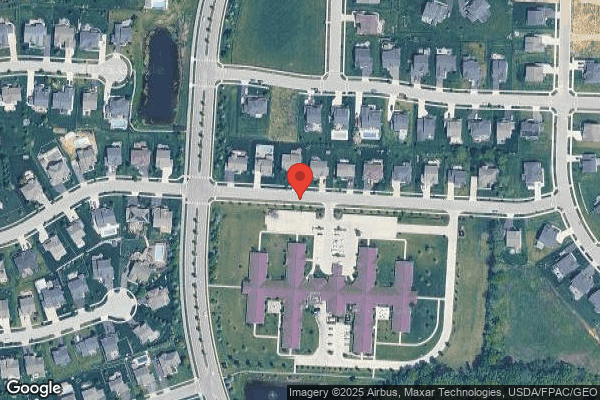
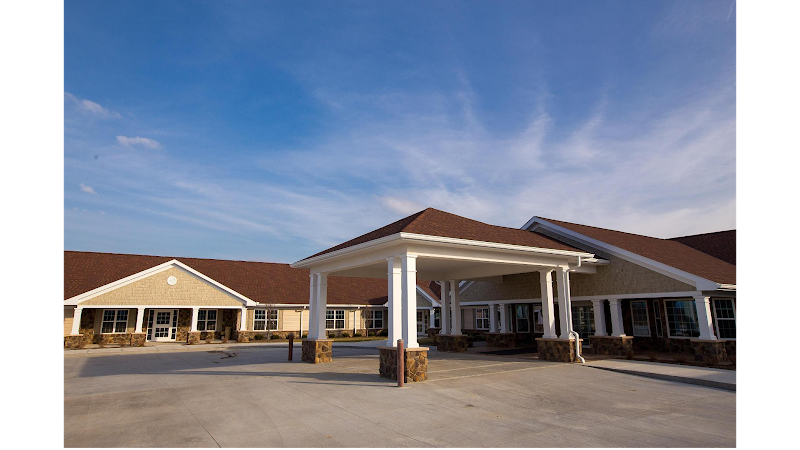
5919 BLUE STAR DRIVE, GROVE CITY, OH 43123 (614) 594-1600
For profit - Corporation 99 Beds FOUNDATIONS HEALTH SOLUTIONS Data: November 2025
Trust Grade
70/100
#292 of 913 in OH
Last Inspection: March 2025

Within standard 12-15 month inspection cycle. Federal law requires annual inspections.

Overview

Meadow Grove Transitional Care has a Trust Grade of B, indicating it is a good choice for families looking for a nursing home, but it is not without its concerns. It ranks #292 out of 913 facilities in Ohio, placing it in the top half, and #9 out of 56 in Franklin County, meaning only eight local options are better. However, the facility's trend is worsening, with issues increasing from 4 in 2024 to 5 in 2025, and staffing is a particular concern, as it has a below-average rating of 2 out of 5 stars and a high turnover rate of 62%, exceeding the state average. On a positive note, the facility has not incurred any fines and has average RN coverage, which is important for monitoring resident health. Specific incidents raised during inspections included unsafe food storage practices that could affect all residents, failure to properly monitor the hydration of at-risk residents, and lapses in hand hygiene during medication administration, which could risk the spread of infection. Overall, while there are strengths in the care provided, families should weigh these serious concerns carefully.

Trust Score
B
70/100
In Ohio
#292/913
Top 31%
Safety Record
Low Risk
No red flags
Inspections
Getting Worse
4 → 5 violations
Staff Stability
⚠ Watch
62% turnover. Above average. Higher turnover means staff may not know residents' routines.
Penalties
✓ Good
No fines on record. Clean compliance history, better than most Ohio facilities.
Skilled Nurses
○ Average
Each resident gets 41 minutes of Registered Nurse (RN) attention daily — about average for Ohio. RNs are the most trained staff who monitor for health changes.
Violations
⚠ Watch
20 deficiencies on record. Higher than average. Multiple issues found across inspections.
★★★★☆
4.0
Overall Rating
★★☆☆☆
2.0
Staff Levels
★★★★☆
4.0
Care Quality
★★★★☆
4.0
Inspection Score
Stable
2024: 4 issues
2025: 5 issues

The Good

  • 4-Star Quality Measures · Strong clinical quality outcomes
  • Full Sprinkler Coverage · Fire safety systems throughout facility
  • No fines on record

Facility shows strength in quality measures, fire safety.

The Bad

Staff Turnover: 62%

16pts above Ohio avg (46%)

Frequent staff changes - ask about care continuity

Chain: FOUNDATIONS HEALTH SOLUTIONS

Part of a multi-facility chain

Ask about local staffing decisions and management

Staff turnover is elevated (62%)

14 points above Ohio average of 48%

The Ugly 20 deficiencies on record

Mar 2025 5 deficiencies
CONCERN (D)

Potential for Harm - no one hurt, but risky conditions existed

ADL Care (Tag F0677)

Could have caused harm · This affected 1 resident

Based on observation and interview the facility failed to ensure dependent residents received assistance with activities of daily living. This affected one (Resident #79) out of two residents observed...

Read full inspector narrative →
Based on observation and interview the facility failed to ensure dependent residents received assistance with activities of daily living. This affected one (Resident #79) out of two residents observed for activities of daily living. The facility census was 95. Findings include: Review of the medical record for Resident #79 revealed an admission date of 02/09/24 with diagnoses of chronic myeloid leukemia, retention of urine, hypertension, anemia, chronic diastolic heart failure, anxiety, and orthostatic hypotension. Review of minimum data set (MDS) 3.0 assessment completed 02/19/25 revealed Resident #79 had a memory problem, was severely cognitively impaired, and requires substantial to maximal assistance with showering and bathing. Review of behavior symptoms from 02/23/25 through 03/24/25 revealed no behavioral concerns or symptoms observed. Review of the care plan dated 02/23/24 revealed Resident #79 requires one to two person assistance with activities of daily living (ADLs), with expected decline due to the disease process. Interventions include providing assistance with bathing, bed mobility, dressing, grooming, toileting, and transfers. Review of care plan dated 03/17/25 revealed Resident #79 exhibits alterations in mood and/or behavior, including refusal to allow staff to shave facial hair. Interventions include distraction and redirection, encouraging visits from loved ones, and observing/reporting any changes in mental status. Observation on 03/17/25 at 2:15 P.M. of Resident #79 revealed the resident was lying in bed with facial hair, approximately 1/4 inch in length, was visible on the lower chin and upper lip. Review of shower/bath skin sheet dated 03/17/25 and 03/20/25 revealed Resident #79 received a shower, hair wash, and bed linen change. The records did not note if the resident was shaved or if shaving was refused. Observation on 03/19/25 at 6:09 A.M. of Resident #79 revealed the resident was lying in bed with facial hair present. Observation on 03/20/25 at 9:35 A.M. revealed Resident #79 was lying in bed, positioned diagonally across the bed. Facial hair was still present, and the resident was wearing clothing from the previous day. Interview on 03/20/25 at 9:36 A.M. with Resident #79 shook her head yes in response to wanting to have her facial hair removed. Observation on 03/20/25 at 1:53 P.M. revealed Resident #79 was lying in bed in the same position, wearing the same gown from the previous day, which was bunched up and exposing the incontinent brief. Additionally, facial hair was still present. Observation on 03/20/25 at 1:55 P.M. with Certified Nursing Assistant (CNA) #201 noted that Resident #79 had not been changed out of night clothes. CNA #201 believed hospice was responsible for getting the resident bathed and dressed for the day, but she was unsure if hospice had visited. CNA #201 confirmed the resident was not wearing pants, had no blanket covering her and had her incontinent brief exposed to anyone walking past. The CNA also confirmed the resident had chin and upper lip hair and stated she would ask the nurse if she was allowed to shave the resident. The CNA also noted she did not know if the resident needed repositioning, so she had not repositioned her. Interview on 03/24/25 at 11:23 A.M. with the Director of Nursing confirmed that shaving needs should be evaluated by direct care staff daily and addressed if concerns arise or upon resident request. If shaving is completed, it should be marked on the shower record by direct care staff. Observation on 03/24/25 at 11:43 A.M. of Resident #79 revealed chin hair and upper lip hair were still present.
CONCERN (D)

Potential for Harm - no one hurt, but risky conditions existed

Medication Errors (Tag F0758)

Could have caused harm · This affected 1 resident

**NOTE- TERMS IN BRACKETS HAVE BEEN EDITED TO PROTECT CONFIDENTIALITY** Based on record review, interview, review of drug administration labeling, and facility policy review, the facility failed to en...

Read full inspector narrative →
**NOTE- TERMS IN BRACKETS HAVE BEEN EDITED TO PROTECT CONFIDENTIALITY** Based on record review, interview, review of drug administration labeling, and facility policy review, the facility failed to ensure residents receive anti-psychotics as clinically indicated. This affected one (Resident #7) out of five residents reviewed for unnecessary medications. The facility census was 95. Findings include: Review of the medical record for Resident #7 revealed an admission date of 02/17/25 with diagnoses of metabolic encephalopathy, muscle weakness, dysphagia, urinary tract infection, dementia without behavioral/psychotic/mood disturbance, and anxiety. Review of the antipsychotic risk versus benefit assessment dated [DATE] revealed Resident #7 was prescribed Seroquel (Quetiapine Fumarate) (antipsychotic) 400 milligrams twice a day for agitation and increased anxiety. Behaviors include increased anxiety, which at times, interferes with care. Person-centered approaches included redirection, repositioning, one-on-one supervision, and environmental alterations. The conclusion included a gradual dose reduction was not recommended. However, a requirement for this rationale included documentation of previous reductions attempted and a clinical rationale explaining why further reductions would likely impair function or increase stressful behaviors. Those attempts were not found within the medical record. Review of the care plan dated 02/18/25 revealed Resident #7 was at risk for adverse effects related to psychoactive medication use. Interventions include assessing behaviors for which medications are prescribed, evaluating for adverse effects, exploring non-drug approaches, using the minimum effective dose if continued drug use is necessary, and reducing medication doses when appropriate. Medications are to be monitored for effectiveness. Review of the Minimum Data Set (MDS) 3.0 assessment, completed 02/24/25, revealed a brief interview for mental status score of 11, indicating moderate cognitive impairment. The resident had no hallucinations, delusions, or any physical or verbal behavioral issues. The diagnoses section revealed no diagnosis of bipolar disorder, psychotic disorder, or schizophrenia. The medication section indicated the resident is prescribed an antipsychotic on a routine basis, with no gradual dose reduction attempted or noted as clinically contraindicated by a physician. Review of physician orders from 02/17/25 to 03/13/25 revealed the resident was prescribed Quetiapine Fumarate 400 milligrams, one tablet twice a day for anxiety. A change in the physician orders was noted starting 03/14/25, with Quetiapine Fumarate prescribed for depression at the same dosage. Review of behavior symptoms from 02/23/25 through 03/24/25 revealed no behavioral concerns or symptoms observed daily, except on 03/11/25 at 6:59 P.M., when repeat movement was noted. Interview on 03/24/25 at 12:37 P.M. with the Director of Nursing (DON) confirmed the house nurse practitioner reviewed Resident #7's medication upon admission, and the rationale for prescribing Seroquel was the resident's diagnoses of depression and anxiety. She confirmed these diagnoses are not approved indications for Seroquel use. Additionally, she confirmed residents with dementia are at higher risk of potentially fatal side effects from Seroquel. Interview on 03/24/25 at 1:10 P.M. with house Nurse Practitioner (NP) #301 confirmed she took over Resident #7's care at the end of February 2025. She confirmed the resident was currently receiving Seroquel for anxiety. The medication was initially prescribed by the primary care physician in 2021, and the NP was unsure if the medication had been reduced or discontinued within the past four years. She confirmed the resident was not seeing a neurologist or psychiatrist to provide a rationale for continuing the medication. She stated if the resident was not exhibiting any behaviors, a reduction or discontinuation in dosage would be appropriate. She acknowledged residents with dementia have an increased risk of adverse side effects from Seroquel. The medication had not been discontinued because it was still considered effective for managing the resident's behaviors. Interview on 03/24/25 at 3:30 P.M. with house NP #302 confirmed she was the physician who admitted Resident #7 to the facility and reviewed the resident's medication record. She confirmed the resident was discharged from the hospital with an order for Seroquel, who voiced it is typically prescribed for behavioral issues or disturbances in the hospital setting. Upon admission to the facility, appropriate diagnoses for antipsychotic use include schizophrenia or major depressive disorder with delusions, agitation, or aggression. She emphasized the nursing staff should monitor behaviors, and if no behaviors are observed, consideration for a gradual dose reduction or discontinuation of the medication would be appropriate. Review of federal drug administration labeling for Seroquel dated 11/2009 revealed WARNING: INCREASED MORTALITY IN ELDERLY PATIENTS WITH DEMENTIA and antipsychotic drugs are associated with an increased risk of death. Indication for Seroquel usage include schizophrenia, bipolar mania, bipolar depression and bipolar I disorder maintenance therapy. Review unnecessary drugs policy dated 06/27/15 revealed unnecessary drugs are drugs when used in excessive dose; for excessive duration; without adequate monitoring; without adequate indications for it use; or in the presence of adverse consequences which indicate the dose would be reduced or discontinued. If the drug is used outside of indicated guidelines, justification may include a medical/psychiatric evaluation to confirm the necessity; documentation in the clinical record that the resident is being monitored for adverse complications; documentation confirming previous attempts at dose reduction have been unsuccessful; documentation of improvements due to medication usage; and documentation of ineffective non-pharmacological interventions.
CONCERN (E) 📢 Someone Reported This

A family member, employee, or ombudsman was alarmed enough to file a formal complaint

Potential for Harm - no one hurt, but risky conditions existed

Deficiency F0692 (Tag F0692)

Could have caused harm · This affected multiple residents

**NOTE- TERMS IN BRACKETS HAVE BEEN EDITED TO PROTECT CONFIDENTIALITY** Based on observations, medical record review, resident interview, staff interview, and facility policy review, the facility fail...

Read full inspector narrative →
**NOTE- TERMS IN BRACKETS HAVE BEEN EDITED TO PROTECT CONFIDENTIALITY** Based on observations, medical record review, resident interview, staff interview, and facility policy review, the facility failed to properly monitor resident fluid restrictions. This affected two (Residents #58 and #47) of two residents reviewed for hydration. Also, the facility failed to adequately monitor and address resident nutritional status. This affected three (Residents #29, #19, and #47) of four residents reviewed for nutrition. The census was 95. Findings Include: 1. Resident #58 was admitted to the facility on [DATE]. Her diagnoses were aftercare following joint replacement surgery, type II diabetes, muscle weakness, hypo-osmolality and hyponatremia, osteoarthritis, chronic kidney disease, anxiety disorder, major depressive disorder, mood disorder, hypertension, atherosclerotic heart disorder, insomnia, pneumonia, and presence of cardiac pacemaker. Review of her minimum data set (MDS) assessment, dated 03/10/25, revealed she was cognitively intact. Review of Resident #58's physician orders found she had a fluid restriction order of 2400 milliliters (mL) related to congestive heart failure, which was started on 02/21/25. The fluid restriction parameters included the following: 1080 mL for dietary, 840 mL for nursing, and 480 mL for supplements. Review of Resident #58's fluid intake records, dated 02/19/25 to 03/24/25, revealed the amount drank of the nutritional supplement was documented in the medication administration record (MAR). The amount of fluid intake during meals was documented in the fluid intake record. There was no documentation to confirmed the amount of fluid intake Resident #58 had been provided by nursing. Also, review of the fluid intake records for dietary, the following dates did not have fluid amounts documented or were documented after the fact: 02/21/25 (one meal), 02/28/25 (one meal), 03/04/25 (one meal), and then 03/06/25, 03/07/25, 03/12/25 and 03/13/25 (no amounts entered until after 03/18/25). Review of dietary fluid intake records, dated 02/19/25 to 03/17/25, revealed the following dates had fluid records above the ordered restricted amount of 1080 mL: 02/20/25 (1410 mL), 02/22/25 (1260 mL), 03/02/25 (2700 mL), 03/11/25 (1440 mL), 03/15/25 (1520 mL), and 03/16/25 (1380 mL). Review of Resident #58 care plan, updated 03/17/24, revealed a care area related to potential for alteration in nutrition and hydration. One intervention included for the facility to follow fluid restriction as ordered. Interview with Certified Nursing Aide (CNA) #199 on 03/20/25 at 1:36 P.M. stated those that have a fluid restriction, will have their drinks come pre-portioned from the kitchen, which is ordered by the dietitian. The drinks have a specific fluid level that is met for each resident's dietary needs. If a resident requests more fluids, she will speak with the nurse to determine if the resident can have more water. If the nurse agrees, she will get a cup and pour it from the pitcher. She does not know if the different cups have fluid sizes, she will guess the amount that the resident drinks and put it into the medical record. She confirmed she does not know how much water is in each resident glass, so when she documents the amount consumed, it is a guess. Interview with Director of Nursing (DON) on 03/24/25 at 11:27 A.M. confirmed the aides will document the amount of fluids each resident accepted when they are on a fluid restriction. She confirmed this is to be done for each meal. She also confirmed there is no data entry for documenting the fluid tracking by the actual nurses; there is an assumption on the amount of water provided and accepted during medication administrations; no matter how many administrations a resident has throughout the day. She confirmed Resident #58 was missing some fluid intake data that should have been documented. She also confirmed there were multiple dates that the data documented, was above the approved amount for her fluid restriction. 2. Resident #29 was admitted to the facility on [DATE]. Her diagnoses were congestive heart failure, chronic obstructive pulmonary disease (COPD), chronic respiratory failure, type II diabetes, morbid obesity, peripheral vascular disease, chronic kidney disease, anxiety disorder, depression, hypertension, hypothyroidism, gout, atrial fibrillation, hyperlipidemia, metabolic encephalopathy, polyneuropathy, gastroparesis, insomnia, and and personal history of transient ischemic attack. Review of her MDS assessment, dated 02/05/25, revealed she was cognitively intact. Review of Resident #27's physician orders revealed the facility was to collect daily weights, and the facility was to notify the medical director of weight gain of 2.5 pounds in 24 hours or 5 pounds in a week. Review of Resident #27's current nutritional care plan, which revealed she had a potential alteration in nutrition. An intervention for this care plan stated the facility is to take weights per protocol. Review of Resident #27's current non-compliance care plan, which revealed she was non-compliant with weight monitoring as ordered. The interventions included: Notify medical director or nurse practitioner of non-compliance, educate resident, family or responsible party on negative outcomes related to non-compliance and document educational attempts made with resident in relation to compliance. Review of Resident #27's weights, dated 01/30/25 to 03/19/25, revealed the following: on 02/18/25, she weighed 196.8 pounds. She refused a weight on 02/19/25, but accepted being weighed on 02/20/25, which was 186.4 pounds. There was no documentation to support the dietitian or physician was notified of the 10.4 pound weight decrease, which represented a 5.3% decline from 02/18/25 to 02/20/25. Also, Resident #27 weight was taken on 03/12/25, which was 187.9 pounds. Resident #27 refused her weights to be taken on 03/13/25 and 03/14/25, but one 03/15/25, her weight was 176.8 pounds. This represented a 11.1 pound (5.9%) decrease from 03/12/25 to 03/15/25. There was no documentation to support the physician or dietitian were notified of the significant weight decrease. Review of Resident #27's weights, dated 01/30/25 to 03/19/25, revealed the following dates in which Resident #27 refused to be weighed: 02/11/25, 02/16/25, 02/17/25, 02/19/25, 02/22/25, 02/23/25, 02/28/25, 03/04/25, 03/08/25, 03/09/25, 03/10/25, 03/11/25, 03/13/25, 03/14/25, 03/17/25, and 03/19/25. Review of Resident #27's nutritional documentation in the electronic medical records, found no evidence to support the physician or nurse practitioner were notified of her weight refusals as required by her non-compliance care plan. Interview with DON on 03/24/25 at 10:14 A.M. and 11:27 A.M. revealed weights are typically taken between 3:00 P.M. and 4:00 P.M. daily, for those who are ordered to have it taken. She confirmed there were multiple weights that were refused by Resident #27, and they could not find documentation to support the physician was notified of those refusals. She confirmed that residents who are ordered daily weights, the physician should be notified if they refuse a weight. Also, she confirmed there was no evidence to support the dietitian and/or physician were notified of the significant weight decreases. Interview with Dietitian #192 on 03/24/25 at 2:17 P.M. revealed she informs the physician about any significant changes, such as notable weight loss or gain. She occasionally alerts the physician about instances where residents refuse to have their weight taken, though she is uncertain whether the nursing staff communicates these cases to the physician. She confirmed she does not record these attempts in the medical record. Review of facility Change of Condition policy, dated April 2013, revealed a change of condition is defined as deterioration in the health, mental, or psychosocial status of a resident related to a significant change in the resident's clinical condition or status. Significant changes in resident's clinical condition or status include improvement or decline in the following: unplanned weight loss (5% in 30 days, 10% in 180 days). The unit supervisor or charge nurse will notify the resident, physician, and guardian/interested family member of all changes as stated above and of any other situations requiring notification. The person doing the notification may document all notification. 5. Review of the medical record for Resident #19 revealed an admission date of 07/27/20, diagnoses included type II diabetes mellitus, morbid obesity, mild cognitive impairment, and major depressive disorder. Review of physician orders dated 11/21/24 revealed weights should be obtained twice per week, during the day shift on Mondays and Thursdays. The provider should be notified if there is a weight gain of 2.5 pounds or more between weigh-ins or a weight gain of 5 pounds or more in a week. Review of the Minimum Data Set (MDS) 3.0 assessment completed on 11/27/24 revealed Resident #19 had a Brief Interview for Mental Status (BIMS) score of 12, indicating moderate cognitive impairment. Review of the care plan 02/13/25 revealed Resident #19 has demonstrated non-compliance of recommended treatment at times related to weight monitoring as ordered, interventions include document education attempts and notify the physician of non-compliance. Review of the Treatment Administration Record (TAR) for November 2024 revealed Resident #19 refused to have her weight obtained on 11/21/24. Review of progress notes dated 11/21/24 revealed no record the physician was notified, the resident was educated on weight refusals, or additional attempts at obtaining a weight were made. Review of the TAR for December 2024 revealed Resident #19 refused to have her weight obtained on 12/12/24, 12/16/24, 12/23/24, and 12/26/24. Review of progress notes dated 12/12/24, 12/16/24, 12/23/24, and 12/26/24 revealed no record the physician was notified, the resident was educated on weight refusals, or additional attempts at obtaining a weight were made. Review of the TAR for January 2025 revealed Resident #19 refused to have her weight obtained on 01/06/25, 01/13/25, and 01/30/25. Review of progress notes dated 01/06/25 revealed the resident was educated on weight refusals; however, additional attempts were not documented, nor was the physician notified of the refusal. Progress notes dated 01/13/25 and 01/30/25 revealed no record the physician was notified, the resident was educated on weight refusals, or additional attempts at obtaining a weight were made. Review of the TAR for February 2025 revealed Resident #19 refused to have her weight obtained on 02/06/25, 02/13/25, and 02/24/25. Review of progress notes dated 02/06/25 and 02/13/25 revealed the resident was educated on weight refusals; however, additional attempts were not documented, nor was the physician notified of the refusal. Review of progress notes dated 02/24/25 revealed no record the physician was notified, the resident was educated on weight refusals, or additional attempts at obtaining a weight were made. Review of the TAR for March 2025 revealed Resident #19 refused to have her weight obtained on 03/03/25. Review of progress notes dated 03/03/25 revealed the resident refused to be weighed and stated she would do it tomorrow. Review of the resident's record revealed a follow-up weight was obtained on 03/06/25. Interview on 03/24/25 at 1:52 P.M. with Licensed Practical Nurse #107 confirmed Resident #19 occasionally refuses to have her weight obtained. Nursing staff are expected to attempt to obtain her weight three times before documenting refusals in the TAR. Upon the final refusal, the staff will educate the resident and notify the physician of the refusals. Interview on 03/24/25 at 1:57 P.M. with the Director of Nursing (DON) and Regional Nurse #300 confirmed Resident #19 has a history of non-compliance with obtaining weights. Nursing staff should document the refusals and notify the physician. Staff should ensure all attempts are documented in the resident's medical record. Interview on 03/24/25 at 2:15 P.M. with Dietician #192 confirmed she is at the facility daily, where she monitors and reviews patients' weights. Dietician #192 confirmed Resident #19 had physician orders for weight checks twice a week due to a history of weight fluctuations. It is her responsibility to notify the physician if the resident's weight falls outside specific parameters, such as a 2.5-pound or greater gain between weigh-ins or a 5-pound gain within a week. She also reports significant weight changes to the physician, including notable weight loss, weight gain related to specific diagnoses, or any concerning fluctuations. However, when these parameters are exceeded, requiring notification to the physician, she does not document any attempts to contact the physician. Occasionally, she alerts the physician when patients refuse to have their weight taken but is unsure whether the nursing staff communicates these instances to the physician. This deficiency represents non-compliance investigated under Complaint Number OH00163772. 3. Review of Resident #47's electronic medical record revealed that she was admitted to the facility on [DATE] with diagnoses that included cardiomyopathy and presence of a pacemaker. Review of Resident #47's Minimum Data Set (MDS) assessment on 02/04/25 revealed that she had a Brief Interview for Mental Status (BIMS) score of 15, indicative of intact cognitive status. Review of Resident #47's MDS assessment on 03/18/25 revealed that she had a weight loss of 10% or more in the last six months and that she was not on a prescribed weight program. Review of Resident #47's Medication Administration Record (MAR) revealed that she had orders to be weighed daily due to heart failure on every day shift, effective 02/01/25 by physician's order. Review of Resident #47's MAR for March 2025 revealed that Licensed Practical Nurse (LPN) #157 marked Resident #47's weight with the letters NA on 03/03/25, 03/08/25, 03/09/25, and 03/10/25. Interview with Resident #47 on 03/17/25 at 10:22 A.M. revealed that the facility does not monitor her weight on a daily basis, as ordered by the physician on 02/01/25. Interview with LPN #157 on 03/24/25 at 9:42 A.M. revealed that she used the letters NA on Resident #47's MAR under her daily weights on 03/03/25, 03/08/25, 03/09/25, and 03/10/25 to indicate that it was not applicable on those particular dates. LPN #157 confirmed no weight was obtained by day shift on 03/03/25, 03/08/25, 03/09/25, and 03/10/25. LPN #157 revealed when she cannot find a nursing aide to weigh Resident #47, she does not follow up and weigh the resident herself. LPN #157 revealed that it was the responsibility of the nursing aides to weigh the residents. Interview with the Director of Nursing on 03/24/25 at 10:14 A.M. revealed that if there is not a daily weight obtained by between 3:00 P.M. and 4:00 P.M., it is the responsibility of the nurse to obtain the daily weight if a nursing aide does not obtain it, as the nurse needs to notify the physician if there are any changes in the Resident's weight status. 4. Review of Resident #47's electronic medical record revealed that she was admitted to the facility on [DATE] with diagnoses that included cardiomyopathy and presence of a pacemaker. Review of Resident #47's Minimum Data Set (MDS) assessment on 02/04/25 revealed that she had a Brief Interview for Mental Status (BIMS) score of 15, indicative of intact cognitive status. Review of Resident #47's March 2025 Medication Administration Record revealed that she had a physician order for a fluid restriction on every shift related to chronic systolic (congestive) heart failure consisting of 2400 milliliters (ml) per day. The order indicated that 1080 ml were to come from dietary, and 1320 ml were to come from the nursing team. Review of Resident #47's care plan revealed there was no documentation present to support the resident being responsible for tracking her own fluid restriction. Her care plan dated 07/09/24 revealed that Resident #47 was non-compliant with her fluid restriction. Review of Resident #47's progress notes revealed there was no documentation regarding the tracking and monitoring Resident #47's daily fluid restriction. Interview with Registered Nurse (RN) #175 on 03/20/25 at 1:38 P.M. revealed that there was no system for nursing to track the amount of fluids that nursing provided to Resident #47 on a daily basis. RN #175 revealed that it was the responsibility of Resident #47 to track her fluid restriction herself. Interview with Certified Nursing Aide (CNA) #199 on 03/20/25 revealed that Resident #47 keeps track of her own fluid restriction, and CNA #199 did not track how much fluid Resident #47 consumed on a daily basis. Interview with Licensed Practical Nurse (LPN) #157 on 03/24/25 at 9:42 A.M. revealed writing a progress note would be the only way for nursing to track how much fluid the nurses gave Resident #47 during her medication passes and between meals. LPN #157 indicated nurses did not have another way to track fluid allowances for residents who have fluid restrictions. LPN #157 revealed that she should start tracking how much fluid she gives Resident #47 during the day. Interview with the Director of Nursing on 03/24/25 at 10:14 A.M. revealed that the nursing team should keep track of their own calculations of the fluid consumed on a daily basis by a resident on a fluid restriction.
CONCERN (E)

Potential for Harm - no one hurt, but risky conditions existed

Infection Control (Tag F0880)

Could have caused harm · This affected multiple residents

**NOTE- TERMS IN BRACKETS HAVE BEEN EDITED TO PROTECT CONFIDENTIALITY** Based on observations, interviews, record reviews, and facility policy review, the facility failed to complete hand hygiene duri...

Read full inspector narrative →
**NOTE- TERMS IN BRACKETS HAVE BEEN EDITED TO PROTECT CONFIDENTIALITY** Based on observations, interviews, record reviews, and facility policy review, the facility failed to complete hand hygiene during medication administration for one resident (Resident #50) of five residents observed for medication administration. The facility failed to disinfect a glucometer used to monitor finger stick blood sugars for one observed resident (Resident #27) and had the potential to affect six (Resident #1, Resident #18, Resident #41, Resident #57, Resident #145, and Resident #147) residents on the identified hallway who utilized the same glucometer. Additionally, the facility failed to use gloves during tracheostomy for one resident (Resident #46) and had the potential to affect all 15 residents identified by the facility as requiring Enhanced Barrier Precautions (Residents #1, #11, #33, #34, #44, #46, #51, #80, #84, #85, #86, #146, #198, #199, #200). The facility census was 95. Findings include: 1. Review of the medical record for resident #50 revealed an admission date of 02/01/21 with diagnoses of anemia, vitamin D deficiency, mild cognitive impairment, hyperlipidemia and bipolar disorder. Review of Minimum Data Set (MDS) 3.0 assessment completed 01/24/25 revealed Resident #50 has a brief interview for mental status of five, indicating a serious cognitive impairment. Review of medication administration record for 03/19/25 for medication time from 7:00 A.M. to 11:00 A.M. revealed Resident #50 was ordered to receive one Sertraline (antidepressant) 50 milligrams (mg) tablet, one Ascorbic Acid (supplement) 500 mg tablet, one Aspirin (analgesic) 325 mg tablet, a Cyanocobalamin (vitamin) 1000 microgram (mcg) half tablet, one Docusate Sodium (stool softener) 100 mg tablet, two Magnesium (supplement) 400 mg tablets and one Vitamin D 25 mcg tablet. Observation on 03/19/25 at 8:24 A.M., Registered Nurse (RN) #175 was observed preparing the morning medications for Resident #50. She performed hand hygiene and donned clean gloves. RN #175 then removed Resident #50's pre-portioned medication pouch from the cart, emptied the contents onto the top of the cart, and discarded the plastic pouch in the garbage. Afterward, she retrieved a medication cup from the cart and began preparing the medications, which included both community bottles and prepackaged medications. Medications prepared included Vitamin D 1000 units, Magnesium Oxide 400 mg, Docusate Sodium 100 mg, Aspirin tablet 325 mg, and Ascorbic Acid 500 mg. These were handled without direct contact. RN #175 noticed that one medication, Sertraline 50 mg, was missing. She searched the medication cart and found the medication in the plastic pouch disposed of in the trash can. She retrieved it from the trash can, placed it aside for disposal, and removed her gloves. RN #175 then searched for a replacement dosage in the next day's pouch, popped the replacement into the medication cup without performing hand hygiene or putting on new gloves. The final medication to be administered was Cyanocobalamin 1000 micrograms, which needed to be split. RN #175 put on new gloves, removed the bottle from the top drawer, and placed a pill in the bottle lid. She then used her index finger to guide the pill from the lid to the pill splitter and split the tablet. The split tablet was placed into the medication cup with the other medications. Before leaving the cart, RN #175 removed her gloves and performed hand hygiene. Interview conducted on 03/19/25 at 11:09 A.M. with RN #175 confirmed hand hygiene was not conducted after searching the trash for the lost medication, nor after removing her gloves when retrieving the new dosage and preparing the medications. Additionally, she did not perform hand hygiene before applying new gloves prior to splitting the medication. Interview conducted on 03/19/25 at 12:53 P.M. with the Director of Nursing (DON) confirmed hand hygiene should be conducted prior to donning clean gloves during medication preparation and after contact with contaminated surfaces. Review of infection prevention and control program dated 11/28/17 revealed all staff shall perform hand hygiene after handling contaminated objects and after personal protective equipment removal. 2. Observation on 03/19/25 at 12:10 P.M. of glucometer blood sugar testing revealed Licensed Practical Nurse #107 preformed Resident #27 blood sugar with a result requiring no Insulin coverage, upon completion of the finger blood stick LPN #107 placed the glucometer on the nursing cart. Unlocked the nurses cart, opened the bottom left drawer and removed disinfecting wipes and placed the on the top of the cart. She closed the drawer, grabbed a plastic cup, opened the wipes container and removed one wipe she proceeded to wipe down the glucometer for approximately 10 seconds, the LPN then placed the glucometer in the cup, discarded of the wipe and removed an additional wipe from the container and wiped down the meter for an additional 10 seconds, she then again placed the meter in the plastic cup and discarded of the wipe. The meter had a wet surface time of approximately 30 seconds, during which time LPN #107 signed off Resident #27 administration record. LPN #107 then started working on an additional residents medication while letting the dry glucometer sit in the plastic cup. Continuous observation noted once completed preparing medications for the other resident, LPN #107 placed the glucometer back into the nurses cart without wiping the surface again or maintaining a consistent surface wet time as directed on the bottle. Interview on 03/19/25 at 12:20 P.M. with LPN #107 revealed the LPN was unaware of a required time the surface needed to be wet for disinfection, typical disinfection after glucometer usage included wiping the meter twice and letting it sit in the cup for a few minutes. LPN #107 does not have a specific wet time she follows. Interview on 03/19/25 at 12:31 P.M. with the DON confirmed the facility staff should follow manufactures instructions located on the side of the bottle which notes a required wet time of 3 minutes for standard disinfection against all organisms. Review of infection prevention and control program dated 11/28/17 revealed all reusable items and equipment requiring special cleaning, disinfection, or sterilization shall be cleaned in accordance with our current procedures governing the cleaning and sterilization of soiled or contaminated equipment. Review of disinfection wipes instructions revealed to clean and disinfect against all organisms and deodorize hard, nonporous surfaces use enough wipes for treated surface to remain visibly wet for three minutes, let air dry. 3. Review of Resident #46's electronic medical record revealed that he was admitted on [DATE] with diagnoses that included hemiplegia and hemiparesis following cerebral infarction, personal history of malignant neoplasm of larynx, and acquired absence of larynx. Review of Resident #46's Minimum Data Set assessment dated [DATE] revealed that he had a Brief Interview for Mental Status score of 15, indicative of intact cognition. Review revealed that Resident #46 received no oxygen therapy; however, he received tracheostomy care and suctioning. Review of Resident #46's electronic medical record revealed he had physician orders effective 05/16/22 to cleanse his outer stoma with normal saline on every shift and leave open to to air. Resident #46 had physician orders effective on 12/12/22 to suction his stoma as needed. He also had physician orders effective on 07/08/24 for Enhanced Barrier Precautions (EBP). The order further indicated that Personal Protective Equipment (PPE) was required for high-contact activities for Resident #46. Observation of stoma care on 03/19/25 from 8:44 A.M. to 8:55 A.M. revealed that Registered Nurse (RN) #175 performed the open to air stoma care on Resident #46 without wearing a mask or a gown. Observation revealed that RN #175 was cleaning the open stoma and had her uncovered face within two feet of Resident #46's open stoma without a mask. She conversed with Resident #46 throughout the open stoma care process. Resident #46 was observed coughing on two occasions during stoma care, and RN #175 was observed removing mucus from the stoma. Interview with RN #175 on 03/19/25 at 8:55 A.M. revealed that the proper procedure for Enhanced Barrier Precautions and stoma care for Resident #46 would be to wear a gown and a mask. RN #175 confirmed that she did not wear a mask or a gown while performing a high-contact activity on Resident #46. Review of a facility policy titled Infection Prevention and Control Program, which was dated 08/18/10 and revised 11/28/17, revealed that the RNs and Licensed Practical Nurses supervise direct care staff in daily activities to assure that appropriate precautions and techniques are observed, assess the resident's isolation needs and initiate proper precautions. All staff shall perform hand hygiene after handling contaminated objects and after PPE removal. A gown is worn for direct resident contact if the resident has uncontained secretions or excretions. Appropriate mouth, nose and eye protection is worn for procedures that are likely to generate splashes or sprays of body fluids.
CONCERN (F)

Potential for Harm - no one hurt, but risky conditions existed

Food Safety (Tag F0812)

Could have caused harm · This affected most or all residents

Based on observations and staff interviews, the facility failed to store and serve food in a safe and sanitary manner. This had the potential to affect all 95 residents in the facility who were identi...

Read full inspector narrative →
Based on observations and staff interviews, the facility failed to store and serve food in a safe and sanitary manner. This had the potential to affect all 95 residents in the facility who were identified as receiving meals from the kitchen. Findings include: 1. Observations in the kitchen on 03/17/25 from 8:22 A.M. to 8:28 A.M. revealed a box containing 12 containers of a nutritional supplement was holding the door to the dry storage room ajar and resting on the floor, a large meat roast was resting on the floor of the walk in refrigerator, tulip serving bowls were not inverted on the storage rack, a bottle of opened barbecue sauce in the walk in refrigerator was undated, two opened bags containing frozen food items were unlabeled and undated in the walk in freezer, a black fuzzy substance was on the walk in refrigerator fan, and a black fuzzy substance was on the overhead vent located directly over the serving tray line. Interview with Dietitian #192 on 03/17/25 at 8:28 A.M. confirmed a box containing 12 containers of a nutritional supplement was holding the door to the dry storage room ajar and resting on the floor, a large meat roast was resting on the floor of the walk in refrigerator, tulip serving bowls were not inverted on the storage rack, a bottle of opened barbecue sauce in the walk in refrigerator was undated, two opened bags containing frozen food items were unlabeled and undated in the walk in freezer, a black fuzzy substance was on the walk in refrigerator fan, and a black fuzzy substance was on the overhead vent located directly over the serving tray line. Interview further confirmed these were not sanitary food storage practices. Observation on 03/19/25 at 10:44 A.M. revealed there was a broken plastic light cover over the food service tray line that had a piece of plastic missing from a corner, a loose screw that was not securing a corner of the light and was hanging down, and that it was also covered in a brown residue on the exterior of the light cover. Interview with Dietary Supervisor #165 on 03/19/25 at 10:44 A.M. confirmed that the light cover over the tray line was broken and had food residue on it. Interview with Maintenance Supervisor #138 on 03/19/25 at 10:57 A.M. confirmed he knew the light cover over the serving tray line was broken and dirty. He confirmed he was going to replace it as soon as possible. 2. Observation of the dining room on 03/18/25 at 11:56 A.M. revealed that Certified Nursing Aide (CNA) #219 was buttering a dinner roll by holding it in her bare hand. Interview with CNA #219 on 03/18/25 at 11:56 A.M. confirmed that she was buttering the dinner roll in her bare hand and that it was unsanitary to hold the food in her bare hand. Observation of the dining room on 03/18/25 from 12:08 P.M. to 12:13 P.M. revealed that CNA #185 was holding a dinner roll in her bare hand and feeding it to Resident #71. Interview with CNA #185 on 03/18/25 at 12:13 P.M. confirmed that she was holding the dinner roll in her bare hand and that she should not use her bare hand to hold food that was being served to a resident. Interview with Dietitian #192 on 03/20/25 at 4:37 P.M. revealed that the facility does not have a policy for the safe and sanitary storage and/or serving of food.
Jan 2024 3 deficiencies
CONCERN (D) 📢 Someone Reported This

A family member, employee, or ombudsman was alarmed enough to file a formal complaint

Potential for Harm - no one hurt, but risky conditions existed

Notification of Changes (Tag F0580)

Could have caused harm · This affected 1 resident

**NOTE- TERMS IN BRACKETS HAVE BEEN EDITED TO PROTECT CONFIDENTIALITY** Based on record review, staff interviews, and review of the facility policy, the facility failed to ensure the physician was inf...

Read full inspector narrative →
**NOTE- TERMS IN BRACKETS HAVE BEEN EDITED TO PROTECT CONFIDENTIALITY** Based on record review, staff interviews, and review of the facility policy, the facility failed to ensure the physician was informed timely of a resident's change in condition. This affected one (Resident #49) of three residents reviewed for change in condition. The facility census was 93. Findings include Review of the medical record for Resident #49 revealed an admission date of 01/22/23. Diagnoses included chronic obstructive pulmonary disease (COPD), emphysema, respiratory failure, atrial fibrillation, heart failure, and anxiety. Review of the Minimum Data Set (MDS) assessment dated [DATE] revealed Resident #49 was cognitively impaired and required set up or clean up assistance from staff for all activities of daily living. Review of the plan of care dated 10/28/23 revealed Resident #49 was at risk for altered health status due to respiratory failure with interventions to monitor for signs and symptoms and report to the doctor including respiratory symptoms, cough, confusion, and fatigue. Review of the progress note revealed there was no documentation of a change in Resident #49's condition until 6:04 P.M. on 12/30/23. The progress note dated 12/30/23 at 6:04 P.M. written by LPN #215 revealed Resident #49's family came to nurse and asked for resident to be assessed as they felt something was wrong. Resident #49's vital signs were taken and oxygen saturation was at 82%. The nurse applied oxygen and it brought it up a little bit, Resident #49 was still lethargic and the family was insisting Resident #49 be transferred to the hospital. The nurse offered to consult the on-call medical provider and the family declined. A message was left with the on-call medical provider to notify of the transfer. The resident record had no evidence of the on-call medical provider being contacted due to changes in condition on 12/30/23 prior to 5:58 P.M. call. Review of the physician orders for 12/30/23 at 6:00 P.M. revealed a verbal order was given to the nurse for oxygen at two liters continuous as needed to maintain oxygen saturations above 92%. The order did not state who the order was obtained by. The facility's Nurse Practitioner signed the order on 01/05/23 at 9:53 A.M. and there was no mention of which provider actually instructed the nurse to begin oxygen as the Nurse Practitioner was not on call on 12/30/23. Interview on 01/24/24 at 11:06 A.M. with State Tested Nursing Aide (STNA) #205 verified she was assigned to provide care to Resident #49 during the day on 12/30/23. STNA #205 stated she noticed Resident #49 was acting off the morning of 12/30/23. Resident #49 was laying in bed, had difficulty completing activities of daily living she normally could complete, and was having changes in her mental status. STNA #205 stated she informed LPN #215 sometime after breakfast between 9:00 A.M. to 10:00 A.M. but was not aware of whether the nurse completed an assessment or if she notified the physician. Interview on 01/24/24 at 12:03 P.M. with Licensed Practical Nurse (LPN) #215 revealed she had heard in report of resident having some respiratory cough and congestion issues the last few days and also revealed STNA #205 informed her of a change in condition, changes in mental status and not taking in much oral intake, and shortness of breath. LPN #215 also revealed the resident's daughter was at the facility around 10:00 A.M. and spoke with the nurse about respiratory concerns. LPN #215 assessed Resident #49 and found her oxygen saturations to be in the low 80s and her blood pressure was low. LPN #215 stated she spoke with family and contacted the medical provider who recommended fluids and oxygen. LPN #215 stated she placed the verbal orders in the chart for oxygen and fluids (however, no orders were found for fluids). LPN #215 stated around dinner time, the resident's family had returned to the facility and had concerns of resident's condition not improving and requested a transfer to the hospital. LPN #215 stated the physician was contacted regarding the hospital transfer. LPN #215 could not remember what provider she spoke with during the afternoon call. Interview on 01/24/24 at 2:49 P.M. with Facility Nurse Practitioner (FNP) #220 revealed she was not working on 12/30/23 when Resident #49 had her change in condition. FNP #220 stated staff should contact the on-call provider which reaches a rotation of medical providers who are available on evenings and weekends. FNP #220 stated she had access to all notes and encounters (phone calls) that come through the on-call system and revealed her note from 12/28/23 and 01/07/23 were found and there was evidence of one telephone call (a voicemail) that was left on 12/30/23 at 5:58 P.M. FNP #220 stated the on-call system had no record of any contact from LPN #215 earlier in her shift on 12/30/23. Interview on 01/24/24 at 3:08 P.M. with In-House Supervisor Registered Nurse (ISRN) #225 revealed LPN #215 informed her of the change in Resident #49 on the morning of 12/30/23. ISRN #225 stated she instructed LPN #215 to contact the on-call provider. ISRN #225 stated she was not aware if LPN #215 called the provider and what the recommendations were, but thought she heard something about oxygen and fluids. Interview on 01/24/24 at 4:20 P.M. with the Director of Nursing (DON) revealed the licensed nurses should complete a thorough assessment when a resident was having a change in condition and contact the medical provider or on-call medical provider to provide update and ask for recommendations/guidance. Review of the facility policy titled Change in Condition, dated 04/2013, revealed a change in condition was defined as a deterioration in health of a resident related to a life-threatening condition, alteration in treatment, or a significant change in the resident's condition and clinical status. Life threatening conditions would include infections and respiratory changes. The procedure includes the unit supervisor or charge nurse would notify the Physician of all changes as stated above and any other situations requiring notification and the person doing the notification may document the notification. This deficiency represents non-compliance investigated under Complaint Number OH00149838.
CONCERN (D) 📢 Someone Reported This

A family member, employee, or ombudsman was alarmed enough to file a formal complaint

Potential for Harm - no one hurt, but risky conditions existed

Deficiency F0726 (Tag F0726)

Could have caused harm · This affected 1 resident

**NOTE- TERMS IN BRACKETS HAVE BEEN EDITED TO PROTECT CONFIDENTIALITY** Based on record review, review of the Ohio Board of Nursing Scope of Practice for Registered Nurses (RN) and Licensed Practical ...

Read full inspector narrative →
**NOTE- TERMS IN BRACKETS HAVE BEEN EDITED TO PROTECT CONFIDENTIALITY** Based on record review, review of the Ohio Board of Nursing Scope of Practice for Registered Nurses (RN) and Licensed Practical Nurses (LPN) and the job description for an LPN, and resident and staff interviews, the facility failed to ensure an LPN worked within their scope of practice and requirement of nursing standards during a resident's change in condition. This affected one (Resident #49) of three residents reviewed for a change in condition. The facility census was 93. Finding include: Review of the medical record for Resident #49 revealed an admission date of 01/22/23. Diagnoses included chronic obstructive pulmonary disease (COPD), emphysema, respiratory failure, atrial fibrillation, heart failure, and anxiety. Review of the Minimum Data Set (MDS) assessment dated [DATE] revealed Resident #49 was cognitively impaired and required set up or clean up assistance from staff for all activities of daily living. Review of the plan of care dated 10/28/23 revealed Resident #49 was at risk for altered health status due to respiratory failure with interventions to monitor for signs and symptoms and report to the doctor including respiratory symptoms, cough, confusion, and fatigue. Review of the respiratory assessments in the Medication Administration Record (MAR) dated 12/2023 revealed Resident #49 had an order for oxygen saturations to obtained three times daily. On 12/30/23, Resident #49's oxygen saturation was at 93% and 96%. Review of the progress note revealed there was no documentation of a change in Resident #49's condition until 6:04 P.M. on 12/30/23. The progress note dated 12/30/23 at 6:04 P.M. written by LPN #215 revealed Resident #49's family came to nurse and asked for resident to be assessed as they felt something was wrong. Resident #49's vital signs were taken and oxygen saturation was at 82%. The nurse applied oxygen and it brought it up a little bit, Resident #49 was still lethargic and the family was insisting Resident #49 be transferred to the hospital. The nurse offered to consult the on-call medical provider and the family declined. A message was left with the on-call medical provider to notify of the transfer. Review of the physician orders for 12/30/23 at 6:00 P.M. revealed a verbal order was given to the nurse for oxygen at two liters continuous as needed to maintain oxygen saturations above 92%. The order did not state who the order was obtained by. The facility's Nurse Practitioner signed the order on 01/05/23 at 9:53 A.M. and there was no mention of which provider actually instructed the nurse to begin oxygen as the Nurse Practitioner was not on call on 12/30/23. Review of the hospital record from the emergency department dated 12/30/23 revealed Resident #49 was brought in around 6:00 P.M. for shortness of breath and had also complained of orthopnea and chest pain. The family also reported to intermittent confusion. The hospital note revealed Emergency Medical Services (EMS) responded to Resident #49 at the facility and found the resident's oxygen saturations to be in the 80s. EMS provided oxygen and breathing treatments and brought Resident #49 to the hospital. Resident #49 arrived to the hospital and found to have atrial fibrillation with rapid ventricular rate (RVR) and required six liters of oxygen and then transitioned to BiPap. Resident #49 was also found to be positive for influenza A and a chest x-ray showed bilateral opacities with appearance suspicious for multifocal pneumonia with underlying chronic lung disease. Interview on 01/24/24 from 10:45 A.M. with RN #201 revealed if a resident's oxygen was low and drops below 90%, she would start the resident on oxygen, take vital signs and contact the medical provider for assistance and possible orders. RN #201 stated she would do a recheck and keep the provider updated on whether the symptoms were improving. Interview on 01/24/24 at 10:58 A.M. with Resident #49 revealed the nurse (LPN #215) provided no assistance to feel better on the day she went to the hospital (12/30/23). Resident #49 stated the nurse (LPN #215) asked how she was feeling but did not provide adequate medical care. Interview on 01/24/24 at 11:06 A.M. with State Tested Nursing Aide (STNA) #205 verified she was assigned to provide care to Resident #49 during the day on 12/30/23. STNA #205 stated she noticed Resident #49 was acting off the morning of 12/30/23. Resident #49 was laying in bed, had difficulty completing activities of daily living she normally could complete, and was having changes in her mental status. STNA #205 stated she informed LPN #215 sometime after breakfast between 9:00 A.M. to 10:00 A.M. but was not aware of whether the nurse completed an assessment or what the assessment entailed. Interview on 01/24/24 at 1:12 P.M. with RN #208 revealed if a resident was having shortness of breath with oxygen saturations below 92%, she would contact the physician and place the resident on oxygen. RN #208 stated she would continue to check vital signs at least every hour until symptoms stabilize or the resident goes out to the hospital. RN #208 stated on 12/30/23, she was working, and denied being informed of concerns related to Resident #49's health. RN #209 stated she was not asked to assess Resident #49 and was not asked for any assistance regarding care for Resident #49 by LPN #215. Interview on 01/24/24 at 12:03 P.M. with LPN #215 stated she had heard in morning report of Resident #49 having some respiratory cough and congestion issues the last few days. LPN #215 verified STNA #205 informed her of Resident #49 having a change in condition, changes in mental status, not taking in much oral intake, and shortness of breath. LPN #215 also stated Resident #49's daughter was at the facility around 10:00 A.M. and spoke with the nurse about respiratory concerns. LPN #215 stated she assessed Resident #49 and found her oxygen saturations to be in the low 80s and her blood pressure was low. LPN #215 stated she spoke with the family and contacted the medical provider who recommended fluids and oxygen. LPN #215 stated while rechecking Resident #49's vital signs, she noticed improvement. However, LPN #215 could not remember what the vital signs were upon recheck (thought they were around 87-94%) and also could not remember exactly how often she completed rechecks throughout the day, but revealed it was likely every 60 to 90 minutes. LPN #215 stated around dinner time, the resident's family had returned to the facility and had concerns of Resident #49's condition not improving and requested Resident #49 to be transferred to the hospital. LPN #215 stated she assessed the resident and informed the nurse supervisor of the family wishes for a transfer to the hospital. Interview on 01/24/24 at 3:08 P.M. with In-House Supervisor Registered Nurse (ISRN) #225 revealed LPN #215 informed her of the change in Resident #49's condition on the morning of 12/30/23 and she instructed her to contact the on call provider. ISRN #225 stated she had not heard updates on what the on-call provider ordered and did not hear back until around 6:00 P.M. when LPN #215 informed her Resident #49 did not look good. ISRN #225 stated the bedside LPN completed all assessments for Resident #49 and denied ever assessing Resident #49 or checking vitals herself. ISRN #225 stated her expectation of staff was to reassess a resident having changes in condition regularly. Interview on 01/24/24 at 4:20 P.M. with the Director of Nursing (DON) revealed the licensed nurses should complete a thorough assessment when a resident is having a change in condition and contact the medical provider or on-call medical provider for recommendations. The DON was also unaware of the scope of practice between an LPN and a RN in regards to assessments without RN oversite. The DON stated an In-House Supervisor Registered Nurse could also do assessments. Review of the Ohio Board of Nursing Scope of Practice for RNs and LPNs dated 10/2019 revealed it is within the LPN scope of practice and a requirement of nursing standards that LPNs accurately and timely document their observations of the patient, the nursing care they provide, and the patient's response to the nursing care. Whether it is an initial or ongoing assessment of a patient, the LPN's role is the same, which is to collect only objective and subjective data. The assimilation and analysis of the data and the formulation of the plan of nursing care is always the RN's responsibility. Review of the job description for an LPN revealed the LPN was responsible for providing and coordinating care and assessing needs. This would include obtaining reports, collecting data and identifying problems, and observe signs and symptoms. The job description does not include completing ongoing assessments and making medical determinations without oversite of an RN. This deficiency represents non-compliance investigated under Complaint Number OH00149838.
CONCERN (D) 📢 Someone Reported This

A family member, employee, or ombudsman was alarmed enough to file a formal complaint

Potential for Harm - no one hurt, but risky conditions existed

Medical Records (Tag F0842)

Could have caused harm · This affected 1 resident

Based on record review, review of the Ohio Board of Nursing Scope of Practice for Registered Nurses (RNs) and Licensed Practical Nurses (LPNs), and staff interviews, the facility failed to ensure ther...

Read full inspector narrative →
Based on record review, review of the Ohio Board of Nursing Scope of Practice for Registered Nurses (RNs) and Licensed Practical Nurses (LPNs), and staff interviews, the facility failed to ensure there was complete and accurate documentation of a resident's change in condition in the medical record. This affected one (Resident #49) of three residents reviewed for change in condition. The facility census was 93. Finding include: Review of the medical record for Resident #49 revealed an admission date of 01/22/23. Diagnoses included chronic obstructive pulmonary disease (COPD), emphysema, respiratory failure, atrial fibrillation, heart failure, and anxiety. Review of the respiratory assessments in the Medication Administration Record (MAR) dated 12/2023 revealed Resident #49 had an order for oxygen saturations to obtained three times daily. On 12/30/23, Resident #49's oxygen saturation was at 93% and 96%. There was no other documentation of Resident #49's oxygen saturations that were taken by Licensed Practical Nurse (LPN) #215 on 12/30/23 on the MAR. Review of the progress note revealed there was no documentation of a change in Resident #49's condition until 6:04 P.M. on 12/30/23. The progress note did not address Resident #49's change in condition that was reported in the morning report, by State Tested Nursing Aide (STNA) #205 and the Resident #49's family member in the morning. The progress not did not reflect an attempt to call the physician in the morning. The progress note dated 12/30/23 at 6:04 P.M. written by LPN #215 revealed Resident #49's family came to nurse and asked for resident to be assessed as they felt something was wrong. Resident #49's vital signs were taken and oxygen saturation was at 82%. The nurse applied oxygen and it brought it up a little bit. Resident #49 was still lethargic and the family was insisting Resident #49 be transferred to the hospital. The nurse offered to consult the on-call medical provider and the family declined. A message was left with the on-call medical provider to notify of the transfer. Review of the physician orders for 12/30/23 at 6:00 P.M. revealed a verbal order was given to the nurse for oxygen at two liters continuous as needed to maintain oxygen saturations above 92%. The order did not state who the order was obtained by and did not include anything about fluid intake. The facility's Nurse Practitioner signed the order on 01/05/23 at 9:53 A.M. and there was no mention of which provider actually instructed the nurse to begin oxygen as the Nurse Practitioner was not on call on 12/30/23. Interview on 01/24/24 from 10:45 A.M. with Registered Nurse (RN) #201 stated the nursing assessments and contact with the provider should be documented in the medical record including any recommendations or treatments. Interview on 01/24/24 at 11:06 A.M. with State Tested Nursing Aide (STNA) #205 verified she was assigned to provide care to Resident #49 during the day on 12/30/23. STNA #205 stated she noticed Resident #49 was acting off the morning of 12/30/23. Resident #49 was laying in bed, had difficulty completing activities of daily living she normally could complete, and was having changes in her mental status. STNA #205 stated she informed LPN #215 sometime after breakfast between 9:00 A.M. to 10:00 A.M. but was not aware of whether the nurse completed an assessment or if she notified the physician. Interview on 01/24/24 at 12:03 P.M. with LPN #215 stated she had heard in morning report of Resident #49 having some respiratory cough and congestion issues the last few days. LPN #215 verified STNA #205 informed her in the morning that Resident #49 was having a change in condition, changes in mental status, not taking in much oral intake, and shortness of breath. LPN #215 also stated Resident #49's daughter was at the facility around 10:00 A.M. and spoke with the nurse about respiratory concerns. LPN #215 stated she assessed Resident #49 and found her oxygen saturations to be in the low 80s and her blood pressure was low. LPN #215 stated she spoke with the family and contacted the medical provider who recommended fluids and oxygen. LPN #215 stated while rechecking Resident #49's vital signs, she noticed improvement. However, LPN #215 could not remember what the vital signs were upon recheck (thought they were around 87-94%) and also could not remember exactly how often she completed rechecks throughout the day, but revealed it was likely every 60 to 90 minutes. LPN #215 stated around dinner time, the resident's family had returned to the facility and had concerns of Resident #49's condition not improving and requested Resident #49 to be transferred to the hospital. LPN #215 stated she assessed the resident and informed the nurse supervisor of the family wishes for a transfer to the hospital. Interview on 01/24/24 at 3:08 P.M. with In-House Supervisor Registered Nurse (ISRN) #225 stated her expectation of staff was to reassess a resident having changes in condition regularly and those assessments should be documented as well as when the change in condition was identified and steps taken to care for resident including conversations with medical providers and their recommendations. Interview on 01/24/24 at 4:20 P.M. with the Director of Nursing (DON) confirmed the facility had no process in place of how staff should document changes in condition including what to document and where. The DON stated it could be documented in a progress note, an assessment, in the MAR, an order, or other means and also did not have expectations for staff on what information should be documented. The DON declined to confirm that facility had no evidence or documentation related to a call made to the physician prior to 5:58 P.M. The DON did confirm documentation with the medical provider was most important. Review of the Ohio Board of Nursing Scope of Practice for RNs and LPNs dated 10/2019 revealed it is within the LPN scope of practice and a requirement of nursing standards that LPNs accurately and timely document their observations of the patient, the nursing care they provide, and the patient's response to the nursing care. Whether it is an initial or ongoing assessment of a patient, the LPN's role is the same, which is to collect only objective and subjective data. The assimilation and analysis of the data and the formulation of the plan of nursing care is always the RN's responsibility. This deficiency represents non-compliance investigated under Complaint Number OH00149838.
Jan 2024 1 deficiency
CONCERN (D) 📢 Someone Reported This

A family member, employee, or ombudsman was alarmed enough to file a formal complaint

Potential for Harm - no one hurt, but risky conditions existed

Pressure Ulcer Prevention (Tag F0686)

Could have caused harm · This affected 1 resident

Based on medical record review, staff interview, review of wound clinic notes, and review of facility policy, the facility failed to ensure new wound treatment orders were timely obtained and implemen...

Read full inspector narrative →
Based on medical record review, staff interview, review of wound clinic notes, and review of facility policy, the facility failed to ensure new wound treatment orders were timely obtained and implemented. This affected one (#40) of three residents reviewed for pressure ulcers. The facility census was 86. Findings include: Review of the medical record for Resident #40 revealed an admission date of 09/26/23. Diagnoses included metabolic encephalopathy, status post surgical repair of the left fibula, polyosteoarthritis, and generalized muscle weakness. Resident #40 had no unhealed pressure ulcers upon admission to the facility. Review of the Medicare 5-day Minimum Data Set (MDS) assessment, dated 10/02/23, revealed Resident #40 was moderately cognitively impaired. Additionally, Resident #40 was not identified to refuse care or have any behaviors. Resident #40 required one person assistance with performance of daily care tasks and transfers. He was not recorded to have any unhealed pressure ulcers but was identified to be at risk for pressure ulcer development. Review of the plan of care revealed Resident #40 was at risk for alteration in skin integrity due to a cognitive impairment, fragile skin, incontinence, mobility impairment, and non-compliance with therapeutic skin regimen. The care plan additionally noted on 10/11/23, Resident #40 had a pressure ulcer present. Interventions included to maintain a low-air loss mattress, provide assistance with activities of daily living and positioning, and provide treatments per physician's orders. Review of a progress note, dated 11/20/23, revealed Resident #40 was seen by the in-house wound nurse practitioner, who ordered an outside wound clinic consult due to a non-healing pressure ulcer. Resident #40's daughter was updated on the resident's wound status and order for wound clinic consult. Review of Resident #40's physician's orders revealed a treatment order, dated 11/28/23, for the right heel wound to be cleanse with normal saline, pat dry, and apply hydrofera blue (a type of dressing to promote wound healing and wicking of drainage from the wound bed), cover with a abdominal (absorbent) pad and wrap with kerlix (gauze roll), change daily on day shift. The wound order was discontinued on 12/15/23. On 12/15/23 a new treatment was ordered for Resident #40's right heel pressure ulcer to be cleanse with normal saline or betadine, apply gauze moistened with betadine, cover with an abdominal pad and wrap with kerlix, to be changed daily on day shift. Review of a progress note, dated 12/07/23, revealed Resident #40 went out to an appointment at a local wound clinic. There was no documentation of the care rendered or updated orders in the medical record following Resident #40's return to the facility from the wound clinic appointment. Review of Resident #40's wound clinic notes for visits dated 12/07/23, 12/14/23, and 12/21/23 were date and time stamped as received by the facility on 01/03/24 at 11:59 A.M. Review of a wound clinic note, dated 12/07/23, revealed it was Resident #40's first appointment at the wound clinic. The wound clinic identified Resident #40 to have a stage four pressure ulcer (a full thickness wound with exposed muscle, tendon, or bone) to the right heel, a stage three (a full thickness wound involving damage into the subcutaneous tissue) pressure ulcer to the right buttock, and a stage three pressure ulcer to the left buttock. Resident #40's wounds were debrided (a procedure to remove debris or dead tissue from a wound) by the provider at the wound clinic. The note identified Resident #40 needed an x-ray of the right heel and the results needed faxed to the wound clinic. New treatment orders listed on the note included to have the right heel cleansed with normal saline or betadine, apply gauze moistened with betadine, cover with an abdominal pad, and secure with gauze wrap and tape to be changed daily. The note indicated to continue to apply triad paste twice daily to the wound bed to the right and left buttock wounds. Review of a wound clinic noted, dated 12/14/23, revealed Resident #40 arrived to the appointment with the wrong dressing in place to his right heel. Resident #40 had on hydrofera blue dressing to the right heel instead of the betadine soaked gauze dressing that was ordered on 12/07/23 and the resident did not have any triad paste on his coccyx/buttock wound. Additionally, the note revealed the x-ray ordered at the a prior appointment on 12/07/23 had not been completed until 12/13/23 (six days after if was ordered). Lastly, the note indicated the x-ray was negative for osteomyelitis and the nurse case manager at the wound clinic resent orders to the facility and called them. Interview on 01/03/24 at 11:15 A.M. with the Director of Nursing (DON) revealed Resident #40 developed a facility acquired right heel pressure ulcer on 10/09/23. Resident #40 was seen by the in-house wound nurse practitioner until the wounds worsened, at which time a referral was made to an outside wound clinic for a second opinion. The DON indicated that following each appointment, Resident #40 did not return to the facility with any paperwork, documentation, or new orders. Follow-up interview on 01/03/24 at 12:47 P.M. with the DON verified the nurse on shift should have phoned the wound clinic and requested the notes and updated orders since Resident #40 returned with no documentation. The DON further verified the facility applied the wrong wound treatment to Resident #40's right heel wound from 12/08/23 to 12/15/23 (seven days), as they did not timely obtain the wound clinic notes and subsequent new orders. The DON stated the facility called the wound clinic on 12/14/23, following Resident #40's appointment, and received new verbal orders, which were then implemented. The DON verified the facility should have followed through with obtaining the written wound clinic notes to ensure correct treatments were implemented for Resident #40's wounds. Review of the facility policy titled Skin Assessment, revised September 2017, revealed it is the policy of the facility to prevent the development of pressure ulcers and to provide necessary treatment and services to promote healing, prevent infection, and prevent new ulcers from developing. This deficiency represents non-compliance investigated under Complaint Number OH00149324.
Dec 2022 4 deficiencies
CONCERN (D)

Potential for Harm - no one hurt, but risky conditions existed

Notification of Changes (Tag F0580)

Could have caused harm · This affected 1 resident

**NOTE- TERMS IN BRACKETS HAVE BEEN EDITED TO PROTECT CONFIDENTIALITY** Based on record review and staff interview, the facility failed to ensure a resident's physician was notified when weight gains ...

Read full inspector narrative →
**NOTE- TERMS IN BRACKETS HAVE BEEN EDITED TO PROTECT CONFIDENTIALITY** Based on record review and staff interview, the facility failed to ensure a resident's physician was notified when weight gains were noted of greater than 2.5 pounds (lbs.) as ordered by the physician. This affected one (Resident #88) of five residents reviewed for unnecessary medications. The facility's census was 86. Findings include: A review of Resident #88's medical record revealed the resident was admitted to the facility on [DATE]. Her diagnoses included chronic ischemic heart disease, cardiac arrhythmias, and a history of a myocardial infarction (heart attack). A review of Resident #88's current physician's orders revealed the resident had an order to be weighed daily with parameters to notify the physician if her weight was greater than 2.5 lbs. in 24 hours or five lbs. in a week. The order originated on 03/15/22. A review of Resident #88's Medication Administration Record (MAR) for November 2022 revealed there were two times when the resident's weight increased more than 2.5 lbs. in 24 hours. On 11/25/22, the resident's weight was 174 lbs. and on 11/26/22 her weight was recorded as being 178.5 lbs. (a 4.5 lbs. weight increase). On 11/29/22, the resident's weight was 176.6 lbs. and on 11/30/22 it was recorded as being 180 lbs. (4 lbs. increase). A review of Resident #88's nurses' progress notes revealed no evidence the physician was notified of Resident #88's weight gain of greater than 2.5 pounds in 24 hours on 11/26/22 and 11/30/22. Interview on 12/28/22 at 7:30 A.M. the Director of Nursing (DON) verified there was no documented evidence the physician was notified of Resident #88's weight gain of greater than 2.5 pounds in 24 hours on 11/26/22 and 11/30/22 as ordered.
CONCERN (D)

Potential for Harm - no one hurt, but risky conditions existed

ADL Care (Tag F0677)

Could have caused harm · This affected 1 resident

**NOTE- TERMS IN BRACKETS HAVE BEEN EDITED TO PROTECT CONFIDENTIALITY** Based on record review, observation, resident interview, family interview, and staff interview, the facility failed to ensure re...

Read full inspector narrative →
**NOTE- TERMS IN BRACKETS HAVE BEEN EDITED TO PROTECT CONFIDENTIALITY** Based on record review, observation, resident interview, family interview, and staff interview, the facility failed to ensure residents who were dependent on staff for personal care received the assistance needed with showers, nail care, and shaving of unwanted facial hair. This affected three (Resident #49, #85, and #88) of five residents reviewed for Activities of Daily Living (ADLs). The facility's census was 86. Findings include: 1. A review of Resident #49's medical record revealed she was admitted to the facility on [DATE]. Her diagnoses included Alzheimer's disease, Parkinson's disease, and adult failure to thrive. A review of Resident #49's quarterly Minimum Data Set (MDS) assessment dated [DATE] revealed the resident had clear speech and was usually able to make herself understood. Her cognition was severely impaired. She was not indicated to have displayed any behaviors or reject care during the seven day assessment period. She was totally dependent on one for personal hygiene and was dependent on one for bathing. A review of Resident #49's care plans revealed she had a care plan in place for requiring assistance with ADL's and could be at risk for developing complications associated with decreased ADL self performance. Her goal was for all of her ADL needs to be met. The interventions included providing total care by one for grooming, which included nail care. A review of Resident #49's bathing documentation under the task tab of the electronic health record (EHR) revealed the resident was last documented as receiving an unspecified bathing activity on 12/26/22. Nails were indicated to have been assessed and nail care was indicated to have been provided on 12/26/22. On 12/20/22 at 11:06 A.M., an interview with Resident #49's family revealed they had concerns with the resident not receiving nail care as she should. The family member reported they were painted but not always clipped. On 12/28/22 at 8:50 A.M., an observation of Resident #49 noted her fingernails on both her hands were long and in need of being trimmed. They were painted orange with nail polish, but there was a 1/4 to a 1/2 inch of unpainted nails where the nail had grown out since they were last painted. The resident was awake and responded to questions asked. She was asked about her fingernails and reported they needed to be cut. She stated the facility staff painted them but did not cut them. It was not her preference to allow her nails to grow out and preferred them to be kept short. On 12/28/22 at 10:10 A.M., an interview with State Tested Nursing Assistant (STNA) #117 revealed Resident #49 was totally dependent on staff for personal care. Nail care was to be provided on shower days but could be done anytime a resident was noted to have long nails that needed cut. She reported the resident was compliant with nail care and she had not known her to refuse to have her nails trimmed. She stated the resident was not able to voice her preference on her nail length so they just kept them short so she would not scratch herself. She was asked to check the resident's nails and confirmed they were long and in need of being trimmed. The resident commented they were long when STNA #117 was checking them. STNA #117 reported the resident was due for a shower on that day and they would trim her nails for her when her shower was completed. On 12/28/22 at 1:30 P.M., a follow up observation of Resident #49 noted her to be up in a Broda chair in a common area. She had her nails trimmed and was in the process of receiving nail care from the activity staff. Her nails were short and no longer extended past the end of her digits (fingers/ thumbs). 2. A review of Resident #88's medical record revealed she was admitted to the facility on [DATE]. Her diagnoses included chronic respiratory failure, chronic obstructive pulmonary disease, chronic ischemic heart disease, obesity and depression. A review of Resident #88's quarterly Minimum Data Set (MDS) assessment dated [DATE] revealed the resident did not have any communication issues. She was able to make herself understood and was able to understand others. She was cognitively intact and was not known to display any behaviors or reject care. Bathing activity was not indicated to have occurred during the seven day assessment period. She required an extensive assist of one for transfers and dressing. She required a limited assist of one for personal hygiene. A review of Resident #88's care plans revealed she may require assistance with ADL's and may be at risk for developing complications associated with decreased ADL self performance. Her goal was for her ADL needs to be met. The interventions included providing the resident with the physical assist of one for bathing. Her care plan indicated it was the resident's preference to receive a shower as her bathing activity of choice. A review of the shower schedule for Resident #88's hall revealed she was to be showered on Tuesdays and Fridays by the evening shift. All the residents on that list were receiving two showers each week with the exception of one resident who was getting three a week. A review of Resident #88's bathing documentation under the task tab of the EHR revealed during the past 30 days (11/28/22 through 12/26/22), the resident was only documented as having received one bathing activity out of eight opportunities on her scheduled shower days (Tuesdays/Fridays) during that 30 day period. The bathing activity was not specified as to what type of bathing activity had been provided. It only asked if the resident had received a tub bath, shower, bed bath etc. and the staff member would just document yes or no. Bathing activities were not documented as having taken place on 12/02/22, 12/06/22, 12/09/22, 12/13/22, 12/16/22, 12/20/22, or 12/23/22. They did document a bathing activity had been provided on six other occasions that was not on her scheduled shower day but did not specify if that bathing activity was a shower or a partial bed bath as part of A.M. or P.M. care. On 12/27/22 at 10:30 A.M., an interview with Resident #88 revealed the facility staff did not give her showers when scheduled. She stated if she received a shower it was because her daughter was in and gave her a shower. She indicated her daughter did not mind doing it but only did it because she knew the resident would not get one otherwise. If the facility provided her with showers, she stated the daughter would not feel the need to do them. Bathing documentation in the past 30 days was reviewed with the resident at the time of the interview. She denied she had been showered on the six days a bathing activity was documented as having been provided on her non-scheduled shower days. She stated sometimes they sat her up with a wash basin and she washed herself up with that. She suspected that was what staff were documenting when indicating a bathing activity took place on her non-scheduled shower days. On 12/27/22 at 10:55 A.M., an interview with STNA #123 revealed Resident #88 needed assistance of one with ADL care. She reported the resident was scheduled to receive afternoon showers, so her showers were done by the night shift. She was not sure what her scheduled days were since they were not done on her shift. The resident was good about telling staff when her shower was due. The resident was compliant with ADL care and was not one to refuse care. Showers were documented in the computer when completed, but they also had shower sheets staff fill out and turn in to the nurse to be signed off. STNA #123 stated they only documented the level of assistance a resident needed with the bathing activity and it did not have them indicate if a tub bath, bed bath, or shower was provided. She reported the resident wanted showers on her scheduled days. The resident's daughter was known to come in and shower the resident when the resident wanted to be showered. On 12/27/22 at 11:08 A.M., an interview with Resident #88's family member revealed her sister and niece were the ones who provided the resident with showers when they were visiting. She stated the resident previously lived with them and they had a comfort level with showering her as they did it before. She reported the resident was not receiving her showers as scheduled, which was why the family was showering her at times when they visited the resident. It was not the family's preference to take part in her care or to shower her when visiting. They just did it because they knew the resident was not receiving them as she should have been or as often as she wanted. On 12/27/22 at 11:40 A.M., an interview with the Director of Nursing (DON) revealed a resident's preferences for bathing was asked upon admission by the admitting nurse. Every resident was scheduled to be showered at least twice a week on the shower schedule, but could receive more if requested. She acknowledged Resident #88's bathing documentation did not show she was receiving showers twice a week on Tuesdays and Fridays as scheduled. She stated she would look to see if they had any other documented evidence of showers being given to the resident on her scheduled shower days. On 12/27/22 at 2:10 P.M., a follow up interview with the DON revealed she was only able to find documented evidence on a paper shower sheet of a shower being provided on 12/20/22. The shower sheet revealed the resident did receive a shower on that date, but it was provided to her by her family. She was not able to find paper shower sheets showing evidence of the resident receiving showers on 12/02/22, 12/09/22, 12/13/22, 12/16,22 or 12/23/22. She thought the dates when a bathing activity was documented as having been completed on the resident's non-scheduled shower days (12/03/22, 12/08/22, 12/14/22, 12/15/22, 12/17/22, and 12/24/22) were dates when the resident was given a shower by facility staff after the resident had been waiting to receive it from her family. She alleged the resident would want to wait until her family came in before allowing her shower to be completed. She acknowledged the bathing documentation they had, did not provide evidence showers were given on those dates to dispute the resident's reports of not getting two showers a week as scheduled. She confirmed since the bathing documentation did not specify the type of bathing activity that was provided, they could not prove showers were being provided. 3. Review of the medical record for Resident #85 revealed an admission date of 09/29/21. The resident had diagnoses including dementia, chronic kidney disease, and hypertension. Review of a Minimum Data Set assessment dated [DATE] revealed a Brief Interview for Mental Status score of three, indicating severe cognitive impairment. The resident had no rejection of care identified. The resident required limited assistance from one staff with personal hygiene. Review of the plan of care revealed Resident #85 required one to two person assistance with activities of daily living. The goal was for activities of daily living needs to be met. Interventions included grooming (nails/shave/hair) assistance needed of one staff. Observations on 12/19/22 at 10:36 A.M. and 3:30 P.M. and 12/20/22 at 9:49 A.M. revealed Resident #85 to be up in his wheelchair. He had a moderate growth of white facial hair. Observations on 12/20/22 at 2:20 P.M. revealed the resident to be in a wheelchair in his room visiting with family. He continued to have a moderate growth of white facial hair. Interview with his daughter revealed he would want to be shaved routinely. She stated she brought in good razors for the facility to use but it depended on who was working as to whether he got shaved or not. Interview with the Director of Nursing on 12/20/22 at 3:40 P.M. confirmed the resident had a growth of facial hair. She stated he should be shaved on shower days. It was determined his shower days were Monday and Thursday. Interview with the Director of Nursing on 12/20/22 at 4:05 P.M. revealed she spoke with the nursing assistant who provided care for Resident #85 on 12/19/22 (Monday) and it was determined a shower was not provided as scheduled. She stated the nursing assistant did not have a good reason for why the shower/shaving was not provided.
CONCERN (D)

Potential for Harm - no one hurt, but risky conditions existed

Pressure Ulcer Prevention (Tag F0686)

Could have caused harm · This affected 1 resident

Based on record review, observations, and staff interview, the facility failed to ensure skin prevention interventions were implemented for a resident with a history of pressure ulcers. This affected ...

Read full inspector narrative →
Based on record review, observations, and staff interview, the facility failed to ensure skin prevention interventions were implemented for a resident with a history of pressure ulcers. This affected one (Resident #17) of four residents reviewed for pressure ulcers. The facility's census was 86. Findings include: Review of the medical record for Resident #17 revealed an admission date of 11/02/20. The resident had diagnoses including hemiplegia following cerebral infarction, chronic kidney disease stage 3, anxiety disorder, and hypertension. Review of a Minimum Data Set assessment completed 11/09/22 revealed a Brief Interview for Mental Status (BIMS) score of 10, indicating moderately impaired cognition. The resident required extensive assistance from two staff with bed mobility, transfers, and walking. It indicated the resident had a stage III pressure ulcer that was not present upon admission. Review of the plan of care revealed the resident was at risk for alterations in skin integrity related to reduced strength and endurance, impaired gait, altered sensation, pain, diminished cognition, decreased mobility, medication use, and incontinence. The goal was no new areas of skin breakdown. Interventions included pressure reducing cushion. Review of pressure ulcer risk assessments completed on 09/11/22, 10/20/22, and 11/09/22 indicated the resident was at risk for the development of pressure ulcers. Review of physician's orders revealed on 11/03/20 a pressure reduction cushion to the chair every shift was ordered. Review of the Treatment Administration Record for December 2022 revealed the pressure reduction cushion to the chair every shift was documented as done every shift from 12/01/22 to 12/19/22. Observation on 12/20/22 at 9:27 A.M. revealed Resident #17 was seated in a recliner chair in his room. The resident was complaining of his bottom hurting from sitting in the chair. On 12/20/22 at 9:28 A.M. Licensed Practical Nurse (LPN) #110 stated she was aware Resident #17 was having pain and had given him Tylenol at 8:15 A.M. LPN #110 stated he currently had a pressure reducing cushion in his recliner. She stated the family wanted the resident up in the chair for meals. Observation and interview on 12/20/22 at 9:30 A.M. with the Director of Nursing (DON) confirmed Resident #17 did not have a pressure reducing cushion in the recliner he was sitting in, and should have. Resident #17 was assisted to bed. Observations revealed a small area of excoriation of the buttocks that was not open. At 9:40 A.M. Resident #17 said his bottom felt better since being in bed.
CONCERN (D)

Potential for Harm - no one hurt, but risky conditions existed

Accident Prevention (Tag F0689)

Could have caused harm · This affected 1 resident

**NOTE- TERMS IN BRACKETS HAVE BEEN EDITED TO PROTECT CONFIDENTIALITY** Based on record review, observation, staff interview, and policy review, the facility failed to ensure a resident's fall prevent...

Read full inspector narrative →
**NOTE- TERMS IN BRACKETS HAVE BEEN EDITED TO PROTECT CONFIDENTIALITY** Based on record review, observation, staff interview, and policy review, the facility failed to ensure a resident's fall prevention interventions were in place as per the plan of care. This affected one (Resident #33) of four residents reviewed for falls. The facility's census was 86. Findings include: A review of Resident #33's medical record revealed she was admitted to the facility on [DATE]. Her diagnoses included adult onset diabetes mellitus, hypertension, congestive heart failure, anemia and age related osteoporosis. A review of Resident #33's quarterly Minimum Data Set (MDS) assessment dated [DATE] revealed the resident was able to make herself understood and was able to understand others. Her cognition was moderately impaired and she was known to have both hallucinations and delusions. She was not known to reject care. She required a limited assist of one for bed mobility, transfers, locomotion on the unit, and toilet use. Resident #33 required supervision with set up help for locomotion off the unit. Ambulation was not indicated to have occurred and a wheelchair was listed as a mobility device used. She was not identified as having had any falls since her prior assessment. A review of Resident #33's nurses' progress notes revealed a nurse's note dated 03/07/21 at 8:49 P.M. that indicated at 6:40 P.M. staff heard the resident yelling from her room. They walked into her room and observed her lying on the floor next to the bed sitting on a floor mat with her wheelchair sitting next to door. They assisted the resident to her wheelchair with the assist of four using a gait belt. The resident had no obvious signs of injury as a result of the fall. Anti-rollbacks were added to her wheelchair as the new intervention to prevent the reoccurrence of falls. A review of Resident #33's care plan revealed she was at risk for falls secondary to reduced strength/endurance, impaired gait/ balance, diminished cognition and safety awareness. The goal was to minimize potential risk factors related to falls. Her interventions included the use of anti-rollbacks (a device applied to a wheelchair with metal rods that engaged the wheels when pressure was lifted from the seat preventing the wheelchair from moving backwards when the resident stood up from the wheelchair) to her wheelchair. On 12/19/22 at 4:12 P.M., an observation of Resident #33 noted her to be up in her wheelchair. The wheelchair had part of an anti-rollback system to the back of the wheelchair that was missing some parts and not able to engage wheels as intended. There was only one metal rod noted on the right side of the wheelchair but it was not positioned correctly to be able to engage the wheel of the wheelchair in the event the resident attempted to stand unassisted. The metal rod was missing to the left side of the wheelchair and there was no rod to engage the left wheel at all. On 12/20/22 at 3:39 P.M. an interview with Licensed Practical Nurse (LPN) #106 revealed Resident #33 was at risk for falls. LPN #106 reported Resident #33 had fallen in the past, but did not recall her having any recent falls. LPN #106 verified Resident #33 had an intervention in place for the use of a anti-rollback device to her wheelchair. Interview and observation on 12/20/22 at 3:45 P.M. revealed Resident #33 was receiving therapy services. Physical Therapy Assistant (PTA) #200 and Physical Therapist (PT) #205 reported they would have to have Resident #33 stand up to see if the anti-rollback device was in proper working order. They did not want to confirm parts were missing as there were different devices on the market and they were not sure if the kind the resident had required the metal rods to engage the wheels. PTA #200 and PT #205 assisted Resident #33 to a standing position and verified the wheelchair's anti-rollback device did not engage the wheels, preventing it from moving back when the resident stood. PTA #200 and PT #205 acknowledged there was a missing metal rod on the left side of the device and the metal rod on the right side was not properly positioned to be able to engage the right wheel rendering it ineffective. PTA #200 and PT #205 stated they would have maintenance replace the missing parts to get it in proper working order. A review of the facility's Fall Management policy dated 10/17/16 revealed it was the intention of the facility to promote programs geared to improving mobility, stamina, and reduce the risk of falls through a comprehensive, interdisciplinary process of assessment, care plan development and implementation with ongoing monitoring and review. Each resident would be assessed throughout the course of treatment for different parameters such as safety awareness, fall history, mobility, medications, or predisposing health conditions that may contribute to fall risk. An interdisciplinary plan of care would be developed, implemented, reviewed, and updated as necessary to reflect each resident's current safety needs and fall reduction interventions. Residents who experienced a fall would have their immediate needs quickly assessed and responded to. A plan would be identified and implemented as necessary to protect the resident and/ or others from recurrence. New fall reduction interventions were to be communicated to care givers as needed.
Feb 2020 7 deficiencies
CONCERN (D)

Potential for Harm - no one hurt, but risky conditions existed

Deficiency F0561 (Tag F0561)

Could have caused harm · This affected 1 resident

Based on medical records review and staff interview, the facility failed to provide a shower after resident request because it was not a scheduled shower day. This affected one (#289) of one residents...

Read full inspector narrative →
Based on medical records review and staff interview, the facility failed to provide a shower after resident request because it was not a scheduled shower day. This affected one (#289) of one residents reviewed for choices. Facility census was 89. Findings include: Review of Resident #289's medical record revealed he admitted to the facility 02/01/20. Diagnoses included aftercare following joint replacement surgery, major depressive disorder, and anxiety. At the time of the survey, Resident #289's Minimum Data Set (MDS) was not due nor completed. Review of Resident #289's preference care plan, initiated 02/08/20, revealed his preferences for daily life and person-centered care that were important or somewhat important to him included receiving a shower. The care plan stated personal preferences would be respected and that resident preferences would be considered and, to the extent possible, accommodated. Interventions included encouraging resident choices in regards to activities of daily living. Review of a nursing progress note 02/09/20 revealed Resident #289 requested to know what his shower days were and staff informed him his scheduled shower days were Tuesday and Fridays. The note stated Resident #289 then requested a shower because he got spaghetti on his shirt during dinner. The progress note revealed a state-tested nursing assistant (STNA) offered to change Resident #289's clothes and bedding. The note documented Resident #289 refused to allow staff to change his shirt. The note revealed the nurse on duty went to speak to resident and encouraged him to allow staff to change his shirt and bedding because they were soiled with spaghetti. The note revealed Resident #289 refused to have his shirt and bedding changed and stated he would wait until staff could give him a shower and that he did not want anything else from staff. Interview on 02/12/20 at 11:38 A.M. with Director of Nursing (DON) revealed the facility used a shower schedule based on resident preference. He stated residents were typically scheduled for showers two days a week but could always request additional showers per preference. He stated if a resident requested a shower, even if it were not on a shower day, staff should accommodate the preference. Upon reading Resident #289's progress note dated 02/09/19, DON confirmed Resident #289 should have been provided a shower following his request. Interview on 02/12/20 at 3:53 P.M. with Regional Director of Clinical Services #119 stated the facility did not have a policy for providing showers but was based on resident preference.
CONCERN (D)

Potential for Harm - no one hurt, but risky conditions existed

Notification of Changes (Tag F0580)

Could have caused harm · This affected 1 resident

**NOTE- TERMS IN BRACKETS HAVE BEEN EDITED TO PROTECT CONFIDENTIALITY** Based on record review, staff interview and review of the facility policy, the facility failed to notify Resident #38's family a...

Read full inspector narrative →
**NOTE- TERMS IN BRACKETS HAVE BEEN EDITED TO PROTECT CONFIDENTIALITY** Based on record review, staff interview and review of the facility policy, the facility failed to notify Resident #38's family and physician of a bruising incident while the resident was receiving an anticoagulant. This affected one (#38) of one residents reviewed for notification of change. Facility census was 89. Findings include: Review of Resident #38's medical record revealed an admission date of 07/18/16 with diagnoses including cerebral infarction, abnormal coagulation profile, paroxysmal atrial fibrillation, chronic kidney disease (stage three), and anxiety disorder. Review of the Minimum Data Set (MDS) dated [DATE] revealed the resident was moderately cognitively impaired and required the extensive assistance of one person for bed mobility, transfer, dressing, hygiene and bathing needs. The MDS further revealed that Resident #38 required the extensive assistance of two people for toileting needs and she utilized a wheelchair device. Review of Resident #38's care plan dated 08/11/2016 revealed the resident was at risk for bleeding and bruising related to the utilization of the medication Eliquis (a blood thinner) with interventions to monitor and report abnormal bruising and monitor for medication side effects of bruising. Review of a nursing note dated 12/09/19 at 4:53 P.M. that documented a skin assessment was completed and that Resident #38 had a large bruise to the left knee and scattered bruising to the left lower extremity. Review of the documentation revealed no evidence of the family or physician being notified regarding the bruise. Review of Resident #38's progress notes revealed a social services note dated 02/06/20 at 5:55 P.M. documented the resident had a Brief Interview of Mental Status (BIMS) score of 10 out of 15 (indicating the resident was moderately cognitively impaired). Observation of Resident #38 left knee on 02/11/20 at 2:25 P.M. revealed a large yellow and dark purple bruise across the lower half of the resident's knee that appeared to not be a fresh bruise due to the noted coloration. Interview with the Director of Nursing (DON) and the Corporate Registered Nurse (RN) #119 02/12/20 at 1:08 P.M. revealed the facility was not sure if the family or physician were notified of the large bruise to Resident #38's knee and confirmed there was no documentation that the family or physician was notified of the bruising. Further interview with the DON revealed the facility was notifying the family of the incident at that time, but they should have been notified at the time of the incident. Review of the facility policy titled Change of Condition dated 04/03 revealed a significant change in condition includes resident with wound , pressure sore or other skin disorder and the Unit Supervisor or Charge Nurse will notify the resident, physician and guardian/interested family members of all changes as stated above.
CONCERN (D)

Potential for Harm - no one hurt, but risky conditions existed

Deficiency F0582 (Tag F0582)

Could have caused harm · This affected 1 resident

**NOTE- TERMS IN BRACKETS HAVE BEEN EDITED TO PROTECT CONFIDENTIALITY** Based on records review and staff interview, the facility failed to provide a Notice of Medicare Non-Coverage (NOMNC) and Skille...

Read full inspector narrative →
**NOTE- TERMS IN BRACKETS HAVE BEEN EDITED TO PROTECT CONFIDENTIALITY** Based on records review and staff interview, the facility failed to provide a Notice of Medicare Non-Coverage (NOMNC) and Skilled Nursing Facility Beneficiary Protection (SNF/ABN) as required to a resident. This affected one (#153) of three residents reviewed for appropriate NOMNC and SNF/ABN notices. Facility census was 89. Findings include: Review of Resident #153's medical record revealed she admitted to the facility 06/09/18. Diagnoses included fusion of the spine and muscle weakness. Review of Resident #153's Minimum Data Set (MDS) dated [DATE] revealed she was cognitively intact. Review of a form titled Beneficiary Notice-Residents discharged Within the Last Six Months, revealed Resident #153 was discharged from Medicare A services on 09/04/19, had benefit days remaining, and remained in the facility. Review of a form titled, SNF Beneficiary Protection Notification Review, revealed Resident #153's first day of Medicare Part A skilled services began 09/08/19 and her last covered day of Part A service was 09/20/19. The form stated the facility/provider initiated the discharge from Medicare Part A services when benefit days were not issues. The form also revealed both the SNF/ABN and NOMNC forms were not issued and should have been. Interview on 02/13/20 at 9:36 A.M. with Administrator confirmed Resident #153 was not issued a NOMNC or SNF/ABN as required. Administrator stated the facility did not have a policy to guide staff on accurate issuing of NOMNC and SNF/ABN's but they followed Medicare guidelines.
CONCERN (D)

Potential for Harm - no one hurt, but risky conditions existed

Assessment Accuracy (Tag F0641)

Could have caused harm · This affected 1 resident

**NOTE- TERMS IN BRACKETS HAVE BEEN EDITED TO PROTECT CONFIDENTIALITY** 2. Review of Resident #3's medical record revealed she admitted to the facility 07/26/17. Diagnoses included diabetes mellitus a...

Read full inspector narrative →
**NOTE- TERMS IN BRACKETS HAVE BEEN EDITED TO PROTECT CONFIDENTIALITY** 2. Review of Resident #3's medical record revealed she admitted to the facility 07/26/17. Diagnoses included diabetes mellitus and cognitive communication deficit. Review of Resident #3's MDS assessment dated [DATE] revealed she had a moderate cognitive impairment. The MDS also revealed she did not have loosely fitting full or partial dentures. Review of Resident #3's dental care plan, last revised 10/14/19, revealed she had impaired dentition and was at risk for oral problems related to wearing dentures. The care plan stated Resident #3's dentures fit loosely, and the Power of Attorney (POA) was aware and declined dental services 11/27/18 and 10/14/19. Interview on 02/12/20 at 8:11 A.M. with MDS Nurse #57 confirmed Resident #3's dental care plan, last revised 10/14/19, revealed Resident #3's dentures fit loosely. MDS Nurse #57 confirmed the MDS was completed inaccurately and would submit a modification. Interview on 02/12/20 at 3:54 P.M. with Regional Director of Clinical Services #119 revealed the policy did not have a policy on MDS accuracy but followed the (Resident Assessment Instrument) RAI Manual. Review of a facility policy titled, Dental Services, dated 11/14/17, revealed it was the policy of the facility to assist residents in obtaining routine and emergency dental care and that dental needs were identified through the resident assessment process and would be addressed as needed in the resident plan of care. Based on record review, staff interview, review of the Resident Assessment Instrument (RAI) manual and policy review, the facility failed to accurately code resident's Minimum Data Set (MDS) assessment regarding hospice services, dental status and anticoagulant. This affected three (#68, #3 and #72) out of 30 residents sampled during the survey. The facility census was 89. Findings include: 1. Review of Resident #68's medical record revealed an admission date of 05/31/18 with diagnoses including chronic kidney disease, vascular dementia with behavioral disturbances, celiac disease, personal history of malignant neoplasm of breast (cancer), personal history of malignant neoplasm of uterus (cancer), and cerebral infarction (an area of brain tissue that has dead cells from blockage or narrowing in the arteries supplying blood and oxygen to the brain). Review of Resident #68's MDS quarterly assessment dated [DATE] revealed the resident was severely cognitively impaired and was totally dependent on the assistance of one person for bed mobility, dressing, eating, toileting, transferring and hygiene needs. Further review of the 01/02/20 MDS Section O - Special Services revealed the Resident #68 utilized oxygen therapy services and was not receiving hospice services. Review of Resident #68's physician order dated 06/26/18 revealed to admit the resident to hospice services with a terminal diagnosis of cerebral arteriosclerosis. Review of Resident #68's care plan updated on 01/15/20 revealed the resident was admitted to hospice on 06/26/18 with interventions to collaborate care with facility staff, contact hospice for change in resident conditions, and to monitor break through pain. Interview with the Hospice Registered Nurse (RN) # 150 02/12/20 at 4:28 P.M. confirmed Resident #68 was receiving hospice nursing service one time per week at the time of the 01/02/20 MDS assessment and RN #150 stated she began caring for Resident #68 in 06/2019. Interview with the MDS Nurse #74 on 02/12/20 3:57 P.M. verified the quarterly MDS dated [DATE] was coded incorrectly as MDS did not document Resident #68 utilized hospice services. Review of the RAI 3.0 manual dated 10/19 revealed a section titled Section O: Special Treatments, Procedures, and Programs and instruction for the facility to review the resident's medical record to determine if the resident received services in the last fourteen days and to code residents identified as being in a hospice program for terminally ill persons where an array of services is provided for the palliation and management of terminal illness and related conditions. 3. Review of the medical record for Resident #72 revealed an admission date of 04/12/18 with diagnoses including but not limited to end stage renal disease, diabetes mellitus, dementia, depression, and hypertension. Review of the annual comprehensive MDS assessment dated [DATE] revealed Resident #72 had no cognitive deficits, and received anticoagulant therapy. Review of physicians orders dated January 2020 revealed Resident #73 was not on any anticoagulant medications. Review of January 2020 Medication Administration Record (MAR) revealed Resident #72 did not receive any anticoagulant therapy. Interview was conducted on 02/12/20 at 4:21 P.M. with the MDS Nurse #74 and she verified Resident #72 was not receiving any anticoagulant therapy and the annual MDS dated [DATE] was not coded correctly.
CONCERN (D)

Potential for Harm - no one hurt, but risky conditions existed

Deficiency F0657 (Tag F0657)

Could have caused harm · This affected 1 resident

**NOTE- TERMS IN BRACKETS HAVE BEEN EDITED TO PROTECT CONFIDENTIALITY** Based on medical record review and staff interview, the facility failed to revise a care plan to include new behaviors. This aff...

Read full inspector narrative →
**NOTE- TERMS IN BRACKETS HAVE BEEN EDITED TO PROTECT CONFIDENTIALITY** Based on medical record review and staff interview, the facility failed to revise a care plan to include new behaviors. This affected one (#13) of one residents reviewed for behaviors. The facility identified 24 residents with behavioral healthcare needs. Facility census was 89. Findings include: Review of Resident #13's medical record revealed she admitted to the facility 01/28/18. Diagnoses included Alzheimer's disease and bipolar disorder. Review of Resident #13's Annual Minimum Data Set (MDS), dated [DATE] revealed the resident had severe cognitive impairment. Review of Resident #13's care plan, last reviewed 01/23/20, revealed Resident #13 ambulated via wheelchair and front-wheeled walker (FWW) depending on the day his abilities differed daily. The care plan also revealed he had behaviors of wandering, as well as verbal and physical aggression. Review of Resident #13's nursing progress notes revealed on 01/07/20 Resident #13 had been observed four times ambulating in the hallway only wearing an incontinence brief and house shoes. Resident was agitated but able to be redirected. A nursing note dated 01/08/20 revealed Resident #13 was observed ambulating in the hallway wearing only an incontinence brief and house shoes. The note revealed he was agitated but was able to be redirected to his room. A nursing progress note dated 01/10/20 revealed Resident #13 came out of his throughout the shift with no pants and yelled at staff. The progress note stated he was, very hard to redirect and became very angry, but that staff was able to redirect him to his room after multiple attempts. Review of a progress note dated 02/02/20 documented Resident #13 was up throughout the night in his wheelchair without pants and attempted to go into another resident's room. The progress note revealed he was difficult to redirect. A progress note dated 02/03/20 revealed Resident #13 was in the hallway yelling and shaking and slamming his walker down without clothes. Review of Resident #13's care plan revealed it had not been revised to include him wandering in the hallway without pants. Interview on 02/12/20 at 2:19 P.M. with Social Service Assistant (SSA) #54 stated the interdisciplinary team was responsible for ensuring behavior care plans were revised as needed. SSA #54 stated she read progress notes to review for new behaviors. She confirmed Resident #13 had behaviors of wandering in the hall without clothes. SSA #54 confirmed wandering was in Resident #13's care plan, but that it had never been revised to include wandering without pants or other clothing. SSA #54 confirmed that Resident #13's new behavior warranted a revision to the care plan to guide staff on appropriate in interventions and to accurately reflect the care plan for Resident #13. Further interview with Regional Director of Clinical Services #119 revealed the facility did not have a policy to guide staff on care plan revisions, but they followed the RAI manual for care planning.
CONCERN (D)

Potential for Harm - no one hurt, but risky conditions existed

Quality of Care (Tag F0684)

Could have caused harm · This affected 1 resident

**NOTE- TERMS IN BRACKETS HAVE BEEN EDITED TO PROTECT CONFIDENTIALITY** Based on medical record review, observations, staff interview and review of the facility policy, the facility failed to monitor ...

Read full inspector narrative →
**NOTE- TERMS IN BRACKETS HAVE BEEN EDITED TO PROTECT CONFIDENTIALITY** Based on medical record review, observations, staff interview and review of the facility policy, the facility failed to monitor and document bruising episodes during skin assessments as related to Resident #38's anticoagulant use. This affected one (#38) of two residents reviewed for skin conditions. The facility census was 89. Findings include: Review of Resident #38's medical record revealed an admission date of 07/18/16 with diagnoses including cerebral infarction, abnormal coagulation profile, paroxysmal atrial fibrillation, chronic kidney disease (stage three), and anxiety disorder. Review of the Minimum Data Set (MDS) dated [DATE] revealed the resident was moderately cognitively impaired and required the extensive assistance of one person for bed mobility, transfer, dressing, hygiene and bathing needs. The MDS further revealed Resident #38 required the extensive assistance of two people for toileting needs and she utilized a wheelchair device. Review of Resident #38's care plan dated 08/11/2016 revealed the resident was at risk for bleeding and bruising related to the utilization of the medication Eliquis (a blood thinner) with interventions to monitor and report abnormal bruising and monitor for medication side effects of bruising. Review of Resident #38's December Medication Administration record revealed head to toe skin assessments were to be completed every shift every Monday effective 11/13/19 and an assessment was completed on day and night shift on 12/2/19, 12/9/19, 12/16/19, 12/23/19, and 12/30/19. Review of Resident #38's documented weekly skin assessments dated 12/02/19, 12/09/19, 12/16/19, 12/23/19 and 12/30/19 revealed no information related to the resident's bruising incidents. Further review of a nursing note dated 12/09/19 at 4:53 P.M. documented a skin assessment was completed and that Resident #38 had a large bruise to the left knee and scattered bruising to the left lower extremity. Further review of Resident #38's progress notes revealed no documentation of the left knee bruise or any other bruise monitoring. Review of Resident #38's progress notes revealed a social services note dated 02/06/20 at 5:55 P.M. documented the resident had a Brief Interview of Mental Status (BIMS) score of 10 out of 15 (indicating the resident was cognitively impaired). Observation of Resident #38 left knee on 02/11/20 at 2:25 P.M. revealed a large yellow and dark purple bruise across the lower half of the resident's knee that appeared to not be a fresh bruise due to the noted coloration. Interview with the Director of Nursing (DON) and the Corporate Registered Nurse (RN) # 119 02/12/20 at 1:08 P.M. revealed the facility did not document bruising incidents during skin assessments and they only documented wounds or pressure ulcers. The interview further revealed staff just placed a check mark on the MAR to indicate a skin assessment was completed and no detail regarding bruising were documented. Review of the facility policy titled Skin Assessment dated 12/02/15 revealed at the time of admission/re-admission residents were evaluated for special needs related to skin care and weekly skin integrity checks are completed by licensed personnel and daily skin is checked during Activity of Daily Living (ADL) care. The policy further revealed areas of alteration in skin that are present, or which develop subsequently to admission are monitored on a weekly basis and an assessment of the area is performed and recorded in the resident's medical record.
CONCERN (D)

Potential for Harm - no one hurt, but risky conditions existed

Deficiency F0790 (Tag F0790)

Could have caused harm · This affected 1 resident

**NOTE- TERMS IN BRACKETS HAVE BEEN EDITED TO PROTECT CONFIDENTIALITY** Based on medical record review, observation, staff and resident interview and policy review, the facility failed to provide dent...

Read full inspector narrative →
**NOTE- TERMS IN BRACKETS HAVE BEEN EDITED TO PROTECT CONFIDENTIALITY** Based on medical record review, observation, staff and resident interview and policy review, the facility failed to provide dental services in a timely manner after Power-of-Attorney (POA) request the service. This affected one (#3) of one residents reviewed for dental services. Facility census was 89. Findings include: Review of Resident #3's medical record revealed she admitted to the facility 07/26/17. Diagnoses included diabetes mellitus and cognitive communication deficit. Review of Resident #3's Minimum Data Set (MDS) dated [DATE] revealed she had a moderate cognitive impairment. Review of Resident #3's dental care plan, last revised 10/14/19, revealed she had impaired dentition and was at risk for oral problems related to wearing dentures. The care plan stated Resident #3's dentures fit loosely, and that POA was aware and declined dental services 11/27/18 and 10/14/19. Interventions included making arrangements to get dentures examined for repairs as needed. A form titled, IDT Advance and Careplan Conference Sheet, dated 11/21/19, revealed Resident #3's POA did not want to attend the care conference via phone but did request a dental appointment be scheduled for new dentures. The record review revealed no evidence of Resident #3 being seen by the dentist. Observation and subsequent interview on 02/10/20 at 1:55 P.M. revealed Resident #3's top dentures were loose and became misplaced when Resident #3 talked. When inquired about the fit of her dentures, Resident #3 stated the fit, could be better. Interview on 02/11/20 at 12:36 P.M. with Social Service Assistant (SSA) #54 confirmed Resident #3's dentures fit her loosely. SSA #54 confirmed Resident #3's POA was aware of Resident #3's dental status and had denied dental services 11/27/18 and 10/14/19. SSA #54 confirmed on 11/21/19, via telephone, Resident #3's POA had requested her to see the dentist to get fitted for new dentures as her current appliance no longer fit. SSA #54 stated she added Resident #3 to the dental list for the visiting dentist for the January 2020 visit. She stated the dentist did visit the facility January 2020, but that he had 56 residents to see, and did not have time to see all the residents on the list, including Resident #3. SSA #54 revealed the dentist would not be back until, March or April, of 2020. SSA #54 confirmed the facility did not timely respond to Resident #3's POA's dental service request. Interview on 02/11/20 at 1:41 P.M. with Administrator stated a dental appointment was being arranged for Resident #3. Review of a facility policy titled, Dental Services, dated 11/14/17, revealed it was the policy of the facility to assist residents in obtaining routine and emergency dental care and that referrals to a dental provider would be made as appropriate.
Understanding Severity Codes (click to expand)
Life-Threatening (Immediate Jeopardy)
J - Isolated K - Pattern L - Widespread
Actual Harm
G - Isolated H - Pattern I - Widespread
Potential for Harm
D - Isolated E - Pattern F - Widespread
No Harm (Minor)
A - Isolated B - Pattern C - Widespread

Questions to Ask on Your Visit

  • "Why is there high staff turnover? How do you retain staff?"
  • "Can I speak with families of current residents?"
  • "What's your RN coverage like on weekends and overnight?"

Our Honest Assessment

Strengths
  • • No major safety red flags. No abuse findings, life-threatening violations, or SFF status.
  • • No fines on record. Clean compliance history, better than most Ohio facilities.
Concerns
  • • 20 deficiencies on record. Higher than average. Multiple issues found across inspections.
  • • 62% turnover. Above average. Higher turnover means staff may not know residents' routines.
Bottom line: Mixed indicators with Trust Score of 70/100. Visit in person and ask pointed questions.

About This Facility

What is Meadow Grove Transitional Care's CMS Rating?

CMS assigns MEADOW GROVE TRANSITIONAL CARE an overall rating of 4 out of 5 stars, which is considered above average nationally. Within Ohio, this rating places the facility higher than 99% of the state's 100 nursing homes. This rating reflects solid performance across the metrics CMS uses to evaluate nursing home quality.
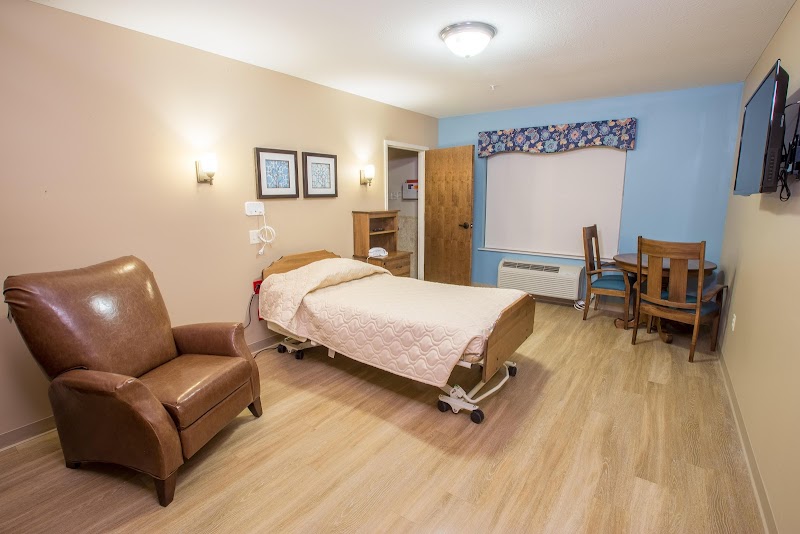
How is Meadow Grove Transitional Care Staffed?

CMS rates MEADOW GROVE TRANSITIONAL CARE's staffing level at 2 out of 5 stars, which is below average compared to other nursing homes. Staff turnover is 62%, which is 16 percentage points above the Ohio average of 46%. High turnover can affect care consistency as new staff learn residents' individual needs.

What Have Inspectors Found at Meadow Grove Transitional Care?

State health inspectors documented 20 deficiencies at MEADOW GROVE TRANSITIONAL CARE during 2020 to 2025. These included: 20 with potential for harm.
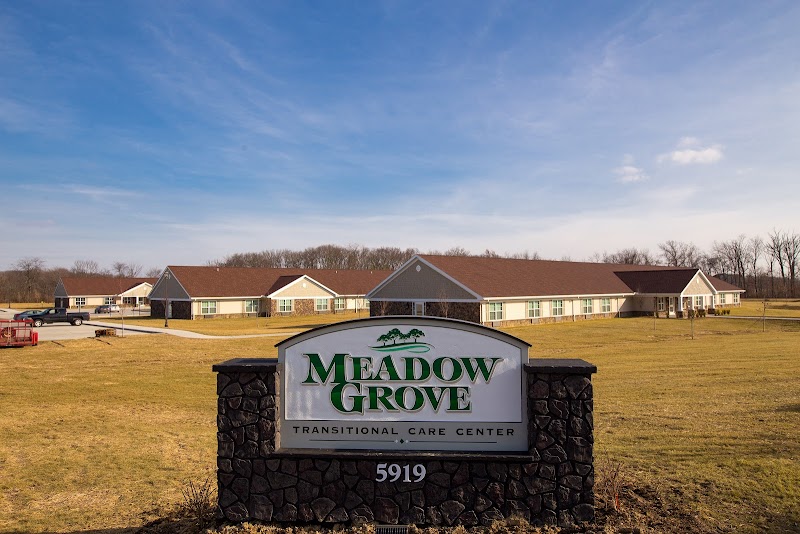
Who Owns and Operates Meadow Grove Transitional Care?

MEADOW GROVE TRANSITIONAL CARE is owned by a for-profit company. For-profit facilities operate as businesses with obligations to shareholders or private owners. The facility is operated by FOUNDATIONS HEALTH SOLUTIONS, a chain that manages multiple nursing homes. With 99 certified beds and approximately 92 residents (about 93% occupancy), it is a smaller facility located in GROVE CITY, Ohio.
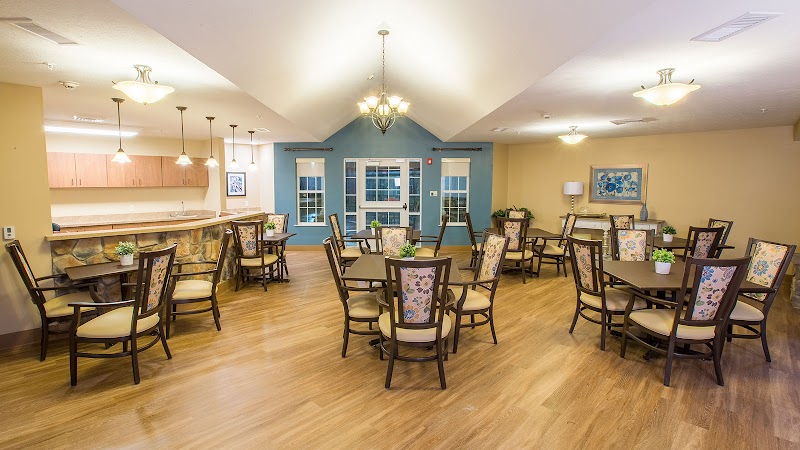
How Does Meadow Grove Transitional Care Compare to Other Ohio Nursing Homes?

Compared to the 100 nursing homes in Ohio, MEADOW GROVE TRANSITIONAL CARE's overall rating (4 stars) is above the state average of 3.2, staff turnover (62%) is significantly higher than the state average of 46%, and health inspection rating (4 stars) is above the national benchmark.

What Should Families Ask When Visiting Meadow Grove Transitional Care?

Based on this facility's data, families visiting should ask: "How do you ensure continuity of care given staff turnover, and what is your staff retention strategy?" "Can you walk me through typical staffing levels on day, evening, and night shifts?" "Can I visit during a mealtime to observe dining assistance and food quality?" "How do you handle medical emergencies, and what is your hospital transfer rate?" These questions are particularly relevant given the facility's high staff turnover rate and the below-average staffing rating.

Is Meadow Grove Transitional Care Safe?

Based on CMS inspection data, MEADOW GROVE TRANSITIONAL CARE has a clean safety record: no substantiated abuse findings (meaning no confirmed cases of resident harm), no Immediate Jeopardy citations (the most serious violation level indicating risk of serious injury or death), and is not on the Special Focus Facility watch list (a federal program monitoring the lowest-performing 1% of nursing homes). The facility has a 4-star overall rating and ranks #1 of 100 nursing homes in Ohio. While no facility is perfect, families should still ask about staff-to-resident ratios and recent inspection results during their visit.

Do Nurses at Meadow Grove Transitional Care Stick Around?

Staff turnover at MEADOW GROVE TRANSITIONAL CARE is high. At 62%, the facility is 16 percentage points above the Ohio average of 46%. High turnover means new staff may not know residents' individual needs, medications, or preferences. It can also be disorienting for residents, especially those with dementia who rely on familiar faces. Families should ask: What is causing the turnover? What retention programs are in place? How do you ensure care continuity during staff transitions?

Was Meadow Grove Transitional Care Ever Fined?

MEADOW GROVE TRANSITIONAL CARE has no federal fines on record. CMS issues fines when nursing homes fail to meet care standards or don't correct problems found during inspections. The absence of fines suggests the facility has either maintained compliance or corrected any issues before penalties were assessed. This is a positive indicator, though families should still review recent inspection reports for the full picture.

Is Meadow Grove Transitional Care on Any Federal Watch List?

MEADOW GROVE TRANSITIONAL CARE is not on any federal watch list. The most significant is the Special Focus Facility (SFF) program, which identifies the bottom 1% of nursing homes nationally based on persistent, serious quality problems. Not being on this list means the facility has avoided the pattern of deficiencies that triggers enhanced federal oversight. This is a positive indicator, though families should still review the facility's inspection history directly.