BERKELEY SQUARE RETIREMENT CEN
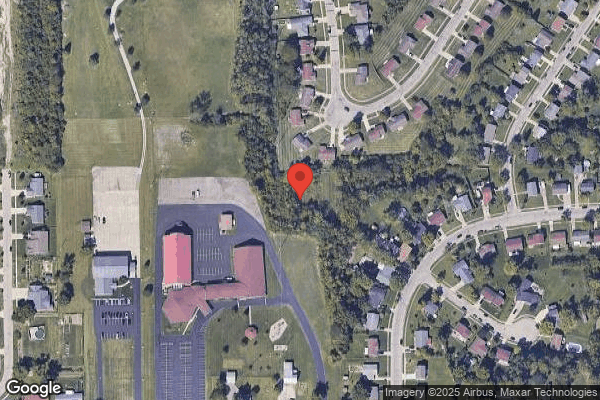

100 BERKELEY DRIVE, HAMILTON, OH 45013 (513) 856-8600
Non profit - Corporation 33 Beds Independent Data: November 2025
Trust Grade
75/100
#225 of 913 in OH
Last Inspection: August 2022

Over 2 years since last inspection. Current conditions may differ from available data.

Overview

Berkeley Square Retirement Center in Hamilton, Ohio has a Trust Grade of B, indicating it is a good choice for care, sitting in the top half of facilities in Ohio at #225 out of 913. In Butler County, it ranks #7 of 24, meaning there are only six local options considered better. The facility's performance has remained stable, with one issue reported in both 2022 and 2024. Staffing is rated at 4 out of 5 stars, but the turnover rate is 56%, which is average for Ohio. Notably, there have been no fines, reflecting a good compliance record, and while the RN coverage is average, this might limit the ability to catch potential issues. However, there are some areas of concern. Recent inspections revealed issues with food safety, such as staff handling food with bare hands, which poses a risk of contamination. Additionally, there was a problem with an ice maker containing mold, which could affect food quality for all residents. Lastly, the facility has been cited for not properly dating and discarding injectable medications, raising concerns about residents’ safety. While there are strengths, such as a solid trust grade and no fines, families should be aware of these weaknesses when considering care for their loved ones.

Trust Score
B
75/100
In Ohio
#225/913
Top 24%
Safety Record
Low Risk
No red flags
Inspections
Holding Steady
1 → 1 violations
Staff Stability
⚠ Watch
56% turnover. Above average. Higher turnover means staff may not know residents' routines.
Penalties
✓ Good
No fines on record. Clean compliance history, better than most Ohio facilities.
Skilled Nurses
✓ Good
Each resident gets 64 minutes of Registered Nurse (RN) attention daily — more than 97% of Ohio nursing homes. RNs are the most trained staff who catch health problems before they become serious.
Violations
✓ Good
Only 5 deficiencies on record. Cleaner than most facilities. Minor issues only.
★★★★☆
4.0
Overall Rating
★★★★☆
4.0
Staff Levels
★★☆☆☆
2.0
Care Quality
★★★★☆
4.0
Inspection Score
Stable
2022: 1 issues
2024: 1 issues

The Good

  • 4-Star Staffing Rating · Above-average nurse staffing levels
  • Full Sprinkler Coverage · Fire safety systems throughout facility
  • No fines on record

Facility shows strength in staffing levels, fire safety.

The Bad

Staff Turnover: 56%

Near Ohio avg (46%)

Frequent staff changes - ask about care continuity

Staff turnover is elevated (56%)

8 points above Ohio average of 48%

The Ugly 5 deficiencies on record

Sept 2024 1 deficiency
CONCERN (D) 📢 Someone Reported This

A family member, employee, or ombudsman was alarmed enough to file a formal complaint

Potential for Harm - no one hurt, but risky conditions existed

Pressure Ulcer Prevention (Tag F0686)

Could have caused harm · This affected 1 resident

**NOTE- TERMS IN BRACKETS HAVE BEEN EDITED TO PROTECT CONFIDENTIALITY** Based on record review, staff interview, observation, and review of the facility policy, the facility failed to follow the physi...

Read full inspector narrative →
**NOTE- TERMS IN BRACKETS HAVE BEEN EDITED TO PROTECT CONFIDENTIALITY** Based on record review, staff interview, observation, and review of the facility policy, the facility failed to follow the physician's order to treat the resident's pressure wounds and failed to routinely assess the resident's pressure wounds. This affected one (Resident #11) of three residents reviewed for pressure wounds. The facility identified eight residents with pressure ulcers. The facility census was 29. Findings include: Review of the medical record revealed Resident #11 had an admission date of 07/29/24. Diagnoses included chronic systolic heart failure, vertebra osteomyelitis, and Parkinson's disease. Review of the admission Minimum Data Set (MDS) assessment dated [DATE] revealed Resident #11 was cognitively impaired. Review of the skin only evaluation dated 07/29/24 revealed Resident #11 had the following skin concerns: left heel, buttocks excoriation, right buttocks medial, back excoriation, right elbow skin tear not painful, right and left lower legs discoloration, and right shin tear. There were no measurements or description of the wounds. Review of the plan of care dated 07/29/24 revealed Resident #11 was at risk for potential for skin breakdown related to bowel incontinence, catheter tubing in use, decreased mobility, previous issues with Moisture Associated Skin Damage (MASD) on right inner buttocks, stage III pressure injury (Full thickness tissue loss. Subcutaneous fat may be visible, but bone, tendon or muscle is not exposed) to the left heel. Deep tissue injury (purple or maroon area of discolored intact skin due to damage or underlying soft tissue) to right buttocks, yeast under right and left arm. Many refusals of care and treatment to be completed. On 08/06/24, a wound consultant assessed Resident #11's wounds and included the following pressure areas: right buttock was a deep tissue injury (DTI) and showed deterioration. Left heel stage III smaller in size. Resident #11 was discharged to the hospital on [DATE] and returned to the facility on [DATE]. Review of the skin only evaluation dated 08/15/24 revealed Resident #11 had wounds which included the following: left heel (DTI), right heel (DTI), right buttock (marked as open lesion), and left buttock (marked as open lesion). There were no measurements or descriptions of the wounds. Resident #11 was discharged to the hospital on [DATE] and returned to the facility on [DATE]. Review of the skin only evaluation dated 08/27/24 revealed Resident #11 had wounds which included the following: back had excoriation, coccyx (open area), left heel (DTI), and right heel (redness). There were no measurements or descriptions of the wounds. Resident #11 was discharged to the hospital on [DATE] and returned to the facility on [DATE]. Review of the skin only evaluation dated 09/03/24 revealed Resident #11 had wounds which included coccyx (open area), left heel (DTI), right heel (redness), and back (excoriation). Review of the Resident #11's wound measurements dated 09/10/24 revealed the right lateral buttocks measured 2.5 centimeter (cm) in length by 2.5 cm in width by 0.1 cm in depth, right inner buttocks measured 3.5 cm by 2.5 cm by 0.1 cm, left lateral buttocks measured 1.0 cm by 1.0 cm by 0.1 cm, and the left inner buttocks measured 1.2 cm by 0.5 cm by 0.1 cm. Review of the physician order dated 09/12/24 revealed Resident #11 had an order to clean with normal saline then apply Remedy Calazime paste 0.4-20.5% to the two open areas on the left buttocks topically daily on day shift. Cover with Optifoam gentle dressing. The order dated 09/12/24 stated to cleanse the two open areas on the right buttocks with normal saline and apply Triad Hydrophillic Wound Dress External Paste. Cover with Optifoam gentle dressing. Interview on 09/12/24 at 3:00 P.M. with the Director of Nursing (DON) verified the facility should have had wound assessments upon admission, and readmission from the hospital for Resident #11 on 07/29/24, 08/15/24, and 08/27/24. The DON verified the facility only completed skin assessments with measurements and description of the wounds for Resident #11 on 09/03/24 and 09/10/24. Observation and interview on 09/16/24 at 2:00 P.M. revealed Licensed Practical Nurse (LPN) #345 and State Tested Nurse Aid (STNA) #277 provided wound care to Resident #11. LPN #345 removed Resident #11's ABD dressing to the right and left buttocks and the treatment was Hydrofero Blue (antibacterial, non-cytotoxic wound care product) dressing under the ABD dressing. LPN #345 confirmed Hydrofero Blue was not ordered for Resident #11's right and left buttocks wound treatment. Review of the facility policy titled Skin: Prevention, Detection and Treatment of Pressure Ulcers dated 08/2024 revealed to prevent pressures sores was to have early detection of potential or actual pressure ulcer sites. Assessments of pressure ulcers included type of ulcer pressure or not, the ulcer stage, ulcer's characteristics, progress toward healing or complications, presence of infection, presence and treatment of pain, and presence and type of dressing and treatment. Review of the facility policy titled Wound Treatment Protocol dated 10/2023 revealed the policy was to establish immediate treatment of non-intact skin, protocols in treating different levels of wounds, and to enhance the healing process of non-intact skin. Continue to describe the wound thoroughly included: wound bed, drainage, peri wound in the skin assessment, and document the specific area being treated in the order set upon admission. This deficiency represents non-compliance investigated under Complaint Number OH00156890.
Aug 2022 1 deficiency
CONCERN (F)

Potential for Harm - no one hurt, but risky conditions existed

Food Safety (Tag F0812)

Could have caused harm · This affected most or all residents

Based on observations, staff interviews, and policy review, the facility failed to store and serve food in a sanitary manner. This affected two residents (#17 and #24) who were observed in the dining ...

Read full inspector narrative →
Based on observations, staff interviews, and policy review, the facility failed to store and serve food in a sanitary manner. This affected two residents (#17 and #24) who were observed in the dining room. This had the potential to affect all 28 residents who receive food from the kitchen. The facility census was 28. Findings include: 1. Observations on 08/01/22 at 12:27 P.M. revealed State Tested Nurse Aide (STNA) #6 picked up one half of a ham salad sandwich in her bare hand and held it up to Resident #24's mouth. STNA #6 placed her bare hand inside an individual-sized bag of cheeses puffs and placed a chip in Resident #24's hand. Observation on 08/01/22 at 12:31 P.M. revealed Dietary Technician #51 delivered a hamburger on a plate to Resident #17 in the dining room. STNA #6 asked Resident #17 if she wanted mustard, took the top bun off the sandwich with her bare hand, squeezed mustard on top of the hamburger patty, replaced the bun, and patted the bun down with her bare hand. STNA #6 did not sanitize her hands before she continued providing feeding assistance to both Resident #24 and Resident #17. During an interview on 08/01/22 at 12:39 P.M., STNA #6 verified she had touched both Residents #24's and #17's food with her bare hands. STNA #6 stated she had thought if she used hand sanitizer, it was ok to touch food with her bare hands. 2. Observation made on 08/01/22 at 9:14 A.M. revealed the walk-in refrigerator located in the hallway contained multiple expired eight ounce (oz) cartons of milk including: one carton chocolate milk dated 07/13/22, one carton 2% white milk dated 07/23/22, one chocolate milk dated 07/25/22, six cartons 2% white milk dated 07/25/22, and 19 cartons 2% white milk dated 07/31/22. Observation made on 08/01/22 at 9:23 A.M. revealed the reach-in refrigerator located in the kitchen contained multiple bins of expired left over foods including one half-pan labeled chicken and rice prepared on 07/16/22 with a discard date of 07/21/22, one gallon-sized re-sealable bag of cooked hamburgers labeled prepared on 07/28/22 with a discard date of 07/31/22, one labeled quarter pan of chili prepared on 07/19/22 with a discard date 07/31/22 and one labeled plastic container with two and half quarts of black olives opened on 07/20/22 with a discard date of 07/30/22. During an interview on 08/01/22 at 9:29 A.M., Dietary Staff #55 verified the reach-in refrigerator contained multiple pans of leftover foods stored beyond their discard date. Dietary Staff #55 stated leftover foods were labeled with the date they were prepared and discarded with in three to seven days depending on the food item. During an interview on 08/01/22 at 9:43 A.M., Line [NAME] #5 verified the walk-in refrigerator located in the hallway contained 28 eight ounce cartons of expired milk. Review of the facility's policy titled Food Service and Nutrition, revised 09/07/21, revealed the facility stored, prepared, distributed, and served food under sanitary conditions and in a manner that protected against contamination and spoilage according to food service requirements of the Ohio Administrative Code.
Aug 2019 2 deficiencies
CONCERN (E)

Potential for Harm - no one hurt, but risky conditions existed

Deficiency F0761 (Tag F0761)

Could have caused harm · This affected multiple residents

Based on record review, observation, staff interview, review of facility policy, and review of the online resource, the facility failed to discard outdated resident medications. This affected Resident...

Read full inspector narrative →
Based on record review, observation, staff interview, review of facility policy, and review of the online resource, the facility failed to discard outdated resident medications. This affected Resident #3 for eye drops and had the potential to affect six residents (#8, #17, #22 , #25, #28, #85 and #86) for antacid medication. The facility census was 30. Findings include: 1. Review of record for Resident #3 revealed an admission date of 03/10/16 and a diagnosis of end stage heart failure. Review of the physician orders, dated 05/03/18, revealed an order for the resident to receive artificial tear solution instilled two drops in both eyes threes time per day for dry eye. Review of Medication Administration Record (MAR) for August 2019 for Resident #3 revealed resident received artificial tear solution instilled to both eyes per the physician's order. Observation and interview on 08/07/19 at 10:23 A.M. with Licensed Practical Nurse (LPN) #242 revealed an opened bottle of artificial tear solution labeled with Resident #3's name and dated 06/25/19. The LPN confirmed that the bottle of artificial tear solution was used for Resident #3 and had been dated 06/25/19 to indicate when it had been opened. Interview with the Director of Nursing (DON) on 08/07/19 at 4:15 P.M. confirmed the artificial tear solution did not contain manufacturer instructions regarding when the medication should be discarded once opened. Review of the International Pharmacopoeia, Seventh Edition, dated 2017, revealed multidose ophthalmic drop preparations may be used for up to four weeks after the container is initially opened. Review of facility policy titled Storage of Medications, dated 07/25/19, revealed all multidose vials of medications are to be dated and initialed by the nurse opening the vial and indicating the date of opening. 2. Observation on 08/07/19 at 10:07 A.M. of the rehabilitation unit medication cart with LPN #238 revealed the cart contained an opened house stock bottle of Maalox liquid (over the counter indigestion medication) with a manufacturer's expiration date of 07/2019. Interview with LPN #238 on 08/07/19 at 10:07 A.M. confirmed the opened bottle of house stock Maalox in the rehab cart was expired and should have been discarded. Interview with the DON on 08/08/19 at 10:45 A.M. confirmed that Resident's #8, #17, #22, #25, #28, #85, #86 had orders for Maalox as needed for indigestion and that expired medications should be discarded. Review of facility policy undated titled Storage of Medications revealed medications should not be kept past their expiration date and should be destroyed.
CONCERN (F)

Potential for Harm - no one hurt, but risky conditions existed

Food Safety (Tag F0812)

Could have caused harm · This affected most or all residents

Based on observation, staff interview and review of facility policy, the facility failed to ensure the ice maker was free of mold. This had the potential to affect all residents residing in facility w...

Read full inspector narrative →
Based on observation, staff interview and review of facility policy, the facility failed to ensure the ice maker was free of mold. This had the potential to affect all residents residing in facility with exception of one resident (#1) whom the facility identified as not receiving food from the kitchen. The facility census was 30. Findings include; During initial observation of the kitchen on 08/08/19 at 8:15 A.M., revealed the ice maker in the main kitchen had several black areas inside the ice maker compartment. Interview with General Manager of Culinary #198 on 08/08/19 at 8:22 A.M. verified the black areas inside the main kitchen's ice maker. General Manager of Culinary #198 stated the black areas inside the ice maker were mold. Review of the facility's list of residents who don't receive food from the kitchen revealed Resident #1 did not. Review of the facility policy titled Ice Machine Maintenance and Cleaning Policy, dated 10/02/18, revealed the facility was to establish a maintenance and cleaning schedule to be certain machines are functioning properly and are clean for infection control.
Jul 2018 1 deficiency
CONCERN (F)

Potential for Harm - no one hurt, but risky conditions existed

Deficiency F0761 (Tag F0761)

Could have caused harm · This affected most or all residents

Based on observation and interview, the facility failed to ensure injectable medications were dated as to when opened and were discarded in accordance to their expiration dates. This had the potential...

Read full inspector narrative →
Based on observation and interview, the facility failed to ensure injectable medications were dated as to when opened and were discarded in accordance to their expiration dates. This had the potential to affect all 31 residents. Findings include: During observation of the facility's medication room refrigerator on 07/19/18 at 10:00 A.M., the following was observed: a. A Humalog Insulin Pen belonging to Resident #14 was located on a shelf in the refrigerator. The expiration date of the Insulin Pen was 06/13/18. b. A vial of Kenlog-40 (a steroid) was located on a shelf in the refrigerator. The medication expiration date was 03/18/18. c. Two opened vials of Tuberculin Purified Protein were in the refrigerator and not dated as to when they were first opened and used. d. A vial of Hepatitis B in the refrigerator had an expiration date of 05/09/18. At the time of the observation the Director of Nursing verified the above items and subsequently discarded the medications.
Understanding Severity Codes (click to expand)
Life-Threatening (Immediate Jeopardy)
J - Isolated K - Pattern L - Widespread
Actual Harm
G - Isolated H - Pattern I - Widespread
Potential for Harm
D - Isolated E - Pattern F - Widespread
No Harm (Minor)
A - Isolated B - Pattern C - Widespread

Questions to Ask on Your Visit

  • "Why is there high staff turnover? How do you retain staff?"
  • "Can I speak with families of current residents?"
  • "What's your RN coverage like on weekends and overnight?"

Our Honest Assessment

Strengths
  • • No major safety red flags. No abuse findings, life-threatening violations, or SFF status.
  • • No fines on record. Clean compliance history, better than most Ohio facilities.
  • • Only 5 deficiencies on record. Cleaner than most facilities. Minor issues only.
Concerns
  • • 56% turnover. Above average. Higher turnover means staff may not know residents' routines.
Bottom line: Generally positive indicators. Standard due diligence and a personal visit recommended.

About This Facility

What is Berkeley Square Retirement Cen's CMS Rating?

CMS assigns BERKELEY SQUARE RETIREMENT CEN an overall rating of 4 out of 5 stars, which is considered above average nationally. Within Ohio, this rating places the facility higher than 99% of the state's 100 nursing homes. This rating reflects solid performance across the metrics CMS uses to evaluate nursing home quality.

How is Berkeley Square Retirement Cen Staffed?

CMS rates BERKELEY SQUARE RETIREMENT CEN's staffing level at 4 out of 5 stars, which is above average compared to other nursing homes. Staff turnover is 56%, which is 10 percentage points above the Ohio average of 46%. High turnover can affect care consistency as new staff learn residents' individual needs. RN turnover specifically is 56%, which is notably high. RNs provide skilled clinical oversight, so turnover in this role can affect medical care quality.

What Have Inspectors Found at Berkeley Square Retirement Cen?

State health inspectors documented 5 deficiencies at BERKELEY SQUARE RETIREMENT CEN during 2018 to 2024. These included: 5 with potential for harm.

Who Owns and Operates Berkeley Square Retirement Cen?

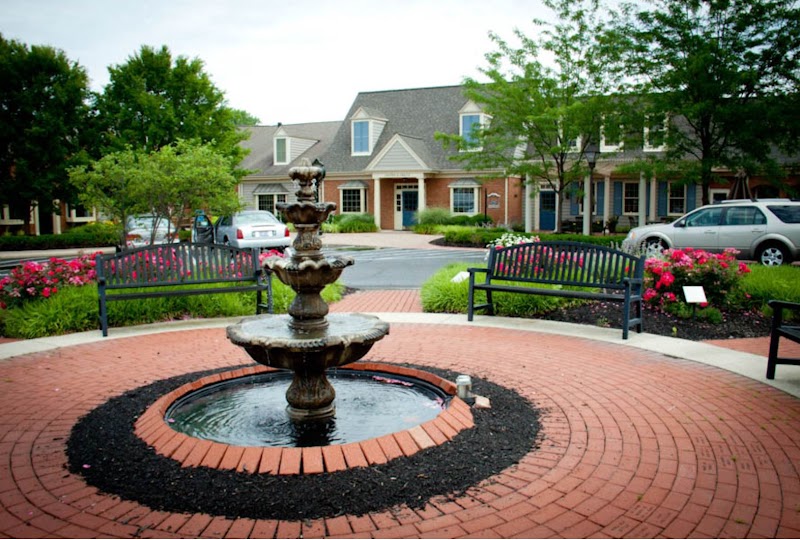
BERKELEY SQUARE RETIREMENT CEN is owned by a non-profit organization. Non-profit facilities reinvest revenue into operations rather than distributing to shareholders. The facility operates independently rather than as part of a larger chain. With 33 certified beds and approximately 26 residents (about 79% occupancy), it is a smaller facility located in HAMILTON, Ohio.
How Does Berkeley Square Retirement Cen Compare to Other Ohio Nursing Homes?

Compared to the 100 nursing homes in Ohio, BERKELEY SQUARE RETIREMENT CEN's overall rating (4 stars) is above the state average of 3.2, staff turnover (56%) is near the state average of 46%, and health inspection rating (4 stars) is above the national benchmark.

What Should Families Ask When Visiting Berkeley Square Retirement Cen?

Based on this facility's data, families visiting should ask: "How do you ensure continuity of care given staff turnover, and what is your staff retention strategy?" "Can I visit during a mealtime to observe dining assistance and food quality?" "How do you handle medical emergencies, and what is your hospital transfer rate?" "Can I speak with family members of current residents about their experience?" These questions are particularly relevant given the facility's high staff turnover rate.

Is Berkeley Square Retirement Cen Safe?

Based on CMS inspection data, BERKELEY SQUARE RETIREMENT CEN has a clean safety record: no substantiated abuse findings (meaning no confirmed cases of resident harm), no Immediate Jeopardy citations (the most serious violation level indicating risk of serious injury or death), and is not on the Special Focus Facility watch list (a federal program monitoring the lowest-performing 1% of nursing homes). The facility has a 4-star overall rating and ranks #1 of 100 nursing homes in Ohio. While no facility is perfect, families should still ask about staff-to-resident ratios and recent inspection results during their visit.

Do Nurses at Berkeley Square Retirement Cen Stick Around?

Staff turnover at BERKELEY SQUARE RETIREMENT CEN is high. At 56%, the facility is 10 percentage points above the Ohio average of 46%. Registered Nurse turnover is particularly concerning at 56%. RNs handle complex medical decisions and coordinate care — frequent RN changes can directly impact care quality. High turnover means new staff may not know residents' individual needs, medications, or preferences. It can also be disorienting for residents, especially those with dementia who rely on familiar faces. Families should ask: What is causing the turnover? What retention programs are in place? How do you ensure care continuity during staff transitions?

Was Berkeley Square Retirement Cen Ever Fined?

BERKELEY SQUARE RETIREMENT CEN has no federal fines on record. CMS issues fines when nursing homes fail to meet care standards or don't correct problems found during inspections. The absence of fines suggests the facility has either maintained compliance or corrected any issues before penalties were assessed. This is a positive indicator, though families should still review recent inspection reports for the full picture.

Is Berkeley Square Retirement Cen on Any Federal Watch List?

BERKELEY SQUARE RETIREMENT CEN is not on any federal watch list. The most significant is the Special Focus Facility (SFF) program, which identifies the bottom 1% of nursing homes nationally based on persistent, serious quality problems. Not being on this list means the facility has avoided the pattern of deficiencies that triggers enhanced federal oversight. This is a positive indicator, though families should still review the facility's inspection history directly.