DARBY GLENN NURSING AND REHABILITATION CENTER
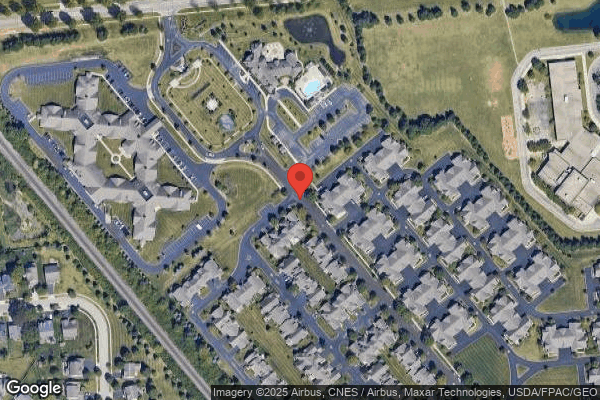
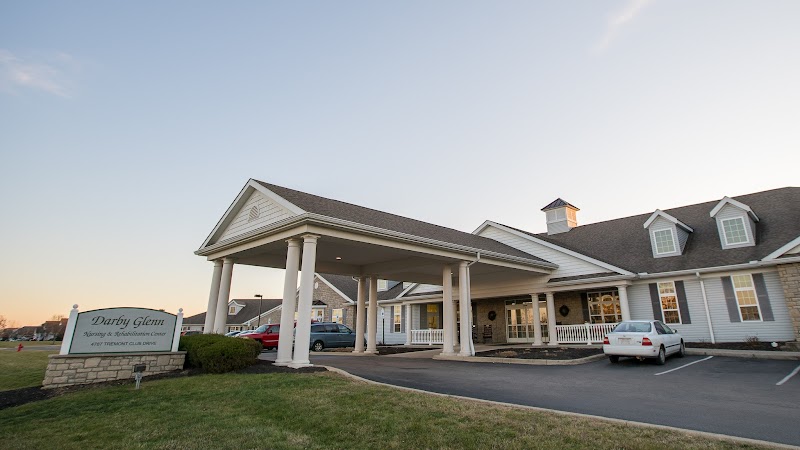
4787 TREMONT CLUB DRIVE, HILLIARD, OH 43026 (614) 777-6001
For profit - Corporation 99 Beds FOUNDATIONS HEALTH SOLUTIONS Data: November 2025
Trust Grade
55/100
#451 of 913 in OH
Last Inspection: July 2024

Within standard 12-15 month inspection cycle. Federal law requires annual inspections.

Overview

Darby Glenn Nursing and Rehabilitation Center has a Trust Grade of C, which means it is average and falls in the middle of the pack compared to other facilities. It ranks #451 out of 913 in Ohio, placing it in the top half, and #13 out of 56 in Franklin County, indicating that only a few local options are better. The facility is improving overall, with issues decreasing from 7 in 2024 to just 1 in 2025. Staffing is a concern, as it received a 2 out of 5 stars rating, and the turnover rate is 49%, which matches the state average, suggesting that staff may not stay long enough to build strong relationships with residents. On a positive note, the facility has no reported fines and offers more RN coverage than 78% of Ohio facilities, which helps ensure better care. However, there have been serious issues, such as a resident developing a deep tissue injury due to a lack of necessary pressure-relieving interventions, and concerns about food service quality, including cold meals served on Styrofoam and poor sanitary conditions in the kitchen. Overall, while there are some strengths, potential residents and their families should weigh the weaknesses carefully.

Trust Score
C
55/100
In Ohio
#451/913
Top 49%
Safety Record
Moderate
Needs review
Inspections
Getting Better
7 → 1 violations
Staff Stability
⚠ Watch
49% turnover. Above average. Higher turnover means staff may not know residents' routines.
Penalties
✓ Good
No fines on record. Clean compliance history, better than most Ohio facilities.
Skilled Nurses
○ Average
Each resident gets 41 minutes of Registered Nurse (RN) attention daily — about average for Ohio. RNs are the most trained staff who monitor for health changes.
Violations
⚠ Watch
38 deficiencies on record. Higher than average. Multiple issues found across inspections.
★★★☆☆
3.0
Overall Rating
★★☆☆☆
2.0
Staff Levels
★★★★☆
4.0
Care Quality
★★★☆☆
3.0
Inspection Score
Stable
2024: 7 issues
2025: 1 issues

The Good

  • 4-Star Quality Measures · Strong clinical quality outcomes
  • Full Sprinkler Coverage · Fire safety systems throughout facility
  • No fines on record

Facility shows strength in quality measures, fire safety.

The Bad

3-Star Overall Rating

Near Ohio average (3.2)

Meets federal standards, typical of most facilities

Staff Turnover: 49%

Near Ohio avg (46%)

Higher turnover may affect care consistency

Chain: FOUNDATIONS HEALTH SOLUTIONS

Part of a multi-facility chain

Ask about local staffing decisions and management

The Ugly 38 deficiencies on record

1 actual harm
Jan 2025 1 deficiency
CONCERN (D) 📢 Someone Reported This

A family member, employee, or ombudsman was alarmed enough to file a formal complaint

Potential for Harm - no one hurt, but risky conditions existed

Deficiency F0602 (Tag F0602)

Could have caused harm · This affected 1 resident

**NOTE- TERMS IN BRACKETS HAVE BEEN EDITED TO PROTECT CONFIDENTIALITY** THE FOLLOWING DEFICIENCY REPRESENTS AN INCIDENT OF PAST NON-COMPLIANCE THAT WAS SUBSEQUENTLY CORRECTED PRIOR TO THIS SURVEY. Bas...

Read full inspector narrative →
**NOTE- TERMS IN BRACKETS HAVE BEEN EDITED TO PROTECT CONFIDENTIALITY** THE FOLLOWING DEFICIENCY REPRESENTS AN INCIDENT OF PAST NON-COMPLIANCE THAT WAS SUBSEQUENTLY CORRECTED PRIOR TO THIS SURVEY. Based on interview, medical record review, review of facility investigation, and review of facility self-reported incidents (SRI's) revealed the facility failed to ensure Resident #59's money was not misappropriated by facility staff. This affected one resident (#59) of three residents reviewed for misappropriation. The facility census was 94. Findings include: Review of the medical record for Resident #59 revealed an admission date of 11/10/24 with diagnoses including Parkinson's disease, type two diabetes mellitus, bipolar disease, anxiety disorder, dementia, and major depressive disorder. Review of Resident #59's Minimum Data Set (MDS) 3.0 assessment dated [DATE] revealed he had intact cognition. Review of the SRI created 12/18/24 and completed 12/26/24 revealed an incident of misappropriation had been substantiated. Resident #59's wallet had been missing. Review of the narrative revealed on 12/18/24 Resident #59 notified the assistant director of nursing (ADON) he could not find his wallet. The ADON notified social services and together they searched the resident's room and wheelchair for his wallet and were unable to locate it. Resident #59 stated he was going to go out to lunch with his power of attorney (POA) and would continue to look when he returned. When he returned, he stated he and his POA had gone to the bank and learned there had been a charge on his card at an automated teller machine (ATM) and he felt his card had been stolen. Social services notified the Administrator and an investigation was started. The residents' bank card was canceled, and it was confirmed the ATM withdrawal occurred at a gas station near the facility. The police were notified, and images were obtained from the gas station placing three facility housekeepers (#107, #113, and #117) at the gas station at the time of the withdrawal, the images revealed Housekeeper #113 was at the ATM located in the gas station. All three housekeepers were suspended immediately. Housekeeper #113 had been assigned to Resident #59's room on that day, and all three had been clocked out for lunch at the time of the withdrawal. When the Administrator interviewed the staff, they all declined being at the gas station at all. When informed they were observed on security footage, they denied using Resident #59's bank card. Housekeeper #107 indicated Housekeepers #113 and #117 were responsible and she had nothing to do with it. Hilliard Police arrived on 12/18/24 at 6:14 P.M. to file a report and are investigating the incident. All three housekeepers were no longer employed at the facility. Review of Resident #59's personal bank statement revealed on 12/18/24 there was a withdrawal of $400.00 from a ATM that was not at his bank location. There was a pending reversal of the ATM withdrawal. Written on this document was a statement that said a phone call with the back confirmed the withdrawal occurred at 12:26 P.M. at a gas station near the facility. Review of the police case report printed 12/23/24 revealed an incident was reported on 12/18/24 at 6:07 P.M. and had occurred that day from 12:10 P.M. to 12:30 P.M. The offense was stolen property and theft. The three suspects were redacted but Resident #59 was identified as the victim and the Administrator as an involved party. The offer reported he was dispatched to the facility on [DATE] at 6:14 P.M. and met with Resident #59 and the Administrator. Resident #59 had reported to the administrator that his wallet was lost or stolen, and he called the bank to report his debit card missing. The bank asked if he had made a $400.00 ATM withdrawal at a gas station, and he denied it. The withdrawal was considered fraudulent and done on another bank's ATM. The administrator had gone to the gas station and was provided with security camera photos. The photos were time stamped and showed three females inside the store, one of the females was at the ATM. The Administrator called all three employees, one staff member said she used her own debit card at the ATM, one staff member admitted that the other was using Resident #59's card, and the third denied knowing anything or being at the gas station at all. The Administrator provided the staff's time sheets and confirmed one of the housekeepers had been assigned to clean Resident #59's room that day. She verified all three staff were suspended while the incident was investigated and Resident #59 wished to pursue criminal charges. There were two additional redacted sheets attached to the police report as well as the security footage screenshots. There were six total screenshots, time stamped from 12:27 P.M. to 12:30 P.M. and someone had written the housekeeper's name on them. Housekeeper #113 was observed at the ATM, Housekeepers #113 and #107 were observed together in several pictures, and Housekeeper #117 was observed checking out with Housekeeper #107 standing behind her. Review of the SRI documents related to Housekeeper #117 revealed a disciplinary action form dated 12/19/24 indicating she was suspended beginning on 12/18/24 as she had been found on camera using an ATM with a resident's missing card. An additional disciplinary action form dated 12/26/24 revealed she was terminated related to an incident on 12/18/24 where she was found on camera with an employee who was using a resident's debit card at an ATM machine and did not report the incident. Review of Housekeeper #117's time stamps revealed on 12/18/24 she had a lunch break from 12:14 P.M. to 12:54 P.M. Her statement indicated on 12/18/24 she went to work and worked a normal day. Later in the day she got a call from the Administrator about a missing wallet, and she did not know anything about it. Review of the SRI documents related to Housekeeper #107 revealed a disciplinary form dated 12/19/24 indicating she was suspended beginning 12/18/24 due to being found on camera using an ATM with a residents missing credit card. An additional disciplinary action form dated 12/26/24 revealed she was terminated related to an incident on 12/18/24 where she was found on camera with an employee who was using a resident's debit card at an ATM machine and did not report the incident. Review of Housekeeper #107's time stamps revealed on 12/18/24 she had a lunch break from 12:15 P.M. to 12:56 P.M. Review of Housekeeper #107's statement revealed she went to the gas station to get lunch, she saw Housekeeper #113 at the ATM and saw her give Housekeeper #117 money. She denied any involvement. Review of the SRI documents related to Housekeeper #113 revealed a disciplinary form dated 12/19/24 indicating she was suspended beginning 12/18/24 due to being found on camera using an ATM with a residents missing credit card. An additional disciplinary action form dated 12/26/24 revealed she was terminated related to an incident on 12/18/24 where she was found on camera using an ATM with residents missing debit card. Review of Housekeeper #113's time stamps on 12/18/24 revealed she went to lunch from 12:16 P.M. to 12:52 P.M. Her statement revealed she denied any wrongdoing and had nothing to do with a wallet or card. Interview on 01/14/25 at 9:30 A.M. with the Administrator revealed Resident #59 had been out on 12/18/24 so she had gone to the gas station to ensure he had not taken any money out and forgotten. She had spoken to the cashier who helpfully looked at the camera and reported there had not been an old man at the ATM but there had been three females, and she provided screenshots. They then called the police and the housekeepers. Housekeepers #113 and #117 had always denied involvement, at one point Housekeeper #107 reported that she had nothing to do with it and it had been Housekeeper #113. She reported they had sufficient evidence that the staff were responsible for the theft or had knowledge of the theft and had not reported it, so they were all terminated. Interview on 01/14/25 at 11:52 A.M. with Resident #59 revealed 'those three girls' had stolen his money. He reported his money had since been returned to him. Interview on 01/14/25 at 12:08 P.M. with Social Worker #150 revealed her and the ADON had just searched for his wallet at first because he has dropped things like his wallet before. She reported once it became clear it was gone and money had been taken, she helped him call the bank, cancel his card, and start the refund process. The deficient practice was corrected on 12/20/24 when the facility implemented the following corrective actions: • Housekeepers #107, #113, and #117 were suspended on 12/18/24 and did not work again through their termination on 12/26/24. • On 12/19/24 an audit of all residents was completed to ensure there were no further concerns related to misappropriation with no negative findings. • From 12/19/24 to 12/20/24 all staff were educated on the abuse and misappropriation policy • On 12/27/24 the Administrator or designee began weekly audits to ensure there were no concerns related to misappropriation. • On 01/14/25, the review of resident council, grievances, and SRI's, and interview with residents and staff revealed no further misappropriation concerns from 12/20/24 to 01/14/25. This deficiency represents non-compliance investigated under OH00161059.
Jul 2024 5 deficiencies
CONCERN (D)

Potential for Harm - no one hurt, but risky conditions existed

Deficiency F0558 (Tag F0558)

Could have caused harm · This affected 1 resident

**NOTE- TERMS IN BRACKETS HAVE BEEN EDITED TO PROTECT CONFIDENTIALITY** Based on interview and observation, the facility failed to ensure Resident #65's bed was set to the proper setting to ensure com...

Read full inspector narrative →
**NOTE- TERMS IN BRACKETS HAVE BEEN EDITED TO PROTECT CONFIDENTIALITY** Based on interview and observation, the facility failed to ensure Resident #65's bed was set to the proper setting to ensure comfort. This affected one resident (#65) of 18 reviewed for speciality mattresses. The facility census was 91. Findings include: Review of the medical record for Resident #65 revealed an admission date of 06/15/20 with diagnoses including cerebral infarction due to thrombosis of other cerebral artery, type 2 diabetes mellitus, need for assistance with personal care, anxiety, insomnia, lower back pain, hemiplegia, and major depressive disorder. Review of Resident #65's quarterly Minimum Data Set (MDS) 3.0 assessment dated [DATE] revealed she required maximal assistance for bed mobility. Review of Resident #65's medical record revealed an order dated 03/26/24 for a low air loss (LAL) mattress. Staff required to check placement and function every shift. Review of Resident #65's care plan dated 06/26/24 found she was at risk for alteration in comfort due to pain and hemiplegia. Interventions did not include a special air mattress. She was also at risk for alteration in skin integrity related to diabetes, hemiplegia, incontinence, mobility impairment and interventions included encourage resident to elevate heels, turn and reposition, and maintain low air loss mattress per physician order. Review of Resident #65's medical record revealed on 07/24/24 at 5:01 P.M. Resident #65 weighed 132.6 lbs. Interview and observation on 07/24/24 at 9:56 A.M. with Admin Nurse #113 in Resident #65's room confirmed the resident's bed was at an incorrect weight of 300 lbs. Admin Nurse #113 would reach out to bed company to ensure the weight was set correctly. Interview on 07/25/24 at 2:05 P.M. with Admin Nurse #55 said Resident #65 prefers her bed at a firmer setting that is why her bed is not set to the correct weight. Interview on 07/25/24 at 2:12 P.M. with Resident #65 said she does not like the pressure of the bed, it is too hard per her preference. Interview on 07/25/24 at 2:15 P.M. with Admin Nurse #113 and Resident #65 said her bed was hard and she was uncomfortable in it. Admin Nurse #113 confirmed Resident #65 correct weight was 132 pounds, Admin Nurse #113 adjusted Resident #65 bed to the correct weight. Interview on 07/25/24 at 2:29 P.M. with Maintenance Director #50 revealed Med-Aire Plus 8 Low Air Loss System (mattress) should be set to a minimum of 50 pounds higher than a residents weight. He confirmed if her weight is 132 pounds the bed should set to 200 pounds to prevent the bed from being too hard. Interview on 07/25/24 at 2:32 P.M. with Resident #65 confirmed after the bed weight was adjusted her bed was much more comfortable. Interview conducted on 07/25/24 at 5:50 P.M. with Admin Nurse #113 confirmed residents with special air mattresses are set per residents' comfort preference.
CONCERN (D)

Potential for Harm - no one hurt, but risky conditions existed

Deficiency F0657 (Tag F0657)

Could have caused harm · This affected 1 resident

**NOTE- TERMS IN BRACKETS HAVE BEEN EDITED TO PROTECT CONFIDENTIALITY** Based on resident interview, family interview, staff interview, and policy review, the facility failed to ensure care conference...

Read full inspector narrative →
**NOTE- TERMS IN BRACKETS HAVE BEEN EDITED TO PROTECT CONFIDENTIALITY** Based on resident interview, family interview, staff interview, and policy review, the facility failed to ensure care conferences were held quarterly. This affected three residents (#22, #68, and #79) of six residents reviewed for care conferences. The facility census was 91. Findings include: 1. Review of medical record for Resident #22 revealed admission date of 02/12/23 with diagnoses including but not limited to paraplegia, congestive heart failure, cognitive communication deficit, and need for assistance with personal care. Review of Minimum Data Set (MDS) dated [DATE] revealed the resident was cognitively intact. Review of social service note dated 02/28/23 revealed care conference was held on this date with the resident. Review of social service note dated 10/04/23 revealed spoke with the resident and offered care conference. The resident declined. Social Worker let her know we would offer quarterly, and they could request one at anytime. Further review of the medical record revealed no further notes or care conferences held since 02/28/23. 2. Review of medical record for Resident #68 revealed admission date of 10/23/21 with diagnoses including but not limited to hydronephrosis, type two diabetes, chronic obstructive pulmonary disease, hypertension, hallucinations, anxiety, and sleep disorder. Review of Interdisciplinary Team (IDT) plan of care review summary dated 10/11/23 revealed daughter could not be present for care conference and needed to reschedule or have a phone care conference. Review of social service note dated 01/08/24 revealed the resident and/or responsible party offered care conference and they denied the care conference Proceed to care plan and monitor resident for social service needs. Review of social service note dated 03/22/24 revealed care conference was held with the IDT and the Power of Attorney (POA). No further care conferences were documented and no phone care conference was documented in October of 2023. Interview on 07/22/24 at 11:30 A.M. with family member of Resident #68 revealed the facility does not call her for care conferences. Family member stated that she always has to call the facility to get information and to set up meetings. Interview on 07/24/24 at 2:56 P.M. with the Director of Nursing (DON) verified the care conference was not held on 10/11/23 and phone care conference was not documented as being held. The DON verified there have been periods where the resident has not had care conferences quarterly. The DON stated the facility has been through several social workers in the past year. 3. Review of medical record for Resident #79 revealed admission date of 06/28/23 with diagnoses including but not limited to chronic obstructive pulmonary disease, type two diabetes, moderate protein-calorie malnutrition, dysphagia, kidney disease, hypertension, major depressive disorder, malignant neoplasm of unspecified part of right bronchus or lung, and acquired absence of lung. Review of MDS dated [DATE] revealed the resident was cognitively intact. Review of social service note dated 09/25/23 revealed resident and/or responsible party offered care conference. No response and no voicemail left due to voicemail not being set up. Social services to continue to follow. Review of social service note dated 12/29/23 revealed social worker reached out to resident times two in regard to scheduled care conference on 12/28/23. The resident did not answer. Social worker left voicemail. Review of IDT plan of care review dated 04/17/24 revealed the resident declined care conference at this time. IDT to review accordingly. Signed by social worker and therapy. Interview on 07/25/24 at 11:12 A.M. with Resident #79 verified he has never attended a care conference. The resident stated that he was bed bound when he was admitted to the facility so he could not get out to attend meetings. Interview on 07/24/24 at 1:47 P.M. with Social Services (SS #31) verified that prior to her coming to the facility the care conferences were not held quarterly for Resident #22, #68, and #79. SS #31 stated that in regards to setting up care conferences she would communicate with the resident and would call the families to schedule a date and time for care conference. SS #31 stated that the MDS triggers when the care conferences need to be held. SS #31 verified the care conferences are documented in point click care (PCC) under the social service note when held. SS #31 verified the social service summary is the MDS assessment that is completed. Review of policy titled, Care Conference, revised on 03/20/24 revealed the facility shall inform the resident and, if applicable responsible party of the right to participate in the resident's plan of care in a manner that facilitates his/her participation which may include reminders posted in conspicuous locations in the facility, notices sent via mail and/or email, recorded phone messages, reminders during Resident Council, and reminders during routine communications and/or visits. The facility's IDT shall periodically review the resident's care plan and make necessary revisions based on the goals, preferences, and needs of the resident. At routine intervals and after significant changes, the resident and, if applicable the resident's representative shall be given an opportunity to participate in the plan of care.
CONCERN (D)

Potential for Harm - no one hurt, but risky conditions existed

Deficiency F0679 (Tag F0679)

Could have caused harm · This affected 1 resident

**NOTE- TERMS IN BRACKETS HAVE BEEN EDITED TO PROTECT CONFIDENTIALITY** Based on interview, record review, and policy review, the facility failed to provide and offer Resident #65 activities per prefe...

Read full inspector narrative →
**NOTE- TERMS IN BRACKETS HAVE BEEN EDITED TO PROTECT CONFIDENTIALITY** Based on interview, record review, and policy review, the facility failed to provide and offer Resident #65 activities per preference. This affected one resident (#65) of one resident reviewed for activities. The facility census was 91. Findings include: Review of the medical record for Resident #65 revealed an admission date of 06/15/20 with diagnoses including cerebral infarction due to thrombosis of other cerebral artery, type 2 diabetes mellitus, need for assistance with personal care, anxiety, insomnia, lower back pain, hemiplegia, and major depressive disorder. Review of Resident #65's activity assessment completed 03/11/24 revealed she prefers one-on-one (1:1) and small group activities. She enjoys bingo, television, pop music, and socializing. In line with her preferences, Resident #65 participates in bingo, crafts, happy hour/live music, and special events when she is up from bed. Activity staff will continue to invite, encourage, and assist her with activities as needed. Resident #65, who was recently admitted to hospice services, occasionally attends group activities but does not stay long due to pain. Listening to music she likes is very important to her. She finds it somewhat important to engage in group activities, pursue her favorite hobbies, and go outside. Review of Resident #65's quarterly Minimum Data Set (MDS) 3.0 assessment dated [DATE] revealed she was moderately cognitively impaired and dependent on staff for ambulation. Review of Resident #65's care plan dated 10/04/24 revealed the resident is a sociable person who enjoys participating in a variety of activities. Important activities for Resident #65 include arts and crafts, bingo, visits, reading, religious activities, and watching TV or movies. The goal is for her to participate in group activities twice per week. Interventions include assisting Resident #65 with sitting on the porch/courtyard/patio when weather permits and giving verbal reminders of activities before, they start. Review of Resident #65's medical record revealed that she was not invited to or did not attend arts and crafts, bingo, or party/social hour during June or July. Review of Resident #65's activity documentation from 06/01/24 to 07/23/24 revealed that she was not invited to or did not attend arts and crafts, bingo, or party/social hour. Interview on 07/23/24 at 9:30 A.M. with Resident #65 revealed that she did not have any activities scheduled. She expressed a desire to color or attend bingo on that day (07/23/24). Observation on 07/23/24 at 3:10 P.M. revealed that Resident #65 was not invited or taken to bingo. Interview on 07/24/24 at 9:56 A.M. with Admin Nurse #113 and Resident #65 confirmed she likes to go to bingo and staff can assist her with attending activities. Interview on 07/24/24 at 2:00 P.M. with Resident #65 revealed that she was outside with a family friend. She said direct care staff rarely assist her in getting out of bed and taking her outside, despite her love for watching people from outside. Interview on 07/25/24 at 8:33 A.M. with Activity Director (AD) #24 confirmed Resident #65 is very sociable and used to attend group activities daily before transitioning to hospice care. Since the transition, she has faced limitations such as mobility and pain management. AD #24 acknowledged that her preferred group activities were not offered, and she did not attend them. AD #24 plans to communicate with direct care staff to ensure Resident #65 is offered and included in her preferred activities. Review of Program Planning/Scheduling policy dated 05/2007 revealed that the activity department is responsible for planning and scheduling an activity program that includes stimulating and therapeutic activities, diverse in focus, and consistent with the residents' wishes and needs.
CONCERN (D)

Potential for Harm - no one hurt, but risky conditions existed

Quality of Care (Tag F0684)

Could have caused harm · This affected 1 resident

**NOTE- TERMS IN BRACKETS HAVE BEEN EDITED TO PROTECT CONFIDENTIALITY** Based on observations, staff interviews, and record review, the facility failed to identify and assess new skin impairment timel...

Read full inspector narrative →
**NOTE- TERMS IN BRACKETS HAVE BEEN EDITED TO PROTECT CONFIDENTIALITY** Based on observations, staff interviews, and record review, the facility failed to identify and assess new skin impairment timely. This affected one resident (#62) of four reviewed for skin. Facility census was 91. Findings include: Review of the medical record for Resident #62 revealed an admission date of 11/10/21. Diagnoses included chronic obstructive pulmonary disease, kidney disease, hypertension, pulmonary embolism, atrial flutter and delusion disorder. Review of the Minimum Data Set (MDS) assessment dated [DATE] revealed Resident #62 was cognitively intact and had no impairment in range of motion. The MDS revealed the resident was on an anticoagulant medication. Review of physician orders dated 06/25/23 for Eliquis (anticoagulant) 2.5 Milligrams (mg) tab with instructions to give one tab twice daily for atrial fibrillation. Facility had no orders for monitoring of bruising or bleeding. Review of the plan of care dated 05/14/24 revealed the resident was at risk of bleeding and bruising from anticoagulant medication with interventions to administer medications as ordered and monitor for adverse side effects of anticoagulant therapy and monitor for and report abnormal bruising or prolonged bleeding. Review of the progress notes dated 07/21/24 night shift assessment revealed no changes to skin. Review of the progress note dated 07/22/24 at 11:11 A.M. of assessment revealed no changes to skin. Review of the progress note dated 07/22/24 at 8:35 P.M. of assessment revealed no changes to skin. Interview and observation on 07/22/24 at 10:05 A.M. with Resident #62 revealed he noticed a bruise on his hand the previous evening (07/21/24). The bruise appeared to be about the size of hockey puck and was reddish purple in the middle with darker purple edges. Resident #62 revealed he told an aide about an hour ago and wanted the nurse practitioner to look at it as he was afraid due to the blood thinner he would have to go to the hospital. The resident stated staff were already at bedside several times including bringing his breakfast tray and when the nurse brought his morning medications and they were aware of his bruise. Interview on 07/22/24 at 10:14 A.M. with Licensed Practical Nurse (LPN) #107 revealed she was not informed by any aides of the bruise on the resident's hand. LPN #107 revealed she would assess the bruise and notify the nurse practitioner to evaluate the bruise per resident request. Interview on 07/23/24 at 9:05 A.M. with Nurse Practitioner (NP) #206 confirmed the resident had a bruise and revealed the resident was anxious about going to the hospital after recent complications from eye surgery. He revealed the resident reported to him he hit his hand on the bedside table and appeared to be a bruise as a result from blood thinners. NP #206 revealed he would see the resident again today and revealed he would put in orders to monitor the bruise. NP #206 confirmed he did not document anything about the bruise in his visit note and confirmed nursing had no documentation of resident having a large bruise on his hand. Interview on 07/24/24 at 10:42 A.M. with the Director of Nursing (DON) revealed the facility did not have any documentation related to Resident #62's bruise. She revealed the expectation was for staff to document any skin impairments including bleeding or bruising and should include a description of the bruise including size location and appearance. The DON confirmed the skilled note written on 07/22/24 at 11:11 A.M. and 07/22/24 at 8:35 P.M. both stated no skin impairment. The DON also confirmed the nursing staff did not document any assessment or progress note acknowledging a large bruise on the resident's hand. Review of facility policy titled, Wound Assessment, dated 09/29/17 revealed wounds shall be assessed and monitored to determine if treatment plan was working or should be reevaluated.
CONCERN (D)

Potential for Harm - no one hurt, but risky conditions existed

Tube Feeding (Tag F0693)

Could have caused harm · This affected 1 resident

**NOTE- TERMS IN BRACKETS HAVE BEEN EDITED TO PROTECT CONFIDENTIALITY** Based on observation, resident interview, and staff interview, the facility failed to ensure tube feed was labeled and dated. Th...

Read full inspector narrative →
**NOTE- TERMS IN BRACKETS HAVE BEEN EDITED TO PROTECT CONFIDENTIALITY** Based on observation, resident interview, and staff interview, the facility failed to ensure tube feed was labeled and dated. This affected one resident (#79) of one reviewed for tube feed. The facility census was 91. Findings include: Review of medical record for Resident #79 revealed admission date of 06/28/23 with diagnoses including but not limited to chronic obstructive pulmonary disease, type two diabetes, moderate protein-calorie malnutrition, dysphagia, kidney disease, hypertension, major depressive disorder, malignant neoplasm of unspecified part of right bronchus or lung, and acquired absence of lung. Review of Minimum Data Set (MDS) assessment dated [DATE] revealed the resident was cognitively intact. The resident was set up/supervision for meals. The resident rejected care one to three days during the seven day look back period. No weight loss or gain noted. Fifty one percent or more calories received from tube feeding and 501 milliliters a day or more average fluid intake per day provided by tube feeding. Review of current physician orders revealed diabetisource AC tube feed to run at 75 milliliters per hour for 22 hours via pump to provide 1650 milliliters per day to be on at 4:00 P.M. and off at 2:00 P.M. Observation on 07/22/24 at 10:27 A.M. revealed clear bag of tube feed hanging on a pole with no date or indication of what type of tube feed is in the bag. Interview on 07/22/24 at 10:34 A.M. with Nurse Manager (NM) #27 verified the tube feed bag was not labeled with tube feed solution or dated when it was hung. NM #27 stated she would discard the tube feed.
Apr 2024 2 deficiencies
CONCERN (D) 📢 Someone Reported This

A family member, employee, or ombudsman was alarmed enough to file a formal complaint

Potential for Harm - no one hurt, but risky conditions existed

Unnecessary Medications (Tag F0759)

Could have caused harm · This affected 1 resident

Based on observation, medical record review, staff interview and review of manufacturer's instructions, the facility failed to ensure medication error rates were not five percent or greater when staff...

Read full inspector narrative →
Based on observation, medical record review, staff interview and review of manufacturer's instructions, the facility failed to ensure medication error rates were not five percent or greater when staff failed to prime two insulin pens for Resident #7. There was 32 medication administration opportunities with two errors, for a medication error rate of 6.25%. This affected one (Resident #7) of three residents reviewed for medication administration. The facility census was 93. Findings include: Review of Resident #7's medical record revealed an admission date of 02/04/23. Diagnoses included type II diabetes mellitus, chronic congestive heart failure (CHF), hyperlipidemia, hypertension, atherosclerotic heart disease of native coronary artery, atrial fibrillation, hypothyroidism, anxiety disorder, major depressive disorder, low back pain, chronic kidney disease, and gastro-esophageal reflux disease (GERD). Review of a physician order dated 03/22/23 revealed humalog kwikpen subcutaneous solution pen-injector 100 unit/milliliter insulin lispro inject 15 units subcutaneously three times a day related to type II diabetes mellitus, with additional units ordered based on blood sugar levels. Further review of a physician order dated 07/14/23 revealed lantus solostar 100 unit/milliliter solution pen-injector inject 40 units subcutaneously two times a day related to type II diabetes mellitus. Observation on 04/29/24 at 9:54 A.M. revealed Licensed Practical Nurse (LPN) #14 used a lantus solostar pen injector to draw up 40 units of insulin for Resident #7. LPN #14 did not prime the insulin pen before use. Observation on 04/29/24 at 10:00 A.M. revealed LPN #14 used a humalog kwikpen pen injector to draw up 17 units of insulin for Resident #7. LPN #14 did not prime the insulin pen before use. The dose was scheduled 15 units of insulin and two additional units for coverage based on blood sugar levels. Interview on 04/29/24 at 10:25 A.M. with LPN #14 verified she did not prime the humalog kwikpen or lantus solostar insulin pen prior to administration to ensure Resident #7 received the appropriate dosages. LPN #14 stated she was unaware of how to prime the insulin pens. Review of the humalog kwikpen instructions, undated, revealed to prime the pen means removing the air from the needle and cartridge that may collect during normal use and ensures that the pen is working correctly. If you do not prime before each injection, you may get too much or too little insulin. To prime your pen, turn the dose knob to select two units. Hold your pen with the needle pointing up. Tap the cartridge holder gently to collect air bubbles at the top, push the dose knob in until it stops and a zero is seen in the dose window. Hold the dose knob in and count to five slowly. You should see insulin at the tip of the needle. If you do not see insulin repeat priming steps no more than four times. Review of the lantus solostar instruction guide, undated, revealed to always perform the safety test before each injection. This ensures that you get an accurate dose by ensuring the pen and needle work properly and removing any air bubbles. To complete the safety test, select a dose of two units. Take off the outer needle cap and keep it to replaced on the used needle after injection. Take off the inner needle cap and discard it. Hold the pen with the needle pointing upwards. Tap the insulin reservoir so that any air bubbles rise up towards the needle. Press the injection button all the way in. Check if insulin comes out of the needle tip. You may have to perform the safety test several times before the insulin is seen. If no insulin comes out, the needle may be blocked. Change the needle and try again. You must perform safety tests before you use the pen until you see insulin coming out of the needle tip. If you do not see insulin coming out before taking your dose, you could get an underdose or no insulin at all. This could cause high blood sugar. This deficiency represents non-compliance investigated under Complaint Number OH00153387.
CONCERN (D) 📢 Someone Reported This

A family member, employee, or ombudsman was alarmed enough to file a formal complaint

Potential for Harm - no one hurt, but risky conditions existed

Deficiency F0760 (Tag F0760)

Could have caused harm · This affected 1 resident

Based on observation, medical record review, staff interview, and review of insulin pen manufacturer's instructions, the facility failed to ensure residents were free from significant medication error...

Read full inspector narrative →
Based on observation, medical record review, staff interview, and review of insulin pen manufacturer's instructions, the facility failed to ensure residents were free from significant medication errors when staff failed to prime two insulin pens for Resident #7. This affected one (Resident #7) of three residents reviewed for medication administration. The facility census was 93. Findings include: Review of Resident #7's medical record revealed an admission date of 02/04/23. Diagnoses included type II diabetes mellitus, chronic congestive heart failure (CHF), hyperlipidemia, hypertension, atherosclerotic heart disease of native coronary artery, atrial fibrillation, hypothyroidism, anxiety disorder, major depressive disorder, low back pain, chronic kidney disease, and gastro-esophageal reflux disease (GERD). Review of a physician order dated 03/22/23 revealed humalog kwikpen subcutaneous solution pen-injector 100 unit/milliliter insulin lispro inject 15 units subcutaneously three times a day related to type II diabetes mellitus, with additional units ordered based on blood sugar levels. Further review of a physician order dated 07/14/23 revealed lantus solostar 100 unit/milliliter solution pen-injector inject 40 units subcutaneously two times a day related to type II diabetes mellitus. Observation on 04/29/24 at 9:54 A.M. revealed Licensed Practical Nurse (LPN) #14 used a lantus solostar pen injector to draw up 40 units of insulin for Resident #7. LPN #14 did not prime the insulin pen before use. Observation on 04/29/24 at 10:00 A.M. revealed LPN #14 used a humalog kwikpen pen injector to draw up 17 units of insulin for Resident #7. LPN #14 did not prime the insulin pen before use. The dose was scheduled 15 units of insulin and two additional units for coverage based on blood sugar levels. Interview on 04/29/24 at 10:25 A.M. with LPN #14 verified she did not prime the humalog kwikpen or lantus solostar insulin pen prior to administration to ensure Resident #7 received the appropriate dosages. LPN #14 stated she was unaware of how to prime the insulin pens. Review of the humalog kwikpen instructions, undated, revealed to prime the pen means removing the air from the needle and cartridge that may collect during normal use and ensures that the pen is working correctly. If you do not prime before each injection, you may get too much or too little insulin. To prime your pen, turn the dose knob to select two units. Hold your pen with the needle pointing up. Tap the cartridge holder gently to collect air bubbles at the top, push the dose knob in until it stops and a zero is seen in the dose window. Hold the dose knob in and count to five slowly. You should see insulin at the tip of the needle. If you do not see insulin repeat priming steps no more than four times. Review of the lantus solostar instruction guide, undated, revealed to always perform the safety test before each injection. This ensures that you get an accurate dose by ensuring the pen and needle work properly and removing any air bubbles. To complete the safety test, select a dose of two units. Take off the outer needle cap and keep it to replaced on the used needle after injection. Take off the inner needle cap and discard it. Hold the pen with the needle pointing upwards. Tap the insulin reservoir so that any air bubbles rise up towards the needle. Press the injection button all the way in. Check if insulin comes out of the needle tip. You may have to perform the safety test several times before the insulin is seen. If no insulin comes out, the needle may be blocked. Change the needle and try again. You must perform safety tests before you use the pen until you see insulin coming out of the needle tip. If you do not see insulin coming out before taking your dose, you could get an underdose or no insulin at all. This could cause high blood sugar. This deficiency represents non-compliance investigated under Complaint Number OH00153387.
Sept 2023 2 deficiencies
CONCERN (D) 📢 Someone Reported This

A family member, employee, or ombudsman was alarmed enough to file a formal complaint

Potential for Harm - no one hurt, but risky conditions existed

Deficiency F0657 (Tag F0657)

Could have caused harm · This affected 1 resident

**NOTE- TERMS IN BRACKETS HAVE BEEN EDITED TO PROTECT CONFIDENTIALITY** Based on medical record review, staff and resident interview, and policy review the facility failed to ensure care conferences w...

Read full inspector narrative →
**NOTE- TERMS IN BRACKETS HAVE BEEN EDITED TO PROTECT CONFIDENTIALITY** Based on medical record review, staff and resident interview, and policy review the facility failed to ensure care conferences were provided quarterly for the residents. This affected three (#6, #20, and #42) of three residents reviewed for care conferences. The facility census was 97. Findings included: 1. Medical record review for Resident #6 revealed an admission date to the facility on [DATE]. Diagnosis included multiple sclerosis. Review of the quarterly Minimum Data Set (MDS) assessment dated [DATE] revealed Resident #6 was cognitively intact. Review of a progress note dated 05/09/23 revealed Resident #6 and the family were offered a care conference. Review the progress notes from 08/01/23 through 09/24/23 revealed there was not any evidence a care conference was offered to the resident and family. Interview with Resident #6 on 09/25/23 at 10:37 A.M. revealed she had not received a care conference since she had been a resident at the facility. Interview with the Director of Nursing (DON) on 09/25/23 at 9:43 A.M. revealed Resident #6 and family were offered a care conference on 05/09/23. The DON confirmed there was not a care conference held for Resident #6 since 05/09/23. 2. Medical record review for Resident #20 revealed an admission date of 12/08/20. Diagnosis included multiple sclerosis. Review of the quarterly Minimum Data Set (MDS) assessment dated [DATE] revealed Resident #20 was severely cognitively impaired. Further review of Resident #20's medical record 09/15/22 to 09/24/23 revealed there was not any evidence of care conferences since 09/15/22. Interview with the Director of Nursing (DON) on 09/25/23 at 9:43 A.M. confirmed Residents #20 did not have evidence a care conference held this year from 01/01/23 to 09/24/23. The DON confirmed the last conference for Resident #20 was on 09/15/22. 3. Medical record review for Resident #42 revealed an admission date of 05/10/17. Diagnoses included multiple sclerosis. Review of the quarterly Minimum Data Set (MDS) assessment dated [DATE] revealed Resident #42 had moderately impaired cognition. Further review of Resident #42's medical record 09/15/22 to 09/24/23 revealed there was not any evidence of care conferences since 12/30/22. Interview with the Director of Nursing (DON) on 09/25/23 at 9:43 A.M. confirmed Residents #42 did not have evidence a care conference held this year from 01/01/23 to 09/24/23. The DON confirmed the last conference for Resident #42 was on 12/30/22. Review of the facility policy titled Resident/Resident Representative Care Conference, dated 08/08/06, revealed the purpose was to provide the resident and/or resident representative the opportunity to participate in the resident's plan of care. On admission, the resident and/or resident representative will be informed of the facility's care conference protocols. They will be offered an initial care conference meeting. They will also be informed of a projected schedule for quarterly care conferences for the year, and that they may request a care conference at any time. This deficiency represents non-compliance investigated under Complaint Number OH00146155.
CONCERN (D) 📢 Someone Reported This

A family member, employee, or ombudsman was alarmed enough to file a formal complaint

Potential for Harm - no one hurt, but risky conditions existed

Incontinence Care (Tag F0690)

Could have caused harm · This affected 1 resident

**NOTE- TERMS IN BRACKETS HAVE BEEN EDITED TO PROTECT CONFIDENTIALITY** Based on medical record review, staff interview, observation, and policy review, the facility failed to ensure a resident, who w...

Read full inspector narrative →
**NOTE- TERMS IN BRACKETS HAVE BEEN EDITED TO PROTECT CONFIDENTIALITY** Based on medical record review, staff interview, observation, and policy review, the facility failed to ensure a resident, who was incontinent of bowel and bladder and dependent on staff for toileting, received the appropriate treatment and services for incontinence care. This affected one (#42) of three residents reviewed for incontinence care. The facility identified there were 22 residents who were incontinent of bowel and/or bladder. The facility census was 97. Findings include: Medical record review for Resident #42 revealed an admission date of 05/10/17. Diagnosis included multiple sclerosis. Review of the quarterly Minimum Data Set (MDS) assessment dated [DATE] revealed Resident #42 had moderately impaired cognition. Resident #42 was totally dependent on staff for toileting. Review of the care plan dated 06/01/23 revealed Resident #42 was completely incontinent for bowel and bladder. Observation on 09/21/23 at 10:37 A.M. with State Tested Nursing Aide (STNA) #132 revealed she provided the incontinence care for Resident #42 while STNA #138 assisted with the repositioning Resident #42. STNA #132 took a washcloth, sprayed wash on the front part of Resident #42, and proceeded to wipe down the right and left side of the legs in a downward motion but STNA #138 didn't wash the scrotum or the penis. Interview with the STNA #132 on 09/21/23 at 10:56 A.M. verified she did not wash Resident #42's penis or scrotum during incontinence care and stated it was not her practice to not wash the penis or the scrotum. She stated at times the men will get an erection but stated she should still clean the area to prevent infection. Interview with STNA #138 on 09/21/23 at 11:00 A.M. revealed she did not see anything wrong with the way the aide cleaned Resident #42. Review of the facility policy titled Incontinence Care Protocol, dated 09/01/17, revealed the facility will provide incontinence care for the resident to assist in maintaining skin integrity, preventing skin breakdown, controlling odor, and providing comfort and self-esteem for the resident. The policy further revealed after each incontinence episode to cleanse the ate area with perineal wash and pat dry. This deficiency represents non-compliance investigated under Complaint Number OH00146155.
May 2023 2 deficiencies
CONCERN (D) 📢 Someone Reported This

A family member, employee, or ombudsman was alarmed enough to file a formal complaint

Potential for Harm - no one hurt, but risky conditions existed

Unnecessary Medications (Tag F0759)

Could have caused harm · This affected 1 resident

**NOTE- TERMS IN BRACKETS HAVE BEEN EDITED TO PROTECT CONFIDENTIALITY** Based on observation, record review, medication instruction sheet review, and staff interview, the facility failed to ensure the...

Read full inspector narrative →
**NOTE- TERMS IN BRACKETS HAVE BEEN EDITED TO PROTECT CONFIDENTIALITY** Based on observation, record review, medication instruction sheet review, and staff interview, the facility failed to ensure the medication error rate was less than five percent. There were 30 opportunities with two errors for a medication error rate of 6.66 percent. This affected one (#51) of four residents reviewed for medication administration. The facility census was 93. Findings include: Record review revealed Resident #51 was admitted on [DATE], with diagnoses of: osteomyelitis left ankle and foot and type two diabetes mellitus with neuropathy. Review of physicians order dated 04/11/23 revealed an order for Insulin Glargine subcutaneous solution pen-injector 100 unit/milliliter (ML) inject 40 units subcutaneously two times a day for hyperglycemia. Review of physicians orders dated 04/19/23 revealed an order for Humalog Kwikpen 100 unit/ml solution pen-injector inject as per sliding scale, if blood sugar (BS): 151 - 200 = 2 units; 201 - 250 = 4 units; 251 - 300 = 6 units; 301 - 350 = 8 units; 351 - 400 = 10 units, >401 give 12 units and notify med one, subcutaneously before meals and at bedtime for diabetes mellitus type two. Observation on 05/22/23 at 8:34 A.M., revealed Licensed Practical Nurse (LPN) #14 administering medications to Resident #51 including insulin glargine insulin injection pen and Humalog Kwikpen insulin injection pen. LPN #14 took Resident #51 blood sugar, and it was 457 milligrams/deciliter (mg/dL). LPN #14 called the physician and got a verbal order to give 14 units sliding scale Humalog insulin and recheck the blood sugar in an hour. LPN #14 dialed the insulin glargine pen to 40 and the Humalog Kwikpen to 14 per the doctor's instruction, LPN #14 failed to prime either insulin pen before giving the injection. Interview on 05/22/23 at 10:00 A.M., with LPN #14 verified she did not prime the insulin glargine pen and the Humalog Kwikpen insulin pens for Resident #51 prior to administration. LPN #14 stated she thought you only primed the insulin pens when you first open a new pen. Review of an undated Humalog Kwikpen instructions revealed to prime the pen means removing the air from the needle and cartridge that may collect during normal use and ensures that the pen is working correctly. If you do not prime before each injection, you may get too much or too little insulin. To prime your pen, turn the dose knob to select two units. Hold your pen with the needle pointing up. Tap the cartridge holder gently to collect air bubbles at the top. Push the dose knob in until it stops and a 0 is seen in the dose window. Hold the dose knob in and count to five slowly. You should see insulin at the tip of the needle. If you do not see insulin, repeat priming steps no more than four times. Review of an insulin glargine lantus instruction guide dated 2022 revealed to perform a safety test dial a test dose of two units. Hold pen with the needle pointing up and lightly tap the insulin reservoir so the air bubbles rise to the top of the needle. This will help you get the most accurate dose. Press the injection button all the way in and check to see that insulin comes out of the needle. The dial will automatically go back to zero after you perform. the test. If no insulin comes out, repeat the test two more times. If there is still no insulin coming out, use a new needle and do the safety test again. Always perform the safety test before each injection and never use the pen if no insulin comes out after using a second needle. This deficiency is an example of noncompliance for Complaint Number OH00142706.
CONCERN (D) 📢 Someone Reported This

A family member, employee, or ombudsman was alarmed enough to file a formal complaint

Potential for Harm - no one hurt, but risky conditions existed

Deficiency F0760 (Tag F0760)

Could have caused harm · This affected 1 resident

**NOTE- TERMS IN BRACKETS HAVE BEEN EDITED TO PROTECT CONFIDENTIALITY** Based on observation, record review, medication instruction sheet review, and staff interview, the facility failed to ensure res...

Read full inspector narrative →
**NOTE- TERMS IN BRACKETS HAVE BEEN EDITED TO PROTECT CONFIDENTIALITY** Based on observation, record review, medication instruction sheet review, and staff interview, the facility failed to ensure residents were free from significant medication errors. This affected one (#51) of four residents reviewed for medication administration. The facility census was 93. Findings include: Record review revealed Resident #51 was admitted on [DATE], with diagnoses of: osteomyelitis left ankle and foot and type two diabetes mellitus with neuropathy. Review of physicians order dated 04/11/23 revealed an order for Insulin Glargine subcutaneous solution pen-injector 100 unit/milliliter (ML) inject 40 units subcutaneously two times a day for hyperglycemia. Review of physicians orders dated 04/19/23 revealed an order for Humalog Kwikpen 100 unit/ml solution pen-injector inject as per sliding scale, if blood sugar (BS): 151 - 200 = 2 units; 201 - 250 = 4 units; 251 - 300 = 6 units; 301 - 350 = 8 units; 351 - 400 = 10 units, >401 give 12 units and notify med one, subcutaneously before meals and at bedtime for diabetes mellitus type two. Observation on 05/22/23 at 8:34 A.M., revealed Licensed Practical Nurse (LPN) #14 administering medications to Resident #51 including insulin glargine insulin injection pen and Humalog Kwikpen insulin injection pen. LPN #14 took Resident #51 blood sugar, and it was 457 milligrams/deciliter (mg/dL). LPN #14 called the physician and got a verbal order to give 14 units sliding scale Humalog insulin and recheck the blood sugar in an hour. LPN #14 dialed the insulin glargine pen to 40 and the Humalog Kwikpen to 14 per the doctor's instruction, LPN #14 failed to prime either insulin pen before giving the injection. Interview on 05/22/23 at 10:00 A.M., with LPN #14 verified she did not prime the insulin glargine pen and the Humalog Kwikpen insulin pens for Resident #51 prior to administration. LPN #14 stated she thought you only primed the insulin pens when you first open a new pen. Review of an undated Humalog Kwikpen instructions revealed to prime the pen means removing the air from the needle and cartridge that may collect during normal use and ensures that the pen is working correctly. If you do not prime before each injection, you may get too much or too little insulin. To prime your pen, turn the dose knob to select two units. Hold your pen with the needle pointing up. Tap the cartridge holder gently to collect air bubbles at the top. Push the dose knob in until it stops and a 0 is seen in the dose window. Hold the dose knob in and count to five slowly. You should see insulin at the tip of the needle. If you do not see insulin, repeat priming steps no more than four times. Review of an insulin glargine lantus instruction guide dated 2022 revealed to perform a safety test dial a test dose of two units. Hold pen with the needle pointing up and lightly tap the insulin reservoir so the air bubbles rise to the top of the needle. This will help you get the most accurate dose. Press the injection button all the way in and check to see that insulin comes out of the needle. The dial will automatically go back to zero after you perform. the test. If no insulin comes out, repeat the test two more times. If there is still no insulin coming out, use a new needle and do the safety test again. Always perform the safety test before each injection and never use the pen if no insulin comes out after using a second needle. This deficiency is an example of noncompliance for Complaint Number OH00142706.
Dec 2022 7 deficiencies
CONCERN (D) 📢 Someone Reported This

A family member, employee, or ombudsman was alarmed enough to file a formal complaint

Potential for Harm - no one hurt, but risky conditions existed

Safe Environment (Tag F0584)

Could have caused harm · This affected 1 resident

2. Observation on 12/08/22 at 11:59 A.M. of 300 hall revealed Resident #60's television could be heard at the opposite end of the hallway. The resident resided at the end of 300 hall and the televisio...

Read full inspector narrative →
2. Observation on 12/08/22 at 11:59 A.M. of 300 hall revealed Resident #60's television could be heard at the opposite end of the hallway. The resident resided at the end of 300 hall and the television was so loud it could be heard at the other end of the hallway. Interview on 12/08/22 at 11:59 A.M., with Assistant Director of Nursing (ADON) #405 confirmed Resident #60's television could be heard on the opposite end of the hallway. The ADON reported she was not familiar with the residents on 300 halls, and she would talk with the resident. Interview on 12/08/22 at 12:02 P.M., with State Tested Nurses' Aides (STNA's) #402, #403, and #404 revealed Resident #60's television has been an issue. Residents have complained the television was too loud. The two residents across the hall have voiced concerns especially. Resident #60 has hearing aids, however refuses to wear them. Interview on 12/08/22 at 2:15 P.M., with Resident #26, who resides across the hall from Resident #60 revealed she was really annoyed with how loud Resident #60's television was. The resident reported it wakes her up from sleeping and agitates her. If staff shut her door the resident just opens it back up. Resident #26 reported even the staff have complained about how loud Resident #60's television was. The resident indicated she wishes someone would do something about it. This deficiency represents non-compliance investigated under Complaint Number OH00137903. Based on observations, staff interview, and resident interview, the facility failed to provide a comfortable environment to include comfortable sound levels. This affected two of 92 residents (Residents #7 and #26) as a result of Residents #53 and #60's televisions being too loud. The facility census was 92. Findings include: 1. Observation on 12/07/22 at 4:30 P.M. on the 600 Hallway revealed Resident #53's television to be very loud and could be heard in the hallway. His room door was open. Registered Nurse (RN) #400 confirmed, at that time, that Resident #53's television was very loud. Interview with Assistant Director of Nursing #405 on 12/08/22 at 8:10 A.M. revealed Resident #53 is hard of hearing and keeps his television turned up loud. She stated he refused to wear head phones to avoid bothering others. She stated that yesterday she turned his television down and he turned it right back up. Interview with Resident #7 (resides across hall from Resident #53) on 12/07/22 at 10:45 A.M. revealed Resident #53 keeps his television turned up loud, mainly at night. He stated this bothered him and he had reported it to staff before but nothing was done. Interview with the Administrator on 12/08/22 at 8:30 A.M. revealed Resident #53 has hearing aides but does not like to wear them. Interview with Resident #53 on 12/08/22 at 11:15 A.M. revealed he has hearing aides but needed to get them charged. He confirmed he has trouble hearing and the hearing aides help. During the interview, Resident #53 had extreme difficulty hearing the surveyor, even with voice tone increased.
CONCERN (D) 📢 Someone Reported This

A family member, employee, or ombudsman was alarmed enough to file a formal complaint

Potential for Harm - no one hurt, but risky conditions existed

Pressure Ulcer Prevention (Tag F0686)

Could have caused harm · This affected 1 resident

**NOTE- TERMS IN BRACKETS HAVE BEEN EDITED TO PROTECT CONFIDENTIALITY** Based on medical record review, observation, and interview the facility failed to ensure pressure ulcer treatments were performe...

Read full inspector narrative →
**NOTE- TERMS IN BRACKETS HAVE BEEN EDITED TO PROTECT CONFIDENTIALITY** Based on medical record review, observation, and interview the facility failed to ensure pressure ulcer treatments were performed per orders and assessed weekly. This affected two (Resident #6 and #16) of three reviewed for pressure ulcers. The facility census was 92. Findings included: 1. Record review revealed Resident #16 was admitted to the facility on [DATE] with diagnoses including pressure ulcers, paraplegia, diabetes, anemia, cord compression, and need assistance for personal care. Review of Resident #16's Physician/Nurse Practitioner (NP) wound note dated 08/15/22 revealed the resident has a wound on the coccyx that represent as a pressure ulcer. The resident had barriers to wound healing including bed ridden, poor nutritional status, advanced age, altered sensation, chronic diseases, and incontinence. The resident had a history of stage 4 (Full-thickness skin and tissue loss with exposed or directly palpable fascia, muscle, tendon, ligament, cartilage, or bone in the ulcer) pressure ulcer to the area which had previous healed. The pressure ulcer measured 1.5 centimeters (cm) by 1.5 cm x 0.1. The area was oval shaped, and the wound bed had red granulation tissue. The pressure ulcer was a new stage 4. The plan was to apply calcium alginate with silver to promote moist wound healing and antimicrobial coverage. Continue foam dressing to promote off loading and insulate. Discussed importance of offloading and good nutritional intake to optimize wound healing. Continue air mattress to aid in offloading. Plan discussed with patient and nursing staff. Review of Resident #16's orders and Treatment Administration Records (TAR) dated 08/15/22 to 08/31/22 revealed to cleanse the sacrum wound with normal saline, pat dry and apply calcium alginate and a sacral foam dressing every day as need. There was no evidence of the silver. Interview on 12/08/22 at 10:54 A.M., with Registered Nurse (RN) #400 verified the NP had ordered calcium alginate with silver, however the order was entered incorrectly and did not include the silver. The resident received the incorrect treatment from 08/16/22 to 09/01/22. Review of Resident #16's Physician/Nurse Practitioner (NP) wound note dated 08/15/22 to 12/06/22 revealed to continue to apply calcium alginate with silver to the sacrum pressure ulcer daily. Review of Resident #16's TAR dated 09/01/22 to 09/30/22 revealed no evidence that any treatment was being completed to the sacrum wound. Interview on 12/08/22 at 10:54 A.M., with RN #400 verified there was no evidence the order for calcium alginate with silver was administered in September 2022 per the wound nurses orders. Review of Resident #16's orders and TAR dated 10/01/22 to 10/18/22 revealed to cleanse the coccyx with wound cleanser, pat dry, apply comfort foam with border until healed. Interview on 12/08/22 at 10:54 A.M., with RN #400 verified the order from 10/01/22 to 10/18/22 was incorrect and should have been apply calcium alginate with silver to the sacrum pressure ulcer daily. Review of Resident #16's orders and TAR dated 11/2022 revealed to apply calcium alginate with silver to the sacrum pressure ulcer daily. Further review of the TAR revealed no evidence the treatment was completed on 11/05/22 and 11/13/22. Interview on 12/08/22 at 10:54 A.M., with RN #400 verified there was no evidence the treatment was completed on 11/05/22 and 11/13/22. Review of Resident #16's weekly pressure ulcer assessments dated 08/15/22 to 12/06/22 revealed no evidence the pressure ulcer was assessed on 09/20/22 and 10/04/22. Review of Resident #16's Physician/Nurse Practitioner (NP) wound note dated 09/20/22 and 10/04/22 revealed the NP did not assess the wounds due to the resident was not available. Review of Resident #16's weekly pressure ulcer assessments dated 08/15/22 to 12/06/22 revealed no evidence there was weekly assessment completed on the sacrum/coccyx wound on 09/20/22 and 10/04/22. Review of Resident #16's progress notes dated 09/20/22 and 10/04/22 revealed no evidence the resident was out of the facility on 09/20/22. There was a new order written for the resident on 09/20/22 at 4:47 P.M. On 10/04/22 there was no evidence the resident was out of the facility, and he was seen by another NP at 4:02 P.M. Interview on 12/08/22 at 10:54 A.M. and 3:11 P.M., with RN #400 revealed the resident was not available when the wound NP was doing her rounds, and there was no evidence the facility had completed the weekly wound assessments on 09/20/22 and 10/04/22. RN #400 reported the facility did not have a policy and procedure for pressure ulcer. Observation on 12/08/22 at 11:17 A.M., of Resident #16's sacrum wound with RN #400 revealed the resident still had an open area on the sacrum that was oval shaped and open. The wound bed was red granulated tissue. The old dressing was not dated and had a small amount of tan drainage. Review of Resident #16's at risk for alteration of skin integrity plan of care as evidence by pressure sore dated 08/09/22 revealed to assess for pain and provide treatment per physician orders and assess area for size, color, drainage, as needed. 2. Review of the medical record for Resident #6 revealed an admission date of 03/07/21 and diagnoses including congestive heart failure, diabetes, hypertension, and chronic obstructive pulmonary disease. The resident was admitted with a stage four pressure ulcer on the sacrum. The resident had previously had surgery and debridement on the sacral area due to necrotizing fasciitis. Review of a Minimum Data Set (MDS) assessment completed 10/31/22 revealed a Brief Interview for Mental Status score of 15 out of 15, indicating intact cognition. The MDS indicated the resident was independent with walking, dressing, personal hygiene, and bathing. On 09/13/22 Resident #6 was seen by the in house wound NP. Review of the progress note on 09/13/22 revealed a pressure ulcer of the sacral region (coccyx) stage four measuring 0.5 centimeters (cm) long by 0.5 cm wide by 0.2 cm deep. The notes stated will have patient follow up with wound clinic as wound has not improved for several months. Resident #6 was seen by the wound clinic on 10/19/22. The resident was noted with a 0.5 cm by 0.5 cm by 0.5 cm wound on the right buttock. Wound care orders included to apply Triad wound paste (a zinc oxide based hydrophilic paste used as an alternative for difficult to dress areas) twice daily. The instructions also included to remove the Triad completely with baby oil or adhesive remover and start fresh with a new layer every three days. Resident #6 was seen by the wound clinic on 11/16/22. The resident was noted with a 0.2 cm by 0.2 cm by 0.5 cm wound on the right buttock. The wound care recommendations remained the same as on 10/19/22. The resident was to return again on 12/14/22. Review of the TAR for Resident #6 for October 2022 revealed a physician's order was added for Triad Hydrophilic Wound dress paste to be applied two time daily (rise and bedtime). Remove every three days with baby oil or adhesive remover before reapplying to start on 10/20/22. The TAR indicated the treatment was not completed on 10/23/22, 10/25/22, and 10/26/22 upon rising and on 10/22/22 and 10/26/22 at bedtime. Nurses notes indicated the treatment was not provided because the paste was on order from the pharmacy. Interview with the Director of Nursing on 12/07/22 at 3:00 P.M. revealed the Triad paste was house stock. Therefore, the treatment should have been completed as ordered as the paste was available when it was documented it was not. Review of the November 2022 TAR revealed on 11/09/22 the treatment to the sacral area was changed from applying Triad paste twice daily to applying it twice daily but only three times weekly. The new treatment order was written by the in house wound licensed practical nurse. There was no documentation to indicate why the treatment order was changed from daily to three times weekly. Once the treatment was changed to three times weekly, there were three days (11/13/22, 11/20/22, and 11/22/22) when the treatment was not documented as completed as ordered. On 11/25/22, the treatment was changed back to Triad wound paste twice daily and remove twice weekly with adhesive and apply new layer. Interview with the Director of Nursing on 12/07/22 at 3:00 P.M. revealed she did not know why the treatment was changed 11/09/22 from twice daily to three times weekly. She confirmed the treatment to the sacrum was not completed per instructions of the wound clinic. She confirmed the treatment was not completed at the frequency it was ordered. Interview with in-house wound NP #500 on 12/08/22 at 10:55 A.M. revealed she was not aware of why Resident #6's treatment was changed on 11/09/22. She stated the treatment orders from the wound clinic should be followed. Observations on 12/07/22 at 3:30 P.M. of Resident #6 's sacral area revealed the area to be severely distorted with large indentations. No open areas were observed but some redness was noted down in one indentation of the sacral area. Interview with Resident #6 on 12/07/22 at 3:30 P.M. confirmed her treatments to the sacral area were not completed as ordered. This deficiency represents non-compliance investigated under Complaint Number OH00137903 and OH00136225.
CONCERN (E) 📢 Someone Reported This

A family member, employee, or ombudsman was alarmed enough to file a formal complaint

Potential for Harm - no one hurt, but risky conditions existed

Menu Adequacy (Tag F0803)

Could have caused harm · This affected multiple residents

Based on observation, review of the menu and spread sheet, review of resident diets, and interview, the facility failed to ensure resident's received lunch meal as per the menu. This had the potential...

Read full inspector narrative →
Based on observation, review of the menu and spread sheet, review of resident diets, and interview, the facility failed to ensure resident's received lunch meal as per the menu. This had the potential to affect all 24 residents residing on 200 and 300 hallways. The facility census was 92. Findings included: Review of the menu and spread sheet for lunch dining dated 12/08/22 revealed the regular, mechanical, pureed diets would receive one diner roll for regular and mechanical soft diet and #16 scoop pureed dinner roll/bread. Review of 200 and 300 residents' diets dated 12/08/22 revealed all 24 residents received a meal tray. There were 17 regular diets, four mechanical diets, and three pureed. Observation on 12/08/22 from 12:12 P.M. to 12:48 P.M. of lunch meal dining revealed none of the 24 resident's received bread. State Tested Nurse's Aide (STNA) # 405 asked Dietary Aide (DA) #401 for a roll for one resident because he always complains he never gets everything that was listed on the meal ticket. There was no evidence pureed bread was prepared for the lunch dining. Interview on 12/08/22 at 12:58 P.M., with DA #401 verified she forgot to give residents a diner roll per the menu. The DA reported the kitchen usually don't have rolls and this was the first time she had rolls to serve since she started. The DA also confirmed the pureed bread was not prepared to serve. This deficiency represents non-compliance investigated under Complaint Number OH00136225.
CONCERN (E) 📢 Someone Reported This

A family member, employee, or ombudsman was alarmed enough to file a formal complaint

Potential for Harm - no one hurt, but risky conditions existed

Deficiency F0804 (Tag F0804)

Could have caused harm · This affected multiple residents

Based on observation, interviews, and review of food temperature policy, the facility failed to ensure residents meals were palatable. This had the potential to affect all 24 residents residing on 200...

Read full inspector narrative →
Based on observation, interviews, and review of food temperature policy, the facility failed to ensure residents meals were palatable. This had the potential to affect all 24 residents residing on 200 and 300 hall. The facility census was 92. Findings included: Interview on 12/08/22 at 11:40 A.M., with Dietary Aide (DA) #401 revealed the dietary department has been short staffed because the dietary department have lost a lot of staff. The facility had been utilizing Styrofoam due to being short staffed in the kitchen. DA #401 stated the residents have voiced concerns the food has been cold. The DA reported she just figured out today how to adjust the temperature on the steam table. Interview on 12/08/22 at 12:02 P.M., with State Tested Nurses' Aides (STNA's) #402, #403, and #404 verified the dietary department has been short staffed. The kitchen has been serving residents on Styrofoam when they are short staffed. The residents have voiced concerns the food had been cold. Observation on 12/08/22 at 12:12 P.M., of lunch dining revealed DA #401 was the only staff member in the kitchenette. The DA was not able to take the temperatures of the food due to the thermometer was broken and she could not find another one to check the temperature of the food on the steam table. The food was not temped to ensure the food was held at the correct temperature. The last meal tray was placed on the cart at 12:45 P.M. Interview with a resident who wished to remain anonymous on 12/07/22 at 8:45 A.M. revealed the food is cold a lot of the time. She stated the food is served on styrofoam at times. She stated the Thanksgiving meal was served on styrofoam and she would have preferred regular dishes. Interview with Resident #7 on 12/07/22 at 10:45 A.M. revealed the food is served luke warm. He confirmed the use of styrofoam to serve meals at times. Interview with Resident #16 on 12/07/22 at 11:10 A.M. revealed the food is served cold. He confirmed the use of styrofoam to serve meals at times. Review of the facilities policy titled Food Temperature: Trouble Shooting undated revealed the hot food on the traylines hold temperature was greater than 135 degrees. Reheating hot food times for traylines was greater than 165 degrees. To reach palatable temperatures at point of service, taking into account the time the food is in transport, the food should be in the steam table at least 165 degrees. This deficiency represents non-compliance investigated under Complaint Number OH00137903.
CONCERN (F) 📢 Someone Reported This

A family member, employee, or ombudsman was alarmed enough to file a formal complaint

Potential for Harm - no one hurt, but risky conditions existed

Deficiency F0802 (Tag F0802)

Could have caused harm · This affected most or all residents

Based on observation and interviews the facility failed to ensure adequate staffing levels to ensure the resident's had a clean and homelike dining experience. This had the potential to affect 92 of 9...

Read full inspector narrative →
Based on observation and interviews the facility failed to ensure adequate staffing levels to ensure the resident's had a clean and homelike dining experience. This had the potential to affect 92 of 92 residents residing in the facility. Findings included: 1. Interview on 12/08/22 at 11:40 A.M., with Dietary Aide (DA) #401 revealed the dietary department has been short staffed because the dietary department have lost a lot of staff. The facility had been utilizing Styrofoam due to being short staffed in the kitchen. DA #401 reported last Monday she was the only server for the entire building. She served one side of the building, and she was not sure who served the other side since she was the only server. The facility has four kitchenette they serve from when they are fully staffed. DA #401 stated the residents have voiced concerns the food has been cold. Interview on 12/08/22 at 12:02 P.M., with State Tested Nurses' Aides (STNA's) #402, #403, and #404 verified the dietary department has been short staffed. The kitchen has been serving residents on Styrofoam when they are short staffed. The STNA's were responsible for putting the drinks and condiments on the meal trays and placing them in the carts to be distributed. They stated the residents have voiced concerns the food had been cold. Observation on 12/08/22 at 12:12 P.M., of lunch dining revealed DA #401 was the only staff member in the kitchenette. The DA was not able to take temperatures of the food due to the thermometer was broken and she could not find another one. The DA handed the meal trays to the STNA's, and the STNA's placed the drinks and condiments on the meal trays and placed them in the cart. After the cart was full of 200 halls meal trays, the STNA's then went to deliver the trays to the unit. After the STNA's delivered 200 meal trays they returned to the kitchenette and repeated the same procedure for 300 hall. The last meal tray was placed on the cart at 12:45 P.M. Interview with a resident who wished to remain anonymous on 12/07/22 at 8:45 A.M. revealed the food is cold a lot of the time. She stated the food is served on styrofoam at times. She stated the Thanksgiving meal was served on styrofoam and she would have preferred regular dishes. Interview with Resident #7 on 12/07/22 at 10:45 A.M. revealed the food is served luke warm. He confirmed the use of styrofoam to serve meals at times. Interview with Resident #16 on 12/07/22 at 11:10 A.M. revealed the food is served cold. He confirmed the use of styrofoam to serve meals at times. Interview with [NAME] #505 on 12/08/22 at 12:44 P.M. revealed staff serve meals on styrofoam at times because there is not enough dietary staff to wash the dishes. Interview with STNA #506 on 12/07/22 at 9:15 A.M. revealed breakfast service was to start in the serverys for the 100 and 400 halls at 8:00 A.M. She stated there are typically one dietary staff to dip up the meals in each of the two serverys on the 100-400 side of the building. However, due to staff shortages, there was only one dietary staff to dip up the meals for breakfast for all four halls on the 100-400 side of the building. She stated they didn't get started until 8:15 A.M. and was now working on preparing the trays for the 300 hall. She stated the 200 hall had not received their breakfast trays as of 9:15 A.M. Meal times provided stated breakfast would be served for 200/300 hall at 8:30 A.M. (dining rooms closed). Interview with Dietary Aide #507 on 12/07/22 at 9:30 A.M. revealed he was dipping up the breakfast meal on the 500-800 side of the building. He stated there are normally two dietary staff on each side of the building but he was the only one dipping up meals on the 500-800 side of the building this morning. He stated it took longer to get the meals out with only one person. Review of a pest control service report 09/19/22 revealed it stated sanitation needs drastically improved upon in the kitchen and serverys throughout (the facility has four serverys, two on each side of the building, which are small kitchenettes from which meals are served). The report further stated there was debris, spillage, trash, and other sanitation factors creating breeding sites and attractants for pests specifically flying pests. Be sure to use actizyme as this will help breakdown oils, grease, etc that pests like to breed in and feed off of. There is a large stock pile of actizyme indicating it is not being used. The report further stated there was food and debris buildup underneath sink and in tile in the dishwashing area, drain debris and food in prep drains in kitchen areas, and grease build up and food underneath sink in kitchen. The recommendations were to clean and sanitize the areas. Review of a pest control service report for 10/05/22 revealed it stated be sure to keep floor and drains free from debris and be sure to use actizyme on a regular basis as product has excessive stock pile indicating it is not being used regularly. It further stated there was food and debris buildup underneath sink and in tile in the dishwashing area, drain debris and food in prep drains in kitchen areas, and grease build up and food underneath sink in kitchen. The recommendations were to clean and sanitize the areas. Review of a pest control service report for 11/09/22 revealed it stated there was food and debris buildup underneath sink and in tile in the dishwashing area, drain debris and food in prep drains in kitchen areas, and grease build up and food underneath sink in kitchen. The recommendations were to clean and sanitize the areas. Interview with Housekeepers #501 and #502 on 12/07/22 between 10:30 A.M. and 10:40 A.M. revealed it was the responsibility of the kitchen staff to clean the kitchen and the four serverys. Interview with Maintenance Director #503 on 12/08/22 at 9:25 A.M. revealed he had worked at the facility since the end of October 2022. He stated he was aware of the pest control reports. He stated he had talked to the Dietary Manager when he first started about cleaning up the kitchen and serverys. Observations on 12/08/22 between 9:30 A.M. and 9:55 A.M. revealed the following: 800 Hall Servery: Three metal pans in the steam table with a heavy build up of black residue and hard water build up inside the pans. Crumbs and grease residue inside the cabinet under the steam table. Dirt and debris under the sink. 600 Hall Servery: Three metal pans in the steam table with a heavy build up of black residue and hard water build up inside the pans. Crumbs inside the cabinet under the sink. Food debris in the bowl and drain of the sink. 400 Hall Servery: Three metal pans in the steam table with a heavy build up of black residue and hard water build up inside the pans. Food debris in the sink bowl. Crumbs in the drawers. Sticky drawer handle pulls. 200 Hall Servery: Three metal pans in the steam table with a heavy build up of black residue and hard water build up inside the pans. Debris and grease under the sink. Food and debris in the sink bowl. Main Kitchen: In the dry food storage area there were multiple (at least 20) single serve food packets (ketchup, mustard, jelly) on the floor with a heavy build up of brown material on the floor. Also in the dry food storage area there was an area of black debris on the floor and going up the wall that appeared to be mold. The chemical room floor had a heavy build up of brown material. The walk in refrigerator floor had a heavy build up of brown material. The white drain under the big sink in the kitchen had a build up of food debris and black material. The floor in the main kitchen under the spice rack and all around the perimeter of the kitchen was dirty with food debris and black build up. The floor under the dishwasher area had a heavy build up of dirt and debris. The floor under the clean pots and pans had a heavy build up of dirt and debris. The observations were confirmed by Dietary Manager #504 and the Administrator at the time of the observations. Interview with Dietary Manager #504 on 12/08/22 at 9:30 A.M. revealed she did not have enough staff in the kitchen to clean the kitchen and the serverys. She confirmed meals are served from each servery. This deficiency represents non-compliance investigated under Complaint Number OH00137903.
CONCERN (F) 📢 Someone Reported This

A family member, employee, or ombudsman was alarmed enough to file a formal complaint

Potential for Harm - no one hurt, but risky conditions existed

Food Safety (Tag F0812)

Could have caused harm · This affected most or all residents

2. Observation on 12/08/22 from 12:12 P.M. to 12:48 P.M. of lunch meal dining service revealed the lids that covers each meal plate was wet. Interview on 12/08/22 at 12:24 P.M., with Dietary Aide (DA...

Read full inspector narrative →
2. Observation on 12/08/22 from 12:12 P.M. to 12:48 P.M. of lunch meal dining service revealed the lids that covers each meal plate was wet. Interview on 12/08/22 at 12:24 P.M., with Dietary Aide (DA) #401 confirmed the lids just came out of the dishwasher and they were still wet. This deficiency represents non-compliance investigated under Complaint Number OH00136225. Based on observations, review of pest control service reports, and staff interview, the facility failed to store, prepare, and serve food under sanitary conditions. This could affect 92 of 92 residents residing in the facility. Findings include: 1. Review of a pest control service report 09/19/22 revealed it stated sanitation needs drastically improved upon in the kitchen and serverys throughout (the facility has four serverys, two on each side of the building, which are small kitchenettes from which meals are served). The report further stated there was debris, spillage, trash, and other sanitation factors creating breeding sites and attractants for pests specifically flying pests. Be sure to use actizyme as this will help breakdown oils, grease, etc that pests like to breed in and feed off of. There is a large stock pile of actizyme indicating it is not being used. The report further stated there was food and debris buildup underneath sink and in tile in the dishwashing area, drain debris and food in prep drains in kitchen areas, and grease build up and food underneath sink in kitchen. The recommendations were to clean and sanitize the areas. Review of a pest control service report for 10/05/22 revealed it stated be sure to keep floor and drains free from debris and be sure to use actizyme on a regular basis as product has excessive stock pile indicating it is not being used regularly. It further stated there was food and debris buildup underneath sink and in tile in the dishwashing area, drain debris and food in prep drains in kitchen areas, and grease build up and food underneath sink in kitchen. The recommendations were to clean and sanitize the areas. Review of a pest control service report for 11/09/22 revealed it stated there was food and debris buildup underneath sink and in tile in the dishwashing area, drain debris and food in prep drains in kitchen areas, and grease build up and food underneath sink in kitchen. The recommendations were to clean and sanitize the areas. Interview with Housekeepers #501 and #502 on 12/07/22 between 10:30 A.M. and 10:40 A.M. revealed it was the responsibility of the kitchen staff to clean the kitchen and the four serverys. Interview with Maintenance Director #503 on 12/08/22 at 9:25 A.M. revealed he had worked at the facility since the end of October 2022. He stated he was aware of the pest control reports. He stated he had talked to the Dietary Manager when he first started about cleaning up the kitchen and serverys. Observations on 12/08/22 between 9:30 A.M. and 9:55 A.M. revealed the following: 800 Hall Servery: Three metal pans in the steam table with a heavy build up of black residue and hard water build up inside the pans. Crumbs and grease residue inside the cabinet under the steam table. Dirt and debris under the sink. 600 Hall Servery: Three metal pans in the steam table with a heavy build up of black residue and hard water build up inside the pans. Crumbs inside the cabinet under the sink. Food debris in the bowl and drain of the sink. 400 Hall Servery: Three metal pans in the steam table with a heavy build up of black residue and hard water build up inside the pans. Food debris in the sink bowl. Crumbs in the drawers. Sticky drawer handle pulls. 200 Hall Servery: Three metal pans in the steam table with a heavy build up of black residue and hard water build up inside the pans. Debris and grease under the sink. Food and debris in the sink bowl. Main Kitchen: In the dry food storage area there were multiple (at least 20) single serve food packets (ketchup, mustard, jelly) on the floor with a heavy build up of brown material on the floor. Also in the dry food storage area there was an area of black debris on the floor and going up the wall that appeared to be mold. The chemical room floor had a heavy build up of brown material. The walk in refrigerator floor had a heavy build up of brown material. The white drain under the big sink in the kitchen had a build up of food debris and black material. The floor in the main kitchen under the spice rack and all around the perimeter of the kitchen was dirty with food debris and black build up. The floor under the dishwasher area had a heavy build up of dirt and debris. The floor under the clean pots and pans had a heavy build up of dirt and debris. The observations were confirmed by Dietary Manager #504 and the Administrator at the time of the observations. Interview with Dietary Manager #504 on 12/08/22 at 9:30 A.M. revealed she did not have enough staff in the kitchen to clean the kitchen and the serverys. She confirmed meals are served from each servery.
CONCERN (F) 📢 Someone Reported This

A family member, employee, or ombudsman was alarmed enough to file a formal complaint

Potential for Harm - no one hurt, but risky conditions existed

Deficiency F0925 (Tag F0925)

Could have caused harm · This affected most or all residents

Based on observations, review of pest control service reports, and staff interview, the facility failed to maintain an effective pest control program. This could effect 92 of 92 residents residing in ...

Read full inspector narrative →
Based on observations, review of pest control service reports, and staff interview, the facility failed to maintain an effective pest control program. This could effect 92 of 92 residents residing in the facility. Findings include: Review of a pest control service report 09/19/22 revealed it stated sanitation needs drastically improved upon in the kitchen and serverys throughout (the facility has four serverys, two on each side of the building, which are small kitchenettes from which meals are served). The report further stated there was debris, spillage, trash, and other sanitation factors creating breeding sites and attractants for pests specifically flying pests. Be sure to use actizyme as this will help breakdown oils, grease, etc that pests like to breed in and feed off of. There is a large stock pile of actizyme indicating it is not being used. The report further stated there was food and debris buildup underneath sink and in tile in the dishwashing area, drain debris and food in prep drains in kitchen areas, and grease build up and food underneath sink in kitchen. The recommendations were to clean and sanitize the areas. Review of a pest control service report for 10/05/22 revealed it stated be sure to keep floor and drains free from debris and be sure to use actizyme on a regular basis as product has excessive stock pile indicating it is not being used regularly. It further stated there was food and debris buildup underneath sink and in tile in the dishwashing area, drain debris and food in prep drains in kitchen areas, and grease build up and food underneath sink in kitchen. The recommendations were to clean and sanitize the areas. Review of a pest control service report for 11/09/22 revealed it stated there was food and debris buildup underneath sink and in tile in the dishwashing area, drain debris and food in prep drains in kitchen areas, and grease build up and food underneath sink in kitchen. The recommendations were to clean and sanitize the areas. Interview with Housekeepers #501 and #502 on 12/07/22 between 10:30 A.M. and 10:40 A.M. revealed it was the responsibility of the kitchen staff to clean the kitchen and the four serverys. Interview with Maintenance Director #503 on 12/08/22 at 9:25 A.M. revealed he had worked at the facility since the end of October 2022. He stated he was aware of the pest control reports. He stated he had talked to the Dietary Manager when he first started about cleaning up the kitchen and serverys. Observations on 12/08/22 between 9:30 A.M. and 9:55 A.M. revealed the following: 800 Hall Servery: Three metal pans in the steam table with a heavy build up of black residue and hard water build up inside the pans. Crumbs and grease residue inside the cabinet under the steam table. Dirt and debris under the sink. 600 Hall Servery: Three metal pans in the steam table with a heavy build up of black residue and hard water build up inside the pans. Crumbs inside the cabinet under the sink. Food debris in the bowl and drain of the sink. 400 Hall Servery: Three metal pans in the steam table with a heavy build up of black residue and hard water build up inside the pans. Food debris in the sink bowl. Crumbs in the drawers. Sticky drawer handle pulls. 200 Hall Servery: Three metal pans in the steam table with a heavy build up of black residue and hard water build up inside the pans. Debris and grease under the sink. Food and debris in the sink bowl. Main Kitchen: In the dry food storage area there were multiple (at least 20) single serve food packets (ketchup, mustard, jelly) on the floor with a heavy build up of brown material on the floor. Also in the dry food storage area there was an area of black debris on the floor and going up the wall that appeared to be mold. The chemical room floor had a heavy build up of brown material. The walk in refrigerator floor had a heavy build up of brown material. The white drain under the big sink in the kitchen had a build up of food debris and black material. The floor in the main kitchen under the spice rack and all around the perimeter of the kitchen was dirty with food debris and black build up. The floor under the dishwasher area had a heavy build up of dirt and debris. The floor under the clean pots and pans had a heavy build up of dirt and debris. The observations were confirmed by Dietary Manager #504 and the Administrator at the time of the observations. Interview with Dietary Manager #504 on 12/08/22 at 9:30 A.M. revealed she did not have enough staff in the kitchen to clean the kitchen and the serverys. She confirmed meals are served from each servery. She stated she did not know anything about Actizyme or who is to use it as recommended by pest control. Maintenance Director #503 was present and did not know anything about Actizyme use either. This deficiency represents non-compliance investigated under Complaint Number OH00136225.
Nov 2022 2 deficiencies
CONCERN (D) 📢 Someone Reported This

A family member, employee, or ombudsman was alarmed enough to file a formal complaint

Potential for Harm - no one hurt, but risky conditions existed

Report Alleged Abuse (Tag F0609)

Could have caused harm · This affected 1 resident

**NOTE- TERMS IN BRACKETS HAVE BEEN EDITED TO PROTECT CONFIDENTIALITY** Based on interview, record review, review of self reported incident (SRI) and policy review, the facility failed to timely repor...

Read full inspector narrative →
**NOTE- TERMS IN BRACKETS HAVE BEEN EDITED TO PROTECT CONFIDENTIALITY** Based on interview, record review, review of self reported incident (SRI) and policy review, the facility failed to timely report an injury of unknown origin. This affected one of one resident (Resident #95) with injury of unknown origin. The facility census was 89. Findings include: Review of the medical record for Resident #95 revealed an admission date of 12/13/21 and discharge date of 08/11/22. Diagnoses included but were not limited to hypothyroidism, atherosclerotic heart disease, anxiety, major depressive disorder, epileptic seizures, paroxysmal atrial fibrillation, suicidal ideation's, hypertension, chronic kidney disease, dysphagia, overactive bladder, and osteoarthritis. Review of Resident #95's most recent Minimum Data Set (MDS) 3.0 assessment dated [DATE] revealed the resident was cognitively intact and had no behaviors, did not reject care, did not wander, and was incontinent. The resident was a one to two-person physical assist, required extensive assistance for bed mobility, dressing, eating, and toileting. Resident was a one-person physical assist, required limited assistance for personal hygiene, locomotion on unit, walking in room, and transfers. Review of Resident #95's progress notes were silent for the identification of new wounds to genital area, administration notification, physician notification, or family/power of attorney (POA) notification on 08/05/22. Review of Resident #95's nurse progress notes dated 08/10/22 at 6:13 P.M. by Social Services #111 revealed a Care Conference was held on 08/10/22 at 2:00 P.M. with the Resident #95's daughter, son-in-law, Hospice Registered Nurse, and Hospice Social Worker. The family discussed noticing Resident #95 to be very depressed. The Hospice Social Worker discussed Resident #95 becoming frustrated and upset due to struggling to use the right words she has high anxiety with communication normally. Resident #95 was assessed to have moderate cognitive deficits on 08/04/22. Review of Resident #95's nurse progress notes dated 08/11/22 at 12:00 A.M. by Certified Nurse Practitioner (CNP) #400 revealed an assessment for ecchymosis (bruising) to the vagina with an unknown etiology. The History of Present Illness states the bruising was observed by a nursing student in the vaginal area. The Resident #95 does not know how the wound occurred and when asked if someone touched her vaginal area, she replied No. The exam revealed purple red bruising surrounding the clitoris and proximally to the vaginal opening near the anus. Mild swelling to the clitoris area was also noted in the assessment. Review of Resident #95's nurse progress notes dated 08/11/22 at 4:35 P.M. by Manager of Clinical Services #120 revealed the bruising was first identified by her at 11:55 A.M. on 08/11/22. Review of Resident #95's nurse progress notes dated 08/11/22 at 4:35 P.M. revealed Licensed Practical Nurse (LPN) #218 had reported the bruising to Resident #95's labia. Bruising was noted inside the vagina on right side and two bruises noted to front upper thigh per LPN #218. The CNP #400 assessed the resident also. Family and hospice services were notified, and resident was sent to hospital per family request. Review of Resident #95's Skin Grid-Non-Pressure assessment dated [DATE] revealed a note related to previously noted coccyx wound. The assessment was silent for perineal wounds or labial bruising. Review of Resident #95's Skin Grid-Non-Pressure assessment dated [DATE] revealed a note related to previously noted coccyx wound. The assessment was silent for perineal wounds or labial bruising. Review of Resident #95's Skin Grid-Non-Pressure assessment dated [DATE] revealed 3 new wounds noted: One bruise to right peri area measuring 0.5 centimeters (cm) x 0.5 cm, one bruise to left inner thigh measuring 2 cm x 1 cm, and one bruise to right inner thigh measuring 1 cm x 1 cm. Review of Resident #95's care plan dated 08/05/22 was silent for risk of bruising for anti-platelet medication. Care Plan revealed-At risk for alteration in skin integrity related to fragile skin, nutritional impairment, enrolled in hospice, heart disease, kidney disease, thyroid disease (interventions of complete skin assessments per facility policy, notify physician and family of changes as needed). Review of Resident #95's physician orders revealed an order for a head-to-toe skin check every Monday, Wednesday, and Friday and document any wounds on Grid Assessment with a start date of 08/03/22. Review of Resident #95's Continuity of Care from Hospital #1 dated 08/16/22 revealed a neurological assessment dated [DATE] at 9:18 A.M. in which the Resident #95 was awake, but lethargic. They were unable to assess orientation or cognition. The Anus/Rectum assessment dated [DATE] at 10:00 A.M. stated injury/trauma. Review of the Resident #95's Discharge Bundle from Hospital #1 dated 08/16/22 revealed the skilled nursing facility reported bruising in the labia. An abrasion was also noted above the rectum. A Sexual Assault Nurse Examiner (SANE) nurse evaluation was performed in the Emergency Department. Interview on 08/18/22 at 10:22 A.M. with Director of Clinical Services # 300, Director of Nursing (DON) #110, and Manager of Clinical Services #120 revealed on 08/05/22 Nursing Instructor #500 and an unidentified student were performing peri-care on the on Resident #95 when they noticed wounds to the her genital area. They notified LPN #226 of findings in genital area. On 08/11/22, Nursing Instructor #500 called Administrator #100 to inquire about the findings. The Manager of Clinical Services #110 assessed the area on 08/11/22 and notified the daughter who stated she was not aware of areas inside of the labia/vagina area and wanted Resident #95 to be evaluated. The facility contacted the police department on 08/11/22. A detective came onsite and collected samples of three bags of items and the resident's linens. Resident #95 was transported to the Emergency Department for evaluation and did not return to the facility. The facility created an SRI, and revealed there was no allegation of abuse. Phone interview on 08/18/22 at 12:10 P.M. with Resident #95's daughter revealed her mother had bruising on her vagina, she is [AGE] years old, not mobile, and non-verbal. She had gotten a call about a week prior asking about bruising on her buttocks and she told them that she had been aware of that. When she was called about bruising on her vagina, they called the police department, and her mother went to the hospital for evaluation. She stated she was told the bruising could not have been from a fall at the hospital. Interview on 08/18/22 at 1:55 A.M. with Manager of Clinical Services #110 revealed the charge nurse was LPN #226 on 08/05/22 when the student and instructor found the wounds. Resident #95's daughter visited when they were discussing the area. She stated Nursing Instructor wrote out a statement and LPN #226 did not document due to the areas being chronic. Phone interview on 08/18/22 at 2:26 P.M. with Nursing Instructor #500 revealed her and a student were performing incontinence care on the Resident #95 when they noticed bruising below the vaginal opening. She had the student stay with Resident #95 and notified the nurse. Nursing Instructor #500 states there were two additional areas. One was on the left labia approximately the size of a grain of rice that was missing skin. The other area was on the right labia approximately the size of a grain of rice with what appeared to be scabbing. Nursing Instructor #500 was informed by LPN #226 she would be contacting the unit manager. She called the next Monday to follow up and left a message for DON #110. She was able to speak with Administrator #100 on Thursday 08/11/22. Interview on 08/18/22 at 3:50 P.M. with LPN #226 revealed she was notified by instructor and nursing student of Resident #95's wounds. She assessed the area. There were no new areas and no open areas. She notified the wound nurse and the nursing manager. The resident's daughter came in later and confirmed that the bruising was old to this area. LPN #226 states the daughter did not look at the area when confirming. LPN #226 confirms there is no documentation of the assessment or POA notification documentation in the Resident #95's medical record. She states she did not document any of this because there were no new changes and the daughter told her they were old. Interview on 08/22/22 at 1:52 P.M. with Administrator #100 revealed she was not notified of the areas found on Resident #95's genital area. She stated she was not notified until 08/11/22 by Nursing Instructor #500. The wounds were not classified as an injury of unknown origin on 08/05/22 due to after notification of Resident #95's daughter she stated the area had been there. Administrator #100 stated she was not aware if Resident #95's daughter witnessed the new areas that they were addressing in the genital area on 08/05/11. Review of SRI #225208 dated 08/11/22 revealed an injury of unknown source for Resident #95 with unusual circumstances was being reported. Review of List of Unknown Injuries dated 07/18/22 to 08/18/22 revealed one resident with unknown injuries, Resident #95. Review of Abuse, Neglect, Exploitation & Misappropriation of Resident Property policy dated, November 21, 2016, revealed under section C an Injury of Unknown Source is defined as an injury not observed by any person, or the source of injury could not be explained by the resident and injury is suspicious because extent of injury, and location of injury. Under section D the response to an injury of unknown source is to notify the resident's physician if an injury of unknown source has occurred requiring physician involvement. And the facility should send the resident to the hospital for an examination, if appropriate. Under section E. all injuries of unknown source must be reported immediately to administrator or designee. And all possible abuse must be reported to state survey agency immediately or no later than 2 hours after recognition or allegation.
CONCERN (D) 📢 Someone Reported This

A family member, employee, or ombudsman was alarmed enough to file a formal complaint

Potential for Harm - no one hurt, but risky conditions existed

Investigate Abuse (Tag F0610)

Could have caused harm · This affected 1 resident

**NOTE- TERMS IN BRACKETS HAVE BEEN EDITED TO PROTECT CONFIDENTIALITY** Based on interview, record review, review of self reported incident (SRI) and policy review, the facility failed to timely initi...

Read full inspector narrative →
**NOTE- TERMS IN BRACKETS HAVE BEEN EDITED TO PROTECT CONFIDENTIALITY** Based on interview, record review, review of self reported incident (SRI) and policy review, the facility failed to timely initiate an investigation of an injury of unknown origin. This affected one of one resident (Resident #95) with injury of unknown origin. The facility census was 89. Findings include: Review of the medical record for Resident #95 revealed an admission date of 12/13/21 and discharge date of 08/11/22. Diagnoses included but were not limited to hypothyroidism, atherosclerotic heart disease, anxiety, major depressive disorder, epileptic seizures, paroxysmal atrial fibrillation, suicidal ideation's, hypertension, chronic kidney disease, dysphagia, overactive bladder, and osteoarthritis. Review of Resident #95's most recent Minimum Data Set (MDS) 3.0 assessment dated [DATE] revealed the resident was cognitively intact and had no behaviors, did not reject care, did not wander, and was incontinent. The resident was a one to two-person physical assist, required extensive assistance for bed mobility, dressing, eating, and toileting. Resident was a one-person physical assist, required limited assistance for personal hygiene, locomotion on unit, walking in room, and transfers. Review of Resident #95's progress notes were silent for the identification of new wounds to genital area, administration notification, physician notification, or family/power of attorney (POA) notification on 08/05/22. Review of Resident #95's nurse progress notes dated 08/10/22 at 6:13 P.M. by Social Services #111 revealed a Care Conference was held on 08/10/22 at 2:00 P.M. with the Resident #95's daughter, son-in-law, Hospice Registered Nurse, and Hospice Social Worker. The family discussed noticing Resident #95 to be very depressed. The Hospice Social Worker discussed Resident #95 becoming frustrated and upset due to struggling to use the right words she has high anxiety with communication normally. Resident #95 was assessed to have moderate cognitive deficits on 08/04/22. Review of Resident #95's nurse progress notes dated 08/11/22 at 12:00 A.M. by Certified Nurse Practitioner (CNP) #400 revealed an assessment for ecchymosis (bruising) to the vagina with an unknown etiology. The History of Present Illness states the bruising was observed by a nursing student in the vaginal area. The Resident #95 does not know how the wound occurred and when asked if someone touched her vaginal area, she replied No. The exam revealed purple red bruising surrounding the clitoris and proximally to the vaginal opening near the anus. Mild swelling to the clitoris area was also noted in the assessment. Review of Resident #95's nurse progress notes dated 08/11/22 at 4:35 P.M. by Manager of Clinical Services #120 revealed the bruising was first identified by her at 11:55 A.M. on 08/11/22. Review of Resident #95's nurse progress notes dated 08/11/22 at 4:35 P.M. revealed Licensed Practical Nurse (LPN) #218 had reported the bruising to Resident #95's labia. Bruising was noted inside the vagina on right side and two bruises noted to front upper thigh per LPN #218. The CNP #400 assessed the resident also. Family and hospice services were notified, and resident was sent to hospital per family request. Review of Resident #95's Skin Grid-Non-Pressure assessment dated [DATE] revealed a note related to previously noted coccyx wound. The assessment was silent for perineal wounds or labial bruising. Review of Resident #95's Skin Grid-Non-Pressure assessment dated [DATE] revealed a note related to previously noted coccyx wound. The assessment was silent for perineal wounds or labial bruising. Review of Resident #95's Skin Grid-Non-Pressure assessment dated [DATE] revealed 3 new wounds noted: One bruise to right peri area measuring 0.5 centimeters (cm) x 0.5 cm, one bruise to left inner thigh measuring 2 cm x 1 cm, and one bruise to right inner thigh measuring 1 cm x 1 cm. Review of Resident #95's care plan dated 08/05/22 was silent for risk of bruising for anti-platelet medication. Care Plan revealed-At risk for alteration in skin integrity related to fragile skin, nutritional impairment, enrolled in hospice, heart disease, kidney disease, thyroid disease (interventions of complete skin assessments per facility policy, notify physician and family of changes as needed). Review of Resident #95's physician orders revealed an order for a head-to-toe skin check every Monday, Wednesday, and Friday and document any wounds on Grid Assessment with a start date of 08/03/22. Review of Resident #95's Continuity of Care from Hospital #1 dated 08/16/22 revealed a neurological assessment dated [DATE] at 9:18 A.M. in which the Resident #95 was awake, but lethargic. They were unable to assess orientation or cognition. The Anus/Rectum assessment dated [DATE] at 10:00 A.M. stated injury/trauma. Review of the Resident #95's Discharge Bundle from Hospital #1 dated 08/16/22 revealed the skilled nursing facility reported bruising in the labia. An abrasion was also noted above the rectum. A Sexual Assault Nurse Examiner (SANE) nurse evaluation was performed in the Emergency Department. Interview on 08/18/22 at 10:22 A.M. with Director of Clinical Services # 300, Director of Nursing (DON) #110, and Manager of Clinical Services #120 revealed on 08/05/22 Nursing Instructor #500 and an unidentified student were performing peri-care on the on Resident #95 when they noticed wounds to the her genital area. They notified LPN #226 of findings in genital area. On 08/11/22, Nursing Instructor #500 called Administrator #100 to inquire about the findings. The Manager of Clinical Services #110 assessed the area on 08/11/22 and notified the daughter who stated she was not aware of areas inside of the labia/vagina area and wanted Resident #95 to be evaluated. The facility contacted the police department on 08/11/22. A detective came onsite and collected samples of three bags of items and the resident's linens. Resident #95 was transported to the Emergency Department for evaluation and did not return to the facility. The facility created an SRI, and revealed there was no allegation of abuse. Interview on 08/18/22 at 10:33 A.M. with Director of Clinical Services # 300, Director of Nursing #110, and Manager of Clinical Services #120 revealed all staff were interviewed. Anyone else in the facility for any reason was also interviewed. The result was no information regarding Resident #95's new wounds was found. All residents were interviewed and those that were not able to be interviewed were assessed with no findings. The facility did find that Resident #95 was seen rubbing and scratching in her genital area. The facility has been completing follow up questionnaires daily and assessing residents daily. Interview on 08/18/22 at 10:38 A.M. with DON #120 and Manager of Clinical Services #110 revealed they both assessed the resident's genital wounds on 08/11/22. DON #120 stated she is a certified wound nurse and it appeared more like a birth mark. It had dark discoloration. Manager of Clinical Services #110 stated it did not have the color variations like a bruise and it was black. Phone interview on 08/18/22 at 12:10 P.M. with Resident #95's daughter revealed her mother had bruising on her vagina, she is [AGE] years old, not mobile, and non-verbal. She had gotten a call about a week prior asking about bruising on her buttocks and she told them that she had been aware of that. When she was called about bruising on her vagina, they called the police department, and her mother went to the hospital for evaluation. She stated she was told the bruising could not have been from a fall at the hospital. Phone interview on 08/18/22 at 1:29 P.M. with Detective #1 revealed the police report was in progress and was not fully written yet. Case # 2022-401732. Stated Resident # 95 was transported to the hospital and underwent an evaluation by a Sexual Assault Nurse Examiner (SANE). She stated the SANE nurse thinks it's consistent with a sexual assault. She stated a speculum exam was not done due to frailty of the resident but photos were taken, and swabs were collected, which were sent to BCI and requested to be rushed. She confirmed the resident's medical records are locked due to the ongoing investigation. Interview on 08/18/22 at 1:55 A.M. with Manager of Clinical Services #110 revealed the charge nurse was LPN #226 on 08/05/22 when the student and instructor found the wounds. Resident #95's daughter visited when they were discussing the area. She stated Nursing Instructor wrote out a statement and LPN #226 did not document due to the areas being chronic. Phone interview on 08/18/22 at 2:26 P.M. with Nursing Instructor #500 revealed her and a student were performing incontinence care on the Resident #95 when they noticed bruising below the vaginal opening. She had the student stay with Resident #95 and notified the nurse. Nursing Instructor #500 states there were two additional areas. One was on the left labia approximately the size of a grain of rice that was missing skin. The other area was on the right labia approximately the size of a grain of rice with what appeared to be scabbing. Nursing Instructor #500 was informed by LPN #226 she would be contacting the unit manager. She called the next Monday to follow up and left a message for DON #110. She was able to speak with Administrator #100 on Thursday 08/11/22. Interview on 08/18/22 at 3:50 P.M. with LPN #226 revealed she was notified by instructor and nursing student of Resident #95's wounds. She assessed the area. There were no new areas and no open areas. She notified the wound nurse and the nursing manager. The resident's daughter came in later and confirmed that the bruising was old to this area. LPN #226 states the daughter did not look at the area when confirming. LPN #226 confirms there is no documentation of the assessment or POA notification documentation in the Resident #95's medical record. She states she did not document any of this because there were no new changes and the daughter told her they were old. Interview on 08/22/22 at 1:52 P.M. with Administrator #100 revealed she was not notified of the areas found on Resident #95's genital area. She stated she was not notified until 08/11/22 by Nursing Instructor #500. The wounds were not classified as an injury of unknown origin on 08/05/22 due to after notification of Resident #95's daughter she stated the area had been there. Administrator #100 stated she was not aware if Resident #95's daughter witnessed the new areas that they were addressing in the genital area on 08/05/11. Phone interview on 08/30/22 at 4:03 P.M. with Administrator #100 revealed State Tested Nursing Assistant (STNA) #235 was terminated due to comments he had made previously and the severity of the situation. She stated STNA #235 had made statements a few weeks prior to nursing students about being careful during peri care because he had been suspended for multiple rape allegations at different facilities. She denied the allegations were during his employment at facility and he was referring to previous employers. Review of SRI #225208 dated 08/11/22 revealed an injury of unknown source for Resident #95 with unusual circumstances was being reported. Review of Facility Investigation for SRI #225208 revealed the following: Quality Assurance Performance Improvement (QAPI) meeting on 08/12/22, resident interviews on 08/11/22 and 08/12/22, ongoing resident interviews, staff education on Abuse, Neglect, Exploitation & Misappropriation policy, Change of Condition policy, Documentation-Charting policy, and Skin Assessments policy, abuse reporting post-test, copy of Ohio Resident Rights and Facility Responsibilities was given to all residents on 08/16/22, review of all staff schedules from 07/15/22 to 08/11/22, staff statements obtained. Review of List of Unknown Injuries dated 07/18/22 to 08/18/22 revealed one resident with unknown injuries, Resident #95. Review of Abuse, Neglect, Exploitation & Misappropriation of Resident Property policy dated, November 21, 2016, revealed under section C an Injury of Unknown Source is defined as an injury not observed by any person, or the source of injury could not be explained by the resident and injury is suspicious because extent of injury, and location of injury. Under section D the response to an injury of unknown source is to notify the resident's physician if an injury of unknown source has occurred requiring physician involvement. And the facility should send the resident to the hospital for an examination, if appropriate. Under section E. all injuries of unknown source must be reported immediately to administrator or designee. And all possible abuse must be reported to state survey agency immediately or no later than 2 hours after recognition or allegation.
Feb 2022 12 deficiencies 1 Harm
SERIOUS (G)

Actual Harm - a resident was hurt due to facility failures

Pressure Ulcer Prevention (Tag F0686)

A resident was harmed · This affected 1 resident

**NOTE- TERMS IN BRACKETS HAVE BEEN EDITED TO PROTECT CONFIDENTIALITY** Based on medical record review, observations, interviews with staff, a family member and Nurse Practitioner (NP) #263, and revie...

Read full inspector narrative →
**NOTE- TERMS IN BRACKETS HAVE BEEN EDITED TO PROTECT CONFIDENTIALITY** Based on medical record review, observations, interviews with staff, a family member and Nurse Practitioner (NP) #263, and review of information from the National Pressure Ulcer Advisory Panel (NPUAP), the facility failed to implement pressuring relieving interventions for a resident at risk for further skin breakdown due to existing pressure ulcers and failed to complete weekly skin assessments. This resulted in Actual Harm when staff failed to implement pressure relieving interventions to prevent further skin breakdown for Resident #49 resulting in the development of an avoidable Deep Tissue Injury (DTI) to the left heel. Resident #49 also had increased measurements in the coccyx and heel pressure ulcers and experienced discomfort during a dressing change. This affected one (#49) of four residents reviewed for pressure ulcers. The facility identified 10 current residents with pressure sores. Facility census was 91. Findings include: Review of the medical record for the Resident #49 revealed an admission date of 05/14/21. Diagnoses included cognitive impairment following cerebral infarction, Type II diabetes, muscle weakness, lack of coordination, disorder of muscle, cognitive communication deficit, aphasia, hyperlipidemia, metabolic encephalopathy, and neuromuscular dysfunction of the bladder. Review of the Braden skin scale (an assessment tool to measure resident risk for developing skin impairments) dated 11/19/21 revealed Resident #49 scored a 14 and was at a moderate risk for developing pressure injuries. Review of the plan of care dated 11/30/21 revealed Resident #49 is at risk for alteration in skin integrity as evidence by pressure ulcer of the right heel with interventions to encourage and assist resident to elevate heels in bed as needed and tolerated, encourage resident to turn and reposition as needed, provide assistance with activities of daily living and positioning as tolerated. The care plan also documented alteration in skin integrity as evidenced by pressure ulcers present to left and right buttock, and according to the focus section of the care plan, since this care plan was written, the two wounds on the buttock have combined to form one on the coccyx, with interventions to assess and complete wound care, encourage resident to turn and reposition as needed, provide assistance with activities of daily living and positioning as tolerated. There is no mention on the care plan of resident having behaviors, refusals of care and non-compliance. No updates have been made to the care plan since the development of the new coccyx wound and new left heel wound. Review of the Annual Minimum Data Set (MDS) assessment dated [DATE] revealed Resident #49 had cognitive impairment and required extensive assistance of two staff members for bed mobility and transfers and required extensive one person assist with ambulation, toileting, and hygiene. The MDS revealed Resident #49 had two unstageable pressure wounds that were facility acquired, one of which presented as a DTI. Resident #49 has a pressure reducing device for his bed, was not involved in a turning or repositioning program, has nutrition and hydration interventions and wound care including ointments and application of dressings. Resident #49 has a urinary catheter and is always incontinent of bowels. Review of Resident #49's physician orders for 05/14/21 identified orders to encourage and assist to turn and reposition as tolerated with instructions to complete every shift. Review of physician orders for 05/18/21 until 02/02/22 identified orders to ensure pressure reduction socks were on bilateral feet with instructions to complete every shift. Review of Resident #49's physician order from 01/03/22 to 01/10/22 revealed an order for right heel to cleanse with normal saline and apply foam and change daily and as needed. Review of Resident #49's Physician orders from 01/10/22 to 02/01/22 identified orders for right heel cleanse with normal saline apply Calcium Alginate with foam with instructions to change daily and PRN (every night shift and as needed). Review of Resident #49's physician orders for 01/10/22 identified orders for coccyx cleanse with normal saline. Pat dry. Apply Aquacel to wound bed and cover with foam dressing with instructions to complete every night shift and as needed. Review of physician orders for 01/28/22 until 02/12/22 identified orders for flagyl tablet 500 milligrams (mg) with instructions to provide one tablet by mouth three times daily for Coccyx wound infection. Review of Resident #49's physician order for 02/01/22 revealed orders for left heel to cleanse with normal saline and apply cover with ABD and kerlix and change daily and as needed. Review of Resident #49's physician order for 02/01/22 revealed orders for right heel to cleanse with normal saline and apply calcium alginate and cover with ABD and Kerlix and change daily and as needed. Review of Resident #49's physician order for 02/02/22 identified orders to apply bilateral soft cut boots as tolerated. Review of Resident #49's progress notes revealed no mention of resident or family behaviors, refusals, or non-compliance with interventions for pressures reduction. Review of Physician/NP notes dated 01/24/22 revealed Resident #49 presented for wound assessment. The barriers to wound healing include resident cannot self-position, cannot always verbalize needs, and chronic disease state. The medical provider recorded the resident with Stage 3 wound on right heel with wound treatment order. The NP provided education on the importance of offloading and good nutrition to prevent re-injury with the recommendation to continue offloading boots. It is mentioned new and worsening wounds may be unavoidable due to non-compliance with positioning. To note, there is no additional documentation of resident non-compliance and behaviors in the medical record besides what the NP is reported being told. Review of the skin grid assessment dated [DATE] revealed Resident #49 had a left buttock wound with origination date of 11/29/21, described as unstageable with length and width measuring at 0.7 centimeters (cm) x 0.7 cm with serosanguineous drainage and was noted to be unchanged from the previous assessment. Review of the skin grid assessment dated [DATE] revealed Resident #49 had a right buttock wound with origination date of 10/08/21, described as unstageable with length and width measuring at 1.5 cm x 0.5 cm with serosanguineous drainage and was noted to be unchanged from the previous assessment. Review of skin grid assessment dated [DATE] revealed Resident #49 had a coccyx wound with origination date of 11/29/21 described as unstageable with length and width measuring at 3.5 x 3.5 cm with serosanguineous drainage and was noted to be unchanged from the previous assessment with note left buttock and right buttock have connected making one pressure area to coccyx. Review of skin grid assessment dated [DATE] revealed Resident #49 had a coccyx wound with origination date of 11/29/21 described as unstageable with length and width measuring at 8.0 cm x 4.5 cm with serosanguineous drainage and was noted to have declined from the previous assessment with note to continue current treatment. There was no skin grid assessment available for the week of 01/17/22. Review of the skin grid assessment dated [DATE] revealed Resident #49 had a coccyx wound with origination date of 11/29/21 described as unstageable with length and width measuring at 8.0 cm x 4.5 cm with serosanguineous drainage and was noted to have declined from the previous assessment with note to continue orders. Review of the skin grid assessment dated [DATE] revealed Resident #49 had a coccyx wound with origination date of 11/29/21 described as unstageable with length and width measuring at 3.0 cm x 4.2 cm with serosanguineous drainage and was noted to be unchanged from the previous assessment with note to continue current treatment. Review of the skin grid assessment dated [DATE] revealed Resident #49 had a right heel wound with origination date of 10/08/21 described as Stage II with length and width measuring at 0.3 cm x 0.5 cm with scant serosanguineous drainage and was noted to be improved from the previous assessment. Review of the skin grid assessment dated [DATE] revealed Resident #49 had a right heel wound with origination date of 10/08/21 described as a DTI with length and width measuring at 3.0 cm x 3.5 cm with no drainage and was noted to be improved from the previous assessment. Review of the skin grid assessment dated [DATE] revealed Resident #49 had a right heel wound with origination date of 10/08/21 described as a DTI with length, width and depth measuring at 2.5 cm x 4.0 cm x 0.1 cm with no drainage and was noted to be improved from the previous assessment. There was no skin grid assessment available for the week of 01/17/22. Review of the skin grid assessment dated [DATE] revealed Resident #49 had a right heel wound with origination date of 10/08/21 described as a DTI with length, width and depth measuring at 2.0 cm x 4 cm x 0.1 cm with no drainage and was noted to be improved from the previous assessment. Review of the skin grid assessment dated [DATE] revealed Resident #49 had a right heel wound with origination date of 10/08/21 described as a DTI with length, width, and depth measuring at 1.0 cm x 3.0 cm x 0.2 cm with no drainage and was noted to be improved from the previous assessment. Review of the skin grid assessment dated [DATE] revealed Resident #49 had a new left heel wound with origination date of 02/01/22 described as a DTI with length and width measuring at 5.0 cm x 2.5 cm with no drainage with note for 100% intact blister noted. Review of the Behavior tasks tracking revealed Resident #49 had no documented behaviors daily from 01/06/22 to 02/03/22, except on 01/25/22, when the resident was documented to have repeated movements and was comforted and redirected. Review of the Ulcer/Injury unavoidability checklist dated 07/29/21, 11/29/21 and 02/01/22 revealed a Registered Nurse (RN) and Licensed Practical Nurse (LPN) signed the form with e-signatures. The checklist marks the implemented interventions that were consistent with residents needs and goals and included turning and repositioning as needed or resident turning themselves independently or the pressure ulcer is not related to turning. Review of the facility provided timeline of the wound revealed on 01/31/22, Resident #49 and spouse revealed the resident would not wear the offloading boots due to being too bulky and new boots were given to the resident. Resident #49 continues to refuse, and spouse is known to remove the boots after staff place them on resident. There was no mention of any of these events documented in progress notes or the behavior section of the resident's electronic medical record. Observation on 01/31/22 at 12:00 P.M., revealed Resident #49 lying in bed flat on his back looking up at the ceiling. Resident #49 did not have any pillows in bed for repositioning and offloading of his coccyx or heel wounds. Interview on 01/31/22 at 3:30 P.M., with Resident #49's family member revealed concerns related to the resident's wounds. Resident 49's family member revealed he has a new wound on his left heel, that the family member informed staff about, and expressed concerns the resident is not turned and repositioned throughout the day. Observation on 01/31/22 at 4:20 P.M., revealed Resident #49 sitting in his wheelchair and wearing gray non-slip socks. Resident #49 was observed to be holding his feet up off the ground. Observations on 02/01/22 at 8:05 A.M., revealed Resident #49 was lying in bed flat on his back with no pillow or devices for offloading the heals. Resident #49 had blue pressure relieving boots sitting on a chair in his room. Observation on 02/01/22 at 8:56 A.M., revealed Resident #49 was sitting in his wheelchair, he did not have the wheelchair foot rests on his chair or the blue pressure relieving boots on his feet, but did have non-slip socks on both feet. Observation on 02/01/22 at 12:25 P.M., revealed Resident #49 remained in his wheelchair and was eating lunch. Resident #49 did not have blue pressure relieving boots on and was wearing non-slip socks. Observation on 02/01/22 at 1:55 P.M., revealed LPN #151, LPN #159, and Assistant Director of Nursing (ADON) #109 entered Resident #49's room and washed their hands. LPN #151 cleansed the resident's bedside table with a bleach wipe and allowed to dry. LPN #159 pulled the resident's blankets back and the resident was noted to have one gray non-skid sock on the right foot with red drainage to the sock. Resident #49 had no heel protectors in place. Pillows were placed under the resident's calves; however, the resident's heels were observed to be pressing into the resident's bed. Resident #49 was positioned on his back with no offloading of the coccyx or his heels. Resident #49 was placed on his right side by LPN #159. LPN #151 removed the soiled dressing dated 02/01/22. ADON #109 measured the coccyx wound at 3.0 cm by 5.0 cm by 0.2 cm with 50% slough with a pinkish-red wound bed. ADON #109 sanitized her hands, donned gloves, and cleansed the coccyx wound with normal saline (NS) and four by four gauze. ADON #109 sanitized her hands, donned gloves and applied calcium alginate and covered with a foam dressing. The nurses washed their hands and donned gloves, LPN #151 attempted to remove the non-skid sock from his right foot, however the sock was stuck to the wound to his heel. LPN #151 soaked the sock off the wound using normal saline (NS). Resident #49 was observed moaning out in pain while LPN #151 removed the sock from the wound. ADON #109 cleansed the wound with NS and four by four gauze, sanitized her hands, covered the wound with calcium alginate, padded with ABD pad and secured with Kerlex wrap and tape. Resident #49 was also noted to have a DTI to his left heel measuring 5.0 cm by 2.5 cm with a 100% intact blister. ADON #109 padded the left heel with an ABD pad, wrapped with Kerlex and secured with tape. ADON #109 verified the facility was unaware of the newly developed DTI to his left heel, the heels not being elevated and the lack of off-loading to his coccyx. Observation on 02/01/22 at 2:54 P.M., of Resident #49's room revealed a black wheelchair footrest on the couch and had light blue padded booties also sitting on the couch. Interview on 02/01/22 at 3:28 P.M. with LPN #159 revealed Resident #49 has wounds on his coccyx and right heel and a newly found left heel wound. LPN #159 revealed facility is looking at getting an air mattress and revealed Resident #49's family puts pillows under the resident's legs. LPN #159 revealed Resident #49 had large green boots, but the resident and his family did not like them due to being too big. LPN #159 confirmed Resident #49 does not have pillows, or a device used to off load pressure from his coccyx or his heels. Interview on 02/01/22 at 3:49 P.M. with Resident #49's family revealed she has never seen the resident wear the blue pressure relieving boots sitting on the chair and revealed she has never actually seen them in his room before. Observation on 02/01/22 at 3:49 P.M., revealed Resident #49 was lying in bed with pillows under his feet with wound bandages on both heels and his feet were without any covering such as socks or pressure relieving boots. Resident #49 was lying flat on his back with no devices or interventions for coccyx offloading. Observation on 02/02/22 at 8:40 A.M., revealed Resident #49 was sitting in his wheelchair with non-slip socks on and holding his feet up off the ground. Observation on 02/02/22 at 12:27 P.M., revealed Resident #49 sleeping in his wheelchair. Resident #49 was wearing non-slip socks and his blue pressure relieving boots were sitting on the chair in the resident's room. Interview on 02/02/22 at 1:20 P.M., with Director of Nursing (DON) #130 and Corporate RN #107 revealed Resident #49 had orders for the blue relieving boots to be worn only at nighttime, which was why he has not worn them during any observations. DON #130 and Corporate RN #107 confirmed during interview and observation, the blue medial boots were sitting on Resident #49's chair and were not being worn. DON #103 and Corporate RN #107 stated Resident #49 is non-complaint with interventions but could not provide further information why offloading was not being used for his wounds and could not provide examples of Resident #49's non-compliance. DON #130 and Corporate RN #107 revealed Resident #49 has pillows available for offloading and pointed to a closet (when asked where they were). DON #130 and Corporate RN #107 were unable to explain why the pillows have not been used during any observations for off-loading of his coccyx wounds or heels. Interview on 02/02/22 at 4:00 P.M., with Corporate RN #107 revealed the physician order for compression socks to bilateral feet to be worn during each shift should be assumed to be the blue pressure relieving boots, and confirmed no actual order is present for the boots. Interview on 02/03/22 at 3:50 P.M., with the facility NP #263 revealed the previous facility NP recently resigned from her position and NP #263 is filling in for the interim. NP #263 revealed her expectations for a resident with confusion would be for staff to check on resident every two hours and staff should be providing offloading support for wound healing. NP #263 revealed a pressure reducing sock is a type of medical device and confirmed it is different than the pressure relieving boots that were present in Resident #49's room. NP #263 revealed the typical treatment for heel pressure wounds would be for resident to wear off loading boots each shift. NP #263 revealed if a resident was resistant to care, showing signs of aggression, or signs of non-compliance, she would expect this to be clearly documented in the medical record. NP #264 confirmed at times staff will tell the NP's or physician about a resident's behaviors during visits, and this may be documented in their record but was not necessarily first-hand knowledge. NP #263 revealed Resident #49 was assessed on Monday for wound care and denied seeing any aggressive behavior or compliance concerns during this visit. Review of information from the NPUAP revealed an unstageable pressure injury is a full thickness skin and tissue loss and the extent of tissue damage within the ulcer cannot be confirmed because it is obscured by slough or eschar (dead dry harden tissue). If slough or eschar is removed a stage three of stage four is revealed. This injury results from intense and or prolonged pressure and shear force at the bone-muscle interface. A DTI is intact or non-intact skin with localized area of persistent non-blanchable deep red, maroon, purple discoloration or epidermal separation revealing a dark wound bed or blood-filled blister. Pain and temperature change often precede skin color changes. Discoloration may appear differently in darkly pigmented skin. This injury results from intense and/or prolonged pressure and shear forces at the bone-muscle interface. The wound may evolve rapidly to reveal the actual extent of tissue injury or may resolve without tissue loss. If necrotic tissue, subcutaneous tissue, granulation tissue, fascia, muscle or other underlying structures are visible, this indicates a full thickness pressure injury (Unstageable, Stage 3 or Stage 4). Do not use DTPI to describe vascular, traumatic, neuropathic, or dermatologic conditions. The NPUAP indicated to use a structured risk assessment such as the Braden scale to identify individuals at risk for pressure injury as soon as possible (but within eight hours of admission) and based on the identified risk factors a care plan should be developed and implemented. Further review of the NPUAP revealed the facility should assess pressure points, such as the buttocks, heels, ischium, trochanter's elbow, and beneath medical devices. The NPUAP also indicated that the heels are free from the bed and use of heel offloading devices or polyurethane foam dressing on individuals at risk for heel ulcers.
CONCERN (D)

Potential for Harm - no one hurt, but risky conditions existed

Deficiency F0553 (Tag F0553)

Could have caused harm · This affected 1 resident

**NOTE- TERMS IN BRACKETS HAVE BEEN EDITED TO PROTECT CONFIDENTIALITY** Based on record review, resident and staff interviews, and review of policy, the facility failed to conduct quarterly care confe...

Read full inspector narrative →
**NOTE- TERMS IN BRACKETS HAVE BEEN EDITED TO PROTECT CONFIDENTIALITY** Based on record review, resident and staff interviews, and review of policy, the facility failed to conduct quarterly care conferences for one resident. The affected one (#65) of three residents reviewed for care conferences. The facility census was 91. Findings include: Review of the medical record for Resident #65 revealed an admission date of 05/06/20 with medical diagnoses that included urinary tract infection, major depressive disorder, anxiety disorder, and myasthenia gravis without acute exacerbation. Review of the 5-day Minimum Data Set (MDS) assessment dated [DATE] for Resident #65 revealed the resident had intact cognition on the Brief Interview for Mental Status (BIMS) assessment. The resident required extensive assistance from one to two staff to complete Activities of Daily Living (ADLs). Review of the clinical census for Resident #65 revealed the resident had hospitalizations from 04/25/21 to 04/29/21, 10/15/21 to 10/19/21, 11/18/21 to 11/24/21, and 12/23/21 to 12/28/21. Review of the nurses notes from 04/15/21 to current revealed Resident #65 had a care conference on 04/14/21. On 06/23/21, the facility attempted to contact Resident #65's son for a quarterly conference and was unsuccessful. On 07/07/21, another attempted call was made to Resident #65's son for a quarterly care conference and was unsuccessful. There were no additional nurse's notes related to care conferences until 02/01/22, after the survey team entered, and a care conference was scheduled for 02/15/22. Review of the Interdisciplinary (IDT) Plan of Care Review Summary notes revealed a care conference was scheduled for 11/22/21 and 12/27/21 but were canceled due to Resident #65's hospitalizations. There was no evidence that a care conference had been scheduled and/or conducted from 04/14/21 to 11/22/21. Review of the plan of care date 05/06/20, and last revised on 11/15/21, revealed Resident #65 experienced an alteration in mood and/or behavior which included feeling tired or having little energy, poor appetite or overeating, and showed little interest or pleasure in doing things. Interventions included contact resident's family for support as needed and encourage loved ones to keep in contact/visit. Interview on 01/31/22 at 12:00 P.M., with Resident #65 revealed he had not had a care conference for a while. Interview on 02/01/22 at 6:16 P.M., with Social Services Designee (SSD) #221 revealed she had been in her current position since July 2021. SSD #221 confirmed a quarterly care conference had not been conducted since 04/14/21. SSD #221 stated care conferences in November 2021 and December 2021 had been canceled due to the resident being ill. SSD #221 stated the resident was scheduled for a care conference on 02/15/22. Review of the policy titled, Resident/Resident Representative Care Conferences, revised 05/09/18, stated, the resident and/or resident representative will be informed of a projected schedule for quarterly care conferences for the year and that they may request a care conference at any time. Furthermore, at routine intervals, and after significant changes, the resident and/or resident representative will be given an opportunity to have a care conference.
CONCERN (D)

Potential for Harm - no one hurt, but risky conditions existed

Deficiency F0558 (Tag F0558)

Could have caused harm · This affected 1 resident

**NOTE- TERMS IN BRACKETS HAVE BEEN EDITED TO PROTECT CONFIDENTIALITY** Based on observation, medical record review, resident and staff interviews, the facility failed to ensure a resident was provide...

Read full inspector narrative →
**NOTE- TERMS IN BRACKETS HAVE BEEN EDITED TO PROTECT CONFIDENTIALITY** Based on observation, medical record review, resident and staff interviews, the facility failed to ensure a resident was provided with a bed mobility devices to assist with bed mobility. This affected one (#85) of one resident reviewed for bed mobility. The facility census was 91. Findings include: Review of Resident #85's medical record revealed an admission date of 07/22/21. Diagnoses included malignant neoplasm of prostate, diabetes mellitus, chronic obstructive pulmonary disease, dysphagia, paraplegia, anemia, hypertension, neurogenic bladder, hyperlipidemia and COVID-19. Review of the quarterly Minimum Data Set assessment dated [DATE] revealed the resident had clear speech, understood others, made himself understood and had mild cognitive deficit. The resident required extensive assistance of two staff for bed mobility, toilet use and dependent on two staff for transfers. Review of the quarterly restraint/enabler decision tree dated 01/07/22 revealed the resident used one fourth side rails to assist with increased bed mobility, however the enabler (quarter side rails) lacked a physician's order or care plan. Interview on 01/31/22 at 11:27 A.M., with Resident #85 stated he is able to position himself in bed using the side rails but one came off and had asked multiple staff to arrange for the side rail to be replaced on the bed. Observation of the resident's bed at the time of the interview revealed the left quarter side rail was missing. Interview on 01/31/22 at 11:32 A.M., with Licensed Practical Nurse (LPN) #153 verified the bedside rails was missing and the resident was capable of repositioning himself using bilateral side rails. The LPN said it had been reported to the management team on more than one occasion the side rail needed replaced. Interview on 02/02/22 at 4:10 P.M., with Resident #85 revealed the bedside rails had not been replaced despite asking multiple staff. Resident #85 stated he had a history of pressure ulcer to his buttocks and needed to reposition frequently and is unable to without both one fourth side rails on his bed.
CONCERN (D)

Potential for Harm - no one hurt, but risky conditions existed

Deficiency F0578 (Tag F0578)

Could have caused harm · This affected 1 resident

**NOTE- TERMS IN BRACKETS HAVE BEEN EDITED TO PROTECT CONFIDENTIALITY** Based on medical record review and staff interviews, the facility failed to complete documentation and obtain written consent fr...

Read full inspector narrative →
**NOTE- TERMS IN BRACKETS HAVE BEEN EDITED TO PROTECT CONFIDENTIALITY** Based on medical record review and staff interviews, the facility failed to complete documentation and obtain written consent from the resident or resident representative for a change in code status. This affected one (#64) of one resident reviewed for advanced directives. The facility census was 91. Findings include: Review of the medical record for Resident #64 revealed an admission date of [DATE], with diagnoses including cerebral infarction due to unspecified occlusion or stenosis of right middle cerebral artery, dysphagia, hypertension, aphasia, unspecified protein calorie malnutrition, hyperlipidemia, and cognitive communication deficit. Review of Resident #64's Medicare five-day Minimum Data Set (MDS) assessment dated [DATE] revealed the resident had impaired cognition. Review of Resident #64's physician's orders revealed an order started on [DATE] and ended on [DATE] for the advance directive of Full Code, further review revealed an order dated [DATE] for the advanced directive of Do Not Resuscitate Comfort Care (DNRCC). Review of the social service note dated [DATE] revealed a care conference was held with Resident #64's family. The facility had discussed the resident's code status with the family and explained each option. The family decided to discuss it further and let the facility know when they had reached a decision. They expressed they wished to keep her comfortable, without any aggressive interventions including Cardiopulmonary Resuscitation (CPR). An additional social service note on [DATE] revealed the resident's family (including the power of attorney) had decided to change Resident #64's code status to DNRCC. The note stated the Certified Nurse Practitioner (CNP) was notified of the change. Review of the progress note created on [DATE] and indicated as effective on [DATE] revealed the nurse spoke to the resident's Power of Attorney regarding the resident's code status. The POA stated he wished for her to be DNRCC. Review of the Certified Nurse Practitioner (CNP)'s progress notes dated [DATE], [DATE], and [DATE], revealed Resident #64's advance directive was full code. Review of the medical record revealed no additional documentation related to Resident #64's code status. Interview on [DATE] at 11:50 A.M., with Social Services Designee #221 revealed Resident #64 and family had wanted to discuss the code status so she gave them the paperwork and allowed them time to discuss it. She reported they later stated they wanted to change her code status to DNRCC but they had not provided the paperwork. She confirmed there was no signed documents confirming the resident and her families wishes to change her code status, but it had been changed in the online medical record. An email from the Administrator on [DATE] at 8:54 A.M., confirmed the medical record did not reflect the new code status in the orders and notes. Review of the policy titled Residents' Rights: Treatment and Advance Directives dated [DATE], revealed upon admission, if the resident had Advance Directives copies should be made and placed in the chart. During the care planing process the facility would identify, clarify and review with the resident or representative whether they desired to make changes to the Advance Directives. Any decision making was to be documented in the resident's medical record and communicated to the interdisciplinary team.
CONCERN (D)

Potential for Harm - no one hurt, but risky conditions existed

PASARR Coordination (Tag F0644)

Could have caused harm · This affected 1 resident

**NOTE- TERMS IN BRACKETS HAVE BEEN EDITED TO PROTECT CONFIDENTIALITY** 3. Review of the medical record for the Resident #32 revealed an admission date of 01/15/20, with diagnoses including type two d...

Read full inspector narrative →
**NOTE- TERMS IN BRACKETS HAVE BEEN EDITED TO PROTECT CONFIDENTIALITY** 3. Review of the medical record for the Resident #32 revealed an admission date of 01/15/20, with diagnoses including type two diabetes, hypertension, dementia with behaviors, mild cognitive impairment, unspecified psychosis not due to substance or physiological condition, major depression, history of COVID-19. Review of the Annual Minimum Data Set (MDS) assessment dated [DATE] revealed Resident #32 was rarely or never understood and required extensive assistance of two staff members for bed mobility and transfers. Review of the plan of care dated 12/14/21 revealed Resident #32 had potential for nutrition and hydration alteration with interventions for assistance with meals and provide substitutes and preferences. Care plan revealed resident was at risk for adverse effects of psychoactive medication with interventions provide medications when ordered and assess for behaviors. Review of the progress notes dated 01/04/22 revealed resident was having behaviors. Review of Physician note dated 01/21/22 revealed resident had a diagnosis of psychotic disorder and was ordered medication for this diagnosis. This physician not mentioned changes to residents psychiatric medications. Interview on 02/02/22 at 9:04 A.M., with SSD #221 confirmed resident has dementia with behaviors, unspecified psychosis not due to substance or physiological condition, and major depressive disorder. SSD #221 confirmed the PASARR dated 02/14/20 only had mood disorder major depression listed. SSD #221 verified if she had completed the form, she would have added the psychosis diagnosis to the PASARR. Record review of the PASARR dated 02/02/22 revealed section D Indications of serious mental illness revealed the mood disorder box was checked and described as major depression disorder. Based on record review and staff interview, the facility failed to complete a Prea-dmission Screening and Resident Review (PASARR) when for a residnet with a new mental diagnosis and failed to complete accurate PASARR's asseements. This affected three (#32, #58, #69) of three residents reviewed for PASARR's. The facility census was 91. Findings include: 1. Review of the medical record revealed Resident #69 admitted on [DATE], with diagnoses including chronic obstructive pulmonary disease, neuromuscular dysfunction of bladder, type two diabetes mellitus, chronic kidney disease stage IV, unspecified dementia, major depression, dysphagia, and Parkinson's disease. A diagnoses of unspecified psychosis not due to a substance or known physiological condition was added 03/15/21. Review of Resident #69's quarterly Minimum Data Set (MDS) assessment dated [DATE] revealed the resident had intact cognition. Review of Resident #69's medical record revealed one Preadmission Screening Resident Review (PASARR) was completed on 07/12/19. Interview on 02/01/22 at 11:50 A.M., with Social Services Designee #221 confirmed a PASARR should have been completed when Resident #69 received a new mental diagnoses and it had not been completed. 2. Review of the medical record for Resident #58 revealed an an initial admission date on 08/01/19 and a readmission date on 05/29/21, with medical diagnoses that included Parkinson's Disease (08/01/19), dementia (08/01/19), bipolar disorder (08/01/19), major depressive disorder (08/01/19), and anxiety disorder (05/29/21). Review of the quarterly Minimum Data Set (MDS) assessment dated [DATE] revealed Resident #58 had impaired cognition on the Brief Interview for Mental Status (BIMS) assessment. Resident #58 required limited assistance from one staff to complete Activities of Daily Living (ADLs) including bed mobility, transfers, and ambulation. There were no behaviors noted in the assessment. Review of the plan of care dated 06/02/21 revealed Pre-admission Screening and Resident Review (PASARR) was not addressed in the resident's plan of care. Review of the PASARR dated 06/01/21 revealed no mental health diagnoses, except dementia, were included on the PASARR. Interview on 02/01/22 at 6:24 P.M., with the Social Services Designee (SSD) #221 confirmed the significant change PASARR dated 06/01/21 did not include any mental health diagnoses, except the dementia diagnosis and did not include the new mental health diagnosis of anxiety disorder that was added on 05/29/21.
CONCERN (D)

Potential for Harm - no one hurt, but risky conditions existed

Deficiency F0679 (Tag F0679)

Could have caused harm · This affected 1 resident

**NOTE- TERMS IN BRACKETS HAVE BEEN EDITED TO PROTECT CONFIDENTIALITY** Based on observations, record review, family and staff interviews, the facility failed to provide individualized activities to m...

Read full inspector narrative →
**NOTE- TERMS IN BRACKETS HAVE BEEN EDITED TO PROTECT CONFIDENTIALITY** Based on observations, record review, family and staff interviews, the facility failed to provide individualized activities to meet the needs and interest for one resident. This affected one (#49) of three reviewed for activities. Facility census was 91. Findings include: Review of the medical record for the Resident #49 revealed an admission date of 05/14/21, with diagnoses included cognitive impairments following cerebral infarction, type two diabetes, muscle weakness, lack of coordination, disorder of muscle cognitive communication deficit, aphasia, hyperlipidemia, metabolic encephalopathy, and neuromuscular dysfunction of the bladder. Review of the Minimum Data Set (MDS) assessment dated [DATE] revealed Resident #49 had cognitive impairment and required extensive assistance of two staff members for bed mobility and transfers and extensive one person assist for ambulation, toileting and hygiene. Review of the plan of care dated 11/30/21 revealed Resident #49 had preferences for daily life and person-centered care with interventions to respect choice in activities. The care plan revealed resident did not engage in group activities and prefers doing activities in their room with interventions to watch television and provide room visits, listening to music, religious activities, reading and spending time outdoors. Review of the progress notes dated 10/30/21 revealed resident declined attending the Halloween social. No progress notes were written after 11/01/21 regarding resident attending activities, declining activities, or having activity staff provide visits 1-2 times weekly. Review of Resident activity assessment dated [DATE] and another 01/28/22 revealed resident enjoys playing a variety of card games, watching oldies, sports on television, and enjoyed listening to music, reading war books, practice Christianity, go on shopping trips, sitting and relaying indoors and conversing. The assessment revealed resident prefers activities in his own room and activities staff will visit 1-2 times weekly for social visits. Observation on 01/31/22 at 12:00 P.M., of Resident #49 laying in bed staring at the ceiling in the dark. Resident #49 did not have the television on and room was silent. Observation on 01/31/22 at 12:20 P.M., of State Tested Nurse Assistant (STNA) #186 getting resident up and out of bed and transferred into his wheelchair for lunch. Interview on 01/31/22 at 3:30 P.M., with Resident #49's family revealed no activities are provided to resident, and he is not able to participate himself in many of the facility group activities. She revealed he rarely has staff talk and visit with him and is isolated and lonely in his room. She revealed resident typically was sitting alone in his room watching television when she visited the facility. Observation on 01/31/22 at 4:20 P.M., revealed Resident #49 was sitting in his wheelchair staring off at the wall, television was not on. Observations on 02/01/22 at 8:05 A.M., revealed Resident #49 was laying in bed in the dark with the lights off and was staring at the back wall. Resident was not asleep and television was not turned on, Resident's door was closed and his room was quiet. Observation on 02/01/22 at 8:56 A.M., revealed Resident #49 was sitting in his wheelchair eating breakfast resident was not participating in any in room activities. Observation on 02/01/22 at 12:15 P.M., revealed Resident #49 had gotten up into a chair for lunch and was waiting on his lunch tray. Television was playing but sound was not turned on. Observation on 02/01/22 at 12:25 P.M., revealed Resident #49's food had arrived and he was eating lunch. Resident #49's room was quiet with television sound turned off. Observation on 02/01/22 at 2:54 P.M., revealed Resident #49 was scooting around his room in his wheelchair. Resident #49 appeared restless. Interview on 02/01/22 at 3:28 P.M., with Licensed Practical Nurse (LPN) #159 revealed Resident #49 can participate in activities and would benefit from socialization and having activities to do throughout the day. LPN #159 revealed Resident #49 goes to social hour or happy hour but typically his wife took him to those events. Interview on 02/01/22 at 3:49 P.M. with Resident #49's wife revealed she would like to see him leave the room and socialize with other people as best as he can and should be receiving activities in the room per his preference. Observation 02/02/22 8:40 A.M. revealed resident was sitting in the dark in his wheelchair and was staring at the wall. The television was on and was silent. Interview on 02/02/22 at 11:34 A.M. with Activity Director #102 revealed residents are assessed upon admission and when significant changes occur. Activity Director revealed she completed an activity assessment 11/2021 by talking with Resident #49's wife and confirmed an updated activity assessment was entered 01/2022 but revealed the 01/2022 assessment was copied and pasted from the previous assessment. Activity Director confirmed the activities on the form are not based on residents updated needs, wishes, and abilities. Activities revealed resident activity documentation should be documented in the medial record under progress notes and confirmed no progress notes have been written since 10/30/21. Activity Director provided some hand-written documentation of in room social visits being conducted and confirmed in the last month resident was not met with at least one to two times as per the activity assessment. Observation 02/02/22 at 12:27 P.M. revealed resident slumped over, sleeping in his wheelchair with his lunch tray set up for him and tray table pushed up to him to eat. Resident had the television on with no sound. Observation on 02/02/22 at 1:15 P.M. revealed resident was working on eating breakfast. No in room activities were observed. Review of facility policy titled Activity department policy: Program and scheduling, dated 03/2007, revealed the facility failed to implement the policy in regards to the allegation. The policy revealed the activity department is responsible for planning and scheduling activities diverse in focus and consistent with resident's wishes and needs. Review of facility activity spreadsheet revealed in 10/2021, Resident #49 attended three activities and was invited to zero additional activities. In 11/2021, resident attended six activities and was invited to eight additional activities. In 12/2021, resident attended two activities and was invited to eight additional activities. In 01/2022, resident attended zero activities and was invited to six additional activities. Review of the activity department social visits log revealed resident was visited three times in 01/2022. No visits were made during the first three weeks of 01/2022. Review of the Activity calendar revealed facility offers four to seven activities each day with social visits scheduled four days per week.
CONCERN (D)

Potential for Harm - no one hurt, but risky conditions existed

Deficiency F0692 (Tag F0692)

Could have caused harm · This affected 1 resident

**NOTE- TERMS IN BRACKETS HAVE BEEN EDITED TO PROTECT CONFIDENTIALITY** Based on observation, record review, staff and family interviews, the facility failed to encourage fluids per physician orders, ...

Read full inspector narrative →
**NOTE- TERMS IN BRACKETS HAVE BEEN EDITED TO PROTECT CONFIDENTIALITY** Based on observation, record review, staff and family interviews, the facility failed to encourage fluids per physician orders, monitor oral intake of fluids, and obtain weights according to physician orders. This affected one (#49) of eight residents reviewed for nutrition and hydration. Facility census was 91. Findings include: 1. Review of the medical record for the Resident #49 revealed an admission date of 05/14/21. Diagnoses included cognitive impairments following cerebral infarction, type two diabetes, muscle weakness, lack of coordination, disorder of muscle cognitive communication deficit, aphasia, hyperlipidemia, metabolic encephalopathy, and neuromuscular dysfunction of the bladder. Review of the Minimum Data Set (MDS) assessment dated [DATE] revealed Resident #49 had cognitive deficit and required extensive assistance of two staff members for bed mobility and transfers and extensive one person assist ambulation, toileting and hygiene. a. Review of physician orders for 11/26/21 identified orders for encourage fluid intake resident does not like water, with instructions four times daily. Review of medical record revealed Resident has had recurrent urinary tract infection (UTI)'s in 11/2021, 12/2021, 01/2022, and is actively prescribed antibiotics for a UTI as of 02/2022. Observation on 01/31/22 at 12:00 P.M., of Resident #49 laying in bed. Resident's bed side tray table was across the room at least 6 feet from his reach with a tan pitcher for fluids sitting on it. Observation on 01/31/22 at 12:20 P.M., of State Tested Nurse Assistant (STNA) #186 getting resident up and out of bed and transferred into his wheelchair for lunch. STNA #186 moved resident's bed side tray table and positioned it in front of resident in his wheelchair for easy reach and brought resident his lunch tray. Resident's lunch tray had 2 milks, no juice and no water. STNA #186 encouraged resident to eat lunch since he did not eat or drink anything for breakfast. Interview on 01/31/22 at 3:30 P.M., with Resident #49's family revealed concerns about resident's fluid intake. She revealed the resident is given a pitcher of water that he is not able to lift and the straw does not stick out enough at the top for him to be able to use it easily. She also revealed the resident does not like the taste of water and reported staff have been asked to mix in some juice for flavoring and it was requested resident get an extra milk with meals. Observation on 01/31/22 at 4:20 P.M., revealed Resident #49 was sitting in his wheelchair with his tray table within reach and his water pitcher within reach. The straw only come out the top of the pitcher about one inch. The pitcher did not have any fluid in it during this observation. Observations on 02/01/22 at 8:05 A.M., revealed Resident #49 was lying in bed in the dark with his tray table pushed up against the wall and out of reach of the resident. Resident's water pitcher was on tray table and also out of reach. Observation on 02/01/22 at 8:56 A.M., revealed Resident #49 was sitting in his wheelchair eating breakfast and had two milks. Interview on 02/01/22 at 1:50 P.M., with Resident #49's family revealed she had requested the facility on multiple occasions to replace the resident's water pitcher due to the pitcher being too heavy and the straw not being long enough for him to drink out of. Assistant Director of Nursing (ADON) #109 acknowledge she would obtain a handled cup from the kitchen for the resident to use that he could handle. The resident's wife also requested a small amount of juice she supplied to be placed in the resident's water to flavor the water so he would consume it. ADON #109 verified she would ensure the request was honored. Observation on 02/01/22 2:54 P.M., revealed Resident #49 was sitting in his wheelchair and had his tray table and pitcher within reach. Resident #49's pitcher did not have any fluids in it. Interview on 02/01/22 at 3:28 P.M., with Licensed Practical Nurse (LPN) #159 revealed Resident #49 was supposed to get fluids constantly. LPN #159 revealed the aides do not give him enough water to drink and typically only give him drinks with meals. LPN #159 revealed the resident does not like water and his family requested some juice be added for flavoring to get him to drink more. Interview on 02/01/22 at 3:33 P.M., with Dietician #126 revealed she has worked with Resident #49 since admission. Dietician #126 revealed she will monitor fluid and nutrition intakes. Observation on 02/02/22 at 8:40 A.M., revealed Resident #49 was sitting in the dark in his wheelchair. Resident was sitting near his bedside table where the pitcher was located. The pitcher did not have any fluid in it. Observation on 02/02/22 at 12:27 P.M., revealed Resident #49 sleeping in wheelchair with his lunch tray in front of him with 2 milks. The pitcher did not have fluid in it. This was verified with Dietician #126. After surveyor intervention the Dietician #126 informed the bedside aide to refilled resident's cup with fluids. Review of the nutrition intake logs from the last 60 days reveled fluid intakes were not correctly monitored and documented on 12/02/21, 12/05/21, 12/06/21, 12/09/21, 12/10/21, 12/11/21, 12/12/21, 12/13/21, 12/14/21, 12/15/21, 12/16/21, 12/17/21, 12/18/21, 12/20/21, 12/21/21, 12/26/21, 12/27/21, 12/30/21, 12/31/21, 01/01/22, 01/03/22, 01/04/22, 01/05/22, 01/08/22, 01/09/22, 01/10/22, 01/12/22, 01/14/22, 01/16/22, 01/17/22, 01/18/22, 01/19/22, 01/20/22, 01/21/22, 01/22/22, 01/23/22, 01/26/22, 01/29/22, 01/30/22, and 01/31/22. Staff incorrectly put their initials instead of fluid amounts and left many meals blank without any measurement of fluid amounts listed. The highest amount documented was 700 milliliters (ml) with most meals documented at 240 ml. Interview on 02/03/22 at 9:10 A.M., with Dietician #126 revealed with resident's weight he should be consuming 33-35 ml per kilogram which equaled 2285 ml to 2660 ml per day. Dietician #126 revealed she monitors the intake logs and if she notices staff not entering the amount, she will monitor the resident to see his intake amounts. Dietician #126 revealed she was aware of many missing documentation for fluid intake. b. Review of physician orders for 08/25/21 through 12/03/21 revealed resident had orders for weekly weights. Review of the Care plan dated 10/08/21 revealed residents was at risk for nutrition and hydration concerns with intervention to obtain weights are ordered. Review of the progress notes from 08/25/21 to 10/06/21 with no mention of weight refusals or behaviors. Review of the weight logs revealed on 08/25/21 residents weight was 198.7 lbs. No weight was entered from 08/25/21 until 10/06/21 when residents weight was 168.5 lbs. Resident had a 30.2 lbs weight loss in 6 weeks for 15.2% weight loss. Interview on 01/31/22 at 3:30 P.M. with Resident #49's family revealed concerns regarding resident weight loss in the past few months. She reported it had stabilized with nutritional supplements and encouragement to eat. Interview on 02/01/22 at 3:28 P.M. with LPN #159 revealed resident can participate in activities and would benefit from socialization and having activities to do throughout the day. LPN #159 revealed resident goes to social hour or happy hour but typically his wife took him to those events. Interview on 02/03/22 at 9:10 A.M., with Dietician #126 revealed she asks for weights daily and if not completed put them on a weekly form to alert staff to the need for a weight. Dietician #126 revealed she had requested staff to obtain resident's weights several times and if he did not need staff assist, would have gotten the weight herself. Dietician #126 revealed resident was pretty easy going and was not known for refusing weights and was not sure why his weighs were not completed as ordered.
CONCERN (D)

Potential for Harm - no one hurt, but risky conditions existed

Drug Regimen Review (Tag F0756)

Could have caused harm · This affected 1 resident

**NOTE- TERMS IN BRACKETS HAVE BEEN EDITED TO PROTECT CONFIDENTIALITY** Based on medical record and staff interview, the facility failed to implement pharmacy recommendations. This affected one (#69) ...

Read full inspector narrative →
**NOTE- TERMS IN BRACKETS HAVE BEEN EDITED TO PROTECT CONFIDENTIALITY** Based on medical record and staff interview, the facility failed to implement pharmacy recommendations. This affected one (#69) of five residents reviewed for unnecessary medications. The facility census was 91. Findings include: Review of the medical record revealed Resident #69 admitted on [DATE], with diagnoses including chronic obstructive pulmonary disease, neuromuscular dysfunction of bladder, type two diabetes mellitus, chronic kidney disease stage IV, unspecified dementia, major depression, dysphagia, unspecified psychosis and Parkinson's disease. Review of the quarterly Minimum Data Set (MDS) assessment dated [DATE] revealed Resident #69 had intact cognition. Review of the Resident #69's physician's orders revealed an order dated 06/07/21 to 02/02/22 for Seroquel 25 mg one tablet at bedtime and Seroquel 50 mg at bedtime. Review of the pharmacy recommendations for Resident #69 dated 04/08/21 and 07/07/21, revealed the pharmacist recommended the facility perform an Abnormal Involuntary Movement Scale (AIMS) assessment at that time and every six months after, due to the resident being on Seroquel. The physician agreed to the recommendations on 05/04/21 and 07/16/21 respectively. Review of Resident #69's assessments, revealed an AIMS assessment was started on 06/25/21 and completed 07/08/21. Review of the medical record from 04/08/21 to 01/31/22 revealed no further AIMS assessments. Interview on 02/02/22 at 2:36 P.M., with Registered Nurse #260 confirmed the physician agreed to the recommendation to complete an AIMS assessment at the time of the recommendation and every six months after. She was unable to provide evidence this was completed.
CONCERN (D)

Potential for Harm - no one hurt, but risky conditions existed

Deficiency F0757 (Tag F0757)

Could have caused harm · This affected 1 resident

**NOTE- TERMS IN BRACKETS HAVE BEEN EDITED TO PROTECT CONFIDENTIALITY** 2. Review of the medical record for Resident #37 revealed an admission date of 04/30/21, with diagnoses including Parkinson's di...

Read full inspector narrative →
**NOTE- TERMS IN BRACKETS HAVE BEEN EDITED TO PROTECT CONFIDENTIALITY** 2. Review of the medical record for Resident #37 revealed an admission date of 04/30/21, with diagnoses including Parkinson's disease, chronic obstructive pulmonary disease, type two diabetes mellitus, unspecified diastolic heart failure, arteriosclerotic heart disease of native coronary artery without angina pectoris, paroxysmal atrial fibrillation, major depressive disorder, unspecified dementia without behavioral disturbance, and dysphagia. Review of the quarterly Minimum Data Set (MDS) assessment dated [DATE] revealed Resident #37 had intact cognition. The resident received an anticoagulant and diuretic for seven days during look back period. a. Review of Resident #37's physician's orders revealed an order dated 08/12/21 to 01/31/22 and 01/31/22 to current for Torsemide Tablet 20 milligrams (mg) one time a day for chronic heart failure and edema. Additional review revealed order dated 02/01/22 (to start 02/02/22) for Torsemide 10 mg in the morning was ordered for three days for fluid retention. Review of Resident #37's January and February Medication Administration Record (MAR) revealed the Torsemide was provided as ordered. Review of the medical record from 01/01/22 to 02/02/22 revealed no documentation related to Resident #37's edema. Observation on 01/31/22 at 10:52 A.M. and 02/01/22 at 4:35 P.M., of Resident #37 revealed the resident had edema in her bilateral feet, her right ankle was edemic as well. Interview on 01/31/22 at 10:52 A.M., with Resident #37 revealed her edema began on Friday. Interview on 02/01/22 at 4:31 P.M., with Licensed Practical Nurse (LPN) #162 revealed when a resident presents with new edema a progress note should be made indicating if the resident had pain, pitting, what interventions were put in place, and physician notification. LPN #162 confirmed Resident #37 had edema in her lower extremities, unsure how long this had been going on, she learned of it from the resident that morning. Interview on 02/01/22 at 4:36 P.M., with LPN #151 confirmed she had worked with Resident #37 on 01/31/22. She confirmed the resident had edema on that day. She reported she was unsure how long the resident had edema as it had been passed on to her from the night shift. LPN #151 revealed she knew what the pitting for the residents edema was but had not documented it. Interview on 02/02/22 at 4:11 P.M. with the Director of Nursing (DON) revealed she was aware Resident #37 had edema. The DON revealed she did not know how long the resident presented with edema. The DON was asked to provide documentation related to the residents edema, no additional documents were provided. b. Observation on 01/31/22 at 10:48 A.M. of Resident #37 revealed she had a large bruise on her left upper arm and two small bruises on her right hand. Review of the Resident #37's physician's orders revealed an order dated 08/18/21 for Eliquis Tablet 5 milligrams (mg) two times a day for paroxysmal atrial fibrillation. Review of Resident #37's January and February MAR's revealed the Eliquis was provided as ordered. Review of Resident #37's plan of care dated 05/18/21 revealed the resident was at risk for bleeding, bruising, and abnormal labs related to the use of anticoagulant or thrombolytic medications. Interventions included administering first aide as needed to stop bleeding, administering medications as ordered, monitoring for adverse side effects including increased bleeding, development of bruising hematomas, new clot formation, increased heart rate, and lower extremity edema. Observation on 02/02/22 at 1:20 A.M., of Resident #37 with LPN #161 confirmed the resident had a large bruise to her left upper arm, two small bruises to her right hand, and at that time it was noted she had several bruises across her abdomen. Interview on 02/02/22 at 1:20 P.M., with Resident #37 revealed she was not sure where the bruises had come from. Interview on 02/02/22 at 1:20 P.M., with LPN #161 revealed she was unaware of the bruises. She reported she had been in to see the resident to do her foot treatment earlier that day. LPN #161 did not know who should report on bruises, she thought it should have been done by the wound nurse. Interview on 02/02/22 at 1:35 P.M. and 4:11 P.M., with the Director of Nursing (DON) revealed residents on anticoagulants should be monitored for unusual bruises and bleeding. She reported normally these bruises would be monitored and documented for three days and reported to the physician. The DON was unsure if the facility should have been monitoring Resident #37's bruising or not. She reported that given the location of the bruising on her arm and abdomen it was likely from insulin. Based on medical record review, staff interview, review of policy, the facility failed to hold blood pressure medication when a resident's blood pressure was outside of the parameters (Resident #88). The facility also failed to monitor edema while on a diuretic medication and monitor bruising while on an anticoagulant medication for a resident (Resident #37). The deficient practices affected two (Residents #37 and #88) of six residents reviewed for unnecessary medications. The facility census was 91. Findings include: 1. Review of the medical record for Resident #88 revealed an admission date on 07/13/21, with medical diagnoses included arteriosclerotic heart disease, venous insufficiency, paroxysmal atrial fibrillation, personal history of transient ischemic attack (TIA) and cerebral infarction (stroke), essential primary hypertension (high blood pressure), and presence of automatic cardiac defibrillator. Review of the quarterly Minimum Data Set (MDS) assessment dated [DATE] revealed Resident #88 was rarely or never understood. According to the staff assessment, Resident #88 had moderately impaired cognition. The resident required extensive assistance from one staff person to complete Activities of Daily Living (ADLs). Review of the current February 2022 physician's orders revealed Resident #88 had an order for Carvedilol Tablet 12.5 milligrams (mg) with instructions to give one tablet by mouth two times a day for hypertension and to hold the medication for a systolic blood pressure (the first number) less than 120 and to call the physician if it was less than 100. The order had a start date of 07/13/21. Review of the Medication Administration Record (MAR) for November 2021 revealed Resident #88 had the following blood pressure (BP) readings: 11/04/21 the bedtime BP was 119/67, 11/07/21 the bedtime BP was 90/53, 11/09/21 the bedtime BP was 119/73, 11/18/21 the bedtime BP was 119/87, 11/25/21 the bedtime BP was 105/69, and 11/29/21 the bedtime BP was 84/42. The Carvedilol medication was still administered to Resident #88 on 11/04/21, 11/09/21, 11/18/21, and 11/25/21. The medication was held on 11/07/21 and 11/29/21. Review of the MAR for December 2021 revealed Resident #88 had BP readings of 118/72 in the morning and 118/67 at bedtime and the Carvedilol medication was still administered to the resident. Review of the MAR for January 2022 revealed Resident #88's BP readings were not documented. Carvedilol medication was administered two times a day except at bedtime on 01/11/22, in the morning on 01/12/22, at bedtime on 01/14/22, and in the morning on 01/24/22. The medication was administered at bedtime on 01/24/22. Review of the Blood Pressure Summary dated from 11/01/21 through current revealed Resident #88's blood pressure (BP) was documented on 01/24/22 and 01/25/22 only. Resident #88 had a BP of 114/56 at 8:45 A.M. and 118/62 at 4:23 P.M. on 01/24/22. No other BP readings were documented for the month of January. Review of the nurse's notes dated from 11/01/21 through current revealed there was no evidence the physician had been notified of Resident #88's BP readings of 90/53 on 11/07/21 or 84/42 on 11/29/21. Interview on 02/02/22 at 12:46 P.M., with the Director of Nursing (DON) confirmed Resident #88 was administered Carvedilol on the above dates when the resident's BP was outside of the provided parameters. The DON also confirmed there was no evidence the physician was notified when Resident #88's systolic BP was less than 100 as indicated on the physician's order. The DON also confirmed there were no documented BP readings on the MAR for the month of January and confirmed the resident's BP was only documented on 01/24/22 and 01/25/22 under the resident's vitals in his electronic medical record. Additional evidence that Resident #88's BP was monitored for January 2022 was requested but none was provided during the survey period. Review of the facility policy, Medication Administration, dated 06/21/17, stated, Medications will be administered by legally authorized and trained persons in accordance to applicable State, Local, and Federal laws and consistent with accepted standards of practice. Furthermore, the policy also stated, Read the label comparing to the MAR before preparing the medication. The facility should follow any specific regulatory requirements in regard to medication administration and obtain and record any vital signs as necessary prior to medication administration.
CONCERN (D)

Potential for Harm - no one hurt, but risky conditions existed

Deficiency F0761 (Tag F0761)

Could have caused harm · This affected 1 resident

**NOTE- TERMS IN BRACKETS HAVE BEEN EDITED TO PROTECT CONFIDENTIALITY** Based on observation, staff interview, and policy review, the facility failed to ensure medication were not left on resident's b...

Read full inspector narrative →
**NOTE- TERMS IN BRACKETS HAVE BEEN EDITED TO PROTECT CONFIDENTIALITY** Based on observation, staff interview, and policy review, the facility failed to ensure medication were not left on resident's bedside and failed to ensure resident did not have medications that was not prescribed to her by the physician in her room. This affected two (#4 and #6) of five residents review medication. The facility census was 91. Findings include: 1. Record review of Resident #4 revealed an admission date of 07/26/21, with diagnoses including: cerebral infarction due to occlusion of right anterior cerebral artery, atrial fibrillation, osteoarthritis right knee, dysphagia, muscle weakness, need for assistance with personal care, aphasia, apraxia, protein calorie malnutrition, vitamin D deficiency, insomnia, and hypertension. Review of the quarterly minimum data set (MDS) dated [DATE] revealed the resident is rarely never understood, need assistance with personal hygiene, toilet use, dressing, bed mobility. Obervations on 01/31/22 at 12:09 P.M., revealed in Resident #4's room revealed a medicine cup and in it three unknown pills siting on resident's bedside table. Interview on 01/31/22 at 12:13 P.M., with License Practical Nurse (LPN) #114 confirmed the three pills in the medicine cup left on Resident #4's bedside table should not be there. Interview on 01/31/22 at 12:15 P.M., Registered Nurse (RN) #214 confirmed he left the medication at the Resident #4's bedside table. He said he got distracted when he was pulled out of the resident's room during medication administration to call the physician. He revealed he forgot to take the pills with him when leaving the room. He confirmed the medication to be Calcium Citrate 200 milligram (mg) tablet, Fibercon 625 mg table, and Vitamin C. 2. Record review for Resident #6 revealed an admission date of 10/05/21, with diagnoses including chronic atrial fibrillation, muscle weakness, dyspnea, major depressive disorder, presence of right artificial shoulder joint, and anemia. Review of the quarterly MDS assessment, dated 01/12/22, revealed this resident had moderately cognitively impaired evidenced by a Brief Interview for Mental Status (BIMS) score of 12. This resident was assessed to require one person assist with personal hygiene, toilet use, dressing, bed mobility Review of the physician's orders, dated 10/06/21, revealed resident had an order for icy hot patch 5 percent menthol, apply to right knee topically one time a day for arthritis pain. Review of the care plan, dated 10/19/21, revealed resident had altered health maintenance related to physical and mental status due to diagnosis fracture of the shaft of humerus refectory, anemia, chronic atrial fibrillation, dyspnea, and major depressive disorder paroxysmal. Interventions included administer medication as ordered, monitor for signs and symptoms of cardiac distress and report. During medication administration on 02/02/22 at 8:58 A.M. with Assistant Director of Nursing (ADON) LPN #109 revealed Resident #6 icy hot patch was not in the medication cart. LPN #109 proceeded to look for the resident's patch in her drawer in her room. Upon opening the drawer, observed muscle rub patched that wasn't that was not prescribed for the resident in the drawer including Centrum silver, ketoconazole cream 2 percent (%), and ciclopirix topical nail lacquer inside the drawer. Also observed elderberry gummies supplement in a bottle sitting on a table in the resident's room. Review of the physician's orders and MAR for the month February 2022, revealed resident was not ordered centrum silver, ketoconazole cream 2 percent, cicloprix topical nail lacquer, muscle rub patched, and elderberry supplement. Interview on 02/02/22 at 8:58 A.M., with LPN #109 confirmed medication found in Resident #6's room was not ordered for the resident and should not be in her room. She revealed the resident's son bring the medication to the resident. Review of the policy titled Medication Administration dated 06/21/17, revealed administer medication and remain with resident while medication is swallowed. Never leave a medication in a resident's room without orders to do so.
CONCERN (D)

Potential for Harm - no one hurt, but risky conditions existed

Medical Records (Tag F0842)

Could have caused harm · This affected 1 resident

**NOTE- TERMS IN BRACKETS HAVE BEEN EDITED TO PROTECT CONFIDENTIALITY** Based on medical record review and staff interview, the facility failed to keep an accurate medical record, when the nurse signe...

Read full inspector narrative →
**NOTE- TERMS IN BRACKETS HAVE BEEN EDITED TO PROTECT CONFIDENTIALITY** Based on medical record review and staff interview, the facility failed to keep an accurate medical record, when the nurse signed off on a skin assessment prior to completing it. This affected one (#37) of five residents reviewed for unnecessary medications. The facility census was 91. Findings include: Review of the medical record for Resident #37 revealed an admission date of 04/30/21, with diagnoses including Parkinson's disease, chronic obstructive pulmonary disease, type two diabetes mellitus, unspecified diastolic heart failure, arteriosclerotic heart disease of native coronary artery without angina pectoris, paroxysmal atrial fibrillation, major depressive disorder, unspecified dementia without behavioral disturbance, and dysphagia. Review of the quarterly Minimum Data Set (MDS) assessment dated [DATE] revealed Resident #37 had intact cognition. The resident received an anticoagulant and diuretic for seven days during look back period. On 02/02/22 at 1:16 P.M., review of the February 2022 TAR revealed the weekly head to toe skin check was marked as completed by the nurse. Interview on 02/02/22 at 1:20 P.M., with Licensed Practical Nurse (LPN) #161 revealed she had not completed the weekly skin check but had marked it as complete on the TARS. LPN #161 stated she would do it after dinner so the resident would be completely naked for the assessment.
CONCERN (E)

Potential for Harm - no one hurt, but risky conditions existed

Infection Control (Tag F0880)

Could have caused harm · This affected multiple residents

Based on observation, record review, staff interviews, review of Center for Disease Control and Prevention (CDC) guidleines, facility policy review, the facility failed to maintain infection control p...

Read full inspector narrative →
Based on observation, record review, staff interviews, review of Center for Disease Control and Prevention (CDC) guidleines, facility policy review, the facility failed to maintain infection control practices to prevent the spread of COVID-19. This had the potential to affect all residents except the eight COVID-19 positive residents (#5, #17, #20, #23, #44, #85, #90 and #394). Additionally, the facility failed to maintain acceptable infection control practices when handling medications. This deficient practice affected one (#43) of five residents reviewed for medication administration. The facility census was 91. Findings include: 1. Observations on 01/31/22 at 12:13 P.M., of Housekeeper #131 enter the COVID-19 unit without a gown or gloves. The Housekeeper #131 said she was not required to wear a gown or gloves on the COVID-19 unit. Additional observations of the Housekeeper #131 revealed she then exited the COVID-19 unit onto a non COVID-19 unit without changing her mask (N95 or surgical mask), or cleansing her eye protection (goggles or face shield). Housekeeper #131 verified the lack of gown, gloves, changing of masks and cleansing of overprotection at the time of the observation. 2. Observstion on 02/01/22 at 3:25 P.M., of Non-Certified Nursing Assistant (NCNA) #175 retrieved a bag of disposable briefs from a supply closet located on the COVID-19 unit and handed the bag of disposable briefs through a gap in the barrier wall to an unidentified aide on a non COVID-19 unit. The NCNA verified she provides the non COVID-19 hallways with the incontinence briefs when requested. 3. Observation on 02/01/22 at 4:20 P.M., of NCNA #175 revealed she removed her reusable gown, donned her coat, exited the COVID-19 unit onto a non COVID-19 unit with a black trash can full of trash. The NCNA was observed leaving the unit without cleansing her eye protection taking the trash through the non COVID-19 units to disposable receptacle. The NCNA verified the trash and laundry from the COVID-19 unit are taken through non COVID-19 units to the laundry area and the dumpster. Review of the CDC guidelines Sparkling Surfaces: Stop COVID-19's Spread revealed the virus that causes COVID-19 can be spread by indirect contact with contaminated surfaces. Surfaces that were touched frequently increase the chance that germs could be spread to residents and staff. On surfaces which look clean, pathogens might be present. The coronavirus causing COVID-19 has been shown to survive on surfaces from several hours to days. Review of the facility policy titled, Novel Coronavirus Prevention and Response, dated 04/09/20 revealed, the facility will respond promptly upon suspicion of illness associated with a novel coronavirus in efforts to identify, treat and prevent the spread of the virus. Housekeeping staff shall adhere to transmission-based precautions. 4. Record review of Resident #43 revealed an admission date of 12/04/21, with diagnoses including: Alzheimer's disease, dementia, arteriosclerotic heart disease of coronary artery, B group vitamin deficiency, major depressive disorder, hyperlipidemia, anxiety disorder, vitamin D deficiency, asthma, cardiac arrhythmia, cognitive communication deficit, and iron deficiency anemia. Review of the 12/11/21, admission Minimum Data Set (MDS) assessment revealed the Resident #43 is moderately cognitively impaired and requires limited assistance for bed mobility, transfer, toilet use, and is independent in his other activities of daily living. The Resident uses a walker and wheelchair to aid in mobility and is always continent of bowel and bladder. Review of physician's order dated 12/05/21 revealed an order for Cyanocobalamin Tablet (Vitamin B-12) 1000 Micrograms give one tablet by mouth one time a day every Mon, Wed, Fri for vitamin deficiency. Review of physicians order dated 12/06/21 revealed an order for Ferrous Sulfate Tablet 325 (65 iron) milligram give one tablet by mouth two times a day for iron and an order for Vitamin D 3 Capsule 125 microgram (5000 units) (Cholecalciferol), give one capsule by mouth one time a day for vitamin deficiency. Observation on 02/02/22 at 8:12 A.M., revealed Licensed Practical Nurse (LPN) #161 passing medications for Resident #43. LPN #161 took out a pill bottle with vitamin B-12 500 micrograms and shook out two tabs into her hand and placed them in the medicine cup. LPN #161 then took out a bottle of ferrous sulfate 325 milligrams and shook out one pill in her hand and then placed it into the medicine cup. The Nurse took out the bottle of vitamin D-3 50 micrograms and shook out three tablets into her hand placed two in the medicine cup and dropped one on the carpet. LPN #161 picked up the pill off the carpeted floor and threw it away and then took out another D-3 tablet and placed it in her hand and then in the medicine cup. LPN #161 did not wash her hands after touching the pills or the carpet. LPN #161 then reached her fingers into the medicine cup and pulled out pills and split them using a pill splitter. Interview with LPN #161 on 02/02/22 at 8:28 A.M., verified she touched the medicine with her bare hands and did not wash her hands after picking up a pill off the floor and touched other medications. Review of a policy titled Medication Administration policy dated 06/21/17 revealed to cleanse hands as appropriate and for tablets and capsules never touch any of the medications with fingers.
Mar 2019 5 deficiencies
CONCERN (D)

Potential for Harm - no one hurt, but risky conditions existed

Deficiency F0646 (Tag F0646)

Could have caused harm · This affected 1 resident

**NOTE- TERMS IN BRACKETS HAVE BEEN EDITED TO PROTECT CONFIDENTIALITY** Based on medical record review and staff interview, the facility failed to notify the state mental health agency after resident'...

Read full inspector narrative →
**NOTE- TERMS IN BRACKETS HAVE BEEN EDITED TO PROTECT CONFIDENTIALITY** Based on medical record review and staff interview, the facility failed to notify the state mental health agency after resident's significant mental health change. This affected two (Resident #53 and Resident #86) of five residents reviewed for Preadmission Screening and Resident Review (PASARR). The facility census was 108. Findings Include: 1. Resident #53 was admitted to the facility on [DATE]. Diagnoses included unspecified dementia without behavioral disturbances, unspecified psychosis not due to a substance or known physiological condition, restlessness and agitation, other hallucinations, brief psychotic disorder, other dissociative and conversion disorder, generalized anxiety disorder, major depressive disorder and dementia with Lewy bodies. Review of the Brief Interview for Mental Status (BIMS) assessment, dated 01/08/19, revealed she was severely cognitively impaired. Review of Resident #53 medical records revealed the facility added the mental health diagnoses unspecified psychosis not due to a substance or known physiological condition on 06/20/13, and brief psychotic disorder on 06/09/13. Review of Resident #53 PASARR application/form (completed on 03/09/12) revealed on Section C, titled Medical Diagnosis, she did not have have the diagnosis of dementia listed. Also, in review of Section D, titled indications of serious mental illness, it indicated she had mental health diagnoses, but the only mental health diagnoses that was listed were mood disorder and depression. In review of her current physician orders, she was currently being administered Seroquel for psychosis and delirium. In review of Resident #53 completed medical records, there was no other PASARR application/form completed after 03/09/12. Interview with Social Service Director #101 on 03/05/19 at 1:06 P.M. confirmed the above diagnoses were no listed on the most recent PASARR applications/forms for each of the residents. She stated if there was a significant change to the mental health (or other significant changes) to a resident, she would need to fill out a new PASARR and submit it to the state agency. She confirmed there was no documentation to support that the state mental health agency was notified when the significant mental health changes occurred. 2. Review of Resident #86's medical record revealed an admission date of 03/12/13 with diagnosis including psychosis and anxiety disorder. Review of the Minimum Data Set (MDS) assessment, dated 01/23/19, revealed a the resident was cognitively intact. Review of Resident #86's plan of care, dated 01/23/19, revealed interventions related to depression, anxiety, psychosis and side effects of medications. Review of Resident #86's Preadmission Screening Resident Review (PASARR), dated 06/05/13, revealed the resident did not have a diagnosis of any mental disorder. Further review of Resident #86's medical record revealed the resident had an added diagnosis of psychosis not due to a substance or known physiological condition, on 02/15/19, which indicated a significant change. Interview with Social Service Director #101 on 03/05/19 at 1:06 P.M. confirmed the above diagnoses were no listed on the most recent PASARR applications/forms for the resident. She stated if there was a significant change to the mental health (or other significant changes) to a resident, she would need to fill out a new PASARR and submit it to the State Agency. She confirmed there was no documentation to support that the state mental health agency was notified when the significant mental health changes occurred.
CONCERN (D)

Potential for Harm - no one hurt, but risky conditions existed

Comprehensive Care Plan (Tag F0656)

Could have caused harm · This affected 1 resident

**NOTE- TERMS IN BRACKETS HAVE BEEN EDITED TO PROTECT CONFIDENTIALITY** Based on observation, medical record review and staff and resident interviews, the facility failed to develop a plan of care reg...

Read full inspector narrative →
**NOTE- TERMS IN BRACKETS HAVE BEEN EDITED TO PROTECT CONFIDENTIALITY** Based on observation, medical record review and staff and resident interviews, the facility failed to develop a plan of care regarding left-sided weakness for Resident #31. This affected one (Resident #31) of 22 residents reviewed for care plans. The facility census was 108. Findings included: Medical record review for Resident #31 revealed an admission date of 04/30/15 with diagnoses including cerebral infarction (CVA), narcolepsy, hyperlipidemia and chronic obstructive pulmonary disease. Review of the admission Minimum Data Set (MDS) assessment dated [DATE] revealed the resident had intact cognition and required limited assistance to extensive assistance of one staff for her activities of daily living (ADL), and only supervision for eating. Review of current physician's orders revealed Resident #31 was on a mechanical soft diet with instructions to assist the resident with set up and cutting of her food. The order had a revision date of 09/10/18. Review of the physical functional observation form, dated 12/21/18, revealed impairment to her left side. Review of Resident #31's plan of care (POC) dated 01/08/19, revealed no documentation related to care for the resident's left-sided related to her CVA, or anything related to needing assistance with her meal set-up. Observation on 03/04/19 at 10:52 A.M. of Resident #31 revealed the resident's left hand curled completely inward toward the palm and laying on the resident's lap. No splint or assistive device was observed on the resident. In an interview at the same time with Resident #31, she denied having any splint or therapy to her left hand. She also denied being able to use or open her left hand very much. Resident #31 stated she had never had therapy on her left hand. On 03/05/19 at 3:47 P.M., an interview with Physical Therapy Program Manager #400 (PT Manager) stated she had never interviewed Resident #31 for left-sided weakness. She stated she had been informed that day the survey team was asking questions concerning her left hand. PT Manager #400 denied Resident #31 had been in therapy and stated she couldn't recall if she had ever been evaluated. PT Manager #400 confirmed Resident #31 had a left-hand contracture. On 03/05/19 at 5:04 P.M., an interview with Occupational Therapist #405, stated Resident #31, after surveyor intervention, had just been assessed and found to have partial range of motion in her left by passive manipulation. He stated the resident could not manipulate her hand by herself. He also stated the resident would benefit from being in a restorative program. On 03/05/19 at 5:05 P.M., an interview with PT Manager #400, confirmed the last time Resident #31 had been evaluated was 06/2015. On 03/06/19 at 5:51 P.M., an interview with Corporate Registered Nurse #201 and the Director of Nursing both confirmed Resident #31 had not been care planned for left-side weakness or meal set-up.
CONCERN (D)

Potential for Harm - no one hurt, but risky conditions existed

Deficiency F0657 (Tag F0657)

Could have caused harm · This affected 1 resident

**NOTE- TERMS IN BRACKETS HAVE BEEN EDITED TO PROTECT CONFIDENTIALITY** 2. Review of Resident #69's medical record revealed the resident was admitted to the facility on [DATE]. Diagnoses included mult...

Read full inspector narrative →
**NOTE- TERMS IN BRACKETS HAVE BEEN EDITED TO PROTECT CONFIDENTIALITY** 2. Review of Resident #69's medical record revealed the resident was admitted to the facility on [DATE]. Diagnoses included multiple-sclerosis, schizophrenia and early-onset cerebellar ataxia. Review of Resident #69's Minimum Data Set (MDS) assessment, dated 01/21/19, revealed the resident had a severe cognitive deficit. Review of Resident #69's plan of care dated 01/21/19 revealed preferences for daily life and person-centered care would be reviewed quarterly and as needed with Resident and/or responsible party. Further review of the resident's medical record revealed the resident's representative only attended one care conference meeting on 06/14/18. There was no evidence the representative was invited to attend the care conferences held on 08/28/18, 10/22/18 or 01/21/19. Interview on 03/04/19 at 12:25 P.M. with Resident #69's mother revealed talking to an unnamed staff in June of 2018. The staff stated her son should have been having quarterly care plan meetings four times a year. Resident's mother stated she has attended only one care conference since her son was admitted . Resident #69's mother denied having been invited or notified of any care conference, other than the 06/14/18 care conference. Interview on 03/05/19 at 12:15 P.M. with Social Service (SS) #101 provided progress notes which confirmed participation of family in a care conference on 06/14/18. SS #101 could not provide any additional documentation to confirm participation or having provided information to the family relative to Resident #69's care conferences that occurred on 08/28/18, 10/22/18 or 01/21/19. Interview on 03/06/19 at 12:35 P.M. with Corporate Nurse (CN) #201 and SS #101 revealed facility protocol for care conferences included admission, annually, quarterly, a significant change and upon resident request. SS #101 stated she has attempted different methods of contacting families for care conferences including telephone and United States postal mail however has not found an effective method at this time. Interview on 03/06/19 at 12:40 P.M. with CN #201 confirmed there was no evidence that the facility attempted to arrange quarterly care conferences for Resident #69 and/or Resident #69's family. Review of the facility policy titled, Resident/Resident Representative Care Conference, dated 05/09/18, revealed the facility's responsibility to inform resident and resident's representative of projected schedule for quarterly care conferences for the year. 3. Review of medical record revealed Resident #47 was initially admitted to the facility on [DATE] and readmitted on [DATE]. Diagnoses included paraplegia, multiple sclerosis, type two diabetes, hypertension, and bipolar disorder. Review of the quarterly Minimum Data Set (MDS) assessment, dated 11/28/18, revealed the resident had intact cognition. Review of Interdepartmental (IDT) Advance and Careplan Conference Sheet revealed a care conference was held for Resident #47 on 03/23/18; the resident's wife and daughter were present. Review of IDT Plan of Care Review Summary revealed a care conference was held on 01/02/19; the resident's wife was in attendance. No other care conference notes were found within the electronic nor the paper chart. 4. Review of medical record revealed Resident #49 was admitted to the facility on [DATE]. Diagnoses included hypertension, type two diabetes mellitus, generalized anxiety disorder, chronic obstructive pulmonary disease, and rheumatoid arthritis. Review of the quarterly MDS assessment, dated 01/09/19, revealed the resident had no cognitive impairment. A request for documentation of care conferences from 03/2018 thru 03/06/19 resulted in one care conference note dated 01/28/19. Review of Interdepartmental (IDT) Plan of Care Review Summary revealed a care conference was held on 01/28/19; the resident was in attendance and had no issues nor concerns. No other care conference notes were found within the electronic medical record nor the hard copy medical record. Interview on 03/06/19 at 12:35 P.M. with Corporate Nurse (CN) #201 and Social Service Professional (SSP) #101 revealed facility protocol for care conferences included holding care conferences upon admission, annually, quarterly, for a significant change and upon resident request. They confirmed Resident #47 only had two care conferences in the last year and one care conference in the last year for Resident #49. SSP #101 stated the SSP had attempted different methods of contacting families for care conferences including telephone and United States postal service but had not yet identified an effective method to schedule care conferences. Interview on 03/06/19 at 12:40 P.M. with CN #201 confirmed there was no evidence the facility attempted to arrange quarterly care conferences for Resident #47 nor for Resident #49. Review of Resident/Resident Representative Care Conference policy, revised on 05/09/18, revealed the resident and/or resident representative would be informed of the facility's care conference protocols and be offered an initial care conference meeting. The projected schedule of care conferences for the year would be given. Residents and/or resident representatives could request a care conference at any time. At routine intervals the resident and/or resident representative would be given the opportunity to have a care conference. Quarterly reminders of care conferences would be given during Resident Council. Based on medical record review, family interview, staff interview, and facility policy review, the facility failed to revise the resident's care plan. This affected one (Resident #13) of 22 resident care plans reviewed. Also, the facility failed to conduct quarterly care conference meetings for residents. This affected three (Resident #47, #49, and #69) of three residents reviewed for care conference meeting reviews. The facility census was 108. Findings Include: 1. Record review for Resident #13 revealed the resident was admitted to the facility on [DATE]. Diagnoses included cognitive communication deficit, unspecified dementia without behavioral disturbances, delirium due to known physiological condition and anxiety disorder. Review of his Brief Interview for Mental Status (BIMS) assessment score, dated 02/21/19, revealed he was severely cognitively impaired. Review of his electronic progress notes, dated 01/02/19, revealed the resident was receiving one-on-one supervision due to two successful attempts of elopement. Review of the plan of care under the problem area of at risk for injury related to elopement and wandering, dated 03/07/19, revealed the interventions listed in the plan of care were assessing the risk factors quarterly and as needed, redirect as needed, and applying a wanderguard. There was no intervention related to one-on-one supervision. Interview with Corporate Nurse #201 on 03/07/19 at 9:40 A.M. confirmed there was not a current intervention to Resident #13 wandering/elopement plan of care regarding one-on-one supervision. The Corporate Nurse confirmed the resident remained on one-on-one supervision.
CONCERN (D)

Potential for Harm - no one hurt, but risky conditions existed

Pharmacy Services (Tag F0755)

Could have caused harm · This affected 1 resident

**NOTE- TERMS IN BRACKETS HAVE BEEN EDITED TO PROTECT CONFIDENTIALITY** Based on observation, staff interview and record review, the facility failed to sign the Controlled Drug Receipt/Record/Disposit...

Read full inspector narrative →
**NOTE- TERMS IN BRACKETS HAVE BEEN EDITED TO PROTECT CONFIDENTIALITY** Based on observation, staff interview and record review, the facility failed to sign the Controlled Drug Receipt/Record/Disposition form after giving controlled substances. The facility also failed to document in the Medication Administration Record (MAR) following administration of a controlled substance. This affected two residents (Resident #42 and #59) of two residents reviewed for administration of controlled substances. The facility census was 108. Findings include 1. Review of medical record revealed Resident #42 was admitted to the facility on [DATE]. Diagnoses included multiple sclerosis, disease of the spinal cord, shoulder pain, and hypertension. Review of the Minimum Data Set (MDS) quarterly assessment, dated 01/01/19, revealed the resident had no cognitive impairment. The resident received opioid medication and antianxiety medication on all seven days of the look back period. Observation on 03/06/19 at 8:15 A.M. revealed Assistant Director of Nursing (ADON) #121 administered Lyrica (pain medication) 30 milligrams (mg.) and Morphine Extended Release (narcotic pain medication) 30 mg. to Resident #42. The ADON signed the medication on the Medication Administration Record (MAR) and then proceeded to go to the next room to administer medications. The ADON did not signed out the controlled substance on the Controlled Drug/Receipt/Record/Disposition form. Interview on 03/06/19 at 9:00 A.M. with ADON #121 revealed the policy was to sign out the controlled substance on the Controlled Drug Receipt/Record/Disposition form after administering the medication. The ADON verified the controlled substances had not been signed out. ADON #121 immediately proceeded to sign the medications on the Controlled Drug Receipt/Record/Disposition form. 2. Review of medical record revealed Resident #59 was admitted to the facility on [DATE]. Diagnoses included traumatic brain injury, post traumatic stress disorder and chronic kidney disease. Review of the annual Minimum Data Set (MDS) assessment, dated 01/13/19, revealed the resident had no cognitive impairment. Resident #59 received opioid medication on all seven days of the look back period. Observation on 03/06/19 at 11:57 A.M. revealed Registered Nurse (RN) #112 signed out Oxycodone (narcotic pain medication) 10 mg. on the Controlled Drug Receipt/Record/Disposition form for Resident #59. The RN proceeded to administer the medication. The RN did not document on the resident's MAR this medication was administered. Review on 03/07/19 of the MAR for Resident #59 revealed Oxycodone had not been documented as administered on 03/06/19 at 11:57 A.M. Interview on 03/07/19 at 8:32 A.M. with ADON #117 verified the medication had not been documented as administered. ADON #117 stated the RN would be notified to come to the facility to document the administration of Oxycodone on 03/06/19.
CONCERN (D)

Potential for Harm - no one hurt, but risky conditions existed

Medication Errors (Tag F0758)

Could have caused harm · This affected 1 resident

Based on record review and staff interview, the facility failed to provide an accurate diagnosis for a psychotropic medication. This affected one (Resident #86) of five residents reviewed for unnecess...

Read full inspector narrative →
Based on record review and staff interview, the facility failed to provide an accurate diagnosis for a psychotropic medication. This affected one (Resident #86) of five residents reviewed for unnecessary medications. The facility census was 108. Findings include: Review of Resident #86's medical record revealed an admission date of 03/12/13 with diagnoses including cerebrovascular disease, psychosis and anxiety disorder. Review of the Minimum Data Set (MDS) assessment, dated 01/23/19, revealed the resident was cognitively intact. There was no diagnosis of seizure disorder or epilepsy. Review of Certified Nurse Practitioner (CNP) #301 order, dated 03/06/19, revealed Depakote 500 milligrams (mg.) by mouth at bedtime for anticonvulsant. Review of Medication Administration Record (MAR), dated 03/06/19, revealed Depakote 500 mg. by mouth at bedtime for anticonvulsant. Review of Resident #86's plan of care, dated 01/23/19, revealed no interventions related to a seizure disorder or epilepsy. Review of Resident #86's Certified Nurse Practitioner (CNP) #301 note, dated 03/06/19, did not identify any reference to a seizure disorder. Interview on 03/07/19 at 8:10 A.M. with Corporate Nurse (CN) #201 and Director of Nursing (DON) confirmed Resident #86 does not have a seizure disorder and confirmed Depakote did not have an appropriate diagnosis for Resident #86.
Understanding Severity Codes (click to expand)
Life-Threatening (Immediate Jeopardy)
J - Isolated K - Pattern L - Widespread
Actual Harm
G - Isolated H - Pattern I - Widespread
Potential for Harm
D - Isolated E - Pattern F - Widespread
No Harm (Minor)
A - Isolated B - Pattern C - Widespread

Questions to Ask on Your Visit

  • "Can I speak with families of current residents?"
  • "What's your RN coverage like on weekends and overnight?"

Our Honest Assessment

Strengths
  • • No fines on record. Clean compliance history, better than most Ohio facilities.
Concerns
  • • 38 deficiencies on record, including 1 serious (caused harm) violation. Ask about corrective actions taken.
  • • Grade C (55/100). Below average facility with significant concerns.
Bottom line: Mixed indicators with Trust Score of 55/100. Visit in person and ask pointed questions.

About This Facility

What is Darby Glenn's CMS Rating?

CMS assigns DARBY GLENN NURSING AND REHABILITATION CENTER an overall rating of 3 out of 5 stars, which is considered average nationally. Within Ohio, this rating places the facility higher than 0% of the state's 100 nursing homes. This mid-range rating indicates the facility meets federal standards but may have areas for improvement.
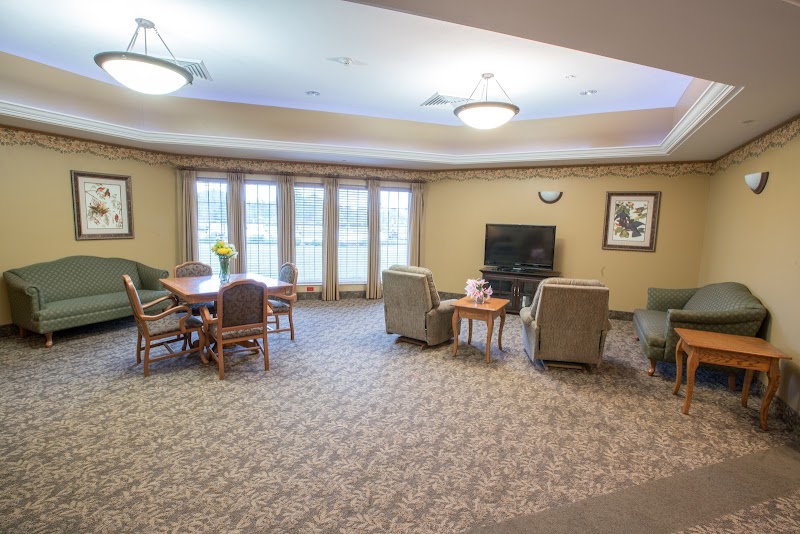
How is Darby Glenn Staffed?

CMS rates DARBY GLENN NURSING AND REHABILITATION CENTER's staffing level at 2 out of 5 stars, which is below average compared to other nursing homes. Staff turnover is 49%, compared to the Ohio average of 46%.

What Have Inspectors Found at Darby Glenn?

State health inspectors documented 38 deficiencies at DARBY GLENN NURSING AND REHABILITATION CENTER during 2019 to 2025. These included: 1 that caused actual resident harm and 37 with potential for harm. Deficiencies causing actual harm indicate documented cases where residents experienced negative health consequences.
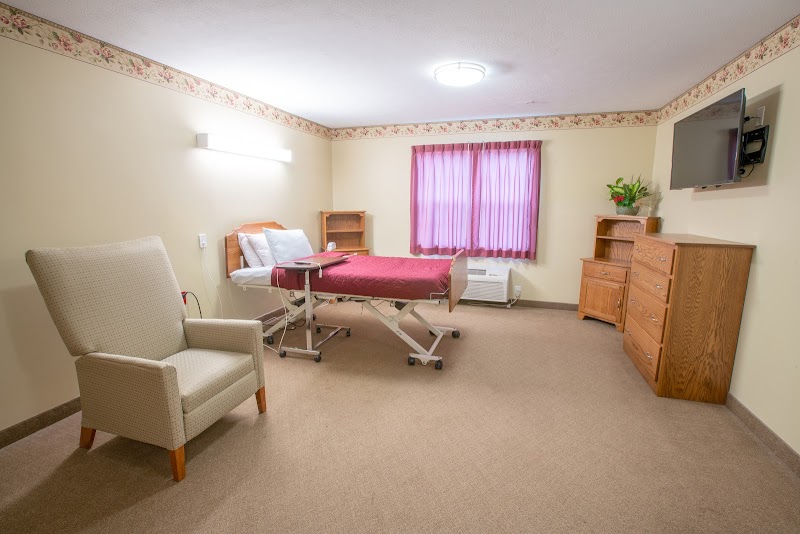
Who Owns and Operates Darby Glenn?

DARBY GLENN NURSING AND REHABILITATION CENTER is owned by a for-profit company. For-profit facilities operate as businesses with obligations to shareholders or private owners. The facility is operated by FOUNDATIONS HEALTH SOLUTIONS, a chain that manages multiple nursing homes. With 99 certified beds and approximately 93 residents (about 94% occupancy), it is a smaller facility located in HILLIARD, Ohio.
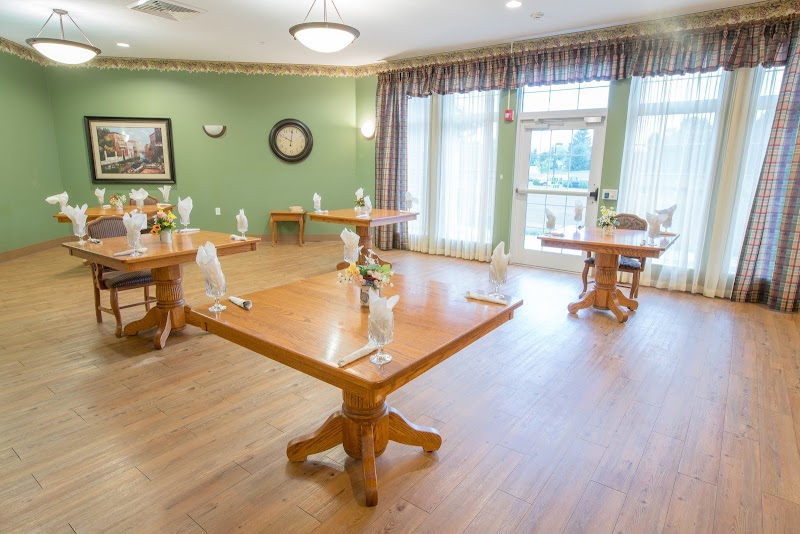
How Does Darby Glenn Compare to Other Ohio Nursing Homes?

Compared to the 100 nursing homes in Ohio, DARBY GLENN NURSING AND REHABILITATION CENTER's overall rating (3 stars) is below the state average of 3.2, staff turnover (49%) is near the state average of 46%, and health inspection rating (3 stars) is at the national benchmark.

What Should Families Ask When Visiting Darby Glenn?

Based on this facility's data, families visiting should ask: "Can you walk me through typical staffing levels on day, evening, and night shifts?" "Can I visit during a mealtime to observe dining assistance and food quality?" "How do you handle medical emergencies, and what is your hospital transfer rate?" "Can I speak with family members of current residents about their experience?" These questions are particularly relevant given the below-average staffing rating.

Is Darby Glenn Safe?

Based on CMS inspection data, DARBY GLENN NURSING AND REHABILITATION CENTER has a clean safety record: no substantiated abuse findings (meaning no confirmed cases of resident harm), no Immediate Jeopardy citations (the most serious violation level indicating risk of serious injury or death), and is not on the Special Focus Facility watch list (a federal program monitoring the lowest-performing 1% of nursing homes). The facility has a 3-star overall rating and ranks #100 of 100 nursing homes in Ohio. While no facility is perfect, families should still ask about staff-to-resident ratios and recent inspection results during their visit.

Do Nurses at Darby Glenn Stick Around?

DARBY GLENN NURSING AND REHABILITATION CENTER has a staff turnover rate of 49%, which is about average for Ohio nursing homes (state average: 46%). Moderate turnover is common in nursing homes, but families should still ask about staff tenure and how the facility maintains care continuity when employees leave.

Was Darby Glenn Ever Fined?

DARBY GLENN NURSING AND REHABILITATION CENTER has no federal fines on record. CMS issues fines when nursing homes fail to meet care standards or don't correct problems found during inspections. The absence of fines suggests the facility has either maintained compliance or corrected any issues before penalties were assessed. This is a positive indicator, though families should still review recent inspection reports for the full picture.

Is Darby Glenn on Any Federal Watch List?

DARBY GLENN NURSING AND REHABILITATION CENTER is not on any federal watch list. The most significant is the Special Focus Facility (SFF) program, which identifies the bottom 1% of nursing homes nationally based on persistent, serious quality problems. Not being on this list means the facility has avoided the pattern of deficiencies that triggers enhanced federal oversight. This is a positive indicator, though families should still review the facility's inspection history directly.