KENTON NURSING AND REHABILITATION CENTER

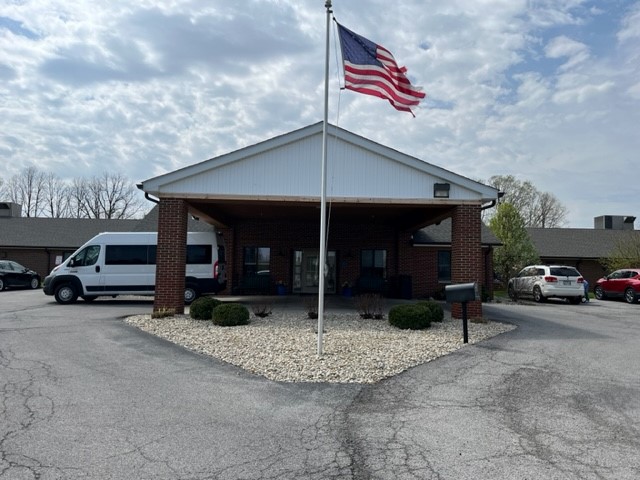
117 JACOB PARROTT BOULEVARD, KENTON, OH 43326 (419) 674-4197
For profit - Individual 125 Beds AOM HEALTHCARE Data: November 2025
Trust Grade
40/100
#871 of 913 in OH
Last Inspection: July 2023

Over 2 years since last inspection. Current conditions may differ from available data.

Overview

Kenton Nursing and Rehabilitation Center has a Trust Grade of D, indicating below-average quality with some concerns. It ranks #871 out of 913 facilities in Ohio, placing it in the bottom half, and #2 out of 2 in Hardin County, meaning only one local option is better. Fortunately, the facility is improving, with issues decreasing from 13 in 2023 to just 2 in 2024. Staffing is a strength, with a turnover rate of 0%, well below the state average, although they have less RN coverage than 98% of facilities, which is concerning. Notably, there have been incidents where outdated staffing information was posted, and a nursing assistant was found working with an expired license, which raises questions about compliance and resident safety. Overall, while there are strengths in staffing retention, the facility still has significant areas that need improvement.

Trust Score
D
40/100
In Ohio
#871/913
Bottom 5%
Safety Record
Low Risk
No red flags
Inspections
Getting Better
13 → 2 violations
Staff Stability
○ Average
Turnover data not reported for this facility.
Penalties
✓ Good
No fines on record. Clean compliance history, better than most Ohio facilities.
Skilled Nurses
⚠ Watch
Each resident gets only 15 minutes of Registered Nurse (RN) attention daily — below average for Ohio. Fewer RN minutes means fewer trained eyes watching for problems.
Violations
⚠ Watch
40 deficiencies on record. Higher than average. Multiple issues found across inspections.
★☆☆☆☆
1.0
Overall Rating
★☆☆☆☆
1.0
Staff Levels
★★★★☆
4.0
Care Quality
★★☆☆☆
2.0
Inspection Score
Stable
2023: 13 issues
2024: 2 issues

The Good

  • 4-Star Quality Measures · Strong clinical quality outcomes
  • Full Sprinkler Coverage · Fire safety systems throughout facility
  • No fines on record

Facility shows strength in quality measures, fire safety.

The Bad

1-Star Overall Rating

Below Ohio average (3.2)

Significant quality concerns identified by CMS

Chain: AOM HEALTHCARE

Part of a multi-facility chain

Ask about local staffing decisions and management

The Ugly 40 deficiencies on record

Jun 2024 2 deficiencies
CONCERN (D) 📢 Someone Reported This

A family member, employee, or ombudsman was alarmed enough to file a formal complaint

Potential for Harm - no one hurt, but risky conditions existed

Deficiency F0800 (Tag F0800)

Could have caused harm · This affected 1 resident

**NOTE- TERMS IN BRACKETS HAVE BEEN EDITED TO PROTECT CONFIDENTIALITY** Based on record review, observations and staff interview, the facility failed to ensure dietary orders were followed. This affec...

Read full inspector narrative →
**NOTE- TERMS IN BRACKETS HAVE BEEN EDITED TO PROTECT CONFIDENTIALITY** Based on record review, observations and staff interview, the facility failed to ensure dietary orders were followed. This affected one (#16) of three residents reviewed for dietary preferences. The facility census was 106. Findings include: Review of medical record for Resident #16 revealed admission date of 07/24/23. The resident was admitted with diagnoses including arthritis, Congestive Heart Failure, and depression. The resident remained in the facility. The quarterly Minimum Data Set (MDS) dated [DATE] revealed she/he had a Brief Interview Mental Status (BIMS) score of 15 indicating intact cognition. He required set up assistance for eating, moderate assistance for toileting hygiene, bed mobility and was dependent for transfers. Review of the physician orders revealed a diet order for a Controlled Carb diet, Regular texture, Regular consistency with double protein with a start date of 09/13/23. Observation on 06/18/24 at 12:20 P.M. of the meal ticket for Resident #16 revealed the meal should be double protein. Observation of his lunch tray revealed the ravioli was not double portioned. Interview and observation on 06/18/24 at 12:25 P.M. with Regional Dietary Manager #113 verified Resident #16's lunch meal did not match the ticket. This deficiency represents non-compliance investigated under Complaint Numbers OH00154512 and OH00154409.
CONCERN (E) 📢 Someone Reported This

A family member, employee, or ombudsman was alarmed enough to file a formal complaint

Potential for Harm - no one hurt, but risky conditions existed

Safe Environment (Tag F0584)

Could have caused harm · This affected multiple residents

**NOTE- TERMS IN BRACKETS HAVE BEEN EDITED TO PROTECT CONFIDENTIALITY** Based on observations, staff and resident interviews and policy review the facility failed to ensure the facility environment te...

Read full inspector narrative →
**NOTE- TERMS IN BRACKETS HAVE BEEN EDITED TO PROTECT CONFIDENTIALITY** Based on observations, staff and resident interviews and policy review the facility failed to ensure the facility environment temperatures were maintained at a comfortable level. This had the potential to affect 24 (#113, #68, #109, #18, #83, #58, #25, #17, #39, #80, #96, #50, #27, #48, #33, #42, #63, #12, #89, #93, #61, #21, #86 and #91) residents residing on the 300 hall. The census was 106 Findings include: Observation and interview on 06/17/24 at 12:06 P.M. with Resident #12 revealed the resident stated her room was too be hot and stuffy. The lighted clock on her wall revealed a temperature reading of 86 degrees Fahrenheit (F). Observations and interview on 06/17/24 at 12:12 revealed the Administrator had taken an infrared temperature in the 300 hall which was 80.4 degrees F and the temperature in Resident #12's room was between 84 degrees F to 86 degrees F. The Administrator confirmed the air conditioning unit had been out for sometime, but stated the facility was scheduled to get a new roof tip air conditioning unit the next day. The Administrator verified the temperature was elevated in the hall and pointed to two portable air conditioning units which were placed on each side of the hallway. The Administrator stated the air conditioning unit had not been functioning for greater then one year. Interview on 06/17/24 at 12:54 P.M. with Maintenance Supervisor #106 revealed the left side of the air conditioning condenser unit had been out for two years. Interview and observation on 06/17/24 at 2:38 P.M. with Resident #17 revealed the room was hot and stuffy. Resident #17 stated his room had been hot all day and he had asked maintenance for a fan earlier in the day, but no one brought one in for him. Interview and observations on 06/17/24 at 2:46 P.M. with Maintenance Staff #124 revealed he was unaware Resident #17 had requested a fan. He agreed to use the infrared temperature readings for intermittent rooms on the 300 hall. Maintenance Staff #124 pointed the infrared thermometer at chair level into the rooms to obtain the temperatures. room [ROOM NUMBER] was 86 degrees F, room [ROOM NUMBER] was 86.9 degrees F, room [ROOM NUMBER] was 82 degrees F, room [ROOM NUMBER] was 86.7 degrees F, room [ROOM NUMBER] was 82.2 degrees F, room [ROOM NUMBER] was 83.7 degrees F, room [ROOM NUMBER] was 79.2 degrees F and room [ROOM NUMBER] was 82.9 degrees F. Interview on 06/17/24 at 3:12 P.M. with the Administrator and Director of Nursing (DON) revealed they were unaware any resident had requested a fan and were unsure of which residents had fans in their rooms. They did state they had staff offering cool wash cloths, ice water and Gatorade. Interview on 06/18/24 at 9:12 A.M. with the Administrator revealed the air conditioner contractors were at the facility to repair the air conditioner. The Administrator supplied the requested square footage coverage for the two portable units previously placed on the 300 hall. Portable air conditioner number one was 13,000 British Thermal Units (BTU) with a 650 square (sq) foot (ft) coverage and the second unit was 10,000 BTU with a 500 sq. ft. coverage. The Administrator confirmed the 300 hall was 6,144 sq. ft so the portable air conditioning units were not enough to cool the unit. The facility confirmed there are 24 (#113, #68, #109, #18, #83, #58, #25, #17, #39, #80, #96, #50, #27, #48, #33, #42, #63, #12, #89, #93, #61, #21, #86 and #91) residents residing on the 300 hall that could potentially be affected. Review of the undated policy, Room Temperatures revealed the room temperatures were to be between 71 degrees F and 81 degrees F. This deficiency is based on incidental findings discovered during the course of this complaint investigation.
Jul 2023 11 deficiencies
CONCERN (D)

Potential for Harm - no one hurt, but risky conditions existed

Deficiency F0604 (Tag F0604)

Could have caused harm · This affected 1 resident

**NOTE- TERMS IN BRACKETS HAVE BEEN EDITED TO PROTECT CONFIDENTIALITY** Based on observation, record review, staff interview, resident interview, and review of facility policy, the facility failed to ...

Read full inspector narrative →
**NOTE- TERMS IN BRACKETS HAVE BEEN EDITED TO PROTECT CONFIDENTIALITY** Based on observation, record review, staff interview, resident interview, and review of facility policy, the facility failed to ensure a resident was free from physical restraints. This affected one (Resident #34) of one resident reviewed for physical restraints. The facility census was 100. Findings include: Review of the medical record revealed Resident #34 was admitted on [DATE]. Diagnoses included convulsions, cerebrovascular disease, myoneural disorder, muscle weakness, dementia, epilepsy, cognitive communication deficit, convulsions, anxiety, and depression. Review of Resident #34's Minimum Data Set (MDS) assessment dated [DATE] revealed a Brief Interview for Mental Status (BIMS) score of 9, indicating the resident was cognitively impaired. Further review revealed the resident required extensive two-person assistance for bed mobility, dressing, personal hygiene, and toileting with incontinence of bowel and bladder. There was no documentation indicating the use of physical restraints. Review of Resident #34's care plan dated 05/21/22 revealed no goals or interventions in place for the use of physical restraints. Further review of Resident #34's medical record revealed no documentation, including physician orders and assessments, for use of physical restraints. Observation and interview on 7/24/23 at 11:32 A.M. revealed Resident #34 was observed in her room sitting in a broda chair with a large plastic tray in front of the resident's lap covering both arm rests. The tray was connected to the broda chair with a strap that wrapped around to the back of Resident 34's broda chair and fastened using a plastic buckle clip. Resident #34 stated she was unable to remove the tray, grabbing the tray and shaking the tray with the attempt to move the tray and was unable to remove tray from her lap. Interview on 07/24/23 at 11:43 A.M. with State Tested Nurse Aide (STNA) #236 revealed Resident #34 was not able to remove the tray attached to her broda chair herself, and proceeded to show the plastic buckle clipped in the back of the broda chair, with Resident #34 was sitting in the chair. Interview on 07/26/23 at 11:27 A.M. with Licensed Practical Nurse (LPN) #229 revealed Resident #34 used the tray table all the time while up in the broda chair and was unable to remove the tray herself. Observation on 07/26/23 at 5:00 P.M. revealed Resident #34 sitting in her broda chair with the tray table across her lap and buckled behind the broda chair while in her room. Interview on 07/27/23 at 2:16 P.M. with the Director or Nursing (DON) confirmed there was no restraint assessment or physician order for for Resident #34. Review of the policy, Use of Restraints, dated December 2007, defined a restraint as any manual method or physical or mechanical device, material or equipment attached or adjacent to the resident's body that the individual cannot remove easily, which restricts freedom of movement or restricts normal access to one's body. Further review revealed that prior to the placing a resident in a restraint, a pre-restraint assessment was to be performed, a physician order for the restraint usage, consent from the resident and or representative was to be obtained and a plan of care was to be reflective of the resident.
CONCERN (D)

Potential for Harm - no one hurt, but risky conditions existed

Assessment Accuracy (Tag F0641)

Could have caused harm · This affected 1 resident

**NOTE- TERMS IN BRACKETS HAVE BEEN EDITED TO PROTECT CONFIDENTIALITY** Based on medical record review, staff interviews, and review of facility policy, the facility failed to complete an accurate ass...

Read full inspector narrative →
**NOTE- TERMS IN BRACKETS HAVE BEEN EDITED TO PROTECT CONFIDENTIALITY** Based on medical record review, staff interviews, and review of facility policy, the facility failed to complete an accurate assessment to reflect a resident's current status. This affected one (Resident #82) of one resident reviewed for accuracy of assessments. The facility census was 100. Findings include: Review of the medical record for Resident #82 revealed an admission date of 01/10/23. The resident was admitted with diagnoses including end stage renal disease, type two diabetes mellitus, hypertension, dependence on renal dialysis. The quarterly Minimum Data Set (MDS) dated [DATE] revealed Resident #82 had a Brief Interview Mental Status (BIMS) score of 15 indicating intact cognition. Further review revealed the resident required supervision for walking in his room and corridor. Interview on 07/25/23 at 8:50 A.M. with Resident #82 revealed he was unable to walk since he came to the facility. Interview on 07/26/23 at 8:12 A.M. with Therapy Manager #400 revealed Resident #82 was receiving therapy upon his admission to the facility and was discharged per his choice. The resident did not walk during therapy and utilized a wheelchair for locomotion. Interview on 07/27/23 at 12:36 with MDS Coordinator #272 verified Resident #82' MDS assessment was incorrect in reflecting the residents current status for locomotion. Review of the Resident Assessment Instrument revised 09/2010 revealed the purpose of the assessment was to describe the resident's capability to perform daily life functions and to identify significant impairments in functional capacity.
CONCERN (D)

Potential for Harm - no one hurt, but risky conditions existed

Comprehensive Care Plan (Tag F0656)

Could have caused harm · This affected 1 resident

**NOTE- TERMS IN BRACKETS HAVE BEEN EDITED TO PROTECT CONFIDENTIALITY** 2. Review of the medical record revealed Resident #34 was admitted on [DATE]. Diagnoses included convulsions, cerebrovascular di...

Read full inspector narrative →
**NOTE- TERMS IN BRACKETS HAVE BEEN EDITED TO PROTECT CONFIDENTIALITY** 2. Review of the medical record revealed Resident #34 was admitted on [DATE]. Diagnoses included convulsions, cerebrovascular disease, myoneural disorder, muscle weakness, dementia, epilepsy, cognitive communication deficit, convulsions, anxiety, and depression. Review of Resident #34's Minimum Data Set (MDS) dated [DATE] revealed a BIMS score of nine, indicating cognitive impairment. Further review revealed the resident required extensive two-person assistance for bed mobility, dressing, personal hygiene, and toileting with incontinence of bowel and bladder. Review of Resident #34's care plan dated 05/21/22 revealed no goals or interventions in place for the use of physical restraints. Observation and interview on 7/24/23 at 11:32 A.M. revealed Resident #34 was observed in her room sitting in a Broda chair with a large plastic tray in front of the resident's lap covering both arm rests. The tray was connected to the Broda chair with a strap that wrapped around to the back of Resident 34's Broda chair and fastened using a plastic buckle clip. Resident #34 stated she was unable to remove the tray, grabbing the tray and shaking the tray with the attempt to move the tray and was unable to remove tray from her lap. Interview on 07/24/23 at 11:43 A.M. with State Tested Nurse Aide (STNA) #236 revealed Resident #34 was not able to remove the tray attached to her Broda chair herself and proceeded to show the plastic buckle clipped in the back of the Broda chair, with Resident #34 was sitting in the chair. Interview on 07/26/23 at 11:27 A.M. with Licensed Practical Nurse (LPN) #229 revealed Resident #34 used the tray table all the time while up in the Broda chair and was unable to remove the tray herself. Observation on 07/26/23 at 5:00 P.M. revealed Resident #34 sitting in her Broda chair with the tray table across her lap and buckled behind the Broda chair while in her room. Interview on 7/27/23 at 2:16 P.M. with the Director of Nursing (DON) verified Resident #34's care plan did not include the use of physical restraints. Review of the facility's policy, Care Plans- Comprehensive, dated September 2010, revealed an individualized comprehensive care plan is developed for each resident and care plans are revised as information about the resident and the resident's condition change. Based on observation, medical record review, staff interviews, and review of facility policy, the facility failed to develop accurate care plans to reflect residents' current status. This affected two (Residents #40 and #34) of three reviewed for care planning. The facility census was 100. Findings include: 1. Review of the medical record for Resident #40 revealed an admission date of 07/14/23. The resident was admitted with diagnoses including end stage renal disease, dependence on dialysis, type two diabetes mellitus, depression, and Rheumatoid Arthritis. The quarterly Minimum Data Set (MDS) dated [DATE] revealed Resident #40 had a Brief Interview Mental Status (BIMS) score of 15, indicating intact cognition. The resident was independent with Activities of Daily Living (ADLs). Further review revealed Resident #40 had likely cavity or broken teeth. Additionally, the resident was documented as having pain. Review of the dental note dated 05/05/23 revealed Resident #40 had tooth decay and was referred to an orthodontist for removal. Review of Resident #40's most recent care plan revealed no goals or interventions in place for dental needs or pain. Interview on 07/24/23 at 3:19 P.M. with Resident #40 revealed she needed her teeth repaired and left wrist pain, in which she received pain medication as needed. Interview on 07/27/23 at 9:41 A.M. with MDS coordinator #239 verified dental needs and pain were documented areas of concern on Resident #40's MDS and were not included in the resident's care plan.
CONCERN (D)

Potential for Harm - no one hurt, but risky conditions existed

ADL Care (Tag F0677)

Could have caused harm · This affected 1 resident

**NOTE- TERMS IN BRACKETS HAVE BEEN EDITED TO PROTECT CONFIDENTIALITY** Based on observation, record review, staff interview, and review of facility policy, the facility failed to provide a dependent ...

Read full inspector narrative →
**NOTE- TERMS IN BRACKETS HAVE BEEN EDITED TO PROTECT CONFIDENTIALITY** Based on observation, record review, staff interview, and review of facility policy, the facility failed to provide a dependent resident with grooming needs. This affected one (Resident #74) of four residents reviewed for activities of daily living. The facility census was 100. Findings include: Review of the medical record revealed, Resident #74 was admitted on [DATE]. Diagnoses included Huntington's chorea, Alzheimer's dementia, Parkinson's disease, adult failure to thrive, aphasia, musculoskeletal impairment, gastrostomy tube, depression, and anxiety. Review of Resident #74's Minimum Data Set (MDS) assessment dated [DATE] revealed her cognitive skills for daily decision making was severely impaired with a Brief Interview for Mental Status (BIMS) score unable to be obtained. Resident #74 required total dependence of two staff for activities of daily living, dressing, toileting, personal hygiene, and bathing. Review of Resident #74's plan of care dated 02/18/23 revealed the resident had an Activities of Daily Living (ADL) self-care performance deficit requiring total dependence on staff for all care needs. Interventions included to check nail length and to trim and clean on bath day and as necessary. Further review of Resident #74's medical record revealed no documentation showing the resident received nail care. Observation on 07/24/23 at 11:25 A.M. revealed Resident #74's fingernails on both hands were long, jagged, and dirty with dark discoloring underneath the nails. Observation on 07/25/23 at 3:57 P.M. revealed Resident #74's fingernails on both hands were long, jagged, and dirty with dark discoloring underneath the nails and red abraded like areas to thumb and first digit on the left hand. Interview 07/25/23 at 3:59 P.M. with State Tested Nurse Aide (STNA) #256 revealed hospice provided Resident #74 with baths. STNA #256 verified Resident #74's nails were long and stated it appeared the nail length caused scratches to Resident #74's thumb and finger. Interview on 07/25/23 at 4:42 P.M. with Licensed Practical Nurse (LPN) #229 at Resident #74's bedside, verified Resident #74's fingernails were long and needed trimmed. LPN #229 verified the abrasions on the resident's hand were caused by nail length. Observation on 07/27/23 at 9:25 A.M. revealed Resident #74's fingernails on both hands were long, jagged, and dirty with dark discoloring underneath the nails and red abraded like areas to thumb and first digit on left hand. Review of the facility policy, Quality of Life- Accommodation of Needs, dated 08/2009, revealed the resident's individual needs and preferences shall be accommodated.
CONCERN (D)

Potential for Harm - no one hurt, but risky conditions existed

Accident Prevention (Tag F0689)

Could have caused harm · This affected 1 resident

**NOTE- TERMS IN BRACKETS HAVE BEEN EDITED TO PROTECT CONFIDENTIALITY** Based on medical record review, observation, and interview, the facility failed to implement fall interventions to potentially p...

Read full inspector narrative →
**NOTE- TERMS IN BRACKETS HAVE BEEN EDITED TO PROTECT CONFIDENTIALITY** Based on medical record review, observation, and interview, the facility failed to implement fall interventions to potentially prevent falls. This affected one (Resident #90) of two residents reviewed for falls. The facility census was 100. Findings include: Review of the medical record for Resident #90 revealed an admission date 03/07/23. Diagnoses included traumatic subarachnoid hemorrhage, syncope and collapse, hearing loss bilateral, dementia, dysphagia, Alzheimer's Disease with late onset, and fall. Review of the quarterly Minimum Data Set (MDS) dated [DATE] revealed Resident #90 had severely impaired cognition. The resident required extensive assistance of one person for bed mobility, walk in room, and dressing. The resident required extensive assistance of two persons for transfers. The resident had one fall with no injury since admission, reentry, or prior assessment. Review of the nursing note dated 07/03/23 at 1:30 P.M. revealed Resident #90 was wandering in front of the building in the main common area. The resident slid out of her wheelchair. Resident #90 was unable to describe what happened. Neurological checks were initiated and the resident was assisted into her wheelchair. Maintenance to put anti-roll back devices on the resident's wheelchair for safety. Review of the plan of care dated 07/24/23 revealed Resident #90 had an actual fall with injury related to poor balance and unsteady gait with a goal to resume usual activities without further incident through the review date. Interventions included, anti-roll backs to wheelchair (added 07/07/23), educate resident on proper sitting while in wheelchair, fall mat to side of bed, and wear proper footwear while out of bed. Observation on 07/26/23 at 4:07 P.M. of Resident #90 in the common area revealed the resident did not have an anti-roll back device on her wheelchair. This was verified by Maintenance Staff #218, present at the time. Maintenance Staff #90 stated the resident's wheelchair had an anti-tip device and explained the difference in the modification. Observation on 07/26/23 at 4:51 P.M. Regional Director of Clinical Operations #241 verified Resident #90 did not have an anti-roll back device, as the wheelchair freely rolled backward. Regional Director of Clinical Operations #241 asked the nurse present to monitor the resident one on one until they had the situation figured out. Interview on 07/26/23 at 5:10 P.M. the Director of Nursing (DON) and Regional Director of Clinical Operations #241 reported the resident had been placed in the correct wheelchair. The facility did not provide a policy related to safety devices for resident mobility devices.
CONCERN (D)

Potential for Harm - no one hurt, but risky conditions existed

Tube Feeding (Tag F0693)

Could have caused harm · This affected 1 resident

**NOTE- TERMS IN BRACKETS HAVE BEEN EDITED TO PROTECT CONFIDENTIALITY** Based on record review, observation, staff interview, and facility policy review, the facility failed to properly administer med...

Read full inspector narrative →
**NOTE- TERMS IN BRACKETS HAVE BEEN EDITED TO PROTECT CONFIDENTIALITY** Based on record review, observation, staff interview, and facility policy review, the facility failed to properly administer medications via enteral gastrostomy tube. This affected one (Resident #74) of one resident reviewed for medication administration via gastrostomy tube. The facility census was 100. Findings include: Review of the medical record revealed Resident #74 was admitted on [DATE]. Diagnoses included Huntington's chorea, Alzheimer's dementia, Parkinson's disease, adult failure to thrive, aphasia, musculoskeletal impairment, gastrostomy tube, depression, and anxiety. Review of Resident #74's Minimum Data Set (MDS) assessment dated [DATE] revealed her cognitive skills for daily decision making were severely impaired with never or rarely making decisions. Further review revealed the resident required total dependence of two staff for activities of daily living including dressing, toileting, personal hygiene, bathing, with total dependence of one staff for intake of nourishment, and functional limitations of range of motion of upper and lower extremities. Observation on 07/26/23 at 11:27 A.M. revealed Licensed Practical Nurse (LPN) #229 preparing to administer medications to Resident #74's via gastrostomy tube. LPN #229 proceeded to push water mixed with crushed medication through the resident's gastrostomy tube with a syringe. Interview on 07/26/23 at approximately 11:35 A.M. LPN #229 verified during administration of medication to Resident #74, medications were pushed via syringe into the gastrostomy tube, rather than using the gravity method. Review of the facility's policy labeled, Administering Medications through an Enteral Tube, dated March 2015 revealed to attach the syringe without the plunger to the gastrostomy tube, administer medication by gravity flow and flush gastrostomy tubing after medication using gravity flow.
CONCERN (D)

Potential for Harm - no one hurt, but risky conditions existed

Deficiency F0698 (Tag F0698)

Could have caused harm · This affected 1 resident

Based on observation, staff interview, and record review, the facility failed to follow fluid restrictions. This affected one (Resident #23) of one resident reviewed for fluid restrictions. The facili...

Read full inspector narrative →
Based on observation, staff interview, and record review, the facility failed to follow fluid restrictions. This affected one (Resident #23) of one resident reviewed for fluid restrictions. The facility census was 100. Findings include: Review of the medical record for Resident #23 revealed an admission date of 08/13/20. Medical diagnoses included End Stage Renal Disease (ESRD), dependence on renal dialysis, diabetes mellitus, and non-compliance with medical regimen or treatment. Review of the physician's orders revealed Resident #23 had an order for a renal diet, with double portions. Additionally, a fluid restriction was ordered for Resident #23 on 06/14/22. The order stated Resident #23 was to be restricted to 1200 milliliters (ml) fluid intake daily. 720 ml total is to be provided by dietary each day, and 480 ml to be provided by nursing daily. The amount provided by nursing was further divided with 360 ml to be provided by nursing staff on the 7:00 A.M. to 7:00 P.M. day shift, and 120 ml to be provided by nursing staff on the 7:00 P.M. to 7:00 A.M. night shift. Observation on 07/26/23 at 12:04 P.M. of Resident #23's lunch tray revealed one cup of coffee, one carton of milk, and one smaller glass of fruit punch. Resident #23 stated he always received the same drinks from the kitchen with meals. The tray slip on Resident #23's tray reflected 8 ounces (equivalent to 240 ml) of coffee, 8 ounces of whole milk, and 4 ounces (equivalent to 120 ml) of sugar free fruit punch. The items listed on the tray ticket matched what appeared on Resident #23's lunch meal tray. Review of Resident #23's dietary tray cards for breakfast, lunch, and dinner on 07/24/23, 07/25/23, and 07/26/23 revealed the resident received 8 oz of coffee, 8 oz of whole milk, and 4 oz of sugar free fruit punch at each meal. Fluid intake provided by dietary at mealtimes totaled 600 ml per meal, and 1800 ml daily. Interview on 07/26/23 at 12:11 P.M. with Dietary Manager (DM) #245 revealed the orders listed in the electronic health record for residents did not transfer over to the dietary department's system used for tray cards. DM #245 stated she had to manually enter all diet orders, supplements, and fluid restrictions manually. Items listed on tray cards are what residents received at mealtimes. DM #245 stated she had no knowledge Resident #23 was on a fluid restriction, and verified the dietary department had no listed fluid restriction for Resident #23, or it would have been listed on the tray card. DM #245 verified Resident #23 received a total of 600 ml of fluid with each meal, and a total of 1800 ml per day from dietary.
CONCERN (D)

Potential for Harm - no one hurt, but risky conditions existed

Deficiency F0760 (Tag F0760)

Could have caused harm · This affected 1 resident

**NOTE- TERMS IN BRACKETS HAVE BEEN EDITED TO PROTECT CONFIDENTIALITY** Based on record review, staff interview, and review of facility policy, the facility failed to ensure residents were free from s...

Read full inspector narrative →
**NOTE- TERMS IN BRACKETS HAVE BEEN EDITED TO PROTECT CONFIDENTIALITY** Based on record review, staff interview, and review of facility policy, the facility failed to ensure residents were free from significant medication errors. This affected one (Resident #13) of one resident reviewed for significant medication errors. The facility census was 100. Findings include: Review of Resident #13's medical record revealed an admission date of 12/18/20. Diagnoses included paranoid schizophrenia, major depressive disorder, chronic kidney disease stage 3, mild cognitive impairment, alcohol abuse and dysphagia. Review of Resident #13's Minimum Data Set (MDS) assessment dated [DATE] revealed the resident was severely cognitively impaired. Review of Resident #13's Plan of Care (POC) dated 06/24/22 revealed Resident #13 utilized psychotropic medications with interventions to administer psychotropic medications as ordered by physician, monitor for side effects and effectiveness every shift. Review of Resident #13's physician orders revealed an order dated 04/14/22 for Haldol Decanoate (psychotropic medication) 100 milligrams (mg)/milliliters (ml), inject 1 ml intramuscularly one time a day every 21 days related to paranoid schizophrenia Review of Resident #13's Medication Administration Record (MAR) for July 2023 revealed the Haldol Decanoate was not documented as administered for the whole month. Interview on 07/27/23 at approximately 2:16 P.M. with the Director of Nursing, (DON) verified Resident #13 did not receive his scheduled dose of Haldol Decanoate on 07/20/23 as scheduled and ordered by the physician. Review of policy titled, Administering Medications, dated December 2012 revealed medications must be administered in accordance with the orders including any required time frame.
CONCERN (D)

Potential for Harm - no one hurt, but risky conditions existed

Deficiency F0761 (Tag F0761)

Could have caused harm · This affected 1 resident

Based on observations, staff interview, review of manufacturer information for insulin, and review of facility policy, the facility failed to ensure insulin vials were labeled with resident names and ...

Read full inspector narrative →
Based on observations, staff interview, review of manufacturer information for insulin, and review of facility policy, the facility failed to ensure insulin vials were labeled with resident names and staff could decipher opening dates vs expiration dates. This had the potential to affect three (Residents #30, #23, and #22) of three residents who received insulin from the 100 medication cart. The facility census was 100. Findings include: Observation on 07/27/23 at 8:01 A.M. of the 100 medication cart revealed five opened bottles of insulin in the top drawer: Humulin R dated 07/25/23, Novolog dated 07/11/23, Humalog dated 07/10/23 and Lispro dated 07/23/23 did not obtain the resident's name, open date, or expiration date. Lantus dated 07/21/23, expiration 08/21/23 did not obtain the resident's name. Interview on 07/27/23 at approximately 8:01 A.M. with Licensed Practical Nurse (LPN) #229 revealed the inability to determine which bottle of insulin belonged to which resident. LPN #229 further stated the inability to distinguish if the dates labeled on the bottles were opening dates or expirations dates. Review of a facility list provided by the Director of Nursing (DON) revealed three residents (#30, #23, and #22) received insulin from the 100 medication cart. Review of the manufacturers package insert recommendations of Lantus insulin revealed an opened vile of Lantus insulin will expire in 28 days. Review of facility policy titled, Administering Medications, dated December 2012, revealed the expiration/beyond use date on the medication label must be checked prior to administration.
CONCERN (D)

Potential for Harm - no one hurt, but risky conditions existed

Infection Control (Tag F0880)

Could have caused harm · This affected 1 resident

Based on observation, staff interview, medical record review, and facility policy review, the facility failed to follow appropriate infection control procedures for a resident with Clostridium diffici...

Read full inspector narrative →
Based on observation, staff interview, medical record review, and facility policy review, the facility failed to follow appropriate infection control procedures for a resident with Clostridium difficile (C-diff). This affected one (Resident #298) and had the potential to affect 26 residents who resided on the 100 hall. Additionally, the facility failed to ensure proper infection control procedures were followed during medication administration. This affected one (Resident #346) of five reviewed for medication administration. The facility census was 100. Findings include: 1. Review of the medical record for Resident #398 revealed an admission date of 07/22/23. Medical diagnoses included recurrent Enterocolitis (inflammation of the inner lining of the small and large intestines) due to Clostridium difficile (C-diff, a bacteria that causes diarrhea and inflammation of the colon), intestine transplant status, and arthritis. Resident #398 had a sign on their door to see nurse before entering, contact isolation precautions were in place. Resident #398 resided on the 100-hall. Interview on 07/24/23 at 9:19 A.M. with Licensed Practical Nurse (LPN) #229 revealed Resident #398 was in contact isolation for a C-diff infection. Observation on 07/24/23 at 12:46 P.M. of the lunch tray pass revealed State Tested Nurse Aide (STNA) #255 delivered Resident #398 his lunch tray. Resident #398 asked to be repositioned in the bed. STNA #255 verbally summoned assistance from STNA #254 who was in the hallway nearby. Both staff members retrieved gloves and provided privacy. Upon completion, STNA #254 and STNA #255 removed their gloves. STNA #255 proceeded into the bathroom and washed her hands with soap and water. STNA #254 proceeded to exit the room, without having washed her hands. STNA #254 returned to the area of the tray cart to resume passing trays to residents on the 100-hall. Observation and interview on 07/24/23 at 12:51 P.M. revealed STNA #254 reached for a new meal tray when surveyor intervened. STNA #254 verified she did not wash her hands after exiting Resident #398's room. STNA #254 stated she should have washed her hands with soap and water as Resident #398 has C-diff. STNA #254 proceeded into the utility room to wash hands before returning to tray pass. Review of the facility's policy titled, Infection Control Policy and Procedure, dated 2022, stated handwashing with soap and water should be performed after caring for a resident with known or suspected Clostridium difficile infection. 2. Observation on 07/26/23 at 7:56 A.M. of LPN #225 administering medications to Resident #346, revealed LPN #225 attempting to remove a methylprednisolone tablet out of the package. The medication dropped on top of the uncleaned medication cart. LPN #225 picked up the medication, with unwashed hands, and placed it in a medication cup with other pills, and proceeded to continue removal of pills from packages. LPN #225 removed potassium chloride, which dropped on top of the uncleaned medication cart, and with unwashed hands, LPN #225 picked up the medication and placed it in the medication cup containing all morning medications. LPN #225 proceeded to administer the entire cup of pills to Resident #346. Resident #346 swallowed all pills from the cup. Interview on 07/26/23 at 8:04 A.M. with LPN #225 verified two of Resident #346's medications landed on top of the uncleaned cart and were picked up and placed into the container of pills administered to the resident. Review of facility policy titled, Administering Medications, dated December 2012, revealed staff shall follow established facility infection control procedures, handwashing, gloves, antiseptic technique for the administration of medications.
CONCERN (F)

Potential for Harm - no one hurt, but risky conditions existed

Staffing Information (Tag F0732)

Could have caused harm · This affected most or all residents

Based on review of the daily staffing posting, staff interview, and facility policy review, the facility failed to post current nurse staffing information. This had the potential to affect all residen...

Read full inspector narrative →
Based on review of the daily staffing posting, staff interview, and facility policy review, the facility failed to post current nurse staffing information. This had the potential to affect all residents who reside in the facility. The facility census was 100. Findings include: Observation on 07/24/23 at 4:22 P.M. revealed four daily staff postings for 05/12/23, 05/13/23, 05/14/23, and 05/15/23 posted on the window next to the main entrance of the facility. Observation on 07/25/23 at 8:01 A.M. revealed the daily staff postings for 05/12/23, 05/13/23, 05/14/23, and 05/15/23 remained in place. Interview on 07/25/23 at 10:24 A.M. with the Director of Nursing (DON) verified the facility posted staffing information on the door to the main entrance. The DON verified the staff postings of 05/12/23, 05/13/23, 05/14/23, and 05/15/23 were outdated and needed to be updated. Review of the facility policy titled, Posting Direct Care Daily Staffing Numbers, revised August 2006, revealed the facility will post the number of nursing personnel responsible for providing direct care to residents on a daily basis.
Jun 2023 1 deficiency
CONCERN (F) 📢 Someone Reported This

A family member, employee, or ombudsman was alarmed enough to file a formal complaint

Potential for Harm - no one hurt, but risky conditions existed

Deficiency F0729 (Tag F0729)

Could have caused harm · This affected most or all residents

**NOTE- TERMS IN BRACKETS HAVE BEEN EDITED TO PROTECT CONFIDENTIALITY** Based on personnel record review, staff interview, and interview with Nurse Aide Registry staff, the facility failed to ensure a...

Read full inspector narrative →
**NOTE- TERMS IN BRACKETS HAVE BEEN EDITED TO PROTECT CONFIDENTIALITY** Based on personnel record review, staff interview, and interview with Nurse Aide Registry staff, the facility failed to ensure all State Tested Nursing Assistants (STNAs) providing direct care to residents had a current and active license. This affected one (Aide #99) of three staff members reviewed for active licenses. This had the potential to affect all 100 residents residing in the facility. The facility's census was 100. Findings include: Review of the personnel record for Aide #99 revealed a hire date of [DATE]. Review of the State Tested Nursing Assistant (STNA) licensure verification revealed Aide #99 was not eligible to work due to an expired status. The expired status explanation stated, No work verification had been received in the past 24 months, therefore individual is not eligible for employment in a long term care facility. Review of the Nurse Aide Registry Request for Reciprocity dated [DATE] revealed the application was filled out. Included with the application was two letters. One letter was from the facility dated [DATE] stating Aide #99 was hired by the facility on [DATE]. The letter was requesting Aide #99's STNA license to be listed as 'active' due to the fact, Aide #99 worked as a Physician Medical Assistant (PMA) at his previous job, utilizing his STNA license. The second letter was dated [DATE] from Family Practice #1 verifying Aide #99 worked as a PMA utilizing his STNA license at their practice. Interview on [DATE] at 12:20 P.M. with the Director of Nursing (DON) verified Aide #99 worked at the facility as an STNA caring for residents and was on the schedule for third shift that night. Interview on [DATE] at 12:45 P.M. with the Administrator revealed the facility called the Nurse Aide Registry and received information related to Aide #99's employment. The Administrator stated he completed the required documentation but was unsure if the Nurse Aide Registry received it. The Administrator reported they received a letter from Aide #99's previous employer stating Aide #99 worked as a physician's assistant. The Administrator stated the letter from the previous employer would qualify Aide #99 to work as an STNA. Interview on [DATE] at 12:53 P.M. with Nurse Aide Registry Supervisor #200 verified Aide #99 was not an active STNA and was not eligible for hire as an STNA in a skilled facility. Nurse Aide Registry Supervisor #200 verified no documentation had been received from the facility and Aide #99's previous employment would not qualify for re-activation of his STNA license. Interview on [DATE] at approximately 1:45 P.M. the Administrator verified the request for reciprocity information had not been sent to the nurse aide registry previously but was sent the day of the survey ([DATE]). This deficiency represents non-compliance investigated under Complaint Number OH00142834.
Jan 2023 1 deficiency
MINOR (C) 📢 Someone Reported This

A family member, employee, or ombudsman was alarmed enough to file a formal complaint

Minor Issue - procedural, no safety impact

Social Worker (Tag F0850)

Minor procedural issue · This affected most or all residents

Based on medical record review, staff interview, review of state survey websites, and personnel record review, the facility failed to ensure a qualified social worker was employed on a full time basis...

Read full inspector narrative →
Based on medical record review, staff interview, review of state survey websites, and personnel record review, the facility failed to ensure a qualified social worker was employed on a full time basis for a facility with a bed capacity over 120. This had the potential to affect all 104 residents in the facility. Findings Include: Review of the Certification and Licensure System (CALS) revealed the facility had an approved bad capacity of 125 residents. Interview on 01/26/23 at 9:48 A.M. with Social Services Assistant #205 revealed she was not licensed and not qualified to be a full time Social Services Assistant for a facility with over 120 beds. She stated she was aware of the regulation and the facility tried to sell beds back to the state, but the state wouldn't buy them. She stated she was not sure when that was. Social Services Assistant #205 stated the facility can only fill 114 beds because some were turned into offices. Interview on 01/26/23 at 10:05 A.M. with the Director of Nursing (DON) revealed the facility can only hold 113 residents. She stated years ago they converted their 400 hall into a dialysis wing with private rooms. She stated there are some double occupancy rooms currently due to remodeling in the 500 hall, but still their capacity is for 113. The DON stated the facility hasn't been over 113 since Social Services Assistant #205 has been in her position. Interview on 01/26/23 at 10:27 A.M. with the DON revealed they petitioned to sell beds to the state in 2018 when their dialysis unit was created and also again more recently. Interview on 01/26/23 at 11:45 A.M. with the DON revealed there was an email sent to the State of Ohio requesting a variance request to operate without a qualified social worker until 06/07/22, but she was not sure if there was a response. Interview on 01/26/23 at 12:13 P.M. with the DON revealed the Administrator called the DON with the surveyor present. The Administrator stated the email went to the Ohio Department of Health general email as a waiver request to the Department Director, a year and a half ago. He revealed that he hasn't sent a new one and never received a follow up or a response for the waiver request, but they have an add for a full-time Social Worker, but no applicants have come forward. Review of the undated variance request revealed the facility was licensed at 125 bed capacity and they were requesting to sell 5 beds with the attempt to reduce the burden of employing at least one full-time qualified Social Worker onsite. It stated the variance request would allow them to operate without the qualified Social Worker until 06/07/22 and they would continue to work on the sale of additional beds to become compliant with the Ohio Administrative Code: 3701-17-26. The request stated the facility has a full time Social Worker on staff who is not qualified under the OAC. No response to the variance request could be provided. Review of the personnel record for Social Services Assistant #205 revealed she was hired for the position on 09/25/20. Interview on 01/30/23 at 1:47 P.M. with Social Services Assistant #205 revealed when she first started in her position, the previous Social Services Director was quitting, so there had been no qualified social worker since then. She stated she completes things like discharges and new admissions, finding places for residents to live if moving out, Minimum Data Set (MDS) information, Pre-admission Screening and Resident Review (PASARR) information, scheduling care conferences, phone calls, follow ups from Self Reported Incidents (SRIs), and referrals for certain services. This deficiency represents non-compliance investigated under Complaint Number OH00139076.
Feb 2020 16 deficiencies
CONCERN (D)

Potential for Harm - no one hurt, but risky conditions existed

Deficiency F0583 (Tag F0583)

Could have caused harm · This affected 1 resident

**NOTE- TERMS IN BRACKETS HAVE BEEN EDITED TO PROTECT CONFIDENTIALITY** Based on record review, observation, resident and staff interview and review of the facility's policy, the facility failed to pr...

Read full inspector narrative →
**NOTE- TERMS IN BRACKETS HAVE BEEN EDITED TO PROTECT CONFIDENTIALITY** Based on record review, observation, resident and staff interview and review of the facility's policy, the facility failed to provide reasonable privacy when a resident's door could not close and not shutting the window curtains when providing care. This affected two (Resident #76 and #85) of 26 residents observed in the initial and final sample pool. The facility census was 89. Findings include: 1. Review of medical record for Resident #85 revealed an initial admission date of 01/29/20. Diagnosis included Alzheimer's disease, vascular dementia with behavioral disturbance, Parkinson's disease, generalized anxiety disorder, psychotic disorder with delusions due to known physiological condition, polyneuropathy and visual hallucinations. Review of the quarterly Minimum Data Set (MDS) assessment, dated 02/05/20, revealed the resident was cognitively intact. The resident required extensive one person assistance with bed mobility, transferring, walking in room and corridor, locomotion off and on the unit, dressing, toilet use, and personal hygiene. Intermittent observations from 02/10/20 at 10:17 A.M. to 02/12/20 at 5:07 P.M. revealed the position of Resident #85's bed prevented the resident room door from closing. The headboard of the bed was completely against the wall and the footboard would not allow the door to close by approximately twelve inches. Interview on 02/10/20 at 10:00 A.M. with Resident #85 revealed the resident's door would not close by approximately twelve inches due to the resident's bed positioning. Resident #85 expressed he would like the door to close and was expecting maintenance today to assist with room arrangement. On 02/11/20 at 6:18 P.M., subsequent interview with Resident #85 stated the resident would like for the resident's room door to shut for privacy. Resident #85 stated maintenance was supposed to fix it yesterday and today. Interview on 02/11/20 at 6:30 P.M. with State Tested Nursing Aide (STNA) #447 verified Resident #85's bed was preventing the resident's door to close. STNA #447 verified Resident #85's headboard was completely against the wall and the footboard would not allow the door to close. Interview on 02/12/20 at 5:07 P.M. with Maintenance Supervisor #492 verified Resident #85's resident room door was unable to close due to the positioning of the bed. Maintenance Supervisor was not aware and revealed no work order had been received. 2. Review of the medical record for Resident #76 revealed the resident was originally admitted to the facility on [DATE]. Diagnoses include osteomyelitis (infection into the bone) of the vertebrae, sacral and sacrococcygeal region, (tailbone) , pressure ulcers of the sacral region, paraplegia, urine retention, colostomy status, mental and behavioral disorders,, cramps and spasms, bilateral above the knee amputations and obesity. Review of the quarterly MDS assessment, dated 01/29/20, revealed the resident had no cognitive deficits and was dependent for activities of daily living except for eating. It further revealed the resident had four pressure ulcers. Review of the physician orders, dated 01/22/20, revealed the resident had a wound vac to the sacral region pressure ulcer which was to be changed three times per week. The area was to be irrigated with Normal Saline and the area around the wound was to be washed with soap and water, rinsed and patted dry. Skin prep was to be applied around the wound. Agents were to be applied to ensure the edges would seal to the wound vac, and black sponge was to be applied to the wound bed, then the dressing was to be secured. Observation of the dressing change for Resident #76 on 02/12/20 at 3:20 P.M. revealed Licensed Practical Nurse (LPN) #444 and LPN #431 prepared the resident for the dressing change and closed the resident's door. The privacy curtain was taped back in a manner it could not easily be pulled to provide the resident privacy. The window blinds were left open. The resident laid naked in the bed during the dressing change. On two occasions, a staff member knocked on the resident's door. LPN #444 and #431 stated resident care but the State Tested Nursing Assistant (STNA) proceeded to come in and ask the nurses questions, while the resident was exposed. Additionally, during the dressing change, two males were observed to be walking outside the resident window and the blinds were not pulled closed. Interview with LPN #431 on 02/12/20 at 3:40 P.M. verified the resident was not provided privacy during the dressing change. She stated the blinds should have been pulled closed, and the STNA should not have been entering the room during the dressing change. She further stated she did not know why the privacy curtain was taped back and she did not pull the privacy curtain for the resident. Review of an undated facility policy titled Dignity revealed staff shall promote, maintain, and protect resident privacy, including bodily privacy assistance with personal care and during treatment procedures. Review of facility policy Dressings - Dry and Clean dated 09/2013 revealed part of the preparation for a dressing was to provide privacy to the resident. This deficiency substantiates Complaint Number OH00109754.
CONCERN (D)

Potential for Harm - no one hurt, but risky conditions existed

Deficiency F0657 (Tag F0657)

Could have caused harm · This affected 1 resident

**NOTE- TERMS IN BRACKETS HAVE BEEN EDITED TO PROTECT CONFIDENTIALITY** 2. Review of the medical record for Resident #27 revealed an admission date of 01/15/19 with diagnoses of chronic obstructive pu...

Read full inspector narrative →
**NOTE- TERMS IN BRACKETS HAVE BEEN EDITED TO PROTECT CONFIDENTIALITY** 2. Review of the medical record for Resident #27 revealed an admission date of 01/15/19 with diagnoses of chronic obstructive pulmonary disease, congestive heart failure, peripheral nervous system disorder, chronic viral hepatitis, hemiplegia and hemiparesis. Review of the annual MDS assessment, dated 12/31/19, revealed Resident #27 was cognitively intact with no deficits. Review of the care conference documentation revealed one care conference was held for Resident #27 on 10/09/19 with SSD #502, Activities Director #400, and MDS Coordinator #414. Resident #27 was not present and there was no evidence the resident was invited to participate or of the resident's refusal. Interview on 02/10/20 at 11:23 A.M. with Resident #27 revealed the resident has never been invited or attended a care conference. Interview on 02/12/20 at 4:25 P.M. with SSD #502 verified there was no documentation of the resident attending or refusing to attend a care conference since the admission date of 01/15/19. SSD #502 stated the care conferences were held on 04/10/19, 07/17/19, and 01/22/20 however there was no documentation. SSD #502 verified the care conference on 10/09/19 was only attended by SSD #502, Activities Director #400, and Minimum Data Set (MDS) Coordinator #414. 3. Review of medical record for Resident #50 revealed an initial admission date of 08/20/19. Diagnosis included essential (primary) hypertension, type two diabetes mellitus with hyperglycemia dysphagia, history of transient ischemic attack and cerebral infarction without residual deficits, muscle wasting and atrophy, muscle weakness, difficultly walking, allergic rhinitis, vitamin D deficiency, mastodynia, chronic kidney disease stage three, hyperlipidemia, functional intestinal disorder, unspecified mood disorder, acute kidney failure, anemia, constipation, obstruction of duodenum, bipolar disorder and glaucoma. Review of the MDS assessment, dated 01/08/20, revealed the resident was cognitively intact. Review of the care conference documentation revealed a care conference was held for Resident #50 on 11/20/10. There was no evidence the resident was invited to attend or refused to attend. There was no evidence there was a RN present during the care conference. Interview on 02/10/20 at 2:56 P.M. with Resident #50 revealed the resident has not been invited to or attended any care conferences. Interview on 02/12/20 at 4:23 P.M. with SSD #502 verified a care conference was held for Resident #50 on 11/20/19 and only attended by SSD #502 and Activities Director #400. There was no nursing staff present and no evidence of the resident attending or refusing to attend. Review of the facility's policy titled Care Planning, revised 09/2013, revealed the resident, the resident's family and/or the resident's legal guardian or surrogate are encouraged to participate in the development of and revisions to the resident's care plan. Based on medical record review, staff and resident interviews, and policy review, the facility failed to conduct quarterly care conferences. Additionally, the facility failed to ensure a resident and appropriate/required members of the interdisciplinary team (IDT) were invited to participate in the care planning process. This affected three (#8, #27, and #50) of four resident reviewed for care planning. The facility census was 89. Findings include: 1. Review of the medical record for Resident #8 revealed the resident was admitted to the facility on [DATE]. Diagnoses included peripheral vascular disease, muscle weakness, venous insufficiency, diabetes mellitus type two, muscle wasting and atrophy, personality disorder, chronic embolism, heart failure, hypertension, chronic obstructive pulmonary disease, osteoarthritis, neuromuscular dysfunction of he bladder, Parkinson's disease, atrial fibrillation, anxiety, tremors, psychosis, morbid obesity, and major depressive disorder. Review of the quarterly Minimum Data Set (MDS) assessment, dated 11/21/19, revealed Resident #8 had intact cognition. Review of the care plan conference summary, dated 10/09/19, revealed a care planning conference was conducted for Resident #8. Review of the summary revealed Social Service Director (SSD) #502, Licensed Practical Nurse (LPN) #414 and Activities Director (AD) #400 were in attendance. The document revealed no evidence Resident #8 was invited or refused to participate in the care planning process. Additionally, the documentation revealed no evidence a state tested nurse aide (STNA) or registered nurse (RN) participated in the care planning process. Review of a care plan conference summary, dated 01/15/20, revealed a care planning conference was conducted for Resident #8. Review of the summary revealed SSD #502 and AD #400 were in attendance. The document revealed no evidence Resident #8 was invited or refused to participate in the care planning process. Additionally, the documentation revealed no evidence an STNA or RN participated in the care planning process for Resident #8. Interview on 02/10/20 at 10:38 A.M. with Resident #8 revealed the resident was unsure when he/she was last invited to participate in the care planning process. The resident stated if the facility staff would invite the resident to care conferences the resident would be willing to participate. Interview on 02/12/20 at 8:30 A.M. with SSD #502 revealed the care plan conferences were held for the residents every three months. The SSD revealed the care planning conferences were to include the residents representative, the resident, social services, activities, and someone from the nursing department, which was usually the MDS nurse. SSD #502 revealed the care conferences were documented on a care conference sheet. The care conference sheet would include the date of the conference, summary of the meeting and the signature of who attended the meeting. The SSD stated STNAs were not invited to participate with care conferences because the STNAs were busy providing resident care and it was hard for the STNAs to get away from their work. SSD verified the care planning conferences for Resident #8 conducted on 10/09/19 and 01/15/20 had no evidence of the resident being invited to participate in the care planning process. The SSD further verified there was no registered nurse or STNA in attendance.
CONCERN (D)

Potential for Harm - no one hurt, but risky conditions existed

Quality of Care (Tag F0684)

Could have caused harm · This affected 1 resident

**NOTE- TERMS IN BRACKETS HAVE BEEN EDITED TO PROTECT CONFIDENTIALITY** Based on medical record review, observation, staff interview and facility policy review, the facility failed to complete accurat...

Read full inspector narrative →
**NOTE- TERMS IN BRACKETS HAVE BEEN EDITED TO PROTECT CONFIDENTIALITY** Based on medical record review, observation, staff interview and facility policy review, the facility failed to complete accurate, routinely wound assessments for Resident #73. This affected one (#73) of four residents reviewed for non-pressure wounds. The facility census was 89. Findings include: Review of the medical record for Resident #73 revealed an initial admission date of 10/23/19. Diagnoses included hemiplegia/hemiparesis, end-stage renal disease, diabetes, morbid obesity, peripheral neuropathy, cellulitis and malignant neoplasm of the bone and articular cartilage. Review of the admission Clinic Health Status form, dated 10/23/19, revealed Resident #73 had a second toe plantar side ulcer and redness of the coccyx noted on the skin assessment. The body diagram identified the toe ulcer on the left foot. There was no other wound assessment information included for the coccyx wound or the foot wound. The resident was discharged to the hospital on [DATE] and readmitted to the facility on [DATE]. Review of the admission Clinic Health Status, dated 12/03/19, revealed Resident #73 was readmitted to the facility with two by two pressure wound noted on the skin assessment. The body diagram identified the location at the coccyx area. The skin assessment noted an area eight by five surgical identified on the body diagram at Resident #73's right foot. There was no other wound assessment information included for the coccyx wound or for the foot wound. The resident was discharged to the hospital on [DATE] and readmitted to the facility on [DATE]. Review of the admission Clinic Health Status, dated 12/19/19, revealed Resident #73 was again re-admitted to the facility with surgical site as previous noted on the skin assessment. The body diagram identified the wound location on Resident #73's right foot. The nurse progress note indicated the surgical site to right foot improved. There was no other wound assessment information included for the foot wound. Review of the current physician orders, dated 02/2020, revealed there were wound vac orders were in place for Resident #73's right foot. She had a current order for barrier cream to her buttock every shift and as needed. Review of the facility's wound tracking form revealed one non-pressure wound assessment was completed on 02/02/20 in regard to the coccyx. The body diagram demonstrated four areas on the buttock, one on the left and three on the right. There were three partial assessments for the four areas. The assessments failed to identify the location of the wound, whether it was present on admission or the type of wound. The assessments were documented on a single form rather than an individual form for each separate wound. Observation of wound care on 02/12/20 at 11:35 A.M. with Wound Care Nurse Practitioner (NP) #399 and Licensed Practical Nurse (LPN) #410 revealed Resident #73 had three open areas on her right buttock, one open area on her left buttock and a wound vac in place on the right foot. Interview with NP #399 at the time of the observation stated this was her first observation of the wounds. NP #399 assessed the buttock wounds and stated the wounds were moisture associated skin damage and ordered a new treatment to be initiated for wound care. Interview on 02/12/20 at 3:04 P.M. with LPN #410 verified upon Resident #73's initial admission to the facility (10/23/19) she had an unhealed wound to her right foot. About six weeks ago, Resident #73 had her right fifth toe amputated and currently has a wound vac in place at her surgical wound. LPN #410 verified Resident #73 had wounds on her buttock and the wounds had been there for quite a while. LPN #410 she verified wound assessments were not completed at a minimum of weekly for Resident #73. Interview with the Director of Nursing (DON) on 02/13/20 at 12:15 P.M. verified during Resident #73's stays at the facility from 10/23/19 to 11/27/19, 12/03/19 to 12/13/19 and from 12/19/19 to 02/12/20 there were no full, complete wound assessments. Review of the facility's policy titled Dressings, Dry/Clean, revised September 2013, revealed the following information should be recorded in the resident's medical record, treatment sheet or designated wound form: The date and time the dressing was changed; The wound appearance, including wound bed, edges, presence of drainage; The name and title (or initials) of the individual changing the dressing; The type of dressing used and wound care given; All assessment data (i.e., wound bed color, size, drainage, etc.) obtained when inspecting the wound; How the resident tolerated the procedure; Any problems or complaints (e.g., pain or discomfort) made by the resident related to the procedure; If the resident refused the treatment, the reason for refusal and the resident's response to the explanation of the risks of refusing the procedure, the benefits of accepting and available alternatives. Document family and physician notification of refusal; and The signature and title (or initials) of the person recording the data. This deficiency substantiates Complaint Number OH00109754.
CONCERN (D)

Potential for Harm - no one hurt, but risky conditions existed

Incontinence Care (Tag F0690)

Could have caused harm · This affected 1 resident

**NOTE- TERMS IN BRACKETS HAVE BEEN EDITED TO PROTECT CONFIDENTIALITY** Based on medical record review and staff interview; the facility failed to obtain physician orders and provide care and services...

Read full inspector narrative →
**NOTE- TERMS IN BRACKETS HAVE BEEN EDITED TO PROTECT CONFIDENTIALITY** Based on medical record review and staff interview; the facility failed to obtain physician orders and provide care and services for a resident's indwelling urinary catheter. This affected one (#137) of three residents reviewed for urinary catheter. The facility identified eight residents with indwelling urinary catheters. The facility census was 89. Findings include: Review of the medical record for Resident #137 revealed the resident was admitted to the facility on [DATE]. Diagnoses included muscle wasting, lower back pain and retention of urine. Review of the admission assessment, dated 02/08/20, revealed Resident #137 was admitted to the facility with an indwelling urinary catheter. Review of the medical record for Resident #137, which included admission orders, physician telephone orders, progress notes, the medication and treatment records, dated 02/2020, the 48-hour baseline care plan, and nurse aid activities of daily living tracking form dated 02/2020 revealed there was no evidence of care and services provided for Resident #137's indwelling urinary catheter. Interview on 02/13/20 at approximately 4:00 P.M. with the Director of Nursing (DON) verified the facility failed to obtain orders for Resident #137's indwelling urinary catheter and for catheter care and services. The DON further verified the medical record for Resident #137 contained no evidence of the facility providing care and/or services for the residents urinary catheter.
CONCERN (D)

Potential for Harm - no one hurt, but risky conditions existed

Deficiency F0692 (Tag F0692)

Could have caused harm · This affected 1 resident

Based on medical record review, observations, staff interviews and review of the facility's policy, the facility failed to timely implement nutritional recommendations for the residents. This affected...

Read full inspector narrative →
Based on medical record review, observations, staff interviews and review of the facility's policy, the facility failed to timely implement nutritional recommendations for the residents. This affected two (#23 and #71) of three residents reviewed for nutrition. The facility censes was 89. Findings Include: 1. Review of the medical record for the Resident #23 revealed an admission date of 12/16/19. Diagnosis included Alzheimer's disease, delirium, dementia, major depressive disorder, type two diabetes mellitus, atrial fibrillation, and muscle weakness. Review of the Minimum Data Set (MDS) assessment, dated 01/01/20, revealed the Resident #23 required set up assistance for eating and substantial to maximal assistance for oral hygiene. Review of the care plan, dated 12/24/19, revealed the resident had imbalanced nutrition related to poor intake. Interventions included the facility would provide and serve supplements as ordered. The care plan was not updated to include the recommendations from 01/30/20 to 02/12/20. Review of the facility's form titled Medical Nutritional Therapy Recommendation, dated 01/30/20, revealed the form was signed by Registered Dietitian (RD) #506 and the recommendation was to discontinue med pass (a high calorie nutritional supplement), increase magic cup (a high calorie frozen nutritional supplement) to two times a day with lunch and dinner, and to start a nutritional juice (a high calorie nutritional supplement) three times a day with meals. Review of the physician orders, Medication Administration Record (MAR) and Treatment Administration Record (TAR) revealed the recommendation by RD #506 for Resident #23 had not been implemented from 01/30/20 to 02/12/20. Interview on 02/12/20 at 11:40 A.M. with RD #506 verified she had made a recommendation on 01/30/20 for Resident #23 and verified it was still not implemented as of 02/12/20. RD #506 revealed she had recommended a magic cup two times a day and a nutritional juice three times a day with meals. The RD revealed Resident #23's intake would increase to a total of 36 grams protein and 1200 calories daily. The RD revealed the recommendations were given to the Director of Nursing (DON) and the nurse manager on 01/30/20. The RD stated she had several recommendations not implemented for several residents. Interview on 02/12/20 at 1:24 P.M. the DON confirmed the medical nutrition therapy recommendation from RD #506, dated 01/30/20, had not been ordered or implemented for Resident #23 as of 02/12/20. 2. Review of the medical record for Resident #71 revealed an admission date of 01/17/20. Diagnosis included diabetes mellitus, anxiety disorder, renal insufficiency with dependence on renal dialysis and abnormalities of gait and mobility. Review of the five-day Minimum Data Set (MDS) assessment, dated 01/24/20, revealed Resident #71 was cognitively intact and was independent for eating. The resident had two stage two pressure ulcers (partial thickness loss of dermis presenting as a shallow open ulcer with a red-pink wound bed, without slough). Review of the plan of care, dated 01/24/20, revealed the resident had potential for imbalance nutrition related to inadequate intakes and increased nutrient needs. Review of the physician orders, dated 02/01/20, revealed an order to administer a high protein nutritional supplement named Prostat 30 milliliters (ml.) by mouth daily. Review of the Medical Nutritional Therapy Assessment, dated 01/28/20, revealed RD #506 recommended Prostat 30 ml. three times a day and to start large portions at breakfast and lunch of the entrée only. The diet recommendations were not implemented until 15 days later on 02/12/20. Review of the facility's Diet Requisition form, dated 02/12/20, revealed Resident #71 had a diet change to increase to large portions. Review of the physician orders, dated 02/12/20, revealed an order to increase the Prostat to 30 ml. three times a day (TID). Observation on 02/12/20 at 12:19 P.M. of Resident #71 revealed he was eating lunch independently in his room. He had a cervical contracture and appeared to have difficulty feeding himself. Interview on 02/12/20 at 12:21 P.M. with Resident #71 revealed he was trying to stay as independent as possible and it was very difficult for him to eat. He stated he did not usually eat all his meals because of the difficulty. Interview on 02/12/20 at 3:52 P.M. with RD #506 revealed Resident #71 had increased nutritional needs related to dialysis and had a diet recommendation to increase Prostat from 30 ml. daily to 30 ml. TID and to increase the portion size of the entree for breakfast and lunch. The RD stated there were several diet recommendations that took on average two to four weeks to be implemented by the facility. Interview on 02/12/20 at 1:25 P.M. with the DON confirmed the medical nutrition therapy recommendation from RD #506, dated 01/28/20, and the physician order dated 02/01/20 had not been followed for Resident #71 as of 02/12/20. Review of the facility's undated policy titled, Nutritional Impaired/Unplanned Weight Loss-Clinical Protocol, revealed the physician would authorize and the staff would implement general cause effective interventions based on factors such as nutritional needs, resident choice, functional factors and supplemental strategies etc.
CONCERN (D)

Potential for Harm - no one hurt, but risky conditions existed

Respiratory Care (Tag F0695)

Could have caused harm · This affected 1 resident

**NOTE- TERMS IN BRACKETS HAVE BEEN EDITED TO PROTECT CONFIDENTIALITY** Based on observation, medical record review and staff interview, the facility failed to change oxygen supplies as physician orde...

Read full inspector narrative →
**NOTE- TERMS IN BRACKETS HAVE BEEN EDITED TO PROTECT CONFIDENTIALITY** Based on observation, medical record review and staff interview, the facility failed to change oxygen supplies as physician ordered. This affected one (#8) of two residents reviewed for respiratory care. The facility identified 10 residents who receive respiratory care. The facility census was 89. Findings include: Review of the medical record for Resident #8 revealed the resident was admitted to the facility on [DATE]. Diagnoses included heart failure, chronic obstructive pulmonary disease (COPD) and morbid obesity. Review of the plan of care, with implementation date of 10/23/14 with a target date of 02/21/20, revealed the resident had ineffective breathing pattern related to COPD and a history of pneumonia and as evidenced by cough, abnormal lung sounds, and a drop in oxygen saturation during rest and activity. Interventions included continuous oxygen at four liters per minute per nasal cannula and change oxygen supplies every week on Thursday. Review of the treatment administration record (TAR), dated 11/2019, revealed Resident #8 was to be administered oxygen at four liters per minute per nasal cannula. Documentation revealed the oxygen supplies were to be changed every week on Thursday 11/07/19, 11/14/19, 11/21/19, and 11/28/19. Review of the TAR revealed no evidence the oxygen supplies were changed. The TAR, dated 12/2019, revealed oxygen supplies were changed on the first Thursday of the month, however there was no documentation to verify oxygen supplies were changed for the remainder of 12/2019. The TAR, dated 01/2020, revealed there was no evidence of Resident #8's oxygen tubing being changed. The medical record did not have evidence of changing oxygen supplies on a consistent basis as ordered for Resident #8 during the months of 11/2019, 12/2019, and 01/2020. Observation on 02/10/20 at 10:48 A.M. of Resident #8 revealed the resident had an oxygen concentrator set to deliver oxygen at the rate of four liters per minute (LPM) via a nasal cannula. The resident was being administered the oxygen via nasal cannula. The observation revealed the nasal cannula was not dated. Interview on 02/10/20 at 10:38 A.M. with Resident #8 revealed the resident was unsure of when the oxygen tubing was last changed. The resident reported oxygen tubing was not changed weekly. Interview on 02/11/20 at 9:25 A.M. with Registered Nurse (RN) #419 revealed oxygen therapy and oxygen tubing changes are documented for residents with oxygen orders on the resident's TAR. Observation of Resident #8 completed with RN #419 during the interview verified the resident oxygen tubing was not dated.
CONCERN (D)

Potential for Harm - no one hurt, but risky conditions existed

Pharmacy Services (Tag F0755)

Could have caused harm · This affected 1 resident

Based on medical record review, observation, review of the facility's policy and staff interview, the facility failed to follow a pharmacy recommendation and physician order. In addition, the facility...

Read full inspector narrative →
Based on medical record review, observation, review of the facility's policy and staff interview, the facility failed to follow a pharmacy recommendation and physician order. In addition, the facility failed to ensure medications were not left unattended at the resident's bedside. This affected one resident (#1) of five residents reviewed for unnecessary medications and affected one (#26) of 26 residents observed on the initial and final sample. The facility census was 89. Findings include: 1. Review of the medical record for the Resident #1 revealed an admission date of 08/08/19. Diagnosis included heart failure, type two diabetes, dysphagia, urgency of urination, benign prostatic hyperplasia, and essential hypertension. Review of the quarterly Minimum Data Set (MDS) assessment, dated 11/12/19, revealed the resident had intact cognition and no behaviors exhibited in the seven-day look-back period. Review of the pharmacy recommendation, dated 10/30/19, for Omeprazole (treats heartburn) 20 milligrams (mg.) capsule to be given by mouth daily and to be taken 30 minutes before meals. Review of the physician order, dated 11/05/19, and signed by the doctor, revealed per pharmacy recommendation Omeprazole 20 mg capsule by mouth daily 30 minutes before meals. Review of the Medication Administration Record (MAR), dated 01/2020 and 02/2020, revealed Omeprazole 20 mg, capsule was given daily at 8:00 A.M. and not 30 minutes before meals. Interview on 02/13/20 at 11:16 A.M. with Registered Nurse (RN) #418 revealed Omeprazole 20 mg. was given at 8:00 A.M., along with other 8:00 A.M. medications. The RN #418 confirmed there was no indication to give Omeprazole 20 mg. before meals. The RN #418 confirmed the order for Omeprazole 20 mg. was not followed as the pharmacy recommended or the physician ordered. 2. Observation during medication administration on 02/12/20 at 8:16 A.M. with Licensed Practical Nurse (LPN) #431 revealed there were three Tums tablets (antacids) in a medication cup on the tray table in Resident #26's room. Interview with Resident #26 at the time of the observation she stated she got them this morning and stated she would take them when she was ready. Interview with LPN #431 at the time of the observation verified the medication was Tums and verified they were unattended and on Resident #26's tray table. LPN #431 verified Resident #26 had an order for Tums, as needed, but did not know why they were left with the resident and verified medications were not to be kept by the residents. The nurses were expected to ensure all medications were consumed when administered. Review of the facility's undated policy titled Administering Medications revealed medications shall be administered in a safe and timely manner and as prescribed. Medications must be administered in accordance with the orders, including any required time frame. This deficiency substantiates Complaint Number OH00109754.
CONCERN (D)

Potential for Harm - no one hurt, but risky conditions existed

Unnecessary Medications (Tag F0759)

Could have caused harm · This affected 1 resident

Based on medical record review, observation, staff interview and facility policy review, the facility failed to maintain a medication error rate less than 5%. There were three medication errors out of...

Read full inspector narrative →
Based on medical record review, observation, staff interview and facility policy review, the facility failed to maintain a medication error rate less than 5%. There were three medication errors out of 32 opportunities, which was a 9.38% medication error rate. This affected two (#26 and #76) of four residents observed for medication administration. The facility census was 89. Findings include: 1. Observation of medication administration on 02/11/20 at 8:22 A.M. with Registered Nurse (RN) #418 revealed she completed an accucheck with a result of 183 for Resident #76's blood sugar level. RN #418 then obtained medications for Resident #76, including Novolog insulin per flexpen, two units and one multivitamin tablet. RN #418 verified all the medications, then administered Resident #76's medications, including the multivitamin tablet and the insulin per subcutaneous injection at his right mid-abdomen. Review of the most recent recapitulated physician orders, dated 01/22/20 and signed by the physician on 01/28/20, revealed Novolog Flexpen administration to inject subcutaneously per sliding scale four times daily. The order did not include sliding scale parameters. Additionally, there was no current order for multivitamin. Review of the hand-written physician order, dated 01/22/20, also included Novolog flexpen per sliding scale, to be determined. There was no defined sliding scale. Interview on 02/11/20 10:35 A.M. with Director of Nursing (DON) verified there was no defined sliding scale for the current physician order for Novolog insulin. The DON verified there was no current order for the multivitamin. 2. Observation of medication administration on 02/12/20 at 8:16 A.M. with Licensed Practical Nurse (LPN) #431 for Resident #26 revealed LPN #431 administered Tylenol 500 milligrams (mg.), two tablets for Resident #26. Review of the most recent recapitulated signed physician orders, dated 02/01/20, revealed Tylenol 325 mg., two tablets by mouth every four hours as needed. Interview with LPN #431 on 02/12/20 at 9:00 A.M. verified she had administered Tylenol 500 mg, two tablets and the current order was for Tylenol 325 mg. two tablets. Review of the facility's undated policy titled Administering Medications revealed medications must be administered in accordance with the orders. This deficiency substantiates Complaint Number OH00109754.
CONCERN (D)

Potential for Harm - no one hurt, but risky conditions existed

Laboratory Services (Tag F0770)

Could have caused harm · This affected 1 resident

**NOTE- TERMS IN BRACKETS HAVE BEEN EDITED TO PROTECT CONFIDENTIALITY** Based on record review and staff interview, the facility failed to obtained physician ordered laboratory blood tests. This affec...

Read full inspector narrative →
**NOTE- TERMS IN BRACKETS HAVE BEEN EDITED TO PROTECT CONFIDENTIALITY** Based on record review and staff interview, the facility failed to obtained physician ordered laboratory blood tests. This affected one (#8) of five residents reviewed for unnecessary medication. The facility census was 89. Findings include: Review of the medical record for Resident #8 revealed the resident was admitted to the facility on [DATE]. Diagnoses included peripheral vascular disease, muscle weakness, venous insufficiency, diabetes mellitus type two, muscle wasting and atrophy, personality disorder, chronic embolism, heart failure, hypertension, chronic obstructive pulmonary disease (COPD), osteoarthritis, neuromuscular dysfunction of the bladder, Parkinson's disease, atrial fibrillation, anxiety, tremors, psychosis, morbid obesity, and major depressive disorder. Review of the physician orders, dated 12/30/19, revealed Resident #8 was to have the laboratory test prothrombin time and international normalized ratio (PT/INR) completed on 01/02/20. (PT/INR is laboratory blood tested used to help detect and diagnose a bleeding disorder. The results are also used to monitor how well the blood thinning medication coumadin is working to prevent blood clots.) Review of a physician progress note, dated 12/30/19, revealed Resident #8 was to have a PT/INR test completed on 01/02/20 due to Coumadin hold days. Review of the medical record for Resident #8 revealed no evidence of a PT/INR laboratory test completed on 01/02/20. Interview on 02/12/20 at 1:11 P.M. with the Director of Nursing verified there was no PT/INR testing completed for Resident #8 on 01/02/20 as ordered by the physician. The DON did not know why the PT/INR was not assessed.
CONCERN (E)

Potential for Harm - no one hurt, but risky conditions existed

Resident Rights (Tag F0550)

Could have caused harm · This affected multiple residents

Based on observation, staff interview and review of the facility's policy, the facility failed to treat residents in a dignified manner during meal times. This affected five residents (Resident #4, #9...

Read full inspector narrative →
Based on observation, staff interview and review of the facility's policy, the facility failed to treat residents in a dignified manner during meal times. This affected five residents (Resident #4, #9, #39, #4 #80) observed during meal time. The facility census was 89. Finding include: 1. Observation on 02/10/20 at 12:59 P.M. revealed State Tested Nursing Aide (STNA) #477 was assisting Resident #4 and Resident #80 eat lunch. STNA #477 alternated assisting Resident #4 and Resident #80 with spoonfuls of lunch walking back and forth alternating between residents and standing over them. At 1:02 P.M., Licensed Practical Nurse (LPN) #410 began to assist and STNA #477 sat down with Resident #4 while LPN #410 stood above Resident #80 while assisting him with his meal. STNA #477 and LPN #410 discussed vacations and the soap opera on the television in the dining room. At 1:04 P.M., LPN #438 entered the room and brought a chair to LPN #410. Interview on 02/10/20 at 1:24 P.M. with LPN #410 verified LPN #410 and STNA #477 did stand while assisting Resident #4 and Resident #80 with their meal. 2. Observation on 02/10/20 at 1:00 P.M. revealed Resident #9, #39, and #41 received plastic forks with lunch. Interview on 02/10/20 between 1:00 P.M. and 1:23 P.M. with Resident #9, #39, and #41 revealed the resident's did not know why plastic forks were provided instead of nondisposable cutlery. Interview on 02/10/20 1:05 P.M. with LPN #438 verified some residents did receive plastic utensils with their meal. LPN #438 verified there was no specific reason and that sometimes the facility runs out of utensils. Review of the facility's undated policy titled 'Dignity' revealed each resident shall be cared for in a manner that promotes and enhances quality of life, dignity, respect, and individuality. This deficiency substantiates Complaint Number OH00109916.
CONCERN (E)

Potential for Harm - no one hurt, but risky conditions existed

Deficiency F0661 (Tag F0661)

Could have caused harm · This affected multiple residents

**NOTE- TERMS IN BRACKETS HAVE BEEN EDITED TO PROTECT CONFIDENTIALITY** 5. Review of the medical record for Resident #136 revealed an admission date of 01/08/19 and a discharge date of 02/04/20. Diagn...

Read full inspector narrative →
**NOTE- TERMS IN BRACKETS HAVE BEEN EDITED TO PROTECT CONFIDENTIALITY** 5. Review of the medical record for Resident #136 revealed an admission date of 01/08/19 and a discharge date of 02/04/20. Diagnosis included end stage renal disease, muscle wasting and atrophy, muscle weakness, arteriosclerotic heart disease of native coronary artery without angina pectoris, heart failure, muscle wasting and atrophy, difficulty walking, cognitive communication, dysphasia oropharyngeal phase, chronic obstructive pulmonary disease, type II diabetes, unspecified dementia, unspecified arthritis, hyperlipidemia, dependence on renal dialysis, epilepsy, encephalopathy, acquired absence of right toe and major depressive disorder. Review of the annual Minimum Data Set (MDS), dated [DATE], revealed the resident was unable to complete the interview. Review of the discharge summary for Resident #136 revealed a list of medication was not included on the discharge summary. There was no evidence the discharge summary was reviewed with the family. Interview on 02/12/20 at 4:30 P.M. with SSD #502 verified the discharge summary sheet was sent with transport and not reviewed with the family. SSD #502 revealed nursing would have provided a list of medications to the resident and their family but the information was not provided to SSD #502 to include. Review of the facility's policy titled Discharge Summary and Plan, dated 11/2014, revealed when the facility anticipated a resident's discharge to a private residence, a discharge summary and a post-discharge plan was to be developed which was to assist the resident to adjust to their new living environment. The discharge summary was to include a recapitulation of the resident's stay at the facility and a final summary of the resident's status at the time of the discharge in accordance with the established regulations governing release of resident information. The summary was to include a medically defined condition and prior medical history, medical status measurement including but not limited to information on vital signs, clinical laboratory values, diagnostic testing, physical and mental functional status including the ability to perform activities of daily living including bathing, dressing, grooming, transferring ambulating, toileting, eating, and also the need for staff assistance with these areas. The summary was also to include sensory and physical impairment, nutritional status and requirements, special treatments or procedures, mental and psychosocial status, discharge potential , mental condition, activities potentials, rehabilitation potential, cognitive status and medication therapy. The information was to be provided to the resident and discussed with the resident 24 hours before the discharge was to take place. This deficiency substantiates Complaint Number OH00109754. Based on medical record review, review of the facility's policy and staff and resident interview, the facility failed to ensure residents were provided with comprehensive discharge summaries with the required information upon discharge from the facility. This affected five residents (#136, #137, #138, #139, #141) of six residents reviewed for discharge. The facility identified 20 residents discharged from the facility in the last 60 days. The facility census was 89. Findings include: 1. Review of the medical record for Resident #137 revealed the resident was admitted to the facility on [DATE] and discharged to home on [DATE]. Diagnoses included urinary tract infection, repeated falls, hypertension, anemia, muscle wasting, difficulty walking, joint pain, low back pain, allergic rhinitis, gastro-esophageal reflux disease and urine retention. Review of the discharge return not anticipated Minimum Data Set (MDS) assessment, dated 01/13/20, revealed the resident had intact cognition. The resident required extensive assistance of staff for bed mobility, dressing, toilet use, and personal hygiene. The resident required limited assistance for transfers and ambulation. Review of the physician note, dated 01/13/20, revealed the resident's discharge was anticipated for that day and the resident would be followed by urology. Review of a letter, dated 01/10/20, revealed Resident #137 was informed that on 01/13/20 their care was going to be transferred to home health care with a diagnosis of a fractured right femur. It revealed transportation was to be provided by a cab service. Home health was to be started on 01/14/20. Ordered equipment was listed. No contact information was provided regarding any of the resident's follow up needs. The letter was not signed by the resident to ensure it was provided prior to him leaving the facility. There was no medication recapitulation attached to the letter. Interview with Social Service Director (SSD) #502 on 02/12/20 at 3:00 P.M. revealed the letter provided to the resident before discharge did not meet the required criteria. She verified there was no medication recapitulation attached. 2. Review of the medical record for Resident #138 revealed the resident was admitted to the facility on [DATE] and was discharged to home on [DATE]. Diagnoses included aftercare of hip surgery, low back pain, muscle wasting, spinal stenosis, osteoarthritis and benign prostatic hypertrophy. Review of the discharge with return not anticipated Minimum Data Set (MDS) assessment, dated 12/23/19, revealed the resident had no cognitive deficits. The resident required extensive assistance with bed mobility, transfers, walking, dressing, toileting and hygiene and was independent with locomotion and eating. Review of the physician orders, dated 12/18/19, revealed the resident was to be discharged to home with home health, physical therapy, occupational therapy and bath aides if needed. Review of a letter, dated 12/23/19, revealed the resident was informed their care was being transferred to home health care following a hip joint prosthesis The form had no place for the resident to sign it had been received by the resident and there was no information that documented what nursing discussed with the resident. There was no contact information for the resident for an of the follow up care he was to receive. A separate form was provided to show medications were reviewed and was signed by the resident on 12/23/19. Interview with SSD #502 on 02/12/20 at 2:48 P.M. verified the letter the resident received was the transfer form the residents were to receive when they were transferred to the hospital. She stated it was not the correct form for residents who were being discharged to home and it did not contain the required information. She stated as of the end of 01/2020, the facility had started to use a new form which included the discharge date , transportation, services requested, agencies utilized and contact information, medications, diet and a resident signature. 3. Review of the medical record for Resident #139 revealed the resident was admitted to the facility on [DATE] and was discharged to home on [DATE]. Diagnoses included volume depletion, chronic kidney disease stage III, ileostomy status, adrenocortical insufficiency, hypertension, chronic obstructive pulmonary disease, osteoarthritis, depression, migraines, opioid dependency, psychoactive substance abuse, viral hepatitis C, thrombophilia, protein calorie malnutrition and low back pain. Review of the physician orders, dated 01/13/20, revealed the resident could be discharged home with home health and medications on 01/15/20. Review of a letter, dated 01/16/20, which was provided to the resident revealed the resident's care was being transferred to home with home health for volume depletion. The resident was provided a summary of medications and the name of the physician and address. The form was not signed by the resident. No phone numbers were provided for the resident's follow up. Interview with SSD #502 on 02/12/20 at 2:55 P.M. revealed a discharge planning conference was held in the resident's room and went over everything the resident needed, but the information was not provided to the resident. She verified the wrong form was used and the resident did not receive the required discharge summary. 4. Review of the medical record for Resident #141 revealed the resident was admitted to the facility on [DATE] and discharged on 10/31/19. Diagnoses included fracture of the right femur, diabetes mellitus type II, hypertension, hyperlipidemia, muscle wasting, difficulty walking and repeated falls. Review of the physician orders, dated 10/30/19, revealed the resident could discharge to home when she was ready, with a two wheeled walker, home health and therapy. Review of a letter, dated 10/31/19, revealed the resident was informed their care was being transferred to home health for orthopedic issues. Transportation was to be provided by the resident's family. Home health was arranged and follow up appointments had been made. There was no contact information provided for the resident regarding the follow up care. The form revealed it had been given to the resident upon discharge but was not signed by the resident. Interview with SSD #502 on 02/12/20 at 3:05 P.M. revealed a discharge planning conference was held in the resident's room and went over everything there resident needed, but the information was not provided to the resident. She verified the wrong form was used and the resident did not receive the required discharge summary with the required information.
CONCERN (E)

Potential for Harm - no one hurt, but risky conditions existed

Accident Prevention (Tag F0689)

Could have caused harm · This affected multiple residents

2. Observation on 02/11/20 at 8:52 A.M. of the central bath located on the 100-hallway revealed the door was not locked. Observation of the 100-hallway central bath revealed a container of sani cloth ...

Read full inspector narrative →
2. Observation on 02/11/20 at 8:52 A.M. of the central bath located on the 100-hallway revealed the door was not locked. Observation of the 100-hallway central bath revealed a container of sani cloth bleach wipes and a container of super sani cloth germicidal disposable wipes was sitting on top of a cabinet, unsecured. Continued observation of the 100-hallway on 02/11/20 at 8:57 A.M. revealed the door for the soiled utility room was not locked. Located in the soiled utility room, sitting on top of the sink, was a spray bottle of deodorizer fresh scent which contained a blue liquid (the spray bottle was ¾ full of the liquid) and a container of Sani cloth wipes. Review of the review of the warning label located on the container of sani cloth bleach wipe revealed a precautionary statement which identified the contents of the container were hazardous to humans. The label revealed the contents causes moderate eye irritation, avoid contact with eyes or clothing, wash thoroughly with soap and water after handling and before eating, drinking, chewing gum, using tobacco, or using the toilet. The label identified to call poison control center or doctor for treatment advice. Review of the review of the warning label located on the container of super sani-cloth germicidal disposable wipes identified the contents were hazardous to humans. The warning included causes substantial but temporary eye damage. Do not get in eyes or on clothing. Avoid contact with skin. Wash hands thoroughly with soap and water after handling and before eating, drinking, chewing, gum, using tobacco, or using the restroom. Review and wash contaminated clothing before reuse. Review of the review of the warning label located on the container of deodorizer fresh scent in a spray revealed avoid breathing mist or spray and wear protective gloves, if on skin wash wash with plenty of soap and water. The label revealed if skin irritation or rash occur get medical advice/attention. Wash contaminated clothing before reuse. Interview on 02/11/20 at 8:53 A.M. with Employee #600 verified the utility room on the 100-hallway was not locked. The employee revealed the door had not function properly and was not able to be locked for approximately three months. Employee #600 further verified utility room contained chemicals that were being stored in an unsecured area. Interview on 02/11/20 at 8:58 A.M. with Licensed Practical Nurse (LPN) #439 verified the central bath located on the 100-hallway was unlocked and contained two containers of chemicals that were not being stored in a secured location. 3. Observation on 02/11/20 at 9:29 A.M. of the 400-hallway central shower room revealed the door was unlocked. Observation of the shower room revealed an unlocked cabinet which contained fingernail files, orange sticks, a box of disposable twin blade razors, mouth wash, and shaving cream. Further observation of the shower room revealed a bottle of ketoconazole shampoo. The prescription label that was located on the bottle of ketoconazole shampoo was worn off the bottle. Interview on 02/11/20 at 9:35 A.M. with Registered Nurse (RN) #418 verified the 400-hallway central shower room was unlocked. RN #400 further verified the cabinet located in the shower room which contained fingernail files, orange sticks, a box of disposable twin blade razors, mouth wash, and shaving cream was not locked. RN #400 verified the ketoconazole shampoo was unsecured in the shower room. The RN was unsure of which resident the shampoo was prescribed. Review of the facility's list of residents who were cognitively impaired and independently mobile revealed Resident #32, #33, #51, #58, #32, #36, #49, #33 and #83 were cognitively impaired and independently mobile. Review of the facilities chemical protocol, undated, revealed all chemicals are to be stored in a locked box. If chemicals are left in the janitors closet, the door must be locked. Review of the facilities undated policy and procedure titled, Hazardous Material Storage and Handling revealed never leave containers of cleaning chemicals or other hazardous materials unattended. Store chemicals an other supplies used for cleaning in locked cabinets and closets when not in use. Based on observation, review of chemical warning labels, staff interview and facility policy review, the facility failed to have safe storage of chemicals. This had the potential to affect nine residents (#32, #33, #51, #58, #32, #36, #49, #33 and #83) who were both cognitively impaired and independently mobile as identified by the facility. The facility census was 89. Findings include: 1. Observation of the central Bath room on the 400 hall revealed the door was unlocked and partially opened. Further observation of a cart in the room revealed an opened container of Sani-cloth bleach germicidal wipes. The container had Caution keep out of reach of children on the label. Interview with Licensed Practical Nurse #444 on 02/12/20 at 1:10 P.M. verified the central bath room was to be locked at all times. She further verified the sani germicidal wipes were a hazardous chemical that was supposed to be locked up at all times and should have been in a locked cabinet.
CONCERN (E)

Potential for Harm - no one hurt, but risky conditions existed

Deficiency F0761 (Tag F0761)

Could have caused harm · This affected multiple residents

**NOTE- TERMS IN BRACKETS HAVE BEEN EDITED TO PROTECT CONFIDENTIALITY** Based on observation, staff interview, review of manufacturer's recommendations and review of facility policy, the facility fail...

Read full inspector narrative →
**NOTE- TERMS IN BRACKETS HAVE BEEN EDITED TO PROTECT CONFIDENTIALITY** Based on observation, staff interview, review of manufacturer's recommendations and review of facility policy, the facility failed to properly date and store medications. This affected two of three medication rooms and two of five medication carts. The facility census was 89. Findings include: Observation of the 100 hall medication room on [DATE] at 10:03 A.M. with Registered Nurse (RN) #418 revealed in the refrigerator, there was one opened and undated vial of Tuberculin purified protein. RN #418 verified the Tuberculin purified protein was opened and undated. Observation of the 200 hall medication cart and the 200 hall medication storage room on [DATE] at 10:11 A.M. with Licensed Practical Nurse (LPN) #431 revealed one Albuterol duoneb (treats bronchospasm) vial in the top drawer of the medication cart not in its prescription package and one Bisacodyl (laxative) 10 milligrams (mg.) suppository not in its package. LPN #431 verified the Albuterol was not in a prescription package and Bisacodyl was not in its original package. In the 200 hall medication storage room, there was one opened and undated bottle of Iron Supplement Elixir with an expiration date of 10/2018. LPN #431 verified the Iron supplement was opened, undated and had an expiration date of 10/2018. Observation of the 400 hall medication cart on [DATE] at 10:31 A.M. with LPN #430 revealed three vials Ipratropium/Albuterol sulfate 0.5/3 mg. solution not in the prescription package; one Levemir flextouch insulin labeled with an expiration date of [DATE] for Resident #73; one Budesonide (treats certain bowel conditions) and Formoterol (treats lung problems) 80/4.5 inhaler for Resident #73, opened and undated; one Basaglar Kwikpen for Resident #73, opened and undated; one Humulin R insulin vial for Resident #76, opened and undated; one Basaglar Kwikpen for Resident #76, opened and undated; and two bottle Latanoprost Ophthalmic eye drops for Resident #17, both in one prescription box, both opened and undated. LPN #430 verified the above findings. Review of the manufacturer's recommendations revealed Tuberculin purified protein should be discarded 30 days after being opened. Review of the manufacturer's recommendations revealed Ipratropium/Albuterol sulfate 0.5/3 mg. solution should be stored in the foil pouch. Review of the manufacturer's recommendations revealed Budesonide and Formoterol 80/4.5 inhaler to discard the inhaler when the label number of inhalations have been used or within three months of opening the foil pouch. Review of the manufacturer's recommendations revealed Latanoprost Ophthalmic eye drops should be refrigerated until opened and may be stored at room temperature for six weeks after opening. Review of the facility's pharmacy policy titled Stability of Common Insulins in Vials and Pens, updated 11/2019, revealed Humulin R insulin and Basaglar Kwikpen expired 28 days after opening. Levemir flextouch insulin expired 42 days after opening. Review of the facility's policy titled Storage of Medications, revised 04/2019, revealed drugs and biologicals are stored in the packaging, containers or other dispensing systems in which there are received. Discontinued, outdated or deteriorated drugs or biologicals are returned to the dispensing pharmacy or destroyed.
CONCERN (F)

Potential for Harm - no one hurt, but risky conditions existed

Food Safety (Tag F0812)

Could have caused harm · This affected most or all residents

Based on observation, staff interview, and review of the facility's policy, the facility failed to properly label and date opened food items in the upright kitchen refrigerator. This had potential to ...

Read full inspector narrative →
Based on observation, staff interview, and review of the facility's policy, the facility failed to properly label and date opened food items in the upright kitchen refrigerator. This had potential to affect 87 of 88 residents who receive food from the kitchen. The facility identified one resident (Resident #21) did not receive food from the kitchen. Findings include: Observation of the facility's kitchen on 02/10/20 from 8:10 A.M. through 9:30 A.M., revealed an upright refrigerator with an opened block of cheese uncovered set in the original wrapper with no date, a bowl of noodles undated and unlabeled, a container of a dark gravy or meat like substance unlabeled and undated, and a small personal size container of ice cream in the refrigerator. Interview on 02/10/20 at 8:25 A.M. with Kitchen Manager #550 verified the opened block of cheese, undated and unlabeled bowl of noodles, and undated and unlabeled container of dark gravy or meat like substance and ice cream in the refrigerator. Kitchen Manager #550 immediately threw away the ice cream and removed the bowl of noodles. Review of the facility's policy titled Receiving, revised 09/2017, revealed all food items will be appropriately labeled and dated either through manufacturer packaging or staff notation.
CONCERN (F)

Potential for Harm - no one hurt, but risky conditions existed

Infection Control (Tag F0880)

Could have caused harm · This affected most or all residents

Based on observation, staff interview, review of facility's maintenance documents, and review of the facility's policy, the facility failed to have appropriate Legionella monitoring. In addition, the ...

Read full inspector narrative →
Based on observation, staff interview, review of facility's maintenance documents, and review of the facility's policy, the facility failed to have appropriate Legionella monitoring. In addition, the facility failed to maintain infection control for one (Resident #26) of four residents observed for medication administration. This had the potential to affect all 89 residents residing in the facility. Findings include: 1. Review of the facility's monitoring control measures to prevent growth and spread of Legionella revealed no evidence of water temperatures being done in rooms or water heaters, no evidence of flushing of resident rooms/unused rooms, no evidence disinfectant level control, and no evidence of environmental testing for pathogens. Interview on 02/13/20 at 4:16 P.M. with Maintenance Supervisor #492 verified there was no evidence of Legionella prevention and Maintenance Supervisor #492 was not aware of the requirement until last month. Review of the facility's policy titled, Legionella Water Management Program, revised July 2017, revealed the water management program implements specific measures used to control the introduction and/or spread of Legionella (e.g. temperature, disinfectants). 2. Observation of medication administration on 02/12/20 at 8:16 A.M. with Licensed Practical Nurse (LPN) #431 for Resident #26 revealed LPN #431 obtained her ordered Risperdal (antipsychotic) one milligram (mg.) from the cart. When attempting to pop the Risperdal into the pill cup, LPN #431 dropped the pill on the cart then picked it up with her bare fingers and placed it in the pill cup, then continued to obtain medications. LPN #431 then administered all the medications including the Risperdal to Resident #26. Interview at the time of the observation LPN #431 verified she dropped the Risperdal, picked it up with her fingers from the top of the medication cart, put back in the pill cup and administered it to Resident #26. Review of the facility's undated policy titled Infection Control revealed standard precautions will be used in the care of all residents in all situations. This deficiency substantiates Complaint Number OH00109754.
CONCERN (F)

Potential for Harm - no one hurt, but risky conditions existed

Safe Environment (Tag F0921)

Could have caused harm · This affected most or all residents

Based on facility record review, observation and staff interview, the facility failed to maintain a clean and sanitary environment. This had the potential to affect all 89 residents residing in the fa...

Read full inspector narrative →
Based on facility record review, observation and staff interview, the facility failed to maintain a clean and sanitary environment. This had the potential to affect all 89 residents residing in the facility Findings include: 1. Observation of the smoking shelter house for resident use on 02/11/20 at 2:00 P.M. revealed multiple shingles had come off the shelter house and were scattered in the yard around the shelter house. It further revealed a large area on one side of the roof, approximately eight foot square had a bowed in, concave appearance, with the center of the area being more caved in. The underside of the roof from the inside of the shelter house revealed dark rings with open areas in the wood. This area was in close approximation to the deep concave area on the roof. Interview with Maintenance Supervisor #492 on 02/12/20 at 1:10 P.M. verified the roof to the smoking shelter had been leaking for over a year. He verified an area approximately eight foot long by eight foot wide was concave and multiple shingles were lying on the ground. He further verified the smoking shelter roof had leaks that went completely through the roof, the wood was coming off and it would get wet inside the shelter when it rained. He stated he had obtained quotes to get the shelter roof fixed but had not received approval at this time. He further verified residents continued to use the shelter for smoking and that was the only area smoking was permitted. Interview with the Administrator on 02/12/20 at 1:35 P.M. revealed he was aware of the smoking shelter roof that appeared to be caving in and was waiting for approval to get it fixed. Review of the quotes for the smoking shelter house revealed the repair quotes had been obtained on 10/09/19, 11/05/19 and 12/05/19. None of the quotes had been signed as authorized by the facility. 2. Observation of the activity room on 02/11/20 at 4:15 P.M. revealed four square ceiling vents with black stains on the vents and also extending away from the vents onto the ceilings. Observation of the dining room on 02/11/20 at 4:20 P.M. revealed three veiling vents with a black substance on the vents, which also extended onto the ceiling surrounding two sides of the vents. Interview with the Administrator on 02/11/20 at 4:25 P.M. verified the black stains had been present on the vents and ceiling since he had started working there. He stated they had washed them and it would not come off. Interview with Maintenance Supervisor #492 on 02/12/20 at 2:00 P.M. revealed he had used a power wash and could not get the ceiling vents clean. He verified the stains were very obvious to people when they walked into the room. This deficiency substantiated Complaint Number OH00109754.
Mar 2019 9 deficiencies
CONCERN (D)

Potential for Harm - no one hurt, but risky conditions existed

Resident Rights (Tag F0550)

Could have caused harm · This affected 1 resident

Based on record review, observation, staff interview, and review of facility policy, the facility failed to ensure residents were treated with dignity during their dining experience. This affected one...

Read full inspector narrative →
Based on record review, observation, staff interview, and review of facility policy, the facility failed to ensure residents were treated with dignity during their dining experience. This affected one (Resident #30) of three residents observed receiving assistance in the dementia unit dining room. The facility identified 12 residents who were dependent on staff for eating. The facility census was 94. Findings include: Review of Resident #30's medical record revealed an admission date of 09/19/13. Diagnoses included dementia with behavioral disturbance, Alzheimer's disease, chronic obstructive pulmonary disease, dependence on a wheelchair, mental disorder and major depressive disorder. Review of Resident #30's Minimum Data Set (MDS) assessment, dated 01/06/19, revealed a Brief Interview for Mental Status (BIMS) score of 99 indicating Resident #30 was unable to complete the interview. Resident #30 was totally dependent on eating and displayed no behaviors during the review period. Interview on 03/05/19 at 3:08 P.M. with State Tested Nursing Assistant (STNA) #200 revealed Resident #30 was not able to make her needs known and relied on staff for eating. Observation on 03/06/19 at 9:12 A.M. of the dining room revealed Resident #30 was seated in the dining room with a pureed breakfast of oatmeal, omelet and toast. Licensed Practical Nurse (LPN) #310 was standing next to Resident #30 and was providing Resident #30 bites of her breakfast. Interview on 03/06/19 at 9:23 A.M. with LPN #310 verified she was standing to feed Resident #30. LPN #310 asked if she was supposed to sit. LPN #310 stated she hated to sit but would get a chair if she was supposed to sit. Review of the facility policy titled, Assistance with Meals, revised July 2017, revealed resident who could not feed themselves will be fed with attention to safety, comfort, and dignity including no standing over while assisting them with meals.
CONCERN (D)

Potential for Harm - no one hurt, but risky conditions existed

Deficiency F0578 (Tag F0578)

Could have caused harm · This affected 1 resident

Based on medical record review, staff interview, and facility policy review, the facility failed to ensure Advanced Directives listed in the medical record were accurate for Resident #73. This affecte...

Read full inspector narrative →
Based on medical record review, staff interview, and facility policy review, the facility failed to ensure Advanced Directives listed in the medical record were accurate for Resident #73. This affected one (Resident #73) of 32 residents review for Advanced Directives. The facility census was 94. Findings Include: Review of Resident #73's medical record revealed an admission date of 11/03/18. Diagnoses included pneumonia, pulmonary embolism, altered mental status, disorientation, schizophrenia, paranoid personality disorder, alcohol dependence with withdrawal, encephalopathy, bipolar disorder and depressive disorder Review of Resident #73's Minimum Data Set (MDS) assessment, dated 02/28/19, revealed the resident had severe cognitive impairment. Review of Resident #73's current care plan, dated 11/09/18, listed the resident as a full code. Review of Resident #73's physician order, dated 11/03/18, revealed an order for full code. Review of Resident #73's Medication Administration Record (MAR) dated March 2019 under Advanced Directives listed the resident as a full code. Review of Resident #73's Do Not Resuscitate (DNR) identification form, dated 11/06/18, listed the resident as Do Not Resuscitate Comfort Care (DNRCC-Arrest). The resident and physician had signed the form. Interview on 03/06/19 at 1:35 P.M. with Licensed Practical Nurse (LPN) #405 verified Resident #73's Advanced Directives do not match in the medical record. LPN #405 verified the resident had a signed DNRCC-Arrest and the physician order listed the resident as a full code. Review of facility policy titled Advance Directives dated December 2016 revealed information about whether or not the resident has executed an advance directive shall be displayed prominently in the medical record.
CONCERN (D)

Potential for Harm - no one hurt, but risky conditions existed

Deficiency F0645 (Tag F0645)

Could have caused harm · This affected 1 resident

**NOTE- TERMS IN BRACKETS HAVE BEEN EDITED TO PROTECT CONFIDENTIALITY** Based on medical record review and staff interview, the facility failed to obtain Preadmission Screening and Resident Review (PA...

Read full inspector narrative →
**NOTE- TERMS IN BRACKETS HAVE BEEN EDITED TO PROTECT CONFIDENTIALITY** Based on medical record review and staff interview, the facility failed to obtain Preadmission Screening and Resident Review (PASARR) for a resident. This affected one (Resident #73) of six residents reviewed for PASARR. The facility census was 94. Findings include: Review of Resident #73's medical record revealed an admission date of 11/03/18. Diagnoses included pneumonia, pulmonary embolism, altered mental status, disorientation, schizophrenia, paranoid personality disorder, alcohol dependence with withdrawal, encephalopathy, bipolar disorder and depressive disorder Review of Resident #73's Minimum Data Set (MDS) assessment, dated 02/28/19, revealed the resident had severe cognitive impairment. The assessment listed the resident as having schizophrenia, bipolar, and depressive disorder. Review of the form titled Hospital Exemption from Preadmission Screening ([NAME]) dated 11/02/18 revealed a diagnosis of schizophrenia. No level two screening had been completed. Interview on 03/07/19 at 2:00 P.M. with Registered Nurse (RN) #406 verified Resident #73 did not have a PASARR level two completed based on the [NAME] dated 11/02/18.
CONCERN (D)

Potential for Harm - no one hurt, but risky conditions existed

Deficiency F0745 (Tag F0745)

Could have caused harm · This affected 1 resident

Based on medical record review, staff interview and review of social services job description, the facility failed to provide social services to assist in identifying a guardian for a cognitively impa...

Read full inspector narrative →
Based on medical record review, staff interview and review of social services job description, the facility failed to provide social services to assist in identifying a guardian for a cognitively impaired resident for decision making needs. This affected one (Resident #73) of one resident reviewed for social services. The facility census was 94. Findings include: Review of Resident #73's medical record revealed an admission date of 11/03/18. Diagnoses included pneumonia, pulmonary embolism, altered mental status, disorientation, schizophrenia, paranoid personality disorder, alcohol dependence with withdrawal, encephalopathy, bipolar disorder and depressive disorder Review of Resident #73's Minimum Data Set (MDS) assessment, dated 02/28/19, revealed the resident had severe cognitive impairment. The assessment listed the resident as having schizophrenia, bipolar, and depressive disorder. Review of Resident #73's care plan, dated 11/09/18, under discharge planning listed the resident will be discharged to home. The resident had impaired cognition related to mental illness. Interventions included to assist as needed with decision making. Review of Resident #73's admission Record (face sheet) listed the resident as his own responsible party under contacts. Review of hospital discharge records, dated 11/03/18, for Resident #73 revealed a social and family history was unable to be obtained due to the resident's mental status. Review of Social Services note, dated 11/08/18, listed legal status for Resident #73 as himself. No information regarding family relationships and listed the resident as homeless. The note did list a brother. Review of Resident #73's physician progress note dated 12/01/18 revealed the resident was homeless and used to live under a bridge. Interview on 03/06/19 at 2:03 P.M. with Director of Social Services Registered Nurse (RN) #408 stated Resident #73 does have a brother and does not want to be involved with the resident. RN #408 verified she has not attempted to obtain a guardian for the resident's medical needs. Interview on 03/06/19 at 3:00 P.M. with Business Office Manager #600 stated she has tried to contact guardians for Resident #73 but had been unable to obtain a guardian. Business Office Manager #600 verified she did not have any documentation of the attempts made to provide the resident with a guardian. Interview on 03/07/19 at 2:00 P.M. with Registered Nurse (RN) #406 verified there had been no follow up regarding obtaining a guardian for Resident #73. Telephone interview on 03/07/19 at 2:40 P.M. with Physician #500 stated he had only assessed Resident #73 one time and the resident did have cognitive impairment possibly from alcohol withdrawal. Physician #500 stated he would need to see if his cognition improved next visit to determine if the cognitive impairment was due to alcohol withdrawal. Review of Director of Resident and Family Services job description undated revealed social services will ensure that medically related emotional and social needs of the resident are met/maintained on an individual basis.
CONCERN (D)

Potential for Harm - no one hurt, but risky conditions existed

Unnecessary Medications (Tag F0759)

Could have caused harm · This affected 1 resident

Based on observation, staff interview and review of manufacturer guidelines, the facility failed to properly administer medications to residents. This affected two (Resident #40 and #54) of four resid...

Read full inspector narrative →
Based on observation, staff interview and review of manufacturer guidelines, the facility failed to properly administer medications to residents. This affected two (Resident #40 and #54) of four residents observed for medication administration. The facility census was 94. Findings include: Observation of the medication pass on 03/06/19 at 7:28 A.M. revealed Licensed Practical Nurse (LPN) #200 administered vilanterol/Fluticasone furoate (Breo Ellipta) (corticosteriod) 25 micrograms (mcg.) with 100 mcg. per inhalation to Resident #40 and did not instruct the resident to rinse his mouth with water and spit it out. Interview on 03/06/19 at 7:28 A.M. with LPN #200 further verified she had not instructed Resident #40 to rinse his mouth and spit after the administration of the inhaled medication. Observation of the medication pass on 03/06/19 at 7:41 A.M. revealed LPN #210 administered Flovent HFA (corticosteriod) 220 mcg. inhalation, one inhalation, to Resident #54 and did not instruct the resident to rinse and spit afterward. Interview on 03/06/19 at 7:44 A.M. with LPN #210 verified the lack of instructing Resident #54 to rinse and spit following the administration of the Flovent. Review of manufacturers guidelines revealed after each dose of Flovent HFA, the mouth should be rinsed with water and spit out, not swallowed. Review of the manufacturers guidelines for Breo Ellipta, revealed after administration, the mouth should be rinsed with water and spit out, not swallowed.
CONCERN (D)

Potential for Harm - no one hurt, but risky conditions existed

Deficiency F0806 (Tag F0806)

Could have caused harm · This affected 1 resident

Based on record review, observation, resident interview, staff interview, and review of facility policy, the facility failed to provide residents who required mechanically altered diets with meals of ...

Read full inspector narrative →
Based on record review, observation, resident interview, staff interview, and review of facility policy, the facility failed to provide residents who required mechanically altered diets with meals of the proper texture. This affected one (Resident #7) of four residents reviewed for nutrition. The facility identified 10 residents who received a mechanically altered diet. The facility census was 94. Findings include: Review of Resident #7's medical record revealed an admission date of 04/12/18. Diagnoses included cerebral infarction, type II diabetes, muscle weakness, moderate protein calorie malnutrition, neuropathy, pseudo bulbar affect and muscle spasms. Review of Resident #7's Minimum Data Set (MDS) assessment, dated 02/22/19, revealed a Brief Interview for Mental Status (BIMS) score of nine indicating Resident #7 was moderately cognitively impaired. Resident #7 received a mechanically altered and therapeutic diet. Resident #7 was totally dependent on staff for eating. Review of Resident #37's care plan updated 02/09/19 revealed supports and interventions for nutrition and hydration. Resident #7 was dependent on staff for eating meals and was to receive diet as ordered. Review of Resident #37's physician's orders revealed an order dated 04/12/18 for Resident #7 to receive a no added salt, carbohydrate controlled diet, mechanical soft texture with nectar thick liquids. Interview on 03/05/19 at 12:48 P.M. with Dietician #400 revealed Resident #7 was on a mechanical soft diet with nectar thick liquids. Observation on 03/05/19 at 1:22 P.M. found Resident #7 seated in the dining room with State Tested Nursing Assistant (STNA) #200 seated next to her providing bites of lunch which consisted of mechanical soft chicken, baked beans, and coleslaw. Observation on 03/05/19 at 1:24 P.M. found Resident #7 reach into her mouth, pull out a quarter sized piece of cabbage from the coleslaw and threw it across the room. Resident #7 stated she couldn't eat it, it was too hard. Interview on 03/05/19 at 1:31 P.M. with Resident #7 revealed she liked the taste of the coleslaw but wasn't able to eat it because it was too big and too hard. Resident #7 said she was sorry and shouldn't throw food. Evaluation of a test sample of the coleslaw on 03/05/19 at 1:40 P.M. revealed the coleslaw was chopped and not shredded. The cabbage was crunchy and crisp. The texture would not be consistent with the definition of mechanical soft. Comparison found Resident #7's coleslaw appeared to be the same texture as the test sample. Interview on 03/05/19 at 1:50 P.M. with [NAME] #235 verified the mechanical soft coleslaw was no different from the regular coleslaw. [NAME] #235 stated she chopped the cabbage and thought the pieces would be fine enough. Review of the facility policy titled, Therapeutic Diets revised November 2015 revealed mechanically altered diets as well as diets modified for medical or nutritional needs will be considered therapeutic diets. Examples included altered consistency diets. The Food Services Manager will establish and use a tray identification system to ensure that each resident received his or her diet as ordered.
CONCERN (D)

Potential for Harm - no one hurt, but risky conditions existed

Infection Control (Tag F0880)

Could have caused harm · This affected 1 resident

Based on observation, staff interview, and policy review, the facility failed to maintain infection control practices during medication administration when nursing touched oral medications intended fo...

Read full inspector narrative →
Based on observation, staff interview, and policy review, the facility failed to maintain infection control practices during medication administration when nursing touched oral medications intended for oral administration. This affected two (Resident #40 and #54) of four residents observed for medication administration. The facility census was 94. Findings include: Observation of the medication pass on 03/06/19 at 7:28 A.M. revealed Licensed Practical Nurse (LPN) #200 touched the Buspar (antianxiety) five milligram (mg.) tablet and the Venlafaxine (antidepressant) 37.5 mg. tablet, intended for Resident #40, with her bare hands. She approached Resident #40 with the medications and was stopped by this surveyor before administering the contaminated medications. Interview on 03/06/19 at 7:28 A.M. with LPN #200 provided verification of the break of infection control practices when she touched the Buspar and Venlafaxine. Observation of the medication pass on 03/06/19 at 7:41 A.M. revealed LPN #210 touched the aspirin 81 mg. tablets intended for administration to Resident #54. She approached Resident #54 and was stopped by this surveyor. Interview on 03/06/19 at 7:44 A.M. with LPN #210 provided verification of the break of infection control practices when she touched the aspirin tablets intended to be administered to residents. Review of the facility policy titled Administering Medications, dated 12/2012 revealed staff should follow established infection control procedures, examples of antiseptic technique, for the administration of medications, if applicable.
CONCERN (F)

Potential for Harm - no one hurt, but risky conditions existed

Food Safety (Tag F0812)

Could have caused harm · This affected most or all residents

Based on observation, staff interview and facility policy review, the facility failed to clean and store dishes and utensils under sanitary conditions. This had the potential to affect 92 residents of...

Read full inspector narrative →
Based on observation, staff interview and facility policy review, the facility failed to clean and store dishes and utensils under sanitary conditions. This had the potential to affect 92 residents of 92 residents receiving their meals from the facility kitchen. Residents #15 and #67 did not receive meals from the kitchen. The facility census was 94. Findings include: Observations of dish washing on 03/06/19 at 11:17 A.M. revealed Dietary Aid (DA) #222 was handling dirty dishes, rinsing them with water then loading them in trays to wash them in the facility dish machine. DA #222 proceeded to run the dish machine until the were three trays of clean dishes on the clean side of the dish machine. DA #222 then proceeded to clean dishes on the other side of the dish machine without washing her hands. DA #222 emptied the clean dishes from the trays and stacked them for resident use. The dishes included plastic plate holders and metal plate holders that were still wet from the dish machine. RA #222 stacked the metal and plastic plate holders in an up-right position while they were still wet. Interview with DA #222 at the time of the observation verified she had not washed her hands after handling dirty dishes and prior to handling the clean dishes. She stated nobody washes there hands when moving from dirty side to clean side. DA #222 verified the plastic and metal plate holders were not dry when she stacked them with the other clean dishes. Upon further observation of the stacked plate holders, it was revealed there was water pooled in the plates and they were still wet. DA #222 verified the plates had water pooled in them and they were still wet. DA #22 stated that when the trays come out of the dish machine, the staff empty the trays and everyone stacks them when they are wet. Interview with Dietary Manager (DM) #234 on 03/06/19 at 11:30 A.M. verified staff were required to wash their hands after handling dirty dishes and prior to the handling of clean dishes. DM #234 verified failure to hand-wash as described would cause cross -contamination of the clean dishes. DM #234 also verified dishes should be thoroughly dry prior to stacking them to prevent water pooling inside the clean dishes. Review of the facility policy titled Warewashing, revised 09/2017, revealed all dishware, serviceware and utensils will be cleaned and sanitized after each use. The dining serviced staff will be knowledgeable in the proper technique for processing dirty dishware through the dish machine and proper handling of sanitized dishware. All dishware will be air dried and properly stored.
MINOR (C)

Minor Issue - procedural, no safety impact

Social Worker (Tag F0850)

Minor procedural issue · This affected most or all residents

Based on staff interview and review of facility bed capacity, the facility failed to ensure a Licensed Social Worker (LSW) was employed by the facility. This had the potential to affect all 94 residen...

Read full inspector narrative →
Based on staff interview and review of facility bed capacity, the facility failed to ensure a Licensed Social Worker (LSW) was employed by the facility. This had the potential to affect all 94 residents who reside in the facility. Findings include: Review of the facility's bed capacity revealed the facility was certified for 125 beds. Interview on 03/06/19 at 2:03 P.M. with Director of Social Services Registered Nurse (RN) #408 stated she provides any needed social services for the residents. RN #408 stated the facility has one LSW that visits the facility once a week. Interview on 03/07/19 at 2:00 P.M. with RN #406 verified the facility does not have a LSW on staff and the facility has been having difficulty finding a LSW.
Understanding Severity Codes (click to expand)
Life-Threatening (Immediate Jeopardy)
J - Isolated K - Pattern L - Widespread
Actual Harm
G - Isolated H - Pattern I - Widespread
Potential for Harm
D - Isolated E - Pattern F - Widespread
No Harm (Minor)
A - Isolated B - Pattern C - Widespread

Questions to Ask on Your Visit

  • "Can I speak with families of current residents?"
  • "What's your RN coverage like on weekends and overnight?"

Our Honest Assessment

Strengths
  • • No major safety red flags. No abuse findings, life-threatening violations, or SFF status.
  • • No fines on record. Clean compliance history, better than most Ohio facilities.
Concerns
  • • 40 deficiencies on record. Higher than average. Multiple issues found across inspections.
  • • Grade D (40/100). Below average facility with significant concerns.
Bottom line: Trust Score of 40/100 indicates significant concerns. Thoroughly evaluate alternatives.

About This Facility

What is Kenton's CMS Rating?

CMS assigns KENTON NURSING AND REHABILITATION CENTER an overall rating of 1 out of 5 stars, which is considered much below average nationally. Within Ohio, this rating places the facility higher than 0% of the state's 100 nursing homes. A rating at this level reflects concerns identified through health inspections, staffing assessments, or quality measures that families should carefully consider.
How is Kenton Staffed?

CMS rates KENTON NURSING AND REHABILITATION CENTER's staffing level at 1 out of 5 stars, which is much below average compared to other nursing homes.

What Have Inspectors Found at Kenton?

State health inspectors documented 40 deficiencies at KENTON NURSING AND REHABILITATION CENTER during 2019 to 2024. These included: 38 with potential for harm and 2 minor or isolated issues.
Who Owns and Operates Kenton?

KENTON NURSING AND REHABILITATION CENTER is owned by a for-profit company. For-profit facilities operate as businesses with obligations to shareholders or private owners. The facility is operated by AOM HEALTHCARE, a chain that manages multiple nursing homes. With 125 certified beds and approximately 93 residents (about 74% occupancy), it is a mid-sized facility located in KENTON, Ohio.

How Does Kenton Compare to Other Ohio Nursing Homes?

Compared to the 100 nursing homes in Ohio, KENTON NURSING AND REHABILITATION CENTER's overall rating (1 stars) is below the state average of 3.2 and health inspection rating (2 stars) is below the national benchmark.

What Should Families Ask When Visiting Kenton?

Based on this facility's data, families visiting should ask: "Can you walk me through typical staffing levels on day, evening, and night shifts?" "Can I visit during a mealtime to observe dining assistance and food quality?" "How do you handle medical emergencies, and what is your hospital transfer rate?" "Can I speak with family members of current residents about their experience?" These questions are particularly relevant given the below-average staffing rating.

Is Kenton Safe?

Based on CMS inspection data, KENTON NURSING AND REHABILITATION CENTER has a clean safety record: no substantiated abuse findings (meaning no confirmed cases of resident harm), no Immediate Jeopardy citations (the most serious violation level indicating risk of serious injury or death), and is not on the Special Focus Facility watch list (a federal program monitoring the lowest-performing 1% of nursing homes). The facility has a 1-star overall rating and ranks #100 of 100 nursing homes in Ohio. While no facility is perfect, families should still ask about staff-to-resident ratios and recent inspection results during their visit.

Do Nurses at Kenton Stick Around?

KENTON NURSING AND REHABILITATION CENTER has not reported staff turnover data to CMS. Staff turnover matters because consistent caregivers learn residents' individual needs, medications, and preferences. When staff frequently change, this institutional knowledge is lost. Families should ask the facility directly about their staff retention rates and average employee tenure.

Was Kenton Ever Fined?

KENTON NURSING AND REHABILITATION CENTER has no federal fines on record. CMS issues fines when nursing homes fail to meet care standards or don't correct problems found during inspections. The absence of fines suggests the facility has either maintained compliance or corrected any issues before penalties were assessed. This is a positive indicator, though families should still review recent inspection reports for the full picture.

Is Kenton on Any Federal Watch List?

KENTON NURSING AND REHABILITATION CENTER is not on any federal watch list. The most significant is the Special Focus Facility (SFF) program, which identifies the bottom 1% of nursing homes nationally based on persistent, serious quality problems. Not being on this list means the facility has avoided the pattern of deficiencies that triggers enhanced federal oversight. This is a positive indicator, though families should still review the facility's inspection history directly.