

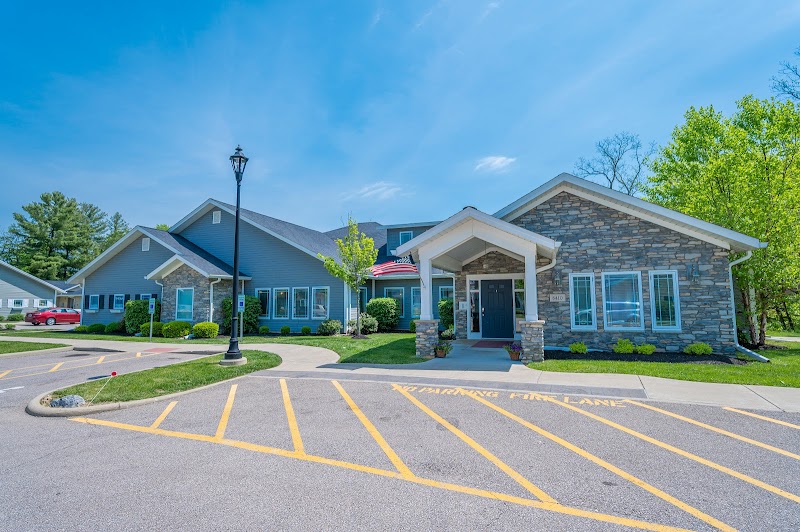
OTTERBEIN LOVELAND

6405 SMALL HOUSE CIRCLE, LOVELAND, OH 45140 (513) 833-0472
Non profit - Corporation 60 Beds OTTERBEIN SENIORLIFE Data: November 2025
Trust Grade
40/100
#753 of 913 in OH
Last Inspection: May 2023

Over 2 years since last inspection. Current conditions may differ from available data.

Overview

Otterbein Loveland has a Trust Grade of D, indicating below-average quality and raising some concerns about care. It ranks #753 out of 913 nursing homes in Ohio, placing it in the bottom half of facilities in the state, and #12 out of 15 in Clermont County, meaning only a few local options are better. The facility's performance is worsening, with reported issues increasing from 1 in 2024 to 5 in 2025. Staffing is average with a 58% turnover rate, which is typical for Ohio, and the nursing home has concerning fines totaling $28,841, higher than 83% of facilities in the state. There are some strengths, including average RN coverage, but serious incidents have occurred, such as a resident falling and fracturing a bone due to inadequate supervision, and concerns about food safety practices in the kitchen that could affect all residents.

Trust Score
D
40/100
In Ohio
#753/913
Bottom 18%
Safety Record
Moderate
Needs review
Inspections
Getting Worse
1 → 5 violations
Staff Stability
⚠ Watch
58% turnover. Above average. Higher turnover means staff may not know residents' routines.
Penalties
⚠ Watch
$28,841 in fines. Higher than 94% of Ohio facilities. Major compliance failures.
Skilled Nurses
○ Average
Each resident gets 35 minutes of Registered Nurse (RN) attention daily — about average for Ohio. RNs are the most trained staff who monitor for health changes.
Violations
⚠ Watch
19 deficiencies on record. Higher than average. Multiple issues found across inspections.
★★☆☆☆
2.0
Overall Rating
★★★☆☆
3.0
Staff Levels
★★★☆☆
3.0
Care Quality
★★☆☆☆
2.0
Inspection Score
Stable
2024: 1 issues
2025: 5 issues

The Good

  • Full Sprinkler Coverage · Fire safety systems throughout facility
  • No fines on record

Facility shows strength in fire safety.

The Bad

2-Star Overall Rating

Below Ohio average (3.2)

Below average - review inspection findings carefully

Staff Turnover: 58%

12pts above Ohio avg (46%)

Frequent staff changes - ask about care continuity

Federal Fines: $28,841

Below median ($33,413)

Moderate penalties - review what triggered them

Chain: OTTERBEIN SENIORLIFE

Part of a multi-facility chain

Ask about local staffing decisions and management

Staff turnover is elevated (58%)

10 points above Ohio average of 48%

The Ugly 19 deficiencies on record

1 actual harm
Aug 2025 5 deficiencies
CONCERN (D) 📢 Someone Reported This

A family member, employee, or ombudsman was alarmed enough to file a formal complaint

Potential for Harm - no one hurt, but risky conditions existed

Accident Prevention (Tag F0689)

Could have caused harm · This affected 1 resident

**NOTE- TERMS IN BRACKETS HAVE BEEN EDITED TO PROTECT CONFIDENTIALITY** Based on observation, staff interview, medical record review, and review of a facility policy, the facility failed to ensure fal...

Read full inspector narrative →
**NOTE- TERMS IN BRACKETS HAVE BEEN EDITED TO PROTECT CONFIDENTIALITY** Based on observation, staff interview, medical record review, and review of a facility policy, the facility failed to ensure fall incidents were reviewed and interventions put in place in a timely manner and failed to ensure established fall interventions were in place as care planned. This affected two (#25 and #64) of six residents reviewed for falls. The census was 58. Findings include:1. Medical record review for Resident #25 revealed she was admitted to the facility on [DATE]. Her diagnoses included, major depressive disorder, essential primary hypertension, generalized anxiety, hallucinations, bipolar disorder, insomnia, anemia, anorexia nervosa, and candidal esophagitis. Review of the Minimum Data Set (MDS) assessment, dated 07/02/25, revealed Resident #25 was cognitively intact. Resident #25 was dependent on staff for medication administration, lower body dressing, and putting on/taking off shoes. Resident #25 required supervision with meals and oral hygiene. Resident #25 required maximum assistance from staff with toilet use, bathing, upper body dressing, personal hygiene, and sit to stand positions. Review of the progress notes for Resident #25, late entry dated on 12/27/25 for 12/23/24 at 9:29 P.M., revealed Resident #25 was found on the floor in Resident #25's room. No immediate intervention was listed. On 12/24/24, Resident #25 was assessed by the nurse practitioner and a stat x-ray was ordered related to Resident #25's complaints of pain. The x-ray results confirmed a probable fracture of the distal clavicle without dislocation and an age indeterminate T12 compression fracture. Review of the interdisciplinary team (IDT) note on 12/26/24 at 1:24 P.M. revealed the IDT met to review the fall from 12/23/24 when Resident #25 was found on the floor by a certified nurse aide (CNA) in front of Resident #25's bed. Resident #25 was assessed by the nurse and denied pain. Resident #25 had complaints of pain with the nurse practitioner visit on 12/24/24 and an order for an x-ray of the left shoulder and lumbar spine was ordered with resulted findings of probable fracture of the distal clavicle and findings of an age indeterminate T12 compression fracture. The IDT intervention was a scoop mattress in place to prevent sliding out of bed. Interview with the Administrator and the Director of Nursing (DON) on 08/21/25 at 9:25 A.M. confirmed no immediate intervention was listed. The Administrator and the DON confirmed the IDT team did not meet until 12/26/25 to review the fall that occurred on 12/23/25 and the intervention put in place at that time was for Resident #25 to utilize a scoop mattress. Review of the progress notes for Resident #25 revealed a late entry dated 04/25/25 at 8:03 A.M. for 04/23/25 at 8:30 A.M. that a CNA attempted to transfer Resident #25 from wheelchair to the shower chair and lowered Resident #25 to the floor. Resident #25 stated she was lowered to the floor. No immediate intervention as listed in the progress notes. Review of the IDT team note dated 05/01/25 at 7:10 P.M. for the fall on 04/23/25 revealed a CNA attempted to transfer Resident # 25 from the wheelchair to the shower chair and lowered Resident #25 to the floor. The intervention was to have Resident #25 utilize two staff members to transfer to the shower chair verses one person for transfer to the shower chair.Interview with the DON on 08/21/25 at 9:30 A.M. confirmed the facility failed to place an immediate intervention in place. The IDT did not meet until 05/01/25 and the intervention for two caregivers to transfer Resident #25 to her shower chair was implemented. Review of the progress notes dated 06/28/25 at 12:30 P.M. for Resident #25 revealed she was sent to the emergency room post fall with head trauma and pain was rated a six out of 10. Resident #25 fell when she attempted to transfer herself. No immediate intervention was listed. Review of the IDT note dated 06/30/25 at 1:31 P.M. for 06/28/25 revealed Resident #25 was discharged to the emergency room for evaluation related to the resident falling, hitting her head, and had complaints of pain. Resident #25 fell when she attempted to transfer herself. The intervention was to encourage Resident #25 to utilize a recliner chair when out of the bed.Interview on 08/21/25 at 9:35 A.M. with the Administrator and the DON confirmed Resident #25 tried to transfer herself and it resulted in a fall. The Administrator and the DON confirmed the facility failed to implement an immediate intervention. Resident #25 was discharged to the emergency room for evaluation on 06/28/25 at 12:30 P.M. per the progress notes and returned to the facility on [DATE] at 4:46 P.M. The IDT met on 06/30/25 and Resident #25's new intervention was placed on 06/30/25. Interview with the Administrator on 08/20/25 at 3:54 P.M. confirmed the facility will meet as an IDT and review falls that have occurred the previous business day. The Administrator confirmed the facility identified concerns related to a delay in the time the IDT members have met in relation to a fall. The Administrator confirmed the facility identified a concern with immediate interventions being identified, documented, and put in place immediately after a fall has occurred. The Administrator and the DON confirmed the facility expectation and the facility fall policy require the supervising nurse at the time of the fall should identify an immediate intervention document the intervention in the resident's medical chart and ensure the intervention is in place. The IDT will meet the next business day and review the resident's fall and ensure the intervention was appropriate.2. Medical record review for Resident #64 revealed an admission date of 06/08/23. His medical diagnoses included Parkinson's disease, renal insufficiency, non-Alzheimer's dementia, and dysphagia. Review of the quarterly MDS assessment dated [DATE] revealed Resident #64 was moderately cognitively impaired. His functional status was setup or clean-up assistance for eating, supervision or touching assistance for toileting, independent for bed mobility, and partial/moderate assistance for transfers. Review of the care plan revised on 05/03/25 revealed Resident #64 was at risk for falls related to Parkinson's disease, repeated falls, unsteadiness on his feet, and weakness. Interventions for his falls were to ensure Dycem (non-skid pad) to his wheelchair seat was in place, lanyard attachment to his wheelchair to ensure his grabber was within reach at all times, and Dycem to his bedside tabletop to keep needed items in place Observation of Resident #64 on 08/21/25 at 1:17 P.M. revealed he did not have his lanyard on his wheelchair to keep his grabber in place and had no Dycem to his wheelchair seat or to the top of his bedside table. Interview with Therapy Supervisor (TS) #304 on 08/21/25 at 1:25 P.M. confirmed the interventions were not in place for Resident #64. Review of the facility policy titled, Falls Management, dated 12/03/19, revealed in the event a fall should occur the nurse should complete a physical assessment, provide immediate care, notify the family and physician of the fall, complete the accident and injury report, determine immediately if any interventions are needed, institute the interventions to prevent a further fall, update the care plan and Kardex with new interventions, and the documentation in the notes should include a complete account of the fall. This deficiency represents non-compliance investigated under Complaint Number OH00167007 (1399080) and Complaint Number OH00164135 (1399075).
CONCERN (D) 📢 Someone Reported This

A family member, employee, or ombudsman was alarmed enough to file a formal complaint

Potential for Harm - no one hurt, but risky conditions existed

Deficiency F0725 (Tag F0725)

Could have caused harm · This affected 1 resident

**NOTE- TERMS IN BRACKETS HAVE BEEN EDITED TO PROTECT CONFIDENTIALITY** Based on observation, resident and staff interview, and medical record review, the facility failed to ensure the facility was ad...

Read full inspector narrative →
**NOTE- TERMS IN BRACKETS HAVE BEEN EDITED TO PROTECT CONFIDENTIALITY** Based on observation, resident and staff interview, and medical record review, the facility failed to ensure the facility was adequately staffed to provide timely care and services for residents. This affected one (#41) of two residents reviewed for bowel and bladder. The census was 58. Findings include:Review of the medical record revealed Resident #41 was admitted to the facility on [DATE]. Diagnoses included type two diabetes mellitus without complications, severe sepsis without septic shock, cellulitis, rheumatoid arthritis and atrial fibrillation. Review of the most recent Minimum Data Set (MDS) assessment dated [DATE] revealed Resident #41 had no behaviors, did not reject care, and did not wander. The resident was dependent for toileting, required substantial assistance with bathing, and was dependent for transfers. Review of the care plan for Resident #41 dated 08/16/25 revealed the resident was frequently incontinent of bladder and bowel. Interview and observation with Resident #41 on 08/20/25 at 8:52 A.M. stated she rang the call light over an hour ago and no one came; however, stated a nurse and a nurse aide came in 30 minutes ago and asked if she needed anything and she let them know she had gone to the bathroom in her pants in the bed. The resident appeared frustrated that she had the accident. Interview with Registered Nurse (RN) #300 on 08/20/25 at 8:55 A.M. confirmed she and the nurse aide went in and asked if Resident #41 needed anything 30 minutes ago and the resident indicated she needed help with toileting and RN #300 was not sure if anyone went in to help her. Interview on 08/20/25 at 8:58 A.M. with RN #300 stated she was going to finish giving medications to another resident and then she would assist Resident #41. Interview on 08/20/25 at 9:00 A.M. with Resident #41 confirmed she was not happy and embarrassed about sitting in soiled pants. She stated it did not happen all of the time, and she was worried because her skin was sensitive. Observation on 08/20/25 at 9:04 A.M. revealed RN #300 walked into Resident #41 ' s room. Interview on 08/20/25 at 9:08 A.M. with CNA #32 verified she was in Resident #41 ' s room about 30 minutes ago and aware at that time the resident had an incontinence accident in her bed, and she added she let the resident know she had to come out and make breakfast for the other residents first.Interview on 08/20/25 at 9:52 A.M. with RN #300 stated it was only her and the nurse aide working at the time they went into Resident #41's room. She stated they were short staffed.Interview on 08/20/25 at 9:55 A.M. with CNA #83 confirmed the facility was short staffed and she just got called in to work at 9:15 A.M. This deficiency represents non-compliance investigated under Complaint Number OH00167007 (1399080), Complaint Number OH00165643 (1399077), and Complaint Number OH00164139 (1399076).
CONCERN (E) 📢 Someone Reported This

A family member, employee, or ombudsman was alarmed enough to file a formal complaint

Potential for Harm - no one hurt, but risky conditions existed

Safe Environment (Tag F0584)

Could have caused harm · This affected multiple residents

**NOTE- TERMS IN BRACKETS HAVE BEEN EDITED TO PROTECT CONFIDENTIALITY** Based on observation, resident and staff interview, review of water temperature logs, review of a repair quote, and policy revie...

Read full inspector narrative →
**NOTE- TERMS IN BRACKETS HAVE BEEN EDITED TO PROTECT CONFIDENTIALITY** Based on observation, resident and staff interview, review of water temperature logs, review of a repair quote, and policy review, the facility failed to ensure the residents environment was safe, comfortable, and homelike. This affected nine (#14, #17, #19, #23, #34, #52, #54, #56, and #59) of nice residents reviewed for environment. The census was 58. Findings include: 1. Observation of Resident #19's room on 08/18/25 at 4:10 P.M. revealed the carpet in the resident's room was heavily stained. Observation of Resident #43's bathroom on 08/19/25 at 9:39 A.M. revealed there were three lights above the sink area that were dim to the point they were out. Interview with Maintenance Supervisor (MS) #63 on 08/21/25 at 7:12 A.M. confirmed the carpet in Resident #19's room was heavily stained and stated the lights in Resident #43's bathroom contained light bulbs that would go dim before they were ready to burn out. MS #63 confirmed the bathroom's lighting was very dim. 2. Medical record review for Resident #17 revealed he was admitted to the facility on [DATE]. His diagnoses included congestive heart failure (CHF), pressure ulcer of the right heel, depression, insomnia headache, and cluster headache syndrome. Review of the Minimum Data Set (MDS) assessment for Resident #17 dated 08/05/25 revealed he was cognitively impaired. Resident #17 was dependent on staff for medication administration. He required assistance from staff with eating. He required supervision from staff with oral hygiene, toilet use, bathing and moderate assistance from staff with dressing. Observation on 08/18/25 at 4:26 P.M. revealed Resident #17 had a brown substance that appeared to be dried bowel movement on his toilet seat and around the rim of the toilet and the bathroom floor was soiled with dirt and debris. Resident #17 had a dried substance on his pillow that appeared to be blood, crumbs and food debris throughout the carpet in his bedroom, and the window blinds were torn and had a black substance around the window frame. Interview with Resident #17 on 08/18/25 at 4:26 P.M. revealed he was not sure how often the facility staff clean his room. Interview with Certified Nurse Aide (CNA) #105 confirmed Resident #17’s window blinds were torn in his room, confirmed a black substance around his window frame, a dried brown substance on and around his toilet, the black substance throughout his bathroom floor, and the food debris and dirt all around the carpet throughout the bedroom. CNA #105 confirmed the soiled sheets that appeared to have dried blood on the pillow case, and the unknown splattered substance around the doorframe. CNA #105 stated the resident's sheets are usually changed on shower days and as needed. 3. Medical record review for Resident #14 revealed the resident was admitted to the facility on [DATE]. Her diagnoses included dorsalgia, essential primary hypertension, sciatica, dysphagia, atrial fibrillation, cerebral infarction, and depression. Review of the MDS assessment for Resident #14 dated 06/02/25 revealed she was cognitively intact. She was dependent on staff for medication administration and showers. She required set up assistance for oral hygiene and eating. She required maximum assistance from staff with toilet use and dressing. She required moderate assistance with personal hygiene. Interview on 08/19/25 at 9:17 A.M. with Resident #14 revealed the carpet was soiled with dirt and debris scattered throughout the bedroom area. The room had black marks along the wall and around the bathroom area. The toilet seat was soiled, and the bathroom floor appeared to be black and heavily soiled. Interview with Resident #14 on 08/19/25 at 9:17 A.M. revealed her family will clean her bathroom when they visit. Resident #14 stated her family will mop the bathroom floor and clean the toilet. Resident #14 stated she has ongoing issues with her toilet not flushing well. Observation on 08/19/25 at 9:18 A.M. of Resident #14’s bathroom revealed the floor was heavily soiled with black debris and the toilet was soiled. The room had black marks around the wall and debris scattered along the carpet. Interview on 08/21/2025 at 2:32 P.M. with CNA #40 confirmed Resident #14 had a soiled toilet. CNA #40 confirmed Resident #14’s bathroom toilet does not flush well and stated the issue was because Resident #14 had large bowel movements. CNA #40 confirmed the bathroom floor was soiled with black debris and stool was identified around the toilet seat. CNA #40 confirmed a black substance was along the wall when entering the room, around the wall, the bathroom, and under the window. CNA #40 confirmed the carpet had dirt and debris scattered throughout the room. CNA #40 confirmed the chunk of wood missing from the lower part of the bathroom door in Resident #14’s bathroom. 4. Record review of Resident #23's medical record revealed the resident was admitted to the facility on [DATE]. Diagnoses for Resident #23 include hemiplegia, cerebral infarction accident, history right hip fracture, seizure disorder, and hypertension. Review of the MDS assessment dated [DATE] revealed Resident #23 had intact cognition and required moderate staff assistance with bathing. Interview on 08/18/25 at 12:10 P.M., Resident #23 stated he received showers in which the water temperature was cold, even when the staff let the water run. Resident #23 stated he preferred warm showers. Review of water temperature logs revealed the hot water temperatures should be between 108 and 120 degree Fahrenheit (F). Further review of the logs revealed Resident #54's water temperatures were between 99 and 101 degrees F between February and July 2025. Resident #52's water temperatures were between 99 and 104 degrees F between February and July 2025. Resident #34's water temperatures were between 77 and 91 degrees F between March and June 2025. Resident #23's water temperatures were between 84 and 101 degrees F between February and July 2025. Resident #56's water temperatures were between 91 and 101 degrees F between February and July 2025. Resident #59's water temperatures were between 89 and 96 degrees F between February and July 2025. Review of a supply quote dated 05/07/25 revealed the facility obtained a quote for repair/replacement of water equipment. Interview on 08/25/25 at 7:25 A.M. with Maintenance Director (MD) #63 verified he obtained the residents' room water temperatures and documented them on the temperature log. MD #63 stated the minimum temperature should be 108 degrees F, per the facility requirements. MD #63 verified he did not get a quote for water repair supplies until May 2025 and stated he should have followed up and implemented an immediate intervention when the water temperature was below the threshold. Interview on 08/25/25 at 7:45 A.M with the Administrator verified MD #63 should have implemented an alternative plan to ensure the water temperatures were within correct range. Review of the facility policy titled, “Resident Rights, dated 01/22/20, revealed the Resident has the right to a clean, and safe environment. The deficiency represents non-compliance investigated under Complaint Number OH00167007 (1399080).
CONCERN (E) 📢 Someone Reported This

A family member, employee, or ombudsman was alarmed enough to file a formal complaint

Potential for Harm - no one hurt, but risky conditions existed

Infection Control (Tag F0880)

Could have caused harm · This affected multiple residents

**NOTE- TERMS IN BRACKETS HAVE BEEN EDITED TO PROTECT CONFIDENTIALITY** Based on observation, medical record review, staff interview, and policy review. the facility failed to ensure soiled linens wer...

Read full inspector narrative →
**NOTE- TERMS IN BRACKETS HAVE BEEN EDITED TO PROTECT CONFIDENTIALITY** Based on observation, medical record review, staff interview, and policy review. the facility failed to ensure soiled linens were properly handled and failed to ensure proper hand sanitation during wound treatments. This affected two (#2 and #62) of four residents reviewed for infection control measures during care and services. The census was 58. Findings include: 1. Review of Resident #2's medical record revealed the resident was admitted to the facility on [DATE]. Diagnoses for Resident # 2 include hypertension, cerebral vascular accident affected right side, heart disease, diabetes, and anxiety disorder. Review of the Minimum Data Set (MDS) comprehensive assessment dated [DATE] revealed Resident #2 had intact cognition and was dependent for toileting and hygiene assistance. Observation on 08/19/25 at 10:27 A.M. of Certified Nurse Aide (CNA) #90 revealed the CNA exiting Resident #2's room with both arms and hands ungloved carrying uncovered linens, which were touching CNA #90's body. She carried the linens through the hallway to the laundry room which was approximately 40 yards from Resident #2's room. Interview on 08/19/25 at 10:28 A.M. CNA #90 verified she changed Resident #2's linens and carried them with ungloved hands through the hallway to the laundry room. CNA #90 verified the linens were touching her body. She stated she should have bagged the linens but had no bags. Review of facility policy titled, Used Linen Handling, dated May 2013, revealed staff should always wear gloves when handling used linen, and handle linen as little as possible held away from the body and covered when taken to the dirty utility room. 2. Review of Resident #62's medical record revealed the resident was admitted to the facility on [DATE]. Diagnoses for Resident #62 include hypertension, osteoporosis, anxiety disorder, and dementia. Review of the MDS comprehensive assessment dated [DATE] revealed Resident #62 had impaired cognition and required maximum assistance for transfers and set up assistance for eating. Review of physician orders revealed Resident #62 had orders to cleanse bilateral legs with calcium alginate and medihoney, and wrap in kerlix and ACE wrap once each shift. Observation on 08/21/25 at 12:33 P.M. revealed Licensed Practical Nurse (LPN) #88 was observed to apply the treatment to Resident #62's lower extremity skin tears on bilateral legs at three different areas on the legs. LPN #88 did not change gloves or sanitize her hands between treatments of the three different areas on Resident #62's legs. Interview on 08/21/25 at 12:33 P.M. LPN #88 verified she did not change gloves or sanitize her hands between treatments of the three different wound sites on Resident #62's legs. LPN #88 stated she should have changed gloves and sanitized her hands between administration of the treatments between each of the three wound sites. Interview on 08/25/25 at 3:17 P.M. the Director on Nursing (DON) verified changing gloves and sanitizing hands should occur between application of wound treatments for different wound sites. Review of policy titled, Hand Hygiene Procedure, dated November 2017, revealed hand hygiene occurs after contact with wound dressings. This deficiency represents non-compliance related to Complaint Number OH00167007 (1399080) and Complaint Number OH00165718 (1399078).
CONCERN (F) 📢 Someone Reported This

A family member, employee, or ombudsman was alarmed enough to file a formal complaint

Potential for Harm - no one hurt, but risky conditions existed

Food Safety (Tag F0812)

Could have caused harm · This affected most or all residents

Based on observation, staff interview, review of dishwasher, refrigerator, freezer, and food temperature logs, and policy review, the facility failed to ensure foods were stored in a manner to prevent...

Read full inspector narrative →
Based on observation, staff interview, review of dishwasher, refrigerator, freezer, and food temperature logs, and policy review, the facility failed to ensure foods were stored in a manner to prevent spoilage and contamination and failed to ensure the kitchen and dishware were maintained in a sanitary manner. This had the potential to affect all 58 residents residing in the facility. The census was 58. Findings include: 1. During the initial kitchen tour on 08/18/25 from 8:48 A.M through 10:20 A.M. of each facility house with Dietary Technician (DT) #205 revealed, at 8:48 A.M., there was an open container of sour cream dated 08/04/25 with a used by date of 08/11/25 and an open unmarked package of food, identified by DT #205 to be fish aquarium food. Review of the food temperature log revealed no documentation of prepared food temperatures for all three meals for 15 days in July 2025. There were no refrigerator temperatures logged for August 2025 for refrigerator #2 and no temperatures logged for outside freezer #3 for July and August 2025.Interview with DT #205 verified the outdated sour cream and fish food in the resident food refrigerator, the absent food temperatures and refrigerator and freezer temperatures at the time of discovery.Observation of House #19 on 08/18/25 at 9:18 A.M. revealed the food preparation and work table had a large crack extending across the width of table and had a raised edge measuring approximately 1/8 of an inch with noted food debris. Review of the food temperature log had no temperature recorded for all meals of four days in August 2025. Refrigerator #1 and refrigerator #2 had no temperatures recorded for August 1 through August 17 and freezer #3 had no temperatures recorded for July or August 2025.Interview with DT #205 verified the above findings in House #19 at the time of discovery. Observation of House #9 on 08/18/25 at 9:43 A.M. revealed food temperature logs were not complete for all three meals for July 1 through July 28 and freezer #3 had no temperatures recorded for August 1 through August 4. Interview with DT #205 verified the above findings in House #9 at the time of discovery.Observation of House #5 on 08/18/25 at 10:00 A.M revealed no food temperatures for any of the three meals from August 13 to August 17 were recorded. There were no temperatures documented for refrigerator #1 for 12 days in August 2025 and freezer #3 had no recorded temperatures for all of August 2025.Interview with DT #205 verified the above findings in House #5 at the time of discovery.Observation of House #10 on 08/18/25 at 10:20 A.M. revealed there were no recorded temperatures for freezer #3 for all of August 2025.Interview with DT #205 verified the lack of recorded freezer temperatures in House #10 at the time of discovery.2. Review of the House #5 dishwasher log for August 2025 revealed the log listed the rinse cycle temperature of the dishwasher must reach 180 degrees Fahrenheit (F). Further review of the temperature log revealed on 08/02/25, 08/05/25, 08/07/25, 08/10/25, 08/12/25, 8/15/25, and 08/17/25 the dishwasher rinse cycle varied from 170 to 176 degrees F. There was no evidence the dishwasher was re-ran to attain a higher temperature. There was no documentation of any intervention in the comment section of the log regarding the deficient temperature correction. Review of the House #9 dishwasher log for August 2025 revealed the log listed the rinse cycle temperature of the dishwasher must reach 180 degrees F. Further review of the temperature log revealed on 08/03/25, 8/15/25, and 08/17/25 the dishwasher rinse cycle varied from 172 to 174 degrees F. There was no evidence the dishwasher was re-ran to attain a higher temperature. There was no documentation of any intervention in the comment section of the log regarding the deficient temperature correction. Review of the House #19 dishwasher log for August 2025 revealed the log listed the rinse cycle temperature of the dishwasher must reach 180 degrees F. Further review of the temperature log revealed on 08/04/25, 08/05/25, 08/06/25, 08/08/25, 08/09/25 and 08/10/25, the dishwasher rinse cycle varied from 140 to 146 degrees F. There was no evidence the dishwasher was re-ran to attain a higher temperature. There was no documentation of any intervention in the comment section of the log regarding the deficient temperature correction. Interview on 08/18/25 at 10:25 A.M with DT #205 verified dishwasher temperatures were below the required 180 degrees F during the rinse cycle for House #5, House #9, and House #19.Interview on 08/25/25 at 7:35 A.M. Maintenance Director (MD) #63 stated he had not been notified of the dishwasher rinse cycles not getting up to 180 degrees F in House #5, House #9, and House #19.3. Observation on 08/20/25 at 8:50 A.M. revealed Certified Nurse Aide (CNA) #32 prepared puree food in the same blender bowl for two different batches of food. Between the preparations of the foods CNA #32 handwashed the blender bowl with detergent and rinsed the bowl in water. There was no sanitizer system or chemical sanitizer used between the preparation of the foods. Interview on 08/20/25 at approximately 9:00 A.M., CNA #32 verified she did not use a sanitizer between the food preparation and did not know how to do so. She did not know how she would have sanitized the bowl as she had no chemicals and did not know the sanitizing process. Interview on 08/20/25 at 1:00 P.M. DT #205 verified CNA #32 should have sanitized the blender bowl between food preparations to prevent cross contamination.Review of facility policy titled, Refrigerators and Freezer Temperatures, dated May 2013, revealed temperatures are documented twice daily and recorded on the temperature logs.Review of facility policy titled, Food Storage, dated August 2022, revealed foods should be dated once opened and used within four to seven days. This deficiency represents non-compliance related to Complaint Number OH00167007 (1399080).
Mar 2024 1 deficiency
CONCERN (E) 📢 Someone Reported This

A family member, employee, or ombudsman was alarmed enough to file a formal complaint

Potential for Harm - no one hurt, but risky conditions existed

Food Safety (Tag F0812)

Could have caused harm · This affected multiple residents

**NOTE- TERMS IN BRACKETS HAVE BEEN EDITED TO PROTECT CONFIDENTIALITY** Based on record review, observations, staff interviews, and policy review, the facility failed to perform appropriate hand hygie...

Read full inspector narrative →
**NOTE- TERMS IN BRACKETS HAVE BEEN EDITED TO PROTECT CONFIDENTIALITY** Based on record review, observations, staff interviews, and policy review, the facility failed to perform appropriate hand hygiene while preparing food for residents. This affected four (#13, #20, #21, and #22) of six residents sampled for food preparation. The facility census was 58. Findings include: 1. Review of the medical record revealed Resident #13 was admitted to the facility on [DATE] and had diagnoses including unspecified epilepsy and stage III chronic kidney disease. Review of the most recent Minimum Data Set (MDS) 3.0 assessment dated [DATE] revealed Resident #13 had moderately impaired cognition, had no behaviors, did not wander, and did not reject care. 2. Review of the medical record revealed Resident #20 was admitted to the facility on [DATE] and had diagnoses including type II diabetes and vascular dementia. Review of the most recent MDS 3.0 assessment dated [DATE] revealed Resident #20 was cognitively intact, had no behaviors, did not wander, and did not reject care. 3. Review of the medical record revealed Resident #21 was admitted to the facility on [DATE] and had diagnoses including unspecified dementia, and coronary artery disease. Review of the most recent MDS 3.0 assessment dated [DATE] revealed Resident #21 was cognitively intact, had no behaviors, did not wander, and did not reject care. 4. Review of the medical record revealed Resident #22 was admitted to the facility on [DATE] and had diagnoses including unspecified dementia and alcoholic polyneuropathy. Review of the most recent MDS 3.0 assessment dated [DATE] revealed Resident #22 had severely impaired cognition, had no behaviors, did not wander, and did not reject care. Observations made on 03/28/2024 from 12:24 P.M. to 12:34 P.M. revealed Stated Tested Nurse Aide (STNA) #119 prepared lunch for Residents #21 and #22. STNA #119 used gloved hands to place slices of pizza onto serving platter after using salad tongs to transfer salad from carryout carton to a porcelain serving dish. STNA #119 handed serving tray and porcelain bowl to STNA #115. STNA #119 did not change gloves or sanitized hands before preparing lunch plate for Resident #13. STNA #119 sliced pizza in the box with a wheeled pizza slicer then used her gloved hands to transfer pizza from the pizza box to plate. STNA #119 scooped a serving of green beans on the plate and covered the plate with foil. STNA #119 went to the pantry and came back with a serving tray. STNA #119 placed the plate and Styrofoam cup on the tray and handed the tray to STNA #115 to deliver to Resident #13. STNA #119 did not change gloves or perform hand hygiene before she began to prepare food for Resident #20. STNA #119 used tongs to transfer salad from the large foil carry-out container to a porcelain serving bowl and covered the bowl with foil. STNA #119 sliced pizza then transferred pizza with her gloved hands from the pizza box to the dinner plate and covered the plate with aluminum foil. During an interview on 03/28/2024 at 12:34 P.M. 12:34 P.M. STNA #119 verified she had not changed her gloves or performed hand hygiene between preparing food plates or touching food items for Resident #13, #20, #21 and #22. STNA #119 stated she was supposed to change her gloves every time. Review of policy titled Hand Hygiene Procedure dated 11/05/2021 revealed hand hygiene occurred before cooking and assisting with meals and after removing personal protective equipment. This deficiency represents non-compliance investigated under Complaint Number OH00151947.
May 2023 8 deficiencies 1 Harm
SERIOUS (G)

Actual Harm - a resident was hurt due to facility failures

Accident Prevention (Tag F0689)

A resident was harmed · This affected 1 resident

**NOTE- TERMS IN BRACKETS HAVE BEEN EDITED TO PROTECT CONFIDENTIALITY** Based on record reviews, staff interviews, and review of facility incident log, the facility failed to ensure residents received...

Read full inspector narrative →
**NOTE- TERMS IN BRACKETS HAVE BEEN EDITED TO PROTECT CONFIDENTIALITY** Based on record reviews, staff interviews, and review of facility incident log, the facility failed to ensure residents received adequate supervision to prevent a fall with injury. Actual harm occurred when Resident #24 who was assessed and care planned for two staff assistance for toileting fell and sustained a fracture which required hospitalization and surgical intervention after being left unattended while toileting. This affected one resident (#24) out of the three residents reviewed for falls during the annual survey. The facility census was 57. Findings include: 1. Record review for Resident #24 revealed this resident was admitted to the facility on [DATE] and had diagnoses including difficulty walking, muscle weakness, shortness of breath, and restlessness and agitation. Review of the annual Minimum Data Set (MDS) assessment, dated 01/25/23, revealed this resident was assessed to have moderately impaired cognition. This resident was assessed to require extensive assistance from two staff members for bed mobility, transfers, and toileting. Review of the care plan, initiated 02/01/22, revealed this resident had an Activities of Daily Living (ADL) self-care and/or physical mobility deficit related to weakness. Interventions included extensive assistance from two staff members for toileting and moving between surfaces. Review of the care plan, revised 02/12/23, revealed this resident was at risk for falls. Interventions included Dycem to wheelchair to prevent sliding, anticipate and meet needs, and keep needed items in reach. Review of the facility incident log, dated 04/01/22 through 04/25/23, revealed Resident #24 was documented to have fallen in the facility on 05/19/22, 06/11/22, and 03/24/23. Review of the nurse progress note, dated 03/24/23, revealed Resident #24 had an unwitnessed fall in the bathroom around 10:40 A.M. and was found lying on his right side with his head towards the shower. The resident stated he was trying to ambulate to the shower and lost his balance. The resident was complaining of pain to the right hip. The Nurse Practitioner was notified and provided new orders for an X-ray of the right hip to be performed. Review of the nurse's progress note, dated 03/25/23, revealed X-ray results for Resident #24 came back positive for a closed fracture of the femoral neck of the right hip. The Nurse Practitioner was notified and provided orders for the resident to be sent out to the hospital. Review of the nurse's progress note, dated 03/29/23, revealed Resident #24 returned to the facility after being hospitalized with an admitting diagnosis of closed displaced fracture of right femoral neck. There were orders to leave the Mepilex silver dressing in place to the right hip unless it became saturated. Interview with State Tested Nursing Assistant (STNA) #800 on 04/26/23 at 1:40 P.M. revealed she was working on 03/24/23 and had assisted Resident #24 to the restroom prior to giving the resident a shower. STNA #800 stated she realized she had forgotten to get towels and had asked Resident #24 if he could stay put while she went to get towels and Resident #24 stated he would. STNA #800 stated when she returned to the room, Resident #24 was lying on the floor. Interview with STNA #540 and STNA #840 on 04/26/23 at 3:30 P.M. revealed both STNA's worked evening shift at the facility and frequently provided care to Resident #24. They stated prior to Resident #24's fall on 03/24/23, the resident required assistance from two staff members for transfers and toileting due to being weak and unsteady and was not to be left on the toilet unsupervised due to the risk of falling.
CONCERN (D)

Potential for Harm - no one hurt, but risky conditions existed

PASARR Coordination (Tag F0644)

Could have caused harm · This affected 1 resident

**NOTE- TERMS IN BRACKETS HAVE BEEN EDITED TO PROTECT CONFIDENTIALITY** Based on record reviews and staff interviews, the facility failed to ensure a significant change Preadmission Screening and Resi...

Read full inspector narrative →
**NOTE- TERMS IN BRACKETS HAVE BEEN EDITED TO PROTECT CONFIDENTIALITY** Based on record reviews and staff interviews, the facility failed to ensure a significant change Preadmission Screening and Resident Review (PASARR) was completed after residents received new mental health diagnoses. This affected two residents (#3 and #23) out of the three residents reviewed for PASARR's during the annual survey. The facility census was 57. Findings include: 1. Record review for Resident #23 revealed this resident was admitted to the facility on [DATE] and had diagnoses including major depressive disorder and anxiety disorder and had a diagnosis of unspecified psychosis added on 09/22/22. Review of the quarterly Minimum Data Set (MDS) assessment, dated 02/24/23, revealed this resident had mildly impaired cognition evidenced by a Brief Interview for Mental Status (BIMS) assessment score of 10 out of 15. This resident was assessed to require extensive assistance from two staff members for bed mobility, transfers, and toileting. Further record review for Resident #23 revealed the last PASARR assessment had been completed on 01/05/22, with a new PASARR not being completed after the resident received a new diagnosis of unspecified psychosis on 09/22/22. Interview with Regional [NAME] Office Manager #999 on 04/25/23 at 2:34 P.M. verified there had not been a new PASARR completed for Resident #23 after the resident had a new diagnoses of unspecified psychosis on 09/22/22. 2. Record Review of Resident #3 on 04/25/23 at 11:49 A.M. revealed this resident was admitted to the facility on [DATE] with the following medical diagnoses: diabetes mellitis type II, morbid obesity, Parkinson's disease, hypertension, hypothyroidism, Bipolar disorder, hyperlipidemia, depression, obstructive sleep apnea, glaucoma, schizoaffective disorder, anxiety, chronic kidney disease, post-traumatic stress disorder, and osteoarthritis. Review of the MDS assessment completed on 02/07/23 revealed this resident had no cognitive impairments. Review of current resident diagnoses revealed this resident was admitted with diagnoses that included Bipolar disorder and schizoaffective disorder which were documented on 04/18/22. A PASARR was completed on 04/22/22, which did not reflect these diagnoses being completed on Section E. Review of PASSAR completed on 04/25/23, revealed an indication of Mood Disorder was added for this resident. Interview with Registered Nurse #901 on 04/25/23 at 03:50 P.M. verified a new PASARR should have been completed upon the resident's admission with new diagnoses. She verified it was not completed accurately until 04/25/23.
CONCERN (D)

Potential for Harm - no one hurt, but risky conditions existed

Deficiency F0655 (Tag F0655)

Could have caused harm · This affected 1 resident

**NOTE- TERMS IN BRACKETS HAVE BEEN EDITED TO PROTECT CONFIDENTIALITY** Based on record review and interview, the facility failed to complete an initial baseline plan of care to include fluid restrict...

Read full inspector narrative →
**NOTE- TERMS IN BRACKETS HAVE BEEN EDITED TO PROTECT CONFIDENTIALITY** Based on record review and interview, the facility failed to complete an initial baseline plan of care to include fluid restrictions and daily weights monitoring for three Residents ( #216, #214 and #212 ) of three residents reviewed for baseline care plans. The facility census was 57. Findings Include: 1. Record review of Resident #216 revealed the resident was admitted to the facility on [DATE]. Diagnoses for Resident #216 included dysphagia, malignant carcinoid tumor of rectum, atherosclerotic heart disease, hypertension, and chronic obstructive pulmonary disease. Review of the initial admission assessment dated [DATE] revealed the resident had intact cognition. Physician orders, dated on admission of 04/19/23, revealed orders for Regular soft and bite sized texture diet, ice chips, and fluid restriction 1000 milliliters a day. Review of the initial base line plan of care dated 04/20/23 revealed no initial risk assessment, goals, and interventions to address the physician ordered fluid restriction of 1000 milliliters per day. Record review of Resident #216 weight log from 04/19/23 to 04/24/23 revealed a weight increase of 4.4 pounds. Review of Medication Administration Record, (MAR) dated April 2023) on 04/24/23 revealed no fluid restriction of 1000 milliliters listed and no documentation of the fluid restriction. 2. Record review of Resident #214 revealed the resident was admitted to the facility on [DATE]. Diagnoses for Resident #214 included acute respiratory failure, heart failure, mitral valve insufficiency and hypokalemia. Review of the initial admission assessment dated assessment dated [DATE] revealed the resident had intact cognition. Physician orders, dated on 04/14/23, revealed orders for clear liquid diet and enteral feeding of Two Cal HN at 119 cc bolus every four hours with 30 milliliter of water flush every six hours. On 04/17/23, physician orders included 2000 milliliters of fluid restrictions. Review of the initial base line plan of care dated 04/14/23 revealed no initial risk assessment, goals, and interventions to address the physician ordered fluid restriction of 2000 milliliters per day. 3. Record review of Resident #212 revealed the resident was admitted to the facility on [DATE]. Diagnoses for Resident #212 includes dysphagia, myocardial infarction, heart disease, atrial fibrillation and hypertension. Review of the initial admission assessment dated [DATE] revealed the resident had intact cognition. Physician orders dated 04/13/23 daily weights and notify physician if weight changes five pounds per day. Review of the initial base line plan of care dated 04/12/23 revealed no initial risk assessment, goals, and interventions to address the physician ordered daily weights. Record review of weights log and April MAR, revealed no weights were obtained and recorded on 04/15/23, 04/16/23 ,04/22/23 and 04/24/23. Interview on 04/27/23 at 10:30 A.M. the Director of Nursing, (DON) verified there should have been a baseline plans of care identifying fluid restrictions, including no goal and interventions, for Residents #216 and for Resident #214. Resident #212 should have had a baseline care plan for daily weight monitoring. No policy was provided regarding baseline care plans for fluid restrictions and daily weight monitoring.
CONCERN (D)

Potential for Harm - no one hurt, but risky conditions existed

Quality of Care (Tag F0684)

Could have caused harm · This affected 1 resident

**NOTE- TERMS IN BRACKETS HAVE BEEN EDITED TO PROTECT CONFIDENTIALITY** Based on record reviews, interviews, and review of online guidance, the facility failed to ensure hospital discharge instruction...

Read full inspector narrative →
**NOTE- TERMS IN BRACKETS HAVE BEEN EDITED TO PROTECT CONFIDENTIALITY** Based on record reviews, interviews, and review of online guidance, the facility failed to ensure hospital discharge instructions were ordered and implemented, failed to ensure surgical follow-up appointments were made, failed to ensure surgical wounds received adequate monitoring and treatment, and failed to ensure adequate care of a Portacath (an implanted venous access device). This affected one resident (#21) identified as having an implanted Portacath device and one resident (#24) who returned from the hospital after surgical intervention of a hip fracture. The facility census was 57. Findings include: 1. Record review for Resident #21 revealed this resident was admitted to the facility on [DATE] and had diagnoses including anxiety disorder, adjustment disorder, and presence of other specified devices. Review of the quarterly Minimum Data Set (MDS) assessment, dated 03/23/23, revealed this resident had intact cognition evidenced by a BIMS assessment score of 15 out of 15. This resident was assessed to require supervision for bed mobility and transfers and limited assistance from one staff member for toileting. Review of the active care plans for Resident #21 revealed no plan of care in place for the monitoring or care of the residents Portacath device. Review of the active physicians orders for Resident #21 revealed no orders for flushing the residents Portacath device to maintain patency and no orders for monitoring the Portacath for complications or infection. Interview with Resident #21 on 04/25/23 at 12:28 P.M. revealed facility staff did not flush or monitor the residents Portacath. Interview with Registered Nurse (RN) #901 on 04/27/23 at 9:00 A.M. verified there were no orders maintenance or flushing of Resident #21's Portacath device. Review of the online guidance from the Cleveland Clinic titled Implanted Port (https://my.clevelandclinic.org/health/treatments/21701-implanted-port), last reviewed on 08/25/21, revealed implanted ports were to be flushed out once a month when not used regularly to reduce the risk of clots and blockages. 2. Record review for Resident #24 revealed this resident was admitted to the facility on [DATE] and had diagnosis including displaced intertrochanteric fracture of the right femur. Review of the annual MDS assessment, dated 01/25/23, revealed this resident was assessed to have moderately impaired cognition evidenced by a BIMS assessment score of 05 out of 15. This resident was assessed to require extensive assistance from two staff members for bed mobility, transfers, and toileting. Review of the care plan, dated 03/30/23, revealed this resident required orthopedic after-care related to right hip fracture. Interventions included orthopedic consults as needed and monitor right hip surgical wound for signs and symptoms of infection. Review of the hospital discharge instructions, dated [DATE], revealed orders for mobile compression devices to be applied for 20 hours per day for three weeks, leave mepilex silver dressing on hip unless it becomes saturated then change, and follow up with orthopedic surgeon in two weeks. Review of the physicians order, dated 03/29/23, revealed an order to follow up with orthopedic surgeon in two weeks. Review of additional physicians orders for Resident #24 revealed no orders for mobile compression devices to be applied. Review of additional physicians orders for Resident #24 revealed no wound care orders for the residents surgical incision to the right hip. Further record review for Resident #24 revealed no evidence of monitoring or care of the residents right hip surgical incision, implementation of mobile compression devices, or follow up appointment with orthopedics. Interview with Licensed Practical Nurse (LPN) #510 on 04/25/23 at 11:40 A.M. revealed Resident #24 had a bandage in place to the surgical incision located on the right hip when he returned from the hospital which had fallen off. Interview with RN #901 on 04/26/23 at 12:30 P.M. verified hospital discharge orders for a follow up appointment in two weeks had not been scheduled for Resident #24. RN #901 also verified orders for mobile compression devices for Resident #24 had not been ordered or implemented upon the residents discharge from the hospital. RN #901 further verified Resident #24 did not have evidence of wound care being provided to the residents right hip surgical incision.
CONCERN (D)

Potential for Harm - no one hurt, but risky conditions existed

Deficiency F0692 (Tag F0692)

Could have caused harm · This affected 1 resident

**NOTE- TERMS IN BRACKETS HAVE BEEN EDITED TO PROTECT CONFIDENTIALITY** Based on record review, staff interview, and policy review, the facility failed to monitor fluid restrictions and daily weights ...

Read full inspector narrative →
**NOTE- TERMS IN BRACKETS HAVE BEEN EDITED TO PROTECT CONFIDENTIALITY** Based on record review, staff interview, and policy review, the facility failed to monitor fluid restrictions and daily weights as ordered by the physician for three residents (#216, #214 and #212) of four residents reviewed for fluid restrictions and daily weights. The facility census was 57. Findings Include: 1. Record review of Resident #216 revealed the resident was admitted to the facility on [DATE]. Diagnoses for Resident #216 included dysphagia, malignant carcinoid tumor of rectum, atherosclerotic heart disease, hypertension, and chronic obstructive pulmonary disease. Review of the initial admission assessment dated [DATE] revealed the resident had intact cognition. Physician orders, dated on admission of 04/19/23, revealed orders for Regular soft and bite sized texture diet, ice chips, and fluid restriction 1000 milliliters a day. Record review of Resident #216 weight log from 04/19/23 to 04/24/23 revealed a weight increase of 4.4 pounds. Review of Medication Administration Record, (MAR) dated April 2023 on 04/24/23 revealed no fluid restriction of 1000 milliliters listed and no documentation of the fluid restriction. Interview on 04/26/23 at 4:35 P.M. with Licensed Practical Nurse, (LPN) # 590 verified there had been no fluid restriction listed in the April MAR for monitoring the 1000 milliliters of fluid restriction for Resident #216 from 04/19/23 through 04/25/23. LPN #590 verified Resident #216 weight had increased and stated there were no parameters for physician notification of weight changes related to fluid restriction monitoring. 2. Record review of Resident #214 revealed the resident was admitted to the facility on [DATE]. Diagnoses for Resident #214 included acute respiratory failure, heart failure, mitral valve insufficiency and hypokalemia. Review of the initial admission assessment dated assessment dated [DATE] revealed the resident had intact cognition. Physician orders, dated on 04/14/23, revealed orders for clear liquid diet and enteral feeding of Two Cal HN at 119 cc bolus every four hours with 30 milliliter of water flush every six hours. On 04/17/23, physician orders included 2000 milliliters of fluid restrictions. Review of Medication Administration Record, (MAR) dated 04/17/23 through 04/24/23 revealed no documentation of the amount of fluids consumed from tube feeding, flushes and oral intake. There were no parameters for physician notification regarding weight change. Interview on 04/26/23 at 4:35 P.M. with LPN # 590 verified there had been no fluid restriction listed in the April MAR for monitoring the 2000 milliliters of fluid restriction for Resident #214 from 04/17/23 through 04/24/23. LPN #590 stated there were parameters in the orders for physician notification of weight changes, or delineation of fluid amounts divided between nursing and the meal service. She verified as there was no documentation from nursing as to the fluid amounts consumed by tube feedings, flushes, and oral intake, monitoring of the 2000 milliliters fluid restriction was not accurate. Interview on 04/27/23 at 10:37 A.M. with the Director of Nursing verified the fluid restriction orders of Residents #214 and #216 should have been listed, and documented in the MAR when the order was obtained. The orders should have had delineation of fluid amounts between meal service and nursing. There should have been parameters for weight monitoring to notify the physician of fluid intake and weight changes. There was no facility policy provided regarding fluid restriction weight change parameters and monitoring management. 3. Record review of Resident #212 revealed the resident was admitted to the facility on [DATE]. Diagnoses for Resident #212 includes dysphagia, myocardial infarction, heart disease, atrial fibrillation and hypertension. Review of the initial admission assessment dated [DATE] revealed the resident had intact cognition. Physician orders dated 04/13/23 daily weights and notify physician if weight changes five pounds per day. Record review of weights log and April Medication and Administration Record, (MAR), revealed no weights were obtained and recorded on 04/15/23, 04/16/23 ,04/22/23 and 04/24/23. Interview on 04/25/23 at 12:15 P.M. with Diet Technician, (DTR) # 720 verified Resident #212 had a daily weight ordered on 04/13/23 and did not have weights documented on 04/15/23, 04/16/23, 04/22/23 and 04/24/23. DTR #720 stated she no knowledge Resident #212 had missing daily weights. Review of facility policy, Weight Policy, dated 12/02/21, revealed a copy of weight reports are shared with the diet technician and or Registered Dietitian to review, assess and make recommendations.
CONCERN (E)

Potential for Harm - no one hurt, but risky conditions existed

Medication Errors (Tag F0758)

Could have caused harm · This affected multiple residents

**NOTE- TERMS IN BRACKETS HAVE BEEN EDITED TO PROTECT CONFIDENTIALITY** Based on record reviews, staff interviews, and review of on line medication guidance, the facility failed to ensure as needed (p...

Read full inspector narrative →
**NOTE- TERMS IN BRACKETS HAVE BEEN EDITED TO PROTECT CONFIDENTIALITY** Based on record reviews, staff interviews, and review of on line medication guidance, the facility failed to ensure as needed (prn) psychotropic medications were not prescribed for longer than 14 days and failed to ensure psychotropic medications were only used for appropriate indications. This affected five residents (#5, #11, #21, #34, and #39) out of the six residents reviewed for unnecessary medications and hospice services. The facility census was 57. Findings include: 1. Record review for Resident #5 revealed this resident was admitted to the facility on [DATE] and had diagnoses including depression and anxiety. Review of the significant change Minimum Data Set (MDS) assessment, dated 04/01/23, revealed this resident had mildly impaired cognition evidenced by a Brief Interview for Mental Status (BIMS) assessment score of 11 out of 15. This resident was assessed to require extensive assistance from two staff members for transfers, bed mobility, and toileting. This resident was assessed to receive hospice services. Review of the active physicians order, dated 03/22/22, revealed this resident had an order for Lorazepam (an anti-anxiety medication) to be administered every four hours prn for anxiety. This order did not contain a stop date. Interview with Registered Nurse (RN) #901 on 04/27/23 at 9:00 A.M. verified Resident #5 had an active order for the prn administration of Lorazepam which did not contain a stop date. 2. Record review for Resident #21 revealed this resident was admitted to the facility on [DATE] and had diagnoses including anxiety disorder and adjustment disorder. Review of the quarterly MDS assessment, dated 03/23/23, revealed this resident had intact cognition evidenced by a BIMS assessment score of 15 out of 15. This resident was assessed to require supervision for bed mobility and transfers and limited assistance from one staff member for toileting. Review of the active physicians order, dated 04/15/23, revealed this resident had an order for Vistaril (an anti-anxiety medication) to be administered every six hours prn for itching. This order did not contain a stop date. Interview with RN #901 on 04/27/23 at 9:00 A.M. verified Resident #21 had an active order for the prn administration of Vistaril which did not contain a stop date. 3. Record review for Resident #34 revealed this resident was admitted to the facility on [DATE] and had diagnoses including dementia, down syndrome, and anxiety. Review of the quarterly MDS assessment, dated 04/14/23, revealed this resident had moderately impaired cognition evidenced by a BIMS assessment score of 02. This resident was assessed to require limited assistance from one staff member for bed mobility, transfers, and toileting. Review of the active physicians order, dated 11/10/22, revealed this resident had an order for Risperidone (an anti-psychotic medication) to be administered every afternoon for agitation related to anxiety. Interview with RN #901 on 04/27/23 at 9:00 A.M. verified Resident #34 had an active order for the administration of Risperidone to treat agitation related to anxiety. Review of the online medication guidance from Drugs.Com titled Risperidone (https://www.drugs.com/risperidone.html), last updated on 02/20/23, revealed the medication Risperidone was used to treat Schizophrenia and symptoms of Bipolar Disorder (manic depression). The guidance contained a warning that Risperidone was not approved for use in older adults with dementia-related psychosis. 4. Record Review of Resident #11 on 04/26/23 at 08:27 A.M. revealed this resident was admitted to the facility on [DATE] with the following medical diagnoses: unspecified dementia, osteoarthritis, stress incontinence, Vitamin D deficiency, tremors, anxiety, depression, difficult ambulation, akathisia, and muscle weakness. Review of the MDS assessment completed on 02/28/23 revealed this resident is rarely/never understood. Review of Physician Orders revealed this resident is receiving the following medications: Depakote 250 milligrams (mg) 1 tablet by mouth twice daily for agitation and Risperidone oral solution 1mg/ml give 0.5 ml by mouth three times a day for agitation. Review of current resident diagnoses revealed this resident does not have an active diagnosis of psychosis in the medical chart. Interview with Registered Nurse #901 on 04/26/23 at 11:37 A.M. verified Risperidone and Depakote are to have an actual diagnosis and not just treating a symptom such as agitation. 5. Record Review of Resident #39 on 04/25/23 at 03:24 P.M. revealed this resident was admitted to the facility on [DATE] with the following medical diagnoses: chronic kidney disease, atherosclerosis, vascular dementia, congestive heart failure, atrial fibrillation, hypercholesterolemia, hypertension, orthopnea, anxiety, depression, and edema. Review of the MDS assessment completed on 02/21/23 revealed this resident had severe cognitive impairments. Review of Physician Orders revealed this resident is receiving the following medications: Lexapro 10 mg 2 tablet by mouth daily for vascular dementia without behavioral disturbance, mood disorder, anxiety, and psychotic disturbance. Interview with the Registered Nurse #901 on 04/26/23 at 11:41 A.M. verified this resident is receiving an antidepressant for a diagnosis of vascular dementia without behavioral disturbance, mood disorder, anxiety, and psychotic disturbance as written on Physician Orders. She stated this is not an acceptable diagnosis for the use of Lexapro.
CONCERN (E) 📢 Someone Reported This

A family member, employee, or ombudsman was alarmed enough to file a formal complaint

Potential for Harm - no one hurt, but risky conditions existed

Menu Adequacy (Tag F0803)

Could have caused harm · This affected multiple residents

**NOTE- TERMS IN BRACKETS HAVE BEEN EDITED TO PROTECT CONFIDENTIALITY** Based on record review, observation, resident and staff interviews, and review of the menu, the facility failed to provide food ...

Read full inspector narrative →
**NOTE- TERMS IN BRACKETS HAVE BEEN EDITED TO PROTECT CONFIDENTIALITY** Based on record review, observation, resident and staff interviews, and review of the menu, the facility failed to provide food portions as approved by a Registered Dietitian and offer food choices. This affected thirteen residents, (#11,#10,#09,#16,#19,#02,#36,#15,#48,#33,#40,#47, and #216) of 55 residents who received food from the kitchen. The total facility census was 57. Findings Include: 1. Review of the Resident #33 chart revealed Resident #33 admitted to the facility on [DATE] with diagnoses including hemiplegia, anorexia nervosa, gastro- esophageal reflux disease, vitamin D deficiency and iron deficiency anemia. Review of the Minimum Data Set (MDS) comprehensive assessment dated [DATE] revealed the resident had intact cognition and the physician ordered a regular pureed texture with nectar thick liquid diet. Review of the breakfast meal menu on 04/26/23 for House #9 revealed the 04/26/23 breakfast menu posted on the kitchen refrigerator consisting of one doughnut, two eggs, one cup of cereal, four ounces of fruit and six ounces of yogurt. Observation on 04/26/23 at 8:26 A.M. State Tested Nurse Aide (STNA) #120 in House #9 kitchen prepared one doughnut and one package of oatmeal for Resident #33. STNA # 120 measured the prepared one package of oatmeal at four ounces. No other items were prepared until the surveyor brought the posted menu to STNA #120's attention. Interview on 04/26/23 at 8:37 A.M. with Diet Technician, (DTR) # 720 verified STNA #120 only prepared the doughnut and cereal until the surveyor brought it to STNA #120 attention. DTR #720 verified the prepared cereal portion measured four ounces instead of the posted menu amount of eight ounces, DTR #720 verified the STNA #120 should have prepared the posted menu for food items and portions , unless the resident preferred an alternate food. Interview on 04/026/23 at 8:48 A.M. STNA #120 verified she did know the menu and food portions was posted on the refrigerator, and did not know eggs, fruit and yogurt were listed in addition to the doughnut and cereal. STNA #120 stated she should have prepared two packages of cereal to reach measurement of eight ounces as listed on the menu. Interview on 04/26/23 at 9:14 A.M. Resident #33 stated she does not like yogurt but likes eggs and fruit in additional to cereal and doughnuts. She denied she had been asked her food preferences for the breakfast meal on 04/026/23. 2. Record review for Residents #10, #16, #36,#15,#48, and #47 revealed physician orders for regular diet. Residents #11 and #02 had physician orders for regular with soft bite sized foods diet. Residents #09 and #19 had physician orders for no added salt diets. Review of lunch menu of House #9, dated 04/26/23, revealed diets of regular, regular with bite sized foods and no added salt diets were to receive six ounces of bean and [NAME] casserole, four ounces of tater tots, four ounces of corn, four ounces of fruit and four ounces of ice cream. Observation on 04/26/23 at 11:57 A.M. revealed STNA #780 served Residents #10, #16, #36, #15, #48, #47, #11, #02, #09 and #19 four ounces of beans and [NAME] casserole, four ounces of tater tots and four ounces of corn. Four ounces of fruit and four ounces of ice cream were not served or offered to the residents. Observation on 04/26/23 at 12:48 P.M. DM #720 measured the beans and [NAME] serving spoon portion and the portion was four ounces. Interview on 04/26/23 at 12:35 P.M. STNA #780 verified she had not followed the portions of beans and [NAME] and food items posted on the menu for resident served regular, soft and bite sized and no added salt diets. She stated she did not see the fruit and ice cream on the menu and had not asked the residents their preferences for fruit and ice cream. No resident had denied fruit or ice cream. Interview on 04/26/23 at 12:48 P.M. DTR #720 verified the bean and [NAME] portion was posted on the refrigerator with portion size of six ounces and fruit and ice cream were listed on the menu. DTR #720 verified STNA #780 served the residents in House #9 a four-ounce portion of beans and [NAME] instead of six ounces. The fruit and ice cream were not served as posted on the menu. 3. Record review of Resident #216 revealed the resident was admitted to the facility on [DATE]. Diagnoses for Resident #216 included dysphagia, malignant carcinoid tumor of rectum, atherosclerotic heart disease, hypertension, and chronic obstructive pulmonary disease. Review of the initial admission assessment dated [DATE] revealed the resident had intact cognition. Physician orders, dated on admission of 04/19/23, revealed orders for Regular soft and bite sized nectar thick liquid texture diet, ice chips, and fluid restriction 1000 milliliters a day. Review of diet listing provided on 04/24/24 at 8:30 A.M., Resident #216 was listed on diet of regular soft and bite sized nectar thick liquid texture diet. There was no listing of 1000 milliliters fluid restriction. Observation on 04/24/23 at 9:15 A.M., the kitchen diet posting dated 04/24/23 revealed Resident #216 had regular soft and bite sized nectar thick liquid texture diet. There was no listing of 1000 milliliters fluid restriction. Interview on 04/26/23 at 9:42 A.M. State Tested Nurse Aide (STNA) # 940 revealed she relied on the kitchen diet postings for resident therapeutic diets. She verified on 04/26/23 Resident #216 diet had been changed and posted to include fluid restriction of 1000 milliliter and the amount to be provided by meal service on 04/26/23. Prior to 04/26/23, the therapeutic diet posting did not include a fluid restriction. Interview on 04/26/23 at 2:57 P.M. Registered Dietitian, (RD) # 950 verified Resident #216 was not listed on the kitchen diet therapeutic diet list for 1000 milliliters fluid restriction dated 04/24/23 , but had been updated on 04/26/23 and now included fluid amount divided by meal service and nursing. 4. Record Review of Resident #40 on 04/25/23 at 01:36 P.M. revealed this resident was admitted to the facility on [DATE] with the following medical diagnoses: cerebral infarction, hypertension, asthma, hypothyroidism, hyperlipidemia, depression, morbid obesity, anxiety, arthropathy, osteoarthritis, cataracts, and hypertensive heart disease. Review of the MDS assessment completed on 02/07/23 revealed this resident had minimal cognitive impairments. Interview with Resident #40 on 04/24/23 at 12:10 P.M. revealed she is unaware of any meal substitutes being provided with the exception of a peanut butter and jelly sandwich or a grilled cheese sandwich. She stated she has never been provided with a substitution menu if she does not like what is being served. This resident stated this bothers her that those are the only items that she knows of that are available. Interview with Dietary Technician #720 on 04/26/23 at 08:37 A.M. stated that always available foods are not displayed due to the owner not wanting it posted to maintain a homelike environment. She verified there is no posting for residents or staff to know of alternate foods or what else is available. This deficiency represents non compliance investigated under Complaint Number OH00136551.
CONCERN (E)

Potential for Harm - no one hurt, but risky conditions existed

Food Safety (Tag F0812)

Could have caused harm · This affected multiple residents

Based on observation, staff interview, and policy review, the facility failed to obtain and document dishwasher and food temperatures, failed to label and date foods, and discard expired foods. This h...

Read full inspector narrative →
Based on observation, staff interview, and policy review, the facility failed to obtain and document dishwasher and food temperatures, failed to label and date foods, and discard expired foods. This had the potential to affect 55 residents who receive food from the kitchen. The facility census was 57. Findings include: Review of April 2023 dishwasher logs of House #9 and House #10 revealed multiple days of no documentation of dishwasher temperatures. For April 2023 log of House # 9, only temperatures on 04/02/23 and 04/03/23 were completed. For April 2023 log of House #10, only 04/15/23 temperature was documented. Review of food temperatures logs for House #9 revealed 49 meal temperatures from 04/01/23 through 04/25/23 were not documented. Observation on 04/24/23 at 8:20 A.M. revealed following kitchen sanitation violations in House 15: 1. Package of open meat dated 04/06/23. 2. Reach in refrigerator with no internal thermometer. 3. Torn uncovered package raw meat exposing raw meat and blood in the refrigerator compartment. 4. Refrigerator temperature log not completed for month of April 2023 Observation on 04/24/23 at 8:44 A.M. revealed following kitchen sanitation violations in House 9: 1. Container of fruit with no label or date 2. Bag of fresh asparagus undated and very wet and gel like decayed substance 3. Two packages of open sliced meat dated 04/14/23 and 03/14/23. 4. Open page of tubular meat, undated and unlabeled. 5. Refrigerator temperature log not completed for month of April 2023 Observation on 04/24/23 at 9:10 A.M. revealed following kitchen sanitation violations in House 5: 1. Pan of apparent egg-based quiche no label and no date 2. Pitcher of yellow liquid no label and no date 3. Two packages of open sliced meat dated 04/05/23 and 03/15/23. 4. Reach in refrigerator with no thermometer inside the refrigerator. 5. Bulk storage container labeled flour with the scoop stored inside the container. Observation on 04/24/23 at 9:15 A.M. revealed following kitchen sanitation violations in House 10: 1. Container of pineapple dated 04/18/23. 2. Container of opened applesauce with no open date 3. Package of open sliced meat undated. 4. Internal Thermometer in reach in refrigerator registered at 48-degree Fahrenheit, and external thermometer registered 37 degrees Fahrenheit 5. Package of unopened pork chops with store label use by 04/22/23. Observation 04/24/23 at 9:23 A.M. revealed following kitchen sanitation violations in House 19: 1. Container of unidentifiable food unlabeled and undated 2. Pitcher of yellow liquid no label and no date 3. Bowl of unknown food unlabeled and undated 4. Package of open sliced meat dated 04/19/23 5. Open page of tubular meat, undated and unlabeled 6. Opened container coleslaw dated 04/12/23 7. Reach in refrigerator with no internal thermometer Interview on 04/24/23 at 8:20 A.M., with State Tested Nurse Aide, (STNA) #470, in House 15, verified the refrigerator temperature log was not completed, opened containers of foods were labeled with delivery dates, and the raw meat was uncovered. STNA #470 verified foods required an open date label to ensure opened leftover food was monitored and discarded according to the facility policy. Interview on 04/24/23 at 8:44 A.M., STNA #940, in House 9, verified opened foods need an open date to ensure leftover foods were monitored and discarded according to the facility policy. The fresh asparagus was no longer edible, and the refrigerator log lacked multiple entries of refrigerator temperatures. Interview on 04/24/23 at 9:10 A.M., STNA #180, in House 5, verified foods were dated with delivery date and not open date and not able to state what would be a discard date. STNA #180 verified scoops should not be stored in bulk food containers and refrigerators did not have internal thermometers to monitor accurate temperatures. Interview on 04/24/23 at 9:15 A.M., STNA #650, in House 10, verified foods should be labeled, and dated after opening. STNA #650 verified the internal refrigerator thermometer was registering higher than the external and was not sure which was accurate. She verified the pork chops should have been discarded on 04/22/23. Interview on 04/24/23 at 9:23 A.M., STNA #975, in House 19, verified multiple foods were unlabeled and needed a date when opened to monitor discard date. STNA #19 verified there were no internal thermometers to monitor refrigerator temperatures were accurate. Interview of 04/26/23 at 9:00 A.M., STNA # 120, who worked in House #9, verified the April 2023 dishwasher temperatures had two days of temperatures documented. STNA #120 verified meal temperatures were missing for multiple meals and should have been obtained and recorded at each meal. Interview on 04/26/23 at 9:40 A.M., STNA # 940, who worked in House #10, verified the April 2023 dishwasher temperature log was only documented on 04/15/23 and should have been completed every day at each meal. Interview on 04/26/23 at 04/01/22 at 2:57 P.M. Registered Dietitian, (RD)# 450 verified foods should be marked with an open date to ensure foods are discarded timely after opened. RD #450 verified temperature logs are to be maintained to monitor food and equipment temperatures. Review of facility policy Food Storage Policy and Procedure dated May 2013, revealed food is covered, dated and labeled with the month and day which it was opened and used by four to 7 days after the food was opened/prepared. Policy titled, Dishwashing Policy and Procedure, dated 06/01/17, when dishwasher is complete and reached a temperature of at least 165 degrees, record the result s o the Dishwashing Monitoring Log. Policy titled, Refrigerator and Freezer Temperature Policy and Procedure, dated 06/01/08 , revealed refrigerator temperatures are checked twice daily and recorded on the refrigerator temperature log. Thermometers are to be placed in the warmest part of the refrigerator to monitor the temperature between 36 to 40 degrees Fahrenheit.
Feb 2020 2 deficiencies
CONCERN (D)

Potential for Harm - no one hurt, but risky conditions existed

Deficiency F0757 (Tag F0757)

Could have caused harm · This affected 1 resident

**NOTE- TERMS IN BRACKETS HAVE BEEN EDITED TO PROTECT CONFIDENTIALITY** Based on medical record review and staff interview, the facility failed to timely respond to pharmacy recommendations. This affe...

Read full inspector narrative →
**NOTE- TERMS IN BRACKETS HAVE BEEN EDITED TO PROTECT CONFIDENTIALITY** Based on medical record review and staff interview, the facility failed to timely respond to pharmacy recommendations. This affected one Resident (#35) of five residents reviewed for unnecessary medications. The facility census was 42. Findings include: Medical record review revealed Resident #35 was admitted to the facility on [DATE] with diagnoses including thrombocytopenia, emphysema, and pulmonary embolism. Review of Resident #35's physician order dated 04/05/19 revealed an order for Diazepam, five milligrams (mg.), one-half tablet, as needed (PRN) every 24 hours for breakthrough muscle spasms and tremors. The physician order additionally directed the order would be evaluated and monitored every 14 days for continued use. Review of Resident #35's pharmacy recommendation dated 06/14/19 revealed the prescriber must provide documentation in the resident's medical record with a rationale and a specific period of time for the Diazepam to continue. There was no evidence the physician reveiwed or responded to the pharmacy recommendation. Interview on 02/04/20 at 12:12 P.M. with Assistant Director of Nursing (ADON) #400 confirmed there was no evidence the physician reviewed the pharmacy recommendation.
CONCERN (F)

Potential for Harm - no one hurt, but risky conditions existed

Deficiency F0730 (Tag F0730)

Could have caused harm · This affected most or all residents

Based on personnel record review and staff interview, the facility failed to ensure three State Tested Nursing Assistants (STNAs) of five reviewed received at least 12 hours of on-going training annua...

Read full inspector narrative →
Based on personnel record review and staff interview, the facility failed to ensure three State Tested Nursing Assistants (STNAs) of five reviewed received at least 12 hours of on-going training annually. This had the potential to affect all 42 residents of the facility. Findings include: 1. Review of STNA #223's personnel file revealed the STNA had a hire date of 10/14/16. There was no evidence the STNA received 12 hours of ongoing training annually. 2. Review of STNA #221's personnel file revealed the STNA had a hire date of 01/31/17. There was no evidence the STNA received 12 hours of ongoing training annually. 3. Review of STNA #214's personnel file revealed the STNA had a hire date of 06/28/16. There was no evidence the STNA received 12 hours of ongoing training annually. Interview on 02/04/20 at 1:11 P.M. with Human Resource Supervisor (HR) #217 confirmed STNA #223, #221 and #214 had not completed twelve hours on on-going training and in-services.
Dec 2018 3 deficiencies
CONCERN (D)

Potential for Harm - no one hurt, but risky conditions existed

Resident Rights (Tag F0550)

Could have caused harm · This affected 1 resident

**NOTE- TERMS IN BRACKETS HAVE BEEN EDITED TO PROTECT CONFIDENTIALITY** Based on medical record review, observation and interview, the facility failed to use respectful and dignified language for thre...

Read full inspector narrative →
**NOTE- TERMS IN BRACKETS HAVE BEEN EDITED TO PROTECT CONFIDENTIALITY** Based on medical record review, observation and interview, the facility failed to use respectful and dignified language for three (#5, #43, and #47) residents of three who require assistance with eating. The facility census was 43. Findings include: 1. Medical record review for Resident #5 revealed an admission date of 07/16/16 with diagnoses including osteoporosis, dementia, atrial fibrillation, cerebral infarction, cognitive communication deficit; type 2 diabetes mellitus, and chronic kidney disease, stage 3. Review of the Minimum Data Set (MDS) assessment dated [DATE] revealed Resident #5 had severe cognitive impairment. Resident #5 required set up and supervision of eating. 2. Medical record review for Resident #43 revealed an admission date of 11/16/17 and diagnoses including unspecified dementia, acute kidney failure with medullary necrosis; and dysphagia. Review of the MDS assessment dated [DATE] revealed Resident #43 had severe cognitive impairment. Resident #43 extensive assistance of one person for eating. 3. Medical record review for Resident #47 revealed an admission date of 01/20/17 with diagnoses including chronic ischemic heart disease, gastro-esophageal reflux disease (GERD), and bipolar. Review of MDS assessment dated [DATE] revealed Resident #47 was severely cogitatively impaired. The resident required an extensive assistance with eating. Observation on 12/26/18 at 12:09 P.M., revealed Elder Aide (EA) #33 stood over Resident #43 while the aide assisted the resident to eat lunch. Dietary Technician (DTR) #110 assisted Resident # 47 put soup on his spoon while standing over him. DTR #110 did not put the spoon in Resident # 47's mouth and revealed, he's a feed and I can't help him. Coach #113, DTR #110, and EA #33 continued to refer to Residents #5, #43, and #47 as feeds, and feeders, throughout the lunch service. Interview on 12/26/18 at 1:53 P.M., with EA #33 confirmed staff used the term feeder, in reference to residents who required assistance with eating. EA #33 revealed, residents were listed on care card as feeds, and that was what we call them. EA #33 further confirmed she received no facility specific training for feeding residents. EA #33 revealed therapy just tells us who needs assistance with eating and we help them.
CONCERN (D)

Potential for Harm - no one hurt, but risky conditions existed

Transfer Notice (Tag F0623)

Could have caused harm · This affected 1 resident

**NOTE- TERMS IN BRACKETS HAVE BEEN EDITED TO PROTECT CONFIDENTIALITY** Based on medical record review, staff interview, and review of facility policy, the facility failed to issue a written discharge...

Read full inspector narrative →
**NOTE- TERMS IN BRACKETS HAVE BEEN EDITED TO PROTECT CONFIDENTIALITY** Based on medical record review, staff interview, and review of facility policy, the facility failed to issue a written discharge notice for two (#41 and #25) residents of three reviewed for hospitalization. The facility census was 43. Findings include: 1. Medical record review revealed Resident #41 was admitted to the facility on [DATE] with diagnoses including cerebral infarction (stroke), atherosclerotic heart disease, and type two diabetes. Review of Resident #41's admission Minimum Data Set (MDS) assessment dated [DATE] revealed Resident #41 was severely impaired cognitively. Review of Resident #41's discharge Continuity of Care note from a local hospital revealed the resident was admitted to the hospital on [DATE] and returned to the facility on [DATE]. There was no evidence the resident or representative received a written notice regarding the hospitalization. Interview with the Interim Director of Nursing (IDON) on 12/28/18 at 10:30 A.M., verified Resident #41 was hospitalized and did not receive a written notice of the hospitalization. 2. Review of the medical record revealed Resident #25 was admitted to the facility on [DATE] with diagnoses including anemia, emphysema, epilepsy and a personal history of urinary tract infections. Review Resident #25's nurse's notes dated 12/10/2018 at 11:37 P.M., requested to be sent out to the hospital for evaluation due to pain. An order was received to send the resident to the local hospital. There was no documentation the resident or representative received a written notice of the transfer. Interview with the IDON on 12/28/18 at 4:00 P.M., revealed a discharge notice was given to Resident's #25's Power of Attorney (POA). Interview on 12/28/18 at 4:18 P.M., via telephone revealed Resident #25's POA denied receiving anything from the facility regarding the resident's transfer. Review of the facility's undated Discharge/Transfer policy stated, revealed residents who are sent emergently to the hospital are considered facility-initiated transfers. Notice of transfer or discharge and Ombudsman notification for facility-initiated transfer/discharges must notify the resident and resident representative of the transfer or discharge and the reasons for the move in writing and in a language and manner they understand.
CONCERN (D)

Potential for Harm - no one hurt, but risky conditions existed

Deficiency F0919 (Tag F0919)

Could have caused harm · This affected 1 resident

**NOTE- TERMS IN BRACKETS HAVE BEEN EDITED TO PROTECT CONFIDENTIALITY** Based on medical record review, observations, and staff interviews, the facility failed to ensure one resident (#47) of 16 resid...

Read full inspector narrative →
**NOTE- TERMS IN BRACKETS HAVE BEEN EDITED TO PROTECT CONFIDENTIALITY** Based on medical record review, observations, and staff interviews, the facility failed to ensure one resident (#47) of 16 residents observed had a functional call light within reach at all times. The facility census was 43. Findings include: Medical record review revealed Resident #47 was admitted to the facility on [DATE] with diagnoses including chronic ischemic heart disease,diabetes mellitus, epilepsy, glaucoma, dementia, and convulsions. Review of the Minimum Data Set (MDS) assessment dated [DATE] revealed Resident #47 was severely cogitatively impaired, required extensive assistance with feeding, and was totally dependent on staff with transfers, dressing, and toileting. Observation on 12/26/18 at 11:42 A.M., revealed Resident # 47 was sitting in his reclining chair in the middle of his room without a call light cord in reach. The resident also did not have a call light pendant. Interview on 12/26/18 at 11:44 A.M., with Elder Assistant (EA) #33 confirmed Resident #47 did not have a call light pendant since his last hospitalization. EA #33 revealed the pendant went with him to the hospital and was not with him when he returned to the facility. Review of facility policy titled, Call System/Overhead Paging, revised on 05/28/14, revealed the Neighborhood Health Coordinator or Nurse on Duty was responsible for initial and replacement programming of resident pendant. As well, the Elder Assistants or nurses were responsible for notifying the health coordinator immediately when a pendant was not functioning properly.
Understanding Severity Codes (click to expand)
Life-Threatening (Immediate Jeopardy)
J - Isolated K - Pattern L - Widespread
Actual Harm
G - Isolated H - Pattern I - Widespread
Potential for Harm
D - Isolated E - Pattern F - Widespread
No Harm (Minor)
A - Isolated B - Pattern C - Widespread

Questions to Ask on Your Visit

  • "Why is there high staff turnover? How do you retain staff?"
  • "Can I speak with families of current residents?"
  • "What's your RN coverage like on weekends and overnight?"

Our Honest Assessment

Strengths
  • • Licensed and certified facility. Meets minimum state requirements.
Concerns
  • • 19 deficiencies on record, including 1 serious (caused harm) violation. Ask about corrective actions taken.
  • • $28,841 in fines. Higher than 94% of Ohio facilities, suggesting repeated compliance issues.
  • • Grade D (40/100). Below average facility with significant concerns.
  • • 58% turnover. Above average. Higher turnover means staff may not know residents' routines.
Bottom line: Trust Score of 40/100 indicates significant concerns. Thoroughly evaluate alternatives.

About This Facility

What is Otterbein Loveland's CMS Rating?

CMS assigns OTTERBEIN LOVELAND an overall rating of 2 out of 5 stars, which is considered below average nationally. Within Ohio, this rating places the facility higher than 0% of the state's 100 nursing homes. A rating at this level reflects concerns identified through health inspections, staffing assessments, or quality measures that families should carefully consider.

How is Otterbein Loveland Staffed?

CMS rates OTTERBEIN LOVELAND's staffing level at 3 out of 5 stars, which is average compared to other nursing homes. Staff turnover is 58%, which is 12 percentage points above the Ohio average of 46%. High turnover can affect care consistency as new staff learn residents' individual needs. RN turnover specifically is 75%, which is notably high. RNs provide skilled clinical oversight, so turnover in this role can affect medical care quality.

What Have Inspectors Found at Otterbein Loveland?

State health inspectors documented 19 deficiencies at OTTERBEIN LOVELAND during 2018 to 2025. These included: 1 that caused actual resident harm and 18 with potential for harm. Deficiencies causing actual harm indicate documented cases where residents experienced negative health consequences.

Who Owns and Operates Otterbein Loveland?

OTTERBEIN LOVELAND is owned by a non-profit organization. Non-profit facilities reinvest revenue into operations rather than distributing to shareholders. The facility is operated by OTTERBEIN SENIORLIFE, a chain that manages multiple nursing homes. With 60 certified beds and approximately 58 residents (about 97% occupancy), it is a smaller facility located in LOVELAND, Ohio.

How Does Otterbein Loveland Compare to Other Ohio Nursing Homes?

Compared to the 100 nursing homes in Ohio, OTTERBEIN LOVELAND's overall rating (2 stars) is below the state average of 3.2, staff turnover (58%) is significantly higher than the state average of 46%, and health inspection rating (2 stars) is below the national benchmark.

What Should Families Ask When Visiting Otterbein Loveland?

Based on this facility's data, families visiting should ask: "How do you ensure continuity of care given staff turnover, and what is your staff retention strategy?" "Can I visit during a mealtime to observe dining assistance and food quality?" "How do you handle medical emergencies, and what is your hospital transfer rate?" "Can I speak with family members of current residents about their experience?" These questions are particularly relevant given the facility's high staff turnover rate.

Is Otterbein Loveland Safe?

Based on CMS inspection data, OTTERBEIN LOVELAND has a clean safety record: no substantiated abuse findings (meaning no confirmed cases of resident harm), no Immediate Jeopardy citations (the most serious violation level indicating risk of serious injury or death), and is not on the Special Focus Facility watch list (a federal program monitoring the lowest-performing 1% of nursing homes). The facility has a 2-star overall rating and ranks #100 of 100 nursing homes in Ohio. While no facility is perfect, families should still ask about staff-to-resident ratios and recent inspection results during their visit.

Do Nurses at Otterbein Loveland Stick Around?

Staff turnover at OTTERBEIN LOVELAND is high. At 58%, the facility is 12 percentage points above the Ohio average of 46%. Registered Nurse turnover is particularly concerning at 75%. RNs handle complex medical decisions and coordinate care — frequent RN changes can directly impact care quality. High turnover means new staff may not know residents' individual needs, medications, or preferences. It can also be disorienting for residents, especially those with dementia who rely on familiar faces. Families should ask: What is causing the turnover? What retention programs are in place? How do you ensure care continuity during staff transitions?

Was Otterbein Loveland Ever Fined?

OTTERBEIN LOVELAND has been fined $28,841 across 1 penalty action. This is below the Ohio average of $33,367. While any fine indicates a compliance issue, fines under $50,000 are relatively common and typically reflect isolated problems that were subsequently corrected. Families should ask what specific issues led to these fines and confirm they've been resolved.

Is Otterbein Loveland on Any Federal Watch List?

OTTERBEIN LOVELAND is not on any federal watch list. The most significant is the Special Focus Facility (SFF) program, which identifies the bottom 1% of nursing homes nationally based on persistent, serious quality problems. Not being on this list means the facility has avoided the pattern of deficiencies that triggers enhanced federal oversight. This is a positive indicator, though families should still review the facility's inspection history directly.