MARIETTA HEIGHTS POST ACUTE

5001 STATE ROUTE 60, MARIETTA, OH 45750 (740) 373-8920
For profit - Corporation 99 Beds PACS GROUP Data: November 2025 3 Immediate Jeopardy citations
Trust Grade
0/100
Last Inspection: March 2025

Within standard 12-15 month inspection cycle. Federal law requires annual inspections.

Overview

Marietta Heights Post Acute has received a Trust Grade of F, indicating significant concerns about the quality of care provided at this facility. It ranks last among nursing homes in Ohio and in Washington County, meaning there are no better local options available. Despite a trend of improvement, with issues decreasing from 64 in 2024 to 35 in 2025, the facility still has troubling indicators such as a high staff turnover rate of 71%, which is well above the state average, and concerning fines totaling $385,662, higher than 99% of facilities in Ohio. RN coverage is also lacking, being lower than 86% of other facilities, which is critical as registered nurses are vital for monitoring residents' health effectively. Specific incidents highlight serious issues, such as the failure to monitor a resident’s dangerously low blood pressure, resulting in a delay in necessary medical treatment. Additionally, there was an incident where a resident was assaulted due to inadequate supervision in the memory care unit, leading to actual harm. While the facility has some strengths, such as a commitment to improving its care, the overwhelming number of deficiencies and concerning practices raise significant concerns for families considering this home for their loved ones.

Trust Score
F
0/100
In Ohio
#112/223
Top 50%
Safety Record
High Risk
Review needed
Inspections
Getting Better
64 → 35 violations
Staff Stability
⚠ Watch
71% turnover. Very high, 23 points above average. Constant new faces learning your loved one's needs.
Penalties
✓ Good
$385,662 in fines. Lower than most Ohio facilities. Relatively clean record.
Skilled Nurses
⚠ Watch
Each resident gets only 21 minutes of Registered Nurse (RN) attention daily — below average for Ohio. Fewer RN minutes means fewer trained eyes watching for problems.
Violations
⚠ Watch
112 deficiencies on record. Higher than average. Multiple issues found across inspections.
☆☆☆☆☆
0.0
Overall Rating
☆☆☆☆☆
0.0
Staff Levels
☆☆☆☆☆
0.0
Care Quality
☆☆☆☆☆
0.0
Inspection Score
Stable
2024: 64 issues
2025: 35 issues

The Good

  • Full Sprinkler Coverage · Fire safety systems throughout facility
  • No fines on record

Facility shows strength in fire safety.

The Bad

Staff Turnover: 71%

24pts above Ohio avg (46%)

Frequent staff changes - ask about care continuity

Federal Fines: $385,662

Well above median ($33,413)

Significant penalties indicating serious issues

Chain: PACS GROUP

Part of a multi-facility chain

Ask about local staffing decisions and management

Staff turnover is very high (71%)

23 points above Ohio average of 48%

The Ugly 112 deficiencies on record

3 life-threatening 6 actual harm
Sept 2025 3 deficiencies
CONCERN (D) 📢 Someone Reported This

A family member, employee, or ombudsman was alarmed enough to file a formal complaint

Potential for Harm - no one hurt, but risky conditions existed

ADL Care (Tag F0677)

Could have caused harm · This affected 1 resident

**NOTE- TERMS IN BRACKETS HAVE BEEN EDITED TO PROTECT CONFIDENTIALITY** Based on record review, observation, and interview, the facility failed to ensure a resident, who was dependent on staff for per...

Read full inspector narrative →
**NOTE- TERMS IN BRACKETS HAVE BEEN EDITED TO PROTECT CONFIDENTIALITY** Based on record review, observation, and interview, the facility failed to ensure a resident, who was dependent on staff for personal care, was provided the assistance needed to complete bathing activities of her choice when scheduled, and nail care was provided when needed. This affected one (Resident #7) of four residents reviewed for activities of daily living (ADL's). The facility census was 48. Findings include: Review of Resident #7's medical record revealed she was admitted to the facility on [DATE]. Her diagnoses included rheumatoid arthritis, osteoarthritis, difficulty walking, and adult-onset diabetes mellitus. Review of Resident #7's quarterly Minimum Data Set (MDS) assessment dated [DATE] revealed the resident did not have any communication issues. Her cognition was moderately impaired. She was not known to have displayed any behaviors or reject care during the seven day assessment period (06/20/25- 06/26/25). She required partial/ moderate assistance with showers/ bathing and required set up or clean-up assistance for personal hygiene. Review of Resident #7's active care plans revealed she had a care plan in place for the resident to be at risk for ADL/ mobility decline and required assistance related to limited mobility, rheumatoid arthritis, and polyarthritis. The care plan was initiated on 04/02/25. The goal was for the resident to have her needs anticipated and met by staff. The interventions included encouraging the resident to participate in ADL's to promote independence, provide hand hygiene and nail care per the resident's preference, and to provide showers and/ or bed baths per the resident's preference. There was nothing in her active care plans that indicated she was non-compliant or known to refuse personal care services to include bathing and nail care. Review of Resident #7's care record that was part of her electronic medical record (EMR) revealed the resident's shower days were Wednesdays and Saturdays. Her bathing activity was to occur on the day shift. Review of Resident #7's shower documentation under the task tab of the EMR revealed the resident's last documented shower was on 08/23/25. Nail care was indicated to have been provided on that date as part of her bathing activity. She was indicated to have refused her shower when offered on 08/27/25 (Wednesday). There was no indication of her being offered a shower/ bath on 08/30/25 (Saturday), which was the last day she was scheduled to receive one. On 09/02/2025 at 1:03 P.M, an observation of Resident #7 noted her to be lying in bed. She was noted to have a dark substance under her fingernails on some of her fingers. On at 09/03/2025 at 10:16 A.M., further observation of Resident #7 noted her to be in bed. Her fingernails continued to have a dark colored substance under the ends of her fingernails. An interview with the resident at the time of the observation revealed she did not recall staff offering her a shower on 08/30/25 (Saturday), the last day she was scheduled to receive one. On 09/03/25 at 10:19 A.M. an interview with RN #200 revealed all showers/ baths were documented in the computer. She denied the facility used any paper shower sheets for the documentation of showers. On 09/03/25 at 10:30 A.M., an interview with the Director of Nursing (DON) confirmed Resident #7's scheduled shower days were on Wednesdays and Saturdays and were to be completed on day shift. She verified the resident's last documented shower was provided on 08/23/25, in which nail care was provided. The resident was indicated to have refused her shower on 08/27/25, when offered. She further confirmed there was no documentation to support the resident had been offered or provided a shower on 08/30/25 (her most recent scheduled shower day). She acknowledged the resident had been observed yesterday and again today to have a dark colored substance under her fingernails. On 09/03/25 at 11:17 A.M., an interview with Certified Nursing Assistant (CNA) #146 revealed she was just in Resident #7's room and provided her a bed bath. She indicated the resident preferred bed baths, as opposed to showers. She was asked what she did as part of that bathing activity. She reported she washed the resident's hair and also did nail care. She confirmed the resident's fingernails were dirty underneath the end of the nails. She stated that was why she cleaned them. She denied she worked last Saturday to be able to say why there was no documentation of the resident being given her scheduled complete bed bath. She reported the resident was an extensive assist of one for bathing and personal hygiene care. She denied the resident was able to perform her own nail care and was dependent on the staff to do it. This deficiency represents non-compliance investigated under Complaint Intake Number 259304.
CONCERN (D) 📢 Someone Reported This

A family member, employee, or ombudsman was alarmed enough to file a formal complaint

Potential for Harm - no one hurt, but risky conditions existed

Deficiency F0805 (Tag F0805)

Could have caused harm · This affected 1 resident

**NOTE- TERMS IN BRACKETS HAVE BEEN EDITED TO PROTECT CONFIDENTIALITY** Based on observation, medical record review, dietary card review, policy review and interview, the facility failed to serve food...

Read full inspector narrative →
**NOTE- TERMS IN BRACKETS HAVE BEEN EDITED TO PROTECT CONFIDENTIALITY** Based on observation, medical record review, dietary card review, policy review and interview, the facility failed to serve food to meet the resident needs. This affected one resident (#9) of four residents sampled for nutrition. The census was 48. Findings Include: Medical record review revealed Resident #9 was admitted on [DATE] with diagnoses including dysphagia, oropharyngeal phase. Review of the annual Minimum Data Set 3.0 assessment dated [DATE] revealed Resident #9 was moderately impaired for daily decision-making, received a therapeutic and mechanically altered diet, and was edentulous.Review of the care plan: At Potential Risk of Nutritional Decline related to the resident's need for a mechanically altered diet revised 07/17/25 revealed interventions included to provide her diet and supplement per dietitian recommendation and physician order. Review of the electronic Clinical Physician Orders dated September 2025 revealed Resident #9 was ordered a regular diet, soft and bite-sized textures and thin consistency liquids. Review of the Dinner Tray Card dated 09/03/25 dinner meal revealed the resident diet was regular with soft and bite-size texture.On 09/03/25 at 5:13 P.M. , observation of the dinner meal revealed Resident #9 was served her meal as she was seated in a straight back chair in her room in front of an overbed table with her back towards the doorway to her room. The resident meal tray could not be completely viewed at the time of the observation. On 09/03/25 at 5:17 P.M., observation of the residents meal tray in her room revealed a hot dog on a bun, baked beans, a scoop of boiled potatoes, a bowl of diced apples, eight ounce glass of fruit punch and a styrofoam cup of hot chocolate. The hot dog was cut into five uneven pieces ranging from 0.5 inch to 1.0 inch in length. There were no condiments on the hot dog and the bun extended beyond the meat of the hot dog. No staff was observed in the room with the resident. On 09/03/25 at 5:19 P.M., observation with Licensed Practical Nurse (LPN) #120 verified Resident #9 was holding the last cut piece of one-inch hot dog on a bun in her right hand as she was chewing another bite of hot dog and bun in her mouth. LPN #120 asked the resident about the hot dog and she stated she was fine as she put the last one-inch piece of hot dog with bun into her mouth. The resident was edentulous. LPN #120 verified she was the resident's nurse but was not sure what diet she was on. After reviewing the diet card on the resident's meal tray, LPN #120 verified the resident was to receive soft, bite-sized textured foods. LPN #120 verified a hot dog cut into 1/2 to one-inch pieces would not be considered soft, bite-sized textured foods. On 09/11/25 between 10:29 A.M. and 10:47 A.M., phone interview with Registered Dietitian #203 verified a hot dog was not considered to be part of a soft diet and the hot dog on a bun in 1/2 inch to one inch pieces would not be considered to be bite-sized. The facility stated they did not have a policy for review that defined a soft diet with bite-sized texture.This deficiency represents non-compliance investigated under Complaint Number 2593047.
CONCERN (F) 📢 Someone Reported This

A family member, employee, or ombudsman was alarmed enough to file a formal complaint

Potential for Harm - no one hurt, but risky conditions existed

Deficiency F0725 (Tag F0725)

Could have caused harm · This affected most or all residents

**NOTE- TERMS IN BRACKETS HAVE BEEN EDITED TO PROTECT CONFIDENTIALITY** Based on staff schedule review, facility assessment review, resident council meeting minute review, resident interview and staff...

Read full inspector narrative →
**NOTE- TERMS IN BRACKETS HAVE BEEN EDITED TO PROTECT CONFIDENTIALITY** Based on staff schedule review, facility assessment review, resident council meeting minute review, resident interview and staff interview, the facility failed to provide sufficient staffing to meet the needs of residents in a timely manner. This had the potential to affect all 48 residents residing within the facility. The facility census was 48.Findings Include: Review of the Facility assessment dated [DATE] revealed the assessment will inform the facility's staffing decisions to ensure there are a sufficient number of staff with appropriate competencies necessary to care for residents' needs as identified through resident assessments and plans of care. The facility will consider staffing needs for each resident unit in the facility for each shift and adjust a necessary based on resident population. The facility's contingency plan includes processed to ensure that staffing needs are addressed as they arise. In an unplanned staffing need, the facility uses on-call nurse management to either fill the shift or find appropriate replacement through the utilization of staff call sheets to ensure all facility staff are contacted. This facility assessment was provided by Operational Support #164 on 09/03/24. Review of the Resident Council Meeting Minutes dated 04/21/25 revealed residents voiced concerns that it took too long to answer call light and find additional help if needed on the weekends. Residents also stated they had a hard time finding someone to take them out to smoke. Review of the Meeting Minutes dated 05/19/25 revealed all old business issues had been resolved; however, there was no evidence the staffing concerns voiced related to staffing were address or call light audits completed. Review of the Resident Council Meeting Minutes dated 08/18/25 revealed residents voiced concerned about how long it takes to get a second set of hands to have the hoyer (mechanical lift) used. On 09/03/25 at 10:52 A.M. during the Resident Council Meeting, six residents (#5, #11, #16, #17, #31 and #32) were in attendance and stated residents had to wait for the mechanical hoyer lift but the nursing staff was doing the best they could, with what they had. Residents stated there was one aide for two halls the other day, smoking was pretty rare as there was not a lot of people available to take you out especially on the weekends. Review of the undated Nursing Staff Ladder for 24 hour period revealed total number of nursing staff for a census of 48 residents was three aides on days, three aides on nights and 5.33 total number of floor nurses. Review of the Staffing Schedules dated 06/30/25 to 07/06/25 revealed there were two Certified Nurse Aides (CNA) for eight hours and one CNA for three hours that worked between 7:00 A.M. and 3:00 P.M. on 07/03/25. The resident census was 48. On 09/02/25 at 9:20 A.M. phone interview with the local Ombudsman was completed. The Ombudsman shared they were aware of staffing concerns in the facility that had previously been brought to their attention that they were currently following up with during their onsite visits at the facility. On 09/02/25 at 10:07 A.M., interview with Resident #49 stated the call light takes a minimum of 30 minutes to answer, they will have only one aide per hall and so residents cannot go to dining room for meals. Resident smoke breaks are late or no aide with you. On 09/02/25 at 10:39 A.M., interview with a resident who wishes to remain anonymous stated there was not enough staff to get her complete bed baths when scheduled and it takes up to 30 minutes for call lights to get answered. On 09/02/25 at 11:22 A.M., interview with a resident who wishes to remain anonymous stated sometimes have to wait a long time for call light to be answered (30 minutes). The resident was not provided the assistance needed to complete bathing activities of her choice when scheduled on 08/30/35 and nail care was not provided when needed during the course of the biannual survey. On 09/02/25 at 1:26 P.M., interview with a resident who wishes to remain anonymous stated staffing was low on the weekends related to call-offs and has had to wait 30-60 minutes for call light response. On 09/02/25 at 3:14 P.M., interview with a resident who wishes to remain anonymous stated the facility needs more aides so they can be better cared for. The resident stated there were only two nurses and two aides on the weekend. On 09/03/25 at 3:42 P.M., interview with CNA #153 stated she did not think there was enough staff because a lot of the residents require two assist and it's hard to find someone to help you. I always stay over to get my workload done. I can't say I do two hours checks because I don't. I do try, but there's too much to do. On 09/04/25 between 6:50 A.M. and 6:58 A.M., interview with Licensed Practical Nurse (LPN) #126 stated do not always work with a full staff of aides to manage all three halls. When there is a call-off, if agency doesn't pick up the shift, they tell us to use the staff they have to 'make it work'. Resident showers, as well as, check and change every two hours do not always get done. On 09/04/25 at 7:08 A.M., interview with Anonymous Employee #138 who wishes to remain anonymous revealed call lights can take longer than 30 minutes at times to be answered. There are currently no restorative or toileting programs being implemented and when there are only two aides on nights, resident's are not getting their showers because doing their best trying to make rounds to get everyone toileted and changed a couple times through the night. Turning and repositioning is done when they get to change the residents and there are a lot of two-assist dependent residents to care for. All nurses do not help and when their are call-offs management doesn't always come in when called and they tell them to do the best they can. Showers don't get done and it's not fair to the residents but the facility can't keep staff. If a resident gets sick or having a bad night, they take priority over showers and other care needs and once they are okay, they just keep going to get everyone looked at. Stated it is better than it was but care is compromised when only have two aides for the entire building. On 09/04/25 between 7:15 A.M., interview with an Anonymous Employee #147 stated weekends have just two aides during the night shift and that makes it really hard and cannot get scheduled resident showers done. Try to pass ice at beginning of shift and do a quick check on everyone because the rest of the time you are busy doing check and changes, once you get done with your first round, you are already late getting to the residents who were changed first. Do the best they can. On 09/09/25 at 3:07 P.M., interview with LPN #104 states facility uses agency when needed to help maintain adequate staffing. LPN #104 feels currently there is enough staff with management help on the day shift. On 09/04/25 between 6:34 A.M. and 6:45 A.M., interview with LPN #120 stated the staffing levels have improved and use agency staff when needed. LPN #120 stated the staffing has improved over the last several weeks but weekends continue to be a struggle and residents have to wait for care. On 09/08/25 at 1:40 P.M., interview with CNA #129 stated residents cannot smoke without staff and sometimes there just isn't enough time to get it all done and take them to smoke. There have been times when there just wasn't enough staff to take the residents who wanted to smoke at the scheduled times due to resident care that had to be provided to another resident. On 09/09/25 at 10:06 A.M., interview with Central Supply (CS) #100 stated stated she was also the staffing coordinator and both temporary and contractual staff were being used. CS #100 stated it was the expectation if call offs were unable to be covered by facility staff or temporary staff, the nurse management on-call staff would come in to cover the shift. This deficiency represents non-compliance investigated under Complaint Intake Number 259304.
Jul 2025 1 deficiency
CONCERN (D) 📢 Someone Reported This

A family member, employee, or ombudsman was alarmed enough to file a formal complaint

Potential for Harm - no one hurt, but risky conditions existed

Assessment Accuracy (Tag F0641)

Could have caused harm · This affected 1 resident

**NOTE- TERMS IN BRACKETS HAVE BEEN EDITED TO PROTECT CONFIDENTIALITY** Based on closed medical record review and interview, the facility failed to complete an accurate comprehensive assessment. This ...

Read full inspector narrative →
**NOTE- TERMS IN BRACKETS HAVE BEEN EDITED TO PROTECT CONFIDENTIALITY** Based on closed medical record review and interview, the facility failed to complete an accurate comprehensive assessment. This affected one resident (#3) of three residents sampled. The census was 49.Closed medical record review revealed Resident #3 was admitted on [DATE] with diagnoses including Alzheimer's disease, schizoaffective disorder and intermittent explosive disorder.Review of the Physician Progress Note dated 04/15/25 revealed Resident #3 was being evaluated for his dementia. The facility gave the patient and family a 30-day notice that the secured unit was closing. The resident was not suitable for the main floor and was at high-risk for elopement, had a history of aggressive behaviors and agitation. He had a brief time out on the main floor and things did not go well. He was at high risk for elopement, aggression and needs close supervision and a secure unit to protect him and others. Family provided facility she would like referred to. Staff to make the referral.Review of the Notice of Transfer or discharge date d 04/18/25 revealed Resident #3 was to discharge on [DATE] due to the transfer or discharge was necessary for the resident's welfare and the resident's needs could not be met in the facility.Review of Resident #3's Discharge-return not anticipated Minimum Data Set 3.0 (MDS) assessment dated [DATE] revealed an unplanned discharge to another long-term care facility on 04/21/25.On 07/23/25 at 11:22 A.M. and 1:29 P.M., interview with Registered Nurse (RN) #102 and Social Service Designee #108 revealed the following: RN #102 stated she coded the MDS assessment as unplanned because the resident had originally planned to discharge on [DATE] but did not discharge until 04/21/25. SSD #108 stated the reason for the delay in discharge was the family had to get a truck to move the resident's personal items from the facility. RN #102 stated because it was a day later than the originally scheduled discharge, it was then considered unplanned. RN #102 stated if a discharge was set for a certain date and time, and it deviated from that date/time, she coded it as an unplanned discharge. SSD #108 and RN #102 verified the resident was provided a 30-day notice regarding the closure of the facility secured unit and had to discharge due to he required placement on a secured unit. RN #102 declined to verify the above. Review of the Centers for Medicare and Medicaid Website defined (for the MDS Assessment) an unplanned discharge as a discharge to an acute care hospital or an emergency department in order to either stabilize a condition or determine if an acute care admission is required based on the emergency department evaluation, leaving the facility against medical advice, unexpectedly deciding to go home or to another setting. A planned discharge indicates that the resident's departure from the facility is anticipated and scheduled.This is an incidental finding discovered during the complaint investigation.
Jun 2025 2 deficiencies
CONCERN (D) 📢 Someone Reported This

A family member, employee, or ombudsman was alarmed enough to file a formal complaint

Potential for Harm - no one hurt, but risky conditions existed

Free from Abuse/Neglect (Tag F0600)

Could have caused harm · This affected 1 resident

**NOTE- TERMS IN BRACKETS HAVE BEEN EDITED TO PROTECT CONFIDENTIALITY** Based on record review, interview, and facility policy review, the facility failed to ensure Resident #13 was free verbal and em...

Read full inspector narrative →
**NOTE- TERMS IN BRACKETS HAVE BEEN EDITED TO PROTECT CONFIDENTIALITY** Based on record review, interview, and facility policy review, the facility failed to ensure Resident #13 was free verbal and emotional abuse. This affected one resident (#13) of one resident reviewed for abuse. The facility census was 51. Findings include: Review of the medical record revealed Resident #13 was admitted to the facility on [DATE] with diagnoses including chronic kidney disease, bipolar disorder, and cognitive communication deficit. Review of the Minimum Data Set (MDS) assessment dated [DATE] revealed Resident #13's cognition was intact and she had no behaviors. Review of a social service note dated 06/03/25 at 9:40 A.M. by the Social Services Director revealed Resident #13, Activities Director (AD) #101, and Ombudsman #66 met and came up with a resolution everyone was agreeable with regarding puzzles in the activity room. Interview on 06/04/25 at 1:48 P.M. with Ombudsman #66 revealed Resident #13 had kept puzzles in the activity room for ten years since she admitted to the facility. Facility staff told Resident #13 she was no longer allowed to keep her puzzles in the activity room anymore, even though it disrupted her routine. Ombudsman #66 stated Resident #13 only requested one table be available to complete puzzles in the activity room but AD #101 argued with Resident #13 and stated she would not be told what to do in her activity room and told Ombudsman #66 you don't know how long I've put up with her. Interview on 06/04/25 at 2:30 P.M. with Resident #13 revealed she liked to do puzzles in the activity room but was told she would not be able to any longer. Resident #13 stated AD #101 yelled at her in front of everyone during an activity so she expressed her concerns to Ombudsman #66. Resident #13 stated during the conversation involving Ombudsman #66, the Director of Nursing (DON) and AD #101, the resident felt AD #101's tone of voice was very to the point, it made her feel bad, and she felt horrible being yelled at in front of her peers. Resident #13 stated she felt AD #101 was emotionally abusive and as a result of the incident she could not eat or sleep, she had anxiety, and her nerves were getting bad. Additionally, Resident #13 stated the Administrator had yelled at her for cussing at AD #101 near the nurses' station in front of the staff and other residents. Resident #13 stated she felt disrespected and undignified. During the interview, Resident #13 became tearful and stated her feelings were hurt. Interview on 06/04/25 at 3:04 P.M. with Administrator revealed he had spoken with Resident #13 near the DON's office door, across from the nurses' station, as he informed Resident #13 she could not swear at AD #101. The Administrator stated his voice was light and casual and he did not feel anyone overheard the conversation. Interview on 06/04/25 at 3:42 P.M. with AD #101 revealed she had a conversation with Resident #13, Ombudsman #66 and the DON regarding puzzles in the activity room. AD #101 stated she was quiet and listened throughout the conversation but Resident #13 began to yell at her. AD #101 stated she had said the issue was Resident #13 yelling and she was not sure what else to do. Review of a statement dated 06/02/25 from Ombudsman #66 revealed she spoke with the DON and Resident #13 about concerns regarding space for puzzles in the activity room and AD #101 was invited to join the conversation. Resident #13 was upset she would not have space for puzzles because it had been her routine for 10 years. The Ombudsman requested if one table could be made available in the activity room and AD #101 rolled her eyes, turned to Resident #13, and began arguing that she had more residents than just her to think about, and she would not hold up the activity room for puzzles. Ombudsman #66 interjected and stated Resident #13 was asking for one table and AD #101 stated Resident #13 was rude and always wanting to argue. Resident #13 stated she did not want to argue but AD #101 had been rude to her and she did not feel comfortable with her. AD #101 then told Resident #13 she was lying, and the puzzles would be removed from the activity room on 07/01/25. The Ombudsman then asked if she, AD #101, the DON and Administrator could have a conversation away from the resident due to Ombudsman #66 being uncomfortable with AD #101 arguing with the resident. Interview on 06/04/25 at 3:12 P.M. with the Director of Nursing (DON) revealed she had been talking with Ombudsman #66 and Resident #13 about the concerns with puzzles when AD #101 joined the conversation. The DON stated Resident #13 raised her voice at AD #101 and stated she felt belittled and bullied. The DON stated AD #101 had to raise her voice slightly to speak over Resident #13 who was yelling at her. The DON stated AD #101 waved her hand in a gesture towards Resident #13 and stated I can't even do my job because of this whole situation and she wasn't going to be told what to do in her office. The DON stated she did not feel the comment and gesturing was very professional and it was not the right thing to do. Review of a policy titled Abuse, Neglect, Exploitation or Misappropriation dated 2001 revealed mental and verbal abuse was the use of verbal or non-verbal conduct which causes or has the potential to cause a resident to experience humiliation, intimidation, fear, shame, agitation, or degradation. Verbal abuse includes verbal, written, or gestured communications, or sounds to residents within hearing distance. An example is isolating a resident from social interaction or activities. Allegation of abuse should be investigated and reported.
CONCERN (D) 📢 Someone Reported This

A family member, employee, or ombudsman was alarmed enough to file a formal complaint

Potential for Harm - no one hurt, but risky conditions existed

Report Alleged Abuse (Tag F0609)

Could have caused harm · This affected 1 resident

Deficiency Text Not Available

Read full inspector narrative →
Deficiency Text Not Available
May 2025 1 deficiency
CONCERN (E) 📢 Someone Reported This

A family member, employee, or ombudsman was alarmed enough to file a formal complaint

Potential for Harm - no one hurt, but risky conditions existed

Deficiency F0628 (Tag F0628)

Could have caused harm · This affected multiple residents

**NOTE- TERMS IN BRACKETS HAVE BEEN EDITED TO PROTECT CONFIDENTIALITY** Based on medical record review, interviews, and policy review the facility failed to ensure resident representatives received co...

Read full inspector narrative →
**NOTE- TERMS IN BRACKETS HAVE BEEN EDITED TO PROTECT CONFIDENTIALITY** Based on medical record review, interviews, and policy review the facility failed to ensure resident representatives received complete discharge notices timely and failed to notify the state health department of resident discharge. This affected five residents (#58, #59, #60, #61, and #62) of five residents reviewed for discharge from the facility's secured unit. Findings included: 1. Review of Resident #58's closed medical record revealed Resident #58 was admitted to the facility on [DATE] with diagnoses including schizoaffective disorder, bipolar type, Alzheimer's, intermittent explosive disorder, conduct disorder, unspecified dementia, noncompliance with medication regimen, behavior pattern, wandering disease, age-related cognitive decline, and need for assistance with personal care. Review of Resident #58's physician orders dated 04/21/25 revealed ok to discharge to long-term care facility. Review of Resident #58's discharge Minimum Data Set (MDS) dated [DATE] revealed the resident was discharged to a nursing home (long-term care facility). Review of Resident #58's social service note dated 04/10/25 revealed the ombudsman questioned social services about issuing a 30-day notice. The noted identified the facility had no knowledge or intent of issuing a 30-day notice. Review of Resident #58's nurses note dated 04/15/25 revealed Resident #58's representative was notified that the memory unit would be closing in 30 days. The Medical Director would be in to evaluate the resident to determine if the resident was safe to reside in the facility. The representative indicated she would like the resident to be sent to the floor if possible after the doctor's evaluation. Review of Resident #58's physician note dated 04/15/25 and signed 04/17/25 revealed the resident was an [AGE] year-old male being evaluated for his dementia. The facility had given residents and family a 30-day notice that the secured unit will be closing. The resident was not suitable for the main floor. He was at high risk for elopement and also had a history of aggressive behaviors and agitation. He was out on the main floor for a brief period and had to be put on a secure unit. He was unsafe for him and others. Daughter was present at bedside. She would like a referral to a facility closer to where she lives. The physician indicated she had given the information to staff. Patient was asleep. She states he slept most of the day today. When trying to awaken he did get agitated, but she was able to redirect. The resident does have severe cognitive deficit and cannot answer simple questions. He was resting comfortably when not being bothered. She had concerns at he was given a diagnosis of schizoaffective disorder. This was before he was admitted to our facility by psychiatry. The physician identified he felt his main issue was his dementia with behavior disturbance. We can have psychiatry re-evaluate if needed. Will continue medicines at current levels. Continue to encourage good oral intake. Redirect as needed. Continue medicines at current levels. Psychiatric services can follow as needed. Review of an undated letter addressed to Resident #58's representative revealed the facility was initiating a 30-day written discharge notice. The letter included that on 04/15/25 that you were notified in person or via telephone that on 05/16/25 the Memory Care unit would be closing. All residents residing on the memory care unit were evaluated by the medical director on April 15th (2025) to determine if the resident was appropriate to be moved to the floor or if due to safety concerns they needed different levels of care. The Social Service Designee (SSD) would continue to work with you to place the resident in an appropriate setting. If you have any concerns, please call me. Please see the attached discharge notice. At the bottom of the letter the State Long Term Care Ombudsman office email was provided along with the Regional, however there was no evidence on how to appeal the discharge. Review of Resident #58's discharge notice undated revealed on 04/15/25 that the resident would be discharged from the facility. If the information in this notice changes prior to the actual transfer or discharge date d, we will update the recipients of this notice. The discharge location and date were left blank. The reason for the discharge was the welfare and needs of the residents cannot be met in the facility. The local Ombudsman number was provided and the email section indicated to see attachment. There was no evidence mailing and/or email address and telephone number of the agency responsible for the protection and advocacy of individuals with a mental disorder in the notice. The notice indicated that a copy of the notice would be sent to the State Health Department and State Long Term Care Ombudsman. There was no evidence that a copy of the discharge order was sent with the discharge notice. The discharge notice was difficult to read due to it having been re-copied and some areas were darkened and not very legible, random lines running through the notice, and wording was blurry. Review of Resident #58's nursing note dated 04/21/25 revealed the resident was being discharged to another facility. The representative transported the resident to the new facility. The nurse attempted to have the representative sign discharge papers several times and she refused and reported she spoke to her lawyer and stated she didn't have to sign any papers. The discharge paperwork and notice of transfer paper were not signed. Review of a copy of a certified letter receipt undated revealed Resident #58's family received a letter on 04/23/25. Interview on 05/05/25 at 11:40 A.M., with Resident #58's representative revealed the SSD was not very helpful in assisting with finding new placement. The transfer was very quick, and she didn't have much time to prepare. The representative reported she did receive three letters, however two indicated to see the attached discharge notice and there was no attachment included. The representative could not recall if the third letter sent included the appeal process but there was more than the one-page letter. The representative reported the discharge ended up being a positive change and her father was doing much better. Interview on 05/05/25 at 11:29 A.M. and 05/06/25 at 9:59 A.M., with SSD #56 revealed the discharge notice indicated the state health department would be notified of the discharge however he did not send a copy to the state health department. SSD #56 reported originally he notified residents representatives via phone or in person on 04/15/25 of the closure of the memory care unit. On 04/16/25 after speaking to the Ombudsman he sent the 30-day notice letter out to all representatives via regular mail and then later that day he sent the same letter out via certified mail. He did not include the attachment (discharge notice) per the letter with the first two letters he sent, so he sent a third certified letter out to include the discharge notice around or on 04/18/25. SSD #56 confirmed the discharge notice did not include all the required information (date and location of discharge or advocate information for residents with a mental health disorder). The SSD #56 confirmed he did not send out a revised discharge notice with location and date of discharge to the representative. Four of the five residents that were discharged to the same facility (40 minutes away) and the fifth resident was discharged to a facility down the road. 2. Review of Resident #59's closed medical record revealed Resident #59 was admitted to the facility on [DATE] with diagnoses including Alzheimer's dementia, depression, need for assistance with personal care, and history of falling, urinary tract infections, and pneumonia. Review of Resident #59's orders dated 04/24/25 revealed the resident was discharged to another long-term care facility. Review of Resident #59's discharge MDS dated [DATE] revealed the resident was discharged and return not anticipated. Review of Resident #59's physician note dated 04/15/25 and signed 04/17/25 revealed [AGE] year-old white male being evaluated for his underlying dementia. Resident had dementia with behavior disturbance. He was at high risk for elopement. The facility had given 30-day notice to residents and family that the security unit will be closing. He was not suitable for the main floor. He was at high risk for elopement. He was in need of security unit to meet his needs and protect him. He was very fidgety, ambulatory, and around other resident rooms. He had to be redirected frequently. Review of SSD #56's note dated 04/15/25 revealed the resident's wife was notified about closing of the memory care unit. The wife thought he would be safer with more supervision. On 04/16/25 the SSD #56 sent a referral to neighboring long term care facility, and they accepted him. The family reported they would like a little more time to find somewhere closer. Review of nursing progress note dated 04/24/25 revealed Resident #59 was transferred to the facility the SSD sent the original referral to that the family had concerns regarding distance. Review of an undated letter addressed to Resident #59's representative revealed the facility was initiating a 30-day written discharge notice. The letter included that on 04/15/25 that you were notified in person or via telephone on 05/16/25 the Memory Care unit would be closing. All residents residing on the memory care unit were evaluated by the medical director on April 15th (2025) to determine if the resident was appropriate to be moved to the floor or if due to safety concerns they needed different levels of care. The Social Service Designee would continue to work with you to place the resident in an appropriate setting. If you have any concerns, please call me. Please see the attached discharge notice. At the bottom of the letter the State Long Term Care Ombudsman office email was provided along with the Regional, however there was no evidence on how to appeal the discharge. Review of Resident #59's discharge notice undated revealed on 04/15/25 that the resident would be discharged from the facility. If the information in this notice changes prior to the actual transfer or discharge date d, we will update the recipients of this notice. The discharge location and date were left blank. The reason for the discharge was the welfare and needs of the residents cannot be met in the facility. The local Ombudsman number was provided and the email section indicated to see attachment. Resident with mental disorder or related disabilities, the mailing and email address and telephone number of the agency responsible for the protection and advocacy of individuals with a mental disorder was not included in the notice. The notice indicated that a copy of the notice would be sent to the State Health Department and State Long Term Care Ombudsman. There was no evidence that a copy of the discharge order was sent with the discharge notice. The discharge notice was difficult to read due to it having been re-copied and some areas were darkened and not very legible, random lines running through the notice, and wording was blurry. Review of the certified letter receipt undated revealed no evidence the letter was signed or received. The only information on the receipt was an address. There was no evidence that the second certified letter that had the discharge notice was sent and received. Interview on 05/05/25 at 11:29 A.M. and 05/06/25 at 9:59 A.M., with SSD #56 revealed the discharge notice indicated the state health department would be notified of the discharge however he did not send a copy to the state health department. SSD #56 reported original he notified residents representatives via phone or in person on 04/15/25 of the closure of the memory care unit. On 04/16/25 after speaking to the Ombudsman he sent the 30-day notice letter out to all representatives via regular mail and then later that day he sent the same letter out via certified mail. He did not include the attachment (discharge notice) per the letter in the first two letters he sent, so he sent a third certified letter out to include the discharge notice around or on 04/18/25. SSD #56 confirmed the discharge notice did not include all the required information (date and location of discharge or advocate information for residents with mental health disorder). The SSD #56 confirmed he did not send out a revised discharge notice with location and date of discharge to the representative. SSD #56 reported he only received one of the two receipts for the certified letters so he could not confirm the representative received the copy of the discharge notice. 3. Review of Resident #60's closed medical record revealed Resident #60 was admitted to the facility on [DATE] with diagnoses including psychosis, dementia, delusional disorder, visual hallucination, panic disorder, essential tremor, anxiety disorder, disorientation, insomnia, depression, and need for assistance with personal care. Review of Resident #60's orders dated 04/18/25 revealed the resident was discharged to another long-term care facility. Review of Resident #60's discharge MDS dated [DATE] revealed the resident was discharged and return not anticipated. Review of Resident #60's social service note dated 04/15/25 revealed the family was informed about the closing of the memory care unit. The family would like the resident to be moved off the unit to another floor if possible. Review of Resident #60's physician note dated 04/15/25 and signed 04/17/25 revealed [AGE] year-old white female being evaluated for her underlying dementia. The facility had elected to close the secured unit in 30 days. Family had been given a note of this. Resident was not suitable for the main floor. She was at high elopement risk. She does try to escape now. She has enough knowledge of how to leave. She also had anxiety hallucinations and delusional disorder. She was on medicines to help control her symptoms. She was calm and pleasant today. Because of her high elopement risk, she will need a secure unit to protect her and this facility cannot meet those needs. We will help facilitate finding a facility that can meet her needs safely. Review of Resident #60's nursing note dated 04/18/25 revealed the resident was discharged to another long-term care facility. Review of an undated letter addressed to Resident #60's representative revealed the facility was initiating a 30-day written discharge notice. The letter included that on 04/15/25 that you were notified in person or via telephone that on 05/16/25 the Memory Care unit would be closing. All residents residing on the memory care unit were evaluated by the medical director on April 15th (2025) to determine if the resident was appropriate to be moved to the floor or if due to safety concerns they needed different levels of care. The Social Service Designee would continue to work with you to place the resident in an appropriate setting. If you had any concerns, please call me. Please see the attached discharge notice. At the bottom of the letter the State Long Term Care Ombudsman office email was provided along with the Regional, however there was no evidence on how to appeal the discharge. Review of Resident #60's discharge notice undated revealed on 04/15/25 that the resident would be discharged from the facility. If the information in this notice changes prior to the actual transfer or discharge date d, we will update the recipients of this notice. The discharge location and date were left blank. The reason for the discharge was the welfare and needs of the residents cannot be met in the facility. The local Ombudsman number was provided and the email indicated to see attachment. There was no evidence for residents with mental disorder or related disabilities, the mailing and email address and telephone number of the agency responsible for the protection and advocacy was included in the notice. The notice indicated that a copy of the notice would be sent to the State Health Department and State Long Term Care Ombudsman. There was no evidence that a copy of the discharge order was sent with the discharge notice. The discharge notice was difficult to read due to it having been re-copied and some areas were darkened and not very legible, random lines running through the notice, and wording was blurry. Review of the certified letter receipt undated revealed the representative received the letter on 04/19/25. There was no evidence that the second certified letter that included the discharge notice was received. Interview on 05/05/25 at 11:29 A.M. and 05/06/25 at 9:59 A.M., with Social Service Designee (SSD) #56 revealed the discharge notice indicated the state health department would be notified of the discharge however he did not send a copy to the state health department. SSD #56 reported original he notified residents representatives via phone or in person on 04/15/25 of the closer of the memory care unit. On 04/16/25 after speaking to the Ombudsman he sent the 30-day notice letter out to all representatives via regular mail and then later that day he sent the same letter out via certified mail. He did not include the attachment (discharge notice) per the letter in the first two letters he sent, so he sent a third certified letter out to include the discharge letter around or on 04/18/25. SSD #56 confirmed the discharge notice did not include all the required information (date and location of discharge or advocate information for residents with mental health disorder). The SSD #56 confirmed he did not send out a revised discharge notice with location and date of discharge to the representative. SSD #56 reported he only received one of the two receipts for the certified letters so he could not confirm the representative received the copy of the discharge notice. 4. Review of Resident #61's closed medical record revealed Resident #61 was admitted to the facility on [DATE] with diagnoses including schizophrenia, dementia, wandering disease, dissociative and conversion disorders, amnesia, restlessness and agitation, depression, and need for assistance with personal care. Review of Resident #61's orders dated 04/29/25 revealed the resident may be discharged to a local long care facility per the family request. Review of Resident #61's pending MDS dated [DATE] revealed the resident was discharged and return not anticipated. Review of social service note dated 04/15/25 revealed the social service staff spoke with the family about the closing of the memory care unit. Family thought she would be safer at another facility with a lockdown unit. The family would like a referral sent to local long-term care facility. Review of Resident #61's physician note dated 04/15/25 and signed 04/17/25 revealed [AGE] year-old white female being evaluated for her dementia. The facility had given 30-day notice to family and residents as the secured unit will be closing. She was being evaluated for possible main floor. She was at high risk for elopement. Because of this she was at high risk and would be unsafe on the main floor. She needed a secure unit for the safety of her. She did have schizophrenia. She was on Risperdal Consta which did help. She was having intermittent hallucinations and paranoia. She was standing and ambulatory. Because of her high risk of elopement, she will need a secure unit. We will make referrals per family requests. Review of Resident #61's physician note dated 04/24/25 revealed [AGE] year-old white female being evaluated for possibility of being moved to the main floor. After discussions with family, staff administration and family they all would like patient to stay at the facility. She had done better recently. She had not had any serious behaviors. Her medications had stabilized her overall condition. She was to have a wander guard on for the risk of elopement. She was mobile. Will try to maintain mobility. Based on her current stability we will try her out on the main floor to see how she does. Any issues staff will notify me. Review of Resident #61's physician note dated 04/29/25 revealed [AGE] year-old white female being evaluated for discharge visit. Patient was a long-term resident. She had underlying dementia. She was on a secured lockdown unit for her protection. The unit had been closed and she was now out on the main floor. Family had requested transfer to a different facility for the safety of patient and others. We had found the facility that they recommended had accepted the patient. She will be discharged to that facility for continued care and treatment. Patient was sitting up in the chair. She was pleasantly confused. No other complaints mentioned per patient. Review of an undated letter addressed to Resident #61's representative revealed the facility was initiating a 30-day written discharge notice. The letter included that on 04/15/25 that you were notified in person or via telephone that on 05/16/25 the Memory Care unit would be closing. All residents residing on the memory care unit were evaluated by the medical director on April 15th (2025) to determine if the resident was appropriate to be moved to the floor or if due to safety concerns they needed different levels of care. The Social Service Designee would continue to work with you to place the resident in an appropriate setting. If you have any concerns, please call me. Please see the attached discharge notice. At the bottom of the letter the State Long Term Care Ombudsman office email was provided along with the Regional, however there was no evidence on how to appeal the discharge. Review of Resident #61's discharge notice undated revealed on 04/15/25 that the residents would be discharged from the facility. If the information in this notice changes prior to the actual transfer or discharge date d, we will update the recipients of this notice. The discharge location and date were left blank. The reason for the discharge was the welfare and needs of the residents cannot be met in the facility. The local Ombudsman number was provided and the email section indicated to see attachment. There was no evidence for residents with mental disorder or related disabilities, the mailing and email address and telephone number of the agency responsible for the protection and advocacy of individuals with a mental disorder was included in the notice. The notice indicated that a copy of the notice would be sent to the State Health Department and State Long Term Care Ombudsman. There was no evidence that a copy of the discharge order was sent with the discharge notice. The discharge notice was difficult to read due to it having been re-copied and some areas were darkened and not very legible, random lines running through the notice, and wording was blurry. Review of the certified letter receipt undated revealed the representative received the letter on 04/19/25. Interview on 05/05/25 at 12:14 P.M., with Resident #61's representative revealed the facility had sent a referral to a long-term care facility about an hour away and the resident was accepted, however the family declined. The resident was discharged to a local long term care facility down the road. The representative confirmed she only received a one-page letter via regular mail and a one-page letter via certified mail. The representative confirmed she did not receive a second certified letter with the discharge notice or how to appeal the discharge. Interview on 05/05/25 at 11:29 A.M. and 05/06/25 at 9:59 A.M., with Social Service Designee (SSD) #56 revealed the discharge notice indicated the state health department would be notified of the discharge, however he did not send a copy to the state health department. SSD #56 reported originally he notified resident representatives via phone or in person on 04/15/25 of the closure of the memory care unit. On 04/16/25 after speaking to the Ombudsman he sent the 30-day notice letter out to all representatives via regular mail and then later that day he sent the same letter out via certified mail. He did not include the attachment (discharge notice) per the letter in the first two letters he sent, so he sent a third certified letter out to include the discharge letter around or on 04/18/25. SSD #56 confirmed the discharge notice did not include all the required information (date and location of discharge or advocate information for residents with a mental health disorder). The SSD #56 confirmed he did not send out a revised discharge notice with location and date of discharge to the representative. Interview on 05/15/25 at 8:43 A.M., via email with the Director of Nursing (DON) revealed Resident #61 was transferred out of the secure unit on 04/24/25 to room [ROOM NUMBER] until she was discharged to another facility on 05/02/25. 5. Review of Resident #62's closed medical record revealed Resident #62 was admitted to the facility on [DATE] with diagnoses including Alzheimer's disease, dementia, anxiety, unspecified psychosis, insomnia, disorientation, and needs for assistance with personal care. Review of Resident #62's orders dated 04/18/25 revealed the resident may be discharged to a local long term care facility per the family request. Review of Resident #62's MDS dated [DATE] revealed the resident was discharged and return not anticipated. Review of Resident 62's social service note dated 04/15/25 revealed the resident representative was notified the memory care unit was closing down. The representative would like her to stay if possible, but she was also fine with her going to a new facility. Review of Resident #62's physician note dated 04/15/25 and signed 04/17/25 revealed [AGE] year-old white female being evaluated for her underlying dementia. The secured unit will be closed in 30 days. All the residents had been given 30-day notice. Family was present. They understand that we cannot meet her needs here without a secure unit and will need another facility. They have asked us to try to find a facility that is closer to home and not give the information to staff. Also, the resident had severe anxiety, was tearful. She did get very anxious at times. She was anxious this evening. Patient was on Buspar and once daily Ativan for anxiety. Resident was an elopement risk with her dementia. She did require a secure environment for her safety issues. Review of Resident #62's nursing note dated 04/18/25 revealed the resident was discharged to a long-term care facility (40 minutes away). Review of an undated letter addressed to Resident #62's representative revealed the facility was initiating a 30-day written discharge notice. The letter included that on 04/15/25 that you were notified in person or via telephone that on 05/16/25 the Memory Care unit would be closing. All residents residing on the memory care unit were evaluated by the medical director on April 15th (2025) to determine if the resident was appropriate to be moved to the floor or if due to safety concerns they needed different levels of care. The Social Service Designee would continue to work with you to place the resident in an appropriate setting. If you have any concerns, please call me. Please see the attached discharge notice. At the bottom of the letter the State Long Term Care Ombudsman office email was provided along with the Regional, however there was no evidence on how to appeal the discharge. Review of Resident #62's discharge notice undated revealed on 04/15/25 that the resident would be discharged from the facility. If the information in this notice changes prior to the actual transfer or discharge date d, we will update the recipients of this notice. The discharge location and date were left blank. The reason for the discharge was the welfare and needs of the residents cannot be met in the facility. The local Ombudsman number was provided and the email section indicated to see attachment. There was no evidence for residents with mental disorder or related disabilities, the mailing and email address and telephone number of the agency responsible for the protection and advocacy of individuals with a mental disorder was included in the notice. The notice indicated that a copy of the notice would be sent to the State Health Department and State Long Term Care Ombudsman. There was no evidence that a copy of the discharge order was sent with the discharge notice. The discharge notice was difficult to read due to it having been re-copied and some areas were darkened and not very legible, random lines running through the notice, and wording was blurry. Review of the certified letter receipt undated revealed the representative received the letter however there was no date when it was received. There was no evidence that the representative received the second certified letter. Interview on 05/05/25 at 12:29 P.M., with Resident #62's representative revealed the discharge process was very fast paced, however it ended up being a good move since the other residents from the memory care unit were transferred to the same facility. The facility was a little further (1:45 minutes away) from her and she can't visit as frequently as she would like, but she had another resident family check on her resident frequently that lives close. The representative reported she was not provided with a discharge notice on how to appeal the discharge. She had only received a one-page letter twice. Interview on 05/05/25 at 11:29 A.M. and 05/06/25 at 9:59 A.M., with Social Service Designee (SSD) #56 revealed the discharge notice indicated the state health department would be notified of the discharge however he did not send a copy to the state health department. SSD #56 reported original he notified residents representatives via phone or in person on 04/15/25 of the closer of the memory care unit. On 04/16/25 after speaking to the Ombudsman he sent the 30-day notice letter out to all representatives via regular mail and then later that day he sent the same letter out via certified mail. He did not include the attachment (discharge notice) per the letter in the first two letters he sent, so he sent a third certified letter out to include the discharge letter around or on 04/18/25. SSD #56 confirmed the discharge notice did not include all the required information (date and location of discharge or advocate information for residents with a mental health disorder). The SSD #56 confirmed he did not send out a revised discharge notice with location and date of discharge to the representative. SSD #56 confirmed there was no documented evidence that the representative received the discharge notice due to he only received one certified receipt back. Interview on 05/05/25 at 12:53 P.M., with the Administrator confirmed Resident #58, #59, #60, #61, and #62's discharge notices were not completed to include the required information such as date and location of discharge. The Administrator confirmed the state health department was not notified of the five discharges as well. Interview on 05/05/25 at 11:43 via email with the Local Ombudsman revealed she had concerns with improper discharges when the facility closed the memory care unit. The facility had reported they had provided 30-day notices to the residents/representatives. When the Ombudsman asked the facility for copies of the discharge notices as they were not sent to her the SSD #56 told her the Administrator told him they did not have to provide those to her, and they were doing everything right and the Ombudsman would get a notice with the monthly transfer and discharges notices. The Ombudsman explained to the SSD the discharge process included sending the ombudsman the notice he then went on to say they did not do a notice only phone calls. The Ombudsman explained the resident had a right to a 30-day notice. The SSD eventually called her back and sent a notice. The notice was not appropriate. He did not include information about an appeal or discharge location, etc. it just said you had 30 days to find placement. The families were told the long-term facility (that's about 40 minutes away) was the best option or they could go 2 1/2 hours aw
Mar 2025 28 deficiencies
CONCERN (D)

Potential for Harm - no one hurt, but risky conditions existed

Resident Rights (Tag F0550)

Could have caused harm · This affected 1 resident

**NOTE- TERMS IN BRACKETS HAVE BEEN EDITED TO PROTECT CONFIDENTIALITY** Based on observation, review of camera footage, medical record review, interview and policy review, the facility failed to ensur...

Read full inspector narrative →
**NOTE- TERMS IN BRACKETS HAVE BEEN EDITED TO PROTECT CONFIDENTIALITY** Based on observation, review of camera footage, medical record review, interview and policy review, the facility failed to ensure residents were treated with respect and dignity. This affected two residents (#18 and #42) of 31 sampled residents. The census was 57. Findings include: 1. Medical record review revealed Resident #18 revealed the resident was admitted on [DATE] with diagnoses including major depressive disorder. On 03/04/25 at 8:09 A.M., observation revealed Certified Nurse Aide (CNA) #201 and CNA #202 both entered the main dining room and knocked on the Kitchen door. CNA #201 asked for dry cereal for Resident #18 as it had not been on her breakfast tray. CNA #202 was heard calling Resident #18 a hateful old lady while talking to CNA #201 and dietary staff. CNA #202 continued talking about Resident #18, in a not respectful way. When CNA #202 saw the surveyor sitting at one of the dining room tables, she acknowledged the above, stated the resident was moody and said I probably should not have said that, huh? No residents were in the dining room at the time of the observation. On 03/04/25 at 8:19 A.M., interview with the Director of Nursing stated staff should not make those types of comments about residents, it was inappropriate and was not acceptable. 2. Record review revealed Resident #42 was admitted to the facility on [DATE] with diagnoses including schizoaffective disorder bipolar type, Alzheimer's disease, intermittent explosive disorder, and hypertension. Review of a care plan dated 08/16/24 revealed Resident #42 had an activity of daily living self-care mobility performance deficit related to Alzheimer's, dementia, impaired balance and pain. The goal was to improve the current functional status. Interventions included and were not limited to set-up and supervision for eating with occasional voice command for task follow-through. The resident required extensive assistance with transfers and toilet use. Review of a care plan dated 08/16/24 revealed Resident #42 was incontinent of bladder due to Alzheimer's, confusion, dementia, and impaired mobility with a goal to remain free of skin breakdown due to incontinence and brief use through 02/04/25. Interventions included but were not limited to assessing bladder continence quarterly and as needed, check resident and offer to assist with toileting, remove wet or soiled clothes and provide incontinence care, monitor for signs and symptoms of UTIs, note any changes in urine. On 03/10/25 at approximately 10:10 A.M. observation of camera video footage from the camera located in the resident's room, that was provided by Family Member #999, revealed Resident #42 was laying down in bed with the head of the bed elevated. Staff, identified as Certified Nursing Assistant (CNA) #222, entered the room and placed a lunch tray with spaghetti on the far-left side of Resident #42's over-the-bed table, and did not cut the spaghetti or place the plate in an easy reaching distance for Resident #42. CNA #222 left the room, and Resident #42 attempted to feed himself, dropping large amounts of spaghetti on his shirt and bed. After approximately five minutes, Registered Nurse (RN) #234 entered the room and removed a large chunk of spaghetti from Resident #42's shirt and took his tray out of the room. An additional clip of the video revealed two new CNA's (one identified as CNA #201) entered the room to assist Resident #42 get cleaned up and out of bed. Interview on 03/10/25 at 10:16 A.M. with Resident #42's daughter revealed she had a camera installed in his room and was upset because on 03/09/25 he was wearing a brief and t-shirt all morning (this is not a typical thing to occur) and no one had helped him get up and ready for the day. She said the video clips began around 7:00 A.M. Additionally, when CNA #222 brought in Resident #42's lunch, did not cut up the spaghetti, did not place the plate within reach of the resident and Resident #42 was dropping spaghetti everywhere. After calling the facility, two different aides were assigned to the hallway and came in to clean up Resident #42 and wash his face at 12:30 P.M. Interview on 03/10/25 at 4:07 P.M. with CNA #258 revealed she was working on 03/09/25 during dayshift but she refused to go into Resident #42's room alone to provide any care because his daughter watches the camera all day and is out to get her. CNA #258 stated CNA #222 was providing care for Resident #42 and knew if he needed assistance, she would help. Interview on 03/10/25 at 5:36 P.M. with CNA #201 revealed she had been working another unit on 03/09/25 when she was pulled to the memory care unit to care for Resident #42 due to his daughter being unhappy with the care resident was receiving. CNA #201 stated she entered the room as soon as she was assigned at approximately 12:30 P.M. and Resident #42 was a total bed change with urine up to his shoulders, he was laying on his back with the head of bed slightly inclined, and he had spaghetti on his hands, face, and blankets. CNA #201 stated Resident #42 usually eats meals in the dining room unless he is really tired and declines to get up, then they assist with feeding him in his room because he is a messy eater. CNA #201 indicated due to only having seven residents to care for and two aides on the hall, Resident #42 should never have been left as messy as he was (from the lunch meal) and it wasn't dignified. Interview on 03/11/25 at 11:26 A.M. with RN #234 revealed she spoke with Resident #42's daughter on 03/09/25 because she was not happy with the care she saw her father receiving via video in his room. Resident #42's family was concerned he was not up, dressed, his face was not washed. RN #234 stated she saw Resident #42 a few times during her shift and he was wearing a t-shirt and a brief but she did not see that he was wet up to his neck and she did not think he looked neglected. Review of a policy titled Dignity dated 02/2021 revealed each resident should be cared for in a manner that promotes and enhances their sense of well-being, level of satisfaction with life, and feelings of self-worth and self-esteem. Residents should be treated with dignity and respect at all times, and staff are expected to treat cognitively impaired residents with dignity and sensitivity by addressing the underlying motives or root causes for behaviors and not challenging or contradicting the resident's beliefs or statements.
CONCERN (D)

Potential for Harm - no one hurt, but risky conditions existed

Deficiency F0578 (Tag F0578)

Could have caused harm · This affected 1 resident

**NOTE- TERMS IN BRACKETS HAVE BEEN EDITED TO PROTECT CONFIDENTIALITY** Based on record review, staff interview, and policy review, the facility failed to ensure a resident's desired code status was c...

Read full inspector narrative →
**NOTE- TERMS IN BRACKETS HAVE BEEN EDITED TO PROTECT CONFIDENTIALITY** Based on record review, staff interview, and policy review, the facility failed to ensure a resident's desired code status was consistent between what was identified in the electronic medical record (EMR) and what was identified in the hard chart of the medical record. This affected one (Resident #51) of one residents reviewed for advanced directives. Findings include: Review of Resident #51's medical record revealed the resident was admitted to the facility on [DATE]. Her diagnoses included adult onset diabetes mellitus, sleep apnea, chronic kidney disease, and asthma. Review of Resident #51's advanced directives in the hard chart of her medical record revealed the resident was a Do Not Resuscitate Comfort Care- Arrest (DNRCC-A). The DNR order form was signed by a physician on [DATE] (prior to her initial admission into the facility). The DNR form indicated the provider would treat the resident as any other, without a DNR order, until the point of cardiac or respiratory arrest at which point all interventions would cease and the DNR Comfort Care protocol would be implemented. The DNR protocol indicated providers would not perform CPR, would not administer resuscitation medications with the intent of restarting the heart or breathing, would not insert an airway adjunct, would not defibrillate, cardiovert, or initiate pacing, and would not initiate continuous cardiac monitoring. Review of a hospital discharge summary for a hospitalization between [DATE] and [DATE] revealed the resident was sent to the hospital on [DATE] for shortness of breath. She was diagnosed and treated for pneumonia. Her hospital discharge summary identified her code status as being a full code, which was different than her code status when she was originally admitted to the facility. Review of Resident #51's active physician's orders in the EMR revealed the resident's advanced directive was CPR- Full Code. The order for the resident to be a full code originated on [DATE]. Review of Resident #51's quarterly Minimum Data Set (MDS) assessment dated [DATE] revealed the resident did not have any communication issues and was cognitively intact. She did not display any behaviors and was not known to reject care during the seven days of the assessment period. Review of Resident #51's active care plans revealed the resident had chosen the advanced directive of DNRCC-Arrest. The date the care plan was initiated was [DATE]. The goal was to honor the resident/ family wishes regarding her advanced directives. The interventions included reviewing her advanced directive status with plan of care meetings. On [DATE] at 10:20 A.M., an interview with LPN #244 revealed a resident's code status was identified in the EMR on the computer. It could also be found in the hard chart of the medical record found at the nurses' station. If she was down the hall and found a resident unresponsive with no pulse or respirations and did not have access to her computer, she could have an aide bring the resident's hard chart to the room so they could verify her code status. She reported the code status in the hard chart should match the code status in the EMR. She confirmed Resident #51's physician's orders in the EMR had the resident as a full code, while the hard chart at the nurses' station had the resident's code status as a DNRCC-A. She was asked to check with the resident to confirm what her desired code status was. On [DATE] at 10:31 A.M., a follow up interview with LPN #244 revealed she spoke with Resident #51 regarding her desired code status. She reported the resident told her she wanted to be a full code. On [DATE] at 10:38 A.M., an interview with the Director of Nursing (DON) confirmed Resident #51's code status was not consistent between the EMR and the hard chart of her medical record. She acknowledged the potential of the resident not being provided CPR, as desired, in the event of a cardiac or respiratory arrest, if the nurse went by what was indicated under her advanced directives in the hard chart of her medical record. She indicated both the EMR and the hard chart should be consistent to reflect her desired code status. A review of the facility's policy on Advanced Directives revised [DATE] revealed advanced directives would be respected in accordance with state law and facility policy. Prior to or upon admission of a resident to the facility, the social service director (SSD) or designee would provide written information to the resident concerning his/ her right to make decisions concerning medical care, including the right to accept or refuse medical or surgical treatment, and the right to formulate advance directives. Prior to or upon admission of a resident, the SSD or designee would inquire of the resident, and/ or his/ her family members, about the existence of any written advanced directives. The plan of care for each resident would be consistent with his or her documented treatment preferences and/ or advance directive. The DON or designee would notify the attending physician of advanced directives so that appropriate orders could be documented in the resident's medical record and plan of care.
CONCERN (D)

Potential for Harm - no one hurt, but risky conditions existed

Deficiency F0583 (Tag F0583)

Could have caused harm · This affected 1 resident

**NOTE- TERMS IN BRACKETS HAVE BEEN EDITED TO PROTECT CONFIDENTIALITY** Based on observation, medical record review and interview, the facility failed to maintain resident privacy during the administr...

Read full inspector narrative →
**NOTE- TERMS IN BRACKETS HAVE BEEN EDITED TO PROTECT CONFIDENTIALITY** Based on observation, medical record review and interview, the facility failed to maintain resident privacy during the administration of insulin. This affected one resident (#7) of nine residents seated in the dining room during a meal observation. The census was 57. Findings include: Medical record review revealed Resident #7 was admitted on [DATE] with diagnoses including diabetes mellitus and depression. Review of the electronic Physician Order Sheet dated March 2025 revealed Resident #7 was to receive glucose monitoring before meals and NovoLOG Solution 100 units per milliliter (Insulin Aspart) administer five (5) units subcutaneously before meals and at bedtime. On 03/04/25 at 11:25 A.M., observation of the lunch meal in the main dining room revealed Resident #1, #2, #6, #7, #15, #16, #28, #45 and #46 were seated at dining tables and were being served their lunch. On 03/04/25 at 11:40 A.M., observation revealed Licensed Practical Nurse (LPN) #203 approached Resident #7 while she was eating lunch and told the resident she needed to check her blood glucose level. LPN #203 completed an accu-check and stated her blood glucose level was 197. LPN #203 commented not bad since you had already started eating. LPN #203 told the resident she would have to go to look to see how much insulin she would need. At 11:42 A.M., LPN #203 returned to the dining room, approached the resident, asked the resident where she wanted her insulin and administered it to her in the right arm. During the above observation, the nurse did not offer to take the resident to a private area to receive her injection. On 03/04/25 at 1:15 P.M., interview with the Director of Nursing verified LPN #203 should not have administrated insulin to a resident in the dining room. On 03/04/25 at 4:22 P.M., interview with LPN #203 verified she administered insulin to Resident #7 while the resident was eating lunch in the dining room but she didn't see why this was a problem. Review of the policy: Resident Rights revised August 2009 revealed employees shall treat all residents with kindness, respect, and dignity. These rights included privacy and confidentiality.
CONCERN (D)

Potential for Harm - no one hurt, but risky conditions existed

Assessment Accuracy (Tag F0641)

Could have caused harm · This affected 1 resident

**NOTE- TERMS IN BRACKETS HAVE BEEN EDITED TO PROTECT CONFIDENTIALITY** Based on medical record review and interview, the facility failed to ensure comprehensive assessments were accurate. This affect...

Read full inspector narrative →
**NOTE- TERMS IN BRACKETS HAVE BEEN EDITED TO PROTECT CONFIDENTIALITY** Based on medical record review and interview, the facility failed to ensure comprehensive assessments were accurate. This affected two residents (#7 and #16) of 31 residents reviewed. The census was 57. Findings include: 1. Medical record review revealed Resident #16 was admitted on [DATE] with diagnoses including vascular dementia, hypothyroidism, anemia, hypertension, insomnia, falls, depression and cognitive communication deficit. Review of the admission Dental Record - V 1.0 dated 01/23/25 revealed the resident had full upper and lower dentures. Comments indicated the resident's upper dentures were not in her mouth and the resident stated she had misplaced them. Review of the admission Minimum Data Set (MDS) 3.0 assessment dated [DATE] revealed Resident #16's dental section was marked 'no' for no natural teeth or tooth fragments (edentulous). On 03/05/25 at 5:55 P.M. interview with the Director of Nursing (DON) verified Resident #16's admission MDS dental section was inaccurately coded. 2. Medical record review revealed Resident #7 was admitted on [DATE] with diagnoses including diabetes mellitus and dysphagia, oropharygeal phase. Review of the care plan dated 12/01/23 revealed Resident #7 had poor fitting dentures. Review of the Dental Treatment Note dated 01/15/25 revealed a comprehensive oral evaluation was completed. Resident #7 was completely edentulous and patient reports dentures not fitting well. Review of the quarterly MDS 3.0 assessment dated [DATE] revealed Resident #7 had no broken or loosely fitting full or partial denture. On 03/03/25 at 2:10 P.M., interview with Resident #7 stated her lower denture was loose and she could not find her upper denture. At the time of the interview, Resident #7 was observed to be edentulous. On 03/06/25 at 3:01 P.M., interview with the DON verified Resident #7's quarterly MDS, dated [DATE], dental section was inaccurate.
CONCERN (D)

Potential for Harm - no one hurt, but risky conditions existed

Deficiency F0655 (Tag F0655)

Could have caused harm · This affected 1 resident

**NOTE- TERMS IN BRACKETS HAVE BEEN EDITED TO PROTECT CONFIDENTIALITY** Based on medical record review and interview, the facility failed to complete baseline care plans within 48 hours of admission t...

Read full inspector narrative →
**NOTE- TERMS IN BRACKETS HAVE BEEN EDITED TO PROTECT CONFIDENTIALITY** Based on medical record review and interview, the facility failed to complete baseline care plans within 48 hours of admission to the facility. This affected two residents (#16 and #256) of 31 residents reviewed for care plans. The census was 57. Findings include: 1. Medical record review revealed Resident #16 was admitted on [DATE] with diagnoses including vascular dementia, hypothyroidism, anemia, hypertension, insomnia, falls, depression and cognitive communication deficit. Review of the Baseline Care Plan Person-Centered Care Planning - V 3.1 dated 01/24/25 and one dated 01/27/25 revealed the assessments were not completed and were marked as pending. There was no evidence the Baseline Care plan was finished or provided to the resident/responsible party as required. On 03/05/25 at 5:55 P.M., interview with the Director of Nursing (DON) verified Resident #16's Baseline Care plan was not completed as required. 2. Record review revealed Resident #256 was admitted to the facility on [DATE] with diagnoses including rhabdomyolysis, metabolic encephalopathy, non-ST elevated myocardial infarction, acute kidney failure, muscle weakness, and cognitive communication deficit. Review of the baseline care plan revealed it was currently in progress for Resident #256 but due to be completed on 02/22/25. Assessments including bowel and bladder and the Braden Score for predicting pressure sore risk were also incomplete. Interview on 03/06/25 at 1:07 P.M. with the DON confirmed Resident #256's baseline care plan was not completed but should have been completed within 48 hours of admission.
CONCERN (D)

Potential for Harm - no one hurt, but risky conditions existed

Deficiency F0657 (Tag F0657)

Could have caused harm · This affected 1 resident

**NOTE- TERMS IN BRACKETS HAVE BEEN EDITED TO PROTECT CONFIDENTIALITY** 3. Medical record review revealed Resident #7 was admitted on [DATE] with diagnoses including diabetes mellitus, pressure ulcers...

Read full inspector narrative →
**NOTE- TERMS IN BRACKETS HAVE BEEN EDITED TO PROTECT CONFIDENTIALITY** 3. Medical record review revealed Resident #7 was admitted on [DATE] with diagnoses including diabetes mellitus, pressure ulcers and chronic pain. Review of the quarterly MDS 3.0 assessment, dated 01/29/25, revealed Resident #7 had one Stage III (involves full-thickness skin loss, exposing subcutaneous tissue ((fat)) but not bone, tendon or muscle) pressure ulcer. Review of the medical record revealed no evidence the resident had pressure ulcers to the bilateral heels. Review of the care plan: Risk for pain/discomfort revised 01/25/24 included the resident had ulcers to the left and right heel. On 03/10/25 at 12:33 P.M., interview with MDS RN #207 verified Resident #7's at risk for pain/discomfort care plan had not been revised to reflect the left and right heel pressure ulcers had resolved. RN #207 stated she observed the resident's heels and the skin was intact. 2. Review of Resident #42's medical record revealed an admission date of 08/06/24 with diagnoses including schizoaffective disorder bipolar type, Alzheimer's disease, hypertension, unspecified dementia, wandering, and age-related cognitive decline. Review of the quarterly MDS, dated [DATE], revealed Resident #42 had a BIMS score of zero indicating severely impaired cognition. Further review of the MDS revealed Resident #42 required substantial assistance with his activities of daily living except for eating, which he required supervision or touching assistance. Further review of Resident #42's medical record revealed he had care conferences completed on 08/07/24 and 11/01/24. No care conference was completed with the 02/13/25 MDS. An interview with Resident #42's daughter on 03/03/25 at 11:59 A.M. revealed there had not been a recent care conference completed for Resident #42. In an interview on 03/06/25 at 11:12 A.M. with the MDS RN #207 verified the care conference was not completed in February 2025, when it was due to be completed for Resident #42. Based on record review, and interviews, the facility failed to ensure Residents #42 and #45 and/or their representatives provided input during review and revision of care plans by participating in care conferences. The facility also failed to ensure care plans for Resident #7 were accurate. This affected three residents (#7, #42 and #45) of 31 residents reviewed for care planning. The facility census was 57. Findings include: 1. Record review revealed Resident #45 was admitted to the facility on [DATE] with diagnoses including atrial fibrillation, dementia with behavioral disturbances, chronic obstructive pulmonary disease (COPD), difficulty walking, pressure ulcer of the right buttock, cognitive communication deficit, need for assistance with personal care, and persistent mood disorder. Review of the Minimum Data Set (MDS) section C, completed 02/06/25, revealed a brief interview for mental status (BIMS) score of 06, indicating severe cognitive impairment. Further review of the medical record revealed no documentation of care plan conferences completed with Resident #45 or his representative. Interview on 03/06/25 at 1:05 P.M. with the Director of Nursing (DON) confirmed Resident #45 had no care conferences completed since admission. The DON stated care conferences should be completed in correlation with the MDS and as needed.
CONCERN (D)

Potential for Harm - no one hurt, but risky conditions existed

Quality of Care (Tag F0684)

Could have caused harm · This affected 1 resident

**NOTE- TERMS IN BRACKETS HAVE BEEN EDITED TO PROTECT CONFIDENTIALITY** Based on record review, observation, interview, and policy review, the facility failed to ensure (non-pressure ulcer related) dr...

Read full inspector narrative →
**NOTE- TERMS IN BRACKETS HAVE BEEN EDITED TO PROTECT CONFIDENTIALITY** Based on record review, observation, interview, and policy review, the facility failed to ensure (non-pressure ulcer related) dressings were changed per physician orders and the bowel protocol was followed. This affected one (#46) of three residents reviewed for bowel and bladder continence and two residents (#7 and #8) of four residents reviewed for general skin conditions. The facility census was 57. Findings include: 1. Record review revealed Resident #7 was admitted to the facility on [DATE] with diagnoses including toxic encephalopathy, type II diabetes, acute kidney failure, and altered mental status. Review of a Minimum Data Set (MDS) assessment dated [DATE] revealed Resident #7 had mild cognitive impairment, no behaviors, and had no venous ulcers. Review of a provider note dated 03/05/25 at 12:00 A.M. by Nurse Practitioner (NP) #505 revealed Resident #7 was receiving wound care to her sacrum and left trochanter (hip). There was no evidence of treatment or assessment of a venous wound to the right lower leg. Review of a nursing note dated 03/05/25 at 6:14 A.M. by Licensed Practical Nurse (LPN) #225 revealed Resident #7 was resting in bed with no new concerns. Review of orders revealed Resident #7 had an order in place dated 03/05/25 to cleanse venous wound to the right lower leg with in-house would cleanser and pat dry, apply puracol (a collegen based dressing with antimicrobial properties) with tetracyte and apply kerlix (gauze wrap) daily for wound care. Review of a care plan last revised on 03/05/25 revealed Resident #7 had an alteration to skin integrity related to pressure state III (full thickness ski loss, exposing subcutaneous tissue ((fat)) but not exposing bone, tendon or muscle) to the sacrum, a boil to the left hip, and a venous wound to the right lower leg. Interventions included complete treatments to wounds per orders. Continuous observation on 03/06/25 from 1:49 P.M. to 2:21 P.M. revealed Registered Nurse (RN) #313 prepared to enter Resident #7's room to complete wound care. Hand hygiene was completed, a gown was applied, and RN #313 donned five pairs of gloves. Upon entering the room, RN #313 began to remove Resident #7's personal items from her over the bed table. Without taking off her gloves or gown, RN #313 left the room to obtain a trash bag. RN #313 returned to the room and, with the same gloves and gown, began using bleach wipes to clean the over bed table then obtained a blue drape and applied it to the table and began to lay out supplies. RN #313 then removed one pair of gloves, lifted Resident #7's blanket, and left the room, wearing the gloves and gown to retrieve wound cleanser from the treatment cart. Upon returning to the room, RN #313 did remove one pair of gloves, leaving three pairs of gloves remaining on her hands. RN #313 removed Resident #7's sock and used scissors to cut off the old dressing. Resident #7 reported to the nurse she has had the wound to her right leg for a while. RN #313 removed another pair of gloves then attempted to remove the puracol from Resident #7's leg, but it was adhered to the wound, so she used wound cleanser to moisten the puracol to make it easier to remove. Once the puracol was removed, RN #313 rolled the kerlix from the soiled dressing under Resident #7's leg to use as a barrier between Resident #7's leg and the pillow her leg was resting on, which had a large area of drainage the size of a grapefruit. RN #313 removed the remaining gloves, went to the restroom and washed her hands, then applied a new pair of gloves. RN #313 removed the soiled pillow and dressing from underneath Resident #7's leg then laid down a fresh drape under her leg. RN #313 sprayed the wound with wound cleanser. The wounds were on Resident #7's right leg and were two quarter-sized open areas and a smaller dime-seized open area, all of which were red in appearance. RN #313 then pat the area dry with gauze and applied puracol with silver to the open areas. When asked, RN #313 stated silver and tetracyte were the same thing and interchangeable. The area was then wrapped with kerlix and the drape removed from underneath Resident #7's leg. RN #313 taped the kerlix together, then signed and dated the dressing. RN #313 removed Resident #7's other sock due to her request and removed the soiled pillow case from the pillow. RN #313 removed her gloves, washed her hands, and applied a new pair of gloves, then wiped Resident #7's pillow down with bleach wipes. RN #313 then grabbed the trash bags with soiled gloves, dressings, and pillow case and walked out of the room still wearing a pair of gloves and her gown. RN #313 paused in the hallway to doff the gown and gloves and put them into the trash bag as well, then carried the trash bags to the shower room to dispose of them, without completing hand hygiene. Resident #7 was on contact precautions due to Methacillin Resistant Staphylococcus Aureus (MRSA) infection in a wound to her left hip. RN #313 confirmed she had worn five pairs of gloves at the same time for convenience of not having to perform hand hygiene between removal of each pair of gloves. RN #313 stated she had not yet started actual wound care while wearing and removing the five pairs of gloves so it does not matter. Interview on 03/06/25 at 4:31 P.M. with the Director of Nursing (DON) confirmed observations made during wound care had infection control concerns. The DON also stated tetracyte and silver can be used as substitutes for each other, but only if the ordered treatment was not available. Interview on 03/06/25 at 4:50 P.M. with Unit Manager (UM) #242 confirmed tetracyte was available on the treatment cart for Resident #7's treatment. Review of a policy titled Wound Care dated October 2010 revealed the process for completing wound care includes verifying the physician order for treatment, gather equipment and supplies, then use a disposable cloth to establish a clean filed on resident's over the bed table, place all items to be used during procedure on the clean field and arrange the supplies so they are within reach. Wash and dry hands thoroughly, position the resident, place a disposable cloth next to the resident under the wound to serve as a barrier to protect the bed linen and other body sites, put on exam gloves, loosen tape and remove the soiled dressing. The glove should be pulled over the dressing then discarded into an appropriate receptacle, then wash and dry hands thoroughly. Apply gloves, use no-touch technique by using sterile applicators to remove ointments and creams from containers, pour liquid solutions directly on gauze sponges on their papers, we exam gloves for holding gauze to catch irrigation solutions poured directly over the wound, wear sterile gloves when physically touching the wound or holding a moist surface over the wound. Place one gauze to cover all broken skin, wash tissue around the wound that is usually covered by the dressing, tape or gauze with antiseptic or soap and water. Remove the dry gauze then apply treatments as indicated, dress the wound, mark tape with initials, time and date. Discard disposable items into the designated container and all linens/clothing into the laundry container, remove disposable gloves and discard into trash. Wipe reusable items with alcohol as indicated and return to cart, take only the disposable items that will be needed for the treatment into the room because disposable items cannot be returned to the cart. Wash and dry hands thoroughly. 2. Record review revealed Resident #46 was admitted to the facility on [DATE] with diagnoses including chronic obstructive pulmonary disease, congestive heart failure, and major depression. Review of a care plan dated 09/28/24 revealed Resident #46 was at risk for pain related to depression and weakness. Interventions included, but were not limited to, administering pain medications as ordered and monitor for side effects of medication including constipation. Review of orders revealed Resident #46 had orders dated 10/01/24 in place for rectal enema insert one dose rectally every 24 hours as needed for constipation and milk of magnesia suspension 400 milligrams per five milliliters (ml), give 30 ml by mouth every 24 hours as needed for constipation at bedtime if no bowel movement in three days, active bowel sounds heard in all four quadrants, abdomen soft, non-distended, and non-tender. Review of orders revealed Resident #46 had an order dated 12/12/24 in place for enulose (laxative) solution 10 grams/15 milliliters (ml) give 30 ml by mouth one time a day for constipation. Review of an MDS assessment completed on 12/17/24 revealed Resident #46's cognition remained intact, she had no behaviors, and was always continent of bowel. Review of the medication administration record for February 2025 revealed Resident #46 did not receive as needed milk of magnesia or an enema on 02/27/25 or 02/28/25. Review of bowel continence documentation for 30 days revealed Resident #46 did not have a bowel movement on 02/27/25 or 02/28/25, and was not documented on 03/01/25 through 03/02/25. Review of the medication administration record (MAR) for March 2025 revealed Resident #46 refused a dose of enulose on 03/02/25. Review of bowel continence documentation for March 2025 revealed Resident #46 did not have a bowel movement on 03/03/25 through 03/04/25. Review of a nursing note dated 03/04/25 at 10:28 A.M. by LPN #203 revealed Resident #46 did not have a bowel movement in 72 hours and milk of magnesia was given per orders. There was no follow up indicating if administration of milk of magnesia was effective. Review of the MAR for March 2025 revealed Resident #46 received a dose of as needed milk of magnesia on 03/04/25. The administration was marked as ineffective. Additionally, on 03/04/25, Resident #46 refused a dose of enulose. Review of bowel continence documentation for Resident #46 revealed she did not have a bowel movement from 03/05/25-03/06/25. Review of the MAR for March 2025 revealed Resident #46 refused a dose of enulose on 03/06/25. Review of the MAR for March 2025 revealed Resident #46 received a dose of milk of magnesia on 03/07/25. There was no indication if the administration was effective. No additional administrations of milk of magnesia were documented in the medical record. Review of bowel continence documentation for March 2025 revealed Resident #46 did not have a bowel movement from 03/07/25-03/09/25. Review of the MAR for March 2025 revealed Resident #46 refused a dose of enulose on 03/09/25. Review of the MAR for March 2025 revealed Resident #46 did not receive an as needed enema. Interview on 03/10/25 at 12:10 P.M. with RN #317 revealed he had just recently started at the facility, but typically the bowel protocol for a nursing facility would start after three days of no bowel movement, then administer milk of magnesia, if that does not work follow up with a suppository. Interview on 03/10/25 at 12:11 P.M. with Certified Nursing Assistant (CNA) #257 revealed Resident #46 had not had a bowel movement since at least 03/04/25 but she does not have bowel movements very often. CNA #257 stated if she has not been able to use the restroom, she will ask for medicine to help. CNA #257 stated if someone is not going to bathroom, she is to report it to the nurse. Interview on 03/10/25 at 12:13 P.M. with NP #505 revealed Resident #46 may have had a bowel movement, but staff did not document it. NP #505 stated if not, she would like schedule a stool softener for her. Interview on 03/10/25 at 12:16 P.M. with Resident #46 revealed she had a very small bowel movement on 03/08/25 and she was headed to the bathroom to try. Interview on 03/10/25 at 12:17 P.M. with the DON revealed bowel protocol is if a resident has not had a movement in 72 hours, administer milk of magnesia and if it's not effective within eight hours, give a suppository. If the suppository is not effective, an enema should be given. The DON stated bowel protocol should have been started if a resident had not been documented as having a bowel movement in nine days. The DON stated a staff member should have gone to talk to Resident #46 to ask if she had a bowel movement and entered a note if nothing was documented after that long. Review of an undated policy titled Bowel Management Protocol revealed it is the policy of the facility to ensure residents are free from complications secondary to constipation which would be accomplished through adequate assessment, tracking and treatment as indicated. A normal bowel pattern is once every day up to three times per day. Residents with constipation should have stool softeners administered per orders, encourage activity as tolerated, encourage fluid intakes as tolerated including prune juice, aides are to document bowel movements each shift, nurses should review the flow record daily and compose a list of resident who did not have a bowel movement in three days, medications should be given as ordered or obtained and documented on the MAR. Medications could consist of milk of magnesia, biscodyl, and an enema. The nurse is to follow up on those residents on the bowel care list for results. The nurse should document the results on the bowel care list and on the MAR. 3. Review of Resident #8's medical record revealed an admission date of 12/31/13, a reentry date of 03/18/23 and diagnoses including moderate protein-calorie malnutrition, chronic venous hypertension, non-pressure chronic ulcer of the left lower leg, rheumatoid arthritis, chronic venous hypertension, anemia, pain in spine, anxiety, and hypertension. Review of the quarterly Minimum Data Set (MDS) dated [DATE] revealed Resident #8 had Brief Interview for Mental Status (BIMS) score of 15 indicating intact cognition. Further review of the MDS revealed Resident #8 required supervision or touching assistance with her activities of daily living except for personal hygiene where she required partial assistance and putting on footwear where she required substantial assistance and indicated that Resident #8 had one venous ulcer. Further review of Resident #8's medical record revealed an order to cleanse the venous wound to the left lower leg with normal saline and pat dry, apply adaptic with melgisorb (a brand of alginate wound dressing designed for managing moderately to heavy exudating wounds), cover with abdominal gauze pad and apply [NAME] boot and secure with coban once per week on Thursday. Review of Resident #8's treatment administration record (TAR) for February 2025 revealed the treatment was documented as completed on the 02/06/25, 02/13/25, 02/20/25 but was not documented as completed on 02/27/25. Review of the progress notes revealed no mention of the Resident's left lower leg dressing from 02/27/25 through 03/05/25. Review of Resident #8's care plan revealed the facility was to check the dressing every shift for placement and to monitor the wound for signs and symptoms of infection including a change in drainage. An observation made on 03/05/25 at 2:33 P.M. revealed a dressing on Resident #8's left lower extremity with a wad of gauze covering an area on the dressing and held in place by medical netting. Resident #8 indicated that drainage was coming through the dressing in that area. Dark areas were noted on the outer covering of the dressing, the coban wrap that secured the dressing, where drainage had come through above and below the wad of gauze. Resident #8 indicated the dressing was not changed on the 27 th as she was unable to go to the wound center because of illness. In an interview on 03/05/25 at 3:03 P.M. the Director of Nursing (DON) verified Resident #8's dressing was not changed on 02/27/25 and that a of gauze was covering an area on the dressing and held in place by medical netting. The DON verified that dark areas were noted on the outer covering of the dressing, the coban wrap that secured the dressing, where drainage had come through above and below the gauze. The DON confirmed the dressing should have been changed by the facility staff if Resident #8 was unable to attend her appointment at the wound center.
CONCERN (D)

Potential for Harm - no one hurt, but risky conditions existed

Pressure Ulcer Prevention (Tag F0686)

Could have caused harm · This affected 1 resident

**NOTE- TERMS IN BRACKETS HAVE BEEN EDITED TO PROTECT CONFIDENTIALITY** Based on medical record review, interview, observation, and policy review the facility failed to ensure a pressure ulcer dressin...

Read full inspector narrative →
**NOTE- TERMS IN BRACKETS HAVE BEEN EDITED TO PROTECT CONFIDENTIALITY** Based on medical record review, interview, observation, and policy review the facility failed to ensure a pressure ulcer dressing was in place per physician order. This affected one resident (#22) of three residents reviewed for skin alteration. Findings included: Record review revealed Resident #22 was admitted to the facility on [DATE] with diagnoses including toxic encephalopathy, type II diabetes, pressure ulcer right buttock, skin ulcer, anemia, and needs assistance with personal care. Review of Resident #22's wound assessment note dated 05/07/25 revealed the resident had a stage III pressure ulcer (full-thickness skin loss) on sacrum that measured 2.2 centimeter (cm) in length by 0.5 cm width, 0.3 cm depth with light serosanguineous drainage noted. Review of Resident #22's wound assessment note completed by the Wound Nurse Practitioner dated 05/07/25 revealed the resident had a stage III pressure ulcer on the sacrococcygeal that measured 2.2 cm by 0.5 cm by 0.3 cm with moderate serosanguineous with light red/pink hues. The wound required debridement and measured 2.2 cm by 0.5 cm by 0.4 cm. Review of Resident #22's current orders revealed since 04/03/25 an order in place to cleans the stage III pressure ulcer to the sacrum with wound cleanser and pat dry, apply puracol with tetracyte and cover with a foam dressing daily and as need. Review of Resident #22's treatment administration record dated 05/2025 revealed on 05/11/25 the treatment was not administered to the sacrum and to see nurses note. The treatment was due to be completed from 7:00 A.M. to 7:00 P.M. There was no documented evidence that the as needed dressing was applied to the left sacrum. Review of Resident #22's nurse note dated 05/12/25 at 1:44 A.M., revealed the treatment to the sacrum was not completed due to the resident wanted to wait due to having visitors. Interview on 05/12/25 at 12:19 P.M. with Resident #22 revealed she did not have visitors on 05/11/25. The resident reported that her roommate had company yesterday, but she didn't, and she did not request to wait to have dressing changed. The resident reported the night shift male nurse had changed at least one of her dressing last night. Observation of Resident #22 on 05/12/25 at 1:00 P.M., with Licensed Practical Nurse (LPN) #49 and Certified Nurse's Aide (CNA) #51 revealed there was no dressing intact to the sacrum or evidence one was applied previously. The resident was wearing a urinary incontinence brief and there was a damp brown ring on left side of the lift pad. The staff reported the ring on the lift pad was drainage from the left trochanter wound. The resident reported that she had not been checked or changed today. CNA #51 reported the resident had rung her light to be changed. LPN #49 reported she would apply a new dressing immediately after she assisted the CNA with incontinence care. Interview on 05/12/25 at 2:34 P.M., with the director of nursing (DON), revealed she had interviewed staff regarding the resident not having a dressing in place on the sacrum. CNA #54 reported she had checked on the resident this morning, but she did not observe the dressings and only checked to see if the resident was dry. Review of the facility's wound care policy titled Wound Care dated 10/2010 revealed to notify the supervisor if the resident refuses wound care. The following should be documented in the medical record. The type of wound care given the date and time the wound care was given. The position in which the resident was placed. The name and title of the individual performing the wound care. Any changes in the residents' condition, all assessment data, how the residents tolerated the procedure, any problems or complaints. If the treatment was refused and the treatment and reason why. The signature and title of the person recording the data.
CONCERN (D)

Potential for Harm - no one hurt, but risky conditions existed

Deficiency F0688 (Tag F0688)

Could have caused harm · This affected 1 resident

**NOTE- TERMS IN BRACKETS HAVE BEEN EDITED TO PROTECT CONFIDENTIALITY** Based on record review, observation, staff interview, and policy review, the facility failed to ensure a resident with contractu...

Read full inspector narrative →
**NOTE- TERMS IN BRACKETS HAVE BEEN EDITED TO PROTECT CONFIDENTIALITY** Based on record review, observation, staff interview, and policy review, the facility failed to ensure a resident with contractures had orthotics applied daily for contracture management, as per their plan of care. This affected one (Resident #35) of four residents reviewed for limited range of motion (ROM). Findings include: Review of Resident #35's medical record revealed the resident was admitted to the facility on [DATE]. Her diagnoses included Alzheimer's disease, dementia, contracture of an unspecified hand, contracture of the left elbow, muscle weakness, and need for assistance with personal care. Review of Resident #35's quarterly Minimum Data Set (MDS) assessment dated [DATE] revealed the resident had unclear speech. She was rarely/ never understood and was rarely/ never able to understand others. She had short and long term memory impairment and her cognitive skills for daily decision making was severely impaired. She was not known to have any behaviors and was not known to reject care during the seven days of the assessment period. The resident had a functional limitation in ROM in one side of her upper extremities. The resident was totally dependent on two for transfers and was dependent on staff for personal hygiene. Review of Resident #35's active care plans revealed the resident had a care plan in place for an Activities of Daily Living (ADL's) self care deficit related to activity intolerance, dementia, impaired balance, limited mobility, weakness, and need for assistance with personal care. The goal was for the resident to maintain her current functional functional status related to ADL's. The interventions included the need to wear a left hand/ wrist orthotic for up to four hours twice daily as tolerated. The intervention was initiated on 09/20/24. Review of an Occupational Therapy Discharge Summary for a date of service between 08/28/24- 09/20/24 revealed occupation therapy was working with Resident #35 for contracture management. She met her goal with tolerating the wearing of a resting hand splint to the left hand for up to four hours consistently. Recommendations at the time of discharge included recommending restorative nursing program to continue with left hand/ wrist orthotic and passive range of motion (PROM) bilaterally to the upper extremities for contracture management. They recommended the resident to wear the left hand/ wrist orthotic for up to four hours twice daily as tolerated for contracture management. Review of Resident #35's physician's orders revealed the resident did not have an active order in place for the use of any orthotics/ splints to her left hand/ wrist for contracture management. Review of Resident #35's treatment administration record (TAR) for March 2025 revealed the nursing staff were not signing off the use of any orthotics/ splints to the resident's left hand/ wrist as part of contracture management. Further review of Resident #35's medical record revealed there was no documentation under the task tab to show any evidence orthotics/ splinting was applied to the resident's left hand/ wrist as part of contracture management. On 03/03/25 at 9:29 A.M., observations of Resident #35 noted her to be lying in bed in a supine position. She had her bilateral hands in a clenched fist and was not noted to have any orthotics/ splints in place to her left hand/ wrist. On 03/04/25 at 3:00 P.M., ongoing observations of Resident #35 noted her to remain in bed with no evidence of an orthotic/ splint being applied to her left hand/ wrist. An orthotic/ splint was not found out in the open in the resident's room. On 03/04/25 at 3:04 P.M., an interview with LPN #244 revealed she was not aware of Resident #35 having any contractures that she was aware of. She was also not aware of the resident having any use of orthotics or splints for contracture prevention. She was asked if the resident had an orthotic/ splint in her room that was being used for contracture management. She accompanied the surveyor back to the resident's room to look for an orthotic. She was able to locate the left hand/ wrist orthotic in the top drawer of one of the resident's dressers. The hand/ wrist orthotic was found towards the back of the drawer. The nurse denied that she had ever seen the orthotic on the resident, while she had been working. She checked the resident's orders and confirmed the use of the orthotic was not included on her orders. She stated, without it being in her physician's orders, it would not be on the TAR for them to sign off on. On 03/04/25 at 4:05 P.M., an interview with Certified Nursing Assistant (CNA) #269 revealed Resident #269 had something going on with one of her hands. She thought it was the right hand, when it was actually the left. She reported the resident was able to open her hand with assist, but liked to keep it clenched. She was asked to accompany the surveyor to the resident's room and she verified the resident did have a contracture to her left hand. She assisted the resident with opening her hand and reported it was no worse than it had been. She denied she was aware the resident was to wear an orthotic on her left hand for up to four hours twice a day. She was not aware the orthotic was being kept in the top drawer of her dresser. On 03/04/25 at 4:20 P.M., an interview with RN #207 was conducted to inform her Resident #35's care plans had her using a left hand/ wrist orthotic. She was informed the nursing staff were not aware the resident was supposed to be wearing it for up to four hours twice a day as tolerated. She was further informed the orthotic had not been observed to be in place and was found in the back of the top drawer of her dresser. She was told the aide attempted to put it on the resident's left hand when it was brought to their attention and had difficulty applying the orthotic. She stated she would have occupational therapy (OT) evaluate the resident to see if there was a different orthotic that could be used or if the current orthotic should be continued. On 03/06/25 at 1:58 P.M., an interview with the Director of Nursing (DON) revealed they did not have a restorative aide per say, but if therapy made a referral for restorative nursing then the aides on the floor would be educated on the program to carry that out. Any restorative programs that were being provided would be documented under the task tab of the EMR. She confirmed the resident's OT Discharge Summary referred the resident to restorative nursing for PROM of her bilateral upper extremities and for a left hand/ wrist orthotic to be used for contracture management. She confirmed they did not have any documentation to support the restorative nursing program recommended by OT was being followed through with. Review of the facility's policy on Resident Mobility and Range of Motion revised July 2017 revealed residents would not experience an avoidable reduction in ROM and residents with limited ROM would receive treatment and services to prevent a further decrease in ROM. Care plans should include specific interventions, exercises, and therapies to maintain, prevent avoidable decline in, and/ or improve mobility and ROM.
CONCERN (D) 📢 Someone Reported This

A family member, employee, or ombudsman was alarmed enough to file a formal complaint

Potential for Harm - no one hurt, but risky conditions existed

Accident Prevention (Tag F0689)

Could have caused harm · This affected 1 resident

**NOTE- TERMS IN BRACKETS HAVE BEEN EDITED TO PROTECT CONFIDENTIALITY** Based on record review, observation, review of a facility investigation, review of an employee personnel file, staff interview, ...

Read full inspector narrative →
**NOTE- TERMS IN BRACKETS HAVE BEEN EDITED TO PROTECT CONFIDENTIALITY** Based on record review, observation, review of a facility investigation, review of an employee personnel file, staff interview, and policy review, the facility failed to ensure a resident's fall prevention interventions were implemented as per plan of care. They also failed to ensure another resident's medication that was mixed and attempted to be administered in a snack was taken by the resident it was intended for and not left unattended, which resulted in the medication being partially ingested by the resident's visiting family member. This affected two (Resident #23 and #42) of seven residents reviewed for accidents. Findings include: 1. Review of Resident#23's medical record revealed the resident was admitted to the facility on [DATE]. His diagnoses included weakness, need for assistance with personal care, and a history of falls. Review of Resident #23's progress notes revealed a nurse's note dated 12/09/24 at 6:50 A.M. that indicated the nurse was called to the resident's room due to the resident sliding out of his wheelchair and onto the floor. The resident was attempting to stand and his feet slid on his blanket causing him to land on his buttocks onto the floor. No injuries were noted as a result of the fall. The resident was educated to use his call light when needing assistance and Dycem (a non-slip pad) was to be added to his wheelchair. Review of Resident #23's active care plans revealed the resident had a care plan in place for being at risk for falls related to a history of falls, impaired balance, impaired mobility, noncompliance with mobility aide use and fall prevention devices. The care plan was initiated on 02/07/24 and last revised on 10/05/24. The goal was to maintain safety and reduce fall occurrences and possibility of injury through staff intervention. The interventions included the use of anti-tippers to the back of his wheelchair, non-slip footwear, and to reinforce the need to call for assistance. The care plan did not include the use of Dycem to the seat of his wheelchair as part of the resident's fall prevention interventions. Review of Resident #23's quarterly Minimum Data Set (MDS) assessment dated [DATE] revealed the resident did not have any communication issues and was cognitively intact. No behaviors or rejection of care was noted. He had a functional limitation in range of motion (ROM) of his bilateral upper and lower extremities. A wheelchair was listed as a mobility device used. He was dependent on staff for toileting and bed to chair/ chair to bed transfers. He was not identified as having had any falls since his prior assessment. Review of Resident #23's physician's orders revealed they did not include any of the resident's fall prevention interventions that was included in his care plans. Dycem was not included in his orders and did not show on the treatment administration record to allow the staff to document it being used as one of the resident's fall prevention interventions. On 03/10/25 at 12:22 P.M., Certified Nursing Assistant (CNA) #325 was asked to assist the surveyor in determining if Resident #23 had all his fall prevention interventions in place as per his plan of care. Resident #23 was observed to be sitting in his room in his wheelchair. She identified the resident as required the assist of two for transfers and the use of a mechanical lift. She stated she would have to go get help from another staff member. Activity Director #204 was the staff member she summoned to help her. Resident #23 was raised up over his wheelchair seat to allow the staff to check for the presence of Dycem to the seat of his wheelchair. They did not find any Dycem under the resident on top of the cushion or below the cushion he was sitting on. Findings were verified by the two staff members and the Director of Nursing (DON) that the resident did not have Dycem in place under the resident when up in his wheelchair as per his plan of care. Review of the facility's fall policy revised March 2018 revealed staff and the physician would identify pertinent interventions to try to prevent subsequent falls and to address the risks of clinically significant consequences of falling. Staff would try various relevant interventions , based on the assessment of the nature or category of falling, until falling reduces or stops. If interventions had been successful in fall prevention, the staff would continue with current approaches. 2. Review of Resident #42's medical record revealed the resident was admitted to the facility on [DATE]. He resided on the facility's memory care unit. His diagnoses included Alzheimer's disease, unspecified dementia, schizo-affective disorder, intermittent explosive disorder, noncompliance with medication regimen, and wandering in disease classified elsewhere. Review of a facility investigation file revealed an investigation was completed on 02/20/25 regarding Resident #42 and medications that were attempted to be given to the resident in a cookie. Included in the investigation file were written statements obtained from two staff members and a written statement from the facility's Director of Nursing (DON). Also included was a copy of Resident #42's medication administration record (MAR's) for February 2025. Review of a written statement from LPN #400 dated 02/20/25 revealed she was preparing Resident #42's medication and under the recommendation of the resident's family she placed the medication in a cookie. Resident #42 did not want to eat the cookie that the medication had been put in. The nurse reported she was watching the resident the whole time and CNA #270 was also sitting next to the resident. CNA #270 asked the nurse a question and, as the nurse looked away, the resident's daughter picked the cookie up and started screaming at the nurse. She asked the nurse her name and went to the DON's office. Review of a written statement from CNA #270 dated 02/20/25 revealed LPN #400 had her get a snack for Resident #42 so she could put his medication in it. The nurse crushed up the pills and put them in the middle of a Fudge Round. Resident #42 had refused the Fudge Round and then the resident's daughter walked in as the aide went to assist another resident. LPN #400 then came and got her and told the aide to tell the resident's daughter she could not share the Fudge Round with another resident because it had Resident #42's medication in it. The resident's daughter became upset and asked for the nurse. The daughter then proceeded to yell at the nurse for leaving the Fudge Round unattended, as she claimed she had ate the Fudge Round to encourage Resident #42 to eat it. The daughter told the nurse that she was going to report her. Review of a written statement from the facility's DON dated 02/20/25 revealed Resident #42's daughter approached the desk and was yelling about medication. The DON took her to her office to discuss her concern. The daughter reported LPN #400 put Resident #42's medication in a Fudge Round and walked away from it and the resident. The daughter reported she took a bite of the Fudge Round and tasted the medicine. The DON pulled up the medication list and verified the Resident #42's morning medications were signed off by LPN #400. The medications included Aspirin, Aldactone (a diuretic) Depakote (a mood stabilizer) and Seroquel (an antipsychotic). Review of Resident #42's MAR for February 2025 revealed the morning medications administered to the resident on 02/20/25 included Aspirin 81 mg, Aldactone 12.5 milligrams (mg), Depakote Sprinkles 125 mg, Metoprolol 12.5 mg, and Seroquel 100 mg. LPN #400 signed off the MAR to reflect all medications had been given to the resident. On 03/10/25 at 1:00 P.M., an interview with Certified Nursing Assistant (CNA) #258 revealed she had not seen any nurses administer medications to residents by adding the medication to a cookie. She has heard that a nurse had put a resident's medication in a cookie that was eaten by the resident's family member. She was not sure who the resident or family member was that that happened to. On 03/10/25 at 1:15 P.M., an interview with the facility's DON confirmed she did complete an investigation that pertained to a resident's medication being put in a cookie that was consumed by the resident's family member. She verified Resident #42 was the resident involved and LPN #400 was the nurse that was administering the medication to the resident. She reported LPN #400 was terminated as a result of that incident and was no longer employed by the facility. Review of the employee personnel file for LPN #400 revealed she was terminated from her employment at the facility on 02/20/25. The reason for her termination included violations of company policy and safety rules. Review of the facility's policy on Administering Medications revised April 2019 revealed medications were to be administered in a safe and timely manner, and as prescribed. The DON supervised and directed all personnel who administered medications. The policy did not provide any directive to remain with the resident until the medication was taken or the need to dispose of the medication at the time it was refused. This deficiency represents non-compliance investigated under Master Complaint Number OH00163355.
CONCERN (D)

Potential for Harm - no one hurt, but risky conditions existed

Incontinence Care (Tag F0690)

Could have caused harm · This affected 1 resident

**NOTE- TERMS IN BRACKETS HAVE BEEN EDITED TO PROTECT CONFIDENTIALITY** Based on observation, medical record review, national institute of health review and interview, the facility failed to provide o...

Read full inspector narrative →
**NOTE- TERMS IN BRACKETS HAVE BEEN EDITED TO PROTECT CONFIDENTIALITY** Based on observation, medical record review, national institute of health review and interview, the facility failed to provide ordered care and services for an indwelling urinary catheter. This affected one resident (#7) of four reviewed for Urinary Catheter or UTI (Urinary Tract Infection). The facility identified seven residents with the use of an urinary catheter. The census was 57. Findings include: Medical record review revealed Resident #7 was admitted on [DATE] with diagnoses including diabetes mellitus, neuromuscular disorder of bladder, acute kidney failure, urinary retention unspecified, history of UTI, pyelonephritis (kidney infection), bacteremia and neurogenic bladder. Review of the Urology Note dated 04/22/24 revealed Resident #7 was seen related to a UTI with an indwelling catheter. The resident had recurrent UTI's and the urologist's plan was to continue methenamine (antibiotic long term use to prevent infection) and vaginal estrogen per infectious disease recommendations, and change the indwelling urinary catheter every four weeks and as needed. Review of the electronic Physician Orders revealed Estradiol 0.1 milligram (mg)/gram cream was ordered on 04/17/24. The order was discontinued on 05/24/24. Review of the Urology Note dated 10/22/24 revealed to continue methenamine, vaginal estrogen and orders provided to change catheter every four weeks and as needed. Review of the care plan: Alteration in Elimination: Indwelling Catheter related to functional incontinence and neurogenic bladder revised 11/09/24 revealed interventions including to change the catheter every four weeks and PRN (as needed). Review of the quarterly Minimum Data Set assessment dated [DATE] revealed the resident had an indwelling urinary catheter and had no UTI in the last 30 days. Review of the electronic Medication Administration Record dated October 2024 through March 2025 revealed no evidence vaginal estrogen had been ordered as recommended by the resident's urologist. Review of the medical record including Treatment Administration Records and Nurse's Notes revealed Resident #7's indwelling catheter was changed on 10/22/24, 10/29/24, 01/27/25 and 02/09/25. There was no evidence the resident's indwelling catheter was changed during November or December 2024. Review of the quarterly Minimum Data Set 3.0 assessment dated [DATE] revealed Resident #7 was moderately impaired for daily decision-making and had an indwelling urinary catheter. On 03/03/25 at 2:04 P.M., observation revealed Resident #7 was in bed and an indwelling urinary catheter was observed draining yellow urine with thick sediment in the catheter tubing. On 03/04/25 at 11:38 A.M., observation revealed Resident #7 was in the dining room eating lunch and an indwelling catheter bag with think yellow sediment was observed in the catheter tubing. On 03/10/25 at 9:35 A.M., interview with the Director of Nursing (DON) stated indwelling catheters were changed per physician orders. On 03/10/25 at 1:41 P.M., interview with Registered Nurse #207 stated Resident #7's primary physician discontinued Estradiol Vaginal cream 0.1 mg/gm twice a week in May 2024. On 03/10/25 at 1:50 P.M., interview with the DON verified the primary care physician discontinued the vaginal estradiol from the urologist and there was no supporting information as to why. The DON verified there was no evidence Resident #7 had the indwelling catheter changed in November 2024 and will address with the resident's physician if he wants to follow the urology and infectious disease recommendations. The DON also verified urology had seen the resident again since the primary care physician had discontinued the estrogen and the urologist stated to continue the vaginal estrogen per infectious disease recommendation. Review of the NIH: National Library of Medicine dated 2020 revealed vaginal estrogen therapy is safe and extremely efficacious in lowering the risk of UTI's. It can be used safely in most women, even in those already on systemic hormone replacement therapy.
CONCERN (D)

Potential for Harm - no one hurt, but risky conditions existed

Deficiency F0692 (Tag F0692)

Could have caused harm · This affected 1 resident

**NOTE- TERMS IN BRACKETS HAVE BEEN EDITED TO PROTECT CONFIDENTIALITY** 2. Record review revealed Resident #25 admitted to the facility on [DATE] with diagnoses including morbid obesity, type II diabe...

Read full inspector narrative →
**NOTE- TERMS IN BRACKETS HAVE BEEN EDITED TO PROTECT CONFIDENTIALITY** 2. Record review revealed Resident #25 admitted to the facility on [DATE] with diagnoses including morbid obesity, type II diabetes, and dementia. Review of physician orders revealed Resident #25 had an order in place dated 02/26/24 for a consistent carbohydrate diet with no added salt and regular texture. The resident was not ordered a diuretic. Review of weights revealed Resident #25 weighed 346 pounds on 09/06/24. Review of a care plan revised on 09/16/24 revealed Resident #25 was at potential risk for nutritional decline related to need for a therapeutic diet, advanced age, and medical diagnoses of type II diabetes, dementia, hypertension, hyperlipidemia, sleep apnea, hypothyroidism, coronary artery disease, kidney cancer, anxiety, and depression. Resident #25's goal was to receive and tolerate diet as ordered and consume with no significant weight changes. Interventions included monitor and evaluate for significant weight loss and notify physician, monitor intakes of meals, and offer an evening snack. Review of weight from 10/17/24 revealed Resident #25 weighed 311.4 pounds. Review of a provider note dated 11/20/24 by Nurse Practitioner (NP) #505 revealed Resident #25's appetite was adequate and weights were stable. Review of a nutrition note dated 11/25/24 by Dietician #501 revealed Resident #25 weighed 310.2 pounds and had a 35.8 pound weight loss in two and a half months. Gradual weight loss may be beneficial. No new interventions were implemented. Review of weight dated 12/11/24 revealed Resident #25 weighed 306.6 pounds. Review of a Nutrition assessment dated [DATE] revealed Resident #25 had a 10% weight loss in the past 180 days an he was not on a prescribed weight loss regimen. Review of an MDS assessment completed on 12/16/24 revealed Resident #25 had moderately impaired cognition, had no behaviors, and had a weight loss of 5% or more in the last month or loss of 10% or more in the last six months. Review of weight dated 01/08/25 revealed Resident #25 weighed 299.4 pounds. Review of a nutrition note dated 01/10/25 by dietician #501 revealed Resident #25 had an 11.4% weight loss in three months and the goal was for weight maintenance. A diuretic was in place. No new recommendations. Review of a nutrition note dated 02/10/25 by Dietician #501 revealed Resident #25 had a significant weight loss of 13.4% over six months, but his weight was stable and the goal was for weight maintenance. Diuretic was in place and no new interventions. Review of a physician note dated 02/12/25 by Medical Director (MD) #600 revealed Resident #25's appetite was adequate and his weights were stable. Review of a Nutritional Risk assessment dated [DATE] revealed the assessment was completed for a significant change due to a 13.9% weight loss in six months. During the review period, Resident #25 had teeth extracted and COVID. The goal was for weight maintenance but a gradual weight loss over time would be appropriate due to high body mass index. Excellent intakes were noted and diuretic therapy in place. No new interventions in place. Review of meal intakes from 02/04/25 through 03/05/25 revealed Resident #25's meal intakes ranged from 51-100%. Review of weights revealed Resident #25 weighed 297.8 pounds on 02/06/25. Interview on 03/04/25 at 8:33 A.M. with Resident #25 revealed he is losing weight due to the food served at the facility because when he was at home he ate junk food and whatever he wanted, but here he gets good meals. Resident #25 stated he would like to lose weight. Interview on 03/05/25 at 10:43 A.M. with LPN #244 revealed Resident #25 had lost a lot of weight and did not appear to be getting anything medication wise which would cause a weight loss. LPN #244 stated Resident #25 was eating well so maybe some labs needed to be done to make sure something else was not going on. Interview on 03/06/25 at 10:20 A.M. with Dietician #501 revealed she had been aware of resident having a significant weight loss from 09/2024 to 10/2024 and questioned if the weight was accurate, but then he continued to lose weight. Dietician #501 stated she did not realize Resident #25 was not on a diuretic, but had attributed his rapid weight loss to diuretic therapy. Additionally, Dietician #501 stated Resident #25 had teeth extracted in 09/2024 and she should have ordered a shake. Dietician stated she missed his teeth extractions despite completing an assessment on him that day. Interview on 03/06/25 at 11:49 A.M. with NP #505 revealed Resident #25 did have a very quick weight loss and he does not take a diuretic. NP #505 stated Resident #25 had been up and getting more exercise and would like to continue losing weight. Interview on 03/10/25 at 8:04 A.M. with DON confirmed the dietician was documenting a diuretic, but Resident #25 had not had a diuretic since June 2024 and there was no documentation of physician notification of weight loss. Based on record review, staff interview, observation, and policy review the facility failed to provide care and services to maintain acceptable parameters of nutritional status by monitoring resident meal intakes and failed to ensure residents who experienced weight loss were properly monitored and changes were reported to the physician. This affected two (Resident #45 and Residents #25) of five residents reviewed for nutritional status. The census was 57. Findings include: 1. Record review revealed Resident #45 was admitted to the facility on [DATE] with diagnoses including atrial fibrillation, dementia with behavioral disturbances, chronic obstructive pulmonary disease (COPD), difficulty walking, pressure ulcer of the right buttock, need for assistance with personal care, and persistent mood disorder. Review of the Minimum Data Set (MDS) section C completed 02/06/25 revealed a brief interview for mental status (BIMS) score of 06 indicating cognitive impairment. Review of the MDS section D: the resident had no poor appetite. Section K of the MDS revealed a weight loss of 5% or more in the last month or loss of 10% or more in the last six months without a prescribed weight-loss regimen. Record review revealed a weight of 266.0 pounds (lbs) upon admission on [DATE], and the most recent weight on 01/28/25 revealed a weight of 227.5 lbs, a 14.47% weight loss in five months. Review of the care plan completed 01/25/25 revealed the resident was at risk of nutritional decline due to significant weight loss, goal for resident to receive and tolerate diet as ordered and consume adequately to maintain weight with no significant changes. Interventions and tasks included to alert Registered Dietician (RD) if consumption is poor for more than 72 hours. Provide diet per RD and physician recommendation. Encourage adequate oral (po) intake. Monitor and record resident's intake of food/fluids after each meal. Offer and provide appropriate meal substitutions or dietary supplement when the resident consumes less than 50% of a meal or when the resident refused a meal Review of the meal intake revealed no intakes were documented for 02/09/25, 02/23/25, 02/28/25, and 03/01/25. Record review revealed the resident was offered a supplement on 02/07/25 and 02/08/25. A supplement was not offered any other days in February of 2025. Interview with the DON on 03/06/25 at 1:05 P.M. confirmed there were no intakes recorded on 02/09/25, 02/23/25, 02/28/25, 03/01/25 or supplements documented as given or offered for those days. She confirmed Resident #45 was not out of the facility on the days listed.
CONCERN (D)

Potential for Harm - no one hurt, but risky conditions existed

Deficiency F0697 (Tag F0697)

Could have caused harm · This affected 1 resident

**NOTE- TERMS IN BRACKETS HAVE BEEN EDITED TO PROTECT CONFIDENTIALITY** Based on interview, observation, policy review, and record review the facility failed to timely identify, treat, monitor, and ma...

Read full inspector narrative →
**NOTE- TERMS IN BRACKETS HAVE BEEN EDITED TO PROTECT CONFIDENTIALITY** Based on interview, observation, policy review, and record review the facility failed to timely identify, treat, monitor, and manage Resident #6 pain, and provide appropriate pain interventions during care to Resident #7. This affected two (Resident #6 and Resident #7) of four residents reviewed for pain management. The census was 57. Findings include: 1. Medical record review revealed Resident #7 was admitted on [DATE] with diagnoses including diabetes mellitus, stage III pressure ulcer (full thickness tissue loss without bone, tendon or muscle exposed) and chronic pain. Review of the quarterly Minimum Data Set 3.0 assessment dated [DATE] revealed Resident #7 was moderately impaired for daily decision-making, had one Stage III pressure ulcer, received scheduled pain medications and complained of occasional pain rated a four out of 10. Observation of Resident #7 revealed the following: On 03/03/25 at 2:17 P.M., interview with Resident #7 revealed leg pain rated an eight out of 10 from where a cup of coffee spilled on her. Resident #7 denied pain to her buttock and coccyx at the time of the interview. On 03/04/25 at 10:15 A.M. and 3:00 P.M., Resident #7 was observed up in a specialized wheelchair with a pressure relief cushion. Resident #7 had no verbal or non-verbal signs of pain. On 03/04/25 at 4:15 P.M., Resident #7 was observed laying in bed on her back with an alternating pressure relief mattress. Resident #7 complained of pain rated an eight out of 10. The resident stated she had some relief when she raised up (off the mattress) and stated she had received some Tylenol. The Director of Nursing (DON) asked the resident if she would like a pain pill and she stated ok. The resident was observed to have some facial grimacing during the observation. On 03/04/25 at 4:25 P.M., Licensed Practical Nurse (LPN) #203 stated Resident #7 had been given something for pain and she was getting ready to complete Resident #7's pressure ulcer dressing change prior to starting the rest of her medication pass. Between 4:30 P.M. and 4:45 P.M., observation of the treatment revealed LPN #203 and Certified Nurse Aide (CNA) #257 rolled the resident onto her left side and the resident yelled out in pain complaining of leg pain. The resident was observed to have facial grimacing and was crying. CNA #257 informed the resident she was incontinent of bowel and had to be cleaned up prior to changing the wound dressing. Resident #7 continued to grimace and yell out asking when it would be over as CNA #257 completed bowel incontinence care. LPN #203 was preparing the wound supplies during this time and did not offer any pain relief interventions. The resident was then rolled onto her right side and was observed to yell out in pain stating my leg, my leg with no pain relief interventions attempted. LPN #203 cleansed the wound, applied the ordered treatment and assisted CNA #257 to position Resident #7 in bed on her back. After the above observation, interview with LPN #203 verified the resident had verbal and non-verbal complaints of pain, she did not stop to assess or implement pain relief interventions because she thought she had to complete the treatment at that time. Review of the electronic Medication Administration Record dated 03/04/25 revealed Resident #7 received aspercreme lidocaine patch 4% to the left hip at 7:56 A.M.; scheduled Tylenol 650 milligrams (mg) between 7:00 A.M. and 1:00 P.M. for pain rated an eight out of 10; Tylenol 650 (mg) once in the afternoon (no time documented) for pain rated a seven out of 10; Diclofenac sodium gel 1% at 2:43 P.M. and 4:57 P.M. to both knees; and one PRN (as needed) tablet of Norco 5/325 (mg) for pain rated an eight out of 10 at 4:57 P.M. Review of the Norco (opioid) 5-325 mg (C-II) Controlled Drug Record revealed Resident #7 received one Norco tablets at 5:01 P.M. on 03/04/25. Review of the care plan: Risk for Pain/Discomfort revised 01/25/24 revealed goals including the resident would display a decrease in behaviors of inadequate pain control as evidence by no irritability, agitation, restlessness, grimacing, perspiring, hyperventilation, groaning or crying through the review date of 04/20/25. Interventions included to acknowledge the presence of pain and discomfort, listen to resident's concerns, administer pain medication per physician order, assess for pain, if experiencing pain rate pain per faces pain scale, and encourage non-medicinal interventions to control pain and decrease use of analgesic therapy: repositioning, stretching, exercise, relaxation techniques to assist with pain control. 2. Record review revealed Resident #6 was admitted to the facility on [DATE] with diagnoses including unspecified cerebral infarction, hemiplegia and hemiparesis, lupus, generalized anxiety, and depression. Review of Resident #6's Minimum Data Set (MDS) completed 12/12/24 revealed a brief interview for mental status score of 14 which indicated intact cognition. Further review revealed the resident needed extensive assistance with moving, turning and positioning one person physical assist. The resident was totally dependent on transfers including to or from bed, chair, wheelchair, and standing position needing a two plus person assist. Record reviews of the medication administration record (MAR) and treatment administration record (TAR) revealed a pain rating of 3 out of 10 on a 0-10 pain rating scale (zero meaning no pain and 10 meaning the worst pain the resident has felt) on 02/02/25, a pain rating of 2/10 on 02/15/25, and 6/10 on 02/21/25. All other pain ratings for the month of February were 0/10 up until 02/25/25 Review of Resident #6 MAR revealed Tylenol 325 milligrams (mg) given on 02/25/25 at 8:33 A.M. by Licensed Practical Nurse (LPN) #203 for a pain rating of 10/10. Further review of the medical record revealed no additional documentation regarding the resident's pain such as intensity, location or any type of pain assessment for 02/25/25. Record review revealed a progress note on 03/01/25 at 11:11 P.M. by Registered Nurse (RN) #372 stating During nighttime med pass, patient stated, I got hurt in the Hoyer lift a few days ago and no one has done anything about it! My left shoulder is killing me. Incident with Hoyer lift may have happened 02/23/25 or 02/24/25. Pain rating of 8/10 prior to medication administration. Certified nurse practitioner (CNP) #505 gave verbal order for x-ray of left upper extremity (LUE) (2 view). Staff nurse to assist in placing order for x-ray. Record review revealed an X-ray order placed on 03/01/25 at 11:48 P.M. for Resident #6 to receive a 2-view x-ray of the left shoulder for moderate to severe pain ordered by CNP #500. Review of facility incident log for February 2025 and March 2025 revealed no documentation of an incident with the Hoyer lift for Resident #6. Interview on 03/03/25 at 9:22 A.M. with Resident #6 revealed they had pain in their left arm for a few days, maybe since Tuesday (02/25/25). The resident stated no one had come in to see it, they've had no one come in to x-ray or look at it. Resident #6 stated she is scared because the pain is going up to her neck. Record review revealed a progress note from 3/3/25 at 2:59 P.M. CNP #505 stating Resident #6 reports left shoulder pain present for a few days. She reports difficulty lifting her left arm. Resident #6 reports she has been unable to get out of bed and get therapy services due to pain. CNP #600 ordered X-ray of left shoulder 2 views. Biofreeze to left shoulder BID x 7 days. Tylenol 650mg PO TID for pain. Record review revealed an order placed 03/03/25 Norco Tablet 5-325 MG (Hydrocodone-Acetaminophen) Give 1 tablet by mouth every 6 hours as needed for pain by Medical Director #600. Record review revealed an order placed 03/04/25 at 9:00 A.M. by CNP #505 for Biofreeze Professional External Gel 5 % (Menthol (Topical Analgesic) Apply to Left Shoulder topically two times a day for pain for seven days. Record review revealed an order placed 03/05/25 at 9:00 P.M. by CNP #505 for Lidocaine External Patch 5 % (Lidocaine) Apply to posterior neck topically apply every night and remove every morning for pain. Review of x-rays completed 03/04/25 revealed no findings for Resident #6. Interview on 03/05/25 with Certified Nursing Assistant CNA #257 stated she has heard Resident #6 talk about hurting her arm while in the Hoyer. CNA #257 stated she does not believe what hurt her arm was caused by the Hoyer but she is unsure what the pain is caused from. Interview on 03/05/25 at 10:11 A.M. with the director of nursing (DON) revealed Resident #6 told her that thing hurt her but she wasn't sure what that thing was. She confirmed that x-rays were taken on 03/04/25 but were ordered on 03/01/25 at 11:48 P.M. She also verified the resident had a pain rating of a 10 on 02/25/25 and received tylenol. Review of the policy: Pain Assessment and Management revised October 2022 revealed the procedure was to help the staff identify pain in the resident and to develop interventions that are consistent with the resident's goals and needs and that address the underlying causes of pain. The pain management program is based on a facility wide commitment to appropriate assessment and treatment of pain, based on professional standards of practice, the comprehensive care plan and resident's choices related to pain management. Pain management was a multidisciplinary care process that includes the following: assessing the potential for pain recognizing the presence of pain; identifying the characteristics of pain, addressing the underlying causes of the pain; developing and implementing approaches to pain management; identifying and using specific strategies for different levels and sources of pain; monitoring for the effectiveness of interventions and modifying approaches as necessary. Acute pain (or significant worsening of chronic pain) should be assessed every 30 to 60 minutes after the onset and reassessed as indicated until relief is obtained. Procedure in recognizing pain included observe during rest and movement for physiologic and behavioral (non-verbal) signs of pain. Possible Behavioral Signs of Pain include: negative verbalizations and vocalizations such as groaning, crying, screaming; facial expressions such as grimacing, frowning, clenching of the jaw, etc; guarding rubbing or favoring a particular part of the body. Assessment of Pain included to assess the resident during ongoing assessments to help identify the resident who is experiencing pain or for whom pain may be anticipated during specific procedures, care or treatment. Monitor the resident for the presence of pain and the need for further assessment when there is a change of condition. Assess the resident whenever there is a suspicion of new pain or worsening of existing pain. A treatment regimen that is specific to the resident based on the medical condition, current medication regimen, nature, severity and cause of pain, course of illness and treatment goals. Non-pharmacological interventions may be appropriate alone or in in conjunction with medications. Pharmacological interventions may be prescribed to manage pain; however, they do not usually address the cause of pain and can have adverse effects on the resident. When opioid's are used for pain and can have adverse effects on the resident. Considerations when establishing the medication regimen included to reducing or preventing anticipated adverse consequences of medications (e.g. bowel regimen to preventing constipation related to opioid analgesics).
CONCERN (D)

Potential for Harm - no one hurt, but risky conditions existed

Deficiency F0726 (Tag F0726)

Could have caused harm · This affected 1 resident

**NOTE- TERMS IN BRACKETS HAVE BEEN EDITED TO PROTECT CONFIDENTIALITY** Based on observation, medical record review, diet guide review, education/in-service review and interview, the facility failed t...

Read full inspector narrative →
**NOTE- TERMS IN BRACKETS HAVE BEEN EDITED TO PROTECT CONFIDENTIALITY** Based on observation, medical record review, diet guide review, education/in-service review and interview, the facility failed to ensure certified nurse aides (CNAs) had the knowledge to identify mechanically altered food. This affected one resident (#45) of three reviewed for accidents. The census was 57. Findings include: Medical record review revealed Resident #45 was admitted on [DATE] with diagnoses including atrial fibrillation, dementia with behavioral disturbances, hypertension cognitive communication deficit and chronic kidney disease. Review of the electronic Physician Orders dated 03/03/25 revealed Resident #35 was ordered to receive a pureed diet. Review of the Diet Guide Sheet (Day 5) Breakfast for 03/06/25 revealed pureed breakfast meal included pureed buttermilk pancakes, pureed sausage patty, two ounces of brown gravy and oatmeal cereal, four ounces of orange juice, six ounces of coffee or hot tea and eight ounces of milk. On 03/06/25 between 7:52 A.M. and 8:10 A.M., observation revealed Resident #45 was observed eating breakfast in the hallway. His meal tray was observed on an overbed table consisting of ground pancakes, ground sausage with gravy, six ounce hot cream of rice cereal, four ounces of nectar thickened orange juice and nectar thickened cranberry juice. The resident was observed eating the ground pancake and ground sausage at a fast rate without alternating liquids. The pancake and sausage was observed to be the consistency of cooked oatmeal. The resident ate 100% of the meal and coughed twice during the meal. At the time of the observation, interview with Certified Nurse Aide (CNA) #257 stated he was disruptive to other residents and ate in the hallway so staff could monitor him. CNA #257 stated she delivered Resident #45 his breakfast tray and verified the food was the consistency of oatmeal when served. CNA #257 verified the food was not a smooth pudding consistency and asked the surveyor how would you puree pancakes and sausage. CNA #257 asked the surveyor to explain what pureed food consistency should look like and verified the meal served was not a smooth, pudding consistency. CNA #257 verified Resident #45 coughed through the meal but stated he had been coughing like that that for a couple days. Review of the Education/In-Service Attendance Record dated 02/05/25 revealed CNA #257 was educated on diets.
CONCERN (D)

Potential for Harm - no one hurt, but risky conditions existed

Medication Errors (Tag F0758)

Could have caused harm · This affected 1 resident

**NOTE- TERMS IN BRACKETS HAVE BEEN EDITED TO PROTECT CONFIDENTIALITY** Based on record review and interview the facility failed ensure assess/monitor Resident #40 for side effects and behaviors to pr...

Read full inspector narrative →
**NOTE- TERMS IN BRACKETS HAVE BEEN EDITED TO PROTECT CONFIDENTIALITY** Based on record review and interview the facility failed ensure assess/monitor Resident #40 for side effects and behaviors to prevent unnecessary use of psychotropic medications. The facility also failed to ensure Resident #48 did not receive psychotropic medications without an appropriate diagnosis and documentation of necessity. This affected two residents (#40 and #48) of six sampled for unnecessary psychotropic medications. The facility census was 57. Findings include: 1. Review of Resident #40's medical record revealed an admission date of 11/08/24, a re-entry date of 01/08/25 and diagnoses including unspecified psychosis, dementia, delusional disorders, visual hallucinations, panic disorder, essential tremor, anxiety disorder, hypertension and Major depressive disorder. Review of the quarterly Minimum Data Set (MDS) dated [DATE] revealed Resident #40 had Brief Interview for Mental Status (BIMS) score of 10 indicating mildly impaired cognition. Further review of the MDS revealed Resident #40 was independent or required set up for her activities of daily living was continent of her bowel and bladder and had received antipsychotic, antidepressant and anticonvulsant medications in the MDS look back period. Review of Resident #40's medical record revealed the resident was receiving citalopram 20 mg daily and risperdal one (1) mg daily. Further review of Resident #40's medical record revealed no side effect monitoring for psychotropic medications or behavior monitoring in the orders or on the medication administration record. Review of the tasks assigned to the Certified Nursing Assistants revealed no entries in the behavior charting task for the past 30 days. Review of Resident #40's care plan revealed no care plans for side effect monitoring for psychotropic medications or behavior monitoring for the resident. In an interview on 03/05/25 at 10:08 A.M. the Director of Nursing (DON) verified there was no side effect monitoring for psychotropic medications or behavior monitoring for the resident. 2. Review of Resident #48's medical record revealed an admission date of 08/25/24 and diagnoses including Alzheimer's disease, dementia in other diseases, osteoarthritis, depression hyperlipidemia, and hypertension. Review of the significant change Minimum Data Set (MDS) dated [DATE] revealed Resident #48 had Brief Interview for Mental Status (BIMS) score of 04 indicating severe cognition impairment. Further review of the MDS revealed Resident #48 had no pain indicated in the lookback period and the use of antipsychotic medication in the lookback period was indicated. Review of Resident #48's medical record revealed an order for olanzapine 10 mg at bed time for a sleep aide. Olanzapine, also known as Zyprexa, is an antipsychotic medication used to treat mental disorders such as schizophrenia and bipolar disorder. In an interview on 03/05/25 at 12:00 P.M. the DON confirmed Resident #48 did not have an appropriate diagnosis for the use of olanzapine.
CONCERN (D)

Potential for Harm - no one hurt, but risky conditions existed

Deficiency F0804 (Tag F0804)

Could have caused harm · This affected 1 resident

**NOTE- TERMS IN BRACKETS HAVE BEEN EDITED TO PROTECT CONFIDENTIALITY** Based on observation, medical record review, menu review and interview, the facility failed to provide meals that were palatable...

Read full inspector narrative →
**NOTE- TERMS IN BRACKETS HAVE BEEN EDITED TO PROTECT CONFIDENTIALITY** Based on observation, medical record review, menu review and interview, the facility failed to provide meals that were palatable and attractive. This affected one resident (#7) of three residents reviewed for food. The census was 57. Findings include: Medical record review revealed Resident #7 was admitted on [DATE] with diagnoses including diabetes mellitus, pressure ulcer, and depression. Review of the quarterly Minimum Data Set 3.0 assessment dated [DATE] revealed the resident was moderately impaired for daily decision-making. Review of the Diet Guide Sheet (Day 3) for 03/04/25 revealed lunch meal consisted of three Sweet & Sour Meatballs, Sweet & Sour sauce, garlic green beans, steamed rice, mandarin oranges, dinner roll and margarine. On 03/03/25 at 2:08 P.M., interview with Resident #7 stated the food did not taste good especially the meat. On 03/04/25 at 11:45 A.M., observation of Resident #7's lunch meal revealed two of three meatballs were black and burnt on half of the meatball. The burnt portion of the meatballs was peeled away from the meatball and placed on her napkin. The remaining meatball appeared dry and unappealing. The resident was also observed trying to cut a green bean in half with her fork without success. On 03/04/25 at 11:48 A.M., observation revealed Activity Director #204 approached Resident #7 and asked her how her lunch was. Resident #7 stated the meatballs were dry, burnt and she wouldn't give you two-cents for those things. The green beans are rubbery, hard and not seasoned. Resident #7 continued to state she could not cut them in half or chew them. Observation revealed Resident #7 ate approximately 1/4 cup of rice and 1/2 cup of mandarin oranges from the meal tray. Activity Director #204 verified the meatballs were burnt on one side, not sure why they were served to the resident and offered Resident #7 a substitute meal. Resident #7 declined. On 03/04/25 at approximately 12:00 P.M., observation of Resident #7's meal tray with Dietary Manager #300 and Regional Dietary #304 revealed they felt the meatballs were not burnt just dark brown where they had been crisped up in the oven. The resident stated again they were burnt.
CONCERN (D) 📢 Someone Reported This

A family member, employee, or ombudsman was alarmed enough to file a formal complaint

Potential for Harm - no one hurt, but risky conditions existed

Deficiency F0809 (Tag F0809)

Could have caused harm · This affected 1 resident

**NOTE- TERMS IN BRACKETS HAVE BEEN EDITED TO PROTECT CONFIDENTIALITY** Based on observation, dietary snack summary review, medical record review and interview, the facility failed to ensure residents...

Read full inspector narrative →
**NOTE- TERMS IN BRACKETS HAVE BEEN EDITED TO PROTECT CONFIDENTIALITY** Based on observation, dietary snack summary review, medical record review and interview, the facility failed to ensure residents received evening snacks. This affected two residents (#3 and #28) of 13 residents ordered an evening/bedtime snack from the dietary department. The census was 57. Findings include: Medical record review revealed Resident #3 was readmitted on [DATE] with diagnoses including diabetes mellitus, mild intellectual disabilities and cerebral infarction. Medical record review revealed Resident #28 was admitted on [DATE] with diagnoses including non-Alzheimer's dementia and anxiety disorder. Review of the dietary department Snack Summary for the week of 03/04/25 revealed Resident #3 was to receive vanilla ice cream at bedtime and Resident #28 was to receive nectar thickened cranberry juice. On 03/05/25 between 6:50 P.M. and 7:07 P.M., observation revealed a cafeteria-style tray was delivered and was sitting on the ledge at the nurses' station. Maintenance Director #243, Activity Director #204, Dietary Manager #500 and Staff #252 reviewed the snacks labeled with the resident's name on it and proceeded to distribute the bedtime snacks that were provided on the snack tray. Resident #3 was observed waving at staff as they passed her room to deliver bedtime snacks to Resident #10. The above staff continued to deliver the bedtime snacks that were on the cafeteria-style tray until all were distributed. Resident #3's vanilla ice cream and Resident #28's nectar thickened cranberry juice were not on the snack tray to be delivered or offered. After the last snack was delivered, the surveyor asked if there were any other snacks from the dietary department to be delivered to residents and Dietary Manager #500 stated 'no' all bedtime snacks had been delivered. Review of the Snack Summary list with Dietary Manager #500 verified Resident #3 and #28's snack was not on the snack tray to be distributed. Dietary Manager #500 verified they did not get their bedtime snack as ordered from the dietary department because he did not put their snack on the snack tray. This deficiency represents non-compliance investigated under Master Complaint Number OH00163355 and Complaint Number OH00162745.
CONCERN (D)

Potential for Harm - no one hurt, but risky conditions existed

Deficiency F0810 (Tag F0810)

Could have caused harm · This affected 1 resident

**NOTE- TERMS IN BRACKETS HAVE BEEN EDITED TO PROTECT CONFIDENTIALITY** Based on observation, medical record review, meal ticket review and interview, the facility failed to provide assistive eating e...

Read full inspector narrative →
**NOTE- TERMS IN BRACKETS HAVE BEEN EDITED TO PROTECT CONFIDENTIALITY** Based on observation, medical record review, meal ticket review and interview, the facility failed to provide assistive eating equipment as needed. This affected one resident (#2) of eight residents who ate meals in the dining room. The census was 57. Findings include: Record review revealed Resident #2 was admitted on [DATE] with diagnoses including unspecified dementia, dysphagia, and traumatic brain injury. Review of the quarterly Minimum Data Set 3.0 assessment dated [DATE] revealed Resident #2 was cognitively intact for daily decision making. Review of the electronic Physician Orders dated March 2025 revealed Resident #2 received a regular diet, thin liquids consistency, and a divided plate to increase independence. Review of the Meal Ticket for Resident #2 revealed divided plate and scoop plate was to be used. On 03/05/25 at 11:20 A.M., observation of the lunch tray line revealed [NAME] #300 placed a slice of bread in a scooper bowl and placed a pork patty with gravy and mashed potatoes and carrots all in the same bowl. The meal was placed on the serving cart. Review of the meal ticket revealed Resident #2 was to receive food on a divided plate and a scoop plate. [NAME] #300 verified a divided plate was not used.
CONCERN (D)

Potential for Harm - no one hurt, but risky conditions existed

Medical Records (Tag F0842)

Could have caused harm · This affected 1 resident

**NOTE- TERMS IN BRACKETS HAVE BEEN EDITED TO PROTECT CONFIDENTIALITY** Based on medical record review and interview, the facility failed to maintain comprehensive and accurate medical record. This af...

Read full inspector narrative →
**NOTE- TERMS IN BRACKETS HAVE BEEN EDITED TO PROTECT CONFIDENTIALITY** Based on medical record review and interview, the facility failed to maintain comprehensive and accurate medical record. This affected one resident (#26) of 31 residents sampled. The census was 57. Findings include: Medical record revealed Resident #26 was admitted on [DATE] with diagnoses including end stage renal disease requiring hemodialysis, hypertension and constipation. A. Review of the electronic Physician Orders dated 11/24/24 revealed to administer amlodipine desylate 10 milligrams daily for hypertension. The medication was to be held if systolic blood pressure (SBP) was less than 90 mmHg and/or heart rate was less than 90 (beats per minute) and notify the physician. The medication was to also be held on dialysis days (Monday-Wednesday-Friday). Review of the electronic Medication Administration Record (eMAR) dated February and March 2025 revealed the following regarding the administration of amlodipine: a. On 02/01/25 through 02/10/25, the medication was not held per physician instructions when the heart rate/pulse was less than 90 beats per minute. b. On 02/11/25 through 02/27/15, the medication was decreased to administer 5 milligrams on Tuesday, Wednesday, Thursday, Saturday and Sunday. The physician instructions included to hold if SBP was less than 90 mmHg and/or heart rate was less than 90 (beats per minute), and hold on dialysis days on Monday, Wednesday, Friday. Review of the eMAR dated February and March 2025 revealed Resident #26's physician instructions to hold for HR less than 90 (beats per minute) was not followed as ordered. B. Review of the eMAR dated February 2025 revealed indwelling catheter output was to be documented every shift. There was no evidence indwelling urinary catheter output was documented on the day shift on 02/04/25, 02/17/25, 02/18/25, 02/20/25, 02/21/25, 02/22/25, 02/23/25, 02/24/25, 02/27/25 or 02/28/25. There was no evidence Resident #26's indwelling urinary catheter output was documented on the night shift on 02/01/25 or 02/07/25. On 03/06/25 at 10:00 A.M., interview with the Director of Nursing (DON) verified the physician instructions were not followed as written and was going to call the physician for clarification. The DON stated she believed it was a transcription error as the resident had other BP medications with physician parameters to hold the medication if less than 60 (beats per minute) and verified urine output for a catheter was not documented.
CONCERN (E)

Potential for Harm - no one hurt, but risky conditions existed

ADL Care (Tag F0677)

Could have caused harm · This affected multiple residents

**NOTE- TERMS IN BRACKETS HAVE BEEN EDITED TO PROTECT CONFIDENTIALITY** 3. Review of Resident #27's medical record revealed he was admitted to the facility on [DATE]. His diagnoses included adult onse...

Read full inspector narrative →
**NOTE- TERMS IN BRACKETS HAVE BEEN EDITED TO PROTECT CONFIDENTIALITY** 3. Review of Resident #27's medical record revealed he was admitted to the facility on [DATE]. His diagnoses included adult onset diabetes mellitus, unspecified dementia, age related cognitive decline, muscle weakness, and need for assistance with personal care. Review of Resident #27's quarterly Minimum Data Set (MDS) assessment dated [DATE] revealed the resident did not have any communication issues. His cognition was severely impaired. He was not known to display any behaviors or reject care during the seven days of the assessment period. He was dependent on staff for bathing/ showers and a substantial/ maximum assist was needed with personal hygiene. Review of Resident #27's active care plans revealed the resident had a care plan in place for an activities of daily living (ADL) performance deficit related to dementia, impaired balance, and the use of psychotropic medications. The care plan did not address personal hygiene or the need to provide the resident with nail care. Review of Resident #27's bathing documentation provided by the facility revealed a bed bath was documented as having been provided to the resident on 02/28/25. There was no indication on that paper shower/ bed bath sheet that nail care had been provided as part of that bathing activity. Bathing documentation was also documented under the task tab of the electronic medical record (EMR). The last documented bathing activity found in the EMR revealed the resident was provided a bed bath on 03/01/25. Again, there was no indication that the resident was provided nail care as part of that bathing activity. On 03/03/25 at 2:56 P.M., an observation of Resident #27 noted him to be lying in his bed in his room. He was noted to have long fingernails and there was a dark colored substance at the end of and under his fingernails. On 03/04/25 at 1:40 P.M., an interview with Certified Nursing Assistant (CNA) #269 revealed Resident #27 was total care for his personal care. She reported she provided personal hygiene care to the resident that morning, which included shaving him. She denied that she had provided him any nail care as part of the personal care services she provided to him that morning. She indicated her assignment sheet showed the resident was to be showered on the evening shift every Tuesday and Friday. She confirmed nail care was to be provided as part of their bathing activity and any other time when the resident's nails were long or dirty. She was asked to accompany the surveyor to the resident's room to check his fingernails. She confirmed the resident's nails were long and dirty and in need of being cleaned/ trimmed. She stated she would trim the resident's nails for him and clean them. Review of the facility's policy on Care of Fingernails/ Toenails revised October 2010 revealed the purpose of the procedure was to clean the nail bed, to keep nails trimmed, and to prevent infection. Nail care was to include daily cleaning and regular trimming. Proper nail care could aid in the prevention of skin problems around the nail bed. They were to document nail care in the resident's medical record to include the date and time that nail care was provided. 4. Review of Resident #35's medical record revealed revealed she was admitted to the facility on [DATE]. Her diagnoses included Alzheimer's disease, dementia, contracture of an unspecified hand, contracture of the left elbow, muscle weakness, and need for assistance with personal care. Review of Resident #35's quarterly Minimum Data Set (MDS) assessment dated [DATE] revealed the resident had unclear speech. She was rarely/ never able to make herself understood and was rarely/ never able to understand others. She had short and long term memory impairment and her cognitive skills for daily decision making was severely impaired. She was not known to have displayed any behaviors or reject care during the seven days of the assessment period. The resident had a functional limitation in one side of her upper extremities. She was dependent with the assist of two for transfers and was dependent on staff for personal hygiene. Review of Resident #35's active care plans revealed she had a care plan in place for an ADL self care deficit related to an activity Intolerance, dementia, impaired balance, limited mobility, shortness of breath, weakness, and need for assistance with personal care. The interventions included the need for staff to assist with the completion of ADL's on a daily basis so needs were met. Nail care was to be provided as needed (prn). Review of Resident #35's bathing documentation revealed bathing activities provided were documented under the task tab of the EMR. They were also documented on paper shower/ bed bath sheets. The resident's last bathing activity documented under the task tab in the EMR revealed the resident received a bed bath on 02/27/24. It did not indicate if nail care had been provided to the resident as part of that bathing activity. The paper shower/ bed bath sheets revealed the resident was last provided a bed bath on 03/03/25. There was no indication nail care had been provided to the resident as part of that bathing activity. On 03/03/25 at 9:28 A.M., an observation of Resident #35 noted her to be lying in bed in a supine position. Her fingernails were long and in need of being trimmed. On 03/04/25 at 1:36 P.M., an interview with CNA #269 revealed Resident #35 was a total assist for personal care. She reported the resident did well with personal care and did not typically refuse care as long as you talked to her while providing care. She reported the resident received bed baths as her bathing activity provided. She checked the assignment sheet and noted the resident was to receive her bathing activity every Monday and Thursday on the day shift. She stated the staff should be checking the resident's fingernails during her bed bath or shower. She recalled she trimmed the resident's fingernails not long ago. She was asked to go to the resident's room to check her fingernails, since they were noted to be long the day before. She verified the resident's fingernails on her right hand were long and in need of being trimmed. She further verified the thumbnail on the left hand was also long and needed to be trimmed. Based on record review, observations, interviews and policy review the facility failed to ensure residents were assisted with activities of daily living to maintain appropriate hygiene. This affected five residents (#6, #25, #27, #35, and #46) of five residents reviewed for activities of daily living (ADLs). The facility census was 57. Findings include: 1. Record review revealed Resident #25 was admitted to the facility on [DATE] with diagnoses including dementia, cognitive communication deficit, and muscle weakness. Review of a care plan dated 04/04/24 revealed Resident #25 was at risk for activities of daily living (ADL) deficit related to obesity, dementia, and anxiety. Interventions included limited assistance with bathing, supervision or touching assistance for dressing, and supervision with maximum encouragement for grooming. Review of a minimum data set (MDS) assessment completed on 12/16/24 revealed Resident #25's cognition was moderately impaired, he had no behaviors, required supervision or touching assistance with bathing, and was independent for dressing, oral hygiene, and personal hygiene. Review of the lookback of dressing over 30 days revealed Resident #25 was independent on 02/04/25 through 02/07/25, required set-up or clean up help on 02/08/25, was independent from 02/09/25-02/16/25, set-up or clean up help on 02/17/25, was independent on 02/18/25, required set-up or clean up help on 02/19/25-02/20/25, was independent on 02/21/25 and 02/22/25, required set-up or clean up help on 02/23/25, was independent on 02/24/25, required set-up or clean up on 02/25/25, no documentation for 02/26/25, was independent on 02/27/25-03/01/25, required set-up or clean up on 03/02/25-03/03/25, was independent on 03/04/24, and moderate assistance on 03/05/25. Observation on 03/04/25 at 8:33 A.M. revealed Resident #25 was standing in the hallway wearing a red sweat suit, hair was not combed, and he had a slight body odor. Additional observations on 03/04/25 at 11:04 A.M., 2:24 P.M., and 4:24 P.M. revealed Resident #25 was still wearing the red sweat suit with disheveled hair and a slight body odor. Interview on 03/05/25 at 8:26 A.M. with Housekeeping Supervisor (HS) #252 confirmed Resident #25 was still wearing the same outfit he had on yesterday and he had body odor. Interview on 03/05/25 at 8:45 A.M. with Infection Preventionist (IP) #223 revealed Resident #25 is care planned as refusing bathing and care, and he is independent with care. Interview on 03/05/25 at 3:59 P.M. with Certified Nursing Assistant (CNA) #205 revealed Resident #25 is able to independently dress himself but he often refused to so and that's why the documentation is marked as independent. CNA #205 stated he thought Resident #25 actually needed supervision but since he declined and was able to dress himself, staff have to mark independent. CNA #205 stated Resident #25 would do better with verbal cues but he always says he will get around to doing it himself. Interview on 03/05/25 at 4:47 P.M. with Director of Nursing (DON) confirmed staff should be marking Resident #25 as refused instead of independent since he is declining to change his clothes. Interview on 03/10/25 at 8:56 A.M. with Resident #25 revealed he was still wearing the red sweat suit. Resident #25 stated he does not want to change until he showers, but he was not ready to shower yet. 2. Record review revealed Resident #46 was admitted to the facility on [DATE] with diagnoses including chronic obstructive pulmonary disease (COPD), congestive heart failure, and need for assistance with personal care. Review of a care plan dated 09/28/24 revealed Resident #46 had an ADL self-care deficit related to COPD, limited mobility, need for assistance with personal care, and non-compliance. Interventions included moderate assistance for lower body bathing and minimum assistance for upper body bathing. Review of an MDS assessment completed 12/17/24 revealed Resident #46's cognition remained intact, she had no behaviors, and required maximum assistance with bathing. Review of a shower schedule dated 12/31/24 revealed Resident #46 was to have showers on Tuesday, Friday, and as needed. Review of shower sheets for February 2025-March 2025 revealed Resident #46 had a shower on 02/04/25, declined shower on 02/11/25 and 02/18/25, refused a shower on 02/21/25, and had a shower on 03/04/25. There was no evidence of a shower being offered on 02/07/25, 02/14/25, 02/25/25, 02/28/25, or 03/07/25. Interview on 03/10/25 at 11:26 A.M. with Resident #46 revealed she could not recall the last time she had a shower. Interview on 03/10/25 at 3:30 P.M. with Infection Preventionist (IP) #223 confirmed there was no additional evidence Resident #46 was offered a shower on 02/07/25, 02/14/25, 02/25/25, 02/28/25, or 03/07/25. Review of a policy titled Bath, Shower/Tub dated February 2018 revealed documentation of the shower should include date and time, name and title of who assisted resident, assessment completed during shower. If residents refuse, the nurse should be notified. 5. Record review revealed Resident #6 was admitted to the facility on [DATE] with diagnoses including unspecified cerebral infarction, hemiplegia and hemiparesis, aphasia, lupus, and depression. Review of Resident #6's MDS, completed 12/12/24, revealed a brief interview for mental status score of 14 indicating intact cognition. Review of section G: functional status revealed the resident needed extensive assistance with moving, turning and positioning with one-person physical assist. The resident was totally dependent on transfers including to or from bed, chair, wheelchair, and standing position, needing a two plus person assist. Review of the care plan completed 02/07/24 revealed Resident #6 was at risk for oral/dental problems related to missing natural teeth. The goal was to provide appropriate oral hygiene. Interventions included providing assistance with oral hygiene. Review of Resident #6's tasks for hygiene revealed the resident's ability to use suitable items to clean teeth/ dentures if applicable. The task sheet revealed resident received oral hygiene twice on 02/03/25, twice on 02/04/25, twice on 02/05/25, three time on 02/6/25, twice on 02/8/25, once on 02/9/25, twice on 02/10/25, twice on 02/11/25, three time on 02/13/25, once on 2/14/25, once on 02/15/25 and refused on 02/15/25, three times on 02/18/25, once on 02/19/25 and refused once on 02/19/25, once on 02/20/25, once on 02/21/25, once on 02/22/25, once on 02/23/25, twice on 02/24/25, twice on 02/25/25, twice on 02/26/25, once on 02/27/25, and once on 02/28/25. Review of Resident #6's tasks for hygiene revealed no documentation Resident #6 received or refused oral hygiene care on 02/07/25, 02/12/25, 03/01/25 or 03/02/25. Review of tasks for personal hygiene revealed no documentation of Resident #6 receiving or refusing assistance in completing personal hygiene on 02/07/25, 02/11/25, 02/20/25, 03/01/25, or 03/02/25. Interview with Certified Nursing Assistant (CNA) #257 on 03/05/25 at 8:47 A.M. revealed the CNA routine for Resident #6 was to go into her room in the morning and provide privacy. She stated Resident #6 was able to remove her clothes from the night before and start a bed bath. The CNA gives Resident #6 a warm cloth to clean her face and provide incontinence care, if needed. CNA #257 stated they will then get her dressed for the day, CNA #257 will hand Resident #6 her toothbrush ready for oral care and Resident #6 will independently brush her teeth. The CNA then will, with another staff member, use the Hoyer lift to get her up for breakfast and into her chair or pull her up in bed, whichever Resident #6 requests, at that time and then staff will do her hair. Interview on 03/05/25 with CNA #257 revealed ADL care is to be done daily on all residents including oral care, clothing change, and hair care. Each resident is different, depending on their level dependence or independence. CNA #257 stated if a resident refused care, she would ask why and then would report the refusal to the nurse. The CNA stated, later on she would ask the resident again if they would like care completed and if the resident still refused, update the nurse and document it as refused. CNA #257 stated she doesn't have issues with specific staff not completing tasks as expected but, at times, she will notice when she comes in for a shift after a long stretch of days off, some residents will not have their hair combed and they'll be in the same clothes. She stated its very hit or miss and its a fifty fifty chance if it will happen. Interview with the DON on 03/05/25 revealed the expectation is for every resident to be offered or receive oral care daily, bathing is twice a week for each resident. If residents refuse care, it should be documented in the electronic medical record of the refusal. The DON confirmed there was no documentation for oral care completed on 03/01/25 or 03/02/25 for Resident #6. Interview on 03/03/25 at 9:19 A.M. with Resident #6 revealed she had no help with brushing her teeth all weekend, Saturday or Sunday (03/01/25 & 03/02/25). She stated she feels gross and would like to brush her teeth.
CONCERN (E)

Potential for Harm - no one hurt, but risky conditions existed

Deficiency F0800 (Tag F0800)

Could have caused harm · This affected multiple residents

**NOTE- TERMS IN BRACKETS HAVE BEEN EDITED TO PROTECT CONFIDENTIALITY** Based on observation, dietary meal card review, medical record review, policy review and interview, the facility failed to serve...

Read full inspector narrative →
**NOTE- TERMS IN BRACKETS HAVE BEEN EDITED TO PROTECT CONFIDENTIALITY** Based on observation, dietary meal card review, medical record review, policy review and interview, the facility failed to serve double portions when indicated. This affected one resident (#50) who required double portions during observation of trayline. The facility identified two residents that required double portions. The census was 57. Findings include: Medical record review revealed Resident #50 was admitted on [DATE] with diagnoses including unspecified dementia, aphasia and depression. Review of the diet order dated 10/21/24 revealed the resident receives a regular diet with large portions. Review of the quarterly Nutritional Risk Review dated 01/24/25 revealed continues on regular diet, large portion. Weight on 01/08/25 was 154 pounds, likely meeting estimated nutrient needs with meal and snack intakes as evidence by gradual beneficial/desirable weight gain. Goal for weight maintenance. Review of Resident #50's Meal Card dated 03/05/25 revealed a regular diet with double portions. The resident was to receive two open-faced roast pork sandwiches and four ounces of gravy On 03/05/25 between 10:50 A.M. and 11:42 A.M., observation of the lunch tray line revealed Resident #50's meal card indicated he was to receive double portions including four ounces of brown gravy. [NAME] #300 was observed serving the resident 1/2 cup of carrots, 1/2 cup of mashed potatoes, one piece of pork between two slices of white bread and half of a two ounce ladle (one ounce) brown gravy over the bread and mashed potatoes. Upon completion of serving food portions for Resident #50's meal, the surveyor asked if the resident was to receive double portions. [NAME] #300 stated yes but double portions were only provided for the entree, and the entree today would just be an extra slice of bread, not meat. Regional Dietary #304, who was also present for the meal service, stated a double portion meal ticket should be served two slices of pork with two slices bread. [NAME] #300 stated if she did that, she would not have enough cooked pork patties to serve for other residents. Regional Dietary #304 instructed [NAME] #300 to put another pork patty on the bread in order to meet the double portion order. [NAME] #300 placed a second pork patty on top of the sandwich and covered the pork patty with one ounce of gravy. [NAME] #300 verified double portions of the main entree was not provided per meal ticket for Resident #50. Only two ounces of brown gravy was observed being placed over the food. Review of the policy: Diet and Nutrition Care Manual Altered Portion Sizes dated 2021 revealed suggested portion sizes per serving for double portions included six to eight ounces of meat, two sandwiches, one cup of vegetable, 2 slices of bread, and one cup of potato.
CONCERN (E)

Potential for Harm - no one hurt, but risky conditions existed

Deficiency F0805 (Tag F0805)

Could have caused harm · This affected multiple residents

**NOTE- TERMS IN BRACKETS HAVE BEEN EDITED TO PROTECT CONFIDENTIALITY** Based on observation, diet guide sheet review, medical record review, policy review and interview, the facility failed to ensure...

Read full inspector narrative →
**NOTE- TERMS IN BRACKETS HAVE BEEN EDITED TO PROTECT CONFIDENTIALITY** Based on observation, diet guide sheet review, medical record review, policy review and interview, the facility failed to ensure pureed food was the correct consistency. This affected two residents (#35 and #45) of six residents receiving pureed diets. The census was 57. Findings include: 1. Medical record review revealed Resident #35 was admitted on [DATE] with diagnoses including Alzheimer's disease. Review of the quarterly Minimum Data Set 3.0 assessment dated [DATE] revealed Resident #35 was severely impaired for daily decision-making and received a mechanically altered diet. Review of the Physician Orders dated March 2025 revealed Resident #35 was ordered to receive a pureed diet. Review of the Diet Guide Sheet (Day 4) revealed the lunch meal consisted of an open faced roast pork sandwich, brown gravy, mashed potatoes, glazed carrot, mashed potatoes, a dinner roll and lemon cake with lemon icing. Marinated chicken breast with poultry gravy, parsley cauliflower and buttered noodles were also on the menu to be served. On 03/05/25 at 10:52 A.M., interview with Regional Dietary #304 stated no one had requested the marinated chicken or buttered noodles; therefore, this was not prepared or available as an alternative. On 03/05/25 between 10:50 A.M. and 11:40 A.M., observation of lunch trayline revealed [NAME] #300 scooped out chopped bread for Resident #35 who was ordered a pureed diet. [NAME] #300 verified the pureed bread was not the consistency of pureed (not smooth or pudding consistency) and stated it just needed some water added. The chopped bread was the consistency of dry bread dressing. Dietary Manager #400 obtained some water and [NAME] #300 added an unknown amount to the chopped bread and put it on Resident #35's meal plate. [NAME] #300 verified the bread still did not have a smooth consistency. Resident #35 was initially served two ounces of ground pork instead of pureed consistency as ordered. [NAME] #300 was asked if the correct consistency was served and she stated no and prepared a new plate for Resident #35. The bread was still not pureed to a smooth consistency. 2. Medical record review revealed Resident #45 was admitted on [DATE] with diagnoses including atrial fibrillation, dementia with behavioral disturbances, hypertension cognitive communication deficit and chronic kidney disease. Review of the electronic Physician Orders dated 03/03/25 revealed Resident #35 was ordered to receive a pureed diet. Review of the Diet Guide Sheet Day 5 Breakfast for 03/06/25 revealed pureed breakfast meal included pureed buttermilk pancakes, pureed sausage patty, two ounces of brown gravy and oatmeal cereal, four ounces of orange juice, six ounces of coffee or hot tea and 8 ounces of milk. On 03/06/25 between 7:52 A.M. and 8:10 A.M., observation revealed Resident #45 was observed eating breakfast in the hallway. His meal tray was observed on an overbed table consisting of ground pancakes, ground sausage with gravy, six ounce hot cream of rice cereal, four ounces of nectar thickened orange juice and nectar thickened cranberry juice. The resident was observed eating the ground pancake and ground sausage at a fast rate without alternating liquids. The pancake and sausage was observed to be the consistency of cooked oatmeal. The resident ate 100% of the meal and coughed twice during the meal. At the time of the observation, interview with Certified Nurse Aide (CNA) #257 stated he was disruptive to other residents and ate in the hallway so staff could monitor him. CNA #257 stated she delivered Resident #45 his breakfast tray and verified the food was the consistency of oatmeal when served. CNA #257 verified the food was not a smooth pudding consistency and asked the surveyor how would you puree pancakes and sausage. CNA #257 asked the surveyor to explain what pureed food consistency should look like and verified the meal served was not a smooth, pudding consistency. CNA #257 verified Resident #45 coughed through the meal but stated he had been coughing like that that for a couple days. Review of the Employee Corrective Action dated 03/06/25 revealed [NAME] #300 did not puree the breakfast to the correct consistency on 03/06/25 and was served to residents. Review of the policy: Therapeutic Diets revised October 2022 revealed all residents have a diet order, including regular, therapeutic, and texture modification, that is prescribed by the attending physician, physician extender, or credentialed practitioner in accordance with applicable regulatory guidelines. A Mechanically altered diet means one in which the texture of the diet is altered. When the texture is modified, the type of texture must be specific and part of the physicians' or delegated registered or licensed dietitian's order. Procedures included to prepare diets in accordance with the guidelines in the approved diet manual and the individualized plan of care.
CONCERN (E)

Potential for Harm - no one hurt, but risky conditions existed

Infection Control (Tag F0880)

Could have caused harm · This affected multiple residents

**NOTE- TERMS IN BRACKETS HAVE BEEN EDITED TO PROTECT CONFIDENTIALITY** 5. On 03/04/25 between 11:31 A.M. and 11:45 A.M., observation of the lunch meal in the main dining room revealed Activity Direct...

Read full inspector narrative →
**NOTE- TERMS IN BRACKETS HAVE BEEN EDITED TO PROTECT CONFIDENTIALITY** 5. On 03/04/25 between 11:31 A.M. and 11:45 A.M., observation of the lunch meal in the main dining room revealed Activity Director #204 delivered meal trays to Resident #1, #2, #6, #7, #15, #16, #28, #45 and #46. Activity Director #204 was observed removing the trays from the food delivery cart, setting the items on the table, opening seasonings, straws and then returning to the food delivery cart. Activity Director #204 did not wash her hands at the sink or use hand sanitizer prior to/after the delivery and set-up of the lunch meals for Resident #1, #2, #6, #7, #15, #16, #28, #45 and #46. On 03/04/25 at 11:46 A.M., observation revealed Activity Director #204 was observed getting up from Resident #1's table to go to the sink and wash her hands. At the time of the observation, interview with Activity Director #204 revealed she was the only staff that normally supervises the main dining room. Activity Director #204 stated she touched Resident #1's bowl so she needed to wash her hands. Activity Director #204 verified she did not perform any hand hygiene between meal distribution. Activity Director #204 did not provide any explanation as to why she did not wash her hands during meal distribution. Review of the policy: Assistance with Meals revised March 2022 revealed all employees who provide resident assistance with meals will be trained and shall demonstrate competency in the prevention of foodborne illness, including personal hygiene practices and safe food handling. Based on record review, observation, staff interview, and policy review, the facility failed to develop and implement a comprehensive and effective infection control program to decrease the risk of infection. The facility failed to ensure staff applied (donned) appropriate personal protective equipment (PPE) when entering the room of a resident in transmission based precautions (TBP's), failed to ensure staff performed proper hand hygiene during wound care and during meal delivery processes, and failed to ensure nephrostomy bags were maintained off the floor to help prevent infection. This affected one resident (#27) of three residents reviewed for TBP's, one resident (#7) of one resident reviewed for pressure ulcers, one resident (#256) of four residents reviewed for urinary catheters, three residents (#22, #39, and #156), who received their lunch meals in their rooms on the 300 hall on 03/03/25, and nine residents (#1, #2, #6, #7, #15, #16, #28, #45, and #46) who received their lunch meal in the dining room on 03/04/25. Findings include: 1. Review of Resident #27's medical record revealed the resident was admitted to the facility on [DATE]. His diagnoses included unspecified dementia, muscle weakness, and the need for assistance with personal care. Review of Resident #27's physician's orders revealed the resident was placed in droplet precautions on 03/05/25, after he had been exposed to another resident known to have Influenza A and started showing signs and symptoms of Influenza A, which included a cough. The order directed the staff to post a sign that read See Nurse Before Entering on the resident's door. Staff were also directed to wear gloves, mask, and gown as needed. They were further instructed to wash hands when touching environment and with direct patient care. On 03/05/25 at 11:56 A.M., an observation noted Social Service Director (SSD) #254 to enter the room of Resident #27 to pass his lunch meal tray. The resident was noted to have a sign posted at his door to See Nurse Before Entering. He was also noted to have a personal protective equipment (PPE) cart in the hall outside his room. SSD #254 entered the room, without donning any PPE, while delivering the resident's meal tray. SSD #254 was observed to place the tray on the resident's bedside table using his ungloved hands to provide set up help and to position the bedside table directly in front of the resident. He was also noted to be handling the resident's bed linen with his ungloved hands as he was searching for the bed controls. Resident #27 was noted to coughing while SSD #254 was standing next to the bed and providing set up help. SSD #254 did use hand sanitizer on his way out of the room, before being stopped in the hallway. On 03/05/25 at 12:00 P.M., an interview with SSD #254, after he left Resident #27's room, revealed he was not aware Resident #27 was on TBP's. When asked if he did not see the sign posted outside his door or the PPE cart that was in the hall outside his room, SSD #254 stated Resident #27 was not in TBP's when he was in his room the day before. He then thought the sign posted outside the door and the PPE cart in the hall was for the resident that was previously in that room before the other resident was moved across the hall to a private room, after testing positive for Influenza A. On 03/05/25 at 12:15 P.M., an interview with the facility's Director of Nursing (DON) confirmed Resident #27 was in droplet precautions for suspicions of a possible Influenza A infection. She stated the resident's roommate tested positive for Influenza A the day prior to and Resident #27 had since displayed symptoms, which included a cough. They had tested the resident for Influenza A, but were still awaiting the results. She further confirmed SSD #254 should have been wearing PPE when entering the resident's room. She had been told about the issue by SSD #254, after it had occurred. SSD #254 told her as well, Resident #27 was not in isolation the day before when he was in there. She educated him that things could change on a daily basis and they needed to recognize any signs that may be posted for precautions they needed to follow. 2. Record review revealed Resident #7 was admitted to the facility on [DATE] with diagnoses including toxic encephalopathy, type II diabetes, acute kidney failure, and altered mental status. Review of a Minimum Data Set (MDS) assessment dated [DATE] revealed Resident #7 had mild cognitive impairment, no behaviors, and had no venous ulcers. Review of a provider note dated 03/05/25 at 12:00 A.M. by Nurse Practitioner (NP) #505 revealed Resident #7 was receiving wound care to her sacrum and left trochanter (hip). There was no evidence of treatment or assessment of a venous wound to the right lower leg. Review of a nursing note dated 03/05/25 at 6:14 A.M. by Licensed Practical Nurse (LPN) #225 revealed Resident #7 was resting in bed with no new concerns. Review of orders revealed Resident #7 had an order in place dated 03/05/25 to cleanse venous wound to the right lower leg with in-house would cleanser and pat dry, apply puracol (a collegen based dressing with antimicrobial properties) with tetracyte and apply kerlix (gauze wrap) daily for wound care. Review of a care plan last revised on 03/05/25 revealed Resident #7 had an alteration to skin integrity related to pressure state III (full thickness ski loss, exposing subcutaneous tissue ((fat)) but not exposing bone, tendon or muscle) to the sacrum, a boil to the left hip, and a venous wound to the right lower leg. Interventions included complete treatments to wounds per orders. Continuous observation on 03/06/25 from 1:49 P.M. to 2:21 P.M. revealed Registered Nurse (RN) #313 prepared to enter Resident #7's room to complete wound care. Hand hygiene was completed, a gown was applied, and RN #313 donned five pairs of gloves. Upon entering the room, RN #313 began to remove Resident #7's personal items from her over the bed table. Without taking off her gloves or gown, RN #313 left the room to obtain a trash bag. RN #313 returned to the room and, with the same gloves and gown, began using bleach wipes to clean the over bed table then obtained a blue drape and applied it to the table and began to lay out supplies. RN #313 then removed one pair of gloves, lifted Resident #7's blanket, and left the room, wearing the gloves and gown to retrieve wound cleanser from the treatment cart. Upon returning to the room, RN #313 did remove one pair of gloves, leaving three pairs of gloves remaining on her hands. RN #313 removed Resident #7's sock and used scissors to cut off the old dressing. Resident #7 reported to the nurse she has had the wound to her right leg for a while. RN #313 removed another pair of gloves then attempted to remove the puracol from Resident #7's leg, but it was adhered to the wound, so she used wound cleanser to moisten the puracol to make it easier to remove. Once the puracol was removed, RN #313 rolled the kerlix from the soiled dressing under Resident #7's leg to use as a barrier between Resident #7's leg and the pillow her leg was resting on, which had a large area of drainage the size of a grapefruit. RN #313 removed the remaining gloves, went to the restroom and washed her hands, then applied a new pair of gloves. RN #313 removed the soiled pillow and dressing from underneath Resident #7's leg then laid down a fresh drape under her leg. RN #313 sprayed the wound with wound cleanser. The wounds were on Resident #7's right leg and were two quarter-sized open areas and a smaller dime-seized open area, all of which were red in appearance. RN #313 then pat the area dry with gauze and applied puracol with silver to the open areas. When asked, RN #313 stated silver and tetracyte were the same thing and interchangeable. The area was then wrapped with kerlix and the drape removed from underneath Resident #7's leg. RN #313 taped the kerlix together, then signed and dated the dressing. RN #313 removed Resident #7's other sock due to her request and removed the soiled pillow case from the pillow. RN #313 removed her gloves, washed her hands, and applied a new pair of gloves, then wiped Resident #7's pillow down with bleach wipes. RN #313 then grabbed the trash bags with soiled gloves, dressings, and pillow case and walked out of the room still wearing a pair of gloves and her gown. RN #313 paused in the hallway to doff the gown and gloves and put them into the trash bag as well, then carried the trash bags to the shower room to dispose of them, without completing hand hygiene. Resident #7 was on contact precautions due to Methacillin Resistant Staphylococcus Aureus (MRSA) infection in a wound to her left hip. RN #313 confirmed she had worn five pairs of gloves at the same time for convenience of not having to perform hand hygiene between removal of each pair of gloves. RN #313 stated she had not yet started actual wound care while wearing and removing the five pairs of gloves so it does not matter. Interview on 03/06/25 at 4:31 P.M. with the Director of Nursing (DON) confirmed observations made during wound care had infection control concerns. The DON also stated tetracyte and silver can be used as substitutes for each other, but only if the ordered treatment was not available. Interview on 03/06/25 at 4:50 P.M. with Unit Manager (UM) #242 confirmed tetracyte was available on the treatment cart for Resident #7's treatment. Review of a policy titled Wound Care dated October 2010 revealed the process for completing wound care includes verifying the physician order for treatment, gather equipment and supplies, then use a disposable cloth to establish a clean filed on resident's over the bed table, place all items to be used during procedure on the clean field and arrange the supplies so they are within reach. Wash and dry hands thoroughly, position the resident, place a disposable cloth next to the resident under the wound to serve as a barrier to protect the bed linen and other body sites, put on exam gloves, loosen tape and remove the soiled dressing. The glove should be pulled over the dressing then discarded into an appropriate receptacle, then wash and dry hands thoroughly. Apply gloves, use no-touch technique by using sterile applicators to remove ointments and creams from containers, pour liquid solutions directly on gauze sponges on their papers, we exam gloves for holding gauze to catch irrigation solutions poured directly over the wound, wear sterile gloves when physically touching the wound or holding a moist surface over the wound. Place one gauze to cover all broken skin, wash tissue around the wound that is usually covered by the dressing, tape or gauze with antiseptic or soap and water. Remove the dry gauze then apply treatments as indicated, dress the wound, mark tape with initials, time and date. Discard disposable items into the designated container and all linens/clothing into the laundry container, remove disposable gloves and discard into trash. Wipe reusable items with alcohol as indicated and return to cart, take only the disposable items that will be needed for the treatment into the room because disposable items cannot be returned to the cart. Wash and dry hands thoroughly. Interview on 03/06/25 at 4:31 P.M. with Director of Nursing (DON) confirmed observations made during wound care had infection control concerns. 3. Record review revealed Resident #256 admitted to the facility 02/21/25 with diagnoses including rhabdomyolysis, metabolic encephalopathy, non ST elevated myocardial infarction, acute kidney failure, muscle weakness, and cognitive communication deficit, indwelling foley catheter and right side nephrostomy tube. Observation on 03/03/25 at 12:00 P.M. Resident #256 sitting in a chair eating lunch with his nephrostomy bag lying on the floor. The nephrostomy bag contained clear yellow urine. An indwelling urinary catheter was also present on the resident, hanging off of the chair but not touching the floor. Interview on 03/03/25 at 12:08 P.M with certified nursing assistant (CNA) #202 confirmed the nephrostomy bag was lying on the floor. They stated the bag should be up off the floor and hanging like the foley catheter bag is. Review of facility policy dated 2001 Infection Prevention and Control Program revealed for infection prevention established general and disease specific guidelines such as those of the Centers for Disease and Control (CDC) should be followed. The CDC recommends foley catheter bags should remain below the level of the bladder and should not rest on the floor. 4. Observation on 03/03/25 at 12:00 P.M. of meal tray delivery on hall 300 revealed CNA #202 not perform hand hygiene passing trays to three residents, Resident #156, Resident #22, and Resident #39. Interview on 03/03/25 at 12:08 P.M with CNA #202 confirmed they should have washed their hands or used an alcohol based hand rub between each meal tray delivery. Review of policy assistance with meals revised March of 2022 revealed all employees who provide resident assistance with meals will be trained and shall demonstrate competency in the prevention of foodborne illness, including personal hygiene practices and safe food handling.
CONCERN (E)

Potential for Harm - no one hurt, but risky conditions existed

Antibiotic Stewardship (Tag F0881)

Could have caused harm · This affected multiple residents

**NOTE- TERMS IN BRACKETS HAVE BEEN EDITED TO PROTECT CONFIDENTIALITY** Based on medical record review, infection control log review, policy review and interview, the facility failed to monitor the us...

Read full inspector narrative →
**NOTE- TERMS IN BRACKETS HAVE BEEN EDITED TO PROTECT CONFIDENTIALITY** Based on medical record review, infection control log review, policy review and interview, the facility failed to monitor the use of antibiotics and ensure infection criteria was met. This affected three residents (#7, #19 and #46) of three residents reviewed for antibiotic use. Findings include: 1. Medical record review revealed Resident #7 was admitted on [DATE] with diagnoses including diabetes mellitus, acute kidney failure, urinary retention unspecified, pyelonephritis, bacteremia and neurogenic bladder. Review of Laboratory Bloodwork dated 11/24/24 revealed Resident #7 had a white blood cell count of 15.3 uL/mL (normal was 3.5 to 11.0). The nurse practitioner was notified and ordered rocephin (antibiotic) one (1) gram intramuscular daily for three days. There was no evidence or a urinalysis or urine culture obtained. Review of the electronic Physician Orders dated November 2024 revealed Resident #7 had an indwelling urinary catheter and was ordered Ceftriaxone Sodium 1 gram (g) intramuscularly (IM) daily for a urinary tract infection. Review of the electronic Medication Administration Record dated November 2024 revealed Ceftriaxone 1 (g) was administered daily intramuscularly on 11/24/24, 11/25/24 and 11/26/24. Review of the Resident Infection Control Log dated November 2024 revealed no evidence Resident #7 was treated with an antibiotic for a UTI between 11/24/24 and 11/26/24. Review of the quarterly Minimum Data Set assessment dated [DATE] revealed the resident had an indwelling urinary catheter and had no UTI in the last 30 days. On 03/10/25 at 1:02 P.M., interview with Registered Nurse (RN) #207 verified there was no evidence Resident #7 had met criteria for a UTI and no evidence of symptoms documented in the record. On 03/10/25 at 1:22 P.M., interview with RN #207 verified there was no evaluation or culture for review to justify the appropriateness of the administration of three doses of rocephin. RN #207 verified On 03/10/25 at 3:45 P.M., interview with RN #223 stated the nurse practitioner had ordered a daily injection of rocephin 1(mg) intramuscular for three days without knowing exactly what type of infection the resident had. RN #223 stated the resident had an increased white blood cell count and confusion but no other testing to see if she required the antibitoic or if it would even be effective. RN #223 verified this was not on the Infection Control Log and she missed this one. RN #223 stated she was responsible for monitoring infections within the faciity and verified there was no evidence to support the use of rocephin for a UTI when there was no culture or sensitivity obtained. Review of the policy: Antibiotic Stewardship - Review and Surveillance of Antibiotic Use and Outcomes revised December 2016 revealed antibiotic usage and outcome data will be collected and documented using a facility-approved antibiotic surveilÂlance tracking form. The data will be used to guide decisions for improvement of individual resident antibiotic prescribing practices and facility-wide antibiotic stewardship. 1. As part of the facility Antibiotic Stewardship Program, all clinical infections treated with antibiotics will undergo review by the Infection Preventionist (IP) or designee. 2. The IP, or designee, will review antibiotic utilization as part of the antibiotic stewardship program and identify specific situations that are not consistent with the appropriate use of antibiotics. Therapy may require further review and possible changes if: -The organism is not susceptible to antibiotic chosen; -The organism is susceptible to narrower spectrum antibiotic; -Therapy was ordered for prolonged surgical prophylaxis; or -Therapy was started awaiting culture, but culture results and clinical findings do not indicate continued need for antibiotics. 3. At the conclusion of the review, the provider will be notified of the review findings. 4. All resident antibiotic regimens will be documented on the facility-approved antibiotic surveillance tracking form. The information gathered will include: a. Resident name and medical record number; b. Unit and room number; c. Date symptoms appeared; d. Name of antibiotic (see approved surveillance list); e. Start date of antibiotic; f. Pathogen identified (see approved surveillance list); g. Site of infection; h. Date of culture; i. Stop date; j. Total days of therapy; k. Outcome; and l. Adverse events. Review of the policy: Antibiotic Stewardship revised December 2016 revealed antibiotics will be prescribed and administered to residents under the guidance of the facility's antibiotic stewardship program. 2. Record review revealed Resident #19 admitted to the facility on [DATE] with diagnoses including Alzheimer's, iron deficiency anemia, overactive bladder, hypercholesterolemia, hypertension, muscle weakness, osteoarthritis, dementia, gastroesophageal reflux disease, dysphagia, personal history of other infectious and parasitic diseases, major depressive disorder, anxiety. Review of the Minimum Data Set (MDS) completed on 01/03/25 revealed a brief interview for mental status (BIMS) score of five indicating severe cognitive impairment. Review of Resident #19's record revealed an admission to the hospital on [DATE] with findings of a urinary tract infection (UTI). Upon discharge from the hospital Resident #19 was on cefdinir. Review of Resident #19 record revealed an order placed on 12/06/24 by The Medical Director #600 For Cefdinir 300 milligram (mg) capsule to give 1 capsule by mouth two times a day for seven days. Review of Resident #19 medical record revealed no documentation of a urine specimen Record review revealed McGeer's criteria for Resident #19 was not fully filled out for Resident #19's UTI from 12/06/24. Interview on 03/06/25 at 9:40 A.M. with Infection Preventionist #223 confirmed UA's and C&S should be positive before continuing an antibiotic upon return from the hospital. She stated they had requested the information regarding the UA and C&S for Resident analysis (UA) or urine culture and sensitivity (C&S) being completed by the facility or documentation the facility had received the culture and sensitivity completed at the hospital. The Infection Preventionist confirmed McGeer's criteria paperwork was not filled out and the facility did not confirm the resident met criteria for antibiotic use. Review of the antibiotic stewardship policy dated 2002 revealed when a resident is admitted from an emergency department, acute care facility, or other facility the admitting nurse will receive discharge and transfer paperwork for current antibiotic/ anti-infective orders. Discharge or transfer medical records must include all of the above drug and dosing elements 3. Resident #46 admitted to the facility on [DATE] with diagnoses including chronic obstructive pulmonary disorder (COPD), congestive heart failure (CHF), hypertensive heart disease with heart failure, chronic resp failure with hypoxia, atherosclerotic heart disease of native coronary artery without angina, malignant neoplasm of bladder, benign neoplasm of colon, hypothyroidism, muscle weakness, dyspnea, depression, gastroesophageal reflux disorder (GERD), restless legs syndrome, shoulder lesion right shoulder, sleep apnea, prediabetes, and dysphagia. Review of minimum data set (MDS) completed on 09/26/24 revealed a brief interview for mental status (BIMS) score of14. Review of Resident #46 record revealed an admission to the hospital on [DATE] with findings of a urinary tract infection (UTI). Upon discharge from the hospital Resident #45 was on cefdinir and doxycycline. Review of Resident #46 record revealed an order placed on 12/17/24 by Medical Director #600 for Cefdinir 300 mg capsule to give 1 capsule by mouth two times a day for seven days and Doxycycline Hyclate 100 mg tablet give one tablet by mouth two times a day for infection until 01/05/25. Review of Resident #46 medical record revealed no documentation of a urine analysis (UA) or urine culture and sensitivity (C&S) being completed by the facility or documentation the facility had received the culture and sensitivity completed at the hospital. Record review revealed McGeer's criteria for Resident #46 was not fully filled out for the UTI from 12/17/24. Interview on 03/06/25 at 9:40 A.M. with Infection Preventionist #223 confirmed UA's and C&S should be positive before continuing an antibiotic upon return from the hospital. She stated they had requested information regarding the UA and C&S for Resident #46 from the hospital but did not receive it. The Infection Preventionist confirmed McGeer's criteria paperwork was not filled out and the facility did not confirm the resident met criteria for antibiotic use. Review of the antibiotic stewardship policy dated 2002 revealed when a resident is admitted from an emergency department, acute care facility, or other facility the admitting nurse will receive discharge and transfer paperwork for current antibiotic/ anti-infective orders. Discharge or transfer medical records must include all of the above drug and dosing elements
CONCERN (E) 📢 Someone Reported This

A family member, employee, or ombudsman was alarmed enough to file a formal complaint

Potential for Harm - no one hurt, but risky conditions existed

Safe Environment (Tag F0921)

Could have caused harm · This affected multiple residents

Based on observations, review of email correspondence between the facility and an outside heating, cooling, plumbing, and refrigeration company, review of resident council meeting minutes, resident in...

Read full inspector narrative →
Based on observations, review of email correspondence between the facility and an outside heating, cooling, plumbing, and refrigeration company, review of resident council meeting minutes, resident interview, and staff staff interview, the facility failed to ensure the building was free of any offensive odors. This had the potential to affect all 19 residents (#1, #5, #9, #11, #12, #13, #14, #17, #19, #21, #23, #27, #28, #34, #35, #38, #51, #206, and #260) that resided on the 400 hall. Findings include: On 03/03/25 through 03/06/25 and again on 03/10/25, observations of the 400 hall noted there to be an offensive sewage type of odor present that was very noticeable when walking onto the hall. The odor was noted from the front of the hall and extended all the way to the back of the hall. The odor was consistent and not transient in nature and could not be pinpointed to any particular residents' rooms. Observation revealed there were 19 residents, Resident #1, #5, #9, #11, #12, #13, #14, #17, #19, #21, #23, #27, #28, #34, #35, #38, #51, #206, and #260 who resided on the 400 hall. Review of resident council meeting minutes for the past four months revealed the residents attending the 02/17/25 meeting voiced concerns with the 400 hall shower room smelling bad. The concern was sent to the maintenance department and he indicated the contractor fixed the smell in the drain on 02/18/25. On 03/03/25 at 1:50 P.M., an interview with Resident #17 revealed there was an ongoing problem with an odor in the facility's shower room on the 400 hall. She stated she did not even like to take showers in there due to the odor being so bad. On 03/03/25 at 3:03 P.M., an interview with Resident #23 revealed the facility's shower room smelled at times. He was not sure what the source of the odor was, but figured it had something to do with the drain, since it smelled like a sewer in there. On 03/06/25 at 9:20 A.M., an interview with Certified Nursing Assistant #325 revealed she had previously worked at the facility about five months ago and was used as a shower aide. She denied there had been any problems with an odor being present on the 400 hall or in the shower room on the 400 hall the last time she worked there. She had recently came back to work at the facility and the previous weekend was the first time she had been back. She was asked if she was aware of any issues with the facility's shower room. She denied that she was aware of any problems. She was then asked if there had been any odors in the shower room since her return. She commented that you could smell an odor coming from the shower room, as she was being interviewed in the hallway. She accompanied the surveyor to the shower room and reported she has had the water running in the shower stall and into the drain. There was a strong bleach smell present in the shower room. She reported housekeeping had previously been in the shower room and was cleaning. On 03/06/25 at 9:42 A.M., an interview with Maintenance Director #243 revealed the facility had been dealing with odors in the 400 hall shower room. They had an outside company there doing a couple of different things to help with the odor. They were waiting on them to get a snake with a camera that they could run through the lines. They needed a camera ran through the drain that was located outside at the end of the 400 hall to the front of the hall. He had not followed up with them to see when they were going to be coming back with everything that had been going on that week. He was asked to provide any documentation of them having an outside company come in to address the odor issue on the 400 hall allegedly coming from the shower drains. On 03/06/25 at 10:30 A.M., an interview with Housekeeper #239 revealed she was assigned as the housekeeper for the 300 and 400 halls that day. She denied she had been on the 400 hall yet, but would be over there shortly to clean it. She was asked what was all included in her daily cleaning schedules other than resident rooms. She replied she was also responsible for cleaning the shower rooms. When asked what all she did in the shower room, she reported she moved all the stuff out of the shower stall and would spray the shower walls down with a cleaner. She was not sure what cleaner was being used, as she had only worked there for a few days now. She confirmed she had noted odors from the drain in the shower room that would carry out into the hallway on the 400 hall. She was asked to describe the odor and reported it was more of a sewer odor. She was asked if she was dumping anything into the drain as part of her daily cleaning. She denied that she dumped anything into the shower drain, but she did use the same spray she used to spray the walls down to spray into the drain. On 03/06/25 at 11:30 A.M., the facility's Director of Nursing (DON) provided an email she obtained from the outside company that had been addressing the drain issue on the 400 hall. The email was dated 03/06/25 at 11:12 A.M. and the company indicated they ran a camera from one side of the drain to the other in the bathroom. The line was a little plugged. They put a chemical down to clean the plug up. The smell was still there. It appeared that the main line running down the hallway had been damaged. The DON confirmed they had an ongoing issue with odors on the 400 hall that the residents were complaining about. More was needed to be done to address the odor issue. This deficiency represents non-compliance investigated under Master Complaint Number OH00163355 and Complaint Number OH00162745.
CONCERN (F)

Potential for Harm - no one hurt, but risky conditions existed

Employment Screening (Tag F0606)

Could have caused harm · This affected most or all residents

Based on personnel file review, interview and policy review, the facility failed ensure staff hired to work at the facility did not have a finding entered into the State nurse aide registry concerning...

Read full inspector narrative →
Based on personnel file review, interview and policy review, the facility failed ensure staff hired to work at the facility did not have a finding entered into the State nurse aide registry concerning abuse, neglect, exploitation, mistreatment of residents or misappropriation of their property. This had the potential to affect all residents. The census was 57. Findings include: 1. Review of the personnel file for Medical Records #272 revealed a hire date of 10/14/24. There was no evidence MR #272 was checked against the Nurse Aid Registry (NAR) prior to hire to ensure the employee did not have a finding entered into the State nurse aide registry concerning abuse, neglect, exploitation, mistreatment of residents or misappropriation of their property. 2. Review of the personnel file for Social Worker #254 revealed a hire date of 10/21/24. There was no evidence SW #254 was checked against the NAR prior to hire to ensure the employee did not have a finding entered into the State nurse aide registry concerning abuse, neglect, exploitation, mistreatment of residents or misappropriation of their property. 3. Review of the personnel file for Director of Rehabilitation (RD) #256 revealed a hire date of 10/01/24. There was no evidence RD #256 was checked against the NAR prior to hire to ensure the employee did not have a finding entered into the State nurse aide registry concerning abuse, neglect, exploitation, mistreatment of residents or misappropriation of their property. Interview on 03/10/25 at 3:15 P.M. with Human Resources #241 confirmed the above staff members, who had the ability to provide direct resident care, were not checked against the nurse aide registry prior to hire to ensure the employee(s) did not have a finding entered into the State nurse aide registry concerning abuse, neglect, exploitation, mistreatment of residents or misappropriation of their property. Review of a policy titled Abuse, Neglect, Exploitation and Misappropriation Prevention Program dated 04/2021 revealed the facility should not employee a staff who had a finding entered into the state nurse aide registry concerning abuse, neglect, exploitation, mistreatment of residents or misappropriation of their property.
CONCERN (F) 📢 Someone Reported This

A family member, employee, or ombudsman was alarmed enough to file a formal complaint

Potential for Harm - no one hurt, but risky conditions existed

Food Safety (Tag F0812)

Could have caused harm · This affected most or all residents

Based on observation, policy review and interview, the facility failed to maintain a clean and sanitary kitchen. This had the potential to affect all 57 residents who were served meals from the kitche...

Read full inspector narrative →
Based on observation, policy review and interview, the facility failed to maintain a clean and sanitary kitchen. This had the potential to affect all 57 residents who were served meals from the kitchen. Findings include: On 03/03/25 between 8:13 A.M. through 8:35 A.M., observation of the kitchen revealed [NAME] #300 and [NAME] #490 were cleaning up from breakfast. The following observations were made: 1. Observation of the walk-in freezer revealed large icicles from the back coils and laying on the shelf against the back of the freezer. There was no thermometer observed in the walk-in freezer. [NAME] #300 verified the freezer did not have a thermometer in it. [NAME] #300 verified items in the walk-in freezer included an open box of 25 frozen biscuits, a 13.5 pound box of mild pork sausage patties, a 3/4-full 13.5 pound box of french toast, a sealed 10 pound box of Salisbury steak, one 48 pack box of vanilla ice cream, one 48 pack box of chocolate ice cream and nine individual magic cup desserts. The ice cream cups were soft when held and when squeezed, the plastic ice cream cup left an indent from the surveyor's finger. The freezer did not feel cold when in the freezer. [NAME] #300 stated the freezer was being worked on and the rest of the frozen food was outside in a rental unit. 2. Observation of the walk-in cooler next to the freezer revealed no thermometers. [NAME] #490 verified there were milk crates sitting on the floor and black debris under the shelving units along the back and two sides of the walk-in where the wall and floor met. [NAME] #490 stated milk cartons had leaked previously and had not cleaned it up yet. 3. Observation of the reach-in cooler revealed a container with ham slices dated shelf 02/27/25, a Nepro shake (nutritional supplement) Homemade vanilla flavor eight ounce container with an expiration date of 03/01/25, and two opened 48 ounce containers of applesauce dated 11/04/24. Both containers of applesauce had red and black flakes throughout the lower portion of the container. The following items were on a cafeteria-style tray that was not dated and none of the following dishes were dated: three six-ounce dishes of crushed pineapple, two six-ounce containers of fruit cocktail, one two-ounce dish with pineapple chunks, two two-ounce dish with fruit cocktail, a bowl with two hard boiled eggs and three four-ounce containers of sliced pears. On 03/03/25 at 8:20 A.M., the above observation was verified by [NAME] #490. 4. Observation of the Dry Stock room revealed a 6.5 pound can of sliced apples and a 6.5 pound can of diced tomatoes that were both dented along the seam. On 03/03/25 at 8:25 A.M., interview with [NAME] #490 verified the dented cans and stated staff were not supposed to accept these; however, they were on the ready-for-use cart. 5. On 03/03/25 at 8:49 A.M., interview with Registered Dietitian (RD) #492 stated she was unaware of any cooler or freezer concerns, expired foods in the reach-in coolers and dry stock concerns. RD #492 stated sounds like I need to spend more time in the kitchen. 6. On 03/05/25 between 9:45 A.M. and 10:18 A.M., observation of the pureed process revealed the following: [NAME] #300 stated she had to puree roasted pork and glazed carrots for the lunch meal today. [NAME] #300 washed her hands at the sink, obtained six servings of pork from the holding oven, gloved and placed the pork in the food processor. [NAME] #300 was not observed cleaning prep table prior to puree process. [NAME] #300 placed the pork in the food processor, after approximately 30 seconds, [NAME] #300 used a spatula to mix the pork and reprocessed the pork. [NAME] #300 placed the spatula on the prep table without a barrier. Using the same spatula, [NAME] #300 mixed the pork with three tablespoons of broth and two ladles of pork gravy. [NAME] #300 placed the spatula back on the prep table without a barrier. Pork was observed on the prep table from the spatula. [NAME] #300 removed a large piece of fat/gristle from the pureed pork until she obtained a smooth, pudding-like consistency. The pureed pork was then transferred to a metal steamtable pan using the same spatula resting on the prep table. On 03/05/25 at 10:18 A.M., interview with [NAME] #300 verified the above. 7. On 03/06/25 at 9:05 A.M. to 9:15 A.M., observation of the only facility ice machine was located in the main dining room with unrestricted access to visitors, residents and staff. Maintenance Director (MD) #243 removed a screw releasing the cover panel. Upon removing the cover panel, a rubber 90 degree angle with black speckled debris on the fitting and the finger clips was observed. There was black debris in the bottom tray and drains with standing water, crumbs and debris was observed on the electrical side of the ice machine. MD #243 stated the facility only had one ice machine. MD #243 verified the above observation and notified the DON who came back to observe the ice machine. Black debris was easily wiped off by the DON using a paper towel and stated she was contacting the contractor who cleaned it last week. MD #243 stated he would get ice to use in coolers/ice chest until the unit could be cleaned. On 03/06/25 at 9:21 A.M., observed Resident #3 obtain ice from the main dining room. Review of the electronic mail dated 03/06/25 at 10:41 A.M. revealed a hired contractor stated that on 02/28/25 'the icemaker was cleaned and sanitized. All drains and fittings were taken off and sanitized, and ran through sanitation on the dishwasher. A few of the lines look black. They are just stained.' On 03/06/25 at 10:59 A.M., interview with the Director of Nursing verified this morning the ice maker front cover was removed and a black substance was on the water bushing and finger clamp with a black residue that was able to be wiped off when the DON wiped it with a paper towel. On 03/10/25, the facility heating and cooling contractor was at the facility and verified the presence of black areas between the upper white pipes in the ice machine. The piping was removed and sanitized, water flushed through the system left black flakes of debris in the water holding container of the unit. The contractor verified the black residue was not a stain. Review of the policy: Environment revised September 2017 revealed all food preparation areas, food service areas and dining areas will be maintained in a clean and sanitary condition. Review of policy: Ice revised October 2022 revealed ice will be prepared and distributed in a safe and sanitary manner. Review of the policy: Food Storage Cold Foods revised February 2023 revealed all time/temperature control for safety foods, frozen and refrigerated, will be appropriately stored in accordance with guidelines of the FDA Food Code. An accurate thermometer will be kept in each refrigerator and freezer. Review of the policy: Food Storage Dry Goods revised February 2023 revealed all dry goods will be appropriately stored in accordance with the FDA Food Code. Procedures included all packaged and canned food items will be kept clean, dry and properly sealed. This deficiency represents non-compliance identified under Complaint Number OH00162745.
CONCERN (F)

Potential for Harm - no one hurt, but risky conditions existed

Deficiency F0947 (Tag F0947)

Could have caused harm · This affected most or all residents

Based on review of personnel files, interview and policy review, the facility failed to ensure Certified Nursing Assistants (CNAs) received the required 12 hours of in-services annually. This had the ...

Read full inspector narrative →
Based on review of personnel files, interview and policy review, the facility failed to ensure Certified Nursing Assistants (CNAs) received the required 12 hours of in-services annually. This had the potential to affect all 57 residents residing in the facility. Findings include: Review of the personnel files for CNA #257, CNA #269, CNA #274, and Activity Director (AD) #204, who occasionally worked the floor as a CNA, revealed no evidence of 12 hours of annual inservices in 2024 or 2025. Interview on 03/22/25 at 3:15 P.M. with Human Resources (HR) #241 confirmed CNAs #257, #269, #274, and AD #204 did not have evidence of 12 hours of annual in-services. Review of a policy titled In-Service Training, All Staff dated 2001 revealed all staff are required to participate in regular in-service education. The objective of this training is to ensure staff are able to interact in a manner that enhances the resident's quality of life and care and can demonstrate competency in the topic of the training areas. Required trainings include effective communication with residents and family (for direct care staff), resident rights and responsibilities, preventing abuse, neglect, exploitation and misappropriation, information on the QAPI program, infection prevention, behavioral health, and the compliance and ethics program standards. Completed training is documented by the staff development coordinator and includes the date and time of training, topic, method used for training, summary of competency, and hours of training completed.
Dec 2024 2 deficiencies
CONCERN (D) 📢 Someone Reported This

A family member, employee, or ombudsman was alarmed enough to file a formal complaint

Potential for Harm - no one hurt, but risky conditions existed

Accident Prevention (Tag F0689)

Could have caused harm · This affected 1 resident

**NOTE- TERMS IN BRACKETS HAVE BEEN EDITED TO PROTECT CONFIDENTIALITY** Based on observation, medical record review, review of a sheriff report, and interview the facility failed to ensure effective m...

Read full inspector narrative →
**NOTE- TERMS IN BRACKETS HAVE BEEN EDITED TO PROTECT CONFIDENTIALITY** Based on observation, medical record review, review of a sheriff report, and interview the facility failed to ensure effective measures/interventions were in place to prevent Resident #1 from exiting the facility unsupervised. This affected one (#1) of three residents reviewed for elopement. Findings included: Medical record review revealed Resident #1 was admitted to the facility on [DATE] with diagnoses including psychosis, dementia, delusional disorder, visual hallucination, panic disorder, major depression, disorientation, macular degeneration, insomnia, the need assistance with personal care, and muscle weakness. Review of Resident #1's admission fall and elopement assessment dated [DATE], and completed 11/09/24, revealed the resident was at risk for falls and elopement due to cognitive impairment, diagnoses, the ability to ambulate independently, visual and auditory deficits, verbally expressing a desire to go home and history of elopement. The assessment noted the resident wandered aimlessly, had wandering/seeking behaviors to find spouse or family, sustained a personal tragedy or received upsetting news and was a new admission. Interventions included a personal safety alarm, placing the resident on the wander list, and staff notification of wander risk. Review of Resident #1's physician's orders revealed an order, dated 11/08/24 to check placement and function of wander guard every shift. Review of the care plan for Resident #1 revealed the resident was at risk for elopement and injury related to being independently mobile and expressing a desire to leave facility unattended. Interventions (dated 11/09/24) were to obtain an order for a wander prevention device, apply wander prevention device and test battery as ordered, respond promptly when alarm system sounded to check on resident's safety/whereabouts, attempt to redirect the resident, divert her attention when the resident would become insistent on leaving, do not agitate, find activities of interest to resident, schedule or provide equipment/supplies preventing prolonged periods of idle time, and assure the wander guard was in place and working daily. Review of Resident #1's behavior task dated 11/10/24 to 12/09/24 revealed the resident had wandering behaviors on 11/10/24 and 12/01/24. Review of a sheriff report dated 11/30/24 revealed the facility called on 11/30/24 at 6:53 P.M., and reported a female resident (Resident #1) was combative and confused and was trying to run into the roadway. Review of Resident #1's progress notes dated 11/30/24 revealed no written evidence the resident had eloped. Further review revealed a note on 11/30/24 at 8:33 P.M. to see nurses note, however there was no nurse's note completed. On 11/30/24 at 9:38 P.M. a nurse's note indicated Resident #1 was moved to the 100 hall (the facility memory care unit). The resident was unpacked and resting in bed at this time. Review of a nurse practitioner note dated 12/02/24 revealed the resident was seen for dementia. The note indicated the resident went outside the building and would not come back inside. Emergency medical services (EMS) and facility staff were able to get the resident back inside. The resident was moved to the memory care unit under constant supervision and an ankle alarm was in place. Review of the facility's investigation dated 11/30/24 revealed during shift change and aide came in and stated there was a resident (Resident #1) outside in the front parking lot trying to get a ride. Several staff attempted to talk the resident into coming back inside the facility without success. The Assistant Director of Nursing (ADON) called EMS and the resident's sister was also called. After the resident spoke with her sister via phone, EMS were able to get the resident to return to the facility. The resident reported she didn't live far, she was going home, and she wasn't going back into the that facility. The immediate action taken was to start 15 minutes checks and the resident was moved to the memory care unit. Review of Certified Nursing Assistant (CNA) #117's written statement dated 11/30/24 revealed she had just pulled into work when she saw Resident #1 approaching the front door. The writer started getting out of her car and the resident asked CNA #117 for a ride to get her out of the facility. The writer asked Resident #1 to go inside with her, and the resident said no. The writer dropped her things and ran inside to get the nurse, who came outside immediately. Review of Registered Nurse (RN) #157's written statement dated 11/30/24 revealed when she walked up to the nurse's station, Certified Nursing Assistant (CNA) #117 stated that everyone was outside trying to bring Resident #1 back in. Resident #1 was at the end of the parking lot by the road with staff preventing her from going into the road. The RN notified the Director of Nursing (DON) and called 911. She then notified maintenance staff that the door alarm was not sounding. While waiting for EMS, the resident was combative with staff multiple times, yelling for help, and trying to flag down cars. EMS staff called the power of attorney (POA) who was able to calm the resident down and the resident was brought back into the facility where she laid down in bed. Review of Licensed Practical Nurse (LPN) #118's written statement dated 11/30/24 revealed during report she heard someone telling another nurse something and those nurses ran to the front entrance. No alarms were going off. The writer went outside and tried talking to Resident #1 and tried to bring her back inside, but she had no intentions of going back inside. The resident was telling staff she was going home. Staff tried to block her from getting to the road. EMS arrived and convinced the resident to get into the ambulance to talk. Review of Licensed Practical Nurse (LPN) #103's written statement dated 11/30/24 revealed she had witnessed Resident #1's elopement. The staff were alerted to being out in the parking lot by an aide coming on shift. The LPN didn't see Resident #1 get outside and no alarms had gone off warning staff of the resident's departure. Once it was discovered the resident was outside, several staff members went outside to monitor and safely try to redirect the resident back inside. Staff stayed with the resident until EMS services arrived. Review of Dietary Aide/Cook #300's written statement dated 12/01/24 revealed at approximately 6:30 P.M., he was walking to his car, and he heard someone yelling for help from the front parking lot. He pulled his car into a spot where he could direct the headlights towards the front of the parking lot. He watched and listened for a couple minutes and didn't hear or see anything further and left the property. A few minutes later he saw the EMS responding to the front parking lot. Interview on 12/09/24 at 10:30 A.M., with the DON confirmed Resident #1, who had a wander guard device in place had successfully exited the building on 11/30/24. At the time of the incident, the facility wander guard system did not function as designed and the door did not alarm (as it should have). A staff member from night shift had arrived to work early on that date, was sitting in her car and observed the resident exit and then notified staff. Interview on 12/09/24 at 10:37 A.M. with RN #157 revealed she was working the floor on Saturday 11/30/24 when Resident #1 had eloped. She stated she was coming out of a resident's room, and stated she didn't see hardly any staff members around and she joked with one of the oncoming staff that it looked like a ghost town in the facility. The staff member then told her that staff were outside because Resident #1 was outside. She stated she had observed Resident #1 in the grass area in front of the building near the road. RN #157 reported she checked the resident's wander guard and the front door after the incident and they both were functioning properly at that time. However, she was not sure how the resident got out the front door without alarming the system. Observation on 12/09/24 at 10:46 A.M. with RN #157 and the Director of Nursing (DON) of the front door with a wander guard revealed there were two doors that swung open from the middle. The right door alarmed and locked but would not open after the 15 seconds as it should have. The left door alarmed, locked initially, and then opened after the 15 seconds. The findings were confirmed with staff during observation. Interview on 12/09/24 at 12:46 P.M., with the Maintenance Director (MD) revealed he was notified on 11/30/24 that the front door did not alarm when Resident #1 had exited the front door with a wander guard in-place. The MD reported the following day 12/01/24 he had done a manufactory reset on the front door and memory care door. The MD reported he adjusted the sensor on the front door after the surveyor's observation and the door was functioning properly at this time. This deficiency represents non-compliance investigated under Complaint Number OH00160431 and is an example of continued non-compliance from the 11/26/24 and 10/11/24 surveys.
CONCERN (F) 📢 Someone Reported This

A family member, employee, or ombudsman was alarmed enough to file a formal complaint

Potential for Harm - no one hurt, but risky conditions existed

Administration (Tag F0835)

Could have caused harm · This affected most or all residents

Based on review of facility billing/financial ledger and interviews, the facility administration failed to operate in a manner to ensure bills were being paid in a timely manner to prevent potential i...

Read full inspector narrative →
Based on review of facility billing/financial ledger and interviews, the facility administration failed to operate in a manner to ensure bills were being paid in a timely manner to prevent potential interruption in service and failed to ensure adequate transfer of services following a change in ownership to provide continuity of care. This had the potential to affect all 53 residents residing in the building. Findings included: Review of the Administrator's personnel file revealed the Administrator was hired on 07/15/24. Review of the undated Administrator's job description revealed the primary purpose of the position was to direct day to day functions in the facility in accordance with current federal, state, and local standards, guidelines, and regulations that govern long term care facilities to assure that the highest degree of quality of care could be provided to the residents at all times. Duties and responsibilities included: prepare an annual operating budget for approval by the governing board and allocate the resources to carry out programs and activities of the facility; assist in the establishment and maintenance of an adequate accounting system that reflects the operating cost of the facility; review and interpret monthly financial statements and provide such information to the governing board; plan, develop, organize, implement, evaluate, and direct the facility's programs and activities; develop and maintain written policies and procedures that govern the operation of the facility; assist the infection control coordinator and/or committee in identifying, evaluating, and classifying routine and job-related functions to ensure that tasks involving potential exposure to blood/body fluids were properly identified and recorded; make routine inspections of the facility to assure that established policies and procedures were being implemented and followed; monitor work practices in order to make a reasonable effort to detect non-compliance; provide leadership and training that would assist the quality assurance and assessment committee in developing and implementing appropriate plans of action to correct identified quality deficiencies; and ensure that an adequate number of appropriately trained professional and auxiliary personnel were on duty at all times to meet the needs of the residents. Interview on 12/10/24 at 9:09 A.M., with [NAME] President of Operations (VPO) #400, the VPO for the new facility corporation, revealed he had heard the previous corporation had outstanding debt, but stated the new ownership would not be assuming any of the previous corporation debt. The VPO verified the new ownership was effective 12/01/24. During the onsite investigation, the following concerns related to the use of vendors/service providers were identified: a. Interview on 12/10/24 at 9:24 A.M., with Local Water Company Staff #301 revealed she was just getting ready to call the facility since the water bill was almost 20 days overdue. The facility currently owed the water company $3,040.76, that had been due on 11/20/24. Water Company Staff #301 stated the water meter was not read for November 2024, so the facility would owe for the month of November 2024 in addition to October 2024. The staff member was not aware of a change in ownership for the facility and indicated a new account had not been set up as of this date for continued service with a new provider for the facility. Review of the facility billing/financial ledger dated 10/01/24 through 12/09/24 revealed no evidence this water account was listed on the ledger. b. Interview on 12/10/24 at 9:30 A.M., with Power Company Staff #303 revealed the facility owed $6,891.91 with a current payment due date of 12/26/24. However, the power company was not aware of a change in ownership and verified no new account had been sent up as of this date for continued service with a new provider. c. Interview on 12/10/24 at 9:43 A.M., with Local Heating and Cooling Contractor Staff #304 revealed she had reached out the facility eight times (since 10/2024) and had been told on 10/14/24 a check was in the mail, but stated no payment had been received as of this date. The facility currently owed for three invoices from September 2024 and one for October 2024 totaling $993.00. During the interview, the staff member revealed her company was unaware of a change in ownership and no new contract had been initiated related to the new ownership for continued or necessary services. Review of the facility billing/financial ledger dated 10/01/24 through 12/09/24 revealed no evidence the heating and cooling company was listed on the ledger. d. Interview on 12/10/24 at 10:40 A.M., with Sprinkler Company Staff #307 revealed they provided services to all of the Legacy facilities. The entire corporation had an outstanding balance of over $300,000.00 as of this date, which included a balance of $5,424.87 for this facility. Staff #307 revealed the company was considering discontinuing services; however, they had not due to the facility being a nursing home. Staff #307 revealed they heard a new corporation was taking over the facility, but she had not been contacted nor had a new account been set up for the corporation. Review of the facility billing/financial ledger dated 10/01/24 through 12/09/24 revealed the facility documented they owed the sprinkler company $1,189.97. e. Interview on 12/10/24 at 11:18 A.M., with Local Sewer Company Staff #302 revealed the facility had a current balance of $2,969.99 that was due to be paid by 12/20/24. However, Staff #302 revealed they were not aware a new company had taken over ownership nor had the new company set up an account with the sewer company. f. Interview on 12/10/24 at 11:50 A.M. with Door Company Staff #306 (the company utilized to ensure fire doors, wander guards, security locks, etc. were in working order) revealed the facility had two outstanding bills. One bill outstanding was from November 2024 for $750.75 that still had not been paid and the other bill for $833.87 which was due 12/15/24. The staff member reported a sister facility had notified them of a change in ownership; however, the facility had not reached out to them directly to set up an account or to continue services under the new ownership. Review of the facility billing/financial ledger dated 10/01/24 through 12/09/24 revealed no evidence the door company was listed on the ledger. Further review of the facility billing/financial ledger dated 10/01/24 through 12/09/24 revealed the corporation owed outstanding debt to 12 of 20 vendors/suppliers listed on the ledger for October 2024 and November 2024. Interview on 12/10/24 at 10:52 A.M. with the Administrator revealed there were two entities that owned the building previously. He stated he had spoken to one of the entities to which he was recommended to reach out to other entity for additional financial information because they had already submitted the only financial information they had to offer. The Administrator reported he had reached out to the other entity; however, he was not able to get past the receptionist. He was unable to obtain any additional financial information during the course of the survey. Interview 12/10/24 at 3:44 P.M., with the Director of Nursing (DON) revealed she reviewed the billing/financial ledger and confirmed the ledger was inaccurate due to not all of the vendor/suppliers (including the water, heating and cooling, dietary/housekeeping/laundry company, and the door company) being listed on the ledger. The DON also confirmed the amounts owed were inaccurate based on information directly from the vendor and what was on the ledger. The DON reported she had received a call last week from the local grocery store that they had not received payment from the facility, and she directed them to call to the facility previous corporation for payment. This deficiency represents non-compliance investigated under Complaint Number OH00160491.
Nov 2024 2 deficiencies
CONCERN (D) 📢 Someone Reported This

A family member, employee, or ombudsman was alarmed enough to file a formal complaint

Potential for Harm - no one hurt, but risky conditions existed

Accident Prevention (Tag F0689)

Could have caused harm · This affected 1 resident

Based on observation, staff interviews and medical record review, the facility failed to implement interventions to prevent falls as per the plan of care. This affected two of three residents (#29 and...

Read full inspector narrative →
Based on observation, staff interviews and medical record review, the facility failed to implement interventions to prevent falls as per the plan of care. This affected two of three residents (#29 and #35) reviewed for falls. The facility census was 53. Findings include: 1. Review of Resident #35's medical record revealed an admission date of 08/09/24 and diagnoses including atrial fibrillation, anemia, chronic obstructive pulmonary disease, and hypertension. Review of Resident #35's fall assessments for the previous month revealed the resident had fallen on 10/25/24,10/26/24 and 11/11/24. Review of Resident #35's care plan revealed the following fall prevention interventions were to be in place for the resident: On 08/26/24 encourage the resident to wear non-skid socks at all times, 09/11/24 a perimeter (concave) mattress to the resident's bed to allow the resident to define the edges of the bed, 09/18/24 a fall mat to the floor on the right side of bed, 09/18/24 a low bed, 09/18/24 the resident to be up in his wheelchair when restless, 09/30/24 dycem (a thin non-slip, rubber-like material used to help prevent slipping from the wheelchair) to be placed on top of the wheelchair cushion, and 11/21/24 anti-rollbacks (a device to prevent the wheelchair from rolling backward while the resident transfers into or out of the chair) to the wheelchair. Observation on 11/24/24 at 8:00 A.M. revealed Resident #35's wheelchair did not have the care planned intervention of anti-rollbacks applied to the chair. Interview on 11/24/24 at 8:00 A.M. Certified Nursing Assistant (CNA) #172 verified that anti- rollbacks were not present on Resident #35's wheelchair. 2. Review of Resident #29's medical record revealed an admission date of 09/26/24 and diagnoses including a fracture of the lumbar vertebrae, moderate protein calorie malnutrition, chronic obstructive pulmonary disease and manic episode with psychotic symptoms. Review of Resident #29's fall assessments for the past month revealed the resident had fallen on 10/25/24, 10/26/24, 11/11/24, and 11/16/24. Review of Resident #29's orders and care plan revealed the following fall prevention interventions were to be in place for the resident: On 10/03/24 offer the resident assistance with toileting in advance of need, 10/14/24 encourage the resident to wear non-skid footwear at all times, 10/16/24 leave the resident's bathroom light on at all times for a night light, 10/23/24 place the resident's bed against the wall, 10/26/24 remind the resident often to ask for assistance to transfer, 10/26/24 remind the resident to use the wheelchair brakes when up in the wheelchair, 10/28/24 anti-rollbacks to the resident's wheelchair, 10/28/24 dycem to the resident's wheelchair seat. Observation on 11/24/24 at 10:30 A.M. revealed Resident #29 resting in his bed with his feet bare and his wheelchair pulled up to the side of the bed. Observation of Resident #29's wheelchair revealed the care planned fall prevention intervention of dycem was not present in the wheelchair. Further observation of Resident 29's wheelchair revealed the care planned fall prevention intervention of anti-rollbacks were not present on the wheelchair. Observation of Resident #29's bathroom revealed the light was not on as care planned to provide a night light. Interview on 11/24/24 at 10:30 A.M. Registered Nurse (RN) #122 verified Resident #29 did not have non-skid footwear on, dycem was not present in the wheelchair seat, anti-rollbacks were not on the wheelchair and the bathroom light was not turned on. This deficiency represents non-compliance investigated under Complaint Number OH00159474.
CONCERN (E) 📢 Someone Reported This

A family member, employee, or ombudsman was alarmed enough to file a formal complaint

Potential for Harm - no one hurt, but risky conditions existed

Safe Environment (Tag F0584)

Could have caused harm · This affected multiple residents

Based on observation and staff interviews, the facility failed to maintain a clean and safe environment for the residents residing in the facility. This affected 25 of 53 residents (#1, #2, #3, #4, #5...

Read full inspector narrative →
Based on observation and staff interviews, the facility failed to maintain a clean and safe environment for the residents residing in the facility. This affected 25 of 53 residents (#1, #2, #3, #4, #5, #6, #7, #8 #37, #38, #39, #40, #41, #42, #43, #44, #45, #46, #47, #48, #49, #50, #51, #52 and #53) residing in the facility and two of three shower rooms (100 and 400 hall). The census in the facility was 53. Findings include: An observation on 11/20/24 at 3:07 P.M. revealed a black substance on the grout of the shower floor and between the floor and the wall of the shower in the 100-hall shower room. Further observation of the 100-hall shower room revealed a musty, stale, earthy odor similar to the odor associated with mold or mildew. An observation on 11/20/24 at 3:10 P.M. revealed a musty, rotten egg-like odor similar to sewage in the shower room on the 400-hall. Interview on 11/20/24 at 3:45 P.M. with the Director of Nursing (DON) verified the black substance on the grout of the shower floor and between floor and wall of shower and the musty, stale, earthy odor similar to the odor associated with mold or mildew in the 100-hall shower room. The DON also verified the musty, rotten egg-like odor similar to sewage in shower room on the 400-hall. Observation on 11/21/24 at 10:00 A.M. of the 100-hall and 400-hall shower rooms with the DON revealed missing grout and cracked tile on the floor of the 100-hall shower room and broken tile on the floor of the 400-hall shower room. The DON verified the missing grout and cracked and broken tile at the time of the observation. This deficiency represents non-compliance investigated under Complaint Number OH00159474.
Oct 2024 22 deficiencies 1 IJ (1 affecting multiple)
CRITICAL (K)

Immediate Jeopardy (IJ) - the most serious Medicare violation

Deficiency F0744 (Tag F0744)

Someone could have died · This affected multiple residents

**NOTE- TERMS IN BRACKETS HAVE BEEN EDITED TO PROTECT CONFIDENTIALITY** Based on observation, review of the facility assessment, review of facility marketing material, medical record review, policy re...

Read full inspector narrative →
**NOTE- TERMS IN BRACKETS HAVE BEEN EDITED TO PROTECT CONFIDENTIALITY** Based on observation, review of the facility assessment, review of facility marketing material, medical record review, policy reviews, review of staffing schedules August 2024 through October 2024, and interviews, the facility failed to develop and implement comprehensive and individualized treatment and services to ensure residents, who displayed behaviors and/or were diagnosed with dementia received the appropriate treatment and services to attain or maintain their highest practicable physical, mental and psychosocial well-being. The facility's failure to provide adequate and needed services to residents, admitted to the facility secured memory care unit, resulted in Immediate Jeopardy and included an incident of actual physical and psychosocial harm to Resident #48 that occurred on 09/29/24 at approximately 10:00 P.M. when staff failed to provide adequate supervision/intervention to prevent the resident from being assaulted by Resident #46. The facility's failure to provide adequate and needed services to residents placed all seven residents (#33, #36, #46, #47, #48, #51, and #259) at risk for additional harm, serious injury and death when the facility failed to ensure staff working the secured memory care unit received specialized training for providing care to residents with diagnosis of dementia, the facility failed to provide identified services including medical treatment, specialized care services and social activities to all residents and the facility failed to ensure adequate staffing levels were maintained to provide necessary resident supervision. This affected seven residents (#33, #36, #46, #47, #48, #51, and #259 of seven residents who resided on the facility secured memory care unit. On 10/03/24 at 4:27 P.M., the facility Administrator, Director of Nursing, and Clinical Service Manager (CSM) #357 were notified Immediate Jeopardy began on 09/29/24 when Resident #46 was having aggressive behaviors towards other residents on the memory care unit without evidence of effective and necessary staff intervention. Resident #46's behaviors escalated, and the resident began punching Resident #48 with a closed fist to her head. At the time of the incident, there was one staff member, State Tested Nursing Assistant (STNA) #345 on the unit. STNA #345 left the residents/area to find additional staff to assist with the situation. Following the incident, Resident #48 was observed seated in the dining room, leaning forward in her chair with her hands covering her head and sobbing. The Immediate Jeopardy continued due to the facility's failure to provide activities, supervision, and competent staff to address the total care and behavioral health care needs for all seven residents admitted to the facility secured memory care unit. The Immediate Jeopardy was removed on 10/04/24 when the facility implemented the following corrective actions: • On 09/29/24 at approximately 10:20 P.M. Resident #46 and Resident #48 were both transported to the hospital for evaluation. • On 09/30/24 at 2:04 A.M. Resident #48 returned to the facility from the hospital. The Psychiatric Nurse Practitioner (NP) saw Resident #48 in the facility on 09/30/24. • On 09/30/24 at 7:45 A.M. head-to-toe assessments were completed for the four non-interviewable residents residing on the Memory Care Unit by the Director of Nursing. Assessments included pain assessment, psychosocial assessments and skin inspections. Five (5) family members were interviewed by phone to identify any care concerns. Two residents were interviewed. • On 09/30/24 at 9:00 A.M. Resident #46 returned to the facility from the hospital. On 09/30/24 at 12:00 P.M. Resident #46 was placed on one-to-one supervision with a plan for the one-to-one to continue until the resident was discharged . • On 10/02/24 at 7:00 A.M. State Tested Nursing Assistant (STNA) staffing was increased to two staff members at all times during the 7:00 A.M. to 7:00 P.M. and 7:00 P.M. to 7:00 A.M shifts for the secured Memory Care Unit. The increase in staffing was to provide activities for the memory care unit and to provide daily care and supervision/safety for the seven residents on the secured memory care unit. The facility plan indicated as the unit census increased (capacity 17) resident needs for care, activities and supervision would be assessed to determine if an increase in staff was needed. • On 10/02/24 at 10:50 A.M. Resident #48 was assessed for psychosocial needs and injury by the Licensed Practical Nurse (LPN) and Corporate Licensed Social Worker. Resident #48 would continue monitoring as needed by the Psychiatric NP and nurses for changes in psychosocial status. • On 10/02/24 at 12:15 P.M Resident #46 was discharged from the facility to an Inpatient Behavioral Health facility for evaluation, medication review and potential adjustments. • On 10/03/24 (no time identified) A root cause analysis of the resident-to-resident altercation on 09/29/24 was completed by the Clinical Service Manager. The facility root cause analysis identified staff were not properly trained in dementia care and there was a lack of activities for residents on the Memory Care Unit. • On 10/03/24 at 4:30 P.M an Ad Hoc Policy review was held with the Administrator, Director of Nursing, Regional Clinical Services Manager, Medical Director, Diet Tech, Medical Records/Accounts Payable, Director of Rehab, Staff Development Coordinator, Unit Manager, Business Office Manager, Maintenance Director, Central Supply/Scheduler, and Activity Coordinator to review facility policies for the Memory Care Unit, Staffing and Dementia care training, activities on the Memory care unit, interventions for residents with outburst/behaviors, and the Abuse policy on how to respond to residents with behaviors. The facility identified policies were appropriate but were not implemented daily for the Memory Care unit. • On 10/03/24 at 5:00 P.M. the Regional Clinical Services Manager educated the Administrator, Director of Nursing, Unit Manager, and Staff Development coordinator, regarding policies and procedures for the Memory Care Unit, Staffing and Dementia care training, activities on the Memory care unit, immediate interventions for residents with outburst/behaviors and the Abuse policy including how to respond to redirect residents with behaviors. • On 10/03/24 at 5:30 P.M. the Corporate Licensed Social Worker (LSC) reviewed the care plans for all residents on the secured Memory Care Unit to ensure appropriate interventions for behaviors, supervision and activities were in place. • On 10/03/24 at 11:00 P.M. staff education was provided for 23 STNAs, two (2) activities staff, nine (9) therapy staff, 11 LPNs, five (5) RNs, six (6) Dietary staff, six (6) Housekeeping staff on the facility Memory Care Unit policies and procedures, Staffing and Dementia care training, activities and immediate interventions for residents with outburst/behaviors by the Staff Development Coordinator. The facility provided a plan for training to continue on hire, annually and as updates to Memory Care training were available and as necessary to maintain the highest level of care, supervision, quality of life and activities for Memory Care residents. Training would be completed by 10/04/24 at 11:00 P.M. • Beginning on 10/04/24 (no time identified) resident referrals for placement on the Memory Care Unit would be screened by the DON and Social Services to determine if residents were appropriate for the unit by reviewing the history of the resident including resident testing that had occurred before acceptance to the Memory Care Unit. • Beginning on 10/04/24 (no time identified) the facility implemented a plan for the LNHA/Designee to audit staffing on the Memory Care Unit to ensure two staff members were always present on the Memory Care Unit. Audits would be completed five days a week for four weeks. • Beginning on 10/04/24 (no time identified) the facility implemented a plan for the DON/ Designee to audit resident care plans for appropriate interventions for resident behaviors and for the Memory Care Unit supervision. Audits would be completed on three residents three times a week for four weeks. • Beginning on 10/04/24 (no time identified) the facility implemented a plan for the LNHA/Designee to audit activities on the Memory Care Unit to ensure activities on the Memory Care Unit based on the Alzheimer's Association recommendations and were being completed. An activity calendar would be hung in the resident lobby on the Memory Care Unit and would be overseen by the Activity director, three times a week for four weeks (beginning on 10/04/24) and (activity) calendar was specialized for the Memory Care Unit, three times a week for four weeks. • Beginning on 10/10/24 (no time identified) the facility identified a Quality Assessment and Performance Improvement meeting would be completed every week with the Medical Director to review audits and any additional changes for QAPI plan/modifications or further education for four weeks then monthly for two. Although the Immediate Jeopardy was removed on 10/04/24, the facility remained out of compliance at Severity Level 2 (no actual harm with potential for more than minimal harm that is not Immediate Jeopardy) as the facility was in the process of implementing their corrective action plan and monitoring to ensure on-going compliance. Findings Include: On 09/30/24 at 9:11 A.M. observation during an initial tour of the facility revealed a secured memory care unit with seven residents, Resident #33, #36, #46, #47, #48, #51, and #259 who resided on the unit. At the time of the observation there was one staff member, STNA #343 observed working on the unit. Review of the facility staffing schedules from August, September and October 2024 for the Memory Care unit revealed only one STNA was scheduled to be on the unit at all times with the memory care residents from 08/01/24 through 10/02/24. Interview on 10/02/24 at 9:07 A.M. with STNA #305 revealed she did not receive any type of memory care training and had been employed by the facility for a couple months. STNA #305 stated she was thrown back on the (memory care) unit. Interview on 10/02/24 at 9:14 A.M. with STNA #338 revealed she did not receive any training to work on the memory care unit nor did she receive any dementia care training upon hire to the facility. When asked if she felt comfortable working with aggressive residents, STNA #338 stated, I guess. Interview on 10/02/24 at 9:52 A.M. with Licensed Practical Nurse (LPN) #325 revealed there was only ever one staff member on the unit prior to the one to one being initiated for Resident #46 following an incident on 09/29/24. LPN #325 stated she had not received any training to work the memory care unit. LPN #325 stated in addition, she did not receive a full three-day orientation on hire. During the interview, LPN #325 stated she had never witnessed any organized activities on the unit. Interview on 10/02/24 at 10:19 A.M. with Activities Assistant (AA) #344 revealed the aides who worked on the memory care unit were the staff who were responsible to provide activities to the residents. AA #344 said the staff were provided items needed to complete the activities, and sometimes the residents got to attend activities off the memory care unit such as church, prayer group, or musical guests. AA #344 stated she documented their activities once she was made aware they participated. Interview on 10/02/24 at 11:16 A.M. with Resident #46's family (FM #203) revealed the facility does not provide activities on the memory care unit so she took it upon herself to purchase Bingo and additional games to do activities with the residents because there was only one aide on the unit, and the aide can't provide care and activities to the residents. Interview on 10/02/24 at 12:12 P.M. with Certified Nurse Practitioner (CNP) #361 revealed she was unaware of a (staff) training program for the memory care unit. CNP #361 stated she had concerns about the facility only having one staff member on the unit because even if there were only seven residents currently on the unit, if there was an emergency or someone was having behaviors, other residents may be left alone while staff were addressing the resident in need of care, or if they were providing showers to residents, the other residents would be unsupervised. CNP #361 stated in case of an emergency, one staff member should stay with the affected resident, and another should go for help. Observation on 10/02/24 at 2:33 P.M. revealed the memory care activity for this time was Sounds of Serenity. During observation, there were no staff in the dining area to provide the activity. There was a country western on the television, two residents were sleeping, and two were talking. There were no Sounds of Serenity at this time. Observation on 10/02/24 at 2:41 P.M. revealed AA #344 entered the unit, took the memory care activity calendar and then left the unit. The 2:30 P.M. activity was still not started. Interview on 10/02/24 at 2:58 P.M. with STNA #338 revealed she did not know she was responsible for providing activities while working on the memory care unit. STNA #338 stated she had not ever been told she was supposed to provide activities, but if she had to do activities, help residents with behaviors, help take residents to the bathroom, or help during an emergency by herself, her job would not be possible to complete. STNA #338 stated it was too much work for one person to complete and stated, what if someone falls or I get beat up? STNA #338 confirmed Sounds of Serenity did not happen, and stated none of the scheduled activities for 10/01/24 or 10/02/24 were completed for the residents. Interview on 10/02/24 at 3:09 P.M. with STNA #332 revealed she did not receive any type of training to work the memory care unit and there was no formal memory care program. STNA #332 stated she used her own work experience and knowledge to complete activities with the residents. STNA #332 stated there was only ever one aide working at a time on the unit for a 12-hour shift and felt it was unsafe because if something happened, she would not be able to contact the nurse for help. STNA #332 stated when she had an incident happen on the unit a while back, she had to leave the resident and run to the door of the memory care unit to call for help and felt she was potentially delaying care or leaving other residents unsupervised when she had to care for just one individual's needs. During an interview on 10/02/24 at 3:35 P.M. with the DON, the concerns related to the lack of resident supervision and activities on the memory care unit were shared. The DON indicated she was only allowed to staff the unit with what corporate told her she should staff. The DON also stated she had concerns with the supervision levels on the unit. During the interview, the DON revealed the secured memory care unit had first opened in February 2024. The unit had a total capacity for 17 residents. Interview on 10/02/24 at 3:58 P.M. with STNA #345 revealed she did not have any type of dementia care training specific to the memory care unit. Interview on 10/02/24 at 4:14 P.M. with LPN #323 revealed she did not receive any type of memory care training while working at the facility. LPN #323 stated she did not believe having only one staff member on the memory care unit was sufficient. Interview on 10/02/24 at 5:36 P.M. with the DON revealed she was unable to provide documented evidence any type of memory care training or specialized training was completed for the staff who worked on the memory care unit. Interview on 10/08/24 at 12:57 P.M. with Medical Director (MD) #367 revealed he was not sure of the facility policies regarding staffing the memory care unit. MD #367 said there should always be someone on the unit to supervise the residents. MD #367 was not sure about what type of education he would expect for staff working the memory care unit. Review of pamphlet titled Legacy [NAME] Skilled Nursing & Rehabilitation: Cognitive Spa Memory Care Program dated 2023 revealed a secured memory care unit was provided at the facility and memory care was provided by specially trained professionals dedicated to the unique and ever-changing needs of those living with Alzheimer's and related dementia. The unit utilized a Secure Care System which allowed individuals a safe, secure and homelike environment. The memory care program was to provide compassionate staff specially trained using HealthCare Interactive's CARES training (innovative set of training products for online training and qualifies individuals for Alzheimer's Association essentiALZ certification), daily social activities that use visual aids and functional routines to promote independence and well-being personalized to residents, a safe and secure cheerful homelike setting, and additional services including hospice, palliative care, and respite care if needed. Review of a pamphlet titled Legacy [NAME] Skilled Nursing & Rehabilitation: Services Guide dated 2024 revealed the facility's memory care unit had care provided by specially trained professionals dedicated to the unique and ever-changing needs of those living with Alzheimer's and related dementia. Utilizing a SecureCare system allows each individual a safe, secure and homelike environment. The secured dementia unit provides patients with daily social activities and routines, an enclosed courtyard, CARES trained staff, psychological services, and other care services including hospice, palliative care and respite care if needed. Review of a policy titled Memory Care Unit dated 11/30/23 revealed memory care would be offered to residents with a diagnosis of dementia and a Global Deterioration Scale Stage 4-6 who would benefit from a secured, person-centered care setting with activity-based programming. If a resident was identified as a potential candidate for the memory care unit, an assessment would be completed and the physician would be notified and if he agreed, an order would be obtained. If family or guardian agree, the resident would be admitted to the memory care unit and quarterly assessments would be completed. Review of the facility assessment dated [DATE] revealed no evidence of the facility having a secured memory care unit, services provided on said unit, or staffing plan for a memory care unit. The following incident and care for Resident #48 and Resident #46 were investigated during the annual survey with concerns identified related to the lack of comprehensive and individualized dementia care/services to meet both residents total care needs and to provide supervision to prevent the assault of Resident #48: a. Record review revealed Resident #48 was admitted to the facility on [DATE] with diagnoses including Alzheimer's disease, anxiety disorder, unspecified psychosis, and disorientation. The resident was admitted to the facility secured Memory Care unit. Review of an assessment titled Memory Care Unit Criteria dated 06/18/24 revealed Resident #48 had a diagnosis of Alzheimer's and inappropriate behaviors including wandering, exit seeking, and she was easily redirected. The assessment revealed Resident #48 would benefit from a structured environment with specialized activities and was appropriate for memory care unit. Record review revealed there was no physician order for placement on the facility secured memory care unit. Review of a care plan dated 06/25/24 and revised on 09/11/24 revealed Resident #48 required a special memory care unit related to a diagnosis of dementia with behaviors and at risk of elopement and cognitive loss with poor safety awareness. Goals included participation in activities, socializing with others appropriately, and her quality of life being maintained at an optimal level while on the special memory care unit. Interventions included assessing Resident #48 for appropriate placement on the unit upon admission, quarterly, and as needed (06/25/24); engage resident in simple, structured activities that avoid overly demanding tasks (06/25/24); escort off unit for walks in or outside facility if appropriate for a change of scenery (06/25/24); introduce to peers on the unit with similar interests and cohesive temperament to assist in establishing common bonds (06/25/24); provided one to one intervention as needed (06/25/24); and provide diversional activities for resident (06/25/24). Review of a quarterly Minimum Data Set (MDS) assessment dated [DATE] revealed Resident #48 had severe cognitive impairment, disorganized thinking, mild depression, no behaviors, and required supervision for activities of daily living. Review of a nursing note dated 09/29/24 at 10:13 P.M. by Licensed Practical Nurse (LPN) #323 revealed Resident #48 was sitting in the dining room when another resident came up behind her and began hitting her with fists on both sides of her head several times. Resident #48 was shaken up and crying, no injuries were noted, neurological checks were within normal limits, and the nurse practitioner was called and gave orders to send to the emergency department (ED) to be evaluated. Resident #48's family was notified of the incident. Review of a Certified Nurse Practitioner (CNP) #360 note dated 09/29/24 at 10:15 P.M. revealed Resident #48 was hit hard on both sides of her head by another resident. No immediate injuries were noted but Resident #48 was sent to the hospital for evaluation and treatment. Review of a nursing note dated 09/29/24 at 10:20 P.M. by LPN #323 revealed an (emergency) squad was at the facility to transport Resident #48 to the ED, report was called, and the DON was notified of the incident. Review of a nursing note dated 09/30/24 at 2:04 A.M. by LPN #323 revealed Resident #48 returned to the facility from the ED. She was alert, denied pain, neuro checks were resumed, and family was updated. Review of a nursing note dated 09/30/24 at 9:50 A.M. by Registered Nurse (RN) #359 revealed Resident #48 had been sent to the ED, no injuries were noted, and psychosocial effects (of the assault by Resident #46) were to be followed up by social services. b. Record review revealed Resident #46 was admitted to the facility on [DATE] (admitted from the hospital where he received treatment and services on the psychiatric unit) with diagnoses including schizoaffective disorder bipolar type, Alzheimer's disease, intermittent explosive disorder, other conduct disorder, and type A behavior pattern. The resident was admitted to the facility and then moved to the secured Memory Care unit on the same day of admission; however, record review revealed no Memory Care Unit assessment was completed for the resident. Review of a hospital note dated 07/22/24 (prior to admission) revealed Resident #46 was admitted to the hospital for intermittent explosive disorder from a long-term care nursing facility, where he was noncompliant with medications, had auditory and visual hallucinations, was aggressive, going after female staff, and urinating everywhere. Resident #46 was admitted to the hospital to adjust medications at the psych unit. Review of a hospital note dated 07/23/24 (prior to admission) revealed Exelon (cognition enhancing medication used in the treatment of Alzheimer's related dementia) and Namenda (central nervous system medication used in the treatment of dementia and Alzheimer's disease) were implemented to attempt to impact positively on activity of daily living (ADL) maintenance, behaviors, and cognition. Medications would be tapered upwards as needed and tolerated. Medications would be utilized to decrease impulsivity and aggression to return to the least restrictive environment. Review of a hospital note dated 07/24/24 revealed Resident #46's Namenda was increased. Review of a hospital note dated 07/25/24 revealed Resident #46 had a paradoxical effect to Ativan (benzodiazepine used in the treatment of anxiety) and to make sure he does not take Ativan. Medications were adjusted. Review of a hospital note dated 07/26/24 revealed Resident #46 was exit-seeking, fighting and hitting another patient, and had taken a napkin and tried to feed it to another patient. A dose of Geodon (anti-psychotic medication used in the treatment of mental and mood disorders) was administered and was ineffective. He did eventually calm down and slept approximately six hours. Medication adjustment was made to discontinue Risperdal and start Seroquel (anti-psychotic medication) due to the completion of GeneSight testing (a test to see how a patient's genes may affect their response to certain medications). A hospital note dated 07/27/24 revealed Resident #46 had behaviors of trying to shove a paper towel down another resident's throat, he also tried to climb in bed with a female patient but did not exhibit sexual behaviors. Resident #46 was given a dose of Ultram (narcotic medication used to treat pain), which was effective, and he slept six hours. Review of a hospital note dated 07/28/24 revealed Resident #46 was pacing the halls, exit seeking and attempting to go into other resident rooms. When attempting to redirect, Resident #46 because agitated and aggressive, attempted to hit one of the nurses, and Vistaril (antihistamine used in the treatment of anxiety) 50 mg was ordered. Resident #46 was mumbling and yelling at staff, he did have a urinary tract infection and was waiting for culture and sensitivity reports. Resident #46 slept approximately nine hours after having medication. Review of discharge orders dated 08/06/24 from the hospital included orders for Seroquel 50 mg by mouth three times daily, Namenda 10 mg by mouth twice daily, Exelon patch 13.3 mg every morning, and Ultram 50 mg by mouth twice daily. Review of Resident #46's facility medical record revealed a physician order for Seroquel 50 milligrams (mg) one tablet by mouth three times a day for schizophrenia (08/06/24); memantine (Namenda) oral tablet 10 mg one tablet by mouth two times a day for dementia (08/06/24); and rivastigmine (Exelon) transdermal patch 24-hour 13.3 mg/24 hours apply one patch transdermal one time a day for dementia (08/07/24). There was no evidence the order for Ultram 50 mg by mouth was carried over from the hospital discharge orders to the resident's facility orders. Review of a nursing note dated 08/06/24 at 4:41 P.M. by LPN #331 revealed Resident #46 was admitted to the facility from the hospital and had behaviors while being taken for his weight. The note did not specify what type of behaviors. Review of a provider note dated 08/07/24 at 1:00 A.M. by Medical Director (MD) #367 revealed Resident #46 admitted to the facility after being admitted to the hospital for inpatient psychiatric services related to aggression, visual hallucinations, and behaviors. At a previous facility, Resident #46 was non-compliant with medications. Resident #46 did have exit seeking behaviors during inpatient stay, so he was admitted to the secured dementia unit and had a wanderguard in place. Staff were to monitor for behaviors. Review of a care plan dated 08/07/24 and revised on 09/11/24 revealed Resident #46 required the special memory care unit related to a diagnosis of dementia with behaviors and at risk of elopement and cognitive loss with poor safety awareness. His goal was to maintain current level of cognitive function through the review date. Interventions included do not rush or show annoyance/impatience (08/07/24); encourage family involvement (08/07/24); encourage resident to make routine, daily decisions and coach through process if decisions are not forthcoming (08/07/24); engage resident in simple, structured activities that avoid overly demanding tasks (08/07/24); keep resident's routine consistent and try to provide consistent caregivers as much as possible in order to decrease confusion (08/07/24); limit choices, use cueing, task segmentation, written lists, instructions that will maximize involvement in daily decision making and activity (08/07/24); and monitor, document, and report to the doctor any changes in cognitive function, specifically changes in decision making ability, memory, recall and general awareness, difficulty in expressing self, difficulty understanding others, level of consciousness and mental status (08/07/24). Review of a care plan dated 08/07/24 and revised on 09/11/24 revealed Resident #46 was at risk for changes in mood related to disease process, new admission, stating he was fidgeting or restless, having trouble falling and staying asleep, having little pleasure in doing activities, schizophrenia, and trouble concentrating on things. Goals included having mood improved evidenced by happier, calmer appearance, no signs or symptoms of depression, anxiety, or sadness through next review. Interventions included administer medications as ordered, monitor for side effects and effectiveness (08/07/24); allow time and encourage to express feelings (08/07/24); arrange for clergy or spiritual leader of choice to visit as requested (08/07/24); assist in developing a program of activities that is meaningful and of interest and encourage and provide opportunities for exercise and physical activity (08/07/24); assist to identify strengths, positive coping skills and reinforce them (08/07/24); behavioral health consult as needed (08/07/24); encourage activities of choice, give reminders and escort as needed (08/07/24); encourage, assist, and support to maintain as much independence and control as possible to ask for help and express feelings (08/07/24); monitor and record mood to determine if problems seem to be related to external causes such as medications, treatments, or concern of diagnoses (08/07/24); and monitor, record and report to physician as needed risk for harm to self, suicidal plan, past attempt at suicide, risky actions, intentionally harmed or tried to harm self, refusing to eat or drink, refusing medications or therapy, sense of hopelessness or helplessness, impaired judgement or safety awareness (08/07/24). Review of a care plan dated 08/07/24 revealed resident #46 was at risk for behavior symptoms related to mental illness, schizophrenia, and explosive disorder. Goals included maintaining involvement with ADL performance and social activities, accepting care and medications as prescribed, and reducing risk of behavioral symptoms. Interventions included administer medications as ordered, monitor and document side effects and effectiveness (08/07/24); analysis of key times, places, circumstances, triggers and what de-escalates behavior and document (08/07/24); assess for causes of behavior and alter environment as needed (08/07/24); assess resident's coping skills and support system (08/07/24); escort to a private area if unable to divert resident's attention (08/07/24); provide diversional activities as appropriate (08/07/24); provide positive feedback for good behavior, emphasize the positive aspects of compliance (08/07/24); and refer to psych as needed (08/07/24). Review of a nursing note dated 08/10/24 at 6:30 A.M. by LPN #312 revealed Resident #46 wandered during the night [TRUNCATED]
SERIOUS (G)

Actual Harm - a resident was hurt due to facility failures

Deficiency F0697 (Tag F0697)

A resident was harmed · This affected 1 resident

**NOTE- TERMS IN BRACKETS HAVE BEEN EDITED TO PROTECT CONFIDENTIALITY** 2. Record review revealed Resident #7 was admitted to the facility on [DATE] with diagnoses including personal history of trauma...

Read full inspector narrative →
**NOTE- TERMS IN BRACKETS HAVE BEEN EDITED TO PROTECT CONFIDENTIALITY** 2. Record review revealed Resident #7 was admitted to the facility on [DATE] with diagnoses including personal history of traumatic fractures, muscle weakness, and rheumatoid arthritis. Review of a care plan dated 01/30/24 revealed Resident #7 was at risk for pain/discomfort related to rheumatoid arthritis, spondylosis, and shoulder pain. The goal was for Resident #7 to verbalize relief of pain or ability to cope with incompletely relieved pain as evidence by no interruption in normal activities due to pain and no discomfort related to side effects of analgesia through the review date. Interventions included acknowledge presence of pain and discomfort and listen to resident's concerns (01/30/24), assess for pain (01/30/24), encourage non-medicinal interventions to control pain and decrease use of analgesic therapy including repositioning, stretching, exercise, and relaxation techniques to assist with pain control (01/30/24), and report to nurse any change in usual activity attendance patterns or refusal to attend activities related to signs or symptoms or complaints of pain or discomfort (01/30/24). Review of a quarterly MDS assessment completed on 07/05/24 revealed Resident #7's cognition remained intact, had no behaviors, she received a scheduled pain medication regimen, had pain in the last five days frequently which occasionally made it hard to sleep at night and limited day-to-day activities. Review of a quarterly pain assessment completed on 08/27/24 revealed Resident #7 had pain in the last five days frequently, which occasionally interfered with sleeping and day-to-day activities. Resident #7 rated her pain at a seven out of ten. Assessment stated, patient takes scheduled pain medication and is effective most days. Review of a medication administration record (MAR) for September 2024 revealed Resident #7 had a pain level of eight on 09/20/24 at 9:00 P.M. and medication was administered. On 09/21/24, Resident #7 did not receive her 1:00 A.M., 9:00 A.M., or 1:00 P.M. doses of Oxycodone. Her pain was not assessed during those timeframes. Review of a nurse practitioner (NP) note dated 09/20/24 at 11:23 P.M. by NP #502 revealed Oxycodone dose was not available in pyxis (facility back up medication storage) and the correct dose would be available in the morning. The NP gave an order to hold Oxycodone until the correct dose arrived to the facility. Review of a nursing note dated 09/20/24 at 11:31 P.M. by Licensed Practical Nurse (LPN) #312 revealed at 11:11 P.M. NP #502 was made aware Oxycodone for Resident #7 would not be delivered until the early morning and resident would miss one dose. Review of a nursing note dated 09/21/24 at 7:10 A.M. authored by LPN #312 revealed the LPN called the pharmacy and spoke with staff because she had spoken with a representative of the pharmacy last night who had promised the Oxycodone would be sent so it was received in time for the morning dose and it was not. LPN #312 instructed the pharmacy to drop ship this medication this morning, and the pharmacy staff stated they would email the pharmacist to see what she could do to help. There were no additional nursing notes regarding Resident #7's pain medication being delivered, Resident #7's status or pain being assessed, or any new orders being obtained. Review of physician orders revealed Resident #7 had an order in place dated 10/03/24 for Oxycodone oral tablet 10 milligrams (mg) give 10 mg orally five times a day for pain. Interview on 10/07/24 at 4:19 P.M. with Resident #7 revealed her pain medications ran out approximately two weeks ago and she missed five doses. Resident #7 stated she began to have withdrawals. Resident #7 was informed she was not able to receive medication out of the pyxis because it contained an incorrect dose (5 mg). Resident #7 stated she began to feel funny, was irritable and yelled at the nurse, was crying and hurting so bad, was sweating and her stomach was cramping and feeling weird. Resident #7 stated she was told the medication would arrive at midnight, then 2:30 A.M., then 10:30 A.M. (the next day) but it still did not come. Resident #7 stated the medication she missed was Oxycodone and stated the nurse (Registered Nurse (RN) #339) told her she was having withdrawals. Resident #7 stated she was asked not to tell the survey team this information. Resident #7 stated the pharmacy was in Kentucky. Interview on 10/08/24 at 12:52 P.M. with LPN #352 revealed she was working the day Resident #7 missed several doses of her medication, but she was not her assigned nurse. LPN #352 stated there was a pyxis/medication bank available and the doctor could be called to get new orders as needed. LPN #352 stated signs of withdrawal included shakiness, sweating, and irritability. Interview on 10/08/24 at 12:57 P.M. with Medical Director (MD) #367 revealed he could not recall if he was notified of Resident #7 running out of Oxycodone and missing several doses. He stated it would have been appropriate for the staff to call him to receive a new order and script for a one-time dose, or limited time dose, of whatever dosage was available of Oxycodone in the pyxis. Interview on 10/08/24 at 1:28 P.M. with the DON confirmed Resident #7's MAR for September (2024) showed at least three missed doses of Oxycodone, with no evidence pain assessments were completed. The DON stated the nurse could have gotten a separate script to use the available dosage in the pyxis until the resident's medication arrived. Interview on 10/08/24 at 1:42 P.M. with LPN #312 revealed the dose available in the Pyxis for the Oxycodone was 5 mg. When she had called the CNP, the medication had not yet been ordered, so LPN #312 ordered the medicine, received the order to hold the medication until the morning dose arrived from the pharmacy, and then the medication did not arrive. LPN #312 stated she called before she left her shift to inquire why the medication hadn't arrived yet and to make sure they drop shipped the medication. LPN #312 stated she worked night shift, so she was not present to see how Resident #7 was doing after missing doses of Oxycodone. LPN #312 stated by the time she worked again, Resident #7 was her normal self, and she did not receive anything in report regarding concerns of Resident #7. LPN #312 stated if she knew the medication would not arrive timely from the pharmacy, she would have requested an order to hold the current dose Resident #7 was prescribed and get a new order for Oxycodone 5 mg two tablets by mouth five times a day until her regular dose came in. Interview on 10/08/24 at 2:56 P.M. with the DON revealed if a resident was sweating, irritable, and feeling weird after being prescribed Oxycodone five times a day for an extended period of time, it was likely she was withdrawing. The DON stated Resident #7 had mentioned the incident to her but only said she received her medication, so the DON stated she believed it was taken care of. Interview on 10/08/24 at 3:19 P.M. with RN #339 revealed she was not the nurse who worked on Resident #7's hall but she was working on 09/21/24 and remembered Resident #7 approaching her and telling her she had been without her pain medication; she was in pain and was tired of this happening. RN #339 stated Resident #7's face looked like she could have been in some pain. Resident #7 stated she was starting to sweat. It could have been anxiety, but it could have been withdrawal as often as she takes Oxycodone and as long as she's been taking it. RN #339 stated to her knowledge, there were 5 mg Oxycodone available in the Pyxis, but she stated she was unaware what Resident #7's assigned nurse had tried to do that day. She was able to recall it was LPN #325. Attempts to reach LPN #325 for interview during the survey were unsuccessful. Based on record review, facility policy review and interviews, the facility failed to develop and implement an effective pain management program to adequately manage pain for Resident #7 and Resident #156. This affected two residents (#7 and #156) of four residents reviewed for pain management. The facility census was 61. Actual harm occurred beginning on 09/27/24 when Resident #156, with diagnoses of pyogenic and rheumatoid arthritis, myalgia, and chronic back syndrome, did not received ordered pain medication (Methadone) following admission, resulting in unrelieved (per Minimum Data Set (MDS) assessment almost constant pain that affected his sleep, interfered with therapy and affected his day-to-day activities) pain. The resident vocalized the increased unrelieved pain and was subsequently transferred to the hospital for evaluation and admitted with a diagnosis of intractable back pain, requiring hospital treatment. Actual harm occurred on 09/21/24 when Resident #7, with diagnoses of history of traumatic fractures and rheumatoid arthritis, was prescribed Oxycodone (narcotic pain medication) five times a day and the facility failed to ensure the resident received the medication resulting in missed doses of medication. The resident had unrelieved pain with symptoms of withdrawal as evidenced by the resident sustaining irritability, crying/tearfulness, sweating, stomach cramps, and feeling weird. Findings included: 1. Review of the medical record revealed Resident #156 was admitted to the facility on [DATE]. Diagnoses included kidney disease, diabetes, pyogenic arthritis, diabetic foot ulcer, endocarditis congestive heart failure, rheumatoid arthritis of the right shoulder, sepsis, myalgia, and chronic pain syndrome. Review of the baseline care plan dated 09/27/24 revealed Resident #156 had a potential for pain related to a condition or disease process. Interventions were to observe for signs and symptoms of pain, determine the pain intensity with the FACES pain scale, and medicate per physician's order. Review of the restorative note dated 09/27/24 at 7:53 P.M. revealed Resident #156 was totally dependent of two staff for bed mobility, required no assistive devices for bed mobility, he was unable to balance himself for sitting, he was able to turn from his right to the left side while in bed with two staff assist, he was able to turn from the left to the right side while in bed with two staff assist, he was unable to move from lying to sitting in bed, unable to lift his legs off the bed, unable to bend his knees, unable to dangle his feet, and unable to pull self-up in bed. He was alert and oriented to person , place and time. The resident complained of pain with bed mobility. The note revealed the resident was not appropriate for a (restorative) program at this time. Review of the physician's orders dated 09/27/24 revealed Resident #156 had an order for acetaminophen 325 mg every four hours as needed for pain. Review of the physician's orders dated 09/28/24 revealed Resident #156 had orders for Oxycodone (pain medication) five milligrams (mg) every six hours as needed, Baclofen (muscle relaxant) 10 mg once daily for muscle spasms, and Methadone (pain medication) five mg give 7.5 mg three times daily for pain. Review of a narrative nurse's note dated 09/28/24 at 5:23 P.M. revealed Nurse Practitioner (NP) #502 ordered to hold the resident's Methadone 7.5 milligrams (mg) until the physician reviewed. Resident notified. Review of the On-Call NP Note dated 09/28/24 at 6:08 P.M. revealed the Director of Nursing (DON) called to clarify that Resident #156 was on Methadone 7.5 mg three times daily prior to hospitalization and he had received the medication from the pain clinic. The DON explained the resident was currently prescribed Lyrica 75 mg twice daily, Oxycodone 5 mg three times daily and Methadone 7.5 mg three times daily. The NP (#502) discussed with the DON about changing the Oxycodone 5 mg from routine to as needed every six hours and Methadone 7.5 mg three times daily in order to prevent over medication. The DON was agreeable to the medication recommendations. Review of the physician's orders dated 09/29/24 revealed Resident #156 had orders for Lyrica (pain medication) 75 mg twice daily and pain scale per [NAME] FACES scale every shift. Review of the Med Pass Note dated 09/29/24 at 2:31 A.M. revealed the Methadone for Resident #156 was not administered and was to be delivered by the pharmacy. Review of the Med Pass Note dated 09/29/24 at 8:08 A.M. revealed the Methadone for Resident #156 was not administered due to waiting delivery from the pharmacy. Review of the Med Pass Note dated 09/29/24 at 1:20 P.M. revealed the Methadone for Resident #156 was not administered due to on order. Review of the Med Pass Note dated 09/29/24 at 2:27 P.M. revealed Lyrica 75 mg was not administered due to on order. Review of the Med Pass Note dated 09/29/24 at 11:00 P.M. revealed the Methadone was not administered due to not being available from the pharmacy. The pharmacy was called regarding the Methadone not being delivered and they stated they do not have it in stock and were looking into getting some from another company to send. They stated they do not have a time or know when they would have it available. Review of the Five-Day Minimum Data Set (MDS) assessment dated [DATE] revealed Resident #156 had intact cognition and was dependent on staff for self-care. The assessment revealed the resident received a scheduled and as needed pain medication. His pain frequency was almost constant. The pain affected his sleep, interfered with therapy and affected his day-to-day activities almost constant. His pain was rated a numeric 10 on a scale of one to 10 with 10 being the worst pain. Review of the Skilled Nurse's Note dated 09/30/24 at 3:12 A.M. revealed the pain level for Resident #156 was five to six out of 10. He stated he hurts even more and all over. Review of the Med Pass Note dated 09/30/24 at 9:03 A.M. revealed the Methadone was not administered due to they were waiting on delivery from the pharmacy. Review of the September 2024 Medication Administration Record revealed Resident #156 was administered the following: Oxycodone five milligrams on 09/28/24 at 1:40 A.M. with no pain level documented. Tylenol 325 milligrams on 09/28/24 at 11:34 A.M. for pain level six out of 10. Tylenol 325 milligrams on 09/29/24 at 8:08 A.M. for a pain level of four out of ten. Oxycodone five milligrams on 09/29/24 at 11:51 A.M. for a pain level of seven out of ten. Lyrica 75 milligrams on 09/29/24 in the evening, no time documented. Oxycodone five milligrams on 09/29/24 at 9:00 P.M. for a pain level of seven out of ten. Oxycodone 5 milligrams on 09/30/24 at 9:00 A.M. for a pain level of five out of ten. Lyrica 75 milligrams on 09/30/24 in the morning, no time documented. Oxycodone 5 milligrams on 09/30/24 at 5:32 P.M. for a pain level of five out of ten and it was documented to be not effective. Methadone 7.5 milligrams on 09/30/24 in the evening, no time or pain level documented. Tylenol 325 milligrams on 09/30/24 at 8:02 P.M. for a pain level of five out of ten and it was documented as being not effective. Lyrica 75 milligrams on 09/30/24 in the evening, no time documented. On 09/30/24 at 2:07 P.M. an interview with Resident #156 revealed his pain was not controlled and he was not receiving his pain medication as ordered. He indicated his pain was in his lumbar back area. Review of the pharmacy delivery slip dated 09/30/24 revealed Resident #156 received 30 tablets of Methadone 5 milligrams. They were delivered and signed in (by facility staff) at 9:08 P.M. Review of the Narrative Nurse's Note dated 10/01/24 at 11:48 A.M. revealed the family requested Resident #156 be sent to the emergency room (ER) for evaluation of uncontrolled pain. Review of the Narrative Nurse's Note dated 10/01/24 at 11:50 A.M. revealed Resident #156 was on scheduled Lyrica and Methadone, which was given as scheduled, he had as needed Tylenol and Oxycodone available as requested at the time of his discharge to the hospital. The note indicated the resident had not requested any as needed medications or notified the nurse that he was in need of them. The family was stating they wanted the resident sent out for ER evaluation at this time. The family was asking if the resident was on Methadone and the nurse explained he had an order for scheduled Methadone. Review of the Narrative Nurse's Note dated 10/01/24 at 4:15 P.M. revealed the nurse spoke to the ER about the resident's status and he was being admitted with intractable back pain. On 10/03/24 at 11:45 A.M. an interview with the DON revealed Resident #156 was on palliative care at the hospital, however he was not on palliative care at the facility and she did not know why. She stated he came to the facility on Lyrica, Oxycodone three times a day routine and and Methadone three times a day routine. She stated she attempted to talk NP #502 out of making the Oxycodone three times daily as needed but NP #502 was concerned about him being on Oxycodone and Methadone at the same time even though he had been on it prior to going to the hospital and was ordered from the hospital to the facility. She stated they could not get the Methadone from their pharmacy so they were trying to get a local pharmacy to send it. She verified the resident had his routine Oxycodone discontinued and changed to as needed. However, he was not receiving his Methadone as ordered for pain due to not being able to obtain it from the pharmacy then he went out to the hospital for severe pain in his back on 10/01/24. She verified there was no documentation or evidence the NP or physician were notified the facility was not able to obtain the Methadone from the pharmacy and Resident #156 had not been receiving it as ordered. On 10/03/24 at 2:14 P.M. an interview with State Tested Nursing Assistant #347 revealed the first time she worked with Resident #156 was on 09/30/24. She stated the resident told her he had trouble rolling to his right side due to his shoulder pain. She stated he had told her several times he was in pain and she told the nurse working. She stated she could hear the resident moaning in the hallway from his room a few times when she would walk past his room. Review of the facility policy titled, Pain Assessment and Management, dated 11/30/23 revealed the purpose of the policy was to help the staff identify pain in the resident and to develop interventions that are consistent with the resident's goals and needs and that address the underlying causes of pain. Attempts to reach NP #502 during the survey were unsuccessful as the NP did not return the surveyors calls with three attempts made to reach the NP.
CONCERN (D)

Potential for Harm - no one hurt, but risky conditions existed

Deficiency F0558 (Tag F0558)

Could have caused harm · This affected 1 resident

**NOTE- TERMS IN BRACKETS HAVE BEEN EDITED TO PROTECT CONFIDENTIALITY** Based on observation, medical record review and interview, the facility failed to ensure call lights were within reach of reside...

Read full inspector narrative →
**NOTE- TERMS IN BRACKETS HAVE BEEN EDITED TO PROTECT CONFIDENTIALITY** Based on observation, medical record review and interview, the facility failed to ensure call lights were within reach of residents. This affected two residents (#8 and #15) of 20 sampled residents. The census was 61. Findings include: 1. Medical record review revealed Resident #8 was admitted on [DATE] with diagnoses including cerebral infarction, hemiparesis and hemiplegia following cerebral infarction affecting left non-dominant side, Type 2 Diabetes Mellitus, generalized anxiety disorder, and need for assistance with personal care. Review of the Skilled Note -V 3 assessment (dated 09/30/24) revealed Resident #8 required extensive assist of one for bed mobility and toilet use, transfers did not occur and required supervision with eating. On 09/30/24 at 10:23 A.M., observation revealed Resident #8 was laying in bed and his call light was looped around the air bed mattress pump at the foot of the bed. At the time of the observation, Resident #8 was asked if he could activate his call light. Resident #8 stated he did not know where it was but if he needed help or had to go to the bathroom or anything, he would need his call light to get help. 2. Medical record review revealed Resident #15 was admitted on [DATE] with diagnoses including congestive heart failure, urinary retention, falls, syncope. Type 2 diabetes mellitus, and schizophrenia. Review of the Health Documentation - V 4 assessment (dated 10/01/24) revealed Resident #15 required extensive assist with bed mobility and transfers, and was dependent on staff for toilet use. On 09/30/24 at 10:25 A.M., observation revealed Resident #15 was laying in bed and the call light was observed on the floor and out of reach. At the time of the observation, Resident #15 was asked if he could activate or reach his call light. Resident #15 stated he could not find his call light but needed to find it so he could call for staff help when he needed something. On 09/30/24 at 10:31 A.M., interview with state tested nurse aide (STNA) #321 verified the call light was not within reach and stated they should be within reach at all times. STNA #321 verified Resident #8 required assistance with all ADL's and needed his call light to alert staff when he needed help. On 10/01/24 at 3:48 P.M., interview with STNA #332 verified residents were to have their call lights within reach at all times.
CONCERN (D)

Potential for Harm - no one hurt, but risky conditions existed

Notification of Changes (Tag F0580)

Could have caused harm · This affected 1 resident

**NOTE- TERMS IN BRACKETS HAVE BEEN EDITED TO PROTECT CONFIDENTIALITY** Based on record review, resident and family interview, and staff interview, the facility failed to ensure a resident and their r...

Read full inspector narrative →
**NOTE- TERMS IN BRACKETS HAVE BEEN EDITED TO PROTECT CONFIDENTIALITY** Based on record review, resident and family interview, and staff interview, the facility failed to ensure a resident and their resident representative were notified of laboratory and diagnostic test results that had been performed for the resident. This affected one resident (#28) of five residents reviewed for unnecessary medications. Findings include: Review of Resident #28's medical record revealed the resident was admitted to the facility on [DATE]. Her diagnoses included hypertensive heart disease and chronic kidney disease with heart failure, atherosclerotic heart disease, and gastroesophageal reflux disease (GERD). Review of Resident #28's progress notes revealed a nurse's note dated 09/22/24 at 10:03 A.M. that indicated the resident had complaints of burning with urination and the physician was notified. A new order was received to straight catheterize the resident for a urinalysis (U/A). The resident reported she did not want to be catheterized and would void in a pilgrim's hat. The physician was updated and was okay with that. The resident's representative was notified. Further review of Resident #28's progress notes revealed a nurse's note dated 09/23/24 at 2:35 P.M. that revealed new orders were received to obtain a complete blood count (CBC) on the next lab day and to obtain a hemocult stool sample. The resident was notified of the new order for blood work and checking her stool sample for occult blood. A nurse's progress note dated 09/24/24 at 6:52 P.M. revealed the physician was in the facility and received the resident's laboratory results and he reviewed them. No new orders were received. A medication pass note dated 09/27/24 at 9:32 P.M. revealed a stool sample for a hemocult was obtained via clean catch and sent to the local hospital lab. The progress note was absent for any evidence of the resident and her resident representative being notified of any of the results of the laboratory or diagnostic testing done. Review of the laboratory results for the U/A collected on 09/22/24 revealed abnormalities were noted as the urine sample showed blood and protein in it, along with innumerable white blood cells and bacteria in her urine. The lab result was signed off by the physician but did not indicate that the resident or her resident representative was notified of the results. The laboratory results for the CBC done on 09/24/24 was unremarkable with the exception of a slightly low hemoglobin level of 11.5 grams/ deciliter. Again, the physician signed off on the lab results but there was no indication of the resident or her resident representative being notified. On 10/07/24 at 1:32 P.M., an interview with the Director of Nursing (DON) revealed residents and/ or their resident representatives should be informed of the results of any laboratory or diagnostic testing that was being done for them. She acknowledged there was no documented evidence of Resident #28 or her resident representative being made aware of the results of the resident's CBC that was done on 09/24/24, her U/A that was done on 09/22/24, or her stool for hemoccult that was done on 09/30/24.
CONCERN (D)

Potential for Harm - no one hurt, but risky conditions existed

Grievances (Tag F0585)

Could have caused harm · This affected 1 resident

**NOTE- TERMS IN BRACKETS HAVE BEEN EDITED TO PROTECT CONFIDENTIALITY** Based on record review, review of the facility's grievance/ concern log, resident interview, staff interview, and policy review,...

Read full inspector narrative →
**NOTE- TERMS IN BRACKETS HAVE BEEN EDITED TO PROTECT CONFIDENTIALITY** Based on record review, review of the facility's grievance/ concern log, resident interview, staff interview, and policy review, the facility failed to ensure a resident's report of missing clothing was timely addressed. This affected one resident (#53) of two residents reviewed for personal property. Findings include: Review of Resident #53's medical record revealed she was admitted to the facility on [DATE]. Her diagnoses did not include any cognitive related diagnoses. Review of Resident #53's admission Minimum Data Set (MDS) assessment dated [DATE] revealed the resident did not have any communication issues and was cognitively intact. She was not known to have displayed any behaviors nor was she known to reject care during the seven days of the assessment period. Further review of Resident #53's medical record revealed it was absent for a personal inventory sheet that indicated what possessions the resident was known to have upon her admission to the facility. On 09/30/24 at 3:46 P.M., an interview with Resident #53 revealed she had a brown long sleeve shirt with leopard print on the pocket that was missing for about three weeks now. She reported it to the staff and was told they would look for it. They (staff) just keep telling her they are looking for it, but she hasn't got it back, nor was she reimbursed for it. Review of the facility's grievance/ concern log for the past 30 days (provided by the facility as their missing item log) revealed there were no concerns from Resident #53 that involved missing clothing or any other complaints from the resident. On 10/02/24 at 2:10 P.M., an interview with Certified Nursing Assistant (CNA) #307 revealed she had worked at the facility since April 2024. She denied she had any knowledge of Resident #53 having had any missing clothing reported. If it was reported to her, she would report it to laundry. On 10/02/24 at 3:20 P.M., an interview with Laundry/ Housekeeping Supervisor #500 revealed Resident #53 did report to the CNA's that she was missing items of clothing. If the laundry staff could not find the items, it got reported to her. She recalled the resident had a couple clothing items reported as being missing not long ago. She thought they had been found and returned to the resident. She recalled it was two blouses that were found and returned to her. She then recalled the resident mentioned something about a brown shirt and black shirt. She knew the black shirt was found for sure. She was not sure what the status of the brown shirt was. She was asked to go talk with her laundry staff to see if the brown shirt (blouse) had been found or not. She returned a short time later and confirmed the brown shirt (blouse) had not been found. She thought it was about a week ago that the items were reported missing. It may have been explained to her that the brown shirt had not been found and she may have just misunderstood. She did not think it had been three weeks ago that the clothing was reported as being missing as was thought by the resident. She again stated she thought it had only been about a week. She indicated she would fill out a grievance form now and replace the item if needed. On 10/02/24 at 3:37 P.M., an interview with Laundry Aide #303 revealed Resident #53 had told her about the missing clothes about a week ago. She reported it was a tan blouse with leopard print on her pocket and a black shirt. They were able to find the black shirt, but was unable to locate the tan one. They found the black shirt two days after it was first reported (likely around Friday). When she was first made aware of the missing clothing items, she looked for them first. She could not find them in the resident's closet or in the unclaimed clothing. She stated clothes may take a day or so for them to get processed through the laundry room. She notified her supervisor (Laundry/ Housekeeping Supervisor #500) that the tan shirt (blouse) was still missing. She was asked what specifically she had told her supervisor about the missing clothing. She said she told her there were two clothing items missing and they were only able to find the black one. It was the end of last week when she informed her supervisor. Review of the facility's policy on Personal Property (last reviewed 11/30/23) revealed the facility would take reasonable care to prevent loss to or theft of resident's personal property while residing at the facility by establishing the following policies. Residents should label all clothing and personal items with their name, using permanent ink. Residents should report every loss or theft to the facility immediately. Each resident's room was equipped with private closet space that includes clothes racks and shelving that permitted easy access to the resident's clothing. The resident's personal belongings and clothing shall be inventoried and documented upon admission and as such items were replenished. Review of the facility's Grievance/ Concern Log policy (last reviewed on 11/30/23) revealed the disposition of all resident grievances and/ or concerns would be recorded on their resident grievance/ control log. The disposition of all resident grievances and/ or concerns must be recorded on the resident grievance/ concern logs. The social service department would be responsible for recording and maintaining those logs. The following information, as a minimum, must be recorded: the date the grievance/ concern was received, the name of the resident filing the grievance/ concern, the name and the relationship of the person filing the grievance/ concern in behalf of the resident, the date the alleged incident took place, the name of the person investigating the incident, the date the resident, or interested party, was informed of the findings, and the disposition of the grievance/ concern. Review of the facility's policy on Investigating Grievances/ Concerns (last reviewed on 11/30/24) revealed the facility investigated all grievances/ concerns filed with the facility. The administrator would assign the responsible party of investigating grievances and concerns to the appropriate department. Upon receiving the grievance/ concern report, appropriate department will begin an investigation into the allegations. The grievance/ concern form must be filed with the Administrator within five working days of the incident. The resident, or person acting on behalf of the resident, would be informed of the findings of the investigation, as well as any corrective actions recommended, within five working days of the filing of the grievance/ concern.
CONCERN (D)

Potential for Harm - no one hurt, but risky conditions existed

ADL Care (Tag F0677)

Could have caused harm · This affected 1 resident

**NOTE- TERMS IN BRACKETS HAVE BEEN EDITED TO PROTECT CONFIDENTIALITY** Based on observation, record review, interview, and policy review, the facility failed to ensure residents were offered showers ...

Read full inspector narrative →
**NOTE- TERMS IN BRACKETS HAVE BEEN EDITED TO PROTECT CONFIDENTIALITY** Based on observation, record review, interview, and policy review, the facility failed to ensure residents were offered showers per the shower schedule and failed to provide nail care. This affected three residents (#7, #8, #20) of four residents reviewed for activities of daily living. The facility census was 61. Findings included: 1. Record review revealed Resident #7 was admitted to the facility on [DATE] with diagnoses including personal history of traumatic fractures, muscle weakness, and rheumatoid arthritis. Review of a care plan dated 01/30/24 revealed Resident #7 had a performance deficit with activities of daily living (ADLs) due to rheumatoid arthritis, limited mobility and shortness of breath. The goal was for Resident #7 to maintain current functional status related to ADLs. Interventions included but were not limited to shower transfers with an assist of one staff and limited assistance with bathing. Review of a quarterly minimum data set (MDS) dated [DATE] revealed Resident #7 required supervision or touching assistance with showers and required set-up or clean-up assistance for shower transfers and her cognition remained intact. Review of task documentation for showers revealed Resident #7 is to receive showers on Tuesdays and Fridays. Resident #7 received one shower on 09/10/24. Review of shower sheets for September 2024 revealed Resident #7 refused a shower on 09/03/24, received a shower on 09/10/24, and refused a shower on 09/27/24. There were no additional shower sheets. Interview on 10/07/24 at 4:19 P.M. with Resident #7 revealed she had not had a shower in three weeks and was tired of this happening because it is inhumane. Interview on 10/08/24 at 8:48 P.M. with Director of Nursing (DON) confirmed there were only three shower sheets completed for Resident #7 in the month of September (2024). The DON stated Resident #7 should be offered showers every Tuesday and Thursday, and confirmed no showers were offered on any other scheduled shower days. 2. Record review revealed Resident #20 was admitted to the facility on [DATE] with diagnoses including dementia, spinal stenosis, and anemia. Review of a care plan completed on 02/20/24 revealed Resident #20 had a performance deficit with completing ADLs due to decreased mobility related to dementia, spinal stenosis, and generalized muscle weakness. The goal was for Resident #20 to maintain current functional status related to ADLs. Interventions included but were not limited to Resident #20 required extensive assistance with bathing (including nail care). Review of a quarterly MDS dated [DATE] revealed Resident #20 had severely impaired cognition, had no behaviors, and required partial to moderate assistance with personal hygiene and bathing. Observation on 09/30/24 at 4:26 P.M. revealed Resident #20's nails were approximately a quarter inch long. Resident #20 stated she likes her nails long but they did need to be trimmed back. Observations on 10/01/24 at 3:51 P.M. and on 10/02/24 at 7:52 A.M. revealed Resident #20 was sleeping in her recliner chair, and her nails were visible from the doorway. They continued to be longer than her preference. Interview on 10/02/24 at 8:57 A.M. with Registered Nurse (RN) #322 confirmed Resident #20's nails were long. Resident #20 was able to confirm to RN #322 that her preference would be for her nails to be trimmed shorter. 3. Medical record review revealed Resident #8 was admitted on [DATE] with diagnoses including cerebral infarction, diabetes mellitus, hemiplegia and hemiparesis left non-dominant side, aphasia and need for physical assistance with personal care. Review of the 5-day Minimum Data Set 3.0 (MDS) assessment dated [DATE] revealed Resident #8 was moderately impaired for daily decision-making, required substantial/maximal assist with toileting, shower/bathe self, upper and lower body dressing, was frequently incontinent of urine and always incontinent of bowel with no toileting programs. Review of the 100-400 Hall Shower Schedule revealed Resident #8 was scheduled to receive showers on Wednesday and Saturdays on the 7:00 P.M. to 7:00 A.M. shift. Review of the 100-400 Shower Book revealed state tested nurse aide (STNA) was to complete a body check during showers/baths. Review of the Skin Check sheets dated September and October 2024 revealed showers/baths were documented as given to Resident #8 on 09/04/24, 09/07/24, 09/11/24 and 10/06/24. Review of the medical record revealed no evidence Resident #8 received a shower/bath on 09/14/24, 09/18/24, 09/21/24, 09/25/24, 09/28/24, 10/02/24 or 10/05/24. Review of the care plan: Preferences have been identified (initiated 07/08/24) revealed Resident #8 prefers to choose how often to bathe and satisfied with current schedule and prefers a shower, bed bath or sponge bath. Review of the care plan: ADL Self Care/Mobility/Functional Ability Performance Deficit (initiated 07/18/24) revealed interventions including bathing, upper/lower body dressing and personal hygiene with encouragement to start task and finish if resident becomes tired or unable to complete. On 09/30/24 at 10:20 A.M., observation revealed Resident #8's hair was greasy and his fingernails were long with brown substance under the nails. The resident was observed to have heavy facial hair growth and when asked, the resident stated he was not trying to grow a beard. Resident #8 stated he liked to use a straight razor because he likes a close shave but had a hard time finding anyone to shave him at all. Resident #8 stated he had not received a shower for a while but would like one. On 09/30/24 at 10:31 A.M., interview with STNA #321 verified Resident #8 was not shaved, his hair was greasy, nails were dirty and he was dependent on staff for care. STNA #321 stated he was not familiar with Resident #8's shower scheduled and would have to go look it up. On 10/02/24 at 10:40 A,M., observation revealed Resident #8 was in bed and was shaved. On 10/02/24 at 1:34 P.M., interview with the Director of Nursing (DON) verified Resident #8 was dependent on staff assistance to complete nail care, shaving and bathing. On 10/07/24 at 7:21 A.M., observation of Resident #8 revealed he was sitting in the front lobby in a standard wheelchair with his eyes closed and his head/chin lowered to his chest. The resident had heavy facial hair observed, as well as, a thick V-shaped white-stringy secretion extending from bilateral nares to his chest that measured greater than 12 inches in length. A circular area measuring approximately four inch in diameter of thick, white pooling secretions was observed on the chest of the resident's t-shirt. The Administrator was notified and verified the above at the time of the observation. The Administrator stated he was going to inform the nurse. On 10/07/24 at 7:26 A.M., Resident #8 was observed in the front lobby and the thick white-stringy nasal drainage had been removed; however, the resident was still wearing the same shirt and it remained wet from the nasal secretions. On 10/08/24 at 8:49 A.M., interview with the DON revealed sometimes there was a float aide and they completed resident showers; otherwise, the floor aides were to be completing the showers. The DON verified showers were not provided as scheduled twice a week and there was no evidence of a shower or hygiene for Resident #8 between 09/11/24 and 10/05/24. Review of the policy: Nail Care (reviewed 11/30/23) revealed nails were to be kept clean and trimmed. Review of the policy: State Tested Nursing Assistant Bath/Shower (reviewed 11/30/23) revealed the facility was to routinely monitor the skin condition of all residents during bathing activities which will be provided twice a week. A master resident bath/shower schedule approved by the DON will list which shift each resident will be bathed, twice per week. Completed forms will be reviewed by the charge nurse and maintained by the DON, or designee.
CONCERN (D)

Potential for Harm - no one hurt, but risky conditions existed

Quality of Care (Tag F0684)

Could have caused harm · This affected 1 resident

**NOTE- TERMS IN BRACKETS HAVE BEEN EDITED TO PROTECT CONFIDENTIALITY** 2. Review of the medical record revealed Resident #10 was admitted to the facility on [DATE]. Diagnoses included diabetes, diabe...

Read full inspector narrative →
**NOTE- TERMS IN BRACKETS HAVE BEEN EDITED TO PROTECT CONFIDENTIALITY** 2. Review of the medical record revealed Resident #10 was admitted to the facility on [DATE]. Diagnoses included diabetes, diabetic retinopathy, atrioventricular block, cerebral infarction, disease of the digestive system, arthritis, major depressive disorder, nail dystrophy, transient ischemic attack, disease of the anus and rectum, anxiety disorder, and hypertension. Review of the October 2024 physician's orders revealed Resident #10 had an order for glargine insulin 25 units once daily for diabetes dated 02/03/24. Review of the Med Pass Note dated 07/26/24 at 10:17 A.M. revealed Resident #10 was only given half his dosage of Humalog insulin per nursing judgment. The physician was notified and awaiting a response. Review of the Med Pass Note dated 07/26/24 at 10:19 A.M. revealed Resident #10 was only given half his dosage of glargine insulin per nursing judgment. The physician was notified and awaiting a response. Review of the Narrative Nurse's notes dated 07/26/24 at 7:42 P.M. revealed Resident #10 blood sugars had been running low so the nurse gave half his morning dose of insulin due to his sugar being 72. Review of the quarterly Minimum Data Set assessment dated [DATE] revealed Resident #10 had intact cognition and was receiving insulin. On 10/03/24 at 11:48 A.M. an interview with the DON confirmed the nurse should have called the physician or nurse practitioner and received an order prior to only giving Resident #10 half of his ordered insulin dose. She stated the nurse was no longer with the facility. The DON indicated the facility did not have a facility policy on monitoring blood sugars. Based on observation, medical record review, policy review and interview, the facility failed to complete treatments and administer insulin as ordered. This affected two residents (#8,#10) of three residents reviewed for skin conditions and of three residents reviewed for pain. The census was 61. Findings include: 1. Medical record review revealed Resident #8 was admitted on [DATE] with diagnoses including cerebral infarction, chronic skin lesion, failure to thrive, diabetes mellitus, hemiplegia and hemiparesis left non-dominant side, aphasia and need for physical assistance with personal care. Review of the 5-day Minimum Data Set 3.0 assessment dated [DATE] revealed Resident #8 was moderately impaired for daily decision-making, did not have a surgical wound and had no skin impairments. a. Review of the admission Assessment & Baseline Care Plans - V 9 assessment dated [DATE] revealed Resident #8 was at mild risk for skin breakdown and had a surgical incision to the left ear. There was no description or measurement to describe the surgical incision and no treatment had been ordered. Further review of the record revealed no documentation, treatment or assessment of the left ear surgical incision between 07/03/24 and 10/08/24. Review of the care plan: Potential for alteration in skin integrity related to immobility, incontinence, type 2 diabetes (initiated 07/18/24) revealed interventions including monitor for and report any suspicious moles/lesions, following the ABC's: asymmetry, borders (irregular), color (blacks), diameters; weekly skin assessments and when assisting the resident with transfers, positioning or lifting avoid friction and/or skin shear. There was no evidence of the left ear surgical incision/wound in the care plans. Review of the Physician Orders dated September 2024 revealed skin prevention orders including to turn & reposition as tolerated/needed, use a lift pad to minimize friction and shear and low air loss mattress to bed. On 09/30/24 at 10:19 A.M., observation during interview with Resident #8 revealed his left outer ear (helix) was irregularly shaped, black and bleeding. His left ear and pillowcase were bloody. Resident #8 stated he had skin cancer that he had treatments on prior to coming to the facility and when staff dress him or change his clothes, it pulls the scab off. Resident #8 stated he has not had any further treatments or dressings to the area since admission. On 09/30/24 at 10:31 A.M., interview with state tested nurse aide (STNA) #321 verified the above and stated they would notify the nurse. On 10/01/24 at 4:49 P.M., interview with the Director of Nursing (DON) stated Resident #8 had cancer surgery on his left ear prior to admission and verified there were no treatments or assessment of the area. The DON stated she was unaware the area was black or bleeding and would follow-up with nurse and physician. On 10/02/24 at 7:25 A.M., Resident #8 was observed sitting in a wheelchair in lobby, the left helix was irregular in shape and black. On 10/09/24 at 4:26 P.M., electronic interview with the DON revealed Resident #8 was going to be seen by the wound nurse practitioner the following week but a treatment was being ordered. b. Review of the Physician Orders dated September 2024 revealed to cleanse the left upper arm and right hand/2nd metatarsal area with wound cleanser and pat dry, apply xeroform and foam dressing daily. Review of the Treatment Record dated September 2024 revealed Resident #8's left forearm, left upper arm and right hand treatments were initialed as completed on 09/28/24, 09/29/24 and 09/30/24. On 09/30/24 at 10:19 A.M., observation of Resident #8's left outer forearm and back of the right hand revealed an adhesive dressing dated 09/27/24. On 09/30/24 at 10:31 A.M., the above was verified by STNA #321 who stated the nurse would be notified. On 10/02/24 at 2:50 P.M., interview with Nurse Practitioner (NP) #600 stated it was her expectation the physician orders for dressing changes were to be followed. NP #600 was not aware the dressing had not been changed for three days; however, observation of the treatment areas on the left outer forearm and back of the right hand revealed the areas had both healed. NP #600 stated the resident does heal quickly and had not been notified of any other wounds or skin impairments.
CONCERN (D)

Potential for Harm - no one hurt, but risky conditions existed

Deficiency F0685 (Tag F0685)

Could have caused harm · This affected 1 resident

**NOTE- TERMS IN BRACKETS HAVE BEEN EDITED TO PROTECT CONFIDENTIALITY** Based on observation, medical record review, policy review and interview, the facility failed to ensure resident hearing devices...

Read full inspector narrative →
**NOTE- TERMS IN BRACKETS HAVE BEEN EDITED TO PROTECT CONFIDENTIALITY** Based on observation, medical record review, policy review and interview, the facility failed to ensure resident hearing devices were available and replaced timely. This affected one resident (#17) of two residents reviewed for communication-sensory devices. The census was 61. Findings include: Medical record review revealed Resident #17 was admitted on [DATE] with diagnoses including anxiety disorder, alcohol cirrhosis, gastroesophageal reflux disease, depression, bilateral sensorineural hearing loss and unspecified dementia. Review of the care plan: Communication Problem related to hearing deficit (initiated 09/28/23) revealed resident wears hearing aides, prefers not to wear hearing aides at all times. Interventions included to apply hearing aid(s), assist with application of hearing aid, change hearing aid battery as needed, and encourage use of hearing aid. Review of the electronic Physician Orders (dated 04/16/24) revealed consult audiology services as needed Review of the 360 Care Audiology Visit Note (dated 05/31/24) revealed referred by facility for decreased hearing. Facility staff agreed hearing aides were appropriate for the resident and the resident was interested in a trial with hearing aids. Bilateral ear-mold impressions were completed and a physician statement was left at the facility that would need to be signed by the primary care provider prior to a hearing aid fitting. Ear exam revealed the tympanic membrane was perforated in the left ear. Mild sloping to profound sensorineural hearing loss in both ears and the plan was to return for hearing aid fitting once physician statement was received. Review of the quarterly Minimum Data Set 3.0 assessment (dated 07/08/24) revealed Resident #17 was cognitively intact for daily decision-making and had moderate difficulty hearing with no hearing aid use. Review of the Late Entry Narrative Nurse's Note (dated 07/08/24) revealed the 360 Audiologist was here to see resident today and took broken hearing aide back with her to see if could be fixed. Review of the hospice Client Episode Coordination Notes Report / Social Work Narrative Note (dated 09/17/24) revealed the resident was extremely hard of hearing and utilized a whiteboard to communicate with Resident #17. Patient admitted to facility with two sets of hearing aids, one of which were brand new. Her hearing aids have since been lost and was reported to the facility but there had been no updates on replacing them. On 09/30/24 at 12:05 P.M., interview with Resident #17 stated she used to have two pairs of hearing aids, one cheaper pair broke and they were never returned to her and the second pair were lost over a year ago and were never replaced. Resident #17 stated the hearing aids that the facility lost had cost over $3000. Resident #17 stated she wants to get her hearing aids as they were supposed to be getting her new ones but no one seems to know what was going on. No hearing aides were observed. On 09/30/24 at 12:30 P.M., interview with Licensed Practical Nurse #331 stated the resident does not have hearing aids for use. Review of the Bedside [NAME] Report (as of 09/30/24 and 10/08/24) revealed to apply hearing aid(s), assist with application of hearing aid, change hearing aid battery as needed and encourage use of hearing aid. Review of the Client Episode Coordination Notes Report (dated 10/03/24) revealed Resident #17 has communication difficulties due to being hard of hearing (HOH). On 10/07/24 at 11:23 A.M., interview with the Director of Nursing (DON) stated the facility did not have a social service designee or social worker at this time and the corporate social worker was reachable when needed. The DON stated Resident #17's had two sets of hearing aids but one pair was broken and sent for possible repair, and the other pair had been lost. The DON verified the lost pair was not on the missing item list and stated she could not speak to why they were not on the log. The DON verified the resident was alert and oriented, wanted hearing aides, has not had hearing aides since at least May 2024, the resident very (HOH) and the communication care plan had not been revised to reflect current communication needs. On 10/08/24 at 8:20 A.M., interview with the DON stated she thinks it was $79 to get the hearing aids fixed but wasn't sure if it had been done or not, or if the hearing aids were waiting on this payment to be released to the resident. The DON verified there were no notes or follow-up since July 2024 by social services regarding the resident's hearing aids. On 10/08/24 at 12:24 P.M., interview with Resident #17's responsible party (Family #603) revealed the resident had two sets of hearing aids including an expensive pair and a cheaper pair. The expensive pair of hearing aids cost between $2000-$3000 and have been missing for probably a year or so. She states she had not heard from the facility about what was going to happen about the missing hearing aids or if they were going to replace them. She stated the facility told her there was a bill for $69 but was not sure who got that bill or what it was for. Family #603 stated the facility called her earlier today and told her the resident was scheduled for a hearing aid mold fitting on 10/29/24 but did not know if she was going to have to pay for replacements or not. Family #603 stated the resident doesn't want to have surgery or have to travel all the way to Columbus for an audiogram but they definitely want her hearing aids replaced because the resident cannot hear without them. On 10/08/24 at 1:32 P.M., phone interview with Scheduler #604 revealed the Registered Nurse #357 had called earlier today to schedule an appointment for an appointment to get a new pair of hearing aides for Resident #17. Scheduler #604 stated Resident #17's original hearing aids were provided on 02/17/22 and the lost hearing aides were still under Medicaid warranty; therefore, they could have been replaced at anytime at no cost to the resident or facility. Scheduler #604 stated a new pair were being made based off the original hearing aids they made for Resident #17 and should be ready for pick-up on 10/29/24. On 10/08/24 at 1:43 P.M., phone interview with Care Coordinator #605 stated the broken pair of hearing aids were not taken by the audiologist as this was not documented by the audiologist or was it common practice for them to take broken hearing aids for repair. A certified medical necessity form was left at the facility on 06/11/24 for the resident's physician to complete prior to replacing the broken hearing aids. This certified medical necessity form was never returned to the audiologist; therefore, no replacement hearing aids appointments/fittings had been made. Care Coordinator #605 stated on 07/25/24 Resident #17 was sent an invoice for $79 for hearing aid batteries but not sure who had the batteries since the resident's hearing aids had been broken/missing. Review of the policy: Social Services (dated 11/30/23) revealed the facility provides medically-related social services to assure that each resident can attain or maintain his/her highest practicable physical, mental or psychosocial well-being. Medically-related social services is provided to maintain or improve each resident's ability to control everyday physical needs and mental/psychosocial needs. The facility failed to provide a policy regarding ancillary services including audiology when requested.
CONCERN (D)

Potential for Harm - no one hurt, but risky conditions existed

Pressure Ulcer Prevention (Tag F0686)

Could have caused harm · This affected 1 resident

**NOTE- TERMS IN BRACKETS HAVE BEEN EDITED TO PROTECT CONFIDENTIALITY** Based on record review, observations, staff interview, and policy review, the facility failed to ensure a resident that was know...

Read full inspector narrative →
**NOTE- TERMS IN BRACKETS HAVE BEEN EDITED TO PROTECT CONFIDENTIALITY** Based on record review, observations, staff interview, and policy review, the facility failed to ensure a resident that was known to have an existing pressure ulcer on her left heel had her heels off-loaded as per her plan of care. This affected one resident (#6) of one residents reviewed for pressure ulcers. Findings include: Review of Resident #6's medical record revealed she was admitted to the facility on [DATE]. Her diagnoses included pressure ulcers to multiple sites to include a Stage III pressure ulcer (full thickness tissue loss; subcutaneous fat may be visible, but bone, tendon, or muscle was not exposed; slough may be present but does not obscure the depth of tissue loss; may include undermining and tunneling) to the left heel. The resident's diagnoses also included muscle weakness and the need for assistance with personal care. Review of Resident #6's quarterly Minimum Data Set (MDS) assessment dated [DATE] revealed the resident's cognition was moderately impaired. She was not known to display any behaviors or reject care during the seven days of the assessment period. She was identified to be at risk for pressure ulcers and had unhealed pressure ulcers. Review of Resident #6's active care plans revealed she had a care plan in place for having an alteration in skin integrity related to an Unstageable pressure ulcer (pressure ulcer that was known but not stageable due to coverage of wound bed by slough and/ or eschar) to her left buttock, a Stage III pressure ulcer to her sacrum, and a Stage IV (full thickness tissue loss with exposed bone, tendon, or muscle; slough or eschar may be present on some parts of the wound bed; often included undermining and tunneling) pressure ulcer to her left heel. The care plan was initiated on 03/20/24. The goal was for the resident to demonstrate gradual wound healing as evidenced by a decrease in size and depth of the wound by the next review date. The interventions included encouraging the resident to wear Prevalon boots to her bilateral feet at all times as tolerated. That intervention had been in place since 03/20/24. Further review of Resident #6's active care plans revealed she had a care plan in place for a potential for alteration in skin integrity related to a history of skin breakdown, immobility, and incontinence. The care plan was initiated on 03/31/24. The goal was for the resident to not develop further skin breakdown through the review date. The interventions included the need to offload the resident's heels as tolerated. That intervention had been in place since 03/31/24. Review of Resident #6's physician's orders revealed the resident had an order in place for the use of Prevalon boots to be worn to her bilateral feet at all times as tolerated. They were to be removed for bathing/ hygiene and every shift for skin checks. Her physician's orders also included a current treatment order for a stage IV pressure ulcer to the left heel. On 10/01/24 at 12:32 P.M., an observation of Resident #6 noted her to be lying in bed in a supine position with the head of her bed elevated. There was a specialty mattress on her bed. Her heels were not offloaded as per her plan of care. The resident's heels were noted to be in direct contact with the mattress. There was a pair of heel protectors sitting on the windowsill near the foot end of her bed. Findings were verified by Licensed Practical Nurse (LPN) #352. On 10/01/24 at 12:34 P.M., an interview with LPN #352 confirmed Resident #6 was known to have an existing pressure ulcer on her left heel. She further confirmed the resident was supposed to have her heels offloaded per her plan of care. She noted the heel protectors were on the resident's windowsill and not on the resident's feet. She also noted there was not a pillow in place to help keep the resident's heels offloaded. Review of the facility's policy on Pressure Ulcer Management (last reviewed on 11/30/23) revealed it was the policy of the facility to assess residents for the potential risk of developing skin breakdown. Residents with skin breakdown would be managed. Pressure reduction strategies would be used as appropriate and care plans would be updated as needed.
CONCERN (D)

Potential for Harm - no one hurt, but risky conditions existed

Deficiency F0688 (Tag F0688)

Could have caused harm · This affected 1 resident

**NOTE- TERMS IN BRACKETS HAVE BEEN EDITED TO PROTECT CONFIDENTIALITY** Based on medical record review, observation, policy review and interview, the facility failed to ensure residents with limited r...

Read full inspector narrative →
**NOTE- TERMS IN BRACKETS HAVE BEEN EDITED TO PROTECT CONFIDENTIALITY** Based on medical record review, observation, policy review and interview, the facility failed to ensure residents with limited range of motion receive restorative services as indicated to prevent decline. This affected two residents (#8 and #15) of two residents reviewed for positioning. The census was 61. Findings include: 1. Medical record review revealed Resident #8 was admitted on [DATE] with diagnoses including cerebral infarction, diabetes mellitus, hemiplegia and hemiparesis left non-dominant side, aphasia and need for physical assistance with personal care. Review of the 5-day Minimum Data Set (MDS) 3.0 assessment dated [DATE] revealed Resident #8 was moderately impaired for daily decision-making, had impairment on one side of upper and lower extremities and had received therapies including physical and occupational therapy during the review period. Review of the Occupational Therapy (OT) Discharge summary dated [DATE] revealed Discharge Recommendations included recommendations to continue with upper body ADL's (activities of daily living), active range of motion (ROM) of bilateral upper extremities (UE). A restorative program was established/trained included an ADL program and range of motion program. The programs established included minimum assist with upper body bathing/dressing and stand by assist with oral care. The ROM program established was active ROM bilateral UE. Review of the Physical Therapy Discharge Summary (dated 09/30/24) revealed recommendations for passive ROM and/or active assist ROM for lower extremities in all planes, and to facilitate hip abduction to reduce the risk of contracture's. Review of the Therapy Recommendation (dated 09/30/24) revealed Resident #8 required minimum assist with upper body dressing and upper body bath, grooming set-up and stand by assist in bed, and bilateral UE active ROM. Review of the medical record revealed no evidence the recommended restorative programs were implemented for Resident #8. On 09/30/24 at 10:17 A.M., observation revealed Resident #8's right knee was in a slight bent position and he was unable to straighten his right knee/leg upon command. Resident #8 stated it had been like that for a while and had been getting therapy but was told he was no longer progressing so they stopped. Resident #8 stated no staff currently performs any type of exercises, range of motion or stretches but sometimes the nurse applies a cream to his knees to help with the pain. On 09/30/24 at 10:30 A.M., interview with state tested nurse aide (STNA) #321 verified Resident #8 was unable to straighten his right knee/leg and verified no restorative programs had been provided. STNA #321 stated he completes what was in the electronic system and there were no restorative programs to date they had to complete. 2. Medical record review revealed Resident #15 was admitted on [DATE] with diagnoses included muscle weakness, diabetes mellitus, neuropathy, heart failure, edema, osteoarthritis, need for assistance with personal care and schizophrenia. Review of Resident #15's care plan: ADL self-care performance deficit (initiated 09/12/23) revealed goals to improve current functional status related to ADL's with interventions including limited assistance with bathing, transfers, toilet use oral hygiene and dressing. Review of the annual MDS 3.0 assessment (dated 07/02/24) revealed Resident #15 was cognitively intact for daily decision-making, had no impairment of the upper or lower extremities, and had received both occupational and physical therapy during the review period. Review of the state optional MDS assessment (dated 07/02/24) revealed Resident #15 required extensive assistance with bed mobility, toilet use and transfers. Review of the Occupational Therapy (OT) Discharge summary dated [DATE] revealed discharge recommendations for Resident #15 included to continue with restorative nursing program at this time for ADL's and active ROM bilateral upper extremities. Recommend assist with all ADL's and toilet/functional transfers at this time. Restorative ADL Program established and trained included: Supervision with upper body ADL's and grooming, minimum assist with lower body bathing with use of long handled sponge, moderate assist with lower body dressing, minimum assist with donning socks with use of sock aide, and stand by assist/caregiver assist with toileting. Restorative ROM program established and trained included active ROM to bilateral upper extremities. Resident #15's prognosis was good with consistent staff follow thorough. Review of the medical record revealed no evidence the recommended OT restorative programs were implemented for Resident #15. Review of the Health Documentation - V 4 (dated 10/01/24) revealed Resident #15 required extensive assistance with ADL's including bed mobility and transfers. Review of the Care Assessment -V 8 (dated 10/02/24) revealed Resident #15 self care performance included substantial/maximal assistance with shower/bathe self; partial/moderate assistance with upper body dressing; substantial/maximal assistance with lower body dressing; and was dependent on staff for putting on/taking off footwear. On 10/01/24 at 1:36 P.M., interview with Physical Therapist Assistant Director (PTA Director) #329 revealed therapy will try to do a quarterly screen on all residents and interview of staff for possible resident declines. If any are identified, therapy will complete an evaluation to see if they require any additional therapy services. On 10/01/24 at 3:31 P.M. and 3:38 P.M., interview with the Director of Nursing (DON) stated currently the facility does not have a formal restorative program. ROM was provided during ADL's and if additional services are needed, therapy will screen/evaluate for needs. On 10/01/24 at 2:06 P.M., observation with Registered Nurse #357 verified there was no sock aid or long handled sponge as recommended by therapy. Interview with Resident #15 at the time of the observation verified he did not have a shower brush stating staff just wash him with a washcloth and he has not had a shoe horn but would like on so he can put on his own shoes. On 10/02/24 at 1:32 P.M., interview with the DON stated when residents are discharged from therapy services she will receive a referral form but it does not say it's a formal restorative program and these are not entered as such. The DON verified recommendations were made for restorative programs for both Resident #8 and #15 but were not implemented. On 10/02/24 at 2:10 P.M., interview with PTA Director #329 stated there was no true restorative program currently at the facility but therapy does make restorative recommendations for nursing in order to keep the residents at their current functional level upon therapy discharge. PTA Director #329 stated she provides the information to the DON and verified both Resident #8 and #15 had restorative recommendations but currently no formal program. PTA Director #329 stated when she makes therapy discharge recommendations, she tries to write them so they can be incorporated into ADL care. On 10/02/24 at 2:30 P.M., interview with STNA #332 verified Resident #8 has difficulty straightening his right leg/knee and some ROM was done with bathing and showers when lifting their arms and legs to wash them but that was it. STNA #332 stated no residents were receive restorative nursing programs and she was unaware Resident #15 had a shower brush or shoe horn. Review of the undated policy: Restorative Nursing revealed the purpose was to increase independence, promote safety, preserve function, increase self-esteem, promote improvement in function and minimize deterioration of residents. Restorative nursing care actively focuses on achieving and maintaining optimal physical, mental, and psychosocial functioning of residents. The following types of residents should be considered for restorative programming: Residents who experience a decline in functional status; Residents assessed with a potential to benefit from restorative intervention; Residents coming off of skilled therapy with continuing needs for restorative intervention maintaining current level of function per the restorative/functional maintenance program; Residents who are assessed with the potential to benefit from a combination of skilled therapy and restorative nursing services. Residents will be screened on admission/readmission, quarterly and with any significant change in health status to determine whether their level of function has improved, been maintained or has deteriorated. Descriptions used on the restorative screen to identify the resident's abilities will be defined as in their corresponding sections of the MDS 3.0 manual. The designated RN will review the data collected and determine whether the resident would benefit from restorative intervention. The designated RN will then develop the appropriate programs to be provided at least 3 to 6 days per week and at least 15 minutes per day. Programs will incorporate measurable goals, measurable objectives, and measurable interventions and will document them in the plan of care. Restorative activities will be carried out by nursing assistants under the direction and supervision of a licensed nurse. Nursing assistants will be trained in the techniques that involve the resident in the activity and will be responsible for recording the services delivered on the appropriate delivery records.
CONCERN (D)

Potential for Harm - no one hurt, but risky conditions existed

Accident Prevention (Tag F0689)

Could have caused harm · This affected 1 resident

**NOTE- TERMS IN BRACKETS HAVE BEEN EDITED TO PROTECT CONFIDENTIALITY** 2. Review of Resident #6's medical record revealed she was admitted to the facility on [DATE]. Her diagnoses included multiple p...

Read full inspector narrative →
**NOTE- TERMS IN BRACKETS HAVE BEEN EDITED TO PROTECT CONFIDENTIALITY** 2. Review of Resident #6's medical record revealed she was admitted to the facility on [DATE]. Her diagnoses included multiple pressure ulcers of various stages and at various sites. Review of Resident #6's physician's orders revealed she had treatment orders in place for the treatment of pressure ulcers to the resident's left buttock and sacrum and a boil to the left hip. The treatment orders included the use of Dakin's solution (a diluted solution of bleach and other ingredients including boric acid that was used as a topical antiseptic to treat and prevent infections), in which gauze was to be moistened with the solution and placed in the wound bed. On 10/01/24 at 12:32 P.M., an observation of Resident #6 noted her to be lying in bed conversing with another resident that came over to the 300 hall from the 200 hall to visit with the resident. There was a bottle of Dakin's Full Strength 0.5% solution that was sitting on the top of the resident's dresser next to her bed, along with other treatment/ dressing supplies. The bottle was noted to be open with the cap sitting next to it. No treatment was in the process of being completed at the time the observation was made. Findings were verified by LPN #352. On 10/01/24 at 12:34 P.M., an interview with the LPN revealed the Dakin's solution that was noted sitting open and on top of Resident #6's dresser was used for her wound care. She confirmed the bottle of the Dakin's solution should not have been left out and with the cap off, when not in use. She stated it should be stored in their treatment cart when not in use. She was not sure how long it had been sitting there, as she did not typically work on that unit and had not completed her dressing change yet. Review of the MSDS for Dakin's Full Strength (Sodium Hypochlorite 0.5%) revealed it was a topical antiseptic and antimicrobial. The solution was not classified as hazardous in the amounts present in the product. Under normal conditions of use, the likelihood of any adverse health effects was minimal. The emergency overview indicated it was a clear, colorless solution with slight chlorine odor. A warning indicated it may be harmful if swallowed or inhaled. Contact with eyes may cause irritation and discomfort, but no permanent damage to eyes. Direct eye contact may cause irritation and/ or burns with symptoms of redness, itching, swelling, but no permanent injury to the eyes. Inhalation of vapors or mists may cause irritation of the mucous membranes and respiratory tract. Symptoms may include coughing, bloody nose, sore throat and sneezing. Ingestion may cause gastroenteritis with any or all the following symptoms: nausea, vomiting. First aide measures for eyes included flushing with water for a minimum of 15 minutes, lifting the lower and upper eyelids occasionally. Get medical attention as needed. For inhalation, if irritation or other symptoms were experienced, get medical attention immediately. If ingested, do not induce vomiting. Otherwise rinse mouth with water and give 8-10 ounces of water, milk, or gelatin solution. Get medical attention as needed. Handling and storage instructions indicated to keep it in a tightly closed, light resistant container, at room temperature. Review of the facility's policy on Receipt and Storage of Supplies and Equipment last reviewed on 11/30/23 revealed supplies should be stored in their designated storage areas. All supplies and equipment must be stored in accordance with the manufacturer's recommendations. Hazardous/ toxic materials must be properly stored and labeled in accordance with current regulations. Based on record review, observations, policy review, and interviews, the facility failed to implement immediate fall interventions and complete new fall assessment and failed to provide a safe environment related to unsecured biologicals. This affected two residents (#6, #26) of 11 residents reviewed for accidents and hazards. The facility census was 61. Findings include: 1. Medical record review revealed Resident #26 was admitted on [DATE] with diagnoses including chronic respiratory failure, diabetes mellitus, gout, bullous pemphigoid ( a rare, chronic autoimmune skin disease that causes fluid-filled blisters to form on the skin), restrictive lung disease, lymphedema, and polymalgia rheumatica. Review of the Quarterly Fall Review assessment (dated 01/30/24) revealed Resident #26 was at high risk for falls. Review of the record revealed no other fall risk assessments had been completed after 01/30/24. Review of the Therapy Screen dated 04/26/24 revealed Resident #26 required minimum assistance with transfers and ambulation. Review of the Fall report (dated 05/11/24 at 11:30 P.M.) revealed state tested nurse aide (STNA) # 601 was moving Resident #26 from the chair to bed, Resident #26 turned the wrong direction, lost his footing and slid down wall while be assisted by STNA #601. The resident did not hit his head and was sitting up on the floor between the bed and chair. Resident #26 was assisted off the floor and a skin tear was observed to the right lower extremity that measured 2.0 inches by 1.25 inches. Predisposing factors included furniture, gait imbalance, non-compliant with care/care plan. Predisposing Situation Factors included ambulating with assist and a gait belt was not in use and the resident was not using a walker while being transferred to bed. No immediate or new fall interventions were implemented to prevent future falls. Review of the quarterly Minimum Data Set 3.0 (MDS) assessment (dated 7/03/24) revealed Resident #26 had one fall with injury, not major. Review of the care plan: Fall Risk (initiated 02/07/24) revealed Resident #26 had a history of falls, impaired balance, impaired mobility, noncompliance with mobility aide use, noncompliant with fall prevention devices, obesity, and vitamin D deficiency. Interventions included bed in lowest position while in bed (initiated 05/14/24), call light accessible when in room (initiated 02/07/24), fall risk assessment quarterly and PRN (initiated 02/07/24), non-slip footwear (initiated: 02/07/24), reinforce need to call for assistance (initiated 02/07/24). On 09/30/24 at 11:56 A.M., observation revealed Resident #26 was up in his wheelchair and was wearing gripper socks. On 10/01/24 at 11:57 A.M., Resident #26 was observed in his room in a wheelchair wearing gripper socks and call light was within reach. On 10/01/24 at 2:00 P.M., interview with STNA #332 stated use of gait belt was dependent on how the person was able to stand/pivot. STNA #332 stated Resident #26 was able to transfer to the toilet with one person assist and no gait belt because he can hold onto the grab bar. STNA #332 stated when he was being transferred from chair to bed that was different because he would not have anything to grab onto and would need two staff and the use of a gait belt. STNA #332 stated Resident #26 would not be safe transferring from the chair to bed without the use of two staff and a gait belt. On 10/01/24 at 2:06 P.M., interview with Registered Nurse #357 stated there should be a gait belt behind every door for use as needed and if a gait belt was to be used, it should be in the care plan. On 10/01/24 at 4:49 P.M., interview with the Director of Nursing (DON) stated fall risk assessments should be completed at a minimum with every fall and with all MDS assessments. On 10/01/24 at 5:03 P.M., interview with the DON verified there was no root cause identified for the fall, STNA #601 should have used a gait belt to transfer the resident, there was no immediate intervention to prevent further falls, and no fall risk assessment completed. The DON stated it was her expectation that staff utilize a gait belt during transfers. Review of the policy: Falls - Clinical Protocol (reviewed 11/30/23) revealed staff was to attempt to define possible causes, complete a fall assessment and review/revise the resident's care plan as appropriate. Review of the policy: Bed to w/c (wheelchair) and w/c to bed Transfer (reviewed 11/30/23) revealed the policy was to provide education to staff for a safe bed to w/c and w/c to bed transfer. Procedures included to place a gait belt around the resident's waist to stabilize the trunk, tighten gait belt, grasp gait belt with both hands and bring resident to a standing position. Assist the resident to pivot in a controlled manner that ensures safety, lowers resident onto the bed or w/c, repositions for comfort and safety, and then remove the gait belt.
CONCERN (D)

Potential for Harm - no one hurt, but risky conditions existed

Incontinence Care (Tag F0690)

Could have caused harm · This affected 1 resident

**NOTE- TERMS IN BRACKETS HAVE BEEN EDITED TO PROTECT CONFIDENTIALITY** Based on medical record review, policy review, and interview, the facility failed to implement interventions to restore bladder ...

Read full inspector narrative →
**NOTE- TERMS IN BRACKETS HAVE BEEN EDITED TO PROTECT CONFIDENTIALITY** Based on medical record review, policy review, and interview, the facility failed to implement interventions to restore bladder function. This affected two residents (#8 and #17) of two residents reviewed for bladder and bowel incontinence. The facility identified 28 residents were incontinent of either bowel or bladder. The census was 61. Findings include: 1. Medical record review revealed Resident #8 was admitted on [DATE] with diagnoses including cerebral infarction, diabetes mellitus, hemiplegia and hemiparesis left non-dominant side and benign prostatic hyperplasia. Review of the 5-day Minimum Data Set 3.0 (MDS) assessment dated [DATE] revealed Resident #8 was moderately impaired for daily decision-making, required substantial/maximal assist with toileting, was frequently incontinent of urine and always incontinent of bowel with no toileting programs. Review of the care plan: At Risk for Urinary Retention and/or Discomfort (initiated 07/18/24) revealed interventions including to administer medications as ordered, assist to stand as needed to void, encourage/remind to empty bladder completely, monitor for frequency, hesitancy, dribbling, bladder distension, and inability to void, and notify physician of changes or concerns. Review of the care plan: Bladder Incontinence: Confusion, Impaired Mobility (initiated 07/18/24) revealed goal to remain free from skin breakdown due to incontinence and brief use. Interventions included: assess bladder continence quarterly and as needed; check resident if he is continent, offer to assist with toileting. If he is incontinent, remove wet or soiled clothing, briefs; provide incontinent care; apply protective barrier after each incontinent episode; maintain resident dignity during incontinent care; monitor for signs and symptoms of an UTI; note any changes in urine: amount, frequency, color or odor; provide incontinence care after each episode, check skin for breakdown and apply protective skin barrier cream. Review of the Task: Bladder Function-12 hr Shifts dated 09/09/24 to 10/08/24 revealed the following continent episodes out of 208 incontinence checks: a. Resident #8 was continent and dry on 44 occasions. b. Resident #8 was dry and voided on 14 occasions. c. Resident #8 was incontinent but was still able to urinate in the toilet/urinal/bedpan on 16 occasions. Review of the Health Documentation - V 4 (dated 10/09/24) revealed Resident #8 required extensive assist of one staff for toileting. Review of the Skilled Note - V 3 (dated 10/10/24) Section 2 revealed Resident #8 was always incontinent of bladder. There was no type, description or toileting program identified. Review of the record revealed no interventions or toileting program to restore bladder or bowel function for Resident #8. On 09/30/24 at 10:13 A.M., interview with Resident #8 stated he used to walk to the bathroom with a walker but now they just give him the bedpan. Resident #8 stated staff does not get him up at specific times to go to the bathroom and he puts on his call light when he needs to void. Resident #8 was observed at the time of the interview to be wearing an incontinence product in bed. Resident #8 said they told him it is just the way it is now and he is trying to learn to accept that. On 09/30/24 at 10:31 A.M., interview with state tested nurse aide (STNA) #321 verified Resident #8 was wearing an incontinence product, was checked/changed every two hours, the resident did not get up to go to the bathroom and he was incontinent. STNA #321 verified there was no urinal within reach of the resident and he would need assistance to use it. STNA #321 stated he was not aware of any toileting program to restore continence for Resident #8. On 10/02/24 at 4:26 P.M., interview with the Director of Nursing (DON) verified Resident #8 did not currently have a toileting program to restore function, and had episodes of continence between 09/09/24 and 10/02/24. 2. Medical record review revealed Resident #17 was admitted on [DATE] with diagnoses including anxiety disorder, disorder or kidney and ureter, and non-Alzheimer's dementia. Review of the care plan: Bladder incontinence: Confusion, Dementia (initiated: 04/22/24) revealed a goal to remain free from skin breakdown due to incontinence and brief use. Interventions initiated 04/22/24 included: Check resident if he/she is continent, offer to assist with toileting. If he/she is incontinent, remove wet or soiled clothing, briefs; provide incontinent care; apply protective barrier after each incontinent episode; maintain resident dignity during incontinent care. Monitor for signs/symptoms of an UTI: burning on urination, flank pain, hematuria, difficulty voiding, change in mental status, change in behavior, fever, change in color, clarity & odor of urine. Provide incontinence care after each episode, check skin for breakdown and apply protective skin barrier cream. Use verbal reminders for use of bathroom. No other interventions had been implemented related to incontinence since 04/22/24. Review of the quarterly MDS 3.0 assessment dated [DATE] revealed Resident #17 was cognitively intact for daily decision-making, was always continent of bowel and bladder and was not on a toileting program. Review of the Bowel/Bladder Function -12 hour shift report dated 07/08/24 through 10/07/24 revealed Resident #17 was incontinent of urine on 07/16/24, 07/26/24, 07/30/24, 08/20/24, 08/24/24, 08/29/24, 09/01/24, 09/02/24, 09/04/24, 09/06/24, 09/12/24, 09/15/24, 09/17/24, 09/23/24, 09/24/24, 09/30/24 and 10/01/24. Resident #17 was incontinent of bowel on 09/17/24. Review of Resident #17's hospice: Client Episode Coordination Notes Report revealed the following: a. On 08/22/24, resident voiding per usual with occasional stress incontinence. b. On 09/12/24, resident having urinary incontinence and request this nurse to order briefs. c. On 09/19/24, resident has had increased episodes of bowel/bladder incontinence and utilizing incontinence underwear. d. On 09/24/24, occasional bowel/bladder incontinence of and was utilizing incontinence underwear. Review of the record revealed no interventions implemented to restore Resident #17's bowel or bladder continence between 07/16/24 and 10/08/24. On 10/02/24 at 4:00 P.M., interview with Registered Nurse (RN) #359 verified Resident #8 and #17's care plans did not identify the type of incontinence. On 10/07/24 at 10:35 A.M., interview with the DON verified no interventions were implemented to restore Resident #8 or #17's bladder function, no type of incontinence was identified and the care plans were not individualized. On 10/07/24 at 2:28 P.M., interview with the DON stated there were no residents receiving any restorative bowel or bladder retraining programs. Review of the policy: Continence Programs (11/30/23) revealed the purpose of continence programs was to increase independence, dignity and self-esteem, maintain or improve bladder and/or bowel functioning, assist in maintaining skin integrity, and decrease fecal impaction. Residents who may be appropriate for a bladder and/or bowel program upon assessment included a resident who develops a continence problem which may be infrequent and warrants further investigation or a current resident who developed a continence problem when there was no evidence of incontinence concerns when the initial MDS and quarterly reassessments were performed previously. A successful continence program included adequate fluid intake, muscle strengthening exercised at least daily and carefully scheduled elimination times determined by B&B assessments and avoiding the use of incontinence briefs if possible as using briefs may give the resident permission to be incontinent. Bladder retraining programs aim at assisting the resident to regain independence with the entire toileting process. This process includes reaching the toilet, controlling the urge to void until the appropriate time, emptying the bladder and performing hygiene needs. Although every resident may not reach full independence with each step of the toileting process, improvement in any area renders success to the resident. Review of the undated policy: Restorative Nursing revealed the purpose was to increase independence, promote safety, preserve function, increase self-esteem, promote improvement in function and minimize deterioration of residents. Restorative nursing care actively focuses on achieving and maintaining optimal physical, mental, and psychosocial functioning of residents. Residents will be screened on admission/readmission, quarterly and with any significant change in health status to determine whether their level of function has improved, been maintained or has deteriorated. Continence: define the resident's ability to maintain continence using the response as listed continent, occasionally incontinent, frequently incontinent and always incontinent and any response of incontinence requires a seven day bladder tracking assessment to be completed followed by a decision to proceed or not proceed with a scheduled toileting program -- documented rationale. A check and change every two hours and PRN, and offer toileting every two hours and PRN are part of daily ADL's.
CONCERN (D)

Potential for Harm - no one hurt, but risky conditions existed

Deficiency F0757 (Tag F0757)

Could have caused harm · This affected 1 resident

**NOTE- TERMS IN BRACKETS HAVE BEEN EDITED TO PROTECT CONFIDENTIALITY** Based on medical record review, National Library of Medicine drug review and interview, the facility failed to ensure residents ...

Read full inspector narrative →
**NOTE- TERMS IN BRACKETS HAVE BEEN EDITED TO PROTECT CONFIDENTIALITY** Based on medical record review, National Library of Medicine drug review and interview, the facility failed to ensure residents were free from unnecessary medications. This affected one resident (#17) of five residents reviewed for unnecessary medications. The census was 61. Findings include: Medical record review revealed Resident #17 was admitted on [DATE] with diagnoses including anxiety disorder, alcohol cirrhosis, gastroesophageal reflux disease, depression, bilateral sensorineural hearing loss and unspecified dementia. Review of the electronic Physician Orders (dated 04/04/24) revealed Resident #17 was administered neomycin 500 milligrams twice a day for an infection. Review of the Hospice IDG Comprehensive Assessment and POC Update Report dated 05/23/24 neomycin 500 milligrams (mg) twice a day for management of disease symptoms. Review of the quarterly Minimum Data Set 3.0 assessment dated [DATE] revealed Resident #17 was cognitively intact for daily decision-making, had no infections and was receiving antibiotics. Review of Resident #17's medical record revealed no documentation or appropriate indication of continued use for neomycin (broad spectrum antibiotic). Review of the 360 Care Audiology Visit Note (dated 05/31/24) revealed Resident #17's tympanic membrane was perforated in the left ear and she had mild sloping to profound sensorineural hearing loss in both ears. Review of the electronic Physician Order (dated 09/30/24) revealed neomycin 500 mg was being administered twice a day as a prophylactic. Review of the electronic Physician Orders revealed a Black Box Warning for Neomycin. The warning indicated a systemic absorption of neomycin occurs following oral administration, and toxic reactions may occur. Patients treated with neomycin should be under close clinical observation because of the potential toxicity associated with the use of neomycin. Neurotoxicity (including ototoxicity) and nephrotoxicity following the oral use of neomycin sulfate have been reported, even when used in recommended doses. The potential for nephrotoxicity, permanent bilateral auditory ototoxicity, and sometimes vestibular toxicity, is present in patients with healthy renal function when treated with higher doses of neomycin or for longer periods than recommended. Serial, vestibular and audiometric tests, as well as tests of renal function, should be performed (especially in high-risk patients). The risk of nephrotoxicity and ototoxicity is greater in patients with impaired renal function. Ototoxicity is often delayed in onset, and patients developing cochlear damage will not have symptoms during therapy to warn them of developing eighth nerve destruction, and total or partial deafness may occur long after neomycin has been discontinued. Other factors which increase the risk of toxicity are advanced age and dehydration. Review of Resident #17's medical record revealed no care plan for the use of neomycin. On 10/01/24 at 8:40 A.M., interview with Resident #17 stated she was sure why she was taking an antibiotic. On 10/07/24 at 4:09 P.M., interview with the Director of Nursing (DON) verified Resident #17 had been receiving neomycin 500 milligrams twice a day since 2022 as ordered by the hospice physician. On 10/10/24 at 1:32 P.M., electronic interview with the DON revealed she was not sure if the physician was aware of Resident #17's diagnosis of left ear perforated tympanic membrane and mild sloping to profound sensorineural hearing loss in both ears. Review of the National Library of Medicine : Neomycin drug guidance (dated 11/12/23) revealed Neomycin is primarily used to treat and manage hepatic coma and perioperative prophylaxis. Neomycin belongs to the aminoglycosides group of antibiotics, which functions by inhibiting bacterial protein synthesis, resulting in a bactericidal effect primarily against gram-negative bacteria. FDA-Approved indications of use include hepatic coma or portal-systemic encephalopathy: Neomycin is used to manage hepatic encephalopathy, including hepatic coma. This drug is typically indicated for treating acute cases of hepatic encephalopathy, as opposed to chronic cases, due to its adverse effect profile. Colorectal surgical (perioperative) prophylaxis. Off-Label Use to treat constipation-predominant irritable bowel syndrome When administered orally, neomycin exhibits limited absorption into the systemic circulation. Neomycin use carries a significant risk of hearing loss due to ototoxicity. This complication is usually bilateral and associated with cochleotoxicity, resulting in high-frequency sensorineural hearing loss. At the earliest indication of changes in hearing, healthcare providers should promptly cease neomycin therapy to mitigate the extent of cochlear damage. Contraindications included according to the American Academy of Otolaryngology guidelines, neomycin otic formulation should be avoided in patients with a perforated tympanic membrane. Audiometric assessments should be conducted in patients undergoing neomycin treatment. Any indications of renal or otologic impairment necessitate the prompt cessation of the medication.
CONCERN (D)

Potential for Harm - no one hurt, but risky conditions existed

Unnecessary Medications (Tag F0759)

Could have caused harm · This affected 1 resident

**NOTE- TERMS IN BRACKETS HAVE BEEN EDITED TO PROTECT CONFIDENTIALITY** Based on observation, medical record review, policy review, manufacturer guideline review and interview, the facility failed to ...

Read full inspector narrative →
**NOTE- TERMS IN BRACKETS HAVE BEEN EDITED TO PROTECT CONFIDENTIALITY** Based on observation, medical record review, policy review, manufacturer guideline review and interview, the facility failed to ensure medication administration error rates are not 5 percent or greater. The facility had 30 opportunities for error with three observed errors resulting in a medication error rate of 10%. This affected one resident (#12) of two residents observed for medication administration. The census was 61. Findings include: Medical record review revealed Resident #12 was readmitted to the facility on [DATE] with diagnoses including hypertensive heart disease with heart failure, type 2 diabetes mellitus, ulcerative colitis, and rheumatoid arthritis. Review of Resident #12's electronic Physician Orders dated October 2024 revealed morning medications to administer included: aspirin chewable 81 milligrams (mg) daily, colace (stool softener) 100 mg one capsule daily and basaglar insulin 17 units via kwikpen. On 10/02/24 at 7:31 A.M., observation revealed Licensed Practical Nurse (LPN) #325 prepared medication for Resident #12 including aspirin EC (enteric coated) 81 milligrams (mg), colace 100 mg two capsules and basaglar insulin via kwikpen 17 units subcutaneous. During the observation, LPN #325 verified the above including not priming the insulin kwikpen. On 10/02/24 at 9:20 A.M., interview with the Director of Nursing verified medications were to be administered as ordered including the resident was ordered aspirin chewable 81 milligrams and was administered aspirin EC and the insulin kwikpen required priming and the kwikpen was not primed before administering the medication. Review of the policy: Preparation and General Guidelines (dated November 2021) revealed medications were to be administered as prescribed in accordance with good nursing principles and practices and only by persons legally authorized to do so. Right resident, right drug, right dose, right route and right time are applied for each medication being administered. Review of the manufacturer Basaglar kwikpen insulin glargine injection, solution (revised November 2022) revealed it was important to prime the pen before each injection so that it will work correctly. If you do not prime before each injection, you may get too much or too little insulin.
CONCERN (D)

Potential for Harm - no one hurt, but risky conditions existed

Deficiency F0773 (Tag F0773)

Could have caused harm · This affected 1 resident

**NOTE- TERMS IN BRACKETS HAVE BEEN EDITED TO PROTECT CONFIDENTIALITY** Based on record review and staff interview, the facility failed to ensure laboratory tests were completed as ordered. This affec...

Read full inspector narrative →
**NOTE- TERMS IN BRACKETS HAVE BEEN EDITED TO PROTECT CONFIDENTIALITY** Based on record review and staff interview, the facility failed to ensure laboratory tests were completed as ordered. This affected one resident (#6) of five residents reviewed for unnecessary medications. Findings include: Review of Resident #6's medical record revealed she was admitted to the facility on [DATE]. Her diagnoses included adult-onset diabetes mellitus. Review of Resident #6's physician's orders revealed the resident had an order to have a Hemoglobin A1C (a blood test that measures a person's average blood sugar level over the past two to three months) every three months. The order originated on 06/25/24. The order was to start on the 25th with directions to make sure, after it was obtained that time, that it was back in the orders to be done again in three months. The resident was receiving Metformin (an oral hypoglycemic) 500 milligrams (mg) by mouth twice a day. She was also receiving Novolog (fast acting insulin to lower blood glucose levels) per a sliding scale. Resident #6's medical record was absent for evidence of a Hemoglobin A1C being obtained on 09/25/24. The last Hemoglobin A1C was obtained on 06/26/24 and was elevated at 6.8% (normal ranges 4 to 5.6%). Findings were verified by the Director of Nursing (DON). On 10/03/24 at 1:49 P.M., an interview with the DON revealed she could not find any evidence of Resident #6 having a Hemoglobin A1C done on 09/25/24 as ordered. She confirmed a physician's order was written on 06/25/24 for a Hemoglobin A1C to be done every three months on the 25th. She further confirmed the last one that had been done was on 06/26/24 and there should have been another Hemoglobin A1C done on 09/25/24, but was not. She indicated the Hemoglobin A1C was not drawn as it did not get put into their lab book for it to be drawn by the lab technician. She contacted the physician and made him aware it was not done and they were just going to get it drawn in the morning.
CONCERN (D)

Potential for Harm - no one hurt, but risky conditions existed

Dental Services (Tag F0791)

Could have caused harm · This affected 1 resident

**NOTE- TERMS IN BRACKETS HAVE BEEN EDITED TO PROTECT CONFIDENTIALITY** Based on record review, observations, and interviews, the facility failed to acquire dental services for a resident with a broke...

Read full inspector narrative →
**NOTE- TERMS IN BRACKETS HAVE BEEN EDITED TO PROTECT CONFIDENTIALITY** Based on record review, observations, and interviews, the facility failed to acquire dental services for a resident with a broken, dark colored tooth. This affected one resident (#36) of one resident reviewed for dental services. The facility census was 61. Findings included: Record review revealed Resident #36 was admitted to the facility on [DATE] with diagnoses including wandering, schizophrenia, and dementia. Review of an admission minimum data set completed on 06/07/24 revealed Resident #36 had severely impaired cognition, had no behaviors, and had no dental concerns. Review of guardianship paperwork revealed Resident #36 has had a guardian of person since 08/24/21. Review of an admission assessment dated [DATE] revealed Resident #36's oral status was within normal limits. Review of a care plan dated 07/09/24 revealed there was no oral/dental care plan. Review of a social services note dated 06/12/24 at 11:09 A.M. by Corporate Social Worker revealed she attempted to contact Resident #36's guardian who did not answer. A voicemail was left offering ancillary services, but no call back was received. Resident #36 was spoken with and offered ancillary services and stated she was not in need of services. Resident #36 was made aware she can request services at any time if needed. Observation on 09/30/24 at 1:48 P.M. revealed Resident #36 had a broken front tooth which appeared to be dark in color. Interview on 10/01/24 at 1:33 P.M. with Resident #36 revealed she lost a tooth but doesn't know what happened. Resident #36 was confused at the time of the conversation. Interview on 10/02/24 at 4:52 P.M. with Director of Nursing (DON) confirmed the guardian was not contacted to offer dental services and if Resident #36 had a legal guardian in place, she would not be able to consent to or decline services. Interview on 10/03/24 at 11:01 A.M. with Resident #36 revealed her teeth do not bother her or cause her pain. Interview on 10/03/24 at 4:11 P.M. with the DON revealed Resident #36's guardian was court appointed, and the guardian was not contacted again to offer ancillary services until the survey team brought the concern to their attention. The DON also confirmed Resident #36 did not have a dental/oral care plan.
CONCERN (D)

Potential for Harm - no one hurt, but risky conditions existed

Deficiency F0838 (Tag F0838)

Could have caused harm · This affected 1 resident

**NOTE- TERMS IN BRACKETS HAVE BEEN EDITED TO PROTECT CONFIDENTIALITY** Based on review of the facility assessment and interviews, the facility failed to have a comprehensive facility assessment to ad...

Read full inspector narrative →
**NOTE- TERMS IN BRACKETS HAVE BEEN EDITED TO PROTECT CONFIDENTIALITY** Based on review of the facility assessment and interviews, the facility failed to have a comprehensive facility assessment to address the care needs of all units in the facility. This had the potential to affect seven residents (#33, #36, #44, #46, #48, #51, and #259) of seven residents residing on the secured memory care unit. The facility census was 61. Findings included: Review of a facility assessment dated [DATE] revealed there was no specific memory care staffing plans, training programs (apart from the required annual 12 hours of training), or mention of the facility containing a secured memory care unit. Interview on 10/08/24 at 4:19 P.M. with Director of Nursing (DON) confirmed there was no mention of the facility having a secured memory care unit, specialized staffing requirements or training for memory care on the facility assessment.
CONCERN (D)

Potential for Harm - no one hurt, but risky conditions existed

Infection Control (Tag F0880)

Could have caused harm · This affected 1 resident

**NOTE- TERMS IN BRACKETS HAVE BEEN EDITED TO PROTECT CONFIDENTIALITY** Based on observation, interview with staff, and review of the facility policy, the facility failed to wear personal protective e...

Read full inspector narrative →
**NOTE- TERMS IN BRACKETS HAVE BEEN EDITED TO PROTECT CONFIDENTIALITY** Based on observation, interview with staff, and review of the facility policy, the facility failed to wear personal protective equipment (PPE)in the room of a resident that required enhanced barrier precautions (EBP), failed to ensure the infection control log was updated, and failed to follow appropriate infection control practices during a pressure ulcer dressing change for a resident. This affected two residents (#6 and #15) of six residents reviewed for infection control. This had the potential to affect all 61 residents in the facility. Findings included: 1a. Review of the medical record revealed Resident #15 was admitted to the facility on [DATE]. Diagnoses included respiratory failure, diabetes, chronic heart failure, atherosclerotic heart disease, urinary tract infection, hypertension, allergic rhinitis, schizophrenia, edema, benign prostatic hyperplasia, neuromuscular dysfunction of the bladder, and retention of urine. Review of the October 2024 physician's orders revealed Resident #15 had an order for a Foley (urinary) catheter and enhanced barrier precautions: use a gown and gloves for high-contact resident care including dressing, bathing, showering, transfers, hygiene care, changing linens, changing briefs, assisting with toileting, dressing changes, and care of any device. Review of the modification to the Annual Minimum Data Set assessment dated [DATE] revealed Resident #15 had intact cognition and had an indwelling catheter. Observation of catheter care on 10/07/24 at 2:20 P.M. revealed State Tested Nursing Assistant (STNA) 305 put on gloves and provided catheter care to Resident #15 without putting an isolation gown on. There was a sign on the wall and an isolation cart outside of the room in the hallway indicating Resident #15 was in EBP. On 10/07/24 at 2:21 P.M. an interview with STNA #305 confirmed she had not worn an isolation gown while providing catheter care for Resident #15 who required EBP. Review of the facility policy titled, Enhanced Barrier Precautions, (dated 11/30/23) revealed EBP was an infection control intervention designed to reduce the transmission of multi-drug resistant organisms (MDRO). EBP were used for residents with wounds, indwelling medical devices like central lines, urinary catheters, feeding tubes, tracheostomies and ventilators. Gowns and gloves were to be used for high contact resident care activities for residents known to be colonized or infected with MDRO as well as those with increased risk of MDRO acquisition. b. Review of the medical record revealed Resident #15 was admitted to the facility on [DATE]. Diagnoses included respiratory failure, diabetes, chronic heart failure, atherosclerotic heart disease, urinary tract infection, hypertension, allergic rhinitis, schizophrenia, edema, benign prostatic hyperplasia, neuromuscular dysfunction of the bladder, and retention of urine. Review of the physician's orders revealed Resident #15 had orders for cefdinir 300 milligrams twice daily for seven days for urinary tract infection dated 05/18/24. Review of the May 2024 infection control tracking log revealed no documentation of Resident #15 having an infection or being on an antibiotic on 05/18/24. Review of the physician's orders revealed Resident #15 had orders for Rocephin one gram intravenously for one dose dated 06/06/24, Rocephin one gram intramuscularly once daily for two days for elevated white blood cells, change in mental status and sepsis dated 06/07/24, and ampicillin 500 milligrams three times daily for five days for a urinary tract infection dated 06/12/24. Review of the June 2024 infection control tracking log revealed no documentation of Resident #15 having an infection or being on an antibiotic 06/06/24 and 06/12/24. Review of the modification to the Annual Minimum Data Set assessment dated [DATE] revealed Resident #15 had intact cognition and had an indwelling catheter. On 10/07/24 at 11:18 A.M. an interview with Registered Nurse (RN) #350 revealed she just started as the Infection Preventionist in September 2024 and she did not know why Resident #15 was not on the infection control tracking log for May and June 2024 but she would look into it. On 10/07/24 at 11:48 A.M. an interview with RN #350 revealed Resident #15 not being placed on the May and June 2024 infection control tracking log was an oversight. She confirmed the infection control tracking log was not accurate with complete infection control documentation. Review of the facility policy titled, Infection Criteria, (dated 11/30/23) revealed the infection log would be updated regularly to identify clusters, outbreaks, and other unusual infection patterns. A review would be initiated by the Infections Control Preventionist or designee when an antibiotic was initiated. 2. Review of Resident #6's medical record revealed she was admitted to the facility on [DATE]. Her diagnoses included multiple pressure ulcers of various stages to multiple sites of her body. She also had the presence of a left artificial hip joint and a history of Methicillin Staphylococcal Aureus (MRSA) and severe sepsis with septic shock. Review of Resident #6's physician's orders revealed she had treatment orders in place to her pressure ulcers on her left buttock, sacrum, and left heel. She also had a treatment order in place for a boil to her left hip. The order for the left buttock and sacral pressure ulcer was to cleanse the wounds with wound cleanser, pat dry, clean with soap and water, apply Prisma (a collagen and silver dressing) first, then apply Dakin's moist gauze second, cover with an ABD pad and secure with hypafix one time a day and as needed (prn). The treatment order for the left hip was to cleanse the boil with wound cleanser, pat dry, apply Prisma then Dakin's soaked gauze and cover with bordered gauze every day and prn. On 10/07/24 at 2:28 P.M., an observation was made of Resident #6's wound care to the pressure ulcers she had to her left buttock, sacrum, and left heel, as well as to the boil she had on her left hip. The treatment was completed by Licensed Practical Nurse (LPN) #315 and she was assisted by Certified Nursing Assistant (CNA) #340. Resident #6 was under enhanced barrier precautions due to her wounds. The nurse and the CNA donned a gown before entering the resident's room. Treatment supplies had already been set up on the resident's bedside table prior to the observation being made. The resident was lying in bed and was assisted to a right side lying position by CNA #340, after the aide donned gloves. The nurse was observed to wash her hands and donned gloves prior to removing the old dressings the resident had over her left hip boil and a large ABD dressing the resident had over the two pressure ulcers on her left buttock and sacrum. She used the same gloved hands to remove both those dressings over the three different areas without removing her gloves and performing hand hygiene. The outer dressings and the packing were removed from all three of those areas. She then proceeded to cleanse the wounds to the sacrum and left buttock with wound cleanser before moving on to cleansing the area to the left hip. She was then observed to go into the resident's bathroom with washcloths she was carrying in her same gloved hands that were used to remove the resident's old dressings. She used the sink in the bathroom to get the washcloths wet. Upon returning to the resident's bedside, she used soap from a bottle to apply to the wet wash cloths and proceeded to clean the resident's pressure ulcers to her sacrum and left buttock. She then used another wet wash cloth with soap applied to clean the resident's left hip wound (boil). She then rinsed all three areas using wound cleanser, after she washed them with the soap and water. She then pat dried the left hip wound before she moved on to pat dry the sacrum and the left buttock. She was noted to remove her gloves for the first time donning a new pair of gloves without performing any type of hand hygiene. She did not wash her hands nor did she use hand sanitizer before she put her new disposable gloves on. She was then observed to apply Prisma to the wound beds of the pressure ulcers on the resident's sacrum and left buttock. She then soaked a gauze dressing with Dakin's solution and placed it over top of the Prisma that had been placed in the wound bed of the sacral wound and the left buttock wound. She applied a large ABD pad over top of both the sacral wound and the left buttock wound. As she was securing the edges of the ABD pad to the resident's skin with hypafix tape, the moistened gauze that was over the Prisma had fallen out onto a towel she had placed under the resident's right hip to catch any of the drainage from the wounds when she was washing and rinsing them. The nurse picked the moistened gauze back up and re-applied it to the wound bed. She then held the ABD over the wounds on the sacrum and left buttock while she secured the bottom edge of the ABD pad with the hypafix tape. She then proceeded to apply the Prisma to the left hip wound. She followed that by a gauze that had been moistened with Dakin's solution. She then covered the left hip wound with a border dressing and then dated the two dressings using a Sharpie. The left heel was the last area that she performed a treatment on. She removed the gloves she had on when she completed the treatments to the resident's left hip boil and the pressure ulcers to the sacrum and the left buttock. She donned a new pair of disposable gloves without performing any type of hand hygiene when changing gloves. She cleansed her scissors she had previously used to cut the Prisma to fit in the resident's other three areas using wound cleanser. She removed the old dressing the resident had over her left heel and laid the dressing and the Kerlix wrap on the bed as she picked the packing from the wound bed. She then disposed of the old dressing she had previously removed and laid on the resident's bed along with the packing that had just been pulled out into a small plastic bag she had on the floor at the bedside. A small piece of packing that had been in the left heel wound and had some serosanguineous drainage on it was overlooked and was left on top of the resident's bed sheet. The nurse was then observed to touch hardware on front of the dresser to obtain additional dressing supplies using her same contaminated gloved hands that she previously used to remove the old dressing and packing. She cleansed the wound to the left heel with wound cleanser. She then went to the resident's bathroom to use the sink to get the washcloth wet. She returned to the resident's bedside and added soap from a bottle onto the wet washcloth so she could wash the resident's wound. She used the wet wash to wash the resident's wound on her left heel. The nurse then rinsed the resident's left heel using saline wound wash and then patted it dry. The left heel pressure ulcer was unstageable as the wound bed was covered with eschar. She cut out a piece of Prisma and Meglisorb AG to apply to the wound bed. A non-woven gauze was then put over the left heel and then she wrapped it with Kerlix. The nurse was noted to lean down and over the resident's bed to better visualize the resident's wound on her left heel when she was applying the Prisma and the Meglisorb AG. Her head and her hair was noted to be in contact with the resident's bed sheet in the same area where she had previously been noted to lie the wrap and old dressing on the bed as she removed the packing. She then put her wound supplies away in the resident's drawers to her dresser that was next to the bed. The CNA assisted the resident with placing her heels up on a wedge cushion and putting heel protectors on her. The CNA then covered the resident up with the small piece of packing still in her bed that had been previously overlooked by the nurse when she discarded the rest of the old dressing supplies. She then removed her personal protective equipment (PPE) before leaving the room and went down to the hall to the central bath to dispose of her plastic bags. She did not wash her hands until she arrived at the central bath to dispose of her trash from the treatments she had completed. On 10/07/24 at 2:56 P.M., an interview with LPN #315 confirmed she provided wound care to all three areas Resident #6 had on her left hip, left buttock, and sacrum at the same time. She acknowledged by doing all three wound treatments at the same time, it could cause cross contamination if one of the three wounds had been infected. She also confirmed she did not change her gloves at appropriate times throughout the treatment process and did not perform hand hygiene between glove changes. Review of the facility's policy on Clean Dressing Changes (last reviewed on 11/30/23) revealed the purpose of the policy was to protect the wound, prevent irritation, prevent infection and the spread of infection, and to promote healing. The procedure included the need to removing the soiled dressings and discarding them in a plastic bag. They were then to dispose of their gloves in the plastic bag and wash their hands or use hand sanitizer. They were then to put on a second pair of gloves before cleaning the wound. After cleaning the wound, they were then instructed to dispose of the second pair of gloves in the plastic bag, perform hand hygiene and put on a third pair of disposable gloves. They were then to apply the dressing and secure with tape. They were then to remove their gloves and discard with all unused supplies in a plastic bag. They were then directed to wash hands or use hand sanitizer before assisting the resident to a comfortable position with the call light left in reach.
CONCERN (E)

Potential for Harm - no one hurt, but risky conditions existed

Safe Environment (Tag F0584)

Could have caused harm · This affected multiple residents

**NOTE- TERMS IN BRACKETS HAVE BEEN EDITED TO PROTECT CONFIDENTIALITY** Based on observation, interviews, policy review, and record review the facility failed to maintain a comfortable temperature on ...

Read full inspector narrative →
**NOTE- TERMS IN BRACKETS HAVE BEEN EDITED TO PROTECT CONFIDENTIALITY** Based on observation, interviews, policy review, and record review the facility failed to maintain a comfortable temperature on the memory care unit. This affected seven residents (#33, #36, #46, #47, #48, #51, and #259) of seven residents residing on the memory care unit. Additionally, the facility failed to ensure walls of residents rooms remained in good repair. This affected two residents (#8 and #15) of two residents reviewed for environmental concerns. The facility census was 61. Findings included: 1. Record review revealed Resident #33 was admitted to the facility on [DATE] with diagnoses including dementia, senile degeneration of brain, anxiety disorder, hyperlipidemia, and mild neurocognitive disorder. Record review revealed Resident #36 was admitted to the facility on [DATE] with diagnoses including wandering, schizophrenia, and dementia. Record review revealed Resident #46 was admitted to the facility on [DATE] with diagnoses including dementia, schizoaffective disorder bipolar type, and intermittent explosive disorder. Record review revealed Resident #47 was admitted to the facility on [DATE] with diagnoses including dementia, other amnesia, and disorientation. Record review revealed Resident #48 was admitted to the facility on [DATE] with diagnoses including Alzheimer's Disease, anxiety disorder, and anemia. Record review revealed Resident #51 was admitted to the facility on [DATE] with diagnoses including Alzheimer's disease, depression, and hypertension. Record review revealed Resident #259 was admitted to the facility on [DATE] with diagnoses including acute kidney failure, metabolic encephalopathy, and dementia. Observation on 09/30/24 at 1:46 P.M. revealed Resident #259 was in the doorway of his room, rubbing his arms and stating he was cold. Observation of the thermostat revealed the temperature was set to 68 degrees Fahrenheit. Observation on 10/02/24 at 9:14 A.M. revealed the memory care unit thermostat was set to 68 degrees Fahrenheit. Observation on 10/03/24 at 11:01 A.M. revealed the thermostat on the memory care unit was set at 68 degrees Fahrenheit. The unit was chilly. Interview on 10/03/24 at 11:06 A.M. with Maintenance Supervisor (MS) #306 confirmed the thermostat on memory care was set to 68 degrees. MS #306 stated the temperature should be set between 72-74 degrees. MS #306 was unable to recall what the requirement was but stated he has seen floor staff break into the thermostat box and adjust the temperature to their preference. Review of a policy titled Extreme Temperatures dated 11/30/23 revealed the temperatures should be maintained between 71 and 81 degrees Fahrenheit. 2. Medical record review revealed Resident #8 was admitted to the facility on [DATE] and Resident #15 was admitted on [DATE]. On 09/30/24 at 10:16 A.M., observation of Resident #8 and #15's room revealed the following: a. Torn wallpaper and exposed drywall with deep gouges along the wall adjacent to Resident #8's bed and behind the headboard of Resident #8 and #15. b. Approximately 20 feet of looped television (TV) cable was also observed extending up the wall and screwed into the top of the drywall next to the ceiling. The looped TV cable was hanging on a hook attached to the back of the residents door. At the time of the observation, Resident #15 stated the staff pull the TV cable out in the hallways at night and use it. c. The wall between the window and the air conditioner unit wallpaper was flaking off and a dried black substance was observed on the exposed drywall. On 10/01/24 at 2:06 P.M., observation and interview with Registered Nurse #357 verified the looped television cable wire, the walls were not in good repair, torn wall paper and deep gouges that penetrated through the 5/8 drywall board were observed. On 10/01/24 at 2:25 P.M., interview with Resident #8 revealed the wallpaper had been torn/gouged since he was admitted to the facility in July 2024. On 10/01/24 at 2:25 P.M., observation with Maintenance Supervisor #306 revealed Resident #8's wall adjacent to his bed revealed torn wallpaper measuring 27 inch length (l) by 24 inch width (w) exposing four gouges in the drywall approximately four inches in (l) by one inch in (w) and greater than 5/8 inches in depth as it went through the entire depth of the drywall. The wall at the head of Resident #8's bed was observed to have torn/rolled wallpaper measuring four inches in (l) by four inches in (w). At the time of the observation, Maintenance Supervisor #306 stated it was from the bed being too close to the wall and the trapeze bar was digging into the wall when the bed was lowered and raised. Resident #15's wall at the head of the bed had an area measuring six inches in (l) by seven inches in (w) of torn wallpaper. Observation of the resident room window revealed the exterior screen was bent and displaced out of the frame and the window was full of spider webs, dead insects and debris. Maintenance Supervisor #306 verified the above at the time of the observation. On 10/01/24 at 3:45 P.M., interview with state tested nurse aide (STNA) #332 stated Resident #8 had been pulling at the loose wallpaper this morning and made it worse; therefore, she removed it as she was concerned he would put it in his mouth. STNA #332 verified the wall was in disrepair prior to today.
CONCERN (E)

Potential for Harm - no one hurt, but risky conditions existed

Comprehensive Care Plan (Tag F0656)

Could have caused harm · This affected multiple residents

**NOTE- TERMS IN BRACKETS HAVE BEEN EDITED TO PROTECT CONFIDENTIALITY** Based on observation, record review and interviews, the facility failed to complete comprehensive care plans as required. This a...

Read full inspector narrative →
**NOTE- TERMS IN BRACKETS HAVE BEEN EDITED TO PROTECT CONFIDENTIALITY** Based on observation, record review and interviews, the facility failed to complete comprehensive care plans as required. This affected four residents (#6, #26, #36, and #48) of 21 residents reviewed. The facility census was 61. Findings included: 1. Record review revealed Resident #36 was admitted to the facility on [DATE] with diagnoses including schizophrenia, dementia, and hyperlipidemia. Review of an admission assessment dated [DATE] revealed Resident #36 had some/all natural teeth lost. Review of a care plan dated 07/09/24 revealed no oral/dental care plan was listed. Observation on 09/30/24 at 1:48 P.M. revealed Resident #36 had a broken front tooth which was dark in color. Interview on 10/03/24 at 4:11 P.M. with Director of Nursing (DON) confirmed there was not a dental care plan in place for Resident #36. 2. Record review revealed Resident #48 was admitted to the facility on [DATE] with diagnoses including Alzheimer's disease, need for assistance with personal care, and anxiety disorder. Review of a minimum data set completed on 07/03/24 revealed Resident #48 required moderate assistance with her personal hygiene. Review of a care plan dated 07/10/24 revealed there was no care plan for Resident #48's personal hygiene. Interview on 10/03/24 at 12:13 P.M. with DON confirmed there was no care plan in place regarding Resident #48's personal hygiene. 4. Review of Resident #6's medical record revealed the resident was admitted to the facility on [DATE]. Her diagnoses included adult-onset diabetes mellitus and iron deficiency anemia. Review of Resident #6's physician's orders revealed the resident had an order to receive Aspirin 81 milligrams (mg) by mouth (po) one time a day for heart health. The order had been in place since 05/15/24. Review of Resident #6's comprehensive care plans revealed the resident did not have a care plan in place to address her use of Aspirin (an anti-platelet) or her risk of bleeding/ bruising that could be associated with use of an anti-platelet medication. Findings were verified by the Director of Nursing (DON). On 10/03/24 at 1:49 P.M., an interview with the Director of Nursing (DON) confirmed Resident #6 did have an order to receive Aspirin 81 mg po once daily. She acknowledged the resident's active care plans did not reflect the use of an anti-platelet medication or her risk for bleeding/ bruising associated with it's use. She stated she would have to update the resident's care plans to address that. 3. Medical record review revealed Resident #26 was admitted on [DATE] with diagnoses including bullous pemphigoid (a rare, chronic autoimmune skin disease that causes fluid-filled blisters to form on the skin), hypertensive heart disease with heart failure, anxiety disorder and major depressive disorder. Review of the electronic Physician Orders dated September 2024 revealed benadryl (antihistamine) allergy extra strength (ES) 50 milligrams (mg) every six hours as needed for itching was ordered on 07/06/24 with no stop date. Review of the electronic Medication Record dated July 2024, August 2024 and September 2024 revealed Resident #26 received benadryl ES 50 (mg) on 07/06/24, 07/12/24, 07/13/24, 07/31/24, 08/31/24, 09/16/24 and 09/17/24. Review of the medical record revealed no evidence of a care plan for the use of benadryl. On 10/02/24 at 1:30 P.M., interview with the Director of Nursing verified there was no care plan for Resident #26's use of benadryl.
CONCERN (E)

Potential for Harm - no one hurt, but risky conditions existed

Deficiency F0679 (Tag F0679)

Could have caused harm · This affected multiple residents

**NOTE- TERMS IN BRACKETS HAVE BEEN EDITED TO PROTECT CONFIDENTIALITY** Based on observations, interviews, and review of the memory care activities calendar, the facility failed to ensure activities w...

Read full inspector narrative →
**NOTE- TERMS IN BRACKETS HAVE BEEN EDITED TO PROTECT CONFIDENTIALITY** Based on observations, interviews, and review of the memory care activities calendar, the facility failed to ensure activities were being provided to residents on the secured memory care unit. This affected seven residents (#33, #36, #46, #47, #48, #51, and #259 ) of seven residents residing on the locked memory care unit. Findings included: Record review revealed Resident #33 was admitted to the facility on admitted to the facility on [DATE] with diagnoses including dementia, senile degeneration of brain, anxiety disorder, hyperlipidemia, and mild neurocognitive disorder. Record review revealed Resident #36 was admitted to the facility on [DATE] with diagnoses including wandering, schizophrenia, and dementia. Record review revealed Resident #46 was admitted to the facility on [DATE] with diagnoses including dementia, schizoaffective disorder bipolar type, and intermittent explosive disorder. Record review revealed Resident #47 was admitted to the facility on [DATE] with diagnoses including dementia, other amnesia, and disorientation. Record review revealed Resident #48 was admitted to the facility on [DATE] with diagnoses including Alzheimer's Disease, anxiety disorder, and anemia. Record review revealed Resident #51 was admitted to the facility on [DATE] with diagnoses including Alzheimer's disease, depression, and hypertension. Record review revealed Resident #259 was admitted to the facility on [DATE] with diagnoses including acute kidney failure, metabolic encephalopathy, and dementia. Review of the memory care activity calendar for October 2024 revealed activities scheduled for 10/01/24 included music hour (9:45 A.M.), Sittersice (seated exercise) (10:45 A.M.), Water Painting (11:15 A.M.), Lunch Bunch (12:00 P.M.), Daily Chronicle (1:00 P.M.), Serenity Sounds (2:30 P.M.), Trivia (3:30 P.M.), Evening Snack (7:00 P.M.) and Relaxing Video (7:15 P.M.). Activities scheduled for memory care on 10/02/24 included Music Hour (9:45 A.M.), Sports Update (10:45 A.M.), Puzzle Time (11:15 A.M.), Lunch Bunch (12:00 P.M.), Daily Chronicle (1:00 P.M.), Serenity Sounds (2:30 P.M.), Bake with Friends (3:30 P.M.) Evening Snack (7:00 P.M.), and Relaxing Video (7:15 P.M.). Observations were made on the memory care unit in the common area on 10/01/24 from 12:30 P.M. until approximately 3:00 P.M. During that time, residents on the memory care unit ate their lunch. When they were finished with lunch, a visitor began passing out items to play Bingo which continued until 1:52 P.M. A Daily Chronicle was not passed out or read to residents at 1:00 P.M., and Sounds of Serenity did not occur. Interview on 10/02/24 at 10:19 A.M. with Activities Assistant (AA) #344 revealed the activities staff provide all needed items to memory care staff so they can complete activities with the residents, but the activities staff do not directly provide the residents on memory care with activities. Interview on 10/02/24 at 11:16 A.M. with Family Member (FM) #203 revealed the activities staff did not like her because FM #203 does her job for her. FM #203 stated the only activity she had witnessed residents on the memory care unit receive is coloring. FM #203 stated she bought different activities for the residents of memory care out of her own money because they were not being provided with activities on the memory care unit. FM #203 stated the aide who works the unit is supposed to complete the activities, but they also have to do their job as an aide. Observation on 10/02/24 at 2:33 P.M. revealed the 2:30 P.M. scheduled activity of Sounds of Serenity had not been started. There were four residents in the dining room. Two residents (#33 and #36) were dozing off and two residents (#47 and #48) were chatting. A country western was observed to be playing on the television at this time. Observation on 10/02/24 at 2:41 P.M. revealed AA #344 entered the memory care dining room and grabbed the activity calendar to make copies. She then exited the unit. No one started the 2:30 P.M. activity. Interview on 10/02/24 at 2:58 P.M. with STNA #338 revealed she was unsure who was supposed to provide activities on the memory care unit and she had not ever been told she was supposed to provide activities for the residents on memory care. STNA #338 stated if she had to provide activities, help residents with behaviors, help toilet the residents, and be responsible in case of emergency, the job would not be possible to do because she is one person. STNA #338 stated having to provide her normal job duties and activities by herself was too much for one person to do because what if someone falls or a resident beats me up? STNA #338, who also worked on memory care on 10/01/24, confirmed none of the scheduled activities for memory care were completed on 10/01/24 or 10/02/24. During conversation, STNA #338 was noted to place cookies in a small oven for the residents to enjoy. Interview on 10/02/24 at 3:09 P.M. with STNA #332 revealed the facility provides an activities calendar, but she completed activities with the residents when scheduled on memory care based on her own knowledge of dementia care from previous work experience. STNA #332 stated the activities department does bring back supplies to complete activities, but not all the aides working memory care had been trained to know it was their responsibility to provide activities. STNA #332 stated there was no training course to work memory care and there was not an official memory care program. Observation on 10/02/24 at 3:22 P.M. revealed four residents (#33, #47, #48, and #51) were in the memory care dining area with country music playing. Interview on 10/02/24 at 3:35 P.M. with the Director of Nursing (DON) was completed to advise her of concerns on the memory care unit regarding supervision levels and activities not being provided. The DON stated off the record she is only able to provide the amount of staff on the memory care unit that corporate will allow and staff interviews should be taken lightly because if a staff member is mad at the facility, they will say damaging statements in retaliation. The DON acknowledged concerns with activities not being provided. Review of a policy titled Recreation Programs (dated 06/08/22) revealed recreation programs were designed to meet the needs of each resident and were available on a daily basis. The recreation program was designed to encourage maximum individual participation and were geared to individual needs, activities were scheduled seven days a week and included large and small group activities, individual and group activities reflect the schedules and were offered at hours convenient to residents. Review of a policy titled Activities (dated 03/23/21) revealed the facility would provide activities to engage the residents and provide comfort, support, dignity, and meaningful purpose. The activities department would interview the resident and/or family to determine the resident's leisure time pursuits, interests, experiences and beliefs to assess activity needs and desires. A care plan would be developed to provide person-centered activities which will be available 24 hours a day, activities would be scheduled throughout the day to engage residents and could include busy pillows or blankets, folding laundry, rummage room, activity station and skits. Behavioral and psychological symptoms would use non-pharmacological interventions to help alleviate symptoms which could include sensory (aromatherapy, therapeutic touch, music, bright light), psychosocial (validation, reminiscence, music, meaningful activity), and physical (assessing for pain, toileting, temperature). Ongoing training and education would be completed for dementia related topics.
CONCERN (E)

Potential for Harm - no one hurt, but risky conditions existed

Drug Regimen Review (Tag F0756)

Could have caused harm · This affected multiple residents

**NOTE- TERMS IN BRACKETS HAVE BEEN EDITED TO PROTECT CONFIDENTIALITY** Based on review of the medical record, review of pharmacy recommendation, National Library of Medicine drug review, and intervie...

Read full inspector narrative →
**NOTE- TERMS IN BRACKETS HAVE BEEN EDITED TO PROTECT CONFIDENTIALITY** Based on review of the medical record, review of pharmacy recommendation, National Library of Medicine drug review, and interview with staff the facility failed to ensure pharmacy recommendation were addressed timely for residents and failed to address extended antibiotic use for a resident. This affected four residents (#6, #10, #17, and #26) of five reviewed for unnecessary medications. Findings included: 1. Review of the medical record revealed Resident #26 was admitted to the facility on [DATE]. Diagnoses included chronic obstructive pulmonary disease, dysphagia, hypomagnesemia, diabetes iron deficiency, hyperlipidemia, gout, bullous pemphigoid, (a rare, chronic autoimmune disease that causes fluid-filled blisters to form on the skin), lymphedema, dysphonia, anxiety, major depressive disorder, and benign prostatic hyperplasia. Review of the October 2024 physician's orders revealed Resident #26 had an order for sertraline 25 milligrams once daily for depression dated 01/24/24. Review of the pharmacy recommendation dated 02/24/24 revealed Resident #26 was on sertraline 25 milligrams every day. The physician did not review the recommendation until 04/18/24. On 10/03/24 at 4:30 P.M. an interview with the Director of Nursing (DON) revealed she was not the DON at the time of the recommendation, however she confirmed the pharmacy recommendation for Resident #26 was not addressed timely. She stated the facility did not have a policy on medication reviews or pharmacy recommendations. 2. Review of the medical record revealed Resident #10 was admitted to the facility on [DATE]. Diagnoses included diabetes, diabetic retinopathy, atrioventricular block, cerebral infarction, disease of the digestive system, arthritis, major depressive disorder, nail dystrophy, transient ischemic attack, disease of the anus and rectum, anxiety disorder, and hypertension. Review of the October 2024 physician's orders revealed Resident #10 had an order for mirtazapine 7.5 milligrams once daily for depression dated 02/09/24. Review of the pharmacy recommendation dated 02/24/24 revealed Resident #10 was on mirtazapine 7.5 milligrams every day. The physician did not review the recommendation until 04/18/24. On 10/03/24 at 4:30 P.M. an interview with the DON revealed she was not the DON at the time of the recommendation however, she confirmed the pharmacy recommendation or Resident #10 was not addressed timely. She stated the facility did not have a policy on medication reviews or pharmacy recommendations. 4. Review of Resident #6's medical record revealed she was admitted to the facility on [DATE]. Her diagnoses included adult-onset diabetes mellitus, presence of an artificial left hip, and chronic pain. Review of Resident #6's medication regimen reviews revealed the consulting pharmacist had reviewed the resident's medications monthly for irregularities for the past 12 months. As a result of those medication regimen reviews, pharmacy recommendations were made on 01/22/24 and again on 02/24/24. Review of Resident #6's pharmacy recommendation for the medication regimen review completed on 01/22/24 revealed the pharmacist recommended the physician specify the dose/ amount of Voltaren Gel (Diclofenac Sodium) that should be used in the directions of the resident's current order. A second pharmacy recommendation was made on 02/24/24, with the same recommendation regarding the Voltaren Gel as was made on 01/22/24. The pharmacist's recommendation dated 01/22/24 was not addressed by the physician or advanced level provider until it was addressed by a nurse practitioner on 04/17/24. She indicated under the physician/ prescriber response that the order had been updated. The second pharmacy recommendation regarding the Voltaren Gel made on 02/24/24 was not addressed by an advanced level provider until 04/18/24. The advanced level provider addressing that recommendation indicated it was noted under the physician's/ prescriber's response. On 10/03/24 at 12:45 P.M., an interview with the facility's Director of Nursing (DON) revealed she was not the facility's DON, when Resident #6's pharmacy recommendations were made on 01/22/24 and again on 02/24/24. She confirmed the recommendations made on 01/22/24 and 02/24/24 were not responded to timely, as they were not addressed until 04/17/24 and 04/18/24 respectively. She stated, since she has been the DON, she gave the pharmacy recommendations to the physician or nurse practitioner within two days when they visited. If she did not see them within two days of the pharmacy recommendation being made, she would call them on the phone to ensure they were addressed timely. Review of the facility's policy on Consultant Pharmacist Reports (dated November 2021) revealed the consultant pharmacist worked with the facility to establish a system whereby the consultant pharmacist observations and recommendations regarding residents' medication therapies were communicated to those with authority and/ or responsibility to implement the recommendations, and were responded to in an appropriate and timely fashion. Comments and recommendations concerning medication therapy were to be communicated in a timely fashion. The timing of those recommendations should enable a response prior to the next medication regimen review. If the prescriber that did not respond was also the Medical Director, the DON and the Administrator would address the requirements with the Medical Director and/ or pursue more formal actions if necessary to facilitate compliance. 3. Medical record review revealed Resident #17 was admitted on [DATE] with diagnoses including anxiety disorder, alcohol cirrhosis, gastroesophageal reflux disease, depression, bilateral sensorineural hearing loss and unspecified dementia. Review of the Hospice IDG Comprehensive Assessment and POC Update Report dated 05/23/24 neomycin 500 milligrams (mg) twice a day for management of disease symptoms. Review of the quarterly Minimum Data Set 3.0 assessment dated [DATE] revealed Resident #17 was cognitively intact for daily decision-making, had no infections and was receiving antibiotics. Review of Resident #17's medical record revealed no documentation or appropriate indication of continued use for neomycin (broad spectrum antibiotic). Review of the electronic Physician Orders (dated 04/04/24) revealed Resident #17 was administered neomycin 500 milligrams twice a day for an infection. Review of the 360 Care Audiology Visit Note (dated 05/31/24) revealed referred by facility for decreased hearing. Facility staff agreed hearing aides were appropriate for the resident and the resident was interested in a trial with hearing aids. Bilateral ear-mold impressions were completed and a physician statement was left at the facility that would need to be signed by the primary care provider prior to a hearing aid fitting. Ear exam revealed the tympanic membrane was perforated in the left ear. Mild sloping to profound sensorineural hearing loss in both ears and the plan was to return for hearing aid fitting once physician statement was received. Review of the electronic Physician Order (dated 09/30/24) revealed neomycin 500 mg was being administered twice a day as a prophylactic. Review of the electronic Physician Orders revealed a Black Box Warning for Neomycin. The warning indicated a systemic absorption of neomycin occurs following oral administration, and toxic reactions may occur. Patients treated with neomycin should be under close clinical observation because of the potential toxicity associated with the use of neomycin. Neurotoxicity (including ototoxicity) and nephrotoxicity following the oral use of neomycin sulfate have been reported, even when used in recommended doses. The potential for nephrotoxicity, permanent bilateral auditory ototoxicity, and sometimes vestibular toxicity, is present in patients with healthy renal function when treated with higher doses of neomycin or for longer periods than recommended. Serial, vestibular and audiometric tests, as well as tests of renal function, should be performed (especially in high-risk patients). The risk of nephrotoxicity and ototoxicity is greater in patients with impaired renal function. Ototoxicity is often delayed in onset, and patients developing cochlear damage will not have symptoms during therapy to warn them of developing eighth nerve destruction, and total or partial deafness may occur long after neomycin has been discontinued. Other factors which increase the risk of toxicity are advanced age and dehydration. Review of Resident #17's medical record revealed no care plan for the use of neomycin. On 10/01/24 at 8:40 A.M., interview with Resident #17 stated she was sure why she was taking an antibiotic. On 10/07/24 at 4:09 P.M., interview with the Director of Nursing (DON) verified Resident #17 had been receiving neomycin 500 milligrams twice a day since 2022. The DON stated she believed the resident was receiving it due to cirrhosis but was not sure. The DON verified there was no evidence the continued use of the antibiotic was addressed by the physician for an appropriate use of the medication or indication for use. Review of the policy: Antibiotic Stewardship Program (dated 11/30/23) revealed the facility will establish and maintain a multi-disciplinary stewardship program that defines and provides guidance for optimal antimicrobial use. The purpose was to monitor the use of antibiotics and the facility will establish and maintain an antibiotic stewardship program that will establish guidelines for appropriate identification of and assessment of infection and treatment guidelines.
Jun 2024 4 deficiencies
CONCERN (D) 📢 Someone Reported This

A family member, employee, or ombudsman was alarmed enough to file a formal complaint

Potential for Harm - no one hurt, but risky conditions existed

Deficiency F0687 (Tag F0687)

Could have caused harm · This affected 1 resident

**NOTE- TERMS IN BRACKETS HAVE BEEN EDITED TO PROTECT CONFIDENTIALITY** Based on record review, podiatry list review, contract review and interview, the facility failed to provide routine foot/podiatr...

Read full inspector narrative →
**NOTE- TERMS IN BRACKETS HAVE BEEN EDITED TO PROTECT CONFIDENTIALITY** Based on record review, podiatry list review, contract review and interview, the facility failed to provide routine foot/podiatry care to maintain good foot health for residents. This affected two residents (#57 and #101) of 36 residents identified as needing podiatry services and had the potential to affect all 26 residents with diagnosis of diabetes who were at risk for foot complications related to their condition (#9, #11, #19, #21, #24, #25, #27, #31, #33, #35, #39, #41, #43, #49, #69, #73, #77, #85, #87, #97, #101, #111, #113, #115, #117 and #127) residing in the facility. The census was 61. Findings include: 1. Medical record review revealed Resident #101 was admitted [DATE] with diagnoses including dementia, diabetes mellitus, pressure ulcers and hypertension. Review of the quarterly Minimum Data Set 3.0 (MDS) assessment dated [DATE] revealed the resident was moderately impaired for daily decision-making, was dependent on staff for personal hygiene, had a diagnosis of diabetes and received insulin daily. Review of the Final Podiatrist List dated 05/15/24 revealed Resident #101 was scheduled to be seen by the podiatrist for at risk foot care; however, the 05/15/24 podiatrist appointment was rescheduled for 05/23/24. Review of the record revealed no evidence Resident #101 was seen by the podiatrist on 05/15/24 or 05/23/24. Review of the Podiatry Visit dated 05/29/24 by Certified Nurse Practitioner (CNP) #100 revealed Resident #101's chief complaint was painful toenails on both my feet for several weeks. Resident related previous discomfort of toenails, cognitively impaired, toenails #1-5 bilaterally were yellow, discolored, hypertrophic, thicker than 0.6 mm (millimeters) crumbly and painful toenails (mild to moderate) upon palpation. Assessment revealed onychomycosis (nail fungus) and painful toenails. Palpation of the nail plates are no longer painful post-treatment. Surgical debridement of mycotic toenails with nail [NAME] and a coarse file and/or grinder to thin and smooth rough and thick edges of the nail plate of nails 1-5 bilaterally were debrided and without continued treatment there would be a marked limitation of ambulation and dystrophic/mycotic toenails that could lead to an infection, which could result in an amputation. Review of the care plan: ADL Self Care/Mobility/Functional Ability Performance Deficit related to Activity Intolerance and impaired physical mobility (revised 03/31/24) revealed the resident was dependent on staff for personal hygiene. 2. Medical record review revealed Resident #57 was admitted on [DATE] with diagnoses including Alzheimer's disease, atrial fibrillation and atherosclerotic heart disease. Review of the quarterly MDS assessment dated [DATE] revealed the resident was severely impaired for daily decision-making and was dependent on staff for activities of daily living including personal hygiene. Review of the Final Podiatrist List dated 05/15/24 revealed Resident #57 was scheduled to be seen by the podiatrist for a new patient visit; however, the 05/15/24 podiatrist appointment was rescheduled for 05/23/24. Review of the record revealed no evidence Resident #57 was seen by the podiatrist on 05/15/24 or 05/23/24. Review of the Podiatry Visit dated 05/29/24 by CNP #100 revealed Resident #57's chief complaint was painful, mycotic toenails to both feet with elongated, thick toenails cutting into adjacent toes. Patient toenails #1-5 bilaterally were yellow, discolored, deformed, hypertrophic, thicker than 0.6 mm (millimeters) crumbly and painful upon palpation. Assessment revealed onychomycosis (nail fungus) and painful toenails. Palpation of the nail plates are no longer painful post-treatment. Surgical debridement of mycotic toenails with nail [NAME] and a coarse file and/or grinder to thin and smooth rough and thick edges of the nail plate of nails 1-5 bilaterally were debrided and without continued treatment there would be a marked limitation of ambulation and dystrophic/mycotic toenails that could lead to an infection, which could result in an amputation. Review of the Ancillary Podiatry Contract (dated 12/22/22) revealed services were agreed to be arranged and available for services including comprehensive medical podiatric examination, treatment of podiatric pathologies determined to be medically necessary, fall risk evaluations and wound consultations. On 06/05/24 at 9:08 A.M., interview with Social Service Designee #132 stated the podiatrist had canceled the last two appointments without a reason but there had been two residents (#57 and #101) who were seen on an emergent basis. On 06/05/24 at 12:34 P.M., phone interview with Podiatry Care Coordinator #129 revealed all contracted ancillary services were arranged and scheduled through her and verified the last podiatry visit at the facility was on 03/04/24. Care Coordinator #129 stated the podiatrist was originally scheduled to return to the facility on [DATE]; however, this appointment was rescheduled to 05/23/24 and the facility failed to confirm the appointment; therefore, the podiatrist was rescheduled to visit the facility on 06/12/24. Care Coordinator #129 stated the facility sends a list of residents who needed to be seen and they verify the information once confirmed. Care Coordinator #129 stated podiatry visits should not exceed nine to 10 weeks and verified the facility was not within this timeframe. On 06/05/24 at 4:36 P.M., interview with the facility Director of Nursing stated the interdisciplinary team identifies residents who are in need of foot care and places them on the podiatrist list. This list is then sent to the podiatrist. The DON verified the podiatrist had not been to the facility since March 2024 but was not sure of the reasons. This deficiency represents non-compliance investigated under Complaint Number OH00154126.
CONCERN (D) 📢 Someone Reported This

A family member, employee, or ombudsman was alarmed enough to file a formal complaint

Potential for Harm - no one hurt, but risky conditions existed

Deficiency F0745 (Tag F0745)

Could have caused harm · This affected 1 resident

**NOTE- TERMS IN BRACKETS HAVE BEEN EDITED TO PROTECT CONFIDENTIALITY** Based on medical record review, resident fund review and interview, the facility failed to provide medically related social serv...

Read full inspector narrative →
**NOTE- TERMS IN BRACKETS HAVE BEEN EDITED TO PROTECT CONFIDENTIALITY** Based on medical record review, resident fund review and interview, the facility failed to provide medically related social services to ensure cognitively impaired residents were assisted in financial matters when needed. This affected one resident (#123) of three sampled residents. The census was 61. Findings include: 1. Medical record review revealed Resident #123 was admitted on [DATE] with diagnoses including dementia with psychotic disturbances and metabolic encephalopathy. Resident #123 expired on [DATE]. Review of the hospital Discharge summary dated [DATE] revealed prior to Resident #123's hospitalization she was living alone and determined to have severe cognitive deficits. The resident's neighbor was her medical power of attorney (POA), and there was no financial POA or guardian identified. Review of the electronic medical record Resident Profile revealed Resident #123 had a medical POA and the resident was her own A/R Guarantor. Review of the IDT (interdisciplinary team)/Care Conference Notes-V 3 dated [DATE], [DATE] and [DATE] revealed no evidence the facility discussed the need for a financial power of attorney or guardian for Resident #123. Review of the admission Minimum Data Set 3.0 assessment dated [DATE] revealed the resident's cognition was severely impaired for daily decision-making. Review of the Physician's/Medical Officers Statement of Patients Capability to Manage Benefits dated [DATE] revealed Resident #123's was determined to be unable to manage funds or direct others how to manage them due to advanced dementia. Review of Business Office Manager (BOM) #70's note dated [DATE] revealed Resident #123 had received a check for $3200.00 from [NAME] County Community Action Program that had to be reissued because of void date (90-days). The resident did not have a resident fund account with the facility and her cognition is impaired and no family to her knowledge. She reached out to Regional Business Office Manager who said it was okay to open an account since the facility was the Rep Payee for Social Security (SSI). The resident had four SSI checks that also needed deposited. Review of the SSA (Social Security Administration) Supplemental Security Income- Notice of Change in Payment dated [DATE] revealed Resident #123's SSI payments would be starting again because the information needed was provided. The resident was being sent a check for $150.00 to cover [DATE] through [DATE] and a payment of $30.00 by [DATE] was being issued. On [DATE] at 1:11 P.M., interview with BOM #70 stated Resident #123 did not have a guardian or financial POA and the facility did not notify SSA the resident was staying at the facility permanently. BOM #70 verified the resident was not receiving her monthly supplemental income and she (BOM #70) didn't even think about the resident not having a financial POA/guardian until a check was received for her. On [DATE] at 9:39 A.M., phone interview with Social Security Administration agent (SSA) #131 stated SSI benefits can be suspended or stopped indefinitely if the SSA is unable to locate the person or they stop responding to requests. The person's SSI will remain in limbo until the agency receives notification of the location of the recipient including placement in a long term facility. There was no evidence social services assisted Resident #123 with her financial and legal matters related to the need for a guardian or financial POA for Resident #123 in order for Resident #123 to receive her SSI benefits. This deficiency represents non-compliance investigated under Complaint Number OH00154126. This deficiency is evidence of continued non-compliance from the survey dated [DATE].
CONCERN (F) 📢 Someone Reported This

A family member, employee, or ombudsman was alarmed enough to file a formal complaint

Potential for Harm - no one hurt, but risky conditions existed

Free from Abuse/Neglect (Tag F0600)

Could have caused harm · This affected most or all residents

**NOTE- TERMS IN BRACKETS HAVE BEEN EDITED TO PROTECT CONFIDENTIALITY** Based on review of facility billing/financial information, review of the Facility Assessment, facility policy review and intervi...

Read full inspector narrative →
**NOTE- TERMS IN BRACKETS HAVE BEEN EDITED TO PROTECT CONFIDENTIALITY** Based on review of facility billing/financial information, review of the Facility Assessment, facility policy review and interview the facility neglected to operate in a manner to ensure all bills were being paid in a timely manner to prevent potential interruption in services. This had the potential to affect all 61 residents residing in the facility. Findings Include: Although there was no evidence of any current shut-off notices for services at the time of the investigation, the risk for notice or interruption of services was identified. The facility failed to provide evidence of fund availability and systems in place to ensure bills/invoices were paid timely and as due. On 06/05/24 at 3:50 P.M., an interview with the facility Administrator revealed that currently all bills were paid by the accounts payable department at the corporate level. The Administrator stated he had no direct knowledge of whether the bills were being paid. The Administrator stated that he does receive invoices and would review them to make sure the goods and services being charged to the facility are correct and then he sends them via the financial software to the corporate accounts payable department. Review of the following vendor/suppliers invoices/billing documentation and interviews completed as part of the State agency investigation revealed the following facility financial solvency concerns included but not limited to: a. On 06/06/24 at 11:57 A.M. an interview with Dedicated Nursing Associates accounts receivable staff revealed they provide agency nursing staff services to healthcare providers. Dedicated Nursing Associates no longer provided services to Legacy [NAME] effective 05/30/24. Currently, Legacy [NAME] owed Dedicated Nursing Associates in the amount of $204,475.16. Dedicated Nursing Associates had discussed a payment plan with Legacy [NAME]; however, no payment had been received yet. Record review revealed this vendor was not included on the Vendor report provided by the facility to the survey team on 06/05/24. b. Review of the Vendor report revealed Legacy [NAME] had an outstanding balance owed to Accelerated Care Plus in the amount of $1,190.42. The breakdown of the $1,190.42 revealed $313.17 (0-30 days), $313.17 (31-60 days), $313.17 (61-90 days), $250.91(91-120 days). On 06/06/24 at 2:04 P.M. an interview with Accelerated Care Plus accounts receivable staff revealed the facility had outstanding balances including the oldest invoice of 02/22/24 ($250.91), 03/10/24 ($313.17), 04/10/24 ($313.17) and 05/10/24 ($313.17). Accelerated Care Plus provided medical equipment for the rehab department at Legacy [NAME]. Accelerated Care Plus had the option to issue a cancel notice for unpaid invoices 120 days or greater and the Legacy [NAME] February 2024 invoice, if unpaid by the end of June 2024, would be up for a demand/cancel notice. On 06/10/24 the facility provided the survey team with a list of residents who receive rehabilitation services. Legacy [NAME] currently had 33 residents receiving rehabilitation services, which included physical, occupational and/or speech therapy. c. Review of the Vendor report revealed Legacy [NAME] had an outstanding balance owed to Advowaste Medical Services, LLC. In the amount of $969.50. The breakdown of the $969.50 revealed $113.50 (0-30 days), $188.50 (31-60 days), $667.50 (61-90 days). On 06/06/24 at 12:08 P.M. an interview with Advowaste Medical Services, LLC accounts receivable staff revealed Legacy [NAME] had past due balances that should have been paid by 05/14/24. Balance due was $227.00. Advowaste Medical Services, LLC provided the disposal of medical waste for Legacy [NAME]. On 06/10/24 On 06/10/24 at 12:45 P.M. the surveyor received an electronic communication from the Legacy corporate CFO. The electronic communication revealed a payment was submitted to the Advowaste Medical Services, LLC on 06/10/24 (this date) in the amount of $188.50 by credit card. d. Review of the Vendor report revealed Legacy [NAME] had an outstanding balance owed to [NAME] Bakery, Inc in the amount of $1,165.90. The breakdown of the $1.165.90 revealed $618.43 (0-30 days) and $547.47 (31-60 days). On 06/06/24 at 12:14 P.M., an interview with [NAME] Bakery, Inc. accounts receivable staff revealed Legacy [NAME] currently had outstanding balances from 2023 in the amount of $232.23. The outstanding balance for 2024 was $1, 165.90. The first invoice for 2024 was due 04/11/24. [NAME] Bakery provided the facility with approximately 30 loaves of bread twice a week and approximately 8-15 packs of buns twice a week. e. Review of the Vendor report revealed Legacy [NAME] had an outstanding balance owed to [NAME] Spring Water in the amount of $306.25. On 06/06/24 at 12:32 P.M. an interview with [NAME] Springs Water accounts receivable staff revealed Legacy [NAME] currently had an outstanding balance in the amount of $370.00. Per accounts receivable staff, [NAME] Springs Water had not provided a discontinuation notice to Legacy [NAME] but stated it may be necessary (due to non-payment). Review of facility contracts revealed [NAME] Spring Water provided emergency water supplies to Legacy [NAME]. f. On 06/06/24 at 1:30 P.M. an interview with [NAME] Food Services, Inc. accounts receivable staff revealed Legacy [NAME] had a February 2024 invoice of $216.62 that was due 03/29/24 and had not yet been paid. Legacy [NAME] had a March 2024 invoice of $1,833.98 that was due 04/09/24 and had not yet been paid. Review of facility documentation revealed [NAME] Food Services, Inc. was the Legacy [NAME] food service supplier. g. Review of the Vendor report revealed Legacy [NAME] had an outstanding balance owed to United Dairy, Inc. in the amount of $1,790.51. The breakdown of the $1,790.51 revealed $279.63 (0-30 days), $1,368.51 (31-60 days), $142.37 (61-90 days). On 06/10/24 at 10:40 A.M. interview with United Dairy, Inc. accounts receivable staff revealed Legacy [NAME] currently had payment terms at 60 days. Legacy [NAME] had an amount owed of $175.81 greater than 60 days. United Dairy Inc. provided dairy products to Legacy [NAME]. h. Review of the Vendor report revealed Legacy [NAME] had an outstanding balance owed to Wound Healing Technologies Corp. in the amount of $900.00. The breakdown of the $900.00 revealed $900.00 (31-60 days). On 06/10/24 at 10:50 A.M. an interview with Wound Healing Technologies Corp. accounts receivable staff revealed Legacy [NAME] had an amount owed of $9,693.50. Wound Healing Technologies Corp. received a payment of $3,780.00 in May, 2024. Wound Healing Technologies Corp. provided wound vac equipment and wound therapy to Legacy [NAME]. Currently, there were no residents at Legacy [NAME] receiving wound vac therapy. i.Review of a Vendor report revealed Legacy [NAME] had an outstanding balance owed to [NAME] Staffing in the amount of $171,254.27. The breakdown of the $171,254.27 revealed $20,808.83 (0-30 days), $36,277.74 (31-60 days), $53,171.88 (61-90 days), $26,786.09 (91-120 days) $34,209.73 (121 days and greater). On 06/05/24 at 10:52 A.M., an interview with [NAME] Staffing Co-Owner revealed he was contacted by the Legacy [NAME] Chief Financial Officer (CFO) regarding payments but did not have the dates or amounts with him as he was out of the office on this date. The [NAME] Staffing co-owner did state Legacy [NAME] bounced a check for $15,000 and he contacted the Administrator and several days later the check was reprocessed and cleared. Now money was sent via wire directly to his payroll company. Legacy [NAME] staff scheduler called him on 06/04/24 and canceled the staff the agency was going to provide the facility stating they were no longer using agency staff. Legacy [NAME] had missed a payment three weeks ago but doubled- up last week. [NAME] Staffing co-owner stated he would still provide limited staffing support if it was needed. On 06/06/24 between 11:24 A.M. and 11:41 A.M. an additional phone interview with [NAME] Staffing Co-Owner revealed Legacy [NAME] continued to be delinquent in paying for staffing services provided between 02/02/24 and 05/31/24. [NAME] Staffing Co-Owner stated the CFO of Legacy [NAME] informed him that the staffing agency would be receiving a check for $20,000 a week for several weeks and then $15,000 a week. On 05/29/24 [NAME] Staffing Co-Owner was notified that a $15,000 facility check from Legacy [NAME] was declined for insufficient funds. [NAME] Staffing Co-Owner phoned the Administrator of Legacy [NAME] and was told to attempt to resubmit the check for payment in several days. [NAME] Staffing Co-Owner stated the $15,000 check cleared the bank two to three days later and on 05/31/24 a wire payment of $25,000 was received. [NAME] Staffing Co-Owner stated he expressed his concern regarding employee buyout, partial payments and invoices greater than 90 days were to be paid in full immediately as invoices greater that 90 days had percent penalties that had to be paid from the staffing agency. Currently, Legacy [NAME] had an outstanding balance of $153,898.32. [NAME] Staffing Co-Owner stated he was notified by electronic mail on 06/06/24 that $8,000 was to be sent this week for the employee buyout. [NAME] Staffing Co-Owner stated he had not received any further payments since 05/31/24. j. On 06/05/24 at 4:07 P.M. an interview with the [NAME] County Commissioner's office (wastewater-sewer) staff revealed the facility was delinquent in bill payment for April 2024. The bill was due to be paid 05/20/24 in the amount $2960.00. In addition, there was a late charge in the amount of $444.15. The facility's outstanding bills that were not paid were being added to the facility's property tax resulting in a [NAME] being placed on the facility property. On 06/10/24 at 12:45 P.M. the surveyor received an electronic communication from the Legacy corporate CFO. The electronic communication revealed a payment was submitted to [NAME] Commissioner office- Sewer on 06/03/24. However, the communication did not include the amount of the check that was submitted. In addition, the electronic communication did not include a date when the check cleared for payment. k. On 06/06/24 at 10:30 A.M., an interview with the [NAME] Water Corporation (facility water) accounts receivable staff revealed the facility has an outstanding balance of $2331.46 that was due to be paid 05/20/24. The accounts receivable staff stated the facility has been billed twice, were difficult to get ahold of, and were slow in responding. On 06/10/24 at 12:45 P.M. the surveyor received an electronic communication from the Legacy corporate CFO. The electronic communication revealed a payment was submitted to the [NAME] Community Water Corporation on 06/03/24. However, the communication did not include the amount of the check that was submitted. In addition, the electronic communication did not include a date when the check cleared for payment. Review of the Facility Assessment (dated 10/10/23) revealed the facility's residents were at a clinically complex and special high categories who oftentimes have one or more chronic or comorbid conditions including their acuity. Residents of the facility were at risk for falls, pressure ulcers, infections, incontinence, increased disability, weight loss, depression, and other potential areas of decline. Review of the facility policy titled, Abuse, Mistreatment, Neglect, Exploitation and Misappropriation of Resident Property (revised 04/10/24) revealed, Residents have the right to be free from abuse, neglect, exploitation, and misappropriation of the resident property. This includes, but was not limited to, freedom from corporal punishment, involuntary seclusion and any physical or chemical restraint that was not required to treat the resident's medical symptoms. Neglect was defined as the failure of the facility, its employees, or facility service providers to provide goods and services to a resident necessary to avoid physical harm, pain, mental anguish, or emotional distress. This deficiency represents non-compliance investigated under Master Complaint Number OH00154458. This deficiency is evidence of continued non-compliance from the survey dated 04/18/24.
MINOR (C) 📢 Someone Reported This

A family member, employee, or ombudsman was alarmed enough to file a formal complaint

Minor Issue - procedural, no safety impact

Staffing Information (Tag F0732)

Minor procedural issue · This affected most or all residents

Based on nursing staff posting review, employee timecard review and interview, the facility failed to ensure the nursing staff posting was complete and accurate as required. This had the potential to ...

Read full inspector narrative →
Based on nursing staff posting review, employee timecard review and interview, the facility failed to ensure the nursing staff posting was complete and accurate as required. This had the potential to affect all 61 residents. Findings include: Review of the Nursing Staff Posting dated 05/30/24 revealed the facility had no registered nurse (RN) or licensed practical nurse (LPN) nursing staff on the evening or night shift. Review of the Nursing Staff Posting dated 06/03/24 revealed one RN and two LPN's on both the evening and night shift. Unlicensed nursing staff included five on dayshift, 4.5 on evening shift and four on the night shift. Review of the nursing schedules dated 06/03/24 revealed the facility had two RNs on both evening and night shift and four LPN's working four hours each on the evening shift. Unlicensed nursing staff was six on dayshift, eight working four hours each on the evening shift, and three on the night shift. Review of the licensed and nonlicensed staff employee timecards confirmed the above. On 06/06/24 between 7:30 A.M. and 7:38 A.M., interview with Human Resources #126 verified the above nursing staff postings were not complete and accurate. This deficiency represents incidental findings of non-compliance investigated under Complaint Number OH00154126.
Apr 2024 34 deficiencies 2 IJ (1 facility-wide)
CRITICAL (J) 📢 Someone Reported This

A family member, employee, or ombudsman was alarmed enough to file a formal complaint

Immediate Jeopardy (IJ) - the most serious Medicare violation

Quality of Care (Tag F0684)

Someone could have died · This affected 1 resident

**NOTE- TERMS IN BRACKETS HAVE BEEN EDITED TO PROTECT CONFIDENTIALITY** Based on medical record review, staff, certified nurse practitioner and physician interviews, hospital record review, review of ...

Read full inspector narrative →
**NOTE- TERMS IN BRACKETS HAVE BEEN EDITED TO PROTECT CONFIDENTIALITY** Based on medical record review, staff, certified nurse practitioner and physician interviews, hospital record review, review of literature from Centers for Disease Control (CDC), National Health Institute, and American Heart Association, and facility policy review, the facility failed to ensure Resident #80's blood pressure was adequately monitored to prevent incidents of hypotension (low blood pressure) and failed to notify the physician of the resident's hypotension resulting in a delay in care and treatment. This resulted in Immediate Jeopardy with serious life threatening harm beginning on [DATE] when Resident #80, who had a history of hypotension, had a blood pressure of 90/50 which was not reported to the physician, physician ordered blood pressure and pulse monitoring was not completed, a beta blocker medication (works to lower blood pressure) was administered with a resulting blood pressure of 73/52 on [DATE] which was not reported to the physician and no treatment was provided. Resident #80 was found two hours later, on [DATE] at 12:50 A.M. without a pulse or respiration and was declared deceased . Actual Harm (that was not Immediate Jeopardy) occurred on [DATE] when Resident #34, with a diagnosis of heart failure, had a hypotension blood pressure reading that staff failed to notify the resident's physician of and staff administered hypertensive and diuretic medication that resulted in a significant drop in the resident's already low blood pressure that required hospitalization for three days due to hypotension with dizziness and fatigue symptoms where treatment included intravenous fluids and vasopressor medication (used to treat severe low blood pressure). Actual Harm (that was not Immediate Jeopardy) occurred on [DATE] to Resident #53, with a diagnosis of congestive heart failure, when staff failed to follow physician orders for weight monitoring; the resident sustained a significant weight gain and staff failed to notify the physician with the change in condition resulting in a delay in care and treatment until the resident attended a medical appointment with the pulmonologist resulting in a direct admission to the hospital for three days for treatment of congestive heart failure requiring intravenous diuretic administration and strict fluid restriction. In addition, concerns identified which did not rise to Immediate Jeopardy or harm that was not Immediate Jeopardy occurred due to the facility's failure to complete timely and comprehensive assessment and monitoring including neurological assessment for a resident with an unwitnessed fall, failure to complete ordered consults in the areas of surgery, gynecology, and hematology for a resident with low hemoglobin with evidence of continued bleeding, and failure to complete dressing changes and monitoring of the condition of stasis ulcers. This affected five residents (#5, #31, #34, #53, #78 and #80) of 36 residents reviewed for quality of care and treatment. The facility census was 65. On [DATE] at 1:38 P.M. Licensed Nursing Home Administrator (LNHA) #200, Director of Nursing (DON) #147, [NAME] President of Clinical Services #103, Assistant Administrator #137, and Regional Clinical Service Manager (RCSM) #102 were notified Immediate Jeopardy began on [DATE] for Resident #80, with a history of low blood pressure (hypotension), when staff failed to monitor the resident's blood pressure including completion of physician ordered blood pressure checks, failed to notify the physician of hypotension thereby delaying care and treatment, and staff continued administration of a blood pressure lowering medication resulting in Resident #80 being found without pulse or respirations and declared deceased . The Immediate Jeopardy was removed on [DATE] when the facility implemented the following corrective actions: • On [DATE] at 8:00 A.M. current Medical Director, Physician #5, was notified of early release from contract effective [DATE]. All current resident families notified of Medical Director Transition via phone and in person, along with notification to cognitively intact residents. • On [DATE] at 8:00 A.M., Physician #206 assumed role of facility Medical Director, with initiation of [NAME] Services for Nurse Practitioner oversight. Contact information of both parties posted throughout facility. Letters to be either hand delivered or mailed certified to all current residents and/or responsible parties of the update in medical director. • On [DATE] (no time identified), an Ad Hoc Policy Review was held with the Administrator #200, Assistant Administrator #137 Director of Nursing #147, Regional Clinical Services Manager #102 , [NAME] President of Nursing Operations #103, Chief Nursing Officer #207, Medical Director/Physician #206, Social Service Designee (SSD) #159, Activities Director #167, Diet Tech #160, Medical Records/Accounts Payable #157, RN/MDS #161, Director of Rehab #168, RN/ADON #128, RN Staff Development Coordinator/Infection Control #164, admission Staff #144 , Business Office Manager #142, Maintenance Director #141, Central Supply/Scheduler #140, and NP #205 to review facility polices for Change in Resident Condition and Medication Administration, with regards to following physician's orders for blood pressure and pulse monitoring with parameters per orders from the physician/physician extender. Change in Resident Condition policy was updated to specifically address acute changes in condition including abnormal vital signs. Parameters were provided by the facility Nurse Practitioner #204 for administration of cardiac medications as follows: Ace Inhibitors- hold if SBP<90 and notify MD/NP, angiotensin 2 Receptor Blockers (ARBs)- hold of SBP<90 and notify MD/NP, Beta Blockers- hold if HR<60 and notify MD/NP, Calcium Channel Blockers- hold if HR<60 and/or SBP<90 and notify MD/NP, and Vasodilators- hold if SBP<90 and notify MD/NP. • On [DATE] (no time identified), the Regional Clinical Services Managers educated the Administrator #200, Assistant Administrator #137, Director of Nursing #147, RN ADON #128, and RN SDC/IC #164 regarding updated policies and procedures for Change in Resident Condition including addressing acute changes in condition with abnormal vital signs and Medication Administration, with regards to following physician's orders for blood pressure and pulse monitoring with parameters per orders from the physician/physician extender. Parameters were provided by the facility Nurse Practitioner #204 for administration of cardiac medications as follows: Ace Inhibitors- hold if SBP<90 and notify MD/NP, angiotensin 2 Receptor Blockers (ARBs)- hold of SBP<90 and notify MD/NP, Beta Blockers- hold if HR<60 and notify MD/NP, Calcium Channel Blockers- hold if HR<60 and/or SBP<90 and notify MD/NP, and Vasodilators- hold if SBP<90 and notify MD/NP. • On [DATE] (no time identified), the Administrator #200 and Director of Nursing #147 educated Administrative Staff, including Social Services Designee #159, Admissions Director #144, Business Office Manager #142, RN/MDS #161, Diet Tech #160, Maintenance Director #141, Activities Director #167, Central Supply/Scheduler #140, Medical Records #157, and Director of Rehab #168 regarding updated policies and procedures for reporting a Change in Resident Condition including addressing acute changes in condition with abnormal vital signs and Medication Administration, with regards to following physician's orders for blood pressure and pulse monitoring with parameters per orders from the physician/physician extender. Parameters were provided by the facility Nurse Practitioner#204 for administration of cardiac medications as follows: Ace Inhibitors- hold if SBP<90 and notify MD/NP, angiotensin 2 Receptor Blockers (ARBs)- hold of SBP<90 and notify MD/NP, Beta Blockers- hold if HR<60 and notify MD/NP, Calcium Channel Blockers- hold if HR<60 and/or SBP<90 and notify MD/NP, and Vasodilators- hold if SBP<90 and notify MD/NP. • On [DATE], all facility staff educated on updated policies and procedures for reporting Change in Resident Condition including addressing acute changes in condition with abnormal vital signs and Medication Administration, with regards to following physician's orders, for blood pressure and pulse monitoring with parameters per orders from the physician/physician extender. Parameters were provided by the facility Nurse Practitioner #204 for administration of cardiac medications as follows: Ace Inhibitors- hold if SBP<90 and notify MD/NP, angiotensin 2 Receptor Blockers (ARBs)- hold of SBP<90 and notify MD/NP, Beta Blockers- hold if HR<60 and notify MD/NP, Calcium Channel Blockers- hold if HR<60 and/or SBP<90 and notify MD/NP, and Vasodilators- hold if SBP<90 and notify MD/NP. Education completed included 16 nurses, 28 nurses' aides, 1 activity staff, 5 environmental services staff, 6 dietary staff, and 6 administrative staff. A medication administration competency will be completed by each licensed nurse prior to their next scheduled shift. Medication Administration competency includes, but is not limited to, five rights of medication administration with all routes, medication storage, receiving medication, and documentation. Competency includes assessment of pulse and/or BP checked and charted when indicated- held, if appropriate. One employee is on vacation and will be educated prior to returning to work. All other staff were educated. Education was completed by RN/ADON #128, SDC/IP #164, Diet Tech #160, Maintenance Director #141, and Activities Director #167. Department heads completed education of policies to their respective department staff. Medication Competencies are being completed by DON #, RN/ADON #128, and RN SDC/IC #164. • On [DATE] (no time identified), an Ad Hoc Resident Council meeting was held with the Activities Director #167 and Administrator #200 to review the updated policies and procedures for Change in Resident Condition and Medication Administration, with regards to following physician's orders. Residents in attendance were Residents #25, #60, #59, #62, #61, and #47. There were no concerns verbalized during the resident council meeting regarding policies shared and information reviewed and residents were appreciative of the information. • On [DATE] (no time identified) head to toe assessments were completed on all current residents by Licensed Nurses RN #131, RN #152, and LPN #129. Assessments included vital signs, pain assessment and skin inspections and there was no deviation from the resident's baseline and no unidentified skin impairments. • On [DATE] (no time identified), Clinical Service Manager RN #102 completed audits on all resident medications to ensure that medications are available and administered per physician's orders. • On [DATE] (no time identified), Clinical Services Manager # 102 and DON #147 audited the telephone orders of all current residents to ensure there were no missed orders requiring processing and implementation. There were no unprocessed orders. • On [DATE] (no time identified), all current residents on cardiac medication had orders updated to reflect cardiac medication monitoring parameters by RN VPCS #103 per verbal order from NP #204. • Beginning on [DATE] ongoing auditing will be implemented and completed by the Director of Nursing #147 and/or Designee 5 days a week for 4 weeks. Director of Nursing/Designee to complete telephone order audit of all residents to ensure no orders are missed. Additional auditing to include ensuring vital signs are monitored per physicians orders and any deviation from the residents baseline are reported to the physician/physician extender as a change in condition as indicated. • All elements of the IJ removal plan were implemented and completed by [DATE]. Although the Immediate Jeopardy was removed on [DATE], the facility remained out of compliance at Severity Level 2 (no actual harm with potential for more than minimal harm that is not Immediate Jeopardy) as the facility is still in the process of implementing their corrective actions and monitoring to ensure on-going compliance. Findings include: 1. Review of the closed medical record for Resident #80 revealed an admission date of [DATE] with diagnoses including diabetes mellitus, acute kidney failure, acute respiratory failure, pulmonary embolism, and cellulitis. The resident expired at the facility on [DATE]. Review of an acute care hospital Discharge summary dated [DATE] revealed the resident had been admitted to the hospital on [DATE]. She presented to the emergency department with complaints of generalized weakness and a fall on [DATE]. During her stay she had low blood pressure which improved with intravenous fluids and holding of all antihypertensive therapy. Hospital records identified Resident #80's blood pressure was then stable and on discharge she would no longer be on Amlodipine (a calcium channel blocker used to treat high blood pressure) or Lisinopril (an ACE inhibitor used to treat high blood pressure). Hospital records identified Resident #80 would resume Atenolol (a beta blocker used to treat high blood pressure) on discharge from the hospital. Resident #80's blood pressures at the hospital on the day of discharge ([DATE]) were noted to be: [DATE] at 3:35 A.M. 123/71; [DATE] at 7:31 A.M. 129/85; and [DATE] at 10:42 A.M. 120/77. Review of the Center for Disease Control (CDC) literature revealed a normal blood pressure is noted to be below 120/80 mmHg. Review of the National Institute of Health (NIH) literature revealed a low blood pressure is a blood pressure lower than 90/60 mmHg. Review of an admission nursing assessment completed by Registered Nurse (RN)/Assistant Director of Nursing (ADON) #128 on [DATE] revealed Resident #80 was admitted to the facility at 5:05 P.M. A baseline care plan on admission stated the primary medical reason for admission was diabetes and atrial fibrillation. The goal was to manage or improve medical status. Interventions included vital signs every shift for three days and monitor tolerance to medications. The admission nursing assessment included a blood pressure of 90/50 at 8:03 P.M. There was no evidence the physician was notified of the blood pressure of 90/50. The resident had a physician's order on admission on [DATE] for Atenolol 50 milligrams two times daily for hypertension (high blood pressure) which was scheduled to be given in the morning and evening. Review of a progress note on [DATE] by Certified Nurse Practitioner (CNP) #104 revealed Resident #80 had hypotension during her hospitalization and was not able to be on beta-blockers and all blood pressure medications were stopped. Resident #80 was alert and oriented. Blood pressure was 90/50 on last check. We will check blood pressure and heart rate every shift (facility has two shifts: 7:00 A.M. to 7:00 P.M. and 7:00 P.M. to 7:00 A.M.) and then do orthostatic lying, sitting, and standing blood pressure and heart rate every morning for five days and notify providers if systolic drops more than 10 mmHg (orthostatic blood pressures check for drops in blood pressure when going from lying or sitting to standing). Review of Resident #80's physician's orders revealed a paper written order on [DATE] to check blood pressure and heart rate every shift and do orthostatic blood pressure and heart rate lying, sitting, and standing every morning for five days. The physician order identified staff were to notify the CNP if Resident #80's systolic blood pressure went down by 10 mmHg or more. However, review of physician's orders in the electronic medical record revealed the orders to monitor blood pressure were not entered until [DATE] (one full day after the orders were given) and were scheduled to start on [DATE] (two full days after the orders were given). The orders were listed on the treatment administration record (TAR) for [DATE]. Review of the TAR for [DATE] revealed no documentation of the physician ordered blood pressure monitoring being completed at all. Review of Resident #80's medical record including nursing progress notes, skilled nursing assessments, and vital sign documentation revealed the only blood pressures obtained were: [DATE] at 8:03 P.M. 90/50; [DATE] at 3:30 P.M. 102/60; and [DATE] at 12:38 A.M. 110/64 (prior to [DATE] at 10:45 P.M.). Review of the medication administration record (MAR) and medication administration audit report revealed Registered Nurse (RN) #131 had given Resident #80 Atenolol 50 milligrams on [DATE] at 7:49 P.M. There was no evidence the resident's blood pressure had been checked prior to giving the medication since [DATE] at 12:38 A.M. (approximately 19 hours prior). Review of the nursing progress notes on [DATE] at 10:45 P.M. revealed a blood pressure of 73/52 mmHg was documented in the nurse's progress notes by RN#131. The note indicated the blood pressure was below the resident's baseline and the resident was sleeping during the shift. There was no evidence the physician was notified of the low blood pressure of 73/52 or that any type of treatment was provided. The next nursing progress note for Resident #80 by RN #131 on [DATE] at 12:50 A.M. (approximately two hours after the blood pressure of 73/52) revealed the nursing assistant came to the nurse and stated she did not think the resident was breathing. RN #131 went to the resident's room and listened to her heart. No respirations or heartbeat was noted. Cardiopulmonary resuscitation (CPR) was initiated and 911 was called. The responders took over CPR when they arrived, but CPR was stopped at 1:15 A.M. upon orders from the hospital emergency physician. Resident #80 expired at that time at the facility. Interview with RN #131 on [DATE] at 5:18 P.M. revealed she did not really remember Resident #80. She confirmed that she had given the resident her medication on the evening before the resident died. RN #131 stated she did not really know a lot about Resident #80. RN #131 stated blood pressure should be checked prior to giving a blood pressure medication. She stated she could not recall if Resident #80's blood pressure of 73/52 mm/Hg that was documented on [DATE] at 10:45 P.M. had been obtained prior to giving the blood pressure medication that evening or after. RN #131 stated she did not remember if the physician was notified of Resident #80's low blood pressure or not. She stated it would usually be documented in the nursing progress notes if the physician was notified. She confirmed Resident #80 expired at the facility on [DATE] as per her progress note. Interview with the Director of Nursing (DON) #147 on [DATE] at 7:20 A.M. confirmed there was no evidence the physician was notified of Resident #80's blood pressure of 90/50 on [DATE]. She stated the facility did not have a policy on when to notify physicians regarding blood pressure levels. She stated some residents had a physician's order with parameters of when to notify the physician. She confirmed Resident #80 did not have any physician ordered parameters of when to notify related to blood pressure. She stated she would have notified the physician of Resident #80's blood pressure being 90/50. She further stated she would have re-checked the resident's blood pressure in 15 minutes to see if it was still low. She confirmed there was no evidence the resident's blood pressure was re-checked again until [DATE] at 3:30 P.M. (approximately 19 hours later) when it was 102/60 (documented under vital signs in electronic medical record). The DON confirmed a resident's blood pressure should be checked prior to administering a blood pressure medication and the medication should be held if the blood pressure is too low. She confirmed there was no evidence Resident #80's blood pressure was checked prior to giving the medication on [DATE] at 7:49 P.M. She stated the blood pressure of 73/52 mm/Hg documented on [DATE] at 10:45 P.M. may not have been obtained at the time it was documented (could have been earlier). Interview with CNP #104 on [DATE] at 8:20 A.M. confirmed neither she nor the physician was notified of Resident #80's low blood pressure of 73/52 mm/Hg on [DATE]. CNP #104 stated a blood pressure that low could be life threatening without treatment. CNP #104 stated if she had been notified of Resident #80's low blood pressure, she would have either ordered intravenous fluids to be given or if the resident was symptomatic, she would have sent the resident to the emergency room. She stated the Atenolol blood pressure medication would start taking effect within 30 minutes to one hour after given. She confirmed the low blood pressures Resident #80 had should have been rechecked within an hour and the physician should have been notified. She stated the nurses at the facility never re-check low or high blood pressure unless she tells them to. Interview with Medical Director #105 on [DATE] at 12:09 P.M. revealed she had resigned her position at the facility due to staff competency related to issues such as putting physician orders in timely, medication errors, lack of administrative staff, etc. She stated the issues had been going on for six months and, although brought to the attention of the facility, still had not been addressed. Review of facility policies revealed the facility did not have a policy that specified what constituted an abnormal blood pressure or when to notify the physician of abnormal blood pressures. Review of the facility policy titled Change in a Resident's Condition, dated [DATE] revealed the facility shall notify the resident, his or her attending physician, and representative (sponsor) of changes in the resident's medical/mental condition. The procedure stated the nurse supervisor/charge nurse will notify the resident's attending physician or on-call physician when there has been a change in resident condition. Except in medical emergencies, notifications will be made timely of a change occurring in the resident's medical/mental condition or status. The nurse supervisor/charge nurse will record in the resident's medical record information relative to changes in the resident's medical/mental condition or status. The policy did not include any information to describe what met the definition of a change in the resident's condition. 2. Record review revealed Resident #34 was admitted to the facility on [DATE] with diagnoses including congestive heart failure, nonrheumatic aortic stenosis, presence of prosthetic heart valve, presence of cardiac pacemaker, history of transient ischemic attack, hypertensive heart disease with heart failure, sick sinus syndrome, and anxiety. Review of Resident #34's diuretic therapy plan of care related to heart failure dated [DATE] revealed they may cause dizziness, fatigue, postural hypotension, and an increased risk for falls. Observe for possible side effects every shift. Review of Resident #34's at risk for decreased cardiac output related to heart failure plan of care dated [DATE] revealed to monitor vital signs per physician order. Review of a nursing progress note dated [DATE] at 1:23 A.M. revealed the resident's blood pressure was 113/46 mm/Hg on [DATE] at 9:34 P.M. and his pulse was 64. Review of Resident #34's physician orders and medication administration record (MAR) for [DATE] revealed the resident was ordered Amlodipine (calcium channel blocker) 5 milligrams (mg) daily for hypertension in the morning, Lasix (diuretic) 40 mg daily for edema in the morning, Lisinopril (ACE inhibitor) 40 mg daily for hypertension in the morning, Buspirone (anxiolytic) 5 mg in the morning, afternoon, and evening for hypertension, Spironolactone (diuretic) 100 mg daily in the morning for hypertension, Metoprolol (beta blocker) 100 mg in the morning and 100 mg in the evening for hypertension. Staff were to check the resident's blood pressure prior to administering the Metoprolol. Record review of the MAR dated [DATE] revealed Resident #34's blood pressure was 107/45 mm/Hg for the morning dose of Metoprolol (time not specified). The medication Metoprolol was administered at this time by Licensed Practical Nurse (LPN) #130. The resident did not have blood pressure or pulse parameters for the administration of the Metoprolol. The resident had also received Oxycodone (narcotic) 5 mg at 5:38 A.M. and Tylenol (analgesic) 325 mg at 8:06 A.M. for pain (these medications can enhance the effects of hypertension medications). Review of the MAR dated [DATE] revealed a secondary blood pressure reading of 78/42 mm/Hg and pulse of 73 (time not specified). The MAR identified the resident had a onetime order to send Resident #34 to the emergency room for low blood pressure on [DATE]. Review of a nursing progress note dated [DATE] from 9:31 A.M. to 9:52 A.M., revealed Resident #34 was transferred to the hospital due to an emergency in which the resident's urgent medical needs necessitated an immediate transfer. The reason for the transfer was abnormal vital signs and the resident had complaints of weakness and was hypotensive (107/45 and 78/42) and had already received his morning medications. The Nurse Practitioner (CNP) #104 was notified and orders given to send the resident to the emergency room (ER) for evaluation. Review of a nursing progress note dated [DATE] at 4:36 P.M., revealed Resident #34 was admitted to the hospital for treatment of a diagnosis of septic shock. Interview on [DATE] at 8:46 A.M., with CNP #104 and Physician #105 revealed CNP #104 was in the building doing visits (on [DATE]) when the nurse approached her and reported Resident #34's blood pressure was low and she had already administered all his morning medications including blood pressure and diuretic medications. The CNP #104 and Physician #105 confirmed the nurse should have held the resident's blood pressure and diuretic medication for a blood pressure of 107/45 and notified either CNP #104 or Physician #105. CNP #104 reported she had to send the resident to the ER due to within an hour after receiving all his medication his blood pressure had dropped to 78/42 and she knew his blood pressure was going to continue to drop even more with all the medications he had received. Resident #34 would need close monitoring and treatment the facility could not offer due to his medical history and the potential for fluid overload if she had ordered the administration of intravenous fluids at the facility. CNP #104 and Physician #105 confirmed Resident #34's hospitalization could have been prevented if staff would have notified them of the blood pressure of 107/45 prior to administering all his medication. Interview on [DATE] at 9:40 A.M., with Registered Nurse (RN) #128 revealed if a resident's blood pressure was 107/45, she would have held his blood pressure and diuretic medication and notified the physician. Interview on [DATE] at 10:48 A.M., with Clinical Service Manager (CSM) #102 revealed the facility did not have a policy on blood pressure monitoring, however the nurse should have used nursing judgement and held the resident's medication (blood pressure medications and diuretics) and contacted the physician when the resident's blood pressure was 107/45. Review of the American Heart Association article dated [DATE] revealed a reading of less than 90/60 millimeter of mercury (mm Hg) is considered hypotension. Hypotension is the term for blood pressure that is too low. A number of drugs can cause low blood pressure, including diuretics and other drugs that treat hypertension; heart medications such as beta blockers; drugs for Parkinson's disease; tricyclic antidepressants; erectile dysfunction drugs, particularly in combination with nitroglycerine; narcotics; and alcohol. Other prescription and over-the-counter drugs may cause low blood pressure when taken in combination with high blood pressure medications. Among the heart conditions that can lead to low blood pressure are an abnormally low heart rate (bradycardia), problems with heart valves, heart attack and heart failure. In addition, review of Resident #34's physician order dated [DATE] revealed an order for daily weights for congestive heart failure. Review of Resident #34's weights dated [DATE] to [DATE] revealed no evidence the residents' weights were obtained on [DATE], [DATE], [DATE], and [DATE]. Interview on [DATE] at 3:17 P.M. with the Director of Nursing (DON) confirmed Resident #34's had orders for daily weights and there was no evidence the weights were obtained on [DATE], [DATE], [DATE], and [DATE]. 3. Record review revealed Resident #53 was admitted to the facility on [DATE] with diagnoses including myocardial infarction, syncope and collapse, hypertensive emergency, congestive heart failure, hypovolemia, acute kidney failure, hyponatremia, dehydration, and edema. Review of Resident #53's at risk for decreased cardiac output plan of care dated [DATE] revealed to monitor vital signs per physician order. a. Review of Resident #53's hospital discharge orders dated [DATE] and [DATE] revealed since the resident has heart failure, weights should be completed daily and notify the doctor of a weight gain of three pounds in one day or five pounds in a week. Review of Resident #53's physician orders dated [DATE], [DATE], [DATE], revealed to weigh resident every Monday, Wednesday, and Friday for congestive heart failure. Review of Resident #53's weights revealed on [DATE] the resident weighed 230 pounds and [DATE] the resident weighed 233.6 pounds, (which was a 3.6-pound weight gain), there was no evidence of physician notification. On [DATE] the resident weighed 235.8 pounds and on [DATE] he weighed 244.6 and a reweigh of 247.6 pounds, which was a 11.8-pound weight gain, there was no evidence of physician notification. Review of Resident #53's nursing progress note dated [DATE] revealed the resident had left the facility to attend a medical appointment with the pulmonologist. The nursing progress note revealed the pulmonology department called and reported the resident was sent to the ER by the physician due to a 13-pound weight gain. Review of Resident #53's nursing progress note dated [DATE] revealed the resident was admitted to the hospital for treatment of congestive heart failure. Review of Resident #53's re-admission history and physical dated [DATE] revealed the resident was a [AGE] year-old male who was found to have a 13-pound weight gain when he went out to an appointment. Ultimately, he was sent to the ER at that point. The resident was given intravenous Lasix (diuretic) 40 mg twice daily, put on strict fluid restrictions, and was stabilized. The resident reported he was down about 10 pounds and the edema in his legs was improving. He will be weighed daily and staff to notify if there was a three-pound weight gain with fasting weights in the morning prior to eating or drinking. b. Review of Reside[TRUNCATED]
CRITICAL (L) 📢 Someone Reported This

A family member, employee, or ombudsman was alarmed enough to file a formal complaint

Immediate Jeopardy (IJ) - the most serious Medicare violation

Administration (Tag F0835)

Someone could have died · This affected most or all residents

⚠️ Facility-wide issue

**NOTE- TERMS IN BRACKETS HAVE BEEN EDITED TO PROTECT CONFIDENTIALITY** Based on observation, record review, review of facility billing/financial information, review of the facility assessment, review...

Read full inspector narrative →
**NOTE- TERMS IN BRACKETS HAVE BEEN EDITED TO PROTECT CONFIDENTIALITY** Based on observation, record review, review of facility billing/financial information, review of the facility assessment, review of the Administrator and Director of Nursing Job Description, and interviews, the facility failed to be administered in a manner that enabled it to use its resources effectively and efficiently to attain or maintain the highest practicable physical, mental, and psychosocial well-being of each resident resulting in Immediate Jeopardy and actual harm or the potential for serious harm, injury and/or death to all facility residents. The facility administration failed to take appropriate action resulting in substandard quality of care deficiencies identified under Freedom from Abuse, Neglect, and Exploitation and Quality of Care. The facility administration failed to take appropriate action resulting in Immediate Jeopardy when Resident #80's blood pressure was not adequately monitored to prevent incidents of hypotension (low blood pressure) and failed to notify the physician of the resident's hypotension resulting in a delay in care and treatment. Resident #80 subsequently passed away. The facility administration failed to take appropriate action resulting in substandard quality of care when the facility neglected to operate in a manner to ensure all bills were being paid in a timely manner to prevent potential interruption in service. The facility administration failed to ensure residents were provided appropriate and timely care related to pressure ulcers, safe and comprehensive discharge, monitoring of medical conditions and change in condition, continence, pain management, monitoring of medication usage resulting in unnecessary medication administration, comprehensive pharmacy support, and personal care/hygiene. The facility's inaction caused and/or had the potential to cause serious harm, injury or death to all residents. The facility census was 65. On [DATE] at 1:38 P.M. Licensed Nursing Home Administrator (LNHA) #200, Director of Nursing (DON) #147, [NAME] President of Clinical Services #103, Assistant Administrator #137, and Regional Clinical Service Manager (RCSM) #102 were notified Immediate Jeopardy began on [DATE] when the facility failed to maintain effective administrative services to meet the total care needs of all residents. The Immediate Jeopardy was removed on [DATE] when the facility implemented the following corrective actions: • On [DATE] at 8:00 A.M., Physician #206 assumed role of facility Medical Director, with initiation of [NAME] Services for Nurse Practitioner oversight. Contact information of both parties posted throughout facility. Letters to be either hand delivered or mailed certified to all current residents and/or responsible parties of the update in medical director. • On [DATE] (no time identified), an Ad Hoc Policy Review was held with the Administrator #200, Assistant Administrator #137, Director of Nursing #147, Regional Clinical Services Manager #102, [NAME] President of Nursing Operations #103, Chief Nursing Officer #207, Medical Director #206, Social Service Designee #159, Activities Director #167, Diet Tech #160, Medical Records/Accounts Payable #157, RN/MDS #161, Director of Rehab #168, RN/ADON #128, RN Staff Development Coordinator/Infection Control #164, admission Staff #144 , Business Office Manager #142, Maintenance Director #141, Central Supply/Scheduler #140, and NP #205 to review facility polices for Abuse, Mistreatment, Neglect, Exploitation and Misappropriation of Resident Property; Resident Rights; Staffing and Scheduling Policies: Change in Resident Condition; Medication Administration; Pressure Ulcer Prevention; Incontinence Management; Pain Management; Discharge Planning; Infection Control; and QAPI. Medication Administration Policy was updated to reflect following physician's orders for blood pressure and pulse monitoring with parameters per orders from the physician/physician extender. Change in Resident Condition policy was updated to specifically address acute changes in condition including abnormal vital signs. Parameters were provided by the facility Nurse Practitioner #204 for administration of cardiac medications as follows: Ace Inhibitors- hold if SBP<90 and notify MD/NP, angiotensin 2 Receptor Blockers (ARBs)- hold of SBP<90 and notify MD/NP, Beta Blockers- hold if HR<60 and notify MD/NP, Calcium Channel Blockers- hold if HR<60 and/or SBP<90 and notify MD/NP, and Vasodilators- hold if SBP<90 and notify MD/NP. Staffing and Scheduling Policies were updated to reflect staffing would be based off resident needs, acuity, and State staffing requirements. The staffing pattern was updated to reflect a full time 3p-11p State Tested Nursing Assistant (STNA) and an additional 20 hours for an Infection Control Nurse. These policies were incorporated into the Facility Assessment. • On [DATE] (no time identified)-, the Regional Clinical Services Managers educated the Administrator #200, Assistant Administrator #137, Director of Nursing #147, RN ADON #128, and RN SDC/IC #164 regarding updated policies and procedures for Abuse, Mistreatment, Neglect, Exploitation and Misappropriation of Resident Property; Resident Rights; Staffing and Scheduling Policies; Change in Resident Condition; Medication Administration; Pressure Ulcer Prevention; Incontinence Management; Pain Management; Discharge Planning; Infection Control; and QAPI. • On [DATE] (no time identified)-, the Administrator #200 and Director of Nursing #147 educated Administrative Staff, including Social Services Designee #159, Admissions Director #167, Business Office Manager #142, RN/MDS #161, Diet Tech #160, Maintenance Director #141, Activities Director #167, Central Supply/Scheduler #140, Medical Records #157, and Director of Rehab #168 regarding updated policies and procedures for Abuse, Mistreatment, Neglect, Exploitation and Misappropriation of Resident Property; Resident Rights; Staffing and Scheduling Policies: Change in Resident Condition; Medication Administration; Pressure Ulcer Prevention; Incontinence Management; Pain Management; Discharge Planning; Infection Control; and QAPI. • On [DATE] (no time identified)-, all facility staff were educated on updated policies and procedures for Abuse, Mistreatment, Neglect, Exploitation and Misappropriation of Resident Property; Resident Rights; Staffing and Scheduling Policies: Change in Resident Condition; Medication Administration; Pressure Ulcer Prevention; Incontinence Management; Pain Management; Discharge Planning; Infection Control; and QAPI. Education completed included 16 nurses, 28 nurses' aides, 1 activity staff, 5 environmental services staff, 6 dietary staff, and 6 administrative staff. 1 employee who was on vacation would be educated prior to returning to work. All other staff were educated. Education was completed by RN/ADON #128, SDC/IP #164, Diet Tech #160, Maintenance Director #141, and Activities Director #167. Department heads completed education of policies to their respective department staff. • On [DATE] (no time identified), an Ad Hoc Resident Council meeting was held with Activities Director #167 and Administrator #200 to review the updated policies and procedures for Abuse, Mistreatment, Neglect, Exploitation and Misappropriation of Resident Property; Resident Rights; Staffing and Scheduling Policies: Change in Resident Condition; Medication Administration; Pressure Ulcer Prevention; Incontinence Management; Pain Management; Discharge Planning; Infection Control; and QAPI. Residents in attendance were Residents #25, #60, #59, #62, #61, and #47. There were no concerns verbalized during the resident council meeting regarding policies shared and information reviewed, and residents were appreciative of the information. • On [DATE] (no time identified)- complete head to toe assessments on all current residents were completed by Licensed Nurses RN #131, RN #152, and LPN #129. Assessments included vital signs, pain assessment and skin inspections and there was no deviation from the resident's baseline and no unidentified skin impairments. • On [DATE] (no time identified)-, Guardian Angels consisting of administrative staff conducted rounds for all interviewable residents to discuss any care concerns. Guardian Angels is a customer service program at the facility where the IDT meets with each resident 2-3 days a week to discuss and resolve any needs or concerns, they may have. If a concern arises during this interaction, then the facility would follow its policy for concerns. Concerns are recorded on a log and are investigated and resolved within five working days. Findings of the concern logs were reviewed with QAPI for potential quality improvement areas. Four (4) residents verbalized concerns which were reviewed and resolved on [DATE] by the Administrator #200. • On [DATE] (no time identified)-RN/ADON #128 and RN SDC/IC #164 reviewed all non-interviewable residents to ensure they remain at their psychosocial baseline with no evidence of inadequate care being provided. • On [DATE] (no time identified)-, RN/MDS #161 completed bowel and bladder screens on all current residents to ensure appropriate toileting interventions were implemented per the residents' level of need. The facility would be completing a staffing meeting five days a week and forecast the weekend shifts to ensure that the resident needs and acuity were being reviewed with the resident census. The staffing pattern was updated to reflect a full time 3p-11p STNA and an additional 20 hours for an Infection Control Nurse. • On [DATE] (no time identified)- SSD #159 reviewed all current residents to ensure that an appropriate plan for discharge was in place. There were no changes to the discharge plan of care for any resident assessed. • Thirteen (13) vendors who were due bills per their contracts were issued a payment between [DATE] and [DATE] following terms of condition. Twenty-five (25) vendors who were due bills per their contracts were issued payments on [DATE] following terms of condition. The facility determined all vendors who provide good and services with Legacy [NAME] were in good standing as of [DATE]. • Beginning on [DATE] (no time specified)- ongoing auditing would be implemented and completed by the Director of Nursing #147 and/or Designee to be completed five days a week for four weeks. Auditing to include ensuring residents with wounds have appropriate treatments, interventions, and documentation in place; that residents feel their care needs are being met; that appropriate level of toileting assist was being completed per the residents' assessed needs; medications were available for administration and administered per physician's order; pain was assessed and medications were available and administered; and that residents had appropriate discharge plans implemented upon admission as indicated. Audit information would be reviewed with weekly QAPI meeting. Any negative findings will initiate changes to the improvement plan. Although the Immediate Jeopardy was removed on [DATE], the facility remained out of compliance at Severity Level 2 (no actual harm with potential for more than minimal harm that is not Immediate Jeopardy) as the facility is still in the process of implementing their corrective actions and monitoring to ensure on-going compliance. Findings Include: Upon entrance to the facility on [DATE], Assistant Administrator #137 introduced herself to the survey team as the Acting Administrator; however, after additional information was gathered it was determined Assistant Administrator #137 was not a licensed administrator in the State of Ohio and Administrator #101 was actually the administrator of record for the facility at the time of the survey team's entrance. The survey team requested additional information from the facility regarding the administration and leadership changes of the facility. On [DATE] at 1:22 P.M. and [DATE] at 12:09 P.M., interview with Medical Director/Physician #105 revealed she was resigning due to the lack of administration and corporate involvement at the facility and lack of staff competency to perform job duties to ensure resident safety. Physician #105 reported she had brought concerns to the facility's attention for the last six months and the concerns still had not been addressed. Per Physician #105, in [DATE] the Administrator and DON were fired, however this did not resolve the issues occurring at the facility. Physician #105 reported the issues were worse now than they were. Physician #105 reported she started attending the morning meeting at the facility to make sure resident care issues were followed up on and not falling through the cracks. Physician #105 reported she felt her licenses were in jeopardy as well as the licenses of others who worked at the facility. Review of an email from Administrator #200 dated [DATE] at 12:00 P.M. revealed there had been five changes in Administrator at the facility since [DATE]: [DATE] to [DATE] Administrator #300 [DATE] to [DATE] Administrator #301 [DATE] to [DATE] Administrator #302 [DATE] to [DATE] Administrator #101 [DATE] to present Administrator #200. The email further revealed there had been five changes in Director of Nursing since [DATE]: [DATE] to [DATE] Director of Nursing #303 [DATE] to [DATE] Director of Nursing #304 [DATE] to [DATE] Director of Nursing #305 [DATE] to [DATE] Director of Nursing #306 [DATE] to present Director of Nursing #147. Interview on [DATE] at 8:01 A.M. with the DON and Assistant Administrator #137 revealed the DON started in February 2024 and the Assistant Administrator started in mid-March (2024). Assistant Administrator #137 was licensed (as an Administrator) in [NAME] Virginia, but not Ohio at this time. Per the DON and Assistant Administrator #137, the previous Administrator (#101) was a traveling Administrator, and he didn't keep track of concerns or outcomes in the facility. The DON reported corporate had little involvement except the corporate nurse who would come weekly and review records for missing information. The DON and Assistant Administrator #137 reported the root cause of many of the concerns the surveyors were finding was there were so many changes in leadership (Administration/DON) in the last 13 months. During the survey, the following care concerns were identified by the survey team. The facility's inaction caused serious harm including death and had the likelihood of causing serious harm or injury to all residents: 1. The facility failed to ensure Resident #80's blood pressure was adequately monitored to prevent incidents of hypotension (low blood pressure) and failed to notify the physician of the resident's hypotension resulting in a delay in care and treatment. This resulted in Immediate Jeopardy with serious life threatening harm on [DATE] when the resident, who had a history of hypotension, had a blood pressure of 90/50 which was not reported to the physician, physician ordered blood pressure and pulse monitoring was not completed, a beta blocker medication (works to lower blood pressure) was administered with a resulting blood pressure of 73/52 which was not reported to the physician and no treatment was provided. The resident was found two hours later without a pulse or respiration and was declared deceased . In addition, concerns that were actual harm that did not rise to the level of Immediate Jeopardy occurred due to the facility failure to notify Resident #34's physician of low blood pressure and staff administered hypertensive and diuretic medication that resulted in a significant drop in the resident's already low blood pressure that required hospitalization of the resident for treatment. Actual harm occurred when the facility failed to follow Resident #53's physician orders for weight monitoring and the resident sustained a significant weight gain with staff failure to notify the physician with the change in condition resulting in a delay in care and treatment until the resident attended a medical appointment with the pulmonologist resulting in a direct admission to the hospital for three days for treatment of congestive heart failure. 2. The facility neglected to operate in a manner to ensure all bills were being paid in a timely manner to prevent potential interruption in services as evidenced by the facility owing 38 vendors outstanding fees for services and supplies that were rendered. 3. The facility failed to develop and implement a comprehensive and individualized pressure ulcer prevention program to ensure timely, accurate and thorough pressure ulcer assessments were completed and to ensure adequate interventions and treatment was in place to promote healing and prevent new ulcers from developing. Actual Harm occurred on [DATE] when Resident #29, who exhibited severe cognitive impairment, had current pressure ulcers present and required substantial/maximal assistance for bed mobility and total dependence for toileting was assessed to have new in-house developed pressure ulcers. The resident was assessed to have an unstageable (Full-thickness skin and tissue loss in which the extent of tissue damage within the ulcer cannot be confirmed because the wound bed is obscured by slough or eschar) pressure ulcer to the left buttock and a Stage II (Partial-thickness loss of skin with exposed dermis, presenting as a shallow open ulcer. The wound bed is viable, pink or red, moist, and may also present as an intact or open/ruptured blister) pressure ulcer to the right buttock. The facility failed to identify the left buttock ulcer until it was unstageable. The new pressure ulcer development occurred due to the lack of adequate interventions including turning and repositioning. Actual Harm occurred on [DATE] when Resident #30, who exhibited severe cognitive impairment, had current pressure ulcers present and required moderate assistance with toileting and bed mobility was assessed to have two new in-house acquired pressure ulcers. An unstageable pressure ulcer to the right lower leg and a Stage II pressure ulcer to the right heel. The facility failed to identify the right lower leg pressure ulcer until it was unstageable. The new pressure ulcer development occurred due to the lack of adequate interventions including turning and repositioning and off-loading of the resident's heels. Actual Harm occurred on [DATE] when Resident #41, who required staff assistance for turning and repositioning was assessed to have a deterioration in status of a coccyx pressure ulcer with an increase in the presence of slough tissue. In addition, on [DATE] the resident was assessed to develop a new in-house acquired Stage II pressure ulcer to the right heel. The resident complained of increased pain to the right heel and voiced concerns staff failed to provide turning and repositioning interventions to prevent the development and/or deterioration. In addition, the new pressure ulcer to the right heel developed due to a lack of adequate interventions including off-loading of the resident's heels. 4. The facility failed to ensure services and assistance to maintain bladder continence for Resident #25 and failed to ensure Resident #29 received appropriate treatment and services to treat urinary tract infections Actual Harm occurred on [DATE] when Resident #25, who had been always continent of bladder as assessed to be frequently incontinent of bladder. The resident reported the increased incontinence was a result of having to wait on staff to assist him to use the urinal resulting in accidents/incidents of urinary incontinence. Actual Harm occurred on [DATE] to Resident #29 when she required re-hospitalization and admission for seven days for treatment of sepsis and bacteremia secondary to UTI requiring intravenous antibiotic administration and infectious diseases consult due to the facility's failure to administer intravenous antibiotics as ordered and obtain urine samples for analysis including culture and sensitivity. The facility continuously failed to follow physician orders related to the infectious disease consult as the consult was never completed even after Resident #29's physician continued to order the infectious disease consult on orders dated [DATE], [DATE], and [DATE]. 5. The facility failed to implement an effective and timely pain management program. Actual harm occurred when Resident #67 who was admitted for orthopedic aftercare, experienced pain rated a 10 out of 10 (on a 1-10 pain scale with 10 being the most severe) to the right hip. Staff failed to notify the provider the ordered narcotic analgesic pain medication, Oxycodone was not available, resulting in the resident continuing to experience pain as evidenced by the resident's crying and moaning in pain requiring the resident being transferred to the emergency room for uncontrolled pain where the resident was treated with intravenous administration of narcotic pain medication. Actual harm occurred when Resident #44, admitted to the facility without a comprehensive pain assessment being completed and an ordered neuropathic pain medication was ordered and not administered for two days resulting in the resident's experiencing continuous pain the resident rated as 12 out 10 (1-10 pain scale) and delayed treatment with an ordered pain medication. 6. The facility failed to ensure residents drug regimen was free from unnecessary medication. The facility failed to receive order clarification of anticoagulation medication therapy for Resident #16 resulting in a resident receiving an unnecessary anticoagulation medication for ten days. Actual harm occurred for Resident #16 when the resident's medical providers wrote the first order to call the resident's cardiologist to clarify the Heparin (anticoagulant medication) order. The resident continued to receive Heparin three times a day for ten days following the resident's medical provider orders written repeatedly on [DATE], [DATE] and [DATE] to clarify orders due to the resident's hemoglobin continued to drop down to 7.8 g/dL (normal range 13.3 -17.7 g/dL) and the ordered diagnostic test for occult blood was delayed in completion. The facility failed to complete adequate blood sugar monitoring for Resident #44 to ensure the correct amount of insulin was administered. 7. The facility failed to provide Resident #67 a safe discharge and failed to provide the resident or resident representative with required documentation upon discharge resulting in actual harm. Resident #67 was admitted with primary diagnosis of post-surgical hip repair and was immediately discharged by the facility, without a safe place to be discharged to, after being observed in the facility parking lot on one occasion smoking and taking sips of alcohol. Following the resident's discharge, she did not have a safe place to go, 911 was called and the resident was transported to the emergency room where she was subsequently admitted to the hospital as the resident was assessed/deemed unsafe to return home and the facility refused to re-admit the resident. 8. The facility failed to provide pharmaceutical services to meet the needs of each resident resulting in residents not receiving physician ordered medications in a timely manner. This affected 11 residents, Resident #4, #9, #15, #16, #24, #25, #26 #35, #41, #44, and #60. 9. The facility failed to ensure residents who were unable to carry out activities of daily living received the necessary services to maintain good grooming and personal hygiene in the areas of bathing and incontinence care. This affected five residents, Resident #13, #41, #50, #54, and #79. 10. The facility failed to have sufficient nursing staff to meet the comprehensive and complex needs of all residents in areas including bathing, incontinence care, toileting, interventions to prevent pressure ulcers such as turning/repositioning, answering call lights, dining service, and medication administration. Interview with Medical Director/Physician #105 on [DATE] at 1:22 P.M. confirmed the facility was short staffed. Residents were not receiving shower per preference, call lights were not answered timely, staff weren't checking on residents frequently, nursing not addressing new orders timely, assessments were not completed timely, medications weren't administered per orders or timely, and residents had odors and were unkempt. Physician #105 reported she had resigned because she had voiced concerns to the administration since October/[DATE] and her concerns still have not been resolved. Interview with Nursing Assistant #117 on [DATE] at 11:00 P.M. revealed there were not enough staff to be able to complete scheduled showers or answer call lights timely. He/she stated there was usually only one aide per hallway so if you were in with a resident completing a bed bath, there might be four call lights going off. He/she stated it might be 30 minutes before he/she could answer them because of being on the hall by him/herself. He/she stated that if a resident required a two-person assistance, you had to go find someone to help and wait until that staff person was not busy because they were on a hall by themselves. He/she stated staff on the 7:00 P.M. to 7:00 A.M. shift don't have a chance to start scheduled showers until 11:00 P.M. to 12:00 A.M. and residents don't like it. Interview with Nursing Assistant #118 on [DATE] at 11:15 P.M. revealed there were not enough staff and showers were hit and miss for residents. He/she stated there was usually only one aide per hallway and that was not enough. He/she stated staff were not able to check and change residents who were incontinent every two hours or turn and reposition residents every two hours. He/she stated residents sometimes had to wait a long time in the bathroom for assistance. He/she stated he/she felt residents were neglected due to not enough staff to provide the care needed. Interview with Licensed Practical Nurse #154 on [DATE] at 11:20 P.M. revealed she did not feel there was s enough staff to meet resident needs. She stated she felt rushed and did not take any breaks or lunch. She stated residents had to wait longer for call lights to be answered and to go to the bathroom with only one aide per hallway (four aides total at night). She stated sometimes she can't get the medications administered timely if she has to help the aide. Interview with Licensed Practical Nurse #153 on [DATE] at 11:25 P.M. revealed there were not enough staff to be able to complete scheduled showers. She said sometimes they were done in the middle of the night. She stated she was new at the facility and had trouble getting the medications administered within the scheduled time frame of 7:00 P.M. to 11:00 P.M. She stated she had to do things the aides were too busy to do. She stated she does not take any breaks and feels defeated when she leaves the facility. Interview with Nursing Assistant #127 on [DATE] at 11:55 P.M. revealed there were not enough staff to meet the needs of the residents including showers. He/she stated staff can't answer call lights timely or give the care the residents need. He/she stated some residents require the assistance of two staff and there was no one to help her/him. He/she stated staff have to go look for another staff to assist them and that takes time. He/she stated residents have to wait too long if he/she was in another room with another resident providing care. He/she stated staff can't give showers to residents who require a Hoyer lift with only one staff person on each hall. He/she confirmed staff were not able to check and change residents who were incontinent every two hours. He/she stated he/she was not able to get residents up in the morning that want to get up because there is not enough staff. He/she stated there was usually one aide per hallway (four total) or sometimes less. He/she stated he/she had worked with only two aides for the whole building. Interview with Nursing Assistant #149 on [DATE] at 12:00 A.M. revealed there was usually one aide per hallway (four total). He/she stated he/she had worked when there were only two aides for the whole building. He/she stated there were not enough staff to meet residents' needs. He/she stated he/she had been told not to do showers because of not enough staff. Interview with Nursing Assistant #201 on [DATE] at 12:15 A.M. revealed there were not enough staff to being able to complete resident showers as scheduled. He/she stated there were anywhere from 2-4 aides working at night for the whole building. He/she stated there had been a lot of change in routine due to the changes in administration. He/she stated there was a lack of communication in the facility. He/she stated staff have to give showers at times when residents don't want them, but the residents know if they don't take them at that time, then they won't get a shower. Interview with Nursing Assistant #122 on [DATE] at 3:05 P.M. revealed the facility was very short staffed. He/she stated most days there was only one aide per hallway (7:00 A.M. to 7:00 P.M.). He/she stated the aide would have to leave their hall to go assist another staff who needed help with a resident who required two-person assistance. He/she stated call lights were then not answered timely. He/she stated it was just survival there in getting things done that need to be done. He/she confirmed showers were not completed as scheduled. He/she stated the dining room was often closed for most meals due to not having enough staff to supervise residents in the dining room and on the hallways. Interview with Licensed Practical Nurse #150 on [DATE] at 8:40 A.M. revealed she was new to the facility. She stated there were not enough staff to be able to meet residents' needs. She stated aides were not able to get showers done. She confirmed residents were not able to go to the dining room at times. Interview with Scheduler #140 on [DATE] at 10:15 A.M. revealed she was instructed to follow an equation to determine how many nursing assistants and nurses to schedule each day. She stated the census was multiplied by 1.10 for nurses and 1.62 for nursing assistants. She stated she had expressed to the Director of Nursing and Administrator there were not enough staff to meet resident needs but was instructed to continue to follow the equation. Interview with Director of Nursing (DON) #147 on [DATE] at 10:30 A.M. confirmed an equation was used to determine staffing levels. She confirmed she felt there was not enough staff to meet residents' needs and stated she had discussed it with the previous Administrator, but stated she was told they still must follow the staffing equation. Interview with the current Administrator/Regional Director of Operations #200 on [DATE] at 11:20 A.M. revealed there was a formula (equation) for how many staff were allowed based on a budget goal. She stated she was not aware of the need for additional staff. Interview on [DATE] at 12:43 PM with Assistant Administrator #137 and Director of Nursing (DON) #147 confirmed that multiple changes in Administrator and Director of Nursing in the past year and the lack of leadership was the root cause of the concerns noted at the time of this survey. Interview with Resident #44 on [DATE] at 1:06 P.M. reveal[TRUNCATED]
SERIOUS (G) 📢 Someone Reported This

A family member, employee, or ombudsman was alarmed enough to file a formal complaint

Actual Harm - a resident was hurt due to facility failures

Transfer Requirements (Tag F0622)

A resident was harmed · This affected 1 resident

**NOTE- TERMS IN BRACKETS HAVE BEEN EDITED TO PROTECT CONFIDENTIALITY** Based on record review, interview, and policy review, the facility failed to provide Resident #67 a safe discharge and failed to...

Read full inspector narrative →
**NOTE- TERMS IN BRACKETS HAVE BEEN EDITED TO PROTECT CONFIDENTIALITY** Based on record review, interview, and policy review, the facility failed to provide Resident #67 a safe discharge and failed to provide the resident or resident representative with required documentation upon discharge. This affected one resident (#67) of one resident reviewed for discharge. The facility census was 65 residents. Actual Harm occurred on 03/16/24 (four days after admission), when Resident #67, who was admitted with primary diagnosis of post-surgical hip repair, was immediately discharged without a safe place to be discharged to, after being observed in the facility parking lot on one occasion smoking and taking sips of alcohol. Following the resident's discharge, she did not have a safe place to go, the resident was transported to the emergency room by a friend where she was subsequently admitted to the hospital as the resident was assessed/deemed unsafe to return home and the facility refused to re-admit the resident. Findings include: Record review revealed Resident #67 was admitted to the facility on [DATE] and was discharged on 03/16/24. The resident's diagnoses included orthopedic aftercare, fracture of lower end of right femur, presence of right artificial joint, asthma, pneumonia, acute kidney failure, bronchitis, dorsalis, heart disease, hypertension, gastro-esophageal reflux disease, hernia, osteoarthritis, history of falling, difficulty walking, and need for assistance with personal care. Review of Resident #67's admission progress note dated 03/12/24 revealed the resident arrived at the facility via stretcher from the hospital. The resident was in a pleasant mood, alert, and oriented times four. Resident #67 had a port to the right upper chest with a single lumen. The resident had a surgical incision to the hip extending down to the posterior knee. The resident was in severe pain, rated a 10 on a scale of one to 10 with 10 being the most severe pain. The facility was awaiting pharmacy to deliver medications. Review of Resident #67's progress notes dated 03/13/24 revealed the resident was sent to the emergency room (ER) with uncontrolled pain at 4:46 A.M., due to the facility being unable to administer the resident ordered pain medication due to the pharmacy not delivering the medication. The resident returned from the ER on [DATE] at 5:10 P.M. via stretcher. The resident was in an unpleasant mood, irate, and irritable. The resident began vomiting and non-pharmacological interventions were attempted to alleviate the vomiting. Review of Resident #67's progress note dated 03/16/24 (Saturday) at 5:54 P.M. revealed the resident was discharged from the facility after being seen earlier smoking marijuana and drinking alcohol. The resident reported she had a medical marijuana card, and it helped her calm down. The resident reported she only had a few sips of alcohol and she had hit a couple joints. The Director of Nursing (DON) contacted the Administrator to determine what the proper channel would be. The facility Medical Director/Physician #105 was notified, and all agreed that she would be immediately discharged . The resident was given all medication including narcotics. The writer went over the discharge with her and told the resident if she had any issue to call 911 or to be taken to the nearest ER. Discharge papers were sent with the resident's friend who was taking her home. The resident was sent home in a wheelchair to make sure the resident could get around safely. The police escorted the resident out. The resident did become loud with staff saying she wanted to know how and why she was being discharged and the police told her to come with them as they could not change the decision. The resident was discharged for violating facility policy. Further review of the electronic and paper medical record revealed no evidence of discharge paperwork. Review of Resident #67's hospital emergency department note dated 03/16/24 at 7:30 P.M. revealed the resident was a [AGE] year-old female who presented to the ER for evaluation of back pain and bilateral leg pain. She recently had orthopedic surgery for right femur fracture and was sent to a local skilled facility for aftercare. Today there was an incident at the facility, and she was forcibly removed. Afterwards she did not know where to go so a family member picked her up and dropped her off at the ER. She has chronic back pain and pain from surgery on her right leg. She was not able to go home because she could not care for herself. Due to the resident walking on her leg and worsening pain will obtain an x-ray of right leg. The resident would also need to be placed (for continued medical/nursing care). Review of the hospital record revealed the x-ray showed a periprosthetic fracture of the distal femur on the right which appears slightly more displaced compared to the previous x-ray. The physician called a specialist to discuss, and he stated since the fracture had already been internally fixated that there would be no interventions indicated. The writer called for admission, and the resident was accepted for placement for pain control. Review of Resident #67's hospital note date 03/16/24 revealed the resident had a right distal femur fracture repair approximately one week ago. The resident also noted she had fractured her left fifth metatarsal. She was forcibly removed from the facility by staff and law enforcement after she was found drinking alcohol (ethanol level was undetectable). The resident admitted she had a couple sips. The resident reported she was unable to return home because she was not able to care for herself nor complete her activities of daily living as she could not bear weight on either leg. Review of the hospital record revealed a call was placed to this skilled nursing home and the facility reported they would not be willing to take the resident back due to the resident threatening staff and overall behavioral issues. Case management attempted to be contacted but were not available to assist with further placement at this time. Review of hospital orthopedic note dated 03/17/24 revealed the resident had uncontrolled pain after surgery to right femur and a fractured left fifth metatarsal fracture. Order for non-weight bearing to right lower extremity and weight bearing as tolerated to left lower extremity in boot. During the onsite investigation, it was determined the resident was currently residing in her home (after receiving hospital treatment). The resident was discharged home from the hospital on [DATE]. Interview on 03/26/24 at 1:22 P.M. and 04/08/24 at 10:00 A.M. with the Medical Director/Physician #105 confirmed Resident #67 was improperly discharged when she was found outside smoking and drinking wine. Physician #105 reported the facility had called after the decision was made discharge the resident on 03/16/24. It was her understanding they were sending the resident to the ER. Physician #105 reported she had spoken to the facility Monday (03/18/24) morning regarding her concerns with the discharge not being appropriate. Physician #105 was not aware of any concerns that would have warranted an immediate discharge such as the resident being of harm to herself or others. Interview on 04/08/24 at 10:22 A.M., with Registered Nurse (RN)/ Assistant Director of Nursing (ADON) #128 reported when a resident was discharged there was a form under the assessment tab that would be completed and a copy would be signed and given to the resident upon discharge, however there was no discharge assessment started or completed for Resident #67. The RN/ADON #128 looked through the paper medical record as well with the surveyor and was not able to locate any discharge paperwork. Interview on 04/08/24 at 11:08 A.M. and 12:05 P.M. with Clinical Service Manager (CSM) #102 reported Resident #67 was issued an immediate discharge notice for violating the facility's smoking policy. CSM #102 confirmed the facility was not able to locate any evidence of discharge paperwork for Resident #67. CSM #102 confirmed the discharge paperwork should have been documented under the assessment tab in the electronic medical record and there was no evidence it was completed. CSM #102 reported she was not able to locate any documented evidence of discharge paperwork in the resident's paper chart either. Interview on 04/08/24 at 11:32 A.M. with Assistant Administrator (AA) #137 confirmed the facility was a smoking facility. The residents had designated times and smoking areas for use. Interview on 04/08/24 at 11:58 A.M. with Resident #67 revealed she was told she was discharged from the facility for drinking alcohol, and she was only given a bag of pills upon discharge. She was not given instructions on how to take the medication, no wound supplies or instruction, and no home health services or equipment were arranged. The resident reported she had only taken a few sips of her friend's wine cooler. The resident reported she had nowhere to go upon discharge (from the facility on 03/16/24) because she could not get into her house. The resident reported she ended up going to the ER because she was non-weight bearing and had no place to go. The resident reported she was not safe to return home because she could not care for herself. At the time of the interview, the reisdent was still upset about the discharge and continued to feel that she could not provide care for herself, she still did not have supportive services arranged including equipment. Review of the facility policy and procedure titled Resident Transfer and Discharge dated 06/08/22 revealed it was the facility policy to permit each resident to remain in the facility and not to transfer or discharge a resident, unless the transfer or discharge meets the criteria identified in this policy. A facility-initiated transfer or discharge was one in which the resident objects to, did not originate through a resident's verbal or written request, and/or is not in alignment with the resident's stated goals for care and preferences. If a facility-initiated discharge was determined the interdisciplinary team (IDT) would determine whether one of the following conditions exist: The resident improved and no longer needs services, the facility cannot meet the resident's needs, the resident or other individuals would be endangered, or the resident failed to pay for their stay. Continued review of the policy revealed once the IDT determine a discharge was appropriate, the following would be documented in the record. The reason for discharge. If a resident's need could not be met, the documentation would include what specific needs that could not be met. If the reason for the discharge was because the resident no longer needs nursing home services or because the facility can no longer [NAME] the resident's needs, the required documentation supporting those reasons must be completed by the resident's physician. If the reason for the discharge was because the health or safety of the resident or individuals in the facility was endangered, the documentation supporting those reasons must be completed by any physician. Appropriate discharge planning, including any resident and/or family education and referrals. Once a determination was made the resident discharge was appropriate, a written discharge notice would be issued to the resident and a copy to the office of general counsel, the department of health, and the long-term care ombudsman. The notice must include the reason of discharge, the proposed date of discharge (not the date must be 30 days from the sate the notice was issued), a statement that the resident would not be discharged before the date specified in the notice, the proposed location of discharge (which must meet the resident safety needs), the statement that the resident has the right to appeal, the name, address ,and telephone number of the state long term care ombudsman. The written notice must be provided to the resident at least 30 days in advance of the proposed discharge, unless any of the following applies: resident health has improved sufficiently, the resident has resided in the facility for less than thirty days, and emergency exist where the safety of individuals in the facility was endangered or the health of the individual in the facility would otherwise be endangered or the resident has urgent medical needs that require a more immediate or discharge. If a resident was to be discharged for any of the above reasons notice should be provided as many days in advance of the proposed transfer or discharge as was practicable. The IDT would provide the resident with appropriate preparation prior to discharge to ensure a safe and orderly discharge in accordance with the facility discharge planning policy. If a resident request an appeal of the discharge, the facility will not discharge the resident while the appeal was pending, unless the failure to discharge the resident would endanger the health and safety of the resident or other residents in the facility. Review of the facility policy and procedure titled Resident Smoking, (dated 06/08/22) revealed the admission coordinator or designee will inform the resident in writing, at the time of admission, regarding the facility smoking policy and resident responsibility. If a resident was unable to adhere to the facility smoking policy, facility Administration may determine this ground for immediate discharge if it impedes the safety of this and/or other residents. This deficiency represents non-compliance investigated under Master Complaint Number OH00152295.
SERIOUS (G) 📢 Someone Reported This

A family member, employee, or ombudsman was alarmed enough to file a formal complaint

Actual Harm - a resident was hurt due to facility failures

Pressure Ulcer Prevention (Tag F0686)

A resident was harmed · This affected 1 resident

**NOTE- TERMS IN BRACKETS HAVE BEEN EDITED TO PROTECT CONFIDENTIALITY** Based on observations, record review, policy review and interview the facility failed to develop and implement a comprehensive a...

Read full inspector narrative →
**NOTE- TERMS IN BRACKETS HAVE BEEN EDITED TO PROTECT CONFIDENTIALITY** Based on observations, record review, policy review and interview the facility failed to develop and implement a comprehensive and individualized pressure ulcer prevention program to ensure timely, accurate and thorough pressure ulcer assessments were completed and to ensure adequate interventions and treatment was in place to promote healing and prevent new ulcers from developing. This affected three residents (#29, #30, and #41) of three residents reviewed for pressure ulcers. The facility census was 65. Actual Harm occurred on 04/03/24 when Resident #29, who exhibited severe cognitive impairment, had current pressure ulcers present and required substantial/maximal assistance for bed mobility and total dependence for toileting was assessed to have new in-house developed pressure ulcers. The resident was assessed to have an unstageable (Full-thickness skin and tissue loss in which the extent of tissue damage within the ulcer cannot be confirmed because the wound bed is obscured by slough or eschar) pressure ulcer to the left buttock and a Stage II (Partial-thickness loss of skin with exposed dermis, presenting as a shallow open ulcer. The wound bed is viable, pink or red, moist, and may also present as an intact or open/ruptured blister) pressure ulcer to the right buttock. The facility failed to identify the left buttock ulcer until it was unstageable. The new pressure ulcer development occurred due to the lack of adequate interventions including turning and repositioning. Actual Harm occurred on 09/20/23 when Resident #30, who exhibited severe cognitive impairment, had current pressure ulcers present and required moderate assistance with toileting and bed mobility was assessed to have two new in-house acquired pressure ulcers. An unstageable pressure ulcer to the right lower leg and a Stage II pressure ulcer to the right heel. The facility failed to identify the right lower leg pressure ulcer until it was unstageable. The new pressure ulcer development occurred due to the lack of adequate interventions including turning and repositioning and off-loading of the resident's heels. Actual Harm occurred on 02/28/24 when Resident #41, who required staff assistance for turning and repositioning was assessed to have a deterioration in status of a coccyx pressure ulcer with an increase in the presence of slough tissue. In addition, on 03/18/24 the resident was assessed to develop a new in-house acquired Stage II pressure ulcer to the right heel. The resident complained of increased pain to the right heel and voiced concerns staff failed to provide turning and repositioning interventions as needed to prevent the development and/or deterioration. In addition, the new pressure ulcer to the right heel developed due to a lack of adequate interventions including off-loading of the resident's heels. Findings include: Review of facility documentation revealed the facility identified six residents as having pressure ulcers (including Residents #29, #30, and #41). None of the pressure ulcers were identified as facility acquired. Review of a wound log provided by the facility identified Residents #29 and #30 had been identified to have a decline in the status of their ulcers. At the time of the survey, there were 21 residents on the 200 hall, 17 residents on the 300 hall (where Resident #29, #30, and #41 resided), and 21 residents on the 400 hall. The facility identified 24 residents as being dependent for bathing, dressing, and transferring. The facility identified 31 residents as requiring 1-2 staff assistance for bathing, dressing, and transferring. Interviews with direct care staff revealed a lack of staffing contributed to the development and deterioration of the pressure ulcers for these residents: Interview with Nursing Assistants #117, #118, #122, and #127, on 03/28/24 between 11:00 P.M. and 11:55 P.M. and 04/01/24 at 3:05 P.M. revealed there was one nursing assistant per hallway on the 7:00 P.M. to 7:00 A.M. shift. and residents were neglected as staff were not able to provide the care needed, including turning and repositioning residents and providing incontinence care every two hours as required. Staff stated it was just survival there in getting things done that need to be done. During the interview, the STNA revealed Resident #29 would lay on her sides and would wear heel protector boots when they were applied by staff. 1. Review of the medical record for Resident #29 revealed an admission date of 11/15/23 and diagnoses including diabetes and acute kidney failure. Review of an admission nursing assessment dated [DATE] revealed the resident had a Stage II (partial-thickness loss of skin with exposed dermis, presenting as a shallow open ulcer) pressure ulcer on the coccyx, a Stage I (intact skin with a localized area of non-blanchable erythema (redness) , described as a diabetic ulcer to the right heel, and an unstageable diabetic ulcer on the left heel. Record review revealed there were no descriptions or measurements of the areas completed at this time. Physician's orders were obtained on 11/17/23 to offload heels in bed as tolerated and turn and reposition as tolerated and as needed. Review of a Minimum Data Set (MDS) assessment completed 11/21/23 revealed the resident had a Brief Interview for Mental Status (BIMS) score of 12 (moderate cognitive impairment). The assessment revealed Resident #29 required substantial/maximal assistance with rolling left to right and was dependent for dressing, bathing, and toileting. The assessment noted the resident had two unstageable pressure ulcers. Review of weekly wound notes by the wound nurse practitioner revealed on 11/22/23 the resident was noted with moisture associated skin damage (MASD) of the sacrum measuring 3.5 cm by 4.5 cm by 0.1 cm deep. The left heel was noted to be an unstageable pressure ulcer measuring 4.5 cm by 4.3 cm. with 100% necrosis. The right heel was noted to be an unstageable pressure ulcer measuring 2 cm by 2.5 cm with 100% necrosis. The note stated to turn and reposition the resident every two hours. Review of weekly wound notes by the wound nurse practitioner on 11/29/23 revealed the ulcer measurements remained the same. Recommendations included to keep heels off the bed, heel protector boots, turn and reposition every two hours. Review of the plan of care dated 12/01/23 revealed the resident was noted with an activities of daily living/mobility deficit. Interventions included transfer with two assists, provide total assistance with bed mobility, mechanical lift with two assist, and total dependence with toileting. On 12/04/23 potential for alteration in skin integrity related to immobility and history of skin breakdown was added. Interventions included treatments as ordered, encourage to offload heels as tolerated, turn and reposition as needed, and use pillows/pads to support/position as appropriate. (The use of Prevalon boots was not part of the plan of care until 03/31/24). The resident was hospitalized from [DATE] to 12/10/23. Upon return on 12/10/23, Resident #29 was noted to have an unstageable pressure ulcer on the coccyx measuring 2.0 cm by 1.5 cm, an unstageable pressure ulcer on the right heel measuring 2.5 cm by 2.5 cm, a Stage II pressure ulcer on the sacrum measuring 2 cm by 0.5 cm by 0.1 cm, a Stage II pressure ulcer on the right buttock measuring 1.5 cm by 1 cm by 0.1 cm deep, and an unstageable pressure ulcer on the left upper spine measuring 0.5 cm by 1.5 cm. (The left heel was not mentioned). Review of wound care notes by the Wound Nurse Practitioner dated 12/20/23 revealed Resident #29 was noted to have an unstageable pressure ulcer of the left heel measuring 4.5 cm by 4.3 cm with 100% necrotic tissue; an unstageable pressure ulcer of the right heel measuring 2 cm by 2.5 cm with 100% necrotic tissue; a MASD wound of the sacrum measuring 6.5 cm by 2.5 cm by 0.1 cm deep; no other areas were noted. The wound status was noted to be declined. The note stated to keep heels off bed, heel protector boots, turn and reposition every two hours. The resident was seen at an outside wound clinic on 12/21/23 and was noted to have pressure ulcers on the coccyx (3 cm by 0.8 cm by 0.2 cm); right gluteus (1 cm by 0.5 cm by 0.1 cm); left heel (5 cm by 5 cm by 0.1 cm) and right heel (2 cm by 2 cm by 0.1 cm). Recommendations included Prevalon boots while in bed or float heels on pillows and turn from left to right every two hours and as needed. The resident was hospitalized from [DATE] until 01/08/24. Upon return, Wound Care notes from the wound nurse practitioner on 01/10/24 revealed the resident had the following pressure ulcers: left heel unstageable measuring 4.7 cm by 4 cm with 100% necrosis; right buttock Stage III (Full-thickness loss of skin, in which subcutaneous fat may be visible in the ulcer and granulation tissue and epibole (rolled wound edges) are often present) measuring 1.7 cm by 1 cm by 0.1 cm deep; sacrum Stage III measuring 4.7 cm by 0.6 cm by 0.3 cm deep. Again, recommendations were made for keeping heels off bed, heel protector boots, and turn and reposition every two hours. The resident was hospitalized from [DATE] to 01/20/24. On 01/24/24 the resident had physician's orders for turn and reposition as tolerated and off load heels in bed. Weekly wound notes dated 01/24/24 revealed the resident had the following pressure ulcers: Coccyx Stage III measuring 8.2 cm by 5.0 cm by 0.4 cm deep; right gluteus Stage II measuring 4.5 cm by 2.0 cm by 0.1 cm deep; left heel Stage III measuring 5.0 cm by 4.5 cm by 0.1 cm deep; right heel Stage III measuring 1.0 cm by 1.0 cm by 0.1 cm deep. On 02/01/24 the outside wound clinic recommended Prevalon boots in bed or float heels on pillows and turn every two hours. Interview with Clinical Services Manager #102 on 04/03/24 at 10:00 A.M. confirmed as of this date, Resident #29 did not have a physician's order for Prevalon boots. She stated the Prevalon boots had been added to the care plan on 03/31/24, even though they were recommended by the wound clinic initially on 12/21/23. A physician progress note on 03/05/24 revealed Resident #29 had unstageable pressure ulcers on her heels that were causing her a lot of pain. An MDS assessment completed 03/18/24 documented the resident had a BIMS score of 6 (severe cognitive impairment) and was dependent on staff for rolling left to right, toileting, dressing, and transfers. Observations on 03/26/24 at 1:35 P.M. and 3:45 P.M. revealed Resident #29 was in bed on her back with the head of the bed elevated. The resident did have heel boots on both feet at those times. Observations on 03/27/24 at 9:38 A.M., 11:17 A.M., and 1:54 P.M. revealed Resident #29 was in bed on her back with slippers on (no heel protector boots) and her heels were resting on a pillow. On 03/27/24 wound notes by the wound nurse practitioner revealed the resident had an unstageable pressure ulcer on the left heel measuring 4.2 cm by 4.5 cm by 0.2 cm with 75% necrotic tissue and 25% slough, an unstageable pressure ulcer on the right heel measuring 2 cm by 2.6 cm by 0.1 cm deep with 90% slough and 10% granulation, and a Stage III pressure ulcer on the sacrum measuring 8.8 cm by 2.2 cm by 0.3 cm deep with 75% slough and 25% granulation. Recommendations included keeping heels off bed, heel protector boots, and turn and reposition every two hours. Observations on 03/28/24 at 8:41 A.M. and 10:38 A.M. revealed the resident was in bed on her back with her heels resting on a pillow (no heel protector boots on). At 10:38 A.M. the resident had a flat pillow under her right side, but it did not tilt her enough to relieve pressure from her buttocks. At 12:11 P.M. the resident was in bed on her back with the staff feeding lunch. Interview with Certified Nurse Practitioner (CNP) #104 on 04/01/24 at 8:15 A.M. revealed Resident #29 should have Prevalon boots on and she should be turned so that the pressure was off her buttocks. Review of the March 2024 treatment administration record for Resident #29 revealed off loading heels in bed (ordered 01/24/24) was not documented as completed on 03/07/24, 03/12/24, 03/13/24, and 03/14/24. Turning and repositioning as tolerated and as needed (ordered 01/24/24) was not documented as completed on 03/07/24, 03/12/24, 03/13/24, and 03/14/24. Application of heel boots was not listed on the March 2024 treatment administration record. Interview with Nursing Assistant #122 on 04/01/24 at 3:05 P.M. Resident #29 would lay on her sides and would wear heel protector boots when they were applied by staff. Interview with Clinical Services Manager #102 on 04/03/24 at 10:00 A.M. confirmed the resident's pressure areas were not measured until 11/22/23 and should have been measured upon admission. She confirmed the resident's right heel was noted as a Stage I upon admission and on 11/22/23 was noted with necrosis which appeared to be a decline in the ulcer. Observation of the treatments for Resident #29 on 04/03/24 at 11:20 A.M. revealed the resident was in bed on her back. The resident had heel protector boots on but not Prevalon boots (have a cut out area near the heel to avoid any pressure at all on the heels). The resident was observed to have a 3.5 cm by 5.5 cm by 0.2 cm deep area on the left heel with 75% brown necrotic tissue covering the wound and 25% granulation. She had a 3.5 cm by 4 cm by 0.1 cm deep area on the right heel that was 75% slough and 25% granulation tissue. She had a 4 cm l by 1 cm open area on the coccyx that had 90% slough and 10% granulation described as unstageable. She also had two new areas on the buttocks: left upper buttock 2.5 cm by 4 cm unstageable with white slough and right upper buttock 0.5 cm by 0.5 cm by 0.1 cm Stage II open area. Interview with Assistant Director of Nursing #128 on 04/03/24 at 11:20 A.M. confirmed at the time of the observation, Resident #29 had developed two new pressure ulcers on her buttocks since the week prior which included an unstageable ulcer to the left upper buttock and a Stage II pressure ulcer to the right buttock. 2. Review of the medical record for Resident #30 revealed an admission date of 07/10/23 with diagnoses including diabetes and adult failure to thrive. The resident also had diagnoses of Stage IV (full-thickness skin and tissue loss with exposed or directly palpable fascia, muscle, tendon, ligament, cartilage or bone in the ulcer. Slough and/or eschar may be visible on some parts of the wound bed. Epibole (rolled edges), undermining and/or tunneling often occur. Depth varies by anatomical location) pressure ulcer with osteomyelitis of the vertebrae, sacral, and sacrococcygeal areas and a deep tissue injury on the left heel present upon admission. The resident received Hospice services. On 07/11/23 the resident was noted to have an unstageable pressure ulcer to the coccyx measuring 14.5 cm by 6.3 cm by 2.4 cm deep with undermining, 50% slough 10% eschar. The resident had an unstageable pressure ulcer to the left hip measuring 7 cm by 6.5 cm by 3 cm deep with undermining with 50% slough/eschar. The resident had an unstageable pressure ulcer to the left heel measuring 4 cm by 6 cm by 0.1 cm deep with 25% eschar. Review of the plan of care dated 07/11/23 revealed the resident had an activities of daily living deficit. Staff were to provide extensive assistance with bed mobility. The care plan also noted the resident had alteration in skin integrity due to pressure ulcers and treatments were to be provided as ordered. Review of wound care notes by the Wound Nurse Practitioner revealed on 09/20/23 the resident continued with the Stage IV pressure ulcer on the coccyx (12 cm by 9 cm by 2 cm deep), Stage III pressure ulcer on the left heel (1.5 cm by 4 cm) and left posterior thigh (4.5 cm by 3.2 cm by 1.8 cm). The resident was now noted to have a new in-house developed pressure ulcer on the right heel, a Stage II pressure ulcer measuring 6 cm by 10 cm described as a blister that drained) and an in-house developed unstageable pressure ulcer on the right lateral lower leg measuring 9.5 cm by 1.5 cm. The wound care notes did not indicate how the areas developed. On 10/09/23 (following the development of the new in-house acquired pressure ulcers on 09/20/23) the plan of care revealed the resident had potential for altered skin integrity related to a history of skin breakdown, impaired mobility, and diabetes. Interventions included to encourage to off load heels as tolerated and encourage to turn and reposition as needed. The resident was hospitalized from [DATE] to 10/09/23. Upon return, on 10/11/23 the resident was noted to have unstageable pressure ulcer to the coccyx (12 cm by 8.5 cm by 1.2 cm deep), an unstageable pressure ulcer to the left hip (4 cm by 1.8 cm by 1.8 cm deep), a right lower leg pressure ulcer (9 cm by 1.5 cm), a left heel pressure ulcer (3.5 cm by 4 cm) and a right heel pressure ulcer (4 cm by 5 cm). On 10/09/23 the resident had physician's orders to off load heels in bed as tolerated, turn and reposition as tolerated and as needed, and Prevalon boots to be worn to bilateral feet at all times as tolerated. (There was nothing documented in the record to indicate the resident refused care). Review of a quarterly MDS assessment dated [DATE] revealed the resident had a BIMS score of 7 (severe cognitive impairment). The assessment revealed Resident #30 required moderate assistance with toileting and rolling in bed. The resident was dependent on staff for transfers. Observations on 03/26/24 at 1:33 P.M. revealed Resident #30 was in bed on her back (no pillows on either side). Her left heel was resting on a pillow and her right heel was resting on the mattress. She did not have Prevalon boots on. On 03/26/24 at 3:44 P.M. the resident remained in bed on her back. (The surveyor was unable to determine if boots were on as the resident was resting). Observations on 03/27/24 at 7:52 A.M., 9:35 A.M., and 11:15 A.M. revealed Resident #30 was in bed on her back. At 1:53 P.M. the resident was up in a wheelchair while the air mattress on her bed was changed. At 2:45 P.M. the resident was back in bed on her back. Observations on 03/28/24 at 8:36 A.M., 10:39 A.M., and 12:10 P.M. revealed Resident #30 was in bed with a flat pillow under her right side which slightly tilted her to her left side. Her upper body was tilted but her buttocks were still resting on the mattress. Interview with Certified Nurse Practitioner (CNP) #104 on 04/01/24 at 8:15 A.M. revealed Resident #30 should have her Prevalon boots on in bed. She stated that the resident did have pain with movement but staff should attempt to turn the resident, so she is off of her bottom. Interview with Nursing Assistant #122 on 04/01/24 at 3:05 P.M. revealed Resident #30 would wear the Prevalon boots when applied by staff. Review of the March 2024 Treatment Administration Record (TAR) for Resident #30 revealed a treatment to the right heel of paint with betadine every day was completed through 03/06/24. There was no evidence of treatment to the area from 03/06/24 until 03/26/24. In addition, Prevalon boots at all times, off load heels while in bed, and turn and reposition as tolerated were not documented as completed on 03/07/24, 03/12/24, 03/13/24, 03/14/24, 03/15/24, and 03/18/24. Review of the wound care notes by the wound nurse practitioner dated 03/27/24 revealed the resident's left heel was healed. The pressure ulcer on the coccyx was noted to be Stage IV, measuring 7 cm by 6 cm by 0.8 cm deep (smaller in size). The left posterior thigh was 1.4 cm by 1.4 cm by 1.1 cm deep (smaller in size). The right heel was unstageable (3.2 cm by 2.2 cm by 0.1 cm) smaller in size. The right lateral lower leg was an unstageable pressure ulcer and measured 13 cm by 1.2 cm by 0.2 cm (larger in size since last readmission [DATE]). Interview with ADON #128 on 04/03/24 at 8:25 A.M. and 8:50 A.M. confirmed there was no evidence Resident #30 had refused any treatment related to pressure ulcers. She confirmed the TAR lacked documentation that treatments were completed as ordered. She confirmed the pressure ulcer on the right heel developed in the facility and did not have treatment provided to it from 03/06/24 until 03/26/24. She stated the resident's pressure ulcers on the right heel and right lower leg were noted as declined on the pressure ulcer grid provided to the surveyors as the areas had gotten larger. She stated the pillows used by the facility were not thick enough to use for turning/repositioning to be able to alleviate pressure off of the residents' buttocks/backside. 3. Review of the medical record for Resident #41 revealed an admission date of 01/19/24 with diagnoses including Parkinson's disease and chronic pain syndrome. Review of an admission nursing assessment dated [DATE] revealed a skin assessment which indicated a pressure ulcer on the coccyx. There was no size, description, or staging of the area. No pressure ulcers were noted to the heels. The assessment indicated the resident was at high risk for skin breakdown. The assessment indicated that friction and shear was a problem (sliding against sheets), and that heel elevation would be implemented. The resident had physician's orders on 01/20/24 to off-load heels while in bed as tolerated and turn and reposition as tolerated and as needed. Review of the wound nurse practitioner (WNP) notes on 01/24/24 revealed Resident #41 had a Stage III pressure ulcer on the coccyx with yellow slough measuring 3.7 centimeters (cm) long by 3.5 cm wide by 0.1 cm deep. The note indicated there was 90% granulation and 10 % slough. (Slough is non-viable yellow, tan, gray, green or brown tissue; usually moist, can be soft, stringy and mucinous in texture. Slough may be adherent to the base of the wound or present in clumps throughout the wound bed). The note stated to keep pressure off ulceration and avoid friction and shearing. An MDS assessment completed 01/25/24 documented the resident had a BIMS score of 13, indicating intact cognition. The assessment revealed the resident was dependent upon staff for toileting, showering, dressing, hygiene, rolling in bed, and transfers. The MDS indicated the resident had one Stage III pressure ulcer on admission. Review of the plan of care for Resident #41 dated 01/25/24 revealed an activities of daily living/mobility/functional ability performance deficit. Interventions included transfer with assist of two, provide total assist with bed mobility, provide total assist with transfer, and incontinence care after each episode. The plan of care on 01/18/24 revealed the resident had an unstageable pressure ulcer to the coccyx and to provide treatments as ordered. The plan of care on 02/04/24 revealed the resident had a potential for alteration in skin integrity related to history of skin breakdown, immobility, and incontinence. The goal was not to develop further skin breakdown. The interventions included pressure redistribution mattress to bed, turn and reposition as needed using lift pad to minimize friction and shear, and educate resident as to causes of skin breakdown including frequent positioning. (The interventions did not include Prevalon boots or floating heels). The plan of care on 03/19/24 revealed the resident had an alteration in skin integrity of self-inflicted friction blister on right heel. The interventions included treatments per order. (The plan of care also did not include the use of Prevalon boots or floating heels). Review of the medical record revealed on 02/08/24 Resident #41 went to the outside wound clinic. An unstageable pressure ulcer to the coccyx was noted measuring 4.5 cm long by 3 cm wide by 0.1 cm deep with purulent exudate. Recommendations from the wound clinic included Prevalon heel boots daily and turn every two hours. On 02/19/24 the resident returned to the outside wound clinic. An unstageable pressure ulcer to the coccyx was noted measuring 4.5 cm long by 4 cm wide by 0.1 cm deep with slough noted. Recommendations included Prevalon heel boots daily and turn every two hours. On 02/28/24 the WNP notes indicated the pressure ulcer on the coccyx was a Stage III with yellow, soft, black slough measuring 4 cm long by 2.5 cm wide by 0.1 cm deep. The note indicated the wound now had 90 % slough and 10 % granulation. The resident was hospitalized from [DATE] to 03/09/24. A late entry nurse's progress note, dated 03/13/24 revealed as of 03/09/24 the pressure ulcer on the coccyx measured 3.5 cm long by 2.5 cm wide. No depth was documented. 100% slough/necrosis noted. A treatment to the area started on 03/10/24 of applying small amount of iodosorb ointment to wound bed, cover with gauze, secure with Allevyn once daily. The treatment was not documented as done on 03/11/24, 03/13/24, and 03/19/24. A physician's order was written on 03/06/24 for Prevalon boots at all times in bed as tolerated. Review of the record revealed on 03/17/24 physician's orders for turn and reposition as tolerated and as needed-use lift pad to minimize friction and shear, and off load heels while in bed as tolerated were obtained post hospitalization. Record review revealed on 03/18/24 at 11:11 A.M. nurses progress notes indicated the resident was rubbing his foot back and forth on the bed. The resident stated, that is how I scratch my foot. Fluid filled blister on right heel measuring 2 cm by 1.5 cm by 0.1 cm deep. On 03/18/24 an additional order was written to encourage to wear Prevalon boots while in bed (even though already ordered previously on 03/06/24). Review of the treatment administration record for March 2024 revealed that the Prevalon boots were not documented as applied on 03/12/24, 03/13/24, 03/14/24, and 03/15/24 (the days leading up to the development of the blister on the right heel). In addition, offloading of the heels was not documented as done on 03/12/24, 03/13/24, 03/14/24, and 03/15/24 and turning/repositioning was not documented as done on 03/12/24, 03/13/24, 03/14/24, and 03/15/24. There was no evidence of refusals. On 03/19/24 a treatment was started for an area to the right heel noted as a self-inflicted friction blister. The area was to be cleansed with wound cleanser, pat dry, apply puracol to area and cover with foam every day. Review of wound practitioner notes on 03/20/24 revealed Resident #41 had a new friction blister that opened from the resident repeatedly rubbing his heel against the bed measuring 2.5 cm by 1.3 cm by 0.1 cm with pink granulation. The resident's Stage III pressure ulcer to the coccyx measured 3 cm by 3 cm by 0.3 cm deep. The area was noted with 10% granulation and 90% slough. Review of notes from the outside wound clinic on 03/29/24 revealed Resident #41 had a Stage III pressure ulcer on the coccyx measuring 3 cm by 2.3 cm by 0.6 cm deep with slough. The resident was noted to have a pressure injury on the right heel measuring 2.1 cm by 2.0 cm by 0.2 cm deep. It was noted as a stage two pressure ulcer. Record review revealed the pressure ulcer to the resident's right heel was not properly identified by the facility as being a pressure ulcer and was not listed on their pressure ulcer log provided to the surveyors. Interview with Resident #41 on 03/26/24 at 1:22 P.M. revealed the treatments for his pressure ulcer were to be done daily but were not always done daily. He stated the staff did not turn him every two hours. He stated the facility was understaffed. He stated he sits up in his wheelchair until he becomes uncomfortable and then staff assist him to bed. The resident was observed in the wheelchair at the time of this interview. Interview with Certified Nurse Practitioner (CNP) #104 on 04/01/24 at 8:15 A.M. revealed Resident #41 never should have developed the friction area on his right heel if he had the Prevalon boots on or if his heels were elevated as ordered. CNP #104 confirmed she had no knowledge of the resident refusing to wear the Prevalon boots or float heels. Interview with Resident #41 on 04/01/24 at 9:55 A.M. revealed he had not refused his Prevalon boots recently as they benefit him. Interview with Assistant Director of Nursing (ADON) #128 on 04/01/24 at 10:25 A.M. confirmed the pressure ulcer to the resident's coccyx had declined in the percentage of granulation tissue to slough from 01/24/24 to 02/28/24. ADON #128 confirmed the lack of documentation on the March 2024 treatment administration to indicate treatments were done as ordered and Prevalon boots were applied as ordered. She stated the resident refused to wear them but confirmed there was no documentation of this. She confirmed the plan of care was silent to the need for Prevalon boots or floating heels or refusal of care. She stated that, although the physician's orders and plan of care indicated to turn and reposition as needed, residents, including Resident #41 should be turned every two hours. ADON #128 confirmed the pressure ulcer on Resident #41's coccyx was not measured until 01/24/24. She confirmed it should have been assessed and measured on admission. Observations on 03/26/24 at 3:47 P.M. revealed Resident #41 was still sitting up in the wheelchair. Observations on 03/27/24 at 7:35 A.M. and 9:35 A.M. revealed the resident was in bed on his back (no positioning pillows noted in the bed). At 11:18 A.M. and 1:50 P.M. the resident was observed up in the wheelchair. (All observations identified the resident had pressure to the ulcer on the coccyx). Observations on 03/27/24 at 2:00 P.M. of the treatments to the coccyx and right heel revealed an open area to the right heel measuring 1.8 cm by 0.8 cm by 0.1 cm deep. The resident complained of pain to the right heel during the treatment. The pressure ulcer on the sacrum measured 2.5 cm by 1.5 cm by 0.2 cm and contained yellow slough. The wound was described by the wound nurse practitioner as 75% slough and 25% red tissue. The skin around the ulcer was very red. The treatments were completed by the wound nurse practitioner and Assistant Director of Nursing #128. During the treatments, the wound nurse practitioner explained to the resident how important it was to stay off of his bottom for healing of the wound (even though the resident was dependent upon staff for transfers and repositioning). Upon completion of the treatments, the resident was left in bed on his right side with his heels resting on the mattress and without any Prevalon boots as ordered. Observation on 03/28/24 at 8:28 A.M. revealed the resident was sitting on the edge of the bed eating breakfast. At 10:40 A.M. and 12:08 P.M. the resident was up in the wheelchair (all observations revealed the resident had pressure to the ulcer on the coccyx). Review of the facility policy titled Pressure Ulcer Prevention Protocols/Risk Assessment, dated 11/30/23 revealed resident's level of risk for pressure ulcer development would initially be determined at the time of admission or readmission taking into consideration the nature of risk to include underlying causes. Residents were considered high risk when admitted with a pressure ulcer. Pressure ulcer preventative/supportive precautions would be implemented. This deficiency represents non-compliance investigated under Master Complaint Number OH00152295 and Complaint Number OH00151794.
SERIOUS (G) 📢 Someone Reported This

A family member, employee, or ombudsman was alarmed enough to file a formal complaint

Actual Harm - a resident was hurt due to facility failures

Incontinence Care (Tag F0690)

A resident was harmed · This affected 1 resident

**NOTE- TERMS IN BRACKETS HAVE BEEN EDITED TO PROTECT CONFIDENTIALITY** Based on medical record review, staff interview, resident interview, and policy review, the facility failed to ensure a resident...

Read full inspector narrative →
**NOTE- TERMS IN BRACKETS HAVE BEEN EDITED TO PROTECT CONFIDENTIALITY** Based on medical record review, staff interview, resident interview, and policy review, the facility failed to ensure a resident received services and assistance to maintain bladder continence and failed to ensure a resident received appropriate treatment and services to treat urinary tract infections. This affected two of 36 residents reviewed for quality of care (#25 and #29). The facility census was 66. Actual Harm occurred on 05/03/23 when Resident #25, who had been always continent of bladder as assessed to be frequently incontinent of bladder. The resident reported the increased incontinence was a result of having to wait on staff to assist him to use the urinal resulting in accidents/incidents of urinary incontinence. Actual Harm occurred on 12/08/23 to Resident #29 when she required re-hospitalization and admission for seven days for treatment of sepsis and bacteremia secondary to UTI requiring intravenous antibiotic administration and infectious diseases consult due to the facility's failure to administer intravenous antibiotics as ordered and obtain urine samples for analysis including culture and sensitivity. The facility continuously failed to follow physician orders related to the infectious disease consult as the consult was never completed even after Resident #29's physician continued to order the infectious disease consult on orders dated 12/11/23, 01/22/24, and 01/23/24. Findings include: 1. Review of the medical record for Resident #25 revealed an admission date of 05/18/14 and diagnoses including peripheral vascular disease, chronic obstructive pulmonary disease, history of traumatic brain injury, and limited mobility. Review of an annual Minimum Data Set (MDS) assessment completed 03/26/23 revealed the resident was always continent of bladder. Review of a MDS assessment completed 05/03/23 revealed the resident was now frequently incontinent of bladder. There was no other screening assessment completed for the resident's bladder function until the 03/19/24 restorative screening was completed. Review of the plan of care for Resident #25 revealed on 12/17/23 an Activities of Daily Living/mobility deficit was noted. The goal was to maintain the current level of function in transfer, including toilet transfer. Interventions included: mechanical lift transfer with two assist; total dependence in toilet use (toilet transfer and toilet hygiene), and re-assess quarterly and as needed. On 02/16/24 an MDS assessment indicated the resident had a brief interview for mental status (BIMS) score of 15, indicating intact cognition. It further indicated the resident was dependent upon staff for toileting and was frequently incontinent of bladder. There was no evidence of an evaluation of the decline in Resident #25's urinary continence. Review of bladder documentation from 03/21/24 to 04/03/24 revealed the resident was documented to be incontinent on 03/27/24, 03/30/24, 04/01/24, and 04/02/24. The resident was continent on the other days. (Per interview with the Director of Nursing on 04/03/24 at 4:00 P.M., the bladder documentation is only available in the computer for 30 days prior). There was no evidence the facility identified Resident #25's bladder incontinence was identified by the facility. There was no evidence the facility had developed and implemented a plan to restore Resident #25's bladder to normal function. The facility provided a Restorative Screening assessment dated [DATE] for Resident #25. It indicated the resident required the use of a Hoyer (mechanical) lift for transfer. It stated the resident was always incontinent of bladder. It stated that a trial of a toileting program had not been attempted in the facility. The section on incontinence pattern was blank. The section on appropriate interventions based on assessment was blank. The reason for not starting a toileting program was blank. The facility also provided a physician progress note 02/08/24 that stated the resident had mild neurogenic bowel and bladder. On 04/01/24 the resident's plan of care included the resident had bladder incontinence. The interventions included check resident if he/she is continent, offer to assist with toileting, and if incontinent, provide incontinence care. Interview with Resident #25 on 03/27/24 at 10:33 A.M. revealed he can use a urinal to urinate. However, he likes to use it in bed and not while up in his wheelchair. He stated that he required the use of a Hoyer (mechanical) lift and two staff assistance to transfer to bed. He stated that there was usually only one aide working on each hall. Therefore, the aide had to go and find help when he wanted to be transferred to bed to use the urinal, and this takes a long time because the staff on the other halls were busy. He stated he has accidents and is incontinent of urine waiting on the staff to assist him to use the urinal. He stated the resident care at the facility had deteriorated. He stated the nursing assistants were stressed out and say they had a lot of work to do and then they quit. He stated the Director of Nursing told him they could not have any more nursing assistants until the census went up. (There were 21 residents residing on the hallway where Resident #25 lived). Interview with Nursing Assistants (#117, #118, #122, and #127) on 03/28/24 between 11:00 P.M. and 11:55 P.M. and on 04/01/24 at 3:05 P.M. revealed there was one nursing assistant per hallway on the 7:00 P.M. to 7:00 A.M. shift. Staff stated there were not enough staff to answer call lights timely. Staff stated if a resident required two staff for transfer, they had to go find someone on another hall to help and had to wait until that staff was not busy. Staff stated residents were neglected as staff were not able to provide the care needed including toileting assistance/incontinence care. Staff stated residents sometimes had to wait a long time to use the bathroom. Interview with Nursing Assistant #125 on 04/03/24 at 9:20 A.M. confirmed Resident #25 used a urinal. Nursing Assistant #125 stated the resident usually lays down to use the urinal and the bed pan with staff assistance. Nursing Assistant #125 confirmed the resident was incontinent at times but he/she did not know why. Interview with Director of Nursing (DON) #147 on 04/03/24 at 4:00 P.M. confirmed there had been no evaluation to determine why Resident #25 had declined in bladder continence. She confirmed the restorative screening assessment (dated 03/29/24) was not fully completed. The DON verified there was no evidence the facility identified Resident #25's bladder incontinence and there was no evidence the facility had developed and implemented a plan to restore Resident #25's bladder to normal function. Interview with Certified Nurse Practitioner (CNP) #104 on 04/04/24 at 10:45 A.M. revealed Resident #25 did have some urinary retention, but this did not explain a decline in continence. On 04/04/24 Assistant Administrator #137 provided information which indicated the facility did not have any residents on a restorative toileting program. Review of the facility policy titled Continence Programs, dated 06/08/22 revealed the purpose of continence programs included maintaining or improving bladder and/or bowel functioning. It stated: 1) residents who may be appropriate for a bladder and/or bowel program must fall into one of three different categories upon assessment: 2) all current residents who develop a continence problem in bladder and/or bowel, when there was no evidence of incontinence concerns when the initial MDS and quarterly reassessments were performed previously. 3) A resident who develops a continence problem which may be infrequent and warrants further investigation. Continence programs are designed for residents that are cognitively and physically able to participate in toileting activities. The policy stated an assessment should be completed and the types of continence programs were listed in the policy. 2. Review of the medical record for Resident #29 revealed an admission date of 11/15/23 with diagnoses including diabetes and acute kidney failure. A Minimum Data Set (MDS) assessment completed 11/21/23 documented a BIMS score of 12, indicating moderately impaired cognition. It indicated the resident was dependent upon staff for dressing, bathing, and toileting. The resident was admitted to the facility from the hospital after being treated for sepsis shock and urinary tract infection. Upon admission on [DATE] the resident had a physician's order for Meropenem (an antibiotic to treat infections) 1 gram by intravenous every eight hours until 11/23/23. Hospital records indicated the resident got the last dose at the hospital on [DATE] at 11:50 A.M. The resident arrived at the facility at 7:50 P.M. Review of the medication administration record (MAR) for November 2023 revealed the facility set up the medication to start on 11/16/23 and to give at 12:00 A.M., 8:00 A.M., and 4:00 P.M. However, review of the MAR for November 2023 revealed the medication was not given at all on 11/16/23 and did not start until 12:00 A.M. on 11/17/23. Review of a physician's progress note on 11/20/23 revealed the resident had a temperature of 100.5 and was having increasing confusion. She did miss a dose of her IV antibiotics for her urinary tract infection. She missed that on 11/16/23. The patient would have her antibiotic extended for one dose as she did miss one dose on 11/16/23. Review of the MAR for November 2023 revealed the resident did get one additional dose on 11/24/23 (the resident received one additional dose even though she had actually missed three doses). Record review revealed a physician's order on 11/27/23 for a urinalysis by straight catheterization with culture if indicated. The urine specimen was collected on 11/28/23. The urine culture indicated gross contamination and suggested repeat if UTI still suspected. There was no evidence the urine culture was repeated. There was a physician's order for a urinalysis for culture and sensitivity on 11/30/23. However, there was no evidence that the urinalysis for culture and sensitivity was completed. Review of a physician's progress note on 12/04/23 revealed the resident recently had a UTI and was in the hospital. She also had some pneumonia and was treated with the antibiotic, Azithromycin. This morning her temperature was 101 and over the weekend it was 103. She reports chills and flank pain. The plan was to send the resident to the emergency room. The resident was admitted and remained in the hospital until 12/10/23. Review of hospital records dated 12/08/23 revealed the resident was admitted with sepsis and bacteremia secondary to UTI. Urine culture growing ESBL-E-coli. Infectious disease consulted and plan for Ertapenem (antibiotic) at discharge for 14 days. Resident #29 returned to the facility on [DATE] at 5:18 P.M. The resident had a physician's order for Ertapenem 1 gram intravenous every 24 hours for 14 doses. It was set up to start on 12/11/23. However, review of the December 2023 MAR revealed it was documented as not available on 12/11/23. The resident received the dose on 12/12/23. However, the dose was not documented as given on 12/13/23 as the resident went out to the hospital and returned on the same day. The resident received 12 additional doses from 12/14/23 to 12/25/23 for a total of 13 doses. A physician's progress note dated 12/11/23 stated to make sure the resident had a follow up with infectious disease. A physician's order dated 12/11/23 stated to follow up with infectious disease physician in two to four weeks. There was no evidence this was done. A physician's order on 01/22/24 revealed to follow up with infectious disease in one week. A physician's progress note dated 01/23/24 revealed to refer to infectious disease due to elevated white count. There was no evidence this was done. Interview with Clinical Services Manager (CSM) #102 on 04/03/24 at 10:00 A.M. confirmed Resident #29 did not receive the ordered antibiotic on 11/16/23. She stated the resident should have received the three doses on 11/16/23 and she did not know why she didn't. She confirmed the urine test ordered 11/30/23 was not completed as ordered. She confirmed the antibiotics ordered to start on 12/11/23 should have been given on 12/11/23. She confirmed there was no evidence the resident was seen by the infectious disease physician as ordered. Interview with Certified Nurse Practitioner (CNP) #104 on 04/04/24 at 10:45 A.M. confirmed that not receiving all of the doses of IV antibiotic as ordered could have contributed to the resident having to be re-hospitalized [DATE]. This deficiency represents non-compliance investigated under Master Complaint Number OH00152295 and Complaint Number OH00151794.
SERIOUS (G) 📢 Someone Reported This

A family member, employee, or ombudsman was alarmed enough to file a formal complaint

Actual Harm - a resident was hurt due to facility failures

Deficiency F0697 (Tag F0697)

A resident was harmed · This affected 1 resident

**NOTE- TERMS IN BRACKETS HAVE BEEN EDITED TO PROTECT CONFIDENTIALITY** Based on record review, interview, and policy review the facility failed to implement an effective and timely pain management pr...

Read full inspector narrative →
**NOTE- TERMS IN BRACKETS HAVE BEEN EDITED TO PROTECT CONFIDENTIALITY** Based on record review, interview, and policy review the facility failed to implement an effective and timely pain management program. This affected two residents (#44 and #67) of four reviewed for pain. Actual Harm occurred on 03/12/24 at 2:30 P.M. when Resident #67, who was admitted for orthopedic aftercare, experienced pain rated a 10 out of 10 (on a 1-10 pain scale with 10 being the most severe) to the right hip. Staff failed to notify the provider the ordered narcotic analgesic pain medication, Oxycodone was not available, resulting in the resident continuing to experience pain as evidenced by the resident's crying and moaning in pain requiring the resident being transferred to the emergency room for uncontrolled pain where the resident was treated with intravenous administration of narcotic pain medication. Actual Harm occurred on 03/15/24 when Resident #44 was admitted to the facility without a comprehensive pain assessment being completed, an ordered neuropathic pain medication was ordered and not administered for two days resulting in the resident's experiencing continuous pain the resident rated as 12 out 10 (1-10 pain scale) and delayed treatment with an ordered pain medication. Findings include: 1. Closed record review revealed Resident #67 was admitted to the facility on [DATE] with diagnoses including aftercare for orthopedic surgery, displaced condyle fracture of lower end of right femur, intervertebral disc degeneration, osteoarthritis, and replacement of right hip and knee joint. Review of Resident #67's admission orders dated 03/12/24 revealed Oxycodone 10-325 mg one tablet every four hours as needed for pain. Review of Resident #67's baseline pain care plan dated 03/12/24 revealed to administer pain medication as ordered. Review of Resident #67's nursing note dated 03/12/24 at 2:30 P.M., revealed the resident arrived via stretcher from the hospital. The resident was alert and oriented times four. The resident had a port to the upper right chest. The resident had a surgical incision to the left hip extending down to the left posterior knee. The resident reported the right posterior foot was slightly bruised due to a break of metatarsal. The resident acknowledged he was in severe pain 10/10. The facility was awaiting pharmacy to deliver medications. Review of Resident #67's nursing note dated 03/13/24 at 4:43 A.M. revealed the resident was screaming out profanities in room about not being able to get pain medication all day. The writer let the resident know that staff were sending the resident out and apologized profusely for not being able to get her pain medication. The writer reported she had tried multiple times to get pain medication from the pharmacy. Around 4:00 A.M. the pharmacy called back and said they had not received the narcotic scripts. The writer searched the nurse's station and couldn't find any admission paperwork for the resident, therefore couldn't find the narcotic scripts. The resident requested to be sent to the emergency room (ER) since the facility couldn't medicate for pain. The Certified Nurse Practitioner (CNP) #104 was notified and agreed to send the resident to the ER. On 03/13/24 at 4:46 A.M. Resident #67 was transferred to the ER for uncontrolled pain. Review of Resident #67's emergency room notes dated 03/13/24 revealed the resident was seen for pain management. The resident was noted to be crying and moaning in pain. The pain was described as an aching pain in the post-surgical femur area. The resident rated the pain 10 out of 10. The resident was administered intravenous Hydromorphine 1 milligram (mg) at 6:08 A.M., 7:18 A.M., and 8:46 A.M. as well as Zofran 4 mg at 6:10 A.M., 9:26 A.M., and 12:42 P.M., for nausea. Review of Resident #67's nursing note dated 03/13/24 at 5:10 P.M. revealed the resident returned to the facility and was in an unpleasant mood and irritable. The resident stated her entire body was tingling like pins and needles and she was nauseated. The resident began vomiting bile; however, the facility was not able to administer Zofran due to the resident receiving a sublingual dose of Zofran during transport at 4:10 P.M. The staff provided non-pharmacological measures to alleviate vomiting. Review of physician note dated 03/14/24 revealed Resident #67 had fallen and sustained a right femur fracture and was transferred to the facility after having surgery for after care. She had also fractured her left fifth metatarsal and had T1 and T11 compression fractures. The resident had gone out of the hospital yesterday for uncontrolled pain, nausea, and vomiting. The resident had chronic pain and was managed by another provider and had been on Oxycodone 10 mg every four hours as needed for quite some time. Interview on 03/26/24 at 1:22 P.M., with the Medical Director, Physician #105 revealed the resident was not administered pain medication timely resulting in the resident returning to the emergency room for pain management after admission to the facility. Interview on 04/08/24 at 10:00 A.M., with Physician #105 revealed she had faxed scripts directly to the pharmacy shortly after the resident was admitted for her pain medication. The facility then called CNP #104 early in the morning the next day and requested for the resident to be transferred to the ER for uncontrolled pain. The nurses should have been able to get the pain medication out of the facility emergency supply and staff did not call to report any concerns that pain medication was not available. Interview on 04/08/24 at 10:22 A.M., with Registered Nurse (RN)/ Assistant Director of Nursing (ADON) #128 revealed there should never be a delay in getting pain medication since the providers can fax or e-script prescriptions directly to the pharmacy from home and there was medication in the emergency supply including Oxycodone. ADON #128 confirmed Resident #67 had to been sent to the emergency room for uncontrolled pain due to the facility did not administer pain medication timely. 2. Record review revealed Resident #44 was admitted to the facility on [DATE] with diagnoses including type II diabetes mellitus, heart disease, malignant neoplasm of part of the lung, acquired absence of the lung, age-related physical disability, and neuropathy. Review of Resident #44's admission assessment dated [DATE] indicated the resident had no pain as evidenced by facial expression. The remaining parts of the assessment were left blank including if the resident had pain in the last five days, frequency of pain, what causes your pain, what alleviates the pain, and does the pain affect activities of daily living. Review of Resident #44's Brief Interview for Mental Status (BIMS) assessment dated [DATE] revealed the resident BIMS was 15 out of 15 (cognition intact). Review of orders dated 03/13/24 revealed order for a referral to a neurologist for neuropathy. Review of Resident #44's occupational therapy notes dated 03/15/24 revealed the resident reported increased exertion and chronic pain. Further review of therapy notes revealed on 03/18/24 the resident declined to do any more therapy due to pain all over though refused anything for pain management including over the counter medications. Review of Resident #44's pain plan of care dated 03/24/24 revealed the resident was at risk for pain/discomfort related to depression, age-related debility. Intervention included to acknowledge the presence of pain and discomfort. Listen to residents' concerns, administer pain medication per physician orders. Observe and report changes to the physician. Assess pain using the Wong-Baker faces pain scale. Offer change in position. Report changes to the nurse. Review of Resident #44 paper orders dated 03/25/24 revealed Gabapentin (anti-convulsant, nerve pain medication) 100 mg three times daily for neuropathy. The order was signed off on 03/26/24 at 12:45 A.M. There was no evidence the resident or family were notified of the new order. Review of Resident #44 electronic orders dated March 2024 revealed no evidence of an order for Gabapentin, however nursing entered an order for Gabadone (dietary management for sleep disorders) on 03/26/24. Gabadone and Gabapentin are not the same medication. Interview on 03/26/24 at 1:06 P.M. with Resident #44 and his wife revealed CNP #104 would not order the resident's Gabapentin for neuropathy pain because it was considered a narcotic. The resident reported his pain level was high at the time of the interview but wouldn't give a number (on a 1-10 pain scale). The resident's wife reported the resident could not take pain medication because it affected his cognition, however staff are telling them that Gabapentin was a narcotic. Interview on 03/26/24 at 1:22 P.M., with Physician #105 revealed she had spoken to CNP #104, and she reported she had written orders yesterday for the resident's Gabapentin per the resident request. Interview on 03/26/24 at 3:39 P.M. with CNP #104 revealed she was in the facility on 03/25/24 until 2:30 P.M. and wrote a prescription for the Gabapentin due to the facility's pharmacy was Kentucky and requires a written prescription for the Gabapentin due to in Kentucky it is considered a narcotic but not in Ohio. CNP #104 confirmed she did not order Gabadone. Interview on 03/26/24 at 4:08 P.M. with the Director of Nursing (DON) confirmed the order for Gabapentin was entered incorrectly by the nursing staff, however the resident did not receive the Gabadone due to it not being available. Interview on 03/27/24 at 4:14 P.M., with Resident #44 revealed he just finally received the first dose of Gabapentin, and his neuropathy pain was rated a 12 out 10 (1-10 pain scale). Interview on 03/27/24 from 4:18 P.M. to 4:35 P.M., with Licensed Practical Nurse (LPN) #129 and Registered Nurse (RN) #126 confirmed the resident just received his first dose of Gabapentin around 2:00 P.M., and it was originally ordered on 03/25/24. RN# 126 reported she had used a different resident's (#42) Gabapentin to give Resident #44 due to his had not arrived at this time. LPN #129 confirmed there was Gabapentin in the emergency box the RN could have utilized. LPN #129 reported she called the pharmacy, and they had the signed scripts for the Gabapentin since 03/25/24 and was not sure why the Gabapentin was not sent, and they would send it out with tonight's delivery. Interview on 03/28/24 at 8:36 A.M., with RN #128 (ADON) revealed on 03/17/24 the resident had pain 9 out of 10, however there was no evidence the provider was notified The RN reported the resident didn't have a pain assessment completed after the admission assessment, which indicated the resident had no pain as evidence of facial expressions. Review of the facility policy and procedure titled Pain Assessment and Management, dated 11/30/23 revealed pain management was defined as the process of alleviating the resident's pain to a level that was acceptable to the resident and is based on his or her clinical condition and established treatment goals. Review the medication administration records to determine how often the individual requests and receives pain medication, and to what extent the administered medication relieves the resident's pain. This deficiency represents non-compliance investigated under Master Complaint Number OH00152295 and Complaint Number OH00151794.
SERIOUS (G) 📢 Someone Reported This

A family member, employee, or ombudsman was alarmed enough to file a formal complaint

Actual Harm - a resident was hurt due to facility failures

Deficiency F0757 (Tag F0757)

A resident was harmed · This affected 1 resident

**NOTE- TERMS IN BRACKETS HAVE BEEN EDITED TO PROTECT CONFIDENTIALITY** Based on record review and interview the facility failed to ensure a resident's drug regimen was free from unnecessary medicatio...

Read full inspector narrative →
**NOTE- TERMS IN BRACKETS HAVE BEEN EDITED TO PROTECT CONFIDENTIALITY** Based on record review and interview the facility failed to ensure a resident's drug regimen was free from unnecessary medication when the facility failed to receive ordered clarification of anticoagulation medication therapy resulting in a resident receiving an unnecessary anticoagulation medication for ten days, and failed to complete adequate blood sugar monitoring to ensure the correct amount of insulin was administered for a resident. This affected two residents (#16, #44) of 36 residents reviewed for quality of care. Actual Harm occurred on 03/21/24 to Resident #16 when Certified Nurse Practitioner (CNP) #104 and Medical Director/Physician #105 wrote the first order to call Resident #16's cardiologist to clarify the Heparin (anticoagulant medication) order. Resident #16 continued to receive Heparin three times a day for ten days following Physician #105's orders written repeatedly on 03/22/24, 03/25/24 and 04/01/24 to clarify orders due to the resident's hemoglobin continued to drop down to 7.8 g/dL (normal range 13.3 -17.7 g/dL) and the ordered diagnostic test for occult blood was delayed in completion. Findings include: 1. Record review revealed Resident #16 was admitted to the facility on [DATE] with diagnoses including dissection of unspecified site of aorta, hypertensive emergency, substance abuse, cerebral infarction due to embolism, acute kidney failure with tubular necrosis, and presence of coronary angioplasty implant and graft. Further review of Resident #16's orders dated 03/20/24 revealed the resident was receiving Aspirin (blood thinning medication) 81 mg daily for prevention, Brilinta (anti platelet medication) 90 milligrams (mg) twice daily, and Heparin (anticoagulant medication) 5000 units every eight hours for blood clot prevention. There was no documented evidence of an order to interchange Brilinta with Plavix. Review of Resident #16's orders dated 03/21/24 to 04/01/124 revealed orders were written by Certified Nurse Practitioner (CNP) #104 and/or the Medical Director/Physician #105 on 03/21/24, 03/22/24, 03/25/24 to follow up with cardiologist regarding how long and why the resident needed to be on Heparin along with Brilinta (antiplatelet medication) (Brilinta was later interchanged to Plavix, also an antiplatelet medication) and Aspirin (anticoagulant medication and nonsteroidal anti-inflammatory medication). On 04/01/24 the order written by NP#104 indicated the Heparin needed clarified today due to having significantly worsening anemia. Also, an order was re-written on 04/01/24 by NP #104 that indicated the hemoccult need done as soon as possible for anemia and there was a note in parentheses that indicated the order was originally written on 03/29/24. Further review of the orders revealed NP#104's order for Hemoccult stool times two for anemia was actually written on 03/28/24. Review of Resident #16's laboratory results revealed the resident's Hemoglobin on 03/22/24 was 9.1 g/dL (13.3-17.7), 03/25/24 8.5 g/dL, 03/27/24 8.4 g/dL, 04/01/24 8.1 g/dL and 04/02/24 7.8 g/dL. Review of Resident #16's nurses note dated 04/01/24 revealed the writer spoke to the cardiologist to clarify the Heparin orders. The cardiologist reported the Heparin was just a therapeutic dose and new orders were received to discontinue the Heparin. Interview on 04/02/24 at 8:46 A.M. with Certified Nurse Practitioner (CNP) #104 revealed the resident was admitted on the 20th or 21st with orders for Brilinta, Aspirin, and Heparin. Physician #105 wrote orders to call cardiologist for clarification on Heparin and she re-wrote the order once or twice and it was still not clarified as of 04/01/24. Yesterday (4/01/24) she had the Assistant Director of Nursing (ADON) #128 call to get clarification on the Heparin due to the resident's Hemoglobin having dropped from 11 to 8 g/dL. The cardiologist reported the resident didn't need the Heparin. CNP #104 reported she was upset the resident was on Heparin for 10 days and the resident could have possibly bled out with the combination of all three drugs (Heparin, Plavix, and Aspirin) and staff never clarified the order. CNP #104 reported pharmacy had interchanged the Plavix for the Brilinta, which she had verbally told staff she didn't want it interchanged. Interview on 04/02/24 at 2:39 P.M. with Clinical Service Manager (CSM) #102 confirmed there was no documented evidence the cardiologist was contacted to clarify heparin order per the physician's order written on 03/21/24, 03/22/24, and 03/25/24. CSM #102 confirmed there was no evidence the hemoccult cards were collected per orders written on 03/28/24. CSM #102 confirmed a progress note written on 03/29/24 indicated the resident had a bowel movement, however there was no evidence the hemoccult sample was collected. Interview on 04/03/24 at 7:36 A.M. with Resident #16 and CSM #102 revealed the resident reported staff just told him the day before yesterday about needing a stool sample, however they just brought him the supplies yesterday afternoon to collect the stool and he had already had a bowel movement earlier that day. The resident denied active rectal bleeding or any abnormal bleeding/bruising. Review of Resident #16's progress note dated 04/08/24 revealed the resident's hemoccult card was positive. The provider ordered a gastrointestinal (GI) consultation. (Resident #16's medical record did not contain the exact date when the hemoccult test was completed). 2. Record review revealed Resident #44 was admitted to the facility on [DATE] with diagnoses including type II diabetes mellitus, heart disease, malignant neoplasm of part of the lung, acquired absence of the lung, age-related physical disability, and neuropathy. Review of Resident #44's hyper/hypoglycemia plan of care dated 03/24/24 revealed to give medication as ordered and monitor lab values per physician order. Review of Resident #44's admission orders dated 03/11/24 revealed Humalog insulin inject as per sliding scale: if 200-249 = 2 units, 250-299 = 4 units, 300-349 = 6 units, 350-399 = 8 units, and 400 and above give 10 units and call the provider. Administer subcutaneously before meals and at bedtime for diabetes. Keep refrigerated before opening. Review of Resident #44's Medication Administration Records (MAR) dated March 2024 revealed on 03/18/24 the 11:30 A.M., blood sugar was taken at 2:39 P.M. and 4 units of insulin was administered and the 4:30 P.M. blood sugar was taken at 5:18 P.M. and Resident #44 received 4 units of insulin. On 03/21/24 the 11:30 A.M., blood sugar was taken at 1:21 P.M. and administered 2 units of insulin, the 4:30 P.M. blood sugar was taken at 6:16 P.M. and the resident was administered 2 units of insulin. On 03/22/24 the 4:30 P.M. blood sugar was taken at 6:14 P.M., and the resident was administered 2 units of insulin. Interview on 03/28/24 at 8:15 A.M., with Resident #44's wife revealed she had concerns the nurses were checking Resident #44's blood sugar after he had eaten his meals which required him to have insulin administered based on the results after he had eaten. Resident #44's wife reported the resident was receiving insulin unnecessary due to his blood sugar being high after he has eaten, and the staff should have checked his blood sugar before his meals. Interview on 03/28/24 at 2:13 P.M., with Registered Nurse (RN) #128 revealed Resident #44 meals are delivered at 7:45 A.M., 11:45 A.M., and 4:45 P.M. Interview on 04/01/24 at 7:58 A.M. and 8:53 A.M. with the Director of Nursing (DON) confirmed per the MAR Resident #44's blood sugar check was obtained after the resident ate a meal and insulin was administered after meals on 03/18/24, 03/21/24, and 03/22/24. The DON confirmed the blood sugars and insulin should have been administered prior to meals per the physician orders. The DON reported the facility didn't have a policy or procedure for obtaining blood sugar and the nurse should follow the doctors' orders. Interview on 04/01/24 at 8:21 A.M. with Certified Nurse Practitioner (CNP) #104 confirmed the resident's blood sugar and insulin should be taken prior to meals so it can be accurately regulated. CNP #104 reported if the resident's blood sugars were taken after meals the blood sugars would be elevated requiring additional insulin which would also affect Resident #44's treatment plan. This deficiency represents non-compliance investigated under Master Complaint Number OH00152295 and Complaint Number OH00151794.
CONCERN (D) 📢 Someone Reported This

A family member, employee, or ombudsman was alarmed enough to file a formal complaint

Potential for Harm - no one hurt, but risky conditions existed

Deficiency F0561 (Tag F0561)

Could have caused harm · This affected 1 resident

Based on observation, resident interview, staff interview, policy review, and record review, the facility failed to ensure residents had the right to choose bathing schedules consistent with their int...

Read full inspector narrative →
Based on observation, resident interview, staff interview, policy review, and record review, the facility failed to ensure residents had the right to choose bathing schedules consistent with their interests. This affected two of 50 records reviewed (Residents #1 and #41). The facility census was 65. Findings include: 1. Review of the medical record for Resident #1 revealed an admission date of 03/24/22. Review of a Minimum Data Set (MDS) assessment completed 01/16/24 revealed a Brief Interview for Mental Status (BIMS) score of 15, indicating intact cognition. Review of the plan of care dated 01/30/24 revealed the resident preferred staff help with set up for bathing and then help with certain parts. The resident preferred a shower on Wednesday and Saturday. Interview with Certified Nurse Practitioner (CNP) #104 on 04/01/24 at 8:15 A.M. revealed Resident #1 had voiced concerns to her about not getting timely showers. She stated he was ready at 6:30 A.M. and still had not gotten a shower at 11:00 A.M. a week or so ago. Interview with Resident #1 on 04/03/24 at 7:15 A.M. revealed he has issues with getting timely showers. He said staff will say they will be right back and then do not come back. He said you may be supposed to get one on a certain day then it may be the next day before you actually get it. 2. Review of the medical record for Resident #41 revealed an admission date of 01/19/24. Review of a MDS assessment completed 01/25/24 revealed a BIMS score of 13, indicating intact cognition. It further stated the resident was dependent upon staff for showers. During observation of Resident #41's dressing changes with the wound nurse practitioner on 03/27/24 at 2:00 P.M., Resident #41 stated that staff had came to his room at 4:30 A.M. to give him a bed bath. On 03/28/24 at 8:28 A.M. Resident #41 stated he preferred to be bathed later in the morning, not 4:30 A.M. like they did the other day. Review of bathing records for Resident #41 revealed on 03/13/24 a bed bath was documented as completed at 4:19 A.M. Interview with Nursing Assistant #117 on 03/28/24 at 11:00 P.M. revealed there are not enough staff to get showers done at the scheduled times. He/she stated for the 7:00 P.M. to 7:00 A.M. shift staff do not have a chance to even do showers until 11:00 P.M. to 12:00 A.M. He/she stated residents do not like it. Interview with Nursing Assistant #201 on 03/29/24 at 12:15 A.M. revealed there are not enough staff to get showers done at the scheduled times. He/she stated he/she has had to do showers at times residents don't want them but the residents know if they don't take them at that time, they won't get one. Interview with the Director of Nursing on 04/01/24 at 10:25 A.M. revealed Resident #41's shower/bathing was scheduled on Tuesday and Friday on the 7:00 P.M. to 7:00 A.M. shift. She confirmed a bed bath was documented on 03/13/24 at 4:19 A.M. When asked by the surveyor if staff should be bathing residents at 4:19 A.M. if that is not their preference, the Director of Nursing refused to answer the question. Review of the facility policy titled Resident Rights and Facility Responsibilities (dated 10/24/23) revealed residents have the right to choose activities and schedules. This deficiency represents non-compliance investigated under Master Complaint Number OH00152295 and Complaint Number OH00151794.
CONCERN (D) 📢 Someone Reported This

A family member, employee, or ombudsman was alarmed enough to file a formal complaint

Potential for Harm - no one hurt, but risky conditions existed

Deficiency F0583 (Tag F0583)

Could have caused harm · This affected 1 resident

Based on observations, resident interview, staff interview, and policy review, the facility failed to ensure a resident was provided with personal privacy. This affected one resident (#13) of 65 resid...

Read full inspector narrative →
Based on observations, resident interview, staff interview, and policy review, the facility failed to ensure a resident was provided with personal privacy. This affected one resident (#13) of 65 residents in the facility. Findings include: Observations on 03/27/24 at 9:40 A.M. revealed the surveyor was in Resident #13's room conducting an interview with the door shut. During the interview, Housekeeper #138 entered Resident #13's room without knocking. Resident #13 stated, at that time, that staff only knock on her closed door about half the time. She stated it bothered her as she could be sitting there with no clothes on. Interview with Housekeeping/Laundry Supervisor #162 on 03/27/24 at 10:20 A.M. confirmed staff should knock before entering a resident's room with the door closed. Interview with Housekeeper #138 on 03/27/24 at 10:22 A.M. revealed she sometimes forgets to knock before entering a resident's room where the door is closed. Review of the facility policy titled Resident Rights (dated 11/30/23) revealed the facility will take measures to ensure that each resident has the right to personal privacy. Personal privacy includes medical treatment, personal care, visits, and meetings of family and resident groups. This deficiency represents non-compliance investigated under Complaint Number OH00151794.
CONCERN (D) 📢 Someone Reported This

A family member, employee, or ombudsman was alarmed enough to file a formal complaint

Potential for Harm - no one hurt, but risky conditions existed

Grievances (Tag F0585)

Could have caused harm · This affected 1 resident

**NOTE- TERMS IN BRACKETS HAVE BEEN EDITED TO PROTECT CONFIDENTIALITY** 2. Record review revealed Resident #44 was admitted to the facility on [DATE] with diagnoses including type II diabetes mellitus...

Read full inspector narrative →
**NOTE- TERMS IN BRACKETS HAVE BEEN EDITED TO PROTECT CONFIDENTIALITY** 2. Record review revealed Resident #44 was admitted to the facility on [DATE] with diagnoses including type II diabetes mellitus, heart disease, malignant neoplasm of part of the lung, acquired absence of the lung, age-related physical disability, and neuropathy. Review of Resident #44's Brief Interview for Mental Status (BIMS) assessment dated [DATE] revealed the resident BIMS was 15 out of 15 (cognition intact). Review of Resident #44's progress note dated 03/17/24 revealed the State Tested Nurse's Aide (STNA) #108 went into change the resident and his wife was lying across the bed holding the urinal for the resident. STNA #108 left room and proceeded to pass water to 300 hall and then returned to the resident's room to change the resident. At that point, resident's wife (who had been here all night), told STNA #108 that this would be her last night working at this facility. Resident's wife then said she knows how many residents were in the facility and how many nurses and aides were working this evening. Review of the concern log dated 03/2024 revealed no evidence Resident #44's wife's concern were addressed. Interview on 03/26/24 at 1:06 P.M., with Resident #44 and his wife revealed the facility doesn't address concerns timely. They have voiced concerns regarding staffing. Interview on 04/01/24 at 8:53 A.M. with the Director of Nursing (DON) revealed there was no evidence the facility followed up with Resident #44's wife's concerns that were documented in the resident's medical record on 03/17/24 regarding staffing. The DON reported the social worker was calling the wife now, due the resident was discharged home on Friday. This deficiency represents non-compliance investigated under Complaint Number OH00151794. Based on family interview, staff interview, review of grievance forms, record review, and policy review, the facility failed to make prompt efforts to resolve resident grievances. This affected two residents (Residents #44 and #50) of 50 records reviewed. The facility census was 65. Findings include: 1. Review of the medical record for Resident #50 revealed an admission date of 06/06/23. Review of a Minimum Data Set assessment completed 03/15/24 revealed a Brief Interview for Mental Status score of 15, indicating intact cognition. The assessment further stated the resident was incontinent of bowel and bladder, required substantial/maximal assistance with toileting,and partial/moderate assistance with rolling left to right on the bed. The resident was not identified to have any pressure areas. The plan of care dated 12/28/23 stated the resident was incontinent of bowel and bladder. Interventions included check for wetness before and after meals, at bed time, and on rounds during the night. If continent, offer to assist with toileting. If incontinent, provide incontinence care. Review of a resident/family concern/grievance form dated 03/11/24 revealed Director of Nursing (DON) #147 reported a concern to Social Services #159 from Resident #50's daughter. The family member stated that Resident #50 was not checked on, changed, or rotated from 03/09/24 at 11:00 P.M. until 03/10/24 at 1:00 P.M. Family member was also concerned that wash rags were not being used during care. Family stated chux not being used. Family member also stated resident was having difficulty feeding herself. The plan of action stated that the Director of Nursing was to check in on the resident two times daily for two weeks to ensure proper care was occurring. The plan of action was signed by the Director of Nursing. Under resolution it stated the Director of Nursing to talk with staff and the family. The date of the concern resolution was 03/11/24. Family member notified on 03/11/24. The administrator had signed the form on 03/11/24. Interview with Resident #50's family member who filed the concern/grievance form on 04/01/24 at 3:30 P.M. revealed the resident had been left incontinent for 14 hours and was not changed. They don't wash the urine off after incontinence. Resident #50's brother came in on 03/11/24 and the mattress was soaked in urine. They were out of chux (incontinent pads). Resident #50 has a history of pressure ulcers and she does not want her to get another one. She stated she does not feel the issues were rectified. She stated the resident had gone 12 hours after that without being changed. She stated she had not spoken with the Director of Nursing after the initial report. Interview with Resident #50 on 04/02/24 at 7:45 A.M. revealed she goes to bed between 10:30-11:00 P.M. She stated the staff do not check her for incontinence until around 5:30 A.M. She stated she was wet right now and had not been changed since she went to bed. (The resident was observed in bed with her breakfast tray). The surveyor reported to staff that Resident #50 indicated she had been incontinent. On 04/02/24 at 8:00 A.M. Nursing Assistant #209 came to Resident #50's room. Nursing Assistant #209 stated she did not know when the resident was changed last. She stated she had come on duty at 7:00 A.M. Incontinence care was provided. The resident's incontinent brief was observed to be wet which was confirmed by Nursing Assistant #209. Resident #50 was observed to have a small red area on the left inner buttock. Licensed Practical Nurse (LPN) #150 entered the room during the care and stated she would notify the physician of the red area and would obtain an order for a dressing to prevent pressure. Interview with LPN #150 on 04/02/24 at 8:40 A.M. revealed she came into the room during incontinence care because she had overheard an aide on night shift say that the resident's bottom was hurting so she came in to see. Review of the facility policy titled Investigating Grievances/concerns (dated 08/08/22) revealed the facility investigates all grievances/concerns filed with the facility. The Administrator will assign the responsibility of investigating grievances and concerns to appropriate department. Upon receiving a grievance/concern report, appropriate department will begin an investigation into the allegations. The resident or person acting on behalf of the resident will be informed of the findings of the investigation, as well as any corrective actions recommended, within five working days of the filing of the grievance. Interview with Director of Nursing #147 on 04/01/24 at 3:40 P.M. revealed she had checked on the resident daily (not twice per day per the grievance form) but had not documented any findings. She further confirmed she had not spoken with the resident's family since the concern was voiced.
CONCERN (D) 📢 Someone Reported This

A family member, employee, or ombudsman was alarmed enough to file a formal complaint

Potential for Harm - no one hurt, but risky conditions existed

Deficiency F0602 (Tag F0602)

Could have caused harm · This affected 1 resident

**NOTE- TERMS IN BRACKETS HAVE BEEN EDITED TO PROTECT CONFIDENTIALITY** Based on medical record review, interview, and policy review the facility failed to ensure resident medications were not misappr...

Read full inspector narrative →
**NOTE- TERMS IN BRACKETS HAVE BEEN EDITED TO PROTECT CONFIDENTIALITY** Based on medical record review, interview, and policy review the facility failed to ensure resident medications were not misappropriated. This affected two residents (#42, #44) of four reviewed for pain management. Findings included: Record review revealed Resident #44 was admitted to the facility on [DATE] with diagnoses including type II diabetes mellitus, heart disease, malignant neoplasm of part of the lung, acquired absence of the lung, age-related physical disability, and neuropathy. Review of Resident #44's Brief Interview for Mental Status (BIMS) assessment dated [DATE] revealed the resident BIMS was 15 out of 15 (cognition intact). Review of Resident #44's paper orders dated 03/25/24 revealed Gabapentin 100 milligrams (mg) three times daily for neuropathy. The order was signed off on 03/26/24 at 12:45 A.M Interview on 03/27/24 at 4:14 P.M., with Resident #44 revealed he just finally received the first dose of Gabapentin today, and his neuropathy pain was a 12 out 10. Interview on 03/27/24 from 4:18 P.M. to 4:35 P.M., with Licensed Practical Nurse (LPN) #129 and Registered Nurse (RN) #126 confirmed Resident #44 just received his first dose of Gabapentin around 2:00 P.M., and it was originally ordered on 03/25/24. RN# 126 reported she had used Resident #42's Gabapentin to give Resident #44 due to his had not arrived at this time. LPN #129 confirmed there was Gabapentin in the emergency box the RN could have administered. LPN #129 reported she called the Pharmacy, and they had the signed scripts for the Gabapentin for Resident #44 since 03/25/24 and was not sure why the Gabapentin was not sent, and they would send it out with tonight's delivery. Review of the facility policy and procedure titled Medication Administration (dated 11/2021) revealed medication supplied for one resident are never administered to another resident. This deficiency represents non-compliance investigated under Master Complaint Number OH00152295.
CONCERN (D) 📢 Someone Reported This

A family member, employee, or ombudsman was alarmed enough to file a formal complaint

Potential for Harm - no one hurt, but risky conditions existed

Deficiency F0655 (Tag F0655)

Could have caused harm · This affected 1 resident

**NOTE- TERMS IN BRACKETS HAVE BEEN EDITED TO PROTECT CONFIDENTIALITY** Based on medical record review, interview, and policy review the facility failed to ensure the resident received a copy of the b...

Read full inspector narrative →
**NOTE- TERMS IN BRACKETS HAVE BEEN EDITED TO PROTECT CONFIDENTIALITY** Based on medical record review, interview, and policy review the facility failed to ensure the resident received a copy of the baseline care plan. This affected one resident (#44) of 50 records reviewed. Findings include: Record review revealed Resident #44 was admitted to the facility on [DATE] with diagnoses including type II diabetes mellitus, heart disease, malignant neoplasm of part of the lung, acquired absence of the lung, age-related physical disability, and neuropathy. Review of Resident #44's Brief Interview for Mental Status (BIMS) assessment dated [DATE] revealed the resident BIMS was 15 out of 15 (cognition intact). Review of the baseline plan of care (dated 03/11/24) revealed the resident and/or interested party was unavailable to review care plan and medication list. Printed copy left at bedside. Interview on 03/28/24 at 8:15 A.M., with Resident #44's wife confirmed they never received a copy of the baseline care plan, and it was not left in her husband's room. The resident's wife reported she only leaves the facility for a few hours a day and she spends the night at the facility as well with her husband. Interview on 03/28/24 at 9:35 A.M. with the Social Worker (SW) #159 confirmed a care conference was not held with the resident or family within 48 hours to develop a plan of care. SW #159 reported he had a care conference scheduled, but he was not able to keep the appointment. The facility had no documented evidence a copy was given to the resident, except the nurse documented a copy was left at the resident's bedside. Interview on 03/28/24 at 1:06 P.M., with Resident #44 and his wife revealed the facility has not had a care conference with them yet and she thought on admission the facility should meet with them to develop a plan of care for his needs. The wife reported she doesn't even know what medication her husband is even taking currently, and they are planning on going home this Friday. Review of the facility policy titled Baseline Person-Centered Care Planning (dated 11/30/23) revealed upon admission the baseline person-centered care plan (in the nursing admission assessment or separately) within 48 hours of admission. A copy of the baseline person centered care plan upon admission to resident/and or resident's responsible party. Review of the facility policy titled Care Conferences Documentation (dated 11/30/23) revealed a care conference would be scheduled after admission. Resident and family/responsible party question will be answered. Documentation would be in the electronic medical records. This deficiency represents non-compliance investigated under Master Complaint Number OH00152295.
CONCERN (D) 📢 Someone Reported This

A family member, employee, or ombudsman was alarmed enough to file a formal complaint

Potential for Harm - no one hurt, but risky conditions existed

Comprehensive Care Plan (Tag F0656)

Could have caused harm · This affected 1 resident

**NOTE- TERMS IN BRACKETS HAVE BEEN EDITED TO PROTECT CONFIDENTIALITY** Based on medical record review, observations, and staff interview, the facility failed to develop comprehensive care plans relat...

Read full inspector narrative →
**NOTE- TERMS IN BRACKETS HAVE BEEN EDITED TO PROTECT CONFIDENTIALITY** Based on medical record review, observations, and staff interview, the facility failed to develop comprehensive care plans related to the prevention of and care for pressure ulcers. This affected three residents (#29, #30, and #41) of three residents reviewed for pressure ulcers. The facility census was 65. Findings include: 1. Review of the medical record for Resident #41 revealed an admission date of 01/19/24 with diagnoses including Parkinsons disease and chronic pain syndrome. A Minimum Data Set (MDS) assessment completed 01/25/24 documented a brief interview for mental status (BIMS) score of 13, indicating intact cognition. It further stated the resident was dependent upon staff for toileting, showering, dressing, hygiene, rolling in bed, and transfers. The MDS indicated the resident had one Stage 3 pressure ulcer on admission. (A stage 3 pressure ulcer is a full-thickness loss of skin, in which subcutaneous fat may be visible in the ulcer and granulation tissue and epibole (rolled wound edges) are often present. Slough and/or eschar may be visible but does not obscure the depth of tissue loss. The depth of tissue damage varies by anatomical location; areas of significant adiposity can develop deep wounds. Undermining and tunneling may occur. Fascia, muscle, tendon, ligament, cartilage and/or bone are not exposed). Review of the facility policy titled Pressure Ulcer Prevention Protocols/Risk Assessment (dated 11/30/23) revealed resident's level of risk for pressure ulcer development will initially be determined at the time of admission or readmission taking into consideration the nature of risk to include underlying causes. Residents are considered high risk when admitted with a pressure ulcer. Pressure ulcer preventative/supportive precautions will be implemented. The resident had physician's orders dated 1/20/24 to turn and reposition as tolerated and as needed. (not specific to how often). Review of the wound nurse practitioner (WNP) notes on 01/24/24 revealed Resident #41 had a Stage 3 pressure ulcer on the coccyx with yellow slough measuring 3.7 centimeters (cm) long by 3.5 cm wide by 0.1 cm deep. The note stated there was 90% granulation and 10 % slough. (Slough is non-viable yellow, tan, gray, green or brown tissue; usually moist, can be soft, stringy and mucinous in texture. Slough may be adherent to the base of the wound or present in clumps throughout the wound bed). The note stated to keep pressure off ulceration and avoid friction and shearing. On 02/08/24 the resident went to the outside wound clinic. An Unstageable pressure ulcer to the coccyx was noted measuring 4.5 cm long by 3 cm wide by 0.1 cm deep with purulent exudate. ( An Unstageable pressure ulcer is a full-thickness skin and tissue loss in which the extent of tissue damage within the ulcer cannot be confirmed because the wound bed is obscured by slough or eschar. Stable eschar (i.e. dry, adherent, intact without erythema or fluctuance) should only be removed after careful clinical consideration and consultation with the resident's physician, or nurse practitioner, physician assistant, or clinical nurse specialist if allowable under state licensure laws. If the slough or eschar is removed, a Stage 3 or Stage 4 pressure ulcer will be revealed). Recommendations included Prevalon heel boots daily and turn every two hours. Interview with Resident #41 on 03/26/24 at 1:22 P.M. revealed staff do not turn him every two hours. Observations on 03/27/24 at 7:35 A.M. and 9:35 A.M. the resident was in bed on his back (no positioning pillows noted in the bed). At 11:18 A.M. and 1:50 P.M. he was noted up in the wheelchair. (all observations he would have had pressure to the ulcer on the coccyx). Observations on 03/27/24 at 2:00 P.M. of the treatments to the coccyx and right heel revealed an open area to the right heel measuring 1.8 cm by 0.8 cm by 0.1 cm deep. The resident complained of pain to the right heel during the treatment. The pressure ulcer on the sacrum measured 2.5 cm by 1.5 cm by 0.2 cm and contained yellow slough. The wound was described by the wound nurse practitioner as 75% slough and 25% red tissue. The skin around the ulcer was very red. The treatments were completed by the wound nurse practitioner and Assistant Director of Nursing #128. During the treatments, the wound nurse practitioner explained to the resident how important it was to stay off of his bottom for healing of the wound (even though the resident was dependent upon staff for transfers and repositioning). Observations on 03/28/24 at 8:28 A.M. the resident was sitting on the edge of the bed eating breakfast. At 10:40 A.M. and 12:08 P.M. he was up in the wheelchair (all observations he would have had pressure to the ulcer on the coccyx). Review of the plan of care for Resident #41 dated 02/04/24 stated the resident had a potential for alteration in skin integrity related to history of skin breakdown, immobility, and incontinence. The goal was not to develop further skin breakdown. The interventions included turn and reposition as needed using lift pad to minimize friction and shear, and educate resident as to causes of skin breakdown including frequent positioning. However, the care plan was not specific to instruct staff on how often the resident should be turned and repositioned. Interview with Assistant Director of Nursing #128 on 04/01/24 at 10:25 A.M. confirmed the plan of care was not specific regarding how often to turn and reposition Resident #41. She stated that, although the physician's orders and plan of care indicate to turn and reposition as needed, residents should be turned every two hours. 2. Review of the medical record for Resident #29 revealed an admission date of 11/15/23 and diagnoses including diabetes and acute kidney failure. Review of an admission nursing assessment on 11/16/23 revealed the resident had a Stage 2 (Partial-thickness loss of skin with exposed dermis, presenting as a shallow open ulcer. The wound bed is viable, pink or red, moist, and may also present as an intact or open/ruptured blister. Adipose (fat) is not visible and deeper tissues are not visible. Granulation tissue, slough and eschar are not present) pressure ulcer on the coccyx, a Stage 1 (Intact skin with a localized area of non-blanchable erythema (redness). In darker skin tones, the PI may appear with persistent red, blue, or purple hues. The presence of blanchable erythema or changes in sensation, temperature, or firmness may precede visual changes. Color changes of intact skin may also indicate a deep tissue pressure injury) diabetic ulcer on the right heel, and an Unstageable diabetic ulcer on the left heel. Physician's orders were obtained on 11/17/23 to turn and reposition as tolerated and as needed. Review of a MDS assessment completed 11/21/23 revealed a BIMS assessment of 12 (moderate cognitive impairment). It indicated the resident required substantial/maximal assistance with rolling left to right and was dependent for dressing, bathing, and toileting. It indicated the resident had two unstageable pressure ulcers. Review of weekly wound notes by the wound nurse practitioner revealed on 11/22/23 revealed the resident was noted with moisture associated skin damage (MASD) of the sacrum measuring 3.5 cm by 4.5 cm by 0.1 cm deep. The left heel was noted to be an Unstageable pressure ulcer measuring 4.5 cm by 4.3 cm. with 100% necrosis. The right heel was noted to be an Unstageable pressure ulcer measuring 2 cm by 2.5 cm with 100% necrosis. The note stated to turn and reposition the resident every two hours. Review of wound care notes by the Wound Nurse Practitioner on 12/20/23 Resident #29 was noted to have an Unstageable pressure ulcer of the left heel measuring 4.5 cm by 4.3 cm with 100% necrotic tissue; An Unstageable pressure ulcer of the right heel measuring 2 cm by 2.5 cm with 100% necrotic tissue; A MASD wound of the sacrum measuring 6.5 cm by 2.5 cm by 0.1 cm deep; No other areas were noted. The wound status was noted to be declined. The note stated to keep heels off bed, heel protector boots, turn and reposition every two hours. The resident was seen at an outside wound clinic on 12/21/23 and was noted to have pressure ulcers on the coccyx (3 cm by 0.8 cm by 0.2 cm); right gluteus (1 cm by 0.5 cm by 0.1 cm); left heel (5 cm by 5 cm by 0.1 cm) and right heel (2 cm by 2 cm by 0.1 cm). Recommendations included Prevalon boots while in bed or float heels on pillows and turn from left to right every two hours and as needed. On 02/01/24 the outside wound clinic recommended Prevalon boots in bed or float heels on pillows and turn every two hours. A MDS assessment completed 03/18/24 documented a BIMS score of 6, severe cognitive impairment, and dependent on staff for rolling left to right, toileting, dressing, and transfers. Observations on 03/26/24 at 1:35 P.M. and 3:45 P.M. revealed Resident #29 to be in bed on her back with the head of the bed elevated. Observations on 03/27/24 at 9:38 A.M., 11:17 A.M., and 1:54 P.M. revealed Resident #29 to be in bed on her back with slippers on (no heel protector boots) and her heels were resting on a pillow. On 03/27/24 wound notes by the wound nurse practitioner stated the resident had an Unstageable pressure ulcer on the left heel measuring 4.2 cm by 4.5 cm by 0.2 cm with 75% necrotic tissue and 25% slough, an Unstageable pressure ulcer on the right heel measuring 2 cm by 2.6 cm by 0.1 cm deep with 90% slough and 10% granulation, and a stage three pressure ulcer on the sacrum measuring 8.8 cm by 2.2 cm by 0.3 cm deep with 75% slough and 25% granulation. Recommendations included keep heels off bed, heel protector boots, and turn and reposition every two hours. Observations on 03/28/24 at 8:41 A.M. and 10:38 A.M. the resident was in bed on her back with her heels resting on a pillow (no heel protector boots on). At 10:38 A.M. the resident had a flat pillow under her right side but it did not tilt her enough to relieve pressure from bottom. At 12:11 P.M. the resident was in bed on her back with staff feeding lunch. Observation of the treatments for Resident #29 on 04/03/24 at 11:20 A.M. revealed the resident to be in bed on her back. The resident had heel protector boots on but not Prevalon boots (have a cut out area near the heel to avoid any pressure at all on the heels). The resident was observed to have a 3.5 cm by 5.5 cm by 0.2 cm deep area on the left heel with 75% brown necrotic tissue covering the wound and 25% granulation. She had a 3.5 cm by 4 cm by 0.1 cm deep area on the right heel that was 75% slough and 25% granulation tissue. She had a 4 cm l by 1 cm open area on the coccyx that had 90% slough and 10% granulation described as unstageable. She also had two new areas on the buttocks: left upper buttock 2.5 cm by 4 cm Unstageable with white slough and right upper buttock 0.5 cm by 0.5 cm by 0.1 cm Stage 2 open area. Interview with Assistant Director of Nursing #128 on 04/03/24 at 11:20 A.M. confirmed Resident #29 had developed two new pressure ulcers on her buttocks since the week prior. Review of the plan of care revealed on 12/04/23 potential for alteration in skin integrity related to immobility and history of skin breakdown was added. Interventions included turn and reposition as needed, and use pillows/pads to support/position as appropriate. (The plan was not specific to how often the resident should be turned and repositioned). Interview with Assistant Director of Nursing #128 on 04/01/24 at 10:25 A.M. confirmed the plan of care was not specific regarding how often to turn and reposition Resident #29. She stated that, although the physician's orders and plan of care indicate to turn and reposition as needed, residents should be turned every two hours. 3. Review of the medical record for Resident #30 revealed an admission date of 07/10/23 and diagnoses including diabetes and adult failure to thrive. The resident also had diagnoses of Stage 4 (Full-thickness skin and tissue loss with exposed or directly palpable fascia, muscle, tendon, ligament, cartilage or bone in the ulcer. Slough and/or eschar may be visible on some parts of the wound bed. Epibole (rolled edges), undermining and/or tunneling often occur. Depth varies by anatomical location) pressure ulcer with osteomyelitis of the vertebrae, sacral, and sacrococcygeal areas and a deep tissue injury on the left heel present upon admission. The resident was on hospice. On 07/11/23 the resident was noted to have an Unstageable pressure ulcer to the coccyx measuring 14.5 cm by 6.3 cm by 2.4 cm deep with undermining, 50% slough 10% eschar. The resident had an Unstageable pressure ulcer to the left hip measuring 7 cm by 6.5 cm by 3 cm deep with undermining with 50% slough/eschar. The resident had an Unstageable pressure ulcer to the left heel measuring 4 cm by 6 cm by 0.1 cm deep with 25% eschar. Review of a quarterly MDS assessment 02/17/24 revealed the resident had a BIMS score of 7, severe cognitive impairment. It stated the resident required moderate assistance with toileting and rolling in bed. The resident was dependent for transfers. Review of wound care notes by the Wound Nurse Practitioner revealed on 09/20/23 the resident continued with the Stage 4 pressure ulcer on the coccyx (12 cm by 9 cm by 2 cm deep), Stage 3 pressure ulcer on the left heel (1.5 cm by 4 cm) and left posterior thigh (4.5 cm by 3.2 cm by 1.8 cm). The resident was now noted to have a new pressure ulcer on the right heel (Stage 2 measuring 6 cm by 10 cm described as a blister that drained) and an Unstageable pressure ulcer on the right lateral lower leg measuring 9.5 cm by 1.5 cm. On 10/09/23 the resident had physician's orders to turn and reposition as tolerated and as needed. Observations on 03/26/24 at 1:33 P.M. revealed Resident #30 to be in bed on her back (no pillows on either side). On 03/26/24 at 3:44 P.M. she remained in bed on her back. Observations on 03/27/24 at 7:52 A.M., 9:35 A.M., and 11:15 A.M. revealed Resident #30 to be in bed on her back. At 1:53 P.M. the resident was up in a wheelchair while the air mattress on her bed was changed. At 2:45 P.M. she was back in bed on her back. Observations on 03/28/24 at 8:36 A.M., 10:39 A.M., and 12:10 P.M. revealed Resident #30 to be in bed with a flat pillow under her right side which slightly tilted her to her left side. Her upper body was tilted but her bottom was still resting on the mattress. Interview with Certified Nurse Practitioner (CNP) #104 on 04/01/24 at 8:15 A.M. revealed the resident did have pain with movement but staff should attempt to turn the resident so she is off of her bottom. Review of the wound care notes by the wound nurse practitioner on 03/27/24 revealed the left heel was noted to be healed. The pressure ulcer on the coccyx was noted to be Stage 4 measuring 7 cm by 6 cm by 0.8 cm deep (smaller in size). The left posterior thigh was 1.4 cm by 1.4 cm by 1.1 cm deep (smaller in size). The right heel was Unstageable (3.2 cm by 2.2 cm by 0.1 cm) smaller in size. The right lateral lower leg Unstageable pressure was 13 cm by 1.2 cm by 0.2 cm (larger in size since last readmission [DATE]). Review of the plan of care dated 10/09/23 revealed the resident had potential for altered skin integrity related to a history of skin breakdown, impaired mobility, and diabetes. Interventions included encourage to turn and reposition as needed. (The plan was not specific to how often to turn and reposition). Interview with Assistant Director of Nursing #128 on 04/01/24 at 10:25 A.M. confirmed the plan of care was not specific regarding how often to turn and reposition Resident #30. She stated that, although the physician's orders and plan of care indicate to turn and reposition as needed, residents should be turned every two hours. This deficiency represents non-compliance investigated under Master Complaint Number OH00152295 and Complaint Number OH00151794.
CONCERN (D) 📢 Someone Reported This

A family member, employee, or ombudsman was alarmed enough to file a formal complaint

Potential for Harm - no one hurt, but risky conditions existed

Deficiency F0660 (Tag F0660)

Could have caused harm · This affected 1 resident

**NOTE- TERMS IN BRACKETS HAVE BEEN EDITED TO PROTECT CONFIDENTIALITY** Based on medical record review, resident interview, staff interview, and policy review, the facility failed to develop and imple...

Read full inspector narrative →
**NOTE- TERMS IN BRACKETS HAVE BEEN EDITED TO PROTECT CONFIDENTIALITY** Based on medical record review, resident interview, staff interview, and policy review, the facility failed to develop and implement an effective discharge planning process that focused on the resident's discharge goals, the preparation of the resident to effectively transition the resident to post-discharge care, and the reduction of factors leading to preventable readmissions. This affected one resident (#54) of 50 resident records reviewed. The facility census was 65. Findings include: Review of the medical record for Resident #54 revealed an admission date of 03/13/24 and diagnoses including morbid obesity, diabetes mellitus, hypertension, and schizophrenia. Review of an admission Minimum Data Set assessment 03/19/24 revealed the resident had a brief interview for mental status score of 15, indicating intact cognition. It stated the resident was occasionally incontinent of bowel and bladder and was not on a toileting program. Review of bladder tracking revealed the resident had been incontinent of bladder on 03/14/24 and 03/28/24. Review of a Social Service admission assessment dated [DATE] revealed Resident #54 was admitted from an acute hospital. It stated the resident planned to return to the community to home/community (not specified). It stated discharge planning was occurring but did not specify what type. Review of social service notes on 03/14/24 and 03/18/24 revealed that it only stated that Resident #54 planned to return to the community. It did not specify any needs the resident had or a plan on how to transition the resident back to the community. Interview with Resident #54 on 03/27/24 at 10:50 A.M. revealed he has an apartment in the community that he does not want to lose. He stated it was very difficult to complete all the paperwork to obtain an apartment so he wanted to be able to return to the apartment. He stated he needed help with learning how to maintain his blood sugar. He stated that was what led to his hospitalization. He stated the facility had acted like they did not want him to discharge home and he wants to. He stated he had asked to speak to social services but no one had come to speak with him. Interview with Social Services staff #159 on 04/01/24 at 12:45 P.M. revealed he had spoken to Resident #54 the week prior and he was planning to return home to his apartment. He stated the resident had concerns with maintaining blood sugar control at home and incontinence issues at home. He stated there had been no follow up on providing teaching for the resident on blood sugar control or incontinence. He stated that was not his job. He stated the resident was receiving physical therapy but he did not know how long the resident's stay was anticipated to be. Interview with Physical Therapist/Director of Rehab #168 on 04/01/24 at 1:00 P.M. revealed Resident #54 was receiving physical therapy and occupational therapy. She stated that, based on his type of insurance, his stay would probably only last another two weeks. Review of the facility policy titled Discharge Planning (dated 06/08/22) revealed when a resident's discharge in anticipated, the facility will develop and implement a discharge plan that focuses on the resident's discharge goals, the preparation of residents to be active partners and effectively transition them to post-discharge care, and the reduction of factors leading to preventable readmissions. The discharge plan: the discharge needs of each resident will be identified and result in the development of a discharge plan for each resident. The discharge plan will: include regular re-evaluation of residents to identify changes that require modification of the discharge plan; involve the interdisciplinary team in the ongoing process of developing the discharge plan; address the resident's goals of care and treatment preferences. Interview with Director of Nursing #147 on 04/01/24 at 1:05 P.M. revealed the nursing department was not aware of Resident #54's needs for education/training regarding blood sugar control or incontinence. Therefore, this had not been provided. This deficiency represents non-compliance investigated under Master Complaint Number OH00152295.
CONCERN (D) 📢 Someone Reported This

A family member, employee, or ombudsman was alarmed enough to file a formal complaint

Potential for Harm - no one hurt, but risky conditions existed

Deficiency F0694 (Tag F0694)

Could have caused harm · This affected 1 resident

**NOTE- TERMS IN BRACKETS HAVE BEEN EDITED TO PROTECT CONFIDENTIALITY** Based on medical record review, interview, and policy review the facility failed to ensure intravenous (IV) fluids were administ...

Read full inspector narrative →
**NOTE- TERMS IN BRACKETS HAVE BEEN EDITED TO PROTECT CONFIDENTIALITY** Based on medical record review, interview, and policy review the facility failed to ensure intravenous (IV) fluids were administered per orders. This affected one resident (#34) of 36 reviewed for quality of care. Findings included: Medical record review revealed Resident #34 was admitted to the facility on [DATE] with diagnoses including chronic obstructive pulmonary disease, heart failure, sepsis, urinary tract infection, paralytic ileus, nausea with vomiting, diabetes mellitus, anemia, hyponatremia, and liver disease. Review of Resident #34's nurses note dated 03/19/24 at 2:17 P.M., revealed the resident was lying in bed saying he's not feeling well. He had eaten less than 50% of his meals. New orders received for one liter of Sodium Chloride Solution 0.9% at 100 milliliter (ml) per hour (hr.) intravenous for acute kidney injury, stool cultures for diarrhea, hold Lasix and Spironolactone for three days for acute kidney injury, stop metformin for diarrhea and acute kidney disease, completed blood count (CBC) and basic metabolic profile (BMP) on 03/20/24 and 03/25/24, and daily weight for congestive heart failure. Review of Resident #34 written orders dated 03/19/24 and 03/20/24 revealed Sodium Chloride Solution 0.9% at 100 milliliter (ml) per hour (hr.) intravenous for acute kidney injury, however, was discontinued on 03/20/24 due to it was not administered on 03/19/24. On 03/19/24 Certified Nurse Practitioner (CNP) #104 also ordered stool cultures for diarrhea, hold Lasix and Spironolactone for three days for acute kidney injury, stop metformin for diarrhea and acute kidney disease, completed blood count (CBC) and basic metabolic profile (BMP) on 03/20/24 and 03/25/24, and daily weight for congestive heart failure. Review of Resident #34's medication administration records dated 03/2024 revealed on 03/19/24 Sodium Chloride Solution 0.9% at 100 milliliter (ml) per hour (hr.) intravenous for acute kidney injury was ordered but not administered until noon on 03/20/24 (after it was discontinued). Review of Resident #34's medication pass note dated 03/21/24 at 6:20 P.M., revealed the order for Sodium Chloride Solution 0.9% at 100 milliliter (ml) per hour (hr.) intravenous for acute kidney injury was discontinued. Interview on 03/26/24 at 1:22 P.M., with Medical Director (MD)/Physician #105 confirmed orders were written for Resident #34 to have IV fluids and these were not administered timely. Physician #105 reported the facility let orders set around and she had voiced concerns since October/November 2023 with the facility. Interview on 04/01/24 at 3:17 P.M., with CNP #104 revealed she had ordered IV fluids for Resident #34 on 03/19/24 and verbally told the resident to increase his oral fluids. When she returned the morning of 03/20/24 to re-assess the resident she noticed the IV fluids had not been started/administered. The resident had blood work that morning and his lab showed slight improvement with the oral fluids the resident had taken in. CNP #104 reported she discontinued the IV fluids due to the resident labs improved and he had congestive heart failure, and she didn't want to overload him with fluids. CNP #104 confirmed the facility started the IV fluids on 03/20/24 after she had discontinued the order. CNP #104 reported in the past she has written orders and came back 36 hours later, and orders still have not been addressed. Review of the facility policy and procedure titled Medication Orders (dated 11/2021) revealed nursing would notify the prescriber for directions when a delivery of a medication would be delayed, or medication was not or will not be available. If a prescriber is present in the facility and writes a new order the nurse on duty at the time of the order was written will enter the order in the medical record. If necessary, the order and the indication for its use would be clarified and the prescriber's signature would be obtained before the prescriber leaves the nursing station. This deficiency represents non-compliance investigated under Master Complaint Number OH00152295 and Complaint Number OH00151794.
CONCERN (D) 📢 Someone Reported This

A family member, employee, or ombudsman was alarmed enough to file a formal complaint

Potential for Harm - no one hurt, but risky conditions existed

Respiratory Care (Tag F0695)

Could have caused harm · This affected 1 resident

**NOTE- TERMS IN BRACKETS HAVE BEEN EDITED TO PROTECT CONFIDENTIALITY** Based on medical record review, interview, and policy review the facility failed to ensure aerosol treatments and antibiotics we...

Read full inspector narrative →
**NOTE- TERMS IN BRACKETS HAVE BEEN EDITED TO PROTECT CONFIDENTIALITY** Based on medical record review, interview, and policy review the facility failed to ensure aerosol treatments and antibiotics were started timely for resident with a diagnosed respiratory infection. This affected one resident (#32) of 36 residents reviewed for quality of care. Findings included: Medical record review revealed Resident #32 was admitted to the facility on [DATE] with diagnoses including pneumonia, pelvis fracture, and heart disease. Review of Resident #32's Certified Nurse Practitioner (CNP) #104's note dated 03/18/24 revealed nursing staff reported the resident had wheezing and coughing. New orders for chest-Xray and four plex-respiratory panel. Review of Resident #32's chest x-ray results dated 03/19/24 revealed the resident had right sided pneumonia. Review of Resident #32's nursing note dated 03/19/24 revealed the resident chest x-ray came back positive for pneumonia. He started having labored breathing. Oxygen two liters applied via nasal cannula. Nurse Practitioner (NP) notified and new orders received for follow up chest x-ray in 10 days, Levaquin 500 milligrams (mg) daily for seven days for pneumonia, Doxycycline 100 mg twice daily for seven days for pneumonia, and albuterol inhaler two puffs four times daily for seven days and as needed every four hours for dyspnea. Review of Resident #32's medication administration record (MAR) dated 03/2024 revealed the Levaquin 500 mg was not started until 03/20/24 (ordered 03/19/24). Review of CNP #104's note dated 03/20/24 revealed unfortunately, the resident just got his first dose of Levaquin, which should have been started yesterday. (CNP #104) will go ahead and switch him over to DuoNeb nebulizer treatment four times a day for 7 days. Review of Resident #32's written orders dated 03/20/24 revealed DuoNeb breathing treatment now then every four hours for seven days, then as needed for dyspnea. Change the Albuterol Inhaler to as needed. The order was not signed off as received by nursing. Review of Resident #32's MAR dated 03/2024 revealed the DuoNeb breathing treatments were not administered until 03/22/24 (ordered 03/20/24). Interview on 03/27/24 at 1:29 P.M., with Medical Director/Physician #105 confirmed CNP #104's orders written on 03/19/24 for the Levaquin and 03/20/24 for DuoNeb's were not initiated timely. Interview on 04/04/24 at 2:38 P.M., with the Director of Nursing (DON) confirmed the resident's DuoNeb order that was written on 03/20/24 was not administered until 03/22/24 and the Levaquin that was ordered on 03/19/24 was not started until 03/20/24. The DON reported both medications were available in the emergency box and could have been administered when ordered. The DON also confirmed the order written on 03/20/24 was not signed off by nursing and she was going to provide education to the nurse who took the order. Review of the facility policy and procedure titled Medication Orders (dated 11/2021) revealed nursing would notify the prescriber for directions when a delivery of a medication would be delayed, or medication was not or will not be available. If a prescriber is present in the facility and writes a new order the nurse on duty at the time of the order was written will enter the order in the medical record. If necessary, the order and the indication for its use would be clarified and the prescriber's signature would be obtained before the prescriber leaves the nursing station. This deficiency represents non-compliance investigated under Master Complaint Number OH00152295 and Complaint Number OH00151794.
CONCERN (D) 📢 Someone Reported This

A family member, employee, or ombudsman was alarmed enough to file a formal complaint

Potential for Harm - no one hurt, but risky conditions existed

Deficiency F0745 (Tag F0745)

Could have caused harm · This affected 1 resident

**NOTE- TERMS IN BRACKETS HAVE BEEN EDITED TO PROTECT CONFIDENTIALITY** Based on medical record review, review of grievance log, interview, and policy review the facility failed to provide medically r...

Read full inspector narrative →
**NOTE- TERMS IN BRACKETS HAVE BEEN EDITED TO PROTECT CONFIDENTIALITY** Based on medical record review, review of grievance log, interview, and policy review the facility failed to provide medically related social services to ensure social services ensured a safe discharge and grievances/concerns were followed up with timely. This affected three residents (#50, #54, and #67) of 50 sampled residents. The facility census was 65. Findings included: Review of the grievance/concern log dated 01/2024 to 03/2024 revealed no evidence of a grievance/concern log for 02/2024. Interview on 04/01/24 at 10:49 AM with Social Service (SS) #159 revealed he can not find the grievance/concern log for February 2024. He tried reaching out to the previous SS and was not able to reach her. She was still employed by the facility as needed. 1. Record review revealed Resident #67 was admitted to the facility on [DATE] and was discharged on 03/16/24. The resident's diagnoses included orthopedic aftercare, fracture of lower end of right femur, presence of right artificial joint, asthma, pneumonia, acute kidney failure, bronchitis, dorsalis, heart disease, hypertension, gastro-esophageal reflux disease, hernia, osteoarthritis, history of falling, difficulty walking, and need for assistance with personal care. Review of Resident #67's admission progress note dated 03/12/24 revealed the resident arrived at the facility via stretcher from the hospital. The resident was in a pleasant mood, alert, and oriented times four. Resident #67 had a port to the right upper chest with a single lumen. The resident had a surgical incision to the hip extending down to the posterior knee. The resident was in severe pain, rated a 10 on a scale of one to 10 with 10 being the most severe pain. The facility was awaiting pharmacy to deliver medications. Review of Resident #67's progress notes dated 03/13/24 revealed the resident was sent to the emergency room (ER) with uncontrolled pain at 4:46 A.M., due to the facility being unable to administer the resident ordered pain medication due to the pharmacy not delivering the medication. The resident returned from the ER on [DATE] at 5:10 P.M. via stretcher. The resident was in an unpleasant mood, irate, and irritable. The resident began vomiting and non-pharmacological interventions were attempted to alleviate the vomiting. Review of Resident #67's progress note dated 03/16/24 (Saturday) at 5:54 P.M. revealed the resident was discharged from the facility after being seen earlier smoking marijuana and drinking alcohol. The resident reported she had a medical marijuana card, and it helped her calm down. The resident reported she only had a few sips of alcohol and she had hit a couple joints. The Director of Nursing (DON) contacted the Administrator to determine what the proper channel would be. The facility Medical Director/Physician #105 was notified, and all agreed that she would be immediately discharged . The resident was given all medication including narcotics. The writer went over the discharge with her and told the resident if she had any issue to call 911 or to be taken to the nearest ER. Discharge papers were sent with the resident's friend who was taking her home. The resident was sent home in a wheelchair to make sure the resident could get around safely. The police escorted the resident out. The resident did become loud with staff saying she wanted to know how and why she was being discharged and the police told her to come with them as they could not change the decision. The resident was discharged for violating facility policy. Further review of the electronic and paper medical record revealed no evidence of discharge paperwork. Review of Resident #67's hospital emergency department note dated 03/16/24 at 7:30 P.M. revealed the resident was a [AGE] year-old female who presented to the ER for evaluation of back pain and bilateral leg pain. She recently had orthopedic surgery for right femur fracture and was sent to a local skilled facility for aftercare. Today there was an incident at the facility, and she was forcibly removed. Afterwards she did not know where to go so a family member picked her up and dropped her off at the ER. She has chronic back pain and pain from surgery on her right leg. She was not able to go home because she could not care for herself. Due to the resident walking on her leg and worsening pain will obtain an x-ray of right leg. The resident would also need to be placed (for continued medical/nursing care). Review of Resident #67's hospital note dated 03/16/24 revealed the resident had a right distal femur fracture repair approximately one week ago. The resident also noted she had fractured her left fifth metatarsal. She was forcibly removed from the facility by staff and law enforcement after she was found drinking alcohol (ethanol level was undetectable). The resident admitted she had a couple sips. The resident reported she was unable to return home because she was not able to care for herself nor complete her activities of daily living as she could not bear weight on either leg. Review of the hospital record revealed a call was placed to this skilled nursing home and the facility reported they would not be willing to take the resident back due to the resident threatening staff and overall behavioral issues. Case management attempted to be contacted but were not available to assist with further placement at this time. During the onsite investigation, it was determined the resident was currently residing in her home (after receiving hospital treatment). The resident was discharged home from the hospital on [DATE]. Interview on 03/26/24 at 1:22 P.M. and 04/08/24 at 10:00 A.M. with the Medical Director/Physician #105 confirmed Resident #67 was improperly discharged when she was found outside smoking and drinking wine. Physician #105 reported the facility had called after the decision was made to discharge the resident on 03/16/24. It was her understanding they were sending the resident to the ER. Physician #105 reported she had spoken to the facility Monday (03/18/24) morning regarding her concerns with the discharge not being appropriate. Physician #105 was not aware of any concerns that would have warranted an immediate discharge such as the resident being of harm to herself or others. Interview on 04/08/24 at 10:22 A.M., with Registered Nurse (RN)/ Assistant Director of Nursing (ADON) #128 reported when a resident was discharged there was a form under the assessment tab that would be completed and a copy would be signed and given to the resident upon discharge, however there was no discharge assessment started or completed for Resident #67. The RN/ADON #128 looked through the paper medical record as well with the surveyor and was not able to locate any discharge paperwork. Interview on 04/08/24 at 11:08 A.M. and 12:05 P.M. with Clinical Service Manager (CSM) #102 reported Resident #67 was issued an immediate discharge notice for violating the facility's smoking policy. CSM #102 confirmed the facility was not able to locate any evidence of discharge paperwork for Resident #67. CSM #102 confirmed the discharge paperwork should have been documented under the assessment tab in the electronic medical record and there was no evidence it was completed. CSM #102 reported she was not able to locate any documented evidence of discharge paperwork in the resident's paper chart either. Interview on 04/08/24 at 11:32 A.M. with Assistant Administrator (AA) #137 confirmed the facility was a smoking facility. The residents had designated times and smoking areas for use. Interview on 04/08/24 at 11:58 A.M. with Resident #67 revealed she was told she was discharged from the facility for drinking alcohol, and she was only given a bag of pills upon discharge. She was not given instructions on how to take the medication, no wound supplies or instruction, and no home health services or equipment were arranged. The resident reported she had only taken a few sips of her friend's wine cooler. The resident reported she had nowhere to go upon discharge (from the facility on 03/16/24) because she could not get into her house. The resident reported she ended up going to the ER because she was non-weight bearing and had no place to go. The resident reported she was not safe to return home because she could not care for herself. Review of the facility policy and procedure titled Resident Transfer and Discharge (dated 06/08/22) revealed it was the facility policy to permit each resident to remain in the facility and not to transfer or discharge a resident, unless the transfer or discharge meets the criteria identified in this policy. A facility-initiated transfer or discharge was one in which the resident objects to, did not originate through a resident's verbal or written request, and/or is not in alignment with the resident's stated goals for care and preferences. If a facility-initiated discharge was determined the interdisciplinary team (IDT) would determine whether one of the following conditions exist: The resident improved and no longer needs services, the facility cannot meet the resident's needs, the resident or other individuals would be endangered, or the resident failed to pay for their stay. Continued review of the policy revealed once the IDT determine a discharge was appropriate, the following would be documented in the record. The reason for discharge. If a resident's need could not be met, the documentation would include what specific needs that could not be met. If the reason for the discharge was because the resident no longer needs nursing home services or because the facility can no longer meet the resident's needs, the required documentation supporting those reasons must be completed by the resident's physician. If the reason for the discharge was because the health or safety of the resident or individuals in the facility was endangered, the documentation supporting those reasons must be completed by any physician. Appropriate discharge planning, including any resident and/or family education and referrals. Once a determination was made the resident discharge was appropriate, a written discharge notice would be issued to the resident and a copy to the office of general counsel, the department of health, and the long-term care ombudsman. The notice must include the reason of discharge, the proposed date of discharge (not the date must be 30 days from the sate the notice was issued), a statement that the resident would not be discharged before the date specified in the notice, the proposed location of discharge (which must met the resident safety needs), the statement that the resident has the right to appeal, the name, address ,and telephone number of the state long term care ombudsman. The written notice must be provided to the resident at least 30 days in advance of the proposed discharge, unless any of the following applies: resident health has improved sufficiently, the resident has resided in the facility for less than thirty days, and emergency exist where the safety of individuals in the facility was endangered or the health of the individual in the facility would otherwise be endangered or the resident has urgent medical needs that require a more immediate or discharge. If a resident was to be discharged for any of the above reasons notice should be provided as many days in advance of the proposed transfer or discharge as was practicable. The IDT would provide the resident with appropriate preparation prior to discharge to ensure a safe and orderly discharge in accordance with the facility discharge planning policy. If a resident request an appeal of the discharge, the facility will not discharge the resident while the appeal was pending, unless the failure to discharge the resident would endanger the health and safety of the resident or other residents in the facility. Review of the facility policy and procedure titled Resident Smoking, (dated 06/08/22) revealed the admission coordinator or designee will inform the resident in writing, at the time of admission, regarding the facility smoking policy and resident responsibility. If a resident was unable to adhere to the facility smoking policy, facility Administration may determine this ground for immediate discharge if it impedes the safety of this and/or other residents. 2. Review of the medical record for Resident #54 revealed an admission date of 03/13/24 and diagnoses including morbid obesity, diabetes mellitus, hypertension, and schizophrenia. Review of an admission Minimum Data Set assessment 03/19/24 revealed the resident had a brief interview for mental status score of 15, indicating intact cognition. It stated the resident was occasionally incontinent of bowel and bladder and was not on a toileting program. Review of bladder tracking revealed the resident had been incontinent of bladder on 03/14/24 and 03/28/24. Review of a Social Service admission assessment dated [DATE] revealed Resident #54 was admitted from an acute hospital. It stated the resident planned to return to the community to home/community (not specified). It stated discharge planning was occurring but did not specify what type. Review of social service notes on 03/14/24 and 03/18/24 revealed that it only stated that Resident #54 planned to return to the community. It did not specify any needs the resident had or a plan on how to transition the resident back to the community. Interview with Resident #54 on 03/27/24 at 10:50 A.M. revealed he has an apartment in the community that he does not want to lose. He stated it was very difficult to complete all the paperwork to obtain an apartment so he wanted to be able to return to the apartment. He stated he needed help with learning how to maintain his blood sugar. He stated that was what led to his hospitalization. He stated the facility had acted like they did not want him to discharge home and he wants to. He stated he had asked to speak to social services but no one had come to speak with him. Interview with Social Services (SS) staff #159 on 04/01/24 at 12:45 P.M. revealed he had spoken to Resident #54 the week prior and he was planning to return home to his apartment. He stated the resident had concerns with maintaining blood sugar control at home and incontinence issues at home. He stated there had been no follow up on providing teaching for the resident on blood sugar control or incontinence. He stated that was not his job. He stated the resident was receiving physical therapy but he did not know how long the resident's stay was anticipated to be. Interview with Physical Therapist/Director of Rehab #168 on 04/01/24 at 1:00 P.M. revealed Resident #54 was receiving physical therapy and occupational therapy. She stated that, based on his type of insurance, his stay would probably only last another two weeks. Review of the facility policy titled Discharge Planning (dated 06/08/22) revealed when a resident's discharge in anticipated, the facility will develop and implement a discharge plan that focuses on the resident's discharge goals, the preparation of residents to be active partners and effectively transition them to post-discharge care, and the reduction of factors leading to preventable readmissions. The discharge plan: the discharge needs of each resident will be identified and result in the development of a discharge plan for each resident. The discharge plan will: include regular re-evaluation of residents to identify changes that require modification of the discharge plan; involve the interdisciplinary team in the ongoing process of developing the discharge plan; address the resident's goals of care and treatment preferences. Interview with Director of Nursing #147 on 04/01/24 at 1:05 P.M. revealed the nursing department was not made aware of Resident #54's needs for education/training regarding blood sugar control or incontinence by social services. Therefore, this had not been provided. 3. Review of the medical record for Resident #50 revealed an admission date of 06/06/23. Review of a Minimum Data Set assessment completed 03/15/24 revealed a Brief Interview for Mental Status score of 15, indicating intact cognition. The assessment further stated the resident was incontinent of bowel and bladder, required substantial/maximal assistance with toileting,and partial/moderate assistance with rolling left to right on the bed. The resident was not identified to have any pressure areas. The plan of care dated 12/28/23 stated the resident was incontinent of bowel and bladder. Interventions included check for wetness before and after meals, at bed time, and on rounds during the night. If continent, offer to assist with toileting. If incontinent, provide incontinence care. Review of a resident/family concern/grievance form dated 03/11/24 revealed Director of Nursing #147 reported a concern to Social Services #159 from Resident #50's daughter. The family member stated that Resident #50 was not checked on, changed, or rotated from 03/09/24 at 11:00 P.M. until 03/10/24 at 1:00 P.M. Family member was also concerned that wash rags were not being used during care. Family stated chux not being used. Family member also stated resident was having difficulty feeding herself. The plan of action stated that the Director of Nursing was to check in on the resident two times daily for two weeks to ensure proper care was occurring. The plan of action was signed by the Director of Nursing. Under resolution it stated the Director of Nursing to talk with staff and the family. The date of the concern resolution was 03/11/24. Family member notified on 03/11/24. The administrator had signed the form on 03/11/24. Interview with Resident #50's family member who filed the concern/grievance form on 04/01/24 at 3:30 P.M. revealed the resident had been left incontinent for 14 hours and was not changed. They don't wash the urine off after incontinent. Her brother came in on 03/11/24 and the mattress was soaked in urine. They were out of chux (incontinent pads). Resident #50 has a history of pressure ulcers and she does not want her to get another one. She stated she does not feel the issues were rectified. She stated the resident had gone 12 hours after that without being changed. She stated she had not spoken with the Director of Nursing after the initial report. Interview with Resident #50 on 04/02/24 at 7:45 A.M. revealed she goes to bed between 10:30-11:00 P.M. She stated the staff do not check her for incontinence until around 5:30 A.M. She stated she was wet right now and had not been changed since she went to bed. (The resident was observed in bed with her breakfast tray). The surveyor reported to staff that Resident #50 indicated she had been incontinent. On 04/02/24 at 8:00 A.M. Nursing Assistant #209 came to Resident #50's room. Nursing Assistant #209 stated she did not know when the resident was changed last. She stated she had come on duty at 7:00 A.M. Incontinence care was provided. The resident's incontinent brief was observed to be wet which was confirmed by Nursing Assistant #209. Resident #50 was observed to have a small red area on the left inner buttock. Licensed Practical Nurse (LPN) #150 entered the room during the care and stated she would notify the physician of the red area and would obtain an order for a dressing to prevent pressure. Interview with LPN #150 on 04/02/24 at 8:40 A.M. revealed she came into the room during incontinence care because she had overheard an aide on night shift say that the resident's bottom was hurting so she came in to see. Review of the facility policy titled Investigating Grievances/concerns (dated 08/08/22) revealed the facility investigates all grievances/concerns filed with the facility. The Administrator will assign the responsibility of investigating grievances and concerns to appropriate department. Upon receiving a grievance/concern report, appropriate department will begin an investigation into the allegations. The resident or person acting on behalf of the resident will be informed of the findings of the investigation, as well as any corrective actions recommended, within five working days of the filing of the grievance. Interview with Director of Nursing #147 on 04/01/24 at 3:40 P.M. revealed she had checked on the resident daily (not twice per day per the grievance form) but had not documented any findings. She further confirmed she had not spoken with the resident's family since the concern was voiced. There was no evidence of involvement by the social service staff with the resolution of the grievance. Review of the undated job description for Social Service Designee revealed the primary purpose of the job position was to assist in planning, developing, organizing, implementing, evaluating, and directing social service programs in accordance with current existing federal, state, and local standards, as well as established policies and procedures, to assure that the medically related emotional and social needs of the resident are met/maintained on an individual basis. Duties and responsibilities included: participate in discharge planning; review complaints and grievances made by residents and make a written/oral report to the Director indicating what action(s) were taken to resolve the complaint or grievance; record and maintain regular social service progress notes indicating response to the treatment plan and/or adjustment to institutional life; coordinate social service activities with other departments as necessary; make routine visits to residents and perform services as necessary. This deficiency represents non-compliance investigated under Complaint Number OH00151794.
CONCERN (D) 📢 Someone Reported This

A family member, employee, or ombudsman was alarmed enough to file a formal complaint

Potential for Harm - no one hurt, but risky conditions existed

Laboratory Services (Tag F0770)

Could have caused harm · This affected 1 resident

**NOTE- TERMS IN BRACKETS HAVE BEEN EDITED TO PROTECT CONFIDENTIALITY** Based on medical record review, interview, and policy review the facility failed to ensure laboratory results were obtained per ...

Read full inspector narrative →
**NOTE- TERMS IN BRACKETS HAVE BEEN EDITED TO PROTECT CONFIDENTIALITY** Based on medical record review, interview, and policy review the facility failed to ensure laboratory results were obtained per orders. This affected two residents (#32 and #73) of 50 records reviewed. Findings included: 1. Closed record review revealed Resident #73 was admitted to the facility on [DATE] with diagnoses including atrial fibrillation, heart failure, ischemic cardiomyopathy, and presence of a pacemaker and defibrillator. The resident was discharged on 10/28/24. Review of Resident #73's orders dated 10/17/23 revealed check prothrombin/international normalized ratio (PT/INR) every Monday, Tuesday, Wednesday, Thursday, and Friday due to the resident being on an anticoagulant. Review of Resident #73's MAR dated 10/2023 revealed the resident was on Warfarin (anticoagulant) 5 milligrams (mg) daily and Plavix (antiplatelet)75 mg daily. Review of Resident #73's laboratory results dated [DATE] to 10/28/23 revealed no evidence a PT/INR was collected on 10/17/23, 10/18/23, 10/19/23, 10/20/23, 10/23/23, 10/24/23, 10/25/23, or the 10/26/23 as per orders. Interview on 03/26/24 at 1:22 P.M., with Medical Director (MD)/Physician #105 confirmed Resident #73's PT/INRs were not obtained per orders. Interview on 04/09/24 at 7:00 A.M. with Clinical Service Manager (CSM) #102 confirmed Resident #73 PT/INRs were not collected on 10/17/23, 10/18/23, 10/19/23, 10/20/23, 10/23/23, 10/24/23, 10/25/23, or the 10/26/23 per the physician's order. 2. Record review revealed Resident #32 was admitted to the facility on [DATE] with diagnoses including hepatic encephalopathy, acute kidney failure, nonalcoholic steatohepatitis, and viral pneumonia. Review of Resident #32 orders dated 03/26/24 revealed to obtain an Ammonia level, complete metabolic profile, and complete blood count on 03/27/28. Review of Resident #32's laboratory results revealed no evidence the labs ordered on 03/26/24 were completed as ordered on 03/27/24. Interview on 03/27/24 at 1:29 P.M., with the MD/Physician #105 confirmed Resident #32's laboratory testing order on 03/26/24 was not completed on 03/27/24 per orders. Review of the facility's policy and procedure titled Lab and Diagnostic Tests (dated 06/08/22) revealed to check the physician order for the test, specimen collection directions, and date test was due. Inform resident of the test to be performed and if there was any special instructions. Nurses would notify the physician of the results of the test. This deficiency represents non-compliance investigated under Master Complaint Number OH00152295.
CONCERN (D) 📢 Someone Reported This

A family member, employee, or ombudsman was alarmed enough to file a formal complaint

Potential for Harm - no one hurt, but risky conditions existed

Antibiotic Stewardship (Tag F0881)

Could have caused harm · This affected 1 resident

**NOTE- TERMS IN BRACKETS HAVE BEEN EDITED TO PROTECT CONFIDENTIALITY** Based on record review, review of infection control log, interview, and policy review the facility failed to ensure residents me...

Read full inspector narrative →
**NOTE- TERMS IN BRACKETS HAVE BEEN EDITED TO PROTECT CONFIDENTIALITY** Based on record review, review of infection control log, interview, and policy review the facility failed to ensure residents met criteria for antibiotic treatment. This affected one resident (#34) of 36 residents reviewed for quality of care. Findings included. 1. Record review revealed Resident #34 was admitted to the facility on [DATE] with diagnoses including sepsis due to Escherichia coli (E. coli), urinary tract infections (UTI), diabetes, congestive heart failure, nonrheumatic aortic stenosis, presence of prosthetic heart valve, presences of cardiac pacemaker, history of transient ischemic attack, hypertensive heart disease with heart failure, sick sinus syndrome, acute respiratory failure, and anxiety. Review of Resident #34's urinalysis results, which were not in the medical record and faxed to the facility on [DATE], dated 03/05/24 revealed the resident tested positive for Enterobacterales and Klebsiella pneumoniae (ESBL) 03/07/24 and contact isolation protocols should be used with this resident. There was no evidence Cipro was listed as one of the antibiotics sensitive or resistant to. Review of Resident #34's orders and medication administration records dated 03/12/24 to 03/21/24 revealed the resident was ordered and received Cipro 500 milligram (mg) twice daily for 10 days for urinary tract infection (UTI). Review of the infection control log dated 03/2024 revealed no documented evidence Resident #34 received Cipro 500 mg for a UTI and no evidence the resident met criteria for treatment. Interview on 04/02/24 at 9:39 A.M. with the Infection Prevention (IP) Nurse #164 confirmed Resident #34 was ordered and received Cipro and it was not on the infection control log. The IP nurse confirmed she had no documentation regarding the UTI, and she was looking into why it was ordered. Interview on 04/02/24 at 10:48 A.M. with Clinical Service Manager (CSM) #102 confirmed the urologist ordered a urinalysis on 03/05/24. The urine came back positive for Enterobacterales and Klebsiella pneumoniae (ESBL) 03/07/24 and contact isolation protocols should have been implemented. The CSM reported the urologist called the facility on 03/12/24 and ordered Cipro 500 mg twice daily for 10 days, however the facility never followed up on the urinalysis results and was unaware the resident tested positive for ESBL. The CSM also confirmed the facility did not follow up to ensure the resident met criteria for treatment. 2. Review of the paper infection control log dated 09/2023 to 03/2024 revealed no evidence infections were monitored for trends. There was a facility floor plan for the months of November 2023 and December 2023, however the floor plans only trended urinary tract infections (UTI), respiratory, ears eyes nose and throat (EENT), gastro-intestinal, skin, and other. There was no evidence infection/organism were trended those months. The logs had several infections that indicated a culture was completed, however there was no evidence of what the organism was. There was no evidence that any of the infections met criteria for treatment. There was no infection control log for the month of February 2024, however the facility had pharmacy print out an antibiotic report to show there were infections. Interview on 03/26/24 at 2:24 P.M. and 3:25 P.M. with the Director of Nursing (DON) revealed the facility was looking for infection control logs as requested from October 2023 to February 2024, however the facility was not able to produce them at this time. The previous IP nurse quit two weeks ago, and the facility doesn't have access to her computer. The DON reported she was going to call pharmacy and have them fax over an antibiotic report. Interview on 03/27/24 at 1:39 P.M. with IPN #164 revealed today was only her 3rd day and she just started the IP training yesterday. The IP reported she found some paper infection control logs except for 02/2024. The IP nurse confirmed the infection control logs dated 09/01/23 to 03/26/24 were not complete or comprehensive to include organism for all infection if indicated, there was no evidence if the resident met criteria for treatment, and no evidence monitoring for trends completed monthly to show if there was an outbreak/trend in infections. Review of the facility policy and procedure titled Infection Prevention and Control Program (dated 11/30/23) revealed the facility has developed and maintains an infection prevention and control program that provides a safe, sanitary, and comfortable environment to help prevent the development and transmission of infections. The program will protect residents from healthcare-associated infections by developing prevention, surveillance, and control measures. Surveillance activities include monitoring and investigating causes of infection to prevent infections from spreading. A record would be maintained to record infections. Procedure would be developed and applied to certain individuals, such as isolation. The infection control program would be monitored quarterly or as indicated by the IP and control committee. Review of the facility's policy and procedure titled Antibiotic Stewardship Program (dated 11/30/23) revealed the facility utilizes the McGeer's definition of infection to determine appropriate infectious diagnoses, and treatment thereof. Nursing staff would notify the IP, or designee, when an infection was suspected. This would allow for early detection and management of potential infections, as well as implementation of appropriate transmission-based precautions if appropriate. When a culture and sensitivity is ordered lab results and current clinical situation would be communicated to the prescriber when available to determine if antibiotic therapy should be started, continued, modified, or discontinued. This deficiency represents non-compliance investigated under Master Complaint Number OH00152295.
CONCERN (E) 📢 Someone Reported This

A family member, employee, or ombudsman was alarmed enough to file a formal complaint

Potential for Harm - no one hurt, but risky conditions existed

Resident Rights (Tag F0550)

Could have caused harm · This affected multiple residents

Based on resident interview, staff interview, and policy review, the facility failed to ensure residents were treated with respect and dignity. This affected four of 50 records reviewed (Residents #13...

Read full inspector narrative →
Based on resident interview, staff interview, and policy review, the facility failed to ensure residents were treated with respect and dignity. This affected four of 50 records reviewed (Residents #13, #25, #37, and #54). The facility census was 65. Findings include: 1. Interview with Resident #13 on 03/27/24 at 9:40 A.M. revealed she hears staff arguing in the hallway. She heard a nursing assistant say you need to get your ass back there and do your job. She stated staff use the F word in the hall and staff are always on their cell phones. She stated she hears staff being reprimanded in the halls and stated residents should not have to hear these kinds of things. 2. Interview with Resident #54 on 03/27/24 at 10:50 A.M. revealed he hears nursing assistants arguing in the halls. He stated it has happened at different times and was disturbing to him. 3. Interview with Resident #37 on 03/27/24 at 11:00 A.M. revealed she has heard staff yelling in the hall things like that's your job. She stated she does not like hearing that. 4. Interview with Resident #25 on 03/27/24 at 10:33 A.M. revealed nursing assistants will say to him that they are stressed out and have a lot of work to do. He said then they will quit. 5. Interview with Nursing Assistant #117 on 03/28/24 at 11:00 P.M. confirmed he/she had heard staff argue in the resident hallways. Review of the facility policy titled Resident Rights and Facility Responsibilities (dated 10/24/23) revealed residents have the right to be treated at all times with courtesy, respect, and full recognition of dignity and individuality. This deficiency represents non-compliance investigated under Complaint Number OH00151794.
CONCERN (E) 📢 Someone Reported This

A family member, employee, or ombudsman was alarmed enough to file a formal complaint

Potential for Harm - no one hurt, but risky conditions existed

Notification of Changes (Tag F0580)

Could have caused harm · This affected multiple residents

**NOTE- TERMS IN BRACKETS HAVE BEEN EDITED TO PROTECT CONFIDENTIALITY** Based on medical record review, interview, and policy review the facility failed to ensure resident/responsibility parties were ...

Read full inspector narrative →
**NOTE- TERMS IN BRACKETS HAVE BEEN EDITED TO PROTECT CONFIDENTIALITY** Based on medical record review, interview, and policy review the facility failed to ensure resident/responsibility parties were notified timely of changes in resident treatment and changes in condition. This affected four residents (Resident #4, #24, #31, and #44) of 36 records reviewed for quality of care. Findings included: 1. Record review revealed Resident #44 was admitted to the facility on [DATE] with diagnoses including type II diabetes mellitus, heart disease, malignant neoplasm of part of the lung, acquired absence of the lung, age-related physical disability, and neuropathy. Review of Resident #44's Brief Interview for Mental Status (BIMS) assessment dated [DATE] revealed the resident BIMS was 15 out of 15 (cognition intact). Review of Resident #44 paper orders dated 03/25/24 revealed new orders for discharge planning for this Friday, hemoglobin, and hematocrit (H/H) daily for four days, Carafate (prevent/treat ulcers) 1 gram twice daily for 14 days, and Gabapentin 100 milligram (mg) three times a day for neuropathy. The order was signed off by a nurse on 03/26/24 at 12:45 A.M., however there was no documented evidence the resident and family were notified. Review of Resident #44's medical record revealed no evidence the resident/family was notified of new orders written on 03/25/24. Interview on 03/26/24 at 1:06 P.M. and 03/27/24 at 4:14 P.M., with Resident #44 and his wife revealed they were not notified the Certified Nurse Practitioner (CNP) had written orders on 03/25/24. The resident wife reported one of her concerns with the facility was staff didn't update them on new orders or test results. Interview on 03/27/24 at 4:18 P.M. with Licensed Practical Nurse (LPN) #129 confirmed there was no evidence Resident #44, or his wife was notified of the new orders written on 03/25/24. LPN #129 reported she was unaware the resident was not updated on new orders written on 03/25/24 and she spoke to them today regarding the orders and they were understanding. Interview on 03/28/24 at 8:15 A.M., with Resident #44's wife and review of Resident #44's orders written 03/11/24 to 03/28/24 with the Resident #44's wife revealed she was not notified of orders for neurology consult, cardiologist consult, electromyography (EMG), or kidney, ureter, and bladder (KUB) x-ray. The Resident's wife reported they don't tell her anything and she stays at the facility almost all day except for a few hours and she has been staying all night with her husband. 2. Review of the medical record for Resident #24 revealed an admission date of 03/21/24. Review of a physician history and physical on 03/22/24 revealed the resident was admitted from the hospital. He had complications of pneumonia suspected to be aspiration in nature. He is at the facility for rehab. Review of a physician progress note on 03/28/24 revealed the resident was being seen because he wanted to go outside and smoke. Is on oxygen. He understands the risks of smoking yet still wants to. He has completed his antibiotics. Will do a follow up chest xray on the pneumonia as well as the congestive heart failure. Record review revealed a chest xray was completed on 03/29/24 which showed acute right posterior basilar pneumonia. There was no evidence the physician was notified of the results until 04/01/24 (3 days later). Review of a physician progress note on 04/01/24 revealed the chest xray on 03/29/24 for follow up did show acute pneumonia in the right lower lobe, which is consistent with what he had. The note indicated it might be residual from previous pneumonia but will do a follow up chest xray in another five days. Will continue to monitor his temperature as well as do some additional blood work. Review of the facility policy titled Change in Resident Condition (dated 11/30/23) revealed the nurse will notify the resident's physician when there has been a change in resident condition. (The policy did not specify what constituted a change in condition). Interview with Director of Nursing (DON) #147 on 04/08/24 at 1:40 P.M. confirmed there was no evidence the physician was notified of the chest xray results of 03/29/24 showing pneumonia until 04/01/24. 3. Review of the medical record for Resident #4 revealed an admission date of 04/08/23. Review of a nursing progress note dated 01/30/24 at 11:30 A.M. revealed the nurse was called to the dining room. Upon arrival, another nurse was giving Resident #4 the Heimlich maneuver. The resident had been eating lunch right before. After the successful Heimlich, the resident spit up food and a large amount of phelgm. On 01/30/24 at 1:51 P.M. it was noted the resident's diet was changed to pureed. It was documented that all respective parties were notified (but did not specify who was notified). Review of the facility policy titled Change in Resident Condition (dated 11/30/23) revealed the nurse will notify the resident's physician when there has been a change in resident condition. (The policy did not specify what constituted a change in condition). The policy further stated, unless otherwise instructed, the nurse will notify the resident's family or representative. Interview with Assistant Director of Nursing (ADON) #128 on 03/27/24 at 9:00 A.M. confirmed that documenting all respective parties notified did not given a clear indication of who was notified. 4. Review of the medical record for Resident #31 revealed an admission date of 08/04/22. Review of nursing progress notes revealed on 02/06/24 at 3:13 P.M. the nurse documented there were new physician's orders to obtain blood work (CBC and BMP) today if possible. The nurse documented that all respective parties were notified (but did not specify who was notified). Review of the facility policy titled Change in Resident Condition (dated 11/30/23) revealed the nurse will notify the resident's physician when there has been a change in resident condition. (The policy did not specify what constituted a change in condition). The policy further stated, unless otherwise instructed, the nurse will notify the resident's family or representative. Interview with Assistant Director of Nursing (ADON) #128 on 03/27/24 at 9:00 A.M. confirmed that documenting all respective parties notified did not given a clear indication of who was notified. This deficiency represents non-compliance investigated under Complaint Number OH00151794.
CONCERN (E) 📢 Someone Reported This

A family member, employee, or ombudsman was alarmed enough to file a formal complaint

Potential for Harm - no one hurt, but risky conditions existed

ADL Care (Tag F0677)

Could have caused harm · This affected multiple residents

**NOTE- TERMS IN BRACKETS HAVE BEEN EDITED TO PROTECT CONFIDENTIALITY** Based on observations, record review, resident interview, staff interview, and review of resident council meeting minutes, the f...

Read full inspector narrative →
**NOTE- TERMS IN BRACKETS HAVE BEEN EDITED TO PROTECT CONFIDENTIALITY** Based on observations, record review, resident interview, staff interview, and review of resident council meeting minutes, the facility failed to ensure residents who are unable to carry out activities of daily living received the necessary services to maintain good grooming and personal hygiene in the areas of bathing and incontinence care. This affected five residents (#13, #41, #50, #54, and #79) of 36 residents reviewed for quality of care . The facility census was 65. Findings include: 1. Review of the medical record for Resident #50 revealed an admission date of 06/06/23. Review of a Minimum Data Set (MDS) assessment completed 03/15/24 revealed a Brief Interview for Mental Status (BIMS) score of 15, indicating intact cognition. The assessment further stated the resident was incontinent of bowel and bladder, required substantial/maximal assistance with toileting,and partial/moderate assistance with rolling left to right on the bed. The resident was not identified to have any pressure areas. The plan of care dated 12/28/23 stated the resident was incontinent of bowel and bladder. Interventions included check for wetness before and after meals, at bed time, and on rounds during the night. If continent, offer to assist with toileting. If incontinent, provide incontinence care. Review of a resident/family concern/grievance form dated 03/11/24 revealed Director of Nursing (DON) #147 reported a concern to Social Services #159 from Resident #50's daughter. The family member stated that Resident #50 was not checked on, changed, or rotated from 03/09/24 at 11:00 P.M. until 03/10/24 at 1:00 P.M. Family member was also concerned that wash rags were not being used during care. Family stated chux not being used. The plan of action stated that the Director of Nursing was to check in on the resident two times daily for two weeks to ensure proper care was occurring. The plan of action was signed by the Director of Nursing. Under resolution it stated the Director of Nursing to talk with staff and the family. The date of the concern resolution was 03/11/24. Family member notified on 03/11/24. The administrator had signed the form on 03/11/24. Interview with Resident #50's family member who filed the concern/grievance form on 04/01/24 at 3:30 P.M. revealed the resident had been left incontinent for 14 hours and was not changed. They don't wash the urine off after incontinent. Her brother came in on 03/11/24 and the mattress was soaked in urine. They were out of chux (incontinent pads). Resident #50 has a history of pressure ulcers and she does not want her to get another one. She stated she does not feel the issues were rectified. She stated the resident had gone 12 hours after that without being changed. She stated she had not spoken with the Director of Nursing after the initial report. Interview with Resident #50 on 04/02/24 at 7:45 A.M. revealed she goes to bed between 10:30-11:00 P.M. She stated the staff do not check her for incontinence until around 5:30 A.M. She stated she was wet right now and had not been changed since she went to bed. (The resident was observed in bed with her breakfast tray which would have been provided by staff). The surveyor reported to staff that Resident #50 indicated she had been incontinent. On 04/02/24 at 8:00 A.M. Nursing Assistant #209 came to Resident #50's room. Nursing Assistant #209 stated she did not know when the resident was changed last. She stated she had come on duty at 7:00 A.M. Incontinence care was provided. The resident's incontinent brief was observed to be wet which was confirmed by Nursing Assistant #209. Resident #50 was observed to have a small red area on the left inner buttock. Licensed Practical Nurse (LPN) #150 entered the room during the care and stated she would notify the physician of the red area and would obtain an order for a dressing to prevent pressure. Interview with LPN #150 on 04/02/24 at 8:40 A.M. revealed she came into the room during incontinence care because she had overheard an aide on night shift say that the resident's bottom was hurting so she came in to see. 2. Review of the medical record for Resident #54 revealed an admission date of 03/13/24 and diagnoses including morbid obesity, diabetes, hypertension, and schizophrenia. Review of a MDS Assessment completed 03/19/24 revealed a BIMS score of 15, indicating intact cognition. Interview with Resident #54 on 03/27/24 at 10:50 A.M. revealed it was hard to get assistance with a shower at the facility. He stated you have to keep after the staff to get them to assist you with a shower. He stated he preferred two showers a week but had not received that since admitted . Review of shower records revealed only two showers had been provided to Resident #54 since admission [DATE] and 03/28/24). Therefore, he went eight days from 03/13/24 to 03/21/24 without a shower and seven days from 03/21/24 to 03/28/24 without a shower. Interview with Director of Nursing #147 on 04/01/24 at 1:05 P.M. revealed Resident #54 was to receive a shower on Monday and Thursday of each week. She confirmed he had only had two showers since admission. 3. Review of the closed medical record for Resident #79 revealed an admission date of 03/13/24 and diagnoses including malignant neoplasm of the bile duct, chronic kidney disease, and heart failure. A nursing progress note on 03/13/24 stated the resident had no memory issues and required staff supervision with showers/bathing. Review of a physician history and physical on 03/14/24 revealed the resident was at the facility for a hospice respite stay. The resident is confused and cannot give any reliable history. Review of a physician's progress note on 03/18/24 revealed the resident was complaining of some pain under her right breast. The note stated the physician reviewed the shower log. It stated the resident had been at the facility for five days and had not had a shower. She is agreeable to a shower. The note stated the resident had significant yeast under the right breast. The physician documented that the resident needed to be showered on that day. A powder to treat yeast infections was ordered three times daily for 14 days. The resident was discharged home on [DATE]. There was no evidence the resident received a shower while at the facility from 03/13/24 to 03/18/24. Interview with Assistant Administrator #137 on 04/04/24 at 11:10 A.M. confirmed there was no evidence Resident #79 received a shower/bath while at the facility. 4. Review of the medical record for Resident #13 revealed an admission date of 03/19/20 and diagnoses including adult failure to thrive, rheumatoid arthritis, and hypertension. A MDS assessment completed 01/15/24 stated the resident had a BIMS score of 15, indicating intact cognition. It stated the resident required supervision or touching assistance with bathing. The medical record indicated the resident was scheduled for showers on Tuesday and Friday. Review of shower records for March 2024 revealed the resident was documented as receiving one shower for the month on Friday 03/29/24. The resident did have three refusals documented on Tuesday 03/05/24, Friday 03/22/24, and Tuesday 03/26/24. There was no evidence showers were provided on 03/01/24, 03/08/24, 03/12/24, 03/15/24, or 03/19/24 as scheduled. There were no refusals of showers documented in the nursing progress notes for March 2024. Interview with Resident #13 on 03/27/24 at 9:40 A.M. revealed the facility does not have enough help and she had not had a shower for three weeks. She stated her showers were supposed to be on Tuesday and Friday but the staff say they don't have enough staff to do showers as scheduled. She stated she had never refused a shower except for one time in March 2024 after a fall. 5. Review of the medical record for Resident #41 revealed an admission date of 01/19/24 with diagnoses including Parkinson's disease and chronic pain syndrome. A MDS assessment completed 01/25/24 documented a BIMS score of 13, indicating intact cognition. It further stated the resident was dependent upon staff for toileting, showering, dressing, hygiene, rolling in bed, and transfers. Review of bathing records for March 2024 revealed the resident had received a bed bath two times in March 2024 (03/13/24 and 03/29/24). Interview with Assistant Director of Nursing #128 on 04/01/24 at 10:25 A.M. revealed Resident #41 was to receive a shower/bath on Tuesday and Friday of each week. She confirmed there was no documentation to indicate this was done. Review of Resident Council Meeting minutes for 03/18/24 revealed a topic discussed by residents was residents not getting their scheduled showers. Interview with Resident #37 on 03/27/24 at 11:00 A.M. (BIMS score of 15) revealed the facility is short of staff and she does not get her showers twice weekly as scheduled. Interview with Nursing Assistant #117 on 03/28/24 at 11:00 P.M. revealed there are not enough staff to be able to complete scheduled showers. Interview with Nursing Assistant #118 on 03/28/24 at 11:15 P.M. revealed there are not enough staff and showers are hit and miss for residents. He/she stated staff were not able to check and change residents who are incontinent every two hours Interview with Licensed Practical Nurse #153 on 03/28/24 at 11:25 P.M. revealed there are not enough staff to be able to complete scheduled showers. Interview with Nursing Assistant #127 on 03/28/24 at 11:55 P.M. revealed there is not enough staff to meet the needs of the residents including showers. He/she stated staff can't answer call lights timely or give the care the residents need. He/she stated some residents require the assistance of two staff and there is no one to help her/him. He/she stated staff have to go look for another staff to assist them and that takes time. He/she stated residents have to wait too long if he/she is in another room with another resident providing care. He/she stated staff can't give showers to residents who require a hoyer lift with only one staff person on each hall. She confirmed staff are not able to check and change residents who are incontinent every two hours. Interview with Nursing Assistant #201 on 03/28/24 at 12:15 A.M. revealed there is not enough staff to being able to complete resident showers as scheduled. Interview with Nursing Assistant #122 on 04/01/24 at 3:05 P.M. revealed the facility is very short staffed. He/she stated most days there is only one aide per hallway (7:00 A.M. to 7:00 P.M.). He/she stated the aide would have to leave their hall to go assist another staff who needed help with a resident who required two person assistance. He/she stated call lights were then not answered timely. He/she stated it is just survival there in getting things done that need to be done. He/she confirmed showers are not completed as scheduled. Interview with Director of Nursing (DON) #147 on 04/04/24 at 10:30 A.M. confirmed she felt there was not enough staff to meet resident needs. At the time of the survey, there were 21 residents on the 200 hall, 17 residents on the 300 hall, and 21 residents on the 400 hall. The facility identified 24 residents as being dependent for bathing, dressing, and transferring. The facility identified 31 residents as requiring 1-2 staff assistance for bathing, dressing, and transferring. Interview on 04/09/24 at 12:43 PM with Assistant Administrator #137 and Director of Nursing (DON) #147 revealed they have no evidence of any quality assurance activity to ensure that resident showers are done . The DON reported the previous Administrator was to check to ensure showers were done. They both confirmed that multiple changes in Administrator and Director of Nursing in the past year and the lack of leadership was the root cause of the concerns noted at the time of this survey. This deficiency represents non-compliance investigated under Master Complaint Number OH00152295 and Complaint Number OH00151794.
CONCERN (E) 📢 Someone Reported This

A family member, employee, or ombudsman was alarmed enough to file a formal complaint

Potential for Harm - no one hurt, but risky conditions existed

Pharmacy Services (Tag F0755)

Could have caused harm · This affected multiple residents

**NOTE- TERMS IN BRACKETS HAVE BEEN EDITED TO PROTECT CONFIDENTIALITY** 10. Record review revealed Resident #44 was admitted to the facility on [DATE] with diagnoses including type II diabetes mellitu...

Read full inspector narrative →
**NOTE- TERMS IN BRACKETS HAVE BEEN EDITED TO PROTECT CONFIDENTIALITY** 10. Record review revealed Resident #44 was admitted to the facility on [DATE] with diagnoses including type II diabetes mellitus, heart disease, malignant neoplasm of part of the lung, acquired absence of the lung, age-related physical disability, and neuropathy. Review of Resident #44's Brief Interview for Mental Status (BIMS) assessment dated [DATE] revealed the resident BIMS was 15 out of 15 (cognition intact). Review of Resident #44 paper orders dated 03/25/24 revealed Gabapentin 100 milligrams (mg) three times daily for neuropathy. Interview on 03/26/24 at 3:39 P.M. with CNP #104 revealed she was in the facility on 03/25/24 until 2:30 P.M. and wrote a prescription for the Gabapentin due to the facility's pharmacy was located in Kentucky and required a written prescription for the Gabapentin due to in Kentucky it consider a narcotic but not in Ohio. Interview on 03/27/24 at 4:14 P.M., with Resident #44 revealed he just finally received the first dose of Gabapentin, and his neuropathy pain was a 12 out 10. Interview on 03/27/24 from 4:18 P.M. to 4:35 P.M., with Licensed Practical Nurse (LPN) #129 and Registered Nurse (RN) #126 confirmed the resident just received his first dose of Gabapentin around 2:00 P.M., and it was originally ordered on 03/25/24. RN# 126 reported she had used a different resident's Gabapentin to give Resident #44 due to his had not arrived at this time. LPN #129 confirmed there was Gabapentin in the emergency box the RN could have utilized. LPN #129 reported she called the Pharmacy, and they had the signed scripts for the Gabapentin since 03/25/24 and was not sure why the Gabapentin was not sent, and they would send it out with tonight's delivery. 11. Record review revealed Resident #60 was admitted the facility on 07/27/17 and re-admitted [DATE] with diagnoses including convulsions, metabolic encephalopathy, insomnia, presence of cerebrospinal fluid drainage device, muscle spasms, and expressive language disorder. Review of Resident #60 hospital discharge orders dated 01/19/24 revealed new orders were received for Xcopri (anticonvulsant) 12.5 mg daily for 14 days and then 25 mg for 14 days for anticonvulsant. Review of Resident #60's medication pass note dated 01/25/24 revealed the writer contacted the pharmacy regarding Xcopri. The pharmacy representative stated that they needed a script for the medication. The medication was not available in the emergency medication box. Will notified medical provider to fax script to the pharmacy. Awaiting pharmacy to deliver. No signs or symptoms of seizure activity. Review of Resident #60's MAR dated 01/2024 revealed the Xcopri was not administered until 01/26/24 (ordered 01/19/24). Interview on 04/01/24 at 9:00 A.M., with the Medical Director (MD) #105 confirmed Resident #60 seizure medication was not available timely and has not been available several times in the past. Interview on 04/03/24 at 8:44 A.M., with Clinical Service Manager (CSM) #102 confirmed Resident #60's Xcopri was not started timely. The facility was not aware the medication required a prescription until 01/25/24 and the medication was originally ordered on 01/19/24 and not started till 01/26/24. Review of the pharmacy contract (dated 05/19/23) revealed the pharmacy company would provide products and services in a prompt and timely manner. The pharmacy agrees to deliver to the facility, twice daily, any prescriptions, unless the failure of delivery is a result of circumstances and condition beyond its control, which will include, but not be limited to, situations, where the Pharmacy's manufacture/supplier is unable, using it best efforts, to provide the required item and the Pharmacy is unable to provide an acceptable alternative. Emergency drug service: The pharmacy will provide any products needed on an emergency basis in a prompt and timely manner in the event Pharmacy cannot furnish an order medication on a prompt and timely basis, the Pharmacy will make arrangements with another Pharmacy supplier in a community local to the facility to provide such products and services to the facility. This deficiency represents non-compliance investigated under Master Complaint Number OH00152295 and Complaint Number OH00151794. Based on observations, medical record review, staff interview, policy review, and resident interview, the facility failed to provide pharmaceutical services to meet the needs of each resident. This affected 11 residents (#4, #9, #15, #16, #24, #25, #26 #35, #41, #44, and #60) of 50 residents reviewed. The facility census was 65. Findings include: 1. Review of the medical record for Resident #4 revealed an admission date of 04/08/23 and diagnoses including gastroesophageal reflux (GERD), pain, dementia, and Parkinson's disease. The resident had physician's orders 01/18/24 for a nerve pain medication (Gabapentin) 100 milligrams (mg) two times daily in the morning and evening for pain, and an antacid (Pepcid) 20 mg two times daily in the morning and evening for GERD. Review of the medication administration record (MAR) for March 2024 revealed the Gabapentin and Pepcid were documented as not available and not given on the morning of 03/26/24. The facility had a Cubex/Medbank system that stored extra medications that could be dispensed for residents when needed. Review of the Cubex/Medbank contents list revealed the Cubex/Medbank contained 10 Gabapentin 100 mg capsules, and six Pepcid 20 mg tablets. Interview with Director of Nursing (DON) #147 on 03/27/24 at 8:50 A.M. revealed she did not know why the medication was not available in Resident #4's supply of medications and did not know why the nurse did not pull the medication from the Cubex/Medbank system to give to the resident as it was available in the machine. 2. Review of the medical record for Resident #41 revealed an admission date of 01/19/24 and diagnoses including Parkinson's disease, chronic pain syndrome, and radiculopathy (a disease of the nerve root). The resident had a physician's order 03/05/24 for a nerve pain medication (Gabapentin) 600 mg every six hours for radiculopathy which was set up to be given at 12:00 A.M., 6:00 A.M., 12:00 P.M. and 6:00 P.M. Review of the MAR for March 2024 revealed the Gabapentin was documented as not available and not given at 12:00 P.M. and 6:00 P.M. on 03/24/24. The facility had a Cubex/Medbank system that stored extra medications that could be dispensed for residents when needed. Review of the Cubex/Medbank contents list revealed the Cubex/Medbank contained five Gabapentin 300 mg capsules. Review of a pharmacy delivery sheet for 03/24/24 revealed 60 Gabapentin capsules were delivered on 03/24/24 for Resident #41. Interview with DON #147 on 04/01/24 at 10:15 A.M. confirmed the Gabapentin was documented as not available and not given for Resident #41 on 03/24/24. She stated the Gabapentin should have been available as it was delivered on 03/24/24 (pharmacy comes on night shift). She stated the facility used agency nurses and that may be the reason why it was not given. 3. Review of the medical record for Resident #35 revealed an admission date of 10/11/23 and diagnoses including atrial fibrillation and syncope. The resident had a physician's order on 01/19/24 for a blood thinner medication (Xarelto) 20 mg daily for atrial fibrillation to be given in the morning. Review of the MAR for February 2024 revealed the Xarelto was documented as not available and not given on 02/17/24 and 02/19/24. (The medication was documented as given on 02/18/24). Interview with Assistant Director of Nursing (ADON) #128 on 03/27/24 at 9:00 A.M. confirmed the Xarelto was documented as not available and not given on 02/17/24 and 02/19/24. She stated the Xarelto was not available in the Cubex/Medbank system. Therefore, she could not explain how the medication was not available 02/17/24, then available on 02/18/24, then not available on 02/19/24. Review of the facility undated pharmacy policy titled What to do if a medication is not available during a med pass, revealed the following steps to take: Review the pharmacy packing slip to verify if the medication has been delivered. You may also check the pharmacy facility portal to review the delivery status of the medication; Check all medication carts for the missing medication; Check the medication room and confirm all pharmacy deliveries have been properly checked in; Utilize the Medbank (Cubex) for availability of the medication. Remove dose and administer to resident; If the medication is not available in the Medbank, is there an alternative medication available to administer with a prescribers order?; If the medication can not be located and is not available in the Medbank, please notify the pharmacy to request delivery from a back up pharmacy, or request a stat delivery, and finally verify the medication will be sent on the next pharmacy delivery; Notify the provider the medication will not be available for administration at the current scheduled time. Request an order to hold the medication and administer upon delivery from the pharmacy. 4. Observations of medication administration on 03/28/24 at 11:15 P.M. revealed Licensed Practical Nurse (LPN) #153 was still passing medications at that time. Interview with LPN #153 on 03/28/24 at 11:15 P.M. revealed she still had six residents who had not had their medications yet that were due to be given between 7:00 P.M. and 11:00 P.M. She stated those residents were Residents #9, #15, #16, #24, #25, and #26. Review of the medication administration record (MAR) for March 2024 for Resident #9 revealed the resident had six medications past due that included: Alprazolam for anxiety, Fexofenadine for allergies, Depakote for Schizoaffective disorder, Flonase spray for allergies, Omeprazole for GERD, and Nystatin for thrush. 5. Review of the medication administration record (MAR) for March 2024 for Resident #15 revealed the resident had four medications past due that included: Simvastatin for cholesterol, Eliquis for atrial fibrillation, Metoprolol for blood pressure, and Senna for bowel management. 6. Review of the medication administration record (MAR) for March 2024 for Resident #16 revealed the resident had eight medications past due that included: Atorvastatin for high cholesterol, Melatonin for sleep, Senna for constipation, Carvedilol for blood pressure, Clonidine for blood pressure, Heparin for blood clot prevention, Hydralazine for blood pressure, and Isosorbide for heart. 7. Review of the medication administration record (MAR) for March 2024 for Resident #24 revealed the resident had five medications past due that included: Atorvastatin for cholesterol, Glycolax for constipation, Tamulosin for urinary retention, Metoprolol for blood pressure, and Sodium Bicarbonate for supplement. 8. Review of the medication administration record (MAR) for March 2024 for Resident #25 revealed the resident had seven medications past due that included: Xarelto for blood thinner, Voltarin gel for pain, Advair inhaler, Carbamazepine for seizures, Guaifenesin for cough, Propranolol for tremors, and Senna for constipation. 9. Review of the medication administration record (MAR) for March 2024 for Resident #26 revealed the resident had seven medications past due that included: Melatonin for sleep, Mirtazepine for depression, Rosuvastatin for cholesterol, Carafate for stomach, Docusate for constipation, Eliquis for blood thinner, and Preservision as a supplement. Review of the facility medication administration schedule dated 11/30/23 revealed medications that were due either twice daily or three times daily would have the evening dose administered between 7:00 P.M. and 11:00 P.M. Interview with DON #147 on 04/01/24 at 10:00 A.M. revealed the medications for all six should have been administered by 11:00 P.M. She stated she did not know why it would take longer than four hours to pass all of the medications for that time period. Interview with Resident #13 on 03/27/24 at 9:40 A.M. revealed medications are not administered on time.
CONCERN (E) 📢 Someone Reported This

A family member, employee, or ombudsman was alarmed enough to file a formal complaint

Potential for Harm - no one hurt, but risky conditions existed

Deficiency F0760 (Tag F0760)

Could have caused harm · This affected multiple residents

**NOTE- TERMS IN BRACKETS HAVE BEEN EDITED TO PROTECT CONFIDENTIALITY** Based on medical record review, interview, and policy review the facility failed to ensure residents were free of significant me...

Read full inspector narrative →
**NOTE- TERMS IN BRACKETS HAVE BEEN EDITED TO PROTECT CONFIDENTIALITY** Based on medical record review, interview, and policy review the facility failed to ensure residents were free of significant medication errors. This affected five residents (#16, #34, #60, #66 and #73) of 36 residents reviewed for quality of care. Findings included: 1. Record review revealed Resident #16 was admitted to the facility on [DATE] with diagnoses including dissection of unspecified site of aorta, hypertensive emergency, substance abuse, cerebral infarction due to embolism, acute kidney failure with tubular necrosis, and presence of coronary angioplasty implant and graft. Review of Resident #16's medication administration record (MAR) dated 03/2024 revealed the Brilinta (antiplatelet) 90 milligrams(mg) was ordered one tablet twice daily on 03/20/24, however it was never administered due to the drug was not available, and then discontinued on 03/24/24. Plavix (antiplatelet) 75 milligram (mg) once a day was started on 03/25/24. Interview on 04/02/24 at 8:46 A.M., with Certified Nurse Practitioner (CNP) #104 revealed the resident was admitted on [DATE] with orders for Brilinta, however, never received it or another antiplatelet medication for 3-4 days after his admission. CNP #104 reported she had seen a sticky note at the nurse's station regarding interchanging Plavix for Brilinta and she personally spoke to the Director of Nursing (DON) and told her the medication could not be interchanged, however Pharmacy interchanged anyway a few days later. CNP #104 reported she worked in cardiology prior and once a resident was started on Brilinta or Plavix cardiology doesn't recommend the patient to switch medication and they should not be interchanged. CNP #104 also reported it was very concerning the resident went without an antiplatelet medication for more than 24 hours due to he could have had a stroke within 24 hours without the medication. Interview on 04/02/24 at 1:59 P.M., with Clinical Service Manger (CSM) #102 and Assistant Administrator (AA) #137 confirmed Resident #16 missed eight doses of Brilinta from 03/20/24 to 03/24/24 and there was no documented evidence CNP #104 had agreed to the interchange from Brilinta to Plavix. CSM #102 confirmed the Plavix was not started until 03/25/24. Interview on 04/02/24 at 2:39 A.M., with the Director of Nursing (DON) and Clinical Service Manger (CSM) #102 revealed Pharmacy had the Medical Director (MD)/Physician #105 sign a list of medication that could be interchanged including Brilinta and Plavix on 08/11/23, however the facility did not have written evidence CNP #104 had signed an agreement to interchange medications. 2. Record review revealed Resident #60 was admitted to the facility on [DATE] and re-admitted [DATE] with diagnoses including convulsions, metabolic encephalopathy, insomnia, presence of cerebrospinal fluid drainage device, muscle spasms, and expressive language disorder. Review of Resident #60's hospital discharge orders dated 01/19/24 revealed new orders were received for Xcopri (anticonvulsant) 12.5 mg daily for 14 days, then 25 mg for 14 days for anticonvulsant and then titrate up to 50 mg. Follow up with neurology in three to four weeks. Review of Resident #60's medication pass note dated 01/25/24 revealed the writer contacted the pharmacy regarding Xcopri. The pharmacy representative stated that they needed a script for the medication. The medication was not available in the emergency medication box. Will notify MD to fax script to the pharmacy. Awaiting pharmacy to deliver. No signs or symptoms of seizure activity. Review of Resident #60's MAR dated 01/2024 to 02/2024 revealed the Xcopri was not started until 01/26/24 and then was discontinued after the 14 days of 25 mg. Review of the Certified Nurse Practitioner (CNP) #104 progress note dated 02/20/24 revealed the resident was recently hospitalized due to some complications with medication as well as seizures. The resident was on Xcopri now and has been titrated every two weeks. The resident will need to be going to the next dose, which will be 50 mg daily for two weeks and then 100 mg two weeks, 150 mg times two weeks, and then 200 mg. CNP #104 documented she wrote the prescription for the Xcopri, and the resident needed to follow up with neurology. Review of Resident #60's orders dated 03/27/24 revealed an appointment was arranged for the resident with neurology on 03/28/24 at 10:30 A.M. Review of the neurologist progress note dated 03/28/24 revealed the reason of the visit was a hospital follow up for seizure disorder. The resident had not started the new seizure medication and it is unclear if it was denied by insurance or not. Will send in Xcopri to the patient's pharmacy, titrate up to 50 mg. Follow up with me in 3 or 4 weeks. Further review of Resident #60's MAR's dated 02/2024 to 04/2024 revealed no evidence the Xcopri was started after the NP note/orders on 02/20/24 or the neurologist note on 03/28/24. Interview on 04/01/24 at 9:00 A.M., with the Medical Director (MD)/Physician #105 confirmed Resident #60's seizure medication was not available timely and has not been available several times in the past. Interview on 04/03/24 at 8:44 A.M., with Clinical Service Manager (CSM) #102 confirmed Resident #60's Xcopri was not started timely. The facility was not aware the medication required a prescription until 01/25/24 and the medication was originally ordered on 01/19/24 and not started till 01/26/24. Interview on 04/03/24 at 3:23 P.M., with the Assistant Administrator (AA) #137 confirmed Resident #60 did not follow up timely with the neurologist per the hospital orders on 01/19/24, and Xcopri was not continued after new orders were received on 02/20/24 from CNP #104, and again on 03/28/24 after the resident saw the neurologist. 3. Record review revealed Resident #34 was admitted to the facility on [DATE] with diagnoses including sepsis due to Escherichia coli (E. coli), urinary tract infections (UTI), diabetes, congestive heart failure, nonrheumatic aortic stenosis, presence of prosthetic heart valve, presences of cardiac pacemaker, history of transient ischemic attack, hypertensive heart disease with heart failure, sick sinus syndrome, acute respiratory failure, and anxiety. Review of Resident #34's Clostridium difficile (C-diff) laboratory results dated [DATE] revealed on 03/20/24 Resident #34's stool tested positive for C-diff at 8:33 A.M. and results were called and reported to the Director of Nursing (DON) #143. Review of Resident #34's orders dated 03/20/24 revealed new orders for Vancomycin 125 mg four times a day for 10 days for C-diff. Review of Resident #34's MAR dated 03/2024 revealed the resident did not receive the first dose of Vancomycin until 1:00 P.M. on 03/21/24 (ordered on 03/20/24). Interview on 03/26/24 at 1:22 P.M., with the Medical Director (MD)/Physician #105 confirmed Resident #34 tested positive for C-diff and antibiotics were ordered 03/20/24, however the antibiotics were not started until 03/21/24, which was not timely. Physician #105 reported there had been previous and continued concerns with orders not being implemented timely. 4. Review of Resident #66's closed record revealed the resident was admitted to the facility on [DATE] with diagnoses including malignant neoplasm of brain, spinal cord, liver, and skin, heart disease, anxiety, shortness of breath, insomnia, and pain. Review of Resident #66's orders dated 10/14/23 revealed to administer Levaquin 750 mg daily for 10 days for pleural effusion. Review of Resident #66's orders dated 10/16/23 and written by CNP #104 revealed to increase the resident's Trazadone to 100 mg at bedtime for insomnia and Xanax 0.25 mg at bedtime if the resident was unable to sleep 2 hours after given the Trazadone. There was an additional clarification order written on 10/16/23 indicating the order was clarified to give Trazadone 100 mg at bedtime and if ineffective give Xanax 0.25 mg two hours later. Xanax order good for 14 days. Review of Resident #66's orders dated 10/22/23 revealed the resident's Cancer Doctor (CA) #208 ordered Lorazepam 0.5 mg at 10:00 P.M. scheduled. Review of Resident #66's orders dated 10/23/23 revealed new orders for Doxycycline 100 mg twice daily for infection until 10/30/23. Review of Resident #66's MAR dated 10/2023 revealed Lorazepam 0.5 mg was entered to be administered at 9:00 P.M. not 10:00 P.M. per the written order. The Lorazepam was not administered/available on the 22nd, 23rd, 24th, 25th, and 27th of October, 2023. The Doxycycline 100 mg was not administered on the night dose on the 23rd and 24th and 30th of October, 2023. Xanax 0.25 mg was entered to administer daily for insomnia for 14 days and the order was to administer only if Trazadone was ineffective. Staff administered Xanax on October 16th to 22nd and the 28th and 29th, 2023. On 10/23/23- 10/27/23 staff charted the medication was not available. The resident ordered Levaquin 750 mg daily for 10 days; however, the last dose was not administered due to it not being available. Interview on 03/26/24 at 1:22 P.M., with the MD/Physician #105 verified the residents' antibiotics/medications were not administered timely or as ordered and it was a continuous concern with the facility. Interview on 04/08/24 at 1:59 P.M. with CSM #102 confirmed the resident's order for Lorazepam 0.5 mg was ordered for 10:00 P.M. and the order was entered incorrectly at 9:00 P.M The CSM confirmed staff had documented the Lorazepam was not administered/available on the 22nd, 23rd, 24th, 25th, and 27th of October, 2023, which staff could have gotten the medication out of the emergency medication box. The CSM confirmed the resident's Doxycycline 100 mg was not administered on the night dose on the 23rd and 24th and 30th of October 2023. The CSM confirmed the last dose of Levaquin was not administered per the physician's orders. The CMS confirmed the after staff clarified the order for Xanax the order was not correct in the electronic medical record. The order should have been to administer two hours after the Trazadone if the Trazadone was ineffective, however the order was written as daily. The CMS also confirmed the Xanax was not available on the 23rd, 24th, 25th, 26th, or 27th of October 2023 and staff could have also got this medication out the emergency medication box if the resident would have needed it. 5. Record review revealed Resident #73 was admitted to the facility on [DATE] with diagnoses including atrial fibrillation, heart failure, ischemic cardiomyopathy, and presence of a pacemaker and defibrillator. Review of Resident #73's orders dated 10/16/23 revealed to administer Warfarin (anticoagulant) 5 mg daily for atrial fibrillation. Review of Resident #73's MAR dated 10/2023 revealed the resident did not receive the Warfarin 5 mg on 10/26/23 due to it not being available. Interview on 04/09/24 at 7:00 A.M. with CSM #102 confirmed staff did not administer the Warfarin 5 mg on 10/26/23 due to it not being available. The CSM reported the Warfarin was available in the emergency medication box and staff could have pulled the medication from the box. Review of the facility's policy and procedure titled Medication Orders (dated 11/2021) revealed orders would be written on physician order sheets/telephone orders and entered into the electronic medical record. The order would be called, faxed, or electronically transferred to the pharmacy. Review of the facility's policy and procedure titled Preparation and General Guidelines: (dated 11/2021) revealed medications are administered as prescribed in accordance with good nursing principles and practices. The facility has sufficient staff and a medication distribution system to ensure safe administration of medication without unnecessary interruptions. If a medication with a current, active order cannot be located in the medication cart/drawer contact the pharmacy or the medication can be removed from the night box/emergency kit. Medication is administered in accordance with written orders by the prescriber. If a medication is not available for three consecutive doses the physician will be notified and an explanatory note written. This deficiency represents non-compliance investigated under Master Complaint Number OH00152295 and Complaint Number OH00151794.
CONCERN (E) 📢 Someone Reported This

A family member, employee, or ombudsman was alarmed enough to file a formal complaint

Potential for Harm - no one hurt, but risky conditions existed

Medical Records (Tag F0842)

Could have caused harm · This affected multiple residents

**NOTE- TERMS IN BRACKETS HAVE BEEN EDITED TO PROTECT CONFIDENTIALITY** Based on medical record reviews, interviews, and policy review the facility failed to ensure admission assessment were completed...

Read full inspector narrative →
**NOTE- TERMS IN BRACKETS HAVE BEEN EDITED TO PROTECT CONFIDENTIALITY** Based on medical record reviews, interviews, and policy review the facility failed to ensure admission assessment were completed timely, skilled charting was documented daily, and appointments, wounds, and adverse reactions were documented accurately. This affected ten residents (#1, #18, #35, #41, #44, #66, #72, #77, #78, and #81) of 50 residents records reviewed. Findings included: 1. Medical record review revealed Resident #1 was admitted to the facility on [DATE] with diagnoses including lymphedema, candida esophagitis, and need for assistance with personal care. Review of Resident #1's paper and electronic medical record revealed no evidence of a consult note from an outside dental office or a dental appointment. Review of a social service note dated 11/22/22 revealed the resident had an appointment at an outside dental office on 01/30/23 and would be placed on a cancellation list. Review of a fax from a dental office dated 04/10/24 revealed the resident was only seen once on 10/25/23 and the doctor had to cancel the appointment on 01/20/23. The attached note dated 10/25/23 revealed the resident was having pain with tooth #20 that was broken off. Resident stated the nursing had him on antibiotics recently for this and tooth #18 was root tips as well. Next visit will extract teeth #18 and #20. Interview on 04/01/24 at 1:49 P.M., with Resident #1 and the Director of Nursing (DON) revealed the facility had taken him to see a dentist not affiliated with the facility and he was supposed to go back in April (2023) sometime for extractions but there was no documentation regarding the appointment including the doctor or location. The resident reported he has asked numerous staff and they tell him they don't know anything about an appointment. The DON reported all appointments should be documented in the orders tab in the electronic medical records, however there was no documented evidence regarding a dental appointment in the orders or medical records. The DON reported the only records in the medical record were from the facility's contracted dental company. Interview on 04/01/24 at 2:33 P.M., with the dental office revealed the resident had an appointment on 04/15/24 at 11:20 A.M. Interview on 04/01/24 at 2:53 P.M., with Scheduler #115 confirmed she called the outside dental office, and they confirmed the resident had an appointment on 04/15/24. 2. Record review revealed Resident #66 was originally admitted to the facility on [DATE] and re-admitted on [DATE] after being discharged on 11/07/23. The resident diagnoses included malignant neoplasm of brain, spinal cord, liver, and skin, heart disease, anxiety, shortness of breath, insomnia, and pain. Review of Resident #66's assessment revealed no evidence an admission assessment was completed on 11/09/23. Interview on 03/26/24 at 1:22 P.M., with the Medical Director (MD)/Physician #105 confirmed Resident #66's admission assessment was not completed. Interview on 04/08/24 at 1:59 P.M., with Clinical Service Manager (CSM) #102 confirmed the resident should have had an admission assessment completed on 11/09/23 when he was re-admitted , however there was no documented evidence an assessment was completed. 3. Record review revealed Resident #72 was admitted to the facility originally on 11/15/23 with diagnoses heart and respiratory failure, diabetes, kidney disease, radiculopathy, anxiety, cholecystitis, and malignant neoplasm. Review of Resident #72's assessment dated [DATE] revealed the resident admission assessment was not completed. Interview on 03/26/24 at 1:22 P.M., with MD/Physician #105 confirmed Resident #72's admission assessment was not completed in a timely manner. Interview on 04/08/24 at 2:36 P.M., with CSM #102 confirmed Resident #72' admission assessment was not completed. 4. Record review revealed Resident #44 was admitted to the facility on [DATE] with diagnoses including type II diabetes mellitus, heart disease, malignant neoplasm of part of the lung, acquired absence of the lung, age-related physical disability, and neuropathy. Review of Resident #44's skilled charting revealed no evidence daily skilled charting was completed on 03/13/24, 03/14/24, 03/16/24, 03/18/24, 03/20/24, 03/21/24, 03/25/24, 03/27/24. Interview on 03/28/24 at 8:36 A.M., with the Assistant Director of Nursing (ADON) #128 confirmed skilled charting should be completed at least once daily. ADON #128 confirmed Resident #44's skilled charting was not completed on 03/13/24, 03/14/24, 03/16/24, 03/18/24, 03/20/24, 03/21/24, 03/25/24, 03/27/24. Review of the facility policy titled Documentation-Skilled Notes (dated 11/30/23) revealed skilled residents would have documentation daily per the Federal Guidelines. The purpose is to accurately reflect the resident status on a daily basis for the interdisciplinary team to have available as needed. A skilled note would be completed daily for each skilled resident. If these assessments cannot be completed, a progress note would be used to document the current resident's status including vital signs. 5. Review of the medical record for Resident #41 revealed an admission date of 01/19/24 with diagnoses including Parkinson's disease and chronic pain syndrome. A MDS assessment completed 01/25/24 documented a BIMS score of 13, indicating intact cognition. It further stated the resident was dependent upon staff for toileting, showering, dressing, hygiene, rolling in bed, and transfers. Interview with Resident #41 on 03/26/24 at 1:22 P.M. revealed he had an appointment outside of the facility later that day. On 03/26/24 at 3:47 P.M. Resident #41 was in his room. He stated that he did not go for the appointment and did not know why. Review of Resident #41's medical record revealed no evidence of an appointment on 03/26/24. However, there was a nursing progress note on 03/21/24 that stated the resident had an appointment on 03/25/24. The note did not indicate what the appointment was for. Interview with Director of Nursing #147 on 04/01/24 at 10:15 A.M. revealed Resident #41 was supposed to go out to a dermatology appointment on 03/25/24 but the appointment had been canceled by the hospital when the resident was admitted there from 03/02/24 to 03/09/24. She stated the facility not aware the appointment had been canceled. She confirmed the medical record was not completely and accurately documented regarding Resident #41's appointments. Interview with Licensed Practical Nurse #150 on 04/02/24 at 8:40 A.M. revealed there is confusion with resident appointments. She stated there are too many staff involved in the process of resident appointments. 6. Review of the facility incident log revealed on 02/19/24 Resident #35 was noted to have a choking incident. Review of a facility incident report revealed on 02/19/24 a nursing assistant called for a nurse to help. The nurse documented that she ran down and found Resident #35 choking on lunch while in bed. The nurse performed the Heimlich maneuver until the resident had a clear airway and was able to breath and talk. Lung sounds clear. Review of the medical record for Resident #35 revealed an admission date of 10/11/23 and diagnoses including dysphagia, atrial fibrillation, and syncope. Review of the medical record did not reveal any incident related to choking had been documented. Interview with Director of Nursing #147 on 03/27/24 at 8:05 A.M. confirmed the choking incident should have been documented in the medical record. 7. Review of the facility incident log revealed on 02/25/24 a choking incident was logged for Resident #18 then lined out. Review of the medical record for Resident #18 revealed a nursing progress note on 02/25/24 at 4:25 P.M. that stated the nurse was called to the resident's room. The resident had been eating food from McDonalds and got choked on a french fry. The resident was able to cough and clear it up without doing the Heimlich. Lung sounds and vital sounds assessed. Physician notified. Family in room. New order for speech therapy evaluation. However, the whole entry on 02/25/25 at 4:25 P.M. had been lined through in the nursing progress notes. Interview with Director of Nursing #147 on 03/26/24 at 4:25 P.M. revealed the facility had determined the incident should not have required an incident report since the resident did not require the Heimlich maneuver. That is why it was lined through on the incident log. She stated the incident should have been documented in the medical record and should not have been lined through as if an error, as the incident did occur. 8. Review of the closed medical record for Resident #81 revealed an admission date of 07/03/23. Review of the admission nursing assessment revealed it was started on 07/03/23 but not signed as completed until 07/12/23 (nine days later). The resident was out to the hospital from [DATE] to 10/26/23. Review of that admission nursing assessment revealed it was started on 10/26/23 but not signed as completed until 10/29/23 (three days later). Interview with Administrator #200 on 04/08/24 at 11:34 A.M. revealed admission nursing assessments are to be completed within 24 hours of admission. Interview with Corporate Registered Nurse #103 on 04/08/24 at 11:40 A.M. confirmed the admission nursing assessments for Resident #81 were not completed timely. 9. Review of the closed medical record for Resident #77 revealed an admission date of 11/09/23. Review of the admission nursing assessment revealed it was started on 11/09/23 but not signed as completed until 11/13/23 (four days later). Interview with Administrator #200 on 04/08/24 at 11:34 A.M. revealed admission nursing assessments are to be completed within 24 hours of admission. Interview with Corporate Registered Nurse #103 on 04/08/24 at 11:40 A.M. confirmed the admission nursing assessment for Resident #77 was not completed timely. 10. Review of the medical record for Resident #78 revealed an admission date of 11/13/23 with diagnoses including venous insufficiency. Review of treatment administration records (TAR) for December 2023 and February 2024 revealed the resident had physician's orders for dressing changes daily to his lower legs. Record review did not reveal any documentation to show what wounds the resident had or that they were being monitored for improvement/decline. In addition, review of the TAR for December 2023 revealed there were 11 times that the treatments were not documented as completed. Review of the TAR for February 2024 revealed there were three times the treatments were not documented as completed. Interview with Assistant Director of Nursing #128 on 04/09/24 at 9:40 A.M. revealed Resident #78 had vascular wounds on his legs in December 2023 and February 2024. She confirmed there was missing documentation to indicate that the treatments were completed and that the areas were being monitored for improvement/decline. She confirmed this should be documented in the medical record. This deficiency represents non-compliance investigated under Master Complaint Number OH00152295.
CONCERN (F) 📢 Someone Reported This

A family member, employee, or ombudsman was alarmed enough to file a formal complaint

Potential for Harm - no one hurt, but risky conditions existed

Deficiency F0578 (Tag F0578)

Could have caused harm · This affected most or all residents

**NOTE- TERMS IN BRACKETS HAVE BEEN EDITED TO PROTECT CONFIDENTIALITY** Based on medical record review, staff interview, and policy review, the facility failed to develop policies and procedures regar...

Read full inspector narrative →
**NOTE- TERMS IN BRACKETS HAVE BEEN EDITED TO PROTECT CONFIDENTIALITY** Based on medical record review, staff interview, and policy review, the facility failed to develop policies and procedures regarding advance directives and failed to ensure a procedure was in place to effectively implement a resident's advance directives. This affected one (Resident #80) of 50 residents records reviewed but had the potential to affect all 65 residents. Findings include: Review of the closed medical record for Resident #80 revealed an admission date of [DATE] with diagnoses including diabetes mellitus, acute kidney failure, acute respiratory failure, pulmonary embolism, and cellulitis. Review of an acute care hospital Discharge summary dated [DATE] revealed the resident had been admitted to the hospital on [DATE]. She presented to the emergency department with complaints of generalized weakness and a fall on [DATE]. During her stay she had low blood pressure which improved with intravenous fluids and holding of all antihypertensive therapy. It stated her blood pressure was then stable on discharge. Review of an admission nursing assessment dated [DATE] revealed Resident #80 was admitted to the facility at 5:05 P.M. A baseline care plan on admission stated the primary medical reason for admission was diabetes and atrial fibrillation. The goal was to manage or improve medical status. The resident had a physician's order dated [DATE] for DNRCC-Arrest (Do not resuscitate Comfort Care-Arrest). (This is an order given by the physician that has allowed a resident to make their choice regarding resuscitation in the event of an emergency. DNRCC-Arrest means the resident chose not to be resuscitated in the event of cardiac or respiratory arrest). Review of a Minimum Data Set assessment completed [DATE] revealed Resident #80 had a brief interview for mental status score of 13, indicating intact cognition. Review of a progress note dated [DATE] by Certified Nurse Practitioner (CNP) #104 revealed the resident had hypotension during her hospitalization and was not able to be on beta-blockers and all blood pressure medications were stopped. She is alert and oriented. Blood pressure was 90/50 on last check. We will check blood pressure and heart rate every shift (facility has two shifts: 7:00 A.M. to 7:00 P.M. and 7:00 P.M. to 7:00 A.M.) and then we will do orthostatic lying, sitting, and standing blood pressure and heart rate every morning for five days and notify providers if systolic drops more than 10 mmHg. (Orthostatic blood pressures check for drops in blood pressure when going from lying or sitting to standing). Review of a nursing progress note for Resident #80 by Registered Nurse (RN) #131 on [DATE] at 12:50 A.M. revealed the nursing assistant came to the nurse and stated she did not think the resident was breathing. RN #131 went to the room and listened to her heart. No respirations or heart beat was noted. The note stated that, even though Point Click Care (PCC) (the electronic medical record system) stated the resident was a DNRCC-A, there were no signed papers to indicate such once the chart was checked. The physician was notified, Cardiopulmonary resuscitation (CPR) was initiated, and 911 was called. The responders took over CPR when they arrived but CPR was stopped at 1:15 A.M. upon orders from the hospital emergency physician. Resident #80 expired at that time at the facility. The noted stated the resident's power of attorney arrived at 1:25 A.M. after CPR had been stopped and provided copies of a living will which was now on the chart. Interview with RN #131 on [DATE] at 5:18 P.M. revealed she did not know a lot about Resident #80 on the night of [DATE]. She stated, when the nursing assistant came to her and said she did not think the resident was breathing, she was not sure what the resident's code status was. (Resuscitate or do not resuscitate). She stated she did see the physician's order for DNRCC-Arrest but there was no paper available with the written order by the physician. She stated she always checks for the written paper and makes sure it matches the order that is in the electronic medical record. She stated the paper with the written order should have been in the chart. She stated she texted the physician and asked her what to do. The physician stated if there was no paper with a signed order for DNRCC-Arrest, then start CPR. She stated CPR was started and 911 was called. When the emergency personnel arrived, they took over CPR. She stated facility staff called the resident's family and they stated the resident was not to be resuscitated and they would bring in copies of her living will. (A living will is a legal document that lets a competent adult specify what health care they want or do not want when he or she becomes terminally ill or permanently unconscious and can no longer make their wishes known). The emergency personnel stopped CPR at the facility and the resident expired. She stated the family then brought in copies of her living will. Upon record review on [DATE], the facility now had copies of a living will and durable power of attorney for health care form signed by Resident #80 on [DATE]. Interview with Certified Nurse Practitioner (CNP) #104 on [DATE] at 2:00 P.M. revealed if a resident has a DNRCC-Arrest order in the electronic medical record, then there should be a paper signed by the physician to verify the order. She stated staff should not do CPR if a resident wished to be a DNRCC-Arrest. Interview with Director of Nursing (DON) #147 on [DATE] at 7:20 A.M. revealed when a resident is admitted , they or their family are asked what advance directives they wish, including code status. She stated if the resident wishes to be a DNR (do not resuscitate) then the physician fills out a DNR form and signs it. There is also a physician's order for DNR added to the electronic medical record under physician's orders. She stated the form signed by the physician should be scanned into the medical record so the nurses have access to it in the case of an emergency. She confirmed Resident #80 had a physician's order for DNRCC-Arrest in the electronic medical record but she did not know where the written paper for DNR by the physician was located and it had not been scanned into the record. Interview with Director of Nursing #147 on [DATE] at 8:25 A.M. revealed the facility did not have a policy or procedure on advance directives to include items such as determining on admission whether a resident has an advance directive and, if not, determining whether the resident wishes to formulate an advance directive; establishing mechanisms for documenting and communicating the resident's choice to the interdisciplinary team and to staff responsible for the resident's care; and obtaining copies of advance directive documents and maintaining them in the resident's medical record readily retrievable by any facility staff. This deficiency represents non-compliance investigated under Master Complaint Number OH00152295.
CONCERN (F) 📢 Someone Reported This

A family member, employee, or ombudsman was alarmed enough to file a formal complaint

Potential for Harm - no one hurt, but risky conditions existed

Free from Abuse/Neglect (Tag F0600)

Could have caused harm · This affected most or all residents

**NOTE- TERMS IN BRACKETS HAVE BEEN EDITED TO PROTECT CONFIDENTIALITY** Based on observation, review of facility billing/financial information, review of the Facility Assessment, facility policy revie...

Read full inspector narrative →
**NOTE- TERMS IN BRACKETS HAVE BEEN EDITED TO PROTECT CONFIDENTIALITY** Based on observation, review of facility billing/financial information, review of the Facility Assessment, facility policy review and interview the facility neglected to operate in a manner to ensure all bills were being paid in a timely manner to prevent potential interruption in services. This had the potential to affect all 65 residents residing in the facility. Findings Include: On 03/27/24 at 1:57 PM an interview with Medical Records #157 revealed she was also responsible for paying vendors. During the interview, Medical Records #157 revealed the facility was behind on bills, however historically when they would receive a shut off notice the company would pay the bill to avoid disruption of services. No bills were paid in January 2024 due to two upper management staff having quit leaving no one to approve the bills. Currently the septic company who does the grease traps would not return due to non-payment and TCL transportation company would not provide service as the facility owed them money. The transportation company wanted paid every 30 days and the facility would only pay vendors every 90 days. On 04/03/24 at 11:45 A.M., an interview with the Administrator revealed Medical Records (MR) #157 was also the facility's accounts payable (AP) clerk. She received the various invoices and would upload them into the AP system for the administrator to approve and send on to the corporate AP office. The Administrator revealed if the facility were to receive a shut off notice or an overdue notice, it would be sent up to the corporate office using the same system. Legacy Health Services uses a third-party vendor (Engie) to pay the utility bills for the company. If there were to be a shut off notice or overdue invoice the facility may not receive those due to the third-party vendor involvement. On 04/03/24 at 3:52 P.M. an interview with Legacy Health Services Director - Accounts Payable (AP) revealed the corporate AP office receives invoices from the facility for review and approval for payment. Vendor payments were sent out weekly via paper bank checks. If the facility received a shut off notice or a delinquent account notice, the facility AP clerk would communicate with the corporate AP office and process the notice. The corporate AP office would review the account in question for any missed invoices or lack of processing the original invoice, and then would contact the vendor and make the payment immediately via a corporate credit card so there was no interruption of services to the facility. If a delinquent account required a payment plan agreement between Legacy Health Services and the vendor, the Chief Financial Officer (CFO), the Controller, and the legal department would be involved with the payment plan development with the vendor which was requesting the payment plan. Although there was no evidence of any current shut-off notices for services at the time of the investigation, the risk for notice or interruption of services was identified. The facility failed to provide evidence of fund availability and systems in place to ensure bills/invoices were paid timely and as due. Review of the following vendor/suppliers invoices/billing documentation and interviews completed as part of the State agency investigation revealed the following facility financial solvency concerns: a. Review of the facility's vendor aging report dated 03/15/24 revealed an outstanding balance of $197,872.52 owed to Dedicated Nursing Associates (staffing agency). This unpaid amount was for facility staffing needs for State Tested Nursing Assistants (STNAs), Licensed Practical Nurses (LPNs), and Registered Nurses (RNs) for services dated 12/01/23 through 03/01/24. Interview on 03/28/24 at 12:08 P.M. with Dedicated Nursing Associates accounts receivable (AR) confirmed the facility owed a substantial amount of money, the facility was past due on their account and when companies owed a substantial amount of money, they would slowly start pulling their staff from services at the facility. Interview on 04/01/24 at 3:38 P.M. with Dedicated Nursing Associates accounts receivable revealed the facility had still not been paid and the corporate personnel for Legacy Health Services had not returned phone calls inquiring of payment or a payment plan. There was no timeframe provided as to when services would be pulled from the facility due to non-payment. Interview on 04/03/24 at 2:45 P.M. with the Administrator revealed as of March 2024 the facility no longer used Dedicated Nursing Associates. b. Review of the facility's vendor aging report dated 03/15/24 revealed an outstanding balance of $182,082.98 owed to [NAME] Staffing (staffing agency). This unpaid amount was for facility staffing needs for STNAs, LPNs, and RNs for services dated 12/01/23 through 03/01/24. Interview on 03/28/24 at 12:20 P.M. with [NAME] Staffing confirmed the facility owed a substantial amount of money to the company. The company and Legacy Health Services had come to an agreement for weekly payments against the outstanding balance until the balance was resolved. The facility had requested several times for [NAME] Staffing not to discontinue staffing services. There was a payment received for the week of 03/24/24 to 03/30/24 in the amount of $15,000.00. The representative from [NAME] Staffing reported the facility was at risk for termination of services if weekly payments stopped. Interview on 04/02/24 at 10:30 A.M. with Central Supply/Staff Scheduler #140 revealed the facility uses agency staffing to help fill the open shifts. The facility has approximately 30 open shifts for direct patient care staff as of this time. A follow-up interview on 04/04/24 at 11:50 A.M. with Central Supply/Staff Scheduler #140 revealed she currently does use agency staffing to fill open shifts and had been able to get the agency to send staff. However, there had been instances in the past when a staffing agency would not send staff to the facility due to the facility's lack of paying the staffing agencies bill. c. Review of the facility's utility listing revealed the facility owed [NAME] County Commissioners an outstanding balance of $9,771.27 for water and sewer services. Interview on 04/02/24 at 11:21 A.M. with [NAME] County Commissioners account receivable confirmed the amount owed by the facility is $9,771.27 due immediately. This outstanding balance would be added to the facility's property taxes to be paid in conjunction with the property taxes. If the facility failed to pay, there would be a [NAME] placed on the facility property. Interview on 04/02/24 at 11:30 with the [NAME] County Treasurer revealed the facility owes $19,044.92 to [NAME] County for the first half of the yearly property tasks which were due on 03/08/24. There was now a 10% late fee added to the total amount due. d. Interview on 04/03/24 at 2:38 P.M. with TLC Home Care Services (transportation company) accounts receivable revealed TLC had terminated their contract with the facility in September 2023 for failure to pay timely for their services. There was a payment received from Legacy Health Services on 03/28/24 for $6,338.28. The total amount for the facility's outstanding balance was $8,880.20. The accounts receivable representative revealed it was hard to communicate with Legacy Health Services in regard to setting up a payment plan or even getting a payment in general. Interview on 04/03/24 at 2:26 P.M. with Resident #13 revealed two appointments had to be rescheduled. Resident #13 stated, I know the facility was not paying their bills to TLC. I know the owner and she told me they were not servicing the facility anymore because of them not paying their bill. The maintenance man will use the bus to take us to appointments now, or there's another company they use but I don't like the vehicles that they use. e. Review of the facility's vendor aging report dated 03/15/24 revealed the facility owed an outstanding balance of $3,107.52 to 02 Safe Solutions for oxygen and respiratory equipment services dated 12/31/23 through 02/26/24. Interview on 04/03/24 at 11:58 A.M. with 02 Safe Solutions accounts receivable revealed the facility had an outstanding balance of $4,638.72 with the invoices dated from November 2023 to March 2024. f. Interview on 04/02/24 at 12:36 P.M. with Wound Healing Technologies accounts receivable revealed the facility had an outstanding balance of $10,773.50 for negative pressure wound vacuum machine supplies and rental services from 10/01/23 to present. The most recent invoice for services received for the month of March 2024 was $899.00. During the interview, the representative indicated the continued non-payment or lack of a payment plan with the company would result in termination of services provided to the facility. g. Interview on 04/02/24 at 12:47 P.M. with [NAME] billing specialist revealed the facility had an outstanding balance of $4,670.20 for durable equipment rentals dated from 10/01/23 to 03/01/24. The last payment received from Legacy Health Services was dated 12/28/23. There were currently four outstanding invoices which needed to be paid immediately. The representative indicated there could be a credit hold placed on the facility for non-payment. Observation on 04/03/24 at 2:30 P.M. revealed Resident #58 was using a low air loss mattress being rented from [NAME]. h. Interview on 04/02/24 at 12:58 A.M. with A1 Sprinkler Company accounts receivable revealed the facility had an outstanding balance of $8,090.32 for servicing, monitoring, and quarterly inspection of the facility's sprinkler system. The company had been trying to work with Legacy Health Services for payment of the outstanding balance, but there was no payment agreement established. i. Review of the facility's vendor aging report dated 03/15/24 revealed an outstanding balance of $59,844.05 owed to Medline Medical Supply for services dated 10/13/23 to 03/07/24 for medical supplies and incontinence products. Interview 04/03/24 at 12:20 P.M. with Medline accounts receivable confirmed the outstanding balance and indicated while there was no current credit hold on the account, the account was escalating to the point of a potential credit hold if there was no payment. In addition, no payment plan had currently been agreed upon by both parties. j. Review of the facility's vendor aging report dated 03/15/24 revealed an outstanding balance of $44,205.57 owed to Blue Sky Therapy for services dated 08/31/23 to 03/01/24. Interview on 04/03/24 at 10:37 A.M. with Blue Sky Therapy Chief Operating Officer (COO) revealed the facility had entered into a payment plan to address the outstanding balance. Interview on 04/04/24 at 11:10 A.M. with the Director of Nursing (DON) revealed there were 20 residents currently receiving either/or Physical Therapy, Occupational Therapy, and Speech Therapy in the facility. k. Interview on 04/03/24 at 11:10 A.M with All Stat Portable X-ray services accounts receivable revealed the facility had an outstanding balance of $7,370.00 for service invoices dated October 2023, December 2023, January 2024, February 2024, and March 2024. Review of the Facility assessment dated [DATE] revealed the facility's residents were at a clinically complex and special high categories who oftentimes have one or more chronic or comorbid conditions including their acuity. Residents of the facility were at risk for falls, pressure ulcers, infections, incontinence, increased disability, weight loss, depression, and other potential areas of decline. Review of the facility policy titled, Abuse, Mistreatment, Neglect, Exploitation and Misappropriation of Resident Property (dated 10/24/22) revealed, Residents have the right to be free from abuse, neglect, exploitation, and misappropriation of the resident property. This includes, but is not limited to, freedom from corporal punishment, involuntary seclusion and any physical or chemical restraint that is not required to treat the resident's medical symptoms. This deficiency represents non-compliance investigated under Master Complaint Number OH00152295.
CONCERN (F) 📢 Someone Reported This

A family member, employee, or ombudsman was alarmed enough to file a formal complaint

Potential for Harm - no one hurt, but risky conditions existed

Deficiency F0725 (Tag F0725)

Could have caused harm · This affected most or all residents

**NOTE- TERMS IN BRACKETS HAVE BEEN EDITED TO PROTECT CONFIDENTIALITY** Based on observations, medical record review, staff interview, resident interview, review of the facility assessment, and review...

Read full inspector narrative →
**NOTE- TERMS IN BRACKETS HAVE BEEN EDITED TO PROTECT CONFIDENTIALITY** Based on observations, medical record review, staff interview, resident interview, review of the facility assessment, and review of resident council meeting minutes, the facility failed to have sufficient nursing staff to meet the needs of residents in areas including bathing, incontinence care, toileting, interventions to prevent pressure ulcers such as turning/repositioning, answering call lights, dining service, and medication administration. This had the potential to affect all 65 residents in the facility. Findings include: 1. Review of the medical record for Resident #50 revealed an admission date of 06/06/23. Review of a Minimum Data Set (MDS) assessment completed 03/15/24 revealed a Brief Interview for Mental Status (BIMS) score of 15, indicating intact cognition. The assessment further stated the resident was incontinent of bowel and bladder, required substantial/maximal assistance with toileting,and partial/moderate assistance with rolling left to right on the bed. The resident was not identified to have any pressure areas. The plan of care dated 12/28/23 stated the resident was incontinent of bowel and bladder. Interventions included check for wetness before and after meals, at bed time, and on rounds during the night. If continent, offer to assist with toileting. If incontinent, provide incontinence care. Review of a resident/family concern/grievance form dated 03/11/24 revealed Director of Nursing #147 reported a concern to Social Services #159 from Resident #50's daughter. The family member stated that Resident #50 was not checked on, changed, or rotated from 03/09/24 at 11:00 P.M. until 03/10/24 at 1:00 P.M. Family member was also concerned that wash rags were not being used during care. Family stated chux not being used. The plan of action stated that the Director of Nursing was to check in on the resident two times daily for two weeks to ensure proper care was occurring. The plan of action was signed by the Director of Nursing. Under resolution it stated the Director of Nursing to talk with staff and the family. The date of the concern resolution was 03/11/24. Family member notified on 03/11/24. The administrator had signed the form on 03/11/24. Interview with Resident #50's family member who filed the concern/grievance form on 04/01/24 at 3:30 P.M. revealed the resident had been left incontinent for 14 hours and was not changed. They don't wash the urine off after incontinent. Her brother came in on 03/11/24 and the mattress was soaked in urine. They were out of chux (incontinent pads). Resident #50 has a history of pressure ulcers and she does not want her to get another one. She stated she does not feel the issues were rectified. She stated the resident had gone 12 hours after that without being changed. She stated she had not spoken with the Director of Nursing after the initial report. Interview with Resident #50 on 04/02/24 at 7:45 A.M. revealed she goes to bed between 10:30-11:00 P.M. She stated the staff do not check her for incontinence until around 5:30 A.M. She stated she was wet right now and had not been changed since she went to bed. (The resident was observed in bed with her breakfast tray which would have been provided by staff). She stated there were not enough staff to provide timely care. The surveyor reported to staff that Resident #50 indicated she had been incontinent. On 04/02/24 at 8:00 A.M. Nursing Assistant #209 came to Resident #50's room. Nursing Assistant #209 stated she did not know when the resident was changed last. She stated she had come on duty at 7:00 A.M. Incontinence care was provided. The resident's incontinent brief was observed to be wet which was confirmed by Nursing Assistant #209. Resident #50 was observed to have a small red area on the left inner buttock. Licensed Practical Nurse (LPN) #150 entered the room during the care and stated she would notify the physician of the red area and would obtain an order for a dressing to prevent pressure. Interview with LPN #150 on 04/02/24 at 8:40 A.M. revealed she came into the room during incontinence care because she had overheard an aide on night shift say that the resident's bottom was hurting so she came in to see. 2. Review of the medical record for Resident #54 revealed an admission date of 03/13/24 and diagnoses including morbid obesity, diabetes, hypertension, and schizophrenia. Review of a MDS Assessment completed 03/19/24 revealed a BIMS score of 15, indicating intact cognition. Interview with Resident #54 on 03/27/24 at 10:50 A.M. revealed it was hard to get assistance with a shower at the facility. He stated you have to keep after the staff to get them to assist you with a shower. He stated he preferred two showers a week but had not received that since admitted . Review of shower records revealed only two showers had been provided to Resident #54 since admission [DATE] and 03/28/24). Therefore, he went eight days from 03/13/24 to 03/21/24 without a shower and seven days from 03/21/24 to 03/28/24 without a shower. Interview with Director of Nursing #147 on 04/01/24 at 1:05 P.M. revealed Resident #54 was to receive a shower on Monday and Thursday of each week. She confirmed he had only had two showers since admission. 3. Review of the closed medical record for Resident #79 revealed an admission date of 03/13/24 and diagnoses including malignant neoplasm of the bile duct, chronic kidney disease, and heart failure. A nursing progress note on 03/13/24 stated the resident had no memory issues and required staff supervision with showers/bathing. Review of a physician history and physical on 03/14/24 revealed the resident was at the facility for a hospice respite stay. The resident is confused and cannot give any reliable history. Review of a physician's progress note on 03/18/24 revealed the resident was complaining of some pain under her right breast. The note stated the physician reviewed the shower log. It stated the resident had been at the facility for five days and had not had a shower. She is agreeable to a shower. The note stated the resident had significant yeast under the right breast. The physician documented that the resident needed to be showered on that day. A powder to treat yeast infections was ordered three times daily for 14 days. The resident was discharged home on [DATE]. There was no evidence the resident received a shower while at the facility from 03/13/24 to 03/18/24. Interview with Assistant Administrator #137 on 04/04/24 at 11:10 A.M. confirmed there was no evidence Resident #79 received a shower/bath while at the facility. 4. Review of the medical record for Resident #13 revealed an admission date of 03/19/20 and diagnoses including adult failure to thrive, rheumatoid arthritis, and hypertension. A MDS assessment completed 01/15/24 stated the resident had a BIMS score of 15, indicating intact cognition. It stated the resident required supervision or touching assistance with bathing. The medical record indicated the resident was scheduled for showers on Tuesday and Friday. Review of shower records for March 2024 revealed the resident was documented as receiving one shower for the month on Friday 03/29/24. The resident did have three refusals documented on Tuesday 03/05/24, Friday 03/22/24, and Tuesday 03/26/24. There was no evidence showers were provided on 03/01/24, 03/08/24, 03/12/24, 03/15/24, or 03/19/24 as scheduled. There were no refusals of showers documented in the nursing progress notes for March 2024. Interview with Resident #13 on 03/27/24 at 9:40 A.M. revealed the facility does not have enough help and she had not had a shower for three weeks. She stated her showers were supposed to be on Tuesday and Friday but the staff say they don't have enough staff to do showers as scheduled. She stated she had never refused a shower except for one time in March 2024 after a fall. 5. Review of the medical record for Resident #41 revealed an admission date of 01/19/24 with diagnoses including Parkinson's disease and chronic pain syndrome. A MDS assessment completed 01/25/24 documented a BIMS score of 13, indicating intact cognition. It further stated the resident was dependent upon staff for toileting, showering, dressing, hygiene, rolling in bed, and transfers. Review of bathing records for March 2024 revealed the resident had received a bed bath two times in March 2024 (03/13/24 and 03/29/24). Interview with Assistant Director of Nursing #128 on 04/01/24 at 10:25 A.M. revealed Resident #41 was to receive a shower/bath on Tuesday and Friday of each week. She confirmed there was no documentation to indicate this was done. Review of Resident Council Meeting minutes for 03/18/24 revealed a topic discussed by residents was residents not getting their scheduled showers. 6. Observations of medication administration on 03/28/24 at 11:15 P.M. revealed Licensed Practical Nurse (LPN) #153 was still passing medications at that time. Interview with LPN #153 on 03/28/24 at 11:15 P.M. revealed she still had six residents who had not had their medications yet that were due to be given between 7:00 P.M. and 11:00 P.M. She stated those residents were Residents #9, #15, #16, #24, #25, and #26. Record review revealed that all six residents (Residents #9, #15, #16, #24, #25, and #26) had between 2-8 medications that were due to be given between 7:00 P.M. and 11:00 P.M. Interview with Director of Nursing #147 on 04/01/24 at 10:00 A.M. revealed the medications should have been administered by 11:00 P.M. She stated she did not know why it would take longer than four hours to pass all of the medications for that time period. 7. Review of the medical record for Resident #25 revealed an admission date of 05/18/14 and diagnoses including peripheral vascular disease, chronic obstructive pulmonary disease, history of traumatic brain injury, and limited mobility. Review of an annual Minimum Data Set (MDS) assessment completed 03/26/23 revealed the resident was always continent of bladder. Review of a MDS assessment completed 05/03/23 revealed the resident was now frequently incontinent of bladder. There was no other screening assessment completed for the resident's bladder function until the 03/19/24 restorative screening was completed. Review of the plan of care for Resident #25 revealed on 12/17/23 an Activities of Daily Living/mobility deficit was noted. The goal was to maintain the current level of function in transfer, including toilet transfer. Interventions included: mechanical lift transfer with two assist; total dependence in toilet use (toilet transfer and toilet hygiene), and re-assess quarterly and as needed. On 02/16/24 an MDS assessment indicated the resident had a brief interview for mental status (BIMS) score of 15, indicating intact cognition. It further indicated the resident was dependent upon staff for toileting and was frequently incontinent of bladder. There was no evidence of an evaluation of the decline in Resident #25's urinary continence. Review of bladder documentation from 03/21/24 to 04/03/24 revealed the resident was documented to be incontinent on 03/27/24, 03/30/24, 04/01/24, and 04/02/24. The resident was continent on the other days. (Per interview with the Director of Nursing on 04/03/24 at 4:00 P.M., the bladder documentation is only available in the computer for 30 days prior). The facility provided a Restorative Screening assessment dated [DATE] for Resident #25. It indicated the resident required the use of a Hoyer (mechanical) lift for transfer. It stated the resident was always incontinent of bladder. It stated that a trial of a toileting program had not been attempted in the facility. The section on incontinence pattern was blank. The section on appropriate interventions based on assessment was blank. The reason for not starting a toileting program was blank. The facility also provided a physician progress note 02/08/24 that stated the resident had mild neurogenic bowel and bladder. On 04/01/24 the resident's plan of care included the resident had bladder incontinence. The interventions included check resident if he/she is continent, offer to assist with toileting, and if incontinent, provide incontinence care. Interview with Resident #25 on 03/27/24 at 10:33 A.M. revealed he can use a urinal to urinate. However, he likes to use it in bed and not while up in his wheelchair. He stated that he required the use of a Hoyer (mechanical) lift and two staff assistance to transfer to bed. He stated that there was usually only one aide working on each hall. Therefore, the aide had to go and find help when he wanted to be transferred to bed to use the urinal, and this takes a long time because the staff on the other halls were busy. He stated he has accidents and is incontinent of urine waiting on the staff to assist him to use the urinal. He stated the resident care at the facility had deteriorated. He stated the nursing assistants were stressed out and say they had a lot of work to do and then they quit. He stated the Director of Nursing told him they could not have any more nursing assistants until the census went up. (There were 21 residents residing on the hallway where Resident #25 lived). Interview with Certified Nurse Practitioner (CNP) #104 on 04/04/24 at 10:45 A.M. revealed Resident #25 did have some urinary retention, but this did not explain a decline in continence. 8. Record review revealed Resident #29, who exhibited severe cognitive impairment, had current pressure ulcers present and required substantial/maximal assistance for bed mobility and total dependence for toileting was assessed to have new in-house developed pressure ulcers. The resident was assessed to have an unstageable (Full-thickness skin and tissue loss in which the extent of tissue damage within the ulcer cannot be confirmed because the wound bed is obscured by slough or eschar) pressure ulcer to the left buttock and a Stage II (Partial-thickness loss of skin with exposed dermis, presenting as a shallow open ulcer. The wound bed is viable, pink or red, moist, and may also present as an intact or open/ruptured blister) pressure ulcer to the right buttock. The facility failed to identify the left buttock ulcer until it was unstageable. The new pressure ulcer development occurred due to the lack of adequate interventions including turning and repositioning. Record review revealed Resident #30, who exhibited severe cognitive impairment, had current pressure ulcers present and required moderate assistance with toileting and bed mobility was assessed to have two new in-house acquired pressure ulcers. An unstageable pressure ulcer to the right lower leg and a Stage II pressure ulcer to the right heel. The facility failed to identify the right lower leg pressure ulcer until it was unstageable. The new pressure ulcer development occurred due to the lack of adequate interventions including turning and repositioning and off-loading of the resident's heels. Record review revealed Resident #41, who required staff assistance for turning and repositioning was assessed to have a deterioration in status of a coccyx pressure ulcer with an increase in the presence of slough tissue. In addition, on 03/18/24 the resident was assessed to develop a new in-house acquired Stage II pressure ulcer to the right heel. The resident complained of increased pain to the right heel and voiced concerns staff failed to provide turning and repositioning interventions as needed to prevent the development and/or deterioration. In addition, the new pressure ulcer to the right heel developed due to a lack of adequate interventions including off-loading of the resident's heels. Interview with Medical Director (MD)/Physician #105 on 03/26/24 at 1:22 P.M. confirmed the facility was short staffed. Residents are not receiving shower per preference, call lights were not answered timely, staff aren't checking on residents frequently, nursing not addressing new orders timely, assessments were not completed timely, mediation aren't administered per orders or timely, and resident have odors and were unkempt. Physician #105 reported she has resigned due to she had voiced concerns to administration since October/November 2023 and her concerns still have not been resolved. Interview with Nursing Assistant #117 on 03/28/24 at 11:00 P.M. revealed there are not enough staff to be able to complete scheduled showers or answer call lights timely. He/she stated there is usually only one aide per hallway so if you are in with a resident completing a bed bath, there might be four call lights going off. She stated it might be 30 minutes before he/she can answer them because of being on the hall by him/herself. He/she stated that if a resident requires a two person assist, you have to go find someone to help and wait until that staff person is not busy because they are on a hall by themselves. He/she stated staff on the 7:00 P.M. to 7:00 A.M. shift don't have a chance to start scheduled showers until 11:00 P.M. to 12:00 A.M. and residents don't like it. Interview with Nursing Assistant #118 on 03/28/24 at 11:15 P.M. revealed there are not enough staff and showers are hit and miss for residents. He/she stated there is usually only one aide per hallway and that is not enough. He/she stated staff were not able to check and change residents who are incontinent every two hours or turn and reposition residents every two hours. He/she stated residents sometimes have to wait a long time in the bathroom for assistance. He/she stated he/she felt residents were neglected due to not enough staff to provide the care needed. Interview with Licensed Practical Nurse #154 on 03/28/24 at 11:20 P.M. revealed she does not feel there is enough staff to meet resident needs. She stated she feels rushed and does not take any breaks or a lunch. She stated residents have to wait longer for call lights to be answered and to go to the bathroom with only one aide per hallway (four aides total at night). She stated sometimes she can't get the medications administered timely if she has to help the aide. Interview with Licensed Practical Nurse #153 on 03/28/24 at 11:25 P.M. revealed there are not enough staff to be able to complete scheduled showers. She said sometimes they are done in the middle of the night. She stated she was new at the facility and had trouble getting the medications administered within the scheduled time frame of 7:00 P.M. to 11:00 P.M. She stated she had to do things the aides are too busy to do. She stated she does not take any breaks and feels defeated when she leaves the facility. Interview with Nursing Assistant #127 on 03/28/24 at 11:55 P.M. revealed there is not enough staff to meet the needs of the residents including showers. He/she stated staff can't answer call lights timely or give the care the residents need. He/she stated some residents require the assistance of two staff and there is no one to help her/him. He/she stated staff have to go look for another staff to assist them and that takes time. He/she stated residents have to wait too long if he/she is in another room with another resident providing care. He/she stated staff can't give showers to residents who require a hoyer lift with only one staff person on each hall. She confirmed staff are not able to check and change residents who are incontinent every two hours. He/she stated he/she is not able to get residents up in the morning that want to get up because there is not enough staff. He/she stated there is usually one aide per hallway (four total) or sometimes less. She stated she had worked with only two aide for the whole building. Interview with Nursing Assistant #149 on 03/28/24 at 12:00 A.M. revealed there is usually one aide per hallway (four total). He/she stated he/she had worked when there were only two aides for the whole building. He/she stated there were not enough staff to meet resident needs. He/she stated he/she had been told no to do showers because of not enough staff. Interview with Nursing Assistant #201 on 03/28/24 at 12:15 A.M. revealed there is not enough staff to being able to complete resident showers as scheduled. He/she stated there is anywhere from 2-4 aides working at night for the whole building. He/she stated there had been a lot of change in routine due to the changes in administration. He/she stated there was a lack of communication in the facility. He/she stated staff have to give showers at times when residents don't want them but the residents know if they don't take them at that time, then they won't get a shower. Interview with Nursing Assistant #122 on 04/01/24 at 3:05 P.M. revealed the facility is very short staffed. He/she stated most days there is only one aide per hallway (7:00 A.M. to 7:00 P.M.). He/she stated the aide would have to leave their hall to go assist another staff who needed help with a resident who required two person assistance. He/she stated call lights were then not answered timely. He/she stated it is just survival there in getting things done that need to be done. He/she confirmed showers are not completed as scheduled. He/she stated the dining room is often closed for most meals due to not enough staff to supervise residents in the dining room and on the hallways. Interview with Licensed Practical Nurse #150 on 04/02/24 at 8:40 A.M. revealed she was new to the facility. She stated there were not enough staff to be able to meet resident needs. She stated aides are not able to get showers done. She confirmed residents are not able to go to the dining room at times. Interview with Scheduler #140 on 03/28/24 at 10:00 A.M. revealed there are typically three nurses on each of the two shifts (7:00 A.M. to 7:00 P.M. and 7:00 P.M. to 7:00 A.M. She stated there are typically five aides on day shift (one per hall plus one to float) and four aides on night shift (one per hall). She stated the nurses are to cover for the aide when they are off the floor but can't answer call lights if they occur during a medication pass. Interview on 04/04/24 at 10:15 A.M. revealed she is instructed to follow an equation to determine how many nursing assistants and nurses to schedule each day. She stated the census is multiplied by 1.10 for nurses and 1.62 for nursing assistants. She stated that she had expressed to the Director of Nursing and Administrator that there is not enough staff to meet resident needs but was instructed to continue to follow the equation. Interview with Director of Nursing (DON) #147 on 04/04/24 at 10:30 A.M. confirmed an equation is used to determine staffing levels. She confirmed she felt there was not enough staff to meet resident needs and she had discussed with the previous administrator but they still must follow the staffing equation. Interview with the current Administrator/Regional Director of Operations #200 on 04/04/24 at 11:20 A.M. revealed there is a formula (equation) for how many staff are allowed based on a budget goal. She stated she was not aware of a need for additional staff. Interview on 04/09/24 at 12:43 PM with Assistant Administrator #137 and Director of Nursing (DON) #147 confirmed that multiple changes in Administrator and Director of Nursing in the past year and the lack of leadership was the root cause of the concerns noted at the time of this survey. Interview with Resident #44 on 03/26/24 at 1:06 P.M. revealed the facility didn't have enough staff to care for the residents. Most of the staff don't wear name badges and when you ask for assistance, they say we can't help you or we need to find someone else to help because they all have back problems and can't do anything by themselves. It takes up to an hour or longer for staff to answer call lights. The staff have attitudes, and you can tell they don't want to be there. There was usually one aide for 40 residents. Staff verbally tell him they are short staff. Interview with Resident #25 on 03/27/24 at 10:33 A.M. revealed there is not enough staff and the aides are too busy. He confirmed it had been brought up in resident council about not getting showers timely. He stated the care has deteriorated. He stated he likes to eat in the dining room but it is closed sometimes due to not enough staff. He stated he will go down to the dining room and they will say it is closed. He stated he can use a urinal to urinate. However, he likes to use it in bed and not while up in his wheelchair. He stated that he required the use of a Hoyer (mechanical) lift and two staff assistance to transfer to bed. He stated that there was usually only one aide working on each hall. Therefore, the aide had to go and find help when he wanted to be transferred to bed to use the urinal, and this takes a long time because the staff on the other halls were busy. He stated he has accidents and is incontinent of urine waiting on the staff to assist him to use the urinal. He stated the resident care at the facility had deteriorated. He stated the nursing assistants were stressed out and say they had a lot of work to do and then they quit. He stated the Director of Nursing told him they could not have any more nursing assistants until the census went up. (There were 21 residents residing on the hallway where Resident #25 lived). Interview with Resident #54 on 03/27/24 at 10:50 A.M. revealed he would eat in the dining room if it was open. He stated the aides would say it was not open without any explanation. Interview with Resident #37 on 03/27/24 at 11:00 A.M. (BIMS score of 15) revealed the facility is short of staff and she does not get her showers twice weekly as scheduled. Interview with Resident #13 on 04/01/24 at 8:26 A.M. revealed there was only one aide for each hall and the aide on the secure can't leave the hall to help. The 300 and 400 halls have a lot of residents that require two assistance with care. She has to wait 30 minutes or longer for staff to answer the call light. On 03/27/24 at 9:40 A.M. the resident stated that medications are not administered on time. She stated that from day to day you don't know who the nurses or aides will be as they leave or get fired. She stated she had not met the new administrator and they change all the time. She stated the facility was having staff pass trays and help residents on that day that don't normally. She stated this is all a show because you are here. She stated the aides will say they will come right back and never come back when you need something. She stated staff are always on their cell phones. She stated there was no stability at the facility and everything is wrong. She stated there was no communication amongst staff. She stated she was concerned the facility was not going to have a physician. She stated the dining room is closed a lot due to not enough staff. At the time of the survey, there were 21 residents on the 200 hall, 17 residents on the 300 hall, and 21 residents on the 400 hall. The facility identified 24 residents as being dependent for bathing, dressing, and transferring. The facility identified 31 residents as requiring 1-2 staff assistance for bathing, dressing, and transferring. Review of the facility assessment dated [DATE] revealed it was used to determine what resources are necessary to care for the patient population served during day to day operations as well as during emergency situations. It stated the facility had an average daily census of 54 in the past year. The CMS 672 and the MDS Resident Profile Report are used to identify the care required for the patient population. General Staffing Guidelines for nursing included: State Staffing requirements 2.5; 12 hour shifts with one RN per shift; Staffing to include 12 full time licensed nurse supervisors, 18 full time nursing assistants, 2 part time nursing assistants, and 1 as needed nursing assistant. The facility assessment was not specific to how many nurses and nursing assistants were to be scheduled per shift. This deficiency represents non-compliance investigated under Master Complaint Number OH00152295 and Complaint Number OH00151794.
CONCERN (F) 📢 Someone Reported This

A family member, employee, or ombudsman was alarmed enough to file a formal complaint

Potential for Harm - no one hurt, but risky conditions existed

Deficiency F0837 (Tag F0837)

Could have caused harm · This affected most or all residents

Based on review of quality assurance/performance improvement (QAPI) minutes, review of the facility governing body information, review of list of previous and current Administrators and Director of Nu...

Read full inspector narrative →
Based on review of quality assurance/performance improvement (QAPI) minutes, review of the facility governing body information, review of list of previous and current Administrators and Director of Nursing, interviews, and policy review the facility failed to have an effective governing body to oversee the functions of the facility. This had the potential to affect all 65 residents residing in the facility. Finding included: Review of the facility governing body form (undated) revealed the facility was governed by a management service agreement that consists of a President, [NAME] President, Secretary, and a Treasurer. Review of QAPI minutes dated 11/2023, 12/29/23, 01/25/24, 02/22/24 and 03/29/24 revealed the November 2023 meeting minutes had no exact date the meeting was conducted, or concerns except a mock survey was conducted in the dietary department. There was no list of who attended the meeting. The December 2023 meeting minutes included the facility needed for better communication with the lab and audits were done on code status and would be repeated in December. There was no evidence the audits were completed. The January 2024 meeting minutes didn't identify any new concerns and indicated a mock survey was conducted in October 2023 of the kitchen and recommendations were made to clean the kitchen walls and walk in coolers. The February 2024 meeting minutes revealed no concerns were identified. The March 2024 meeting minutes indicated the state was currently in the building and it was very eye opening the amount of work the facility was going to have to do including in-services, education, and audits to get them back into and maintain compliance. There was no evidence the governing body was involved with any of the QAPI meetings. Review of an email from Administrator #200 dated 03/28/24 at 12:00 P.M. revealed there had been five changes in Administrators at the facility since 01/01/23: 01/01/23 to 03/06/23 Administrator #300 03/01/23 to 12/04/23 Administrator #301 12/04/23 to 03/19/24 Administrator #302 03/20/24 to 03/27/24 Administrator #101 03/27/24 to present Administrator #200. Review of the list of Director of Nursing's (DONs) dated 01/01/23 to 03/28/24 revealed the facility had five different DONs within 13 months. Interview on 03/26/24 at 1:22 P.M. and 04/09/24 at 12:09 P.M., with the Medical Director/Physician #105 confirmed she was resigning due to the lack of administration and corporate involvement and staff competency to perform job duties to ensure resident safety. Physician #105 reported she has brought concerns to the facility's attention for the last six months and the concerns still have not been addressed. In December 2023 they fired the Administrator and DON however never corrected the issues. The issue is worse now than it was. The QAPI committee was not effective, and she had to beg for a QAPI meeting. Physician #105 reported she started attending the morning meeting to make sure resident care issues were followed up on and not falling through the cracks. Physician #105 reported she felt her licenses were in jeopardy as well as others that work there. Interview on 04/10/24 at 8:01 A.M. with the DON and Assistant Administrator #137 confirmed the facility has not identified concerns including pharmacy, pressure, pain, discharge, quality of care, and weights that were identified during the complaint survey. The facility currently had no performance improvement plans in-place. The DON reported she started in February 2024 and the Assistant Administrator started in mid-March. The Assistant Administrator was licensed in [NAME] Virginia, but not Ohio at this time. The Assistant Administrator will take over as soon as she passes her Ohio test. The DON reported the facility has stand up meeting in the morning and at the end of the day they have a stand down meeting to ensure concerns were addressed for the day. The DON confirmed the meeting was not documented to provide evidence of concerns/issues identified or addressed, however concerns were prioritized from most important to least important. The DON confirmed the QA did not really have a plan or implementation of plans. The DON reported corporate had little involvement except the corporate nurse would come weekly and review records for missing information. The DON and Assistant Administrator reported the root cause of many of the concerns the surveyors were finding was there were so many changes in leadership (Administration/DON's) in the last 13 months. Review of the facility policy and procedure title Quality Assurance Performance Improvement (dated 10/24/22) revealed the governance and leadership would be responsible for ensuring all ongoing QAPI programs were defined, implemented, and maintained and that it addresses identified priorities. This deficiency represents non-compliance investigated under Master Complaint Number OH00152295 and Complaint Number OH00151794.
CONCERN (F) 📢 Someone Reported This

A family member, employee, or ombudsman was alarmed enough to file a formal complaint

Potential for Harm - no one hurt, but risky conditions existed

Deficiency F0844 (Tag F0844)

Could have caused harm · This affected most or all residents

Based on review of the facility record of Administrators and Directors of Nursing (DON) and interview the facility failed to notify the state agency of changes in administration. This had the potentia...

Read full inspector narrative →
Based on review of the facility record of Administrators and Directors of Nursing (DON) and interview the facility failed to notify the state agency of changes in administration. This had the potential to affect all 65 residents residing in the facility. Findings included: Review of an email from Administrator #200 dated 03/28/24 at 12:00 P.M. revealed there had been five changes in Administrator at the facility since 01/01/23: 01/01/23 to 03/06/23 Administrator #300 03/01/23 to 12/04/23 Administrator #301 12/04/23 to 03/19/24 Administrator #302 03/20/24 to 03/27/24 Administrator #101 03/27/24 to present Administrator #200. The email further revealed there had been five changes in Director of Nursing since 01/01/23: 01/02/23 to 05/24/23 Director of Nursing #303 05/22/23 to 12/04/23 Director of Nursing #304 12/04/23 to 01/25/24 Director of Nursing #305 01/25/24 to 02/07/24 Director of Nursing #306 02/05/24 to present Director of Nursing #147. Interview on 03/28/24 at 11:30 A.M., with Administrator #200 confirmed the facility did not update the state agency on changes in Administration on 12/04/23 when the facility hired a traveling Administrator, on 03/20/24 and on 03/27/24 when two Corporate Administrators took over the Administration position temporarily. Administrator #200 confirmed the facility did not report DON changes from 01/02/23 to 03/28/24 to the state agency. Administrator #200 confirmed there were five DON's during that timeframe and none of the five were reported. This deficiency represents non-compliance investigated under Master Complaint Number OH00152295 and Complaint Number OH00151794.
CONCERN (F) 📢 Someone Reported This

A family member, employee, or ombudsman was alarmed enough to file a formal complaint

Potential for Harm - no one hurt, but risky conditions existed

Deficiency F0865 (Tag F0865)

Could have caused harm · This affected most or all residents

Based on review of quality assurance/performance improvement (QAPI) minutes, interviews, and policy review the facility failed to have an effective QAPI program. This had the potential to affect all 6...

Read full inspector narrative →
Based on review of quality assurance/performance improvement (QAPI) minutes, interviews, and policy review the facility failed to have an effective QAPI program. This had the potential to affect all 65 residents residing in the facility. Finding included: Review of QAPI minutes dated 11/2023, 12/29/23, 01/25/24, 02/22/24 and 03/29/24 revealed the November 2023 meeting minutes had no exact date the meeting was conducted, or concerns except a mock survey was conducted in the dietary department. There was no list of who attended the meeting. The December 2023 meeting minutes included the facility needed for better communication with the lab and audits were done on code status and would be repeated in December. There was no evidence the audits were completed. The January 2024 meeting minutes didn't identify any new concerns and indicated a mock survey was conducted in October 2023 of the kitchen and recommendations were made to clean the kitchen walls and walk in coolers. The February 2024 meeting minutes revealed no concerns were identified. The March 2024 meeting minutes indicated the state was currently in the building and it was very eye opening the amount of work the facility was going to have to do including in-services, education, and audits to get them back into and maintain compliance. There was no evidence the governing body was involved with any of the QAPI meetings. Interview on 03/26/24 at 1:22 P.M. and 04/09/24 at 12:09 P.M., with the Medical Director/Physician #105 confirmed she was resigning due to the lack of administration and corporate involvement and staff competency to perform job duties to ensure resident safety. Physician #105 reported she has brought concerns to the facility's attention for the last six months and the concerns still have not been addressed. In December 2023 they fired the Administrator and DON, however never corrected the issues. The issue is worse now than it was. The QAPI committee was not effective, and she had to beg for a QAPI meeting. Physician #105 reported she started attending the morning meeting to make sure resident care issues were followed up on and not falling through the cracks. Physician #105 reported she felt her licenses were in jeopardy as well as others that work there. Interview on 04/10/24 at 8:01 A.M. with the Director of Nursing (DON) and Assistant Administrator #137 confirmed the facility has not identified concerns including pharmacy, pressure, pain, discharge, quality of care, and weights that were identified during the complaint survey. The facility currently had no performance improvement plans in-place. The DON reported she started in February 2024 and the Assistant Administrator started in mid-March. The Assistant Administrator was licensed in [NAME] Virginia, but not Ohio at this time. The Assistant Administrator will take over as soon as she passes her Ohio test. The DON reported the facility has stand up meeting in the morning and at the end of the day they have a stand down meeting to ensure concerns were addressed for the day. The DON confirmed the meeting was not documented to provide evidence of concerns/issues identified or addressed, however concerns were prioritized from most important to least important. The DON confirmed the QA did not really have a plan or implementation of plans. The previous Administrator was a traveling Administrator, and he didn't keep track of concerns or outcomes. The DON reported corporate had little involvement except the corporate nurse would come weekly and review records for missing information. The DON and Assistant Administrator reported the root cause of many of the concerns the surveyors were finding was there were some many changes in leadership (Administrators/DONs) in the last 13 months. Review of the facility policy and procedure titled Quality Assurance Performance Improvement (dated 10/24/22) revealed the facility and organization will have ongoing Quality Assurance Performance Improvement would be designed with scope that was ongoing and comprehensive dealing with a full range of services offered by the facility including the full range of departments that addresses all aspects of care. The design and scope of the program would systematically monitor and evaluate the quality and appropriateness of resident care, pursue opportunities to improve resident care, resolve identified problems, and identify opportunities for improvement. The QAPI committee (Governing Body) has the responsibility for designing and implementing corrective action plans as needed to resolve identified resident care/service problems. This would be accomplished within local, state, federal, and corporate guidelines as well as fiscal restraints. All improvement plans would contain the change, corrective action to be implemented, who would be responsible, and time intervals. The improvement plan and effectiveness of action will be documented in the committee minutes. This deficiency represents non-compliance investigated under Master Complaint Number OH00152295 and Complaint Number OH00151794.
CONCERN (F) 📢 Someone Reported This

A family member, employee, or ombudsman was alarmed enough to file a formal complaint

Potential for Harm - no one hurt, but risky conditions existed

Infection Control (Tag F0880)

Could have caused harm · This affected most or all residents

**NOTE- TERMS IN BRACKETS HAVE BEEN EDITED TO PROTECT CONFIDENTIALITY** Based on record review, review of infection control log, interview, and policy review the facility failed to ensure the infectio...

Read full inspector narrative →
**NOTE- TERMS IN BRACKETS HAVE BEEN EDITED TO PROTECT CONFIDENTIALITY** Based on record review, review of infection control log, interview, and policy review the facility failed to ensure the infection control log was comprehensive. This affected one resident (#34) of 36 reviewed for quality of control, with the potential to affect all 65 residents residing in the building. Findings included. 1. Record review revealed Resident #34 was admitted to the facility on [DATE] with diagnoses including sepsis due to Escherichia coli (E. coli), urinary tract infections (UTI), diabetes, congestive heart failure, nonrheumatic aortic stenosis, presence of prosthetic heart valve, presences of cardiac pacemaker, history of transient ischemic attack, hypertensive heart disease with heart failure, sick sinus syndrome, acute respiratory failure, and anxiety. a. Review of Resident #34's orders and medication administration records dated 03/04/24 to 03/11/24 revealed the resident was ordered and received Nystatin cream to the tip of penis three times a day for yeast infection for seven days. Review of the infection control log dated 03/2024 revealed no documented evidence Resident #34 received Nystatin cream for the yeast infection. b. Review of Resident #34's orders and medication administration records dated 03/12/24 to 03/21/24 revealed the resident was ordered and received Cipro 500 milligram (mg) twice daily for 10 days for urinary tract infection (UTI). Review of the infection control log dated 03/2024 revealed no documented evidence Resident #34 received Cipro 500 mg for a UTI and no evidence the resident met criteria for treatment. Interview on 04/02/24 at 9:39 A.M. with the Infection Prevention (IP) Nurse #164 confirmed Resident #34 was ordered and received Cipro and Nystatin and it was not on the infection control log. The IP nurse confirmed she had no documentation regarding the UTI, and she was looking into why it was ordered. c. Review Resident #34's urinalysis results, which was not in the medical record and faxed to the facility on [DATE], dated 03/05/24 revealed the resident tested positive for Enterobacterales and Klebsiella pneumoniae (ESBL) on 03/07/24 and contact isolation protocols should be used with this resident. There was no evidence Cipro was listed as one of the antibiotics sensitive or resistant to. Review of Resident #34's orders and medical record revealed no evidence the resident was placed on isolation protocols from 03/07/24. Interview on 04/02/24 at 10:48 A.M. with Clinical Service Manager (CSM) #102 confirmed the urologist ordered a urinalysis on 03/05/24. The urine came back positive for Enterobacterales and Klebsiella pneumoniae (ESBL) 03/07/24 and contact isolation protocols should have been implemented. The CSM reported the urologist called the facility on 03/12/24 and ordered Cipro 500 mg twice daily for 10 days, however the facility never followed up on the urinalysis results and was unaware the resident tested positive for ESBL. The CSM also confirmed the facility did not follow up to ensure the resident meet criteria for treatment. 2. Review of the paper infection control log dated 09/2023 to 03/2024 revealed no evidence infections were being monitored for trends. There was a facility floor plan for the months of November 2023 and December 2023, however the floor plans only trended urinary tract infections (UTI), respiratory, ears eyes nose and throat (EENT), gastro-intestinal, skin, and other. There was no evidence infection/organism were monitored for trends those months. The logs had several infections that indicated a culture was completed, however there was no evidence of what the organism was. There was no evidence that any of the infections met criteria for treatment. There was no infection control log for the month of February 2024, however the facility had pharmacy print out an antibiotic report to show there were infections. Interview on 03/26/24 at 2:24 P.M. and 3:25 P.M. with the Director of Nursing (DON) revealed the facility was looking for infection control logs as requested from October 2023 to February 2024 however the facility was not able to produce them at this time. The previous IP nurse quit two weeks ago, and the facility doesn't have access to her computer. The DON reported she was going to call pharmacy and have them fax over an antibiotic report. Interview on 03/27/24 at 1:39 P.M. with IPN #164 revealed today was only her 3rd day and she just started the IP training yesterday. IPN #164 reported she found some paper infection control logs except for 02/2024. The IP nurse confirmed the infection control logs dated 09/01/23 to 03/26/24 were not complete or comprehensive to include organism for all infections if indicated, there was no evidence if the resident met criteria for treatment, monitoring for trends was not completed monthly to show if there was an outbreak/trend in infections. Review of the facility policy and procedure titled Infection Prevention and Control Program (dated 11/30/23) revealed the facility has developed and maintains an infection prevention and control program that provides a safe, sanitary, and comfortable environment to help prevent the development and transmission of infections. The program will protect residents from healthcare-associated infections by developing prevention, surveillance, and control measures. Surveillance activities include monitoring and investigating causes of infection to prevent infections from spreading. A record would be maintained to record infections. Procedure would be developed and applied to certain individuals, such as isolation. The infection control program would be monitored quarterly or as indicated by the IP and control committee. Review of the facility policy and procedure titled Antibiotic Stewardship Program (dated 11/30/23) revealed the facility utilizes the McGeer's definition of infection to determine appropriate infectious diagnoses, and treatment thereof. Nursing staff would notify the IP, or designee, when an infection was suspected. This would allow for early detection and management of potential infections, as well as implementation of appropriate transmission-based precautions if appropriate. When a culture and sensitivity is ordered lab results and current clinical situation would be communicated to the prescriber when available to determine if antibiotic therapy should be started, continued, modified, or discontinued. This deficiency represents non-compliance investigated under Master Complaint Number OH00152295.
CONCERN (F) 📢 Someone Reported This

A family member, employee, or ombudsman was alarmed enough to file a formal complaint

Potential for Harm - no one hurt, but risky conditions existed

Deficiency F0882 (Tag F0882)

Could have caused harm · This affected most or all residents

Based on review the facility's timeline for who was the infection preventionist (IP), interview, and policy review the facility failed to ensure the IP was qualified. This had the potential to affect ...

Read full inspector narrative →
Based on review the facility's timeline for who was the infection preventionist (IP), interview, and policy review the facility failed to ensure the IP was qualified. This had the potential to affect all 65 residents residing in the building. Findings included: Review of the facility's timeline for IP staff (undated) revealed from 07/28/23 to 10/27/23 was IP #202 and from 10/27/23 to 03/14/24 was IP #203. Interview on 03/27/24 at 1:39 P.M., with Unit Manager (UM) #164 reported she just started three days ago as the UM and IP nurse. The UM reported she just started her IP training course yesterday and has not completed it at this time. Interview on 03/28/24 at 10:14 A.M., with the Assistant Administrator (AA) #137 confirmed the facility was unable to provide evidence IP #202 and IP #203 had completed an IP training course. Review of the facility policy and procedure titled Infection Prevention and Control Program (dated 11/30/23) revealed no evidence of the IP qualifications or training requirements. Review of the facility policy and procedure titled Antibiotic Stewardship Program (dated 11/30/23) revealed staff would receive education on antibiotic stewardship. The training would emphasize the importance of antibiotic stewardship and would include how inappropriate use of antibiotics affects residents and the overall community. There was no evidence of the IP qualification or training requirements. This deficiency represents non-compliance investigated under Master Complaint Number OH00152295.
CONCERN (F) 📢 Someone Reported This

A family member, employee, or ombudsman was alarmed enough to file a formal complaint

Potential for Harm - no one hurt, but risky conditions existed

Deficiency F0925 (Tag F0925)

Could have caused harm · This affected most or all residents

**NOTE- TERMS IN BRACKETS HAVE BEEN EDITED TO PROTECT CONFIDENTIALITY** Based on staff interview and policy review, the facility failed to maintain an effective pest control program to ensure the faci...

Read full inspector narrative →
**NOTE- TERMS IN BRACKETS HAVE BEEN EDITED TO PROTECT CONFIDENTIALITY** Based on staff interview and policy review, the facility failed to maintain an effective pest control program to ensure the facility was free of pests. This affected 65 of 65 residents in the facility. Findings include: Interview with Director of Nursing (DON) #147 on 03/27/24 at 12:55 P.M. revealed when an unspecified resident was admitted to the facility on [DATE] to room [ROOM NUMBER], he had bites on him. She stated the family was bringing his personal items in and they had bites on them also so the facility stopped them from bringing in anything further. She said the facility was concerned about bed bugs so they moved the resident to another room (room [ROOM NUMBER]). She stated they shut room [ROOM NUMBER] down until it could be cleaned and they dried all of the resident's clothes in the heat of the dryer. She stated that staff said they saw one bed bug but administration did not see any. DON #147 further stated on 03/27/24 at 12:55 P.M. that on 03/16/24 two unspecified residents were moved out of room [ROOM NUMBER] to room [ROOM NUMBER] because a staff person said they had a bed bug on their shoe. Maintenance went and checked the room, the room was cleaned, and the residents clothing was dried in the dryer. Interview with Nursing Assistant #117 on 03/28/24 at 11:00 P.M. revealed approximately two weeks ago, he/she felt a bite at the nurse's station on his/her leg. He/he stated he/she found a bug that he/she felt was a bed bug. He/she took a picture of the bug and the bite mark and also stuck the bug to tape and put it on Scheduler #140's desk. Interview with Scheduler #140 on 04/01/24 at 2:45 P.M. revealed she gave the bug to the Maintenance Director the next day. Interview with Maintenance Director #141 on 04/01/24 at 3:45 P.M. revealed no bug was given to him. Review of documentation provided by Housekeeping/Laundry Supervisor #162 revealed a paper titled Bed Bug 102: 03/04/24 issue identified in room [ROOM NUMBER]. The patient was removed and housekeeping stripped all linens and personal clothing and sent to launder under high heat. Alcohol was used to spray the room in its entirety. Non-essential items like boxes of tissues were discarded. 102 was closed for 24 hours. On 03/05/24, 03/06/24, and 03/07/24 no issues were noted or reported. Review of documentation provided by Housekeeping/Laundry Supervisor #162 revealed a paper titled Bed Bug 304: Issue identified in room [ROOM NUMBER] on 03/15/24 and residents exited the room. The housekeeper then entered the room with alcohol to spray down the room. All the linen including personal clothing was sent to the laundry. The mattress from bed 1 was left in room as the frame was cleaned and sprayed with alcohol. The frame was then moved with resident to room [ROOM NUMBER]-1. room [ROOM NUMBER] received a second spray and was closed for the next 24 hours. On 03/16/24, room [ROOM NUMBER] was re-sanitized and a new resident admitted to the room with no issues as of 03/21/24. As of 03/25/24, with daily monitoring, there have been no pest issues in either 304 or 213. Review of the facility policy titled Observation of Bed Bugs (dated 11/13/19) revealed the policy was to eradicate bed bugs from the affected room(s) to ensure bed bugs do not infest other residents or staff. The procedure stated that if bed bugs have been sighted on resident or in room, or if resident displays suspicious bites, one of the steps was to alert the exterminator of bed bug observation and request a visit as soon as possible. The policy did not include the use of alcohol. Review of pest control visit reports revealed the exterminator visited the facility on 03/06/24. However, there was no evidence he was made aware of the concern for bed bugs. There was no evidence of a visit since 03/06/24. Interview with Maintenance Director #141 on 04/01/24 at 3:45 P.M. confirmed the exterminator was not notified of the concern for bed bugs and was not called to come in after the issues were noted. According to the pest control company Orkin, rubbing alcohol with concentrations of 70-91% does kill bed bugs upon contact if applied correctly and directly to the pests. However, bed bugs are small and habitually hide in well protected, hard to see places so only using alcohol is largely inefficient since they may be hiding inside mattresses, within furniture, and in gaps and crevices within appliances or electrical outlets. Since bed bugs are excellent hiders, using alcohol will probably miss bed bugs that will then continue laying eggs and feeding on blood. As a result, rubbing alcohol is not likely to control a bed bug infestation. Rubbing alcohol should be used carefully and sparingly since it is highly flammable. Improper use of rubbing alcohol is likely to create an unsafe situation. This deficiency represents non-compliance investigated under Complaint Number OH00151794.
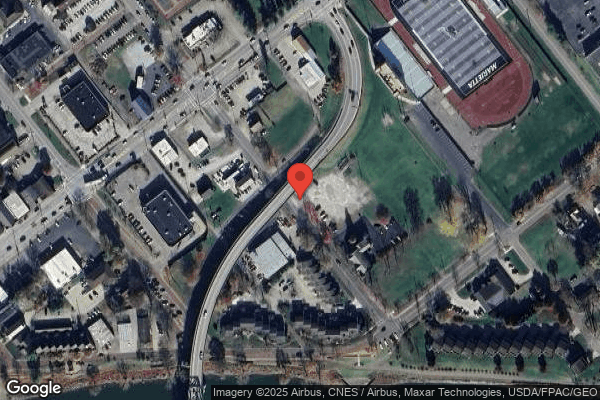
Feb 2023 10 deficiencies
CONCERN (D)

Potential for Harm - no one hurt, but risky conditions existed

Notification of Changes (Tag F0580)

Could have caused harm · This affected 1 resident

Based on record review, interview, review of facility process guidelines, and facility policy review the facility failed to notify a resident's physician when there was a need to alter the resident' t...

Read full inspector narrative →
Based on record review, interview, review of facility process guidelines, and facility policy review the facility failed to notify a resident's physician when there was a need to alter the resident' treatment. This affected one Resident (#30) of one resident reviewed for pain. Findings included: Review of Resident #30's medical record revealed an initial admission date of 03/24/21 and a readmission date of 10/04/21 with diagnoses including polyneuropathy, peripheral vascular disease, paraplegia, unspecified, functional quadriplegia, and essential hypertension. Review of Resident #30's quarterly Minimum Data Set (MDS) 3.0 assessment, dated 12/21/22, revealed he was cognitively independent. Review of Resident #30's progress note dated 01/28/23 at 4:15 A.M. revealed the facility received a call from the local emergency department nurse who informed the facility Resident #30 would be returning to the facility. The emergency department recommended phenazopyridine (a medication used for urinary tract pain) 200 milligrams (mg) and Hydrocodone 5/325 mg (a narcotic pain medication composed of five mg of Hydrocodone and 325 mg of acetaminophen) for bladder spasms. Review of Resident #30's progress note dated 01/28/23 at 7:32 A.M. revealed he returned to the facility at 6:50 A.M. There was no documentation in the progress notes of Resident #30's physician being contacted to inform them of the resident return and to obtain medication orders for the medication suggestions from the emergency department. Review of the hospital discharge paperwork, dated 01/28/23, revealed the recommendations which were provided in the telephone report at 4:15 A.M. An interview on 01/31/23 at 2:47 P.M. with the Director of Nursing (DON) revealed she had reached out to Physician #470 and Physician #470 reported she was not made aware of Resident #30's return or the need for Hydrocodone or phenazopyridine on 01/28/23. Physician #470 revealed that Nurse Practitioner #472 or Physician #471 may have been contacted since they are also part of the practice. A telephone interview on 01/31/23 at 3:10 P.M. with Nurse Practitioner #472 revealed she did not receive notification on 01/28/23 of Resident #30's return or the recommendation of Norco or phenazopyridine for Resident #30. A telephone interview on 01/31/23 at 3:12 P.M. with Physician #471 revealed she did not receive notification on 01/28/23 of Resident #30's return or the recommendation of Norco or phenazopyridine for Resident #30. An interview on 01/31/23 at 4:00 P.M. with the DON revealed that when a resident is admitted or returns from a visit to the emergency department, the nurses are to follow the admission Process Guidelines for continuity of care and notify the resident's physician regarding return to the facility. Review of the facility form titled, admission Process Guidelines, dated 04/2022, revealed review all hospital paperwork to identify admitting diagnoses, medications, treatments special instructions given upon discharge. Contact attending physician for order confirmation including medication reconciliation. Review of the facility policy, Notify of Changes, undated, revealed a facility must immediately inform the resident; consult with the resident's physician when there is a need to alter treatment significantly (that is, a need to discontinue an existing form of treatment due to adverse consequences, or to commence a new form of treatment).
CONCERN (D)

Potential for Harm - no one hurt, but risky conditions existed

Deficiency F0582 (Tag F0582)

Could have caused harm · This affected 1 resident

Based on record review, interview, and facility policy review the facility failed to ensure a resident who was being discharged from Medicare Part A Services when benefit days were not exhausted recei...

Read full inspector narrative →
Based on record review, interview, and facility policy review the facility failed to ensure a resident who was being discharged from Medicare Part A Services when benefit days were not exhausted received the appropriate notifications. This affected one Resident (#264) of three residents reviewed for beneficiary notification review. The facility census was 55. Findings included: Review of Skilled Nursing Facility (SNF) Beneficiary Protection Notification for Resident #264 revealed his Medicare Part A Skilled Services episode started on 09/07/22 and the last covered day of Part A services was 09/19/22. Further review of the form revealed the Skilled Nursing Facility Advance Beneficiary Notice of Non-coverage (SNFABN) and the Notice of Medicare Non-Coverage (NOMNC) were not issued to Resident #264 and should have been. An interview on 02/01/23 at 9:26 A.M. with Social Services #449 revealed she was unable to locate the SNFABN or NOMNC for Resident #264 and cannot prove they were issued as they should have been. Review of the facility policy titled, Medicaid/Medicare Coverage/Liability Notice, dated 09/2022, revealed residents must be told in advance when changes will occur in their bills. Providers must fully inform the resident of services and related changes.
CONCERN (D)

Potential for Harm - no one hurt, but risky conditions existed

PASARR Coordination (Tag F0644)

Could have caused harm · This affected 1 resident

Based on record review and interview the facility failed to ensure a Preadmission Screening/Resident Review (PASARR) was accurate. This affected one Resident (#11) of one resident reviewed for PASARR....

Read full inspector narrative →
Based on record review and interview the facility failed to ensure a Preadmission Screening/Resident Review (PASARR) was accurate. This affected one Resident (#11) of one resident reviewed for PASARR. The facility census was 55. Findings included: Review of Resident #11's medical record revealed an initial admission date of 04/20/15 and a readmission date of 11/29/18 with diagnoses including depressive disorder (entered 10/30/18), bipolar disorder (entered 11/29/18), and schizophrenia (entered 11/29/18). Review of Resident #11's quarterly Minimum Data Set (MDS) 3.0 assessment, dated 12/15/22 revealed she was cognitively independent and had active diagnoses of depression, bipolar disorder, and schizophrenia. Review of Resident #11's most recent Ohio Department of Medicaid PASARR Identification Screen, dated 03/15/19, revealed in Section D: Indications of Serious Mental Illness, the box beside Does the individual have a diagnosis of any of the mental disorder listed below? was marked yes. The only box marked for specific diagnoses was Another mental disorder other than Developmental Delay (DD) that may lead to a chronic disability. The boxes beside Schizophrenia and Mood Disorder (which covers bipolar disorder and depression) were not marked as they should have been. An interview on 01/31/23 at 3:03 P.M. with Social Services #449 verified the most recent PASARR, dated 03/15/19, was not accurate. She verified the boxes beside mood disorder and schizophrenia should have been marked since the diagnoses were added 10/30/18 and 11/29/18. Social Services #449 reported she would complete a new PASARR for Resident #11 because she may be eligible for mental health services if the PASARR is completed correctly.
CONCERN (D)

Potential for Harm - no one hurt, but risky conditions existed

Quality of Care (Tag F0684)

Could have caused harm · This affected 1 resident

**NOTE- TERMS IN BRACKETS HAVE BEEN EDITED TO PROTECT CONFIDENTIALITY** 2. Review of Resident #30's medical record revealed an initial admission date of 03/24/21 and a readmission date of 10/04/21 wit...

Read full inspector narrative →
**NOTE- TERMS IN BRACKETS HAVE BEEN EDITED TO PROTECT CONFIDENTIALITY** 2. Review of Resident #30's medical record revealed an initial admission date of 03/24/21 and a readmission date of 10/04/21 with diagnoses including polyneuropathy, peripheral vascular disease, paraplegia, unspecified, functional quadriplegia, and essential hypertension. Review of Resident #30's quarterly Minimum Data Set (MDS) 3.0 assessment, dated 12/21/22, revealed he was cognitively independent. The assessment also revealed he did not receive scheduled pain medication, as needed pain medications, or non-medication intervention for pain. The assessment also revealed the resident reported pain almost constantly and over the past five days pain had made it hard to sleep at night and limited day-to-day activities. He rated his pain a nine on a scale of zero to ten. Review of Resident #30's progress note dated 01/28/23 at 4:15 A.M. revealed the facility received a call from the local emergency department nurse who informed the facility Resident #30 would be returning to the facility. The emergency department recommended phenazopyridine (a medication used for urinary tract pain) 200 milligrams (mg) and Hydrocodone 5/325 mg (a narcotic pain medication composed of five mg of Hydrocodone and 325 mg of acetaminophen) for bladder spasms. Review of Resident #30's progress note dated 01/28/23 at 7:32 A.M. revealed he returned to the facility at 6:50 A.M. There was no documentation in the progress notes of Resident #30's physician being contacted to inform them of the resident's return and to obtain medication orders for the medication suggestions from the emergency department. Review of the hospital discharge paperwork, dated 01/28/23, revealed the recommendations which were provided in the telephone report at 4:15 A.M. Review of Resident #30's physician orders dated from 01/18/23 to present revealed no transcription of the suggested medications of phenazopyridine 200 mg and Hydrocodone 5/325 mg. Review of Resident #30's January 2023 Medication Administration Record (MAR) revealed an entry for Norco (Hydrocodone) 5/325 mg one tab by mouth every six hours as needed. The order did not have a start or stop date. Further review revealed Resident #30 had not received any doses of Norco for pain. The January 2023 MAR also revealed an order for phenazopyridine 200 mg by mouth three times a day for two days, a total of six doses. The order did not have a start or stop date. Further review revealed Resident #30 had received the phenazopyridine for four days, a total of nine doses. An interview on 01/30/23 at 9:51 A.M. with Resident #30 revealed he was having pain and the facility was not helping him. An interview on 01/31/23 at 2:47 P.M. with the Director of Nursing (DON) revealed she had reached out to Physician #470 and Physician #470 reported she was not made aware of the need for Hydrocodone or phenazopyridine on 01/28/23. Physician #470 revealed that Nurse Practitioner #472 or Physician #471 may have been contacted since they are also part of the practice. She verified the emergency room recommendations were not transferred into Resident #30's medical record as an order, but somehow the recommendations did make it to Resident #30's MAR. A telephone interview on 01/31/23 at 3:10 P.M. with Nurse Practitioner #472 revealed she did not receive notification on 01/28/23 of Resident #30's return or the recommendation of Norco or phenazopyridine for Resident #30. A telephone interview on 01/31/23 3:12 P.M. with Physician #471 revealed she did not receive notification on 01/28/23 of Resident #30's return or the recommendation of Norco or phenazopyridine for Resident #30. Review of the facility form titled, admission Process Guidelines, dated 04/2022, revealed review all hospital paperwork to identify admitting diagnoses, medications, treatments special instructions given upon discharge. Contact attending physician for order confirmation including medication reconciliation. Review of the facility policy, Notify of Changes, undated, revealed a facility must immediately inform the resident; consult with the resident's physician when there is a need to alter treatment significantly ( that is, a need to discontinue an existing form of treatment due to adverse consequences, or to commence a new form of treatment. Based on medical record review, staff interview and review of the facility policy and procedure, the facility failed to monitor fluid intake for a resident who was on a fluid restriction and failed to transcribe emergency room recommendations for a resident's pain management. This affected two (#30 and #36) of 17 residents reviewed for fluid restrictions and physician orders. The census was 55. Findings include: 1. Review of Resident #36's medical record revealed she was admitted to the facility on [DATE]. Diagnoses included Chronic kidney disease Stage III, heart failure, anxiety, diabetes, congestive heart failure (CHF), and Turner's syndrome. Review of the 5-day Minimum Data Set (MDS) assessment dated [DATE] revealed Resident #36's cognition was intact. Resident #36 required extensive assistance of two or more staff members for bed mobility, transfers, toilet use and extensive assistance of one staff member physical assistance with dressing and personal hygiene. Resident #36 received insulin and antianxiety medication seven (7) days a week and anticoagulant medication one day out of seven. Review of the physician orders dated 01/27/23 revealed Resident #36 was placed on a 1500 cc fluid restriction. Further review revealed no documented evidence the facility was monitoring Resident #36's fluid intake. Interview on 02/02/23 at 8:28 A.M. with Registered Nurse (RN) #459 verified Resident #36's fluid intakes were not documented for the fluid restriction.
CONCERN (D)

Potential for Harm - no one hurt, but risky conditions existed

Deficiency F0688 (Tag F0688)

Could have caused harm · This affected 1 resident

Based on observation, interview, record review and facility policy review the facility failed to ensure a resident received restorative services as directed by occupational therapy and care planned. T...

Read full inspector narrative →
Based on observation, interview, record review and facility policy review the facility failed to ensure a resident received restorative services as directed by occupational therapy and care planned. This affected one Resident (#35) of one resident reviewed for mobility. The facility census was 55. Findings included: Review of Resident #35's record revealed an initial admission date of 06/16/22 and a readmission date of 08/04/22 with diagnoses including cerebral infarction, type two diabetes mellitus without complications, and acute kidney failure. Review of Resident #35's quarterly Minimum Data Set (MDS) 3.0 assessment, dated 12/20/22, revealed the resident was cognitively impaired and had a functional limitation in range of motion on one side. Review of Resident #35's care plan revealed a focus of self-care deficit as evidenced by requiring up to extensive assist with activities of daily living and mobility related to cerebral vascular accident (stroke) with residual left sided hemiplegia, weakness, and impaired mobility. Interventions included left hand wrist orthotic for two hours two times a day. Review of Resident #35's paper chart revealed a discharge from occupational therapy on 12/28/22. Review of Resident #35's Therapy Communication, dated 12/28/22, revealed restorative nursing (State Tested Nurse Assistants, Licensed Practical Nurses and Registered Nurses) was to apply her left-hand T-bar splint two hours, two times a day, her left elbow orthotic two hours, two times a day and recommended the palm guard with finger separators be used for up to six hours at night. There was also a sign in sheet which had eight signatures of State Tested Nurse Assistants (STNAs), Licensed Practical Nurses (LPNs) and Registered Nurses (RN) to confirm training received. Review of Resident #35's tasks in her electronic health record revealed no documentation regarding application of the three separate splints for her left arm and hand. Observation on 01/30/23 at 9:25 A.M. of Resident #35 revealed contractures to her left arm and hand with no splints to her left arm or hand. Observation on 01/30/23 at 11:24 A.M. of Resident #35 revealed no splints to her left arm or hand. Observation on 01/31/23 at 10:55 A.M. of Resident #35 revealed no splints to her left arm or hand. Resident #35 was unable to open the fingers on her left hand and was unable to open the fingers on the left hand with her right hand. An interview on 01/31/23 at 11:20 A.M. with STNA #442 revealed the STNAs do not apply Resident #35's splints/braces. She reported that therapy will apply the splints and direct the STNAs when to remove them. She reported in the six months she has worked in the facility, she has never applied the left arm/hand splints for Resident #35. An observation at the time of the kiosk in the hallway with STNA #442 revealed there was no assigned task for the STNAs to apply splints/braces for Resident #35. Observation on 02/01/23 at 7:10 A.M. of Resident #35 revealed no splints to her left arm or hand. An interview on 02/01/23 at 8:06 A.M. with LPN #469 revealed Resident #35 does not have a splints/braces she is supposed to wear for the contractures of her left arm and hand. An interview on 02/01/23 at 8:52 A.M. with Occupation Therapist (OT) #417 revealed Resident #35 had three different splints for her left arm and hand: a left palm guard with finger separators, a left elbow splint, and a left T-bar for her wrist/hand. OT #417 reported Resident #35 was discharged from OT on 12/28/22 and recently added back to the OT caseload on 01/27/23. She reported since 01/27/23 she was responsible for applying the splints. However, between the dates of 12/28/22 and 01/27/23 the STNAs should have been applying the splints. OT #417 reported she completed a communication form and educated the STNAs, LPNs, and RNs regarding proper splint application prior to discharge from OT on 12/28/22. An interview on 02/01/23 at 9:10 A.M. with the Director of Nursing (DON) verified there was no documentation to support restorative nursing was completed and the splints were applied to Resident #35's left arm and hand between 12/28/22 and 01/27/23. Review of the facility policy titled, Restorative Nursing Guideline, undated, revealed patients may enter a restorative nursing program in several ways including after discharge from a skilled occupational rehabilitation program. The policy also revealed the Restorative Nursing Status in the electronic health record will be utilized for documentation.
CONCERN (D)

Potential for Harm - no one hurt, but risky conditions existed

Incontinence Care (Tag F0690)

Could have caused harm · This affected 1 resident

**NOTE- TERMS IN BRACKETS HAVE BEEN EDITED TO PROTECT CONFIDENTIALITY** Based on medical record review. observation and staff interview, the facility failed to ensure infection control was maintained ...

Read full inspector narrative →
**NOTE- TERMS IN BRACKETS HAVE BEEN EDITED TO PROTECT CONFIDENTIALITY** Based on medical record review. observation and staff interview, the facility failed to ensure infection control was maintained with a resident's indwelling urinary catheter. This affected one (Resident #8) of one resident reviewed for catheters. The census was 55. Findings include: Review of Resident #8's medical record revealed she was admitted to the facility on [DATE]. Diagnoses included pressure ulcer of the sacral region, fracture of the left femur, urinary incontinence, diabetes and fecal impaction. Review of the quarterly MDS assessment dated [DATE] revealed her cognition was intact, she required extensive assistance of two or more staff members physical assistance for bed mobility, toilet use and extensive assistance of one staff member physical assistance for transfer, dressing and personal hygiene. Resident #8 had one stage III pressure ulcer and one unstageable pressure ulcer and also has a urinary catheter. Review of the physicians orders dated 11/01/22 revealed to maintain indwelling catheter every shift. Observation on 01/30/23 at 1:21 P.M. revealed Resident #8's catheter tubing was on the floor under her wheelchair. On 02/01/23 at 2:50 P.M. observation revealed Resident #8 was up in her wheelchair in her room with the catheter bag under her chair and catheter tubing lying on the ground. On 02/01/23 at 2:52 P.M. observation revealed Resident #8's catheter tubing remained on the ground and this was verified during interview with Licensed Practical Nurse (LPN) #467.
CONCERN (D)

Potential for Harm - no one hurt, but risky conditions existed

Deficiency F0694 (Tag F0694)

Could have caused harm · This affected 1 resident

**NOTE- TERMS IN BRACKETS HAVE BEEN EDITED TO PROTECT CONFIDENTIALITY** Based on observation, record review, and interview the facility failed to ensure an intravenous site was changed as ordered. Thi...

Read full inspector narrative →
**NOTE- TERMS IN BRACKETS HAVE BEEN EDITED TO PROTECT CONFIDENTIALITY** Based on observation, record review, and interview the facility failed to ensure an intravenous site was changed as ordered. This affected one Resident (#7) of one resident reviewed for respiratory care. The facility census was 55. Findings included: Review of Resident #7's medical record revealed an initial admission on [DATE] and a readmission on [DATE] with diagnoses including chronic obstructive pulmonary disease, unspecified dementia, major depressive disorder, and type two diabetes. Review of Resident #7's quarterly MDS (Minimum Data Set) 3.0 assessment, dated 01/06/23, revealed she was cognitively impaired. Review of Resident #7's physician order ,dated 01/27/23, revealed change intravenous (IV) peripheral site and dressing every 72 hours and PRN (as needed). Review of Resident #7's progress notes revealed the IV was initiated on 01/27/23. Further review of the progress notes revealed no documentation to support the IV was changed on 01/30/23. Review of Resident #7's January 2023 Medication Administration Record (MAR) revealed an entry to change the IV peripheral site and dressing every 72 hours and PRN (as needed) but no documentation to support the IV was changed on 01/30/23. Observation on 01/30/23 at 2:28 P.M. of Resident #7 with a peripheral IV to her right upper extremity. The dressing was rolling at the edges and there was no date on the dressing to verify when the IV was initiated. An interview at the time with Resident #7 revealed she didn't know why she still had the IV and would like to have it removed. An interview on 02/02/23 at 7:52 A.M. with the Director of Nursing (DON) revealed there was no documentation anywhere to support the IV was changed as ordered. She revealed she spoke with the nurse who started the IV and worked the weekend and she verified she had not changed the IV.
CONCERN (D)

Potential for Harm - no one hurt, but risky conditions existed

Drug Regimen Review (Tag F0756)

Could have caused harm · This affected 1 resident

Based on medical record review and staff interview the facility failed to ensure physician's responded timely to pharmacy recommendations. This affected one resident (Resident #44) of five residents r...

Read full inspector narrative →
Based on medical record review and staff interview the facility failed to ensure physician's responded timely to pharmacy recommendations. This affected one resident (Resident #44) of five residents reviewed for medication use. The facility census was 55. Findings include: Review of Resident #44's medical record revealed an admission date of 05/10/22 with diagnoses that included schizoaffective disorder, cerebrovascular accident, dementia and diabetes mellitus. Further review of the medical record including pharmacy recommendations revealed a pharmacy recommendation dated 06/07/22 in which the pharmacist recommended a gradual dose reduction of the medication zyprexa (antipsychotic). There was no evidence found the physician reviewed or responded to the pharmacy recommendation. Interview with the Director of Nursing on 01/31/23 at 2:50 P.M. verified there was no evidence of physician review or response to the pharmacy recommendation.
CONCERN (D)

Potential for Harm - no one hurt, but risky conditions existed

Medication Errors (Tag F0758)

Could have caused harm · This affected 1 resident

Based on medical record review and staff interview the facility failed to ensure abnormal involuntary movement scale assessments were completed prior to initiating antipsychotic medication use. This a...

Read full inspector narrative →
Based on medical record review and staff interview the facility failed to ensure abnormal involuntary movement scale assessments were completed prior to initiating antipsychotic medication use. This affected one resident (Resident #44) of five reviewed for medications. The facility census was 55. Findings include: Review of Resident #44's medical record revealed an admission date of 05/10/22 with diagnoses that included schizoaffective disorder, cerebrovascular accident, dementia and diabetes mellitus. Further review of the medical record including physician's orders revealed on 09/01/22 Resident #44's zyprexa (antipsychotic medication) was reduced then discontinued. On 12/01/22 a physician's orders initiated the use of haldol (antipsychotic medication) for the resident. Review of the abnormal involuntary movement scale (AIMS) assessments revealed the last AIMS assessment was completed on 05/11/22 when Resident #44 was on zyprexa. No further AIMS assessment was noted after initiation of haldol on 12/01/22. Interview with the Director of Nursing on 01/31/23 at 2:50 P.M. indicated AIMS assessments are to be completed every six months and upon initiation of antipsychotic medications. She further verified no AIMS assessment was completed for Resident #44 when haldol was initiated.
CONCERN (E)

Potential for Harm - no one hurt, but risky conditions existed

Deficiency F0883 (Tag F0883)

Could have caused harm · This affected multiple residents

Based on medical record review and staff interview, the facility failed to ensure residents who declined vaccinations had documentation of declination of offered vaccine. This affected three (Resident...

Read full inspector narrative →
Based on medical record review and staff interview, the facility failed to ensure residents who declined vaccinations had documentation of declination of offered vaccine. This affected three (Residents #7, #30 and #315) of five residents reviewed for immunizations. The facility census was 55. Findings include: 1. Review of Resident #7's medical record revealed an admission date of 11/23/21 with diagnoses that included chronic obstructive pulmonary disease, congestive heart failure and diabetes mellitus. On 10/22/22, Resident #7 test positive for COVID-19. Further review of the medical record including immunization records revealed Resident #7 refused all vaccines including influenza, pneumonia and COVID-19. There was no evidence of any declination form signed by the resident for refusal of any vaccines. 2. Review of Resident #30's medical record revealed an admission date of 03/24/21 with diagnoses that included paraplegia, peripheral vascular disease, hypertension and benign prostate hypertrophy. Further review of the medical record including immunization records revealed Resident #30 refused all vaccines including influenza, pneumonia and COVID-19. There was no evidence of any declination form signed by the resident for refusal of any vaccines. 3. Review of Resident #315's medical record revealed an admission date of 01/22/23 with diagnosis of cerebrovascular accident. Further review of the medical record including immunization records revealed Resident #315 refused all vaccines including influenza, pneumonia and COVID-19. There was no evidence of any declination form signed by the resident for refusal of any vaccines. Interview with Registered Nurse (RN) #406 on 02/03/23 at 1:00 P.M. verified there is no declination form signed for refusal of vaccinations for Residents #7, #30 or #315.
Nov 2022 3 deficiencies
CONCERN (D) 📢 Someone Reported This

A family member, employee, or ombudsman was alarmed enough to file a formal complaint

Potential for Harm - no one hurt, but risky conditions existed

Quality of Care (Tag F0684)

Could have caused harm · This affected 1 resident

**NOTE- TERMS IN BRACKETS HAVE BEEN EDITED TO PROTECT CONFIDENTIALITY** Based on closed medical record review and interview the facility failed to ensure wound treatments were completed as ordered. Th...

Read full inspector narrative →
**NOTE- TERMS IN BRACKETS HAVE BEEN EDITED TO PROTECT CONFIDENTIALITY** Based on closed medical record review and interview the facility failed to ensure wound treatments were completed as ordered. This affected one resident (#52) of three residents reviewed for skin alterations. Findings include: Closed record review revealed Resident #52 was admitted to the facility on [DATE] and discharged on 11/05/22 with diagnoses including type two diabetes, non-pressure chronic ulcer and fifth ray imputation. Record review revealed Resident #52 had a plan of care, dated 08/10/22 related to a recent toe amputation. Interventions included to administer treatments per physician's orders. Review of Resident #52's physician's orders revealed an order, dated 08/23/22 to cleanse right foot with normal saline, pat dry, apply Santyl (debridement agent), non-woven gauze and wrap with Kerlix and four and six inch ace wrap daily. Review of Resident #52's Medication Administration Record, dated 08/23/22 revealed the physician's orders for the treatment to the right foot was noted on the record. However, there was no evidence the treatment was provided as ordered on 08/24/22, 08/25/22, or 08/26/22. On 08/30/22 a new treatment order was obtained to apply Bacitracin (antibiotic ointment), Santyl, non-woven gauze and wrap with Kerlix and four and six inch ace wrap. On 11/29/22 at 3:29 P.M. interview with Licensed Practical Nurse (LPN) #1 confirmed there was no documented evidence the treatments were completed on 08/24/22, 08/25/22 or 08/26/22 as ordered by physician. On 11/30/22 at 10:04 A.M. information obtained via email from the Director of Nursing (DON) revealed the facility did not have a policy on wound treatments; they would just follow the physician's order. This deficiency represents non-compliance investigated under Master Complaint Number OH00137303 and Complaint Number OH00136260.
CONCERN (D) 📢 Someone Reported This

A family member, employee, or ombudsman was alarmed enough to file a formal complaint

Potential for Harm - no one hurt, but risky conditions existed

Pressure Ulcer Prevention (Tag F0686)

Could have caused harm · This affected 1 resident

**NOTE- TERMS IN BRACKETS HAVE BEEN EDITED TO PROTECT CONFIDENTIALITY** Based on observation, record review, review of wound center notes, and interview the facility failed to ensure pressure ulcer tr...

Read full inspector narrative →
**NOTE- TERMS IN BRACKETS HAVE BEEN EDITED TO PROTECT CONFIDENTIALITY** Based on observation, record review, review of wound center notes, and interview the facility failed to ensure pressure ulcer treatments were completed as ordered for Resident #27. This affected one resident (#27) of three residents reviewed for skin alterations. Findings include: Record review revealed Resident #27 was admitted to the facility on [DATE] with diagnoses including pressure ulcers, muscle weakness, pain, need for assistance, osteomyelitis, fusion of the spine, paraplegia, and anemia. Record review revealed a plan of care, dated 09/14/22 for a pressure ulcer to the resident's right lower buttocks. Interventions included to administer treatments as ordered. Review of Resident #27's current physician's orders for 11/2022 revealed an order to cleanse right buttocks with wound wash, insert Prisma (black foam) to wound bed, cover foam, change every Monday, Wednesday, and Friday. The resident had an order for the care/dressing change to be completed at the wound center on Monday and for the facility to complete the dressing change on Wednesday and Friday. The resident had an order that the dressing could be changed for dislodgement. Review of wound center notes, dated 11/14/22 and 11/28/22 revealed the resident had a Stage IV (full thickness skin loss) pressure ulcer to the right buttocks. Orders included a wound vac at 125 mm/hg, Prisma applied to wound bed, apply skin prep or Tincture of Benzoin to peri-wound skin, and drape peri-wound skin with vac for protection. The facility was to send supplies with patient every visit. The wound center would change the wound vac on Monday and the facility would change the dressing/wound vac on Wednesday and Friday. Further review of the 11/28/22 wound center note revealed to have the nursing facility apply wound vac to resident when he returned to the facility. On 11/29/22 at 8:08 A.M. observation revealed Resident #27 had no wound vac in place. An interview with the resident at the time of observation confirmed there was no wound vac in place. The resident confirmed the supplies were in his room and revealed he was not sure why staff did not re-apply the wound vac when he returned from his appointment yesterday at around 10:00 A.M. On 11/29/22 at 9:42 A.M. observation of Resident #27 with the Director of Nursing (DON) revealed the resident's wound vac had still not been applied. The resident reported to the DON he had returned from his appointment yesterday at 10:00 A.M. and it had been almost 24 hours now that staff still had not reapplied his wound vac. The resident reported he still had a dressing in place the wound center had applied yesterday to send him back to the facility. The DON confirmed the findings during the observation and confirmed the resident's orders to the right buttocks included the use of a wound vac. On 11/30/22 at 10:04 A.M. information provided via email from the Director of Nursing (DON) revealed the facility did not have a policy on wound treatments; they would just follow the physician's order. This deficiency represents non-compliance investigated under Master Complaint Number OH00137303 and Complaint Number OH00136260.
CONCERN (D) 📢 Someone Reported This

A family member, employee, or ombudsman was alarmed enough to file a formal complaint

Potential for Harm - no one hurt, but risky conditions existed

Deficiency F0760 (Tag F0760)

Could have caused harm · This affected 1 resident

**NOTE- TERMS IN BRACKETS HAVE BEEN EDITED TO PROTECT CONFIDENTIALITY** Based on record review, review of hospital and specialist orders, facility policy and procedure review and interview the facilit...

Read full inspector narrative →
**NOTE- TERMS IN BRACKETS HAVE BEEN EDITED TO PROTECT CONFIDENTIALITY** Based on record review, review of hospital and specialist orders, facility policy and procedure review and interview the facility failed to ensure Resident #27 was free of any significant medication errors when intravenous antibiotics were not administered as ordered by the physician. This affected one resident (#27) of three residents reviewed for skin alterations. Findings include: Record review revealed Resident #27 was admitted to the facility on [DATE] with diagnoses including pressure ulcers, osteomyelitis, muscle weakness, pain, need for assistance, fusion of the spine, paraplegia, and anemia. Review of Resident #27's hospital orders, dated 10/27/22 revealed to an order to administer the antibiotic, Cefepime intravenously (IV) two grams every eight hours for osteomyelitis until 12/06/22. Review of Resident #27's October 2022 and November 2022 Medication Administration Records (MAR) revealed from 10/28/22 to 11/08/22 the Cefepime intravenously was administered at 9:00 A.M., 2:00 P.M., and 9:00 P.M., which was not every eight hours between doses. The administration times were changed on 11/08/22 to every eight hours (6:00 A.M., 2:00 P.M., and 10:00 P.M.). On 11/22/22 the administration times were changed again to 7:00 A.M., 3:00 P.M., and 10:00 P.M., which were not every eight hours per the orders. Further review of the November 2022 MAR revealed on 11/28/22 the resident did not receive the 7:00 A.M. or 10:00 P.M. dose. In addition, the resident did not receive the 11/29/22 7:00 A.M. dose. Review of Resident #27's progress notes revealed no evidence the physician was notified the IV antibiotics were not administered as ordered. On 11/29/22 at 8:08 A.M. interview with Resident #27 revealed he had missed doses of antibiotics thus far, not including today's dose. The resident revealed he did not get his (IV) medication on 11/28/22 because he had to leave at 7:30 A.M. to go to the wound center and the facility did not have enough time to administer the medication before he left. The resident returned to the facility at 10:00 A.M. The resident indicated he did not receive the 10/28/22 10:00 P.M. dose last night because there were no staff IV certified to administer the IV. The resident also indicated he had not yet received the 7:00 A.M. dose on this date. On 11/29/22 at 8:18 A.M. interview with the Licensed Practical Nurse (LPN) revealed she was told this morning the resident refused his 7:00 A.M. dose on 11/28/22 because he had a doctor's appointment to go to and the 10:00 P.M. dose was not administered due to the facility not having any staff available who were qualified to administer the medication. The LPN confirmed the 7:00 A.M. dose for this date had not been administered as of this time but stated she was going to administered it shortly. On 11/29/22 at 10:00 A.M. interview with the Director of Nursing (DON) confirmed the physician's orders to administer Cefepime every eight hours. The DON verified from 10/28/22 to 11/08/22 and 11/22/22 to 11/29/22 the IV medication was not administered every eight hours per the scheduled times. The DON verified the resident did not receive the 10:00 P.M. dose on 11/28/22 due to not having staff available who were qualified to administer the medication. The DON reported the staff should have contacted herself or management to come in to administer the IV medication. The DON verified there was no documentation the physician was notified and there was no evidence the treatment was extended due to the missing doses. The DON reported she would notify the physician and complete a medication error report. Review of the facilities policy and procedure titled Medication Administration, dated 06/2021 revealed medication would be administered in accordance with the frequency prescribed by the physician (within 60 minutes before or after prescribed dosing time). Medication was administered according to the physician orders. This deficiency represents non-compliance investigated under Complaint Number OH00137303.
Understanding Severity Codes (click to expand)
Life-Threatening (Immediate Jeopardy)
J - Isolated K - Pattern L - Widespread
Actual Harm
G - Isolated H - Pattern I - Widespread
Potential for Harm
D - Isolated E - Pattern F - Widespread
No Harm (Minor)
A - Isolated B - Pattern C - Widespread

Questions to Ask on Your Visit

  • "What changes have you made since the serious inspection findings?"
  • "What safeguards are in place to prevent abuse and neglect?"
  • "Why is there high staff turnover? How do you retain staff?"
  • "Can I speak with families of current residents?"
  • "What's your RN coverage like on weekends and overnight?"

Our Honest Assessment

Strengths
  • • Licensed and certified facility. Meets minimum state requirements.
Concerns
  • • Multiple safety concerns identified: Federal abuse finding, 3 life-threatening violation(s), Special Focus Facility, 6 harm violation(s), $385,662 in fines, Payment denial on record. Review inspection reports carefully.
  • • 112 deficiencies on record, including 3 critical (life-threatening) violations. These warrant careful review before choosing this facility.
  • • $385,662 in fines. Extremely high, among the most fined facilities in Ohio. Major compliance failures.
  • • Grade F (0/100). Below average facility with significant concerns.
Bottom line: This facility has a substantiated abuse finding. Extreme caution advised. Explore alternatives.

About This Facility

What is Marietta Heights Post Acute's CMS Rating?

MARIETTA HEIGHTS POST ACUTE does not currently have a CMS star rating on record.

How is Marietta Heights Post Acute Staffed?

Staff turnover is 71%, which is 24 percentage points above the Ohio average of 46%. High turnover can affect care consistency as new staff learn residents' individual needs. RN turnover specifically is 67%, which is notably high. RNs provide skilled clinical oversight, so turnover in this role can affect medical care quality.

What Have Inspectors Found at Marietta Heights Post Acute?

State health inspectors documented 112 deficiencies at MARIETTA HEIGHTS POST ACUTE during 2022 to 2025. These included: 3 Immediate Jeopardy (the most serious level, indicating potential for serious harm or death), 6 that caused actual resident harm, 102 with potential for harm, and 1 minor or isolated issues. Immediate Jeopardy findings are rare and represent the most serious regulatory concerns. They require immediate corrective action.

Who Owns and Operates Marietta Heights Post Acute?

MARIETTA HEIGHTS POST ACUTE is owned by a for-profit company. For-profit facilities operate as businesses with obligations to shareholders or private owners. The facility is operated by PACS GROUP, a chain that manages multiple nursing homes. With 99 certified beds and approximately 54 residents (about 55% occupancy), it is a smaller facility located in MARIETTA, Ohio.

How Does Marietta Heights Post Acute Compare to Other Ohio Nursing Homes?

Compared to the 100 nursing homes in Ohio, MARIETTA HEIGHTS POST ACUTE's staff turnover (71%) is significantly higher than the state average of 46%.

What Should Families Ask When Visiting Marietta Heights Post Acute?

Based on this facility's data, families visiting should ask: "What changes have been made since the serious inspection findings, and how are you preventing similar issues?" "What safeguards and monitoring systems are in place to protect residents from abuse or neglect?" "How do you ensure continuity of care given staff turnover, and what is your staff retention strategy?" "Can I visit during a mealtime to observe dining assistance and food quality?" These questions are particularly relevant given the facility's Immediate Jeopardy citations, the substantiated abuse finding on record, and the facility's high staff turnover rate.

Is Marietta Heights Post Acute Safe?

Based on CMS inspection data, MARIETTA HEIGHTS POST ACUTE has documented safety concerns. The facility has 1 substantiated abuse finding (meaning confirmed case of resident harm by staff or other residents). Inspectors have issued 3 Immediate Jeopardy citations (the most serious violation level indicating risk of serious injury or death). The facility is currently on the Special Focus Facility watch list (a federal program monitoring the lowest-performing 1% of nursing homes nationwide). The facility has a 0-star overall rating and ranks #100 of 100 nursing homes in Ohio. Families considering this facility should ask detailed questions about what corrective actions have been taken since these incidents.

Do Nurses at Marietta Heights Post Acute Stick Around?

Staff turnover at MARIETTA HEIGHTS POST ACUTE is high. At 71%, the facility is 24 percentage points above the Ohio average of 46%. Registered Nurse turnover is particularly concerning at 67%. RNs handle complex medical decisions and coordinate care — frequent RN changes can directly impact care quality. High turnover means new staff may not know residents' individual needs, medications, or preferences. It can also be disorienting for residents, especially those with dementia who rely on familiar faces. Families should ask: What is causing the turnover? What retention programs are in place? How do you ensure care continuity during staff transitions?

Was Marietta Heights Post Acute Ever Fined?

MARIETTA HEIGHTS POST ACUTE has been fined $385,662 across 6 penalty actions. This is 10.4x the Ohio average of $36,935. Fines at this level are uncommon and typically indicate a pattern of serious deficiencies, repeated violations, or failure to correct problems promptly. CMS reserves penalties of this magnitude for facilities that pose significant, documented risk to resident health or safety. Families should request specific documentation of what issues led to these fines and what systemic changes have been implemented.

Is Marietta Heights Post Acute on Any Federal Watch List?

MARIETTA HEIGHTS POST ACUTE is currently on the Special Focus Facility (SFF) watch list. This federal program identifies the roughly 1% of nursing homes nationally with the most serious and persistent quality problems. SFF facilities receive inspections roughly twice as often as typical nursing homes. Factors in this facility's record include 3 Immediate Jeopardy findings, a substantiated abuse finding, and $385,662 in federal fines. Facilities that fail to improve face escalating consequences, potentially including termination from Medicare and Medicaid. Families considering this facility should ask for documentation of recent improvements and what specific changes have been made since the designation.