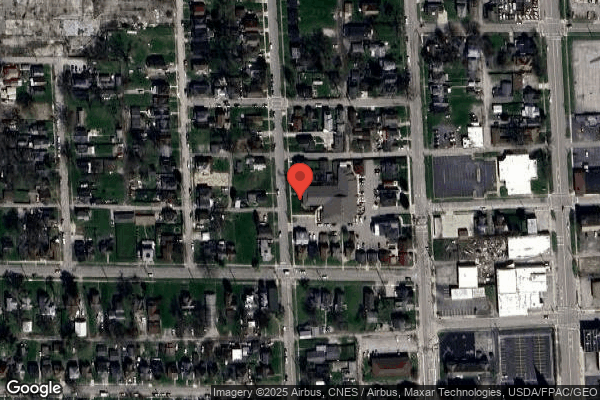
HARDING POINTE

340 OAK STREET, MARION, OH 43302 (740) 382-9500
For profit - Corporation 50 Beds JAG HEALTHCARE Data: November 2025
Trust Grade
90/100
#74 of 913 in OH
Last Inspection: March 2023

Over 2 years since last inspection. Current conditions may differ from available data.

Overview

Harding Pointe in Marion, Ohio, earns a Trust Grade of A, indicating it is an excellent facility highly recommended for families considering care options. It ranks #74 out of 913 nursing homes in Ohio, placing it in the top half, and is the best option among the five facilities in Marion County. The facility is improving, with issues decreasing from three in 2023 to just one in 2025. However, staffing is a weakness, rated at 2 out of 5 stars with a turnover rate of 39%, which is better than the state average but still below ideal. Notably, there were incidents where staff failed to maintain proper hand hygiene while assisting residents with meals, and the facility did not ensure a clean environment in some areas, which could pose risks to residents. On a positive note, Harding Pointe has had no fines, indicating that compliance issues are being addressed effectively.

Trust Score
A
90/100
In Ohio
#74/913
Top 8%
Safety Record
Low Risk
No red flags
Inspections
Getting Better
3 → 1 violations
Staff Stability
○ Average
39% turnover. Near Ohio's 48% average. Typical for the industry.
Penalties
✓ Good
No fines on record. Clean compliance history, better than most Ohio facilities.
Skilled Nurses
⚠ Watch
Each resident gets only 18 minutes of Registered Nurse (RN) attention daily — below average for Ohio. Fewer RN minutes means fewer trained eyes watching for problems.
Violations
✓ Good
Only 5 deficiencies on record. Cleaner than most facilities. Minor issues only.
★★★★★
5.0
Overall Rating
★★☆☆☆
2.0
Staff Levels
★★★★★
5.0
Care Quality
★★★★☆
4.0
Inspection Score
Stable
2023: 3 issues
2025: 1 issues

The Good

  • 5-Star Quality Measures · Strong clinical quality outcomes
  • Full Sprinkler Coverage · Fire safety systems throughout facility
  • No fines on record
  • Staff turnover below average (39%)

    9 points below Ohio average of 48%

Facility shows strength in quality measures, fire safety.

The Bad

Staff Turnover: 39%

Near Ohio avg (46%)

Typical for the industry

Chain: JAG HEALTHCARE

Part of a multi-facility chain

Ask about local staffing decisions and management

The Ugly 5 deficiencies on record

Jun 2025 1 deficiency
CONCERN (F) 📢 Someone Reported This

A family member, employee, or ombudsman was alarmed enough to file a formal complaint

Potential for Harm - no one hurt, but risky conditions existed

Safe Environment (Tag F0921)

Could have caused harm · This affected most or all residents

**NOTE- TERMS IN BRACKETS HAVE BEEN EDITED TO PROTECT CONFIDENTIALITY** Based on observation, staff interview, and record review, the facility failed to ensure a clean environment. This had the potent...

Read full inspector narrative →
**NOTE- TERMS IN BRACKETS HAVE BEEN EDITED TO PROTECT CONFIDENTIALITY** Based on observation, staff interview, and record review, the facility failed to ensure a clean environment. This had the potential to affect all 50 residents in the facility. The facility census was 50. Findings include: Observation and interview on [DATE] at 7:20 A.M., with Certified Nursing Assistant (CNA) #100 revealed that there were two shower rooms down the hallway. The shower room on the left as you walked down the hallway was cleaned with no concerns. The hallway located to the right had three tiles off the wall, one tile off on the floor and mold in the corners of the shower stall. CNA # 100 verified the observations and time of findings. Interview on [DATE] at 8:24 A.M., with Maintenance Director (MD) #104 revealed that a few weeks ago, he was told by the employees that a grab bar was pulled off of the wall. MD #104 stated that the maintenance/housekeeping supervisor #107 was going to strip the caulk in the shower stall but MD #104 told him not to do it because he was going to do work in the shower room. MD #104 stated that the work that needed to be done. MD #104 stated that he had the tile but when he went to the hardware store, the company credit card was declined because it was expired. MD #104 stated that the regional maintenance Director said that new credit cards will be delivered. MD #104 stated that the new credit card did not come in yet. Interview on [DATE] at 12:41 P.M., via phone, with Regional Maintenance Director #108 revealed the credit card expired and the did not give the facility the new credit cards. Review of the Maintenance Request Log for [DATE] revealed on [DATE] the resident shower room had a broken grab bar. This deficiency represents non-compliance investigated under Complaint Number OH00163188.
Mar 2023 3 deficiencies
CONCERN (D)

Potential for Harm - no one hurt, but risky conditions existed

Transfer Notice (Tag F0623)

Could have caused harm · This affected 1 resident

**NOTE- TERMS IN BRACKETS HAVE BEEN EDITED TO PROTECT CONFIDENTIALITY** 3. Review of Medical Record for Resident #31 revealed admission date 10/04/19, with diagnoses including chronic obstructive pulm...

Read full inspector narrative →
**NOTE- TERMS IN BRACKETS HAVE BEEN EDITED TO PROTECT CONFIDENTIALITY** 3. Review of Medical Record for Resident #31 revealed admission date 10/04/19, with diagnoses including chronic obstructive pulmonary disease, cellulitis of unspecified part of limb, hypertension, borderline personality disorder, major depressive disorder, auditory hallucinations, paranoid schizophrenia, schizoaffective disorder bipolar type, bipolar disorder, and generalized anxiety disorder. Resident #31 was discharged to the hospital on [DATE] and returned on 02/27/23 for renal insufficiency, shortness of breath, and Bronchitis. Review of MDS assessment dated [DATE] for Resident #31 revealed the resident has moderately impaired cognition. Resident required extensive assist for bed mobility, transfers, dressing, toileting, and personal hygiene. Resident required limited assist for ambulation and locomotion. Resident required supervision for meals. Interview with ACN #478 on 03/22/23 at 7:45 A.M., revealed the facility does not provide written notice of transfer to resident or responsible party when a transfer/discharge occurs. ACN #478 verified Resident #31 did not receive written notice of discharge. Review of the policy titled Transfer or Discharge Notice, with the last revision date of March 2021 revealed: Residents and/or representatives are notified in writing, and in a language and format they understand, at least thirty (30) days prior to a transfer or discharge. Policy Interpretation and Implementation: 1. Transfer and discharge includes movement of a resident from a certified bed in the facility to a non-certified bed in another part of the facility, or to a non-certified bed outside the facility. Transfer and discharge does not refer to movement of a resident to a bed within the same certified facility. Specifically: a. transfer refers to the movement of a resident from a bed in one certified facility to a bed in another certified facility when the resident expects to return to the original facility; and b. discharge refers to the movement of a resident from a bed in one certified facility to a bed in another certified facility or other location in the community, when return to the original facility is not expected. 5. The resident and representative are notified in writing of the following information: a. The specific reason for the transfer or discharge; b. The effective date of the transfer or discharge; c. The location to which the resident is being transferred or discharged . Based on record review, staff interview and policy review, the facility failed to provide written notification to the resident or responsible party of a resident's discharge. This affected three (#32, #98 and #31) of three residents reviewed for hospitalization. The total facility census was 48. Findings include: Review of Resident #32's medical record revealed the resident was admitted to the facility on [DATE], with diagnoses including chronic obstructive pulmonary disease, obesity, cataracts, hypertension, malaise, depression, type two diabetes, history of traumatic brain injury and psychosis. The resident medical record revealed the resident was discharged on 01/11/23 to a hospital in the community for evaluation and treatment and returned to the facility on [DATE]. Review of the discharge return anticipated Minimum Data Set (MDS) assessment dated [DATE], revealed the resident was cognitively impaired, without behaviors. The resident required limited assist for bed mobility and transfers, supervision for walk in corridor and room. The resident's balance was coded as steady at all times for seated to standing, walking, turning around while walking, surface to surface transfer, and getting on and off the toilet. The resident was coded to not use a cane or a walker with ambulation. Review of the medical record revealed there was no notification in writing to either the resident or the resident guardian regarding the specific reason for the discharge, the date of discharge or the location where the resident was discharged to. 2. Review of Resident #98's medical record revealed the resident was admitted to the facility on [DATE], with diagnoses including disorder of kidney and ureter, obesity, anxiety, systemic inflammatory response syndrome of non infectious origin, heart failure, bipolar disorder, borderline personality disorder, type two diabetes, and schizophrenia. The resident medical record revealed the resident was discharged on 02/25/23 to a hospital in the community for evaluation and treatment. The resident returned to the facility on [DATE]. Review of the 5-day MDS assessment dated [DATE] revealed the resident had cognitive impairment, and had physical behaviors. The resident was coded as dependent on staff for transfers, locomotion on and off the unit, dressing, and personal hygiene, required extensive assist for bed mobility, and toileting, and required limited assist with eating. Review of the medical record revealed there was no notification in writing to either the resident or the resident guardian regarding the specific reason for the discharge, the date of discharge or the location where the resident was discharged to. Interview on 03/20/23 at approximately 3:45 P.M., with Administrative Charge Nurse (ACN) #478 confirmed Resident #32 and #98 did not have a written discharge notice provided upon discahrge.
CONCERN (D)

Potential for Harm - no one hurt, but risky conditions existed

Medical Records (Tag F0842)

Could have caused harm · This affected 1 resident

**NOTE- TERMS IN BRACKETS HAVE BEEN EDITED TO PROTECT CONFIDENTIALITY** Based on record review, and staff interview the facility failed to maintain an accurate medical record. This affected one (#98) ...

Read full inspector narrative →
**NOTE- TERMS IN BRACKETS HAVE BEEN EDITED TO PROTECT CONFIDENTIALITY** Based on record review, and staff interview the facility failed to maintain an accurate medical record. This affected one (#98) of 17 resident records reviewed during the annual survey. The total facility census was 48. Findings Include: Review of Resident #98's medical record revealed the resident was admitted to the facility on [DATE], with diagnoses including disorder of kidney and ureter, obesity, anxiety, systemic inflammatory response syndrome of non infectious origin, heart failure, bipolar disorder, borderline personality disorder, type two diabetes, and schizophrenia. The resident medical record revealed the resident was discharged on 02/25/23 to a hospital in the community for evaluation and treatment. The resident returned to the facility on [DATE]. Review of the 5-day MDS 3.0 assessment dated [DATE] revealed the resident had cognitive impairment, and had physical behaviors. The resident was coded as dependent on staff for transfers, locomotion on and off the unit, dressing, and personal hygiene, required extensive assist for bed mobility, and toileting, and required limited assist with eating. Review of progress note dated 02/25/23 at 6:18 P.M., revealed the resident was found lying in bed not responding. pupils fixed and does perform hand grasp, blood pressure 98/60, pulse 98, temperature was 99.0 respirations were 16 and blood oxygen saturation was 94%. Resident# 98's lungs were clear to auscultation in 4 lobes. The Certified Nurse Practitioner (CNP) was notified and an order given to send Resident #98 to the Emergency Department at the community hospital for evaluation and treatment. Resident #98 was transported via squad and the nurse called and gave report to the emergency department. Review of progress note dated 02/25/23 at 9:08 P.M., revealed the community hospital was called and it was reported Resident #98 was admitted to the hospital with the diagnoses of altered mental status, urinary tract infection , acute kidney injury and systemic inflammatory response syndrome. The physician, guarding, and Administrative Charge Nurse were documented as notified. Review of a progress note dated 02/27/23 by Certified Nurse Practitioner #700 revealed Resident #98 was seen and assessed by the CNP at the facility. The assessment included the following: Physical exam, the resident is well developed and in no acute distress. Eyes: conjunctivae and lids appear normal, pupils equal round Ears, nose and throat: lips pink and moist, hearing grossly intact. Neck symmetrical with no elevation of the jugular venous pulsation. Respiratory: normal respiratory effort. Cardiovascular: regular rhythm no murmurs rubs or [NAME]. Edema/varicosities of extremities: no edema or varicosities. Chest: equal chest rise with inspiration. Gastrointestinal: abdomen soft, non tender. Genitourinary deferred. Musculoskeletal: no joint deformity, swelling, or redness. Skin: reviewed skin sweeps and wound documentation in resident chart, Agree with the assessment. Neurological cranial nerves: Cranial Nerves II-XII are grossly intact. Psychiatric: no signs or symptoms of depression or anxiety noted during exam. Plan: Zyprexa (antipsychotic) 10 milligram (mg) by mouth or intramuscularly (IM) every 6 hours as needed for 14 days. Geodon (antipsychotic) 20 mg IM every four hours as needed for 14 days with maximum dose of two in 24 hours. Prolixin (antipsychotic) 5 mg IM daily as needed, if refuses oral morning medications, for X 14 days. Thorazine (antipsychotic) 100 mg by mouth every six hours as needed for 14 days. Continue medication regime as ordered. Recheck laboratory test as previously ordered, notify CNP of any problems or concerns. Review of progress note dated 03/05/23 at 2:38 P.M., revealed the resident returned from the hospital via Emergency Medical Services, the guardian, physician and Director of Nursing were notified of the resident's return. Interview on 03/22/23 at 10:04 A.M., with Administrative Charge Nurse (ACN) revealed the CNP was in the facility every Monday. The CNP visits include reviewing and seeing residents who have as needed psychotropic medications to evaluate the need of the medication and reorder if necessary. The CNP also made practitioner visits to residents who had changes in conditions or questions regarding their current plan of care during her weekly visits. Interview on 03/22/23 at 10:32 A.M., with CNP #700 via telephone, revealed when she visits the facility she has a notebook where staff indicate residents who need to be seen and if she had received any call from the facility in the past week regarding resident changes she will also see those residents while she is in the facility. The CNP #700 stated on every other Monday she does renewal of psychotropic as needed medications. The CNP #700 stated she when she comes to the facility she will ask if there are any residents who have been discharged or are out of the facility. CNP #700 verified on visits where she she is renewing psychotropic medications she does see the resident and check in with them but does not perform an intensive assessment. The CNP #700 verified her documentation of visits are in the electronic medical record and each note documented reflects an actual practitioner to resident visit on the day documented. Interview on 03/22/23 at 10:50 A.M., with ACN #478 confirmed Resident #98 was discharged on 02/25/23. ACN #478 when asked about the CNP #700 note on 02/27/23 stated let me guess the nurse practitioner made a note on the resident when the resident was out of the facility? It was stated there was a note from the CNP #700 on 02/27/23 where the resident had a documented physical assessment and the resident was not in the facility. ACN #478 verified the note was in the resident medical record with a physical assessment performed and the resident was not in the facility. ACN #478 stated the practitioner does that sometimes.
CONCERN (E)

Potential for Harm - no one hurt, but risky conditions existed

Food Safety (Tag F0812)

Could have caused harm · This affected multiple residents

**NOTE- TERMS IN BRACKETS HAVE BEEN EDITED TO PROTECT CONFIDENTIALITY** Based on observation, record review, staff interview, and policy review, the facility failed to ensure staff maintain hand hygie...

Read full inspector narrative →
**NOTE- TERMS IN BRACKETS HAVE BEEN EDITED TO PROTECT CONFIDENTIALITY** Based on observation, record review, staff interview, and policy review, the facility failed to ensure staff maintain hand hygiene while providing dining assistance to a residents who required assistance. This affected four (#38, #4, #29, and #30) of eight residents observed for meal assistance. The facility census was 48. Findings include: 1. Review of medical record for Resident #38 revealed admission date 10/13/21, with diagnoses including intracardiac thrombosis, hypertensive retinopathy, dementia, slurred speech, emphysema, congestive heart failure, schizoaffective disorder, major depressive disorder, chronic obstructive pulmonary disease, and unspecified mood disorder. Review of the significant change Minimum Data Set (MDS) assessment dated [DATE], revealed Resident #38 has severe impaired cognition and required limited assistance of one for eating. Resident #38 was on a therapeutic diet. Review of March monthly orders for Resident #38 revealed no added salt, mechanical soft/ground meat diet with thin liquids. 2. Review of medical record for Resident #4 revealed admission date 08/18/17, with diagnoses including dementia, chronic pulmonary disease, type two diabetes, hypertension, schizophrenia, schizoaffective disorder bipolar type, and anxiety. Review of MDS assessment dated [DATE], revealed Resident #4 has severe impaired cognition and required limited assist of one for eating and had held food in mouth/cheeks. Resident #4 is on mechanically altered diet. 3. Review of medical record for Resident #29 revealed admission date 03/20/20, with diagnoses including Alzheimer's disease, malignant neoplasm of breast, chronic obstructive pulmonary disease, bipolar disorder, dementia, anxiety, and major depressive disorder. Review of MDS assessment dated [DATE], revealed Resident #29 has severe impaired cognition and required limited assist of one for eating. Resident #29 is on mechanically altered diet. 4. Review of medical record for Resident #30 revealed admission date 03/25/22, with diagnoses including schizoaffective disorder, Alzheimer's disease, bipolar disorder, chronic obstructive pulmonary disease, overactive bladder, borderline personality disorder, anxiety, type two diabetes, gastroesophageal reflux disease, and major depressive disorder. Review of MDS assessment dated [DATE] revealed Resident #30 has severe impaired cognition and required limited assist of one for eating. Resident #30 is on therapeutic diet. Review of March 2023 monthly physician orders for Resident #30 revealed aspiration precautions: close supervision with all meals and snacks, sit up at 90 degree angle, small bites/sips alternate solid/liquid, remain up for 30 minutes following oral intake. Diet order no added salt, controlled carbohydrate, pureed texture food with honey consistency liquids. Observation on 03/20/23 at 12:15 P.M., revealed State Tested Nursing Assistant (STNA) #588 touched Resident #38's sandwich with her bare hands, pulled it apart in pieces, and placed a bite into the resident's mouth with no gloves on. STNA #588 had been feeding Resident #4, Resident #29, and Resident #30, touching spoons and cups of each resident without washing hands or donning gloves prior to touching the food. At 12:45 P.M., STNA #588 left the dining room to assist Resident #38 to her room; returned to dining room; folded up a gait belt; and then proceeded to start feeding again without washing hands. Interview on 03/20/23 at 12:53 P.M., STNA #588 verified she did not wash hands prior to touching Resident #38's food with bare hands and putting a piece in the resident's mouth. STNA #588 verified she ambulated Resident #38 back to the room, folded a gait belt once she was in the dining room and placed it in her pocket and then continued to feed Resident #30 and Resident #4 without washing her hands. Review of policy titled Assistance with Meals revised December 2017, revealed residents who cannot feed themselves will be fed with attention to safety, comfort, and dignity. All employees who provide resident assistance with meals will be trained regarding personal hygiene practices.
Oct 2019 1 deficiency
CONCERN (E)

Potential for Harm - no one hurt, but risky conditions existed

Transfer Notice (Tag F0623)

Could have caused harm · This affected multiple residents

**NOTE- TERMS IN BRACKETS HAVE BEEN EDITED TO PROTECT CONFIDENTIALITY** Based on medical record review, review of facility policy, and staff interview, the facility failed to notify the Ombudsman when...

Read full inspector narrative →
**NOTE- TERMS IN BRACKETS HAVE BEEN EDITED TO PROTECT CONFIDENTIALITY** Based on medical record review, review of facility policy, and staff interview, the facility failed to notify the Ombudsman when residents were transferred/discharged from the facility. This affected three (Resident #11, #27, and #39) of three residents reviewed for hospitalization. Facility census was 45. Findings include 1. Review of the medical record revealed Resident #11 was initially admitted to the facility on [DATE] and readmitted on [DATE]. Diagnoses included schizophrenia, antisocial personality disorder, hypertension, and chronic obstructive pulmonary disease. Review of the comprehensive assessment dated [DATE] revealed the resident was cognitively intact. Resident #11 was independent in activities of daily living to requiring limited assistance. Review of progress notes revealed Resident #11 began showing additional behaviors on 06/12/19. On 06/15/19, the resident was threatening staff, was out of reality, and staff were unable to redirect. The physician was notified and ordered Resident #11 to go to the emergency department for evaluation. The guardian was notified. The resident was admitted to the behavioral health unit of the hospital. Resident #11 returned to the facility on [DATE]. The facility issued a transfer/discharge notice indicating Resident #11 was transferred to the hospital on [DATE] due to a change in mental status. The facility also provided a bed hold notice to the resident. The Ombudsman was not notified of Resident #11's transfer/discharge from the facility. 2. Review of the medical record revealed Resident #27 was admitted to the facility on [DATE]. Diagnoses included type two diabetes, skin cancer of the right eyelid and lip, major depressive disorder, and schizoaffective disorder. Review of the comprehensive assessment dated [DATE] revealed the resident had severe cognitive impairment. Resident #27 required limited to extensive assistance for activities of daily living. Review of progress notes dated 12/16/18 revealed Resident #27 refused medication for depression and anxiety and also refused medication used to treat schizophrenia. On 12/17/18, an order was received to send the resident to the emergency room for a psychiatric evaluation as Resident #27 was exhibiting agitation, was combative, and had not slept for two days. Resident #27 was admitted to the hospital's behavioral unit. The guardian was notified. The resident returned to the facility on [DATE]. The facility issued a transfer/discharge notice indicating Resident #27 was transferred to the hospital on [DATE] due to a change in mental status. The facility also provided a bed hold notice to the resident. The Ombudsman was not notified of Resident #27's transfer/discharge from the facility. Interview on 10/08/19 at 10:10 A.M. with the Administrator verified the facility did not send notifications of Resident #27 and #11's transfer/discharge to the Ombudsman. 3. Resident #39 was admitted to the facility on [DATE] with diagnoses including peripheral vascular disease. cellulitis of the right and left lower limb, depression and heart failure. The minimum data set (MDS) 08/20/19 revealed the resident to be severely cognitively impaired and required one to two person assistance with activities of daily living. Review of the nurses progress notes on 04/10/2019 at 7:58 A.M. revealed Resident #39 was sent to the hospital for treatment and evaluation for possible urinary tract infection. Resident #39 was notified of the need to go to hospital, transfer documentation was sent with Resident #39 and family was notified. There was no documented evidence the Ombudsman was notified of the transfer. On 04/10/19 12:34 P.M., Resident #39 was admitted to the hospital with a acute urinary track infection and acute renal failure. On 10/08/19 at 10:10 A.M., interview with the Administrator verified the facility did not send a notification of Resident #39's transfer to the hospital to the Ombudsman. Review of the facility's policy titled Transfer or Discharge Notice, (revised 02/01/18) revealed a copy of the transfer/discharge notice would be sent to the Office of the State Long-Term Care Ombudsman.
Understanding Severity Codes (click to expand)
Life-Threatening (Immediate Jeopardy)
J - Isolated K - Pattern L - Widespread
Actual Harm
G - Isolated H - Pattern I - Widespread
Potential for Harm
D - Isolated E - Pattern F - Widespread
No Harm (Minor)
A - Isolated B - Pattern C - Widespread

Questions to Ask on Your Visit

  • "Can I speak with families of current residents?"
  • "What's your RN coverage like on weekends and overnight?"

Our Honest Assessment

Strengths
  • • Grade A (90/100). Above average facility, better than most options in Ohio.
  • • No major safety red flags. No abuse findings, life-threatening violations, or SFF status.
  • • No fines on record. Clean compliance history, better than most Ohio facilities.
  • • Only 5 deficiencies on record. Cleaner than most facilities. Minor issues only.
Concerns
  • • No significant concerns identified. This facility shows no red flags across CMS ratings, staff turnover, or federal penalties.
Bottom line: Generally positive indicators. Standard due diligence and a personal visit recommended.

About This Facility

What is Harding Pointe's CMS Rating?

CMS assigns HARDING POINTE an overall rating of 5 out of 5 stars, which is considered much above average nationally. Within Ohio, this rating places the facility higher than 99% of the state's 100 nursing homes. This rating reflects solid performance across the metrics CMS uses to evaluate nursing home quality.

How is Harding Pointe Staffed?

CMS rates HARDING POINTE's staffing level at 2 out of 5 stars, which is below average compared to other nursing homes. Staff turnover is 39%, compared to the Ohio average of 46%. This relatively stable workforce can support continuity of care.

What Have Inspectors Found at Harding Pointe?

State health inspectors documented 5 deficiencies at HARDING POINTE during 2019 to 2025. These included: 5 with potential for harm.

Who Owns and Operates Harding Pointe?

HARDING POINTE is owned by a for-profit company. For-profit facilities operate as businesses with obligations to shareholders or private owners. The facility is operated by JAG HEALTHCARE, a chain that manages multiple nursing homes. With 50 certified beds and approximately 49 residents (about 98% occupancy), it is a smaller facility located in MARION, Ohio.

How Does Harding Pointe Compare to Other Ohio Nursing Homes?

Compared to the 100 nursing homes in Ohio, HARDING POINTE's overall rating (5 stars) is above the state average of 3.2, staff turnover (39%) is near the state average of 46%, and health inspection rating (4 stars) is above the national benchmark.

What Should Families Ask When Visiting Harding Pointe?

Based on this facility's data, families visiting should ask: "Can you walk me through typical staffing levels on day, evening, and night shifts?" "Can I visit during a mealtime to observe dining assistance and food quality?" "How do you handle medical emergencies, and what is your hospital transfer rate?" "Can I speak with family members of current residents about their experience?" These questions are particularly relevant given the below-average staffing rating.

Is Harding Pointe Safe?

Based on CMS inspection data, HARDING POINTE has a clean safety record: no substantiated abuse findings (meaning no confirmed cases of resident harm), no Immediate Jeopardy citations (the most serious violation level indicating risk of serious injury or death), and is not on the Special Focus Facility watch list (a federal program monitoring the lowest-performing 1% of nursing homes). The facility has a 5-star overall rating and ranks #1 of 100 nursing homes in Ohio. While no facility is perfect, families should still ask about staff-to-resident ratios and recent inspection results during their visit.

Do Nurses at Harding Pointe Stick Around?

HARDING POINTE has a staff turnover rate of 39%, which is about average for Ohio nursing homes (state average: 46%). Moderate turnover is common in nursing homes, but families should still ask about staff tenure and how the facility maintains care continuity when employees leave.

Was Harding Pointe Ever Fined?

HARDING POINTE has no federal fines on record. CMS issues fines when nursing homes fail to meet care standards or don't correct problems found during inspections. The absence of fines suggests the facility has either maintained compliance or corrected any issues before penalties were assessed. This is a positive indicator, though families should still review recent inspection reports for the full picture.

Is Harding Pointe on Any Federal Watch List?

HARDING POINTE is not on any federal watch list. The most significant is the Special Focus Facility (SFF) program, which identifies the bottom 1% of nursing homes nationally based on persistent, serious quality problems. Not being on this list means the facility has avoided the pattern of deficiencies that triggers enhanced federal oversight. This is a positive indicator, though families should still review the facility's inspection history directly.