AMHERST MEADOWS SKILLED NURSING AND REHAB
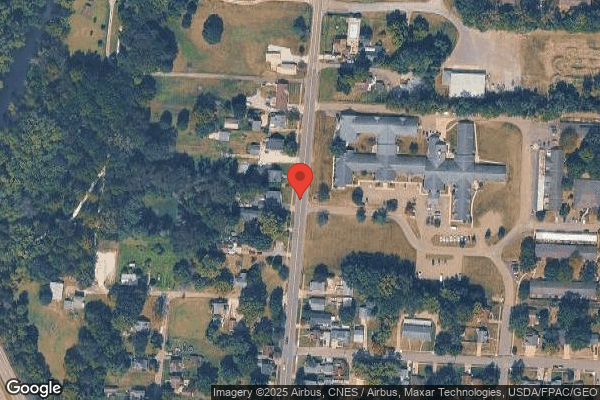
1610 FIRST STREET NE, MASSILLON, OH 44646 (330) 830-8500
For profit - Corporation 89 Beds Independent Data: November 2025
Trust Grade
90/100
#12 of 913 in OH
Last Inspection: April 2025

Within standard 12-15 month inspection cycle. Federal law requires annual inspections.

Overview

Amherst Meadows Skilled Nursing and Rehab has received an impressive Trust Grade of A, indicating it is an excellent facility that is highly recommended. It ranks #12 out of 913 nursing homes in Ohio, placing it in the top tier, and #2 out of 33 in Stark County, meaning there is only one local option rated higher. The facility's performance has been stable over time, with the same number of issues reported in both 2019 and 2025, suggesting consistent care practices. Staffing is noted as a weakness with a rating of 2 out of 5 stars and a turnover rate of 54%, which is around the state average. While there have been no fines reported, two incidents of concern were noted: food storage practices that could affect residents and a failure to properly notify authorities during an influenza outbreak in 2019, highlighting areas where the facility needs to improve. Overall, while Amherst Meadows has notable strengths, families should weigh these concerns when considering care options.

Trust Score
A
90/100
In Ohio
#12/913
Top 1%
Safety Record
Low Risk
No red flags
Inspections
Holding Steady
3 → 3 violations
Staff Stability
⚠ Watch
54% turnover. Above average. Higher turnover means staff may not know residents' routines.
Penalties
✓ Good
No fines on record. Clean compliance history, better than most Ohio facilities.
Skilled Nurses
○ Average
Each resident gets 33 minutes of Registered Nurse (RN) attention daily — about average for Ohio. RNs are the most trained staff who monitor for health changes.
Violations
○ Average
6 deficiencies on record. Average for a facility this size. Mostly minor or procedural issues.
★★★★★
5.0
Overall Rating
★★☆☆☆
2.0
Staff Levels
★★★★☆
4.0
Care Quality
★★★★★
5.0
Inspection Score
Stable
2019: 3 issues
2025: 3 issues

The Good

  • 4-Star Quality Measures · Strong clinical quality outcomes
  • Full Sprinkler Coverage · Fire safety systems throughout facility
  • No fines on record

Facility shows strength in quality measures, fire safety.

The Bad

Staff Turnover: 54%

Near Ohio avg (46%)

Higher turnover may affect care consistency

The Ugly 6 deficiencies on record

Apr 2025 3 deficiencies
CONCERN (D)

Potential for Harm - no one hurt, but risky conditions existed

Resident Rights (Tag F0550)

Could have caused harm · This affected 1 resident

**NOTE- TERMS IN BRACKETS HAVE BEEN EDITED TO PROTECT CONFIDENTIALITY** 2. Review of Resident #133's medical record revealed an admission date of 03/27/25 with diagnoses including encephalopathy, resp...

Read full inspector narrative →
**NOTE- TERMS IN BRACKETS HAVE BEEN EDITED TO PROTECT CONFIDENTIALITY** 2. Review of Resident #133's medical record revealed an admission date of 03/27/25 with diagnoses including encephalopathy, respiratory failure, cardiomyopathy, retention of urine, hypertension, seizures, anxiety disorder, and depression. Review of the physician's orders revealed Resident #133 had an order for an indwelling Foley catheter dated 03/27/25. Observations on 03/31/25 at 10:30 A.M. and 11:35 A.M. revealed Resident #133 was up in her wheelchair in her room. The urinary catheter collection bag, which was full of urine, was hanging on the side of her wheelchair, not covered with a dignity cover, and the bag was in view from the hallway. On 03/31/25 at 11:35 A.M. an interview with Registered Nurse #281 verified Resident #133's urinary catheter collection bag should have been covered with a dignity cover. Review of the facility's undated policy titled Dignity revealed each resident shall be cared for in a manner that promotes and enhances his or her sense of well-being, level of satisfaction with life, and feelings of self-worth and self-esteem. Based on medical record review, observation, staff interviews, and facility policy review, the facility failed to ensure resident dignity was maintained when personal care was administered for a resident while in the dining room and when a urinary catheter drainage bag was not covered. This affected two residents (Resident #10 and #133) out of two residents reviewed for dignity. The facility census was 80. Findings Include: 1. Review of the medical record for Resident #10 revealed admission date on 06/22/22 with diagnoses including, but not limited to, Alzheimer's Disease, major depression, cerebral palsy, anxiety and muscle weakness. Review of the Quarterly Minimum Data Set (MDS) assessment dated [DATE] revealed Resident #10 had a Brief Interview Mental Status (BIMS) score of 08 indicating impaired cognition. The assessment stated Resident #10 had impairment on one side and required moderate assistance from staff for eating and personal hygiene, and that the resident utilized a wheel chair for mobility. Review of Resident #10's care plan for Activities of Daily Living (ADL) self care performance deficit dated 03/27/23 revealed Resident #10 required staff assistance with self-care tasks and required assistance from one person for eating meals. Resident #10 was to sit at the assistance table in the dining room. An observation on 03/31/25 at 11:33 A.M. revealed Resident #10 was sitting at the dining room table with three fellow residents when he started wiping his nose with his hands, and Certified Nursing Assistance (CNA) #317 went to assist Resident #10 with wiping his nose. CNA #317 took Resident #10's clothing protector from the table and wiped Resident #10's nose two times, then placed the clothing protector on Resident #10 neck and upper chest to cover Resident #10's clothing. An interview on 03/31/25 at 11:45 A.M. with CNA #317 confirmed CNA #317 had assisted Resident #10 with wiping his nose with the clothing protector and then placing the clothing protector on Resident #10. CNA #317 confirmed there were three other residents sitting at the table with Resident #10. Review of the facility's undated policy titled Dignity revealed each resident shall be cared for in a manner that promotes and enhances his or her sense of well-being, level of satisfaction with life, and feelings of self-worth and self-esteem.
CONCERN (D)

Potential for Harm - no one hurt, but risky conditions existed

Antibiotic Stewardship (Tag F0881)

Could have caused harm · This affected 1 resident

**NOTE- TERMS IN BRACKETS HAVE BEEN EDITED TO PROTECT CONFIDENTIALITY** Based on record review, staff interview, review of the infection control log, and review of facility policy, the facility failed...

Read full inspector narrative →
**NOTE- TERMS IN BRACKETS HAVE BEEN EDITED TO PROTECT CONFIDENTIALITY** Based on record review, staff interview, review of the infection control log, and review of facility policy, the facility failed to implement their antibiotic stewardship program to promote the appropriate use of antibiotics. This affected two (Resident #7 and #44) out of five residents reviewed for antibiotic use. The facility census was 80. Findings include: 1. Review of the medical record revealed Resident #7 was admitted on [DATE] with diagnoses that included obstruction of bile duct, atrial fibrillation, acute respiratory failure, duodenal ulcer, celiac disease, major depressive disorder, and anxiety disorder. Review of the quarterly Minimum Data Set (MDS) assessment dated [DATE] revealed Resident #7 was cognitively intact. Review of the nursing note dated 04/01/25 at 5:06 P.M. revealed Resident #7 had complaints of urinary symptoms. The physician was notified and new orders were received for a urinalysis with culture. Review of the nursing note dated 04/02/25 at 6:05 A.M. revealed Resident #7's urine sample was sent to the laboratory and Resident #7 was ordered Rocephin (antibiotic). The nursing note at 10:04 A.M. revealed Resident #7 was started on Rocephin for signs and symptoms of a urinary tract infection (UTI) and the urine results were pending. Interview on 04/03/25 at 11:49 A.M. with the Director of Nursing (DON) verified Resident #7 was ordered Rocephin before the results of Resident #7's urinalysis or culture and sensitivity were received. The DON verified the antibiotic was ordered without meeting the proper criteria. Review of the facility policy titled Antibiotic Stewardship revealed the facility was to follow the McGeers criteria (a set of clinical and microbial criteria used to identify and define infections and to help determine when antibiotics are likely needed and when they may be unnecessary, to reduce antibiotic overuse) for infection surveillance. 2. Review of the medical record revealed Resident #44 was admitted on [DATE] with diagnoses that included chronic respiratory failure, type two diabetes, chronic kidney disease, and dementia. Review of the significant change Minimum Data Set (MDS) assessment dated [DATE] revealed Resident #44 was cognitively impaired. Review of the nursing noted dated 02/06/25 at 12:59 P.M. revealed Resident #44 denied pain when urinating, burning, or abdomen discomfort. No foul odor was noted to Resident #44's urine. Review of the nursing note dated 02/06/25 at 2:56 P.M. revealed Resident #44 was unable to urinate in a urinal. The family refused to allow intermittent cauterization to obtain a urine sample. Resident #44 had increased anxiousness and racing thoughts. The note stated that hospice staff would speak with the physician to see if an antibiotic could be ordered. Review of the nursing note dated 02/06/25 at 4:31 P.M. revealed Resident #44 received the initial dose of Cipro (antibiotic) for a urine infection. Review of the February 2025 infection control log revealed Resident #44 had a urinary tract infection (UTI) with a 02/06/25 date of onset. It noted that the resident was experiencing confusion and that laboratory results were not applicable, indicating they were potentially not obtained. The log also noted a section which stated Indicate per McGeers' whether infection criteria were met [with] lab, culture, etc. and the response was No. The log further noted that Resident #44 was ordered Cipro 250 milligrams twice daily for seven days. Interview on 04/03/25 at 12:32 P.M. with the Director of Nursing (DON) verified Resident #44 was ordered Cipro without a urine sample being obtained. The DON verified the antibiotic was ordered without meeting the proper criteria. Review of the facility policy titled Antibiotic Stewardship revealed the facility was to follow the McGeers criteria (a set of clinical and microbial criteria used to identify and define infections and to help determine when antibiotics are likely needed and when they may be unnecessary, to reduce antibiotic overuse) for infection surveillance.
CONCERN (E)

Potential for Harm - no one hurt, but risky conditions existed

Food Safety (Tag F0812)

Could have caused harm · This affected multiple residents

Based on observation, staff interviews, and facility policy review, the facility failed to ensure food was stored in a sanitary manner, dented cans were removed from stock, and dietary staff wore faci...

Read full inspector narrative →
Based on observation, staff interviews, and facility policy review, the facility failed to ensure food was stored in a sanitary manner, dented cans were removed from stock, and dietary staff wore facial hair coverings during food service. This had the potential to affect 78 residents who the facility identified as receiving meals from the kitchen. The facility census was 80. Findings Include: 1. Observation during the initial tour of the kitchen on 03/31/25 at 8:30 A.M. revealed two dented cans of diced potatoes and two dented cans of whole potatoes in the dry storage area can-rack used for stock. An interview on 03/31/25 at 8:45 A.M. with Dietary [NAME] #240 confirmed there were a total of four dented cans in the storage can-rack for use. Dietary [NAME] #240 stated the dented cans should have been removed from circulation stock and returned to the food vendor. 2. Observation during the initial kitchen tour on 03/31/25 at 8:35 A.M. revealed in the walk-in cooler there was the lunch preparation cart with seven uncovered small bowls of pureed peaches sitting on a tray on a middle shelf, with a tray of other deserts on the shelf above the uncovered bowls. An interview on 03/31/25 at 8:45 A.M. with Dietary [NAME] #240 confirmed there were seven uncovered bowls of pureed peaches sitting on the lunch preparation cart in the walk-in cooler. Dietary [NAME] #240 stated the prepared food should have been covered and dated prior to being placed in the cooler for use. Review of the facility's undated policy titled Food Storage revealed for safety, foods should be labeled, covered, and dated when stored. 3. Observation on 04/02/25 at 11:50 A.M. during the lunch meal service tray line revealed Dietary Aide #271 was placing food items, drinks and utensils on the food trays. Dietary Aide #271 did not have any type of covering over his facial hair and beard. An interview on 04/02/25 at 11:55 A.M. with Dietary Manager #390 confirmed Dietary Aide #271 did not have his facial hair and beard covered during food service and tray line for the lunch meal. Dietary Manager #390 stated hair and facial hair should be covered during any food preparation and service.
Sept 2019 3 deficiencies
CONCERN (D)

Potential for Harm - no one hurt, but risky conditions existed

Deficiency F0676 (Tag F0676)

Could have caused harm · This affected 1 resident

**NOTE- TERMS IN BRACKETS HAVE BEEN EDITED TO PROTECT CONFIDENTIALITY** Based on observations, review of the medical record, review of restorative notes and staff interview the facility failed to prov...

Read full inspector narrative →
**NOTE- TERMS IN BRACKETS HAVE BEEN EDITED TO PROTECT CONFIDENTIALITY** Based on observations, review of the medical record, review of restorative notes and staff interview the facility failed to provide restorative programs as ordered for Residents #40 and #46. This affected two residents (Resident #40 and #46) of three reviewed of mobility and range of motion. Findings include: 1. Review of the medical record revealed Resident #40 was admitted to the facility on [DATE] with diagnoses of diabetes, major depression, pulmonary embolism, dementia, and lack of coordination. Review of the plan of care dated 07/18/19 revealed Resident #40 had a non-weight bearing status and had generalized weakness. The resident was at risk for decline in strength and function. Interventions included passive range of motion (PROM) to her upper and lower extremities six to seven days a week for a total of 15 minutes per day. Review of the quarterly Minimum Data Set 3.0 assessment dated [DATE] revealed Resident #40 had severely impaired cognition, required extensive assistance of two staff members for bed mobility, toilet use and total assistance of two staff members for transferring. Review of the September 2019 physician's orders revealed Resident #40 had an order dated 07/18/19 for restorative range of motion (ROM) for 15 minutes six to seven days per week. Review of the July 2019 restorative nursing program documentation revealed Resident # 40 received restorative nursing on 07/18/19, 07/24/19, 07/25/19, 07/28/19, 07/29/19, and 07/30/19. Review of the August 2019 restorative nursing program documentation revealed Resident # 40 received restorative nursing on 08/02/19, 08/05/19, 08/07/19, 08/08/19, 08/12/19, 08/14/19, 08/15/19, 08/16/19, 08/17/19, 08/18/19, 08/20/19, 08/22/19, 08/24/19, 08/29/19, 08/30/19, and 08/31/19. Review of the September 2019 restorative nursing program documentation revealed Resident # 40 received restorative nursing on 09/01/19, 09/02/19, 09/06/19, 09/09/19, 09/12/19, 09/13/19, 09/15/19, 09/16/19, 09/19/19, and 09/22/19. 2. Review of the medical record revealed Resident #46 was admitted to the facility on [DATE] with diagnoses of contracture of the left and right hands, Parkinson's disease and dementia. Review of the significant change Minimum Data Set assessment dated [DATE] revealed Resident #46 had severely impaired cognition, required total assistance of two staff members for bed mobility, transfer, and toilet use. The resident had upper and lower extremity impairment to both sides. Review of the September 2019 physician's orders revealed Resident #46 had an order dated 07/17/19 for PROM to bilateral upper and lower extremities for 15 minutes daily for six to seven days a week. Review of the plan of care dated 07/30/18 revealed Resident #49 had impaired physical mobility due to decline in ROM and stiffness related to Parkinson's disease. The interventions included PROM to all extremities six to seven days a week for a total of 15 minutes per day. Review of the July 2019 restorative nursing documentation revealed Resident #46 received restorative nursing on 07/04/19, 07/05/19, 07/08/19, 07/17/19, 07/18/19, and 07/23/19. Review of the August 2019 restorative nursing documentation revealed Resident #46 received restorative nursing on 8/04/19, 08/06/19, 08/15/19, 08/21/19, 08/24/19, and 08/31/19. Review of the September 2019 restorative nursing documentation revealed Resident #46 received restorative nursing on 09/01/19, 09/04/19, 09/06/19, 09/14/19, 09/15/19, and 09/17/19. Observation on 09/25/19 from 9:40 A.M. to 10:12 A.M. revealed State Tested Nursing Assistant (STNA) #718 performing PROM to Resident #46. STNA #718 preformed two sets of PROM to the resident's elbow, knees and his hips. An interview 09/25/19 at 11:55 A.M with Licensed Practical Nurse #815 verified the nursing assistant only provided PROM to the elbows, knees and hips of Resident #46. LPN #815 stated he was very rigid and verified there was no documentation indicating he was unable to perform the PROM exercises. LPN #815 verified Residents #40 and #46 had not been receiving PROM six to seven days a week as ordered and care planned. LPN #815 stated she had hired two new restorative aides but one did not show up this week. She also indicated the restorative aides did get pulled to the skilled unit quite a bit to work but the other STNAs were aware they were to pick up the restorative programs in their absence. An interview on 09/26/19 at 11:24 A.M. with restorative STNA #718 indicated she worked four-10 hour days and was pulled to the floor to work quite a bit and was unable to complete the restorative programs; however, she indicated the STNAs were aware they were to pick up the restorative programs when she was not doing them.
CONCERN (E)

Potential for Harm - no one hurt, but risky conditions existed

Food Safety (Tag F0812)

Could have caused harm · This affected multiple residents

Based on observation and staff interview the facility failed to pass ice water in a sanitary manner on the 300 Hall. This had the potential to affect 19 residents ( #14, #59, #28, #39, #30, #62, #49, ...

Read full inspector narrative →
Based on observation and staff interview the facility failed to pass ice water in a sanitary manner on the 300 Hall. This had the potential to affect 19 residents ( #14, #59, #28, #39, #30, #62, #49, #79, #65, #10, #51, #46, #79, #6, #69, #36, #93, #16, and #38) residing on the 300 Hall. Facility census was 83. Findings include: Observation on 09/23/19 at 11:06 A.M. revealed State Tested Nursing Assistant (STNA) #709 passing ice water down the 300 Hall. Glasses of ice water were pre-poured on top of a two tiered cart which was uncovered. The uncovered glasses were left unattended in the hall as STNA #709 entered resident rooms to deliver the ice water. An interview on 09/23/19 at 11:15 A.M. with STNA #709 indicated they always passed ice water this way but she would ask about the proper way to pass ice water. At 11:30 A.M. STNA #709 stated she was suppose to use the metal ice cart with a lid to pass ice one room at a time but she was in a hurry and did not do it the proper way.
CONCERN (E)

Potential for Harm - no one hurt, but risky conditions existed

Infection Control (Tag F0880)

Could have caused harm · This affected multiple residents

Based on review of infection control logs, interviews, and policy review, the facility failed to notify the appropriate government agencies upon an outbreak of influenza in March 2019 for ten confirme...

Read full inspector narrative →
Based on review of infection control logs, interviews, and policy review, the facility failed to notify the appropriate government agencies upon an outbreak of influenza in March 2019 for ten confirmed cases of influenza (Residents #5, #12, #27, #32, #45, #73, #77, #81, #82, and #83) and fourteen suspected cases of influenza (Residents #33, #35, #42, #44, #48, #56, #57, #70, #76, #79, #84, #85, #86, and #87). The current facility census was 83 residents. Findings include: Review of the facility monthly infection control logs on 09/25/19 at 3:00 P.M. with Registered Nurse (RN) #814 and Licensed Practical Nurse (LPN) #823 revealed from 03/24/19through 04/11/19, the facility had 24 residents who presented with signs and symptoms of influenza which included chills, loss of appetite, and fever. Nasal swab tests were conducted on the 24 residents with ten returning positive (Residents #5, #12, #27,#32, #45, #73, #77, #81, #82, and #83) and fourteen returning negative (Residents #33, #35, #42, #44, #48, #56, #57, #70, #76, #79, #84, #85, #86, and #87). All residents who were tested for influenza were given prophylactic doses of Tamiflu (a medicine totreat influenza). RN #814 and LPN #823 were unable to state whether or not the appropriate government agencies were notified at the time of the influenza outbreak. Interview with the Director of Nursing (DON) on 09/26/19 at 1:20 P.M. verified the facility did not contact the local or state health department of the influenza outbreak.The DON stated she had telephoned the local health department to verify they had not been notified of the outbreak. Review of the Centers for Disease Control and Prevention Guidance for Influenza Outbreak Management in Long-Term Care and Post-Acute Care Facilities dated 02/12/19 revealed The local public health and state health departments should be notified of every suspected or confirmed influenza outbreak in a long-term care facility, especially if a resident develops influenza while on or after receiving antiviral chemoprophylaxis. The guidance indicated a confirmed or suspected outbreak included two or more ill residents. Review of the facility's policy titled Outbreak of Communicable Diseases, revised August 2014, revealed an outbreak of influenza was defined as anything exceeding the endemicrate, or a single case if unusual for the facility. The policy indicated the Administrator would be responsible for telephoning a report to the health department and forwarding Communicable Disease Report Cards as required. Review of the facility's policy titled Infection Prevention and Control Committee, revised July 2016, indicated the duties of the committee was to notify government agenciesof reportable contagious or infectious disease. Review of facility's policy titled Infection Prevention and Control Program, revised August 2016, revealed outbreak management was a process which consisted of determiningthe presence of an outbreak and reporting the information to the appropriate public health authorities.
Understanding Severity Codes (click to expand)
Life-Threatening (Immediate Jeopardy)
J - Isolated K - Pattern L - Widespread
Actual Harm
G - Isolated H - Pattern I - Widespread
Potential for Harm
D - Isolated E - Pattern F - Widespread
No Harm (Minor)
A - Isolated B - Pattern C - Widespread

Questions to Ask on Your Visit

  • "Can I speak with families of current residents?"
  • "What's your RN coverage like on weekends and overnight?"

Our Honest Assessment

Strengths
  • • Grade A (90/100). Above average facility, better than most options in Ohio.
  • • No major safety red flags. No abuse findings, life-threatening violations, or SFF status.
  • • No fines on record. Clean compliance history, better than most Ohio facilities.
Concerns
  • • No significant concerns identified. This facility shows no red flags across CMS ratings, staff turnover, or federal penalties.
Bottom line: Generally positive indicators. Standard due diligence and a personal visit recommended.

About This Facility

What is Amherst Meadows Skilled Nursing And Rehab's CMS Rating?

CMS assigns AMHERST MEADOWS SKILLED NURSING AND REHAB an overall rating of 5 out of 5 stars, which is considered much above average nationally. Within Ohio, this rating places the facility higher than 99% of the state's 100 nursing homes. This rating reflects solid performance across the metrics CMS uses to evaluate nursing home quality.

How is Amherst Meadows Skilled Nursing And Rehab Staffed?

CMS rates AMHERST MEADOWS SKILLED NURSING AND REHAB's staffing level at 2 out of 5 stars, which is below average compared to other nursing homes. Staff turnover is 54%, compared to the Ohio average of 46%.

What Have Inspectors Found at Amherst Meadows Skilled Nursing And Rehab?

State health inspectors documented 6 deficiencies at AMHERST MEADOWS SKILLED NURSING AND REHAB during 2019 to 2025. These included: 6 with potential for harm.

Who Owns and Operates Amherst Meadows Skilled Nursing And Rehab?

AMHERST MEADOWS SKILLED NURSING AND REHAB is owned by a for-profit company. For-profit facilities operate as businesses with obligations to shareholders or private owners. The facility operates independently rather than as part of a larger chain. With 89 certified beds and approximately 82 residents (about 92% occupancy), it is a smaller facility located in MASSILLON, Ohio.

How Does Amherst Meadows Skilled Nursing And Rehab Compare to Other Ohio Nursing Homes?

Compared to the 100 nursing homes in Ohio, AMHERST MEADOWS SKILLED NURSING AND REHAB's overall rating (5 stars) is above the state average of 3.2, staff turnover (54%) is near the state average of 46%, and health inspection rating (5 stars) is much above the national benchmark.

What Should Families Ask When Visiting Amherst Meadows Skilled Nursing And Rehab?

Based on this facility's data, families visiting should ask: "Can you walk me through typical staffing levels on day, evening, and night shifts?" "Can I visit during a mealtime to observe dining assistance and food quality?" "How do you handle medical emergencies, and what is your hospital transfer rate?" "Can I speak with family members of current residents about their experience?" These questions are particularly relevant given the below-average staffing rating.

Is Amherst Meadows Skilled Nursing And Rehab Safe?

Based on CMS inspection data, AMHERST MEADOWS SKILLED NURSING AND REHAB has a clean safety record: no substantiated abuse findings (meaning no confirmed cases of resident harm), no Immediate Jeopardy citations (the most serious violation level indicating risk of serious injury or death), and is not on the Special Focus Facility watch list (a federal program monitoring the lowest-performing 1% of nursing homes). The facility has a 5-star overall rating and ranks #1 of 100 nursing homes in Ohio. While no facility is perfect, families should still ask about staff-to-resident ratios and recent inspection results during their visit.

Do Nurses at Amherst Meadows Skilled Nursing And Rehab Stick Around?

AMHERST MEADOWS SKILLED NURSING AND REHAB has a staff turnover rate of 54%, which is 8 percentage points above the Ohio average of 46%. Moderate turnover is common in nursing homes, but families should still ask about staff tenure and how the facility maintains care continuity when employees leave.

Was Amherst Meadows Skilled Nursing And Rehab Ever Fined?

AMHERST MEADOWS SKILLED NURSING AND REHAB has no federal fines on record. CMS issues fines when nursing homes fail to meet care standards or don't correct problems found during inspections. The absence of fines suggests the facility has either maintained compliance or corrected any issues before penalties were assessed. This is a positive indicator, though families should still review recent inspection reports for the full picture.

Is Amherst Meadows Skilled Nursing And Rehab on Any Federal Watch List?

AMHERST MEADOWS SKILLED NURSING AND REHAB is not on any federal watch list. The most significant is the Special Focus Facility (SFF) program, which identifies the bottom 1% of nursing homes nationally based on persistent, serious quality problems. Not being on this list means the facility has avoided the pattern of deficiencies that triggers enhanced federal oversight. This is a positive indicator, though families should still review the facility's inspection history directly.