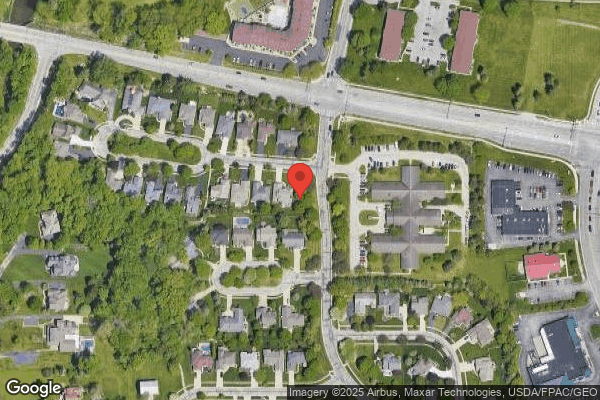

RIDGEWOOD MANOR

3231 MANLEY ROAD, MAUMEE, OH 43537 (419) 865-1248
For profit - Limited Liability company 90 Beds AOM HEALTHCARE Data: November 2025 2 Immediate Jeopardy citations
Trust Grade
0/100
Last Inspection: May 2025

Inspected within the last 6 months. Data reflects current conditions.

Overview

Ridgewood Manor in Maumee, Ohio, has a Trust Grade of F, which indicates significant concerns about the facility's care. It ranks poorly, as it is not listed among any nursing homes in Ohio or Lucas County, suggesting a lack of local options. While the facility's trend shows improvement, dropping from 28 issues in 2024 to 9 in 2025, it still reported critical and serious deficiencies, including failure to conduct timely skin assessments and address pressure ulcers, which resulted in life-threatening harm for residents. Staffing is a concern, with a turnover rate of 75% that is significantly above the Ohio average, and the facility has incurred fines totaling $151,766, higher than 94% of facilities in the state. Although there is average RN coverage, the high turnover and serious incidents indicate a need for families to carefully consider their options.

Trust Score
F
0/100
In Ohio
#112/223
Top 50%
Safety Record
High Risk
Review needed
Inspections
Getting Better
28 → 9 violations
Staff Stability
⚠ Watch
75% turnover. Very high, 27 points above average. Constant new faces learning your loved one's needs.
Penalties
○ Average
$151,766 in fines. Higher than 55% of Ohio facilities. Some compliance issues.
Skilled Nurses
○ Average
Each resident gets 37 minutes of Registered Nurse (RN) attention daily — about average for Ohio. RNs are the most trained staff who monitor for health changes.
Violations
⚠ Watch
69 deficiencies on record. Higher than average. Multiple issues found across inspections.
☆☆☆☆☆
0.0
Overall Rating
☆☆☆☆☆
0.0
Staff Levels
☆☆☆☆☆
0.0
Care Quality
☆☆☆☆☆
0.0
Inspection Score
Stable
2024: 28 issues
2025: 9 issues

The Good

  • Full Sprinkler Coverage · Fire safety systems throughout facility
  • No fines on record

Facility shows strength in fire safety.

The Bad

Staff Turnover: 75%

29pts above Ohio avg (46%)

Frequent staff changes - ask about care continuity

Federal Fines: $151,766

Well above median ($33,413)

Significant penalties indicating serious issues

Chain: AOM HEALTHCARE

Part of a multi-facility chain

Ask about local staffing decisions and management

Staff turnover is very high (75%)

27 points above Ohio average of 48%

The Ugly 69 deficiencies on record

2 life-threatening 1 actual harm
Jun 2025 1 deficiency
CONCERN (D) 📢 Someone Reported This

A family member, employee, or ombudsman was alarmed enough to file a formal complaint

Potential for Harm - no one hurt, but risky conditions existed

Quality of Care (Tag F0684)

Could have caused harm · This affected 1 resident

**NOTE- TERMS IN BRACKETS HAVE BEEN EDITED TO PROTECT CONFIDENTIALITY** Based on review of the medical record, observation, staff and resident interview, and policy review, the facility failed to ensu...

Read full inspector narrative →
**NOTE- TERMS IN BRACKETS HAVE BEEN EDITED TO PROTECT CONFIDENTIALITY** Based on review of the medical record, observation, staff and resident interview, and policy review, the facility failed to ensure physician orders for wound treatments were clarified, accurately documented and completed per physician orders. This affected two (#11, #37) of three residents reviewed for wound care. The facility identified six residents with non-pressure related wounds. The facility census was 38. Findings include: Review of the medical record for Resident #11 revealed an admission date of 10/18/23. Diagnoses included hypertension, chronic obstructive pulmonary disease, and peripheral vascular disease. Review of the quarterly Minimum Data Set (MDS) assessment dated [DATE] revealed the resident had intact cognition. Review of a nurse's note dated 05/24/25 at 1:39 P.M. revealed the resident had a skin tear to the left shin measuring 2.5 centimeters (cm) in length by 1.5 cm in width. The wound was cleansed and treated with a border form dressing. The wound care provider was notified of the new area. Review of the physician orders from 05/24/25 through 05/27/25 revealed there were no wound care treatment orders for the skin tear to the left shin. Review of the treatment administration record revealed there was no documentation the resident received wound treatments for the skin tear from 05/25/25 through 05/27/25. Review of a nurse practitioner skin wound note dated 05/28/25 revealed Resident #11 had a left shin skin tear/laceration with orders to cleanse with wound cleanser, apply oil emulsion to base of wound, secure with bordered gauze and change daily. There were no wounds noted to the left foot or ankle and no wound treatment orders for the left foot and ankle. Review of the physician orders from 05/28/25 through 06/02/25 revealed there were no wound treatment orders for the skin tear to the left shin and no wound treatment orders for the left foot/ankle. Review of the treatment administration record from 05/29/25 through 06/01/25 revealed no documentation of completed wound treatments for the left shin. Interview on 06/02/25 at 8:42 A.M., Resident #11 revealed the staff were not completing wound care dressings daily. Observation on 06/02/25 at 10:24 A.M. with Licensed Practical Nurse (LPN) #435 revealed Resident #11 had gauze dressing wrapped around the left foot/ankle and covered with an elastic bandage. LPN #435 removed an undated wound dressing to the left foot/ankle and the resident had no wounds on the left foot or ankle. Further observation revealed the resident had a border dressing on the left lower shin dated 05/28/25. Interview on 06/02/25 at 10:36 A.M., LPN #435 verified the resident had a wound dressing on the left lower shin dated 05/28/25. LPN #435 verified physician orders for the wound were not entered into the treatment administration record and the daily wound treatments had not been completed. LPN #435 also verified the resident had no wounds on his left foot/ankle and no physician orders for treatment. 2. Review of the medical record for Resident #37 revealed an admission date of 08/04/16. Diagnoses included cerebral infarction, spinal stenosis, and dementia. Review of the significant change Minimum Data Set (MDS) assessment dated [DATE] revealed the resident had severe cognitive impairment. Review of a nurse practitioner skin and wound note dated 05/14/25 at 1:18 P.M. revealed the resident had a skin tear to the left knee from a recent fall. The area measured two centimeters (cm) by 1.6 cm in width with no depth. Treatment recommendations included to cleanse with wound cleanser, apply bacitracin ointment to base of the wound and leave open to air. Review of a nurses note dated 05/20/25 at 3:02 P.M. revealed the resident had a skin tear on his right leg. The wound was cleansed and measured seven cm in length and four cm width. An abdominal pad was placed and wrapped with a gauze dressing. Wound care notified of the skin tear. Review of a wound nurse practitioner skin and wound note dated 05/21/25 at 11:42 A.M. revealed the resident had a skin tear improving to the left knee and a new skin tear to the right lateral lower leg. The wound to the left knee measured 1.7 cm in length by 1.5 cm in width by zero cm in depth. The wound to the right lateral lower leg measured 7.5 cm in length by 4.2 cm in width x 0.1 cm in depth. The wound NP treatment orders included to cleanse the skin tear to the left knee with wound cleanser, apply bacitracin and leave open to air. The treatment order for the right lateral lower leg skin tear was to cleanse with wound cleanser, apply non-adhering dressing to base of wound, secure with abdominal pad and rolled gauze, and change daily and as needed. Review of physician orders dated 05/21/25 revealed to cleanse the left knee with soap and water, pat dry, apply bacitracin ointment to wound bed and leave open to air every day shift. Also to cleanse the right lower extremity with wound cleanser, pat dry, apply oil emulsion non-adhering dressing to wound bed, cover with abdominal padding, then wrap with rolled dry gauze daily. Review of a nurse practitioner skin and wound note dated 05/28/25 at 7:07 P.M. revealed the skin tears to the right lower leg and left knee were healed and to continue preventative recommendations for daily emollients and prevent use of adherent tape directly to skin. The physician orders for the wound treatment for the skin tear to the left knee and right lower extremity skin tear had not been discontinued. Review of the Treatment Administration Record (TAR) from 05/22/25 through 06/01/25 revealed the wound treatments were documented as completed per physician orders. Observation on 06/02/25 at 2:06 P.M. revealed Resident #37 had an exposed scabbed area on the left knee. Further observation revealed the resident had an undated loosely wrapped gauze dressing around the lower left leg near the ankle. Further observation revealed the resident had an exposed scabbed area on the right lateral lower extremity and a loosely wrapped gauze wound dressing dated 05/31/25 around the right ankle. Interview on 06/02/25 at 2:06 P.M., LPN #435 revealed the resident's wounds were healed but the physician orders had not been discontinued. LPN #435 verified the treatment to the left knee was to cleanse wound, apply bacitracin and leave open to air. LPN #435 verified there were no physician orders for a wound dressing to the left knee and should not have been wrapped with gauze. LPN #435 verified the dressing on the resident's right lower extremity skin tear had slid down and was not in place over the wound. LPN #435 also verified the wound dressing for the right lower extremity skin tear was dated 05/31/25 and wound care had not been completed as documented on 06/01/25. Interview on 06/04/25 at 10:30 A.M., the Director of Nursing (DON) revealed after a wound was healed, the wound nurse practitioner wanted healed wounds to be padded and protected for an additional week. The DON verified there were no physician orders to pad and protect Resident #37's skin tear wounds. Interview on 06/04/25 at 11:15 A.M., Certified Wound Nurse Practitioner (CWNP) #700 revealed wound orders were continued for one additional week after a wound had healed. CWNP #700 verified she should have clarified with the facility when to discontinue Resident #37's wound care orders. Review of the facility policy Wound Care, dated 10/2010, revealed to verify a physician order for wound care. Also record in the medical record the type of wound care given, the date and time the wound care was given, and assessment data obtained when inspecting the wound. This deficiency represents non-compliance investigated under Complaint Number OH00165739.
May 2025 6 deficiencies
CONCERN (D)

Potential for Harm - no one hurt, but risky conditions existed

Quality of Care (Tag F0684)

Could have caused harm · This affected 1 resident

**NOTE- TERMS IN BRACKETS HAVE BEEN EDITED TO PROTECT CONFIDENTIALITY** Based on medical record review, hospital discharge document review, resident interview, and staff interview, the facility failed...

Read full inspector narrative →
**NOTE- TERMS IN BRACKETS HAVE BEEN EDITED TO PROTECT CONFIDENTIALITY** Based on medical record review, hospital discharge document review, resident interview, and staff interview, the facility failed to ensure resident blood glucose levels were monitored as ordered by the physician. This affected one (#141) of four residents reviewed as new admissions to the facility in a census of 39. Findings include: Review of the medical record revealed Resident #141 admitted to the facility on [DATE] with the diagnoses including acute kidney failure, chronic kidney disease stage five (5), myocardial infarction, type II diabetes mellitus, hypertension, vitreous hemorrhage right eye, glaucoma, and anemia. Review of an admission assessment dated [DATE] assessed Resident #141 as alert and able to make needs known, received hemodialysis, and had small amount of edema in the legs. Review of Resident #141's hospital discharge community referral form (CRF) dated 05/03/25 revealed the discharge physician orders included the use of a glucometer and glucose blood test strips, and glucose blood test strips were directed to be used three times daily and as needed to monitor the resident's blood sugar levels. Review of a nursing plan of care dated 05/04/25 revealed it was developed to address Resident #141's diagnosis of diabetes mellitus. Interventions included for diabetes medication to be provided as ordered by physician, monitor and document for side effects and effectiveness, and monitor blood sugars as ordered by physician. Review of the medical record lacked documented evidence indicating Resident #141 blood sugar had been obtained or monitored. On 05/07/25 at 8:27 A.M., interview with Resident #141 stated he had a history of monitoring his blood sugar daily and administering insulin according to the a sliding scale based on the blood sugar result (level). Interview with Licensed Practical Nurse (LPN) #456 on 05/07/25 at 8:31 A.M., during review of Resident #141's medical record, verified no evidence of daily blood glucose monitoring or related insulin coverage was documented in the medical record. At 8:40 A.M., LPN #456 obtained a blood sugar from Resident #141 with a level of 166 milligrams per deciliter (mg/dL) obtained. On 05/07/25 at 9:06 A.M., interview with the Director of Nursing (DON), during medical record review, confirmed Resident #141 had a diagnosis of type II diabetes mellitus with a history of blood sugar monitoring and related insulin administration. The DON verified physician orders for daily blood sugar monitoring was listed on the resident's hospital discharge CRF; however, no daily blood glucose monitoring had occurred since admission on [DATE].
CONCERN (D)

Potential for Harm - no one hurt, but risky conditions existed

Respiratory Care (Tag F0695)

Could have caused harm · This affected 1 resident

**NOTE- TERMS IN BRACKETS HAVE BEEN EDITED TO PROTECT CONFIDENTIALITY** Based on observation, medical record review, staff interview, review of an equipment manual, and review of a facility policy, th...

Read full inspector narrative →
**NOTE- TERMS IN BRACKETS HAVE BEEN EDITED TO PROTECT CONFIDENTIALITY** Based on observation, medical record review, staff interview, review of an equipment manual, and review of a facility policy, the facility failed to initiate orders and plans of care to ensure bilevel positive airway pressure (BiPAP) therapy was correctly utilized and staff responded timely to BiPAP machine alarms. This affected one (#14) of two residents reviewed for respiratory care. The facility census was 39. Findings include: Review of the medical record for Resident #14 revealed an admission date of 04/12/25 with diagnoses including type two diabetes mellitus, heart disease, lymphocytic leukemia of B-cell type, depression, anxiety, mild intermittent asthma, chronic obstructive pulmonary disease, and obstructive sleep apnea. Review of the admission Minimum Data Set 3.0 assessment dated [DATE] for Resident #14 revealed she was cognitively intact and experienced shortness of breath with exertion and when lying flat. Observation on 05/06/25 at 7:17 A.M. in Resident #14's room revealed the resident was resting in bed with her eyes closed under a blanket with her BiPAP machine on and alarming. Interview on 05/06/25 at 7:30 A.M. with Licensed Practical Nurse (LPN) #420 at the nurse's station confirmed the BiPAP machine alarm coming from Resident #14's room was not audible at the nurse's station and LPN #420 did not know how long the BiPAP machine had been alarming. Observation on 05/06/25 at 8:19 A.M. in the doorway to Resident #14's room revealed the resident was resting with her eyes closed under a blanker in bed and her BiPAP machine was alarming. Interview on 05/06/25 at 8:20 A.M. with Registered Nurse (RN) #457 at the nurse's station confirmed the BiPAP machine alarm coming from Resident #14's room was not audible at the nurse's station. Interview on 05/06/25 at 12:39 P.M. with the Administrator confirmed there were no orders nor care plans for Resident #14's oxygen or BiPAP machine. Review of Resident #14's physician orders for oxygen and BiPAP machine revealed these orders were not entered until 05/06/25. Observation on 05/07/25 at 7:10 A.M. in Resident #14's room revealed she was resting in bed with her eyes closed wearing pajamas and her BiPAP machine was not running. Observation on 05/07/25 at 7:23 A.M. in Resident #14's room with Certified Nurse Aide (CNA) #423 revealed the resident stated she did not know why her BiPAP machine was not on. Interview on 05/07/25 at 9:45 A.M. with LPN #456 revealed she was not aware Resident #14's BiPAP machine was not running. Additionally, LPN #456 indicated she had not been informed of any issues or refusal of care regarding Resident #14's BiPAP machine. Review of the manual for Resident #14's BiPAP machine indicated alarms must be responded to, and corrective actions implemented, promptly. Review of an undated facility policy titled, Noninvasive Ventilation, indicated noninvasive ventilation would be provided per physician orders. Procedures included the facility would obtain physician orders for use and settings, the facility would follow manufacturers instructions regarding proper use of the machine, and there would be documentation regarding the use of the machine.
CONCERN (D)

Potential for Harm - no one hurt, but risky conditions existed

Unnecessary Medications (Tag F0759)

Could have caused harm · This affected 1 resident

Based on observation, medical record review, staff interview, and facility policy review, the facility failed to ensure medications were provided as ordered by the physician and without error. This re...

Read full inspector narrative →
Based on observation, medical record review, staff interview, and facility policy review, the facility failed to ensure medications were provided as ordered by the physician and without error. This result in nine (9) medication errors out of 25 medications being administered for an error rate of 36 percent (%). This affected two (#24 and #141) of three residents observed for medication administration in a facility census of 39. Findings include: 1. Review of Resident #24's medical record noted physician orders including the narcotic pain medication oxycodone five (5) milligrams (mg) two times daily for pain, scheduled for 9:00 A.M. and 9:00 P.M. and ordered on 02/27/25; the antianxiety medication Ativan 0.25 mg every morning and at bedtime, scheduled for 7:00 A.M. and 7:00 P.M. and ordered on 04/07/25; the blood pressure and heart failure medication Coreg 6.25 mg every morning and at bedtime, scheduled for 7:00 A.M. and 7:00 P.M. and ordered on 05/07/24; the nerve pain medication gabapentin 600 mg three times daily, scheduled for 7:00 A.M., 2:00 P.M., 7:00 P.M. and ordered on 04/21/25; and glargine insulin with instructions to inject 30 units subcutaneously every morning and at bedtime for diabetes, scheduled for 7:00 A.M. and 7:00 P.M. and ordered on 01/16/25. Observation and interview on 05/06/25 at 8:21 A.M. noted Licensed Practical Nurse (LPN) #420 obtaining and preparing Resident #24 medications for administration. These medications included, Ativan 0.25 mg, Coreg 6.25 mg, gabapentin 600 mg, and glargine insulin 30 units via insulin syringe. LPN #420 stated Resident #24 was to receive oxycodone 5 mg for pain; however, the medication was not available. Further observation revealed at 8:34 P.M., LPN #420 provided the medications to Resident #24. On 05/06/25 at 8:38 A.M., interview with LPN #420 verified medications were not administered within the prescribed timeframes for Resident #24 and oxycodone 5 mg was omitted. 2. Review of the medical record for Resident #141 revealed physician orders including Coreg 25 mg two times a day, scheduled for 8:00 A.M. and 4:00 P.M. and ordered on 05/04/25; the anti-hypertensive medication clonidine 0.2 mg three times daily, scheduled for 7:00 A.M., 2:00 P.M., and 7:00 P.M. and ordered on 05/04/25; erythromycin ophthalmic ointment 5 milligrams per gram (mg/gm) with instructions to instill 1.25 centimeters in the left eye four times a day for keratitis (inflammation of the cornea) of the left eye, scheduled four times daily at 7:00 A.M., 11:00 A.M., 3:00 P.M., and 7:00 P.M. and ordered on 05/04/25; and prednisolone acetic ophthalmic suspension 1% with instructions to instill one drop in the left eye four times daily for neurotropic keratitis of the left eye at 8:00 A.M., 12:00 P.M., 4:00 P.M., and 8:00 P.M. and ordered on 05/04/25. Observation on 05/06/25 at 9:22 A.M. noted LPN #420 gathered Resident #141's medications for administration from the medication cart. The medications included prednisolone acetic ophthalmic suspension 1%, erythromycin ophthalmic ointment 5 mg/gm, Coreg 25 mg, and clonidine 0.2 mg. Continued observation revealed at 9:25 A.M., LPN #420 administered the Coreg 25 mg and clonidine 0.2 mg to Resident #141 with a cup of water. At 9:27 A.M., LPN #420 administered prednisolone acetic ophthalmic suspension 1% one drop into the resident's left eye and at 9:44 A.M., LPN #420 returned to Resident #141, and placed erythromycin ophthalmic ointment 5 mg/gm to the left eye. Interview on 05/06/25 at 9:48 A.M. with LPN #420 verified Resident #141's medications were administered outside prescribed time frames per the physician orders. Review of facility administering medications policy, revised December 2012, revealed medications shall be administered in a safe and timely manner, and as prescribed. Medications must be administered in accordance with the orders, including any required time frame. Medications must be administered within one (1) hour of their prescribed time, unless otherwise specified.
CONCERN (D)

Potential for Harm - no one hurt, but risky conditions existed

Deficiency F0760 (Tag F0760)

Could have caused harm · This affected 1 resident

**NOTE- TERMS IN BRACKETS HAVE BEEN EDITED TO PROTECT CONFIDENTIALITY** Based on observation, medical record review, staff interview, and facility policy, the facility failed to ensure medications wer...

Read full inspector narrative →
**NOTE- TERMS IN BRACKETS HAVE BEEN EDITED TO PROTECT CONFIDENTIALITY** Based on observation, medical record review, staff interview, and facility policy, the facility failed to ensure medications were administered as ordered by the physician, and within prescribed time frames, to prevent significant medication errors. This affected three (#16, #24, and #141) for four residents reviewed for the administration of medications in a facility census of 39. Findings include: 1. Review of Resident #24's medical record noted physician orders including the narcotic pain medication oxycodone five (5) milligrams (mg) two times daily for pain, scheduled for 9:00 A.M. and 9:00 P.M. and ordered on 02/27/25; the antianxiety medication Ativan 0.25 mg every morning and at bedtime, scheduled for 7:00 A.M. and 7:00 P.M. and ordered on 04/07/25; the blood pressure and heart failure medication Coreg 6.25 mg every morning and at bedtime, scheduled for 7:00 A.M. and 7:00 P.M. and ordered on 05/07/24; the nerve pain medication gabapentin 600 mg three times daily, scheduled for 7:00 A.M., 2:00 P.M., 7:00 P.M. and ordered on 04/21/25; and glargine insulin with instructions to inject 30 units subcutaneously every morning and at bedtime for diabetes, scheduled for 7:00 A.M. and 7:00 P.M. and ordered on 01/16/25. Observation and interview on 05/06/25 at 8:21 A.M. noted Licensed Practical Nurse (LPN) #420 obtaining and preparing Resident #24 medications for administration. These medications included, Ativan 0.25 mg, Coreg 6.25 mg, gabapentin 600 mg, and glargine insulin 30 units via insulin syringe. LPN #420 stated Resident #24 was to receive oxycodone 5 mg for pain; however, the medication was not available. Further observation revealed at 8:34 P.M., LPN #420 provided the medications to Resident #24. On 05/06/25 at 8:38 A.M., interview with LPN #420 verified medications were not administered within the prescribed timeframes for Resident #24 and oxycodone 5 mg was omitted. 2. Review of the medical record for Resident #141 revealed physician orders including Coreg 25 mg two times a day, scheduled for 8:00 A.M. and 4:00 P.M. and ordered on 05/04/25; the anti-hypertensive medication clonidine 0.2 mg three times daily, scheduled for 7:00 A.M., 2:00 P.M., and 7:00 P.M. and ordered on 05/04/25; erythromycin ophthalmic ointment 5 milligrams per gram (mg/gm) with instructions to instill 1.25 centimeters in the left eye four times a day for keratitis (inflammation of the cornea) of the left eye, scheduled four times daily at 7:00 A.M., 11:00 A.M., 3:00 P.M., and 7:00 P.M. and ordered on 05/04/25; and prednisolone acetic ophthalmic suspension 1% with instructions to instill one drop in the left eye four times daily for neurotropic keratitis of the left eye at 8:00 A.M., 12:00 P.M., 4:00 P.M., and 8:00 P.M. and ordered on 05/04/25. Observation on 05/06/25 at 9:22 A.M. noted LPN #420 gathered Resident #141's medications for administration from the medication cart. The medications included prednisolone acetic ophthalmic suspension 1%, erythromycin ophthalmic ointment 5 mg/gm, Coreg 25 mg, and clonidine 0.2 mg. Continued observation revealed at 9:25 A.M., LPN #420 administered the Coreg 25 mg and clonidine 0.2 mg to Resident #141 with a cup of water. At 9:27 A.M., LPN #420 administered prednisolone acetic ophthalmic suspension 1% one drop into the resident's left eye and at 9:44 A.M., LPN #420 returned to Resident #141, and placed erythromycin ophthalmic ointment 5 mg/gm to the left eye. Interview on 05/06/25 at 9:48 A.M. with LPN #420 verified Resident #141's medications were administered outside prescribed time frames per the physician orders. 3. Review of the medical record for Resident #16 revealed an admission date of 11/01/22 with diagnoses including unspecified focal traumatic brain injury without loss of consciousness, unspecified glaucoma, and legal blindness. Review of Resident #16's Minimum Data Set (MDS) 3.0 assessment dated [DATE] revealed the resident was cognitively intact and had severely impaired vision. Review of Resident #16's physician's orders revealed an order dated 10/23/24 to administer the medication used to lower intraocular pressure Rocklatan ophthalmic solution one drop in both eyes at bedtime. Further review revealed an additional physician's order dated 01/23/25 for Resident #16 to receive the pain and anti-inflammatory medication ketorolac tromethamine ophthalmic solution with instructions to instill one drop in both eyes every morning and at bedtime. Review of Resident #16's medication administration record (MAR) for February and March 2025 revealed Rocklatan ophthalmic solution was not administered on 02/09/25, 03/12/25, 03/14/25, 03/16/25, 03/17/25, 03/18/25, 03/27/25, and 03/31/25 as prescribed. Further review revealed ketorolac tromethamine ophthalmic solution was not administered on 03/01/25 at bedtime, 03/02/25 in the morning, 03/03/25 at bedtime, 03/04/25 in the morning and at bedtime, 03/16/25 at bedtime, and 03/17/25 at bedtime as prescribed. Review of the progress notes for February and March 2025 revealed nurses entries indicating Resident #16's Rocklatan ophthalmic solution was on order on 02/09/25, 03/13/25, 03/15/25, 03/16/25, 03/17/25, and 03/31/25. Review of the progress notes for March 2025 revealed nurses entries indicating Resident #16's ketorolac tromethamine ophthalmic solution was on order on 03/02/25, 03/03/25, 03/04/25, and 03/17/25. The medication was unavailable on 03/01/25 and 03/04/25 per entries on those dates. On 03/05/25 an entry revealed late administration due to not being able to locate eye drops. Interview on 05/07/25 at 3:10 P.M. with Registered Nurse (RN) #457 confirmed there was no documentation in Resident #16's medical record to verify the resident received Rocklatan ophthalmic solution and ketorolac tromethamine ophthalmic solution on the aforementioned dates in February and March 2025. Review of facility administering medications policy, revised December 2012, revealed medications shall be administered in a safe and timely manner, and as prescribed. Medications must be administered in accordance with the orders, including any required time frame. Medications must be administered within one (1) hour of their prescribed time, unless otherwise specified.
CONCERN (E)

Potential for Harm - no one hurt, but risky conditions existed

Accident Prevention (Tag F0689)

Could have caused harm · This affected multiple residents

Based on observation, staff interview, and facility policy review, the facility failed to potential hazards were secured in a safe manner. This had the potential to affected six (#1, #6, #7, #19, #27,...

Read full inspector narrative →
Based on observation, staff interview, and facility policy review, the facility failed to potential hazards were secured in a safe manner. This had the potential to affected six (#1, #6, #7, #19, #27, and #34) of six residents who the facility identified as cognitively impaired and independently ambulatory. The facility census was 39. Findings include: Observation on 05/05/25 at 9:16 A.M. of the pantry located at the nurse's station revealed one sharp kitchen knife with a blade approximately four inches long, and one sharp kitchen knife with a blade approximately eight inches long located in the left-most drawer. Further observation revealed the door to the pantry was not locked. Interview on 05/05/25 at 9:32 A.M. with Certified Nurse Aide (CNA) #423 confirmed the pantry at the nurse's station was unlocked and there were two sharp kitchen knives in the left-most drawer. Interview on 05/06/25 at 10:33 A.M. with the Administrator revealed the door to the pantry at the nurse's station should be locked to prevent unauthorized access. Review of an undated facility policy titled, Safe and Homelike Environment, revealed the facility would provide a safe environment for residents.
CONCERN (F)

Potential for Harm - no one hurt, but risky conditions existed

Food Safety (Tag F0812)

Could have caused harm · This affected most or all residents

Based on observation, staff interview, and review of a facility policy, the facility failed to store and label food and drink items in a manner to prevent spoilage and failed to maintain the floor in ...

Read full inspector narrative →
Based on observation, staff interview, and review of a facility policy, the facility failed to store and label food and drink items in a manner to prevent spoilage and failed to maintain the floor in the nursing unit pantry in a sanitary manner. This had the potential to affect all 39 residents who receive food from the facility. The facility census was 39. Findings include: Observation on 05/05/25 at 9:16 A.M. in the pantry located at the nurse's station revealed one opened and undated 0.42 ounce packet of thickened tea with a use by date of 09/27/23. Further observation of the pantry revealed two single serve bowls covered with plastic lids containing dried cereal that was multicolored and round with no date or label, one plastic mug with a lid that had condensation and no label or date, one 16.9-ounce clear plastic bottle labeled water that was opened and three-quarters full with no date, one opened can of kiwi guava flavored energy drink with no date, and one uncovered gray metal travel mug with a red straw half-full of liquid with no date. Continued observation of the pantry revealed the floor behind the trash can had one empty single-serve container of cranberry juice, two balled up paper towels, and a sticky dried red substance on the floor. Interview on 05/05/25 at 9:32 A.M. with Certified Nurse Aide (CNA) #423 confirmed the aforementioned observations in the pantry located at the nurse's station of opened, undated, unlabeled, and expired food and drink items, and the observation of the used paper towels and the sticky dried red substance on the floor. Observation on 05/06/25 at 10:33 A.M. in the pantry located at the nurse's station revealed the floor had not been cleaned. Concurrent interview with the Administrator confirmed the floor behind the trash can in the pantry had one empty single-serve container of cranberry juice, two balled up paper towels, and a sticky dried red substance on the floor. Review of an undated facility policy titled, Food Storage, revealed food would be stored in a clean and sanitary manner to minimize contamination. The policy also indicated the food storage areas would be clean. Further review of the policy indicated food not stored in the original container would be labeled and dated.
Feb 2025 2 deficiencies
CONCERN (D) 📢 Someone Reported This

A family member, employee, or ombudsman was alarmed enough to file a formal complaint

Potential for Harm - no one hurt, but risky conditions existed

Pressure Ulcer Prevention (Tag F0686)

Could have caused harm · This affected 1 resident

**NOTE- TERMS IN BRACKETS HAVE BEEN EDITED TO PROTECT CONFIDENTIALITY** Based on review of the medical record, staff interview, resident interview, and policy review, the facility failed to ensure wou...

Read full inspector narrative →
**NOTE- TERMS IN BRACKETS HAVE BEEN EDITED TO PROTECT CONFIDENTIALITY** Based on review of the medical record, staff interview, resident interview, and policy review, the facility failed to ensure wound care treatments were completed per physician orders. This affected one resident (#18) of three residents reviewed for wound care. The facility identified five residents with wounds. The facility census was 44. Findings include: Review of the medical record for Resident #18 revealed an admission date of 09/05/24. Diagnoses included paraplegia, chronic obstructive pulmonary disease, pressure ulcer of sacral region stage four, and hypertension. Review of the quarterly Minimum Data Set (MDS) assessment dated [DATE] revealed Resident #18 had intact cognition. The resident was at risk for pressure ulcers and had a stage four pressure ulcer present on admission. Review of the skin risk assessment dated [DATE] revealed the resident was at moderate risk for skin breakdown. Review of a physician order dated 01/29/25 revealed to cleanse sacral wound with wound cleanser, apply calcium alginate to wound bed, pack remaining space with normal saline gauze and cover with border gauze every Monday, Wednesday, Friday and as needed. Review of a nurse practitioner (NP) wound note dated 02/05/25 revealed the resident had a stage four pressure ulcer to the sacrum. The NP noted the wound dressing was removed but there was no primary dressing present on the wound at this time. The wound measured two centimeters (cm) in length, 7.5 cm in width, and 1.5 cm in depth. The wound was 30 percent epithelial tissue, 40 percent granulation tissue, 20 percent slough and zero percent eschar. The wound edges were unattached. There was a moderate amount of serosanguineous drainage. The surrounding skin was fragile, had scarring, was red, and macerated. The NP ordered a new wound treatment to cleanse wound with wound cleanser, apply collagen, calcium alginate to base of wound, secure with bordered gauze, change daily and as needed. Review of a nurses note by Licensed Practical Nurse (LPN) #386 dated 02/09/25 at 6:12 P.M., revealed the resident's wound dressing change was done as needed due to being soiled. Review of a physician order dated 02/09/25 at 10:53 P.M. revealed to cleanse the sacral wound with wound cleanser, place collagen to immediate wound bed, then pack remaining wound space with calcium alginate and secure with border gauze every dayshift and as needed for wound care. Review of the Treatment Administration Record (TAR) dated 02/01/25 through 02/09/25 revealed the treatment ordered by the NP on 02/05/25 was not entered into the electronic medical record until 02/09/25 at 10:53 P.M. and not completed for the resident until 02/10/25. Interview on 02/10/25 at 8:52 A.M., Resident #18 revealed she had a stage four pressure ulcer since her admission to the facility. Resident #18 revealed her treatments were ordered on Mondays, Wednesdays, Fridays, and as needed or when soiled. Resident #18 stated to LPN #620 she was soiled yesterday and the nurse had not completed her wound dressing the right way. Resident #18 stated staff had removed the old dressing and a brown dressing was applied with no treatment to the wound. Interview on 02/10/25 at 12:51 P.M., Resident #18 revealed LPN #620 had still not fixed her wound dressing. Observation on 02/10/25 at 3:54 P.M. of wound care for Resident #18 with Unit Manager (UM) #320 revealed the resident had a brown foam dressing in place to the sacral wound. The dressing was dated 02/09/24 and initialed by LPN #386. UM #320 removed the brown foam dressing. There was no wound treatment in place to the wound bed and no packing in the wound space as ordered. The wound was a stage four pressure ulcer measuring approximately two cm in length, seven cm in width, and less than two cm in depth. The wound bed was 20 percent slough, 30 percent epithelial tissue, and 50 percent granulation tissue. The wound had a slight odor. The surrounding skin was red. There was moderate serosanguinous drainage. Interview on 02/10/25 at 3:54 P.M., UM #320 verified Resident #18's wound was covered with a foam dressing instead of bordered gauze. UM #320 verified there was no treatment in place to the wound bed and the wound space had no packing. Review of the facility policy Wound Care, revised 10/2010, revealed to verify physician orders for wound care and complete treatments as ordered. This deficiency represents non-compliance investigated under Complaint Number OH00162257.
CONCERN (D) 📢 Someone Reported This

A family member, employee, or ombudsman was alarmed enough to file a formal complaint

Potential for Harm - no one hurt, but risky conditions existed

Respiratory Care (Tag F0695)

Could have caused harm · This affected 1 resident

Based on review of the medical record, observation, interview, and policy review, the facility failed to clarify and implement physician orders for the care of a tracheostomy and further failed to pro...

Read full inspector narrative →
Based on review of the medical record, observation, interview, and policy review, the facility failed to clarify and implement physician orders for the care of a tracheostomy and further failed to provide tracheostomy care. This affected one resident (#19) of two residents reviewed for respiratory care. The facility identified 19 residents receiving respiratory care. The facility census was 44. Findings include: Review of the medical record for Resident #19 revealed an admission date of 02/06/25. Diagnoses included acute respiratory failure, epilepsy, pneumonia, hemiplegia, and hypertension. Review of the hospital discharge orders dated 02/06/25 revealed orders for tracheostomy care twice a day and tracheostomy suction as needed. Review of the baseline care plan dated 02/06/25 revealed tracheostomy cannula size six, suction, oxygen. There were no interventions to provide tracheostomy care and no instructions regarding the frequency of suctioning. Review of the admission physician orders for 02/06/25 revealed the resident had no orders in place for tracheostomy care or tracheostomy suctioning. There were no orders for a spare tracheostomy, inner cannula, or Ambu bag (bag valve mask) at bedside. Review of the treatment administration record (TAR) from 02/06/25 through 02/09/25 revealed no documented treatments were completed for care of the resident's tracheostomy. Observation on 02/10/24 at 8:07 A.M. of Resident #19 revealed there was no spare tracheostomy or Ambu bag, or inner cannula available at the bedside. Interview on 02/10/24 at 8:07 A.M., Licensed Practical Nurse (LPN) #602 looked through the drawers in the residents bedside stand and verified there was no spare tracheostomy, Ambu bag, or inner cannula in the bedside stand with the other tracheostomy supplies. Observation on 02/10/24 at 9:08 A.M., revealed Resident #19 had no spare tracheostomy, Ambu bag, or inner cannula available at the bedside. Interview on 02/10/24 at 9:08 A.M., LPN #385 also searched the resident's room and verified the resident had no spare tracheostomy, Ambu bag or inner cannula at the bedside. Interview on 02/10/25 at 11:21 A.M., the Director of Nursing (DON) verified Resident #19 should have a spare tracheostomy and inner cannulas available at the bedside. The DON revealed the resident had moved out of her previous room on 02/07/25 and some tracheostomy supplies must have been left in her previous room. Further interview on 02/10/25 at 2:11 P.M., the DON verified Resident #19 had no orders in place for tracheostomy care and for a spare tracheostomy, Ambu bag and inner cannulas to be available at bedside. The DON verified there was no documentation tracheostomy care or suctioning had been completed for the resident. The DON verified the physician orders for the resident's tracheostomy care were not entered into the treatment administration record until 02/10/25. Further interview on 02/11/25 at 1:16 P.M., the DON stated she saw staff providing tracheostomy care and was not sure why the nurses had not entered the physician orders regarding the tracheostomy into the electronic medical record. Observation on 02/10/24 at 1:04 P.M., of tracheostomy care for Resident #19 with LPN #385. and Unit Manager (UM) #320 revealed UM #320 provided tracheostomy care for Resident #19 per physician orders. Review of the facility policy Tracheostomy Care, revised 10/2023, revealed a replacement tracheostomy tube must be available at the bedside at all times. Tracheostomy care should be provided as often as needed, at least once daily for an established tracheostomy, and at least every eight hours for residents with an unhealed tracheostomy. This deficiency represents non-compliance investigated under Master Complaint Number OH00162375.
Dec 2024 10 deficiencies
CONCERN (D)

Potential for Harm - no one hurt, but risky conditions existed

Deficiency F0582 (Tag F0582)

Could have caused harm · This affected 1 resident

Based on medical record review and staff interview, the facility failed to ensure residents who were being discharged from Medicare Part A services received timely notification. This affected three (#...

Read full inspector narrative →
Based on medical record review and staff interview, the facility failed to ensure residents who were being discharged from Medicare Part A services received timely notification. This affected three (#25, #49, and #104) of three residents reviewed for beneficiary notices. The facility census was 44. Findings include: 1. Review of the medical record for Resident #25 revealed an admission date of 11/25/22. Review of the Notice of Medicare Non-Coverage (NOMNC) for Resident #25 revealed his services would end on 11/23/24. Further review revealed Resident #25 was notified his services were ending via a telephone call on 11/22/24. 2. Review of the medical record for Resident #49 revealed an admission date of 11/07/24 and a discharge date of 12/11/24. Review of the NOMNC for Resident #49 revealed her services ended on 12/11/24. Further review revealed Resident #49 was notified on 12/10/24 regarding the end of her services. 3. Review of the medical record for Resident #104 revealed an admission date of 06/13/24 and a discharge date of 09/14/24. Review of the NOMNC for Resident #104 revealed her services ended on 09/14/24. Further review revealed Resident #104 was notified on 09/13/24 regarding the end of her services. Interview on 12/18/24 at 10:15 A.M. with Business Office Manager (BOM) #706 confirmed Resident #25, Resident #49, and Resident #104's NOMNCs for were given 24 hours in advance of the end of services rather than the required 48 hour notification. BOM #706 stated she worked in two buildings and was not always able to provide NOMNC documents timely.
CONCERN (D)

Potential for Harm - no one hurt, but risky conditions existed

Free from Abuse/Neglect (Tag F0600)

Could have caused harm · This affected 1 resident

**NOTE- TERMS IN BRACKETS HAVE BEEN EDITED TO PROTECT CONFIDENTIALITY** Based on medical record review, review of self-reported incidents (SRIs) and facility investigation, review of a witness stateme...

Read full inspector narrative →
**NOTE- TERMS IN BRACKETS HAVE BEEN EDITED TO PROTECT CONFIDENTIALITY** Based on medical record review, review of self-reported incidents (SRIs) and facility investigation, review of a witness statement, and staff interview, the facility failed to ensure residents were free from abuse. This affected two (#7 and #23) of three residents reviewed for abuse. The facility census was 44. Findings include: 1. Review of the medical record revealed Resident #7 was admitted on [DATE]. Diagnoses included cerebral infarction due to unspecified occlusion or stenosis of an unspecified cerebral artery, unspecified dementia, schizoaffective disorder bipolar type, essential hypertension, and chronic obstructive pulmonary disease. Review of the Minimum Data Set (MDS) assessment dated [DATE] revealed Resident #7 was moderately cognitively impaired. 2. Review of the medical record revealed Resident #39 was admitted on [DATE]. Diagnoses included dislocation of the C1/C2 cervical vertebrae, atherosclerotic heart disease of native coronary, Parkinson's disease, chronic viral hepatitis C, schizoaffective disorder bipolar type, and asymptomatic human immunodeficiency virus (HIV) infection status. Review of the MDS assessment dated [DATE] revealed Resident #39 was cognitively intact. Review of an SRI dated 11/07/24 revealed Resident #7 and Resident #39 were involved in an altercation in their shared bedroom. Licensed Practical Nurse (LPN) #702 was the only witness to the incident stating Resident #39 was in the doorway of the resident room and Resident #7 was behind him waiting to get out. LPN #702 asked Resident #39 to move out of the doorway so Resident #7 could get out of the room. Resident #39 became upset and yelled, You stinky mother (expletive), you could have asked me to move, at Resident #7. Resident #7 responded, (expletive) you mother (expletive). Resident #39 then stood from the wheelchair, walked over to Resident #7, and began to hit him in the head and chest in addition to kicking him in the legs. Both residents were immediately separated from each other and assessed. There were no injuries noted to either resident, vital signs were within normal limits, and both residents denied pain or discomfort. Both residents were interviewed immediately following the incident. Resident #7 stated Resident #39 was always mean to him and he just used him as a punching bag. Resident #39 stated he does not like Resident #7 adding that he smells and was glad he hit him. Review of a witness statement dated 11/07/24, written by LPN #702, revealed during the morning medication pass, the writer witnessed two residents (#7 and #39) have a verbal and physical altercation. Resident #39 was sitting in the doorway of his bedroom and Resident #7 was behind him waiting to get out. LPN #702 asked Resident #39 to move aside so Resident #7 could get out of the room. Resident #39 then yelled at Resident #7, calling him an expletive name and telling him he could have asked him to move. Resident #7 then cursed at Resident #39. Resident #39 then got out of his wheelchair and walked to Resident #7 and began hitting him in the head and chest and kicking him in his legs. Resident #7 did not hit back and attempted to wheel back from Resident #39. LPN #702 verbally encouraged the residents to stop and Resident #39 was assisted back into his wheelchair. Review of the physical aggression received documentation dated 11/07/24 revealed Resident #7 was hit in the face and chest multiple times and kicked in the legs by another resident (#39). Review of the physical aggressive initiated documentation dated 11/07/24 revealed Resident #39 was in the doorway of his room when LPN #702 asked the resident to move aside so his roommate (#7) could get through to exit the room. Resident #39 then began yelling at his roommate, got out of his wheelchair, and began hitting his roommate in the chest and face and kicking the roommate in the legs. The roommate attempted to back away from the resident. LPN #702 verbally intervened and assisted the resident back into his wheelchair and separating the two residents. Resident #39 continued to verbally attack Resident #7 as he was leaving the room. Resident #39 stated he did not like his roommate and he stunk, adding he does not care that he verbally and physically attacked his roommate. Interview on 12/17/24 at 11:58 A.M. with the Director of Nursing (DON) verified resident-to-resident abuse occur between Resident #7 and Resident #39 on 11/07/24.
CONCERN (D)

Potential for Harm - no one hurt, but risky conditions existed

Quality of Care (Tag F0684)

Could have caused harm · This affected 1 resident

**NOTE- TERMS IN BRACKETS HAVE BEEN EDITED TO PROTECT CONFIDENTIALITY** Based on medical record review, resident interview, staff interview, and facility policy review, the facility failed implement o...

Read full inspector narrative →
**NOTE- TERMS IN BRACKETS HAVE BEEN EDITED TO PROTECT CONFIDENTIALITY** Based on medical record review, resident interview, staff interview, and facility policy review, the facility failed implement ordered interventions to aid in producing a bowel movement. This affected one (#15) of one residents reviewed for bowel and bladder. The facility census was 44. Findings include: Review of the medical record revealed Resident #15 was admitted on [DATE]. Diagnoses included chronic obstructive pulmonary disease, muscle wasting and atrophy, chronic pulmonary edema, heart failure, dyspnea, hypotension, polyneuropathy, essential hypertensive, chronic systolic heart failure. Review of the Minimum Data Set (MDS) assessment dated [DATE] revealed Resident #15 was moderately cognitively impaired, was always incontinent of bowel, and received hospice services. Review of the care plan dated 07/15/24 revealed Resident #15 was at risk for pain due to disease process and interventions included to monitor for side effects of pain medication including to observe for constipation. Review of a physician order dated 09/11/24 revealed an order for the laxative Glycolax powder with instructions to give 17 grams by mouth as needed for constipation. Observation and interview on 12/16/24 at 3:09 P.M. revealed Resident #15 was laying in bed and stated he was constipated. Review of the bowel function tracking dated 12/06/24 to 12/13/24 revealed Resident #15 did not have a bowel movement documented during that time frame. Review of the December 2024 medication administration record revealed from 12/06/24 to 12/13/24 Resident #15 was not provided any as needed medication for constipation. Interview on 12/17/24 at 11:57 A.M. with the Director of Nursing (DON) verified Resident #15 had an eight (8)consecutive day time frame with no documented bowel movement. The DON stated when Resident #15 began hospice services all routine orders ended and the medical record system did not provide notification for intervention. Interview on 12/17/24 at 1:46 P.M. with Hospice Registered Nurse (RN) #704 verified no knowledge of Resident #15's lack of bowel movements for 8 days. Hospice RN #704 stated the facility would have needed to call the hospice provider so the physician could have given orders for treatment. Review of the policy bowel disorders clinical protocol, dated September 2017, revealed the staff and physician will help identify individuals with previously identified lower gastrointestinal tract conditions and symptoms which may include an alteration in bowel movements. The physician will identify and order pertinent cause-specific and symptomatic interventions.
CONCERN (D)

Potential for Harm - no one hurt, but risky conditions existed

Pressure Ulcer Prevention (Tag F0686)

Could have caused harm · This affected 1 resident

**NOTE- TERMS IN BRACKETS HAVE BEEN EDITED TO PROTECT CONFIDENTIALITY** Based on observation, medical record review, staff interview, and policy review, the facility failed to ensure wound care was co...

Read full inspector narrative →
**NOTE- TERMS IN BRACKETS HAVE BEEN EDITED TO PROTECT CONFIDENTIALITY** Based on observation, medical record review, staff interview, and policy review, the facility failed to ensure wound care was completed timely and as ordered. This affected one (#9) of two residents reviewed for wound care. The facility census was 44. Findings included: Review of Resident #9's medical record revealed an admission date of 03/02/20. Diagnoses included chronic obstructive pulmonary disease, congestive heart failure, and malnutrition. The resident was admitted to hospice on 11/12/24. Review of Resident #9's quarterly Minimum Data Set (MDS) assessment dated [DATE] revealed she had a low cognitive function. The resident was dependent for all activities of daily living except eating. The resident was also dependent on staff for rolling left and right. Review of Resident #9's current care plan revealed she had the potential for skin impairment related to fragile skin, impaired mobility, and incontinence. The resident had a stage two (partial-thickness skin loss with exposed dermis) sacral pressure wound. The goal was for the resident to maintain clean and intact skin by the review date. Review of Resident #9's medical record revealed a physician order dated 12/05/24 for staff to cleanse the right dorsal foot with wound cleanser, apply a honey based medication, and cover with bordered foam dressing every day shift for wound care. Review of an additional physician order dated 12/11/24 revealed staff were to cleanse the sacral wound area with soap and water and pat dry, mix collagen fibers and zinc (at bedside) together and apply to area, cover area with an abdominal pad, and do not use tape. The wound dressing was to be complete twice daily and as needed. Observation of wound care was completed on 12/17/24 at 9:15 AM with Assistant Director of Nursing (ADON) #515. The dressing to Resident #9's right dorsal foot was dated 12/15/25 which revealed the wound care was not completed on 12/16/24. Interview with ADON #515 on 12/17/24 at 9:16 A.M. verified Resident #9's right dorsal foot dressing was not changed as ordered. ADON #515 also confirmed certified nurse aides (CNAs) provided care earlier that morning and removed the resident's sacral dressing in preparation for wound care. Observation of Resident #9's sacral wound on 12/17/24 at approximately 9:17 A.M. revealed ADON #515 mixed the collagen fibers and zinc ointment at bedside in a small plastic cup and the consistency of the mixture was sand-like. ADON #515 attempted to apply the mixture to the resident's wound, but approximately 50 percent (%) of the sand-like mixture fell off the resident's wound. ADON #515 then covered the wound with the abdominal pad. Interview with Wound Care Certified Nurse Practitioner (WCCNP) #705 on 12/18/24 10:10 A.M. revealed Resident #9 had a wound previously on her sacrum and and it reopened recently. WCCNP #705 stated the collagen fiber and zinc ointment should be a paste consistency when mixed to cover the entire open area of the sacrum. WCCNP #705 verified she would rewrite Resident #9's wound care order to ensure the entire wound was covered with the collagen fiber and zinc ointment mixture to ensure wound protection and healing. Review of the facility policy titled, Wound Care, revised October 2010, revealed staff are to review the resident's care plan to assess for any special needs of the resident. Additionally, staff are to mark tape with initials, time, and date and apply it to the dressing. Staff are to verify there is a physician's order for the procedure.
CONCERN (D) 📢 Someone Reported This

A family member, employee, or ombudsman was alarmed enough to file a formal complaint

Potential for Harm - no one hurt, but risky conditions existed

Deficiency F0760 (Tag F0760)

Could have caused harm · This affected 1 resident

**NOTE- TERMS IN BRACKETS HAVE BEEN EDITED TO PROTECT CONFIDENTIALITY** Based on observation, staff interview, medical record review, review of a medication manufacturer package insert, the facility f...

Read full inspector narrative →
**NOTE- TERMS IN BRACKETS HAVE BEEN EDITED TO PROTECT CONFIDENTIALITY** Based on observation, staff interview, medical record review, review of a medication manufacturer package insert, the facility failed to ensure residents received insulin as ordered which resulted in a significant medication error. This affected one (#13) of three residents observed during medication administration. The facility identified 10 residents with orders for insulin in a facility census of 44. Findings Include: Review of Resident #13's medical record revealed an admission date of 10/26/18. Diagnoses included epilepsy, iron deficiency anemia, heart failure, primary osteoarthritis, insomnia, hyperlipidemia, hypertension, atrial fibrillation, type two diabetes mellitus, post-traumatic stress disorder, and major depressive disorder. Review of Resident #13's most recent quarterly Minimum Data Set (MDS) assessment dated [DATE] revealed the resident was cognitively intact. Review of Resident #13's current physician orders as of 12/18/24 revealed the resident was to receive Novolog insulin eight (8) units subcutaneously (SQ) before meals for blood sugar control. Review of an additional order for Novolog insulin per sliding scale was to be administered SQ with meals and at bed time. Observation and interview on 12/18/24 at 8:14 A.M. of Licensed Practical Nurse (LPN) #701 administering medication for Resident #13 revealed the nurse obtained a blood glucose level for Resident #13 of 224 milligrams per deciliter (mg/dL), which required four (4) units of Novolog insulin from the sliding scale order. LPN #701 stated she would be administering 12 units total of Novolog insulin to Resident #13. LPN #701 then was observed to attach an administration needle to the insulin administration pen, turned the dose selector dial to 12 units, and proceed to administer the insulin to Resident #13 without first priming the Novolog insulin administration pen. Interview on 12/18/24 at 8:37 A.M. with LPN #701 confirmed she administered the ordered 12 units of Novolog insulin to Resident #13, but did not prime the pen needle prior to administration. Review of the Novolog FlexPen package insert, dated 2023, revealed before each injection, to avoid injecting air and ensure proper dosing, turn the dose selector to two (2), hold the Novolog FlexPen with the needle pointing up, and press the push button all the way in until the dose selector returns to zero (0). A drop of insulin should be seen at the tip of the needle. The dose selector then can be dialed to the correct dose of insulin for administration. Review of the facility policy titled, Administering Medications, revised 2012, revealed medications will be administered in a safe and timely manner, and as prescribed. This deficiency represents non-compliance investigated under Master Complaint Number OH00160513 and Complaint Number OH00160203.
CONCERN (D) 📢 Someone Reported This

A family member, employee, or ombudsman was alarmed enough to file a formal complaint

Potential for Harm - no one hurt, but risky conditions existed

Deficiency F0761 (Tag F0761)

Could have caused harm · This affected 1 resident

**NOTE- TERMS IN BRACKETS HAVE BEEN EDITED TO PROTECT CONFIDENTIALITY** Based on observation, staff interview, medical record review, review of medication manufacturer package inserts, and review of f...

Read full inspector narrative →
**NOTE- TERMS IN BRACKETS HAVE BEEN EDITED TO PROTECT CONFIDENTIALITY** Based on observation, staff interview, medical record review, review of medication manufacturer package inserts, and review of facility policy, the facility failed to ensure that insulin was labeled appropriately. This affected two (#17 and #46) of 10 residents with orders for insulin. The facility census was 44. Findings Include: 1. Review of Resident #17's medical record revealed an admission date of 05/27/24. Diagnoses included nonrheumatic aortic stenosis, hyperlipidemia, type two diabetes mellitus, hypertension, mild protein-calorie malnutrition, obstructive sleep apnea, major depressive disorder, anxiety disorder, insomnia, and bilateral primary osteoarthritis. Review of Resident #17's most recent quarterly Minimum Data Set (MDS) assessment dated [DATE] the resident was cognitively intact. Observation on 12/16/24 at 9:11 A.M. of a medication cart on the South Hall revealed a Basaglar insulin KwikPen that was open and approximately one-quarter used. There was no date documented on the Basaglar insulin KwikPen indicating when it was opened. Interview on 12/16/24 at 9:13 A.M. with Licensed Practical Nurse (LPN) #551 confirmed the Basaglar insulin KwikPen was for Resident #17. LPN #551 verified the pen had been used and was not labeled with a date that it was first opened. Review of the manufacturer's package insert for Basaglar KwikPen revealed that when the pen is stored at room temperature after opening it should be thrown away after 28 days. 2. Review of Resident #46's medical record revealed an admission date of 10/22/24. Diagnoses included hemiplegia and hemiparesis following cerebral infarction affecting the left non-dominant side, diabetes mellitus type II, major depressive disorder, glaucoma, hyperlipidemia, hypertension, and muscle weakness. Review of Resident #46's admission MDS assessment dated [DATE] revealed the resident was moderately cognitively impaired. Observation on 12/16/24 at 10:05 A.M. of a second medication cart revealed an open vial of Humalog insulin for Resident #46. There was no date documented on the vial of Humalog insulin indicating when it was opened. Interview on 12/16/24 at 10:07 A.M. with LPN #551 confirmed the vial of Humalog insulin for Resident #46 was open and was not labeled with a date that it was opened. Review of the manufacturer's package insert for Humalog insulin revealed that when stored at room temperature, after opening Humalog insulin can only be used for a total of 28 days. Review of the facility policy titled, Storage of Medication, revised April 2007, revealed the facility shall store all drugs and biologicals in a safe manner. When opening a multi-dose container, the date opened shall be recorded on the container. This deficiency represents non-compliance investigated under Complaint Number OH00160203.
CONCERN (D)

Potential for Harm - no one hurt, but risky conditions existed

Medical Records (Tag F0842)

Could have caused harm · This affected 1 resident

**NOTE- TERMS IN BRACKETS HAVE BEEN EDITED TO PROTECT CONFIDENTIALITY** Based on observation, medical record review, staff interview, and review of the facility policy, the facility failed to ensure m...

Read full inspector narrative →
**NOTE- TERMS IN BRACKETS HAVE BEEN EDITED TO PROTECT CONFIDENTIALITY** Based on observation, medical record review, staff interview, and review of the facility policy, the facility failed to ensure medication administration was accurately documented. This affected one (#24) of four residents reviewed for medication administration. The facility census was 44. Findings include: Review of the medical record for Resident #24 revealed an admission date of 09/05/24 with a diagnosis of type II diabetes mellitus. Review of the admission comprehensive Minimum Data Set (MDS) assessment dated [DATE] revealed Resident #24 had intact cognition. Review of a physician order dated 09/05/24 revealed Resident #24 received insulin glargine solution 100 units per milliliter with instructions to inject 45 units subcutaneously (SQ) every morning and at bedtime for diabetes. Review of the medication administration record (MAR) for Resident #24 revealed insulin glargine was scheduled to be given at 7:00 A.M. and was administered on 12/17/24 at 7:54 A.M. Further review revealed Resident #24's blood glucose level was 164 milligrams per deciliter (mg/dL). Interview on 12/17/24 at approximately 8:30 A.M. with Certified Nurse Aide (CNA) #591 revealed Resident #24 requested medication after she finished her breakfast. Observation on 12/17/24 at approximately 8:31 A.M. revealed CNA #591 notified Licensed Practical Nurse (LPN) #702 of Resident #24's request for her scheduled insulin injection. Observation on 12/17/24 at approximately 8:32 A.M. revealed LPN #702 removing an insulin pen from the medication cart and walking toward Resident #24's room. Interview on 12/17/24 at 8:34 A.M. with LPN #702 confirmed she was carrying Resident #24's insulin glargine and planned to administer it. LPN #702 confirmed she documented Resident #24 received the insulin glargine earlier, but decided to not administer it until Resident #24 finished eating breakfast. Interview on 12/17/24 at 8:48 A.M. with Corporate Risk Management Nurse #700 confirmed LPN #702's documentation indicated Resident #24 received 45 units of insulin glargine on 12/17/24 at 7:54 A.M. Review of the policy, Administering Medications, revised 12/2012, revealed the individual administering the medication will record in the resident's medical record the date and time the medication was administered.
CONCERN (E) 📢 Someone Reported This

A family member, employee, or ombudsman was alarmed enough to file a formal complaint

Potential for Harm - no one hurt, but risky conditions existed

Accident Prevention (Tag F0689)

Could have caused harm · This affected multiple residents

**NOTE- TERMS IN BRACKETS HAVE BEEN EDITED TO PROTECT CONFIDENTIALITY** 3. Review of the medical record for Resident #43 revealed an admission date of 07/31/24 with diagnoses including Alzheimer's dis...

Read full inspector narrative →
**NOTE- TERMS IN BRACKETS HAVE BEEN EDITED TO PROTECT CONFIDENTIALITY** 3. Review of the medical record for Resident #43 revealed an admission date of 07/31/24 with diagnoses including Alzheimer's disease, hypothyroidism, anxiety disorder, dysphagia, cachexia, and dementia. Review of the most quarterly recent MDS assessment dated [DATE] revealed the resident was rarely/never understood. Further review of the MDS assessment revealed the resident was dependent for all functional care areas. Review of the most recent care plan for Resident #43 revealed she required a mechanical lift with two staff assistance for transfers. Observation on 12/18/24 at 1:09 P.M. revealed one staff member, Certified Nurse Aide (CNA) #601, was transferring Resident #43 from her Broda chair (a chair that provides comfort, support, positioning, and mobility) to her bed unassisted by another staff member and without a mechanical lift. An interview on 12/18/24 at 1:11 P.M. with CNA #601 confirmed she transferred Resident #43 from her Broda chair to her bed unassisted from another staff member and without a Mechanical Lift. An interview on 12/18/24 at 1:19 P.M. with MDS RN #517 confirmed Resident #43's plan of care revealed the resident required a mechanical lift with two staff assistance for transfers. This deficiency represents non-compliance investigated under Complaint Number OH00160151. Based on observation, resident and staff interview, review of medical records, review of a behavior contract, review of facility equipment logs, and review of facility policies, the facility failed to ensure emergency crash carts were completely stocked per facility policy. This had the potential to affect 33 (#1, #3, #4, #5, #10, #12, #13, #14, #16, #17, #18, #19, #20, #21, #23, #24, #27, #28, #29, #30, #31, #32, #33, #35, #38, #39, #40, #41, #44, #45, #46, #48, and #50) residents identified by the facility as being full code (the resident wishes to receive resuscitation and all live saving measures in the event of a cardiac or respiratory arrest). In addition, the facility failed to ensure smoking materials were stored safely for one (#28) of one residents reviewed for smoking and failed to ensure one (#43) of one residents reviewed for accidents and hazards was transferred with the appropriate level of assistance to prevent falls. The facility census was 44. Findings Include: 1. Interview and observation on 12/18/24 at 2:21 P.M. of the emergency crash cart at the North nurse's station with Licensed Practical Nurse (LPN) #702 revealed no oxygen tubing and no oxygen mask were available in the cart. Additionally, LPN #702 confirmed the oxygen tank was empty, but stated the regulator needed to be adjusted to show if there was oxygen available. Continued observation on 12/18/24 at 2:27 P.M. revealed LPN #702 and Registered Nurse (RN) #515 attempting to adjust the regulator and determine if oxygen was in the tank. Interview on 12/18/24 at 2:29 P.M. with RN #515 confirmed they could not determine if the oxygen tank located with the crash cart contained oxygen. RN #515 stated if she needed oxygen she would go to the closet located inside the dining room to get another tank. Interview and observation on 12/18/24 at 2:33 P.M. with RN #515 of the crash cart at the South nurse's station revealed no oxygen tank was with the cart. RN #515 confirmed no oxygen tank was with the cart. Continued observation on 12/18/24 at 2:33 P.M. revealed RN #515 could not unlock or open the crash cart. Corporate Risk Management Nurse (CRMN) #700 approached the cart and attempted to open it. After several attempts, CRMN #700 was able to turn the key and successfully open the cart. CRMN #700 noted something was jammed against the inside lock causing the delay in accessing the cart. CRMN #700 demonstrated hidden levers on every drawer required sliding before the drawers would open. Observation and interview on 12/18/24 at 3:53 P.M. with LPN #701 revealed she could not open the crash cart at the South nurse's station. LPN #701 turned the key but was unable to open the drawers of the cart. LPN #701 further confirmed she could not find the crash cart checklist. LPN #701 stated she previously worked in the facility on night shift and stated the night shift nurse was responsible for conducting a nightly inventory on the crash cart. Interview on 12/19/24 at 9:02 A.M. with the Director of Nursing (DON) confirmed she could not find the crash cart book for the South nurse's station crash cart. Review of the document titled, Crash Cart Equipment, revealed a list of all items to be included in the crash cart. Review of the Crash Cart Equipment form from the notebook with the North nurse's station crash cart revealed all items were present in the crash cart on 12/16/24, including an oxygen mask and a full oxygen tank. Review of the policy titled, Emergency Crash Cart, copyright 2024, revealed the emergency crash cart is checked every 24 hours and after every use. Additionally, equipment/supplies used from the emergency crash cart are noted and replaced promptly. 2. Review of the medical record for Resident #28 revealed an admission date of 10/10/24 with diagnoses of heart disease, congestive heart failure, and depression. Review of the comprehensive admission Minimum Data Set (MDS) assessment dated [DATE] revealed Resident #28 had intact cognition and used tobacco. Review of the current care plan revealed Resident #28 was a smoker. Interventions included storing Resident #28's smoking supplies at the nursing station. Review of a progress note dated 10/11/24 at 4:27 P.M. revealed Resident #28 was educated on the smoking policy. Further review revealed Resident #28's cigarettes and lighter were confiscated and placed in the smoke box. Review of a progress note dated 10/11/24 at 5:39 P.M. revealed Resident #28 was educated to smoke only in designated areas and smoking materials were not to be kept in his room. Further review revealed Resident #28 stated understanding and agreed to give cigarettes to the nurse to be locked up. Interview on 12/16/24 at 9:26 A.M. with Resident #28 revealed he kept his cigarettes and lighter in his pocket. Concurrent observation revealed a cigarette pack in Resident #28's left pocket. Further observation revealed a cigarette burn in his jacket and another on his pants. Observation on 12/17/24 at 10:08 A.M. revealed Resident #28 lying in bed watching television. A cigarette pack was on his bedside table. Concurrent interview with Resident #28 stated he was allowed to keep his cigarettes and lighter in his room because he was allowed to smoke independently. Interview on 12/19/24 at 11:25 P.M. with Social Services Director (SSD) #643 revealed she was familiar with Resident #28. SSD #643 stated Resident #28 should not have cigarettes or lighters in his room. Interview on 12/19/24 at 11:29 A.M. with SSD #643 and Resident #28 revealed Resident #28 confirmed he had cigarettes and lighters in his room. Resident #28 gave permission to look in a shopping bag hanging from the arm of his wheelchair. Observation with SSD #643 confirmed two packs of cigarettes were in the bag. Continued observation revealed Resident #28 removing two lighters from his jacket pockets and handing them to SSD #643. Review of the Behavior Contract for Resident #28, signed 12/11/24, revealed Resident #28 understood cigarettes and smoking materials (i.e., lighters) may not be kept on his person.
CONCERN (F)

Potential for Harm - no one hurt, but risky conditions existed

QAPI Program (Tag F0867)

Could have caused harm · This affected most or all residents

**NOTE- TERMS IN BRACKETS HAVE BEEN EDITED TO PROTECT CONFIDENTIALITY** Based on observation, staff interview, medical record review, and review of the Centers for Medicare and Medicaid Services (CMS)...

Read full inspector narrative →
**NOTE- TERMS IN BRACKETS HAVE BEEN EDITED TO PROTECT CONFIDENTIALITY** Based on observation, staff interview, medical record review, and review of the Centers for Medicare and Medicaid Services (CMS) Provider History Profile document, the facility failed to have an effective quality assurance and performance improvement (QAPI) program to address repeated deficiencies identified during four consecutive comprehensive surveys. This had the potential to affected all 44 residents in the facility. The census was 44. Findings include: Review of the CMS Provider History Profile document, with Certification and Survey Provider Enhanced Reporting (CASPER) system data, last updated 12/10/24, revealed the facility was issued a deficiency for not administering medications as ordered resulting in significant medication errors on the three previous comprehensive surveys in August 2023, January 2024, and 07/18/24. During the current comprehensive survey, with exit date 12/19/24, the facility was cited for significant medication errors for the four consecutive comprehensive survey. Review of Resident #13's medical record revealed an admission date of 10/26/18. Diagnoses included epilepsy, iron deficiency anemia, heart failure, primary osteoarthritis, insomnia, hyperlipidemia, hypertension, atrial fibrillation, type two diabetes mellitus, post-traumatic stress disorder, and major depressive disorder. Review of Resident #13's most recent quarterly Minimum Data Set (MDS) assessment dated [DATE] revealed the resident was cognitively intact. Review of Resident #13's current physician orders as of 12/18/24 revealed the resident was to receive Novolog insulin eight (8) units subcutaneously (SQ) before meals for blood sugar control. Review of an additional order for Novolog insulin per sliding scale was to be administered SQ with meals and at bed time. Observation and interview on 12/18/24 at 8:14 A.M. of Licensed Practical Nurse (LPN) #701 administering medication for Resident #13 revealed the nurse obtained a blood glucose level for Resident #13 of 224 milligrams per deciliter (mg/dL), which required four (4) units of Novolog insulin from the sliding scale order. LPN #701 stated she would be administering 12 units total of Novolog insulin to Resident #13. LPN #701 then was observed to attach an administration needle to the insulin administration pen, turned the dose selector dial to 12 units, and proceed to administer the insulin to Resident #13 without first priming the Novolog insulin administration pen. Interview on 12/18/24 at 8:37 A.M. with LPN #701 confirmed she administered the ordered 12 units of Novolog insulin to Resident #13, but did not prime the pen needle prior to administration. Review of the Novolog FlexPen package insert, dated 2023, revealed before each injection, to avoid injecting air and ensure proper dosing, turn the dose selector to two (2), hold the Novolog FlexPen with the needle pointing up, and press the push button all the way in until the dose selector returns to zero (0). A drop of insulin should be seen at the tip of the needle. The dose selector then can be dialed to the correct dose of insulin for administration. Review of the facility policy titled, Administering Medications, revised 2012, revealed medications will be administered in a safe and timely manner, and as prescribed.
CONCERN (F)

Potential for Harm - no one hurt, but risky conditions existed

Infection Control (Tag F0880)

Could have caused harm · This affected most or all residents

**NOTE- TERMS IN BRACKETS HAVE BEEN EDITED TO PROTECT CONFIDENTIALITY** 3. Review of the facility electronic medical record for Resident #13 revealed an admission date of 10/26/18 with diagnoses inclu...

Read full inspector narrative →
**NOTE- TERMS IN BRACKETS HAVE BEEN EDITED TO PROTECT CONFIDENTIALITY** 3. Review of the facility electronic medical record for Resident #13 revealed an admission date of 10/26/18 with diagnoses including epilepsy, iron deficiency anemia, heart failure, primary osteoarthritis, insomnia, hyperlipidemia, hypertension atrial fibrillation, type two diabetes mellitus post-traumatic stress disorder, and major depressive disorder. Review of Resident #13's most recent quarterly MDS assessment dated [DATE] revealed the resident was cognitively intact. Observation and interview on 12/18/24 at 8:14 A.M. of Licensed Practical Nurse (LPN) #701 administering medication for Resident #13 revealed the nurse obtained a blood glucose level for Resident #13 of 224 milligrams per deciliter (mg/dL). LPN #701 stated she would be administering 12 units of Novolog insulin to Resident #13. At this time, LPN #701 was observed to attach a needled to the end of the Novolog insulin administration pen without first wiping the rubber stopper at the tip with an alcohol swab and administered the insulin to Resident #13. Interview on 12/18/24 at 8:37 A.M. with LPN #701 confirmed she did not wipe the rubber stopper of the Novolog insulin pen with an alcohol swab prior to attaching a needle. Review of the Novolog FlexPen package insert, dated 2023, revealed when preparing the Novolog FlexPen for administration, first wipe the rubber stopper with an alcohol swab prior to attaching the needle. Review of the facility policy titled, Administering Medications, revised December 2012, revealed staff shall follow established facility infection control procedures (e.g., handwashing, antiseptic technique, gloves, isolations, etc.) for the administration of medications. 2. Review of the medical record for Resident #24 revealed an admission date of 09/05/24 with diagnoses of a pressure ulcer and colostomy status. Review of the admission comprehensive Minimum Data Set (MDS) assessment dated [DATE] revealed Resident #24 had intact cognition. Additional review reviewed Resident #24 had an indwelling catheter and an ostomy (an artificial opening into an organ of the body). Review of the physician order dated 09/19/24 revealed Resident #24 was in enhanced barrier precautions (EBP) for wounds and an indwelling catheter. Observation on 12/16/24 at approximately 2:40 P.M. revealed Resident #24 had a sign next to her doorframe indicating the resident was on EBP. The sign advised staff to wear a gown and gloves when changing briefs or assisting with toileting. Under the sign was a plastic set of drawers with personal protective equipment (PPE), including blue disposable gowns and disposable gloves. Interview on 12/17/24 at approximately 7:40 A.M. with Licensed Practical Nurse (LPN) #702 revealed staff were in Resident #24's room providing care. Observation on 12/17/24 at 7:44 A.M. revealed Certified Nurse Aide (CNA) #591 exiting Resident #24's room carrying bags of soiled items. No blue items were observed in the bags. Concurrent interview with CNA #591 revealed she just finished providing colostomy care to Resident #24. CNA #591 stated she only wore gloves while providing the care. CNA #591 confirmed Resident #24 was in EBP and CNA #591 should have worn a disposable gown while providing colostomy care to Resident #24. Review of the policy, Policy on Disease-Specific Isolation/Precautions, dated 04/01/24, revealed enhanced barrier precautions include the use of personal protective equipment, gowns and gloves, during high contact resident care activities. Based on observation, staff interview, medical record review, review of a medication package insert, and review of facility policies, the facility failed to ensure water temperature testing was completed as part of the facility Legionella prevention program. In addition, the facility failed to ensure staff wore proper personal protective equipment during resident care for a resident (#13) on enhanced barrier precautions and failed to cleanse a resident's (#24) insulin dispensing pen prior to affixing a needle for administration. This deficient practice had the potential to affect all 44 residents residing in the facility. The facility census was 44. Findings Include: 1. Review of the facility water temperature logs on 12/19/24 at 8:35 A.M. revealed water temperature testing was absent from 10/01/24 through 12/19/24. Interview with Maintenance Supervisor #631 on 12/19/24 at 8:40 A.M. revealed he had been employed at the facility for a short time and was unaware of the Legionella policy. Interview with Regional Director of Operations #703 on 12/19/24 at 9:10 P.M. verified the facility failed to complete Legionella water temperature testing timely. Review of the facility policy titled, Legionella Surveillance and Detection, revised September 2022, revealed the facility is committed to the prevention, detection and control of water-borne contaminates, including Legionella. Legionnaire's disease is included as part of our infection surveillance activities.
Oct 2024 3 deficiencies 1 Harm
SERIOUS (G) 📢 Someone Reported This

A family member, employee, or ombudsman was alarmed enough to file a formal complaint

Actual Harm - a resident was hurt due to facility failures

Incontinence Care (Tag F0690)

A resident was harmed · This affected 1 resident

**NOTE- TERMS IN BRACKETS HAVE BEEN EDITED TO PROTECT CONFIDENTIALITY** Based on medical record review, review of hospital documentation, staff and resident interviews and policy review, the facility ...

Read full inspector narrative →
**NOTE- TERMS IN BRACKETS HAVE BEEN EDITED TO PROTECT CONFIDENTIALITY** Based on medical record review, review of hospital documentation, staff and resident interviews and policy review, the facility failed to ensure Resident #17, who had an indwelling suprapubic catheter, received timely treatment for a symptomatic urinary tract infection (UTI). This resulted in Actual Harm on 10/05/24 when Resident #17's symptomatic UTI was not treated at the facility and the resident was subsequently transported to the hospital and admitted . Resident #17 required intravenous (IV) antibiotic at the hospital to treat the UTI and sepsis. Additionally, the facility failed to provide indwelling urinary catheter care for Resident #52 for a period of eight days, from admission on [DATE] to 09/24/24, placing the resident at risk for the potential for more than minimal harm, at which time the urinary catheter was removed. This affected two (#17 and #52) of three residents reviewed for urinary catheters. The facility census was 51. Findings include: 1) Review of the medical record for Resident #17 revealed an admission date of 05/30/20. Diagnoses included quadriplegia, neuromuscular dysfunction of bladder, pressure ulcer stage four of the sacral region, chronic pain, and hypertension. Review of the quarterly Minimum Data Set (MDS) assessment dated [DATE] revealed Resident #17 had intact cognition. Resident #17 had an indwelling catheter and ostomy. Resident #17 was dependent on staff for toileting hygiene. Review of the plan of care initiated on 06/14/20 and last revised on 01/24/23 revealed Resident #17 had a suprapubic catheter related to a neurogenic bladder and was at risk for infection. Interventions included to check tubing for kinks throughout each shift, monitor for signs and symptoms of discomfort on urination and frequency, monitor and document for pain/discomfort due to catheter, and monitor/record/report to physician for signs and symptoms of a UTI including pain, burning, blood tinged urine, cloudiness, no output, deepening of urine color, increased pulse, increase temperature, urinary frequency, foul smelling urine, fever, chills, altered mental status, change in behavior, and change in eating patterns. Review of the medical record revealed Resident #17 had a history of UTI and sepsis. Resident #17 was treated for a UTI with IV antibiotics from 09/02/24 through 09/09/24. Review of a physician progress note dated 09/27/24 revealed Resident #17 had dysuria with a plan to obtain a urinalysis with culture and sensitivity. The physician noted Resident #17 had a history of UTI's with multidrug-resistant organisms and if the urinalysis was positive then the physician would consider broad-spectrum antibiotic therapy. Further review of the progress note revealed Resident #17 complained of urinary symptoms such as mild burning and increased urine sediment over the past several days. Resident #17 denied fever and chills but admits to some mild intermittent fatigue. The physician noted Resident #17 would like to have a urinalysis along with culture and sensitivity. Review of a physician order dated 09/29/24 revealed Resident #17 was ordered a urinalysis with culture and sensitivity. Review of a preliminary laboratory result report dated 10/01/24 revealed Resident #17 had dark yellow turbid urine with leukocytes, white blood cells and bacteria present. The physician was notified and awaiting the culture results. Review of the final laboratory result report dated 10/03/24 revealed Resident #17 had a UTI with greater than 100,000 colony forming unit (cfu) per milliliter (ml) of the bacteria Providencia stuartii. There was no documentation the physician was notified of the results and no new orders were received to treat Resident #17's UTI. Review of the nurse's notes from 09/27/24 through 10/04/24 revealed no documentation of Resident #17's signs and symptoms of a UTI. Review of nurse's note dated 10/05/24 at 6:13 A.M. revealed Resident #17 was screaming and yelling out in pain. Resident #17 was requesting to go out to the hospital. Emergency Medical Services (EMS) transported Resident #17 to the hospital. The physician was notified. Resident #17's blood pressure was 145/76, with a pulse of 100 beats per minute and a temperature of 100.3 degrees Fahrenheit (F). Review of a change in condition evaluation dated 10/05/24 at 4:54 P.M. revealed Resident #17 had abdominal pain, uncontrolled pain that started in the afternoon on 10/04/24. Resident #17 complained of lower abdominal/back pain related to a UTI. Resident #17 was also noted with groin pain. Resident #17 was sent to the emergency room for evaluation. Review of the treatment administration record (TAR) from 09/01/24 through 10/09/24 revealed Resident #17 had received suprapubic catheter care twice daily with no refusals noted. Review of hospital documentation dated 10/05/24 at 6:13 A.M. revealed Resident #17 was treated in the emergency room and admitted to the hospital for principal problem of sepsis due to gram negative UTI. Further review of the hospital documentation revealed Resident #17 had a history of drug-resistant infections and potential for colonization. A urinalysis with culture and sensitivity and blood cultures were ordered. Continued review of the hospital documentation revealed Resident #17 had an abnormal urinalysis. Blood cultures were negative on day four. No urine culture and sensitivity results were documented with several documented notes stating, culture not sent. Resident #17 was treated with the IV antibiotic Zosyn for three days. Resident #17 returned to the facility on [DATE] with new orders for oxycodone extended release 20 milligrams every six hours for pain related to sepsis due to gram-negative UTI. Resident #17 also received orders for pregabalin 150 milligram capsule by mouth three times daily for sepsis due to unspecified organism. Interview on 10/09/24 at 10:57 A.M., Resident #17 revealed on 10/04/24 he was having abdominal pain and signs of a UTI and told the Director of Nursing (DON). Resident #17 revealed the facility had not notified the physician and the following day he had to go to the hospital. Resident #17 revealed he had a UTI and was septic. Resident #17 revealed he was treated with IV antibiotics in the hospital and then returned to the facility. Interview on 10/09/24 at 11:04 A.M., the DON revealed Resident #17 had reported abdominal pain on 10/04/24. The DON revealed she told Resident #17's nurse to have the physician see the resident when he came into the building. The DON revealed the physician never came to the building. The DON revealed there was no documentation that the resident's nurse had contacted the physician about the resident's abdominal pain on 10/04/24. Interview on 10/10/24 at 8:06 A.M., the DON revealed there was no documentation Resident #17's physician was notified of the resident's urinalysis culture and sensitivity results on 10/03/24 and no new orders had been received. The DON revealed an agency nurse was working when the results would have been received and was not returning calls to the facility. The DON confirmed Resident #17 was admitted to the hospital on [DATE] for UTI and sepsis. Interview on 10/10/24 at 9:45 A.M., Licensed Practical Nurse (LPN) #200 revealed on 10/04/24 the day shift nurse had not reported Resident #17 was having abdominal pain. LPN #200 revealed Resident #17 had not reported pain until the following morning 10/05/24 and was sent to the hospital. LPN #200 revealed Resident #17 had a urinalysis with culture and sensitivity previously ordered on 09/28/24 and she sent it to the laboratory on 09/30/24. LPN #200 revealed Resident #17 had complained of urine odor and sediment in his suprapubic catheter. Interview on 10/10/24 at 12:30 P.M., Regional Director of Clinical Services (RDCS) #400 revealed Resident #17 had been sent out to the hospital five times this year for UTI and had been treated monthly for chronic UTI's. RDCS #400 revealed Resident #17 was noncompliant with suprapubic catheter care and wound care. RDCS #400 revealed Resident #17 had stage four pressure ulcers and stays up in his chair for up to 22 hours per day. RDCS #400 also revealed Resident #17 had refused suprapubic catheter care and wound care in the hospital. Further interview with RDCS #400 revealed the hospital had a history of not completing urine cultures on Resident #17 and just treating him for sepsis. 2) Review of the medical record for Resident #52 revealed an admission date of 09/16/24 and a discharge date of 10/01/24. Diagnoses included malignant neoplasm of the bladder, hematuria, chronic kidney disease, acute kidney failure, diabetes mellitus type two, end stage renal disease and chronic obstructive pulmonary disease. Review of the admission MDS dated [DATE] revealed Resident #52 had intact cognition. The resident had an indwelling urinary catheter and required partial moderate assistance with toileting hygiene. Review of the admission nursing assessment dated [DATE] revealed Resident #52 had an indwelling urinary catheter. Review of the admission physician orders dated 09/16/24 revealed no orders for an indwelling urinary catheter or catheter care. Review of the treatment administration record from 09/16/24 through 09/24/24 revealed no documentation Resident #52 had received catheter care. Interview on 10/01/24 at 1:09 P.M., Corporate Compliance Registered Nurse (CCRN) #500 revealed Resident #52 had no orders for catheter care. CCRN #500 revealed she had some statements from some staff stating they had completed catheter care for Resident #52 but there was no documentation in the medical record that catheter care had been completed. CCRN #500 revealed Resident #52's catheter had been removed on 09/24/24 with no signs of infection. Review of the policy Change in a Resident's Condition or Status, revised 02/2021, revealed the nurse would notify the resident's attending physician or physician on call when there was a significant change in the resident's condition. Review of the policy Urinary Continence and Incontinence - Assessment and Management, revised 08/2022, revealed the physician and staff would provide appropriate services and treatment to prevent UTI to the extent possible. If an indwelling catheter was needed, staff would monitor for and report complications such as evidence of a symptomatic infection. Review of the policy Prevention and Screening - Clinical Protocol, revised 03/2018, revealed the physician would order laboratory screening tests relevant to monitoring the individual's treatment regimen or identifying modifiable risks and complications. Further review of the policy revealed no guidelines for reporting laboratory results to the physician. Review of the policy Catheter Care, Urinary revised 08/2022, revealed to observe the resident for complications associated with urinary catheters. Report unusual findings to the physician or supervisor immediately including signs and symptoms of UTI. Further review of the policy revealed catheter care would be documented in the resident's medical record. This deficiency represents non-compliance investigated under Complaint Number OH00158444.
CONCERN (D) 📢 Someone Reported This

A family member, employee, or ombudsman was alarmed enough to file a formal complaint

Potential for Harm - no one hurt, but risky conditions existed

Quality of Care (Tag F0684)

Could have caused harm · This affected 1 resident

**NOTE- TERMS IN BRACKETS HAVE BEEN EDITED TO PROTECT CONFIDENTIALITY** THE FOLLOWING DEFICIENCY REPRESENTS AN INCIDENT OF PAST NONCOMPLIANCE THAT WAS SUBSEQUENTLY CORRECTED PRIOR TO THIS SURVEY Based...

Read full inspector narrative →
**NOTE- TERMS IN BRACKETS HAVE BEEN EDITED TO PROTECT CONFIDENTIALITY** THE FOLLOWING DEFICIENCY REPRESENTS AN INCIDENT OF PAST NONCOMPLIANCE THAT WAS SUBSEQUENTLY CORRECTED PRIOR TO THIS SURVEY Based on medical record review, staff interviews and policy review, the facility failed to ensure new admission wound care orders were timely clarified and completed per physician orders. This affected one (#52) of three residents reviewed for wound care. The facility census was 51. Findings include: Review of the medical record for Resident #52 revealed an admission date of 09/16/24 and a discharge date of 10/01/24. Diagnoses included malignant neoplasm of the bladder, hematuria, chronic kidney disease, acute kidney failure, diabetes mellitus type two, end stage renal disease and chronic obstructive pulmonary disease. Review of the admission Minimum Data Set (MDS) dated [DATE] revealed Resident #52 had intact cognition. Further review of the MDS revealed the resident had surgical wounds and received surgical wound care. Review of hospital documentation dated 09/15/24 revealed Resident #52 had laparoscopic port sites and extraction incision to the anterior of the abdomen. The dressing assessment noted left open to air. The dressing status assessment noted the dressing as clean, dry, and intact. Review of the admission nursing assessment dated [DATE] revealed Resident #52 had a surgical incision in the general abdomen area. Review of Resident #52's physician orders dated 09/17/24 revealed on each dayshift to cleanse surgical wounds to abdomen with normal saline, cover with abdominal pad, and secure with tape as needed if dressing becomes soiled or removed. Review of the treatment administration record (TAR) dated 09/16/24 through 10/01/24 revealed there were no dressing changes completed on 09/21/24 and 09/23/24. Interview on 12/09/24 at 1:09 P.M., Corporate Complaint Registered Nurse (CCRN) #500 revealed the facility compliance hotline was notified of concerns regarding Resident #52's care. CCRN #500 revealed the caller alleged Resident #52 had not received wound care for two to three days after his admission. CCRN #500 revealed Resident #52 had no wound care orders in place on admission and the following morning the Director of Nursing (DON) obtained wound care orders after Resident #52's family voiced concerns about the resident's wound dressings not being changed. CCRN #500 also revealed there was no documentation Resident #52's abdominal wound dressings were changed on 09/21/24 and 09/23/24. CCRN #500 revealed on 09/23/24 the nurse was confident she had changed the dressing and forgot to document the dressing change. CCRN #500 revealed the nurse was provided education. CCRN #500 revealed on 09/21/24 an agency nurse had not documented the wound treatment and this nurse was put on the do not return to the facility list. Review of the policy Wound Care, revised 10/2010, revealed to verify physician orders for wound care and document the date and time wound care was given. The deficient practice was corrected on 10/07/24, when the facility implemented the following corrective actions: • On 10/01/24 through 10/03/24, skin checks were completed on all residents with no new physician orders. • On 10/03/24, CCRN #500 educated the nursing management team including the DON, Assistant Director of Nursing (ADON) #216, ADON #218, and MDS Coordinator #220 on expectations to audit all new admissions using the triple check admissions process, whiteboard clinical meeting process and skin assessments on new admissions. • On 10/03/24, Scheduler #222 provided education to nurses regarding admission and weekly skin check expectations/protocol. Scheduler #222 was provided the educational information by CCRN #500 • On 10/03/24, CCRN #500 educated Registered Nurse (RN) #228 on completing dressing changes and proper documentation regarding missing wound care documentation on the treatment administration record. • On 10/07/24, CCRN #500 educated the DON and ADON #218 on skin check responsibilities to ensure all new admissions have a second Registered Nurse skin check. • The DON/designee will complete a weekly audit for four weeks of all new admissions for the week prior to ensure admission triple check audits completed. • Any concern identified from the audit and clinical meetings would be addressed immediately and would be reviewed by the Quality Assurance Performance Improvement team monthly to determine if current interventions adequate or additional action needed to be completed to ensure substantial compliance. • Interviews on 10/09/24 and 10/10/24 with Licensed Practical Nurse (LPN) #252, ADON #216, ADON #218, MDS Coordinator #220, LPN #200, and the DON revealed they had received education regarding wound care orders, wound care dressing changes, and new admission skin checks and new admission orders. • Review of the wound treatment administration records (TAR's) from 10/01/24 through 10/09/24 for ten residents (#8, #17, #19, #23, #33, #34, #36, #37, #39 and #48) revealed wound care was completed per physician orders. This deficiency represents noncompliance investigated under Complaint Number OH00158444.
CONCERN (F) 📢 Someone Reported This

A family member, employee, or ombudsman was alarmed enough to file a formal complaint

Potential for Harm - no one hurt, but risky conditions existed

Food Safety (Tag F0812)

Could have caused harm · This affected most or all residents

Based on observations, staff interviews, and policy review, the facility failed to ensure the kitchen was kept in a sanitary manner. This had the potential to affect all 51 residents residing in the f...

Read full inspector narrative →
Based on observations, staff interviews, and policy review, the facility failed to ensure the kitchen was kept in a sanitary manner. This had the potential to affect all 51 residents residing in the facility. The facility census was 51. Findings include: Observation on 10/09/24 beginning at 8:20 A.M. of the facility kitchen revealed there were several areas of broken floor tile trim leading into the dishwasher room. There was heavy dust buildup on the walls near the kitchen entrance. Further observations revealed there was a buildup up of food debris in the three grease traps underneath the cook top stove. Continued observations revealed there was a buildup of debris on the floor on the side and behind the cook top stove. Interview on 10/09/24 at 8:28 A.M., Dietary Manager (DM) #122 stated stated the kitchen was deep cleaned every six months. DM #122 verified the broken kitchen tiles, dust build up on the walls, the buildup of debris on the floor next to the cook top stove. DM #122 also verified the buildup of food debris in the grease traps and stated the grease traps were cleaned out weekly. The facility confirmed all 51 residents receive their meals from the kitchen. Review of the undated policy Kitchen Sanitation, revealed the Registered Dietician and/or Director of Food and Nutrition Services would conduct a monthly cleaning schedule for employees. Review of the cleaning schedule revealed grease drip trays would be cleaned out at the end of each day. Floors would be mopped after lunch, at the end of the day and after breakfast if needed. Walls would be cleaned when assigned. There were no guidelines for replacing the broken tiles. This deficiency represents noncompliance investigated under Complaint Number OH00158481.
Jul 2024 7 deficiencies
CONCERN (D)

Potential for Harm - no one hurt, but risky conditions existed

Notification of Changes (Tag F0580)

Could have caused harm · This affected 1 resident

**NOTE- TERMS IN BRACKETS HAVE BEEN EDITED TO PROTECT CONFIDENTIALITY** Based on observation, medical record review, staff interview and facility policy review, the facility failed to notify the physi...

Read full inspector narrative →
**NOTE- TERMS IN BRACKETS HAVE BEEN EDITED TO PROTECT CONFIDENTIALITY** Based on observation, medical record review, staff interview and facility policy review, the facility failed to notify the physician when a resident's medication was not administered as physician ordered. This affected one (#15) of four residents reviewed for medication administration. The facility census was 51. Findings include: Review of Resident #15's medical record revealed the resident was admitted to the facility on [DATE]. Diagnosis included type II diabetes mellitus. Review of the Minimum Data Set (MDS) assessment dated [DATE] revealed Resident #15 had intact cognition and received insulin injections. Review of Resident #15's physician order dated 05/16/24 revealed an order for the administration of Novolog (Insulin Aspart) to inject eight units subcutaneously before meals for blood sugar (BS) control and call physician (MD) if BS was less than 70. Observation on 07/15/24 at 4:40 P.M. noted Licensed Practical Nurse (LPN) #308 obtaining Resident #15's BS reading, which resulted with a BS level of 99. LPN #308 returned to the medication cart and obtained medications. None of the medications included Insulin. LPN #308 proceeded to administer the medications to Resident #15 and proceeded to another resident. Subsequent review of the medication administration record noted on 07/15/24 at 5:00 P.M. revealed the Novolog eight units injection was held with a code 5 indicating a nurses note was documented related to the insulin administration. According to a nurse's note entry dated 07/15/24 at 4:40 P.M., revealed Medication Administration Note documenting Novolog Injection Solution Inject eight units subcutaneously before meals for Blood Sugar Control CALL MD IF BS LESS THEN 70. Medication held due to resident's BS being 99. Resident provided applesauce. On 07/16/24 at 7:11 A.M., an interview with LPN #308 verified Resident #15's Novolog eight units of insulin were held on 07/15/24 for the 5:00 P.M. administration due to a BS result of 99. LPN #308 confirmed the physician was not notified and the Insulin was to be administered according to the physician order. On 07/16/24 at 7:20 A.M., an interview with the Director of Nursing (DON) confirmed LPN #308 did not notify the physician when Resident #15's Novolog insulin was held on 07/15/24 at 4:40 P.M. Review of the facility's Administering Medications policy revised December 2012 noted medications must be administered in accordance with the orders, including required time frame. Medications must be administered in within one (1) hour of their prescribed time, unless otherwise specified ( for example, before and after meal orders). If a dosage is believed to be inappropriate or excessive for a resident, or a medication has been identified as having potential adverse consequences for the resident or suspected of being associated with adverse consequences, the person preparing or administering the medication shall contact the residents Attending Physician or the facility's Medical Director to discuss the concerns. Review of the facility's Change in Resident's Condition or Status policy, revised February 2021, revealed the facility will promptly notify the resident, his or her attending physician, and resident representative of changes in the residents' medical/mental condition and/or status. The nurse will notify the residents attending physician or physician on call when there has been a need to alter the resident's medical treatment significantly.
CONCERN (D)

Potential for Harm - no one hurt, but risky conditions existed

ADL Care (Tag F0677)

Could have caused harm · This affected 1 resident

**NOTE- TERMS IN BRACKETS HAVE BEEN EDITED TO PROTECT CONFIDENTIALITY** Based on medical record review, observation, resident and staff interview, and review of the facility policy, the facility faile...

Read full inspector narrative →
**NOTE- TERMS IN BRACKETS HAVE BEEN EDITED TO PROTECT CONFIDENTIALITY** Based on medical record review, observation, resident and staff interview, and review of the facility policy, the facility failed to ensure a resident who required assistance from staff with activities of daily living (ADL) was provided with hygiene care regarding nail trimming. This affected one (#21) of two residents reviewed for ADLs. The facility census was 51. Findings include: Review of the medical record revealed Resident #21 admitted to the facility on [DATE]. Diagnoses included muscle weakness, morbid obesity, and hypertension. Review of the Minimum Data Set (MDS) assessment dated [DATE] assessed Resident #21 had intact cognition and required staff assistance for personal hygiene. Observation and interview on 07/15/24 at 9:57 A.M. revealed Resident #21 was sitting up in their wheelchair in their room. Resident #21 was not wearing any socks or shoes and several of the resident's toenails were grown out past the tips of their toes with several curled over and touching the floor. Resident #21 stated they had been trimming their own toenails previously but that it had been tough. Resident #21 reported an aide had asked the resident if they wanted to see a podiatrist, the resident agreed, but the resident had not seen one. Resident #21 reported no one had offered to assist with trimming their toenails. During an interview on 07/16/24 at 9:29 A.M., State Tested Nurse Aide (STNA) #212 reported STNAs were responsible for checking and providing assistance with trimming of toenails as needed on scheduled shower days, which were typically twice per week for all residents. STNA #212 reported the only residents this did not apply to were those who were diabetic or had another reason which required their toenails to be trimmed by a podiatrist. During an interview and observation on 07/16/24 at 4:10 P.M. STNA #257 reported Resident #21 used to trim their own toenails but was no longer able to. STNA #257 verified the resident's toenails needed trimmed and reported they would be trimmed immediately. Review of the facility's undated policy titled Activities of Daily Living (ADL), Supporting revealed residents who were unable to carry out activities of daily living independently would receive the services necessary to maintain good nutrition, grooming and personal and oral hygiene.
CONCERN (D)

Potential for Harm - no one hurt, but risky conditions existed

Unnecessary Medications (Tag F0759)

Could have caused harm · This affected 1 resident

**NOTE- TERMS IN BRACKETS HAVE BEEN EDITED TO PROTECT CONFIDENTIALITY** Based on observation, medical record review, staff interview, and policy review, the facility failed to ensure medications were ...

Read full inspector narrative →
**NOTE- TERMS IN BRACKETS HAVE BEEN EDITED TO PROTECT CONFIDENTIALITY** Based on observation, medical record review, staff interview, and policy review, the facility failed to ensure medications were administered in accordance with physician orders and within prescribed time frames resulting in a medication error rate exceeding five percent (%). 25 opportunities were observed with two medication errors, resulting in a medication error rate of 8.0%. This affected one (#15) of four residents reviewed for medication administration. The facility census was 51. Findings include: Review of Resident #15's medical record revealed the resident was admitted to the facility on [DATE]. Diagnosis included type II diabetes mellitus. Review of Resident #15's physician order dated 05/16/24 revealed an order for the administration of Novolog (Insulin Aspart) to inject eight units subcutaneously before meals for blood sugar (BS) control and call physician (MD) if BS was less than 70. On 01/10/23, there was an order for Gabapentin (treats nerve pain) 400 milligrams (mg) three times daily scheduled for 7:00 A.M., 2:00 P.M. and 7:00 P.M. Observation on 07/15/24 at 4:40 P.M. revealed Licensed Practical Nurse (LPN) #308 obtained Resident #15's blood sugar level reading of 99. LPN #308 returned to the medication cart and obtained medications. One medication included Gabapentin (treats nerve pain) 400 milligrams (mg). None of the medications included Insulin. LPN #308 proceeded to administer the medications to Resident #15 and proceeded to another resident. Subsequent review of the medication administration record (MAR) noted on 07/15/24 at 5:00 P.M. revealed the Novolog eight units injection was held with a code 5 indicating a nurses note was documented related to the insulin administration. According to a nurse's note entry dated 07/15/24 at 4:40 P.M., revealed a Medication Administration Note documenting Novolog Injection Solution Inject eight units subcutaneously before meals for Blood Sugar Control 'CALL MD IF BS LESS THEN 70'. Medication was held due to resident's BS being 99. Resident provided applesauce. On 07/16/24 at 7:11 A.M., an interview with LPN #308 verified Resident #15's Novolog eight units of insulin were held on 07/15/24 for the 5:00 P.M. administration due to a blood sugar result of 99. LPN #308 also verified the medication Gabapentin 400 mg dose for 2:00 P.M. was given outside of physician prescribed time frames. On 07/16/24 at 7:20 A.M., an interview with the Director of Nursing (DON) confirmed LPN #308 should not have held Resident #15's Novolog insulin per physician order. The DON confirmed the order stated to notify the physician if the BS was less than 70. Review of the facility's Administering Medications policy last revised December 2012 revealed medications must be administered in accordance with the orders, including required time frame. Medications must be administered in within one (1) hour of their prescribed time, unless otherwise specified ( for example, before and after meal orders). If a dosage is believed to be inappropriate or excessive for a resident, or a medication has been identified as having potential adverse consequences for the resident or suspected of being associated with adverse consequences, the person preparing or administering the medication shall contact the residents' attending physician or the facility's Medical Director to discuss the concerns.
CONCERN (D)

Potential for Harm - no one hurt, but risky conditions existed

Deficiency F0760 (Tag F0760)

Could have caused harm · This affected 1 resident

**NOTE- TERMS IN BRACKETS HAVE BEEN EDITED TO PROTECT CONFIDENTIALITY** Based on observation, medical record review, staff interview, and policy review, the facility failed to ensure medications were ...

Read full inspector narrative →
**NOTE- TERMS IN BRACKETS HAVE BEEN EDITED TO PROTECT CONFIDENTIALITY** Based on observation, medical record review, staff interview, and policy review, the facility failed to ensure medications were administered to the residents without any significant medication error. This affected one (Resident #15) of four residents reviewed for medication administration. The facility census was 51. Findings include: Review of Resident #15's medical record revealed the resident was admitted to the facility on [DATE]. Diagnosis included type II diabetes mellitus. Review of Resident #15's physician order dated 05/16/24 revealed an order for the administration of Novolog (Insulin Aspart) to inject eight units subcutaneously before meals for blood sugar (BS) control and call physician (MD) if BS was less than 70. Observation on 07/15/24 at 4:40 P.M. revealed Licensed Practical Nurse (LPN) #308 obtained Resident #15's blood sugar level reading of 99. LPN #308 returned to the medication cart and obtained medications. None of the medications included Insulin. LPN #308 proceeded to administer the medications to Resident #15 and proceeded to another resident. Subsequent review of the medication administration record (MAR) noted on 07/15/24 at 5:00 P.M. revealed the Novolog eight units injection was held with a code 5 indicating a nurses note was documented related to the insulin administration. According to a nurse's note entry dated 07/15/24 at 4:40 P.M., revealed a Medication Administration Note documenting Novolog Injection Solution Inject eight units subcutaneously before meals for Blood Sugar Control 'CALL MD IF BS LESS THEN 70'. Medication was held due to resident's BS being 99. Resident provided applesauce. On 07/16/24 at 7:11 A.M., an interview with LPN #308 verified Resident #15's Novolog eight units of insulin were held on 07/15/24 for the 5:00 P.M. administration due to a blood sugar result of 99. On 07/16/24 at 7:20 A.M., an interview with the Director of Nursing (DON) confirmed LPN #308 should not have held Resident #15's Novolog insulin per physician order. The DON confirmed the order stated to notify the physician if the BS was less than 70. Review of the facility's Administering Medications policy last revised December 2012 revealed medications must be administered in accordance with the orders, including required time frame. Medications must be administered in within one (1) hour of their prescribed time, unless otherwise specified ( for example, before and after meal orders). If a dosage is believed to be inappropriate or excessive for a resident, or a medication has been identified as having potential adverse consequences for the resident or suspected of being associated with adverse consequences, the person preparing or administering the medication shall contact the residents' attending physician or the facility's Medical Director to discuss the concerns.
CONCERN (D)

Potential for Harm - no one hurt, but risky conditions existed

Laboratory Services (Tag F0770)

Could have caused harm · This affected 1 resident

**NOTE- TERMS IN BRACKETS HAVE BEEN EDITED TO PROTECT CONFIDENTIALITY** 2. Review of the medical record revealed Resident #25 was admitted to the facility on [DATE]. Diagnoses included depression, typ...

Read full inspector narrative →
**NOTE- TERMS IN BRACKETS HAVE BEEN EDITED TO PROTECT CONFIDENTIALITY** 2. Review of the medical record revealed Resident #25 was admitted to the facility on [DATE]. Diagnoses included depression, type II diabetes mellitus, muscle weakness, hyperlipidemia, encephalopathy, hypertension, and chronic kidney disease with heart failure. Review of the plan of care dated 05/11/21 revealed Resident #25 was at risk for hypoglycemic and/or hyperglycemic episodes. Interventions included labs as ordered. Review of Resident #25's physician orders dated 06/06/24 revealed an order for complete blood count including differential/platelet, hemoglobin A1c, comprehensive metabolic panel, fasting lipid panel now and every six months, and fasting glucose now and every year. Review of the medical record revealed there was no evidence the laboratory testing was ever completed from 06/06/24 to 07/17/24 for Resident #25 An interview on 07/18/24 at 7:59 A.M. with the Director of Nursing verified Resident #25 did not have the laboratory testing completed as physician ordered. 3. Review of the medical record revealed Resident #42 was admitted to the facility on [DATE]. Diagnoses included hypertension, chronic obstructive pulmonary disease, encephalopathy, chronic pain, heart failure, schizoaffective disorder, and anxiety disorder. Review of the plan of care revised 07/07/24 revealed Resident #42 was at risk for malnutrition. Interventions included obtaining and monitoring laboratory/diagnostic work as ordered. Review of Resident #42's physician orders dated 02/01/24 revealed there were orders for valproic acid level for checking therapeutic level, comprehensive metabolic panel medication that may affect liver and platelet, and for complete blood count including differential and platelets. Review of the medical record revealed there was no evidence the laboratory testing was ever completed from 02/01/24 to 07/17/24. An interview on 07/18/24 at 7:59 A.M. with the Director of Nursing verified Resident #42 did not have the laboratory testing completed. Interview on 07/18/24 at 9:29 A.M. with Clinical [NAME] President #300 revealed the laboratory that the facility contracts with to obtain resident labs does not keep a record of refusals and if the facility does not have laboratory results, the ordered laboratory tests have not been obtained as ordered. Review of the facility's prevention and screening clinical protocol revised March 2018 revealed the physician will order lab screening tests that are relevant to monitoring the individuals treatment regimen or identifying modifiable risk and complications. Based on medical record review, staff interview, and review of the facility's clinical protocol, the facility failed to ensure laboratory blood testing was obtained as ordered by the physician. This affected three (#19, #25, and #42) of five residents reviewed for laboratory (lab) blood test monitoring. The facility census was 51. Findings include: 1. Review of Resident #19's medical record revealed the resident was admitted [DATE]. Diagnoses included hyperlipidemia, type II diabetes mellitus (DM), protein calorie malnutrition (PCM), hypertension (HTN), major depression, benign prostatic hyperplasia, and neuropathy. Review of the Minimum Data Set assessment dated [DATE] revealed Resident #19 had intact cognition and rejected care four to six days of the lookback period. Review of Resident #19's physician orders dated 05/27/24 revealed an order to obtain laboratory blood testing including a complete blood count, and basic metabolic profile once weekly every Wednesday starting on 05/29/24. Review of the nursing plan of care dated 07/07/24 revealed Resident #19 had a potential nutritional problem related to DM, HTN, and PCM. Intervention included to obtain and monitor lab/diagnostic work as ordered. Report results to physician and follow up as indicated. In addition, on 07/17/24, a nursing plan of care was revised to address Resident #19's risk for skin breakdown related to risk of malnutrition. Intervention included to obtain blood work such as complete blood count with differential (CBC with Diff), as ordered by the physician. Review of the laboratory blood test results revealed out of eight opportunities, the labs were obtained four times on 06/07/24, 06/28/24, 07/03/24, 07/15/24. The medical record was silent to lab testing being obtained on 05/29/24, 06/12/24, 06/19/24, and 07/10/24. There was no documentation Resident #19 refused lab blood testing on 05/29/24, 06/12/24, 06/19/24, and 07/10/24. On 07/17/24 at 11:55 A.M., an interview with the Director of Nursing (DON) verified Resident #19 had labs obtains four of the eight opportunities. The DON verified the were no labs drawn on 05/29/24, 06/12/24, 06/19/24, and 07/10/24.
CONCERN (D)

Potential for Harm - no one hurt, but risky conditions existed

Safe Environment (Tag F0921)

Could have caused harm · This affected 1 resident

Based on observation, resident and staff interview, and review of the facility policy, the facility failed to maintain the resident's environment in a clean and sanitary manner. This affected one (#21...

Read full inspector narrative →
Based on observation, resident and staff interview, and review of the facility policy, the facility failed to maintain the resident's environment in a clean and sanitary manner. This affected one (#21) of eight residents reviewed for environment. The facility census was 51. Findings include: Observation and interview on 07/15/24 at 10:10 A.M. revealed Resident #21 was sitting up in a wheelchair located in their room. The wall located behind the headboard of the resident's bed had large gauges, including some that were beyond the layers of the drywall. The same wall and near the light switch was visibly dirty with darkened marks and a dried red substance. The privacy curtain hanging in the room was visibly dirty with numerous black marks and a dried brown substance on it. The bottom of the bathroom door (on the side facing the resident's room) was scraped, as well as the lower part of the wall to the left of the bathroom door. Water was steadily flowing from the sink located in the resident's bathroom, even though the faucet handles were turned to the off position. Resident #21 stated the sink had been running constantly for about two months and the resident had been asking for it to be fixed. The resident reported the noise bothered them and that it could be heard in the room at times. An interview and observation on 07/17/24 at 1:38 P.M. with the Maintenance Director #500 verified the sink in Resident #21's bathroom had water running from it and could not be turned off without the entire faucet being replaced. Maintenance Director #500 also verified the damage to the wall behind the bed. An interview and observation on 07/17/24 beginning at 1:58 P.M. with Floor Technician #389 verified the dirty curtain, dirty wall, and scraped wall and door. Review of the facility's undated policy titled Safe and Homelike Environment revealed the facility would provide a safe, clean, comfortable and homelike environment.
CONCERN (E)

Potential for Harm - no one hurt, but risky conditions existed

Accident Prevention (Tag F0689)

Could have caused harm · This affected multiple residents

**NOTE- TERMS IN BRACKETS HAVE BEEN EDITED TO PROTECT CONFIDENTIALITY** Based on record review, observation, resident interview, staff interview and review of the facility policy, the facility failed ...

Read full inspector narrative →
**NOTE- TERMS IN BRACKETS HAVE BEEN EDITED TO PROTECT CONFIDENTIALITY** Based on record review, observation, resident interview, staff interview and review of the facility policy, the facility failed to ensure the resident who smoked did not have possession of smoking materials in their room and were properly supervised. This affected four (Residents #6, #17, #42, and #158) of four residents who required supervision for smoking. The facility census was 51. Findings include: 1. Review of the medical record for Resident #6 revealed a re-admission date of 11/18/23. Diagnoses included cognitive communication deficit, schizoaffective, nicotine dependent and morbid obesity. Review of the Minimum Data Set (MDS) assessment dated [DATE] revealed Resident #6 was assessed as having intact cognition, there was no impairment to upper extremities, and required set-up or clean-up assistance for upper extremities tasks. Review of Resident #6's smoking plan of care dated 10/12/23 revealed cigarettes and lighters will be confiscated from resident if they were in the resident's possession, instruct the resident about the facility policy on smoking: locations, times, safety concerns, observe clothing and skin for signs of cigarette burns and resident cannot have cigarettes and or lighters in his or her possession outside of smoking times. Review of the Smoking assessment dated [DATE] revealed Resident #6 was assessed as having cognitive loss, smokes five to 10 times per day, was able to light own cigarette, does require supervision, needs facility to store lighter and cigarettes, and had a plan of care to assure safe smoking. Interview on 07/16/24 at 1:15 P.M. with the Activity Director #400 stated she keeps Resident #6's lighter and cigarettes in the lock box, but it was not locked because there was only one key for it. Interview on 07/16/24 at 3:35 P.M. with Resident #6 stated they were supposed to be under supervision for smoking. Resident #6 stated they kept their own cigarettes and lighters in their rooms. Observations of Resident #6 on 07/17/24 at 3:20 P.M. and 07/18/24 at 11:20 A.M. revealed there was one pack of cigarettes and one lighter on Resident #6's seated walker. 2. Review of the medical record for Resident #17 revealed an admission date of 11/21/23. Diagnoses included post-polio syndrome and nicotine dependence. Review of the Minimum Data Set (MDS) assessment dated [DATE] revealed Resident #17 was cognitively intact, had impairments to bilateral upper extremities, and was dependent on staff for activity of daily living (ADL). Review of the Smoking assessment dated [DATE] revealed Resident #17 had a dexterity problem, smokes one to two times a day, in the afternoon, resident not able to light own cigarettes', resident needs adaptive equipment of cigarette holder, and supervision, the resident needs the facility to store lighter and cigarette and has plan of care to ensure the resident's safety while smoking. Review of Resident #17's smoking plan of care revealed the resident was at risk for injury related to smoking. Interventions included the resident will comply with facility smoking policy by target date, educate as to the benefits of quitting and the risks associated with smoking, always provide supervision for smoking, smoking cigarette holder when smoking and smoking items to be kept in the activities office. Interview with Resident #17 on 07/16/24 at 10:10 A.M. revealed the smoking was supposed to be supervised and they leave them outside for another resident who helps her and three other residents. They have their own cigarettes and lighters so no one can steal them. Resident #17 stated she stores her cigarettes and lighter in her nightstand. Observations of Resident's #17 room on 07/17/24 at 1:00 P.M. and 3:15 P.M. and 07/18/24 at 9:15 A.M. revealed she had her cigarettes and lighter in her top drawer of her nightstand. Interview on 07/16/24 at 1:15 P.M. with the Activity Director #400 verified she did not store Resident #17's lighter and cigarettes in the activity room. Activities Director #400 stated she only locks up two residents' lighter and cigarettes (Residents #6 and #42). 3. Review of the medical record for Resident #42 revealed an admission date of 10/18/23 with diagnoses which included cerebral infarction and schizoaffective disorder. Review of the Minimum Data Set (MDS) assessment dated [DATE] revealed Resident #42 was moderately cognitively impaired, did not have any impairment of the upper extremities and was assessed as set-up or clean-up assistance from staff for oral care and eating. Review of Resident #42's plan of care dated 02/13/24 revealed the interventions included cigarettes and lighters will be confiscated from resident if they are in resident's possession, instruct the resident about the facility policy on smoking: locations, times, safety concerns, notify charge nurse immediately if it is suspected the resident has violated facility smoking policy, observe clothing and skin for signs of cigarette burns, and the resident cannot have cigarettes and or lighters in his or her possession outside of smoking times. Review of the Smoking assessment dated [DATE] revealed Resident #42 had cognitive loss, visual defect, smokes five to 10 times per day, the resident was able to light his own cigarette, and requires supervision. The facility needs to store lighter, and cigarettes and a plan of care was used to assure the resident was safe while smoking. Interview on 07/16/24 at 1:15 P.M. with the Activity Director #400 verified she keeps Resident #42's lighter and cigarettes in the lock box, but it was not locked because there was only one key for it. Interview on 07/16/24 at 3:35 P.M. with Resident #42 stated they were supposed to be under supervision for smoking. Resident #42 stated they kept their own cigarettes and lighters in their rooms. 4. Review of the medical record for Resident #158 revealed a re-admission date of 11/19/22. Diagnoses included spondylitis of lumbar region, contracture of left hand, stiffness of left and right wrist, and quadriplegia. Review of the Minimum Data Set (MDS) assessment dated [DATE] revealed Resident #158 was cognitively intact, had impairment to both upper extremities and dependent on staff for all activities of daily living care (ADL) care. Review of the Smoking assessment dated [DATE] revealed Resident #158 smokes 10 plus times per day, unable to light own cigarette, uses a smoking apron and does not need the facility to store lighter and cigarettes and had a plan of care to ensure the resident was safe when smoking. Review of Resident #158's plan of care last updated 02/04/24 revealed the resident was non-compliant at ties with the smoking apron and not smoking outside of smoking times. The interventions included for cigarettes and lighters to be confiscated from the resident if they were in the residents' possession, resident cannot have cigarettes and or lighters in his or her possession outside of smoking times dated 02/13/24, and the resident requires assistance with lighting cigarette. The resident requires a smoking apron while smoking or he requires his flame-retardant flannel jacket. The resident requires supervision while smoking and the resident's smoking supplies were stored in the activities room during regular business hours, otherwise they were stored at the nursing station. Interview on 07/16/24 at 1:15 P.M. with the Activity Director #400 verified she did not store Resident #158's lighter and cigarettes in the activity room. Activities Director #400 stated she only locks up two residents' lighter and cigarettes (Residents #6 and #42). Interview on 07/16/24 at 3:35 P.M. with Resident #158 stated they were supposed to be under supervision for smoking. Resident #158 stated they kept their own cigarettes and lighters in their rooms. Review of the facility's smoker list revealed there were 10 residents who have the privileges to smoke. There were four residents (#6, #17, #42, and #158) who needed to be supervised with cigarettes and lighters to be held by staff and six residents who were independent with smoking and not need supervision. Review of the facilities smoking times revealed the smoking times were 6:00 A. M. to 6:15 A.M., 10:15 A.M. to 10:30 A.M., 1: 30 P. M. to 1:45 P.M., 4:00 P.M. to 4:15 P.M., and 8:30 P.M. to 8:45 P.M. Review of the facility policy for Ridgewood Manor Resident Smoking Policy and Agreement dated 01/22/15 revealed the residents are notified upon admission that the facility allows smoking in designated areas, and they must adhere to the Smoking policy. Smoking materials will be retained by the nursing staff for all residents who have been granted smoking privileges. No fire-igniting materials (matches or lighters) will be in possession at any time and strictly prohibited. Designated staff will supervise residents during assigned smoking times. Visitors may assist residents with smoking needs and only if they receive written permission from facility management.
Jun 2024 3 deficiencies
CONCERN (F) 📢 Someone Reported This

A family member, employee, or ombudsman was alarmed enough to file a formal complaint

Potential for Harm - no one hurt, but risky conditions existed

Room Equipment (Tag F0908)

Could have caused harm · This affected most or all residents

**NOTE- TERMS IN BRACKETS HAVE BEEN EDITED TO PROTECT CONFIDENTIALITY** Based on observation, staff interview, review of the State Fire Marshal Report, review of facility assessment, and review of the...

Read full inspector narrative →
**NOTE- TERMS IN BRACKETS HAVE BEEN EDITED TO PROTECT CONFIDENTIALITY** Based on observation, staff interview, review of the State Fire Marshal Report, review of facility assessment, and review of the policy, the facility failed to maintain the sprinkler systems in operational status for fire safety, failed to ensure fire/smoke barriers were maintained, failed to notify the Ohio Department of Health (ODH) of the facility being under a fire watch, and further failed to ensure fire watches were being conducted correctly. This has the potential to affect all residents in the facility. The facility census was 52. Findings include: 1. Review of the State Fire Marshal Fire Safety Inspection Report dated 05/20/24 revealed the fire protection system had not been inspected, tested and maintained as required and two violations were issued. The report indicated the dry sprinkler system had several leaks over the weekend. Observation of many pin holes and repairs in the sprinkler system. The damaged pipe will need replaced. The report also indicated an obstruction investigation was required for the sprinkler system. Interview on 06/06/24 at 2:00 P.M., during the facility tour, with the Director of Operations (DO) #1, revealed the sprinkler system had not been properly maintained. The sprinkler system was turned off due to pin hole leaks when the system tripped due to an employee shutting off the compressor on 05/19/24. 2. Observation on 06/06/24, during the initial tour of the facility, between 6:45 A.M. and 7:30 A.M., revealed a missing section of the ceiling on the north hall approximately 8 feet wide by 8 feet long with plastic stabled loosely to the exposed wood trusses, an area approximately two feet wide by two feet long with loosely screwed drywall to a patched ceiling in the south hall just inside the fire doors and in room [ROOM NUMBER] several bath towels with brownish-yellow dried discoloration were noted on the floor of the unoccupied room (215), below a sagging ceiling with deep cracks approximately four feet wide by eight feet long. Interview on 06/06/24 at 12:00 P.M., with the Assistant Director of Nursing (ADON) #505 revealed the ceiling in room [ROOM NUMBER] started to leak after the sprinkler system was shut down and residents had to be moved. Additional observations on 06/06/24, during a facility tour, between 2:50 P.M. and 3:24 P.M., with the Director of Operations #1, verified the improperly sealed penetrations in the following locations: an eight foot by eight-foot section of drywall was missing from the north hall central ceiling exposing the attic wooden trusses to the resident smoke compartment. an incorrectly sealed penetration was found in the south hall central area. A two foot by two-foot piece of drywall was loosely screwed into the ceiling and not into studs or sealed. room [ROOM NUMBER] was found to have a four foot by eight-foot section of drywall ceiling water damaged and sagging with cracks along the seam. Interview on 06/06/24 at 8:00 A.M., with Director of Maintenance #364 verified the north hall central ceiling collapsed on 05/19/24. 3. Record review on 06/06/24 at 2:30 P.M., found no evidence of a notification verification (fax, email or phone call) notifying the Ohio Department of Health (ODH) of the facility being on fire watch. Interview on 06/06/24 at 3:00 P.M., with the Director of Operations #1 could not provide proof of ODH notification of the fire watch. The Director of Operations #1 revealed a notification may have called the EIDC number. The Director of Operations #1 verified no followed up with written confirmation or a call to the number in the fire watch policy. 4. Record review on 06/06/24 at 2:20 P.M., revealed gaps in the Fire Watch on 05/25/24 from 11:00 P.M. until 8:45 A.M., on 05/26/24 for the north side of the building; and from 7:15 A.M. until 8:45 A.M. for the south side of the building, from 10:15 P.M. until 10:45 P.M. On 05/26/24, there were gaps in the watch for the south side of the building, from 10:15 P.M. until 10:45 P.M.; on 05/27/24, for the north side of the building and from 6:00 A.M. until 6:45 A.M.; on 05/29/24, for the south side of the building. Further review of the Fire Watch logs revealed two different watch sheets documented for the facility from 05/30/24 at 11:00 P.M. until 6:45 A.M. on 05/31/24; two different watch sheets documented on 05/25/24 for the north side of the building; two different watch sheets on 05/26/24 for the south side of the building; and two different watch sheets documented for the north side of the building on 06/02/24. Interview on 06/06/24 at 12:00 P.M., with ADON #505 verified the Fire Watches are being completed on the nursing units, offices, laundry, the kitchen and other nonpatient care areas are not being monitored during the 15-minute checks. ADON #505 stated maintenance and electrical rooms are locked, and the staff do not have keys. Interview on 06/06/24 at 3:00 P.M., with the Director of Operations #1 verified the missing Fire Watches and was unable to explain why there were two different documented fire watch logs for 05/25/24, 05/26/24, 05/30/24 and 06/02/24. The Director of Operations #1 further verified the Fire Watches being conducted included only patient care areas, the kitchen, dietary, laundry rooms, offices, mechanical and electric rooms were not being checked as the staff do not have keys to those areas and cannot observe them. Review of the undated policy titled Fire Watch stated the facility will incorporate a plan of action anytime the fire alarm or sprinkler system is not functioning, such as a malfunction or service/repair. Anytime this condition exists a fire watch will promptly be implemented. A fire watch is a periodic walking tour of the entire facility with direct observation of all rooms for signs of a fire. The Executive Director, Director of Clinical Services and Maintenance are to be contacted anytime the fire panel or sprinkler system malfunctions or is out of service for any reason. The Fire Department is to be notified if the fire protection system is not working completely. If the sprinkler or fire system is inoperable for a time period of more than 4 hours in a 24-hour period, notify the Department of Health District Office. The Fire Watch procedure will be performed by personnel solely dedicated to the fire watch and no other facility related activities. The personnel assigned to the Fire Watch will tour the facility, performing fire watch duties in all areas of the building and will keep a written log which records 15-minute intervals for all areas inspected, and the employees initials completing the 15-minute round. Fire Watch should occur 24 hours a day and should include a check on resident rooms, dietary and laundry rooms, mechanical and electric rooms. Review of the Facility Assessment, dated 05/03/24, stated the physical environment, the building and plant needs will be maintained to protect and promote the health and safety of residents. This deficiency represents non-compliance investigated under Master Complaint Number OH00154624.
CONCERN (F) 📢 Someone Reported This

A family member, employee, or ombudsman was alarmed enough to file a formal complaint

Potential for Harm - no one hurt, but risky conditions existed

Safe Environment (Tag F0921)

Could have caused harm · This affected most or all residents

**NOTE- TERMS IN BRACKETS HAVE BEEN EDITED TO PROTECT CONFIDENTIALITY** Based on observation, staff interview, and review of facility assessment, the facility failed to maintain a safe and clean envir...

Read full inspector narrative →
**NOTE- TERMS IN BRACKETS HAVE BEEN EDITED TO PROTECT CONFIDENTIALITY** Based on observation, staff interview, and review of facility assessment, the facility failed to maintain a safe and clean environment after the facility had a water leak causing damage. This has the potential to affect all residents in the facility. The facility census was 52. Findings include: Observation on 06/06/24, during the initial tour of the facility, between 6:45 A.M. and 7:30 A.M., revealed a missing section of the ceiling on the north hall approximately 8 feet wide by 8 feet long with plastic stabled loosely to the exposed wood trusses, an area approximately two feet wide by two feet long with loosely screwed drywall to a patched ceiling in the south hall just inside the fire doors and in room [ROOM NUMBER], several bath towels with brownish-yellow dried discoloration were noted on the floor of the unoccupied room (215), below a sagging ceiling with deep cracks approximately four feet wide by eight feet long. Interview on 06/06/24 at 12:00 P.M., with the Assistant Director of Nursing (ADON) #505 revealed the ceiling in room [ROOM NUMBER] started to leak after the sprinkler system was shut down and residents had to be moved. Additional observations on 06/06/24, during a facility tour, between 2:50 P.M. and 3:24 P.M., with the Director of Operations #1, verified the environment was in disrepair in the following locations: • an eight foot by eight-foot section of drywall was missing from the north hall central ceiling exposing the attic wooden trusses to the resident smoke compartment. • an incorrectly sealed penetration was found in the south hall central area. A two foot by two-foot piece of drywall was loosely screwed into the ceiling and not into studs or sealed. • room [ROOM NUMBER] was found to have a four foot by eight-foot section of drywall ceiling water damaged and sagging with cracks along the seam. Interview on 06/06/24 at 8:00 A.M., with Director of Maintenance #364 verified the north hall central ceiling collapsed on 05/19/24. Review of the Facility Assessment, dated 05/03/24, stated the physical environment, the building and plant needs will be maintained to protect and promote the health and safety of residents. This deficiency represents non-compliance investigated under Master Complaint Number OH00154624 and Complaint Numbers OH00154571, OH00154576, OH00154189 and OH00154234.
CONCERN (F) 📢 Someone Reported This

A family member, employee, or ombudsman was alarmed enough to file a formal complaint

Potential for Harm - no one hurt, but risky conditions existed

Deficiency F0925 (Tag F0925)

Could have caused harm · This affected most or all residents

Based on observation, resident interview, staff interview, review of facility assessment, review of the housekeeping daily cleaning reports, and review of the exterminator inspection report, the facil...

Read full inspector narrative →
Based on observation, resident interview, staff interview, review of facility assessment, review of the housekeeping daily cleaning reports, and review of the exterminator inspection report, the facility failed to maintain an effective pest control program. This directly affected one resident (#51) with the potential to affect all residents of the facility. The facility census was 52. Findings include: Observation on 06/06/24 at 8:45 A.M., during the tour of the facility, revealed a snap trap (mouse trap) on the floor in the office of the Minimum Data Set (MDS) Nurse #500. The snap trap was along the wall on the left side of the office as you entered. Interview with the MDS Nurse #500, at the time of the observation, verified mice were seen in the building over the weekend of June 1st and June 2nd, 2024. MDS Nurse #500 added he killed a mouse earlier in the week in the office and have seen mice in the therapy room. Interview on 06/06/24 at 9:05 A.M., with Occupational Therapist #501 in the therapy room verified mice have been seen in the therapy room this week and a snap trap is placed each night in the room prior to leaving. Occupational Therapist #501 stated no mice have been caught in the trap. Observation on 06/06/24 at 9:45 A.M., of Resident #51's room revealed a dead gnat on the window ledge, two dead earwigs on the floor to the right of the bed. Interview with Resident #51, at the time of the observation, revealed a mouse was seen inside the resident's room over the past weekend. Resident #51 stated gnats, earwigs and centipedes have been seen in her room for several weeks. Resident #51 stated the facility offered to move rooms, however Resident #51 does not want to move rooms, just wants the bugs and rodent issue resolved. Resident #51 added inability to sleep at night due to the bugs. Resident #51 stated the bugs can be felt crawling on her and due to not being able to see them, Resident #51 is not sleeping at night. Resident #51 stated a collection of bugs were provided to the Director of Maintenance #364 in a cup and was told an exterminator would be in. Resident #51 stated no exterminator has been in to treat the room. Observation on 06/06/24 at 12:30 P.M. and again at 3:30 P.M., with the Executive Director present revealed black ants crawling on the conference room table. The Executive Director verified, at the time of the observation at 3:30 P.M., the black ant on the conference room table. Interview on 06/06/24 at 3:30 P.M., with the Director of Maintenance (DM) #364 revealed bugs have been reported in Resident #51's room and an exterminator is scheduled to be out on 06/07/24. Interview on 06/10/24 at 11:40 A.M., with Resident #51 revealed no exterminator came in on 06/07/24 to treat the room. Interview on 06/10/24 at 11:50 A.M., with DM #364 stated awareness of concerns related to bugs in Resident #51's room, DM #364 verified the exterminator did not come on Friday, 06/07/24 but is scheduled to come on 06/12/24. Review of the exterminator invoice dated 04/10/24 revealed fruit flies in the kitchen and ants in resident rooms on the 100 hall. Review of the exterminator invoice dated 05/08/24 revealed heavy fly activity in the kitchen. Open conditions listed on both the 04/10/24 and 05/08/24 invoices revealed the facility was not rodent proof due to the lobby entry doors having a gap between them at the bottom to allow rodents to enter, holes in the roof and soffit areas to allow for pest entry, employee hallway doorframe rusting out creating gaps on the side allowing for pests to enter, gap between the doors on the dining room door to the courtyard allowing for pest to enter and missing floor tiles in the kitchen collecting water for a potential fly breeding area. Further review of the exterminator invoice dates 05/24/24 recommended mice traps be placed in the drop the ceiling, which was declined due to work being completed in the area. Many other areas were unable to be serviced due to service animals present. The exterminator invoice dated 05/28/24 revealed several mice were captured. On 05/30/24 the Executive Director stated no further extermination visits were necessary. Open building conditions stating the facility was not rodent proof remained open on the 05/30/24 invoice. Review of the housekeeping daily cleaning for June 2024 revealed ants were cleaned up from the dining room. Review of the Facility Assessment, dated 05/03/24, stated the physical environment and physical plant is maintained to protect and promote the health and safety of residents. This deficiency represents non-compliance investigated under Complaint Numbers OH00154571, OH00154576, OH00154189, and OH00154234.
Feb 2024 4 deficiencies
CONCERN (D) 📢 Someone Reported This

A family member, employee, or ombudsman was alarmed enough to file a formal complaint

Potential for Harm - no one hurt, but risky conditions existed

Transfer Notice (Tag F0623)

Could have caused harm · This affected 1 resident

**NOTE- TERMS IN BRACKETS HAVE BEEN EDITED TO PROTECT CONFIDENTIALITY** Based on record review and interview, the facility failed to fill out a discharge notice completely. This affected one (Resident...

Read full inspector narrative →
**NOTE- TERMS IN BRACKETS HAVE BEEN EDITED TO PROTECT CONFIDENTIALITY** Based on record review and interview, the facility failed to fill out a discharge notice completely. This affected one (Resident #65) of two residents reviewed for facility initiated discharges. The facility census was 64. Findings include: Review of medical record for Former Resident (FR) #65 revealed an admission date of 12/20/23 and a discharge date of 02/13/24. Diagnoses included alcohol abuse, cocaine abuse, depression, transient cerebral ischemic attack, chronic obstructive pulmonary disease, and chronic pain. Review of the Minimum Data Set (MDS) assessment dated [DATE] for FR #65 revealed the resident was cognitively intact. FR #65 was independent to set-up/supervision for activities of daily living. Review of the discharge notice dated 02/13/24 for FR #65 revealed the effective date of discharge was left blank and the reason for discharge was not marked. Interview on 02/21/24 at 11:55 A.M. with the Administrator verified FR #65's discharge notice did not have the discharge date on the form and verified it was the same date as the notice was written. The Administrator also verified the box for the reason for discharge was not marked. This deficiency represents an incidental finding discovered during the complaint investigation.
CONCERN (D) 📢 Someone Reported This

A family member, employee, or ombudsman was alarmed enough to file a formal complaint

Potential for Harm - no one hurt, but risky conditions existed

Deficiency F0624 (Tag F0624)

Could have caused harm · This affected 1 resident

**NOTE- TERMS IN BRACKETS HAVE BEEN EDITED TO PROTECT CONFIDENTIALITY** Based on record review and interview the facility failed to ensure a safe an orderly discharge. This affected one (Resident #65)...

Read full inspector narrative →
**NOTE- TERMS IN BRACKETS HAVE BEEN EDITED TO PROTECT CONFIDENTIALITY** Based on record review and interview the facility failed to ensure a safe an orderly discharge. This affected one (Resident #65) of two residents reviewed for facility initiated discharges. The facility census was 64. Findings include: Review of the medical record for Former Resident (FR) #65 revealed an admission date of 12/20/23 and a discharge date of 02/13/24. Diagnoses included alcohol abuse, cocaine abuse, depression, transient cerebral ischemic attack, chronic obstructive pulmonary disease, and chronic pain. Review of the Minimum Data Set (MDS) assessment dated [DATE] for FR #65 revealed the resident was cognitively intact. FR #65 was independent to set-up/supervision for activities of daily living. Review of the care plan dated 01/05/24 for FR #65 revealed no care plan for behaviors/aggression or sexual misconduct. Review of the physician orders for FR #65 revealed 15-minute safety checks for behaviors, please call admin with any issues, Tylenol 325 milligrams (mg) every six hours as needed for pain, aspirin 81 mg daily, folic acid 1 mg daily, hydrocortisone (steroid) 10 mg daily, lasix (water pill) 20 mg daily, levothyroxine 25 mcg, magnesium oxide 400 mg daily (supplement), miralax 17 gm daily for constipation, multivitamin daily, omeprazole delayed release 20 mg (stomach), oyster shell calcium 500 mg daily, simvastatin 40 mg daily (cholesterol), thiamine 100 mg (alcohol abuse), trazodone 75 mg (sleeplessness), and ventolin inhalation 108 (90 base) mcg/act 2 puffs every six hours as needed . Review of progress notes revealed no documentation regarding an incident of sexual abuse regarding FR #65 reported on 02/03/24. Additionally, there was no documentation regarding the resident being discharged to the mission (homeless shelter). There was no documentation pertaining to the resident being discharged with medications or a follow up appointment with a primary care physician. Further review of progress notes revealed on 02/12/24, FR #65 had an altercation while in the dining room during mealtime with another resident. Residents were separated with no injuries noted. All parties updated. FR #65 was in good spirits and went on to finish his meal. FR #65 continued on with his usual daily activities with no evidence noted of physical or emotional distress. Review of the admission Agreement dated 12/20/23 revealed the resident was being conditionally admitted to the facility and agrees that, following 30 days written advance notice from the facility to the resident, the responsible party, and any government agencies when required by law, resident shall promptly remove himself or herself from the facility if such transfer or discharge is necessary because the safety and/or health of other residents is endangered. If arrangements are not timely made, then, following the giving of notice and compliance with other applicable regulatory requirements, the Administrator or any other designee of the facility is hereby granted the right to sign applications and any other necessary documents to admit resident to any suitable facility, local, state or otherwise, designated by the medical staff of the facility. Resident hereby agrees to assume full responsibility for the costs of the facility to which he or she is transferred, and that the facility shall have no financial responsibility in connection with any such costs. Interview on 02/20/24 at 11:15 A.M. with the Administrator revealed he was unaware FR #65 had been removed from a prior facility due to behaviors. The Administrator revealed while FR #65 was a resident at the facility, he became more aggressive towards other residents. The Administrator reported he started looking for placement after an incident on 02/03/24. The Administrator revealed the altercation on 02/12/24 was the last straw and they needed to get FR #65 out of the facility. The Administrator stated the resident was discharged back to the mission where he had stayed before. Interview on 02/21/24 at 1:13 P.M. with State Tested Nursing Assistant (STNA) #616 verified FR #65 was independent for activities of daily living. STNA #616 verified they only sat with him while he took a shower and changed his sheets. STNA #616 verified FR #65 could walk and ambulate by himself. Interview on 02/21/24 at 2:15 P.M. with the Director of Nursing (DON) verified she was not a part of the discharge process for FR #65 and was not aware of any appointments set up for him with a primary care physician after discharge. The DON revealed FR #65 was cognitively intact and could have set them up for himself. The DON also verified FR #65 could walk but, he liked to be in the wheelchair and maneuver with his feet. The DON verified FR #65 was independent for activities of daily living and transfers. Interview on 02/21/24 at 3:45 P.M. with the Administrator and Assistant Director of Nursing (ADON) #649 verified the facility did not send any medications with FR #65 at discharge. Both verified the discharge summary for FR #65 revealed no prescriptions called to the pharmacy and no prescriptions were given to the resident or any follow-up appointment with a primary care physician was set up to obtain any prescriptions for medications. Review of policy titled, Discharging the Resident, revised December 2016 revealed no procedure noted for facility initiated discharges. This deficiency represents an incidental finding found over the course of the complaint investigation.
CONCERN (D) 📢 Someone Reported This

A family member, employee, or ombudsman was alarmed enough to file a formal complaint

Potential for Harm - no one hurt, but risky conditions existed

Unnecessary Medications (Tag F0759)

Could have caused harm · This affected 1 resident

**NOTE- TERMS IN BRACKETS HAVE BEEN EDITED TO PROTECT CONFIDENTIALITY** Based on observation, record review, and policy review, the facility failed to ensure a medication error rate less than five per...

Read full inspector narrative →
**NOTE- TERMS IN BRACKETS HAVE BEEN EDITED TO PROTECT CONFIDENTIALITY** Based on observation, record review, and policy review, the facility failed to ensure a medication error rate less than five percent with 13 medication errors out of 33 opportunities resulting in a medication error rate of 39.39%. This affected one (Resident #8) of four observed for medication pass. The facility census was 64. Findings include: Review of the medical record for Resident #8 revealed an admission date of 12/19/23 with diagnoses of Chronic Obstructive Pulmonary Disease (COPD), repeated falls, bipolar, coronary artery disease, hyperlipidemia, anxiety, and major depressive disorder. Review of the Minimum Data Set (MDS) assessment dated [DATE] revealed the resident had moderate cognitive impairment. Resident #8 required set-up/clean-up to supervision for activities of daily living. Observation on 02/20/24 at 11:20 A.M. of medication administration for Resident #8 revealed the resident received airsupra aerosol 90-80 micrograms (mcg) two puffs for COPD, aripiprazole (bipolar) 15 milligrams (mg), benzotropine (tremors) 0.5 mg, vitamin D 25 mcg five tablets, bupropion (depression) XL 300 mg, famotidine (stomach) 20 mg, folic acid 1000 mcg, isosorbide mononitrate ER (heart) 30 mg, oxybutynin ER (bladder) 15 mg, pantoprazole (stomach) 40 mg, vitamin B12 1000 mcg, clonazepam (bipolar) 1 mg, and ibuprofen 800 mg for pain. Medications were ordered for 7:00 A.M. - 10:00 A.M. and were administered at 11:30 A.M. (approximately at least an hour and a half late). Interview on 02/20/24 at 11:20 A.M. with Licensed Practical Nurse (LPN) #626 verified she started passing late medications at 11:20 A.M. with surveyor observing Resident #8 receiving medications late. Review of medication administration times revealed times 4:00 A.M. - 6:00 A.M., 5:00 A.M. - 7:00 A.M., 7:00 A.M. - 10:00 A.M., 10:30 A.M. - 12:30 P.M., 2:00 P.M. - 4:00 P.M., 4:00 P.M. - 6:00 P.M., 7:00 P.M. - 11:00 P.M., and 12:00 A.M. Some medications are scheduled at 8:00 A.M. and 8:00 P.M. and 9:00 A.M. and 9:00 P.M. Review of the policy titled, Administering Medications, revised December 2012 revealed medications must be administered in accordance with the orders, including any required time frame and medications must be administered within one hour of their prescribed time, unless otherwise specified (for example, before and after meal orders). This deficiency represents non-compliance investigated under Complaint Number OH00151116 and is an example of continued noncompliance from the survey dated 01/25/24.
CONCERN (E) 📢 Someone Reported This

A family member, employee, or ombudsman was alarmed enough to file a formal complaint

Potential for Harm - no one hurt, but risky conditions existed

Pharmacy Services (Tag F0755)

Could have caused harm · This affected multiple residents

Based on record review, interview, medication admin audit report, and policy, the facility failed to administer medications in the time frame ordered by the physician. This affected twelve residents (...

Read full inspector narrative →
Based on record review, interview, medication admin audit report, and policy, the facility failed to administer medications in the time frame ordered by the physician. This affected twelve residents (#3, #8, #9, #10, #11, #16, #17, #18, #20, #23, #24, and #26) who resided on the north front hallway. The facility census was 64. Findings include: 1. Review of the medical record for Resident #3 revealed an admission date of 01/30/24 with diagnoses including chronic obstructive pulmonary disease (COPD), congestive heart failure, type two diabetes, hypertension, cocaine abuse, and chronic pain. Review of the medication admin audit report dated 02/20/24 revealed antifungal powder two percent (%) for itching and Tylenol 325 milligrams (mg) two tablets for pain was given at 11:43 A.M. and was scheduled for 7:00 A.M. - 10:00 A.M. 2. Review of the medical record for Resident #8 revealed an admission date of 12/19/23 with diagnoses of COPD, repeated falls, bipolar, coronary artery disease, hyperlipidemia, anxiety, and major depressive disorder. Observation on 02/20/24 at 11:20 A.M. of medication administration for Resident #8 revealed the resident received airsupra aerosol 90-80 micrograms (mcg) two puffs for COPD, aripiprazole (bipolar) 15 mg, benzotropine (tremors) 0.5 mg, vitamin D 25 mcg five tablets, bupropion (depression) XL 300 mg, famotidine (stomach) 20 mg, folic acid 1000 mcg, isosorbide mononitrate ER (heart) 30 mg, oxybutynin ER (bladder) 15 mg, pantoprazole (stomach) 40 mg, vitamin B12 1000 mcg, clonazepam (bipolar) 1 mg, and ibuprofen 800 mg for pain. Medications were ordered for 7:00 A.M. - 10:00 A.M. and were administered at 11:30 A.M. 3. Review of the medical record for Resident #9 revealed an admission date of 01/21/24 with diagnoses including atrial fibrillation, type two diabetes, hypertension, and repeated falls. Review of the medication admin audit report dated 02/20/24 revealed clotrimazole cream 1% to groin, and lidocaine pain relief patch 4% to left shoulder on 12 hours and off 12 hours was applied at 11:51 A.M. and was scheduled for 7:00 A.M. - 10:00 A.M. 4. Review of the medical record for Resident #10 revealed an admission date of 07/19/23 with diagnoses including osteomyelitis, type two diabetes, alcohol abuse, and malignant neoplasm of transverse colon. Review of the medication admin audit report dated 02/20/24 revealed fluticasone nasal spray 50 mcg/act two sprays in both nostrils for allergies was administered at 11:56 A.M. and scheduled for 7:00 A.M. -10:00 A.M. 5. Review of the medical record for Resident #11 revealed an admission date of 12/08/23 with diagnoses including major depressive disorder, suicidal ideations, and hypertension. Review of the medication admin audit report dated 02/20/24 revealed lidocaine pain relief patch 4% to left shoulder was applied at 11:58 A.M. and was scheduled for 7:00 A.M.-10:00 A.M. 6. Review of the medical record for Resident #16 revealed an admission date of 07/01/22 with diagnoses including COPD, cognitive communication deficit, diabetes, asthma, alcohol dependence, cocaine abuse, bipolar disorder, depression, and seizures. Review of the medication admin audit report and Medication Administration Record (MAR) for 02/20/24 revealed keppra (seizure med) 1000 mg, losartan potassium (heart) 25 mg, ceririzine (allergies) 10 mg, apixaban (blood thinner) 5 mg, and oxybutynin (bladder) 10 mg were administered at 12:50 P.M. and scheduled for 7:00 A.M. - 10:00 A.M. 7. Review of the medical record for Resident #17 revealed an admission date of 10/18/23 with diagnoses including COPD, hypertension, malignant neoplasm of tongue and prostate, anxiety, and major depressive disorder. Review of the medication admin audit report and MAR for 02/20/24 revealed hydroxizine 25 mg (itching), atorvastatin 20 mg (cholesterol), incruse elipta 62.5 mcg/act (COPD), tamsulosin 0.4 mg (prostate), folic acid 1 mg, plavix 75 mg (blood), vitamin B12 100 mcg, volteran gel 75 mg to knees (pain), finasteride 5 mg (prostate), omeprazole 20 mg (stomach), losartan potassium 50 mg (heart), isosorbide mononitrate extended release 60 mg (heart), and sertraline 50 mg (depression) was administered at 12:27 P.M. and was scheduled for 7:00 A.M. - 10:00 A.M. 8. Review of the medical record for Resident #18 revealed an admission date of 09/29/23 with diagnoses including cerebrovascular disease, type two diabetes, COPD, dementia, hypertension, cocaine abuse, congestive heart failure, and syncope and collapse. Review of the medication admin audit report dated 02/20/24 revealed fluticasone nasal spray 50 mcg/act two sprays both nostrils, amlodipine 7.5 mg (heart), empagliflozin 12.5 mg (diabetes), metoprolol extended release 25 mg (heart) hold for blood pressure less than 100/60, and isosorbide mononitrate 25 mg (heart) hold for blood pressure less than 100/60 was administered at 12:44 P.M. and was scheduled at 7:00 A.M. - 10:00 A.M. 9. Review of the medical record for Resident #20 revealed an admission date of 11/06/23 with diagnoses including Parkinson's disease, bipolar disease, schizophrenia, dementia, heart failure, and seizures. Review of the medication admin audit report dated 02/20/24 revealed triamcinolone 0.5 % cream to bilateral lower extremities and zinc oxide 10% ointment to bilateral buttocks was administered at 12:14 P.M. and scheduled for 7:00 A.M. - 10:00 A.M. 10. Review of the medical record for Resident #23 revealed an admission date of 01/23/24 with diagnoses including cerebral aneurysm, asthma, epilepsy, heart failure, anxiety, depression, migraine, and bipolar disorder. Review of the medication admin audit report dated 02/20/24 revealed magnesium oxide 400 mg, aspirin 81 mg, xarelto 20 mg (blood thinner), pantoprazole 40 mg, furosemide 20 mg (water pill), gabapentin 100 mg two capsules (pain), gabapentin 300 mg, keppra 1000 mg (seizures), lisinopril 5 mg (heart), lamictal 150 mg (seizures), and budesonide 0.5 mg/2 milliliters (ml) (asthma) was administered at 1:04 P.M. and was scheduled for 7:00 A.M. - 10:00 A.M. 11. Review of the medical record for Resident #24 revealed an admission date of 01/29/24 with diagnoses including asthma, fusion of lumbar spine, mild cognitive impairment, fibromyalgia, major depressive disorder, anxiety, and hypertension. Review of the medication admin audit report dated 02/20/24 revealed cymbalta delayed release 20 mg (depression), ferrous sulfate 325 mg, fluticasone 50 mcg/act, zyrtec 10 mg (allergies), gabapentin 300 mg, tizanidine 4 mg (muscle spasms), furosemide 20 mg, and famotidine 20 mg was administered at 12:04 P.M. and was scheduled for 7:00 A.M. - 10:00 A.M. 12. Review of the medical record for Resident #26 revealed an admission date of 01/15/24 with diagnoses including cerebral infarction, hypertension, coronary artery disease, benign prostatic hypertrophy, and gastroesophageal reflux disease. Review of the medication admin audit report dated 02/20/24 revealed lidocaine pain patch 4% to right side on 12 hours and off 12 hours was applied at 1:58 P.M. and scheduled for 7:00 A.M. - 10:00 A.M. Interview on 02/20/24 at 11:05 A.M. with Licensed Practical Nurse (LPN) #626 verified the following residents had late medications: Resident #3, #8, #9, #10, #11, #16, #17, #18, #20, #23, #24, and #26. LPN #626 revealed the Nurse Practitioner (NP) was in the facility and she would have her look over late medications to see if they were ok to administer. Interview on 02/20/24 at 11:20 A.M. with LPN #626 verified she started passing late medications at 11:20 A.M. with surveyor observing. LPN #626 verified she still had eleven residents to pass morning medications to. Observation on 02/20/24 at 11:14 A.M. revealed the NP going through medications that were late and let LPN #626 know what medications to give. Some medications due at 2:00 P.M. were going to be held (not given) due to medications being late that morning. Review of the medication administration times revealed times 4:00 A.M. - 6:00 A.M., 5:00 A.M. - 7:00 A.M., 7:00 A.M. - 10:00 A.M., 10:30 A.M. - 12:30 P.M., 2:00 P.M. - 4:00 P.M., 4:00 P.M. - 6:00 P.M., 7:00 P.M. - 11:00 P.M., and 12:00 A.M. Some medications are scheduled at 8:00 A.M. and 8:00 P.M. and 9:00 A.M. and 9:00 P.M. Review of the policy titled, Administering Medications revised December 2012 revealed medications must be administered in accordance with the orders, including any required time frame and medications must be administered within one hour of their prescribed time, unless otherwise specified (for example, before and after meal orders). This deficiency represents non-compliance investigated under Complaint Number OH00151116.
Feb 2024 1 deficiency
CONCERN (D) 📢 Someone Reported This

A family member, employee, or ombudsman was alarmed enough to file a formal complaint

Potential for Harm - no one hurt, but risky conditions existed

Accident Prevention (Tag F0689)

Could have caused harm · This affected 1 resident

**NOTE- TERMS IN BRACKETS HAVE BEEN EDITED TO PROTECT CONFIDENTIALITY** Based on medical record review, observation, resident and staff interview, and facility policy, the facility failed to ensure re...

Read full inspector narrative →
**NOTE- TERMS IN BRACKETS HAVE BEEN EDITED TO PROTECT CONFIDENTIALITY** Based on medical record review, observation, resident and staff interview, and facility policy, the facility failed to ensure residents who smoked had safe interventions in place. This affected one (Resident #51) of three residents reviewed for smoking. The facility census was 73. Findings include: Review of the medical record revealed Resident #51 was admitted on [DATE]. Diagnoses included quadriplegia, neuromuscular dysfunction of bladder, anxiety disorder, and essential (primary) hypertension. Review of the Minimum Data Set (MDS) assessment dated [DATE] revealed Resident #51 was cognitively intact and dependent for bathing/showering, personal hygiene, transfers, and toileting. Review of the care plan initiated 07/29/20 revealed Resident #51 is a smoker and will not smoke without supervision through the review date. Interventions included to instruct resident about smoking risks and hazards and about smoking cessation aides that are available, instruct resident about the facility policy on smoking: locations, times, safety concerns, observe clothing and skin for sign of cigarette burns, resident requires assistance with lighting cigarette, resident requires smoking apron while smoking, resident requires supervision while smoking and resident's smoking supplies are stored in activities room during regular business hours, otherwise stored in the nursing station. Review of the smoking assessment dated [DATE] revealed Resident #51 cannot light is own cigarette and requires a smoking apron. Review of Resident Smoking Policy and Agreements, signed with verbal consent on 06/15/23, revealed an agreement that smoking is prohibited except in the specifically designated smoking area (south dining room back patio), all residents will be supervised during smoking breaks regardless of functional status, residents are not permitted to share smoking materials and residents may not light cigarettes for other residents, and residents are not permitted to having smoking materials on their person or in their room at any time. Review of the Leave of Absence (LOA) book revealed Resident #51's LOA paper was maintained on his previous hall and he had not been signed out since 09/11/23. Observation on 02/05/24 at 12:55 P.M. of Resident #51 in the front facility parking lot with a lit cigarette in his mouth. Resident #51 was observed talking with another resident and blew the finished cigarette out of is mouth. Additional observation of four unknown residents smoking on public sidewalk outside and out of sight of the facility. There were no staff present and Resident #51 did not have a smoking apron applied. No staff were observed intervening or educating the resident on safe smoking practices. Observation on 02/05/24 at 1:35 P.M. of the supervised smoking offered at the facility revealed Resident #51 did not participate. Observation on 02/05/24 at 1:43 P.M. revealed Resident #51 had cigarette ashes and burn marks on his jacket that was covering his body. Subsequent interview with Resident #51 stated he leaves the facility to smoke, verified he is allowed to keep his cigarettes with him but does not have a lighter, clarifying other residents light his cigarette. Resident #51 would not reveal names of residents that light his cigarettes. Interview on 02/05/24 at 1:50 P.M. with the Administrator verified knowledge Resident #51 was leaving the facility property to smoke unsupervised. The Administrator reported residents have the right to leave the property and acknowledged Resident #51 will leave the facility to smoke. Interview on 02/05/24 at 4:19 P.M. with Licensed Practical Nurse (LPN) #206 verified Resident #51 goes out to smoke independently. Interview on 02/05/24 at 4:25 P.M. with State Tested Nursing Assistant (STNA) #207 verified Resident #51 leaves the facility to smoke. STNA #207 reported when she leaves the facility at 11:00 P.M. she has observed him on the public side walk out of sight of the facility smoking. STNA #207 reported numerous residents leave the facility numerous times during a shift to smoke of the premise and that it is questionable why there are designated smoking times. Interview on 02/05/24 at 4:30 P.M. with Registered Nurse (RN) #200 verified Resident #51 had not signed out of the LOA book since 09/11/23. Interview on 02/05/24 at 4:35 P.M. with LPN #206 verified being the nurse on Resident #51's hall. LPN #206 could not recall if Resident #50 reported leaving the facility today and verified not signing him out. Interview on 02/05/24 at 4:51 P.M. with STNA #208 verified Resident #51 often has ashes and burn marks on his jacket. STNA #208 verified he leaves the facility unsupervised to smoke with no smoking apron in place. This deficiency represents non-compliance investigated under Complaint Number OH00150475.
Dec 2023 2 deficiencies
CONCERN (D) 📢 Someone Reported This

A family member, employee, or ombudsman was alarmed enough to file a formal complaint

Potential for Harm - no one hurt, but risky conditions existed

Deficiency F0883 (Tag F0883)

Could have caused harm · This affected 1 resident

Based on review of the medical record, staff interview, and policy review, the facility failed to ensure residents were offered pneumococcal vaccinations. This affected two (Residents #52, #11) of fiv...

Read full inspector narrative →
Based on review of the medical record, staff interview, and policy review, the facility failed to ensure residents were offered pneumococcal vaccinations. This affected two (Residents #52, #11) of five reviewed for immunizations. The facility census was 58. Findings include 1. Review of the medical record for Resident #52 revealed an admission date of 11/03/23. Diagnoses included type two diabetes mellitus and hypertension. Review of the immunization records for Resident #52 revealed no documentation the resident was offered a pneumococcal vaccination. 2. Review of the medical record for Resident #11 revealed an admission date of 09/29/23. Diagnoses included type two diabetes mellitus, hypertension, dementia, and chronic systolic heart failure. Review of the immunization records for Resident #11 revealed no documentation the resident was offered a pneumococcal vaccination. Interview on 12/12/23 at 1:15 P.M. with the Director of Nursing (DON) revealed no pneumococcal vaccinations had been offered to Resident #11 and Resident #52. Review of the policy, Pneumococcal Vaccine, last revised 10/2014 revealed prior to or upon admission, residents would be assessed for eligibility to receive the pneumococcal vaccine series. The resident would be offered the vaccine series within thirty days of admission to the facility unless medically contraindicated or the resident already had the vaccine.
CONCERN (D) 📢 Someone Reported This

A family member, employee, or ombudsman was alarmed enough to file a formal complaint

Potential for Harm - no one hurt, but risky conditions existed

Deficiency F0887 (Tag F0887)

Could have caused harm · This affected 1 resident

Based on review of the medical record, staff interviews, policy review, and review of the Centers for Disease Control and Prevention (CDC) guidelines, the facility failed to ensure residents were offe...

Read full inspector narrative →
Based on review of the medical record, staff interviews, policy review, and review of the Centers for Disease Control and Prevention (CDC) guidelines, the facility failed to ensure residents were offered the updated COVID-19 vaccination. This affected three (Residents #52, #11, #16) of five reviewed for vaccinations. The facility census was 58. Findings include 1. Review of the medical record for Resident #52 revealed an admission date of 11/03/23. Diagnoses included type two diabetes mellitus and hypertension. Review of the immunization records for Resident #52 revealed no documentation the resident was offered or received an updated COVID-19 vaccination. 2. Review of the medical record for Resident #11 revealed an admission date of 09/29/23. Diagnoses included type two diabetes mellitus, hypertension, dementia, and chronic systolic heart failure. Review of the immunization records for Resident #11 revealed no documentation the resident was offered or received an updated COVID-19 vaccination. 3. Review of the medical record for Resident #16 revealed an admission date of 09/26/23. Review of the immunization records for Resident #16 revealed no documentation the resident was offered or received an updated COVID-19 vaccination. Interview on 12/12/23 at 11:13 A.M. with the Assistant Director of Nursing (ADON) #300 revealed the facility was awaiting information from the pharmacy regarding the updated COVID-19 vaccination. ADON #300 revealed the residents had not yet been offered the COVID-19 vaccination. Interview on 12/12/23 at 1:15 P.M. with the Director of Nursing (DON) revealed the updated COVID-19 vaccinations had not been offered to Resident #52, Resident #11, and Resident #16. Review of the undated policy, Coronavirus (Covid-19) Policy, revealed no guidelines for resident vaccination for COVID-19. Review of the CDC guidelines updated on 11/08/23 revealed everyone aged five years and older should get one dose of an updated COVID-19 vaccine to protect against serious illness from COVID-19.
Aug 2023 1 deficiency
CONCERN (D) 📢 Someone Reported This

A family member, employee, or ombudsman was alarmed enough to file a formal complaint

Potential for Harm - no one hurt, but risky conditions existed

Investigate Abuse (Tag F0610)

Could have caused harm · This affected 1 resident

**NOTE- TERMS IN BRACKETS HAVE BEEN EDITED TO PROTECT CONFIDENTIALITY** Based on medical record review, review of Self-Reported Incidents (SRI), staff interview, and review of facility policy, the fac...

Read full inspector narrative →
**NOTE- TERMS IN BRACKETS HAVE BEEN EDITED TO PROTECT CONFIDENTIALITY** Based on medical record review, review of Self-Reported Incidents (SRI), staff interview, and review of facility policy, the facility failed to complete a thorough investigation regarding resident-to-resident abuse. This affected two (Residents #1 and #59) of three residents review for abuse. The facility census was 53. Findings include: 1. Review of the closed medical record revealed Resident #1 was admitted on [DATE] and discharged on 08/15/23. Diagnoses included paranoid schizophrenia, unspecified psychosis not due to a substance or known physiological condition, essential (primary) hypertension, hypothyroidism, and generalized anxiety disorder. Review of the Minimum Data Set (MDS) assessment dated [DATE] revealed Resident #1 was severely cognitively impaired. Resident #1 required one person limited assistance with bed mobility, transfers, walking in room and corridor, locomotion on and off the unit, dressing, toilet use, and personal hygiene. The resident received antipsychotic, antianxiety, and antidepressant medications. 2. Review of the medical record revealed Resident #59 was admitted on [DATE]. Diagnoses included acute respiratory failure with hypoxia, chronic obstructive pulmonary disease, emphysema, type two diabetes mellitus without complications, cognitive communication deficit, hyperlipidemia, essential hypertension, chronic diastolic heart failure, and bipolar disorder current depressed moderate. Review of the MDS assessment dated [DATE] revealed Resident #59 was cognitively intact and required limited assistance with transfers, walking in room, dressing, and toilet use. Resident #59 was independent for locomotion on and off unit. Review of the Self-Reported Incident dated 08/11/23 revealed Resident #59 was sitting at the nurse's station when Resident #1 was having a psychotic outburst. Resident #1 approached Resident #59 and kicked him in the back and reportedly stabbed him with a fork. A skin assessments was completed for Resident #59 with no abnormal findings. Resident #59 complained of back pain and orders were obtained for x-rays. Resident #1 continued with one on one (1:1) observation by staff, and the sheriff's department was notified and refused to transfer Resident #1 to the hospital. Resident #1 was transferred and admitted to a geriatric psychiatric unit and Resident #59 pressed assault charges. The SRI was substantiated for abuse. Further review of medical records and facility records revealed no evidence a thorough investigation was completed, including resident and staff interviews, staff education, and on-going monitoring. Interview on 8/28/23 at 4:21 P.M. with the Regional Director of Operations #450 verified the facility's investigation pertaining to the resident-to-resident abuse incident between Resident #1 and Resident #59 could not be located and was unable to provide evidence for the completed investigation. Review of the facility policy, Residents Right to Freedom from Abuse, Neglect, and Exploitation Policy and Procedure, dated 2022, verified the facility will have evidence that all alleged violations are thoroughly investigated. This deficiency represents non-compliance for Complaint Number OH00145692.
Aug 2023 1 deficiency
CONCERN (E) 📢 Someone Reported This

A family member, employee, or ombudsman was alarmed enough to file a formal complaint

Potential for Harm - no one hurt, but risky conditions existed

Accident Prevention (Tag F0689)

Could have caused harm · This affected multiple residents

**NOTE- TERMS IN BRACKETS HAVE BEEN EDITED TO PROTECT CONFIDENTIALITY** 3. Review of Resident #261's medical record revealed an admission date of 07/24/23. Medical diagnoses included cerebral infarcti...

Read full inspector narrative →
**NOTE- TERMS IN BRACKETS HAVE BEEN EDITED TO PROTECT CONFIDENTIALITY** 3. Review of Resident #261's medical record revealed an admission date of 07/24/23. Medical diagnoses included cerebral infarction, altered mental status, and seizures. Review of Resident #261's admission Minimum Data Set (MDS) assessment dated [DATE], revealed a Brief Interview for Mental Status (BIMS) score of nine, which indicated moderately impaired cognition. Resident #261 required extensive assistance of one staff for bed mobility, transfers, dressing, toileting, and hygiene tasks and supervision with set up assistance for eating. Resident #261 was unable to ambulate. Resident #261 was coded as experiencing pain frequently, rated eight out of a maximum of 10. The assessment further stated Resident #261 had a fall prior to admission, and two or more falls without injury since admission to the facility. Review of Resident #261's admission fall risk assessment dated [DATE], revealed a score of 21, which indicated Resident #261 was at high risk for falls. Review of nursing progress note on 07/25/23 revealed at 1:00 A.M., Resident #261 sustained a fall in her room. Resident #261 was assessed by the nurse without any injury found. Resident #261 denied pain and was assisted back to her bed by staff. Fall interventions were implemented for a floor mat next to the bed and the bed to be kept in the low position. Review of Resident #261's care plan initiated 07/25/23, revealed Resident #261 was at risk for falls, and interventions to prevent falls included a floor mat beside the bed, and keep the bed in the lowest position. Review of physician's orders dated 07/30/23, revealed orders for fall interventions of a floor mat by the bedside while in bed and maintain the bed in a low position at all times. Observation on 08/01/23 at 3:21 P.M. revealed Resident #261 in her bed. She was lying toward the open edge of the bed, and the bed was at waist height. Resident #261 pushed her call light stating she needed the nurse. Interview on 08/01/23 at 3:23 P.M. with Licensed Practical Nurse (LPN) #265 verified Resident #261's bed was in the high position. LPN #265 stated she just left Resident #261's room a few minutes prior and confirmed she left the bed in the high position after performing care. Review of the policy titled, Falls - Clinical Protocol, revised September 2012, stated the staff and physician will identify pertinent interventions to try to prevent subsequent falls and to address risks of serious consequences of falls. The staff and physician will monitor and document the individual's response to interventions. Frail elderly individuals are often at greater risk for serious adverse consequences of falls. 4. Observation on 08/02/23 at 10:12 A.M. revealed the south hall treatment cart outside of the south hall nurses' station. The end of the treatment cart contained a locked area where a sharps container can be secured to the treatment cart. The sharp container was missing, and sharp items were observed loose in the bottom of the compartment. There was approximately an 8 inch long by 2 inch wide opening that could be easily accessed. Resident #261 seated in her wheelchair outside the south hall nursing station. Resident #261 was sitting approximately three feet from the south hall treatment cart. Resident #261 was seated facing the edge of the treatment cart that contained the unsecured sharps. Observation and interview on 08/02/23 at 10:14 A.M. with Director of Nursing (DON) #252 revealed there should be a sharps container in place on the cart. There should never be loose sharps contained in the compartment of the cart without being secured in a sharps container. DON #252 retrieved a new sharps container and unlocked the compartment. DON #252 carefully retrieved two curettes (a tool used for wound debridement), two syringes, one loose/uncovered insulin pen needle, one scalpel, and eight lancets. DON #252 verified sharps should always be stored in a sharps container, and verified the opening of the cart compartment was wide enough someone could stick their hand or arm into. Interview and review on 08/02/23 at 3:28 P.M. with Interim Director of Nursing (IDON) #250 revealed a list of three residents (#24, #59 and #261). IDON #250 verified these three residents all resided on the south hall, had cognitive impairments and had potential to be independently mobile. Review of the policy titled, Insulin Administration, revised September 2014, revealed syringes should be disposed of in a designated container. Review of the policy titled, Obtaining a Fingerstick Glucose Level, revised October 2011, revealed lancets should be disposed of in a sharps disposal container. Review of the policy titled, Infection Control Policy and Procedure, copyrighted 2022, revealed medical devices may be used for administration of medications, point-of-care testing, or for other medical uses and should be discarded safely following the Center for Disease Control (CDC) recommendations. Review of the CDC's brochure titled, Sharps Safety for Healthcare Workers, undated, revealed used sharp equipment should be disposed of in rigid sharps containers. 5. Interview and observation on 08/03/23 at approximately 9:30 A.M. with Licensed Practical Nurse (LPN) #280 revealed an employee bathroom on the 100-hall was unlocked and available for residents to use. LPN #280 stated the residents do not use the bathroom unless there was a problem with their own toilet. Interview and observation on 08/03/23 at 4:08 P.M. with Housekeeping Supervisor (HS) #288 confirmed the employee restroom on the 100-hall had no code or lock on the outside, and the door was always unlocked unless in use. Continued interview and observation with HS #288 confirmed there was no call light/pull-cord to call for assistance inside the bathroom. Additionally, this Surveyor entered the bathroom and locked the door and HS #288 confirmed he was unable to unlock or open the door from the outside. HS #288 stated residents did not use the bathroom, but confirmed the door was not locked and residents could access the bathroom. Review of the facility provided list revealed 30 Residents (#6, #7, #8, #10, #11, #13, #16, #17, #18 #19, #20, #22, #23, #24, #26, #30, #31, #35, #36, #37, #39, #41, #42, #43, #46, #47, #48, #49, #211, and #21 were independently mobile on the 100-hall. This deficiency represents non-compliance with Complaint Numbers OH00145228 and OH00145240. Based on medical record review, observation, staff interview, review of resident smoking agreement, and review of facility policy, the facility failed to ensure residents who smoked had safety interventions in place. This affected two (Residents #31 and #56) of three residents reviewed for safe smoking. In addition, the facility failed to ensure fall interventions were in place for Resident #261. This affected one (Resident #261) of one resident reviewed for falls. Additionally, the facility failed to ensure sharps were disposed of in a safe manner. This had the potential to affect three (Residents #29, #54, and #261) who were cognitively impaired and independently mobile on the south hall. Furthermore, the facility failed to ensure residents had access to a bathroom call light/pull-cord in a bathroom assessable to residents. This had the potential to affect 30 (Residents #6, #7, #8, #10, #11, #13, #16, #17, #18 #19, #20, #22, #23, #24, #26, #30, #31, #35, #36, #37, #39, #41, #42, #43, #46, #47, #48, #49, #211, and #212) who were independently mobile on the 100-hall. The facility census was 59. Findings include: Review of the medical record revealed Resident #31 was initially admitted on [DATE]. Diagnoses included quadriplegia, neuromuscular dysfunction of bladder, anxiety disorder, essential hypertension, pressure ulcer stage three, unspecified fracture of lower end of left tibia, unspecified fracture of shaft of left fibula, acute respiratory failure with hypoxia, muscle weakness, and major depressive disorder. Review of the Minimum Data Set (MDS) assessment dated [DATE] revealed Resident #31 was cognitively intact. Resident #31 was totally dependent upon staff for dressing, eating, toileting, personal hygiene and bathing and was totally dependent upon two staff members for bed mobility and transfers. Review of the care plan dated 07/29/20 and revised on 08/01/23, revealed Resident #31 was a smoker and would not smoke without supervision through the review date and would not suffer injury from unsafe smoking practices. Interventions included to instruct the resident about smoking risks and policy, observe clothing and skin for signs of cigarette burns, requires assistance with lightening cigarettes, requires a smoking apron while smoking, requires supervision while smoking, and smoking supplies are stored in activities or the nursing station. Review of the smoking assessment dated [DATE] revealed Resident #31 was unable to light his own cigarette and required a smoking apron and supervision when smoking. Observation on 07/31/23 at 4:20 P.M. revealed Resident #31 smoking outside, unsupervised with no smoking apron. Observation on 08/01/23 at 1:47 P.M. revealed Resident #31 entering the building after the designated supervised smoking time. Resident #31 was observed to have a white bedsheet covering his body from the neck to the legs. The white sheet was observed to have numerous large clumps of cigarette ashes throughout the torso to waist. Interview on 08/01/23 at 1:59 P.M. with Director of Nursing (DON) #204 verified Resident #31 had clumps of cigarette ashes on the white bed sheet covering his body and verified the resident did not have a smoking apron on while smoking. DON #204 stated it had been too hot to use the smoking apron. 2. Review of the medical record revealed Resident #56 was admitted on [DATE]. Diagnoses included paranoid schizophrenia, auditory hallucinations, and visual hallucinations. Review of the MDS assessment dated [DATE] revealed Resident #56 was moderately cognitively impaired. Review of the care plan dated 06/29/23 revealed Resident #56 was a smoker and interventions included to instruct the resident about the facility smoking policy, notify the charge nurse if it was suspected the resident violated the smoking policy, and observe clothing and skin for signs of cigarette burns. Review of the smoking assessment dated [DATE] revealed Resident #56 required the facility to store lighter and cigarettes, was able to light his own cigarette, and did not require adaptive equipment. Observation on 07/31/23 at 4:20 P.M. revealed Residents #31 and #56 smoking outside unsupervised. Interview on 07/31/23 at 4:23 P.M. with Activities #227, Resident #31, and Resident #56 revealed Activities #227 verified she was just outside for the designated supervised smoking time from 4:00 P.M. to 4:15 P.M. and came inside after all the cigarettes were out. Resident #56 stated he was still smoking a cigarette and after Activities #227 went inside he lit Resident #31's cigarette from his. Resident #31 stated he smokes three cigarettes every designated smoking time and still had one unlit cigarette on his lap when Activities #227 went inside. Review of the smoking agreement dated 2023 revealed residents may not provide other residents with cigarettes or other smoking paraphernalia and may not light a cigarette for another resident.
Jul 2023 1 deficiency
CONCERN (E) 📢 Someone Reported This

A family member, employee, or ombudsman was alarmed enough to file a formal complaint

Potential for Harm - no one hurt, but risky conditions existed

Safe Environment (Tag F0921)

Could have caused harm · This affected multiple residents

**NOTE- TERMS IN BRACKETS HAVE BEEN EDITED TO PROTECT CONFIDENTIALITY** Based on observation and staff interview, the facility failed to maintain electrical outlets in a safe condition. This affected ...

Read full inspector narrative →
**NOTE- TERMS IN BRACKETS HAVE BEEN EDITED TO PROTECT CONFIDENTIALITY** Based on observation and staff interview, the facility failed to maintain electrical outlets in a safe condition. This affected two (Residents #26, #9) of three residents reviewed for environment. The facility census was 60. Findings include 1. Review of the medical record revealed Resident #26 had an admission date of 02/11/22. Diagnoses included cognitive communication deficit and dysphagia. Review of the quarterly Minimum Data Set (MDS) dated [DATE], revealed the resident had impaired cognition. Interview on 07/11/23 at 2:27 P.M. State Tested Nursing Assistant (STNA) #101 reported there was a problem with an electrical plug in Resident #26's room. Interview on 07/11/23 at 5:05 P.M. STNA #104 reported there was a problem with an electrical outlet in Resident #26's room. STNA #104 stated she reported the issue to a nurse. Observation on 07/11/23 at 5:29 P.M. revealed the electrical plug outlet next to Resident #26's bed was hanging out of the wall. Interview on 07/11/23 at 5:29 P.M. with the Director of Nursing (DON) verified the electrical box was hanging out of the wall. The DON stated staff had not reported the plug hanging out of the wall to her. 2. Review of the medical record for Resident #9 revealed an admission date of 03/30/23. Diagnoses included end stage renal disease, type two diabetes mellitus and a malignant neoplasm of the stomach. Review of the admission MDS dated [DATE], revealed the resident had intact cognition. Observation on 07/11/23 at 7:00 P.M. in Resident #9's room revealed there was an electrical plug outlet with no cover on it next to the resident's bed. Interview on 07/11/23 at 7:10 P.M. with the DON verified there was no cover on the outlet in Resident #9's room. This deficiency represents non-compliance investigated under Complaint Number OH00144239.
May 2023 6 deficiencies
CONCERN (D) 📢 Someone Reported This

A family member, employee, or ombudsman was alarmed enough to file a formal complaint

Potential for Harm - no one hurt, but risky conditions existed

Deficiency F0571 (Tag F0571)

Could have caused harm · This affected 1 resident

Based on record reviews, review of email correspondence and staff interviews, the facility failed to ensure billing statements included the specified goods and/or services for which residents were cha...

Read full inspector narrative →
Based on record reviews, review of email correspondence and staff interviews, the facility failed to ensure billing statements included the specified goods and/or services for which residents were charged. This affected one (#1) of three residents reviewed for billing. The facility census was 51. Findings include: Review of Resident #1's medical record revealed an admission date of 03/29/22, with diagnoses of depression cognitive communication deficit. Resident #1 discharged home with home services on 05/19/22. Review of the comprehensive Minimum Data Set (MDS) assessment, dated 04/10/22, revealed Resident #1 had intact cognition. Review of the admission Agreement signed by Resident #1 on 04/11/22 revealed her Private Pay per diem residency rate was $269.00. Further review revealed no description of the goods and/or services provided for the per diem rate. Review of the current Balance Statement, dated 04/27/23, revealed Resident #1 had an outstanding balance owed to the facility. No description of the source of the fees was included on the bill. Review of the email correspondence between the Business Office Manager (BOM) #1 and the Corporate [NAME] Specialist #2, dated 12/07/22 through 01/23/23, revealed a request from the facility for an itemized statement per Resident #1's request. Continued review revealed the Corporate [NAME] Specialist #2 questioned the reason for the request. Review of the [NAME] Statement dated 06/10/22, provided to the surveyor on 05/15/23, revealed Resident #1 owed three days for room and board from 03/29/22 through 03/31/22, 30 days for room and board from 04/01/22 through 04/30/22, and 18 days for room and board from 05/01/22 through 05/18/22. Further review revealed the daily rate was $251.00. Interview on 05/15/23 at 9:27 A.M., with the BOM #1 revealed Resident #1 had insurance at the time of her admission to the facility, but the facility was out-of-network, and her insurance did not cover her stay. Further interview revealed Resident #1 began the process of applying for Medicaid, but never received Medicaid coverage during her stay and would therefore be responsible for the fees incurred at the facility. Continued interview with the BOM #1, at that time, revealed she could provide no evidence the 06/10/22 statement listing the daily costs for room and board was mailed to Resident #1. Interview on 05/15/23 at 11:09 A.M., with the Regional Director of Business Development #3 confirmed the admission Agreement did not provide a description of the goods and services provided for the per diem rate. Further interview revealed the admission Agreement did not provide guidance regarding the provision of a bill upon discharge. This deficiency represents non-compliance investigated under Complaint Number OH00142711.
CONCERN (D) 📢 Someone Reported This

A family member, employee, or ombudsman was alarmed enough to file a formal complaint

Potential for Harm - no one hurt, but risky conditions existed

Quality of Care (Tag F0684)

Could have caused harm · This affected 1 resident

**NOTE- TERMS IN BRACKETS HAVE BEEN EDITED TO PROTECT CONFIDENTIALITY** Based on observation, medical record review, staff interview, and policy review, the facility failed to ensure wound treatments ...

Read full inspector narrative →
**NOTE- TERMS IN BRACKETS HAVE BEEN EDITED TO PROTECT CONFIDENTIALITY** Based on observation, medical record review, staff interview, and policy review, the facility failed to ensure wound treatments were administered as ordered by the physician. This affected one (#2) of one resident reviewed for the application of wound dressings and treatments. The facility census was 51. Findings include: Review of Resident #2's medical record revealed an admission date of 05/30/20 and readmitted after hospitalization on 05/05/23, with the diagnoses including: quadriplegia, neuromuscular dysfunction of bladder, urinary tract infection, long term use of antibiotics, malnutrition, anemia, stage 4 pressure ulcer to sacrum, acute respiratory failure with hypoxia, pulmonary embolism, major depression, colostomy, and supra-pubic urinary catheter. Review of the minimum data set assessment dated [DATE], revealed Resident #2 was assessed as dependent on staff for activities of daily living, required two staff for bed mobility and transfer, utilized a colostomy and indwelling catheter for elimination, at risk for pressure ulcer development with a current stage 4 pressure ulcer. Review of a physician order dated 11/20/22, for a low air loss mattress to the bed for pressure redistribution. Review of the wound specialist documentation dated 04/25/23, revealed Resident #2 was evaluated for a traumatic wound to the left great toe. Wound measurements included length 1.76 centimeters (cm) by (x) 2.20 cm wide x 0.30 cm deep. The wound was assessed as improving. In addition, a wound to the superior left great toenail had a traumatic wound evaluated. Wound measurements were noted as 2.25 cm x 2.04 cm x 0.10 cm with moderate blood tinged (serosanguinous) drainage. On 04/25/23, a treatment was ordered to the left great toe and second toe included cleansing with wound cleanser or normal saline, pat dry, apply medi-honey to wound bed, then calcium alginate, cover with bordered gauze change daily on night shift. Review the wound specialist order dated 05/10/23, revealed to cleanse the left great toe within house wound cleanser or normal saline, pat dry apply medi-honey to wound bed both areas, then apply calcium alginate to the proximal great toe, cover with a bordered gauze, abdominal dressing (abd) and kerlix change daily on night shift. Observation on 05/11/23 at 8:27 A.M., noted Resident #2 in bed with a left foot dressing exposed and dated 05/09. Interview on 05/11/23 at 9:55 A.M., with Assistant Director of Nursing (ADON) #1 verified the date placed on the dressing was 05/09. The ADON confirmed the dressing had not been completed as ordered on the night shift of 05/10/23. Review of the policy titled Wound Care revised October 2010, noted to verify there is a physician order for the procedure. Document the type of wound care given including date and time wound care was given.
CONCERN (D) 📢 Someone Reported This

A family member, employee, or ombudsman was alarmed enough to file a formal complaint

Potential for Harm - no one hurt, but risky conditions existed

Incontinence Care (Tag F0690)

Could have caused harm · This affected 1 resident

**NOTE- TERMS IN BRACKETS HAVE BEEN EDITED TO PROTECT CONFIDENTIALITY** Based on observation, medical record review, staff interview, and policy review, the facility failed to ensure suprapubic and in...

Read full inspector narrative →
**NOTE- TERMS IN BRACKETS HAVE BEEN EDITED TO PROTECT CONFIDENTIALITY** Based on observation, medical record review, staff interview, and policy review, the facility failed to ensure suprapubic and indwelling urinary catheters were maintained in accordance with physician orders. This affected two (#2 and #48) of three residents reviewed for the use of urinary catheters. The facility identified a total of seven residents with indwelling or external urinary catheters. Facility census 51 Findings include: 1. Review of Resident #2's medical record revealed an admission of 05/30/20 and readmitted after hospitalization on 05/05/23, with the diagnoses including: quadriplegia, neuromuscular dysfunction of bladder, urinary tract infection, long term use of antibiotics, malnutrition, anemia, stage 4 pressure ulcer to sacrum, acute respiratory failure with hypoxia, pulmonary embolism, major depression, colostomy, and supra-pubic urinary catheter. Review of the Minimum Data Set (MDS) assessment dated [DATE], revealed Resident #2 was assessed as dependent on staff for activities of daily living, required two staff for bed mobility and transfer, utilized a colostomy and indwelling catheter for elimination, at risk for pressure ulcer development with a current stage 4 pressure ulcer. Review of the nursing plan of care dated 03/02/22, implemented to address Resident #2 potential for chronic Urinary Tract Infection (UTI) and the placement of a supra-pubic catheter. Interventions included the following: Give antibiotic therapy as ordered. Monitor/document for side effects and effectiveness. Give antipyretics, analgesics and antispasmodics as ordered or as needed (PRN). Monitor/document for side effects and effectiveness. Monitor intake and output. Observation on 05/11/23 at 8:27 A.M., noted Resident #2 in bed with an indwelling urinary catheter collection bag placed to the bed frame. The collection bag had 1700 cubic centimeters (cc) of yellow urine with sedimentation contained inside. Observation on 05/11/23 at 8:56 A.M., during interview with Licensed Practical Nurse (LPN) #203, verified the catheter collection bag contained 1700 cc yellow urine with sedimentation. LPN #203 verified the bag was not emptied at 7:00 A.M., prior to the off-going shift departing the facility. LPN #203 indicated the facility policy is to empty indwelling urinary catheter collection bags every eight hours. Interview on 05/11/23 at 9:03 A.M., with State Tested Nurse Aide (STNA) #209 confirmed relieving the shift at 7:00 A.M. and assigned to provide care to Resident #2. STNA #209 verified the catheter drainage bag was not emptied when the off going shift ended. Review of the policy titled Suprapubic Catheter Care revised October 2010, revealed the collection bag is to be emptied at least every eight hours. 2. Review of Resident #48's medical record revealed an admission date of 03/30/23, with the diagnoses including: cerebral infarction, dysphagia, type 2 diabetes mellitus, hypertension, major depression, neuromuscular dysfunction of bladder, benign neoplasm of colon, and urogenital implants. Review of the MDS assessment dated [DATE], revealed Resident #48 was assessed with severely impaired cognition, dependent on staff for completion of activities of daily living, incontinent of bowel with an indwelling urinary catheter. Review of the physician order dated 03/31/23, revealed an order the insertion of a urinary indwelling catheter (Foley) to straight drainage due to post cerebral vascular accident urinary retention. In addition, the physician ordered the Foley catheter collection bag to be changed monthly and as needed (PRN) every 30 days. Review of the nursing plan of care dated 05/11/23, implemented to address the resident's use of an indwelling urinary catheter due to skin breakdown, and neurogenic bladder. Interventions included the following: Monitor and document intake and output as per facility policy. Monitor for signs and symptoms (s/sx) of discomfort on urination and frequency. Monitor/document for pain/discomfort due to catheter. Monitor/record/report to physician for s/sx Urinary Tract Infection (UTI): pain, burning, blood-tinged urine, cloudiness, no output, deepening of urine color, increased pulse, increased temp, Urinary frequency, foul smelling urine, fever, chills, altered mental status, change in behavior, change in eating patterns. Observation on 05/11/23 at 10:50 A.M., noted Resident #48 in bed with an indwelling urinary catheter bag suspended from the bed frame. The catheter drainage bag was dated 02/17/23. Review of treatment administration records (TAR) from March and April 2023 noted nurses initials indicating the urinary indwelling catheter bag was changed on 03/30/23 and 04/30/23. Observation on 05/11/23 at 11:24 A.M., and interview with the Director of Nursing (DON), verified the Resident #48's indwelling catheter collection bag was date 02/17/23. The DON went on to confirm the MAR documented the collection bag as changed. However, the collection bag was not the type supplied by the facility and was dated 02/17/23. This deficiency represents non-compliance investigated under Master Complaint Number OH00142847 and Complaint Number OH 0142576.
CONCERN (D) 📢 Someone Reported This

A family member, employee, or ombudsman was alarmed enough to file a formal complaint

Potential for Harm - no one hurt, but risky conditions existed

Deficiency F0692 (Tag F0692)

Could have caused harm · This affected 1 resident

**NOTE- TERMS IN BRACKETS HAVE BEEN EDITED TO PROTECT CONFIDENTIALITY** Based on observation, staff interview, record review and review of the policy, the facility failed to ensure a resident received...

Read full inspector narrative →
**NOTE- TERMS IN BRACKETS HAVE BEEN EDITED TO PROTECT CONFIDENTIALITY** Based on observation, staff interview, record review and review of the policy, the facility failed to ensure a resident received nutrition via tube feedings and water flushes per physician orders. This affected one (#14) of one resident reviewed for tube feedings. The facility identified three residents received tube feedings. The facility census was 51. Findings include: Review of the medical record for Resident #14 revealed an admission date of 03/06/20, with diagnoses of dysphagia, hemiplegia, and hemiparesis. Review of the quarterly Minimum Data Set (MDS) assessment dated [DATE] revealed Resident #14 had impaired cognition and required total assistance of one person for eating. Review of a physician order dated 12/05/22 revealed Resident #14 was admitted to hospice care. Review of a physician order dated 02/24/23 revealed Resident #14 should receive Isosource 1.5 (a tube feeding formula) at 25 milliliters (ml)/hour x 24 hours/day, and it was okay to substitute Jevity (tube feeding formula) until Isosource arrived. Further review of the order revealed Resident #14 should receive water flushes at 40 ml/hour x 24 hour/day. Further review of the physician orders revealed no medications with a known tube feeding-medication incompatibility and no medications were ordered to be given on an empty stomach. Review of the weight history for Resident #14 revealed no concerns regarding significant weight loss. Observation on 05/11/23 at 9:40 A.M., revealed Resident #14 lying in bed with the head of the bed elevated. The tube feeding and a bag of water were hanging on a pole, attached to a tube feeding pump. The electronic tube feeding pump displayed a flow rate for the tube feeding of 25 ml/hour every hour and a flow rate for the water flush of 40 ml/hour every 2 hours. Interview at that time, with Resident #14 revealed no concerns with discomfort or difficulty tolerating the tube feeding. Observation on 05/11/23 at 10:28 A.M., revealed beeping noise in the hallway outside Resident #14's room. Interview at that time, with LPN #202 revealed she believed it was a tube feeding pump. Continued observation at that time, revealed LPN #202 walking into Resident #14's room and the beeping stopped. Observation on 05/11/23 at 11:07 A.M., revealed Resident #14's enteral nutrition pump was turned off. The formula bottle was approximately 1/3 full and the separate bag to provide water flushes still contained liquid. Observation on 05/11/23 at 1:21 P.M., revealed Resident #14's tube feeding pump was turned off. No tube feeding or water flushes were infusing at that time. Interview on 05/11/23 at 1:30 P.M., with LPN #202 confirmed she turned Resident #14's tube feeding pump off when it was beeping during our earlier conversation (at 10:28 A.M.) and had not turned it back on. LPN #202 stated she kept the tube feeding off before giving medications to be sure tube feeding did not spray out of the tube when she disconnected it from the resident to provide medications. LPN #202 stated she planned to give medications to Resident #14 soon. Observation and interview on 05/11/23 at approximately 1:40 P.M., revealed LPN #202 entering Resident #14's room with medications. Interview and observation on 05/11/23 at 2:52 P.M., with Assistant Director of Nursing (ADON) confirmed Resident #14's enteral nutrition pump was set to provide water flushes of 40 ml every two hours. Further interview confirmed the current physician order for Resident #14 revealed water flushes were ordered for 40 ml every hour. Continued observation at that time, revealed the ADON resetting the tube feeding pump to provide water flushes of 40 ml every hour. Interview on 05/15/23 at 4:00 P.M., with the Regional Director of Clinical Operations (RDCO) revealed holding tube feeding for three hours prior to medication administration was not a standard of practice. Further interview revealed the RDCO did not see anything in Resident #14's chart to indicate any signs or symptoms of tube feeding intolerance at that time. Review of the policy titled Administering Medications through an Enteral Tube, revised November 2018, revealed the tube feeding should only be held prior to medication administration for at least 30 minutes if the medication should be given on an empty stomach or the medication has an associated medication-feeding formula incompatibility. This deficiency represents non-compliance investigated under Master Complaint Number OH00142847.
CONCERN (D) 📢 Someone Reported This

A family member, employee, or ombudsman was alarmed enough to file a formal complaint

Potential for Harm - no one hurt, but risky conditions existed

Unnecessary Medications (Tag F0759)

Could have caused harm · This affected 1 resident

Based on observation, staff interview, medical record review and policy review, the facility failed to ensure the administration of medications were provided in accordance with physician orders and pr...

Read full inspector narrative →
Based on observation, staff interview, medical record review and policy review, the facility failed to ensure the administration of medications were provided in accordance with physician orders and prescribed timeframes. This resulted in 12 of 38 medications being administered in error. These medication errors calculated as a medication error rate of 42.86%. This affected two (#48 and #45) of seven residents reviewed for medication administration. The facility census was 51. Findings include: 1. Observations on 05/11/23 at 10:40 A.M., discovered interim Director of Nursing Registered Nurse (RN) #400 preparing Resident #48 medications for administration. Medications included the following: bethanechol chloride 10 milligrams (mg), depakote delayed release 125 milligrams (mg), metformin 500 mg. Interview with RN #400 revealed the resident was scheduled for medications. However, the prescribed times had passed and were unable to be administered. The medications included glargine insulin 22 units, lispro insulin sliding scale. RN #400 also stated some medications were not available and included, cholecalciferol 1000 units, methylphenidate 20 mg, thiamine 100 mg. At 10:52 A.M., RN #400 obtained a blood sugar reading from Resident #48 which resulted in a reading of 161. RN #400 indicated the residents lispro sliding scale started at 200 units and no lispro insulin would be administered. At 11:16 A.M., RN #400 obtained the residents blood pressure of 118/68 and at 11:22 A.M. crushed medications and administered to the resident in applesauce. Review of the medical record noted the following physician medication orders and prescribed times: order 03/31/23 glargine insulin 22 units once daily at 7:00 A.M., 03/30/23 lispro insulin sliding scale to blood sugar to be obtained at before meals at 7:30 A.M. 11:00 A.M. and 4:00 P.M. with insulin coverage as follows 200-250=2 units (iu), 251-300=4 iu, 301-350=6 iu, 351-400=8 iu, 400 give 8 iu and call physician, 03/30/32 bethanechol chloride 10 milligrams (mg) given three times daily at 8:00 A.M., 2:00 P.M., and 8:00 P.M. for urinary retention, ordered 03/30/23 depakote delayed release 125 milligrams (mg) twice daily at 8:00 A.M. and 8:00 P.M. for seizures, ordered 03/30/23 metformin 500 mg twice daily at 8:00 A.M. and 4:00 P.M. for type 2 diabetes mellitus, order 03/31/23 cholecalciferol 1000 units give two tablets one time daily at 7:00 A.M., order 03/31/23 glargine insulin 22 units once daily at 7:00 A.M., ordered 04/01/23 methylphenidate 20 mg one tablet daily at 7:00 A.M., ordered 04/01/23 thiamine 100 mg in morning at 7:00 A.M. Interview with RN #400 following administration confirmed medications including morning insulin coverage was not administered or administered outside of prescribed time frames. RN #400 also verified the cholecalciferol 1000 units, methylphenidate 20 mg, thiamine 100 mg were not available in the facility and would have to be ordered for arrival the next day. 2. Observation on 05/11/23 at 11:30 A.M., noted RN #400 to prepare medication administration to Resident #45. At 11:33 A.M., RN #400 obtained a blood sugar reading of 175. RN #400 returned to the medication cart and obtained medications including gabapentin 600 mg, lantus insulin 26 units, metoprolol tartrate 50 mg and at 11:44 A.M. RN #400 administered the medications. Review of the medical record noted the following physician medication orders and prescribed times: order 12/15/22 gabapentin 600 mg one tablet three times daily at 7:00 A.M., 2:00 P.M. 7:00 P.M., ordered 11/24/23 lispro insulin sliding scale in morning at 7:00 A.M. and bedtime at 7:00 P.M. sliding scale was as follows; blood sugar (bs) 151-200=4 units (iu), 251-300= 8 iu, 301-350=16 iu, 351-400=200 iu, order 11/24/22 lispro insulin six units three times daily at 7:00 A.M., 2:00 P.M., 7:00 P.M., order 11/26/22 lantus insulin 26 units every morning at 7:00 A.M. and bedtime at 7:00 P.M., order 11/24/22 metoprolol tartrate 50 mg one tablet every morning at 7:00 A.M. and bedtime at 7:00 P.M. At 11:46 A.M., the interview with RN #400 verified medications were late and outside of prescribed time frames. RN #400 confirmed Resident #45 did not receive morning insulin blood test or insulin coverage. Review of the policy titled Administering Medications revised December 2012, noted medications must be administered in accordance with the orders, including any required time frame. Medications must be administered within one (1) hour of their prescribed time, unless otherwise specified. This deficiency represents non-compliance investigated under Master Complaint Number OH00142847 and Complaint Number OH00142655.
CONCERN (D) 📢 Someone Reported This

A family member, employee, or ombudsman was alarmed enough to file a formal complaint

Potential for Harm - no one hurt, but risky conditions existed

Deficiency F0760 (Tag F0760)

Could have caused harm · This affected 1 resident

**NOTE- TERMS IN BRACKETS HAVE BEEN EDITED TO PROTECT CONFIDENTIALITY** Based on observation, staff interview, medical record review, and policy review the facility failed to provide medications in ac...

Read full inspector narrative →
**NOTE- TERMS IN BRACKETS HAVE BEEN EDITED TO PROTECT CONFIDENTIALITY** Based on observation, staff interview, medical record review, and policy review the facility failed to provide medications in accordance with physicians orders which resulted in medication significant medication errors. This affected three (#3, #48, #45) of seven residents reviewed for medication administration. The facility census was 51. Findings include: 1. Review of Resident #3's medical record revealed an admission date of 03/09/23, with the diagnoses including: chronic obstructive pulmonary disease, chronic kidney disease stage 3, neuromuscular dysfunction of bladder, hydronephrosis, aortic arch aneurysm, schizophrenia, hypertension, and anxiety disorder. Review of the Minimum Data Set (MDS) assessment dated [DATE], Resident #3 was assessed with moderately impaired cognition, required limited assistance with activities of daily living, utilized a walker and wheelchair for mobility, incontinent of bowel and indwelling catheter for bladder continence, and received an antianxiety medication five days during the assessment period. Review of a physician order dated 03/09/23, for the administration of clozapine 25 milligrams (mg) for anxiety administered at bedtime and clozapine 200 mg one tablet to equal a total of 225 mg by mouth at bedtime for anxiety. On 03/17/23 at 1:06 P.M., the physician wrote a late entry indicating the resident was evaluated for follow up on laboratory work. Review of the medication administration record (MAR) from March 2023 noted the resident to receive the medication as ordered until 03/26/23 through 03/30/23, when the medication was marked as being held and on 03/31/23 as refused. On 03/30/23 at 10:18 P.M., nurses notes documented clozapine 25 mg and 200 mg tablets not available. On 03/31/23, a complete blood count with differential (CBC) laboratory (lab) blood test was obtained. On 04/02/23 at 4:27 P.M., nurse's notes indicate a CBC lab result must be sent to the pharmacy before clozapine tablet can be sent to the facility. At 8:29 P.M., an order was sent via facsimile (fax) to the physician office to fax to pharmacy with a physician signature. On 04/03/23, the physician wrote an order for the administration of clozapine 25 mg for anxiety administered at bedtime and clozapine 200 mg one tablet to equal a total of 225 mg by mouth at bedtime for anxiety. Nurses notes also documented on 04/11/23 at 12:46 A.M. and 04/12/23 at 1:52 A.M., request by pharmacy before the medication clozapine could be sent to the facility. According to the lab result documentation the CBC was sent to the pharmacy via facsimile (fax) on 04/12/23. On 04/14/23, a laboratory physician order for CBC with differential was obtained. On 04/15/23 at 8:45 P.M., nurses notes document contacting the physician regarding a behavior and the resident's daughter concern. The physician ordered labs to be done on Monday (04/17/23) and fax results to his office as soon as possible (ASAP) with a follow up call to make sure it was received. He also ordered the administration of risperdal one mg nightly to be given until her clozapine comes in. Review of the MAR from 04/01/23 through 04/24/23 documented the clozapine as not administered or hold. Interview and record review on 05/15/23 at 10:15 A.M., with Regional Registered Nurse (RRN) #1 verified the medication administration record (MAR) from 03/26/23 through 03/30/23 and 04/01/23 through 04/24/23 documented the clozapine as not administered or held. RRN #1 verified lab testing was not provided to the pharmacy in a timely manner which resulted in the medication not being dispensed to the facility. 2. Observations on 05/11/23 at 10:40 A.M., discovered interim Director of Nursing Registered Nurse (RN) #400 preparing Resident #48 medications for administration. Medications included the following: bethanechol chloride 10 milligrams (mg), depakote delayed release 125 milligrams (mg), metformin 500 mg. Interview with RN #400 revealed the resident was scheduled for medications. However, the prescribed times had passed and were unable to be administered. The medications included glargine insulin 22 units, lispro insulin sliding scale. RN #400 also stated some medications were not available and included, cholecalciferol 1000 units, methylphenidate 20 mg, thiamine 100 mg. At 10:52 A.M., RN #400 obtained a blood sugar reading from Resident #48 which resulted in a reading of 161. RN #400 indicated the residents lispro sliding scale started at 200 units and no lispro insulin would be administered. At 11:16 A.M., RN #400 obtained the residents blood pressure of 118/68 and at 11:22 A.M. crushed medications and administered to the resident in applesauce. Review of the medical record noted the following physician medication orders and prescribed times: order 03/31/23 glargine insulin 22 units once daily at 7:00 A.M., 03/30/23 lispro insulin sliding scale to blood sugar to be obtained at before meals at 7:30 A.M. 11:00 A.M. and 4:00 P.M. with insulin coverage as follows 200-250=2 units (iu), 251-300=4 iu, 301-350=6 iu, 351-400=8 iu, 400 give 8 iu and call physician, 03/30/32 bethanechol chloride 10 milligrams (mg) given three times daily at 8:00 A.M., 2:00 P.M., and 8:00 P.M. for urinary retention, ordered 03/30/23 depakote delayed release 125 milligrams (mg) twice daily at 8:00 A.M. and 8:00 P.M. for seizures, ordered 03/30/23 metformin 500 mg twice daily at 8:00 A.M. and 4:00 P.M. for type 2 diabetes mellitus, order 03/31/23 cholecalciferol 1000 units give two tablets one time daily at 7:00 A.M., order 03/31/23 glargine insulin 22 units once daily at 7:00 A.M., ordered 04/01/23 methylphenidate 20 mg one tablet daily at 7:00 A.M., ordered 04/01/23 thiamine 100 mg in morning at 7:00 A.M. Interview with RN #400 following administration confirmed medications including morning insulin coverage was not administered or administered outside of prescribed time frames. RN #400 also verified the cholecalciferol 1000 units, methylphenidate 20 mg, thiamine 100 mg were not available in the facility and would have to be ordered for arrival the next day. 3. Observation on 05/11/23 at 11:30 A.M., noted RN #400 to prepare medication administration to Resident #45. At 11:33 A.M., RN #400 obtained a blood sugar reading of 175. RN #400 returned to the medication cart and obtained medications including gabapentin 600 mg, lantus insulin 26 units, metoprolol tartrate 50 mg and at 11:44 A.M. RN #400 administered the medications. Review of the medical record noted the following physician medication orders and prescribed times: order 12/15/22 gabapentin 600 mg one tablet three times daily at 7:00 A.M., 2:00 P.M. 7:00 P.M., ordered 11/24/23 lispro insulin sliding scale in morning at 7:00 A.M. and bedtime at 7:00 P.M. sliding scale was as follows; blood sugar (bs) 151-200=4 units (iu), 251-300= 8 iu, 301-350=16 iu, 351-400=200 iu, order 11/24/22 lispro insulin six units three times daily at 7:00 A.M., 2:00 P.M., 7:00 P.M., order 11/26/22 lantus insulin 26 units every morning at 7:00 A.M. and bedtime at 7:00 P.M., order 11/24/22 metoprolol tartrate 50 mg one tablet every morning at 7:00 A.M. and bedtime at 7:00 P.M. At 11:46 A.M., the interview with RN #400 verified medications were late and outside of prescribed time frames. RN #400 confirmed Resident #45 did not receive morning insulin blood test or insulin coverage. Review of the policy titled Administering Medications revised December 2012, noted medications must be administered in accordance with the orders, including any required time frame. Medications must be administered within one (1) hour of their prescribed time, unless otherwise specified. This deficiency represents non-compliance investigated under Master Complaint Number OH00142847, Complaint Number OH00142655 and Complaint Number OH00142466.
Apr 2023 3 deficiencies
CONCERN (D) 📢 Someone Reported This

A family member, employee, or ombudsman was alarmed enough to file a formal complaint

Potential for Harm - no one hurt, but risky conditions existed

Deficiency F0561 (Tag F0561)

Could have caused harm · This affected 1 resident

**NOTE- TERMS IN BRACKETS HAVE BEEN EDITED TO PROTECT CONFIDENTIALITY** Based on medical record review, resident interview, staff interview, and review of the facility policy, the facility failed to h...

Read full inspector narrative →
**NOTE- TERMS IN BRACKETS HAVE BEEN EDITED TO PROTECT CONFIDENTIALITY** Based on medical record review, resident interview, staff interview, and review of the facility policy, the facility failed to honor resident preferences for bathing. This affected one (#21) of three residents reviewed for activities of daily living. The census was 58. Findings include: Review of Resident #21's medical record revealed an admission date of 04/07/22. Diagnoses included heart failure, hypertension, obstructive uropathy, cerebral palsy, and depression. Review of Resident #21's quarterly Minimum Data Set (MDS) assessment dated [DATE] revealed the resident was assessed as cognitively intact, was totally dependent on the assistance of two staff for bed mobility and transfers, and was totally dependent on assistance from one staff for bathing. Review of Resident #21's plan of care dated 04/13/21 revealed the resident had an activities of daily living self-care performance deficit related to musculoskeletal impairment. Interventions included the resident was totally dependent on two staff to provide baths or showers twice weekly as tolerated and as necessary. Review of the shower schedules revealed Resident #21 was scheduled to receive showers on Wednesdays and Saturdays on the evening (3:00 P.M. to 11:00 P.M.) shift. Review of Resident #21's shower sheets dated 04/06/23 through 04/19/23 revealed Resident #21 did not receive a shower and instead received a bed bath on 04/12/23 and on 04/19/23. Interview on 04/20/23 at 7:06 A.M. with Agency State Tested Nurse Aide (STNA) #405 stated there were not always enough staff to honor resident bathing preferences. Agency STNA #405 identified Resident #21 as a resident who preferred showers but received bed baths instead. Agency STNA #405 reported Resident #21 was difficult to transfer and often did not receive showers for that reason. Interview on 04/20/23 at 7:39 A.M. with Resident #21 stated he preferred showers and often received bed baths instead. Resident #21 reported he did not believe in bed baths and felt he did not get clean. Resident #21 further reported he was transferred using a mechanical lift which required two staff to be present and was often not showered due to there not being enough staff to transfer him. Resident #21 reported he went from showering everyday when he was at home to not even receiving his scheduled showers twice per week. Resident #21 also reported every once in awhile he received a shower on a Saturday or Sunday and it was the best because he was the only one and could have all the hot water he wanted. Interview on 04/20/23 at approximately 2:35 P.M. with the Administrator verified Resident #21 should have received a shower on his scheduled shower days since that was his preference. This deficiency represents non-compliance investigated under Complaint Number OH00141935 and an example of continued noncompliance from the survey dated 04/06/23.
CONCERN (D) 📢 Someone Reported This

A family member, employee, or ombudsman was alarmed enough to file a formal complaint

Potential for Harm - no one hurt, but risky conditions existed

ADL Care (Tag F0677)

Could have caused harm · This affected 1 resident

**NOTE- TERMS IN BRACKETS HAVE BEEN EDITED TO PROTECT CONFIDENTIALITY** Based on medical record review, observation, resident interview, staff interview, and review of facility policy, the facility fa...

Read full inspector narrative →
**NOTE- TERMS IN BRACKETS HAVE BEEN EDITED TO PROTECT CONFIDENTIALITY** Based on medical record review, observation, resident interview, staff interview, and review of facility policy, the facility failed to ensure residents were provided with hygiene care regarding nail trimming and cleaning and washing of hair. This affected one (#11) of three residents reviewed for the activities of daily living. The census was 58. Findings include: Review of the medical record revealed Resident #11 admitted to the facility on [DATE] and readmitted on [DATE]. Diagnoses included paraplegia, chronic obstructive pulmonary disease, major depression, unstageable pressure ulcer to sacral region, stage four pressure ulcer to bilateral buttocks, acute kidney failure, anemia, hypertension, urogenital implants, colostomy, and hydronephrosis with renal and ureteral calculus obstruction. According to the Minimum Data Set (MDS) assessment dated [DATE] assessed Resident #11 with intact cognition and was dependent on staff for the provision of activities of daily living. The resident required physical help from one staff member in part of bathing. Review of the shower schedules revealed Resident #11 was scheduled to receive bed baths on Tuesdays and Fridays on the evening (3:00 P.M. to 11:00 P.M.) shift. Review of Resident #11's shower sheets dated 04/06/23 through 04/19/23 revealed the resident received bed baths on 04/09/23, 04/12/23, 04/16/23, and 04/18/23. Further review of the shower sheets dated 04/09/23, 04/12/23, and 04/16/23 revealed a question regarding if the resident needed his or her toe nails cut was not answered. On 04/18/23, the shower sheet indicated the resident needed his toe nails cut. The shower sheets did not specify whether the resident's finger nails needed trimmed or cleaned or whether his hair was washed. Observation on 04/20/23 at approximately 11:00 A.M. revealed Resident #11 was in the facility's dining area attending an activity. Resident #11's finger nails were all grown past his fingertips and had a brown substance underneath of them. Resident #11's toe nails were also grown out past the tips of his toes. Resident #11's hair was greasy, unkept, and uncombed. Interview on 04/20/23 at approximately 1:30 P.M. with Resident #11 stated he needed his finger and toe nails trimmed. Resident #11 also reported his hair was not washed when he received bed baths. Observation and interview on 04/20/23 at 1:37 P.M. with Licensed Practical Nurse (LPN) #412 verified Resident #11's finger nails needed to be trimmed and cleaned, his toe nails needed trimmed, and his hair needed to be washed. Review of the facility policy titled, Activities of Daily Living (ADLs), Supporting, revised March 2018, revealed residents who are unable to carry out activities of daily living independently will receive the services necessary to maintain good nutrition, grooming and personal and oral hygiene. Appropriate care and services will be provided for residents who are unable to carry out ADLs independently, with the consent of the resident and in accordance with the plan of care, including appropriate support and assistance with hygiene (bathing, dressing, grooming, and oral care). This deficiency represents non-compliance investigated under Complaint Number OH00141935.
CONCERN (D) 📢 Someone Reported This

A family member, employee, or ombudsman was alarmed enough to file a formal complaint

Potential for Harm - no one hurt, but risky conditions existed

Deficiency F0760 (Tag F0760)

Could have caused harm · This affected 1 resident

**NOTE- TERMS IN BRACKETS HAVE BEEN EDITED TO PROTECT CONFIDENTIALITY** Based on staff interview, medical record review, and policy review, the facility failed to provide medications in accordance wit...

Read full inspector narrative →
**NOTE- TERMS IN BRACKETS HAVE BEEN EDITED TO PROTECT CONFIDENTIALITY** Based on staff interview, medical record review, and policy review, the facility failed to provide medications in accordance with physicians orders which resulted in a significant medication error. This affected one (#59) of seven residents reviewed for medication administration. The census was 58. Findings include: Review of the medical record revealed Resident #59 was admitted to the facility on [DATE] with the diagnoses including, subdural hemorrhage, chronic obstructive pulmonary disease, diabetes mellitus type II, hypertension, anxiety disorder, hyperlipidemia, and nicotine dependence. Review of the admission nursing assessment dated [DATE] revealed Resident #59 was assessed as cognitively intact, oriented, and independent with activities of daily living including ambulation. Review of a physician order dated 04/07/23 revealed Resident #59 aspart insulin to be administered per sliding scale before meals and at bedtime. The sliding scale was prescribed for blood glucose levels between 151 milligrams per deciliter (mg/dL) and 200 mg/dL, give two units; between 201 mg/dL and 250 mg/dL, give four units; between 251 mg/dL and 300 mg/dL, give six units; between 301 mg/dL and 350 mg/dL, give eight units; between 351 mg/dL and 400 mg/dL, give 10 units; and for blood glucose levels above 400 mg/dL, give 12 units. Resident #59 was also ordered Tresiba insulin 80 units once daily at 7:00 A.M. On 04/08/23, the physician added sliding scale instructions to include for blood glucose levels between 401 mg/dL and 450 mg/dL, give 12 units liraglutide insulin solution 18 milligrams/three milliliter (ml) 0.1 ml via pen-injector once daily. Review of nurses notes and the April 2023 medication administration record (MAR) revealed on 04/07/23 at 3:54 P.M., Resident #59 arrived at the facility. At 5:57 P.M., the resident received 12 units of lispro insulin. At 9:29 P.M., the residents blood glucose level was 433 mg/dL, and the resident was given 12 units of insulin in accordance with the sliding scale. There was no documentation that Resident #59 received a sliding scale blood glucose check or received insulin coverage on 04/08/23 at 7:30 A.M as ordered. Review of the April 2023 MAR revealed on 04/08/23 Resident #59 was given Tresiba 80 units of insulin at 7:00 A.M. The April 2023 MAR for the sliding scale aspart insulin coverage documented a 5 indicating to see a progress note. Further review of Resident #59's medical record revealed no progress note was documented and insulin was not documented to be administered. At 11:00 A.M., Resident #59's blood glucose level was obtained and the reading was 359 mg/dL with 10 units of aspart insulin administered. At 4:00 P.M., the resident's blood glucose tested at 179 mg/dL, and was administered two units of aspart insulin in accordance with sliding scale physician orders. Interview on 04/20/23 at 12:55 P.M. with the Assistant Director of Nursing verified there was no evidence Resident #59 received aspart insulin coverage as order on 04/07/23 at 7:30 A.M. Review of the facility policy for administering of medication, revised December 2012, revealed medications must be administered in accordance with physician orders, including any required time frame. As required or indicated for a medication, the individual administering the medication will record in the resident's record the date and time medication was administered, the dosage, the route of administration, the injection site, any complaints or symptoms for which the drug was administered, any results achieved, and when those results were observed. The signature and title of the person administering the drug. This deficiency represents non-compliance investigated under Master Complaint Number OH00141976.
Apr 2023 6 deficiencies
CONCERN (D) 📢 Someone Reported This

A family member, employee, or ombudsman was alarmed enough to file a formal complaint

Potential for Harm - no one hurt, but risky conditions existed

Deficiency F0558 (Tag F0558)

Could have caused harm · This affected 1 resident

Based on medical record review, observation, staff interview, and review of facility policy, the facility failed to ensure call lights were within reach. This affected three (#35, #43 and #46) out of ...

Read full inspector narrative →
Based on medical record review, observation, staff interview, and review of facility policy, the facility failed to ensure call lights were within reach. This affected three (#35, #43 and #46) out of 58 residents observed for call lights. The facility census was 58. Findings include: 1. Review of the medical record for Resident #46 revealed an admission date of 03/06/20 with diagnoses which included but were not limited to cerebral infarct, hemiplegia, hemiparesis, and dementia. Review of the Minimum Data Set (MDS) assessment, dated 03/24/23, revealed Resident #46 was cognitively impaired and was totally dependent on staff for transfers, locomotion, and activities of daily living. Observation on 04/06/23 at 7:20 A.M. revealed the call light for Resident #46 was lying on the floor to the left of the bed and was not within Resident #46's reach. Observation on 04/06/23 at 7:23 A.M. of the breakfast tray being delivered to Resident #46 revealed State Tested Nursing Assistant (STNA) #112 placed the meal tray on the bedside table, moved the table closer to Resident #46, and exited the room. Interview with STNA #112 on 04/06/23 at 7:25 A.M. verified the call light for Resident #46 was on the floor and was outside the reach of Resident #46. 2. Review of the medical record for Resident #43 revealed an admission date of 10/21/12 with diagnoses which included dementia and glaucoma. Review of the MDS assessment, dated 01/31/23, revealed Resident #43 was cognitively impaired, and required extensive assistance of one staff member for mobility, transfers, locomotion, dressing, toilet use, and personal hygiene. Observation on 04/06/23 at 7:30 A.M. revealed the call light for Resident #43 was tucked under the pillow of the bed and was outside of the reach of Resident #43 who was sitting in a wheelchair on the opposite side of the room. Interview with STNA #112 at the time of the observation verified the call light was not visible and was not within the reach of Resident #43. 3. Review of the medical record for Resident #35 revealed an admission date of 02/11/22 with diagnoses which included but was not limited to heart disease, mild protein calorie malnutrition, and neuromuscular scoliosis. Review of the MDS assessment, dated 01/19/23, revealed Resident #35 was cognitively impaired and required the total dependence of staff for mobility, transfers, and locomotion. Observation on 04/06/23 at 7:42 A.M. revealed the call light for Resident #35 was pinned onto itself and was hanging off the hall where the call light plugged into the wall. Interview with STNA #109 at the time of the observation verified the call light was not within reach of Resident #35. STNA #109 further verified Resident #35 was dependent on staff for mobility. Review of the facility policy titled Answering Call Lights, dated October 2010, revealed when the resident was in bed or confined to a chair, be sure the call light is within easy reach of the resident. Call lights should be answered as soon as possible to respond to the needs and requests of residents. This deficiency represents non-compliance investigated under Master Complaint Number OH00141411.
CONCERN (D) 📢 Someone Reported This

A family member, employee, or ombudsman was alarmed enough to file a formal complaint

Potential for Harm - no one hurt, but risky conditions existed

Deficiency F0561 (Tag F0561)

Could have caused harm · This affected 1 resident

Based on medical record review, resident interview, staff interview, and review of the facility policy, the facility failed to honor Resident #39's preference for receiving showers. This affected one ...

Read full inspector narrative →
Based on medical record review, resident interview, staff interview, and review of the facility policy, the facility failed to honor Resident #39's preference for receiving showers. This affected one (#39) out of six residents reviewed for activities of daily living. The facility census was 58. Findings include: Review of the medical record for Resident #39 revealed an admission date of 12/08/20. Diagnoses included cerebral palsy, chronic obstructive pulmonary disease, morbid obesity, type two diabetes mellitus, psoriatic arthritis, major depressive disorder, and hypertension. Review of the quarterly Minimum Data Set (MDS) assessment, dated 02/17/23, revealed Resident #39 was cognitively intact and was totally dependent on two staff for bathing. Review of the care plan for Resident #39, dated 04/13/21, revealed Resident #39 had an activities of daily living self-care deficit. Interventions included a shower twice a week with the assistance of two staff, per the resident's preference. Review of the current physician orders for Resident #39 revealed an order was written on 03/12/23 for Resident #39 to receive a shower on the evening shift every Wednesday and Saturday starting on 03/15/23 with a shower sheet to be completed by the end of the shift. Review of the shower schedules revealed Resident #39 was scheduled to receive showers on Wednesdays and Saturdays on the evening (3:00 P.M. to 11:00 P.M.) shift. Review of the shower sheets for Resident #39 from 02/18/23 through 04/05/23 revealed Resident #39 received a shower on 02/18/23, 02/22/23, 02/25/23, 03/11/23, and 03/19/23. Resident #39 received a bed bath on 03/04/23, 03/29/23 and 04/01/23, and remained silent for a shower sheet on 04/05/23. Interview on 04/06/23 at 7:10 A.M. with Resident #39 revealed Resident #39 preferred to receive showers but the staff provide bed baths instead of showers on Resident #39's scheduled shower days. Resident #39 stated I want a shower on my shower days. Interview with the Director of Nursing on 04/06/23 at 8:10 A.M. verified Resident #39 should receive a shower on Resident #39's scheduled shower days if that is Resident #39's preference. Review of the facility policy titled Shower/Tub Bath, dated October 2010, revealed showers or tub baths are provided for the purpose to promote cleanliness, provide comfort to the resident and to observe the condition of the resident. This deficiency represents non-compliance investigated under Master Complaint Number OH00141411, and Complaint Number OH00141158.
CONCERN (D) 📢 Someone Reported This

A family member, employee, or ombudsman was alarmed enough to file a formal complaint

Potential for Harm - no one hurt, but risky conditions existed

MDS Data Transmission (Tag F0640)

Could have caused harm · This affected 1 resident

**NOTE- TERMS IN BRACKETS HAVE BEEN EDITED TO PROTECT CONFIDENTIALITY** Based on medical record review and staff interview, the facility failed to ensure a discharge Minimum Data Set (MDS) 3.0 assessm...

Read full inspector narrative →
**NOTE- TERMS IN BRACKETS HAVE BEEN EDITED TO PROTECT CONFIDENTIALITY** Based on medical record review and staff interview, the facility failed to ensure a discharge Minimum Data Set (MDS) 3.0 assessment was encoded and transmitted as required. This affected one resident (#25) out of nine resident reviewed for MDS assessments. The facility census was 58. Findings include: Review of the medical record for Resident #25 revealed an admission date of 02/17/23. Resident #25's diagnoses included dementia, thyrotoxicosis, and severe protein calorie malnutrition. Review of Resident #25's progress notes, dated 03/19/23 at 5:02 P.M., revealed Resident #25 was taken to the hospital per family for evaluation as the resident had received thyroid medication and was having difficulty swallowing. Review of the hospital paperwork revealed Resident #25 was admitted to the hospital on [DATE] and remained hospitalized until 03/24/23. Review of the Minimum Data Set (MDS) assessments for Resident #25 revealed there was no evidence of a discharge MDS having been encoded and transmitted for Resident #25's hospitalization from 03/19/23 through 03/24/23. Interview on 04/06/23 at 10:00 A.M. with Regional Corporate MDS Nurse #114 verified a discharge MDS had not been encoded or transmitted for Resident #25's discharge with return anticipated on 03/19/23.
CONCERN (D) 📢 Someone Reported This

A family member, employee, or ombudsman was alarmed enough to file a formal complaint

Potential for Harm - no one hurt, but risky conditions existed

Pressure Ulcer Prevention (Tag F0686)

Could have caused harm · This affected 1 resident

Based on medical record review, resident interview, observation, staff interview, and review of facility policy, the facility failed to complete as needed pressure ulcer wound dressing changes in a ti...

Read full inspector narrative →
Based on medical record review, resident interview, observation, staff interview, and review of facility policy, the facility failed to complete as needed pressure ulcer wound dressing changes in a timely manner and failed to ensure wound dressing changes were completed as ordered. This affected two (#49 and #58) out of two residents reviewed for pressure ulcers. The facility census was 58. Findings include: 1. Review of the medical record for Resident #49 revealed an admission date of 07/07/22. Diagnoses included but were not limited to paraplegia, chronic obstructive pulmonary disease, and hypertension. Review of the quarterly Minimum Data Set (MDS) assessment, dated 01/13/23, revealed Resident #49 was cognitively intact and had two stage two pressure ulcers as well as five unstageable pressure ulcers. Review of the plan of care, dated 07/12/22, revealed Resident #49 had pressure ulcers to the left ankle, right heel, left medial ankle, sacral region, right and left buttock, right great toe, and left toe due to immobility. Interventions included the administration of medication and treatments as ordered, monitor dressings as per order and to ensure dressing are intact and adhering, assist with turning and repositioning at least every two hours, and assess and record wound healing with measurements of length, width and depth. Review of the wound care notes, dated 03/28/23, revealed Resident #49 had a stage four pressure ulcer (full-thickness skin and tissue loss with exposed or directly palpable fascia, muscle, tendon, ligament, cartilage or bone in the ulcer. Slough and/or eschar may be visible on some parts of the wound bed) to the left buttock. The wound measured 1.29 centimeters (cm) by 0.91 cm by 0.8 cm deep. The wound edges were attached and the wound bed was pink with a moderate amount of serosanguineous drainage. A stage four pressure ulcer to the right buttock which measured 3.28 cm by 2.77 cm by 0.2 cm deep, and had edges that were attached with a pink wound bed, and a moderate amount of serosanguineous drainage. A stage four pressure ulcer to the sacrum which measured 3.98 cm by 6.04 cm by 1.0 cm deep with attached edges and a pink wound bed with a moderate amount of serosanguineous drainage. The wounds were improving. Review of Resident #49's physician orders revealed an order dated 04/03/23 to cleanse the left buttock with in house wound cleanser, pat dry, apply collagen/silver alginate to wound bed, and cover with a dry dressing and change daily. This was to be completed every day shift. Review of Resident #49's physician orders revealed an order dated 04/03/23 to cleanse the left buttock with in house wound cleanser, pat dry, apply collagen/silver alginate to wound bed, and cover with a dry dressing and change daily. This was to be completed as needed. Review of Resident #49's physician orders revealed an order dated 04/03/23 to cleanse the right buttock with in house wound cleanser, pat dry, apply collagen/silver alginate to wound bed, and cover with a dry dressing and change daily. This was to be completed every day shift. Review of Resident #49's physician orders revealed an order dated 04/03/23 to cleanse the right buttock with in house wound cleanser, pat dry, apply collagen/silver alginate to wound bed, and cover with a dry dressing and change daily. This was to be completed as needed. Review of Resident #49's physician orders revealed an order dated 04/03/23 to cleanse the sacral wound with in house wound cleanser, pat dry, apply collagen/silver alginate to wound bed, and cover with a dry dressing and change daily. This was to be completed every day shift. Review of Resident #49's physician orders revealed an order dated 04/03/23 to cleanse the sacral wound with in house wound cleanser, pat dry, apply collagen/silver alginate to wound bed, and cover with a dry dressing and change daily. This was to be completed as needed. Interview on 04/05/23 at 7:45 A.M., with Resident #49 revealed Resident #49 stated a request had been made three times on 04/05/23 since 2:00 A.M. to have the wound dressing changed. Resident #49 was visibly upset and stated the dressing needed changed and the night nurse didn't change the dressing due to the order for the dressing change stating it was to be completed on day shift. Observation on 04/05/23 at 10:15 A.M. with Licensed Practical Nurse (LPN) #106 of the treatment to Resident #49's sacrum pressure ulcer, and left and right buttock pressure ulcers revealed the wound dressing was laying partially over the wounds, with the collagen and silver alginate dressings laying on the bed when Resident #49 was turned to the left side. The wound dressings were saturated, tan in color and had a small amount of red streaks. The linens under Resident #49 were also wet with a yellowish color drainage which was surrounded by a darker yellowish brown border that was larger than the dressing that covered Resident #49's sacrum. Interview on 04/05/23 at 10:38 A.M. with LPN #106 verified Resident #49's dressing were saturated and the wounds of Resident #49 were not covered by the wound dressing as they should have been. LPN #106 revealed Resident #49 had requested for staff to change his wound dressing several times prior to the wound dressing change on 04/05/23 at 10:15 A.M. 2. Review of the medical record for Resident #58 revealed an admission date of 03/02/23 with diagnoses which included but were not limited to closed fracture of the left lower leg, paraplegia, multiple sclerosis, and moderate protein calorie malnutrition. Review of the comprehensive MDS assessment, dated 03/09/23, revealed Resident #58 was cognitively intact and had one unhealed stage two pressure ulcer, a stage three pressure ulcer, and a stage four pressure ulcer. Review of the care plan, dated 03/03/23, revealed Resident #58 was at risk for and had actual skin impairment related to multiple pressure ulcers. The goal for Resident #58 was to have no complications related to the care and management of the pressure ulcers. Interventions included to avoid scratching, ensure good hydration, monitor side effects of the antibiotics, monitor weekly and document the size and treatment of skin injury, treatments and medications as ordered, documentation of treatments, obtain blood work as ordered, and use caution during transfers. Review of the physician orders for Resident #58 revealed an order, dated 03/02/23, for Resident #58's sacral wound to be cleansed with dakins solution (wound cleanser) twice daily and as needed, lightly packed with gauze, and covered with a dry abdominal pad. Review of Resident #58's Treatment Administration Record for March 2023 revealed no evidence Resident #58's sacrum wound treatment had been completed on 03/19/23, 03/25/23, 03/26/23, 03/29/23, and 03/30/23. Review of Resident #58's wound care note dated 03/28/23 revealed Resident #28's stage four pressure ulcer to the sacrum was improving as of 03/28/23. Interview with Resident #58 on 04/04/23 at 11:32 A.M. revealed Resident #58 had concerns regarding inconsistent dressing changes as well as the correct wound dressing being used. Observation on 04/06/23 at 10:30 A.M. with LPN #106 of the treatment to Resident #58 sacrum pressure ulcer revealed the dressing's non adherent border foam was unattached and was laying in the bed when Resident #58 was rolled to the right side. Interview with LPN #106 following the observation revealed the wound dressing that was removed from the Resident #58's bed was not a dry dressing as ordered but was a type of border foam dressing with a non adherent dressing. Review of the facility policy titled Wound Care, dated October 2010, revealed the date and time of wound care and the type of wound care should be recorded in the resident's medical record. Review of the facility policy titled Charting and Documentation, dated July 2017, revealed documentation of procedures and treatments will include care-specific details including the date and time of the treatment provided. This deficiency represents non-compliance investigated under Complaint Number OH00141242 and Complaint Number OH00141158.
CONCERN (E) 📢 Someone Reported This

A family member, employee, or ombudsman was alarmed enough to file a formal complaint

Potential for Harm - no one hurt, but risky conditions existed

Deficiency F0761 (Tag F0761)

Could have caused harm · This affected multiple residents

Based on observation, staff interview, and review of facility policy, the facility failed to ensure medications were stored in an appropriate manner. This had the potential to affect all 19 residents ...

Read full inspector narrative →
Based on observation, staff interview, and review of facility policy, the facility failed to ensure medications were stored in an appropriate manner. This had the potential to affect all 19 residents (Residents #42, #43, #44, #45, #46, #47, #48, #49, #50, #51, #52, #53, #54, #55, #56, #57, #58, #59, and #60) who received medication from the north hall medication cart. The facility census was 58. Findings include: Observation of the north hall nurse's medication cart on 04/05/23 between 9:09 A.M. and 9:19 A.M. with Licensed Practical Nurse (LPN) #106 revealed a medication cup with seven unidentified, unlabeled dark colored tablets sitting in a cup in the top drawer. LPN #106 verified the findings at the time of discovery. Additional observation of the north hall medication cart with the Director of Nursing (DON) on 04/05/23 at 3:30 P.M. revealed two Xarelto 2.5 milligram (mg) tablets and four Thera One tablets laying in the top drawer of the medication cart among the stock multi use medication bottles. In the second drawer, in the far right hand bin, 33 Gabapentin 600 milligram (mg) tablets, and 68 Buspirone 7.5 mg tablets were found in separate clear unlabeled bags. Additionally, one Duloxetine 60 mg tablet, one Omeprazole 20 mg tablet, and four Montelukast Sodium 100 mg tablets were found laying freely in the same bin. Interview with the DON at the time of the observation confirmed the medications were not labeled with a resident name and further stated he/she had no knowledge of where the medications came from or who they may belong to. Review of the facility policy titled Storage of Medications, revised April 2007, revealed all drugs shall be stored in a secure, safe and orderly manner. The policy stated nursing staff was responsible for maintaining medication storage in a clean, safe and sanitary manner. The policy further stated containers with missing, incomplete, improper or imcomplete labels should be returned to the pharmacy for proper labeling.
CONCERN (F) 📢 Someone Reported This

A family member, employee, or ombudsman was alarmed enough to file a formal complaint

Potential for Harm - no one hurt, but risky conditions existed

Deficiency F0838 (Tag F0838)

Could have caused harm · This affected most or all residents

Based on review of the facility assessment and staff interview, the facility failed to have an accurate facility assessment which contained all of the required components. This had the potential to af...

Read full inspector narrative →
Based on review of the facility assessment and staff interview, the facility failed to have an accurate facility assessment which contained all of the required components. This had the potential to affect all 58 residents residing in the facility. The census was 58. Findings include: Review of the Facility Assessment on 04/04/23 revealed it did not include an evaluation of the care required by the resident population which considered the types of diseases, conditions, physical and cognitive disabilities, overall acuity, as well as other pertinent facts that were present within the population at the facility. The facility assessment listed a different facility and contained information related to the other facility. Interview with the Administrator on 04/04/23 at 5:00 P.M. verified the information contained in the facility assessment was not for the facility. The interview revealed the facility assessment for the facility could not be found and the facility assessment provided had not been reviewed by the Administrator.
Feb 2023 1 deficiency
CONCERN (D) 📢 Someone Reported This

A family member, employee, or ombudsman was alarmed enough to file a formal complaint

Potential for Harm - no one hurt, but risky conditions existed

Notification of Changes (Tag F0580)

Could have caused harm · This affected 1 resident

**NOTE- TERMS IN BRACKETS HAVE BEEN EDITED TO PROTECT CONFIDENTIALITY** Based on medical record review, staff interview, and policy review, the facility failed to ensure notification was made to the g...

Read full inspector narrative →
**NOTE- TERMS IN BRACKETS HAVE BEEN EDITED TO PROTECT CONFIDENTIALITY** Based on medical record review, staff interview, and policy review, the facility failed to ensure notification was made to the guardian when a resident discharged from the facility. This affected one resident (#11) out of two residents reviewed for discharge notification. The facility census was 46. Findings include: Review of the medical record for Resident #11 revealed an admission date of 04/25/18 with medical diagnoses of chronic obstructive pulmonary disease, morbid obesity, vascular dementia, and schizoaffective disorder, bipolar type. Resident #11 was discharged to another long-term care facility on 01/13/23. Review of the quarterly minimum data set assessment dated [DATE] revealed Resident #11 had intact cognition and was independent without setup for all activities of daily life except eating he required setup, and personal hygiene he required supervision with setup. Review of a Probate Court of Ohio document revealed Resident #11's current guardian was appointed on 01/17/17. Review of the social services progress note dated 01/10/23 revealed a care conference was held for Resident #11 and his guardian attended the meeting. During the care conference, a discussion of Resident #11's transfer to another facility occurred, and the facility was identified during the conference. Further review revealed the guardian for Resident #11 agreed to the transfer. Interview with the Administrator on 02/01/23 at 8:47 A.M., revealed he was unsure whether Resident #11's guardian was notified the day Resident #11 discharged . Interview with the Regional Director of Clinical Operations (RDCO) #501 on 02/01/23 at 8:55 A.M., revealed Resident #11's guardian was not notified at the time of his discharge. The RDCO #501 stated Resident #11's guardian was notified later that day. Interview on 02/01/23 at 9:26 A.M., with the Licensed Social Worker (LSW) #502 revealed the LSW #502 had not notified Resident #11's guardian at the time of discharge because his discharge occurred after the LSW #502 left the facility for the day. Interview on 02/01/23 at 10:19 A.M., with the Director of Nursing (DON) revealed she had not notified the guardian for Resident #11 at the time of his discharge. Interview on 02/01/23 at 10:28 A.M., with the Activities Director (AD) #503 revealed she transported Resident #11 from the facility to the receiving facility. The AD #503 said she had not notified Resident #11's guardian of his discharge. Interview on 02/01/23 at 12:05 P.M., with the Licensed Practical Nurse (LPN) #203 revealed she was Resident #11's nurse the day he discharged . The LPN #203 said she had not notified Resident #11's guardian about Resident #11's discharge/transfer. Interview with the RDCO #502 on 02/01/23 at 12:20 P.M., verified Resident #11's guardian was not informed by the facility on the day of his discharge and further verified the guardian should have been notified by the facility. Review of the facility policy titled Discharging the Resident, revised December 2016 revealed guidance when discharging a resident to another long-term care facility, including informing the resident about the name and location of the facility, and the reason for discharge. This deficiency represents non-compliance investigated under Complaint Number OH00139778.
Jan 2023 2 deficiencies
CONCERN (D) 📢 Someone Reported This

A family member, employee, or ombudsman was alarmed enough to file a formal complaint

Potential for Harm - no one hurt, but risky conditions existed

Deficiency F0694 (Tag F0694)

Could have caused harm · This affected 1 resident

**NOTE- TERMS IN BRACKETS HAVE BEEN EDITED TO PROTECT CONFIDENTIALITY** Based on record review, staff interview, personnel file review, and policy review, the facility failed to ensure licensed person...

Read full inspector narrative →
**NOTE- TERMS IN BRACKETS HAVE BEEN EDITED TO PROTECT CONFIDENTIALITY** Based on record review, staff interview, personnel file review, and policy review, the facility failed to ensure licensed personal administered intravenous (IV) medication and monitored IV sites. This affected two (#102 and #99) of three reviewed for IV therapy. The facility census was 47. Findings include: 1. Review of medical record for Resident #102 revealed admission date 05/30/20, with diagnoses of quadriplegia, neuromuscular dysfunction of bladder, long term (current) use of antibiotics, pressure ulcer of sacral region stage four (full thickness of skin extending into the muscle, tendon, ligament, cartilage, or even bone), major depressive disorder, and fusion of spine lumbar region. Review of Minimum Data Set (MDS) assessment dated [DATE], revealed the resident was cognitively intact and dependent on staff for activities of daily living (ADL's). Review of Medication Administration Record (MAR) for December 2022 revealed Resident #102 received 10 milliliter (ml) normal saline flush to midline IV on 12/17/22, 12/18/22, and 12/22/22, by Licensed Practical Nurse (LPN) #527. Resident also had midline monitored by same LPN. 2. Review of medical record for Resident #99 revealed admission date 12/18/20, with diagnoses of cerebral palsy, chronic obstructive pulmonary disease, type two diabetes, major depressive disorder, hypertension, insomnia, carpal tunnel, and hyperlipidemia. Review of MDS assessment dated [DATE], for Resident #99 revealed the resident was cognitively intact and required extensive assistance of ADL's, and total dependence for transfers. Review of MAR for December 2022 revealed Resident #99 received ceftriaxone (antibiotic) solution reconstituted one gram (antibiotic) IV on 12/17/22, 12/18/22, and 12/22/22 by LPN #527. LPN #527 also flushed the midline IV on those days with 10 ml of normal saline and monitored the site. Review of employee file for LPN #527 revealed LPN license for MEDS (medications) only. LPN #527 was not IV certified. Interview on 01/25/23 at 10:24 A.M. with Director of Nursing (DON) verified LPN #527 signed out they administered the flush on 12/17/23, 12/18/23, and 12/22/23. DON stated that the LPN would normally get someone else to run IV medication and flush the IV that was IV certified. DON stated she was unsure why the LPN signed it as she administered and monitored. Review of policy titled Administering Medications revised April 2019, revealed only persons licensed or permitted by the state to prepare, administer, and document the administration of medications may do so. This deficiency represents non-compliance investigated under Complaint Number OH00139556.
CONCERN (D) 📢 Someone Reported This

A family member, employee, or ombudsman was alarmed enough to file a formal complaint

Potential for Harm - no one hurt, but risky conditions existed

Pharmacy Services (Tag F0755)

Could have caused harm · This affected 1 resident

Based on record review, staff interview, review of the Record of Disposal for Controlled Substances and review of the policy titled Disgarding and Destroying Medications, the facility failed to mainta...

Read full inspector narrative →
Based on record review, staff interview, review of the Record of Disposal for Controlled Substances and review of the policy titled Disgarding and Destroying Medications, the facility failed to maintain complete medical records regarding controlled substance count sheets and failed to follow policy regarding the documentation of destruction of controlled medications. This affected three (#80, #107, and #109) of seven residents reviewed for controlled substance count sheets of the 23 residents identified by the facility who received controlled substances. The facility census was 47. Findings include: 1. Review of the medical record for Resident #80 revealed an admission date of 05/25/22 with diagnoses including chronic obstructive pulmonary disease, absence of right leg below the knee, peripheral vascular disease, major depressive disorder, and encounter for orthopedic aftercare following surgical amputation. Review of physician orders for Resident #80 revealed oxycodone-acetaminophen 5/325 milligrams (mg) take one tablet every four hours as needed for pain. Review of the shift to shift controlled substance count sheets for Resident #80 revealed the count sheet was missing for oxycodone-acetaminophen 5/325 mg, removed from the nurses cart on 10/10/22. 2. Review of the medical record for Resident #107 revealed an admission date of 05/26/22 and a discharge date on 11/02/22. The resident had diagnoses including major depressive disorder, anxiety, presence of right artificial knee joint, edema, muscle spasms, and tremor. Review of physician orders for Resident #107 revealed hydrocodone bitartrate extended release 10 mg at bedtime for pain, and hydrocodone-acetaminophen 5/325 mg one tablet every four hours as needed for pain with maximum of eight tablets daily. Review of the shift to shift controlled substance count sheets for Resident #107 revealed the count sheets were missing for hydrocodone 5/325 mg, removed from the nurses cart on 10/15/22 and 10/19/22. 3. Review of the medical record for Resident #109 revealed an admission date on 08/30/22 and a discharge date on 10/21/22. The resident had diagnoses including cellulitis of the right lower limb, non-pressure chronic ulcer of skin of other sites with fat layer exposed, acute kidney failure, and hypertension. Review of physician orders for Resident #109 revealed Oxycodone 5 mg tablet give one tablet every six hours as needed for pain on a scale of four to six. Review of the shift to shift controlled substance count sheets for Resident #109 revealed the count sheets were missing for Oxycodone 5 mg, removed from the nurses cart on 10/05/22, and 10/12/22. Interview on 01/26/23 at 4:26 P.M. with Director of Clinical Operations (DCO) #528 verified the facility was unable to locate the controlled substance count sheets for Residents #80, #107, and #109. 4. Review of the Record of Disposal for Controlled Substances dated 01/20/23 revealed the facility did not document the method of destruction of controlled substances. Interview on 01/25/23 at 11:45 A.M. with the Director of Nursing (DON) verified the Record of Disposal for Controlled Substances did not contain the method of destruction. The DON stated the computer did not offer that option when importing the information. Review of the policy titled Discarding and Destroying Medications revised April 2019, revealed the disposition record will contain the following information: the resident's name, date medication disposed, name and strength of the medication, name of dispensing pharmacy, quantity disposed, method of disposition, reason for disposition, and signature of witnesses. This deficiency represents non-compliance investigated under Complaint Number OH00139556.
Jan 2023 1 deficiency
CONCERN (D) 📢 Someone Reported This

A family member, employee, or ombudsman was alarmed enough to file a formal complaint

Potential for Harm - no one hurt, but risky conditions existed

Accident Prevention (Tag F0689)

Could have caused harm · This affected 1 resident

**NOTE- TERMS IN BRACKETS HAVE BEEN EDITED TO PROTECT CONFIDENTIALITY** Based on medical record reviews, resident interview, staff interviews, review of the facility investigation, review of staff sta...

Read full inspector narrative →
**NOTE- TERMS IN BRACKETS HAVE BEEN EDITED TO PROTECT CONFIDENTIALITY** Based on medical record reviews, resident interview, staff interviews, review of the facility investigation, review of staff statement, and review of facility policy, the facility failed to ensure residents who required supervision while smoking, were not keeping smoking materials in their posession. This affected two (#17 and #51) of five residents reviewed for smoking. The facility census was 48. Findings include: 1. Review of the medical record for Resident #17 revealed an admission date of 06/04/19. Diagnoses included chronic obstructive pulmonary disease (COPD), type II diabetes mellitus, lack of coordination, muscle weakness, schizoaffective disorder, unsteadiness on feet, and nicotine dependence. Review of Resident #17's quarterly Minimum Data Set (MDS) assessment, dated 12/30/22, revealed the resident had moderately impaired cognition. The resident required extensive assistance of one staff for dressing, toileting, and personal hygiene. Review of Resident #17's smoking assessment dated [DATE], revealed the resident required supervision for smoking and was able to light her own cigarette. The resident needed the facility to store her lighter and cigarettes. Review of Resident #17's plan of care, dated 12/06/22, revealed the resident was at risk for injury related to smoking with a goal of maintaining a safe environment during smoking and resident smoking not causing harm or putting others at risk. Interventions included adhering to smoking times per facility protocol and supervised smoking. Review of Resident #17's nursing progress notes dated 01/08/23 and timed 2:57 P.M., revealed the resident had picked up a cigarette from the ground and while trying to light the cigarette, small stands of her hair caught on fire. Review of a skin assessment completed on Resident #17, dated 01/08/23, revealed no injuries or areas were identified as a result of the incident. Review of the facility investigation, initiated on 01/08/23, revealed Resident #17 let herself out into the smoking area while it was not a scheduled smoking time, picked a cigarette butt off the ground and attempted to light with lighter when a small area of her hair ignited. The resident was interviewed and assessed. A search of Resident #17's room was completed and one additional lighter was found. Review of Resident #17's smoking assessment dated [DATE], revealed the resident required supervision with smoking, storing of smoking materials, and assistance with lighting cigarettes. Review of a statement from the Director of Nursing (DON), dated 01/09/23, revealed Resident #17's room was searched and another lighter was recovered. During conversation, Resident #17 reported she had gotten the lighter from another resident (Resident #51). Resident #51's room was searched and several items were uncovered, including several marijuana vapes. Items were secured and law enforcement was called to retrieve the items. Resident #51 contacted his family and discharged from the facility. Interview on 01/17/23 at 1:38 P.M., with Resident #17 revealed the resident had attempted to light a cigarette and strands of her hair caught on fire, on the side of her head. Resident #17 reported she fanned it out real quick and did not get hurt. Resident #17 reported there weren't any staff outside since it was not a designated smoking time. Interview on 01/17/23 at 2:08 P.M., with Licensed Practical Nurse (LPN) #607, revealed LPN #607 was the nurse on duty when the incident involving Resident #17 occurred. LPN #607 reported Resident #17 would sometimes go out on the patio to get fresh air. Resident #17 was standing outside and picked up a cigarette butt and attempted to light it and caught her hair on fire. Activities Assistant #903 observed the incident as it was occurring and stated the resident quickly patted her hair and was able to get the fire out. LPN #607 completed a skin assessment on Resident #17, who had no visible injuries. Interview on 01/17/23 at 3:03 P.M., with Activities Assistant #903 revealed Resident #17 went out to the patio during a non-smoking time, picked up a cigarette butt, and was trying to light it. Activities Assistant #903 ran outside immediately but the resident had already put the fire out. Activities Assistant #903 reported Resident #17 was wearing her hair in a ponytail at the time and some dangling hairs on the right side of her face were what caught fire and subsequently fringed. As a result, the facility made it so residents could not go into the designated smoking area without supervision anymore. Observation at the time of interview revealed no evidence of burnt, frayed, or missing hair on Resident #17. Interview on 01/17/23 at 4:49 P.M., with the Regional Director of Clinical Operations (RDCO) #981 revealed she was the staff member responsible for investigating the incident involving Resident #17. RDCO #981 reported Resident #17 somehow had the code to go out to the smoking area and attempted to light a cigarette butt, subsequently fringing her hair. 2. Review of the medical record for Resident #51 revealed an admission date of 04/05/21. Diagnoses included chronic obstructive pulmonary disease (COPD), acute respiratory failure, lack of coordination, and hypertension. Review of Resident #51's quarterly Minimum Data Set (MDS) assessment, dated 12/26/22, revealed the resident was cognitively intact. The resident was independent for activities of daily living (ADL). Review of Resident #51's smoking assessment dated [DATE], revealed the resident was independent for smoking and required the facility to store lighter and cigarettes. Review of Resident #51's nursing progress notes dated 01/11/23 and timed 3:57 P.M., revealed the Administrator and Director of Nursing (DON) went to the resident's room after being told the resident was seen with a lighter. The resident agreed to his room being searched and marijuana oil pens, cartridges, delta gummies, cigarettes, and remnants of marijuana bud were recovered. The staff retained the materials and called to notify regional administration as well as the Ombudsman. During this time, Resident #51 called his sister and requested to discharge. A physician order was obtained for discharge. The facility notified the resident his paraphernalia was turned into law enforcement. On 01/18/23 at 1:55 P.M., the RDCO #981 verified multiple vape pens, two lighters, and other questionable items were discovered in Resident #51's room. Review of facility policy titled Ridgewood Manor Resident Smoking Policy and Agreement, dated 08/26/22, revealed all residents would be supervised during designated smoke breaks, residents were not permitted to share smoking materials, residents were not permitted to have smoking materials on their person or in their room at any time, and materials would be maintained by staff in a locked box. This deficiency represents non-compliance investigated under Complaint Number OH00139435.
Jan 2023 4 deficiencies 1 IJ
CRITICAL (J) 📢 Someone Reported This

A family member, employee, or ombudsman was alarmed enough to file a formal complaint

Immediate Jeopardy (IJ) - the most serious Medicare violation

Free from Abuse/Neglect (Tag F0600)

Someone could have died · This affected 1 resident

**NOTE- TERMS IN BRACKETS HAVE BEEN EDITED TO PROTECT CONFIDENTIALITY** Based on medical record review, staff interviews, community member interviews, review of an infection control log, review of an ...

Read full inspector narrative →
**NOTE- TERMS IN BRACKETS HAVE BEEN EDITED TO PROTECT CONFIDENTIALITY** Based on medical record review, staff interviews, community member interviews, review of an infection control log, review of an autopsy report, review of a coroner ' s case summary document, and review of facility policies for neglect, pressure ulcer prevention and treatment, and medication administration, the facility failed to perform timely and adequate skin assessments, failed to initiate pressure wound treatments and interventions, and failed to administer an antibiotic medication as ordered for one resident (#97). This resulted in Immediate Jeopardy and the potential for serious life-threatening harm, injuries, and/or death when Resident #97 was assessed at admission with no pressure ulcers and was assessed at risk for pressure ulcer development. Resident #97 ' s skin was not assessed timely and there was no documentation of interventions implemented to prevent pressure ulcer development until [DATE] when Wound Nurse Practitioner (WNP) #810 assessed Resident #97 and discovered an unstageable pressure ulcer (full-thickness skin and tissue loss in which the extent of tissue damage within the ulcer cannot be confirmed because the wound bed is obscured by slough (non-viable yellow, tan, gray, green or brown tissue) or eschar (dead or devitalized tissue) on the sacrum. WNP #810 implemented wound treatments, a low air loss mattress to Resident #97 ' s bed, and an antibiotic medication which were not administered and provided to Resident #97 as ordered. Resident #97 was transferred to the hospital and subsequently died from bacterial sepsis due to a sacral pressure ulcer as a result of medical neglect. Resident #97 ' s death occurred by failure of caregiver(s) to provide adequate and timely medical care for a sacral pressure wound and the manner of death was ruled a homicide by the coroner. This affected one (#97) of six (#21, #23, #47, #51, #60, and #97) residents reviewed for pressure ulcers and medications. The facility identified five (#21, #23, #47, #51, and #60) residents currently residing in the facility with pressure ulcers. The census was 52. On [DATE] at 3:57 P.M., Administrator #545, [NAME] President of Clinical Services (VPCS) #750, and Regional Director of Operations (RDO) #770 were notified Immediate Jeopardy began on [DATE] when Resident #97 was assessed with an unstageable pressure ulcer to the sacrum which did not exist upon admission. Resident #97 was assessed at risk for pressure ulcer development on admission and throughout the stay in the facility. The facility did not complete skin assessments as ordered, and there was no documentation of pressure-reducing interventions in place prior to the discovery of the pressure ulcer on [DATE]. WNP #810 ordered a wound treatment, a low air loss mattress, and an antibiotic medication on [DATE] which were not administered as ordered or implemented in a timely manner. Resident #97 was sent to the hospital on [DATE] due to the condition of the pressure ulcer on the sacrum and ultimately died on [DATE] at 8:15 P.M. Resident #97 died from bacterial sepsis of the sacral pressure ulcer due to medical neglect. Resident #97 ' s death was ruled a homicide by the coroner from the failure of caregiver(s) to provide timely and adequate care for the sacral wound. The Immediate Jeopardy was removed on [DATE] at 1:50 P.M. when the facility implemented the following corrective actions: · On [DATE], the facility held a Quality Assurance and Performance Improvement (QAPI) meeting with Medical Director #890 to discuss the incident about Resident #97 and develop a plan of correction. · On [DATE], Director of Nursing (DON) #518, Assistant Director of Nursing (ADON) #515, and regional nurses (Regional Director of Clinical Services (RDCS) Registered Nurse (RN) #700, Regional Director of Minimum Data Set (MDS) RN #710, Regional Director of MDS RN #720, RDCS RN #730, and RN Travel Nurse #740) began full skin assessments and ensured assessments for pressure ulcer development risk were in place for all 52 residents residing in the facility. All assessments were completed by [DATE]. · On [DATE], DON #518, ADON #515, and regional nurses began assessments to validate the presence of unaddressed skin impairment, ensure appropriate interventions were in place, and care plan interventions were updated of all 52 residents in the facility. A visual check was performed of all 52 residents to ensure appropriate pressure-reducing interventions were in place and was completed on [DATE]. · On [DATE], regional nurses began education to all facility staff on neglect with all facility staff members educated by [DATE]. · On [DATE], DON #518 began education to all facility nurses and nurse aides on pressure reducing interventions, identifying residents at risk for pressure ulcer development, following physician orders, and completing skin assessments. The education was completed on [DATE]. · On [DATE], Administrator #545 initiated a self-reported incident (SRI) related to the allegation of neglect in Resident #97 ' s care. · On [DATE], new admissions to the facility were voluntarily stopped until an unknown date to be determined by the QAPI committee. · On [DATE], DON #518 began audits of residents assessed at high risk for pressure ulcer development to ensure treatments and interventions were ordered and were observed in place. DON #518 or designee will continue with these audits three times weekly for six weeks. · On [DATE], DON #518 began review of all new admissions by completing a second skin assessment, evaluating the resident ' s risk for pressure ulcer development, and ensuring interventions were ordered and observed in place. DON #518 or designee will continue with these reviews three times weekly for six weeks. · On [DATE], RN Travel Nurse #740 reviewed antibiotic medication orders for all three (#11, #17, and #21) residents currently prescribed antibiotic medications. The medical record was reviewed to ensure orders were current, the antibiotic was given as ordered, the medication administration record (MAR) reflected administration of the medication, and there were no missed doses. DON #518 or designee will monitor antibiotic medication orders and administration of the antibiotic five times weekly for six weeks to ensure compliance. · On [DATE], review of the medical records for Resident #21, Resident #23, Resident #47, Resident #51, and Resident #60, who all were assessed with pressure ulcers currently in the facility, revealed no concerns related to treatments completed as ordered, interventions in place as ordered, skin assessments completed timely, medications administered as ordered, and care plan interventions in place. · On [DATE], between 12:58 P.M. and 1:50 A.M., ADON #515, Licensed Practical Nurse (LPN) #555, LPN #522, State Tested Nurse Aide (STNA) #502, STNA #503, and STNA #560 verified they were educated on resident neglect, pressure reducing interventions, identifying residents at risk for pressure ulcer development, following physician orders, and completing skin assessments. All staff members interviewed were knowledgeable of the content of each education provided by the facility. Although the Immediate Jeopardy was removed on [DATE], the facility remained out of compliance at Severity Level 2 (no actual harm with potential for more than minimal harm that is not Immediate Jeopardy) as the facility was in the process of implementing their corrective action plan and monitoring to ensure on-going compliance. Findings include: Review of Resident #97 ' s medical record revealed an admission date of [DATE]. Diagnoses included metabolic encephalopathy, muscle weakness, morbid (severe) obesity, major depressive disorder, anxiety disorder, atrial fibrillation, acute kidney failure, altered mental status, essential hypertension, and lymphedema. Resident #97 was discharged from the facility on [DATE]. Review of an admission Minimum Data Set (MDS) assessment dated [DATE] revealed Resident #97 was assessed with severely impaired cognition, required extensive two-plus persons physical assistance for bed mobility, was at risk for developing pressure ulcers and injuries, with no pressure ulcer present on admission, and interventions of a pressure reducing device for a chair and a pressure reducing device for a bed. Review of the Care Area Assessment (CAA) Summary revealed the care area of pressure ulcers was triggered and noted Resident #97 had a left inner ankle wound on admission and had potential for further skin deficits from cognitive loss, decreased mobility, weakness, and incontinence. Results of the pressure ulcer CAA indicated a care plan for pressure ulcers would be initiated. Review of an admission nursing assessment dated [DATE] at 4:22 P.M. revealed Resident #97 was admitted to the facility from another nursing home with an admitting diagnoses of acute kidney failure and need for long term care. Resident #97 required extensive assistance with bed mobility, was alert and oriented to person only, and was assessed with no pressure ulcers or wounds on admission. Review of an admission assessment used to predict pressure ulcer development risk dated [DATE] revealed Resident #97 was assessed at risk. Subsequent assessments completed on [DATE], [DATE], and [DATE] revealed Resident #97 was assessed at high risk for pressure ulcer development. Review of a late entry nurse practitioner progress note dated [DATE] revealed Resident #97 was a new admission to the facility from another nursing home, and was supposed to go home with her husband, but became too hard to care for on his own. Resident #97 was alert and oriented with an ongoing wound to the left ankle that was wrapped in a clean bandage. Resident #97 ' s skin was documented as pink, warm, and dry with a wound to the left ankle and no other skin impairments noted. Review of a physician order dated [DATE] revealed Resident #97 was ordered weekly skin assessments at bedtime every Saturday. Review of the [DATE] Treatment Administration Record (TAR) revealed Resident #97 ' s skin assessments were scheduled for [DATE] and [DATE] at 9:00 P.M. Further review of the [DATE] TAR revealed the skin assessment scheduled for [DATE] was not completed and the skin assessment on [DATE] was documented as completed with no impairments noted. Review of weekly skin assessments dated [DATE] and [DATE] revealed Resident #97 had a non-pressure ulcer to the left inner ankle with no other skin impairments identified. There were no further skin assessments completed in the medical record for Resident #97 between [DATE] and [DATE]. Review of a physician assistant progress note dated [DATE] at 7:09 P.M. revealed Resident #97 was seen for a readmission pain management evaluation and was noted to have been seen by the physician assistant at another skilled nursing facility over a year ago. Resident #97 was noted to have a bandage on the left foot and ankle but Resident #97 denied any wound, however, Resident #97 did indicate she had a wound on her buttocks. The physician assistant recommended proper repositioning and indicated the facility physician or nurse practitioner would need to address that. The physician assistant ' s physical examination of Resident #97 ' s skin included notation of lesions with no location specified and no other skin impairments noted. Review of a shower sheet dated [DATE] revealed Resident #97 was identified with no skin impairments. This was the only documented shower Resident #97 received between [DATE] and [DATE] in the medical record. Review of the [DATE] infection control log revealed Resident #97 tested positive for COVID-19 on [DATE] and was placed in isolation until [DATE]. Review of a late entry nurse practitioner progress note dated [DATE] at 2:09 P.M. revealed Resident #97 received wound care for the left ankle wound with no new issues or complaints and no indication of any other skin impairments. Resident #97 ' s skin was assessed as pink, warm, and dry with a notation to continue wound care management of the left ankle. Review of the [DATE] TAR revealed Resident #97 ' s skin assessments were scheduled for [DATE], [DATE], [DATE], and [DATE] at 9:00 P.M. Further review of the [DATE] TAR revealed the skin assessments scheduled for [DATE], [DATE], and [DATE] were not completed and the assessment dated [DATE] indicated Resident #97 was in the hospital. Review of a care plan dated [DATE] revealed Resident #97 had an activities of daily living (ADLs) self-care performance deficit related to generalized weakness and abnormality of gait and mobility. Care plan interventions included Resident #97 required extensive assistance by one to two staff members to turn and reposition in bed as necessary and Resident #97 required a skin inspection with staff instructed to observe for redness, open areas, scratches, cuts, bruises, and report changes to the nurse. Review of a care plan dated [DATE] revealed Resident #97 had potential or actual skin impairments to the skin related to lymphedema and subcutaneous tissues with a noted non-pressure chronic ulcer of the left ankle and fungal redness under the breasts. Care plan interventions included for Resident #97 to have weekly treatment documentation to include measurements of each area of skin breakdown and any other notable changes or observations, Resident #97 needed a pressure relieving/reducing cushion to protect the skin when up in a chair, Resident #97 needed a pressure relieving/reducing mattress to protect the skin when in bed, and the staff should follow facility protocols for treatment of injury. Review of physician orders dated between [DATE] and [DATE] revealed no orders were created for pressure relieving devices to be implemented to Resident #97 ' s bed or chair as care planned. Review of nursing progress notes dated between [DATE] and [DATE] revealed no documented evidence of any interventions utilized to relieve pressure for Resident #97 when in bed or in a chair. Review of a wound practitioner visit progress note dated [DATE] revealed Resident #97 was seen by WNP #810 for an initial evaluation and treatment of a wound. WNP #810 noted an unstageable, full thickness pressure ulcer to Resident #97 ' s sacrum with a surrounding area of eschar as well as a nearby deep tissue pressure ulcer. WNP #810 indicated the pressure ulcer had copious amounts of putrid, seropurulent (wound fluid drainage that appears as light green, brown, yellow, or tan) drainage with a large amount of wet, non-viable tissue partially obscuring the deep sacral wound. WNP #810 debrided the overlaying wet necrotic tissue to remove the seropurulent drainage and reveal the extent of the wound depth and removed loose tan necrotic tissue from the wound bed. Further assessment of Resident #97 ' s sacral pressure ulcer once WNP #810 removed the obstructing non-viable tissue revealed measurements of 13.5 centimeters (cm) long by 15.2 cm wide with no measurable depth. The pressure ulcer had tunneling (a passageway of tissue destruction under the skin surface that has an opening at the skin level from the edge of the wound) noted at the 7:00 o ' clock position with a maximum distance of 8.4 cm with no sinus tract noted and undermining (the destruction of tissue or ulceration extending under the skin edges (margins) so that the pressure ulcer is larger at its base than at the skin surface) was noted at the 6:00 o ' clock position and ended at the 12:00 o'clock position with a maximum distance of 2.0 cm. The wound bed at between one (1) percent (%) and 25% eschar and between 76% and 100% slough with no healthy tissue noted. The pressure ulcer was cleaned with copious amounts of saline to obtain a wound culture. Further review of the wound practitioner visit progress note dated [DATE] revealed WNP #810 ordered for Resident #97 ' s wound to be cleansed with wound wash and Dakin ' s one-fourth (¼) strength (a solution used to cleanse wounds and prevent infection) moistened gauze applied, then Kerlix gauze packed into the wound tunneling and undermining, covered with a four-inch by four-inch gauze then an absorbent pad, and secured with tape. The dressing was to be changed twice daily and as needed for soiling, saturation, or accidental removal. WNP #810 noted Resident #97 had large amounts of drainage and may need dressing changes completed three to four times daily for the next few days and for staff to not allow excess drainage to lie on the surrounding skin. WNP #810 requested a low air loss mattress be obtained for Resident #97 and recommended bedrest only until Resident #97 ' s sacral wound was more stable. WNP #810 also recommended starting a broad-spectrum antibiotic such as doxycycline 100 milligrams (mg) by mouth for 10 days until wound culture results were available. WNP #810 documented an addendum that Resident #97 ' s power of attorney (POA) was contacted on [DATE] and discussed Resident #97 ' s wound status and treatment plan. Resident #97 ' s POA expressed the desire to treat the pressure ulcer as needed to prevent any further discomfort or preventable complications such as sepsis, and Resident #97 ' s POA agreed to serial debridement as needed and agreed that should Resident #97 ' s wound significantly deteriorate or cause increased or further discomfort she would want Resident #97 to be sent to the hospital. WNP #810 noted the information was conveyed to Former DON #850 on the morning of [DATE]. Review of a laboratory document revealed Resident #97 had a wound culture collected on [DATE] at 2:40 P.M. Results of the wound culture were received on [DATE] at 9:32 A.M. and revealed many neutrophils (a type of white blood cell that helps the body fight infection), many Gram-negative rods (bacteria), many Gram-positive cocci (bacteria) in clusters, with heavy growth of proteus mirabilis (a Gram-negative bacterium) and light growth of Escherichia coli (E. coli, a Gram-negative bacterium). Review of a physician order dated [DATE] revealed Resident #97 was ordered to have the sacral wound cleansed with normal saline, patted dry, have collagen applied, then a calcium alginate dressing, and covered with an island dressing every shift. The order was scheduled to start on [DATE]. Review of a physician order dated [DATE] revealed Resident #97 was ordered the antibiotic doxycycline hyclate 100 mg by mouth twice daily for infection for 10 days per wound care nurse practitioner. Further review of the physician orders between [DATE] and [DATE] revealed there was no order for a low air loss mattress for Resident #97 ' s wound healing as recommended by WNP #810 on [DATE]. Review of the [DATE] TAR revealed Resident #97 ' s wound treatment was not completed on the evening shift on [DATE] nor the morning or evening shift on [DATE]. Review of the [DATE] Medication Administration Record (MAR) revealed Resident #97 did not receive ordered doses of doxycycline hyclate 100 mg on [DATE] and [DATE] in the evening and on [DATE] in the morning. Review of a nurse practitioner progress note dated [DATE] at 6:48 P.M. revealed Resident #97 was visited to follow up monthly on chronic issues. The nurse practitioner documented Resident #97 was doing well at this time and was currently in her bed resting. There was no indication of the type of mattress applied to Resident #97 ' s bed during the nurse practitioner ' s visit. The nurse practitioner noted ongoing treatment of Resident #97 ' s left ankle wound with no plan or treatment documented for Resident #97 ' s sacral pressure ulcer. The nurse practitioner ' s documentation of Resident #97 ' s skin during the visit was the skin was pink, warm, and dry with a wound to the left ankle. Review of a nursing progress note dated [DATE] at 11:57 A.M. revealed Resident #97 ' s low air loss mattress came to the facility on [DATE] and was placed on the bed. Review of a nursing progress note dated [DATE] at 11:00 A.M. revealed Resident #97 was transported to the hospital as Resident #97 ' s POA insisted she be sent out due to deteriorating wound and mental status. Review of a transfer form dated [DATE] at 11:00 A.M. revealed Resident #97 had an unplanned transfer due to a skin wound or ulcer and proper notifications were made. Review of a nursing progress note dated [DATE] at 5:23 P.M. revealed Resident #97 ' s POA was at the facility with family to gather Resident #97 ' s belongings and stated Resident #97 was actively dying. Review of a report from the county coroner ' s office revealed an autopsy was completed on [DATE] at 8:30 A.M. for Resident #97 by Deputy Coroner (DC) #950. Resident #97 ' s noted date of death was [DATE] at 8:15 P.M. DC #950 noted Resident #97 had evidence of wounds or trauma with a large stage four (full-thickness skin and tissue loss) pressure ulcer over the lower back measuring 4 ¼ inches long by 7 ½ inches wide which included the surrounding green-black eschar. DC #950 indicated the center of the wound had a 2 ½ inches long by 3.0 inches wide area defect down to the sacral spine. The soft tissue in the wound was dark tan and red to green-gray, macerated (a white appearance with very soft texture), and extended through the deep tissue surrounding the sacral bone. Resident #97 ' s sacral bone was tan-pink and friable (easily crumbled). There was purulent (fluid containing pus) tan-pink exudate (any fluid that has been forced out of the tissues or its capillaries because of inflammation or injury) in the soft tissue and no involvement of the pelvic organs. DC #950 performed a microscopic examination of Resident #97 ' s sacral ulcer deep tissue and it was significant for sheets of neutrophils dissecting through degenerating skeletal muscle and connective tissue. Review of a documented case summary of Resident #97 ' s death from DC #950 revealed the date of Resident #97 ' s examination was [DATE]. Resident #97 ' s autopsy findings included a large stage four pressure ulcer over the sacrum with necrosis extending through the deep tissue surrounding the sacral bone, necrotizing fasciitis (inflammation of the fasciae of muscles or other organs results in rapid destruction of overlying tissues) and myositis (a group of rare conditions with symptoms of weak, painful, or aching muscles) by microscopic examination, purulent tan-pink exudate, friable sacral bone, and gangrenous (dead tissue) skin surrounding deep tissues in the wound. Resident #97 had blood and sacral wound cultures obtained during the autopsy and were positive for proteus mirabilis and Escherichia coli. DC #950 documented, it was his opinion, Resident #97 ' s cause of death was bacterial sepsis (proteus mirabilis and E. coli) due to a sacral pressure ulcer due to medical neglect. Resident #97 ' s injury occurred by failure of caregiver(s) to provide adequate or timely medical care for a sacral pressure ulcer and the manner of death was documented as homicide. A telephone interview was completed on [DATE] at 8:28 A.M. with Long-Term Care Ombudsman Program Director (LTCOPD) #800 who stated he went to the facility on [DATE] to see Resident #97 and observed her in her room lying in bed. LTCOPD #800 stated there was a foul odor in the room and Resident #97 was completely curled up with her head against the wall and appeared uncared for. LTCOPD #800 stated he could see Resident #97 ' s foot sticking out from the blanket and could see it had a treatment on it, and the fitted sheet was partially off the mattress and noted a regular mattress on Resident #97 ' s bed. LTCOPD #800 stated he asked Resident #97 if she needed repositioned and Resident #97 indicated she did, so he went to tell the director of nursing. LTCOPD #800 stated he talked to the director of nursing about Resident #97 ' s condition and the director of nursing showed him a few documents from Resident #97 ' s medical record which included review of Resident #97 ' s admission nursing assessment which showed no skin impairments. LTCOPD #800 stated he knew something was not right, so he and the director of nursing walked down to Resident #97 ' s bedroom to address the issues and noted Resident #97 now had a low air loss mattress on her bed, she was changed, and repositioned. Interview on [DATE] at 11:22 A.M. with VPCS #750 verified there was no documentation of a pressure ulcer to Resident #97 ' s sacrum on admission, no documentation of interventions utilized to prevent pressure ulcer development, no consistent assessments of Resident #97 ' s skin completed, and once wound treatments and antibiotics were ordered for Resident #97, the facility did not complete the treatments or administer the medications as ordered. VPCS #750 stated there were no administrative staff still working in the facility who would have been employed during the time Resident #97 was in the facility. VPCS #750 stated ADON #515 was still employed by the facility but was on a leave of absence while Resident #97 resided in the facility. VPCS #750 stated the majority of direct care staff at that time were agency staff and she was not aware of any direct care staff currently employed by the facility who took care of Resident #97. A telephone interview was completed on [DATE] at 1:28 P.M. with DC #950 who verified he was the individual that completed Resident #97 ' s autopsy and case summary of Resident #97 ' s death. DC #950 stated all the information about Resident #97 ' s autopsy findings was in the two reports and confirmed, after reviewing Resident #97 ' s case again, he continued to rule Resident #97 ' s death a homicide as a result of medical neglect. A telephone interview was completed on [DATE] at 2:20 P.M. with WNP #810 who verified she saw Resident #97 once while she was a resident in the facility on [DATE]. WNP #810 stated Former Director of Nursing (FDON) #850 contacted her and stated she needed her to see Resident #97. WNP #810 stated FDON #850 told her they found a wound on Resident #97 the past couple days but thought the wound was there longer. WNP #810 stated when she saw Resident #97 on [DATE] her wound had a dressing on it, but she did not know where the dressing came from or who ordered it. WNP #810 stated Resident #97 ' s sacral pressure ulcer had dead tissue hanging in flaps over it and when WNP #810 touched it with her hands, it would just fall off. WNP #810 stated the severity and odor from Resident #97 ' s wound was very bad. WNP #810 stated she spoke to Resident #97 ' s family and they did not know how long the wound had been there either. WNP #810 stated she took some of the dead tissue off the wound, cleaned it, and applied a dressing before ordering scheduled treatments, an antibiotic, and a low air loss mattress for Resident #97 ' s bed. WNP #810 stated she looked at Resident #97 ' s medical record and saw the antibiotic she ordered was not initiated, and when WNP #810 informed FDON #850, she indicated she thought the antibiotic was initiated but it was for another resident, so it was started that day. WNP #810 stated she told FDON #850 many times to monitor Resident #97 ' s wound condition and if it got any worse to send her to the hospital. WNP #810 stated a few days later Resident #97 ' s POA contacted her and told her the wound was getting worse. WNP #810 stated the facility never contacted her about the wound getting worse and they never sent Resident #97 to the hospital until Resident #97 ' s POA had concerns. WNP #810 stated she talked to FDON #850 after Resident #97 was sent to the hospital and FDON #850 told her she never looked at Resident #97 ' s wound after WNP #810 saw her on [DATE] and FDON #850 told her Resident #97 was now in hospice care, so the facility no longer had to worry about the wound. WNP #810 stated she no longer provided services for residents in the facility. Interview on [DATE] at 12:58 P.M. with ADON #515 verified she was on a leave of absence from the facility while Resident #97 was in the facility. ADON #515 stated she had no knowledge about Resident #97 but confirmed she found the one and only shower sheet documented in Resident #97 ' s medical record dated [DATE]. A telephone interview was completed on [DATE] at 2:51 P.M. with Medical Director (MD) #890 who stated he began his role as medical director for the facility at the start of [DATE]. MD #890 stated he had no knowledge of Resident #97, until the facility asked him to review her medical record. MD #890 verified he never saw Resident #890 while she was in the facility and stated he had no record of the facility ever contacting him about Resident #97. MD #890 stated he had problems with the facility getting him information and, when he first started, there was no leadership as all the administrative staff were transitioning out of the facility. MD #890 stated the facility had a lot of systems collapse on them at the same time which contributed to Resident #97 ' s condition. A telephone interview was completed on [DATE] at 3:51 P.M. with FDON #850 who stated she was director of nursing at the facility for around eight weeks and stated she was new to the facility when Resident #97 was admitted . FDON #850 stated she remembered Resident #97 was admitted to the facility with no wounds and one day the direct care staff came to her and told her Resident #97 had a bad wound on her buttocks. FDON #850 stated she contacted WNP #810 to look at the wound, but FDON #850 stated she did not personally see Resident #97 ' s pressure ulcer. FDON #850 verified she never observed Resident #97 ' s pressure ulcer while she was in the facility before she was sent out to the hospital. FDON #850 stated she was not aware if Resident #97 received wound treatments or received her ordered antibiotic and could not give specific dates or details about Resident #97 ' s care. FDON #850 stated she thought Resident #97 ' s wound happened very fast but could not give a timeline. FDON #850 stated most of the nurses during that time were through agency and could not recall any nurses or nurse aides who worked with Resident #97 that were still employed by the facility. Review of a facility policy titled, Pressure Ulcers/Skin Breakdown - Clinical Protocol, revised [DATE], revealed the nursing staff and practitioner will assess and document an individual's significant risk factors for developing pressure ulcers. In addition, the nurse shall describe and document/report a full assessment of pressure sore, pain assessment, mobility status, current treatments, including support surfaces, and all active diagnoses. The staff and practitioner will examine the skin of newly admitted residents for evidence of existing pressure ulcers or other skin conditions. The physician will assist the staff to identify the type of ulcer and will order pertinent wound treatments, including pressure reduction surfaces, wound cleansing and debridement approaches, dressings, and application of topical agents. During resident visits, the physician will evaluate and document the progress of wound healing-especially for those with complicated, extensive, or poorly-healing wounds. Review of a facility policy titled, Prevention of Pressure Injuries, revised [DATE], revealed residents will be assessed on admission (within eight hours) for existing pressure injury risk factors. The risk assessment will be completed weekly and upon any changes in condition. Staff will conduct a comprehensive skin assessment upon (or soon after) admission, with each risk assessment, as indicated according to the resident's risk factors, and prior to discharge. The skin should be inspected on a daily basis when performing or assisting with personal care or ADLs. Appropriate surfaces should be selected based on the resident's risk factors and in accordance with current clinical practice. Review of a facility policy titled, Administering Medications, revised [DATE], revealed medications are administered in a safe and timely manner, and as prescribed. Review
CONCERN (D) 📢 Someone Reported This

A family member, employee, or ombudsman was alarmed enough to file a formal complaint

Potential for Harm - no one hurt, but risky conditions existed

Quality of Care (Tag F0684)

Could have caused harm · This affected 1 resident

**NOTE- TERMS IN BRACKETS HAVE BEEN EDITED TO PROTECT CONFIDENTIALITY** Based on medical record review and staff interview, the facility failed to ensure a resident attended scheduled appointments and...

Read full inspector narrative →
**NOTE- TERMS IN BRACKETS HAVE BEEN EDITED TO PROTECT CONFIDENTIALITY** Based on medical record review and staff interview, the facility failed to ensure a resident attended scheduled appointments and failed to set up a recommended appointment. This affected one (Resident #94) of one resident reviewed for appointment scheduling. Additionally, the facility failed to collect an ordered urine sample timely, delaying treatment for a Urinary Tract Infection (UTI). This affected one (Resident #94) of one resident reviewed for urine samples. The facility census was 52. Findings include: 1. Review of the medical record for the Resident #94 revealed an admission date of 02/10/22. Resident #94 was admitted to the facility for supportive care following a hospital admission from 01/23/22 through 02/09/22 for the treatment of an ischemic stroke with complicated management due to other health issues including a diagnosis of COVID-19 and a bleeding duodenal ulcer which required cautery. admission diagnoses included cerebral infarct, dysphagia, cognitive communication deficit, mild protein calorie malnutrition, atrial fibrillations, obstructive and reflux uropathy, hemiplegia, pyelonephritis, and a peptic ulcer disease. Review of the comprehensive Minimum Data Set (MDS) assessment dated [DATE] revealed Resident #94 had impaired cognition, was dependent for bed mobility, dressing, eating, toilet use and personal hygiene, and required the physical assistance of one-person for bathing. Resident #94 had an indwelling urinary catheter. Review of the hospital discharge record dated 02/09/22 revealed a urology appointment scheduled for 02/10/22 at 3:00 P.M., a cardiology appointment on 02/15/22 at 3:00 P.M., and directions to call for a gastroenterology appointment and for a Computed Tomography Angiography (CTA) to be scheduled in one month to re-evaluate the retroperitoneal hematoma. Interview with the Assisted Director of Nursing (ADON) #515 on 12/27/22 at 1:00 P.M. verified the urology appointment was scheduled for 02/10/22, however the resident missed the appointment and went to the urologist on 03/24/22. Additionally, ADON #515 verified the cardiology appointment was scheduled on 02/15/22, but the resident did not attend until 03/11/22. Review of the progress note dated 03/28/22 revealed the CTA was scheduled after Resident #94's family member inquired about the appointment. The family member was informed the facility would have to get an order from the facility physician and arrange the appointment. Review of Resident #94's orders revealed an order for the CTA was obtained on 03/29/22. Further review of the medical record revealed the CTA was completed on 04/01/22. Interview with the ADON on 12/27/22 at 1:00 P.M. verified the order for Resident #94's CTA was not obtained until 03/29/22 and the ADON verified Resident #94 received the CTA on 04/01/22. 2. Review of the medical record for the Resident #94 revealed an admission date of 02/10/22. Resident #94 was admitted to the facility for supportive care following a hospital admission from 01/23/22 through 02/09/22 for the treatment of an ischemic stroke with complicated management due to other health issues including a diagnosis of COVID-19 and a bleeding duodenal ulcer which required cautery. admission diagnoses included cerebral infarct, dysphagia, cognitive communication deficit, mild protein calorie malnutrition, atrial fibrillations, obstructive and reflux uropathy, hemiplegia, pyelonephritis, and a peptic ulcer disease. Review of the comprehensive Minimum Data Set (MDS) assessment dated [DATE] revealed Resident #94 had impaired cognition, was dependent for bed mobility, dressing, eating, toilet use and personal hygiene, and required the physical assistance of one-person for bathing. Resident #94 had an indwelling urinary catheter. Review of progress notes for 03/22/22 revealed Resident #94 had complaints of urinary symptoms. Review of the orders for Resident #94 revealed an order written on 03/22/22 for a urine sample to be obtained. The urine sample was not obtained until 03/25/22 (three days later). Review of the urinalysis results dated 03/28/22 revealed cloudy urine, ketones one plus, trace of blood and large number of leukocytes and many bacteria. Review of orders revealed an order dated 03/28/22 for Cipro (antibiotic) 500 milligrams to be administered orally twice a day for seven days for a urinary tract infection. Interview with the ADON on 12/27/22 at 1:00 P.M. verified the Resident #94 was ordered for a urine sample to be completed on 03/22/22, but the urine sample was not obtained until 03/25/22. This represents non-compliance investigated under Complaint Number OH00137792 and is an example of continued noncompliance from the survey dated 09/23/22.
CONCERN (F) 📢 Someone Reported This

A family member, employee, or ombudsman was alarmed enough to file a formal complaint

Potential for Harm - no one hurt, but risky conditions existed

Administration (Tag F0835)

Could have caused harm · This affected most or all residents

**NOTE- TERMS IN BRACKETS HAVE BEEN EDITED TO PROTECT CONFIDENTIALITY** Based on medical record review, staff interviews, community member interviews, review of an infection control log, review of an ...

Read full inspector narrative →
**NOTE- TERMS IN BRACKETS HAVE BEEN EDITED TO PROTECT CONFIDENTIALITY** Based on medical record review, staff interviews, community member interviews, review of an infection control log, review of an autopsy report, review of a coroner's case summary document, and review of facility policies for neglect, pressure ulcer prevention and treatment, and medication administration, the facility failed to ensure proper administration was in place within the facility to allow residents to attain or maintain the highest practicable physical, mental, and psychosocial well-being. This directly affected one resident (#97) when the facility failed to perform timely and adequate skin assessments, failed to initiate pressure wound treatments and interventions, and failed to administer an antibiotic medication as ordered for Resident #97, but had the potential to affect all 52 residents residing in the facility. This affected one (#97) of six (#21, #23, #47, #51, #60, and #97) residents reviewed for pressure ulcers and medications. The census was 52. Findings include: Review of Resident #97's medical record revealed an admission date of 08/17/22. Diagnoses included metabolic encephalopathy, muscle weakness, morbid (severe) obesity, major depressive disorder, anxiety disorder, atrial fibrillation, acute kidney failure, altered mental status, essential hypertension, and lymphedema. Resident #97 was discharged from the facility on 09/24/22. Review of an admission Minimum Data Set (MDS) assessment dated [DATE] revealed Resident #97 was assessed with severely impaired cognition, required extensive two-plus persons physical assistance for bed mobility, was at risk for developing pressure ulcers and injuries, with no pressure ulcer present on admission, and interventions of a pressure reducing device for a chair and a pressure reducing device for a bed. Review of the Care Area Assessment (CAA) Summary revealed the care area of pressure ulcers was triggered and noted Resident #97 had a left inner ankle wound on admission and had potential for further skin deficits from cognitive loss, decreased mobility, weakness, and incontinence. Results of the pressure ulcer CAA indicated a care plan for pressure ulcers would be initiated. Review of an admission nursing assessment dated [DATE] at 4:22 P.M. revealed Resident #97 was admitted to the facility from another nursing home with an admitting diagnoses of acute kidney failure and need for long term care. Resident #97 required extensive assistance with bed mobility, was alert and oriented to person only, and was assessed with no pressure ulcers or wounds on admission. Review of an admission assessment used to predict pressure ulcer development risk dated 08/18/22 revealed Resident #97 was assessed at risk. Subsequent assessments completed on 08/25/22, 09/01/22, and 09/08/22 revealed Resident #97 was assessed at high risk for pressure ulcer development. Review of a late entry nurse practitioner progress note dated 08/18/22 revealed Resident #97 was a new admission to the facility from another nursing home, and was supposed to go home with her husband, but became too hard to care for on his own. Resident #97 was alert and oriented with an ongoing wound to the left ankle that was wrapped in a clean bandage. Resident #97's skin was documented as pink, warm, and dry with a wound to the left ankle and no other skin impairments noted. Review of a physician order dated 08/18/22 revealed Resident #97 was ordered weekly skin assessments at bedtime every Saturday. Review of the August 2022 Treatment Administration Record (TAR) revealed Resident #97's skin assessments were scheduled for 08/20/22 and 08/27/22 at 9:00 P.M. Further review of the August 2022 TAR revealed the skin assessment scheduled for 08/20/22 was not completed and the skin assessment on 08/27/22 was documented as completed with no impairments noted. Review of weekly skin assessments dated 08/24/22 and 09/02/22 revealed Resident #97 had a non-pressure ulcer to the left inner ankle with no other skin impairments identified. There were no further skin assessments completed in the medical record for Resident #97 between 09/03/22 and 09/19/22. Review of a physician assistant progress note dated 08/22/22 at 7:09 P.M. revealed Resident #97 was seen for a readmission pain management evaluation and was noted to have been seen by the physician assistant at another skilled nursing facility over a year ago. Resident #97 was noted to have a bandage on the left foot and ankle but Resident #97 denied any wound, however, Resident #97 did indicate she had a wound on her buttocks. The physician assistant recommended proper repositioning and indicated the facility physician or nurse practitioner would need to address that. The physician assistant's physical examination of Resident #97's skin included notation of lesions with no location specified and no other skin impairments noted. Review of a shower sheet dated 08/29/22 revealed Resident #97 was identified with no skin impairments. This was the only documented shower Resident #97 received between 08/17/22 and 09/24/22 in the medical record. Review of the September 2022 infection control log revealed Resident #97 tested positive for COVID-19 on 08/31/22 and was placed in isolation until 09/09/22. Review of a late entry nurse practitioner progress note dated 09/01/22 at 2:09 P.M. revealed Resident #97 received wound care for the left ankle wound with no new issues or complaints and no indication of any other skin impairments. Resident #97's skin was assessed as pink, warm, and dry with a notation to continue wound care management of the left ankle. Review of the September 2022 TAR revealed Resident #97's skin assessments were scheduled for 09/03/22, 09/10/22, 09/17/22, and 09/24/22 at 9:00 P.M. Further review of the September 2022 TAR revealed the skin assessments scheduled for 09/03/22, 09/10/22, and 09/17/22 were not completed and the assessment dated [DATE] indicated Resident #97 was in the hospital. Review of a care plan dated 09/10/22 revealed Resident #97 had an activities of daily living (ADLs) self-care performance deficit related to generalized weakness and abnormality of gait and mobility. Care plan interventions included Resident #97 required extensive assistance by one to two staff members to turn and reposition in bed as necessary and Resident #97 required a skin inspection with staff instructed to observe for redness, open areas, scratches, cuts, bruises, and report changes to the nurse. Review of a care plan dated 09/10/22 revealed Resident #97 had potential or actual skin impairments to the skin related to lymphedema and subcutaneous tissues with a noted non-pressure chronic ulcer of the left ankle and fungal redness under the breasts. Care plan interventions included for Resident #97 to have weekly treatment documentation to include measurements of each area of skin breakdown and any other notable changes or observations, Resident #97 needed a pressure relieving/reducing cushion to protect the skin when up in a chair, Resident #97 needed a pressure relieving/reducing mattress to protect the skin when in bed, and the staff should follow facility protocols for treatment of injury. Review of physician orders dated between 08/18/22 and 09/19/22 revealed no orders were created for pressure relieving devices to be implemented to Resident #97's bed or chair as care planned. Review of nursing progress notes dated between 08/18/22 and 09/19/22 revealed no documented evidence of any interventions utilized to relieve pressure for Resident #97 when in bed or in a chair. Review of a wound practitioner visit progress note dated 09/20/22 revealed Resident #97 was seen by WNP #810 for an initial evaluation and treatment of a wound. WNP #810 noted an unstageable, full thickness pressure ulcer to Resident #97's sacrum with a surrounding area of eschar as well as a nearby deep tissue pressure ulcer. WNP #810 indicated the pressure ulcer had copious amounts of putrid, seropurulent (wound fluid drainage that appears as light green, brown, yellow, or tan) drainage with a large amount of wet, non-viable tissue partially obscuring the deep sacral wound. WNP #810 debrided the overlaying wet necrotic tissue to remove the seropurulent drainage and reveal the extent of the wound depth and removed loose tan necrotic tissue from the wound bed. Further assessment of Resident #97's sacral pressure ulcer once WNP #810 removed the obstructing non-viable tissue revealed measurements of 13.5 centimeters (cm) long by 15.2 cm wide with no measurable depth. The pressure ulcer had tunneling (a passageway of tissue destruction under the skin surface that has an opening at the skin level from the edge of the wound) noted at the 7:00 o'clock position with a maximum distance of 8.4 cm with no sinus tract noted and undermining (the destruction of tissue or ulceration extending under the skin edges (margins) so that the pressure ulcer is larger at its base than at the skin surface) was noted at the 6:00 o'clock position and ended at the 12:00 o'clock position with a maximum distance of 2.0 cm. The wound bed at between one (1) percent (%) and 25% eschar and between 76% and 100% slough with no healthy tissue noted. The pressure ulcer was cleaned with copious amounts of saline to obtain a wound culture. Further review of the wound practitioner visit progress note dated 09/20/22 revealed WNP #810 ordered for Resident #97's wound to be cleansed with wound wash and Dakin's ¼ strength (a solution used to cleanse wounds and prevent infection) moistened gauze applied, then Kerlix gauze packed into the wound tunneling and undermining, covered with a four-inch by four-inch gauze then an absorbent pad, and secured with tape. The dressing was to be changed twice daily and as needed for soiling, saturation, or accidental removal. WNP #810 noted Resident #97 had large amounts of drainage and may needs dressing changes completed three to four times daily for the next few days and for staff to not allow excess drainage to lie on the surrounding skin. WNP #81) requested a low air loss mattress be obtained for Resident #97 and recommended bed rest only until Resident #97's sacral wound was more stable. WNP #810 also recommended staring a broad-spectrum antibiotic such as doxycycline 100 milligrams (mg) by mouth for 10 days until a wound culture results were available. WNP #810 documented an addendum that Resident #97's power of attorney (POA) was contacted on 09/20/22 and discussed Resident #97's wound status and treatment plan. Resident #97's POA expressed the desire to treat the pressure ulcer as needed to prevent any further discomfort or preventable complications such as sepsis, and Resident #97's POA agreed to serial debridement as needed and agreed that should Resident #97's wound significantly deteriorate or cause increased or further discomfort she would want Resident #97 to be sent to the hospital. WNP #810 noted the information was conveyed to Former DON #850 on the morning of 09/21/22. Review of a laboratory document revealed Resident #97 had a wound culture collected on 09/20/22 at 2:40 P.M. Results of the wound culture were received on 09/21/22 at 9:32 A.M. and revealed many neutrophils (a type of white blood cell that helps the body fight infection), many Gram-negative rods (bacteria), many Gram-positive cocci (bacteria) in clusters, with heavy growth of proteus mirabilis (a Gram-negative bacterium) and light growth of Escherichia coli (E. coli, a Gram-negative bacterium). Review of a physician order dated 09/19/22 revealed Resident #97 was ordered to have the sacral wound cleansed with normal saline, patted dry, have collagen applied, then a calcium alginate dressing, and covered with an island dressing every shift. The order was scheduled to start on 09/20/22. Review of a physician order dated 09/21/22 revealed Resident #97 was ordered the antibiotic doxycycline hyclate 100 mg by mouth twice daily for infection for 10 days per wound care nurse practitioner. Further review of the physician orders between 09/20/22 and 09/24/22 revealed no order for a low air loss mattress was ordered for Resident #97's wound healing as recommended by WNP #810 on 09/20/22. Review of the September 2022 TAR revealed Resident #97's wound treatment was not completed on the evening shift on 09/21/22 nor the morning or evening shift on 09/23/22. Review of the September 2022 medication administration record (MAR) revealed Resident #97 did not received ordered doses of doxycycline hyclate 100 mg on 09/21/22 and 09/22/22 in the evening and on 09/23/22 in the morning. Review of a nurse practitioner progress note dated 09/20/22 at 6:48 P.M. revealed Resident #97 was visited to follow up monthly on chronic issues. The nurse practitioner documented Resident #97 was doing well at this time and was currently in her bed resting. There was no indication of the type of mattress applied to Resident #97's bed during the nurse practitioner's visit. The nurse practitioner noted ongoing treatment of Resident #97's left ankle wound with no plan or treatment documented for Resident #97's sacral pressure ulcer. The nurse practitioner's documentation of Resident #97's skin during the visit was the skin was pink, warm, and dry with a wound to the left ankle. Review of a nursing progress note date 09/23/22 at 11:57 A.M. revealed Resident #97's low air loss mattress came to the facility on [DATE] and was placed on the bed. Review of a nursing progress note dated 09/24/22 at 11:00 A.M. revealed Resident #97's was transported to the hospital as Resident #97's POA insisted she be sent out due to deteriorating wound and mental status. Review of a transfer form dated 09/24/22 at 11:00 A.M. revealed Resident #97 had an unplanned transfer due to a skin wound or ulcer and proper notifications were made. Review of a nursing progress note dated 09/24/22 at 5:23 P.M. revealed Resident #97's POA was at the facility with family to gather Resident #97's belongings and stated Resident #97 was actively dying. Review of report from the county coroner's office revealed an autopsy was completed on 10/03/22 at 8:30 A.M. for Resident #97 by Deputy Coroner (DC) #950. Resident #97's noted date of death was 09/30/22 at 8:15 P.M. DC #950 noted Resident #97 had evidence of wounds or trauma with a large stage four (full-thickness skin and tissue loss) pressure ulcer over the lower back measuring 4 ¼ inches long by 7 ½ inches wide which included the surrounding green-black eschar. DC #950 indicated the center of the wound had a 2 ½ inches long by 3.0 inches wide area defect down to the sacral spine. The soft tissue in the wound was dark tan and red to green-gray, macerated (a white appearance with very soft texture), and extended through the deep tissue surrounding the sacral bone. Resident #97's sacral bone was tan-pink and friable (easily crumbled). There was purulent (fluid containing pus) tan-pink exudate (any fluid that has been forced out of the tissues or its capillaries because of inflammation or injury) in the soft tissue and no involvement of the pelvic organs. DC #950 performed a microscopic examination of Resident #97's sacral ulcer deep tissue and it was significant for sheets of neutrophils dissecting through degenerating skeletal muscle and connective tissue. Review of a documented case summary of Resident #97's death from DC #950 revealed the date of Resident #97's examination was 10/03/22. Resident #97's autopsy findings included a large stage four pressure ulcer over the sacrum with necrosis extending through the deep tissue surrounding the sacral bone, necrotizing fasciitis (inflammation of the fasciae of muscles or other organs results in rapid destruction of overlying tissues) and myositis (a group of rare conditions with symptoms of weak, painful, or aching muscles) by microscopic examination, purulent tan-pink exudate, friable sacral bone, and gangrenous (dead tissue) skin surrounding deep tissues in the wound. Resident #97 had blood and sacral wound cultures obtained during the autopsy and were positive for proteus mirabilis and Escherichia coli. DC #950 documented, it was his opinion, Resident #97's cause of death was bacterial sepsis (proteus mirabilis and E. coli) due to a sacral pressure ulcer due to medical neglect. Resident #97's injury occurred by failure of caregiver(s) to provide adequate or timely medical care for a sacral pressure ulcer and the manner of death was documented as homicide. Interview on 12/20/22 at 11:22 A.M. with VPCS #750 verified there was no documentation of a pressure ulcer to Resident #97's sacrum on admission, no documentation of interventions utilized to prevent pressure ulcer development, no consistent assessments of Resident #97's skin completed, and once wound treatments and antibiotics were ordered for Resident #97, the facility did not complete the treatments or administer the medications as ordered. VPCS #750 stated there were no administrative staff still working in the facility who would have been employed during the time Resident #97 was in the facility. VPCS #750 stated ADON #515 was still employed by the facility but was on a leave of absence while Resident #97 resided in the facility. VPCS #750 stated the majority of direct care staff at that time were agency staff and she was not aware of any direct care staff currently employed by the facility who took care of Resident #97. A telephone interview was completed on 12/20/22 at 2:20 P.M. with WNP #810 who verified she saw Resident #97 once while she was a resident in the facility on 09/20/22. WNP #810 stated Former Director of Nursing (FDON) #850 contacted her and stated she needed her to see Resident #97. WNP #810 stated FDON #850 told her they found a wound on Resident #97 the past couple days but thought the wound was there longer. WNP #810 stated when she saw Resident #97 on 09/20/22 her wound had a dressing on it, but she did not know where the dressing came from or who ordered it. WNP #810 stated Resident #97's sacral pressure ulcer had dead tissue hanging in flaps over it and when WNP #810 touched it with her hands, it would just fall off. WNP #810 stated the severity and odor from Resident #97's wound was very bad. WNP #810 stated she spoke to Resident #97's family and they did not know how long the wound had been there either. WNP #810 stated she took some of the dead tissue off the wound, cleaned it, and applied a dressing before ordering scheduled treatments, an antibiotic, and a low air loss mattress for Resident #97's bed. WNP #810 stated she looked at Resident #97's medical record and saw the antibiotic she ordered was not initiated, and when WNP #810 informed FDON #850, she indicated she though the antibiotic was initiated but it was for another resident, so it was started that day. WNP #810 stated she told FDON #850 many times to monitor Resident #97's wound condition and if it got any worse to send her to the hospital. WNP #810 stated a few days later Resident #97's POA contacted her and told her the wound was getting worse. WNP #810 stated the facility never contacted her about the wound getting worse and they never sent Resident #97 to the hospital until Resident #97's POA had concerns. WNP #810 stated she talked to FDON #850 after Resident #97 was sent to the hospital and FDON #850 told her she never looked at Resident #97's wound after WNP #810 saw her on 09/20/22 and FDON #850 told her Resident #97 was now in hospice care, so the facility no longer had to worry about the wound. WNP #810 stated she longer provided services for residents in the facility. Interview on 12/21/22 at 12:58 P.M. with ADON #515 verified she was on a leave of absence from the facility while Resident #97 was in the facility. ADON #515 stated she had no knowledge about Resident #97 but confirmed she found the one and only shower sheet documented in Resident #97's medical record dated 08/29/22. ADON #515 stated a lot of the administrative staff had already left or were in the process of leaving so when she went out on leave she knew it would not be good for the facility. A telephone interview was completed on 12/21/22 at 2:51 P.M. with Medical Director (MD) #890 who stated he began his role of medical director of the facility at the start of September 2022. MD #890 stated he had no knowledge of Resident #97, and until the facility asked him to review her medical record, had never heard Resident #97's name. MD #890 verified he never saw Resident #890 while she was in the facility and stated he had no record of the facility ever contacting him about Resident #97. MD #890 stated he had problems with the facility getting him information and, when he first started, there was no leadership as all the administrative staff were transitioning out of the facility. MD #890 stated the facility had a lot of systems collapse on them at the same time which contributed to Resident #97's condition. A telephone interview was completed on 12/21/22 at 3:51 P.M. with FDON #850 who stated she was director of nursing at the facility for around eight week and stated she was new to the facility when Resident #97 was admitted . FDON #850 stated she remembered Resident #97 was admitted to the facility with no wounds and one day the direct care staff came to her and told her Resident #97 had a bad wound on her buttocks. FDON #850 stated she contacted WNP #810 to look at the wound, but FDON #850 stated she did not personally see Resident #97's pressure ulcer. FDON #850 verified she never observe Resident #97's pressure ulcer while she was in the facility before she was sent out to the hospital. FDON #850 stated she was not aware if Resident #97 received wound treatments or received her ordered antibiotic and could not give specific dates or details about Resident #97's care. FDON #850 stated she thought Resident #97's wound happened very fast but could not give a timeline. FDON #850 stated most of the nurses during that time were through agency and could not recall any nurses or nurse aides who worked with Resident #97 that were still employed by the facility. Review of a facility policy titled, Abuse, Neglect, Exploitation and Misappropriation Prevention Program, revised April 2021, revealed residents have the right to be free from abuse, neglect, misappropriation of resident property and exploitation. Review of a facility policy titled, Pressure Ulcers/Skin Breakdown - Clinical Protocol, revised 12/20/22, revealed the nursing staff and practitioner will assess and document an individual's significant risk factors for developing pressure ulcers. In addition, the nurse shall describe and document/report a full assessment of pressure sore, pain assessment, mobility status, current treatments, including support surfaces, and all active diagnoses. The staff and practitioner will examine the skin of newly admitted residents for evidence of existing pressure ulcers or other skin conditions. The physician will assist the staff to identify the type of ulcer and will order pertinent wound treatments, including pressure reduction surfaces, wound cleansing and debridement approaches, dressings, and application of topical agents. During resident visits, the physician will evaluate and document the progress of wound healing-especially for those with complicated, extensive, or poorly-healing wounds. Review of a facility policy titled, Prevention of Pressure Injuries, revised 12/20/22, revealed residents will be assessed on admission (within eight hours) for existing pressure injury risk factors. The risk assessment will be completed weekly and upon any changes in condition. Staff will conduct a comprehensive skin assessment upon (or soon after) admission, with each risk assessment, as indicated according to the resident's risk factors, and prior to discharge. The skin should be inspected on a daily basis when performing or assisting with personal care or ADLs. Appropriate surfaces should be selected based on the resident's risk factors and in accordance with current clinical practice. Review of a facility policy titled, Administering Medications, revised 12/20/22, revealed medications are administered in a safe and timely manner, and as prescribed.
CONCERN (F) 📢 Someone Reported This

A family member, employee, or ombudsman was alarmed enough to file a formal complaint

Potential for Harm - no one hurt, but risky conditions existed

Deficiency F0868 (Tag F0868)

Could have caused harm · This affected most or all residents

Based on review of Quality Assessment and Assurance (QAA) Committee/Quality Assurance Improvement Program (QAPI) meeting sign in sheets and staff interview, the facility failed to ensure QAA Committee...

Read full inspector narrative →
Based on review of Quality Assessment and Assurance (QAA) Committee/Quality Assurance Improvement Program (QAPI) meeting sign in sheets and staff interview, the facility failed to ensure QAA Committee/QAPI meetings occurred at least quarterly. This had the potential to affect all 52 residents residing in the facility. The census was 52. Findings include: Review of QAA Committee/QAPI meeting sign in sheets between January and December 2022 revealed the facility held no QAA Committee/QAPI meetings between May 2022 and September 2022, thus held no QAA Committee/QAPI meeting in the third quarter of 2022. Interview on 12/21/22 at 3:39 P.M. with Administrator #545 stated he was not the facility administrator during the span of May to September 2022, and verified there was no documentation of a QAA Committee/QAPI meeting in the third quarter of 2022.
Nov 2022 4 deficiencies 1 IJ
CRITICAL (J) 📢 Someone Reported This

A family member, employee, or ombudsman was alarmed enough to file a formal complaint

Immediate Jeopardy (IJ) - the most serious Medicare violation

Pressure Ulcer Prevention (Tag F0686)

Someone could have died · This affected 1 resident

**NOTE- TERMS IN BRACKETS HAVE BEEN EDITED TO PROTECT CONFIDENTIALITY** Based on medical record review, observation, staff interview, review of hospital records, review of a facility statement, and re...

Read full inspector narrative →
**NOTE- TERMS IN BRACKETS HAVE BEEN EDITED TO PROTECT CONFIDENTIALITY** Based on medical record review, observation, staff interview, review of hospital records, review of a facility statement, and review of facility policies, the facility failed to ensure a thorough skin assessment was completed when one resident (#03) returned from the hospital. This resulted in Immediate Jeopardy and serious life-threatening harm and/or injury when Resident #03 returned from the hospital with a surgical pressure compression dressing in place to his penis, which was not identified by the facility to be present until removal 13 days after admission, with no documented assessment of the skin breakdown present under the compression dressing documented for three days after the dressing was removed. At the time the dressing was removed, Certified Nurse Practitioner (CNP) #01 documented the glans of Resident #03's penis with necrotic, hard tissue present. Resident #03 required hospitalization for surgical interventions of debridement of the necrotic tissue and removal of the tip of the penis. This affected one (#03) of three (#03, #12, and #13) residents reviewed for pressure ulcers. Additionally, the facility failed to ensure wound treatments were administered as ordered by the physician which placed a second resident (#12) at risk for the potential for more than minimal harm that is not Immediate Jeopardy. This affected one (#12) of three (#03, #12, and #13) residents reviewed for pressure ulcers. The facility identified three residents residing in the facility with pressure ulcers. The facility census was 50. On 11/17/22 at 4:56 P.M., the Administrator and Director of Nursing (DON) were notified Immediate Jeopardy began on 10/24/22 at 11:07 P.M. when Resident #03 returned from the hospital following suprapubic catheter surgical replacement with a pressure/compression dressing, an ACE bandage, wrapped around his penis. Documentation in the medical record from readmission on [DATE] through 11/09/22 failed to mention the presence of any dressings to Resident #03's penis. On 11/06/22 at 4:05 A.M., Registered Nurse (RN) #200 removed the Ace bandage from Resident #03's penis, only documenting the presence of a Stage 2 pressure area of excoriation to the upper scrotum. On 11/09/22 at 2:37 P.M., CNP #01 documented Resident #03 had an ACE bandage wrapped around his penis. On examination, the head of the penis was necrotic and hard, with the area surrounding the necrotic are to be slightly excoriated. Resident #03 was subsequently admitted to the hospital and underwent extensive debridement of the penile shaft due to necrosis of the glans penis and partial necrosis to the penis shaft. The Immediate Jeopardy was removed on 11/09/22 at 6:30 P.M. when the facility implemented the following corrective actions: • On 11/08/22, the DON informed Resident #03's attending physician of the skin breakdown on the resident's penis and obtained a treatment. • On 11/08/22, the DON and Assistant DON (ADON) completed audits of all new admissions, including skin sweeps, to assess for the presence of unidentified dressings or areas of skin breakdown. • On 11/08/22, the facility initiated a Quality Assurance Performance Improvement (QAPI) meeting with the Medical Director and CNP #01 addressing resident needs and plan of action. • On 11/09/22, the DON and ADON assessed the skin of all residents in the facility. Treatments and splints were verified. • On 11/09/22, the DON educated all nurses on admission/readmission assessments; comprehensive skin checks; reporting assessment findings; obtaining orders for treatments and admission responsibilities shift to shift. The education was completed on 11/09/22 at 6:30 P.M. • On 11/09/22, the DON initiated weekend admission audits to be completed by the on-call nurse. • On 11/09/22, the DON initiated daily wound and admission audits, including QAPI, every Friday at 3:00 P.M. These will be completed by either the DON or the ADON. • On 11/11/22 at 3:34 P.M., the facility had a QAPI Ad Hoc meeting with the Medical Director to review the incident with Resident #03 and develop a plan of correction. • Review of the medical record for one additional resident in the facility with a pressure ulcer (Resident #13) revealed no concerns with pressure ulcer care. Although the Immediate Jeopardy was removed on 11/09/22, the facility remains out of compliance at a Severity Level 2 (no actual harm with potential for more than minimum harm that is not Immediate Jeopardy) as the facility is in the process of implementing their corrective action plan and monitoring to ensure on-going compliance. Findings include: 1) Review of the medical record revealed Resident #03 admitted to the facility on [DATE]. Diagnoses included quadriplegia, neuromuscular dysfunction of the bladder, supra-pubic urinary catheter, colostomy, moderate protein-calorie malnutrition, pressure ulcer to sacral region and heel, anxiety disorder, hypertension, fracture of left tibia and fibula, spinal fusion, and history of pulmonary embolism. Review of the Minimum Data Set (MDS) assessment, dated 09/01/22, revealed Resident #03 was identified with intact cognition, was dependent on staff for the completion of all activities of daily living, had an indwelling urinary catheter and colostomy, and had a Stage 4 pressure ulcer. Review of Nurses' Notes dated 10/24/22 at 11:07 A.M. revealed RN #200 documented Resident #03 re-admitted to the facility. There was no documentation regarding a skin assessment. Review of the hospital discharge orders dated 10/24/22, revealed Resident #03 had undergone a surgical procedure for replacement of the suprapubic catheter. Orders included to irrigate the bladder with gentamycin solution every 48 hours for 30 days. The hospital discharge documents did not identify a dressing to Resident #03's penis was in place. Review of the record revealed on 10/25/22 at 6:21 A.M., RN #200 documented an assessment identifying Resident #03 was alert and oriented, makes needs known to staff, and was dependent on staff for care. There was no assessment of the resident's perineum. Review of the record revealed no assessment of Resident #03's skin was documented which revealed a pressure dressing was present on the resident's penis from admission until 11/06/22. Review of the weekly skin assessment dated [DATE] at 4:05 A.M. by RN #200 documented a Stage 2 pressure area of excoriation was present to Resident #03's upper scrotum. There was no documentation of a dressing being in place. Review of the physician orders on 11/06/22 at 8:05 A.M. revealed the physician provided an order for barrier cream to the excoriated area to the scrotum. Review of the physician orders on 11/08/22 at 4:24 P.M. revealed the DON obtained a physician order for treatment to the excoriated area to the scrotum, shaft of penis and eschar to glans. The treatment order was to cleanse with in-house wound cleanser, pat dry, paint all areas with betadine, keep open to air, and to complete each shift. There was no documentation of Resident #03's skin to the penis documented in the medical record. Review of Nurses' Notes dated 11/09/22 at 11:52 A.M. revealed CNP #01 is to be into see Resident #03's necrotic tissue to the penis. CNP #01 recommended follow up with the urologist. Urologist office contacted with return call pending per the nurse. Review of Nurses' Notes on 11/09/22 at 12:58 P.M. revealed the ADON called and spoke to the nurse at the urologist office. The ADON informed the urology office nurse there were no orders sent with this resident from the hospital regarding the dressing on the resident's penis. The urology office nurse reported the Urologist applied the dressing due to bleeding and instructed the staff at the hospital to remove the dressing in two hours after application. The ADON reported Resident #03 stated he woke up from surgery with the dressing on and was informed it was due to excess bleeding during surgery. Review of Nurses' Notes on 11/09/22 at 2:09 P.M. revealed the urology office returned a call and requested the resident to be sent to the hospital emergency room for evaluation and treatment. Review of the progress note dated 11/09/22 at 2:37 P.M., CNP #01 documented Resident #03 was recently admitted to the hospital and an ACE bandage had been wrapped around his penis due to bleeding from a procedure. However, the wrap was not removed for over seven days. On examination the head of the penis was necrotic with hard tissue. The area surrounding the necrotic area was slightly excoriated. CNP #01 recommended Resident #03 see the urologist to discuss options and debridement was not likely possible. Review of Nurses' Notes on 11/09/22 at 2:40 P.M. revealed eschar tissue was found on peritoneal area of resident per the DON. Resident #03 was sent to the emergency room for evaluation. Review of hospital documentation dated 11/09/22 at 7:08 P.M. noted Resident #03 presented with black discoloration of the penis. The note revealed a bandage was taken off the penis today and there was a black discoloration of the glans penis. Review of the hospital urology consultation notes on 11/10/22 at 9:37 A.M. documented a phone call to the physician's office questioning the need for an ACE bandage and revealed the bandage was placed to Resident #03's penis for urethral bleeding at the time of his cystoscopy and suprapubic tube placement. Review of hospital surgical report documentation dated 11/11/22, revealed Resident #03 had extensive debridement of the penile shaft due to necrosis of the glans penis and partial necrosis to the penis shaft. Review of hospital documentation dated 11/13/22, revealed Resident #03 was status post debridement of the penis for necrotic tissue. The RN reported Resident #03 was very upset regarding surgical debridement and loss of tip of penis. The area of debridement shows a questionable area of further necrosis. A note on 11/15/22 documented the penis wound was assessed to have a dark scab on top. The scrotal area had a small moist ulcer. Review of an undated, untitled facility prepared statement written by the DON revealed Resident #03 went to the hospital 10/17/22 for surgical replacement of suprapubic catheter. A surgical/compression dressing was applied to the penis during the procedure due to bleeding. The physician had told hospital staff who transported Resident #03 back up to his hospital room to relay to nursing staff to remove the bandage after two hours. Resident #03 returned from the hospital 10/24/22. There were no orders for the bandage when he returned and no mention of it on the re-admission assessment completed by the facility. On 11/06/22 the night nurse and night aide noticed changes of skin condition to Resident #03's scrotum. The nurse removed the bandage and called the physician for new orders. A note and incident report were completed at this time. The next day the DON was called to Resident #03's room by the resident to inspect the penis. The DON immediately reached out to the primary care physician for follow up and obtained new treatment orders. When CNP #01 assessed Resident #03's skin she recommended urology assess the resident. After several calls to obtain a urology consult the facility was able to send Resident #03 to the hospital to be assessed by the urologist the resident had seen on his last stay. Resident #03 was currently at the hospital and has undergone an incision and drainage for the necrotic penial tissue. The resident was also given medication to aide in restoring blood flow to the penis. Interview via telephone on 11/17/22 at 1:05 P.M., CNP #01 stated she was called in to evaluate Resident #03's penis. The resident was in his room and no dressing was applied to the penis. CNP #01 stated the penis was assessed as described in the progress note. CNP #01 was not aware of the resident having any orders to wrap the penis and had not evaluated prior to 11/09/22. Interview on 11/17/22 at 2:20 P.M. with the DON revealed on 11/06/22 RN #200 discovered Resident #03 with a gauze dressing and an ACE bandage wrapped around his penis. RN #200 removed both dressings and contacted the physician for a treatment to the excoriation on the resident's scrotum. The DON confirmed no documentation identified skin breakdown to the penis on 11/06/22. The DON stated on 11/08/22 at approximately 8:30 A.M., Resident #03 requested the DON to speak with him. Resident #03 requested the DON to look at his penis. The resident's penis was observed to be open to air under an adult incontinence brief. No dressing was in place. The glans of the penis was hard and necrotic. The penial shaft was excoriated with pink/shearing tissue. The DON was informed by Resident #03 of a dressing having been applied to the penis since his hospital stay. The DON spoke with CNP #02 and described Resident #03's skin breakdown to the penis. The DON requested CNP #02 to evaluate the resident's skin. It was not until 11/09/22 when CNP #01 was in the area of the facility that Resident #03's skin was assessed. CNP #01ordered the resident to be evaluated by a urologist. The DON confirmed the physician did not assess the wound. Interview via telephone on 11/17/22 at 4:06 P.M., Physician #01 revealed he was contacted on 10/25/22 to confirmed admission orders for Resident #03. The physician was not informed of a dressing, or an Ace bandage being applied to the resident's penis. On 11/06/22 the physician was notified Resident #03 had an excoriated area of tissue to the scrotum. The physician stated the nurse did not report the resident had a gauze dressing and an ACE bandage wrapped around the penis. The physician was unaware the resident was assessed with necrotic tissue to the glans of the penis. Review of the facility policy titled admission Notes, revised September 2012, revealed when a resident is admitted to the nursing unit, the admitting nurse must document in the nurses' notes, on the admission form, or other appropriate place as designated by facility protocol the presence of a dressing. Review of the facility policy titled admission Assessment and Follow Up: Role of the Nurse, revised September 2012, revealed an admission assessment included a physical assessment including the following systems: eyes, ears, nose, throat, neurological, musculoskeletal, gastrointestinal, genitourinary, and skin. Information should be recorded in the record including all relevant assessment data obtained during the assessment. 2. Review of the medical record revealed Resident #12 admitted to the facility on [DATE]. Diagnoses included paraplegia, chronic obstructive pulmonary disease, major depression, unstageable pressure ulcer to sacral region, Stage 4 pressure ulcer to bilateral buttocks, acute kidney failure, anemia, hypertension, urogenital implants, colostomy, and hydronephrosis with renal and ureteral calculus obstruction. Review of the MDS assessment, dated 10/13/22, revealed Resident #12 had intact cognition, was dependent on staff for the completion of activities of daily living, and had three Stage 4 pressure ulcers. Review of the plan of care initiated on 08/25/22 and revised on 11/15/22 revealed Resident #12 had pressure ulcers and potential for further pressure ulcer development. The interventions included to administer treatments as ordered and monitor for effectiveness. Review of Nurses' Notes on 11/03/22 at 7:58 A.M. revealed Resident #12 returned to the facility following a brief hospitalization from 11/01/22. No new wounds were discovered. Review of wound documentation dated 11/04/22 revealed the resident had a Stage IV sacral pressure ulcer measuring 6.5 centimeters (cm) long by 8.2 cm wide by 1.0 cm deep. The right buttocks had a Stage IV pressure ulcer measuring 5.8 cm long by 4.8 cm wide by 1.2 cm deep. The left buttock had a Stage IV pressure ulcer measuring 3.5 cm long by 2.5 cm wide by 3.0 cm deep. Review of the physician orders, dated 11/04/22, revealed the treatment orders included cleanse sacral/left buttocks/right buttocks wounds with in-house wound cleanser, pat dry, cover exposed bone area with Adaptic, pack with alginate, and fill with Kerlix. Change daily and as needed every evening shift for wound care. Review of wound documentation dated 11/11/22 revealed the Stage IV sacral pressure ulcer measured 4.7 cm long by 8.5 cm wide by 1.3 cm deep. The right buttocks Stage IV pressure ulcer measured 4.7 cm long by 4.2 cm wide by 1.5 deep. The left buttock Stage IV pressure ulcer measured 3.2 cm long by 2.7 cm wide by 2.7 cm deep. Review of the physician orders revealed on 11/11/22 the treatment orders were changed to cleanse sacral/left buttocks/right buttocks wounds with in-house wound cleanser, pat dry, pack with dry calcium alginate, cover with foam dressing, and change twice daily and as needed. Review of the November 2022 Treatment Administration Record (TAR) revealed no documentation the pressure ulcer treatments were completed on the evening shift of 11/14/22 and 11/15/22. Observation on 11/16/22 at 6:40 A.M. revealed Licensed Practical Nurse (LPN) #203 obtained wound dressing supplies to complete Resident #12's pressure ulcer dressing changes. The supplies included dry calcium alginate and a silicone foam border dressing. LPN #203 then proceeded to Resident #12's room. Resident #12 was positioned to the left side and the existing dressing was exposed. LPN #203 removed two large abdominal (ABD) dressings followed by Kerlix gauze, which was packed into the three pressure ulcer wounds. LPN #203 cleansed the wound with wound cleanser and packed the wounds with dry calcium alginate followed by covering with a silicone foam bordered dressing. Interview on 11/16/22 at 6:56 A.M., LPN #203 confirmed the treatment removed from Resident #12's pressure ulcers was not the current treatment ordered on 11/11/22. Interview on 11/16/22 at 7:14 A.M., Regional Director of Clinical Services #01 confirmed the dressing removed from Resident #12's pressure ulcer wounds was not the current dressing order originating on 11/11/22. Interview on 11/16/22 at 8:35 A.M., with Regional Registered Nurse (RRN) #01 confirmed Resident #12 was not provided with the current wound treatment which included the application of calcium alginate and cover with silicone border dressing. Review of the facility policy titled Wound Care, revised October 2010, revealed the physician order for the treatment was to be verified prior to application of the procedure. This deficiency represents non-compliance investigated under Master Complaint Number OH00137571, Complaint Number OH00137544 and Complaint Number OH00137456 and is an example of continued noncompliance from the survey dated 10/19/22.
CONCERN (D) 📢 Someone Reported This

A family member, employee, or ombudsman was alarmed enough to file a formal complaint

Potential for Harm - no one hurt, but risky conditions existed

Deficiency F0691 (Tag F0691)

Could have caused harm · This affected 1 resident

**NOTE- TERMS IN BRACKETS HAVE BEEN EDITED TO PROTECT CONFIDENTIALITY** Based on observation, medical record review, staff interview, resident interview, and review of facility policy, the facility fa...

Read full inspector narrative →
**NOTE- TERMS IN BRACKETS HAVE BEEN EDITED TO PROTECT CONFIDENTIALITY** Based on observation, medical record review, staff interview, resident interview, and review of facility policy, the facility failed to ensure colostomy care was provided in accordance with physician orders. This affected one (#12) of two residents reviewed for the provision of colostomy care and maintenance. The facility identified three residents with ostomies. The facility census was 50. Findings include: Review of the medical record revealed Resident #12 admitted to the facility on [DATE] and readmitted on [DATE]. Diagnoses included paraplegia, chronic obstructive pulmonary disease, major depression, unstageable pressure ulcer to sacral region, Stage 4 pressure ulcer to bilateral buttocks, acute kidney failure, anemia, hypertension, urogenital implants, colostomy, and hydronephrosis with renal and ureteral calculus obstruction. Review of the Minimum Data Set assessment, dated 10/13/22, revealed Resident #12 had intact cognition, was dependent on staff for the completion of activities of daily living, and utilizes an indwelling urinary catheter, colostomy, and had three stage 4 pressure ulcers. Review of the plan of care initiated on 08/25/22 revealed a care plan addressing Resident #12's alteration in gastro-intestinal status related to diverting colostomy. Interventions included colostomy care/bag change as per orders and per facility protocol. Review of hospital discharge physician orders dated 11/03/22 revealed colostomy care to be provided daily/per facility protocol. Orders included to change appliance every 72 hours and as needed (PRN). Review of the medical record lacked documentation the colostomy was assessed or care for daily. There was no documentation indicating when the colostomy appliance had been changed. Observation on 11/16/22 at 3:07 P.M. noted the colostomy bag attached to Resident #12's abdomen. The colostomy bag was soiled and the adhesive to the colostomy wafer was pealing off. Interview with the resident at the time revealed the colostomy application had not been changed since September 2022. Review of the facility policy titled Colostomy Care, revised October 2010, revealed medical record documentation to be recorded included the date and time the colostomy care was provided, the name and title of the individual (s) who provided the colostomy care and the signature of the person recording the data. Interview on 11/16/22 at 8:35 A.M. with Regional Registered Nurse (RRN) #1 confirmed Resident #12 was to have the colostomy application (bag, wafer) changed every 72 hours and as needed. RRN #1 verified no documentation was in the medical record indicating the treatments were administered as ordered. This deficiency represents non-compliance investigated under Complaint Number OH00137544 and Complaint Number OH00137456
CONCERN (D) 📢 Someone Reported This

A family member, employee, or ombudsman was alarmed enough to file a formal complaint

Potential for Harm - no one hurt, but risky conditions existed

Unnecessary Medications (Tag F0759)

Could have caused harm · This affected 1 resident

Based on observation, staff interview, medical record review, and review of facility policy, the facility failed to ensure medications were administered with an error rate of less than 5% . This affec...

Read full inspector narrative →
Based on observation, staff interview, medical record review, and review of facility policy, the facility failed to ensure medications were administered with an error rate of less than 5% . This affected three (#1, #6, #8) of six residents reviewed for medication administration. There were four medication errors out of 25 opportunities for a medication error rate of 16.0%.The facility census was 50. Findings include: 1. Observation of medication administration on 11/15/22 at 8:45 A.M. noted Licensed Practical Nurse (LPN) #201 to obtain the medication for Resident #6 from the medication cart. The medication was identified as Creon capsule delayed release 6000-19000 units, a pancreatic enzyme to treat malabsorption syndrome. Further observation noted the electronic medication administration record (EMAR) screen displayed the medication in red. Interview with LPN #201 confirmed the medication was scheduled for administration at 7:30 A.M. according to the EMAR and proceeded to provide the medication to the resident whole with applesauce. Review of Resident #6's medical record noted the medication Creon capsule delayed release 6000-19000 units ordered on 11/08/22 to be administered before meals scheduled at 7:30 A.M., 11:00 A.M. and 4:00 P.M. 2. Observation of medication administration on 11/15/22 at 9:16 A.M. revealed LPN #202 obtaining medications for Resident #1 from the medication cart. Observation of the electronic medication administration record (EMAR) noted the screen to have a red background. LPN #202 stated Resident #1's Lantus insulin was not available on the cart and it was due at 8:00 A.M. LPN #202 proceeded to check the facility contingency box. At 9:21 A.M. LPN #202 returned to the medication cart and stated the Lantus was not available and the pharmacy would be contacted. LPN #202 proceeded to administered multiple medications by mouth and omitted the Lantus insulin. Review of Resident #1's medical record revealed an order dated 08/29/22 for Lantus insulin solution 20 units one time daily at 8:00 A.M. Interview on 11/15/22 at 9:35 A.M. with the Director of Nursing (DON) and Regional Registered Nurse (RRN) #1 confirmed Resident #1's Lantus insulin was not available in the facility. 3. Observation on 11/15/22 at 9:28 A.M. revealed LPN #202 displayed Resident #8's medications on the EMAR and the screen illuminated in red. Interview at this time LPN #202 stated Resident #8 was to receive two types of insulin at 7:30 A.M. and 8:00 A.M. However, they had not been administered. LPN #202 was observed to obtain the blood glucose meter from the medication cart and proceeded into Resident #8's room and obtained a blood sugar reading of 166. LPN #202 returned to the medication cart obtained Novolog insulin 2 units per insulin syringe and a Detemir Solution pen with 30 units of insulin. LPN #202 proceeded to administer both insulins at 9:42 A.M. Interview at the time of the observation with with LPN #202 confirmed both insulins were administered past the ordered time frames. Review of Resident #8's medical record revealed a physician order on 09/01/22 for Novolog insulin solution before meals and at bedtime. Scheduled times were noted to be at 7:30 A.M. 11:00 A.M., 4:00 P.M. , 9:00 P.M. and according to sliding scale results inject subcutaneously before meals and at bedtime. Sliding scale doses were as follows: 151-200=2 Units (U); 201-250=4 U; 251-300=6 U; 301-350=8 U; 351-400=10 U; 401-450=12 U; 451-500=14 U. The record also revealed a physician order dated 08/31/22 for the insulin Detemir solution inject 30 units subcutaneously in the morning. The medication was scheduled for 8:00 A.M. administration. Interview on 11/15/22 at 9:42 A.M. wth LPN #202 confirmed both the Detemir and the Novolog insulin were administered past the ordered time frames. Review of the facility policy titled Administering Medications, revised April 2019, revealed medications are administered in accordance with prescriber orders, including any required time frame. Medications are administered within one hour of their prescribed time, unless otherwise specified. Interview on 11/15/22 at 9:45 A.M. interview with Assistant Director of Nursing (ADON) #2 confirmed the residents did not receive medications as ordered within the facility policy time frames or as ordered by the physician. The medication administration revealed a total of four errors out of 25 opportunities for a medication error rate of 16%. This deficiency represents non-compliance investigated under Master Complaint Number OH00137571, Complaint Number OH00137456, and Complaint Number OH00137092.
CONCERN (D) 📢 Someone Reported This

A family member, employee, or ombudsman was alarmed enough to file a formal complaint

Potential for Harm - no one hurt, but risky conditions existed

Deficiency F0760 (Tag F0760)

Could have caused harm · This affected 1 resident

Based on observation, staff interview, medical record review, and review of facility policy, the facility failed to provide medications in accordance with physicians orders which resulted in medicatio...

Read full inspector narrative →
Based on observation, staff interview, medical record review, and review of facility policy, the facility failed to provide medications in accordance with physicians orders which resulted in medication omissions and significant medication errors. This affected three (#1, #6, #8) of six residents reviewed for medication administration. The facility census was 50. Findings include: 1. Observation of medication administration on 11/15/22 at 8:45 A.M. noted Licensed Practical Nurse (LPN) #201 to obtain the medication for Resident #6 from the medication cart. The medication was identified as Creon capsule delayed release 6000-19000 units, a pancreatic enzyme to treat malabsorption syndrome. Further observation noted the electronic medication administration record (EMAR) screen displayed the medication in red. Interview with LPN #201 confirmed the medication was scheduled for administration at 7:30 A.M. according to the EMAR and proceeded to provide the medication to the resident whole with applesauce. Review of Resident #6's medical record noted the medication Creon capsule delayed release 6000-19000 units ordered on 11/08/22 to be administered before meals scheduled at 7:30 A.M., 11:00 A.M. and 4:00 P.M. 2. Observation of medication administration on 11/15/22 at 9:16 A.M. revealed LPN #202 obtaining medications for Resident #1 from the medication cart. Observation of the electronic medication administration record (EMAR) noted the screen to have a red background. LPN #202 stated Resident #1's Lantus insulin was not available on the cart and it was due at 8:00 A.M. LPN #202 proceeded to check the facility contingency box. At 9:21 A.M. LPN #202 returned to the medication cart and stated the Lantus was not available and the pharmacy would be contacted. LPN #202 proceeded to administered multiple medications by mouth and omitted the Lantus insulin. Review of Resident #1's medical record revealed an order dated 08/29/22 for Lantus insulin solution 20 units one time daily at 8:00 A.M. Interview on 11/15/22 at 9:35 A.M. with the Director of Nursing (DON) and Regional Registered Nurse (RRN) #1 confirmed Resident #1's Lantus insulin was not available in the facility. 3. Observation on 11/15/22 at 9:28 A.M. revealed LPN #202 displayed Resident #8's medications on the EMAR and the screen illuminated in red. Interview at this time LPN #202 stated Resident #8 was to receive two types of insulin at 7:30 A.M. and 8:00 A.M. However, they had not been administered. LPN #202 was observed to obtain the blood glucose meter from the medication cart and proceeded into Resident #8's room and obtained a blood sugar reading of 166. LPN #202 returned to the medication cart obtained Novolog insulin 2 units per insulin syringe and a Detemir Solution pen with 30 units of insulin. LPN #202 proceeded to administer both insulins at 9:42 A.M. Interview at the time of the observation with with LPN #202 confirmed both insulins were administered past the ordered time frames. Review of Resident #8's medical record revealed a physician order on 09/01/22 for Novolog insulin solution before meals and at bedtime. Scheduled times were noted to be at 7:30 A.M. 11:00 A.M., 4:00 P.M. , 9:00 P.M. and according to sliding scale results inject subcutaneously before meals and at bedtime. Sliding scale doses were as follows: 151-200=2 Units (U); 201-250=4 U; 251-300=6 U; 301-350=8 U; 351-400=10 U; 401-450=12 U; 451-500=14 U. The record also revealed a physician order dated 08/31/22 for the insulin Detemir solution inject 30 units subcutaneously in the morning. The medication was scheduled for 8:00 A.M. administration. Interview on 11/15/22 at 9:42 A.M. wth LPN #202 confirmed both the Detemir and the Novolog insulin were administered past the ordered time frames. Review of the facility policy titled Administering Medications, revised April 2019, revealed medications are administered in accordance with prescriber orders, including any required time frame. Medications are administered within one hour of their prescribed time, unless otherwise specified. Interview on 11/15/22 at 9:45 A.M. interview with Assistant Director of Nursing (ADON) #2 confirmed the residents did not receive medications as ordered within the facility policy time frames or as ordered by the physician. This deficiency represents non-compliance investigated under Master Complaint Number OH00137571, Complaint Number OH00137456, and Complaint Number OH00137092.
Understanding Severity Codes (click to expand)
Life-Threatening (Immediate Jeopardy)
J - Isolated K - Pattern L - Widespread
Actual Harm
G - Isolated H - Pattern I - Widespread
Potential for Harm
D - Isolated E - Pattern F - Widespread
No Harm (Minor)
A - Isolated B - Pattern C - Widespread

Questions to Ask on Your Visit

  • "What changes have you made since the serious inspection findings?"
  • "Why is there high staff turnover? How do you retain staff?"
  • "Can I speak with families of current residents?"
  • "What's your RN coverage like on weekends and overnight?"

Our Honest Assessment

Strengths
  • • Licensed and certified facility. Meets minimum state requirements.
Concerns
  • • Multiple safety concerns identified: 2 life-threatening violation(s), Special Focus Facility, 1 harm violation(s), $151,766 in fines, Payment denial on record. Review inspection reports carefully.
  • • 69 deficiencies on record, including 2 critical (life-threatening) violations. These warrant careful review before choosing this facility.
  • • $151,766 in fines. Extremely high, among the most fined facilities in Ohio. Major compliance failures.
  • • Grade F (0/100). Below average facility with significant concerns.
Bottom line: This facility is on CMS's Special Focus list for poor performance. Consider alternatives strongly.

About This Facility

What is Ridgewood Manor's CMS Rating?

RIDGEWOOD MANOR does not currently have a CMS star rating on record.

How is Ridgewood Manor Staffed?

Staff turnover is 75%, which is 29 percentage points above the Ohio average of 46%. High turnover can affect care consistency as new staff learn residents' individual needs. RN turnover specifically is 91%, which is notably high. RNs provide skilled clinical oversight, so turnover in this role can affect medical care quality.

What Have Inspectors Found at Ridgewood Manor?

State health inspectors documented 69 deficiencies at RIDGEWOOD MANOR during 2022 to 2025. These included: 2 Immediate Jeopardy (the most serious level, indicating potential for serious harm or death), 1 that caused actual resident harm, and 66 with potential for harm. Immediate Jeopardy findings are rare and represent the most serious regulatory concerns. They require immediate corrective action.

Who Owns and Operates Ridgewood Manor?

RIDGEWOOD MANOR is owned by a for-profit company. For-profit facilities operate as businesses with obligations to shareholders or private owners. The facility is operated by AOM HEALTHCARE, a chain that manages multiple nursing homes. With 90 certified beds and approximately 38 residents (about 42% occupancy), it is a smaller facility located in MAUMEE, Ohio.

How Does Ridgewood Manor Compare to Other Ohio Nursing Homes?

Compared to the 100 nursing homes in Ohio, RIDGEWOOD MANOR's staff turnover (75%) is significantly higher than the state average of 46%.

What Should Families Ask When Visiting Ridgewood Manor?

Based on this facility's data, families visiting should ask: "What changes have been made since the serious inspection findings, and how are you preventing similar issues?" "How do you ensure continuity of care given staff turnover, and what is your staff retention strategy?" "Can I visit during a mealtime to observe dining assistance and food quality?" "How do you handle medical emergencies, and what is your hospital transfer rate?" These questions are particularly relevant given the facility's Immediate Jeopardy citations and the facility's high staff turnover rate.

Is Ridgewood Manor Safe?

Based on CMS inspection data, RIDGEWOOD MANOR has documented safety concerns. Inspectors have issued 2 Immediate Jeopardy citations (the most serious violation level indicating risk of serious injury or death). The facility is currently on the Special Focus Facility watch list (a federal program monitoring the lowest-performing 1% of nursing homes nationwide). The facility has a 0-star overall rating and ranks #100 of 100 nursing homes in Ohio. Families considering this facility should ask detailed questions about what corrective actions have been taken since these incidents.

Do Nurses at Ridgewood Manor Stick Around?

Staff turnover at RIDGEWOOD MANOR is high. At 75%, the facility is 29 percentage points above the Ohio average of 46%. Registered Nurse turnover is particularly concerning at 91%. RNs handle complex medical decisions and coordinate care — frequent RN changes can directly impact care quality. High turnover means new staff may not know residents' individual needs, medications, or preferences. It can also be disorienting for residents, especially those with dementia who rely on familiar faces. Families should ask: What is causing the turnover? What retention programs are in place? How do you ensure care continuity during staff transitions?

Was Ridgewood Manor Ever Fined?

RIDGEWOOD MANOR has been fined $151,766 across 3 penalty actions. This is 4.4x the Ohio average of $34,597. Fines at this level are uncommon and typically indicate a pattern of serious deficiencies, repeated violations, or failure to correct problems promptly. CMS reserves penalties of this magnitude for facilities that pose significant, documented risk to resident health or safety. Families should request specific documentation of what issues led to these fines and what systemic changes have been implemented.

Is Ridgewood Manor on Any Federal Watch List?

RIDGEWOOD MANOR is currently on the Special Focus Facility (SFF) watch list. This federal program identifies the roughly 1% of nursing homes nationally with the most serious and persistent quality problems. SFF facilities receive inspections roughly twice as often as typical nursing homes. Factors in this facility's record include 2 Immediate Jeopardy findings and $151,766 in federal fines. Facilities that fail to improve face escalating consequences, potentially including termination from Medicare and Medicaid. Families considering this facility should ask for documentation of recent improvements and what specific changes have been made since the designation.