AHC OF LANDERHAVEN LLC
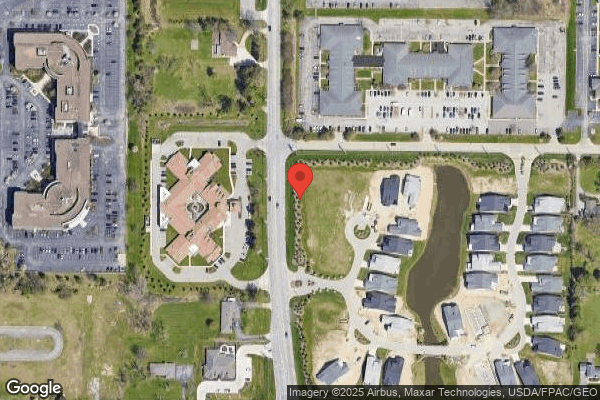
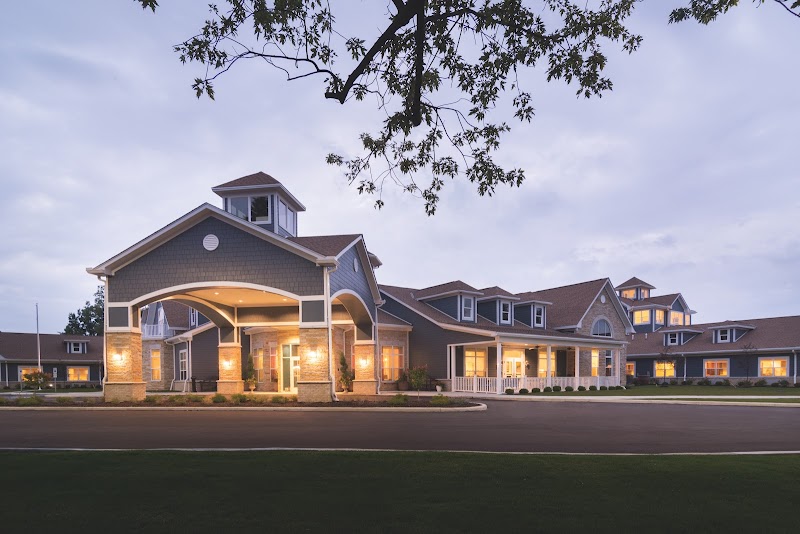
2108 LANDER ROAD, MAYFIELD HEIGHTS, OH 44124 (440) 443-0345
For profit - Corporation 23 Beds ADVANCED HEALTH CARE Data: November 2025
Trust Grade
75/100
#4 of 913 in OH
Last Inspection: January 2023

Over 2 years since last inspection. Current conditions may differ from available data.

Overview

AHC of Landerhaven LLC has a Trust Grade of B, indicating it is a good choice among nursing homes, though not the best. It ranks #4 out of 913 facilities in Ohio, placing it in the top half, and is the best option out of 92 facilities in Cuyahoga County. The facility is improving, with reported issues decreasing from 2 in 2024 to 1 in 2025. Staffing is a concern, with a rating of 4 out of 5 stars but a high turnover rate of 79%, significantly above the Ohio average of 49%. While the facility has no fines on record, which is a positive sign, there have been specific incidents where staff failed to use proper hygiene practices during medication and wound care, potentially risking resident health. Overall, while AHC of Landerhaven has strong ratings in care quality and RN coverage, families should weigh these strengths against the concerning staffing turnover and past hygiene issues.

Trust Score
B
75/100
In Ohio
#4/913
Top 1%
Safety Record
Low Risk
No red flags
Inspections
Getting Better
2 → 1 violations
Staff Stability
⚠ Watch
79% turnover. Very high, 31 points above average. Constant new faces learning your loved one's needs.
Penalties
✓ Good
No fines on record. Clean compliance history, better than most Ohio facilities.
Skilled Nurses
✓ Good
Each resident gets 88 minutes of Registered Nurse (RN) attention daily — more than 97% of Ohio nursing homes. RNs are the most trained staff who catch health problems before they become serious.
Violations
⚠ Watch
14 deficiencies on record. Higher than average. Multiple issues found across inspections.
★★★★★
5.0
Overall Rating
★★★★☆
4.0
Staff Levels
★★★★★
5.0
Care Quality
★★★★★
5.0
Inspection Score
Stable
2024: 2 issues
2025: 1 issues

The Good

  • 4-Star Staffing Rating · Above-average nurse staffing levels
  • 5-Star Quality Measures · Strong clinical quality outcomes
  • Full Sprinkler Coverage · Fire safety systems throughout facility
  • No fines on record

Facility shows strength in staffing levels, quality measures, fire safety.

The Bad

Staff Turnover: 79%

33pts above Ohio avg (46%)

Frequent staff changes - ask about care continuity

Chain: ADVANCED HEALTH CARE

Part of a multi-facility chain

Ask about local staffing decisions and management

Staff turnover is very high (79%)

31 points above Ohio average of 48%

The Ugly 14 deficiencies on record

Sept 2025 1 deficiency
CONCERN (D) 📢 Someone Reported This

A family member, employee, or ombudsman was alarmed enough to file a formal complaint

Potential for Harm - no one hurt, but risky conditions existed

Report Alleged Abuse (Tag F0609)

Could have caused harm · This affected 1 resident

Based on record reviews, review of a Self-Reported Incident (SRI), interviews and review of facility policy, the facility failed to ensure nursing staff reported an allegation of abuse in a timely man...

Read full inspector narrative →
Based on record reviews, review of a Self-Reported Incident (SRI), interviews and review of facility policy, the facility failed to ensure nursing staff reported an allegation of abuse in a timely manner. This affected two residents (#51 and #52) of three residents reviewed for abuse reporting. The facility census was 41.Findings included: Review of the Self-Reported Incident (SRI) submitted by the facility on 08/12/25 at 9:43 A.M. and closed on 08/15/25 at 5:31 P.M. submitted for an allegation of sexual abuse revealed it involved Resident #51 and Resident #52. Review of the closed medical record for Resident #51 revealed an admission date of 07/31/25. Diagnoses included strain of right quadriceps muscle, spinal stenosis and chronic kidney disease. Resident #51 was moderately cognitively impaired.Review of the closed medical record for Resident #52 revealed an admission date of 08/09/25 and a discharge date of 08/12/25. Diagnoses included dementia, urinary tract infection, alcohol use, chronic kidney disease and contusion to head. Resident #52 was cognitively impaired and had wandering behavior one to three days a week and behavior towards others. Review of a progress note dated 08/12/25 at 5:29 A.M. and authored by Registered Nurse (RN) #100 revealed Resident #52 was found in another resident room. RN #52 directed this resident back to her room and educated her about where her room was located and she could not go into others' room unless ok.Further review of the SRI and related investigation revealed the incident occurred on 08/12/25 at 2:30 A.M. however in the first paragraph it indicated it occurred on 08/11/25. Resident #52 tried to touch Resident #51 under his clothing and climb on top of him so Resident #51 pushed her away. Review of a handwritten statement dated 08/12 (no year), no author, (later revealed by the DON to be written by RN #100) revealed Resident Resident #51 stated a patient was in his room and was touching him inappropriately, CNA removed Resident #52 from his room and put her in bed and informed nurse. Nurse checked on Resident #51 to make sure patient was okay. Review of the witness statement by CNA #150 emailed to the DON on 08/12/25 at 10:56 A.M. revealed Certified Nursing Assistant (CNA) #150 stated it was around 3:00 A.M. or 4:00 A.M. the morning of 08/12/25. She did her rounds. Resident #52 was still up and asked her if she wanted to go back to bed. She said no so CNA #150 stated she sat down for about 10 minutes when she heard Resident #51 yelling. When she went to the room the resident was in his doorway holding onto doorway and handle of bathroom. She grabbed a wheelchair for him to sit down. CNA #150 stated that was when she saw Resident #52 sitting on Resident #51's bed and told her she was in the wrong room, CNA #150 assisted Resident #52 back to her room.When she went back to Resident #51's he told her Resident #52 touched him sexually and made him uncomfortable. She stated she would tell the nurse. The nurse was on break but she told her immediately when she saw her. Review of questions for residents completed on during the facility investigation revealed the Administrator and DON asked them the following questions: 1)Do you fee safe in the building?; 2)Have you had any issues with the other patients entering your room?; 3) If so, when did that happen?; and 4) Have you had any issues with the care provided to you while in the building? There were no concerns needing followed up on in answers.Review of questions for staff completed within the facility investigation revealed the Administrator and DON asked them the following questions: 1) who is mandated reporter in the building?; 2) If a patient, family member or employee reports abuse to you, what should you do next?; 3) Who is the abuse coordinator in the building?; 4)What do you believe abuse is?; and 5) Have you ever witnessed abuse either by other patients or staff members while working here? The questions were answered by the staff who worked 08/12/25.Review of the Employee Separation Form dated 08/13/25 for CNA #150 revealed she was terminated for not following policy and procedures.Review of the Employee Separation Form dated 08/13/25 for RN #100 revealed she was terminated for not being compliant with rules and investigation.Interview on 09/19/25 at 1:20 P.M. with CNA #150 confirmed what she wrote in her statement about the incident involving Resident #51 and #52. She added it was her third week there and she could not remember everything in policy or how quickly she needed to report allegations of abuse. She stated she told the nurse, but did not recall what time. CNA #150 stated the DON called her at home asking for a statement which she emailed. She stated she was suspended during investigation and terminated a couple of days later.Interviews were attempted with RN #100 but were unsuccessful.Interview on 09/19/25 at 5:00 P.M. with the Administrator and DON revealed both RN #100 and CNA #150 were terminated for not reporting timely regarding the incident of allegation of sexual abuse involving Resident #51 and Resident #52. The DON stated RN #100 would not call back to clarify information in her witness statement so they were unclear on the time of events. The DON and Administrator verified the date of 08/11/25 listed in the SRI was a mistake, as the incident did occur on 08/12/25. The time of notification from CNA #150 to RN #100 was unknown. Review of the facility policy titled Abuse Policy and Procedure, not dated, revealed the person observing the incident of patient abuse or suspecting patient abuse must immediately ensure patient safety then immediately report such incidents to their immediate supervisor and /or the charge nurse. The supervisor and/or charge nurse will then contact the Administrator or Director of Nursing. When an incident of patient abuse, neglect, mistreatment, misappropriation, or exploitation is suspected, the incident must be reported to a supervisor and /or charge nurse regardless of the time lapse since the incident occurred.This deficiency represents non-compliance investigated under complaint number 2601780.
Aug 2024 2 deficiencies
CONCERN (D) 📢 Someone Reported This

A family member, employee, or ombudsman was alarmed enough to file a formal complaint

Potential for Harm - no one hurt, but risky conditions existed

Comprehensive Care Plan (Tag F0656)

Could have caused harm · This affected 1 resident

**NOTE- TERMS IN BRACKETS HAVE BEEN EDITED TO PROTECT CONFIDENTIALITY** Based on interview, observation, record review, review of Self-Report Incident (SRI) review, and review of the facility policy r...

Read full inspector narrative →
**NOTE- TERMS IN BRACKETS HAVE BEEN EDITED TO PROTECT CONFIDENTIALITY** Based on interview, observation, record review, review of Self-Report Incident (SRI) review, and review of the facility policy revealed the facility did not ensure Resident #9 had a thorough comprehensive care plan with interventions regarding his refusals of care and/ or dementia care. This affected one resident (#9) out of nine resident care plans reviewed. The facility census was 22. Findings include: Review of the medical record for Resident #9 revealed an admission date of 07/30/24 with diagnoses including dementia, acute respiratory failure, Parkinson's disease, congestive heart failure, and pressure ulcers to his sacral region, mid back, and right heel. Review of the admission Minimum Data Set (MDS) assessment dated [DATE] revealed Resident #9's Brief Interview for Mental Status (BIMS) score indicated he had moderate cognitive impairment as his BIMS score was a nine out of 15. He required substantial to moderate staff assist with dressing, bathing, and personal hygiene. He was dependent on staff assist with rolling left and right, toileting hygiene, and transfers. He was unable to ambulate. During the assessment period he rejected care one to three days of the seven-day assessment reference period. Review of the nursing note dated 08/03/24 at 4:17 A.M. and completed by Licensed Practical Nurse (LPN) #653 revealed Resident #9 refused skin assessment and morning medications. Review of SRI tracking number 250531 dated 08/07/24 revealed the Administrator filed an incident of neglect and mistreatment for Resident #9. The SRI revealed there was an allegation that Resident #9 was up in his wheelchair for an extended period as State Tested Nursing Assistant (STNA) #624 had asked him a few times if he wanted to go to bed but he refused. The facility unsubstantiated the SRI but had revealed the facility would update the care plan to address Resident #9's refusals as he refused lab work, skin assessments, medications, and weights. Review of comprehensive care plan dated 08/13/24 revealed Resident #9 had identified the following refusals of treatment: all daily cares. Intervention listed on the care plan was treatments not to be provided: any daily cares that Resident #9 preferred not to participate in. There were no other care plans and/ or interventions regarding Resident #9's refusals of care and/ or dementia care. Interview and observation on 08/21/24 at 9:11 A.M. with Resident #9 revealed he was lying in bed and refused to be interviewed as he requested the surveyor leave his room as he did not want to talk, which was honored. Observation on 08/21/24 at 10:02 A.M. revealed STNA #618 came up to LPN #613 and reported Resident #9 was refusing to be turned as he was hitting out when she attempted to turn him. Interview on 08/21/24 at 10:50 A.M. with STNA #618 revealed Resident #9 refused activities of daily living (ADL) frequently including turning, personal hygiene, incontinence care, and transfers in and/out of bed. When she was asked what types of interventions were in place if he refused, she revealed the only thing was to continue to go into his room and offer/encourage him to participate. Observation on 08/21/24 at 11:30 A.M. revealed therapy, Occupational Therapy (OT) #650 and Occupational Therapy Assistant (OTA) #654, were in Resident #9's room attempting to encourage him to get up in his chair for lunch. Resident #9 yelled out refusing but after encouragement allowed staff to assist in getting him out of bed. Resident #9 then began to yell again once up in the wheelchair that he did not want his lunch despite alternatives offered. Resident #9 continued to yell out, but then started to drink his nutritional supplement when therapy reassured him that they would be back to assist him back to bed. Interview on 08/21/24 at 12:48 P.M. with Corporate Travel Registered Nurse (RN) #655 revealed Resident #9 refused wound care. Review of the nursing note dated 08/21/24 at 6:16 P.M. and completed by Corporate Travel RN #652 revealed Resident #9 refused all wound care treatments. Interview on 08/21/24 at 3:14 P.M. with OT #650 revealed a day at the beginning of August 2024 (she was unable to identify specific day) she had come in and staff had asked her for assistance as Resident #9 had been up in his wheelchair all day and night as he had refused to go to bed. She revealed she had a good rapport with Resident #9 and was able to encourage Resident #9 to lie down. Interview on 08/21/24 at 3:56 P.M. with Physical Therapy Assistant (PTA) #651 revealed there was a day at the beginning of August 2024 that Resident #9 had been up all day and night in his wheelchair as he refused to lie down. She revealed when she came in the morning after OT #605 and she were able to encourage Resident #9 to lie down and assisted him back into his bed. Interview on 08/22/24 at 11:24 A.M. with STNA #624 revealed approximately two weeks ago she worked 11:00 P.M. to 7:00 A.M. and when she came in Resident #9 was still up in his wheelchair. She revealed approximately 11:30 P.M. she went into his room and asked Resident #9 if he was ready to go to bed and he refused. She revealed approximately 12:30 A.M. she had gone back in his room, and he yelled at her and stated he was not getting in the bed. She revealed she had attempted again at 1:30 A.M. but he became aggressive stating, don't touch me, and he attempted to put his arm out to have STNA #624 back up from his personal space. She revealed he then began to yell to leave his room despite all attempts to encourage him to go to bed. She revealed since that was the third time she had attempted; she did not attempt any other times on her shift because he made it clear he was not going to bed and wanted to remain up in his chair. When asked if she was aware if there were any interventions in his care plan regarding how to address his refusals, she stated she was not. STNA #624 revealed she notified RN #638 of his refusals but was not aware if any other staff, including nurses, had attempted to encourage Resident #9 to get back into his bed. Interview on 08/22/24 at 12:55 P.M. with Administrator and Director of Nursing (DON) verified Resident #9's care plan was not thorough regarding what staff should do if Resident #9 was refusing care including if Resident #9 refused to go to bed for prolonged period. They verified he had pressure ulcers on his mid back and sacrum area. They verified the only thing in his care plan was they had identified Resident #9 refused treatments including all daily cares. They verified there was only one intervention listed on the care plan: treatments not to be provided: any daily cares that Resident #9 preferred not to participate in. There were no other care plans and/or interventions regarding Resident #9's refusals of care and/or dementia care. Observation on 08/23/24 at 10:20 A.M. of incontinence care and wound care completed by LPN #612 and STNA #605 revealed Resident #9 yelled out refusing care to be completed. LPN #612 and STNA #605 explained and educated on the importance of the incontinence care and treatments, but he continued to refuse. STNA #605 then stated that Resident #9 had been a lawyer and was asking him to describe the funniest case he had. Resident #9 proceeded to talk about his profession and consented to have incontinence care and wound care completed. Interview on 08/26/24 at 10:09 A.M. with RN #638 revealed approximately two weeks ago she had worked night shift 12:00 A.M. to 8:00 A.M. not as the floor nurse but to assist with paperwork. She revealed the dayshift staff had come in and questioned why Resident #9 was up in his chair, and at that time, STNA #624 stated that she had asked him multiple times to go to bed and he refused. RN #638 revealed that was the first time she was aware that he had refused all night to lie down as STNA #624 had not reported it to her previously. RN #638 had asked Agency LPN #900 if she was aware and all she stated was she had seen Resident #9 up in his wheelchair in no distress but did not seem to know anything else regarding him being up in his chair all night. Review of the facility policy labeled, Comprehensive Care Plan, dated July 25, 2023, revealed the facility would develop a comprehensive person-centered care plan based on the patients' strengths and preferences. The facility can help the individual exercise the right of choice effectively by discussing condition, treatment options including related risks and benefits and expected outcomes. The policy revealed if the resident declines specific interventions the facility must address the individuals concerns and offer relevant alternatives. The policy revealed a variety of interventions should be used to meet the individuals needs and patients' rights based on many factors. This deficiency represents non-compliance investigated under Master Complaint Number OH00156758 and Compliant Numbers OH00156670, OH00156639, and OH00156596.
CONCERN (E) 📢 Someone Reported This

A family member, employee, or ombudsman was alarmed enough to file a formal complaint

Potential for Harm - no one hurt, but risky conditions existed

Medical Records (Tag F0842)

Could have caused harm · This affected multiple residents

**NOTE- TERMS IN BRACKETS HAVE BEEN EDITED TO PROTECT CONFIDENTIALITY** Based on interview, record review, and review of the facility policy the facility did not ensure medical records were maintained...

Read full inspector narrative →
**NOTE- TERMS IN BRACKETS HAVE BEEN EDITED TO PROTECT CONFIDENTIALITY** Based on interview, record review, and review of the facility policy the facility did not ensure medical records were maintained in an accurate manner including treatments were documented per the treatment administration record (TAR) as ordered. This affected three residents (#9, #14, and #23) out of nine medical records reviewed for accuracy. The facility census was 22. Findings include: 1. Review of the medical record for Resident #9 revealed an admission date of 07/30/24 with diagnoses including dementia, acute respiratory failure, Parkinson's disease, congestive heart failure, and pressure ulcers to his sacral region, mid back, and right heel. Review of the undated care plan for Resident #9 revealed he had actual impaired skin integrity related to pressure injuries to his left heel, back, and coccyx and an arterial ulcer to his left toe. Interventions included an air mattress to the bed, encourage and assist to reposition at least every two hours, and treatments as ordered. Review of the admission Minimum Data Set (MDS) assessment dated [DATE] revealed Resident #9's Brief Interview for Mental Status (BIMS) score indicated he had moderate cognitive impairment as his BIMS score was a nine out of 15. He required substantial to moderate staff assist with dressing, bathing, and personal hygiene. He was dependent on staff assist with rolling left and right, toileting hygiene, and transfers. He was unable to ambulate. During the assessment period he rejected care one to three days of the seven-day assessment reference period. Review of the July and August 2024 physician order's revealed Resident #9 had a physician order dated 07/11/24 to 08/02/24 to cleanse his mid back wound with normal saline, pat dry, apply hydrofera blue (sponge like wound dressing to assist in holding drainage) (cut to fit) slightly moistened with normal saline and apply foam dressing Monday, Wednesday, and Friday and as needed. Review of the July 2024 TAR revealed Resident #9's treatment to his mid back was documented as completed on 07/12/24 and on 07/31/24. The TAR revealed an X on all the other days from 07/11/24 to 07/31/24 and had no documentation the treatment was completed. Interview on 08/26/24 at 10:30 A.M. with the Director of Nursing (DON) verified Resident #9 was to have the dressing completed to his mid back Monday, Wednesday, and Friday but on 07/15/24, 07/17/24, 07/19/24, 07/22/24, 07/24/24, 07/26/24, and 07/29/24 there was no documentation this was completed as there was only an X on the TAR. 2. Review of the closed medical record for Resident #23 revealed an admission date of 07/03/24, and she was discharged on 08/09/24. Her diagnoses included displaced fracture of the left tibia, non-pressure chronic ulcer to her left heel and midfoot, diabetes with peripheral angiopathy (small blood vessels were damaged and burst open), and hypertension. Review of the July and August 2024 physician orders revealed Resident #23 had an order dated 07/04/24 to pack her left foot with gauze dressing of betadine (antiseptic), cover with an abdominal (ABD) pad and wrap with Kerlix gauze and an Ace bandage daily and an order dated 07/30/24 to have a wound vac to unspecified location and to change three times a week (Monday, Wednesday, and Friday). There was no physician order for a wet to dry dressing to be applied as indicated in the nursing notes dated 08/06/24. Review of the admission MDS assessment dated [DATE] revealed Resident #23 had intact cognition. Review of the care plan dated 07/14/24 revealed Resident #23 had actual impaired skin integrity related to chronic ulcer to left heel. Interventions included left leg boot when in bed, treatment as ordered, and measure wound areas at least weekly. Review of the physician progress note dated 07/29/24 completed by Podiatrist #655 revealed Resident #23 had left plantar heel wound and he ordered to continue treatment of betadine-soaked dressing, cover with an ABD pad, and wrap with Kling (Kerlix gauze) and Ace wrap. The progress note noted to order a wound vac and apply at 125 millimeter of mercury (mmHg) continuous suction and change every two to three days. Review of the August 2024 TAR revealed Resident #23 had an order for a wound vac to unspecified location and to change three times a week (Monday, Wednesday, and Friday): on 08/02/24 and 08/05/24 the TAR was blank indicating no documentation that the treatment was completed. The TAR also continued to have the treatment to pack her left foot with gauze dressing of betadine, cover with an ABD pad and wrap with Kerlix gauze and an Ace bandage daily. There was no documentation this was completed on 08/01/24, as it was blank. There was nothing on the TAR regarding documentation that a wet to dry dressing was applied to Resident #23's right heel as indicated in the nurse's notes on 08/06/24. Review of the nursing note dated 08/02/24 at 8:19 P.M. and completed by Registered Nurse (RN) #656 revealed the wound vac was applied to Resident #23's left foot, and she tolerated it well. Review of the nursing note dated 08/06/24 at 11:52 A.M. and completed by RN #657 revealed Resident #23 stated the wound vac was turned off because the nurse prior had changed it incorrectly. The note revealed Resident #23 had spoken to the physician and he stated that the wound vac could come off. RN #657 asked if she could turn it on and she stated no, and she wanted it removed. RN #657 educated the resident that the wound vac was the order, and that it was considered a refusal, but Resident #23 stated that it was her right and she wanted the wound vac removed. RN #657 applied a wet to dry dressing. (There was no order for the wet to dry in the physician orders and it was not on the TAR) Interview on 08/26/24 at 2:27 P.M. with the DON revealed when Podiatrist #655 ordered the wound vac to Resident #23's left heel, the other treatment (pack her left foot with gauze dressing with betadine, cover with an ABD pad and wrap with Kerlix gauze and an Ace bandage daily) should have been discontinued. She verified the TAR for Resident #23's wound vac was blank on 08/02/24 and 08/05/24. She also verified the order should have identified the location of where the wound vac should have been applied: left planter heel. She verified in the nursing notes dated 08/06/24 at 11:52 A.M. and completed by RN #657 indicated she applied a wet to dry dressing to Resident #23's left planter heel, but there was no physician's order, and it was not documented on the TAR. 3. Review of medical record for Resident #14 revealed an admission date of 07/11/24 with diagnoses including displaced intertrochanteric fracture of right femur, diabetes, and pressure ulcer to right buttock. Review of the July and August 2024 physician order's revealed Resident #14 had an order from 07/12/24 to 08/07/24 to cleanse her right buttock with normal saline, pat dry, apply MediHoney (an antibacterial/ anti-inflammatory wound gel), and cover with a foam dressing twice a day. Review of the July 2024 TAR revealed Resident #14's treatment to her right buttock was not documented as completed: 07/13/24 (7:00 A.M. to 7:00 P.M.), 07/18/24 (7:00 P.M. to 7:00 A.M.), and 07/19/24 (7:00 A.M. to 7:00 P.M.). Review of the admission MDS assessment dated [DATE] revealed Resident #14 had impaired cognition. She was at risk for developing pressure ulcers and had one Stage two (partial thickness loss of dermis presenting as a shallow open ulcer with a red, pink wound bed, without slough, may also present as an intact or open/ruptured serum filled blister) pressure ulcer present on admission. Review of the care plan dated 07/26/24 revealed Resident #14 had actual impaired skin integrity. Interventions included encourage and assist to reposition at least every two hours, pressure reducing cushion to wheelchair, and treatment per current orders. Review of the August 2024 TAR revealed Resident #14's treatment to her right buttock was not documented as completed: 08/01/24 (7:00 A.M. to 7:00 P.M.), 08/05/24 (7:00 P.M. to 7:00 A.M.), and 08/06/24 (7:00 A.M. to 7:00 P.M.). Interview on 08/22/24 at 8:39 A.M. with Resident #14 revealed she had no concerns regarding her treatment to her right buttock not being completed as ordered. Interview on 08/26/24 at 10:30 A.M. with the DON verified Resident #14's TAR had no documented evidence the right buttock treatment was completed on 08/01/24 (7:00 A.M. to 7:00 P.M.), 08/05/24 (7:00 P.M. to 7:00 A.M.), and 08/06/24 (7:00 A.M. to 7:00 P.M.) as the TAR was blank. Review of the facility policy labeled; Clean Dressing Change, dated 2023, revealed it is the policy of the facility to provide wound care in a manner to decrease potential for infection and/ or cross contamination. The policy revealed physician orders would specify type of dressing and frequency of changes. The policy did not have anything in regard to ensuring treatments were documented as ordered after the completion of the dressing change. Review of the facility policy labeled; Charting Requirements, last updated 06/25/24, revealed treatment nurses would be responsible for charting on each treatment they completed including condition of site. This deficiency represents non-compliance investigated under Master Complaint Number OH00156758 and Complaint Numbers OH00156639 and OH00156596.
Feb 2020 5 deficiencies
CONCERN (D)

Potential for Harm - no one hurt, but risky conditions existed

Deficiency F0561 (Tag F0561)

Could have caused harm · This affected 1 resident

**NOTE- TERMS IN BRACKETS HAVE BEEN EDITED TO PROTECT CONFIDENTIALITY** Based on record review and staff interview, the facility failed to ensure to ask residents their dietary choices and preferences...

Read full inspector narrative →
**NOTE- TERMS IN BRACKETS HAVE BEEN EDITED TO PROTECT CONFIDENTIALITY** Based on record review and staff interview, the facility failed to ensure to ask residents their dietary choices and preferences. This affected one (Resident #244) of one resident reviewed for choices. The facility census was 44. Findings Include: Resident #244 was admitted to the facility on [DATE] with diagnoses including multiple sclerosis, high blood pressure and major depressive disorder. Review of the most recent Minimum Data Set (MDS) 3.0 assessment dated [DATE] revealed Resident #244 was moderately cognitively impaired and required extensive assistance for activities of daily living. Interview with Resident #244 on 02/18/20 at 8:30 A.M. revealed she had a great dislike of scrambled eggs. It was noted during the interview that Resident #244 had a breakfast tray that was all eaten except for a large pile of scrambled eggs. Resident #244 also explained that she had never been asked about food preferences and choices during her stay at the facility. Review of the physical and electronic medical records revealed no evidence that Resident #244 was asked about food preferences. Interview with Dietary Manager #555 on 02/19/20 a revealed she or the facilities dietitian typically asked residents about food preferences on admission and documented such preferences in the medical record. Dietary Manager #555 verified their was no evidence that food preferences were discussed with Resident #244, and she was unaware of Resident #244's dislike of scrambled eggs.
CONCERN (D)

Potential for Harm - no one hurt, but risky conditions existed

Deficiency F0582 (Tag F0582)

Could have caused harm · This affected 1 resident

**NOTE- TERMS IN BRACKETS HAVE BEEN EDITED TO PROTECT CONFIDENTIALITY** Based on record review and staff interview, the facility failed to ensure appropriate notices were given to residents upon the d...

Read full inspector narrative →
**NOTE- TERMS IN BRACKETS HAVE BEEN EDITED TO PROTECT CONFIDENTIALITY** Based on record review and staff interview, the facility failed to ensure appropriate notices were given to residents upon the discontinuation of skilled therapy services. This affected two residents (Residents #18 and #21) of three residents reviewed for beneficiary notices. The facility census was 44. Findings include: 1. Resident #18 was admitted to the facility on [DATE] with diagnoses including pneumonia, sepsis and unsteadiness on feet. Review of the medical record revealed she was discharged from skilled services on 02/17/20 and chose to remain in the facility. Review of the notices given to Resident #18 revealed she was given a notice of Medicare non coverage (NOMNC) as required; however, the additional required skilled nursing advanced beneficiary notice (SNFABN) was not given to Resident #18. 2. Resident #21 was admitted to the facility 10/11/19 with diagnoses including seizures, high blood pressure and major depressive disorder. Review of the medical revealed she was discharged from skilled services on 11/27/19 and chose to remain in the facility. Review of the notices given to Resident #21 revealed she was given a NOMNC as required; however, the additional required SNFABN was not given to Resident #21. Interview with Social Service Worker #995 on 02/18/20 at 2:15 P.M. verified no SNFABN was given to Residents #18 and #21 as required.
CONCERN (D)

Potential for Harm - no one hurt, but risky conditions existed

Deficiency F0698 (Tag F0698)

Could have caused harm · This affected 1 resident

**NOTE- TERMS IN BRACKETS HAVE BEEN EDITED TO PROTECT CONFIDENTIALITY** Based on interview and record review, the facility failed to auscultate the bruit, palpitate the thrill or monitor the arteriove...

Read full inspector narrative →
**NOTE- TERMS IN BRACKETS HAVE BEEN EDITED TO PROTECT CONFIDENTIALITY** Based on interview and record review, the facility failed to auscultate the bruit, palpitate the thrill or monitor the arteriovenous (AV) fistula every shift as ordered for one of one resident (Resident #93) reviewed for dialysis. The facility census was 44. Findings Include: Review of the medical record revealed Resident #93 was admitted to the facility on [DATE] with diagnosis including end stage renal disease with dependence on renal dialysis. The admission Minimum Data Set (MDS) 3.0 assessment dated [DATE] revealed Resident #93 required extensive assistance of one person for bed mobility and transfers. The resident was independent for locomotion and eating. The Brief Interview for Mental Status (BIMS) score of 12 indicated moderate cognitive impairment. A review of the physician orders from 02/2020 revealed on 02/09/20 an order to auscultate Resident #93's bruit and palpitate the thrill every shift. On 02/10/20, there was an order to monitor Resident #93's AV fistula in the right upper arm for signs and symptoms of infection-erythema, warmth, redness, and tenderness every shift. A review of the Treatments Administrative Record (TAR) from 02/09/20 through 02/19/20 revealed Resident #93's order to auscultate the bruit and palpitate thrill was completed once on 02/09/20, on two of three shifts on 02/10/20, on two of three shifts on 02/14/20 and two of three shifts on 02/17/20. The AV fistula was monitored on two of three shifts on 02/10/20, two of three shifts on 02/11/20, two of three shifts on 02/14/20 and two of three shifts on 02/17/20. Interview on 02/20/20 at 8:26 A.M. with the director of Nursing (DON) verified the physician orders to auscultate bruit, palpate thrill every shift and the order to monitor the AV fistula for signs and symptoms of infection for Resident #93 were not completed every shift. Review of the Dialysis Policy and Procedure, dated 06/2011, revealed the bruit and thrill of the fistula was to be assessed each shift. The fistula was to be checked for bleeding, edema, warmth, redness and itching.
CONCERN (E)

Potential for Harm - no one hurt, but risky conditions existed

Quality of Care (Tag F0684)

Could have caused harm · This affected multiple residents

**NOTE- TERMS IN BRACKETS HAVE BEEN EDITED TO PROTECT CONFIDENTIALITY** 3. Resident #33 was admitted to the facility on [DATE] with diagnoses including sepsis, multiple fractures of the ribs, falls, h...

Read full inspector narrative →
**NOTE- TERMS IN BRACKETS HAVE BEEN EDITED TO PROTECT CONFIDENTIALITY** 3. Resident #33 was admitted to the facility on [DATE] with diagnoses including sepsis, multiple fractures of the ribs, falls, hypertensive heart disease with hear failure, contusion of left lower leg, and acute embolism and thrombosis of unspecified deep veins of right distal lower extremity. Review of the physician's order dated 01/06/2020 revealed Skin Assessment Weekly Special Instructions: Following Nursing Schedule Once A Day on Tue 07:00 AM - 03:00 PM with no end date listed. Review of the observations (assessments) portion of the medical record revealed the only skin assessments completed on Resident #33 were on 01/07/2020, 01/18/2020, 01/22/2020, 02/12/2020 and 02/18/2020. 4. Resident #243 was admitted to the facility on [DATE] with diagnoses including fracture of unspecified part of the neck, aftercare following joint replacement surgery and weakness. Review of the physician's order dated 02/05/2020 revealed Skin Assessment Weekly Special Instructions: Following Facility Schedule Once A Day on Mon, Wed 07:00 AM - 03:00 PM with no end date listed. Review of previous skin assessments for Resident #234 revealed a skin assessment was completed on 02/05/20. No other skin assessments were noted in the medical record. Interview with Director of Nursing (DON) at 3:39 P.M. on 02/19/2020 verified the lack of assessments for Residents #33 and #243. Based on observation and resident and staff interviews, the facility failed to ensure call lights were within reach for Residents #26 and #247 and failed to ensure skin assessment were completed per physician's orders for Residents #33 and #243. This affected four of 44 residents residing in the facility. Findings include: 1. Resident #247 was a admitted to the facility on [DATE] with diagnoses including legal blindness, bipolar disorder and high blood pressure. Review of the most recent Minimum Data Set (MDS) 3.0 assessment dated [DATE] revealed Resident #247 was moderately cognitively impaired and required hands on assistance of one person for activities of daily living. Observation of Resident #247 on 02/18/20 at 9:30 A.M. revealed he was lying on the left hand side of the bed on his stomach, and his call light was on the floor on the right side of the bed. Interview with Resident #247 on 02/18/20 at 9:33 A.M. revealed his call light was always on the floor. Interview with Licensed Practical Nurse (LPN) #200 on 02/18/20 at 9:35 A.M. verified the placement of Resident #247's call light on the floor and also revealed that Resident #247 was capable of pressing and using his call light appropriately. 2. Resident #26 was admitted to the facility on [DATE] with diagnoses including acute respiratory failure, major depressive disorder and carpal tunnel syndrome. Review of the most recent MDS 3.0 assessment dated [DATE] revealed Resident #26 was severely cognitive impaired and required extensive assistance for activities of daily living. Observation of Resident #26 on 02/18/20 at 9:52 A.M. revealed he was lying in bed with no call light within visible reach. Interview with LPN #201 on 02/18/20 at 9:55 A.M. verified Resident #26's call light was not within reach and that Resident #26 used a touch pad sensor with his chin to call for help due to his paralysis.
CONCERN (F)

Potential for Harm - no one hurt, but risky conditions existed

Infection Control (Tag F0880)

Could have caused harm · This affected most or all residents

**NOTE- TERMS IN BRACKETS HAVE BEEN EDITED TO PROTECT CONFIDENTIALITY** Based on observation, interview and record review, the facility staff failed to use appropriate personal protective equipment (g...

Read full inspector narrative →
**NOTE- TERMS IN BRACKETS HAVE BEEN EDITED TO PROTECT CONFIDENTIALITY** Based on observation, interview and record review, the facility staff failed to use appropriate personal protective equipment (gloves) during medication administration which affected Resident #42. The facility staff failed to use appropriate personal protective equipment and perform hand hygiene practices during wound care which affected Resident #26. The facility failed to provide an alcohol-based hand sanitizer product for all facility dispensers within resident care areas, and the facility did not maintain clean oscillating fans in the clean laundry area. This affected Residents #26 and #42 and had the potential to affect all 44 residents residing in the facility. Findings include: 1. On 02/19/20 at 8:18 A.M. during medication administration observation Licensed Practical Nurse (LPN) #318 entered Resident #42's room to obtain a blood sugar reading. Without placing gloves on, LPN #318 wiped Resident #42's finger with an alcohol wipe, penetrated the finger with a disposable lancet, used a glucometer (blood sugar testing) strip to collect the blood sample, and covered the collection site with a tissue. Interview on 02/19/20 at 8:24 A.M. with LPN #318 confirmed gloves were not worn when she obtained the blood sample for the blood sugar reading for Resident #42. Review of facility policy entitled, Infection Control Practices/Precautions, dated May 2019, revealed, when in contact with any bodily fluid, the nurse must wear gloves when lancing fingers for blood sugar. 2. On 02/19/20 at 11:09 A.M. during wound care observation LPN #306 removed Resident #26's sacral dressing with gloved hands while State Tested Nursing Assistant (STNA) #346 and STNA #347 supported Resident #26 in position. LPN #306 discarded the soiled dressing, removed her gloves, washed her hands and donned a new pair of gloves, then cleansed the sacral wound with normal saline and clean gauze. Without changing her soiled gloves, LPN #306 opened a clean border dressing, picked up a new tube of zinc oxide cream, removed the cap and requested STNA #347 remove the protective seal from the tip of the tube. With an ungloved hand and using her fingernails, STNA #347 lifted and peeled the protective seal from the tip of the new tube of zinc oxide cream. With the same soiled gloves, LPN #306 applied a small amount of zinc oxide cream to the clean border dressing, and then placed the dressing onto Resident #26's sacral wound. Interview on 02/19/20 at 11:16 A.M. with STNA #347 verified she did not wear gloves to remove the protective seal on the zinc oxide cream to assist LPN #306 during Resident #26's wound care. Interview on 02/19/20 at 11:17 A.M. with LPN #306 confirmed she did not change her gloves and wash her hands after cleansing Resident #26's wound and before applying any creams or dressings, and verified STNA #347 did not wear gloves when she removed the protective seal on the zinc oxide tube. LPN #306 indicated the top of the zinc oxide tube should not have been touched without a gloved hand. Review of facility policy entitled, Licensed Nurse - Skin Condition Discovery and Documentation, dated April 2018, revealed all dressing changes and cultures, if indicated, will be completed and documented in a manner compliant with accepted standards of clinical practice. It is the policy of this facility to use clean technique. 3. On 02/19/20 at 9:51 A.M. during laundry room tour with Maintenance #513 revealed two oscillating fans in the clean linen area directed toward the facility dryers and a clean linen cart with folded linen observed on the cart. One small oscillating fan was observed unplugged sitting on the laundry folding counter visibly dirty with dirt and debris attached to the face of the fan. One larger standing fan was observed plugged in and functioning, blowing air toward the clean linen and was visibly dirty with dirt and debris attached to the face of the fan. Interview at the time of the observation confirmed the observation, verified the fans were used by laundry staff, and confirmed the large fan was dirty and blowing air toward the clean linen. 4. On 02/19/20 at 9:51 A.M. during laundry room tour with Maintenance #513 revealed facility hand sanitizer dispensers held a non-alcohol based hand sanitizing gel product. Interview at the time of the observation revealed hand sanitizer dispensers are located in each facility hallway and housekeepers stock the dispensers with a non-alcohol based hand sanitizing gel. Interview on 02/20/20 at 9:06 A.M. with Director of Nursing (DON) confirmed all staff were educated on and had a policy to use alcohol based hand sanitizer. DON verified the facility maintained thirteen hand sanitizer dispensers throughout the facility in resident care areas. Interview on 02/20/20 at 9:08 A.M. with STNA #352 confirmed she used the hand sanitizer dispensers when assisting with resident care unless handwashing was more appropriate. Interview on 02/20/20 at 9:09 A.M. with STNA #347 confirmed she used the hand sanitizer dispensers during resident care unless handwashing was more appropriate. Review of facility in-service provided to all staff between 09/30/19 and 02/03/20 online with Relias Learning entitled, Infection Control and Prevention, dated 2016, revealed, proper hand hygiene is one component of standard precautions. It refers to handwashing with soap and water or the use of an alcohol-based hand rub, commonly abbreviated ABHR. Review of facility policy entitled, Hand Washing/Hand Hygiene, dated October 2015, revealed use of a waterless alcohol-based gel/foam hand rub when appropriate in place of handwashing. Review of the Centers for Disease Control and Prevention website for providers located at https://www.cdc.gov/handhygiene/providers/index.html revealed, alcohol-based products are more effective for standard handwashing or hand antisepsis by health care workers (HCWs) than soap or anti-microbial soaps, located in publication, Guideline for Hand Hygiene in Health-Care Settings: Recommendations of the Healthcare Infection Control Practices Advisory Committee and the HICPAC/[NAME]/APIC/IDSA Hand Hygiene Task Force. MMWR 2002; 51 (No. RR-16):11.
Jan 2019 6 deficiencies
CONCERN (D)

Potential for Harm - no one hurt, but risky conditions existed

Deficiency F0657 (Tag F0657)

Could have caused harm · This affected 1 resident

Based on record review, policy review and interview, the facility failed to ensure care plans were revised as appropriate. This affected one resident (Resident #35) of 18 residents reviewed for care p...

Read full inspector narrative →
Based on record review, policy review and interview, the facility failed to ensure care plans were revised as appropriate. This affected one resident (Resident #35) of 18 residents reviewed for care planning. The facility census was 34. Findings include: Review of Resident #35's medical record revealed an admission date of 07/11/18 with diagnoses including cerebral infarction, epilepsy, and dysphagia (difficulty swallowing). Review of a quarterly Minimum Data Set (MDS) 3.0 assessment, dated 10/18/18, revealed Resident #35 was cognitively impaired and had a significant weight gain. Review of a Nutrition Progress Note, dated 07/17/18, revealed Resident #35 required a tube feeding due to inadequate oral intake. Review of a Nutrition Quarterly Assessment, dated 10/23/18, revealed Resident #35's tube feedings had been discontinued within a month of admission, and Resident #35 had a significant weight gain of 21.5% since admission. Review of Physician's Orders indicated the Jevity 1.5 (tube feeding nutritional supplement) bolus tube feedings were discontinued on 08/02/18 and water flushes were discontinued on 09/22/18. Review of nursing notes did not indicate when the tube feedings or water flushes were discontinued. Review of a nutrition care plan, dated 07/17/18, revealed Resident #35 had inadequate oral intakes and required tube feedings to meet her nutritional needs. The goal included Resident #35 tolerating the tube feeding without complications and not demonstrating significant weight change through the date of the next review which was hand-written as 01/23/19. Approaches dated 07/17/18 included monitoring tolerance of tube feedings, flushing the tube with water per doctor's orders, and providing tube feeding per doctor's orders. A second care plan dated 07/11/18 for tube feeding revealed Resident #35 was at risk of complications due to feeding tube use. The listed goal stated Resident #35 would be free of complications related to the feeding tube through the date of the next review which was hand-written in as 01/23/19. Approaches dated 07/11/18 included administering the tube feeding and water flushes as ordered. Interview on 12/27/18 at 3:59 P.M. with Registered Dietitian (RD) #301 revealed Resident #35 had not received enteral (tube-feeding) nutrition since August 2018 due to improved oral intake and significant weight gain. RD #301 verified Resident #35's nutrition and tube-feeding care plans had not been updated to reflect the discontinuation of the enteral feedings. Interview on 12/27/18 at 5:01 P.M. with the Director of Nursing (DON) revealed all care plans were to be updated concurrently with the MDS assessment and verified Resident #35's care plans should have been reflected to include the discontinuation of enteral feedings on 10/18/18. Review of the facility policy on dietary care plans, revised July 2016, revealed the care plan was to be reviewed and updated if needed if a significant change occurred, annually, or quarterly.
CONCERN (D)

Potential for Harm - no one hurt, but risky conditions existed

Deficiency F0692 (Tag F0692)

Could have caused harm · This affected 1 resident

Based on record review, policy review and interview, the facility failed to ensure residents were monitored to prevent nutritional decline. This affected one (Resident #49) of one resident reviewed fo...

Read full inspector narrative →
Based on record review, policy review and interview, the facility failed to ensure residents were monitored to prevent nutritional decline. This affected one (Resident #49) of one resident reviewed for nutrition. The facility census was 34. Findings include: Review of Resident #49's medical record revealed an admission date of 11/14/18 and diagnoses including cerebral infarction, hypertension (high blood pressure), gastro-esophageal reflux disease, ileus, and falls. Review of a 30-day Minimum Data Set (MDS) 3.0 assessment, dated 12/10/18, revealed Resident #49 had no weight changes and was cognitively impaired. Review of an admission Nutrition Assessment, dated 11/20/18, revealed Resident #49 had a moderate decrease in food intake, was at risk for malnutrition and had variable oral intakes; no baseline or usual body weight information was available. Review of Resident #49's weight record revealed a weight of 124 pounds (11/15/18) and a weight of 118.2 pounds (12/04/18), indicative of a 5% significant weight loss in less than 30 days. Review of a Nutrition Progress Note, dated 11/20/18, revealed Resident #49 had a fair appetite, had potential for inadequate intake and was to receive a commercial supplement as well as weekly weights. Review of a Nutrition Note, dated 12/05/18, revealed a current weight of 118 pounds and suggested the admission weight of 124 pounds may have been in error as the family reported Resident #49 lost quite a bit of weight in the hospital. Review of a Nursing Note, dated 12/27/18, revealed per Resident #49's family, her usual body weight was 120 pounds. Review of a Nutrition Care Plan, dated 11/20/18, revealed Resident #49 had potential for inadequate intake. Approaches included; weights every month or as needed; no mention of a commercial supplement was available on the care plan. Review of a Physician's Order, dated 11/20/18, indicated Resident #49 received 1 can of Boost (a commercial supplement) twice a day. Interview on 12/27/18 at 3:59 P.M. with Registered Dietitian (RD) #301 revealed she did not feel Resident #49's admission weight was correct due to her son reporting poor intake prior to admission. RD #301 verified weekly weights should have been completed for Resident #49 and stated Boost was added as a judgement call. RD #301 outlined the facility's weight process which including her emailing the Director of Nursing (DON), the weights being assigned to aides and either RD #301 or the DON inputting weights into the electronic medical record (EMR). For re-weights, RD #301 stated she would either ask the aides or the DON. No further weight data for Resident #49 was made available to the surveyor. Interview on 12/27/18 at 5:01 P.M. with the DON verified weights were to be done on admission and weekly for four weeks thereafter. Interviews on 12/28/18 at 8:52 A.M. with Licensed Practical Nurse (LPN) #302 and LPN #303 revealed all residents were weighed on admission and then weekly for four weeks. Review of the facility policy Monthly and Weekly Weights, revised July 2012, revealed weekly weights were to be done on new admissions to the facility and were to be monitored for 30 days or more. If a re-weight was a required, it was to be done in the presence of a licensed nurse and completed within 48 hours of the request.
CONCERN (D)

Potential for Harm - no one hurt, but risky conditions existed

Deficiency F0744 (Tag F0744)

Could have caused harm · This affected 1 resident

**NOTE- TERMS IN BRACKETS HAVE BEEN EDITED TO PROTECT CONFIDENTIALITY** Based on interview and record review, the facility failed to develop a person center care plan to address Resident #34's dementi...

Read full inspector narrative →
**NOTE- TERMS IN BRACKETS HAVE BEEN EDITED TO PROTECT CONFIDENTIALITY** Based on interview and record review, the facility failed to develop a person center care plan to address Resident #34's dementia care. This affected one (Resident #34) of four residents reviewed for dementia care. The facility census was 34. Findings include: Review of Resident #34's medical record revealed the resident was admitted to the facility on [DATE] with diagnoses of concussion without loss of consciousness, traumatic ischemia of muscle, dementia with Lewy bodies, cachexia, major depressive disorder, unspecified psychosis not due to a substance or known physiological condition, hallucinations, and weakness. Review of Resident #34's quarterly Minimum Data Set (MDS) 3.0 assessment, dated 10/10/18, revealed the resident was independent with bed mobility and required limited assistance of one person for transfers, dressing, toilet use, and personal hygiene. Review of Resident #34's Plan of Care, dated 07/31/18, revealed the resident displayed combative/agitation behavioral symptoms that impacted the resident by putting him at risk for physical injury and impacted others by placing them at risk of physical injury. Interventions included: administer medications as ordered, monitor and record effectiveness; report adverse side effects; assess whether the behavior endangers the resident and/or others, intervene if necessary; avoid over stimulation; if resident had delusions/hallucinations, do not try to reason with or confront resident, offer reassurance; maintain calm environment and approach to the resident; observe for change in mental status, document and notify physician; observe for change in behavior, document and report to physician; when resident becomes physically abusive, keep distance between resident and others; when resident becomes physically abusive, move resident to a quiet, calm environment. Resident #34 was an emergency room physician, enjoyed body building, boxing and dancing, the plan of care was not individualized to address behaviors the resident displayed when displaying hallucinations or delusional behaviors. Staff did not have guidance on how to deal with the resident's shadow boxing of a fern or trying to dance The plan of care did not address triggers/antecedent staff behavior which may cause additional behaviors from Resident #34. This was verified through interview with the Director of Nursing (DON) on 01/02/19 at 1:00 P.M.
CONCERN (D)

Potential for Harm - no one hurt, but risky conditions existed

Medical Records (Tag F0842)

Could have caused harm · This affected 1 resident

**NOTE- TERMS IN BRACKETS HAVE BEEN EDITED TO PROTECT CONFIDENTIALITY** 2. Review of the medical record revealed Resident #36 was admitted to the facility on [DATE]. Diagnoses included fracture of lef...

Read full inspector narrative →
**NOTE- TERMS IN BRACKETS HAVE BEEN EDITED TO PROTECT CONFIDENTIALITY** 2. Review of the medical record revealed Resident #36 was admitted to the facility on [DATE]. Diagnoses included fracture of left lower leg due to artificial knee joint, diabetes, obesity, and anemia. Review of Resident #36's progress notes revealed on 11/28/18 at 10:47 A.M., Resident #36 was transported by ambulette to a physician's appointment. A note dated 11/28/18 at 11:37 A.M. revealed Resident #36 was directly admitted to the hospital for an infection of the left knee incision. On 12/12/18 at 2:40 P.M. Resident #36 arrived to the facility from the hospital. Review of the November 2018, Medication Administration Record (MAR) revealed on 11/28/18 Resident #36's 1:00 P.M., 5:00 P.M., and 9:00 P.M. scheduled medications were signed off as administered. On 11/29/18 and on 11/30/18 all scheduled medications were signed off as administered. Interview with the DON on 12/28/18 at 2:05 P.M. verified medications were signed off as administered on 11/28/18, 11/29/18, and 11/30/18 while the resident was in the hospital. Resident #36 was directly admitted to hospital from a physician's appointment on the 11/28/18 and did not return to the facility until 12/12/18. Based on record review and interview, the facility failed to ensure accurate medical records for Resident's #34 and #36. This affected two (Resident #34, Resident #36) of 12 residents reviewed for accurate medical records. The facility census was 34. Findings include: 1. Review of Resident #34's medical record revealed the resident was admitted to the facility on [DATE] with diagnoses of concussion without loss of consciousness, traumatic ischemia of muscle, dementia with Lewy bodies, cachexia, major depressive disorder, unspecified psychosis not due to a substance or known physiological condition, hallucinations, and weakness. Review of Resident #34's quarterly Minimum Data Set (MDS) 3.0 assessment, dated 10/10/18, revealed the resident was independent with bed mobility and required limited assistance of one person for transfers, dressing, toilet use, and personal hygiene. Review of Resident #34's Plan of Care, dated 07/31/18, revealed the resident displayed combative/agitation behavioral symptoms that impacted the resident by putting him at risk for physical injury and impacted others by placing them at risk of physical injury. Interventions included: administer medications as ordered, monitor and record effectiveness; report adverse side effects; assess whether the behavior endangers the resident and/or others, intervene if necessary; avoid over stimulation; if resident had delusions/hallucinations, do not try to reason with or confront resident, offer reassurance; maintain calm environment and approach to the resident; observe for change in mental status, document and notify physician; observe for change in behavior, document and report to physician; when resident becomes physically abusive, keep distance between resident and others; when resident becomes physically abusive, move resident to a quiet, calm environment. Review of Resident #34's nurses note, dated 12/21/18 at 3:57 A.M., completed by Licensed Practical Nurse (LPN) #312 revealed at 7:00 P.M. the resident was observed in room lying left lateral on the floor. Vital signs included: blood pressure (BP) 162/93, heart rate 65, respirations 20, temperature 96.6 degrees Fahrenheit (F). The resident was non-cooperative for a complete neurological assessment. The Nurse Practitioner (NP) was notified. The NP gave a new order to send the resident out to the hospital for lethargy and recurrent falls with head injury. The resident's Power of Attorney (POA) was notified. Further review of Resident #34's nurses note, dated 12/21/18 at 3:57 A.M., revealed a large printed invalid marked through the nurse note with no explanation as to who or why the note was made invalid. No explanation or a recapitulation of the note was made in Resident #34's nurses' notes. Interview with the Director of Nursing (DON) on 12/28/18 at 1:30 P.M. revealed she made the nurses notes invalid because the even though the resident had experienced falls, the resident did not experience recurrent head injuries. The DON verified she did not have LPN #312 write a clarified nurses note, and the note was made invalid without providing an explanation.
CONCERN (E)

Potential for Harm - no one hurt, but risky conditions existed

Deficiency F0567 (Tag F0567)

Could have caused harm · This affected multiple residents

**NOTE- TERMS IN BRACKETS HAVE BEEN EDITED TO PROTECT CONFIDENTIALITY** Based on record review and interview, the facility failed to ensure resident account authorizations were dated appropriately. Th...

Read full inspector narrative →
**NOTE- TERMS IN BRACKETS HAVE BEEN EDITED TO PROTECT CONFIDENTIALITY** Based on record review and interview, the facility failed to ensure resident account authorizations were dated appropriately. This affected three of four residents (Resident #2, Resident #7, and Resident #46) reviewed for personal funds. The facility census was 34. Findings include: 1. Resident #2 was admitted to the facility on [DATE] with diagnoses including depression, multiple sclerosis (neurological disorder), and weakness. Resident #2 was discharged from the facility on 12/19/18. Review of a resident personal funds authorization form revealed a resident signature and witness signature date on 01/0/1900. Interview on 12/28/18 at 10:47 A.M. with Regional Accounting Supervisor (RAS) #300 revealed she was unsure why Resident #2's authorization for personal funds account was not dated appropriately. RAS #300 did not provide the surveyor with an actual date when the authorization was signed by Resident #2 and his witness, and stated the account was opened sometime in November. 2. Resident #7 was admitted to the facility on [DATE] with diagnoses including diabetes, hypertension (high blood pressure), depression, and weakness. Review of a resident personal funds authorization form revealed a resident signature and witness signature date on 01/0/1900. Interview on 12/28/18 at 10:47 A.M. with RAS #300 revealed she was unsure why Resident #7's authorization for personal funds account was not dated appropriately. RAS #300 did not provide the surveyor with an actual date when the authorization was signed by Resident #7 and her witness. 3. Resident #46 was admitted to the facility on [DATE] with diagnoses including obesity, urinary retention, and dysphagia (difficulty swallowing). Resident #46 was discharged on 12/14/18. Review of a resident personal funds authorization form revealed a resident signature and witness signature date on 01/0/1900. Interview on 12/28/18 at 10:47 A.M. with RAS #300 revealed she was unsure why Resident #46's authorization for personal funds account was not dated appropriately. RAS #300 did not provide the surveyor with an actual date when the authorization was signed by Resident #46 and his witness and stated the account was opened sometime in November.
CONCERN (E)

Potential for Harm - no one hurt, but risky conditions existed

Comprehensive Care Plan (Tag F0656)

Could have caused harm · This affected multiple residents

**NOTE- TERMS IN BRACKETS HAVE BEEN EDITED TO PROTECT CONFIDENTIALITY** 3. Review of the medical record revealed Resident #36 was admitted on [DATE]. Diagnoses included fracture of left lower leg due ...

Read full inspector narrative →
**NOTE- TERMS IN BRACKETS HAVE BEEN EDITED TO PROTECT CONFIDENTIALITY** 3. Review of the medical record revealed Resident #36 was admitted on [DATE]. Diagnoses included fracture of left lower leg due to artificial knee joint, diabetes, obesity, and anemia. Review of the 14-day MDS 3.0 assessment, dated 12/26/18, documented the resident was cognitively intact and required extensive assistance with transfers and toileting. Review of the Orthopedic Physician's order, dated 10/10/18, revealed to monitor wound and report signs and symptoms of infection to the physician. Review of Nurses' Progress note, dated 11/28/18, revealed the facility received a call from the hospital that the resident was a direct admit with an admitting diagnosis of left knee incision infection. Review of Resident's #36 Care Plan revealed no plan to address surgical wound to left leg or cast. Interview with the DON on 12/28/18 at 2:05 P.M. revealed Resident #36 had prior infections and fractures to the left leg and a cast to the left leg that extended from the thigh to the top of the foot. The DON verified no care plan was developed and/or implemented to address the surgical wound or cast. Based on interview and record review, the facility failed to develop and implement plans of care for Residents #16, Resident #34, and Resident #36. This affected three of 12 residents reviewed for the development and implementation of care plans. The facility census was 34. Findings include: 1. Review of Resident #16's medical record revealed the resident was admitted to the facility on [DATE] with diagnoses including transient cerebral ischemic attack, major depressive disorder, gastro-esophageal reflux disease without esophagitis, anemia, essential (primary) hypertension, and hyperlipidemia. Review of Resident #16's quarterly Minimum Data Set (MDS) 3.0 assessment, dated 12/10/18, revealed the resident required extensive assist of two staff for bed mobility, transfers, toilet use and extensive assist of one staff for dressing and personal hygiene. Review of Resident #16 plan of care, dated 04/17/18 and revised on 10/12/18, revealed the resident had an identified need to use an antidepressant medication related to a diagnosis of depression. Interventions included: assess resident's functional status prior to initiation of drug use to serve as baseline; assess and record the effectiveness of drug treatment; monitor and report signs of sedation, hypotension, or anticholinergic symptoms; monitor resident's functional status every shift; monitor resident's mood and response to medication. Further review of Resident #16's plan of care, dated 04/17/18 and revised on 10/12/18, revealed a hand-written notation stating the resident has used Lexapro (Escitalopram), an antidepressant medication, for several years with good response. There was no indication of who wrote the note or when the note was added to the existing plan of care. The plan of care was not revised to include the decrease in Lexapro which occurred 11/3/18. Interview on 12/28/18 at 2:50 P.M. with the current MDS Coordinator #304 revealed she had been with the facility since June 2018 and another MDS Nurse completed the current plan of care. MDS Coordinator #304 verified the former MDS nurse failed to update/revise Individual #16's plan of care to include the residents decrease in Lexapro. Interview with the Director of Nursing (DON) on 12/28/18 at 11:20 A.M. verified the plan of care was not revised to include the decrease in the Lexapro. The DON verified nursing staff did not implement the plan of care to monitor and document the residents mood/functional status every shift. 2. Review of Resident #34's medical record revealed the resident was admitted to the facility on [DATE] with diagnoses including concussion without loss of consciousness, traumatic ischemia of muscle, dementia with Lewy bodies, cachexia, major depressive disorder, unspecified psychosis not due to a substance or known physiological condition, and hallucinations. Review of Resident #34's quarterly MDS 3.0 assessment, dated 10/10/18, revealed the resident was independent with bed mobility and required limited assistance of one person for transfers, dressing, toilet use, and personal hygiene. Review of Resident #34's plan of care, dated 07/31/18, revealed the resident displayed combative/agitation behavioral symptoms that impacted the resident by putting him at risk for physical injury and impacted others by placing them at risk of physical injury. Interventions included: administer medications as ordered, monitor and record effectiveness; report adverse side effects; assess whether the behavior endangers the resident and/or others, intervene if necessary; avoid over stimulation; if resident had delusions/hallucinations, do not try to reason with or confront resident; offer reassurance; maintain calm environment and approach to the resident; observe for change in mental status, document and notify physician; observe for change in behavior, document and report to physician; when resident becomes physically abusive, keep distance between resident and others; when resident becomes physically abusive, move resident to a quiet, calm environment. On 11/27/18, Resident #34 had a reduction in his antipsychotic medication. A plan of care was not developed to ensure Resident #34's was monitored for behaviors and hallucinations which may increase due to the decrease in medication. Interview with the Director of Nursing (DON) on 12/27/18 at 1:30 P.M. verified Resident #34's plan of care had not been developed to provide guidance to staff since the decrease in the resident's antipsychotic medication.
Understanding Severity Codes (click to expand)
Life-Threatening (Immediate Jeopardy)
J - Isolated K - Pattern L - Widespread
Actual Harm
G - Isolated H - Pattern I - Widespread
Potential for Harm
D - Isolated E - Pattern F - Widespread
No Harm (Minor)
A - Isolated B - Pattern C - Widespread

Questions to Ask on Your Visit

  • "Why is there high staff turnover? How do you retain staff?"
  • "Can I speak with families of current residents?"
  • "What's your RN coverage like on weekends and overnight?"

Our Honest Assessment

Strengths
  • • No major safety red flags. No abuse findings, life-threatening violations, or SFF status.
  • • No fines on record. Clean compliance history, better than most Ohio facilities.
Concerns
  • • 14 deficiencies on record. Higher than average. Multiple issues found across inspections.
  • • 79% turnover. Very high, 31 points above average. Constant new faces learning your loved one's needs.
Bottom line: Generally positive indicators. Standard due diligence and a personal visit recommended.

About This Facility

What is Ahc Of Landerhaven Llc's CMS Rating?

CMS assigns AHC OF LANDERHAVEN LLC an overall rating of 5 out of 5 stars, which is considered much above average nationally. Within Ohio, this rating places the facility higher than 99% of the state's 100 nursing homes. This rating reflects solid performance across the metrics CMS uses to evaluate nursing home quality.
How is Ahc Of Landerhaven Llc Staffed?

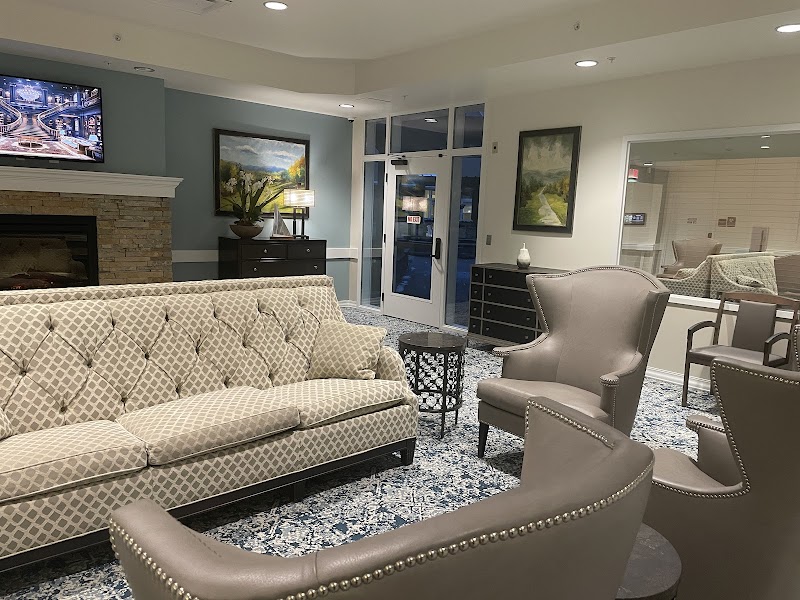
CMS rates AHC OF LANDERHAVEN LLC's staffing level at 4 out of 5 stars, which is above average compared to other nursing homes. Staff turnover is 79%, which is 33 percentage points above the Ohio average of 46%. High turnover can affect care consistency as new staff learn residents' individual needs. RN turnover specifically is 70%, which is notably high. RNs provide skilled clinical oversight, so turnover in this role can affect medical care quality.

What Have Inspectors Found at Ahc Of Landerhaven Llc?

State health inspectors documented 14 deficiencies at AHC OF LANDERHAVEN LLC during 2019 to 2025. These included: 14 with potential for harm.
Who Owns and Operates Ahc Of Landerhaven Llc?

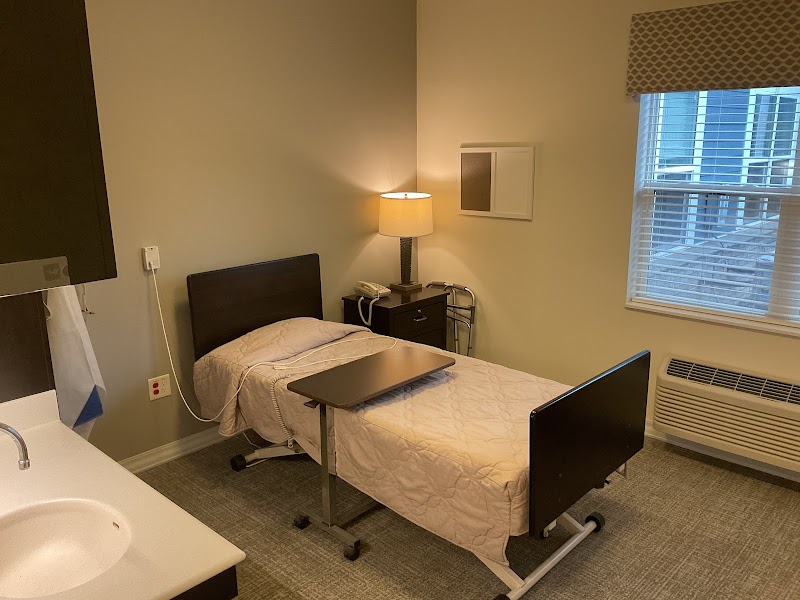
AHC OF LANDERHAVEN LLC is owned by a for-profit company. For-profit facilities operate as businesses with obligations to shareholders or private owners. The facility is operated by ADVANCED HEALTH CARE, a chain that manages multiple nursing homes. With 23 certified beds and approximately 37 residents (about 161% occupancy), it is a smaller facility located in MAYFIELD HEIGHTS, Ohio.
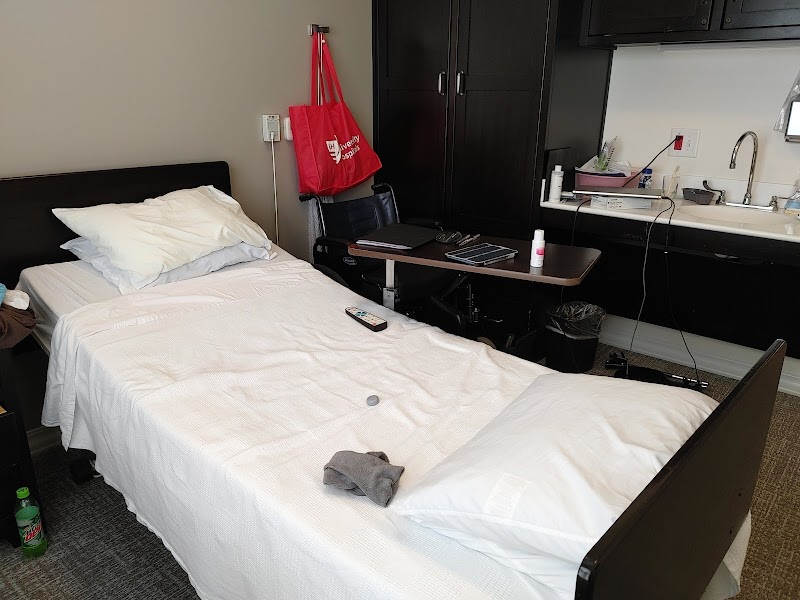
How Does Ahc Of Landerhaven Llc Compare to Other Ohio Nursing Homes?

Compared to the 100 nursing homes in Ohio, AHC OF LANDERHAVEN LLC's overall rating (5 stars) is above the state average of 3.2, staff turnover (79%) is significantly higher than the state average of 46%, and health inspection rating (5 stars) is much above the national benchmark.

What Should Families Ask When Visiting Ahc Of Landerhaven Llc?

Based on this facility's data, families visiting should ask: "How do you ensure continuity of care given staff turnover, and what is your staff retention strategy?" "Can I visit during a mealtime to observe dining assistance and food quality?" "How do you handle medical emergencies, and what is your hospital transfer rate?" "Can I speak with family members of current residents about their experience?" These questions are particularly relevant given the facility's high staff turnover rate.

Is Ahc Of Landerhaven Llc Safe?

Based on CMS inspection data, AHC OF LANDERHAVEN LLC has a clean safety record: no substantiated abuse findings (meaning no confirmed cases of resident harm), no Immediate Jeopardy citations (the most serious violation level indicating risk of serious injury or death), and is not on the Special Focus Facility watch list (a federal program monitoring the lowest-performing 1% of nursing homes). The facility has a 5-star overall rating and ranks #1 of 100 nursing homes in Ohio. While no facility is perfect, families should still ask about staff-to-resident ratios and recent inspection results during their visit.

Do Nurses at Ahc Of Landerhaven Llc Stick Around?

Staff turnover at AHC OF LANDERHAVEN LLC is high. At 79%, the facility is 33 percentage points above the Ohio average of 46%. Registered Nurse turnover is particularly concerning at 70%. RNs handle complex medical decisions and coordinate care — frequent RN changes can directly impact care quality. High turnover means new staff may not know residents' individual needs, medications, or preferences. It can also be disorienting for residents, especially those with dementia who rely on familiar faces. Families should ask: What is causing the turnover? What retention programs are in place? How do you ensure care continuity during staff transitions?

Was Ahc Of Landerhaven Llc Ever Fined?

AHC OF LANDERHAVEN LLC has no federal fines on record. CMS issues fines when nursing homes fail to meet care standards or don't correct problems found during inspections. The absence of fines suggests the facility has either maintained compliance or corrected any issues before penalties were assessed. This is a positive indicator, though families should still review recent inspection reports for the full picture.

Is Ahc Of Landerhaven Llc on Any Federal Watch List?

AHC OF LANDERHAVEN LLC is not on any federal watch list. The most significant is the Special Focus Facility (SFF) program, which identifies the bottom 1% of nursing homes nationally based on persistent, serious quality problems. Not being on this list means the facility has avoided the pattern of deficiencies that triggers enhanced federal oversight. This is a positive indicator, though families should still review the facility's inspection history directly.