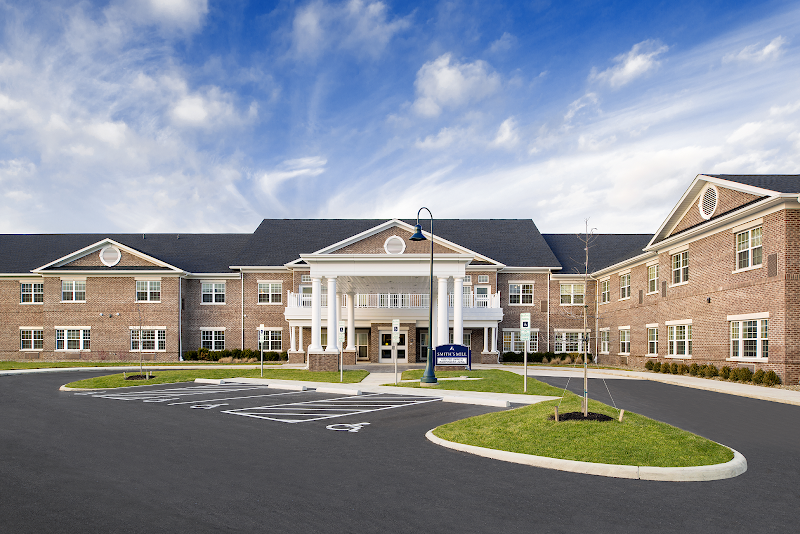
SMITHS MILL HEALTH CAMPUS
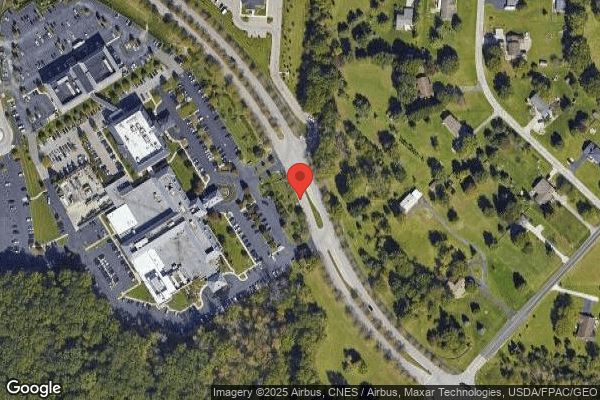
7320 SMITHS MILL ROAD, NEW ALBANY, OH 43054 (614) 245-1060
For profit - Corporation 50 Beds TRILOGY HEALTH SERVICES Data: November 2025
Trust Grade
45/100
#781 of 913 in OH
Last Inspection: October 2024

Within standard 12-15 month inspection cycle. Federal law requires annual inspections.

Overview

Smiths Mill Health Campus has received a Trust Grade of D, indicating below-average performance with some concerns about care quality. Ranking #781 out of 913 facilities in Ohio places it in the bottom half, and #41 out of 56 in Franklin County suggests limited local options for better care. While the facility's overall situation is improving, with issues decreasing from 17 in 2024 to 8 in 2025, staffing remains a significant concern; a staffing turnover of 62% is notably high compared to the state average of 49%. Although the facility has no fines on record and boasts strong RN coverage-more than 99% of Ohio facilities-there have been serious deficiencies, such as failures to ensure adequate nursing staff and support for residents' daily living activities, which affected multiple residents and raise concerns about overall care quality. Families should weigh these strengths against the facility's weaknesses when considering care options.

Trust Score
D
45/100
In Ohio
#781/913
Bottom 15%
Safety Record
Low Risk
No red flags
Inspections
Getting Better
17 → 8 violations
Staff Stability
⚠ Watch
62% turnover. Above average. Higher turnover means staff may not know residents' routines.
Penalties
✓ Good
No fines on record. Clean compliance history, better than most Ohio facilities.
Skilled Nurses
✓ Good
Each resident gets 82 minutes of Registered Nurse (RN) attention daily — more than 97% of Ohio nursing homes. RNs are the most trained staff who catch health problems before they become serious.
Violations
⚠ Watch
37 deficiencies on record. Higher than average. Multiple issues found across inspections.
★★☆☆☆
2.0
Overall Rating
★★★★☆
4.0
Staff Levels
★★★★☆
4.0
Care Quality
★★☆☆☆
2.0
Inspection Score
Stable
2024: 17 issues
2025: 8 issues

The Good

  • 4-Star Staffing Rating · Above-average nurse staffing levels
  • 4-Star Quality Measures · Strong clinical quality outcomes
  • Full Sprinkler Coverage · Fire safety systems throughout facility
  • No fines on record

Facility shows strength in staffing levels, quality measures, fire safety.

The Bad

2-Star Overall Rating

Below Ohio average (3.2)

Below average - review inspection findings carefully

Staff Turnover: 62%

16pts above Ohio avg (46%)

Frequent staff changes - ask about care continuity

Chain: TRILOGY HEALTH SERVICES

Part of a multi-facility chain

Ask about local staffing decisions and management

Staff turnover is elevated (62%)

14 points above Ohio average of 48%

The Ugly 37 deficiencies on record

Jul 2025 1 deficiency
CONCERN (D) 📢 Someone Reported This

A family member, employee, or ombudsman was alarmed enough to file a formal complaint

Potential for Harm - no one hurt, but risky conditions existed

Deficiency F0605 (Tag F0605)

Could have caused harm · This affected 1 resident

**NOTE- TERMS IN BRACKETS HAVE BEEN EDITED TO PROTECT CONFIDENTIALITY** Based on staff interview, record review, review of facility policy and review of drug labels, the facility failed to have approp...

Read full inspector narrative →
**NOTE- TERMS IN BRACKETS HAVE BEEN EDITED TO PROTECT CONFIDENTIALITY** Based on staff interview, record review, review of facility policy and review of drug labels, the facility failed to have appropriate diagnoses to support the use of an antipsychotic medication. This affected one (Resident #10) out of three residents reviewed for antipsychotic medication administration. The facility census was 44. Findings Include:Review of the medical record for Resident #10 revealed an admission date of 03/17/24, with diagnoses including Parkinson's disease and dementia (without behavioral, psychotic, mood, or anxiety disturbances), altered mental status, and depression.Review of the care plan dated 10/16/24 revealed Resident #10 exhibited altered behaviors, including hallucinations. Interventions included identifying behavioral triggers, notifying the physician of changes, redirecting the resident when needed, and administering medications as ordered.Review of the Minimum Data Set (MDS) 3.0 assessment dated [DATE] documented that the resident was severely cognitively impaired, displayed no behaviors, and had no psychiatric or mood disorders.Review of Safety Alert Acknowledgements dated 10/14/25 noted that Seroquel (quetiapine) 25 milligrams (mg) oral tablets required extreme caution in residents with dementia. The override reason stated that the benefits outweighed the risks, although the resident's dementia diagnosis did not include behavioral or mood disturbances.Review of physician orders from 10/14/24 through 03/08/25 showed Seroquel 25 mg was prescribed twice daily without any associated diagnosis, administration times were scheduled between 7:00 A.M.-11:00 A.M. and 7:00 P.M.-11:00 P.M.Review of physician orders from 11/08/24 through 03/10/25 showed an increased Seroquel dose of 50 mg at bedtime with a scheduled administration time from 7:00 P.M. to 11:30 P.M. The instruction for the order referenced increased anxiety and behaviors, but no formal diagnosis was documented. A reduction in dose was initiated on 03/10/25 to 25 mg at bedtime scheduled from 7:00 P.M. to 11:30 P.M.Interview on 07/17/25 at 9:50 A.M. with Nurse Practitioner (NP) #200 confirmed Seroquel was ordered for Resident #10 without an appropriate or documented diagnosis. The NP confirmed that the medication was not being used in accordance with the Food and Drug Administration (FDA)-approved drug label and acknowledged it was being used off-label. She stated that she signed and started the order based on a recommendation from hospice.Interview on 07/17/25 at 1:36 P.M. with the Director of Nursing (DON) revealed that she was unaware the physician's order for Seroquel lacked an appropriate diagnosis. The DON stated that the medication was used to manage anxiety and hallucinations. She also confirmed that she was not aware these were not FDA-approved indications for Seroquel and further verified the facility did not ensure proper documentation or justification was in place.Review of the Seroquel FDA-approved drug label revised 10/2013 revealed indications and usage included schizophrenia and bipolar disorder.Review of the policy titled Psychotropic Medication Use dated 03/2025 revealed residents shall receive psychotropic medications only if designated medically necessary by the prescriber, with appropriate diagnosis or documentation to support its usage. This deficiency represents non-compliance investigated under Complaint Number 2562835.
Apr 2025 1 deficiency
CONCERN (D) 📢 Someone Reported This

A family member, employee, or ombudsman was alarmed enough to file a formal complaint

Potential for Harm - no one hurt, but risky conditions existed

Deficiency F0692 (Tag F0692)

Could have caused harm · This affected 1 resident

**NOTE- TERMS IN BRACKETS HAVE BEEN EDITED TO PROTECT CONFIDENTIALITY** Based on observation, resident and staff interviews, record review, and review of facility policy, the facility failed to ensure...

Read full inspector narrative →
**NOTE- TERMS IN BRACKETS HAVE BEEN EDITED TO PROTECT CONFIDENTIALITY** Based on observation, resident and staff interviews, record review, and review of facility policy, the facility failed to ensure residents who had recent weight loss received their nutritional supplements and weighed according to physician orders. This affected one (Resident #18) of three residents reviewed for weight loss. The facility census was 39. Findings include: Review of the medical record for Resident #18 revealed a re-entry date on 02/05/25. Diagnoses included pneumonia, respiratory failure, sepsis, pressure ulcers, dysphagia, chronic kidney disease, metabolic encephalopathy, and iron deficiency anemia. Review of the Minimum Data Set (MDS) assessment dated [DATE] revealed Resident #18 was cognitively intact, weighed 133 pounds (lbs), was on a physician prescribed weight gain, and on a therapeutic diet. Review of the physician orders for Resident #18 revealed she had an active orders for weights to be obtained monthly on the fifth (dated 10/19/24); Ensure Clear (high calorie nutritional supplement) once daily in morning (dated 12/27/24), and a regular diet. On 03/31/25, Magic Cups (high calorie nutritional supplement) daily with lunch. On 02/27/25, LiquaCel (protein supplement) 30 milliliters (ml) once daily Review of the weights for Resident #18 revealed her recorded weight dropped from 132.9 lbs on 01/26/25 to 123 lbs on 02/25/25, constituting a 7.4% weight loss within 30 days. A follow-up weight was completed on 02/28/25 but was issued as invalid. A follow-up weight was not obtained until 03/05/25 at 124 lbs, eight days after the 02/25/25 weight was recorded. Additionally, no further weights were recorded after 03/05/25, including the weight which should have occurred on 04/05/25 per physician orders. Interview and observation on 04/08/25 at 12:11 P.M. with Resident #18 stated she had lost significant weight, going from approximately 160 lbs to 123 lbs as of 03/05/25. She reported she did not know what a Magic Cup was, and stated she did not receive one for lunch and had never received one for lunch in the past. Resident #18's meal ticket was on her bedside table and it was noted the Magic Cup supplement was listed as a required part of her lunch meal. However, upon observation of the lunch tray, the Magic Cup was not present. Interview on 04/08/25 at 1:02 P.M. with Dietary Manager #124 confirmed the facility had a stock of Magic Cups available in the freezer and had them available prior to lunch. Interview on 04/08/25 at 1:27 P.M. with Registered Dietitian (RD) #205 confirmed that although the 03/05/25 weight showed a one pound increase (to 124 lbs), no further monitoring was conducted, and the facility considered this slight gain as resolution of the issue. RD #205 verified Resident #18 was not weighed for 04/05/25 as physician ordered and there has been no weight obtained yet for April 2025. Interview on 04/08/25 at 2:34 P.M. with Registered Nurse (RN) #114 stated Resident #18 frequently refuses her Ensure and LiquaCel, but in regards to the Magic Cup, the kitchen should provide that on her meal tray. Review of the facility policy titled Clinical Services - Weight Monitoring with a revised date of 05/10/24 revealed it mandates the daily and monthly review of residents' weights and requires clinical leaders to review and correct any missing or inaccurate weights. Furthermore, the Standard Operating Procedure (SOP) directs the facility to refer any residents experiencing a five percent or greater weight change to a Registered Dietitian (RD) or Nutrition and Dietetics Technician, Registered (NDTR) for evaluation. This deficiency represents non-compliance investigated under Complaint Number OH00163634.
Feb 2025 3 deficiencies
CONCERN (D) 📢 Someone Reported This

A family member, employee, or ombudsman was alarmed enough to file a formal complaint

Potential for Harm - no one hurt, but risky conditions existed

Quality of Care (Tag F0684)

Could have caused harm · This affected 1 resident

**NOTE- TERMS IN BRACKETS HAVE BEEN EDITED TO PROTECT CONFIDENTIALITY** Based on record review, resident interview, staff interview and policy review, the facility failed to provide transportation to ...

Read full inspector narrative →
**NOTE- TERMS IN BRACKETS HAVE BEEN EDITED TO PROTECT CONFIDENTIALITY** Based on record review, resident interview, staff interview and policy review, the facility failed to provide transportation to a scheduled medical appointment. The affected one Resident ( #17), of three residents reviewed for transportation to medical appointments. The facility census was 42. Findings include: Resident #17 was admitted on [DATE] with diagnoses that included acute embolism and thrombosis of femoral vein, acute respiratory failure with hypoxia, Systemic Inflammatory Response Syndrome (SIRS) of non-infectious origin without acute organ dysfunction, pneumonia, sepsis, pressure ulcer of sacral region, atherosclerotic heart disease, chronic kidney disease, lymphedema, neutropenia, metabolic encephalopathy, chondrocalcinosis of left knee, urinary tract infection, tachycardia, dysphagia, altered mental status, and localized edema. Review of quarterly minimum data set (MDS) 3.0 dated 01/23/25 revealed Resident #17 was cognitively intact with a brief interview of mental status score (BIMS) of 13 out of 15. Resident #17 has no impairment of range of motion in upper extremities but had impairment noted in both lower extremities. Resident #17 used a walker for transfers and a wheelchair for mobility. Review of wound care appointment notes indicated resident attended wound clinic at an outside appointment on 12/16/24, 12/23/24, and 12/30/24 for a pressure ulcer on the coccyx. On 12/30/24 the wound physician sent Resident #17 to the emergency room for increased swelling in her legs, general lethargy and feeling unwell. Resident #17 was hospitalized from [DATE] to 01/02/25 and was seen by the wound physician prior to discharge. The resident was then seen in the wound clinic 01/06/25, 01/13/25, 01/20/25 and 01/27/25. Resident #17 was due to be seen 02/02/25 but was hospitalized from [DATE] to 02/05/25 and was seen by the wound physician while an in-patient. The resident missed the appointment on 02/10/25 and was seen 02/17/25 and 02/24/25. Interview on 02/09/25 at 4:30 P.M. with the administrator confirmed the 02/10/25 appointment was missed and stated the van driver was tied up with another outside appointment and couldn't make it back in time. Review of policy Transportation Guidelines last review date 08/31/17 revealed transportation may be provided from the hospital to the campus, to medical appointments by bus or car, for campus outings and various trips. The Transportation Assistant (TA) is required to complete all required training before operating a vehicle. Any campus without a TA position should arrange transports through an outside agency. Then a TA is not doing transports they should assist with life enrichment activities. There should be a master transportation schedule. Contracts with local vendors are also appropriate for resident wheelchair/stretcher transportation. This deficiency represents an example of continued non compliance investigated under the complaint survey completed on 01/17/25 and represents non-compliance investigated under Complaint Number OH00162536.
CONCERN (D) 📢 Someone Reported This

A family member, employee, or ombudsman was alarmed enough to file a formal complaint

Potential for Harm - no one hurt, but risky conditions existed

Accident Prevention (Tag F0689)

Could have caused harm · This affected 1 resident

**NOTE- TERMS IN BRACKETS HAVE BEEN EDITED TO PROTECT CONFIDENTIALITY** Based on record review, staff interviews, and policy review, the facility failed to keep one, Resident (#23), of three reviewed ...

Read full inspector narrative →
**NOTE- TERMS IN BRACKETS HAVE BEEN EDITED TO PROTECT CONFIDENTIALITY** Based on record review, staff interviews, and policy review, the facility failed to keep one, Resident (#23), of three reviewed for fall risk, free from a fall during care. The facility census was 42. Findings Include: Resident #23 was admitted [DATE] with the most recent re-admission date of 12/07/24, diagnoses included metabolic encephalopathy, dysphagia, severe protein-calorie malnutrition, hyperosmolality and hypernatremia, hypokalemia, adult failure to thrive, low back pain, major depressive disorder, anxiety disorder, neurocognitive disorder with Lewy bodies, Vitamin D deficiency, and hallucinations. Review of the admission minimum data set (MDS) 3.0 dated 11/11/24 revealed the resident was unable to be interviewed, Resident #23 is rarely understood. Staff reported Resident #23 had both short-term and long-term memory problems. Resident #23 was dependent on staff for eating, personal hygiene, all activities of daily living and mobility. Resident #23 received no high-risk medications and no special treatments or programs. Review of a Significant Change MDS dated [DATE] indicated it was still in progress but initiated because the responsible party had agreed to place Resident #23 in Hospice care. Review of the admission Observation and Data Collection tool dated 11/05/24 for Resident #23 revealed Resident #23 had weakness in all four extremities, had no contractures, had full weight bearing, and used a wheelchair for mobility. Recommended care plan interventions included providing assistance as needed for bed mobility, eating, toileting, transfers, and providing assistance to ensure safe completion of activities of daily living (ADL) tasks. Review of the admission Observation and Data Collection tool dated 12/10/24 for Resident #23 revealed Resident #23 had weakness in all four extremities, had contractures of right and left lower legs, was non-weight bearing, and used a wheelchair for mobility. Recommended care plan interventions included providing assistance as needed for bed mobility, eating, toileting, transfers, and use of a mechanical lift for all transfers. Review of the medical record for Resident #23 revealed there were no other falls risks assessments completed prior to the incident on 01/31/25. Review of nursing documentation dated 01/31/25 at 6:11 A.M. revealed the Certified Nursing Assistant (CNA) #447 reported to the Registered Nurse (RN) #448 that Resident #23 slid out of bed during incontinence care. The CNA reported Resident #23 slid to the floor slowly and did not hit her head. RN #448 entered the room to find Resident #23 sitting on the floor up against the night stand. Resident appeared to have no pain and had no visible injuries. Resident #23 was assisted back to bed. Resident #23's responsible party and provider were both notified and there were no new orders noted. The facility provided a therapy referral observation form for the requested incident report for the fall Resident #23 had on 01/31/25 from her bed during incontinent care. Review of the Therapy Referral Observation dated 02/03/24 for Resident #23 revealed a physical therapy review in response to a fall. Physical Therapists #502 noted Resident #23 had increased assistance needed for turning side to side and increased assistance needed for sitting up on the edge of the bed. Additional physical therapy was not indicated at this time because it was not approved by Hospice. Review of the interdisciplinary progress note dated 02/10/25 revealed Resident #23 is at risk for falling related to impaired mobility, impaired cognition, incontinence and pain. At the time of the even on 01/31/25 the immediate intervention was to ensure Resident #23's safety that was accomplished by returning Resident #23 to be, completing a head-to-toe assessment, and assuring there were no visible or audible signs of pain. The ongoing intervention was as of 02/10/25, Resident #23 is to be a two person assist for all cares and transfers. Interview on 02/20/25 at 3:35 P.M. with CNA #480 confirmed when incontinence care is provided the resident should always be rolled towards a staff member not away from the staff member or there is a chance they could roll out of bed. CNA #480 also stated a resident who was bedridden and was not mobile would not be someone considered a falls risk. Interview on 02/24/25 at 7:50 A.M. with LPN #467 confirmed they would not perform incontinence care on a resident dependent on staff for mobility without a second staff member present. Interview with the Administrator on 02/25/25 at 1:30 P.M. confirmed Resident #23 had an event resulting in a fall to the floor on 01/31/25 at 6:11 A.M. The interdisciplinary team reviewed the event and recommended changing Resident #23 from a one person assist care to a two person assist care. Resident #23 was dependent on staff for mobility and care before the event and after the event. Interview on 02/25/25 at approximately 1:35 P.M. with the Director or Nursing regarding the incident with Resident #23 on 01/31/25 confirmed the facility had performed a root cause analysis and implemented to have two staff provide incontinence care for the resident and stated the intervention was put in place to fix the cause of the fall from the bed, the DON was asked if the resident was rolled off the bed by the staff and the DON refused to answer. Review of policy Falls Management Program Guidelines last review date 12/17/24 revealed a fall is considered to be an unintentional coming to rest on the ground, floor, or other lower level. The policy outlines all residents should have a falls risk assessment as part of the admission and quarterly nursing observation including care planning to address risks. Should the resident experience a fall a Fall Event should be completed to investigate the circumstance surrounding the fall, to determine the cause, identify contributing factors, and identify interventions to decrease the risk of another fall. There should be a review by the IDT team to evaluate the thoroughness of the investigation and appropriateness of the interventions. The provider and the responsible party should be notified. Any orders received should be carried out and the resident's care plan should be updated. Nursing staff will monitor and continue to document resident's response and effectiveness of interventions for 72 hours. This deficiency represents continued non compliance investigated under the complaint survey completed on 01/17/25 and represents non-compliance investigated under Complaint Number OH00162581 and OH00162485.
CONCERN (F) 📢 Someone Reported This

A family member, employee, or ombudsman was alarmed enough to file a formal complaint

Potential for Harm - no one hurt, but risky conditions existed

Deficiency F0727 (Tag F0727)

Could have caused harm · This affected most or all residents

Based on record review and staff interviews, the facility failed to staff a registered nurse eight hours a day, seven days a week. The facility census was 42. Findings include: Review of staffing she...

Read full inspector narrative →
Based on record review and staff interviews, the facility failed to staff a registered nurse eight hours a day, seven days a week. The facility census was 42. Findings include: Review of staffing sheets and the staffing tool from 02/11/25 to 02/17/25, there was no registered nurse scheduled for 02/16/25. Interview on 02/24/25 at 10:30 A.M. with the Administrator confirmed there was no registered nurse on the assignment sheet for Saturday 02/16/25.
Jan 2025 3 deficiencies
CONCERN (D) 📢 Someone Reported This

A family member, employee, or ombudsman was alarmed enough to file a formal complaint

Potential for Harm - no one hurt, but risky conditions existed

ADL Care (Tag F0677)

Could have caused harm · This affected 1 resident

**NOTE- TERMS IN BRACKETS HAVE BEEN EDITED TO PROTECT CONFIDENTIALITY** Based on medical records review, shower sheet review, and staff interview, this facility failed to ensure residents received a b...

Read full inspector narrative →
**NOTE- TERMS IN BRACKETS HAVE BEEN EDITED TO PROTECT CONFIDENTIALITY** Based on medical records review, shower sheet review, and staff interview, this facility failed to ensure residents received a bath or shower as scheduled and failed to provided supporting documents for provided shower sheets. This affected one (Resident #49) of the five residents reviewed for hygiene care. The facility census was 46. Findings include: Review of the medical record for Resident #49 revealed an initial admission date of 10/18/2024 and a reentry date of 01/02/2025. Diagnoses included acute embolism and thrombosis of femoral vein bilateral, pulmonary embolism, stage two pressure ulcer of sacral region, and a history of urinary tract infections. Review of Resident #49's admission Minimum Data Set (MDS) 3.0 assessment dated [DATE] revealed a Brief Interview for Mental Status (BIMS) score of 14 out of 15 indicating an intact cognition for daily decision-making abilities. Resident #49 was noted to have an impairment to one lower extremity and required the use of a wheelchair for mobility. Resident required setup or clean up assistance for eating, oral hygiene, and personal hygiene. Resident #49 was dependent for toileting hygiene, and dressing and substantial to maximal assistance for bathing, bed mobility, and toilet transfers. Resident #49 was noted to be frequently incontinent of bowel and bladder . Continued review of Resident #49's medical record revealed this resident was to receive a bath or shower on Tuesday and Friday evenings. Review of Resident #49 electronic medical record revealed under the bathing Activity of Daily Living (ADL) task from 10/23/2024 through 01/14/2025 that this resident was documented to either receive a partial bed bath or complete bed bath at least twice a week except for one week in December 2024. Out of the 27 days a bath was documented to be completed, 13 of those days indicated a complete bed bath was completed and the other 14 days indicated that a partial bed bath was provided. Review of the plan of care dated 11/13/24 revealed Resident #49 demonstrates non-compliance with physician orders and or plan of care as evidenced by refusing to turn and repositioning at times, refuses care at times, refuses showers at times, refuses lab draws at times. Interventions include to honor residents' preference to the extent that non-compliance with physician orders will not result in injury to self or others. Assess for need for a guardian or other legal oversight as needed. Monitor ability to give informed consent and fluctuation in decision making, encourage to participate in decision making by offering choices and discussion of advance directives, educate, encourage. Interview on 01/15/2025 with State Tested Nursing Assistant (STNA) #142 revealed she has worked with Resident #49 on multiple occasions and confirmed she will refuse care including showers from time to time but it was not very common. STNA #142 claimed residents received partial bed baths daily with their morning care and this is documented in their electronic medical records. A partial bed bath is not considered the same as a completed bed bath or shower. When a complete bed bath or shower is completed a shower or skin sheet is also completed and given to the nurse to review and sign. Review of provided shower sheets revealed multiple shower sheet that appeared to have similar documentation included name of staff providing care, nurse signing off on this care, and exact care provided including nail care. Some of these shower sheets were noted to have a line where the date was at then the next similar document had all the same information but the line that was present for the date was now gone and a different date was put there. Multiple sheet reviewed appeared to have signs of being altered or changed. Requested facility to provide time sheets for staff who were noted to complete these shower sheets for the dates the showers were noted to be provided. Facility Administrator claimed this information could not be provided and was not available for review. Attempted to contact STNA #200 on 01/17/2024 at 2:30 P.M. who was noted to provide most of these showers with similar documentation but was unable to reach staff member. A voice message was left with a return phone number which a return phone call was never received. Interview with the Administrator and Director of Nursing on 01/13/2025 revealed the facility only uses shower/skin sheet to document baths or showers provided and they did not chart this information in the electronic ADL task on the residents' medical records. Requested information to support staff noted to complete these shower sheets were working dates noted revealed no documents could be provided including staff time sheets. This deficiency represents non-compliance investigated under Complaint Number OH00160855.
CONCERN (D) 📢 Someone Reported This

A family member, employee, or ombudsman was alarmed enough to file a formal complaint

Potential for Harm - no one hurt, but risky conditions existed

Quality of Care (Tag F0684)

Could have caused harm · This affected 1 resident

**NOTE- TERMS IN BRACKETS HAVE BEEN EDITED TO PROTECT CONFIDENTIALITY** Based on medical record review, wound clinic order review, and staff interview, this facility failed to ensure orders for lymphe...

Read full inspector narrative →
**NOTE- TERMS IN BRACKETS HAVE BEEN EDITED TO PROTECT CONFIDENTIALITY** Based on medical record review, wound clinic order review, and staff interview, this facility failed to ensure orders for lymphedema pumps were implemented as ordered. This affected one (Resident #49) of the five residents reviewed for physician orders. The facility summary was 46. Findings include: Review of the medical record for Resident #49 revealed an initial admission date of 10/18/2024 and a reentry date of 01/02/2025. Diagnoses included acute embolism and thrombosis of femoral vein bilateral, pulmonary embolism, stage two pressure ulcer of sacral region, and a history of urinary tract infections. Review of Resident #49's admission Minimum Data Set (MDS) 3.0 assessment dated [DATE] revealed a Brief Interview for Mental Status (BIMS) score of 14 out of 15 indicating an intact cognition for daily decision-making abilities. Resident #49 was noted to have an impairment to one lower extremity and required the use of a wheelchair for mobility. Resident required setup or clean up assistance for eating, oral hygiene, and personal hygiene. Resident #49 was dependent for toileting hygiene, and dressing and substantial to maximal assistance for bathing, bed mobility, and toilet transfers. Resident #49 was noted to be frequently incontinent of bowel and bladder. Review of Resident #49's physician orders from 10/19/2024 through 01/17/2025 revealed no current or past order for lymphedema pumps (a medical device that uses compression to apply pressure to a swollen limb helping to reduce swelling). Review of the after-visit summary from the wound clinic dated 12/16/2024 and again on 12/23/2024 revealed under the section titled, Instructions revealed for edema control, use lymphedema pumps two times a day for one hour at a time for both legs. Review of the after-visit summary dated 12/30/2024 revealed Resident #49 was not seen in the office that day and was instead send directly to the emergency room for treatment. Review of the after-visit summary from the wound clinic dated 01/06/2025 and 01/13/2025 revealed edema pumps were currently on hold due to recent diagnosis of bilateral lower extremity blood clots. Interview on 01/15/2025 at 3:00 P.M. with the Director of Nursing and Administrator confirmed there was not an order in place for the use of the lymphedema pumps twice a day for an hour each time. The Director of Nursing and Administrator also confirmed the wound clinics after visit summary dated 12/16/2024 indicated under instructions for the use of these pumps. Interview with Wound Clinic Nurse #247 on 01/16/2025 at 3:00 P.M. revealed confirmed Resident #49's daughter had updated them on her medical history which included cancer treatment which damaged the lymph nodes in her lower extremities which she required the use of lymphedema pumps daily to help with her circulation. The wound clinic nurse confirmed the use of lymphedema pumps daily was added to the care instructions after her visit on 12/16/2024. This deficiency represents non-compliance investigated under Complaint Number OH00160855.
CONCERN (D) 📢 Someone Reported This

A family member, employee, or ombudsman was alarmed enough to file a formal complaint

Potential for Harm - no one hurt, but risky conditions existed

Accident Prevention (Tag F0689)

Could have caused harm · This affected 1 resident

**NOTE- TERMS IN BRACKETS HAVE BEEN EDITED TO PROTECT CONFIDENTIALITY** Based on medical records review, incident investigation review, and staff interview, this facility failed to ensure residents we...

Read full inspector narrative →
**NOTE- TERMS IN BRACKETS HAVE BEEN EDITED TO PROTECT CONFIDENTIALITY** Based on medical records review, incident investigation review, and staff interview, this facility failed to ensure residents were free from injury when receiving assistance and transportation from facility staff. This affected one (Resident #49) of the five residents reviewed for accidents and injuries. The facility census was 46. Findings include: Review of the medical record for Resident #49 revealed an initial admission date of 10/18/2024 and a reentry date of 01/02/2025. Diagnoses included acute embolism and thrombosis of femoral vein bilateral, pulmonary embolism, stage two pressure ulcer (partial thickness loss of dermis presenting as a shallow open ulcer with a red or pink wound bed, without bruising or slough) of sacral region, and a history of urinary tract infections. Review of Resident #49's admission Minimum Data Set (MDS) 3.0 assessment dated [DATE] revealed a Brief Interview for Mental Status (BIMS) score of 14 out of 15 indicating an intact cognition for daily decision-making abilities. Resident #49 was noted to have an impairment to one lower extremity and required the use of a wheelchair for mobility. Resident required setup or clean up assistance for eating, oral hygiene, and personal hygiene. Resident #49 was dependent for toileting hygiene, and dressing and substantial to maximal assistance for bathing, bed mobility, and toilet transfers. Resident #49 was noted to be frequently incontinent of bowel and bladder. Review of the incident investigation summary dated 12/20/2024 revealed that on 12/16/2024 at 3:15 P.M. during transportation to a wound clinic for appointment, Resident #49's foot slipped off the wheelchairs foot pedal causing a small bruise with scant amount of serosanguineous drainage (a thin, watery fluid that contains both blood and serum). Immediate action taken including staff being interviewed, resident being interviewed, physician notified, resident representative notified. Timeline of events included that around 3:10 PM as Resident #49 was getting off the bus she hit her leg prior to going into the wound clinic, clinic staff fixed wheelchair pedal. Summary of investigation- root cause: Wheelchair pedal tipping. Immediate intervention taken included wheelchair pedal fixed, first aid provided at wound clinic, education provided to transportation aide to notify clinical/therapy immediately of concerns regarding functioning of assistive devices. Request of education reveled no physical evidence of education could be provided and that education was provided verbally by the Director of Nursing (DON) to Transportation Associate #118. Interview on 01/15/2025 at 2:30 P.M. with Transportation Associate #118 revealed the facility has two vehicles for transportation. One is a bus like and the other is a rental that is a mini van that can hold two wheelchairs. Transportation Associate #118 claims she takes Resident #49 to a wound clinic appointment every Monday around the same time. Claimed there was one day when she was transporting Resident #49 and while driving there, Resident #49 claimed her foot peddle was not staying in place and her foot would fall down. When they arrived at the wound clinic, Transportation Associate #118 claimed she tried fixing the peddle and even tried placing both feet on the other peddle but that did not work. After lowering the ramp and taking Resident #49 off the ramp, she went to push her forward and the resident yelled out and she ran over her foot. After looking at the wheelchair and where the wheels were at, that could not be possible because the wheels were set so far off to the sides. Transportation Associate #118 claimed she thinks it was caused by the foot peddle but could not identify exactly where or how since she was pushing the resident forward the peddle should not have hit her like that. When she looked at the leg, it looked just like a small scratch where the very top layer of skin was pulled up. Almost like if you had a sunburn and started to peel. That very small, thin layer of skin. No bruising or bleeding or swelling was noted. She took the resident into the appointment and afterwards was told that the wound doctor looked at the area and put a bandage on it. Resident #49's daughter took photos and when she showed her it appeared the area had bruising around it which was not what she saw when it first happened. The wound clinic nurse was able to tighten the foot peddle up so there were no further issues. Transportation Associate #118 claimed she notified the facility when she returned but they were already made aware due to the daughter calling and telling them about it. It was late that day so the DON requested her to write up a statement and place it in her mailbox to be reviewed the following day. No education was provided or anything else that she could recall. This deficiency represents non-compliance investigated under Complaint Number OH00160855.
Oct 2024 12 deficiencies
CONCERN (D)

Potential for Harm - no one hurt, but risky conditions existed

Notification of Changes (Tag F0580)

Could have caused harm · This affected 1 resident

**NOTE- TERMS IN BRACKETS HAVE BEEN EDITED TO PROTECT CONFIDENTIALITY** Based on record review, resident representative and staff interviews, and facility policy review, the facility failed to timely ...

Read full inspector narrative →
**NOTE- TERMS IN BRACKETS HAVE BEEN EDITED TO PROTECT CONFIDENTIALITY** Based on record review, resident representative and staff interviews, and facility policy review, the facility failed to timely notify one resident's representative (Resident #34) and certified nurse practitioner (CNP) of changes in condition. The deficient practice affected one resident (Resident #34) of three reviewed for changes in condition. The facility census was 41. Findings Include: Review of the medical record for Resident #34 revealed an admission date on 06/13/24 and a discharge date on 09/27/24 with return to the facility expected. Medical diagnoses included abdominal aortic aneurysm without rupture, urinary tract infection (UTI), severe protein-calorie malnutrition, complication of surgical and medical care of abdominal wound, acute posthemorrhagic anemia, acute kidney failure, dysphagia, bacteremia, colostomy, peripheral vascular disease, and pressure ulcers of sacral region, buttock, and heel. Review of the resident profile for Resident #34 revealed the resident's girlfriend (Girlfriend #700) was listed as the resident's first Emergency Contact. Girlfriend #700 was also Resident #34's named Power of Attorney (POA). Review of the admission Minimum Data Set (MDS) 3.0 assessment dated [DATE] revealed Resident #34 had intact cognition and scored 15 out of 15 on the Brief Interview for Mental Status (BIMS) assessment. Resident #34 required substantial assistance to total dependence from staff to complete Activities of Daily Living (ADLs). Review of CNP #603's progress note revealed Resident #34 was seen on 09/24/24 at 8:00 A.M. (47 minutes prior to vital signs being recorded) for a post-acute (PAC) visit to decrease recidivism to the hospital. Repeat Complete Blood Count (CBC) and Complete Metabolic Panel (CMP) laboratory tests were ordered. A chest x-ray (CXR) was ordered as well. An order for nebulizer treatments (breathing treatments) was given to the nurse with instructions to monitor the resident. Resident #34 was discussed with the facility's clinical team. There was no evidence Resident #34's representative was notified of changes in condition. Review of Resident #34's vital signs revealed on 09/24/24 at 8:47 A.M., the resident had a blood pressure (BP) of 98/70 and a pulse of 110 beats per minute (bpm). Review of the progress note prior to surveyor intervention revealed on 09/24/24 at 1:24 P.M. (approximately five hours after abnormal vital signs were recorded), Resident #34 was lethargic with a new onset cough, congestion, and low blood pressure. Certified Nurse Practitioner (CNP) #603 was notified and new verbal orders for a STAT (immediate) chest x-ray (CXR), Complete Metabolic Panel (CMP) blood laboratory test, and a urine culture were given. There was no evidence Resident #34's representative was notified of the resident's change in condition. Review of the chest x-ray (CXR) results reported on 09/24/24 at 1:55 P.M. revealed Resident #34 had hyperinflated lungs with chronic interstitial markings. Review of the lab results dated 09/24/24 revealed a blood draw was collected at 3:40 P.M. and results were reported at 8:06 P.M. The CBC results revealed a high white blood cell (WBC) count of 19.4 X 10E3/uL. The normal range was 3.4-10.8. The results also showed a critically low red blood cell (RBC) count of 2.44 X10E6/uL. The normal range was 4.14-5.80. Resident #34's blood urea nitrogen (BUN) was high at 49 mg/dL. The normal range was 8-27. The resident also had a high BUN/Creatinine Ratio at 58. The normal range was 10-24. There was no evidence CNP #603 was notified of the lab results upon receipt due to the critical value. Review of the progress note dated 09/25/24 at 6:57 A.M. (approximately 17 hours after CXR results were reported and 10 hours after the lab results were reported to the facility) revealed lab results were received and sent to CNP #603. CNP #603 ordered Rocephin (Ceftriaxone) (an antibiotic) 2 grams (g) intramuscular (IM) injection with instructions to dilute with Lidocaine daily for three days. CNP #603 also ordered CBC and Basic Metabolic Panel (BMP) laboratory blood tests to be drawn on 09/25/24 and 09/27/24. Family was notified. Review of Resident #34's vital signs revealed on 09/25/24 at 6:29 P.M., the resident's BP was 102/64 and pulse was 101 bpm. Review of the progress note dated 09/26/24 at 4:45 A.M. revealed Resident #34 refused blood draws for ordered laboratory tests during night shift. This was the second refusal in two days. There was no evidence CNP #603 or Resident #34's representative was notified of the lab refusals. Review of CNP #603's progress note revealed Resident #34 was seen on 09/26/24 at 8:00 A.M. revealed there were no vital signs recorded. The resident was alert to himself and situation only. Resident #34 refused blood draw last night but was in agreement to have the labs drawn today STAT. Resident #34 was administered another dose of IM Rocephin. The resident had a cough and diminished upper and lower lobes in his lungs. Ordered another STAT CXR. If the resident's WBC count had not trended down, would need to send the resident out to the hospital for further evaluation. Ordered repeat labs again on 09/27/24. Resident #34 was discussed with the facility clinical team. There was no evidence Resident #34's representative was notified of any changes in the resident's condition or treatment plan. Review of the progress note dated 09/26/24 at 8:40 A.M. revealed Resident #34 remained lethargic and dyspneic (short of breath) with a cough. The resident was hypotensive (low blood pressure) and tachycardic (fast heart rate). CNP #603 was on-site at the facility and assessed the resident. New orders were received to repeat a STAT CXR, STAT CBC and CMP, and administer another dose of IM Rocephin. There was no evidence Resident #34's representative was notified of the changes in condition. Review of Resident#34's vital signs revealed on 09/26/24 at 8:41 A.M., Resident #34's BP was 92/61 and pulse was 129 bpm. Review of the CXR results reported to the facility on [DATE] at 10:56 A.M. revealed the x-ray was ordered due to an altered mental status, cough, lethargy, and dyspnea (shortness of breath). The impression was hyperinflated lungs with no significant changes since the prior study. Review of the lab results dated 09/26/24 revealed the blood draw was collected at 9:45 A.M. and results were reported to the facility at 1:07 P.M. The CBC results revealed a high WBC count at 14.4 X10E3/uL. The normal range was 3.4-10.8. Resident #34 had a critically low RBC at 2.48 X 10E6/uL. The normal range was 4.14-5.80. The resident had a high BUN at 62 mg/dL. The normal range was 8-27. Resident #34 had a high BUN/Creatinine Ratio at 74. The normal range was 10-24. Review of the progress note dated 09/26/24 at 1:33 P.M. revealed Resident #34's CXR results were received. CNP #603 was notified of the results. Aspiration pneumonia was suspected. An order to continue IM Rocephin antibiotic treatment was received. There was no evidence Resident #34's representative was notified of the CXR results. Review of the progress note dated 09/26/24 at 1:54 P.M. revealed Resident #34's lab results were received and CNP #603 was notified of the results. An order to continue IM Rocephin daily through 09/28/24 was given. Resident #34 was noted to be dyspneic with an oxygen saturation of 92%. CNP #603 ordered oxygen as needed to keep saturation levels at or above 95%. There was no evidence Resident #34's representative was notified of the changes in condition. Review of Resident #34's vital signs revealed on 09/26/24 at 2:25 P.M., the resident's BP was 97/59 and pulse was 118 bpm. Review of the progress note on 09/27/24 at 10:33 P.M. revealed Resident #34 was found grey and going in and out of consciousness during night time medication administration. The resident was hypotensive (low BP) and tachycardic (fast heart rate). The nurse called 911 and the resident was sent to the hospital. Resident #34's BP was 96/50 and his pulse was 121 bpm. The resident's representative and CNP #603 were notified of the transfer. Interview on 10/02/24 at 2:36 P.M. with the Assistant Director of Nursing (ADON) #539 revealed she was on-site at the facility from 09/24/24 through 09/27/24. ADON #539 stated Resident #34 was cognitively intact normally and did not require a representative for decision making. ADON #539 confirmed Resident #34 had an altered mental status during the noted timeframe. ADON #539 confirmed there was no evidence of any communication with Resident #34's representative/POA related to changes in his condition or treatment plan. ADON #539 initially indicated Resident #34 had vital signs within normal ranges up until he was transferred to the hospital. However, after review of the resident's vital signs, ADON #539 confirmed Resident #34 did have abnormal vital signs prior to being transferred out of the facility. Interviews on 10/02/24 at 2:55 P.M. and 10/07/24 at 1:31 P.M with Girlfriend #700 via phone confirmed Resident #34 remained in the hospital and was receiving treatment with intravenous antibiotics for multiple different infections, including sepsis. Girlfriend #700 confirmed she was not notified of cxr results, lab results, new physician orders, or changes in Resident #34's condition. Girlfriend #700 confirmed she was the named Power of Attorney (POA) for Resident #34. Girlfriend #700 confirmed Resident #34 was not his normal self and was confused prior to being sent to the hospital. Interview on 10/03/24 at 8:10 A.M. with CNP #603 confirmed there was no evidence of communication with Resident #34's representative related to changes in his condition or treatment plan changes. CNP #603 confirmed she was not notified of Resident #34's abnormal vital signs in between her on-site visits and confirmed she was not called with lab or CXR results as noted above. Interview on 10/07/24 at 1:45 P.M. with Licensed Practical Nurse (LPN) #579 confirmed the CNP and resident representative should be notified immediately of any lab results that reveal a critical value. Review of the facility policy, Notification of Change in Condition, dated 05/10/16, revealed the policy stated, The facility must inform the resident, consult with the resident's physician and if known notify the resident's legal representative when: a significant change in the resident's physical, mental, or psychosocial status or a need to alter treatment significantly occurs. Sample reasons to notify the physician immediately included: A deterioration in health, mental or psychosocial status in either life threatening conditions or clinical complications or a need to alter treatment significantly (i.e. a need to discontinue an existing form of treatment or to commence a new form of treatment) or a critical lab value which requires an immediate intervention. The resident representative/provider should be notified of change in condition or diagnostic testing results in a timely manner. Documentation of notification or notification attempts should be recorded in the resident electronic health record.
CONCERN (D)

Potential for Harm - no one hurt, but risky conditions existed

Transfer Requirements (Tag F0622)

Could have caused harm · This affected 1 resident

**NOTE- TERMS IN BRACKETS HAVE BEEN EDITED TO PROTECT CONFIDENTIALITY** Based on record review, staff interview, and facility policy review, the facility failed to provide written notice of transfer t...

Read full inspector narrative →
**NOTE- TERMS IN BRACKETS HAVE BEEN EDITED TO PROTECT CONFIDENTIALITY** Based on record review, staff interview, and facility policy review, the facility failed to provide written notice of transfer to a hospital to one resident (Resident #34) and/or the resident's representative. The deficient practice affected one resident (Resident #34) of three reviewed for transfer and discharge. The facility census was 41. Findings Include: Review of the medical record for Resident #34 revealed an admission date on 06/13/24 and a discharge date on 09/27/24 with return to the facility expected. Medical diagnoses included abdominal aortic aneurysm without rupture, urinary tract infection (UTI), severe protein-calorie malnutrition, complication of surgical and medical care of abdominal wound, acute posthemorrhagic anemia, acute kidney failure, dysphagia, bacteremia, colostomy, peripheral vascular disease, and pressure ulcers of sacral region, buttock, and heel. Review of the admission Minimum Data Set (MDS) 3.0 assessment dated [DATE] revealed Resident #34 had intact cognition and scored 15 out of 15 on the Brief Interview for Mental Status (BIMS) assessment. Resident #34 required substantial assistance to total dependence from staff to complete Activities of Daily Living (ADLs). Review of the progress note on 09/27/24 at 10:33 P.M. revealed Resident #34 was found grey and going in and out of consciousness during night time medication administration. The resident was hypotensive (low BP) and tachycardic (fast heart rate). The nurse called 911 and the resident was sent to the hospital. Resident #34's BP was 96/50 and his pulse was 121 bpm. The resident's representative and CNP #603 were notified of the transfer. There was not evidence of a written transfer notice in Resident #34's medical record. Interview on 10/07/24 at 12:09 P.M. with the Administrator confirmed no written transfer notice had been completed for Resident #34's transfer to the hospital on [DATE]. Review of the facility policy, Guidelines for Transfer and Discharge (including AMA), dated 05/03/17, revealed the policy stated, Emergency Transfer procedures should include the following: Nursing should print and send the resident's CCD (Continuum of Care Document) which includes current diagnosis, most recent vital signs, allergies, attending physician, current medications, treatments, and Advance Directives.
CONCERN (D)

Potential for Harm - no one hurt, but risky conditions existed

Transfer Notice (Tag F0623)

Could have caused harm · This affected 1 resident

**NOTE- TERMS IN BRACKETS HAVE BEEN EDITED TO PROTECT CONFIDENTIALITY** Based on record review, staff interview, and facility policy review, the facility failed to provide a written notice of discharg...

Read full inspector narrative →
**NOTE- TERMS IN BRACKETS HAVE BEEN EDITED TO PROTECT CONFIDENTIALITY** Based on record review, staff interview, and facility policy review, the facility failed to provide a written notice of discharge to one resident (Resident #34) or the resident's representative prior to discharging the resident from the facility. The deficient practice affected one resident (Resident #34) of three reviewed for transfer and discharge. The facility census was 41. Findings Include: Review of the medical record for Resident #34 revealed an admission date on 06/13/24 and a discharge date on 09/27/24 with return to the facility expected. Medical diagnoses included abdominal aortic aneurysm without rupture, urinary tract infection (UTI), severe protein-calorie malnutrition, complication of surgical and medical care of abdominal wound, acute posthemorrhagic anemia, acute kidney failure, dysphagia, bacteremia, colostomy, peripheral vascular disease, and pressure ulcers of sacral region, buttock, and heel. Review of the admission Minimum Data Set (MDS) 3.0 assessment dated [DATE] revealed Resident #34 had intact cognition and scored 15 out of 15 on the Brief Interview for Mental Status (BIMS) assessment. Resident #34 required substantial assistance to total dependence from staff to complete Activities of Daily Living (ADLs). Review of the progress note on 09/27/24 at 10:33 P.M. revealed Resident #34 was found grey and going in and out of consciousness during night time medication administration. The resident was hypotensive (low BP) and tachycardic (fast heart rate). The nurse called 911 and the resident was sent to the hospital. Resident #34's BP was 96/50 and his pulse was 121 bpm. The resident's representative and CNP #603 were notified of the transfer. There was no evidence of a written discharge notice in Resident #34's medical record. Interview on 10/07/24 at 12:09 P.M. with the Administrator confirmed no written discharge notice had been completed for Resident #34's discharge while resident remained hospitalized . Review of the facility policy, Guidelines for Transfer and Discharge (including AMA), dated 05/03/17, revealed the policy stated, Discharge Documentation: Nursing will complete the Discharge Summary at the time of discharge. A copy will be provided and printed, signed by the Resident or representative, and scanned into the medical record. A second copy will be go home with resident.
CONCERN (D)

Potential for Harm - no one hurt, but risky conditions existed

Assessment Accuracy (Tag F0641)

Could have caused harm · This affected 1 resident

**NOTE- TERMS IN BRACKETS HAVE BEEN EDITED TO PROTECT CONFIDENTIALITY** Based on record review and staff interview the facility failed to ensure minimum data set (MDS) assessments were completed accur...

Read full inspector narrative →
**NOTE- TERMS IN BRACKETS HAVE BEEN EDITED TO PROTECT CONFIDENTIALITY** Based on record review and staff interview the facility failed to ensure minimum data set (MDS) assessments were completed accurately. This affected one resident (Resident #22) out of nine residents reviewed for MDS assessments. The facility census was 41. Findings included: Review of the medical record revealed Resident #22 was admitted on [DATE] with diagnoses that included dementia, atrial fibrillation, chronic kidney disease stage three, hypothyroidism, type two diabetes mellitus, major depressive disorder, anxiety disorder, dysphagia, dysphagia, and muscle weakness. Review of the quarterly minimum data set (MDS) 3.0 dated 08/24/24 revealed Resident #22 is severely cognitively impaired. Resident #22 received antidepressant, diuretic, and hypoglycemic medications with indications noted. Resident #22 is receiving hospice care. Review of orders revealed Resident #22 was taking warfarin 2.5 milligrams (mg) once a day and the order was written on 08/01/24. Review of the August medication administration record (MAR) for Resident #22 revealed warfarin 2.5 mg was given daily from 08/01/24 through 08/15/24. Warfarin was on hold 08/16/24 to 08/18/24 and then given daily 08/19/24 through 08/31/24. Interview on 10/03/24 at 3:45 P.M. with MDS Registered Nurse (RN) #517 and MDS Regional Support #600 confirmed Resident #22 was on warfarin during the look back period for the Quarterly MDS dated [DATE] and anticoagulant should have been checked in section N.
CONCERN (D) 📢 Someone Reported This

A family member, employee, or ombudsman was alarmed enough to file a formal complaint

Potential for Harm - no one hurt, but risky conditions existed

Incontinence Care (Tag F0690)

Could have caused harm · This affected 1 resident

Based on record review and interview, the facility failed to ensure Resident #299 received timely treatment for a urinary tract infection. This affected one resident (#299) of 21 residents reviewed fo...

Read full inspector narrative →
Based on record review and interview, the facility failed to ensure Resident #299 received timely treatment for a urinary tract infection. This affected one resident (#299) of 21 residents reviewed for medication administration. The facility census was 41. Findings include: Review of medical records for Resident #299 revealed and admission date of 09/16/24. Diagnoses include hemiplegia and hemiparesis following unspecified cerebrovascular disease affecting left non-dominant side, diabetes mellitus and hypertension. Review of Resident #299's progress noted revealed she complained of discomfort with urination on 09/21/24 and a urinalysis was ordered. Further review of the resident's medical record revealed the resident had a urine sample collected on 09/23/24 with a urinalysis and culture and sensitivity to be completed. The results of the urinalysis and culture and sensitivity were completed on 09/26/24. Review of the physician's orders revealed no order for an antibiotic to treat Resident #299's urinary tract infection until 10/02/24 at 4:20 P.M. An interview with Regional Support Nurse #601 on 10/02/24 at 4:28 PM confirmed the urine culture and sensitivity was completed on 09/26/24 but that treatment did not begin until 10/02/24. This deficiency represents non-compliance investigated under Complaint Number OH00157913.
CONCERN (D)

Potential for Harm - no one hurt, but risky conditions existed

Deficiency F0699 (Tag F0699)

Could have caused harm · This affected 1 resident

**NOTE- TERMS IN BRACKETS HAVE BEEN EDITED TO PROTECT CONFIDENTIALITY** Based on record reviews and interviews, the facility failed to ensure a resident with Post Traumatic Stress Disorder (PTSD) was ...

Read full inspector narrative →
**NOTE- TERMS IN BRACKETS HAVE BEEN EDITED TO PROTECT CONFIDENTIALITY** Based on record reviews and interviews, the facility failed to ensure a resident with Post Traumatic Stress Disorder (PTSD) was appropriately assessed to identify the cause of the residents PTSD and minimize triggers and/or re-traumatization. This affected one resident (#147) identified by the facility as having PTSD/trauma. The facility census was 41. Findings include: Record review for Resident #147 revealed the resident was admitted to the facility on [DATE] and had diagnoses including PTSD, anxiety disorder, and depression. Review of the admission Minimum Data Set (MDS) assessment, dated 10/02/24, revealed an ongoing assessment that was not completed. Review of an assessment dated [DATE] for Resident #147 revealed a Brief Interview for Mental Status (BIMS) assessment score of 15 out of 15. Review of the active care plans for Resident #147 revealed no plan of care was in place addressing the cause of PTSD, triggers which may cause re-traumatization, or interventions to reduce the risk of re-traumatization and provide care for PTSD. Further record review for this resident revealed no assessment had been completed to identify the cause of PTSD for Resident #147 and to identify potential triggers which may cause re-traumatization. Interview on 10/03/24 at 9:03 A.M. with the Director of Social Work #615 verified an assessment of the cause of PTSD and possible triggers for Resident #147 had not been completed and additionally verified there had not been a plan of care implemented for Resident #147 to minimize the risk of re-traumatization.
CONCERN (D) 📢 Someone Reported This

A family member, employee, or ombudsman was alarmed enough to file a formal complaint

Potential for Harm - no one hurt, but risky conditions existed

Deficiency F0760 (Tag F0760)

Could have caused harm · This affected 1 resident

**NOTE- TERMS IN BRACKETS HAVE BEEN EDITED TO PROTECT CONFIDENTIALITY** Based on record review, staff interviews, and facility policy review, the facility failed to ensure two residents (Residents #20...

Read full inspector narrative →
**NOTE- TERMS IN BRACKETS HAVE BEEN EDITED TO PROTECT CONFIDENTIALITY** Based on record review, staff interviews, and facility policy review, the facility failed to ensure two residents (Residents #20 and #98) were free from significant medication errors. The deficient practice affected two residents (Residents #20 and #98) of two reviewed for medication errors. The facility census was 41. Findings Include: 1. Review of the medical record for Resident #98 revealed an admission date on 09/13/24 and a discharge date on 10/02/24. Medical diagnoses included unspecified cirrhosis of the liver, celiac disease, chronic kidney disease, and charcot's joint for unspecified foot and ankle. Review of the admission Minimum Data Set (MDS) 3.0 assessment dated [DATE] revealed Resident #98 had intact cognition and scored a 15 out of 15 on the Brief Interview for Mental Status (BIMS) assessment. Resident #98 received daily insulin injections. Review of the Medication Administration Record (MAR) dated September 2024 revealed Resident #98 had an order for Humulin N insulin (a long acting insulin that starts to work within two to four hours and lasts for 12 to 18 hours) 25 units subcutaneously at bedtime dated 09/13/24. Resident #98 was administered the medication on 09/14/24 between 7:00 P.M. and 11:00 P.M. for a blood sugar of 233. Resident #98 also had an order for Humulin R (a short acting insulin that starts to work within 30 minutes and lasts for eight hours) 28 units before meals dated 09/13/24. Resident #98 was noted to have this insulin administered on 09/14/24 for a blood sugar of 338. This insulin was marked as administered by Licensed Practical Nurse (LPN) #551. Review of the progress note dated 09/14/24 at 8:01 P.M. by LPN #551 revealed during morning medication pass, Resident #98 was to receive 28 units of Humulin R before breakfast for a blood sugar of 353. LPN #551 administered 28 units of Humulin N, instead of Humulin R, due to the pharmacy sending one vial of Humulin N and one Humulin N Kwikpen. The pharmacy did not send any Humulin R insulin for Resident #98. Once the medication error was recognized, LPN #551 reported the error to her supervisor and the Certified Nurse Practitioner (CNP). LPN #551 was instructed to monitor Resident #98 and as long as there were not any side effects noted, the nurse could proceed with administering the correct insulin at lunchtime. Review of the Incident Report dated 09/14/24 at 1:04 P.M. revealed Resident #98 was administered Humulin N insulin instead of ordered Humulin R on 09/14/24 by LPN #551. Resident #98 remained in the facility for monitoring. Resident #98's medication list was reconciled to medications available, the physician's order was clarified, and LPN #551 was educated. Interview on 10/03/24 at 3:00 P.M. with LPN #551 confirmed she administered the incorrect insulin to Resident #98 on 09/14/24. LPN #551 acknowledged she should have ensured the label on the insulin matched the physician's order before administering the insulin to the resident. LPN #551 stated she marked Humulin R insulin as administered on 09/14/24 before she realized she had administered Humulin N instead. LPN #551 confirmed she did receive education related to ensuring the appropriate medications are administered per the physician orders. 2. Resident #20 was admitted to the facility on [DATE]. Diagnoses included acute cystitis, Chronic Kidney Disease Stage III, diabetes, anxiety, depression, high blood pressure, and obesity. Review of the admission MDS dated [DATE] revealed his cognition was intact. He is dependent on staff for toileting, requires substantial assistance for shower/bathing,and personal hygiene. He is always incontinent of his bowel. Review of the physicians orders revealed an order dated 07/30/24 for Soliqua 100/33 (insulin) insulin pen 29 units subcutaneous. Inject two hours prior to meal once a day between 5:00 A.M. and 7:00 A.M. Blood sugar's were to be obtained prior to administration of the insulin. Review of the medication administration record revealed on 09/17/24 it was documented the medication was unavailable and pharmacy and the Certified Nurse Practioner (CNP) was notified. On 09/29/24 it was documented that pharmacy was notified to supply the medication and 09/30/24 it was documented the medication was out of stock per pharmacy and will restock and deliver that night. No blood sugars were obtained on 09/29/24 or 09/30/24. This was verified during interview with Regional Clinical Support #602 on 10/03/24 at 2:48 P.M. Review of the facility policy, Guidelines for Medication Error Reporting, reviewed 12/31/23, revealed the policy stated, the purpose of the policy was to identify medications given in error and expedite corrective actions. Review of the facility policy, Medication Administration: General Guidelines, revised 01/2018, revealed the policy stated, medications should be administered according to the physician's order. This deficiency represents non-compliance investigated under Complaint Number OH00157913.
CONCERN (D)

Potential for Harm - no one hurt, but risky conditions existed

Deficiency F0847 (Tag F0847)

Could have caused harm · This affected 1 resident

**NOTE- TERMS IN BRACKETS HAVE BEEN EDITED TO PROTECT CONFIDENTIALITY** Based on staff and resident interview and review of facility arbitration agreement the facility failed to fully explain the arbi...

Read full inspector narrative →
**NOTE- TERMS IN BRACKETS HAVE BEEN EDITED TO PROTECT CONFIDENTIALITY** Based on staff and resident interview and review of facility arbitration agreement the facility failed to fully explain the arbitration agreement and the right to rescind the agreement within 30 days of signing. This affected two residents (#297 and #150) of three residents whose arbitration agreements were reviewed. The facility census was 41. Findings include: 1. Review of the medical record for Resident #297 revealed an admission date of 09/11/24. Diagnoses include fractures of the right fibula, muscular dystrophy, osteoarthritis, morbid obesity, depression and scoliosis. Review of the Minimum Data Set, dated [DATE] revealed the resident to be cognitively intact with a Brief Interview for Mental Status (BIMS) score of 13 out of 15. Review of the form titled Trilogy Voluntary Binding Arbitration Agreement dated 09/16/24 revealed Resident #297 signed the form as agreeing to the facility's binding arbitration agreement on 09/19/24. The agreement stated that the resident had 30 days to revoke the agreement after signing the agreement. An interview with Resident #297 on 10/02/24 at 8:22 A.M. revealed knowledge of what arbitration was but stated that she had been thinking that she wanted to change her mind. Resident #297 stated It's really been bothering me that I signed that. Resident #297 stated it was not explained to her that she had a period of time that she could revoke the agreement. 2. Review of the medical record for Resident #150 revealed an admission date of 09/24/24. Review of BIMS evaluation completed on 09/26/24 revealed Resident #150 to be cognitively intact with a BIMS score of 15 out of 15. Review of the form titled Trilogy Voluntary Binding Arbitration Agreement dated 09/26/24 revealed Resident #150 signed the form as agreeing to the facility's binding arbitration agreement on 09/26/24. The agreement stated that the resident had 30 days to revoke the agreement after signing the agreement. An interview with Resident #150 on 10/02/24 at 8:31 A.M. revealed the resident did not remember anything about the agreement. When asked if she was able to explain or understood what arbitration meant the resident stated, I'll need you to explain it. After surveyor intervention, Resident #150 stated, oh yeah that's okay. Resident #150 confirmed that she had not been told that she had 30 days after entering the agreement to revoke the agreement. An interview on 10/01/24 at 1:26 P.M. with Director of Sales #500 confirmed the arbitration agreement is a voluntary agreement that is reviewed upon initial admission. Director of Sales #500 stated a resident can choose whether to enter into the agreement upon admission. She further stated residents can change their minds within 24-48 hours of admission and let her know or the residents would need to follow up with the Administrator, if beyond that amount of time. Director of Sales #500 stated the facility determines if a resident is cognitively able to understand the agreement based on the BIMS score. Director of Sales #500 stated if a resident has a low BIMS score, the facility will contact the resident representative or power of attorney to complete the arbitration agreement. Director of Sales #500 stated she does not request for the residents to demonstrate an understanding of the agreement prior to signing it. Review of the facility arbitration agreement Trilogy Voluntary Binding Arbitration Agreement revealed the resident has a period of 30 days to revoke the agreement after signing the agreement. A facility policy related to arbitration agreements was requested at the time of the survey, but the facility did not have a policy.
CONCERN (D) 📢 Someone Reported This

A family member, employee, or ombudsman was alarmed enough to file a formal complaint

Potential for Harm - no one hurt, but risky conditions existed

Infection Control (Tag F0880)

Could have caused harm · This affected 1 resident

**NOTE- TERMS IN BRACKETS HAVE BEEN EDITED TO PROTECT CONFIDENTIALITY** Based on observation, staff interview, and record review, the facility failed to ensure Enhanced Barrier Precautions (EBP) were ...

Read full inspector narrative →
**NOTE- TERMS IN BRACKETS HAVE BEEN EDITED TO PROTECT CONFIDENTIALITY** Based on observation, staff interview, and record review, the facility failed to ensure Enhanced Barrier Precautions (EBP) were followed during gastric-tube medication administration. This affected one resident (Resident #11) out of one resident observed for medication administration via a gastric - tube. The facility census was 41. Findings include: Review of the medical record revealed Resident #11 was admitted on [DATE] with diagnoses that included Parkinson's disease without dyskinesia, Dementia, acute respiratory disease, complication of indwelling urethral catheter, cardiomegaly, Schizophrenia, anxiety disorder, and cognitive communication deficit. Review of the quarterly minimum data set (MDS) 3.0 dated 08/26/24 revealed Resident #11 has severe cognitive impairment, is on a mechanically altered diet with a gastric feeding tube and urinary catheter in place. Resident #11 is on anticoagulant, antipsychotic, and opioid medications with indications in place. Resident #11 is on hospice care with isolation precautions in place. Review of the care plan for Resident #11 dated 09/04/24 revealed focus and interventions for use of enhanced barrier precautions. Observation on 10/02/24 at 10:30 A.M. during medication administration Resident#11 is in enhanced barrier precautions with signage and isolation cart in room. Licensed Practical Nurse (LPN) #551 only wore gloves when administering medications via gastric tube. Interview on 10/02/24 at 10:43 A.M. with Registered Nurse (RN) #539 confirmed that LPN #551 has gloves on but should have worn a gown and gloves while administering mediations through the gastric tube. Review of the policy Enhanced Barrier Precautions (EBP) Standard Operating Procedure dated 04/01/24 reveled enhanced barrier precautions are used to decrease the risk of becoming colonized and developing infections with multidrug-resistant organisms. Enhanced barrier precautions should be used with all residents with chronic wounds and all residents with indwelling devices. This deficiency represents non-compliance investigated under Complaint Number OH00157913.
CONCERN (E)

Potential for Harm - no one hurt, but risky conditions existed

Deficiency F0638 (Tag F0638)

Could have caused harm · This affected multiple residents

**NOTE- TERMS IN BRACKETS HAVE BEEN EDITED TO PROTECT CONFIDENTIALITY** 5. Review of medical records for Resident #31 revealed an admission date of 06/13/24. Diagnoses include a displaced trimalleolar...

Read full inspector narrative →
**NOTE- TERMS IN BRACKETS HAVE BEEN EDITED TO PROTECT CONFIDENTIALITY** 5. Review of medical records for Resident #31 revealed an admission date of 06/13/24. Diagnoses include a displaced trimalleolar fracture of left lower leg, non-ST elevation myocardial infarction, urinary tract infection, atherosclerotic heart disease of native coronary artery without angina pectoris, hypertensive chronic kidney disease unspecified sequelae of cerebral infarction, moderate protein-calorie malnutrition, iron deficiency anemia secondary to blood loss (chronic), unspecified dementia, and depression. Review of the MDS revealed an ARD of 06/20/24 for a quarterly assessment and a completion date of 07/22/24. An interview with MDS Coordinator # 517 on 10/02/24 at 1:57 P.M. confirmed the MDS completion date was 07/22/24 and the MDS completion date was outside of the guidelines of the Centers for Medicare & Medicaid Services Long-Term Care Facility Resident Assessment Instrument 3.0 User's Manual. Review of the Centers for Medicare & Medicaid Services Long-Term Care Facility Resident Assessment Instrument 3.0 User's Manual revealed the MDS completion date for a quarterly assessment should be no later than the ARD plus 14 calendar days. 6. Review of medical records for Resident #299 revealed and admission date of 09/16/24. Diagnoses include hemiplegia and hemiparesis following unspecified cerebrovascular disease affecting left non-dominant side, diabetes mellitus and hypertension. Review of the MDS revealed an ARD for Resident #299's admission assessment of 09/22/24. The admission assessment MDS was not completed at the time of the review on 10/02/24. An interview with MDS Regional support #600 on 10/02/24 at 2:00 P.M. confirmed the MDS admission assessment was not completed at the time of the interview and the MDS completion date was outside of the guidelines of the Centers for Medicare & Medicaid Services Long-Term Care Facility Resident Assessment Instrument 3.0 User's Manual. Review of the Centers for Medicare & Medicaid Services Long-Term Care Facility Resident Assessment Instrument 3.0 User's Manual revealed the MDS completion date for an admission assessment should be no later than the 14 th calendar day of the resident's admission (admission date plus 13 calendar days. 7. Review of the medical record for Resident #19, revealed an admission date of 12/29/22 and a discharge date of 08/31/24. Diagnoses included but were not limited to vascular dementia, pulmonary embolism without acute core pulmonale, and chronic kidney disease stage 3. Review of the most recent quarterly MDS 3.0 assessment dated [DATE] revealed a Brief Interview for Mental Status (BIMS) of 02 out of 15 which indicated severe cognitive impairment. The resident was assessed to require partial/moderate assistance with bed mobility, transfers and substantial/maximal assistance with toilet hygiene and shower/bathe self. Review of the MDS revealed a completion date of 09/19/24. Review of the quarterly MDS 3.0 assessment revealed ARD was 05/20/24 and revealed a completion date of 06/19/24. Interview on 10/01/24 at 1:49 P.M. MDS Coordinator-Registered Nurse #517 confirmed the quarterly MDS assessment for Resident #19 dated 05/20/24 and 08/20/24 were not completed timely per RAI Manual guidelines. Interview on 10/02/24 at 9:37 AM with the Regional Nurse #601 verified the facility follows the RAI manual guidelines for their MDS assessments. 8. Review of the medical record for Resident #1 revealed an admission date on 04/08/21. Medical diagnoses included unspecified dementia with behavioral disturbances, unspecified sequelae of cerebral infarction (stroke), major depressive disorder, and anxiety disorder. Review of the quarterly MDS 3.0 assessment dated [DATE] revealed the assessment was not signed until 09/19/24 (approximately one month after the assessment was due to be completed). Interview on 10/01/24 at 1:50 P.M. with MDS Coordinator #517 confirmed the MDS assessment for Resident #1 dated 08/16/24 was not completed timely per the Resident Assessment Instrument (RAI) guidelines. Interview on 10/08/24 at 10:58 A.M. with the Administrator via email revealed the facility did not have policy specific for MDS assessment completion. The Administrator confirmed the facility should follow the RAI manual. Based on medical record review, staff interview, and review of the resident assessment instrument (RAI) guidelines, the facility failed to ensure that minimum data set assessment (MDS) were completed within required timeframe's. This affected eight (Resident #1, #4, #19, #20,#30, #31, #44 and #299. The census was 41. Findings included 1. Review of Resident #4's medical record revealed she was admitted to the facility on [DATE]. Diagnoses included dementia, dysphasia, major depression, diabetes, incontinence, and atrial fibrillation. Review of the quarterly MDS dated [DATE] revealed her cognition is not intact. She had impairment to the upper and lower extremities on both sides, always incontinent of bowel and bladder, and no weight loss or wounds identified. Review of the MDS's revealed the following were completed late: • Review of the quarterly MDS with the ARD (Assessment Reference Date) of 07/11/24 was not completed until 07/26/24 • Review of the quarterly MDS with the ARD date of 06/28/24 was not completed until 07/18/24. • Review of the quarterly MDS with the ARD date of 03/14/24 was not completed until 04/12/24. 2. Resident #20 was admitted to the facility on [DATE]. Diagnoses included acute cystitis, Chronic Kidney Disease Stage III, diabetes, anxiety, depression, high blood pressure, and obesity. Review of the admission MDS dated [DATE] revealed his cognition was intact. He is dependent on staff for foliating, requires substantial assistance for shower/bathing,and personal hygiene. He is always incontinent of his bowel. Review of the quarterly MDS with the ARD date 08/06/24 was not completed until 08/27/24. 3. Review of Resident #30's medical record revealed she was admitted to the facility on [DATE]. Diagnoses included wedge compression fracture, UTI, spinal stenosis, low back pain, and atrial fib. Review of the admission MDS dated [DATE] revealed her cognition is intact, she is dependent on staff for foliating. She is always continent of urine and frequently incontinent of bowel. Review of the MDS's revealed the following: • Review of the admission MDS with the ARD date 08/12/24 was not completed until 09/04/24. • Review of the discharge MDS with the ARD dated 08/31/24 was not completed until 09/23/24. 4. Review of Resident #44's medical record revealed she was admitted to the facility on [DATE] and discharged on 08/17/24. Diagnoses included effusion to right and left knee, osteo arthritis , atrial fib, high blood pressure and pacemaker. Review of the 5-day MDS dated [DATE] revealed her cognition was intact, independent with oral hygiene, toileting, hygiene,supervision for showering. Review of the admission MDS with the ARD dated 08/12/24 not completed until 09/04/24 Review of the MDS with the ARD dated 08/31/24 (ARD) not completed until 09/23/24. Interview on 10/02/24 at 1:45 P.M. with MDS Coordinator #517 verified the MDS's were not completed on time.
CONCERN (E) 📢 Someone Reported This

A family member, employee, or ombudsman was alarmed enough to file a formal complaint

Potential for Harm - no one hurt, but risky conditions existed

Pharmacy Services (Tag F0755)

Could have caused harm · This affected multiple residents

**NOTE- TERMS IN BRACKETS HAVE BEEN EDITED TO PROTECT CONFIDENTIALITY** Based on medical record review, review of the medication administration record, staff interview, and facility policy review, the...

Read full inspector narrative →
**NOTE- TERMS IN BRACKETS HAVE BEEN EDITED TO PROTECT CONFIDENTIALITY** Based on medical record review, review of the medication administration record, staff interview, and facility policy review, the facility failed to ensure medications were available to be administered for one (Resident #20) resident and failed to ensure medication was administered timely as prescribed for four (Resident #12,#20,#30, and #22) residents. This affected four (Resident #12,#20,#30, and #22) residents out of 19 residents reviewed for medications. The facility census was 41. Findings include: 1. Resident #20 was admitted to the facility on [DATE]. Diagnoses included acute cystitis, Chronic Kidney Disease Stage III, diabetes, anxiety, depression, high blood pressure, and obesity. Review of the admission minimum data set (MDS) dated [DATE] revealed his cognition was intact. He is dependent on staff for toileting, requires substantial assistance for shower/bathing,and personal hygiene. He is always incontinent of his bowel. Review of the physicians orders revealed an order dated 07/30/24 for Soliqua 100/33 (insulin) insulin pen 29 units subcutaneous. Inject two hours prior to meal once a day between 5:00 A.M. and 7:00 A.M. Review of the medication administration record (MAR) for 08/24 revealed medication were documented as administered late on 08/10/24, 08/13/24, 08/18/24, 08/21/24, 08/24/24, 08/26/24, 08/29/24 and 08/31/24. Review of the MAR for 09/24 revealed medications were documented as administered late on 09/01/24, 09/05/24, 09/10/24, 09/11/24, 09/15/24, and 09/19/24. Review of the medication administration record revealed on 09/17/24 it was documented the medication was unavailable and pharmacy and the Certified Nurse Practioner (CNP) was notified. On 09/29/24 it was documented that pharmacy was notified to supply the medication and 09/30/24 it was documented the medication was out of stock per pharmacy and will restock and deliver that night. This was verified during interview with Regional Clinical Support #602 on 10/03/24 at 2:48 P.M. 2. Review of the medical record for Resident #12, revealed an admission date of 08/23/24. Diagnoses included but were not limited to acute kidney failure, hypertensive heart and chronic kidney disease with heart failure, paroxysmal atrial fibrillation and type 2 diabetes mellitus with diabetic chronic kidney disease. Review of the most recent Minimum Data Set (MDS) 3.0 assessment dated [DATE] revealed a Brief Interview for Mental Status (BIMS) of 14 out of 15 suggested cognitive intactness. The resident was assessed to require partial/moderate assistance with bed mobility, chair/bed to chair transfer and substantial/maximal assistance with toilet hygiene, shower/bathe self and toilet transfers. Review of active physician orders for Resident #12 revealed insulin lispro 100 unit/ml with a sliding scale as follows: if blood sugar is 70 to 150, give 0 units. if blood sugar is 151 to 200, give 2 units. if blood sugar is 201 to 250, give 4 units. If blood sugar is 251 to 300, give 6 units. If blood sugar is 301 to 350, give 8 units. If blood sugar is 351 to 400, give 10 units. If blood sugar is greater than 400, give 12 units. If blood sugar is greater than 400, call Medical Doctor. Review of the Medication Administration Record (MAR) for Resident #12 revealed on the following dates the insulin lispro to be late: 09/05/24, due to be administered between 6:30 A.M. to 9:00 A.M., blood sugar was 194 and 2 units were given at 10:20 A.M. and due to be administered 10:00 A.M. to 12:30 P.M., blood sugar was 182 and 2 units were given at 2:25 P.M.; On 09/19/24 due to be administered between 10:00 A.M. to 12:30 P.M., blood sugar was 207, 4 units were given at 12:43 P.M.; finally on 09/22/24 due to be administered between 6:30 A.M. to 9:00 A.M., blood sugar was 202, 4 units were given at 10:15 A.M. Interview on 10/02/24 at 10:06 A.M. with the Assistant Director of Nursing verified the late doses of insulin lispro for the dates and times of: 09/05/24 at 10:20 A.M. and 2:25 P.M., 09/19/24 at 12:43 P.M. and 09/22/24 at 10:15 A.M. 3. Review of the Resident #30's medical record revealed she was admitted to the facility on [DATE]. Diagnoses included wedge compression fracture, urinary tract infection (UTI), spinal stenosis, low back pain, and atrial fibrillation. Review of the admission MDS dated [DATE] revealed her cognition is intact, she is dependent on staff for toileting. She is always continent of urine and frequently incontinent of bowel. Further review of the medication administration record (MAR) for 08/24 revealed medications were administered late on 08/15/24 and on 08/28/24 due to waiting on delivery from pharmacy. This was verified during interview with Regional Clinical Support #602 on 10/03/24 at 2:48 P.M. 4. Resident #22 was admitted on [DATE] with diagnoses that included dementia, atrial fibrillation, chronic kidney disease stage three, hypothyroidism, type two diabetes mellitus, major depressive disorder, anxiety disorder, dysphagia, dysphagia, and muscle weakness. Review of the quarterly minimum data set (MDS) 3.0 dated 08/24/24 revealed Resident #22 is severely cognitively impaired. Resident #22 received antidepressant, diuretic, and hypoglycemic medications with indications noted. Resident #22 is receiving hospice care. Review of September orders revealed Resident #22 is on [NAME] Solostar Insulin 14 units subcutaneous injection at bedtime and Novolog insulin on a sliding scale before meals and at bedtime. Review of the September MAR revealed Resident #22's Novolog Insulin was documented as late administration: administered late on 09/15/24 for the 3:30 P.M. - 6:30 P.M. time frame and 09/20/24 for the 7:00 A.M. to 11:30 A.M. time frame. Interview on 10/03/24 at 8:15; A.M. with RN #539 (assistant director of nursing) confirmed if the MAR documentation says Late Administration - administered Late the medication was given late, of it says Late Administration - charted Late the medication was given on time but charted late. The above insulin entries were administered late. Review of the policy Medication Administration last revision date 11/2018 revealed medications should be administered per physician's order. Medications are administered within 50 minutes of the scheduled time with the exception of before or after meal orders, which are based on meal times. This deficiency represents non-compliance investigated under Complaint Number OH00157913.
CONCERN (E)

Potential for Harm - no one hurt, but risky conditions existed

Deficiency F0757 (Tag F0757)

Could have caused harm · This affected multiple residents

**NOTE- TERMS IN BRACKETS HAVE BEEN EDITED TO PROTECT CONFIDENTIALITY** 3. Review of the medical record for Resident #12, revealed an admission date of 08/23/24. Diagnoses included but were not limite...

Read full inspector narrative →
**NOTE- TERMS IN BRACKETS HAVE BEEN EDITED TO PROTECT CONFIDENTIALITY** 3. Review of the medical record for Resident #12, revealed an admission date of 08/23/24. Diagnoses included but were not limited to acute kidney failure, hypertensive heart and chronic kidney disease with heart failure, paroxysmal atrial fibrillation and type 2 diabetes mellitus with diabetic chronic kidney disease. Review of the most recent Minimum Data Set (MDS) 3.0 assessment dated [DATE] revealed a Brief Interview for Mental Status (BIMS) of 14 out of 15 suggested cognitive intactness. The resident was assessed to require partial/moderate assistance with bed mobility, chair/bed to chair transfer and substantial/maximal assistance with toilet hygiene, shower/bathe self and toilet transfers. Review of the active care plan for Resident #12 revealed the resident will be free from complications related to heart failure with medications per orders to be administered. Review of the physician order start date 08/24/24 and end date of 09/09/24 for Resident #12 revealed metoprolol succinate 25 milligrams (mg) oral every day. Further review of the active physician order for this resident revealed a start date of metoprolol succinate 50 mg oral every day. Review of the Medication Administration Record (MAR) for Resident #12 revealed on 08/26/24, 08/30/24, and 09/06/24 metoprolol succinate 25 mg was not administered due to low blood pressures. Further review of the MAR for Resident #12 revealed on 09/09/24, 09/11/24, 09/14/24, 09/19/24, 09/22/24, 09/23/24, 09/24/24, 09/25/24 and 09/27/24 metoprolol succinate 50 mg was not administered due to low blood pressures. Review of the progress notes for Resident #12 for 08/26/24 through 09/27/24 revealed no communication of facility staff with a physician or nurse practitioner to hold the metoprolol succinate 25 mg and 50 mg tablets. Interview on 10/02/24 at 11:45 A.M. with the Assistant Director of Nursing verified both the metoprolol succinate 25 mg and 50 mg physician orders did not have blood pressure perimeters for the nurses to hold the medication and were holding it without an order and without communication with a physician or nurse practitioner. She also verified the blood pressure perimeters are supposed to be part of the physician order with the medication for the nurses to follow at this facility. 4. Review of the medical record for Resident #146, revealed an admission date of 09/23/24 . Diagnoses included but were not limited to COVID -19 virus, acute kidney failure, peripheral vascular disease, atherosclerotic heart disease of native coronary artery without angina pectoris, unspecified sequelae of cerebral infarction and systemic lupus erythematosus. Review of the most recent Minimum Data Set (MDS) 3.0 assessment dated [DATE] revealed an ongoing assessment that was not completed. Review of an assessment dated [DATE] for Resident #146 revealed a Brief Interview for Mental Status (BIMS) assessment score of 15 out of 15. Review of the active care plan for resident #146 revealed at risk for excessive bleeding and bruising related to medications and administer medications per current physician orders. Review of the active physician orders for Resident #146 revealed warfarin (blood thinner) 3 mg tablet, take mags once a day on Sunday, Tuesday, Thursday and Saturday and warfarin 4 mg tablet, take 8mgs once a day on Monday, Wednesday and Friday. Further review of the active physician orders for this resident revealed PT(prothrombin test time)/INR-Coag machine to check levels on Monday and Thursdays. Review of the PT/INR levels documented on the MAR for Resident #146 revealed on 09/26/24 a level of 3.7. Review of the MAR for Resident #146 revealed administration of warfarin 6 mgs on 09/24/24, 09/28/24 and 09/29/24. Resident #146 refused on 09/26/24 due to INR level. Further review of the MAR for this resident revealed warfarin 8mgs was administered on 09/25/24, 09/27/24 and 09/30/24. Interview on 10/01/24 at 3:11 P.M. with the Regional Nurse #601 verified for Resident #146, the warfarin was being administered with no parameters set for the INR and the parameters are to be between 2 (blood is not thin enough)-3 (blood is too thin), anything over 3 is to be held due to bleeding precautions. Also verified on 09/28/24 Resident #146 refused the warfarin, was not held by the nurse. The order now contains the parameters for the nurses to follow. 5. Review of the medical record for Resident #28 was admitted on [DATE] with diagnoses that included facial weakness, hemiplegia, and hemiparesis following a cerebral infarction, coronary artery disease, mild cognitive impairment, anxiety, and legal blindness. Review of the last quarterly minimum data set (MDS) 3.0 dated 06/29/24 reveled Resident #28 was cognitively intact, received antiplatelet, antianxiety, and antidepressant medications with indications present. Review of a significant change MDS 3.0 dated 07/30/24 revealed Resident #28 was moderately cognitively impaired and was now receiving hospice care. Review of current medication orders for Resident #28 revealed Resident #28 is to be given losartan 100 mg once a day. There are no parameters on when to hold the medication. Observation on 10/02/24 at 09:10 A.M. reveled LPN #579 was administering morning medications administrations to Resident #28. LPN #579 appropriately took blood pressure prior to medication administration and held blood pressure medications for BP 98/59. Interview on 10/02/24 at 9:20 A.M. with LPN #579 confirmed the losartan for high blood pressure was held. LPN #578 also confirmed there are no parameters in the orders indicating when the medication should be held. LPN #579 stated blood pressure medications should always be held if the blood pressure is less than 120 mmHg systolic or with a heart rate less than 60 beats per minute. These are parameters learned in school. For this resident LPN #579 notified Hospice (received orders to encourage fluids and call Hospice if symptomatic and they will send a nurse out) but usually the call is made to the nurse practitioner. Interview on 10/03/24 at 8:15; A.M. with RN #539 (assistant director of nursing) also confirmed blood pressure medications should have parameters of when to hold and verified Resident #28 did not have any parameters with his blood pressure orders. Review of the facility policy, Medication Administration: General Guidelines, revised 01/2018, revealed the policy stated, Medications are administered as prescribed in accordance with good nursing principles and practices and only by persons legally authorized to do so. The medication administration record (MAR) should contain supplemental information to help assure accurate dosing. If a dose seems excessive considering the resident's age and condition, or a medication order seems to be unrelated to the resident's current diagnoses or conditions, the facility personnel calls the provider pharmacy for clarification prior to the administration of the medication or if necessary contacts the prescriber for clarification. Based on record review, staff interviews, and facility policy review, the facility failed to ensure proper parameters were identified for anticoagulant, as needed (PRN) pain, and blood pressure medications. The deficient practice affected five residents (Residents #12, 28, 96, 98, and 146) of eight residents reviewed for unnecessary medications. The facility census was 41. Findings Include: 1. Review of the medical record for Resident #96 revealed an admission date on 09/14/24 and a discharge date on 10/01/24. Medical diagnoses included displaced intertrochanteric fracture of right femur, periprosthetic fracture around internal prosthetic right hip joint, paroxysmal atrial fibrillation, unspecified cirrhosis of liver, and anxiety disorder. Review of the census revealed Resident #96 was hospitalized from [DATE] to 09/25/24. There was not a comprehensive Minimum Data Set (MDS) 3.0 assessment completed for Resident #96. Review of the physician orders dated September 2024 revealed Resident #96 had an order for Tramadol 50 milligrams (mg) with instructions to give a ½ tablet (25 mg) every six hours as needed (PRN) dated 09/14/24. Resident #96 also had an order for Tylenol (Acetaminophen) 325 mg with instructions to give two tablets every six hours PRN for pain dated 09/17/24. There were not any parameters noted on either of the orders for PRN pain medication. Review of the Medication Administration Record (MAR) dated September 2024 revealed Resident #96 received PRN Tramadol on 09/16/24 for a pain level of five out of ten where ten is the most severe pain, 09/17/24 for a pain level of nine out of ten, 09/26/24 for a pain level of six out of ten, 09/27/24 for a pain level of ten out of ten where ten is the most severe pain level, twice on 09/28/24 for pain levels of five out of ten, 09/29/24 for a pain level of five out of ten, and 09/30/24 for a pain level of five out of ten. Resident #96 was administered PRN Tylenol on 09/19/24 for a pain level of five out of ten where ten is the most severe pain level and 09/20/24 for a pain level of five out of ten. Interview on 10/02/24 at 11:44 A.M. with Licensed Practical Nurse (LPN) #557 confirmed Resident #96 had orders for both Tramadol and Tylenol PRN for pain. LPN #557 confirmed neither order identified parameters for administration. LPN #557 confirmed Resident #96 was administered both Tramadol and Tylenol for the same pain levels. LPN #557 stated she typically asked the resident which pain medication he/she wanted to determine which medication was administered to the resident if there were orders for more than one PRN pain medication. 2. Review of the medical record for Resident #98 revealed an admission date on 09/13/24 and a discharge date on 10/02/24. Medical diagnoses included unspecified cirrhosis of the liver, celiac disease, chronic kidney disease, and charcot's joint for unspecified foot and ankle. Review of the admission Minimum Data Set (MDS) 3.0 assessment dated [DATE] revealed Resident #98 had intact cognition and scored a 15 out of 15 on the Brief Interview for Mental Status (BIMS) assessment. Resident #98 received opioid medications and received scheduled and PRN pain medications. Resident #98 had occasional pain that interfered with activities. Review of the Medication Administration Record (MAR) dated September 2024 revealed Resident #98 had an order for Ibuprofen 200 milligrams (mg) every eight hours as needed (PRN) dated 09/13/24. The medication was not administered in the month of September. Resident #98 also had an order for Oxycodone 5 mg every six hours PRN dated 09/13/24. The medication was administered for pain on 09/14/24, 09/15/24, 09/16/24, and three times on 09/17/24. There was no pain level noted for the administration of these medications. Oxycodone was also administered one to three times daily from 09/18/24 through 09/30/24 for pain levels ranging from three to nine out of ten where ten was the most severe pain level. There were no parameters identified on either order. Interview on 10/02/24 at 11:44 A.M. with LPN #557 confirmed Resident #98 had orders for both Oxycodone and Ibuprofen for pain. LPN #557 confirmed neither order identified parameters for administration. LPN #557 confirmed Resident #98 had only been administered Oxycodone and was not administered any Ibuprofen. LPN #557 stated typically Ibuprofen would be administered for mild pain (pain levels of one to four to five) and Oxycodone would be administered for moderate to severe pain (pain levels of six to ten). LPN #557 stated she typically asked the resident which pain medication he/she wanted to determine which medication was administered to the resident if there were orders for more than one PRN pain medication and there were not any parameters identified.
Aug 2024 2 deficiencies
CONCERN (E) 📢 Someone Reported This

A family member, employee, or ombudsman was alarmed enough to file a formal complaint

Potential for Harm - no one hurt, but risky conditions existed

ADL Care (Tag F0677)

Could have caused harm · This affected multiple residents

**NOTE- TERMS IN BRACKETS HAVE BEEN EDITED TO PROTECT CONFIDENTIALITY** Based on observation, record review, family interview, resident interview, and staff interviews, the facility failed to provide ...

Read full inspector narrative →
**NOTE- TERMS IN BRACKETS HAVE BEEN EDITED TO PROTECT CONFIDENTIALITY** Based on observation, record review, family interview, resident interview, and staff interviews, the facility failed to provide residents that required assistance from staff with activity of daily living (ADL) with the care and services with nail hygiene and dressing. This affected four (Residents #5, #12, #19, and #39) of seven residents reviewed for ADL care. The facility census was 46. Findings include: 1. Review of the medical record revealed Resident #5 was admitted on [DATE]. Diagnoses included abdominal aortic aneurysm, gangrene bilateral toes, and peripheral vascular disease. Review of Resident #5's profile care guide revealed the care included showers scheduled Monday and Thursday on day shift and use of a mechanical lift with two staff assist for transfers. Review of the admission Minimum Data Set (MDS) assessment dated [DATE] revealed Resident #5 was cognitively intact and was dependent on staff for bathing. Review of the plan of care dated 07/03/24 revealed Resident #5 required staff assistance to complete self-care and mobility functional tasks completely and safely. Interventions included to provide nail care on shower days and as needed. Review of the bathing documentation for 07/04/24 to 08/05/24 revealed Resident #5 received a partial bed bath on 07/04/24 and nail care was marked as not completed. The next bathing documentation dated 07/21/24 (16 days later) only revealed nails were trimmed and cleaned. Bathing documentation dated 07/29/24 revealed Resident #5 received a bed bath, and nails were clipped and cleaned. Bathing documentation dated 08/01/24 and 08/05/24 revealed no documentation of what type of bathing or care was provided. Observation on 08/06/24 at 8:44 A.M. revealed Resident #5 had long fingernails with a dark substance under the nails. Interview on 08/06/24 at 9:12 A.M. with the Director of Health Services (DHS) verified Resident #5 had long, dirty fingernails. 2. Review of the medical record revealed Resident #12 was admitted on [DATE]. Diagnoses included heart failure, chronic kidney disease, Alzheimer's disease, and severe protein-calorie malnutrition. Review of the profile care guides for Resident #12 revealed the care included showers on Wednesday and Saturday on evening shift and nail care to be provided with showers and as needed. Resident #12 required extensive assistance with eating and a mechanical lift with the assistance of two staff for transfers. Review of the significant change Minimum Data Set (MDS) assessment dated [DATE] revealed Resident #12 had severe cognitive impairment. Resident #12 required assistance from staff for upper body dressing. Review of the bathing documentation from 07/19/24 to 08/03/24 revealed Resident #12 received a partial bed bath on 07/19/24. Bathing documentation dated 07/24/24 and 07/27/24 revealed Resident #12 had nails cleaned but did not reveal if Resident #12 received a bed bath or a shower. Bathing documentation dated 07/31/24 and 08/02/24 revealed no documentation of what type of bathing or care was provided. Observation on 08/05/24 at 9:27 A.M. revealed Resident #12 was lying in bed and had long, jagged fingernails with a dark substance under and around the fingernails. Observation again on 08/06/24 at 8:33 A.M. revealed Resident #12 had long, jagged fingernails with dark substance under and around the fingernails. Interview on 08/06/24 at 9:14 A.M. with the Director of Health Services (DHS) verified Resident #12 had long, jagged, and dirty fingernails. 3. Review of the medical record revealed Resident #19 was admitted on [DATE]. Diagnoses included a brain injury, anxiety, and dementia. Review of the admission Minimum Data Set (MDS) assessment dated [DATE] revealed Resident #19 had severe cognitive impairment. Observation on 08/05/24 at 1:03 P.M. revealed Resident #19 was sitting in her room wearing a blue shirt and a long-beaded necklace. Subsequent observation on 08/06/24 at 8:39 A.M. revealed Resident #19 was lying in bed with the same blue shirt and beaded necklace that Resident #19 was observed wearing on 08/05/24. Interview on 08/06/24 at 8:42 A.M. the spouse of Resident #19 verified Resident #19 should not be wearing the same clothes from 08/05/24. Interview on 08/06/24 at 8:59 A.M. with State Tested Nursing Aide (STNA) #57 revealed Resident #19 liked to stay in bed until 10:00 A.M. STNA #57 verified they had not provided any care for Resident #19 that morning and Resident #19 should not be wearing a long-beaded necklace at night. Interview on 08/06/24 at 9:01 A.M. with STNA #58 verified Resident #19 did not like to get up until 10:00 A.M. and STNA #58 verified they had not changed Resident #19's clothes the morning of 08/06/24. Interview and observation on 08/06/24 at 9:06 A.M. with Resident #19 and Director of Health Services (DHS) stated the resident stated they liked to wear pajamas to bed. The DHS verified Resident #19 was wearing a blue shirt and a necklace. 4. Review of the medical record revealed Resident #39 was admitted on [DATE]. Diagnoses included hemiplegia and hemiparesis, parkinsonism, dementia, and type II diabetes mellitus. Review of the profile care guide for Resident #39 dated 11/13/23 revealed care included showers Monday and Thursday on evening shift and Resident #39 was transferred with a sit-to-stand lift. Review of the quarterly Minimum Data Set (MDS) assessment dated [DATE] revealed Resident #39 had some cognitive impairment. Review of the bathing documentation from 07/04/24 to 07/02/24 revealed on 07/04/24, 07/08/24, and 07/11/24, Resident #39 had nails cleaned but did not reveal if Resident #39 received a bed bath or shower. The next bathing documentation dated 07/25/24 (13 days later) revealed Resident #39 received a bed bath and refused nail care. Bathing documentation dated 07/29/24 and 08/01/24 revealed no documentation of what type of bathing or care was provided. Interview and observation on 08/05/24 at 1:03 P.M. with Resident #39 stated they were not showered very often. Resident #39 was dressed and sitting in a wheelchair and had long fingernails with a dark substance under the nails. Observation on 08/06/24 at 8:42 A.M. revealed Resident #39 had long fingernails with a dark substance under the nails. Interview on 08/06/24 at 9:08 A.M. with Director of Health Services (DHS) verified Resident #39 had long, dirty fingernails. This deficiency represents non-compliance investigated under Master Complaint Number OH00156112 and Complaint Number OH00155831. This deficiency is an example of continued non-compliance from complaint survey dated 07/03/24.
CONCERN (F) 📢 Someone Reported This

A family member, employee, or ombudsman was alarmed enough to file a formal complaint

Potential for Harm - no one hurt, but risky conditions existed

Deficiency F0725 (Tag F0725)

Could have caused harm · This affected most or all residents

**NOTE- TERMS IN BRACKETS HAVE BEEN EDITED TO PROTECT CONFIDENTIALITY** Based on observation, medical record review, staffing schedule review, review of the facility assessment, and family, resident, ...

Read full inspector narrative →
**NOTE- TERMS IN BRACKETS HAVE BEEN EDITED TO PROTECT CONFIDENTIALITY** Based on observation, medical record review, staffing schedule review, review of the facility assessment, and family, resident, and staff interviews, the facility failed to ensure there was adequate staffing to provide activities of daily living (ADL) care for Residents #5, #12, #19, and #39. This affected four residents (#5, #12, #19, and #39) of seven residents reviewed for ADL care with the potential to affect all 46 residents. The facility census was 46. Findings include: 1. On 08/05/24 at 5:40 A.M., observation of staff revealed there were three licensed nurses, four State Tested Nursing Assistants (STNAs) and two STNAs in training on duty to provide care for 46 residents currently residing in the facility. The facility identified 15 residents that required assistance or were dependent on staff for feeding and 29 residents that required the assistance of two staff for toileting and transfers. 2. The following family and resident concerns were lodged during the investigation related to facility staffing. 2a. Interview on 08/05/24 at 9:11 A.M. with a family member of Resident #15 revealed the facility was short staffed. A family member or a family hired a caregiver who visited Resident #15 for the breakfast and dinner meals to ensure Resident #15 was fed. The family member stated there was not enough staff to ensure all the residents were assisted with meals. Resident #15 had a camera in the room and the family member stated they had observed staff eating Resident #15's sandwich at lunch time and not assisting Resident #15 with lunch. Resident #15 would be observed in bed without the head of bed raised when a lunch tray was provided. The family member stated they had observed two residents with feces on their body and staff would just close the resident's doors until they had time to provide care. The family member stated there had been multiple medication errors due to the staff working long hours. The family member stated they just wanted Resident #15 fed, provided incontinence care, and repositioned. There were times Resident #15 was not provided incontinence care or repositioning from the time someone left after breakfast until they returned for the dinner meal. The family hired caregivers to provide showers for Resident #15 due to the lack of staffing. 2b. Interview on 08/05/24 at 12:26 P.M. with a family member of Resident #7 revealed Resident #7 had aspirated on medications within the last week. A nurse brought medication in and then left before Resident #7 had swallowed the pills. An STNA happened to come in and found Resident #7 choking and rendered aid. The family member stated Resident #7 was not getting regular showers but now received hospice services and should receive regular bathing. Resident #7 was provided incontinence care before breakfast, around 4:00 P.M. and when put to bed in the evening. The family member stated there was a camera in the room and there were many nights a staff member never checked on Resident #7 after Resident #7 was put to bed. The family member stated a family member visited every day at lunch and dinner to ensure Resident #7 was fed. 2c. Interview on 08/05/24 at 1:03 P.M. with Resident #39 revealed they were not showered very often because there was not enough help. Resident #39 stated they needed assistance with eating and had gone without a meal because there was not enough staff to feed Resident #39. 2d. Interview on 08/06/24 at 7:28 A.M. with Resident #11 revealed there were not enough staff to provide care. Some residents required assistance with eating and there was not always a staff member in the dining room when residents were eating. Resident #11 stated visitors came in to feed residents in the dining room and staff feed those residents that stayed in their rooms for meals. Resident #11 stated the Director of Health Services (DHS) had to work the floor a lot and also had to perform DHS duties. Resident #11 stated there were four or five families concerned about the care the residents were receiving. 2e. Interview on 08/06/24 at 8:44 A.M. with Resident #5 revealed call lights could be answered anywhere from five minutes to one hour. 2f. Interview on 08/06/24 at 5:03 P.M. with a family member of Resident #33 revealed there were not enough staff to provide adequate care. There were times when there was only one STNA working. Resident #33 had been left on the toilet for an hour. The family stated call lights were not answered for long periods of time. Staff were leaving the facility and those that continued to work at the facility were overworked. 3. The following staff concerns were lodged during the investigation related to facility staffing. 3a. Interview on 08/05/23 at 5:52 A.M. with STNA #50 revealed they were an employee at a sister facility and were part of the flex program that helped cover shifts that this facility. STNA #50 stated they worked at this facility four days a week. 3b. Interview on 08/05/23 at 5:55 A.M. with Licensed Practical Nurse (LPN) #51 revealed it could take staff five minutes to an hour to answer call lights depending on staffing and what was going on at the time. 3c. Interview on 08/05/24 at 5:58 A.M. with STNA #52 revealed some nights there were not enough staff to provide adequate care for residents. STNA #52 stated they had found residents that appeared to have been soiled for a long period of time. 3d. Interview on 08/05/24 at 6:16 A.M. with STNA #53 revealed sometimes there were not enough staff to provide adequate care for residents. 3e. Interview on 08/05/24 at 7:39 A.M. with LPN #55 revealed there was not enough staff. Staff were unhappy and felt they were working in unsafe conditions due to the workload. LPN #55 stated showers and daily weights were not done due to lack of staffing. 4. During the staffing investigation concerns were identified that residents were not provided routine showers/baths, nail care, and clothing changed. 4a. Review of the medical record revealed Resident #5 was admitted on [DATE]. The profile care guide for Resident #5 dated 06/25/24 included showers scheduled Monday and Thursday on day shift and use of a mechanical lift with two staff assist for transfers. The admission Minimum Data Set (MDS) dated [DATE] revealed Resident #5 was dependent on staff for bathing. The plan of care dated 07/03/24 revealed Resident #5 required staff assistance to complete self-care and mobility functional tasks completely and safely. Interventions included to provide nail care on shower days and as needed. Review of the bathing documentation dated 08/01/24 and 08/05/24 revealed no documentation of what type of bathing or care was provided. Observation on 08/06/24 at 8:44 A.M. revealed Resident #5 had long fingernails with a dark substance under the nails. Interview on 08/06/24 at 9:12 A.M. with the DHS verified Resident #5 had long, dirty fingernails. 4b. Review of the medical record revealed Resident #39 was admitted on [DATE]. The profile care guide dated 11/13/24 for Resident #39 included showers Monday and Thursday on evening shift. Review of the bathing documentation dated 07/29/24 and 08/01/24 revealed no documentation of what type of bathing or care was provided. Interview and observation on 08/05/24 at 1:03 P.M. with Resident #39 revealed they were not showered very often. Resident #39 was dressed and sitting in a wheelchair and had long fingernails with a dark substance under the nails. Subsequent observation on 08/06/24 at 8:42 A.M. revealed Resident #39 had long fingernails with a dark substance under the nails. Interview on 08/06/24 at 9:08 A.M. with the DHS verified Resident #39 had long, dirty fingernails. 4c. Review of the medical record revealed Resident #12 was admitted on [DATE]. The profile care guide dated 03/29/24 for Resident #12 included showers on Wednesday and Saturday on evening shift and nail care to be provided with showers and as needed. Resident #12 required extensive assistance with eating and a mechanical lift with the assistance of two staff for transfers. Review of the bathing documentation dated 07/31/24 and 08/02/24 revealed no documentation of what type of bathing or care was provided. Observation on 08/05/24 at 9:27 A.M. revealed Resident #12 was lying in bed and had long, jagged fingernails with a dark substance under and around the fingernails. Observation again on 08/06/24 at 8:33 A.M. revealed Resident #12 had long, jagged fingernails with dark substance under and around the fingernails. Interview on 08/06/24 at 9:14 A.M. with the DHS verified Resident #12 had long, jagged, and dirty fingernails. 4d. Review of the medical record revealed Resident #19 was admitted on [DATE]. Observation on 08/05/24 at 1:03 P.M. revealed Resident #19 was sitting in her room wearing a blue shirt and a long-beaded necklace. Subsequent observation on 08/06/24 at 8:39 A.M. revealed Resident #19 was lying in bed with the same blue shirt and beaded necklace that Resident #19 was observed wearing on 08/05/24. Interview on 08/06/24 at 8:42 A.M. with the spouse of Resident #19 verified Resident #19 should not be wearing the same clothes from 08/05/24. Interview on 08/06/24 at 8:59 A.M. with STNA #57 revealed Resident #19 liked to stay in bed until 10:00 A.M. STNA #57 verified they had not provided any care for Resident #19 that morning and Resident #19 should not be wearing a long-beaded necklace at night. Interview on 08/06/24 at 9:01 A.M. STNA #58 verified Resident #19 did not like to get up until 10:00 A.M. and STNA #58 verified they had not changed Resident #19's clothes the morning of 08/06/24. Interview on 08/06/24 at 9:06 A.M. with Resident #19 stated they liked to wear pajamas to bed. DHS verified at that the time of the interview with Resident #19, that Resident #19 was wearing a blue shirt and a necklace. 5. Review of the Facility assessment dated [DATE] revealed the staffing plan of full-time employees per day was six nurses and nine STNAs based on a daily census of 47. Review of the schedules for July 2024 revealed the staffing was three to five nurses and five to six STNAs each day. Interview on 08/06/24 at 4:20 P.M. with Clinical Support #56 revealed the facility was budgeted for 3.2 hours for staffing and were trying to get more staff. The facility was currently using two flex staff. Hiring events were scheduled and the facility was doing employee recognition to try to reduce staff turnover. The Administrator was involved in the hiring process and the facility was offering STNA training to help with the hiring process. Clinical Support #56 verified the DHS did have to work the floor about once a week. This deficiency represents non-compliance investigated under Complaint Number OH00155831.
Jul 2024 3 deficiencies
CONCERN (D) 📢 Someone Reported This

A family member, employee, or ombudsman was alarmed enough to file a formal complaint

Potential for Harm - no one hurt, but risky conditions existed

ADL Care (Tag F0677)

Could have caused harm · This affected 1 resident

**NOTE- TERMS IN BRACKETS HAVE BEEN EDITED TO PROTECT CONFIDENTIALITY** Based on observations, resident and staff interviews, medical record review, review of shower sheets, and facility policy review...

Read full inspector narrative →
**NOTE- TERMS IN BRACKETS HAVE BEEN EDITED TO PROTECT CONFIDENTIALITY** Based on observations, resident and staff interviews, medical record review, review of shower sheets, and facility policy review, the facility failed to provide showers as scheduled for one resident (Resident #29). This affected one resident (Resident #29) of three reviewed for showers. The facility census was 46. Findings Include: Review of the medical record for Resident #29 revealed an admission date on 04/28/24. Medical diagnoses included hemiplegia and hemiparesis following cerebral infarction affecting left non-dominant side, chronic kidney disease stage III, adjustment disorder, depression, legal blindness, unsteadiness on feet, abnormalities of gait and mobility, and need for assistance with personal care. Review of the admission Minimum Data Set (MDS) 3.0 assessment dated [DATE] revealed Resident #29 had intact cognition and scored 13 out of 15 on the Brief Interview for Mental Status (BIMS) assessment. The resident had impairments on both sides of both the upper and lower extremities. Resident #29 required substantial assistance from staff to complete bathing, dressing, bed mobility, and transfer tasks. Resident #29 was occasionally incontinent of bladder and frequently incontinent of bowel. Review of the shower schedule revealed Resident #29 was scheduled for showers twice a week. Review of the shower documentation dated from 06/01/24 through 07/03/24 revealed Resident #29 received a shower on 06/01/24 and 06/11/24. Additionally, the resident received a bed bath on 06/18/24 and 06/25/24 and partial bed baths on 06/28/24, 07/01/24, and 07/03/24. Review of shower sheets dated from 06/01/24 through 06/30/24 revealed Resident #29 was noted as refused on each shower sheet. The shower sheets were not signed by the resident, aide, or nurse. Review of progress notes dated from 06/01/24 through 06/30/24 revealed there was not any evidence of Resident #29 refusing showers or bed baths. Additionally, there was not any evidence of Resident #29 requesting a bed bath instead of a shower. Observations on 06/27/24 at 10:39 A.M. and 2:20 P.M. with Resident #29 revealed the resident was laying in bed with his head on a pillow. Upon raising his head, Resident #29's hair appeared to be greasy and stuck to the back of his head where he had been laying on the pillow. Interviews on 06/27/24 at 10:39 A.M. and 2:20 P.M. with Resident #29 revealed he had received bed baths once a week but he would prefer to have a shower. Resident #29 stated he thought he would receive a shower more frequently. The resident stated he had not received a shower in approximately two weeks and would like to have a shower. Resident #29 stated he had not been offered a choice between a shower or a bed bath. The resident stated, there is not enough staff to give me a shower. Resident #29 had not received a full bed bath or shower yet this week. The resident stated he received partial bed baths (staff washed his armpits, genital area, and face) once a week. Resident #29 confirmed he had not had his hair washed with partial bed baths. Resident #29 stated he had requested staff get him out of bed this morning at approximately 9:45 A.M. and also requested a shower today but staff had not followed up with him yet. Interview on 06/27/24 at 2:25 P.M. with Licensed Practical Nurse (LPN) #215 and Resident #29 confirmed Resident #29 had requested to be assisted out of bed at approximately 9:45 A.M. this morning and had requested a shower and no staff had followed up with the resident. Interview on 07/03/24 at 11:56 A.M. with the Director of Health Services (DHS) confirmed if a resident refused a shower, the refusal should be documented on a shower sheet, the aide should notify the nurse of the refusal, and the nurse should also attempt to offer a shower to the resident. If the resident continued to refuse, then both the aide and the nurse should sign the shower sheet that noted the refusal. The DHS stated if a resident refused a shower or bed bath on a scheduled day, the staff should continue to offer on the next shift as well as on another day and attempts should be documented in the medical record. The DHS confirmed Resident #29 had not received showers as scheduled. The DHS also confirmed the shower sheets that noted a refusal had not been signed by the aide or the nurse. The DHS also confirmed there was no evidence in Resident #29's medical record of a history of refusing showers or bed baths nor evidence of any additional attempts made with the resident to offer a shower or bed bath on various days or shifts. Review of the facility policy, Guidelines for Bathing Preference, dated 12/31/23, revealed the policy stated, bathing should occur at least twice a week unless resident preference states otherwise. This deficiency represents non-compliance investigated under Complaint Number OH00154581
CONCERN (D) 📢 Someone Reported This

A family member, employee, or ombudsman was alarmed enough to file a formal complaint

Potential for Harm - no one hurt, but risky conditions existed

Deficiency F0760 (Tag F0760)

Could have caused harm · This affected 1 resident

**NOTE- TERMS IN BRACKETS HAVE BEEN EDITED TO PROTECT CONFIDENTIALITY** Based on record review, interview and facility policy review the facility failed to ensure residents were free from significant ...

Read full inspector narrative →
**NOTE- TERMS IN BRACKETS HAVE BEEN EDITED TO PROTECT CONFIDENTIALITY** Based on record review, interview and facility policy review the facility failed to ensure residents were free from significant medication errors. This affected two residents (#8, #19) of three residents reviewed for medication errors. The facility census was 46. Findings Include: Review of Resident #8 revealed Resident #8 was admitted on [DATE] with the diagnoses including Alzheimer's Disease, depressive disorder, anxiety disorder, and high blood pressure. Resident #8 required extensive assistance from staff for activities of daily living (ADL) tasks including medication administration. Resident #8 had severely impaired cognition and was receiving hospice services for end stage Alzheimer's Disease. Review of Resident #8's progress notes dated 05/11/24 at 11:00 P.M. authored by the Director of Health Services (DHS) revealed Resident #8 had been administered the wrong medication. Resident #8 was assessed; vitals were stable and did not exhibit any adverse effects. Review of Resident #8's Interdisciplinary Team (IDT) progress note dated 05/13/24 at 12:26 P.M. authored by Registered Nurse (RN) #204 revealed on 05/11/24 during the evening medication administration Resident #8 had been administered the roommate's medications including the following medications: Tylenol 650 milligrams (mg); Depakote (antiseizure medication) 125 mg, Morphine (pain medication) 10 mg, and Trazodone (antidepressant/sedative) 25 mg. The error had been identified at 10:45 P.M. The physician and family were notified concerning the medication error. Review of Resident #8's Safety Events - Medication Error Event dated 05/20/24 at 10:00 P.M. authored by the DHS revealed Resident #8 had again received the roommate's evening medications in error. The medications included: Tylenol 650 mg, Depakote 125 mg, Morphine 10 mg, and Trazodone 25 mg. Resident #8 was assessed for any adverse reactions to the medication. The physician and family were notified of the medication error. Review of Resident #8's IDT progress note dated 06/07/24 at 3:01 P.M. authored by RN #204 revealed the root cause of the medication error on 05/20/24 at 10:00 P.M. for Resident #8 was Resident #8 was not correctly identified prior to the medication administration by the DHS. The intervention implemented was to label each side of the rooms either A or B. Resident #8 did not experience any adverse reactions to the medications. Review of Resident #8's physician orders dated 05/01/24 to 06/30/24 revealed there were no orders for Resident #8 to receive the following medications: Tylenol 650 mg; Depakote 125 mg; Morphine 10 mg, and Trazodone 25 mg. Interview on 06/27/24 at 3:30 P.M. with the Administrator confirmed Resident #8 had been administered the roommate's evening medications in error on 05/11/24 and again on 05/20/24 by the DHS. The Administrator stated the facility had identified the root cause of the medication errors and implemented an intervention by identifying the sides of the rooms as either A or B for easier identification of the residents. 2. Review of the closed medical record for former Resident #19 revealed an admission date on 05/22/24. Resident #19 was hospitalized on [DATE] and did not return to the facility. Medical diagnoses included vesicointestinal fistula, acute cystitis without hematuria, asthma, chronic kidney disease Stage III, anxiety disorder, irritable bowel syndrome, depression, personal history of urinary tract infections (UTI), and personal history of malignant neoplasms of cervix and bladder. Review of the admission Minimum Data Set (MDS) 3.0 assessment dated [DATE] revealed Resident #19 had intact cognition. The resident required assistance from staff to complete Activities of Daily Living (ADLs) ranging from supervision to substantial assistance. Review of the progress notes revealed on 06/06/24 at 7:04 P.M., Licensed Practical Nurse (LPN) #202 mistakenly administered another resident's medications to Resident #19. LPN #202 immediately informed Resident #19 of the error. LPN #202 also notified the Certified Nurse Practitioner (CNP) and Director of Health Services (DHS) of the medication error. LPN #202 assessed Resident #19 and found the resident in stable condition with no new signs or symptoms. Review of the written statement completed on 06/27/24 by Regional Nurse (RGN) #350 revealed Licensed Practical Nurse (LPN) #202 notified the Nurse Practitioner (NP) on 06/06/24 at 2:40 P.M. of a medication error that had occurred for Resident #19. LPN #202 reported Resident #19 was administered another resident's medications. Resident #19 was administered Tylenol 325 mg and Propafenone (a medication to treat atrial fibrillation) 150 mg by mistake. The NP ordered labs which were completed and reviewed by the NP without any new orders provided. LPN #202 reported Resident #19's blood pressure on 06/06/24 at 4:52 P.M. was 128/67 millimeters of mercury (mmHg) and within normal limits. Interview on 06/26/24 at 4:33 P.M. with LPN #202 confirmed she administered another resident's medications to Resident #19 by mistake. The nurse stated she identified the error right away and notified the resident and the NP. LPN #202 followed the NP's orders and continued to monitor Resident #19 with no signs of any negative outcome noted. Review of the Medication Administration General Guidelines policy dated 11/18 revealed medications are administered as prescribed in accordance with good nursing principles and practices and only by persons legally authorized to do so. Personnel authorized to administer medications do so only after they have been properly oriented to the facility's medication distribution system (procurement, storage, handling and administration). The facility has sufficient personnel and a medication distribution system to ensure safe administration of medications without unnecessary interruptions. Medication preparation includes the five rights of medication administration: Right resident, right drug, right dose, right route and right time, are applied for each medication being administered. A triple check of these five rights is recommended at three steps in the process of preparation of a medication for administration: 1. when the medication is selected, 2. when the dose is removed from the container, and finally 3. just after the dose is prepared and the medication put away. Medications are administered in accordance with written orders of the prescriber. Residents are identified before medication is administered. Methods of identification include: checking a photograph attached to the medical record; calling resident by name (except in residents with cognitive impairment); having the resident verify his/her last name; if necessary, verifying resident identification with other facility personnel. This deficiency represents non-compliance investigated under Master Complaint Number OH00154766 and Complaint Number OH00154005.
CONCERN (D) 📢 Someone Reported This

A family member, employee, or ombudsman was alarmed enough to file a formal complaint

Potential for Harm - no one hurt, but risky conditions existed

Infection Control (Tag F0880)

Could have caused harm · This affected 1 resident

Based on observation, medical record review, interview, and review of the manufacture guidelines the facility failed to ensure the glucometer was properly disinfected after use. This affected one resi...

Read full inspector narrative →
Based on observation, medical record review, interview, and review of the manufacture guidelines the facility failed to ensure the glucometer was properly disinfected after use. This affected one resident (Resident #4) of five residents observed for medication administration. The facility census was 46. Findings include: Review of Resident #4's medical record revealed an admission date of 11/16/20 with diagnoses including type two diabetes mellitus, unspecified dementia, and anxiety. Resident #4 required assistance from staff to complete activities of daily living (ADL) tasks including obtaining blood glucose readings and medication administration. Review of Resident #4's physician orders dated 04/15/24 revealed an order to obtain blood glucose readings before meals and at bedtime. Observation on 06/27/24 at 7:45 A.M. revealed Licensed Practical Nurse (LPN) #200 was completing morning medication administration for Resident #4. LPN #200 removed the glucometer from a drawer in the medication cart and placed it on the top of the medication cart (the glucometer was stored loosely in the drawer with blood glucose monitoring supplies including alcohol pads, glucometer testing strips and lancets). LPN #200 then gathered the supplies needed to obtain Resident #4's blood glucose (sugar) reading (a lancet to pierce the residents finger, a test strip and alcohol pad) and entered the resident's room. LPN #200 placed the supplies, including the glucometer, on Resident #4's bedside table without a barrier between the glucometer and the resident's bedside table. LPN #200 donned gloves and obtained the blood sample by piercing the resident's finger with the lancet and placing a sample of blood on the test strip that was inserted into the glucometer. LPN #200 exited the room and placed the glucometer directly on the top of the medication cart without a barrier between the glucometer and the medication cart. LPN #200 removed the test strip from the glucometer and disposed of the test strip in the sharp's container and then doffed their gloves. LPN #200 unlocked the medication cart and placed the glucometer back into the drawer of the medication cart without cleaning or sanitizing the glucometer following the use for Resident #4. Interview and observation on 06/27/24 at 8:05 A.M. with LPN #200 confirmed the glucometer was not disinfected prior to or following use for Resident #4. LPN #200 stated the glucometer should have been cleaned prior to and following the use of the glucometer. During the interview with LPN #200, the LPN was observed to remove the glucometer from the drawer of the medication cart and obtain an alcohol pad, opened the alcohol pad, and without donning gloves, began to partially wipe the glucometer with the alcohol pad. LPN #200 then placed the glucometer back into the drawer of the medication cart and disposed of the alcohol pad in the trash can on the medication cart. After completion, LPN #200 confirmed the glucometer had been partially wiped with an alcohol pad instead of the approved disinfecting wipes and the LPN verified gloves were not worn during the procedure. Review of the manufacturer guidelines for Assure Prism multi Blood Glucose Monitoring System dated 12/17 revealed, Guidelines for cleaning and disinfecting the Assure Prism multi: Always wear appropriate protective gear, including disposable gloves; open disinfectant package; Wipe the entire surface of the meter using the disinfectant wipe at least three times vertically and three times horizontally to clean blood and other body fluids from the meter.; Dispose the disinfectant wipe; Allow the exterior to remain wet for one minute, then wipe the meter dry using a dry cloth. This deficiency represents non-compliance investigated under Complaint Number OH00154383.
Jul 2023 8 deficiencies
CONCERN (D)

Potential for Harm - no one hurt, but risky conditions existed

Notification of Changes (Tag F0580)

Could have caused harm · This affected 1 resident

**NOTE- TERMS IN BRACKETS HAVE BEEN EDITED TO PROTECT CONFIDENTIALITY** 2. Review of the medical record for Resident #27 reveled Resident #27 was most recently admitted on [DATE] with diagnoses that i...

Read full inspector narrative →
**NOTE- TERMS IN BRACKETS HAVE BEEN EDITED TO PROTECT CONFIDENTIALITY** 2. Review of the medical record for Resident #27 reveled Resident #27 was most recently admitted on [DATE] with diagnoses that included intertrochanteric fracture of right femur, chronic infected abdominal mesh, atherosclerotic heart disease, atrial fibrillation, venous insufficiency, emphysema, chronic obstructive pulmonary disease, post-traumatic stress disorder, type 2 diabetes mellitus, depression, legal blindness, history of chest pain, hypertension, chronic pain, falls, insomnia, and muscle spasms. Review of the admission Minimum Data Set (MDS) dated [DATE] revealed that Resident #27 was cognitively intact with no symptoms of depression. Resident #27 required extensive assistance from two people for bed mobility, transfers, toileting, and personal hygiene. Resident #27 required supervision for eating and had episodes of coughing and choking during meals so Resident#27 was on a mechanical soft diet. Record Review revealed on 05/05/23, the resident weighed 127.4 pounds. On 06/17/23 the resident weighed 114.2 pounds which is a 10.36% weight loss. There was no documentation that the physician or family were notified of the significant weight loss. Review of speech therapy notes dated 06/29/23 and 06/30/23 revealed Resident #27 progressed from a mechanical soft diet to regular texture diet with difficult to chew meats ground. Resident #27 was eating without difficulty. 07/05/23 11:50 AM review of orders with administrator and found the diet order was changed on 06/29/23 from controlled/consistent carbohydrate diet (CCHO) mechanical soft to CCHO regular textures with mechanical soft textures for special items. On 07/04/23 the order was modified to read CCHO regular textures with chopped meat and thin liquids. The administrator verified there was no documentation present for notification of significant weight loss in the medical record for Resident #27. 07/05/23 12:23 PM - Interview with dietician #81 revealed she initially visited Resident #27 to determine likes and dislikes and worked with Resident #27 to select alternative foods he would eat. Resident #27 is one of the residents she is to evaluate today. Dietician #81 is normally at the facility once a week so significant weight loss notification should be done by nursing staff at the time the weights are done. The resident has continued to progress with eating more and taking supplements with continued weight loss. Care plan in place to continue to monitor and improve weight gain. Review of policy Notification of Changed dated 12/31/22 revealed a significant change in a resident's physical, mental or psychosocial condition should be reported to the physician and the resident's representative in a timely manner. Review of policy Guidelines for Weight Tracking dated 12/31/22 revealed the physician, resident representative,and dietician shall be notified of a weight variance of 5% in 30 days, 7.5% in 90 days, and 10% in 180 days (unless planned weight loss). Based on interview, medical record review, and policy review, the facility failed to notify the physician and families of significant weight changes for Residents #3 and #27. This affected two residents (#3 and #27) of four residents reviewed for nutrition. The facility census was 36. Findings include: 1. Review of the medical record for Resident #3 revealed an admission date of 04/03/20 with diagnoses including dysphagia, unspecified dementia, depression, type two diabetes, anxiety disorder, and feeding difficulties. Review of the quarterly Minimum Data Set (MDS) 3.0 assessment dated [DATE] revealed Resident #3 was rarely or never understood. She lost weight and was not on a physician-prescribed weight loss plan. Review of Resident #3's weight history revealed she weighed 122.8 pounds on 11/09/22, 123.1 pounds on 12/09/22, 121.2 pounds on 01/19/23, 121 pounds on 02/18/23, 119.3 pounds on 03/03/23, 120.4 pounds on 03/09/23, and 109.6 pounds on 05/09/23. Her 05/09/23 weight was a 10.7% weight loss over 180 days. Review of the May 2023 progress notes revealed no indication the physician or family was notified of Resident #3's weight loss. Interview on 07/05/23 at 12:20 P.M. with Dietitian #81 revealed she did not notify families or physicians of weight changes and believed it was nursing's responsibility. Interview on 07/05/23 at 3:08 P.M. with the Administrator verified there was no documentation to indicate the physician or family was notified of significant weight changes. Review of the policy titled Notification of Change in Condition dated 12/31/22 revealed the facility must inform the resident, consult with the resident's physician and notify the resident's legal representative when there was a significant change in the resident's physical, mental, or psychosocial status. Review of the policy titled 'Guidelines for Weight Tracking' dated 12/31/22, revealed the physician, resident representative, and dietitian shall be notified of weight variances of 5% in 30 days, 7.5% in 90 days, and 10% in 180 days.
CONCERN (D)

Potential for Harm - no one hurt, but risky conditions existed

Deficiency F0679 (Tag F0679)

Could have caused harm · This affected 1 resident

**NOTE- TERMS IN BRACKETS HAVE BEEN EDITED TO PROTECT CONFIDENTIALITY** Based on observation, interview, and record review the facility failed to ensure activities were provided for one resident (#3)....

Read full inspector narrative →
**NOTE- TERMS IN BRACKETS HAVE BEEN EDITED TO PROTECT CONFIDENTIALITY** Based on observation, interview, and record review the facility failed to ensure activities were provided for one resident (#3). This affected one resident (#3) of two residents reviewed for activities. The facility census was 36. Findings include: Observation on 07/03/23 at 9:20 A.M. and 11:27 A.M. and on 07/05/23 at 9:05 A.M. and 3:41 P.M. revealed Resident #3's television was on but muted. Interview on 07/03/23 at 10:58 A.M. with Resident #3's daughter revealed she was concerned about her mother's activities. She reported they did not do activities with Resident #3, and nobody visited her. She reported she had been told Resident #3 gets 30 minutes of activities a week, but she had not seen it. Review of the medical record for Resident #3 revealed an admission date of 04/03/20 with diagnoses including dysphagia, unspecified dementia, depression, type two diabetes, anxiety disorder, and feeding difficulties. Review of the quarterly Minimum Data Set (MDS) 3.0 assessment dated [DATE] revealed Resident #3 was rarely or never understood. Review of the plan of care dated 06/19/20 revealed Resident #3 had senile degeneration of the brain with depression, anxiety disorder, and dependence for mobility. It was important to her that she had the opportunity to engage in activities and opportunities that were meaningful to her. She enjoyed spending time napping and spending time with family. She additionally enjoyed happy hour, relaxing music, animals, and other social events. She had a need for one-on-one activities due to her dementia diagnoses and dependence for engagement. Interventions included inviting to programs of interest, providing weekly one on one activities to supplement her engagement, playing music while in room, offer to participate in happy hour, and socialize with family. Review of the life enrichment assessment dated [DATE] revealed reading was not important to her, keeping up with the news, getting fresh air, and doing things in groups was somewhat important to her, and listening to music, participating in religious practices, and seeing pets was very important. It indicated she liked participating in happy hour, spending time with family, listening to music, and themed dinners were her favorite activities. She was to engage in weekly one on one, family and group programs of interest. Review of the activity's documentation from 06/07/23 to 07/05/23 revealed Resident #3 had four family visits on 06/18/23, 06/20/23, 06/22/23, and 06/23/23, and another visit on 06/30/23. Interview on 07/05/23 at 3:32 P.M. with Life Enrichment Director (LED) #30 revealed Resident #3 was mostly one-on-one visits because of her cognition. She reported during group activities Resident #3 fell asleep in her chair. Resident #3 liked soft music, conversation, and being read to. LED #30 verified Resident #3's documentation indicated only on facility visit from 06/07/23 to 07/05/23. Review of the policy Individual Program Planning dated 06/02/16, revealed individual programming ensured all residents who are unable to participate in group programs have consistent, goal oriented, and individualized recreation opportunities. Each residents individual program will include interventions which meet the resident's assessed needs. Based on the assessed needs the life enrichment director will establish a schedule of visitation for each resident that provides consistency of delivery of life enrichment services.
CONCERN (D) 📢 Someone Reported This

A family member, employee, or ombudsman was alarmed enough to file a formal complaint

Potential for Harm - no one hurt, but risky conditions existed

Accident Prevention (Tag F0689)

Could have caused harm · This affected 1 resident

**NOTE- TERMS IN BRACKETS HAVE BEEN EDITED TO PROTECT CONFIDENTIALITY** Based on observation, interview, medical record review, and policy review, the facility failed to ensure fall interventions were...

Read full inspector narrative →
**NOTE- TERMS IN BRACKETS HAVE BEEN EDITED TO PROTECT CONFIDENTIALITY** Based on observation, interview, medical record review, and policy review, the facility failed to ensure fall interventions were in place for one resident (#23) who was at risk for falling. This affected one resident (#23) of four reviewed for accidents. The facility census was 36. Findings include: Observation on 07/03/23 at 8:33 A.M., 9:32 A.M., 12:08 P.M., and 12:30 P.M. revealed Resident #23 in bed. No fall mats were observed. Interview on 07/03/23 with Certified Resident Care Associate (CRCA) #72 verified no fall mats were in place. Review of the medical record for Resident #23 revealed an admission date of 08/16/22 with diagnoses including unspecified dementia, anxiety disorder, depression, anorexia, and adult failure to thrive. Review of the quarterly Minimum Data Set (MDS) 3.0 assessment dated [DATE] revealed Resident #23 was rarely or never understood. Review of the plan of care dated 08/29/22 revealed Resident #23 was at risk for falling related to impaired cognition, poor safety awareness, incontinence, weakness, and medication side effects. Interventions included floor mat at bedside, low bed, providing non-skid footwear, keeping call light in reach, and keeping personal items in reach. Review of the physician order dated 11/18/22 revealed fall mats were to be next to Resident #23's bed while she was in it for safety. Review of the policy Falls Management Program Guidelines dated 03/16/22 revealed any orders received from the physician should be noted and carried out. This deficiency represents non-compliance investigated under Complaint Number OH00143745.
CONCERN (D)

Potential for Harm - no one hurt, but risky conditions existed

Deficiency F0692 (Tag F0692)

Could have caused harm · This affected 1 resident

**NOTE- TERMS IN BRACKETS HAVE BEEN EDITED TO PROTECT CONFIDENTIALITY** Based on observation, interview, and record review the facility failed to ensure supplements were provided as ordered and weight...

Read full inspector narrative →
**NOTE- TERMS IN BRACKETS HAVE BEEN EDITED TO PROTECT CONFIDENTIALITY** Based on observation, interview, and record review the facility failed to ensure supplements were provided as ordered and weights were obtained as ordered for Residents #3 and Resident #23. This affected two residents (#3 and #23) of four reviewed for nutrition. The facility census was 36. Findings include: 1. Observation on 07/03/23 at 12:30 P.M. revealed Resident #23 did not have a magic cup on her lunch tray. This was verified by Certified Resident Care Associate (CRCA) #72 at that time who reported she would get the resident one after she was done eating. Review of the medical record for Resident #23 revealed an admission date of 08/16/22 with diagnoses including unspecified dementia, anxiety disorder, depression, anorexia, and adult failure to thrive. Review of the quarterly Minimum Data Set (MDS) 3.0 assessment dated [DATE] revealed Resident #23 was rarely or never understood. She required the supervision of one person for eating. She had no weight indicated and was on a mechanically altered diet. Review of the plan of care dated 10/27/22 revealed Resident #23 was on hospice with the potential for unavoidable weight loss and nutritional decline. She had a risk for sub-optimal oral intakes related to dementia, she had dysphagia warranting modified texture diet and thickened liquids for management. She was receiving nutritional supplements. Interventions included allowing the resident to eat and drink as able, offering alternate and substitute items if needed, and weighing monthly as ordered. Review of the physician order dated 08/23/22 revealed Resident #23 was to get Magic Cup twice a day. Review of the Medication Administration Record (MAR) for 06/04/23 to 07/04/23 revealed Magic Cup consumption was marked as 'none' on 06/15/23, 06/22/23, 06/28/23, and 06/29/23 and on 06/17/23 for afternoon administration. Notes on 06/15/23 indicated the resident was no longer getting magic cup routinely on tray, on 06/22/23 it was indicated it was on hold and not being given any more; on 06/28/23 it was reported she was no longer getting it, and on 06/29/23 it was indicated she was no longer getting it. Review of Resident #23's weights revealed on 12/21/22 she weighed 122.6 pounds, on 01/19/23 she weighed 125 pounds, on 02/19/23 she weighed 126.6 pounds, on 03/18/23 she weighed 128.9 pounds, on 05/22/23 she weighed 124.3 pounds, and on 06/17/23 she weighed 124.8 pounds. Interview on 07/05/23 at 12:00 P.M. with Area Director of Food Services #56 verified magic cup should have been on Resident #23's lunch tray. Interview on 07/05/23 at 12:20 P.M. with Dietitian #81 verified Resident #23 was missing an April weight. She reported she was unsure what the issue was. She additionally reviewed the MAR and verified the order was still in place and Resident #23 should have been receiving the magic cup. Review of the policy titled 'Nutritional Supplements' dated 11/11/22, revealed Staff were to document the amount of nutritional supplements consumed as ordered. Review of the policy titled 'Guidelines for Weight Tracking' dated 12/31/22, revealed unless otherwise indicated or ordered by the physician residents were to have their weight taken and recorded monthly. Residents who have weight that seems out of normal range shall be re-weighed to determine the accuracy of the original weight. The physician, resident representative, and dietitian shall be notified of weight variances of 5% in 30 days, 7.5% in 90 days, and 10% in 180 days. 2. Review of the medical record for Resident #3 revealed an admission date of 04/03/20 with diagnoses including dysphagia, unspecified dementia, depression, type two diabetes, anxiety disorder, and feeding difficulties. Review of the quarterly Minimum Data Set (MDS) 3.0 assessment dated [DATE] revealed Resident #3 was rarely or never understood. She was totally dependent for bathing and eating. She had lost weight not while on a physician-prescribed weight loss plan. Review of the plan of care dated 10/20/21 revealed Resident #3 was malnourished or at risk for malnutrition related to diagnoses, inadequate intake, or metabolic demands. Resident #3's 05/19/23 weight was noted to be a significant weight loss over 180 days. Additionally, she was noted to have a modified textured diet. Interventions included assisting with meals as needed, dietitian evaluation as indicated, obtaining weights as ordered, offering alternate food and beverages as needed, and providing diet, supplements, and medications as ordered. Review of Resident #3's weight history revealed she weighed 122.8 pounds on 11/09/22, 123.1 pounds on 12/09/22, 121.2 pounds on 01/19/23, 121 pounds on 02/18/23, 119.3 pounds on 03/03/23, 120.4 pounds on 03/09/23, and 109.6 pounds on 05/09/23. Her 05/09/23 weight was a 10.7% weight loss over 180 days. She had no further weights recorded. A weight was obtained on 07/05/23 following surveyor's request and was 119.7 pounds. Review of the weight note dated 05/19/23 revealed Resident #3's weight of 109.6 was a significant weight change and was below her typical weight change. A reweigh was recommended to confirm accuracy. Resident #3 had varied meal intakes and poor oral nutrition supplement acceptance. Her intakes varied from 26-100%. Her supplements included Ensure Plus twice a day with poor acceptance and magic cup daily. An additional recommendation was to change ensure to Med Pass 2.0 120 milliliters twice a day to encourage acceptance. Review of the 06/02/23 quarterly nutrition note revealed Resident #3's weight of 109.6 pounds was still used. No new interventions were noted. Review of the physician order dated 07/05/23 revealed Resident #3 was to receive a magic cup once a day. Review of the medication Administration Record (MAR) for 06/04/23 to 07/04/23 revealed intake documentation was listed as 'none' on 06/05/23, 06/06/23, 06/07/23, 06/09/23, 06/12/23, 06/13/23, 06/14/23, 06/15/23, 06/16/23, 06/18/23, 06/19/23, 06/20/23, 06/27/23, 06/28/23, 06/29/23, and 07/01/23. There was no amount consumed on 06/17/23 and 06/22/23. Review of the nurse's notes revealed on 06/14/23 it was indicated Resident #3 was not getting the magic cup routinely anymore, on 06/15/23 Resident #3 did not have a magic cup on tray, on 06/22/23 it was noted she was not receiving it anymore, and on 06/28/23 it was indicated she was not receiving it anymore. Interview on 07/05/23 at 12:20 P.M. with Dietitian #81 revealed she was aware of Resident #3's missing weights and reported she notified the nursing staff when she was missing weights as well. She reviewed the MAR and verified the Magic Cup order remained and the resident should have received it. Review of the policy titled 'Nutritional Supplements' dated 11/11/22, revealed Staff were to document the amount of nutritional supplements consumed as ordered. Review of the policy titled 'Guidelines for Weight Tracking' dated 12/31/22, revealed unless otherwise indicated or ordered by the physician residents were to have their weight taken and recorded monthly. Residents who have weight that seems out of normal range shall be re-weighed to determine the accuracy of the original weight. The physician, resident representative, and dietitian shall be notified of weight variances of 5% in 30 days, 7.5% in 90 days, and 10% in 180 days.
CONCERN (D)

Potential for Harm - no one hurt, but risky conditions existed

Drug Regimen Review (Tag F0756)

Could have caused harm · This affected 1 resident

**NOTE- TERMS IN BRACKETS HAVE BEEN EDITED TO PROTECT CONFIDENTIALITY** Based on interview and record review the facility failed to ensure pharmacy recommendations were followed for Resident #23. This...

Read full inspector narrative →
**NOTE- TERMS IN BRACKETS HAVE BEEN EDITED TO PROTECT CONFIDENTIALITY** Based on interview and record review the facility failed to ensure pharmacy recommendations were followed for Resident #23. This affected one resident (#23) of five residents reviewed for unnecessary medications. The facility census was 36. Findings include: Review of the medical record for Resident #23 revealed an admission date of 08/16/22 with diagnoses including unspecified dementia, anxiety disorder, depression, anorexia, and adult failure to thrive. Review of the quarterly Minimum Data Set (MDS) 3.0 assessment dated [DATE] revealed Resident #23 was rarely or never understood. She received an antidepressant seven days during the look back period. Review of the pharmacy recommendation dated 08/23/22 revealed Resident #3 had orders for Depakote and as needed lorazepam, which could be used for multiple purposes. The pharmacist recommended specifying a reason for use and adding side effect monitoring. The physician agreed with all recommendations. Review of the pharmacist recommendation dated 10/19/22 revealed the pharmacist indicated Resident #23 was on Depakote 125 mg which could be used for multiple purposes. She recommended reviewing and specifying the reason for use to assist with proper use, appropriate behavior monitoring, and care planning. Additionally, a recommendation to add reason for use and add a reevaluation date and rationale for continued use to 'as needed' order of lorazepam. Review of the pharmacist recommendation dated 11/29/22 revealed as needed lorazepam needed to be updated to include an indication for use. The physician agreed with the recommendations. Review of Resident #23's physician order dated 08/16/22 revealed an order for Depakote Sprinkles delayed release 125 mg three times a day. There was no diagnosis indicated for this medication. Interview on 07/03/23 at 4:53 P.M. with Area Executive Director (AED) #82 verified Resident #23's order for Depakote did not have a diagnosis listed. Interview on 07/05/23 at 3:08 P.M. with the Administrator verified the pharmacy recommendations repeated themselves indicating they had not been done. Review of the policy titled 'Medication Regimen Review' revised November 2018, revealed pharmacy recommendation should be acted upon and documented by the facility personnel and or the prescriber. The prescriber either accepts and acts upon the suggestion or rejects and provides an explanation for disagreeing.
CONCERN (D)

Potential for Harm - no one hurt, but risky conditions existed

Medication Errors (Tag F0758)

Could have caused harm · This affected 1 resident

**NOTE- TERMS IN BRACKETS HAVE BEEN EDITED TO PROTECT CONFIDENTIALITY** Based on interview and record review the facility failed to ensure as needed psychotropics were limited to 14 days or that the p...

Read full inspector narrative →
**NOTE- TERMS IN BRACKETS HAVE BEEN EDITED TO PROTECT CONFIDENTIALITY** Based on interview and record review the facility failed to ensure as needed psychotropics were limited to 14 days or that the physician documented a rationale for extending the use and provided a duration for use for Resident #9 and Resident #23 and failed to ensure a psychotropic had an indication of use for Resident #9. This affected two residents (#9 and #23) of five residents reviewed for unnecessary medications. The facility census was 36. Findings include: 1. Review of the medical record for Resident #23 revealed an admission date of 08/16/22 with diagnoses including unspecified dementia, anxiety disorder, depression, anorexia, and adult failure to thrive. Review of the quarterly Minimum Data Set (MDS) 3.0 assessment dated [DATE] revealed Resident #23 was rarely or never understood. Review of Resident #23's physician order dated 12/01/22 revealed an order for Lorazepam 2.0 milligrams (mg) per milliliter (ml) 0.5 ml to be administered every four hours as needed for anxiety there was no end date specified. Interview on 07/05/23 at 3:08 P.M. with the Administrator verified there was no end date for an 'as needed' psychotropic. Review of the policy Psychotropic Medication Usage and Gradual Dose Reductions dated 12/31/22, revealed residents were to receive psychotropic medications only if designated medically necessary by the prescriber, with the appropriate diagnosis or documentation to support its usage. 'As needed' order for psychotropic drugs were to be limited to 14 days, except as provided if the attending physician or prescriber believes that it is appropriate for the 'as needed' order to be extended beyond 14 days. In that case, they should document their rationale in the resident's medical record and indicate the duration for the order. 2. Review of the medical record for Resident #9 revealed an admission date of 07/20/21 with diagnoses including Parkinson's disease, dementia, schizophrenia, obstructive and reflux uropathy, gastrostomy, dysphagia, and cognitive communication deficit. Review of the quarterly Minimum Data Set (MDS) 3.0 assessment dated [DATE] revealed Resident #9 was rarely or never understood. He received an antipsychotic, antidepressant, and antibiotic, seven days during look back period. Review of Resident #9's physician order dated 02/10/23 revealed an order for Risperdal 4.0 mg at bedtime daily. There was no diagnosis listed for this medication. Interview on 07/03/23 at 4:53 P.M. with Area Executive Director (AED) #82 verified there was no diagnosis for Risperdal and there should have been. Review of Resident #9's physician order dated 02/10/23 revealed he was to receive Lorazepam 0.5 mg as needed every four hours for anxiety, there was no end date specified. Interview on 07/05/23 at 3:08 P.M. with the Administrator verified there was no end date for an 'as needed' psychotropic. Review of the policy Psychotropic Medication Usage and Gradual Dose Reductions dated 12/31/22, revealed residents were to receive psychotropic medications only if designated medically necessary by the prescriber, with the appropriate diagnosis or documentation to support its usage. 'As needed' order for psychotropic drugs were to be limited to 14 days, except as provided if the attending physician or prescriber believes that it is appropriate for the 'as needed' order to be extended beyond 14 days. In that case, they should document their rationale in the resident's medical record and indicate the duration for the order.
CONCERN (E) 📢 Someone Reported This

A family member, employee, or ombudsman was alarmed enough to file a formal complaint

Potential for Harm - no one hurt, but risky conditions existed

ADL Care (Tag F0677)

Could have caused harm · This affected multiple residents

**NOTE- TERMS IN BRACKETS HAVE BEEN EDITED TO PROTECT CONFIDENTIALITY** 2. Review of the medical record for Resident #187 revealed an admission date of 06/28/23 with diagnoses including displaced inte...

Read full inspector narrative →
**NOTE- TERMS IN BRACKETS HAVE BEEN EDITED TO PROTECT CONFIDENTIALITY** 2. Review of the medical record for Resident #187 revealed an admission date of 06/28/23 with diagnoses including displaced intertrochanteric fracture of left femur, hypertensive chronic kidney disease stage 3, osteoporosis, overactive bladder, and hyperlipidemia. Review of the admission MDS 3.0 dated 07/02/23 revealed Resident #187 was cognitively intact with no symptoms of depression. Bed mobility and toileting required extensive assistance of one person. 07/03/23 at 10:01 A.M. Interview with Resident #187 revealed Resident #187 had not had a bath or shower since admission on [DATE]. Resident #187 voiced understanding getting out of bed was challenging but no one had shared what days to expect to shower, no one even offered assistance to wash or clean up while in bed since her admission. Review of electronic documentation for Resident #187 revealed bathing documentation for 06/28/23, 06/29/23, 07/01/23, and 07/02/23 all stated activity did not occur. 07/03/23 04:36 P.M. interview with administrator verified Resident #187 has no documentation of a shower or bed bath since admission on [DATE]. Review of the policy Guidelines for Bathing Preference dated 12/31/22 revealed residents are to be advised of the bathing preference policy and the resident shall determine their preferences on admission for the day of the week, time of day, and type of bathing preferred. Review of the policy Nursing ADL Documentation Guidelines dated 12/31/22 revealed all care givers are expected to document the completion of ADL services at the time of completion or as soon as reasonably possible after completion. 3. Observation on 07/03/23 at 8:49 A.M. revealed Resident #26's hair appeared greasy and unkempt. Interview on 07/03/23 at 8:49 A.M. with Resident #26 revealed she was supposed to get bed baths two times a week but was 'lucky' to get them one time a week. Review of the medical record for Resident #26 revealed an admission date of 12/20/22 with diagnoses including heart failure, paraplegia, pressure ulcer of sacral region, type two diabetes mellitus, cognitive communication deficit, and moderate protein-calorie malnutrition. Review of the comprehensive MDS 3.0 assessment dated [DATE] revealed Resident #26 had moderately impaired cognition and was totally dependent on staff for bathing. Review of the plan of care dated 05/22/23 revealed Resident #26 required staff assistance to complete activity of daily living tasks (ADL) completely and safely. She required one to two person assistance and a hoyer lift. Interventions included allowing the resident sufficient time to complete tasks, encouraging resident to do as much as possible, observing for deterioration in ADL abilities, and providing nail care on shower days. Review of the shower schedule revealed Resident #26 was to receive baths or showers on Tuesday's and Friday's during the day. Review of the electronic medical record from 06/10/23 to 07/03/23 revealed Resident #26 had received a partial bed bath on 06/11/23 and 06/15/23 and a complete bed bath on 06/20/23, and 06/27/23. Based on the shower schedule she should have received six showers or bed baths in that time frame. Review of the progress notes from 06/10/23 to 07/03/23 revealed no documentation related to shower or bath refusals. Interview on 07/03/23 at 4:32 P.M. with the Administrator verified the shower documentation. The Administrator revealed Resident #26 refused showers at times, however, she verified it was not in the medical record she refused showers and should have been. 4. Interview on 07/03/23 at 11:06 A.M. with Resident #3's daughter revealed the facility had insufficient staff to do showers for her mother. Resident #3's daughter reported when her mother went too long without a shower, she would do it herself just to make sure she was clean. She reported this was not something she wanted to do but something she felt she had to do. Review of the medical record for Resident #3 revealed an admission date of 04/03/20 with diagnoses including dysphagia, unspecified dementia, depression, type two diabetes, anxiety disorder, and feeding difficulties. Review of the quarterly Minimum Data Set (MDS) 3.0 assessment dated [DATE] revealed Resident #3 was rarely or never understood. She was totally dependent for bathing and eating. Review of the plan of care dated 04/10/20 revealed Resident #3 required staff assistance to complete ADL tasks completely and safely related to her diagnoses, decreased strength and mobility, and impaired cognition. Her daughter gave the resident showers at times. Interventions included hoyer lift for all transfers, allowing sufficient time to complete task, encourage resident to do as much as possible for herself, providing adequate rest, and observing for deterioration in ADL abilities. Review of the shower schedule revealed Resident #3 should have received a shower on Wednesdays and Saturdays during the day. Review of the electronic medical record for Resident #3 from 06/03/23 to 07/02/23 revealed the resident received a shower or bed bath on 06/08/23, 06/15/23, 06/17/23, 06/18/23, 06/20/23, and 06/24/23. Review of the shower sheets from 06/03/23 to 07/02/23 revealed the resident received a shower or bed bath on 06/04/23 from her daughter. Review of the shower schedule and shower documentation revealed Resident #3 did not receive a bed bath or shower per her schedule on 06/03/23, 06/07/23, 06/10/23, 06/14/23, 06/21/23, 06/28/23, or 07/01/23. Interview on 07/03/23 at 4:32 P.M. with the Administrator revealed Resident #3's family provides a lot of care and showers for her as listed in the care plan. She verified there was no electronic documentation to indicate a family or non-facility staff provided a shower. 5. Review of the medical record for Resident #23 revealed an admission date of 08/16/22 with diagnoses including unspecified dementia, anxiety disorder, depression, anorexia, and adult failure to thrive. Review of the quarterly Minimum Data Set (MDS) 3.0 assessment dated [DATE] revealed Resident #23 was rarely or never understood. She was totally dependent on two staff for bathing. Review of the plan of care dated 08/29/22 revealed Resident #23 required staff assistance to complete ADL tasks completely and safely. She required one-to-two-person assistance. Interventions included allowing the resident sufficient time to complete tasks, encouraging her to do as much as safely possible for self, observe for deterioration in activity of daily living abilities, provide rest periods, and providing nail care on shower days. Review of the shower schedule revealed Resident #23 was not on it. Review of the Resident #23's shower documentation revealed family or non-facility staff provided a bed bath on 06/06/23, 06/13/23, 06/15/23, 06/19/23, and 06/28/23. Facility staff provided a bed bath on 06/18/23, 06/20/23, and 06/27/23. The documentation indicated Resident #3 received a bed bath on 06/06/23 and not again until 06/13/23 and received a bed bath on 06/20/23 and not again until 06/27/23. Interview on 07/03/23 at 4:32 P.M. with the Administrator verified the shower documentation as provided. She reported between hospice and the facility she felt Resident #23 was getting sufficient showers. Review of the policy titled Guidelines for Bathing Preference dated 12/31/22 revealed bathing was to occur at least twice a week unless resident preferred otherwise. This deficiency represents non-compliance investigated under Complaint Number OH00143884 and OH00143745. Based on observation, medical record, review, review of the Centers for Medicare and Medicaid Census and Condition (CMS) Form 672, policy review, and interviews, the facility failed to ensure residents unable to carry out activities of daily living including bathing received the necessary services. This affected five residents (Residents #87, #187, #26, #3, and #23) of six residents reviewed for bathing. The facility census was 36 Findings include: Review of the facility completed Centers for Medicare and Medicaid (CMS) Census and Condition form 672 revealed the facility provided Activities of Daily Living (ADL) information for 37 residents. The ADL information revealed the facility identified 21 residents who required the assist of one or two staff for bathing and 16 residents that were dependent for bathing. 1. Review of medical record revealed Resident #87 was admitted on [DATE] and discharged on 06/03/23 with diagnoses that included but not limited to non-traumatic spinal cord dysfunction, atrial fibrillation, and depression. Review of the bathing documentation from 05/13/23 to 06/04/23 revealed Resident #87 was bathed once on 06/01/23. Review of the 5-day Minimum Data Set (MDS) 3.0 dated 05/20/23 revealed Resident #87 was cognitively intact. Resident #87 required extensive assist of one for bed mobility and toilet use and extensive assistance of two for transfers. The MDS revealed bathing activity did not occur during the assessment period. Review of the plan of care dated 05/30/23 revealed Resident #87 required staff assistance to complete ADL tasks completely and safely. Interventions included to offer nail care on shower days and as needed. Interview on 07/06/23 at 2:15 P.M. Executive Director (ED) verified there was no documentation of Resident #87 being bathed/showered from 05/13/23 to 05/31/23. Review of the policy Guidelines for Bathing Preference dated 12/31/22 revealed residents are to be advised of the bathing preference policy and the resident shall determine their preferences on admission for the day of the week, time of day, and type of bathing preferred. The policy also revealed bathing was to occur at least twice a week unless the resident preferred otherwise. Review of the policy Nursing ADL Documentation Guidelines dated 12/31/22 revealed all care givers are expected to document the completion of ADL services at the time of completion or as soon as reasonably possible after completion.
CONCERN (F) 📢 Someone Reported This

A family member, employee, or ombudsman was alarmed enough to file a formal complaint

Potential for Harm - no one hurt, but risky conditions existed

Deficiency F0725 (Tag F0725)

Could have caused harm · This affected most or all residents

**NOTE- TERMS IN BRACKETS HAVE BEEN EDITED TO PROTECT CONFIDENTIALITY** Based on observation, medical record, review, staffing schedule review, review of the Centers for Medicare and Medicaid Census a...

Read full inspector narrative →
**NOTE- TERMS IN BRACKETS HAVE BEEN EDITED TO PROTECT CONFIDENTIALITY** Based on observation, medical record, review, staffing schedule review, review of the Centers for Medicare and Medicaid Census and Condition (CMS) Form 672, review of the facility assessment, and interviews, the facility failed to ensure there was adequate staffing to provide bathing for residents. This affected five residents (Residents #3, #23, #26, #87, and #187) of six residents reviewed for bathing with the potential to affect all 36 residents. The facility census was 36. Findings include: 1. On 07/03/23 at 7:30 A.M. three surveyors entered the facility to conduct an annual and complaint investigation. Observation revealed there were two licensed nurses, one licensed nurse in training, and three State Tested Nurse Aides (STNA's) on duty to proved care for 36 residents currently residing in the facility. Review of the facility completed Centers for Medicare and Medicaid (CMS) Census and Condition form 672 revealed the facility provided Activities of Daily Living (ADL) information for 37 residents. The ADL information revealed the facility had one resident that was independent with dressing and 21 residents that were independent for eating. The facility identified 21 residents who required the assist of one or two staff for bathing and 16 residents who were totally dependent on staff. The facility identified 33 residents who required the assist of one or two staff for dressing and three residents that were totally dependent on staff. The facility identified 26 residents who required the assist of one or two staff for transfers and 11 who were totally dependent on staff. The facility identified 32 residents who required the assist of one or two staff for toileting and five residents who were totally dependent on staff. The facility identified 15 residents who required the assist of one to two staff for eating and one resident who was totally dependent on staff. 2. The following resident concerns were lodged during the investigation related to facility staffing. a. Interview on 07/03/23 at 8:49 A.M. Resident #26 revealed the facility was short staffed. New employees did not stay due to the work load and there not being enough staff. Resident #26 stated it could take up to 30 minutes for call lights to be answered. b. Interview on 07/03/23 at 9:05 A.M. Resident #8 revealed they were scheduled to receive showers on Mondays and Thursdays but did not always receive showers on the scheduled days. Resident #8 stated it was getting better. c. Interview on 07/03/23 at 9:42 A.M. Resident #187 revealed the previous night it took three hours to get a second person to get pulled up in bed. Resident #187 stated at night it took an average of 45 minutes to an hour to get staff to assist Resident #187 off the bedside commode. d. Interview on 07/03/23 at 10:23 A.M. Resident #27 revealed it could take two hours to get a staff member to respond to call lights and it was worse at night. e. Interview on 07/03/23 at 11:17 A.M. family of Resident #3 revealed they visited or paid someone every morning and evening to feed Resident #3 because the facility did not have enough staff to feed Resident #3. Family of Resident #3 stated Resident #3 was not bathed unless the family showered Resident #3. The family member stated they were told that due to census the staffing consisted of two nurses and two STNA's. Family of Resident #3 stated there were a lot of residents that needed assistance on the 400 hall where Resident #3 resided and two STNA's were needed for just that hall. f. Interview on 07/03/23 at 1:23 P.M. Resident #17 revealed it took a long time for staff to answer call lights. Resident #17 also stated it was difficult to get two staff members at the same time to transfer Resident #17 in and out of bed. 3. The following staff concerns were lodged during the investigation related to facility staffing. a. Interview on 07/06/23 at 7:44 A.M. Licensed Practical Nurse (LPN) #69 revealed at night there were usually two nurses and two to three STNA's. The two nurses also had to cover the assisted living facility and the memory care unit in the attached assisted living facility. LPN #69 verified showers were not always done as scheduled due to staffing. b. Interview on 07/06/23 at 8:32 A.M. Registered Nurse (RN) #70 revealed the facility staffed according to census. The facility had low census of 36 so the staffing was usually two nurses and two STNA's. If new staff were hired, they usually left due to there not being enough staff to provide resident care. RN #70 verified showers were not done due to there not being enough staff to provide the care needed. c. Interview on 07/06/23 at 11:15 A.M. Certified Resident Care Associate (CRCA) #72 revealed someone had called off on 07/06/23. CRCA #72 stated there was not always sufficient staff to provide the care the residents needed. CRCA #72 verified there were times showers were not done due to staffing. 4. During the staffing investigation concerns were identified that residents were not provided routine showers/baths. a. Review of medical record revealed Resident #87 was admitted on [DATE] and discharged on 06/03/23 with diagnoses that included but not limited to non-traumatic spinal cord dysfunction, atrial fibrillation, and depression. Review of the bathing documentation from 05/13/23 to 06/04/23 revealed Resident #87 was bathed once on 06/01/23 when Resident #87 received a shower. Review of the 5-day Minimum Data Set (MDS) 3.0 dated 05/20/23 revealed Resident #87 was cognitively intact. Resident #87 required extensive assist of one for bed mobility and toilet use and extensive assistance of two for transfers. The MDS revealed bathing activity did not occur during the assessment period. Review of the plan of care dated 05/30/23 revealed Resident #87 required staff assistance to complete ADL tasks completely and safely. Interventions included to offer nail care on shower days and as needed. Interview on 07/06/23 at 2:15 P.M. Executive Director (ED) verified there was no documentation of Resident #87 being bathed/showered from 05/13/23 to 05/31/23. b. Review of the medical record for Resident #187 revealed an admission date of 06/28/23 with diagnoses including displaced intertrochanteric fracture of left femur, hypertensive chronic kidney disease stage 3, osteoporosis, overactive bladder, and hyperlipidemia. Review of the admission MDS 3.0 dated 07/02/23 revealed Resident #187 was cognitively intact with no symptoms of depression. Bed mobility and toileting required extensive assistance of one person. Interview on 07/03/23 at 10:01 A.M. Resident #187 revealed they had not had a bath or shower since admission on [DATE]. Resident #187 voiced understanding getting out of bed was challenging but no one had shared what days to expect to shower, no one even offered assistance to wash or clean up while in bed since her admission. Review of electronic documentation for Resident #187 revealed bathing documentation for 06/28/23, 06/29/23, 07/01/23, and 07/02/23 all stated activity did not occur. Interview on 07/03/23 at 4:36 P.M. Administrator verified Resident #187 has no documentation of a shower or bed bath since admission on [DATE]. c. Observation on 07/03/23 at 8:49 A.M. revealed Resident #26's hair appeared greasy and unkempt. Interview on 07/03/23 at 8:49 A.M. with Resident #26 revealed she was supposed to get bed baths two times a week but was 'lucky' to get them one time a week. Review of the medical record for Resident #26 revealed an admission date of 12/20/22 with diagnoses including heart failure, paraplegia, pressure ulcer of sacral region, type two diabetes mellitus, cognitive communication deficit, and moderate protein-calorie malnutrition. Review of the comprehensive MDS 3.0 assessment dated [DATE] revealed Resident #26 had moderately impaired cognition and was totally dependent on staff for bathing. Review of the plan of care dated 05/22/23 revealed Resident #26 required staff assistance to complete activity of daily living tasks (ADL) completely and safely. She required one to two person assistance and a hoyer lift. Interventions included allowing the resident sufficient time to complete tasks, encouraging resident to do as much as possible, observing for deterioration in ADL abilities, and providing nail care on shower days. Review of the shower schedule revealed Resident #26 was to receive baths or showers on Tuesday's and Friday's during the day. Review of the electronic medical record from 06/10/23 to 07/03/23 revealed Resident #26 had received a partial bed bath on 06/11/23 and 06/15/23 and a complete bed bath on 06/20/23, and 06/27/23. Based on the shower schedule she should have received six showers or bed baths in that time frame. Review of the progress notes from 06/10/23 to 07/03/23 revealed no documentation related to shower or bath refusals. Interview on 07/03/23 at 4:32 P.M. with the Administrator verified the shower documentation. The Administrator revealed Resident #26 refused showers at times, however, she verified it was not in the medical record she refused showers and should have been. d. Interview on 07/03/23 at 11:06 A.M. with Resident #3's daughter revealed the facility had insufficient staff to do showers for her mother. Resident #3's daughter reported when her mother went too long without a shower, she would do it herself just to make sure she was clean. She reported this was not something she wanted to do but something she felt she had to do. Review of the medical record for Resident #3 revealed an admission date of 04/03/20 with diagnoses including dysphagia, unspecified dementia, depression, type two diabetes, anxiety disorder, and feeding difficulties. Review of the quarterly Minimum Data Set (MDS) 3.0 assessment dated [DATE] revealed Resident #3 was rarely or never understood. She was totally dependent for bathing and eating. Review of the plan of care dated 04/10/20 revealed Resident #3 required staff assistance to complete ADL tasks completely and safely related to her diagnoses, decreased strength and mobility, and impaired cognition. Her daughter gave the resident showers at times. Interventions included hoyer lift for all transfers, allowing sufficient time to complete task, encourage resident to do as much as possible for herself, providing adequate rest, and observing for deterioration in ADL abilities. Review of the shower schedule revealed Resident #3 should have received a shower on Wednesdays and Saturdays during the day. Review of the electronic medical record for Resident #3 from 06/03/23 to 07/02/23 revealed the resident received a shower or bed bath on 06/08/23, 06/15/23, 06/17/23, 06/18/23, 06/20/23, and 06/24/23. Review of the shower sheets from 06/03/23 to 07/02/23 revealed the resident received a shower or bed bath on 06/04/23 from her daughter. Review of the shower schedule and shower documentation revealed Resident #3 did not receive a bed bath or shower per her schedule on 06/03/23, 06/07/23, 06/10/23, 06/14/23, 06/21/23, 06/28/23, or 07/01/23. Interview on 07/03/23 at 4:32 P.M. with the Administrator revealed Resident #3's family provides a lot of care and showers for her as listed in the care plan. She verified there was no electronic documentation to indicate a family or non-facility staff provided a shower. e. Review of the medical record for Resident #23 revealed an admission date of 08/16/22 with diagnoses including unspecified dementia, anxiety disorder, depression, anorexia, and adult failure to thrive. Review of the quarterly Minimum Data Set (MDS) 3.0 assessment dated [DATE] revealed Resident #23 was rarely or never understood. She was totally dependent on two staff for bathing. Review of the plan of care dated 08/29/22 revealed Resident #23 required staff assistance to complete ADL tasks completely and safely. She required one-to-two-person assistance. Interventions included allowing the resident sufficient time to complete tasks, encouraging her to do as much as safely possible for self, observe for deterioration in activity of daily living abilities, provide rest periods, and providing nail care on shower days. Review of the shower schedule revealed Resident #23 was not on it. Review of the Resident #23's shower documentation revealed family or non-facility staff provided a bed bath on 06/06/23, 06/13/23, 06/15/23, 06/19/23, and 06/28/23. Facility staff provided a bed bath on 06/18/23, 06/20/23, and 06/27/23. The documentation indicated Resident #3 received a bed bath on 06/06/23 and not again until 06/13/23 and received a bed bath on 06/20/23 and not again until 06/27/23. Interview on 07/03/23 at 4:32 P.M. with the Administrator verified the shower documentation as provided. She reported between hospice and the facility she felt Resident #23 was getting sufficient showers. Review of the policy Guidelines for Bathing Preference dated 12/31/22 revealed residents are to be advised of the bathing preference policy and the resident shall determine their preferences on admission for the day of the week, time of day, and type of bathing preferred. The policy also revealed bathing was to occur at least twice a week unless resident preferred otherwise. 5. Review of the Facility assessment dated [DATE] revealed the staffing plan of full-time employees per day was eight nurses and 13 STNA's based on a daily census of 38. Review of the schedules for June and July revealed there were usually three to five nurses and three to five STNA's each day. 6. Review of staffing schedule for June and July 2023 revealed there were two to three nurses on day shift and two nurses on night shift. There were two to three STNA's on day shift and one to three STNA's on night shift. Interview on 07/06/23 at 2:40 P.M. ED revealed the facility staffed according to census and acuity. ED verified the 400 hall had more residents that required two assist than the other halls. ED stated the Director of Nursing (DON) had to work the floor at times due to staffing but it was less now than in the past. ED also verified the facility had to use staff from sister facilities due to not having enough staff to cover the shifts. ED stated there had recently been a turnover in employees. ED verified she was not aware showers were not being done as scheduled. This deficiency represents non-compliance investigated under Complaint Number OH00143884 and OH00143745.
Mar 2023 2 deficiencies
CONCERN (E) 📢 Someone Reported This

A family member, employee, or ombudsman was alarmed enough to file a formal complaint

Potential for Harm - no one hurt, but risky conditions existed

ADL Care (Tag F0677)

Could have caused harm · This affected multiple residents

**NOTE- TERMS IN BRACKETS HAVE BEEN EDITED TO PROTECT CONFIDENTIALITY** Based on observation, medical record review, staffing schedule review, review of the Centers for Medicare and Medicaid Census an...

Read full inspector narrative →
**NOTE- TERMS IN BRACKETS HAVE BEEN EDITED TO PROTECT CONFIDENTIALITY** Based on observation, medical record review, staffing schedule review, review of the Centers for Medicare and Medicaid Census and Condition (CMS) Form 672, and interviews, the facility failed to ensure residents unable to carry out activities of daily living including bathing received the necessary services. This affected four residents (Residents #13, #15, #28, and #29) of four residents reviewed for bathing. The facility census was 40. Findings include: 1. On 03/31/23 at 5:01 A.M. the surveyor entered the facility to conduct the complaint investigation. Observation revealed there were three licensed nurses and three State Tested Nursing Assistants(STNA's) on duty to provide care for 40 residents currently residing in the facility. Review of the facility completed Centers for Medicare and Medicaid (CMS) Census and Condition form 672 revealed the facility provided Activities of Daily Living (ADL) information for 40 residents. The ADL information revealed the facility identified 32 residents who required the assist of one or two staff for bathing. 2. The following resident concerns were lodged during the complaint investigation related to bathing: a. Interview on 03/31/23 at 7:57 A.M. Resident #28 revealed there was not enough staff. Resident #28 stated they were not bathed as scheduled. Observation of Resident #28 revealed their hair did not appear to be recently washed. b. Interview on 03/31/23 at 8:01 A.M. Resident #29 revealed there was not enough staff. Resident #29 revealed they were not getting bathed as scheduled. Observation of Resident #29 revealed their hair did not appear to be recently washed. c. Interview on 03/31/23 at 8:25 A.M. Resident #13 revealed there was not enough staff. Resident #13 stated they were not getting bathed as scheduled. Observation of Resident #13 revealed their hair did not appear to be recently washed. d. Interview on 03/31/23 at 8:31 A.M. Resident #15 revealed there was not enough staff. Observation of Resident #15 revealed their hair did not appear to be recently washed. 3. The following staff concerns were lodged during the complaint investigation related to facility bathing: a. Interview on 03/31/23 at 5:34 A.M. STNA #220 revealed there were not enough staff to do showers on night shift. The nurses assisted with answering call lights and providing care for residents that required assistance of two. 4. During the onsite complaint investigation concerns were identified residents were not provided routine showers/baths. a. Review of the medical record for Resident #13 revealed an admission date of 03/15/23. Diagnoses included fracture of cervical vertebra, multiple ribs, sacrum, and pubis. Resident #13's admission Minimum Data Set (MDS) was in process. Resident #13 was scheduled to be bathed during day shift on Monday and Thursday and required one person assist. Review of the bathing documentation from admission on [DATE] to 03/31/23 revealed Resident #13 received a shower on 03/20/23 and two partial bed baths. b. Review of the medical record for Resident #15 revealed an admission date of 03/06/23. Diagnoses included pulmonary fibrosis and acute and chronic respiratory failure. The admission MDS dated [DATE] revealed Resident #15 was cognitively intact and revealed bathing did not occur during the assessment period. Resident #15 was scheduled to be bathed during night shift on Tuesday and Friday. Resident #15 received a partial bed bath on 03/27/23. c. Review of the medical record for Resident #28 revealed an admission date of 03/19/20. Diagnoses included hemiplegia and hemiparesis, dysphagia, left ankle contracture, major depressive disorder, morbid obesity, and neuromuscular dysfunction of bladder. The annual MDS dated [DATE] revealed Resident #28 was cognitively intact and was totally dependent on two staff for bathing. The shower schedule revealed Resident #28 was to be bathed during day shift on Monday and Thursday. Review of the bathing documentation for February and March 2023 revealed Resident #28 received a complete bed bath on 02/13/23, 03/09/23, and 03/20/23 and 20 partial bed baths. d. Review of the medical record for Resident #29 revealed an admission date of 12/20/22. Diagnoses included wedge compression fracture of vertebra, chronic respiratory failure, neuromuscular dysfunction of bladder, paraplegia, and pressure ulcer of sacrum. The admission MDS dated [DATE] revealed Resident #29 was cognitively intact and was totally dependent on two staff for bathing. Resident #29 was scheduled to be bathed during night shift on Wednesday and Saturday. Review of the bathing documentation for February and March 2023 revealed Resident #29 received a complete bed bath on 02/04/23, 03/14/23, and 03/18/23 and 21 partial bed baths. An interview on 03/31/23 at 12:13 P.M. the DON revealed a partial bed bath was washing a residents face, hands, and peri area. A full bed bath included washing the residents hair, back, abdomen area, legs, and feet. The DON verified Residents #13, #15, #28, and #29 did not receive complete bed baths or showers as scheduled. The DON verified the documentation revealed Residents #13, #15, #28, and #29 did not receive showers or complete bed baths as scheduled. This deficiency represents non-compliance investigated under Complaint Number OH00140985.
CONCERN (F) 📢 Someone Reported This

A family member, employee, or ombudsman was alarmed enough to file a formal complaint

Potential for Harm - no one hurt, but risky conditions existed

Deficiency F0725 (Tag F0725)

Could have caused harm · This affected most or all residents

**NOTE- TERMS IN BRACKETS HAVE BEEN EDITED TO PROTECT CONFIDENTIALITY** Based on observation, medical record review, staffing schedule review, review of the Centers for Medicare and Medicaid Census an...

Read full inspector narrative →
**NOTE- TERMS IN BRACKETS HAVE BEEN EDITED TO PROTECT CONFIDENTIALITY** Based on observation, medical record review, staffing schedule review, review of the Centers for Medicare and Medicaid Census and Condition (CMS) Form 672, review of the facility assessment, and interviews, the facility failed to ensure there was adequate staffing to provide bathing for residents. This affected six residents (Residents #12, #13, #15, #18, #28, and #29) of six residents reviewed for bathing with the potential to affect all 40 residents. The facility census was 40. Findings include: 1. On 03/31/23 at 5:01 A.M. the surveyor entered the facility to conduct the complaint investigation. Observation revealed there were three licensed nurses and three State Tested Nursing Assistants(STNA's) on duty to provide care for 40 residents currently residing in the facility. Review of the facility completed Centers for Medicare and Medicaid (CMS) Census and Condition form 672 revealed the facility provided Activities of Daily Living (ADL) information for 40 residents. The ADL information revealed the facility had one resident that was independent with dressing, two residents that were independent with toilet use, six residents that were independent for transfers and eight that were independent for eating. The facility identified 32 residents who required the assist of one or two staff for bathing and 34 residents who were totally dependent on staff. The facility identified 25 residents who required the assist of one or two staff for bathing and 15 residents that were totally dependent on staff. The facility identified 28 residents who required the assist of one or two staff for transfers and six residents who were totally dependent on staff. The facility identified 33 residents who required the assist of one or two staff for toileting and five residents who were totally dependent on staff. The facility identified 28 residents who required the assist of one to two staff for eating and four residents who were totally dependent on staff. The facility identified 35 residents who required the assist of one or two for dressing and four residents that were totally dependent on staff. 2. The following resident concerns were lodged during the complaint investigation related to facility staffing: a. Interview on 03/31/23 at 7:57 A.M. Resident #28 revealed there was not enough staff. Resident #28 stated they were not bathed as scheduled. Observation of Resident #28 revealed their hair did not appear to be recently washed. b. Interview on 03/31/23 at 8:01 A.M. Resident #29 revealed there was not enough staff. Resident #29 revealed they were not getting bathed as scheduled. Observation of Resident #29 revealed their hair did not appear to be recently washed. c. Interview on 03/31/23 at 8:13 A.M. Resident #18 revealed there was not enough staff and there were times there were only one or two aides for the entire building. Resident #18 stated they were not getting bathed as scheduled. Observation of Resident #18 revealed their hair did not appear to be recently washed. d. Interview on 03/31/23 at 8:24 A.M. Resident #12 revealed they preferred to be showered but were often given a bed bath. Resident #12 was not sure if it was due to being short staffed. e. Interview on 03/31/23 at 8:25 A.M. Resident #13 revealed there was not enough staff. Resident #13 stated they were not getting bathed as scheduled. Observation of Resident #13 revealed their hair did not appear to be recently washed. f. Interview on 03/31/23 at 8:31 A.M. Resident #15 revealed there was not enough staff. Observation of Resident #15 revealed their hair did not appear to be recently washed. 3. The following staff concerns were lodged during the complaint investigation related to facility staffing: a. Interview on 03/31/23 at 5:13 A.M. State Tested Nursing Assistant (STNA) #205 revealed there were only two staff on night shift that were facility staff, the rest were from Flex Force which was a staff agency owned by the same company. STNA #205 stated there were usually only one to two STNA's from 6:30 P.M. to 6:30 A.M. and there was not enough staff to ensure showers were done as scheduled. The STNA's focused on turning/repositioning residents and doing incontinence care. There have been complaints from residents and their families about the staffing. Night shift was supposed to get residents out of bed in the morning but there often was not enough staff to do that. STNA #205 stated call lights could take up to an hour to be answered due to staff providing care for other residents. STNA #205 stated there were times only one STNA was scheduled and staff would call off or quit because of insufficient staffing. b. Interview on 03/31/23 at 5:18 A.M. Registered Nurse (RN) #200 revealed there were three nurses and three STNA's currently working. One of the STNA's was from Flex Force and was training. RN #200 stated there were not enough staff and management did not care about the quality of care being provided to residents. c. Interview on 03/31/23 at 5:34 A.M. STNA #220 revealed there were not enough staff to do showers on night shift. The nurses assisted with answering call lights and providing care for residents that required assistance of two. 4. During the onsite complaint investigation concerns were identified residents were not provided routine showers/baths. a. Review of the medical record for Resident #13 revealed an admission date of 03/15/23. Diagnoses included fracture of cervical vertebra, multiple ribs, sacrum, and pubis. Resident #13's admission Minimum Data Set (MDS) was in process. Resident #13 was scheduled to be bathed during day shift on Monday and Thursday and required one person assist. Review of the bathing documentation from admission on [DATE] to 03/31/23 revealed Resident #13 received a shower on 03/20/23 and two partial bed baths. b. Review of the medical record for Resident #15 revealed an admission date of 03/06/23. Diagnoses included pulmonary fibrosis and acute and chronic respiratory failure. The admission MDS dated [DATE] revealed Resident #15 was cognitively intact and revealed bathing did not occur during the assessment period. Resident #15 was scheduled to be bathed during night shift on Tuesday and Friday. Resident #15 received a partial bed bath on 03/27/23. c. Review of the medical record for Resident #28 revealed an admission date of 03/19/20. Diagnoses included hemiplegia and hemiparesis, dysphagia, left ankle contracture, major depressive disorder, morbid obesity, and neuromuscular dysfunction of bladder. The annual MDS dated [DATE] revealed Resident #28 was cognitively intact and was totally dependent on two staff for bathing. The shower schedule revealed Resident #28 was to be bathed during day shift on Monday and Thursday. Review of the bathing documentation for February and March 2023 revealed Resident #28 received a complete bed bath on 02/13/23, 03/09/23, and 03/20/23 and 20 partial bed baths. d. Review of the medical record for Resident #29 revealed an admission date of 12/20/22. Diagnoses included wedge compression fracture of vertebra, chronic respiratory failure, neuromuscular dysfunction of bladder, paraplegia, and pressure ulcer of sacrum. The admission MDS dated [DATE] revealed Resident #29 was cognitively intact and was totally dependent on two staff for bathing. Resident #29 was scheduled to be bathed during night shift on Wednesday and Saturday. Review of the bathing documentation for February and March 2023 revealed Resident #29 received a complete bed bath on 02/04/23, 03/14/23, and 03/18/23 and 21 partial bed baths. Review of staffing schedule for March 2023 revealed there were two to four nurses on day shift and two nurses on night shift. There were two to three STNA's on day shift and one to three STNA's on night shift. Interview on 03/31/23 at 9:51 A.M. with the Director of Nursing (DON) revealed there had been some staff leave because she had expectations for how care was to be provided and some of the staff did not like that. The DON stated she worked as a direct care nurse and the STNA when needed. An additional interview on 03/31/23 at 12:13 P.M. the DON revealed a partial bed bath was washing a residents face, hands, and peri area. A full bed bath included washing the residents hair, back, abdomen area, legs, and feet. The DON verified Residents #13, #15, #28, and #29 did not receive complete bed baths or showers as scheduled. The DON verified the documentation revealed Residents #13, #15, #28, and #29 did not receive showers or complete bed baths as scheduled. Interview on 03/31/23 at 1:30 P.M. the Administrator revealed the facility used managers and Flex staff to help cover shifts. The management staff were salary and they would not show on the time punches that were provided. The Administrator was unable to verify if there was adequate staffing for 03/06/23 and 03/08/23. Review of the Facility assessment dated [DATE] revealed the staffing plan of full-time employees per day was eight nurses and 13 STNA's. Review of the schedules for March 2023, revealed there were usually four nurses and four to six STNA's each day. This deficiency represents non-compliance investigated under Complaint Number OH00140985.
Nov 2022 2 deficiencies
CONCERN (D) 📢 Someone Reported This

A family member, employee, or ombudsman was alarmed enough to file a formal complaint

Potential for Harm - no one hurt, but risky conditions existed

Quality of Care (Tag F0684)

Could have caused harm · This affected 1 resident

**NOTE- TERMS IN BRACKETS HAVE BEEN EDITED TO PROTECT CONFIDENTIALITY** Based on record review, review of a facility timeline of events, facility policy and procedure review and interview the facility...

Read full inspector narrative →
**NOTE- TERMS IN BRACKETS HAVE BEEN EDITED TO PROTECT CONFIDENTIALITY** Based on record review, review of a facility timeline of events, facility policy and procedure review and interview the facility failed to ensure emergency medical services were provided timely following an acute change in condition involving Resident #48. This affected one resident (#48) of three residents reviewed for a change in condition. Findings include: Review of Resident #48's closed medical record revealed an admission date of [DATE]. The resident was discharged on [DATE] to a local acute care hospital. Resident #48 had diagnoses including chronic obstructive pulmonary disease (COPD), chronic respiratory failure with hypoxia, emphysema, drug-induced myopathy, hypertensive heart disease with heart failure, congestive heart failure, pulmonary hypertension, left bundle branch block, peripheral vascular disease, anxiety disorder, solitary pulmonary nodule and dependence on supplement oxygen. Review of the comprehensive Minimum Data Set (MDS) assessment, dated [DATE] revealed Resident #48 had clear speech, usually understood others, usually made herself understood and had modified (cognition) independence with some difficulty in new situations only. The assessment revealed the resident required extensive assistance of two staff for bed mobility, transfers and toileting and limited assistance from one for ambulation in her room. The assessment indicated the resident was occasionally incontinent of bladder and frequently incontinent of bowel. A nursing progress note, dated [DATE] at 7:10 A.M. revealed the resident was laying in bed with Trilogy vent on. Respiration easy and eyes closed. The next entry, dated [DATE] at 8:30 A.M. and authored by Registered Nurse (RN) #133 revealed she was called to the resident's room at approximately 7:40 A.M. The resident was with Former Assistant Director of Health Services (FADHS) #158. The resident was observed laying on the floor in her bathroom with her head towards the door and her feet towards the toilet. The resident was found to be unresponsive with shallow abdominal breathing. 911 was called. The note indicated the resident's husband was called and notified his wife was unresponsive. The husband indicated he was on his way. The resident was placed on the Trilogy BiPAP while staff waited for the arrival of the emergency medical service (EMS). EMS arrived and medics took over care upon arrival and transported the resident to a local emergency room. The entry documented a second attempt was made to contact family after the arrival of the medics was made. The resident did not return to the facility and subsequently passed away in the hospital. Assistant Director of Health Services (ADHS) #158 made an entry on [DATE] with two notes. A note, dated [DATE] at 7:30 A.M. that indicated the nurse was alerted to come to the resident's room, emergently. Resident was laying on the floor in bathroom with no vital signs. CRCA was instructed to get other nurse. Nurse called 911. And a second note, dated [DATE] at 8:30 A.M. that indicated this nurse was alerted to come to resident room, emergently. Resident was laying on the floor in bathroom and with faint pulse. CRCA (unidentified) was instructed to get other (unidentified) nurse. Other nurse called 911, while another nurse (unidentified) retrieved the crash cart. An entry in italics print between the 7:30 A.M. and 8:30 A.M. notes revealed Edited by ADHS #158 on [DATE] at 2:13 P.M. for incorrect data. The facility provided a Clarification to Timeline form that was undated and unsigned by the person completing that indicated the following: 7:00 A.M. checked on by nurse and CRCA. Resident was sleeping. No signs/symptoms of discomfort and on trilogy device. 7:15 A.M. CRCA took resident to bathroom. 7:40 A.M. CRCA checked resident in the bathroom and found her to be unresponsive. Nursing staff were alerted. Nurse noted pulse and slow breath chest rising. Resident was on the floor. 911 called and family contacted but unable to get. Husband enroute to campus. 7:55 A.M. 911 squad arrived and took over care. Resident no pulse and breath and 911 squad asked for file copy and nursing unable to find a signed copy of Do Not Resuscitate Comfort Care (DNRCC) Arrest document. Cardiopulmonary Resuscitation (CPR) was initiated and taken to local hospital. However, review of the fire department run report, dated [DATE] revealed the 911 call from the facility was received at 8:28:46 A.M. EMS was dispatched at 8:29:11 A.M. and was enroute at 9:29:56 A.M. EMS arrived at the facility at 8:33:23 A.M., arrived at the resident at 8:35:00 A.M. and departed the facility at 8:49:49 A.M. The resident was transferred to hospital care at 9:00:00 A.M. and the call was closed at 9:25:06 A.M. A statement from CRCA #174, dated Saturday [DATE] revealed between 7:30 A.M. and 8:15 A.M. she checked on the resident three times but the resident was asleep each time. At breakfast the CRCA went back to check on the resident but already found another aide had taken her to the bathroom. The statement revealed CRCA #174 later went back to the room and that was when she found the resident on the floor in the bathroom. Review of the staff statements, timeline and medical record revealed conflicting information related to the time the resident was taken to the bathroom, left unattended by staff and then found by a different staff member on the floor. On [DATE] at 1:25 P.M., interview with the Area Executive Director (AED) revealed the facility's electronic medical record progress note had the capability to be edited for the progress note to the time desired. When discussing the discrepancy in Resident #48's medical record, the facility internal investigative time and the EMS run report as to the time EMS was called and arrived onsite, the AED revealed the facility does not assign a specific staff member to document care being provided to a resident during an actual emergency which could lead staff to enter approximate times events occurs during the medical emergency in the resident's medical record. On [DATE] at 2:34 P.M. during a follow up interview with the AED, the AED revealed the facility had no policy for documentation during a medical emergency. The AED also acknowledged the discrepancy related to the medical record progress note and the EMS run report which resulted in the inability to determine the facility contacted/activated EMS services timely for Resident #48 at the time the resident experienced an acute change in condition. This deficiency represents non-compliance investigated under Complaint Number OH00137371.
CONCERN (D) 📢 Someone Reported This

A family member, employee, or ombudsman was alarmed enough to file a formal complaint

Potential for Harm - no one hurt, but risky conditions existed

Accident Prevention (Tag F0689)

Could have caused harm · This affected 1 resident

Based on observation, record review, facility policy and procedure review and interview the facility failed to ensure Resident #45, who had a diagnosis of dysphagia (difficulty swallowing) was assiste...

Read full inspector narrative →
Based on observation, record review, facility policy and procedure review and interview the facility failed to ensure Resident #45, who had a diagnosis of dysphagia (difficulty swallowing) was assisted during the lunch meal on 11/09/22 by only staff trained/qualified to decrease the resident's risk of choking/aspiration. This affected one resident (#45) of three residents reviewed for dining/eating assistance. The facility identified nine residents who required assistance with eating. Findings include: Review of the medical record for Resident #45 revealed an initial admission date of 10/20/21 with the admitting diagnoses including cerebral palsy, cord compression, cervical disc disorder, diabetes mellitus, diabetic neuropathy, depression, anxiety disorder, dysarthria and anarthria, hypertension, gastro-esophageal reflux disease, retention of urine, feeding difficulties and dysphagia. Review of the plan of care, dated 02/14/22 revealed the resident had impaired swallowing related to cerebral palsy. Interventions included diet as ordered, document and report refusal of meals/liquids, monitor and report difficulties swallowing, monitor/record weight and notify the physician and family of significant weight loss, observe resident closely for signs of choking and/or aspiration, offer available substitutes if resident has problems with the food served, provide adequate time for the resident to feed self, assist resident if needed and record intake of food. Review of the resident's comprehensive Minimum Data Set (MDS) 3.0 assessment, dated 07/30/22 revealed the resident had no cognitive impairment as indicated by a Brief Interview for Mental Status (BIMS) score of 14 (out of 15). The assessment revealed the resident required extensive assistance from one staff for eating. Review of the monthly physician's orders for November 2022 revealed no specific order related to the resident's dining/eating needs. Review of a progress note, dated 10/28/22 at 3:03 P.M. revealed the dietician recommended a swallowing evaluation. However, the note indicated per the resident and his niece, the facility was to respect the resident's wishes and not have a swallowing evaluation completed. On 11/09/22 at 11:50 A.M., observation of the lunch meal revealed a family member of Resident #20 was feeding both Resident #20 and Resident #45. Further observation revealed Resident #45 was coughing during the meal, with no staff intervention to assist the resident with eating. On 11/09/22 at 12:07 P.M., interview with Regional Director of Nursing (RDON) #190 verified Resident #20's family was assisting Resident #45 with eating. Resident #45 was noted to have a diagnosis of dysphagia and plan of care related to impaired swallowing with an intervention for staff to monitor and report difficulties swallowing , observe resident closely for signs of choking and/or aspiration and assist resident if needed. On 11/09/22 at 12:56 P.M., interview with Resident #20's family revealed she had no formal training to assist facility residents with known swallowing issues to eat. This deficiency represents non-compliance investigated under Complaint Number OH00137371.
Understanding Severity Codes (click to expand)
Life-Threatening (Immediate Jeopardy)
J - Isolated K - Pattern L - Widespread
Actual Harm
G - Isolated H - Pattern I - Widespread
Potential for Harm
D - Isolated E - Pattern F - Widespread
No Harm (Minor)
A - Isolated B - Pattern C - Widespread

Questions to Ask on Your Visit

  • "Why is there high staff turnover? How do you retain staff?"
  • "Can I speak with families of current residents?"
  • "What's your RN coverage like on weekends and overnight?"

Our Honest Assessment

Strengths
  • • No major safety red flags. No abuse findings, life-threatening violations, or SFF status.
  • • No fines on record. Clean compliance history, better than most Ohio facilities.
Concerns
  • • 37 deficiencies on record. Higher than average. Multiple issues found across inspections.
  • • Grade D (45/100). Below average facility with significant concerns.
  • • 62% turnover. Above average. Higher turnover means staff may not know residents' routines.
Bottom line: Trust Score of 45/100 indicates significant concerns. Thoroughly evaluate alternatives.

About This Facility

What is Smiths Mill Health Campus's CMS Rating?

CMS assigns SMITHS MILL HEALTH CAMPUS an overall rating of 2 out of 5 stars, which is considered below average nationally. Within Ohio, this rating places the facility higher than 0% of the state's 100 nursing homes. A rating at this level reflects concerns identified through health inspections, staffing assessments, or quality measures that families should carefully consider.
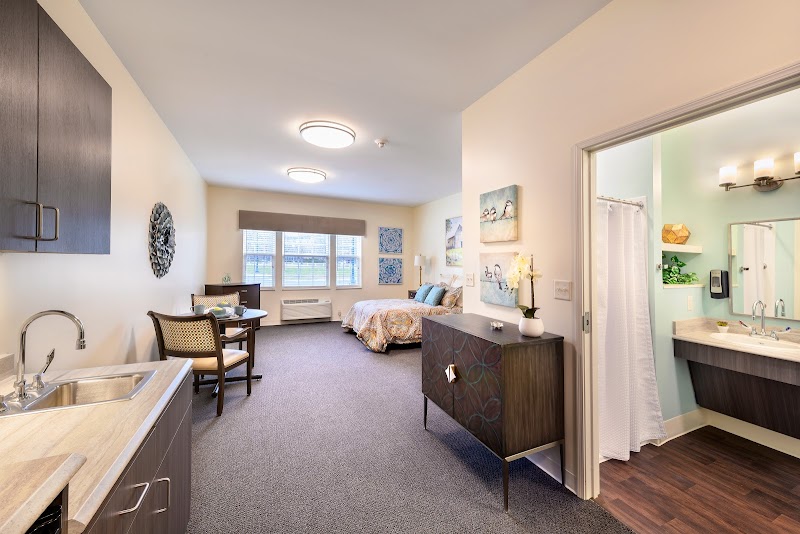
How is Smiths Mill Health Campus Staffed?

CMS rates SMITHS MILL HEALTH CAMPUS's staffing level at 4 out of 5 stars, which is above average compared to other nursing homes. Staff turnover is 62%, which is 16 percentage points above the Ohio average of 46%. High turnover can affect care consistency as new staff learn residents' individual needs.

What Have Inspectors Found at Smiths Mill Health Campus?

State health inspectors documented 37 deficiencies at SMITHS MILL HEALTH CAMPUS during 2022 to 2025. These included: 37 with potential for harm.
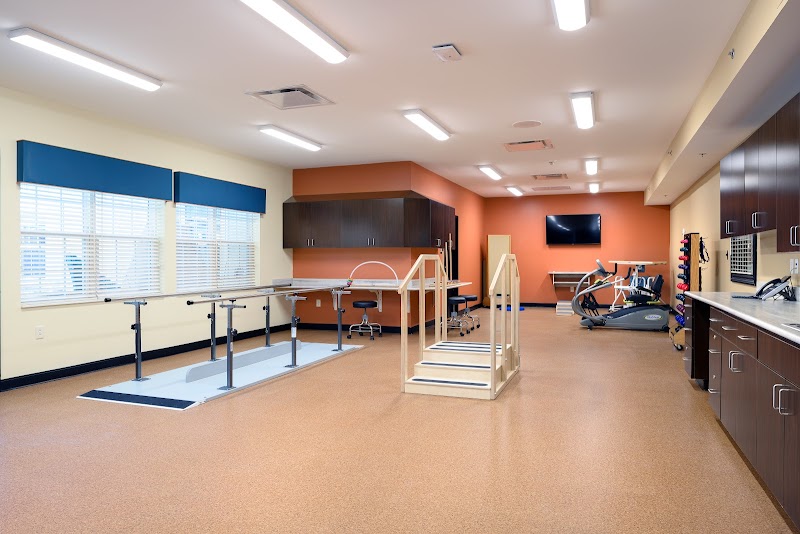
Who Owns and Operates Smiths Mill Health Campus?

SMITHS MILL HEALTH CAMPUS is owned by a for-profit company. For-profit facilities operate as businesses with obligations to shareholders or private owners. The facility is operated by TRILOGY HEALTH SERVICES, a chain that manages multiple nursing homes. With 50 certified beds and approximately 41 residents (about 82% occupancy), it is a smaller facility located in NEW ALBANY, Ohio.

How Does Smiths Mill Health Campus Compare to Other Ohio Nursing Homes?

Compared to the 100 nursing homes in Ohio, SMITHS MILL HEALTH CAMPUS's overall rating (2 stars) is below the state average of 3.2, staff turnover (62%) is significantly higher than the state average of 46%, and health inspection rating (2 stars) is below the national benchmark.

What Should Families Ask When Visiting Smiths Mill Health Campus?

Based on this facility's data, families visiting should ask: "How do you ensure continuity of care given staff turnover, and what is your staff retention strategy?" "Can I visit during a mealtime to observe dining assistance and food quality?" "How do you handle medical emergencies, and what is your hospital transfer rate?" "Can I speak with family members of current residents about their experience?" These questions are particularly relevant given the facility's high staff turnover rate.

Is Smiths Mill Health Campus Safe?

Based on CMS inspection data, SMITHS MILL HEALTH CAMPUS has a clean safety record: no substantiated abuse findings (meaning no confirmed cases of resident harm), no Immediate Jeopardy citations (the most serious violation level indicating risk of serious injury or death), and is not on the Special Focus Facility watch list (a federal program monitoring the lowest-performing 1% of nursing homes). The facility has a 2-star overall rating and ranks #100 of 100 nursing homes in Ohio. While no facility is perfect, families should still ask about staff-to-resident ratios and recent inspection results during their visit.

Do Nurses at Smiths Mill Health Campus Stick Around?

Staff turnover at SMITHS MILL HEALTH CAMPUS is high. At 62%, the facility is 16 percentage points above the Ohio average of 46%. High turnover means new staff may not know residents' individual needs, medications, or preferences. It can also be disorienting for residents, especially those with dementia who rely on familiar faces. Families should ask: What is causing the turnover? What retention programs are in place? How do you ensure care continuity during staff transitions?

Was Smiths Mill Health Campus Ever Fined?

SMITHS MILL HEALTH CAMPUS has no federal fines on record. CMS issues fines when nursing homes fail to meet care standards or don't correct problems found during inspections. The absence of fines suggests the facility has either maintained compliance or corrected any issues before penalties were assessed. This is a positive indicator, though families should still review recent inspection reports for the full picture.

Is Smiths Mill Health Campus on Any Federal Watch List?

SMITHS MILL HEALTH CAMPUS is not on any federal watch list. The most significant is the Special Focus Facility (SFF) program, which identifies the bottom 1% of nursing homes nationally based on persistent, serious quality problems. Not being on this list means the facility has avoided the pattern of deficiencies that triggers enhanced federal oversight. This is a positive indicator, though families should still review the facility's inspection history directly.