AUTUMN HILLS CARE CENTER
2565 NILES VIENNA RD, NILES, OH 44446 (330) 652-2053
For profit - Partnership 120 Beds CONTINUING HEALTHCARE SOLUTIONS Data: November 2025
Trust Grade
45/100
#605 of 913 in OH
Last Inspection: May 2025

Inspected within the last 6 months. Data reflects current conditions.

Overview

Autumn Hills Care Center in Niles, Ohio, has a Trust Grade of D, which indicates below average quality and raises some concerns about the care provided. Ranking #605 out of 913 facilities in the state places them in the bottom half, and #11 out of 17 in Trumbull County means there are only a few local options that perform better. The facility is worsening, with the number of issues increasing from 8 in 2024 to 20 in 2025. Staffing is a notable weakness, rated at just 1 out of 5 stars, and while turnover is at 49%, it aligns with the state average. However, there were no fines recorded, which is a positive sign. Specific incidents include a resident developing a serious pressure ulcer due to inadequate care and failure to provide scheduled hygiene assistance for multiple residents, highlighting significant gaps in daily care practices. Overall, while there are some positive aspects, families should carefully consider the facility's deficiencies and recent trends.

Trust Score
D
45/100
In Ohio
#605/913
Bottom 34%
Safety Record
Moderate
Needs review
Inspections
Getting Worse
8 → 20 violations
Staff Stability
⚠ Watch
49% turnover. Above average. Higher turnover means staff may not know residents' routines.
Penalties
✓ Good
No fines on record. Clean compliance history, better than most Ohio facilities.
Skilled Nurses
⚠ Watch
Each resident gets only 23 minutes of Registered Nurse (RN) attention daily — below average for Ohio. Fewer RN minutes means fewer trained eyes watching for problems.
Violations
⚠ Watch
41 deficiencies on record. Higher than average. Multiple issues found across inspections.
★★☆☆☆
2.0
Overall Rating
★☆☆☆☆
1.0
Staff Levels
★★★★★
5.0
Care Quality
★★☆☆☆
2.0
Inspection Score
Stable
2024: 8 issues
2025: 20 issues

The Good

  • 5-Star Quality Measures · Strong clinical quality outcomes
  • Full Sprinkler Coverage · Fire safety systems throughout facility
  • No fines on record

Facility shows strength in quality measures, fire safety.

The Bad

2-Star Overall Rating

Below Ohio average (3.2)

Below average - review inspection findings carefully

Staff Turnover: 49%

Near Ohio avg (46%)

Higher turnover may affect care consistency

Chain: CONTINUING HEALTHCARE SOLUTIONS

Part of a multi-facility chain

Ask about local staffing decisions and management

The Ugly 41 deficiencies on record

1 actual harm
Jun 2025 3 deficiencies
CONCERN (D) 📢 Someone Reported This

A family member, employee, or ombudsman was alarmed enough to file a formal complaint

Potential for Harm - no one hurt, but risky conditions existed

Deficiency F0697 (Tag F0697)

Could have caused harm · This affected 1 resident

**NOTE- TERMS IN BRACKETS HAVE BEEN EDITED TO PROTECT CONFIDENTIALITY** Based on record review, interview and facility policy review, the facility failed to adequately control Resident #38's pain when...

Read full inspector narrative →
**NOTE- TERMS IN BRACKETS HAVE BEEN EDITED TO PROTECT CONFIDENTIALITY** Based on record review, interview and facility policy review, the facility failed to adequately control Resident #38's pain when his as needed pain medication was not administered timely on 05/31/25. This affected one (Resident #38) of three residents reviewed for pain management. The facility census was 99. Findings include: Review of the medical record for Resident #38 revealed an admission date of 05/29/25. Diagnoses included sepsis, fracture of the left pubis, and wedge compression fracture of the third lumbar vertebra. Review of the physician's order dated 05/29/25 revealed an order to administer oxycodone (opioid pain medication) 10 milligrams (mg) by mouth every four hours as needed for pain. Review of the admission assessment dated [DATE] revealed Resident #38 had intact cognition and was aware of person, place, and time. Resident #38 reported he had severe pain. Review of the care plan dated 05/29/25 revealed Resident #38 was at risk for alteration in comfort secondary to bacteremia infection, closed compression fractures, and left-sided inferior pubic ramus closed fracture. Interventions included administering medications as ordered and monitoring for effectiveness and interventions. Review of the Medication Administration Record (MAR) for 05/31/25 revealed Resident #38 received his oxycodone at 4:02 A.M. and did not receive his next dose until 10:49 A.M. Interview on 06/03/25 at 8:43 A.M. with Resident #38 reported he keeps notes on everything. Review of the progress notes on 05/31/25 revealed he activated his call button from 8:30 A.M. to 9:30 A.M. His call light still had not been answered, so he called the main phone line reporting he wanted pain medication because it was due at 8:30 A.M., and he needed it. Resident #38 reported the nurse did not administer his pain medication until around 11:00 A.M. when she finally answered the call light. Interview on 06/04/25 at 9:36 A.M. with Licensed Practical Nurse (LPN) #502 revealed that she did care for Resident #38 on 05/31/25. It was her first day caring for him. She reported she was told in report that he wanted his pain medications every four hours but was not told what time his next dose was due. She confirmed she did not answer the call light until 10:40 A.M. and administered his pain medications then. LPN #502 reported that morning was busy, but the facility did have enough staff. LPN #502 also reported that she now is getting to know Resident #38 and is in his room every four hours if he hits the call light or not. Review of the undated facility policy labeled Pain Management revealed the healthcare facility recognizes the need to identify pain and its underlying cause, as able, that will allow for a prompt response to pain. This deficiency is an incidental finding identified during the complaint investigation.
CONCERN (D) 📢 Someone Reported This

A family member, employee, or ombudsman was alarmed enough to file a formal complaint

Potential for Harm - no one hurt, but risky conditions existed

Deficiency F0805 (Tag F0805)

Could have caused harm · This affected 1 resident

**NOTE- TERMS IN BRACKETS HAVE BEEN EDITED TO PROTECT CONFIDENTIALITY** Based on record review, interview, review of facility investigation and policy review, the facility failed to ensure Resident #5...

Read full inspector narrative →
**NOTE- TERMS IN BRACKETS HAVE BEEN EDITED TO PROTECT CONFIDENTIALITY** Based on record review, interview, review of facility investigation and policy review, the facility failed to ensure Resident #53 received the ordered food texture resulting in her choking and requiring the Heimlich maneuver. This affected one (Resident #53) out of three residents removed for modified food texture and had the potential to affect 18 additional (Residents #5, #13, #20, #26, #30, #43, #47, #48, #55, #56, #71, #76, #78, #82, #86, #95, #100, and #101) identified by the facility as requiring a modified diet texture. The facility census was 99. Findings include: Review of the medical record for Resident #53 revealed an admission date of 08/26/24. Diagnoses included Huntington's disease and dysphagia. Review of the physician's order dated 08/26/24 revealed Resident #53 required regular diet with mechanical soft texture, and thin liquids. Review of the quarterly Minimum Data Set (MDS) assessment dated [DATE] revealed Resident #53 had moderate cognitive impairment. Resident #53 required extensive assistance for all activities of daily living and set up and cueing for eating. Review of the nursing progress note dated 05/13/25 at 5:30 P.M. revealed Resident #53 was eating in the dining room at 3:18 P.M. during an activity program and began choking on a piece of sausage. Initially, Resident #53 was able to talk but with continued coughing her airway became increasingly obstructed. The Heimlich procedure was done with five thrusts, and Resident #53 was able to cough out the food. She was assessed and vital signs were taken with no concerns for wheezing or shortness of breath. The physician was notified and a new order for vital signs every four hours for 24 hours was obtained. Review of the care plan dated 05/26/25 revealed Resident #53 required a mechanically altered diet. Interventions included to monitor consistency of diet served, and honor food preferences if able. Interview on 06/04/25 at 10:32 A.M. with Resident #66 revealed she had no concerns and reported she felt safe in the facility. Resident #66 reported she was there for the incident with Resident #53. Resident #66 pointed to Contracted Behavioral Health Aide #506 and reported that she gave her a bratwurst, and Resident #53 was not supposed to have it. Resident #66 confirmed that Resident #53 began choking, and the nurse had to do the Heimlich maneuver to get it out. Resident #66 reported it was scary to watch. Interview on 06/04/25 at 10:38 A.M. with Contracted Behavioral Health Aide #506 confirmed she did give Resident #53 the bratwurst, and she did choke on it and require the Heimlich maneuver. Contracted Behavioral Health Aide #506 reported that the facility keeps a logbook in the activity and lunchroom that states every resident's diet, and they were to check the book before giving any food to the residents. She reported that it was her second day at the facility, and she did not check. Interview on 06/04/25 at 10:45 A.M. with Resident #53 confirmed she did eat the bratwurst and choked. She reported the nurse gave her the Heimlich maneuver, and she did not get hurt or have any problems after. Resident #53 reported she feels happy in the facility and had no concerns with her care. Review of the undated facility policy labeled Assisting a Resident with Feeding stated the staff member will verify the type of diet, consistency, and/or need for thickened liquids or devices with feeding prior to initiating feeding. This deficiency represents non-compliance investigated under Complaint Number OH00166091.
CONCERN (E) 📢 Someone Reported This

A family member, employee, or ombudsman was alarmed enough to file a formal complaint

Potential for Harm - no one hurt, but risky conditions existed

ADL Care (Tag F0677)

Could have caused harm · This affected multiple residents

**NOTE- TERMS IN BRACKETS HAVE BEEN EDITED TO PROTECT CONFIDENTIALITY** Based on record review, interviews and review of the facility shower schedules, the facility failed to provide showers as schedu...

Read full inspector narrative →
**NOTE- TERMS IN BRACKETS HAVE BEEN EDITED TO PROTECT CONFIDENTIALITY** Based on record review, interviews and review of the facility shower schedules, the facility failed to provide showers as scheduled to Residents #23, #25, #31, and #53. This affected four (Residents #23, #25, #31, and #53) of seven residents reviewed for showers. The facility census was 99. Findings include: 1. Review of the medical record for Resident #23 revealed an admission date of 07/05/25. Diagnoses included type two diabetes mellitus, acute respiratory failure, and morbid obesity. Review of the quarterly Minimum Data Set (MDS) assessment dated [DATE] revealed Resident #23 had intact cognition. Resident #23 required moderate to extensive assistance for all activities of daily living. Review of the care plan dated 05/27/25 revealed Resident #23 required assistance with activities of daily living secondary to decreased mobility, generalized muscle weakness, and shortness of breath. Interventions included for staff to provide assistance with daily hygiene and showering per facility policy. Review of the facility shower schedule revealed Resident #23 was scheduled showers every Wednesday and Friday. Review of the shower sheets and shower documentation for Resident #23 for May 2025 revealed she did not have documentation of receiving a shower or refusal or shower on 05/16/25. 2. Review of the medical record for Resident #25 revealed an admission date of 01/04/10. Diagnoses included motor neuron disease, type two diabetes mellitus, and chronic obstructive pulmonary disease. Review of the quarterly MDS assessment dated [DATE] revealed Resident #25 had intact cognition. Resident #25 required extensive assistance to complete dependence on staff for all activities of daily living. Review of the care plan dated 05/29/25 revealed Resident #25 required activities of daily living assistance secondary to impaired mobility and generalized muscle weakness. Interventions included that Resident #25 was totally dependent on staff for showers, and for staff to assist with daily hygiene needs. Review of the shower schedule revealed she was to have showers every Monday, Wednesday, and Friday. Review of the shower sheets for Resident #25 for May 2025 revealed she did not have documentation of receiving a shower or refusal or shower on 05/09/25 or 05/26/25. Interview on 06/03/25 at 8:23 A.M. with Resident #25 reported she is not getting three showers a week like she is scheduled. She reported she is lucky if she gets two a week. 3. Review of the medical record for Resident #31 revealed an admission date of 03/28/25. Diagnoses included malignant neoplasm of the cerebrum with metastasis, epilepsy, and hypertension. Review of the care plan dated 03/28/25 revealed Resident #31 required assistance from staff for activities of daily living. Interventions included that staff would assist with daily hygiene and showers as per facility policy. Review of the admission MDS assessment dated [DATE] revealed Resident #31 had moderate cognitive impairment. Resident #31 required set-up to moderate assistance for all activities of daily living. Review of the shower schedule revealed he was to be showered on Sundays and Thursdays. Resident #31 did not receive showers on 05/01/25, 05/04/25, 05/11/25, 05/15/25, and 05/18/25 with no documented evidence of refusals. 4. Review of the medical record for Resident #53 revealed an admission date of 08/26/24. Diagnoses included Huntington's disease and dysphagia. Review of the quarterly MDS assessment dated [DATE] revealed Resident #53 had moderate cognitive impairment. Resident #53 required extensive assistance to total dependence on staff for all activities of daily living. Review of the care plan dated 05/26/25 revealed Resident #53 required assistance from staff for activities of daily living. Interventions included that staff would assist with daily hygiene and showers as per facility policy. Review of the shower sheets for May 2025 revealed she was ordered showers every Monday, Wednesday, and Friday. Review of the shower sheets for May 2025 for Resident #53 revealed she did not have documentation of receiving a shower or refusal or shower on 05/09/25. Interview on 06/04/25 at 9:48 A.M. with the Administrator confirmed that showers have been an issue in the facility and verified the missing showers for Residents #23, #25, #31, and #53. The Administrator reported they changed the system with showers in February 2025 with getting rid of the shower aide, and the facility has struggled since. This deficiency represents non-compliance investigated under Complaint Number OH00166091.
May 2025 7 deficiencies
CONCERN (D) 📢 Someone Reported This

A family member, employee, or ombudsman was alarmed enough to file a formal complaint

Potential for Harm - no one hurt, but risky conditions existed

Deficiency F0558 (Tag F0558)

Could have caused harm · This affected 1 resident

Based on observation, interview and record review, the facility failed to maintain a call light and overbed table within Resident #13's reach. This affected one resident (#13) of ten residents reviewe...

Read full inspector narrative →
Based on observation, interview and record review, the facility failed to maintain a call light and overbed table within Resident #13's reach. This affected one resident (#13) of ten residents reviewed for environmental/call light concerns and had the potential to affect all 106 residents residing in the facility. Findings include: Review of the medical record for Resident #13 revealed an admission date of 03/04/25. Diagnoses included chronic respiratory failure, congestive heart failure, chronic kidney disease, and need for assistance with personal care. Review of the Quarterly Minimum Data Set (MDS) assessment, dated 03/31/25, revealed Resident #13 had moderate cognitive impairment. Review of the care plan revised 09/29/23 revealed Resident #13 required assistance with activities of daily living (ADL) related to decreased mobility, shortness of breath with activity, and altered cognition. Interventions included to encourage Resident #13 to use the call light and ask for assistance when needed. Observation and interview on 04/28/25 at 10:27 A.M. with Resident #13 revealed the resident sitting in a wheelchair in front of a nightstand which was up against the wall left of the window with the adjacent bed extending from the same wall toward the center of the room. Resident #13's wheelchair was alongside and up against the left bedside, and the resident was facing the television which was against the opposite wall of the room. The resident's overbed table which had multiple personal belongings on top including a beverage glass and television remote control was placed on the opposite side of the room in front of the television, out of the resident's reach. Resident #13's call light was wrapped around the left bed rail which was located behind the resident's wheelchair and out of the resident's reach. Resident #13 complained about being unable to reach the overbed table and not able to call the staff to help because the call light could not be found. Both of Resident #13's feet were elevated by wheelchair footrests, and the resident was unable to maneuver the wheelchair to locate the call light or reach the overbed table. Interview at the time of the observation with Housekeeping Supervisor (HS) #3910 and Activity Director (AD) #3430 who entered the room and found the call light behind Resident #13 wrapped around the bedrail, removed it and connected to Resident #13's left side of the wheelchair within reach, then pulled the overbed table from across the room to the resident so it was within reach. HS #3910 and AD #3430 confirmed both Resident #13's call light and overbed table were not placed within the resident's reach for adequate use. This deficiency represents non-compliance investigated under Master Complaint Number OH00164195, Complaint Number OH00163856 and Complaint Number OH00163679.
CONCERN (D)

Potential for Harm - no one hurt, but risky conditions existed

Deficiency F0685 (Tag F0685)

Could have caused harm · This affected 1 resident

**NOTE- TERMS IN BRACKETS HAVE BEEN EDITED TO PROTECT CONFIDENTIALITY** Based on record review, observation, staff and resident interviews, the facility failed to provide prescription eyeglasses for R...

Read full inspector narrative →
**NOTE- TERMS IN BRACKETS HAVE BEEN EDITED TO PROTECT CONFIDENTIALITY** Based on record review, observation, staff and resident interviews, the facility failed to provide prescription eyeglasses for Resident #2 ass ordered by the physician. This affected one resident (#2) of two residents reviewed for vision and hearing. The facility census was 106. Findings include: Review of the medical record revealed Resident #2 was admitted on [DATE] with diagnoses including spina bifida, unspecified paraplegia, need for assistance with personal care, anemia, major depressive disorder, unspecified muscle wasting and atrophy, cognitive communication disorder, and neuromuscular dysfunction. Review of the admission Minimum Data Set (MDS) assessment, dated 12/22/24, revealed Resident #2 required corrective lens. Observation on 04/28/25 at 10:23 A.M. revealed Resident #2 was reading her book with a magnifying glass. Resident #2 does not attend activities; she prefers to read in her room. Resident #2 was care planned for in-room activities. Record review revealed on 02/27/25 at 9:15 A.M. Resident #2 was seen by an in-house optometrist and given an updated prescription for new vision wear. Resident #2 did not receive the new prescription eyeglasses. Observation and interview on 04/29/25 at 11:11 A.M. revealed Resident #2 had not received the new prescription eyeglasses ordered by the physician on 02/27/25. Resident #2 was wearing old prescription glasses. Record review revealed Resident #2 was seen by a different in-house optometrist on 04/29/25 at 9:58 A.M. for another new eyeglass prescription. Resident #2 had not received the eyeglasses at this time. Interview on 04/29/25 at 3:04 P.M. with Social Worker #3670 verified Resident #2 never received her prescription eyeglasses. The facility changed companies, and Resident #2 had a new eye examination, and a new prescription was given.
CONCERN (D)

Potential for Harm - no one hurt, but risky conditions existed

Deficiency F0688 (Tag F0688)

Could have caused harm · This affected 1 resident

**NOTE- TERMS IN BRACKETS HAVE BEEN EDITED TO PROTECT CONFIDENTIALITY** Based on record review, observation and interview, the facility failed to apply a palm guard as ordered for Resident #18. This a...

Read full inspector narrative →
**NOTE- TERMS IN BRACKETS HAVE BEEN EDITED TO PROTECT CONFIDENTIALITY** Based on record review, observation and interview, the facility failed to apply a palm guard as ordered for Resident #18. This affected one resident (#18) of one resident reviewed for splints. The facility census was 106. Findings include: Review of the medical record revealed Resident #18 was admitted on [DATE] with a diagnosis of hemiplegia and hemiparesis following cerebral infarction affecting the left side, muscle wasting and atrophy. Review of the physician orders of 09/27/24 revealed Resident #18 was ordered a palm guard (a hand splint that prevents palm injuries from severe finger flexion contracture and forms a safe barrier between fingernails and palmar skin) to be worn daily and removed for hand hygiene and skin checks. Review of the comprehensive Minimum Data Set (MDS) assessment dated [DATE] revealed Resident #18 had a Brief Interview for Mental Status (BIMS) score of seven of 15, which indicated severe cognitive impairment. Resident #18 required substantial/maximum assistance or was dependent on staff with all activities of daily living (ADL). Review of Resident #18's Treatment Administration Record (TAR) for the month of April 2025 revealed staff signed off verifying Resident #18 was wearing her palm guard daily as ordered. Observation and interview of Resident #18 on 04/29/25 at 2:17 P.M. revealed the resident was not wearing her palm guard as ordered. The resident stated she does not often wear the palm guard, but she didn't know why. Observation and interview with Resident #18 and Licensed Practical Nurse (LPN) #3150 on 04/30/25 at 9:18 A.M. revealed the resident was not wearing her palm guard as ordered. LPN #3150 also confirmed that Resident #18 was not wearing her palm guard and stated the resident often refused to wear it. LPN #3150 then confirmed Resident #18's TAR was signed off daily during the month of April 2025 which indicated resident was wearing her palm guard, and verified no behaviors or refusals were documented indicating the resident's refusal to wear it.
CONCERN (D)

Potential for Harm - no one hurt, but risky conditions existed

Accident Prevention (Tag F0689)

Could have caused harm · This affected 1 resident

**NOTE- TERMS IN BRACKETS HAVE BEEN EDITED TO PROTECT CONFIDENTIALITY** Based on record review, observation, resident and staff interviews, and review of the facility's smoking policy, the facility fa...

Read full inspector narrative →
**NOTE- TERMS IN BRACKETS HAVE BEEN EDITED TO PROTECT CONFIDENTIALITY** Based on record review, observation, resident and staff interviews, and review of the facility's smoking policy, the facility failed to ensure Resident #3's smoking materials were secured by staff. This affected one resident (#3) of one resident reviewed for smoking. The facility identified ten residents (#3, #23, #72, #46, #87, #90, #83, #12, #53 and #51) as smokers. The facility census was 106. Findings include: Review of medical record revealed Resident #3 was admitted to the facility on [DATE]. Diagnoses included motor neuron disease, osteoarthritis, muscle wasting and atrophy. Review of the quarterly Minimum Data Set (MDS) assessment, dated 03/21/25, revealed Resident #3 had impairments of both upper extremities and was dependent for most activities of daily living (ADLs), except for eating, with which she required set-up or clean up assistance. Further review of the MDS revealed Resident #3 had a Brief Interview for Mental Status (BIMS) score of 15 which indicated she was cognitively intact. Review of Resident #3's care plan for smoking revealed she was a supervised smoker and could not smoke independently and needed to be supervised and assisted by staff. Review of Resident #3's quarterly smoking assessments dated 03/19/24, 06/17/24, 10/18/24, 01/10/25 and 03/28/25 revealed resident required the facility to store her lighter and cigarettes. Interview with and observation of Resident #3 on 04/28/25 at 5:40 P.M. revealed an empty cigarette box and lighter in a bag attached to her wheelchair. Resident #3 stated she participated in smoke breaks daily at 10:00 A.M., 1:00 P.M., 4:00 P.M. and 8:30 P.M. Resident #3 further stated she was unable to hold her own cigarettes and wore a smoking apron while on supervised smoke breaks. She further stated her cigarettes and lighter were stored in the bag on her wheelchair and staff did not store them as required. Observation of Resident #3 on 04/29/25 at 1:55 P.M. revealed her lying in bed trying to take a nap. The resident stated she would be up at 3:30 P.M to get ready for the 4:00 P.M. smoke break. The surveyor observed a cigarette lighter and box of cigarettes in bag attached to Resident's wheelchair. Observation of Resident #3 on 04/29/25 at 4:02 P.M. during her smoke break revealed Resident smoking while wearing a smoking apron. Interview with activities staff member #3720 also on 04/29/25 at 4:02 P.M. confirmed Resident #3's cigarettes and lighter were present in and kept in the bag attached to her wheelchair. Review of the facility's undated smoking policy revealed all cigarettes and lighters were to be kept in a secured area when not in use and the smoking materials would only be disbursed by facility staff. The smoking policy further stated the materials were to be returned to staff at the end of the smoking session.
CONCERN (D)

Potential for Harm - no one hurt, but risky conditions existed

Infection Control (Tag F0880)

Could have caused harm · This affected 1 resident

Based on observation, record review, interview and facility policy review, the facility failed to ensure appropriate infection control practices were followed in the administration of medications thro...

Read full inspector narrative →
Based on observation, record review, interview and facility policy review, the facility failed to ensure appropriate infection control practices were followed in the administration of medications through Resident #301's peripherally inserted central catheter (PICC) line. This affected one resident (#301) of one resident observed for intravenous medication administration. The facility census was 106. Findings include: Review of the medical record for Resident #301 revealed an admission date of 04/18/25 with diagnoses of methicillin susceptible staphylococcus aureus infection (MSSA) (a highly resistant bacteria) to left great toe, type two diabetes, and acute and subacute infective endocarditis. Provider orders included contact isolation due to MSSA infection, and Cefazolin Sodium (antibiotic) two milligrams intravenously per PICC twice daily. Observation of intravenous medication administration on 04/28/25 at 8:49 A.M. by Licensed Practice Nurse (LPN) #4150 revealed signage on Resident #301's door identifying contact precautions (wearing gown, gloves, and hand hygiene) to be used when entering room and providing care to the resident. LPN #4150 entered the room and donned gloves and a gown without previous hand hygiene. LPN #4150 then prepared the antibiotic solution, primed the intravenous tubing, and placed the antibiotic medication into the intravenous pump. LPN #4150 then went into her scrub pocket and retrieved a pen and dated/initialed the antibiotic medication bag. LPN #4150 then scrubbed the hub of the PICC access cap with an alcohol swab without performing hand hygiene and changing her gloves. She then flushed the PICC line with sterile saline, connected the medication delivery tubing to the resident's PICC line and started the infusion. LPN #4150 then removed her protective clothing, performed hand hygiene and left the room. Interview with LPN #4150 on 04/28/25 at 9:00 A.M. confirmed she forgot to perform hand hygiene prior to donning personal protection equipment (PPE) and prior to accessing the PICC line. Interview with the Director of Nursing (DON) on 04/28/25 at 11:30 A.M. verified that hand hygiene should have been performed prior to entering the room for contact isolation and prior to administering the PICC medication after touching room equipment and clothing. Review of the facility policy titled Medication Administration: General Guidelines dated 12/12 revealed hands are washed with soap and water and gloves applied before administration and after contact with the resident.
CONCERN (E) 📢 Someone Reported This

A family member, employee, or ombudsman was alarmed enough to file a formal complaint

Potential for Harm - no one hurt, but risky conditions existed

Safe Environment (Tag F0584)

Could have caused harm · This affected multiple residents

Based on observation, interview and review of facility policy, the facility failed to maintain a clean and homelike environment. This affected four residents (#13, #35, #74 and #257) of ten residents ...

Read full inspector narrative →
Based on observation, interview and review of facility policy, the facility failed to maintain a clean and homelike environment. This affected four residents (#13, #35, #74 and #257) of ten residents reviewed for environmental concerns and had the potential to affect all 106 residents residing in the facility. Findings include: Observation on 04/28/25 at 10:27 A.M. of Residents #13 and #35's room revealed a large amount of dirt accumulation on the floor including underneath both beds. There were multiple pieces of paper and plastic, pieces of used medical equipment such as what appears to be an intravenous cap and a used individual serving coffee creamer cup. There was no trash bag in the trash can. Interview at the time of the observation with Housekeeping Surveyor (HS) #3910 verified the findings and indicated being new to the job and having made changes to address some of the issues. Housekeepers were not available after 5:00 P.M., so nursing assistants were supposed to assist with any visible issues until a housekeeper returned the following day but admitted the dirt accumulation in Residents #13 and #35's room appeared to be over more than one day. Observation and interview on 04/28/25 at 10:56 A.M. of Residents #74 and #257's room revealed a large amount of dirt accumulation on the floor and bathroom floor including underneath both beds. There were multiple pieces of plastic and paper and dried spills throughout. Numerous areas of the floors and around the bathroom toilet were darkened from dirt build-up. Resident #257 complained of the floor being overly dirty and of housekeeping not cleaning on a routine basis. Interview at the time of the observation with Registered Nurse (RN) #3340 verified the findings and indicated there should be a housekeeper coming around to address it. Observation and interview on 04/28/25 at 11:06 A.M. with HS #3910 of Residents #74 and #257's room confirmed the dirty floors and indicated it had accumulated over more than one day. Resident #74's overbed table had large amounts of dried spills on the tabletop and table legs. HS #3910 verified the overbed table was not cleaned after use on a routine basis. Review of facility policy, Housekeeping Policy/Procedure, dated 12/28/13, revealed the facility will be maintained and cleaned to meet a home like environment for residents. This deficiency represents non-compliance investigated under Complaint Number OH00163856 and Complaint Number OH00163679.
CONCERN (E) 📢 Someone Reported This

A family member, employee, or ombudsman was alarmed enough to file a formal complaint

Potential for Harm - no one hurt, but risky conditions existed

ADL Care (Tag F0677)

Could have caused harm · This affected multiple residents

**NOTE- TERMS IN BRACKETS HAVE BEEN EDITED TO PROTECT CONFIDENTIALITY** Based on record reviews, observations, interviews and facility policy review, the facility failed to ensure residents received ...

Read full inspector narrative →
**NOTE- TERMS IN BRACKETS HAVE BEEN EDITED TO PROTECT CONFIDENTIALITY** Based on record reviews, observations, interviews and facility policy review, the facility failed to ensure residents received showers per resident preference and shower schedule. This affected four residents (#73, #77, #80 and #87) of six residents reviewed for showers. The facility census was 106. Findings include: 1. Review of the medical record for Resident #77 revealed an admission date of 4/11/25 with diagnoses including lumbago with sciatica (low back pain radiating down the leg), difficulty in walking, atrial fibrillation (irregular heartbeat), severe protein-calorie malnutrition, frequent falls and weakness. Review of the Minimum Data Set (MDS) assessment dated [DATE] revealed Resident #77 required substantial/maximal assistance for showers and bathing. Resident #77 was also dependent on staff for all other activities of daily living (ADL) and hygiene needs. Resident #77 was always incontinent. Review of the facility shower schedule revealed Resident #77 was to receive showers twice weekly on Thursday and Saturday evening. Review of shower task documentation on resident's ability to bathe self, dated 4/12/25 and 4/18/25, revealed Resident #77 was dependent on staff to perform all bathing care and required the assistance of two or more staff (despite the resident not receiving showers on 04/12/25 and 04/18/25). Review of 300 hallway shower sheets revealed no documented evidence of any showers provided to Resident #77. Observation and interview with Resident #77 on 04/28/25 at 10:18 A.M. stated she had not been receiving showers. She complained that her hair had not been washed since she admission, and it feels very dirty. Her hair was notably greasy and unkempt. Observation and interview on 4/29/25 at 1:15 P.M. with Resident #77 stated again that she still had not received a shower or had her hair washed. Her hair remained greasy and unkempt. Observation and interview on 4/30/25 at 8:25 A.M. with Resident #77 accompanied by the Director of Nursing (DON) revealed the resident was in the bathroom in a wheelchair with care assistance. Resident #77 stated she was going to get her hair washed. The DON verified the resident's dirty hair and that she had not been receiving showers as scheduled or per resident's choice. The DON also verified the absence of shower sheets and documented complete on the shower tasks for this resident. The DON confirmed Resident #77 did not receive showers as scheduled on 04/12/25, 04/17/25, 04/19/25, 04/24/25, or 04/26/25. The DON stated there was a recent change at the facility to no longer utilize dedicated shower aides. All the Certified Nursing Assistants (CNAs) would assume the previous shower duties in their daily assignments. Review of the facility policy titled Bathing Choice Policy, dated 01/2021, revealed residents are interviewed during the admission process regarding the frequency they want to bathe/shower. Frequency is reviewed at least quarterly during the care planning conference, and changes are implemented if indicated by the resident's choice. 2. Review of the medical record for Resident #87 revealed an admission date of 01/14/25 with diagnoses of chronic kidney disease, hemiplegia (paralysis) affecting right dominant side, muscle wasting and atrophy (tissue shrinking), and adult failure to thrive. Review of the MDS dated [DATE] revealed Resident #87 required moderate assistance for shower/bathing and other hygiene needs. Observation and interview on 04/28/25 at 2:30 P.M. revealed Resident #87 was unkept and disheveled in appearance with noted overgrowth of facial hair. Resident #87 stated he used to receive regular showers and assistance with the shower aides prior to facility process change, but now he does not get a shave with his shower as requested. Resident #87 stated that now the aides just hose him down and do not clean well. Observation of Resident #87 also revealed limited range of motion on his dominant right side. Observation on 04/29/25 at 1:42 P.M. revealed facial hair still present. Resident #87 asked for assistance. Concerns were forwarded and verified with the DON. Observation and interview on 05/01/25 at 1:44 P.M. with Resident #87 in the hallway accompanied by the DON revealed his face was clean shaven, and the resident was very happy about today's recent shower and shave. The DON verified Resident #87 requested to have a shave with showers. Review of Resident #87 shower sheets from March 2025 through April 2025 revealed showers were provided on 03/12/25, 03/13/25, 03/15/25, 03/26/25, 04/02/25, 04/12/25, and 04/26/25. The facility shower schedule revealed Resident #87 was assigned to have showers completed twice weekly every Wednesday and Saturday during the day shift. Review of the Treatment Record dated 04/01/25 through 04/30/25 revealed Resident #87 had a bath signed off on 04/06/25 at 2:02 A.M. and 04/26/25 at 12:37 A.M. with rest of the dates signed off as not applicable or left blank. Interview with the DON on 05/01/25 at 1:30 P.M. verified the missing shower sheets, shower schedule, and absence of regular showers and shaving for Resident #87. Review of the facility policy titled Bathing Choice Policy, dated 01/2021, revealed residents are interviewed during the admission process regarding the frequency they want to bathe/shower. Frequency is reviewed at least quarterly during the care planning conference, and changes are implemented if indicated by the resident's choice. 3. Review of the medical record for Resident #73 revealed an admission date of 03/28/25 with diagnoses including pneumonia, chronic kidney disease stage three, wedge compression fracture with routine healing, and cognitive communication deficit. Review of the MDS assessment dated [DATE], revealed Resident #73 required substantial/maximal assistance for showers and bathing. Resident #73 was also dependent on staff for all other ADL and hygiene needs. Resident #73 was sometimes incontinent and needed substantial/ maximum assistance. Review of the facility shower schedule revealed Resident #73 was to receive showers twice weekly on Monday and Wednesday. Review of shower task documentation on 04/30/25 revealed Resident #73 received showers on 03/26/25, 04/07/25, 04/16/25, 04/27/25. Review of 100 hallway shower sheets revealed no documented evidence of any showers provided to Resident #73 on 03/31/25, 04/02/25, 04/09/25, 04/14/25, 04/21/25, 04/23/35, 04/28/25, and 04/30/25. Observation and interview with Resident #73 on 04/28/25 at 10:31 A.M. revealed she had not been receiving showers. Resident #73 complained that her hair had not been washed, and she would like her showers. Resident #73 appeared unkempt and soiled. Observation and interview on 04/29/25 at 10:38 A.M. with Resident #73 stated she still had not received a shower. Resident #73 remained unkempt. Interview on 04/28/25 at 10:37 A.M. with Resident #73 accompanied by the DON verified that she had not received showers as scheduled or per resident's choice. Interview on 04/30/25 at 10:43 A.M. with the Administrator confirmed Resident #73 received four showers between 03/26/25 and 04/31/25 based on documentation provided. Review of the facility policy titled Bathing Choice Policy, dated 01/2021, revealed residents are interviewed during the admission process regarding the frequency they want to bathe/shower. Frequency is reviewed at least quarterly during the care planning conference, and changes are implemented if indicated by the resident's choice. 4. Review of the medical record for Resident #80 revealed an admission date of 01/30/25 with diagnoses including hepatic encephalopathy, bipolar disorder, moderate protein-calorie malnutrition, pressure ulcer of sacral region. Review of the MDS assessment dated [DATE], revealed Resident #80 required substantial/maximal assistance for showers and bathing. Review of the facility shower schedule revealed Resident #80 was to receive showers twice weekly on Sunday and Thursday. Review of shower task documentation on 04/30/25 revealed Resident #80 received showers on 04/01/25 and 04/21/25. Review of the 100 hallway shower sheets revealed no documented evidence of any showers provided to Resident #80 on 04/06/25, 04/10/25, 04/13/25, 04/17/25, 04/20/25, 04/24/25, and 04/27/25. Observation and interview with Resident #80 on 04/30/25 at 9:16 A.M. stated she had not been receiving showers. Resident #80 complained that her hair had not been washed, and she would like her showers. Resident #80 appeared unkempt and soiled. Resident #80's hair was greasy. Interview on 4/30/25 at 9:28 A.M. with Resident #80 accompanied by the DON verified that she had not received showers as scheduled or per resident's choice. Interview on 04/30/25 at 10:43 A.M. with the Administrator confirmed Resident #80 received two showers on 04/01/25 and 04/31/25 based on documentation provided. Review of the facility policy titled Bathing Choice Policy, dated 01/2021, revealed residents are interviewed during the admission process regarding the frequency they want to bathe/shower. Frequency is reviewed at least quarterly during the care planning conference, and changes are implemented if indicated by the resident's choice. This deficiency represents non-compliance investigated under Master Complaint Number OH00164195, Complaint Number OH00163856, and Complaint Number OH00163679.
Mar 2025 3 deficiencies
CONCERN (D) 📢 Someone Reported This

A family member, employee, or ombudsman was alarmed enough to file a formal complaint

Potential for Harm - no one hurt, but risky conditions existed

Notification of Changes (Tag F0580)

Could have caused harm · This affected 1 resident

**NOTE- TERMS IN BRACKETS HAVE BEEN EDITED TO PROTECT CONFIDENTIALITY** Based on record review, interview and policy review, the facility failed to timely notify a family member of a medication change...

Read full inspector narrative →
**NOTE- TERMS IN BRACKETS HAVE BEEN EDITED TO PROTECT CONFIDENTIALITY** Based on record review, interview and policy review, the facility failed to timely notify a family member of a medication change for Resident #108. This affected one resident (#108) of ten residents reviewed for family notification of a change. The facility census was 106. Findings include: Review of the medical record for Resident #108 revealed an admission date of 01/16/25. Significant diagnoses included acute and chronic respiratory failure, dependence on a respirator, chronic obstructive pulmonary disease, Wernicke's encephalopathy and alcohol use with withdrawal and delirium The resident face sheet revealed Resident #108 had a Healthcare Power of Attorney (POA) listing his sister. A second sister was listed as POA should the first not be able to carry out the duties. Both sisters had phone numbers on the resident face sheet. Further review of the medical record revealed Resident #108 had a drug allergy (an immune system overreaction to a substance that is usually harmless to most people) to Depakote (a medication used for mood stabilization). Review of the admission Minimum Data Set (MDS) 3.0 assessment dated [DATE] revealed Resident #108 was cognitively impaired. Review of physician orders for Resident #108 revealed on 01/24/25 at 10:52 A.M. Depakote 125 milligrams (mg) two times a day was ordered and on 01/24/25 at 6:36 P.M. Depakote 125 mg three times a day was ordered and the order for Depakote 125 milligrams two times daily was discontinued. A review of the Medication Administration Record (MAR) dated 01/01/25 to 01/31/25 revealed Depakote was listed as an allergy. The MAR also revealed Resident #108 received Depakote 125 milligrams on 01/24/25 at bedtime, 01/25/26 in the morning, noon and bedtime and 01/26/25 in the morning and at noon. A review of progress notes dated 01/24/25 at 12:59 P.M. and authored by Psychiatric Nurse Practitioner #317 revealed an allergy to valproic acid (generic name for Depakote). The note also revealed an order to discontinue Depakote 125 milligrams two times daily and start Depakote 125 milligrams three times daily. A review of progress notes dated 01/24/25 to 01/25/25 revealed the sisters of Resident #108 were not informed of the addition of Depakote to the medication regimen. A review of a care plan dated 01/29/25 revealed an alteration in cognitive function secondary to alcohol abuse. Interventions included keep in close contact with the responsible party. The care plan also revealed Resident #108 was at risk for complications secondary to allergy/medication use dated 01/27/25. Interventions included administer medications as ordered, notify the doctor as indicated, observe and monitor for symptoms of adverse reactions hives, difficulty breathing, swelling in the face or throat, severe skin reaction with fever, sore throat, burning eyes, skin pain, red or purple skin rash with blistering and peeling, obtain and monitor labs per order, obtain and monitor vital signs per order and as indicated. On 02/25/25 at 4:05 P.M. an interview with the Director of Nursing (DON) verified the POAs for Resident #108 were not notified of the addition of Depakote to the medication regimen. The DON also stated responsible parties are to be notified of medication changes. On 02/26/25 at 8:30 A.M. an interview with the sister of Resident #108 revealed they were not notified of the addition of Depakote to the medication regimen. The sister further stated had she been notified Resident #108 would not have received the Depakote. On 03/03/24 at 11:25 A.M. an interview with Psychiatric Nurse Practitioner (PNP) #317 revealed they had written the order for Depakote on 01/24/25. PNP #317 also stated the facility notifies family members of changes to medications. PNP #317 confirmed they had not notified the family of the Depakote order. A review of the policy titled Status Change in Resident Condition/Notification, undated, revealed the facility of Continuing Healthcare Solutions will promptly notify the resident, his or her attending physician and responsible party of changes in the resident condition and or status change. This deficiency represents non-compliance investigated under Complaint Number OH00163033, OH00162671 and OH00162547.
CONCERN (D) 📢 Someone Reported This

A family member, employee, or ombudsman was alarmed enough to file a formal complaint

Potential for Harm - no one hurt, but risky conditions existed

Pharmacy Services (Tag F0755)

Could have caused harm · This affected 1 resident

**NOTE- TERMS IN BRACKETS HAVE BEEN EDITED TO PROTECT CONFIDENTIALITY** Based on record review, interviews and policy review, the facility failed to collaborate with pharmacy services to ensure a medi...

Read full inspector narrative →
**NOTE- TERMS IN BRACKETS HAVE BEEN EDITED TO PROTECT CONFIDENTIALITY** Based on record review, interviews and policy review, the facility failed to collaborate with pharmacy services to ensure a medication listed as a drug allergy was not dispensed and administered to Resident #108 until determined to be safe for Resident #108 to receive the medication. This affected one resident (Resident #108) of ten residents who were reviewed for medication administration. The facility census was 106. Findings include: Review of the medical record for Resident #108 revealed an admission date of 01/16/25 with diagnoses including acute and chronic respiratory failure, dependence on a respirator, chronic obstructive pulmonary disease, Wernicke's encephalopathy, and alcohol use with withdrawal and delirium. The medical record indicated Resident #108 had a drug allergy (an immune system overreaction to a substance that is usually harmless to most people) to Depakote (a medication used for mood stabilization). Review of the records from a hospital emergency room visit prior to admission to the facility, dated 12/16/24, revealed these records were provided to the facility as a referral packet dated 12/30/24 and indicated divalproex sodium (Depakote) was listed as an adverse reaction. (an adverse reaction to a medication is an unwanted, undesirable effect possibly related to medication usage). Review of the admission Minimum Data Set (MDS) 3.0 assessment dated [DATE] revealed Resident #108 was cognitively impaired. Review of physician orders for Resident #108 revealed on 01/24/25 at 10:52 A.M. Depakote 125 milligrams (mg) two times a day was ordered and on 01/24/25 at 6:36 P.M. Depakote 125 mg three times a day was ordered and the order for Depakote 125 milligrams two times daily was discontinued. Review of progress notes dated 01/24/25 at 12:59 P.M. and authored by Psychiatric Nurse Practitioner (PNP) #317 revealed Resident #108 had an allergy to valproic acid (generic name for Depakote). The note further revealed Resident #108 reported with unstable mood and behaviors. Resident #108 was showing an allergy to Valproic acid, however was currently on Depakote two times daily and was doing well with no symptoms of allergies or adverse reactions. The note also revealed an order to discontinue Depakote 125 milligrams two times daily and start Depakote 125 milligrams three times daily. Review of the Medication Administration Record (MAR) dated 01/01/25 to 01/31/25 revealed Depakote was documented as an allergy. The MAR also revealed Resident #108 received Depakote 125 milligrams on 01/24/25 at bedtime, 01/25/26 in the morning, noon and bedtime and 01/26/25 in the morning and at noon. Review of progress notes dated 01/16/25 through 01/25/25 showed no evidence the facility had contacted the primary care physician, nurse practitioner, or pharmacy to discuss the listed drug allergy to Depakote and if it would have been safe to administer the medication despite the listed allergy of Resident #108. Further review of the progress notes dated 01/16/25 through 01/25/25 showed no evidence the facility contacted the family to determine why Depakote was listed as an allergy and what reactions Resident #108 had to Depakote to determine safety of medication administration. Review of a progress note dated 01/26/25 at 1:57 P.M. and authored by Licensed Practical Nurse (LPN) #238 revealed the doctor was notified of a family concern related to adverse reactions to divalproex (Depakote) in the past for Resident #108. A new order to hold the medication was obtained and to consult the physician from the psychiatric care provider. The medication was placed on hold, and the family was made aware of the action taken. Review of a physician order dated 01/26/25 for Resident #108 revealed the Depakote 125 mg three times a day was discontinued. Review of the care plan dated 01/29/25 revealed Resident #108 was at risk for complications secondary to allergy/medication use. The Physician/Certified Nurse Practitioner (CNP) were notified of the medication allergy and dose the resident received with new orders noted. The family was made aware of the above dated 01/27/25. Interventions included to administer medications as ordered, notify the doctor as indicated, observe and monitor for symptoms of adverse reactions such as hives, difficulty breathing, swelling in the face or throat, severe skin reaction with fever, sore throat, burning eyes, skin pain, red or purple skin rash with blistering and peeling; obtain and monitor labs per order, obtain and monitor vital signs per order and as indicated. There was no specific drug identified by name on the care plan. There were no prior entries on the care plan to identify any drug allergies or drug intolerances for Resident #108 prior to the 01/29/25 entry on the care plan. A review of an email dated 01/30/25 at 10:19 A.M. from Pharmacist #319 revealed he was notified of the incident of Depakote being sent to the facility for Resident #108. The email further acknowledged Depakote being on file as an allergy at the pharmacy, but it got missed when they verified the order. Pharmacist #319 then went on to state the pharmacy should have caught the allergy for Depakote for Resident #108. On 02/25/24 at 4:05 P.M. an interview with the Director of Nursing (DON) revealed Resident #108 received six doses of Depakote and had no ill effects. The DON stated Depakote was listed as an intolerance in Resident #108's medical records. However, the DON then verified if a medication was listed as an allergy it should have been questioned by the nurse transcribing the order and the pharmacist processing the order and sending the medication. The DON further stated the medication should not have been sent by the pharmacist without notifying the facility so a clarification of the order could be obtained. On 02/26/25 at 8:30 A.M. an interview with the sister of Resident #108 revealed they were not notified of the addition of Depakote to the medication regimen. The sister also stated Depakote caused her brother to become very lethargic. The sister further stated had she been notified Resident #108 would not have received the Depakote. On 02/26/25 at 1:14 P.M. an interview with Pharmacist #319 revealed when new orders were received a drug utilization review (DUR) was done electronically. The DUR detects duplicate orders, drug interactions and allergies. Pharmacist #319 also stated the dispensing pharmacist was to review anything on the DUR prior to dispensing medications and contact the facility via fax or phone call regarding any issues. Pharmacist #319 stated the pharmacy should have caught the allergy to Depakote for Resident #108 and not dispensed the medication for resident use. On 03/03/25 at 11:25 A.M. an interview with PNP #317 revealed she prescribed Depakote due to Resident #108 exhibiting agitation and verbal aggression and he had been on Depakote at other facilities. PNP #317 stated Resident #108 was not allergic to Depakote, but he was intolerant of it. PNP #317 confirmed she had increased the dosage of the Depakote from 125 mg twice a day to 125 mg three times a day. PNP #317 confirmed she had not discussed the order for Depakote with the family because the facility was responsible for notifying the family of any medication changes and the facility should have contacted the family. A review of the document titled Pharmacy Services Agreement, dated 07/31/24, revealed the pharmacy will promptly fill orders from the customer and deliver to the customer's prescription and non prescription drugs biologicals and intravenous solutions, supplies and equipment and services as set forth in this agreement. The contract also stated the pharmacy will have a licensed pharmacist available 24 hours each day seven days a week to respond to customer request for pharmacist consultation. A review of the document titled Consultant Pharmacist, dated January 2016, revealed the pharmacist provides clinical expertise by responding to medication related questions and concerns. The document also revealed the pharmacists will maintain a strong knowledge of current clinical pharmacy practices. The document further stated the pharmacist will conduct job responsibilities accordance with standards set forth with applicable federal and state laws and applicable professional standards. This deficiency represents non-compliance investigated under Complaint Number OH00163033.
CONCERN (E) 📢 Someone Reported This

A family member, employee, or ombudsman was alarmed enough to file a formal complaint

Potential for Harm - no one hurt, but risky conditions existed

Safe Environment (Tag F0921)

Could have caused harm · This affected multiple residents

Based on observation, interview and policy review, the facility failed to maintain a sanitary environment for all residents. This affected six Residents (#14, #18, #26, #37, #76 and #86) of 17 residen...

Read full inspector narrative →
Based on observation, interview and policy review, the facility failed to maintain a sanitary environment for all residents. This affected six Residents (#14, #18, #26, #37, #76 and #86) of 17 residents reviewed for physical environment and had the potential to affect all residents in the facility. The facility census was 106. Findings include: Observation was conducted on 02/24/25 at 9:50 A.M. with the Assistant Director of Nursing (ADON) of the general facility environment including resident rooms and common areas throughout the facility. At the time of the observations, the ADON verified the following identified concerns: • In the main lobby, there was a drinking fountain with a moderate build-up of dust on the top of it. The lobby floor was noted to be only partially clean, as there were were mop swirls noted on the floor that stopped at the floor mats. There was white dust build-up between the floor mats. Footprints were noted within the dust build up. A visitor sign located in the lobby had white dust build-up on the base of the stand. • The main dining room floor was noted to have visible dirt throughout the room and there was a large blackened area on the floor approximately 20 feet into the door going towards the left of the room. A small dining table located next to the exit door on the left-hand side of the room was noted to have a dust buildup on it. The piano located on the back wall was noted to have a dust buildup on the top of it. • In the room of Resident #76, there was a build-up of black dirt on the floor at the foot of the bed, dead flower petals on the floor at the head of the bed and dirt build-up and cobwebs were noted behind the door. • In the room of Resident #14 and Resident #18, the floor was noted to have food crumbs and three paperclips located under the unoccupied wheelchair of Resident #14. The right-hand side bedrail for Resident #14 was noted to have dried food on the lower right-hand side of the rail. An interview with Resident #14 at the time of the observation revealed staff does not clean the rail. • A Hoyer lift (a mechanical lift used for residents who cannot stand to transfer) was noted in the 200 hall with visible dirt on the base of the devise. • The shower room on the 200 hall was noted to have hair and soap scum build-up on the drain located in the middle of stall one. Hair and soap scum was also noted on the drain located in the center of stall two. There was an orange, slimy build-up noted on the white tiles of shower stall two under the shower head and handle. There was a black build-up in the grout of the white tile located on the wall opposite the shower head and handle. The floor in the shower room was noted to be dirty with build up of visible dirt around the garbage can. • In the room of Resident #26 and Resident #86, there was dirt on the floor with a build-up of dirt and dust behind the door. • In the room of Resident #37, the floor was dirty and there was a build-up of dirt behind the door. On 02/27/25 at 1:20 P.M. an interview with Housekeeping Supervisor (HKS) #320 revealed resident rooms were to be cleaned daily including toilets, sinks and floors. Resident rooms were to be mopped daily including behind the doors. Shower rooms were cleaned weekly by HKS #320. HKS #320 also stated the acrylic caulking in the shower room on the 200 unit would quickly grow mildew and the shower handle in stall two was leaking for a couple weeks lending to the orange buildup on the walls. Items on bedside tables and any shelving units were to be moved and dusted thoroughly two times weekly. A review of the policy titled Housekeeping Policy /Procedure, undated, revealed the facility will be maintained and cleaned to meet a homelike environment. This deficiency represents non-compliance investigated under Complaint Number OH00161937.
Jan 2025 7 deficiencies 1 Harm
SERIOUS (G) 📢 Someone Reported This

A family member, employee, or ombudsman was alarmed enough to file a formal complaint

Actual Harm - a resident was hurt due to facility failures

Pressure Ulcer Prevention (Tag F0686)

A resident was harmed · This affected 1 resident

**NOTE- TERMS IN BRACKETS HAVE BEEN EDITED TO PROTECT CONFIDENTIALITY** Based on observation, interview, record review, review of photographs provided by Resident #27's fiancée/power of attorne...

Read full inspector narrative →
**NOTE- TERMS IN BRACKETS HAVE BEEN EDITED TO PROTECT CONFIDENTIALITY** Based on observation, interview, record review, review of photographs provided by Resident #27's fiancée/power of attorney (POA) and facility policy review, the facility failed to develop and implement a comprehensive and individualized pressure ulcer prevention program to prevent the development of pressure ulcers and timely identify new pressure ulcers, including timely incontinence care and turning and repositioning. This affected two residents (#27 and #109) of two residents reviewed for pressure ulcers. The facility census was 106. Actual Harm occurred on 12/19/24 when Resident #27, who had a history of a pressure ulcer, quadriplegic and in a persistent vegetative state, was dependent on staff assistance for all activities of daily living (ADL) including toileting, hygiene, showers, dressing, transfers, and rolling left and right in bed, was found to have an in-house acquired Stage III pressure ulcer (full thickness tissue loss, subcutaneous fat may be visible but bone, tendon or muscle are not exposed, slough may be present but does not obscure the depth of tissue loss, may include undermining and tunneling) to his sacrum that contained 30 percent slough/necrosis (dead tissue). The facility failed to provide documented evidence of effective, comprehensive, and adequate interventions being in place to prevent the development of this pressure ulcer and to ensure the pressure ulcer was identified before being found at a Stage III. Actual Harm occurred on 01/16/25 when Resident #109, who was dependent on staff for all ADL care including toileting, hygiene, showers, dressing, and rolling left and right in bed, was found to have an in-house acquired unstageable (full thickness tissue loss in which the actual depth of the ulcer was obscured by slough/ dead skin) pressure ulcer to his left lateral foot that contained 100 percent dry eschar firmly adhered. The facility failed to provide documented evidence of effective, comprehensive, and adequate interventions being in place to prevent the development of this pressure ulcer and to ensure the pressure ulcer was identified before being found at unstageable. Findings include: 1. Review of the medical record for Resident #27 revealed an admission date of 12/04/24 with diagnoses including anoxic brain damage, chronic respiratory failure, quadriplegia, and persistent vegetative state. Review of the care plan dated 12/05/24 revealed Resident #27 was dependent on staff with ADL due to anoxic brain damage, persistent vegetative state quadriplegia. Interventions included turning and repositioning every two hours, staff to provide incontinence care with routine rounds, and staff to provide all care as he was dependent and does not participate in any aspect of his ADL. Review of the care plan dated 12/05/24 revealed Resident #27 was at risk for impaired skin integrity secondary to bowel and bladder incontinence and impaired mobility, and he required total staff dependence for all his care needs. Interventions included elevating heels off mattress, inspecting skin during routine daily care, lift sheet on chair/bed for positioning, lotion to skin as needed, incontinence care after each incontinent episode, pressure reduction mattress to bed, and treatments as ordered. Review of the CHS admission Packet V13.1 dated 12/05/24 and completed by Wound Nurse/Licensed Practical Nurse (LPN) #209 and LPN #287 revealed on admission Resident #27 was in a comatose state and his skin was warm, dry and within normal limits. He had a left buttock open area, but no description was noted in the assessment. There was no skin integrity issues noted to his sacral area. (There was no further reference to any area on his left buttock in the medical record). Review of the admission Minimum Data Set (MDS) assessment dated [DATE] revealed Resident #27 had impaired cognition. He was dependent on staff for all ADL, including rolling left and right, toileting hygiene, personal hygiene, transfers, and showers. He was always incontinent with bowel and bladder and was at risk for developing pressure ulcers but had no unhealed pressure ulcers on admission. Review of the Braden Scale for Predicting Pressure Sore Risk dated 12/12/24 and completed by Wound Nurse/LPN #209 revealed Resident #27 was at very high risk for the development of pressure ulcers as he was completely limited with sensory perception, very moist, bedfast, completely immobile, and had a problem with friction and shearing. Review of the Skin Grid Pressure 3.0-V2 dated 12/19/24 and completed by Wound Nurse/LPN #209 revealed on 12/18/24, Resident #27 was identified to have a new Stage III pressure ulcer to his sacrum area that measured of 5.5-centimeter (cm) length by 6.1 cm width by 0.3 cm depth. The assessment described the area as: several open areas across the sacrum among scar tissue from a previously healed pressure wound. There was thin slough with granulating tissue with scattered areas of moist tissue at wound edges. The wound had moderate drainage. Review of the nursing note dated 12/19/24 at 3:00 P.M. and completed by Wound Nurse/LPN #209 revealed she noticed a new Stage III pressure injury to Resident #27's sacrum area with scar tissue surrounding the wound indicating he had a previous pressure area to this area. The nursing note revealed she ordered an air mattress and to off-load the pressure with wedges. Review of the care plan dated 12/19/24 revealed Resident #27 had actual impaired skin integrity as he had a Stage III pressure ulcer to his sacrum which the family had reported he had a wound there a few years ago. Interventions included wound care per physician orders, referring to a wound physician, low air loss mattress on the bed, and ensure Resident #27 was turned and repositioned per orders. Review of Wound Nurse Practitioner (NP) #318's progress note dated 12/19/24 revealed this was the first time she consulted for Resident #27 and noted Resident #27 to have a Stage III pressure ulcer to his sacrum area that measured 5.5 cm length by 6.1 cm by 0.3 cm depth. The wound contained 30 percent slough. She revealed even though there was slough/eschar present it did not obscure the extent of tissue loss; therefore, it was acceptable to classify this wound as a Stage III. She noted several open areas across his sacrum among scar tissue related to previously healed pressure wound. The note revealed that the family had reported he had a previous wound to his sacrum a few years ago that healed. (There was no documentation in her progress note regarding the wound being unavoidable). Review of the facility form labeled Unavoidable Pressure Injury dated 12/19/24 revealed Resident #27's pressure ulcer was unavoidable because the resident had impaired mobility, bowel incontinence, quadriplegia and had a prior history of pressure ulcer in the same location. The physician signature line had NP #317's printed name. Review of the undated pictures taken by Resident #27's fiancée/ POA revealed three pictures: 1. A picture of a blue incontinence brief heavily saturated in urine with dark yellow and brown urine in it. The picture appeared that Resident #27 had urinated multiple times in the brief. 2. A picture with the white washable incontinence pad that had a large brown urine ring underneath Resident #27's buttocks. 3. A picture of linen with brown, yellow discoloration appearing from urine. Resident #27's fiancée/ POA stated she had taken the pictures 12/22/24 at 6:18 P.M. Review of text message from Resident #27's fiancée/ POA to Director of Nursing (DON) dated 12/23/24 at 8:50 A.M. revealed my concerns are still there after I spoke with you my fiancée lays there in pee and the changing supposed to be every two hours but guess what I'm there for hours at a time without him getting changed. I pulled a nasty diaper off him with a chuck also soaked to the core through and about ten pounds the night before and yesterday. Review of the Skin Grid Pressure 3.0-V2 dated 01/16/25 and completed by Wound Nurse/LPN #209 revealed Resident #27 continued to have a Stage III pressure area to his sacrum area that measured 0.9 cm length by 0.6 cm width by 0.3 cm depth. The area improved with dark pink granulating tissue present and moderate drainage. Interview on 01/21/25 at 9:41 A.M. with LPN #221 revealed there had been issues with incontinence care getting done. She revealed there was a problem last night as when she came in there were multiple rooms where resident's incontinence briefs excessively filled with urine indicating the residents were not changed. She revealed the urine had leaked out of the incontinence briefs onto the bed linens requiring several full linen bed changes. She revealed many of the linen changes had brown rings. Interview on 01/21/25 at 10:08 A.M. and 01/22/25 at 4:49 P.M. with Resident #27's fiancée/ POA revealed Resident #27 was admitted to the facility with intact skin. She was upset as she came in almost daily and frequently found him with saturated incontinence briefs, and dried brown urine-soaked linens indicating he was not being changed timely as well as when she was in the facility for long periods of time, he was not being turned and repositioned every two hours as he needed to be. She revealed she took multiple pictures of the incontinence briefs and linens and showed the pictures and brought up her concerns to the DON. She revealed Resident #27 then developed a large pressure ulcer to his sacrum which she believed never should have happened if he was being changed and turned as he needed. She verified the pictures of the saturated blue incontinence brief, washable incontinence pad with large brown ring underneath Resident #27's buttocks were soaked with urine and the linen with brown, yellow discoloration appearing from urine were taken on 12/22/24 at 6:18 P.M. Interview on 1/21/25 at 11:21 A.M. and 3:20 P.M. with Wound Nurse/LPN #209 verified Resident #27's pressure ulcer to his sacrum was first identified at Stage III and contained 30 percent slough tissue. She was unable to provide a reason why the wound was not identified before it was Stage III. She revealed she did not see him daily and was not at the facility 24 hours a day, so she was unable to say if he was being provided with timely incontinence care and/or turned and repositioned every two hours but believed that he was. Interview on 01/21/25 at 2:22 P.M. and 2:44 P.M. with the DON verified Resident #27's fiancée/ POA showed her pictures as well as communicated her concern to her that Resident #27 was not getting turned and repositioned or changed timely. She was shown the pictures and verified the blue incontinence brief was heavily saturated in urine with yellow and brown urine in it. She verified the picture appeared he was not changed in a timely manner. She stated, I do not really have an explanation of why but that was why the facility proceeded to go to a condom catheter (a urine collection device that fits like a condom over the penis and has a tube to drain the urine). She then verified the pictures with the white washable incontinence pad that had a large brown ring underneath Resident #27's buttocks and the linen with brown, yellow discoloration appearing from urine. She again stated she had no explanation and again stated that was why the facility went with a condom catheter. Interview on 01/22/25 at 9:42 A.M. with NP #317 regarding the facility form labeled Unavoidable Pressure Injury dated 12/19/24 revealed Resident #27's pressure ulcer was unavoidable because the resident had impaired mobility, bowel incontinence, quadriplegia and had a prior history of pressure ulcer in the same location. The physician signature line had NP #317's printed name. She stated she had never seen this form prior and verified she had not filled out this form and never discussed Resident #27's wound with the facility. She did not get involved with the wounds because the facility had a wound company that came in and handled the wounds at the facility. Observation of wound care on 01/22/25 at 9:58 A.M. revealed Assistant Director of Nursing (ADON)/Registered Nurse (RN) #309 changed Resident #27's wound dressing to his sacrum area according to the physician order. She described the wound bed as red with minimal drainage and no signs of infection. Interview on 01/22/25 at 10:45 A.M. with DON revealed she was not aware Wound Nurse/LPN #209 had printed NP #317's name on the form in the area of physician's signature. She verified she had spoken with NP #317 who also confirmed to her that she had not signed the form and/or had any discussion with the facility regarding Resident #27's wound status. She revealed she felt it was a mistake but could not speak about why this was done at this time as currently Wound Nurse/LPN #209 was on suspension. 2. Review of the closed medical record for Resident #109 revealed an admission date of 12/11/24, and he was discharged to the hospital on [DATE]. His diagnoses included acute and chronic respiratory failure with hypoxia, dependence on a respiratory ventilator, and hemiplegia and hemiparesis following cerebrovascular disease effecting his left dominant side. Review of the CHS admission Packet V13.1 dated 12/11/24 and completed by Wound Nurse/LPN #209 and LPN #287 revealed Resident #109 was disoriented, nonverbal, and had severe cognitive impairment. He had a deep tissue injury (DTI) (purple or maroon localized area of discolored intact skin or blood-filled blister due to damage of underlying soft tissue due to pressure and/or shear. The area may be preceded by tissue that is painful, firm, mushy, boggy, warmer or cooler as compared to adjacent tissue.) to his coccyx, left buttock and right buttock and a pressure ulcer to his left hip region. There was no skin impairment identified to his bilateral lower feet. Review of the care plan dated 12/11/24 revealed Resident #109 was admitted with impaired skin integrity/pressure ulcers. He was unable to reposition himself. Interventions included elevating heels off the mattress, inspecting skin during routine daily care, lotion to skin as needed, pillows for positioning, skin assessments as ordered, turn and reposition as ordered, and pressure reduction devices if ordered. Review of the care plan dated 12/12/24 revealed Resident #109 required staff assistance for his ADL related to ventilator and tracheostomy dependent. Interventions were identified as staff to assist with daily hygiene, and staff to adjust care as needed to meet resident's needs. Review of the admission MDS assessment dated [DATE] revealed Resident #109 was dependent on staff to roll him left and right, toileting hygiene, personal hygiene, and showers. Review of the Braden Scale for Predicting Pressure Sore Risk dated 12/19/24 revealed Resident #109 was at high risk for developing pressure ulcers because he was very limited to sensory perception, very moist, bedfast, very limited to mobility, and had a problem with friction and shear. Review of the previous Skin Grid Pressure 3.0-V2 dated 12/12/24, 12/19/24, 12/26/24, 01/02/25, and 01/09/24 revealed no documented evidence of any identified concerns to Resident #109's left lateral foot. Review of the Skin Grid Pressure 3.0-V2 dated 01/16/25 and completed by Wound Nurse/LPN #209 revealed Resident #109 had an unstageable pressure ulcer to his left lateral foot that measured 2.5 cm in length by 2.0 cm width by depth was unable to be determined. The assessment described the wound as having firmly adhered dry eschar. Review of the nursing note dated 01/16/25 at 9:51 A.M. and completed by Wound Nurse/LPN #209 revealed she contacted Resident #109's daughter for permission for Resident #109 to see Wound NP #318. Resident #109's daughter agreed. There was no other documentation in the nursing notes regarding Resident #109's pressure ulcer to his left lateral foot. Review of Wound NP #318's progress note dated 01/16/25 revealed this was Wound NP #318's initial consultation. Resident #109 had an unstageable left lateral foot pressure ulcer that was measured 2.5 cm length by 2.0 cm width by depth was unable to be determined. The wound was described to have 100 percent dry firmly adhered eschar. She that this wound was present on admission. Review of the January 2025 physician order revealed Resident #109 had an order dated 01/17/25 to cleanse the left lateral foot with normal saline, apply Skin Prep (forms a protective barrier) and leave open to air every day-on-day shift. Interview on 01/22/25 at 10:45 A.M. with the DON verified Resident #109's left lateral pressure ulcer to his foot was facility acquired as it was first identified as an unstageable pressure ulcer on 01/16/25 per the documentation, and that it contained 100 percent dry, firmly adhered eschar. She revealed she could not explain why it was found as unstageable and not at an earlier stage, especially since Resident #109 was dependent on staff for all ADL. Interview on 01/22/25 at 1:20 P.M. with Wound NP #318 revealed the first time she consulted for Resident #109 was on 01/16/25. She verified she documented on her progress note that Resident #109's unstageable pressure to the left lateral foot was present on admission and stated that was what Wound Nurse/LPN #209 told her. She verified she did not realize the first documentation of this area was on 01/16/25. She verified when she initially saw the wound to the left lateral foot on -1/16/25, it was unstageable with 100 percent dry eschar. Review of the undated facility policy labeled, Pressure Ulcer Prevention and Risk Identification revealed the facility would assess each resident for risk of pressure ulcer development in an effort to establish measures to prevent the development of pressure ulcers within the facility. A pressure ulcer risk assessment for each resident would be completed upon admission and weekly times four weeks and preventative measures would be implemented based on the resident's assessed need and risk score. The policy revealed a care plan would be developed and updated routinely with identified skin risk and/or actual wound development. Interventions would be implemented as indicated by the physician and as determined by the interdisciplinary team. This deficiency represents non-compliance investigated under Complaint Number OH00161212.
CONCERN (D) 📢 Someone Reported This

A family member, employee, or ombudsman was alarmed enough to file a formal complaint

Potential for Harm - no one hurt, but risky conditions existed

Resident Rights (Tag F0550)

Could have caused harm · This affected 1 resident

Based on interview, record review, and facility policy review, the facility failed to treat Resident #86 with dignity and respect. This affected one resident (#86) and had the potential to affect all ...

Read full inspector narrative →
Based on interview, record review, and facility policy review, the facility failed to treat Resident #86 with dignity and respect. This affected one resident (#86) and had the potential to affect all 106 residents who resided in the facility. Findings include: Review of the medical record for Resident #86 revealed an admission date of 01/14/25. Diagnoses included chronic obstructive pulmonary disease, diabetes mellitus type two with neuropathy, chronic respiratory failure, tracheostomy status, disturbances of salivary secretion, gastrostomy status, essential primary hypertension and depression. Interview on 01/21/25 at 8:05 A.M. with Resident #86 complained about a recent confrontation with Licensed Practical Nurse (LPN) #287 who when questioned about her medication schedule, responded rudely and thereafter retaliated by ignoring Resident #86, giving all other residents medications first before administering hers, making them late. Resident #86 detailed the nurse's rudeness, indicating LPN #287 angrily went to the room door then shouted back at Resident #86 of knowing how to read a computer before abruptly leaving. Resident #86 stated LPN #287 thereafter was dismissive and never addressed her questions or concerns. Review of Resident #86's medication administration record (MAR) from January 2025 indicated orders dated 01/15/25 for midodrine 5 milligrams (mg) enterally three times daily for hypotension, Vistaril 50 mg enterally three times daily for anxiety, and gabapentin 300 mg enterally three times daily for difficulty in walking. All medications were scheduled for administration at early, noon and HS (bedtime). Review of Resident #86's MAR from January 2024 and medication administration audit report (MAAR) from 01/13/25 to 01/19/25 for medications administered by LPN #287 revealed the following late administrations: • On 01/15/25, the noon dose of midodrine was not administered until 5:20 P.M. • On 01/16/25, the noon doses of midodrine, Vistaril and gabapentin were not administered until 3:35 P.M. • On 01/18/25, the noon doses of midodrine, Vistaril and gabapentin were not administered until 3:21 P.M. • On 01/19/25, the noon doses of midodrine, Vistaril and gabapentin were not administered until 3:14 P.M. Interview on 01/23/25 at 8:14 A.M. with Director of Nursing (DON) verified the above medication administration findings. Interview on 01/23/25 at 10:22 A.M. with LPN #287 via telephone confirmed a confrontation with Resident #86 had occurred including shouting back at the resident about knowing how to read a computer. LPN #287 presented as defensive, dismissive and curt during the interview. When questioned for clarification of facts, LPN #287 responded, Do not ask me questions three times in different ways. I answered the question already. When asked as to why LPN #287 was contentious, LPN #287 retorted, Sorry I don't have a cute mousey voice. LPN #287's combativeness impeded the survey process, so the interview was concluded. Therefore, further investigation could not be completed. Review of facility policy, Medication Administration Schedule, dated July 2016, revealed early was a routine schedule of 6:00 A.M. to 10:00 A.M., noon was 11:00 A.M. to 2:00 P.M., PM was 3:00 P.M. to 7:00 P.M. and HS was 8:00 P.M. to 12:00 A.M. Review of the undated facility policy, Medication Administration - General Guidelines revealed medications were administered within 60 minutes of scheduled times. This deficiency represents non-compliance investigated under Master Complaint Number OH00161540 and Complaint Number OH00161212.
CONCERN (D) 📢 Someone Reported This

A family member, employee, or ombudsman was alarmed enough to file a formal complaint

Potential for Harm - no one hurt, but risky conditions existed

Medical Records (Tag F0842)

Could have caused harm · This affected 1 resident

**NOTE- TERMS IN BRACKETS HAVE BEEN EDITED TO PROTECT CONFIDENTIALITY** Based on record review, interview and facility policy review, the facility failed to ensure Resident #27's medical records were ...

Read full inspector narrative →
**NOTE- TERMS IN BRACKETS HAVE BEEN EDITED TO PROTECT CONFIDENTIALITY** Based on record review, interview and facility policy review, the facility failed to ensure Resident #27's medical records were accurate and did not contain false information. This affected one resident (#27) out of 12 medical records reviewed for accuracy of medical record. The facility census was 106. Findings include: Review of the medical record for Resident #27 revealed an admission date of 12/04/24 with diagnoses including anoxic brain damage, chronic respiratory failure, quadriplegia, and persistent vegetative state. Review of the admission Minimum Data Set (MDS) 3.0 assessment dated [DATE] revealed Resident #27 had impaired cognition. He was dependent on staff for all activities of daily living (ADL) including rolling left and right, toileting hygiene, personal hygiene, transfers, and showers. He was always incontinent with bowel and bladder. He was at risk for developing pressure ulcers but had no unhealed pressure ulcers on admission. Review of the Skin Grid Pressure 3.0-V2 dated 12/19/24 and completed by Wound Nurse/Licensed Practical Nurse (LPN) #209 revealed on 12/18/24, Resident #27 was identified to have a new Stage three (full thickness tissue loss, subcutaneous fat may be visible but bone, tendon or muscle are not exposed, slough may be present but does not obscure the depth of tissue loss, may include undermining and tunneling) pressure ulcer to his sacrum area that measured a length of 5.5 centimeter (cm), width of 6.1 cm and depth of 0.3 cm. The assessment described the area as: several open areas across the sacrum among scar tissue from a previously healed pressure wound. There was thin slough with granulating tissue with scattered areas of moist tissue at wound edges. The wound had moderate drainage. Review of the facility form labeled Unavoidable Pressure Injury dated 12/19/24 revealed Resident #27's pressure ulcer was unavoidable because the resident had impaired mobility, bowel incontinence, quadriplegia and had a prior history of pressure ulcer in the same location. The form had a line for the physician signature: Nurse Practitioner (NP) #317's name was printed on the physician's signature line. Interview on 01/22/25 at 9:42 A.M. with NP #317 regarding the facility form labeled Unavoidable Pressure Injury dated 12/19/24 revealed Resident #27's pressure ulcer was unavoidable because the resident had impaired mobility, bowel incontinence, quadriplegia and had a prior history of pressure ulcer in the same location. The form had a line for the physician signature: Nurse Practitioner (NP) #317's name was printed on the physician's signature line. She revealed she had never seen this form prior and verified she had not filled out this form. She never discussed Resident #27's wound with the facility. She revealed she did not get involved with the wounds because the facility had a wound company that came in and handled the wounds at the facility. Interview on 01/22/25 at 10:45 A.M. with Director of Nursing (DON) revealed she was not aware Wound Nurse/LPN #209 had printed NP #317's name on the form in the area of physician signature. She verified she had spoken with NP #317 who also confirmed to her that she had not signed the form and/or had any discussion with the facility regarding Resident #27's wound status. She revealed she felt it was a mistake but could not speak about why this was done at this time as currently Wound Nurse/LPN #209 was on suspension. She verified Resident #27's medical record was not accurate. Review of the undated facility policy labeled, Documentation revealed the resident's clinical record was to be a concise account of treatment, care, response of care, signs, symptoms, and progress of the resident's condition. There was nothing in the policy regarding ensuring records did not contain falsified information including placing a physician/NP name on a signature line on a form without discussing the situation with them and/or obtaining permission to their name on the form/assessment. This deficiency represents non-compliance investigated under Complaint Number OH00161212.
CONCERN (D) 📢 Someone Reported This

A family member, employee, or ombudsman was alarmed enough to file a formal complaint

Potential for Harm - no one hurt, but risky conditions existed

Infection Control (Tag F0880)

Could have caused harm · This affected 1 resident

Based on observation, interview, record review, review of video recordings provided by Resident #27's fiancée/power of attorney (POA), review of center for Medicare and Medicaid Services (CMS) ...

Read full inspector narrative →
Based on observation, interview, record review, review of video recordings provided by Resident #27's fiancée/power of attorney (POA), review of center for Medicare and Medicaid Services (CMS) and Health and Human Services (HHS) memorandum QSO-24-08-NH and facility policy review, the facility did not ensure proper infection control measures were followed including during wound care and donning enhanced barriers precautions (EBP) during care for Resident #27. This affected one resident (#27) out of three residents reviewed for wound care and EBP. This had the potential to affect seven additional residents identified by the facility with wounds (#22, #62, #70, #80, #88, #102, and #109) and 27 residents (#1, #5, #9, #10, #16, #18, #20, #23, #39, #42, #48, #52, #53, #67, #69, #78, #80, #81, #84, #86, #87, #93, #97, #100, #101, #102, and #107) identified by the facility on EBP. The facility census was 106. Findings include: Review of the medical record for Resident #27 revealed an admission date of 12/04/24 with diagnoses including anoxic brain damage, chronic respiratory failure, quadriplegia, and persistent vegetative state. Review of the December 2024 and January 2025 physician's orders revealed Resident #27 had the following orders: suction as needed, dated 12/04/24; tracheostomy care every shift and as needed, dated 12/04/24; Jevity (enteral tube feeding) 1.5 60 milliliters (ml) per hour continuous per peg tube, dated 12/05/24; cleanse percutaneous endoscopic gastrostomy (PEG) tube (a feeding tube that is surgically placed into the stomach through the abdomen) site with soap and water daily, dated 12/05/24; assess tracheostomy stoma every shift and as needed, dated 12/08/24; cleanse with normal saline, apply Medi honey (honey based product for wound care) and calcium alginate (water soluble wound care product to manage moderate to heavy drainage) and cover with foam dressing every shift, dated 12/19/24; cleanse sacrum with normal saline and apply calcium alginate and cover with foam dressing, dated 01/02/25. The physician orders revealed EBP due to tracheostomy and PEG tube were not ordered until 01/22/25 after brought to facility attention that they did not have an order. Review of the care plan dated 12/05/24 revealed Resident #27 was dependent on staff with activities of daily living (ADL) due to anoxic brain damage and persistent vegetative state. Interventions included turning and repositioning every two hours, staff to provide incontinence care with routine rounds, and staff to provide all care as he was dependent and did not participate in any aspect of his ADL care. There was nothing in the care plan regarding EBP during ADL care. Review of the care plan dated 12/05/24 revealed Resident #27 was at risk for impaired skin integrity secondary to bowel and bladder incontinence and impaired mobility. He required total staff dependence for all his care needs. Interventions included elevating heels off mattress, inspecting skin during routine daily care, lift sheet on chair/bed for positioning, lotion to skin as needed, incontinence care after each incontinent episode, pressure reduction mattress to bed, and treatments as ordered. There was nothing in the care plan regarding EBP during his wound care. Review of the care plan dated 12/05/24 revealed Resident #27 had an alteration in respiratory function related to respiratory failure. He had a tracheostomy with continuous oxygen. He was unable to clear secretions himself and required suctioning. Interventions included checking oxygen saturation levels every shift, elevating the head of the bed, evaluating for shortness of breath, and respiratory treatments as needed. There was nothing in the care plan regarding EBP. Review of the undated video recording provided by Resident #27's fiancée/ POA revealed Licensed Practical Nurse (LPN) #214 and Certified Nursing Assistant (CNA) #201 were in Resident #27's room providing the following care with a mask, gloves and without a gown: They rolled Resident #27 towards LPN #214 as Resident #27 was in direct contact with both their uniform tops. LPN #214 moved his catheter bag and oxygen support that was hooked to his tracheostomy. CNA #201 then proceeded to provide incontinence care and provide a full bed linen change. They then provided to roll Resident #27 towards CNA #201 as LPN #201 completed his incontinence care and changing of linen. During the care, Resident #27 was completely dependent on staff as he was in a persistent vegetative state. It was visible in the video that Resident #27 was connected to enteral feeding per PEGtube and had a tracheostomy. Review of the video recording dated 01/14/25 at 2:22 P.M. and provided by Resident #27's fiancée/POA revealed Wound Nurse/LPN #209 and LPN #287 were in Resident #27's room observed rolling Resident #27 towards the door as he was dependent on staff with bed mobility. Wound Nurse/LPN #209 and LPN #287 both were only wearing gloves but no other EBP including gowns. Wound Nurse/LPN #209 then proceeded to remove the dressing to his sacrum area. She proceeded to cleanse the area and apply a new dressing without performing hand hygiene after she removed the old dressing. Interview on 01/21/25 at 10:08 A.M. and 01/22/25 at 4:49 P.M. with Resident #27's fiancée/POA verified she took the video on 01/14/25 at 2:22 P.M. and acknowledged that staff were not wearing gowns when providing care for Resident #27 as well as Wound Nurse/LPN #209 changed his dressing without washing her hands throughout the process. She revealed the other video she did not have the exact date of when the video was taken but within the last two weeks and acknowledged that staff were not wearing gowns. She revealed she never witnessed staff wearing gowns in any of the videos or when she was present at the facility as she did not know that was a requirement. She revealed today, 01/21/25 when she observed everyone entering his room with a gown that she thought he must have been diagnosed with COVID-19 but instead she found out that they were wearing the gowns because a surveyor was in the building which she did not feel was right. Observation with the Director of Nursing (DON) on 01/21/24 at 2:22 P.M. and 2:44 P.M. of video recording dated 01/14/24 at 2:22 P.M. revealed Wound Nurse/LPN #209 and LPN #287 were rolling Resident #27 over and Wound Nurse/LPN #209 performed wound care. She verified that both Wound Nurse/LPN #209 and LPN #287 were not wearing gowns as indicated for EBP since Resident #27 had a pressure ulcer, tracheostomy, and PEG tube site. The DON also verified Wound Nurse/LPN #209 had performed wound care without performing hand hygiene after she had removed the old dressing on Resident #27's sacrum. The DON also observed the undated video that showed LPN #214 and CNA #201 in Resident #27's room completing direct care including turning Resident #27 and providing incontinence care without a gown in place. The DON verified Resident #27 was to be on EBP, and they should have utilized a gown during his care. Interview on 01/21/25 at 3:20 P.M. with Wound Nurse/LPN #209 observed the video recording dated 01/14/24 at 2:22 P.M. and verified that she was not wearing EBP when she changed Resident #27's wound dressing including a gown. She also verified she had removed the old dressing to his sacrum area, cleansed the area, and applied a new treatment without performing hand hygiene. She verified she should have washed her hands after removing the old dressing. Interview on 01/23/25 at 8:47 A.M. with CNA #201 revealed he most likely was not wearing a gown during the undated video. He revealed he never wore a gown when he entered Resident #27's room as he did not know he needed to. He revealed he had seen nurses several times in Resident #27's room, and that they never had a gown on, so he assumed it was not required. He revealed he was not sure what EBP were and/or which residents required this precaution. Interview on 01/23/25 at 10:20 A.M. with LPN #287 stated if it was on the video that she was not wearing a gown for Resident #27's care, she was most likely not wearing one. She revealed she never received detailed training on what EBP were. Review of the facility policy labeled, Enhanced Barrier Precautions, dated March 2024, revealed the purpose of the policy was to reduce the transmission of multi resistant organism (MDRO) when high contact resident care activities for residents with known to be colonized or infected with MDRO as well as those at increased risk to acquire MDRO. The policy revealed residents with the following triggers would receive EBP including residents with wounds, and/or indwelling medical devices. Indwelling medical devices include feeding tubes and tracheostomies. The policy revealed high contact resident care activities requiring gown and glove use included providing hygiene, changing briefs, assisting with toileting, and device care. Review of the CMS and HHS memorandum, QSO-24-08-NH, entitled Enhanced Barrier Precautions in Nursing Homes, dated 03/20/24, by the Centers for Medicare & Medicaid Services, Department of Health & Human Services revealed EBP are indicated for residents with wounds and/or indwelling medical devices even if the resident is not known to be infected or colonized with a MDRO. The effective date for implementation of enhanced barrier precautions under the guidelines was 04/01/24. Review of the undated facility policy, Pressure Ulcer Prevention Intervention revealed cleanse with normal saline, portable water or with surfactants that have antimicrobial agents for suspected infection. There were no step-by-step guidelines in regard to during wound care when hands were to be washed. Review of the undated facility procedure labeled, Dressing Change- Clean revealed the purpose was to provide guidelines for proper application of dressing. The procedure revealed the nurse was to wash and dry her hands thoroughly before starting a dressing change and apply gloves. The nurse was to remove the dressing and discard and then wash her hands. This deficiency represents non-compliance investigated under Master Complaint Number OH00161540 and Focused Infection Control Survey.
CONCERN (E) 📢 Someone Reported This

A family member, employee, or ombudsman was alarmed enough to file a formal complaint

Potential for Harm - no one hurt, but risky conditions existed

Incontinence Care (Tag F0690)

Could have caused harm · This affected multiple residents

**NOTE- TERMS IN BRACKETS HAVE BEEN EDITED TO PROTECT CONFIDENTIALITY** Based on observation, interview, record review, review of photographs provided by Resident #27's fiancée/power of attorne...

Read full inspector narrative →
**NOTE- TERMS IN BRACKETS HAVE BEEN EDITED TO PROTECT CONFIDENTIALITY** Based on observation, interview, record review, review of photographs provided by Resident #27's fiancée/power of attorney (POA) and facility policy review revealed the facility failed to provide timely incontinence care. This affected four residents (#1, #27, #54, and #57) out of seven residents reviewed for incontinence care and had the potential to affect 76 residents (#1, #2, #3, #4, #5, #7, #8, #9, #12, #13, #15, #16, #17, #18, #20, #21, #22, #23, #24, #26, #27, #29, #30, #31, #32, #33, #35, #36, #37, #38, #39, #40, #42, #43, #45, #48, #50, #51, #52, #53, #54, #55, #56, #57, #59, #60, #62, #63, #66, #67, #68, #69, #70, #71, #72, #74, #75, #76, #78, #81, #82, #83, #84, #85, #87, #91, #94, #86, #97, #99, #100, #101, #102, #103, #107, and #108) identified by the facility that required assistance with incontinence care. The facility census was 106. Findings include: 1. Review of the medical record for Resident #54 revealed an admission date of 12/11/24 with diagnoses including diabetes, heart failure, morbid obesity, and hypertension. Review of the Medicare five-day Minimum Data Set (MDS) 3.0 assessment dated [DATE] revealed Resident #54 had intact cognition and was dependent on staff with her toileting hygiene. She was always incontinent of bowel and bladder. Review of the care plan last revised 01/21/25 revealed Resident #54 was incontinent of urine. Interventions included assistance with toileting and incontinence care as needed, barrier cream as needed and monitor for signs of urinary tract infection. Interview on 01/21/25 at 9:42 A.M. with Resident #54 revealed she felt the facility was understaffed as it was hard to get changed and provided with timely incontinence care. She revealed she was currently lying in urine and bowel movement as she stated she told the aide at 9:15 A.M. that she needed changed but was still waiting. She revealed the aide stated she needed to pick up the breakfast trays before she could change her. She revealed the last time she was changed was at 6:00 A.M. She verified she does not get changed every two hours as she required, especially because she was on diuretics (medications that caused increased urination). Interview on 01/21/25 at 9:45 A.M. revealed Certified Nursing Assistant (CNA) #211 walked into Resident #54 room to provide Resident #54 incontinence care. She revealed she was assigned Resident #54's care and had come in at 7:00 A.M. She had to pass trays and then collect the trays before she really could start any type of care including incontinence care. She had not provided any incontinence care for Resident #54 since she had arrived on duty and verified, she was aware at 9:15 A.M. that Resident #54 requested to be changed. She stated, with the number of residents she was assigned, she was not able to get to everyone in a timely manner. Observation on 01/21/25 at 9:45 A.M. of incontinence care completed by CNA #211 for Resident #54 revealed she was wearing an incontinence liner as well as an incontinence brief that both contained large amounts of urine and bowel movement. CNA #211 verified both incontinence products were saturated and stated, just, we get no help, there is no way to change everyone every two hours. She verified the last time Resident #54 was changed was most likely at 6:00 A.M. as Resident #54 stated and verified her incontinence products appeared as she had urinated multiple times due to how wet and heavy they were. 2. Review of the medical record for Resident #27 revealed an admission date of 12/04/24 with diagnoses including anoxic brain damage, chronic respiratory failure, quadriplegia, and persistent vegetative state. Review of the care plan dated 12/05/24 revealed Resident #27 was dependent on staff with his activities of daily living (ADL) due to anoxic brain damage, persistent vegetative state, and he was a quadriplegic. Interventions included staff providing incontinence care with routine rounds, and staff providing all care as he was dependent and did not participate in any aspect of his ADL. Review of the admission MDS 3.0 assessment dated [DATE] revealed Resident #27 had impaired cognition, and he was dependent on staff for his toileting hygiene. He was always incontinent with bowel and bladder. Review of undated pictures taken by Resident #27's fiancée/POA revealed three pictures: 1. A picture of a blue incontinence brief heavily saturated in urine with dark yellow and brown urine in it. The picture appeared that Resident #27 had urinated multiple times in the brief. 2. A picture with the white washable incontinence pad that had a large brown urine ring underneath Resident #27's buttocks. 3. A picture of linen with brown, yellow discoloration appearing from urine. Resident #27's fiancée/ POA stated she had taken the pictures 12/22/24 at 6:18 P.M. Review of text message from Resident #27's fiancée/POA to Director of Nursing (DON) dated 12/23/24 at 8:50 A.M. revealed my concerns are still there after I spoke with you my fiancée lays there in pee and the changing supposed to be every two hours but guess what I'm there for hours at a time without him getting changed. I pulled a nasty diaper off him with a chuck also soaked to the core through and about ten pounds the night before and yesterday. Interview on 01/21/25 at 10:08 A.M. and 01/22/25 at 4:49 P.M. with Resident #27's fiancée/POA revealed Resident #27 was admitted to the facility with intact skin. She was upset as she came in almost daily and frequently found him with saturated incontinence briefs, and dried brown urine-soaked linens indicating he was not being changed timely as well as when she was in the facility for long periods of time. She revealed she took multiple pictures of the incontinence briefs and linens as well as showed the pictures and brought up her concern to the DON. She verified the pictures of the saturated blue incontinence brief, washable incontinence pad with large brown ring underneath Resident #27's buttocks were soaked with urine and the linen with brown, yellow discoloration appearing from urine were taken on 12/22/24 at 6:18 P.M. Interview on 01/21/25 at 2:22 P.M. and 2:44 P.M. with the DON verified Resident #27's fiancée/POA showed her pictures as well as communicated her concern to her that Resident #27 was not getting turned and repositioned or changed timely. The DON was shown the pictures and verified the blue incontinence brief was heavily saturated in urine with yellow and brown urine in it. She verified the picture appeared he was not changed in a timely manner. She stated, I do not really have an explanation of why but that was why the facility proceeded to go to a condom catheter (a urine collection device that fits like a condom over the penis and has a tube to drain the urine). She then verified the pictures with the white washable incontinence pad that had a large brown ring underneath Resident #27's buttocks and the linen with brown, yellow discoloration appearing from urine. She again stated she had no explanation and again stated that was why the facility went with a condom catheter. 3. Review of the medical record for Resident #57 revealed an admission date of 11/03/23 with diagnoses including cirrhosis of the liver, diabetes, chronic obstructive pulmonary disease and morbid obesity. Review of the care plan dated 11/05/23 revealed Resident #57 was at risk for skin integrity/pressure ulcers due to decreased mobility and bladder incontinence. Interventions included perineal care after each incontinent episode and barrier cream after each incontinence episode as needed. Review of the annual MDS 3.0 assessment dated [DATE] revealed Resident #57 had intact cognition, and she was dependent on staff with toileting hygiene. She was always incontinent of bowel and bladder. Interview on 01/21/25 at 9:41 A.M. with Licensed Practical Nurse (LPN) #221 revealed there had been issues with incontinence care getting done. She revealed there was a problem last night as when she came in, there were multiple residents, including Resident #57, where their incontinent briefs were excessively filled with urine indicating the residents were not changed. She revealed the urine had leaked out of the incontinence briefs onto the bed linens requiring several full linen bed changes. She revealed many of the linen changes had brown rings. She verified Resident #57 was one of the residents who appeared that she was not changed all night. Interview on 01/21/25 at 10:19 A.M. with Resident #57 revealed she was not provided any incontinence care last night during the night shift. 4. Review of the medical record for Resident #1 revealed an admission dated of 11/07/24 with diagnoses including anoxic brain damage, respiratory failure with hypoxia, multiple sclerosis, and persistent vegetive state. Review of the admission MDS 3.0 assessment dated [DATE] revealed Resident #1 had impaired cognition and was dependent on staff for toileting hygiene. Review of the undated care plan revealed Resident #1 was incontinent of bladder and required total staff dependence with all care. Intervention included assistance with toileting and incontinence care as needed, and barrier cream as needed. Interview on 01/21/25 at 9:41 A.M. with LPN #221 revealed there had been issues with incontinence care getting done. She revealed there was a problem last night as when she came in there were multiple residents, including Resident #1, where their incontinent briefs were excessively filled with urine indicating the residents were not changed. She revealed the urine had leaked out of the incontinence briefs onto the bed linens requiring several full linen bed changes. She revealed many of the linen changes had brown rings. She verified Resident #1 was one of the residents who appeared that she was not changed all night. 5. Interview on 01/21/25 at 9:53 A.M. with Resident #39 revealed often the night shift aides did not come in and change her, even if she rang for assistance, they just come in and turn off her light without changing her. She revealed she was left lying in a mess for a long time. Interview on 01/22/25 at 2:35 P.M. with CNA #255 revealed she worked day shift 7:00 A.M. to 7:00 P.M. and on her current assignment, she had approximately 19 residents and most required incontinence care. She revealed the assignment was too heavy, and that she was not able to get to all the residents incontinence care was completed in a timely manner. She stated, it is impossible to get to everyone in a timely manner. Interview on 01/23/25 at 8:05 A.M. with Resident #107 revealed she was not changed and provided incontinence care routinely, especially not every two hours. She stated, I have had to lie in urine for quite a while. She revealed she rings her call light to be changed but had to wait 45 minutes to an hour to get changed as the staff was too busy to change her. Review of the undated facility policy labeled, Incontinence Care revealed the purpose of the policy was to maintain skin integrity, prevent skin breakdown, control odors, and provide comfort and self-esteem. The policy revealed after each episode of incontinence cleanse area with perineal wash or mild cleanser. This deficiency represents non-compliance investigated under Complaint Number OH00161212.
CONCERN (E) 📢 Someone Reported This

A family member, employee, or ombudsman was alarmed enough to file a formal complaint

Potential for Harm - no one hurt, but risky conditions existed

Deficiency F0725 (Tag F0725)

Could have caused harm · This affected multiple residents

**NOTE- TERMS IN BRACKETS HAVE BEEN EDITED TO PROTECT CONFIDENTIALITY** Based on observation, interview, record review, facility assessment, review of photographs provided by Resident #27's fianc&eacu...

Read full inspector narrative →
**NOTE- TERMS IN BRACKETS HAVE BEEN EDITED TO PROTECT CONFIDENTIALITY** Based on observation, interview, record review, facility assessment, review of photographs provided by Resident #27's fiancée/power of attorney (POA) and facility policy review, the facility failed to have adequate staffing to meet the needs of the residents. This affected four residents (#1, #54, #57, and #107) out of four residents reviewed on the 200 assignment (rooms 211 to 229) and one resident (#29) out of two residents reviewed for staffing in regard to prevention of pressure ulcers. The facility census was 106. Findings include: 1. Review of the medical record for Resident #27 revealed an admission date of 12/04/24 with diagnoses including anoxic brain damage, chronic respiratory failure, quadriplegia, and persistent vegetative state. Review of the care plan dated 12/05/24 revealed Resident #27 was dependent on staff with activities of daily living (ADL) due to anoxic brain damage, persistent vegetative state quadriplegia. Interventions included turning and repositioning every two hours, staff to provide incontinence care with routine rounds, and staff to provide all care as he was dependent and did not participate in any aspect of his ADL. Review of the care plan dated 12/05/24 revealed Resident #27 was at risk for impaired skin integrity secondary to bowel and bladder incontinence and impaired mobility, and he required total staff dependence for all his care needs. Interventions included elevating heels off mattress, inspecting skin during routine daily care, lift sheet on chair/bed for positioning, lotion to skin as needed, incontinence care after each incontinent episode, pressure reduction mattress to bed, and treatments as ordered. Review of the admission Minimum Data Set (MDS) 3.0 assessment dated [DATE] revealed Resident #27 had impaired cognition. He was dependent on staff for all ADL, including rolling left and right, toileting hygiene, personal hygiene, transfers, and showers. He was always incontinent with bowel and bladder and was at risk for developing pressure ulcers but had no unhealed pressure ulcers on admission. Review of the Skin Grid Pressure 3.0-V2 dated 12/19/24 and completed by Wound Nurse/Licensed Practical Nurse (LPN) #209 revealed on 12/18/24, Resident #27 was identified to have a new Stage III (full thickness tissue loss, subcutaneous fat may be visible but bone, tendon or muscle are not exposed, slough may be present but does not obscure the depth of tissue loss, may include undermining and tunneling) pressure ulcer to his sacrum area that measured of 5.5-centimeter (cm) length by 6.1 cm width by 0.3 cm depth. The assessment described the area as: several open areas across the sacrum among scar tissue from a previously healed pressure wound. There was thin slough with granulating tissue with scattered areas of moist tissue at the wound edges. The wound had moderate drainage. Review of the undated pictures taken by Resident #27's fiancée/POA revealed three pictures: 1. A picture of a blue incontinence brief heavily saturated in urine with dark yellow and brown urine in it. The picture appeared that Resident #27 had urinated multiple times in the brief. 2. A picture with the white washable incontinence pad that had a large brown urine ring underneath Resident #27's buttocks. 3. A picture of linen with brown, yellow discoloration appearing from urine. Resident #27's fiancée/POA stated she had taken the pictures 12/22/24 at 6:18 P.M. Review of the text message from Resident #27's fiancée/POA to Director of Nursing (DON) dated 12/23/24 at 8:50 A.M. revealed my concerns are still there after I spoke with you my fiancée lays there in pee and the changing supposed to be every two hours but guess what I'm there for hours at a time without him getting changed. I pulled a nasty diaper off him with a chuck also soaked to the core through and about ten pounds the night before and yesterday. Interview on 01/21/25 at 10:08 A.M. and 01/22/25 at 4:49 P.M. with Resident #27's fiancée/POA revealed Resident #27 was admitted to the facility with intact skin. She was upset as she came in almost daily and frequently found him with saturated incontinence briefs, and dried brown urine-soaked linens indicating he was not being changed timely. She was in the facility for long periods of time, he was not being turned and repositioned every two hours as he needed to be. She took multiple pictures of the incontinence briefs and linens and showed the pictures and brought up her concerns to the DON. She revealed Resident #27 then developed a large pressure ulcer to his sacrum which she believed never should have happened if he was being changed and turned as he needed. She verified the pictures of the saturated blue incontinence brief, washable incontinence pad with large brown ring underneath Resident #27's buttocks were soaked with urine and the linen with brown, yellow discoloration appearing from urine were taken on 12/22/24 at 6:18 P.M. She felt there were not enough staff to take care of his needs. Interview on 1/21/25 at 11:21 A.M. and 3:20 P.M. with Wound Nurse/LPN #209 verified Resident #27's pressure ulcer to his sacrum was first identified at Stage III and contained 30 percent slough tissue. She was unable to provide a reason why the wound was not identified before it was Stage III. She revealed she did not see him daily and was not at the facility 24 hours a day, so she was unable to say if he was being provided with timely incontinence care and/or turned and repositioned every two hours but believed that he was. Interview on 01/21/25 at 2:22 P.M. and 2:44 P.M. with the DON verified Resident #27's fiancée/POA showed her pictures as well as communicated her concern to her that Resident #27 was not getting turned and repositioned or changed timely. She was shown the pictures and verified the blue incontinence brief was heavily saturated in urine with yellow and brown urine in it. She verified the picture appeared he was not changed in a timely manner. She stated, I do not really have an explanation of why but that was why the facility proceeded to go to a condom catheter (a urine collection device that fits like a condom over the penis and has a tube to drain the urine). She then verified the pictures with the white washable incontinence pad that had a large brown ring underneath Resident #27's buttocks and the linen with brown, yellow discoloration appearing from urine. She again stated she had no explanation and again stated that was why the facility went with a condom catheter. 2. Review of the medical record for Resident #54 revealed an admission date of 12/11/24 with diagnoses including diabetes, heart failure, morbid obesity, and hypertension. Review of the Medicare five-day MDS 3.0 assessment dated [DATE] revealed Resident #54 had intact cognition and was dependent on staff with toileting hygiene. She was always incontinent of bowel and bladder. Review of the care plan last revised 01/21/25 revealed Resident #54 was incontinent of urine. Interventions included assistance with toileting and incontinence care as needed, barrier cream as needed and monitor for signs of urinary tract infection. Interview on 01/21/25 at 9:42 A.M. with Resident #54 revealed she felt the facility was understaffed as it was hard to get changed and provided with timely incontinence care. She revealed she was currently lying in urine and bowel movement stating, she told the aide at 9:15 A.M. that she needed changed but was still waiting. She revealed the aide stated she needed to pick up the breakfast trays before she could change her. She revealed the last time she was changed was at 6:00 A.M. She verified she does not get changed every two hours as required, especially because she was diuretics (medications that caused increased urination). Interview on 01/21/25 at 9:45 A.M. revealed Certified Nursing Assistant (CNA) #211 walked into Resident #54's room to provide Resident #54 incontinence care. She revealed she was assigned Resident #54's care and came in at 7:00 A.M. She revealed she had to pass trays and then collect the trays before she could start any type of care including incontinence care. She had not provided any incontinence care for Resident #54 since she arrived on duty and verified, she was aware at 9:15 A.M. that Resident #54 requested to be changed. She revealed her assignment was from room [ROOM NUMBER] to room [ROOM NUMBER]. She revealed with the number of residents she was assigned, she was not able to get to everyone in a timely manner. Observation on 01/21/25 at 9:45 A.M. of incontinence care completed by CNA #211 for Resident #54 revealed she was wearing an incontinence liner as well as an incontinence brief that both contained large amounts of urine and bowel movement. CNA #211 verified both incontinence products were saturated and stated, just, we get no help, there is no way to change everyone every two hours. She verified the last time Resident #54 was changed was most likely at 6:00 A.M. as Resident #54 stated and verified her incontinence products appeared as she had urinated multiple times due to how wet and heavy they were. 3. Review of the medical record for Resident #57 revealed an admission date of 11/03/23 with diagnoses including cirrhosis of the liver, diabetes, chronic obstructive pulmonary disease and morbid obesity. Review of the care plan dated 11/05/23 revealed Resident #57 was at risk for skin integrity/pressure ulcers due to decreased mobility and bladder incontinence. Interventions included perineal care after each incontinent episode and barrier cream after each incontinence episode as needed. Review of the annual MDS 3.0 assessment dated [DATE] revealed Resident #57 had intact cognition, and she was dependent on staff with toileting hygiene. She was always incontinent of bowel and bladder. Interview on 01/21/25 at 9:41 A.M. with LPN #221 revealed there had been issues with incontinence care getting done. She revealed there was a problem last night as when she came in there were multiple residents, including Resident #57, where their incontinent briefs were excessively filled with urine indicating the residents were not changed. She revealed the urine had leaked out of the incontinence briefs onto the bed linens requiring several full linen bed changes. She revealed many of the linen changes had brown rings. She verified Resident #57 was one of the residents who appeared that she was not changed all night. Interview on 01/21/25 at 10:19 A.M. with Resident #57 revealed she was not provided any incontinence care last night during the night shift. 4. Review of the medical record for Resident #1 revealed an admission dated 11/07/24 with diagnoses including anoxic brain damage, respiratory failure with hypoxia, multiple sclerosis, and persistent vegetative state. Review of the admission MDS 3.0 assessment dated [DATE] revealed Resident #1 had impaired cognition and was dependent on staff for her toileting hygiene. Review of an undated care plan revealed Resident #1 was incontinent of bladder and required total staff dependence with all her care. Intervention included assistance with toileting and incontinence care as needed, and barrier cream as needed. Interview on 01/21/25 at 9:41 A.M. with LPN #221 revealed there had been issues with incontinence care getting done. She revealed there was a problem last night as when she came in there were multiple residents, including Resident #1, where their incontinent briefs were excessively filled with urine indicating the residents were not changed. She revealed the urine had leaked out of the incontinence briefs onto the bed linens requiring several full linen bed changes. She revealed many of the linen changes had brown rings. She verified Resident #1 was one of the residents who appeared that she was not changed all night. 5. Review of medical record for Resident #107 revealed an admission date of 01/18/25 with diagnoses including respiratory failure with hypoxia, diabetes, and morbid obesity. Her Medicare five-day MDS 3.0 assessment was still in progress. Review of the CHS admission Packet V13.1 dated 01/18/25 and completed by LPN #213 revealed Resident #107 was cognitively intact and was incontinent of urine. Review of the care plan dated 01/18/25 revealed Resident #107 was at risk for impaired skin integrity due to difficulty walking, muscle weakness, and renal disease. Interventions included perineal care after each incontinent episode and barrier cream as needed. Interview on 01/23/25 at 8:05 A.M. with Resident #107 (who was on the same assignment that CNA #211 and CNA #255 were assigned) revealed she was not changed and provided incontinence care routinely especially not every two hours. She stated, I have had to lie in urine for quite a while. She revealed she rings her call light to be changed but had to wait 45 minutes to an hour to get changed as the staff were too busy to change her. 5. Interview on 01/22/25 at 2:35 P.M. with CNA #255 revealed she worked day shift 7:00 A.M. to 7:00 P.M., and she was currently assigned from room [ROOM NUMBER] to 229. She revealed on her current assignment she had approximately 19 residents and most required assistance with toileting and/or incontinence care. She revealed the assignment was too heavy, and that she was not able to get to all the residents in a timely manner to ensure incontinence care was completed. She stated, it is impossible to get to everyone in a timely manner. Interview on 01/22/25 at 3:30 P.M. with the DON verified CNA #211's assignment on 01/21/25 from 7:00 A.M. to 7:00 P.M. was from room [ROOM NUMBER] to room [ROOM NUMBER]. She verified that there was a total of 20 residents on this assignment and of the 20 residents, 14 residents required incontinence care including: Residents #1, #13, #22, #30, #45, #50, #53, #54, #57, #72, #75, #100, #101, and #107. She verified CNA #255's assignment on 01/22/25 from 7:00 A.M. to 7:00 P.M. was from room [ROOM NUMBER] to 229 and she had 18 residents on her assignment and of the 18 residents, 12 residents required incontinence care including: Residents #1, #13, #22, #30, #45, #53, #54, #57, #72, #75, #100, and #107. She verified during mealtimes it most likely was difficult to get to each resident in a timely manner but stated that was when she expected the nurse, management or other staff to assist the aide assigned to this assignment. She revealed this was a heavy assignment and revealed that the facility would take a look at the number of residents on this assignment especially the number of residents that required assistance with incontinence care. Review of the Daily Assignment Sheet dated 01/21/25 revealed CNA #211 was assigned 200 and 300. There were no room numbers regarding her exact assignment. Review of the Daily Assignment Sheet: dated 01/22/25 revealed CNA #255 was assigned 200 and 300. There were no room numbers regarding her exact assignment. Review of the undated facility policy labeled, Incontinence Care revealed the purpose of the policy was to maintain skin integrity, prevent skin breakdown, control odors, and provide comfort and self-esteem. The policy revealed after each episode of incontinence cleanse area with perineal wash or mild cleanser. Review of the undated facility policy labeled, Pressure Ulcer Prevention and Risk Identification revealed the facility would assess each resident for risk of pressure ulcer development in an effort to establish measures to prevent the development of pressure ulcers within the facility. A pressure ulcer risk assessment for each resident would be completed upon admission and weekly times four weeks, and preventative measures would be implemented based on the resident's assessed need and risk score. The policy revealed a care plan would be developed and updated routinely with identified skin risk and/or actual wound development. Interventions would be implemented as indicated by the physician and as determined by the interdisciplinary team. Review of the facility assessment dated [DATE] revealed on the 200 unit there were to be two to three CNAs per 16 residents, and the 300 unit was to include one to two CNAs per 13.3 residents. The staffing levels were based upon the acuity of the residents and the residents' population. The staffing pattern fluctuates depending on census and resident needs. This deficiency represents non-compliance investigated under Master Complaint Number OH00161540 and Complaint Number OH00161212.
CONCERN (E) 📢 Someone Reported This

A family member, employee, or ombudsman was alarmed enough to file a formal complaint

Potential for Harm - no one hurt, but risky conditions existed

Deficiency F0760 (Tag F0760)

Could have caused harm · This affected multiple residents

Based on interview, record review, and facility policy review, the facility failed to administer medications as ordered by the prescriber. This affected three residents (#1, #27 and #86) out of three ...

Read full inspector narrative →
Based on interview, record review, and facility policy review, the facility failed to administer medications as ordered by the prescriber. This affected three residents (#1, #27 and #86) out of three residents reviewed for medication administration and had the potential to affect all 106 residents residing in the facility. Findings include: 1. Review of the medical record for Resident #1 revealed an admission date of 11/18/24 with diagnoses including anoxic brain damage, chronic respiratory failure, encephalopathy, epilepsy, tracheostomy status, gastrostomy status, persistent vegetative state and multiple sclerosis. Review of Resident #1's medication administration record (MAR) from January 2025 indicated an order dated 11/08/24 for valproic acid 250 milligrams (mg) per five milliliters (ml), give ten ml enterally four times daily for seizures at early (6:00 A.M. to 10:00 A.M.), noon (11:00 A.M. to 2:00 P.M.), PM (3:00 P.M. to 7:00 P.M.) and HS (8:00 P.M. to 12:00 A.M.). Review of Resident #1's MAR from January 2024 and medication administration audit report (MAAR) from 01/13/25 to 01/19/25 for valproic acid revealed on 01/14/25, the noon dose was not administered until 5:43 P.M. On 01/16/25, the noon dose was not administered until 3:34 P.M. On 01/17/25, the noon dose and PM dose were not administered as ordered. On 01/18/25, the noon dose was not administered until 3:20 P.M. and the PM dose was administered at the same time as the noon dose at 3:20 P.M. Review of Resident #1's MAR from January 2025 indicated an order dated 11/08/24 for guaifenesin 400 mg enterally four times daily for secretions at early, noon, PM and HS. Review of Resident #1's MAR from January 2024 and MAAR from 01/13/25 to 01/19/25 for guaifenesin revealed on 01/14/25, the noon dose was not administered until 5:43 P.M. On 01/16/25, the noon dose was not administered until 3:34 P.M. On 01/17/25, the noon dose and PM dose were not administered as ordered. On 01/18/25, the noon dose was not administered until 3:20 P.M., and the PM dose was administered at the same time as the noon dose at 3:20 P.M. Review of Resident #1's MAR from January 2025 indicated an order dated 12/04/24 for baclofen 20 mg enterally four times daily for muscle spasms at early, noon, PM and HS. Review of Resident #1's MAR from January 2024 and MAAR from 01/13/25 to 01/19/25 for baclofen revealed on 01/14/25, the noon dose was not administered until 5:43 P.M. On 01/16/25, the noon dose was not administered until 3:34 P.M. On 01/17/25, the noon dose and PM dose were not administered as ordered. On 01/18/25, the noon dose was not administered until 3:20 P.M. and the PM dose was administered at the same time as the noon dose at 3:20 P.M. Review of Resident #1's MAR from January 2025 indicated an order dated 11/08/24 for gabapentin 600 mg enterally three times daily for neuropathy at early, noon, and HS. Review of Resident #1's MAR from January 2024 and MAAR from 01/13/25 to 01/19/25 for gabapentin revealed on 01/14/25, the noon dose was not administered until 5:43 P.M. On 01/16/25, the noon dose was not administered until 3:34 P.M. On 01/17/25, the noon dose was not administered as ordered. On 01/18/25, the noon dose was not administered until 3:20 P.M. Interview on 01/23/25 at 8:14 A.M. with Director of Nursing (DON) verified the above medication administration findings. 2. Review of the medical record for Resident #27 revealed an admission date of 12/04/24. Diagnoses included anoxic brain damage, chronic respiratory failure, quadriplegia, tracheostomy status, gastrostomy status, epilepsy, encephalopathy, persistent vegetative state and lumbar intervertebral disc degeneration. Review of Resident #27's MAR from January 2025 indicated an order dated 12/23/24 for pregabalin 150 mg enterally three times daily for lumbar intervertebral disc degeneration at early, noon and HS. Review of Resident #27's MAR from January 2024 and MAAR from 01/13/25 to 01/19/25 for pregabalin revealed on 01/14/25, the noon dose was not administered until 5:45 P.M. On 01/15/25, the noon dose was not administered until 4:03 P.M. On 01/16/25, the noon dose was not administered until 3:35 P.M. On 01/17/25, the noon dose was not administered as ordered. On 01/18/25, the noon dose was not administered until 3:21 P.M. On 01/19/25, the noon dose was not administered until 3:15 P.M. Review of Resident #27's MAR from January 2025 indicated an order dated 12/23/24 for valproic acid 500 mg per ten ml and give 15 ml enterally three times daily for epilepsy at early, noon and HS. Review of Resident #27's MAR from January 2024 and MAAR from 01/13/25 to 01/19/25 for valproic acid revealed on 01/14/25, the noon dose was not administered until 5:45 P.M. On 01/15/25, the noon dose was not administered until 4:04 P.M. On 01/16/25, the noon dose was not administered until 3:35 P.M. On 01/17/25, the noon dose was not administered as ordered. On 01/18/25, the noon dose was not administered until 3:21 P.M. On 01/19/25, the noon dose was not administered until 3:15 P.M. Interview on 01/23/25 at 8:14 A.M. with DON verified the above medication administration findings. 3. Review of the medical record for Resident #27 revealed an admission date of 12/04/24. Diagnoses included anoxic brain damage, chronic respiratory failure, quadriplegia, tracheostomy status, gastrostomy status, epilepsy, encephalopathy, persistent vegetative state and lumbar intervertebral disc degeneration. Interview on 01/22/25 at 4:49 P.M. with power of attorney (POA) for Resident #27 complained the facility had just informed that Resident #27 was started on Synthroid for hypothyroidism, but over one month ago, they had already received notification the medication was supposedly started. Additional medical record review for Resident #27 revealed a diagnosis of hypothyroidism was added on 01/22/25. Review of the laboratory testing for TSH (thyroid-stimulating hormone) for Resident #27 was completed on 12/05/24 with an abnormally high result of 19.6 with a normal range value expected between 0.34 to 5.5. Review of the nurse practitioner progress note dated 12/10/24 indicated Resident #27 was examined for follow-up. Labs indicated an elevated TSH level. Add Synthroid 25 micrograms (mcg) daily and recheck TSH in four weeks. POA for Resident #27 made aware. Review of the plan of care initiated 12/11/24 revealed Resident #27 had hypothyroidism and received medication for management. Interventions included administering medication as ordered and monitoring laboratory values. Review of Resident #27's physician orders for December 2024 revealed on 12/04/24 a repeat TSH level was to be completed in three months. There was no order for the medication Synthroid. Review of nurse practitioner progress notes dated 12/16/24, 12/27/24 and 01/03/25 indicated Resident #27's MAR and labs were reviewed but there was no documentation related to Resident #27's hypothyroidism or Synthroid use. Review of nurse practitioner progress note dated 01/22/25 revealed Resident #27 was examined for follow-up. Resident #27 had hypothyroidism with intervention of Synthroid 25 mcg and recheck TSH level in four weeks. Review of Resident #27's physician orders from December 2024 to January 2025 revealed the medication Synthroid was not initiated until 01/22/25 for 25 mcg enterally every morning for hypothyroidism. Review of Resident #27's MAR from December 2024 to January 2025 revealed Synthroid was not ordered or administered until 01/22/25. Interview on 01/23/25 at 7:54 A.M. with DON and Administrator verified the above findings and confirmed when Resident #27's medical record was audited by the facility on 01/22/25, an error was discovered. Resident #27's medication, Synthroid, was not initiated in December 2024 as directed by the nurse practitioner. 4. Review of the medical record for Resident #86 revealed an admission date of 01/14/25. Diagnoses included chronic obstructive pulmonary disease, diabetes mellitus type two with neuropathy, chronic respiratory failure, tracheostomy status, disturbances of salivary secretion, gastrostomy status, essential primary hypertension and depression. Interview on 01/21/25 at 8:05 A.M. with Resident #86 complained about a recent confrontation with Licensed Practical Nurse (LPN) #287 who when questioned about her medication schedule, responded rudely and thereafter retaliated by ignoring Resident #86, giving all other residents medications first before administering hers, making them late. Review of Resident #86's MAR from January 2025 indicated an order dated 01/15/25 for midodrine five mg enterally three times daily for hypotension at early, noon and HS. Review of Resident #86's MAR from January 2024 and MAAR from 01/13/25 to 01/19/25 for midodrine revealed on 01/15/25, the noon dose was not administered until 5:20 P.M. On 01/16/25, the noon dose was not administered until 3:35 P.M. On 01/18/25, the noon dose was not administered until 3:21 P.M. On 01/19/25, the noon dose was not administered until 3:14 P.M. Review of Resident #86's MAR from January 2025 indicated an order dated 01/15/25 for Vistaril 50 mg enterally three times daily for anxiety at early, noon and HS. Review of Resident #86's MAR from January 2024 and MAAR from 01/13/25 to 01/19/25 for Vistaril revealed on 01/16/25, the noon dose was not administered until 3:35 P.M. On 01/18/25, the noon dose was not administered until 3:21 P.M. On 01/19/25, the noon dose was not administered until 3:14 P.M. Review of Resident #86's MAR from January 2025 indicated an order dated 01/15/25 for gabapentin 300 mg enterally three times daily for difficulty in walking at early, noon and HS. Review of Resident #86's MAR from January 2024 and MAAR from 01/13/25 to 01/19/25 for gabapentin revealed on 01/16/25, the noon dose was not administered until 3:35 P.M. On 01/18/25, the noon dose was not administered until 3:21 P.M. On 01/19/25, the noon dose was not administered until 3:14 P.M. Interview on 01/23/25 at 8:14 A.M. with DON verified the above medication administration findings. Review of the facility policy, Medication Administration Schedule, dated July 2016 revealed early was a routine schedule of 6:00 A.M. to 10:00 A.M., noon was 11:00 A.M. to 2:00 P.M., PM was 3:00 P.M. to 7:00 P.M. and HS was 8:00 P.M. to 12:00 A.M Review of the undated facility policy, Medication Administration - General Guidelines revealed medications were administered within 60 minutes of scheduled time and the individual who administered the medication dose recorded the administration on the electronic MAR directly after the medication was given. At the end of each medication pass, the person administering medications reviewed the electronic MAR to ensure necessary doses were administered and documented. In no case should an individual who administered medications report off-duty without first recording the administration of any medications. This deficiency represents non-compliance investigated under Master Complaint Number OH00161540.
Oct 2024 1 deficiency
CONCERN (D) 📢 Someone Reported This

A family member, employee, or ombudsman was alarmed enough to file a formal complaint

Potential for Harm - no one hurt, but risky conditions existed

Quality of Care (Tag F0684)

Could have caused harm · This affected 1 resident

**NOTE- TERMS IN BRACKETS HAVE BEEN EDITED TO PROTECT CONFIDENTIALITY** Based on record review and interview, the facility failed to provide pre-procedure preparation for Resident #49 resulting in a d...

Read full inspector narrative →
**NOTE- TERMS IN BRACKETS HAVE BEEN EDITED TO PROTECT CONFIDENTIALITY** Based on record review and interview, the facility failed to provide pre-procedure preparation for Resident #49 resulting in a delay in a procedure. This affected one resident (#49) of six residents reviewed for appointments. The facility census was 102. Findings include: Review of the medical record for Resident #49 revealed an admission date of 02/29/24 with diagnoses including hemiplegia and hemiparesis following a cerebral infarction affecting the right dominant side, diabetes mellitus type two, gastroenteritis and colitis, obstructive and reflux uropathy, and unspecified aphasia. Review of the quarterly Minimum Data Set (MDS) assessment dated [DATE] revealed Resident #49 had a severe cognitive deficit. Review of the September 2024 physician's orders included a virtual colonoscopy on 11/06/24 at 9:30 A.M. The order was dated 09/30/24. The virtual colonoscopy had an original schedule date of 09/27/24. Review of progress notes revealed Resident #49 was scheduled for a virtual colonoscopy on 09/27/24 at 9:00 A.M. Review of the progress notes dated 09/26/24 at 8:00 P.M. authored by Licensed Practical Nurse (LPN) #491 revealed the bowel preparation order for the virtual colonoscopy was not transcribed correctly. The virtual colonoscopy was put on hold per the facility nurse practitioner because the bowel preparation was not initiated timely. Review of the undated document titled; Virtual Colonoscopy, Bowel Preparation revealed Resident #49 was to start the pre-procedure preparation one day before the procedure (09/26/24). On 09/30/24 at 9:30 A.M. an interview with the Director of Nursing (DON) revealed Resident #49 did not have the virtual colonoscopy as scheduled on 09/27/24 because the bowel preparation orders were not transcribed correctly resulting in the bowel preparation not being initiated on 09/26/24. This deficiency represents non-compliance investigated under Complaint Number OH00157682.
Aug 2024 6 deficiencies
CONCERN (D) 📢 Someone Reported This

A family member, employee, or ombudsman was alarmed enough to file a formal complaint

Potential for Harm - no one hurt, but risky conditions existed

Deficiency F0558 (Tag F0558)

Could have caused harm · This affected 1 resident

**NOTE- TERMS IN BRACKETS HAVE BEEN EDITED TO PROTECT CONFIDENTIALITY** Based on observation, interview and record review the facility failed to ensure Resident #61 and Resident #70 had call lights in...

Read full inspector narrative →
**NOTE- TERMS IN BRACKETS HAVE BEEN EDITED TO PROTECT CONFIDENTIALITY** Based on observation, interview and record review the facility failed to ensure Resident #61 and Resident #70 had call lights in reach at all times for reasonable accomodation of needs. This affected two residents (Resident #61, and #70) of five residents reviewed for resident right to reasonable accomodation of needs. The facility census was 108. Finding includes: 1. Review of the medical record for Resident #61 revealed an admission date of 06/08/24. Diagnoses included unspecified fracture of first lumbar vertebra, hepatic encephalopathy, multiple rib fractures right and left side, esophageal varices without bleeding, type two diabetes mellitus, cognitive communication deficit, mild protein-calories malnutrition, difficulty in walking, muscle weakness, need for assistance with personal care, and muscle wasting with atrophy. Review of Resident #61's Minimum Data Set (MDS) 3.0 assessment dated [DATE] revealed the resident had impaired cognition. She required setup or cleanup assistance with eating. She required partial to moderate assistance with oral hygiene, and she required substantial to maximum assistance with toileting hygiene, dressing, personal hygiene, bed mobility and showers. Review of Resident #61's care plan dated 06/08/24 revealed she required assistance with activity of daily living (ADL) secondary to decreased mobility, difficulty in walking, weakness, recent fall at home, shortness of breath with activity, shortness of breath when lying flat, decompensated liver cirrhosis with ascites requiring paracentesis, syncope, chronic peripheral edema, poor endurance, easily fatigues, end stage liver disease, portal hypertension, and hepatic encephalopathy. Interventions included staff to adjust care as needed to meet resident's needs, staff to encourage resident to participate in ADLs during care, and staff will assist as needed with daily hygiene and will assist with showering residents as per facility policy weekly. Interview on 07/31/24 at 3:36 P.M. with Resident #61's family revealed when the family was visiting they noticed the call light was not always in reach of the resident so she would not be able to activate it if she needed something. 2. Review of the medical record for Resident #70 revealed an admission date of 07/22/22. Diagnoses included hydrocephalus, chronic obstructive pulmonary disease, lack of coordination, hypertension, anxiety, type two diabetes mellitus, muscle wasting and atrophy, peripheral vascular disease, and a hospital acquired stage four sacral pressure ulcer. Review of Resident #70's annual MDS dated [DATE] revealed the resident had intact cognition. She required setup or cleanup assistance for eating, and Resident #70 was dependent on staff for oral hygiene, toileting hygiene, dressing, personal hygiene, bed mobility, and showers. Review of Resident #70's care plan dated 07/26/24 revealed she was at risk for decline in ADL function related to alteration in ADL performance participation due to weakness, impaired mobility, lack of coordination, and right above the knee amputation. Interventions included the staff will assist as needed with daily hygiene and will assist with showering resident as per facility policy weekly. Interview on 08/12/24 at 5:05 P.M. with Resident #70 revealed she had been up in her wheelchair since she had her shower at 10:30 A.M When asked where her call light was she stated it was behind her tied around the side rail on her bed and she could not reach it to use it. She stated she had not had her call light since she was put in her chair. Observation made on 08/12/24 from 5:09 P.M. to 5:28 P.M. of Resident #70 in her room revealed the call light remained out of her reach throughout the observation. Interview on 08/12/24 at 5:28 P.M. with the Administrator who entered Resident #70's room verified the call light was not within the residents reach. Review of the facility policy titled Call Light Answering, last revised March 2019, revealed staff were to respond to resident's call light in a timely manner, knock before entering and evaluate the resident's needs, turn off the call light in the room so that others know it has been answered, complete the task the resident has requested, if able, if unable to complete the requested task, inform the resident or family and notify the appropriate discipline. When leaving the room, be sure the call light is placed within the resident reach. If the call light system is not functioning properly, the assigned staff should make ongoing rounds, where each resident is visually observed, and need for assistance assess on an ongoing basis, until the call light system is working properly. This deficiency represents non-compliance investigated under Complaint Number OH00156576.
CONCERN (D) 📢 Someone Reported This

A family member, employee, or ombudsman was alarmed enough to file a formal complaint

Potential for Harm - no one hurt, but risky conditions existed

Incontinence Care (Tag F0690)

Could have caused harm · This affected 1 resident

**NOTE- TERMS IN BRACKETS HAVE BEEN EDITED TO PROTECT CONFIDENTIALITY** Based on closed record review and interview, the facility failed to ensure Resident #111, who had an indwelling urinary (Foley) ...

Read full inspector narrative →
**NOTE- TERMS IN BRACKETS HAVE BEEN EDITED TO PROTECT CONFIDENTIALITY** Based on closed record review and interview, the facility failed to ensure Resident #111, who had an indwelling urinary (Foley) catheter was provided care (including the administration of an antibiotic) as directed by the resident's urologist for a diagnosis of benign prostatic hyperplasia with lower urinary tract infection. This affected one resident (#111) of 16 sampled residents. Findings include: Review of Resident #111's closed medical record revealed an initial admission date of 05/25/24 with a hospital stay from 06/01/24 to 06/05/24 and then a final discharge to the hospital on [DATE]. Resident #111 had diagnoses including fracture of first lumbar vertebrae, non-displaced fracture or right index finger, left sided rib fracture, syncope and collapse, type II diabetes mellitus, laceration to right hand, muscle wasting and atrophy, repeated falls, benign prostatic hyperplasia with lower urinary tract infection, hypertension, pulmonary nodule, and thyroid nodule. Record review revealed the resident was admitted to the facility on [DATE] with an order for the antibiotic, Cipro 500 mg to be administered with each Foley catheter change. The resident was followed by a urologist and this order was in place due to the resident's diagnosis of benign prostatic hyperplasia with lower urinary tract infection. Review of Resident #111's medication administration record (MAR) and treatment administration record (TAR) from June 2024 revealed on 06/05/24 the resident received a dose of Cipro 500 mg with no correlating documentation on the TAR of a catheter change. However, on 06/07/24 and 06/08/24 there was documentation on the TAR of a catheter change due to the resident's catheter being clogged but no Cipro was documented as being administered. Review of Resident #111's discharge Minimum Data Set (MDS) dated [DATE] revealed the resident had cognitive impairment. The MDS assessment revealed the resident required setup or clean up assistance for eating, and oral hygiene. He required supervision or touching assistance for personal hygiene, and bed mobility. Finally, he required partial to moderate assistance for dressing and substantial to maximal assistance for toileting hygiene and showers. On 08/07/24 at 2:45 P.M. interview with LPN #811 revealed she had given Resident #111 a dose of Cipro on 06/08/24 with the catheter change but forgot to document the administration on the MAR. LPN #811 stated the resident's son had brought in a bag of medications from an outside pharmacy and this was where she took the Cipro from instead of obtaining the medication delivered from the facility pharmacy. On 08/07/24 at 3:43 P.M. interview with the DON confirmed on 06/05/24 Resident #111 received a dose of Cipro 500 mg but no catheter change was done. During the interview, the DON confirmed on 06/07/24 and on 06/08/24 Resident #111 had catheter changes completed with no Cipro documented as being given, however she stated in an interview with LPN #811, the LPN indicated she had given Resident #111 a dose of Cipro but did not document it on the MAR. Additionally the DON confirmed there was an order in place on the MAR and TAR to give Resident #111 Cipro 500 mg with each catheter change. This deficiency represents non-compliance investigated under Complaint Number OH00156388.
CONCERN (D) 📢 Someone Reported This

A family member, employee, or ombudsman was alarmed enough to file a formal complaint

Potential for Harm - no one hurt, but risky conditions existed

Unnecessary Medications (Tag F0759)

Could have caused harm · This affected 1 resident

**NOTE- TERMS IN BRACKETS HAVE BEEN EDITED TO PROTECT CONFIDENTIALITY** Based on observation, record review, staff interview, and facility policy review the facility failed to maintain a medication ad...

Read full inspector narrative →
**NOTE- TERMS IN BRACKETS HAVE BEEN EDITED TO PROTECT CONFIDENTIALITY** Based on observation, record review, staff interview, and facility policy review the facility failed to maintain a medication administration error rate of less than five percent (%). The facility medication error rate was calculated to be 6.06% and included two errors of 33 opportunities. This affected one resident (#107) of three residents observed during the medication administration. The facility census was 108. Findings include: Review of the medical record for Resident #107 revealed an admission date of 08/11/23 with diagnosis including type II diabetes mellitus (DM), heart failure, hypertension, and long term use of insulin. Review of Resident #107's physician orders dated August 2024 revealed the resident was to receive Carvedilol (Coreg) 12.5 milligrams (mg) by mouth twice a day for heart failure with an order to hold the medication if the resident's systolic blood pressure (SBP) was less than 110 millimeters of Mercury (mmHg). The resident also had an order to receive insulin, Toujeo SoloStar subcutaneous (sub-q) solution pen-injector 15 units in the morning related to type II DM. Review of Resident #107's Medication Administration Record (MAR) dated July 2024 and August 2024 revealed the resident had not received the Toujeo insulin since 07/30/24. In addition, the resident's blood pressure was not checked or documented prior to administration of Coreg in July 2024 or between 08/01/24 and 08/05/24 (the date of this record review). Review of Resident #107's progress notes from July 2024 to 08/05/24 revealed there was no documentation stating why the resident had not received her Toujeo. There was no evidence the physician and/or resident's family were notified. On 08/05/24 between 8:20 A.M. and 8:46 A.M. Licensed Practical Nurse (LPN) #803 was observed administering medications to Resident #107. At the time of the administration, LPN #803 did not check the resident's blood pressure (prior to administering the Coreg 12.5 mg. Observation of the physician order printed on medication card noted to hold the medication if the resident's SBP was less than 110 mmHg. Resident #107 was also scheduled to receive Toujeo 300 U/mL, however this medication was not available to give. On 08/05/24 at 8:57 A.M. interview with LPN #803 verified she had not taken Resident #107's blood pressure prior to administering the resident her Coreg 12.5 mg. LPN #803 confirmed the order in the electronic medical record and the printed order on the medication card both indicated to hold the medication if the resident's SBP was less than 110 mmHg. LPN #803 indicated she did not take the resident's blood pressure because the electronic medical record did not prompt her to take it. During the interview, LPN #803 also confirmed Resident #107's Toujeo was not given and not available to administer. The LPN verified the resident had not received the Toujeo since 07/30/24. On 08/05/24 at 10:10 A.M. interview with the Pharmacy Director revealed Resident #107's Toujeo insulin mediation was last filled and sent to the facility on [DATE] and arrived in the evening. The director reviewed the manifest and verified Resident #107's Toujeo was on it and the manifest was signed by a facility nurse confirming the medication was delivered/received by the facility. The Pharmacy Director indicated he did see the medication was then reordered (by the facility) on 07/28/24 and an electronic message was sent to the facility stating it was too soon to refill the medication. The facility reordered the medication again on 07/31/24 at which time the pharmacy again sent an message to the facility stating it was too soon to refill. The Pharmacy Director indicated the Toujeo pen the resident received should last approximately three weeks. Review of the undated facility policy titled Medication Administration-General Guidelines, revealed medications were to be administered according to written orders of the attending physician. This deficiency represents non-compliance investigated under Complaint Number OH00155752.
CONCERN (E) 📢 Someone Reported This

A family member, employee, or ombudsman was alarmed enough to file a formal complaint

Potential for Harm - no one hurt, but risky conditions existed

ADL Care (Tag F0677)

Could have caused harm · This affected multiple residents

**NOTE- TERMS IN BRACKETS HAVE BEEN EDITED TO PROTECT CONFIDENTIALITY** Based on observation, record review, shower schedule review, interview and policy review, the facility failed to ensure resident...

Read full inspector narrative →
**NOTE- TERMS IN BRACKETS HAVE BEEN EDITED TO PROTECT CONFIDENTIALITY** Based on observation, record review, shower schedule review, interview and policy review, the facility failed to ensure residents, who were dependent and/or required staff assistance for activities of daily living care, received timely and adequate assistance with showers and/or incontinence care, per the residents' plan of care and/or resident preference. This affected eight residents (#2, #24, #54, #61, #62, #70, #72, and #111) of 16 residents reviewed for showers. The facility census was 108. Finding includes: 1. Review of the medical record for Resident #2 revealed an admission date of 01/20/23. Diagnosis included epilepsy, schizoaffective disorder, bipolar type, chronic obstructive pulmonary disorder, asthma, morbid obesity, generalized anxiety disorder, hypertension, and muscle wasting and atrophy. Review of Resident #2's quarterly Minimum Data Set (MDS) dated [DATE] revealed the resident had intact cognition, she was independent with eating, oral hygiene, dressing, personal hygiene, and bed mobility. Resident #2 required supervision or touching assistance with showers. Review of Resident #2's care plan revealed the resident required assistance with Activities of Daily Living (ADLs) related to generalized muscle weakness, difficulty in walking, ataxia, major depressive disorder, anxiety disorder, hypertension, arthritis, seizure disorders, and neuropathy. Interventions related to ADLs and showers included the resident required supervision or oversight, including verbal cues or encouragement with bathing/showering care and needs. Resident #2 preferred to shower three times a week and showers were scheduled every Tuesday, Thursday, and Saturday. Resident #2 preferred as well to have a wash up/clean up at the sink in between her shower days. Review of Resident #2's shower sheets from May 2024, June 2024, and July 2024 revealed she was scheduled every Tuesday, Thursday, and Saturday and out of 39 scheduled showers during those three months, she only received 16 showers and had refused only one shower on 05/04/24. Interview on 08/01/24 at 11:35 A.M. with Resident #2 revealed showers are a problem, she does not receive her showers three times a week as scheduled or per her preference. She stated the shower aides get pulled to the floor to cover call offs and when this happens, showers are not completed, and they are not made up throughout the week. 2. Review of the medical record for Resident #24 revealed an initial admission date of 10/24/23 and a current admission date of 06/19/24. Diagnosis included megaloblastic anemia, asthma, morbid obesity, congestive heart failure, type II diabetes mellitus, hypertension, anxiety disorder, muscle wasting and atrophy, and the need for assistance with personal care. Review of Resident #24's quarterly MDS dated [DATE] revealed the resident had intact cognition. she was independent with eating, she required setup or clean up assistance with oral hygiene, she required substantial to maximal assistance for bed mobility and was dependent on staff for toileting hygiene, dressing, personal hygiene, and showers. Review of Resident #24's care plan revealed the resident was dependent on staff for ADLs related to generalized muscle weakness, difficulty in walking, ataxia, muscle wasting and atrophy, morbid obesity, and anxiety disorder. Interventions related to ADLs and showers included the resident was dependent on staff to perform bathing and showering care and needs. Resident #24 preferred showers three times a week and showers were scheduled every Monday, Wednesday, and Friday. Review of Resident #24's shower sheets form April 2024, May 2024, June 2024, and July 2024 revealed she was scheduled every Monday, Wednesday, and Friday and out of 48 scheduled showers, during the four months, the resident received only 14 showers. There was no documentation supporting Resident #24 received the other 34 showers. Resident #24 was not in the hospital at any time during the review period. Interview on 08/01/24 at 11:55 A.M. with Resident #24 revealed she confirmed she does not get her showers as scheduled or how she preferred. She stated she usually does not get her shower when the shower aides are pulled to the floor or when they are off. The aides on the floor do not have the time to do any showers and she stated there should be more staff. 3. Review of the medical record for Resident #54 revealed an admission date of 04/10/17. Diagnosis included multiple sclerosis, chronic obstructive disorder, alcoholic cirrhosis of liver with ascites, peripheral vascular disease, osteoarthritis, history of deep vein thrombosis of left lower extremity, major depressive disorder, and muscle weakness. Review of Resident #54's annual MDS dated [DATE] revealed the resident had intact cognition. Resident #54 required setup or clean up assistance for eating, oral hygiene, and personal hygiene. Resident #54 was dependent on staff for toileting hygiene, and required partial to moderate assistance with dressing and the resident required substantial to maximal assistance for bed mobility and showering. Review of Resident #54's care plan, dated 07/12/24, revealed the resident required assistance with ADLs related to impaired physical ability secondary to multiple sclerosis, generalized muscle weakness, and difficulty in walking. Interventions included staff to encourage the resident to participate in ADLs during care, staff will assist with daily hygiene and will assist with showering as per facility policy weekly. Review of Resident #54's shower sheets from April 2024, May 2024, June 2024, and July 2024 revealed the resident was scheduled to have a shower every Monday, Wednesday, and Friday and out of 44 scheduled showers, the resident only received 18 showers during the four months reviewed. There was documentation to support the resident refused showers on 06/02/24, 07/08/24, and 07/31/24. Resident #54 was not hospitalized at any point during the review period. Interview on 08/01/24 at 12:10 P.M. with Resident #54 revealed she did not receive her showers three times a week as she was scheduled to and stated her needs are not met (due to the lack of showers provided). 4. Review of the medical record for Resident #61 revealed an admission date of 06/08/24. Diagnosis included unspecified fracture of first lumbar vertebra, hepatic encephalopathy, multiple rib fractures right and left side, esophageal varices without bleeding, type II diabetes mellitus, cognitive communication deficit, mild protein-calorie malnutrition, difficulty in walking, muscle weakness, need for assistance with personal care, and muscle wasting with atrophy. Review of Resident #61's five-day MDS dated [DATE] revealed the resident had impaired cognition. She required setup or cleanup assistance with eating. She required partial to moderate assistance with oral hygiene, and she required substantial to maximum assistance with toileting hygiene, dressing, personal hygiene, bed mobility and showers. Review of Resident #61's care plan, dated 06/08/24, revealed she required assistance with ADLs secondary to decreased mobility, difficulty in walking, weakness, recent fall at home, shortness of breath with activity, shortness of breath when lying flat, syncope, chronic peripheral edema, poor endurance, easily fatigues, end stage liver disease, and hepatic encephalopathy. Interventions included staff to adjust care as needed to meet resident's needs, staff to encourage resident to participate in ADLs during care, and staff will assist as needed with daily hygiene and will assist with showering residents as per facility policy weekly. Review of Resident #61's shower sheets from June 2024, July 2024, and August 2024 revealed the resident was scheduled to have a shower on every Tuesday, Thursday, and Saturday and out of 39 scheduled showers [NAME] provided during the identified months, Resident #61 only received eight showers. There was no documentation to support the resident had refused any showers and they were not hospitalized during the review period. Interview on 07/31/24 at 3:36 P.M. with Resident #61's family revealed the resident did not receive her showers three times a week per facility policy and her preference. 5. Review of the medical record for Resident #62 revealed an admission date of 08/19/23. Diagnosis included hemiplegia and hemiparesis following cerebral infarction affecting her left non dominant side, generalized anxiety, peripheral vascular disease, muscle wasting and atrophy, and muscle weakness. Review of Resident #62's quarterly MDS dated [DATE] revealed the resident had impaired cognition. She required setup or clean up assistance with eating, she required substantial to maximal assistance with oral hygiene and dressing. Resident #62 was dependent on staff for assistance with toileting hygiene, personal hygiene, bed mobility and showers. Review of Resident #62's care plan, dated 07/26/24, revealed she required assistance with ADLs related to impaired mobility, weakness, muscle wasting and atrophy, cognitive impairment, personal history or cerebral vascular accident, anxiety, depression, atrial fibrillation, and hypertension. Interventions included the resident will continue to participate in ADLs as able and have no decline in ADLs through review date. Staff are to assist in all ADLs due to the resident being totally dependent and does not participate in any aspect of the task for toileting hygiene, showering or bathing, dressing, and bed mobility. Review of Resident #62's shower sheets dated from April 2024, May 2024, June 2024, and July 2024 revealed the resident was scheduled to have showers on Monday, Wednesday, and Friday, and out of 45 showers scheduled, she only received 14 showers during the reviewed months. Resident #62 did refuse six showers, and three were not given due to the shower aide being pulled to the floor to cover call offs. 6. Review of the medical record for Resident #70 revealed an admission date of 07/22/22. Diagnosis included hydrocephalus, chronic obstructive pulmonary disease, lack of coordination, hypertension, anxiety, type II diabetes mellitus, muscle wasting, and atrophy, peripheral vascular disease, and a hospital acquired sacral pressure ulcer. Review of Resident #70's annual MDS dated [DATE] revealed the resident had intact cognition. She required setup or cleanup assistance for eating, and Resident #70 was dependent on staff for oral hygiene, toileting hygiene, dressing, personal hygiene, bed mobility, and showers. Review of Resident #70's care plan, dated 07/26/24, revealed she was at risk for decline in ADL function related to alteration in ADL performance participation due to weakness, impaired mobility, lack of coordination, and right above the knee amputation. Interventions included the staff will assist as needed with daily hygiene and will assist with showering resident as per facility policy weekly. Interventions also included the resident would continue to participate in ADLs as able and have no decline in ADLs through review date, she would remain well groomed and free of odors as all times, staff to adjust care as needed to meet the resident's needs, staff were to encourage resident to participate in ADLs during care, and staff were to assist as needed with daily hygiene. a. Review of Resident #70's shower sheets dated May 2024, June 2024, and July 2024 revealed the resident was scheduled to have showers on Monday, Wednesday, and Friday, and out of 40 scheduled showers the resident received 14 showers during the months indicated. Documentation revealed she refused two showers, two were not provided due to the shower aide being pulled to the floor to cover call offs, and one bed bath was given, however this was not her preference. Interview on 08/12/24 at 5:05 P.M. with Resident #70 revealed she does not get her showers per facility schedule or per her preference. She stated she never gets her showers when the shower aides are pulled to the floor to cover call offs and feels there should be more staff in the facility so this does not happen. b. Interviews conducted throughout the survey from 07/31/24 to 08/12/24 with LPN #799, LPN #801, LPN #802, LPN #803, LPN #804, LPN #805, STNA #806, STNA #807, STNA #808, LPN #809, STNA #810, LPN #811 and LPN #819 revealed, at times, they were unable to provide timely incontinence care due to staffing issues. Interview on 08/12/24 at 5:05 P.M. with Resident #70 revealed she had been up in her wheelchair since she had her shower at 10:30 A.M. When asked where her call light was, she stated it was behind her, tied around her side rail on her bed. She stated she had not had her call light since she was put in her chair that morning. This surveyor asked if she could activate her light to see how long it took the staff to come in and answer the call light and the resident agreed. While waiting for staff to come in her room, she stated they never come right away. The resident stated she was incontinent of urine and had a colostomy bag and had not been changed since she was put in her chair, after her shower that morning, at 10:30 A.M. Observation made on 08/12/24 from 5:09 P.M. to 5:28 P.M. revealed Resident #70's call light, which was activated by this surveyor with the resident's permission, had been on with no staff coming in to see what the resident needed until the Administrator entered the room at 5:28 P.M. There were multiple staff members observed to walk past the resident's room, including nurses and STNAs. Interview on 08/12/24 at 5:28 P.M. with the Administrator verified Resident #70 stated she had been up since 10:30 A.M. with no staff member coming in to check on her, provide incontinence care or give the resident her call light. She confirmed multiple staff members had walked past the resident's activated call light and were observed in the hallway. She confirmed the resident's call light was wrapped around the side rail on the resident's bed which was located behind the resident and not within the resident's reach. 7. Review of the medical record for Resident #72 revealed an admission date of 04/07/21. Diagnosis included atherosclerotic heart disease, hypertension, congestive heart failure, anxiety disorder, convulsions, dementia, muscle weakness, lack of coordination, repeated falls, and muscle wasting with atrophy. Review of Resident #72's annual MDS dated [DATE] revealed the resident had severely impaired cognition. She required substantial to maximum assistance for eating and bed mobility. Resident #72 was dependent for oral hygiene, dressing, personal hygiene, and showers. Review of Resident #72's care plan, dated 07/22/24, revealed she required assistance with ADLs related to weakness, impaired mobility, muscle wasting and atrophy, lack of coordination, other symbolic dysfunction, congestive heart failure, and repeated falls. As of 09/14/23, Resident #72 was placed on hospice with declines expected and anticipated. Interventions included staff to adjust care as needed to meet the resident's needs, staff to encourage resident to participate in ADLs during care. Resident #72 was totally dependent and did not participate in any aspect of ADL tasks including daily hygiene and showering per facility policy weekly. Review of Resident #72's shower sheets dated for April 2024, May 2024, June 2024, and July 2024 revealed the resident was scheduled to have showers every Tuesday, Thursday, and Saturday, and out of 52 scheduled showers, the resident received 27 showers during the months reviewed. The facility provided nine showers and hospice provided 18. There were no refusals documented and the resident was not hospitalized during the review period. Interview on 08/07/24 at 3:43 P.M. with the DON confirmed facility staff are to give residents showers or baths three times a week per the facility schedule and if the resident is under hospice care, the showers or baths hospice give are in addition to what the facility staff provides. 8. Review of the closed medical record for Resident #111 revealed an initial admission date of 05/25/24, with a hospital stay from 06/01/24 to 06/05/24 and most recent admission date of 06/05/24 and a discharge date of 07/20/24. Diagnosis included fracture of the first lumbar vertebra, fracture of right index finger with laceration, left sided rib fractures, syncope and collapse, type II diabetes mellitus, chronic obstructive pulmonary disease, muscle wasting with atrophy, abdominal aortic aneurysm, cervical disc degeneration, difficulty in walking, repeated falls, and benign prostatic hyperplasia with lower urinary tract symptoms. Review of Resident #111's discharge MDS dated [DATE] revealed the resident had cognitive impairment. He required setup or clean up help with eating, and oral hygiene. He required partial to moderate assistance with dressing, supervision or touching assistance with personal hygiene and bed mobility and required substantial to maximum assistance for showers. Review of Resident #111's care plan, dated 06/05/24, revealed the resident required assistant with ADLs secondary to decreased mobility, difficulty in walking, generalized muscle weakness, and chronic pain. Interventions included staff to adjust care as needed to meet the resident's needs, staff to encourage the resident to participate in ADLs during care, and the resident required weight bearing assistance including holding, lifting, or supporting trunk or limbs, with toileting hygiene, showering or bathing, upper and lower body dressing, shower transfers, and wheelchair mobility. Review of Resident #111's shower sheets dated May 2024, June 2024, and July 2024 revealed the resident was scheduled to have showers every Monday, Wednesday, and Friday, and out of 40 scheduled showers, seven were provided with three refusals noted during the months reviewed. Interview on 08/05/24 at 11:00 A.M. with Resident #111's wife revealed the resident did not receive showers per the facility schedule or preference. She stated there was one instance when she requested for the resident to have a shower due to going to the doctor's office for an appointment related to his catheter, the DON ensured her she asked her best aide to give him a shower and when he showed up to the appointment, the Physician and his nurse noted dried feces on his buttocks and yeast under his abdominal folds. The physician's appointment was on 06/18/24 and there was no coordinating shower sheet indicating a shower was completed that date. The Physician included in his progress notes that were sent back to the facility about the yeast in his abdominal folds and groin and the areas should be treated Interviews completed on 08/05/24 from 5:16 A.M. to 12:45 P.M. with LPN #799, LPN #801, LPN #802, LPN #803, LPN #804, LPN #805, STNA #806, STNA #807, and STNA #808 revealed showers are not completed as scheduled or per the residents' preference. Staff stated if the shower aides are pulled to the floor to cover call offs, showers are the responsibility of the aide assigned to care for the resident that shift when the resident is due for a shower and they do not have the time to complete the showers and their other duties. Interview on 08/07/24 at 3:43 P.M. with the Director of Nursing (DON) confirmed facility staff were to provide residents with showers or baths three times a week per the facility policy. Review of the undated facility policy titled Personal Care/Bathing revealed under the category Purpose the Residents of the health care facility of the corporation will receive personal care in the facility according to the Resident's plan of care to promote dignity, cleanliness, and general well-being. Under the category Procedure number one stated Shower, Bath, or Tub- offered to the the resident twice a week, as needed, and as often as the resident would like per their request. This deficiency represents non-compliance investigated under Master Complaint Number OH00156576 and OH00156524, OH00156388, and OH00156011.
CONCERN (F) 📢 Someone Reported This

A family member, employee, or ombudsman was alarmed enough to file a formal complaint

Potential for Harm - no one hurt, but risky conditions existed

Deficiency F0725 (Tag F0725)

Could have caused harm · This affected most or all residents

**NOTE- TERMS IN BRACKETS HAVE BEEN EDITED TO PROTECT CONFIDENTIALITY** Based on medical record review, resident representative interview, resident interview, staff interview, observation, review of t...

Read full inspector narrative →
**NOTE- TERMS IN BRACKETS HAVE BEEN EDITED TO PROTECT CONFIDENTIALITY** Based on medical record review, resident representative interview, resident interview, staff interview, observation, review of the facility assessment, and review of the facility policy, the facility failed to maintain sufficient levels of nursing staff services to provide activities of daily living (ADL) assistance to residents according to their plan of care. This affected six (Residents #2, #24, #54, #61, #62, and #70) and had the potential to affect all 108 residents residing in the facility. Findings include: 1. Review of the medical record for Resident #2 revealed an admission date of 01/20/23 with diagnoses including epilepsy, schizoaffective disorder, chronic obstructive pulmonary disorder, asthma, morbid obesity, generalized anxiety disorder, and hypertension. Review of the Minimum Data Set (MDS) assessment for Resident #2 dated 06/08/24 revealed the resident had intact cognition and required supervision or touching assistance with showers. Review of the care plan for Resident #2 revealed the resident required assistance with activities of daily living (ADLs) related to generalized muscle weakness, difficulty in walking, ataxia, major depressive disorder, anxiety disorder, hypertension, arthritis, seizure disorders, and neuropathy. Interventions included the following: staff to provide verbal cues or encouragement with bathing/showering care and needs, shower three times a week on Tuesday, Thursday, and Saturday, offer a wash up/clean up at the sink in between shower days. Review of the shower sheets for Resident #2 dated May 2024, June 2024, and July 2024 revealed the resident was scheduled for a shower on Tuesday, Thursday, and Saturday. Resident #2 received 16 of 39 scheduled showers with one documented refusal on 05/04/24. 2. Review of the medical record for Resident #24 revealed an admission date of 10/24/23 with diagnoses including megaloblastic anemias, asthma, morbid obesity, congestive heart failure, type two diabetes mellitus, hypertension, and anxiety disorder. Review of the MDS assessment for Resident #24 dated 06/26/24 revealed the resident had intact cognition and required maximal assistance for bed mobility and was dependent on staff for toileting hygiene, dressing, personal hygiene, and showers. Review of the care plan for Resident #24 revealed the resident was dependent on staff for ADLs related to generalized muscle weakness, difficulty in walking, ataxia, muscle wasting and atrophy, morbid obesity, and anxiety disorder. Interventions included the following: staff to provide for showering care and needs, showers three times a week on Monday, Wednesday, and Friday. Review of the shower sheets for Resident #24 dated April 2024, May 2024, June 2024, and July 2024 revealed the resident was scheduled for showers on Monday, Wednesday, and Friday. Resident #24 received 14 of 48 scheduled showers with no documented refusals. 3. Review of the medical record for Resident #54 revealed an admission date of 04/10/17 with diagnoses including multiple sclerosis, alcoholic cirrhosis of liver with ascites, peripheral vascular disease, osteoarthritis, and major depressive disorder. Review of the MDS assessment for Resident #54 dated 07/13/24 revealed the resident had intact cognition and required setup or clean up assistance for eating, oral hygiene, and personal hygiene. Resident #54 was dependent on staff for toileting hygiene and required partial to moderate assistance with dressing and required substantial to maximal assistance for bed mobility and showering. Review of the care plan for Resident #54 revealed the resident required assistance with ADLs related to impaired physical ability secondary to multiple sclerosis, generalized muscle weakness, and difficulty in walking. Interventions included the following: staff to encourage the resident to participate in ADLs during care, staff to assist with daily hygiene, staff to assist with showering as per facility policy. Review of the shower sheets for Resident #54 dated April 2024, May 2024, June 2024, and July 2024 revealed the resident was scheduled to have a shower on Monday, Wednesday, and Friday. Resident #54 received 18 of 44 scheduled showers with no documented refusals. 4. Review of the medical record for Resident #61 revealed an admission date of 06/08/24 with diagnosis including unspecified fracture of first lumbar vertebra, hepatic encephalopathy, multiple rib fractures right and left side, esophageal varices without bleeding, and type two diabetes mellitus. Review of the MDS assessment for Resident #61 dated 06/26/24 revealed the resident had impaired cognition and required setup or cleanup assistance with eating, partial to moderate assistance with oral hygiene, and substantial to maximum assistance with toileting hygiene, dressing, personal hygiene, bed mobility and showers. Review of the care plan for Resident #61 revealed the resident required assistance with ADLs secondary to decreased mobility, difficulty in walking, weakness, recent fall at home, shortness of breath with activity, shortness of breath when lying flat, decompensated liver cirrhosis with ascites requiring paracentesis, syncope, chronic peripheral edema, end stage liver disease, portal hypertension, and hepatic encephalopathy. Interventions included the following: staff to adjust care as needed to meet resident's needs, staff to encourage resident to participate in ADLs during care, staff to assist as needed with daily hygiene, staff to assist with showering residents as per facility policy. Review of the shower sheets for Resident #61 dated June 2024, July 2024, and August 2024 revealed the resident was scheduled to have a shower on Tuesday, Thursday, and Saturday. Resident #61 received eight of 39 showers scheduled with no documented refusals. 5. Review of the medical record for Resident #62 revealed an admission date of 08/19/23 with diagnoses including hemiplegia and hemiparesis following cerebral infarction affecting left non dominant side, generalized anxiety, and peripheral vascular disease. Review of the MDS assessment for Resident #62 dated 07/30/24 revealed the resident had impaired cognition, required setup or clean up assistance with eating, required substantial to maximal assistance with oral hygiene and dressing, and was dependent on staff for assistance with toileting hygiene, personal hygiene, bed mobility and showers. Review of the care plan for Resident #62 revealed the resident required assistance with ADLs related to impaired mobility, weakness, muscle wasting and atrophy, cognitive impairment, personal history or cerebral vascular accident, anxiety, depression, atrial fibrillation, and hypertension. Interventions included staff were to assist with all ADLs due to the resident being totally dependent and not able to participate in any aspect of the task for toileting hygiene, showering or bathing, dressing, and bed mobility. Review of the shower sheets for Resident #62 dated April 2024, May 2024, June 2024, and July 2024 revealed the resident was scheduled to have showers on Monday, Wednesday, and Friday. Resident #62 received 14 of 45 showers with six documented refusals and three showers not given due to the shower aide being pulled to the floor to cover call offs. 6. Review of the medical record for Resident #70 revealed an admission date of 07/22/22 with diagnoses including hydrocephalus, chronic obstructive pulmonary disease, hypertension, type two diabetes mellitus, and peripheral vascular disease. Review of the MDS assessment for Resident #70 dated 07/27/24 revealed the resident had intact cognition, required setup or cleanup assistance for eating, and was dependent on staff for oral hygiene, toileting hygiene, dressing, personal hygiene, bed mobility, and showers. Review of the care plan for Resident #70 revealed the resident was at risk for decline in ADL function due to weakness, impaired mobility, lack of coordination, and right above the knee amputation. Interventions included the staff would assist as needed with daily hygiene and would assist with showering resident as per facility policy. Review of the shower sheets for Resident #70 dated May 2024, June 2024, and July 2024 revealed the resident was scheduled to have showers on Monday, Wednesday, and Friday. Resident #70 received 14 of 40 scheduled showers with two documented refusals and two showers not given due to the shower aide being pulled to the floor to cover call offs. Interview on 07/31/24 at 3:36 P.M. with Resident #61's family confirmed the resident did not receive her showers three times a week, and the facility staff did not answer the resident's call light timely. Interview on 08/01/24 at 11:35 A.M. with Resident #2 confirmed she did not receive her showers three times a week as scheduled and per her preference. Resident #2 confirmed the shower aides got pulled to the floor to cover call offs and when this happened showers were not completed, and they were not made up throughout the week. Interview on 08/01/24 at 11:55 A.M. with Resident #24 confirmed she did receive her showers as scheduled or how she preferred. Resident #24 confirmed she didn't get her showers when the shower aides were pulled to the floor or when they were off. Resident #24 further confirmed the aides on the floor did not have the time to do showers and there should be more staff. Interview on 08/01/24 at 12:10 P.M. with Resident #54 confirmed she did not receive her showers three times a week as scheduled. Interviews on 08/05/24 from 5:16 A.M. to 12:45 P.M. with Licensed Practical Nurse (LPN) #799, LPN #801, LPN #802, LPN #803, LPN #804, LPN #805, and State Tested Nurse Aide (STNA) #806, STNA #807, and STNA #808 confirmed showers were not completed as scheduled or per the residents' preferences. Staff stated if the shower aides were pulled to the floor to cover call offs, showers were the responsibility of the aide assigned to resident. Staff confirmed they aides did not have time to complete the showers along with their other duties. Interview on 08/07/24 at 3:43 P.M. with the Director of Nursing (DON) confirmed facility staff were to provide residents with showers or baths three times a week per the facility policy. Interview on 08/12/24 at 5:05 P.M. with Resident #70 confirmed she had been up in her wheelchair since she had her shower at 10:30 A.M. Resident #70 confirmed she rarely received her showers as scheduled because the shower aides were pulled to the floor to cover call offs. Resident #70 confirmed her call light was behind her and tied to the side rail of the bed and she had not had her call light since staff put her in her wheelchair. Resident #70 confirmed the Surveyor could activate the call light to see how long it would take the staff to answer, and while waiting for staff to respond to the light, the resident stated they never come right away. Observation on 08/12/24 from 5:05 P.M. to 5:28 P.M. revealed Resident #70's call light was activated by the Surveyor with the resident's permission and no staff responded until the Administrator entered the room at 5:28 P.M. Multiple staff members walked past Resident #70's room, including nurses and aides, but did not respond to the activated call light. Interview on 08/12/24 at 5:28 P.M. with the Administrator confirmed Resident #70 stated she had been up since 10:30 A.M. with no staff member coming in to check on her, provide incontinence care or give the resident her call light. The Administrator confirmed multiple staff members had walked past Resident #70's activated light and were in the hallway. The Administrator further confirmed the Resident #70's call light was wrapped around the side rail on the resident's bed behind her and was not within reach of the resident. Review of the Facility assessment dated [DATE] revealed the average daily census at the facility was 104. There was no staffing plan outlined indicating staff needed to meet the acuity needs of the residents. Review of the facility policy titled Personal Care/Bathing undated revealed residents would receive personal care in the facility according to the resident's plan of care to promote dignity, cleanliness, and general well-being. Showers or baths should be offered to the resident twice a week, as needed, and as often as the resident would like per their request. Review of the facility policy titled Call Light Answering revised March 2019 revealed staff were to respond to a resident's call lights in a timely manner, evaluate the resident needs, turn off the call light in the room so that others know it has been answered, and complete the task the resident has requested, if able. If staff were unable to complete the requested task, they should inform the resident or family and notify the appropriate discipline. This deficiency represents noncompliance investigated under Master Complaint Number OH00156576 and Complaint Number OH00156545, OH00156524, OH00156388, OH00156011 and OH00155578.
MINOR (C) 📢 Someone Reported This

A family member, employee, or ombudsman was alarmed enough to file a formal complaint

Minor Issue - procedural, no safety impact

Staffing Information (Tag F0732)

Minor procedural issue · This affected most or all residents

Based on observation, record review and interview the facility failed to ensure posted staffing information was updated daily as required. This had the potential to affect all 108 residents residing i...

Read full inspector narrative →
Based on observation, record review and interview the facility failed to ensure posted staffing information was updated daily as required. This had the potential to affect all 108 residents residing in the facility. Findings include: On 08/05/24 at 4:45 A.M. the facility posted staffing information was observed. Review of the posted form revealed it was dated 08/01/24 and did not appear to have been updated daily with the facility staffing information on 08/02/24, 08/03/24, 08/04/24 or 08/05/24. On 08/05/24 at 5:00 A.M. interview with the Director of Nursing (DON) confirmed the current posted facility staffing information was dated from 08/01/24 and had not been updated since that date. The DON revealed it was the scheduler's responsibility to ensure staffing was posted/updated daily as required. On 08/12/24 at 4:35 P.M. interview with Scheduler #813 verified she was the staff person responsible for updating the facility daily posted information. Scheduler #813 revealed if she was off work, it was the DON's responsibility to post the information daily. Scheduler #813 revealed she had been on vacation during this time period and was unaware the information had not been posted after 08/01/24 as required. This deficiency is an incidental finding to Master Complaint Number OH00156576.
Jul 2024 1 deficiency
CONCERN (D) 📢 Someone Reported This

A family member, employee, or ombudsman was alarmed enough to file a formal complaint

Potential for Harm - no one hurt, but risky conditions existed

Pharmacy Services (Tag F0755)

Could have caused harm · This affected 1 resident

**NOTE- TERMS IN BRACKETS HAVE BEEN EDITED TO PROTECT CONFIDENTIALITY** Based on record review, interview, and facility policy review the facility failed to ensure pain medication was ordered and was ...

Read full inspector narrative →
**NOTE- TERMS IN BRACKETS HAVE BEEN EDITED TO PROTECT CONFIDENTIALITY** Based on record review, interview, and facility policy review the facility failed to ensure pain medication was ordered and was timely available for administration for Resident #26. This affected one resident (#26) of three residents reviewed for medication administration. The facility census was 105. Findings include: Review of the medical record for Resident # 26 revealed an admission date of 06/13/24 with diagnoses including malignant neoplasm of the pelvic bones, sacrum, coccyx, scapula, skull, and face (bone cancer), chronic obstructive pulmonary disease, prediabetes, hypertension, and the presence of atherosclerotic heart disease of the coronary artery with the presence of aortocoronary bypass graft (bypass due to the narrowing of arteries that supply blood to the heart muscle). Review of the admission Minimum Data Set (MDS) assessment dated [DATE] revealed Resident #26 was cognitively intact. Review of the physician order dated 06/13/24 revealed an order for the administration of Morphine 30 milligrams (mg) (opioid pain medication) twice a day. Review of the care plan dated 06/13/24 revealed Resident #26 was at risk for pain related to cancer. An intervention was to administer pain medication as ordered and monitor for effectiveness. Review of the nursing progress notes dated 06/13/24 revealed a family member of Resident #26 was upset that medications were not available for administration. The family member was educated that medications must be verified and signed by the prescriber. The family member offered to provide Resident #26's pain medication that was available at home. Review of Nurse Practitioner notes from 06/13/24 and 06/14/24 revealed no documented evidence Resident #26's pain medication was ordered. An interview with Licensed Practical Nurse (LPN) #515 on 07/02/25 at 9:00 A.M. revealed an attempt was made to obtain a pull code (a code to enter to unlock a medication storage box that contains controlled substance medications for immediate use when the facility has not yet received the pharmacy shipment) on 06/13/24. The provision of the code was denied by the pharmacy because the pharmacy had not yet received the signed order for the pain medication from the prescriber. An interview with the Director of Nursing (DON) on 07/02/24 at 1:42 P.M. verified the signed order was not provided to the pharmacy by Nurse Practitioner #502 until 06/15/24. The DON also verified providing direction allowing a family member of Resident # 26 to bring the ordered pain medication that was available at Resident #26's home. An interview with Pharmacist #503 on 07/01/24 at 8:46 A.M. revealed that to fill a narcotic medication, there needs to be a signed order from the ordering prescriber. The signed order for Resident # 26's Morphine 30 mg was received on 06/15/24, and the medication was sent to the facility on the same date. Review of the undated facility policy titled Medication Administration General Guidelines revealed medications are to be administered as prescribed in accordance with good nursing principles and practices. This deficiency represents non-compliance investigated under Master Complaint Number OH00155057.
May 2023 1 deficiency
CONCERN (D) 📢 Someone Reported This

A family member, employee, or ombudsman was alarmed enough to file a formal complaint

Potential for Harm - no one hurt, but risky conditions existed

Transfer Requirements (Tag F0622)

Could have caused harm · This affected 1 resident

**NOTE- TERMS IN BRACKETS HAVE BEEN EDITED TO PROTECT CONFIDENTIALITY** Based on record review and interview, the facility failed to ensure a complete discharge for Resident #103. This affected one re...

Read full inspector narrative →
**NOTE- TERMS IN BRACKETS HAVE BEEN EDITED TO PROTECT CONFIDENTIALITY** Based on record review and interview, the facility failed to ensure a complete discharge for Resident #103. This affected one resident (#103) of three reviewed for discharge. The facility census was 101. Findings include: Review of the medical record for Resident #103 revealed an admission date of 02/21/23 and a discharge date of 04/09/23. Diagnoses included encephalitis (inflammation of the brain tissue), pneumonia, diabetes, and chronic obstructive pulmonary disease (COPD). Review of the comprehensive Minimum Data Set (MDS) assessment dated [DATE] revealed Resident #103 had intact cognition. He required extensive assistance of two people for bed mobility, transfers, dressing, toilet use, extensive assistance of one person for hygiene. Review of the care plan dated 02/27/23 revealed Resident #103's plan was to discharge to his mother's home. Review of a nursing progress note dated 04/09/23 revealed Resident #103 was discharged to his niece and mother by private car. He had all belongings and medications on discharge. Review of the physician order dated 04/09/23 revealed an order to discharge to home with physical therapy. Review of the Discharge summary dated [DATE] revealed an order was obtained from the physician, and Resident #103 was sent home with medicine. There was no evidence home health care (HHC) or therapy arrangements were made, necessary medical equipment arrangements were made, or follow up appointments were scheduled. The discharge summary was signed by Resident #103 on 04/09/23. Review of the physical therapy (PT) Discharge summary dated [DATE] revealed Resident #103 continued to require assistance with activities of daily living (ADL). He had all necessary medical equipment. Review of the occupational therapy (OT) Discharge summary dated [DATE] revealed a recommendation to discharge with HHC for OT services. Interview on 04/25/23 at 6:54 A.M. with Social Worker #208 revealed she did not complete the discharge summary for Resident #103. She did make a referral for HHC, but did not have documented evidence of the referral, nor could she provide documented evidence that the follow up appointments were scheduled. Review of the undated facility policy titled Admission, Discharge and Transfer revealed the facility would document all aspects of a residents' discharge in the medical record. This deficiency represents non-compliance investigated under Complaint Number OH00141950.
Jan 2023 1 deficiency
CONCERN (D) 📢 Someone Reported This

A family member, employee, or ombudsman was alarmed enough to file a formal complaint

Potential for Harm - no one hurt, but risky conditions existed

Medical Records (Tag F0842)

Could have caused harm · This affected 1 resident

Based on interviews and record reviews, the facility failed to ensure Resident #125's information was safe guarded from being shared on social media. This affected one resident (Resident #125) of one ...

Read full inspector narrative →
Based on interviews and record reviews, the facility failed to ensure Resident #125's information was safe guarded from being shared on social media. This affected one resident (Resident #125) of one resident reviewed resident information. Findings include: Review of the closed medical record for Resident #125 revealed an initial admission date of 01/30/21 and a re-admission date of 08/02/21. Resident #125 passed away on 01/08/23. Resident #125 diagnoses included COVID-19, chronic obstructive pulmonary disease and type two diabetes mellitus. Review of a social media post revealed Laundry Aide #209 posted Resident #125's name on the post. Review of the employee file for Laundry Aide #209 revealed a final written warning for posting resident information on social media. Interview on 01/27/23 at 3:02 P.M. with the Director of Nursing (DON) and RN #205 revealed they gave a final written warning to Laundry Aide (LA) #209 after finding out she posted Resident #125's name on social media. Review of the facility policy titled Social Media Policy, dated and revised October 2019 revealed staff were to keep information confidential. If there were any doubt about content the employee was to ask the administrator or human resource director or to not post at all. This deficiency represents non-compliance investigated under Complaint Number OH00139681.
Aug 2022 2 deficiencies
CONCERN (D)

Potential for Harm - no one hurt, but risky conditions existed

Quality of Care (Tag F0684)

Could have caused harm · This affected 1 resident

**NOTE- TERMS IN BRACKETS HAVE BEEN EDITED TO PROTECT CONFIDENTIALITY** Based on interview, record review, and facility policy review the facility failed to ensure timely and appropriate care of non-p...

Read full inspector narrative →
**NOTE- TERMS IN BRACKETS HAVE BEEN EDITED TO PROTECT CONFIDENTIALITY** Based on interview, record review, and facility policy review the facility failed to ensure timely and appropriate care of non-pressure skin conditions. This affected one resident (Resident #35) of two residents reviewed for non-pressure skin areas. The facility census was 107. Findings include: Review of Resident #35's medical record revealed an admission date of 04/13/12 and diagnoses including chronic kidney disease stage three, non-pressure chronic ulcer of right calf, type two diabetes, anemia, chronic venous hypertension with ulcer of right extremity, adjustment disorder with mixed anxiety and depressed mood, lymphedema, and morbid obesity. Review of the quarterly Minimum Data Set (MDS) 3.0 assessment dated [DATE] revealed Resident #35 was cognitively intact, did not reject care and required the extensive assistance of two staff for bed mobility. Resident #35 required substantial/maximal assistance to roll left and right. Resident #35 did not have any pressure ulcers but had one venous/arterial ulcer. Ointments/medication and non-surgical dressings other than to feet were being applied. Review of a physician's order revealed a treatment order dated 06/06/22 for cleanse right posterior leg with Dakin's solution and apply silver alginate ABD (abdominal) panel and dry dressing and wrap with Kerlix gauze daily. Pad bilateral heels well to prevent reopening of wounds. Review of the treatment administration record (TAR) for June 2022 revealed Resident #35's right leg treatment was blank and not completed as ordered on 06/10/22, 06/22/22, 06/23/22, and 06/24/22. Review of the TAR for July 2022 revealed Resident #35's right leg treatment was blank and not completed as ordered on 07/01/22, 07/07/22, 07/10/22, 07/18/22, 07/21/22, and 07/29/22. Review of TAR for August 2022 (through 08/15/22) revealed Resident #35's right leg treatment was blank and not completed as ordered on 08/04/22 and 08/05/22. Review of the most recent skin grid non-pressure assessment for Resident #35 dated 08/12/22 revealed the vascular area to right lower leg measured 17 centimeters (cm) by nine cm by 0.2 cm with moderate drainage. The assessment indicated the wound was improving. Review of nurses' notes from June 2022 through 08/15/22 indicated only one refusal of wound care on 08/15/22. Interview on 08/15/22 at 3:09 P.M. with Resident #35 revealed her right calf wound had been around for years. Resident #35 stated she went to an outside wound provider weekly, but her leg was supposed to have a treatment done daily at the facility. Resident #35 stated her treatments were not done daily as ordered as floor staff refused to change the dressing. Resident #35 denied refusing any wound treatments. Interview on 08/17/22 at 1:55 P.M. with Licensed Practical Nurse (LPN) #605 and LPN #632 revealed Resident #35 sometimes refused wound care. LPN #605 and LPN #632 were made aware during the interview only one refusal of wound care was documented in the medical record on 08/15/22. LPN #605 and LPN #632 were shown Resident #35's TARs from June 2022, July 2022, and August 2022 (through 08/15/22) and confirmed there were missing treatments on Resident #35's TARs across all three months reviewed. If the TAR did not have the treatment documented as being done there was no further evidence the treatment had been completed per physician's orders. Review of the undated facility policy Dressing Change-Clean revealed the treatment administration record was to be checked prior to application of a dressing. If the resident refuses care, explain the risks of not receiving care, the benefits of receiving care and acceptable alternatives to suggested treatment and inform your supervisor. Document the completion of the treatment on the treatment administration record and any significant information in the nurses' notes.
CONCERN (D)

Potential for Harm - no one hurt, but risky conditions existed

Tube Feeding (Tag F0693)

Could have caused harm · This affected 1 resident

**NOTE- TERMS IN BRACKETS HAVE BEEN EDITED TO PROTECT CONFIDENTIALITY** Based on observation, interview, and record review the facility failed to ensure tube feedings were labeled and dated per standa...

Read full inspector narrative →
**NOTE- TERMS IN BRACKETS HAVE BEEN EDITED TO PROTECT CONFIDENTIALITY** Based on observation, interview, and record review the facility failed to ensure tube feedings were labeled and dated per standard of nursing practice. This affected two residents (Resident's #36 and #73) of five reviewed for tube feeding. The facility census was 107. Findings include: 1. Review of the medical record for Resident #36 revealed an admission date of 06/03/21. Diagnoses included hydrocephalus, chronic or unspecified gastric ulcer with hemorrhage, acquired absence of parts of the digestive tract, and gastrostomy status. Review of the quarterly Minimum Data Set (MDS) 3.0 assessment dated [DATE] revealed Resident #36 had impaired cognition. The assessment indicated the resident required a feeding tube. Review of the physician's orders for August 2022 revealed Resident #36 had an order dated 07/11/22 for enteral feed every shift at 70 milliliters an hour for twenty-two hours. The enteral feed was to be off from noon to 2:00 P.M. daily. Observation on 08/15/22 at 11:32 A.M. of Resident #36 revealed the enteral feeding hanging was not labeled or dated per standard of nursing practice. Interview on 08/15/22 at 11:32 A.M. with Licensed Practical Nurse (LPN) #629 verified the tube feeding was not labeled and dated as required. Observation on 08/17/22 at 8:39 A.M. of Resident #36 revealed the enteral feeding hanging was again not labeled or dated. Interview on 08/17/22 at 11:39 A.M. with LPN #679 verified the tube feeding was not labeled and dated as required. 2. Review of the medical record for Resident #73 revealed an admission date of 01/25/21. Diagnoses included dysphagia following cerebral infarction, gastrostomy status, and severe protein-calorie malnutrition. Review of the quarterly MDS 3.0 assessment dated [DATE] revealed Resident #73 had intact cognition. The assessment indicated the resident required a feeding tube. Review of the physician's orders for August 2022 revealed Resident #73 had an order dated 07/28/22 for enteral feed at 70 milliliters an hour for twenty-two hours daily. The enteral feed was to be off from noon to 2:00 P.M. daily. Observation on 08/15/22 at 11:38 A.M. of Resident #73 revealed the enteral feeding hanging was not labeled or dated per standard of nursing practice. Interview on 08/15/22 at 11:38 A.M. with LPN #629 verified the tube feeding was not labeled and dated as required. Observation on 08/17/22 at 8:39 A.M. of Resident #73 revealed the enteral feeding hanging was again not labeled or dated. Interview on 08/17/22 at 8:39 A.M. with LPN #679 verified the tube feeding was not labeled and dated as required.
Aug 2019 9 deficiencies
CONCERN (D)

Potential for Harm - no one hurt, but risky conditions existed

Resident Rights (Tag F0550)

Could have caused harm · This affected 1 resident

**NOTE- TERMS IN BRACKETS HAVE BEEN EDITED TO PROTECT CONFIDENTIALITY** 2. Resident #268 was admitted to the facility on [DATE] with diagnoses including a fracture of the right tibia (lower leg), majo...

Read full inspector narrative →
**NOTE- TERMS IN BRACKETS HAVE BEEN EDITED TO PROTECT CONFIDENTIALITY** 2. Resident #268 was admitted to the facility on [DATE] with diagnoses including a fracture of the right tibia (lower leg), major depressive disorder and adjustment disorder with mixed anxiety and depressed mood. Observation on 08/26/19 at 9:57 A.M. with Registered Nurse (RN) #58 revealed Resident #268's urinal was on his night stand and was one third filled with urine. Interview with Resident #268 at this time revealed his urinal was last used the night before and had been left sitting on the night stand. RN #58 immediately emptied the urinal and verfiied it should not be left sitting with urine on his night stand and said it should be emptied timely. Based on observation, interview and record review, the facility failed to ensure respect and dignity was maintained for Residents #109 and #268. This affected two residents out of two residents reviewed for dignity. The facility census was 109. Findings include: 1. Review of the medical record for Resident #109 revealed the resident was admitted on [DATE] with diagnoses including dementia, urinary incontinence and chronic kidney disease. The annual Minimum Data Set (MDS) 3.0 assessment dated [DATE] revealed Resident #109 had impaired cognition and required extensive assistance from staff for bed mobility, transfers and eating. Observation of lunch on 08/25/19 at 12:15 P.M. in the main dining room revealed State Tested Nursing Assistants (STNAs) #86 and #96 reposition Resident #109 in front of multiple other residents. Resident #109 was in a Broda chair, a specialized wheelchair that allows for multiple positions with a tilt-in-space design and increased cushioning. STNA #86 and #96 positioned the Broda chair to a flat position and grabbed the lift pad under Resident #109 to reposition him. STNA #86 and #96 then pulled the lift pad out from under Resident#109, exposing his abdomen and incontinence brief. Interview on 08/25/19 at 12:20 P.M. with Licensed Practical Nurse (LPN) #112 verified the observation and said Resident #109 should not be repositioned in the dining room. Interview on 08/25/19 at 1:35 P.M. with STNA #96 revealed Resident #109 was not positioned correctly prior to coming to the dining room. STNA #96 stated residents were not supposed to be repositioned in the dining room. Interview on 08/25/19 at 2:37 P.M. with STNA #96 revealed residents are not to be repositioned in the dining room. STNA #96 said they did not want to take Resident #109 out of dining room for repositioning because his food would get cold.
CONCERN (D)

Potential for Harm - no one hurt, but risky conditions existed

Deficiency F0558 (Tag F0558)

Could have caused harm · This affected 1 resident

**NOTE- TERMS IN BRACKETS HAVE BEEN EDITED TO PROTECT CONFIDENTIALITY** Based on observation, record review and interview, the facility failed to ensure call lights were in reach for Residents #63 and...

Read full inspector narrative →
**NOTE- TERMS IN BRACKETS HAVE BEEN EDITED TO PROTECT CONFIDENTIALITY** Based on observation, record review and interview, the facility failed to ensure call lights were in reach for Residents #63 and #89. This affected two of 109 residents observed at the facility during the initial screening portion of the survey. Findings include: 1. Review of Resident #63's medical record revealed an admission date of 07/12/18 and a readmission date of 05/29/19 with diagnoses including blindness in the right eye, low vision in the left eye, low blood sugar, diabetes mellitus, adjustment disorder with anxiety and major depressive disorder. Resident # 63's comprehensive Minimum Data Set (MDS) 3.0 assessment dated [DATE] revealed the resident was moderately cognitively impaired and required extensive assistance with two staff for most activities of daily living. Review of the care plan dated 07/12/18 revealed interventions including staff to ensure her call light was kept within reach when she was in her room. Interview on 08/25/19 at 2:29 P.M., during the initial screening with Resident #63 revealed she was blind and wanted a drink but couldn't see the call light to call staff for assistance. Observation and interview on 08/28/19 at 12:01 P.M. with Resident #63 revealed she was in her bed with her lunch tray in front of her but was not eating. The surveyor asked her if she needed anything and if she knew where her call light was. Resident #63 said she was blind and couldn't see her call light. The call light was wrapped around the half side rail and was dangling towards the floor. State Tested Nursing Assistant (STNA) #86 came to the room and verified this observation then clipped the call light to Resident #63's gown. 2. Review of Resident #89's medical record revealed an admission date of 04/26/19 with diagnoses including left sided hemiplegia (paralysis on one side of the body) and hemiparesis (weakness on one side of the body) following a cerebral infarction (stroke), major depressive disorder, and anxiety disorder. Resident # 89's quarterly Minimum Data Set (MDS) 3.0 assessment dated [DATE] revealed the resident was moderately cognitively impaired and required extensive assistance or total dependence with two staff for most activities of daily living. Review of the care plan dated 09/09/19 revealed interventions including for staff to ensure her call light was kept within reach and encouraged her to use it for staff assistance. Observation and interview with Resident #89 on 08/25/19 at 10:40 A.M. during the initial screening of the survey, revealed she was in bed and she said she uses her right hand to activate her call light. She showed the surveyor that she couldn't reach the call light because it was wrapped around the half side rail on her left side. She was not able to use her left arm/hand due to her stroke and could not reach it with her right hand. At that time, Registered Nurse #58 verified this observation and concern.
CONCERN (D)

Potential for Harm - no one hurt, but risky conditions existed

Safe Environment (Tag F0584)

Could have caused harm · This affected 1 resident

Based on observation and interview the facility failed to maintain the environment in a clean and sanitary manner. This affected three residents (Residents #6, #7, and #268) of 109 residents in the fa...

Read full inspector narrative →
Based on observation and interview the facility failed to maintain the environment in a clean and sanitary manner. This affected three residents (Residents #6, #7, and #268) of 109 residents in the facility. Findings include: Observations during the initial tour of the facility and screening of all residents on 08/25/19 from 8:17 A.M. to 11:37 A.M. revealed the following concerns: In Resident #6's room, there were used, dirty gloves rolled up in a ball laying on the floor. Registered Nurse (RN) #58 verified this concern on 08/25/19 at 10:30 A.M. There was a bed pan turned upside down on the floor in Resident #7's room. This was verified by Social Worker #55 on 08/25/19 at 10:21 A.M. In Resident #268's room at 9:57 A.M., RN #58 verified there were cracker wrappers and napkins on the floor, the bed side tray table was sticky and had dried spills on it, and dirty dishes were sitting on the night stand next to a urinal that was one third full of urine.
CONCERN (D)

Potential for Harm - no one hurt, but risky conditions existed

Assessment Accuracy (Tag F0641)

Could have caused harm · This affected 1 resident

**NOTE- TERMS IN BRACKETS HAVE BEEN EDITED TO PROTECT CONFIDENTIALITY** Based on record review and interview, the facility failed to ensure the Minimum Data Set (MDS) assessment was coded accurately f...

Read full inspector narrative →
**NOTE- TERMS IN BRACKETS HAVE BEEN EDITED TO PROTECT CONFIDENTIALITY** Based on record review and interview, the facility failed to ensure the Minimum Data Set (MDS) assessment was coded accurately for falls with injury for Residents #39. This affected one of 28 residents reviewed for assessments. Findings include: Review of Resident #39's medical record revealed she was admitted to the facility on [DATE]. Diagnoses for Resident #39 included dementia, osteoporosis, and hemiplegia/hemiparesis (muscle weakness or partial paralysis) of her right side following a cerebral infarct (stroke). Review of the nursing progress note dated 07/26/19 revealed Resident #39 was found on the floor next to her bed and her right leg was bent at an odd angle. Resident #39 was examined and found to have fractured her right tibia and right fibula (bones in the lower leg) related to the fall. Review of the Fall Incident Log between 07/26/19 and 08/26/19 revealed Resident #39 fell on [DATE]. Review of the minimum data set (MDS) 3.0 Significant Change Assessment, dated 08/12/19, indicated Resident #39 had not had any falls since the most recent prior assessment dated [DATE]. Her fall and fractures from 07/26/19 were not accurately coded on the 08/12/19 MDS assessment. Interview with Licensed Practical Nurse (LPN) #81 on 08/28/19 at 11:25 A.M. verified Resident #39's fall and fracture were not accurately coded on the MDS Significant Change Assessment, dated 08/12/19.
CONCERN (D)

Potential for Harm - no one hurt, but risky conditions existed

Comprehensive Care Plan (Tag F0656)

Could have caused harm · This affected 1 resident

**NOTE- TERMS IN BRACKETS HAVE BEEN EDITED TO PROTECT CONFIDENTIALITY** Based on record review and interview, the facility failed to develop an individualized and person-centered care plan for Residen...

Read full inspector narrative →
**NOTE- TERMS IN BRACKETS HAVE BEEN EDITED TO PROTECT CONFIDENTIALITY** Based on record review and interview, the facility failed to develop an individualized and person-centered care plan for Resident #36 related to pain control and Resident #113 related to activities. This affected two of 28 residents reviewed for comprehensive care plans. Findings include: 1. Review of Resident #36's medical revealed an admission date 03/14/19. Diagnoses included muscle weakness, gout, and rheumatoid arthritis. The quarterly Minimum Data Set (MDS) assessment dated [DATE] revealed Resident #36 had slightly impaired cognition, received pain medication as needed, and received an opioid pain reliever for five days in the seven day review period. Review of the June 2019 Medication Administration Record (MAR) revealed Resident #36 had an order for tramadol, 50 milligram tablet (opioid pain medication), to be given every six hours as needed for pain. Resident #36 had received it for five day in June 2019. Review of Resident #36's current care plan, last revised on 07/26/19, revealed no care plan to address pain and the use of an opioid pain reliever. Interview on 08/28/19 at 9:47 A.M. with Restorative Nurse (RSN) #78 verified Resident #36 used tramadol for pain and verified a comprehensive care plan had not been developed related to this care area. 2. Review of Resident #113's medical record revealed an admission date of 08/02/19 with diagnoses including bone cancer, acute embolism and thrombosis (blood clots) of the right lower leg, and hypotension. Review of the activity assessment dated [DATE] revealed Resident #113 preferred independent activities including reading but also enjoyed current events, being outdoors and bible study. Record review of Resident #113's admission care plan revealed no care plan related to activities. Interview on 08/27/19 at 9:06 A.M. with Director of Activities #4 revealed that Resident #113 was admitted before she started working at the facility and verified she had not developed an activity care plan for her.
CONCERN (D)

Potential for Harm - no one hurt, but risky conditions existed

Deficiency F0657 (Tag F0657)

Could have caused harm · This affected 1 resident

**NOTE- TERMS IN BRACKETS HAVE BEEN EDITED TO PROTECT CONFIDENTIALITY** 2. Review of Resident #41's medical record revealed an admission date of 01/02/19. Diagnoses included heart failure, tracheostom...

Read full inspector narrative →
**NOTE- TERMS IN BRACKETS HAVE BEEN EDITED TO PROTECT CONFIDENTIALITY** 2. Review of Resident #41's medical record revealed an admission date of 01/02/19. Diagnoses included heart failure, tracheostomy (a tube placed in an opening into the neck/windpipe for breathing), oxygen use, and dementia without behavioral disturbance. The quarterly Minimum Data Set (MDS) assessment dated [DATE] revealed Resident #41 had impaired cognition. Resident #41 also required limited assistance of one staff for bed mobility, transfers and toilet use. Review of the progress notes and assessments revealed no documentation of any care conferences. Interviews on 08/27/19 at 1:29 P.M. and 2:13 P.M. with Licensed Social Work (LSW) #54 revealed a letter was sent to Resident #41 regarding her care conferences held on 01/07/19 and 04/01/19, but not to her power of attorney (POA). LSW #54 verified this concern as Resident #41 had cognitive impairment. LSW #54 stated Resident #41 did not attend either care conference. LSW #54 stated a multidisciplinary note for each care conference was typically documented in the resident's electronic health record (EHR). LSW #54 verified there were no multidisciplinary care conferences or notes documented in Resident #41's EHR. Review of the undated facility policy titled, Plan of Care Meetings, revealed the meeting minutes will be recorded in the Electronic Health Record (EHR) during or after plan of care meeting. Based on interview and record review, the facility failed to notify/invite Resident #41's representative for care conferences and failed to document care conferences in the clinical record and failed to revise and update the care plan for Resident #30. This affected two of 28 residents reviewed for care planning. Findings include: 1. Review of the medical record for Resident #30 revealed a admission date of 03/06/19 with diagnoses including obstructed bladder, Methicillin Resistant Staphylococcus Aureus (MRSA) infections, enlarged prostate and psychotic disorder. The Minimum Data Set MDS 3.0 dated 6/12/19 revealed the resident had impaired cognition, required extensive assistance for toileting, had a indwelling urinary catheter and was incontinent of bowel. The final laboratory results dated [DATE] from a urinalysis revealed Resident #30 had Extended Spectrum Beta-Lactamase (ESBL) infection in his urine. This is a bacteria that produces an enzyme, ESBL, which makes it resistant to antibiotic treatment. The August 2019 physician's orders included an order for contact isolation related to the ESBL infection. There were also physician orders for Augmentin, an antibiotic for a urinary infection for ten days, an order for a suprapubic catheter (a urine drainage catheter placed through the lower abdominal wall, with staff to provide catheter care every shift. The plan of care dated 07/02/19 revealed a care plan for the use of an indwelling suprapubic catheter related to obstruction and a care plan to address the risk for pain related to urinary tract infections. There was no update to include the ESBL infection, the use of antibiotics or the need for contact precautions as ordered by the physician. Interview with the Assistant Director of Nursing #3 at 10:22 A.M. on 08/29/19 verified Resident's #30's care plan was not revised and updated to address ESBL in the urine, use of antibiotics or contact isolation.
CONCERN (D)

Potential for Harm - no one hurt, but risky conditions existed

ADL Care (Tag F0677)

Could have caused harm · This affected 1 resident

**NOTE- TERMS IN BRACKETS HAVE BEEN EDITED TO PROTECT CONFIDENTIALITY** Based on observation, interview and record review, the facility failed to ensure oral care was completed for Resident #88, who r...

Read full inspector narrative →
**NOTE- TERMS IN BRACKETS HAVE BEEN EDITED TO PROTECT CONFIDENTIALITY** Based on observation, interview and record review, the facility failed to ensure oral care was completed for Resident #88, who received nothing to eat or drink by mouth. This affected one resident of one resident reviewed for oral care. Findings include: Resident #88 was admitted on [DATE] and readmitted on [DATE] with diagnoses including dysphagia (difficulty swallowing), sepsis, chronic kidney disease, anxiety disorder and cerebral infarction (stroke). The care plan for Resident #88 dated 10/08/18 revealed oral care should be provided as needed. Resident #88's comprehensive Minimum Data Set (MDS) 3.0 assessment dated [DATE] revealed he required extensive assistance with one staff person for personal hygiene. Observation of Resident #88 on 08/15/19 at 1:23 P.M. revealed him laying in bed and he began pointing to his mouth. The surveyor leaned closer to hear Resident #88 and his breath smelled very bad. State Tested Nurse Aid (STNA) #88 was in the room at that time and verified Resident #88's breath smelled bad and stated, His breath always smells like poop. Review of the medical record and nurse's notes from 07/01/19 through 08/27/19 revealed that no documentation that oral care provided to Resident #88. Interview on 08/28/19 at 9:50 A.M. with Assistant Director of Nursing (ADON) #3 revealed they had no policy for oral care. ADON #3 said residents that are receiving enteral or tube feedings and are not permitted anything to eat or drink by mouth should have oral care provided by the nurse. ADON #3 verified there was no documentation in Resident #88's record regarding the provision of oral care. Interview on 08/28/19 at 10:05 A.M. with Licensed Practical Nurse #79 revealed that oral care is to be completed every shift and should be documented in the nurse's notes.
CONCERN (D)

Potential for Harm - no one hurt, but risky conditions existed

Respiratory Care (Tag F0695)

Could have caused harm · This affected 1 resident

**NOTE- TERMS IN BRACKETS HAVE BEEN EDITED TO PROTECT CONFIDENTIALITY** Based on observation, record review and interview the facility failed to provide tracheostomy care to Resident #41 following app...

Read full inspector narrative →
**NOTE- TERMS IN BRACKETS HAVE BEEN EDITED TO PROTECT CONFIDENTIALITY** Based on observation, record review and interview the facility failed to provide tracheostomy care to Resident #41 following appropriate infection control practices. This affected one of one resident reviewed for tracheostomy care. Findings include: Review of Resident #41's medical record revealed an admission date of 01/02/19. Diagnoses included heart failure, tracheostomy (an opening with a tube inserted into the neck and windpipe for breathing), use of oxygen, and dementia without behavioral disturbance. The quarterly Minimum Data Set (MDS) assessment dated [DATE] revealed Resident #41 had an impaired cognition. Resident #41 also required limited assistance of one staff for bed mobility, transfers and toilet use. Resident #41 also required staff provide tracheostomy care. Observation on 08/27/19 at 10:31 A.M. with Respiratory Therapist (RT) #52 revealed RT #52 used hand sanitizer and put on gloves that were in Resident #41's room. Then RT #52 removed various personal items from the resident's bedside tray table. RT #52 opened Resident #41's drawer, wearing the same gloves, and pulled out an unopened, sterile suction kit to perform tracheostomy care. RT #52 turned on the suction machine and placed the unopened, sterile suction kit on the bedside tray table. RT #52, still wearing the same contaminated gloves, opened the sterile suction kit, removed the green colored sterile gloves, put these gloves on over her contaminated gloves, opened a package and removed a clear suctioning catheter. RT #52 then connected this catheter to the suction machine tubing, and suctioned Resident #41's tracheostomy. RT #52 then threw away the used suction catheter into the waste basket, removed her gloves, used hand sanitizer, and put on new gloves. RT #52 then opened the tracheostomy cleaning kit. Interview on 08/27/19 at 10:44 A.M. with RT #52 confirmed she did not change her gloves after removing personal items off of the bedside tray table, opening the resident's drawer to obtain the sterile suction kit, and suctioning Resident #52. She also verified she applied new gloves over soiled gloves. Review of the undated policy titled, Tracheostomy Care, revealed no guidelines for the proper use of gloves, hand sanitizer, or handwashing during this procedure.
CONCERN (E)

Potential for Harm - no one hurt, but risky conditions existed

Infection Control (Tag F0880)

Could have caused harm · This affected multiple residents

**NOTE- TERMS IN BRACKETS HAVE BEEN EDITED TO PROTECT CONFIDENTIALITY** 3. Review of Resident #5's medical record revealed she was admitted to the facility on [DATE]. Diagnoses included sepsis, bacter...

Read full inspector narrative →
**NOTE- TERMS IN BRACKETS HAVE BEEN EDITED TO PROTECT CONFIDENTIALITY** 3. Review of Resident #5's medical record revealed she was admitted to the facility on [DATE]. Diagnoses included sepsis, bacteremia (bacteria in the blood stream), history of bariatric surgery, postsurgical malabsorption and protein calorie malnutrition. Review of the physician order, dated 08/20/19, revealed the dressing covering for Resident #5's [NAME] catheter was to be changed every seven days and as needed. [NAME] catheters are a type of central venous catheters that are placed into large veins, often in the neck or chest, and are used for the administration of intravenous fluids and/or medications. Registered Nurse (RN) #57 was observed on 08/27/19 at 1:06 P.M. performing the dressing change for Resident #5's [NAME] catheter. RN #57 had already begun the dressing change as the old dressing was falling off. When the surveyor entered the room, RN #57 had already removed the old dressing, disinfected the tray table and had dumped the sterile dressing kit onto the sterile field placed on the tray table. The sterile kit was observed with the plastic wrapper covering the kit beneath it. RN #57 put on the sterile gloves. Then RN #57 used her sterile gloved hand to lift the package wrapper off of the dressing kit, touching the non-sterile outer surface of the wrapper. RN #57 cleaned around the catheter insertion site with the swab. RN #57 then wiped around the catheter with a two inch by two inch adhesive prep pad, holding the pad in the contaminated gloved hand. RN #57 proceeded to cover the catheter with an adhesive clear dressing. RN #57 was interviewed immediately following the dressing change and verified she had touched the non-sterile wrapper with her sterile gloved hand and then completed the cleaning and dressing of the catheter site. Review of the facilities policy and procedure titled, Dressing Change for Vascular Access Devices, dated 08/16, stated sterile technique was to be used for all central venous access devices. Based on observation, record review and interview, the facility failed to implement/maintain proper infection control practices related to urinary catheter care for Resident #30, related to care of an intravenous site for Resident #5 and related to meal delivery for Resident #9 and #19. This affected one of one resident reviewed for urinary catheters, one of resident reviewed for intravenous site care and two of three residents observed receiving meal trays on the 100 hall. Findings include: 1. Review of the medical record for Resident #30 revealed a admission date of 03/06/19 with diagnoses including obstructed bladder and use of a suprapubic urinary catheter, a flexible tune inserted into the bladder through the lower abdominal wall. The Minimum Data Set 3.0 assessment dated [DATE] revealed Resident #30 had impaired cognition, required extensive assistance from staff for toileting and had an indwelling urinary catheter. The care plan date 07/02/19 revealed care plans in place related to Resident #30's indwelling suprapubic catheter due to bladder obstruction and a care plan for his risk for pain related to urinary tract infections. The August 2019 physician's orders included an order for a suprapubic catheter and for staff to provide catheter care every shift. The August 2019 Treatment Administration Record (TAR) revealed a physician order to change the dressing on the abdomen around the suprapubic catheter daily and as needed. On 08/28/18 at 10:45 A.M. an observation of Registered Nurse (RN) #57 performing suprapubic catheter care for Resident #30 revealed concerns with infection control practices. RN #57 washed her hands and applied gloves. RN #57 then filled a basin with warm water and wet a washcloth in the basin. RN #57 applied soap to the wet washcloth and proceeded to clean around the suprapubic catheter insertion site. RN #57 then placed the used soapy washcloth directly on Resident #30's over the bed table and then wet a clean washcloth with plain water from the basin. RN #57 then placed the used soapy washcloth from the table into the basin of warm water. RN #57 proceeded to use the washcloth with plain water to wipe off the soap from around the suprapubic catheter site. RN #57 placed the used wet washcloth in the basin with the soapy washcloth and proceeded to apply the dressing to the suprapubic catheter site without changing her gloves and or washing her hands. RN #57 then wrung the two washcloths of excess soapy water and placed the soiled washcloths in the dirty linen receptacle. Without changing her gloves RN #57 proceeded to empty and rinse the basin with clean water and dry it with a paper towel. The basin was then placed in a plastic bag and placed in Resident #30's bedside table drawer for future use. RN #57 continued to touch various surfaces in the room with the same soiled gloves and discarded the dressing packaging in the trash. Immediately following this observation, RN #57 verified she did not change her gloves or wash her hands, she touched various items in the resident's room with soiled gloves and put the soiled washcloth directly on the resident's table. 2. Observation on 08/25/19 at 11:53 A.M. of the lunch meal tray delivery for hallway 100 with State Tested Nursing Assistant (STNA) #90 revealed she took a tray off of the meal cart and went into Resident's #21 room. STNA #90 set the tray on the tray table and adjusted Resident's #21 legs to a comfortable seated position, then began setting up Resident's #21 meal tray. She finished and walked out of the room without washing/sanitizing her hands. STNA #90 walked back to the meal cart, retrieved another tray and walked into Resident's #9 room and placed it on the tray table. STNA #90 repositioned Resident #9 to a sitting position in bed, set up the tray and walked out of the room without washing/sanitizing her hands. STNA #90 walked back to the meal cart and retrieved another meal tray and walked into Resident #19's room and put it on the tray table. She went back out to the meal cart and got a coffee cup, filled it with coffee and took it into Resident #19's room and placed it on the tray. STNA #90 then sanitized her hands and walked of the room. Interview with STNA #90 on 08/25/19 at 11:57 A.M. verified she had not properly washed or sanitized her hands after contact with residents and their belongings and continued passing trays to other residents. Review of the Hand Washing Policy revised on March 2019 revealed hand washing is required before and after each resident contact. Alcohol hand sanitizer is required before entering a resident's room and after exiting a resident's room.
Understanding Severity Codes (click to expand)
Life-Threatening (Immediate Jeopardy)
J - Isolated K - Pattern L - Widespread
Actual Harm
G - Isolated H - Pattern I - Widespread
Potential for Harm
D - Isolated E - Pattern F - Widespread
No Harm (Minor)
A - Isolated B - Pattern C - Widespread

Questions to Ask on Your Visit

  • "Can I speak with families of current residents?"
  • "What's your RN coverage like on weekends and overnight?"

Our Honest Assessment

Strengths
  • • No fines on record. Clean compliance history, better than most Ohio facilities.
Concerns
  • • 41 deficiencies on record, including 1 serious (caused harm) violation. Ask about corrective actions taken.
  • • Grade D (45/100). Below average facility with significant concerns.
Bottom line: Trust Score of 45/100 indicates significant concerns. Thoroughly evaluate alternatives.

About This Facility

What is Autumn Hills's CMS Rating?

CMS assigns AUTUMN HILLS CARE CENTER an overall rating of 2 out of 5 stars, which is considered below average nationally. Within Ohio, this rating places the facility higher than 0% of the state's 100 nursing homes. A rating at this level reflects concerns identified through health inspections, staffing assessments, or quality measures that families should carefully consider.
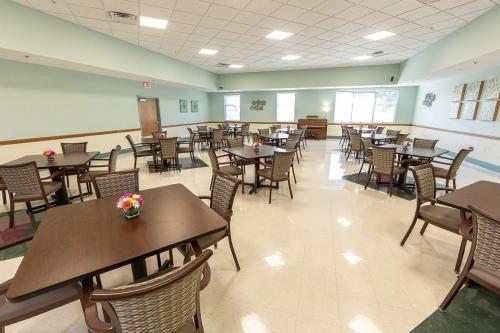
How is Autumn Hills Staffed?

CMS rates AUTUMN HILLS CARE CENTER's staffing level at 1 out of 5 stars, which is much below average compared to other nursing homes. Staff turnover is 49%, compared to the Ohio average of 46%. RN turnover specifically is 60%, which is notably high. RNs provide skilled clinical oversight, so turnover in this role can affect medical care quality.

What Have Inspectors Found at Autumn Hills?

State health inspectors documented 41 deficiencies at AUTUMN HILLS CARE CENTER during 2019 to 2025. These included: 1 that caused actual resident harm, 39 with potential for harm, and 1 minor or isolated issues. Deficiencies causing actual harm indicate documented cases where residents experienced negative health consequences.
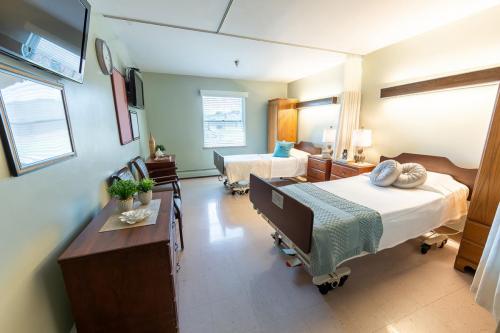
Who Owns and Operates Autumn Hills?

AUTUMN HILLS CARE CENTER is owned by a for-profit company. For-profit facilities operate as businesses with obligations to shareholders or private owners. The facility is operated by CONTINUING HEALTHCARE SOLUTIONS, a chain that manages multiple nursing homes. With 120 certified beds and approximately 106 residents (about 88% occupancy), it is a mid-sized facility located in NILES, Ohio.
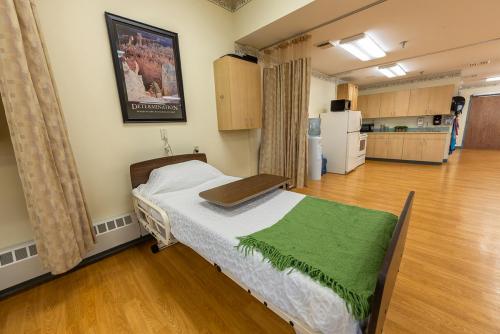
How Does Autumn Hills Compare to Other Ohio Nursing Homes?

Compared to the 100 nursing homes in Ohio, AUTUMN HILLS CARE CENTER's overall rating (2 stars) is below the state average of 3.2, staff turnover (49%) is near the state average of 46%, and health inspection rating (2 stars) is below the national benchmark.

What Should Families Ask When Visiting Autumn Hills?

Based on this facility's data, families visiting should ask: "Can you walk me through typical staffing levels on day, evening, and night shifts?" "Can I visit during a mealtime to observe dining assistance and food quality?" "How do you handle medical emergencies, and what is your hospital transfer rate?" "Can I speak with family members of current residents about their experience?" These questions are particularly relevant given the below-average staffing rating.

Is Autumn Hills Safe?

Based on CMS inspection data, AUTUMN HILLS CARE CENTER has a clean safety record: no substantiated abuse findings (meaning no confirmed cases of resident harm), no Immediate Jeopardy citations (the most serious violation level indicating risk of serious injury or death), and is not on the Special Focus Facility watch list (a federal program monitoring the lowest-performing 1% of nursing homes). The facility has a 2-star overall rating and ranks #100 of 100 nursing homes in Ohio. While no facility is perfect, families should still ask about staff-to-resident ratios and recent inspection results during their visit.

Do Nurses at Autumn Hills Stick Around?

AUTUMN HILLS CARE CENTER has a staff turnover rate of 49%, which is about average for Ohio nursing homes (state average: 46%). Moderate turnover is common in nursing homes, but families should still ask about staff tenure and how the facility maintains care continuity when employees leave.

Was Autumn Hills Ever Fined?

AUTUMN HILLS CARE CENTER has no federal fines on record. CMS issues fines when nursing homes fail to meet care standards or don't correct problems found during inspections. The absence of fines suggests the facility has either maintained compliance or corrected any issues before penalties were assessed. This is a positive indicator, though families should still review recent inspection reports for the full picture.

Is Autumn Hills on Any Federal Watch List?

AUTUMN HILLS CARE CENTER is not on any federal watch list. The most significant is the Special Focus Facility (SFF) program, which identifies the bottom 1% of nursing homes nationally based on persistent, serious quality problems. Not being on this list means the facility has avoided the pattern of deficiencies that triggers enhanced federal oversight. This is a positive indicator, though families should still review the facility's inspection history directly.