THE PAVILION REHABILITATION AND NURSING CENTER
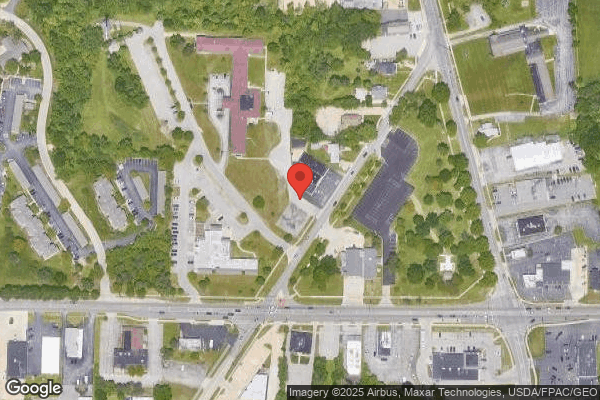
13900 BENNETT ROAD, NORTH ROYALTON, OH 44133 (440) 237-7966
For profit - Limited Liability company 83 Beds NORTHWOOD HEALTHCARE GROUP Data: November 2025 2 Immediate Jeopardy citations
Trust Grade
21/100
#800 of 913 in OH
Last Inspection: January 2025

Within standard 12-15 month inspection cycle. Federal law requires annual inspections.

Overview

The Pavilion Rehabilitation and Nursing Center has received a Trust Grade of F, indicating significant concerns with care quality and safety. Ranking #800 out of 913 facilities in Ohio places it in the bottom half, and #78 of 92 in Cuyahoga County suggests there are only a few local options that are better. While the facility shows a trend of improvement, decreasing from 13 issues in 2024 to 11 in 2025, it still has a troubling history, including critical incidents where residents did not receive necessary medications, which could have led to serious health risks. Staffing is a significant weakness, with a low rating of 1 out of 5 and a high turnover rate of 67%, compared to the state average of 49%, indicating instability among caregivers. On a positive note, the facility has not incurred any fines, which is a good sign, but it has less RN coverage than 99% of other Ohio facilities, meaning there may be fewer registered nurses to catch potential issues.

Trust Score
F
21/100
In Ohio
#800/913
Bottom 13%
Safety Record
High Risk
Review needed
Inspections
Getting Better
13 → 11 violations
Staff Stability
⚠ Watch
67% turnover. Above average. Higher turnover means staff may not know residents' routines.
Penalties
✓ Good
No fines on record. Clean compliance history, better than most Ohio facilities.
Skilled Nurses
⚠ Watch
Each resident gets only 12 minutes of Registered Nurse (RN) attention daily — below average for Ohio. Fewer RN minutes means fewer trained eyes watching for problems.
Violations
⚠ Watch
65 deficiencies on record. Higher than average. Multiple issues found across inspections.
★★☆☆☆
2.0
Overall Rating
★☆☆☆☆
1.0
Staff Levels
★★★★★
5.0
Care Quality
★☆☆☆☆
1.0
Inspection Score
Stable
2024: 13 issues
2025: 11 issues

The Good

  • 5-Star Quality Measures · Strong clinical quality outcomes
  • Full Sprinkler Coverage · Fire safety systems throughout facility
  • No fines on record

Facility shows strength in quality measures, fire safety.

The Bad

2-Star Overall Rating

Below Ohio average (3.2)

Below average - review inspection findings carefully

Staff Turnover: 67%

20pts above Ohio avg (46%)

Frequent staff changes - ask about care continuity

Chain: NORTHWOOD HEALTHCARE GROUP

Part of a multi-facility chain

Ask about local staffing decisions and management

Staff turnover is elevated (67%)

19 points above Ohio average of 48%

The Ugly 65 deficiencies on record

2 life-threatening
Feb 2025 2 deficiencies
CONCERN (D) 📢 Someone Reported This

A family member, employee, or ombudsman was alarmed enough to file a formal complaint

Potential for Harm - no one hurt, but risky conditions existed

Deficiency F0744 (Tag F0744)

Could have caused harm · This affected 1 resident

**NOTE- TERMS IN BRACKETS HAVE BEEN EDITED TO PROTECT CONFIDENTIALITY** Based on medical record review, Self-Reported Incident review, witness statement review, policy review and interview, the facili...

Read full inspector narrative →
**NOTE- TERMS IN BRACKETS HAVE BEEN EDITED TO PROTECT CONFIDENTIALITY** Based on medical record review, Self-Reported Incident review, witness statement review, policy review and interview, the facility failed to ensure staff provided appropriate dementia care when Resident #44, who had a diagnosis of dementia with behavioral disturbance began to display wandering behaviors. This affected one (Resident #44) of three residents reviewed for dementia care. The census was 44. Findings include: Review of the medical record for Resident #44 revealed an admission date of 09/27/22 with diagnoses of dementia with behavioral disturbance, anxiety disorder, cognitive communication deficit and schizophrenia. Resident #44 had a legal guardian and resided on the 300-hall. Review of the elopement care plan updated 08/12/24 revealed Resident #44 was an elopement risk/wanderer, required a legal guardian, had a history of attempting to leave the facility unattended, had impaired safety awareness, impaired cognition and diagnoses of dementia and schizophrenia. Interventions included distracting resident from wandering by offering pleasant diversions, structured activities, food, conversation, television, reading material and identify pattern of wandering; divert as needed and intervene as appropriate. Review of the Minimum Data Set (MDS) 3.0 quarterly assessment dated [DATE] revealed Resident #44 had short and long-term memory problems, was severely impaired with making decisions regarding tasks of daily life, and had continuous inattention, disorganized thinking and altered level of consciousness. Resident #44 was independent with walking 150 feet and required partial/moderate assistance with toileting, bathing, dressing, personal hygiene, bed mobility and transferring. Review of the Self-Reported Incident (SRI) dated 01/18/25 revealed there was an allegation of Certified Nurse Aide (CNA) #13 taunting Resident #44. Review of CNA #13's verbal witness statement authored and signed by the Administrator dated 01/18/25 revealed, on January 15th, I was assigned to work on 300-hall where I had to care for [Resident #44] and other residents even though I asked to not be put over on that hall because due to me being a new face. [Resident #44] doesn't take me very well as she sometimes would with other employees that have been there longer. So as [Resident #44] was sundowning, she started taking her clothing off, me and [Registered Nurse (RN) #3] tried assisting her with putting them back on but when we did, she tried hitting us so [Licensed Practical Nurse (LPN) #6] talked to her and she did but after she left, [Resident #44] continued getting up and going in other resident's rooms while me and the nurse [RN #3] tried numerous of times approaching [Resident #44] with a light calm voice even saying, come on, sweetheart, let's go over here and take a seat. While at times, it did work until it didn't so then [Resident #44] would sit and be back at it again but this time she happened to had a mood swing and was angered because we didn't allow her to go into other resident's rooms and we stopped her by holding the door until she began to swing and hit me so then [RN #3] tried approaching and taking her to her room with [Resident #44] went and stayed in for their of all 10 minutes and she was back to going in other peoples rooms. Me and the nurse [RN #3] repeated this several times, but it never really lasted and I knew that I had to keep other residents safe because while some knew and understood [Resident #44's] condition there were some that didn't care and would get angry with her coming into their rooms. I was trying to prevent there being an altercation. I knew that me trying to redirect her resulted her getting mad and trying to hit me so I had the idea of putting the two chairs by the entry hall of 900-913 because that was the hall that she frequently kept going down and I stood in front of the chairs and monitor to make sure if any resident came out of their room which none did but one which is a resident named [Resident #48]. I let him through but after [Resident #44] came and moved the chairs, I saw that no longer works so I put the chairs back. Review of the Elopement review assessment dated [DATE] revealed Resident #44 was at high risk for elopement due to being ambulatory, always disoriented, poor safety/environmental awareness and dementia with behavioral disturbance diagnosis. Resident #44 had a wanderguard (an electronic device to alert staff of a resident attempting to exit the facility) placed on her right ankle. Observation on 02/18/25 at 10:35 A.M. revealed Resident #44 was lying in bed, sleeping with a wanderguard on her right ankle. Interview, during the observation, with Resident #44 was attempted however the resident answered with incomprehensible sentences. At 10:35 A.M., Resident #44 was walking in her room. Interview on 02/19/25 at 9:15 A.M. with Resident #44's sister/guardian revealed former Resident #48 had shown Resident #44's sister/guardian a picture of three large chairs (with one of the chairs turned on its side) blocking an entrance to a hallway. Interview on 02/19/25 at 12:00 P.M. with Regional Director of Operations (RDO) #1 verified that according to CNA #13's witness statement dated 01/18/25, CNA #13 obstructed an area with chairs blocking and confining Resident #44 to a section of the facility. Interview on 02/19/25 at 2:00 P.M. with the Administrator revealed the entry hall of 900-913 in CNA #13's witness statement was a typo. The Administrator meant to type, the entry hall of Rooms 300 to 313. Review of the facility's Abuse, Neglect, Exploitation and Misappropriation of Resident Property policy revised on 11/01/19 revealed the facility would not tolerate Abuse, Neglect, Exploitation of its residents or the Misappropriation of resident property. Involuntary Seclusion was defined as separation of a resident from other residents or from his or her room or confinement to his or her room (with or without roommates) against the resident's will, or the will of the resident's legal guardian. This deficiency represents non-compliance investigated under Complaint Number OH00161783.
CONCERN (E) 📢 Someone Reported This

A family member, employee, or ombudsman was alarmed enough to file a formal complaint

Potential for Harm - no one hurt, but risky conditions existed

Accident Prevention (Tag F0689)

Could have caused harm · This affected multiple residents

**NOTE- TERMS IN BRACKETS HAVE BEEN EDITED TO PROTECT CONFIDENTIALITY** THE FOLLOWING DEFICIENCY REPRESENTS AN INCIDENT OF PAST NON-COMPLIANCE THAT WAS SUBSEQUENTLY CORRECTED PRIOR TO THIS SURVEY. Bas...

Read full inspector narrative →
**NOTE- TERMS IN BRACKETS HAVE BEEN EDITED TO PROTECT CONFIDENTIALITY** THE FOLLOWING DEFICIENCY REPRESENTS AN INCIDENT OF PAST NON-COMPLIANCE THAT WAS SUBSEQUENTLY CORRECTED PRIOR TO THIS SURVEY. Based on observation, medical record review, review of witness statements, review of the daily per patient day (PPD) schedule, review of disciplinary action forms, and interview, the facility failed to provide appropriate supervision to residents while assigned nursing staff were sleeping. This affected three residents (Residents #44, #8 and #14) who the facility identified as high risk for elopement residing on the 100 or 300-halls and had the potential to affect all nine residents who resided on the 100-hall (Residents #29, #3, #33, #41, #14, #7, #13, #26 and #2) and all 14 residents who resided on the 300-hall (Residents #17, #4, #38, #5, #31, #23, #12, #36, #18, #15, #44, #1, #34, and #19). The census was 44. Findings include: Review of the medical record for Resident #44 revealed an admission date of 09/27/22 with diagnoses of dementia with behavioral disturbance, anxiety disorder, cognitive communication deficit and schizophrenia. Resident #44 had a legal guardian and resided on the 300-hall. Review of the impaired cognitive function/dementia care plan updated 04/13/24 revealed Resident #44 had impaired cognitive function/dementia or impaired thought process related to diagnoses of dementia and cognitive communication deficit with an intervention to cue, reorient and supervise as needed. Review of the elopement care plan updated 08/12/24 revealed Resident #44 was an elopement risk/wanderer, required a legal guardian, had a history of attempts to leave the facility unattended, impaired safety, impaired cognition and diagnoses of dementia and schizophrenia. Interventions included distract resident from wandering by offering pleasant diversions, structured activities, food, conversation, television, reading material and identify pattern of wandering; divert as needed and intervene as appropriate. Review of the Minimum Data Set (MDS) 3.0 quarterly assessment dated [DATE] revealed Resident #44 had short and long-term memory problems, was severely impaired with making decisions regarding tasks of daily life, and had inattention, disorganized thinking and altered level of consciousness continuously. Resident #44 was independent with walking 150 feet and required partial/moderate assistance with toileting, bathing, dressing, personal hygiene, bed mobility and transferring. Review of the Elopement Review assessment dated [DATE] revealed Resident #44 was at high risk for elopement due to being ambulatory, always disoriented, poor safety/environmental awareness and a dementia with behavioral disturbance diagnosis. Resident #44 had a wanderguard (an electronic device to alert staff if a resident attempted to exit the facility) placed on her right ankle. Review of the medical record for Resident #8 revealed an admission date of 06/21/21 with diagnoses of vascular dementia, schizophreniform disorder, alcohol use, anxiety disorder, psychosis not due to a substance or known physiological condition, schizoaffective disorder bipolar type and bipolar disorder. Resident #8 had a legal guardian and resided on the 100-hall. Review of the cognition care plan updated 09/20/24 revealed Resident #8 had impaired cognitive function/dementia or impaired thought processes related to vascular dementia with an intervention to cue, reorient and supervise as needed. Review of the elopement care plan updated 09/20/24 revealed Resident #8 had an elopement risk/wandered, was disoriented to place, had a history of attempts to leave the facility unattended, and impaired safety. Review of the MDS 3.0 quarterly assessment dated [DATE] revealed Resident #8 had short and long-term memory problems, was severely impaired for cognitive skills for daily decision making, wandered four to six days during the assessment, and was independent with transferring and walking 150 feet. Review of the Elopement Review assessment dated [DATE] revealed Resident #8 was high risk for elopement due to being ambulatory and always disoriented. Review of the medical record for Resident #14 revealed an admission date of 12/14/24 with diagnoses of schizophrenia, disorders of psychological development, and schizoaffective disorder. Resident #14 had a legal guardian and resided on the 100-hall. Review of the Elopement Review assessment dated [DATE] revealed Resident #14 was high risk for elopement due to being ambulatory, predisposing diseases of schizophrenia and cognitive delay and being a new admission. Review of the MDS 3.0 admission assessment dated [DATE] revealed Resident #14 was moderately cognitively impaired, had acute onset mental status change related to inattention and disorganized thinking, and was independent with transferring and walking 150 feet. Review of the elopement care plan dated 01/29/25 revealed Resident #14 was an elopement risk/wanderer and at high risk of elopement with an intervention to provide supervision for off unit activities. Review of the daily per patient day (PPD) schedule dated 01/17/25 revealed Certified Nurse Aide (CNA) #13, CNA #9 and CNA #22 worked night shift from 7:00 P.M. on 01/17/25 to 7:00 A.M. on 01/18/25. CNA #13 was assigned to the 100-hall, CNA #9 was assigned to the 300-hall and CNA #22 was assigned to float to different halls. Licensed Practical Nurse (LPN) #7 was assigned to the 100 and 300-halls and LPN #23 was assigned to the 100 and 200-halls. Review of the undated witness statement authored by the Administrator revealed, [Regional Director of Clinical Services (RDCS) #11 and I came to the building at 12:15 A.M. on the night of 01/17/25 into 01/18/25 and when we got on the floor, we saw a staff member with their eyes closed. We then rounded the building, came down to the conference room for a little while to catch up on work. We then went back up on the floor from separate ends of the building around 2:30 A.M., before leaving the building and saw two more staff members with their eyes closed . Review of the undated witness statement authored by RDCS #11 revealed, [the Administrator] and I rounded the facility on 01/18/25 approximately 12:00 A.M. to 12:15 A.M. We found an employee appearing to be sleeping. Later that night around 2:30 A.M., [the Administrator] and I split up as he went the stairs and I used the elevator and we identified two other members with their eyes closed . Review of the Employee Warning Notice dated 01/18/25 revealed CNA #13 received a final written warning for employee noted sleeping on duty in a common area. Review of the Employee Warning Notice dated 01/18/25 revealed CNA #9 received a final written warning for employee noted sleeping on duty in a common area. Review of the Employee Warning Notice dated 01/18/25 revealed CNA #22 received a final written warning for employee noted sleeping on duty in a common area. Observation on 02/18/25 at 10:30 A.M. revealed Resident #8 was wandering with her head down back-and-forth on the 300-hall. Resident #8 had a wanderguard on her right ankle. Observation on 02/18/25 at 10:35 A.M. revealed Resident #44 was lying in bed, sleeping with a wanderguard on her right ankle. An interview, during the observation, with Resident #44 was attempted however the resident answered with incomprehensible sentences. At 10:35 A.M., Resident #44 was walking in her room. Observation on 02/18/25 at 2:26 P.M. revealed Resident #8 was wandering with her head down back-and-forth on the 300-hall with a tennis shoe on her right foot and only a sock on her left foot. Resident #8 had a wanderguard on her right ankle. Observation on 02/19/25 at 8:08 A.M. revealed Resident #8 was wandering with her head down back-and-forth on the 300-hallway with socks on her feet. Resident #8 had a wanderguard on her right ankle. Interview on 02/19/25 at 9:15 A.M. with Resident #44's sister/guardian revealed former Resident #48 had shown Resident #44's sister/guardian pictures of several nursing staff, including CNA #9, sleeping at the nursing station. Observation on 02/19/25 at 11:55 A.M. revealed Resident #8 was sitting on the edge of her bed with her lunch meal sitting in front of her on her overbed table, staring at the privacy curtain in her room. An attempt to interview Resident #8 during the observation was unsuccessful. When asked how long she had resided at the facility Resident #8 answered, good and did not make eye contact. Interview on 02/19/25 with the Administrator and RDCS #11 verified they observed some nursing staff members sleeping in common areas when they were at the facility during night shift on 01/18/25. The Administrator and RDCS #11 also verified that CNA #13 was assigned to the 100-hall and CNA #9 was assigned to the 300-hall with the two nurses splitting the 100 and 300-hall so there was potential for the residents residing on the 100 and 300-hall to be unsupervised while CNA #13 and CNA #9 were sleeping. Review of the census provided by the facility revealed Residents #29, #3, #33, #41, #14, #7, #13, #26 and #2 resided on the 100-hall and Residents #17, #4, #38, #5, #31, #23, #12, #36, #18, #15, #44, #1, #34, and #19 resided on the 300-hall. The deficient practice was corrected on 01/27/25 when the facility implemented the following corrective actions: • On 01/18/25, all staff were educated they were not to sleep on the clock by the Director of Nursing. This was confirmed by review of inservice sign in sheets. • On 01/18/25, a Quality Assurance and Performance Improvement (QAPI) meeting was held with the Adminstrator, Social Services Designee (SSD) #10, Business Officer Manager (BOM) #17, Scheduler #5, Admissions Director #16, the DON, Activities Director (AD) #18, Maintenance Director #19, Medical Director #21, Assistant Director of Nursing (ADON) #2 and RDCS #11. Observations of the sleeping staff was discussed and a plan of correction was developed. • On 01/18/25, a calendar was created to assign department heads to visit the facility unannounced during night shift during January 2025 and February 2025. The department heads consisted of the Administrator, RDCS #11, the DON, Admissions Director #16, Scheduler #5, BOM #17, AD #18, Maintenance Director #19, ADON #2, and SSD #10 • Beginning on 01/20/25, the assigned department head began auditing the facility unannounced during the night shift daily. Review of the audits revealed by 01/27/25 a full week of audits had been completed with no concerns noted. This deficiency represents non-compliance investigated under Complaint Number OH00161783.
Jan 2025 9 deficiencies
CONCERN (D)

Potential for Harm - no one hurt, but risky conditions existed

Deficiency F0578 (Tag F0578)

Could have caused harm · This affected 1 resident

**NOTE- TERMS IN BRACKETS HAVE BEEN EDITED TO PROTECT CONFIDENTIALITY** Based on record review, resident interview and staff interview the facility failed to ensure residents had accurate advance dire...

Read full inspector narrative →
**NOTE- TERMS IN BRACKETS HAVE BEEN EDITED TO PROTECT CONFIDENTIALITY** Based on record review, resident interview and staff interview the facility failed to ensure residents had accurate advance directive orders and information in place through out the medical record. This affected one (Resident #16) of one resident reviewed for advanced directives. The facility census was 43. Findings Include: Resident #16 was admitted to the facility on [DATE] with diagnoses that included alcohol dependence, schizoaffective disorder, bipolar disorder and cocaine abuse. Review of the most recent Minimum Data Set (MDS) 3.0 assessment dated [DATE] revealed Resident #16 was cognitively intact, required supervision for completing his activities of daily living and received hospice services. Review of the electronic physicians orders for [DATE] revealed an order for full code (full medical support which includes cardiopulmonary resuscitation (CPR) would be performed on Resident #16 in the event of medical emergency). Review of the care plan dated [DATE] revealed Resident #16 desired to be a full code. Review of the second page of Resident #16's hard medical chart revealed an undated hospice election form (document indicating Resident #16 has chosen hospice benefits) indicating Resident #16 had a DNR (do not resuscitate) pending Review of the third page of Resident #16's hard medical chart revealed a red piece of paper in an electronic sleeve with the words DNRCC (do not resuscitate comfort care) typed on it. On the back of the same page was a signed DNRCC form (document indicating Resident #16 desires to only be kept comfortable in the event of a medical emergency or cardiac arrest and does not desire any medical interventions in such occasions). Interview with Resident #16 on [DATE] at 10:07 A.M. revealed he desires to have his DNRCC code status remain in effect. Interview with the Director of Nursing (DON) on [DATE] at 10:30 A.M. verified the inconsistent and incorrect information regarding Resident #16's code status through out the medical record. Review of the policy entitled Advanced Directives dated [DATE] revealed The plan of care for each resident will be consistent with his or her documented treatment preferences and/or advanced directive the policy further noted The Director of Nursing Services or designee will notify the Attending Physician of advanced directive so that appropriate order can be documented in the resident's medical record or plan of care.
CONCERN (D)

Potential for Harm - no one hurt, but risky conditions existed

Comprehensive Assessments (Tag F0636)

Could have caused harm · This affected 1 resident

**NOTE- TERMS IN BRACKETS HAVE BEEN EDITED TO PROTECT CONFIDENTIALITY** Based on medical record review, review of the Resident Assessment Instrument (RAI), policy review and staff interview the facili...

Read full inspector narrative →
**NOTE- TERMS IN BRACKETS HAVE BEEN EDITED TO PROTECT CONFIDENTIALITY** Based on medical record review, review of the Resident Assessment Instrument (RAI), policy review and staff interview the facility failed to complete a Minimum Data Set (MDS) 3.0 assessment as required upon resident self initiated discharge from the facility. This affected one (Resident #14) of one resident reviewed for MDS timing/accuracy. The facility census was 43. Findings include: Review of the medical record for Resident #14 revealed the resident was admitted to the facility on [DATE] with diagnoses that included paraplegia, bipolar disorder, opioid dependence and drug induced constipation. Review of the progress note dated 06/17/24 at 4:54 P.M. revealed Resident #14 left the facility against medical advice (AMA) and was given methadone (medication used to treat drug addiction) prior to his departure. Further review of the progress notes revealed a another entry on 06/17/24 at 11:45 P.M. indicating Resident #14 returned to the facility from a local hospital via ambulance. Review of the MDS data for Resident #14 revealed a required discharge return not anticipated assessment was not completed and subsequently neither was a required entry assessment completed on 06/17/24. On 01/07/25 at 4:14 P.M. interview with MDS Nurse #545 verified no discharge assessment or entry assessment was completed as required. Review of the Resident Assessment Instrument (RAI) (manual used for instructions on how to meet regulatory guidelines for completing MDS assessments) revealed on Page 2-40: Assessment Management Requirements and Tips for OBRA Discharge Assessments revealed For unplanned discharges, the facility should complete the OBRA Discharge assessment to the best of its abilities. - An unplanned discharge includes, for example: Resident unexpectedly leaving the facility against medical advice. Review of the policy entitled MDS 3.0 Sections dated 10/01/23 revealed The MDS 3.0 is to be completed within the time frames specified in by the state and federal guidelines.
CONCERN (D)

Potential for Harm - no one hurt, but risky conditions existed

Deficiency F0645 (Tag F0645)

Could have caused harm · This affected 1 resident

**NOTE- TERMS IN BRACKETS HAVE BEEN EDITED TO PROTECT CONFIDENTIALITY** Based on record review and staff interview the facility failed to ensure a valid Pre admission Screen and Resident Review (PASRR...

Read full inspector narrative →
**NOTE- TERMS IN BRACKETS HAVE BEEN EDITED TO PROTECT CONFIDENTIALITY** Based on record review and staff interview the facility failed to ensure a valid Pre admission Screen and Resident Review (PASRR) was in place and completed timely for Residents #14 and #27. This affected two of two residents reviewed for PASRR status. The facility census was 43. Findings Include: 1. Review of the medical record for Resident #14 revealed the resident was admitted to the facility on [DATE] with diagnoses that included paraplegia, bipolar disorder, opioid dependence and drug induced constipation. Review of the most recent Minimum Data Set (MDS) 3.0 assessment dated [DATE] revealed Resident #14 was cognitively intact and required hands on assistance for completing his activities of daily living. Review of census records revealed Resident #14 was readmitted to the facility from a local hospital after signing out of the facility against medical advice (AMA) on 06/17/24. Review of the both the electronic and hard chart revealed a PASRR assessment was not completed prior to or after Resident #14 was readmitted to the facility. On 01/07/25 at 4:14 P.M. interview with MDS Nurse #545 verified no PASRR assessment was completed as required after Resident #14's admission to the facility. 2. Review of the medical record for Resident #27 revealed the resident was admitted to the facility on [DATE] with diagnoses that included bipolar disorder, anxiety disorder and opioid dependence. Review of the most recent MDS 3.0 assessment dated [DATE] revealed Resident #14 was dependent on one staff person for completing her activities of daily living. Further review of Resident #27's medical record revealed Resident #27 was admitted to the facility with a hospital exemption (document from Resident #27's admitting hospital indicating that Resident #27 required less than a 30 day stay at the nursing facility and was subsequently exempt from PASRR requirements for 30 days). Review of census records for Resident #27 revealed Resident #27 has remained at the facility with no discharge back to a community setting. Review of both the electronic and hard charts revealed a full PASRR assessment was not conducted after Resident #27's 30 days at the facility had past. Interview with Social Service Designee (SSD) #546 on 01/09/25 at 9:00 A.M. verified a full PASRR assessment was not completed for Resident #27 prior to her 31st day in the facility as required. `
CONCERN (D)

Potential for Harm - no one hurt, but risky conditions existed

Deficiency F0657 (Tag F0657)

Could have caused harm · This affected 1 resident

**NOTE- TERMS IN BRACKETS HAVE BEEN EDITED TO PROTECT CONFIDENTIALITY** Based on record review and interview, the facility failed to ensure Resident #148's care plan was revised to reflect wandering b...

Read full inspector narrative →
**NOTE- TERMS IN BRACKETS HAVE BEEN EDITED TO PROTECT CONFIDENTIALITY** Based on record review and interview, the facility failed to ensure Resident #148's care plan was revised to reflect wandering behaviors. This affected one (Resident #148) of 17 residents reviewed for care planning. The facility census was 43. Findings include: Review of the medical record for Resident #148 revealed an admission date of 12/14/24 with diagnoses including schizophrenia (mental health disorder with psychotic symptoms including hallucinations, delusions, mania and depression). Review of the elopement assessment dated [DATE] for Resident #148 revealed she was at high risk for elopement related to being ambulatory or in a wheelchair, having schizophrenia and a cognitive delay, being a new admission and being alert. Review of Resident #148's care plan dated 12/14/24 revealed she did not have a care plan for wandering or for having the potential for elopement. Review of the comprehensive Minimum Data Set (MDS) 3.0 Assessment for Resident #148 revealed she had impaired cognition. She had inattention, disorganized thinking and altered level of consciousness that fluctuated. She was independent with ambulating. Review of Resident #148's nursing progress note dated 12/19/24 at 4:42 P.M. revealed during a supervised smoke break Resident #148 went off the patio. Staff were able to redirect the resident back onto the patio and into the building. Resident #148 had a wanderguard placed on her right ankle and staff were to check on her every 15 minutes. Review of the physician's orders for Resident #148 dated 12/19/24 revealed she had a wanderguard and staff were to check the location, placement, function, expiration date and skin check under the bracelet every shift for elopement prevention as well as for staff to check on her every 15 minutes. Interview on 01/07/25 at 2:08 P.M. with Regional Director of Clinical Services #544 verified Resident #148 did not have a care plan for wandering or the potential for elopement.
CONCERN (D)

Potential for Harm - no one hurt, but risky conditions existed

Drug Regimen Review (Tag F0756)

Could have caused harm · This affected 1 resident

**NOTE- TERMS IN BRACKETS HAVE BEEN EDITED TO PROTECT CONFIDENTIALITY** Based on record review and interview, the facility failed to ensure pharmacy recommendations were acted on when accepted. This a...

Read full inspector narrative →
**NOTE- TERMS IN BRACKETS HAVE BEEN EDITED TO PROTECT CONFIDENTIALITY** Based on record review and interview, the facility failed to ensure pharmacy recommendations were acted on when accepted. This affected two (Resident #36 and #11) out of five residents reviewed for unnecessary medications. The total census was 43. Findings include: 1. Record review of Resident #36 revealed she was admitted [DATE] and had diagnoses including unspecified convulsions, hypothyroidism, and anxiety disorder. She had an active order dated 09/20/24 for 10 milligrams (mg) of Hydroxyzine to be given three times per day for anxiety, an active order dated 06/21/24 for 400 mg of magnesium oxide to be given twice daily for supplement (scheduled for 6:00 A.M. and 6:00 P.M.), and an active order dated 06/19/24 for 100 micrograms of Levothyroxine (scheduled for 6:00 A.M.) to be given daily for hypothyroidism. Record review of Resident #36's pharmacy recommendations revealed multiple recommendations dated 11/08/24 which included the following: for Hydroxyzine to have a dose reduction to 10 mg twice per day unless contraindicated, for a blood magnesium level to be drawn to monitor the magnesium, for a thyroid stimulating hormone (TSH) and Thyroxine (T4) blood level to be drawn to monitor the Levothyroxine, and for the Levothyroxine and magnesium to be administered over four hours apart due to magnesium's ability to interfere with the absorption of Levothyroxine. All of these recommendations had the agree box checked and were signed by the nurse practitioner or physician. Record review of Resident #36 revealed no evidence magnesium, TSH, or T4 blood levels were ordered or drawn following the pharmacy recommendation, no evidence the Hydroxyzine dose was reduced or reviewed for reduction, and no evidence the Levothyroxine or magnesium medication administration times were changed to be given separately from each other. Interview with the Director of Nursing on 01/08/35 at 1:10 P.M. confirmed the above findings.2. Review of the medical record for Resident #11 revealed an admission date of 09/06/23 with diagnoses including dementia, schizophrenia, and insomnia. Review of the physician's orders for Resident #11 revealed he had an active order dated 09/06/23 for Diphenhydramine 25 milligrams (mg) to be given every six hours as needed for itching. Review of the pharmacy recommendations dated 08/06/24 for Resident #11 revealed recommendation to discontinue Diphenhydramine 25 mg by the pharmacist. The nurse practitioner had agreed to the discontinuation and signed the recommendation. Interview on 01/07/25 at 4:48 P.M. with the Director of Nursing (DON) verified Resident #11's Diphenydramine 25 mg should have been discontinued on 08/06/24 when the nurse practitioner had agreed with the pharmacy recommendation.
CONCERN (D)

Potential for Harm - no one hurt, but risky conditions existed

Deficiency F0760 (Tag F0760)

Could have caused harm · This affected 1 resident

Based on interview and record review, the facility failed to appropriately monitor relevant lab values before administering Warfarin. This affected one of five residents reviewed for unnecessary medic...

Read full inspector narrative →
Based on interview and record review, the facility failed to appropriately monitor relevant lab values before administering Warfarin. This affected one of five residents reviewed for unnecessary medications (Resident #9). The total census was 43. Findings include: Record review of Resident #9 revealed she was admitted to the facility 08/07/24 and had diagnoses including antiphospholipid syndrome, systemic lupus, and a history of venous thrombosis. She had an active order dated 08/16/24 for an International Normalized Ratio (INR, a common mechanism to track Warfarin effectiveness) lab draw every Monday, Wednesday, and Friday, and to report it to the medical provider. She had an active order dated 09/28/24 for 6 milligrams of Warfarin to be given daily. Review of Resident #9's medication administration record revealed Warfarin was given every day in January except 01/05/25. Review of Resident #9's progress notes revealed she had a 01/03/25 INR lab draw that was not reported to the practitioner until 01/05/25, who ordered to hold the Warfarin and a STAT INR draw. Record review of Resident #9's lab results revealed her INR was drawn 01/03/25 at 4:16 A.M. and was reported 12:18 P.M. with a value of 4.1. The lab tracking also noted that standard anticoagulant values were between 2.0 and 3.0. A handwritten note dated 01/05/25 revealed staff were to hold Coumadin on 01/05/25 and draw a STAT lab. The INR lab result for 01/05/25 revealed a result of 5.1, which was identified as a critical result. A handwritten note dated 01/05/25 revealed the value was reported and they would redraw on 01/06/25. The INR draw on 01/06/25 was 2.6, and a written note said it was reported to the practitioner who said to restart the Warfarin at its normal dose. Interview with Resident #9 on 01/06/25 at 10:02 A.M. revealed she took Warfarin (a blood-thinner) to manage her lupus disease. Her INR level was drawn 01/03/25 and she asked the nurse what the result was, and they never responded. She took the Warfarin on 01/03/25 and 01/04/25, then learned the INR result was 4.1 on 01/03/25 and was 5.1 on 01/05/25 (therapeutic INR value for Warfarin therapy is typically between 2.0 and 3.0). Staff then held the dose on 01/05/25, but they should have held it the other two days as she was now at risk for excessive bruising or bleeding. She did not want to take a shower until the INR level came down due to the risk of injury, and she said she would refuse Warfarin doses from now on unless staff could tell her the current INR. Interview with Assistant Director of Nursing (ADON) #500 on 01/08/25 at 9:05 A.M. revealed she was the nurse who administered Warfarin to Resident #9 on 01/03/25. She said the INR should have been reported from the shift before, so because she did not hear any concerns with the INR she thought it was acceptable. She confirmed the INR lab draw on 01/03/25 was 4.1 and that according to the lab form it was collected at 4:16 A.M. and reported 12:18 P.M. Interview with the Director of Nursing on 01/08/35 at 1:10 P.M. confirmed Resident #9's Warfarin should have been held starting 01/03/25 until the INR was within normal limits.
CONCERN (D)

Potential for Harm - no one hurt, but risky conditions existed

Deficiency F0761 (Tag F0761)

Could have caused harm · This affected 1 resident

Based observation and interview, the facility failed to ensure controlled medications were stored in a separately locked and permanently affixed compartment. This affected two residents (Resident #14 ...

Read full inspector narrative →
Based observation and interview, the facility failed to ensure controlled medications were stored in a separately locked and permanently affixed compartment. This affected two residents (Resident #14 and #15) of two residents reviewed for Methadone storage. Findings include: 1. Observation of medication administration for Resident #14 on 01/08/25 at 8:12 A.M. from the 200 hall medication cart revealed he was given Methadone (an opioid and 'Schedule 2' medication with high potential for abuse). The methadone was stored in a black box inside the medication cart with no permanent fixture or separate locked compartment preventing it from being removed from the medication drawer. The box had a lid that locked automatically when closed properly, however it was not fully closed and the nurse was able to remove the Methadone without unlocking it. The surveyor confirmed these findings with Licensed Practical Nurse (LPN) #517 on 01/08/25 at 8:20 A.M. 2. Observation of the 300 hall medication cart on 01/08/25 at 9:45 A.M. revealed the Methadone for Resident #15 was stored in a locked black box which was not permanently affixed to the cart. The surveyor confirmed this finding with LPN #512 at the time of observation. Review of the medication storage policy dated 2001 revealed no specific mention of where or how to store controlled medications.
CONCERN (D)

Potential for Harm - no one hurt, but risky conditions existed

Medical Records (Tag F0842)

Could have caused harm · This affected 1 resident

**NOTE- TERMS IN BRACKETS HAVE BEEN EDITED TO PROTECT CONFIDENTIALITY** 2. Review of the medical record for Resident #24 revealed an admission date of 06/21/21 with diagnoses including cognitive commu...

Read full inspector narrative →
**NOTE- TERMS IN BRACKETS HAVE BEEN EDITED TO PROTECT CONFIDENTIALITY** 2. Review of the medical record for Resident #24 revealed an admission date of 06/21/21 with diagnoses including cognitive communication deficit, dementia and hypertension. Review of the physician's orders for Resident #24 revealed she had an order dated 01/03/23 to have Valproic Acid laboratory testing done every three months. Review of the complete electronic and paper medical record revealed there were no laboratory results after 07/09/24 for Resident #24. Interview on 01/07/25 at 9:47 A.M. with Licensed Practical Nurse (LPN) #512 verified there were no laboratory results in Resident #24's medical record after 07/09/24. LPN #512 logged onto the laboratory company's website and printed off Resident #24's results from laboratory studies that were drawn as the physician had ordered. She stated the results should have been in Resident #24's paper chart. Based on record review and interview, the facility failed to ensure Resident #11 and #24's medical record were accurate and complete related to laboratory findings. This affected two (Residents #11 and #24) of 17 resident medical records reviewed during the survey. The facility census was 43. Findings include: 1. Medical record review revealed Resident #11 was admitted to the facility on [DATE] with diagnosis of dementia, schizophrenia, and insomnia. Review of Resident #11's physician order dated 09/26/24 revealed the resident was to have a Depakote laboratory test drawn. Review of Resident #11's electronic and paper medical record revealed there were no laboratory results after 07/11/24 for Resident #11. Interview on 01/07/25 at 9:20 A.M. with Licensed Practical Nurse (LPN) #512 revealed there were no laboratory results in Resident #11's medical record beyond 07/11/24. LPN #512 then accessed the laboratory website and located the labs from the 09/26/24 order to print for Resident #11's medical record.
CONCERN (F)

Potential for Harm - no one hurt, but risky conditions existed

Safe Environment (Tag F0921)

Could have caused harm · This affected most or all residents

Based on observation and staff interview the facility failed to maintain a clean, sanitary and well maintained environment. This had the potential to affect all 43 residents in the facility. Findings ...

Read full inspector narrative →
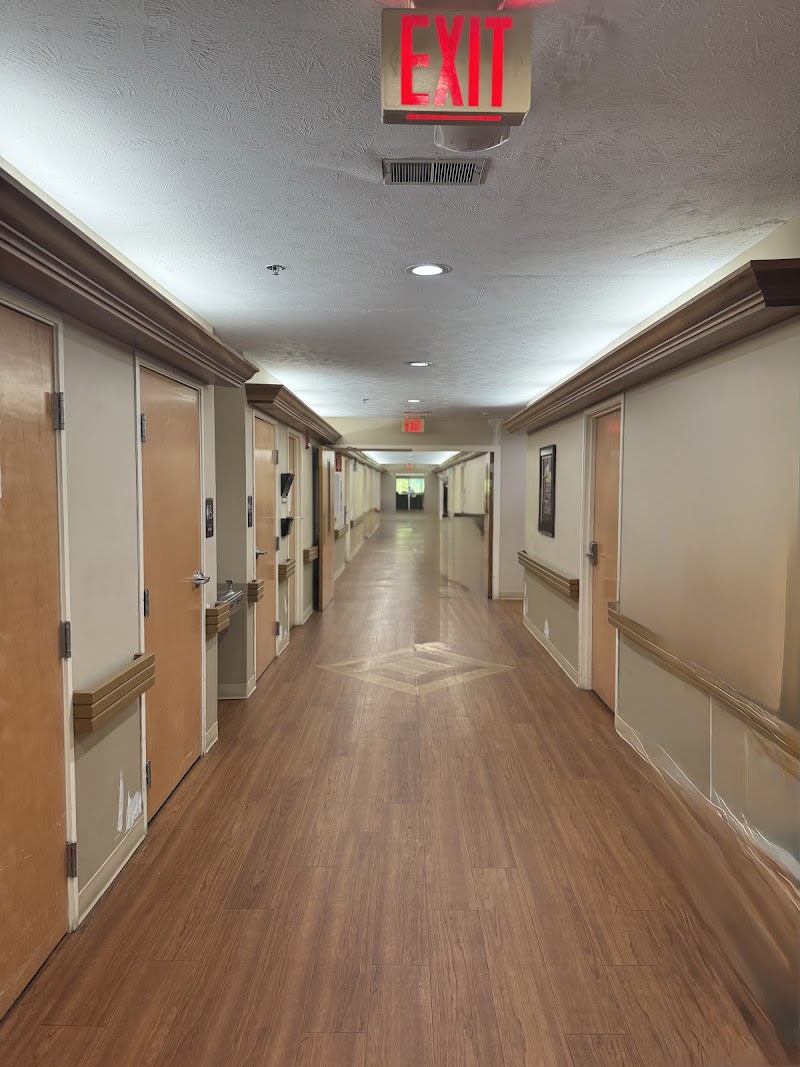
Based on observation and staff interview the facility failed to maintain a clean, sanitary and well maintained environment. This had the potential to affect all 43 residents in the facility. Findings Include: An environmental tour was conducted on 01/07/25 with Maintenance Director (MD) #700 on 01/07/25 between 10:30 A.M. and 11:00 A.M. the following was observed an verified at the time of discovery: -An active leak in ceiling that required removal of multiple ceiling tiles in 1st floor common area. -The room occupied by Residents #2 had noticeable scratches on the floor. -The floor air vent in the room occupied by Resident #9 was covered by blue industrial tape completely blocking air flow. -The shower chair in the bathroom of Resident #35's room was significantly rusted around the legs. -The rooms occupied by Residents #13 and #15 had no privacy curtain. -The outlet covering around the plug into Resident #37's heater/air conditioning (ac) unit in her room was off. -The outlet covering around the plug into Resident #8's heater/(ac) unit in his room was loose. -The ceiling in Resident #149's room had noticeable cobwebs. -The shower head in Resident #149's was observed to continually leak water at moderate drip. -In the 300-hall dining room the walls were noted with significant brown stains along with numerous areas of significant scuffing and scratches on the walls. In the dining rooms common use fridge multiple oranges were in a plastic container that contained signs of mold along with a sandwich bag with an apple in it that was completely rotted and brown in color with an open package of cheddar jalapeno smoked sausages. The vegetable crisper drawer of the refrigerator was noted to be brown in color with various unknown debris inside of it. -In the main dining room, the tables used by residents were extremely scuffed and scratched up. One of the tables was noted to be held together by duct tape around the base. -Numerous areas of cracks in the ceilings and water stains were noted throughout the common areas of the facility. -The nonskid strips in front of the recliner in the room occupied by Resident #36 were half torn of the floor. -The blanket that utilized by Resident #22 had easily noticeable brown stains. -The wall area around the heating/ac unit in Resident #22's room appeared to be crumbling. -The bed sheet in place and ready to be utilized by #14 had numerous brown stains. -The geriatric chair (a large, padded chair that is designed to help seniors with limited mobility) used by Resident #33 had noticeable food crumbs in the side of the seating cushion. A full pretzel stick was noted at the bottom of the chair. -Resident #17 and #24's room had numerous brown dots of an unknown substance. -Numerous areas of wallpaper in Residents #19, #27 and #41's room had fallen off or was in process of falling off the wall. -The wall area above Resident #26 bed had a noticeable outline of a hole that was patched, not sanded and not filled in. -The wheelchair in Resident #105's room had no padding on the arms. Immediately after the observation Resident #105 was observed ambulating the hallway in another manual wheelchair in which the padding on the arms of the wheelchair were torn up and noticeable dirt and debris was visible on the inside of the wheelchair. - A large unknown red stain was observed on the floor of Resident #105's room. -The handrails in the common areas throughout the facility hand various levels of chips and scratches in the wood. -The overbed light in Resident #2 and Resident #12's room had no cover on it. -The walls in Residents #16, #17, #24, #31 and #43's room were extremely scuffed, scrapped and scratched up. -The bathroom walls in Resident #28's room were extremely scuffed and scrapped.
Nov 2024 1 deficiency
CONCERN (F) 📢 Someone Reported This

A family member, employee, or ombudsman was alarmed enough to file a formal complaint

Potential for Harm - no one hurt, but risky conditions existed

Safe Environment (Tag F0921)

Could have caused harm · This affected most or all residents

Based on observation, interview, record review and review of facility policy, the facility did not ensure a safe, functional, sanitary and comfortable environment for all residents. This had the poten...

Read full inspector narrative →
Based on observation, interview, record review and review of facility policy, the facility did not ensure a safe, functional, sanitary and comfortable environment for all residents. This had the potential to affect all 40 residents living in the facility. Findings include: Observations were conducted during a tour of the facility with the Administrator on 11/19/24 at 10:15 A.M. to 11:00 A.M. and revealed the following areas of concern with the physical environment: • In the elevator, which was the primary method for residents to get from the resident rooms and common areas on the second floor to the main floor, the carpet in the elevator was dirty with black, white and brown stains and the carpet was worn. • On the 100 wing there was a buildup of dirt along the baseboards in the hall. • In Resident #11 and 12's room there was a ceiling with chipped paint in the bathroom. • In Resident #13's room there was a build-up of dirt and debris behind the door, and the inside of the window jam had built up dirt and dead insects. The register and vents in the room had a heavy build-up of dust. • In Resident #45's room the shower was noted to be cracked at the base with a noted hole in it at the threshold. The floor in front of the shower was cracked. • The hall carpet on the 200 hall was bubbled up in the center in multiple places posing a potential for trips and falls due to the carpet not being properly adhered to the floor. • In Resident #18 and #17's room chipped and peeling paint on the ceiling was observed, and the paint behind the entrance door to the room was gouged and scraped. There was visible dirt and dust buildup behind the entrance door to the room. The door frame was marked with black scuff marks. • In Resident #25's room the door jam was rusted with bubbled and peeling paint. The door frame was marked with black scuff marks. • The ceiling between Resident #30 and #31's room had chipped and peeling paint with water stains. • The room of Resident #32 was noted to have a visible dirt and debris buildup behind the door. The paint around the heating unit was chipped, bubbling and peeling. The door frame was marked with black scuff marks. The Administrator verified the above findings during the observations on 11/19/24 from 10:15 A.M. to 11:00 A.M. • Observation on 11/20/24 at 10:36 A.M. revealed a window in the common area by the nurses station was broken with plywood covering it where the glass would be in the window. An interview with Licensed Practical Nurse (LPN) #527 at the time of the observation revealed it was broke about a week ago and had not been repaired yet. • Further observations of the 100 hall on 11/26/24 at 1:40 P.M. revealed multiple areas on the walls of unpainted white wall patches. Interview with the Administrator on 11/26/24 at 1:50 P.M. confirmed the above, and stated they are working on the repairs and the facility was a work in progress. Review of the resident Concern/Complaint log from 08/01/24 through 11/17/24 revealed multiple complaints about housekeeping and having rooms cleaned again or mopped again. Review of the facility policy titled Quality of Life -Homelike Environment revised May 2017 revealed the facility staff and management shall maximize, to the extent possible, the characteristics of the facility that reflect a personalized homelike setting. These characteristics include: clean, sanitary, and orderly environment. This deficiency represents non-compliance identified during investigation of Complaint Numbers #OH00159854, #OH00159621, OH00159417, and OH00159566
Aug 2024 1 deficiency
CONCERN (D) 📢 Someone Reported This

A family member, employee, or ombudsman was alarmed enough to file a formal complaint

Potential for Harm - no one hurt, but risky conditions existed

Accident Prevention (Tag F0689)

Could have caused harm · This affected 1 resident

**NOTE- TERMS IN BRACKETS HAVE BEEN EDITED TO PROTECT CONFIDENTIALITY** Based on medical record review, observation, resident and staff interview and policy review, the facility failed to ensure resid...

Read full inspector narrative →
**NOTE- TERMS IN BRACKETS HAVE BEEN EDITED TO PROTECT CONFIDENTIALITY** Based on medical record review, observation, resident and staff interview and policy review, the facility failed to ensure residents were adequately supervised while smoking and failed to ensure smoking materials were maintained in a safe manner. This affected one of one resident (Resident #34) reviewed for smoking. The facility census was 40. Findings include: Review of the medical record for Resident #34 revealed an admission date of 02/08/24. Diagnoses included traumatic brain injury and hemiplegia. Resident #34 was identified as a smoker. Review of the quarterly Minimum Data Set (MDS) assessment dated [DATE] revealed Resident #34 had intact cognition, had no behaviors, and required set up assistance from staff with personal hygiene. Review of the behavior note dated 08/11/24 revealed the smell of cigarette smoke was present outside of the resident's room in the hallway. The nurse knocked on the resident's door and resident permitted entry, and cloud of cigarette smoke observed. The nurse inquired if the resident was smoking and the resident replied with expletive, I can do what I want to. Resident non-receptive to re-education/smoking policy. Resident #34 proceed to slam the door closed. Review of the progress note dated 08/15/24 revealed a small plate with half a cigarette on it and a lighter by his window that was partly open. Resident #34 stated he was smoking in his room. The nurse educated that cigarettes were supposed to be locked up in the box along with lighter. Resident #34 stated he was not going to turn in cigarettes. Review of the care plan created on 08/15/24 revealed Resident #34 has behavior problems related to hides cigarettes on self and smokes in room at times. There were no interventions to address these two behaviors. Observation and interview on 08/15/24 at 11:55 A.M. of Resident #34's room with Licensed Practical Nurse (LPN) #301 revealed a small plate being used as an ash tray seating on the windowsill, with the window open four inches and the screen torn. There were two smoked cigarette butts on the plate and a lighter sitting on the windowsill beside the small plate. Resident #34 stated he did not have any other smoking paraphernalia in his room. Resident #34 stated he does smoke in his room sometimes, and he knows he was not allowed to smoke in his room. LPN #301 removed the plate with the cigarette butts on it and lighter from Resident #34's room. Interview on 08/15/24 at 12:04 P.M. with LPN #301 stated Resident #34 has been caught smoking in his before and has been educated on not smoking in his room. Review of the facility policy titled Smoking Policy, dated 07/2017 revealed smoking is only permitted in designated resident smoking areas, which are located outside of the building. This was an incidental finding discovered during the course of the complaint investigation.
Jun 2024 5 deficiencies
CONCERN (D) 📢 Someone Reported This

A family member, employee, or ombudsman was alarmed enough to file a formal complaint

Potential for Harm - no one hurt, but risky conditions existed

Deficiency F0573 (Tag F0573)

Could have caused harm · This affected 1 resident

**NOTE- TERMS IN BRACKETS HAVE BEEN EDITED TO PROTECT CONFIDENTIALITY** Based on record review and interview, the facility did not ensure Resident #50 and their resident representative had access to p...

Read full inspector narrative →
**NOTE- TERMS IN BRACKETS HAVE BEEN EDITED TO PROTECT CONFIDENTIALITY** Based on record review and interview, the facility did not ensure Resident #50 and their resident representative had access to personal records upon request. This affected one resident (Resident #50) of four residents reviewed for resident rights. The facility census was 49. Findings include: Review of the closed medical record for Resident #50 revealed Resident #50 was admitted to the facility on [DATE] and discharged to another facility on 04/23/24. Medical diagnoses included rhabdomyolysis, chronic obstructive pulmonary disease, cirrhosis of the liver, cognitive communication deficit and schizoaffective bipolar. Review of the admission Minimum Data Set ( MDS) 3.0 assessment dated [DATE] revealed Resident #50 had intact cognition with a Brief Interview Mental Status score of 15 out of 15. Resident #50 needed set up and clean up assistance to eat, and was independent for oral hygiene, toilet hygiene, rolling back on the bed, sitting on the side of the bed, and laying back in the bed. Resident #50 was also independent to sit to stand, transfer from the bed to the chair, transfer to the shower, walk ten feet and walk 50 feet. Review of the document titled Unlimited Durable Power of Attorney (POA) , dated and notarized on 01/21/21, revealed Resident #50 appointed Family Member #364 as the true and lawful Attorney-in-Fact over medical care and finances for Resident #50. Review of the document titled Request For and Authorization To Release Health Information, dated 02/06/24, revealed Resident #50 had signed the request on 02/06/24 to permit the facility and Former Social Worker (FSW) #358 to receive Resident #50's health information from the VA (veterans administration) Northeast Ohio Healthcare System. The authorization did not expire until 12/31/24. An interview was conducted on 06/25/24 at 9:50 A.M. with FM #364 revealing Resident #50's birth certificate, social security card, state identification card and his DD214 military discharge papers were being held in FSW #358's office in a file at the facility. FM #364 stated he was informed by FSW #358 that Resident #50 had signed a release to receive his personal medical information from the VA which FSW #358 had received at the facility. FM #364 stated Resident #50 verbally requested his personal file of information be given to him prior to his discharge and FM #364 was the POA and also requested to have Resident #50's personal information that was left in FSW #358's office but the administrator refused to provide it to them. An interview was conducted on 06/26/24 at 12:16 P.M. with Ombudsman #900 who reported having an open misappropriation case against the facility regarding Resident #50 missing important personal government issued documents and poor communication from the facility to FM #364. The Ombudsman stated Resident #50's social security card and state identification cards were lost. An interview conducted on 06/26/24 at 1:33 P.M. with the Administrator revealed Resident #50 requested his personal documents but the Administrator was unsure if Resident #50's social security card, military identification and birth certificate were in the personal file. The Administrator stated the facility had no standard procedure for receiving and storing resident information when received by staff. The Administrator verified he looked with the Ombudsman and no personal documents were found. The Administrator verified he did not give the file stored in the FSW #358's desk to Resident #50 or FM # 364. An interview was conducted on 06/26/24 at 2:31 P.M. with FSW #358 via telephone and revealed all of Resident #50's personal information given to her was to be returned to Resident #50 upon verbal request. FSW #358 verified military documents and government issued forms of identification were in a file she had had in her office at the facility. FSW #358 verified the Administrator would not give FM #364 any of that information even though FM #364 had provided FSW #358 multiple envelopes of information to be stored in that personal file which was to be returned to Resident #50 or the POA/FM#364 upon discharge from the facility. FSW #358 verified FM #364 did sign a release of information form and explained this to the Administrator. FSW #358 verified Resident #50 had good cognition and was able to make requests verbally or in writing. Review of the facility policy titled Release of Information, dated November 2019, revealed resident records, whether medical, financial or social in nature were safeguarded to protect the confidentiality of the information. The resident may initiate a request to release such information contained in the records and charts to any they wish. Such request will be honored only upon the receipt of a written signed and dated request from the resident or representative. This deficiency represents non-compliance investigated under Complaint Number OH00154586.
CONCERN (E) 📢 Someone Reported This

A family member, employee, or ombudsman was alarmed enough to file a formal complaint

Potential for Harm - no one hurt, but risky conditions existed

Safe Environment (Tag F0584)

Could have caused harm · This affected multiple residents

Based on observation, interviews and facility policy review, the facility failed to ensure an adequate supply of clean towels and washcloths for resident care were available to maintain the residents ...

Read full inspector narrative →
Based on observation, interviews and facility policy review, the facility failed to ensure an adequate supply of clean towels and washcloths for resident care were available to maintain the residents right to a safe, clean, comfortable and homelike environment. This affected 31 residents (#3,#4,#5,#6,#8,#9,#10,#11,#13,#17,#18,#20,#21,#22,#23,#26,#27,#28,#29,#31,#32,#35,#36,#37,#38,#41,#43,#45,#46,#47 and #48) residing on the 200/300 units out of 49 residents residing in the facility. The facility census was 49. Findings include: An environmental tour was conducted on 06/25/24 between 10:49 A.M. and 11:09 A.M. The tour revealed unit 200 clean linen room was empty of clean towels and washcloths for resident care. Unit 300 clean linen room had three washcloths available for resident care and no clean towels were available. The second Unit 300 clean linen room had three washcloths and two bath towels available for resident care. Interview on 06/25/24 at 10:49 A.M. with Regional Director (RD) #363 verified the short supply of lines available for resident use and stated the clean linen room Unit 200 would be restocked. Observation on 06/25/24 at 12:38 P.M. revealed Unit 200 clean linen room had no shower towels available and a stack of 25 washcloths were replenished. Interview on 06/25/24 at 10:36 A.M. to 10:55 A.M. with State Tested Nurse Assistant ( STNA) #311, # 319, #312 and Registered Nurse ( RN) #327 revealed the clean linen supply was short for resident care. Interview on 06/25/24 at 10:57 A.M. STNA # 310 stated low linens could affect resident shower days. Interview on 06/25/24 at 11:05 A.M. revealed Resident #27 missed a shower day due to no shower towels being available. Resident #27 stated he felt terrible about not getting his shower. Interview on 06/25/24 at 12:54 P.M. with Laundry Aid # 349 revealed there were nine dry shower towels available for resident use and 12 towels were drying at the time of interview. LA#349 stated nurses on the floor would use bibs for washcloths if supply was low. LA #349 also stated she could not order the amount of linen needed due to budget requirements. Interview on 06/25/24 at 1:26 P.M. with Central Supply Supervisor # 304 revealed the facility ordered non-medical supplies only off what was needed, and no-par levels were used. Interview on 06/25/24 at 2:24 P.M. with Housekeeping Supervisor # 348 stated the par level of linens should be double the resident census in house, and the Administrator was responsible to approve orders for non-medical supplies such as linens and towels. Interview on 06/25/24 at 4:47 P.M. with the Administrator revealed towels and washcloths were ordered on an as needed basis, and all orders need to be approved by corporate. Review of the facility policy titled Quality of Life Homelike Environment dated May 2017 revealed residents were to be provided with a safe , clean, comfortable and homelike environment which include clean bed and bath linens in good shape, and a clean , sanitary, and orderly environment. This deficiency identified non-compliance during the investigation of Complaint Number OH00154466.
CONCERN (F) 📢 Someone Reported This

A family member, employee, or ombudsman was alarmed enough to file a formal complaint

Potential for Harm - no one hurt, but risky conditions existed

Deficiency F0802 (Tag F0802)

Could have caused harm · This affected most or all residents

Based on record review and interview the facility failed to provide sufficient support personnel to effectively carry out the functions of food and nutrition services. This had the potential to affect...

Read full inspector narrative →
Based on record review and interview the facility failed to provide sufficient support personnel to effectively carry out the functions of food and nutrition services. This had the potential to affect all 49 residents receiving meals from the kitchen, as the facility did not identify any residents who did not eat by mouth. The facility census was 49. Findings include: Review of facility document titled Facility Assessment, dated 05/27/24, revealed food and nutrition services was overseen by a full-time dietary manager and a contracted dietitian. The kitchen was staffed by cooks and dietary aids. Staffing plan included one full time dietary manager, a part time dietitian and five full time food service workers and three part time food service workers. Review of the Dietary Services Schedule dated 05/30/24 to 06/12/24 revealed five full-time dietary employees were scheduled and one part-time employee scheduled to work. Review of Dietary Services Schedule dated 06/13/24 to 06/26/24 revealed five full-time dietary employees and two part time employees were available to work. Review of Dietary Services Schedule dated 06/27/24 to 07/10/24 revealed six full time dietary employees were available to work and one part time employee was available to work. Interview on 06/25/24 at 4:47 P.M. with the Administrator verified there was not enough part-time employees scheduled in dietary according to the Facility Assessment. Interview on 06/25/24 at 11:00 A.M. with Resident # 37 revealed breakfast was to be served at 7:30 A.M. but did not come until 9:30 A.M. Interview on 06/25/24 at 11:05 A.M. with Resident # 27 revealed there had been long wait times for breakfast to arrive some days. Interview on 06/25/24 at 11:10 A.M. with Dietary Aid (DA) #342 revealed dietary staff did not stay over to the next shift if staff was low in the kitchen because of no pay incentives. DA #342 revealed the nurse aides had to work in the kitchen when needed because there were not enough dietary employees and the nurse aides did not uphold all food production protocols. Interview on 06/25/24 at 2:44 P.M. with the Regional Culinary Director (RCD) #355 verified state tested nurse aids did fill in if the dietary department was short staffed. Interview on 06/26/24 at 12:57 P.M. with Dietary Manager (DM) #340 revealed she was off for six weeks to recover from surgery. The facility did not fill in the dietary staff schedule therefore cook # 341 worked double shifts for many days. DM #340 said she would fill in where needed in the kitchen when she was on duty. Review of the policy titled Staffing dated April 2007 revealed the facility provided adequate staffing to meet needed care and services for resident population. Certified nursing assistants were available on each shift to provide the needed care and services of each resident as outlined on the resident's comprehensive care plan. Other support services such as dietary, activities, social, therapy and environmental were adequately staffed to ensure resident's needs were met. This deficiency identified non-compliance during the investigation for Master Complaint Number OH00154970.
CONCERN (F) 📢 Someone Reported This

A family member, employee, or ombudsman was alarmed enough to file a formal complaint

Potential for Harm - no one hurt, but risky conditions existed

Food Safety (Tag F0812)

Could have caused harm · This affected most or all residents

Based on observation, staff interview and facility policy review, the facility failed to ensure the kitchen was clean and sanitary. This had the potential to affect all 49 residents receiving meals fr...

Read full inspector narrative →
Based on observation, staff interview and facility policy review, the facility failed to ensure the kitchen was clean and sanitary. This had the potential to affect all 49 residents receiving meals from the facility kitchen, as the facility identified no residents as receiving nothing by mouth. The facility census was 49. Findings include: Observation during the initial kitchen tour on 06/25/24 between 11:09 A.M. and 12:28 P.M. with Regional Culinary Director (RCD) #355 revealed the following concerns: • The kitchen floor had debris in the corners and edges, with a buildup of dirt and grime on the floor. • Observation of dry food storage area revealed opened and undated bread, confection sugar not sealed in a paper bag and not dated, a box of sugar stored in an open cardboard box not dated with a scoop stored in the box of sugar, chicken gravy packets were undated, a 50-pound bag of long grain rice was unsealed with scoop stored in the bag on the bottom shelf storage. Also, the dry food storage floor revealed dried whole onion peel debris on the floor with a bug crawling through the peels. • In the dairy walk-in cooler was observed to have food debris under the cooler shelving. • Observation of the freezer revealed a thin layer of ice buildup on the floor of the freezer with a large buildup of ice on the ceiling of the freezer. An undated open plastic bag of country fried steak and hush puppies were observed. At the time of observation , RCD #355 confirmed the areas of concern. Review of the undated facility policy titled Food Storage revealed food was to be stored and prepared with professional standards to prevent contamination. Metal or plastic containers with tight fitting covers would be used to store flour, sugar and broken lots of bulk foods. All containers must be accurately labeled. This deficiency was an incidental finding under Complaint Number OH00154970.
CONCERN (F) 📢 Someone Reported This

A family member, employee, or ombudsman was alarmed enough to file a formal complaint

Potential for Harm - no one hurt, but risky conditions existed

Room Equipment (Tag F0908)

Could have caused harm · This affected most or all residents

**NOTE- TERMS IN BRACKETS HAVE BEEN EDITED TO PROTECT CONFIDENTIALITY** Based on observation, interview and record review the facility failed to maintain commercial laundry machines in safe operating ...

Read full inspector narrative →
**NOTE- TERMS IN BRACKETS HAVE BEEN EDITED TO PROTECT CONFIDENTIALITY** Based on observation, interview and record review the facility failed to maintain commercial laundry machines in safe operating condition. This had the potential to affect all 49 residents living in the facility. The facility census was 49. Findings include: Observation on 06/25/24 at 12:54 P.M. revealed one small Unimac commercial laundry machine was in use. The large Unimac commercial laundry machine was not in use. Interview on 06/25/24 at 12:54 A.M. with Laundry Aid (LA) #349 revealed on 06/13/24 the large Unimac commercial laundry machine lost power and stopped working. The small Unimac commercial washing machine was not repaired and was unable to be used. The facility had no commercial laundry machine for resident care; therefore, the maintenance supervisor drove the soiled laundry to a sister facility. On 06/14/24 the small Unimac commercial washing machine was repaired but was advised by the repair technician not to use the large Unimac commercial machine because of wiring issues. LA #349 stated they have told the facility the small Unimac washing machine needed fixed. LA #349 verified there was no back up commercial laundry machine to use in the facility for resident laundry. Interview on 06/25/24 at 3:47 P.M. with Director of Maintenance (DOM) #347 revealed the small Unimac washing machine had not been in use since January of 2024. The small Unimac washing machine could not be fixed because a part was needed and the facility did not have the part. DOM #347 verified the facility had him transfer the soiled laundry in his car to a sister facility to be washed for resident care. DOM #347 verified the large Unimac commercial washing machine was not in use because Belenkey repair technician advised against use. Interview on 06/25/24 at 3:28 P.M. with the Director of Nursing (DON) revealed some resident's clothing was returned late because the facility washing machine was broken. Interview on 06/25/24 at 4:47 P.M. with the Administrator revealed he was only informed the large commercial washing was down and was not aware the small commercial washing machine needed repaired at the time. Review of facility sales and security agreement dated 06/20/24 revealed [NAME] Laundry Service informed the facility to replace the large Unimac commercial machine because the slab under the large machine was moving and had come free. Review of policy titled Maintenance Service dated December 2009 revealed maintenance service would be provided to all areas of the building, grounds and equipment. This deficiency represents non-compliance investigated under Complaint Number OH00154970.
May 2024 3 deficiencies
CONCERN (F) 📢 Someone Reported This

A family member, employee, or ombudsman was alarmed enough to file a formal complaint

Potential for Harm - no one hurt, but risky conditions existed

Food Safety (Tag F0812)

Could have caused harm · This affected most or all residents

Based on observation, staff interview, and policy review, the facility failed to maintain the kitchen in a clean and sanitary manner and failed to ensure ensure foods were stored in a manner to preven...

Read full inspector narrative →
Based on observation, staff interview, and policy review, the facility failed to maintain the kitchen in a clean and sanitary manner and failed to ensure ensure foods were stored in a manner to prevent contamination and spoilage. This had the potential to affect all 43 residents. The facility census was 43. Findings include: Tour of the facility kitchen on 05/14/24 between 9:35 A.M. and 9:57 A.M. with [NAME] (CK) #400 revealed the oven hood suppression system was coated in a layer of brown and black grease and the side of the grease collection area was coated in thick chunky grease. Observation of the walk-in refrigerator revealed the lettuce was significantly brown in color and had a best buy date of 04/20/24, a bag of carrots was opened with a best buy date of 04/18/24, a bag of pepperoni was open and had no date, a canister of cooked hamburger patties and hot dogs were undated and uncovered, a plastic container of meat sauce had a label sticker of 02/15/23, and a half of a watermelon was in plastic wrap with no date. Observation of the walk-in freezer revealed a bag of omelettes and a bag of cream puffs were open and undated. Interview with CK #400 during the tour of the kitchen on 05/14/24 between 9:35 A.M. and 9:57 A.M. confirmed the above findings at the time of observation. Review of the undated policy titled, Food Storage, revealed food is stored, prepared and transported at an appropriate temperature and by methods designed to prevent contamination.
CONCERN (F) 📢 Someone Reported This

A family member, employee, or ombudsman was alarmed enough to file a formal complaint

Potential for Harm - no one hurt, but risky conditions existed

Safe Environment (Tag F0921)

Could have caused harm · This affected most or all residents

Based on observation and staff interview, the facility failed to maintain the laundry area in clean, safe, and sanitary condition. This had the potential to affect all 43 residents. The facility censu...

Read full inspector narrative →
Based on observation and staff interview, the facility failed to maintain the laundry area in clean, safe, and sanitary condition. This had the potential to affect all 43 residents. The facility census was 43 residents. Findings Include: Observation of the facility laundry area with Laundry Director (LD) #150 at 9:59 A.M. on 05/13/24 revealed two industrial-sized washers were in use and the area behind the dryers was covered in lint up and down the backs of the machines and the power cords were visibly encased in lint debris. There was also a household-sized dryer in use and the dryer ventilation system leading up to the housing was held together with dry wall spackle. Observation of the ceiling tiles in the laundry room revealed multiple tiles were significantly water stained, and above the clean linen area was a water stained ceiling tile that was brown in color and was sagging down multiple inches. Interview with LD #150 on 05/13/24 at 9:59 A.M., during observation of the laundry area, confirmed the above findings at the time of discovery.
MINOR (C) 📢 Someone Reported This

A family member, employee, or ombudsman was alarmed enough to file a formal complaint

Minor Issue - procedural, no safety impact

Deficiency F0730 (Tag F0730)

Minor procedural issue · This affected most or all residents

Based on review of personnel files and staff interview, the facility failed to ensure state tested nurse aides (STNAs) were given a performance review at least every 12 months as required. This affect...

Read full inspector narrative →
Based on review of personnel files and staff interview, the facility failed to ensure state tested nurse aides (STNAs) were given a performance review at least every 12 months as required. This affected one (#201) of two STNA personnel files reviewed that were employed more then one year at the facility and had the potential to affect all 43 residents residing in the facility. The facility census was 43. Findings Include: Review of the personnel file for STNA #201 revealed a hire date of 07/01/22. Further review of the personnel file contained no evidence of a performance review completed every 12 months as required. Interview on 05/13/24 at 2:20 P.M. with Human Resource Director (HRD) #450 verified the facility did not complete a performance review for STNA #201 every 12 months as required.
Mar 2024 3 deficiencies
CONCERN (D) 📢 Someone Reported This

A family member, employee, or ombudsman was alarmed enough to file a formal complaint

Potential for Harm - no one hurt, but risky conditions existed

Safe Environment (Tag F0584)

Could have caused harm · This affected 1 resident

Based on observation and interview the facility failed to provide a clean and sanitary environment. This affected two residents (#29 and #41) of six residents whose rooms were observed. The facility c...

Read full inspector narrative →
Based on observation and interview the facility failed to provide a clean and sanitary environment. This affected two residents (#29 and #41) of six residents whose rooms were observed. The facility census was 45. Findings include: Observation on 03/21/24 at 9:12 A.M. revealed Resident #29's bed railing had a large amount of a dried brown substance that appeared to be stool, a large pile of moldy food underneath the bed, and the floor was dirty and had scattered debris on it. The bathroom that was shared with Resident #41 had stool in the toilet and on the toilet seat and the floor was dirty and had debris on it. The observations were confirmed by State Tested Nursing Assistant #204 who indicated the observations would be reported to the housekeeper. An attempt to interview Resident #29 was unsuccessful; the resident was unable to answer questions appropriately. Interview on 03/21/24 at 1:10 P.M. with Housekeeper #245 revealed she tried to clean the resident rooms and common areas daily and stated she was not aware Resident #29 and #41's room needed cleaned. Housekeeper #245 had not observed Resident #29's dirty bed rail, moldy food underneath the bed or unclean bathroom. This deficiency represents non-compliance investigated under Complaint Number OH00151185.
CONCERN (D) 📢 Someone Reported This

A family member, employee, or ombudsman was alarmed enough to file a formal complaint

Potential for Harm - no one hurt, but risky conditions existed

Pharmacy Services (Tag F0755)

Could have caused harm · This affected 1 resident

Based on observation and interview the facility failed to ensure the timely identification and removal of expired drugs from current medication supply. This affected two (#22 and #42) of three residen...

Read full inspector narrative →
Based on observation and interview the facility failed to ensure the timely identification and removal of expired drugs from current medication supply. This affected two (#22 and #42) of three residents observed for medication administration. Findings include: Observation of medication administration on 03/21/24 at 8:03 A.M. for Resident #22 with Licensed Practical Nurse (LPN) #226 revealed LPN #226 obtaining a bottle of Vitamin B6 with an expiration date of October 2023. LPN #226 administered one Vitamin B6 25 milligram (mg) from the expired bottle to Resident #22. Observation on 03/21/24 at 8:25 A.M. for Resident #42 with LPN #226 revealed LPN #226 obtaining a bottle of Vitamin B12 with an expiration date of November 2023 and a bottle of cranberry supplement with an expiration date of February 2024. LPN #226 administered Vitamin B12 1000 microgram (mcg) and the cranberry supplement from the expired bottles to Resident #42. The expiration dates of the administered vitamins and cranberry supplement were verified with LPN #226 and Regional Director of Operations on 03/21/24 at 9:42 A.M. LPN #226 stated she had not checked the expiration dates prior to administering the medications. This deficiency represents non-compliance investigated under Complaint Number OH00151185.
CONCERN (D) 📢 Someone Reported This

A family member, employee, or ombudsman was alarmed enough to file a formal complaint

Potential for Harm - no one hurt, but risky conditions existed

Unnecessary Medications (Tag F0759)

Could have caused harm · This affected 1 resident

**NOTE- TERMS IN BRACKETS HAVE BEEN EDITED TO PROTECT CONFIDENTIALITY** Based on observation, interview, record review, and policy review the facility failed to ensure a medication error rate of less ...

Read full inspector narrative →
**NOTE- TERMS IN BRACKETS HAVE BEEN EDITED TO PROTECT CONFIDENTIALITY** Based on observation, interview, record review, and policy review the facility failed to ensure a medication error rate of less than five percent. Two errors occurred within 26 opportunities for error resulting in a medication error rate of 7.6 percent. This affected two (#22 and #42) of three residents observed for medication administration. Findings include: Observation of medication administration on [DATE] at 8:03 A.M. for Resident #22 with Licensed Practical Nurse (LPN) #226 revealed LPN #226 obtaining a bottle of Vitamin B6 with an expiration date of [DATE]. LPN #226 administered one Vitamin B6 25 milligram (mg) from the expired bottle to Resident #22. Observation on [DATE] at 8:25 A.M. for Resident #42 with LPN #226 revealed LPN #226 obtaining a bottle of Vitamin B12 with an expiration date of [DATE]. LPN #226 administered Vitamin B12 1000 microgram (mcg) from the expired bottle to Resident #42. The expiration dates of the administered vitamins were verified with LPN #226 and Regional Director of Operations on [DATE] at 9:42 A.M. LPN #226 stated she had not checked the expiration dates prior to administering the medications. Review of Resident #22's medical records revealed an admission date of [DATE]. Review of current physician orders for [DATE] revealed Resident #22 was ordered vitamin B6, 25 mg one time a day. Review of Resident #42's medical records revealed an admission date of [DATE]. Review of current physician orders for [DATE] revealed Resident #42 was ordered cyanocobalamin (Vitamin B12) 1000 mcg one time a day. Review of facility policy titled Administering Medications revised 12/12 revealed expiration dates must be checked prior to administering the medication. This deficiency represents non-compliance investigated under Complaint Number OH00151185.
Mar 2023 13 deficiencies
CONCERN (D) 📢 Someone Reported This

A family member, employee, or ombudsman was alarmed enough to file a formal complaint

Potential for Harm - no one hurt, but risky conditions existed

Report Alleged Abuse (Tag F0609)

Could have caused harm · This affected 1 resident

**NOTE- TERMS IN BRACKETS HAVE BEEN EDITED TO PROTECT CONFIDENTIALITY** Based on record review and staff interview the facility failed to timely report one incident of physical abuse and one incident ...

Read full inspector narrative →
**NOTE- TERMS IN BRACKETS HAVE BEEN EDITED TO PROTECT CONFIDENTIALITY** Based on record review and staff interview the facility failed to timely report one incident of physical abuse and one incident of alleged misappropriation to the appropriate state agency. This affected three residents (Residents #2, #37 and #44) of nine reviewed for abuse and neglect. The facility census was 43. Findings include: 1. Review of the facility submitted Self Reported Incident (SRI) dated 03/05/23 and timed 12:24 P.M. revealed a physical altercation occurred between Resident #2 and Resident #44. Review of the facility investigation dated 03/05/23 revealed the incident was discovered on 03/04/23 and occurred on 03/05/23 at 9:15 A.M. when Resident #44 struck Resident #2 in the head. 1a. Review of the medical record for Resident #2 revealed an admission date of 05/09/19. Diagnoses included bipolar disorder, epilepsy, impulse disorder and anxiety. Review of the quarterly MDS assessment, dated 01/20/23, revealed the resident had moderately impaired cognitive skills for daily decision making per a staff assessment. The resident required supervision of one person for bed mobility, transfers, dressing and toilet use and extensive assistance of one person for hygiene. She had no behaviors. Review of the care plan dated 01/20/23 revealed the resident could be physically aggressive toward staff and others. Interventions included encouragement to express feelings appropriately, to intervene as necessary to protect others ' rights and safety, and to keep separated from Resident #4 whenever possible. Review of the nurse progress notes dated from 02/10/23 through 03/19/23 revealed nothing related to aggression or abuse. 1b. Review of the medical record for Resident #44 revealed an admission date of 09/27/22. Diagnoses included schizophrenia, hypertension, anxiety and dementia. Review of the quarterly MDS assessment dated [DATE], revealed the resident had severely impaired cognitive skills for daily decision making per a staff assessment. The resident required supervision of one person for bed mobility, supervision and set up of one person for transfers and eating and limited assistance of one person for dressing and toilet use and hygiene. She was rarely or never understood, and displayed physical aggression toward others and other behavioral symptoms not directed toward others. Review of the nurse progress notes dated from 02/10/23 through 03/19/23 revealed nothing related to aggression or abuse. Interview on 03/16/23 at 3:00 P.M. with the Administrator confirmed the SRI involving residents #2 and #44 was not reported timely; the incident occurred on 03/04/23, but Administration was notified 03/05/23. 2. Resident #37 was admitted to the facility on [DATE] with diagnoses that included chronic obstructive pulmonary disease (COPD), high blood pressure, high cholesterol and psychoactive substance abuse disorder. Review of the most recent Minimum Data Set (MDS) 3.0 assessment dated [DATE] revealed Resident #37 was cognitively intact and was independent for his activities of daily living. Review of the grievance form submitted by Resident #37 on 01/09/23 revealed Resident #37 reported after returning from a hospital stay his wallet was missing that contained 50 dollars ($) in cash. Review of the investigation revealed Resident #37's wallet was found but the $50 from the wallet was not present in the wallet when found. The facility re-imbursed the resident $50. Review of the Ohio Departments Enhanced Information Dissemination Collection (EIDC) system revealed no self-reported incident was initiated to the state agency regarding Resident #37 missing his original $50. No investigation into the incident was also noted in Resident #37's medical record as well. Interview with Social Service Director (SSD) #14 on 03/16/23 at 2:00 P.M. verified the state agency (ODH) was not notified of Resident #37's missing monies. Review of facility policy titled Abuse, Neglect, Exploitation and Misappropriation of Resident Property, dated 10/27/17, revealed allegations of abuse would be reported to the state agency within two hours. This deficiency represents non-compliance investigated under Master Complaint Number OH00140617 and Complaint Number OH00140060.
CONCERN (D) 📢 Someone Reported This

A family member, employee, or ombudsman was alarmed enough to file a formal complaint

Potential for Harm - no one hurt, but risky conditions existed

Deficiency F0679 (Tag F0679)

Could have caused harm · This affected 1 resident

Based on observation, interview and record review, the facility failed to ensure activities were offered to meet resident interests. This affected two residents (Residents #15 and #36) of five reviewe...

Read full inspector narrative →
Based on observation, interview and record review, the facility failed to ensure activities were offered to meet resident interests. This affected two residents (Residents #15 and #36) of five reviewed for activities. Findings include: 1. Review of the medical record for Resident #15 revealed an admission date of 01/30/23. Diagnoses included asthma, diabetes and heart disease. Review of the plan of care for Resident #15 dated 01/31/23 revealed the resident preferred independent activities in his room. Interventions included ensuring activities were consistent with known interests and preferences and to invite the resident to scheduled activities. Review of the comprehensive Minimum Data Set (MDS) 3.0 assessment for Resident #15, dated 02/03/23, revealed he was cognitively intact. The assessment revealed his hearing, speech and vision was adequate. He had no behaviors and it was somewhat important to keep up with the news and very important to do his favorite activities. Review of an Activity Assessment for Resident #15, dated 02/11/23, revealed the resident enjoyed being with his wife, pets, current events, movies and magazines. Review of the activity calendar for February and March 2023 revealed the facility provided breakfast with the Activity Director and an activity around 2:00 P.M. to include a men s group, trivia and a monthly birthday party, five days a week. The daily chronicle was distributed seven days a week and Bingo was offered every Saturday and Sunday. Interview on 03/15/23 at 8:41 A.M. with Residents #15 revealed no knowledge of activities in the facility. Resident #15 said he enjoyed playing Bingo and would like to go to the store, but there was no bus available to do so. Interview on 03/15/23 at 2:10 P.M. with Activity Director #7 revealed she met with residents daily to get to know them and their interests. She completed an activity assessment with the resident or family upon admission to determine hobbies and interest. Each resident had a copy of the activity calendar in their room and could choose to attend whatever activities they wanted. She did not invite each resident to activities. She reported a facility van was available and she was able to take residents to the store if they expressed interest, though none had done so. She confirmed availability of activities, particularly on the weekends, was scarce. Intermittent observations on 03/15/23 at 9:46 A.M. through 03/20/23 at 11:35 A.M. revealed Resident #15 remained in their room with no participation in activities outside of socializing with Resident #36 and watching TV. 2. Review of the medical record for Resident #36 revealed an admission date of 01/30/23. Diagnoses included diabetes, chronic obstructive pulmonary disease (COPD), hypertension and cerebral infarction (stroke). Review of the comprehensive MDS 3.0 assessment for Resident #36, dated 02/07/23, revealed she was cognitively intact. The assessment revealed her hearing, vision and speech were adequate. She had no behaviors, and it was somewhat important to keep up with the news. It was very important to do her favorite activities. Review of an Activity Assessment for Resident #36, dated 02/11/23, revealed the resident enjoyed being with her husband, magazines, current events, baking or cooking and being outside. Review of the plan of care for Resident #36 dated 01/31/23 revealed the resident was independent in meeting her emotional, intellectual, physical and social needs. Interventions included ensuring activities were consistent with known interests and abilities and to invite the resident to scheduled activities. Interview on 03/15/23 at 8:41 A.M. with Resident #36 revealed no knowledge of activities in the facility. Resident #36 enjoyed rock painting and current events. Resident #36 revealed they would like to go to the store, but there was no bus available to do so. Interview on 03/15/23 at 2:10 P.M. with Activity Director #7 revealed she met with residents daily to get to know them and their interests. She completed an activity assessment with the resident or family upon admission to determine hobbies and interest. Each resident had a copy of the activity calendar in their room and could choose to attend whatever activities they wanted. She did not invite each resident to activities. She reported a facility van was available and she was able to take residents to the store if they expressed interest, though none had done so. She confirmed availability of activities, particularly on the weekends, was scarce. Intermittent observations on 03/15/23 at 9:46 A.M. through 03/20/23 at 11:35 A.M. revealed both Resident #36 remained in their rooms with no participation in activities outside of socializing with Resident #15 in their room and watching TV. Review of the facility policy titled Activity Programs dated August 2006 revealed activities would meet the individual needs and interests of residents and residents would be encouraged to participate. This deficiency represents non-compliance investigated under Master Complaint Number OH00140617.
CONCERN (E) 📢 Someone Reported This

A family member, employee, or ombudsman was alarmed enough to file a formal complaint

Potential for Harm - no one hurt, but risky conditions existed

Deficiency F0565 (Tag F0565)

Could have caused harm · This affected multiple residents

Based on observation, record review, policy review and staff interview, the facility failed to act upon resident grievances related to food quality concerns. This affected one resident (Resident #38) ...

Read full inspector narrative →
Based on observation, record review, policy review and staff interview, the facility failed to act upon resident grievances related to food quality concerns. This affected one resident (Resident #38) with the potential to affect eight residents (Resident #1, Resident #9, Resident #14, Resident #15, Resident #16, Resident #35, Resident #36, Resident #38) reviewed for resident concerns. Findings Include: Review of the grievance log revealed a grievance was filed on 02/28/23 by Residents #38 regarding food temperatures and food being cold upon receipt. Resident #38 stated Breakfast needs to be warmer as well as the coffee. The response by facility on 03/10/23 on the grievance form was documented as make sure to double temp food before it reaches the room and food manager will continue to monitor for food temps. Further review of the grievance log revealed no evidence any of the stated resolutions were implemented as expressed by the facility on the grievance log. Interview with Resident #15 on 03/15/23 at 8:45 A.M. revealed the food was bland and often served cold. Interview with Resident #36 on 03/15/23 at 9:55 A.M. revealed the food was tasteless and cold. Observation of the lunch test tray with Dietary Manager (DM) #700 on 03/15/23 at 11:50 A.M. revealed the meal served was chicken [NAME] with mixed vegetables. The test tray along with any other food on the food cart was noted to not be double temped prior to arrival at residents room. Both the chicken [NAME] and the mixed vegetables were noted to be luke warm with temperatures between 105 degrees Fahrenheit (F) and 110 degrees F respectfully. The spaghetti noodles of the chicken [NAME] had a paste like texture. The vegetables were severely over cooked and were easily smashed to a paste like consistency with little effort using a work. Both the vegetables and [NAME] had no seasoning on them. When asked about seasoning DM #700 stated I know, a little salt and pepper would go a long way. Interview on 03/20/23 at 1:30 P.M. with Resident #38 revealed the food quality was up and down and the quality had not improved recently. Review of the Resident Council meeting minutes from 01/31/23 revealed Resident #16 stated his food was always cold. Review of the Resident Council meeting minutes from 02//28/23 revealed all residents in attendance at the resident council meeting (Residents #1, #9, #14, #16, #35 and #38) expressed unanimous concerns regarding the temperature and quality of the food. Review of the policy entitled Grievance/Complaints, Filing dated 08/01/20 revealed The Administrator and staff will make prompt efforts to resolve grievances to the the satisfaction resident and/or his representative, Upon receipt of a grievance and/or complaint.
CONCERN (E) 📢 Someone Reported This

A family member, employee, or ombudsman was alarmed enough to file a formal complaint

Potential for Harm - no one hurt, but risky conditions existed

Free from Abuse/Neglect (Tag F0600)

Could have caused harm · This affected multiple residents

**NOTE- TERMS IN BRACKETS HAVE BEEN EDITED TO PROTECT CONFIDENTIALITY** Based on record review, facility Self Reported Incidents (SRI), facility policy and procedure review and interview, the facility...

Read full inspector narrative →
**NOTE- TERMS IN BRACKETS HAVE BEEN EDITED TO PROTECT CONFIDENTIALITY** Based on record review, facility Self Reported Incidents (SRI), facility policy and procedure review and interview, the facility failed to ensure residents were free from physical abuse. This affected five residents (Resident #2, #9, #44, #46, and Resident #47) of nine reviewed for abuse, neglect and misappropriation. The facility census was 43. Findings include: 1. Review of the SRI dated 02/10/23 and timed 9:30 A.M. revealed an altercation occurred which involved three residents, Residents #9, #46 and #47. Review of the facility investigation dated 02/10/23 and timed 9:30 A.M. revealed Resident #46 bumped his wheelchair into Resident #9 and called him a derogatory name. Resident #46 then bumped into Resident #47 and Resident #47 hit him. There was no evidence Resident #9 was assessed for injuries after the incident, the witness statements did not clearly indicate who the witnesses saw involved in the incident, no education was provided on abuse after the incident, and no interventions were in place to prevent future occurrences. 1a. Review of the medical record for Resident #9 revealed an admission date of 07/20/22. Diagnoses included schizophrenia, diabetes, respiratory failure, anxiety and mood disorder. Review of a progress note dated 01/12/23 revealed the resident became upset with another resident and ran his wheelchair into hers and threatened to murder her. Review of the care plan dated 01/16/23 revealed the resident had a history of restlessness and agitation, and could be aggressive toward staff. Interventions included reinforcing appropriate behavior and intervening as necessary to protect the rights and safety of others. Review of the quarterly MDS assessment dated [DATE] revealed the resident was cognitively intact. He had moderately impaired vision and hearing and required limited assistance of one person for bed mobility and transfers and extensive assistance of one person for hygiene, toilet use and dressing. Resident #9's medical record did not contain evidence they were assessed after the physical altercation on 02/10/23. 1b. Review of the medical record for Resident #46 revealed an admission date of 04/14/22 and a discharge date of 02/17/23. Diagnoses included respiratory failure, schizophrenia, end stage kidney disease, diabetes and depression. Review of the quarterly MDS dated [DATE] revealed the resident had severely impaired cognitive skills for daily decision making per a staff assessment. He required supervision and set up help for bed mobility, dressing, eating and toilet use and supervision of one person for transfers and hygiene. He displayed verbal aggression and other behaviors not directed toward others on a daily basis. Review of the nurse progress notes dated 02/10/23 revealed the resident reported being called a derogatory name and slapped my another resident. He was assessed by the nurse and no injuries were noted. Review of the care plan dated 03/09/23 revealed the resident could be threatening and aggressive toward staff. Interventions included monitoring behavioral episodes to determine an underlying cause and anticipating the needs of the resident. The care plan did not reveal new interventions to address Resident #46's physical aggression that occurred on 02/10/23. 1c. Review of the medical record for Resident #47 revealed an admission date of 08/02/21 and a discharge date of 02/17/23. Diagnoses included stroke, anxiety, COPD and dementia. Review of the care plan dated 08/02/21 revealed the resident chose to be aggressive towards staff and other residents and had outbursts of anger. Interventions included to remain separated from Resident #2 during social gatherings and providing physical and verbal cues to relieve anxiety. Review of the quarterly MDS dated [DATE] revealed the resident was cognitively intact. He required extensive assistance of two people for bed mobility and transfers and extensive assistance of one person for dressing, toilet use and hygiene. He displayed verbal aggression and other behaviors not directed toward others. Interview on 03/16/23 at 8:49 A.M. with the Administrator confirmed the incident involving Residents #9, #46 and #47 was abuse, the residents were not assessed, and new interventions were not implemented as a result of the abuse. Review of facility policy titled Abuse, Neglect, Exploitation and Misappropriation of Resident Property, dated 10/27/17, revealed allegations of abuse would be reported to the state agency within two hours, all evidence of the investigation would be documented and the facility would determine if modifications were needed to prevent similar occurrences. 2. Review of the SRI dated 03/05/23 and timed 12:24 P.M. revealed a physical altercation occurred between Resident #2 and Resident #44. Review of the facility investigation dated 03/05/23 revealed the incident was discovered on 03/04/23 and occurred on 03/05/23 at 9:15 A.M. Resident #44 struck Resident #2 in the head. There was no evidence Resident #2 was assessed after the incident, witness statements were not obtained from all staff working at the time of the incident, no education was provided on abuse after the incident, and no interventions were in place to prevent future occurrences. 2a. Review of the medical record for Resident #2 revealed an admission date of 05/09/19. Diagnoses included bipolar disorder, epilepsy, impulse disorder and anxiety. Review of the quarterly MDS assessment, dated 01/20/23, revealed the resident had moderately impaired cognitive skills for daily decision making per a staff assessment. The resident required supervision of one person for bed mobility, transfers, dressing and toilet use and extensive assistance of one person for hygiene. She had no behaviors. Review of the care plan dated 01/20/23 revealed the resident could be physically aggressive toward staff and others. Interventions included encouragement to express feelings appropriately, to intervene as necessary to protect others ' rights and safety, and to keep separated from Resident #4 whenever possible. Review of the nurse progress notes dated from 02/10/23 through 03/19/23 revealed nothing related to aggression or abuse. The medical record contained no evidence Resident #2 was assessed after the physical altercation on 03/05/23. 2b. Review of the medical record for Resident #44 revealed an admission date of 09/27/22. Diagnoses included schizophrenia, hypertension, anxiety and dementia. Review of the quarterly MDS assessment dated [DATE], revealed the resident had severely impaired cognitive skills for daily decision making per a staff assessment. The resident required supervision of one person for bed mobility, supervision and set up of one person for transfers and eating and limited assistance of one person for dressing and toilet use and hygiene. She was rarely or never understood, and displayed physical aggression toward others and other behavioral symptoms not directed toward others. Review of the nurse progress notes dated from 02/10/23 through 03/19/23 revealed nothing related to aggression or abuse. Resident #44's medical record contained no evidence additional interventions were implemented to address Resident #44's physical aggression after the incident on 03/05/23. Interview on 03/16/23 at 8:49 A.M. with the Administrator confirmed the incident involving Residents #2 and #44 was abuse occurred on 03/04/23, Resident #2 was not assessed, and new interventions were not implemented as a result of the abuse. Review of facility policy titled, Abuse, Neglect, Exploitation and Misappropriation of Resident Property, dated 10/27/17, revealed allegations of abuse would be reported to the state agency within two hours, all evidence of the investigation would be documented and the facility would determine if modifications were needed to prevent similar occurrences. This deficiency represents non-compliance investigated under Complaint Number OH00140617 and Complaint Number OH00140060.
CONCERN (E) 📢 Someone Reported This

A family member, employee, or ombudsman was alarmed enough to file a formal complaint

Potential for Harm - no one hurt, but risky conditions existed

Investigate Abuse (Tag F0610)

Could have caused harm · This affected multiple residents

**NOTE- TERMS IN BRACKETS HAVE BEEN EDITED TO PROTECT CONFIDENTIALITY** Based on record review, interview, policy review and review of facility Self-Reported Incidents (SRI)'s, the facility failed to ...

Read full inspector narrative →
**NOTE- TERMS IN BRACKETS HAVE BEEN EDITED TO PROTECT CONFIDENTIALITY** Based on record review, interview, policy review and review of facility Self-Reported Incidents (SRI)'s, the facility failed to thoroughly investigate all incidents of alleged abuse and misappropriation. This affected six residents (Resident #2, #9, #37, #44, #46, and #47) of nine reviewed for abuse, neglect and misappropriation. Findings include: 1. Review of the self-reported incident (SRI) dated 02/10/23 and timed 9:30 A.M. revealed an altercation occurred which involved three residents, Residents #9, #46 and #47. Review of the facility investigation dated 02/10/23 and timed 9:30 A.M. revealed Resident #46 bumped his wheelchair into Resident #9 and called him a derogatory name. Resident #46 then bumped into Resident #47 and Resident #47 hit him. The investigation included witness statements that did not clearly indicate who the witnesses saw involved in the incident. 1a. Review of the medical record for Resident #9 revealed an admission date of 07/20/22. Diagnoses included schizophrenia, diabetes, respiratory failure, anxiety and mood disorder. Review of a progress note dated 01/12/23 revealed the resident became upset with another resident and ran his wheelchair into hers and threatened to murder her. Review of the care plan dated 01/16/23 revealed the resident had a history of restlessness and agitation, and could be aggressive toward staff. Interventions included reinforcing appropriate behavior and intervening as necessary to protect the rights and safety of others. Review of the quarterly MDS assessment dated [DATE] revealed the resident was cognitively intact. He had moderately impaired vision and hearing and required limited assistance of one person for bed mobility and transfers and extensive assistance of one person for hygiene, toilet use and dressing. 1b. Review of the medical record for Resident #46 revealed an admission date of 04/14/22 and a discharge date of 02/17/23. Diagnoses included respiratory failure, schizophrenia, end stage kidney disease, diabetes and depression. Review of the quarterly MDS dated [DATE] revealed the resident had severely impaired cognitive skills for daily decision making per a staff assessment. He required supervision and set up help for bed mobility, dressing, eating and toilet use and supervision of one person for transfers and hygiene. He displayed verbal aggression and other behaviors not directed toward others on a daily basis. Review of the nurse progress notes dated 02/10/23 revealed the resident reported being called a derogatory name and slapped my another resident. He was assessed by the nurse and no injuries were noted. Review of the care plan dated 03/09/23 revealed the resident could be threatening and aggressive toward staff. Interventions included monitoring behavioral episodes to determine an underlying cause and anticipating the needs of the resident. The care plan did not reveal new interventions to address Resident #46's physical aggression that occurred on 02/10/23. 1c. Review of the medical record for Resident #47 revealed an admission date of 08/02/21 and a discharge date of 02/17/23. Diagnoses included stroke, anxiety, COPD and dementia. Review of the care plan dated 08/02/21 revealed the resident chose to be aggressive towards staff and other residents and had outbursts of anger. Interventions included to remain separated from Resident #2 during social gatherings and providing physical and verbal cues to relieve anxiety. Review of the quarterly MDS dated [DATE] revealed the resident was cognitively intact. He required extensive assistance of two people for bed mobility and transfers and extensive assistance of one person for dressing, toilet use and hygiene. He displayed verbal aggression and other behaviors not directed toward others. Interview on 03/16/23 at 8:49 A.M. with the Administrator confirmed the incident involving Residents #9, #46 and #47 was not thoroughly investigated to include proper witness statements of the incident. Review of facility policy titled, Abuse, Neglect, Exploitation and Misappropriation of Resident Property, dated 10/27/17, revealed allegations of abuse would be reported to the state agency within two hours, all evidence of the investigation would be documented and the facility would determine if modifications were needed to prevent similar occurrences. 2. Review of the SRI dated 03/05/23 and timed 12:24 P.M. revealed a physical altercation occurred between Resident #2 and Resident #44. Review of the facility investigation dated 03/05/23 revealed the incident was discovered on 03/04/23 and occurred on 03/05/23 at 9:15 A.M. Resident #44 struck Resident #2 in the head. There was no evidence witness statements were not obtained from all staff working at the time of the incident. 2a. Review of the medical record for Resident #2 revealed an admission date of 05/09/19. Diagnoses included bipolar disorder, epilepsy, impulse disorder and anxiety. Review of the quarterly MDS assessment, dated 01/20/23, revealed the resident had moderately impaired cognitive skills for daily decision making per a staff assessment. The resident required supervision of one person for bed mobility, transfers, dressing and toilet use and extensive assistance of one person for hygiene. She had no behaviors. Review of the care plan dated 01/20/23 revealed the resident could be physically aggressive toward staff and others. Interventions included encouragement to express feelings appropriately, to intervene as necessary to protect others ' rights and safety, and to keep separated from Resident #4 whenever possible. Review of the nurse progress notes dated from 02/10/23 through 03/19/23 revealed nothing related to aggression or abuse. The medical record contained no evidence Resident #2 was assessed after the physical altercation on 03/05/23. 2b. Review of the medical record for Resident #44 revealed an admission date of 09/27/22. Diagnoses included schizophrenia, hypertension, anxiety and dementia. Review of the quarterly MDS assessment dated [DATE], revealed the resident had severely impaired cognitive skills for daily decision making per a staff assessment. The resident required supervision of one person for bed mobility, supervision and set up of one person for transfers and eating and limited assistance of one person for dressing and toilet use and hygiene. She was rarely or never understood, and displayed physical aggression toward others and other behavioral symptoms not directed toward others. Review of the nurse progress notes dated from 02/10/23 through 03/19/23 revealed nothing related to aggression or abuse. Interview on 03/16/23 at 8:49 A.M. with the Administrator confirmed the incident involving Residents #2 and #44 occurred on 03/04/23, was not thoroughly investigated to include proper assessment of the residents and witness statements of the incident. Review of facility policy titled, Abuse, Neglect, Exploitation and Misappropriation of Resident Property, dated 10/27/17, revealed the facility would take steps to prevent any kind of abuse, all evidence of investigations would be documented and the facility would determine if modifications were needed to prevent similar occurrences.3. Resident #37 was admitted to the facility on [DATE] with diagnoses that included chronic obstructive pulmonary disease (COPD), high blood pressure, high cholesterol and psychoactive substance abuse disorder. Review of the most recent Minimum Data Set (MDS) 3.0 assessment dated [DATE] revealed Resident #37 was cognitively intact and was independent for his activities of daily living. Review of the grievance form submitted by Resident #37 on 01/09/23 revealed Resident #37 reported after returning from a hospital stay his wallet was missing that contained 50 dollars ($) in cash. Review of the investigation revealed Resident #37's wallet was found but the $50 from the wallet was not present in the wallet when found. The facility re-imbursed the resident $50. There was no evidence the facility investigated the missing money. Further review of Resident #37's medical record noted no investigation was initiated in to Resident #37's missing $50. Interview with Social Service Director (SSD) #14 on 03/16/23 at 2:00 P.M. verified no investigation was completed regarding Resident #37's missing monies . Further review of the Abuse Neglect, Exploitation and Misappropriation of Resident Property policy revealed Once the Administrator and ODH are notified, an investigation of the allegation violation will be conducted. This deficiency represents non-compliance investigated under Master Complaint Number OH00140617 and Complaint Number OH00140060.
CONCERN (F) 📢 Someone Reported This

A family member, employee, or ombudsman was alarmed enough to file a formal complaint

Potential for Harm - no one hurt, but risky conditions existed

Abuse Prevention Policies (Tag F0607)

Could have caused harm · This affected most or all residents

**NOTE- TERMS IN BRACKETS HAVE BEEN EDITED TO PROTECT CONFIDENTIALITY** Based on record review, review of facility Self Reported Incidents (SRI) and interview, the facility failed to implement their p...

Read full inspector narrative →
**NOTE- TERMS IN BRACKETS HAVE BEEN EDITED TO PROTECT CONFIDENTIALITY** Based on record review, review of facility Self Reported Incidents (SRI) and interview, the facility failed to implement their policy for abuse when they failed to screen twelve employees, Director of Nursing (DON), Dietary Aides #15, #16 and #17, [NAME] #900, Dietary Manager #9, Maintenance Director (MD) #18, State Tested Nurses Aides (STNA)'s #19, #20 and #21, Activity Director (AD) #7 and the Administrator, against the State of Ohio Nurse Aide Registry (NAR) to identify if an employee had a finding concerning abuse, neglect, exploitation, mistreatment of residents or misappropriation of resident property. The facility also failed to check references for eleven employees, DON, Dietary Aides #15, #16 and #17, Dietary [NAME] #900, Dietary Manager #9, MD #18, STNA's #19, #20 and #21, and AD #7, prior to employment at the facility, and failed to thoroughly investigate two incidents of physical abuse and one incident of misappropriation. This affected six residents (Resident #2, #9, #37, #44, #46, and #47) of nine reviewed for abuse, neglect and misappropriation and had the potential to affect all 43 residents in the facility. Findings include: 1. Review the personnel records for the DON revealed a hire date of 12/26/22. The file was void of any evidence the DON had been checked against the nurse aide registry. There were no issues related to abuse, and there was no evidence reference checks had been completed prior to hire. Review the personnel records for Dietary Aide #15 revealed a hire date of 10/01/20. The file was void of any evidence Dietary Aide #17 had been checked against the nurse aide registry. There were no issues related to abuse, and there was no evidence reference checks had been completed prior to hire. Review the personnel records for [NAME] #900 revealed a hire date of 10/01/20. The file was void of any evidence [NAME] #900 had been checked against the nurse aide registry. There were no issues related to abuse, and there was no evidence reference checks had been completed prior to hire. Review the personnel records for Dietary Aide #16 revealed a hire date of 05/07/20. The file was void of any evidence Dietary Aide #16 had been checked against the nurse aide registry. There were no issues related to abuse, and there was no evidence reference checks had been completed prior to hire. Review the personnel records for Dietary Aide #17 revealed a hire date of 05/17/21. The file was void of any evidence Dietary Aide #17 had been checked against the nurse aide registry. There were no issues related to abuse, and there was no evidence reference checks had been completed prior to hire. Review the personnel records for Dietary Manager (DM) #9 revealed a hire date of 02/20/23. The file was void of any evidence DM #9 had been checked against the nurse aide registry. There were no issues related to abuse, and there was no evidence reference checks had been completed prior to hire. Review the personnel records for MD #18 revealed a hire date of 11/30/22. The file was void of any evidence MD #18 had been checked against the nurse aide registry. There were no issues related to abuse, and there was no evidence reference checks had been completed prior to hire. Review the personnel records for STNA #19 revealed a hire date of 12/15/22. The file was void of any evidence STNA #19 had been checked against the nurse aide registry. There were no issues related to abuse, and there was no evidence reference checks had been completed prior to hire. Review the personnel records for STNA #20 revealed a hire date of 12/07/22. The file was void of any evidence STNA #20 had been checked against the nurse aide registry. There were no issues related to abuse, and there was no evidence reference checks had been completed prior to hire. Review the personnel records for STNA #21 revealed a hire date of 01/05/23. The file was void of any evidence STNA #21 had been checked against the nurse aide registry. There were no issues related to abuse, and there was no evidence reference checks had been completed prior to hire. Review the personnel records for AD #7 revealed a hire date of 11/23/22. The file was void of any evidence AD #7 had been checked against the nurse aide registry. There were no issues related to abuse, and there was no evidence reference checks had been completed prior to hire. Review the personnel records for the Administrator revealed a hire date of 02/06/23. The file was void of any evidence the Administrator had been checked against the nurse aide registry. There were no issues related to abuse. Interview on 03/22/23 at 1:48 P.M. with Human Resources assistant (HRA) #8 confirmed there was no evidence nurse aide registry checks were completed on hire for the DON, Dietary Aides #15, #16 and #17, [NAME] #900, Dietary Manager #9, MD #18, STNA's #19, #20 and #21, AD #7 and the Administrator. HRA #8 also confirmed references were not done on hire for the DON, Dietary Aides #15, #16 and #17, [NAME] #900, Dietary Manager #9, MD #18, STNA's #19, #20 and #21 and AD #7. 2. Review of the self-reported incident (SRI) dated 02/10/23 and timed 9:30 A.M. revealed an altercation occurred which involved three residents, Residents #9, #46 and #47. Review of the facility investigation dated 02/10/23 and timed 9:30 A.M. revealed Resident #46 bumped his wheelchair into Resident #9 and called him a derogatory name. Resident #46 then bumped into Resident #47 and Resident #47 hit him. There was no evidence Resident #9 was assessed for injuries after the incident, the witness statements did not clearly indicate who the witnesses saw involved in the incident, no education was provided on abuse after the incident, and no interventions were in place to prevent future occurrences. 2a. Review of the medical record for Resident #9 revealed an admission date of 07/20/22. Diagnoses included schizophrenia, diabetes, respiratory failure, anxiety and mood disorder. Review of a progress note dated 01/12/23 revealed the resident became upset with another resident and ran his wheelchair into hers and threatened to murder her. Review of the care plan dated 01/16/23 revealed the resident had a history of restlessness and agitation, and could be aggressive toward staff. Interventions included reinforcing appropriate behavior and intervening as necessary to protect the rights and safety of others. Review of the quarterly MDS assessment dated [DATE] revealed the resident was cognitively intact. He had moderately impaired vision and hearing and required limited assistance of one person for bed mobility and transfers and extensive assistance of one person for hygiene, toilet use and dressing. Resident #9's medical record did not contain evidence they were assessed after the physical altercation on 02/10/23. 2b. Review of the medical record for Resident #46 revealed an admission date of 04/14/22 and a discharge date of 02/17/23. Diagnoses included respiratory failure, schizophrenia, end stage kidney disease, diabetes and depression. Review of the quarterly MDS dated [DATE] revealed the resident had severely impaired cognitive skills for daily decision making per a staff assessment. He required supervision and set up help for bed mobility, dressing, eating and toilet use and supervision of one person for transfers and hygiene. He displayed verbal aggression and other behaviors not directed toward others on a daily basis. Review of the nurse progress notes dated 02/10/23 revealed the resident reported being called a derogatory name and slapped my another resident. He was assessed by the nurse and no injuries were noted. Review of the care plan dated 03/09/23 revealed the resident could be threatening and aggressive toward staff. Interventions included monitoring behavioral episodes to determine an underlying cause and anticipating the needs of the resident. The care plan did not reveal new interventions to address Resident #46's physical aggression that occurred on 02/10/23. 2c. Review of the medical record for Resident #47 revealed an admission date of 08/02/21 and a discharge date of 02/17/23. Diagnoses included stroke, anxiety, COPD and dementia. Review of the care plan dated 08/02/21 revealed the resident chose to be aggressive towards staff and other residents and had outbursts of anger. Interventions included to remain separated from Resident #2 during social gatherings and providing physical and verbal cues to relieve anxiety. Review of the quarterly MDS dated [DATE] revealed the resident was cognitively intact. He required extensive assistance of two people for bed mobility and transfers and extensive assistance of one person for dressing, toilet use and hygiene. He displayed verbal aggression and other behaviors not directed toward others. Interview on 03/16/23 at 8:49 A.M. with the Administrator confirmed the incident involving Residents #9, #46 and #47 was not thoroughly investigated to include proper assessment of the residents, witness statements of the incident, new interventions implemented, and proper staff education. Review of facility policy titled Abuse, Neglect, Exploitation and Misappropriation of Resident Property, dated 10/27/17, revealed allegations of abuse would be reported to the state agency within two hours, all evidence of the investigation would be documented and the facility would determine if modifications were needed to prevent similar occurrences. 3. Review of the SRI dated 03/05/23 and timed 12:24 P.M. revealed a physical altercation occurred between Resident #2 and Resident #44. Review of the facility investigation dated 03/05/23 revealed the incident was discovered on 03/04/23 and occurred on 03/05/23 at 9:15 A.M. Resident #44 struck Resident #2 in the head. There was no evidence Resident #2 was assessed after the incident, witness statements were not obtained from all staff working at the time of the incident, no education was provided on abuse after the incident, and no interventions were in place to prevent future occurrences. 3a. Review of the medical record for Resident #2 revealed an admission date of 05/09/19. Diagnoses included bipolar disorder, epilepsy, impulse disorder and anxiety. Review of the quarterly MDS assessment, dated 01/20/23, revealed the resident had moderately impaired cognitive skills for daily decision making per a staff assessment. The resident required supervision of one person for bed mobility, transfers, dressing and toilet use and extensive assistance of one person for hygiene. She had no behaviors. Review of the care plan dated 01/20/23 revealed the resident could be physically aggressive toward staff and others. Interventions included encouragement to express feelings appropriately, to intervene as necessary to protect others' rights and safety, and to keep separated from Resident #4 whenever possible. Review of the nurse progress notes dated from 02/10/23 through 03/19/23 revealed nothing related to aggression or abuse. The medical record contained no evidence Resident #2 was assessed after the physical altercation on 03/05/23. 3b. Review of the medical record for Resident #44 revealed an admission date of 09/27/22. Diagnoses included schizophrenia, hypertension, anxiety and dementia. Review of the quarterly MDS assessment dated [DATE], revealed the resident had severely impaired cognitive skills for daily decision making per a staff assessment. The resident required supervision of one person for bed mobility, supervision and set up of one person for transfers and eating and limited assistance of one person for dressing and toilet use and hygiene. She was rarely or never understood, and displayed physical aggression toward others and other behavioral symptoms not directed toward others. Review of the nurse progress notes dated from 02/10/23 through 03/19/23 revealed nothing related to aggression or abuse. Resident #44's medical record contained no evidence additional interventions were implemented to address Resident #44's physical aggression after the incident on 03/05/23. Interview on 03/16/23 at 8:49 A.M. with the Administrator confirmed the incident involving Residents #2 and #44 occurred on 03/04/23, was not thoroughly investigated to include proper assessment of the residents, witness statements of the incident, evidence of new interventions implemented, and proper staff education. Review of facility policy titled, Abuse, Neglect, Exploitation and Misappropriation of Resident Property, dated 10/27/17, revealed the facility would take steps to prevent any kind of abuse, all evidence of investigations would be documented and the facility would determine if modifications were needed to prevent similar occurrences. 4. Resident #37 was admitted to the facility on [DATE] with diagnoses that included chronic obstructive pulmonary disease (COPD), high blood pressure, high cholesterol and psychoactive substance abuse disorder. Review of the most recent Minimum Data Set (MDS) 3.0 assessment dated [DATE] revealed Resident #37 was cognitively intact and was independent for his activities of daily living. Review of the grievance form submitted by Resident #37 on 01/09/23 revealed Resident #37 reported after returning from a hospital stay his wallet was missing that contained 50 dollars ($) in cash. Review of the investigation revealed Resident #37's wallet was found but the $50 from the wallet was not present in the wallet when found. The facility re-imbursed the resident $50. Review of the Ohio Departments Enhanced Information Dissemination Collection (EIDC) system revealed no self-reported incident was initiated to the state agency regarding Resident #37 missing his original $50. No investigation into the incident was also noted in Resident #37's medical record as well. Interview with Social Service Director (SSD) #14 on 03/16/23 at 2:00 P.M. verified no investigation was completed regarding Resident #37's missing monies and the state agency (ODH) was not notified of Resident #37's missing monies. Review of the policy entitled Abuse Neglect, Exploitation and Misappropriation of Resident Property dated 10/27/17 revealed The Administrator or his/her designee will notify ODH (Ohio Department of Health) of all alleged violations involving Abuse, Neglect, Exploitation, Mistreatment of a resident, or Misappropriation of Resident Property and injuries of unknown source as soon as possible, but in no event later then twenty-four (24 hours) from the time the incident /allegation was made known to the staff member. Further review of the Abuse Neglect, Exploitation and Misappropriation of Resident Property policy revealed Once the Administrator and ODH are notified, an investigation of the allegation violation will be conducted. This deficiency represents non-compliance investigated under Master Complaint Number OH00140617 and Complaint Number OH00140060.
CONCERN (F) 📢 Someone Reported This

A family member, employee, or ombudsman was alarmed enough to file a formal complaint

Potential for Harm - no one hurt, but risky conditions existed

Deficiency F0801 (Tag F0801)

Could have caused harm · This affected most or all residents

Based on policy review, review of the facility assessment, personnel record review and staff interview, the facility failed to ensure a qualified person was designated to serve as the director of food...

Read full inspector narrative →
Based on policy review, review of the facility assessment, personnel record review and staff interview, the facility failed to ensure a qualified person was designated to serve as the director of food and nutrition services. This had the potential to affect all 43 residents residing in the facility. Findings Include: Review of the personal file for Dietary Manager (DM) #700 revealed the DM #700 was not a certified dietary manager or certified food service manager. DM #700 did not hold an associate's or higher degree in food service management or in hospitality. DM #700 was noted to have went to a college but did not graduate. DM #700 did not have two or more years of experience in the position of director of food and nutrition services in a nursing facility setting and completed a course of study in food safety. DM #700 was noted to have multiple years in catering/restaurant businesses but none in a nursing facility setting. The facility was noted to employee a dietician on a consult basis and was not full time. Interview on 03/16/23 at 10:30 A.M. with Administrator verified the lack of qualifications for DM #700 to ensure a qualified person served as the director of food and nutritional services. Review of the policy entitled Food Services Manager dated 12/01/08 revealed The daily functions of the Food Services Department are under the supervision of a qualified Food Services Manager. Review of the facility assessment updated June 2022, revealed under the area of dietary manager the facility job requirements included: Have 2 more years of experience in the position of a director of food and nutrition services and have completed, a minimum course of study in food safety by October 1st, 2023, that includes topics integral to managing dietary operations such as, but not limited to foodborne illness, sanitation procedures, sanitation procedures, food purchasing/receiving etc. (this would essentially be the equivalent of a ServSafe Food Manager certification); or be a certified dietary manager; or be a certified food service manager; or have a similar national certification for food service management and safety from a national certifying; or have an associate's degree or higher in food service or hospitality, if the course study includes food service management from an accredited institution of higher learning.
CONCERN (F) 📢 Someone Reported This

A family member, employee, or ombudsman was alarmed enough to file a formal complaint

Potential for Harm - no one hurt, but risky conditions existed

Deficiency F0804 (Tag F0804)

Could have caused harm · This affected most or all residents

Based on observation, staff interview and record review the facility failed to ensure food was served at appropriate temperatures, was visually pleasing and had palatability. This affected nine reside...

Read full inspector narrative →
Based on observation, staff interview and record review the facility failed to ensure food was served at appropriate temperatures, was visually pleasing and had palatability. This affected nine residents (Residents #1, #9, #14, #15, #16, #24 #35, #36 and #38) and had the potential to affect all 43 residents who consumed food from the kitchen. Findings Include: Interview with Resident #15 on 03/15/23 at 8:45 A.M. revealed the food was bland and often served cold. Interview with Resident #36 on 03/15/23 at 9:55 A.M. revealed the food was tasteless and cold. Observation of the lunch test tray with Dietary Manager (DM) #700 on 03/15/23 at 11:50 A.M. revealed the meal served was chicken [NAME] with mixed vegetables. Both the chicken [NAME] and the mixed vegetables was noted to be luke warm with temperatures between 110 degrees Fahrenheit (F) and 105 degrees F respectfully. Food temperatures were taken one time. The spaghetti noodles of the chicken [NAME] had a paste like texture. The vegetables were severely over cooked and were easily smashed to a paste like consistency with little effort using a work. Both the vegetables and [NAME] had no seasoning on them. When asked about seasoning DM #700 stated I know, a little salt and pepper would go a long way. Review of the grievance log revealed a grievance was filed on 02/28/23 by Residents #38 regarding food temperatures and food being cold upon receipt. Resident #38 stated Breakfast needs to be warmer as well as the coffee. The response by facility on the grievance form was documented as make sure to double temp food before it reaches the room and food manager will continue to monitor for food temps. There was no evidence the facility implemented the resolution of doubling food temperatures before trays reached resident rooms. Interview on 03/20/23 at 1:30 P.M. with Resident #38 revealed the food quality was up and down and the quality had not improved recently. Review of the Resident Council meeting minutes from 01/31/23 revealed Resident #16 stated his food was always cold. Resident #9 was also noted to express that food was often overcooked. Review of the Resident Council meeting minutes from 02//28/23 revealed all residents in attendance at the resident council meeting (Residents #1, #9, #14, #16, #35 and #38) expressed unanimous concerns regarding the temperature and quality of the food.
CONCERN (F) 📢 Someone Reported This

A family member, employee, or ombudsman was alarmed enough to file a formal complaint

Potential for Harm - no one hurt, but risky conditions existed

Food Safety (Tag F0812)

Could have caused harm · This affected most or all residents

**NOTE- TERMS IN BRACKETS HAVE BEEN EDITED TO PROTECT CONFIDENTIALITY** Based on observation and staff interview, the facility failed to ensure its kitchen area was maintained in a clean and sanitary ...

Read full inspector narrative →
**NOTE- TERMS IN BRACKETS HAVE BEEN EDITED TO PROTECT CONFIDENTIALITY** Based on observation and staff interview, the facility failed to ensure its kitchen area was maintained in a clean and sanitary condition. This had the potential to affect all 43 residents who resided in the facility and consumed food from the kitchen. Findings Include: Observation of kitchen area with [NAME] #900 on 03/15/23 between 8:45 A.M. and 9:02 A.M. revealed the following that was observed and verified at the time of observation. -The hood suppression system above where food was cooked had a coating of tar like grease on them. [NAME] #900 stated the suppression system was suppose to be cleaned on a weekly basis. -The area around the burners on the four burner stove had noted visible food and grime build up. -The ceiling in the kitchen had noticeable cracks and noticeable water stains. -The floor in both the [NAME] refrigerator and [NAME] cooler had significant debris on it. The floor in the [NAME] kitchen had a sticky substance on it. -A box of apple turnovers in the [NAME] freezer had significant ice build up and had no label or dates on it. -A plastic container of salsa in the [NAME] refrigeration was noted to be open unlabeled and with no date. -A bag of cheese omelettes was noted in the freezer was open and undated Review of the facility policy entitled Food Receiving and Storage dated 07/01/14 revealed All foods stored in the refrigerator or freezer will be covered labeled and dated.
CONCERN (F) 📢 Someone Reported This

A family member, employee, or ombudsman was alarmed enough to file a formal complaint

Potential for Harm - no one hurt, but risky conditions existed

QAPI Program (Tag F0867)

Could have caused harm · This affected most or all residents

Based on observations, record review, interview and policy review, the facility failed to ensure an effective system was in place to address food related concerns/deficiencies. This had the potential ...

Read full inspector narrative →
Based on observations, record review, interview and policy review, the facility failed to ensure an effective system was in place to address food related concerns/deficiencies. This had the potential to affect all 43 residents residing in the facility. Findings Include: Review of the grievance log revealed a grievance was filed on 02/28/23 by Residents #38 regarding food temperatures and food being cold upon receipt. Resident #38 stated Breakfast needs to be warmer as well as the coffee. The response by facility on 03/10/23 on the grievance form was documented as make sure to double temp food before it reaches the room and food manager will continue to monitor for food temps. Further review of the grievance log revealed no evidence any of the stated resolutions were implemented as expressed by the facility on the grievance log. Interview with Resident #15 on 03/15/23 at 8:45 A.M. revealed the food was bland and often served cold. Interview with Resident #36 on 03/15/23 at 9:55 A.M. revealed the food was tasteless and cold. Observation of the lunch test tray with Dietary Manager (DM) #700 on 03/15/23 at 11:50 A.M. revealed the meal served was chicken [NAME] with mixed vegetables. The test tray along with any other food on the food cart was noted to not be double temped prior to arrival at residents room. Both the chicken [NAME] and the mixed vegetables were noted to be luke warm with temperatures between 105 degrees Fahrenheit (F) and 110 degrees F respectfully. The spaghetti noodles of the chicken [NAME] had a paste like texture. The vegetables were severely over cooked and were easily smashed to a paste like consistency with little effort using a work. Both the vegetables and [NAME] had no seasoning on them. When asked about seasoning DM #700 stated I know, a little salt and pepper would go a long way. Interview on 03/20/23 at 1:30 P.M. with Resident #38 revealed the food quality was up and down and the quality had not improved recently. Review of the Resident Council meeting minutes from 01/31/23 revealed Resident #16 stated his food was always cold. Review of the Resident Council meeting minutes from 02//28/23 revealed all residents in attendance at the resident council meeting (Residents #1, #9, #14, #16, #35 and #38) expressed unanimous concerns regarding the temperature and quality of the food. Review of Quality Assurance (QA) committee sign in sheets revealed meetings were held on 02/22/23, 12/23/22, 12/06/22, 11/21/22, 11/14/22, 11/11/22 11/04/21. No representation from food/dietary services was noted on the sign in sheet. Interview with the Administrator on 03/21/23 at 11:30 A.M. revealed no topics related to food or food quality were discussed/brought forth in the above noted QA meetings. Review of the policy entitled Grievance/Complaints, Filing dated 08/01/20 revealed The Administrator and staff will make prompt efforts to resolve grievances to the the satisfaction resident and/or his representative, Upon receipt of a grievance and/or complaint. Review of the policy entitled Quality Assurance and Performance Improvement Program dated 04/01/23 revealed The facility shall develop, implement and maintain an ongoing, facility-wide Quality Assurance and Performance Improvement (QAPI) program that builds on the Quality Assessment and Assurance Program to actively pursue quality of care and quality of life goals.
CONCERN (F) 📢 Someone Reported This

A family member, employee, or ombudsman was alarmed enough to file a formal complaint

Potential for Harm - no one hurt, but risky conditions existed

Safe Environment (Tag F0921)

Could have caused harm · This affected most or all residents

Based on observation and staff interview the facility failed to maintain a clean and well kept environment. This had the potential to affect all 43 residents residing in the facility. Findings Include...

Read full inspector narrative →
Based on observation and staff interview the facility failed to maintain a clean and well kept environment. This had the potential to affect all 43 residents residing in the facility. Findings Include: Observation of the resident environment with Housekeeping Director #400 on 03/21/23 between 9:30 A.M. and 9:45 A.M. revealed the following and was verified at the time of observation: -The three thundered hall dinning room contained a dinner plate from the previous night, two empty bottles of fruit juice, and an opened jar of cauliflower juice. Also noted in the dinning room was an overflowing trash can and the coffee pot with brown staining put away in the storage area of the dinning room. -The walls in the one hounded and two hundred hall ways dinning areas had noticeable scratching, scuff marks and other various areas issues on the wall. -The carpeting through out the facility had noticeable areas of stained and food debris on it. -The sit to stand lift on the three hundred unit had a thick layer of dust on it. -The blinds in Resident #21's room had multiple missing horizontal slates. -The floor in Resident #41's room had a noticeable unknown sticky substance on the floor. -The room belonging to Resident #19 had no cover to the over head light. -The rooms belonging to Residents #4 and #23 had significant scuffing and related damage in the bathroom walls. -The wall behind the bed in Resident #45 was significantly gouged, scrapped and scuffed. -The crown molding in Resident #8's was noticeably starting to crumble. -The curtains in Resident #4's, #20, #23 #37 and #43 had noticeable staining of various unknown substances.
MINOR (C) 📢 Someone Reported This

A family member, employee, or ombudsman was alarmed enough to file a formal complaint

Minor Issue - procedural, no safety impact

Deficiency F0577 (Tag F0577)

Minor procedural issue · This affected most or all residents

Based on record review and staff interview the facility failed to ensure the most recent survey results were readily accessible to staff and the general public. This had the potential to affect all 43...

Read full inspector narrative →
Based on record review and staff interview the facility failed to ensure the most recent survey results were readily accessible to staff and the general public. This had the potential to affect all 43 residents residing in the facility. Findings Include: Observation of the facilities publicly accessible survey binder located at the front desk area revealed the last survey result was from a complaint survey on 09/20/22. The Ohio Department of Health conducted the following survey types on the following days. -Annual recertification survey concluding on 10/24/22. Multiple violations were issued on this survey including two violations at an immediate jeopardy level. -Complaint survey concluding on 11/29/22. No violations issued from this survey. -Complaint survey concluding on 12/08/22. No violations issued from this survey. -Complaint survey concluding on 12/21/22. No violations issued from this survey. -Complaint survey concluding on 02/23/23. Abuse related violations issued from this survey. Admissions Director #401 verified the lack of survey results in an interview on 03/20/23 at 4:30 P.M.
MINOR (C) 📢 Someone Reported This

A family member, employee, or ombudsman was alarmed enough to file a formal complaint

Minor Issue - procedural, no safety impact

Infection Control (Tag F0880)

Minor procedural issue · This affected most or all residents

**NOTE- TERMS IN BRACKETS HAVE BEEN EDITED TO PROTECT CONFIDENTIALITY** Based on record review, interview, policy and procedure review, and review of the Centers for Disease Control guidelines, the fa...

Read full inspector narrative →
**NOTE- TERMS IN BRACKETS HAVE BEEN EDITED TO PROTECT CONFIDENTIALITY** Based on record review, interview, policy and procedure review, and review of the Centers for Disease Control guidelines, the facility failed to ensure all employees were administered a baseline Tuberculosis (TB) test upon hire, and failed to update the TB risk assessment annually. This had the potential to affect all 43 residents in the facility. Findings include: Review of the facility's TB risk assessment dated [DATE] revealed the facility was a low risk classification. Review the personnel records for the Director of Nursing (DON - revealed a hire date of 12/26/22. There was no evidence a Tuberculosis test was administered prior to starting work. Review the personnel records for Dietary Manager (DM - #9 revealed a hire date of 02/20/23. There was no evidence a Tuberculosis test was administered prior to starting work. Review the personnel records for Maintenance Director (MD) #18 revealed a hire date of 11/30/22. There was no evidence a Tuberculosis test was administered prior to starting work. Review the personnel records for State Tested Nursing Assistant (STNA) #19 revealed a hire date of 12/15/22. There was no evidence a Tuberculosis test was administered prior to starting work. Review the personnel records for STNA #20 revealed a hire date of 12/07/22. There was no evidence a Tuberculosis test was administered prior to starting work. Review the personnel records for STNA #21 revealed a hire date of 01/05/23. There was no evidence a Tuberculosis test was administered prior to starting work. Review the personnel records for Activities Director (AD) #7 revealed a hire date of 11/23/22. There was no evidence a Tuberculosis test was administered prior to starting work. Review the personnel records for the Administrator revealed a hire date of 02/06/23. There was no evidence a tuberculosis test was administered prior to starting work. Interview with the Human Resource Assistant #8 on 03/16/23 at 1:48 P.M. confirmed TB tests were not administered upon hire. Review of the facility policy titled Tuberculosis Risk Assessment Worksheet dated 03/02/23, revealed screening of employees for TB infection on hire would occur. Interview on 03/20/23 at 3:00 P.M. with the Administrator confirmed the most recent TB risk assessment was updated on 01/03/22 and was not updated for the current year until the day of survey on 03/20/23, which was not on an annual basis. Review of the Centers for Disease Control TB guidelines revealed the following. TB Screening Procedures for Settings (or HCWs) Classified as Low Risk o All HCWs should receive baseline TB screening upon hire, using two-step TST or a single BAMT to test for infection with M. tuberculosis. o After baseline testing for infection with M. tuberculosis, additional TB screening is not necessary unless an exposure to M. tuberculosis occurs. o HCWs with a baseline positive or newly positive test result for M. tuberculosis infection (i.e., TST or BAMT) or documentation of treatment for LTBI or TB disease should receive one chest radiograph result to exclude TB disease (or an interpretable copy within a reasonable time frame, such as 6 months). Repeat radiographs are not needed unless symptoms or signs of TB disease develop or unless recommended by a clinician (39,116). TB Screening Procedures for Settings (or HCWs) Classified as Medium Risk o All HCWs should receive baseline TB screening upon hire, using two-step TST or a single BAMT to test for infection with M. tuberculosis. o After baseline testing for infection with M. tuberculosis, HCWs should receive TB screening annually (i.e., symptom screen for all HCWs and testing for infection with M. tuberculosis for HCWs with baseline negative test results). o HCWs with a baseline positive or newly positive test result for M. tuberculosis infection or documentation of previous treatment for LTBI or TB disease should receive one chest radiograph result to exclude TB disease. Instead of participating in serial testing, HCWs should receive a symptom screen annually. This screen should be accomplished by educating the HCW about symptoms of TB disease and instructing the HCW to report any such Vol. 54 / RR-17 Recommendations and Reports 11 symptoms immediately to the occupational health unit. Treatment for LTBI should be considered in accordance with CDC guidelines (39). TB Screening Procedures for Settings (or HCWs) Classified as Potential Ongoing Transmission o Testing for infection with M. tuberculosis might need to be performed every 8-10 weeks until lapses in infection control have been corrected, and no additional evidence of ongoing transmission is apparent. o The classification of potential ongoing transmission should be used as a temporary classification only. It warrants immediate investigation and corrective steps. After a determination that ongoing transmission has ceased, the setting should be reclassified as medium risk. Maintaining the classification of medium risk for at least 1 year is recommended.
Feb 2023 1 deficiency
CONCERN (D) 📢 Someone Reported This

A family member, employee, or ombudsman was alarmed enough to file a formal complaint

Potential for Harm - no one hurt, but risky conditions existed

Free from Abuse/Neglect (Tag F0600)

Could have caused harm · This affected 1 resident

**NOTE- TERMS IN BRACKETS HAVE BEEN EDITED TO PROTECT CONFIDENTIALITY** Based on record review, interview, facility policy review, and review of Self-Reported Incident (SRI) #231033, the facility fail...

Read full inspector narrative →
**NOTE- TERMS IN BRACKETS HAVE BEEN EDITED TO PROTECT CONFIDENTIALITY** Based on record review, interview, facility policy review, and review of Self-Reported Incident (SRI) #231033, the facility failed to ensure Resident #2 was free from physical abuse. This affected one resident (#2) of five residents reviewed for abuse. The facility census was 43. Findings include: 1.Record review revealed Resident #2 was admitted to facility on 05/09/19 with diagnoses of bipolar disorder (a mental health condition that causes extreme mood swings), impulse disorder (a disorder that involves problems with emotional or behavioral self-control), aphasia (a disorder that affects communication), anxiety disorder, schizoaffective disorder (a mental health disorder in which hallucinations and delusions tend to occur), and major depressive disorder. Review of the quarterly Minimum Data Set (MDS) 3.0 assessment, dated 01/20/23, revealed Resident #2 had moderate cognitive impairment; required one staff assist for bed mobility, transfers, dressing, and toileting, supervision with set-up for locomotion on and off unit and eating, and extensive assist of one staff for personal hygiene. Review of the care plan initiated 08/22/19 revealed Resident #2 was aphasic and refused to use a communication board with interventions including allow adequate time to respond, encourage to state thoughts even when having difficulty, and monitor/document frustration level. Review of the care plan initiated 07/10/20 revealed Resident #2 chooses to be verbally and physically aggressive toward staff and other residents at times with interventions which include assist the resident to develop more appropriate methods of coping and interaction and intervene as necessary to protect the rights and safety of others. Review of the care plan initiated 12/10/20 revealed Resident #2 had a mood problem related to impulse disorder and schizoaffective disorder with an intervention to administer medications as ordered. Review of the nursing progress note dated 01/12/23 at 7:12 P.M. revealed Resident #2 was yelling and covering her right eye and an unspecified resident who was sitting nearby stated Resident #20 punched Resident #2 in the face twice for no reason. Review of the skin observation tool dated 01/12/23 at 6:59 P.M. revealed Resident #2's right eye was pink from where Resident #2 indicated she was hit. 2. Record review revealed Resident #20 was admitted on [DATE] with diagnoses of revealed an admission date of 08/02/21 with diagnoses of traumatic subdural hemorrhage (a collection of blood on the brain) without loss of consciousness, cerebral infarction (stroke), anxiety disorder, post-traumatic stress disorder, and other recurrent depressive disorders. Review of the quarterly MDS 3.0 assessment, dated 12/21/22, revealed Resident #20 was cognitively intact; displayed verbal behaviors toward others one to three days; required extensive assist of two staff for bed mobility and transfers, supervision with set-up for locomotion on the unit, supervision of one staff for locomotion off the unit, extensive assist of one staff for dressing, toilet use, and personal hygiene, and limited assistance for eating. Review of the care plan initiated 08/03/21 revealed Resident #20 had a mood/behavior problem related to depressive disorder. Resident #20 chose to be aggressive towards staff and other residents while in wheelchair at times, had angry outburst at times, kicked doors at times, yelled/screamed at others at times. Interventions include allow resident to make decisions about treatment regime, provide sense of control, and provide resident with opportunities for choice during care. Review of the care plan initiated 11/01/21 revealed Resident #20 had the potential to be physically aggressive related to depression and poor impulse control. Resident #20 chose to slap things out of others' hands at times, be aggressive toward other residents at times, slap staff at times, become violent with other residents at times. Interventions included administer medications as ordered, assess and address for contributing sensory deficits, provide physical and verbal cues to alleviate anxiety, educate proper coping skills, psychiatric/psychogeriatric consult as indicated, and intervene before agitation escalates. Review of the care plan initiated 01/12/23 revealed Resident #20 had a behavior problem and would choose to use silverware as weapons at times. Interventions included administer medications as ordered, intervene as necessary, monitor behavioral episodes, and attempt to determine underlying cause. Review of the progress note on 01/12/23 at 7:12 P.M. revealed a dietary aide ran to the nurses station and stated two residents were fighting. When the nurse arrived, the female was yelling and covering her right eye. Another resident who was sitting nearby stated Resident #20 punched Resident #2 in the face twice for no reason. When asked what happened, Resident #20 refused to respond. Review of the behavior support plan signed by Resident #20 and Social Services #340 on 01/16/23 and the Administrator on 01/17/23 revealed Resident #20 has had physical and verbal altercations with another resident in the past and the incidents had been escalating. If Resident #20 became physically aggressive again, Resident #20 would be evicted. Review of the psychological note dated 01/17/23 revealed Resident #20 was being seen by telehealth due to him fighting with another resident and increased aggression. Resident #20 stated he was trying to get outside to smoke, and Resident #2 was in his way. Resident #20 asked Resident #2 to move and Resident #20 bumped Resident #2 with his wheelchair. Resident #20 stated Resident #2 then hit him. Resident #20 voiced he then punched Resident #2 two times in the eye. Violence Risk Assessment high. No changes in medications were made. If violent behavior continued, the plan was to start Haldol (antipsychotic) as needed. Review of SRI #231033 dated 01/12/23 revealed an allegation of physical abuse with Alleged Perpetrator (Resident #20) and victim (Resident #2) which occurred on 01/12/23. The summary indicated on 01/12/23 Resident #20 was witnessed punching Resident #2 in the face. Resident #20 denied hitting Resident #2, but instead, Resident #20 flicked Resident #2 with finger since Resident #2 had hit Resident #20. There were no witnesses who observed Resident #2 hitting Resident #20. Resident #2 denied hitting Resident #20. Paramedics and police were called to the scene to remove the aggressor (Resident #20). The paramedics did not remove Resident #20 since the condition had calmed down and they would not take Resident #20 involuntarily. The police did not arrest Resident #20 since Resident #2 did not want to press charges. Review of SRI #231033 witness statement for Resident #2 dated 01/13/23 revealed Resident #20 hit Resident #2 one time on the right cheek area when both Resident #2 and Resident #20 were in the dining room. Resident #2 denied hitting or yelling at Resident #20 and did not want to press charges. Review of SRI #231033 witness statement for Dietary #324, undated, revealed Dietary #324 witnessed Resident #20 punch Resident #2 in the dining room. Dietary #324 ran to the nurse's station to get help. Review of SRI #231033 witness statement for Registered Nurse (RN) #342 dated 01/18/23 revealed Dietary #324 ran to the nurse's station and stated two residents were fighting. When RN #342 arrived in the area where the altercation occurred, Resident #2 was yelling and was covering her eye and another resident sitting nearby stated Resident #20 punched Resident #2 in the face twice for no reason. Review of SRI #231033 witness statement for Licensed Practical Nurse (LPN) #343 dated 01/12/23 revealed Resident #2 indicated she was hit in the eye. Resident #2 was blocking the door that was used to access the smoking area. Resident #20 confirmed Resident #2 was hit by Resident #20 since Resident #2 was yelling and was sitting in front of the door to the smoke area. Review of SRI #231033 witness statement for Resident #20 dated 01/18/23 revealed Resident #20 denied punching Resident #2. Resident #20 stated Resident #2 had hit him in the chest when Resident #20 wheeled himself too close to Resident #2. Resident #20 stated he only flicked her with his fingers to get Resident #2 away. Resident #20 stated that this was an ongoing quarrel Residents #2 and #20 have when they got too close to each other. Interview on 02/01/23 at 3:16 P.M. with Resident #20 revealed Resident #2 always bothered him. Resident #20 confirmed he did hit Resident #20 but only after Resident #2 hit him in the chest. When asked what happened after Resident #20 hit Resident #2, Resident #20 stated it escalated and some residents broke it up. Interview on 02/02/23 at 10:15 A.M. with Resident #2 revealed Resident #20 hit her in the eye and Resident #2 denied hitting Resident #20. Interview on 02/02/23 at 10:33 A.M. with Dietary #324 revealed on 01/12/23 while bringing back a dinner cart, Dietary #324 witnessed Resident #2 yelling. Dietary #324 looked to see what Resident #2 wanted when Dietary #324 saw Resident #20 reach over and punch Resident #2 somewhere on the face. Dietary #324 immediately alerted nursing, and the nurses broke up the fight. Interview with Social Services #340 on 02/03/23 at 11:44 A.M. revealed physical abuse was when one hit someone or caused any type of physical harm and confirmed Resident #2 was physically abused when Resident #20 hit her on 01/12/23. Interview with the Director of Nursing (DON) on 02/03/23 at 12:10 P.M. revealed hitting someone in the face would be considered physical abuse and confirmed the incident when Resident #20 hit Resident #2 on 01/12/23 was physical abuse. Interview with the Administrator on 02/02/03 at 12:30 P.M. revealed abuse was the willful intent to harm other individuals. The Administrator stated the state agency had the final say on if the incident on 01/12/23 between Resident #2 and Resident #20 was abuse, and he was not going to argue if it was abuse or not. Review of the facility policy titled Abuse, Neglect, Exploitation, and Misappropriation of Resident Property, revised on 11/01/19, revealed the facility will not tolerate abuse of its residents. This deficiency represents non-compliance investigated under Complaint Number OH00139845.
Oct 2022 18 deficiencies 2 IJ (1 affecting multiple)
CRITICAL (J)

Immediate Jeopardy (IJ) - the most serious Medicare violation

Notification of Changes (Tag F0580)

Someone could have died · This affected 1 resident

**NOTE- TERMS IN BRACKETS HAVE BEEN EDITED TO PROTECT CONFIDENTIALITY** Based on medical record review, staff interviews, physician interviews, nurse practitioner interviews, and review of facility po...

Read full inspector narrative →
**NOTE- TERMS IN BRACKETS HAVE BEEN EDITED TO PROTECT CONFIDENTIALITY** Based on medical record review, staff interviews, physician interviews, nurse practitioner interviews, and review of facility policy on change in resident conditions, the facility failed to timely notify the physician of significant changes in condition for three residents (#90, #92 and #95). This resulted in Immediate Jeopardy and potential for serious life-threatening harm when Resident #90 and #92 developed critically high blood sugars over 400 milligrams per deciliter (mg/dl) with no notification to the physician. In addition, Resident #95's physician was not notified of missed doses of blood thinning medication ordered to treat blood clots and missed doses of blood pressure medication to prevent high blood pressures. The lack of notification resulted in Resident #90 and #92 not receiving timely treatment for critically high blood sugars and Resident #95 not receiving timely treatment for blood clots and blood pressure. This affected three Residents (#95, #92, and #90) of five residents reviewed for physician notification. The facility census was 40. On 10/12/22 at 12:55 P.M., the Administrator, Regional Director of Clinical Services (RDCS) #500, and Regional Director of Operation (RDO) #502 were notified Immediate Jeopardy began on 09/24/22 when Resident #90, admitted on [DATE] to the facility with a diagnosis of diabetes and an order for insulin, did not receive any insulin or a blood sugar assessment on 09/24/22. On 09/25/22 at 9:30 P.M. Resident #90's blood sugar was elevated to 451 mg/dL (normal blood sugar is 99 mg/dl) Resident #90's physician or CNP were not notified Resident #90 did not receive insulin on 09/24/22 and the physician or CNP were not notified Resident #90's blood sugar was 451 mg/dL on 09/25/22. The Immediate Jeopardy continued when Resident #95 (admitted to the facility with diagnoses of acute embolism, thrombosis of deep veins of the bilateral lower extremities, and hypertension) failed to receive five doses of the physician ordered medication Eliquis (blood thinning medication used in the treatment of embolism) and seven doses of the physician ordered medication metoprolol (medication used in the treatment of hypertension). Resident #95's physician was not notified the resident failed to receive the ordered medications until Resident #95's CNP #406 was notified by the surveyor on 10/04/22. The Immediate Jeopardy situation continued when Resident #92 (admitted to the facility on [DATE] with a diagnosis of diabetes mellitus) did not receive insulin or blood sugar checks as ordered by the physician on 09/30/22, 10/01/22, 10/02/22 and missed two doses of insulin medication on 10/03/22 until a blood sugar check at 4:30 P.M. on 10/03/22 revealed a blood sugar of 344 mg/dl. On 10/04/22 at 6:30 A.M. Resident #92's blood sugar was 451 mg/dl and the physician or CNP were not notified Resident #92 did not receive the ordered insulins or of the critically high blood sugar of 451 mg/dl. The Immediate Jeopardy was removed on 10/13/22 when the facility implemented the following corrective actions: • 10/12/22 at 4:07 P.M. Resident # 92 was assessed by Registered Nurse (RN) [NAME] President of Clinical Services (VPCS) #501 for signs and symptoms of hypoglycemia and hyperglycemia related to missed insulin doses and glucose assessments. • 10/12/22 at 4:17 P.M. Resident #95 was assessed by RN VPCS #501 for increase signs and symptoms of deep vein thrombosis (DVT) or clots in lower extremities noted for missed doses of Eliquis. • 10/12/22 at 5:29 P.M. Resident #90 was assessed by RN VPCS #501 for signs and symptoms of hyperglycemia and hypoglycemia related to blood sugars and insulins that were omitted related to elevated blood sugars and residents' current medications were reviewed. • 10/12/22 at 4:27 P.M. CNP #162 was notified of medication errors for resident # 92 on all insulins not being administered and missed blood sugar assessments and current orders verified by RN VPCS #501. • 10/12/2022 at 4:29 P.M. CNP #162 was notified of medication errors for Resident #90 not being administered, missed blood sugar assessments, elevated blood sugars, and not being notified. Current medication orders were verified by RN VPCS #501. • 10/12/22 at 4: 45 P.M. an ad hoc QAPI meeting was conducted and in attendance were the Administrator, RN VPCS #501, RDO #502, RDCS RN #500, Maintenance Director #145, Business Office Manager (BOM) #133, Social Services #505, admission Director #504, Housekeeping Director #130, Activity Director #101, Therapy Director #508, Minimum Data Assessment (MDS) Licensed Practical Nurse (LPN) #146, Scheduler #148 and Medical Director #405 by phone. A discussion took place about the initial audits and missed doses of insulin and anticoagulation therapy. Topics also included the admission process, timely notification to the physician on admission and verification of orders, change in condition or status including missed doses of medication, controlled substance emergency kit, STAT emergency orders and deliveries, emergency medications, obtaining fingerstick glucose level and notifying the physician, administering medications and insulin administration. • QAPI will be held weekly for four weeks, and notification will occur at the time of omission or change in condition to primary care or CNP by floor nurse if no response from physician or CNP occurs the Medical Director will be contacted within 24 hours by nurse management • 10/12/2022 at 4:50 P.M. Medical Director #405 was notified of medication errors on Resident #95 and missed Eliquis doses on admission and current orders confirmed for all medications by RN VPCS #501. • 10/12/22 at 4:55 P.M. RN VPCS #501 audited all residents with anticoagulants (Resident # 20, #15 and #6) for September and October 2022 to ensure no other residents had missed anticoagulants or failure to notify. • 10/12/22 at 5:00 P.M. All residents (#21, 31, 93) with insulin and blood sugar assessments were reviewed to ensure no other residents had missed doses or failure to notify by RN VPCS #501. • 10/12/22 at 5:10 P.M. review of notification with CNP #162, Medical Director #405, CNP #418, and Physician #410. Notification of blood sugars for all parties is per their sliding scale orders or if it is routine insulin only notify for less than 60 or greater than 400 per the clarification obtained by RN VPCS #501. • 10/12/2022 by 6:00 P.M. All licensed nursing staff were educated on the admission process and timely notification of admission to the physician. All licensed nursing staff were also educated on timely notification of changes to physicians which included missed doses of medications, sliding scale insulin and blood sugar assessments by RDCS RN #500. Nurses having not been educated will not start a shift prior to education from DON/designee. Agencies nurses were contacted who are working the next few days and educated by RDCS RN #500. Agency nurses who are not on the schedule or replace call offs will be required to review and sign education in agency book related to the admission process, timely notification to the physician on admission and verification of orders, change in condition or status including missed doses of medication, controlled substance emergency kit, STAT emergency orders and deliveries, emergency medications, obtaining fingerstick glucose level and notifying the physician, administering medications and insulin administration. • The licensed nursing staff receiving the education included: Agency nurses: Five LPNs and four RNs; Facility Nurses: Three LPNS, one RN, and two Medication Aides • 10/12/22 at 10:00 P.M. New admissions for the last 30 days and currently are in the facility were audited for the discharge orders from hospital to ensure orders were accurate and all CNPs and Physician had been notified of the admissions by VPCS RN #501. • 10/12/22 at 10:30 P.M. Blood sugars were reviewed to ensure assessment was complete and that appropriate sliding scale was administered per physician order or that physician was notified by VPCS RN #501. • 10/12/22 at 11:58 P.M. A review of facility Point Click Care (PCC) records was completed to ensure no new admissions were admitted today by VPCS RN #501. • 10/13/22 by 11:00 P.M. a review of residents was completed by DON/designee for change in condition and notification of change to physician. • 10/13/22 by 11:59 P.M. the physician for any residents identified with a change in condition will be notified. • Audits will be conducted by DON or the Nursing Home Administrator daily to ensure admission orders are completed accurately and medications are administered as per physician orders and physician was notified timely of new admission for four weeks then weekly for four weeks then ongoing. • Audits will be conducted by DON or the Nursing Home Administrator daily to ensure that insulin is administered and that blood sugar assessments are completed as per physician orders and that missed doses or abnormal blood glucose are reported to the physician timely for 4 weeks then weekly for four weeks then ongoing. • All findings will be reported to the Quality Assurance Performance Improvement Committee for review and recommendations. Although the Immediate Jeopardy was removed on 10/13/22, the facility remained out of compliance at Severity Level 2 (no actual harm with potential for more than minimal harm that is not Immediate Jeopardy) as the facility was in the process of implementing their corrective action plan and monitoring to ensure ongoing compliance. Findings include: 1. Record review for Resident #95 revealed an admission date of 09/30/22. Diagnoses included acute embolism and thrombosis of unspecified deep veins of unspecified lower extremities, heart failure, hypertension, and unspecified intellectual disabilities. Record review of the care plan dated 10/04/22 for Resident #95 revealed Resident #95 had a deep vein thrombosis (DVT). Interventions included to give medications as ordered. Resident #95 also had a care plan that included the resident had congestive heart failure. Interventions included to give cardiac medications as ordered. Record review of the admission summary dated [DATE] at 6:52 A.M. revealed Resident #95 was alert to person and place but not situation. Resident #95 was admitted with bilateral lower extremity DVTs. Resident #95 was on Eliquis for DVTs. Record review of the discharge physician orders from Hospital #404 for Resident #95 dated 09/30/22 revealed orders for Eliquis five mg take two tablets (10 mg) by mouth twice daily for 12 doses and on 10/04/22 start taking Eliquis one tablet (five mg) by mouth daily. Orders also included metoprolol tartrate 12.5 mg every eight hours for hypertension. Record review of the Medication Administration Record (MAR) for Resident #95 revealed Resident #95 did not receive Eliquis until 10/03/22 at 6:00 P.M. (admitted [DATE], five doses not administered) and did not receive metoprolol until 10/03/22 at 2:00 P.M. (seven doses not administered). Interview on 10/04/22 at 11:00 A.M. with Resident #95 revealed Resident #95 was confused and unable to answer questions appropriately. Resident #95 was rambling incoherently. Interview on 10/04/22 at 3:36 P.M. with LPN #407 confirmed Resident #95 was confused. LPN #407 revealed when Resident #95 was admitted on [DATE] at 11:00 P.M., the admitting nurse did not put all needed personal information for Resident #95 into the electronic medical system (she left out Resident #95's sex). Because there was information left out, the orders did not transmit to pharmacy, so the pharmacy was unaware of Resident #95's admission to the facility and medication orders. LPN #407 confirmed the medications were written on the MAR for the nurses to see and none of the nurses had corrected the error so Resident #95 did not receive her medications as ordered until LPN #407 corrected it on 10/03/22. LPN #407 verified Resident #95 did not receive medications as per the physician orders. Record review on 10/04/22 at 3:13 P.M. revealed Medical Director #405 (the Physician to care for Resident #95 while at the facility) was not notified of Resident #95's admission or the missed medications. Interview on 10/04/22 at 6:33 P.M. with Certified Nurse Practitioner (CNP) #406 (who worked directly with Physician #405) confirmed the physician assigned to Resident #95, Physician #405, was not notified of the admission to verify medications and was not notified of Resident #95 not receiving medications. CNP #406 revealed she checked with all physicians on call including Physician #405 and none had been notified of the resident's admission or missed medications. CNP #406 revealed this would be a concern for Resident #95. CNP #406 included skilled assessments including vital signs should have been done daily and Resident #95 receiving her medications would have been of utmost importance to prevent a possible pulmonary embolism and/or possible death from complications. CNP #406 revealed on 10/03/22 a nurse left a message for her that a resident missed their medications, the nurse did not leave the residents name, or the name of the medications missed. Interview on 10/06/22 at 2:00 P.M. with CNP #406 revealed she visited Resident #95 on 10/05/22 and found the medication Eliquis was originally ordered by the hospital to decrease on 10/04/22 to five mg daily. CNP #406 revealed the facility did not clarify with the physician or herself how to correctly dose the Eliquis since Resident #95 did not receive the medication for the first five doses and the facility did not decrease the dose as per the hospital orders on 10/04/22. CNP #406 revealed the medication needed to be adjusted with the missed doses. Record review of the MAR revealed Resident #95 continued to receive Eliquis 10 mg by mouth two times a day from 10/03/22 at 6:00 P.M. through 10/05/22 at 6:00 A.M. when CNP #406 decreased the medication to five mg two times a day. 2. Record review for Resident #92 revealed an admission date of 09/29/22. Diagnoses included type two diabetes mellitus and essential hypertension. Record review of the care plan dated 10/03/22 revealed Resident #92 had interventions including diabetes medication as ordered by the physician, monitor, and document any signs or symptoms of hyperglycemia. The resident had potential for altered cardiovascular status related to hypertension. Interventions included medications as ordered. Record review of the Nursing Progress note dated 09/29/22 at 9:49 P.M. completed by Registered Nurse (RN) #408 revealed Resident #92 was admitted to the facility around 6:50 P.M. Resident #92 was pleasant, cooperative and was alert and oriented to person, place, and time. Record review of the physician orders dated 09/30/22 for Resident #92 included insulin glargine 100 units per milliliter (ml,) inject 12 units subcutaneously (SQ) at bedtime. Orders also included Humalog insulin inject as per sliding scale if 151mg/dl - 200 mg/dl give 2 units; 201mg/dl - 250 mg/dl give 3 units; 251mg/dl - 300 mg/dl give 4 units; 301mg/dl - 350 mg/dl give 5 units; 351 mg/dl - 400 mg/dl give 6 units, SQ three times a day related to diabetes mellitus. Record review of physician orders for September and October 2022 revealed the order for the Humalog insulin inject as per sliding scale was discontinued by RN #408 on 09/30/22. The orders further revealed the Humalog insulin was to be replaced by Admelog Solostar insulin 100 units per milliliter (u/ml) solution inject as per sliding scale: if 151mg/dl - 200 mg/dl give 2 units; 201 mg/dl - 250 mg/dl give 3 units; 251mg/dl - 300 mg/dl give 4 units; 301 mg/dl - 350 mg/dl give 5 units; 351mg/dl - 400 mg/dl give 6 units SQ before meals and if over 400 mg/dl call the physician or CNP. The order for the Admelog Solostar was not processed until 10/03/22 at 4:30 P.M. when LPN #407 initiated the order. The physician or CNP were not notified Resident #92 did not receive the sliding scale insulin according to the physician orders on 09/30/22, 10/01/22, 10/02/22 or 10/03/22 until 4:30 P.M. (two missed doses on 10/03/22). Record review of the MAR for September and October 2022 revealed Resident #92 did not receive her insulin glargine (100 units per ml, inject 12 units SQ at bedtime) on 09/30/22, 10/01/22, or 10/02/22. Resident #92's blood sugar was not being monitored to determine the need for the sliding scale insulin until 10/03/22 at 4:30 P.M. when LPN #407 obtained a BS of 344 mg/dl and initiated the physician order for Admelog Solostar 100 u/ml solution inject as per sliding scale. On 10/04/22 at 6:30 A.M. Resident #92's blood sugar was 451 mg/dl. No insulin coverage was given and the physician or CNP were not notified of the blood sugar of 451 mg/dl or the missed routine and sliding scale insulin. Interview on 10/03/22 at 1:46 P.M. with Resident #92 revealed she did not receive her medications as ordered including her insulin and felt the nursing staff was just ignoring her. Resident #92 presented as anxious and concerned. Interview on 10/03/22 at 2:00 P.M. with LPN #407 revealed Resident #92 was always saying she wasn't getting her medications, but she really was. LPN #407 said Resident #92 was just confused. Interview on 10/06/22 at 8:24 A.M. with the DON confirmed Resident #92 did not receive the routine insulin glargine on 09/30/22, 10/01/22 or 10/02/22 and Resident #92 did not receive the sliding scale insulin from 09/30/22 until 10/03/22 at 4:30 P.M. because there was a pharmacy therapeutic interchange on 09/30/22 with Humalog and Admelog insulin. The Admelog should have started as soon as the Humalog was discontinued on 09/30/22 and did not start until 10/03/22 because the nurse removed the Humalog but did not put the Admelog Solostar in. The DON confirmed on 10/04/22 at 6:30 A.M. Resident #92's blood sugar was 451 mg/dl and confirmed no insulin was given and the physician was not notified. Interview on 10/10/22 at 1:55 P.M. with Resident #92's primary physician, Physician #161, confirmed he was not updated on Resident #92's blood sugar of 451 mg/dl. Physician #161 confirmed he would have ordered additional medication for Resident #92. Physician #161 reported the facility might have spoken with CNP #162 for the orders. Interview on 10/10/22 at 2:20 P.M. with CNP #162 confirmed he was not notified of Resident #92's blood sugar of 451mg/dl. CNP #162 confirmed he should have been notified and if he were he would have added additional units of insulin to the scheduled sliding scale order at the time the blood sugar was 451 mg/dl. 3. Resident #90 was admitted on [DATE] with diagnoses include\ing diabetes mellitus, hypothyroidism, hypertension, psychoactive substance abuse, bipolar disorder, cirrhosis of the liver, Review of admission Minimum Data System (MDS) 3.0 dated 09/29/22 revealed Resident #90 had intact cognition. Resident #90 was independent with no set up help for all activities of daily living except for bathing he was independent with set up help. Review of the physician orders for September revealed Resident #90 was ordered Lantus SoloStar Solution pen-injector 100 unit/ml (milliliter), (insulin glargine) inject 10 units SQ at bedtime for diabetes mellitus. Resident #90 received the insulin for a blood sugar of 332 mg/dl on 09/23/22 at 9:30 P.M. then the Lantus SoloStar solution pen-injector 100 unit/ml was discontinued on 09/23/22. A new order was obtained for insulin glargine 100 unit/ml solution pen-injector inject 10 unit subcutaneously at bedtime for diabetes, start date 09/25/22 at 9:30 P.M. There was no order for insulin on 09/24/22 and no insulin was received on 09/24/22. Review of the MARS for September 2022 revealed an order for Lantus SoloStar solution pen-injector 100 unit/ml, (insulin glargine) inject 10 units SQ at bedtime for diabetes mellitus. Resident #90 received the insulin for a blood sugar of 332 mg/dl on 09/23/22 at 9:30 P.M., then the Lantus SoloStar solution pen-injector 100 unit/ml was discontinued on 09/23/22. There was no new order for insulin for 09/24/22. On 09/25/22 a new order for glargine 100 unit/ml to inject 10 unit subcutaneously at bedtime for diabetes mellitus. The MAR revealed on 09/25/22 Resident #90's BS was 451 mg/dl, (critically high blood sugar). Review of MARS for October 2022 revealed an order for Insulin Glargine 100 unit/ml solution pen-injector inject 10 unit subcutaneously at bedtime for diabetes, start date 09/25/22 at 9:30 P.M. On 10/01/22 no insulin was provided as ordered and the physician was not notified of the missed dose of insulin. Interview on 10/12/22 at 9:12 A.M. with Physician #161 revealed Resident #90 should have had an insulin order for 09/24/22. Physician #161 reported the facility might have spoken with NP #162 for the orders. Physician #161 stated he should have absolutely been notified or his NP regarding Resident #90 high blood sugar of 451 mg/dl. Physician #161 confirmed he was not aware Resident #90 had no insulin on 09/24/22 and was not notified of the high blood sugar of 451 mg/dl on 09/25/22. Interview on 10/12/22 at 9:18 A.M. with NP #162 revealed he was not notified of no insulin orders for 09/24/22 or the high blood sugar of 451mg/dl. NP #162 reported he would have ordered insulin on 09/24/22 and ordered additional insulin coverage on 09/25/22 for the high blood sugar of 451mg/dl. NP#162 reported he would expect to be notified of high blood sugars and would have provided additional insulin coverage to prevent symptoms of high blood sugars. Interview on 10/12/22 at 9:40 am with RDCS #500 confirmed insulin was not provided on 09/24/22 for Resident #90, the resident had a high blood sugar on 9/25/22 at bedtime of 451 mg/dl and the physician should have been notified, RDCS #500 confirmed on 10/01/22 insulin was not given per physician order. RDCS #500 reported best practice would be to contact the physician with a blood sugar of 451mg/dl. Record review of the facility policy titled, Change in a Residents Condition or Status revised December 2016 revealed the facility shall promptly notify the resident, his or her attending physician, and representative of changes in the resident's medical condition and or status.
CRITICAL (K)

Immediate Jeopardy (IJ) - the most serious Medicare violation

Deficiency F0760 (Tag F0760)

Someone could have died · This affected multiple residents

**NOTE- TERMS IN BRACKETS HAVE BEEN EDITED TO PROTECT CONFIDENTIALITY** Based on medical record review, interviews with facility staff and resident and review of the facility policy for administering ...

Read full inspector narrative →
**NOTE- TERMS IN BRACKETS HAVE BEEN EDITED TO PROTECT CONFIDENTIALITY** Based on medical record review, interviews with facility staff and resident and review of the facility policy for administering medications, the facility failed to ensure four Residents (Residents #95, #92, #90 and #40) received significant medications as ordered by the physician. This resulted in Immediate Jeopardy and the potential for serious life-threatening harm when Resident #90, who had a diagnosis of diabetes mellitus (DM), did not receive insulin or a blood sugar (BS) assessment on 09/24/22 resulting in an elevated BS of 451 mg/dl (normal BS is 99 milligrams per deciliter (mg/dl)), Resident #95 was admitted to the facility with diagnoses including acute embolism (obstruction of an artery usually by a blot clot or air bubble) and thrombosis (blood clot) of deep veins of the bilateral lower extremities and did not receive five doses of the ordered medication Eliquis (blood thinner) and seven doses of the ordered medication metoprolol (used to decrease high blood pressure) and Resident #92, who was admitted to the facility with a diagnosis of diabetes did not receive routine ordered insulin medication on 09/30/22, 10/01/22, or 10/02/22 and Resident #92's BS was not monitored before meals as ordered between 09/30/22 to 10/03/22 with use of a sliding scale insulin if the blood sugar level was 151 mg/dl or higher. On 10/03/22 at 4:30 P.M. Resident #92's blood sugar was 344 mg/dl, and on 10/04/22 at 6:30 A.M. Resident #92's blood sugar was 451mg/dl. In addition, a deficient practice that did not rise to the level of Immediate Jeopardy was identified related to the facility's failure to administer insulin or monitor blood glucose levels per physician order for Resident #40 on 08/26/22 and again the morning of 08/27/22. This affected four of five residents reviewed for significant medication errors. The facility census was 40. On 10/12/22 at 1:01 P.M., the Administrator, RDCS #500, and Regional Director of Operation (RDO) #502 were notified the Immediate Jeopardy began on 09/24/22 when Resident #90, admitted to the facility with diabetes, did not receive insulin medication or a blood sugar assessment. On 09/25/22 at 9:30 P.M., Resident #90's BS elevated to 451mg/dl. Resident #95 was admitted to the facility with acute embolism and thrombosis of deep veins of the bilateral lower extremities and missed five doses of the ordered medication Eliquis and seven doses of the ordered medication metoprolol. Resident #92 was admitted to the facility with a diagnosis of diabetes on 09/29/22. Resident #92 did not receive her routine ordered insulin medication at bedtime on 09/30/22, 10/01/22, or 10/02/22. Resident #92's blood sugar (BS) was not monitored before meals as ordered with use of a sliding scale insulin if the blood sugar level was 151mg/dl or higher, resulting in a BS of 344 mg/dl on 10/03/22 at 4:30 P.M. and on 10/04/22 at 6:30 A.M. Resident #92's blood sugar was 451mg/dl. The Immediate Jeopardy was removed on 10/12/22 when the facility implemented the following corrective actions: • 10/12/22 at 4:07 P.M. Resident # 92 was assessed by Registered Nurse (RN) [NAME] President of Clinical Services (VPCS) #501 for signs and symptoms of hypoglycemia and hyperglycemia this time related to missed insulin doses and glucose assessments. • 10/12/22 at 4:17 P.M. Resident #95 was assessed by RN VPCS #501 for increase signs and symptoms of deep vein thrombosis (DVT) or clots in lower extremities noted for missed doses of Eliquis. • 10/12/22 at 5:29 P.M. Resident #90 was assessed by RN VPCS #501 for signs and symptoms of hyperglycemia and hypoglycemia related to blood sugars and insulins that were omitted related to elevated blood sugars and residents' current medications were reviewed. • 10/12/22 at 4:27 P.M. CNP #162 was notified of medication errors for resident # 92 on all insulins not being administered and missed blood sugar assessments and current orders were verified by RN VPCS #501. • 10/12/2022 at 4:29 P.M. CNP #162 was notified medication errors for Resident #90 not being administered, missed blood sugar assessments, elevated blood sugars, and not being notified. Current medication orders were verified by RN VPCS #501. • 10/12/22 at 4:45 P.M. An ad hoc QAPI meeting was conducted and in attendance was the Administrator, RN VPCS #501, RDO #502, RDCS #500, Maintenance Director #145, Business Office Manager (BOM) #133, Social Services #505, admission Director #504, Housekeeping Director #130, Activity Director #101, Therapy Director #508, Minimum Data Assessment (MDS) Licensed Practical Nurse (LPN) #146, Scheduler #148 and Medical Director #405 by phone. A discussion of initial audits and missed doses of insulin and anticoagulation therapy was held. Topics discussed included the admission process and how to correctly input orders to the pharmacy, timely notification to the physician on admission and verification of orders, change in condition or status including missed doses of medications, controlled substance Emergency Kit, STAT emergency orders and deliveries, emergency medications, obtaining a fingerstick and notification to physician, administering medications and insulin administration. It was determined QAPI will be held weekly for 4 weeks. Notification to the physician will occur at the time of omission of an order or change in condition to primary care or NP by floor nurse if no response from physician or (Certified Nurse Practitioner (CNP)) occurs and the Medical Director will be contacted within 24 hours by nurse management. • 10/12/2022 at 4:50 P.M. Medical Director #405 was notified of medication errors on Resident #95 and missed Eliquis doses on admission and current orders confirmed for all medications by RN VPCS #501. • 10/12/22 at 4:55 P.M. All residents with anticoagulants (Resident # 20, 15, 6) were reviewed to ensure no other doses of anticoagulants had been missed per audits conducted by RN VPCS #501. • 10/12/22 at 5:00 P.M. All residents (#21, 31, 93) with insulin and blood sugar assessments were reviewed by RN VPCS #501 to ensure no other residents had missed doses. • 10/12/2022 by 6:00 P.M. All licensed staff were educated on admission process, timely notification of admission to physician, and how to correctly input orders to the pharmacy. All licensed staff were also educated on timely notification of changes to physicians which included missed doses of medications, sliding scale insulin and blood sugar assessments by RDCS #500. Nurses who have not been educated will not start shift prior to education from DON/designee. Agency nurses were contacted who are working the next few days and educated by RDCS #500. Education is expected to be completed by 10/14/2022. Agency nurses who are not on the schedule or replace call offs will be required to review and sign education in agency book related to admission process and how to correctly input orders to the pharmacy, timely notification to physician on admission and verification of orders, change in condition or status including missed doses of medications, controlled substance Emergency Kit, STAT Emergency orders and deliveries, emergency medications, obtaining a fingerstick and notification to physician, administering medications and insulin administration. The following staff were educated on 10/12/22: Agency nurses: five LPNs and four RNs and facility employees: three LPNs, one RN and two Medication Aides. • 10/12/22 at 6:10 P.M. All insulin medication for residents # 92,90,21, 31, 93, was checked and present to ensure that insulin can be administered per order or sliding scale by RN RDCS #500. • 10/12/22 at 6:15 P.M. Resident #90, Resident #92, and Resident #95, medications were reviewed by RN, RDCS #500, to ensure all medications were present for administration. • 10/12/22 at 7:30 P.M. Medication carts were compared to Medication Administration Records were checked and all residents' medications are present by RN RDCS #500. • 10/12/22 at 10:00 P.M. RN VPCS #501 audited all new admissions for the last 30 days who currently are in the facility to ensure discharge orders from the hospital were reviewed, orders were accurate, and the Physician was notified of the admission. • 10/12/22 at 10:30 P.M. Blood sugars were reviewed to ensure assessment was complete and that appropriate sliding scale was administered per physician order or that physician was notified by RN VPCS #501 of clinical services. • Audits will be conducted by DON or the Administrator daily to ensure admission orders are completed accurately and medications are administered as per physician orders and physician was notified timely of new admission for four weeks then weekly for four weeks then ongoing. • Audits will be conducted by DON or the Nursing Home Administrator daily to ensure that insulin is administered and that blood sugar assessments are completed as per physician orders and that missed doses or abnormal blood glucose levels are reported to the physician timely for four weeks then weekly for four weeks then ongoing. • All findings will be reported to the Quality Assurance Performance Improvement Committee for review and recommendations. Although the Immediate Jeopardy was removed on 10/12/22, the facility remained out of compliance at Severity Level 2 (no actual harm with potential for more than minimal harm that is not Immediate Jeopardy) as the facility was in the process of implementing their corrective action plan and monitoring to ensure on-going compliance. Findings include: 1. Record review for Resident #95 revealed an admission date of 09/30/22. Diagnosis included acute embolism and thrombosis of unspecified deep veins of unspecified lower extremities, heart failure, hypertension, and unspecified intellectual disabilities. Record review of the care plan dated 10/04/22 for Resident #95 revealed Resident #95 had a diagnosis of deep vein thrombosis (DVT). Interventions included to give medications as ordered. Resident #95 also had a care plan that included the resident had congestive heart failure. Interventions included to give cardiac medications as ordered. Record review of the admission summary dated [DATE] at 6:52 A.M. revealed Resident #95 was alert to person and place but not situation. Resident #95 was admitted with bilateral lower extremity DVTs and was on Eliquis for treatment of the DVTs. Record review of the discharge physician orders from Hospital #404 for Resident #95 dated 09/30/22 revealed orders for Eliquis five milligrams (mg) take two tablets (10 mg) by mouth twice daily for 12 doses and on 10/04/22 start taking Eliquis one tablet (five mg) by mouth daily. Orders also included metoprolol tartrate 12.5 mg every eight hours for hypertension. Record review of the Medication Administration Record (MAR) for Resident #95 revealed Resident #95 did not receive Eliquis until 10/03/22 at 6:00 P.M. (admitted [DATE], five doses not administered) and Resident #95 also did not receive metoprolol until 10/03/22 at 2:00 P.M. (seven doses not administered). Interview on 10/04/22 at 11:00 A.M. with Resident #95 revealed Resident #95 was confused and unable to answer questions appropriately. Resident #95 was rambling incoherently. Interview on 10/04/22 at 3:36 P.M. with LPN #407 confirmed Resident #95 was confused. LPN #407 revealed when Resident #95 was admitted on [DATE] at 11:00 P.M., the admitting nurse did not put all needed personal information for Resident #95 into the electronic medical system (she left out Resident #95's sex). Because there was information left out, the orders did not transmit to the pharmacy, so the pharmacy was unaware of Resident #95's admission to the facility and medication orders. LPN #407 confirmed the medications were written on the MAR for the nurses to see and none of the nurses had corrected the error. As a result, Resident #95 did not receive her medications as ordered until LPN #407 corrected it on 10/03/22. LPN #407 verified Resident #95 did not receive medications per physician orders. Record review on 10/04/22 at 3:13 P.M. revealed Medical Director #405 (the primary physician to care for Resident #95 while at the facility) was not notified of Resident #95's admission or the missed medications. Interview on 10/04/22 at 6:33 P.M. with CNP #406 (who worked directly with MD #405) confirmed the physician assigned to Resident #95, MD #405, was not notified of the admission to verify medications and was not notified of Resident #95 not receiving medications. CNP #406 revealed she checked with all physicians on call including Physician #405 and none had been notified of the resident's admission or missed medications. CNP #406 revealed this would be a concern for Resident #95 explaining skilled assessments including vital signs should have been done daily and Resident #95 receiving her medications would have been of upmost importance to prevent a possible pulmonary embolism and/or possible death from complications. CNP #406 revealed on 10/03/22 a nurse left a message for her that a resident missed their medications, the nurse did not leave the residents name, or the name of the medications missed. Interview on 10/06/22 at 2:00 P.M. with CNP #406 revealed she visited Resident #95 on 10/05/22 and found the medication Eliquis was originally ordered by the hospital to decrease on 10/04/22 to five mg daily. CNP #406 revealed the facility did not clarify with the physician or herself how to correctly dose the Eliquis since Resident #95 did not receive the medication for the first five doses and the facility did not decrease the dose per the hospital orders on 10/04/22. CNP #406 revealed the medication needed to be adjusted with the missed doses. Record review of the MAR revealed Resident #95 continued to receive Eliquis 10 mg by mouth two times a day from 10/03/22 at 6:00 P.M. through 10/05/22 at 6:00 A.M. when CNP #406 decreased the medication to five mg two times a day. 2. Record review for Resident #92 revealed an admission date of 09/29/22 with diagnoses including type two diabetes mellitus and essential hypertension. Record review of the care plan dated 10/03/22 revealed Resident #92 had diabetes mellitus. Interventions included medication as ordered by the physician, monitor, and document any signs or symptoms of hyperglycemia (symptoms include confusion). The resident had potential for altered cardiovascular status related to hypertension. Interventions included medications as ordered. Record review of the Nursing Progress note dated 09/29/22 at 9:49 P.M. completed by Registered Nurse (RN) #408 revealed Resident #92 was admitted to the facility around 6:50 P.M. Resident #92 was pleasant, cooperative and was alert and oriented to person, place, and time. Record review of the physician orders dated 09/30/22 for Resident #92 included insulin glargine 100 units per milliliter (ml,) inject 12 units subcutaneously (SQ) at bedtime. Orders also included Humalog insulin inject as per sliding scale (SS) if 151mg/dl - 200 mg/dl give 2 units; 201mg/dl - 250 mg/dl give 3 units; 251mg/dl - 300 mg/dl give 4 units; 301mg/dl - 350 mg/dl give 5 units; 351 mg/dl - 400 mg/dl give 6 units, SQ three times a day related to diabetes mellitus. Record review of physician orders for September and October 2022 revealed the order for the Humalog insulin inject as per sliding scale was discontinued by RN #408 on 09/30/22. The orders further revealed the Humalog insulin was to be replaced by Admelog Solostar insulin 100 units per milliliter (u/ml) solution inject as per sliding scale: if 151mg/dl - 200 mg/dl give 2 units; 201 mg/dl - 250 mg/dl give 3 units; 251mg/dl - 300 mg/dl give 4 units; 301 mg/dl - 350 mg/dl give 5 units; 351mg/dl - 400 mg/dl give 6 units SQ before meals and if over 400 mg/dl call the physician or CNP. The order for the Admelog Solostar was not processed until 10/03/22 at 4:30 P.M. when LPN #407 initiated the order. Interview and observation on 10/03/22 at 1:46 P.M. with Resident #92 revealed she did not receive her medications as ordered including her insulin and felt the nursing staff was just ignoring her when she tried to tell them she was not getting her medications. Throughout the interview, Resident #92 presented as anxious as she spoke about not getting her medications. Interview on 10/03/22 at 2:00 P.M. with LPN #407 revealed Resident #92 was always saying she wasn't getting her medications and according to LPN #407, Resident #92 was just confused. LPN #407 indicated the resident was getting her medications. Record review of the progress note for Resident #92 dated 10/03/22 at 2:49 P.M. completed by LPN #407 revealed Resident #92 had increased anxiety causing her to itch and request medication. Record review of the progress note for Resident #92 dated 10/03/22 at 3:20 P.M. completed by LPN #407 revealed Resident #92 was very confused throughout the day forgetting she was on isolation. The note indicated the resident had received her medication. LPN #407 added she reminded Resident #92 throughout the day she had received her medications. Record review of the MAR for September and October 2022 revealed Resident #92 did not receive her insulin glargine (100 units per ml, inject 12 units SQ at bedtime) on 09/30/22, 10/01/22, or 10/02/22. Resident #92's blood sugar was not being monitored according to the physician orders to determine the need for the sliding scale insulin from 09/30/22 to 10/03/22 at 4:30 P.M. On 10/03/22 at 4:30 P.M. LPN #407 obtained a BS on Resident #92 indicating 344 mg/dl. LPN #407 initiated the physician order for Admelog Solostar 100 u/ml solution inject as per sliding scale and administered insulin coverage. On 10/04/22 at 6:30 A.M. Resident #92's blood sugar was 451 mg/dl. No further assessment or interventions were implemented for the elevated blood sugar. Interview on 10/06/22 at 8:24 A.M. with the DON confirmed Resident #92 did not receive the routine insulin glargine on 09/30/22, 10/01/22 or 10/02/22 and Resident #92 did not receive the sliding scale insulin from 09/30/22 until 10/03/22 at 4:30 P.M. because there was a pharmacy therapeutic interchange on 09/30/22 with Humalog and Admelog insulin. The Admelog should have started as soon as the Humalog was discontinued on 09/30/22 and did not start until 10/03/22. The nurse removed the Humalog but did not put the Admelog Solostar in the electronic records. The DON confirmed on 10/04/22 at 6:30 A.M. Resident #92's blood sugar was 451mg/dl. The DON confirmed the medication was held and the physician was not notified. The DON revealed the facility had a system failure with new admissions and staff not putting correct orders in the electronical medical system. Phone interview on 10/06/22 at 8:50 A.M. with Registered Nurse (RN) #408 confirmed RN #408 discontinued Resident #92 sliding scale insulin orders on 09/30/22 without a physician order to discontinue the orders. RN #408 revealed she discontinued the order in error. The DON was also present during the phone interview with RN #408. Interview on 10/10/22 at 1:55 P.M. with Resident #92's primary physician, Physician #161 confirmed he was not updated on Resident #92's blood sugar of 451mg/dl. Physician #161 confirmed he would have ordered additional medication for Resident #92. Physician #161 reported the facility might have spoken with CNP #162 for the orders. Interview on 10/10/22 at 2:20 P.M. with CNP #162 confirmed he was not notified of Resident #92's blood sugar of 451 mg/dl. CNP #162 confirmed he should have been notified and if he were he would have added additional units of insulin to the scheduled sliding scale order at the time the blood sugar was 451 mg/dl. 3. Resident #90 was admitted on [DATE] with diagnoses including diabetes mellitus, hypothyroidism, hypertension, psychoactive substance abuse, bipolar disorder, and cirrhosis of the liver. Review of admission Minimum Data Set (MDS) 3.0 assessment dated [DATE] revealed Resident #90 had intact cognition. Resident #90 was independent with no set up help for all activities of daily living except for bathing, he was independent with set up help. Review of the physician orders for September 2022 revealed Resident #90 was ordered Lantus SoloStar Solution pen-injector 100 unit/ml (milliliter), (insulin glargine) inject 10 units subcutaneously at bedtime for diabetes). Resident #90 received the insulin for a blood sugar of 332 mg/dl on 09/23/22 at 9:30 P.M., then the Lantus SoloStar solution pen-injector 100 unit/ml was discontinued on 09/23/22. A new order for Insulin glargine 100 unit/ml solution pen-injector inject 10 unit subcutaneously at bedtime for diabetes, start date 09/25/22 at 9:30 P.M. There was no order for insulin on 09/24/22 that replaced the discontinued order of 09/23/22. No insulin was received on 09/24/22. Review of the MARs for September 2022 revealed an order for Lantus SoloStar solution pen-injector 100 unit/ml, (insulin glargine) inject 10 units subcutaneously at bedtime for diabetes mellitus. Resident #90 received the insulin for a blood sugar of 332 mg/dl on 09/23/22 at 9:30 P.M. then the Lantus SoloStar solution pen-injector 100 unit/ml was discontinued on 09/23/22. There was no new order for insulin for 09/24/22. On 09/25/22 a new order for glargine100 unit/ml inject 10 unit subcutaneously at bedtime for diabetes mellitus. On 09/25/22 Resident #90's blood sugar was 451mg/dl. Review of the MARs for October 2022 revealed an order for Insulin glargine 100 unit/ml solution pen-injector inject 10 unit subcutaneously at bedtime for diabetes, start date 09/25/22 at 2130. On 10/01/22 no insulin was provided as ordered per the physician. Interview on 10/12/22 at 9:12 A.M. with Physician #161 revealed Resident #90 should have had an insulin order for 09/24/22. Physician #161 reported the facility might have spoken with CNP #162 for the orders. Physician #161 stated he should have absolutely been notified or his CNP regarding Resident #90's high blood sugar of 451mg/dl. Physician #161 reported he was not aware Resident #90 had no insulin on 09/24/22 and should have had insulin coverage. Interview on 10/12/22 at 9:18 A.M. with CNP #162 revealed he was not notified of no insulin orders for 09/24/22 or the high blood sugar of 451 for Resident #90. CNP #162 reported he would have ordered insulin on 09/24/22 and ordered additional insulin on 09/25/22 for the high blood sugar of 451mg/dl. CNP #162 reported he would expect to be notified of high blood sugars and would have provided additional insulin coverage to prevent adverse symptoms of high blood sugars. Interview on 10/12/22 at 9:40 A.M. with RDCS #500 revealed insulin was not provided on 09/24/22 for Resident #90 and the resident had a high blood sugar on 9/25/22 at bedtime of 451mg/dl. RDCS #500 indicated the physician should have been notified. RDCS #500 confirmed on 10/01/22 insulin was not given per physician order to Resident #90. RDCS #500 reported best practice would be to contact the physician with blood sugar of 451mg/dl. 4. Review of the medical record for Resident #40 revealed an admission date of 08/26/22 and a discharge date of 08/28/22. Diagnoses included acute respiratory failure, diabetes mellitus type two, and hypertension. Review of Resident #40's discharge hospital information dated 08/26/22 and timed at 2:09 P.M. revealed discharge orders for insulin glargine (Lantus Solostar insulin pen) 30 units subcutaneous (SQ) at bedtime, insulin lispro 0-10 units inject 0-10 units (to be used as a sliding scale) SQ with meals and check the resident's blood glucose level four times a day. Continued review revealed no evidence of when the resident last received a blood glucose check or insulin at the hospital. Review of Resident #40's admission assessment revealed the resident was assessed on 8/26/2022 at 9:40 A.M. There is no evidence in the resident's medical record of the actual time of the resident's arrival to the facility. The facility did not initiate any nursing notes regarding Resident #40 until 08/27/22 at 8:50 P.M. Review of Resident #40's August 2022 physician orders revealed the facility did not obtain an order for the resident's insulin lispro solution, insulin glargine solution, or blood sugars until 08/27/22 following the admission on [DATE]. Review of Resident #40's August 2022 Medication Administration Record revealed the resident did not receive any blood sugar monitoring or insulin until 08/27/22 at 12:00 P.M., at which time Resident #40's blood sugar was 400 mg/dl. Interview on 10/13/22 at 1:23 P.M. with RDCS #500 verified the facility did not initiate Resident #40's insulin glargine 30 units at bedtime, insulin lispro per sliding scale, and blood glucose checks until 08/27/22, resulting in the resident missing blood glucose monitoring and insulin administration on 08/26/22 and the morning of 08/27/22. When the orders were obtained, and initiated the resident's blood glucose was 400 mg/dl. Review of the facility policy, Administering Medications, revised December 2012, revealed all medications must be administered in accordance with the orders, including any required time frame. This deficiency substantiates Complaint Number OH00136495.
CONCERN (D)

Potential for Harm - no one hurt, but risky conditions existed

Resident Rights (Tag F0550)

Could have caused harm · This affected 1 resident

**NOTE- TERMS IN BRACKETS HAVE BEEN EDITED TO PROTECT CONFIDENTIALITY** Based on observation, record review, and staff interviews, the facility failed to maintain Resident #13's dignity when the resid...

Read full inspector narrative →
**NOTE- TERMS IN BRACKETS HAVE BEEN EDITED TO PROTECT CONFIDENTIALITY** Based on observation, record review, and staff interviews, the facility failed to maintain Resident #13's dignity when the resident's indwelling urinary catheter collection bag was uncovered and visible to others. This affected one resident (#13) of 40 residents observed for dignity. The facility census was 40. Findings include: Review of Resident #13's medical record revealed the resident was admitted to the facility on [DATE]. The medical diagnoses revealed the resident had an indwelling urinary catheter for a diagnosis for benign prostatic hyperplasia (BPH) with lower urinary tract symptoms. Review of the most recent Annual Minimum Data Set (MDS) 3.0 assessment dated [DATE] revealed Resident #13 had intact cognition and required extensive assistance of two staff for bed mobility and transfers, total dependence for toilet and bathing with one assist by staff and extensive assistance with one assist for dressing and hygiene. The assessment indicated the resident had an indwelling urinary catheter and was frequently incontinent of bowel. Review of the monthly physician's orders for October 2022 revealed an order for a 16 french foley catheter. Review of the plan of care, dated 10/07/22, revealed the resident had an indwelling catheter related to obstructive and reflux uropathy. Interventions included check tubing for kinks each shift, monitor and document intake and output as per facility policy, monitor for signs and symptoms of pain and discomfort due to catheter, monitor, record, report to physician for signs and symptoms of urinary tract infection (UTI), no output, deepening of urine color, increased pulse, increased temperature, foul smelling urine, fever, chills, altered mental status, changing behavior or change in eating patterns. Observation on 10/3/22 at 11:09 A.M. of Resident #13's indwelling urinary catheter revealed the collection bag was without a cover and urine was visible from the hallway. Interview on 10/03/22 at 11:14 A.M. with STNA #512 confirmed resident's indwelling urinary catheter collection bag lacked a cover and the urine in the collection bag was visible from the hallway by anyone passing by the room. Interview on 10/04/22 at 9:29 A.M. with the DON confirmed indwelling urinary catheter collection bags are to have privacy covers in place for dignity issues. Observation on 10/11/22 at 9:40 A.M. of Resident #13's indwelling urinary catheter revealed the collection bag was without a cover and urine was visible from the hallway by anyone passing by the room. Interview on 10/11/22 at 9:40 A.M. with STNA #515 confirmed Resident #13's indwelling urinary catheter collection bag lacked a cover and the urine in the collection bag was visible from the hallway.
CONCERN (D)

Potential for Harm - no one hurt, but risky conditions existed

Deficiency F0578 (Tag F0578)

Could have caused harm · This affected 1 resident

**NOTE- TERMS IN BRACKETS HAVE BEEN EDITED TO PROTECT CONFIDENTIALITY** 2. Review of Resident #12's medical record revealed the resident was admitted to the facility on [DATE] with diagnoses of trauma...

Read full inspector narrative →
**NOTE- TERMS IN BRACKETS HAVE BEEN EDITED TO PROTECT CONFIDENTIALITY** 2. Review of Resident #12's medical record revealed the resident was admitted to the facility on [DATE] with diagnoses of traumatic subdural hemorrhage, cerebral infarction, seizures, acquired deformity of lower leg, hemiplegia affecting left nondominant side, anxiety disorder, post-traumatic stress disorder, depressive disorder, psychosis, and dementia. Review of the most recent Annual Minimum Data Set (MDS) 3.0 assessment, dated 07/15/22, revealed Resident #12 had intact cognition and required extensive assistance of two for bed mobility and transfers, total dependence for toilet and bathing with one assistance and extensive assistance with one assist for dressing and hygiene Review of the physician's orders for Resident #12 revealed there was an order for full code status in the electronic medical record. Review of Resident #12's hard medical chart revealed no document to indicate full code status. Interview on 10/04/22 at 9:15 A.M. with State Tested Nursing Assistant (STNA) #509 confirmed there was no code status in the hard medical chart. STNA #509 reported the code status was supposed to be in the front of the hard medical chart or under the advance directives tab. Interview on 10/04/22 at 9:17 A.M. with Licensed Practical Nurse (LPN) #158 confirmed there was no code status in the hard medical chart. LPN #158 reported there was supposed to be code status in the hard medical chart, even full code status. LPN #158 showed the surveyor a blank, full code status document as an example of what was to be placed in the hard medical chart under the advance directive tab in addition to the code status being in the electronic medical record. Interview on 10/04/22 at 9:29 A.M. with the Director of Nursing (DON) confirmed code status was to be entered in the electronic medical record and in the hard medical chart. The DON confirmed there was no code status in the the hard medical chart. Review of the facility policy titled; Advanced Directives dated December 2016 revealed each residents advance directives are located within his/her medical record including hard copies in the hard chart. These include but are not limited to resuscitation directives. Based on record review, staff interview, and policy review, the facility failed to ensure two residents (#12 and #16) had their code status in both the electronic medical records and the hard chart. This affected two residents ( #12 and #16) of 19 residents reviewed for code status. The facility census was 40. Findings include: 1. Record review for Resident #16 revealed an admission date of 07/20/22. Diagnosis included spastic hemiplegia affecting right dominant side, chronic respiratory failure, and personal history of traumatic brain injury. Record review of the admission Minimum Data Set (MDS) 3.0 assessment, dated 07/25/22, revealed Resident #16 had a Brief Interview of Mental Status Score of 14 out of 15 (cognitively intact). Resident #16 required limited assistance with bed mobility and transfers, was independent with locomotion and eating. Record review in the medical records for Resident #16 revealed there was no code status documented in the hard chart or electronic medical system. Interview on 10/06/22 at 10:37 A.M. with Director of Nursing (DON) revealed she was not sure who would be responsible to obtain the code status but maybe Social Services or the floor nurse would be responsible. The DON confirmed Resident #16 had no code status in the medical record. Interview on 10/06/22 at 10:45 A.M. with Social Worker Designee (SWD) #505 revealed she would usually go over the code status in the care plan meeting then nursing would complete the orders. SWD #505 reviewed the care plan meeting dated 07/22/22 at 2:17 P.M. and confirmed Do Not Resuscitate (DNR) was marked in the notes with no further information. SWD #505 revealed she thought she sent Resident #16's father the information and was waiting for it to return. SWD #505 verified there was no code status documented for Resident #16 in the medical records. Interview on 10/06/22 at 10:50 A.M. with Resident #16 revealed no one had spoken with him regarding advanced directives. Interview on 10/06/22 at 10:53 A.M. with Licensed Practical Nurse (LPN) #407 verified Resident #16 had no code status in the medical records.
CONCERN (D)

Potential for Harm - no one hurt, but risky conditions existed

Transfer Notice (Tag F0623)

Could have caused harm · This affected 1 resident

**NOTE- TERMS IN BRACKETS HAVE BEEN EDITED TO PROTECT CONFIDENTIALITY** Based on record review and staff interviews, the facility failed to ensure a resident or resident representative was provided wr...

Read full inspector narrative →
**NOTE- TERMS IN BRACKETS HAVE BEEN EDITED TO PROTECT CONFIDENTIALITY** Based on record review and staff interviews, the facility failed to ensure a resident or resident representative was provided written notification of a resident transfer to the hospital. The facility also failed to notify the ombudsman of the resident's transfer. This affected one (#13) of two residents reviewed for hospitalization. The facility census was 40. Findings include: Review of the medial record for Resident #13 revealed an admission date of 01/05/22 with diagnoses of paraplegia, spinal stenosis, intestinal obstruction, history of traumatic fracture, and benign prostatic hyperplasia with lower urinary tract symptoms. Resident #13 was discharged to the hospital on [DATE] due to emesis and intestinal obstruction and returned to the facility on [DATE]. Review of Resident #13's quarterly Minimum Data Set (MDS) 3.0 assessment dated [DATE] revealed Resident #13 had intact cognition. Review of Resident #13's electronic and hard chart medical records revealed no evidence a written notice of transfer was provided to Resident #13 or the resident's representative. The facility also failed to notify the ombudsman of the resident's transfer to the hospital. Interview on 10/18/22 at 2:51 P.M. with [NAME] President of Clinical Services (VPCS) #501 verified the facility did not provide a written notice of transfer to the hospital for Resident #13 or resident representative. VPCS #501 verified the facility did not provide a written notification to the ombudsman. Interview on 10/18/22 at 2:55 P.M. with the Administrator verified the facility did not provide a written notice of transfer to the hospital for Resident #13 or resident representative and did not provide a written notification to the ombudsman. Interview on 10/19/22 at 12:23 P.M. with BOM #133 verified the facility did not provide a written notification to Resident #13 or the ombudsman. Review of facility policy, Transfer or Discharge Notice, revised December 2016, revealed a notice was to be provided in writing to the resident and/or resident representative.
CONCERN (D)

Potential for Harm - no one hurt, but risky conditions existed

Deficiency F0625 (Tag F0625)

Could have caused harm · This affected 1 resident

**NOTE- TERMS IN BRACKETS HAVE BEEN EDITED TO PROTECT CONFIDENTIALITY** Based on record review and interview, the facility failed to ensure bed hold notices were given to Resident #13 and/or their rep...

Read full inspector narrative →
**NOTE- TERMS IN BRACKETS HAVE BEEN EDITED TO PROTECT CONFIDENTIALITY** Based on record review and interview, the facility failed to ensure bed hold notices were given to Resident #13 and/or their representatives upon transfer to the hospital. This affected one resident (#13) of two residents reviewed for hospitalization. The facility census was 40. Findings include: Review of the medial record for Resident #13 revealed an admission date of 01/05/22 with diagnoses of paraplegia, spinal stenosis, intestinal obstruction, history of traumatic fracture, and benign prostatic hyperplasia with lower urinary tract symptoms and a discharge to the hospital on [DATE] and returned to the facility on [DATE]. Review of Resident #13 quarterly Minimum Data Set (MDS) dated [DATE] revealed Resident #13 had intact cognition. Review of Resident #13's medical record revealed no evidence that a bed hold notice was provided to Resident #13 or the resident's representative. Interview on 10/18/22 at 2:51 P.M. with [NAME] President of Clinical Services (VPCS) #501 verified the facility did not provide a written bed hold notice for Resident #13. Interview on 10/18/22 at 2:55 P.M. with Administrator verified the facility did not provide a written bed hold notice for Resident #13 or resident representative. Interview on 10/19/22 at 12:23 P.M. with BOM #133 verified the facility did not provide a written bed hold notification to Resident #13 or resident representative. Review of facility policy, Bed-Holds and Returns, revised March 2017, revealed prior to transfer, written will be given to the resident and resident representative explaining bed holds.
CONCERN (D)

Potential for Harm - no one hurt, but risky conditions existed

Deficiency F0655 (Tag F0655)

Could have caused harm · This affected 1 resident

Based on record review, facility policy and procedure review, and interviews, the facility failed to ensure a copy of the initial baseline care plan was provided to each resident and/or their represen...

Read full inspector narrative →
Based on record review, facility policy and procedure review, and interviews, the facility failed to ensure a copy of the initial baseline care plan was provided to each resident and/or their representative in a language they could understand within 48 hours of admission to the facility. This affected two residents (#92 and #95) of three residents reviewed for baseline care plans. The facility census was 40. Findings include: 1.Record review for Resident #92 revealed an admission date of 09/29/22. Diagnosis included type two diabetes mellitus, chronic obstructive pulmonary disease, acute cystitis without hematuria, hyperlipidemia, psychoactive substance abuse, anxiety disorder, depression, and essential hypertension. Record review revealed a care plan for Resident #92 was developed 10/03/22. However, there was no evidence it was provided to Resident #92 and/or her representative. Interview on 10/04/22 10:00 A.M. with Resident #92 revealed she had not been provided a copy of the initial care plan. Interview on 10/06/22 at 8:24 A.M. with the DON confirmed there was no evidence Resident #92 and/or her representative were provided a baseline care plan within 48 hours of admission. 2. Record review for Resident #95 revealed an admission date of 09/30/22. Diagnosis included covid 19, ventral hernia without obstruction, lump in unspecified breast, lymphedema, disease of liver, severe protein calorie malnutrition, acute embolism and thrombosis of unspecified deep veins of unspecified lower extremity, heart failure, and intellectual disabilities. Record review revealed a care plan for Resident #95 was developed 10/03/22. However, there was no evidence a copy of the care plan was provided to Resident #95 and/or her representative. Interview on 10/04/22 at 9:47 A.M. with Resident #95's representative revealed she had never received any care plan information from the facility. Interview on 10/06/22 at 8:24 A.M. with the DON confirmed there was no evidence Resident #95 and/or her representative were provided a baseline care plan as required within 48 hours of admission. Review of the facility policy titled, Care Plans -Baseline, dated December 2016, revealed to assure the residents immediate care needs are met and maintained, a baseline care plan will be developed within 48 hours of the residents admission.
CONCERN (D)

Potential for Harm - no one hurt, but risky conditions existed

Deficiency F0657 (Tag F0657)

Could have caused harm · This affected 1 resident

**NOTE- TERMS IN BRACKETS HAVE BEEN EDITED TO PROTECT CONFIDENTIALITY** Based on interview and record review, the facility failed to invite Resident #16 to his care conference and failed to ensure the...

Read full inspector narrative →
**NOTE- TERMS IN BRACKETS HAVE BEEN EDITED TO PROTECT CONFIDENTIALITY** Based on interview and record review, the facility failed to invite Resident #16 to his care conference and failed to ensure the minimum, required interdisciplinary staff members involved in his care and services attended the care conference according to the regulatory requirements. This affected one resident (Resident #16) of three residents reviewed for care planning. The facility census was 40. Findings include: Record review for Resident #16 revealed an admission date of 07/20/22 with diagnoses including spastic hemiplegia affecting right dominant side, chronic respiratory failure, diabetes mellitus, hypertension, contracture of muscle, and personal history of traumatic brain injury. Record review of the admission Minimum Data Set (MDS) 3.0 assessment, dated 07/25/22, revealed Resident #16 had a Brief Interview of Mental Status (BIMS) score of 14 out of 15 (cognitively intact). Resident #16 required limited assistance with bed mobility and transfers and was independent with locomotion and eating. Record review of the Care Conference Form, dated 07/22/22 at 2:17 P.M., and authored by Social Worker Designee (SWD) #505 for Resident #16 revealed attendance at the meeting consisted of SWD #505 and Business Office Manager (BOM) #133. There was no evidence other members of the interdisciplinary team attended the meeting. The form indicated no concerns at the time of the meeting. There was no further evidence any other care conferences had been held for Resident #16 since 07/22/22. Interview on 10/06/22 at 10:50 A.M. with Resident #16 revealed he had never been invited to, or discussed with any staff member, information regarding any care plan meeting. Resident #16 revealed he would have attended the meeting. Interview on 10/06/22 at 3:27 P.M. with SWD #505 verified Resident #16 was admitted on [DATE], BOM #133 and herself were the only two members present at Resident #16 care conference on 07/22/22. SWD #505 revealed she does not recall if she invited Resident #16, but she was sure she discussed the meeting with Resident #16's dad who was also not at the care conference on 07/22/22. SWD #505 revealed she invited therapy to each meeting, if the resident received therapy, (Resident #16 did not receive therapy at that time), she would also invite the BOM and Minimum Data Set (MDS) Nurse if she was available. SWD #505 confirmed she never invited nurses or State Tested Nursing Assistants (STNA) to any care plan meetings, initial or comprehensive, and she never invited a physician or Certified Nurse Practitioner (CNP) to any meetings revealing they were too busy. SWD #505 confirmed the only staff invited to any care plan meetings, initial or comprehensive, were BOM, Therapy, and MDS Nurse when they were available. SWD #505 confirmed Resident #16 had no other care plan meetings since 07/22/22, the comprehensive care plan meeting was not completed. Interview on 10/18/22 at 2:30 P.M. with Regional Director of Clinical Services (RDCS) Registered Nurse (RN) #500 revealed care plan meetings should consist of the MDS Nurse, SWD, Charge Nurse or Unit Manager, STNA, Therapy, Dietary Manager, Activities, BOM, and Physician or Certified Nurse Practitioner (CNP). The Comprehensive Care Plan involving the care plan team should be completed within the first 21 days of admission. Record review of the policy titled, Care Planning dated September 2013 revealed the facilities Care Planning/Interdisciplinary Team (IDT) is responsible for the development of the individualized comprehensive care plan for each resident. A comprehensive care plan is developed within seven days of completion of the resident assessment (MDS). The care plan is based on the resident's comprehensive assessment and is developed by a Care Planning/Interdisciplinary Team which includes but is not limited to the following personal: The Residents Attending Physician, Registered Nurse (RN) who has responsibility for the resident, Dietary Manager/Dietitian, SW, Activities Director, Therapist, Consultants, DON, Charge Nurse, STNA, Others as appropriate or necessary. The resident, the resident's family and or the residents legal representative, guardian or surrogate are encouraged to participate in the development and the revision to the residents care plan.
CONCERN (D)

Potential for Harm - no one hurt, but risky conditions existed

ADL Care (Tag F0677)

Could have caused harm · This affected 1 resident

Based on observation, interview, record review, and review of the facility policy, the facility failed to ensure fingernail and toe nail care was provided for Resident #95 who was not able to provide ...

Read full inspector narrative →
Based on observation, interview, record review, and review of the facility policy, the facility failed to ensure fingernail and toe nail care was provided for Resident #95 who was not able to provide the care for herself. This affected one (#95) of three residents reviewed for activities of daily living (ADL) care. The facility census was 40. Findings include: Record review for Resident #95 revealed an admission date of 09/30/22 with diagnoses including acute embolism and thrombosis of unspecified deep veins of unspecified lower extremity and intellectual disabilities. Record review of the care plan dated 10/03/22 revealed Resident #95 had an ADL self care performance deficit related to decreased mobility function. Interventions included to check nail length and trim and clean on bath day and as necessary. Interview on 10/04/22 at 11:00 A.M. with Resident #95 revealed Resident #95 was alert but unable to answer simple questions. Her verbal response to the surveyor was unintelligible mumbling. Observation on 10/05/22 at 9:40 A.M. of Resident #95's wound care to the left heel with Licensed Practical Nurse (LPN) #407 and State Tested Nursing Assistant (STNA) #120 revealed Resident #95's left big toe nail was curved to the side and grown out from the toe approximately two inches beyond the tip of the big toe. The second and fourth toenails were curved under and embedded into the skin with a small amount of dried blood near the second embedded toenail and dried blood was smeared on the bed sheets near the left foot. Resident #95's right foot toe nails were also long and jagged. Resident #95's fingernails were very long in length, unkempt with jagged edges and all 10 fingernails were embedded with a dark brown/black thick dried substance. Interview on 10/05/22 at 9:45 A.M. with LPN #407 confirmed Resident #95's left big toe nail was curved to the side approximately two inches above the tip of the big toe and the second and fourth toenails were curved under and embedded into the skin with a small amount of dried blood near the second embedded toenail and dried blood was smeared on the bed sheets near the left foot. LPN #407 also verified Resident #95's right foot toe nails were also long and jagged and the fingernails were very long in length, unkept with jagged edges with all 10 fingernails embedded with a dark brown/black thick dried substance. LPN #407 explained it was not her responsibility to ensure Resident #95 saw a podiatrist for toe nail care but instead was the Social Workers responsibility. LPN #407 was unable to explain why Resident #95 had not received care and grooming to her fingernails. Interview on 10/05/22 at 9:50 A.M. with STNA #120 revealed Resident #95 had not refused personal care including nail care. STNA #120 revealed at times she was unable to complete all the resident tasks due to there was so much to do and she did not have time. Interview on 10/05/22 at 10:30 A.M. with Social Worker Designee (SWD) #505 revealed she scheduled routine ancillary services and if there was an emergent need the nurse should notify her. SWD #505 said she had not been notified Resident #95 had a need for a podiatrist for toe nail care. Interview on 10/06/22 at 10:40 A.M. with DON revealed at the time of admission after the resident assessment was completed, if there was a concern or need for podiatry services, the nurse should notify the social worker and the podiatrist could have made a facility visit to care for the residents needs. The DON confirmed fingernails could be attended by the nurse or STNA and should be completed on an as needed basis. Record review of the facility policy titled. Care of Fingernails/Toenails dated October 2010, revealed the purpose of the procedure was to clean the nail bed, to keep nails trimmed, and to prevent infection. Nail care included daily cleaning and regular trimming.
CONCERN (D)

Potential for Harm - no one hurt, but risky conditions existed

Quality of Care (Tag F0684)

Could have caused harm · This affected 1 resident

**NOTE- TERMS IN BRACKETS HAVE BEEN EDITED TO PROTECT CONFIDENTIALITY** Based on interview and record review, the facility failed to update quarterly fall risk assessments in order to evaluate the ris...

Read full inspector narrative →
**NOTE- TERMS IN BRACKETS HAVE BEEN EDITED TO PROTECT CONFIDENTIALITY** Based on interview and record review, the facility failed to update quarterly fall risk assessments in order to evaluate the risk for falls and interventions to prevent falls for Resident #7. This affected one (Resident #7) of five residents reviewed for falls. The facility census was 40. Findings include: Review of the medical record revealed Resident #7 was admitted to the facility on [DATE] with diagnosis of hemiplegia, hemiparesis, dysphagia following cerebral infarction, cirrhosis of liver, acute respiratory failure with hypoxia, history of healed traumatic fracture, alcohol dependence, mood disorder, psychoactive substance and alcohol abuse, and major depressive disorder. Resident #7 was discharged from the facility on 10/07/22. Review of the quarterly Minimum Data Set (MDS) 3.0 assessment, dated 10/03/22, revealed Resident #7 had intact cognition. Review of the falls risk assessments in Resident #7's medical record revealed a fall risk assessment had been completed on 12/09/21 and identified Resident #7 at high risk for falls. There were no additional fall risk assessments completed until 06/01/22 after Resident #7 had a fall. Interview on 10/05/22 at 12:42 P.M. with the Director of Nursing (DON) revealed falls risk assessments were not completed quarterly as required for Resident #7. The DON confirmed a falls risk assessment was completed on 12/9/21 and the next one was completed on 06/01/22 after Resident #7 had a fall. The DON reported the MDS Nurse #146 was in the facility once a week and MDS Nurse #146 was responsible to circulate a list to the nursing staff listing which residents were due to the falls risk assessments. The DON added MDS Nurse #146 was also responsible to follow up in the electronic medical records system to ensure those residents due for falls risk assessments were completed per the list. Interview on 10/05/22 at 1:59 P.M. with MDS Nurse #146 verified the falls risk assessment was not completed on Resident #7 as required. MDS Nurse #146 confirmed a falls risk assessment was completed on 12/9/21 and the next one was completed on 06/01/22 after a fall. MDS Nurse #146 indicated it was her understanding falls risk assessments should be done quarterly, but MDS Nurse #146 would need to check with the DON because she felt that was a nursing question she wanted the DON to answer for the surveyor to make sure it was accurate. Review of the facility policy titled Fall and Fall Risk, Managing, dated 12/2007, indicated the staff would identify interventions related to the resident's specific fall risk to try to prevent falls, based on previous evaluations of the residents fall risk.
CONCERN (D)

Potential for Harm - no one hurt, but risky conditions existed

Pressure Ulcer Prevention (Tag F0686)

Could have caused harm · This affected 1 resident

Based on observation, interview and record review, the facility failed to provide care and treatment to a left heel wound for Resident #95. This affected one Resident (#95) of one residents reviewed f...

Read full inspector narrative →
Based on observation, interview and record review, the facility failed to provide care and treatment to a left heel wound for Resident #95. This affected one Resident (#95) of one residents reviewed for pressure ulcers. The facility census was 40. Findings include: Record review for Resident #95 revealed an admission date of 09/30/22 and diagnoses including lymphedema, acute embolism and thrombosis of unspecified deep veins of unspecified lower extremity, and intellectual disabilities. Record review of the care plan for Resident #95, dated 10/03/22, revealed Resident #95 was at risk for skin breakdown related to decreased mobility. Interventions included pressure reducing cushion to wheel chair and pressure reducing/relieving mattress to the bed. Record review of a nurses note dated 10/01/22 at 6:52 A.M. for Resident #95 revealed Resident #95 arrived at the facility at 11:00 P.M. on 09/30/22 with no distress noted upon arrival and had a wound to the left heel with orders in place. Record review of the nurses note dated 10/01/22 at 7:56 A.M. revealed Resident #95 had a stage two pressure ulcer to the left heel which was pink in color with a scant amount of blood tinged drainage present. The measurement was 1.5 centimeters (cm) in length (L) by 1.3 cm in width (W) x 0.0 cm in depth (D). There was no mention of a right heel wound in the nurses note. Record review of the physician orders for Resident #95 revealed on 10/01/22 an order to cleanse the right heel wound with normal saline, pat dry, apply calcium alginate, abd (an absorbant dressing) and wrap with Kerlix (a gauze wrap) daily. On 10/03/22 a new order for prevalon boots at all times while in bed and on 10/04/22 a new order for a specialized low air loss mattress to maintain skin integrity. Record review revealed no order was in place for the left heel wound. There were no orders in place for the left heel wound. Record review of the Treatment Administration Record (TAR) for Resident #95 revealed treatment to the right heel was done on 10/01/22. No treatment was completed to the right heel on 10/02/22 or 10/03/22. Record review revealed no documentation of a wound to the right heel. There were no treatments on the TAR for the left heel wound. Observation on 10/04/22 at 2:30 P.M. revealed Resident #95 lying in bed. Resident #95 did not have a low air loss (LAL) mattress on the bed and was not wearing prevalon boots as ordered. There were no prevalon boots near the resident or in her room at the time of the observation. Interview on 10/04/22 at 2:35 P.M. with Licensed Practical Nurse (LPN) #407 confirmed Resident #95 was not on a LAL mattress and did not have prevalon boots in place. LPN #407 confirmed the facility had the boots and mattress in stock and she was not sure why they were not in place. LPN #407 confirmed Resident #95 did not have a treatment order for the left heel and the treatment order for the right heel was not completed on 10/02/22, 10/03/22, or 10/04/22. Record review for Resident #95 revealed a physician order dated 10/04/22 at 3:04 P.M. completed by LPN #407 revealed an order to cleanse the left foot with soap and water, rinse, pat dry and pad and protect daily and as needed. Observation on 10/05/22 at 9:40 A.M. of wound care to the left heel for Resident #95 with LPN #407 and State Tested Nursing Assistant (STNA) #120 revealed an undated dressing was removed from the left heel. There were multiple dried blood stain smears on Resident #95's sheet near the left foot. LPN #407 measured Resident #95's wound to the left heel at 2.3 cm (L) by 1.4 cm (W) by 0.1 cm (D). LPN #407 verified the findings at the time of the observation. Record review of the facility policy titled, Wound Care dated October 2010, revealed the purpose of this procedure is to provide guidelines for the care of wounds to promote healing. Verify that there is a physicians order for the procedure, document the type of wound care given and the date and time the wound care was given.
CONCERN (D)

Potential for Harm - no one hurt, but risky conditions existed

Incontinence Care (Tag F0690)

Could have caused harm · This affected 1 resident

**NOTE- TERMS IN BRACKETS HAVE BEEN EDITED TO PROTECT CONFIDENTIALITY** Based on observation, record review, and interview, the facility failed to ensure foley catheter care was provided as ordered by...

Read full inspector narrative →
**NOTE- TERMS IN BRACKETS HAVE BEEN EDITED TO PROTECT CONFIDENTIALITY** Based on observation, record review, and interview, the facility failed to ensure foley catheter care was provided as ordered by the physician. This affected one resident (Resident #13) of one resident reviewed for catheter care. The facility census was 40. Findings include: Review of Resident #13's medical record revealed he was admitted to the facility on [DATE] with diagnoses of paraplegia, spinal stenosis, intestinal obstruction, history of traumatic fracture, and benign prostatic hyperplasia with lower urinary tract symptoms. Resident #13 was admitted to the facility with an indwelling urinary catheter for a diagnosis for benign prostatic hyperplasia (BPH) with lower urinary tract symptoms. Review of the most recent Annual Minimum Data Set (MDS) 3.0 assessment dated [DATE] revealed Resident #13 had intact cognition and required extensive assistance of two for bed mobility and transfers, total dependence for toilet and bathing with one assistance and extensive assistance with one assist for dressing and hygiene. The assessment indicated Resident #93 had an indwelling urinary catheter and was frequently incontinent of bowel. Review of the monthly physician's orders for October 2022 revealed an order for Foley Catheter Care every shift and as needed and document output. The order was initiated on 07/15/22. Review of the Treatment Administration Records (TARS) for September 2002 and October 2022 revealed catheter care was not provided on 09/06/22 night shift, 09/13/22 night shift, 09/14/22 night shift, 09/17/22 night shift, 09/26/22 night shift, 09/27/22 night shift, 09/28/22 day and night shifts, 09/29/22 night shift, 09/30/22 night shift, 10/03/22 night shift, 10/04/22 day and night shift, 10/05/22 night shift, 10/07/22 night shift, 10/08/22 night shift, 10/09/22 night shift, 10/10/22 day shift, 10/12/22 night shift, 10/17/22 night shift, and 10/18/22 day and night shift. Review of the plan of care, dated 10/07/22, revealed the resident had an indwelling catheter related to obstructive and reflux uropathy. Interventions included check tubing for kinks each shift, monitor and document intake and output as per facility policy, monitor for signs and symptoms of pain and discomfort due to catheter, monitor, record, report to physician for signs and symptoms of urinary tract infection (UTI), no output, deepening of urine color, increased pulse, increased temperature, foul smelling urine, fever, chills, altered mental status, changing behavior or change in eating patterns. change Interview on 10/05/22 at 3:04 P.M. with Resident #13 revealed he did not receive catheter care today and other days. Resident #13 reported he does not receive catheter care on every shift. Interview on 10/05/22 at 3:16 P.M. with the DON revealed nursing provides the catheter care to residents with urinary catheters. The DON verified catheter care was not being done as ordered per physician for resident #13 and catheter care was not signed off on the TAR as completed on day shift by RN #159 who was responsible for Resident #13's catheter care on day shift 10/05/22. Interview on 10/06/22 at 8:25 A.M. with Resident #13 revealed no catheter care was provided on any shift yesterday. Resident #13 asked the surveyor if he was supposed to let the staff know he needed catheter care provided because it was not being done and he did not know why. Interview on 10/06/22 at 8:27 A.M. with LPN #409 revealed LPN #409 told the surveyor it was the State Tested Nursing Assistants (STNA) responsibility to perform catheter care not the nurses. Interview on 10/06/22 at 8:30 A.M. with the DON revealed urinary catheter care was to be provided by nurses not the STNA's. The DON reported STNA's can empty urinary catheter bags and put a cover on the bag. The DON verified again catheter care was not being provided to Resident #13 as ordered by the physician. The DON reported the nurse was to provide urinary catheter care and the resident was not required to ask or let them know it needed done. Observation of urinary catheter care on 10/06/22 at 2:00 P.M. with LPN #409 revealed supplies were gathered, explained procedure to Resident #13, consent for surveyor to observe, privacy curtain pulled, and door shut to maintain privacy. LPN #409 raised the bed, performed hand hygiene, and applied gloves. LPN #409 provided warm water in a basin and urinary catheter care was provided while maintaining infection control measures. Interaction between resident and LPN #409 was professional and kind. No concerns or issues noted with the catheter care. Interview on 10/17/22 at 12:23 P.M. with LPN #513 revealed urinary catheter care was provided by the nurse and only Resident #13 had a urinary catheter. Review of the facility policy titled, Catheter Care, Urinary, revised September 2014, revealed the purpose of the procedure was to prevent catheter-associated urinary tract infections.
CONCERN (D)

Potential for Harm - no one hurt, but risky conditions existed

Deficiency F0710 (Tag F0710)

Could have caused harm · This affected 1 resident

**NOTE- TERMS IN BRACKETS HAVE BEEN EDITED TO PROTECT CONFIDENTIALITY** Based on interview and record review, the facility failed to notify the physician, Physician #405, of Resident #95's admission t...

Read full inspector narrative →
**NOTE- TERMS IN BRACKETS HAVE BEEN EDITED TO PROTECT CONFIDENTIALITY** Based on interview and record review, the facility failed to notify the physician, Physician #405, of Resident #95's admission to the facility. This affected one resident, Resident #95, of five residents reviewed for physician notification of admission. The facility census was 40. Findings include: Record review for Resident #95 revealed an admission date of 09/30/22. Diagnosis included acute embolism and thrombosis of unspecified deep veins of unspecified lower extremities, heart failure, hypertension and unspecified intellectual disabilities. Record review of the care plan dated 10/04/22 for Resident #95 revealed Resident #95 had a deep vein thrombosis (DVT). Interventions included to give medications as ordered. Record review of the admission summary dated [DATE] at 6:52 A.M. revealed Resident #95 was alert to person and place but not situation. Resident #95 was admitted with bilateral lower extremity DVT's. Resident (#95) was on Eliquis for DVT's. Record review of the medical record for Resident #95 revealed Physician #405 was assigned to be the primary care physician for Resident #95. Record review revealed no documentation of Physician #405 being notified of Resident #95's admission to the facility or orders being verified. Interview on 10/04/22 at 11:00 A.M. with Resident #95 revealed Resident #95 was unable to answer questions appropriately. Interview on 10/04/22 3:13 P.M. with Certified Nurse Practitioner (CNP) #406 (who worked directly with Physician #405) confirmed she was never notified of Resident #95's admission. CNP #406 revealed a nurse notified her Monday (10/03/22) an admission came but the nurse never gave the residents name or further information. CNP #406 revealed she would check with the primary physician the resident would have been assigned to, Physician #405, to verify if he was notified of the new admission. Interview on 10/04/22 at 6:33 P.M. with CNP #406 confirmed she spoke with the physician assigned to Resident #95, Physician #405, and he was not aware or was never notified of Resident #95 being admitted to the facility or any information regarding Resident #95. CNP #406 revealed she also checked with all physicians on call at the office and none had been notified of Resident #95's admission. CNP #406 reiterated on 10/03/22 a nurse left a message for her that a resident was admitted and missed their medications but the nurse did not leave the residents name or the name of the medications missed. Interview on 10/06/22 at 3:56 P.M. with the DON confirmed physicians should be notified and verify orders at the time of a residents admission to the facility. The DON revealed there was no specific written policy for notification of admission.
CONCERN (D)

Potential for Harm - no one hurt, but risky conditions existed

Drug Regimen Review (Tag F0756)

Could have caused harm · This affected 1 resident

**NOTE- TERMS IN BRACKETS HAVE BEEN EDITED TO PROTECT CONFIDENTIALITY** 2. Resident #12's medical record review revealed an admission date of 08/02/21 with diagnoses including traumatic subdural hemor...

Read full inspector narrative →
**NOTE- TERMS IN BRACKETS HAVE BEEN EDITED TO PROTECT CONFIDENTIALITY** 2. Resident #12's medical record review revealed an admission date of 08/02/21 with diagnoses including traumatic subdural hemorrhage, cerebral infarction, seizures, hemiplegia affecting left nondominant side, anxiety disorder, post-traumatic stress disorder, depressive disorder, psychosis, and dementia. Review of the Annual Minimum Data Set (MDS) 3.0 assessment, dated 07/15/22, revealed the resident had intact cognition, little interest, or pleasure in doing things, trouble falling sleeping and feeling tired or little energy. Record review of the care plan dated 10/10/22 revealed antipsychotic medications used for the diagnosis of unspecified psychosis and post-traumatic stress disorder. Interventions included to administer psychotropic medications as ordered by physician, monitor for side effects, consult with pharmacy, physician to consider dosage reduction when clinically appropriate at least quarterly, and monitor, document, and report as needed any adverse reactions psychotropic medications. Record review of the physician orders for Resident #12 for October 2022 revealed orders for Remeron tablet 7.5 mg at bedtime for depression, Duloxetine Hydrochloric Acid (HCI) capsule delayed release sprinkle 60 mg give 90 mg everyday for depression and Risperdal tablet 25 mg give 1 tabled twice a day for antipsychotic medications. Record review of the Medication Administration Record (MAR) for October 2022 revealed Resident #12 received Remeron 7.5 mg at bedtime, Duloxetine HCI capsule delayed release sprinkle, 90 mg every day, and Risperdal tablet 25 mg 1 tablet twice a day as ordered. Interview on 10/06/22 at 3:29 P.M. with the Director of Nursing (DON) revealed there were no pharmacy recommendations to evidence Resident #12 was being reviewed for gradual dose reductions. The DON could not provide any for the last six months to a year for Resident #12, as requested by the surveyor. The DON explained the pharmacy reviews were not being consistently done for all residents in the facility. Based on interview and record review, the facility failed to act upon the pharmacy review recommendations for two residents, Resident #12 and #14. This affected two residents, Resident #12 and #14, of five residents reviewed for pharmacy reviews. The facility census was 40. Findings include: 1. Record review of the medical record for Resident #14 revealed an admission date of 06/13/17. Diagnosis included schizoaffective disorder, anxiety disorder, vascular dementia, major depressive disorder with psychotic symptoms. Record review of the quarterly Minimum Data Set (MDS) 3.0 assessment dated [DATE] revealed Resident #14 had severe cognitive impairment. Resident #14 received antipsychotic medications, antidepressant medication, and opioid medications daily. Record review of the care plan dated 06/25/20 revealed antipsychotic medications were used for the diagnosis of depression and schizophrenia. Interventions included to attempt dose reductions as indicated per evaluation if clinically indicated. Record review of the physician orders for Resident #14 for October 2021 revealed orders for the psychoactive medications risperidone (an antipsychotic medication) 0.5 milligrams (mg) two times a day (initiated 08/14/20), remeron ( an antidepressant medication) 15 mg once a day (initiated 02/09/21), lexapro ( an antidepressant medication) 20 mg once a day (initiated 02/09/21) and benztropine mesylate one mg two times a day for anti-tremor (initiated 07/06/22). Record review of the document titled Note To Attending Physician/Prescriber, dated 10/29/21, and completed by Pharmacist #401 revealed Resident #14 was receiving the following psychoactive medications, risperidone 0.5 milligrams (mg) two times a day, remeron 15 mg once a day and lexapro 20 mg once a day, that are due for review. Pharmacist #401 added for the physician to please evaluate Resident (#14) for trial dose reduction. Record review of the facility document titled Note To Attending Physician/Prescriber, dated 01/28/22, and completed by Pharmacist #401 revealed Resident #14 was receiving risperidone which may cause involuntary movements, including tardive dyskinesia (TD), but an Abnormal Involuntary Movement Scale (AIMS) or DISCUS (dyskenisia identification system condensed user scale) assessment was not documented in the resident record within the previous six months. Pharmacist #401 added early detection of involuntary movements is one of the best opportunities to avoid irreversible TD. Record review of the Note To Attending Physician/Prescriber document dated 10/29/21 and 01/28/22 completed by Pharmacist #401 were both blank where the physician would make a note addressing the recommendation and apply a signature to indicate that physician received the recommendation. Record review of the Medication Administration Record (MAR) for October 2021 through December 2021 revealed Resident #14 received or was offered risperidone 0.5 milligrams (mg) two times a day, remeron 15 mg once a day and lexapro 20 mg once a day. Record review of the MAR for October 2022 revealed Resident #14 continued to receive risperidone 0.5 milligrams (mg) two times a day, remeron 15 mg once a day and lexapro 20 mg once a day. Record review of the medical record for Resident #14 revealed three AIMS tests were completed since admission, 06/12/19, 02/10/21, and 06/23/21. Record review of the medical records for Resident #14 revealed no documentation in the records were found confirming the Note To Attending Physician/Prescriber dated 10/29/21 and 01/28/22 completed by Pharmacist #401 were ever addressed by the attending physician/prescriber. Interview on 10/06/22 at 3:56 P.M. with the DON confirmed the pharmacy recommendation for Resident #14 from 10/29/21 and 01/28/22 were not addressed by the attending physician/prescriber. The DON confirmed AIMS tests should be completed upon initiation of the medication and every six months thereafter and the AIMS tests were not completed every six months for Resident #14.
CONCERN (D)

Potential for Harm - no one hurt, but risky conditions existed

Medication Errors (Tag F0758)

Could have caused harm · This affected 1 resident

**NOTE- TERMS IN BRACKETS HAVE BEEN EDITED TO PROTECT CONFIDENTIALITY** Based on observation, interview and record review, the facility failed to attempt a gradual dose reduction for psychotropic medi...

Read full inspector narrative →
**NOTE- TERMS IN BRACKETS HAVE BEEN EDITED TO PROTECT CONFIDENTIALITY** Based on observation, interview and record review, the facility failed to attempt a gradual dose reduction for psychotropic medications used for one resident, Resident #14, of five residents reviewed. The facility census was 40. Findings include: Record review of the medical record for Resident #14 revealed an admission date of 06/13/17 and diagnoses including schizoaffective disorder, anxiety disorder, vascular dementia, major depressive disorder, and recurrent severe with psychotic symptoms. Record review of the quarterly Minimum Data Set (MDS) 3.0 assessment dated [DATE] revealed Resident #14 had severe cognitive impairment. Resident #14 required extensive assistance of two staff with bed mobility and transfers and supervision with use of a walker and wheelchair. Resident #14 received antipsychotic, antidepressant, and opioid medications daily. Record review of the care plan dated 06/25/20 revealed antipsychotic medications used for the diagnosis of depression and schizophrenia. Interventions included to monitor behavior symptoms and side effects such as tardive dyskinesia, tremors, muscle spasms, movement of tongue and jaw. Attempt dose reductions as indicated per evaluation if clinically indicated. Record review of the physician orders for Resident #14 for October 2021 revealed orders for risperidone 0.5 milligrams (mg) two times a day (initiated 08/14/20), Remeron 15 mg once a day (initiated 02/09/21), Lexapro 20 mg once a day (initiated 02/09/21) and benztropine mesylate one mg two times a day for anti-tremor (initiated 07/06/22) Record review of the document titled Note To Attending Physician/Prescriber dated 10/29/21 completed by Pharmacist #401 revealed Resident #14 was receiving the following psychoactive medications, risperidone 0.5 milligrams (mg) two times a day, Remeron 15 mg once a day and Lexapro 20 mg once a day, that were due for review for a gradual dose reduction. Pharmacist #401 added to please evaluate Resident #14 for trial dose reduction. Record review of the Note To Attending Physician/Prescriber dated 01/28/22 completed by Pharmacist #401 revealed Resident #14 was receiving risperidone which may cause involuntary movements, including tardive dyskinesia (TD), but an Abnormal Involuntary Movement Scale (AIMS) assessment was not documented in the resident record within the previous six months. Pharmacist #401 added early detection of involuntary movements is one of the best opportunities to avoid irreversible TD. Record review of the document Note To Attending Physician/Prescriber dated 10/29/21 and 01/28/22 completed by Pharmacist #401 were both blank where the physician would make a note addressing the recommendation add a signature to indicate the physician had received and made a decision on the recommendation. Record review of the Medication Administration Record (MAR) for October 2021 through December 2021 revealed Resident #14 received or was offered risperidone 0.5 milligrams (mg) two times a day, Remeron 15 mg once a day and Lexapro 20 mg once a day. Record review of the MAR for October 2022 revealed Resident #14 continued to receive risperidone 0.5 milligrams (mg) two times a day, Remeron 15 mg once a day and Lexapro 20 mg once a day. Record review of the medical record for Resident #14 revealed three AIMS test were completed since admission, 06/12/19, 02/10/21, and 06/23/21. The AIMS test was scored zero through 28. The higher the score, the greater the impact of observed movements. On 06/12/19 the AIMS test completed by Licensed Practical Nurse (LPN) #402 revealed Resident #14 scored a four, (the jaw had minimal mouth opening, lateral movement). The Aims test dated 06/23/21 completed by LPN #403 revealed a score of three (the jaw had minimal mouth opening, lateral movement). Record review of the medical records for Resident #14 revealed no evidence in the records confirming the Note To Attending Physician/Prescriber dated 10/29/21 and 01/28/22 completed by Pharmacist #401 were ever addressed by the attending physician. Observation on 10/03/22 at 4:00 P.M. revealed Resident #14 sitting in the activity room coloring. Resident #14's lower jaw had involuntary rapid movement with open mouth, shaking as she colored. Interview on 10/03/22 at 4:30 P.M. with LPN #409 confirmed Resident #14's lower jaw had involuntary rapid movement. LPN #409 revealed Resident #14 started medication benztropine mesylate one milligram (mg) two times a day for tremors in July 2022 due to the rapid jaw movement. Interview on 10/06/22 at 3:56 P.M. with DON confirmed the recommendation from 10/29/21 and 01/28/22 were not addressed by the attending physician/prescriber. The DON confirmed AIMS tests should be completed upon initiation of the medication and every six months thereafter. The DON confirmed the AIMS test were not completed every six months for Resident #14 and revealed she had no policy regarding the reduction of psychotropic medication use. Interview on 10/10/22 at 1:15 P.M. with Resident #14's primary care physician, Physician #410, confirmed he did not receive the pharmacy recommendations for Resident #14 and had not attempted a dose reduction of psychotropic medications for Resident #14. Physician #410 verified Resident #14 had Tardive Dyskenesia from the psychotropic medication use.
CONCERN (D)

Potential for Harm - no one hurt, but risky conditions existed

Unnecessary Medications (Tag F0759)

Could have caused harm · This affected 1 resident

**NOTE- TERMS IN BRACKETS HAVE BEEN EDITED TO PROTECT CONFIDENTIALITY** Based on observation, record review, interview, and review of manufacture's guidelines, the facility failed to ensure a medicati...

Read full inspector narrative →
**NOTE- TERMS IN BRACKETS HAVE BEEN EDITED TO PROTECT CONFIDENTIALITY** Based on observation, record review, interview, and review of manufacture's guidelines, the facility failed to ensure a medication error rate of less than five percent. Three errors occurred within 27 opportunities for error resulting in a medication error rate of 11.11 %. This affected three of five residents (Resident #2, #13, and #93) observed during the mediation administration observation. The facility census was 40. Findings include: 1. Review of Resident #2's medical records revealed an admission date of 10/21/20 with diagnoses including psychosis, schizophrenia, major depressive disorder, hypertension, thalassemia, lymphoid leukemia, anxiety disorder, history of malignant carcinoid tumor of rectum and history of malignant neoplasm of large intestine. Review of the Minimum Data Set (MDS) dated [DATE] revealed Resident #2 had intact cognition and was independent for all activities of daily living (ADL's) with no set up required. Review of the physician orders for October 2022 revealed Resident #2 was to receive Tamsulosin Hydrochloric Acid (HCI) 0.4 milligram (mg) to give two capsules by mouth (two capsules to equal 0.8 mg) every day related to personal history of other malignant neoplasm of large intestine. Observation of medication administration on 10/05/22 at 9:05 A.M. revealed Registered Nurse (RN) #159 pop only one capsule from the package of Tamsulosin Hydrochloric Acid (HCI) 0.4 mg into the medicine cup. RN #159 reported she had a total of seven pills in the medicine cup. The correct total should have been eight pills in the medicine cup. RN #159 confirmed she was ready to administer to Resident #2 when this surveyor stopped her and asked to check on the correct count of medication. RN #159 went back to the medication cart and confirmed for Tamsulosin (HCI) 0.4 mg she only popped one pill into the medicine cup, and it should have been two pills. Interview on 10/05/22 with RN #159 verified Resident #2 had only one capsule in the medicine cup before she was going to administer to resident and the count of medications (pills/capsules) in medicine cup she prepared to administer was not correct. Interview on 10/05/22 at 11:14 A.M. with the Director of Nursing (DON) confirmed Resident #2 was to receive two capsules of Tamsulosin HCI 0.4 mg to equal a total of 0.8 mg not one capsule, which was only half the dose the physician ordered. 2. Review of Resident #13's medical records revealed an admission date of 01/05/22 with diagnoses paraplegia, covid-19, fall, low back pain, spinal stenosis, intestinal obstruction, history of traumatic fraction, laparoscopic surgical procedure converted to open procedure, benign prostatic hyperplasia with lower urinary tract symptoms, Review of the care plan dated 10/01/22 revealed the resident had potential for alteration in pain and discomfort related to fracture of vertebra and spinal stenosis. Interventions included administer analgesia as per orders, give half hour before treatments or care, anticipate the resident's need for pain relief and respond immediately to any complaint of pain, attempt non-pharmological interventions prior to giving medication, and monitor, record, report to nurse any signs or symptoms of non-verbal pain, and notify physician if interventions are unsuccessful or if current complaint is a significant change from residents past experience of pain. Review of the Quarterly Minimum Data Set (MDS) 3.0 assessment dated [DATE] revealed he had intact cognition. Activities of daily living (ADL's) were extensive with two plus assistance for bed mobility, transfer and toilet. Resident #13 required extensive with one assistance for dressing and hygiene. Resident #13 was independent with eating with set up help and bathing was total with one assistance. Resident #13 had a Foley catheter and was frequently incontinent of stool. Review of the physician order for October 2022 revealed Resident #13 was ordered Lidocaine Patch 4% (for pain) apply topically in the morning to right abdomen (12 hours on, 12 hours off). Observation of medication administration on 10/05/22 at 9:38 A.M. revealed RN #159 reported there was no Lidocaine Patch available. RN #159 checked both the medication carts thoroughly and was not able to find the Lidocaine Patch 4%. RN #159 reported she would need to re-order and did not give Resident #13 his Lidocaine Patch 4% as ordered by the physician. Review of the Medication Administration Records (MARS) for October revealed Resident #13 did not receive his Lidocaine Patch 4% as ordered by the physician. Interview on 10/05/22 at 9:44 A.M. with RN #159 confirmed Lidocaine Patch 4% was not available to administer per ordered by the physician. RN #159 confirmed Resident #13 did not receive his Lidocaine Patch 4% as ordered by the physician. Interview on 10/05/22 at 11:19 A.M. with the DON confirmed Resident #13 did not receive his ordered medication, Lidocaine Patch 4% was not available to administer per ordered by the physician. 3. Review of Resident #93's medical records revealed an admission date of 09/14/22 with diagnoses including type two diabetes mellitus, necrotizing fasciitis, cellulitis of right lower limb, local infection of the skin and subcutaneous tissue, bradycardia, fatty liver, hypertension, fracture right femur, streptococcal arthritis right hip, chronic kidney disease, history of covid-19, schizoaffective disorder, and bipolar disorder. Review of the care plan dated 09/16/22 revealed the resident had type two diabetes mellitus with foot ulcer. Interventions included diabetes medication as ordered by doctor, monitor and document for side effects and effectiveness, fasting serum blood sugar as ordered by doctor, identify areas of non-compliance with diabetic management, if infection is present, consult doctor regarding any changes in diabetic medications, monitor, document, and report any signs and symptoms of hyperglycemia, monitor, document and report any signs and symptoms of hypoglycemia, monitor, document, and report compliance with diet, and refer to podiatrist, foot care nurse to monitor and document foot care needs and to cut long nails. Review of the Minimum Data Set (MDS) 3.0 assessment dated [DATE] revealed had Resident #93 had intact cognition. Resident #93 was independent with no set up help for bed mobility and eating. Supervision with one-person physical assist for transfers, supervision with set up help only for dressing, supervision with no set up help for hygiene, and supervision with no set up help for bathing. Resident #93 was occasionally incontinent of bladder and bowel. Review of the physician order for October 2022 revealed Resident #93 was ordered Humalog KwikPen solution pen-injector 100 unit/milliliter (ml) (Insulin Lispro), one unit dial) to be administered per sliding scale (SS). Inject as per SS if the blood sugar was 151 mg per deciliter (dl) to 200 mg/dl give two units, if 201 mg/dl to 250 mg/dl give four units; if 251 mg/dl to 300 mg/dl give five units; if 301 mg/dl to 350 mg/dl give six units; if 351 mg/dl to 400 mg/dl give seven units and if over 400 mg/dl give nine units and call the medical doctor, subcutaneously before meals for diabetes mellitus and give Humalog kwikpen solution pen-injector to give 7 units straight before meals. Resident #93's 11:00 A.M. blood sugar on 10/06/22 was 245. Per SS order Resident #93 was to receive seven units of SS insulin and four units of the straight insulin to equal a total of 11 units. During medication administration observation on 10/06/22 at 11:09 A.M., LPN #407 prepared Resident #93's Lispro KwikPen insulin (a disposable prefilled insulin pen used for injection) by securing a new needle onto the KwikPen and set the dial at 11 units of insulin per sliding scale of 4 and straight order for 7 units. LPN #407 did not prime the insulin pen as required before drawing up insulin to ensure correct insulin coverage would be provided to Resident #93. LPN #407 used hand sanitizer and entered Resident #93's room and administered insulin into Resident #93's right arm. Interview on 10/06/22 at 11:20 A.M. with LPN #407 confirmed she did not prime the insulin pen due to being nervous and said I forgot. Interview on 10/06/22 at 11:48 A.M. with the DON confirmed insulin pens are required to be primed (discard two units) for two units before drawing up insulin dosage to ensure correct dosage of insulin was provided to the resident. Review of manufacturer's instructions for Insulin Lispro Injection KwikPen (pi.lilly.com/insulin-lispro-kwikpen-us-ifu.pdf) revealed prime before each injection, if you do not prime before each injection, you may get too much or too little insulin. Review of the facility policy, Administering Medications, revised December 2012, revealed all medications must be administered in accordance with the orders, including any required time frame.
CONCERN (D)

Potential for Harm - no one hurt, but risky conditions existed

Deficiency F0883 (Tag F0883)

Could have caused harm · This affected 1 resident

Based on interview, record review, and review of the facility policy, the facility failed to offer the pneumococcal vaccine to two residents, Resident #92 and #95, of three residents reviewed The faci...

Read full inspector narrative →
Based on interview, record review, and review of the facility policy, the facility failed to offer the pneumococcal vaccine to two residents, Resident #92 and #95, of three residents reviewed The facility census was 40. Findings include: 1. Record review for Resident #92 revealed an admission date of 09/29/22 with diagnoses including type two diabetes mellitus and essential hypertension. Record review of the Nursing Progress note dated 09/29/22 at 9:49 P.M. completed by Registered Nurse (RN) #142 revealed Resident #92 admitted to facility pleasant and cooperative, and alert and oriented to person, place and time. Record review of Resident #92's medical record revealed no indication of Resident #92 being assessed for or offered the pneumococcal vaccine. 2. Record review for Resident #95 revealed an admission date of 09/30/22 with diagnoses including acute embolism and thrombosis of unspecified deep veins of unspecified lower extremity and intellectual disabilities. Interview on 10/04/22 at 9:47 A.M. with Resident #95's representative revealed she had not spoke with anyone from the facility regarding Resident #95's eligability for the pneumococcal vaccine or consent to give or not give the pneumococcal vaccine. Interview on 10/04/22 at 11:00 A.M. with Resident #95 revealed Resident #95 was unable to answer questions appropriately. Interview on 10/18/22 at 10:21 A.M. with the DON verified the facility had not been tracking residents who were offered the pneumococcal vaccine. The DON confirmed Residents #92 and #95 had not been offered the pneumococcal vaccine. Record review of the facility policy titled, Pnemococcal Vaccine dated August 2016 revealed prior to or upon admission the resident will be assessed for eligibility to receive the pneumococcal vaccine series and when indicated will be offered the vaccine series within thirty days of admission to the facility. Assessment of the pneumococcal vaccination status will be conducted within five working days of the residents admission if not conducted prior to admission. Residents or residents representatives have the right to refuse the vaccine, if refused appropriate entries will be documented in each residents medical record indicating the date of refusal of the pneumococcal vaccine.
CONCERN (E)

Potential for Harm - no one hurt, but risky conditions existed

Deficiency F0679 (Tag F0679)

Could have caused harm · This affected multiple residents

Based on observation, record review and interviews, the facility failed to ensure therapeutic activities to meet the needs and preferences of the residents were provided during various times of the da...

Read full inspector narrative →
Based on observation, record review and interviews, the facility failed to ensure therapeutic activities to meet the needs and preferences of the residents were provided during various times of the day including evenings and on weekends. This affected 12 (Residents #3, #5, #7, #12, #13, #15, #19, #21, #25, #28, #31, and #32) of 19 residents reviewed for activities. The facility census was 40. Findings Include: Observation on 10/03/22 at 8:29 A.M. of the activity room on the second floor revealed there were no signs on the windows or doors to the activity room pertaining to any activities being available in the facility. There was no activity in the room during the observation. Interview on 10/03/22 at 10:42 A.M. with Resident #15 revealed she was not able to leave her room and was being provided no room activities. Resident #15 also shared on a day cake was being served to the residents for an activity she was not included in that activity. Resident #15 stated she would like to participate in activities but the staff did not offer her any activities to participate. Review of the activity calendar for the month of September and October 2022 revealed no weekend activities for 09/03/22, 09/04/22, 09/17/22, 09/18/22, 10/01/22, 10/02/22, 10/15/22, 10/16/22, 10/29/22, 10/30/22 and no evening activities provided on any days. The activity calendar listed 2:30 P.M. as the last activity of the day. In September 2022, the smoke break was offered twice a day as the daily activity on 20 out of 30 days for the month. Interview on 10/05/22 at 3:45 P.M. Activities Director (AD) #101 verified there were no evening activities or activities every weekend. AD #101 reported she didn't have the staff to provide every weekend activity. AD #101 reported Resident #15 didn't want to attend activities out of her room and was offered one-to-one activity. Interview on 10/05/22 at 3:55 P.M. with Activities Assistant (AA) #100 verified no evening activities or weekend activities provided every weekend. AA #100 reported she provided one-to-one activity to Resident #15. Interview on 10/06/22 at 8:54 A.M. with the DON verified no evening activities or every weekend activity was provided to the residents. The DON reported the last activity of the day was at 2:30 P.M. The DON added on some days the last activity was at 11:15 A.M. Interview on 10/06/22 at 10:39 A.M. with the Administrator verified no evening activities were provided and only every other weekend activity was provided to the residents. Interview on 10/06/22 at 10:45 A.M. with the Administrator revealed she returned to show this surveyor a sign titled Always Available Activities. The Administrator said the sign was posted on the activity room window and all residents could participate in the self-lead, always available activities. Interview on 10/06/22 at 11:47 A.M. with Resident #7, #12, #13, #19, #21, #31, and #32 denied any knowledge of Available Anytime Activities. Residents #7, #12, #13, #19, #21, #31, and #32 reported they never heard of this before. Resident #7, #12, #13, #19, #21, #31, and #32 asked what it was and if it was something new. Interview on 10/11/22 at 7:59 A.M. with AD #101 revealed there was not a sign Always Available Activities posted on activity window until the Administrator put one up on 10/06/22. AD #101 reported she had no log available to show one on one activities were provided to Resident #15 or any resident on one-to-one activities. AD #101 reported she does not keep a log of one-to-one activities provided to residents. During the resident council meeting on 10/11/22 at 10:10 A.M., Residents #3, #5, #25, and #28 voiced concerns related to the lack of evening activities and weekend activities. Resident #3, #5, #25, and #28 denied any knowledge of Available Anytime Activities. Review of facility policy, Activity Program, revised August 2006, revealed activity programs are designed to encourage maximum individual participation and are geared to the individual resident's needs. Activities are scheduled seven days a week, at least one evening activity is offered per week, at least two group activities per day are offered on Saturday, Sunday, and holidays, and at least four group activities are offered per day Monday through Friday.
Oct 2019 9 deficiencies
CONCERN (D)

Potential for Harm - no one hurt, but risky conditions existed

Deficiency F0578 (Tag F0578)

Could have caused harm · This affected 1 resident

**NOTE- TERMS IN BRACKETS HAVE BEEN EDITED TO PROTECT CONFIDENTIALITY** Based on interview and record review the facility failed to ensure that Resident #19 had advance directives in his medical recor...

Read full inspector narrative →
**NOTE- TERMS IN BRACKETS HAVE BEEN EDITED TO PROTECT CONFIDENTIALITY** Based on interview and record review the facility failed to ensure that Resident #19 had advance directives in his medical record. This affected one resident (Resident #19) out of 23 residents reviewed for advance directives. The facility census was 64. Findings include: Review of the medical record for Resident #19 revealed he was admitted to the facility on [DATE] with diagnoses including dementia, alcohol dependency, mood disorder, Wernicke's encephalopathy, psychosis, and anxiety disorder. Record review on 10/29/19 at 3:15 P.M. of Resident #19 revealed that his medical record did not include an advance directive. At the time of the review, Licensed Practical Nurse (LPN) #67 verified the absence of an advance directive for Resident #19. LPN #67 stated that if an advance directive was not found in a resident's chart the resident was given a Full Code status. Review of October's physician's order for Resident #19 revealed a Do Not Attempt Resuscitation (DNAR) order dated 08/08/19. Interview on 10/29/19 at 5:00 P.M. with Licensed Social Worker (LSW) #52 stated that advance care planning is started upon admission, a code status is obtained and placed in resident records. Review of the policy entitled Advance Directives dated December 2016 revealed that upon admission the resident will be provided with written information concerning advance directives, and information about whether the resident has executed an advance directive shall be displayed prominently in the medical record.
CONCERN (D)

Potential for Harm - no one hurt, but risky conditions existed

Deficiency F0679 (Tag F0679)

Could have caused harm · This affected 1 resident

**NOTE- TERMS IN BRACKETS HAVE BEEN EDITED TO PROTECT CONFIDENTIALITY** Based on observation, interview, and record review, the facility failed to ensure one-on-one activities for residents on the sec...

Read full inspector narrative →
**NOTE- TERMS IN BRACKETS HAVE BEEN EDITED TO PROTECT CONFIDENTIALITY** Based on observation, interview, and record review, the facility failed to ensure one-on-one activities for residents on the secure unit. This affected two (Residents #13 and #51) of three residents reviewed for activities. The census was 64. Findings include: 1. Review of the record revealed Resident #13 was admitted on [DATE] with diagnoses including end-stage renal disease, diabetes, major depression, and paranoid personality disorder. The initial review for activities dated 11/06/18 indicated Resident #13's past interests included music. The resident refused to answer any other questions. His current activity participation indicated the resident did not wish to participate in activities. Staff should provide assistance for the resident to attend activities. Review of the Resident #13's activity care plan dated 11/22/18 included interventions to encourage resident to participate in activities of interest, invite to scheduled activities, needs assistance to activity functions, prefers R&B and jazz blues radio, and news television. Review of the quarterly Minimum Data Set (MDS) 3.0 assessment dated [DATE], indicated the resident had moderate cognitive impairment. He needed extensive assistance with mobility on and off the unit and extensive assistance with activities of daily living. Review of the Individual Resident Daily Participation Record for activities for October, 2019 revealed the only activity Resident #13 had was watching television. There was no evidence the resident refused any activity programs. Review of the documentation in Point Click Care (computerized record) revealed there was no documentation of activities for October. An observations on 10/28/19 at 1:56 P.M., revealed Resident #13 was lying on his bed. His television was on. Subsequent observations on 10/28/19 at 2:20 P.M., 3:00 P.M., and 6:10 P.M., on 10/29/19 at 3:30 P.M., and 10/30/19 at 12:00 P.M., revealed Resident #13 was lying on his bed with the television on. During an interview on 10/30/19 at 3:45 P.M., Activity Director #62 revealed Resident #13 refuses all group activities. The resident goes to dialysis daily and spends a lot of time in time in his room. The STNAs on the unit do one-on-one activities. The activity director agreed there is only one STNA and one nurse on the floor. Activity Director #62 indicated the STNA provides one-on-one activities during care. After discussion, the activity director agreed staff providing care is not an activity. During an interview on 10/30/19 at 4:30 P.M., Activity Director #62 agreed there is no evidence Resident #13 received any one-on-one activities or refused to participate in any activities in October 2019. She indicated the only thing the resident participated in was watching television. 2. Review of the record revealed Resident #51 was admitted on [DATE] with diagnoses including schizophrenia. The initial review for activities dated 02/19/19 the resident's past interests included writing. The resident refused to answer any further questions. Resident #51 was resistant to participation in group activities and prefers to self-direct activities of choice. The resident does not wish to participate in activities while in the home. Review of Resident #51's activity care plan indicated he is independent for activities and prefers room activities. Staff provide one-on-one visits as needed. Interventions included one-on-one bedside/in room visits and activities. The resident prefers to write for social and sensory stimulation. Staff are to provide tablet and writing utensils. The quarterly MDS 3.0 assessment dated [DATE] revealed Resident #51 had long term and short term memory deficits and had signs of depression including little interest or pleasure in doing things, feeling down, depressed, and/or hopeless, and short tempered and/or annoyed. Review of the Individual Resident Daily Participation Record for activities for October, 2019 revealed Resident #51 participated in watching television and ambulation daily. There was no evidence of one-on-one visits or any refusal of room visits. An observations on 10/28/19 at 1:50 P.M. and 2:20 P.M., revealed Resident #51 was lying on top of his bed. The television was on. On 10/28/19 at 5:00 P.M., an interview with the resident's guardian revealed whenever she visits, Resident #51 is lying on his bed. The guardian was aware the resident refuses to leave his room. Subsequent observation on 10/28/19 at 6:10 P.M., on 10/29/19 at 3:30 P.M., and on 10/30/19 at 12:01 P.M., revealed Resident #51 was lying on top of his bed with the television on. The resident was not interviewable. During an interview on 10/30/19 at 3:45 P.M., Activity Director #62 indicated Resident #51 refuses all group activities. The STNAs on the unit do one-on-one activities. The activity director agreed there is only one STNA and one nurse on the floor. Activity Director #62 indicated the STNA provides one-on-one activities during care. After discussion, the activity director agreed staff providing care is not an activity. During an interview on 10/30/19 at 4:30 P.M., Activity Director #62 indicated Resident #51's documentation for ambulation was when the resident walked his meal tray from his room the the meal cart and put the tray in the cart. She agreed his only other activity documented was watching television. Activity Director #62 indicated the activity department needs more staff to provide one-on-one activities.
CONCERN (D)

Potential for Harm - no one hurt, but risky conditions existed

Unnecessary Medications (Tag F0759)

Could have caused harm · This affected 1 resident

**NOTE- TERMS IN BRACKETS HAVE BEEN EDITED TO PROTECT CONFIDENTIALITY** Based on observation, interview, and record review, the facility failed to ensure a medication error rate less that five percent...

Read full inspector narrative →
**NOTE- TERMS IN BRACKETS HAVE BEEN EDITED TO PROTECT CONFIDENTIALITY** Based on observation, interview, and record review, the facility failed to ensure a medication error rate less that five percent. There were two errors in 25 opportunities for error affecting two (Residents #44 and #219) of nine residents observed resulting in an error rate of eight percent. The facility census was 64. Findings include: 1. Review of the record revealed Resident #219 was admitted on [DATE]. He had a physician order dated 10/17/19 for vancomycin 1250 milligrams (mg) intravenously every eight hours for abscess. During a medication administration observation on 10/29/19 at 1:42 P.M., Registered Nurse (RN) #35 administered vancomycin to Resident #219. The pharmacy label indicated vancomycin 1250 mg/250 milliliters infused intravenously (IV) over 90 minutes. The 250 milliliters the medication was mixed in was normal saline (0.9% sodium chloride). RN #35 primed the IV tubing, flush the IV port, and set the IV flow rate to run at 250 milliliters per hour. On 10/29/19 at 1:58 P.M., RN #35 returned to the medication cart. She confirmed the IV flow rate was set to 250 milliliters per hour to infuse in one hour. During an observation of the pharmacy label accompanied by RN #35, she agreed the pharmacy label indicated to infuse over 90 minutes. Review of Medscape recommended intermittent intravenous administration of vancomycin not to exceed 10 mg per minute. Review of the manufacturer's prescribing information indicated each intravenous dose should be administered at no more than 10 mg per minute or over a period of at least 60 minutes whichever is longer. 2. Review of the record revealed Resident #44 was admitted on [DATE]. The resident had a physician order dated 10/29/19 for Mucinex (guaifenesin) 600mg one twice daily for seven days. During a medication observation on 10/30/19 at 8:11 A.M., RN #49 administered eight medications to Resident #44. The nurse administered one guaifenesin 400 mg tablet from a multi-dose container. On 10/30/19 at 8:44 A.M., RN #49 confirmed she gave the incorrect dosage of the medication. She indicated the medication was ordered yesterday but did not come in from the pharmacy.
CONCERN (D)

Potential for Harm - no one hurt, but risky conditions existed

Medical Records (Tag F0842)

Could have caused harm · This affected 1 resident

**NOTE- TERMS IN BRACKETS HAVE BEEN EDITED TO PROTECT CONFIDENTIALITY** Based on record review and staff interview the facility failed to ensure accurate weights were documented for Residents #5 and #...

Read full inspector narrative →
**NOTE- TERMS IN BRACKETS HAVE BEEN EDITED TO PROTECT CONFIDENTIALITY** Based on record review and staff interview the facility failed to ensure accurate weights were documented for Residents #5 and #60. This affected two of four residents (#5 and #60) reviewed for nutritional related concerns/needs. Findings Include: 1. Record review revealed Resident #5 was admitted to the facility on [DATE] with diagnoses including multiple sclerosis, paranoid personality disorder and dementia with behavioral disturbance. The quarterly Minimum Data Set (MDS) dated [DATE] revealed the resident was moderately impaired and required limited assistance with one person for eating. Review of the weight record in the electronic charting for Resident #5 revealed a documented weight of 201.0 pounds on 07/25/19 and a weight of 146.0 pounds on 09/10/19. The facility's weight book revealed that Resident #5 was 169 pounds on 06/03/19, 160 pounds on 08/07/19, 146 pounds on 09/10/19 and 145 pounds on 10/01/19. Review of both the electronic and hard chart reveled no documented evidence to suggest such a weight decrease. No evidence of re-weight was noted in both charts. Interview with Dietician #201 on 10/31/19 at 2:20 P.M. verified the inaccuracies of the weights. Dietician #201 stated Resident #5 should have been reweighed due to such a significant weight loss. 2 Record review revealed Resident #60 was admitted to the facility on [DATE] with diagnoses including gastrostomy status, acute kidney failure and severe sepsis. The quarterly MDS dated [DATE] indicated Resident #60 was rarely understood and received enteral feedings. Review of Resident #60's medical record documented the resident's weight on 10/21/19 was 180.6 pounds and the next weight documented indicated Resident #60 weighed 165.5 pounds on 10/24/19 representing a 15.1-pound weight loss in 4 days. Progress notes dated 07/10/19 reveal that Resident #60's weight was 188.9 pounds, 07/17/19 was 185.5 pounds and the dietitian requested a reweigh. Interview with Dietician #201 on 10/30/19 at 02:45 P.M. verified the inaccuracies of the weights. Dietician #201 stated Resident #5 should have been reweighed due to such a significant weight loss. Resident #5 had a weight loss, but it was gradual, and she recently went from being assisted with feeding to continuous tube feed then to bolus tube feedings. She was hospitalized in June 2019. Residents should be reweighed after a weight shows a five-pound difference. Review of the facility's policy titled, Weighing and Measuring dated March 2011 revealed that all assessment data should be documented, and significant weight changes should be reported to the nurse supervisor.
CONCERN (E)

Potential for Harm - no one hurt, but risky conditions existed

Deficiency F0558 (Tag F0558)

Could have caused harm · This affected multiple residents

Based on observation, record review, family, staff and resident interview the facility failed to ensure call lights were answered in a timely fashion. This affected the 23 residents (Residents #5, #7,...

Read full inspector narrative →
Based on observation, record review, family, staff and resident interview the facility failed to ensure call lights were answered in a timely fashion. This affected the 23 residents (Residents #5, #7, #11, #12, #14, #15, #17, #21, #25, #33, #35, #37, #42, #44, #46, #47, #48, #52, #53, #54 #55, #57, #59, #106). The facility census was 64. Findings Include: 1. Interview with Resident #55 on 10/28/19 at 10:07 A.M. revealed staff response to call lights is poor and that on weekends staff can average 30-60 minutes for call light response time. 2. Interview with Resident #5 on 10/28/19 at 11:20 A.M. revealed the facility is so short staffed at times that when call lights are pressed nobody ever comes 3. Interview with Resident #33 on 10/30/19 at 11:22 A.M. revealed concerns related to staff call light response time. 4. Interview with Resident #54 on 10/30/19 at 1:11 P.M. revealed staff take forever to answer call lights 5. Interview with Resident #106 on 10/30/19 at 1:20 P.M. revealed concerns related to timeliness of call light response time. Resident #106 stated response time is at least a half hour on all shifts. 6. Observation of the call light response time with Resident #17 revealed the call light was activated on 10/28/19 at 9:34 A.M. and staff responded to the call light at 9:51 A.M. 7. Interview with the family member of Resident #46 on 10/28/19 at 4:00 P.M. revealed concerns on the 200-hall unit regarding call light functionality. Observation of the 200 hall call lights on 10/28/19 between 5:45 P.M. and 6:15 P.M. with the facility's Administrator noted that when the call light in the room belonging to Resident #5 was pressed all other call lights pressed at the same time on the unit would immediately be turned off. The facility's Administrator verified that the call lights were not functioning properly in an interview on 10/28/19 at 6:16 P.M. Review of maintenance work order records revealed the facility had a quote for replacement of the call system on 07/31/18 and a $10,000 deposit was put down for the work by the facility. No further work and deposits were noted in the maintenance records. The maintenance records also noted that the facility had the same company out for emergency maintenance of the call light system on 08/31/18. Another company was also out at the facility for a quote on replacing the call light system on 10/04/19 Residents #5, #7, #11, #14, #15, #17, #21, #25, #35, #37, #44, #46, #47, #48, #52, #53, #55, #57 and #59 were identified as residing on the secured unit. 8. Completion of the resident council portion of the annual survey on 10/29/19 between 2:00 P.M. and 3:30 P.M. revealed numerous concerns related to call light response time by Residents #12, #17 and #42. 9. Review of the minutes of the resident council meeting from 07/30/19, 06/03/19 and 05/09/19 revealed concerns related to call light response time. 10. Review of the facility's grievance log revealed on 09/17/19 Resident #3 filed a grievance with the facility regarding call light response time. This deficiency substantiates Complaint Number OH00106794
CONCERN (E)

Potential for Harm - no one hurt, but risky conditions existed

Safe Environment (Tag F0584)

Could have caused harm · This affected multiple residents

Based on observation, interview, and review of resident council minutes, the facility failed to ensure an adequate supply of washcloths on the nursing units. This affected five (Residents #15, #17, #4...

Read full inspector narrative →
Based on observation, interview, and review of resident council minutes, the facility failed to ensure an adequate supply of washcloths on the nursing units. This affected five (Residents #15, #17, #42, #46, and #55) of 19 residents during resident and family interviews. The facility census was 64. Findings include: Review of the resident council minutes from 10/30/18 through 10/07/19 revealed concerns voiced on 02/28/19, 05/09/19, and 07/30/19 about not enough washcloths, towels, or linen . On 10/28/19 between 8:50 A.M. and 5:17 P.M., interviews with residents and resident families revealed four complaints. Residents #15, #17, #42, #55, and Resident #46's family indicated there were not enough washcloths, towels, and/or linen. Resident #15 reported there were not enough washcloths and towels to get showers. On 10/29/19 between 6:30 A.M. and 6:55 A.M., a tour to check for washcloths, towels, and linen revealed the 200 Unit linen closet had no washcloths and one towel. On 10/29/19 at 6:45 A.M., State Tested Nursing Assistant (STNA) #8 confirmed the observation. There were no washcloths or towels observed in the two 300 Unit linen closets. On 10/29/19 at 6:50 A.M., STNA #50 verified the observation. There were four washcloths and five towels observed in the two 100 Unit linen closets. On 10/29/19 at 6:55 A.M., STNA #3 confirmed the observation. On 10/29/19 at 7:08 A.M., a tour of the laundry room and interview with Lead Laundry Aide #39 revealed there were 60 clean wash clothes and 24 clean towels. Lead Laundry Aide #39 indicated she wash and dried the washcloths and towels. She still had to fold them. The lead laundry aide felt there was enough linen. She had back up linen but nursing cannot get to them because they are locked in the office. Accompanied by Lead Laundry Aide #39, an observation inside the office revealed there were 30 dozen washcloths and 11 dozen towels.
CONCERN (E)

Potential for Harm - no one hurt, but risky conditions existed

Deficiency F0919 (Tag F0919)

Could have caused harm · This affected multiple residents

Based on observation, record review, family, and staff interview the facility failed to ensure it had a functional call light system on the 200 unit. This affected the 19 residents (Residents #5, #7, ...

Read full inspector narrative →
Based on observation, record review, family, and staff interview the facility failed to ensure it had a functional call light system on the 200 unit. This affected the 19 residents (Residents #5, #7, #11, #14, #15, #17, #21, #25, #35, #37, #44, #46, #47, #48, #52, #53, #55, #57 and #59) who were identified as residing on the 200 unit. The facility census was 64. Findings Include: Interview with the family member of Resident #46 on 10/28/19 at 4:00 P.M. revealed concerns on the 200-hall unit regarding call light functionality. Observation of the 200 hall call lights on 10/28/19 between 5:45 P.M. and 6:15 P.M. with the facility's Administrator noted that when the call light in the room belonging to Resident #5 was pressed all other call lights pressed at the same time on the unit would immediately be turned off. The facility's Administrator verified that the call lights were not functioning properly in an interview on 10/28/19 at 6:16 P.M. Review of maintenance work order records revealed the facility had a quote for replacement of the call system on 07/31/18 and a $10,000 deposit was put down for the work by the facility. No further work and deposits were noted in the maintenance records. The maintenance records also noted that the facility had the same company out for emergency maintenance of the call light system on 08/31/18. Another company was also out at the facility for a quote on replacing the call light system on 10/04/19. These residents resided on the 200 unit: Residents #5, #7, #11, #14, #15, #17, #21, #25, #35, #37, #44, #46, #47, #48, #52, #53, #55, #57 and #59. This deficiency substantiates Complaint Number OH00106794.
CONCERN (E)

Potential for Harm - no one hurt, but risky conditions existed

Safe Environment (Tag F0921)

Could have caused harm · This affected multiple residents

Based on observation, review of cleaning schedules, and interview the facility failed to ensure a clean and sanitary environment for residents. This affected Residents #14, #15, #18, and #26 and those...

Read full inspector narrative →
Based on observation, review of cleaning schedules, and interview the facility failed to ensure a clean and sanitary environment for residents. This affected Residents #14, #15, #18, and #26 and those residents who ate meals in the main dining room. The facility census was 64. Finding Include: On 10/28/19 at 10:43 A.M., an observation revealed Resident #14's wheelchair was soiled. The wheelchair had dried food spills and crumbs on the seat cushion and the arm rests. During an interview on 10/28/19 at 10:44 A.M., Activity Director #62 confirmed the observation. On 10/28/19 at 11:14 A.M., Resident #15's privacy curtain was soiled with an unknown dark substance. During an interview on 10/28/19 at 11:18 A.M., State Tested Nurse Aide (STNA) #20 confirmed the observation. On 10/28/19 between 11:43 A.M. and 1:46 P.M., an observation in the main dining room revealed several of the dining room chairs were dirty. Residents were seated in the dining room waiting to be served. One chair had food residue and a dried green bean stuck to it. Six of the 12 chairs had dried food on the back of the chair. On 10/28/19 at 11:55 A.M., an interview with Admissions Director #31 confirmed the observation. On 10/30/19 at 9:55 A.M., an interview with Housekeeping Lead #63 revealed housekeepers clean all resident rooms, bathrooms, and common living areas daily. On 10/30/19 from 9:56 A.M. to 10:25 A.M. and 1:45 P.M. to 2:08 P.M., an environmental tour was completed with the Administrator, Regional Maintenance Director #90, and Housekeeping Lead #63. Resident #18 had a tube feed pole next to his bed. There was a large amount of dried tube feed on the pole, the base of the pole, and the floor surrounding the pole. His overbed light was missing the cover. The cover for the light was propped against the opposite wall. The wall behind Resident #26's headboard and against the left side of her bed was heavily gouged. Paint and drywall material were missing from the wall. Resident #14's wheelchair and seat cushion were noted to be heavily soiled with dried food spills and crumbs. All observations were confirmed during the observations by the Administrator or Regional Maintenance Director #90. Review of the facility's Cleaning and Disinfection of Environmental Surfaces Policy (revised June 2009) revealed all environmental surfaces will be cleaned and disinfected according to current Center for Disease Control and Prevention recommendations for disinfection of healthcare facilities and the Occupational Safety and Health Administration Bloodborne Pathogens Standards. Non-critical items and environmental surfaces will be disinfected (or cleaned) on a regular basis and when surfaces are visibly soiled.
CONCERN (F)

Potential for Harm - no one hurt, but risky conditions existed

Smoking Policies (Tag F0926)

Could have caused harm · This affected most or all residents

Based on observations, record review and interviews the facility failed to ensure the smoking area was maintained in a clean and safe manner. This had the potential to affect all residents. The facili...

Read full inspector narrative →
Based on observations, record review and interviews the facility failed to ensure the smoking area was maintained in a clean and safe manner. This had the potential to affect all residents. The facility census was 64. Findings include: Observations during the tour of the facility with the Director of Maintenance (DM) #999 on 10/29/19 between 10:00 A.M. and 2:30 P.M. revealed a porch smoking area not maintained properly. There were six cigarette butts not in the proper provided metal cans. There was a missing piece of wood trim on a porch post. Interview with DM #999 stated that a small smoldering fire was discovered on 10/23/19 and that the fire department was contacted to address the fire. Review of the fire department report dated 10/23/19 revealed the fire department removed the wood and revealed in their report that the cause was smoking materials. The report stated Cause of the incident was likely a discarded cigarette. The interview with the Director of Maintenance #999 on 10/30/19 at 1:00 P.M. verified the condition of the smoking area and the circumstances surrounding the fire at the facility. Review of the facility's smoking policy dated 12/01/16 revealed the facility shall establish and maintain safe resident smoking practices. The facility identified Residents #7, #17, #21, #27, #29, #49 #53, #54, #55, #59 and #219 as active smokers at the facility.
Understanding Severity Codes (click to expand)
Life-Threatening (Immediate Jeopardy)
J - Isolated K - Pattern L - Widespread
Actual Harm
G - Isolated H - Pattern I - Widespread
Potential for Harm
D - Isolated E - Pattern F - Widespread
No Harm (Minor)
A - Isolated B - Pattern C - Widespread

Questions to Ask on Your Visit

  • "What changes have you made since the serious inspection findings?"
  • "Why is there high staff turnover? How do you retain staff?"
  • "Can I speak with families of current residents?"
  • "What's your RN coverage like on weekends and overnight?"

Our Honest Assessment

Strengths
  • • No fines on record. Clean compliance history, better than most Ohio facilities.
Concerns
  • • Multiple safety concerns identified: 2 life-threatening violation(s). Review inspection reports carefully.
  • • 65 deficiencies on record, including 2 critical (life-threatening) violations. These warrant careful review before choosing this facility.
  • • Grade F (21/100). Below average facility with significant concerns.
  • • 67% turnover. Above average. Higher turnover means staff may not know residents' routines.
Bottom line: Trust Score of 21/100 indicates significant concerns. Thoroughly evaluate alternatives.

About This Facility

What is The Pavilion Rehabilitation And Nursing Center's CMS Rating?

CMS assigns THE PAVILION REHABILITATION AND NURSING CENTER an overall rating of 2 out of 5 stars, which is considered below average nationally. Within Ohio, this rating places the facility higher than 0% of the state's 100 nursing homes. A rating at this level reflects concerns identified through health inspections, staffing assessments, or quality measures that families should carefully consider.
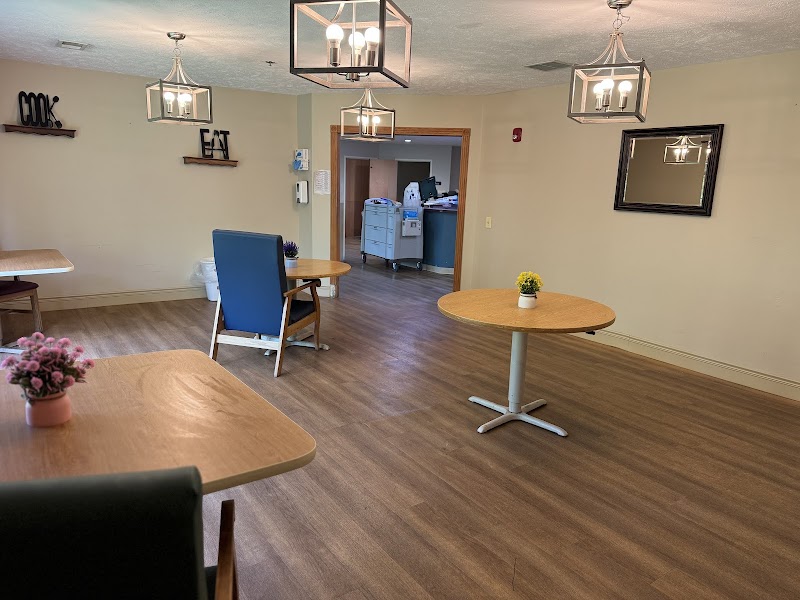
How is The Pavilion Rehabilitation And Nursing Center Staffed?

CMS rates THE PAVILION REHABILITATION AND NURSING CENTER's staffing level at 1 out of 5 stars, which is much below average compared to other nursing homes. Staff turnover is 67%, which is 20 percentage points above the Ohio average of 46%. High turnover can affect care consistency as new staff learn residents' individual needs. RN turnover specifically is 86%, which is notably high. RNs provide skilled clinical oversight, so turnover in this role can affect medical care quality.

What Have Inspectors Found at The Pavilion Rehabilitation And Nursing Center?

State health inspectors documented 65 deficiencies at THE PAVILION REHABILITATION AND NURSING CENTER during 2019 to 2025. These included: 2 Immediate Jeopardy (the most serious level, indicating potential for serious harm or death), 60 with potential for harm, and 3 minor or isolated issues. Immediate Jeopardy findings are rare and represent the most serious regulatory concerns. They require immediate corrective action.
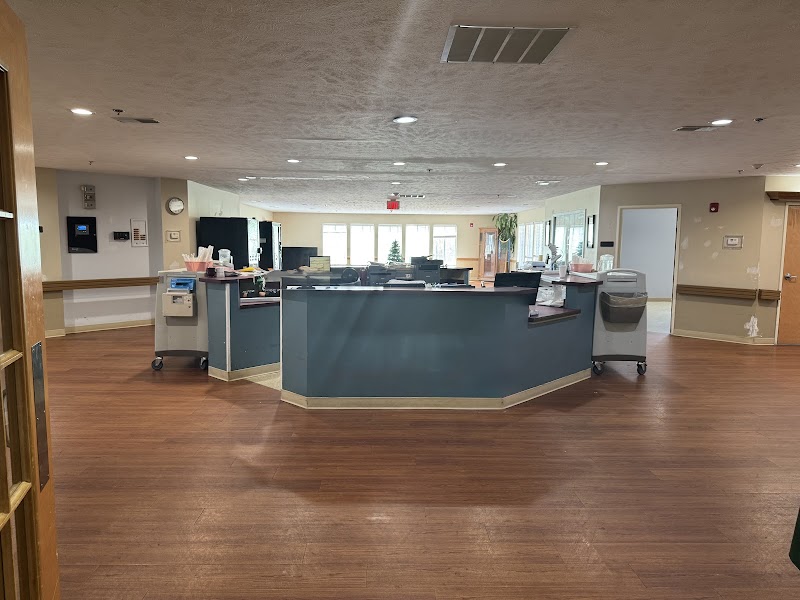
Who Owns and Operates The Pavilion Rehabilitation And Nursing Center?

THE PAVILION REHABILITATION AND NURSING CENTER is owned by a for-profit company. For-profit facilities operate as businesses with obligations to shareholders or private owners. The facility is operated by NORTHWOOD HEALTHCARE GROUP, a chain that manages multiple nursing homes. With 83 certified beds and approximately 45 residents (about 54% occupancy), it is a smaller facility located in NORTH ROYALTON, Ohio.
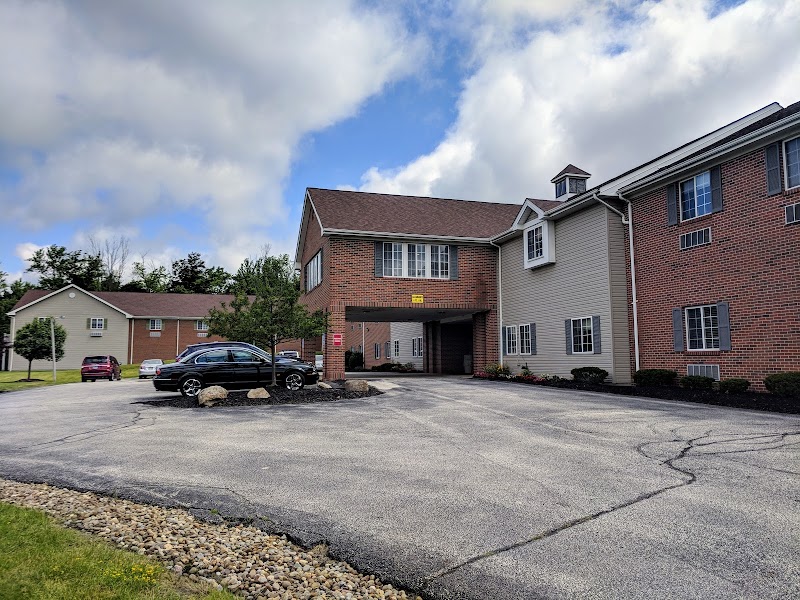
How Does The Pavilion Rehabilitation And Nursing Center Compare to Other Ohio Nursing Homes?

Compared to the 100 nursing homes in Ohio, THE PAVILION REHABILITATION AND NURSING CENTER's overall rating (2 stars) is below the state average of 3.2, staff turnover (67%) is significantly higher than the state average of 46%, and health inspection rating (1 stars) is much below the national benchmark.

What Should Families Ask When Visiting The Pavilion Rehabilitation And Nursing Center?

Based on this facility's data, families visiting should ask: "What changes have been made since the serious inspection findings, and how are you preventing similar issues?" "How do you ensure continuity of care given staff turnover, and what is your staff retention strategy?" "Can you walk me through typical staffing levels on day, evening, and night shifts?" "Can I visit during a mealtime to observe dining assistance and food quality?" These questions are particularly relevant given the facility's Immediate Jeopardy citations, the facility's high staff turnover rate, and the below-average staffing rating.

Is The Pavilion Rehabilitation And Nursing Center Safe?

Based on CMS inspection data, THE PAVILION REHABILITATION AND NURSING CENTER has documented safety concerns. Inspectors have issued 2 Immediate Jeopardy citations (the most serious violation level indicating risk of serious injury or death). The facility has a 2-star overall rating and ranks #100 of 100 nursing homes in Ohio. Families considering this facility should ask detailed questions about what corrective actions have been taken since these incidents.

Do Nurses at The Pavilion Rehabilitation And Nursing Center Stick Around?

Staff turnover at THE PAVILION REHABILITATION AND NURSING CENTER is high. At 67%, the facility is 20 percentage points above the Ohio average of 46%. Registered Nurse turnover is particularly concerning at 86%. RNs handle complex medical decisions and coordinate care — frequent RN changes can directly impact care quality. High turnover means new staff may not know residents' individual needs, medications, or preferences. It can also be disorienting for residents, especially those with dementia who rely on familiar faces. Families should ask: What is causing the turnover? What retention programs are in place? How do you ensure care continuity during staff transitions?

Was The Pavilion Rehabilitation And Nursing Center Ever Fined?

THE PAVILION REHABILITATION AND NURSING CENTER has no federal fines on record. CMS issues fines when nursing homes fail to meet care standards or don't correct problems found during inspections. The absence of fines suggests the facility has either maintained compliance or corrected any issues before penalties were assessed. This is a positive indicator, though families should still review recent inspection reports for the full picture.

Is The Pavilion Rehabilitation And Nursing Center on Any Federal Watch List?

THE PAVILION REHABILITATION AND NURSING CENTER is not on any federal watch list. The most significant is the Special Focus Facility (SFF) program, which identifies the bottom 1% of nursing homes nationally based on persistent, serious quality problems. Not being on this list means the facility has avoided the pattern of deficiencies that triggers enhanced federal oversight. This is a positive indicator, though families should still review the facility's inspection history directly.