RIVERVIEW POINTE CARE CENTER
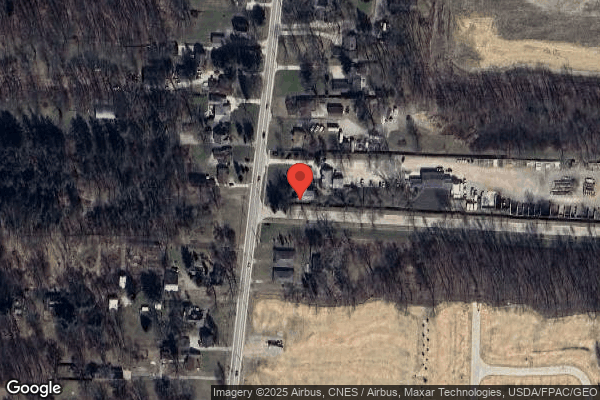
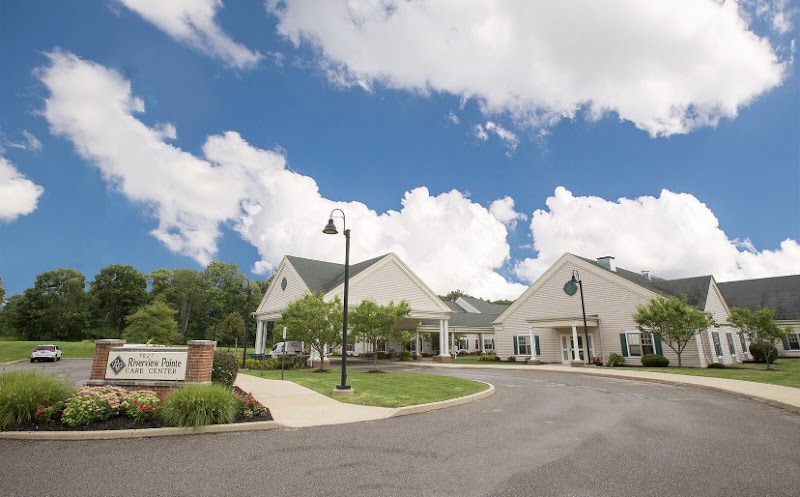
9027 COLUMBIA ROAD, OLMSTED FALLS, OH 44138 (440) 427-8884
For profit - Individual 126 Beds FOUNDATIONS HEALTH SOLUTIONS Data: November 2025
Trust Grade
90/100
#155 of 913 in OH
Last Inspection: October 2022

Over 2 years since last inspection. Current conditions may differ from available data.

Overview

Riverview Pointe Care Center has received an excellent Trust Grade of A, meaning it is highly recommended for families seeking care for their loved ones. It ranks #155 out of 913 facilities in Ohio, placing it in the top half, and #15 out of 92 in Cuyahoga County, indicating there are only a few better options nearby. However, the facility's performance trend is worsening, with issues rising from zero in 2022 to six in 2023. Staffing is a notable weakness, with a low rating of 1 out of 5 stars and a 46% turnover rate, which is below the state average, suggesting that staff may not be consistently familiar with residents’ needs. While there have been no fines, which is a positive sign, there have been concerning incidents, such as failures to properly store food safely and issues with the accurate recording and storage of controlled substances, both of which could potentially affect resident safety.

Trust Score
A
90/100
In Ohio
#155/913
Top 16%
Safety Record
Low Risk
No red flags
Inspections
Getting Worse
0 → 2 violations
Staff Stability
⚠ Watch
46% turnover. Above average. Higher turnover means staff may not know residents' routines.
Penalties
✓ Good
No fines on record. Clean compliance history, better than most Ohio facilities.
Skilled Nurses
⚠ Watch
Each resident gets only 25 minutes of Registered Nurse (RN) attention daily — below average for Ohio. Fewer RN minutes means fewer trained eyes watching for problems.
Violations
○ Average
6 deficiencies on record. Average for a facility this size. Mostly minor or procedural issues.
★★★★★
5.0
Overall Rating
★☆☆☆☆
1.0
Staff Levels
★★★★★
5.0
Care Quality
★★★★★
5.0
Inspection Score
Stable
2022: 0 issues
2023: 2 issues

The Good

  • 5-Star Quality Measures · Strong clinical quality outcomes
  • Full Sprinkler Coverage · Fire safety systems throughout facility
  • No fines on record

Facility shows strength in quality measures, fire safety.

The Bad

Staff Turnover: 46%

Near Ohio avg (46%)

Higher turnover may affect care consistency

Chain: FOUNDATIONS HEALTH SOLUTIONS

Part of a multi-facility chain

Ask about local staffing decisions and management

The Ugly 6 deficiencies on record

Nov 2023 1 deficiency
CONCERN (D) 📢 Someone Reported This

A family member, employee, or ombudsman was alarmed enough to file a formal complaint

Potential for Harm - no one hurt, but risky conditions existed

Pharmacy Services (Tag F0755)

Could have caused harm · This affected 1 resident

THE FOLLOWING DEFICIENCY REPRESENTS AN INCIDENT OF PAST NONCOMPLIANCE THAT WAS SUBSEQUENTLY CORRECTED PRIOR TO THIS SURVEY. Based on review of a facility self-reported incident (SRI), review of facili...

Read full inspector narrative →
THE FOLLOWING DEFICIENCY REPRESENTS AN INCIDENT OF PAST NONCOMPLIANCE THAT WAS SUBSEQUENTLY CORRECTED PRIOR TO THIS SURVEY. Based on review of a facility self-reported incident (SRI), review of facility investigation, review of pharmacy packing slips, review of electronic medication storage (Cubex) sign in logs, staff interview, review of the policy, and review of corrective action, the facility failed to ensure controlled substances (narcotics) received in the facility were accurately recorded and stored according to policy. This had the potential to affect 20 of 20 residents who receive narcotics. The facility census was 118. Findings include: Review of a facility self-reported incident report dated 11/03/23, indicated the facility pharmacy notified the facility Director of Nursing (DON) that during a routine audit on 11/03/23, the pharmacist found there were four oxycodone five milligram (mg) tabs and one Ambien five mg tab unaccounted for in the in-house starter kit. The in-house starter kit is in the electronic Cubex (a locked cabinet with individual sections for each medication). The medications (oxycodone and Ambien) were signed for received on the pharmacy manifest on 10/27/23 by Licensed Practical Nurse (LPN) #259. Medications were to be used for facility stock medications. LPN #259 was suspended, and an in-house investigation was completed by DON. On 11/08/23, the investigation was completed. Based on the facility investigation, the facility was unable to substantiate that misappropriation occurred. Review of the facility investigation into the incident revealed LPN #259 went to the drug testing center and produced a negative drug screen. LPN #259 signed a statement (reviewed) dated 11/06/23 confirming she worked the night shift on 10/26/23 through 10/27/23. The statement stated LPN #259 signed for the pharmacy delivery at 2:00 A.M. LPN #259 revealed in the statement that she did not witness any ambien or oxycodone in the delivery and did not recall seeing any packets or cards with those specific medications. Three additional nurses who worked the night shift on 10/26/23 through 10/27/23 (LPN #229, #247, and #213) were also interviewed and made written statements revealing they also did not see the medication. The emergency supply of controlled substances was audited by the DON, and none were missing. Select residents were interviewed in regard to their experience receiving proper medication and timely medication, no unique findings were noted. Pharmacy noted they reported the missing medications to the pharmacy board. Review of the summary of investigation indicated the allegation of misappropriation was unsubstantiated. Review of the pharmacy packing slip included facility name and dated 10/26/23. The pharmacy packing slip also included Cubex four oxycodone tab five mg and one zolpidem (ambien) five mg. Below the named medications was a statement that read: By signing below you acknowledge that the items above have been received. Below the stated statement was LPN #259's signature. Review of the Cubex medication sign in form dated 10/27/23 revealed the Ambien five mg one tab and the oxycodone five mg four tabs were not signed into the Cubex system. Interview on 11/21/23 at 1:21 P.M., with DON, revealed on 10/27/23 at 2:00 A.M., LPN #259 received a delivery from pharmacy. There were multiple medications including narcotics that were delivered. LPN #259 took the medications delivered and placed them in her medication cart. Once LPN #259 had opened the bag of narcotics, she did not recall seeing the ambien or oxycodone. There were multiple medications including additional narcotics that were accounted for. The facility had no further incidents of missing medications including narcotics. Review of the policy titled; Controlled Substances dated 06/21/17, revealed all controlled medications are delivered to the facility in tamper evident packaging. The authorized individual receiving the medication must verify the contents, quantity, and sign the packaging slip in the presence of the driver. A copy of the packaging slip shall be returned to the pharmacy with the driver. The authorized individual places the new Controlled Drug Receipt/Record/Disposition Form into the logbook. Included are the prescription number, resident's name, and medication for each sheet added or deleted. An authorized individual immediately places the controlled medication into the appropriate storage location. A note at the bottom of the policy in bold print indicated: Note: Controlled Medications must be counted and reconciled with the packing slip, WHILE the driver is present. Discrepancies must be reported to the Pharmacy immediately by phone. As a result of the incident, the facility took the following actions to correct the deficient practice by 11/08/23: • On 11/03/23, immediate removal of LPN #259 from the schedule until the investigation was completed. • On 11/03/23, LPN #259 received training by the DON on Pharmacy chain of custody procedures. If medications did not match the manifest, immediately notify the pharmacy and DON. Immediately stock all narcotic medications into proper storage (cubex or narcotic drawer) upon receipt. • On 11/03/23, residents utilizing narcotics were interviewed and had no concerns related to medications. • On 11/03/23, All nurses in the facility were in-service on the Facility Receipt of Controlled Substance: Chain of Custody Process, by DON. • On 11/05/23, A controlled substance chain of custody audit was initiated by the DON, on three random residents weekly for two weeks and results will be reported to the Interdisciplinary Team. Review of 11/12/23 and 11/19/23 audits revealed no concerns. • On 11/06/23, three additional LPN's who worked the night shift on 10/26/23-10/27/23 were interviewed and were not aware of any delivered oxycodone or Ambien. • On 11/08/23, the facility completed investigation of misappropriation. • Interview on 11/21/23 between 11:45 A.M. and 11:55 A.M., with Registered Nurse (RN) #304, LPN #282 and #345 verified they received training on 11/03/23 regarding receipt and processing controlled drugs. RN #304, LPN #282 and #345 were able to state the correct process. • Review of three (#86, #71, and #100) sampled resident's medical records, who receive narcotics revealed no concern with having narcotics available and receiving them. • Review of narcotic logs compared to narcotics in cart revealed no discrepancies on 11/21/23. This deficiency was an incidental finding representing noncompliance while investigating Master Complaint Number OH00147905, and Complaint Number OH00147853 and OH00147845.
Sept 2023 1 deficiency
CONCERN (D) 📢 Someone Reported This

A family member, employee, or ombudsman was alarmed enough to file a formal complaint

Potential for Harm - no one hurt, but risky conditions existed

Deficiency F0604 (Tag F0604)

Could have caused harm · This affected 1 resident

**NOTE- TERMS IN BRACKETS HAVE BEEN EDITED TO PROTECT CONFIDENTIALITY** THE FOLLOWING DEFICIENCY REPRESENTS AN INCIDENT OF PAST NON-COMPLIANCE THAT WAS SUBSEQUENTLY CORRECTED PRIOR TO THIS SURVEY. Bas...

Read full inspector narrative →
**NOTE- TERMS IN BRACKETS HAVE BEEN EDITED TO PROTECT CONFIDENTIALITY** THE FOLLOWING DEFICIENCY REPRESENTS AN INCIDENT OF PAST NON-COMPLIANCE THAT WAS SUBSEQUENTLY CORRECTED PRIOR TO THIS SURVEY. Based on observation, medical record review, witness statements, policy review and interview, the facility failed to assure a physical restraint was used for treatment of a medical symptoms rather than staff convenience for Resident #65. This affected one (Resident #65) of three residents reviewed for restraints. The census was 121. Findings include: Review of the medical record for Resident #65 revealed an admission date of 08/10/23 with diagnoses of dementia with anxiety, anxiety disorder, depression, aphasia, and hemiplegia and hemiparesis following cerebral infarction affecting the right side. Review of the Minimum Data Set (MDS) 3.0 admission assessment dated [DATE] revealed Resident #65 had short and long-term memory problems, was moderately impaired with daily decision making, needed extensive assistance of two-person physical assistance to walk in her room and use a cane/crutch or wheelchair for mobility. Review of the cognitive function care plan dated 08/15/23 revealed Resident #65 had impaired cognitive function due to altered dementia, cerebral vascular accident (CVA), infection, unable to make safe decisions, and experiences of confusion and periods of restlessness. Interventions included to provide a calm and relaxing environment and be patient with the resident. There was no invention to restrain the resident. Review of the fall care plan updated 08/23/23 revealed Resident #65 was at risk for falls due to acute/unstable medication condition, debilitation, weakness, dementia, impaired cognition, infection, memory impairments, poor decision-making skills, restlessness and impulsiveness. There was no invention to restrain the resident. Review of the physician orders from August 2023 revealed there was no order to physically restrain Resident #65. Review of a witness statement dated 08/15/23 authored by Licensed Practical Nurse (LPN) #8 revealed, Resident #65 was very anxious and trying to get out of bed several times, so we put her in the wheelchair for a change of scenery. She then kept trying to get out of the wheelchair. I became worried for her safety when I would have to leave the unit. I put a sheet on her and lightly tied it to where she could stand if she wanted to but as a reminder to not stand. Review of the witness statement dated 08/15/23 authored by State Tested Nurse Aide (STNA) #7 revealed, on Sunday 08/13/23 during night shift, I worked Pleasant Valley with LPN #8. We heard alarm sounding again. We went to the room. LPN #8 used a sheet to keep the resident in the chair. I told her I didn't think she could do that. She brought the resident in the hall by the lounge where we could see her. Observation on 09/06/23 at 8:27 A.M. revealed Resident #65 was lying in a low bed, with the left side of her bed against the wall and a mattress to the right side of the bed. Interview, during the observation, with Resident #65 was attempted however unsuccessful due to cognitive impairment. Interview on 09/06/23 at 8:39 A.M. with Registered Nurse (RN) #4 revealed Resident #65 had been at the facility for a month. Resident #65 had recently had a stroke and was paralyzed on the right side. Resident #65 was very anxious and attempted to get up by herself. RN #4 revealed LPN #8 admitted to RN #4 that she could not get Resident #65 to calm down, so she took a sheet and tied her to the chair. Interview on 09/06/23 at 11:00 A.M. with LPN #8 revealed Resident #65 was very, very confused when she first admitted and wanted to communicate however she was unable to. Resident #65 was very restless and would try to stand up to walk when she first arrived at the facility. LPN #8 verified she applied a sheet to Resident #65's lap and tied the ends of the sheet behind the wheelchair in a loose knot to act as reminder not to get up from the chair. LPN #8 did this because she was afraid Resident #65 was going to fall. LPN #8 verified she did not obtain a physician order for the restraint (sheet applied to Resident #65's lap with the ends of the sheet tied in a knot behind the back of the wheelchair to prevent Resident #65 from rising from the wheelchair). Interview on 09/06/23 at 12:35 P.M. with STNA #7 revealed on the night of 08/12/23 into the morning of 08/13/23, STNA #7 got pulled from another hall to work on Pleasant Valley (where Resident #65 resided). STNA #7 was returning from a break when she heard an alarm sounding and saw LPN #8 and another STNA enter Resident #65's room. Resident #65 was trying to stand and LPN #8 assisted Resident #65 into the wheelchair and wheeled her out to the nursing station. LPN #8 had placed a sheet over Resident #65's stomach, took the ends of the sheet and tied a tight knot behind the back of the wheelchair. STNA #7 stated the knot was tied very tight and Resident #65 was struggling in the seat because the sheet was tight up against the resident. STNA #7 stated Resident #65 was unable to untie the knot to get up. Interview on 09/06/23 at 12:48 P.M. with STNA #10 revealed STNA #7 asked STNA #10 to assist with check and changing residents on the Pleasant Valley unit when STNA #10 observed Resident #65 being restrained with a sheet across Resident #65's breast down to her stomach with the ends of the sheet tied tight behind the back of the wheelchair. STNA #10 revealed Resident #65 was crying as she tried to get out of the sheet while sitting by the nurses' station. Observation on 09/06/23 at 1:00 P.M. with the Administrator and Director of Nursing (DON) revealed of a picture of the back of a female resident while sitting in a wheelchair near the nurse's station. The picture showed a folded sheet tightly secured around the backrest of the wheelchair and the ends tightly tied in a knot around the back of the backrest of wheelchair. The resident in the picture appeared to be Resident #65. Interview on 09/06/23 at 1:00 P.M. with the Administrator and DON revealed they were aware of a sheet being used on Resident #65 while she was sitting in a chair. The Administrator and DON said after investigating, the evidence was inconclusive as to whether the sheet was acting as a physical restraint for Resident #65. The DON verified LPN #8 did not obtain a physician order to use a sheet tied behind Resident #65's wheelchair and verified a restraint assessment was not completed for use of the sheet tied behind the wheelchair for Resident #65. Follow up interview on 09/06/23 at 1:20 P.M. with the Administrator verified she was aware that two STNAs observed the sheet tied behind the back of the wheelchair for Resident #65. Review of the facility's Restraint Use policy dated 06/20/15 revealed the facility created and maintained an environment that fostered minimal use of restraints. Physical restraints were defined as any manual method or physical or mechanical device, material or equipment attached or adjacent to the resident's body that the individual could not remove easily which restricted freedom of movement or normal access to one's body. The need of each resident for restraint use was assessed upon admission and as needed. Informed consent for the physical restraint would be obtained from the resident or the legal representative. The plan of care for restraint use as well as the potential risks and benefits would be discussed. A physician's order for the restraint would be obtained. The deficient practice was corrected on 08/17/23 when the facility implemented the following corrective actions: • On 08/15/23, all nursing staff was educated on restraint use by the DON/designee. • On 08/15/23, an audit of all residents was completed which included a skin check and/or interview. • On 08/15/23, LPN #8 was educated on using an inappropriate safety intervention by the DON. • On 08/17/23, LPN #8 completed two continuing education modules on Falls in Senior Care: Exploring Prevention, Causes and Treatment and Behavior Management Strategies for Cognitively Impaired Residents. • On 08/22/23 and on 08/28/23, a weekly audit of three residents for restraint use was conducted with no concerns by the DON/designee. The audit would continue for another two weeks. • On 08/25/23, all nurses were reeducated on restraint use during the nurses meeting by the DON. • On 09/06/23, observations revealed no restraint use. This deficiency represents non-compliance investigated under Complaint Number OH00145733.
Oct 2019 1 deficiency
CONCERN (D)

Potential for Harm - no one hurt, but risky conditions existed

Infection Control (Tag F0880)

Could have caused harm · This affected 1 resident

**NOTE- TERMS IN BRACKETS HAVE BEEN EDITED TO PROTECT CONFIDENTIALITY** Based on observation, record review and interview the facility failed to maintain adequate infection control practices during wo...

Read full inspector narrative →
**NOTE- TERMS IN BRACKETS HAVE BEEN EDITED TO PROTECT CONFIDENTIALITY** Based on observation, record review and interview the facility failed to maintain adequate infection control practices during wound care for Resident #49 to prevent the spread of infection. This affected one resident (#49) of one resident reviewed for pressure ulcer care. Findings include: Record review revealed Resident #49 was admitted to the facility on [DATE] with diagnoses including unspecified convulsions, encephalopathy, altered mental status, cerebral infarction, dementia, and an unstageable pressure ulcer (a pressure ulcer with a wound bed that cannot be visualized or staged) which was present on admission. Review of the Minimum Data Set (MDS) 3.0 assessment, dated 08/07/19 revealed the resident had moderate cognitive impairment and required two or more staff to provide extensive physical assistance for mobility in bed. She had orders for daily and as-needed dressing changes. Her most recent assessment by the facility's wound-care nurse practitioner on 10/01/19 identified the resident's wound as being currently a Stage III pressure ulcer (a pressure ulcer that involves full-thickness tissue loss, but with no exposed bone, tendon, or muscle) on the coccyx which had improved since previous assessments and had no signs of infection. The surveyor observed a pressure ulcer dressing change on the coccyx for Resident #49 by Licensed Practical Nurse (LPN) #201 and LPN #202 on 10/03/19 at 9:31 A.M. While staff were exposing the wound, they revealed the resident had an incontinent diarrhea bowel movement which stained both the body and wound dressing. The staff then interrupted the dressing change procedure to provide incontinence care. During this process, Resident #49 was nonverbal and did not appear to understand verbal introductions or instructions. Resident #49 scratched herself at multiple times during the procedure, including areas potentially contaminated by stool (the back and buttocks). The resident did not receive hand-washing during the observation. Upon completion of the incontinence care, the staff began to perform the wound dressing change for Resident #49. LPN #201 removed the old dressing and washed out the wound (which appeared to be a Stage III pressure ulcer) with normal saline and gauze. At that time, the wound had no sign of infection or drainage. LPN #201 then moved to the bathroom to wash her hands before applying the new dressing, while LPN #202 held Resident #49 on her side. While LPN #201 was out of eyeshot, Resident #49 reached down and scratched inside of the uncovered wound with her fingernails, then removed her hand. Following this, scant bloody drainage began coming from the wound. LPN #201 returned to the bedside and began preparation of triad cream (a wound-care cream). LPN #202 did not say anything at this time, or otherwise indicate the wound was contaminated. The surveyor intervened in the procedure at this time and asked staff what the current plan was. LPN #201 said that the wound was now cleaned, and she would apply the triad cream and continue with the dressing change. LPN #202 did not say anything. The surveyor informed LPN #201 the wound now had bloody drainage (being a change from when it was uncovered), and the resident had scratched inside it with a hand potentially contaminated with stool while LPN #201 was not present. Following surveyor intervention, facility staff washed the wound and proceeded with the resident's dressing change. The procedure concluded on 10/03/19 at 10:59 A.M. The surveyor reviewed the above findings with LPN #201 on 10/03/19 at 11:00 A.M. Interview with LPN #202 on 10/03/19 at 11:55 A.M. revealed she stated she did not see the resident scratch the wound. Record review of the facility skin care policy, dated 12/02/15 revealed the facility was to provide needed treatment and services to promote healing and provide necessary treatments for wounds.
Aug 2018 3 deficiencies
CONCERN (D)

Potential for Harm - no one hurt, but risky conditions existed

Pharmacy Services (Tag F0755)

Could have caused harm · This affected 1 resident

**NOTE- TERMS IN BRACKETS HAVE BEEN EDITED TO PROTECT CONFIDENTIALITY** Based on observation, interview and record review the facility failed to provide appropriate pharmaceutical services for medicat...

Read full inspector narrative →
**NOTE- TERMS IN BRACKETS HAVE BEEN EDITED TO PROTECT CONFIDENTIALITY** Based on observation, interview and record review the facility failed to provide appropriate pharmaceutical services for medication administration for Resident #20. This affected one of six residents observed for medication administration. Findings include: Record review of Resident #20 revealed an admission date of 08/22/12 with diagnoses of cerebral palsy, hypertension and blindness in one eye. The Minimum Data Set (MDS) 3.0 assessment dated [DATE] revealed Resident #20 was cognitively intact. Physician's orders for August 2018 included medications for seizures, muscle relaxants, and antidepressant to be taken by mouth. There were no physician's orders for Resident #20 related to being permitted/capable of unsupervised self administration of medications prepared by the nurse. Review of the current care plan dated 06/08/18 revealed no program allowing Resident #20 to be unsupervised for self-administration of medications prepared by nurse. On 08/21/18 at 8:40 A.M., License Practical Nurse (LPN) #46 prepared medications for Resident #20, including: Aptiom used for seizures, Baclofen, a muscle relaxant, Cymbalta, an antidepressant, and gabapentin, for seizures. LPN #46 put all of the oral medications in a small plastic cup and took them to Resident #20's room. The nurse set the cup of pills down on the bedside table, walked out of the room and closed the door. LPN #46 went back to the medication cart, documented the medication pass on the computer and pushed the cart to the next resident. On 08/21/18 at 8:47 A.M., LPN #46 said Resident #20's care plan reflected his ability to take his medication without supervision. Interview on 08/21/18 at 12:05 P.M. with the Director of Nursing (DON) verified Resident #20 did not have a physician order or care plan for unsupervised self administration of medications. Interview on 08/22/18 at 4:30 P.M. with Resident #20 revealed the nurses always leave his medications with him. He said he had been taking seizure medications for 50 years and likes to take them at certain times. Review of Medication Administration Policy dated 06/21/17 revealed nurses will remain with residents while medications are swallowed.
CONCERN (D)

Potential for Harm - no one hurt, but risky conditions existed

Laboratory Services (Tag F0770)

Could have caused harm · This affected 1 resident

Based on record review and staff interview the facility failed to ensure physician ordered laboratory services were completed in a timely manner. This affected one (Resident #80) of six residents revi...

Read full inspector narrative →
Based on record review and staff interview the facility failed to ensure physician ordered laboratory services were completed in a timely manner. This affected one (Resident #80) of six residents reviewed for unnecessary medications. Finding include: Resident #80 was admitted to the facility 07/10/12 with diagnoses that included multiple sclerosis, dysphagia (difficulty swallowing) and major depressive disorder. Review of the physician response to pharmacy recommendations dated 03/01/18 revealed a recommendation for a lipid panel for [the] next lab draw. Review of laboratory records for Resident #80 revealed Resident #80 had lab work conducted on 03/05/18, 03/09/18, 03/12/18, 03/17/18, 03/19/18, 03/23/18, 03/28/18, 03/30/18, 04/02/18, 04/04/18, 04/05/18, 04/16/18, 04/17/18, 04/19/18, 04/30/18, 05/14/18, 05/17/18, 05/21/18, 06/01/18, 06/04/18,06/08/18, 06/11/18 and 6/14/18. Review of laboratory records revealed no lipid panels were drawn on Resident #80 during any of the lab draws until 06/16/18. Case Manager #800 verified the lack of timely follow up to laboratory recommendations during an interview on 08/22/18 at 1:45 P.M.
CONCERN (F)

Potential for Harm - no one hurt, but risky conditions existed

Food Safety (Tag F0812)

Could have caused harm · This affected most or all residents

Based on record review, observation and interview the facility failed to prepare and stored food under sanitary conditions. This had the potential to affect all 92 residents receiving food/meal trays ...

Read full inspector narrative →
Based on record review, observation and interview the facility failed to prepare and stored food under sanitary conditions. This had the potential to affect all 92 residents receiving food/meal trays from the kitchen. The facility census was 92. Findings include: 1. An initial tour of the kitchen was conducted on 08/20/18 at 10:33 A.M. with Food Service Manager (FSM) #44. An industrial size, metal floor mixer was observed with splattered, dried on, white residue all along the metal splash guard that hung above the opening of the mixing bowl. Inside the mixing bowl was a red sediment. The floor mixer was uncovered and located in a passage way between the dish room and the walk-in cooler. Sitting on a steel table across from the floor mixer was a large meat slicer covered in plastic and a table top mixer. The meat slicer had small, dried pieces of food particles on the blade and base. The table top mixer was not covered and had multiple areas of chipped paint and exposed rust all over the beater shaft and splash guard positioned over the mixing bowl. There was dried, white colored residue on the beater shaft area and on the metal splash guard hanging directly over the mixing bowl. On 08/20/18 at 10:39 A.M., FSM #44 said the floor mixer and meat slicer were routinely used for the resident's food production. FSM #44 verified the equipment was not currently being used and been put away dirty. On 08/20/18 at 10:40 A.M., [NAME] #46 verified the table top mixer that was rusted was routinely used to mix cake batter and various desserts for the resident meals. On 08/20/18 at 10:50 A.M., Registered Dietitian #45 indicated the table top mixer would be taken out of use due to the rust and chipped paint. 2. An observation was made on 08/20/18 at 10:43 A.M. of the walk-in cooler. There was no internal thermometer in the cooler. An external thermometer on the cooler read 41 degrees Fahrenheit (F). Review of a record titled, Refrigerator Temperature Record, August 2018, that hung on the outside of the cooler door revealed the documented temperatures ranged between 39 degrees F and 42 degrees F. On nine occasions the temperature was recorded at 42 degrees F. On 08/20/18 at 10:45 A.M. interview with FSM #44 said he had not realized staff were documenting 42 degree temperatures on the form. He said he would look into it and he would also put an internal thermometer in the cooler to monitor the temperatures. 3. Review of the facility policy titled, Food Temperature Preparation - CMS Interpretive Guidelines, dated February 2016 said cooked foods total cooling time to 41 degrees F should not exceed 6 hours. The policy listed various time-temperature controls for food safety including poultry, meat, fish, pork and roasts. The policy stated that within two hours of cooling the food item should be cooled to at least 70 degrees F and within the next four hours the items should be cooled to at least 41 degrees F or below. An interview was conducted on 08/23/18 at 9:51 A.M. with [NAME] #46 who revealed that the kitchen cooks raw beef, raw chicken breasts, raw turkey and pork roasts one to two days ahead of meal service, stores those items in the cooler and reheats those items to 165 degrees F on the day of service. When the cook was asked how often he takes the temperature of the cooling process of those items after initially cooking them, [NAME] #46 revealed that he is not monitoring the cooling temperatures according to the policy. [NAME] #46 explained that after he initially cooks the items he takes a final cooking temperature and then takes another final cooking temperature after reheating the product one to two days later. An interview was conducted on 08/23/18 at 10:04 A.M. with FSM #45 who verified they were not recording cooling temperatures of the foods to be monitored for food safety.
Understanding Severity Codes (click to expand)
Life-Threatening (Immediate Jeopardy)
J - Isolated K - Pattern L - Widespread
Actual Harm
G - Isolated H - Pattern I - Widespread
Potential for Harm
D - Isolated E - Pattern F - Widespread
No Harm (Minor)
A - Isolated B - Pattern C - Widespread

Questions to Ask on Your Visit

  • "Can I speak with families of current residents?"
  • "What's your RN coverage like on weekends and overnight?"

Our Honest Assessment

Strengths
  • • Grade A (90/100). Above average facility, better than most options in Ohio.
  • • No major safety red flags. No abuse findings, life-threatening violations, or SFF status.
  • • No fines on record. Clean compliance history, better than most Ohio facilities.
Concerns
  • • No significant concerns identified. This facility shows no red flags across CMS ratings, staff turnover, or federal penalties.
Bottom line: Generally positive indicators. Standard due diligence and a personal visit recommended.

About This Facility

What is Riverview Pointe's CMS Rating?

CMS assigns RIVERVIEW POINTE CARE CENTER an overall rating of 5 out of 5 stars, which is considered much above average nationally. Within Ohio, this rating places the facility higher than 99% of the state's 100 nursing homes. This rating reflects solid performance across the metrics CMS uses to evaluate nursing home quality.
How is Riverview Pointe Staffed?

CMS rates RIVERVIEW POINTE CARE CENTER's staffing level at 1 out of 5 stars, which is much below average compared to other nursing homes. Staff turnover is 46%, compared to the Ohio average of 46%. This relatively stable workforce can support continuity of care.

What Have Inspectors Found at Riverview Pointe?

State health inspectors documented 6 deficiencies at RIVERVIEW POINTE CARE CENTER during 2018 to 2023. These included: 6 with potential for harm.
Who Owns and Operates Riverview Pointe?

RIVERVIEW POINTE CARE CENTER is owned by a for-profit company. For-profit facilities operate as businesses with obligations to shareholders or private owners. The facility is operated by FOUNDATIONS HEALTH SOLUTIONS, a chain that manages multiple nursing homes. With 126 certified beds and approximately 118 residents (about 94% occupancy), it is a mid-sized facility located in OLMSTED FALLS, Ohio.
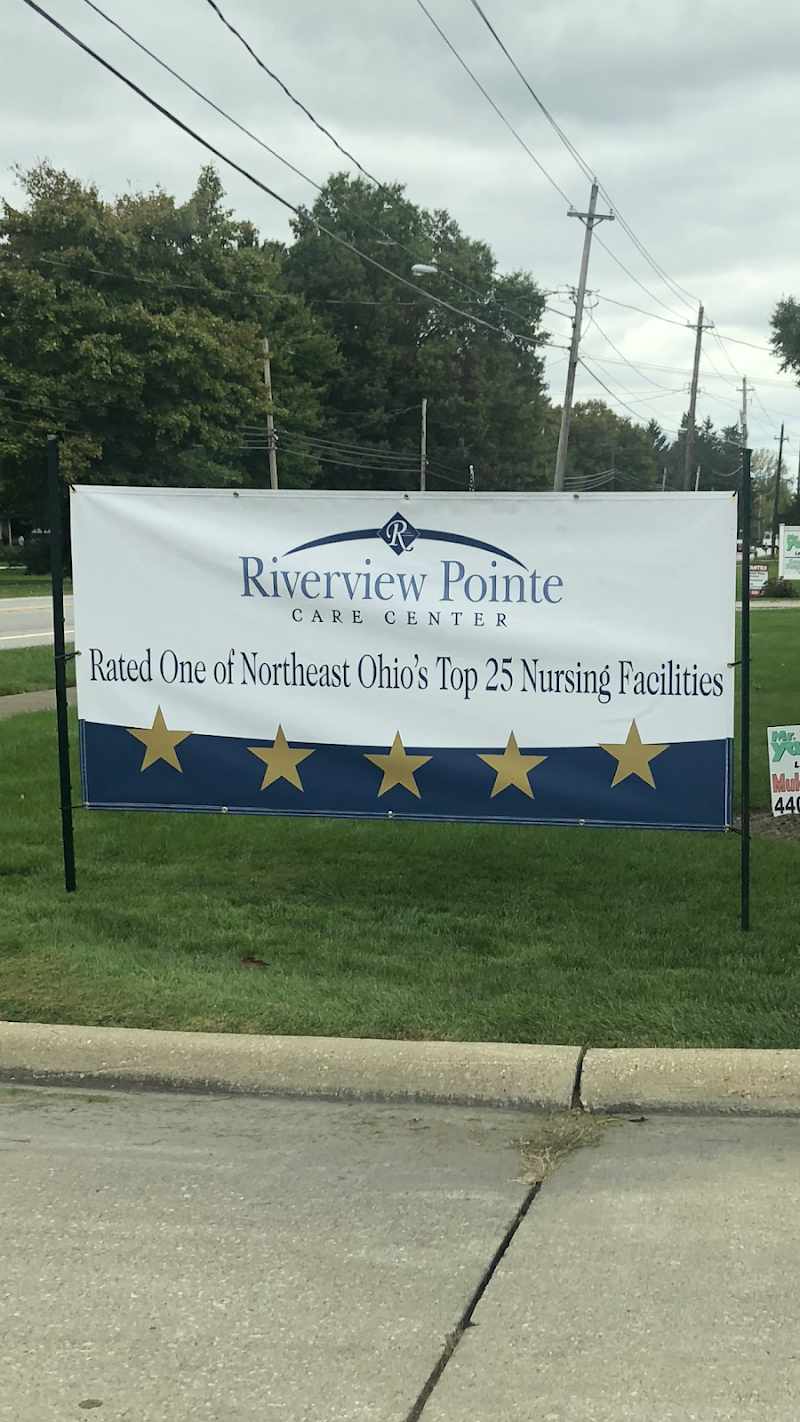
How Does Riverview Pointe Compare to Other Ohio Nursing Homes?

Compared to the 100 nursing homes in Ohio, RIVERVIEW POINTE CARE CENTER's overall rating (5 stars) is above the state average of 3.2, staff turnover (46%) is near the state average of 46%, and health inspection rating (5 stars) is much above the national benchmark.

What Should Families Ask When Visiting Riverview Pointe?

Based on this facility's data, families visiting should ask: "Can you walk me through typical staffing levels on day, evening, and night shifts?" "Can I visit during a mealtime to observe dining assistance and food quality?" "How do you handle medical emergencies, and what is your hospital transfer rate?" "Can I speak with family members of current residents about their experience?" These questions are particularly relevant given the below-average staffing rating.

Is Riverview Pointe Safe?

Based on CMS inspection data, RIVERVIEW POINTE CARE CENTER has a clean safety record: no substantiated abuse findings (meaning no confirmed cases of resident harm), no Immediate Jeopardy citations (the most serious violation level indicating risk of serious injury or death), and is not on the Special Focus Facility watch list (a federal program monitoring the lowest-performing 1% of nursing homes). The facility has a 5-star overall rating and ranks #1 of 100 nursing homes in Ohio. While no facility is perfect, families should still ask about staff-to-resident ratios and recent inspection results during their visit.

Do Nurses at Riverview Pointe Stick Around?

RIVERVIEW POINTE CARE CENTER has a staff turnover rate of 46%, which is about average for Ohio nursing homes (state average: 46%). Moderate turnover is common in nursing homes, but families should still ask about staff tenure and how the facility maintains care continuity when employees leave.

Was Riverview Pointe Ever Fined?

RIVERVIEW POINTE CARE CENTER has no federal fines on record. CMS issues fines when nursing homes fail to meet care standards or don't correct problems found during inspections. The absence of fines suggests the facility has either maintained compliance or corrected any issues before penalties were assessed. This is a positive indicator, though families should still review recent inspection reports for the full picture.

Is Riverview Pointe on Any Federal Watch List?

RIVERVIEW POINTE CARE CENTER is not on any federal watch list. The most significant is the Special Focus Facility (SFF) program, which identifies the bottom 1% of nursing homes nationally based on persistent, serious quality problems. Not being on this list means the facility has avoided the pattern of deficiencies that triggers enhanced federal oversight. This is a positive indicator, though families should still review the facility's inspection history directly.