AYDEN HEALTHCARE OF ROSEMOUNT PAVILION
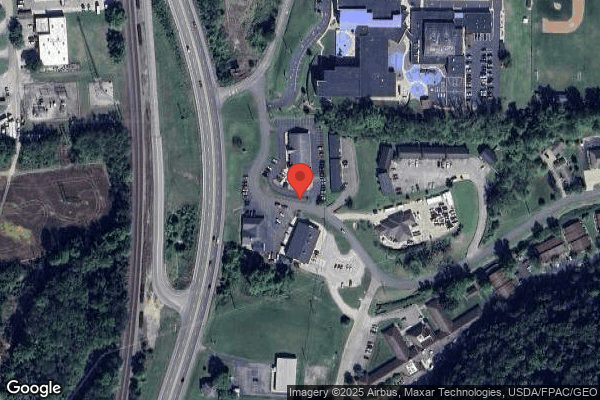
20 EASTER DRIVE, PORTSMOUTH, OH 45662 (740) 354-4505
For profit - Corporation 117 Beds AYDEN HEALTHCARE Data: November 2025
Trust Grade
55/100
#412 of 913 in OH
Last Inspection: May 2025

Inspected within the last 6 months. Data reflects current conditions.

Overview

Ayden Healthcare of Rosemount Pavilion has a Trust Grade of C, which means it is average compared to other nursing homes, sitting in the middle of the pack. In Ohio, it ranks #412 out of 913 facilities, placing it in the top half, and #7 out of 11 in Scioto County, indicating that only a few local options are better. The facility is worsening, with issues increasing from 11 in 2023 to 13 in 2025. Staffing is a concern, rated at 2 out of 5 stars, with a turnover rate of 37%, which is better than the state average but still suggests some instability. Additionally, there have been serious incidents, including a failure to administer a critical blood pressure medication, leading to a hospitalization, and concerns about cleanliness, with filthy living conditions reported that could affect all residents. While there are no fines recorded, the facility has less RN coverage than 84% of Ohio facilities, which can impact the quality of care provided.

Trust Score
C
55/100
In Ohio
#412/913
Top 45%
Safety Record
Moderate
Needs review
Inspections
Getting Worse
11 → 13 violations
Staff Stability
○ Average
37% turnover. Near Ohio's 48% average. Typical for the industry.
Penalties
✓ Good
No fines on record. Clean compliance history, better than most Ohio facilities.
Skilled Nurses
⚠ Watch
Each resident gets only 22 minutes of Registered Nurse (RN) attention daily — below average for Ohio. Fewer RN minutes means fewer trained eyes watching for problems.
Violations
⚠ Watch
40 deficiencies on record. Higher than average. Multiple issues found across inspections.
★★★☆☆
3.0
Overall Rating
★★☆☆☆
2.0
Staff Levels
★★★☆☆
3.0
Care Quality
★★★☆☆
3.0
Inspection Score
Stable
2023: 11 issues
2025: 13 issues

The Good

  • Full Sprinkler Coverage · Fire safety systems throughout facility
  • No fines on record
  • Staff turnover below average (37%)

    11 points below Ohio average of 48%

Facility shows strength in fire safety.

The Bad

3-Star Overall Rating

Near Ohio average (3.2)

Meets federal standards, typical of most facilities

Staff Turnover: 37%

Near Ohio avg (46%)

Typical for the industry

Chain: AYDEN HEALTHCARE

Part of a multi-facility chain

Ask about local staffing decisions and management

The Ugly 40 deficiencies on record

1 actual harm
May 2025 13 deficiencies
CONCERN (D)

Potential for Harm - no one hurt, but risky conditions existed

Resident Rights (Tag F0550)

Could have caused harm · This affected 1 resident

**NOTE- TERMS IN BRACKETS HAVE BEEN EDITED TO PROTECT CONFIDENTIALITY** Based on observation, interview, medical record review, the facility failed to provide Resident #233 with a dignity bag for the ...

Read full inspector narrative →
**NOTE- TERMS IN BRACKETS HAVE BEEN EDITED TO PROTECT CONFIDENTIALITY** Based on observation, interview, medical record review, the facility failed to provide Resident #233 with a dignity bag for the indwelling foley catheter. This effected one (Resident #233) of three residents reviewed for indwelling foley catheter. The facility census was 78. Findings include: Review of the medical record for Resident #233 revealed an admission date of 04/30/25 with diagnoses including complete amputation of right leg between the right hip and knee, complications of amputation stump, pressure ulcer of sacral area stage four, diabetes mellitus type two, hypotension, and sebhorrheic dermatitis. Review of the physician orders dated 05/25 revealed Resident #233 had an order for foley catheter care every shift. The physician orders did not include size of foley catheter or when to change it. Review of the Medicare five day admission Minimum Data Set (MDS) dated [DATE] revealed Resident #233 had cognitive impairment with inattention, disorganized thinking, delusions, and other behavioral symptoms directed towards others. Resident #233 was dependent on the staff to complete activities of daily living. Resident #233 had indwelling foley catheter for urination. Review of the plan of care initiated revealed Resident #233 had an indwelling foley catheter related to stage four pressure ulcer to sacrum. The goal stated Resident #233 would be free from catheter related trauma through review date. The interventions included the resident has a foley catheter, position the catheter bag and tubing below the level of the bladder and away from the entrance room door. The staff were to monitor and document intake and output per the facility policy, monitor for signs and symptoms of discomfort with urination, and monitor, record and report to the physician signs and symptoms of urinary tract infection such as pain, burning, blood tinged urine, cloudiness, no or decreased output, deepening of urine color, increased pulse, increased temperature, foul smelling urine, chills, altered mental status, change in behavior and or eating patterns. Observations on 05/12/25 at 3:29 P.M. and 05/15/25 at 8:09 A.M. revealed Resident #233 had indwelling foley catheter. The foley catheter drainage bag was not covered and lying on the floor. Interview on 05/15/25 at 8:10 A.M. with Certified Nursing Assistant (CNA) #101 confirmed Resident #233 foley catheter bag was not covered and lying on the floor. Review of the facility provided policy named Catheter Policy, revised on 04/28/25, did not address covering the indwelling foley catheter bag with a dignity bag to enhance the privacy of the resident.
CONCERN (D)

Potential for Harm - no one hurt, but risky conditions existed

Assessment Accuracy (Tag F0641)

Could have caused harm · This affected 1 resident

**NOTE- TERMS IN BRACKETS HAVE BEEN EDITED TO PROTECT CONFIDENTIALITY** 2. Review of the medical record for Resident #20 revealed an admission date of 08/04/19 with diagnoses including Alzheimer's dis...

Read full inspector narrative →
**NOTE- TERMS IN BRACKETS HAVE BEEN EDITED TO PROTECT CONFIDENTIALITY** 2. Review of the medical record for Resident #20 revealed an admission date of 08/04/19 with diagnoses including Alzheimer's disease, hypertension, protein calorie malnutrition, bipolar disorder, dementia, anxiety and hyperlipidemia. Review of a physician order dated 10/13/24 revealed Resident #20 was to receive a fortified foods diet, regular texture and thin liquids. Resident #20 also received a house supplement three times daily. Review of the annual Minimum Data Set (MDS) dated [DATE] revealed Resident #20 was cognitively impaired with continuous inattention, disorganized thinking, had delusions and hallucinations and physical/verbal/other behavioral symptoms towards others. Resident #20 had impaired range of motion to bilateral lower extremities and was dependent upon staff to complete activities of daily living. Resident #20 was incontinent of bowel and bladder. Resident #20 had prognosis of life expectancy of less than six months. Resident #20 weight was 90 pounds with no weight loss of five percent in last month or 10 percent or more in six months. Resident #20 had no chewing or swallowing concerns and was not receiving a mechanically altered diet. Review of the nutritional assessment dated [DATE] revealed Resident #20 received fortified foods, regular diet, with double portions and house supplement three times daily. Resident #20 was dependent upon staff to eat her meals, and had no oral status concerns. Review of the plan of care revised 04/25/24 revealed Resident #20 had potential for alteration in nutrition/hydration status related to multiple chronic health issues, advanced age, supplement in place, variable oral intake with the need for fortified foods, a significant weight loss at 30 days, body mass index of less than 23 percent for her age. On 01/29/25 had a significant weight loss in 30 days, on 02/07/24 weight loss trend was more stable, on 02/19/24 significant weight gain following weight loss and on 04/24/24 started hospice care. The goal stated Resident #20 would remain comfortable as evidenced by no signs and symptoms of hunger or thirst through next review. The interventions included to administer medications as ordered, assess and report signs of edema to physician, assess resident for signs and symptoms of aspiration, assist resident with meals as needed, coordinate/collaborate care with hospice services, encourage family to bring in favorite foods from home, honor food preferences as able, monitor for signs and symptoms of dehydration, monitor labs as ordered, obtain food preferences, obtain weights as ordered, offer meal substitutions as needed, provide diet as ordered, provide snacks per facility policy and supplements as ordered. An observation on 05/15/24 at 12:10 P.M. of Resident #20 eating her lunch meal. Resident #20 daughter was in the facility assisting her mother to eat. Resident #20 meal ticket stated she received a mechanical soft diet, fortified foods (mashed potatoes), double portions of protein and thin liquids. Resident #20 food noted on her lunch tray consisted of mechanical soft hamburger meat-double portion of meat, mashed potatoes-fortified, and mixed vegetables. An interview on 05/15/25 at 2:01 P.M. with Dietary Manager #400 revealed Resident #20 received mechanical soft diet, double portions of protein and thin liquids. Dietary Manager #400 stated she received the order on a communication form provided by the nurses. Review of the communication form dated 03/22/25, unable to determine nurse signature, revealed Resident #20 had a diet change to mechanical soft meats. An interview on 05/15/25 at 12:06 P.M. with Registered Nurse (RN) MDS Coordinator #930 revealed she completed all MDS for the facility. RN MDS Coordinator #930 stated she reviewed the 24 hour report and orders every day to compile information and complete the MDS and care plans. RN MDS Coordinator #930 confirmed Resident #20 diet order was not mechanically altered per the MDS dated [DATE]. An interview on 05/15/25 at 2:08 P.M. with Licensed Practical Nurse (LPN) #720 revealed she was not sure what Resident #20 diet order was and she would check the order. On 05/15/25 at 2:13 P.M. LPN #720 confirmed she changed the diet order in the electronic medical record to mechanical soft diet, double portions of protein and fortified mashed potatoes on this date from regular diet, regular texture, fortified foods, and thin liquids. LPN #720 did not state where or who she received the order from. An interview on 05/15/25 at 2:30 P.M. with the Director of Nursing (DON) revealed she would look in to the diet order and where it came from. The DON confirmed there was not any documentation related to diet order change on 03/22/25. 3. Review of the medical record for Resident #233 revealed an admission date of 04/30/25 with diagnoses including complete amputation of right leg between the right hip and knee, complications of amputation stump, pressure ulcer of sacral area stage four, diabetes mellitus type two, hypotension, and sebhorrheic dermatitis. Review of the Medicare five day admission Minimum Data Set (MDS) dated [DATE] revealed Resident #233 had cognitive impairment with inattention, disorganized thinking, delusions, and other behavioral symptoms directed towards others. Resident #233 had impaired range of motion to bilateral upper and lower extremities and was dependent on the staff to complete activities of daily living. Resident #233 used a wheelchair for mobility. Resident #233 had indwelling foley catheter for urination and was incontinent of bowels. Resident #233 had a recent surgery (right above the knee amputation), a stage two pressure ulcer upon admission, a stage four pressure ulcer upon admission, and an unstageable/deep tissue injury upon admission. Resident #233 was provided pressure ulcer care and surgical wound care, however Resident #233 did not have a pressure reducing device for his chair or bed and was not scheduled for turning and repositioning. Review of the wound assessment dated [DATE] at 2:09 P.M. authored by Registered Nurse (RN) #103 revealed Resident #233 presented today with left foot second digit diabetic foot ulcer with partial thickness, measured 0.5 centimeters (cm) by 0.5 cm by 0.1 cm and was stable, left great toe diabetic foot ulcer with full thickness, measured 0.4 cm by 0.5 cm by 0.2 cm and was improving. The left ischial pressure ulcer, stage two, measured 2.4 cm by one cm by 0.2 cm and was improving and stable. The right iliac crest skin tear, partial thickness, measured 1.3 cm by three cm by 0.1 cm. The stage four pressure ulcer, present on admission, to the sacrum measured 17 cm by 13 cm by two cm. All as wound care and assessment was provided by in house wound care provider. Review of the plan of care dated 05/13/25 revealed Resident #233 had actual impairment to skin integrity related to area to left heel, sacral wound, surgical wound for amputation to right lower extremity, and the right hip. The goal stated the resident would have no complications through review date. The interventions included enhanced barrier precautions as ordered, follow facility protocols for treatment of injury, may see in house wound care as needed, to see outside provider for wound care and weekly treatment documentation to include measurement of each area of skin breakdown with width, length, type of tissue and exudate and any other notable changes or observations. Observations on 05/12/25 at 3:29 P.M., 05/14/25 at 10:19 A.M. and 05/15/25 at 8:09 A.M. revealed Resident #233 was lying in bed on a low loss air mattress, had a pressure relieving cushion to his chair, heel protector on left foot, and was positioned on his side. An interview on 05/15/25 at 8:10 A.M. with Certified Nursing Assistant (CNA) #101 confirmed Resident #233 had a specialty air mattress, a pressure relieving cushion to chair, heel protector on left foot and was turned and repositioned. An interview on 05/15/25 at 12:06 P.M. with RN MDS Coordinator #930 revealed she completed all MDS for the facility. RN MDS Coordinator #930 stated she reviewed the 24 hour report and orders every day to compile information and complete the MDS and care plans. RN MDS Coordinator #930 confirmed Resident #233 MDS dated [DATE] did not indicate Resident #233 had a pressure relieving device to bed and or chair and no turning or repositioning. Based on observations, interviews, and record reviews, the facility failed to ensure Minimum Data Set (MDS) assessments accurately reflected pressure relieving devices and mechanically altered diets. This affected three residents (#20, #39, and #233) out of the 20 residents whose MDS assessments were reviewed during the annual survey. The facility census was 78. Findings include: 1. Record review for Resident #39 revealed the resident was admitted to the facility on [DATE] and had diagnoses include pressure ulcer of the right heel, morbid obesity, and diabetes mellitus. Review of the quarterly MDS assessment, dated 04/20/25, revealed the resident was assessed to have intact cognition. The resident was assessed to have one stage three pressure ulcer which was present upon admission to the facility. The resident was assessed to not have pressure reducing devices in place to the bed or chair. Review of the facility Equipment Purchase/Rental List revealed a specialty mattress had been obtained for Resident #39 on 10/18/25. Review of the active physicians order, dated 04/28/25, revealed an order for a specialty mattress to be in place on the residents bed. Observation on 05/12/25 at 9:45 A.M. revealed Resident #39 was lying in bed on the left side. A specialty mattress was in place on the residents bed which provided pressure relieving measures. Interview with Resident #39 at the time of the observation confirmed the specialty mattress had been in place to the bed for several months. Interview with the Director of Nursing (DON) on 05/16/25 at 11:00 A.M. confirmed Resident #39 had a specialty, low air loss mattress in place to the bed since 10/18/24. The DON confirmed the MDS assessment dated [DATE] did not accurately reflect the use of a pressure reducing device to the residents bed.
CONCERN (D)

Potential for Harm - no one hurt, but risky conditions existed

Deficiency F0657 (Tag F0657)

Could have caused harm · This affected 1 resident

**NOTE- TERMS IN BRACKETS HAVE BEEN EDITED TO PROTECT CONFIDENTIALITY** Based on observation, interviews, and record reviews, the facility failed to ensure fall interventions on resident care plans we...

Read full inspector narrative →
**NOTE- TERMS IN BRACKETS HAVE BEEN EDITED TO PROTECT CONFIDENTIALITY** Based on observation, interviews, and record reviews, the facility failed to ensure fall interventions on resident care plans were reviewed and revised to ensure accuracy. This affected one resident (#48) out of the two residents whose care plans were reviewed for fall interventions during the annual survey. The facility census was 78. Findings include: Record review for Resident #48 revealed the resident was admitted to the facility on [DATE] and had diagnoses which included Post Traumatic Stress Disorder (PTSD), insomnia, and Parkinson's disease. Review of the quarterly minimum data set (MDS) assessment, dated 04/11/24, revealed the resident was assessed to be cognitively intact. Review of the care plan, dated 01/14/21, revealed the resident was at risk for falls and potential injury. Interventions included a commode or urinal at bedside. Observation on 05/12/25 at 3:30 P.M. revealed Resident #48 was lying in bed. No commode or urinal were present at the residents bedside. Interview with Licensed Practical Nurse (LPN) #300 on 05/13/25 at 4:38 P.M. confirmed there was not a commode or urinal present at Resident #48's bedside. Interview with the Director of Nursing (DON) on 05/16/25 at 11:00 A.M. confirmed the care plan intervention for Resident #48 to have a commode or urinal present at bedside was no longer appropriate and had been removed from the residents care plan.
CONCERN (D)

Potential for Harm - no one hurt, but risky conditions existed

Quality of Care (Tag F0684)

Could have caused harm · This affected 1 resident

**NOTE- TERMS IN BRACKETS HAVE BEEN EDITED TO PROTECT CONFIDENTIALITY** Based on observations, interviews, record reviews, and review of facility policy, the facility failed to ensure wound care treat...

Read full inspector narrative →
**NOTE- TERMS IN BRACKETS HAVE BEEN EDITED TO PROTECT CONFIDENTIALITY** Based on observations, interviews, record reviews, and review of facility policy, the facility failed to ensure wound care treatments were provided as ordered by the physician. This affected one resident (#15) out of the two residents who were reviewed for non-pressure skin conditions during the annual survey. The facility census was 78. Findings include: Record review for Resident #15 revealed the resident was admitted to the facility on [DATE] and had diagnoses which included diabetes mellitus, chronic kidney failure, and pruritis (itching). Review of the quarterly Minimum Data Set (MDS) assessment, dated 04/07/25, revealed the resident was assessed to have intact cognition. Review of the care plan, most recently revised on 05/12/25, revealed the resident had eczematous areas all over body and skin tears to right wrist and top of forehead. Interventions included treatments as ordered. Review of the active physician order, dated 05/01/25, revealed an order to cleanse left shoulder with soap and water, pat dry, apply Triad cream, and leave open to air daily and as needed. Review of the active physician order, dated 05/01/25, revealed an order to cleanse left arm with soap and water, pat dry, apply Triad cream, and leave open to air daily and as needed. Review of the active physician order, dated 05/01/25, revealed an order to cleanse the right forearm with soap and water, pat dry, apply Xeroform, apply a non-adherent dressing, and wrap with gauze. Change daily and as needed. Further review of the active physicians orders for Resident #15 revealed no orders in place for an Optifoam bandage to be applied to the arm below the right elbow. Observation on 05/12/25 at 9:21 A.M. revealed Resident #15 was lying in bed and had an Optifoam bandage in place to the arm below the right elbow which contained staff initials and a date of 05/10/25. The resident had Kerlix to the right and left lower arms which was hanging loosely by the residents wrists, was saturated with blood, and had tape in place which contained staff initials and a date of 05/10/25. The resident had an Optifoam bandage in place to the left shoulder which was not dated or initialed. Observation of wound care treatment completed by Licensed Practical Nurse (LPN) #185 for Resident #15 on 05/12/25 at 3:15 P.M. revealed LPN #185 removed the old bandages from the left arm, left shoulder, and right arm of Resident #15. LPN #185 then removed old gloves, completed hand hygiene, and put on new gloves. LPN #185 then cleansed the right arm and left arm of Resident #15 with wound cleanser and patted the areas dry. LPN #185 then removed old gloves, completed hand hygiene, and put on new gloves. LPN #185 then applied a clean Optifoam bandage to the residents right arm below the elbow, wrapped the residents right arm with Kerlix and secured it with tape, and wrapped the residents left arm with Kerlix and secured it with tape. LPN #185 then removed gloves, completed hand hygiene, and disposed of old bandages appropriately. Interview with LPN #185 at the time of the observation confirmed the Optifoam bandage to the residents right arm below the elbow and the Kerlix to the residents right and left arms were heavily saturated with dried blood and fresh blood and were dated as being changed last on 05/10/25 (two days prior). LPN #185 confirmed the Optifoam bandage to the residents left shoulder had not been initialed or dated. LPN #185 confirmed dressings were to be dated and initialed by the person completing the dressing change at the time wound care was completed. Interview with LPN #185 on 05/13/25 at 10:35 A.M. confirmed the wound care treatment she had completed for Resident #15 on 05/12/25 was not done as ordered by the physician. LPN #185 confirmed there had not been an order in place for an Optifoam bandage to be applied to the residents right arm below the elbow or to the residents left shoulder. LPN #185 confirmed Xeroform and a non-adherent bandage should have been applied to the residents right arm and the left arm should have had Triad cream applied then been left open to air. Review of the facility policy titled Wound Care, reviewed 04/28/25, revealed the purpose of the procedure was to provide guidelines for the care of wounds to promote healing. Physicians orders for the procedure were to be verified, treatments were to be applied as indicated, then the wounds were to be dressed as ordered. [NAME] tape or dressings with initials, time, and date and apply to dressing.
CONCERN (D)

Potential for Harm - no one hurt, but risky conditions existed

Pressure Ulcer Prevention (Tag F0686)

Could have caused harm · This affected 1 resident

**NOTE- TERMS IN BRACKETS HAVE BEEN EDITED TO PROTECT CONFIDENTIALITY** Based on interview and record review the facility failed to ensure the physician order for pressure ulcer care contained suffici...

Read full inspector narrative →
**NOTE- TERMS IN BRACKETS HAVE BEEN EDITED TO PROTECT CONFIDENTIALITY** Based on interview and record review the facility failed to ensure the physician order for pressure ulcer care contained sufficient information to provide adequate care. This effected one resident (Resident #233) of four reviewed for pressure ulcer care. The facility census was 78. Findings include: Review of the medical record for Resident #233 revealed an admission date of 04/30/25 with diagnoses including complete amputation of right leg between the right hip and knee, complications of amputation stump, pressure ulcer of sacral area stage four, diabetes mellitus type two, hypotension, and sebhorrheic dermatitis. Review of the Medicare five day admission Minimum Data Set (MDS) dated [DATE] revealed Resident #233 had cognitive impairment with inattention, disorganized thinking, delusions, and other behavioral symptoms directed towards others. Resident #233 had no impaired range of motion to bilateral upper extremities or bilateral lower extremities and used a wheelchair for mobility. Resident #233 was dependent on the staff to complete activities of daily living. Resident #233 had indwelling foley catheter for urination and was incontinent of bowels. Resident #233 diagnoses included coronary artery disease, diabetes mellitus, complete traumatic amputation at level between right hip and knee, stage four pressure ulcer to sacral region. Resident #233 had frequent mild pain with as needed pain medications. Resident #233 had recent weight loss while not on a prescribed weight loss regimen. Resident #23 had one stage two pressure ulcer on admission, one stage four pressure ulcer on admission, and one unstageable/deep tissue injury upon admission. The assessment did not include that Resident #233 had a pressure reducing device for chair or bed and no turning or repositioning. Review of the physician orders dated 05/25 revealed Resident #233 was ordered the following treatments: apply Dakins solution to a four by four or Kerlix roll and use to pack wound with a damp dressing, cover with abdominal pads and secure with medipore tape, negative pressure wound therapy-wound vac type of filler dressing was black foam, wound bed preparation, wound vac pressure settings of 125 milliliters of mercury (mmHg) pressure, continues, change three times weekly, catheter care every shift, cleanse left heel with wound cleanser and apply heel protector to left foot and oxygen at one liter per minute via nasal cannula. Review of the progress note authored by wound care provider Nurse Practitioner (NP) dated 05/05/25 at 3:16 P.M. revealed Resident #233 wound assessment as follows: wound #1 stage two pressure ulcer present on admission with no odor, measurements were 1.3 centimeters (cm) by 3 cm by 0.1 cm. The wound base was 100 percent epithelial, wound edges attached, peri-wound intact, light amount of serosanguineous exudate. Wound #2 deep tissue injury present on admission, measurements were 3.5 cm by 7 cm by 0 cm. The wound base was 100 percent epithelial,wound edges attached, with no odor. Wound #3 stage four pressure ulcer present on admission with no odor, measurements were 17 cm by 13 cm by 2 cm and tunneling undefined o'clock of 2.2 cm. The wound base was 10 percent epithelial, 50 percent granulation, 30 percent slough and 10 percent eschar. The periwound was intact with heavy amount of serosanguineous exudate, and rated pain at six of 10. The wound care provider debrided the wound to the sacrum. The plan stated to complete medications-labs-imaging procedures, add protein supplement, prostate, multivitamin and vitamin C for wound healing. Apply foam booties and low air loss mattress to the bed to reduce pressure on wounds. All the above was discussed with facility nursing staff. Review of a nursing progress note authored by Licensed Practical Nurse (LPN) #620 dated 05/13/25 revealed Resident #233 had an appointment at local wound care provider center. Resident #233 returned with new order to change sacral wound daily; apply Dakins solution to a four by four or Kerlix roll and use to pack the wound with a damp dressing. Cover with abdominal pad and secure with medipore tape. The order was updated in point click care (electronic health record system) Review of the plan of care revised 05/13/25 revealed Resident #233 had actual skin impairment to skin integrity related to area to left heel, sacral wound, surgical wound to amputee right lower extremity, and right hip. The goal stated Resident #233 would have no complications through review date. The interventions included the following: enhanced barrier precautions, follow facility protocols for treatment of injury, may see in house wound care as needed, may see local wound care provider, and weekly treatment documentation to include measurement of each area of skin breakdown's width, length, depth, type of tissue and exudate and any other notable changes or observations. Observations on 05/12/25 at 3:29 P.M., 05/14/25 at 10:19 A.M., and 05/15/25 at 8:09 A.M. revealed Resident #233 had a low air loss specialty mattress to his bed, a pressure reducing cushion to chair and was positioned on his side. Interview on 05/15/25 at 12:35 P.M. with the Director of Nursing (DON) confirmed the physician order for wound was not complete or adequate to provide care for Resident #233 wounds. Also confirmed the wound NP recommendations for protein supplement prostat, Vitamin C and a multivitamin for wound healing was not transcribed to physician orders. The facility did not provide a policy for wound care orders and treatment.
CONCERN (D)

Potential for Harm - no one hurt, but risky conditions existed

Accident Prevention (Tag F0689)

Could have caused harm · This affected 1 resident

**NOTE- TERMS IN BRACKETS HAVE BEEN EDITED TO PROTECT CONFIDENTIALITY** Based on observations, interviews, record reviews, and review of facility policy, the facility failed to ensure smoking assessme...

Read full inspector narrative →
**NOTE- TERMS IN BRACKETS HAVE BEEN EDITED TO PROTECT CONFIDENTIALITY** Based on observations, interviews, record reviews, and review of facility policy, the facility failed to ensure smoking assessments were accurately completed for residents who smoked at the facility. This affected one resident (#39) out of the two residents reviewed for safe smoking practices during the annual survey. The facility identified 11 residents who were smokers. The facility census was 78. Findings include: Record review for Resident #39 revealed the resident was admitted to the facility on [DATE] and had diagnoses include pressure ulcer of the right heel, morbid obesity, and diabetes mellitus. Review of the quarterly Minimum Data Set (MDS) assessment, dated 04/20/25, revealed the resident was assessed to have intact cognition. Review of the care plan, initiated on 10/20/24, revealed the resident was at risk for injury related to smoking. Interventions included supervision at all times for smoking and smoking items to be kept at the nurses station. Review of the facility Smoking and Safety assessments, dated 01/13/25 and 04/18/25, revealed the resident was assessed to not smoke. Review of the list of residents who smoked provided by the facility revealed Resident #39 was listed to be a supervised smoker. Interview with Resident #39 on 05/14/25 at 12:35 P.M. confirmed staff assisted her outside to smoke cigarettes usually once a day at 1:00 P.M. The resident confirmed she had smoked cigarettes since being admitted to the facility though not as frequently as she wanted to due to her physical limitations. Observation on 05/14/25 at 1:05 P.M. revealed Resident #39 was outside smoking a cigarette in the designated smoking area with supervision from staff. Interview with the Director of Nursing (DON) on 05/16/25 at 11:00 A.M. confirmed the facility Smoking and Safety assessments for Resident #39 completed on 01/13/25 and 04/18/25 were inaccurate as the resident was a supervised smoker. Review of the facility policy related to smoking, not titled and reviewed most recently in 07/2024, revealed residents in the nursing center who smoke tobacco-cigarettes will be assessed using a smoking assessment. Residents are to smoke in outside designated smoking areas if determined to be a safe smoker as assessed.
CONCERN (D)

Potential for Harm - no one hurt, but risky conditions existed

Deficiency F0692 (Tag F0692)

Could have caused harm · This affected 1 resident

**NOTE- TERMS IN BRACKETS HAVE BEEN EDITED TO PROTECT CONFIDENTIALITY** Based on observation, interview and record review the facility failed to ensure resident meals were as ordered by the physician....

Read full inspector narrative →
**NOTE- TERMS IN BRACKETS HAVE BEEN EDITED TO PROTECT CONFIDENTIALITY** Based on observation, interview and record review the facility failed to ensure resident meals were as ordered by the physician. This effected one (Resident #20) of two residents reviewed for nutrition. The facility census was 78. Findings include: Review of the medical record for Resident #20 revealed an admission date of 08/04/19 with diagnoses including Alzheimer's disease, hypertension, protein calorie malnutrition, bipolar disorder, dementia, anxiety and hyperlipidemia. Review of a physician order dated 10/13/24 revealed Resident #20 was to receive a fortified foods diet, regular texture and thin liquids. Resident #20 also received a house supplement three times daily. Review of the annual Minimum Data Set (MDS) dated [DATE] revealed Resident #20 was cognitively impaired with continuous inattention, disorganized thinking, had delusions and hallucinations and physical/verbal/other behavioral symptoms towards others. Resident #20 had impaired range of motion to bilateral lower extremities and was dependent upon staff to complete activities of daily living. Resident #20 was incontinent of bowel and bladder. Resident #20 had prognosis of life expectancy of less than six months. Resident #20 weight was 90 pounds with no weight loss of five percent in last month or 10 percent or more in six months. Resident #20 had no chewing or swallowing concerns and was not receiving a mechanically altered diet. Review of the plan of care revised 04/25/24 revealed Resident #20 had potential for alteration in nutrition/hydration status related to multiple chronic health issues, advanced age, supplement in place, variable oral intake with the need for fortified foods, a significant weight loss at 30 days, body mass index of less than 23 percent for her age. On 01/29/25 had a significant weight loss in 30 days, on 02/07/24 weight loss trend was more stable, on 02/19/24 significant weight gain following weight loss and on 04/24/24 started hospice care. The goal stated Resident #20 would remain comfortable as evidenced by no signs and symptoms of hunger or thirst through next review. The interventions included to administer medications as ordered, assess and report signs of edema to physician, assess resident for signs and symptoms of aspiration, assist resident with meals as needed, coordinate/collaborate care with hospice services, encourage family to bring in favorite foods from home, honor food preferences as able, monitor for signs and symptoms of dehydration, monitor labs as ordered, obtain food preferences, obtain weights as ordered, offer meal substitutions as needed, provide diet as ordered, provide snacks per facility policy and supplements as ordered. Review of the nutritional assessment dated [DATE] revealed Resident #20 received fortified foods, regular diet, with double portions and house supplement three times daily. Resident #20 was dependent upon staff to eat her meals, and had no oral status concerns. An observation on 05/15/24 at 12:10 P.M. of Resident #20 eating her lunch meal. Resident #20 daughter was in the facility assisting her mother to eat. Resident #20 meal ticket stated she received a mechanical soft diet, fortified foods (mashed potatoes), double portions of protein and thin liquids. Resident #20 food noted on her lunch tray consisted of mechanical soft hamburger meat-double portion of meat, mashed potatoes-fortified, and mixed vegetables. An interview on 05/15/25 at 2:01 P.M. with Dietary Manager #400 revealed Resident #20 received mechanical soft diet, double portions of protein and thin liquids. Dietary Manager #400 stated she received the order on a communication form provided by the nurses. Review of the communication form dated 03/22/25, unable to determine nurse signature, revealed Resident #20 had a diet change to mechanical soft meats. Review of the nursing progress notes revealed the notes were silent related to diet order change dated 03/22/25. An interview on 05/15/25 at 12:06 P.M. with Registered Nurse (RN) MDS Coordinator #930 revealed she completed all MDS for the facility. RN MDS Coordinator #930 stated she reviewed the 24 hour report and orders every day to compile information and complete the MDS and care plans. RN MDS Coordinator #930 confirmed Resident #20 diet order was not mechanically altered per the MDS dated [DATE]. An interview on 05/15/25 at 2:08 P.M. with Licensed Practical Nurse (LPN) #720 revealed she was not sure what Resident #20 diet order was and she would check the order. On 05/15/25 at 2:13 P.M. LPN #720 confirmed she changed the diet order in the electronic medical record to mechanical soft diet, double portions of protein and fortified mashed potatoes. LPN #720 did not state where or who she received the order from. An interview on 05/15/25 at 2:30 P.M. with the Director of Nursing (DON) revealed she would look in to the diet order and where it came from. The DON confirmed there was not any documentation related to diet order change on 03/22/25. The facility did not provide a policy related to dietary orders.
CONCERN (D) 📢 Someone Reported This

A family member, employee, or ombudsman was alarmed enough to file a formal complaint

Potential for Harm - no one hurt, but risky conditions existed

Deficiency F0757 (Tag F0757)

Could have caused harm · This affected 1 resident

**NOTE- TERMS IN BRACKETS HAVE BEEN EDITED TO PROTECT CONFIDENTIALITY** Based on observations, interview and record review the facility failed to ensure Resident #20 family concerns of being overmedic...

Read full inspector narrative →
**NOTE- TERMS IN BRACKETS HAVE BEEN EDITED TO PROTECT CONFIDENTIALITY** Based on observations, interview and record review the facility failed to ensure Resident #20 family concerns of being overmedicated were timely and appropriately assessed. This effected one of one residents reviewed for opioid medication side effects. The facility census was 78. Findings include: Review of the medical record for Resident #20 revealed an admission date of 08/04/19 with diagnoses including Alzheimer's disease, hypertension, protein calorie malnutrition, bipolar disorder, dementia, anxiety and hyperlipidemia. Review of the physician orders dated 05/25 revealed Resident #20 was ordered the following medications: Tylenol eight hour extended release 650 milligrams (mg) by mouth every eight hours as needed for pain, tramadol hydrochloride 50 mg by mouth two times daily for pain, and attempt non pharmacological interventions as resident allows such as reposition for comfort, massage, diversion/guided imagery, music and relaxation techniques. Review of the Medication Administration Record (MAR) dated 04/25 and 05/25 revealed Resident #20 received tramadol 50 mg by mouth two times daily. Review of the annual Minimum Data Set (MDS) dated [DATE] revealed Resident #20 was cognitively impaired with inattention, disorganized thinking, had hallucinations and delusions and physical, verbal and other behavioral symptoms towards others. Resident #20 had impaired range of motion and was dependent on staff to complete activities of daily living. Resident #20 had no pain identified and a prognosis of less than six months life expectancy. Resident #20 received opioid medication and was on hospice services. Review of the pain assessment completed 05/14/25 revealed Resident #20 had no pain. Review of the plan of care imitated 04/09/25 revealed Resident #20 had potential for alteration in comfort related to generalized pain as evidenced by advanced age and frailty. The goal stated Resident #20 would display or express signs of comfort through review date. The interventions included the following: attempt non pharmacological interventions if resident allows, coordinate and collaborate care with hospice provider, monitor for increased levels of pain and notify the physician and pain assessment per facility policy. Observations of on 05/13/25 at 9:44 A.M. and on 05/15/25 at 1:17 P.M. revealed Resident #20 was sleeping and hard to arouse to verbal stimuli. Interview on 05/13/25 at 9:44 A.M. with Resident #20's daughter revealed the resident was sleeping a lot. The daughter comes in every day to feed her mother lunch. At times she would not wake up and eat and lost weight. The daughter stated the nurses were giving Resident #20 pain medicine two times a day and she can not handle that. The daughter stated she had asked the facility to only give her the night time dose to help her sleep and the other dose if she complained or appeared to be in pain. The daughter stated she was not sure the facility had done that yet. Interview on 05/16/25 at 10:28 A.M. with Licensed Practical Nurse (LPN) #620 confirmed Resident #20 continued to receive her pain medication tramadol two times a day. LPN #620 stated the daughter had not told her that personally but the nurse was told by another nurse. Interview on 05/16/25 at 10:33 A.M. with the Director of Nursing (DON) stated she had seen a nursing note about too much pain medication and sleeping but had not spoke to Resident #20's daughter. DON stated if Resident #20 was oversedated and or the daughter had concerns we could certainly change the dosage. The facility did not have a policy related to opioid medication/over sedation.
CONCERN (D)

Potential for Harm - no one hurt, but risky conditions existed

Deficiency F0760 (Tag F0760)

Could have caused harm · This affected 1 resident

**NOTE- TERMS IN BRACKETS HAVE BEEN EDITED TO PROTECT CONFIDENTIALITY** Based on interview and medical record review the facility failed to ensure blood pressure medications were held per the physicia...

Read full inspector narrative →
**NOTE- TERMS IN BRACKETS HAVE BEEN EDITED TO PROTECT CONFIDENTIALITY** Based on interview and medical record review the facility failed to ensure blood pressure medications were held per the physician parameters. This effected one (Resident #69) of one reviewed for significant medication errors. The facility census was 78. Findings include: Review of the medical record for Resident #69 revealed an admission date of 03/03/25 with diagnoses including unspecified fracture of left lower extremity, generalized anxiety disorder, major depressive disorder, congestive heart failure, atrial fibrillation, diabetes mellitus type two, and hypertension. Review of the quarterly Minimum Data Set (MDS) dated [DATE] revealed Resident #69 was cognitively intact with no mood symptoms or behaviors. Resident #69 had impaired range of motion to bilateral lower extremities. Resident #69 required substantial-maximum assistance from staff to complete activities of daily living. Resident #69 was incontinent of bowel and bladder. Resident #69 did not have any pain, falls or skin impairment. Review of the monthly medication review by the pharmacy revealed a recommendation on 03/04/25, that was signed by physician on 03/08/25: please consider adding parameters to Midodrine hydrochloride 10 mg by mouth three times daily of hold if systolic blood pressure greater than 120 mmHg. Review of the physician orders dated 05/25 revealed Resident #69 was ordered the following medications and treatments: blood glucose before meals and at bedtime, notify physician if blood sugar less than 60 or above 400, oxycodone hydrochloride five milligrams (mg) by mouth every six hours for pain, dated 4/7/25 Metoprolol tartrate 50 mg by mouth two times daily for hypertension-hold if systolic blood pressure less than 120 milliliters of mercury (mmHg) or pulse less than 60 beats per minute (bpm) added on , Sertraline hydrochloride 100 mg by mouth once daily for depression, buspirone hydrochloride 10 mg by mouth three times daily for anxiety and Midodrine hydrochloride 10 mg by mouth three times daily for hypotension-hold if systolic blood pressure greater than 120 mmHg. Review of the Medication Administration Record (MAR) dated 05/25 revealed the medication Metoprolol tartrate 50 mg by mouth two times daily with parameters to hold if systolic blood pressure than 120 mmHg or pulse less than 60 beats per minutes was not held on the following dates when systolic blood pressure was less than 120 mmHg: 05/01/25 evening dose, 05/02/25 morning dose, 5/3/25 morning dose, 5/7/25 morning dose, evening dose, 5/8/25 morning dose, 5/89/25 morning and evening dose, 5/10/25 morning and evening dose, 5/11/25 evening dose. The medication Midodrine hydrochloride 10 mg by mouth three times daily with parameters to hold when systolic blood pressure was greater than 120 mmHg was not held on the following dates when systolic blood pressure was greater than 120 mmHg: 5/1/25 morning and afternoon dose, 5/3/25 night dose, 5/6/25 night dose, and 5/12/25 night dose. Review of the nursing progress notes dated 05/13/25 at 5:28 P.M. the nurse noted a conversation with the Nurse Practitioner (NP) concerning the resident received scheduled Midodrine 10 mg by mouth three times daily related to hypotension and Lopressor 50 mg by mouth two times daily related to hypertension and atrial fibrillation. New orders received to continue the Lopressor as scheduled and change the perimeters to hold the medication if pulse was less than 60 beats per minute. A order to taper the Midodrine off at this time at a slow pace due to risk of arrhythmia if medication was stopped to suddenly. The resident was updated on the orders given. Review of the plan care initiated on 05/13/25 revealed Resident #69 had hypotension and atrial fibrillation. The goal stated Resident #69 would be free of signs and symptoms of hypotension through review date. The interventions included: give medications as ordered, monitor for side effects and effectiveness, monitor/document/report to the physician as needed any signs and symptoms of hypotension (dizziness, fainting, syncope, blurred vision, lack of concentration, nausea, fatigue, and or cold clammy pale skin), and obtain and monitor lab/diagnostic work as ordered, report the results to physician and follow up as indicated. Interview on 05/13/25 at 3:45 P.M. with Licensed Practical Nurse (LPN) #620 confirmed Resident #69 had orders for both Metoprolol tartrate and Midodrine. LPN #620 stated you should hold one or the other based on the residents blood pressure reading. Interview on 05/14/25 at 10:00 A.M. with the Director of Nursing (DON) and facility Nurse Practitioner (NP) confirmed Resident #69 received both Metoprolol tartrate 50 mg by mouth two times daily and hold if systolic blood pressure was less than 120 mmHg or pulse was less than 60 beats per minute for hypertension and received Midodrine hydrochloride 10 mg by mouth three times daily and hold if systolic blood pressure was greater than 120 mmHg for hypotension. The NP stated one or the other of the medications would be held based on blood pressure. The DON confirmed Resident #20 received medications Metoprolol tartrate and Midodrine hydrochloride when parameters to hold were met.
CONCERN (D)

Potential for Harm - no one hurt, but risky conditions existed

Deficiency F0773 (Tag F0773)

Could have caused harm · This affected 1 resident

**NOTE- TERMS IN BRACKETS HAVE BEEN EDITED TO PROTECT CONFIDENTIALITY** Based on record reviews and staff interviews, the facility failed to ensure laboratory testing was performed as ordered by the p...

Read full inspector narrative →
**NOTE- TERMS IN BRACKETS HAVE BEEN EDITED TO PROTECT CONFIDENTIALITY** Based on record reviews and staff interviews, the facility failed to ensure laboratory testing was performed as ordered by the physician. This affected one resident (#39) out of the five residents reviewed for unnecessary medications during the annual survey. The facility census was 78. Findings include: Record review for Resident #39 revealed the resident was admitted to the facility on [DATE] and had diagnoses include pressure ulcer of the right heel, morbid obesity, and diabetes mellitus. Review of the quarterly Minimum Data Set (MDS) assessment, dated 04/20/25, revealed the resident was assessed to have intact cognition. Review of the active physicians order, dated 12/10/24, revealed the resident was to have a Complete Blood Count (CBC) with differential, and Basic Metabolic Panel (BMP), and a Hemoglobin(Hgb) A1C level drawn and resulted every three months in January, April, July, and October. Review of the laboratory results for Resident #39 from 10/11/24 through 05/14/25 revealed no CBC, BMP, or HgbA1C levels were obtained from 01/2025 through 05/2025. Interview with Licensed Practical Nurse (LPN) #300 on 05/15/25 at 10:50 A.M. confirmed the order for a CBC, BMP, and HgbA1C for Resident #39 had not been obtained as ordered in 01/2025 or 04/2025.
CONCERN (D)

Potential for Harm - no one hurt, but risky conditions existed

Infection Control (Tag F0880)

Could have caused harm · This affected 1 resident

**NOTE- TERMS IN BRACKETS HAVE BEEN EDITED TO PROTECT CONFIDENTIALITY** Based on observation and interview the facility failed to ensure indwelling foley catheter drainage bags were off the floor. Thi...

Read full inspector narrative →
**NOTE- TERMS IN BRACKETS HAVE BEEN EDITED TO PROTECT CONFIDENTIALITY** Based on observation and interview the facility failed to ensure indwelling foley catheter drainage bags were off the floor. This effected two residents (Resident #76 and #233) of three residents reviewed for indwelling foley catheters. The facility census was 78. Findings include: 1. Review of the medical record for Resident #76 revealed an admission date of 02/11/25 with diagnoses including dysarthria, neuromuscular dysfunction of bladder, transient ischemic attack (TIA), cirrhosis of liver, benign prostate hypertrophy (BPH), insomnia, viral Hepatitis B, hypertension and major depression. Review of the physician orders dated 05/25 revealed Resident #76 was ordered the following medications and treatments: 16 French indwelling foley catheter with 10 milliliter (ml) balloon to catheter bag drainage system related to neurogenic bladder, change indwelling foley catheter monthly and as needed, monitor urinary output related to foley catheter every shift, irrigate bladder three times per week with normal saline and enhanced barrier precautions due to foley catheter. Review of the admission Minimum Data Set (MDS) dated [DATE] revealed Resident #76 was cognitively intact with little interest or pleasure in doing things, feeling down, depressed and or hopeless, had trouble with sleeping, and feeling tired, feeling bad about self and trouble concentrating 12-14 days of look back period. Resident #76 had no impaired range of motion. Resident #76 required substantial to maximum assistance with toileting and personal hygiene, partial to moderate assistance with transfers and was dependent on the staff for showers and bathing. Resident #76 had an indwelling catheter for urinary output, and was occasionally incontinent of bowel. Resident #76 had no falls or skin impairment. Observations on 05/12/25 at 10:20 A.M., 05/12/25 at 3:46 P.M. and 05/15/25 at 2:38 P.M. revealed Resident #76 seated in the chair in his room with the indwelling foley catheter bag lying on the floor with no dignity bag cover. Interview on 05/12/25 at 3:49 P.M. with Licensed Practical Nurse (LPN) #620 confirmed Resident #76 indwelling foley catheter bag was lying on the floor with no dignity bag. LPN #620 stated Resident #76 likes to drag the bag around on the floor wherever he goes. Review of the plan of care initiated 02/24/25 and revised on 05/14/25 revealed Resident #76 was not compliant with showers/bathing, not letting indwelling foley catheter bag hang, not keeping the cover on his indwelling foley catheter bag and taking medications. The goat stated Resident #76 would verbalize understanding of education. The interventions included: document educational attempts with resident and family related to non compliance, educate resident and family on adverse effects of non compliance, and notify the physician of non compliance. 2. Review of the medical record for Resident #233 revealed an admission date of 04/30/25 with diagnoses including complete amputation of right leg between the right hip and knee, complications of amputation stump, pressure ulcer of sacral area stage four, diabetes mellitus type two, hypotension, and sebhorrheic dermatitis. Review of the physician orders dated 05/25 revealed Resident #233 was ordered to have foley catheter care every shift only. The physician orders did not include size of foley catheter or when to change it. Review of the Medicare five day admission Minimum Data Set (MDS) dated [DATE] revealed Resident #233 had cognitive impairment with inattention, disorganized thinking, delusions, and other behavioral symptoms directed towards others. Resident #233 had no impaired range of motion to bilateral upper extremities or bilateral lower extremities and used a wheelchair for mobility. Resident #233 was dependent on the staff to complete activities of daily living. Resident #233 had indwelling foley catheter for urination and was incontinent of bowels. Resident #233 diagnoses included coronary artery disease, diabetes mellitus, complete traumatic amputation at level between right hip and knee, stage four pressure ulcer to sacral region. Resident #233 had frequent mild pain with as needed pain medications. Resident #233 had recent weight loss while not on a prescribed weight loss regimen. Resident #23 had one stage two pressure ulcer on admission, one stage four pressure ulcer on admission, and one unstageable/deep tissue injury upon admission. Review of the plan of care initiated on 05/08/25 revealed Resident #233 had indwelling foley catheter related to stage four pressure ulcer to sacrum. The goal stated Resident #233 would be free from catheter related trauma through review date. The interventions included position catheter bag and tubing below the level of the bladder and away from the entrance room door, monitor and document intake and output per facility policy, monitor for signs and symptoms of discomfort on urination and frequency, and monitor, document and report to physician any signs and symptoms of urinary tract infection. (pain, burning, blood tinged urine, cloudiness, no output, deepening of urine color, increased pulse and temperature, urinary frequency, foul smelling urine, fever, chills, altered mental status and change in behavior. Observations on 05/12/25 at 3:29 P.M. and 05/15/25 at 8:09 A.M. revealed Resident #233 had indwelling foley catheter. The foley catheter drainage bag was not covered and lying on the floor. Interview on 05/15/25 at 8:10 A.M. with Certified Nursing Assistant (CNA) #101 confirmed Resident #233 foley catheter bag was not covered and lying on the floor. Review of the facility policy titled Infection Control revised on 08/24 did not address infection prevention related to foley catheters. Review of the facility policy titled Catheter Care revised on 04/28/25 did not address infection prevention related to foley catheters.
CONCERN (E)

Potential for Harm - no one hurt, but risky conditions existed

Comprehensive Care Plan (Tag F0656)

Could have caused harm · This affected multiple residents

**NOTE- TERMS IN BRACKETS HAVE BEEN EDITED TO PROTECT CONFIDENTIALITY** 4. Review of the medical record for Resident #69 revealed an admission date of 03/03/25 with diagnoses including unspecified fra...

Read full inspector narrative →
**NOTE- TERMS IN BRACKETS HAVE BEEN EDITED TO PROTECT CONFIDENTIALITY** 4. Review of the medical record for Resident #69 revealed an admission date of 03/03/25 with diagnoses including unspecified fracture of left lower extremity, generalized anxiety disorder, major depressive disorder, congestive heart failure, atrial fibrillation, diabetes mellitus type two, and hypertension. Review of the physician orders dated 05/25 revealed Resident #69 was ordered the following medications and treatments: blood glucose before meals and at bedtime, notify physician if blood sugar less than 60 or above 400, oxycodone hydrochloride five milligrams (mg) by mouth every six hours for pain, Metoprolol tartrate 50 mg by mouth two times daily for hypertension-hold if systolic blood pressure less than 120 milliliters of mercury (mmHg) or pulse less than 60 beats per minute (bpm), Sertraline hydrochloride 100 mg by mouth once daily for depression, buspirone hydrochloride 10 mg by mouth three times daily for anxiety and Midodrine hydrochloride 10 mg by mouth three times daily for hypotension-hold if systolic blood pressure greater than 120 mmHg. Review of the quarterly Minimum Data Set (MDS) dated [DATE] revealed Resident #69 was cognitively intact with no mood symptoms or behaviors. Resident #69 had impaired range of motion to bilateral lower extremities. Resident #69 required substantial-maximum assistance from staff to complete activities of daily living. Resident #69 was incontinent of bowel and bladder. Resident #69 did not have any pain, falls or skin impairment. Review of the nursing progress notes dated 05/13/25 at 5:28 P.M. the nurse noted a conversation with the Nurse Practitioner (NP) concerning the resident received scheduled Midodrine 10 mg by mouth three times daily related to hypotension and Lopressor 50 mg by mouth two times daily related to hypertension and atrial fibrillation. New orders received to continue the Lopressor as scheduled and change the perimeters to hold the medication if pulse was less than 60 beats per minute. A order to taper the Midodrine off at this time at a slow pace due to risk of arrhythmia if medication was stopped to suddenly. The resident was updated on the orders given. Review of the monthly medication review by the pharmacy revealed a recommendation on 03/04/25, that was signed by physician on 03/08/25: please consider adding parameters to Midodrine hydrochloride 10 mg by mouth three times daily for hypotension and hold if systolic blood pressure was greater than 120 mmHg. Review of the plan care initiated on 05/13/25 revealed Resident #69 had hypotension and atrial fibrillation. The goal stated Resident #69 would be free of signs and symptoms of hypotension through review date. The interventions included: give medications as ordered, monitor for side effects and effectiveness, monitor/document/report to the physician as needed any signs and symptoms of hypotension (dizziness, fainting, syncope, blurred vision, lack of concentration, nausea, fatigue, and or cold clammy pale skin), and obtain and monitor lab/diagnostic work as ordered, report the results to physician and follow up as indicated. Review of the plan of care initiated on 05/13/25 revealed Resident #69 was at risk for alteration in mood and behavior related to anxiety and depression, makes statements to therapy such as I don't need to know how to walk my boyfriend will carry me wherever I want when he gets out of prison, prefers to stay in her room and chooses not to get up out of bed. The goal stated Resident #69 would have reduced number of mood indicators or reduced instances of mood indicators. The interventions included to administer medications per order, encourage loved ones to contact/visit, and observe and report any changes in mental status. The plan of care did not address any cardiovascular diseases such as congestive heart failure or hypertension. Interview with Director of Nursing 05/16/25 at 12:20 P.M. confirmed care plans were not completed to meet all the needs of the resident. 5. Review of the medical record for Resident #76 revealed an admission date of 02/11/25 with diagnoses including dysarthria, neuromuscular dysfunction of bladder, transient ischemic attack (TIA), cirrhosis of liver, benign prostate hypertrophy (BPH), insomnia, viral Hepatitis B, hypertension and major depression. Review of the physician orders dated 05/25 revealed Resident #76 was ordered the following medications and treatments: 16 French indwelling foley catheter with 10 milliliter (ml) balloon to catheter bag drainage system related to neurogenic bladder, change indwelling foley catheter monthly and as needed, monitor urinary output related to foley catheter every shift, irrigate bladder three times per week with normal saline, Furosemide 40 mg by mouth daily for edema, potassium chloride extended release 10 milliequivalents (mEq) by mouth daily as supplement, Trazadone hydrochloride 150 mg by mouth at bedtime related to major depressive disorder, buspirone hydrochloride 10 mg by mouth two times daily for anxiety, Eliquis 5 mg by mouth daily, and enhanced barrier precautions due to foley catheter. Review of the admission Minimum Data Set (MDS) dated [DATE] revealed Resident #76 was cognitively intact with little interest or pleasure in doing things, feeling down, depressed and or hopeless, had trouble with sleeping, and feeling tired, feeling bad about self and trouble concentrating 12-14 days of look back period. Resident #76 had no impaired range of motion. Resident #76 required substantial to maximum assistance with toileting and personal hygiene, partial to moderate assistance with transfers and was dependent on the staff for showers and bathing. Resident #76 had an indwelling catheter for urinary output, and was occasionally incontinent of bowel. Resident #76 had no falls or skin impairment. Observations on 05/12/25 at 10:20 A.M., 05/12/25 at 3:46 P.M. and 05/15/25 at 2:38 P.M. revealed Resident #76 seated in the chair in his room with the indwelling foley catheter bag lying on the floor with no dignity bag cover. Interview on 05/12/25 at 3:49 P.M. with Licensed Practical Nurse (LPN) #620 confirmed Resident #76 indwelling foley catheter bag was lying on the floor with no dignity bag. LPN #620 stated Resident #76 likes to drag the bag around on the floor wherever he goes. Review of the plan of care initiated 02/24/25 and revised on 05/14/25 revealed Resident #76 was not compliant with showers/bathing, not letting indwelling foley catheter bag hang, not keeping the cover on his indwelling foley catheter bag and taking medications. The goat stated Resident #76 would verbalize understanding of education. The interventions included: document educational attempts with resident and family related to non compliance, educate resident and family on adverse effects of non compliance, and notify the physician of non compliance. Review of the plan care for Resident #76 initiated 02/24/25 revealed no plan of care related to viral Hepatitis B, cirrhosis of liver, hypertension, depression, dysarthria, edema, blood thinner medication or enhanced barrier precautions. Interview with Director of Nursing 05/16/25 at 12:20 P.M. confirmed care plans were not completed to meet all the needs of the resident. 6. Review of the medical record for Resident #78 revealed an admission date of 03/20/25 with diagnoses including fracture of body of sternum, displaced fracture of olecranon process without extension of right ulna, unspecified fracture of lower end of right femur, major depressive disorder, insomnia, anxiety and severe pain. (all related to motor vehicle accident) Review of the admission Minimum Data Set (MDS) dated [DATE] revealed Resident #78 was cognitively intact with little interest or pleasure in doing things two to six days of look back period, feeling down, depressed or hopeless two to six days of look back period and had no social isolation or behaviors. Resident #78 had impaired range of motion to one side of upper extremities and to both lower extremities. Resident #78 was dependent on the staff for toileting hygiene, and required substantial to maximum assistance of staff for showers/bathing, personal hygiene and transfers. Resident #78 had scheduled pain medication with non pharmacological interventions with almost constant severe pain. Resident #78 was at risk for pressure ulcers, had surgical wounds and wound care. The assessment did not have Resident #78 using a pressure reducing device for chair or bed, turning and repositioning or nutritional interventions. Review of the physician orders dated 05/25 revealed Resident #78 was ordered the following medications: Baclofen 10 milligrams (mg) by mouth three times daily for muscle spasms, Mirtazapine 30 mg by mouth at bedtime for insomnia, Prazosin hydrochloride one mg by mouth at bedtime for hypertension-hold if systolic blood pressure was less than 120 millimeters of mercury (mmHg) or pulse less than 60 beats per minute and notify provider-, Sertraline 75 mg by mouth daily for depression, Fenofibrate micronized 200 mg by mouth daily for hyperlipidemia, buspirone hydrochloride 5 mg by mouth every 12 hours for anxiety, Eliquis 5 mg by mouth two times daily for deep vein thrombosis, Gabapentin 100 mg by mouth three times daily for nerve pain, Hydroxyzine Pamoate 50 mg by mouth three times daily for anxiety, oxycodone hydrochloride 5 mg by mouth give two tablets every six hours for pain, tramadol hydrochloride 50 mg by mouth every six hours for breakthrough pain, monitor for bleeding, and assess residents pain every shift. Review of the psychosocial assessment completed on admission by Social Services #175 dated 03/21/25 revealed Resident #78 was involved in a horrific event-a car accident, reported anxiety and depression and became tearful when talking about his circumstances. Resident #78 was sitting up in bed, alert, oriented, pleasant and cooperative despite pain. Resident #78 reported he did not sleep at all due to his pain last night. Resident #78 became tearful when speaking about his motor vehicle accident. Resident #78 was independent prior and working full time. Psychiatric services offered but resident declined. No further investigation into Resident #78 trauma, triggers or symptoms, or plan to advert the triggers. Review of the progress note dated 05/15/25 at 12:59 A.M. authored by the Nurse Practitioner (NP) revealed Resident #78 was seen for follow up visit. The NP noted Resident #78 was healing from multiple fractures and surgeries after motor vehicle collision. The NP noted Resident #78 diagnoses included insomnia, essential hypertension, acute pain due to trauma, multiple fractures of ribs, unspecified fracture of shaft of right femur and presence of right artificial knee joint. Review of the plan of care initiated on 04/02/25 revealed Resident #78 had potential for alteration in comfort as evidenced by verbalization, facial expression and body language related to multiple recent surgical repairs. The goal stated Resident #78 would display or express signs of comfort by next review date. The interventions included administer medications as ordered, attempt non pharmacological interventions (none listed) and pain assessment per facility policy. Review of the plan of care initiated on 04/02/25, revised on 04/25/25, revealed Resident #78 had potential impairment to skin integrity related to co morbidities and history of multiple surgical incisions. The goal stated Resident #78 would have no complications through review date. The interventions included follow facility protocols for treatment of injury and weekly treatment documentation to include measurement of each skin breakdown, type of tissue and exudate and any other changes. (Plan did not address pressure reducing device to chair and bed or turning and repositioning) Review of the plan of care dated 04/02/25 revealed Resident #78 was at risk for alteration in mood and behavior related to anxiety, depression, little interest or pleasure in doing things and tearful at times. The goal stated Resident #78 would have reduced number of mood indicators or reduced instances of mood indicators. The interventions included to administer medications per order, encourage loved ones to visit and observe and report any changes in mental status. The plan of care for Resident #78 did not address trauma, care of including triggers and interventions, insomnia, muscle spasms, deep vein thrombosis, hypertension or hyperlipidemia. Interview with Director of Nursing 05/16/25 at 12:20 P.M. confirmed care plans were not completed to meet all the needs of the resident. 7. Review of the medical record for Resident #233 revealed an admission date of 04/30/25 with diagnoses including complete amputation of right leg between the right hip and knee, complications of amputation stump, pressure ulcer of sacral area stage four, diabetes mellitus type two, hypotension, and sebhorrheic dermatitis. Review of the physician orders dated 05/25 revealed Resident #233 was ordered the following treatments: apply Dakins solution to a four by four or Keflex roll and use to pack wound with a damp dressing, cover with abdominal pads and secure with medipore tape, negative pressure wound therapy-wound vac type of filler dressing was black foam, wound bed preparation, wound vac pressure settings of 125 milliliters of mercury (mmHg) pressure, continues, change three times weekly. catheter care every shift, cleanse left heel with wound cleanser and apply heel protector to left foot and oxygen at one liter per minute via nasal cannula. Review of the Medicare five day admission Minimum Data Set (MDS) dated [DATE] revealed Resident #233 had cognitive impairment with inattention, disorganized thinking, delusions, and other behavioral symptoms directed towards others. Resident #233 had no impaired range of motion to bilateral upper extremities or bilateral lower extremities and used a wheelchair for mobility. Resident #233 was dependent on the staff to complete activities of daily living. Resident #233 had indwelling foley catheter for urination and was incontinent of bowels. Resident #233 diagnoses included coronary artery disease, diabetes mellitus, complete traumatic amputation at level between right hip and knee, stage four pressure ulcer to sacral region. Resident #233 had frequent mild pain with as needed pain medications. Resident #233 had recent weight loss while not on a prescribed weight loss regimen. Resident #23 had one stage two pressure ulcer on admission, one stage four pressure ulcer on admission, and one unstageable/deep tissue injury upon admission. The assessment did not not Resident #233 had a pressure reducing device for chair or bed and no turning or repositioning. Review of the progress note dated 05/03/25 at 12:59 A.M. authored by Nurse Practitioner (NP) for routine visit revealed Resident #233 had traumatic amputation of the right hip and knee, sacral region stage four pressure ulcer, chronic obstructive pulmonary disorder, diabetes mellitus type two, hypotension, primary osteoarthritis and non ST segment myocardial infarction (NSTEMI). Resident #233 wears oxygen at one to two liters per minute via nasal cannula and has a foley catheter. Review of the plan of care revised 05/13/25 revealed Resident #233 had actual skin impairment to skin integrity related to area to left heel, sacral wound, surgical wound to amputee right lower extremity, and right hip. The goal stated Resident #233 would have no complications through review date. The interventions included the following: enhanced barrier precautions, follow facility protocols for treatment of injury, may see in house wound care as needed, may see local wound care provider, and weekly treatment documentation to include measurement of each area of skin breakdown's width, length, depth, type of tissue and exudate and any other notable changes or observations. Review of the plan of care initiated on 05/08/25 revealed Resident #233 had indwelling foley catheter related to stage four pressure ulcer to sacrum. The goal stated Resident #233 would be free from catheter related trauma through review date. The interventions included position catheter bag and tubing below the level of the bladder and away from the entrance room door, monitor and document intake and output per facility policy, monitor for signs and symptoms of discomfort on urination and frequency, and monitor, document and report to physician any signs and symptoms of urinary tract infection. (pain, burning, blood tinged urine, cloudiness, no output, deepening of urine color, increased pulse and temperature, urinary frequency, foul smelling urine, fever, chills, altered mental status and change in behavior. The plan of care did not address hypotension, NSTEMI, diabetes mellitus type two, osteoarthritis or oxygen use. Interview with Director of Nursing 05/16/25 at 12:20 P.M. confirmed care plans were not completed to meet all the needs of the resident. Based on observations, interviews, and record reviews, the facility failed to ensure comprehensive, resident centered care plans were developed and implemented. This affected seven residents (#39, #48, #69, #74, #76, #78, and #233) out of the 20 residents whose comprehensive care plans were reviewed during the annual survey. The facility census was 78. Findings include: 1. Record review for Resident #39 revealed the resident was admitted to the facility on [DATE] and had diagnoses include pressure ulcer of the right heel, morbid obesity, and diabetes mellitus. Review of the quarterly Minimum Data Set (MDS) assessment, dated 04/20/25, revealed the resident was assessed to have intact cognition. The resident was assessed to have one stage three pressure ulcer which was present upon admission to the facility. Review of the active physicians orders for Resident #39 revealed orders for a specialty mattress to bed, house protein supplement two times a day, encourage to float heels, and resident to wear Prevalon boots to bilateral feet while in bed. Review of the care plan, most recently revised on 04/29/25, revealed the resident had actual impairment to skin integrity related to a right heel Deep Tissue Injury (DTI) and Moisture Associated Skin Damage (MASD). Interventions were limited to follow facility protocols for treatment of injury, weekly treatment documentation, and Enhanced Barrier Precautions (EBP) as ordered. Observation on 05/12/25 at 9:45 A.M. revealed Resident #39 was lying in bed on the left side. A specialty mattress was in place on the residents bed which provided pressure relieving measures. Interview with Resident #39 at the time of the observation confirmed the specialty mattress had been in place to the bed for several months. The resident confirmed staff assisted her to elevate her heels off the bed but she was not able to utilize Prevalon boots due to them not staying in place as they were intended to. Interview with the Director of Nursing (DON) on 05/16/25 at 11:00 A.M. confirmed the care plan for Resident #39 only contained generic interventions utilized for several residents with skin alterations and did not contain individualized interventions for the care of the resident. 2. Record review for Resident #48 revealed the resident was admitted to the facility on [DATE] and had diagnoses which included Post Traumatic Stress Disorder (PTSD), insomnia, and Parkinson's disease. Review of the quarterly MDS assessment, dated 04/11/24, revealed the resident was assessed to be cognitively intact. Review of the care plan, dated 01/24/25, revealed the resident displayed or had a diagnosis with mental disorder or psychosocial difficulty adjustment, or had a history of trauma/PTSD. The only intervention present was assist resident and family with access to psychiatry and psychosocial services. Interview with the DON on 05/16/25 at 11:00 A.M. confirmed the care plan for Resident #48 did not contain specific information regarding the cause of the residents PTSD, potential triggers for PTSD, or individualized interventions to assist in preventing re-triggering PTSD. 3. Record review for Resident #74 revealed the resident was admitted to the facility on [DATE] and had diagnoses which included acute pain due to trauma, psychoactive substance abuse, and anxiety disorder. Review of the admission MDS assessment, dated 02/04/25, revealed the resident was assessed to have intact cognition. Review of the active care plan for Resident #74 revealed there was no care plan in place related to the residents history of trauma. Interview with Resident #74 ON 05/12/25 at 10:29 A.M. confirmed the residents son had committed suicide and the resident had hallucinations of him walking past the door to her room so she preferred to keep the door shut. The resident confirmed she had traumatic events which had occurred and loud noises such as guns firing, fireworks, and loud bangs set her off so she had headphones which she wore frequently to muffle the noises. Interview with the DON on 05/16/25 at 11:00 A.M. confirmed no care plan had been developed related to the residents history of trauma to include causes of the residents trauma, potential triggers for trauma, or individualized interventions to assist in preventing re-triggering of trauma.
CONCERN (E)

Potential for Harm - no one hurt, but risky conditions existed

Deficiency F0699 (Tag F0699)

Could have caused harm · This affected multiple residents

**NOTE- TERMS IN BRACKETS HAVE BEEN EDITED TO PROTECT CONFIDENTIALITY** Based on record reviews and interviews, the facility failed to ensure a resident with Post Traumatic Stress Disorder (PTSD) was ...

Read full inspector narrative →
**NOTE- TERMS IN BRACKETS HAVE BEEN EDITED TO PROTECT CONFIDENTIALITY** Based on record reviews and interviews, the facility failed to ensure a resident with Post Traumatic Stress Disorder (PTSD) was appropriately assessed to identify the cause of the residents PTSD and minimize triggers and/or re-traumatization. This affected five residents (#36, #48, #69, #74, and #78) out of five residents identified by the facility as having PTSD/trauma. The facility census was 78. Findings include: 1. Record review for Resident #36 revealed the resident was admitted to the facility on [DATE] and had diagnoses including diabetes mellitis type II, cataracts, benign neoplasm of the chorioid, hypertensive retinopathy, dementia, chronic obstructive pulmonary disease, hypertension, neuropathy, contractures, hemiplegia and hemiparesis, congestive heart failure, cerebral infarction, dysphagia, aphagia, epilepsy, post-traumatic stress disorder(08/23/21), chronic pain, atrial fibrillation, anxiety, and muscle weakness. Review of the admission Minimum Data Set (MDS) assessment, dated 03/03/25, revealed this resident was assessed to have severely impaired cognition evidenced by a Brief Interview for Mental Status (BIMS) assessment score of 99. This resident was assessed to have an active diagnosis of PTSD. Review of the active care plans for Resident #36 revealed no plan of care was in place addressing the cause of PTSD, triggers which may cause re-traumatization, or interventions to reduce the risk of re-traumatization and provide care for PTSD. Further record review for this resident revealed no assessment had been completed to identify the cause of PTSD for Resident #36 and to identify potential triggers which may cause re-traumatization. Interview with the Director of Nursing (DON) on 05/16/25 at 11:26 A.M. verified an assessment of the cause of PTSD and possible triggers for Resident #36 had not been completed and additionally verified there had not been a plan of care implemented for Resident #36 to minimize the risk of re-traumatization. 2. Review of the medical record for Resident #69 revealed an admission date of 03/03/25 with diagnoses including unspecified fracture of left lower extremity, generalized anxiety disorder, major depressive disorder, congestive heart failure, atrial fibrillation, diabetes mellitus type two, and hypertension. Review of the quarterly Minimum Data Set (MDS) dated [DATE] revealed Resident #69 was cognitively intact with no mood symptoms or behaviors. Review of the trauma informed care assessment dated [DATE] revealed Resident #69 was asked if anything unusually frightening, horrible or traumatic had happened to her. Resident #69 replied she had been constantly on guard, watchful and felt startled. Resident #69 stated she felt numb, detached from people, activities and or surroundings. Resident #69 was unable to identify any triggers. The plan of care initiated on 05/13/25 did not address Resident #69 trauma or interventions for staff as needed for adverse reactions. Interview on 05/12/25 at 12:20 P.M. with the Director of Nursing (DON) confirmed Resident #69 was not assessed appropriately for trauma informed care and did not have a plan of care that included cause of trauma, triggers and interventions. Interview on 05/12/25 at 2:43 P.M. with Resident #69 revealed her nerves were shot. Resident #69 stated she takes medication but does not feel it is helping. 3. Review of the medical record for Resident #78 revealed an admission date of 03/20/25 with diagnoses including fracture of body of sternum, displaced fracture of olecranon process without extension of right ulna, unspecified fracture of lower end of right femur, major depressive disorder, insomnia, anxiety and severe pain. (all related to motor vehicle accident) Review of the admission Minimum Data Set (MDS) dated [DATE] revealed Resident #78 was cognitively intact with little interest or pleasure in doing things two to six days of look back period, feeling down, depressed or hopeless two to six days of look back period and had no social isolation or behaviors. Review of the psychosocial assessment completed on admission by Social Services #175 dated 03/21/25 revealed Resident #78 was involved in a horrific event-a car accident, reported anxiety and depression and became tearful when talking about his circumstances. Resident #78 was sitting up in bed, alert, oriented, pleasant and cooperative despite pain. Resident #78 reported he did not sleep at all due to his pain last night. Resident #78 became tearful when speaking about his motor vehicle accident. Resident #78 was independent prior and working full time. Psychiatric services offered but resident declined. No further investigation into Resident #78 trauma, triggers or symptoms, or plan to advert the triggers. Review of the plan of care initiated on 4/2/25 revealed no plan of care related to trauma including triggers or symptoms, or plant to advert triggers. Interview on 05/13/25 at 10:27 A.M. with Resident #78 revealed he was driving home from work and was hit head on by a drunk driver. Resident #78 stated his whole life changed in the blink of an eye and he will never be able to run again or climb a tree. Resident #78 became teary eyed and shaky voice talking about it. Resident #78 was traumatized by the incident and will always be disabled. Interview on 05/12/25 at 12:20 P.M. with the Director of Nursing (DON) confirmed Resident #69 was not assessed appropriately for trauma informed care and did not have a plan of care that included cause of trauma, triggers and interventions. 4. Record review for Resident #48 revealed the resident was admitted to the facility on [DATE] and had diagnoses which included Post Traumatic Stress Disorder (PTSD), insomnia, and Parkinson's disease. Review of the quarterly MDS assessment, dated 04/11/24, revealed the resident was assessed to be cognitively intact. Review of the care plan, dated 01/24/25, revealed the resident displayed or had a diagnosis with mental disorder or psychosocial difficulty adjustment, or had a history of trauma/PTSD. The only intervention present was assist resident and family with access to psychiatry and psychosocial services. No causes or potential triggers for the residents PTSD were identified. Review of facility assessments for Resident #48 revealed no assessment of the potential causes or triggers of the residents PTSD were present. Interview with the Director of Nursing (DON) on 05/16/25 at 11:00 A.M. confirmed Resident #48 had not been adequately assessed for causes and potential triggers of PTSD to prevent possible re-triggering. 5. Record review for Resident #74 revealed the resident was admitted to the facility on [DATE] and had diagnoses which included acute pain due to trauma, psychoactive substance abuse, and anxiety disorder. Review of the admission MDS assessment, dated 02/04/25, revealed the resident was assessed to have intact cognition. Review of the active care plan for Resident #74 revealed there was no care plan in place related to the residents history of trauma. Interview with Resident #74 ON 05/12/25 at 10:29 A.M. confirmed the residents son had committed suicide and the resident had hallucinations of him walking past the door to her room so she preferred to keep the door shut. The resident confirmed she had traumatic events which had occurred and loud noises such as guns firing, fireworks, and loud bangs set her off so she had headphones which she wore frequently to muffle the noises. Interview with the DON on 05/16/25 at 11:00 A.M. confirmed Resident #48 had not been adequately assessed for causes and potential triggers of PTSD to prevent possible re-triggering.
Aug 2023 10 deficiencies
CONCERN (D)

Potential for Harm - no one hurt, but risky conditions existed

Deficiency F0582 (Tag F0582)

Could have caused harm · This affected 1 resident

Based on staff interview and record review the facility failed to give residents the correct form when they were cut from therapy services and stayed in the facility. This affected two (Resident #12 a...

Read full inspector narrative →
Based on staff interview and record review the facility failed to give residents the correct form when they were cut from therapy services and stayed in the facility. This affected two (Resident #12 and #35) of three residents reviewed for beneficiary notices. The facility census was 74. Findings include: 1. Record review of Resident #12 revealed an admission date of 09/19/22 and she was cut from therapy services on 07/03/23 and stayed in the facility and her pay source was Medicare part A. The resident had pertinent diagnoses including: stroke, hypertension and diabetes. Review of beneficiary notice date 06/29/23 revealed Resident #12 was being cut from therapy services on 07/03/23 and she did not receive CMS form 10055 that gives them the option to appeal, pay for it themselves, or agree to cut services. Interview with the Administrator on 08/09/23 at 2:00 P.M. verified there was no CMS form 10055 for Resident #12 given. 2. Record review of Resident #35 revealed an admission date of 04/18/23 and he was cut from therapy services on 05/04/23 and stayed in the facility and his pay source was Medicare part A. The resident had pertinent diagnoses including: hemiplegia, hypertension, anxiety, depression and hyperlipidemia. Review of beneficiary notice date 05/02/23 revealed Resident #35 was being cut from therapy services on 05/04/23 and he did not receive CMS form 10055 that gives them the option to appeal, pay for it themselves, or agree to cut services. Interview with the Administrator on 08/09/23 at 2:00 P.M. verified there was no CMS form 10055 for Resident #35 given.
CONCERN (D)

Potential for Harm - no one hurt, but risky conditions existed

Free from Abuse/Neglect (Tag F0600)

Could have caused harm · This affected 1 resident

**NOTE- TERMS IN BRACKETS HAVE BEEN EDITED TO PROTECT CONFIDENTIALITY** Based on interviews, record reviews, review of facility Self Reported Incident (SRI), review of facility investigation, and revi...

Read full inspector narrative →
**NOTE- TERMS IN BRACKETS HAVE BEEN EDITED TO PROTECT CONFIDENTIALITY** Based on interviews, record reviews, review of facility Self Reported Incident (SRI), review of facility investigation, and review of facility policy, the facility failed to prevent staff to resident abuse. This affected one resident (#14) out of the three residents reviewed for abuse during the annual survey. The facility census was 74. Findings include: Record review for Resident #14 revealed this resident was admitted to the facility on [DATE] and had diagnoses including unspecified convulsions, osteomyelitis, unspecified dementia, Alzheimer's disease, bipolar disorder, and altered mental status. Review of the significant change Minimum Data Set (MDS) assessment, dated 07/24/23, revealed this resident was rarely/never understood. This resident was assessed to require extensive assistance from two staff members for bed mobility, transfers, and toileting and to require supervision with one person physical assistance for eating. Review of the facility SRI form, dated 07/03/23, revealed on 06/08/23 at approximately 4:00 A.M. Resident #14 was yelling due to having pain in her finger. Licensed Practical Nurse (LPN) #555 entered the room and stated Stop yelling, you are going to wake up the other residents. LPN #555 then exited the room and closed the door. A facility State Tested Nursing Assistant (STNA), who was caring for the resident, entered the residents room and sat with her. The facility reported the incident to the residents daughter, the physician, and the Abuse Coordinator. The agency LPN #555 was from was notified of the incident and LPN #555 was removed from working at the facility. The facility Social Worker assessed the psychosocial well-being of the resident. The resident had continued on with their normal daily function that evening and currently. Review of the facility Report of Concern form, dated 06/28/23 and initiated by STNA #222, revealed documentation Resident #14 reported LPN #555 and STNA #333 closed the residents door and yelled at her to quit crying. Resident #14 stated she told them not to, but they did anyway's. Review of the facility Witness Statement Form, dated 06/29/23, revealed Resident #48 stated at 4:00 A.M. I got up to use the restroom. I heard the nurse yelling at the old lady. She told her to shut up and quit crying. She stated you are going to wake up everybody. The nurse then shut her door. After the nurse shut her door, I went over to try to get her to calm down. When I left her room I left the door open. Review of the facility Witness Statement Form, dated 06/29/23, revealed STNA #333 reported Resident #14 was crying all night saying her finger hurt. I asked the nurse (LPN #555) for something for pain for Resident #14 and was told she did not need anything, she was just in a mood. I went back and sat with Resident #14 for 30 minutes then went back to LPN #555. LPN #555 said again Resident #14 was fine and she was not going to put up with it. LPN #555 then shut the door to Resident #14's room and told her to quit crying. Review of the hand-written statement from STNA #222, dated 07/03/23, revealed STNA #222 was in Resident #14's room the morning after the incident in question. STNA #222 went into Resident #14's room to check on her at shift change and the resident was in her bed crying and reaching for her to hug her, saying she was glad to see her. Resident #14 went on to say the night before LPN #555 came into her room because she was crying out loud saying her hands were hurting and LPN #555 told her to stop crying alligator tears or she was going to shut the door. Resident #14 stated this happened a couple times then LPN #555 shut her door. Resident #14 stated she was claustrophobic and did not want her door shut but LPN #555 and STNA #333 kept shutting her door anyway's. Interview with Resident #14's daughter on 08/07/23 at 9:44 A.M. revealed Resident #14 was crying and verbalizing complaints of pain during the night shift. The agency nurse who was working that night told resident #14 to stop crying or she was going to shut the door to the room. When Resident #14 continued to cry due to pain, the agency nurse shut the door. Telephone interview with STNA #333 on 08/07/23 at 2:03 P.M. revealed STNA #333 was in a room two doors down from Resident #14 and heard her start screaming. STNA #333 responded and Resident #14 stated her finger was hurting. STNA #333 stated she asked LPN #555 for pain medication for the resident and LPN #555 stated Resident #14 did not need it. STNA #333 stated she went and sat with Resident #14 for almost an hour and calmed her down some, but she was still hurting. STNA #333 stated LPN #555 then came to the room and shut Resident #14's door and said something along the line of When you stop acting like a toddler I will open the door up. STNA #333 stated she wanted to open the door, but was told not to. STNA #333 stated Resident #14 screamed for almost two hours. STNA #333 stated she opened up the door around 4:00 A.M. to 4:30 A.M. when she was passing ice. STNA #333 stated she did not report the incident during that night to management and LPN #555 continued to work the remainder of the night shift. STNA #333 stated she felt the incident which occurred was abuse. Telephone interview with STNA #222 on 08/08/23 at 10:17 A.M. revealed STNA #222 was doing her morning walk through and saw the door to Resident #14's room was closed, which was abnormal. STNA #222 stated Resident #14 was lying in bed crying and reaching for her and told her they closed the door on her and were not listening to her about her pain. STNA #222 stated staff knew the resident did not like her door closed. STNA #222 stated there was a sign put on the residents door by her daughter to keep the door open because the resident was claustrophobic but it was taken down. STNA #222 stated Resident #14 told her LPN #555 told her to dry up her alligator/crocodile tears or I will close your door. STNA #222 stated she filled out a concern form with the resident and gave it to LPN #999. STNA #222 stated she felt the residents report of the incident constituted abuse. Interview with LPN #999 on 08/08/23 at 10:45 A.M. revealed STNA #222 reported the incident on 06/28/23 involving Resident #14 and LPN #555 by providing her a concern form after morning meeting. LPN #999 stated she interviewed Resident #14 who would not disclose much information during the interview and just kept saying she wanted her daughter. Review of the facility policy titled Abuse, Mistreatment, Neglect, Exploitation and Misappropriation of Resident Property, dated 10/02/22, revealed abuse was defined by the facility as the willful infliction of injury, unreasonable confinement, intimidation, or punishment with resulting harm, pain or mental anguish. Staff should immediately all incidents/allegations of abuse immediately to the Administrator or designee. If a staff member is accused or suspected the facility should immediately remove that staff member from the facility and the schedule pending the outcome of the investigation.
CONCERN (D)

Potential for Harm - no one hurt, but risky conditions existed

Report Alleged Abuse (Tag F0609)

Could have caused harm · This affected 1 resident

**NOTE- TERMS IN BRACKETS HAVE BEEN EDITED TO PROTECT CONFIDENTIALITY** Based on interviews, record reviews, review of facility Self Reported Incident (SRI), review of facility investigation, and revi...

Read full inspector narrative →
**NOTE- TERMS IN BRACKETS HAVE BEEN EDITED TO PROTECT CONFIDENTIALITY** Based on interviews, record reviews, review of facility Self Reported Incident (SRI), review of facility investigation, and review of facility policy, the facility failed to ensure timely reporting of an allegation of abuse. This affected one resident (#14) out of the three residents reviewed for abuse during the annual survey. The facility census was 74. Findings include: Record review for Resident #14 revealed this resident was admitted to the facility on [DATE] and had diagnoses including unspecified convulsions, osteomyelitis, unspecified dementia, Alzheimer's disease, bipolar disorder, and altered mental status. Review of the significant change Minimum Data Set (MDS) assessment, dated 07/24/23, revealed this resident was rarely/never understood. This resident was assessed to require extensive assistance from two staff members for bed mobility, transfers, and toileting and to require supervision with one person physical assistance for eating. Review of the facility SRI form, dated 07/03/23, revealed on 06/08/23 at approximately 4:00 A.M. Resident #14 was yelling due to having pain in her finger. Licensed Practical Nurse (LPN) #555 entered the room and stated Stop yelling, you are going to wake up the other residents. LPN #555 then exited the room and closed the door. A facility State Tested Nursing Assistant (STNA), who was caring for the resident, entered the residents room and sat with her. Review of the facility Report of Concern form, dated 06/28/23 and initiated by STNA #222, revealed documentation Resident #14 reported LPN #555 and STNA #333 closed the residents door and yelled at her to quit crying. Resident #14 stated she told them not to, but they did anyway's. Review of the facility Witness Statement Form, dated 06/29/23, revealed STNA #333 reported Resident #14 was crying all night saying her finger hurt. I asked the nurse (LPN #555) for something for pain for Resident #14 and was told she did not need anything, she was just in a mood. I went back and sat with Resident #14 for 30 minutes then went back to LPN #555. LPN #555 said again Resident #14 was fine and she was not going to put up with it. LPN #555 then shut the door to Resident #14's room and told her to quit crying. Review of the hand-written statement from STNA #222, dated 07/03/23, revealed STNA #222 was in Resident #14's room the morning after the incident in question. STNA #222 went into Resident #14's room to check on her at shift change and the resident was in her bed crying and reaching for her to hug her, saying she was glad to see her. Resident #14 went on to say the night before LPN #555 came into her room because she was crying out loud saying her hands were hurting and LPN #555 told her to stop crying alligator tears or she was going to shut the door. Resident #14 stated this happened a couple times then LPN #555 shut her door. Resident #14 stated she was claustrophobic and did not want her door shut but LPN #555 and STNA #333 kept shutting her door anyway's. Interview with Resident #14's daughter on 08/07/23 at 9:44 A.M. revealed Resident #14 was crying and verbalizing complaints of pain during the night shift. The agency nurse who was working that night told resident #14 to stop crying or she was going to shut the door to the room. When Resident #14 continued to cry due to pain, the agency nurse shut the door. Telephone interview with STNA #333 on 08/07/23 at 2:03 P.M. revealed STNA #333 was in a room two doors down from Resident #14 and heard her start screaming. STNA #333 responded and Resident #14 stated her finger was hurting. STNA #333 stated she asked LPN #555 for pain medication for the resident and LPN #555 stated Resident #14 did not need it. STNA #333 stated she went and sat with Resident #14 for almost an hour and calmed her down some, but she was still hurting. STNA #333 stated LPN #555 then came to the room and shut Resident #14's door and said something along the line of When you stop acting like a toddler I will open the door up. STNA #333 stated she wanted to open the door, but was told not to. STNA #333 stated Resident #14 screamed for almost two hours. STNA #333 stated she opened up the door around 4:00 A.M. to 4:30 A.M. when she was passing ice. STNA #333 stated she did not report the incident during that night to management and LPN #555 continued to work the remainder of the night shift. STNA #333 stated she felt the incident which occurred was abuse. Telephone interview with Corporate Regional Clinical Director #900 on 08/07/23 at 3:13 P.M. revealed she had come to the facility on [DATE] or a visit and was informed of the incident which had occurred on 06/28/23 for the first time. Corporate Regional Clinical Director #900 stated she filed an SRI with the state agency and filed a report with the local Sheriffs office on 07/03/23 after being informed of the incident. Telephone interview with STNA #222 on 08/08/23 at 10:17 A.M. revealed STNA #222 was doing her morning walk through and saw the door to Resident #14's room was closed, which was abnormal. STNA #222 stated Resident #14 was lying in bed crying and reaching for her and told her they closed the door on her and were not listening to her about her pain. STNA #222 stated staff knew the resident did not like her door closed. STNA #222 stated there was a sign put on the residents door by her daughter to keep the door open because the resident was claustrophobic but it was taken down. STNA #222 stated Resident #14 told her LPN #555 told her to dry up her alligator/crocodile tears or I will close your door. STNA #222 stated she filled out a concern form with the resident and gave it to LPN #999. STNA #222 stated she felt the residents report of the incident constituted abuse. Interview with LPN #999 on 08/08/23 at 10:45 A.M. revealed STNA #222 reported the incident on 06/28/23 involving Resident #14 and LPN #555 by providing her a concern form after morning meeting. LPN #999 verified the police were not notified of the incident, nor was an SRI filed, until 07/02/23 when Corporate Regional Clinical Director #900 was notified of the incident as the Administrator and Director of Nursing (DON) had been out of the facility. Review of the facility policy titled Abuse, Mistreatment, Neglect, Exploitation and Misappropriation of Resident Property, dated 10/02/22, revealed if any form of abuse was alleged, the Administrator of his/her designee will notify the Ohio Department of Health (ODH) immediately, but no longer than two hours after the allegation was made. For suspected crimes which did not involve serious bodily injury, law enforcement must be notified within 24 hours.
CONCERN (D)

Potential for Harm - no one hurt, but risky conditions existed

Investigate Abuse (Tag F0610)

Could have caused harm · This affected 1 resident

**NOTE- TERMS IN BRACKETS HAVE BEEN EDITED TO PROTECT CONFIDENTIALITY** Based on interviews, record reviews, review of facility Self Reported Incident (SRI), review of facility investigation, and revi...

Read full inspector narrative →
**NOTE- TERMS IN BRACKETS HAVE BEEN EDITED TO PROTECT CONFIDENTIALITY** Based on interviews, record reviews, review of facility Self Reported Incident (SRI), review of facility investigation, and review of facility policy, the facility failed to ensure a timely and thorough investigation was completed following an allegation of abuse. This affected one resident (#14) out of the three residents reviewed for abuse during the annual survey. The facility census was 74. Findings include: Record review for Resident #14 revealed this resident was admitted to the facility on [DATE] and had diagnoses including unspecified convulsions, osteomyelitis, unspecified dementia, Alzheimer's disease, bipolar disorder, and altered mental status. Review of the significant change Minimum Data Set (MDS) assessment, dated 07/24/23, revealed this resident was rarely/never understood. This resident was assessed to require extensive assistance from two staff members for bed mobility, transfers, and toileting and to require supervision with one person physical assistance for eating. Review of the facility SRI form, dated 07/03/23, revealed on 06/08/23 at approximately 4:00 A.M. Resident #14 was yelling due to having pain in her finger. Licensed Practical Nurse (LPN) #555 entered the room and stated Stop yelling, you are going to wake up the other residents. LPN #555 then exited the room and closed the door. A facility State Tested Nursing Assistant (STNA), who was caring for the resident, entered the residents room and sat with her. Review of the daily staffing sheet for 06/27/23 revealed there were two nurses and two STNA's scheduled to work on the [NAME] Wing of the facility from 7:00 P.M. on 06/27/23 through 7:00 A.M. on 06/28/23. Review of the facility investigation revealed a Report of Concern form was completed by STNA #222 on 06/28/23 regarding the incident involving Resident #14 and LPN #555 which was provided to LPN #999. A witness statement form detailing the incident was completed for Resident #48 on 06/29/23. A witness statement form was completed for STNA #333 on 06/29/23. Documentation of four resident interviews were completed on 07/03/23. A hand written statement from STNA #222, dated 07/03/23, was included in the investigation packet. No additional interviews with staff working night shift when the allegation of abuse occurred were present in the investigation packet. No statement from Resident #14 or assessment of the resident were included in the investigation packet. Telephone interview with Corporate Regional Clinical Director #900 on 08/07/23 at 3:13 P.M. revealed she had come to the facility on [DATE] or a visit and was informed of the incident which had occurred on 06/28/23 for the first time. Corporate Regional Clinical Director #900 stated she filed a SRI with the state agency and filed a report with the local Sheriffs office on 07/03/23 after being informed of the incident. Corporate Regional Clinical Director #900 further stated LPN #555 was unable to be interviewed regarding the allegation of abuse as the only telephone number the agency she worked for was not her correct phone number and attempts to reach her were unsuccessful. Interview with LPN #999 on 08/08/23 at 10:45 A.M. revealed STNA #222 reported the incident on 06/28/23 involving Resident #14 and LPN #555 by providing her a concern form after morning meeting. LPN #999 verified the police were not notified of the incident, nor was an SRI filed, until 07/03/23 when Corporate Regional Clinical Director #900 was notified of the incident as the Administrator and Director of Nursing (DON) had been out of the facility. LPN #999 verified the investigation of the incident did not include the other staff members working on [NAME] Wing during the night of the incident and interviews with four residents residing on the same hallway as Resident #14 at the time of the incident had not been conducted until 07/03/23. LPN #999 verified LPN #555 had not been interviewed as the employee had already completed her shift at the facility and left prior to her being notified of the incident and was not reachable by phone. Review of the facility policy titled Abuse, Mistreatment, Neglect, Exploitation and Misappropriation of Resident Property, dated 10/02/22, revealed the person investigating the incident should generally take the following actions: Interview with resident, the accused, and all witnesses. Witnesses generally include anyone who witnessed or heard the incident, came in close contact with the resident the day of the incident, and employees who worked closely with the accused employee and/or alleged victim the day of the incident. If the allegation involves abuse/neglect, interview other residents, as appropriate, to determine if they may have been affected by the accused staff member or resident. The results of the investigation will be reported to the Administrator, and a final report will be submitted to the Ohio Department of Health (ODH) no longer than five working days after discovery of the incident.
CONCERN (D)

Potential for Harm - no one hurt, but risky conditions existed

PASARR Coordination (Tag F0644)

Could have caused harm · This affected 1 resident

**NOTE- TERMS IN BRACKETS HAVE BEEN EDITED TO PROTECT CONFIDENTIALITY** Based on staff interview and record review, the facility failed to ensure a new Pre-admission Screen and Resident Review (PASARR...

Read full inspector narrative →
**NOTE- TERMS IN BRACKETS HAVE BEEN EDITED TO PROTECT CONFIDENTIALITY** Based on staff interview and record review, the facility failed to ensure a new Pre-admission Screen and Resident Review (PASARR) was completed following a new diagnosis of psychosis. This affected one resident (#16) out of the three residents reviewed for PASARR's during the annual survey. The facility census was 74. Findings include: Record review for Resident #16 revealed this resident was admitted to the facility on [DATE] and had diagnoses including Parkinson's disease, osteoarthritis, anxiety disorder, and difficulty walking. A new diagnosis of unspecified psychosis was added for the resident on 01/20/23. Review of the quarterly Minimum Data Set (MDS) assessment, dated 07/20/23, revealed this resident had mildly impaired cognition evidenced by a Brief Interview for Mental Status (BIMS) assessment score of 12 out of 15. This resident was assessed to require extensive assistance from two staff members for bed mobility, transfers, and toileting. Further record review for this resident revealed no evidence of a PASARR being completed after a new diagnosis of psychosis was added on 01/20/23. Interview with Licensed Social Worker (LSW) #777 on 08/08/23 at 2:30 P.M. verified a new PASARR had not been completed for Resident #16 following a new diagnosis of psychosis.
CONCERN (D)

Potential for Harm - no one hurt, but risky conditions existed

Comprehensive Care Plan (Tag F0656)

Could have caused harm · This affected 1 resident

Based on staff interview, observation, and record review the facility failed to have a care plan for Resident #30's skin condition and failed to have an accurate care plan for Resident #47's dialysis ...

Read full inspector narrative →
Based on staff interview, observation, and record review the facility failed to have a care plan for Resident #30's skin condition and failed to have an accurate care plan for Resident #47's dialysis port site. This affected two of 17 residents reviewed for care plans. The facility census was 74. Findings include: 1. Record review of Resident # 30 revealed an admission date of 06/09/23 with pertinent diagnoses of: non pressure chronic ulcer of skin, anxiety disorder, hypertension, and cellulitis of abdominal wall. Review of the 06/16/23 admission Minimum Data Set (MDS) assessment revealed the resident was cognitively intact and was at risk for pressure ulcers and had two arterial or venous ulcers. The MDS triggered in section V for a skin/pressure ulcer care plan to be out in place. Review of the medical record on 08/09/23 revealed the resident had a wound to her abdominal area since admission. Review of the medical record on 08/09/23 revealed there was no care plan for pressure ulcer or skin alterations developed. Interview on 08/10/23 at 10:15 A.M. with the Administrator verified Resident #30 did not have a care plan for pressure ulcer or skin issues. 2. Record review of Resident # 47 and revealed an admission date of 01/10/23 with pertinent diagnoses of: end stage renal disease, type two diabetes mellitus, morbid obesity, lymphedema, atrial fibrillation and hypertension. Review of the 07/07/23 quarterly MDS assessment revealed the resident was moderately cognitively impaired and was receiving dialysis services. Review of the care plan dated 01/11/23 revealed Resident #47 has renal failure related to end stage disease and the goal is the resident will be free from infection through the review date. An intervention dated 01/17/23 included dialysis port to left upper extremity. Interview with Resident #47 on 08/10/23 at 9:52 A.M. revealed she has a non functioning port in her right upper arm and a port in her right chest. The Resident stated they never check her site at the facility. She stated she had not had a port in her left arm for a long time probably a year ago. Observation on 08/10/23 at 10:05 A.M. revealed a port in Resident #47 right upper arm and right chest. Interview with Registered Nurse (RN) #105 on 08/10/23 at 10:09 A.M. verified the port was in Resident #47's right arm and chest and the care plan was incorrect and stated it was in her left arm.
CONCERN (D)

Potential for Harm - no one hurt, but risky conditions existed

Deficiency F0697 (Tag F0697)

Could have caused harm · This affected 1 resident

**NOTE- TERMS IN BRACKETS HAVE BEEN EDITED TO PROTECT CONFIDENTIALITY** Based on interviews, record reviews, and review of facility policy, the facility failed to ensure appropriate pain management wa...

Read full inspector narrative →
**NOTE- TERMS IN BRACKETS HAVE BEEN EDITED TO PROTECT CONFIDENTIALITY** Based on interviews, record reviews, and review of facility policy, the facility failed to ensure appropriate pain management was provided for a residents complaints of pain. This affected one resident (#14) out of the two residents reviewed for pain management during the annual survey. The facility census was 74. Findings include: Record review for Resident #14 revealed this resident was admitted to the facility on [DATE] and had diagnoses including unspecified convulsions, osteomyelitis, unspecified dementia, Alzheimer's disease, bipolar disorder, and altered mental status. Review of the significant change Minimum Data Set (MDS) assessment, dated 07/24/23, revealed this resident was rarely/never understood. This resident was assessed to require extensive assistance from two staff members for bed mobility, transfers, and toileting and to require supervision with one person physical assistance for eating. This resident was assessed to exhibit nonverbal indicators of pain daily over past 5 days. Review of the care plan, dated 04/25/23, revealed this resident had a potential for alteration in comfort. Interventions included to administer medications as ordered and pain assessment per facility policy. Review of the physicians order, dated 05/20/23, revealed Resident #14 was to be administered one tablet of Norco (an opioid pain medication) 5/325 milligrams (mg) every four hours as needed for pain. The order was discontinued on 06/28/23. Review of the narcotic count sheet for Norco for Resident #14 revealed no tablets of the medication were documented to have been removed from the card from 7:00 P.M. on 06/27/23 through 7:00 A.M. on 06/28/23. Review of the Medication Administration Record (MAR) for 06/2023 revealed no doses of Norco 5/325 mg were documented to have been administered to Resident #14 between 7:00 P.M. on 06/27/23 through 7:00 A.M. on 06/28/23. Further record review for Resident #14 revealed no documentation of the residents complaints of pain or pain assessment were present. Telephone interview with State Tested Nursing Assistant (STNA) #333 on 08/07/23 revealed STNA #333 was two rooms down from Resident #14's room and heard the resident begin to scream. STNA #333 responded and the resident informed her that her finger was hurting. STNA #333 requested pain medication be administered to Resident #14 by Licensed Practical Nurse (LPN) #555. LPN #555 responded Resident #14 did not need it. STNA #333 stated she went down and sat with Resident #14 for almost an hour to calm her down, but the resident was still hurting and complaining of pain. STNA #14 stated she again notified LPN #555 of the residents complaints of pain and continued crying and LPN #555 responded by telling Resident #14 to stop acting like a toddler and I will open the door as she closed the door. STNA #333 stated Resident #14 continued to scream for almost two hours. Telephone interview with Corporate Regional Clinical Director #900 on 08/07/23 at 3:13 P.M. revealed Resident #14 had poked her finger with a sewing needle and had developed osteomyelitis (an infection of the bone) in the finger of her left hand. Telephone interview with STNA #222 on 08/08/23 at 10:17 A.M. revealed on the morning of 06/28/23 Resident #14 reported to her the night shift nurse had shut her door and was not listening to her about her pain. Interview with LPN #999 on 08/08/23 at 10:45 A.M. verified there was not evidence of an assessment of Resident #14's complaints of pain during night shift on 06/28/23 or of pain medication being administered to Resident #14 following the residents complaints of pain. Review of the facility policy titled Administering Pain Medications, reviewed 08/2022, revealed pain management was based on a facility-wide commitment to appropriate assessment and treatment of pain, based on professional standards of practice, the comprehensive care plan, and the residents choices related to pain management. Pain management was defined as the process of attempting to treat the residents pain based on his or her clinical condition and established of treatment goals. Pain management was a multidisciplinary care process that included the following: recognizing the presence of pain, identifying the characteristics of pain, attempting to address the underlying causes of pain, monitoring for the effectiveness of interventions, and modifying approaches as necessary. Pain assessments were to be conducted upon admission to the facility, at the quarterly review, whenever there was a significant change in condition, and as needed.
CONCERN (D)

Potential for Harm - no one hurt, but risky conditions existed

Deficiency F0698 (Tag F0698)

Could have caused harm · This affected 1 resident

Based on staff interview, observation, resident interview, and record review the facility failed to provide dialysis care with professional standards when they failed to document checks of the dialysi...

Read full inspector narrative →
Based on staff interview, observation, resident interview, and record review the facility failed to provide dialysis care with professional standards when they failed to document checks of the dialysis port. This affected one (Resident #47) of one resident who was receiving dialysis services. The facility census was 74. Findings include: Record review of Resident # 47 revealed an admission date of 01/10/23 with pertinent diagnoses of: end stage renal disease, type two diabetes mellitus, morbid obesity, lymphedema, atrial fibrillation and hypertension. Review of the 07/07/23 quarterly Minimum Data Set (MDS) assessment revealed the resident was moderately cognitively impaired and was receiving dialysis services. Review of the care plan dated 01/11/23 revealed Resident #47 has renal failure related to end stage disease and the goal is the resident will be free from infection through the review date. Review of Resident #47's medical record on 08/10/23 revealed there was no documented evidence that the dialysis site was checked for infection, bleeding, bruit or thrill, or patency. Interview with Resident #47 on 08/10/23 at 9:52 A.M. revealed she has a non functioning port in her right upper arm and a port in her right chest. The Resident stated they never check her site at the facility. Observation on 08/10/23 at 10:05 A.M. revealed a port in Resident #47's right upper arm and right chest. Interview with Registered Nurse (RN) #105 on 08/10/23 at 10:09 A.M. verified the port was in Resident #47's right arm and chest and there was not documentation where the site was ever checked for infection, bleeding, bruit or thrill, or patency.
CONCERN (D)

Potential for Harm - no one hurt, but risky conditions existed

Deficiency F0757 (Tag F0757)

Could have caused harm · This affected 1 resident

**NOTE- TERMS IN BRACKETS HAVE BEEN EDITED TO PROTECT CONFIDENTIALITY** 2. Review of the medical record for Resident #18 revealed an admission date of 07/06/23 and had diagnoses including: wedge compr...

Read full inspector narrative →
**NOTE- TERMS IN BRACKETS HAVE BEEN EDITED TO PROTECT CONFIDENTIALITY** 2. Review of the medical record for Resident #18 revealed an admission date of 07/06/23 and had diagnoses including: wedge compression fracture of T11-T12 vertebra, subsequent encounter for fracture with routine healing, acute kidney failure, type 2 diabetes mellitus without complications, rheumatoid arthritis, and atherosclerotic heart disease of native coronary artery without angina pectoris and no known allergies. Review of the most recent MDS 3.0 assessment dated [DATE] revealed the resident had a Brief Interview for Mental Status (BIMS) score of 15 out of 15 indicating resident had no cognitive deficits. The resident was assessed to require extensive assistance from two staff persons physical assist for bed mobility, dressing, toileting, and transfer activity occurred only once or twice with two persons' physical assist. Resident #18's pain was coded as frequent. Interview on 08/08/23 at 08:24 A.M. with Resident #18 revealed continuous pain and takes pain medication for it daily and as needed. Review of the physician orders for Resident #18 revealed a start date of: 07/09/23 at 2:30 P.M. for oxycodone hcl 5 milligram (mg) tablet, give 1 tablet by mouth every 6 hours as needed for lumbar back pain/rheumatoid arthritis 1 to 2 tablets. Review of the Medication Administration Record (MAR) for Resident #18 revealed for the month of July 2023 the oxycodone hcl 5 mg tablet was received once on: 07/10/23, 07/11/23, 07/14/23, 07/16/23, 07/17/23, 07/19/23, 07/20/23, 07/22/23, 07/25/23, 07/26/23, 07/27/23, and 07/28/23 and twice a day on: 07/12/23, 07/15/23, 07/18/23, 07/21/23, 07/23/23, 07/24/23, 07/29/23, 07/30/23, and 07/31/23. For the month of August 2023, the oxycodone hcl 5 mg tablet was received once on: 08/03/23, 0706//23, 07/07/23, 07/08/23 and twice on: 08/01/23, 08/04/23, and 08/05/23. For the month of August 2023 Resident #18 received the oxycodone hcl 5 mg tablet. The MAR did not indicate when the medication was received on all those dates if one or two tablets were given to Resident #18. Review of the care plan dated 07/10/23, revealed Resident #18 had a potential for alteration in comfort related to rheumatoid arthritis. Interventions included administer medications as ordered and pain assessment per facility policy. It further indicated Resident #18 was on pain medication therapy and an intervention included: administer analgesic medications as ordered by physician. Interview on 08/09/23 at 12:43 P.M. with the Director of Nursing (DON) verified the MAR for Resident #18 for the oxycodone hcl 5 mg tablet for administration for July and August 2023 did not indicate if one or two tablets were given to the resident per physician order and there were no records of how many tablets the resident received. Review of the facility policy titled Administering Pain Medication, reviewed 08/2022, revealed the purpose of the procedure was to provide guidelines for assessing the residents level of pain prior to administering analgesic pain medication. Pain management was a multidisciplinary process which included the following: recognizing the presence of pain, identifying the characteristics of pain, attempting to address the underlying causes of pain, monitoring the effectiveness of interventions, and modifying interventions as necessary. Steps in the procedure included: provide for resident privacy, explain the purpose of the assessment to the resident, conduct a pain assessment as indicated, administer pain medication as ordered, and re-evaluate the residents level of pain after administering. Document the following in the residents medical record: results of the pain assessment, medication, dose, route of administration, and results of medication. Based on interviews, record reviews, and review of facility policy, the facility failed to ensure pain levels and interventions for pain were monitored and documented when pain medication was administered. This affected two residents (#14 and #18) out of the two residents reviewed for pain management during the annual survey. The facility census was 74. Findings include: 1. Record review for Resident #14 revealed this resident was admitted to the facility on [DATE] and had diagnoses including unspecified convulsions, osteomyelitis, unspecified dementia, Alzheimer's disease, bipolar disorder, and altered mental status. Review of the significant change Minimum Data Set (MDS) assessment, dated 07/24/23, revealed this resident was rarely/never understood. This resident was assessed to require extensive assistance from two staff members for bed mobility, transfers, and toileting and to require supervision with one person physical assistance for eating. Review of the care plan, dated 04/25/23, revealed this resident had a potential for alteration in comfort. Interventions included administer medications as ordered and pain assessment per facility policy. Review of the Narcotic Count Sheet for Resident #14's Norco (an opioid pain medication) revealed one tablet of the medication was documented to have been removed by Licensed Practical Nurse (LPN) #444 on 06/21/23 at 2:00 P.M., on 06/26/23 at 9:00 A.M., on 06/27/23 at 12:00 P.M., and on 06/27/23 at 6:00 P.M. Review of the Medication Administration Record (MAR) for Resident #14 revealed no doses of Norco and no assessment of pain level prior to administration or effectiveness of the medication were documented to have been administered by LPN #444 on 06/21/23 at 2:00 P.M., on 06/26/23 at 9:00 A.M., on 06/27/23 at 12:00 P.M., or on 06/27/23 at 6:00 P.M. Interview with LPN #444 on 08/09/23 at 9:27 A.M. verified there was no evidence of her assessing Resident #14's pain, administering Norco, or assessing the effectiveness of the pain medication administered on 06/21/23, 06/23/23, and 06/27/23.
CONCERN (D)

Potential for Harm - no one hurt, but risky conditions existed

Medication Errors (Tag F0758)

Could have caused harm · This affected 1 resident

**NOTE- TERMS IN BRACKETS HAVE BEEN EDITED TO PROTECT CONFIDENTIALITY** Based on record review and interview the facility failed to provide an appropriate diagnosis for the use of an antipsychotic med...

Read full inspector narrative →
**NOTE- TERMS IN BRACKETS HAVE BEEN EDITED TO PROTECT CONFIDENTIALITY** Based on record review and interview the facility failed to provide an appropriate diagnosis for the use of an antipsychotic medication. This affected two residents (Resident #34 and Resident #74) out of five residents reviewed for unnecessary medications. The facility census was 74. 1. Record Review of Resident #34 on 08/09/23 at 07:41 A.M. revealed this resident was admitted to the facility on [DATE] with the following medical diagnoses: acute kidney failure, Schizoaffective disorder, osteomyelitis, left femur fracture, abdominal wall abscess, chronic ulcers, congestive heart failure, adult failure to thrive, Alzheimer's disease, anxiety, depression, and dementia. Review of the Minimum Data Set (MDS) assessment completed on 05/02/23 revealed this resident has severe cognitive impairment. Review of physician orders revealed this resident is receiving the following medication: Seroquel 25 milligrams (mg) 1 tablet by mouth daily at bedtime for agitation. Review of current resident diagnoses revealed this resident does not have an active diagnosis of psychosis in the medical chart. Interview with the Director of Nursing on 06/27/23 at 10:15 A.M. verified agitation is an unacceptable diagnosis for the use of Seroquel. 2. Record Review of Resident #74 on 08/09/23 at 09:41 A.M. revealed this resident was admitted to the facility on [DATE] with the following medical diagnoses: metabolic encephalopathy, dementia, Alzheimer's disease, atrial fibrillation, cerebrovascular disease, chronic kidney disease, anxiety, hypothyroidism, mood disorder, wandering, and hallucinations. Review of the MDS assessment completed on 07/19/23 revealed this resident has severe cognitive impairment. Review of physician orders revealed this resident is receiving the following medication: Risperidone 0.5 mg 1 tablet by mouth twice daily for Alzheimer's disease with agitation. Review of current resident diagnoses revealed this resident does not have an active diagnosis of psychosis in the medical chart. Interview with the Director of Nursing on 06/27/23 at 10:15 A.M. verified Alzheimer's disease with agitation is an unacceptable diagnosis for the use of Risperidone.
May 2023 1 deficiency
CONCERN (F) 📢 Someone Reported This

A family member, employee, or ombudsman was alarmed enough to file a formal complaint

Potential for Harm - no one hurt, but risky conditions existed

Safe Environment (Tag F0921)

Could have caused harm · This affected most or all residents

**NOTE- TERMS IN BRACKETS HAVE BEEN EDITED TO PROTECT CONFIDENTIALITY** Based on observation, staff interview, and review of the Residents Rights, the facility failed to maintain a clean living enviro...

Read full inspector narrative →
**NOTE- TERMS IN BRACKETS HAVE BEEN EDITED TO PROTECT CONFIDENTIALITY** Based on observation, staff interview, and review of the Residents Rights, the facility failed to maintain a clean living environment for the residents. This had the potential to affect all 74 residents in the facility. The facility census was 74. Findings include: Observations on 05/09/23 from 9:15 A.M. through 10:00 A.M. of the 300 hall revealed rooms 313, 314, 316 to have black grime on the floors, chipped paint on the door frames and the bathrooms with strong urine odors. The shower room on 300 hall had black substance in the corners and along the wall of the residents shower stall. Observations on the 400 hall revealed rooms 409, 411 and 413 had black grime on the floor and along the base board of the room, and the walls were dirty. room [ROOM NUMBER] bathroom looked dirty and had strong urine smell. The ice cart used for 300 and 400 hall had dust, grime, food particles and rust on the tray where the ice chest sat. The ice machine in the dining room was dusty and had grime on it. The 200 hall floors had black grime and stains along the base boards, and resident door ways/thresholds needed painted. The 200 hall shower room had strong odor of sewer, the resident shower stall had black substance in corners and on the floor. The privacy curtain for the shower stall was soiled and frayed at the bottom. An interview on 05/09/23 at 10:00 A.M. with Certified Nursing Assistant (CNA) #102 and #41 confirmed the strong sewer smell and the black mold in the residents shower stall on 200 hall. An interview on 05/09/23 along with observations from 10:30 A.M. through 10:50 A.M. with the Administrator and the Director of Nursing (DON) confirmed the mold in the shower rooms on 200 and 300 halls, the black grime and dirt on the floors throughout the facility and the need for paint. Review of facility provided Resident Rights booklet provided to the residents upon admission revealed the residents had the right to a safe and clean living environment. The facility failed to follow the policy. This deficiency represents non-compliance investigated under Complaint Number OH00140649.
Aug 2021 16 deficiencies 1 Harm
SERIOUS (G)

Actual Harm - a resident was hurt due to facility failures

Deficiency F0760 (Tag F0760)

A resident was harmed · This affected 1 resident

**NOTE- TERMS IN BRACKETS HAVE BEEN EDITED TO PROTECT CONFIDENTIALITY** Based on medical record review, staff interview, and review of facility policy for administering medication, the facility failed...

Read full inspector narrative →
**NOTE- TERMS IN BRACKETS HAVE BEEN EDITED TO PROTECT CONFIDENTIALITY** Based on medical record review, staff interview, and review of facility policy for administering medication, the facility failed to ensure residents were free from significant medication errors when physician orders for a blood pressure medication were not followed and the medication was not administered to a resident. This affected one (Resident #281) of three residents reviewed for hospitalization. The facility census was 84. Actual harm occurred when Resident #281 was admitted to the facility from the hospital on [DATE] with orders for a blood pressure medication that was not administered resulting in elevated blood pressure and requiring the resident's treatment at the hospital. Findings include: Review of the medical record of Resident #281 revealed the resident admitted to the facility on [DATE]. Diagnoses included cerebral infarction, paroxysmal atrial fibrillation, essential hypertension, type 2 diabetes mellitus, and insomnia. Review of the comprehensive Minimum Data Set 3.0 (MDS) assessment dated [DATE] revealed the resident had intact cognition. Review of the physician's orders revealed an order dated 07/31/21 at 12:21 A.M. to administer hydralazine hcl (antihypertensive) 10 milligrams (mg) by mouth every 6 hours. Review of the medication administration record (MAR) revealed the resident did not receive hydralazine hcl 10 mg as ordered on 07/31/21 at 6:00 A.M., 12:00 P.M., and 6:00 P.M. Review of a nursing progress note dated 07/31/21 at 6:56 P.M. revealed the resident complained of chest pain and shortness of breath and requested to go to the hospital. Resident #281's blood pressure was 209/53. Review of emergency department (ED) Note dated 07/31/21 revealed the resident stated he had not received his medications at the nursing home and the nurse practitioner spoke with nursing home staff, who stated they will work on getting all meds ordered at least by Monday. Review of the ED Report dated 07/31/21 revealed the resident was seen for generalized weakness, chronic pain, debility, acute urinary tract infection, and hypertension. Resident #281 received one dose of hydralazine hcl 10 mg during ED visit on 07/31/21 at 11:48 P.M. Additional instructions included to get all medications filled ASAP. Interview on 08/11/21 at 5:00 P.M. with Registered Nurse (RN) #320 stated hydralazine hcl 10 mg is not available in the e-box. RN #320 stated, if a medication is not available upon admission, she calls the pharmacy and asks for a drop ship and notifies the physician and responsible party of the medication being unavailable. RN #320 further stated these actions would be documented in the resident's medical record. Interview on 08/12/21 at 10:38 A.M., RN/Assistant Director Of Nursing (ADON) #325 stated Resident #281 admitted to the facility from the hospital on [DATE] at approximately 10:00 P.M. RN/ADON #325 stated pharmacy deliveries usually arrive daily between 1:00 and 2:00 P.M. and between 9:00 P.M. and 10:00 P.M. RN/ADON #325 stated Resident #281 arrived after the evening pharmacy delivery and the expectation would have been to have the meds sent STAT, which would have the meds delivered within 4 hours. RN/ADON #325 further verified Resident #281's MAR and progress notes lacked evidence of the hydralazine being administered on 07/31/21 at 6:00 A.M., 12:00 P.M. and 6:00 P.M. Review of the facility policy titled, Administration and Documentation of Medications, undated, revealed every resident should receive medications as prescribed by a licensed physician safely, properly, and in a timely manner, and all medications shall be accurately and completely documented.
CONCERN (D)

Potential for Harm - no one hurt, but risky conditions existed

Safe Environment (Tag F0584)

Could have caused harm · This affected 1 resident

Based on observation, resident interview, and staff interview, the facility failed to ensure resident bathroom floors were clean. This affected three (Residents #278, #279 and #284) of three residents...

Read full inspector narrative →
Based on observation, resident interview, and staff interview, the facility failed to ensure resident bathroom floors were clean. This affected three (Residents #278, #279 and #284) of three residents reviewed for environment. The facility census was 84. Findings include: 1. Observation on 08/10/21 at 8:58 A.M. revealed built-up dust and additional unidentified debris on the floor in the corners and the floor was visibly dirty inside Residents #284 and #279's bathroom. Interview on 08/10/21 at 8:58 A.M., Resident #279 stated the housekeeping staff mop his room most days but they do not sweep. Resident #279 further stated the dust and unidentified debris in the corners had been that way since he admitted last month (07/21/21). Observation on 08/16/21 at 11:03 A.M. revealed built-up dust and additional unidentified debris remained on the floor in the corners and dirty floor inside Resident #284 and #279's bathroom. Interview on 08/16/21 at 11:09 A.M., Housekeeping Assistant (HA) #350 stated all resident rooms are cleaned daily. HA #350 verified there was dust and unidentified debris in the corners and the floor of Residents #284 and #279's bathroom was visibly dirty. HA #350 stated he thought he had last cleaned Residents #284 and #279's bathroom yesterday. 2. Observation on 08/16/21 at 11:04 A.M. revealed the floor of Resident #278's bathroom visibly dirty with unidentified dark gray matter on the floor. Interview on 08/16/21 at 11:04 A.M., Resident #278 stated she was unsure of the last time her bathroom floor was cleaned. Interview on 08/16/21 at 11:12 A.M., HA #350 verified the floor of Resident #278's bathroom was dirty with unidentified gray matter. HA #350 further stated he was unsure the last time the bathroom floor had been cleaned.
CONCERN (D)

Potential for Harm - no one hurt, but risky conditions existed

Transfer Notice (Tag F0623)

Could have caused harm · This affected 1 resident

**NOTE- TERMS IN BRACKETS HAVE BEEN EDITED TO PROTECT CONFIDENTIALITY** Based on staff interview and record review the facility failed to notify the ombudsman when residents were admitted to the hospi...

Read full inspector narrative →
**NOTE- TERMS IN BRACKETS HAVE BEEN EDITED TO PROTECT CONFIDENTIALITY** Based on staff interview and record review the facility failed to notify the ombudsman when residents were admitted to the hospital. This affected one (Resident #9) of three reviewed for hospitalization. The facility census was 84. Findings include: Record review of Resident #9 revealed an admission date of 06/27/18 with pertinent diagnoses of: chronic respiratory failure, chronic obstructive pulmonary disease, dementia, cerebrovascular disease, seizures, hypertension, arteriosclerotic heart disease, type two diabetes mellitus, major depressive disorder, dysphagia, hemiplegia and hemiparesis following non-traumatic intracerebral hemorrhage, benign prostatic hyperplasia, glaucoma, chronic kidney disease, and insomnia. Review of the 07/23/21 quarterly Minimum Data Set (MDS) assessment revealed Resident #9 was moderately cognitively impaired and required total dependence for bed mobility, eating, bathing, and toilet use. The Resident was always incontinent of bowel and bladder. Record review of Progress Notes dated 07/15/21 at 8:08 A.M. revealed Resident admitted to hospital on [DATE] with admitting diagnoses of sepsis, colitis, and pneumonia. Review of the medical record revealed no mention or documentation the Ombudsman was notified of Resident #9's admission to the hospital on [DATE]. Interview with the Administrator on 08/12/21 at 4:10 P.M. verified the Ombudsman was not notified of Resident #9's hospital admission.
CONCERN (D)

Potential for Harm - no one hurt, but risky conditions existed

Assessment Accuracy (Tag F0641)

Could have caused harm · This affected 1 resident

**NOTE- TERMS IN BRACKETS HAVE BEEN EDITED TO PROTECT CONFIDENTIALITY** Based on medical record review, staff interview, and review of the Resident Assessment Instrument (RAI) the facility failed to e...

Read full inspector narrative →
**NOTE- TERMS IN BRACKETS HAVE BEEN EDITED TO PROTECT CONFIDENTIALITY** Based on medical record review, staff interview, and review of the Resident Assessment Instrument (RAI) the facility failed to ensure resident assessments were completed accurately in the areas of nutrition, skin integrity, and opiod use. This affected three (Residents #40, #41, and #279) of 22 residents reviewed for assessments. The facility census was 84. Findings Include: 1. Review of the medical record for Resident #40 revealed an admission date of 12/16/20. Diagnoses included unspecified displaced fracture of surgical neck of left humerus, 4-part fracture of surgical neck of left humerus, non-displaced fracture of right tibial spine, essential hypertension, unspecified dementia, and hypokalemia. Review of the quarterly minimum data set (MDS) assessment dated [DATE] revealed the resident had severely impaired cognition. Resident #40 weighed 99 pounds. Review of Resident #40's weights revealed, on 07/08/21, Resident #40 weighed 100.4 pounds. On 06/01/21, Resident #40 weighed 98.8 pounds. On 05/04/21, Resident #40 weighed 101.8 pounds. On 04/12/21, Resident #40 weighed 99 pounds. On 03/04/21, Resident #40 weighed 106.8 pounds. On 02/22/21, Resident #40 weighed 108.2 pounds. On 02/08/21, Resident #40 weighed 120 pounds. On 02/01/21, Resident #40 weighed 118.2 pounds. On 01/25/21, Resident #40 weighed 119.4 pounds. On 01/11/21, Resident #40 weighed 121.2 pounds. On 12/17/20, Resident #40 weighed 123.7 pounds. Review of the CMS RAI Version 3.0 Manual dated 10/2019 revealed the base weight should be the most recent measure in the last 30 days. If the last recorded weigh was taken more than 30 days prior to the ARD of the assessment, weigh the resident again. If the resident cannot be weighed, use the standard no-information code (-) and document rationale on the resident's medical record. Interview on 08/12/21 at 3:53 P.M. LPN #345 verified the weight should have been coded with the standard no-information code (-). 2. Review of the medical record for Resident #41 revealed an admission date of 07/01/21. Diagnoses included heart failure, chronic obstructive pulmonary disease, type 2 diabetes mellitus without complications, unspecified cirrhosis of liver, anxiety disorder, major depressive disorder, chronic atrial fibrillation, and end stage renal disease. Review of the quarterly minimum data set (MDS) assessment dated [DATE] revealed the resident had intact cognition. The resident required extensive assistance of two staff for bed mobility, transfers, and toileting. The resident had four Stage 2 pressure areas and no other pressure areas or injuries. Review of the comprehensive minimum data set (MDS) assessment dated [DATE] revealed the resident had four Stage 2 pressure areas and no other pressure areas or injuries. Review of the skin grid pressure assessments dated 07/02/21 and 07/07/21 revealed Resident #41 had three Stage 2 pressure areas to the right buttock and a Stage 2 pressure area to the left buttock. Review of the Nurse Practitioner's progress note dated 07/07/21 revealed Resident #41 had a Stage 3 pressure area to the right coccyx, two satellite lesions to the right coccyx, and an area to the left coccyx, which did not specify a type or stage. Review of the Nurse Practitioner's progress note dated 07/14/21 revealed Resident #41 had a Stage 3 pressure area to the right coccyx, two satellite lesions to the right coccyx, and an irregular Stage 2 pressure area to the left coccyx. Review of the RAI revealed ulcer staging should be based on review of the history of each pressure ulcer in the medical record. If the pressure ulcer has ever been classified at a higher numerical stage than what is currently observed, it should continue to be classified at the higher numerical stage. Interview on 08/16/21 at 3:35 P.M., RN/ADON #325 verified the MDS coding did not match the nurse practitioner's notes. Follow-up interview on 08/16/21 at 3:44 P.M RN/ADON #325 verified the nurse practitioner's assessment was to be used for MDS coding. 3. Review of Resident #279's medical record revealed he was admitted on [DATE] with diagnoses that included: chronic obstructive pulmonary disease chronic pain, diabetes mellitus, Charcot's joint right ankle and foot, essential hypertension, anxiety disorder, hypothyroidism, and hyperlipoidemia. Review of Resident #279's admission Minimum Data Set (MDS) dated [DATE] revealed the following. Resident #279 's speech was clear, he was understood, he understands others, and his cognition was intact. Resident #279 had severe depression, no indicators of psychosis, no behaviors, and did not reject care. Resident #279 received pain management, on scheduled pain medication, as needed pain medication, received non-medication intervention for pain, and had pain with a level of five out of 10 and did not use tobacco. Resident #279 received no opioid medication in the assessment period. Review of Resident #279's physician orders revealed an order for an opioid containing pain medication (Norco 7.5-325) every six hours for pain and a nicotine patch daily. Interview of the Director of Nursing (DON) on 08/16/21 at 12:39 P.M. confirmed Resident #279 smoked during the assessment period and used Norco (opiod). The DON confirmed the MDS was inaccurate.
CONCERN (D)

Potential for Harm - no one hurt, but risky conditions existed

Deficiency F0645 (Tag F0645)

Could have caused harm · This affected 1 resident

**NOTE- TERMS IN BRACKETS HAVE BEEN EDITED TO PROTECT CONFIDENTIALITY** Based on medical record review, and staff interview, the facility failed to complete a Preadmission Screening and Resident Revie...

Read full inspector narrative →
**NOTE- TERMS IN BRACKETS HAVE BEEN EDITED TO PROTECT CONFIDENTIALITY** Based on medical record review, and staff interview, the facility failed to complete a Preadmission Screening and Resident Review (PASRR) (a screen to check for a serious mental illness prior to admission into a facility) for residents with a qualifying diagnosis of bipolar disorder and failed to include a qualifying diagnosis when completing a level one PASRR for a resident. This affected two (Residents #59 and #63) of the two residents reviewed for PASRRs. The facility census was 84. Findings include: 1. Review of the medical record for Resident #59 revealed an admission date of 06/08/21. Diagnosis included bipolar disorder with current episode depression, heart failure, and hypertension. Review of Resident #59's quarterly Minimum Data Set (MDS) 3.0 assessment completed on 07/09/21 revealed a Brief Interview for Mental Status (BIMS) score of 15 indicating an intact cognition for daily decision making ability. Resident #59 was noted to express feeling down, depressed or hopeless, have trouble falling asleep, or staying asleep, or sleeping too much. Resident #59 was noted to have the diagnoses of depression and bipolar disorder and receive antidepressants. Review of Resident #59's physician orders for August 2021 revealed: -Sertraline Hydrochloride (HCL), 50 milligram (mg) tablet, give one tablet every day for recurrent major depressive disorder -Topiramate, 100 mg tablet, give one tablet, twice a day for bipolar disorder Review of Resident #59's plan of care dated 06/09/21, revealed the resident uses antidepressant medication related to depression. Interventions include to administer medication as ordered, monitor and document side effects and effectiveness every shift. Review of Resident #59's miscellaneous documents revealed a document titled, PASRR, dated 05/19/21, which revealed a PASRR was not completed and the document was noted Not Applicable. Interview on 08/12/21 at 2:00 P.M. with Social Services Director #370 revealed a PASRR is completed when a resident has a qualifying diagnosis. Social Services Director #370 confirmed Resident #59 had a diagnosis of bipolar disorder, which would be a qualifying diagnosis to have a level one PASRR completed. Interview on 08/12/21 at 2:30 P.M. with the Administrator revealed the facility could not locate a level one PASRR for this resident. 2. Review of Resident #63's medical record revealed she was admitted on [DATE] with diagnoses that included: dementia with behavioral disturbance, generalized anxiety, schizoaffective disorder, and bipolar disorder. Review of Resident #63's admission Minimum Data Set (MDS) dated [DATE] revealed Resident #63 did not have a serious mental illness and/or intellectual disability. Review of Resident #63's PASRR identification screen dated 07/08/2021 did not indicate the Resident #63's diagnoses of serious mental illness and no level two PASRR was conducted. Interview of Licensed Social Worker (LSW) #370 on 08/11/21 at 8:51 A.M. confirmed Resident #63's PASSR should have indicated the resident had diagnoses of serious mental illness and no level two PASRR was conducted.
CONCERN (D)

Potential for Harm - no one hurt, but risky conditions existed

Comprehensive Care Plan (Tag F0656)

Could have caused harm · This affected 1 resident

**NOTE- TERMS IN BRACKETS HAVE BEEN EDITED TO PROTECT CONFIDENTIALITY** Based on observation, staff interview, and medical record review the facility failed develop comprehensive care plans for reside...

Read full inspector narrative →
**NOTE- TERMS IN BRACKETS HAVE BEEN EDITED TO PROTECT CONFIDENTIALITY** Based on observation, staff interview, and medical record review the facility failed develop comprehensive care plans for residents in the areas of refusal of treatment, smoking, and activities. This affected two (Resident #71 and #279) of 22 sampled resident's whose care plans were reviewed. Findings include: 1. Review of Resident #71's medical record revealed she was admitted on [DATE] with diagnoses that included: hypertensive urgency, asthma, chronic pain, osteoarthritis, pleural effusion, insomnia, dementia without behaviors, gastro-esophageal reflux disease, constipation, and cognitive communication deficit. Review of Resident #71's admission Minimum Data Set (MDS) dated [DATE] revealed the following. Resident #71's speech was clear, she made herself understood, she understands others, and her cognition was moderately impaired. Resident #71 had moderately severe depression, she had no psychosis, did not refuse care, and had no behaviors. It was somewhat important for Resident #71 to have reading material, to listen to music she liked, not very important to be around pets, somewhat important to do things in groups, very important to do her favorite activities, very important to get fresh air when the weather was good, and not very important to participate in religious activities. Resident #71 required extensive assistance of two staff for bed mobility, did not transfer, walk, or use locomotion. Review of Resident #71's quarterly MDS dated [DATE] revealed the following changes: verbal behaviors and other behaviors not directed towards others that occurred 1-3 days, limited assist of one person to transfer, supervision with one staff assistance to walk in her room, limited assistance of one staff to walk in corridor, supervision of two staff for locomotion on the unit, and extensive assistance of two staff for locomotion off the unit. Review of Resident #71's care plan for activities revealed it did not address the resident's desire to go outside. Resident #71's plan of care stated she would be encouraged/assisted,/invited to any scheduled activities of interest. Interview of Resident #71 on 08/12/21 at 1:57 P.M. stated she does not like to be in groups of people. Resident #71 stated she would like to go outside, but the facility had to approve to escort for her to go outside. Resident #71 stated there was not enough staff for her to go outside and she was a low on the priority to go outside. Interview of Activity Director (AD) #360 on 08/16/21 at 3:00 P.M. confirmed Resident #71's plan of care did not address her desire to go outside. 2. Review of Resident #279's medical record revealed he was admitted on [DATE] with diagnoses that included: chronic obstructive pulmonary disease chronic pain, diabetes mellitus, Charcot's joint right ankle and foot, essential hypertension, anxiety disorder, hypothyroidism, and hyperlipoidemia. Review of Resident #279's admission Minimum Data Set (MDS) dated [DATE] revealed the following. Resident #279 's speech was clear, he was understood, he understands others, and his cognition was intact. Resident #279 had severe depression, no indicators of psychosis, no behaviors, and did not reject care. Resident #279 required extensive assistance of one staff for bed mobility, supervision with set up help to transfer, to walk, and for mobility. Interview and observation of Resident #279 on 08/11/2021 at 12:51 P.M. revealed he smoked multiple times a day. Resident #279 stated he signs himself out and leaves the property to smoke. He also stated he did not use the nicotine patch. Review of Resident #279's plan of care was silent to the resident smoking and refusing to use the nicotine patch. Interview of the Director of Nursing (DON) on 08/16/21 at 12:39 P.M. confirmed Resident #279's plan care did not address his smoking and refusal of the nicotine patch.
CONCERN (D)

Potential for Harm - no one hurt, but risky conditions existed

Deficiency F0676 (Tag F0676)

Could have caused harm · This affected 1 resident

**NOTE- TERMS IN BRACKETS HAVE BEEN EDITED TO PROTECT CONFIDENTIALITY** Based on medical record review, resident interview, staff interview, and observation, the facility failed to identify a resident...

Read full inspector narrative →
**NOTE- TERMS IN BRACKETS HAVE BEEN EDITED TO PROTECT CONFIDENTIALITY** Based on medical record review, resident interview, staff interview, and observation, the facility failed to identify a resident's need for an audiology consult who was experiencing signs of being hard of hearing. This affected one (Resident #27) of one resident reviewed for vision/hearing needs. The facility census is 84. Findings included: Review of the medical record for Resident #27 revealed an initial admission date of 12/28/20 and a re-entry date of 03/29/21. Diagnoses included acquired absence of the left leg below the knee, hypothyroidism, and anxiety disorder. Review of Resident #27's quarterly Minimum Date Set (MDS) dated [DATE], revealed a Brief Interview for Mental Status (BIMS) score of 14 indicating a moderately impaired cognition for daily decision making ability. Resident #27 was noted to require extensive assistance from one staff member for bed mobility, transfers, dressing, toilet use, and personal hygiene. Resident #27 was noted to have adequate hearing with no assistive devices. Review of Resident #27's plan of care dated 05/18/21 revealed the resident has a communication problem related to minimal difficulty hearing at times. Interventions include to anticipate and meet resident needs, monitor for a decline, and refer to audiology for a hearing consult as ordered and/or needed. Observation on 08/09/21 at 10:44 A.M. of Resident #27 revealed the resident in own room watching the television. The television volume was noted to be turned up very loud. Interview on 08/09/21 at 10:45 A.M. with Resident #27 revealed she turns her television up so loud because she has trouble hearing it. During interview, Resident #27 would ask this surveyor to repeat the question or was noted to turn her head to the right, allowing her left ear to face towards this surveyor during interview. Resident #27 also revealed she needs hearing aids and doesn't have any at this time. Interview on 08/16/21 at 3:09 P.M. with Social Service Director (SSD) #370 revealed she knew the resident listens to her television loudly. The SSD #370 revealed the audiologist was new and was only permitted to see a limited amount of residents. The Audiologist was last in the facility on 06/01/21 and Resident #27 was not on that referral list to be seen. The Social Service Director #370 revealed a resident would be put on the referral list if they personally complained or if it was noted the resident had a hearing issues. The Social Service Director #370 verified listing to the television, speaking loudly, and asking others to repeat questions would be a sign or symptoms of a resident being hard of hearing.
CONCERN (D)

Potential for Harm - no one hurt, but risky conditions existed

Deficiency F0679 (Tag F0679)

Could have caused harm · This affected 1 resident

**NOTE- TERMS IN BRACKETS HAVE BEEN EDITED TO PROTECT CONFIDENTIALITY** Based on staff interview, medical record review, resident interview, and observation the facility failed to provide an ongoing a...

Read full inspector narrative →
**NOTE- TERMS IN BRACKETS HAVE BEEN EDITED TO PROTECT CONFIDENTIALITY** Based on staff interview, medical record review, resident interview, and observation the facility failed to provide an ongoing activities program that was of interest to the resident. This affected one (Resident #71) two sampled residents reviewed for activities. Findings include: Review of Resident #71's medical record revealed she was admitted on [DATE] with diagnoses that included: hypertensive urgency, asthma, chronic pain, osteoarthritis, pleural effusion, insomnia, dementia without behaviors, gastro-esophageal reflux disease, constipation, and cognitive communication deficit. Review of Resident #71's admission Minimum Data Set (MDS) dated [DATE] revealed the following. Resident #71's speech was clear, she made herself understood, she understands others, and her cognition was moderately impaired. Resident #71 had moderately severe depression, she had no psychosis, did not refuse care, and had no behaviors. It was somewhat important for Resident #71 to have reading material, to listen to music she liked, not very important to be around pets, somewhat important to do things in groups, very important to do her favorite activities, very important to get fresh air when the weather was good, and not very important to participate in religious activities. Resident #71 required extensive assistance of two staff for bed mobility, did not transfer, walk, or use locomotion. Review of Resident #71's quarterly MDS dated [DATE] revealed the following changes: verbal behaviors and other behaviors not directed towards others that occurred 1-3 days, limited assist of one person to transfer, supervision with one staff assistance to walk in her room limited assistance of one staff to walk in corridor, supervision of two staff for locomotion on the unit, and extensive assistance of two staff for locomotion off the unit. Review of Resident #71's activities evaluation dated 01/13/2021 revealed Resident #71's activities included movies/television, music/talk radio, reading and writing. It did not state what type of movies/television and music/talk radio. The evaluation did not identify what reading material she liked or what writing she engaged in. The evaluation did not identify Resident #71's desire to participate in outdoor activities. Review of Resident #71's activity participation review dated 01/19/2021 stated she enjoyed activities such as music (classical/piano music), identified it was very important to go outside when the weather was good, Review of Resident #71's care plan for activities revealed it did not address the residents her desire to go outside. Resident #71's plan of care stated she would be encouraged/assisted,/invited to and scheduled activities of interest. Review of Resident #71's daily recreation/activity participation documentation for July and August 2021 revealed reading/writing, socializing, and television were marked daily with an I. Interview of Resident #71 on 08/12/21 at 1:57 P.M. stated she does not like to be in groups of people. Resident #71 stated she would like to go outside, but the facility had to approve to escort for her to go outside. Resident #71 stated there was not enough staff for her to go outside and she was low on the priority to go outside. Resident #71 stated she does not like watching television and almost never watches it and she does not listen to music very often. She stated she likes to do things in her room and she really likes to read. She stated there were books available, but they were not well organized. Interview of Activity Director (AD) #360 on 08/16/21 at 3:00 P.M. revealed she was not aware Resident #71 like to go outside and she did not think when there was an outside activity Resident #71 was invited to attend. AD #360 confirmed the activity evaluation identified it was very important for Resident #71 to go outside. AD #360 also confirmed the activity assessment did not identify what television shows, music, and radio programs Resident #71 liked. AD #360 stated the participation logs that identified Resident # 71 was marked I for socialization and television meant she could pursue the activity independently, not that she participated in those activity.
CONCERN (D)

Potential for Harm - no one hurt, but risky conditions existed

Deficiency F0692 (Tag F0692)

Could have caused harm · This affected 1 resident

**NOTE- TERMS IN BRACKETS HAVE BEEN EDITED TO PROTECT CONFIDENTIALITY** 2. Review of the medical record for Resident #41 revealed an admission date of 07/01/21. Diagnoses included heart failure, chron...

Read full inspector narrative →
**NOTE- TERMS IN BRACKETS HAVE BEEN EDITED TO PROTECT CONFIDENTIALITY** 2. Review of the medical record for Resident #41 revealed an admission date of 07/01/21. Diagnoses included heart failure, chronic obstructive pulmonary disease, type 2 diabetes mellitus without complications, unspecified cirrhosis of liver, anxiety disorder, major depressive disorder, chronic atrial fibrillation, and end stage renal disease. Review of the quarterly minimum data set (MDS) assessment dated [DATE] revealed the resident had intact cognition. The resident required extensive assistance of two staff for bed mobility, transfers, and toileting. Review of Resident #41's weights revealed, on 07/01/21, Resident #41 weighed 290.6 pounds. On 07/06/21, Resident #41 weighed 290.8 pounds. On 07/13/21, Resident # 41 weighed 283.8 pounds. On 07/27/21, Resident # 41 weighed 279 pounds. On 08/02/21, Resident #41 weighed 255.2 pounds. On 08/09/21, Resident #41 weighed 246 pounds. Review of nursing progress notes dated 07/01/21 through 08/15/21 revealed no evidence of the facility notifying RND #335 of significant weight changes which occurred on 08/02/21 and 08/09/21. Review of the nutrition/weight note dated 08/08/21 revealed a reweight was requested. Interview on 08/12/21 at 11:33 A.M., Registered Nutrition Dietitian (RND) #335 stated the facility does not notify her of weight changes. RND #335 stated she lets the facility know who needs to be weighed and then follows up the next time she is at the facility. RND #335 further verified the facility had not notified her of Resident #41's weight on 08/02/21 nor 08/09/21. RND #335 stated she became aware of Resident #41's 08/02/21 weight on 08/08/21 when she followed up on the weekly weight. Interview on 08/12/21 at 11:52 A.M., the Director Of Nursing (DON) stated the unit manager provides a weight list for the unit and checks to make sure they are complete. The DON further stated the aides are asked to reweigh the resident if they notice a change and the nurse supervisor is notified of the weight once verified. Interview on 08/12/21 at 12:05 P.M., RN/Assistant Director Of Nursing (ADON) #325 stated, once a weight is entered into the medical record, it will generate an alert if there is a significant weight change. The alert is left for the dietitian to review during the next visit. RN/ADON #325 stated nursing supervisor's review of the weights does not always happen as it should because it is sometimes difficult to get weights. RN/ADON #325 further stated any notifications, including the dietitian, should be documented in the medical record. Review of the facility policy titled, Weight Assessment and Intervention, undated, revealed any weight change of 5% or more since the last weight assessment will be retaken the next day for confirmation. If the weight is verified, nursing will immediately notify the Dietitian in writing. Verbal notification must be confirmed in writing. Further, the Dietitian will respond within reasonable time frame of receipt of written notification. Based on observation, staff interview, resident interview, and medical record review the facility failed to ensure residents received the nutritional interventions to maintain body weight and to ensure nutritionally adequate diets were provided. This affected two of four sampled residents reviewed for nutrition (Resident #71 and #41). Findings include: 1. Review of Resident #71's medical record revealed she was admitted on [DATE] with diagnoses that included: hypertensive urgency, asthma, chronic pain, osteoarthritis, pleural effusion, insomnia, dementia without behaviors, gastro-esophageal reflux disease, constipation, and cognitive communication deficit. Review of Resident #71's admission Minimum Data Set (MDS) dated [DATE] revealed the following. Resident # 71's speech was clear, she made herself understood, she understands others, and her cognition was moderately impaired. Resident #71 had moderately severe depression, she had no psychosis, did not refuse care, and had no behaviors. Resident #71 required extensive assistance of two staff for bed mobility, did not transfer, walk, or use locomotion, supervision of one staff to eat. Resident #71 had no swallowing problems, was 69 inches and 110 pounds, had no unplanned weight changes, and received a mechanically altered diet. Review of Resident #71's quarterly MDS dated [DATE] revealed the following changes: verbal behaviors and other behaviors not directed towards others that occurred one to three days, supervision with setup help to eat, weighed 98 pounds, had unplanned weight gain and weight loss, and her diet not mechanically altered. Review of Resident #71's physician orders revealed a regular diet and house shakes three times a day. Review of Resident #71's weights revealed: On 01/07/2021 she weighed 110 pounds, On 03/5/21 she weighed 87 pounds (had an unplanned severe weight loss of 23 pound, she lost 20 percent of her weight in one month), On 03/10/2021 she weighed 84.5 pounds, On 04/05/2021 she weighed 91.3 pounds, On 05/04/2021 she weighed 90.4 pounds, On 06/01/2021 she weighed 88.5 pounds, and On 07/08/2021 she weighed 98.4 pounds. Review of Resident #71's admission nutritional assessment dated [DATE] revealed she was vegetarian by choice. Review of Resident #71's nutrition note date 03/12/2021 revealed her March 2021 weight was 87 pounds, it was a significant weight loss of 19.6 percent in 30 days. A re-weigh was requested to verify weight loss. The re-weigh was obtained on 03/10/2021 and Resident #71 weighed 84.5 pounds. Resident #71 received a mechanical soft, vegetarian diet per her preference with intakes ranging between 25-100% at meals. Resident #71 received health shakes twice daily for additional support that was started back in January. The recommendation was to increase health shake to three times a week. Review of the nutrition note dated 04/12/2021 revealed Resident #71's weight was 91.3 pounds and her body mass index (BMI) was 15.2 indicating she was under weight for her height. No dietary changes were recommended. Review of Resident #71's nutrition notes dated 05/24/2021 and 07/20/21 revealed she had weight changes and no dietary changes were recommended. Review of the facility's menus revealed no vegetarian menus or recommendations for the replacement of animal proteins. Observation on 08/12/21 at 7:45 A.M. of Resident #71's breakfast meal revealed she received orange juice, two pancakes, oatmeal, 2% milk , syrup, and asked for butter. Her tray card said no meat. Review of the menu revealed in addition to what Resident #71 received what the menu called for with the exception of sausage. The resident did not receive a protein source to replace the sausage. Interview of Resident #71 on 08/12/21 at 1:57 P.M. revealed she was a vegetarian. Resident #71 stated she ate animal based proteins such as eggs and dairy. Interview of Dietary Manager (DM) #857 on 08/12/21 at 2:56 P.M. revealed when meat was on the menu Resident #71 should receive a dairy product. DM #857 confirmed there was no menu planned for a vegetarian diet. Interview of Registered Dietitian Nutritionist (RND) #335 on 08/16/21 at 2:36 P.M. revealed she was not aware Resident #71 was a vegetarian and there was no planned vegetarian diet.
CONCERN (D)

Potential for Harm - no one hurt, but risky conditions existed

Respiratory Care (Tag F0695)

Could have caused harm · This affected 1 resident

**NOTE- TERMS IN BRACKETS HAVE BEEN EDITED TO PROTECT CONFIDENTIALITY** Based on observation, medical record review, and staff interview, the facility failed to ensure oxygen tubing was changed per th...

Read full inspector narrative →
**NOTE- TERMS IN BRACKETS HAVE BEEN EDITED TO PROTECT CONFIDENTIALITY** Based on observation, medical record review, and staff interview, the facility failed to ensure oxygen tubing was changed per the physician's order. This affected one (Resident #41) of one residents reviewed for respiratory care. The facility identified nine residents who receive respiratory treatments. The facility census was 84. Findings include: Review of the medical record for Resident #41 revealed an admission date of 07/01/21. Diagnoses included heart failure, chronic obstructive pulmonary disease (COPD), type 2 diabetes mellitus without complications, unspecified cirrhosis of liver, anxiety disorder, major depressive disorder, chronic atrial fibrillation, and end stage renal disease. Review of the quarterly minimum data set (MDS) assessment dated [DATE] revealed the resident had intact cognition. The resident required extensive assistance of two staff for bed mobility, transfers, and toileting. Review of the physician orders revealed orders dated 07/02/21 for oxygen via nasal cannula at 3 liters per minute (LPM), 07/04/21 to change oxygen tubing weekly on Sunday, and 07/06/21 for BiPAP at bedtime and daytime napping for sleep apnea. Observation on 08/09/21 at 3:27 P.M. revealed Resident #41 wearing the BiPAP mask and had an oxygen concentrator at the bedside. The BiPAP and oxygen tubing were dated 07/26/21. Interview on 08/09/21 at 3:56 P.M., licensed practical nurse (LPN) #300 verified the dates on the oxygen and BiPAP tubing were dated 07/26/21. LPN #300 further stated oxygen tubing was to be changed weekly on Sunday nights.
CONCERN (D)

Potential for Harm - no one hurt, but risky conditions existed

Medication Errors (Tag F0758)

Could have caused harm · This affected 1 resident

**NOTE- TERMS IN BRACKETS HAVE BEEN EDITED TO PROTECT CONFIDENTIALITY** Based on medical record review and staff interview the facility failed to ensure residents who received antipsychotic medication...

Read full inspector narrative →
**NOTE- TERMS IN BRACKETS HAVE BEEN EDITED TO PROTECT CONFIDENTIALITY** Based on medical record review and staff interview the facility failed to ensure residents who received antipsychotic medication had an adequate indication for use and had target behaviors identified. This affected one of five sampled residents and one resident reviewed for hospice (Resident #56 and #63). Findings include: 1. Review of Resident #63's medical record revealed she was admitted on [DATE] with osteoarthritis of knee, dementia with behavioral disturbance, generalized anxiety, and schizoaffective disorder bipolar disorder. Review of Resident #63's admission Minimum Data Set (MDS) dated [DATE] revealed the following. Resident #63 did not have a serious mental illness and/or intellectual disability. Resident #63 received an antipsychotic medication. Review of Resident #63's physician orders revealed an antidepressant medication (Zoloft) 50 milligrams (mg) daily, an antianxiety medication (Ativan) 0.5 mg once daily at bed time, and antipsychotic medication (Seroquel) 25 mg twice daily. Review of Resident #63's plan of care revealed the psychoactive medications were listed; however no target behaviors were identified. There were no target behaviors identified in Resident #63's medical record. Interview of Licensed Practical Nurse (LPN) #40 on 08/16/2021 at 11:10 AM revealed Resident #63 did not have any behaviors. Interview of the Director of DON) on 08/16/2021 at 3:27 P.M. confirmed no target behaviors were identified for Resident #63. 2. Review of Resident #56's medical record revealed she was admitted on [DATE] with diagnoses that included: schizoaffective disorder, vascular dementia with behavioral, hypothyroidism, essential hypertension, stiffness of left hip, atrial fibrillation, dementia without behavioral, anxiety disorder, bipolar disorder, and Alzheimer's disease. Review of Resident #56's significant change Minimum Data Set (MDS) dated [DATE] revealed her speech was clear, she made herself understood, she usually understands others, and her cognition was severely impaired. Resident #56 received an antipsychotic medication, antidepressant medication, and antidepressant medication daily. Review of Resident #56's physician orders revealed she was on hospice; she received an antipsychotic medication (Risperdal) 1 mg at bed time for irritability. Interview of the Corporate Registered Nurse #900 on 08/16/2021 at 3:22 P.M. confirmed irritability was not a reason to give an antipsychotic medication.
CONCERN (D)

Potential for Harm - no one hurt, but risky conditions existed

Unnecessary Medications (Tag F0759)

Could have caused harm · This affected 1 resident

Based on staff interview, observation and record review the facility failed to ensure medications error rates were less than 5% when they administered the wrong medication and wrong dosage amount for ...

Read full inspector narrative →
Based on staff interview, observation and record review the facility failed to ensure medications error rates were less than 5% when they administered the wrong medication and wrong dosage amount for Resident #47. The facility had 29 medication administration opportunities with two errors for a medication error rate of 6.9%. The facility census was 84. Findings include: Record review of Resident #47 revealed an admission date of 09/11/15 with pertinent diagnoses of: type two diabetes mellitus, hypothyroidism, schizoaffective disorder, dementia, vitamin D deficiency, and gastro-esophageal reflux disease. Review of Resident #47's Physician Orders on 08/11/21 revealed an order dated 02/09/21 for heartburn relief 10 mg tablet give two tablets orally one time a day for gastro-esophageal reflux disease. Review of Resident #47's Physician Orders on 08/11/21 revealed an order dated 01/26/21 for Vitamin D3 2000 unit tablet give one tablet orally one time a day for supplement. Observation of a medication pass on 08/11/21 at 9:15 A.M. with Registered Nurse (RN) #835 revealed she administered one tab of Vitamin D3 1000 unit tablet. Observation of a medication pass on 08/11/21 at 9:15 A.M. with Registered Nurse (RN) #835 revealed she administered two tablets of calcium carbonate 500 milligrams (mgs) to Resident #47. Resident #47 did not have an order for calcium carbonate 500 mgs. Interview on 08/11/21 at 9:59 A.M. with RN #835 verified she gave one tablet of Vitamin D3 1000 units tablet and it should have been Vitamin D3 one tablet of 2000 units. Interview on 08/11/21 at 9:59 A.M. with RN #835 verified she gave calcium carbonate 500 mgs to Resident #47 and that she should of administered famotidine (heartburn relief) two tabs of 10 mgs instead.
CONCERN (D)

Potential for Harm - no one hurt, but risky conditions existed

Menu Adequacy (Tag F0803)

Could have caused harm · This affected 1 resident

**NOTE- TERMS IN BRACKETS HAVE BEEN EDITED TO PROTECT CONFIDENTIALITY** Based on menu review, resident interview, staff interview, and medical record review the facility failed to have a vegetarian me...

Read full inspector narrative →
**NOTE- TERMS IN BRACKETS HAVE BEEN EDITED TO PROTECT CONFIDENTIALITY** Based on menu review, resident interview, staff interview, and medical record review the facility failed to have a vegetarian menu prepared in advance. This affected one of four sampled residents reviewed for nutrition (Resident #71). Findings include: Review of Resident #71's medical record revealed she was admitted on [DATE] with diagnoses that included: hypertensive urgency, asthma, chronic pain, osteoarthritis, pleural effusion, insomnia, dementia without behaviors, gastro-esophageal reflux disease, constipation, and cognitive communication deficit. Review of Resident #71's admission Minimum Data Set (MDS) dated [DATE] revealed the following. Resident #71's speech was clear, she made herself understood, she understands others, and her cognition was moderately impaired. Resident #71 had moderately severe depression, she had no psychosis, did not refuse care, and had no behaviors. Resident #71 required extensive assistance of two staff for bed mobility, did not transfer, walk, or use locomotion, supervision of one staff to eat. Resident #71 had no swallowing problems, was 69 inches and 110 pounds, had no unplanned weight changes, and received a mechanically altered diet. Review of Resident #71's quarterly MDS dated [DATE] revealed the following changes: verbal behaviors and other behaviors not directed towards others that occurred one to three days, supervision with setup help to eat, weighted 98 pounds, had unplanned weight gain and weight loss, and her diet not mechanically altered. Review of Resident #71's physician orders revealed a regular diet and house shakes three times a day. Review of Resident #71's admission nutritional assessment dated [DATE] revealed she was vegetarian by choice. Review of the facility's menus revealed no vegetarian menus or recommendations for the replacement of animal proteins. Observation on 08/12/21 at 7:45 A.M. of Resident #71's breakfast meal revealed she received orange juice, two pancakes, oatmeal, 2% milk , syrup, and asked for butter. Her tray card said no meat. Review of the menu revealed in addition to what Resident #71 received the menu called for with the exception of sausage. The resident did not receive a protein source to replace the sausage. Interview of Resident #71 on 08/12/21 at 1:57 P.M. revealed she was a vegetarian. Resident #71 stated she ate animal based proteins such as eggs and dairy. Interview of Dietary Manager (DM) #857 on 08/12/21 at 2:56 P.M. confirmed there was no menu planned for a vegetarian diet. Interview of Registered Dietitian Nutritionist (RND) #335 on 08/16/21 at 2:36 P.M. revealed she was not aware Resident #71 was a vegetarian and there was no planned vegetarian diet.
CONCERN (E)

Potential for Harm - no one hurt, but risky conditions existed

Quality of Care (Tag F0684)

Could have caused harm · This affected multiple residents

**NOTE- TERMS IN BRACKETS HAVE BEEN EDITED TO PROTECT CONFIDENTIALITY** Based on medical record review, staff interview, resident interview, and observation the facility failed to ensure residents rec...

Read full inspector narrative →
**NOTE- TERMS IN BRACKETS HAVE BEEN EDITED TO PROTECT CONFIDENTIALITY** Based on medical record review, staff interview, resident interview, and observation the facility failed to ensure residents received necessary care and treatment for application of hand protectors and hospice services. This affected two of 22 sampled residents (Residents #56 and #66). Findings include: 1. Review of Resident #66's medical record revealed she was admitted on [DATE] with diagnoses that included: dysphagia, muscle weakness, abnormal posture, essential hypertension, hemiplegia right side, cerebrovascular disease, and cerebral edema. Review of Resident # 66's admission Minimum Data Set (MDS) dated [DATE] revealed the following. Resident #66's speech was clear, she makes herself understood, she understands others, her cognition was intact, and she had minimal depression. Resident #66 had verbal and other behavioral symptoms not directed toward others one to three days during the assessment period, that did not impact the resident or other residents, and she did not reject care. Resident #66 required extensive assistance of two staff for bed mobility, to transfer, to walk, for locomotion, to dress, extensive assistance of one staff to eat, extensive assistance of two staff for toilet use, personal hygiene, had range of motion limitations on one side upper and lower extremity, and used no mobility devices. Resident #66 had no alterations to her skin; she received occupational (OT) and physical therapy (PT). Review of Resident #66's quarterly MDS dated [DATE] revealed the following changes: she had no behaviors, she did not walk, required supervision of one staff to eat. Review of Resident # 66's physician orders revealed a palm protector as tolerated and to continue occupational therapy. Review of Resident #66's OT notes dated 08/05/2021 revealed staff were educated on the use of the palm protector. Interview and observation of Resident #66 on 08/11/21 at 10:23 A.M. revealed OT did not offer any devices for the contracted right hand if they had she would have accepted it. Resident #66 stated she used to crochet and she cannot now and she did not refuse therapy. Resident #66 stated her right hand had worsened since admission and her fingers are more contracted, and her right wrist had turned more inward. Resident #66 stated she had a stroke and that is why she was at the facility. Resident #66 and her spouse stated she did not have a palm protector and had not seen it for a while. Interview of Certified Occupational Therapist Assistant (COTA) #840 on 08/12/21 at 8:16 A.M. revealed Resident #66 had hemiparesis, spasticity, and passive range of motion (PROM) to her right hand. COTA #840 stated sometimes the resident refused therapy, was hesitant about therapy, and other times she fully participated in therapy. COTA #840 stated Resident #66 in the last few weeks a palm protector was to be applied during night and removed in the morning, Resident #66 had the palm protector She stated that Resident #66 had a palm protector in her room. COTA #840 stated the staff was educated on the use of the palm protector. Interview of State Tested Nursing Assistant (STNA) #330 on 08/12/21 at 10:07 A.M. revealed Resident #66 did not like to wear the palm protector. STNA #330 was not aware when Resident #66 was supposed to wear the palm protector. Interview of Registered Nurse (RN) #365 on 08/12/21 at 10:20 A.M. revealed the only device she was aware of Resident #66 using was a tray table when she was in the wheel chair to elevate her right arm. RN #365 stated Resident #66 did not use a palm protector. 2. Review of Resident #56's medical record revealed she was admitted on [DATE] with diagnoses that included: schizoaffective disorder, vascular dementia with behavioral, hypothyroidism, essential hypertension, stiffness of left hip, atrial fibrillation, dementia without behavioral, anxiety disorder, bipolar disorder, and Alzheimer's disease. Review of Resident #56's significant change Minimum Data Set (MDS) dated [DATE] revealed her speech was clear, she made herself understood, she usually understands others, and her cognition was severely impaired. She was on hospice. Review of Resident #56's physician orders revealed she was on hospice. Review of the resident's medical record revealed there was no evidence of communication regarding the resident's care and treatment as it relates to the hospice services she receives. Interview of Licensed Practical Nurse (LPN) #408 on 08/16/21 at 1:27 P.M. revealed hospice came in and saw Resident #56, but they did not leave any notes and there were no notes available at the nurses station.
CONCERN (E)

Potential for Harm - no one hurt, but risky conditions existed

Deficiency F0761 (Tag F0761)

Could have caused harm · This affected multiple residents

Based on observation, policy review, and staff interview the facility failed to ensure medications were stored appropriately when the facility had numerous expired medications and undated insulin. Thi...

Read full inspector narrative →
Based on observation, policy review, and staff interview the facility failed to ensure medications were stored appropriately when the facility had numerous expired medications and undated insulin. This affected three Residents (#8, #59, and #67) and affected two of four medication carts observed for med storage. The facility census was 84. Findings include: Observation on 08/12/21 at 10:43 A.M. of the 100 hall medication cart revealed the following expired over the counter medications: cetrizine 10 milligrams (mgs) expired 07/21, Vitamin B-12 100 micrograms expired 07/21, and multi vitamin with iron expired 12/20. Interview with Licensed Practical Nurse (LPN) #408 on 08/12/21 at 10:43 A.M. verified the medications were all expired and should have been discarded and not used. Observation on 08/12/21 at 10:54 A.M. of the 400 hall medication cart revealed Resident #67 insulin Lispro vial was not marked when opened and was received from pharmacy on 03/01/21. Resident #8 Lantus insulin vial was not marked when opened and was received from pharmacy on 05/25/21. Resident #59 had a Basaglar insulin pen dated open on 06/14/21. There was a Humalog pen that was undated and no Resident name was on the pen. There was a colace bottle 100 mgs that expired 06/21, and a calcium 600 mgs bottle that the expiration date looked like 06/21 but was not completely legible. There was a Vitamin C 500 mgs bottle that expired 06/21, and a sodium bicarbonate bottle that did not have an expiration date on it. Interview with Registered Nurse (RN) #320 on 08/12/21 at 10:54 A.M. verified the medications were all expired and should have been discarded and not used. Review of the Basaglar Insulin Kwikpen Use website on 08/12/21 revealed to throw away the pen after using it for 28 days. Review of the facility Storage of Medications policy dated 04/01/19 revealed discontinued, outdated drugs or biologicals are returned to the dispensing pharmacy or destroyed.
CONCERN (E)

Potential for Harm - no one hurt, but risky conditions existed

Infection Control (Tag F0880)

Could have caused harm · This affected multiple residents

2. Review of the medical record of Resident #275 revealed an admission date of 07/29/21. Diagnoses included aftercare following joint replacement surgery, chronic pain, type 2 diabetes mellitus, gastr...

Read full inspector narrative →
2. Review of the medical record of Resident #275 revealed an admission date of 07/29/21. Diagnoses included aftercare following joint replacement surgery, chronic pain, type 2 diabetes mellitus, gastro-esophageal reflux disease, essential hypertension, and bipolar disorder. Review of Resident #275's immunization record revealed no evidence Resident #275 was vaccinated for COVID-19 as of 08/12/21. Observation on 08/09/21 at 12:30 P.M., State Tested Nurse Aide (STNA) #305 donned a gown, gloves, and face shield and entered the room of Resident #275 to deliver a meal tray. STNA #305 was not observed to don an N-95 mask prior to entering the room of Resident #275. The door to Resident #275's room contained signs indicating the resident was under observation for COVID-19 and the need to wear an N-95 mask when entering the room. 3. Review of the medical record of Resident #274 revealed an admission date of 08/05/21. Diagnoses included acute respiratory failure with hypoxia, chronic diastolic (congestive) heart failure, paroxysmal atrial fibrillation, gastro-esophageal reflux disease, and essential hypertension. Review of the resident's immunization record revealed the resident was not vaccinated for COVID-19 as of 08/16/21. Observation on 08/09/21 at 12:33 P.M., STNA #305 donned a gown, gloves, and face shield and entered the room of Resident #274 to deliver a meal tray. STNA #305 was not observed to don an N-95 mask prior to entering the room of Resident #274. The door to Resident #274's room contained signs indicating the resident was under observation for COVID-19 and the need to wear an N-95 mask when entering the room. Interview on 08/09/21 at 12:35 P.M., STNA #305 verified she did not wear an N-95 into the rooms of Residents #274 and #275 when delivering their meal trays. STNA #305 further affirmed she should have worn an N-95 mask into the rooms of Residents #274 and #275, and stated she did not because there were not any N-95 masks available in the bins outside of the rooms. 4. Review of the medical record of Resident #285 revealed an admission date of 08/09/21. Diagnoses included atherosclerotic heart disease of native coronary artery without angina pectoris, major depressive disorder, gastro-esophageal reflux disease without esophagitis, paroxysmal atrial fibrillation, type 2 diabetes mellitus, stage 4 chronic kidney disease, and anxiety. Review of Resident #285's immunization record as of 08/16/21 revealed Resident #285 was not vaccinated for COVID-19. Observation on 08/11/21 at 12:24 P.M., revealed Physical Therapy Assistant (PTA) #310 and STNA #315 in the hallway outside of the room of Resident #285 each donned gowns and gloves and placed an N-95 mask directly over their surgical mask. PTA #310 and STNA #315 then entered the room of Resident #285. The door to Resident #285's room contained signs indicating the resident was under observation for COVID-19 and the need to wear an N-95 mask when entering the room. Interview on 08/11/21 at 12:37 P.M., upon exiting the room of Resident #285, STNA #315 verified she and PTA #310 placed N-95 masks directly over the surgical masks and wore the masks into the room of Resident #285 in that manner. STNA #315 stated this was the way she was instructed to wear the N-95 mask. Interview on 08/12/21 at 10:49 A.M., Registered Nurse (RN)/Assistant Director Of Nursing (ADON) #325 stated, when entering a COVID-19 quarantine room, staff should don an N-95 mask, goggles, gloves, and a gown. Upon further questioning, the RN/ADON #325 stated staff should remove their surgical mask before donning the N-95 mask. Interview on 08/16/21 at 1:29 P.M., RN/ADON #325 stated new admissions who have not been fully vaccinated for COVID-19 are placed in a COVID-19 quarantine room for 14 days. Review of the CDC Respirator On/Respirator Off guidance, dated 06/09/20 (https://www.cdc.gov/coronavirus/2019-ncov/downloads/hcp/fs-respirator-on-off.pdf) revealed, to ensure proper placement, nothing should come between the face and the respirator. Based on medical record review, observation, staff interview, review of facility policy for Notices of Transmission Based Precautions, Wound Care, and review of the Center for Disease Center guidance on Respirators on/Respirators off, the facility failed to ensure infection control safety measures were followed for residents who were in quarantine for COVID-19 and being an unvaccinated new admission, resident on contact isolation, and for residents during a wound dressing change. This affected five residents (Resident #9, #19, #274, #275, and #285) of the 22 residents reviewed during this annual survey. The facility census was 84. Findings include: 1. Review of the medical record for Resident #19 revealed an admission date of 12/26/18. Diagnoses included pressure ulcer to the coccyx, muscle weakness, and hemiplegia affecting unspecified side. Review of Resident #19's quarterly Minimum Data Set (MDS) 3.0 assessment, dated 07/17/21, revealed the resident's cognition was not assessed. No behaviors were noted. Resident #19 was noted to require extensive assistance from two staff members for bed mobility, and dressing and extensive assistance from one staff member for eating, toilet use, and personal hygiene. Resident #19 was noted to have no impairment to her bilateral upper extremity but did have impairment to her bilateral lower extremities. Resident was noted to always be incontinent of bowel and bladder functions. Resident #19 was noted to have one Stage III pressure ulcer which was not present upon admission. Interventions for this included a pressure reducing device to be applied to the resident's chair and bed, and to turn and reposition the resident, and to complete pressure ulcer injury care. Review of Resident #19's plan of care dated 01/10/19 and revised on 05/17/21, revealed the resident has impairment to skin integrity related to incontinence, fragile skin, limited mobility, and declining health as evidenced by a Stage III ulcer located on the coccyx, and a vascular ulcer to the left foot 5th metatarsal. Interventions include to provide antibiotics as ordered, wound treatments as ordered, encourage good nutrition, keep skin clean and dry, speciality mattress to bed, turn and reposition every two hours. · Review of Resident #19's physician orders for 08/2021 revealed: - Cleanse area to coccyx with wound cleanser, pat dry, pack with lodofoam (a single cotton gauze strip impregnated with formulated Iodofoam solution used for sterile drainage of open and/or infected wounds) and cover with a clean, dry, dressing, every day and as needed if loose or soiled. Complete every day shift for wound care. Observation of the coccyx wound dressing change for Resident #19 completed on 08/11/21 at 10:33 A.M. by Nurse Practitioner (NP) #100 revealed the NP #100 placed the needed supplies to complete Resident #19's wound treatment on the resident's bedside table without cleaning the bedside tablet prior nor placing a clean barrier between the bedside table and wound treatment supplies. NP #100 then proceeded to apply a pair of gloves and completed the dressing change which included removing the old dressing, removing the soiled wound packing, cleansing the wound, measuring the size of the wound, repacking the wound with the ordered Iodofoam gauze, and applying a clean dry dressing, all while wearing the same pair of gloves for the entire procedure. After removing the old dressing, NP #100 placed the old dressing, including the soiled Iodofoam that was placed in the residents wound, onto the resident's bedside table. After completing Resident #19's wound dressing change, NP #100 proceeded to reposition the resident in her bed to ensure comfort and raise the head of her bed up and lower the bed to a safe level all while still wearing the same soiled gloved that were used to complete the dressing change. NP #100 then removed the soiled, old dressing from the residents bedside table and placed it into the trash can followed by removing the soiled gloves and placing them in the trash can as well. Resident #19's bedside table was then placed at the bedside for easy reach without being cleaned. Interview on 08/12/21 at 2:30 P.M. with the Director of Nursing (DON) confirmed infection control had not been maintained during the coccyx wound dressing change for Resident #19 when NP #100 had not cleaned the bedside tablet and placed a barrier between the table and dressing supple's, changed gloved or completed hand hygiene during the resident's dressing change as well as placing the soiled dressing on the resident's bedside table and not cleaning the table after removing the soiled dressing. Review of the facility policy titled Wound Care, revised on 09/2018, revealed, Use disposable cloth to establish a clean field on resident's over bed tablet. Place all items to be used during the procedure on the clean field. Put on exam gloves, loosen tape and remove old dressing, Pull gloves over dressing and discard into appropriate receptacle. Wash and dry you hands thoroughly. Put on a new pair of gloves. After wound cleansing, remove and discard gloves and perform hand hygiene, apply new clean gloves. After dressing change is completed, remove disposable gloves and discard into designated container. Wash and dry you hands. Reposition the bed covers. Make the resident comfortable. Clean over bed table with the facility's cleansing wipes or alcohol wipes. 5. Record review of Resident #9 revealed an admission date of 06/27/18 with pertinent diagnoses of: chronic respiratory failure, chronic obstructive pulmonary disease, dementia, cardiovascular disease, seizures, hypertension, arteriosclerotic heart disease, type two diabetes mellitus, major depressive disorder, dysphasia, hemiplegia and hemiparesis following non-traumatic intracerebral hemorrhage, benign prostatic hyperplasia, glaucoma, chronic kidney disease, and insomnia. Review of the 07/23/21 quarterly Minimum Data Set (MDS) assessment revealed Resident #9 was moderately cognitively impaired and required total dependence for bed mobility, eating, bathing, and toilet use. The Resident was always incontinent of bowel and bladder. Review of a Physician Order dated 07/20/21 revealed clostridium difficile precautions for Resident #9. Observation on 08/09/21 at 10:40 A.M. revealed Resident #9's room had a plastic tub of personal protective equipment outside the door. There was not a sign indicating to see nurse prior to entrance to the room or what kind of isolation precautions the Resident was on. Interview with Licensed Practical Nurse (LPN) #506 on 08/09/21 at 10:43 A.M. verified Resident #9 is on contact precautions for clostridium difficile and there was not a sign telling staff or visitors to see nurse or what kind of isolation precautions to use. Review of a facility Isolation- Notices of Transmission Based Precautions policy undated revealed when transmission based precautions are implemented, the Infection Preventionist determines the appropriate notification to be placed on the room entrance door and on the front of the Residents chart so that personnel and visitors are aware of the need for and type of precautions.
Understanding Severity Codes (click to expand)
Life-Threatening (Immediate Jeopardy)
J - Isolated K - Pattern L - Widespread
Actual Harm
G - Isolated H - Pattern I - Widespread
Potential for Harm
D - Isolated E - Pattern F - Widespread
No Harm (Minor)
A - Isolated B - Pattern C - Widespread

Questions to Ask on Your Visit

  • "Can I speak with families of current residents?"
  • "What's your RN coverage like on weekends and overnight?"

Our Honest Assessment

Strengths
  • • No fines on record. Clean compliance history, better than most Ohio facilities.
  • • 37% turnover. Below Ohio's 48% average. Good staff retention means consistent care.
Concerns
  • • 40 deficiencies on record, including 1 serious (caused harm) violation. Ask about corrective actions taken.
  • • Grade C (55/100). Below average facility with significant concerns.
Bottom line: Mixed indicators with Trust Score of 55/100. Visit in person and ask pointed questions.

About This Facility

What is Ayden Healthcare Of Rosemount Pavilion's CMS Rating?

CMS assigns AYDEN HEALTHCARE OF ROSEMOUNT PAVILION an overall rating of 3 out of 5 stars, which is considered average nationally. Within Ohio, this rating places the facility higher than 0% of the state's 100 nursing homes. This mid-range rating indicates the facility meets federal standards but may have areas for improvement.
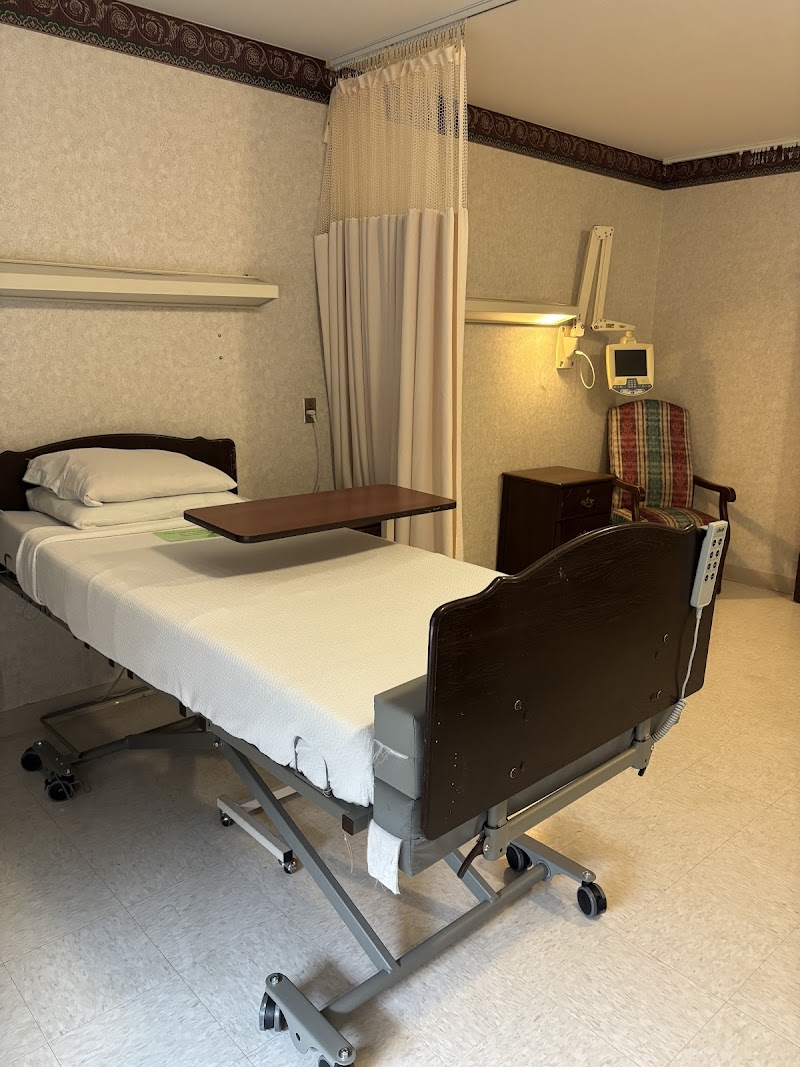
How is Ayden Healthcare Of Rosemount Pavilion Staffed?

CMS rates AYDEN HEALTHCARE OF ROSEMOUNT PAVILION's staffing level at 2 out of 5 stars, which is below average compared to other nursing homes. Staff turnover is 37%, compared to the Ohio average of 46%. This relatively stable workforce can support continuity of care.

What Have Inspectors Found at Ayden Healthcare Of Rosemount Pavilion?

State health inspectors documented 40 deficiencies at AYDEN HEALTHCARE OF ROSEMOUNT PAVILION during 2021 to 2025. These included: 1 that caused actual resident harm and 39 with potential for harm. Deficiencies causing actual harm indicate documented cases where residents experienced negative health consequences.
Who Owns and Operates Ayden Healthcare Of Rosemount Pavilion?

AYDEN HEALTHCARE OF ROSEMOUNT PAVILION is owned by a for-profit company. For-profit facilities operate as businesses with obligations to shareholders or private owners. The facility is operated by AYDEN HEALTHCARE, a chain that manages multiple nursing homes. With 117 certified beds and approximately 76 residents (about 65% occupancy), it is a mid-sized facility located in PORTSMOUTH, Ohio.
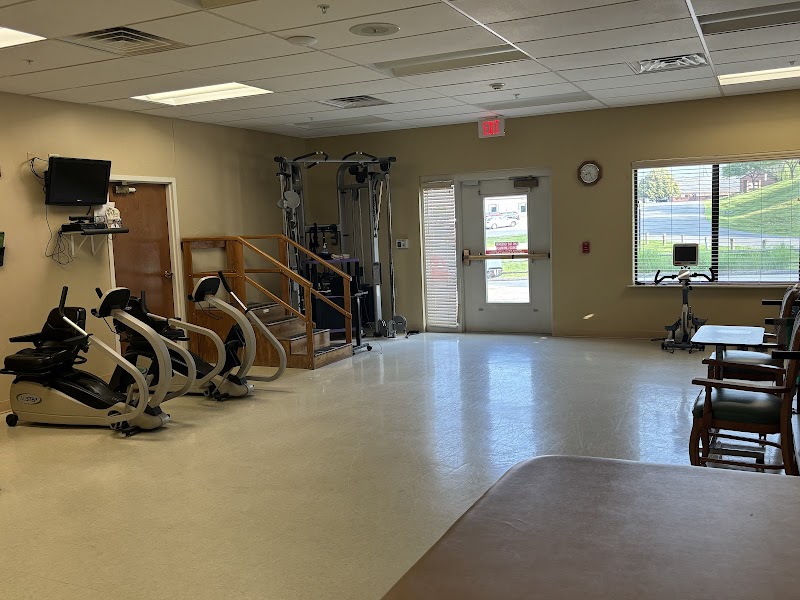
How Does Ayden Healthcare Of Rosemount Pavilion Compare to Other Ohio Nursing Homes?

Compared to the 100 nursing homes in Ohio, AYDEN HEALTHCARE OF ROSEMOUNT PAVILION's overall rating (3 stars) is below the state average of 3.2, staff turnover (37%) is near the state average of 46%, and health inspection rating (3 stars) is at the national benchmark.

What Should Families Ask When Visiting Ayden Healthcare Of Rosemount Pavilion?

Based on this facility's data, families visiting should ask: "Can you walk me through typical staffing levels on day, evening, and night shifts?" "Can I visit during a mealtime to observe dining assistance and food quality?" "How do you handle medical emergencies, and what is your hospital transfer rate?" "Can I speak with family members of current residents about their experience?" These questions are particularly relevant given the below-average staffing rating.

Is Ayden Healthcare Of Rosemount Pavilion Safe?

Based on CMS inspection data, AYDEN HEALTHCARE OF ROSEMOUNT PAVILION has a clean safety record: no substantiated abuse findings (meaning no confirmed cases of resident harm), no Immediate Jeopardy citations (the most serious violation level indicating risk of serious injury or death), and is not on the Special Focus Facility watch list (a federal program monitoring the lowest-performing 1% of nursing homes). The facility has a 3-star overall rating and ranks #100 of 100 nursing homes in Ohio. While no facility is perfect, families should still ask about staff-to-resident ratios and recent inspection results during their visit.

Do Nurses at Ayden Healthcare Of Rosemount Pavilion Stick Around?

AYDEN HEALTHCARE OF ROSEMOUNT PAVILION has a staff turnover rate of 37%, which is about average for Ohio nursing homes (state average: 46%). Moderate turnover is common in nursing homes, but families should still ask about staff tenure and how the facility maintains care continuity when employees leave.

Was Ayden Healthcare Of Rosemount Pavilion Ever Fined?

AYDEN HEALTHCARE OF ROSEMOUNT PAVILION has no federal fines on record. CMS issues fines when nursing homes fail to meet care standards or don't correct problems found during inspections. The absence of fines suggests the facility has either maintained compliance or corrected any issues before penalties were assessed. This is a positive indicator, though families should still review recent inspection reports for the full picture.

Is Ayden Healthcare Of Rosemount Pavilion on Any Federal Watch List?

AYDEN HEALTHCARE OF ROSEMOUNT PAVILION is not on any federal watch list. The most significant is the Special Focus Facility (SFF) program, which identifies the bottom 1% of nursing homes nationally based on persistent, serious quality problems. Not being on this list means the facility has avoided the pattern of deficiencies that triggers enhanced federal oversight. This is a positive indicator, though families should still review the facility's inspection history directly.