TRANQUILITY OF RICHMOND HEIGHTS
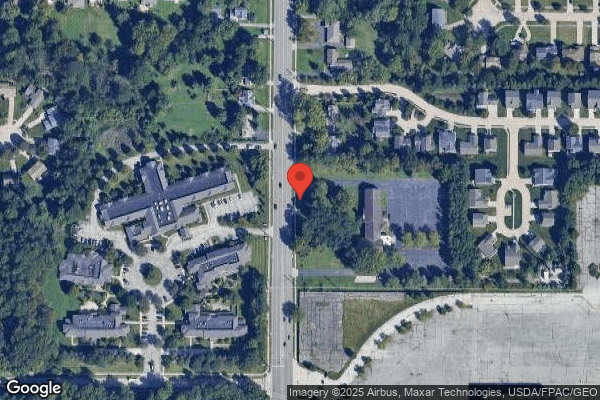

562 RICHMOND ROAD, RICHMOND HEIGHTS, OH 44143 (216) 291-8585
For profit - Limited Liability company 60 Beds Independent Data: November 2025
Trust Grade
43/100
#801 of 913 in OH
Last Inspection: May 2025

Inspected within the last 6 months. Data reflects current conditions.

Overview

Families considering Tranquility of Richmond Heights should be aware that it has received a Trust Grade of F, indicating poor quality and significant concerns. The facility ranks #801 out of 913 in Ohio, placing it in the bottom half of nursing homes in the state, and #79 out of 92 in Cuyahoga County, meaning there are only a few better local options. The situation is worsening, with issues increasing from 7 in 2024 to 9 in 2025. While staffing is average with a 3/5 star rating, the turnover rate is concerning at 64%, significantly higher than the state average. Additionally, the facility has incurred $20,000 in fines, which is higher than 79% of Ohio facilities, suggesting ongoing compliance issues. Specific incidents include failures to maintain sanitary conditions in the dumpster area, which poses a risk to residents, and a lack of a Legionella risk assessment, which is essential for preventing harmful bacteria in the water system. Overall, while there are some strengths, such as decent quality measures, the weaknesses raise significant red flags for potential residents.

Trust Score
D
43/100
In Ohio
#801/913
Bottom 13%
Safety Record
Low Risk
No red flags
Inspections
Getting Worse
7 → 9 violations
Staff Stability
⚠ Watch
64% turnover. Above average. Higher turnover means staff may not know residents' routines.
Penalties
⚠ Watch
$20,000 in fines. Higher than 88% of Ohio facilities, suggesting repeated compliance issues.
Skilled Nurses
✓ Good
Each resident gets 54 minutes of Registered Nurse (RN) attention daily — more than average for Ohio. RNs are trained to catch health problems early.
Violations
⚠ Watch
46 deficiencies on record. Higher than average. Multiple issues found across inspections.
★★☆☆☆
2.0
Overall Rating
★★★☆☆
3.0
Staff Levels
★★★★☆
4.0
Care Quality
★★☆☆☆
2.0
Inspection Score
Stable
2024: 7 issues
2025: 9 issues

The Good

  • 4-Star Quality Measures · Strong clinical quality outcomes
  • Full Sprinkler Coverage · Fire safety systems throughout facility
  • No fines on record

Facility shows strength in quality measures, fire safety.

The Bad

2-Star Overall Rating

Below Ohio average (3.2)

Below average - review inspection findings carefully

Staff Turnover: 64%

18pts above Ohio avg (46%)

Frequent staff changes - ask about care continuity

Federal Fines: $20,000

Below median ($33,413)

Minor penalties assessed

Staff turnover is elevated (64%)

16 points above Ohio average of 48%

The Ugly 46 deficiencies on record

Jul 2025 2 deficiencies
CONCERN (D) 📢 Someone Reported This

A family member, employee, or ombudsman was alarmed enough to file a formal complaint

Potential for Harm - no one hurt, but risky conditions existed

Deficiency F0627 (Tag F0627)

Could have caused harm · This affected 1 resident

**NOTE- TERMS IN BRACKETS HAVE BEEN EDITED TO PROTECT CONFIDENTIALITY** Based on record review, review of the police report, interview and facility policy review, the facility failed to appropriately ...

Read full inspector narrative →
**NOTE- TERMS IN BRACKETS HAVE BEEN EDITED TO PROTECT CONFIDENTIALITY** Based on record review, review of the police report, interview and facility policy review, the facility failed to appropriately discharge Resident #55. This affected one (Resident #55) out of three residents discharged from the facility. The facility census was 54 residents.Findings include: A review of Resident #55's clinical record revealed an admission date of 06/23/25 with diagnoses including cellulitis of the left lower limb, cerebral palsy, high blood pressure, major depression and genetic intellectual disability. Resident #55 was discharged from the facility on 07/07/25. A review of Resident #55's Minimum Data Set (MDS) assessment dated [DATE] indicated Resident #55 was moderately cognitively impaired and needed assistance with bathing, dressing and personal care. Resident #55's plan of care initiated on 06/23/25 indicated a self-care deficit related to intellectual disability. Interventions on the care plan included encourage Resident #55 to participate in planning day-to-day care, evaluate Resident #55's ability to perform activities of daily living (ADL), maintain a consistent schedule with a daily routine, minimize environmental stimuli, provide assistance with ADL as needed. Resident #55's plan of care initiated on 07/02/25 indicated Resident #55 had impaired cognitive impairment with functional/dementia or impaired thought processes related to difficulty making decisions and impaired decision making. Interventions on the plan of care included for staff to communicate with Resident #55, family, caregivers regarding Resident #55's capabilities and needs, discuss concerns about confusion, disease process, nursing home placement with Resident #55, family and caregivers, engage Resident #55 in simple structured activities that avoid overdemanding tasks according t A review of Resident #55's form titled Notice of Medicare Non-Coverage dated 07/07/25 indicated Resident #55 was notified his last day for payment of skilled services was 07/05/25 and the instructions for the right to appeal the decision were included on the form. The form was signed by Resident #55 on 07/03/25. A review of Resident #55's physician orders dated 06/23/25 to 07/07/25 revealed no order to discharge Resident #55 from the facility. A review of the police report dated 07/07/25 revealed the police received a call at 6:24 P.M. that a male needed transported from an independent living facility to the hospital for a health evaluation. The police report revealed Resident #55 left the independent nursing facility at 6:41 P.M. and was transported to the hospital. An interview on 07/10/25 at 8:49 A.M. with Social Services Designee (SSD) #62 revealed she had attempted to obtain the Power of Attorney (POA) paperwork to prove Resident #55's POA was legally appointed as his POA. SSD #62 contacted the POA listed on Resident #55's hospital discharge papers and requested the paperwork to prove he was Resident #55's POA. SSD #62 stated she never received the paperwork. SSD #62 revealed on 07/07/25 Certified Nurse Practitioner (CNP) #65 talked to the Assistant Director of Nursing (ADON) from the independent living facility and was informed Resident #55 was denied admission to the independent living facility. SSD #62 stated she and admission Coordinator (AC) #63 traveled to the independent nursing facility on 07/07/25 at 11:00 A.M. and met with the Independent Living Marketing Director and spoke to the Independent Living Administrator ([NAME]) #66 via speaker phone. The [NAME] #66 informed them that the independent living facility was unable to meet Resident #55's needs and woul A voice message was left on Resident #55's POA's phone on 07/07/25 at 9:30 A.M. and a return phone call on 07/10/25 at 12:00 P.M. revealed he was aware the facility has discharged Resident #55 to the independent nursing facility. Resident #55's POA stated he disagreed with the decision to discharge Resident #55 to the independent nursing facility and was working on finding Resident #55 alternate placement in a long term care facility. An interview with Independent Living Employee ([NAME]) #60 on 07/10/25 at 9:34 A.M. revealed Resident #55 had resided in the independent living facility prior to his hospitalization in June 2025 for wound care. When Resident #55 was sent to the hospital Resident #55's POA was notified he would need a higher level of care and could not return to the independent facility. The POA informed the independent living facility he was investigating placement for Resident #55 in a long-term care facility. [NAME] #60 stated the independent living facility Director of Nursing (DON) #61 received a call from the Administrator of the skilled nursing facility where Resident #55 was provided skilled wound care informing them, he would be returning to the independent living facility. DON #61 informed the Administrator #64 from the skilled nursing facility that they were unable to meet Resident #55's needs because he needed a higher level of care. [NAME] #60 stated SSD #62 and AC #63 from the skilled nursing facility met with the M An interview with Administrator #64 on 07/10/25 at 10:51 A.M. revealed Resident #55 was admitted to the skilled nursing facility for wound care following hospitalization. Administrator #64 stated that when Resident #55 was discharged from therapy services she discharged Resident #55 back to the independent facility where he had resided prior to his admission to the hospital. Administrator #64 stated she was aware the independent living facility had denied Resident #55's re-admission to the independent facility and felt it was the responsibility of the independent living facility to arrange for alternate placement of Resident #55 in another nursing facility. An interview with CNP #65 on 07/14/25 at 10:18 A.M. revealed she was informed the independent nursing facility had denied Resident #55's admission on [DATE] and had informed Administrator #64. CNP #65 stated she did not write a discharge order from the physician and the physician did not enter a discharge order for Resident #55. CNP #65 stated she felt Resident #55 needed a higher level of care in an assisted living facility or a long-term care nursing facility. The facility policy and procedure titled Discharging the Resident revised 08/2024 indicated the purpose of the policy was to provide guidelines for the discharge process. The discharge preparation included when the resident was transferred home, ensure that resident and/or responsible party receive teaching and discharge instructions. Assess and document the resident's condition at discharge, including skin assessment, if medical conditions allow. This deficiency represents non-compliance investigated under Complaint Number OH00167466 (1383016).
CONCERN (D) 📢 Someone Reported This

A family member, employee, or ombudsman was alarmed enough to file a formal complaint

Potential for Harm - no one hurt, but risky conditions existed

Medical Records (Tag F0842)

Could have caused harm · This affected 1 resident

Based on record review, interview, and facility policy review, the facility failed to document concerns regarding Resident #37's care in the facility. This affected one (Resident #37) out of three res...

Read full inspector narrative →
Based on record review, interview, and facility policy review, the facility failed to document concerns regarding Resident #37's care in the facility. This affected one (Resident #37) out of three residents reviewed with concerns. The facility census was 54.Findings include: A review of Resident #37's clinical record revealed an admission date 06/18/25 with diagnoses including fractured pelvis and left arm, anemia, anxiety, dementia, depression, neuromuscular dysfunction of the bladder and schizophrenia. Resident #37's physician order dated 06/30/24 revealed an appointment was scheduled with the orthopedic physician for after-care of bone fractures. Resident #37's progress note dated 06/30/25 indicated Resident #37 was transported to an appointment at 12:24 P.M. and returned to the facility following an orthopedic appointment at 3:27 P.M. A review of Resident #37's discharge information from the hospital dated 06/18/25 indicated a follow-up appointment was scheduled on 06/30/25 at 12:30 P.M. with the orthopedic physician's office for X-rays. An interview with Resident #37's niece on 07/10/25 at 9:45 A.M. revealed she was Resident #37's guardian and was not notified that Resident #37 had an appointment scheduled for a follow-up visit with the orthopedic physician on 06/30/25. Resident #37's niece stated she found out that Resident #37 had been transported to an appointment and was not in the facility when another family member went to visit Resident #37. Resident #37's niece stated she voiced her concerns to the Administrator but had no follow-up to her concerns. An interview with the Administrator on 07/10/25 at 11:06 A.M. revealed Resident #37's niece constantly complained about her aunt's care in the facility. The Administrator stated Resident #37's niece had talked to the Director of Nursing (DON) #67 and had screamed at DON #67 and stated she was furious the facility had not notified her of Resident #37's appointment on 06/30/25. The Administrator stated Resident #37's niece was Resident #37's guardian and would have been notified of the follow-up appointment with the orthopedic physician scheduled on 06/30/25 upon the discharge from the hospital. The discharge paperwork was given to Resident #37's niece when discharged from the hospital and the information was entered into the electronic system (MyChart) for patients to review their care while in the hospital. The Administrator stated the DON tried to explain the notification of family/responsible party policy and Resident #37's niece just kept yelling at the DON, and Administrator had to end the conversat A review of Resident #37's clinical record revealed no documentation that Resident #37's niece was upset the facility had failed to notify her of the appointment scheduled with the orthopedic physician. A review of the Concern Log dated 05/2025 to 07/2025 revealed no concerns were documented regarding Resident #37's niece's concern with notification of appointments or any other concerns during Resident #37's stay in the facility. An interview with the Administrator and DON #67 on 07/14/25 at 2:47 P.M. verified the above information and had failed to document Resident #37's niece's concerns in Resident #37's medical record. A review of the facility policy titled Charting and Documentation (undated) indicated the policy was that all services provided to the resident, progress toward the care plan goals, or any changes in the resident's medical, physical, functional or psychosocial condition, shall be documented in the resident's medical record. The medical record should facilitate communication between the interdisciplinary team regarding the resident's condition and response to care. The Policy Interpretation and Implementation included:Documentation in the medical record may be electronic, manual or a combination.The following information is to be documented in the resident medical record:Objective observations;Medications administered;Treatments or services performed;Changes in the resident's condition;Events, incidents or accidents involving the resident; andProgress toward or changes in the care plan goals and objectives.Documentation in the medical record will be objective (not opinionated or speculative), complete, and accurate.Entries may only be recorded in the resident's clinical record by licensed personnel (e.g., RN, LPN/LVN, physicians, therapists, etc.) in accordance with state law and facility policy. Certified nursing assistants may only make entries in the resident's medical chart as permitted by facility policy.Information documented in the resident's clinical record is confidential and may only be released in accordance with state law, the Health Insurance Portability and Accountability Act (HIPAA) and facility policy. Refer all requests for information to the director of nursing services, nurse supervisor/charge nurse or to the business office. This deficiency represents non-compliance investigated under Master Complaint Number 2568840.
May 2025 7 deficiencies
CONCERN (D) 📢 Someone Reported This

A family member, employee, or ombudsman was alarmed enough to file a formal complaint

Potential for Harm - no one hurt, but risky conditions existed

Deficiency F0692 (Tag F0692)

Could have caused harm · This affected 1 resident

**NOTE- TERMS IN BRACKETS HAVE BEEN EDITED TO PROTECT CONFIDENTIALITY** Based on medical record review and staff interview, the facility failed to ensure residents were nutritionally assessed and moni...

Read full inspector narrative →
**NOTE- TERMS IN BRACKETS HAVE BEEN EDITED TO PROTECT CONFIDENTIALITY** Based on medical record review and staff interview, the facility failed to ensure residents were nutritionally assessed and monitored on a routine basis. This affected two residents (#30, and #46) of five residents reviewed for nutrition. The facility census was 48. Findings include: 1. Review of the medical record for Resident #30 revealed an admission date of 10/21/24 and diagnoses including right dominant side hemiplegia and hemiparesis, diabetes mellitus, hypertension, diastolic congestive heart failure, chronic ischemic heart disease, and chronic kidney disease. Review of the physician's order dated 12/12/24 revealed Resident #30 was on a regular diet with regular texture and thin liquids. Review of the physician's order dated 02/13/25 revealed Resident #30 received 150 milliliters (ml) water flush every four hours via percutaneous endoscopic gastrostomy (PEG) tube (used for administration of enteral feeds). Review of the physician's order dated 03/15/25 revealed Resident #30 received 400 ml bolus three times per day of Isosource 1.5 (enteral nutrition formula) via PEG tube. Review of weights revealed Resident #30 had weight fluctuations and there was no evidence of weights recorded for November 2024 or March 2025. Further review of the medical record revealed there had not been a nutritional assessment completed on Resident #30 from admission on [DATE] until 05/14/25. Review of the dietary progress note dated 05/14/25 confirmed Resident #30 had not had a nutritional assessment since admission. The progress note indicated Resident #30 was at risk for malnutrition related to chronic disease, tube feedings, and dysphagia. It was noted Resident #30 had weight gain over five months of 12 percent (%) and weight maintenance was preferred. Review of Resident #30's plan of care revealed a nutritional care plan was not initiated until 05/14/25 to reflect Resident #30's nutritional risk related to dysphagia, history of poor meal intake, and enteral feeding with PEG tube. Interview on 05/21/25 at 10:05 A.M. with Registered Dietitian Supervisor (RDS) #700 revealed their company had been contracted at the facility for about two weeks and they had been documenting on residents remotely as of 05/12/25. RDS #700 indicated a permanent consultant was scheduled to start next week for routine on site visits. RDS #700 confirmed she was unable to locate any additional nutritional assessment of Resident #30. RDS #700 confirmed she would consider Resident #30 to be at high risk nutritionally and additional monitoring was needed. Interview on 05/21/25 at 10:38 A.M. with the Administrator revealed there had been a couple month lapse in dietitian services. The Administrator indicated there was a corporate dietitian overseeing nutrition services during the lapse, but was unable to provide additional evidence of nutritional oversight of Resident #30. 2. Review of the medical record for Resident #46 revealed an admission date of 12/07/24 and diagnoses including end stage renal disease, dependence on renal dialysis, diabetes mellitus, acute on chronic combined systolic and diastolic congestive heart failure, hypertension, blindness in both eyes, and peripheral vascular disease. Review of physician's order dated 04/11/25 revealed Resident #46 went to dialysis every Tuesday, Thursday, and Saturday. Review of weight records revealed Resident #46 had significant weight loss at 7.5 percent (%) loss from April 2025 at 130.6 pounds to May 2025 at 120.8 pounds. Further review of the medical record revealed there had not been a nutritional assessment completed on Resident #46 from admission on [DATE] until 05/19/25. Review of the Nutrition/Dietary Note dated 05/19/25 revealed Resident #46 triggered for significant weight loss and had body mass index (BMI) indicating underweight. The progress note confirmed Resident #46 had not had a nutritional evaluation since admission. It was noted there had been no communication with dialysis dietitian and facility dietitian was awaiting return communication. It was recommended to add pre- and post-dialysis weights, add four ounces of Novasource renal (nutritional) supplement twice daily, and continue to monitor as needed. Review of Resident #46's plan of care revealed a nutritional care plan was not initiated until 05/19/25 to reflect Resident #46's nutritional risk related to dialysis, low BMI, and significant weight changes. Interview on 05/21/25 at 10:05 A.M. with RDS #700 revealed their company had been contracted at the facility for about two weeks and they had been documenting on residents remotely as of 05/12/25. RDS #700 indicated a permanent consultant was scheduled to start next week for routine on site visits. RDS #700 confirmed she was unable to locate any additional nutritional assessment of Resident #46. RDS #700 confirmed she would consider Resident #46 to be at high risk nutritionally and need additional monitoring. Interview on 05/21/25 at 10:38 A.M. with The Administrator revealed there had been a couple month lapse in dietitian services. The Administrator indicated there was a corporate dietitian overseeing nutrition services during the lapse but was unable to provide additional evidence of nutritional oversight of Resident #46. This deficiency represents noncompliance investigated under Complaint Number OH00161627.
CONCERN (D)

Potential for Harm - no one hurt, but risky conditions existed

Deficiency F0698 (Tag F0698)

Could have caused harm · This affected 1 resident

**NOTE- TERMS IN BRACKETS HAVE BEEN EDITED TO PROTECT CONFIDENTIALITY** Based on resident record reviews, staff interviews, and review of facility policy, the facility failed to ensure communication a...

Read full inspector narrative →
**NOTE- TERMS IN BRACKETS HAVE BEEN EDITED TO PROTECT CONFIDENTIALITY** Based on resident record reviews, staff interviews, and review of facility policy, the facility failed to ensure communication and monitoring between the facility and dialysis center was completed and maintained. This affected one resident (#46) of one resident reviewed for dialysis. The facility census was 48. Findings include: Record review for Resident #46 revealed the resident was admitted to the facility on [DATE] and had diagnoses including end stage renal disease (ESRD), acute on chronic combined systolic (congestive) and diastolic (congestive) heart failure, blindness in both eyes, and dependence on renal dialysis. Review of Resident #46's care plan dated 12/09/24 revealed the resident received dialysis treatments on Tuesdays, Thursdays, and Saturdays. Listed interventions included to auscultate (listen to) lungs sounds as ordered and monitor for edema, check for new orders upon return from dialysis, maintain communication staff with dialysis staff and physician, monitor dressing to vascular catheter/shunt, monitor left arm fistula for bruit and thrill and signs of infection, and monitor labs and report to the physician. Review of the Minimum Data Set (MDS) quarterly assessment dated [DATE] revealed Resident #46 has a Brief Interview for Mental Status (BIMS) score of 15 indicating the resident was cognitively intact. Resident #46 was noted on the assessment as receiving dialysis treatments. Review of the medical record for Resident #46 revealed there was only dialysis communication documentation recorded for 01/09/25 and 01/16/25. There was no additional evidence of dialysis communication contained in the resident's medical record or the facility's dialysis communication book. Interview on 05/21/2025 at 9:10 A.M. with Registered Nurse (RN) #582 revealed Resident #46 did not want his vital signs taken and consistently would refuse prior to leaving for dialysis treatments. RN #582 refused to take his dialysis communication record with him to the off-site dialysis center. RN #582 further confirmed that when Resident #46 returned from dialysis, he did not provide any communication or documentation from the dialysis center and would refuse to have his vital signs taken. Interview on 05/21/25 at 10:00 A.M. with the Director of Nursing (DON) revealed there was a communication book for the nurses to read and record on residents that go out to dialysis treatments. The DON stated Resident #46 would take the dialysis communication sheets with him to dialysis but would not return them. The DON confirmed the facility did not retain a copy of the sheets sent with the resident, and there was no evidence that the facility had reached out to the dialysis center directly to collaborate or communicate. Review of the policy titled Hemodialysis Catheters - Access and Care of with revised date September 2024 revealed that nurses should document every shift for location of catheter, condition of dressing, if dialysis was done during shift, any part of report from dialysis nurse post-dialysis being given, and observations post-dialysis.
CONCERN (D)

Potential for Harm - no one hurt, but risky conditions existed

Drug Regimen Review (Tag F0756)

Could have caused harm · This affected 1 resident

**NOTE- TERMS IN BRACKETS HAVE BEEN EDITED TO PROTECT CONFIDENTIALITY** Based on medical record review and staff interview, the facility failed to ensure pharmacy recommendations were timely reviewed ...

Read full inspector narrative →
**NOTE- TERMS IN BRACKETS HAVE BEEN EDITED TO PROTECT CONFIDENTIALITY** Based on medical record review and staff interview, the facility failed to ensure pharmacy recommendations were timely reviewed and addressed by the physician. This affected three residents (#18, #30, and #34) of five residents reviewed for unnecessary medications. The facility census was 48. Findings include: 1. Review of the medical record for Resident #30 revealed an admission date of 10/21/24 and diagnoses including right dominant side hemiplegia and hemiparesis, Diabetes mellitus, essential hypertension, diastolic congestive heart failure, chronic ischemic heart disease, and chronic kidney disease. Review of the pharmacy Consultation Report dated 10/23/24 revealed the pharmacist recommended to obtain a complete blood count (CBC) and basic metabolic panel (BMP) lab draw on next lab day due to Resident #30 receiving Eliquis (an anticoagulant medication). There was no evidence provided that this pharmacy recommendation was addressed by a physician. A BMP and CBC were not obtained until 11/21/24. Review of an additional pharmacy Consultation Report dated 10/23/24 revealed the pharmacist recommended discontinuing as needed Methocarbamol (a muscle relaxant medication) due to the strong, sedating anticholinergic properties. There was no evidence provided that this pharmacy recommendation was addressed by a physician. Resident #30 remained on the medication until 03/06/25. Review of the pharmacy Consultation Report dated 01/27/25 revealed the pharmacist indicated Resident #30 was on duplicate therapy including Doxazosin Mesylate (an antihypertensive medication and can also be used to treat benign prostatic hyperplasia) for hypertension and Tamsulosin Hydrochloride for benign prostatic hyperplasia. The pharmacist recommended to re-evaluate and consider an alternative antihypertensive to Doxazosin. The pharmacy recommendation was not addressed by a physician until 03/03/25. Interview on 05/21/25 at 2:24 P.M. with the Director of Nursing (DON) confirmed she was unable to locate additional evidence pharmacy recommendations were addressed by a physician. The DON indicated these recommendations occurred prior to her becoming the DON. 3. Review of the medical record for Resident #34 revealed an admission date of 01/15/24 and diagnoses including chronic and peripheral venous insufficiency, adjustment disorder with mixed anxiety and depressed mood and recurrent major depressive disorder and generalized anxiety disorder. Review of the Pharmacy Consultation Report dated 01/01/25 revealed the pharmacist recommended a gradual dose reduction (GDR) of trazodone 50 milligrams (mg) at hour of sleep (HS) to trazodone 25mg at HS, a medication used to treat depression and is used as a sleep aid. The pharmacy recommendation was not addressed by a physician until 03/03/25. Review of an additional Pharmacy Consultation Report dated 01/01/25 revealed the pharmacist recommended re-evaluating and consider discontinuing Doxazosin Mesylate 2 mg HS for hypertension (HTN) and Tamsulosin Hydrochloride 0.4 mg HS for benign prostatic hyperplasia (BPH) consider alternative antihypertensive therapy if necessary. The pharmacy recommendation was not addressed by the physician until 03/03/25. Interview on 05/21/25 at 2:24 P.M. with the DON confirmed she was unable to locate additional evidence pharmacy recommendations were addressed by a physician. The DON indicated these recommendations were prior to her becoming the DON. 2. Resident #18 was admitted to the facility on [DATE] with diagnoses including Bipolar Disorder, Multiple Sclerosis, gastroparesis, anxiety, and morbid obesity. Review of the physician's orders for Resident #18 revealed the resident received the following medications: - Ativan (used to treat anxiety) 1 milligram (mg) orally every six hours as needed - Clonazepam (used to treat anxiety) 1 mg orally twice a day - Buspirone (used to treat anxiety) 20 mg orally twice a day - Bupropion (an antidepressant) 150 mg twice a day - Fluoxetine (an antidepressant) 40 mg orally every day - Seroquel (an antipsychotic used to treat bipolar disorder) 400 mg orally every evening - Eliquis (an anticoagulant) 5 mg orally twice a day Review of the pharmacist recommendations for Resident #18 revealed on 06/25/24 and 09/23/24 revealed the resident was receiving Eliquis twice a day, baby aspirin daily, and Naproxen (an anti-inflammatory) twice a day. The pharmacist recommended consideration of discontinuing the Naproxen as it could lead to potentially fatal bleeding. The physician did not provide a response to the recommendation. Review of the current physician's orders revealed Resident #18 no longer had an order for Naproxen. Review of the pharmacist recommendations for Resident #18 revealed on 03/14/25 the resident had an order for Ativan 1 mg orally every six hours as needed for anxiety. There was no date provided for when the medication should be discontinued. The recommendation for all non-antipsychotic medications ordered as needed should be limited to 14 days unless otherwise noted by the physician. The physician did not respond to the recommendation until 04/28/25 when a discontinuation date of six months was provided. Review of the pharmacist recommendations for Resident #18 revealed on 03/14/25 the resident had an order for aspirin and eliquis (an anticoagulant medication) and had not had a complete blood count (CBC) completed in the past six months. The pharmacist recommended the resident have a CBC drawn every six months to monitor for the possibility of gastrointestinal bleeding. The physician did not respond to the recommendation until 04/28/25. Interview with the Administrator on 05/21/25 at 5:00 P.M. revealed she did not know why the physician did not respond to the pharmacist recommendations in a timely manner as he was present in the facility weekly.
CONCERN (E)

Potential for Harm - no one hurt, but risky conditions existed

Deficiency F0883 (Tag F0883)

Could have caused harm · This affected multiple residents

Based on record review, staff interview, and review of facility policy, the facility failed to ensure education on immunization risk and benefits were provided and failed to obtain written consent for...

Read full inspector narrative →
Based on record review, staff interview, and review of facility policy, the facility failed to ensure education on immunization risk and benefits were provided and failed to obtain written consent for influenza and pneumococcal immunizations. This affected five residents (#1, #30, #37, #45, and #46) of five residents reviewed for immunizations. The facility census was 48. Findings include: 1. Review of the medical record for Resident #1 revealed an admission date of 02/06/24 with diagnoses including hypertension, dementia, hemiplegia and hemiparesis following unspecified cerebrovascular disease affecting right dominant side, major depressive disorder, cerebral infarction, and aphasia following unspecified cerebrovascular disease. Review of the influenza vaccine consent form dated 11/28/24 for Resident #1 indicated the vaccination was declined. The form indicated the declination was verbal, there was no indication as to whether the decision was made by the resident or by a resident representative, and there was no signature on the form to indicate education had been provided on the risks and benefits. There was no consent form in Resident #1's medical record for the pneumococcal vaccination. 2. Review of the medical record for Resident #30 revealed an admission date of 10/21/24 with diagnoses including dysphagia, neuromuscular dysfunction of bladder, chronic kidney disease, gastrostomy status, major depressive disorder, and hemiplegia and hemiparesis following cerebral infarction affecting right dominant side. Review of the influenza vaccine consent form dated 11/15/24 for Resident #30 indicated the vaccination was declined. The form indicated the declination was verbal, there was no indication as to whether the decision was made by the resident or by a resident representative, and there was no signature on the form to indicate education had been provided on the risks and benefits. Review of the pneumococcal vaccine consent form dated 11/15/24 for Resident #30 indicated the vaccination was declined. The form indicated the declination was verbal, there was no indication as to whether the decision was made by the resident or by a resident representative, and there was no signature on the form to indicate education had been provided on the risks and benefits. Review of the immunization records revealed Resident #30 received the pneumococcal vaccination on 11/16/24. There was no signed consent form in Resident #30's medical record indicating consent was received to administer the pneumococcal vaccination. 3. Review of the medical record for Resident #37 revealed an admission date of 06/13/24 with diagnoses including Alzheimer's disease, dementia with behavioral disturbance, and major depressive disorder. Review of the influenza vaccine consent form dated 11/27/24 for Resident #37 indicated consent was received to administer the vaccination. The form indicated the consent was verbal, there was no indication as to whether the decision was made by the resident or by a resident representative, and there was no signature on the form to indicate education had been provided on the risks and benefits. Review of the pneumococcal vaccine consent form, which was not dated, for Resident #37 indicated consent was received to administer the vaccination. The form indicated the consent was verbal, there was no indication as to whether the decision was made by the resident or by a resident representative, and there was no signature on the form to indicate education had been provided on the risks and benefits. Review of the immunizations record for Resident #37 indicated the pneumococcal vaccine was administered on 11/24/24 and the influenza vaccine was administered on 12/19/24. 4. Review of the medical record for Resident #45 revealed a re-admission date of 10/20/24 with diagnoses including Parkinson's disease, neuromuscular dysfunction of bladder, retention of urine, schizophrenia, hyperlipidemia, and hypothyroidism. Review of the influenza vaccine consent form dated 11/28/24 for Resident #45 indicated consent was received to administer the vaccination. The form indicated the consent was verbal, there was no indication as to whether the decision was made by the resident or by a resident representative, and there was no signature on the form to indicate education had been provided on the risks and benefits. Review of the pneumococcal vaccine consent form, which was not dated, for Resident #45 indicated consent was received to administer the vaccination. The form indicated the consent was verbal, there was no indication as to whether the decision was made by the resident or by a resident representative, and there was no signature on the form to indicate education had been provided on the risks and benefits. Review of the immunizations record for Resident #45 indicated the pneumococcal vaccine was administered on 11/16/24 and the influenza vaccine was administered on 12/19/24. 5. Review of the medical record for Resident #46 revealed an admission date of 12/07/24 with diagnoses including end stage renal disease, type two diabetes mellitus, and dependence on renal dialysis. There was no consent form in Resident #46's medical record for the influenza vaccination or the pneumococcal vaccination. On 05/21/25 at 2:58 P.M., an interview with Infection Preventionist (IP) #511 stated immunizations were supposed to be offered to residents and consent forms signed. IP #511 refused to confirm that the vaccination consent forms for Residents #1, #30, #37, #45, and #46 were not signed. On 05/21/25 at 3:10 P.M., an interview with Licensed Practical Nurse (LPN) #517 verified the immunization consent forms did not have any indication as to who provided the vaccine consent or declination and the forms were not signed by the residents or their representatives. LPN #517 stated the former Director of Nursing (DON) had instructed her to just write verbal or verbally on the forms and that would be sufficient. LPN #517 also verified Resident #30's pneumococcal vaccine consent form indicated the vaccine was declined on 11/15/24 and Resident #30's medical record indicated he received the pneumococcal vaccination on 11/16/24. Review of the facility policy titled Influenza Vaccine, dated October 2019, revealed all residents without clinical contraindications would be offered the influenza vaccine annually, education on the risks and benefits of the vaccine would be provided to the resident or resident's legal representative, and consent or declination of the vaccine would be documented in the resident's medical record. Review of the facility policy titled Pneumococcal Vaccine, dated October 2019, revealed all residents would be offered the pneumococcal vaccine within 30 days of admission, education on the risks and benefits of the vaccine would be provided to the resident or resident's legal representative, provision of the education would be documented in the resident's medical record, and refusals of the vaccine would be documented in the resident's medical record.
CONCERN (E)

Potential for Harm - no one hurt, but risky conditions existed

Deficiency F0887 (Tag F0887)

Could have caused harm · This affected multiple residents

Based on record review, staff interview, and review of facility policy, the facility failed to ensure education on immunization risk and benefits were provided and failed to obtain written consent for...

Read full inspector narrative →
Based on record review, staff interview, and review of facility policy, the facility failed to ensure education on immunization risk and benefits were provided and failed to obtain written consent for COVID-19 immunizations. This affected five residents (#1, #30, #37, #45, and #46) of five residents reviewed for immunizations. The facility census was 48. Findings include: 1. Review of the medical record for Resident #1 revealed an admission date of 02/06/24 with diagnoses including hypertension, dementia, hemiplegia and hemiparesis following unspecified cerebrovascular disease affecting right dominant side, major depressive disorder, cerebral infarction, and aphasia following unspecified cerebrovascular disease. Review of the COVID-19 vaccination consent form, which was not dated, for Resident #1 indicated the vaccination was declined. The form indicated the declination was verbal, there was no indication as to whether the decision was made by the resident or by a resident representative, and there was no signature on the form to indicate education had been provided on immunization risks and benefits. 2. Review of the medical record for Resident #30 revealed an admission date of 10/21/24 with diagnoses including dysphagia, neuromuscular dysfunction of bladder, chronic kidney disease, gastrostomy status, major depressive disorder, and hemiplegia and hemiparesis following cerebral infarction affecting right dominant side. Review of the COVID-19 vaccination consent form, which was not dated, for Resident #30 indicated the vaccination was declined. The form indicated the declination was verbal, there was no indication as to whether the decision was made by the resident or by a resident representative, and there was no signature on the form to indicate education had been provided on immunization risks and benefits. 3. Review of the medical record for Resident #37 revealed an admission date of 06/13/24 with diagnoses including Alzheimer's disease, dementia with behavioral disturbance, and major depressive disorder. Review of the COVID-19 vaccination consent form, dated 03/06/25, for Resident #37 indicated the vaccination was declined. The form indicated the declination was verbal, there was no indication as to whether the decision was made by the resident or by a resident representative, and there was no signature on the form to indicate education had been provided on immunization risks and benefits. 4. Review of the medical record for Resident #45 revealed a re-admission date of 10/20/24 with diagnoses including Parkinson's disease, neuromuscular dysfunction of bladder, retention of urine, schizophrenia, hyperlipidemia, and hypothyroidism. Review of the immunizations record for Resident #45 indicated the resident was not eligible for the COVID-19 vaccination on 12/29/23. There was no evidence in Resident #45's medical record that the COVID-19 vaccine had been offered or administered. 5. Review of the medical record for Resident #46 revealed an admission date of 12/07/24 with diagnoses including end stage renal disease, type two diabetes mellitus, and dependence on renal dialysis. Review of the COVID-19 vaccination consent form, which was not dated, for Resident #46 indicated the vaccination was declined. The form indicated the declination was verbal, there was no indication as to whether the decision was made by the resident or by a resident representative, and there was no signature on the form to indicate education had been provided on immunization risks and benefits. On 05/21/25 at 2:58 P.M., an interview with Infection Preventionist (IP) #511 stated immunizations were supposed to be offered to residents and consent forms signed. IP #511 refused to confirm that the vaccination consent forms for Residents #1, #30, #37, #45, and #46 were not signed. On 05/21/25 at 3:10 P.M., an interview with Licensed Practical Nurse (LPN) #517 verified the immunization consent forms did not have any indication as to who provided the vaccine consent or declination and the forms were not signed by the residents or their representatives. LPN #517 stated the former Director of Nursing (DON) had instructed her to just write verbal or verbally on the forms and that would be sufficient. Review of the facility policy titled COVID-19 Prevention, Response, and Reporting, dated 07/01/24, revealed the facility would offer resources and counseling to residents on the importance of receiving the COVID-19 vaccine and staying up to date on with all recommended COVID-19 vaccine doses.
CONCERN (F)

Potential for Harm - no one hurt, but risky conditions existed

Garbage Disposal (Tag F0814)

Could have caused harm · This affected most or all residents

Based on observation and staff interview, the facility failed to maintain the dumpster area in a sanitary manner. This had the potential to affect all residents residing in the facility. The facility ...

Read full inspector narrative →
Based on observation and staff interview, the facility failed to maintain the dumpster area in a sanitary manner. This had the potential to affect all residents residing in the facility. The facility census was 48. Findings include: Observation on 05/18/25 at 8:25 A.M. with Dietary Manager (DM) #419 revealed the lid to the dumpster was open and the enclosure to the dumpster was left open. There was significant debris surrounding the dumpster inside the enclosure including cups, plastic wrap, gloves, and food wrappers. Interview on 05/18/25 at 8:25 A.M. with DM #419 confirmed findings of the dumpster area and indicated the maintenance director was responsible for maintaining the dumpster area.
CONCERN (F)

Potential for Harm - no one hurt, but risky conditions existed

Infection Control (Tag F0880)

Could have caused harm · This affected most or all residents

10. Interview on 05/21/25 at 2:22 P.M. with Maintenance Director #609 confirmed he was unable to provide a Legionella risk assessment or a water management plan. Maintenance Director #609 confirmed th...

Read full inspector narrative →
10. Interview on 05/21/25 at 2:22 P.M. with Maintenance Director #609 confirmed he was unable to provide a Legionella risk assessment or a water management plan. Maintenance Director #609 confirmed there was a Centers for Disease Control (CDC) toolkit available to them in their maintenance system for use to develop a risk assessment and plan, but he had not done so yet. Maintenance Director #609 indicated he did check water temperatures every Friday on each hall. Interview on 05/212/25 at 3:48 P.M. with the Administrator confirmed she was unable to locate any additional information regarding a Legionella risk assessment or water management plan. Review of facility policy Water Management Program undated revealed it was the policy of the facility to establish water management plans for reducing the risk of legionnaires and other opportunistic pathogens in the water system. A risk assessment would be conducted by the water management team annually to identify where Legionella could grow and spread. Review of CDC Toolkit for Controlling Legionella in Common Sources of Exposure (Legionella Control Toolkit) dated 01/13/21 revealed the purpose of the document was to help evaluate hazardous conditions associated with potable water systems. The toolkit provided education, guidelines, and recommendations for development of a water management plan. Based on record review, observation, interview, review of the Centers for Disease Control and Prevention (CDC) guidance on enhanced barrier precautions in nursing homes, and facility policy review, the facility failed to implement enhanced barrier precautions which required the use of gowns and gloves during care for residents with wounds or indwelling medical devices, which affected nine residents (#5, #12, #20, #23, #30, #34, #36, #45, and #46) out of 10 reviewed for transmission-based precautions (TBP) and enhanced barrier precautions. In addition, the facility failed to develop and implement a water management program and Legionella risk assessment, which had the potential to affect all residents residing in the facility. The facility census was 48. Findings include: 1. Review of the medical record for Resident #5 revealed an admission date of 12/17/24 with diagnoses including neuromuscular dysfunction of bladder, dementia, and anxiety disorder. Review of the care plan, dated 04/11/25, revealed Resident #5 had an indwelling foley catheter. Interventions included changing foley catheter as needed (initiated 04/11/25) and providing catheter care every shift and as needed (initiated 04/11/25), Review of the physician's orders for Resident #5 identified an order dated 04/24/25 for enhanced barrier precautions related to the presence of a Foley (indwelling urinary) catheter. 2. Review of the medical record for Resident #12 revealed an admission date of 01/08/25 with diagnoses including prostate cancer, neuromuscular dysfunction of bladder, hematuria, and reduced mobility. Review of the physician's orders for Resident #12 identified an order dated 01/08/25 for catheter care every shift, an order dated 02/15/25 to change the resident's suprapubic (surgically-created opening in the abdomen through which a catheter is placed for urinary elimination) catheter on the 15th of every month and as needed. Resident #12's physician's orders did not include an order for enhanced barrier precautions. Review of the catheter care plan, dated 01/09/25, revealed Resident #12 had an indwelling foley catheter. Interventions included providing catheter care each shift and as needed and changing catheter monthly. Review of the wound care progress note, dated 05/19/25, revealed Resident #12 had a stage four pressure ulcer to the left heel which had been present since admission and measured 2.0 centimeters (cm) in length, 3.0 cm in width, and 0.2 cm in depth with moderate serous exudate. Treatments included apply alginate calcium dressing once daily for nine days, collagen sheet once daily and as needed for 16 days, abdominal (ABD) pad once daily for nine days, and gauze roll once daily for nine days. 3. Review of the medical record for Resident #20 revealed an admission date of 05/03/24 with diagnoses including end stage renal disease, anxiety disorder, and dependence on renal dialysis. Review of the physician's orders for Resident #20 identified an order dated 11/05/24 to check Resident #20's right chest dialysis catheter for signs and symptoms of bleeding and apply pressure if bleeding was noted after dialysis treatment, and an order dated 11/06/24 for dialysis treatments three times weekly on Monday, Wednesday, and Friday. Resident #20's physician's orders did not include an order for enhanced barrier precautions. Review of the care plan, dated 02/03/25, revealed Resident #20 required enhanced barrier precautions due to the dialysis catheter. Interventions included maintain enhanced barrier precautions, notify the physician of changes, and observe for changes in mental and physical health. 4. Review of the medical record for Resident #23 revealed an admission date of 12/02/24 with diagnoses including chronic venous hypertension with ulcer of right lower extremity, osteomyelitis, cellulitis of the right finger, and need for assistance with personal care. Review of the physician's orders for Resident #23 identified an orders dated 04/24/25 to observe the peripherally inserted central catheter (PICC) line (an intravenous line used to administer fluids and/or medication directly into an individual's bloodstream) site and document every shift, change intravenous (IV) dressing every seven days and as needed, and maintain enhanced barrier precautions related to the presence of Resident #23's left arm PICC line. Review of the care plan, dated 04/29/25, revealed Resident #23 required enhanced barrier precautions for intravenous therapy and wound care with interventions including activities staff to visit resident and decide on activities of choice for the resident during isolation period, enhanced barrier precautions to be maintained by staff during acute infection period, and staff to monitor resident for signs and symptoms of depression. Further review of the care plan revealed Resident #23 required IV antibiotics due to a right finger infection with interventions including administer IV medications as prescribed and monitor results, change dressing to IV site as ordered and per facility policy, maintain occlusive dressing to IV site, and check the IV site for redness and swelling every shift and as needed for signs of infiltration and infection. Review of the wound care progress note, dated 05/19/25, indicated Resident #23 had a stage three pressure ulcer to the left buttock which had been present for more than 70 days and measured 4.0 centimeters (cm) in length, 1.5 cm in width, and 0.1 cm in depth with light sero-sanguineous exudate (drainage). Treatments included apply house barrier cream twice daily for 23 days, alginate calcium dressing twice daily for 16 days, and superabsorbent gelling fiber with silicone border twice daily and as needed for nine days. 5. Review of the medical record for Resident #30 revealed an admission date of 10/21/24 with diagnoses including dysphagia, neuromuscular dysfunction of bladder, chronic kidney disease, gastrostomy status, and presence of urogenital implants. Review of the catheter care plan, dated 10/22/24, revealed Resident #30 had an indwelling Foley catheter. Interventions included providing catheter care each shift and as needed and to change the catheter monthly. Review of the physician's orders for Resident #30 revealed orders dated 12/12/24 to change Resident #30's Foley catheter as needed and for Foley catheter care to be completed every shift and as needed. An additional order dated 05/21/25 called for Resident #30 to receive bolus tube feedings via Percutaneous Endoscopic Gastrostomy (PEG) tube (a tube used for administration of enteral feeds) with Isosource 1.5 at 400 milliliters (ml) three times daily after each meal. Resident #30's physician's orders did not include an order for enhanced barrier precautions. Review of the tube feeding care plan, dated 05/14/25, revealed Resident #30 required a feeding tube related to dysphagia and poor intake. Interventions included administer enteral feedings and fluids via PEG tube, administer treatment to PEG tube site as ordered, and observe PEG tube site for signs and symptoms of infection such as redness, warmth, edema, and drainage. 6. Review of the medical record for Resident #34 revealed an admission date of 01/15/24 with diagnoses including venous insufficiency, muscle weakness, major depressive disorder, and anxiety disorder. Review of the physician's orders for Resident #34 revealed there were no orders for enhanced barrier precautions. Review of the care plan, dated 04/21/25, revealed Resident #34 required enhanced barrier precautions and/or contact isolation related to vascular wounds. Interventions included maintaining isolation precautions and/or enhanced barrier precautions, notify the physician of any changes, and observe for changes in mental and physical health. Review of the wound care progress note dated 05/19/25 revealed Resident #34 had a venous ulcer of the left leg which had been present for more than 197 days and measured 7.0 cm in length, 1.0 cm in width, and 0.1 cm in depth with light serous exudate. Treatments included apply Santyl (a debriding ointment used to remove dead or damaged tissue from wounds) once daily and as needed for 30 days, Xeroform (a non-adherent dressing that helps maintain moisture, aids in debridement, and helps prevent infection) dressing once daily and as needed for 30 days, abdominal (ABD) pad once daily and as needed for nine days, kerlix (gauze) roll once daily for 30 days, and skin prep once daily for 16 days. 7. Review of the medical record for Resident #36 revealed an admission date of 12/03/20 with diagnoses including end stage renal disease, hydronephrosis, muscle weakness, and need for assistance with personal care. Review of the physician's orders for Resident #36 identified an order dated 10/15/22 to check for thrill of arteriovenous (AV) fistula every shift, an order dated 10/01/23 to monitor Resident #36's AV fistula site for warmth, redness, tenderness, and edema every shift, and an order dated 01/04/24 for dialysis three times weekly on Monday, Wednesday, and Friday. Additional orders included an order dated 02/06/24 for apply calmoseptine to the buttocks, coccyx, and scrotal areas twice daily and as needed and an order dated 02/13/25 to apply betadine and a small piece of Aquacel to the left fourth toe with bandaid twice daily. Resident #36's physician's orders did not include an order for enhanced barrier precautions. Review of the care plan, dated 02/03/25, revealed Resident #36 required enhanced barrier precautions due to the dialysis catheter. Interventions included maintaining enhanced barrier precautions, notify the physician of any changes, and observe for changes in physical and mental health. 8. Review of the medical record for Resident #45 revealed a re-admission date of 10/20/24 with diagnoses including Parkinson's disease, neuromuscular dysfunction of bladder, retention of urine, and presence of urogenital implants. Review of the care plan, dated 10/21/24, revealed Resident #45 had an indwelling suprapubic catheter. Interventions included providing catheter care each shift and as needed, change catheter monthly, and change catheter as needed per physician order. Review of the physician's orders for Resident #45 revealed there were no orders for enhanced barrier precautions. 9. Review of the medical record for Resident #46 revealed an admission date of 12/07/24 with diagnoses including end stage renal disease, type two diabetes mellitus, and dependence on renal dialysis. Review of the physician's orders for Resident #46 identified an order dated 12/09/24 for monitoring left upper arm AV shunt for bruit and thrill every shift and an order dated 05/22/25 for dialysis on Tuesday, Thursday, and Saturday. Resident #46's physician's orders did not include an order for enhanced barrier precautions. Review of the care plan, dated 02/03/25, revealed Resident #46 required enhanced barrier precautions due to the dialysis catheter. Interventions included maintain enhanced barrier precautions, notify the physician of any changes, and observe for changes in mental and physical health. On 05/21/25 from 8:56 A.M. to 9:10 A.M., an observation of the facility revealed there was only one resident room (Resident #1) in the entire building with a sign indicating precautions were in place. Resident #1's signage outside the door called for contact isolation precautions and a container with personal protective equipment (PPE) was present outside the door. There were no signs or PPE containers to indicate any other residents were on isolation precautions or that any residents in the facility were on enhanced barrier precautions. On 05/21/25 at 9:11 A.M., an interview with Laundry Staff #502 stated they were unaware of any residents on isolation precautions in the facility. Laundry Staff #502 further stated when handling isolation laundry, only gloves were used and the non-porous aprons that were hanging on the wall were hardly ever used. On 05/21/25 at 10:11 A.M., an observation of wound care on Resident #23 with Licensed Practical Nurse (LPN) #517 revealed there was no sign indicating enhanced barrier precautions were in place, there was no container of PPE available, and LPN #517 did not don a gown prior to providing Resident #23's wound care. On 05/21/25 at 11:09 A.M., an observation of tube feed administration for Resident #30 with Registered Nurse (RN) #582 revealed there was no sign indicating enhanced barrier precautions were in place, there was no container of PPE available, and RN #582 did not don a gown while administering the tube feed. On 05/21/25 at 2:41 P.M., an observation of catheter care on Resident #12 with Certified Nursing Assistant (CNA) #611 revealed there was no sign indicating enhanced barrier precautions were in place, there was no container of PPE available, and CNA #611 did not don a gown prior to providing catheter care. An interview with CNA #611 at the time of observation verified the proper PPE was not worn during catheter care. CNA #611 stated when residents had catheters or feeding tubes, the nurses used to put PPE on the door for staff to don before going into the rooms of those on enhanced barrier precautions and that was not being done now. On 05/21/25 at 2:58 P.M., an interview with Infection Preventionist (IP) #511 confirmed Resident #1 was on isolation precautions for a skin infection. IP #511 also verified there were no residents currently on enhanced barrier precautions in the facility and that enhanced barrier precautions should have been implemented prior to 05/21/25. IP #511 stated staff were going around the building at this time to put signs up for enhanced barrier precautions. Review of the Centers for Disease Control and Prevention (CDC) guidance titled Implementation of Personal Protective Equipment (PPE) Use in Nursing Homes to Prevent Spread of Multidrug-resistant Organisms (MDROs), updated 07/12/24, revealed nursing home residents with wounds and indwelling medical devices were at especially high risk of both acquisition of and colonization with MDROs. The use of gown and gloves for high-contact resident care activities was indicated, when contact precautions did not otherwise apply, for nursing home residents with wounds and/or indwelling medical devices regardless of MDRO colonization as well as for residents with MDRO infection or colonization. High-contact resident care activities requiring gown and glove use for enhanced barrier precautions include dressing, bathing or showering, transferring, providing hygiene care, changing linens, changing briefs or assisting with toileting, device care or use (central line, urinary catheter, feeding tube, tracheostomy or ventilator), and care of wounds requiring a dressing.
Oct 2024 3 deficiencies
CONCERN (D) 📢 Someone Reported This

A family member, employee, or ombudsman was alarmed enough to file a formal complaint

Potential for Harm - no one hurt, but risky conditions existed

Transfer Notice (Tag F0623)

Could have caused harm · This affected 1 resident

**NOTE- TERMS IN BRACKETS HAVE BEEN EDITED TO PROTECT CONFIDENTIALITY** Based on staff interview, resident interview, record review, and policy review, the facility failed to ensure two ( #32 and #7) ...

Read full inspector narrative →
**NOTE- TERMS IN BRACKETS HAVE BEEN EDITED TO PROTECT CONFIDENTIALITY** Based on staff interview, resident interview, record review, and policy review, the facility failed to ensure two ( #32 and #7) of three residents reviewed for admission, transfers, or discharges, were notified of past due payments resulting in a 30 day discharge notice and failed to ensure the reasons for the transfers or discharge was documented in the medical record. The facility census was 49. Findings Include: 1.Resident #32 was admitted to the facility on [DATE] with diagnoses including infection and inflammatory reaction with removal of internal fixation device of a left hip replacement, post traumatic stress disorder, high blood pressure, diabetes, depression, and generalized anxiety disorder. Review of the physician's orders for Resident #32 revealed an order dated 09/04/24 from Medical Doctor (MD) #400 indicating he certified that there is a medical necessity for this patient/resident to be in this skilled nursing facility. I have informed the resident of diagnoses, treatment and care plan. I have read, reviewed and agree with the resident's plan of care. Orders are verified and approved as by my signature, as physician, on the last page. Review of the comprehensive quarterly [NAME] Data Set (MDS) 3.0 assessment, dated 09/11/24, revealed Resident #32 was cognitively intact, exhibited no adverse behaviors, was dependent on staff for toileting, showering, dressing, and personal hygiene. The resident had almost constant pain which did not interfere with sleep or daily activities. Review of the medical record for Resident #32 revealed no documentation regarding the facility issuing a 30 day discharge notice for lack of payment. There was no documentation the facility had discussed with the resident at any time that she owed the facility money for her care and treatment. Interview with Resident #32 on 10/03/24 at 10:40 A.M. confirmed she had been issued a 30 day notice on 09/18/24. She had resided in the facility for a little over a year and had no desire to transfer to another facility. The resident stated she had never been told she owed the facility for nonpayment of her care until the facility gave her the discharge letter on 09/18/24. Resident #32 said she contacted her insurance company and they told her the facility had not submitted the necessary documentation for review to determine if the care she was receiving was necessary. The resident had not been updated about the pending discharge since receiving the discharge notice other than the Administrator was working on finding a way for the resident to remain in the facility. Resident #32 confirmed she had filed an appeal regarding the discharge notice but had not heard anything about a hearing being scheduled. Interview with the Ombudsman on 10/03/24 at 11:06 A.M. revealed he had been notified that a 30 day discharge notice had been issued for Resident #32 and that a hearing had been set to hear the resident's appeal. Telephone interview with the Administrator and the Director of Operations (DOO) on 10/03/24 at 2:22 P.M. revealed the facility did not realize Resident #32's insurance company was not paying the resident's bills. The Admininstrator believed Resident #32's bills stopped being paid when the company took over ownership in December 2023. The residents using this insurance had been previously granted long term care authorization but after taking over the approvals were discontinued. The Administrator was currently working on approval being granted for the resident to stay. The Administrator revealed that he had just been informed of the hearing date for Resident #32's appeal of the discharge notice. The Administrator confirmed he should have documented in the medical record that the 30 day notice had been issued and the reason for the discharge notice. The DOO reminded the Administrator there must be documentation completed when a 30 day discharge notice was issued. Interview with the Director of Nursing (DON) on 10/03/24 revealed she was sure Resident #32 was aware she owed money to the facility so the receipt of a discharge notice should not be a surprise. The DON said she knew Resident #32 from a previous facility and the resident was an expert manipulator and liar and she would say anything to get what wanted. 2. Resident #7 was admitted to the facility on [DATE] with diagnoses including diabetes, bilateral below the knee amputations, major depression, and generalized anxiety disorder. Review of the physician's orders for Resident #7 revealed an order dated 10/27/23 from Medical Doctor (MD) #400 indicating he certified that there is a medical necessity for this patient/resident to be in this skilled nursing facility. I have informed the resident of diagnoses, treatment and care plan. I have read, reviewed and agree with the resident's plan of care. Orders are verified and approved as by my signature, as physician, on the last page. Review of the annual comprehensive MDS 3.0 assessment revealed Resident #7 was cognitively intact. The resident was independent for all activities of daily living. She was not receiving therapy at the time of the assessment. Review of the medical record revealed no documentation regarding the facility issuing a 30 day discharge notice for lack of payment for Resident #7. There was no documentation the facility had discussed with the resident that she owed the facility money for her care and treatment. Interview with Resident #7 on 10/03/24 at 1:58 P.M. revealed she was issued a 30 day discharge notice on 09/18/24 because the facility needed some sort of a discharge. The resident confirmed she had not been aware she owed the facility money for her care and treatment until she received the discharge notice. The resident said she hoped to transfer to the facility's assisted living unit. Resident #7 said she was not aware she could appeal the discharge notice as they never told her that was an option. The resident said she provided all of her own care except for medications and food. She purchased all of her own supplies because she wanted them handy if the facility ran out of them. The resident said she did not know how she went from being a long term resident to suddenly not being one. Interview with the Ombudsman on 10/03/24 at 11:06 A.M. revealed he had been notified that a 30 day discharge notice had been issued for Resident #7. Review of the facility's Transfer and Discharge (including AMA) policy, last reviewed/revised on 04/04/24, revealed a facility-initiated transfer or discharge which the resident objected to or did not originate through a resident's verbal or written request, and/or was not in alignment with the resident's stated goals for care and preferences. A discharge notice could be issued if the resident had failed, after reasonable and appropriate notice, to pay or have paid under Medicare or Medicaid for his/her stay at the facility. Nonpayment applied if the resident did not submit the necessary paperwork for third party payment or after the third party, including Medicare or Medicaid, denied the claim and the resident refused to pay for his or her stay. The policy also indicated that supporting documentation would include evidence of the resident's or the resident's representative verbal or written notice of intent to leave the facility, a discharge plan, and documented discussions with resident and/or the resident's representative. This deficiency represents non-compliance investigated under Complaint number OH00158120.
CONCERN (D) 📢 Someone Reported This

A family member, employee, or ombudsman was alarmed enough to file a formal complaint

Potential for Harm - no one hurt, but risky conditions existed

Quality of Care (Tag F0684)

Could have caused harm · This affected 1 resident

**NOTE- TERMS IN BRACKETS HAVE BEEN EDITED TO PROTECT CONFIDENTIALITY** Based on interview, record review, and policy review, the facility failed to ensure Resident #100 received assistance as needed ...

Read full inspector narrative →
**NOTE- TERMS IN BRACKETS HAVE BEEN EDITED TO PROTECT CONFIDENTIALITY** Based on interview, record review, and policy review, the facility failed to ensure Resident #100 received assistance as needed and failed to recognize a change in Resident #100's condition. This affected one (#100) of six residents reviewed for the provision of care and services. The facility census was 49. Findings Include: Resident #100 was admitted to the facility on [DATE] with diagnoses including breast cancer to the left breast, dementia without behavioral disturbance, multiple sclerosis, high blood pressure, left mastectomy, and psychotic disorder with delusions. Review of the quarterly comprehensive Minimum Data Set (MDS) 3.0 assessment, dated 08/06/24 revealed Resident #100 was moderately cognitively impaired, needed set up for eating, and supervision for toileting and bathing. Review of the progress notes revealed on 08/22/24 timed 2:06 P.M. revealed Resident #100 had an appointment scheduled for 10:00 A.M. but was unable to make it due to the resident being incontinent of a large amount of stool. It took a long time to clean the resident up so the resident's daughter contacted the doctor's office and was able to reschedule the appointment to 2:00 P.M. Review of the progress noted dated 08/23/24 at 7:35 A.M. revealed Licensed Practical Nurse (LPN) #421 called the resident's daughter at home and asked where her mother was as she had not returned to the facility. The daughter told LPN #421 that her mother was not doing well, that she had been admitted to the hospital and she would not be returning to the facility. Interview with Resident #100's daughter on 10/02/24 at 2:17 P.M. revealed on 08/21/24 the daughter arrived at the facility to take her mother (Resident #100) for a full body scan. She felt her mother was a bit off. She had been finding meal trays in her mother's room with uneaten food and drinks that had not been consumed. No one from the facility notified the family that Resident #10 had decreased eating and drinking. The daughter asked the nurses if they could test her urine when she returned to the facility as she thought her mother might have a urinary tract infection. On 08/22/24 Resident #100's sister (the daughter's aunt) arrived at the facility to take Resident #100 to her first radiation treatment. Her mother had been incontinent of stool and staff refused to provide incontinence care because the resident was listed as self-sufficient for toileting. The resident's sister gathered the necessary supplies and proceeded to clean Resident #100 without staff assistance. The appointment for radiation treatment was rescheduled for 2:00 P.M. that day. The resident's sister left with Resident #100 at 1:30 P.M. Resident #10 was not able to have her radiation treatment because when the radiologist assessed Resident #10 she was immediately sent to the emergency room (ER) due to being very lethargic, her inability to stand, and difficulty waking her up. The daughter did not notify the facility her mother had been admitted due to dissatisfaction with the care her mother received at the facility. No one contacted the family about the whereabouts of her mother until LPN #421 called her on 08/23/24 at 7:35 A.M. The daughter informed LPN #421 her mother would not be returning to the facility. The daughter said her mother was admitted to the hospital where they discovered her mother's cancer had metastasized everywhere. She was discharged from the hospital to the daughter's house and died at the daughter's home on [DATE]. Interview with the Director of Nursing (DON) on 10/02/24 at 4:30 P.M. revealed she was positive either the daughter or the hospital called the facility to inform them of Resident #100's admission to the hospital on [DATE]. The DON confirmed there was no documentation from when the resident left the faciity on [DATE] at 1:30 P.M. until LPN #421 contacted Resident #100's daughter on 08/23/24 at 7:35 A.M. to find out where the resident was. The DON said LPN #422, who was assigned to Resident #100 on 08/22/24, was a new graduate nurse and the DON had since educated her regarding when a family requested assistance it should be provided. The DON agreed Resident #100 had a drastic change in condition in a very short period. Documentation of the meal percentages Resident #100 ate during the week before her discharge and Resident #100's care [NAME] (a summary of the care needed for each resident and how many people were needed to provide it) were requested and not provided. The DON said the information could not be obtained from the electronic medical record after 30 days. Telephone interview with Resident #100's sister on 10/03/24 at 3:05 P.M. revealed she arrived at the facility at 9:15 A.M. on 08/22/24 to take her sister to her first radiation treatment. When she arrived Resident #100 was still in bed and was not dressed to leave. The sister assisted Resident #100 up and realized the resident had been incontinent of a large amount of stool. She assisted the resident back to bed and went to request help. The sister saw LPN #422 and requested assistance getting her sister cleaned up. LPN #422 said she would notify the aides. LPN #422 returned to the room and told the sister Resident #100 was self-sufficient with toileting so the resident would have to clean herself up. The sister realized they would not be able to make their 10:00 A.M. appointment and called the resident's daughter to update her. The resident's sister then proceeded to clean up her sister by herself. Resident #100's daughter was able to reschedule the radiation treatment for 2:00 P.M. The resident and her sister left for the appointment at 1:30 P.M. Resident #100 had to be transported via a wheelchair because she could barely stand which was a drastic change for the resident as she usually walked everywhere. When they arrived at the radiation treatment appointment Resident #100 did not receive her treatment because the physician sent Resident #100 immediately to the emergency room (ER) for evaluation. Resident #100 was subsequently admitted to the hospital. During interview with the DON on 10/03/24 at 2:35 P.M. the DON said the facility was aware Resident #100 had been admitted to the hospital. The DON said the hospital notified the facility the resident had been admitted , not the family. This deficiency represents non-compliance investigated under Complaint number OH00157364.
CONCERN (D) 📢 Someone Reported This

A family member, employee, or ombudsman was alarmed enough to file a formal complaint

Potential for Harm - no one hurt, but risky conditions existed

Medical Records (Tag F0842)

Could have caused harm · This affected 1 resident

**NOTE- TERMS IN BRACKETS HAVE BEEN EDITED TO PROTECT CONFIDENTIALITY** Based on interview, record review, and policy review, the facility failed to ensure appropriate and accurate medical record docu...

Read full inspector narrative →
**NOTE- TERMS IN BRACKETS HAVE BEEN EDITED TO PROTECT CONFIDENTIALITY** Based on interview, record review, and policy review, the facility failed to ensure appropriate and accurate medical record documentation for one (#100) of six residents reviewed for change in condition. The facility census was 49. Findings Include: Resident #100 was admitted to the facility on [DATE] with diagnoses including breast cancer to the left breast, dementia without behavioral disturbance, multiple sclerosis, high blood pressure, left mastectomy, and psychotic disorder with delusions. Review of the quarterly comprehensive Minimum Data Set (MDS) 3.0 assessment, dated 08/06/24 revealed the Resident #100 was moderately cognitively impaired and needed supervision for all care. Review of the progress note dated 08/22/24 timed 2:06 P.M. revealed Resident #100 had an appointment scheduled for 10:00 A.M. but was unable to make the appointment because the resident had been incontinent of a large amount of stool and it took a long time to clean the resident up. The resident's daughter contacted the doctor's office and was able to reschedule the appointment to 2:00 P.M. The resident left the facility at 1:30 P.M. The next documented note was dated 08/23/24 timed 7:35 A.M. indicating Licensed Practical Nurse (LPN) #421 called the resident's daughter at home and asked where her mother was as she had not returned to the facility. The daughter told LPN #421 that her mother was not doing well, that she had been admitted to the hospital and she would not be returning to the facility. Review of August 2024 Medication Administration (MAR) for Resident #100 revealed LPN #421 marked Resident #100's 6:00 A.M. medications as given. The medications included protonix (used to treat gastric reflux) 40 milligrams (mg) orally, buspirone (an antianxiety medication) orally, and oxycodone (a narcotic pain medication) 5 mg orally. Interview with the Director of Nursing (DON) on 10/02/24 at 2:10 P.M. revealed she did not remember who notified the facility about Resident #100 being admitted to the hospital. She said her regional nurse told her not to document when a resident is admitted to hospital. The DON said she did not know why LPN #421 would document the protonix, buspirone, and oxycodone as given when the resident was in the hospital. Interview with the DON on 10/02/24 at 4:30 P.M. revealed she was positive either the daughter or the hospital called the facility to inform them of Resident's 100 admission on [DATE]. The DON confirmed there was no documentation from when the resident left the faciity on [DATE] at 1:30 P.M. until LPN #421 contacted Resident #100's daughter on 08/23/24 at 7:35 A.M. The DON reiterated the regional nurse said not to document anything about admissions in the medical record. A copy of the facility's documentation policy was requested and the DON said they did not have one; what needed to be documented was covered in specific procedure policies. Interview with the DON on 10/03/24 at 2:35 P.M. revealed the facility was aware Resident #100 had been admitted to the hospital following the radiation appointment on 08/22/24. The DON said the hospital notified the facility the resident had been admitted , not the family. The DON indicated although there was no documentation the facility knew where the resident was. This deficiency represents non-compliance investigated under Complaint number OH00157364.
Jun 2024 1 deficiency
CONCERN (D) 📢 Someone Reported This

A family member, employee, or ombudsman was alarmed enough to file a formal complaint

Potential for Harm - no one hurt, but risky conditions existed

Accident Prevention (Tag F0689)

Could have caused harm · This affected 1 resident

**NOTE- TERMS IN BRACKETS HAVE BEEN EDITED TO PROTECT CONFIDENTIALITY** Based on interview and record review the facility failed to ensure Resident #115, who had cognitive and neurological impairments...

Read full inspector narrative →
**NOTE- TERMS IN BRACKETS HAVE BEEN EDITED TO PROTECT CONFIDENTIALITY** Based on interview and record review the facility failed to ensure Resident #115, who had cognitive and neurological impairments, a diagnosis of dementia, and was at risk for falls, was not left unattended in the facility van with no air conditioning and the door open for an extended period of time. This affected one resident (#115) of three residents reviewed for transportation to outside appointments. The facility census was 67. Findings include: Resident #115 was admitted to the facility on [DATE] with diagnoses including left breast wound, left breast cancer, dementia, multiple sclerosis, heart disease, chronic kidney disease, depression, anxiety, and psychosis with delusions. Review of the admission MDS (Minimum Data Set) Version 3.0 Assessment Tool dated 05/17/24, Resident #115 had a BIMS (Brief Interview for Mental Status) of 10/15 indicating moderate cognitive impairment. Review of Resident #115's care plan initiated on 05/11/24 indicated Resident #115 had impaired thought processes related to cognitive and neurological impairments from dementia and Multiple Sclerosis. Resident #115 was at risk for falls and poor decision-making. Resident #115 was to receive facility-provided transportation to medical appointments. routine radiation treatment for breast cancer that required transportation to appointments. The facility provided a van/bus for transportation for Resident #115 to attend appointments. On 06/04/24, Resident #115 was scheduled to be transported from the facility to a medical appointment scheduled at 2:00 P.M. that same date. During interview on 06/05/24 at 11:04 A.M., Employee #301 stated that he refers to the Transportation book that tells him who, what time, and where someone needs to be transported. Employee #301 stated he had two residents scheduled to be transported to the hospital for appointments on 06/04/24. Resident #115 had an appointment scheduled at 2:00 P.M. Resident #151 had an appointment scheduled at the same hospital at 2:30 P.M. Employee #301 stated that he first loaded Resident #115 onto the transport van and applied her seat belt. He then lowered the wheelchair lift to go get Resident #151. He stated he left the bus door open. When he went to get Resident #151, she was not ready and needed to be changed. Employee #301 then stated that he went to find Resident #151's nurse but finally decided he could not wait any longer and had to go take Resident #115 to her appointment. Employee #301 stated he arrived at the hospital and let Resident #115 out and went inside to help her sign in and passed his number to the secretary to call and let him know when she was ready to be picked up. Employee #301 confirmed that he did not arrive at the hospital at the scheduled appointment time. Employee #301 also confirmed that he did not leave the air conditioner on while Resident #115 sat in the transport van for 20 to 30 minutes. During interview on 06/05/24 at 3:05 P.M., Resident #115 indicated she was left on the facility transport van for approximately 20 to 25 minutes, with the doors open but no air conditioning with an outdoor temperature of 85 degrees Fahrenheit. Resident #115 stated when she finally arrived late to her medical appointment, she had a headache and was sweaty. This deficiency represents non-compliance investigated under Master Complaint Number OH00154527.
Apr 2024 2 deficiencies
CONCERN (D) 📢 Someone Reported This

A family member, employee, or ombudsman was alarmed enough to file a formal complaint

Potential for Harm - no one hurt, but risky conditions existed

Deficiency F0557 (Tag F0557)

Could have caused harm · This affected 1 resident

Based on record review, observation, and interview the facility failed to ensure residents had a dignified eating experience. This affected three ( #12, #19, #34) of 20 residents observed for meals. ...

Read full inspector narrative →
Based on record review, observation, and interview the facility failed to ensure residents had a dignified eating experience. This affected three ( #12, #19, #34) of 20 residents observed for meals. Findings include: Review of the medical record for Resident #12 revealed an admission date of 12/26/23. Diagnoses included epilepsy, legal blindness, and cerebral infarction due to unspecified occlusion of the cerebral artery. Review of the quarterly Minimum Data Set (MDS) assessment, dated 03/31/24, revealed Resident #12 had impaired cognition and required moderate assistance for eating. Review of the medical record for Resident #19 revealed an admission date of 09/16/23. Diagnoses included multiple sclerosis, quadriplegia, and muscle weakness. Review of the quarterly MDS assessment, dated 02/03/24, revealed Resident #19 had intact cognition and required setup and clean up for eating. Review of the medical record for Resident #34 revealed an admission date of 09/02/23. Diagnoses included unspecified dementia and legal blindness. Review of the quarterly MDS assessment, dated 02/28/24, revealed Resident #34 had impaired cognition and required supervision and touch assistance with eating. Observation on 04/18/24 at 12:32 P.M. revealed State Tested Nurse Assistant (STNA) #203 seated at the dining room table next to Resident #19. STNA #203 was observed on her cell phone which was lying on the table as she fed Resident #19. Interview immediately after the observation with STNA #203 confirmed she was using her cell phone while feeing Resident #19 and she should have put the phone away. Observations on 04/18/24 at 12:32 P.M. revealed STNA #204 standing as she fed Residents #12 and #34. STNA #204 was also observed using her cell phone which was lying on the table as she fed the residents. Interview immediately after the observation with STNA #204 revealed she should have been seated when feeding the residents and not using her cell phone. Review of the facility policy Promoting/Maintaining Resident Dignity During Meals, dated 01/01/24 revealed staff were to focus on the resident while talking and addressing them individually and should be seated while feeding residents. This deficiency represents non-compliance investigated under Complaint Number OH00152849.
CONCERN (E) 📢 Someone Reported This

A family member, employee, or ombudsman was alarmed enough to file a formal complaint

Potential for Harm - no one hurt, but risky conditions existed

Deficiency F0679 (Tag F0679)

Could have caused harm · This affected multiple residents

Based on record review, observations, and interview the facility failed to provide activities as scheduled and to support the residents' mental and psychosocial wellbeing. This affected three (#2, #45...

Read full inspector narrative →
Based on record review, observations, and interview the facility failed to provide activities as scheduled and to support the residents' mental and psychosocial wellbeing. This affected three (#2, #45, #47) of 13 residents interviewed and had the potential to affect nine (#1, #2, #12, #17, #24, #26, #30, #34, and #36) of 48 residents observed for participation in activities. Findings include: Review of the activity calendar for April 2024 revealed on 04/18/24 the facility would provide room visits at 10:00 A.M., exercise at 11:30 A.M., brain teasers at 11:45 A.M., and a scenic ride with ice cream stop at 2:00 P.M. Observations on 04/18/24 at 8:50 A.M. revealed Activity Aide #210 was doing leg exercises with residents in the common area. Observations on 04/18/24 at 11:11 A.M. revealed Residents #1, #2, #12, #17, #24, #26, #30, #34, and #36 were sitting in the common area watching television and sleeping. Staff were seated at the nurse's desk; no organized activities were observed. Observations on 04/18/24 at 1:10 P.M. revealed Residents #1, #2, #12, #17, #24, #26, #30, #34, and #36 were seated in the common area after lunch. No organized activities were observed. Observations on 04/18/24 at 1:37 P.M. revealed Residents #1, #2, #12, #17, #24, #26, #30, #34, and #36 were seated in the common area watching television and sleeping, no organized activities were observed. Observations on 04/18/24 at 2:27 P.M. revealed Residents #1, #2, #12, #17, #24, #26, #30, #34, and #36 were seated in the common area either watching television or sleeping, no staff were present. No organized activities were observed. Interview on 04/18/24 at 2:27 P.M. with Registered Nurse (RN) #207 verified the observation of the nine residents gathered in the common area with the television on and residents sleeping with no staff present and no organized activities in progress. RN #207 shrugged her shoulders and rolled her eyes in response. Observations and interview on 04/18/24 at 3:14 P.M. revealed five residents in the activity room watching television and eating popcorn. Residents #1, #2, #12, #17, #24, #26, #30, #34, and #36 were seated in the common area where no staff or activities were being provided. Interview during the observations with the Activity Director revealed the scenic ride with ice cream stop was canceled because the bus had a broken window. The Activity Director did not have an activity planned for the nine residents sitting in the common area watching television or sleeping. Interview on 04/23/24 from 9:21 A.M. to 9:27 A.M. with Residents #2, #45, and #47 revealed there were not enough activities offered throughout the day; they watched a lot of television. Review of facility policy Activities, dated 01/01/24, revealed the facility would provide activities including religious programs, exercise programs, social activities, education programs, and indoor/outdoor activities. This deficiency represents non-compliance investigated under Complaint Number OH00152849.
Jan 2024 1 deficiency
CONCERN (D) 📢 Someone Reported This

A family member, employee, or ombudsman was alarmed enough to file a formal complaint

Potential for Harm - no one hurt, but risky conditions existed

Free from Abuse/Neglect (Tag F0600)

Could have caused harm · This affected 1 resident

**NOTE- TERMS IN BRACKETS HAVE BEEN EDITED TO PROTECT CONFIDENTIALITY** Based on record review, review of the facility reported incident, review of facility policy and interview, the facility did not ...

Read full inspector narrative →
**NOTE- TERMS IN BRACKETS HAVE BEEN EDITED TO PROTECT CONFIDENTIALITY** Based on record review, review of the facility reported incident, review of facility policy and interview, the facility did not ensure Resident #52 was free from physical abuse by Resident #46. This affected one resident (#52) out of four residents reviewed for abuse. The facility census was 49. Findings include: Review of the medical record for Resident #52 revealed an admission date of 10/06/23 and a discharge date of 11/10/23. Diagnoses included depression, bipolar disorder, anxiety disorder, and vascular dementia. Review of the Minimum Data Set (MDS) 3.0 assessment, dated 10/19/23, revealed Resident #52 was severely impaired mentally and exhibited physical and verbal behavioral symptoms for one to three days. Review of progress notes for Resident #52, dated 10/09/23 through 10/19/23, revealed Resident #52 had documented behaviors of wandering into other resident's rooms, confusion, aggression and cursing directed towards others. Resident #52 was noted to be urinating in front of other resident's room, wandering into other resident rooms and refusing to leave as well as taking other residents clothing. Review of the medical record for Resident #46 revealed an admission date of 02/24/23. Diagnoses included end stage renal disease, altered mental status, and cognitive deficit. Review of the quarterly MDS 3.0 assessment, dated 12/27/23, revealed Resident #46 was cognitively intact. Review of a progress note, dated 10/19/23, revealed Resident #46 sprayed [NAME] on another resident's (Resident #52) face due to he wandered into my room again while I was in bed and urinated on my floor, refused to leave when I asked him to. Resident #46 was alert and oriented to person, place, and time. Review of the facility reported incident dated 10/19/23 and the related facility investigation revealed Resident #52 went into the room of Resident #46, exposed his genitals, began urinating on the walls and towards Resident #46 who was lying in bed. Resident #46 sat up and told Resident #52 to get the Hell out of his room. Resident #52 refused to leave, so Resident #46 grabbed [NAME] he kept at his bedside and began spraying it towards Resident #52 ultimately spraying him in the face with the [NAME]. Resident #52 then left his room to enter another room and began stating I can't see there is bleach in my eyes. Following all the yelling Resident #46 said two to three staff members then came into his room to see what was going on. Resident #46 stated he pissed in my room. This is the second time he has done this, the first time he was outside my door. Staff explained Resident #46 was not allowed to have the [NAME] in his room. Resident #46 was willing to give up the [NAME] but said he would obtain more because he did not feel safe with Resident #52 wandering around exposing himself and had intrusive behavior. The facility determined abuse had occurred due to Resident #46 spraying Resident #52 with [NAME]. Treatment to Resident #52 consisted of staff showering him, flushing his eyes, and notifying the physician who ordered for him to be sent out to the hospital for a psychiatric evaluation due to being unsafe and dangerous to the community at the facility. Interview on 01/22/24 at 2:05 P.M. with the Administrator revealed the facility substantiated abuse of Resident #52 because Resident #46 admitted to spraying [NAME] in Resident #52's face. Review of facility policy Abuse, Neglect and Exploitation, revised 01/01/24, revealed the facility would provide protections for the health, welfare and rights of each resident by developing and implementing written policies and procedures that prohibit and prevent abuse. The policy also indicated abuse prevention included identifying behaviors and providing interventions for those behaviors which could lead to conflict.
Jul 2023 2 deficiencies
CONCERN (D) 📢 Someone Reported This

A family member, employee, or ombudsman was alarmed enough to file a formal complaint

Potential for Harm - no one hurt, but risky conditions existed

Pressure Ulcer Prevention (Tag F0686)

Could have caused harm · This affected 1 resident

**NOTE- TERMS IN BRACKETS HAVE BEEN EDITED TO PROTECT CONFIDENTIALITY** Based on interview and record review the facility failed to ensure wound care was provided as ordered by the physician for Resid...

Read full inspector narrative →
**NOTE- TERMS IN BRACKETS HAVE BEEN EDITED TO PROTECT CONFIDENTIALITY** Based on interview and record review the facility failed to ensure wound care was provided as ordered by the physician for Residents #4, #11, and #18. This affected three residents (#4, #11, and #18) of three residents reviewed for wound care. The facility census was 33. Findings include: 1. Review of Resident #4's medical record revealed an admission date of 09/20/21. Diagnoses included hemiplegia and hemiparesis following cerebral infarction affecting the right dominant side, chronic viral hepatitis c, protein-calorie malnutrition, epilepsy, hypertension, and dysphagia. Review of the Minimum Data Set (MDS) assessment dated [DATE] revealed Resident #4 had impaired cognition. The resident required extensive assistance with bed mobility and toileting and required total dependence for bathing and transfers. Review of the care plan dated 11/13/22 revealed Resident #4 had multiple skin impairments. Interventions included provide wound care as ordered. Review of Resident #4's physician orders for May 2023 revealed wound treatment to left anterior hip to clean with normal saline, pat dry, apply calcium alginate/silver (an effective barrier to bacterial penetration in moderately to heavily exudating wounds) and Medihoney (aides in healing wounds through its anti-inflammatory effects) to wound bed and apply border gauze twice a day and as needed (PRN). Wound treatment to right buttock and sacrum clean with cleanser of choice, pat dry and apply calcium alginate with silver and cover with foam border daily and PRN every night shift. Wound treatment to stage IV pressure ulcer (full thickness tissue loss with exposed bone, tendon, or muscle. Slough may be present on some parts of the wound bed), left lower medial knee to clean with cleanser of choice, pat dry, apply Dakin's (antiseptic) soaked gauze (1/4 strength) and cover with border gauze island dressing daily every night shift and PRN. Wound treatment to right elbow stage III pressure ulcer (full thickness tissue loss, subcutaneous fat may be visible but bone, tendon or muscle are not exposed, slough may be present but does not obscure the depth of tissue loss, may include undermining and tunneling), clean with wound cleanser of choice, pat dry, apply calcium alginate with silver, cover with gauze island with border daily and PRN every night shift. Wound treatment stage III to left anterior shoulder clean with wound cleanser of choice, pat dry, apply Dakin's-soaked gauze (1/4 strength) to peri wound bed, apply zinc ointment border, cover with gauze island border dressing daily and PRN. Wound treatment left hip clean with normal saline, pat dry, Dakin's-soaked gauze, cover with island border dressing daily and night shift. Wound treatment to left upper buttock clean with cleanser of choice, pat dry, apply Dakin's-soaked (1/4 strength) gauze to wound bed and cover with border gauze island dressing daily and PRN and night shift. Wound treatment left anterior shoulder stage III, cleanse with wound cleanser of choice, pat dry, apply Dakin's-soaked gauze to wound bed and apply zinc ointment to peri wound and cover with border island dressing daily, PRN, and nightly. Wound treatment right distal medial foot, stage III, cleanse using wound cleanser of choice, pat dry, apply Skin-Prep (liquid film-forming dressing that helps reduce friction during removal of tapes and films) to wound bed then cover with border gauze island dressing every night shift and PRN. Wound treatment right anterior shoulder, unstageable pressure ulcer (full thickness tissue loss in which the base of the ulcer is covered by slough (yellow, tan, gray, green or brown) and/or eschar (tan, brown or black) in the wound bed) to clean with cleaner of choice, pat dry, apply oil emulsion (nonadherent gauze mesh impregnated with white petrolatum in an oil emulsion blend) to wound bed and cover with border gauze island dressing every two days and PRN. Wound treatment skin tear, right anterior shoulder, clean with wound cleaner of choice, apply oil emulsion to wound bed cover with border gauze island dressing every two days and PRN. Wound treatment to right hip, stage IV, clean with cleanser of choice, pat dry, apply Dakin's-soaked gauze to wound bed border foam daily on night shift. Wound treatment to right medial knee, stage III cleanse with cleanser of choice, pat dry, apply MediHoney, cover with border gauze island daily and PRN on night shift. Wound treatment to right lower back, unstageable, cleanse with wound cleanser of choice, pat dry, apply Dakin's-soaked gauze to wound bed, apply border gauze island dressing daily and PRN on night shift. Review of Resident #4's Treatment Administration Record (TAR) for May 2023 revealed no documented evidence wound care was provided on 05/04/23, 05/06/23, 05/09/23, 05/10/23, 05/12/23, 05/14/23, 05/15/23, 05/18/23, 05/19/23, 05/21/23, 05/22/23, 05/23/23. Review of Resident #4's TAR for June 2023 revealed no documented evidence wound care was provided on 06/03/23, 06/04/23, 06/06/23, 06/07/23, 06/12/23, 06/13/23, and 06/19/23. Review of Resident #4's TAR for July 2023 revealed no documented evidence wound care was provided on 07/07/23, 07/11/23, 07/12/23, 07/17/23, and 07/20/23. 2. Review of Resident #11's medical record revealed an admission date of 03/14/23. Diagnoses included chronic obstructive pulmonary disease (COPD), dysphagia, unspecified psychosis, dementia, moderate with other behavioral disturbance, type two diabetes mellitus (DM), and hypertensive heart disease with heart failure. Review of the MDS assessment dated [DATE] revealed Resident #11 had impaired cognition, and required extensive assistance for bed mobility, transfers, and dressing and required two staff assistance with toileting. Resident #11 required total dependence with two plus assistance for bathing and extensive assistance of one for eating and hygiene. Review of the care plan dated 06/11/23 revealed Resident #11 had a stage IV pressure ulcer to the coccyx. Resident#11 had multiple skin impairments. Interventions included provide wound care as ordered. Review of the physician orders for July 2023 revealed an order to apply moisture barrier cream to buttocks after each incontinence episode and every shift for moisture associated skin damage (MASD) every shift. Review of the TAR for May 2023, revealed no documented evidence wound care was provided on 05/30/23 and 05/31/23. Review of TAR for June 2023, revealed no documented evidence wound care was provided on 06/03/23, 06/07/23, 06/08/23 and 06/22/23. Review of TAR for July 2023 revealed no documented evidence wound care was provided on 07/03/23, 07/05/23, 07/08/23, 07/10/23, 07/11/23, and 07/17/23. 3. Review of Resident #18's medical record revealed an admission date of 06/19/23. Diagnoses included Multiple Sclerosis (MS), major depressive disorder, neuromuscular dysfunction of bladder, obstructive and reflux uropathy cognitive communication deficit, age-related osteoporosis, quadriplegia, and dysphagia oropharyngeal. Review of the care plan dated 09/04/15 revealed Resident #18 had a Deep Tissue Injury (DTI) (purple or maroon localized area of discolored intact skin or blood-filled blister due to damage of underlying soft tissue due to pressure and/or shear. The area may be preceded by tissue that is painful, firm, mushy, boggy, warmer, or cooler as compared to adjacent tissue) to the right buttocks. Interventions included provide wound care as ordered. Review of the MDS assessment dated [DATE] revealed Resident #18 had intact cognition. Resident #18 required extensive assistance of two plus staff for bed mobility, dressing, toileting, hygiene, and total dependence of two plus staff for bathing. Review of the physician orders for July 2023 revealed to an order to apply barrier cream as indicated every shift, may use after each incontinent episode. Review of the TAR for June 2023 revealed no documented evidence wound care was provided on 06/28/23. Review of TAR for July 2023 revealed no documented evidence wound care was provided on 07/08/23. Interview on 07/19/23 at 1:53 P.M. with the Director of Nursing (DON) declined to provide an explanation of the missing documentation on the TARs for Residents #4, #11, and #18's wound care treatments. Interview on 07/19/23 at 2:34 P.M. with the DON reported she had no documentation available to indicate staff provided dressing changes as ordered. The DON further stated, blank spots on TARs; I would assume they didn't do it because they didn't sign it off. This deficiency represents non-compliance investigated under Complaint Numbers OH00144500 and OH00144299.
CONCERN (D) 📢 Someone Reported This

A family member, employee, or ombudsman was alarmed enough to file a formal complaint

Potential for Harm - no one hurt, but risky conditions existed

Accident Prevention (Tag F0689)

Could have caused harm · This affected 1 resident

**NOTE- TERMS IN BRACKETS HAVE BEEN EDITED TO PROTECT CONFIDENTIALITY** Based on interview, record review, facility investigation review, and facility policy review the facility failed to ensure the c...

Read full inspector narrative →
**NOTE- TERMS IN BRACKETS HAVE BEEN EDITED TO PROTECT CONFIDENTIALITY** Based on interview, record review, facility investigation review, and facility policy review the facility failed to ensure the care plan was followed to prevent a fall for Resident #15. This affected one resident (#15) of three residents reviewed for accidents. Findings include: Review of Resident #15's medical record revealed an admission date of 10/29/22. Diagnoses included Multiple Sclerosis (MS), morbid (severe) obesity, need for assistance with personal care, muscle weakness, and abnormalities of gait and mobility. Review of the care plan dated 11/02/22 revealed Resident #15 required assistance with ADL related to decreased mobility, generalized weakness, and MS. Interventions included bathing, bed mobility, and transfer with full sling Hoyer (mechanical) lift with two-person assistance which was revised on 06/06/23. Review of the Minimum Data Set (MDS) assessment dated [DATE] revealed Resident #15 had intact cognition. Resident #15 required extensive assistance of two plus staff for bed mobility, transfers, dressing, toileting, and total dependence for bathing with two plus staff assists. Review of the progress noted dated 06/11/23 at 8:35 P.M. authored by Registered Nurse (RN) #171 revealed she was notified by State Tested Nurse Aide (STNA) #183 regarding Resident #15 fell out of bed while being provided care with one assist for bathing. RN #171 did an assessment and notifications and treated skin abrasion to the right knee and assisted Resident #15 back to bed via Hoyer lift with two-staff assistance. Review of the investigation report dated 06/11/23 revealed Resident #15 received care by one staff and fell out of bed. RN #171 assessed Resident #15 and he was Hoyer lifted back into bed with two staff assist. RN #171 did notifications. Resident #15 sustained an abrasion to his right knee with treatment provided. Summary of findings included caregiver provided ADL care to Resident #15 with one assist, and the resident fell out of bed. Root cause: Staff was not following care plan; the resident required two-person assist with ADL and bathing. Interventions with on-the-spot education provided to caregiver. Interview on 07/18/23 at 12:15 P.M. with the Director of Nursing (DON) confirmed Resident #15 had a fall during bed bath with only one staff present, and Resident #15 required two staff per the care plan. Telephone interview on 07/20/23 at 9:06 A.M. with STNA #183 revealed he was giving Resident #15 a bed bath when the resident fell out of bed. STNA #183 confirmed Resident #15 required two staff assist for bed bath and he was the only staff giving the bed bath. Interview on 07/20/23 at 10:34 A.M. with RN #171 confirmed Resident #15 was to have two staff assistance for all ADL, and on 06/11/23 had only one staff was providing a bed bath when the resident fell. Review of the facility policy, Falls and Fall Risk, Managing, revised March 2018, revealed based on previous evaluations and current date, the staff will identify interventions related to the resident's specific risks and causes to try to prevent the resident from falling and to try to minimize complications from falling. This deficiency represents non-compliance investigated under Complaint Numbers OH00144500 and OH00144299.
May 2023 8 deficiencies
CONCERN (D)

Potential for Harm - no one hurt, but risky conditions existed

Deficiency F0657 (Tag F0657)

Could have caused harm · This affected 1 resident

**NOTE- TERMS IN BRACKETS HAVE BEEN EDITED TO PROTECT CONFIDENTIALITY** Based on interview and record review the facility failed to have updated/revised care plans for Resident #8 and Resident #31. Th...

Read full inspector narrative →
**NOTE- TERMS IN BRACKETS HAVE BEEN EDITED TO PROTECT CONFIDENTIALITY** Based on interview and record review the facility failed to have updated/revised care plans for Resident #8 and Resident #31. This affected two residents (#8 and #31) of fifteen residents reviewed for care plans. The facility census was 34. Finding include: 1. Review of the medical record for Resident #8 revealed an admission date of 03/25/22. Diagnoses included Alzheimer's, glaucoma, and the need for assistance with personal care. Review of the annual MDS assessment dated [DATE] revealed Resident #8 had intact cognition. The resident's hearing and vision were not assessed and bed mobility, transfers, locomotion, eating, toilet use, and personal hygiene had only occurred once or twice. Review of the care plan for activities of daily living (ADL) dated 10/06/22 for Resident #8 revealed a gait belt was needed for transfers. Interview on 05/18/23 at 3:18 P.M. with the Assistant Director of Nursing (ADON) #238 verified Resident #8 required a Hoyer lift (mechanical lift) for transfers, and the care plan was not accurate. 2. Review of the medical record for Resident #31 revealed an admission date of 10/01/21. Diagnoses included hemiplegia and hemiparesis of the right side, acute and chronic respiratory failure, anxiety disorder, diabetes, muscle weakness, chronic kidney disease, and contracture of the right hand. Review of the quarterly MDS assessment dated [DATE] revealed Resident #31 had impaired cognition. The resident required the extensive assistance of two staff for bed mobility, transfers, and toilet use and extensive assistance of one staff was needed for locomotion and personal hygiene. The resident was totally dependent on two staff for dressing and bathing. Review of the care plan for ADL dated 10/12/21 revealed Resident #31 required one staff assist with a gait belt and two staff assist with a gait belt. Interview on 05/17/23 at 5:27 P.M. with State Tested Nurse Aide (STNA) #240 revealed therapy had been working with Resident #31 using a Hoyer lift and a slide board. Interview on 05/18/23 at 1:05 P.M. with ADON #238 confirmed Resident #31 required a Hoyer lift or a sliding board with therapy and verified the ADL care plan was not accurate.
CONCERN (D)

Potential for Harm - no one hurt, but risky conditions existed

ADL Care (Tag F0677)

Could have caused harm · This affected 1 resident

**NOTE- TERMS IN BRACKETS HAVE BEEN EDITED TO PROTECT CONFIDENTIALITY** 4. Interview on 05/17/23 at 9:00 A.M. with Resident #38's daughter, who had been staying with him night and day since 05/15/23 r...

Read full inspector narrative →
**NOTE- TERMS IN BRACKETS HAVE BEEN EDITED TO PROTECT CONFIDENTIALITY** 4. Interview on 05/17/23 at 9:00 A.M. with Resident #38's daughter, who had been staying with him night and day since 05/15/23 revealed not one person had cleaned his mouth or given him a shower. Observation on 05/17/23 at 9:01 A.M. revealed a toothbrush and toothpaste in his bathroom, that were still in their sealed packaging. There were no toothettes observed in his room on 05/15/23 or 05/16/23. Observation on 05/18/23 at 2:00 P.M. of Resident #38's teeth revealed they were caked with food particles. Review of Resident #38's MDS 05/08/23 for ADL revealed he required extensive assistance from one staff using physical assistance for hygiene. Interview on 05/18/23 at 2:01 P.M. with Registered Nurse (RN) #262 verified Resident #38's toothbrush and toothpaste were still in their original, sealed packaging, and there were no toothettes in his room. 5. Interview on 05/15/23 at 4:37 P.M. with Resident #3 and her son revealed she did not receive showers according to the schedule. Interviews on 05/17/23 at 9:20 A.M. with ADON #238 and DON revealed there was no documented evidence Resident #3 had been given a shower since his arrival on 05/03/23. Review of the Resident #3's MDS assessment 04/02/23 for ADL revealed she was totally dependent on staff for personal hygiene. Review of the facility policy titled Activities of Daily Living, Supporting, dated 2018 revealed the facility did not follow their policy and provide hygiene care. Based on observation, interview, record review, and facility policy review the facility failed to ensure Resident #8 received timely nail care and failed to ensure Resident #38 received timely oral care. The facility failed to have accurate documented evidence that Resident's #3, #8, #14 and #31 had showers as ordered and/or per preference. This affected five residents (#3, #8, #14, #31, and #38) of fifteen residents reviewed for activities of daily living (ADL) care. The facility census was 34. Finding include: 1. Review of the medical record for Resident #8 revealed an admission date of 03/25/22. Diagnoses included Alzheimer's, glaucoma, and the need for assistance with personal care. Review of the annual Minimum Data Set (MDS) assessment dated [DATE] revealed Resident #8 had intact cognition. The resident's hearing and vision were not assessed and bed mobility, transfers, locomotion, eating, toilet use, and personal hygiene had only occurred once or twice. Observation on 05/15/23 at 11:41 A.M. revealed Resident #8's fingernails on right hand were very long. Interview on 05/15/23 at 11:41 A.M. with Resident #8 revealed she wanted her fingernails cut. She stated her fingernails being this long annoyed her. The resident stated she had asked to have them cut several times. The resident stated showers were also an issue. Interview on 05/15/23 at 11:49 A.M. with Assistant Director of Nursing (ADON) #238 verified Resident #8's nails needed cut. Interview on 05/16/23 04:59 PM with ADON #238 revealed the facilities primary way of documenting showers was the electronic medical record. There were no shower sheets available. Review of the bathing task forms completed they the State Tested Nursing Assistants (STNAs) for Resident #8 in April and May 2023 revealed the only thing documented was for bathing, which occurred one to three times daily. There was no indication of when/if a shower or bed bath was given. Interview on 05/17/23 at 9:28 A.M. with the Director of Nursing (DON) and ADON #238 verified the bathing task sheets were the only information on bathing available and did not show when the resident had received a shower or bath. Interviews on 05/17/23 at 10:43 A.M. and 5:39 P.M. with STNAs #200 and STNA #240 revealed the bathing task form was filled out in the electronic medical record when a resident was washed up for the morning, or during the day or evening, not a full bed bath or shower. The STNA filled out a shower sheet when a resident was given a bath or shower. The facility had a shower schedule at the nurses' station. Interview on 05/17/23 10:49 A.M. with STNA #200 revealed Resident #8 didn't get out of bed per her choice. She received bed baths. Interview on 05/17/23 at 5:30 P.M. with STNA #240 revealed Resident #8 received both shower and bed baths, but usually a bed bath because she didn't get up much. Interview on 05/18/23 at 11:16 A.M. with Registered Nurse (RN) #233 revealed Resident #8 usually refused showers. 2. Review of the medical record for Resident #14 revealed an admission date of 10/29/22. Diagnoses included Multiple Sclerosis, bipolar disorder, morbid obesity, and need for assistance with personal care. Review of the quarterly MDS assessment 05/08/23 revealed Resident #14 had moderate cognitive impairment. The resident required the extensive assistance of two staff for bed mobility, transfers, dressing, and toilet use, and extensive assistance of one staff for locomotion and personal hygiene. The resident was totally dependent on staff for bathing. Interview on 05/15/23 at 2:29 P.M. with Resident #14 revealed he was cleaned up every other day but did not get showers. Interview on 05/16/23 at 4:59 P.M. with ADON #238 revealed the facilities' primary way of documenting showers was the electronic medical record. There were no shower sheets available. Review of the bathing task forms completed for Resident #14 in April and May 2023 revealed the only thing documented was for bathing, which occurred one to three times most days. There was no indication of when/if a shower or bed bath was given. Interview on 05/17/23 at 9:28 A.M. with the DON and ADON #238 verified the bathing task sheets were the only information on bathing available and did not show when the resident had received a shower or bath. Interviews on 05/17/23 at 10:43 A.M. and 5:39 P.M. with STNAs #200 and STNA #240 revealed the bathing task form was filled out in the electronic medical record when a resident was washed up for the morning, or during the day or evening, not a full bed bath or shower. The STNA filled out a shower sheet when a resident was given a bath or shower. The facility had a shower schedule at the nurses' station. Interview on 05/17/23 at 5:39 P.M. with STNA #240 revealed Resident #14 received bed baths. Interview on 05/18/23 at 11:34 A.M. with RN #233 revealed Resident #14 won't take a shower. The resident didn't want to get up and swore at staff when they tried to get him out of bed. 3. Review of the medical record for Resident #31 revealed an admission date of 10/01/21. Diagnoses included hemiplegia and hemiparesis of the right side, acute and chronic respiratory failure, anxiety disorder, diabetes, muscle weakness, chronic kidney disease, and contracture of the right hand. Review of the quarterly MDS assessment dated [DATE] revealed Resident #31 had impaired cognition. The resident required extensive assistance of two staff for bed mobility, transfers, and toilet use and extensive assistance of one staff for locomotion and personal hygiene. The resident was totally dependent on two staff for dressing and bathing. Review of the annual MDS assessment dated [DATE] revealed it was Very Important to Resident #31 to choose between a shower and a bed bath. Review of the physician's orders for May 2023 revealed an order dated 10/05/21 for Resident #31 to receive a shower on Tuesdays and Fridays, on the three to eleven shift. Interview on 05/15/23 at 11:32 A.M. with Resident #31 stated he was not getting his showers. Interview on 05/16/23 at 4:59 P.M. with ADON #238 revealed the facilities' primary way of documenting showers was the electronic medical record. There were no shower sheets available. Review of the bathing task forms completed for April and May 2023 revealed the only thing documented was for bathing, which occurred one to three times daily. There was no indication of when/if a shower or bed bath was given. Interview on 05/17/23 at 9:28 A.M. with the DON and ADON #238 verified the bathing task sheets were the only information on bathing available and did not show when the resident had received a shower or bath. Interview on 05/17/23 at 10:43 A.M. with STNA #200 revealed Resident #31 usually received bed baths because he did not want to get up to go to the shower. Occasionally the resident would agree to a shower. The facility had a shower schedule. When the STNA did a shower, a shower sheet was filled out. There was a place to indicate whether a shower or bed bath was done. Interviews on 05/17/23 at 10:43 A.M. and 5:39 P.M. with STNAs #200 and STNA #240 revealed the bathing task form was filled out in the electronic medical record when a resident was washed up for the morning, or during the day or evening, not a full bed bath or shower. The STNA filled out a shower sheet when a resident was given a bath or shower. The facility had a shower schedule at the nurses' station. Interview on 05/17/23 at 5:27 P.M. with STNA #240 revealed Resident #31 received bed baths a couple times a week. STNAs filled out shower sheets and it indicated whether it was a bed bath or shower. There was a shower schedule at nurses' station.
CONCERN (D)

Potential for Harm - no one hurt, but risky conditions existed

Unnecessary Medications (Tag F0759)

Could have caused harm · This affected 1 resident

Based on record review, interview, and observation the facility failed to administer medications with an error rate of 5 percent (%) or less. This affected Resident and #3 and Resident #17, two of fiv...

Read full inspector narrative →
Based on record review, interview, and observation the facility failed to administer medications with an error rate of 5 percent (%) or less. This affected Resident and #3 and Resident #17, two of five residents observed medication administration. There were three errors out of 30 opportunities resulting in an error rate of 10%. Findings include: 1. Observation on 05/17/23 at 8:19 A.M. revealed Licensed Practical Nurse (LPN) #275 was administering medication to Resident #3. LPN #275 administered vitamin B complex with vitamin C tablet (supplement) orally. Record review for Resident #3 revealed a physician order written on 04/25/23 for vitamin B complex daily. Interview with LPN #275 at 9:00 A.M. revealed the incorrect medication of vitamin B complex with vitamin C had been administered to Resident #3. Observation on 05/17/23 at 8:19 A.M. revealed LPN #275 was administering medication to Resident #3. LPN #275 administered Refresh Plus Ophthalmic Solution 0.5%. One drop in each eye. Record review for Resident #3 revealed a physician order written on 04/25/23 for Refresh Plus Ophthalmic Solution 0.5% two drops in each eye. Interview with LPN #275 at approximately 9:00 A.M. revealed the incorrect number of drops of Refresh Plus Ophthalmic Solution 0.5% one drop had been administered to Resident #3. 2. Observation on 05/17/23 at 8:45 A.M. revealed Registered Nurse (RN) #262 was administering medication to Resident #17. RN #262 administered aspirin EC (enteric coated) 81 milligrams (mg). Record review for Resident #17 revealed a physician order written on 12/17/22 for aspirin DR (delayed release) 81 mg. Interview with RN #262 at approximately 9:07 A.M. revealed the incorrect medication of aspirin EC 81 mg had been administered to Resident #17.
CONCERN (E)

Potential for Harm - no one hurt, but risky conditions existed

Safe Environment (Tag F0584)

Could have caused harm · This affected multiple residents

Based on observation and interview, the facility failed to ensure the resident's environment was kept clean, neat, well lit, and homelike. This had the potential to affect all 34 residents residing in...

Read full inspector narrative →
Based on observation and interview, the facility failed to ensure the resident's environment was kept clean, neat, well lit, and homelike. This had the potential to affect all 34 residents residing in the facility. Findings include: During the initial tour of the facility on 05/15/23 from 8:43 A.M. through 9:20 A.M. revealed light bulbs were burned out in the main hall by rooms #101, #107, #109, #111, #116, #208, #212, #301, #304, #308, #309, #310, #312, #313, one of two bulbs of a two-light sconce in the TV room, four can lights in the nurse's station and one ballast. There were no coverings of ballast light bulbs by rooms #104, #112, #116, #120, #202, #206, #301, #305, #317, #321, #323, outside the central bath and eight around the nurse's station. There were multiple heavily soiled spots in the carpeting throughout the facility. Interview on 05/15/23 at 2:16 P.M. with Maintenance #261 verified the burned-out light bulbs and stated the bulbs were ordered but failed to produce the order requisition. He verified the multiple stains in the carpets. He verified the missing plastic coverings over the ballasts stating they were plastic and broken resulting in no longer able to be used.
CONCERN (E)

Potential for Harm - no one hurt, but risky conditions existed

Assessment Accuracy (Tag F0641)

Could have caused harm · This affected multiple residents

**NOTE- TERMS IN BRACKETS HAVE BEEN EDITED TO PROTECT CONFIDENTIALITY** Based on interview and record review the facility failed to have an accurate Minimum Data Set (MDS) for Resident #3, Resident #4...

Read full inspector narrative →
**NOTE- TERMS IN BRACKETS HAVE BEEN EDITED TO PROTECT CONFIDENTIALITY** Based on interview and record review the facility failed to have an accurate Minimum Data Set (MDS) for Resident #3, Resident #4, Resident #7, Resident #8, and Resident #15. This affected five residents (#3, #4, #7, #8, and #15) of fifteen residents reviewed for MDS accuracy. The facility census was 34. Findings include: 1. Review of the medical record for Resident #4 revealed an admission date of 01/27/21. Diagnoses included hemiplegia and hemiparesis following cerebral infarction, cervical disc displacement, diabetes, and osteoarthritis. Review of the quarterly MDS assessment dated [DATE] stated Resident #4 was not receiving hospice care. Review of the care plan revealed Resident #4 started hospice on 02/04/22. Interview on 05/18/23 at 1:09 P.M. with the Director of Nursing (DON) verified Resident #4 was on hospice. 2. Review of the medical record for Resident #8 revealed an admission date of 03/25/22. Diagnoses included Alzheimer's, diabetes, glaucoma, and the need for assistance with personal care. Review of the annual MDS assessment dated [DATE] revealed Resident #8 had intact cognition. The resident's hearing and vision were not assessed and bed mobility, transfers, locomotion, eating, toilet use, and personal hygiene had only occurred once or twice. Review of the facility form FLM Functional Abilities and Goals dated 03/31/23, 04/01/23, and 04/02/23 were not completed. Resident #8's functional abilities were not reviewed for the MDS. Interview on 05/17/23 at 4:17 P.M. with the DON revealed the facility's previous DON had not completed the functional assessment component for the off-site MDS nurse to accurately complete Resident #8's MDS. 3. Review of the medical record for Resident #15 revealed an admission date of 12/04/20. Diagnoses included Alzheimer's, vascular dementia with agitation, and insomnia. Review of the quarterly MDS assessment dated [DATE] revealed Resident #15 had impaired cognition. Bed mobility, locomotion, dressing, eating, toilet use, and personal hygiene had only occurred once or twice. Interview on 05/17/23 at 4:17 P.M. with the DON revealed the facility's previous DON had not completed the functional assessment component for the off-site MDS nurse to accurately complete Resident #15's MDS. 4. Review of the medical record for Resident #3 revealed an admission date of 06/27/22. Diagnoses included multiple sclerosis, quadriplegia and abnormalities of gait and mobility. Review of the quarterly MDS assessment dated [DATE] did not address the whole G section, which is bed mobility, locomotion on and off the unit, walking, eating, personal hygiene, toilet use, personal hygiene, and dressing. Interview on 05/17/23 at 4:17 P.M. with the DON revealed the facility's previous DON had not completed the functional assessment component for the off-site MDS nurse to accurately complete the MDS. 5. Review of the medical record for Resident #7 revealed an admission date of 9/20/21. Diagnoses included hemiplegia and hemiparesis following cerebral infarction affecting the right dominant side, protein-calorie malnutrition, chronic viral hepatitis C, anemia, and partial seizures intractable with status epilepticus. Review of the quarterly MDS assessment dated [DATE] did not address Resident #7's oral/swallowing section. Resident #7 was care planned as being edentulous (no teeth). Interview on 05/17/23 at 4:17 P.M. with the DON revealed the facility's previous DON had not completed the functional assessment component for the off-site MDS nurse to accurately complete the MDS.
CONCERN (E)

Potential for Harm - no one hurt, but risky conditions existed

Infection Control (Tag F0880)

Could have caused harm · This affected multiple residents

Based on observation, record review, and interview the facility failed to ensure staff hands were cleansed between residents when passing out meal trays to residents in their rooms for three residents...

Read full inspector narrative →
Based on observation, record review, and interview the facility failed to ensure staff hands were cleansed between residents when passing out meal trays to residents in their rooms for three residents (#17, #32 and #34), failed to ensure dirty linen was kept off the floor for Resident #38, failed to ensure urinary catheter bag was kept off the floor and catheter care was done properly for Resident #3. This affected five residents (#3, #17, #32, #34 and #38) of 34 residents reviewed for infection control. The facility census was 34. Findings include: 1. Observation on 05/15/23 at 4:37 P.M. revealed Resident #3's urinary catheter bag was on the floor under her bed. Interview on 05/15/23 at 5:09 P.M. with the Licensed Practical Nurse/Unit Manager (LPN/UM) #238 verified the catheter bag was on the floor under the bed. 2. Observation on 05/16/23 at 4:15 P.M. during the emptying of Resident #'s catheter/leg bag revealed State Tested Nursing Assistant (STNA) #234 did not place a barrier on the floor under the urinal. STNA #234 did not disinfect off the tip of the catheter/leg bag before reconnecting it. Interview on 05/16/23 at 4:20 P.M. with STNA #234 verified he did not place a barrier under the urinal, nor did he disinfect the tip of the catheter/leg bag before reconnecting it. Review of the facility policy titled Catheter Care, Urinary, dated 08/22, revealed the facility did not use aseptic technique when handling or manipulating the drainage system. The catheter tubing and drainage bag are to be kept off the floor. 3. Observation on 05/17/23 at 11:52 A.M. during the meal tray pass revealed STNA #276 took lunch trays into three different rooms (Resident's #17, #32, and #34), moved items on the bed side table without cleansing her hands in between the room. Interview on 05/17/23 at 11:58 A.M. with STNA #276 verified she did not cleanse her hands between the three rooms she delivered lunch trays to Resident's #17, #32, and #34. 4. Observation on 05/18/23 at 11:14 A.M. of a pile of dirty linens lying directly on the floor of Resident #38 room. The bed had been stripped when therapy got Resident #38 out of bed. Interview with LPN/UM #238 on 08/18/23 at 11:17 A.M. with verified the pile of dirty linens lying directly on the carpeted floor in the room of Resident #38. Review of the facility policy titled, Policies and Practices-Infection Control, dated 10/18 revealed the facility did not maintain a safe or sanitary environment to help prevent and manage transmission of diseases and infections.
CONCERN (F)

Potential for Harm - no one hurt, but risky conditions existed

Garbage Disposal (Tag F0814)

Could have caused harm · This affected most or all residents

Based on observation and interview, the facility failed to maintain its garbage disposal area in a clean and sanitary condition. This had the potential to affect all 34 residents. Findings include: O...

Read full inspector narrative →
Based on observation and interview, the facility failed to maintain its garbage disposal area in a clean and sanitary condition. This had the potential to affect all 34 residents. Findings include: Observation of the facility's garbage disposal area with Dietary Director #218 on 05/15/23 at 9:53 A.M. revealed both lids were open on the dumpster. There was some trash and leaves accumulated around the dumpster. Dietary Director #218 verified the above findings at the time of observation.
CONCERN (F)

Potential for Harm - no one hurt, but risky conditions existed

Antibiotic Stewardship (Tag F0881)

Could have caused harm · This affected most or all residents

Based on record review, interview, and facility policy review the facility failed to provide documented evidence an antibiotic stewardship program was in place. This affected six residents (#2, #21, #...

Read full inspector narrative →
Based on record review, interview, and facility policy review the facility failed to provide documented evidence an antibiotic stewardship program was in place. This affected six residents (#2, #21, #23, #32, #38, and #141) and had the potential to affect all 34 residents residing in the facility. Findings include: Review of the infection control documentation revealed no documented evidence that an antibiotic stewardship program was in place. Interview on 05/17/23 at 5:22 P.M. with the Director of Nursing (DON) and Administrator revealed antibiotic stewardship was stopped during the COVID-19 pandemic as the task was waivered and had not started back up yet. Review of the facility matrix revealed Residents #2, #21, #23, #32, #38, and #141 were on antibiotics. Review of the facility policy titled Antibiotic Stewardship, dated 12/16, revealed antibiotics will be prescribed and administered to residents under the guidance of the facility's antibiotic stewardship program.
Mar 2023 4 deficiencies
CONCERN (D) 📢 Someone Reported This

A family member, employee, or ombudsman was alarmed enough to file a formal complaint

Potential for Harm - no one hurt, but risky conditions existed

Accident Prevention (Tag F0689)

Could have caused harm · This affected 1 resident

**NOTE- TERMS IN BRACKETS HAVE BEEN EDITED TO PROTECT CONFIDENTIALITY** Based on record review and interview the facility failed to ensure staff answered Resident #47's call light in a timely manner t...

Read full inspector narrative →
**NOTE- TERMS IN BRACKETS HAVE BEEN EDITED TO PROTECT CONFIDENTIALITY** Based on record review and interview the facility failed to ensure staff answered Resident #47's call light in a timely manner to prevent a subsequent fall. This affected one (Resident #47) out of three residents reviewed for falls. The facility census was 42. Findings include: Resident #47 was admitted on [DATE] with diagnoses including peripheral vascular disease, pulmonary/kidney/pancreatic disease, above the left knee amputation, depression, rheumatoid arthritis, idiopathic necrosis of left and right femur, diabetes mellitus, transient ischemic attack and insomnia. Resident #47 was admitted for skilled services with a discharge plan to return home. A review of Resident #47 clinical record indicated she was assessed as having a high risk of falls and a plan of care was initiated on 02/26/23 with individualized interventions initiated. Interventions included to ensure the call light was in reach and remind Resident #47 to use her call light for safety. Resident #47's plan of care indicated she required assistance with activities of daily living. Interventions on the plan of care included to provide one staff member to assist with toileting. Resident #47's Minimum Data Set (MDS) 3.0 assessment dated [DATE] indicated Resident #47 needed extensive assistance of one person for transfers and limited assistance of one person for toilet use. Resident #47 sustained a fall on 03/08/23. Resident #47's nursing progress note dated 03/08/23 indicated Resident #47 had an unwitnessed fall in her room. When the nurse entered the room, Resident #47 was already in her wheelchair and told the nurse she had sustained a fall. Resident #47 told the nurse she needed to use the bathroom and fell on her bottom on the floor. A full assessment was performed and Resident #47 denied complaints of pain and sustained no injury. The physician, Director of Nursing (DON), and family were notified of the fall. Resident #47's fall investigation dated 03/08/23 indicated Resident #47 had sustained no injury. A review of Resident #47's call light response log dated 03/08/23 indicated at 3:53 A.M. and 4:23 A.M. Resident #47 pushed her call light and the call light was answered after 54 minutes and 33 seconds. An interview with Registered Nurse (RN) #45 on 03/30/23 at 1:55 P.M. indicated Resident #47 was found by State Tested Nursing Assistant (STNA) #247 on the floor in her room. STNA #247 assisted Resident #47 back to her wheelchair at approximately 5:10 A.M. on 03/08/23. RN #45 indicated she had received a text on her mobile phone from the DON which asked her to provide a statement regarding Resident #47's fall. RN #45 stated STNA #247 had found Resident #47 on the floor at approximately 5:10 A.M. in the morning and had assisted Resident #47 back to her wheelchair and reported the fall the RN #45 at approximately 5:30 A.M. on 03/08/23. RN #45 stated Resident #47 was supposed to be discharged to home on the day she fell on [DATE] and had been transferring herself in her wheelchair and was able to propel herself to the bathroom. Resident #47 was alert and oriented and was able to use the call light. RN #45 indicated she did not remember Resident #47's call light sounding. An interview with STNA #247 on 03/30/23 at 2:50 P.M. indicated he entered Resident #47's room on 03/08/23 at approximately 5:10 A.M. and found Resident #47 on the floor beside her bed on the floor mat. Resident #47 informed STNA #247 she was attempting to rise out of bed to her wheelchair when she fell. STNA #247 stated her call light was not ringing and she had attempted an unassisted transfer to her wheelchair. STNA #247 stated he assisted Resident #47 off the floor to her wheelchair. STNA #247 indicated Resident #47 was able to transfer herself to her wheelchair and was ready to discharge home the same day. Resident #47 did not complain of pain and asked for linen to perform her morning hygiene routine. STNA #247 stated when he left Resident #47's room to obtain the requested linens, he reported to RN #45 of Resident #47's fall and proceeded to obtain the linens. STNA #247 stated Resident #47 then had informed him she was a little sore and asked for Tylenol which RN #45 administered. STNA #247 stated he did not recall if Resident #47's call light was sounding prior to when he found her on the floor in her room. An interview with DON on 03/30/23 at 2:33 P.M. verified the above findings and indicated she had texted RN #45 and STNA #247 and requested a written statement regarding Resident #47's fall on 03/08/23 and never received the written statement from them. DON indicated she was very busy at the time and did not follow up to ensure the staff provided a written statement regarding Resident #47's fall. DON indicated Resident #47's family had called the facility on 03/09/23 to complain about Resident #47's call light response and subsequent fall. DON indicated she had investigated the concern but did not document the concern or investigation in Resident #47's record or concern form. A review of the facility policy and procedure titled Answering the Call Light, revised on 09/2022, indicated the purpose of the procedure was to ensure timely response to call lights. The steps in the procedure for answering the call light indicated for staff to answer the call light immediately. If the resident needed assistance, indicate the approximate time it would take to respond the resident's request. Inform the resident if another staff member was needed to provide assistance with the request and press the call light for additional assistance. If the resident's request was something that could be fulfilled by the staff member answering the call light, complete the request within five minutes if possible. This deficiency represents non-compliance investigated under Complaint Number OH00141054, Complaint Number OH00141319 and Complaint Number OH00140991.
CONCERN (D) 📢 Someone Reported This

A family member, employee, or ombudsman was alarmed enough to file a formal complaint

Potential for Harm - no one hurt, but risky conditions existed

Deficiency F0760 (Tag F0760)

Could have caused harm · This affected 1 resident

**NOTE- TERMS IN BRACKETS HAVE BEEN EDITED TO PROTECT CONFIDENTIALITY** Based on record review and interview the facility failed to ensure staff administered Resident #10's antibiotic medication (Dapt...

Read full inspector narrative →
**NOTE- TERMS IN BRACKETS HAVE BEEN EDITED TO PROTECT CONFIDENTIALITY** Based on record review and interview the facility failed to ensure staff administered Resident #10's antibiotic medication (Daptomycin) as ordered by the physician. This affected one ( Resident #10) out of four residents reviewed for medication administration. The facility census was 42. Findings include: Resident #10 was admitted on [DATE] with diagnoses including sepsis (blood infection), breast and bone cancer, malnutrition, heart failure with heart arrhythmias, congnitive communication defecit, and kidney failure. A review of Resident #10's hospital record dated 01/30/23 indicated he had developed an infected mediport (a small medical appliance, typically placed in the upper chest, beneath the skin. A catheter connects the port to a large vein, usually the jugular or subclavian vein.) which had progressed to sepsis. A culture of Resident #10's blood on 01/06/23 was positive for a coagulase-negative staphylococci (CoNS) infection. The hospital record indicated Resident #10 had a high probability of sudden, clinically significant deterioration and required the highest level of physician preparedness to intervene urgently. Resident #10 had a complex life-threatening medical condition. Daptomycin antibioitc was initiated on 01/24/23 and Resident #10's mediport catheter was removed on 01/27/23. Further review of the hospital records revealed an infectious disease specialist physician was consulted and recommended to administer Daptomycin antibiotic until 02/10/23. Upon admission to the facility the physician order dated 02/03/23 indicated to administer 900 milligrams intravenously (IV) Daptomycin solution one time a day for 9 administrations. A review of Resident #10's Medication Administration Record (MAR) dated 02/01/23 to 02/28/23 indicated the Daptomycin antibiotic was not administered on 2/04/23, 02/05/23 and 02/12/23. The MAR indicated the Daptomycin antibiotic was not available to administer on each of the dates indicated above. An interview with Director of Nursing (DON) on 03/30/23 at 2:33 P.M. verifed the above information. The DON stated the facility had been having problems with pharmacy delivering the resident's medications in a timely manner. DON stated she had discussed the problem with the facility corporation administrative personnel, but the issue still had not been resolved. The facility policy and procedure titled Medication Administration and Mnangement dated 06/2022 indicated only licensed/certified or permitted medication aide or by state regulatory guidelines staff member administers medications. The DON would have direct oversight of medication mangement. The staff must follow the five rights of medication administration including: The right medication. The right time. The right resident. The right route and to administer the medications as ordered by the physician. Medications would be administered one hour before and one hour after the scheduled medication time. This deficiency was issued as a result of incidental findings during the investigation of Complaint Number OH00140991.
CONCERN (D) 📢 Someone Reported This

A family member, employee, or ombudsman was alarmed enough to file a formal complaint

Potential for Harm - no one hurt, but risky conditions existed

Deficiency F0773 (Tag F0773)

Could have caused harm · This affected 1 resident

**NOTE- TERMS IN BRACKETS HAVE BEEN EDITED TO PROTECT CONFIDENTIALITY** Based on record review and interview the facility failed to obtain Resident #48's laboratory tests as ordered by the physician. ...

Read full inspector narrative →
**NOTE- TERMS IN BRACKETS HAVE BEEN EDITED TO PROTECT CONFIDENTIALITY** Based on record review and interview the facility failed to obtain Resident #48's laboratory tests as ordered by the physician. This affected one out of three residents reviewed for laboratory testing. The facility census was 42. Findings include: Resident #48 was admitted on [DATE] and re-admitted on [DATE] with diagnoses including seizures, pulmonary disease, depression and presence of right artificial knees joint. A review of Resident #48's physician order dated 02/17/23 indicated to obtain Depakote and Keppra (both medications ordered to control seizures.) levels to be drawn on 02/17/23. Resident #48's physician order dated 02/23/23 to obtain Depakote and Keppra levels to be drawn on 02/17/23 which the laboratory did not draw. A review of Resident #48's laboratory results dated [DATE] and 02/23/23 indicated the laboratory tests were not drawn. Resident #48's plan of care initiated on 03/04/21 indicated Resident #48 had a seizure disorder. Interventions on the plan of care indicated to monitor laboratory results and report subtherapeutic levels or toxic results to the physician. An interview with the DON on 03/29/23 at 3:45 P.M. indicated Resident #48 had a physician order to draw Depakote and Keppra drug levels two times during the month of February 2023. The DON stated Resident #48 had a history of multiple falls due to seizures. The DON verified the above findings at the time of the interview confirming the labs were not done as ordered by the physician. This deficiency represents non-compliance investigated under Complaint Number OH00140991.
CONCERN (E) 📢 Someone Reported This

A family member, employee, or ombudsman was alarmed enough to file a formal complaint

Potential for Harm - no one hurt, but risky conditions existed

Resident Rights (Tag F0550)

Could have caused harm · This affected multiple residents

**NOTE- TERMS IN BRACKETS HAVE BEEN EDITED TO PROTECT CONFIDENTIALITY** The facility failed to ensure all residents were treated with dignity and respect due to call lights not being answered in a tim...

Read full inspector narrative →
**NOTE- TERMS IN BRACKETS HAVE BEEN EDITED TO PROTECT CONFIDENTIALITY** The facility failed to ensure all residents were treated with dignity and respect due to call lights not being answered in a timely manner for Resident #47, Resident #14, Resident #23 and Resident #10. This affected four out of 13 residents interviewed for call light response time. The facility census was 42 Findings include: 1. Record review was conducted for Resident #47 who was admitted on [DATE] with diagnoses including peripheral vascular disease, pulmonary/kidney/pancreatic disease, above the left knee amputation, depression rheumatoid arthritis, idiopathic necrosis of left and right femur, diabetes mellitus, transient ischemic attack and insomnia. Resident #43 was admitted for skilled services with a discharge plan to return home. Resident #47 was assessed as a having a high risk of falls and a plan of care was initiated on 02/26/23 with individualized interventions initiated. Interventions included to ensure the call light was in reach and remind Resident #47 to use her call light for safety. Resident #47's plan of care indicated she required assistance with activities of daily living. Interventions on the plan of care included to provide one staff member to assist with toileting. Resident #47's Minimum Data Set (MDS) assessment dated [DATE] indicated Resident #47 needed extensive assistance of one person for transfers and limited assistance of one person for toilet use. A review of Resident #47's call light response log dated 03/08/23 indicated at 3:53 A.M. and 4:23 A.M. Resident #47 pushed her call light and the call light was answered after 54 minutes and 33 seconds. An interview with Registered Nurse (RN) #45 on 03/30/23 at 1:55 P.M. indicated Resident #47 was alert and oriented and was able to use the call light. Further review of the medical record for Resident #47 revealed she had an unwitnessed fall without injury on 03/08/23. An interview with DON on 03/30/23 at 2:33 P.M. verified the above findings. The DON indicated Resident #47's family had called the facility on 03/09/23 to complain about Resident #47's call light response and her fall on 03/08/23. 2. Resident #14 was admitted on [DATE] with diagnoses including diabetes mellitus, end stage kidney disease, and Crest Syndrome (A limited cutaneous form of systemic sclerosis, is a multisystem connective tissue disorder.). Resident #14 was admitted for skilled services. Resident #14's plan of care initiated on 03/12/23 indicated she had a risk for falls. Resident #14's plan of care initiated on 03/22/23 indicated she was incontinent of bowel/bladder due to impaired mobility, and was admitted with pressure ulcers. Interventions on the plan of care included to encourage use of the call light for assistance, to place the call light in reach, and to provide frequent checks for incontinence and provide incontinence care as needed. An interview with Resident #14 on 03/30/23 at 11:35 A.M. indicated the call light response in the facility was slow. Resident #14 stated the staff often answered her call light after greater than 20 minutes and turned off the call light off and left the room. Resident #14 stated when the staff returned to address her request it was often an additional 20 minutes. Resident #14 stated she had one occasion when she was incontinent of feces and had to wait longer than 30 minutes for staff to assist her with incontinence care. Resident #14 was unable to remember the exact date this occurred but stated it was during the day from 6:00 A.M. and 9:00 A.M. A review on the facility Concern Form dated 03/18/23 indicated Resident #14 had pulled the call light and waited three hours for a staff member to respond to her request. The call log report indicated Resident #14 had pressed her call light on 03/18/23 at 6:19 A.M. and waited 30 minutes and three seconds for staff to respond, at 6:49 A.M. and 7:19 A.M. waited 30 minutes and two seconds for staff to respond, 7:49 A.M. and 8:19 A.M. waited 30 minutes and two seconds for staff to respond for a total of two hours and 12 seconds for staff to assist her with her request for incontinence care. Interviews with Resident #23 and Resident #10 on 03/29/23 between 2:42 P.M. and 3:00 P.M. indicated the call light response time was slow in the facility. Resident #23 indicated she had to wait for up to two hours for the staff to answer her call light. Resident #23 stated the call light rang for two hours before the staff came in to turn off the alarm on her intravenous pump when the antibiotic administration was completed via her central catheter line. Resident #10 indicated the call light response time was routinely greater than 30 minutes and he had to wait for assistance with incontinence care for up to two hours occasionally. An interview with Director of Nursing (DON) on 03/29/23 at 3:45 P.M. indicated the call light response in the facility was slow. DON indicated the call light response should not be longer than 20 minutes for receiving assistance to use the bathroom and incontinence care. DON verified the above findings. A review of the facility policy and procedure titled Answering the Call Light revised on 09/2022 indicated the purpose of the procedure was to ensure timely response to call lights. The steps in the procedure for answering the call light indicated for staff to answer the call light immediately. If the resident needed assistance, indicate the approximate time it would take to respond the resident's request. Inform the resident if another staff member was needed to provide assistance with the request and press the call light for additional assistance. If the resident's request was something that could be fulfilled by the staff member answering the call light, complete the request within five minutes if possible. This deficiency represents non-compliance investigated under Master Complaint Number OH00141334, Complaint Number OH00141054 and Complaint Number OH00141319.
Mar 2023 1 deficiency
CONCERN (D) 📢 Someone Reported This

A family member, employee, or ombudsman was alarmed enough to file a formal complaint

Potential for Harm - no one hurt, but risky conditions existed

Deficiency F0761 (Tag F0761)

Could have caused harm · This affected 1 resident

**NOTE- TERMS IN BRACKETS HAVE BEEN EDITED TO PROTECT CONFIDENTIALITY** Based on observation, interview and record review the facility failed to discard expired narcotic medication. This affected one ...

Read full inspector narrative →
**NOTE- TERMS IN BRACKETS HAVE BEEN EDITED TO PROTECT CONFIDENTIALITY** Based on observation, interview and record review the facility failed to discard expired narcotic medication. This affected one resident (#31) of three observed for narcotic medications. The facility identified eighteen residents (#5, #7, #11, #12, #13, #15, #21, #22, #23, #26, #27, #33, #34, #36, #38, #40, #41, and #42) who received narcotics. The facility census was 43. Findings include: Review of Resident #31's medical records revealed an admission date of [DATE]. Diagnoses included chronic kidney disease and dementia. Review of care plan dated [DATE] revealed Resident #31 was at risk for pain related to arthritis. Interventions included administer medications as ordered. Review of Resident #31's Minimum Data Set assessment dated [DATE] revealed Resident #31 had impaired cognition. Review of current physician orders for February 2023 revealed Resident #31 was ordered Tramadol (narcotic pain medication) 50 milligrams (mg) every 12 hours as needed. Observation on [DATE] at 8:50 A.M. with Registered Nurse (RN) #201 revealed Resident #31 had a medication card for Tramadol with an expiration date of [DATE]. RN #201 stated she had not observed the expiration date and was unsure when Resident #31 had last taken the medication. Review of Resident #31's Medication Administration Record (MAR) revealed Tramadol was documented as being administered on [DATE]. Interview on [DATE] at 9:15 A.M. with RN #201 confirmed Resident #31's MAR indicated Resident #31 received Tramadol on [DATE] and confirmed no other medication card was present for Resident #31's Tramadol. Telephone interview on [DATE] at 9:24 A.M. with Pharmacist #300 revealed narcotic medications had an expiration date of one year and medications that had not been used were supposed to be destroyed at the facility. Interview on [DATE] at 12:12 P.M. with the Director of Nursing (DON) revealed there were some expired narcotic medications that she had not had an opportunity to destroy that were left from the previous DON. The expired narcotic medications were locked and secured in her office and she would dispose of them when she could. Follow up interview on [DATE] at 10:05 A.M. with the DON revealed Resident #31's narcotic card and narcotic count sheet indicated a total of 20 pills remained on the card. The DON confirmed the MAR reflected Tramadol was documented as being administered on [DATE] although it was not signed out on the narcotic count sheet. The DON further stated she had contacted the pharmacy to inquire if the Tramadol had been signed out of the emergency medication stock and the pharmacy had stated no medications had been been pulled from the emergency medication stock. Review of facility policy titled Medication Administration and Management revised 06/22, revealed outdated medications were to be destroyed or returned to the pharmacy. This deficiency represents non-compliance investigated under Complaint Number OH00140277 and is an example of continued non-compliance from the survey dated [DATE].
Feb 2023 8 deficiencies
CONCERN (D) 📢 Someone Reported This

A family member, employee, or ombudsman was alarmed enough to file a formal complaint

Potential for Harm - no one hurt, but risky conditions existed

Deficiency F0557 (Tag F0557)

Could have caused harm · This affected 1 resident

Based on observation, interview, record review, and review of the facility policy, the facility failed to promote respect and dignity when the facility failed to provide care upon request for one resi...

Read full inspector narrative →
Based on observation, interview, record review, and review of the facility policy, the facility failed to promote respect and dignity when the facility failed to provide care upon request for one resident, Resident #20, who requested incontinence care prior to eating breakfast. This affected one resident, Resident #20, of three residents reviewed for respect and dignity. The facility census was 43. Findings include: Review of the medical record for Resident #20 revealed an admission date of 01/25/23. Diagnoses included polyneuropathy and thalassemia (a blood disorder). Review of the admission Evaluation dated 01/25/23 timed 7:30 P.M. revealed Resident #20 was alert to person, place, time, and situation. Resident #20 was always incontinent of urine and occasionally incontinent of bowel. Review of the care plan dated 01/26/23 revealed Resident #20 required assistance with activities of daily living. Interventions included to provide peri care after each incontinent episode. Observation on 02/01/23 at 7:55 A.M. revealed staff were passing breakfast trays to resident rooms. Interview on 02/01/23 at 8:01 A.M. with Resident #20 revealed she had been calling for hours because she needed changed, she had been incontinent of urine. Resident #20 revealed they brought her breakfast tray in and set it down in front of her. Resident #20 revealed she told the State Tested Nurse Aide (STNA) who delivered the breakfast tray she had been incontinent of urine, and she needed changed. The STNA turned to leave, and Resident #20 asked if she was supposed to eat like that. The STNA did not respond and left the room without changing Resident #20's incontinence brief. Resident #20 said she called her daughter who called the facility to ask them to change her and they told her daughter they would send someone down, but nobody came. Observation revealed Resident #20 was sitting up in bed. Resident #20 was partially covered with a blanket and a breakfast tray was in front of her. Resident #20 appeared anxious and frustrated. Resident #20 was eating breakfast while expressing her concern loudly. Observation on 02/01/23 at 8:02 A.M. confirmed STNAs were passing breakfast trays. Interview on 02/01/23 at 8:04 A.M. with Registered Nurse (RN) #299 confirmed she was aware Resident #20 had requested assistance to be changed due to incontinence. RN #299 verified Resident #20's daughter called a while ago to request assistance for Resident #20 because she was wet. RN #20 indicated she would have someone assist Resident #20. Observation on 02/01/23 at 8:35 A.M. revealed Resident #20 was in the bathroom with the door closed. Interview on 02/01/23 at 8:35 A.M. with STNA #226 revealed STNA #216 gave Resident #20 her breakfast tray. STNA #226 revealed when staff were passing trays, the residents may have to wait for incontinence care until they were done. Interview on 02/01/23 at 8:36 A.M. with STNA #216 confirmed he gave Resident #20 her breakfast tray and Resident #20 told him she needed changed due to incontinence. STNA #216 revealed he told her he would change her when he finished passing the trays. STNA #216 said the staff could not stop passing trays to change someone due to infection control concerns. Interview on 02/01/23 at 8:40 A.M. with Resident #20 confirmed staff assisted her with providing incontinence care after breakfast and revealed she was upset she had to eat her breakfast with urine on her. Observation revealed Resident #20's breakfast had been consumed. Interview on 02/01/23 at 9:00 A.M. with the Director of Nursing (DON) revealed if a resident was incontinent during or prior to a meal, the staff should assist the resident with incontinence care at the time of the request. Interview on 02/01/23 at 9:20 A.M. with RN #222 revealed she assisted Resident #20 to the bathroom after breakfast and provided incontinence care. RN #222 revealed Resident #20 was extremely wet. Review of facility policy titled Dignity, dated February 2021, revealed each resident shall be cared for in a manner that promotes and enhances his or her sense of well being, level of satisfaction with life, and feeling of self worth and esteem. This deficiency represents non-compliance investigated under Complaint number OH00139367.
CONCERN (D) 📢 Someone Reported This

A family member, employee, or ombudsman was alarmed enough to file a formal complaint

Potential for Harm - no one hurt, but risky conditions existed

Deficiency F0558 (Tag F0558)

Could have caused harm · This affected 1 resident

**NOTE- TERMS IN BRACKETS HAVE BEEN EDITED TO PROTECT CONFIDENTIALITY** Based on observation, interview and record review, the facility failed to assure call lights were within reach for three residen...

Read full inspector narrative →
**NOTE- TERMS IN BRACKETS HAVE BEEN EDITED TO PROTECT CONFIDENTIALITY** Based on observation, interview and record review, the facility failed to assure call lights were within reach for three residents, Resident #10, #11, and #26. This affected three residents (#10, #11, and #26), of five residents reviewed for safety and falls. Findings include: 1. Record review for Resident #10 revealed an admission date of 10/05/19. Diagnoses included chronic obstructive pulmonary disease, seizures, unspecified dementia, hypertension, combined form age related cataract, and presence of right artificial knee joint. Review of the quarterly Minimum Data Set (MDS) assessment dated [DATE] revealed Resident #10 was cognitively intact. Resident #10 required extensive assistants of one for bed mobility, total dependence of two for transfers, and extensive assist of one for locomotion with use of a wheelchair. Resident #10 had two or more falls since admission. Review of the care plan dated 11/21/22 revealed Resident #10 was at risk for falls related to history of falls and unsteady balance and gait. Interventions included bolsters to the bilateral sides of the bed and call light within reach. Review of the fall risk tool dated 02/05/23 revealed Resident #10 was at high risk for falls. Review of the nursing note dated 11/06/22 at 3:32 P.M. completed by Registered Nurse (RN) #223 revealed Resident #10 was observed on the floor next to her bed on the mat after having a seizure. Observation on 01/31/23 at 8:48 A.M. revealed Resident #10 was in bed eating breakfast. Resident #10 was feeding herself. The call light was on the floor at the end of the bed. Resident #10 confirmed she was unable to reach the call light. Observation and interview on 01/31/23 at 8:50 A.M. with RN #240 verified Resident #10's call light was on the floor at the end of the bed out of reach of Resident #10. 2. Record review for Resident #11 revealed an admission date of 06/28/21. Diagnoses included unspecified dementia, hypertension, muscle weakness, abnormalities of gait and mobility, and need for assistance with personal care. Review of the quarterly MDS assessment dated [DATE] revealed Resident #11 had moderately impaired cognition. Resident #11 required extensive assistance of one person for bed mobility and transfers and required supervision with locomotion with use of the walker and wheelchair. Review of the care plan dated 12/13/22 revealed Resident #11 was at risk for falls related to decreased mobility. Interventions included to ensure the call light was within reach and encourage use. Review of the fall risk tool dated 06/14/22 completed by RN #271 revealed Resident #11 was at moderate risk for falls. Observation on 01/31/23 at 8:52 A.M. revealed Resident #11 was in bed eating breakfast. The call light was on the floor out of reach for Resident #11. Resident #11 verified he was unable to reach the call light. Interview and observation on 01/31/23 at 8:55 A.M. with Health and Wellness Director #300 confirmed Resident #11 was unable to reach his call light lying on the floor. 3. Record review for Resident #26 revealed an admission date of 09/02/20. Diagnoses included hemiplegia and hemiparesis, aphasia, unspecified abnormality of gait and mobility, muscle weakness, epilepsy, and need for assistants with care. Review of the quarterly MDS assessment dated [DATE] revealed Resident #26 was severely cognitively impaired. Resident #26 required extensive assistance of one with bed mobility and transfers. Resident #126 used a wheelchair and required extensive assistance for mobility. Review of the care plan dated 10/24/22 for Resident #26 revealed Resident #26 was at risk for falls. Interventions included to ensure the call light was within reach and encourage use. Observation on 01/31/22 at 9:27 A.M. revealed Resident #26 was sitting up in his wheelchair. The call light was tied to the bed out of Resident #26's reach. Resident #26 verified he could not reach the call light. Interview on 01/31/23 at 9:32 A.M. with State Tested Nurse Aide (STNA) #275 confirmed Resident #26 could not reach his call light. STNA #275 verified Resident #26 was able to use his call light appropriately for assistance. Review of the facility Call light policy, dated November 2017, revealed call lights directly relayed to a staff member or centralized location to ensure appropriate response. With each interaction in the resident room or bathroom, staff were to ensure the call light was within reach of resident and secured as needed. This deficiency represents non-compliance investigated under Complaint number OH00139165 and OH00138931.
CONCERN (D) 📢 Someone Reported This

A family member, employee, or ombudsman was alarmed enough to file a formal complaint

Potential for Harm - no one hurt, but risky conditions existed

Deficiency F0761 (Tag F0761)

Could have caused harm · This affected 1 resident

**NOTE- TERMS IN BRACKETS HAVE BEEN EDITED TO PROTECT CONFIDENTIALITY** Based on observation, interview, record review, and review of the facility policy, the facility failed to secure medications in ...

Read full inspector narrative →
**NOTE- TERMS IN BRACKETS HAVE BEEN EDITED TO PROTECT CONFIDENTIALITY** Based on observation, interview, record review, and review of the facility policy, the facility failed to secure medications in a safe manner to prevent resident unsupervised access. This had the potential to affect one resident, Resident #48, who was independently ambulatory with a diagnosis of dementia and had access to an unsecured medication cart where medications were stored. The facility census was 43. Findings include: Record review for Resident #48 revealed an admission date of 04/05/22. Diagnoses included unspecified dementia and schizophrenia. Review of the quarterly Minimum Data Set assessment dated [DATE] revealed Resident #48 was severely cognitively impaired. Resident #48 required supervision with walking in the corridor. Review of the care plan dated 04/18/22 revealed Resident #48 had impaired thought process and required assistance with complex decision making. Interventions included to cue, orient, and supervise as needed. Resident #48 also had a goal which included risks for adverse effects/incidents as a result of wandering would be minimized with interventions. Interventions included to reorient/redirect Resident #48 as needed. Observation on 02/01/23 between 9:30 A.M. and 10:30 A.M. revealed Resident #48 ambulating independently and wandering in the residential areas of the facility. Observation on 02/01/23 at 10:56 A.M. revealed Resident #48 at a medication cart located near the nurses station. Resident #48 was moving objects around on top the medication cart and sticking her fingers in the applesauce. Registered Nurse (RN) #225 was at the opposite side of the nurses station at another medication cart preparing medications. Further observation revealed the medication cart Resident #48 was at was unlocked with no staff supervising the medication cart. Resident #48 began to open the drawer of the medication cart where multiple residents' medications were stored. RN #225 was immediately notified and came to where Resident #48 was and secured the medication cart. RN #225 verified the medication cart was unlocked and Resident #48 was not supervised while at the unlocked medication cart. Observation on 02/01/23 at 11:07 A.M. revealed a medication cart located in the hall where residents resided. The medication cart was unlocked and unsupervised. Interview and observation on 02/01/23 at 11:09 A.M. with RN #222 confirmed the medication cart was in the hall where residents resided. The medication cart was unlocked and unsupervised. The medication cart stored multiple residents medications. Residents were not observed near the medication cart at the time of the observation. Residents were not observed near the medication cart at the time of the observations. Interview on 02/01/23 at 3:15 P.M. with the Director of Nursing revealed medication carts should be locked at all times when a nurse was not directly using and at the cart. Review of the facility policy Storage of Medication, dated April 2007, revealed staff were to store all drugs and biologicals in a safe, secure, and orderly manner. Compartments, including drawers, cabinets, rooms, refrigerators, carts, and boxes containing drugs and biologicals were to be locked when not in use and trays and carts used to transport such items were not to be left unattended if open or otherwise potentially available to others.
CONCERN (D) 📢 Someone Reported This

A family member, employee, or ombudsman was alarmed enough to file a formal complaint

Potential for Harm - no one hurt, but risky conditions existed

Deficiency F0808 (Tag F0808)

Could have caused harm · This affected 1 resident

**NOTE- TERMS IN BRACKETS HAVE BEEN EDITED TO PROTECT CONFIDENTIALITY** Based on observation, interview and record review, the facility failed to provide the physician ordered, and dietitian recommend...

Read full inspector narrative →
**NOTE- TERMS IN BRACKETS HAVE BEEN EDITED TO PROTECT CONFIDENTIALITY** Based on observation, interview and record review, the facility failed to provide the physician ordered, and dietitian recommended diet to one resident, Resident #1, of five residents reviewed for diets. The facility census was 43. Findings include: Record review for Resident #1 revealed an admission date of 09/20/21. Diagnoses included hemiplegia and hemiparesis following cerebral infarction affecting right dominant side, unspecified protein calorie malnutrition, dysphagia oropharyngeal phase, feeding difficulties, abnormal posture, and need for assistants with personal care. Review of the Significant Change Minimum Data Set (MDS) assessment dated [DATE] revealed Resident #1 was rarely or never understood. Resident #1 had weight loss. Resident #1 had no natural teeth or tooth fragments. Review of the care plan dated 01/16/23 revealed Resident #1 required assistance with activities in daily living (ADL) related to profound weakness. Interventions included to provide assistance of one for eating. Resident #1 also had a care plan which included at nutritional risk related to a diagnosis of right sided weakness, malnutrition, and an altered diet consistency. Interventions included diet as ordered, Magic cup (nutritional supplement) with lunch, and fortified potatoes with meals. Record review of the active physician orders for Resident #1 revealed: 1. Magic cup in the afternoon with lunch dated 09/22/21. 2. Modified diet mechanical soft texture thin consistency dated 10/31/22. 3. Admit to caring hospice with diagnosis protein calorie malnutrition dated 12/30/22. 4. Okay to have pleasure trays and thin liquids dated 12/30/22. Review of the Dietary Consult note dated 01/25/23 at 3:30 P.M. completed by Dietitian #294 revealed Resident #1 triggered for significant weight loss for six months. By mouth intakes of mechanical soft texture, non-therapeutic diet range was 50 to 100 percent most often. Resident #1 was to be provided with fortified foods with meals and Magic cup every day. Observation and interview on 01/30/23 at 12:40 P.M. revealed State Tested Nursing Assistant (STNA) #261 was assisting Resident #1 with her lunch meal. The meal ticket on Resident #1's lunch tray provided by dietary revealed Resident #1 was to have a regular diet with regular texture, built up utensils, a divided plate, fortified mashed potatoes with lunch and a Magic cup. STNA #261 confirmed Resident #1 did not have a Magic cup. STNA #261 revealed she had been working with and assisting Resident #1 with meals for several days and she had never seen a Magic cup on her tray. STNA #261 revealed Resident #1 did feed herself at times, but also needed assistance at times. Interview on 01/30/23 at 12:46 P.M. with Dietary Manager #221 verified Resident #1 should have received a Magic cup with each lunch tray. Observation on 01/31/23 at 9:18 A.M. revealed STNA #261 assisting Resident #1 with breakfast. The meal ticket on Resident #1's breakfast tray provided by dietary revealed Resident #1 was to have a regular diet with regular texture and double cream of wheat fortified. STNA #261 confirmed Resident #1 did not have the double cream of wheat fortified on the tray. Interview on 02/01/23 at 12:48 P.M. with Dietary Manager #221 verified the orders for Resident #1 included modified diet mechanical soft texture and confirmed the diet did not match the meal tickets. Dietary Manager indicated he would have to look into it. Dietary Manager #221 confirmed Resident #1 was to receive fortified food (double cream of wheat fortified) on each breakfast tray. Review of an untimed written order, provided by the Director of Nursing, dated 12/30/22, written by Hospice Nurse, RN #295 revealed Pleasure diet with thin liquids. Interview on 02/02/2023 at 9:50 A.M. with Dietitian #294 revealed the goal for dietary when a resident was on hospice was that they did not feel thirst or hunger. If they wanted something to eat or drink that was not on their diet, they could have it. When there were two diet orders, one for a mechanical soft diet and one for pleasure trays, the mechanical soft diet would be served each meal but if the resident requested something that was not mechanical soft, they could have it, that would be considered pleasure food. Dietitian #294 confirmed Resident #1 was to receive the Magic cup with lunch and the double cream of wheat fortified at breakfast. Interview on 02/02/23 at 11:07 A.M. with Hospice Case Manager #297 revealed when the pleasure food diet for Resident #1 was written on 12/30/22, the order was not intended to discontinue the previous diet of mechanical soft but was to add pleasure food, if requested, to the diet. This deficiency represents non-compliance investigated under Complaint number OH00139165.
CONCERN (D) 📢 Someone Reported This

A family member, employee, or ombudsman was alarmed enough to file a formal complaint

Potential for Harm - no one hurt, but risky conditions existed

Deficiency F0810 (Tag F0810)

Could have caused harm · This affected 1 resident

**NOTE- TERMS IN BRACKETS HAVE BEEN EDITED TO PROTECT CONFIDENTIALITY** Based on observation, interview and record review, the facility failed to provide built-up utensils and a scoop divided plate wi...

Read full inspector narrative →
**NOTE- TERMS IN BRACKETS HAVE BEEN EDITED TO PROTECT CONFIDENTIALITY** Based on observation, interview and record review, the facility failed to provide built-up utensils and a scoop divided plate with meals for one of five residents reviewed for meals, Resident #1. The facility census was 43. Findings include: Record review for Resident #1 revealed an admission date of 09/20/21. Diagnoses included hemiplegia and hemiparesis following cerebral infarction affecting right dominant side, unspecified protein calorie malnutrition, dysphagia oropharyngeal phase, feeding difficulties, abnormal posture, and need for assistants with personal care. Review of the Significant Change Minimum Data Set assessment dated [DATE] revealed Resident #1 was rarely or never understood. Review of the care plan dated 01/16/23 revealed Resident #1 required assistance with activities in daily living (ADL). Interventions included to provide assistants of one for eating. Resident #1 also had a care plan which included at nutritional risk related to a diagnosis of right sided weakness, malnutrition, and an altered diet consistency. Interventions included diet as ordered and encourage intake with meals, built up utensils and scoop divided plate with meals. Review of the active physician orders for January 2023 revealed Resident #1 was to have built-up utensils and a scoop divided plate with meals. Observation and interview on 01/30/23 at 12:40 P.M. revealed State Tested Nursing Assistant (STNA) #261 assisting Resident #1 with her lunch meal. The meal ticket on Resident #1's lunch tray provided by dietary revealed Resident #1 was to have built up utensils and a divided plate. STNA #261 confirmed Resident #1 did not have built up utensils or a divided plate. STNA #261 revealed Resident #1 did feed herself at times, but also needed assistance at times. STNA #261 revealed dietary did not consistently provide the built-up utensils or divided plate. Interview on 01/30/23 at 12:46 P.M. with Dietary Manager #221 verified Resident #1 should have received built up utensils and a divided plate with lunch. Interview on 01/31/22 between 1:04 P.M. and 2:00 P.M. with Registered Nurse #222, STNA #216 and STNA #275 revealed Resident #1 could feed herself at times and required built up utensils and a divided plate.
CONCERN (E) 📢 Someone Reported This

A family member, employee, or ombudsman was alarmed enough to file a formal complaint

Potential for Harm - no one hurt, but risky conditions existed

Safe Environment (Tag F0584)

Could have caused harm · This affected multiple residents

**NOTE- TERMS IN BRACKETS HAVE BEEN EDITED TO PROTECT CONFIDENTIALITY** Based on observation and interview, the facility failed to provide hot water at a comfortable heated temperature for washing and...

Read full inspector narrative →
**NOTE- TERMS IN BRACKETS HAVE BEEN EDITED TO PROTECT CONFIDENTIALITY** Based on observation and interview, the facility failed to provide hot water at a comfortable heated temperature for washing and bathing. This affected seven residents (Resident #5, #19, #21, #22, #23, #25, and #26) reviewed for environment. Findings include: Record review for Resident #5 revealed an admission date of 08/08/22. Diagnosis included moderate protein calorie malnutrition, unspecified dementia, and weakness. Record review of the care plan for Resident #5 dated 11/10/22 revealed Resident #5 required assistance with activities of daily living. Interventions included one person assistance with bathing and provide peri care after each incontinent episode. Record review of the quarterly Minimum Data Set (MDS) dated [DATE] revealed Resident #5 was severely cognitively impaired. Resident #5 required extensive assistants of one for personal hygiene and total dependence for bathing. Interview on 01/30/23 at 1:56 P.M. with Registered Nurse (RN) #250 revealed a while back (unable to recall date) she called twice to maintenance and told them the water was cold. The next day that she worked the water was still cold and she told them again. The water still did not get warm enough. Interview on 01/30/23 at 2:05 P.M. with State Tested Nursing Assistant (STNA) #261 revealed at times the water had to run for a while before it would get warm. Interview on 01/31/23 at 1:08 P.M. with Director of Nursing DON revealed she had no complaints from residents of water not being hot. DON confirmed all resident rooms had their own shower, staff had expressed concerns (when the hot water tank went down on 12/27/22) that the water did not get hot but she did not recall complaints since then. Interview on 01/31/23 at 2:38 P.M. with Maintenance Director #258 revealed he tested the hot water every Friday. The hot water temperature should range 105-120 degrees Fahrenheit (F). Maintenance Director #258 revealed it never took more than one to two minutes in any resident room for the water to reach 105 degrees F. Observation on 01/31/23 at 3:12 P.M. with Maintenance Director #258 of three residents rooms located on three of three different halls all residents resided on revealed Resident #5's (located near the end of one of the three halls) hot water temperature in her bathroom revealed after two minutes of the hot water running, the temperature was 75 degrees F, after three minutes the hot water was 83 degrees F, after six minutes the water temperature was 92 degrees F. Maintenance Director #258 revealed if the staff used hot water closer to the tanks, it would take longer to get hot at the end of the halls. After 10 minutes the hot water was 94.5 degrees F. After 15 minutes of constant running, the water was 99.1 degrees F. After 19 minutes the water was 103.5 and after 21 minutes the hot water reached 105.4. Observation continued with Maintenance Director #258 of Resident #22's hot water temperature in his bathroom (located near the end of the second hall reviewed) revealed after two minutes of the hot water running, the temperature was 67.8. After 10 minutes the water was 101. Observation continued with Maintenance Director #258 of Resident #25's (the third of the three halls reviewed located near the front of the hall) hot water temperature in his bathroom revealed the temperature reached 111 in less than two minutes. Maintenance Director #258 confirmed all the water temperatures and confirmed it may take longer for hot water to reach rooms depending on how much water was being used and or the location of the resident room compared to the location of the hot water tanks. Interview on 01/31/23 between 3:36 P.M. and 3:46 P.M. with Resident #5, #19, #21, #22, #23, and #12 revealed when they were washed up the temperature of the water was cool to touch and uncomfortable. Interview on 02/01/23 at 9:27 A.M. with Resident #26's wife revealed she visited frequently and would shave Resident #26 routinely. Resident #26's wife revealed when she turned the water on in the bathroom to prepare to shave him, the water was cool. If the water ran for several minutes, it may warm up but there were times it would not get hot. Observation on 02/01/23 at 9:46 A.M. with STNA #261 and #275 completing incontinence care and a bed bath for Resident #5 revealed STNA #261 turned the hot water on in the bathroom for approximately six minutes prior to filling the container with water and initiating the bed bath. STNA #261 began washing Resident #5's chest area. Resident #5 had facial grimacing. The surveyor felt the water in the container used to wash Resident #5's chest and it was cool to touch. Resident #5 confirmed she preferred hot water to be washed in and the water felt cold. STNA #261 and #275 verified the water was cool to touch and revealed they needed to run the hot water in residents rooms for a while and some rooms were worse than others to get the water warm. This deficiency represents non-compliance investigated under Complaint number OH00138931, OH00139367, and OH00139165.
CONCERN (F) 📢 Someone Reported This

A family member, employee, or ombudsman was alarmed enough to file a formal complaint

Potential for Harm - no one hurt, but risky conditions existed

Infection Control (Tag F0880)

Could have caused harm · This affected most or all residents

**NOTE- TERMS IN BRACKETS HAVE BEEN EDITED TO PROTECT CONFIDENTIALITY** Based on observation, interview, record review and review of the online resources for Centers for Disease and Prevention (CDC), ...

Read full inspector narrative →
**NOTE- TERMS IN BRACKETS HAVE BEEN EDITED TO PROTECT CONFIDENTIALITY** Based on observation, interview, record review and review of the online resources for Centers for Disease and Prevention (CDC), the facility failed to ensure staff properly used personal protective equipment (PPE) as required when entering or leaving Resident #35 and #34's room who were on precautions for COVID 19. This had the potential to affect all residents residing in the facility. The facility census was 43. Findings include: 1. Record review for Resident #35 revealed an admission date of 01/19/23. Diagnosis included hemiplegia and hemiparesis following cerebrovascular disease. Record review of the Medicare five-day Minimum Data Set (MDS) dated [DATE] revealed Resident #35 was cognitively intact. Resident #35 required extensive assistants of one with bed mobility and transfers. Record review of the Nursing Note dated 01/24/23 at 7:24 P.M. completed by Registered Nurse (RN) #271 revealed Resident #35 had a routine rapid COVID 19 test performed and was positive for COVID 19. Isolation precautions were in place. Record review of the physician orders for Resident #35 revealed orders dated 01/24/23 for isolation precautions for COVID 19 positive. Observation on 01/30/23 at 9:48 A.M. with Registered Nurse (RN) #250 revealed the nurse put PPE on and off to administer medications to Resident #35. RN #250 had an N-95 mask on and goggles before entrance. RN #250 put on a gown and gloves. RN #250 entered Resident #35's room, assessed vital signs, administered medications, and collected a urine sample. RN #250 then took her gown and gloves off, washed her hands and exited the room. RN #250 then began pushing the medication cart to the next residents room, Resident #43, to administer medications. Interview with RN #250 confirmed Resident #43 did not have a diagnosis of COVID 19. RN #250 confirmed she did not change her N-95 mask or clean her goggles after exiting Resident #35's room. RN #250 revealed she did not change her N-95 mask because there were none available, and she was not aware she needed to clean her goggles. RN #250 revealed she worked the day prior, could not find any N-95 masks available so today she brought her own. RN #250 revealed she would normally remove her N-95 mask and keep it in her pocket so she could reuse for the entire shift, and put on a surgical mask for all other residents who were negative, but this time she forgot. RN #250 revealed she told the Administrator and Director of Nursing (DON) in the past about not having N-95 masks available. Observation revealed RN #250 did not change her N-95 mask even after the discussion. Observation on 01/30/23 at 10:10 A.M. with RN #250 confirmed the isolation cart next to Resident #35's doorway entrance did not have any N-95 masks or cleaning solution for goggles. Observation on 01/30/23 at 10:15 A.M. with RN #250 preparing medications for Resident # 43 revealed RN #250 had not changed the N-95 mask or clean her goggles after exiting Resident #35's room. RN #250 confirmed she was preparing to care for Resident #43, who was COVID 19 negative, after caring for Resident #35 who was COVID 19 positive, and had not changed her N-95 mask or clean her goggles. RN #250 then took a surgical mask out of her right shirt pocket, took her N-95 mask off and placed it in the same right shirt pocket, then placed the surgical mask on. Observation on 01/30/23 at 10:30 A.M. revealed Lab Technician #303 approached RN #250 and asked what Resident #35 was on isolation for. RN #250 responded, for COVID 19. Observation of Lab Technician #303 put PPE on and off prior to entering and after exiting Resident #35's room revealed Lab Technician #303 did not put on an N-95 mask. Lab Technician #303 entered Resident #35's room with a surgical mask and exited with the same mask and did not change the surgical mask after exiting the room. Interview on 01/30/23 at 10:37 A.M. with Lab Technician #303 confirmed she was aware Resident #35 was diagnosed with COVID 19 and revealed she did not wear an N-95 mask because none was available in the isolation cart. 2. Record review for Resident #34 revealed an admission date of 01/28/23. Diagnosis included chronic respiratory failure with hypoxia, unspecified dementia, and need for assistants with personal care. Record review of the Medicare five-day MDS dated [DATE] revealed Resident #34 was severely cognitively impaired. Resident #34 required extensive assistants of one for activities of daily living. Record review of the care plan dated 01/31/23 revealed Resident #34 was at risk for signs and symptoms of COVID 19. Resident #34 was on restrictions related to COVID 19 precautions. Interventions included to monitor for symptoms. Record review of the physician orders for Resident #34 dated 01/31/23 revealed Resident #34 was to be on droplet isolation every shift for precautions for 10 days. Record review of the Progress Note dated 01/28/23 at 6:15 P.M. completed by Licensed Practical Nurse (LPN) #277 revealed Resident #34 was readmitted to the facility and was positive for COVID 19. Resident #34 was placed on isolation. Observation on 01/30/23 at 1050 A.M. revealed Assistant Director of Nursing (ADON) #274 and State Tested Nursing Assistant (STNA) #219 were preparing to put on PPE to enter Resident #34's room. ADON #274 and STNA #219 confirmed there were no N-95 masks available in the isolation cart. Observation on 01/31/23 9:10 A.M. of RN #222 put PPE on and off to administer medications to Resident #34 revealed RN #222 wore prescription glasses. RN #222 did not put on a face shield or goggles prior to entering Resident #34's room. RN #222 put on an N-95 mask but did not remove or change the N-95 mask after exiting the room and prior to initiating the next residents medications. RN #222 confirmed Resident #34 was positive for COVID 19. RN #222 confirmed she did not put on a face shield or goggles prior to entering Resident #34's room and did not change her N-95 mask after exiting the room and before initiating the next residents medications. RN #222 revealed she forgot. Interview on 02/08/23 at 3:15 P.M. with DON confirmed staff were to put on PPE including an N-95 mask and goggles or a faceshield prior to entering a resident's room who was on isolation for COVID 19 and staff would be expected to take off the N-95 mask and clean or dispose of the goggles or faceshield prior to continuing care for residents who were not positive with COVID 19. Review of Centers for Disease Control guidance, dated 09/23/22, revealed health care personnel (HCP) who enter the room of a patient with suspected or confirmed SARS-CoV-2 infection should adhere to Standard Precautions and use a NIOSH-approved particulate respirator with N95 filters or higher, gown, gloves, and eye protection (i.e., goggles or a face shield that covers the front and sides of the face). This deficiency represents non-compliance investigated under Complaint number OH00139165.
CONCERN (F) 📢 Someone Reported This

A family member, employee, or ombudsman was alarmed enough to file a formal complaint

Potential for Harm - no one hurt, but risky conditions existed

Deficiency F0885 (Tag F0885)

Could have caused harm · This affected most or all residents

Based on interview, record review and review of the facility policy, the facility failed to notify resident representatives of positive COVID 19 cases in the facility. This affected all 43 residents r...

Read full inspector narrative →
Based on interview, record review and review of the facility policy, the facility failed to notify resident representatives of positive COVID 19 cases in the facility. This affected all 43 residents residing in the facility. Findings include: 1. Record review for Resident #35 revealed an admission date of 01/19/23. Diagnosis included hemiplegia and hemiparesis following cerebrovascular disease. Record review of the Nursing Note dated 01/24/23 at 7:24 P.M. completed by Registered Nurse (RN) #271 revealed Resident #35 had a routine rapid COVID test performed and was positive for COVID 19. Isolation precautions were in place. Record review of the physician orders for Resident #35 revealed orders dated 01/24/23 for isolation precautions for COVID 19 positive. Review of facility documentation revealed no evidence resident representatives were notified of the positive COVID 19 case. Interview with Administrator on 02/08/23 at 3:00 P.M. revealed families and residents were notified when a COVID 19 outbreak occurred per nursing. Interview on 02/08/23 at 3:15 P.M. with Director of Nursing (DON) confirmed the facility had three positive cases of COVID 19, including Resident #35. DON confirmed responsible parties of residents residing in the facility have not been updated with new COVID 19 cases in the facility. 2. Record review for Resident #47 revealed an admission date of 01/09/23. Diagnosis included fracture of unspecified part of neck of left femur, need for assistants with personal care. Record review of the Skilled Progress Note dated 01/24/23 at 2:27 P.M. completed by RN #271 revealed Resident #47 had been slightly lethargic, watery eyes and nonproductive cough was noted. A rapid COVID test was performed and was positive. Resident #47 was placed on isolation. Record review of the physician order dated 01/24/23 revealed isolation precautions for COVID 19 positive. Review of facility documentation revealed no evidence resident representatives were notified of the positive COVID 19 case. Interview with Administrator on 02/08/23 at 3:00 P.M. revealed families and residents were notified when a COVID 19 outbreak occurred per nursing. Interview on 02/08/23 at 3:15 P.M. with DON confirmed the facility had three positive cases of COVID 19, including Resident #47. DON confirmed responsible parties of residents residing in the facility have not been updated with new COVID 19 cases in the facility. 3. Record review for Resident #34 revealed an admission date of 01/28/23. Diagnosis included chronic respiratory failure with hypoxia, unspecified dementia, and need for assistants with personal care. Record review of the Progress Note dated 01/28/23 at 6:15 P.M. completed by LPN #277 revealed Resident #34 was readmitted to the facility and was positive for COVID 19. Resident #34 was placed on isolation. Record review of the physician orders for Resident #34 dated 01/31/23 revealed Resident #34 was to be on droplet isolation every shift for precautions for 10 days. Review of facility documentation revealed no evidence resident representatives were notified of the positive COVID 19 case. Interview with Administrator on 02/08/23 at 3:00 P.M. revealed families and residents were notified when a COVID 19 outbreak occurred per nursing. Interview on 02/08/23 at 3:15 P.M. with DON confirmed the facility had three positive cases of COVID 19, including Resident #34. DON confirmed responsible parties of residents residing in the facility have not been updated with new COVID 19 cases in the facility. 4. Record review for Resident #1 revealed an admission date of 09/20/21. Diagnosis included hemiplegia and hemiparesis following cerebral infarction affecting right dominant side, unspecified protein calorie malnutrition, dysphagia oropharyngeal phase, feeding difficulties, abnormal posture, and need for assistants with personal care. Record review of the medical records for Resident #1 from 12/23/22 through 01/31/23 revealed no documentation of the responsible party notification of positive cases of COVID 19. Interview on 02/08/23 at 2:45 P.M. with Resident #1's responsible party revealed they were not updated on new COVID 19 cases in the facility over the past 30 days. 5. Record review for Resident #3 revealed an admission date of 03/25/22. Diagnosis included Alzheimer's disease with late onset and need for assistants with personal care. Record review of the medical records for Resident #3 from 12/23/22 through 01/31/23 revealed no documentation of the responsible party notification of positive cases of COVID 19. Interview on 02/08/23 at 2:50 P.M. with Resident #3's responsible party revealed they were not updated on new COVID 19 cases in the facility over the past 30 days. Interview with Administrator on 02/08/23 at 3:00 P.M. revealed families and residents were notified when a COVID 19 outbreak occurred per nursing. Interview on 02/08/23 at 3:15 P.M. with DON confirmed the facility had three positive cases of COVID 19, Resident #35, #47, and #34. DON confirmed responsible parties of residents residing in the facility have not been updated with new COVID 19 cases in the facility. Review of facility policy titled, COVID 19 Infection Controlled Policy, dated 11/18/21, under section 14/c: Reporting/Notification: Weekly family and resident updates or each subsequent time a confirmed COVID 19 infection is identified and or three or more residents of staff with new onset of suspected symptoms occur within 72 hours.
Jan 2020 7 deficiencies
CONCERN (D)

Potential for Harm - no one hurt, but risky conditions existed

Deficiency F0558 (Tag F0558)

Could have caused harm · This affected 1 resident

**NOTE- TERMS IN BRACKETS HAVE BEEN EDITED TO PROTECT CONFIDENTIALITY** Based on record review, observation and interview, the facility failed to provide an adequate sized bed for Resident #14. This a...

Read full inspector narrative →
**NOTE- TERMS IN BRACKETS HAVE BEEN EDITED TO PROTECT CONFIDENTIALITY** Based on record review, observation and interview, the facility failed to provide an adequate sized bed for Resident #14. This affected one, Resident #14, of three residents reviewed, Residents #14, #12 and #21 for adequate sized beds. The facility census was 33. Findings include: Record review revealed Resident #14 had an admission date of 11/20/19. Diagnosis for Resident #14 included heart failure, muscle weakness, type two diabetes mellitus, peripheral vascular disease, acquired abscess of other right toe. The minimum data assessment (MDS) dated [DATE] revealed Resident #14 had been at risk for developing pressure ulcers, and had one or more unhealed pressure ulcers. Record review of the wound documentation tool dated 11/20/19 included six wounds, two left lateral proximal foot diabetic ulcers, two left heel pressure ulcers, a right lateral ankle ulcer and a sacrum wound. Resident #14's care plan revealed Resident #14 required assistance with activities of daily living due to decreased mobility and overall functional decline. Resident #14's had impaired thought processes and required assistance with complex decision making. Resident #14 had been at risk for skin breakdown. Observation on 01/21/20 at 9:50 A.M., 10:59 A.M. and 2:00 P.M. revealed Resident #14 was laying on his back while in bed, the head of his bed had been elevated approximately 30 to 35 degrees. Resident #14's eyes were closed and resting quietly. Both of Resident #14's feet had been pushed tightly against the footboard of the bed at each observation. Observation on 01/22/20 at 11:21 A.M. revealed Resident #14 was laying on his back while in bed, the head of his bed had been elevated approximately 30 to 35 degrees. Resident #14's eyes were closed and resting quietly. Both of Resident #14's feet had been pushed tightly against the footboard of the bed. Observation and interview on 01/22/20 at 11:33 AM with Licensed Practical Nurse (LPN) #102 confirmed Resident #14 was laying on his back while in bed, the head of his bed had been elevated approximately 30 to 35 degrees and both feet, including heels, were pushed firmly against the footboard of the bed. LPN #102 verified Resident #14 had a pressure wound to the left heel, and the heel pushing against the footboard would had caused increased pressure to the area. Interview on 01/22/20 with Resident #14 revealed sometimes he felt his feet against the footboard but not always stating he had little feeling left in his feet. Resident #14 confirmed he could not lay flat (with his head elevated) without his feet pushing against the foot board. Record review revealed Resident #14's height was 74 inches and weight on 01/02/20 was 165.7 pounds.
CONCERN (D)

Potential for Harm - no one hurt, but risky conditions existed

Comprehensive Assessments (Tag F0636)

Could have caused harm · This affected 1 resident

**NOTE- TERMS IN BRACKETS HAVE BEEN EDITED TO PROTECT CONFIDENTIALITY** Based on interview, observation and record review the facility failed to ensure a thorough skin assessment was done on a newly a...

Read full inspector narrative →
**NOTE- TERMS IN BRACKETS HAVE BEEN EDITED TO PROTECT CONFIDENTIALITY** Based on interview, observation and record review the facility failed to ensure a thorough skin assessment was done on a newly admitted resident. This affected one resident (Resident #286 ) out one resident reviewed for skin issues not pressure related. The facility census was 33. Findings Include: Resident #286 was admitted to the facility on [DATE]. His admitting diagnoses included urinary tract infection, cerebral infarction due to unspecified occlusion or stenosis, delirium due to physiological condition, type II diabetes, and dementia. Review of the resident's admission assessment revealed the resident did have cognitive impairment. He needed assistance of one for a majority of activities of daily living including toileting. Review of skin assessment from this admission showed no noted skin issues or wounds on admission. Observation of Resident #286 on 01/22/20 at 1:00 P.M. revealed the resident had a bruise on his right hand from below the thumb to the wrist. This area was dark purple in color. There was also about a 2.5 centimeter laceration on top of the hand that was scabbed and dark brownish black in color. Next to this laceration was a large raised area circular area approximately 2 centimeters in length and 2 centimeters in width. It was raised about 1.5 centimeters and was a dark red in color. The rest of the hand area was purplish red in color. Resident #286 was not able to be interviewed regarding when and where the injury occurred. Review of this resident's shower sheets from admission to present revealed no documentation of this injury on the resident's right hand. Review of the nursing progress notes from admission to present showed no documentation regarding the injury on the resident's right hand or any care/treatment provided to the right hand. Interview with the Director of Nursing (DON) on 01/22/20 at 2:30 P.M. revealed in the hospital report to the facility, the hospital did mention the resident had a bruise on the right hand. The DON verified the assessment of this area was not completed and/or documented and no treatment had been provided since the resident's admission to the facility.
CONCERN (D)

Potential for Harm - no one hurt, but risky conditions existed

Deficiency F0657 (Tag F0657)

Could have caused harm · This affected 1 resident

Based on observation, interview and record review, the facility failed to monitor supplemental intake for Resident #12. This affected one, Resident #12, of one residents reviewed for supplemental inta...

Read full inspector narrative →
Based on observation, interview and record review, the facility failed to monitor supplemental intake for Resident #12. This affected one, Resident #12, of one residents reviewed for supplemental intake. The facility census was 33. Record review revealed Resident #12 had an admission date of 07/22/15. Diagnosis for Resident #12 included type two diabetes mellitus, abnormalities of gait and mobility, dependence on a wheelchair, and unspecified dementia without behavioral disturbances. The minimum data assessment (MDS)completed on 12/06/19 revealed Resident #12 required set up help only for eating. The care plan dated 10/03/19 revealed Resident #12 had been at nutritional risk due to a variable food intake. Resident #12 had a significant negative weight decrease of 10.7 percent in the previous six months. Resident #12 began to refuse meals. An intervention included in the care plan was to monitor the meal intake with each meal. Record review of Dietitian #204 recommendations from 10/03/19 included to start Glucerna (a nutritional supplement) five times a day. Resident #12's diet dated 11/26/19 included to offer peanut butter and jelly sandwiches between breakfast and lunch. Resident #12 received a regular diet with sugar free desserts and sugar free drinks, ice cream at lunch and dinner, night time snacks to include yogurt, cheese, crackers, super cereal at breakfast. fortified mashed potatoes every lunch, and fortified sugar free pudding at every lunch and dinner. Record review of the medication administration record (MAR) for Resident #12 revealed the physician orders for sugar free super cereal with every breakfast, sugar free pudding with every lunch and dinner, and glucerna five times a day were located on the MAR. Each of the listed items were signed off daily on the MAR as given but there had been no amount consumed for each item documented. Observation on 01/22/20 at 05:18 PM with Licensed Practical Nurse (LPN) #301 confirmed percentages of supplement intake had not been documented. Interview with the DON on 01/22/20 at 5:00 PM verified Resident #12 did not have the percent of supplements consumed documented and she expected they would be. The DON verified the importance of documenting the percentage of intake for the physician and Dietitian to effectively assess if the interventions they had put into place were effective.
CONCERN (D)

Potential for Harm - no one hurt, but risky conditions existed

Quality of Care (Tag F0684)

Could have caused harm · This affected 1 resident

Based on interview and record review, the facility failed to give prescribed medications per physicians orders for Residents #287. This affected one, Resident #287 of five, Residents #4, #7, #9 and #1...

Read full inspector narrative →
Based on interview and record review, the facility failed to give prescribed medications per physicians orders for Residents #287. This affected one, Resident #287 of five, Residents #4, #7, #9 and #14 , reviewed for unnecessary medications. The facility census was 33. Findings include: Record review on 01/22/20 revealed Resident #287 had an admission date of 01/10/19. The admitting diagnosis included acute embolism (obstruction of an artery typically by a clot of blood or an air bubble) and thrombosis (local clotting of the blood) of right femoral vein and acute embolism and thrombosis of left iliac vein. The care plan for Resident #287 included nursing was to administer medication to Resident #287 as per the physicians orders. Record review of medications ordered on 01/10/20 included warfarin sodium tablet 2 milligram (mg)tablet by mouth in the evening for anticoagulant. Review of the medication administration record (MAR) for 01/22/20 for unnecessary medications revealed Resident #287 had not received warfarin sodium nor any other anticoagulant medication. Review of physicians orders written 01/10/20 included Resident #287 to have a protime INR (a lab draw of measures of coagulation) completed every Monday and Thursday. Record review of the INR results drawn on 01/17/20 revealed a level that had not been within therapeutic range. On the form the lab results were printed on was a hand written note to increase warfarin sodium to 2.5 mg today. Record review of the physician orders for 01/17/20 revealed an order to discontinue warfarin sodium. Record review revealed no further orders for warfarin sodium were written. Interview on 01/22/20 at 1:00 P.M. with Assistant Director of Nursing (ADON) #422 verified the nurse on 01/17/20 discontinued the physician's order for warfarin sodium and did not transcribe the new order for Resident # 287 as per the physicians orders to receive warfarin sodium 2.5 mg daily. ADON #422 verified Resident #287 did not receive warfarin sodium as per the physicians orders since 01/17/20.
CONCERN (D)

Potential for Harm - no one hurt, but risky conditions existed

Unnecessary Medications (Tag F0759)

Could have caused harm · This affected 1 resident

**NOTE- TERMS IN BRACKETS HAVE BEEN EDITED TO PROTECT CONFIDENTIALITY** Based on observation, interview and record review, the facility failed to maintain a medication error rate of less then 5 percen...

Read full inspector narrative →
**NOTE- TERMS IN BRACKETS HAVE BEEN EDITED TO PROTECT CONFIDENTIALITY** Based on observation, interview and record review, the facility failed to maintain a medication error rate of less then 5 percent. This affected one, Resident #4, of nine residents, Residents #241, #12, #32, #7, #236, #238, #287 and #239 reviewed for medication administration. The facility census was 33. Record review revealed Resident #4 had an admission date of 10/05/19. Resident #4 diagnosis included obesity, heart failure, and chronic obstructive pulmonary disease (COPD). The minimum data assessment dated [DATE] included Resident #4 had been cognitively intact, required limited assistance for bed mobility and personal hygiene and extensive assistance for transfers. Resident #4's plan of care dated 01/21/2 included nursing staff to administer medications as per physicians orders. Observation of medication administration on 01/22/20 at 09:00 A.M. revealed Licensed Practical Nurse (LPN) #102 administered Breo two puffs to Resident #4. After administration of the medication, LPN #102 exited Resident #4's room without further instruction to Resident #4. Interview on 01/22/20 at 9:07 A.M. with LPN #102 revealed her comments which included Resident #4 did not need to rinse her mouth out after using Breo because it depends on the puffer and those instructions was not included in the orders. Record review of physician orders written 11/11/19 included Breo Ellipta aerosol powder 100-25 micrograms inhaler one puff orally one time a day. Interview on 01/22/20 at 11:00 A.M. with Pharmacist #105 (employed by the Pharmacy the facility utilized and received medications for residents including Resident #4) revealed Breo Ellipta was a steroid and the resident should had rinsed with water and spit after every use. Pharmacist #105 verified Resident #4 had an order for Breo Elipta aerosol powder 100-25 micrograms inhaler one puff orally one time a day. Interview at 11:20 A.M. with LPN #102 and the DON verified Resident #4 was to receive Breo Elipta one puff. LPN #102 confirmed she had given Resident #4 two puffs. LPN #102 and the DON confirmed LPN #102 should had assisted resident to rinse and spit with water after each use of a steroid inhaler which included Breo Elipta.
CONCERN (E)

Potential for Harm - no one hurt, but risky conditions existed

Comprehensive Care Plan (Tag F0656)

Could have caused harm · This affected multiple residents

**NOTE- TERMS IN BRACKETS HAVE BEEN EDITED TO PROTECT CONFIDENTIALITY** Based on record review and staff interview the facility failed to ensure comprehensive resident centered care plans were initiat...

Read full inspector narrative →
**NOTE- TERMS IN BRACKETS HAVE BEEN EDITED TO PROTECT CONFIDENTIALITY** Based on record review and staff interview the facility failed to ensure comprehensive resident centered care plans were initiated, developed and implemented to meet the needs of its residents. This affected five (Residents #35, #136, #240, #241, #287) of fourteen sampled residents. The facility census was 33. Findings Include: 1. Resident #35 was admitted to the facility on [DATE] with diagnoses that included bronchitis, type 2 diabetes and kidney failure. Review of the care plan for Resident #35 revealed problem areas of shortness of breath, anticoagulant medication use, discharge planning, vision impairment, falls, pain and skin conditions . None of these areas were noted with resident specific focus areas or goals. Minimum Data Set Nurse #100 verified the lack of individualized focus areas and goals in an interview on 01/22/20 at 7:30 A.M. 2. Resident #136 was admitted to the facility on [DATE] with diagnoses that included cellulitis of the right leg, type two diabetes and hyperlipidemia. Review of the care plan for Resident #136 revealed problem areas of skin break down, activities of daily living assistance, discharge planning, vision impairment and pain. None of these areas were noted with resident specific focus areas or goals. Minimum Data Set Nurse #100 verified the lack of individualized focus areas and goals in an interview on 01/22/20 at 7:30 A.M. 3. Review of the medical record revealed Resident #240 was admitted to the facility on [DATE] with diagnosis including dementia with behavioral disturbance, abdominal pain and diffuse acute ischemia of large intestine. The admission minimum data set (MDS) dated [DATE] revealed the brief interview mental status (BIMS) score of 04 indicated severe cognitive impairment. No behaviors were noted. A review of the progress notes from 1/13/20 at 4:21 P.M. revealed Resident #240 required constant redirection to place, time, and situation throughout shift. The resident self-ambulated with a steady gait. An increase in anxiety and wandering were noted. The Nurse Practitioner ordered a personal body alarm to alert staff of resident attempting to exit the facility (wanderguard). A review of the physician's orders from 01/20 revealed an order to check function to right ankle wanderguard every night shift starting 01/13/20 and an order to check placement to right ankle wanderguard every shift every shift starting 01/13/20. Review of Resident #240's care plans revealed a care plan relative to wandering was initiated 01/22/20, after the lack of such a care plan was pointed out by a surveyor. The Activities of Daily Living (ADL) care plan had not been individualized, all levels of care available were left in the plan for each ADL. Interview on 01/23/20 at 11:42 A.M. the Director of Nursing (DON) verified the wandering care plan was added 01/22/20, and the ADL care plan was not individualized. 4. Review of the medical record revealed Resident #287 was admitted to the facility on [DATE] with diagnosis including dependence on renal dialysis and mechanical complication of the surgically created arteriovenous fistula. Physicians orders for 01/20 revealed Resident #287 had a left thigh arteriovenous fistula for dialysis access. A care plan relative to dialysis, initiated 01/13/20, revealed the days of the week the resident went to dialysis were not specified, blood pressure was not to be take on the arm with dialysis access and blood draws were not to be done from the access arm. The interventions had not been individualized to meet the needs of Resident #287. The Activities of Daily Living (ADL) care plan had not been individualized, all levels of care available were left in the plan for each ADL. Interview on 01/23/20 at 11:41 A.M. the DON verified the ADL and dialysis care plans were not individualized. 5, Review of the medical record revealed Resident # 241 was admitted to the facility on [DATE] with diagnosis including gastrostomy status and malignant neoplasm of the brain The 5-day minimum data set (MDS) dated [DATE] revealed Resident #241 required the extensive assistance of one for bed mobility, transfers, locomotion, eating, toileting and personal hygiene. The resident was receiving a tube feeding and a mechanically altered diet. A review of Resident #241's care plan relative to tube feeding and activities of daily living (ADLs) revealed they had not been individualized. Interview on 01/23/20 at 11:43 A.M. the DON verified the tube feeding and the ADL care plans were not individualized.
CONCERN (F)

Potential for Harm - no one hurt, but risky conditions existed

Garbage Disposal (Tag F0814)

Could have caused harm · This affected most or all residents

Based on observation and staff interview the facility failed to ensure its garbage disposal area was maintained in a clean and sanitary condition. This had the potential to affect all residents. The f...

Read full inspector narrative →
Based on observation and staff interview the facility failed to ensure its garbage disposal area was maintained in a clean and sanitary condition. This had the potential to affect all residents. The facility census was 33. Findings Include: Observation of the facilities garbage disposal area with Dietary Manager (DM) #101 on 01/21/20 at 8:53 A.M. revealed there were plastic bags of garbage covered with snow around the outside dumpster. DM #101 verified the above observations at the time of discovery.
Understanding Severity Codes (click to expand)
Life-Threatening (Immediate Jeopardy)
J - Isolated K - Pattern L - Widespread
Actual Harm
G - Isolated H - Pattern I - Widespread
Potential for Harm
D - Isolated E - Pattern F - Widespread
No Harm (Minor)
A - Isolated B - Pattern C - Widespread

Questions to Ask on Your Visit

  • "Why is there high staff turnover? How do you retain staff?"
  • "Can I speak with families of current residents?"
  • "What's your RN coverage like on weekends and overnight?"

Our Honest Assessment

Strengths
  • • No major safety red flags. No abuse findings, life-threatening violations, or SFF status.
Concerns
  • • 46 deficiencies on record. Higher than average. Multiple issues found across inspections.
  • • $20,000 in fines. Above average for Ohio. Some compliance problems on record.
  • • Grade D (43/100). Below average facility with significant concerns.
  • • 64% turnover. Above average. Higher turnover means staff may not know residents' routines.
Bottom line: Trust Score of 43/100 indicates significant concerns. Thoroughly evaluate alternatives.

About This Facility

What is Tranquility Of Richmond Heights's CMS Rating?

CMS assigns TRANQUILITY OF RICHMOND HEIGHTS an overall rating of 2 out of 5 stars, which is considered below average nationally. Within Ohio, this rating places the facility higher than 0% of the state's 100 nursing homes. A rating at this level reflects concerns identified through health inspections, staffing assessments, or quality measures that families should carefully consider.
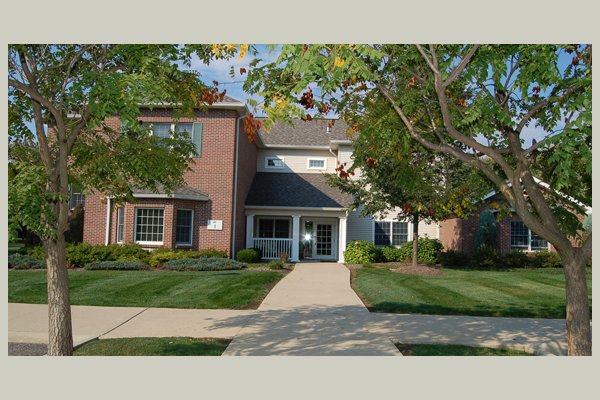
How is Tranquility Of Richmond Heights Staffed?

CMS rates TRANQUILITY OF RICHMOND HEIGHTS's staffing level at 3 out of 5 stars, which is average compared to other nursing homes. Staff turnover is 64%, which is 18 percentage points above the Ohio average of 46%. High turnover can affect care consistency as new staff learn residents' individual needs. RN turnover specifically is 60%, which is notably high. RNs provide skilled clinical oversight, so turnover in this role can affect medical care quality.

What Have Inspectors Found at Tranquility Of Richmond Heights?

State health inspectors documented 46 deficiencies at TRANQUILITY OF RICHMOND HEIGHTS during 2020 to 2025. These included: 46 with potential for harm.
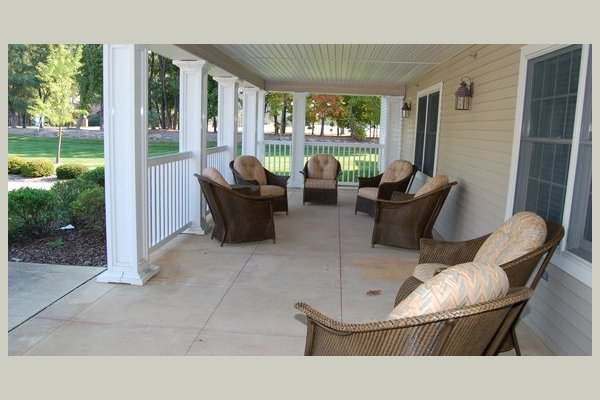
Who Owns and Operates Tranquility Of Richmond Heights?

TRANQUILITY OF RICHMOND HEIGHTS is owned by a for-profit company. For-profit facilities operate as businesses with obligations to shareholders or private owners. The facility operates independently rather than as part of a larger chain. With 60 certified beds and approximately 50 residents (about 83% occupancy), it is a smaller facility located in RICHMOND HEIGHTS, Ohio.
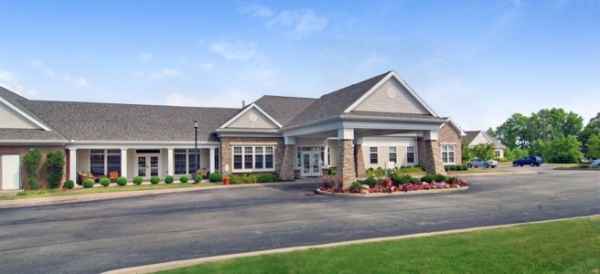
How Does Tranquility Of Richmond Heights Compare to Other Ohio Nursing Homes?

Compared to the 100 nursing homes in Ohio, TRANQUILITY OF RICHMOND HEIGHTS's overall rating (2 stars) is below the state average of 3.2, staff turnover (64%) is significantly higher than the state average of 46%, and health inspection rating (2 stars) is below the national benchmark.

What Should Families Ask When Visiting Tranquility Of Richmond Heights?

Based on this facility's data, families visiting should ask: "How do you ensure continuity of care given staff turnover, and what is your staff retention strategy?" "Can I visit during a mealtime to observe dining assistance and food quality?" "How do you handle medical emergencies, and what is your hospital transfer rate?" "Can I speak with family members of current residents about their experience?" These questions are particularly relevant given the facility's high staff turnover rate.

Is Tranquility Of Richmond Heights Safe?

Based on CMS inspection data, TRANQUILITY OF RICHMOND HEIGHTS has a clean safety record: no substantiated abuse findings (meaning no confirmed cases of resident harm), no Immediate Jeopardy citations (the most serious violation level indicating risk of serious injury or death), and is not on the Special Focus Facility watch list (a federal program monitoring the lowest-performing 1% of nursing homes). The facility has a 2-star overall rating and ranks #100 of 100 nursing homes in Ohio. While no facility is perfect, families should still ask about staff-to-resident ratios and recent inspection results during their visit.

Do Nurses at Tranquility Of Richmond Heights Stick Around?

Staff turnover at TRANQUILITY OF RICHMOND HEIGHTS is high. At 64%, the facility is 18 percentage points above the Ohio average of 46%. Registered Nurse turnover is particularly concerning at 60%. RNs handle complex medical decisions and coordinate care — frequent RN changes can directly impact care quality. High turnover means new staff may not know residents' individual needs, medications, or preferences. It can also be disorienting for residents, especially those with dementia who rely on familiar faces. Families should ask: What is causing the turnover? What retention programs are in place? How do you ensure care continuity during staff transitions?

Was Tranquility Of Richmond Heights Ever Fined?

TRANQUILITY OF RICHMOND HEIGHTS has been fined $20,000 across 1 penalty action. This is below the Ohio average of $33,279. While any fine indicates a compliance issue, fines under $50,000 are relatively common and typically reflect isolated problems that were subsequently corrected. Families should ask what specific issues led to these fines and confirm they've been resolved.

Is Tranquility Of Richmond Heights on Any Federal Watch List?

TRANQUILITY OF RICHMOND HEIGHTS is not on any federal watch list. The most significant is the Special Focus Facility (SFF) program, which identifies the bottom 1% of nursing homes nationally based on persistent, serious quality problems. Not being on this list means the facility has avoided the pattern of deficiencies that triggers enhanced federal oversight. This is a positive indicator, though families should still review the facility's inspection history directly.