ADVANCED HEALTHCARE CENTER


955 GARDEN LAKE PKWY, TOLEDO, OH 43614 (419) 382-2200
For profit - Corporation 99 Beds HEALTH CARE FACILITY MANAGEMENT, LLC Data: November 2025
Trust Grade
50/100
#582 of 913 in OH
Last Inspection: December 2023

Within standard 12-15 month inspection cycle. Federal law requires annual inspections.

Overview

Advanced Healthcare Center has a Trust Grade of C, which means it is average compared to other facilities, falling in the middle of the pack. It ranks #582 out of 913 nursing homes in Ohio, placing it in the bottom half of all facilities, and #18 out of 33 in Lucas County, indicating that only a few local options are better. The facility is experiencing a worsening trend, with issues increasing from 1 in 2024 to 5 in 2025. Staffing is a significant concern, with a low rating of 1 out of 5 stars and a turnover rate of 50%, which is around the state average but still suggests instability. Although there are no fines recorded, the facility has less RN coverage than 89% of other Ohio facilities, which raises concerns about the quality of care. Recent inspector findings revealed several serious concerns. For example, one resident who required assistance with transfers was observed being moved by a single staff member, contrary to their care plan that specified they needed two. Additionally, there was an incident where a staff member recorded residents without their consent during personal care and shared these videos on social media, violating residents' privacy rights. While the facility excels in quality measures, the combination of staffing issues and privacy violations presents significant weaknesses that families should consider when researching care options.

Trust Score
C
50/100
In Ohio
#582/913
Bottom 37%
Safety Record
Low Risk
No red flags
Inspections
Getting Worse
1 → 5 violations
Staff Stability
⚠ Watch
50% turnover. Above average. Higher turnover means staff may not know residents' routines.
Penalties
✓ Good
No fines on record. Clean compliance history, better than most Ohio facilities.
Skilled Nurses
⚠ Watch
Each resident gets only 20 minutes of Registered Nurse (RN) attention daily — below average for Ohio. Fewer RN minutes means fewer trained eyes watching for problems.
Violations
⚠ Watch
48 deficiencies on record. Higher than average. Multiple issues found across inspections.
★★☆☆☆
2.0
Overall Rating
★☆☆☆☆
1.0
Staff Levels
★★★★★
5.0
Care Quality
★★☆☆☆
2.0
Inspection Score
Stable
2024: 1 issues
2025: 5 issues

The Good

  • 5-Star Quality Measures · Strong clinical quality outcomes
  • Full Sprinkler Coverage · Fire safety systems throughout facility
  • No fines on record

Facility shows strength in quality measures, fire safety.

The Bad

2-Star Overall Rating

Below Ohio average (3.2)

Below average - review inspection findings carefully

Staff Turnover: 50%

Near Ohio avg (46%)

Higher turnover may affect care consistency

Chain: HEALTH CARE FACILITY MANAGEMENT, LL

Part of a multi-facility chain

Ask about local staffing decisions and management

The Ugly 48 deficiencies on record

Jul 2025 3 deficiencies
CONCERN (D) 📢 Someone Reported This

A family member, employee, or ombudsman was alarmed enough to file a formal complaint

Potential for Harm - no one hurt, but risky conditions existed

Report Alleged Abuse (Tag F0609)

Could have caused harm · This affected 1 resident

**NOTE- TERMS IN BRACKETS HAVE BEEN EDITED TO PROTECT CONFIDENTIALITY** Based on observation, medical record review, staff and resident interview, review of Self Reported Incidents, and review of faci...

Read full inspector narrative →
**NOTE- TERMS IN BRACKETS HAVE BEEN EDITED TO PROTECT CONFIDENTIALITY** Based on observation, medical record review, staff and resident interview, review of Self Reported Incidents, and review of facility policy, the facility failed to immediately report an allegation of staff to resident physical abuse immediately to the administrator. This affected one (#3) of seven residents reviewed for staff to resident care and treatment in a facility census of 87. Findings include:Review of the medical record revealed Resident #3 admitted to the facility on [DATE] with diagnoses including chronic respiratory failure with chronic obstructive pulmonary disease, type 2 diabetes mellitus, cerebral infarction, hypertension, congestive heart failure, major depressive disorder, chronic viral hepatitis C, anxiety disorder, systemic lupus erythematosus, alcohol abuse, opioid abuse, and cognitive communication deficit. Review of the Minimum Data Set assessment dated [DATE] revealed Resident #3 had severe cognitive impairment, no recorded behaviors, and required substantial to maximal assistance with activities of daily living.On 07/09/25 at 8:15 A.M. interview with Administrator and Director of Nursing (DON) revealed Resident #3's responsible party had made an allegation of staff to resident abuse. Resident #3's responsible party was unable to articulate when or what alleged incident took place until 07/08/25. The DON stated an alleged nurse resigned on date of alleged event of 07/05/25 in the early morning during the 6:00 P.M. to 6:00 A.M. shift. On 07/09/25 at 8:58 A.M. interview with Resident #3 revealed she was hit with bed controller in the chest by a nurse aide. Resident #3 was unable to stated the date or provide any additional information. Telephone interview on 07/09/25 at 12:23 P.M. with the alleged nurse, Licensed Practical Nurse (LPN) #200, revealed she assumed care of Resident #3 on 07/04/25 at 6:30 P.M. and was scheduled to work until the morning of 07/05/25 at 7:00 A.M. Between 11:30 P.M. and 12:00 A.M. LPN #200 went to administer medications to Resident #3. Resident #3 requested the medications crushed. LPN #200 proceeded to crush the medications, placed them in applesauce, and returned to Resident #3's bedside. LPN #200 obtained the electric bed controller from Resident #3's chest, raised the head of the bed, and placed the controlled next to the resident on the mattress. Resident #3 then became agitated and started yelling LPN #200 had hit her in the chest with the bed remote. LPN #200 attempted to calm Resident #3 and denied hitting her. Resident #3 continued yelling and Certified Nurse Aide (CNA) #400 entered the room. Once CNA #400 entered the room LPN #200 left the room and contacted her supervisor ( Registered Nurse (RN) #201) via telephone and reported Resident #3 was accusing her of hitting her and this was an allegation of physical abuse. LPN #200 informed RN #201 she was leaving the facility and turned her medication cart keys over to LPN #202. At approximately 12:30 A.M. Resident #3's son came to the facility and proceeded to Resident #3's room. Resident #3's son then approached LPN #200 at the nurses station and began cursing and threatening LPN #200. LPN #200 turned over care of her residents to LPN #202 until RN #201 reported to the facility. Interview on 07/10/25 at 5:15 A.M. with CNA #400 revealed she was assigned to Resident #3's care on 07/04/25. She was walking down the hall when she heard yelling coming from Resident #3's room. CNA #400 went to check on the resident. Upon entering the room LPN #200 was standing outside the room and told CNA #400 Resident #3 was alleging she hit her with the bed remote. Resident #3 was yelling out and LPN #200 stated she was leaving the facility due to the allegation or physical abuse. CNA#400 provided Resident #3 with incontinence care and observed no potential injury and exited the room. Following care LPN #200 was observed at her medication cart and told CNA #400 she had notified the supervisor RN and she was leaving due to the allegation of physical abuse. Approximately 10 minutes later RN #201 was observed counting the medication cart and assuming care to the residents on the hall. LPN #200 proceeded to leave the facility. On 07/10/25 at 5:19 A.M. interview with CNA #401 revealed on 07/04/25 she was working in a resident room on the 400 Hall and came out seeing LPN #200 packing her bag at the nursing station. LPN #200 was stating she would not be coming back to the facility. LPN #200 stated Resident #3 alleged LPN #200 had hit the resident with the bed remote. RN #201 had assumed care of her residents. On 07/10/25 at 5:46 A.M. interview with RN #201 revealed on 07/05/25 at 12:37 A.M. she received a phone call from LPN #200 stating Resident #3 accused her of throwing a bed remote at her and LPN #200 was reporting the alleged incident to her supervisor. RN #201 stated she phoned the DON immediately after speaking with LPN #200. RN #201 told the DON Resident #3 alleged LPN #200 threw the bed remote and hit her in the face. RN #201 took another phone call and returned a phone call to the DON at 12:45 A.M. on 07/05/25. RN #201 informed the DON LPN #200 was going to leave and RN #201 was going in to assume care. Approximately 20-25 minutes later RN #201 reported to the facility and LPN #200 had left. RN #201 spoke with Resident #3 who stated the remote hit her in the leg. No marks were identified on Resident #3's face and no pain was stated from the resident. Interview on 07/10/25 at 6:28 A.M. with the DON revealed she was not informed until 07/08/25 Resident #3 had reported alleged physical abuse. On 07/05/25 she was informed by RN #201 that Resident #3 reported her remote was thrown on the bed and not the resident had been struck with the bed remote in the chest. The DON confirmed no documentation was contained in Resident #3's medical record regarding the incident and no physical assessment to identify possible injury was completed. Furthermore, no witness statements had been obtained regarding the incident until 07/08/25 when Resident #3's representative alleged Resident #3 was struck by the bed remote in the chest.Review of the facility Self Reported Incidents revealed on 07/08/25 the facility reported the allegations of staff to resident abuse toward Resident #3 to the State Survey Agency. Review of facility policy titled Abuse, Neglect, and Misappropriation revealed each occurrence of resident incident, bruise, abrasion, or injury of unknown source; or report of alleged abuse, neglect to misappropriation of funds will be identified and reported to the supervisor and investigated timely. The supervisor or designee will notify the Director of Nursing and Executive Director (Administrator) of the incident or allegation immediately. All alleged violations involving abuse, neglect, exploitation or mistreatment, including injuries of unknown source and misappropriation of resident property, are reported immediately to the Executive Director/designee of the facility. For alleged violations of alleged abuse the facility must report to the state survey agency immediately, but no more than two hours after the allegation is made. This citation represents non-compliance discovered during the investigation of Complaint Number OH00167551/ iQIES Complaint Number 1326898.
CONCERN (D) 📢 Someone Reported This

A family member, employee, or ombudsman was alarmed enough to file a formal complaint

Potential for Harm - no one hurt, but risky conditions existed

Investigate Abuse (Tag F0610)

Could have caused harm · This affected 1 resident

**NOTE- TERMS IN BRACKETS HAVE BEEN EDITED TO PROTECT CONFIDENTIALITY** Based on observation, medical record review, resident and staff interview and facility policy, the facility failed to thoroughly...

Read full inspector narrative →
**NOTE- TERMS IN BRACKETS HAVE BEEN EDITED TO PROTECT CONFIDENTIALITY** Based on observation, medical record review, resident and staff interview and facility policy, the facility failed to thoroughly investigate an allegation of staff to resident physical abuse. This affected one (#3) of seven residents reviewed for staff to resident care and treatment in a facility census of 87. Findings include:Review of the medical record revealed Resident #3 admitted to the facility on [DATE] with diagnoses including chronic respiratory failure with chronic obstructive pulmonary disease, type 2 diabetes mellitus, cerebral infarction, hypertension, congestive heart failure, major depressive disorder, chronic viral hepatitis C, anxiety disorder, systemic lupus erythematosus, alcohol abuse, opioid abuse, and cognitive communication deficit. Review of the Minimum Data Set assessment dated [DATE] revealed Resident #3 had severe cognitive impairment, no recorded behaviors, and required substantial to maximal assistance with activities of daily living. The medical record contained no documentation of Resident #3 making any allegation of abuse from a staff member. On 07/09/25 at 8:15 A.M. interview with Administrator and Director of Nursing (DON) revealed Resident #3's responsible party had made an allegation of staff to resident abuse. Resident #3's responsible party was unable to articulate when or what alleged incident took place until 07/08/25. The DON stated an alleged nurse resigned on date of alleged event of 07/05/25 in the early morning during the 6:00 P.M. to 6:00 A.M. shift. On 07/09/25 at 8:58 A.M. interview with Resident #3 revealed she was hit with bed controller in the chest by a nurse aide. Resident #3 was unable to stated the date or provide any additional information. Telephone interview on 07/09/25 at 12:23 P.M. with the alleged nurse, Licensed Practical Nurse (LPN) #200, revealed she assumed care of Resident #3 on 07/04/25 at 6:30 P.M. and was scheduled to work until the morning of 07/05/25 at 7:00 A.M. Between 11:30 P.M. and 12:00 A.M. LPN #200 went to administer medications to Resident #3. Resident #3 requested the medications crushed. LPN #200 proceeded to crush the medications, placed them in applesauce, and returned to Resident #3's bedside. LPN #200 obtained the electric bed controller from Resident #3's chest, raised the head of the bed, and placed the controlled next to the resident on the mattress. Resident #3 then became agitated and started yelling LPN #200 had hit her in the chest with the bed remote. LPN #200 attempted to calm Resident #3 and denied hitting her. Resident #3 continued yelling and Certified Nurse Aide (CNA) #400 entered the room. Once CNA #400 entered the room LPN #200 left the room and contacted her supervisor ( Registered Nurse (RN) #201) via telephone and reported Resident #3 was accusing her of hitting her and this was an allegation of physical abuse. LPN #200 informed RN #201 she was leaving the facility and turned her medication cart keys over to LPN #202. At approximately 12:30 A.M. Resident #3's son came to the facility and proceeded to Resident #3's room. Resident #3's son then approached LPN #200 at the nurses station and began cursing and threatening LPN #200. LPN #200 turned over care of her residents to LPN #202 until RN #201 reported to the facility. LPN #200 proceeded to leave the facility at 1:00 A.M. LPN #200 stated she did not provide a statement regarding the incident or document the incident in Resident #3's medical record. Interview on 07/10/25 at 5:15 A.M. with CNA #400 revealed she was assigned to Resident #3's care on 07/04/25. She was walking down the hall when she heard yelling coming from Resident #3's room. CNA #400 went to check on the resident. Upon entering the room LPN #200 was standing outside the room and told CNA #400 Resident #3 was alleging she hit her with the bed remote. Resident #3 was yelling out and LPN #200 stated she was leaving the facility due to the allegation or physical abuse. CNA#400 provided Resident #3 with incontinence care and observed no potential injury and exited the room. Following care LPN #200 was observed at her medication cart and told CNA #400 she had notified the supervisor RN and she was leaving due to the allegation of physical abuse. Approximately 10 minutes later RN #201 was observed counting the medication cart and assuming care to the residents on the hall. LPN #200 proceeded to leave the facility. CNA #400 stated she did not provide a statement following the incident. On 07/10/25 at 5:19 A.M. interview with CNA #401 revealed on 07/04/25 she was working in a resident room on the 400 Hall and came out seeing LPN #200 packing her bag at the nursing station. LPN #200 was stating she would not be coming back to the facility. LPN #200 stated Resident #3 alleged LPN #200 had hit the resident with the bed remote. RN #201 had assumed care of her residents. On 07/10/25 at 5:46 A.M. interview with RN #201 revealed on 07/05/25 at 12:37 A.M. she received a phone call from LPN #200 stating Resident #3 accused her of throwing a bed remote at her and LPN #200 was reporting the alleged incident to her supervisor. RN #201 stated she phoned the DON immediately after speaking with LPN #200. RN #201 told the DON Resident #3 alleged LPN #200 threw the bed remote and hit her in the face. RN #201 took another phone call and returned a phone call to the DON at 12:45 A.M. on 07/05/25. RN #201 informed the DON LPN #200 was going to leave and RN #201 was going in to assume care. Approximately 20-25 minutes later RN #201 reported to the facility and LPN #200 had left. RN #201 spoke with Resident #3 who stated the remote hit her in the leg. No marks were identified on Resident #3's face and no pain was stated from the resident. RN #201 stated she did not assess Resident #3 for potential injury and did not attempt to take statements from potential witnesses. Interview on 07/10/25 at 6:28 A.M. with the DON revealed she was not informed until 07/08/25 Resident #3 had reported alleged physical abuse. On 07/05/25 she was informed by RN #201 that Resident #3 reported her remote was thrown on the bed and not the resident had been struck with the bed remote in the chest. The DON confirmed no documentation was contained in Resident #3's medical record regarding the incident and no physical assessment to identify possible injury was completed. Furthermore, no witness statements had been obtained regarding the incident until 07/08/25 when Resident #3's representative alleged Resident #3 was struck by the bed remote in the chest.Review of facility policy titled Abuse, Neglect, and Misappropriation revealed an employee who is alleged or accused of being party to abuse, neglect, misappropriation of property will be immediately removed from the area (s) of resident care, interviewed by facility leadership for a written statement and not left alone. After completing the statement(s) the employee will be asked to vacate the facility until further investigation of the incident is completed. Each occurrence of resident incident, bruise, abrasion, or injury of unknown source; or report of alleged abuse, neglect to misappropriation of funds will be identified and reported to the supervisor and investigated timely. The supervisor or designee will notify the Director of Nursing and Executive Director (Administrator) of the incident or allegation immediately. The Executive Director will direct the investigation. Documentation of the facts and findings will be completed in each resident medical record. Statements will be obtained from staff related to the incident, including victim, person reporting incident, accused perpetrator and witnesses. By the fifth day, the alleged abuse investigation form is completed and reviewed for completeness and accuracy by the Executive Director or designee and submitted to the state. This citation represents non-compliance discovered during the investigation of Complaint Number OH00167551/ iQIES Complaint Number 1326898.
CONCERN (D) 📢 Someone Reported This

A family member, employee, or ombudsman was alarmed enough to file a formal complaint

Potential for Harm - no one hurt, but risky conditions existed

Deficiency F0760 (Tag F0760)

Could have caused harm · This affected 1 resident

**NOTE- TERMS IN BRACKETS HAVE BEEN EDITED TO PROTECT CONFIDENTIALITY** Based on medical record review, staff interview, and review of facility policy, the facility failed to administer a diuretic and...

Read full inspector narrative →
**NOTE- TERMS IN BRACKETS HAVE BEEN EDITED TO PROTECT CONFIDENTIALITY** Based on medical record review, staff interview, and review of facility policy, the facility failed to administer a diuretic and insulin as ordered within a specified time frame for one (#3) out of seven patients reviewed in a census of 87. Findings include: Review of the medical record revealed Resident #3 admitted to the facility on [DATE] with diagnoses including chronic respiratory failure with chronic obstructive pulmonary disease, type 2 diabetes mellitus, cerebral infarction, hypertension, congestive heart failure, major depressive disorder, chronic viral hepatitis C, anxiety disorder, systemic lupus erythematosus, alcohol abuse, opioid abuse, and cognitive communication deficit. Review of the Minimum Data Set assessment dated [DATE] revealed Resident #3 had severe cognitive impairment, no recorded behaviors, and required substantial to maximal assistance with activities of daily living.Review of the medication administration record and physician orders revealed orders for diuretic hydralazine 100 milligram (mg) tablet three times daily at 8:00 A.M., 2:00 P.M. and 10:00 P.M. and Insulin Aspart Flexpen sliding scale- blood sugar (bs) 151-200 give (=) 3 units, bs 201-250= 6 units, 251-300= 9 units, 301-350= 12 units, 351-400= 15 units, 401-450= 20 units, call physician (MD) if bs above 400 or below 70, administer subcutaneous before meals and at bedtime scheduled 7:00 A.M., 11:00 A.M., 4:00 P.M., and 9:00 P.M.Review of medication administration audit report revealed the hydralazine 100 mg and Insulin Aspart Flexpen three (3) units were scheduled for 07/04/25 at 9:00 P.M. The medications were not administered until 07/05/25 at 12:28 A.M.Telephone interview on 07/09/25 at 12:22 P.M. with Licensed Practical Nurse (LPN) #200 verified she was assigned to administer medications to Resident #3 on 07/04/25 evening (P.M.). Resident #3 was sleeping and the medications were not administered within prescribed timeframes. LPN #200 verified the physician was not notified of the medications being given outside of prescribed timeframes and no entry was made in the medical record indicating the reason the medications were provided late. Review of facility policy titled Medication Administration revealed medications will be administered within the time frame of one hour before up to one hour after ordered time. Medications that are refused or withheld or not given will be documented. Critical medications that are refused including insulin or anticoagulants will be followed up with physician contact. Documentation of medications will follow accepted standards of nursing practice. On 07/10/25 at 8:34 A.M. interview with the Director of Nursing confirmed Resident #3's medications were documented to be administered outside of prescribed time frames. No documentation was contained in the medical record indicating a reason for late medication administration. This deficiency represents non-compliance investigated under Complaint Number OH00167398/ iQIES Complaint Number 1326898.
May 2025 1 deficiency
CONCERN (D) 📢 Someone Reported This

A family member, employee, or ombudsman was alarmed enough to file a formal complaint

Potential for Harm - no one hurt, but risky conditions existed

Incontinence Care (Tag F0690)

Could have caused harm · This affected 1 resident

**NOTE- TERMS IN BRACKETS HAVE BEEN EDITED TO PROTECT CONFIDENTIALITY** Based on review of the medical record, observation, staff interview, and policy review, the facility failed to ensure incontinen...

Read full inspector narrative →
**NOTE- TERMS IN BRACKETS HAVE BEEN EDITED TO PROTECT CONFIDENTIALITY** Based on review of the medical record, observation, staff interview, and policy review, the facility failed to ensure incontinence care was provided timely. This affected one (#85) of three residents reviewed for incontinence care. The facility census was 83. Findings include: Review of the medical record for Resident #85 revealed an admission date of 07/13/20. Diagnoses included osteoporosis, urinary incontinence, hypertension, and dementia. Review of the quarterly Minimum Data Set (MDS) assessment dated [DATE] revealed the resident had moderate cognitive impairment. The resident was always incontinent of bladder and frequently incontinent of bowel. The resident was dependent on staff for toileting. Review of the care plan last revised 01/28/25 revealed the resident had urinary and bowel incontinence related to weakness, difficulty ambulating, and cognitive deficits. Interventions included the use of incontinence briefs and incontinence care as needed. Review of the task documentation for toileting dated 05/27/25 revealed no documentation the resident had been provided incontinence care from 6:30 A.M. through 12:00 P.M. Observations on 05/27/25 at 9:13 A.M. revealed Resident #85 was sitting in the common area in a wheelchair near the nurses' station watching television. Interview on 05/27/25 at 9:17 A.M., Resident #85 revealed her incontinence brief had been changed earlier in the morning. Resident #85 revealed the staff were not checking her for incontinence during the day. Observations on 05/27/25 at 9:17 A.M., 10:01 A.M., 10:40 A.M., and 11:14 A.M., revealed the resident remained in her wheelchair in the common area in front of the television. There were no observations of staff offering to provide the resident incontinence care. Observation on 05/27/25 at 11:32 A.M., revealed Resident #85 remained in the common area in her wheelchair. There were odors of urine and stool present. Interview at 11:32 A.M. Resident #85 revealed staff had not offered to change her incontinence brief. Further observations at 11:45 A.M. and 11:59 A.M. revealed the resident remained in the common area with signs of incontinence. Interview on 05/28/25 at 11:59 A.M., Licensed Practical Nurse (LPN) #202 revealed the resident's nursing assistant was completing incontinence care rounds and had not gotten to Resident #85 yet. Observation on 05/28/25 at 12:00 P.M. revealed Certified Nursing Assistant (CNA) #404 pushed the resident in her wheelchair down to her room. CNA #404 and CNA #232 transferred the resident to the bed using the standup lift. Further observation revealed a puddle of liquid with a urine odor in the resident's wheelchair on the seat cushion. Continued observations revealed the resident's pants were wet and had a strong urine odor. CNA #404 and CNA #232 provided incontinence care. The resident's incontinence brief was heavily saturated with urine and a small amount of stool. Further observation revealed the resident had no skin breakdown. Interview on 05/27/25 at 12:01 P.M., CNA #404 revealed her shift began at 10:30 A.M. and was not aware when Resident #85 had last received incontinence care as the prior shift nursing assistance had not let her know. CNA #404 and CNA #232 verified there was a puddle of liquid on the cushion in the resident's wheelchair. CNA #404 and CNA #232 verified the resident's pants were wet with a strong urine odor. CNA #404 and CNA #232 verified the resident had been incontinent of urine and stool and the resident's brief was heavily saturated with urine. CNA #404 and CNA #232 verified incontinence care should be provided every two hours. Interview on 05/28/25 at 2:34 P.M., the Director of Nursing (DON) revealed as a general rule incontinence care would be provided every two hours or per resident preference. Review of the undated facility policy Routine Resident Care, revealed routine daily care including incontinence care would be provided. This deficiency represents non-compliance investigated under Master Complaint Number OH00165598.
Apr 2025 1 deficiency
CONCERN (D) 📢 Someone Reported This

A family member, employee, or ombudsman was alarmed enough to file a formal complaint

Potential for Harm - no one hurt, but risky conditions existed

Deficiency F0760 (Tag F0760)

Could have caused harm · This affected 1 resident

**NOTE- TERMS IN BRACKETS HAVE BEEN EDITED TO PROTECT CONFIDENTIALITY** Based on medical record review, review of facility investigations, staff interview, and review of the facility policy the facili...

Read full inspector narrative →
**NOTE- TERMS IN BRACKETS HAVE BEEN EDITED TO PROTECT CONFIDENTIALITY** Based on medical record review, review of facility investigations, staff interview, and review of the facility policy the facility failed to ensure medications were administered to the correct resident. This affected one resident (#89) reviewed for medication errors. The facility census was 92. Findings include: Review of the medical record for Resident #89 revealed an admission date of 10/28/24 with diagnoses of follow-up for joint replacement surgery, depression, anxiety, alcohol abuse, and cocaine abuse. Review of the quarterly Minimum Data Set (MDS) assessment dated [DATE] for Resident #89 revealed he was cognitively intact and he was not ordered any opioid medication (narcotic pain medication). Review of the current physician orders for April 2025 for Resident #89 revealed no orders for Gabapentin (medication used for nerve pain), Doxycycline (antibiotic), Metoprolol (used to treat high blood pressure), Norco (narcotic (opioid) pain medication), and Oxycodone (narcotic (opioid) pain medication. Review of the listed drug allergies for Resident #89 revealed he had an allergy to Aspirin only. Review of the care plan revised 02/14 for Resident #89 revealed the resident had substance use disorder history of smoking, marijuana, cocaine abuse and alcohol abuse and he now uses his past experiences to help share with others in rehabilitation. Review of the nursing progress notes for Resident #89 dated 01/31/25 revealed he was administered medication in error the following medications: Gabapentin 100 milligrams (mg), Doxycycline 100 mg, Metropolol 25 mg, and Norco 5/325 mg. Interview on 03/31/25 at 10:39 A.M. with Resident #89 stated he was involved in two medication errors where he received medication that was not prescribed to him. Review of the internal investigation for the medication error dated 01/31/25 for Resident #89 revealed Licensed Practical Nurse (LPN) #378 prepared medication for administration and administered the medication to the wrong resident. Phone interview on 04/02/25 at 4:01 P.M. with LPN #378 stated she was working on 01/31/25 and was passing her medications when there were many different events happening with residents requesting to go out to smoke, Certified Nursing Assistants (CNA) reporting different items to her and two residents with the same name. LPN #378 amidst the distractions she prepared medications for administration and delivered the medication to the wrong resident, Resident #89. LPN #378 further stated Resident #89 requested some Tylenol and she returned to the medication cart and discovered the medication she prepared was for a different resident based on the computer screen that she was working on and then returned to Resident #89 and he had already taken the medication she delivered to him. Review of the nursing progress notes for Resident #89 dated 03/27/25 revealed he was administered medication in error, Resident #89 was administered Oxycodone five milligrams. Review of the internal investigation for the medication error dated 03/27/25 for Resident #89 revealed LPN #309 prepared medication for administration and administered the medication to the wrong resident. Phone interview on 04/02/25 at 4:32 P.M. with LPN #309 stated she was working on 03/27/25 and was overwhelmed with distractions with a new resident and her family with anxiety and a resident that was sent out by ambulance and she began her medication administration late. LPN #309 stated during her medication administration she misread the room and administered medication to the wrong resident. LPN #309 further stated she administered Oxycodone five milligrams, two pills, a medication for acid reflux and upon entering the room for Resident #89 he requested Tylenol and she returned to the medication cart, obtained the Tylenol and then returned to Resident #89 and administered the medication. LPN #309 stated Resident #89 inquired about the medication, she explained the medication he was receiving and LPN #309 then stated Resident #89 shrugged his shoulders and took the medication. LPN #309 then stated Resident #89 then reported to her immediately after taking the medication those aren't my pills. LPN #309 stated she returned to the medication cart and discovered she administered the wrong medication to the wrong resident. Interview on 03/31/25 at 5:10 P.M. with the Director of Nursing (DON) identified only one resident with medication errors in the past three months was Resident #89. Review of the incident and accident log for past three months revealed there was only one resident with medication errors, Resident #89. Review of the facility policy titled Medication Administration, undated revealed general procedure for medication administration include observation of the five rights in giving medication, the right resident, the right time, the right medication, the right dose, and the right route. Full attention should be given during preparation of medications avoiding distractions is important for infection prevention and reducing errors. This deficiency represents non-compliance investigated under Complaint Number OH00162741.
Jan 2024 1 deficiency
CONCERN (E) 📢 Someone Reported This

A family member, employee, or ombudsman was alarmed enough to file a formal complaint

Potential for Harm - no one hurt, but risky conditions existed

Deficiency F0583 (Tag F0583)

Could have caused harm · This affected multiple residents

Based on review of public social media videos, resident interviews, staff interviews, review of the employee handbook, review of staff schedules, and review of facility policy, the facility failed to ...

Read full inspector narrative →
Based on review of public social media videos, resident interviews, staff interviews, review of the employee handbook, review of staff schedules, and review of facility policy, the facility failed to ensure residents' right to privacy was honored when State Tested Nurse Aide (STNA) #100 video recorded conversations and interactions with staff and residents (including during personal care) in resident rooms, in common areas, discussed resident care needs and described a resident's malodorous wounds using profanity, while posting the videos to social media and not in accordance with facility policy. This affected four (#13, #31, #62, and #73) of four residents reviewed for privacy and confidentiality. The facility census was 81. Findings Include: Review of STNA #100's public social media account revealed three live recorded videos (meaning the video was posted to the social media page as the video was being recorded) taken at the facility involving residents in the privacy of their home. The live recorded videos were dated 12/22/23, 12/25/23 and 12/30/23, with each video lasting between 10 and 16 minutes. Review of the video posted on 12/25/23 revealed STNA #100 speaking with Resident #31. In the video, STNA #100 called Resident #31 by first name and the back of the resident's head was visible on the video. STNA #100 made a comment to Resident #31 about his roommate and an incident that occurred with the roommate the previous night that had nothing to do with the care needs and/or provision of care for Resident #31. Further review revealed STNA #100 describing having to provide care for Resident #73's buttocks (expletive used in the video) wound, adding the wound was malodorous and foul-smelling. Review of the video posted on 12/30/23 revealed STNA #100 discussed care to be provided to Residents #62 and #73, identifying each resident by first name. In addition, the 12/30/23 video revealed STNA #100 entered Resident #13's room. The video went black, but the audio continued to record and STNA #100 and an unknown staff person assisted Resident #13 with personal care. Resident #13 was called by first name and could be heard interacting with the staff during care. The video dated 12/22/23 was deleted prior to being able to fully view the recording. Interview on 01/09/24 at 9:45 A.M. with the Administrator and the Director of Nursing (DON) verified the videos were taken inside the facility. Each denied knowledge of the videos prior to the interview. The Administrator and DON confirmed the residents named in the videos were facility residents and identified STNA #100 as facility staff. Additionally, the DON verified Resident #73 had a wound, as discussed in the 12/25/23 video. A follow-up interview on 01/09/24 at approximately 11:10 A.M. with the Administrator confirmed the facility was the residents' home and they should expect privacy within their home, which included not being recorded. Interviews on 01/09/24 at 2:23 P.M. with Resident #13 and at 2:45 P.M. with Resident #31 revealed each resident denied knowledge of being recorded. Interview on 01/09/24 at 3:55 P.M. with Resident #73 revealed no knowledge of care needs being discussed on a recorded video (wound care discussed in video dated 12/25/23). Resident #73 indicated he would not be agreeable to having any personal information recorded. Review of the staff schedules verified STNA #100 was scheduled to work on 12/22/23, 12/25/23 and 12/30/23. Review of the Employee Handbook, revised July 2015, verified the facility takes no position on the employee's decision to start or maintain a blog or participate in other social networking activities; however, it is the right and duty of the facility to protect itself from unauthorized disclosure of information. In addition, employees may not use their personal cell phones in work areas. The use of cameras (unless job related and approved by the executive director), camera phones, iPods, mp3 players or other electronic devices is not permitted during work hours. Review of the facility policy titled Ohio Abuse, Neglect and Misappropriation, revised 09/20/22, revealed unauthorized disclosure of resident photographs or images could be mental, physical, or sexual abuse depending on how the images were used. Review of the facility policy titled Unauthorized Disclosure of Resident Images, revised 10/25/22, revealed the facility provided resident centered care that inhibited employees from taking photos and/or distributing photographs in any fashion including but not limited to posting on social media sites or videos that demean or humiliate a resident. This deficiency represents non-compliance investigated under Complaint Number OH00149669.
Dec 2023 7 deficiencies
CONCERN (D)

Potential for Harm - no one hurt, but risky conditions existed

Deficiency F0558 (Tag F0558)

Could have caused harm · This affected 1 resident

Based on observation, resident interview, staff interview, and facility policy review revealed the facility failed to ensure residents lighting was in working condition and within reach. This affected...

Read full inspector narrative →
Based on observation, resident interview, staff interview, and facility policy review revealed the facility failed to ensure residents lighting was in working condition and within reach. This affected one (#287) of one residents reviewed for accommodation of needs. The facility census was 81. Findings include: Review of Resident #287's medical record revealed an admission date of 12/08/23. Diagnosis included basal cell carcinoma of the scalp and neck, myasthenia gravis, diabetes mellitus, acute respiratory failure, adult failure to thrive, and osteomyelitis. Review of the Minimum Data Set (MDS) revealed it was in process. Review of Resident #287's care plan revealed the resident had complaints of acute/chronic pain. Interventions were to follow physician orders for complaint of pain. Observation on 12/11/23 at 3:24 P.M. revealed Resident #287 was lying in bed in a brightly lit room. The resident was unable to reach the wall switches to be able to control the ceiling light nor the overhead bed light. Observation of the bedside lamp revealed it was out of reach and did not contain a light bulb. Interview with Resident #287 on 12/11/23 at 3:25 P.M. revealed he was unable to reach the lights and had to call for assistance to shut off or turn on the lights. Often times he had to sleep with the lights in the on position. Interview on 12/11/23 at 3:27 P.M. with Maintenance Technician (MT) #187 verified Resident #287 was unable to reach the light switches for the overhead bed light, ceiling lights, or bedside lamp. Additionally, MT #187 confirmed the bedside lamp did not have a light bulb. Review of the facility policy titled Resident Rights, undated, revealed it was the policy of the facility to provide a resident centered care that meets the psychosocial, physical and emotional needs and concerns of the resident.
CONCERN (D)

Potential for Harm - no one hurt, but risky conditions existed

Pressure Ulcer Prevention (Tag F0686)

Could have caused harm · This affected 1 resident

**NOTE- TERMS IN BRACKETS HAVE BEEN EDITED TO PROTECT CONFIDENTIALITY** Based on observation, medical record review, staff interview, resident interview, review of the air mattress user manual, and re...

Read full inspector narrative →
**NOTE- TERMS IN BRACKETS HAVE BEEN EDITED TO PROTECT CONFIDENTIALITY** Based on observation, medical record review, staff interview, resident interview, review of the air mattress user manual, and review of facility policy, the facility failed to ensure interventions were consistently implemented to promote skin integrity. This affected one (#53) of three residents reviewed for pressure ulcers. The facility census 81. Findings include: Resident #53 admitted to the facility on [DATE] with the diagnoses including osteomyelitis, stage IV pressure ulcer to left buttock, left hip, right hip, right heel, and sacral region, venous insufficiency, type II diabetes mellitus, chronic obstructive pulmonary disease, schizoaffective disorder, chronic pain, contracture left hip, right hip, and left knee, major depression, and anxiety disorder. Review of the Minimum Data Set (MDS) assessment, dated 11/11/23, revealed Resident #53 was cognitively intact, dependent on staff for activities of daily living (ADLs), had an indwelling catheter, was incontinent of bowel, and admitted with four stage IV pressure ulcers and had one in-house acquired pressure ulcer. Review of the plan of care, revised 11/09/23, revealed Resident #53 had impaired skin integrity and was at risk for altered skin integrity due to immobility, poor nutrition, poor vascularity, and pressure ulcers. Interventions included administer medications as ordered, monitor for side effects and effectiveness, administer treatments as ordered by medical provider, ankle lift pillows as tolerated, apply appropriate pressure reducing appliances, apply barrier creams post incontinent episodes, complete skin at risk assessment upon admission/readmission, quarterly, and as needed, complete weekly skin checks, educate resident/resident representative on need for turning and repositioning, enhanced barrier precautions when dressing/bathing/showering/transferring/personal hygiene, changing linens, toileting and peri-care, providing care to wound care for skin openings that require a dressing, ensure residents are turned and repositioned, evaluate existing wound daily for changes (redness, edema, drainage, pain, foul odor), keep gerichair close to resident room and encourage use up to daily as tolerated, monitor meal intake, monitor vital signs, notify resident/resident representative, medical provider of any decline in wound healing, nutritional consult on admission, quarterly, and as needed (PRN), offer dietary supplements per medical provider's orders, provide diet as ordered, and provide peri-care as needed to avoid skin breakdown due to incontinence. Review of a physician order dated 11/10/23 revealed Resident #53 was ordered an Alternating Pressure Mattress (APM) to the bed and to check placement, function, and settings according to manufacturer instructions. Additional review of the plan of care, revised 11/13/23, revealed Resident #53 had a behavior problem related to diagnoses of schizophrenia, anxiety, depression, panic disorder, loss of independence, nursing home admission, pain, and psychosocial issues. Resident #53 smoked in his room, refused to have sheets changed, refused to have wound dressing changed, refused to have nails trimmed, scratched self, digs at back side with his nails, throws food trays on the floor and/or at staff, scratched staff when providing care, combative with cares that are being given, refused to turn and reposition, put hands in stool, preferred to wear gowns, refused respiratory medications, refused to get up out of bed, and refused to off load heels. Interventions included administer medications as ordered, educate resident and resident representative to medication effectiveness and side effects, approach, speak in calm manor, encourage active support by family/resident representatives, encourage resident to express feelings, encourage to maintain as much independence and control/decision making as possible, intervene as necessary to protect the rights and safety of others, minimize potential for disruptive behaviors by offering tasks that divert attention, monitor behavioral episodes, and attempt to determine underlying causes, observe and anticipate resident's needs: thirst, food, body positioning, pain, toileting needs, and praise any indication of progress in behaviors. Review of a weight, dated 12/06/23 and located in the electronic medical record, revealed Resident #53 weighed 127.2 pounds (lbs). Observation on 12/13/23 at 6:10 A.M. with Licensed Practical Nurse (LPN) #124 revealed Resident #53 in bed. Upon entrance to the room, a pervasive odor was noted. Resident #53 was heavily soiled with liquid stool and urine. Continued observation revealed Resident #53's hospital gown was soiled to middle chest. An air mattress was in use to the bed, with the low pressure indicator light flashing. The air mattress weight was set at 260 pounds. Observation on 12/13/23 at 6:12 A.M. revealed LPN #101 and State Tested Nurse Aide (STNA) #112 obtained supplies and proceeded to provide incontinence care to Resident #53, including a bed bath, clothing change and bed linen change. Resident #53 was noted to have food debris under him, a heavily soiled adult incontinence brief, and a stage IV pressure ulcer dressing heavily soiled and dislodged, with wound packing dangling from the wound. Interview on 12/13/23 at 6:32 A.M. with STNA #112 revealed she was responsible for providing care to Resident #53 during the night shift, from 10:30 P.M. to 6:30 A.M. STNA #53 revealed the resident was last checked at 5:00 A.M. and refused incontinence care and repositioning during the entire shift. STNA #112 stated she notified LPN #176 and no additional interventions or strategies had been attempted to address the resident's incontinence or repositioning needs. Interview on 12/13/23 at 6:36 A.M. with LPN #176 confirmed she had been assigned to Resident #53's care during the night shift, between 6:30 P.M. and 7:00 A.M. LPN #176 stated she was unaware Resident #53 would not allow incontinence care or repositioning throughout the shift. LPN #176 indicated Resident #53 would respond to her regarding turning, repositioning and incontinence care; however, LPN #176 denied being informed of the refusals or the need for intervention. Interview on 12/13/23 at 7:35 A.M. with wound specialist, Certified Nurse Practitioner (CNP) #1, during treatment observation, revealed Resident #53 had multiple pressure ulcers. CNP #1 stated Resident #53 frequently refused treatments and repositioning. The resident had been given education and encouragement to comply with wound treatment. CNP #1 stated Resident #53 agreed to having wounds treated once daily instead of twice daily. Further observation with CNP #1 and LPNs #101, and #124, during pressure ulcer wound evaluation, noted the following wounds: right hip pressure Stage IV measuring 6.8 centimeters (cm) long x 5 cm wide x 0.4 cm deep; right heel pressure Stage IV measuring 6.9 cm x 7 cm x 0.2 cm; sacrum pressure Stage IV measuring 4.5 cm x 4.9 cm x 1.9 cm; left hip pressure Stage IV measuring 0.4 cm x 0.8 cm x 0.1 cm; right medial lower leg pressure Stage IV measuring 13 cm x 6.7 cm x 0.4 cm; left hip distal pressure Stage IV measuring 8 cm x 5.9 cm x 1.2 cm; and left lateral foot pressure Stage IV measuring 1.5 cm x 1.4 cm x 0.2 cm. The bed air mattress was observed to be flashing low pressure and the weight setting was at 260 lbs. Additional observations on 12/13/23 at 11:39 A.M. and 3:20 P.M. revealed Resident #53 in bed with the air mattress control indicator light flashing low pressure and the weight setting at 260 pounds. Resident #53 was positioned on his back and lying in hole in the mattress, with limited support. Concurrent interview with Resident #53 confirmed he felt like he was sinking into the mattress and this was not comfortable. Interview on 12/13/23 at 3:27 P.M. with LPN #101, unit manager, revealed the facility did not have access to the air mattress instructions for use due to being supplied by the hospice agency. The facility was contacting the hospice agency for access to the instruction manual. Review of alternating air mattress user manual noted the manual should be used for initial set up of the system and for reference purposes. Further review revealed to turn the pressure adjust knob to set a comfortable level by using the weight scale as a guide. The low pressure indicator notes a visible indicator (yellow or red) and warns the pressure is below a preset or user-defined level. The visible alarm indicator will continue to flash until the air pressure issue was corrected. Once corrected, the alarm function will automatically reset. Interview on 12/13/23 at 3:24 P.M. with LPN #153 revealed she was unaware Resident #53 air mattress was not set at the proper weight setting and unaware the air mattress was flashing low pressure since assuming the shift. Review of facility policy titled Skin Care and Wound Management Overview, undated, revealed the policy was to prevent skin impairment and promote healing of existing wounds. Additionally, a plan of care would be developed with individualized interventions to address risk factors, risk factors and interventions would be communicated to the care giving team, and evaluate for consistent implementation of interventions and effectiveness at clinical meeting.
CONCERN (D)

Potential for Harm - no one hurt, but risky conditions existed

Incontinence Care (Tag F0690)

Could have caused harm · This affected 1 resident

**NOTE- TERMS IN BRACKETS HAVE BEEN EDITED TO PROTECT CONFIDENTIALITY** Based on observation, medical record review, and staff interview, the facility failed to ensure interventions were implemented t...

Read full inspector narrative →
**NOTE- TERMS IN BRACKETS HAVE BEEN EDITED TO PROTECT CONFIDENTIALITY** Based on observation, medical record review, and staff interview, the facility failed to ensure interventions were implemented to timely address bowel incontinence and related indwelling urinary catheter malfunction. This affected one (#53) of two residents reviewed for incontinence and catheter care. The facility census was 81. Findings include: Resident #53 admitted to the facility on [DATE] with diagnoses including osteomyelitis, stage IV pressure ulcer to left buttock, left hip, right hip, right heel, sacral region, venous insufficiency, type II diabetes mellitus, chronic obstructive pulmonary disease, schizoaffective disorder, chronic pain, contracture left hip, right hip, left knee, major depression, and anxiety disorder. Review of the Minimum Data Set (MDS) assessment, dated 11/11/23, revealed Resident #53 was cognitively intact, dependent on staff for activities of daily living (ADLs), utilized an indwelling catheter, was incontinent of bowel, and admitted with four stage IV pressure ulcers and had one in-house acquired pressure ulcer. Review of the plan of care, dated 07/12/23, revealed Resident #53 had bowel incontinence due to immobility and paraplegia. Interventions included provide assistance with toileting as needed, provide peri-care after each incontinence episode, observe for alterations in skin integrity status, and notify medical provider, resident/resident representative of abnormal findings as needed. Further review revealed Resident #53 had a supra pubic indwelling catheter related to impaired skin integrity, obstruction uropathy, and benign prostatic hypertrophy. Interventions included change catheter per medical provider order, and as needed (PRN), enhanced barrier precautions when dressing/bathing/showering/transferring/personal hygiene, changing linens, toileting and peri-care, providing care to urinary catheter, observe /record/report to physician (MD) for signs or symptoms (s/sx) of urinary tract infection (UTI), observe for s/sx of discomfort on urination and frequency, position catheter bag and tubing below the level of the bladder and provide privacy bag, secure catheter to the leg with security device, provide catheter care every shift and PRN, and notify medical provider if urine is of abnormal color, consistency, or odor. Additionally, the plan of care was revised on 11/13/23 to include Resident #53 had a behavior problem related to diagnoses of schizophrenia, anxiety, depression, panic disorder, loss of independence, nursing home admission, pain, and psychosocial issues. Resident #53 refused to have sheets changed, refused to have wound dressing changed, refused to have nails trimmed, scratched self, digs at back side with his nails, throws food trays on the floor and/or at staff, scratched staff when providing care, combative with cares that are being given, refused to turn and repositioned, put hands in stool, preferred to wear gown, refused respiratory medications, refused to get up out of bed, refused to off load heels, refused care and dressing changes. Interventions included administer medications as ordered, approach, speak in calm manor, encourage active support by family/resident representatives, encourage resident to express feelings, encourage to maintain as much independence and control/decision making as possible, intervene as necessary to protect the rights and safety of others, minimize potential for disruptive behaviors by offering tasks that divert attention, monitor behavioral episodes, and attempt to determine underlying causes, observe and anticipate resident's needs: thirst, food, body positioning, pain, toileting needs and praise any indication of progress in behaviors. Observation on 12/13/23 at 6:10 A.M. with Licensed Practical Nurse (LPN) #124 revealed Resident #53 in bed. Upon entrance to the room, a pervasive odor was noted. Resident #53 was heavily soiled with liquid stool and urine. Additional observation noted Resident #53's hospital gown soiled to middle chest. Observation on 12/13/23 at 6:12 A.M. revealed LPN #101 and State Tested Nurse Aide (STNA) #112 obtained supplies and proceeded to provide incontinence care to Resident #53, including a bed bath, clothing change and bed linen change. Throughout the observation, Resident #53's urinary indwelling supra-pubic catheter was noted to be leaking from the stoma. A heavily soiled stoma dressing was removed and the urinary catheter drainage collection bag was empty. Interview on 12/13/23 at 6:32 A.M. with STNA #112 confirmed she provided care to Resident #53 on the night shift, from 10:30 P.M. until 6:30 A.M. STNA #53 stated the resident was last checked at 5:00 A.M. and refused incontinence care or repositioning during the entire shift. STNA #112 stated she notified LPN #176 and no additional interventions or strategies had been attempted to address the residents incontinence or repositioning needs. Furthermore, STNA #112 verified the urinary catheter collection bag did not collect urine during the shift and remained empty. Interview on 12/13/23 at 6:36 A.M. with LPN #176 confirmed she was assigned to provide care to Resident #53 during the night shift, between 6:30 P.M. and 7:00 A.M. LPN #176 revealed she was unaware Resident #53 would not allow incontinence care or repositioning throughout the shift. LPN #176 indicated Resident #53 would respond to her regarding turning, repositioning and incontinence care; however, LPN #176 was not informed of the refusals or the need for intervention. LPN #176 verified she was aware Resident #53's urinary catheter drainage collection bag was not collecting urine at the beginning of her shift and she was going to notify the on-coming day shift nurse for further intervention.
CONCERN (E)

Potential for Harm - no one hurt, but risky conditions existed

Notification of Changes (Tag F0580)

Could have caused harm · This affected multiple residents

Based on observation, medical records review, staff interview and review of facility policy, the facility failed to timely notify the physician of a malfunctioning catheter. This affected one (#53) of...

Read full inspector narrative →
Based on observation, medical records review, staff interview and review of facility policy, the facility failed to timely notify the physician of a malfunctioning catheter. This affected one (#53) of one residents reviewed for catheter care. The facility census was 81. Findings include: Review of Resident #53's medical record revealed an admission date of 06/15/23. Diagnoses included osteomyelitis, stage IV pressure ulcer to left buttock, left hip, right hip, right heel, sacral region, venous insufficiency, type II diabetes mellitus, COPD, schizoaffective disorder, chronic pain, contracture left hip, right hip, left knee, major depression, and anxiety disorder. Review of the MDS assessment, dated 11/11/23, Resident #53 was cognitively intact. dependent on staff for activities of daily living (ADLs), including bed mobility, had an indwelling catheter, was incontinent of bowel, and admitted with four stage IV pressure ulcers and one in-house acquired pressure ulcer. Review of the plan of care, revised 07/12/23, revealed Resident #53 had a supra pubic indwelling catheter related to impaired skin integrity, obstruction uropathy, and benign prostatic hypertrophy. Interventions included change catheter per medical provider order, and as needed (PRN), enhanced barrier precautions when dressing/bathing/showering/transferring/personal hygiene, changing linens, toileting and peri-care, and providing care to urinary catheter, observe /record/report to physician (MD) signs or symptoms (s/sx) of urinary tract infection (UTI), observe for s/sx of discomfort on urination and frequency, position catheter bag and tubing below the level of the bladder and provide privacy bag, secure catheter to the leg with security device, provide catheter care every shift and PRN, and notify medical provider if urine is of abnormal color, consistency, or odor. Observation on 12/13/23 at 6:10 A.M., with Licensed Practical Nurse (LPN) #124, revealed Resident #53 in bed. Entry to the room revealed a pervasive odor. Further observation revealed Resident #53 was heavily soiled with liquid stool and urine and the resident's gown was soiled to middle chest. Continued observation on 12/13/23 at 6:12 A.M. revealed LPN #101 and State Tested Nurse Aide (STNA) #112 obtain supplies and proceeded to provide incontinence care to Resident #53, including a bed bath, clothing change and bed linen change. Throughout the observation, Resident #53's urinary indwelling supra-pubic catheter was noted to be leaking from the stoma, with a soiled dressing removed by LPN #101. Additionally, LPN #101 removed a heavily soiled adult incontinence brief and the urinary catheter drainage collection bag was empty. Interview on 12/13/23 at 6:32 A.M. with STNA #112 confirmed she was responsible for Resident #53's care during the night shift, from 10:30 P.M. until 6:30 A.M. STNA #112 stated Resident #53 was last checked at 5:00 A.M. and refused incontinence care or repositioning the entire shift. STNA #112 stated she notified LPN #176 the urinary catheter drainage collection bag was not collecting urine. Interview on 12/13/23 at 6:36 A.M. with LPN #176 revealed she was responsible for Resident #53's care from 6:30 P.M. until 7:00 A.M. LPN #176 verified she was aware Resident #53's urinary catheter drainage collection bag was not collecting urine at the beginning of the shift and she was going to notify the on-coming day shift nurse for further intervention. Review of facility policy titled Notification of Change in Condition, undated, revealed the facility must consult with the resident's physician when there is a change requiring such notification, including circumstances requiring the need to alter treatment, or implement new treatment.
CONCERN (E)

Potential for Harm - no one hurt, but risky conditions existed

Pharmacy Services (Tag F0755)

Could have caused harm · This affected multiple residents

**NOTE- TERMS IN BRACKETS HAVE BEEN EDITED TO PROTECT CONFIDENTIALITY** Based on observation, medical record review, resident interview, family interview, staff interview, review of the facility conti...

Read full inspector narrative →
**NOTE- TERMS IN BRACKETS HAVE BEEN EDITED TO PROTECT CONFIDENTIALITY** Based on observation, medical record review, resident interview, family interview, staff interview, review of the facility contingency box medication list, and review of facility policy, the facility failed to ensure medications were available from the pharmacy for timely administration. In addition, the facility failed to secure available medications from the contingency box for administration when resident's medications were unavailable from the pharmacy. This affected five (#2, #68, #284, #285, #287) of nine residents reviewed for medication administration. The facility census was 81. Findings included: 1. Review of Resident #2's medical record revealed an admission date of 11/17/23. Diagnoses included pancreatic cancer, antiphospholipid syndrome, fibromyalgia, breast cancer, thrombocytopenia, and hemiplegia/hemiparesis following a cerebral vascular accident. Review the admission Minimum Data Set (MDS) assessment, dated 11/24/23, revealed Resident #2 had intact cognition. The resident was independent for activities of daily living (ADLs), but required setup or clean-up assistance with eating. Review of Resident #2's most recent care plan revealed she was at risk for abnormal bleeding or hemorrhage due to anticoagulant/antiplatelet use. Interventions included to provide anticoagulant/antiplatelet medication per medical providers order. Review of Resident #2's physician order dated 11/17/23 revealed abatacept subcutaneous solution (anti-inflammatory) auto-injector 125 MG/ML (Abatacept) was to be subcutaneously injected in the morning every seven days for inflammation. Review of Resident #2's Medication Administration Record (MAR) for November 2023 revealed on 11/18/23 and 11/25/23, abatacept subcutaneous solution administration was documented as 9, indicating to see nurses notes. Review of Resident #2's physician order dated 11/17/23 revealed linaclotide (treatment of irritable bowel) oral capsule 145 micrograms (mcg) was ordered. Directions were to give one capsule by mouth every morning for digestive aide. Review of Resident #2's November 2023 MAR revealed linaclotide was documented 9 on 11/18/23 and 11/19/23, which indicated to see nurses notes. Review of Resident #2's physician order dated 11/17/23 revealed Pregabalin (anticonvulsant) oral capsule 75 mg was to be administered every morning and bedtime for health maintenance. The medication was to begin on 11/18/23. Review of Resident #2's November 2023 MAR revealed it was documented as 9 on 11/18/23 for both doses. Review of the nursing progress notes from 11/17/23 through 11/19/23 revealed no information related to the reason Resident #2's medications were not administered. Review of the contingency box (c-box - in house available medication) list revealed Pregabalin was available for nursing staff to pull for administration to Resident #2. There was no evidence Pregabalin was pulled from the c-box for administration. Interview on 12/11/23 at 2:48 P.M. with Resident #2 revealed the resident failed to receive medications for two days after she was admitted . 2. Review of Resident #68's medical record revealed an admission date of 06/13/23. Diagnoses included acute and chronic respiratory failure, chronic obstructive pulmonary disease (COPD), diabetes mellitus, congestive heart failure (CHF), and atrial fibrillation. Review of the quarterly MDS assessment, dated 10/01/23, revealed Resident #68 required maximum assist for all ADLS, except eating, which she was independent. Review of Resident #68's medical record revealed a physician's order dated 06/13/23 for Apixaban (anticoagulant) five mg tablet to be administered every morning and bedtime for atrial fibrillation. Additionally, Resident #68 had an order for Diclofenac sodium gel (nonsteroidal anti-inflammatory) external gel 1% to be applied topically to the bilateral knees three times a day for pain. Review of Resident #68's MAR for December 2023 revealed Apixaban and Diclofenac sodium gel had no documentation for administration on 12/10/23 and 12/11/23, evening doses. Review of Resident #68's progress notes, from 12/10/23 and 12/11/23, revealed the notes were silent for a reason Apixaban and Diclofenac sodium gel were not administered. 3. Review of Resident #284's medical record revealed an admission date of 12/04/23. Diagnoses included lung cancer metastasized to the bone marrow and bones, kyphosis, anemia, chronic obstructive pulmonary disease, diabetes mellitus, acute respiratory failure, and spine fusion. Review of the MDS revealed it was in process. Review of Resident #284's care plan revealed the resident had complaints of acute and chronic pain due to a T-5 fracture, spinal fusion, and lung cancer with metastasized to the bone and bone marrow. Interventions included to provide medication per orders and monitor for side effects and effectiveness of the medication. Review of Resident #284's physician orders, dated 12/04/23, revealed the following orders: Mirtazapine (antidepressant) oral tablet 30 mg to be given by mouth at bedtime for depression, Montelukast sodium (anti-inflammatory) tablet 10 mg to be administered by mouth at bedtime for allergies, Budesonide-Formoterol Furnarate inhalation aerosol (controls asthma and improves lung function) 160-4.5 microgram (mcg) two puffs inhaled orally every morning and bedtime for wheezing, and Lantus (antidiabetic) SoloStar 100 units per milliliter (ml) solution pen-injector, inject 10 units subcutaneously at bedtime for diabetes mellitus. Review of Resident #284's MAR for December 2023 revealed on 12/10/23, there was no documentation of administration of the bedtime doses of Mirtazapine, Montelukast sodium, Budesonide-Formoterol Furnarate, and Lantus. Review of Resident #284's nursing progress notes for 12/10/23 revealed the record was silent as to why the medications were not administered. Review of the c-box medication list revealed Lantus and Mirtazapine were available for nursing staff to pull for administration to Resident #284. Further review revealed no evidence the medication was pulled for Resident #284. 4. Review of Resident #285's medical record revealed an admission date of 12/08/23. Diagnoses included right femur fracture, multiple sclerosis (MS), asthma, coronary artery disease, lymphedema, and peripheral autonomic disease. Review of Resident #285's MDS revealed it was in process. Review of Resident #285's care plan revealed no mention of pain control or medication administration. Review of Resident #285's physician orders, dated 12/08/23, revealed the resident had the following medication orders: atorvastatin calcium (anticonvulsant) oral tablet 40 mg one time daily at bedtime for hyperlipidemia; calcium carb-cholecalciferol (calcium supplement) oral tablet 600-5 mg/mcg every morning for a supplement; lisinopril (antihypertensive) oral tablet 40 mg every morning for hypertension; metoprolol tartrate (antihypertensive) oral tablet 25 mg to be administered every morning for hypertension; omega-3 oral capsule (Omega-3 Fatty Acids) one by mouth every morning for a supplement; polyethylene glycol 3350 powder 17 grams (gm) by mouth in the morning for constipation; aspirin oral tablet chewable 81 mg to be administered every morning for prophylactic; carbarazepine (anticonvulsant) oral tablet 100 mg every morning and bedtime for convulsions; fluticasone-salmeterol (corticosteroid) inhalation aerosol powder breath activated 250-50 mcg per actuation to be inhaled every morning and at bedtime for shortness of breath and wheezing; glycerin-hypromellose-peg (artificial tears) 400 ophthalmic solution 0.2-0.2-1 % one drop in both eyes every morning and bedtime for dry eyes; levetiracetam oral tablet(anticonvulsant) 500 mg every morning and bedtime for convulsions; senna-docusate sodium (stool softner) tablet 8.6-50 mg every morning and bedtime for constipation; gabapentin (anticonvulsant) oral capsule 300 mg three times a day for health maintenance; and hydrcodone-acetaminophen (opioid pain medication) tablet 5-325 mg one tablet every eight hours as needed for pain rated over six out of 10 for 14 days. Review of Resident #285's MAR for December 2023 revealed the following: • On 12/08/23, there was no documentation for atorvastatin administration. • On 12/09/23, calcium carb-cholecalciferol was documented as 9, which indicated to see nurses notes. • On 12/09/23, lisinopril was documented as 9. • On 12/09/23, metoprolol tartrate was documented as 9. • On 12/09/23, omega-3 was documented as 9. • On 12/09/23, polyethylene glycol 3350 powder was documented as 9. • On 12/08/23, there was no documentation for aspirin administration. On 12/09/23, aspirin was documented as 9. • On 12/08/23 and 12/09/23, carbarazepine was documented 9. • On 12/08/23, the evening dose of fluticasone-salmeterol was silent for any administration documentation. The 12/09/23 morning dose was documented as 9. • On 12/08/23 and 12/09/23, glycerin-promellose-peg ophthalmic solution, the MAR was silent for any documentation related to administration. • On 12/08/23, levetiracetam administration was blank for the bedtime dose. On 12/09/23, 9 was documented for the morning dose. • The 12/08/23 bedtime dose and 12/09/23 morning dose were both absent of documentation of senna-docusate sodium administration. • On 12/08/23, gabapentin evening dose was absent for documentation of administration. On 12/09/23, both the morning and afternoon doses were documented as 9. Review of nursing progress notes from 12/08/23 through 12/09/23 revealed no information related to the reason Resident #285 did not receive medications as ordered. Review of the c-box medication list revealed atorvastatin calcium, lisinopril, metoprolol tartrate, gabapentin, senna docusate, and levetiracetam were available for nursing staff to removed from the c-box for administration. There was no evidence nursing staff pulled the medications for administration to Resident #285. Interview on 12/11/23 at 10:32 A.M. with Resident #285 and her family revealed the resident failed to receive her medications for several days after admission. The resident stated she brought her medication with her from her previous facility so there should have been no reason they were not administered. Interview on 12/14/23 at 7:00 A.M. with Licensed Practical Nurse (LPN) #180 verified Resident #258 was admitted with their own medications but was unaware of why those were not started on admission. 5. Review of Resident #287's medical record revealed an admission date of 12/08/23. Diagnoses included basal cell carcinoma of the scalp and neck, myasthenia gravis, diabetes mellitus, acute respiratory failure. adult failure to thrive, and osteomyelitis. Review of the MDS assessment revealed it was in process. Review of Resident #287's care plan revealed the resident had complaints of acute/chronic pain. Interventions were to follow physician orders for complaint of pain. Review of current physician orders revealed Resident #287 had the following medication orders: gabapentin 100 mg three times a day for health maintenance/neuropathy; Ketonconazole external cream (antifungal) 2% topically daily for a rash until 12/23/23; Lovenox (enoxaparin - anticoagulant) injection 40 mg/ml every 24 hours for circulation; pyridostigmine bromide (treatment for underactive bladder) tablet 60 mg, one and one half tablets every four hours for health maintenance; morphine sulfate ER (opioid) 15 mg twice daily for pain; and Bactrim DS (antibiotic) 800-160 mg Monday, Wednesday and Friday for prophylaxis. Review of the MAR for December 2023 revealed the following: • The afternoon dose on 12/08/23 and the morning and afternoon doses on 12/09/23 of gabapentin were silent for administration documentation. • On 12/08/23, the MAR reflected no documentation related to the administration of Bactrim. • On 12/08/23, pyridostigmine bromide administration was documented as 9 at 1:00 A.M. and 5:00 A.M. and the 1:00 P.M. and 5:00 P.M. doses had no documentation related to administration. Additionally, the 12/10/23 8:00 P.M. dose and the 12/11/23 12:00 A.M. and 4:00 A.M. doses revealed no documentation of administration. • On 12/09/23, no documentation was present for Ketonconazole administration. • On 12/10/23, enoxaparin injection was documented as 9. • Morphine Sulfate was documented as 9 for the morning and evening doses on 12/10/23 and the 12/11/23 morning dose. Further review of nursing progress notes from 12/08/23 through 12/11/23 revealed no documentation related to the reason Resident #287 did not receive medications as ordered. Interview on 12/13/23 at 11:30 A.M. with Registered Nurse (RN) #178 revealed it usually took one to two days to receive ordered medications from their pharmacy, which was located out of town. Interview on 12/14/23 at 6:58 A.M. with Licensed Practical Nurse (LPN) #180 revealed it took one to two days to receive medications from the pharmacy when a resident was admitted . She was unaware of why the medications were not pulled from the back-up contingent box when available and needed. Interview on 12/14/23 at 9:00 A.M. with the Director of Nursing (DON) revealed, upon admission on [DATE], Resident #285 had all ordered medications with her. The DON confirmed the MAR indicated Resident #285's medications were not administered as ordered and she was unaware of why the medications were not administered. Additionally, the DON verified Residents #2, #68, #284 and #287 did not receive medications as ordered. The DON stated it generally took one to two days for medications to arrive from the pharmacy once ordered. While some of the missed medications were available in the facility's c-box, the DON confirmed nursing staff did not pull medications, as available, to administer to Residents #2, #68, #284 and #287. Review of the facility policy titled Medication Administration, undated, revealed the facility will proved resident centered care that meets the psychosocial, physical and emotional needs and concerns of the residents.
CONCERN (E)

Potential for Harm - no one hurt, but risky conditions existed

Unnecessary Medications (Tag F0759)

Could have caused harm · This affected multiple residents

Based on observation, medical record review, staff interview, and facility policy, the facility failed to ensure medications were administered as ordered by the physician, within prescribed time frame...

Read full inspector narrative →
Based on observation, medical record review, staff interview, and facility policy, the facility failed to ensure medications were administered as ordered by the physician, within prescribed time frames, and in accordance with manufacturer instructions for use, resulting in a medication error rate above five percent (%). A total of 10 medication errors were observed out of 43 opportunities for a medication administration error rate of 23.26%. This affected four (Residents #16, #52, #1, #53) of six residents observed during medication administration. The facility census was 81. Findings include: 1. Review of Resident #16's medical record revealed a physician order dated 11/17/23 for Hydrocodone-Acetaminophen (pain medication) 5-325 milligrams (mg) one tablet four times a day for pain scheduled 9:00 A.M., 12:00 P.M., 6:00 P.M., 9:00 P.M. An order dated 06/22/23 for as needed (PRN) Acetaminophen 325 mg two tablets every six hours for pain. Observation on 12/12/23 at 7:17 A.M. noted Licensed Practical Nurse (LPN) #121 obtained Resident #16's medications from the medication cart and proceeded to administer to the resident. Observation noted Resident #16 to complain of left leg pain with facial grimacing. LPN #121 obtained a pain rating of 8 from the resident. LPN #121 returned to the medication cart and stated Resident #16 had a current physician order for Hydrocodone-Acetaminophen 5-325 milligrams (mg), however the medication was not available since the previous day and LPN #121 was unable to access the facility in-house supply due to lack of knowledge. At 7:28 A.M., LPN #121 obtained PRN Acetaminophen 325 mg two tablets and returned to Resident #16's room and administered the two tablets. 2. Review of Resident #52's medical record noted a physician order dated 11/26/22 for levetiracetam oral solution 100 mg/milliliters (ml) give 7.5 ml two times daily for seizures. Prescribed times at 8:00 A.M. and 6:00 P.M. Observation on 12/12/23 at 9:20 A.M. noted Licensed Practical Nurse (LPN) #191 obtaining Resident #52's medications from the medication cart. Medications included levetiracetam oral solution. LPN #52 poured 7.5 milliliters (ml) of solution into a medication cup and proceeded to Resident #52's room. At 9:28 A.M. LPN #191 provided the medication to Resident #52 (approximately an hour and a half late). 3. Review of Resident #53's medical record noted the following physician orders: 12/10/23 Oxycontin extended release 12 Hour Abuse-Deterrent 40 mg two times daily for pain at 9:00 A.M. and 6:00 P.M. 12/06/23 Baclofen 10 mg four times a day for contracture prescribed times 9:00 A.M., 12:00 P.M., 6:00 P.M., 9:00 P.M. 06/15/23 Ipratropium-Albuterol Inhalation Aerosol Solution 20-100 MCG/ACT one puff inhale four times a day for chronic obstructive pulmonary disease prescribed at 8:00 A.M., 12:00 P.M., 4:00 P.M., 8:00 P.M., 12/10/23 Ativan 0.5 mg every morning (AM) and bedtime (HS) for anxiety 06/16/23 Fluticasone-Salmeterol inhalation aerosol powder breath activated 500-50 mcg/act one inhale every morning and at bedtime for chronic obstructive pulmonary disease given AM and HS 07/19/23 Lyrica 100 mg three times daily for neuropathy at AM, afternoon, and HS 2/06/23 Baclofen 10 mg four times daily for contractures at 9:00 A.M., 12:00 P.M., 6:00 P.M., 9:00 P.M. Observation on 12/12/23 at 12:10 P.M. noted Resident #53 in bed stating he had not received his morning (AM) medications, including pain medication. Resident #53 did not describe his level of pain at the time. Interview on 12/12/23 at 12:12 P.M. with LPN #191 confirmed Resident #53 had not received morning medications. LPN #191 proceeded to obtain Resident #53's medications from the medication cart. Medications included the following: Oxycontin extended release 12 Hour Abuse-Deterrent 40 mg, Baclofen 10 mg, Ipratropium-Albuterol Inhalation Aerosol Solution 20-100 mcg/act, Ativan 0.5 mg, and Fluticasone-Salmeterol inhalation aerosol powder breath activated 500-50 mcg/act. At 12:22 P.M. LPN #191 proceeded to administer the AM medications to the resident and confirmed the medications were provided outside of prescribed time frames. Review of facility's undated Medication Administration policy noted medications are to be administered as prescribed by the provider. Medications will be administered within the time frame of one hour before and up to one hour after time ordered. Always follow manufacturer guidelines for specific medication use. Inhalers direct rinsing mouth after steroid inhaler. Review of Liberalized Medication Administration undated timeframe's as follows: AM starting at 6:00 A.M. and may extend to 11:00 A.M., Afternoon starting at 12:00 P.M. and may extend to 3:00 P.M., PM starting at 4:00 P.M. and may extend to 7:00 P.M. Any medication ordered by the physician for a specific time will be given at that specific time.
CONCERN (E) 📢 Someone Reported This

A family member, employee, or ombudsman was alarmed enough to file a formal complaint

Potential for Harm - no one hurt, but risky conditions existed

Infection Control (Tag F0880)

Could have caused harm · This affected multiple residents

**NOTE- TERMS IN BRACKETS HAVE BEEN EDITED TO PROTECT CONFIDENTIALITY** 2. Observation 12/11/23 at 1:33 P.M. revealed the food cart arrived to the 300 hall and staff began passing trays to residents. ...

Read full inspector narrative →
**NOTE- TERMS IN BRACKETS HAVE BEEN EDITED TO PROTECT CONFIDENTIALITY** 2. Observation 12/11/23 at 1:33 P.M. revealed the food cart arrived to the 300 hall and staff began passing trays to residents. Business Office Manager (BOM) #183 was observed to put on PPE and entered a COVID positive room with two residents inside (#38 and #40). The STNA passed the trays one at a time to the BOM while she was wearing the PPE (N-95, gown, gloves, and faceshield) in the room. A resident declined his food and requested a sandwhich from the kitchen so BOM informed the STNA who left to go to the kitchen. While waiting, BOM #193 stood in the doorway conversing with staff who walked by including an additional aide, maintenance staff, and a nurse. After several minutes of standing in the doorway, BOM #193 exited the room and removed the faceshield, gown and gloves while keeping the exposed/soiled N-95 on and also did not preform hand hygiene after exiting the room. BOM walked through the hallway by numerous residents at the nurses station, residents sitting in the hallway and sitting by the front desk/lobby area. BOM #183 then walked back to her office where she interacted with staff. Interview on 12/11/23 at 1:41 P.M. with BOM #183 confirmed she did not properly remove and dispose of a dirty N-95 mask and did not preform hand hygiene. She revealed she was hot and did not even think about it. BOM #183 reported she was supposed to removed the dirty N-95 mask when exiting the room and place a clean mask on while being in the halways and common spaces. Review of the policy titled, Criteria for COVID-19 Requirements, dated 05/11/23 revealed full PPE was required when entering a residents room including N-95 mask, eye protection, gown and gloves. The PPE should be discarded before exiting the residents room. This deficiency represents non-compliance investigated under Complaint Number OH00148942. Based on observation, medical record review, staff interview, and review of facility policy, the facility failed to ensure signage and Personal Protective Equipment (PPE) were posted and available to a COVID-19 positive room. This affected one (Resident #17) of one resident observed for isolation. Additionally, the facility failed to ensure staff took off used PPE and practiced hand hygiene when exiting a COVID-19 positive room. This affected two (Residents #38 and #40) of two residents observed in contact with the staff member. The facility census was 81. Findings include: 1. Review of Resident #17's medical record revealed an admission date of 08/31/23. Diagnoses included peripheral vascular disease, chronic obstructive pulmonary disease, nicotine dependence, and COVID-19. Resident #17's COVID-19 diagnosis was added 12/08/23. Review of Resident #17's Minimum Data Set (MDS) dated [DATE] revealed a Brief Interview for Mental Status (BIMS) score of 15 indicating Resident #17 was cognitively intact. Resident #17 required set up only for activities of daily living. Resident #17 displayed no behaviors during the review period. Review of Resident #17's care plan revised 12/08/23 revealed the resident was on droplet isolation due to positive COVID-19 test results on 12/08/23. Interventions were to include arranging supplies and equipment in resident's room, implement droplet isolation precautions, and explain purpose or isolation precautions necessary to resident and family. Review of Resident #17's physician orders revealed an order dated 12/08/23 for Contact/Droplet Precautions every shift for COVID-19. Observation on 12/11/23 at 9:34 A.M. of Resident #17's room found red tape along the top and left side of the door. No PPE was available and no signage was posted indicating Resident #17 was on droplet isolation precautions. Interview on 12/11/23 at 9:37 A.M. with Licensed Practical Nurse (LPN) #121 revealed she was not sure if Resident #17 was still considered positive. She verified there was no signage or PPE outside his room. LPN #121 stated the COVID-19 positive residents typically had signs and PPE available. Interview on 12/11/23 at 9:39 A.M. with State Tested Nursing Assistant (STNA) #172 revealed he double checked with the unit manager and verified Resident #17 was still on isolation precautions for COVID-19. Review of the facility policy titled, Criteria for COVID-19 Requirements, revised 05/11/23 revealed appropriate signage was to be placed on or around the resident's room door, full PPE was required when entering the room which was to include N95 mask, eye protection, gown and gloves. Full PPE should be located at or near the entrance of the resident's room.
Oct 2023 1 deficiency
CONCERN (D) 📢 Someone Reported This

A family member, employee, or ombudsman was alarmed enough to file a formal complaint

Potential for Harm - no one hurt, but risky conditions existed

Deficiency F0760 (Tag F0760)

Could have caused harm · This affected 1 resident

**NOTE- TERMS IN BRACKETS HAVE BEEN EDITED TO PROTECT CONFIDENTIALITY** Based on medical record review, policy review and staff interviews, the facility failed to ensure a resident was free from signi...

Read full inspector narrative →
**NOTE- TERMS IN BRACKETS HAVE BEEN EDITED TO PROTECT CONFIDENTIALITY** Based on medical record review, policy review and staff interviews, the facility failed to ensure a resident was free from significant medication error, when insulin orders were erroneously discontinued from the medication record. This affected one (#2) of three residents reviewed for medication administration. The current census is 78. Findings include: Record review of Resident #2 revealed the resident was admitted to the facility on [DATE] and discharged to the hospital on [DATE]. Diagnoses for Resident #2 included cerebral edema, bipolar disorder, diabetes, heart failure, and morbid obesity. Review of the comprehensive Minimum Data Set (MDS) assessment dated [DATE] revealed the resident had intact cognition and was a two-person assist for Activities of Daily (ADL). Resident #2 received 3 insulin injections out of 7 days in the review period. Per the assessment there were 0 times the physician changed the order for the insulin. The assessment was documented as signed on 09/19/23 after the 09/13/23 discharge. 1. Review of Resident #2's physician orders from the hospital dated 09/08/23 revealed the resident was ordered Glargine 25 units subcutaneous (SQ) every morning for diabetes. Review of the medication administration record (MAR) for September 2023 revealed an order dated 09/09/23 at 7:00 A.M. for Glargine (long-acting insulin) 25 units SQ every morning. The medications were not signed off as being administered. The medication then was discontinued at 1:22 P.M. per therapeutic exchange. Review of a pharmacy therapeutic exchange dated 09/09/23 revealed Pharmacy Note: Therapeutic interchange/substitution - a modification of product to preferred product choice. Lantus for Glargine. Review of the MAR for September 2023 revealed an entry for Lantus 25 units SQ every morning dated 09/11/23 at 7:00 A.M. This was the first dose of a long-acting insulin the resident received since admission. 2. Review of Resident #2's physician orders from the hospital dated 09/08/23 revealed the resident was ordered to have blood glucose checked three times a day at meals, administer Lispro insulin on a sliding scale with blood glucose 0 - 200 give 0 units, 200- 250 give 8 units, 250 - 300 give 12 units and with a parameter if over 300 give 16 units, with meals for diabetes. Review of the MAR for September 2023 revealed an entry dated 09/09/23 at 8:00 A.M., for Lispro Insulin (short acting) inject per sliding scale: with blood glucose 0 - 200 give 0 units, 201- 250 give 8 units, 251 - 300 give 12 units and with a parameter if over 300 give 16 units, with meals for diabetes. The insulin was discontinued on 09/09/23 at 1:22 P.M. per therapeutic exchange. Review of a pharmacy therapeutic exchange dated 09/09/23 revealed Pharmacy Note: Therapeutic interchange/substitution - a modification of product to preferred product choice. Humalog for Lispro. Review of the MAR for September 2023 revealed an entry dated 09/12/23 at 2:00 P.M., for Humalog Insulin inject per sliding scale: with blood glucose 0 - 200 give 0 units, 201- 250 give 8 units, 251 - 300 give 12 units and with a parameter if over 300 give 16 units, with meals for diabetes. Review of Resident #2's vital signs revealed only two results for the blood glucoses were documented on 09/09/23 at 7:24 A.M. of 167, and at 12:02 P.M. of 300. No other blood glucose results were documented in the record. Review of Resident #2's Medication Administration Record (MAR) dated 09/09/23 to 09/13/23 revealed the resident received 12 units of insulin Lispro per sliding scale for a blood glucose of 300 on 09/09/23 at 12:00 P.M. No other doses of Humalog insulin were documented as given per order. Review of Resident #2's progress notes dated 09/12/23 at 4:00 P.M., revealed the nurse documented the resident refused to have her blood glucose monitored. No other refusals were documented in the progress notes or MAR for the insulin or blood glucose monitoring. No notification to the physician of resident refusals of insulin were noted in the records. Interview on 10/05/23 at 11:18 A.M., with Licensed Practical Nurse (LPN) #200 revealed the nurse could not recall specifics regarding Resident #2's care. LPN #200 did state any refused medications, including blood glucose monitoring is to be documented in the computer immediately after the resident refused. LPN #200 stated if Resident #2 had an order to monitor the blood glucose or administer insulin during her shift and refused, the nurse would have documented the refusal in the progress notes. Interview on 10/05/23 at 11:25 A.M., with the Director of Nursing (DON) verified there were admission orders dated 09/09/23 for Resident #2's blood glucose monitoring and insulin medications. The DON verified the resident received the Lantus insulin on 09/11/23 and 09/12/23 per order. Per the DON, the insulin was on the admission order for coverage of blood sugars with Lispro and to receive daily Glargine insulin. The DON stated the pharmacy completed two therapeutic exchanges for the Lispro and the Glargine on 09/09/23. The new therapeutic exchanged insulins were mistakenly not added to the MAR until 09/11/23 for the long acting and 09/12/23 for the short acting insulins. The DON verified the first dose of the long acting was not administered until 09/11/23 and had missed the 09/09/23 and 09/10/23 dose. The DON also verified the resident was not having the blood sugars monitored per the physician orders due to the Lispro being stopped on 09/09/23 and the Humalog being added until 09/12/23. So, the resident was not receiving any insulin due to no blood sugars being checked. The DON stated an offsite corporate nurse enters all physician orders into the medical profiles for the residents and they are to be verified by the unit nurses when residents are admitted . The DON stated the resident did have a behavior of refusing treatments and medications during her short stay at the facility and stated it was procedure to document all refusals in the progress notes. Review of the policy titled Medication Administration, with review date of 05/29/19, revealed medications would be administered as ordered. Medications that are refused or withheld or not given will be documented. Critical medications, such as insulin, that are refused shall be followed up with physician notification.
Sept 2023 8 deficiencies
CONCERN (D) 📢 Someone Reported This

A family member, employee, or ombudsman was alarmed enough to file a formal complaint

Potential for Harm - no one hurt, but risky conditions existed

Transfer Notice (Tag F0623)

Could have caused harm · This affected 1 resident

**NOTE- TERMS IN BRACKETS HAVE BEEN EDITED TO PROTECT CONFIDENTIALITY** Review of the resident medical records, facility documentation of Ombudsman notification, and staff interview, the facility fail...

Read full inspector narrative →
**NOTE- TERMS IN BRACKETS HAVE BEEN EDITED TO PROTECT CONFIDENTIALITY** Review of the resident medical records, facility documentation of Ombudsman notification, and staff interview, the facility failed to ensure required notification to the Ombudsman's office. This affected three (#58, #60, and #101) of three resident records reviewed. The facility census was 78. Findings include: 1. Review Resident #58's medical record revealed an admission date of 07/27/22, with diagnoses including: nontraumatic subarachnoid hemorrhage, chronic obstructive pulmonary disease, type two diabetes mellitus without complication, dysphagia oropharyngeal neuromuscular dysfunction of bladder, essential primary hypertension, schizophrenia, hyperlipidemia, and adjustment disorder with mixed anxiety and depressed mood. Review of the Minimum Data Set (MDS) assessment, dated 08/02/23, revealed the resident was moderately cognitively impaired. Review of the census documentation revealed Resident #58 was hospitalized overnight from 07/23/23 to 07/24/23. 2. Review of Resident #60's medical record revealed an admission date of 03/18/23, with diagnoses including: chronic obstructive pulmonary disease, bradycardia, type two diabetes mellitus without complications, paroxysmal atrial fibrillation, essential primary hypertension, muscle weakness, and cognitive communication deficit. Review of the MDS assessment, dated 07/20/23, revealed an entry assessment was completed. Review of the census documentation revealed Resident #60 was hospitalized from [DATE] to 07/20/23. 3. Review of Resident #101 closed medical record revealed an admission date of 06/30/23 and discharged on 07/27/23. Diagnosis for Resident #101 included cerebral infarction due to unspecified occlusion or stenosis of unspecified middle cerebral artery, hemiplegia and hemiparesis following cerebral infarction affecting left non-dominant side, unspecified dementia mild with anxiety, hypertensive heart disease with heart failure, hypothyroidism, hyperlipidemia, dysphagia, chronic systolic congestive heart failure, xerosis cutis. Review of the MDS assessment, dated 07/27/23, revealed the resident was severely cognitively impaired. Review of the census documentation revealed Resident #101 was hospitalized from [DATE] and returned to the facility on [DATE]. Review of Ombudsman notification documentation, dated July 2023, revealed Resident #58, Resident #60, and Resident #101 were not included on the transfer/discharge notification. Interview on 09/07/23 at 2:11 P.M., with Social Services #200 verified hospitalization records did not pull in the report and Resident #58, Resident #60, and Resident #101 were not included in the notification of transfers and discharges to the Ombudsman's office. This deficiency represents non-compliance investigated under Complaint Number OH00145743.
CONCERN (D) 📢 Someone Reported This

A family member, employee, or ombudsman was alarmed enough to file a formal complaint

Potential for Harm - no one hurt, but risky conditions existed

Comprehensive Assessments (Tag F0636)

Could have caused harm · This affected 1 resident

Based on review of the medical record review, staff interview, and review of policy, the facility failed to ensure the comprehensive care plan included discharge planning. This affected two (#8 and #9...

Read full inspector narrative →
Based on review of the medical record review, staff interview, and review of policy, the facility failed to ensure the comprehensive care plan included discharge planning. This affected two (#8 and #9) of three former residents reviewed for discharge care plans. The facility census was 78. Findings include: 1. Review of Resident #8's closed medical record revealed an admission date of 04/26/23 and discharged on 08/23/23. Diagnoses for Resident #8 included pulmonary hypertension, type two diabetes mellitus with hyperglycemia, hypoxemia, heart disease, essential (primary) hypertension, hypothyroidism, and hyperlipidemia. Review of the Minimum Data Set (MDS) assessment, dated 08/23/23, revealed a discharge assessment was completed. Review of the care plan, initiated on 05/02/23 and closed on 09/05/23, revealed Resident #8's care plan did not include a discharge goal. 2. Review of Resident #9's closed medical record revealed an admission date of 03/07/23 and discharged on 08/24/23. Diagnoses for Resident #9 included muscle wasting and atrophy, interstitial pulmonary disease, ulcerative proctitis without complications, end stage renal disease, type two diabetes mellitus, acquired absence of left leg below knee, essential hypertension, polyneuropathy, hyperparathyroidism, and hyperkalemia. Review of the MDS assessment, dated 08/24/23, revealed a discharge assessment was completed. Review of the care plan, initiated on 03/12/23, revealed Resident #9's care plan did not include a discharge goal. Interview on 09/06/23 at 10:40 A.M., with the Director of Nursing (DON) verified Resident #8 and Resident #9's care plans did not include a discharge goal. Review of the policy titled, Plan of Care Overview, with review date of 05/01/22, revealed the facility will provide resident centered care and person-centered care planning including goals to potentially return to a community setting. This deficiency represents non-compliance investigated under Complaint Number OH00145743.
CONCERN (D) 📢 Someone Reported This

A family member, employee, or ombudsman was alarmed enough to file a formal complaint

Potential for Harm - no one hurt, but risky conditions existed

Pharmacy Services (Tag F0755)

Could have caused harm · This affected 1 resident

**NOTE- TERMS IN BRACKETS HAVE BEEN EDITED TO PROTECT CONFIDENTIALITY** Based on observation, staff interview, medication insert review, and policy review, the facility failed to ensure medications we...

Read full inspector narrative →
**NOTE- TERMS IN BRACKETS HAVE BEEN EDITED TO PROTECT CONFIDENTIALITY** Based on observation, staff interview, medication insert review, and policy review, the facility failed to ensure medications were administered timely and per manufacturer recommendations. This affected two residents (#17 and #40) of three residents observed for medication administration. The facility census was 78. Findings included: 1. Review of Resident #40's medical record revealed an admission date of 06/29/20, with diagnoses including asthma, spina bifida, and seasonal allergies. Review of Resident #40's quarterly Minimum Data Set (MDS), dated [DATE], revealed he had an intact cognition and required one person supervision for eating. Review of Resident #40's most recent care plan revealed he had an alteration in respiratory status related to asthma. Interventions were to administer medications per medical provider's orders and observe for side effects and effectiveness. Review of Resident #40's medical record revealed a physician's order dated 06/28/23 for Advair Diskus (steroid and bronchodilator) 250-50 micrograms aerosol powder, breath activated. Administer one puff inhalation orally two times a day for shortness of breath and wheezing due to asthma. Observation on 09/06/23 at 7:36 A.M. revealed Licensed Practical Nurse (LPN) #253 handed the Advair Inhaler to Resident #40 in which he completed one inhalation. The nurse then took the inhaler and placed it back into the medication cart drawer. Interview on 09/06/23 at 7:43 A.M., with LPN #253 verified Resident #40 failed to be given proper direction to swish and rinse after administering the Advair Inhaler because the nurse felt it was not required. Review of the packet insert revealed Advair Diskus should be administered as one inhalation twice daily by the orally inhaled route only. After inhalation, the patient should rinse his/her mouth with water without swallowing to help reduce the risk of oropharyngeal candidiasis. Review of the policy titled Medication Administration, with review date of 05/29/19, revealed to rinse mouth after administering an inhaler containing steroids. 2. Review of Resident #17's medical record revealed an admission date of 01/12/23, with diagnoses including osteoarthritis, convulsions, acute cystitis, and Menier's disease Review of Resident #17's quarterly MDS dated [DATE] revealed the resident was cognitively intact. She was independent but required some supervision for activities of daily living. Review of Resident #17's most recent care plan revealed the resident had complaints of acute and chronic pain due to osteoarthritis. Interventions were to provide medication per physician orders, monitor for side effects, and evaluation effectiveness. The resident also suffered from chronic urinary tract infections. Review of Resident #17's medical record revealed a physician's order dated 01/18/23 to apply Voltaren External Gel (pain reliever) 1% externally to both knees topically every six hours for pain. Review of Resident #17's Medication Administration Record (MAR) dated July 2023 revealed the resident failed to be administered the Voltaren Gel on 07/17/23 and 07/22/23 at 6:00 A.M. Review of Resident #17's MAR dated August 2023 revealed the resident failed to receive the gel on 08/04/23, 08/18/23, 08/23/23, 08/26/23, 08/27/23, 08/28/23, and 08/29/23 at 6:00 A.M. per orders. In addition, she failed to receive the medication on 08/23/23 and 08/29/23 at midnight. Review of Resident #17's MAR dated September 2023 revealed the resident failed to receive the Voltaren Gel on 09/01/23 and 09/02/23 at 6:00 A.M. and on 09/05/23 at midnight. Review of Resident #17's medical record revealed a physician's order dated 09/02/23 for Ciprofloxacin HCI (antibiotic) oral tablet 250 milligram to be administered by mouth twice daily to treat a urinary tract infection for three days. Review of Resident #17's September 2023 MAR revealed the resident was failed to be administered the Ciprofloxin on 09/04/23 at 6:00 A.M. The resident was to receive six doses total. Interview on 09/07/23 at 11:42 A.M., with the Director of Nursing (DON) stated the Voltaren was sometimes held for Resident #17 if she was sleeping, but the reason for the missed times failed to be documented. The DON also verified the Ciprofloxin was not administered timely and there was no documentation as to the reason. Review of the policy titled Medication Administration, with review date of 05/29/19, revealed medications would be administered within the time frame of one hour before and up to one hour after time ordered. Medications that are refused or withheld or not given will be documented. This was an incidental finding discovered during the complaint investigation.
CONCERN (D) 📢 Someone Reported This

A family member, employee, or ombudsman was alarmed enough to file a formal complaint

Potential for Harm - no one hurt, but risky conditions existed

Deficiency F0810 (Tag F0810)

Could have caused harm · This affected 1 resident

**NOTE- TERMS IN BRACKETS HAVE BEEN EDITED TO PROTECT CONFIDENTIALITY** Based on observation, staff interview, and record review, the facility failed to ensure residents received assistive devices wit...

Read full inspector narrative →
**NOTE- TERMS IN BRACKETS HAVE BEEN EDITED TO PROTECT CONFIDENTIALITY** Based on observation, staff interview, and record review, the facility failed to ensure residents received assistive devices with meals. This affected one (#11) of three residents reviewed for assistive devices. The facility census was 78. Findings include: Review of the medical record for Resident #11 revealed an admission date of 05/31/13 with diagnoses of depression, insomnia, and paranoid schizophrenia. Review of the quarterly minimum data set (MDS) assessment dated [DATE] revealed Resident #11 had impaired cognition and required limited assistance of one person for eating. Review of a physician order dated 04/06/23 revealed Resident #11 required a spouted cup with meals. Review of Resident #11's current care plan updated 07/29/23 revealed he had a nutritional problem due to receiving a mechanically altered diet. Interventions included a divided plate and spouted cup at every meal. Review of the meal ticket for Resident #11 for the noon meal on 09/05/23 revealed he should receive a spouted cup and divided plate with meals. Observation and interview on 09/05/23 at 12:45 P.M., with Licensed Practical Nurse (LPN) #269 confirmed Resident #11 received his meal on a regular plate and did not receive a divided plate as was specified on his meal ticket. This deficiency represents non-compliance investigated under Complaint Number OH00145743.
CONCERN (D) 📢 Someone Reported This

A family member, employee, or ombudsman was alarmed enough to file a formal complaint

Potential for Harm - no one hurt, but risky conditions existed

Medical Records (Tag F0842)

Could have caused harm · This affected 1 resident

**NOTE- TERMS IN BRACKETS HAVE BEEN EDITED TO PROTECT CONFIDENTIALITY** Based on record review and staff interview, the facility failed to ensure staff accurately documented completed tasks in the med...

Read full inspector narrative →
**NOTE- TERMS IN BRACKETS HAVE BEEN EDITED TO PROTECT CONFIDENTIALITY** Based on record review and staff interview, the facility failed to ensure staff accurately documented completed tasks in the medical record. This affected one (#30) of 14 records reviewed. The facility census was 78. Findings include: Review of Resident #30's medical record revealed an admission date of 06/27/17, with a diagnosis of dementia. Review of the comprehensive Minimum Data Set (MDS) assessment dated [DATE] revealed Resident #30 had impaired cognition. Review of a physician order dated 11/17/22 revealed Resident #30 required staff to check the function of his wandering device on day and night shifts. Review of the Treatment Administration Record (TAR) for the evening shift on 09/02/23 revealed Licensed Practical Nurse (LPN) #252 checked the function on Resident #30's wandering device. Interview on 09/05/23 at 9:28 A.M., with LPN #252 revealed she had residents on her hall with a wandering device but could not identify them at that time. Follow-up interview and observation on 09/05/23 at 2:31 P.M., with LPN #252 revealed she checked the placement of Resident #30's wandering device on his left ankle. Further interview at that time with LPN #252 revealed she performed no additional tasks other than verifying placement when monitoring residents with a wandering device. LPN #252 revealed the functioning of the device was checked by maintenance or the on-call manager. LPN #252 confirmed she documented on Resident #30's TAR on 09/02/23 that she checked the functioning of his wandering device. LPN #252 stated the maintenance person and the on-call manager do not have access to the orders, she had to complete for Resident #30, so she documented the task was completed. Interview on 09/05/23 at approximately 3:25 P.M., with Unit Manager (UM) #201 informed the surveyor, LPN #252 was knowledgeable about when and how to check the functionality of wandering devices on residents' ankles at bedside and LPN #252 misunderstood the surveyor's question. UM #201 further stated maintenance, or the on-call manager checked the functioning of the doors in response to the wandering device, but nurses were responsible for checking the functionality of the wandering device on each resident's ankle. Interview on 09/05/23 at approximately 3:27 P.M., with LPN #252 revealed the functionality of the wandering device on each resident's ankle was checked by the maintenance. This deficiency represents non-compliance investigated under Complaint Number OH00145743.
CONCERN (D) 📢 Someone Reported This

A family member, employee, or ombudsman was alarmed enough to file a formal complaint

Potential for Harm - no one hurt, but risky conditions existed

Infection Control (Tag F0880)

Could have caused harm · This affected 1 resident

Based on observation, medical record review, staff interview, and policy review, revealed facility staff failed to follow the infection control protocol when caring for residents. This affected one (#...

Read full inspector narrative →
Based on observation, medical record review, staff interview, and policy review, revealed facility staff failed to follow the infection control protocol when caring for residents. This affected one (#86) of one residents observed in isolation. The facility census was 78. Findings included: Review of Resident #86's medical record revealed an admission date of 09/06/23, with diagnoses including: colon cancer, liver cancer, prostate cancer, and lung cancer. The resident had a history of multi-drug resistant organism (MDRO). Review of Resident #86's medical record revealed a physician's order dated 09/05/23 for enhanced barrier precautions related to a history of MDRO when dressing, bathing, showering, transferring, personal hygiene, changing linens, toileting, and peri care. Providing care to resident with a history of colonized multi-drug resistant organism; klebsiella pneumoniae. Observation on 09/06/23 at 3:41 P.M., Resident #86's room door was closed with a sign posted which revealed the resident was on enhanced barrier precautions and any staff coming in contact with the resident was required to wear personal protective equipment (PPE). Hanging on the door was a receptacle which contained gowns, gloves, and masks. On entering the room Physical Therapist #256 was observed providing therapy to Resident #86. The therapist was viewed raising and lowering the residents legs up and down off of his bed without the benefit of personal protective equipment including gloves. Interview on 09/06/23 at 3:45 P.M., with Physical Therapist #256 and Infection Control Preventionist #217 verified the therapist failed to wear proper PPE as required. Review of the policy titled PPE General Statement, with review date of 02/25/22, revealed employees are required to use PPE when indicated to reduce exposure risks. This incidental finding was found during the complaint survey.
CONCERN (E) 📢 Someone Reported This

A family member, employee, or ombudsman was alarmed enough to file a formal complaint

Potential for Harm - no one hurt, but risky conditions existed

Accident Prevention (Tag F0689)

Could have caused harm · This affected multiple residents

**NOTE- TERMS IN BRACKETS HAVE BEEN EDITED TO PROTECT CONFIDENTIALITY** Based on observation, staff interview, review of the medical record, and review of policy, the facility failed to ensure the fun...

Read full inspector narrative →
**NOTE- TERMS IN BRACKETS HAVE BEEN EDITED TO PROTECT CONFIDENTIALITY** Based on observation, staff interview, review of the medical record, and review of policy, the facility failed to ensure the functioning of wandering devices to prevent elopement was monitored. This affected two (#30 and #31) of two residents reviewed for wandering devices. Additionally, the facility failed to ensure hot water temperatures did not exceed 120 degrees Fahrenheit (F). This affected two (#11 and #115) of seven residents reviewed for hot water temperatures. The facility census was 78. Findings include: 1. Review of Resident #30's medical record revealed an admission date of 06/27/17, with a diagnosis of dementia. Review of the comprehensive Minimum Data Set (MDS) assessment dated [DATE] revealed Resident #30 had impaired cognition. Review of a physician order dated 11/17/22 revealed Resident #30 required staff to check the function of his wandering device on day and night shifts. Review of the Treatment Administration Record (TAR) for the evening shift on 09/02/23 revealed Licensed Practical Nurse (LPN) #252 checked the function on Resident #30's wandering device. Interview on 09/05/23 at 9:28 A.M., with LPN #252 revealed she had residents on her hall with a wandering device but could not identify them at that time. Follow-up interview and observation on 09/05/23 at 2:31 P.M., with LPN #252 revealed she checked the placement of Resident #30's wandering device on his left ankle. Further interview at that time with LPN #252 revealed she performed no additional tasks other than verifying placement when monitoring residents with a wandering device. LPN #252 revealed the functioning of the device was checked by maintenance or the on-call manager. LPN #252 confirmed she documented on Resident #30's TAR on 09/02/23 that she checked the functioning of his wandering device. LPN #252 stated the maintenance person and the on-call manager do not have access to the orders, she had to complete for Resident #30, so she documented the task was completed. Interview on 09/05/23 at approximately 3:25 P.M., with Unit Manager (UM) #201 informed the surveyor, LPN #252 was knowledgeable about when and how to check the functionality of wandering devices on residents' ankles at bedside and LPN #252 misunderstood the surveyor's question. UM #201 further stated maintenance, or the on-call manager checked the functioning of the doors in response to the wandering device, but nurses were responsible for checking the functionality of the wandering device on each resident's ankle. Interview on 09/05/23 at approximately 3:27 P.M., with LPN #252 revealed the functionality of the wandering device on each resident's ankle was checked by the maintenance. 2. Review of the medical record for Resident #31 revealed an admission date of 04/29/14, with diagnoses of type 2 diabetes mellitus and Alzheimer's disease. Review of the quarterly MDS assessment dated [DATE] revealed Resident #31 had impaired cognition and did not exhibit any wandering behavior. Review of the physician orders for Resident #31 revealed no order to check the functionality of his wandering device. Interview on 09/06/23 at 2:44 P.M., with the Director of Nursing confirmed Resident #31 had no order to check the functionality of his wandering device. Review of the undated policy titled Wander Bracelet revealed wander bracelets would be checked for proper functioning daily using the function tester and documented on the TAR. 3. Observation and interview on 09/05/23 at approximately 3:50 P.M. with Maintenance Technician #273 confirmed the bathroom sink temperature was 128 degrees Fahrenheit in the bathroom shared by Resident #11 and Resident #115. Interview on 09/07/23 at approximately 1:30 P.M., with the Administrator confirmed water temperatures in the facility should be no higher than 120 degrees Fahrenheit. This deficiency represents non-compliance investigated under Complaint Number OH00145743.
CONCERN (E) 📢 Someone Reported This

A family member, employee, or ombudsman was alarmed enough to file a formal complaint

Potential for Harm - no one hurt, but risky conditions existed

Food Safety (Tag F0812)

Could have caused harm · This affected multiple residents

Based on observations, staff interviews, review of facility identified diet list, review of the facility temperature logs, and review of the facility policies, the facility failed to ensure refrigerat...

Read full inspector narrative →
Based on observations, staff interviews, review of facility identified diet list, review of the facility temperature logs, and review of the facility policies, the facility failed to ensure refrigerator and freezer temperatures were monitored daily. This had the potential to affect all residents in the facility except 10 residents (#38, #57, #58, #59, #61, #62, #68, #69, #86, and #102) identified to receive no food from the kitchen. Additionally, the facility failed to ensure staff followed proper hand hygiene when serving meals to residents in the dining room. This affected 13 residents (#11, #13, #14, #17, #22, #23, #25, #27, #30, #31, #46, #51, and #53) in the dining room who received cheese ravioli. The facility census was 78. Findings include: 1. Observation on 09/05/23 at 10:05 A.M., revealed the August 2023 temperature logs were incomplete from 08/24/23 through 08/31/23 for the milk refrigerator, the reach-in refrigerator, and walk-in refrigerator and the walk-in freezer. Interview on 09/05/23 at 10:05 A.M., with the Dietary Manager #286 confirmed the temperature logs were incomplete. Review of the policy Food Storage: Cold Foods, revised March 2018, revealed a written record of daily temperatures will be recorded. 2. Observations beginning on 09/06/23 at 12:15 P.M., revealed Director of Social Services (DSS) #200 plating food for the noon meal. DSS #200 was wearing plastic gloves when she picked up a plate, a meal ticket, touched the utensil to stir sauce, then picked up three cheese ravioli by hand, placed them on the plate, used the utensil to scoop and pour sauce over the ravioli, picked up a slice of garlic bread with her gloved hand and placed it on the plate, then picked up a pre-portioned salad and placed the plate and salad on top of the serving line for the dietary aide to retrieve and place on the resident's tray. Continued observation revealed DSS #200 did not wash her hands or change her gloves and proceeded to plate resident meals while touching non-food items, including serving utensils, meal tickets, and pre-portioned salad while also picking up each cheese ravioli and garlic bread with her gloved hands for residents in the dining room. Interview on 09/06/23 at 12:25 P.M., with DSS #200 confirmed she touched ready-to-eat foods with the same gloves as she touched several other non-food items. DSS #200 stated she used her gloves to pick up the ravioli because she did not want to damage the shell by using a utensil. Further observation revealed no attempt to re-serve the dining room residents who received plates with cheese ravioli. Interview on 09/06/23 at approximately 4:00 P.M., with District Manager for Dietary Services #289, confirmed DSS #200 practiced unsafe food handling by touching non-food items between touching ready-to-eat items without washing her hands and changing her gloves. Review of facility identified diet list revealed 10 residents (#38, #57, #58, #59, #61, #62, #68, #69, #86, and #102) who do not receive meals from the kitchen. The facility identified 13 residents (#11, #13, #14, #17, #22, #23, #25, #27, #30, #31, #46, #51, and #53) in the dining room who received cheese ravioli. This deficiency represents non-compliance investigated under Complaint Number OH00145743.
Jul 2023 10 deficiencies
CONCERN (D)

Potential for Harm - no one hurt, but risky conditions existed

ADL Care (Tag F0677)

Could have caused harm · This affected 1 resident

**NOTE- TERMS IN BRACKETS HAVE BEEN EDITED TO PROTECT CONFIDENTIALITY** Based on medical record review, observation, resident interview, resident representative interview, staff interview, and review ...

Read full inspector narrative →
**NOTE- TERMS IN BRACKETS HAVE BEEN EDITED TO PROTECT CONFIDENTIALITY** Based on medical record review, observation, resident interview, resident representative interview, staff interview, and review of a facility policy, the facility failed to ensure dependent residents received assistance with bathing, personal hygiene, and transfers. This affected three (#62, #14, and #60) of five residents reviewed for activities of daily living. The facility census was 72. Findings include: 1. Review of Resident #62's medical record revealed an admission date of 02/28/23. Diagnoses included chronic obstructive pulmonary disease (COPD), type II diabetes, hypertension, cerebral infarction, difficulty walking, morbid obesity, and polyneuropathy. Review of the quarterly Minimum Data Set (MDS) assessment dated [DATE] revealed Resident #62 was cognitively intact and required extensive assistance with dressing, toilet use, and personal hygiene. Additionally, Resident #62 had no refusals of care. Review of the plan of care initiated 02/28/23 revealed Resident #62 had an activities of daily living (ADL) self-care performance deficit and required assistance with ADLs with an intervention for staff assistance required. Review of state tested nurse aide (STNA) documentation from 06/15/23 through 07/12/23 revealed Resident #62 received showers on 06/15/23, 06/29/23, and 07/03/23 and a bed bath on 06/19/23. Further review revealed STNAs documented not applicable on 06/26/23, 07/06/23, and 07/10/23. Review of nursing progress notes from 06/15/23 through 07/12/23 revealed no documentation Resident #62 refused care. Observation on 07/11/23 at 1:32 P.M. of Resident #62 revealed the resident's hair appeared greasy. Interview with Resident #62 at the time of the observation revealed he was uncertain when he last received a shower. Resident #62 stated he was supposed to get a shower on 07/11/23, but had not received it yet and did not always get them when he was supposed to. Resident #62 denied refusing care, and stated it bothered him when his showers were not provided, but he did not complain because it did not do any good to complain. Additional observations on 07/11/23 at 2:42 P.M. and on 07/12/23 at 7:14 A.M., at 9:11 A.M., and at 11:06 A.M. revealed Resident #62's hair continued to appear unwashed and greasy. Interview on 07/12/23 at 9:29 A.M. with STNA #363 stated, to her knowledge, Resident #62 was cooperative and did not typically refuse care. STNA #363 confirmed Resident #62's hair appeared unwashed. STNA #363 stated she did not have information about Resident #62's showers. Interview on 07/12/23 at 9:38 A.M. with the Director of Nursing (DON) revealed Resident #62 was usually cooperative with care, but personal hygiene was not always a priority for him. The DON confirmed Resident #62's shower days were Tuesdays and Fridays, and the resident should have received a shower on 07/11/23. The DON verified there was no documentation Resident #62 received a shower on 07/11/23 and the medical record did not indicate refusal of care. The DON confirmed the last shower documented for Resident #62 was on 07/03/23 and she was unsure why the resident did not receive a shower on 07/11/23. Follow-up interview on 07/12/23 at 11:06 A.M., with Resident #62 revealed he still had not received a shower. Resident #62 stated he did not refuse showers and would like to have them when scheduled. Review of facility policy titled, Routine Resident Care, revealed routine care by a nursing assistant included, but is not limited to, assisting or providing for personal care with bathing, dressing, eating and hydration, and toileting. 2. Review of Resident #14's medical record revealed admission to the facility on [DATE] with diagnoses including, cerebral infarction affecting the right dominant side, Alzheimer's disease, dementia, hypertension, atrial fibrillation, type II diabetes mellitus, anemia, and contracture of the left and right ankle. Review of the MDS assessment dated [DATE] revealed Resident #14 was assessed with severe cognitive impairment, required two plus staff members for bed mobility and transfers, was dependent on staff for the completion of activities of daily living including toilet use and personal hygiene, and was incontinent of bowel and bladder. Review of a nursing plan of care dated 11/28/22 revealed it was was revised to address Resident #14's activity of daily living self care performance deficit with interventions including the resident required one person assistance with hygiene, bathing, and toileting. Observation on 07/10/23 at 11:59 A.M., discovered Resident #14 with jagged, long fingernails with brownish-black debris under the nails. At 12:12 P.M., the resident was observed in the dining room feeding herself at times with her hands and the fingernails remained jagged with brownish-black substance underneath. On 07/11/23, at 9:04 A.M. and 3:39 P.M., the resident was again observed with jagged fingernails with a brownish-black substance under the fingernails. On 07/11/23 at 1:23 P.M., interview with STNA #390 confirmed Resident #14 fingernails were soiled with jagged edges. 3. Review of Resident #60's medical record revealed admission to the facility on [DATE]. Diagnoses including, acute and chronic respiratory failure, idiopathic epilepsy, tracheostomy, gastrostomy, cerebral aneurysm, aortic aneurysm, anxiety disorder, hypertension, contracture upper arm, right and left knee, muscle wasting and atrophy, and pressure ulcers to left ankle and sacral region. Review of the Minimum Data Set assessment dated [DATE] revealed Resident #60 was assessed with severely impaired cognition, was unable to make needs known, required total dependence on staff for completion of activities of daily living including bed mobility and transfers, utilized an indwelling urinary catheter, was incontinent of bowel, and received all nutrition via feeding tube. Review of Resident #60's medical record revealed on 05/04/23 a nursing plan of care was developed to address Resident #60's activity of daily living (ADL) self care performance deficit, indicating Resident #60 required assistance with ADL functional deficits due to weakness, seizure disorder, cerebral aneurysm, and status post craniotomy (a surgical opening of the skull). Interventions included to provide assistive devices as needed, the resident required one to two staff member assistance with bed mobility, and the resident required two staff member assistance with transfers using a mechanical lift. Review of a wound specialist assessment report dated 05/05/23 noted a right superior orbital deep tissue injury (persistent non-blanchable deep red, maroon, or purple discoloration) measuring 0.80 centimeter (cm) long by 2.40 cm wide was evaluated. and a treatment included cleansing, applying skin prep, leave open to air, to bed administered twice daily was ordered. Further review of the medical record lacked documentation indicating the cause of the deep tissue injury or instructions to hold the application of a helmet while out of bed. On 05/17/23, the wound specialist assessed the wound as healed. Review of the medical record revealed on 06/08/23, Resident #60 was evaluated by a neurologist and there was no documentation which indicated the helmet was held due to causing skin breakdown or alternative interventions utilized to promote Resident #60 ability to be out of bed. Further review of Resident #60's medical record lacked documentation indicating the resident was transferred out of bed for out of bed activities. On 07/10/23 at 12:25 P.M., interview with Resident #60's responsible party stated Resident #60 had not been out of bed since admission to the facility. Observation on 07/10/23 at 9:59 A.M., 10:30 A.M. 1:10 P.M., 3:15 P.M., 4:39 P.M., on 07/11/23 at 6:30 A.M., 10:30 A.M., 12:07 P.M., and on 07/12/23 at 6:21 A.M., 9:39 A.M., and 10:30 A.M. revealed Resident #60 was observed in bed dressed in a hospital house gown. On 07/11/23 at 1:57 P.M., interview with STNA #316 confirmed Resident #60 did not get out of bed and had been out of bed since admission. On 07/11/23 at 2:03 P.M., interview with the Director of Nursing (DON) confirmed Resident #60 had not been out of bed due to a new helmet was on order and the material not available. The DON stated there was no information available indicating when a helmet would be obtained or any alternative interventions utilized to assist in giving Resident #60 opportunities to get out of bed.
CONCERN (D)

Potential for Harm - no one hurt, but risky conditions existed

Pressure Ulcer Prevention (Tag F0686)

Could have caused harm · This affected 1 resident

**NOTE- TERMS IN BRACKETS HAVE BEEN EDITED TO PROTECT CONFIDENTIALITY** Based on observation, medical record review, and staff interview, the facility failed to provide timely repositioning regarding ...

Read full inspector narrative →
**NOTE- TERMS IN BRACKETS HAVE BEEN EDITED TO PROTECT CONFIDENTIALITY** Based on observation, medical record review, and staff interview, the facility failed to provide timely repositioning regarding dependent resident assessed at risk for pressure ulcer development. This affected one (#14) two residents reviewed for repositioning and pressure-reducing interventions. The facility census was 72. Findings include: Review of Resident #14's medical record revealed admission to the facility on [DATE] with the diagnoses including cerebral infarction affecting right dominant side, Alzheimer's disease, dementia, hypertension, atrial fibrillation, type II diabetes mellitus, anemia, contracture left and right ankle. Review of the Minimum Data Set (MDS) assessment dated [DATE] assessed Resident #14 with severe cognitive impairment, the resident was assessed to require two plus staff members for bed mobility and transfers, was dependent on staff for the completion of activities of daily living including toilet use and personal hygiene, and was assessed at risk for pressure ulcer development. Review of Resident #14's medical record revealed a nursing plan of care revised 11/28/22 addressing Resident #14 activity of daily living self care performance deficit. Interventions included the resident was non-ambulatory and required a two person assist with bed mobility, staff will utilize a geriatric chair (a large padded chair designed to assist individuals with limited mobility) due to hemiplegia and leaning to the side, the resident requires use of mechanical lift (Hoyer) with a two person support with transfer. On 10/18/22 a nursing plan of care was developed to address risk for altered skin integrity due to weakness, difficulty ambulating, incontinence, cognitive deficits, type II diabetes mellitus and interventions included to ensure residents are turned and repositioned as tolerated. Further review of Resident #14's medical record lacked documentation indicating a frequency regarding repositioning. Observation on 07/11/23 at 10:08 A.M., noted Resident #14 seated in a geriatric chair (geri-chair) in the facility dining room. At 12:05 P.M., the resident remained seated in the geri-chair in the dining room. At 1:20 P.M., the resident was transported into the unit lounge seated in the geri-chair. On 07/11/23 at 1:23 P.M., interview with State Tested Nurse Aide (STNA) #390 stated she assumed care of Resident #14 at 10:30 A.M. STNA #390 confirmed she was not aware when the resident was last repositioned since assuming care. STNA #390 indicated the resident was already dressed and seated in the geri-chair when she assumed the resident's care. On 07/11/23 at 1:37 P.M., Resident #14 was placed to bed using a mechanical lift by STNA #390, STNA #364, and STNA #381. STNA #390 removed Resident #14 pants to check for incontinence and Resident #14 was observed to have no skin breakdown. On 07/11/23 at 1:50 P.M., interview with Licensed Practical Nurse (LPN) #331 verified Resident #14 was to be repositioned every two hours for pressure ulcer prevention. LPN #331 was not aware the resident was not repositioned since approximately 10:30 A.M. on 07/11/23.
CONCERN (D)

Potential for Harm - no one hurt, but risky conditions existed

Accident Prevention (Tag F0689)

Could have caused harm · This affected 1 resident

**NOTE- TERMS IN BRACKETS HAVE BEEN EDITED TO PROTECT CONFIDENTIALITY** Based on observation, medical record review, resident interview, staff interview, and review of an owner's manual for an air mat...

Read full inspector narrative →
**NOTE- TERMS IN BRACKETS HAVE BEEN EDITED TO PROTECT CONFIDENTIALITY** Based on observation, medical record review, resident interview, staff interview, and review of an owner's manual for an air mattress, the facility failed to ensure medical equipment was utilized in a safe manner. This affected one (#4) of four residents reviewed for accidents and hazards. The facility census was 72. Findings include: Review of Resident #4's medical record revealed the resident was admitted to the facility on [DATE]. Diagnoses included chronic respiratory failure, dependence on respirator, tracheostomy, chronic obstructive pulmonary disease, hypertension, polyneuropathy, low back pain, type II diabetes mellitus, peripheral vascular disease, left knee contracture, anxiety disorder, and major depression. Review of the Minimum Data Set (MDS) assessment dated [DATE] revealed Resident #4 was assessed with intact cognition, required extensive assistance of one staff for bed mobility, and required physical assistance of one person for locomotion using a wheelchair with no history of sustaining falls. Review of a fall risk assessment dated [DATE] revealed Resident #4 was at risk of falling. Review of a nursing plan of care dated 03/09/23 revealed it was revised to address Resident #4's risk of falling related to gait and balance problems, diagnoses of respiratory failure with tracheostomy, ventilator, and oxygen use, obesity, back pain, weakness, shortness of breath with fatigue, medications, and non-compliance with repositioning to the right side. It was noted the resident only laid on left side at edge of bed. Interventions included to educate the resident not to lay on the side of bed, provide a safe environment with even floors free from spills and/or clutter, provide adequate and glare-free light, provide a working and reachable call light, maintain the bed in low position at night, provide handrails on walls, keep personal items within reach, and reposition the mattress. Review of the medical record revealed on 05/04/23 a physician order was initiated for a low air loss mattress to be applied to Resident #4's bed for for pressure and moisture reduction. Review of treatment administration records between 05/04/23 and 07/10/23 noted the low air loss mattress for pressure and moisture reduction was documented as in place twice daily (documented during the day and at night). There were no settings for the air mattress listed or contained in the medical record. Review of the owner's manual for the mattress applied to Resident #4's bed, dated November 2017, revealed warning information included the product may not be suitable for all individuals and other devices may be required. The resident's body cannot exceed the width of the mattress at any weight capacity. The user should increase firmness if necessary for resident comfort, support, and immersion into the mattress. Observation on 07/10/23 at 10:30 A.M., discovered Resident #4 in bed with a bariatric air mattress hanging over the side of the bed frame. Interview with the resident at the time of observation voiced feeling unsafe in the bed with fear of falling. On 07/11/23 at 8:56 A.M. and 10:15 A.M., Resident #4 was observed in bed with the left side of the air mattress hanging over the left side of the bed frame. On 07/11/23 at 10:18 A.M., interview with Licensed Practical Nurse (LPN) #354 verified Resident #4's air mattress was not fitting the bed frame. LPN #354 was not aware of the air mattress setting or how to check for appropriate use or application. Interview with Resident #4 at that time again voiced concerns with falling from the bed. On 07/11/23 at 12:59 P.M., interview with Director of Plant Maintenance (DPM) #335 stated the mattress was 48 inches wide, a bariatric style, and the frame was fully extended to support the mattress. DPM #335 confirmed the mattress extended over side of Resident #4's bed frame due to the resident laying on the left side. DPM #335 stated the mattress was placed to the bed by maintenance staff and the settings and monitoring of the mattress are maintained by nursing. On 07/12/23 at 6:30 A.M., observation with Registered Nurse (RN) #302 confirmed Resident #4's air mattress extended over the side of the bed frame and was not contained within bed frame parameters. On 07/13/23 at 8:58 A.M., interview with the Director of Nursing confirmed treatment administration records and physician orders do not indicate specific air mattress settings.
CONCERN (D)

Potential for Harm - no one hurt, but risky conditions existed

Incontinence Care (Tag F0690)

Could have caused harm · This affected 1 resident

**NOTE- TERMS IN BRACKETS HAVE BEEN EDITED TO PROTECT CONFIDENTIALITY** Based on observation, medical record review, and staff interview, the facility failed to ensure timely incontinence care was pro...

Read full inspector narrative →
**NOTE- TERMS IN BRACKETS HAVE BEEN EDITED TO PROTECT CONFIDENTIALITY** Based on observation, medical record review, and staff interview, the facility failed to ensure timely incontinence care was provided. This affected one (#14) of one residents reviewed for the provision of incontinence care. The facility census was 72. Findings include: Review of the medical record revealed Resident #14 admitted to the facility on [DATE] with the diagnoses including cerebral infarction affecting the right dominant side, Alzheimer's disease, dementia, hypertension, atrial fibrillation, type II diabetes mellitus, anemia, and contracture of the left and right ankle. Review of the Minimum Data Set assessment dated [DATE] revealed Resident #14 was assessed with severe cognitive impairment, required two plus staff members for bed mobility and transfers, was dependent on staff for the completion of activities of daily living including toilet use and personal hygiene, and was incontinent of bowel and bladder. Review of Resident #14's medical record noted a nursing plan of care revised on 10/18/22 which addressed urinary incontinence due to impaired cognition and impaired mobility. Interventions included to check the resident for incontinence, wash, rinse and dry perineum, and change clothing as needed after incontinence episodes. On 05/25/23, an additional plan of care was initiated addressing Resident #14 bowel incontinence. Interventions included to provide assistance with toileting as needed and provide peri-care after each incontinence episode. Further review of Resident #14's medical record lacked documentation indicating a frequency regarding incontinence checks or toileting opportunities. Observation on 07/11/23 at 10:08 A.M. noted Resident #14 seated in a geriatric chair (a large, padded chair to help individuals with limited mobility) in the facility dining room. At 12:05 P.M., the resident remained seated in the geriatric chair in the dining room. At 1:20 P.M., the resident was transported into the unit lounge and remained seated in the geriatric chair. On 07/11/23 at 1:23 P.M., interview with State Tested Nurse Aide (STNA) #390 verified assuming care of Resident #14 at 10:30 A.M. STNA #390 confirmed she was not aware when the resident was last check or changed for incontinence since assuming care. STNA #390 indicated the resident was already dressed and seated in the geriatric chair when she assumed the resident's care. On 07/11/23 at 1:37 P.M., Resident #14 was placed to bed using a mechanical lift by STNA #390, STNA #364, and STNA #381. STNA #390 removed Resident #14 pants and discovered the resident with two adult briefs applied and a feminine pad contained inside the briefs. The resident was incontinent of a moderate amount of bowel in the perineal area (anterior peri-area). On 07/11/23 at 1:50 P.M., interview with Licensed Practical Nurse (LPN) #331 verified Resident #14 was to be checked and changed every two hours for incontinence. LPN #331 was not aware the resident was not checked for incontinence or repositioning since approximately 10:30 A.M.
CONCERN (D)

Potential for Harm - no one hurt, but risky conditions existed

Deficiency F0694 (Tag F0694)

Could have caused harm · This affected 1 resident

**NOTE- TERMS IN BRACKETS HAVE BEEN EDITED TO PROTECT CONFIDENTIALITY** Based on medical record review and staff interview, the facility failed to maintain a peripherally inserted central catheter (PI...

Read full inspector narrative →
**NOTE- TERMS IN BRACKETS HAVE BEEN EDITED TO PROTECT CONFIDENTIALITY** Based on medical record review and staff interview, the facility failed to maintain a peripherally inserted central catheter (PICC) line per physician orders. This affected one (#65) of one residents reviewed for peripheral vascular access. The facility identified five residents with peripheral vascular access lines. The facility census was 72. Findings include: Review of Resident #65's medical record revealed an admission date of 06/09/23. Diagnoses included gastrointestinal stromal tumor of the large intestine, pneumonia, chronic obstructive pulmonary disease (COPD), type II diabetes, emphysema, neoplasm of unspecified behavior of the digestive system, hypertension, depression, anxiety disorder, and malignant neoplasm of lower lobe, right bronchus, or lung. Review of the admission Minimum Data Set (MDS) assessment dated [DATE] revealed Resident #65 was cognitively intact, received antibiotics, and received intravenous (IV) medications. Review of the plan of care, initiated 06/12/23, revealed Resident #65 had an IV access. Interventions included to administer medications per medical provider orders, enhanced barrier precautions, monitor vital signs, and visually inspect the IV site each shift. In addition, Resident #65 had pneumonia of the right lower lobe. Interventions included to administer medications per medical provider's orders, enhanced barrier precautions, and oxygen as ordered. Review of a physician order dated 06/09/23, and discontinued on 06/13/23, revealed cefazolin sodium (antibiotic) injection solution reconstituted two grams (gm), use 2000 milligrams (mg) intravenously three times a day for infection until 06/23/23. Additional review revealed a physician order dated 06/09/23, and discontinued on 06/23/23, for heparin sodium (used to prevent blood clots in a PICC line) lock flush intravenous solution 10 unit/milliliter (ml) use five ml intravenously three times a day for cefazolin usage until 02/23/23. Review of a physician order dated 06/09/23 revealed Resident #65 was to receive normal saline flush IV solution 0.9 percent (%) 10 ml IV three times a day for cefazolin usage until 06/23/23 with instruction to flush ports/lumes before and after IV administration. Review of a physician order dated 06/10/23, and end date 06/11/23, revealed Cathflo Activase (used to restore function of PICC line - also referred to by staff as clot buster) injection solution reconstituted two mg use one dose intravenously one time only for health maintenance. Lastly, review of a physician order dated 06/11/23, and end date of 06/12/23, revealed Cathflo Activase injection solution reconstituted use two mg intravenously one time only for infection/occluded PICC line for one day, please send two vials. Review of the Medication Administration Record (MAR) from 06/09/23 through 06/30/23 revealed cefazolin sodium was documented as 9, with 9 indicating to see nurses notes, the night dose on 06/09/23. Review of the corresponding nurses note dated 06/10/23 at 12:21 A.M. revealed the medication was on order. Further review revealed on 06/10/23, both the morning and afternoon doses were administered as ordered. The night dose on 06/10/23 was documented as 5, indicating the medication was on hold. Review of the corresponding nurses note dated 06/10/23 at 8:48 P.M. revealed the medication was held pending declot of PICC. The morning and afternoon doses on 06/11/23 were also documented as 5. Review of a nurses note dated 06/11/23 at 10:34 A.M. revealed morning dose of cefazolin held due to waiting for Cathflo to arrive and a nurses note dated 06/11/23 at 1:49 P.M. revealed not able to give medication. Beginning with the night dose on 06/11/23, the medication was placed on hold. A total of six consecutive doses of cefazolin sodium was not administered between the night shift dose on 06/10/23 and the afternoon shift on 06/12/23. Additional review of the MAR revealed heparin sodium was documented as 9 for the night dose on 06/09/23. Review of the corresponding nurses note dated 06/10/23 at 12:23 A.M. revealed the medication was on order. The morning dose on 06/10/23 was documented as 9 and the corresponding nurses note dated 06/10/23 at 7:33 A.M. revealed no information on why the medication was not administered. The 06/10/23 afternoon dose was also documented as 9, with the corresponding nurses note dated 06/10/23 at 12:44 P.M. not indicating why the medication was not administered. On 06/10/23, the night dose was documented as 9 with no corresponding nurses note. On 06/11/23, the morning and afternoon doses were documented as 5. Review of a nurses note dated 06/11/23 at 10:07 A.M. revealed unable to give and on 06/11/23 at 1:41 P.M. revealed the medication was not administered due to a clotted PICC. On 06/12/23, both the morning and afternoon doses of heparin were documented as 9. Review of a nurses note dated 06/12/23 at 1:33 P.M. revealed the medication was not administered and waiting on clot buster. Further review of the MAR revealed the night dose on 06/12/23 and the morning dose on 06/13/23 were administered and heparin was then discontinued. Further review of the MAR revealed Cathflo Activase, ordered on 06/10/23, had no administration documented on 06/10/23. On 06/11/23, the medication administration was documented as 9. Review of a corresponding nurses note, dated 06/11/23 at 1:48 P.M. revealed Registered Nurse (RN) on site attempted to give with no access. Made call to access RN. On 06/11/23, the MAR indicated no documentation for the Cathflo Activase (second order) administration. On 06/12/23, the medication was administered and a corresponding nurses note dated 06/12/23 at 8:30 P.M. revealed Cathflo administration successful and lumens flushed. Additional review of nursing progress notes from 06/10/23, when Resident #65's PICC line was initially noted to be clotted, through 06/12/23, when PICC line access was reestablished, revealed no additional information related to interventions to reestablish PICC line access. Interview on 07/13/23 at 9:19 A.M. of the Director of Nursing (DON) confirmed Resident #65 had a PICC line upon admission for the administration of IV antibiotics related to pneumonia. The DON stated, while Resident #65 had a physician order for heparin sodium flushes, the order was a general order generated with PICC line usage, but based on standard of practice, would not have been appropriate to use. The DON stated the pharmacy would not have even filled the order because it was not clinically indicated. The DON verified heparin sodium had not been used to flush Resident #65's PICC line, as indicated per physician order, and the resident subsequently had a clotted PICC line. In addition, the DON confirmed the clotted PICC line was first discovered on 06/10/23. While an attempt was made on 06/11/23 to regain access to the PICC line, there was no other documentation the facility implemented any interventions to reestablish access to the line until approximately 8:30 P.M. on 06/12/23. As a result, Resident #65's antibiotic treatment was delayed, for a total of nine missed doses, and an extension of IV antibiotic treatment. Interview on 07/13/23 at 11:02 A.M. of Quality Assurance Pharmacist (QAP) #400 revealed the facility had submitted the heparin sodium order as a profile order, meaning the facility did not want the medication sent but to be on file as an ordered medication. QAP #400 verified the pharmacy did not fill the order, however, the facility pulled a vial of the medication from their contingency supply for Resident #65 on 06/10/23. QAP #400 denied the pharmacy would not have filled a physician order because they determined a medication was not clinically appropriate.
CONCERN (D)

Potential for Harm - no one hurt, but risky conditions existed

Pharmacy Services (Tag F0755)

Could have caused harm · This affected 1 resident

**NOTE- TERMS IN BRACKETS HAVE BEEN EDITED TO PROTECT CONFIDENTIALITY** Based on medical record review and resident and staff interview, the facility failed to ensure medications were available for ad...

Read full inspector narrative →
**NOTE- TERMS IN BRACKETS HAVE BEEN EDITED TO PROTECT CONFIDENTIALITY** Based on medical record review and resident and staff interview, the facility failed to ensure medications were available for administration. This affected one (#36) of one residents reviewed for availability of medications. The facility census was 72. Findings include: Review of the medical record revealed Resident #36 was admitted on [DATE]. Diagnoses included peripheral vascular disease, anemia, unspecified atrial fibrillation, major depressive disorder edema, muscle weakness, chronic venous hypertension with ulcer of right lower extremity, and essential hypertension. Review of the Minimum Data Set (MDS) assessment dated [DATE] revealed Resident #36 was cognitively intact. Review of Resident #36's physician orders revealed an order dated 03/14/23 for the eye medication Systane Ultra Preservative Free (PF) Ophthalmic Solution 0.4-0.3% with instructions to instill two drops in both eyes three times a day for dry eyes. Review of the July 2023 medication administration record (MAR) revealed Resident #36's Systane Ultra PF Ophthalmic Solution was coded on the MAR to see nurse's notes on 07/07/23 (afternoon), 07/08/23 (afternoon), 07/09/23 (morning and afternoon), 07/11/23 (morning and afternoon), and 07/12/23 (morning and afternoon). Review of the MAR notes dated 07/07/23 through 07/12/23 revealed Resident #36's Systane Ultra PF Ophthalmic Solution was on order or awaiting delivery. Interview on 07/10/23 at 2:36 P.M., with Resident #36 stated at times she received her eye drops and other times the nurses report the medication was on order. Observation on 07/12/23 at 4:43 P.M., of the medication cart revealed Resident #36's Systane Ultra PF Ophthalmic Solution could not be located. Interview with the Director of Nursing and Clinical Nurse Manager Licensed Practical Nurse (LPN) #306 verified the medication was not available at that time.
CONCERN (D)

Potential for Harm - no one hurt, but risky conditions existed

Deficiency F0760 (Tag F0760)

Could have caused harm · This affected 1 resident

**NOTE- TERMS IN BRACKETS HAVE BEEN EDITED TO PROTECT CONFIDENTIALITY** Based on medical record review and staff interview, the facility failed to maintain a peripherally inserted central catheter (PI...

Read full inspector narrative →
**NOTE- TERMS IN BRACKETS HAVE BEEN EDITED TO PROTECT CONFIDENTIALITY** Based on medical record review and staff interview, the facility failed to maintain a peripherally inserted central catheter (PICC) line which resulted in the delay of administering an intravenous (IV) antibiotic medication as ordered. This affected one (#65) of five residents reviewed for medications. The facility census was 72. Findings include: Review of Resident #65's medical record revealed an admission date of 06/09/23. Diagnoses included gastrointestinal stromal tumor of the large intestine, pneumonia, chronic obstructive pulmonary disease (COPD), type II diabetes, emphysema, neoplasm of unspecified behavior of the digestive system, hypertension, depression, anxiety disorder, and malignant neoplasm of lower lobe, right bronchus, or lung. Review of the admission Minimum Data Set (MDS) assessment dated [DATE] revealed Resident #65 was cognitively intact, received antibiotics, and received intravenous (IV) medications. Review of the plan of care, initiated 06/12/23, revealed Resident #65 had an IV access. Interventions included to administer medications per medical provider orders, enhanced barrier precautions, monitor vital signs, and visually inspect the IV site each shift. In addition, Resident #65 had pneumonia of the right lower lobe. Interventions included to administer medications per medical provider's orders, enhanced barrier precautions, and oxygen as ordered. Review of a physician order dated 06/09/23, and discontinued on 06/13/23, revealed cefazolin sodium (antibiotic) injection solution reconstituted two grams (gm), use 2000 milligrams (mg) intravenously three times a day for infection until 06/23/23. Additional review revealed a physician order dated 06/09/23, and discontinued on 06/23/23, for heparin sodium (used to prevent blood clots in a PICC line) lock flush intravenous solution 10 unit/milliliter (ml) use five ml intravenously three times a day for cefazolin usage until 02/23/23. Review of a physician order dated 06/09/23 revealed Resident #65 was to receive normal saline flush IV solution 0.9 percent (%) 10 ml IV three times a day for cefazolin usage until 06/23/23 with instruction to flush ports/lumes before and after IV administration. Review of a physician order dated 06/10/23, and end date 06/11/23, revealed Cathflo Activase (used to restore function of PICC line - also referred to by staff as clot buster) injection solution reconstituted two mg use one dose intravenously one time only for health maintenance. Lastly, review of a physician order dated 06/11/23, and end date of 06/12/23, revealed Cathflo Activase injection solution reconstituted use two mg intravenously one time only for infection/occluded PICC line for one day, please send two vials. Review of the Medication Administration Record (MAR) from 06/09/23 through 06/30/23 revealed cefazolin sodium was documented as 9, with 9 indicating to see nurses notes, the night dose on 06/09/23. Review of the corresponding nurses note dated 06/10/23 at 12:21 A.M. revealed the medication was on order. Further review revealed on 06/10/23, both the morning and afternoon doses were administered as ordered. The night dose on 06/10/23 was documented as 5, indicating the medication was on hold. Review of the corresponding nurses note dated 06/10/23 at 8:48 P.M. revealed the medication was held pending declot of PICC. The morning and afternoon doses on 06/11/23 were also documented as 5. Review of a nurses note dated 06/11/23 at 10:34 A.M. revealed morning dose of cefazolin held due to waiting for Cathflo to arrive and a nurses note dated 06/11/23 at 1:49 P.M. revealed not able to give medication. Beginning with the night dose on 06/11/23, the medication was placed on hold. A total of six consecutive doses of cefazolin sodium was not administered between the night shift dose on 06/10/23 and the afternoon shift on 06/12/23. Additional review of the MAR revealed heparin sodium was documented as 9 for the night dose on 06/09/23. Review of the corresponding nurses note dated 06/10/23 at 12:23 A.M. revealed the medication was on order. The morning dose on 06/10/23 was documented as 9 and the corresponding nurses note dated 06/10/23 at 7:33 A.M. revealed no information on why the medication was not administered. The 06/10/23 afternoon dose was also documented as 9, with the corresponding nurses note dated 06/10/23 at 12:44 P.M. not indicating why the medication was not administered. On 06/10/23, the night dose was documented as 9 with no corresponding nurses note. On 06/11/23, the morning and afternoon doses were documented as 5. Review of a nurses note dated 06/11/23 at 10:07 A.M. revealed unable to give and on 06/11/23 at 1:41 P.M. revealed the medication was not administered due to a clotted PICC. On 06/12/23, both the morning and afternoon doses of heparin were documented as 9. Review of a nurses note dated 06/12/23 at 1:33 P.M. revealed the medication was not administered and waiting on clot buster. Further review of the MAR revealed the night dose on 06/12/23 and the morning dose on 06/13/23 were administered and heparin was then discontinued. Further review of the MAR revealed Cathflo Activase, ordered on 06/10/23, had no administration documented on 06/10/23. On 06/11/23, the medication administration was documented as 9. Review of a corresponding nurses note, dated 06/11/23 at 1:48 P.M. revealed Registered Nurse (RN) on site attempted to give with no access. Made call to access RN. On 06/11/23, the MAR indicated no documentation for the Cathflo Activase (second order) administration. On 06/12/23, the medication was administered and a corresponding nurses note dated 06/12/23 at 8:30 P.M. revealed Cathflo administration successful and lumens flushed. Additional review of nursing progress notes from 06/10/23, when Resident #65's PICC line was initially noted to be clotted, through 06/12/23, when PICC line access was reestablished, revealed no additional information related to interventions to reestablish PICC line access. Interview on 07/13/23 at 9:19 A.M. of the Director of Nursing (DON) confirmed Resident #65 had a PICC line upon admission for the administration of IV antibiotics related to pneumonia. The DON stated, while Resident #65 had a physician order for heparin sodium flushes, the order was a general order generated with PICC line usage, but based on standard of practice, would not have been appropriate to use. The DON stated the pharmacy would not have even filled the order because it was not clinically indicated. The DON verified heparin sodium had not been used to flush Resident #65's PICC line, as indicated per physician order, and the resident subsequently had a clotted PICC line. In addition, the DON confirmed the clotted PICC line was first discovered on 06/10/23. While an attempt was made on 06/11/23 to regain access to the PICC line, there was no other documentation the facility implemented any interventions to reestablish access to the line until approximately 8:30 P.M. on 06/12/23. As a result, Resident #65's antibiotic treatment was delayed, for a total of nine missed doses, and an extension of IV antibiotic treatment. Interview on 07/13/23 at 11:02 A.M. of Quality Assurance Pharmacist (QAP) #400 revealed the facility had submitted the heparin sodium order as a profile order, meaning the facility did not want the medication sent but to be on file as an ordered medication. QAP #400 verified the pharmacy did not fill the order, however, the facility pulled a vial of the medication from their contingency supply for Resident #65 on 06/10/23. QAP #400 denied the pharmacy would not have filled a physician order because they determined a medication was not clinically appropriate.
CONCERN (D)

Potential for Harm - no one hurt, but risky conditions existed

Deficiency F0761 (Tag F0761)

Could have caused harm · This affected 1 resident

**NOTE- TERMS IN BRACKETS HAVE BEEN EDITED TO PROTECT CONFIDENTIALITY** Based on observation, medical record review, staff interview, and review of a facility policy, the facility failed to ensure med...

Read full inspector narrative →
**NOTE- TERMS IN BRACKETS HAVE BEEN EDITED TO PROTECT CONFIDENTIALITY** Based on observation, medical record review, staff interview, and review of a facility policy, the facility failed to ensure medications were not left at the bedside. This affected two (#59 and #70) of four residents observed for medication storage. The facility census was 72. Findings include: 1. Review of Resident #59's medical record revealed an admission date of 02/16/23. Diagnosis included a stage four pressure ulcer to bilateral hips, chronic obstructive pulmonary disease, chronic kidney disease, congestive heart failure, and contractures of the bilateral ankles. Observation on 07/10/23 at 10:31 A.M. revealed Resident #59 had a medication cup on her bedside table which contained her morning medication. Interview with Resident #59 on 07/10/23 at 10:31 A.M. stated the nurse left the medication cup on the table for her to take at her leisure. Interview with Licensed Practical Nurse (LPN) #356 on 07/10/23 at 10:33 A.M. verified the morning nurse left the medication unattended in Resident #59's room. 2. Review of Resident #70's medical record revealed the resident was admitted to the facility on [DATE] and discharged on 05/01/23. Diagnoses included chronic obstructive pulmonary disease, sepsis due to methicillin susceptible staphylococcus aureus, end stage renal disease, type two diabetes mellitus with hyperglycemia, portal hypertension, unspecified cirrhosis of liver, acute respiratory failure with hypoxia, dyspnea, chronic kidney disease stage three, unspecified osteoarthritis, and hypothyroidism. Review of a nursing progress note dated 05/01/23 at 12:00 A.M. revealed earlier in the shift at 9:00 P.M. the nurse entered Resident #70's room for as needed pain medication and to obtain vital signs. The nurse noted Resident #70 had not taken medications from the previous nurse as the medications were still on the tray table . The nurse informed the resident the medications would be retrieved because the medications were not taken timely. The medications included the heartburn medication Prilosec 20 milligrams (mg) and the blood pressure medication Midodrine 10 mg. Interview on 07/11/23 at 3:40 P.M., with the Director of Nursing (DON) verified the nursing progress note documented Resident #70's medication was left at the bedside. Review of the facility policy titled, Medication Administration, revised 12/14/17, revealed nurses were to never leave medications unattended. They were to remain with resident until the medication was swallowed and not leave leave mediations at bedside.
CONCERN (D)

Potential for Harm - no one hurt, but risky conditions existed

Safe Environment (Tag F0921)

Could have caused harm · This affected 1 resident

Based on observation, resident and staff interview, the facility failed to ensure resident equipment was maintained in a clean and sanitary manner. This affected two (#40 and #58) of five residents re...

Read full inspector narrative →
Based on observation, resident and staff interview, the facility failed to ensure resident equipment was maintained in a clean and sanitary manner. This affected two (#40 and #58) of five residents reviewed for a clean and sanitary environment. The facility census was 72. Findings include: 1. Observation on 07/10/23 at 10:10 A.M., revealed Resident #40's electric wheelchair leg rest and foot area was covered with a thick layer of dirt and debris. An unknown brown thick substance was dripped on the leg area approximately three to five inches. Interview with Resident #40 during the observation voiced his wheelchair had never been cleaned. Interview on 07/10/23 at 5:05 P.M., with State Tested Nurse Aide (STNA) #381 verified Resident #40's wheelchair was very dirty and needed cleaned. STNA #381 stated third shift staff clean resident wheelchairs. Observation on 07/11/23 at 11:11 A.M., revealed Resident #40's wheelchair continued to remain dirty and in need of cleaning. Observation on 07/12/23 at 10:08 A.M., revealed Resident #40's wheelchair continued to remain dirty and in need of cleaning. Observation on 07/13/23 at 1:29 P.M., revealed Resident #40's wheelchair continued to remain dirty and in need of cleaning. 2. Observation on 07/10/23 at 10:20 A.M., revealed the legs of Resident #58's tube feeding pole had a thick layer of dust and dirt in addition to what appeared to be tube feeding solution splatter. Observation on 07/11/23 at 11:09 A.M., revealed the legs of Resident #58's tube feeding pole continued to be dirty and in need of cleaning. Observation on 07/12/23 at 9:53 A.M., revealed the legs of Resident #58's tube feeding pole continued to be dirty and in need of cleaning. Interview on 07/12/23 at 9:54 A.M., with STNA #364 verified the legs of Resident #58's tube feeding pole were dirty and in need of cleaning.
CONCERN (F)

Potential for Harm - no one hurt, but risky conditions existed

Food Safety (Tag F0812)

Could have caused harm · This affected most or all residents

2. Review of Resident #122's medical record revealed an admission date of 07/02/23. Diagnoses included obstructive hypertrophic cardiomyopathy, bradycardia, hemiplegia and hemiparesis, chronic kidney ...

Read full inspector narrative →
2. Review of Resident #122's medical record revealed an admission date of 07/02/23. Diagnoses included obstructive hypertrophic cardiomyopathy, bradycardia, hemiplegia and hemiparesis, chronic kidney disease, malignant neoplasm of sigmoid colon, cerebral infarction, atherosclerotic heart disease, and dysphagia. Observation on 07/11/23 at 1:33 P.M. of Resident #122's room revealed the resident was out of the facility for a medical appointment. Resident #122's lunch tray was sitting on the over the bed table. Additional observation on 07/11/23 at 3:30 P.M., revealed Resident #122 had not return to the facility from his medical appointment and the lunch meal tray remained on the resident's over the bed table. Observation on 07/11/23 at 4:25 P.M. revealed Resident #122 had returned from his appointment. Resident #122 was laying in bed. The over the bed table was in front of the resident and Resident #122 had eaten several bites of the lunch meal, which included pork, sweet potatoes, and fruit. Interview with Resident #122 at the time of the observation on 07/11/23 at 4:25 P.M. confirmed the meal tray was in his room when he returned from his appointment and the staff had given him the meal to eat. Resident #122 denied staff had reheated the meal prior to giving it to him. Interview on 07/11/23 at 4:35 P.M. with State Tested Nurse Aide (STNA) #374 confirmed she provided Resident #122 with his lunch meal tray upon his return to the facility from a medical appointment. STNA #374 verified the lunch meal tray had been sitting in Resident #122's room for several hours and had neither been refrigerated or reheated prior to her providing the meal to the resident. Review of facility policy titled, Food: Preparation, revised September 2017, revealed all foods will be held at appropriate temperatures, greater than 135 degrees Fahrenheit (F) for hot food holding, and less than 41 degrees F for cold food holding. Additionally, if food is not reheated within two hours, it must be discarded. 3. Observation on 07/10/23 at 12:30 P.M., revealed Resident #26 received the lunch meal tray. Continued observation revealed a meal tray with partially eaten food in the resident's room near the bed. Interview with Resident #26 at the time of the observation revealed it was last night's dinner. Review of the meal tray ticket dated 07/09/23 revealed the food provided included garlic herb pork loin, garlic roasted red skin potatoes, seasoned cabbage, dinner roll, and baked apples. Interview on 07/10/23 at 12:33 P.M., with Human Resource Manager #387 verified a meal tray from the dinner meal from 07/09/23 was left in Resident #26's room until lunch 07/10/23. Based on observation, resident and staff interview, and facility policy review, the facility failed to ensure food was stored and served in a safe and sanitary manner. This had the potential to affect all residents except eight (#13, #18, #25, #49, #57, #58, #60, and #61) residents the facility identified who did not receive food from the kitchen. The facility census was 72. Findings include: 1. Observation on 07/10/23 at 9:05 A.M. of the kitchen revealed a disposable cup in the sugar bin on top of the sugar. Observation of the stand-up refrigerator revealed a reusable container of what appeared to be chicken noodle soup approximately one-fifth full with no date or label. Observation of the walk-in refrigerator revealed a food delivery box on top which was sitting inside of another box. Upon lifting the top box up, it was discovered the bottom box had leaf lettuce inside with no barrier and the leaf lettuce was in contact with the bottom of the food delivery box that was sitting inside it. Interview on 07/10/23 at 9:10 A.M., with Dietary Manager #367 verified the cup inside the sugar bin and the unlabeled and undated chicken noodle soup. Interview on 07/10/23 at 9:16 A.M., with [NAME] #388 verified the delivery box bottom was placed directly on top of the uncovered leaf lettuce.
Jan 2023 14 deficiencies
CONCERN (D)

Potential for Harm - no one hurt, but risky conditions existed

Deficiency F0558 (Tag F0558)

Could have caused harm · This affected 1 resident

**NOTE- TERMS IN BRACKETS HAVE BEEN EDITED TO PROTECT CONFIDENTIALITY** Based on medical record review, resident and staff interview, observation, and policy review, the facility failed to ensure resi...

Read full inspector narrative →
**NOTE- TERMS IN BRACKETS HAVE BEEN EDITED TO PROTECT CONFIDENTIALITY** Based on medical record review, resident and staff interview, observation, and policy review, the facility failed to ensure residents who required the use of a mechanical lift were transferred to and from the bed and/or wheelchair as requested. This affected one resident (#01) out of one resident reviewed for accommodation of needs. The facility identified 18 residents (#01, #06, #09, #14, #15, #16, #21, #23, #25, #31, #38, #39, #40, #46, #52, #211, #212, and #311) who required the use of a mechanical lift for transfers. The facility census was 61. Findings include: Review of Resident #01's medical record revealed an admission date of 01/01/00 and a readmission date of 07/05/21. Diagnoses included spina bifida, muscle weakness, osteoporosis, neuropathy, abnormal posture, anxiety disorder, muscle wasting and atrophy, muscle spasms, and major depressive disorder. Review of the quarterly Minimum Data Set (MDS) assessment dated [DATE] revealed Resident #01 was cognitively intact and was dependent, with two person physical assistance for transfers. Review of a plan of care focus area dated 10/30/22 revealed Resident #01 had an activities of daily living (ADL) self-care performance deficit and required assistance with ADL. Interventions included required use of a mechanical lift with two person support for transfers. Interview on 01/23/23 at 10:50 A.M., Resident #01 revealed there were times the mechanical lift batteries were not charged, resulting in the resident not being able to be transferred to or from bed. Resident #01 stated recently occurred on 01/20/23, resulting in the resident's transfer from the wheelchair to the bed being delayed by approximately one hour while the mechanical lift batteries were charged. Interview on 01/24/23 at 10:06 A.M., the State Tested Nurse Aide (STNA) #437 revealed the mechanical lift batteries should beep when the charge was getting low, but they had not always provided the warning beep. The STNA #437 stated the batteries would not fully charge and showed they were charged, when in fact they were not. While STNA #437 could not recall any specific incidents, the STNA stated there had been times the mechanical lift battery showed as charged and, while in the middle of a transfer, the lift would stop working and the staff were required to utilize the emergency release on the lift. STNA #437 was not working on 01/20/23 but stated she had heard from residents they were not able to be transferred to bed that evening because there were no charged batteries for the mechanical lifts. Interview on 01/24/23 at 12:40 P.M., with the STNA #401 and #417 revealed the mechanical lift batteries were not always sufficiently charged. The STNA #401 and #417 stated it was the responsibility of each staff to put batteries on the chargers as needed, but that did not always occur. The STNA #417 was working the evening of 01/20/23 and verified residents could not be transferred to bed because the staff were unable to locate any charged batteries for the mechanical lifts. The STNA #417 stated batteries were placed on chargers and approximately a half-hour later, the staff were able to start assisting residents to bed. Observation on 01/24/23 at 12:43 P.M., with the STNA #417 of the linen closet located near the 100 hall revealed the facility had sufficient mechanical lift batteries and chargers. Interview on 01/26/23 at 12:50 P.M., the Director of Nursing (DON) revealed she and the Administrator had just recently became aware of some potential issues with the mechanical lift batteries and chargers. The DON stated some of the batteries and chargers had been discarded and replacements ordered. Interview on 01/26/23 at approximately 2:30 P.M., the Administrator revealed she was made aware on 01/25/23 of concerns related to the mechanical lift batteries. The Administrator stated she checked the batteries and chargers and found two of the chargers were not working properly, disposed of them, and ordered new. The Administrator stated there were still sufficient batteries and chargers in the facility and, in addition to placing batteries on the chargers, staff needed to ensure the batteries were properly placed on the chargers to ensure charging occurred. Review of facility policy titled Mechanical Lifts and Transfer, undated revealed lifts would be maintained in a clean and safe manner for use and any mechanical concerns should be reported and removed from operation.
CONCERN (D)

Potential for Harm - no one hurt, but risky conditions existed

Deficiency F0561 (Tag F0561)

Could have caused harm · This affected 1 resident

**NOTE- TERMS IN BRACKETS HAVE BEEN EDITED TO PROTECT CONFIDENTIALITY** Based on medical record review, resident and staff interview, policy review, and review of the admission packet, the facility fa...

Read full inspector narrative →
**NOTE- TERMS IN BRACKETS HAVE BEEN EDITED TO PROTECT CONFIDENTIALITY** Based on medical record review, resident and staff interview, policy review, and review of the admission packet, the facility failed to ensure resident choices regarding transfers out of bed were honored. This affected one (#39) of two residents reviewed for choices. The facility census was 61. Findings include: Review of Resident #39's medical record revealed an admission date of 08/08/18. Diagnoses included hemiplegia, acute kidney failure, muscle weakness, abnormal posture, contracture of right ankle and foot, cerebral infarction, major depressive disorder, hypertension, aphasia, obesity, and cognitive communication deficit. Review of the significant change Minimum Data Set (MDS) assessment dated [DATE] revealed Resident #39 was cognitively intact, had not rejected care and required two person physical assistance with transfers. Review of the care plan focus area revised 12/11/22 revealed Resident #39 had an activities of daily living (ADL) self-care performance deficit, required assistance with ADL care related to a stroke with hemiplegia, congestive heart failure (CHF) and respiratory failure. Interventions included two staff assistance with transfers. Interview on 01/23/23 at 10:45 A.M., of Resident #39 revealed he required assistance with transfers in and out of the bed and typically got out of the bed each day. Resident #39 stated he was not able to get out of the bed on 01/22/23 because there were not enough staff to assist him. Interview on 01/23/23 at 10:47 A.M., the State Tested Nurse Aide (STNA) #437 verified she worked on 01/22/23. STNA #437 stated Resident #39 required assistance with transfers in and out of the bed and generally got up everyday. STNA #437 verified on 01/22/23, Resident #39 was not assisted with transferring out of the bed to his wheelchair, as requested, due to insufficient staffing. The STNA #437 stated there was only one STNA assigned to the 200 hall until approximately 10:30 A.M. and she was not able to provide assistance with transfers. Review of the facility policy titled Resident Rights, undated revealed the definition of dignity included respecting a resident's choice and attending to needs in a timely fashion. Additionally, residents had a right to make their own schedule, including the right to decide when to go to bed, when to rise in the morning and when to eat meals. Review of the facility admission packet undated revealed the resident had the right to a dignified existence and self-determination. Additionally, the facility must treat each resident with respect and dignity and care for each resident in a manner and in an environment that promotes maintenance or enhancement of his or her quality of life, recognizing each resident's individuality. The facility must protect and promote the rights of the resident. Additional review revealed residents had the right to, and the facility must promote and facilitate, resident self-determination through support of resident choice, including but not limited to, the right to choose schedules (including sleeping and waking times) and the right to make choices about aspects of his or her life in the facility that are significant to the resident.
CONCERN (D)

Potential for Harm - no one hurt, but risky conditions existed

Quality of Care (Tag F0684)

Could have caused harm · This affected 1 resident

**NOTE- TERMS IN BRACKETS HAVE BEEN EDITED TO PROTECT CONFIDENTIALITY** Based on medical record review, staff interview, review of the facility contact logs, and policy review, the facility failed to ...

Read full inspector narrative →
**NOTE- TERMS IN BRACKETS HAVE BEEN EDITED TO PROTECT CONFIDENTIALITY** Based on medical record review, staff interview, review of the facility contact logs, and policy review, the facility failed to ensure wound assessments and treatments were completed as physician ordered, and failed to ensure residents were seen by a dermatologist timely. This affected one resident (#18) out of two residents reviewed for non-pressure skin conditions. The facility census was 61. Findings Include: Medical record review revealed Resident #18 was admitted to the facility on [DATE]. Diagnoses included venous insufficiency, respiratory failure, ventricular fibrillation, non-pressure chronic ulcer of other part of right lower leg, and psoriasis. Review of Resident #18's plan of care dated 08/04/21 revealed Resident #18 had wounds and was at risk for further breakdown due to incontinence, limited mobility, potential for friction/shearing, and psoriasis. Interventions included administering treatments as ordered. Review of the quarterly Minimum Data Set (MDS) assessment dated [DATE] revealed Resident #18 was cognitively impaired. Resident #18 required extensive assistance of two staff for bed mobility, transfers, dressing, toilet use, and personal hygiene. Review of Resident #18's physician orders for October 2022 through January 2023 identified the following orders: A current order dated 09/13/22 for daily wound assessment, an order dated 09/19/22 for a dermatology referral for a rash failed response to topical and oral antifungal treatment, clinical suspicion for psoriasis. An order dated 11/04/22 through 11/10/22 for a right medial lower leg skin graft in place do not remove adaptic layer, change silver foam every other day, back right dorsal cleanse with normal saline, apply silver alginate to the wound bed, cover with nonadherent gauze and kerlix every other day. An order dated 11/18/22 through 12/01/22 for right medial lower leg skin graft in place do not remove adaptic layer, change silver alginate, back right ankle dorsal, cleanse with normal saline, apply mesalt to the wound bed, cover with nonadherent gauze right lower shin silver alginate, cut to fit and kerlix every other day. An order dated 12/02/22 through 12/08/22 for right medial lower leg skin graft in place do not remove adaptic layer, change silver alginate, back right ankle dorsal, cleanse with normal saline, apply silver alginate to the wound bed, cover with nonadherent gauze right lower shin, silver alginate cut to fit right outer ankle, cover with foam to protect and kerlix every other day. An order dated 12/09/22 through 12/15/22 for right medial lower leg skin graft in place do not remove adaptic layer, change silver alginate foam, back right ankle dorsal cleanse with normal saline, apply silver alginate and collagen to the wound bed, cover with nonadherent gauze right lower shin silver alginate foam cut to fit right outer ankle, cover with foam to protect and kerlix every other day, every day shift for monitor do not touch ankle wound skin graft in place with oil emulsion cover. An order dated 12/16/22 through 12/22/22 for right medial lower leg skin graft in place do not remove adaptic layer, apply collagen and silver alginate foam, back right ankle dorsal cleanse with normal saline, apply mesalt to the wound bed, cover with nonadherent gauze right lower shin silver alginate foam cut to fit and kerlix every day shift for monitor, do not touch ankle wound skin graft in place with oil emulsion cover. An order dated 12/23/22 through 12/29/22 for right lower leg clean areas with wound cleaner or normal saline, apply Medi honey and calcium alginate to open areas, cover with army battle dressing (ABD) and kerlix change daily. Review of Resident #18's Treatment Administration Record (TAR) for October 2022 through January 2022, revealed the resident had not received wound assessments on 10/07/22, 10/21/22, 11/06/22, 11/17/22, 11/18/22, 11/19/22, 11/23/22, 11/29/22, 12/02/22, 12/03/22, 12/12/22, 12/13/22, 12/15/22, 12/16/22, 12/17/22, 12/18/22, 12/27/22, 01/03/23, and 01/18/23. Review of Resident #18's TAR for November 2022 and December 2022, revealed the resident had not received treatments per physician order on 11/06/22, 11/19/22, 11/29/22, 12/02/22, 12/12/22, 12/13/22, 12/16/22, 12/17/22, 12/18/22, and 12/27/22. Review of Resident #18's medical record revealed no documentation of the resident seeing a dermatologist. Review of the contact logs provided by the facility revealed Resident #18 saw the dermatologist on 11/01/22, and no attempts were documented to schedule a follow-up appointment for the resident until 12/01/22. Interview on 01/24/23 at 2:14 P.M., with the Licensed Practical Nurse (LPN) #422 revealed Resident #18 had seen a dermatologist previously but refused to communicate during the appointment. Resident #18 was sent back to the facility and the dermatology office asked that Resident #18 reschedule, and a staff member attend the appointment with the resident. LPN #422 reported it took awhile for the facility to find a staff member who could go with the resident and then by the time the facility called the dermatology office, they were booked out until April. During a follow-up interview with LPN #422 on 01/26/23 at 9:51 A.M., LPN #422 verified the missing wound assessments and treatments. Review of the facility policy titled Monitoring a Wound, revised 05/30/19 revealed the facility would implement wound treatments as ordered.
CONCERN (D)

Potential for Harm - no one hurt, but risky conditions existed

Pressure Ulcer Prevention (Tag F0686)

Could have caused harm · This affected 1 resident

**NOTE- TERMS IN BRACKETS HAVE BEEN EDITED TO PROTECT CONFIDENTIALITY** Based on observation, medical record review, staff interview, review of the hospital discharge documentation, policy review, and...

Read full inspector narrative →
**NOTE- TERMS IN BRACKETS HAVE BEEN EDITED TO PROTECT CONFIDENTIALITY** Based on observation, medical record review, staff interview, review of the hospital discharge documentation, policy review, and review of the manufacturer user manual, the facility failed to ensure a resident was appropriately assessed for skin breakdown risk and timely assessment of pressure ulcers with associated treatment interventions implemented. This affected one resident (#111) out of two residents reviewed for pressure ulcer care and treatment. The facility census was 61. Findings include: Resident #111 admitted to the facility on [DATE] with the diagnosis including, left breast malignant neoplasm, severe malnutrition, type II diabetes mellitus, anemia, hypertension, anorexia, and stage three sacral pressure ulcer. Review of the admission evaluation dated 01/14/23 revealed Resident #111 was assessed as alert, oriented, able to make needs known, required one person physical assistance with activities of daily living including bed mobility and transfer. The resident was continent of bowel and bladder, edema was present to the left upper extremity, non-pressure related skin integrity impairment, and no pressure ulcer injury was identified. Review of hospital discharge documentation dated 01/14/23 revealed Resident #111 wounds were identified on 01/03/23 to the breast, the perineum pressure injury stage two, and on 01/04/23 the left upper proximal arm. No specific wound descriptions or measurements were included. Review of the body/skin check for dated 01/14/23 revealed Resident #111 had open areas of skin breakdown to the left shoulder, the buttocks, and the left heel. The form recorded the resident was continent for toilet use. Interventions included an alternating air mattress (AAM), turning/repositioning, and heels floated. Review of the physician order dated 01/14/23 revealed Resident #111 had an physician order for a wound care consultation. No further interventions were documented to be implemented. The medical record lacked documentation indicating a treatment had been ordered for the buttock or heel wounds. No documentation indicated the resident received turning/repositioning, floated heals or a specialized air mattress (AAM). Review of the Braden skin risk observation tool dated 01/16/23 revealed Resident #111 scored at no risk of skin breakdown with a score of 20. According to the assessment low risk was a score between 15 to 18 and very high risk was a score of nine or below. Interventions included turn and reposition as tolerated off-load heels as tolerated. No additional Braden skin risk tool was maintained in the medical record. Review of the nursing care plan initiated on 01/16/23 and revised on 01/19/23 addressed Resident #111's risk for altered skin integrity due to a diagnosis of anorexia, breast cancer, severe malnutrition and weakness. Undated focus areas indicated Resident #111 was identified with a left heel deep tissue injury and pressure ulcer stage III to the sacrum. Interventions included the following; initiated on 01/16/23 quarter side rails on the left side to promote independence and positioning; initiated 01/16/23 apply barrier creams post incontinent episodes; initiated 01/16/23 complete weekly skin checks; ensure resident was turned and repositioned as tolerated, and monitor intake. On 01/20/23 a low air loss mattress was implemented and on 01/22/23 off load heels as tolerated was added to the plan of care. Review of Resident #111's physician orders were obtained as follows; on 01/14/23 pressure reducing/relieving mattress; on 01/16/23 left side quarter side rail; on 01/19/23 sacrum cleanse with normal saline or wound cleanser, apply silver alginate to the wound bed and cover with border foam every night; on 01/24/23 low air loss (LAL) mattress for pressure reduction. Review of the treatment administration record (TAR) and the medication administration record (MAR) from 01/14/23 lacked documentation of a sacral wound dressing being applied until 01/19/23. No treatment was recorded to the left heel. On 01/14/23 a pressure reducing/relieving mattress was noted implemented through 01/23/23. However, an alternating air mattress was not documented in place until a low air loss mattress was placed into use on 01/25/23. Review of the skilled documentation for Resident #111 revealed on 01/16/23 at 8:58 P.M. skilled documentation assessed the resident with an open wound to the front left shoulder. On 01/20/23 at 5:05 A.M. skilled documentation assessed a sacrum wound. No wound to the heel was documented. On 01/21/23 at 8:01 P.M. skilled documentation assessed a sacrum wound. No wound to the heel was documented. On 01/22/23 at 8:30 P.M. skilled documentation assessed a sacrum wound. No wound to the heel was documented. No documentation was contained in the medical record indicating the wounds were evaluated until 01/18/23 at 10:47 A.M. when the wound specialist Certified Nurse Practitioner (CNP) #562 documentation noted a left heel wound present on admission measuring 2.59 centimeters (cm) long by 3.57 cm wide. The wound was described as a pressure ulcer with suspected deep tissue injury. The specialist ordered skin prep treatment to the heel twice daily with pressure reduction and offloading to include ensuring compliance with turning protocol, and floating heels. Additional review on 01/18/23 noted the wound specialist evaluated a stage three pressure ulcer to the sacrum present on admission measuring 1.59 cm by 2.33 cm by 0.2 cm deep. The wound was assessed with moderate serosanguinous drainage. Treatment interventions included cleansing the wound with normal saline, apply silver alginate and cover with bordered foam daily. Implement pressure reduction with off loading to include a low air loss mattress, and ensure compliance with a turning protocol. Review of the weekly skin check dated 01/21/23 at 8:40 P.M. for Resident #111 revealed the skin check was completed and a check box indicating were there any skin conditions or changes, ulcers, or injuries had the answer documented as no. Observation on 01/23/23 at 9:20 A.M. identified Resident #111 in bed with a low air loss mattress in place. The weight pressure setting was placed at 200 pounds, the resident was positioned on her back and the residents heels were resting on the mattress with no elevation (floating). Additional observations were on 01/24/23 at 6:14 A.M. resident in bed with the air mattress set at 200 pound pressure setting, no floating of heels, positioned on back, at 7:15 A.M. Resident #111 stated she needed cleaned up due to incontinence and waiting for staff to provide assistance with getting cleaned up. The resident remained positioned on back with heels resting on mattress. Interview on 01/24/23 at 8:53 A.M., with the state tested nurse aide (STNA) #409 stated Resident #111 would get up to the restroom at times, but was not safe with ambulation. Resident #111 was also incontinent of bowel and bladder, and required checks. The STNA #409 indicated the last check was on night shift. At 9:20 A.M. STNA #409 placed Resident #111's breakfast tray on the over bed table in the residents room. The resident refused the meal and STNA #409 had not checked or changed the resident for incontinence. Interview with STNA #409 after departing Resident #111 revealed STNA #409 was caring for 20 residents who required a heavy amount of care and had not checked the resident since assuming care of the residents on the hall. Continued observation on 01/24/23 at 10:00 A.M. noted Certified Occupational Therapy Assistant (COTA) #650 entered Resident #111's room. The COTA #650 discovered Resident #111 in bed with an adult brief applied. The resident was incontinent of a large amount of black loose stool per adult brief and urine. The COTA #650 assisted Resident #111 to the bathroom and placed the resident on the toilet. Further observation with COTA #650 verified the presence of urine on the residents bed, under the pad and the fitted mattress sheet. The COTA #650 proceeded to provide the resident incontinence care and discovered a wound dressing to the residents sacrum soiled with black stool, partially dislodged and exposing the wound. Observation on 01/25/23 at 6:38 A.M., revealed Resident #111 was in bed positioned on back with heels resting on mattress without elevation, air mattress in use with weight pressure setting at 200 pounds. At 9:00 A.M. the resident was up at the bedside seated in a chair. No cushion or pressure relieving device was placed in the seat. At 10:20 A.M. the resident remained up at the bedside with no cushion or pressure relief to the seat. On 01/25/23 at 11:08 A.M., interview with the Licensed Practical Nurse (LPN) #456 during review of the TAR/MAR verified the lack or the delay of interventions and treatments related to the sacrum and left heel pressure ulcers. On 01/25/23 at 11:55 A.M., interview with the CNP #562 verified recommendations were sent to the facility via email following each resident wound evaluation. The recommendations were orders and should be implemented as written. Observation on 01/25/23 at 12:08 P.M. with the LPN #422 and CNP#562 noted Resident #111 sitting in the bedside chair with no pressure relief to the seat. Further observation noted the resident was incontinent of black stool and urine in the adult brief. The LPN #422 assisted the resident with incontinence care. Evaluation and orders regarding the residents wounds were as follows; documentation noted a left heel wound present on admission measuring 2.25 centimeters cm long by 2.31 cm wide. The wound was described as a pressure ulcer with suspected deep tissue injury. The specialist ordered to continue skin prep treatment to the heel with pressure reduction and offloading to include ensuring compliance with turning protocol, and floating heels. Evaluation of the stage three pressure ulcer to the sacrum present on admission measured 2.80 cm by 1.56 cm by 0.20 cm deep. The wound was assessed with moderate serosanguinous drainage. Treatment interventions continued included cleansing the wound with normal saline, apply silver alginate and cover with bordered foam daily. Continued implementation of pressure reduction with off loading to include a low air loss mattress, and ensure compliance with turning protocols. Interview on 01/25/23 with LPN #422 during the wound observation revealed the air mattress controls noted the alternating air controls weight pressure set at 200 pounds. The LPN #422 verified no current documentation or interventions had been implemented to ensure alternating air mattress controls were maintained at the appropriate setting. Review of Resident #111 weights were on 01/16/2023 119.0 pounds, on 01/18/2023 118.3 pounds, on 01/21/2023 118.3 pounds, and on 01/25/2023 117.7 pounds. Review of the alternating air mattress manufacturer use manual instructions for Resident #111's mattress on 01/26/23 at 11:30 A.M., with LPN #422 revealed the weight settings were to be adjusted based on the patients weight and comfort level. Observation on 01/26/23 at 6:30 A.M. Resident #111 was in bed with alternating air mattress weight pressure controls adjusted to the parameters within the residents current weight. The residents heels were not elevated or floated and positioned on her back. Review of the policy titled Skin Care and Wound Management, reviewed 05/31/22 revealed each resident/patient is evaluated upon admission and weekly thereafter for changes in skin condition. Resident/patient skin condition is also re-evaluated with change in clinical condition. Complete the Braden Scale on admission, weekly for three weeks, then quarterly to identify resident/patient pressure ulcer risk indicators. Complete an evaluation of current skin condition on admission and weekly thereafter. Conduct daily rounds to verify the following is present with resident/patient care: a. Appropriate wound treatments are completed and documented b. Assistance with nutrition and fluid intake is occurring c. Frequent redistribution off areas of pressure d. Resident/patient self:. mobility and activity is encouraged e. Staff promptly attends to resident/patient request for toileting f. Toileting schedules are followed. Implement wound treatments as ordered. Document daily on the Treatment Administration Record (TAR). Document any complications/changes, as indicated, in the progress notes. On 01/25/23 at 10:46 A.M., interview with the Director of Nursing (DON) during a review of Resident #111's medical record verified no documentation contained in the medical record addressed the sacrum wound until 01/19/23, no documentation indicated the left heel was assessed or discovered until the wound specialist Certified Nurse Practitioner (CNP) #562 evaluation on 01/18/23. No documentation indicated the wound treatment to the left heel was being administered as ordered. The record also lacked documentation indicating the date the low air loss mattress was applied to the residents bed. The DON was unaware the resident was seated in a bedside chair and required a pressure relief cushion to the seat.
CONCERN (D)

Potential for Harm - no one hurt, but risky conditions existed

Accident Prevention (Tag F0689)

Could have caused harm · This affected 1 resident

**NOTE- TERMS IN BRACKETS HAVE BEEN EDITED TO PROTECT CONFIDENTIALITY** 2. Review of Resident #42's medical record revealed the resident was admitted to the facility on [DATE]. Diagnoses included diso...

Read full inspector narrative →
**NOTE- TERMS IN BRACKETS HAVE BEEN EDITED TO PROTECT CONFIDENTIALITY** 2. Review of Resident #42's medical record revealed the resident was admitted to the facility on [DATE]. Diagnoses included disorientation, anxiety, and hallucinations. Review of Resident #42's quarterly Minimum Data Set (MDS) assessment dated [DATE] revealed the resident was cognitively impaired. The resident required extensive assistance of one staff for bed mobility, transfers, dressing, toilet use, and personal hygiene. Review of Resident #42's fall risk assessment dated [DATE] revealed the resident was at potential risk for falls. Review of Resident #42's plan of care dated 08/02/22 revealed the resident was at risk for falls due to disease process, gait/balance problems, history of falls, impaired cognition, incontinence, medications, safety awareness, and weakness. Interventions included a defined perimeter mattress to the bed to define the bed edges. Observations on 01/24/23 at 9:53 A.M. revealed Resident #42 was resting in the bed and on a regular mattress and there was not a perimeter mattress in place. Interview on 01/24/23 at 10:11 A.M., with the Licensed Practical Nurse (LPN) #456 verified Resident #42 had a regular mattress and should have had a perimeter mattress in place according to the plan of care. The LPN #456 reported she would ensure the resident's mattress was replaced with a perimeter mattress as soon as possible. Review of the facility policy titled Fall Prevention and Management, revised 06/01/22 revealed fall prevention and management included identifying risk factors that could minimize the potential for falls. The policy also stated the interdisciplinary team would have a way to inform all care givers of any new interventions placed in the care plan. Based on observation, medical record review, staff interview, and policy review, the facility failed to ensure medications were maintained in a secure manner, and were not left unattended for one resident (#32). In addition, the facility failed to ensure fall prevention devices were implemented as indicated on the care plan for one resident (#42). This affected two residents (#32 and #42) out of three residents observed for accidents and hazards. The facility census was 61. Findings include: 1. Observation on 01/23/23 at 9:10 A.M. discovered Resident #32 in bed with eyes closed. A medication cup was noted on the overbed table to the left of the bed. The medication cup contained multiple pills and/or tablets. During the observation Resident #32 woke and consumed the medications. Interview with the resident at the time indicated he was unaware how long the medications had been sitting at the bedside. Review of Resident #32 medical record noted an admission date of 06/01/20 with the diagnosis including, epilepsy, chronic obstructive pulmonary disease, malnutrition, major depression, anemia, history of altered mental status, hypertension, insomnia, alcohol abuse, cannabis abuse, and malaise. According to the minimum data set assessment dated [DATE] assessed Resident #32 with intact cognition, requires limited assistance from staff for the completion of activities of daily living. On 06/01/20 an admission assessment tool indicated Resident #32 did not prefer to self administer own medication. Further review of the medical record noted physician orders for the following medications to be administered in the morning; vimpat (anticonvulsant medication) 200 mg twice daily with 50 mg, keppra (anticonvulsant Medication) 750 mg one tablet in morning for seizures, topamax (anticonvulsant medication) 200 mg one tablet in the morning for seizures, vitamin d-3 2000 units in morning, folic acid (supplement) one mg in morning, clobazam (a benzodiazepine medication) 20 mg twice daily for seizures. On 01/23/23 at 09:18 A.M. interview with Licensed Practical Nurse (LPN) #431 stated she had attempted to administer Resident #32 medications approximately 10 to 30 minutes prior. Resident #32 would not wake and LPN #431 proceeded to place the medications at the residents bedside on the overbed table. Review of Resident #32 electronic medication administration record (MAR) with LPN #431 identified the medications as follows; clobazam 20 milligrams (mg), vimpat 200 mg with a 50 mg tablet, folic acid 1 mg, keppra 750 mg, topamax 200 mg, vitamin d 3 dose 2000 individual units (iu). Review of clobazam narcotic controlled drug administration record with LPN #431 noted the medication signed out for administration at 8:30 A.M. on 01/23/23. On 01/23/23 at 2:20 P.M., interview with the Director of Nursing verified medications are to be administered at the time of resident contact and not left unattended at the bedside. Review of the policy titled Medication Administration revised 12/14/17 medications are not to be left at the bedside.
CONCERN (D)

Potential for Harm - no one hurt, but risky conditions existed

Incontinence Care (Tag F0690)

Could have caused harm · This affected 1 resident

**NOTE- TERMS IN BRACKETS HAVE BEEN EDITED TO PROTECT CONFIDENTIALITY** Based on medical record review, observation, and staff and resident interview, the facility failed to ensure residents were prov...

Read full inspector narrative →
**NOTE- TERMS IN BRACKETS HAVE BEEN EDITED TO PROTECT CONFIDENTIALITY** Based on medical record review, observation, and staff and resident interview, the facility failed to ensure residents were provided timely toileting assistance to prevent an incontinence episode. This affected one resident (#111) out of one resident reviewed for toilet use and incontinence care. The facility census was 61. Findings include: Resident #111 admitted to the facility on [DATE] with diagnoses including, left breast malignant neoplasm, severe malnutrition, Type II diabetes mellitus, anemia, hypertension, anorexia, and a stage three sacral pressure ulcer. Review of the admission evaluation dated 01/14/23 revealed Resident #111 was assessed as alert, oriented, able to make needs known, required one person physical assistance with activities of daily living including bed mobility and transfer, and was continent of bowel and bladder. Review of the plan of care dated 01/19/23 revealed Resident #111 had a deficit with self care performance requiring assistance with activities of daily living (ADL). Interventions included assistance required with ADL care may fluctuate based on the time of day, mood, pain, and fatigue. Adjust and document as indicated. Report significant changes to the charge nurse; observe and anticipate the resident's needs for thirst, food, body positioning, pain, and toileting needs; the resident required one person assistance with toilet use and transfers. Review of the plan of care dated 01/23/23 revealed Resident #111 had urinary incontinence due to impaired mobility, anemia, weakness, and breast cancer. Interventions included, check resident for incontinence as needed after incontinence episodes; Resident used disposable briefs and change as needed. No documentation indicated a frequency of incontinence checks or attempts to maintain continence which was indicated on the assessment at the time of admission. Observation and interview on 01/24/23 at 6:43 A.M. noted Resident #111 in bed. The resident stated she requested assistance to the bathroom and was waiting for someone to return to assist with toilet use. At 7:15 A.M., the resident stated she needed cleaned up due to incontinence and was waiting for staff to come and assist with cleaning her up. Observation and interview on 01/24/23 at 8:53 A.M., State Tested Nurse Aide (STNA) #409 stated Resident #111 would get up to the restroom at times, but was not safe with ambulation. Resident #111 was also incontinent of bowel and bladder, and needs checked. STNA #409 indicated the last check was on night shift. At 9:20 A.M., STNA #409 placed Resident #111's breakfast tray on the over bed table in the residents room. The resident refused the meal and STNA #409 had not checked or changed the resident for incontinence. Interview with STNA #409 after departing Resident #111's room revealed STNA #409 was caring for 20 residents who required a heavy amount of care and had not checked the resident since assuming care of the residents on the hall. Continued observation on 01/24/23 at 10:00 A.M. revealed Certified Occupational Therapy Assistant (COTA) #650 entered Resident #111's room. COTA #650 discovered Resident #111 in bed with an adult brief applied. The resident was incontinent of a large amount of black loose stool and urine per the adult brief. COTA #650 assisted Resident #111 to the bathroom and placed the resident on the toilet. Further observation with COTA #650 verified the presence of urine on the residents bed, under the pad and on the fitted mattress sheet. COTA #650 proceeded to provide the resident incontinence care and discovered a wound dressing to the residents sacrum soiled with black stool, partially dislodged and exposing the wound. Review of Resident #111's bladder continence charting dated between 01/14/23 and 01/24/23 revealed on 01/14/23 at 6:44 P.M. continent, 01/15/23 at 1:07 P.M., and 2:29 P.M. incontinent, 01/16/23 at 8:19 P.M. incontinent, 01/17/23 at 12:54 A.M., 2:29 P.M., and 8:00 P.M. incontinent, 01/18/23 at 4:52 A.M. continent, 2:29 P.M. and 9:13 P.M. incontinent, 01/20/23 at 1:49 P.M. and 2:29 P.M. incontinent, 01/21/23 at 6:29 A.M., and 7:46 A.M. incontinent, at 7:11 P.M. continent, 01/22/23 at 12:01 P.M. incontinent, 01/23/23 at 5:57 A.M. continent, 2:29 P.M. and 4:44 P.M. incontinent, and 01/24/23 at 6:04 A.M. incontinent. Of the 20 opportunities Resident #111 was found to be incontinent 16 times. Review of Resident #111's bowel continence charting dated between 01/14/23 and 01/24/23 revealed incontinent of bowel on 01/16/23 at 8:19 P.M., 01/17/23 at 12:54 A.M., 2:29 P.M. and 8:00 P.M., 01/18/23 at 2:29 P.M., 01/19/23 at 2:29 P.M. and 9:13 P.M., 01/20/23 at 1:49 A.M., and 2:29 P.M., 01/21/23 at 6:29 A.M., 7:46 A.M. 01/22/23 at 2:29 P.M. and on 01/24/23 at 6:04 A.M. On 01/21/23 at 7:11 P.M. the resident was continent of bowel. Out of fourteen opportunities Resident #111 was documented as incontinent 13 times. On 01/24/23 at 10:17 A.M., follow-up interview with STNA #409 verified she was not able to check the resident for incontinence since assuming care of the 20 residents on the hall at 6:30 A.M. due to the heavy resident care needs. On 01/24/23 at 11:57 A.M., interview with the Director of Nursing verified Resident #111's health condition was becoming more dependent since admission and specific individualized continence patterns had not been established.
CONCERN (D)

Potential for Harm - no one hurt, but risky conditions existed

Deficiency F0694 (Tag F0694)

Could have caused harm · This affected 1 resident

**NOTE- TERMS IN BRACKETS HAVE BEEN EDITED TO PROTECT CONFIDENTIALITY** Based on observation, medical record review, staff interview, and review of the facility hydration therapy infusion therapy proc...

Read full inspector narrative →
**NOTE- TERMS IN BRACKETS HAVE BEEN EDITED TO PROTECT CONFIDENTIALITY** Based on observation, medical record review, staff interview, and review of the facility hydration therapy infusion therapy procedure, the facility failed to ensure intravenous (IV) infusion fluids were administered and monitored in accordance with physician orders. This affected one resident (#111) out of one resident reviewed for the administration of IV fluids. The facility census was 61. Findings include: Resident #111 admitted to the facility on [DATE] with the diagnosis including, left breast malignant neoplasm, severe malnutrition, type II diabetes mellitus, anemia, hypertension, anorexia, and stage three sacral pressure ulcer. Review of the admission evaluation dated 01/14/23 Resident #111 was alert, oriented, able to make needs known, required one person physical assistance with activities of daily living including bed mobility and transfer, continent of bowel and bladder, non-pressure related skin integrity impairment, and no pressure ulcer injury identified. Review of the physician order on 01/19/23 at 6:30 P.M. revealed an order was obtained for a peripheral intravenous (IV) solution infusion to be administered at 40 cubic centimeters (CC) per (/) hour to include two liters and discontinue (d/c) when complete. The order also directed to monitor every shift. Further review of the medical record lacked the following documentation; when the IV site was established, the staff establishing the IV, the location of the IV, the type of IV solution, verification of the ongoing drip rate during the infusion, when the solution bags were completed or solution added, or ongoing monitoring. Observation on 01/23/23 at 9:20 A.M. discovered Resident #111 with a 1000 cc (one liter) IV solution bag of normal saline hanging from an IV pole at the residents bedside. The IV bag was dated 01/21/23 at 3:00 A.M. on the bag surface with a marker and was infusing to gravity. The date and time were marked on the bag surface and not on a label or tape. No time intervals were recorded on the IV bag. On 01/23/23 at 1:02 P.M., interview with Licensed Practical Nurse (LPN) #431 revealed she was not IV certified and charge nurses or Registered Nurses maintain and monitor the facility IV's. Review of the medical record with LPN #431 verified the IV order was for two liters to be infused and to then d/c. Review of the facility Hydration Therapy Infusion Therapy Procedure, revised 02/2019 general guidance notes the residents lungs and heart status with vital signs are to be assessed before and during therapy to assess fluid overload. The resident should be monitored frequently when continuous fluids are infusing. Monitor for signs and symptoms of fluid overload, catheter, insertion site complications, and the residents tolerance of procedure. Assessment included inspecting the intravenous catheter and insertion site for complications at scheduled intervals, during routine care and when changing administration sets. For continuous therapy mark the solution container with label that states when bag was started and approximate time of completion. Use a time tape on bag to mark time intervals. Never write directly on the bag with ink or marker; always us label or tape. Document procedure in the residents medical record and on the intake/output record. On 01/24/23 at 11:55 A.M., interview with the Director of Nursing (DON) verified the medical record lacked documentation to ensure the intravenous (IV) infusion was charted and the infusion was administered at the appropriate drip rate as prescribed by the physician. Further review confirmed each liter of IV solution would infuse within 25 hours if set at the appropriate drip rate. The first infusion would have been initiated on 01/19/23 and the second on 01/20/23. The IV continued to be infused on 01/23/23 at 1:02 P.M. with a date the IV solution bag was spiked (opened) on 01/21/23 at 3:00 A.M.
CONCERN (D)

Potential for Harm - no one hurt, but risky conditions existed

Respiratory Care (Tag F0695)

Could have caused harm · This affected 1 resident

**NOTE- TERMS IN BRACKETS HAVE BEEN EDITED TO PROTECT CONFIDENTIALITY** Based on medical record review, observation, and resident and staff interview, the facility failed to ensure residents received ...

Read full inspector narrative →
**NOTE- TERMS IN BRACKETS HAVE BEEN EDITED TO PROTECT CONFIDENTIALITY** Based on medical record review, observation, and resident and staff interview, the facility failed to ensure residents received breathing treatments as needed. This affected one resident (#12) out of two residents reviewed for respiratory care. The facility census was 61. Findings include: Review of Resident #12's medical record revealed the resident was admitted to the facility on [DATE]. Diagnoses included heart failure, pneumonia, insomnia, syncope and collapse, and venous insufficiency. Review of Resident #12's admission Minimum Data Set (MDS) assessment dated [DATE] revealed the resident was cognitively intact. The resident required supervision for a majority of the activities of daily living and used oxygen. Review of Resident #12's physician progress notes dated 01/13/23 revealed the resident continued to complain of shortness of breath with minimal exertion and stated she was receiving breathing treatments during a recent hospitalization and was requesting to resume those at the facility. Review of Resident #12's physician orders for January 2023 identified an order dated 01/13/23 for Ipratropium-Albuterol Solution 0.5 to 2.5 milligrams/3 milliliters, inhale one vial orally every six hours as needed for opening airway. Review of Resident #12's physician progress notes dated 01/20/23 revealed the resident was inquiring about breathing treatments for her shortness of breath. The resident reported she had not received them yet and was informed the breathing treatments had already been ordered on an as needed basis. During an interview with Resident #12 on 01/23/23 at 10:30 A.M., Resident #12 reported she was extremely short of breath, felt like she was drowning, and was having difficulty talking during the interview. The resident reported when she was in the hospital she received breathing treatments and the physician was supposed to order breathing treatments for her to resume at the facility but still had not received any. Resident #12 asked if the surveyor could relay this information to the nurse on duty due to her current shortness of breath. During an interview and observation on 01/23/23 at 10:35 A.M. with Licensed Practical Nurse (LPN) #431, LPN #431 stated Resident #12 was probably experiencing anxiety and needed anxiety medication. LPN #431 entered the room of Resident #12 and asked how the resident was doing. The resident stated I can't breathe. LPN #431 proceeded to ask the resident if she would like anxiety medication and did not offer the resident a breathing treatment. Observation on 01/23/23 at 10:37 A.M. with LPN #431 revealed there was no machine for breathing treatments in Resident #12's room. LPN #431 reported she would look into getting one. During a follow-up interview on 01/24/23 at 7:35 A.M. with Resident #12, revealed the resident had received a machine to begin self-administering breathing treatments. The machine was not working so a second one was brought in earlier this morning. Resident #12 reported the second machine was not working and again asked if the surveyor could report this to the nurse since Resident #12 was short of breath. Interview and observation on 01/24/23 at 7:40 A.M. with LPN #415 revealed the machine was working. LPN #415 proceeded to assist Resident #12 with setting up the machine.
CONCERN (D)

Potential for Harm - no one hurt, but risky conditions existed

Unnecessary Medications (Tag F0759)

Could have caused harm · This affected 1 resident

**NOTE- TERMS IN BRACKETS HAVE BEEN EDITED TO PROTECT CONFIDENTIALITY** Based on observation, staff interview, medical record review, review of the hospital discharge orders, and policy review, the fa...

Read full inspector narrative →
**NOTE- TERMS IN BRACKETS HAVE BEEN EDITED TO PROTECT CONFIDENTIALITY** Based on observation, staff interview, medical record review, review of the hospital discharge orders, and policy review, the facility failed to ensure medications were administered in accordance with physician orders. There were three observed errors out of 25 opportunities for error with a calculated medication error rate of 12 percent. This affected one resident (#112) out of three residents reviewed for medication administration. The facility census was 61. Findings include: Observation on 01/24/23 at 9:44 A.M. revealed Licensed Practical Nurse (LPN) #413 obtained medications from the medication cart for Resident #112. The medications included miralax (a laxative) 17 grams (gm), amlodipine (antihypertensive medication) 10 milligrams (mg), carvedilol (a medication to slow the heart rate) 12.5 mg, finasteride (a medication for enlarged prostate) 5 mg, prazosin (antihypertensive medication) 5 mg, carbidopa-levodopa (a medication for Parkinson's) 25-100 mg one tablet with carbidopa-levodopa 25-100 mg extended release one tablet. LPN #413 proceeded to administer the medications to Resident #112. On 01/24/23 at 9:53 A.M., interview with LPN #413 during review of physician orders contained in the electronic medication administration record (MAR) revealed the resident was to receive carbidopa-levodopa 25-100 mg one tablet with carbidopa-levodopa 25-100 mg extended release one tablet at 8:00 A.M., 12:00 P.M., and 4:00 P.M. The LPN #413 indicated the medications were listed in the MAR for A.M. and not the specific times indicated on the physician order. Additional observation on 01/24/23 at 10:33 A.M., revealed Resident #112 self initiated a nebulizer aerosol treatment of ipratropium-albuterol (Duo-Neb) 0.5 mg- 2.5 mg/3 ml nebulizer solution at the bedside. Interview with Resident #112 and LPN #413 revealed the nebulizer solution was set-up by the night nurse and the resident administers the treatment upon rising. Continued interview and review of the MAR revealed the resident was to receive a nebulizer aerosol treatment of ipratropium-albuterol (Duo-Neb) 0.5 mg- 2.5 mg/3 ml nebulizer solution every six hours at 12:00 A.M., 6:00 A.M., 12:00 P.M., 6:00 P.M. Further review of the MAR noted the 01/24/23 6:00 A.M. Duo-Neb administration was left blank. Indicating the treatment was not administered. On 01/24/23 at 10:37 A.M., LPN #413 informed the physician in person regarding the missed 6:00 A.M. Duo-Neb dose and the physician requested to hold the 12:00 P.M. dose due to the missed dose at 6:00 A.M. and then resume the every six hour schedule. Review of the medical record revealed Resident #112 admitted to the facility on [DATE] with the diagnosis including, chronic obstructive pulmonary disease, parkinson's disease, shortness of breath, restless leg syndrome, coronary artery disease, hypertension, hallucinations, and encephalopathy. According to the minimum data set assessment dated [DATE] assessed the resident with intact cognition, and independent with activities of daily living. On 01/06/23 an admission initial evaluation assessed the resident as not preferring to self administer medications. According to the hospital discharge orders dated 01/06/23 Resident #112 was to receive carbidopa-levodopa 25-100 milligrams (mg) extended release with standard dose carbidopa-levodopa 25-100 mg. The physician ordered the medication to be administered at prescribed times at 8:00 A.M., 12:00 P.M., and 4:00 P.M. for the treatment of tremors and shaking related to the diagnosis of Parkinson's disease. On 01/06/23 the physician also ordered of ipratropium-albuterol (Duo-Neb) 0.5 mg- 2.5 mg/3 ml nebulizer solution every six hours at 12:00 A.M., 6:00 A.M., 12:00 P.M., 6:00 P.M. for shortness of breath or wheezing. Review of the policy titled Medication Administration, revised 12/14/17 indicated medications are only administered as prescribed by the provider (physician). Medications will be administered within the time frame of one hour before to one hour after time ordered.
CONCERN (D)

Potential for Harm - no one hurt, but risky conditions existed

Menu Adequacy (Tag F0803)

Could have caused harm · This affected 1 resident

**NOTE- TERMS IN BRACKETS HAVE BEEN EDITED TO PROTECT CONFIDENTIALITY** Based on medical record review, observation, resident and staff interview, review of the meal tickets, review of the facility ad...

Read full inspector narrative →
**NOTE- TERMS IN BRACKETS HAVE BEEN EDITED TO PROTECT CONFIDENTIALITY** Based on medical record review, observation, resident and staff interview, review of the meal tickets, review of the facility admission packet, and review of a facility resource guide, the facility failed to honor residents food preferences. This affected one resident (#43) out of two residents reviewed for food, with the potential to affect all residents except for seven residents (#06, #14, #21, #26, #51, #52 and #311), identified by the facility as receiving no food from the kitchen. The facility census was 61. Findings include: Review of Resident #43's medical record revealed an admission date of 12/15/22. Diagnoses included multiple sclerosis (MS), type II diabetes, personal history of transient ischemic attack (TIA) and hypertension. Review of the admission Minimum Data Set (MDS) assessment dated [DATE] revealed Resident #43 was cognitively intact. Review of the plan of care initiated 12/23/22 revealed Resident #43 had potential for altered nutrition status related to MS, seizures and type II diabetes. Interventions included identify resident food and beverage preferences and offer substitution if provided meal was declined. Review of the current physician orders revealed Resident #43 was on a regular diet. Review of a Diet History/Food Preferences assessment dated [DATE] revealed Resident #43 preferred honey or syrup with oatmeal, plain scrambled eggs and two tea bags. Interview on 01/23/23 at 9:55 A.M., Resident #43 revealed she routinely received coffee with her breakfast, even though she did not like coffee and preferred tea. In addition, Resident #43 stated she was regularly served oatmeal for breakfast without any sweetener. Resident #43 stated she had told staff several times of her preferences, but there had been no changes related to her preferences. Observation on 01/24/23 at 8:29 A.M. of Resident #43's breakfast tray revealed the meal consisted of scrambled eggs with cheese, sausage patty, toast and oatmeal. In addition, Resident #43 had a cup of black coffee, orange juice, milk and an empty coffee cup. Resident #43 had no honey, syrup, or tea bags. Resident #43 stated she did not like cheese on her eggs and she could not eat the oatmeal because it had no flavor and she was not provided honey or syrup to sweeten it. Additionally, Resident #43 stated the kitchen kept sending her coffee, even though she did not like it, and did not send her tea, as requested. Review of the meal ticket at the time of the observation and resident interview verified Resident #43 was to receive plain scrambled eggs, two tea bags, and honey or syrup with her oatmeal. Interview on 01/24/23 at 9:02 A.M., the State Tested Nurse Aide (STNA) #448 verified Resident #43 had cheese on her scrambled eggs, no tea bags, and no honey or syrup for her oatmeal. STNA #448 stated she would let the dietary staff know of Resident #43's preferences. Observation on 01/24/23 at 12:39 P.M. of Resident #43's lunch meal tray revealed she had not received tea bags with her meal and had an empty coffee cup on her tray. Review of Resident #43's meal ticket verified she was to receive two tea bags. During the observation, STNA #401 entered the resident's room with tea bags and handed them to the resident. Resident #43 did not have any hot water to make her tea. The STNA #401 said the kitchen had not sent tea bags or hot water on Resident #43's meal tray. STNA #401 stated the kitchen was supposed to send hot water and tea bags but they never did. The STNA #401 stated she would have to find hot water for Resident #43 to make her tea. Observation on 01/25/23 at 8:34 A.M. of Resident #43's breakfast meal tray revealed the resident was served sausage gravy over a biscuit, hashbrowns, oatmeal, milk, and juice. Resident #43 had one tea bag on her tray, no hot water, and no honey or syrup for her oatmeal. Resident #43 revealed she preferred plain scrambled eggs and stated she could not eat the oatmeal because it had no flavor. In addition, Resident #43 asked what was the point of sending one tea bag, when she preferred two for stronger tea, and no hot water to make the tea. Review of the meal ticket on Resident #43's tray verified she was to receive honey or syrup for her oatmeal, plain scrambled eggs and two tea bags. Interview on 01/26/23 at 9:14 A.M., the Culinary Director (CD) #457 revealed he attempted to meet with each resident within a couple of days after admission to determine food preferences. The CD #457 verified Resident #43 was admitted on [DATE] and he had not met with her until 01/23/23, stating he had attempted previously but the resident had stated she was not feeling well. The CD #457 said Resident #43's preferences were indicated on her meal tickets, including condiments, beverages and preference of plain scrambled eggs for breakfast. The CD #457 stated if a resident was not receiving their preferences, it was a staff slip up and staff needed to pay attention to the details on the meal tickets. Review of the facility admission packet undated revealed when preparing foods and meals, the facility must take into consideration residents' needs and preferences and the overall cultural and religious make-up of the facility's population. Review of facility document titled CommuniCare Resident Resource Guide Version 1.2, undated, revealed the staff of the facility would try to accommodate personal preferences in all service areas. In addition, a member of the dietary department would speak with the resident to determine food preferences and every effort would be made to accommodate individual taste within the limits of the diet ordered.
CONCERN (D)

Potential for Harm - no one hurt, but risky conditions existed

Deficiency F0825 (Tag F0825)

Could have caused harm · This affected 1 resident

**NOTE- TERMS IN BRACKETS HAVE BEEN EDITED TO PROTECT CONFIDENTIALITY** Based on medical record review and resident and staff interview, the facility failed to ensure residents were evaluated timely f...

Read full inspector narrative →
**NOTE- TERMS IN BRACKETS HAVE BEEN EDITED TO PROTECT CONFIDENTIALITY** Based on medical record review and resident and staff interview, the facility failed to ensure residents were evaluated timely for ordered physical therapy services. This affected two residents (#43 and #211) out of two residents reviewed for therapy services. In addition, the facility failed to ensure physician orders were in place for physical therapy treatment services. This affected one resident (#43) out of two residents reviewed for therapy. The facility census was 61. Findings include: 1. Review of Resident #43's medical record revealed an admission date of 12/15/22. Diagnoses included multiple sclerosis (MS), type II diabetes, personal history of transient ischemic attack (TIA) and hypertension. Review of the admission Minimum Data Set (MDS) assessment dated [DATE] revealed Resident #43 was cognitively intact, required extensive assistance with Activities of Daily Living (ADLs), and received occupational therapy (OT). Review of the plan of care initiated 12/17/22 revealed Resident #43 had MS. Interventions included Physical Therapy (PT), Occupational Therapy (OT) and Speech Therapy (ST) to evaluate and treat per orders. Review of a physician order dated 12/15/22 revealed Resident #43 was to be evaluated by PT and OT. Additional review of a physician order dated 12/20/22 revealed the OT initial evaluation was completed and OT to treat three times weekly. Further review of the current physician orders revealed no orders for PT treatment. Review of a PT evaluation dated 01/03/23 revealed the initial PT evaluation was completed and PT treatment was recommended three times weekly to increase strength, transfers and ambulation. Interview on 01/23/23 at 9:52 A.M., Resident #43 revealed she was admitted to the facility following a fall. Resident #43 stated she was at the facility for therapy but had not received it as she believed she should have. Interview on 01/24/23 at 12:00 P.M., the Director of Rehabilitation (DOR) #722 revealed Resident #43 was currently receiving PT, OT and ST. Each discipline was providing treatment three times weekly. The DOR #722 stated Resident #43 was receiving services as ordered and had no documented refusals of treatment services. 2. Review of Resident #211's medical record revealed an admission date of 01/12/23. Diagnoses included osteomyelitis, paraplegia, functional quadriplegia, neuromuscular dysfunction of bladder, depression, polyneuropathy, hyperhidrosis, and stage four pressure to right and left buttocks. Review of the plan of care initiated 01/23/23 revealed Resident #211 had complaints of chronic pain related to impaired mobility due to multiple wounds. Interventions included PT and OT to evaluate and treat per orders. Review of a physician order dated 01/12/23 revealed Resident #211 was to be evaluated by PT and OT. Review of a physician order dated 01/13/23 revealed the initial OT evaluation was completed and OT would treat three times weekly. Further review of a physician order dated 01/23/23 revealed the initial PT evaluation was completed with no further PT treatment recommended. Review of a PT Evaluation dated 01/23/23 confirmed Resident #211 had an initial PT evaluation on that date with no further treatment recommendations made. Follow up interview on 01/26/23 at 8:07 A.M., the DOR #722 revealed physician orders generally included an initial order to complete therapy evaluations. Once the initial evaluation was completed, a clarification order was then entered for the treatment recommended following the evaluation. The DOR #722 verified no physician order had been entered for Resident #43's PT treatment and stated she would take care of that order. In addition, the DOR #722 confirmed Resident #43 had an order dated 12/15/22 for a PT evaluation and was not evaluated until 01/03/23 and Resident #211 had an order dated 01/12/23 for a PT evaluation and was not evaluated until 01/23/23. DOR #722 stated typical timelines for a therapy evaluation was within 48 hours of the order if the resident was skilled and as soon as possible if the resident was not skilled. DOR #722 stated neither Resident #43 or #211 were skilled. DOR #722 verified there was a delay in Residents #43 and #211 being evaluated by PT because initial evaluations had to be completed by a physical therapist and not a physical therapy assistant (PTA). While the department had PTAs, they did not have an as needed physical therapist to complete the initial evaluations. While the position was advertised, there had been no applicants for the position. The DOR #722 stated they had utilized a physical therapist from a nearby facility to complete initial evaluations but that facility had been swamped and she had not been able to utilize their resources as often.
CONCERN (D)

Potential for Harm - no one hurt, but risky conditions existed

Medical Records (Tag F0842)

Could have caused harm · This affected 1 resident

**NOTE- TERMS IN BRACKETS HAVE BEEN EDITED TO PROTECT CONFIDENTIALITY** Based on record review, staff interview, and policy review, the facility failed to ensure accurate and complete medical records ...

Read full inspector narrative →
**NOTE- TERMS IN BRACKETS HAVE BEEN EDITED TO PROTECT CONFIDENTIALITY** Based on record review, staff interview, and policy review, the facility failed to ensure accurate and complete medical records were maintained for residents. This affected two residents (#48 and #58) out of three residents reviewed for changes in condition. The facility census was 61. Findings include: 1. Medical record review revealed Resident #48 was admitted to the facility on [DATE] with diagnoses including Parkinson's disease, dementia, kidney failure, restlessness and agitation, delusional disorders, unsteadiness on feet, and history of falling. Review of Resident #48's admission Minimum Data Set (MDS) assessment dated [DATE] revealed the resident had impaired cognition and required extensive assistance of one staff for bed mobility, transfers, dressing, toilet use, and personal hygiene. Review of Resident #48's fall risk assessment dated [DATE] identified the resident was at potential risk for falls. Review of Resident #48's post-fall evaluation dated [DATE] revealed the resident sustained a fall and the physician and responsible party were not notified. Review of Resident #48's medical record including nursing progress notes revealed no evidence the physician or responsible party were notified of the fall on [DATE]. Review of facility-provided risk management documentation revealed the physician and responsible party were notified of Resident #48's fall on [DATE]. Interview on [DATE] at 9:51 A.M., with Licensed Practical Nurse (LPN) #422 revealed the physician and responsible party were notified when Resident #48 sustained the fall on [DATE]. LPN #422 verified the medical record indicated the physician and responsible party were not notified of the fall, which was inaccurate. LPN #422 stated there should have been a nursing progress note made regarding the fall. LPN #422 further reported the facility kept certain information in their risk management system which was not a part of the resident's medical record. The form within the risk management system showed that the physician and responsible party were notified of the fall. Review of the facility policy titled Fall Prevention and Management, revised [DATE] revealed the policy stated to document all interventions and family/physician notification. 2. Medical record review revealed Resident #58 was admitted to the facility on [DATE] with diagnoses including cerebral palsy and epilepsy. Review of Resident #58's death in facility Minimum Data Set (MDS) assessment dated [DATE] revealed the resident expired in the facility on [DATE]. Review of both the electronic and hard chart medical record documentation revealed no documentation as to the reason and/or circumstances that led to Resident #58's death. Interview on [DATE] at 10:37 A.M. with the Director of Nursing verified the lack of documentation regarding Resident #58's death. Review of the facility policy titled Clinical Documentation Standards, undated revealed staff were expected to document the status of residents including changes. Review of the facility policy titled Notification for Changes in Condition, undated revealed when a resident experienced a change in condition the attending practitioner would be notified immediately and the medical record must reflect the notification,, response and interventions implemented to address the resident's condition. The nurse would record in the progress notes the name of the person called, the time of each attempt to contact, and the telephone number(s) attempted.
CONCERN (D)

Potential for Harm - no one hurt, but risky conditions existed

Deficiency F0883 (Tag F0883)

Could have caused harm · This affected 1 resident

**NOTE- TERMS IN BRACKETS HAVE BEEN EDITED TO PROTECT CONFIDENTIALITY** Based on medical record review, resident and staff interview, and policy review, the facility failed to offer the pneumococcal v...

Read full inspector narrative →
**NOTE- TERMS IN BRACKETS HAVE BEEN EDITED TO PROTECT CONFIDENTIALITY** Based on medical record review, resident and staff interview, and policy review, the facility failed to offer the pneumococcal vaccination and failed to timely administer the influenza vaccination. This affected one resident (#43) out of five residents reviewed for vaccinations. The facility census was 61. Findings include: Review of Resident #43's medical record revealed an admission date of 12/15/22. Diagnoses included multiple sclerosis (MS), type II diabetes, personal history of transient ischemic attack (TIA) and hypertension. Review of the admission Minimum Data Set (MDS) assessment dated [DATE] revealed Resident #43 was cognitively intact, had not been offered the pneumococcal vaccine and had not received the influenza vaccine. Review of an influenza vaccination consent form revealed Resident #43 consented to the vaccination on 12/15/22. Review of the pneumococcal vaccination form, located in Resident #43's paper medical record, revealed the document was blank and there was no evidence Resident #43 was offered the vaccination. Review of Resident #43's immunizations documented in the electronic medical record (EMR) revealed no evidence the resident had been offered, consented, declined, or received the pneumococcal vaccine. Additional review revealed no documentation Resident #43 had received the influenza vaccination. Interview on 01/26/23 at 11:34 A.M., the Licensed Practical Nurse (LPN) #422 verified Resident #43 had consented to the influenza vaccine on 12/15/22 but had not been offered the pneumococcal vaccination. The LPN #422 stated the facility had an upcoming vaccination clinic and Resident #43 would be offered and provided the vaccines if she wanted them. Interview on 01/26/23 at 12:45 P.M., the Director of Nursing (DON) revealed the facility's infection preventionist offered a vaccination clinic one time monthly for the influenza pneumococcal and COVID-19 vaccines. The last vaccination clinic was held on 12/05/22, prior to Resident #43's admission. The next vaccination clinic was scheduled for 01/27/23 and Resident #43 would be offered and provided with the influenza and pneumococcal vaccines if the resident wanted them. Review of facility policy titled Resident Influenza Vaccine, revised 01/14/21 revealed newly admitted residents would be offered education and the influenza vaccine upon admission in the event the admission occurs during the influenza season, October 1 through March 31. Review of facility policy titled Resident Pneumococcal Vaccine, revised 03/01/22 revealed residents would be provided with education and offered the pneumococcal vaccine upon admission.
CONCERN (F)

Potential for Harm - no one hurt, but risky conditions existed

Deficiency F0725 (Tag F0725)

Could have caused harm · This affected most or all residents

**NOTE- TERMS IN BRACKETS HAVE BEEN EDITED TO PROTECT CONFIDENTIALITY** 2. Review of Resident #39's medical record revealed an admission date of 08/08/18. Diagnoses included hemiplegia, acute kidney f...

Read full inspector narrative →
**NOTE- TERMS IN BRACKETS HAVE BEEN EDITED TO PROTECT CONFIDENTIALITY** 2. Review of Resident #39's medical record revealed an admission date of 08/08/18. Diagnoses included hemiplegia, acute kidney failure, muscle weakness, abnormal posture, contracture of right ankle and foot, cerebral infarction, major depressive disorder, hypertension, aphasia, obesity, and cognitive communication deficit. Review of the significant change Minimum Data Set (MDS) assessment dated [DATE] revealed Resident #39 was cognitively intact, had not rejected care and required two person physical assistance with transfers. Review of the care plan focus area revised 12/11/22 revealed Resident #39 had an activities of daily living (ADL) self-care performance deficit, required assistance with ADLs related to stroke with hemiplegia, congestive heart failure (CHF) and respiratory failure. Interventions included two staff assistance with transfers. Interview on 01/23/23 at 10:45 A.M., with Resident #39 revealed he required assistance with transfers in and out of bed and typically got out of bed each day. Resident #39 stated he was not able to get out of bed on 01/22/23 because there were not enough staff to assist him. Interview on 01/23/23 at 10:47 A.M., STNA #437 verified she worked on 01/22/23. STNA #437 stated Resident #39 required assistance with transfers in and out of the bed and generally got up everyday. STNA #437 verified on 01/22/23, Resident #39 was not assisted with transferring out of the bed to his wheelchair due to insufficient staffing. STNA #437 stated there was only one STNA assigned to the 200 hall until approximately 10:30 A.M. and she was not able to provide assistance with transfers. Additionally, STNA #437 stated she was not able to assist any residents on the 200 hall with transferring out of the bed and once a second staff person arrived, she had to focus on providing basic care that she had not been able to provide earlier in the shift. Interview on 01/24/23 at approximately 11:00 A.M., Human Resources Manager (HRM) #428 verified the staff schedules provided to the survey team accurately reflected the staff who worked each of the days. Interview on 01/24/23 at 11:41 A.M., Licensed Practical Nurse (LPN) #416 revealed she believed the facility scheduled sufficient staff. While LPN #416 could not provide any specific examples, she stated there were multiple days when multiple STNAs called off. LPN #416 stated management staff would step in and assist, but stated residents would have to wait and not get to the dining room for meals because staff could not get to them to provide care and assistance with transfers until later in the day. Interview on 01/24/23 at 12:40 P.M., STNA #417 revealed the facility frequently worked with one staff on each hall, with the 200 and 300 halls located on one side of the facility and the 400 hall located on the other side of the facility (areas separated by offices, lobby, conference room and dining rooms). STNA #417 stated staff assigned to work on the 400 hall did not typically assist with care on the 200 and 300 halls, and vice versa, due to the separation of the halls. STNA #417 stated on 01/20/23, 2:30 P.M. to 10:30 P.M. shift, only one STNA was assigned to the 200 hall to care for approximately 20 residents. While a nurse was also assigned to the hall, STNA #417 stated nursing staff had not typically assisted with resident care. Additionally, STNA #417 stated many residents on the 200 hall required mechanical lift transfers and extensive assistance with care. While STNA #417 denied residents went completely without care, the STNA verified care was delayed and residents had to wait until staff could get to them, especially if mechanical lift transfers were needed. Interview on 01/25/23 at 8:38 A.M., with the LPN #445 revealed the facility was frequently short staffed. While there did not tend to be a concern with nurses, the facility could use more STNAs. LPN #445 stated there were always open shifts and there was frequently only one STNA assigned to each of the three halls and, sometimes, there would be a fourth STNA to float between the halls. LPN #445 stated the facility had a high acuity due to the ventilator unit and a lot of residents who required mechanical lift transfers. LPN #445 stated it was not possible for one STNA to provide care to all of the residents on the 200 hall, even if there was a floating STNA since that STNA had to help with all of the other care and transfers on the other two halls of the facility. Additionally, LPN #445 stated residents had not really complained about staffing, stating the residents were used to it and knew the staff would get to them when they could, but further stated that was the sad thing, the residents were used to waiting because there was not enough staff. Interview on 01/26/23 at 12:37 P.M., the Director of Nursing (DON) revealed the facility staffed based on acuity and census. The DON stated she believed that on the weekends, staff would tell residents there was not enough staff to get them up, but the facility was sufficiently staffed. Interview on 01/26/23 at approximately 2:30 P.M., the Administrator revealed all staff were expected to respond to call lights and provide for any resident needs within their ability to do so. The Administrator stated while residents may have to wait until appropriate staff were available for the care needed, the facility exceeded the state minimum staffing requirement of 2.50 hours of direct care daily. Review of the Facility Assessment review date 10/25/22 revealed resources needed to provide competent support and care for the resident population every day included 13 to 17 STNAs. Review of the staff schedule for 01/20/23 verified one STNA was scheduled and assigned to work on the 200 hall from 2:30 P.M. to 10:30 P.M. and was responsible for the care of approximately 23 residents. Additional review of the daily schedule revealed on the 2:30 P.M. to 10:30 P.M. shift, there were a total of three STNAs scheduled, one assigned to each of the three halls, with one additional STNA scheduled on the 300 hall from 2:30 P.M. to 6:30 P.M. Lastly, the total number of STNAs scheduled to work for the day was 10. Review of the staff schedule for 01/21/23 verified the facility had four STNAs on the 6:30 A.M. to 2:30 P.M. shift, four STNAs scheduled on the 2:30 P.M. to 10:30 P.M. shift and three STNAs scheduled to work on the 10:30 P.M. to 6:30 A.M. shift, for a total of 11 STNAs scheduled for the day. Review of the staff schedule for 01/22/23 verified three STNAs were assigned to work on the 200 and 300 halls from 6:30 A.M. until 9:00 A.M. and from 1:00 P.M. until 2:30 P.M., with a fourth STNA scheduled 9:00 A.M. to 1:00 P.M., to care for approximately 40 residents. A fourth STNA was assigned to the 400 hall from 6:30 A.M. until 2:30 P.M. to care for approximately 21 residents. Additional review revealed the total number of STNAs scheduled to work on 01/22/23 was 12. Based on observations, resident and staff interviews, review of medical records, review of the facility schedule detail, staffing schedules, and review of the facility assessment to provide competent support and care for the resident population, the facility failed to provide sufficient nursing staff to meet the individualized level of care needs for each specific resident. This affected two residents (#111 and #39) and had the potential to affect an additional 19 residents (#02, #08, #09, #11, #12, #15, #22, #24, #28, #30, #32, #38, #41, #57, #112, #113, #114, #115, and #116) residing on the 400 Hall and an additional nine residents (#01, #16, #25, #31, #40, #46, #52, #211, and #212) residing on the 200 Hall who required two person staff assistance with transfers. Additionally, the remaining 31 residents residing in the facility were placed at potential risk for not having their individualized level of care needs met based on the facility's assessment indicating staffing resources necessary to provide competent support and care for the resident population. The total facility census was 61. Findings include: 1. Observation and interview on 01/24/23 at 7:15 A.M. identified Resident #111 stating she needed cleaned up due to incontinence and was waiting for staff to come and assist her with getting cleaned up. On 01/24/23 at 8:53 A.M. interview with State Tested Nurse Aide (STNA) #409 revealed the last check for the resident was during night shift. STNA #409 assumed care of the resident at 6:30 A.M. but had not checked or changed the resident for incontinence or repositioned the resident during the shift. STNA #409 stated she was the sole STNA caring for the 20 residents residing on the hall. The residents on the hall require a heavy amount of care and she had not checked the resident since assuming care of the residents on the hall (400). Continued observation on 01/24/23 at 10:00 A.M. noted Certified Occupational Therapy Assistant (COTA) #650 entered Resident #111's room. COTA #650 discovered Resident #111 in bed with an adult brief applied. The resident was incontinent of a large amount black loose stool and urine in the adult brief. COTA #650 assisted Resident #111 to the bathroom and placed the resident on the toilet. Further observation with COTA #650 verified the presence of urine on the residents bed, under the pad and the fitted mattress sheet. COTA #650 proceeded to provide the resident incontinence care and discovered a wound dressing to the residents sacrum soiled with black stool, partially dislodged and exposing the wound. On 01/24/23 at 11:00 A.M., interview with Licensed Practical Nurse (LPN) #413 verified STNA #409 was working the 400 hall without an additional STNA. LPN #413 indicated she was busy with nursing care including the provision of medications and treatments, and was not available to assist STNA #409 with resident activities of daily living including toilet use and positioning. The hall was staffed with one nurse and one STNA as usual and approximately 20 residents with heavy care needs resided on the hall. On 01/25/23 at 7:10 A.M., interview with the STNA #441 revealed she assumed care of the residents on the 400 hall at 6:30 A.M. STNA #441 was scheduled as the only STNA to the work the hall between 6:30 A.M. and 2:30 P.M. with one nurse. STNA #441 indicated she had not worked the hall before and was not familiar with all the residents on the unit and their specific care needs. STNA #441 stated during report from the third shift, STNA #409, who also worked alone with one nurse, indicated the residents on the 400 hall required extensive care and assistance. On 01/26/23 at 1:52 P.M., interview with the assessment nurse LPN #407 the surveyor requested level of care needs for the 400 hall. Review of the resident specific care level needs documentation for the 21 residents residing on the 400 hall, with one hospitalized , included the following; Bed Mobility: three residents extensive assistance of two staff, five residents extensive assistance of one staff, three residents minimal assistance of one staff; Transfers: five residents dependent, three residents extensive assistance, five residents limited assistance; Toileting: seven residents dependent, three extensive assistance, one limited assistance; Incontinent: seven residents incontinent; Catheters: two residents with supra pubic; Mobility: nine non-ambulatory, four assistance of one staff with rolling walker, one assistance of one staff with ambulation; and Wounds: two pressure, five non-pressure related. According to the facility schedule detail revealed on 01/16/23, 01/17/23, 01/18/23, 01/19/23, 01/20/23, 01/21/23, 01/22/23, 01/23/23, and 01/24/23 from 6:30 A.M. to 2:30 P.M., the 400 hall nursing shift included one Licensed Practical Nurse (LPN) and one STNA. Review of the facility bed board documentation listed 20 current residents residing on the 400 unit (#02, #08, #09, #11, #12, #15, #22, #24, #28, #30, #32, #38, #41, #57, #111, #112, #113, #114, #115, #116).
Dec 2022 1 deficiency
CONCERN (D) 📢 Someone Reported This

A family member, employee, or ombudsman was alarmed enough to file a formal complaint

Potential for Harm - no one hurt, but risky conditions existed

Notification of Changes (Tag F0580)

Could have caused harm · This affected 1 resident

**NOTE- TERMS IN BRACKETS HAVE BEEN EDITED TO PROTECT CONFIDENTIALITY** Based on medical record review, staff interview and review of facility policy, the facility failed to timely notify the family a...

Read full inspector narrative →
**NOTE- TERMS IN BRACKETS HAVE BEEN EDITED TO PROTECT CONFIDENTIALITY** Based on medical record review, staff interview and review of facility policy, the facility failed to timely notify the family and physician of a resident's death. This affected one (#59) of three residents reviewed for notification of change. The facility census was 56. Findings include: Review of Resident #59's medical record revealed an admission date of [DATE] and a discharge date of [DATE]. Diagnoses included chronic respiratory failure, chronic obstructive pulmonary disease (COPD), morbid obesity, type II diabetes, atrial fibrillation, neuromuscular dysfunction of bladder, tracheostomy status, hypertension, dysphagia and cognitive communication deficit. Review of the quarterly Minimum Data Set (MDS) assessment dated [DATE] revealed Resident #59 was cognitively intact and required extensive assistance with bed mobility, transfers, dressing, eating, toilet use and personal hygiene. Additionally, Resident #59 had a tracheostomy (trach). Review of the plan of care initiated [DATE] revealed Resident #59 had a full code status. Interventions included cardiopulmonary resuscitation (CPR) as indicated. In addition, Resident #59 received tracheostomy care related to respiratory failure. Interventions included administer medications and treatments per physician orders, enhanced barrier precautions and provide tracheostomy care and suctioning per orders. Lastly, Resident #59 had an alteration in respiratory status related to chronic respiratory failure and COPD. Interventions included medications per physician orders, elevate head of bed as needed for ease of breathing, monitor vitals and report abnormal findings to the medical provider and observe for signs and symptoms of respiratory distress. Review of physician orders confirmed Resident #59 was a full code status. Additionally, physician orders dated [DATE] revealed Resident #59 was prescribed molnupiravir (used to treat COVID-19) oral capsule 200 milligrams (mg) two times daily and placed on droplet precautions due to COVID positive. Review of a nursing progress note dated [DATE] revealed at 8:20 P.M., the respiratory therapist (RT) called a code to Resident #59's room. At 8:21 P.M., 911 was called and the crash cart was taken to Resident #59's room. Emergency Medical Services (EMS) arrived at 8:28 P.M. and pronounced Resident #59's time of death at 9:02 P.M. At 10:00 P.M., the physician was notified of Resident #59's death and at 10:20 P.M., Resident #59's family was notified. On [DATE] at 12:00 A.M., the coroner's office authorized release of the resident's body to the funeral home. The funeral home was contacted at 12:10 A.M. and picked up Resident #59's body at 1:00 A.M. Interview on [DATE] at 11:06 A.M. of the Director of Nursing (DON) confirmed Resident #59 expired in the facility on [DATE] at 9:02 P.M., after EMS called his time of death following a code that was called around 8:20 P.M. The DON stated Resident #59 had tested positive that day for COVID-19 but was not in any distress until he was found unresponsive by staff. The DON confirmed family had been notified of the positive COVID-19 test result and had not visited due to that. The DON verified Resident #59's physician was not notified of the resident's death until 10:00 P.M. and the family was not notified until 10:20 P.M. The DON stated she was unsure why there was a delay in notifying the physician and family of Resident #59's death and stated she knew the nurse was waiting for the coroner to call back with the disposition of the resident's body. Follow up interview on [DATE] at 3:19 P.M. of the DON, with the Administrator, revealed the DON did not feel the time lapse between Resident #59 expiring and the notification of the physician and family was excessive because she knew the nurse was waiting for the coroner to determine the disposition of the resident's body. The DON stated the staff needed time to clean up Resident #59 in case the family wanted to come to the facility to see him. Additionally, the DON stated there was a lapse in notifying the physician, and particularly the family, because Resident #59 had no funeral arrangements made and the nurse wanted to know what the coroner was going to do before notifying the family. The DON and Administrator stated they had a conversation with the family the day following the resident's death. The family asked why there was a delay in notifying them of Resident #59's death and the DON stated the family seemed accepting of the answer provided related to waiting for the coroner. Related to the facility policy indicating immediate notification of unexpected death, the DON stated the term immediate was open to interpretation. Review of facility policy titled Notification for Changes in Condition, undated, revealed notifications that are for emergency situations require immediate notification as soon as time permits. Examples included, but were not limited to, unexpected death. This deficiency represents non-compliance investigated under Complaint Number OH00138273.
Nov 2022 1 deficiency
CONCERN (D) 📢 Someone Reported This

A family member, employee, or ombudsman was alarmed enough to file a formal complaint

Potential for Harm - no one hurt, but risky conditions existed

Infection Control (Tag F0880)

Could have caused harm · This affected 1 resident

**NOTE- TERMS IN BRACKETS HAVE BEEN EDITED TO PROTECT CONFIDENTIALITY** Based on observations, staff interviews, medical record reviews, and review of policies, the facility failed to ensure staff pro...

Read full inspector narrative →
**NOTE- TERMS IN BRACKETS HAVE BEEN EDITED TO PROTECT CONFIDENTIALITY** Based on observations, staff interviews, medical record reviews, and review of policies, the facility failed to ensure staff properly changed personal protective equipment and completed hand hygiene during resident care. This affected three (#11, #12, and #15) of five residents reviewed for infection control. The facility census was 52. Findings Include: 1. Review of Resident #11's medical record revealed an admission date of 11/15/22. Diagnoses included chronic respiratory failure due to drug overdose, anoxic brain injury, and bilateral interstitial pneumonia. Review of Resident #11's Intake Form dated 11/15/22, revealed Resident #11 received tube feeding, was incontinent of bowel and bladder, had a stage three pressure ulcer of the sacrum at admission, required wound care, oxygen, and required tracheostomy care. Review of Resident #11's Base Line Care Plan dated 11/15/22, revealed Resident #11 was totally dependent on staff for all activities of daily living, received no food by mouth, and was incontinent of bladder and bowel. Resident #11 had a pressure area at the time of admission. Review of Resident #11's physician orders revealed an order dated 11/16/22 for enhanced barrier precautions related to tracheostomy and tube feeding. 2. Review of Resident #12's medical record revealed an admission date of 07/27/22. Diagnoses included respiratory failure, protein calorie malnutrition, tracheostomy, neuromuscular dysfunction of the bladder, gastrostomy, cognitive communication deficit, schizophrenia, and adjustment disorder with mixed anxiety and depressed mood. Review of Resident #12's Minimum Data Set (MDS) dated [DATE] revealed Resident #12 was moderately cognitively impaired. Resident #12 required extensive assistance with bed mobility, dressing, toilet use and personal hygiene. Resident #12 was totally dependent on staff for transfer and eating. Resident #12 displayed other behavioral symptoms not directed toward others one to three days during the review period. Resident #12 had an indwelling catheter and was frequently incontinent of bowel during the review period. Review of Resident #12's care plan revised 11/07/22 revealed supports and interventions for chronic respiratory failure with tracheostomy, poor adjustment to the facility, indwelling catheter related to neurogenic bladder, pain, psychotropic medication use, potential for impaired skin integrity, required tube feeding, and self-care deficit. Review of Resident #12's physician orders revealed an order dated 10/18/22 for enhanced barrier precautions related to tracheostomy and catheter. Observation on 11/21/11 at 10:39 A.M., Resident #11 and #12's room, revealed an orange Enhanced Barrier Precautions sign posted outside the room which stated: staff were not to wear the same gown and gloves for the care of more than one person. Resident #11 and #12 were roommates. Observation on 11/21/22 at 10:41 A.M., of Resident #11 revealed State Tested Nursing Assistant (STNA) #511 completed hand hygiene, applied a gown and gloves. STNA #511 repositioned Resident #11 onto his right side with her gown coming into contact with Resident #11. STNA #511 removed her gloves, washed her hand in the bathroom. Observation on 11/21/22 at 10:43 A.M., of Resident #12 found STNA #511 donned new gloves but failed to change her gown. STNA #511 was observed stopping Resident #12's tube feeding, lowering the head of his bed and providing incontinence care. STNA #511's gown was observed coming in contact with Resident #12 during care. Interview on 11/21/22 at 11:01 A.M., with STNA #511 verified she had only changed her gloves when working between Resident #11 and Resident #12. Review of policy titled Enhanced Barrier Precautions, dated 07/13/22, stated hand hygiene must be performed before entering and when exiting a resident's room and when donning and doffing personal protective equipment. Additionally, gloves and gowns were required when providing care for the resident such as bathing, dressing, transferring, providing hygiene, changing linens, changing briefs, or assisting with toileting, and device care. 3. Review of Resident #15's medical record revealed an admission date of 10/19/06. Diagnoses included schizophrenia, cognitive communication deficit, peripheral vascular disease, anxiety disorder, major depressive disorder, and bipolar disorder. Review of Resident #15's Minimum Data Set (MDS) dated [DATE] revealed Resident #15 was moderately cognitively impaired. Resident #15 required extensive assistance with bed mobility, dressing, toilet use and personal hygiene. Resident #15 displayed no behaviors during the review period. Resident #15 had one venous and arterial ulcers at the time of the review. Resident #15 was always incontinent of bladder and bowel. Review of Resident #15's care plan revised 10/04/22 revealed supports and intervention for self-care deficit, reoccurring urinary tract infections, risk for skin impairment due to bowel and urine incontinence, behavior problem related to saying and in her room and spending most of her time in bed, hoarding and pulling down her brief and urinating at the side of the bed after choosing to not allow staff to assist with toileting or incontinent care. Review of Resident #15's current physician orders revealed an order dated 11/16/22, for her right lower extremity venous ulcer to be cleansed with wound cleanser, apply xeroform, abdominal dressing (ABD) and wrap with kerlix, light compression. Observation on 11/21/22 at 9:25 A.M., of Resident #15's dressing change revealed Licensed Practical Nurse (LPN) #504 completed the dressing change. LPN #528 was also in the room assisting LPN #504. Resident #15's dressing was removed from her right lower extremity. The dressing was observed to be dated dated 11/21/22. The old dressing was laid open on the bed below Resident #15's right leg as the leg was supported by LPN #528. Resident #15's wound was cleansed with wound cleanser; the xeroform was opened; gauze removed from package; and applied to Resident #15's right posterior leg. A 5 inch x 9 inch gauze was laid on top and the dressing was wrapped in kerlix followed by Resident #15's leg being wrapped with an ace wrap. LPN #504's gloves were not changed between cleansing; removing the old dressing and the application of the new dressing. LPN #504 completed hand hygiene at the end of the dressing change. Interview on 11/21/22 at 9:31 A.M., with LPN #504 verified her gloves were not changed and she did not perform hand hygiene between removing Resident #15's dirty dressing and applying the clean dressing. LPN #504 stated she was aware hand hygiene and a glove change should have been done. Review of undated policy titled Skin Care and Wound Management, revealed the appropriate treatment for the identified skin impairment is to be completed per physician order. This deficiency represents non-compliance investigated under Complaint Numbers OH00137279 and OH00137224.
Understanding Severity Codes (click to expand)
Life-Threatening (Immediate Jeopardy)
J - Isolated K - Pattern L - Widespread
Actual Harm
G - Isolated H - Pattern I - Widespread
Potential for Harm
D - Isolated E - Pattern F - Widespread
No Harm (Minor)
A - Isolated B - Pattern C - Widespread

Questions to Ask on Your Visit

  • "Can I speak with families of current residents?"
  • "What's your RN coverage like on weekends and overnight?"

Our Honest Assessment

Strengths
  • • No fines on record. Clean compliance history, better than most Ohio facilities.
Concerns
  • • 48 deficiencies on record. Higher than average. Multiple issues found across inspections.
  • • Grade C (50/100). Below average facility with significant concerns.
Bottom line: Mixed indicators with Trust Score of 50/100. Visit in person and ask pointed questions.

About This Facility

What is Advanced Healthcare Center's CMS Rating?

CMS assigns ADVANCED HEALTHCARE CENTER an overall rating of 2 out of 5 stars, which is considered below average nationally. Within Ohio, this rating places the facility higher than 0% of the state's 100 nursing homes. A rating at this level reflects concerns identified through health inspections, staffing assessments, or quality measures that families should carefully consider.

How is Advanced Healthcare Center Staffed?

CMS rates ADVANCED HEALTHCARE CENTER's staffing level at 1 out of 5 stars, which is much below average compared to other nursing homes. Staff turnover is 50%, compared to the Ohio average of 46%. RN turnover specifically is 57%, which is notably high. RNs provide skilled clinical oversight, so turnover in this role can affect medical care quality.

What Have Inspectors Found at Advanced Healthcare Center?

State health inspectors documented 48 deficiencies at ADVANCED HEALTHCARE CENTER during 2022 to 2025. These included: 48 with potential for harm.

Who Owns and Operates Advanced Healthcare Center?

ADVANCED HEALTHCARE CENTER is owned by a for-profit company. For-profit facilities operate as businesses with obligations to shareholders or private owners. The facility is operated by HEALTH CARE FACILITY MANAGEMENT, LLC, a chain that manages multiple nursing homes. With 99 certified beds and approximately 88 residents (about 89% occupancy), it is a smaller facility located in TOLEDO, Ohio.
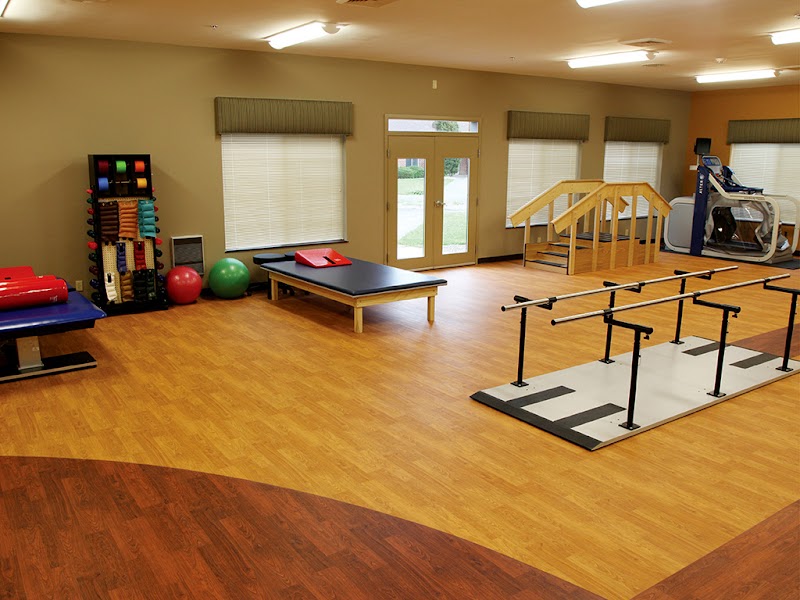
How Does Advanced Healthcare Center Compare to Other Ohio Nursing Homes?

Compared to the 100 nursing homes in Ohio, ADVANCED HEALTHCARE CENTER's overall rating (2 stars) is below the state average of 3.2, staff turnover (50%) is near the state average of 46%, and health inspection rating (2 stars) is below the national benchmark.

What Should Families Ask When Visiting Advanced Healthcare Center?

Based on this facility's data, families visiting should ask: "Can you walk me through typical staffing levels on day, evening, and night shifts?" "Can I visit during a mealtime to observe dining assistance and food quality?" "How do you handle medical emergencies, and what is your hospital transfer rate?" "Can I speak with family members of current residents about their experience?" These questions are particularly relevant given the below-average staffing rating.

Is Advanced Healthcare Center Safe?

Based on CMS inspection data, ADVANCED HEALTHCARE CENTER has a clean safety record: no substantiated abuse findings (meaning no confirmed cases of resident harm), no Immediate Jeopardy citations (the most serious violation level indicating risk of serious injury or death), and is not on the Special Focus Facility watch list (a federal program monitoring the lowest-performing 1% of nursing homes). The facility has a 2-star overall rating and ranks #100 of 100 nursing homes in Ohio. While no facility is perfect, families should still ask about staff-to-resident ratios and recent inspection results during their visit.

Do Nurses at Advanced Healthcare Center Stick Around?

ADVANCED HEALTHCARE CENTER has a staff turnover rate of 50%, which is about average for Ohio nursing homes (state average: 46%). Moderate turnover is common in nursing homes, but families should still ask about staff tenure and how the facility maintains care continuity when employees leave.

Was Advanced Healthcare Center Ever Fined?

ADVANCED HEALTHCARE CENTER has no federal fines on record. CMS issues fines when nursing homes fail to meet care standards or don't correct problems found during inspections. The absence of fines suggests the facility has either maintained compliance or corrected any issues before penalties were assessed. This is a positive indicator, though families should still review recent inspection reports for the full picture.

Is Advanced Healthcare Center on Any Federal Watch List?

ADVANCED HEALTHCARE CENTER is not on any federal watch list. The most significant is the Special Focus Facility (SFF) program, which identifies the bottom 1% of nursing homes nationally based on persistent, serious quality problems. Not being on this list means the facility has avoided the pattern of deficiencies that triggers enhanced federal oversight. This is a positive indicator, though families should still review the facility's inspection history directly.