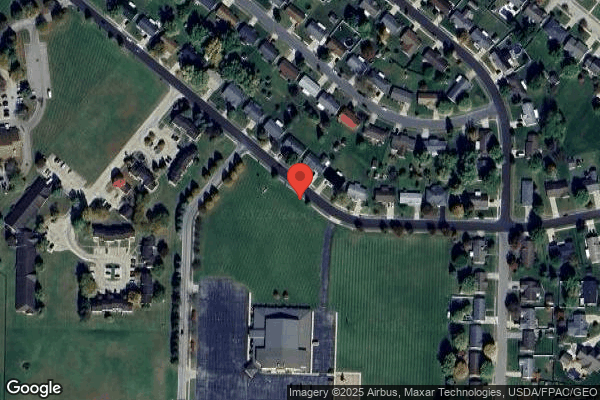




COURT HOUSE MANOR

555 NORTH GLENN AVE, WASHINGTON COURT HOU, OH 43160 (740) 335-9290
For profit - Corporation 99 Beds HCF MANAGEMENT Data: November 2025
Trust Grade
50/100
#442 of 913 in OH
Last Inspection: March 2025

Within standard 12-15 month inspection cycle. Federal law requires annual inspections.

Overview

Court House Manor in Washington Court House, Ohio has a Trust Grade of C, which means it is average and sits in the middle of the pack compared to other facilities. It ranks #442 out of 913 in the state, placing it in the top half, but only #3 out of 4 in Fayette County, indicating limited local options. Unfortunately, the facility is worsening, with the number of issues increasing from 3 in 2024 to 6 in 2025. Staffing is a concern, receiving a 2 out of 5 stars, with a turnover rate of 45%, which is slightly better than the state average. While the facility reported no fines, it has less RN coverage than 82% of Ohio facilities, which raises concerns about oversight in resident care. Specific incidents highlight some serious risks, including a failure to monitor a resident on anticoagulant medication, leading to hospitalization for severe complications, and another resident fell due to inadequate fall prevention measures, resulting in a head injury. Additionally, the facility did not properly identify and track infections, which could pose risks to all residents. Overall, while there are some positive aspects, such as no fines, the facility has significant weaknesses that families should consider carefully.

Trust Score
C
50/100
In Ohio
#442/913
Top 48%
Safety Record
Moderate
Needs review
Inspections
Getting Worse
3 → 6 violations
Staff Stability
⚠ Watch
45% turnover. Above average. Higher turnover means staff may not know residents' routines.
Penalties
✓ Good
No fines on record. Clean compliance history, better than most Ohio facilities.
Skilled Nurses
⚠ Watch
Each resident gets only 25 minutes of Registered Nurse (RN) attention daily — below average for Ohio. Fewer RN minutes means fewer trained eyes watching for problems.
Violations
⚠ Watch
22 deficiencies on record. Higher than average. Multiple issues found across inspections.
★★★☆☆
3.0
Overall Rating
★★☆☆☆
2.0
Staff Levels
★★★★☆
4.0
Care Quality
★★★☆☆
3.0
Inspection Score
Stable
2024: 3 issues
2025: 6 issues

The Good

  • 4-Star Quality Measures · Strong clinical quality outcomes
  • Full Sprinkler Coverage · Fire safety systems throughout facility
  • No fines on record

Facility shows strength in quality measures, fire safety.

The Bad

3-Star Overall Rating

Near Ohio average (3.2)

Meets federal standards, typical of most facilities

Staff Turnover: 45%

Near Ohio avg (46%)

Higher turnover may affect care consistency

Chain: HCF MANAGEMENT

Part of a multi-facility chain

Ask about local staffing decisions and management

The Ugly 22 deficiencies on record

2 actual harm
Mar 2025 6 deficiencies
CONCERN (D) 📢 Someone Reported This

A family member, employee, or ombudsman was alarmed enough to file a formal complaint

Potential for Harm - no one hurt, but risky conditions existed

Notification of Changes (Tag F0580)

Could have caused harm · This affected 1 resident

Based on record review, interview and facility policy review, the facility failed to notify one resident's (#30) family of a change in condition and new physician orders related to the change in condi...

Read full inspector narrative →
Based on record review, interview and facility policy review, the facility failed to notify one resident's (#30) family of a change in condition and new physician orders related to the change in condition. This affected one (Resident #30) of 18 sampled residents. The facility census was 88. Findings Include: Review of the medical record for Resident #30 revealed an initial admission date of 01/26/21 with the latest admission date of 03/12/25 with the diagnoses including pneumonia, anemia, adjustment disorder with anxiety and depressed mood, cerebrovascular accident with right sided hemiplegia, severe morbid obesity, chronic obstructive pulmonary disease, hypercholesterolemia, obstructive sleep apnea, obstructive and reflux uropathy, gout, dementia, congestive heart failure, osteoarthritis, metabolic encephalopathy, spinal stenosis, atrial fibrillation, diabetes mellitus, major depressive disorder and insomnia. Review of the plan of care dated 11/18/22, last revised 02/26/24 revealed the resident was at risk for bleeding and bruising due to antiplatelet therapy. Interventions included daily skin inspections and report abnormalities to nurse, monitor for adverse reactions bleeding/bruising and monitor for side effects of medication. Review of the resident's five day Minimum Data Set (MDS) assessment date 03/03/25 revealed the resident had no cognitive deficit. The assessment indicated the resident had not received antiplatelet medications. Review of the progress note dated 03/13/25 at 2:39 P.M. revealed the resident had complained of feeling lethargic and dizzy. The nurse spoke with the Nurse Practitioner (NP) and new orders were obtained for a STAT complete blood count (CBC) and basic metabolic panel (BMP). After reviewing the labs the resident's hemoglobin was 7.0 grams per deciliter (g/L) and potassium was 5.4 milliequivalent per liter (mEq/L). The NP was notified and a new order was received for iron daily, hold the medication Spironolactone, repeat CBC/BMP in the am on 03/14/25 and occult for stool sample test with the resident's next bowel movement. Review of the medical record revealed no documented evidence the resident and/or the resident representative was notified of the change in condition and new orders. Review of the NP progress note dated 03/13/25 at 11:59 P.M. revealed the resident STAT lab results showed a hemoglobin of 7.0 mEq/L and potassium of 5.4 g/L. Orders were placed to hold spironolactone due to the hyperkalemia and to get another CBC in the morning due to the local hospital would only transfuse a hemoglobin of under 7.0 mEq/L. The NP documented the she was still waiting on the stool guaiac test assessing for a gastrointestinal bleeding. Review of the medical record revealed no documented evidence the resident and/or the resident representative was notified of the change in condition and new orders. On 03/24/25 at 3:30 P.M., interview with the Director of Nursing confirmed the facility had no documented evidence the resident's family was notified of the change in condition and new physician orders. Review of the facility policy titled, Notification of Change Policy, with the last review/revision date of 11/16 revealed the facility will inform the resident, the attending physician and the resident's representative or interested family member of changes which affect the resident. The facility must inform the resident immediately, the attending physician and the resident's representative or interested family member when there is a significant change in the resident's physical, mental or psychosocial status, a need to alter treatment significantly or a decision to transfer or discharge the resident from the facility. This deficiency represents non-compliance investigated under Complaint Number OH00163883 and OH00161161.
CONCERN (D) 📢 Someone Reported This

A family member, employee, or ombudsman was alarmed enough to file a formal complaint

Potential for Harm - no one hurt, but risky conditions existed

Quality of Care (Tag F0684)

Could have caused harm · This affected 1 resident

**NOTE- TERMS IN BRACKETS HAVE BEEN EDITED TO PROTECT CONFIDENTIALITY** Based on interviews, observations, record reviews, and hospital discharge record review, the facility failed to ensure Resident ...

Read full inspector narrative →
**NOTE- TERMS IN BRACKETS HAVE BEEN EDITED TO PROTECT CONFIDENTIALITY** Based on interviews, observations, record reviews, and hospital discharge record review, the facility failed to ensure Resident #188 had a dressing order in place and [NAME] hose ordered and failed to ensure Resident #199's weekly wound assessments were documented along with daily treatments completed for a surgical wound. Furthermore, the facility also failed to ensure a hospice certification was present for Resident #5. This affected three residents (#5, #188, and #199) of four residents reviewed. The facility census was 88. Findings include: 1. Review of the medical record for Resident #188, revealed an admission date of 03/07/25. Diagnoses included but were not limited to dementia, major depressive disorder, cerebral infarction due to unspecified occlusion or stenosis of unspecified cerebral artery, and periprosthetic fracture around internal prosthetic fracture around internal prosthetic right hip joint, subsequent encounter. Review of the functional abilities assessment dated [DATE] for Resident #188 revealed assistance was needed for toilet hygiene and shower/bathe self at substantial/maximal assistance and bed mobility, transfers to be totally dependent. Review of the admission skin assessment dated [DATE] for Resident #188 revealed a surgical wound on the front right thigh to the front right knee with no description of the dressing. Review of the hospital discharge instructions dated 03/07/25 for Resident #188 revealed the dressing from the right thigh to right front knee was to remain in place for three days, to be replaced with a clean dry gauze dressing and be kept dry and intact. Further review revealed the resident was also to wear ted hose for clot prevention. Review of the physician's orders dated 03/07/25 for Resident #188 revealed no order for ted hose and no monitoring and changing of the dressing three days after admission for the right thigh to right front knee surgical wound. Review of the care plan dated 03/10/25 for Resident #188 revealed to be at risk for skin breakdown or known to have area/s of skin breakdown with interventions including but not limited to administer treatments/medications as ordered and monitor effectiveness, and staff will monitor, document and report to provider changes in my skin status: appearance, color, signs and symptoms of infection, and wound size (length, width, and depth). Review of the most recent Minimum Data Set (MDS) 3.0 assessment dated [DATE] revealed a Brief Interview for Mental Status (BIMS) of 10 out of 15 suggested moderate cognitive impairment. Review of the medical record for Resident #188 revealed for the dates of 03/07/25 through 03/15/25 no documentation of the dressing from the right front thigh to the right front knee was completed and no order to change the dressing three days after admission on [DATE]. Review of the physician's orders dated 03/15/25 for Resident #188 revealed to clean incision with normal saline/wound cleanser, pat dry and cover with a dry clean dressing every three days. Observation on 03/18/25 at 10:40 A.M. of Resident #188 revealed no [NAME] hose in place. Interview on 03/20/25 at 11:02 A.M. with Registered Nurse (RN) #270 revealed if a resident has a surgical or pressure wound, they are required to documents on the size and description of the wound when it is assessed. If there is a dressing, they are to assess it and document the description. Interview and observation on 03/20/25 at 11:15 A.M. with Certified Nursing Assistant (CNA) #219 verified no [NAME] hose in place for Resident #188. Interview on 03/20/25 at 12:25 P.M. with the Director of Nursing (DON) revealed Resident 188's dressing to his surgical site from the front right thigh to the front right knee was to stay in place until his appointment with the Orthopedic office but was unable to provide evidence of that. Reviewed the hospital Discharge summary dated [DATE] revealed the dressing to the surgical site was to remain in place for three days then be changed to a clean dry gauze dressing and keep clean and dry. Verified the facility did not do place the order for the dressing change and to monitor the dressing. Interview on 03/20/25 at 3:25 P.M. with the DON revealed for Resident #188 ted hose was never ordered upon admission and through 03/20/25. 2. Review of the medical record for Resident #199, revealed an admission date of 02/10/25. Diagnoses included but were not limited to displaced intertrochanteric fracture of right femur, subsequent encounter for closed fracture with routine healing, type 2 diabetes mellitus, dementia, and anxiety disorder. Review of the skilled evaluation on admission dated 02/10/25 for Resident #199 revealed a surgical wound covered with a dressing to the right thigh and hip area with no description and measurements of the wound. Review of the physician order dated 02/10/25 for Resident #199 revealed cleanse incision site with normal saline, pat dry with a 4X4, and cover with a dry dressing and paper tape. Change daily and as needed. Review of the care plan dated 02/10/25 for Resident #199 revealed at risk for skin breakdown or have a known area/s of skin breakdown with interventions including but not limited to administer treatments as ordered. No interventions to monitor wound sites were noted. Review of the most recent Minimum Data Set (MDS) 3.0 assessment dated [DATE] revealed a Brief Interview for Mental Status (BIMS) of 08 out of 15 suggested moderate cognitive impairment. The resident was assessed to require supervision or touching assistance with bed mobility, partial/moderate assistance with transfers and total dependence on toilet hygiene and shower/bathe self. This resident was also assessed to have a surgical wound. Review of the skin check assessment dated [DATE] for Resident #199 revealed a right thigh and hip surgical wound with no description and measurements of the wound. Review of the skin check assessment dated [DATE] for Resident #199 revealed a right thigh and hip surgical wound with no description and measurements of the wound. Review of the Treatment Administration Record (TAR) dated February 2025 for Resident #199 revealed missed treatments for the dates of: 02/14/25, 02/18/25, 02/23/25, and 02/28/25. Review of the skin check assessment dated [DATE] for Resident #199 revealed a right thigh and hip surgical wound with no description and measurements of the wound. Review of the skin check assessment dated [DATE] for Resident #199 revealed a right thigh and hip surgical wound with no description and measurements of the wound. Review of the TAR dated March 2025 for Resident #199 revealed missed treatments for the dates of 03/05/25 and 03/12/25. Interview on 03/19/25 at 02:25 P.M. with the DON revealed when residents have surgical wounds the facility should be documenting on the site weekly with descriptions and measurements. Interview on 03/19/25 at 4:02 P.M. with the DON verified Resident #199's medical record no documentation on the surgical wound which includes measurements and descriptions, and this resident had missed treatments on 02/14/25, 02/18/25, 02/23/25, 02/28/25, 03/05/25 and 03/12/25. Interview on 03/20/25 at 10:58 A.M. with Licensed Practical Nurse (LPN) #208 revealed if a resident has any type of skin issues they are to be measured and assessed for drainage, redness and the description of the wound. Interview on 03/20/25 at 11:02 A.M. with RN #270 revealed if a resident has a surgical or pressure wound, they are required to documents on the size and description of the wound when it is assessed. 3. Review of the medical record for Resident #5 revealed an initial admission date of 02/16/17 with the latest readmission of 11/12/24 with the diagnoses including but not limited to chronic obstructive pulmonary disease, severe morbid obesity, chronic respiratory failure, cirrhosis of liver, diabetes mellitus, chronic pulmonary edema, hypertension, anxiety disorder, convulsions, primary adrenocortical insufficiency, polyneuropathy, chronic pain, restless leg syndrome, retention of urine, congestive heart failure, osteoarthritis, end stage renal failure, dependence on renal dialysis, atrial fibrillation, major depressive disorder, insomnia, constipation, obstructive sleep apnea, gout and anemia. Review of the plan of care dated 02/04/25 revealed the resident was receiving hospice services related to a terminal prognosis chronic respiratory failure. Interventions included notify hospice with changes or concern, observe resident closely for signs of pain, administer pain medications as ordered, and notify physician immediately if there is breakthrough pain, work cooperatively with hospice team to ensure the resident's spiritual, emotional, intellectual, physical and social needs are met and work with nursing staff to provide maximum comfort for the resident. Review of the resident's significant change MDS assessment dated [DATE] revealed the resident had no cognitive deficit. The assessment indicated the resident received hospice services. The facility had the hospice certification signed by the physician the resident had six months or less life expectancy faxed to the facility from the hospice company once requested. On 03/20/25 at 2:35 P.M., interview with the Director of Nursing confirmed the hospice physician certification was not onsite and the hospice company faxed the hospice resident's certificate to the facility when requested. This deficiency represents non-compliance investigated under Complaint Number OH00163888 and OH00163883.
CONCERN (D) 📢 Someone Reported This

A family member, employee, or ombudsman was alarmed enough to file a formal complaint

Potential for Harm - no one hurt, but risky conditions existed

Pressure Ulcer Prevention (Tag F0686)

Could have caused harm · This affected 1 resident

**NOTE- TERMS IN BRACKETS HAVE BEEN EDITED TO PROTECT CONFIDENTIALITY** Based on observation, record review, staff interview, review of wound notes and facility policy review, the facility failed to p...

Read full inspector narrative →
**NOTE- TERMS IN BRACKETS HAVE BEEN EDITED TO PROTECT CONFIDENTIALITY** Based on observation, record review, staff interview, review of wound notes and facility policy review, the facility failed to prevent facility acquired suspected deep tissue injury (a type of pressure-induced damage to underlying tissues, such as muscle and subcutaneous layers, that appears as a localized area of discolored intact skin (purple or maroon) or a blood filled blister, without a visible open wound) to bilateral heels. This affected one (Resident #188) of three residents reviewed for pressure ulcers. Facility census was 88. Findings include: Review of the medical record for Resident #188, revealed an admission date of 03/07/25. Diagnoses included but were not limited to dementia, major depressive disorder, cerebral infarction due to unspecified occlusion or stenosis of unspecified cerebral artery, and periprosthetic fracture around internal prosthetic fracture around internal prosthetic right hip joint, subsequent encounter. Review of the functional abilities assessment dated [DATE] for Resident #188 revealed assistance was needed for toilet, hygiene, and shower/bathe self at substantial/maximal assistance and bed mobility and transfers totally dependent. Review of the admission skin assessment dated [DATE] for Resident #188 revealed no pressure areas to the left and right heel. Review of the Braden Scale for Predicting Pressure ulcer Risk Evaluation dated 03/07/25 for Resident #188 revealed the resident is very limited: Makes occasional slight changes in body or extremity position but unable to make frequent or significant changes independently with a score of 15 out of 23 indicating mild risk for developing a pressure ulcer or injury. Review of the physician's orders dated 03/07/25 revealed for Resident #188 a pressure reducing mattress to bed, but no orders to turn and reposition and offload and or elevate heels. Review of the Physical Therapy evaluation dated 03/08/25 for Resident #188 revealed bed mobility training to be dependent. Review of the baseline care plan on admission dated 03/09/25 for Resident #188 revealed no skin care interventions selected which included but were not limited to pillows for offloading. Review of the care plan dated 03/10/25 for Resident #188 revealed to be at risk for skin breakdown or known to have area(s) of skin breakdown with interventions including but not limited to requiring using offloading devices such as pillows for offloading. Review of the medical record for Resident #188 revealed from 03/07/25 through 03/11/25 no documentation of turning and repositioning as well as offloading and or elevating heels while in bed. Additionally, no documentation to support this resident met clinical conditions to demonstrate the pressure ulcers were unavoidable was found. Review of skin issues assessment dated [DATE] for Resident #188 revealed two acquired in-house pressure injuries, one on the left heel measuring 2 centimeters (cm) by 1.6 cm by no depth and a right heel measuring 0.8 cm by 1 cm by no depth. No staging and description documented for either injury. Review of the physician orders dated 03/12/25 for Resident #188 revealed heel/ankle protectors to be applied to bilateral heels with a discontinue date of 03/13/25. Review of the Wound Consultation dated 03/13/25 for Resident #188 revealed a left heel suspected deep tissue injury measuring 3.8 cm by 3.5 cm by no depth being dark purplish maroon in color and a right heel suspected deep tissue injury measuring 1.9 cm by 1.5 cm by no depth being a dark purplish maroon in color, both being acquired in house at the facility. Interventions to include float heels, offload heels, and to turn and reposition per facility protocol. Additional risk factors for this resident revealed a healed ulcer is more likely to break down again, impaired decreased mobility, cognitive impairment and decreased functional ability. Treatment order for skin preparation (prep) to bilateral heels twice a day and as needed. Review of the physician's orders dated 03/13/25 for Resident #188 revealed bilateral heels cleanse heels/pat dry and apply skin prep and to offload heels while in bed as the resident allows every shift. Review of the care plan updated on 03/13/25 for Resident #188 revealed at risk for skin breakdown or known to have area(s) of skin breakdown with an added intervention to offload heels as tolerated. Review of the most recent Minimum Data Set (MDS) 3.0 assessment dated [DATE] revealed a Brief Interview for Mental Status (BIMS) of 10 out of 15 suggesting moderate cognitive impairment. Review of the care plan updated on 03/15/25 for Resident #188 revealed at risk for skin breakdown or known to have area(s) of skin breakdown with an added intervention of encourage resident to get up every day as the resident refuses to get out of bed. Observation on 03/17/25 at 9:18 A.M. revealed Resident #188 to be in bed. Interview and observation on 03/18/25 at 10:35 A.M. with Resident #188 revealed the resident was in bed. He doesn't recall his heels being elevated on pillows when he first got here and he was not turned in bed stated, I know when I first was here, I just laid here and now they keep putting pillows under my feet and making me move back and forth in bed, but I can't lay on my right side still it hurts too much. The resident also expressed that he enjoys lying in bed in the mornings and relaxing before therapy. Observation on 03/19/25 at 9:12 A.M. revealed Resident #188 to be in bed. Observation on 03/20/25 at 10:57 A.M. revealed Resident #188 to be in bed. Interview on 03/20/25 at 10:58 A.M. with Licensed Practical Nurse (LPN) #208 revealed if a resident is totally dependent on assistance with movements in the bed, the staff are to make sure they are turned to prevent pressure ulcers. LPN #208 was not aware of Resident #188 refusing care and if he was it would be documented, but the resident wanted to stay in bed this morning. Interview on 03/20/25 at 11:02 A.M. with Registered Nurse (RN) #270 revealed if a resident is totally dependent then the staff is to assist them when in bed, elevate their heels, and the aides usually turn them with their two-hour check and change and document it in their charting. RN #270 stated it is the aide staff who are responsible for taking preventative measures to keep them from getting pressure ulcers. If a resident refuses care, it is documented. Interview on 03/20/25 at 11:08 A.M. with Certified Nurse Assistant #274 revealed when caring for residents, the [NAME] is where the aides gather the information to care for the residents and it comes from the care plans. If they are new, they ask the nurses for information. Residents are checked and changed every two hours and that is when they are turned and are to be documented in their charting. Also revealed Resident #188 does not like to be turned onto his right side, so he is only turned on his back and left side and the only care he has refused for her was to get out of bed in the mornings, but by the afternoon he is wanting to get up. Observation on 03/20/25 at 11:55 A.M. of Resident #188's wound care with Certified Nurse Practitioner (CNP) #340 and RN #317 to the left and right heel revealed no concerns. Resident #188 tolerated well, and wounds are improving with measurements showing the right heel suspected deep tissue injury to be 0.9 cm by 1 cm by no depth being a dark purplish maroon color and the left heel suspected deep tissue injury to be 3.5 cm by 2.9 cm by no depth being a dark purplish maroon color. Interventions included to float heels, offload heels and to turn and reposition per facility protocol with additional risk factors for this resident continuing to be a healed ulcer is more likely to break down again, impaired decreased mobility, cognitive impairment and decreased functional ability. Treatment order continued as skin prep to bilateral heels twice a day and as needed. Interview on 03/20/25 at 12:05 P.M. with CNP #340 revealed if a resident is totally dependent on movements in bed at the facility, the resident should be turned every two hours and have elevated heels to prevent pressure ulcers. Interview on 03/20/25 at 12:10 P.M. with RN #317 revealed residents that are dependent on the staff for movement in bed should have elevated heels and be turned every two hours for pressure ulcer prevention. Interview on 03/20/25 at 2:20 P.M. with the Director of Nursing revealed for Resident #188 no preventative measures were in place for his bilateral heels and no baseline care plan for skin management for Resident #188 from admission on [DATE] through 03/10/25. Review of the facility policy titled Pressure Ulcer Policy revision date 04/2016 revealed a resident who enters the Manor without a pressure ulcer will not develop a pressure ulcer unless the individual's clinical condition demonstrates they are unavoidable. Appropriate preventative interventions will be implemented (i.e. offloading heels, etc.) and all residents will be placed on a pressure-reducing mattress upon entering the Manor.
CONCERN (D) 📢 Someone Reported This

A family member, employee, or ombudsman was alarmed enough to file a formal complaint

Potential for Harm - no one hurt, but risky conditions existed

Pharmacy Services (Tag F0755)

Could have caused harm · This affected 1 resident

**NOTE- TERMS IN BRACKETS HAVE BEEN EDITED TO PROTECT CONFIDENTIALITY** Based on record review,interview, and facility policy review, the facility failed to ensure a resident received medication. This...

Read full inspector narrative →
**NOTE- TERMS IN BRACKETS HAVE BEEN EDITED TO PROTECT CONFIDENTIALITY** Based on record review,interview, and facility policy review, the facility failed to ensure a resident received medication. This affected one (Resident #10) of five residents reviewed for medication administration. The facility census is 88. Findings Include: Review of the medical record revealed Resident #10 was admitted to the facility on [DATE] with diagnoses of dry eye syndrome of bilateral lacrimal glands, bell's palsy, and candidiasis of skin and nails. Review of the Minimum Data Set (MDS) quarterly assessment dated [DATE] revealed Resident #10 had mild cognitive deficit and was frequently incontinent of bowel and always incontinent of bladder. The resident required supervision or touching assistance with eating, partial/moderate assistance with oral hygiene and bed mobility, substantial/maximal assistance for toileting and transfers, substantial/maximal assistance for bathing, partial/moderate assistance for personal hygiene and substantial/maximal assistance for dressing. Review of physician orders revealed Resident #10 had an order dated 04/12/24 for Cyclosporine to be administered two times a day for dry eyes due to inflammation. Review of the medication administration record confirmed Resident #10 has missed her medication on 3/16/25 and 03/17/25 for both the A.M. and P.M. administration times and on 03/18/25 for the A.M. administration. Observation of medication administration on 03/18/25 at 09:13 A.M. with staff Registered Nurse (RN) #334 for Resident #10 revealed that the cyclosporine medication was out of stock. Interview on 03/18/25 at 09:15 A.M. with staff RN #334 revealed the medication was not available and that she will have to contact the doctor. Interview on 03/18/25 at 4:02 P.M. with staff RN #334 stated that the doctor had put an order to hold the medication until the medication is back in stock. Interview on 03/19/25 at 12:15 P.M. with Resident #10 stated that she doesn't usually get her eye drops and that the nurses won't give her the eye drops unless she asks. Review of the facility policy titled Medication Storage in the Facility dated March 1996 and revised on February 11, 2025 revealed the facility is to reorder medications from the pharmacy if the current order exists. This deficiency represents non-compliance investigated under Complaint Number OH00161161.
CONCERN (D)

Potential for Harm - no one hurt, but risky conditions existed

Deficiency F0761 (Tag F0761)

Could have caused harm · This affected 1 resident

**NOTE- TERMS IN BRACKETS HAVE BEEN EDITED TO PROTECT CONFIDENTIALITY** Based on observation, interview and facility medication storage policy, the facility failed to ensure outdated medications were ...

Read full inspector narrative →
**NOTE- TERMS IN BRACKETS HAVE BEEN EDITED TO PROTECT CONFIDENTIALITY** Based on observation, interview and facility medication storage policy, the facility failed to ensure outdated medications were removed from stock. This affected one (Resident #53) out of 11 resident's insulin reviewed. Facility census is 88. Findings include: Review of the medical record revealed Resident #53 was admitted to the facility on [DATE] with diagnoses of Type 2 Diabetes Mellitus with hyperglycemia. Review of the Minimum Data Set (MDS) admission assessment dated [DATE] revealed Resident #53 had a slight cognitive deficit and was always incontinent of bowel and frequently incontinent of bladder. The resident required independent with eating, set up or clean up assistance with oral hygiene and bed mobility, dependent for toileting and transfers, substantial/maximal assistance for bathing, setup or clean-up assistance for personal hygiene and dependent assistance for dressing. Review of physician orders revealed Resident #53 had an order dated [DATE] to be administered Humalog Kwik insulin pen-injector 100 UNIT/ML, inject per sliding scale subcutaneously before meals for diabetes mellitus type 2. Observation of Med Cart D2 on [DATE] at 4:02 P.M. with staff RN #203 revealed one insulin pen had an open date of [DATE] and expiration date of [DATE]. Interview on [DATE] with staff RN #203 revealed the insulin was supposed to be removed on [DATE] and not to be used. Staff RN #203 stated she administered 2 units of insulin on [DATE] at 11:13 AM, 2 units of insulin on [DATE] at 5:00 PM, and 2 units of on [DATE] at 11:24 AM with the expired insulin. Review of the facility policy titled Medication Storage in the Facility dated [DATE] and revised on February 11, 2021 revealed the facility should remove outdated, contaminated, or deteriorated medications from stock.
CONCERN (F) 📢 Someone Reported This

A family member, employee, or ombudsman was alarmed enough to file a formal complaint

Potential for Harm - no one hurt, but risky conditions existed

Infection Control (Tag F0880)

Could have caused harm · This affected most or all residents

Based on infection control log review and interview, the facility failed to ensure facility and community acquired organism was identified and tracked in the facility's infection control log. This had...

Read full inspector narrative →
Based on infection control log review and interview, the facility failed to ensure facility and community acquired organism was identified and tracked in the facility's infection control log. This had the potential to affected all 88 residents residing in the facility. Findings Include: Review of the January 2024 infection control log, the urinary tract infection (UTI) no catheter flow tracking sheet revealed Resident #143 was prescribed the antibiotic Augmentin for a UTI with no identification of the organism causing the UTI. Review of the February 2024 infection control log, the UTI no catheter flow tracking sheet revealed Resident #12, #144 and #145 were admitted from the hospital with antibiotic orders with no identifying organism causing the UTI. Review of the March 2024 infection control log, the UTI no catheter flow tracking sheet revealed Resident #38, #144 and #146 were admitted from the hospital with antibiotic orders with no identifying organism causing the UTI. Review of the July 2024 infection control log, the UTI no catheter flow tracking sheet revealed Resident #52, #148 and #149 were admitted from the hospital with antibiotic orders with no identifying organism causing the UTI. Review of the December 2024 infection control log, the UTI no catheter flow tracking sheet revealed Resident #150 were admitted from the hospital with antibiotic orders with no identifying organism causing the UTI. Review of the January 2025 infection control log, the UTI no catheter flow tracking sheet revealed Resident #38 and #78 were admitted from the hospital with antibiotic orders with no identifying organism causing the UTI. Review of the February 2025 infection control log, skin and soft tissue infection revealed Resident #151 was treated with antibiotics for a wound infection with no identifying organism causing the infection. On 03/24/25 at 11:15 A.M., interview with Registered Nurse (RN) #288 confirmed the multiple organisms were not documented on the infection control log from the wound culture and in coming organisms from the hospital were not identified.
Nov 2024 3 deficiencies 1 Harm
SERIOUS (G) 📢 Someone Reported This

A family member, employee, or ombudsman was alarmed enough to file a formal complaint

Actual Harm - a resident was hurt due to facility failures

Quality of Care (Tag F0684)

A resident was harmed · This affected 1 resident

**NOTE- TERMS IN BRACKETS HAVE BEEN EDITED TO PROTECT CONFIDENTIALITY** Based on medical record review, staff interview, physician interview, and hospital record review, the facility failed to provide...

Read full inspector narrative →
**NOTE- TERMS IN BRACKETS HAVE BEEN EDITED TO PROTECT CONFIDENTIALITY** Based on medical record review, staff interview, physician interview, and hospital record review, the facility failed to provide treatment and care in accordance with professional standards of practice when they failed to monitor Resident #2 who was on Eliquis (an anticoagulant medication) and had a decreasing hemoglobin and did not complete a Physician recommended complete blood count (CBC) lab test. This resulted in harm when Resident #2 had bloody tarry stool and was admitted to the hospital for three days with a hemoglobin lab value (a test to detect anemia with a normal range of 11.5 to 15.4 g/dl) of 4.5 grams per dececiliter (g/dl) upon hospital admission. Resident #2 had to receive three units of packed red blood cells and was found to have a gastric ulcer that required clamping. This affected one (Resident #2) of three residents reviewed on anticoagulant medication. The facility census was 88. Findings include: Record review of Resident #2 revealed an admission date of 03/04/22 with pertinent diagnoses of: morbid obesity, macular degeneration, retinal hemorrhage left eye, vascular dementia with psychotic disturbance, gait abnormalities, major depressive disorder, low back pain, insomnia, type two diabetes mellitus with diabetic polyneuropathy, hypertensive chronic kidney disease, arthropathy, congestive heart failure, gastroesophageal reflux disease, sleep apnea, atrial fibrillation, anemia, functional urinary incontinence, and chronic kidney disease stage four. Review of the 09/30/24 quarterly Minimum Data Set (MDS) assessment revealed Resident #2 is moderately cognitively impaired and uses a wheelchair to aid in mobility. Resident #2 is noted to be taking an anticoagulant medication. Review of Resident #2's plan of care dated 02/10/24 revealed a goal of being free from signs or symptoms of bruising or bleeding with a target date of 11/22/24. The care planned interventions included: Resident is at risk for bleeding/bruising related to platelet aggregated/anticoagulant therapy. Resident will free from signs or symptoms of bruising or bleeding, Contact Physician with any signs or symptoms of bleeding. Labs per order. Medications as ordered. Monitor for signs or symptoms of bruising or bleeding every shift. Review of a Physician Order dated 10/05/24 revealed Eliquis (Apixaban) oral tablet five milligrams (mgs) Give one tablet by mouth two times a day related to paroxysmal atrial fibrillation the order was discontinued on 10/10/24. Review of a complete blood count (CBC) lab collected on 08/05/24 and reported the same day revealed a low Hemoglobin value of 10.3 g/dl with a normal value of 11.5-15.4 g/dl. Review of a complete blood count lab collected on 08/13/24 and reported the same day revealed a low Hemoglobin value of 7.3 g/dl with a normal value of 11.5-15.4 g/dl. Review of Nurse Practitioner (NP) #15 written Progress note dated 08/14/24 at 11:59 P.M. revealed an acute visit and Resident #2 is a [AGE] year old female who presents today with anemia, diabetes, and hypothyroidism. Resident #2 had a recent CBC result showing hemoglobin of 7.3 and hematocrit of 22.4, indicating anemia. Resident is currently taking ferrous sulfate 325 mg once a day for anemia management. The patient's vital signs include blood pressure of 133/64, heart rate of 70, respirations of 18, Oxygen saturation of 96%, and temperature of 97.7. The healthcare provider plans to increase the ferrous sulfate dose to twice a day, pending the patient's tolerance and absorption, and will continue to monitor CBC levels in one month for effectiveness. The assessment and plan for Iron deficiency anemia was the resident's CBC results indicated iron deficiency anemia with a hemoglobin level of 7.3 and hematocrit of 22.4. The resident is currently on ferrous sulfate 325 mg once a day. Plan: The dose of ferrous sulfate will be increased to twice a day, pending the patient's tolerance and absorption. CBC levels will be monitored in one month to assess the effectiveness of the increased dosage. Review of progress note dated 8/14/24 at 7:00 P.M. revealed Licensed Practical Nurse (LPN) #22 received an order from NP #15 to give iron twice a day due to hemoglobin level from recent labs. Review of Physician order dated 08/14/24 revealed Ferrous sulfate oral Tablet 325 (65 iron) mg give one tablet by mouth two times a day related to anemia. Review of the medical record for 08/14/24 revealed no order was written for a CBC laboratory value to be drawn in a month as per the NP progress notes. Review of Nurse Practitioner (NP) #15 written Progress Note dated 09/19/24 at 11:59 P.M. revealed and acute visit and the reason for the visit: Resident #2 is a [AGE] year-old female, with a history of diabetes mellitus managed with insulin, atrial fibrillation managed with aspirin, and neuropathy managed with gabapentin, seen today for blood glucose concerns. The patient also reports nausea for the past three weeks, which she attributes to food intake. The nausea occurs both before and after eating, leading her to reduce her food intake. She suspects that an ulcer, diagnosed several years ago, may be contributing to her symptoms. She requested Tums yesterday but did not receive them. Additionally, she reports constipation, with no bowel movement in the past 3 days. Review of a nurse note dated 10/06/24 at 6:30 P.M. revealed Resident #2 received milk of magnesium for complaints of stomachache. Resident's stool appeared black although this is normal with the resident. Resident noted to be pale in color. Family and nurse discussed sending her to emergency room. Resident was alert and oriented,blood pressure was 164/48, heart rate 80 beats per minute and respiration rate 16 per minute, Oxygen saturation 92%. Squad arrived and resident left without incident. Review of Emergency Department Provider notes dated 10/07/24 revealed Resident #2 presents on 10/06/24 with complaints of abdominal pain and concern for dark stools. Resident had a critically low hemoglobin of 4.5 g/dl. She received three units of packed red blood cells and is being sent to another hospital. Review of Hospital record dated 10/07/24 revealed Resident #2 transferred in from another hospital due to dark tarry stool and had an esophagogastroduodenoscopy (EGD) procedure done and she had three linear mucosal gastric erosions/ulcerations and one principal area in the fundus with the potential for a visible vessel which was endoclipped to maintain hemostasis. Review of Nurse Practitioner (NP) #15 written Progress Note dated 10/14/24 at 11:59 P.M. revealed Resident #2 is a [AGE] year old female who presents for a post-acute care visit following a recent hospitalization for anemia and a gastrointestinal bleed. The resident was hospitalized last week due to black, tarry stools and was diagnosed with a gastrointestinal bleed. Resident reports during the hospital stay, she had two large ulcers in her stomach that were bleeding and required clamping. Resident's blood count dropped to four, necessitating several blood transfusions. Resident #2 returned to the care facility on 10/10/24 and started on Protonix 40 mg twice a day. A follow-up with a gastrointestinal (GI) doctor is planned. Resident reports feeling better since returning from the hospital but expresses frustration with the care facility staff for not addressing her stomach pain complaints earlier. She mentioned having complained about stomach pain for weeks prior to the hospitalization. Currently, the resident's stomach is a little sore, and they feel the need to have a bowel movement. Interview with the Director of Nursing (DON) on 11/04/24 at 3:52 P.M. verified there was never an order written on 08/14/24 for Resident #2 CBC and a CBC lab was not completed. Telephone Interview with NP #15 on 11/04/24 at 4:14 P.M. revealed the note from 08/14/24 was read to her and she stated she meant for Resident #2 to have a follow up CBC lab done in a month due to the hemoglobin dropping and the increase of the ferrous sulfate medication. NP #15 was unsure of why it was not completed. NP #15 was informed there was not an order written and she stated her intention was for the lab to be drawn and she is not sure if she gave a verbal order for the CBC or wrote the order out. She stated when she comes in the facility she usually writes out the order but sometimes they do not have the slips. NP #15 could not recollect if she wrote a paper order for the CBC or gave a verbal order to the nurse. NP #15 stated the standard of practice would be to draw a CBC lab in a month to monitor the medication change and the hemoglobin level since the resident was on Eliquis and had the hemoglobin decrease. Interview with LPN #22 on 11/04/24 at 4:35 P.M. revealed she worked 08/14/24 and put the order in the electronic record to increase the ferrous sulfate for Resident #2. LPN #22 was unable to recollect whether she received a verbal order from NP #15 or if NP #15 wrote the order. LPN #22 stated she input the order in the electronic medical record as it was prescriber written so it should of been on paper. The Prescriber Order paper order was unable to be located in the medical record and LPN #22 stated she might of marked that in error and it could of been a verbal order. LPN #22 stated NP #15 usually writes her own paper orders and the nurse will put them in the computer. Review of Resident #2's paper medical record on 11/05/24 revealed no evidence of a telephone order being written for ferrous sulfate to be increased, or the CBC lab to be drawn in a month. Interview with Director of Nursing (DON) on 11/05/24 at 12:50 P.M. revealed Resident #2 had two gastric ulcers on 10/06/24 and they clamped them. This deficiency represents non-compliance investigated under Complaint Number OH00158854.
CONCERN (D) 📢 Someone Reported This

A family member, employee, or ombudsman was alarmed enough to file a formal complaint

Potential for Harm - no one hurt, but risky conditions existed

Pressure Ulcer Prevention (Tag F0686)

Could have caused harm · This affected 1 resident

Based on observation, staff interview, and record review the facility failed to complete a pressure ulcer dressing change per physicians orders for Resident #79. This affected one (Resident #79) of th...

Read full inspector narrative →
Based on observation, staff interview, and record review the facility failed to complete a pressure ulcer dressing change per physicians orders for Resident #79. This affected one (Resident #79) of three residents reviewed for pressure ulcers. The facility census was 88. Findings include: Record review of Resident #79 revealed an admission date of 10/13/24 with pertinent diagnoses of: sepsis, pressure ulcer of sacral region, hypertension, mood affective disorder, local infection of the skin, major depressive disorder, anemia, acquired absence of left leg below the knee, and infection of amputation stump left lower extremity. Review of the 10/18/24 admission Minimum Data Set (MDS) assessment revealed the resident was cognitively intact and used a wheelchair to aid in mobility. The resident required setup or clean up assistance to roll left and right and was independent for sit to lying. The resident was occasionally incontinent of bladder and frequently incontinent of bowel. The resident was at risk for pressure ulcer. Review of a Physician Order dated 10/18/24 revealed wound care right lateral foot- cleanse with wound cleanser or normal saline. Pat dry. Apply medi-honey, calcium alginate and cover with abdominal pad. Wrap with kerlix. Change three times a week and as needed every day shift every Tuesday, Thursday, Saturday, and as needed. Observation of Resident #79 dressing change on 11/04/24 at 8:35 A.M. revealed Licensed Practical Nurse (LPN) #10 completing the dressing on resident's right lateral foot. LPN #10 used hand sanitizer and put on personal protective equipment including gloves and a gown. LPN #10 gathered her supplies including four by four gauze, wound wash, medi-honey, calcium alginate, abdominal pad, scissors, and kerlix dressing. LPN #10 removed the old dressing from Resident #79 right foot the dressing was dated 10/31/24 and was initialed by LPN #10. Interview with Licensed Practical Nurse #10 on 11/04/24 at 8:49 A.M. verified the wound dressing was dated 10/31/24 and she had initialed it. LPN #10 stated she changed it on Thursday 10/31/24. Review of the treatment administration record on 11/04/24 at 9:15 A.M. revealed the dressing changed was not signed off as being completed on Saturday 11/02/24. Review of the medical record on 11/04/24 at 9:20 A.M. revealed no progress notes related to the wound dressing change not being completed. Interview with Resident #79 on 11/04/24 at 9:40 A.M. revealed he is unsure if his wound dressing was changed on Saturday 11/02/24 and he does not remember refusing the dressing change. Interview with the Director of Nursing (DON) on 11/04/24 at 10:25 A.M. verified the dressing change was not completed for Resident #79 on 11/02/24 as per the physician order. The DON spoke with the nurse working Saturday 11/02/24 and she stated Resident #79 refused the dressing change at that time and then she did not go back to see if he wanted it done at a later time or put a note in the medical record or document in the treatment record he refused. The DON stated she would expect the nurse to document the refusal and check back to see if he wanted it done later. This deficiency represents non-compliance investigated under Complaint Number OH00158854 and Complaint Number OH00158671.
CONCERN (D) 📢 Someone Reported This

A family member, employee, or ombudsman was alarmed enough to file a formal complaint

Potential for Harm - no one hurt, but risky conditions existed

Infection Control (Tag F0880)

Could have caused harm · This affected 1 resident

Based on observation, staff interview, and record review the facility failed to to provide a sanitary environment to help prevent the development and transmission of communicable diseases and infectio...

Read full inspector narrative →
Based on observation, staff interview, and record review the facility failed to to provide a sanitary environment to help prevent the development and transmission of communicable diseases and infections when staff did not follow infection control procedures during a dressing change for Resident #79. Facility staff did not follow infection control techniques when they removed Resident #79's soiled dressing and did not change gloves and then cleaned the wound with the soiled gloves. This affected one (Resident #79) of three residents reviewed for pressure ulcers. The facility census was 88. Findings include: Record review of Resident #79 revealed an admission date of 10/13/24 with pertinent diagnoses of: sepsis, pressure ulcer of sacral region, hypertension, mood affective disorder, local infection of the skin, major depressive disorder, anemia, acquired absence of left leg below the knee, and infection of amputation stump left lower extremity. Review of the 10/18/24 admission Minimum Data Set (MDS) assessment revealed the resident was cognitively intact and used a wheelchair to aid in mobility. The resident required setup or clean up assistance to roll left and right and was independent for sit to lying. The resident was occasionally incontinent of bladder and frequently incontinent of bowel. The resident was at risk for pressure ulcer. Review of a Physician Order dated 10/18/24 revealed wound care right lateral foot- cleanse with wound cleanser or normal saline. Pat dry. Apply medi-honey, calcium alginate and cover with abdominal pad. Wrap with kerlix. Change three times a week and as needed every day shift every Tuesday, Thursday, Saturday, and as needed. Observation of Resident #79 dressing change on 11/04/24 at 8:35 A.M. revealed Licensed Practical Nurse (LPN) #10 completing the dressing on resident's right lateral foot. LPN #10 used hand sanitizer and put on personal protective equipment including gloves and a gown. LPN #10 gathered her supplies including four by four gauze, wound wash, medi-honey, calcium alginate, abdominal pad, scissors, and kerlix dressing. LPN #10 removed the soiled dressing from Resident #79 right foot by cutting it off with scissors and she then discarded the dressing in the trash. LPN #10 did not change her soiled gloves. LPN #10 then cleaned the wounds with wound wash and gauze using the same gauze to clean all three wounds. She then removed her gloves and washed her hands and put on clean gloves and dried off the wounds with dry gauze. LPN #10 applied med-honey to the calcium alginate dressing and placed them on the three wounds. She applied the abdominal pad and then wrapped the foot in kerlix and taped the kerlix and dated the wound. Interview with Licensed Practical Nurse #10 on 11/04/24 at 8:49 A.M. verified she did not change her gloves after removing the soiled dressing and then cleaned the wound with soiled gloves. Interview with the Director of Nursing (DON) on 11/04/24 at 10:25 A.M. revealed they do not have a policy for dressing changes but she would expect them to follow the aseptic dressing technique competency form. Review of the facility provided 11/01/19 Skills Competency Checklist- Aseptic Dressing Technique document revealed to perform hand hygiene, don non-sterile gloves, aseptic dressing change field set up. Soiled dressing removed and disposed of in waste bag. Remove gloves, perform hand hygiene, don nonsterile gloves. Cleanse wound per Physicians orders, remove gloves and perform hand hygiene. Perform treatment per Physicians Orders. This deficiency represents non-compliance investigated under Complaint Number OH00158854.
Dec 2022 6 deficiencies
CONCERN (D)

Potential for Harm - no one hurt, but risky conditions existed

Resident Rights (Tag F0550)

Could have caused harm · This affected 1 resident

**NOTE- TERMS IN BRACKETS HAVE BEEN EDITED TO PROTECT CONFIDENTIALITY** Based on observation, staff interview, review of the facility policy, and record review, the facility failed to ensure residents...

Read full inspector narrative →
**NOTE- TERMS IN BRACKETS HAVE BEEN EDITED TO PROTECT CONFIDENTIALITY** Based on observation, staff interview, review of the facility policy, and record review, the facility failed to ensure residents were provided dignified care related to residents names being visible on the outside of clothing. This affected one (Resident #18) of 24 residents reviewed for dignity. The facility census was 78. Findings include: Review of the medical record for Resident #18 revealed an admission date of 11/19/22. Diagnoses included cerebral infarct and depression. Review of the admission Minimum Data Set (MDS) assessment dated [DATE] revealed Resident #18 had significant cognitive impairment and required extensive assistance of one staff for transfers and dressing. Review of the plan of care dated 12/02/22 revealed Resident #18 had a self care deficit with interventions for dressing to have assistance from one staff person. Observation on 12/19/22 at 10:40 A.M. revealed Resident #18 was seen with his name visible on his socks with what looked like tape. Subsequent observation on 12/20/22 at 10:46 A.M. revealed Resident #18 was seen with his name visible on his socks. Interview on 12/20/22 at 10:52 A.M. with Licensed Practical Nurse (LPN) #341 revealed the laundry team stamps names on resident's clothes to make sure it gets back to the correct resident. She verified Resident #18 had his name visible on his socks and revealed all items were labeled, but the resident's name were placed on the inside of the shirt and was typically high up on the socks to be covered with pants. LPN #341 revealed the clothes were labeled with a heating press stamp and not with tape. Review of the facility's policy titled Quality of life, dated 03/2015, revealed the facility would care for residents in a manner and in an environment that promotes and enhances each resident's quality of life. The policy revealed dignity was defined during interactions with residents, staff carry out activities to maintain their self worth.
CONCERN (D)

Potential for Harm - no one hurt, but risky conditions existed

Deficiency F0645 (Tag F0645)

Could have caused harm · This affected 1 resident

**NOTE- TERMS IN BRACKETS HAVE BEEN EDITED TO PROTECT CONFIDENTIALITY** Based on staff interview, review of the facility policy, and record review, the facility failed to ensure a resident had an upda...

Read full inspector narrative →
**NOTE- TERMS IN BRACKETS HAVE BEEN EDITED TO PROTECT CONFIDENTIALITY** Based on staff interview, review of the facility policy, and record review, the facility failed to ensure a resident had an updated Preadmission Screening and Resident Review (PASARR). This affected one (Resident #4) of two residents reviewed for PASARR. The facility census was 78. Findings include: Review of the medical record for Resident #4 revealed an admission date of 06/04/12. Diagnoses included borderline personality disorder, post traumatic stress disorder, major depression, and panic disorder. Review of the annual Minimum Data Set (MDS) assessment dated [DATE] revealed Resident #4 had moderate cognitive impairment. Review of the plan of care dated 12/15/22 revealed Resident #4 was on several psychotropic medications with history of substance use and mental illness with interventions to monitor medications for side effects, and monitor and document behaviors. Interview on 12/20/22 at 9:00 A.M. with Social Services (SS) #244, the Administrator and the Director of Nursing (DON) verified the facility has no record of the PASARR being completed for Resident #4. SS #244 revealed a previous staff member completed an audit, but Resident #4's name was not included in the list of resident's without an updated PASARR. They revealed the county agency revealed they did not have a record going back to 2012 as they have gone to electronic records since then. Review of the facility's policy titled Preadmission Screening, dated 03/17/15, revealed the resident would not be admitted unless the state mental health authority had determined, based on a physical and mental evaluation performed by a person other than the state mental agency prior to admission.
CONCERN (D)

Potential for Harm - no one hurt, but risky conditions existed

Quality of Care (Tag F0684)

Could have caused harm · This affected 1 resident

**NOTE- TERMS IN BRACKETS HAVE BEEN EDITED TO PROTECT CONFIDENTIALITY** Based in observation, resident and staff interview and record review, the facility failed to ensure a resident's wound was asses...

Read full inspector narrative →
**NOTE- TERMS IN BRACKETS HAVE BEEN EDITED TO PROTECT CONFIDENTIALITY** Based in observation, resident and staff interview and record review, the facility failed to ensure a resident's wound was assessed and monitored after admission. The affected one (Resident #184) of one resident reviewed for non-pressure skin impairments. The facility identified nine residents with non-pressure wounds. The facility census was 78. Findings include: Review of the medical record for Resident #184 revealed an admission date of 12/16/22. Diagnoses included injury of foreign body (bullet), heart disease, type two diabetes mellitus, and hypertension. Review of the admission nursing assessment dated [DATE] revealed Resident #184 had a gun shot wound to the left thigh and redness to the groin. It did not mention significant bruising to the left thigh. There were no details, measurements, or comments left with skin impairment descriptions. Review of the baseline plan of care dated 12/17/22 revealed the plan of care did not include Resident #184's bullet wound or any monitoring or treatment. Review of the progress note dated 12/17/22 revealed Resident #184 had a telehealth visit and had concerns about his leg. There were no details, measurements, or comments left with skin impairment descriptions. The progress note dated 12/20/22 revealed a follow up on Resident #184's small scabbed area from a gun shot wound noted upon admission. The area remained pink dry and scabbed, and surrounded with bruising. No redness or drainage noted with touch. Resident #184 complained of tenderness and the area remained open to air. There were no details, measurements, or comments left with skin impairment descriptions. There were no physician orders to monitor and/or treat the gun shot wound to the left thigh from 12/16/22 to 12/20/22. Review of the physician orders dated 12/21/22 identified orders to monitor scabbed area to left thigh daily for signs of infection with instructions for monitoring daily for 14 days. Observation and interview on 12/19/22 at 11:15 A.M. of Resident #184's wound revealed a bullet wound on left upper thigh. No dressing was in place and Resident #184 stated the dressing was removed from the area when he admitted on [DATE]. State Tested Nursing Aide (STNA) #208 confirmed there was no dressing in place and she would ask the nurse about orders due to wound being wet, with some bloody discharge. Observation and interview on 12/21/22 at 11:20 A.M. with Licensed Practical Nurse (LPN) #375 and Resident #184 revealed Resident #184's wound was scabbed and dry. LPN #375 stated when a resident gets admitted with a wound or skin impairment, the wound should be assessed and documentation should include the type of wound, measurements and a description of the wound. The doctor should be messaged for orders, if orders were not already provided by the referring provider. Interview on 12/21/22 at 1:54 P.M. with LPN #341 revealed she was not told Resident #184's wound had any bloody discharge by staff on 12/19/22. LPN #341 verified she did not review or document what Resident #184's wound looked like. LPN #341 confirmed no treatments were put in place unit 12/21/22 and revealed the order included the wound should be monitored daily and be left open to air due to being scabbed over.
CONCERN (D)

Potential for Harm - no one hurt, but risky conditions existed

Deficiency F0688 (Tag F0688)

Could have caused harm · This affected 1 resident

**NOTE- TERMS IN BRACKETS HAVE BEEN EDITED TO PROTECT CONFIDENTIALITY** Based on review of the facility policy, observation, interviews of staff and residents, and record reviews, the facility failed ...

Read full inspector narrative →
**NOTE- TERMS IN BRACKETS HAVE BEEN EDITED TO PROTECT CONFIDENTIALITY** Based on review of the facility policy, observation, interviews of staff and residents, and record reviews, the facility failed to ensure residents with limited range of motion (ROM) received the appropriate treatment and services to increase and/or to prevent a further decrease in ROM. This affected two (Residents #4 and #34) of two residents reviewed for positioning and mobility. The facility identified six current residents with a contracture(s). The facility census was 78. Findings include: 1. Review of the medical record for Resident #4 revealed an admission date of 06/04/12. Diagnoses included hemiplegia and hemiparesis epilepsy, borderline personality disorder, and panic disorder. Review of the annual Minimum Data Set (MDS) assessment dated [DATE] revealed Resident #4 had moderate cognitive impairment and required extensive assistance of one for transfers. Resident #4 had an impairment of the upper extremity. Review of the physician order dated 11/03/21 to 12/01/21 and a second order dated 11/29/22 to 12/29/22 revealed orders for occupational therapy (OT) for 28 days to reduce hand contracture. Review of the OT evaluation dated 07/05/22 revealed a goal of staff education on range of motion (ROM) on right upper extremity and proper positioning in wheelchair to decrease risk of decline with a note that staff were not consistent with positioning and not performing ROM exercises. The assessment indicated Resident #4 had some right hand contracture with flaccid arm prior but the spouse reported it had gotten worse. Review of the plan of care dated 12/15/22 revealed Resident #4 had no documentation related to a contracture of the upper extremity and ROM exercises were note listed for care. Interview and observation on 12/19/22 at 2:35 P.M. with Resident #4 revealed he denied knowledge of concerns about wrist/hand mobility. Resident #4's left hand was bawled up into a fist and was not able to use it during the observation. Interview on 12/20/22 at 4:33 P.M. with Licensed Practical Nurse (LPN) #226 and Activities Director #300 revealed no knowledge of any care plan or protective barrier related to Resident #4's contracture. LPN #226 denied knowledge of any ROM exercises for staff to complete with Resident #4. Interview on 12/20/22 at 4:45 P.M. with the Administrator and Director of Nursing (DON) revealed Resident #4 had no current care plan with interventions to address Resident #4's contracture and the ROM exercises. The DON stated there was an old care plan had been resolved. Interview on 12/21/22 at 2:45 P.M. with Occupational Therapy (OT) #374 revealed Resident #4 did refuse to wear the splint. OT #374 stated Resident #4 should still have a care plan and be offered ROM exercises or evaluated for a re-assessment to see if he changes his mind or would be agreeable to care. OT #374 revealed a consistent problem of staff not performing ROM exercises. 2. Review of the medical record for Resident #34 revealed an admission date of 10/23/15. Diagnoses included cerebral infarct, hemiparesis, and type two diabetes mellitus. Review of the annual Minimum Data Set (MDS) assessment dated [DATE] revealed Resident #34 had significant cognitive impairment and was rarely or never understood and required assistance of two staff for mobility. Resident #34 had an upper extremity impairment. Review of the physician order dated 07/04/22 to 08/01/22 revealed an order for Occupational Therapy (OT) evaluation and treat. Resident #34 had a previous order for a resting hand splint to be worn at night in December 2018 but was stopped after three days. Review of the OT evaluation dated 07/04/22 revealed Resident #34's spouse stated Resident #34 had a contracture and it had gotten worse. The therapy assessment also revealed a goal of training staff to complete ROM exercises and reported issues with staff consistency and the staff were not performing ROM exercises. Review of the OT evaluation dated 07/25/22 revealed the discharge recommendation was to train Resident #34's husband to perform ROM exercises. The final assessment also stated progress from the goal of training staff on completing ROM exercises was discontinued. The assessment stated staff continued to be inconsistent and were not performing ROM exercises on 07/18/22 and 07/22/22. Review of the care plan dated 10/04/22 revealed Resident #34 had no mention of a contracture or intervention related to her contracture and no mention of ROM exercises. Interview and observation on 12/19/22 02:30 P.M. with Resident #34 with a contracted right hand and wrist with no brace in place. Resident #34 stated she did not wear a brace and staff do not do ROM exercises with her. Interview on 12/20/22 at 4:33 P.M. with LPN #226 and Activities Director #300 revealed Resident #34 used to have a splint to wear but they thought she had refused it so the order was discontinued. Staff revealed no knowledge of any care plan, protective barrier, or brace related to Resident #34's contracture. LPN #226 revealed no knowledge of ROM exercises that should be completed with Resident #34. Interview on 12/20/22 at 4:45 P.M. with the Administrator and DON verified Resident #34 had no current care plan with interventions to address Resident #34's contracture and the ROM exercises. The DON stated there was an old care plan had been resolved. Interview on 12/21/22 at 2:40 P.M. with Director of Therapy (DOT) #373 revealed therapy made the final recommendation to train the spouse for ROM exercises for Resident #34. The goals regarding training staff on ROM stayed the same throughout the therapy timeframe. Interview on 12/21/22 at 2:45 P.M. with OT #374 revealed Resident #34's husband was educated and trained to perform ROM exercises. OT #374 stated the staff were not consistent with ROM exercise and would not complete due to not having enough time. OT #374 stated the goal of staff being trained to provide ROM was never completed and was eventually discontinued due to staff continuing to be inconsistent with positioning and not performing ROM exercises. OT #374 stated the facility had a consistent problem of staff not performing these exercises so they recommended for Resident #34's husband to be trained so she could get the needed and recommended care. Review of the facility policy titled Range of Motion policy, dated 04/29/16, revealed a resident with a limited range in motion would receive appropriate services to prevent further decrease in range of motion. Residents would be monitored for decline quarterly. Review of the facility policy titled Comprehensive Care Plan, dated 11/02/16, revealed the facility would develop a comprehensive care plan for each resident with measurable objectives to meet the resident's medical nursing and psychosocial needs. The care plan must include services to be furnished to attain or maintain the resident highest practicable well-being, any services that would otherwise be required but are not provided due to resident refusals. The care pan should meet professional standards of of quality.
CONCERN (F)

Potential for Harm - no one hurt, but risky conditions existed

Menu Adequacy (Tag F0803)

Could have caused harm · This affected most or all residents

Based on record review, observations, review of the facility policy, and staff interview, the facility failed to follow the therapeutic spreadsheet and provide food portions as planned by a registered...

Read full inspector narrative →
Based on record review, observations, review of the facility policy, and staff interview, the facility failed to follow the therapeutic spreadsheet and provide food portions as planned by a registered dietitian. This had to the potential to affect all 78 residents receiving food from the kitchen. The facility census was 78. Findings include: Review of the breakfast menu spreadsheet dated 12/21/22 revealed the breakfast meal consisted of six ounces of hot cereal. Observation on 12/21/22 at 7:30 A.M. revealed Dietary Server #290 on Unit A kitchenette used a four-ounce scoop for all residents who selected hot cereal. Interview on 12/21/22 at 7:45 A.M. with Dietary Server #290 verified she had served four ounces of hot cereal to all residents who selected hot cereal. Dietary Server #290 verified the portion size was to be six ounces as listed on the meal ticket, which was generated by the menu spreadsheet. Observation on 12/21/22 at 7:35 A.M. revealed Dietary Server #320 on Unit C kitchenette used a four-ounce scoop for all residents who selected hot cereal. Interview on 12/21/22 at 7:50 A.M. with Dietary Server #320 verified she had served four ounces of hot cereal to all residents who selected hot cereal. Dietary Server #320 verified the portion size was to be six ounces as listed on the meal ticket, which was generated by the menu spreadsheet. Dietary Server #320 stated she always uses a four-ounce scoop size for the hot cereal. Interview on 12/21/22 A.M. with Dietary Manager #286 verified the diet spreadsheet for hot cereal specified a serving portion of six ounces and should have been served to all residents who selected hot cereal. Review of the facility policy titled Standardization of Portions, dated January 2018, revealed the portions are to be served as specified on the menu spreadsheets.
CONCERN (F)

Potential for Harm - no one hurt, but risky conditions existed

Food Safety (Tag F0812)

Could have caused harm · This affected most or all residents

Based on observation, review of facility policy, and staff interview, the facility failed to store foods with label and dates and discard expired foods. This had the potential to affect all 78 residen...

Read full inspector narrative →
Based on observation, review of facility policy, and staff interview, the facility failed to store foods with label and dates and discard expired foods. This had the potential to affect all 78 residents who received food from the kitchen. The facility census was 78. Findings include: 1. Observation on 12/21/22 at 7:25 A.M. of Unit A kitchenette revealed in the reach in refrigerator, there were two containers of unidentifiable foods with no date and no label. Interview on 12/21/22 at 7:25 A.M. with Dietary [NAME] #321 verified the containers should have been labeled and dated. 2. Observation on 12/21/22 at 7:35 A.M. of Unit B kitchenette revealed in the reach in refrigerator, there was a plastic bag labeled bacon dated 12/11/22. Interview on 12/21/22 at 7:35 A.M. with Dietary Aide #290 verified the containers should have been labeled and dated. 3. Observation on 12/21/22 at 7:45 A.M. of Unit C kitchenette revealed in the refrigerator, there were 15 boiled eggs unlabeled and dated 12/01/22 and there was a plastic bag of labeled swiss cheese dated 12/09/22. Interview on 12/21/22 at 7:45 A.M. with Dietary Aide #320 verified the foods were expired and should have been discarded after seven days. Review of the policy titled Storage of Perishable Foods, undated, revealed prepared or leftover foods should be stored labeled, dated and used within three to seven days, or discarded.
Sept 2019 7 deficiencies 1 Harm
SERIOUS (G)

Actual Harm - a resident was hurt due to facility failures

Accident Prevention (Tag F0689)

A resident was harmed · This affected 1 resident

**NOTE- TERMS IN BRACKETS HAVE BEEN EDITED TO PROTECT CONFIDENTIALITY** Based on medical record review, hospital record review, observation, staff interview and facility policy review, the facility fa...

Read full inspector narrative →
**NOTE- TERMS IN BRACKETS HAVE BEEN EDITED TO PROTECT CONFIDENTIALITY** Based on medical record review, hospital record review, observation, staff interview and facility policy review, the facility failed to ensure Resident #33's fall interventions were implemented to prevent falls in accordance with the resident's fall risk care plan. This resulted in actual harm when Resident #33's bilateral side rails were not in place and the resident experienced a fall resulting in a laceration to the head and bruising. The resident was subsequently sent to the hospital and required staples. In addition, the facility failed to ensure staff implemented a second resident's (Resident #32) fall interventions in accordance with the care plan. This affected two (Resident #32 and Resident #33) of four residents reviewed for falls. The facility census was 89. Findings include: 1. Review Resident #33's medical record revealed an admission date of 12/13/17 with diagnoses including unspecified pain, unilateral primary osteoarthritis to the left knee, muscle weakness, difficulty in walking, and cerebral infarction due to embolism of unspecified cerebral artery (stroke). Review of the Minimum Data Set (MDS) assessment dated [DATE] revealed Resident #33 was cognitively intact and had one fall since admission. The MDS further revealed the resident required supervision and one-person assistance with mobility, transferring, dressing and hygiene. The resident utilized a walker for ambulating. Review of Resident #33's progress note and fall investigation dated 08/19/19 revealed the resident rolled out of bed and was found sitting up at the bedside. Resident #33 got herself off the floor. A new intervention was added to encourage the use of a pillow to define bed perimeters and to utilize 1/2 side rails on both sides on the bed for safe independent bed mobility. Review of Resident #33's physicians order dated 08/19/19 revealed an order for 1/2 side rails on both sides of the bed to encourage safe independent bed mobility. Review of Resident #33's care plan dated 08/19/19 revealed the resident was at risk for falls and an intervention was added to utilize half side rails for independent bed mobility. Review of Resident #33's progress note dated 08/24/19 revealed an aide notified the nurse Resident #33 was found on the floor with blood observed on her as well as on the floor. The resident stated she fell out of the bed. The resident had fallen within the last week. Review of Resident #33's fall investigation dated 08/24/19 at 10:50 P.M., revealed the resident was on the floor and was bleeding from her head. She was sent to the hospital. Further review of the fall investigation revealed the location of the injury was at the back of the head and the resident was alert and oriented. Review of Resident #33's hospital documentation dated 08/24/19 at 11:10 P.M., revealed the resident was transferred from the nursing home due to a head injury. The laceration was a 2.5 centimeters (cm) subcutaneous laceration to the left temporal area and was closed with staples. The hospital documentation revealed the resident had a moderate left frontal scalp hematoma and probable mild ecchymosis in the left posterior parietal scalp. Further review of Resident #33's nursing progress note dated 08/25/19 at 1:30 A.M., revealed the resident arrived back to the facility and had three staples in the back of her head. Nursing progress note dated 08/30/19 revealed bruising was noted to several areas of the resident's body due to fall on 08/24/19. Observation of Resident #33 on 09/10/19 at 9:48 A.M. revealed the resident had a large bruise on her face which started on her forehead and ran down to the middle of her chest. Interview with Resident #33 on 09/10/19 at 9:48 A.M. revealed she had fallen onto the floor two times in two weeks while turning over in bed. Resident #33 stated the facility was supposed to install bed rails on her bed after she fell out of the bed the first time, but they were not put in place until after the second fall. Interview with the Director of Nursing (DON) on 09/11/19 at 12:33 P.M., confirmed the bed rails for Resident #33 were ordered on 08/19/19 but were not put in place until 08/25/19 following the second fall. 2. Review of Resident #32's medical record revealed an admission date of 09/12/14 with diagnoses including dementia, anxiety, depression, insomnia, and right leg above knee amputee. Review of physical therapy evaluation dated 07/16/19 revealed Resident #32 required the assistance of two staff members for transfers without falling. Review of physical therapy note dated 08/13/19 revealed they recommended two-person assistance for transfers and positioning for safety. Review of Resident #32's care plan revealed the resident was at high risk for falls related to a right above the knee amputation with balance issues, muscle weakness, and dementia. Interventions dated 10/08/18 revealed to utilize two staff assistance when applying the prosthetic leg, with transfers, ambulation, etc. Review of the quarterly MDS assessment dated [DATE] revealed he had moderate cognitive deficits and received extensive assistance of two staff for transfers. Review of change in condition note dated 09/07/19 revealed an aide alerted the nurse that Resident #32 fell to the floor during a transfer to a wheelchair. He was face down next to the bed with a moderate amount of blood pooled under his face when the nurse entered the room. Resident #32 stated he fell when the wheelchair moved, and his face hit the floor. The aide stated during the transfer from the bed to the wheel chair, Resident #32 leaned toward the glider in the room. The wheelchair moved to one side which caused the transfer to be unstable and Resident #32 fell face forward onto the floor. Resident #32 had a laceration to the bridge of his nose and abrasions to the right side of his face and was sent to the hospital. Interventions added included to check the wheel chair brakes for proper function. Review of the emergency room report dated 09/07/19 revealed Resident #32 presented with complaints of a fall injury with laceration to the nose. Wound care was provided with steri-strip application and a Computed Tomography (CT) scan which was negative for any injury. Observation was conducted of Resident #32 on 09/09/19 at 11:02 A.M. and noted he was sitting in the dining room in a wheel chair. The resident had bruising under both eyes and across the bridge of the nose. Interview was conducted on 09/10/19 at 9:16 A.M., with Resident #32. He stated the aide did not tighten up the lock on the wheel chair, he started to get into it, it pushed away, and he fell. He stated he was sent to hospital and nothing was broken. Interview was conducted on 09/11/19 at 7:05 A.M., with State Tested Nursing Assistant (STNA) #158. STNA #158 verified she was the aide that was transferring Resident #32 when he fell. She verified she was the only staff member present and she was not sure what his care plan stated as to whether he was a two person assist. She stated she pulled the wheel chair up next to the bed and locked the brakes. When she stood him up, he put out his hand onto the glider next to his bed and he lost his balance. STNA #158 stated she tried to catch him, but he went down. Interview was conducted on 09/11/19 at 7:24 A.M., with the DON verifying Resident #32's care plan intervention included the use of two-person assistance from a fall he had back in October of 2018. She stated his level of assistance with transfers varied due to his mental capacity and that some days were better than others. Interview was conducted on 09/11/19 at 9:21 A.M., with Resident #32 and he stated he usually gets transferred per two staff and occasionally one staff will do the transfer. He stated staff used a mechanical lift to get him up yesterday. Review of the facility policy titled Restraint Policy dated 11/02/16 revealed goals of a restraint are to maintain a resident's independence and highest level of physical and psychosocial function. The restraint policy was the policy provided by the facility for falls during the survey.
CONCERN (D)

Potential for Harm - no one hurt, but risky conditions existed

Deficiency F0657 (Tag F0657)

Could have caused harm · This affected 1 resident

**NOTE- TERMS IN BRACKETS HAVE BEEN EDITED TO PROTECT CONFIDENTIALITY** 2. Review of Resident #5's medical records revealed an admission date to the facility on [DATE] with diagnoses including unspeci...

Read full inspector narrative →
**NOTE- TERMS IN BRACKETS HAVE BEEN EDITED TO PROTECT CONFIDENTIALITY** 2. Review of Resident #5's medical records revealed an admission date to the facility on [DATE] with diagnoses including unspecified severe protein-calorie malnutrition, anorexia, dysphagia following non-traumatic intracerebral hemorrhage, hemiplegia, and hemiparesis. Review of Resident #5's physician's order dated 12/05/18 revealed to change the feeding tube every six months and as needed. The order dated 04/30/19 revealed to provide 250 milliliters(ml) of free water through the feeding tube before and after meals and at bedtime, and to hold tube feedings if residuals (amount of contents left in the stomach) were greater than 60 ml before meals and at bedtime. Review of the Minimum Data Set (MDS) dated [DATE] revealed that Resident #5 was moderately cognitively impaired. Review of Resident #5's care plan dated 06/28/19 revealed the resident had a feeding tube and was at risk for skin breakdown with interventions including to apply moisture barrier cream, change tube every six months, and flush with 30 ml of cola to maintain patency. Review of Resident #5's physician's order dated 07/18/19 revealed an order to flush feeding tube with 30 ml of cola as needed to maintain patency. Review of Resident #5's nursing progress notes dated 08/29/19 at 6:31 A.M., and 09/06/19 at 3:28 A.M., revealed the feeding tube was cleaned with a brush Interview with Resident #5 on 09/09/19 4:15 P.M. revealed concern there was a black build up in the tubing and the family had informed the facility previously of their concern. Observation of Resident #5's feeding tube on 09/09/19 4:15 P.M. revealed a black substance throughout the tubing. Interview with the Director of Nursing (DON) on 09/09/19 at 4:30 P.M. revealed Resident #5's family previously complained about the tubing in June and they changed the tube at that time. The DON stated the substance in the tubing was stains from medications such as the multivitamins going through the tube and that it was common for the tubing to stain. The DON further confirmed the tube was cleaned with a brush when the build up in the tubing was present and used cola to keep the tubing patent (flowing without difficulty). Interview with the DON on 09/10/19 at 4:00 P.M., verified there was not an intervention on Resident #5's care plan that addressed the cleaning of the feeding tube with a brush or the tube discoloration. Based on observation, medical record review and staff interview, the facility failed to update and revise Resident #32's care plan to reflect use of hoyer lift at times with transfers and failed to update and revise Resident #5's care plan to reflect cleaning techniques for feeding tube. This affected two residents (Resident #32 and Resident #5) of 26 residents reviewed for care plan accuracy. The facility census was 89. Findings include: 1. Review of the medical record for Resident #32 revealed an admission date of 09/12/14 with diagnoses including dementia, anxiety, depression, insomnia, and right leg above knee amputee. Review of the quarterly Minimum Data Set (MDS) assessment dated [DATE] revealed he had moderate cognitive deficits and received extensive assistance of two staff for transfers. Review of September 2019 physician orders revealed there was no order for any mechanical lift for transfers. Review of therapy note dated 08/03/19, 08/05/19, 08/07/19, and 08/09/19 revealed Resident #32 was a hoyer lift for transfers. Review of physical therapy note dated 08/13/19 revealed staff was educated on positioning and recommended staff use two assist for safety. Review of care plan revealed Resident #32 was at a high risk for falls related to right above knee amputee with balance issues, muscle weakness, and dementia. Intervention dated 10/08/18 revealed two staff assist when applying prosthetic leg, with transfers, ambulation, etc. There was no intervention that Resident #32 used a mechanical lift for transfers at times. Interview was conducted on 09/11/19 at 7:24 A.M., with the Director of Nursing (DON) and verified Resident #32's care planned with an intervention for two people assistance after his fall he had back in October of 2018. She stated his level of assistance with transfers varied due to his mental capacity and that some days were better than others. She verified that some days staff uses a mechanical lift and some days one assist. Interview was conducted on 09/11/19 at 9:21 A.M. with Resident #32 and he stated he usually gets transferred per two staff and occasionally one staff will do the transfer. He stated staff used a mechanical lift to get him up yesterday. She verified care plan did not state to use mechanical lift at times with transfers.
CONCERN (D)

Potential for Harm - no one hurt, but risky conditions existed

Quality of Care (Tag F0684)

Could have caused harm · This affected 1 resident

**NOTE- TERMS IN BRACKETS HAVE BEEN EDITED TO PROTECT CONFIDENTIALITY** Based on medical record review and staff interview, the facility failed to provide continuity of care when they did not transcri...

Read full inspector narrative →
**NOTE- TERMS IN BRACKETS HAVE BEEN EDITED TO PROTECT CONFIDENTIALITY** Based on medical record review and staff interview, the facility failed to provide continuity of care when they did not transcribe three new pain medication orders for a resident following an emergency room visit. This affected one resident (Resident #32) of four residents reviewed for pain . The facility census was 89. Findings include: Review of the medical record for Resident #32 revealed an admission date of 09/12/14 with diagnoses including dementia, anxiety, depression, insomnia, and right leg above knee amputee. Review of the quarterly Minimum Data Set (MDS) assessment dated [DATE] revealed he had moderate cognitive deficits, received routine pain medication, and had no pain. Review of September 2019 physician orders and medication administration record revealed he received Norco two times a day for chronic pain and gabapentin three times a day for pain. There were no other pain medications. Review of daily pain assessments for September 2019 revealed pain was assessed from a score of three to seven ( based on pain scale of 0-10 with ten being the highest level of pain). Review of change in condition note dated 09/07/19 revealed Resident #32 sustained a fall with laceration to the bridge of his nose and abrasions to the right side of his face. The resident was transferred to the emergency room. Review of the emergency room disposition summary dated 09/07/19 revealed Resident #32 presented with complaints of fall injury with laceration to the nose and new orders for flexeril every eight hours as needed , motrin as needed, and ultram every six hours as needed for seven days. Review of the medical record was silent that any of these orders were transcribed upon return and medications were not ordered. Review of Resident #32's care plan revealed he was at risk for pain due to arthritis and pain was relieved by pain medication, rest and position changes. He had chronic pain and pain was worse in the evenings and with weather changes. Observation was conducted on 09/09/19 at 11:02 A.M. with Resident #32 and he was sitting up in wheel chair and had bruising to under his bilateral eyes and across the bridge of his nose. Interview was conducted on 09/10/19 at 9:16 A.M., with Resident #32 and he stated he had a fall on 09/07/19 and he went to the hospital. He stated nothing was broken and that his arms and back was sore and his nose hit the floor at time of fall. Observation and interview was conducted on 09/11/19 at 9:21 A.M., with Resident #32 and he was propelling himself in the hallway in a wheel chair. He stated he was a little sore but felt much better today and denied any pain just soreness. Interview was conducted on 09/11/19 at 9:33 A.M., with the Director of Nursing (DON) and she verified the residents orders were not transcribed from the emergency room and were not ordered for Resident #32 due to they did not receive them from the hospital or any report from the hospital upon return and did not read them until she requested them on 09/10/19 after the surveyor had asked for the emergency room report.
CONCERN (D)

Potential for Harm - no one hurt, but risky conditions existed

Incontinence Care (Tag F0690)

Could have caused harm · This affected 1 resident

**NOTE- TERMS IN BRACKETS HAVE BEEN EDITED TO PROTECT CONFIDENTIALITY** Based on record review and staff interview, the facility failed to ensure a physicians order was in place for an indwelling urin...

Read full inspector narrative →
**NOTE- TERMS IN BRACKETS HAVE BEEN EDITED TO PROTECT CONFIDENTIALITY** Based on record review and staff interview, the facility failed to ensure a physicians order was in place for an indwelling urinary catheter (foley) for Resident #85. This affected one (Resident #85) of three residents with catheters in the facility. The facility census was 89. Findings include: Resident #85 was admitted to the facility on [DATE] with diagnoses including a stage four pressure area to the sacral region, Alzheimer's disease, aphasia, dysphasia, delusional disorders, and adult failure to thrive. Review of the physician orders upon admission revealed Resident #85 did not have an order for a Foley catheter. Review of the Minimum Data Set (MDS) assessment dated [DATE] revealed Resident #85 was severely cognitively impaired. Her functional status was listed as one to two-person extensive assistance for all activities of daily living except locomotion on and off the unit for which she was a total assist. Review of the care plan dated 08/30/19 revealed a plan was in place for Resident #85 with a 16 French Foley catheter in place related to a stage four pressure ulcer to the sacrum. This was to promote healing and decrease moisture to the skin due to incontinence. Interview with the Director of Nursing (DON) on 09/09/19 at 11:00 A.M., confirmed Resident #85 did not have an order to have a Foley catheter.
CONCERN (D)

Potential for Harm - no one hurt, but risky conditions existed

Respiratory Care (Tag F0695)

Could have caused harm · This affected 1 resident

**NOTE- TERMS IN BRACKETS HAVE BEEN EDITED TO PROTECT CONFIDENTIALITY** Based on observation, medical record review and staff interview and facility policy, the facility failed to date and label oxyge...

Read full inspector narrative →
**NOTE- TERMS IN BRACKETS HAVE BEEN EDITED TO PROTECT CONFIDENTIALITY** Based on observation, medical record review and staff interview and facility policy, the facility failed to date and label oxygen tubing for two (Resident #29 and Resident #65) of 28 residents on oxygen therapy. The facility census was 89. Findings include: 1. Review of Resident #29's medical record revealed an admission date of 05/28/19 with diagnoses including diffuse traumatic brain injury with loss of consciousness, occlusion and stenosis of right carotid artery, hypoxemia, and peripheral vascular disease. Review of the Minimum Data Set (MDS) assessment dated [DATE] revealed Resident #29 had long and short term memory deficits. Review of Resident #29's physician order dated 09/06/19 revealed an order for oxygen two to four liters per minute per nasal canal and order dated 09/08/19 revealed to change oxygen tubing every Sunday. Review of Resident #29's progress note dated 09/06/19 revealed an oxygen saturation level of 44-45% on room air and oxygen was applied to increase oxygenation level. Observation of Resident #29's oxygen concentrator on 09/09/19 at 9:42 A.M. revealed nasal cannula tubing attached to the concentration had no date or initials on the tubing. Interview with Licensed Practical Nurse (LPN) #92 on 09/09/19 at 9:44 A.M. confirmed the nasal cannula tubing was not dated and Resident #29 used the oxygen when needed. Review of the facility policy titled Disposable Supply Changes dated 05/14/15 revealed disposable supplies needed to be dated when changed and oxygen cannula are changed weekly. 2. Review of Resident #65's medical record revealed an admission date of 06/03/19 with diagnoses including insomnia, failure to thrive, and unspecified dementia without behavior disturbance. Review of Resident #65's progress note dated 07/20/19 revealed oxygen was increased to four liters for an oxygen saturation level of 92% to 93% . Review of the progress note dated 07/25/19 revealed resident was on oxygen therapy and had oxygen saturation level of 94%. Review of Resident #65's MDS dated [DATE] revealed the resident was cognitively intact and on oxygen therapy. Review of Resident #65's physician order dated 08/21/19 revealed an order for oxygen as needed to keep oxygen saturation levels above 94%. Observation of Resident #65's oxygen concentrator on 09/09/19 at 9:05 A.M. revealed tubing was attached to the concentrator and was undated. Interview with Resident #65 on 09/09/19 at 9:05 A.M., revealed resident used oxygen therapy for the past couple days as she had a cough. Interview with Registered Nurse (RN) #110 on 09/09/19 at 9:15 A.M. confirmed Resident #65's oxygen tube was undated and it should be dated. RN #110 further stated oxygen tubing was to be changed once a week and was to be dated at the time it was changed. Review of the facility policy titled Disposable Supply Changes dated 05/14/15 revealed disposable supplies need to be dated when changed and oxygen cannulas are changed weekly.
CONCERN (E)

Potential for Harm - no one hurt, but risky conditions existed

Food Safety (Tag F0812)

Could have caused harm · This affected multiple residents

Based on observation, staff interview, and policy review, the facility failed to serve and distribute food under sanitary conditions during dining observation. This had the potential to affect 25 (Res...

Read full inspector narrative →
Based on observation, staff interview, and policy review, the facility failed to serve and distribute food under sanitary conditions during dining observation. This had the potential to affect 25 (Resident #3, #10, #11, #13, #20, #24, #28, #32, #35, #38, #40, #43, #45, #46, #48, #49, #50, #53, #56, #57, #61, #67, #71, #74, and #77) residents residing on the A wing. The facility census was 89. Findings include: Observation was conducted on 09/09/19 at 11:16 A.M., of the dining room on A wing. [NAME] #136 was preparing trays to serve in the dining room and she was touching hamburger buns with her bare ungloved hands and was observed pulling up her pants and wiping her hands on her uniform then continued to touch the buns without washing her hands and/or putting on gloves. [NAME] #136 would get the bun out of the package with bare hands, opened up the bun, placed philly steak on the bun then would touch the top bun with her bare hands. [NAME] #136 would then pat the sandwich down touching the top bun with her bare hands. She continued this process with all trays made. Observation was conducted on 09/09/19 at 11:25 A.M., of [NAME] #136 make the hall trays for A wing and she pulled up her pants from the back waistline then touched plates, took out buns out of the package and proceeded to make sandwiches with bare ungloved and unwashed hands. Observation was conducted on 09/09/19 at 11:30 A.M., of [NAME] #136 open up the door off the serving area of A wing by punching in door code, opened up the door with her hands, get two cartons of milk out, and returned to the serving area without washing her hands. [NAME] #136 then continued to make trays by touching buns with her bare hands. Interview was conducted on 09/09/19 at 11:53 A.M., with [NAME] #136 verified she did not wash her hands and did not utilize gloves when touching buns and other surfaces. There were 25 residents (Resident #3, #10, #11, #13, #20, #24, #28, #32, #35, #38, #40, #43, #45, #46, #48, #49, #50, #53, #56, #57, #61, #67, #71, #74, and #77) residing on the A wing. Review of facilities Hand Hygiene Procedure Policy dated March 2009 revealed hand hygiene was essential to reducing over all infections. It was the policy of the facility that all handwashing was considered the number one defense against preventing the spread of infections.
CONCERN (E)

Potential for Harm - no one hurt, but risky conditions existed

Infection Control (Tag F0880)

Could have caused harm · This affected multiple residents

**NOTE- TERMS IN BRACKETS HAVE BEEN EDITED TO PROTECT CONFIDENTIALITY** Based on observation, medical record review, staff interview and facility policy review, the facility failed to cleanse a blood ...

Read full inspector narrative →
**NOTE- TERMS IN BRACKETS HAVE BEEN EDITED TO PROTECT CONFIDENTIALITY** Based on observation, medical record review, staff interview and facility policy review, the facility failed to cleanse a blood glucometer machine per manufacture instructions. This had the potential to affect 23 (Resident #2, #8, #9, #13, #20, #30, #31, #32, #39, #42, #46, #54, #58, #60, #66, #67, #69, #83, #88, #140, #141, #142, and #339) residents who require blood glucose monitoring, and failed to ensure Resident #70 who was in contact isolation, had a sign posted on the door to alert staff and visitors to see the nurse for necessary precautions to take before entering the room. This affected one of one residents reviewed under infection precautions area. The facility census was 89. Findings include: 1. Observation of Registered Nurse (RN) #110 on 09/10/19 at 4:22 P.M. revealed the nurse completed a blood glucose fingerstick for Resident #81. RN #110 then cleaned the glucometer with wipes from the top drawer of the cart. Review of the manufactures instructions for the glucometer cleaning Cleaning and Disinfecting your Meter (undated) revealed cleaning and disinfecting the meter was very important to prevent infectious diseases and ensure germs were destroyed on the meter. There were products listed which were validated to disinfect the meter and lancing device. The wipes used by RN #110 were not listed in the manufactures instructions for validated use with the glucometer. Interview with RN #110 on 09/10/19 at 4:23 P.M., confirmed the facility utilized wipes that do not contain bleach to clean the glucometer and they were not the correct type of wipes, however, the wipes she used were the only ones available in the facility carts. RN #110 went to the supply room to find the correct wipes but was unable to locate them. Interview with the DON on 09/10/19 at 5:50 P.M. verified staff are to use the manufacturers instructions for glucometer cleaning and they do not have a separate policy. The DON also verified the staff were using cleansing wipes which were not validated on the manufactures instructions for usage. The facility identified 23 (Resident #2, #8, #9, #13, #20, #30, #31, #32, #39, #42, #46, #54, #58, #60, #66, #67, #69, #83, #88, #140, #141, #142, and #339) residents who require blood glucose monitoring. 2. Review of Resident #70's medical record revealed an admission date of 07/27/19 with diagnoses including pressure ulcer of sacral region (stage four), cellulitis of the left lower limb, need for assistance with personal care, unspecified dementia without behavioral disturbance, paraplegia and major depressive disorder. Review of Resident #70's Minimum Data Set (MDS) assessment dated [DATE] revealed the resident was moderately cognitively impaired and required extensive assistance from two people for mobility, transfer, dressing, toileting and hygiene needs. Review of Resident #70's physician orders dated 09/06/19 revealed the resident was placed on contact precautions (procedures to minimize the transmission of infections through direct and indirect contact with an infected individual) and an order for the medication Clindamycin HCL (an antibiotic) 300 milligrams (mg) three times a day related to pressure ulcer of sacral region, stage four for 21 days. Review of Resident #70's care plan dated 09/11/19 revealed the resident had an infection of the stage four sacral wound and was on contact precautions due to multiple strains of bacteria in the sacral wound with interventions to follow facility policy and procedures for listing, summarizing and reporting infections and maintain universal standard precautions when providing resident care. Observation of Resident #70's room on 09/11/19 at 8:45 A.M. revealed a cart with personal protective equipment (gowns, gloves, and masks) sitting outside of Resident #70's room. There was no sign on the door or on the cart indicating instructions that staff and visitors should follow before entering the room. Interview with Registered Nurse (RN) #132 on 09/11/19 at 8:45 A.M., confirmed Resident #70 was on contact precautions due to her wound being infection. RN #132 stated Resident #70 had Methicillin-resistant staphylococcus aureus (MRSA) in the wound and was recently put under contact precautions. RN #132 verified there was not a sign on the door indicating instructions visitors and staff should take upon entering the door. MRSA was a bacteria that was resistant to commonly used antibiotics. Interview with the Director of Nursing (DON) on 09/11/19 at 9:35 A.M., verified Resident #70 was on contact precautions and was not on the original matrix provided. The DON was unable to say why there would not be a sign on Resident #70's door. Review of the facility policy titled Standard Precautions dated 03/2009 revealed contact precautions may be considered for MRSA and precautions should be maintained to minimize the risk of transmission of microorganisms to other residents and contamination of environmental surfaces or equipment.
Understanding Severity Codes (click to expand)
Life-Threatening (Immediate Jeopardy)
J - Isolated K - Pattern L - Widespread
Actual Harm
G - Isolated H - Pattern I - Widespread
Potential for Harm
D - Isolated E - Pattern F - Widespread
No Harm (Minor)
A - Isolated B - Pattern C - Widespread

Questions to Ask on Your Visit

  • "Can I speak with families of current residents?"
  • "What's your RN coverage like on weekends and overnight?"

Our Honest Assessment

Strengths
  • • No fines on record. Clean compliance history, better than most Ohio facilities.
Concerns
  • • Multiple safety concerns identified: 2 harm violation(s), Payment denial on record. Review inspection reports carefully.
  • • 22 deficiencies on record, including 2 serious (caused harm) violations. Ask about corrective actions taken.
  • • Grade C (50/100). Below average facility with significant concerns.
Bottom line: Mixed indicators with Trust Score of 50/100. Visit in person and ask pointed questions.

About This Facility

What is Court House Manor's CMS Rating?

CMS assigns COURT HOUSE MANOR an overall rating of 3 out of 5 stars, which is considered average nationally. Within Ohio, this rating places the facility higher than 0% of the state's 100 nursing homes. This mid-range rating indicates the facility meets federal standards but may have areas for improvement.

How is Court House Manor Staffed?

CMS rates COURT HOUSE MANOR's staffing level at 2 out of 5 stars, which is below average compared to other nursing homes. Staff turnover is 45%, compared to the Ohio average of 46%. This relatively stable workforce can support continuity of care. RN turnover specifically is 56%, which is notably high. RNs provide skilled clinical oversight, so turnover in this role can affect medical care quality.

What Have Inspectors Found at Court House Manor?

State health inspectors documented 22 deficiencies at COURT HOUSE MANOR during 2019 to 2025. These included: 2 that caused actual resident harm and 20 with potential for harm. Deficiencies causing actual harm indicate documented cases where residents experienced negative health consequences.

Who Owns and Operates Court House Manor?

COURT HOUSE MANOR is owned by a for-profit company. For-profit facilities operate as businesses with obligations to shareholders or private owners. The facility is operated by HCF MANAGEMENT, a chain that manages multiple nursing homes. With 99 certified beds and approximately 87 residents (about 88% occupancy), it is a smaller facility located in WASHINGTON COURT HOU, Ohio.

How Does Court House Manor Compare to Other Ohio Nursing Homes?

Compared to the 100 nursing homes in Ohio, COURT HOUSE MANOR's overall rating (3 stars) is below the state average of 3.2, staff turnover (45%) is near the state average of 46%, and health inspection rating (3 stars) is at the national benchmark.

What Should Families Ask When Visiting Court House Manor?

Based on this facility's data, families visiting should ask: "Can you walk me through typical staffing levels on day, evening, and night shifts?" "Can I visit during a mealtime to observe dining assistance and food quality?" "How do you handle medical emergencies, and what is your hospital transfer rate?" "Can I speak with family members of current residents about their experience?" These questions are particularly relevant given the below-average staffing rating.

Is Court House Manor Safe?

Based on CMS inspection data, COURT HOUSE MANOR has a clean safety record: no substantiated abuse findings (meaning no confirmed cases of resident harm), no Immediate Jeopardy citations (the most serious violation level indicating risk of serious injury or death), and is not on the Special Focus Facility watch list (a federal program monitoring the lowest-performing 1% of nursing homes). The facility has a 3-star overall rating and ranks #100 of 100 nursing homes in Ohio. While no facility is perfect, families should still ask about staff-to-resident ratios and recent inspection results during their visit.

Do Nurses at Court House Manor Stick Around?

COURT HOUSE MANOR has a staff turnover rate of 45%, which is about average for Ohio nursing homes (state average: 46%). Moderate turnover is common in nursing homes, but families should still ask about staff tenure and how the facility maintains care continuity when employees leave.

Was Court House Manor Ever Fined?

COURT HOUSE MANOR has no federal fines on record. CMS issues fines when nursing homes fail to meet care standards or don't correct problems found during inspections. The absence of fines suggests the facility has either maintained compliance or corrected any issues before penalties were assessed. This is a positive indicator, though families should still review recent inspection reports for the full picture.

Is Court House Manor on Any Federal Watch List?

COURT HOUSE MANOR is not on any federal watch list. The most significant is the Special Focus Facility (SFF) program, which identifies the bottom 1% of nursing homes nationally based on persistent, serious quality problems. Not being on this list means the facility has avoided the pattern of deficiencies that triggers enhanced federal oversight. This is a positive indicator, though families should still review the facility's inspection history directly.