BROOKDALE WESTLAKE VILLAGE
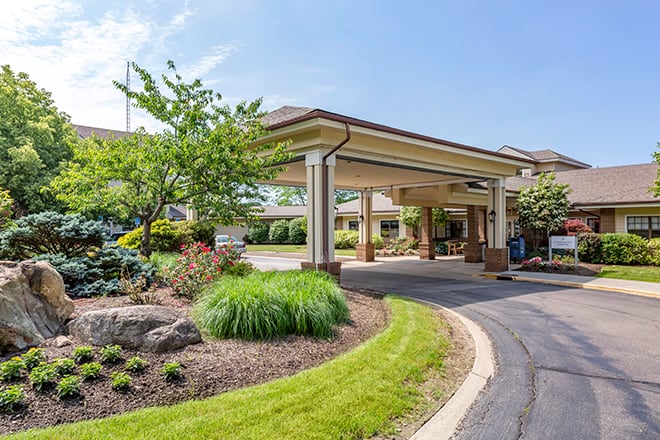
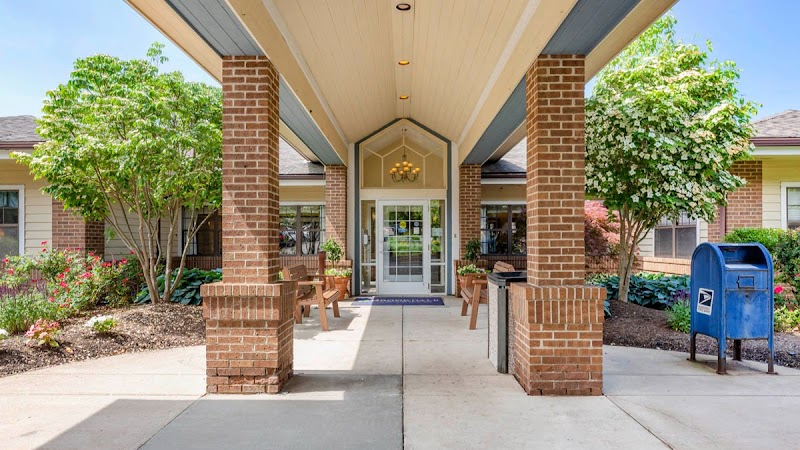
28450 WESTLAKE VILLAGE DRIVE, WESTLAKE, OH 44145 (440) 892-6200
For profit - Corporation 60 Beds BROOKDALE SENIOR LIVING Data: November 2025
Trust Grade
90/100
#35 of 913 in OH
Last Inspection: October 2024

Within standard 12-15 month inspection cycle. Federal law requires annual inspections.

Overview

Brookdale Westlake Village has earned an impressive Trust Grade of A, indicating that it is highly recommended and offers excellent care. With a state rank of #35 out of 913 facilities in Ohio, they are in the top half, and they rank #5 out of 92 in Cuyahoga County, meaning there are only four local options that are better. The facility is showing an improving trend, reducing issues from 2 in 2023 to just 1 in 2024. Staffing is a relative strength, with a rating of 4 out of 5 stars and a turnover rate of 46%, which is below the state average, indicating that staff are likely to remain long-term and build rapport with residents. However, there are some concerns to be aware of; for example, there was a failure to administer diabetes medications correctly for one resident, which could have serious health implications. Additionally, there was a delay in reporting an allegation of staff-to-resident physical abuse, which raises concerns about oversight. Finally, there was a past incident where adequate supervision was not provided to prevent a resident from leaving the facility, although it was corrected before the latest inspection. Overall, while Brookdale Westlake Village has many strengths, potential residents and their families should take note of these issues.

Trust Score
A
90/100
In Ohio
#35/913
Top 3%
Safety Record
Low Risk
No red flags
Inspections
Getting Better
2 → 1 violations
Staff Stability
⚠ Watch
46% turnover. Above average. Higher turnover means staff may not know residents' routines.
Penalties
✓ Good
No fines on record. Clean compliance history, better than most Ohio facilities.
Skilled Nurses
✓ Good
Each resident gets 65 minutes of Registered Nurse (RN) attention daily — more than 97% of Ohio nursing homes. RNs are the most trained staff who catch health problems before they become serious.
Violations
✓ Good
Only 5 deficiencies on record. Cleaner than most facilities. Minor issues only.
★★★★★
5.0
Overall Rating
★★★★☆
4.0
Staff Levels
★★★★★
5.0
Care Quality
★★★★★
5.0
Inspection Score
Stable
2023: 2 issues
2024: 1 issues

The Good

  • 4-Star Staffing Rating · Above-average nurse staffing levels
  • 5-Star Quality Measures · Strong clinical quality outcomes
  • Full Sprinkler Coverage · Fire safety systems throughout facility
  • No fines on record

Facility shows strength in staffing levels, quality measures, fire safety.

The Bad

Staff Turnover: 46%

Near Ohio avg (46%)

Higher turnover may affect care consistency

Chain: BROOKDALE SENIOR LIVING

Part of a multi-facility chain

Ask about local staffing decisions and management

The Ugly 5 deficiencies on record

Oct 2024 1 deficiency
CONCERN (D) 📢 Someone Reported This

A family member, employee, or ombudsman was alarmed enough to file a formal complaint

Potential for Harm - no one hurt, but risky conditions existed

Deficiency F0760 (Tag F0760)

Could have caused harm · This affected 1 resident

Based on record review and interview, the facility failed to ensure medications to treat diabetes were administered as ordered by the physician. This affected one (#35) of one resident reviewed for me...

Read full inspector narrative →
Based on record review and interview, the facility failed to ensure medications to treat diabetes were administered as ordered by the physician. This affected one (#35) of one resident reviewed for medication errors. The facility census was 58. Findings include: Review of the medical record for Resident #35 revealed an admission date of 09/05/24 with diagnoses including diabetes mellitus. Review of the physician's orders for Resident #35 revealed she had an order for Novolog FlexPen 100 unit/milliliter, inject 10 units with meals for diabetes mellitus dated 09/05/24 and Insulin Detemir 100 units/milliliter, inject 55 units at bedtime for diabetes mellitus dated 09/06/24. Review of the nursing progress note dated 09/20/24 at 11:30 P.M. revealed Resident #35 was sent to the hospital. On 09/21/24 at 1:39 A.M. Resident #35 was administered her bedtime insulin and she had asked how many units of insulin she was being given. The nurse stated 55 units and administered the insulin. Resident #35 stated she gave her the wrong insulin after it had already been administered. The nurse checked the cart and realized she was out of her long-acting insulin (Insulin Detemir). Her blood sugar was obtained, and it was 125 (normal blood sugar range is 60-100). The physician was updated and completed a virtual visit with the resident who requested to be sent to the hospital for observation. On 09/21/24 at 6:00 A.M., Resident #35 returned to the facility with no new orders from the hospital. Review of the witness interview/statement form dated 09/21/24 revealed Licensed Practical Nurse (LPN) #397 went to administer Resident #35 her bedtime insulin at 9:20 P.M. Resident #35 asked her how many units of insulin she was being administered and LPN #397 stated it was 55 units, she administered the insulin and then the resident started screaming that she had given her too much insulin. LPN #397 stated she went to the cart and noticed the resident had been out of her nighttime insulin (Insulin Detemir). LPN #397 then took her blood sugar which was 125 and updated the physician. The statement said a virtual visit with the physician was held and the resident requested to be sent to the hospital. Interview on 09/30/24 at 3:47 P.M. with Resident #35 revealed LPN #397 had administered her the wrong insulin and dose on 09/20/24. She stated she went to the emergency room so that they could monitor her blood sugar. Interview on 10/02/24 at 10:39 A.M. with LPN #305 verified the medication error on 09/20/24 for Resident #35. She stated LPN #397 was an agency nurse who gave the wrong insulin to Resident #35. She stated she was supposed to get long-acting insulin (Detemir Insulin) and instead the nurse administered short-acting insulin (Novolog). LPN #305 stated the facility placed a do not return to the facility on agency nurse LPN #397. LPN #305 was unable to provide LPN #397's contact information. Review of the facility policy titled, General Dose Preparation and Medication Administration, dated 12/01/07, revealed staff should verify each time prior to a medication being administered that it was the correct medication and correct dose. This deficiency represents non-compliance investigated under Complaint Number OH00157849.
Oct 2023 2 deficiencies
CONCERN (D) 📢 Someone Reported This

A family member, employee, or ombudsman was alarmed enough to file a formal complaint

Potential for Harm - no one hurt, but risky conditions existed

Report Alleged Abuse (Tag F0609)

Could have caused harm · This affected 1 resident

**NOTE- TERMS IN BRACKETS HAVE BEEN EDITED TO PROTECT CONFIDENTIALITY** Based on medical record review, facility investigative document review, staff interview, and facility policy review, the facilit...

Read full inspector narrative →
**NOTE- TERMS IN BRACKETS HAVE BEEN EDITED TO PROTECT CONFIDENTIALITY** Based on medical record review, facility investigative document review, staff interview, and facility policy review, the facility failed to report an allegation of staff-to-resident physical abuse in a timely manner to the state agency. This affected one resident (#38) of three residents reviewed for abuse. The facility census was 60. Findings include: Resident #38 was admitted to the facility on [DATE] with diagnoses including Alzheimer's disease, encounter for palliative care, hypertension, anemia, anxiety disorder, insomnia, cellulitis of lower left limb, bipolar disorder, history of falling, and hypokalemia. Review of the Minimum Data Set (MDS) assessment dated [DATE] revealed Resident #38 had a severe cognitive impairment. Review of Resident #38's medical records revealed no allegations or support for an allegation of physical abuse. Review of facility investigation regarding Self-Reported Incident (SRI) number 239692, dated 09/29/23, revealed an allegation of physical abuse made by Dietary Staff #106, against State Tested Nursing Aide (STNA) #107 towards Resident #38. The facility completed a thorough investigation and determined there was no support for this allegation; however, it was also determined during the investigation that Dietary Staff #106 saw the alleged incident on 09/05/23 and did not report it until 09/29/23. Interview with Administrator on 10/06/23 at 2:25 P.M. confirmed the report of physical abuse was not made until 09/29/23, when it should have been reported on 09/05/23. He stated when he interviewed Dietary Staff #106 as to why she didn't report it on 09/05/23, she didn't have an adequate reason. Review of facility Abuse, Neglect, and Exploitation policy, dated October 2022, revealed the definition of abuse was the willful infliction of injury, unreasonable confinement, intimidation, or punishment with resulting physical harm, pain, or mental anguish. Alleged violations involving abuse should be externally reported (state department of health) as soon as practical, but no later than two hours after the allegation is made if the events that cause the allegation involve abuse. This deficiency was an incidental finding related to Master Complaint Number OH00146912.
CONCERN (D) 📢 Someone Reported This

A family member, employee, or ombudsman was alarmed enough to file a formal complaint

Potential for Harm - no one hurt, but risky conditions existed

Accident Prevention (Tag F0689)

Could have caused harm · This affected 1 resident

**NOTE- TERMS IN BRACKETS HAVE BEEN EDITED TO PROTECT CONFIDENTIALITY** THIS IS AN INCIDENCE OF PAST NON-COMPLIANCE THAT WAS SUBSEQUENTLY CORRECTED PRIOR TO THIS SURVEY. Based on medical record revie...

Read full inspector narrative →
**NOTE- TERMS IN BRACKETS HAVE BEEN EDITED TO PROTECT CONFIDENTIALITY** THIS IS AN INCIDENCE OF PAST NON-COMPLIANCE THAT WAS SUBSEQUENTLY CORRECTED PRIOR TO THIS SURVEY. Based on medical record review, staff interview, facility investigation review, and facility policy review, the facility failed to provide adequate supervision and equipment to ensure all residents remained inside the facility as required. This affected one resident (#61) of three residents reviewed for possible elopement. The census was 60. Findings Include: Resident #61 was admitted to the facility on [DATE] with diagnoses including urinary tract infection, muscle weakness, difficulty walking, lack of coordination, mild cognitive impairment, metabolic encephalopathy, mild cognitive impairment, chronic kidney disease (stage III), atrial fibrillation, atherosclerotic heart disease, and dementia. Review of the Minimum Data Set (MDS) assessment dated [DATE] revealed Resident #61 had a severe cognitive impairment. Review of Resident #61 elopement assessment, dated 09/08/23, revealed he scored a zero on the safety assessment, but the facility still deemed him to be an elopement risk based on his cognitive abilities and wandering tendencies. So, at that time, a wanderguard (a bracelet worn by a resident to prevent elopement) was placed on him. Another elopement risk assessment was completed on 09/11/23, which indicated he was a score of two and a risk for elopement. Review of facility Self-Reported Incident (SRI) number 239106, dated 09/12/23, revealed Resident #61's wanderguard was not on his body; it was noticed by Registered Nurse (RN) #101. She did not report that he did not have a wanderguard on to anyone, but the facility staff maintained visual supervision on him. Between 11:15 A.M. and 11:30 A.M., RN #101 indicated to nursing management that she could not find Resident #61. Elopement and missing individual protocol were immediately implemented, which included looking for him off property. He was found approximately a five-minute walk from the facility on the sidewalk; he had left the facility campus. He was returned to the facility with no injuries or health declines, and a wanderguard was placed back on him. Interview with the Administrator on 10/06/23 at 10:40 A.M. and 1:42 P.M. confirmed Resident #61 left the facility campus and was not being supervised as he should. He found out during the investigation that RN #101 knew his wanderguard was not attached to him, she had been attempting to find the nursing supervisor to get another one, and he left the facility prior to her being able to get another one. Interview with RN #101 on 10/06/23 at 11:34 A.M. confirmed she was checking for Resident #61's wanderguard in the morning of 09/12/23 and could not find it. She ensured he was in a safe spot prior to going to look for the nursing supervisor, to get a new wanderguard. She confirmed she did not inform anyone else in the facility that his wanderguard was not on. She attempted multiple times to find the nursing supervisor without success. Each time she would go back to check on Resident #61, and she could not find him the last time. They checked for him around the whole facility and finally found him on the sidewalk near the road. He had no injuries or health declines. Review of facility Missing Resident policy, dated September 2023, revealed a missing resident requires immediate associate attention. To assist with the prompt location of a resident, the following procedures should be followed until the resident is found. The supervisor should verify whether or not the resident has signed out. Also, they need to obtain the last time the resident was seen, clothing they were wearing, cognitive and emotional status, height, weight, hair color, and adaptive equipment used, and any distinctive traits of the resident. The staff are to conduct a thorough interior search of the community, notify security personnel, conduct a thorough exterior search of the community, and contact the administrator and director of clinical services. Local law enforcement will also be notified if needed. When the resident is located, the facility will review them for injury or change in condition, complete and incident report, notify the health care provider, and notify the resident's legal representative if necessary. The incident was deemed to be past non-compliance on 09/13/23 due to the following items provided by the facility: • 09/12/23, Resident #61 was fully assessed by facility nursing and deemed to be in good health; there were no injuries or health declines noted. A new wanderguard was placed on his body. • 09/12/23, Director of Nursing (DON) provided education to all nursing staff, including State Tested Nursing Aides (STNA) about the facility's elopement policy and the use of wanderguards for residents. RN #101 was also re-educated and counseled about the importance of communicating when a resident does not have a wanderguard on, and they are ordered to have one. • 09/12/23, facility maintenance staff tested all wanderguard doors and devices; all were working appropriately. • 09/12/23, facility nursing staff reviewed all resident medical records and assessments, deemed there were no other residents who used nor needed a wanderguard at that time. • 09/12/23, extra wanderguards were moved from the storage room to the floor nurse medication carts for easier access. • Starting 09/12/23, the facility-initiated elopement and missing individual drills once per shift, each day for one week (ending on 09/18/23.) Then, starting 09/19/23, the facility initiated the same drill twice a week, for two months. This was being completed as planned based on review of documents on 10/06/23. This deficiency represents non-compliance investigated under Complaint Number OH00146456.
Oct 2022 1 deficiency
CONCERN (D)

Potential for Harm - no one hurt, but risky conditions existed

Deficiency F0679 (Tag F0679)

Could have caused harm · This affected 1 resident

Based on observation, record review and staff interview, the facility failed to provide evening activities at reasonable times for the residents. The facility census was 26. Findings include: Observat...

Read full inspector narrative →
Based on observation, record review and staff interview, the facility failed to provide evening activities at reasonable times for the residents. The facility census was 26. Findings include: Observation on 10/18/22 at 5:00 P.M. revealed residents were in the dining room eating dinner. Interview on 10/18/22 at 5:10 P.M. with Activity Assistant #303 stated that she does one on one activities with the residents from 5:00 P.M. through 7:00 P.M. Interview on 10/18/22 at 5:15 P.M. Registered Nurse (RN) #215 stated that residents eat dinner in the dining room every night and dinner starts at 5:00 P.M. Observation on 10/18/22 at 5:35 P.M. revealed there were no activities being held on second floor. Observation and interview on 10/18/22 at 5:38 P.M. State Tested Nurse Aide (STNA) #200 revealed that she was assisting the residents with dinner. STNA #200 stated that residents take their time eating and finish their meal around 6:00 P.M. Observation and interview on 10/18/22 at 5:42 P.M. with STNA #201 revealed she was delivering trays to the residents eating in the room. STNA #201 stated that they pick up trays from room after 6:10 P.M. after cleaning the dining room and we don't rush residents eating. Observations and interviews on 10/18/22 at 5:45 P.M. with Dietary Manager #300 revealed that dinner was being served to residents from pantry and the residents are served until 6:00 P.M. Review of the activities calendar for August 2022, September 2022 and October 2022 revealed evening activities were scheduled at 5:00 P.M. on Tuesdays and Thursdays. Review of the Scheduled mealtimes revealed dinner was served at 5:00 P.M. Interview on 10/19/22 at 11:38 AM with Director of Resident Programs #301 revealed that she has overseen the skilled nursing facility (SNF) since the end of March. She verified and agreed that activities scheduled at 5:00 were not a good time because of dinner.
Nov 2019 1 deficiency
CONCERN (D)

Potential for Harm - no one hurt, but risky conditions existed

Infection Control (Tag F0880)

Could have caused harm · This affected 1 resident

**NOTE- TERMS IN BRACKETS HAVE BEEN EDITED TO PROTECT CONFIDENTIALITY** Based on observation, interview, and record review the facility failed to ensure appropriate hand washing was implemented during...

Read full inspector narrative →
**NOTE- TERMS IN BRACKETS HAVE BEEN EDITED TO PROTECT CONFIDENTIALITY** Based on observation, interview, and record review the facility failed to ensure appropriate hand washing was implemented during dining service and failed to appropriately handle food. This affected two residents (Residents #2 and #5) observed in the first floor dining room and had the potential to affect one of two residents (Residents #8 and #28) observed in the second floor dining room. The facility census was 44. Findings include: 1. Record review of Resident #2 revealed an admission date of 05/28/18 and diagnoses included muscle weakness, osteoporosis and dysphagia (swallowing difficulties). The quarterly Minimum Data Set (MDS) assessment dated [DATE] revealed Resident #2 had impaired cognition and required extensive assistance of one staff with eating. The November 2019 physician orders revealed an active order with a start date of 02/21/19 for staff to assist/feed at all meals. Resident #2's care plan initiated on 05/09/19 for Activities of Daily Living (ADL) intervention included this order. Record review of Resident #5 revealed an admission date of 08/06/19 and diagnoses included muscle weakness, cerebral infarction (stroke), and dysphagia following cerebral infarction. The quarterly MDS assessment dated [DATE] revealed Resident #5 was alert and oriented and had intact cognition. Resident #5 required extensive assistance of one staff with eating. The care plan initiated on 08/06/19 for Activities of Daily Living (ADL) intervention included an intervention for staff to assist with meals and encourage Resident #5 to self feed as much as possible. On 11/13/19 at 12:12 P.M., Resident #2 was seated at the table with Resident #5 and State Tested Nurse Aide (STNA) #240 was seated between them. Resident #2 was observed to sneeze into his hand. STNA #240 grabbed a tissue from a box on the table and assisted Resident #2 by cleaning his hand and shirt with the tissue. STNA #240 stayed seated and held the dirty tissue in her hand. Then STNA #240 was observed to pick up Resident #5's cup and plate with her contaminated hand and move it closer to the resident. Interview on 11/13/19 at 12:14 P.M. with STNA #240 verified the above observations and stated she should have thrown away the tissue and washed her hands. Review of the facility policy titled, Hand washing/Hand Hygiene, revised 09/2017, revealed use of an alcohol-based hand rub containing at least 62% alcohol or alternatively, soap and water for the following situations, which included after contact with blood or bodily fluids and before and after assisting a resident with meals. 2. Observation on 11/13/19 at 12:10 P.M. in the second-floor dining hall revealed, Dietary Aide, (DA) #277 was preparing an egg salad sandwich on a high divide adaptive plate. While cutting the sandwich in sections, DA #277 held the sandwich with her non-gloved left hand, while cutting the sandwich with her gloved right hand. This had the potential to affect Resident #8 or #28, both of which would have been served an egg salad sandwich using a high side adaptive divided plate. Interview with (DA) #277 on 11/13/19 at 2:10 P.M. confirmed that she was not wearing a glove on her left hand when holding the sandwich to cut in sections. (DA) #277 stated she was knowledgeable of infection control procedures during the interview.
Understanding Severity Codes (click to expand)
Life-Threatening (Immediate Jeopardy)
J - Isolated K - Pattern L - Widespread
Actual Harm
G - Isolated H - Pattern I - Widespread
Potential for Harm
D - Isolated E - Pattern F - Widespread
No Harm (Minor)
A - Isolated B - Pattern C - Widespread

Questions to Ask on Your Visit

  • "Can I speak with families of current residents?"
  • "What's your RN coverage like on weekends and overnight?"

Our Honest Assessment

Strengths
  • • Grade A (90/100). Above average facility, better than most options in Ohio.
  • • No major safety red flags. No abuse findings, life-threatening violations, or SFF status.
  • • No fines on record. Clean compliance history, better than most Ohio facilities.
  • • Only 5 deficiencies on record. Cleaner than most facilities. Minor issues only.
Concerns
  • • No significant concerns identified. This facility shows no red flags across CMS ratings, staff turnover, or federal penalties.
Bottom line: Generally positive indicators. Standard due diligence and a personal visit recommended.

About This Facility

What is Brookdale Westlake Village's CMS Rating?

CMS assigns BROOKDALE WESTLAKE VILLAGE an overall rating of 5 out of 5 stars, which is considered much above average nationally. Within Ohio, this rating places the facility higher than 99% of the state's 100 nursing homes. This rating reflects solid performance across the metrics CMS uses to evaluate nursing home quality.

How is Brookdale Westlake Village Staffed?

CMS rates BROOKDALE WESTLAKE VILLAGE's staffing level at 4 out of 5 stars, which is above average compared to other nursing homes. Staff turnover is 46%, compared to the Ohio average of 46%. This relatively stable workforce can support continuity of care.

What Have Inspectors Found at Brookdale Westlake Village?

State health inspectors documented 5 deficiencies at BROOKDALE WESTLAKE VILLAGE during 2019 to 2024. These included: 5 with potential for harm.
Who Owns and Operates Brookdale Westlake Village?

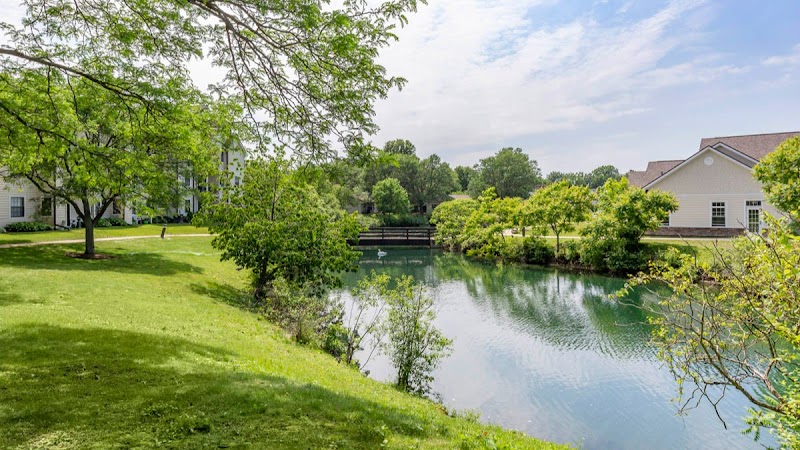
BROOKDALE WESTLAKE VILLAGE is owned by a for-profit company. For-profit facilities operate as businesses with obligations to shareholders or private owners. The facility is operated by BROOKDALE SENIOR LIVING, a chain that manages multiple nursing homes. With 60 certified beds and approximately 53 residents (about 88% occupancy), it is a smaller facility located in WESTLAKE, Ohio.

How Does Brookdale Westlake Village Compare to Other Ohio Nursing Homes?

Compared to the 100 nursing homes in Ohio, BROOKDALE WESTLAKE VILLAGE's overall rating (5 stars) is above the state average of 3.2, staff turnover (46%) is near the state average of 46%, and health inspection rating (5 stars) is much above the national benchmark.

What Should Families Ask When Visiting Brookdale Westlake Village?

Based on this facility's data, families visiting should ask: "Can I visit during a mealtime to observe dining assistance and food quality?" "How do you handle medical emergencies, and what is your hospital transfer rate?" "Can I speak with family members of current residents about their experience?"

Is Brookdale Westlake Village Safe?

Based on CMS inspection data, BROOKDALE WESTLAKE VILLAGE has a clean safety record: no substantiated abuse findings (meaning no confirmed cases of resident harm), no Immediate Jeopardy citations (the most serious violation level indicating risk of serious injury or death), and is not on the Special Focus Facility watch list (a federal program monitoring the lowest-performing 1% of nursing homes). The facility has a 5-star overall rating and ranks #1 of 100 nursing homes in Ohio. While no facility is perfect, families should still ask about staff-to-resident ratios and recent inspection results during their visit.

Do Nurses at Brookdale Westlake Village Stick Around?

BROOKDALE WESTLAKE VILLAGE has a staff turnover rate of 46%, which is about average for Ohio nursing homes (state average: 46%). Moderate turnover is common in nursing homes, but families should still ask about staff tenure and how the facility maintains care continuity when employees leave.

Was Brookdale Westlake Village Ever Fined?

BROOKDALE WESTLAKE VILLAGE has no federal fines on record. CMS issues fines when nursing homes fail to meet care standards or don't correct problems found during inspections. The absence of fines suggests the facility has either maintained compliance or corrected any issues before penalties were assessed. This is a positive indicator, though families should still review recent inspection reports for the full picture.

Is Brookdale Westlake Village on Any Federal Watch List?

BROOKDALE WESTLAKE VILLAGE is not on any federal watch list. The most significant is the Special Focus Facility (SFF) program, which identifies the bottom 1% of nursing homes nationally based on persistent, serious quality problems. Not being on this list means the facility has avoided the pattern of deficiencies that triggers enhanced federal oversight. This is a positive indicator, though families should still review the facility's inspection history directly.