MAJESTIC CARE OF WHITEHALL
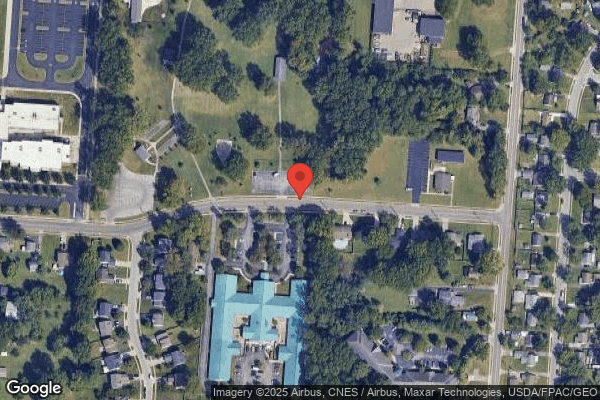
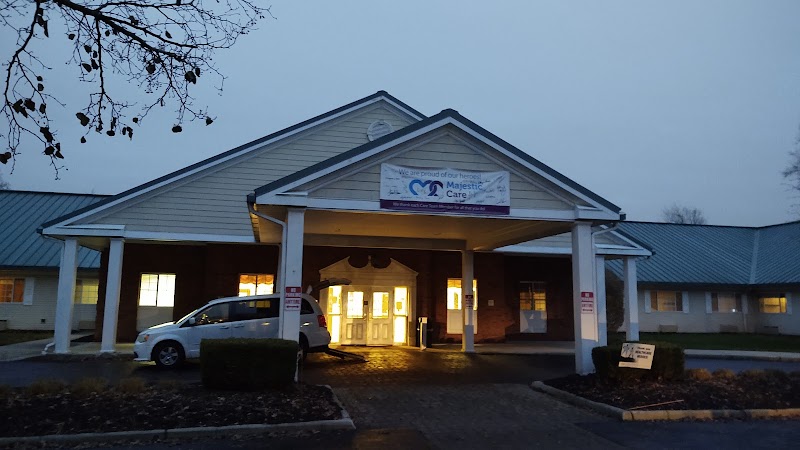
4805 LANGLEY AVENUE, WHITEHALL, OH 43213 (614) 501-8271
For profit - Individual 150 Beds MAJESTIC CARE Data: November 2025
Trust Grade
45/100
#726 of 913 in OH
Last Inspection: June 2024

Within standard 12-15 month inspection cycle. Federal law requires annual inspections.

Overview

Majestic Care of Whitehall has received a Trust Grade of D, indicating below-average performance and some concerns regarding resident care. It ranks #726 out of 913 nursing homes in Ohio, placing it in the bottom half of facilities statewide, and #35 of 56 in Franklin County, meaning only a few local options are better. While the facility is improving, reducing issues from 37 in 2024 to just 1 in 2025, it still faces notable challenges. Staffing is relatively stable with a turnover rate of 32%, which is better than the state average, but the overall staffing rating is only 2 out of 5 stars. There have been no fines reported, which is a positive sign, but incidents of concern have been noted. For example, one resident experienced verbal abuse from another resident, leading to significant distress, and the facility failed to maintain adequate protocols to prevent the spread of Legionella, which could impact all residents. Additionally, there was a lapse in administering and recording TB tests for newly hired staff. While there are strengths in staffing stability and quality measures, families should weigh these against the facility's overall performance and reported issues.

Trust Score
D
45/100
In Ohio
#726/913
Bottom 21%
Safety Record
Moderate
Needs review
Inspections
Getting Better
37 → 1 violations
Staff Stability
○ Average
32% turnover. Near Ohio's 48% average. Typical for the industry.
Penalties
✓ Good
No fines on record. Clean compliance history, better than most Ohio facilities.
Skilled Nurses
⚠ Watch
Each resident gets only 29 minutes of Registered Nurse (RN) attention daily — below average for Ohio. Fewer RN minutes means fewer trained eyes watching for problems.
Violations
⚠ Watch
85 deficiencies on record. Higher than average. Multiple issues found across inspections.
★★☆☆☆
2.0
Overall Rating
★★☆☆☆
2.0
Staff Levels
★★★★★
5.0
Care Quality
★☆☆☆☆
1.0
Inspection Score
Stable
2024: 37 issues
2025: 1 issues

The Good

  • 5-Star Quality Measures · Strong clinical quality outcomes
  • Full Sprinkler Coverage · Fire safety systems throughout facility
  • No fines on record
  • Staff turnover below average (32%)

    16 points below Ohio average of 48%

Facility shows strength in quality measures, fire safety.

The Bad

2-Star Overall Rating

Below Ohio average (3.2)

Below average - review inspection findings carefully

Staff Turnover: 32%

14pts below Ohio avg (46%)

Typical for the industry

Chain: MAJESTIC CARE

Part of a multi-facility chain

Ask about local staffing decisions and management

The Ugly 85 deficiencies on record

1 actual harm
Jan 2025 1 deficiency
CONCERN (D) 📢 Someone Reported This

A family member, employee, or ombudsman was alarmed enough to file a formal complaint

Potential for Harm - no one hurt, but risky conditions existed

Quality of Care (Tag F0684)

Could have caused harm · This affected 1 resident

**NOTE- TERMS IN BRACKETS HAVE BEEN EDITED TO PROTECT CONFIDENTIALITY** Based on medical record review and interview, the facility failed to ensure physician appointments were arranged as ordered. Thi...

Read full inspector narrative →
**NOTE- TERMS IN BRACKETS HAVE BEEN EDITED TO PROTECT CONFIDENTIALITY** Based on medical record review and interview, the facility failed to ensure physician appointments were arranged as ordered. This affected one (Resident #16) of four sampled residents. The census was 118. Findings include: Review of Resident #16's medical record revealed he was admitted to the facility on [DATE]. Diagnoses included Chronic Obstructive Pulmonary Disease, morbid obesity, cirrhosis of the liver, congestive heart failure, anxiety and hypertension. Review of the Annual minimum data set assessment dated [DATE] revealed his cognition was intact. He is continent of his bowel and bladder. Uses a wheelchair for mobility. Requires supervision or touching assistance with oral hygiene, toileting, bathing, dressing and personal hygiene. Review of the physicians orders revealed an order on 11/27/24 for a consult with Central Ohio Urology regarding a staghorn calculus (type of kidney stone with branches that can block urine flow and cause kidney failure) evaluation and treatment and consult Ohio Gastroenterology regarding gastric/esophageal thickening. Further review of the progress notes dated 12/17/24 revealed the facility contacted Gastroenterology and urology and they did not accept Resident #16's payment source (two different payment sources documented). There was no other documentation in attempting to get Resident #16 an appoint with Urology or Gastroenterology. Interview with the Director of Nursing on 01/02/25 at 3:50 P.M. verified they had not followed up and made the appointments for urology and Gastroenterology for Resident #16 since 12/17/24. This was an incidental finding discovered during Master Complaint Number OH00161075, Complaint Number OH00160843, OH00160779 and OH00160525.
Nov 2024 5 deficiencies
CONCERN (D) 📢 Someone Reported This

A family member, employee, or ombudsman was alarmed enough to file a formal complaint

Potential for Harm - no one hurt, but risky conditions existed

Resident Rights (Tag F0550)

Could have caused harm · This affected 1 resident

**NOTE- TERMS IN BRACKETS HAVE BEEN EDITED TO PROTECT CONFIDENTIALITY** Based on observation, record review, staff interview, and policy review, the facility failed to ensure Resident #59 was treated ...

Read full inspector narrative →
**NOTE- TERMS IN BRACKETS HAVE BEEN EDITED TO PROTECT CONFIDENTIALITY** Based on observation, record review, staff interview, and policy review, the facility failed to ensure Resident #59 was treated with respect and dignity. This affected one resident (#59) of nine sampled residents. The facility census was 118. Findings include: Review of the medical record for Resident #59 revealed an initial admission date of 10/28/22 with the diagnoses including but not limited to early onset Alzheimer's disease, chronic obstructive pulmonary disease, severe dementia with mood disturbance, psychotic disorder with delusions, major depressive disorder, hypertension, hyperlipidemia, osteoarthritis, mood disorder, sleep disorders, atrial fibrillation, anxiety disorder, insomnia, wandering in diseases, hypothyroidism, constipation, sleep apnea and drug induced secondary Parkinsonism. Review of the plan of care dated 10/28/22 revealed the resident needed assistance with activities of daily living due to impaired mobility, weakness, debility, secondary Parkinsonism, dementia, osteoarthritis, anxiety, depression and psychotic mood disorder. Interventions included resident required staff assistance with dressing. Review of the resident's comprehensive Minimum Data Set (MDS) assessment dated [DATE] revealed the resident had a severe cognitive deficit. Review of the resident's monthly physician orders for November 2024 identified orders dated 10/28/22 for non-skid footwear. On 11/04/24 at 10:48 A.M., observation of Resident #59 revealed he was wandering behind the memory care unit nurse's station with one yellow non-skid sock on the right foot and a white low cut sock on the left foot. Licensed Practical Nurse (LPN) #235 was notified the resident's socks were not matching and of the same type. LPN #235 took Resident #59 to his room to change his socks. On 11/04/24 at 10:50 A.M., observation of Resident #59 revealed the resident had a yellow non-skid sock on his right foot and a navy blue non-skid sock on his left foot. LPN #235 verified the resident was not being treated in a dignified manner by having mismatched non-skid socks on. Review of the facility policy titled, Dignity, dated 01/02/24 revealed it is the practice of the facility to protect and promote resident rights and treat each resident with respect and dignity as well as care for each resident in a manner and in an environment that maintains or enhances each resident's quality of life by recognizing each resident's individuality. This deficiency represents non-compliance investigated under Complaint Number OH00159215.
CONCERN (D) 📢 Someone Reported This

A family member, employee, or ombudsman was alarmed enough to file a formal complaint

Potential for Harm - no one hurt, but risky conditions existed

Notification of Changes (Tag F0580)

Could have caused harm · This affected 1 resident

**NOTE- TERMS IN BRACKETS HAVE BEEN EDITED TO PROTECT CONFIDENTIALITY** Based on medical record review, staff interview, and policy review, the facility failed to ensure Resident #133's physician was ...

Read full inspector narrative →
**NOTE- TERMS IN BRACKETS HAVE BEEN EDITED TO PROTECT CONFIDENTIALITY** Based on medical record review, staff interview, and policy review, the facility failed to ensure Resident #133's physician was notified of a blood pressure outside of the physician ordered parameters. This affected one (Resident #133) of nine sampled residents. The facility census was 118. Findings include: Review of the medical record for Resident #133 revealed an initial admission date of 05/31/24 with the latest readmission of 08/21/24 with the diagnoses including but not limited to end stage renal disease (ESRD), puncture wound with foreign body of thorax, osteonecrosis of multiple sites, chronic obstructive pulmonary disease (COPD), stenosis of vascular prosthetic devices, implants and grafts, dependence on hemodialysis, renal osteodystrophy, chronic kidney disease (CKD), endocarditis, atrial fibrillation, seasonal allergic rhinitis, bipolar disorder, hypertension, hyperlipidemia, constipation, anemia and nicotine dependence. Review of the plan of care dated 06/07/24 revealed the resident was at risk for impaired cardiac output related to diagnoses anemia, hyperlipidemia, hypertension and hyperlipemia. Interventions included notify physician or Certified Nurse Practitioner (CNP) of blood pressures greater than 150/90, complete progress note, vital signs as ordered and indicated, notify physician of abnormalities, observe for signs/symptoms of cardiac dysfunction, administer medication as ordered, diet as ordered and follow up with cardiologist as needed/indicated. Review of the resident's quarterly Minimum Data Set (MDS) assessment dated [DATE] revealed the resident had no cognitive deficit. Review of the resident's monthly physician orders for November 2024 identified orders dated 10/03/24 to notify physician/Certified Nurse Practitioner (CNP) of blood pressure greater than 150/90, and complete a follow up progress note. Review of the resident's blood pressure revealed on 10/27/24 the resident's blood pressure was 161/93, on 10/28/24 the resident's blood pressure was 154/84, on 10/29/24 the resident's blood pressure was 153/92 and on 11/03/24 the resident's blood pressure was 159/87. Further review revealed no notification to the physician of the blood pressures outside of the physician ordered parameters or a follow up progress note. On 11/05/24 at 2:10 P.M., interview with the Director of Nursing (DON) verified the resident's physician was not notified of the blood pressures outside of the physician ordered parameters and a follow up progress note was not documented in the resident's medical record. It is the policy of this facility to promptly identify, respond to, and report changes in resident condition to the resident's physician/Certified Nurse Practitioner (CNP)/Physician Assistant (PA) and resident/resident representative. A significant change is a major decline or improvement of the resident's status. The nurse would notify the physician/NP/PA and the resident/resident representative when abnormal labs, weights, or vital signs.
CONCERN (D) 📢 Someone Reported This

A family member, employee, or ombudsman was alarmed enough to file a formal complaint

Potential for Harm - no one hurt, but risky conditions existed

Quality of Care (Tag F0684)

Could have caused harm · This affected 1 resident

**NOTE- TERMS IN BRACKETS HAVE BEEN EDITED TO PROTECT CONFIDENTIALITY** Based on medical record review and staff interview, the facility failed to ensure sutures were removed as physician ordered for ...

Read full inspector narrative →
**NOTE- TERMS IN BRACKETS HAVE BEEN EDITED TO PROTECT CONFIDENTIALITY** Based on medical record review and staff interview, the facility failed to ensure sutures were removed as physician ordered for Resident #133. This affected one resident (#133) of nine sampled residents. The facility census was 118. Findings Include: Review of the medical record for Resident #133 revealed an initial admission date of 05/31/24 with the latest readmission of 08/21/24 with the diagnoses including but not limited to end stage renal disease (ESRD), puncture wound with foreign body of thorax, osteonecrosis of multiple sites, chronic obstructive pulmonary disease (COPD), stenosis of vascular prosthetic devices, implants and grafts, dependence on hemodialysis, renal osteodystrophy, chronic kidney disease (CKD), endocarditis, atrial fibrillation, seasonal allergic rhinitis, bipolar disorder, hypertension, hyperlipidemia, constipation, anemia and nicotine dependence. Review of the resident's quarterly Minimum Data Set (MDS) assessment dated [DATE] revealed the resident had no cognitive deficit. Review of the resident's plan of care dated 10/25/24 revealed the resident has a laceration above his left eye with sutures in place and the sutures were to be removed in five to seven days. Interventions included observe for increase in size of bruise or development of new bruising, observe for signs of pain, provide pain medication as needed, observe resident environment for potential to cause skin trauma, document abnormal findings and notify physician, keep area clean and dry, observe for symptoms of infections (redness, drainage, warmth, increased pain), and treatment as ordered. Review of the medical record revealed the resident's sutures were removed at day 10 instead of the physician ordered five to seven days. On 11/05/24 at 2:10 P.M., interview with the Director of Nursing (DON) verified the sutures were removed at day 10 instead of the physician ordered five to seven days.
CONCERN (D) 📢 Someone Reported This

A family member, employee, or ombudsman was alarmed enough to file a formal complaint

Potential for Harm - no one hurt, but risky conditions existed

Infection Control (Tag F0880)

Could have caused harm · This affected 1 resident

Based on observation, staff interview and facility policy review, the facility failed to maintain appropriate infection control practices during the administration of eye drops to prevent potential in...

Read full inspector narrative →
Based on observation, staff interview and facility policy review, the facility failed to maintain appropriate infection control practices during the administration of eye drops to prevent potential infection. This affected one resident (#70) of two residents observed for eye drop administration. The facility census was 118. Findings Include: On 11/04/24 at 9:33 A.M., observation of medication administration revealed Licensed Practical Nurse (LPN) #210 applied (donned) a pair of gloves at the medication administration cart, gathered Resident #70's medications which included a nasal spray and eye drops and entered the resident's room. The LPN assisted Resident #70 to take her oral medications. The LPN then used a tissue and wiped the tip of the Fluticasone 50 micrograms (mcg) nasal spray applicator. The LPN then administered two sprays of the Fluticasone 50 mcg in each nostril. The LPN using the same gloves administered one eye drop in each of the resident's eyes. LPN #210 verified the lack of infection control practices by not washing hands and changing gloves between the Fluticasone 50 mcg nasal spray administration and the artificial tears administration. Review of the facility policy titled, Hand Hygiene, dated 01/02/24 revealed all staff will perform proper hand hygiene procedures to prevent the spread of infection to other personnel, residents or visitors. This applies to all staff working in all locations of the facility.
CONCERN (E) 📢 Someone Reported This

A family member, employee, or ombudsman was alarmed enough to file a formal complaint

Potential for Harm - no one hurt, but risky conditions existed

Safe Environment (Tag F0921)

Could have caused harm · This affected multiple residents

Based on observation and staff interview, the facility failed to maintain a safe and functional environment when the transition strips (slim strips fitted at the base of doorways to bridge the gap bet...

Read full inspector narrative →
Based on observation and staff interview, the facility failed to maintain a safe and functional environment when the transition strips (slim strips fitted at the base of doorways to bridge the gap between different floor surfaces or levels) were not in place to level the resident room floor and the hallway floor. This had the potential to affect eight residents (#14, #35, #41, #64 #65, #70, #105, and #115) of 22 residents residing on the [NAME] hallway. The facility census was 118. Findings Include: On 11/04/24 at 9:27 A.M., observations of Resident #14, #35, #41, #64 #65, #70, #105, and #115 rooms revealed the transition strips were missing in the doorway causing an unleveled surface entering and exiting the resident rooms. On 11/06/24 at 12:05 P.M., interview with the Director of Nursing (DON) revealed the facility had removed carpet and replaced with different floor. The facility provided no additional information as to why the transition strips were not replaced.
Oct 2024 8 deficiencies
CONCERN (D) 📢 Someone Reported This

A family member, employee, or ombudsman was alarmed enough to file a formal complaint

Potential for Harm - no one hurt, but risky conditions existed

Safe Environment (Tag F0584)

Could have caused harm · This affected 1 resident

**NOTE- TERMS IN BRACKETS HAVE BEEN EDITED TO PROTECT CONFIDENTIALITY** Based on observation, resident interview, and staff interview, the facility failed to maintain a safe, clean and comfortable env...

Read full inspector narrative →
**NOTE- TERMS IN BRACKETS HAVE BEEN EDITED TO PROTECT CONFIDENTIALITY** Based on observation, resident interview, and staff interview, the facility failed to maintain a safe, clean and comfortable environment. This affected two rooms on the 400 unit (room [ROOM NUMBER] and 408). The census was 137. Findings include: 1. On 09/19/24 at 2:35 P.M. observation of room [ROOM NUMBER] revealed a night stand with a drawer missing and finish coming off of it, food debris on floor, the wall had patches of drywall showing and the privacy curtain had dark stains. On 09/23/24 at 8:57 A.M. and 12:00 P.M. observations of room [ROOM NUMBER] revealed a mat to the floor with dark stains, a night stand with a drawer missing and finish coming off of it, there was food debris on floor, the wall had patches of drywall showing and the privacy curtain had dark stains. On 09/25/24 at 3:55 P.M. observations of room [ROOM NUMBER] revealed a mat to the floor with dark stains, a night stand with a drawer missing and finish coming off of it, there was food debris on floor, wall with patches of drywall showing and the privacy curtain had dark stains. This was verified on 09/25/24 at 3:55 P.M. during interview with the Director of Nursing. 2. Observations on 09/17/24 at 11:55 A.M. revealed the sink in the bathroom in room [ROOM NUMBER] was clogged with standing, dirty water in the sink. Interview with the resident who resided in the room, revealed the sink gets clogged everyday. He stated the maintenance staff just unclogged it the day before and it just gets clogged again. Observations on 09/19/24 at 9:28 A.M. revealed the sink in the bathroom in room [ROOM NUMBER] was clogged with standing, dirty water up to the rim of the basin (ready to overflow). Interview with Maintenance Director #200 on 09/19/24 at 10:17 A.M. confirmed the sink in room [ROOM NUMBER] was clogged. He stated that a resident in room [ROOM NUMBER] puts food down the sink causing it to clog, although he did not know which resident (two residents residing in the room). He confirmed the sink had been clogged on previous occasions also. He stated he was not aware that the sink was clogged on 09/17/24 or 09/19/24, until the surveyor brought it to his attention. He stated he did not know if a work order had been put in for the clogged sink or not. Interview with Licensed Practical Nurse #168 (director of the memory care unit) on 09/19/24 at 10:30 A.M. confirmed the sink does get clogged frequently. She stated maintenance comes and unclogs the sink but then it just gets clogged again. She stated the residents in room [ROOM NUMBER] do not put food down the sink. She confirmed the residents would not be able to wash their hands with the sink basin completely full of dirty water. She stated she did not know why maintenance could not put something in the sink basin to strain/prevent particles from going down the sink if that is why they felt it was continually getting clogged. This deficiency represents non-compliance investigated under Master Complaint Number OH00157991 and Complaint Number OH00157451. This deficiency is evidence of continued non-compliance from the survey completed 06/18/24.
CONCERN (D) 📢 Someone Reported This

A family member, employee, or ombudsman was alarmed enough to file a formal complaint

Potential for Harm - no one hurt, but risky conditions existed

ADL Care (Tag F0677)

Could have caused harm · This affected 1 resident

**NOTE- TERMS IN BRACKETS HAVE BEEN EDITED TO PROTECT CONFIDENTIALITY** Based on observations, medical record review, and staff interview, the facility failed to ensure residents who were unable to ca...

Read full inspector narrative →
**NOTE- TERMS IN BRACKETS HAVE BEEN EDITED TO PROTECT CONFIDENTIALITY** Based on observations, medical record review, and staff interview, the facility failed to ensure residents who were unable to carry out activities of daily living received the necessary services to maintain good nutrition and personal hygiene. This affected three of five residents reviewed for personal hygiene (Residents #9, #24, and #30). The facility census was 137. Findings include: 1. Review of the medical record for Resident #24 revealed an admission date of 08/24/23 and diagnoses including cerebral infarction, diabetes, dysphagia, protein-calorie malnutrition, and malignant neoplasm of the prostate. The resident had physician's orders for a dysphagia advanced texture diet, nectar thickened liquids, and must have one to one supervision for all meals. Review of a Minimum Data Set assessment completed 08/06/24 revealed the resident had range of motion impairment on one side in upper and lower extremity, required substantial/maximal assistance with eating, and was dependent upon staff for personal hygiene and transfers. The plan of care dated 12/08/23 stated the resident exhibited signs of cognitive impairment due to cerebral vascular accident and brain surgery. It stated he had difficulty with communication and had unclear speech at times. It further stated he needed assistance with activities of daily living including dressing, eating, and hygiene. Observations on 09/17/24 at 11:43 A.M. revealed Resident #24 to be in bed with a hospital gown on. The gown had dried food on chest area (lunch not served yet). His fingernails were observed to be dirty with a dark substance under the nails. Observations on 09/17/24 at 12:03 P.M. revealed the unit nurse to deliver a lunch tray to Resident #24. The resident still had dried food on his gown and his fingernails were still dirty. The nurse set the lunch tray down and left the room. There was no other staff in the room. Observations on 09/17/24 at 12:12 P.M. revealed Resident #24 was in bed with his eyes closed and the lunch tray was untouched. No staff had went into the room since 12:03 P.M. Observations on 09/17/24 at 12:20 P.M. (17 minutes after the lunch tray was delivered to the room), revealed Resident #24 had not received any staff assistance with the meal. At that time, the Director of Nursing confirmed the lunch tray was untouched, Resident #24's fingernails were dirty, and he had dried food on his gown that was not from this meal. She stated he needed a new lunch tray and needed assistance with eating. 2. Review of the medical record for Resident #30 revealed an admission date of 08/30/24 and diagnoses including end stage renal disease and diabetes. The resident received hemodialysis three times weekly. Review of a Minimum Data Set assessment completed 09/05/24 revealed the resident had intact cognition and required substantial/maximal assistance with personal hygiene. Review of the plan of care revealed the resident needed assistance with activities of daily living related to debility, weakness, impaired mobility, end stage renal disease, thrombosis of right upper extremity, malaise, and osteoarthritis. The goal was to have care needs met daily. Interventions included staff assistance with personal hygiene. Observations on 09/12/24 at 9:45 A.M. revealed Resident #30 to be in bed. Her fingernails were dirty with a dark substance under the nails. Resident #30 stated, at that time, that she needed nail care. Observations on 09/12/24 at 12:40 P.M. revealed Resident #30 to be in bed. Her lunch tray was delivered to the room by staff. The resident was feeding her self. Her fingernails were noted to still be dirty with a dark substance under the nails. Interview with Licensed Practical Nurse #211 on 09/12/24 at 12:40 P.M. confirmed the resident's fingernails were dirty with a dark substance under the nails. She confirmed the substance looked like bowel movement under the nails. She stated she would not like to eat a meal with nails that looked like that. On 09/12/24 refusal of activities of daily living/nail care was added to the resident's plan of care. Observations on 09/17/24 at 12:24 P.M. revealed Resident #30's nails had been trimmed and cleaned. 3. Review of Resident #9's medical record revealed she was readmitted to the facility on [DATE]. Review of the admission minimum data set assessment (MDS) dated [DATE] revealed her cognition was intact. She was dependent on staff for toileting, shower/bathing and required partial to moderate assistance for personal hygiene. Is frequently incontinent of urine and always incontinent of bowel. Observation on 09/19/24 at 9:10 A.M. revealed the resident's nails were long with dried brown substance under her nails. State Tested Nurse Aide (STNA) #150 revealed she won't let us cut them. The Surveyor asked about cleaning them and staff revealed she refuses. Review of the plan of care dated 07/01/24 revealed the SR needed assistance with activities of daily living, i.e. personal hygiene, bathing, showering, bed mobility, and dressing. There was no evidence the resident was non-compliant with care. This deficiency represents non-compliance investigated under Complaint Number OH00157451. This deficiency is evidence of continued non-compliance from the survey completed 06/18/24.
CONCERN (D) 📢 Someone Reported This

A family member, employee, or ombudsman was alarmed enough to file a formal complaint

Potential for Harm - no one hurt, but risky conditions existed

Deficiency F0685 (Tag F0685)

Could have caused harm · This affected 1 resident

Based on resident interview, record review, and staff interview, the facility failed to ensure a resident was provided with proper treatment and assistive devices to maintain vision. This affected one...

Read full inspector narrative →
Based on resident interview, record review, and staff interview, the facility failed to ensure a resident was provided with proper treatment and assistive devices to maintain vision. This affected one of eight open sampled records reviewed (Resident #55). The facility census was 137. Findings include: Review of the medical record for Resident #55 revealed an admission date of 08/25/22 and a diagnosis of paranoid schizophrenia. A Minimum Data Set assessment completed 06/30/24 indicated the resident wore corrective lenses. The resident had a physician's order 08/25/22 that he may be seen by the optometrist. There was no evidence the resident had been seen by any physician related to his vision since admission. Interview with Resident #55 on 09/17/24 at 11:55 A.M. revealed he needed new glasses. He stated he was unable to see with his current glasses. Interview with Licensed Practical Nurse #168 on 09/19/24 at 10:30 A.M. revealed she was aware that Resident #55 was asking for new glasses. She stated the social worker was supposed to put him on a list to see the eye doctor about a month ago. She stated an eye doctor does come to the facility to see residents. However, she stated the facility no longer had a social worker. She stated she had not followed up to determine if he was on a list to see the eye doctor or when the eye doctor was coming. This deficiency represents incidental findings of non-compliance investigated under Complaint Number OH00157451.
CONCERN (D) 📢 Someone Reported This

A family member, employee, or ombudsman was alarmed enough to file a formal complaint

Potential for Harm - no one hurt, but risky conditions existed

Accident Prevention (Tag F0689)

Could have caused harm · This affected 1 resident

Based on observations, record review, resident interview, and staff interview, the facility failed to ensure a resident received physician ordered assistance devices to prevent falls. This affected on...

Read full inspector narrative →
Based on observations, record review, resident interview, and staff interview, the facility failed to ensure a resident received physician ordered assistance devices to prevent falls. This affected one of three residents reviewed for falls (Resident #89). The facility census was 137. Findings include: Review of the medical record for Resident #89 revealed an admission date of 08/16/24 and diagnoses including cerebral infarction, diabetes, end stage renal disease, and schizophrenia. Review of a Minimum Data Set assessment completed 08/22/24 revealed the resident had intact cognition and required substantial/maximal assistance with transfers. Review of nursing progress notes and incident and accident investigation forms revealed the following incidents noted: On 08/17/24 10:15 A.M.: noted sleeping on floor. Resident is a new admission to the facility and has intermittent periods of confusion. Re-oriented to room and bright color tape applied to call light as reminder. On 08/18/24 10:30 P.M.: noted on floor and having seizure like activity. Hematoma to center of forehead. Sent to emergency room for evaluation. Note on 08/19/24 at 8:26 A.M. indicated the resident returned from the hospital and cat scan of head was done with no issues found. A perimeter mattress was added to the bed for safety. On 08/25/24 1:20 P.M.: Noted sitting on floor in room with feces all over. No injury noted. Investigation noted intermittent periods of confusion and periods of impulsiveness/restlessness with poor safety awareness. An intervention to offer to assist with toileting after lunch was added. On 08/26/24 4:00 A.M.: unwitnessed fall. Noted sitting on floor. Continues to transfer without assistance. Intermittent periods of impulsivity and forgetfulness. It stated non skid strips were applied to the floor on the left side of the bed. (A physician's order was obtained on 08/31/24 for non skid strips to the floor on the left side of the bed). On 08/26/24 2:04 P.M.: Noted laying on floor on right side. Stated she was reaching for something on the floor. Reacher provided. On 08/27/24 4:00 P.M.: Noted lying on the floor. Noted with pulse of 48. Sent to the hospital for evaluation. Returned 08/30/24 after treatment for bradycardia. On 09/09/24 7:30 A.M.: Noted on floor by bed. No injury noted. Has a history of non compliance with asking for assistance. Bright colored sign to remind to use call light placed in room. Review of the plan of care dated 08/19/24 revealed the resident was at risk for falls. An intervention was added on 09/19/24 for non skid strips to the left side of the bed (even though they were ordered on 08/31/24). Interview with Resident #89 on 09/12/24 at 7:00 A.M. revealed she loses her balance a lot. She stated the staff tell her to call before she falls but she does not always do that. Observations on 09/12/24 at 7:00 A.M. revealed there were no non-skid strips on the floor beside the resident's bed on either side of the bed (bed not against the wall). Interview with Licensed Practical Nurse #218 on 09/19/24 at 8:25 A.M. confirmed Resident #89 did not have any non skid strips on the floor beside her bed. She stated the resident had a room change as a reason the non skid strips were not on the floor. (Record review revealed the resident had a room change to the current room on 08/30/24 after the non skid strips were added in the previous room on 08/26/24). This deficiency represents non-compliance investigated under Complaint Number OH00157451. This deficiency is evidence of continued non-compliance from the surveys completed 06/18/24, 07/23/24, and 08/14/24.
CONCERN (D) 📢 Someone Reported This

A family member, employee, or ombudsman was alarmed enough to file a formal complaint

Potential for Harm - no one hurt, but risky conditions existed

Incontinence Care (Tag F0690)

Could have caused harm · This affected 1 resident

**NOTE- TERMS IN BRACKETS HAVE BEEN EDITED TO PROTECT CONFIDENTIALITY** Based on medical record review, observation, staff interview, review of the infection control log and facility policy and proced...

Read full inspector narrative →
**NOTE- TERMS IN BRACKETS HAVE BEEN EDITED TO PROTECT CONFIDENTIALITY** Based on medical record review, observation, staff interview, review of the infection control log and facility policy and procedure, the facility failed to ensure proper infection control techniques were maintained when providing incontinence care. This affected one resident (#9) observed for incontinence care. The census was 137. Findings include: Review of Resident #9's medical record revealed she was readmitted to the facility on [DATE]. Review of the admission minimum data set assessment (MDS) dated [DATE] revealed her cognition was intact. She was dependent on staff for toileting, shower/bathing and required partial to moderate assistance for personal hygiene. The resident was frequently incontinent of urine and always incontinent of bowel. Observation on 09/19/24 at 9:10 A.M. of incontinence care to Resident #9 revealed State Tested Nurses Aide (STNA) #150 used hand sanitizer and prepared water and put on gloves. The STNA provided privacy, washed from side to side and down the middle of the vaginal area, removed the old adult brief and bowel movement was observed. STNA #150 removed her gloves and put on new gloves without washing her hands and turned the resident to the left side continued to wash from front to back, removed gloves and put on new gloves without washing her hands (there was bowel movement observed on the washcloths), rinsed the resident and patted dry, removed gloves and washed hands and put on new gloves and replaced adult brief. Interview with STNA #150 on 09/19/24 at 9:20 A.M. verified she had not washed her hands in between glove changes. Review of the Hand Hygiene policy and procedure (dated 12/12/23) revealed the use of gloves does not replace hand hygiene. If your task requires gloves, perform hand hygiene prior to donning gloves, and immediately after removing gloves. This deficiency represents incidental findings of non-compliance investigated under Complaint Number OH00157991.
CONCERN (D) 📢 Someone Reported This

A family member, employee, or ombudsman was alarmed enough to file a formal complaint

Potential for Harm - no one hurt, but risky conditions existed

Tube Feeding (Tag F0693)

Could have caused harm · This affected 1 resident

Based on observations, record review, and staff interview, the facility failed to ensure a resident with a gastrostomy tube received the appropriate enteral feeding as ordered by the physician. This a...

Read full inspector narrative →
Based on observations, record review, and staff interview, the facility failed to ensure a resident with a gastrostomy tube received the appropriate enteral feeding as ordered by the physician. This affected one of seven open sampled records reviewed (Resident #24). The facility census was 137. Findings include: Review of the medical record for Resident #24 revealed an admission date of 08/24/23 and diagnoses including cerebral infarction, diabetes, dysphagia, protein-calorie malnutrition, and malignant neoplasm of the prostate. The resident had a gastrostomy tube and had physician's orders for an enteral feeding of Glucerna 1.5 calorie at 100 cc's per hour. The enteral feeding was to run from 6:00 P.M. until 6:00 A.M. only. He also received a meal tray during the day. Review of a Minimum Data Set assessment completed 08/06/24 revealed the resident had range of motion impairment on one side in upper and lower extremity, required substantial/maximal assistance with eating, and was dependent upon staff for personal hygiene and transfers. The plan of care dated 12/08/23 stated the resident was at risk for complications due to requiring tube feeding related to dysphagia following cerebral vascular accident. Interventions included tube feeding and water flushes per physician order. The plan of care stated to provide nocturnal tube feeding schedule per physician's order. Observations on 09/12/24 at 6:45 A.M. revealed Resident #24 to be in bed with a bottle of Glucerna 1.5 infusing at 100/hour. The bottle was almost empty. Observations on 09/12/24 at 10:05 A.M. revealed Resident #24 to have a new bottle of Glucerna 1.5 infusing at 100/hour. The bottle indicated it was hung at 8:00 A.M. Interview with Licensed Practical Nurse #218 on 09/12/24 at 10:05 A.M. confirmed a new bottle of enteral feeding was hung at 8:00 A.M. by the night shift nurse. Interview with the Director of Nursing on 09/12/24 at 10:05 A.M. confirmed the enteral feeding should not be running during the day. She confirmed it should run from 6:00 P.M. to 6:00 A.M. She stated the enteral feeding was administered at night so he would have more appetite during the day. This deficiency represents incidental findings of non-compliance investigated under Complaint Number OH00157451.
CONCERN (D) 📢 Someone Reported This

A family member, employee, or ombudsman was alarmed enough to file a formal complaint

Potential for Harm - no one hurt, but risky conditions existed

Deficiency F0757 (Tag F0757)

Could have caused harm · This affected 1 resident

**NOTE- TERMS IN BRACKETS HAVE BEEN EDITED TO PROTECT CONFIDENTIALITY** Based on medical record review, staff interview, and facility policy review, the facility failed to ensure residents were adequa...

Read full inspector narrative →
**NOTE- TERMS IN BRACKETS HAVE BEEN EDITED TO PROTECT CONFIDENTIALITY** Based on medical record review, staff interview, and facility policy review, the facility failed to ensure residents were adequately monitored while receiving medications for blood pressure control. This affected two (Residents #71 and #140) of five residents reviewed for medication administration. The census was 137. Findings include: 1. Review of Resident #71's medical record revealed the resident was admitted to the facility on [DATE]. His diagnoses included chronic obstructive pulmonary disease (COPD), atrial fibrillation, and hypertension. Review of the Minimum Data Set (MDS) assessment, dated 03/14/24, revealed Resident #71 had severe cognitive impairment. Review of Resident #71 current physician orders, dated 04/14/24, revealed he had an order for Metoprolol Succinate ER (beta blocker used to treat heart arrhythmia's and high blood pressure) tablet 50 milligrams (mg) by mouth twice daily. The medication was to be held if his systolic blood pressure was less than 100 or pulse was less that 60. On 07/12/24 the physician discontinued the parameters. However on 09/10/24, 09/20/24 and 09/24/24 at 8:00 A.M. the apical pulse was 58 and the Metoprolol 50 mg was administered without any nursing judgement to hold the medication. Review of Medscape (medication information website) revealed individuals should not take this medication if they have a slow heart rate (bradycardia identified as a heart rate less than 60 beats per minute). This was verified during interview with the Director of Nursing on 09/25/24 at 1:30 P.M. 2. Review of the closed medical record for Resident #140 revealed an admission date of 05/20/24 and diagnoses including end stage renal disease, diabetes, dementia, and chronic kidney disease. Review of medication administration records revealed the resident had received a beta blocker medication (Carvedilol 3.125 milligrams twice daily for high blood pressure) since admission. A beta blocker medication can be used to lower blood pressure. The resident did not have any physician's orders to monitor blood pressure/pulse and did not have any parameters set of when to notify the physician regarding abnormal blood pressures. The resident went to hemodialysis three times weekly. The plan of care stated the resident was at risk for impaired cardiac output related to hypertension and hypotension. An intervention stated to monitor vital signs as ordered and indicated and to notify physician of abnormalities. The plan of care further stated the resident had a right chest dialysis port and a non functioning left AV fistula. However, a progress note by the nurse practitioner on 06/27/24 stated the resident had bilateral upper extremity non functioning fistulas. It was not specified in the medical record how staff were to obtain blood pressures for the resident due to the fistulas in both arms. Review of vital sign records revealed staff documented blood pressures taken sometimes in the left arm and sometimes in the right arm. Review of dialysis communication sheets (used by the facility to communicate with the dialysis center) revealed on 06/21/24 after dialysis the resident's blood pressure was documented as 174/107. There was no evidence the physician was aware or that any treatment was provided or any follow up blood pressures were taken that day or the next day. On 06/25/24 the blood pressure was 136/72. On 07/01/24 before dialysis the resident's blood pressure was 146/100. After dialysis it was 147/100. There was no evidence the physician was aware or that any treatment was provided or any follow up blood pressures were taken until the next day. On 07/02/24 the blood pressure was 141/70. On 08/05/24, prior to dialysis, the resident's blood pressure was 192/100. There was no evidence the physician was notified. After dialysis on 08/05/24 the blood pressure was 167/84. Interview with Nurse Practitioner (NP) #400 on 09/26/24 at 8:30 A.M. revealed she was not a nephrologist but she did not think you should use an arm to take blood pressures that contained a fistula, even if it was non-functioning. She stated a thigh blood pressure could be obtained. She confirmed she was not aware of the blood pressures documented on the dialysis communication sheets. She stated the nephrologist at the dialysis center takes the lead on blood pressures related to dialysis. She stated she felt a resident should have their blood pressure checked each shift when they are taking medication for blood pressure control. Interview with Physician (Nephrologist) #401 on 09/26/24 at 1:11 P.M. revealed it was determined on a case by case basis which arm should be used for monitoring blood pressures for a resident who had fistulas in their arm. However, he stated he was not the nephrologist caring for this resident and could not answer specific questions related to his care. (The surveyor had requested to speak to the Nephrologist from the dialysis center for Resident #140 and this was the physician provided). He stated if a resident has a chronic elevated blood pressure the physician is to be notified and an as needed blood pressure medication would be given. He stated the facility would be the one to give the medication, not the dialysis center. Interview with the Director of Nursing on 09/26/24 at 9:00 A.M. confirmed Resident #140 did not have physician's orders to monitor blood pressure/pulse. She confirmed his blood pressure was not monitored routinely. She confirmed the facility did not have a policy/procedure to follow for abnormal vital signs when the resident did not have physician ordered parameters of when to notify the physician. She confirmed the facility had not clarified with the dialysis center on what limb should be used for blood pressures. She confirmed there was no evidence the facility physician or the dialysis physician was aware of the elevated blood pressures for Resident #140 or that any treatment was provided or that the blood pressures were rechecked timely. This deficiency represents non-compliance investigated under Complaint Number OH00157451. This deficiency is evidence of continued non-compliance from the survey completed 06/18/24.
CONCERN (D) 📢 Someone Reported This

A family member, employee, or ombudsman was alarmed enough to file a formal complaint

Potential for Harm - no one hurt, but risky conditions existed

Unnecessary Medications (Tag F0759)

Could have caused harm · This affected 1 resident

Based on observations, record review, and staff interview, the facility failed to ensure medication rates were not five percent or greater. The medication error rate was 10 percent (three errors of 29...

Read full inspector narrative →
Based on observations, record review, and staff interview, the facility failed to ensure medication rates were not five percent or greater. The medication error rate was 10 percent (three errors of 29 opportunities for error). This affected two of five residents observed during medication administration (Residents #8 and #52). The facility census was 137. Findings include: 1. Observations on 09/12/24 at 7:43 A.M. revealed Licensed Practical Nurse (LPN) #208 to administer medications to Resident #8. The resident had a physician's order for Folic Acid 1 milligram daily at 8:00 A.M. as a supplement. The medication was not available to administer. On 09/12/24 at 7:43 A.M. LPN #208 stated she did not know why the medication was not available from the pharmacy and the facility did not have any in stock to give to the resident. She stated she would have to call the pharmacy to determine why the medication was not sent to the facility. 2. Observations on 09/12/24 at 8:05 A.M. revealed LPN #208 to administer medications to Resident #52. The resident was given Guaifenesin 400 milligrams. (A medication used to thin mucus and for coughing). The resident was not observed to receive Docusate Sodium 100 milligrams. (a laxative). Review of physician's orders revealed Resident #52 had a physician's order for Docusate Sodium 100 milligrams twice daily at 9:00 A.M. and 9:00 P.M. for constipation. Resident #52 did not have a physician's order for Guaifenesin. Interview with LPN #208 on 09/12/24 at 1:30 P.M. revealed she accidentally gave the Guaifenesin instead of the Docusate Sodium to Resident #52. She stated the bottles look similar (both are stock medications). She confirmed the resident did not have an order to give Guaifenesin but did have an order for Docusate Sodium. This deficiency represents non-compliance investigated under Complaint Number OH00157451.
Aug 2024 2 deficiencies
CONCERN (D) 📢 Someone Reported This

A family member, employee, or ombudsman was alarmed enough to file a formal complaint

Potential for Harm - no one hurt, but risky conditions existed

Accident Prevention (Tag F0689)

Could have caused harm · This affected 1 resident

**NOTE- TERMS IN BRACKETS HAVE BEEN EDITED TO PROTECT CONFIDENTIALITY** Based on record review, staff interview, review of the police report, and review of the facility policy, the facility failed to ...

Read full inspector narrative →
**NOTE- TERMS IN BRACKETS HAVE BEEN EDITED TO PROTECT CONFIDENTIALITY** Based on record review, staff interview, review of the police report, and review of the facility policy, the facility failed to provide adequate supervision and a safe environment to prevent a resident from recurrent overdosing in the facility. This affected one (Resident #88) of one resident reviewed for safe environment. The facility census was 129. Findings include: Review of Resident #88's medical record revealed an admission date of 05/16/24 with a diagnosis including psychoactive substance abuse. Review of the Minimum Data Set (MDS) 3.0 assessment dated [DATE] revealed Resident #88 was cognitively impaired and he can independently ambulate via an electric wheelchair. Resident #88 received antianxiety, antidepressant, and opioid medications. Review of Resident #88's physician orders starting on 05/25/24 revealed an order for Suboxone sublingual film 8-2 milligrams (mg), to be taken one film sublingually once a day for opioid dependence. Review of Resident #88's care plan dated 07/25/24 revealed he exhibited behaviors such as consistently declining to sign out, due to polysubstance abuse. On 07/28/24, a urine drug test revealed fentanyl, marijuana, cocaine, and Suboxone in his system. He was found with a black tar substance in a paper and pipe, with the same substance in his room, and experienced multiple unwitnessed falls related to drug use. Staffing interventions include administering medications as ordered, allowing the resident to express feelings and needs, approaching the resident in a calm and friendly manner, assessing the resident's needs, documenting behaviors, encouraging family involvement, explaining tasks before initiating them, familiarizing the resident with belongings and surroundings, offering multiple choices, postponing care if the resident is resistant, listening to the resident's needs and adjusting the plan as appropriate, maintaining a safe environment, notifying the medical director and psychiatric services for increased behavioral symptoms, providing positive feedback for good behavior, and ensuring personal space. Review of the initial psychiatry note dated 07/26/24 revealed Resident #88 was exhibiting severe generalized anxiety symptoms and expressed a desire for more activities at the facility. He reported feelings of depression and anxiety. Review of the progress notes dated 07/27/24 at 7:13 P.M. revealed Resident #88 returned from a leave of absence. Review of the change in condition evaluation dated 07/28/24 revealed Resident #88 had a fall resulting in loss of consciousness, likely due to an opioid overdose. Review of the incident and accident investigation form dated 07/28/24 revealed his nurse found Resident #88 sitting in the restroom with the door closed, facing the sink. He repeatedly said me. The resident was administered Narcan and sent to the hospital for evaluation. Review of the local police department incident report dated 07/28/24 revealed Resident #88's crack pipe was confiscated from his room, and he was charged with illegal use or possession of drug paraphernalia. On 07/28/24 at 9:19 A.M., an officer was dispatched to the facility for a reported overdose. The officer was handed a crack pipe found in Resident #88's left pant pocket. Licensed Practical Nurse (LPN) #222 informed the officer that Resident #88 was found sitting on the bathroom floor next to his wheelchair, unresponsive, with a small amount of blood observed. LPN #222 administered Narcan. Review of the hospital record dated 07/28/24 revealed Resident #88 was admitted for unresponsiveness, likely secondary to a drug overdose. The progress note dated 07/28/24 revealed the interdisciplinary team (IDT) met to review Resident #88's risk factors and safety measures. The incident was considered isolated and related to substance abuse. The IDT agreed on the intervention of immediate emergency department (ED) transfer for treatment and medication review upon return. The plan of care (POC) was reviewed and updated as needed. The progress note dated 07/29/24 revealed the facility received a call from the local hospital reporting Resident #88 tested positive for marijuana, buprenorphine, cocaine, and fentanyl. The progress notes dated 07/31/24 at 5:34 P.M. revealed Resident #88 was readmitted to the facility. Review of the admission/reassessment assessment dated [DATE] revealed Resident #88 had used recreational drugs in the past year and was concerned about withdrawal symptoms from substances and/or alcohol. The progress notes dated 08/01/24 revealed the event from 07/28/24 was discussed. The resident discussed continued treatment for substance use disorder, expressed remorse for the incident, and discussed attending recovery meetings. The facility provided the resident with a list of local meetings to promote recovery. The care plan was updated on 08/01/24 and revealed Resident #88 was seen by a local addiction agency weekly for injections and prefers to transport himself while refusing facility-scheduled transportation. Pertinent interventions include identifying behavior triggers and reducing exposure to them. Review of the change in condition evaluation completed 08/02/24 revealed Resident #88 had an altered level of consciousness after a fall due to a possible opioid overdose. The progress note dated 08/02/24 at 1:11 A.M. revealed Resident #88 was found on the floor in his room beside his bed with a glass pipe containing brownish-black residue. The transfer form dated 08/02/24 revealed Resident #88 was transferred due to an overdose related to drug use. The progress note at 6:03 A.M. indicated the resident had returned from the hospital. Review of the local police department summons report dated 08/02/24 revealed Resident #88 was found with a glass pipe containing residue and was charged with drug paraphernalia use or possession. The officer was dispatched to the facility for an overdose report. Upon arrival, the officer made contact with Resident #88, who claimed he was not overdosing. Staff found him next to his bed with a glass pipe nearby. The officer was informed that an additional pipe was confiscated on 07/28/24 when he overdosed on fentanyl. Review of the hospital record dated 08/02/24 revealed Resident #88 was administered Narcan, and within one minute of its administration, he was sitting upright at the end of the bed asking to leave. Shortness of breath symptoms were suspected to be related to an opioid overdose. The progress notes dated 08/02/24 revealed the IDT team met to discuss risk factors and safety measures. The IDT agreed that the incident was isolated and related to drug use. They agreed on the intervention of having Resident #88 call for assistance if he falls to alert staff. The resident was offered narcotic addition (NA/alcoholic anonymous (AA) counseling and follow-up with an outpatient drug center for additional drug use and with an AA sponsor. Interview on 08/14/24 at 11:14 A.M. with LPN #222 revealed Resident #88 likely obtained drugs from outside the facility because he attends recovery meetings and treatment unsupervised. LPN #222 expressed doubt that Resident #88 attends the meetings as reported and does not think he should transport himself due to his history of substance use disorder. Interview on 08/14/24 at 11:19 A.M. with State Tested Nursing Assistant (STNA) #319 confirmed Resident #88 frequently signs out of the building unattended. STNA #319 suspects he obtains drugs from outside the facility. Interview on 08/14/24 at 11:40 P.M. with LPN #238 confirmed no interventions were in place to prevent Resident #88 from overdosing again. LPN #238 noted that he frequently takes leave of absences without notifying anyone. Interview on 08/14/24 at 3:08 P.M. with the Director of Nursing (DON) confirmed adequate supervision was not in place to prevent Resident #88 from overdosing on 07/28/24 and 08/02/24. The DON confirmed the interventions were not currently in place to prevent Resident #88 from acquiring substances while on leave of absence and bringing them into the facility. Review of the facility policy titled Intoxication Related to Recreational Substance Abuse dated 01/02/24 revealed in order to ensure the safety of staff, visitors, and residents, the use and/or consumption of illegal drugs, illegal substances, and the overuse of alcohol are strictly prohibited in the facility. This was an incidental finding discovered during the course of the complaint investigation. This is an example of continued non-compliance from the surveys dated 06/18/24 and 07/23/24.
CONCERN (F) 📢 Someone Reported This

A family member, employee, or ombudsman was alarmed enough to file a formal complaint

Potential for Harm - no one hurt, but risky conditions existed

Infection Control (Tag F0880)

Could have caused harm · This affected most or all residents

**NOTE- TERMS IN BRACKETS HAVE BEEN EDITED TO PROTECT CONFIDENTIALITY** Based on review of the facility policy, review of the hospital records, review of water temperature logs, record review, America...

Read full inspector narrative →
**NOTE- TERMS IN BRACKETS HAVE BEEN EDITED TO PROTECT CONFIDENTIALITY** Based on review of the facility policy, review of the hospital records, review of water temperature logs, record review, American Society of Heating, Refrigerating and Air-Conditioning Engineers (ASHRAE) recommendations and Center for Disease Control (CDC) guidance, and interviews with the local health department and staff, the facility failed to maintain a complete and accurate water management program to prevent the spread of Legionella. This affected one (Resident #9) of three residents reviewed for pneumonia and had the potential to affect all 129 residents residing in the facility. Findings include: Review of the medical record for Resident #9 revealed she was admitted to the facility on [DATE] with a diagnosis of chronic kidney disease stage IV. Review of the Minimum Data Set (MDS) 3.0 assessment completed 06/30/24 revealed she was cognitively intact and had no shortness of breath. Review of the progress note dated 07/29/24 revealed Resident #9's blood glucose (BG) was 40 earlier and now the BG was 60. Resident #9 remained lethargic and oxygen saturations were at 80% on room air. Due to concerns for lethargy, hypoxemia, and not following commands, Resident was sent to emergency room for further evaluation. Review of the hospital records dated 07/29/24 to 08/08/24 revealed Resident #9 was admitted to the hospital with the following problems: acute respiratory failure: admit resident to intensive care unit and full vent support. Severe sepsis: noted to have pneumonia on chest x-ray, urinary tract infection. Resident's admitting diagnosis included respiratory failure and severe sepsis. The Legionella antigen urine result dated 07/29/24 at 11:42 A.M. for Resident #9 revealed a positive result. The narrative stated a positive result is presumptive positive for the presence of Legionella pneumophila serogroup 1 antigen in urine, suggesting current or past infection. Review of an email from a representative from the [NAME] County Public Health Department (FCPHD) revealed Resident #9 had a positive Legionella urine antigen on 07/29/24 and was noted to have pneumonia on chest x-ray. Also positive strep pneumonia urine antigen. Review of the facility's water management program dated 07/2017 revealed the water management program used by the facility was based on the CDC and ASHRAE recommendations for developing a Legionella water management program. The water management program included the identification of areas in the water system that could encourage the growth and spread of Legionella including: storage tanks, water heaters. The water management plan included specific measures used to control the introduction and/or spread of Legionella such as temperature or disinfectants. Review of the facility's Water Management Plan for Legionella policy, dated 07/2024, revealed the facility promoted and encouraged member facilities to proactively establish and maintain a healthy, infection-free environment for their residents, staff, and visitors. Legionella species are naturally occurring, ubiquitous aquatic organisms that thrive in warm water temperatures, with optimal growth occurring between 77 degrees Fahrenheit (F) and 120 degrees F. To continuously eradicate Legionella bacteria, water should be stored at temperatures above 140 degrees F. Facilities must have mixing valves and/or anti-scald valves to ensure that water delivered to residents does not exceed 120 degrees F. The facility's control procedures stated hot water boilers should be set to 140 degrees F or higher. Facility staff must record the temperature of each hot water device weekly and adjust if the temperature falls below 140 degrees F to ensure compliance with the policy. Review of the facility's documentation revealed there were no temperatures obtained during the weeks of 06/03/24, 06/24/24, 08/05/24, and 08/12/24. The temperatures recorded were in resident rooms only and the temperatures recorded were below 120 degrees F. Interview on 08/13/24 at 2:04 P.M. with Maintenance Director (MD) #365 and the Administrator confirmed the facility was only obtaining water temperatures only in the resident's room. MD #365 denied checking the temperatures of the six hot water tanks weekly, stating his electronic form instructed him to only record temperatures in residents' rooms. MD #365 and the Administrator confirmed the hot water temperatures in the tanks were not monitored to ensure a safe storage temperature. The Administrator confirmed the facility's water management plan did not include parameters for safe water storage and the facility followed ASHRAE and CDC guidance. MD #365 confirmed the water temperatures were taken weekly directly from the residents' rooms, and those temperatures were recorded below 120 degrees F. Interview on 08/13/24 at 2:31 P.M. with the Administrator and Director of Nursing (DON) confirmed they were first made aware of the positive result on 07/29/24 from the FCPHD. The FCPHD was made aware of the positive result when the hospital reported it on 07/29/24 via urine result. The Administrator confirmed a call was conducted on 08/08/24 with the division manager of environmental health at the FCPHD, stating that the facility was held accountable, resulting in a presumptive positive. Review of the hot water temperatures received from MD #365, taken on 08/13/24 at 3:00 P.M., revealed the hot water tank in the 100 hallway was at 136.4 degrees F. Interview on 08/14/24 at 8:43 A.M. with a representative of the FCPHD confirmed they were notified Resident #9's urine tested positive for Legionella. The FCPHD's guidelines for diagnosing Legionnaires' disease required a diagnosis of pneumonia and a positive urine antigen test. Review of the CDC guidance titled Monitoring Building Water dated 03/15/24 revealed Legionella grows best within a certain temperature range (77-113 F). There was potential for Legionella growth in the absence of other legionella controls when warm water temperatures fall below 120 degrees F. Hot water guidance indicates to store hot water at temperatures above 140 degrees F. Ensure hot water in circulation doesn't fall below 120°F (49°C) and recirculate hot water continuously. Maintain water heaters at appropriate temperatures while following local and state anti-scald regulations. Review of the ASHRAE guidelines dated 12/2023 revealed water temperature is a significant factor that influences the survival and growth of Legionella. It notes that Legionella generally grow on artificial media at temperatures between 77 degrees F and 113 degrees F, with the optimal temperatures for legionella growth generally ranging between 85 degrees F and 108 degrees F. Legionella growth slows and begins to die off at water temperatures between 113 degrees F and 120 degrees F. Therefore, maintaining a hot-water temperature above 120 degrees F at all points throughout the entire building hot-water system is necessary to control the growth of Legionella. The review of temperature effects on Legionella's survival and growth reveals that 77 degrees F to 120 degrees F is the optimal growth range. As temperatures rise above this range, growth slows, and legionella begins to die. This was an incidental finding discovered during the course of the complaint investigation. This is an example of continued non-compliance from the survey dated 06/18/24.
Jul 2024 4 deficiencies
CONCERN (D) 📢 Someone Reported This

A family member, employee, or ombudsman was alarmed enough to file a formal complaint

Potential for Harm - no one hurt, but risky conditions existed

Deficiency F0558 (Tag F0558)

Could have caused harm · This affected 1 resident

**NOTE- TERMS IN BRACKETS HAVE BEEN EDITED TO PROTECT CONFIDENTIALITY** Based on record review, observation, staff and resident interviews, and policy review, the facility failed to timely provide one...

Read full inspector narrative →
**NOTE- TERMS IN BRACKETS HAVE BEEN EDITED TO PROTECT CONFIDENTIALITY** Based on record review, observation, staff and resident interviews, and policy review, the facility failed to timely provide one resident (#63) with an operating electric wheelchair. This affected one (Resident #63) of three residents reviewed for accomodation of needs. The facility census was 130. Findings include: Medical record review revealed Resident #63 was admitted on [DATE] with diagnoses including right side hemiplegia from a stroke. Review of the Minimum Data Set (MDS) assessment dated [DATE] revealed Resident #63's cognition was intact. The current care plan revealed the resident required two staff for lift transfers to his wheelchair. Interview and observation with Resident #63 on [DATE] at 7:12 A.M. revealed he had an electric wheelchair that was not working, but he would like to use this wheelchair instead of a standard wheelchair. Observation of the resident's room revealed the electric wheelchair was in the resident's bathroom not charging and the resident was in bed. Interview with Therapy Director #99 on [DATE] at 8:00 A.M. revealed the battery for Resident #63's wheelchair died because the night shift staff were not properly charging the battery. She obtained a quote from the wheelchair company for the battery replacement on [DATE] and asked to former Administrator to approve the expense of 460 dollars which did not happen. Interview with the Director of Nursing (DON) and Administrator on [DATE] at 8:25 A.M. revealed the DON was not aware of the concern with night shift not charging the battery for Resident #63's electric wheelchair. The Administrator stated he was not aware of this need for approval for the wheelchair battery to be ordered. The Administrator stated he will order the battery that day ([DATE]). Review of the policy titled Accommodation of Needs dated February 2023 revealed the staff will make reasonable accommodations to promote resident's independent functioning, dignity, and well being. This deficiency represents non-compliance investigated under Complaint Number OH00155945.
CONCERN (D) 📢 Someone Reported This

A family member, employee, or ombudsman was alarmed enough to file a formal complaint

Potential for Harm - no one hurt, but risky conditions existed

Notification of Changes (Tag F0580)

Could have caused harm · This affected 1 resident

**NOTE- TERMS IN BRACKETS HAVE BEEN EDITED TO PROTECT CONFIDENTIALITY** Based on medical record reviews, review of a Self-Reported Incident investigation, policy review, and staff interviews, the faci...

Read full inspector narrative →
**NOTE- TERMS IN BRACKETS HAVE BEEN EDITED TO PROTECT CONFIDENTIALITY** Based on medical record reviews, review of a Self-Reported Incident investigation, policy review, and staff interviews, the facility failed to timely notify the responsible party and physician of an elopement incident from the secured unit for Resident #4. This affected one (#4) of three residents reviewed for elopement. The facility census was 130. Findings include: Medical record review revealed Resident #4 was admitted to the facility on [DATE] with diagnoses including dementia, psychosis, and anxiety. Review of the most recent Minimum Data Set (MDS) assessment dated [DATE] revealed Resident #4 had severely impaired cognition and was ambulatory. Review of an elopement assessment dated [DATE] revealed Resident #4 had no elopement history, was exit seeking, wandered, and resided on the secured unit. Review of a Self-Reported Incident involving the elopement of a different resident (#6) on 06/30/24 revealed the next day on 07/01/24 when investigating it was discovered that Resident #4 also got out of the secured unit and into the parking lot around 12:05 P.M. Resident #4 was returned to the secured unit within 10 minutes by a staff person who observed the resident in the parking lot. Licensed Practical Nurse (LPN) #60 and the state tested nursing assistants (STNAs) working in the secured unit did not report Resident #4's elopement the Director of Nursing (DON) on 06/30/24 until they were questioned on 07/01/24. Resident #4 was assessed on 07/01/24 with no injuries. Interview with the DON on 07/22/24 at 10:00 A.M. verified LPN #60 did not report the 06/30/34 elopement incident involving Resident #4 to her until 07/01/24. Resident #4's physician and responsible party/daughter were not notified of the incident until the afternoon of 07/01/24 more than 24 hours later. LPN #60 was not available for an interview during the investigation. Review of the policy titled Change in Condition/Notification of Physician dated 12/12/23 revealed the nurse will notify the physician and resident's responsible party when an incident occurs involving the resident within 24 hours. Review of the policy titled Elopement and Wandering dated 12/12/23 revealed after a resident elopement incident, the physician and responsible party will be notified. This deficiency represents non-compliance investigated under Complaint Number OH00155945.
CONCERN (D) 📢 Someone Reported This

A family member, employee, or ombudsman was alarmed enough to file a formal complaint

Potential for Harm - no one hurt, but risky conditions existed

Accident Prevention (Tag F0689)

Could have caused harm · This affected 1 resident

**NOTE- TERMS IN BRACKETS HAVE BEEN EDITED TO PROTECT CONFIDENTIALITY** Based on medical record reviews, review of a Self-Reported Incident (SRI) investigation, policy review, and staff interviews, th...

Read full inspector narrative →
**NOTE- TERMS IN BRACKETS HAVE BEEN EDITED TO PROTECT CONFIDENTIALITY** Based on medical record reviews, review of a Self-Reported Incident (SRI) investigation, policy review, and staff interviews, the facility failed to ensure staff provided adequate supervision to prevent a resident, with altered mental status and exhibited exit seeking behaviors, from leaving the facility unsupervised. This affected one (Resident #6) of three residents reviewed for elopement. The facility census was 130. Findings include: Medical record review revealed Resident #6 was admitted to the facility on [DATE]. Diagnoses included Alzheimer's dementia and anxiety. Review of the most recent Minimum Data Set (MDS) assessment dated [DATE] revealed Resident #6 had severely impaired cognition and was ambulatory. Review of the elopement assessment dated [DATE] revealed Resident #6 had no elopement history, wandered aimlessly, was exit seeking, and resided on the secured unit. Review of the facilities Self-Reported Incident investigation revealed an allegation of neglect was reported to the State Survey Agency. Resident #6 had eloped from the secured unit on 06/30/24 at approximately 12:05 P.M. when the exit door alarm sounded. State Tested Nursing Assistant (STNA) #72 found another resident (Resident #4) outside in the parking lot after responding to the exit door alarm. The STNA did not report to any staff immediately that she had found Resident #4 in the parking lot. When Licensed Practical Nurse (LPN) #60 returned from her break at 12:30 P.M. she was informed that Resident #4 eloped and was found in the parking lot by staff from a different unit. LPN #60 initiated a resident head count and discovered Resident #6 was missing; the Director of Nursing (DON) was notified and arrived at the facility around 1:00 P.M. Resident #6 was found by STNA #75 at around 1:10 P.M. more than an hour later off the facility premises 0.2 miles away. It appeared that Resident #6 walked along a pathway that was behind four houses that was not near a street or dangerous area between the facility grounds and the area she was found. The investigation revealed that when the alarm sounded at 12:05 P.M. the STNAs on the secured unit did not respond but Activity Staff #78 went outside the alarming door and did not observe any residents outside. The staff did not report Resident #4's elopement to the DON, physician or responsible party until 07/01/24. Resident #4 was assessed on 07/01/24 with no injuries. When Resident #6 returned to the secured unit, she was assessed with no injuries on 06/30/24. Staff did not observe either resident leave the secured unit and there was no video footage, but the conclusion was most likely both residents exited the facility together at 12:05 P.M. when the alarm sounded. The root cause identified the STNAs did not answer the door alarm timely, and did not complete a thorough search or timely head count. Interview with the DON and Corporate Registered Nurse (CRN) #100 on 07/22/24 at 10:00 A.M. verified none of the staff observed Residents #4 or #6 exit the memory care. Staff did not report the 06/30/34 elopement involving Resident #4 until 07/01/24, STNAs did not answer the door alarm timely, complete a thorough search or timely head count. The DON stated they had no video footage but most likely the two residents exited at the same time without staff supervision and none of the staff received written counseling; however, there was all staff training regarding elopements. Interview on 07/22/24 at 4:05 P.M. with STNA #72 confirmed she worked a different unit and returned Resident #4 from the parking lot to the secured unit when she was returning from her break around 12:15 P.M. on 06/30/24. Interviews on 07/23/24 with STNA #82 at 6:42 A.M. and Activity Staff #78 at 10:05 A.M. verified that on 06/30/34 at 12:05 P.M., they did not observe any residents exiting the secured unit, did not answer the door alarm timely, complete a thorough search for residents or timely head count until after 12:30 P.M., then realized Resident #6 was missing. LPN #60 was not available for an interview during the investigation. Review of the policy titled Elopement and Wandering dated 12/12/23 revealed residents who were at high risk for elopement including unsafe wandering will be provided with adequate supervision to prevent incidents. Adequate supervision will be provided to help prevent elopements. Any staff aware of a missing resident will alert personnel using the facility approved code alert and search for the resident. Upon return, the resident will be assessed, and the physician and responsible party will be notified. This deficiency represents non-compliance investigated under Control Number OH00156043 and Control Number OH00155570. This is an example of continued non-compliance from the survey dated 06/18/24.
CONCERN (D) 📢 Someone Reported This

A family member, employee, or ombudsman was alarmed enough to file a formal complaint

Potential for Harm - no one hurt, but risky conditions existed

Deficiency F0712 (Tag F0712)

Could have caused harm · This affected 1 resident

**NOTE- TERMS IN BRACKETS HAVE BEEN EDITED TO PROTECT CONFIDENTIALITY** Based on medical record reviews, policy review, and interviews with residents, staff, and physician, the facility failed to prov...

Read full inspector narrative →
**NOTE- TERMS IN BRACKETS HAVE BEEN EDITED TO PROTECT CONFIDENTIALITY** Based on medical record reviews, policy review, and interviews with residents, staff, and physician, the facility failed to provide a resident with timely physician services. This affected one (Resident #115) of seven residents reviewed for physician services. The facility census was 130. Findings include: Medical record review revealed Resident #115 was admitted [DATE] with diagnoses including cirrhosis of the liver, emotional distress, and generalized pain. Review of the resident's most recent Minimum Data Set (MDS) assessment dated [DATE] revealed Resident #115 had intact cognition. Resident #115's physician was Physician #70. Further review of the medical record revealed the resident's most recent examination from Physician #70 was on 05/07/24. Resident #115 was not seen by a physician assistant, nurse practitioner, or clinical nurse specialist from 05/07/24 to 07/22/24. Interview with Resident #115 on 07/22/24 at 10:30 A.M. revealed Physician #70 had not examined him in 11 weeks and he had concerns about his kidney function, x-rays completed in May 2024, and pain issues he wanted to discuss with the physician. Interview with Corporate Registered Nurse (CRN) #100 on 07/22/24 at 12:55 P.M. verified Physician #70's last examination of Resident #115 was on 05/07/24 which was 86 days ago. Resident #115 had no other visits from the Medical Director or a certified nurse practitioner (CNP) during since 05/07/24. Telephone interview with Physician #70 on 07/22/24 at 1:00 P.M. verified his last examination of Resident #115 was on 05/07/24. He had no explanation for the delay in his examination of Resident #115. Review of the policy titled Physician Visits dated 12/12/23 revealed the physician or delegate approved by law must review the resident's total program of care including medications and treatment at least every 60 days after the first 90 days after admission. Each visit, the physician developed, signed and dated a progress note for each visit plus signed and dated all physician orders. This deficiency represents non-compliance investigated under Complaint Number OH00156040.
Jun 2024 18 deficiencies
CONCERN (D)

Potential for Harm - no one hurt, but risky conditions existed

Deficiency F0569 (Tag F0569)

Could have caused harm · This affected 1 resident

Based on record review and staff interview, the facility failed to provide notice to residents and or resident representative when the resident funds account reached $200 less than the Supplemental Se...

Read full inspector narrative →
Based on record review and staff interview, the facility failed to provide notice to residents and or resident representative when the resident funds account reached $200 less than the Supplemental Security Income (SSI) resource limit for one person. This affected three (Residents #14, #55, and #87) of five residents reviewed for resident funds. The facility census was 126 residents. Findings include: Review of the medical records for Residents #14, #55, and #87 revealed they have Medicaid as a payor source. Review of the Resident Fund account for Resident #14 revealed on 04/29/24, the balance was $2,140.02. The balance remained at or above $2,110.02 through 06/13/24. Resident #14 did not receive a spend down notification until 06/03/24. Review of the Resident Fund account for Resident #55 revealed on 04/03/24, the balance was $2,242.31. The balance remained at or above $2,159.31 through 05/20/24. Resident #55 did not receive a spend down notification until 06/03/24. Review of the Resident Fund account for Resident #87 revealed that on 12/01/23, the balance was $3,234.71. The balance remained at or above $2,250.05 through 06/13/24. Resident #87 did not receive a spend down notification until 06/03/24. Interview with Business Office Manager #610 on 06/13/24 at 3:20 P.M. verified Business Office Manager #610 did not realize that she had to give spend down notices prior to 06/03/24, when she initiated spend down notification letters for Residents #14, #55, and #87. Review of the facility policy titled Resident Personal Funds 2023 revealed residents whose care is funded by Medicaid: the facility will deposit the resident's personal funds in excess of $50 in an interest bearing account. The facility must notify each resident that receives Medicaid benefits when the amount in the resident's account reaches $200 less than the SSI resource limit for one person and; if the amount in the account, in addition to the value of the resident's other nonexempt resources, reaches the SSI resource limit for one person, the resident may lose eligibility for Medicaid or SSI.
CONCERN (D)

Potential for Harm - no one hurt, but risky conditions existed

Transfer Requirements (Tag F0622)

Could have caused harm · This affected 1 resident

**NOTE- TERMS IN BRACKETS HAVE BEEN EDITED TO PROTECT CONFIDENTIALITY** Based on staff interview and record review, the facility failed to assess, document, and complete a transfer of a resident to th...

Read full inspector narrative →
**NOTE- TERMS IN BRACKETS HAVE BEEN EDITED TO PROTECT CONFIDENTIALITY** Based on staff interview and record review, the facility failed to assess, document, and complete a transfer of a resident to the hospital for evaluation and treatment. This affected one (Resident #123) of one resident reviewed for hospitalizations. The facility census was 126. Findings include: Review of Resident #123's medical record revealed an admission date of 05/04/24 with diagnoses including Parkinson's disease, atrial fibrillation, type two diabetes mellitus, and chronic pain syndrome. Resident #123 had intact cognition and was able to make needs known. Resident #123 was discharged to the hospital on [DATE] for unknown reason. Review of Resident #123's baseline care plan dated 05/04/24 revealed Resident #123 required assistance for discharge planning. Review of the vital sign listing dated 05/06/23 at 10:40 A.M. revealed Resident #123's pain level was three out of ten. Review of the physician's order dated 05/06/24 at 1:45 P.M. by Physician #710 revealed an order to send Resident #123 to the emergency room (ER) for evaluation and treatment for pain. Review of Resident #123's medical record dated 05/06/24 revealed there were no entries for Resident #123's health status, assessment of condition, or family request for Resident #123's reason for transfer to the ER for evaluation and treatment for 05/06/24. Interview on 06/13/24 at 8:47 A.M. with the Director of Nursing (DON) confirmed there were no progress notes or Interact assessments completed for Resident #123 prior to being transferred to the ER for evaluation and treatment. The DON stated the expectation of the floor nurses are to assess the resident, complete an Interact assessment form in the computerized medical record, notify the physician and family, and document in the progress notes the health status of the resident, any change in condition, and the reason for the transfer of the resident.
CONCERN (D)

Potential for Harm - no one hurt, but risky conditions existed

Comprehensive Care Plan (Tag F0656)

Could have caused harm · This affected 1 resident

**NOTE- TERMS IN BRACKETS HAVE BEEN EDITED TO PROTECT CONFIDENTIALITY** 2. Review of the medical record for Resident #113 revealed an admission date of 03/08/24. Diagnoses included end stage renal dis...

Read full inspector narrative →
**NOTE- TERMS IN BRACKETS HAVE BEEN EDITED TO PROTECT CONFIDENTIALITY** 2. Review of the medical record for Resident #113 revealed an admission date of 03/08/24. Diagnoses included end stage renal disease, dependence on renal dialysis and chronic obstructive pulmonary disease. Review of the Minimum Data Set (MDS) 3.0 assessment dated [DATE] revealed Resident #113's cognition was intact. The resident was assessed to be a smoker. Review of the current list of smokers for the facility as of 06/10/24 revealed Resident #113 was listed as active. Review of the active care plans for Resident #113 revealed there was no smoking care plan. Interview on 06/12/24 at 8:54 A.M. with the Administrator and the Director of Nursing verified Resident #113 did not have a care plan for smoking. Review of the facility policy titled Smoking Policy-Residents revised July 2017 revealed any smoking-related privileges, restrictions, and concerns (for example, close monitoring), shall be noted on the care plan and all personnel caring for the resident shall be alerted to these issues. Based on medical record review, observations, resident and staff interview, and facility policy review, the facility failed to ensure residents who smoked had a personalized smoking care plan. This affected two (Residents #94 and #113) of the two residents reviewed for smoking. The facility census was 126. Findings include: 1. Review of the medical record for Resident #94 revealed an admission date of 09/20/21. Diagnoses included chronic obstructive pulmonary disease, acute and chronic respiratory failure, cognitive impairment, and long term, current use of opiate analgesic. Review of the quarterly Minimum Data Set (MDS) 3.0 assessment dated [DATE] revealed Resident #94 had intact cognition for daily decision making abilities. Review of the Safe Smoking Review dated 06/10/24 revealed Resident #94 was not a cigarette/Tobacco smoker, Resident #94 smokes recreational marijuana intermittently. Educated on safe smoking practices and smoking policy provided, and resident agreeable. Review of the progress note dated 06/10/24 at 10:30 A.M. created by Director of Nursing (DON) revealed Resident #94 was noted in the smoking area with oxygen tubing on arm rest of wheelchair. Resident #94 was observed with marijuana paraphernalia and lighter in hands, and resident stated that he was not smoking, and his oxygen was turned off. A head to toe assessment completed, no new injury/areas noted. Resident #94 states I wasn't doing anything wrong, I was smoking and weed is legal, the cops told me, this is my home I can do it here The resident denies pain at this time, alert and orient times four, and smoking policy and education discussed with resident, smoking evaluation completed, discussed safety with oxygen use, and also discussed with resident marijuana use is not permitted on property at this time. Resident #94 was agreeable to follow policy and procedure of facility at this time- signed facility smoking policy and given copy. Review of Resident #94's current plan of care revealed no evidence of a smoking care plan. Observation on 06/10/24 at 11:58 A.M. revealed Resident #94 was sitting in the facility's courtyard with lighter, and pipe in his hand which appeared to have marijuana paraphernalia in it. Resident #94 was noted to have oxygen tank on back of wheelchair with the oxygen tubing placed around the wheelchair's arm. Interview on 06/10/24 at 12:00 P.M. with Resident #94 revealed when he first admitted to the facility, the nursing staff asked him if he smoked and he told them no. Resident #94 claimed if they wanted to know if he smoked anything other than tobacco, they need to clarify their questions because everyone knows if you are asked if you smoke, its tobacco, not marijuana. Resident #94 claims he has smoked marijuana since he was 15 and has done it the entire time he has been at this facility. Interview on 06/10/24 at 12:10 P.M. with Licensed Practical Nurse (LPN) #487 revealed he has worked here for years and was never aware that Resident #94 smoked tobacco or marijuana. LPN #487 confirmed observation on 06/10/24 at 11:58 A.M. of Resident #94 revealed he had a lighter, a pipe and what appeared to be marijuana paraphernalia.
CONCERN (D)

Potential for Harm - no one hurt, but risky conditions existed

ADL Care (Tag F0677)

Could have caused harm · This affected 1 resident

**NOTE- TERMS IN BRACKETS HAVE BEEN EDITED TO PROTECT CONFIDENTIALITY** Based on medical record review, staff interview, and review of the facility policy, the facility failed to provide a resident wh...

Read full inspector narrative →
**NOTE- TERMS IN BRACKETS HAVE BEEN EDITED TO PROTECT CONFIDENTIALITY** Based on medical record review, staff interview, and review of the facility policy, the facility failed to provide a resident who required assistance from staff with activities of daily living (ADL) adequate assistance with eating. This affected one (Resident #56) of four residents reviewed for ADLs. The facility census was 126. Findings include: Review of the medical record for Resident #56 revealed an admission date of 09/09/21. Diagnoses included polyneuropathy, diabetes mellitus type two, chronic kidney disease, psychotic disorder hallucinations, adult failure to thrive, protein calorie malnutrition, and heart failure. Review of Resident #56's care plan last revised on February 2024 revealed Resident #56 was nutritional risk related to mechanically altered diet, abnormal labs, diuretic therapy, refusals to eat, and vitamin deficiency, behaviors such as refusal of care and hallucinations, failure to thrive and malnutrition with hospice care, oral health and dental problems due to missing teeth, chronic pain related to spinal stenosis, radiculopathy, fibromyalgia, and osteoarthritis, cognitive impairment related to Alzheimer's disease and episodes of psychosis, and need for assistance with ADLs. Interventions included staff assistance with eating and drinking during meals, assessing residents needs such as food, thirst, toileting, comfort as indicated, offer substitutes for foods not eaten, document, and provide supplements as ordered, and record amount consumed. Review of the Minimum Data Set (MDS) assessment dated [DATE] revealed Resident #56 was dependent on staff for activities of daily living (ADLs) including eating and oral care. Observations on 06/12/24 from 8:10 A.M. to 8:20 A.M. revealed Resident #56's tray was placed on table in front of the resident. The food on the tray did not look as if any of it had been eaten. Resident #56 was awake but not interviewable. Staff were not present to assist with feeding. At 8:14 A.M., State Tested Nursing Aide (STNA) #588 walked into Resident #56's room and could be heard from the hall saying Oh, Miss [Resident #56's first name], you don't want to eat? Oh, you're not eating, you should eat. STNA #588 then exited the room. STNA #588 returned to the room with a supplement drink at 8:17 A.M. and left the room again at 8:19 A.M. with tray of uneaten food for Resident #56. Interview on 06/12/24 at 8:16 A.M with STNA #588 revealed Resident #56 has days she doesn't want to eat. Staff #588 stated hospice sits with the resident for about hour a day but someone doesn't sit with her for every meal. Observation on 06/13/24 at 8:13 A.M. revealed the food tray was already in Resident #56's room at time of room entry. Resident #56 was eating oatmeal, and no staff were present in room to assist with feeding. At 8:33 A.M., STNA #568 removed the resident's tray from Resident #56's room. Resident #56 ate part of oatmeal but not the rest of food on the tray. Interview on 06/13/24 at 08:25 A.M with Licensed Practical Nurse (LPN) #487 stated if they see that Resident #56 needs help, then they help her but she can eat on her own. Interview on 6/13/24 at 8:34 A.M. with STNA #568 confirmed Resident #56 did not receive assistance with feeding. STNA #568 stated LPN #487 assisted Resident #56 with feeding when they went into room earlier that day. Interview on 6/13/24 at 8:35 A.M. with LPN #487 revealed she encouraged her to eat when they gave her medications and tried to get her to take a bite. LPN #487 confirmed they did not sit down to try to feed her. Interview on 06/13/24 at 09:23 A.M. with MDS Coordinator #628 confirmed Resident #56 was dependent on staff for eating. MDS Coordinator #628 confirmed someone should be helping her eat by sitting with her for every meal. MDS Coordinator #628 confirmed some resident can feed themselves, but if they were not eating all of their meals then they need to be assisted with meals by staff. Interview on 06/13/24 at 10:13 A.M. with the Director of Nursing (DON) revealed staff help Resident #56 with meals on an as needed basis. The DON stated Resident #56 was able to feed self but the resident refuses to eat and doesn't like a lot of food and doesn't like the alternative. The DON confirmed the expectation of staff when assisting a resident that needs help would be for staff to sit next to her and try to encourage her to eat and not just ask her. Review of the facilities ADL policy dated 2023 revealed residents who are unable to carry out ADLs will receive the necessary services to maintain good nutrition, grooming, and personal and oral hygiene.
CONCERN (D) 📢 Someone Reported This

A family member, employee, or ombudsman was alarmed enough to file a formal complaint

Potential for Harm - no one hurt, but risky conditions existed

Pressure Ulcer Prevention (Tag F0686)

Could have caused harm · This affected 1 resident

**NOTE- TERMS IN BRACKETS HAVE BEEN EDITED TO PROTECT CONFIDENTIALITY** Based on medical record review, staff interview, and facility policy review, the facility failed to complete accurate pressure u...

Read full inspector narrative →
**NOTE- TERMS IN BRACKETS HAVE BEEN EDITED TO PROTECT CONFIDENTIALITY** Based on medical record review, staff interview, and facility policy review, the facility failed to complete accurate pressure ulcer assessments. This affected one (Resident #24) of the three residents reviewed for pressure ulcer care. The facility census was 126. Findings include: Review of the medical record for Resident #24 revealed a re-entry date of 11/20/18. Diagnoses included multiple sclerosis, reduced mobility, contracture in left and right knee, and colostomy status. Review of the annual Minimum Data Set (MDS) 3.0 assessment dated [DATE] revealed Resident #24 had intact cognition for daily decision making abilities. Resident #24 was noted to experience an impairment to bilateral lower extremities. Resident #24 was noted to have two stage three pressure ulcers (Full thickness tissue loss. Subcutaneous fat may be visible but bone, tendon or muscle is not exposed.) which were noted to be facility acquired and two stage four pressure ulcers (Full thickness tissue loss with bone, tendon or muscle. Slough of eschar may be present on some parts of the wound bed) which were also facility acquired. Review of the plan of care last revised on 05/17/24 revealed Resident #24 had impaired skin integrity including a stage four to the sacral region, stage three to the left ischium, and a stage four to the right ischium. Interventions included the use of an air mattress to bed, assess and document skin condition, assess for pain and treat, assist with bed mobility, assist with toileting, check for incontinence and provide care, notify the medical director of worsening or not improvement in wound, pressure reducing cushion to chair, supplements as ordered, and wound treatment as ordered. Review of the weekly pressure ulcer assessment for Resident #24's left ischium revealed the following: -This area was first observed on 02/22/24 measuring 3.0 centimeter (cm) in length by 2.8 cm in width by 1.0 cm in depth. During this initial assessment, this pressure wound was staged as stage three with granulation tissue exposed and a moderate amount of serosanguineous drainage. -On 05/02/24, the assessment revealed this pressure wound was originally unstageable and currently unstageable measuring 3.0 cm in length by 4.5 cm in width by 1.0 cm in depth and noted as unchanged. -On 06/06/24, the assessment revealed this ulcer was originally a stage three pressure ulcer and currently a stage three pressure ulcer with measurements of 0.9 cm in length by 0.5 cm in width by 0.3 cm in depth and noted to be improving. Review of the weekly pressure ulcer assessment for Resident #24's right ischium revealed the following: -This area was first observed on 02/29/24 and noted to have been in facility acquired on 02/22/24. This pressure ulcer was noted to be a stage three measuring 3.0 cm in length by 2.8 cm in width by 1.0 cm in depth with granulation tissue and one to 24% slough tissue. -On 05/02/24, the assessment revealed this pressure wound was originally a stage four and was currently a stage four measuring 0.6 cm in length, by 0.6 cm in width by 0.1 cm in depth. -On 06/06/24, the assessment revealed this pressure wound was originally a stage four and currently a stage four measuring 0.8 cm in length by 0.9 cm in width by 0.2 cm in depth and noted to be improving. Review of the weekly pressure ulcer assessment for Resident #24's sacrum revealed the following: -This area was first observed on 02/29/24 and was noted as a stage four measuring 3.0 cm in length by 3.0 cm in width by 0.2 cm in depth with granulation tissue. -On 05/02/24, the assessment revealed this pressure wound was originally a stage three and currently a stage three measuring 4.0 cm in length by 4.0 cm in width by 0.3 cm in depth. -On 06/06/24, the assessment revealed this pressure wound was originally a stage four and currently a stage four measuring 0.5 cm in length by 0.5 cm in width by 0.1 cm in depth. Interview on 06/13/224 at 12:30 P.M. with the Director of Nursing confirmed Resident #24's wound assessments were not accurate or consistent. When a wound is staged, it can not go up in a stage and then go back down and the resident's current wound measurements did not accurately reflect the documented current pressure ulcer stage. The DON also confirmed Resident #24's right ischium was noted with a pressure wound that was first observed on 02/22/24 but not documented on until 02/29/24. Review of the facility policy titled Wound Care dated 10/2010 revealed under Documentation: the following information should be recorded in the resident's medical record, the type of wound care given, the date and time the wound was given, any changes in resident's condition, and all assessment data including wound bed color, size, drainage, etc.
CONCERN (D)

Potential for Harm - no one hurt, but risky conditions existed

Deficiency F0687 (Tag F0687)

Could have caused harm · This affected 1 resident

**NOTE- TERMS IN BRACKETS HAVE BEEN EDITED TO PROTECT CONFIDENTIALITY** Based on observations, staff interview, review of the facility policy, and record review, the facility failed to ensure a reside...

Read full inspector narrative →
**NOTE- TERMS IN BRACKETS HAVE BEEN EDITED TO PROTECT CONFIDENTIALITY** Based on observations, staff interview, review of the facility policy, and record review, the facility failed to ensure a resident received treatment and care for good foot health. This affected one (Resident #99) of one resident reviewed for podiatry. The facility census was 126 residents. Findings include: Medical record review revealed Resident #99 was admitted on [DATE]. Diagnoses included dementia, type II diabetes mellitus, and Alzheimer's disease. Review of the Minimum Data Set (MDS) assessment dated [DATE] revealed Resident #99 was severely impaired cognition. Resident #99 was dependent on staff for personal hygiene. Review of Resident #99's comprehensive care plan revealed the resident was at risk for complications due to diabetes mellitus. Interventions listed on her care plan included seeing a podiatrist for routine and as needed foot care, and a skin inspection weekly, paying particular attention to the feet. Review of Resident #99's weekly skin assessments dated 06/03/24 and 06/10/24 revealed no mention of the condition of resident's feet or toenails. Review of the Hospice Registered Nurse (RN) visit notes from 05/28/24 revealed the resident had a nail abnormality integumentary assessment finding. The indication and location of the nail abnormality was noted that Resident #99's toenails were thick and overgrown. Observations on 06/10/24 at 2:16 P.M. and 06/11/24 at 11:32 A.M. revealed Resident #99's toenails on bilateral feet were long, thick, and jagged. Her right great toenail was observed to be approximately one half inch in length hanging over her toe and curved. Her left great toenail was observed to be approximately one quarter inch over her skin and a thickness of approximately one quarter of an inch. An interview with Licensed Practical Nurse (LPN) #456 on 06/12/24 at 3:15 P.M. verified Resident #99's toenails on bilateral feet were long, thick, and jagged. LPN #456 stated he did not realize that her toenails were long and jagged. LPN #456 stated they would tell Social Services to add her to the podiatry list. An interview with Registered Nurse (RN) #710 on 06/12/24 at 3:15 P.M. revealed that during the hospice nurse visit on 05/28/24, Resident #99's toenails were long and overgrown. RN #710 stated they would have normally referred this to a doctor, and that RN #710 was not permitted to cut toenails on diabetic residents. Review of the podiatrist list revealed Resident #99 was not on the podiatry list for the past six months. Review of the facility's 2023 policy titled Nail Care revealed staff should report unusual or abnormal conditions of the nails to the physician and the responsible party (e.g. curling, color changes, separation from the nail bed, redness, bleeding, pain, odor, infection, etc.). Identify conditions that increase risk for foot or nail problems, such as diabetes mellitus, peripheral vascular disease, heart failure, renal disease, or stroke. Routine cleaning and inspection of nails will be provided during ADL care on an ongoing basis. Routine nail care, to include trimming and filing will be provided on a regular schedule (such as weekly on Wednesday). Nail care will be provided between scheduled occasions as the need arises. Nails should be kept smooth to avoid skin injury. Only licensed nurses shall trim or file fingernails of residents with diabetes. Toenails of residents with diabetes or circulation problems should be filed only. If a resident has diabetes mellitus, toenail trimming should be performed by a physician or practitioner.
CONCERN (D) 📢 Someone Reported This

A family member, employee, or ombudsman was alarmed enough to file a formal complaint

Potential for Harm - no one hurt, but risky conditions existed

Accident Prevention (Tag F0689)

Could have caused harm · This affected 1 resident

**NOTE- TERMS IN BRACKETS HAVE BEEN EDITED TO PROTECT CONFIDENTIALITY** 2. Review of the medical record for Resident #113 revealed an admission date of 03/08/24. Diagnoses included end stage renal dis...

Read full inspector narrative →
**NOTE- TERMS IN BRACKETS HAVE BEEN EDITED TO PROTECT CONFIDENTIALITY** 2. Review of the medical record for Resident #113 revealed an admission date of 03/08/24. Diagnoses included end stage renal disease, dependence on renal dialysis and chronic obstructive pulmonary disease. Review of the Minimum Data Set (MDS) 3.0 assessment dated [DATE] revealed Resident #113 had intact cognition. The resident was a smoker. Review of Resident #113's admission assessment completed on 03/08/24 revealed no safe smoking evaluation was completed, only the smoking evaluation stating the resident does smoke. Resident #113 did not have a smoking care plan in place. Review of the facilities current list of smokers for the facility revealed Resident #113 was listed as active and unsupervised. Interview on 06/10/24 at 10:51 A.M. with Resident #113 revealed the resident was a smoker and stated I go out whenever I want, I don't smoke all the time, but I do enjoy going out later at night when no one else is out there. Resident #113 verified the resident was never supervised for smoking. Subsequent interview on 06/12/24 at 8:43 A.M. with Resident #41 revealed the resident smokes outside of the posted smoking times per the facility as he was deemed a safe unsupervised smoker. Interview on 06/12/24 at 8:59 A.M. with the Administrator verified the facility does have smoking times posted, but not all residents were supervised as they were assessed on admission to be supervised or not. The unsupervised residents have been going out whenever they want as they were assessed to be safe. The Administrator verified the facility policy stated all smokers need supervised. Interview on 06/12/24 at 9:03 A.M. with the Director of Nursing (DON) revealed smoking assessments were done on admission and a care plan was placed for the residents safety on restrictions and needs to be a safe smoker. The DON verified Resident #113 did not have a competed safe smoking evaluation and was classified as unsupervised by the facility. Review of the facility policy titled Smoking Policy-Residents revised July 2017 revealed all residents will be supervised during smoking. Any smoking-related privileges, restrictions, and concerns (for example, need close monitoring) shall be noted on the care plan, and all personnel caring for the resident shall be alerted of these issues. Smoking times are at the discretion of the Executive Director. Residents will be informed of the scheduled smoking times. This deficiency represents non-compliance investigated under Master Complaint Number OH00154655. Based on medical record review, observations, resident and staff interviews, and facility policy review, the facility failed to ensure residents were evaluated for safe smoking and provide adequate supervision and monitoring of residents who smoke. This affected two (Resident #94 and #113) of two residents reviewed for safe smoking. The facility census was 126. Findings include: 1. Review of the medical record for Resident #94 revealed an admission date of 09/20/21. Diagnoses included chronic obstructive pulmonary disease, acute and chronic respiratory failure, cognitive impairment, and long term, current use of opiate analgesic. Review of the quarterly Minimum Data Set (MDS) 3.0 assessment dated [DATE] revealed Resident #94 had intact cognition for daily decision making abilities. Review of the Safe Smoking Review dated 06/10/24 revealed Resident #94 was not a cigarette/Tobacco smoker, Resident #94 smokes recreational marijuana intermittently. Educated on safe smoking practices and smoking policy provided, and resident agreeable. Review of the progress note dated 06/10/24 at 10:30 A.M. created by Director of Nursing (DON) revealed Resident #94 was noted in the smoking area with oxygen tubing on arm rest of wheelchair. Resident #94 was observed with marijuana paraphernalia and lighter in hands, and resident stated that he was not smoking, and his oxygen was turned off. A head to toe assessment completed, no new injury/areas noted. Resident #94 states I wasn't doing anything wrong, I was smoking and weed is legal, the cops told me, this is my home I can do it here The resident denies pain at this time, alert and orient times four, and smoking policy and education discussed with resident, smoking evaluation completed, discussed safety with oxygen use, and also discussed with resident marijuana use is not permitted on property at this time. Resident #94 was agreeable to follow policy and procedure of facility at this time- signed facility smoking policy and given copy. Review of Resident #94's current plan of care revealed no evidence of a smoking care plan. Observation on 06/10/24 at 11:58 A.M. revealed Resident #94 was sitting in the facility's courtyard with lighter, and pipe in his hand which appeared to have marijuana paraphernalia in it. Resident #94 was noted to have oxygen tank on back of wheelchair with the oxygen tubing placed around the wheelchair's arm. Interview on 06/10/24 at 12:00 P.M. with Resident #94 revealed when he first admitted to the facility, the nursing staff asked him if he smoked and he told them no. Resident #94 claimed if they wanted to know if he smoked anything other than tobacco, they need to clarify their questions because everyone knows if you are asked if you smoke, its tobacco, not marijuana. Resident #94 claims he has smoked marijuana since he was 15 and has done it the entire time he has been at this facility. Interview on 06/10/24 at 12:10 P.M. with Licensed Practical Nurse (LPN) #487 revealed he has worked here for years and was never aware that Resident #94 smoked tobacco or marijuana. LPN #487 confirmed observation on 06/10/24 at 11:58 A.M. of Resident #94 revealed he had a lighter, a pipe and what appeared to be marijuana paraphernalia. LPN #487 also confirmed Resident #94 had a supplemental oxygen tank on the back of his wheelchair while in the facility's designated smoking area. Review of the facility policy titled Smoking Policy-Residents, dated 07/2017 revealed oxygen use is prohibited in smoking area and all smoking material will be kept in a secured area by staff. Resident are not permitted to have any smoking related material.
CONCERN (D)

Potential for Harm - no one hurt, but risky conditions existed

Respiratory Care (Tag F0695)

Could have caused harm · This affected 1 resident

**NOTE- TERMS IN BRACKETS HAVE BEEN EDITED TO PROTECT CONFIDENTIALITY** Based on medical record review, observation, resident and staff interview, and review of the facility policy, the facility faile...

Read full inspector narrative →
**NOTE- TERMS IN BRACKETS HAVE BEEN EDITED TO PROTECT CONFIDENTIALITY** Based on medical record review, observation, resident and staff interview, and review of the facility policy, the facility failed to ensure a resident had physician orders for oxygen administration. This affected one (Resident #94) of three residents reviewed for respiratory care. The facility census was 126. Findings include: Review of the medical record for Resident #94 revealed an admission date of 09/20/21. Diagnoses included chronic obstructive pulmonary disease (COPD) and acute and chronic respiratory failure. Review of Resident #94's quarterly Minimum Data Set (MDS) 3.0 assessment dated [DATE] revealed Resident #94 had intact cognition. Review of the physician orders for Resident #94 revealed Resident #94 did not have any routine or as needed orders for oxygen administration. Resident #94 had orders dated 01/08/24 to apply two liters of oxygen at night for sleep apnea. Observation on 06/10/24 at 11:58 A.M. revealed Resident #94 sitting in the facility's courtyard with a oxygen tank on the back of his wheelchair with the oxygen tubing placed around the wheelchair's arm. Interview on 06/10/24 at 12:00 P.M. with Resident #94 revealed he has used oxygen for a while now but knows how to turn it on and off and does it himself all the time. Interview on 06/10/24 at 1:30 P.M. with the Director of Nursing (DON) confirmed Resident #94 required supplemental oxygen to maintain an appropriate oxygen saturation level. The DON also verified Resident #94 currently did not have an physician order for the use of supplement oxygen. Review of the facility's undated policy titled Oxygen Administration revealed oxygen is administered under orders of a physician, except in the case of an emergency.
CONCERN (D)

Potential for Harm - no one hurt, but risky conditions existed

Deficiency F0697 (Tag F0697)

Could have caused harm · This affected 1 resident

**NOTE- TERMS IN BRACKETS HAVE BEEN EDITED TO PROTECT CONFIDENTIALITY** Based on record review, staff interviews, review of hospital records, and policy review, the facility failed to properly assess ...

Read full inspector narrative →
**NOTE- TERMS IN BRACKETS HAVE BEEN EDITED TO PROTECT CONFIDENTIALITY** Based on record review, staff interviews, review of hospital records, and policy review, the facility failed to properly assess and treat Resident #11's pain after a fall with major injury. This affected one (#11) of two residents reviewed for pain management. The facility census was 126. Findings include: Review of the medical record for Resident #11 revealed an admission date of 08/04/16. Diagnoses included restlessness, agitation, and dementia. Review of the Minimum Data Set (MDS) 3.0 assessment dated [DATE] revealed Resident #11 had memory problems and required assistance from staff with transferring. Review of Resident #11's active care plan revealed the resident was at risk for acute and/or chronic pain with an intervention to observe for symptoms of non-verbal pain which included: changes in breathing, vocalizations, mood/behavior, eyes, face and body signs and symptoms. Review of the progress note dated 05/25/24 at 8:05 A.M. revealed Resident #11 was on the floor. Resident #11 stated she was trying to get in her chair and fell and hit her shin on the bedside table. Resident #11 complained of pain to the touch. Injury noted, bilateral shin swollen, and the physician ordered a stat x-ray of the right tibia and fibula. Review of the Incident and Accident Investigation Form for Resident #11 revealed the fall occurred on 05/25/24 at 5:45 A.M. with a statement made by State Tested Nurse Aide (STNA) #421 indicating the resident attempted to get into the locked wheelchair unassisted from the bed. Resident #11 had pain to touch/movement and was given Tylenol, with no pain scale documented. Review of Resident #11's active physicians orders revealed Tylenol oral tablet 325 milligrams (mg) give two tablets by mouth every six hours as needed for pain. The physician orders dated 05/25/24 at 7:34 A.M. was for a stat x-ray on right tibia and fibula two view due to fall and to monitor for pain, swelling and bruises on bilateral lower legs until resolved. Review of Resident #11's Medication Administration Record (MAR) revealed Tylenol oral tablet 325 mg two tablets were administered at 6:00 A.M. with no pain scale noted but follow up pain relief was effective with pain scale (zero was no pain and ten was the most severe pain) being a zero at 7:00 A.M. Review of Resident #11's pain scale dated 05/25/24 at 7:31 A.M. revealed a numerical number of five. There was no documentation on interventions attempted to address the resident's pain. Review of a Focused Charting entry for Resident #11 by Licensed Practical Nurse (LPN) #481 dated 05/25/24 at 8:13 A.M. revealed no assessment of pain noted. Review of a change of condition assessment for Resident #11 dated 05/25/24 at 10:16 A.M. revealed a fall with fracture with no assessment of pain noted. Review of Resident #11's transfer to the hospital on [DATE] at 10:45 A.M. revealed a numerical pain scale of zero at 10:41 A.M. There was no nonverbal assessment of Resident #11's pain was completed. Review of the Hospital Notes for Resident #11 revealed on admission on [DATE] the resident was noted to have neck, chest and hip pain with an x-ray of the pelvis confirmed the right tibia and fibula fracture, but also revealed a non-displaced proximal tibia fracture. Interview on 06/13/24 at 10:35 A.M. with LPN #481 revealed Resident #11 had a history of manic episodes that affects her cognition and stated When she is in that state of mind, she has trouble answering questions appropriately, but I did ask her about her pain several times before sending her out and she didn't have any. When they would move her in bed, however, she would scream out and she did not like it. Her shins were also very swollen. LPN #481 verified no nonverbal pain scales were completed at any time before sending out the resident to the hospital on [DATE] and when Resident #11 would scream out due to being moved, no pain medication was administered and no non-pharmalogical interventions were attempted. LPN #472 verified she documented a pain scale of five on 05/25/24 at 7:31 A.M. with no follow up on pain with notification to the physician, non-pharmacological and/or pharmacological pain medication administered. Interview on 06/13/24 at 11:15 A.M. with the Regional Nurse Consult (RNC) #669 verified the facility staff should have been completing non-verbal pain scales for Resident #11 after the fall and verified there was no follow up for the resident's pain being a five on 05/25/24 at 7:31 A.M. RNC #669 verified screaming out in pain when being moved is a nursing assessment of pain and should be addressed. Review of the facility policy titled Pain Management dated October 2018 revealed for a non-interviewable resident, pain medications will be prescribed and given based upon nursing assessment of the following: non-verbal sounds, vocal complaints of pain, facial expressions and protective body movements or postures.
CONCERN (D)

Potential for Harm - no one hurt, but risky conditions existed

Deficiency F0699 (Tag F0699)

Could have caused harm · This affected 1 resident

**NOTE- TERMS IN BRACKETS HAVE BEEN EDITED TO PROTECT CONFIDENTIALITY** 3. Review of the medical record for Resident #104 revealed an admission date of 09/29/22. Diagnosis included PTSD. Review of the...

Read full inspector narrative →
**NOTE- TERMS IN BRACKETS HAVE BEEN EDITED TO PROTECT CONFIDENTIALITY** 3. Review of the medical record for Resident #104 revealed an admission date of 09/29/22. Diagnosis included PTSD. Review of the most recent Minimum Data Set (MDS) 3.0 assessment dated [DATE] revealed Resident #014 had intact cognition. The resident had PTSD. Review of the active care plans dated 08/02/23 revealed a plan of care was in place addressing the cause of PTSD, but did not include triggers which may cause re-traumatization or interventions to reduce the risk of re-traumatization and provide care for PTSD. Resident #104's medical record did not have an assessment identified for the cause of PTSD and to identify potential triggers which may cause re-traumatization. Interview on 06/12/24 at 9:19 A.M. with Social Services Worker (SSW) #656 verified an assessment of the cause of PTSD and possible triggers for Resident #104 had not been completed. Based on medical record review, and staff interview, this facility failed to ensure residents with a diagnosis of post-traumatic stress disorder (PTSD) had the appropriate assessment and documented triggers regarding this diagnosis. This affected three (Residents #33, #92, and #104) of five residents reviewed for emotional needs and behaviors. The facility census was 126. Findings include: 1. Review of the medical record for Resident #33 revealed an initial admission date of 12/19/20 with a re-entry date of 04/04/22. Diagnosis included PTSD. Review of Resident #33's quarterly Minimum Data Set (MDS) 3.0 assessment dated [DATE] revealed Resident #33 had intact cognition for daily decision making abilities with no behaviors noted. Resident #33 was noted to receive antipsychotic and antidepressants daily. Review of the plan of care last revised on 03/29/22 revealed Resident #33 had a diagnosis of anxiety, PTSD, and major depressive disorder. Resident #33 reports that she continuously struggles with symptoms of depression related to her second husband dying of suicide. Interventions included to provide behavioral health consults as needed, notify behavioral health specialist of changes or no improvement in mood, encourage resident to express feeling, administer medication as ordered, complete labs and diagnostic testing as ordered, and document abnormal findings. Resident #33's medical record revealed no evidence of this resident having a PTSD assessment completed. Interview on 06/12/24 at 9:21 A.M. with Social Services Worker (SSW) #656 verified Resident #33 did not have assessments completed for their PTSD diagnosis as well as triggers identified in their active care plans. SSW #656 stated she was fairly new to the facility so she would look into this further. Subsequent interview on 06/12/24 at 3:00 P.M. with SSW #656 confirmed she was not able to locate any additional information for Resident #33's PTSD care needs. 2. Review of the medical record for Resident #92 revealed an admission date of 05/28/21. Diagnosis included PTSD. Review of Resident #92's annual MDS 3.0 assessment dated [DATE] revealed Resident #92 had intact cognition for daily decison making abilities. Resident #92 was noted to receive antipsychotic, antidepressants, and opioids daily. Review of the plan of care dated 09/16/21 revealed Resident #92 had a diagnosis of PTSD. Resident #92's daughter passed away at age [AGE] from a brain tumor where he states he began using drugs and alcohol. Interventions included to consult behavioral health as needed, encourage resident to express feelings, administer medication as ordered, assist to identify strengths, positive coping skills and reinforce these. Resident #92's medical record revealed no evidence of this resident having a PTSD assessment completed. Interview on 06/12/24 at 9:21 A.M. with the SSW #656 verified Resident #92 did not have assessments completed for their PTSD diagnosis as well as triggers identified in their active care plans. Subsequent interview on 06/12/24 at 3:00 P.M. with SSW #656 confirmed she was not able to locate any additional information for Resident #92's PTSD care needs.
CONCERN (D)

Potential for Harm - no one hurt, but risky conditions existed

Deficiency F0757 (Tag F0757)

Could have caused harm · This affected 1 resident

**NOTE- TERMS IN BRACKETS HAVE BEEN EDITED TO PROTECT CONFIDENTIALITY** 3. Review of the medical record for Resident #83 revealed an admission date of 02/04/22. Medical diagnosis included hypertensive...

Read full inspector narrative →
**NOTE- TERMS IN BRACKETS HAVE BEEN EDITED TO PROTECT CONFIDENTIALITY** 3. Review of the medical record for Resident #83 revealed an admission date of 02/04/22. Medical diagnosis included hypertensive heart disease with heart failure. Review of quarterly Minimum Data Set (MDS) assessment, dated 05/01/24, revealed Resident #83 had severely impaired cognition. Review of Resident #83's physicians orders revealed an order dated 03/25/24 for hydralazine (a medication to lower blood pressure) 30 milligrams (mg) by mouth three times daily. The order included parameters to hold for a systolic blood pressure less than 100 or a heart rate greater than 100 beats per minute. Review of Resident #83's April 2024, May 2024, and June 2024 Medication Administration Record (MAR) revealed no correlating blood pressure or heart rate documented prior to medication administration. Review of Resident #83's electronic medical record contained no evidence that his blood pressure or heart rate was monitored prior to being administered his three times daily hydralazine. An interview on 06/13/24 at 8:51 A.M. with Licensed Practical Nurse (LPN) #502 revealed she usually checked Resident #83's blood pressure prior to administering the ordered hydralazine but was unaware of any of physician-ordered parameters for any of the medications. An interview on 06/13/24 at 9:09 A.M. with the Director of Nursing (DON) verified Resident #83's record contained no evidence of blood pressure and heart rate monitoring prior to hydralazine administration. The DON verified the resident's blood pressure and heart rate should be checked prior to administration as the order provided physician-ordered parameters of when to hold the medication. 4. Review of the medical record for Resident #91 revealed an admission date of 07/25/23. Medical diagnosis included heart disease with heart failure and atrial fibrillation. Review of the quarterly Minimum Data Set (MDS) assessment, dated 04/17/24, revealed Resident #91 had severely impaired cognition. Review of Resident #91's physician's orders revealed an order dated 07/25/23 for metoprolol (a medication to lower blood pressure and/or heart rate) 12.5 milligrams (mg) by mouth once daily in the morning. The order included parameters for hold if the resident's systolic blood pressure is less than 110 or heart rate is less than 65. Review of Resident #91's April 2024, May 2024, and June 2024 Medication Administration Record (MAR) revealed no correlating blood pressure or heart rate documented prior to medication administration. Review of Resident #91's electronic medical record contained no evidence that her blood pressure or heart rate was monitored prior to being administered the daily dose of metoprolol. An interview on 06/13/24 at 8:47 A.M. with Licensed Practical Nurse (LPN) #502 revealed Resident #91 never refuses her medications. LPN #502 reported she sometimes checked Resident #91's blood pressure and heart rate prior to medication administration but stated she does not record this anywhere in the medical record at the time of medication administration. An interview on 06/13/24 at 9:09 A.M. with the Director of Nursing (DON) verified Resident #91's record contained no evidence of blood pressure and heart rate monitoring prior to metoprolol administration. The DON verified Resident #91's blood pressure and heart rate should be checked prior to administration as the order provided physician-ordered parameters of when to hold the medication. Review of the policy Administering Medications, revised April 2019, revealed medications are administered in a safe and timely manner, and as prescribed. The policy additionally identified medications are administered in accordance with prescriber orders. Based on medical record review, staff interview, and facility policy review, the facility failed to ensure residents were free from unnecessary medication use. This affected four (Residents #10, #67, #83, and #91) of five residents reviewed for medication administration. The census was 126. Findings include: 1. Review of Resident #10's medical record revealed the resident was admitted to the facility on [DATE]. Her diagnoses included fracture of upper end of left tibia and right tibia, end stage renal disease, peripheral vascular disease, and osteoarthritis. Review of the Minimum Data Set (MDS) assessment, dated 04/22/24, revealed Resident #10 was cognitively intact. Review of Resident #10's physician orders, dated 05/20/24 to 06/13/24, revealed she had orders for the following as needed pain medications: Oxycodone five milligrams (mg) every four hours as needed for pain and acetaminophen 500 mg every six hours as needed for pain. The physician orders did not have parameters in place for the as needed pain medications. Review of Resident #10's medication administration records (MAR), dated 05/01/24 to 06/13/24, revealed acetaminophen was administered one time on 05/01/24 for a pain level of three, and Oxycodone was administered 24 total times, with 13 of the 24 doses (05/01/24, 05/02/24, 05/23/24, 05/25/24, 05/26/24, 05/27/24 (three doses), 05/30/24, 06/04/24 (two doses), 06/05/24, and 06/10/24) being administered at a pain level of five or below. Interview with Director of Nursing (DON) on 06/13/24 at 7:45 A.M. confirmed there should be parameters in place for as needed pain medications. The nurses should have had directions on what pain levels each medication should have, to be administered. She confirmed Resident #10 as needed pain medications did not currently have parameters in place. Interview with Licensed Practical Nurse (LPN) #487 and LPN #409 on 06/13/24 at 8:14 A.M. and 10:00 A.M. confirmed as needed pain medications should have parameters. They stated if there were no parameters for a pain medication, they will take a resident's pain level, and then ask them what pain medication they would want (if the resident is cognitively intact). If the resident is not cognitively intact, they will use non-verbal gestures and cues to determine the resident's pain level, and then provide the as needed pain acetaminophen for pain level five or below, and Oxycodone for pain level six and above. 2. Review of Resident #67's medical record revealed the resident was admitted to the facility on [DATE]. His diagnoses included chronic obstructive pulmonary disease (COPD), atrial fibrillation, and hypertension. Review of the Minimum Data Set (MDS) assessment, dated 03/14/24, revealed Resident #67 has severe cognitive impairment. Review of Resident #67 current physician orders, dated 04/14/24, revealed he had an order for Metoprolol Succinate ER tablet 50 milligrams (mg) by mouth twice daily. The medication was to be held if his systolic blood pressure was less than 100 or her pulse was less that 60. Review of Resident #67 MAR, dated April 2024 to June 2024, revealed nine different administrations (04/04/24, 04/24/24, 05/05/24, 05/10/24, 05/18/24, 05/22/24, 05/28/24, 06/05/24, and 06/09/24) of Metoprolol Succinate when his pulse was less than 60. Interview with Director of Nursing (DON) on 06/13/24 at 7:45 A.M. confirmed Resident #67's medications should not have been administered when his pulse was less than 60. Interview with Licensed Practical Nurse (LPN) #487 on 06/13/24 at 8:14 A.M. confirmed medications were to be given as physician ordered, which included following the physician ordered parameters.
CONCERN (D)

Potential for Harm - no one hurt, but risky conditions existed

Antibiotic Stewardship (Tag F0881)

Could have caused harm · This affected 1 resident

**NOTE- TERMS IN BRACKETS HAVE BEEN EDITED TO PROTECT CONFIDENTIALITY** Based on medical record review, staff interview, review of the facility's infection control log, and facility policy review, the...

Read full inspector narrative →
**NOTE- TERMS IN BRACKETS HAVE BEEN EDITED TO PROTECT CONFIDENTIALITY** Based on medical record review, staff interview, review of the facility's infection control log, and facility policy review, the facility failed to provide adequate justification and monitoring regarding the use of an antibiotic. This affected one (Resident #38) of five residents reviewed for medications. The facility census was 126. Findings include: Medical record review revealed Resident #38 was admitted to the facility on [DATE]. Diagnoses included chronic obstructive pulmonary disease and acute and chronic respiratory failure. Review of the Minimum Data Set (MDS) assessment, dated 03/06/24, revealed Resident #38 was cognitively intact. Review of Resident #38's physician orders, dated 12/07/23, revealed the resident was prescribed and administered Azithromycin (antibiotic) 500 milligrams (mg) every Monday, Wednesday, and Friday for prophylactic. There was no evidence of monitoring the effectiveness of the antibiotic and no evidence of justification for the use of the antibiotic. Review of the facility's Infection Control logs, dated December 2023 to May 2024, revealed Resident #38 usage of Azithromycin was never included on any of the logs. Interview with Director of Nursing (DON) and Regional Nurse Consultant (RNC) #669 on 06/13/24 at 11:33 A.M. and 1:15 P.M. confirmed they were not doing any monitoring and/or testing to determine the effectiveness or need for Resident #38 Azithromycin. RNC #669 stated she spoke with the physician and he does not do any monitoring for long term/extended use of antibiotics for chronic diagnoses. RNC #669 stated if they were to do monitoring, they would monitor residents for Clostridioides difficile (CDiff), which would have symptoms such as abdominal pain. The DON and RNC #669 confirmed that all antibiotics that are prescribed, are documented on the monthly infection control logs as part of the antibiotic stewardship program and monitoring. Review of the facility's Antibiotic Stewardship policy, dated December 2016, revealed antibiotics will be prescribed and administered to residents under the guidance of the facility's antibiotic stewardship program. If an antibiotic is indicated, providers will provide complete antibiotic orders including the following items: drug name, dose, frequency of administration, duration of treatment (start and stop date or number of days of therapy), route of administration, and indications for use. Review of the facility's undated Infection Prevention and Control Program revealed antibiotic use protocols and a system to monitor antibiotic use will be implemented as part of the antibiotic stewardship program.
CONCERN (E)

Potential for Harm - no one hurt, but risky conditions existed

Safe Environment (Tag F0584)

Could have caused harm · This affected multiple residents

Based on resident and staff interviews, observations, and review of the facility policy, the facility did not maintain a safe and sanitary living environment for the residents who utilized the common ...

Read full inspector narrative →
Based on resident and staff interviews, observations, and review of the facility policy, the facility did not maintain a safe and sanitary living environment for the residents who utilized the common area refrigerators. This had the potential to affect all residents in the facility except for the 22 residents residing on the memory care unit. The facility census was 126. Findings include: Interview on 06/10/24 at 10:46 A.M. with Resident #113 stated he attempted to use the resident refrigerator for a personal food item. He stated there was no room in it and there were flies and gnats in it, and it was not clean. He stated it was the refrigerator in the activities area located on the 200 Hall. Observation on 06/10/24 at 11:02 A.M. of the refrigerator on the 200 hall activity area revealed there was no temperature log and a sign was posted on the front of it stating it was a resident refrigerator and to date all items. Inside the refrigerator, there was a spilled drink on the ground, it was full of undated food from various restaurants and grocery bags with mold-like substance on the food items, and had gnats and flies coming out it. The freezer also contained several food items not dated and it was not clean. Interview on 06/10/24 at 11:04 A.M. with Activities Assistant #301 stated she was not sure who takes care of the refrigerator. Interview on 06/10/24 at 11:06 A.M. with Licensed Practical Nurse (LPN) #481 stated she was not sure who cares for the refrigerator. Observation of the 200 hall activity refrigerator and interview on 06/10/24 at 11:12 A.M. with the Administrator revealed he thought activities cares for the refrigerator and verified there was no temperature log, there were flies, gnats, a spilled drink, and undated old food/moldy food items. The Administrator verified the freezer had food items undated and both the refrigerator and freezer were in unsanitary conditions. The Administrator verified residents use the 200 hall refrigerator as well as another one located on the 100 hall. Observation on 06/10/24 at 11:23 A.M. of the 100 hall refrigerator revealed there was no temperature log and one opened item of hotdogs that was not dated. The freezer contained several items not dated. Observation and interview on 06/10/24 at 11:26 A.M. with LPN #533 of the 100 hall refrigerator verified there was no temperature log and the undated/opened hotdogs with the several undated freezer items. LPN #533 stated they try to keep a temperature log, but the residents remove it and verified no temperature logs can be produced for the past year. Review of the facility policy titled Refrigerators and Freezers revised December 2014 revealed refrigerators and freezers will be kept clean, free of debris, and mopped with sanitizing solution on scheduled bases and more often as necessary. Monthly tracking sheets for all refrigerators and freezers will be posted to record temperatures and will include time, temperature, initials and actions taken.
CONCERN (E)

Potential for Harm - no one hurt, but risky conditions existed

Deficiency F0761 (Tag F0761)

Could have caused harm · This affected multiple residents

**NOTE- TERMS IN BRACKETS HAVE BEEN EDITED TO PROTECT CONFIDENTIALITY** Based on observation, staff interview, review of manufacture guidelines, and review of facility policy, the facility failed to r...

Read full inspector narrative →
**NOTE- TERMS IN BRACKETS HAVE BEEN EDITED TO PROTECT CONFIDENTIALITY** Based on observation, staff interview, review of manufacture guidelines, and review of facility policy, the facility failed to remove two expired vials of Tubersol (tuberculin (TB) solution) from circulation. This had the potential to affect 66 residents who the facility identified were new admits to the facility in the last six months. The facility census was 126. Findings include: Observation on [DATE] at 8:35 A.M. revealed an opened partially used multiple dose of TB solution with the lot number 68154 and expiration date of [DATE]. The vial was in a plastic container without the original packaging box inside the refrigerator of the 300-hallway medication storage room. There was no open as of date written on the vial and no instruction on how to administer the solution. Interview on [DATE] at 8:45 A.M. with Licensed Practical Nurse (LPN) #510 confirmed the opened vial of TB solution, found in the 300-hallway medication storage room refrigerator, was without an open as of date written on the vial. LPN #510 stated the vial needs to be removed form circulation and disposed of due to not knowing when it was opened and if it had been longer then 30 days when the vial was opened. Observation on [DATE] at 8:55 A.M. revealed an opened partially used multiple dose vial of TB solution with the lot number 57798 and the expiration date of 05/2024. The vial was in the original packaging box inside a plastic container in the refrigerator of the memory unit medication storage room. There was no open as of date written on the packaging box or on the vial. Interview on [DATE] at 8:55 A.M. with LPN #469 confirmed the opened expired vial of TB solution, found in the memory unit medication storage room refrigerator, was expired and had no open as of date. LPN #469 stated the vial will be removed and disposed of due to being past the expiration date. Review of the TB solution manufacturer guidelines dated 10/2021 revealed a vial of Tubersol which has been entered and in use for 30 days should be discarded. Do not use after the expiration date. Review of the facility's policy titled Storage of Medications dated 04/2019 revealed discontinued, outdated, or deteriorated drugs or biologicals are returned to the dispensing pharmacy or destroyed.
CONCERN (E)

Potential for Harm - no one hurt, but risky conditions existed

Deficiency F0925 (Tag F0925)

Could have caused harm · This affected multiple residents

Based on resident and staff interviews, observations, review of the facility's pest invoices, and review of the facility policy, the facility failed maintain effective pest control within the facility...

Read full inspector narrative →
Based on resident and staff interviews, observations, review of the facility's pest invoices, and review of the facility policy, the facility failed maintain effective pest control within the facility. This affected three residents (#7, #96, and #113) and had the potential to affect all residents in the facility except for the 22 residents residing on the memory care unit. The facility census was 126. Findings include: 1. Interview on 06/11/24 at 10:46 A.M. with Resident #113 revealed he attempted to use the resident refrigerator in the activities area located on the 200 Hall for a personal food item but there were flies and gnats inside of the refrigerator. Observation on 06/10/24 at 11:02 A.M. of the fridge on the 200 hall activity area revealed when opened, there were gnats and flies coming out it. Observation and interview on 06/10/24 at 11:12 A.M. with the Administrator verified there were flies and gnats inside the refrigerator on the 200 hall activity area. 2. Observation on 06/10/24 at 9:49 A.M. of Resident #7's room revealed the residents room had multiple flies and gnats flying around room. There was also food noted in the resident's bed along with a large box beside the residents bed piled up with empty food containers and empty drinking containers and on the floor beside the bed. Observation and interview on 06/12/24 at 10:00 A.M. of Resident #96's room revealed resident was sitting on the side of her bed with her breakfast meal tray sitting on the bedside table in front of her. Multiple flies were noted in her room along with landing on her meal tray and food. Resident #96 stated there were always flies in her room. Interview on 06/13/24 at 10:18 A.M. with Maintenance Assistant (MA) #411 revealed the facility has a pest control company who comes out monthly to complete preventative treatments and will come out as needed. Part of their preventative treatment is for flies and small fruit flies or gnats. Review of the facility's pest control invoices dated 06/10/24 revealed treatment was completed of all drains and under and behind equipment targeting breeding and harboring areas to aid in the control of small flies. Light fruit fly activity found in the kitchen and dishwasher areas. Review of facility policy titled Pest Control Policy dated 02/2021 revealed the facility will strive to maintain a pest free environment.
CONCERN (F)

Potential for Harm - no one hurt, but risky conditions existed

Infection Control (Tag F0880)

Could have caused harm · This affected most or all residents

Based on personnel record review, staff interview, and facility policy review, the facility failed to administer and read tuberculin (TB) tests for newly hired staff as required. This had the potentia...

Read full inspector narrative →
Based on personnel record review, staff interview, and facility policy review, the facility failed to administer and read tuberculin (TB) tests for newly hired staff as required. This had the potential to affect all 126 residents residing in the facility. Findings include: 1. Review of State Tested Nursing Aides (STNA) #644's personnel file revealed a hire date of 03/01/24. STNA #644 received the first step of TB skin test on 02/23/24 to the left forearm by with the negative results being read on 02/26/24. STNA #644 received the second step of TB skin test on 03/13/24 to the left forearm with no dated results available or recorded on STNA #644's Employee Immunization Record. Interview on 06/13/24 at 2:30 P.M. with Human Resource (HR) #720 confirmed STNA #644's second step TB skin test results were not recorded on the Employee Immunization Records for STNA #644. 2. Review of STNA #589's personnel file revealed a hire date of 06/14/23. STNA #589 received the first step of TB skin test on 06/06/23 to the right forearm with the negative results being read on 06/08/23. STNA #589 received the second step of the TB skin test on 06/20/23 to the right forearm with no dated results available or recorded on STNA #589's Employee Immunization Record. Interview on 06/13/24 at 2:30 P.M. with Human Resource (HR) #720 confirmed STNA #589's second step TB skin test results were not recorded on the Employee Immunization Records for STNA #589. 3. Review of the personnel file for Registered Nurse (RN) #575 revealed a hire date of 04/06/23. RN #575 was noted to have an initial Tuberculin Skin Test (TST) dated 04/03/23 noted to the right upper arm. Nurse who administered this initial test did not sign this document. This initial test was noted to have been read on 04/06/23 with no results noted. Continued review of RN #575's TST form revealed the second step was given on 04/17/24 to the right forearm. This second step did not have a date of the results or a result reading. Interview on 06/13/2024 at 2:30 P.M. with Human Resource (HR) #720 confirmed RN #575 did not have an completed TST completed or available in his personnel file. Review of the facility's policy titled Infection Prevention and Control Program, dated 01/2024, revealed a system of surveillance is utilized for prevention, identifying, reporting, investigation, and controlling infections and communicable diseases for all residents, staff, volunteers, visitors, and other individuals providing services to the facility. Direct care staff shall be tested for TB upon hire.
MINOR (C)

Minor Issue - procedural, no safety impact

Abuse Prevention Policies (Tag F0607)

Minor procedural issue · This affected most or all residents

Based on personnel file review, staff interview, and facility policy review, the facility failed to ensure new hired staff had reference checks completed prior to employment. This had the potential to...

Read full inspector narrative →
Based on personnel file review, staff interview, and facility policy review, the facility failed to ensure new hired staff had reference checks completed prior to employment. This had the potential to affect all 126 residents residing at the facility. Finding include: Review of the personnel files for Registered Nurse (RN) #575, #641, #628, State Tested Nursing Assistant (STNA) #589, #644, Business Office Manager (BOM) #610, and Social Services Director (SSD) #656 revealed these staff members did not have any reference checks completed prior to being hired. Interview on 06/13/2024 at 3:10 P.M. with Human Resources (HR) #720 confirmed reference check was part of the new hire process and was required to be available in each employees personal file. HR #720 confirmed RN #575, RN #641, RN #628, STNA #589, STNA #644, BOM #610 and SSD #656 did not have reference checks completed prior to being hired. Review of the facility's undated policy titled Abuse Prevention Program revealed the facility conducts employee background checks per state and federal regulations.
MINOR (C)

Minor Issue - procedural, no safety impact

Deficiency F0730 (Tag F0730)

Minor procedural issue · This affected most or all residents

Based on record review and staff interview, the facility failed to provide evidence of the completion of nurse aide performance reviews. This affected two State Tested Nursing Assistants (STNAs) out o...

Read full inspector narrative →
Based on record review and staff interview, the facility failed to provide evidence of the completion of nurse aide performance reviews. This affected two State Tested Nursing Assistants (STNAs) out of four STNA personnel files reviewed and had the potential to affect all 126 residents residing in the facility. Findings include: Review of STNA #441's personnel file revealed STNA #441 was initially hired on 10/26/11 with a previous healthcare provider of the facility. STNA #441's hire date for the current healthcare provider of the facility was 04/26/19. STNA #441's annual performance evaluation was not available for review. Review of STNA #578's personnel file revealed STNA #578's hire date of 05/05/23. STNA #578 had a 90-day evaluation completed on 11/01/23. STNA #578's annual evaluation was not available to be reviewed and there was no evidence to prove the annual evaluation had been completed. Interview on 06/13/24 at 2:30 P.M. with Human Resources (HR) staff #720 confirmed STNA #441's annual evaluation was not available for review and there was no evidence to prove they had been completed. HR #720 also confirmed STNA #578's annual evaluation was not available to review and there was no evidence to prove the annual evaluation had been completed.
Nov 2022 6 deficiencies
CONCERN (D) 📢 Someone Reported This

A family member, employee, or ombudsman was alarmed enough to file a formal complaint

Potential for Harm - no one hurt, but risky conditions existed

Deficiency F0637 (Tag F0637)

Could have caused harm · This affected 1 resident

Based on observations, medical record review, and staff interview, the facility failed to complete a comprehensive assessment after a significant decline in physical and mental condition. This affecte...

Read full inspector narrative →
Based on observations, medical record review, and staff interview, the facility failed to complete a comprehensive assessment after a significant decline in physical and mental condition. This affected one of three residents reviewed for assessments (Resident #59). The facility census was 138. Findings include: Observations on 11/08/22 at 12:10 P.M. revealed Resident #59 to be sitting in a geriatric chair in the lounge with his eyes closed. The resident was observed to keep his right leg drawn up towards his chest with the knee bent. On 11/08/22 at 12:35 P.M. the resident was transferred to bed by two staff where incontinence care was provided. On 11/09/22 at 8:40 A.M. he was observed sitting in a wheelchair in the lounge with a brace on his right leg. On 11/09/22 at 11:05 A.M. Resident #59 was noted with an ulcer on the right heel measuring five centimeters long by three centimeters wide with necrotic brown/black tissue with the ulcer surrounded by dark red skin. Review of the medical record for Resident #59 revealed an admission date of 07/11/22. He had diagnoses including protein-calorie malnutrition, diabetes, hypertension, depressive disorder, chronic kidney disease, Parkinson's disease, Bipolar disorder, and cerebral infarction with hemiplegia. Review of an admission Minimum Data Set (MDS) assessment complete 07/18/22 revealed the resident had a brief interview for mental status score of 14 (intact cognition). It indicated he required supervision only from staff for bed mobility, transfers, walking, dressing, and toileting. He required limited assistance with hygiene and extensive assistance with bathing. It indicated he had no impairments in range of motion. It indicated he had no skin ulcers. Review of a quarterly MDS completed 10/15/22 revealed it indicated a decline in cognition with a BIMS of nine (moderately impaired cognition). It also indicated a decline in activities of daily living as the resident now required limited assistance with bed mobility, extensive assistance with transfers, dressing, toileting, and hygiene. Walking was marked as not done. He now was totally dependent upon staff for bathing. It indicated he now had impairment in range of motion on one side with upper and lower extremities and had arterial ulcers (heel ulcer developed 08/13/22 per wound physician notes). There was no evidence a comprehensive significant change assessment was completed for the decline in cognition, activities of daily living, range of motion, and skin conditions. Interview with Physical Therapist #157 on 11/08/22 at 2:50 P.M. revealed he was working with Resident #59 on transfers, exercises, and brace use. He confirmed the resident kept his right leg in a contracted, flexed position. He stated a brace was being used to attempt to straighten the contracture of his leg. He stated the resident had difficulty maintaining midline control of his body and leaned too much when sitting in a regular wheelchair. He stated the resident had been evaluated for a custom wheelchair and they were waiting on payment approval. Interview with Nurse Practitioner #159 on 11/14/22 at 10:30 A.M. revealed she routinely saw the resident and monitored his psychoactive medications. She stated he had experienced a cognitive decline and she felt his health was declining also. Interview with State Tested Nursing Assistant #158 on 11/14/22 at 2:00 P.M. revealed on admission Resident #59 could walk by himself, had no contractures, was independent with bed mobility, could dress himself, and took himself to the bathroom. She confirmed his condition had declined since admission. Interview with the Director of Nursing on 11/14/22 at 12:45 P.M. confirmed a significant change comprehensive assessment should have been completed at the time the quarterly assessment was completed 10/15/22. This deficiency is an incidental finding from Complaint Number OH00137381, OH00137351, OH00137324, and OH00137077.
CONCERN (D) 📢 Someone Reported This

A family member, employee, or ombudsman was alarmed enough to file a formal complaint

Potential for Harm - no one hurt, but risky conditions existed

Quality of Care (Tag F0684)

Could have caused harm · This affected 1 resident

**NOTE- TERMS IN BRACKETS HAVE BEEN EDITED TO PROTECT CONFIDENTIALITY** Based on observations, medical record review, staff interview, and policy review, the facility failed to provide the appropriate...

Read full inspector narrative →
**NOTE- TERMS IN BRACKETS HAVE BEEN EDITED TO PROTECT CONFIDENTIALITY** Based on observations, medical record review, staff interview, and policy review, the facility failed to provide the appropriate treatment and care for arterial ulcers and failed to monitor skin conditions for a resident. This affected one of three sampled residents (Resident #59). The facility census was 138. Findings include: Review of the medical record for Resident #59 revealed an admission date of 07/11/22. He had diagnoses including protein-calorie malnutrition, diabetes, hypertension, depressive disorder, chronic kidney disease, Parkinson's disease, Bipolar disorder, and cerebral infarction with hemiplegia. Resident #59 had arterial testing done 08/16/22 which showed high grade stenosis at the deep femoral artery, moderate to high stenosis between the common femoral and proximal superficial femoral and absent flow in the mid superficial femoral artery of the right lower extremity. Review of wound care notes by a nurse practitioner revealed Resident #59 developed an ulcer on the right heel 08/13/22 that was classified (after arterial studies) as an arterial ulcer. Review of weekly wound care notes revealed on 10/06/22 the ulcer measured 4.96 centimeters (cm) long by 3.91 cm wide. On 11/03/22 the right heel measured 4.27 cm long by 3.82 cm wide. It was described as stable eschar. Weekly notes on the right heel by the wound nurse practitioner on 10/13/22, 10/20/22, 10/27/22, and 11/03/22 all stated to elevate legs regularly and float heels. The resident was also noted with a new arterial ulcer on the right medial ankle on 10/06/22 measuring 0.69 cm long by 0.82 cm wide. On 11/03/22 the right medial ankle measured 0.42 cm long by 0.73 cm wide. It was noted as 100 percent slough/eschar. Weekly wound notes on the right medial ankle by the wound nurse practitioner on 10/06/22, 10/13/22, 10/20/22, 10/27/22, and 11/03/22 all stated soft offloading heel boots. Record review revealed Resident #59 had a physician's order 8/15/22 to elevate heels as tolerated when in bed. The resident did not have a physician's order for the use of soft offloading heel boots. Observations on 11/08/22 at 12:10 P.M. revealed Resident #59 to be up in a geriatric chair in the lounge. His right heel was not elevated as he had his right leg bent at the knee and pulled up towards his chest. He was not wearing offloading heel boots. Observations on 11/09/22 at 7:10 A.M. revealed Resident #59 to be in bed. His heels were not elevated and he did not have any offloading heel boots on. On 11/09/22 at 9:00 A.M. Resident #59 was up in a wheelchair in the lounge. His right heel was resting on the floor. (no shoe on). On 11/09/22 at 11:05 A.M. Resident #59 was observed in bed. His right heel was resting on the mattress. At no time was he observed to have offloading heel boots on. Observations on 11/09/22 at 11:05 A.M. revealed Resident #59 to have a five centimeter long by three centimeter wide necrotic (brown/black tissue) area on the right heel. Interview with Licensed Practical Nurse #154 on 11/09/22 at 11:05 A.M. revealed Resident #59 did not require any type of pressure relief as his ulcer was classified as arterial and not pressure related. Interview with Regional Nurse Consultant #160 on 11/09/22 at 12:10 P.M. confirmed the wound nurse practitioner had recommended floating heels and soft offloading heel boots for Resident #59. She confirmed this should be done for the resident. In addition, review of a weekly skin assessment dated [DATE] for Resident #59 did not identify any current skin issues (skin tears, bruises, open area, rashes) except the arterial wounds on the right foot. Review of a shower record on 11/07/22 did not identify any skin issues. Observations on 11/08/22 at 12:35 P.M. revealed Resident #59 to have reddish/purple areas on both forearms, a dime sized scabbed area on the right knee, and multiple scabbed areas up and down the front of the left shin and left knee. Interview with Licensed Practical Nurse #161 on 11/08/22 at 12:35 P.M. confirmed the areas on Resident #59's skin. She stated the area on the right knee had been there for a long time. The facility completed a weekly skin assessment on 11/08/22 for Resident #59 (after an abuse allegation was made). This assessment identified bruises on the bilateral lower arms. It also stated lesions, cuts, lacerations, or skin tears (not specified which) on the left and right lower legs. Interview with the Director of Nursing on 11/14/22 at 12:45 P.M. confirmed Resident #59's skin alterations on the arms and legs had not been identified by staff and should have been. Review of the facility policy dated October 2019 titled Skin Management revealed residents will have a skin assessment completed upon admission and no less that weekly by the licensed nurse in an effort to assess overall skin condition, skin integrity, and skin impairment. Any skin alterations noted by direct care givers during daily care and/or shower days must be reported to the licensed nurse for further assessment, to include but not limited to bruises, open areas, redness, skin tears, blisters, and rashes. The licensed nurse is responsible for assessing any and all skin alterations as reported by the direct caregivers on the shift reported. This deficiency is an incidental finding from Complaint Number OH00137381, OH00137351, OH00137324, and OH00137077. This deficiency is evidence of continued non-compliance from the survey dated 10/13/22.
CONCERN (D) 📢 Someone Reported This

A family member, employee, or ombudsman was alarmed enough to file a formal complaint

Potential for Harm - no one hurt, but risky conditions existed

Deficiency F0687 (Tag F0687)

Could have caused harm · This affected 1 resident

Based on observations, medical record review, staff interview, and policy review, the facility failed to ensure residents were provided with foot/toenail care. This affected two of three residents rev...

Read full inspector narrative →
Based on observations, medical record review, staff interview, and policy review, the facility failed to ensure residents were provided with foot/toenail care. This affected two of three residents reviewed for foot care (Residents #59 and #115). The facility census was 138. Findings include: 1. Review of the medical record for Resident #59 revealed an admission date of 07/11/22. The resident had diagnoses including diabetes, parkinson's disease, chronic kidney disease, and cerebral infarction. A Minimum Data Set assessment completed on 10/15/22 indicated the resident had a brief interview for mental status (BIMS) score of nine (moderate cognitive impairment) and required extensive assistance from staff with personal hygiene. Observations on 11/09/22 at 11:05 A.M. revealed Resident #59 to have long and jagged toe nails. This was confirmed by Licensed Practical Nurse (LPN) Unit Manager #154 at the time of the observation. Interview with LPN Unit Manager #154 on 11/09/22 at 8:15 A.M. revealed facility staff do not cut any resident's toe nails. She stated resident's are added to the list to see the podiatrist when needed but she was not sure how often the podiatrist visited the facility. Interview with Assistant Director of Nursing #155 on 11/09/22 revealed facility staff do not cut any resident's toe nails. Interview with Social Worker #156 on 11/09/22 at 8:25 A.M. revealed she is the one that communicates with the podiatrist. She stated she does not know how often the podiatrist comes to the facility. She stated the podiatrist provided the facility with a list of who they will see prior to coming to the facility. She stated she is able to add residents to the list but had not added Resident #59. Interview with Social Worker #156 on 11/09/22 at 9:32 A.M. revealed Resident #59 had not been seen by the podiatrist since admitted to the facility 07/11/22. 2. Review of the medical record for Resident #115 revealed an admission date of 01/18/22. The resident had diagnosis of diabetes. A Minimum Data Set assessment completed on 09/07/22 indicated a brief interview for mental status (BIMS) score had not been completed. It indicated the resident required extensive assistance from staff for personal hygiene. Observations on 11/09/22 at 8:45 A.M. revealed Resident #115 to have long thick toe nails. This was confirmed by Licensed Practical Nurse (LPN) Unit Manager #154 at the time of the observation. Interview with LPN Unit Manager #154 on 11/09/22 at 8:15 A.M. revealed facility staff do not cut any resident's toe nails. She stated resident's are added to the list to see the podiatrist when needed but she was not sure how often the podiatrist visited the facility. Interview with Assistant Director of Nursing #155 on 11/09/22 revealed facility staff do not cut any resident's toe nails. Interview with Social Worker #156 on 11/09/22 at 8:25 A.M. revealed she is the one that communicates with the podiatrist. She stated she does not know how often the podiatrist comes to the facility. She stated the podiatrist provided the facility with a list of who they will see prior to coming to the facility. She stated she is able to add residents to the list but had not added Resident #115. Interview with Social Worker #156 on 11/09/22 at 9:32 A.M. revealed Resident #115 had not been seen by the podiatrist since admitted to the facility 01/18/22. Review of the facility undated policy titled Nail Care revealed the purpose of this procedure was to provide guidelines for the provision of care to a resident's nails for good grooming and health. Routine nail care, to include trimming and filing, will be provided on a regular schedule (such as weekly on Wednesdays 3-11 shift). Nail care will be provided between scheduled occasions as the need arises. If a resident has a toe infection, diabetes, neurologic disorders, renal failure, or peripheral vascular disease, toenail trimming should be performed by a physician or practitioner. Residents without complicating disease processes may have their toenails clipped by staff who have received education and training to provide the service within professional standards of practice and as per facility policy. Each resident will have his/her own nail care equipment. Equipment will not be shared between residents. This deficiency represents non-compliance investigated under Complaint Number OH00137381, OH00137351, OH00137324, and OH00137077.
CONCERN (D) 📢 Someone Reported This

A family member, employee, or ombudsman was alarmed enough to file a formal complaint

Potential for Harm - no one hurt, but risky conditions existed

Accident Prevention (Tag F0689)

Could have caused harm · This affected 1 resident

Based on observations, medical record review, and staff interview, the facility failed to ensure each resident received adequate assistance devices to prevent accidents. This affected one of three res...

Read full inspector narrative →
Based on observations, medical record review, and staff interview, the facility failed to ensure each resident received adequate assistance devices to prevent accidents. This affected one of three residents reviewed for falls (Resident #4). The facility census was 138. Findings include: Review of the medical record for Resident #4 revealed an admission date of 09/23/22. A Minimum Data Set assessment completed 09/29/22 indicated the resident had a brief interview for mental status (BIMS) score of four, indicating severe cognitive impairment. It further indicated the resident required extensive assistance from staff with bed mobility, toileting, and hygiene and was totally dependent upon staff for transfers and bathing. Review of nurses progress notes and review of an incident and accident investigation form revealed Resident #4 was found on the floor on 10/19/22 at 7:45 P.M. She was last noted to be in bed prior to the fall. The resident was noted to have a skin tear on her left back measuring 0.3 wide by 0.3 long. Steri-strips were applied. Nurses progress notes on 10/20/22 at 7:21 A.M. stated the intervention was to get a scoop mattress for the resident. Review of nurses progress notes and review of an incident and accident investigation form revealed Resident #4 was found on the floor on 10/26/22 at 4:30 A.M. She was last noted to be in a chair prior to the fall. No injuries were noted. The investigation form stated immediate interventions included every 15 minute checks and suggest floor mat. Records indicated every 15 minute checks were completed for three days after the fall. Record review did not reveal any physician's orders for the scoop mattress, 15 minute checks, or floor mat. Review of the plan of care revealed it stated Resident #4 was at risk for falls or fall related injury. It did not include the use of a scoop mattress or floor mat. It stated every 15 minute checks as needed. (did not specify what as needed meant). Observations on 11/14/22 at 11:20 A.M. did not reveal a scoop mattress on Resident #4's bed. (Resident not in bed at time of observation). However, a scoop mattress was propped against the wall in the room. Interview with Licensed Practical Nurse (LPN) Unit Manager #152 on 11/14/22 at 11:30 A.M. confirmed Resident #4 did not have a scoop mattress on her bed as she should. She stated the wrong mattress (not a scoop mattress) was placed on the bed when the resident's room was changed on 10/21/22 (after the fall on 10/19/22). She stated the scoop mattress propped against the wall was being used as a floor mat when the resident was in bed. Interview with LPN #152 on 11/14/22 at 12:30 P.M. revealed she completed care plans. She confirmed the interventions put in place after Resident #4's falls on 10/19/22 and 10/26/22 (scoop mattress and floor mat) were not added to the care plan. Resident #4 had not fallen since 10/26/22. This deficiency represents non-compliance investigated under Complaint Number OH00137381, OH00137351, OH00137324, and OH00137077. This deficiency is evidence of continued non-compliance from the survey dated 10/13/22.
CONCERN (D) 📢 Someone Reported This

A family member, employee, or ombudsman was alarmed enough to file a formal complaint

Potential for Harm - no one hurt, but risky conditions existed

Deficiency F0757 (Tag F0757)

Could have caused harm · This affected 1 resident

Based on medical record review and staff interview, the facility failed to ensure a resident was free from unnecessary medications in excessive duration. This affected one of three residents reviewed ...

Read full inspector narrative →
Based on medical record review and staff interview, the facility failed to ensure a resident was free from unnecessary medications in excessive duration. This affected one of three residents reviewed for unnecessary medications (Resident #59). The facility census was 138. Findings include: Review of the medical record for Resident #59 revealed an admission date of 07/11/22. He had diagnoses including protein-calorie malnutrition, diabetes, hypertension, depressive disorder, chronic kidney disease, Parkinson's disease, Bipolar disorder, and cerebral infarction with hemiplegia. The resident was admitted with psychoactive medications including Sertraline (antidepressant), Buspirone (anxiolytic), Abilify (antipsychotic), Haldol (antipsychotic), and Hydroxyzine (antihistamine). The Hydroxyzine was titrated and discontinued on 08/09/22. The Haldol was decreased from 15 milligrams daily to 10 milligrams daily on 08/09/22. The resident was followed by psychiatric services and was seen ten times between 07/11/22 and 11/01/22. On 11/01/22 the resident was seen by psychiatric nurse practitioner #159 who noted a gradual dose reduction of medication was being considered at that time. It stated the resident denied any mood, appetite, or sleep disturbances on 11/01/22. He also denied any hallucinations. Staff reported the resident remained at baseline with no new or worsening behaviors since last visit. It was noted that Haldol had been reduced 08/09/22 due to the fact that tapering and discontinuation was favored due to polypharmacy and to reduce side effects. On 11/01/22 the note stated to decrease Haldol to five milligrams daily from ten milligrams. In addition, review of a pharmacy recommendation from 10/28/22 revealed a dose reduction of Haldol to five milligrams had been made at that time by the pharmacist. However, there was no evidence the Haldol was reduced to five milligrams daily until 11/09/22 after the surveyor inquired about the pharmacy recommendation. Interview with Psychiatric Nurse Practitioner #159 on 11/14/22 at 10:30 A.M. confirmed she had made a recommendation to reduce Resident #59's Haldol from 10 milligrams to five milligrams daily on 11/01/22. She stated she normally wrote the physician's order herself. However, she confirmed there was no evidence this was done on 11/01/22. She confirmed the order was not written to reduce the Haldol until 11/09/22. Interview with the Director of Nursing on 11/14/22 at 10:45 A.M. confirmed Resident #59's Haldol was recommended to be reduced on 11/01/22 but was not reduced until 11/09/22. She stated the psychiatric nurse practitioners are to check out with a nurse before leaving the facility to let them know of any recommendations for changes in medications. She confirmed she did not know if this happened on 11/01/22. This deficiency represents non-compliance investigated under Complaint Number OH00137381, OH00137351, OH00137324, and OH00137077.
CONCERN (E) 📢 Someone Reported This

A family member, employee, or ombudsman was alarmed enough to file a formal complaint

Potential for Harm - no one hurt, but risky conditions existed

Safe Environment (Tag F0584)

Could have caused harm · This affected multiple residents

Based on observations, staff interview, resident interview, and policy review, the facility failed to provide a clean environment in the common shower rooms. This affected two of four units (Units 100...

Read full inspector narrative →
Based on observations, staff interview, resident interview, and policy review, the facility failed to provide a clean environment in the common shower rooms. This affected two of four units (Units 100 and 200). 44 residents resided on Unit 100 and 25 residents resided on Unit 200 resulting in the potential to affect 69 residents and affected Residents #11 and #118. The facility census was 138. Findings include: 1. Observations on 11/08/22 at 11:25 A.M. of the Unit 200 common shower room revealed an approximate three foot by four foot area of dark substance resembling mold/mildew on the wall near the shower head. Water was observed coming from the shower head in a steady stream. Interview with Housekeeping Supervisor #150 on 11/08/22 at 11:25 A.M. confirmed the dark substance on the wall of the shower. She stated the water runs constantly from the shower head and will not shut off. She stated she thought that was what caused the build up of dark substance on the wall of the shower. She stated even after it is cleaned, the dark substance returns. 2. Observations on 11/08/22 at 11:40 A.M. of the Unit 100 common shower room revealed a very large pile of dirty linens on the floor of the shower room. The linens included towels, sheets, and gowns. The linens were wet and soiled with a brown substance resembling bowel movement. There was a disposable brief soiled with a brown substance resembling bowel movement mixed in with the soiled linens on the floor. Interview with Laundry staff #151 on 11/08/22 at 11:40 A.M. confirmed the dirty linens on the floor of the shower room. She stated the linens were not supposed to be on the floor. She stated soiled linens should be placed in bags and placed in a soiled linen barrel. She stated she finds the shower room in this condition every day. In addition, on 11/08/22 at 11:40 A.M. a dark/black substance resembling mildew/mold was observed on the wall and floor below the shower head in the Unit 100 common shower room. Interview with the Administrator on 11/08/22 at 11:45 A.M. confirmed the dark substance on the wall/floor of the Unit 100 common shower room. He further confirmed soiled linens/trash should not be on the floor of the shower room. The soiled linens had been removed from the shower room but he confirmed a disposable brief soiled with a brown substance was laying on the floor of the shower room. 3. Interview with Residents #11 and #118 (resided on the 100 Unit) on 11/08/22 at 11:55 A.M. revealed both residents stated there is mold on the walls in the shower and dirty linens on the floor when they use the shower room. 4. Review of the facility policy revised October 2018 and titled Soiled Laundry and Bedding revealed soiled laundry/bedding shall be handled, transported, and processed according to best practices for infection prevention and control. All used laundry is handled as potentially contaminated until it is properly bagged. Laundry that is contaminated with blood or body substances is placed in leak proof bags or containers. Contaminated laundry is placed in a bag or container at the location where it is used. This deficiency represents non-compliance investigated under Complaint Number OH00137381, OH00137351, OH00137324, and OH00137077. This deficiency is evidence of continued non-compliance from the survey dated 10/13/22.
Oct 2022 23 deficiencies 1 Harm
SERIOUS (G)

Actual Harm - a resident was hurt due to facility failures

Free from Abuse/Neglect (Tag F0600)

A resident was harmed · This affected 1 resident

Based on medical record review, resident and staff interviews, review of a Self-Reported Incident (SRI), review of the activity log, and facility policy review, the facility failed to ensure residents...

Read full inspector narrative →
Based on medical record review, resident and staff interviews, review of a Self-Reported Incident (SRI), review of the activity log, and facility policy review, the facility failed to ensure residents were free from verbal abuse by another resident. This resulted in actual Psychosocial Harm when Resident #63 was cursed at, physically intimidated, and called inappropriate names by Resident #128 resulting in Resident #63 becoming afraid of Resident #128 and not attending activities or leaving her room for two days following the incident. This affected one (Resident #63) of five residents reviewed for abuse. The facility census was 128. Findings include: Review of Resident #63's medical record revealed an admission date of 01/25/17. Medical diagnoses included but were not limited to hemiplegia, hemiparesis, anxiety, and depression. Review of the quarterly Minimum Data Set (MDS) assessment, dated 07/20/22, revealed Resident #63 had moderately impaired cognition. Resident #63 required extensive assistance from two staff for bed mobility and transfers, and supervision for locomotion via wheelchair. Resident #63 did not have any behaviors indicated in the assessment. Review of Resident #63's care plan, revised 11/30/20, revealed Resident #63 preferred to structure her own day of activities including attending activities such as bingo, arts and crafts, and socializing with friends and peers. Resident #63 had a self-care deficit due to stroke with hemiplegia and hemiparesis. Interventions included bed mobility/transfers per staff assistance as needed and eating with staff set up help. Resident #63 propelled herself in a wheelchair and wore a vinyl glove on the hand she propelled herself with. Resident #63 had a history of depression and or anxiety and a history of physical altercations with another resident. Interventions included one on one meetings as needed, ensure Resident #63's physiological needs are met, and provide a calm, reassuring and nonthreatening environment. Review of Resident #63's nurse's notes revealed on 09/23/22 at 6:07 P.M., the Nursing Home Administrator (NHA) called Resident #63's son to inform him Resident #63 was involved in a negative verbal conversation from a male resident (later identified as Resident #128). An SRI was submitted and further investigation would be completed. There were no additional notes related to the incident. On 09/28/22 at 6:30 P.M., MDS Nurse #222 completed an interview with Resident #63. Resident #63 stated she preferred to keep to herself as to not have any issues or incidents where she is involved. Resident #63 stated she felt mostly safe. Resident #63 stated she continued to be leary or apprehensive about engaging with others at that time. Review of the psychiatric note, dated 09/30/22 at 1:00 A.M., revealed Resident #63 was seen from 12:02 P.M. to 12:18 P.M. by Psych Physician (PP) #529. During the session, Resident #63 presented as anxious, tearful/crying, cooperative, and engaged. There was no indication of any follow up with Resident #63 related to the verbal altercation that occurred with Resident #128 on 09/23/22. Review of the activity logs, dated 08/2022 and 09/2022, revealed Resident #63 engaged in group activities on 08/05/22, 08/18/22, 08/19/22, 08/25/22, 08/29/22, 09/05/22, and 09/12/22. Resident #63 did not attend any activities on 09/23/22, 09/24/22, or 09/25/22. Review of the closed medical record for Resident #128 revealed an admission date on 08/27/21 and a discharge date on 09/26/22. Medical diagnoses included but were not limited to alcohol dependence, dementia with behavioral disturbance, borderline personality disorder, and generalized anxiety disorder. Review of Resident #128's Annual MDS assessment, dated 08/11/22, revealed Resident #128 had intact cognition. No signs or symptoms of delirium were indicated. No behavioral symptoms were indicated on the assessment. Review of Resident #128's nurse's notes revealed on 09/23/22 at 6:16 P.M., the NHA called Resident #128's wife to inform her Resident #128 was involved in a negative verbal conversation toward two female residents. Resident #128 was the verbal aggressor in the situation. On 09/24/22 at 12:29 A.M., Licensed Practical Nurse (LPN) #333 noted Resident #128 was both physically and verbally aggressive towards staff and other residents. Resident #128 had called Resident #63, who was on another hall, a (expletive). Review of Resident #128's care plan, dated 08/30/21, revealed Resident #128 exhibited behaviors of keeping alcoholic beverages in his room, drinking in the facility and being intoxicated, refusing medications at times, using inappropriate language/profanity as regular communication with staff and residents, making unwanted advances towards female residents at times, yelling and cursing at staff and other residents. Interventions included document behaviors per behavior management program, educate resident on facility policy of alcoholic beverages and risks of intoxication, social services to offer addiction intervention services and evaluation as needed, every 15 minute checks on resident's activity and location (09/23/22), maintain a safe environment, remove resident from situation, and notify physician and psych services for increases in behavioral symptoms. Review of the SRI, dated 09/23/22, revealed Resident #63's written statement stated she was sitting in the facility community room on 09/22/22, speaking with Resident #70, when Resident #128 approached her. Resident #63 felt like he may have wanted to harm me by the way he was looking at her and then Resident #128 got close to her by standing over her. Resident #128 called Resident #63 out of my name several times and was still looking down on her. Resident #63 wrote I got very scared because I thought he would do harm to me. He scared me and indicated she was elderly and paralyzed on the left side. Resident #63 continued, He kept calling me nasty names and standing over me, looking mean at me and cursing at me. Now I am nervous to come out of my room to be able to go to speak to my friends. I enjoy speaking with people but I am in fear of Resident #128. Review of the written witness statement from Resident #70, dated 09/23/22, revealed on 09/22/22, Resident #128 entered the community room from the smoking area and went toward her friend (Resident #63) looking for trouble. Resident #70 got up to protect Resident #63 from Resident #128. Resident #128 came nose to nose with me and said do not test me. Resident #128 backed off for only a few seconds and then turned around and came back to the community room and went towards Resident #63 again. Resident #128 called Resident #63 a (expletive), (expletive) and stupid. Resident #70 stood up again to intervene between Resident #128 and Resident #63. Review of the written witness statement from Resident #283, dated 09/23/22, revealed he saw a man (later identified as Resident #128) cussing at two ladies (later identified as Residents #63 and #70). Resident #128 said he would slap the (expletive) out of them and was calling them (expletive) and other words. Interview on 09/28/22 at 1:55 P.M. with the Director of Nursing (DON) revealed she had not witnessed Resident #128 be physically aggressive with any staff or residents, but Resident #128 was verbally aggressive. Resident #128 drank alcohol usually after hours and gave other residents money to get the alcohol for him. On 09/23/22, Resident #128 had a verbal altercation with two female residents (later identified as Resident #63 and #70) during which Resident #128 called the female residents names and was threatening toward them. Resident #128 was placed on 15 minute checks, was being seen by psych services, and was on medication for alcohol abuse. Interview on 09/28/22 at 2:13 P.M. with Medical Records (MR) #203 revealed she was not clinical but was familiar with Resident #128. MR #203 stated Resident #128 was easily agitated and became verbally aggressive toward staff and other residents, especially when he was drinking alcohol. MR #203 stated she had witnessed Resident #128 engage in verbal altercations during the day and had heard from staff that altercations also occurred at night. Interview on 09/28/22 at 3:25 P.M. with Resident #70 confirmed she was involved in a verbal altercation with Resident #128 on the evening of 09/22/22. Resident #70 stated she was talking with Resident #63 when Resident #128 entered the same area and started yelling and cursing at Resident #63. Resident #128 called Resident #63 (expletive) and (expletive). Resident #128 went directly to Resident #63 and got in her face and was nose to nose with her, standing over top of her, and pointing his finger in her face. Resident #70 stated she was scared for Resident #63. Resident #70 stated, I'm sure he was on something or was intoxicated. No facility staff were present to intervene when the incident occurred but she intervened to defend Resident #63. Resident #70 stated Resident #128 was completely unprovoked. Resident #70 stated she carried on with her normal routine following the incident but Resident #63 was scared to come out of her room for a couple of days. Interview on 09/28/22 at 3:45 P.M. with Resident #63 confirmed Resident #128 walked up to her and started yelling and cursing at her and calling her foul names, (expletive) and (expletive). Resident #63 stated Resident #128 was standing over top of her and she thought he was going to hit me. Resident #63 stated Resident #70 helped her. Resident #63 stated she was scared and intimidated by Resident #128. Resident #63 stated she stayed close to her room for a couple of days because she did not want to run into him again. Resident #63 stated she talked with Resident #70 but that was all she engaged in for the weekend following the incident. Interview on 09/29/22 at 8:47 A.M. with Unit Manager (UM) #318 confirmed a verbal altercation between Resident #128, Resident #63, and Resident #70 occurred on 09/22/22 around 8:00 P.M. Resident #70 reported the incident to her. UM #318 stated Resident #70 informed her that she and Resident #63 were approached by Resident #128 who was clearly on something or intoxicated and went after Resident #63. Resident #283 witnessed Resident #128 calling Resident #63 foul names including, (expletive), (expletive), (expletive). UM #318 stated both Resident #63 and Resident #70 reported being scared and intimidated by Resident #128. UM #318 confirmed Resident #63 did not leave her room as much as usual following the incident. Interview on 09/29/22 at 1:40 P.M. with Activities Director (AD) #206 confirmed Resident #63 liked to engage in group activities and regularly left her room prior to the incident on 09/22/22. Review of the facility policy, Abuse Prevention Program, revised 03/2021, revealed the policy stated, our residents have the right to be free from abuse, neglect, misappropriation of resident property, exploitation, corporal punishment and involuntary seclusion and any physical or chemical restraint not required to treat the resident's symptoms.
CONCERN (D)

Potential for Harm - no one hurt, but risky conditions existed

Deficiency F0582 (Tag F0582)

Could have caused harm · This affected 1 resident

**NOTE- TERMS IN BRACKETS HAVE BEEN EDITED TO PROTECT CONFIDENTIALITY** Based on medical record review, staff interview, and review of beneficiary notices, the facility failed to provide the appropria...

Read full inspector narrative →
**NOTE- TERMS IN BRACKETS HAVE BEEN EDITED TO PROTECT CONFIDENTIALITY** Based on medical record review, staff interview, and review of beneficiary notices, the facility failed to provide the appropriate beneficiary notices (Notice of Medicare Non-Coverage and Advanced Beneficiary Notice) to three residents. This affected three (Residents #44, #92, and #115) of three residents reviewed for beneficiary notices. The facility census was 128. Findings include: 1. Review of the medical record for Resident #44 revealed an admission date on 03/11/22. Medical diagnoses included chronic hepatic failure without coma, Type II Diabetes Mellitus with hyperglycemia, unspecified viral hepatitis C, and muscle weakness. Review of the quarterly Minimum Data Set (MDS) assessment dated [DATE] revealed Resident #44 had intact cognition. Resident #44 required supervision to limited assistance from one to two staff to complete activities of daily living (ADLs). Review of the beneficiary notices list from the last six months revealed Resident #44 was cut from Medicare Part A therapy services on 05/30/22 and still had therapy days remaining. Resident #44 remained in the facility. Review of the Notice Of Medicare Non-Coverage (NOMNC) for Resident #44 revealed the notice was provided to the resident on 05/30/22 which was the same day as the resident's last day of service. Review of the Advanced Beneficiary Notice (ABN) for Resident #44 revealed the notice was provided on 05/30/22, which was the same day as the resident's last day of service. The notice did not include an estimated cost of services should Resident #44 choose to continue therapy services. The notice also did not indicate whether or not Resident #44 preferred to continue with therapy services or agreed to stop therapy services. Interview on 09/29/22 at 10:33 A.M. with the Business Office Manager (BOM) #214 confirmed Resident #44 was not provided with either notice at least 48 hours in advance of being cut from therapy services. The BOM also confirmed the ABN notice did not include an estimated cost for Resident #44 to continue receiving therapy services if he chose to do so. 2. Review of the medical record for Resident #92 revealed an admission date of 04/25/22. Medical diagnoses included cerebral ischemia, repeated falls, and unspecified dementia without behavioral disturbance. Review of the quarterly MDS assessment dated [DATE] revealed Resident #92 had severely impaired cognition. Resident #92 required extensive assistance to total dependence on two staff to complete ADLs. Review of the beneficiary notices list for the last six months revealed Resident #92 was cut from Medicare Part A therapy services on 08/02/22 and still had therapy days remaining. Resident #92 remained in the facility. Review of the NOMNC notice for Resident #92 revealed the notice was provided on 08/02/22 which was the same day as the last day of service. Review of the ABN notice for Resident #92 revealed the notice was provided on 08/02/22 which was the same day as the last day of service and did not include an estimated cost of services should the resident chose to continue receiving therapy services. Interview on 09/29/22 at 10:33 A.M. with BOM #214 confirmed Resident #92 was not provided with either notice at least 48 hours in advance of being cut from therapy services. The BOM also confirmed the ABN notice did not include an estimated cost for Resident #92 to continue receiving therapy services if he chose to do so. 3. Review of the medical record for Resident #115 revealed an admission date on 05/31/22. Medical diagnoses included chronic obstructive pulmonary disease, Type II Diabetes Mellitus without complications, Stage III chronic kidney disease, and acquired absences of right and left legs below the knee. Review of the quarterly MDS assessment dated [DATE] revealed Resident #115 had intact cognition. Resident #115 required extensive assistance from two staff to complete ADLs. Review of the beneficiary notices from the last six months revealed Resident #115 was cut from Medicare Part A therapy services on 09/21/22 and still had therapy days remaining. Resident #115 remained in the facility. Review of the ABN notice revealed Resident #115 was provided the notice on 09/19/22 but the notice did not include an estimated cost of services should Resident #11 choose to continue with therapy services. Interview on 09/29/22 at 10:33 A.M. with BOM #214 confirmed the ABN notice did not include an estimated cost for Resident #115 to continue receiving therapy services if he chose to do so.
CONCERN (D)

Potential for Harm - no one hurt, but risky conditions existed

Safe Environment (Tag F0584)

Could have caused harm · This affected 1 resident

Based on observation, staff and resident interview, and facility policy review, the facility failed to ensure a homelike environment was provided for residents. This affected one (#9) out of 128 resid...

Read full inspector narrative →
Based on observation, staff and resident interview, and facility policy review, the facility failed to ensure a homelike environment was provided for residents. This affected one (#9) out of 128 residents reviewed during the screening process. The census was 128. Findings include: Observation on 09/27/22 at 11:00 A.M. revealed Resident #9 was sitting in bed with only a shirt on and looking out his window which had window blind that was not down and the window overlooked the parking lot. Interview on 09/28/22 at 3:02 P.M. with Resident #9 revealed his window blind was broken and would not go down. Resident 9 stated his window was overlooking the parking lot. Resident #9 stated the shower curtain was hanging and broken in the shower in his room. Resident #9 stated maintenance was aware of his window blind and shower curtain however maintenance had never come back to fix either. Observation on 09/28/22 at 3:10 P.M. revealed Resident #9's window blind would not go down. The window blind was open roughly 18 inches from the window ledge. Unit Manager #318 tried to pull the window blind down from either angle but was unable. The shower curtain in Resident #9's bathroom was hanging and was not hanging correctly in order for Resident #9 to take a shower. Interview on 09/28/22 at 3:12 P.M. with Maintenance Assistant #505 revealed Resident #9 told him that he needed the window blind fixed and he was also aware of the shower curtain that needed to be replaced. Maintenance Assistant #505 stated he had to special order the window blind because it was too wide. Review of the policy titled Quality-of-Life Home Like Environment, dated 05/2017, revealed the staff should provide person centered care that emphasizes the residents' comfort, independence, and personal needs and preferences.
CONCERN (D)

Potential for Harm - no one hurt, but risky conditions existed

PASARR Coordination (Tag F0644)

Could have caused harm · This affected 1 resident

**NOTE- TERMS IN BRACKETS HAVE BEEN EDITED TO PROTECT CONFIDENTIALITY** Based on medical record review, staff interview, review of Pre-admission Screening and Resident Reviews (PASARRs), and review of...

Read full inspector narrative →
**NOTE- TERMS IN BRACKETS HAVE BEEN EDITED TO PROTECT CONFIDENTIALITY** Based on medical record review, staff interview, review of Pre-admission Screening and Resident Reviews (PASARRs), and review of facility policy, the facility failed to ensure an updated PASSAR was completed after a resident experienced a significant change or was diagnosed with a newly evident serious mental disorder. This affected three (Residents #7 #48, and #110) of six residents reviewed for PASARR screenings. The facility census was 128. Findings include: 1. Review of the medical record for Resident #7 revealed an admission date on 09/15/20. Medical diagnoses included vascular dementia with behavioral disturbance (09/15/20), psychotic disorder (06/01/21), major depressive disorder (12/07/21), anxiety disorder (12/07/21), and post-traumatic stress disorder (PTSD) (12/21/15). Review of Resident #7's current physician orders dated September 2022 revealed Resident #7 had orders for the following psychotropic medications: Mirtazapine (antidepressant medication) 15 milligrams (mg) daily at bedtime for depression (07/21/22), Ziprasidone Hydrochloride (HCl) (antipsychotic medication) 20 mg twice daily for psychotic disorder with hallucinations (02/22/22), and Clonazepam (a medication in the class of medications called benzodiazepines) two mg twice daily for anxiety disorder (12/03/21). Review of the annual Minimum Data Set (MDS) assessment, dated 08/18/22, revealed Resident #7 had moderately impaired cognition. Resident #7 was administered daily antipsychotic, antianxiety, and antidepressant medications. Review of the most recent PASARR screening dated 09/25/20 for Resident #7 revealed the screening did not include the resident's diagnoses of vascular dementia with behavioral disturbance given to the resident on 09/15/20 or the diagnosis of PTSD given to Resident #7 on 12/21/15. The screening did not include any psychotropic medications utilized to treat Resident #7's mental health conditions. Review of the medical record for Resident #7 revealed there was not an updated PASARR completed when Resident #7 received additional mental health diagnoses including: psychotic disorder or anxiety disorder. Interview on 09/29/22 at 3:06 P.M. with Regional Nurse (RN) #420 confirmed the PASARR screening completed on 09/25/20 did not include all of Resident #7's mental health diagnoses. RN #420 also confirmed an updated PASARR was not completed when Resident #7 received additional mental health diagnoses. 2. Review of the medical record for Resident #48 revealed an admission date on 04/13/21. Medical diagnoses included bipolar disorder, major depressive disorder, vascular dementia with behavioral disturbance (02/04/22), psychotic disorder with hallucinations due to known physiological condition (02/04/22), and generalized anxiety disorder (02/04/22). Review of the quarterly MDS assessment dated [DATE] revealed Resident #48 had intact cognition. Resident #48 was administered daily antipsychotic and antidepressant medications. Review of the significant change PASARR, dated 10/14/21, for Resident #48 revealed it only included Resident #48's diagnoses of major depressive disorder and bipolar disorder. Review of the medical record for Resident #48 revealed there was not another updated PASARR screening completed when Resident #48 received the following additional mental health disorders: psychotic disorder with hallucinations, generalized anxiety disorder, or vascular dementia with behavioral disturbance. Interview on 09/29/22 at 2:58 P.M. with Social Services (SS) #501 confirmed Resident #48's PASARR screening was not updated to include all of the resident's mental health diagnoses. 3. Review of the medical record for Resident #110 revealed an admission date of 08/29/20 and a readmission date on 03/05/21. Medical diagnoses included anxiety disorder (09/07/20), major depressive disorder (09/07/20), bipolar disorder (08/29/20), alcohol abuse (01/26/22), and unspecified psychosis (08/29/20). Review of the quarterly MDS assessment, dated 10/01/22, revealed Resident #110 had intact cognition. Review of Resident #110'S PASARR screening, dated 09/07/20, revealed it only included Resident #110's diagnoses of anxiety disorder and major depressive disorder. Review of Resident #110's medical record revealed there was not an updated PASARR completed for Resident #110 when the resident received additional mental health diagnoses including: unspecified psychosis and alcohol abuse. Interview on 09/29/22 at 2:58 P.M. with Social Services (SS) #501 confirmed Resident #110's PASARR screening was not updated to include all of the resident's mental health diagnoses. Review of the facility policy, Pre-admission Screening and Resident Review, revised 08/2020, revealed the policy stated, it is the policy of the facility to complete a Level One/Level Two assessment upon admission and as needed to ensure the specialized needs of residents with severe mental illness (SMI) or intellectual or developmental disabilities (IDD) are met. A Level One assessment is completed with any new mental health diagnoses, symptoms, psychiatric hospitalizations, and/or related medications.
CONCERN (D)

Potential for Harm - no one hurt, but risky conditions existed

Deficiency F0645 (Tag F0645)

Could have caused harm · This affected 1 resident

Based on medical record review, staff interview, and review of facility policy, the facility failed to ensure Pre-admission Screening and Resident Reviews (PASARR) were completed timely. This affected...

Read full inspector narrative →
Based on medical record review, staff interview, and review of facility policy, the facility failed to ensure Pre-admission Screening and Resident Reviews (PASARR) were completed timely. This affected one (Resident #41) of six residents reviewed for PASARR screenings. The facility census was 128. Findings include: Medical record review for Resident #41 revealed an admission date of 06/08/22. Medical diagnoses included schizoaffective disorder. Review of quarterly Minimum Data Set assessment, dated 09/13/22, revealed Resident #41 was cognitively intact. Review of Resident #41's medical record revealed there was not a PASARR completed upon admission. Interview with the Director of Nursing (DON) on 09/27/22 at 3:30 P.M. confirmed Resident #41 did not have a PASARR completed upon admission and a PASSAR should have been completed. Review of the policy entitled Pre-admission Screening and Resident Review dated 08/01/20 revealed the purpose of Pre-admission Screening and Resident Review (PASRR) is to identify the best services and location for residents and/or those considering admission to a Medicaid certified nursing home who also have a Serious Mental Illness (SMI) or an Intellectual or Developmental Disability (IDD). A PASRR is required before a person with a SMI or IDD is admitted to the facility. It is the policy of the facility to complete a Level 1/Level 2 Assessment upon admission and as needed to ensure the specialized needs of residents with SMI or IDD are met.
CONCERN (D)

Potential for Harm - no one hurt, but risky conditions existed

ADL Care (Tag F0677)

Could have caused harm · This affected 1 resident

Based on medical record review, observation, staff interview, and resident interview, the facility failed to get ensure residents who were dependent on staff assistance for activities of daily living ...

Read full inspector narrative →
Based on medical record review, observation, staff interview, and resident interview, the facility failed to get ensure residents who were dependent on staff assistance for activities of daily living were provided assistance with getting out of bed. This affected one (#37) out of four residents reviewed who were dependent on staff assistance for activities of daily living. The census was 128. Findings include: Review of medical record for Resident #37 revealed an admission date of 01/12/21. Diagnoses included hemiplegia and hemiparesis following a cerebral infarction, and dementia. Review of the Minimum Data Set assessment, dated 09/13/22, revealed Resident #37 was cognitively impaired. Resident #37 required extensive two-person physical assist with bed mobility, transfers, toilet use, bathing, and personal hygiene. Resident required extensive one-person physical assist for eating. Resident #37 used a wheelchair to ambulate in the facility. Resident #37 was able to use her voice to speak very softly, but most of the time pointed with hands, answered with a head shake, or voiced concerns with soft voice. Review of Resident #37's plan of care, dated 07/10/22, revealed Resident #37 was at risk for self-care deficit with an activity of daily living decline related to cerebral vascular accident. Interventions included encourage resident participation while performing activity of daily living, may have mobility bars if desired, preventative skin care as needed, report declines, shower per resident preference, staff to anticipate needs, and therapy to evaluate. Resident #37 was also at risk for falls related to injury and having a history of falls. Interventions included but were not limited to assist with transfers. Obsevation on 09/27/22 at 11:05 A.M. revealed Resident #37 was in bed and appeared unclean. Observation on 09/27/22 at 3:15 P.M. revealed Resident #37 was still in bed. Observation on 09/28/22 at 11:00 A.M. revealed Resident #37 was laying in her bed in her room. Interview on 09/28/22 at 11:35 A.M. with State Tested Nurse Aided (STNA) #372 revealed Resident #37 had been trying to smoke cigarettes and would try to get out of bed to smoke cigarettes. Interview on 09/28/22 at 1:00 P.M. with Resident #37 revealed she wanted to get out of bed and pointed to her specialized wheelchair. Observation on 09/28/22 at 3:00 P.M. revealed Resident #37 was laying in her bed. Observation on 09/29/22 at 11:00 A.M. revealed Resident #37 was laying in her bed in her room. Observation on 09/29/22 at 1:00 P.M. revealed Resident #37 was laying in her bed in her room. Interview on 09/29/22 at 3:40 P.M. with Resident #37 revealed she wanted to get out of bed. Interview on 09/29/22 at 4:00 P.M. with Physical Therapy Assistant (PTA) #243 revealed Resident #37 did not have a pole attachment ordered for her specialized wheelchair. PTA #243 stated Resident #37 can get up anytime in her specialized wheelchair or any chair that was safe for the resident. If Resident #37 wanted to ambulate by propelling herself then she could use her wheelchair to do so. PTA #243 stated on 09/30/22, a company is going to come out and measure as well as order a pole that could be used on Resident #37's specialized wheelchair in order to allow her to take her tube feeding with her. PTA #243 stated it would not be a problem to get Resident #37 out of bed if she wished. Interview on 09/29/22 at 4:15 P.M. with the Director of Nursing (DON) revealed she was unaware Resident #37 was asking to get out of bed the last three days. The DON stated she would fix it right away. Observation on 09/29/22 at 5:00 P.M. of Resident #37, Nurse Aide #341, and Nurse Aide #358 revealed they were using a mechanical lift to get Resident #37 out of bed per Resident #37's request. Resident #37 was transferred to a wheelchair. Interview on 10/03/22 at 1:16 P.M. with STNA #320 revealed she was not able to get Resident #37 out of bed in the morning on 10/02/22 because the facility was short staffed. STNA #320 stated she went to Resident #37 and asked her again on 10/02/22 at 2:00 P.M. however Resident #37 no longer wanted to get out of bed. Interview on 10/03/22 at 2:45 P.M. with Resident #37 revealed staff did not get her out of bed on 10/02/22. Resident #37 stated the facility was short staffed on 10/02/22. Resident #37 stated she had wanted to get up on 10/02/22.
CONCERN (D)

Potential for Harm - no one hurt, but risky conditions existed

Deficiency F0679 (Tag F0679)

Could have caused harm · This affected 1 resident

Based on medical record review, staff and resident interview, review of a activity calendar, review of participation records, and policy review, the facility failed to ensure activities were provided ...

Read full inspector narrative →
Based on medical record review, staff and resident interview, review of a activity calendar, review of participation records, and policy review, the facility failed to ensure activities were provided to meet the needs/interests of the residents. This affected one (#41) of one resident reviewed for activities. The census was 128. Findings include: Medical record review for Resident #41 revealed an admission date of 06/08/22. Medical diagnoses included chronic obstructive pulmonary disease, schizoaffective disorder, and diabetes. Review of the activity evaluation, dated 07/11/22, revealed it was somewhat important for Resident #41 to have books, newspaper, and magazines to read, to listen to music she liked, to be around animals, keep up with the news, do things with groups of people, and do favorite activities. It was very important to participate in religious services or practices. Review of the September 2022 activity calendar revealed church services were scheduled for 09/04/22 at 3:00 P.M. Review of the participation log, dated 09/04/22, revealed Resident #41's name was not on the list of residents who attended the church service. Review of the participation logs for one to one's from 09/09/22 through 09/28/22 revealed no staff had a one to one with Resident #41 between 09/09/22 and 09/28/22. Review of the quarterly Minimum Data Set assessment, dated 09/13/22, revealed Resident #41 was cognitively intact. Resident #41 required extensive two person assistance for bed mobility and required total dependence two person assistance for transfers. Interview with Resident #41 on 09/26/22 at 2:42 P.M. revealed she did not receive any one to one's from the activity staff. She stated she would like to go to church but has not been able too. She didn't know the facility had church on Sundays and did not know there was an activity calendar to choose what she would like to participate in. Observation during the interview revealed there was not an activity calendar in Resident #41's room. Interview with Activity Director (AD) #206 on 09/29/22 at 3:02 P.M. revealed church service was restarted on 09/04/22 for that Sunday only. She confirmed if the activity was on the weekends the staff would not get up the residents to come to activities because they were short staffed and the activity staff were not qualified to get the residents up. She stated Resident #41 was supposed to receive one to one's with staff and she had been telling her staff to do this, but it was not getting done and it was not documented either. She stated the previous Director of Nursing instructed her to not place activity calendars in the resident rooms and she did not know why. Review of policy titled Activity Programs, dated 07/01/18, revealed activity programs are designed to meet the needs of each resident are available every day. The activities program are scheduled seven days a week during the day and some evenings. The activity programs consist of individual, small and large groups activities that are designed to meet the needs and interests of each resident and include spiritual programming to meet the needs of the residents. Activity calendars will be given individually to the residents who can access the activity board.
CONCERN (D)

Potential for Harm - no one hurt, but risky conditions existed

Quality of Care (Tag F0684)

Could have caused harm · This affected 1 resident

**NOTE- TERMS IN BRACKETS HAVE BEEN EDITED TO PROTECT CONFIDENTIALITY** Based on medical record review, observation, staff interview, and policy review, the facility failed to ensure wound treatments ...

Read full inspector narrative →
**NOTE- TERMS IN BRACKETS HAVE BEEN EDITED TO PROTECT CONFIDENTIALITY** Based on medical record review, observation, staff interview, and policy review, the facility failed to ensure wound treatments were completed according to physician orders. This affected two (#9 and #56) of seven residents reviewed for wound treatments. The census was 128. Findings include: 1. Review of the medical record for Resident #9 revealed an admission on [DATE]. Diagnoses included cellulitis of the right lower limb, erythema intertrigo, non-pressure chronic ulcer of unspecified part of lower leg with severity, lymphedema, and obesity. Review of the Minimum Data Set (MDS) assessment dated [DATE] revealed Resident #9 was cognitively intact. Resident #9 required supervision and setup help for bed mobility, transfers, dressing, eating, toilet use, personal hygiene, and bathing. Review of the plan of care, dated 02/08/22, revealed Resident #9 was at risk for refusing treatments and medications at times. Interventions included administer medications as ordered, allow resident to vent feelings, approach resident in a calm and friendly manor, assess resident's needs, and give the resident as many choices. Review of Resident #9's physician order dated 09/28/22 at 7:17 A.M. revealed an order to cleanse with wound cleanser, apply silver alginate to wound bed, cover with abdominal dressing, and wrap with kerlix every day for wounds to the right anterior ankle, left anterior ankle, and right lateral ankle ulcers. The order further revealed to apply ace wraps every day shift. Observation on 09/29/22 at 2:50 P.M. with Licensed Practical Nurse (LPN) #374 revealed LPN #374 took off Resident #9's wound dressing wraps to the bilateral legs and preceded to clean one leg at a time. Resident #9's left leg had four wound areas that covered in silver alginate while Resident #9's right leg had three wound areas covered in silver alginate. Interview on 09/29/22 at 2:58 P.M. with LPN #374 revealed there was additional silver alginate on Resident #9's bilateral legs, that was not apart of the current physician orders. LPN #374 stated there was no date or name on either of the dressings that were removed from Resident #9's legs. Observation on 09/29/22 at 3:00 P.M. of LPN #374 who performed the wound treatment to Resident #9's bilateral legs revealed LPN #374 did not complete the wound treatment as ordered by the physician. LPN #374 applied silver alginate to the wound beds but did not use an abdominal dressing, before wrapping the wounds with kerlix. Interview on 09/29/22 at 3:10 P.M. with LPN #374 revealed she did not complete the treatment correctly for Resident #9's bilateral legs. 2. Medical record review for Resident #56 revealed an admission date of 08/03/16. Medical diagnoses included multiple sclerosis, neurogenic bladder, and paraplegia. Review of the care plan, dated 07/08/21, revealed Resident #56 was at risk for impaired skin integrity related to skin breakdown, impaired mobility and non-compliance with care at times. Interventions were to apply barrier cream/ointment after incontinence as needed. Review of the quarterly MDS assessment, dated 07/12/22, revealed Resident #56 was cognitively intact. Review of Resident #56's physician orders, dated 07/22/22, revealed an order to apply triad cream to right and left buttocks twice daily. Observation of a dressing change for Resident #56 on 09/28/22 at 3:33 P.M. revealed she had moisture associated skin damage (MASD) above her gluteal fold. Licensed Practical Nurse (LPN) #333 washed his hands, donned gloves, removed the calcium alginate from the MASD in the gluteal fold, washed the MASD with normal saline and dried it. LPN #333 proceeded to remove his gloves, wash his hands, don new gloves, then placed a calcium alginate square on the MASD in the gluteal fold, and placed a foam dressing on the MASD with a date on the dressing. Interview on 09/29/22 at 8:12 A.M. with LPN #389 and Registered Wound Nurse (RWN) #334 confirmed there was calcium alginate in Resident #56's gluteal fold and stated this was the wrong order. The interview further revealed triad cream should have been used. Interview with LPN #333 on 10/02/22 at 12:29 P.M. confirmed he applied the wrong treatment order on the MASD for Resident #56. Review of policy titled Skin Management, dated 10/01/19, revealed the treatment order would be obtained before the procedure.
CONCERN (D)

Potential for Harm - no one hurt, but risky conditions existed

Pressure Ulcer Prevention (Tag F0686)

Could have caused harm · This affected 1 resident

Based on observation, medical record review, staff and resident interview and policy review, the facility failed to ensure pressure ulcer interventions and treatments were initiated timely. This affec...

Read full inspector narrative →
Based on observation, medical record review, staff and resident interview and policy review, the facility failed to ensure pressure ulcer interventions and treatments were initiated timely. This affected two residents (#29 and #106) out of six residents reviewed for pressure ulcers. The facility identified six residents with pressure ulcers. The census was 128. Findings include: 1. Review of the medical record for Resident #29 revealed an admission date of 04/06/15 and the diagnoses of chronic obstructive pulmonary disease (COPD), cerebral infarction, and spastic hemiplegia. Review of the Minimum Data Set (MDS) assessment, dated 08/28/22, revealed Resident #29 required extensive two staff assistance for bed mobility, personal hygiene and toilet use. The assessment indicated Resident #29 had two stage four pressure ulcers. Review of the care plan, dated 08/28/18, revealed Resident #29 was at risk for skin breakdown related to decreased mobility, weakness, and moderate protein calorie malnutrition with interventions to provide treatments as ordered and monitor for skin breakdown. The care plan, dated 06/11/21 and updated 03/17/21, revealed Resident #29 had the potential for nutritional risk related to diagnoses including skin impairment with interventions to provide supplements as ordered (initiated on 03/24/22). Review of the Braden pressure ulcer risk assessments, dated 10/15/21 through 09/17/22, revealed Resident #29 was at moderate to high risk for pressure ulcers. Review of the wound documentation, dated 01/17/22, revealed Resident #29 was noted with a new wound to her left middle finger measuring 1.15 centimeters (cm) by 0.76 cm with 100% granulation tissue. There were new orders to cleanse the wound with normal saline daily and apply xeroform. At the time of the survey, the wound was still present, healing, and being treated. Review of the nutrition/dietary note, dated 03/24/22, revealed it was noted Resident #29 had a pressure injury reported to the left middle finger and a treatment was in place. A new recommendation was to begin active liquid protein 30 milliliters (ml) once a day for added protein support. Review of the Resident #29's nurses notes, dated 04/18/22, revealed a new order was received to add active liquid protein 30 ml daily per the dietitian. The physician was notified and was in agreement. Review of Resident #29's physician orders revealed on 04/19/22, Resident #29 was ordered active liquid protein once daily. Interview on 09/29/22 at 11:57 A.M. with Dietitian #207 confirmed the facility did not initiate the active liquid protein supplement timely. 2. Review of the medical record for Resident #106 revealed an admission date of 08/29/22 and the diagnoses of diabetes type two, COPD, end stage renal disease, dependence on renal dialysis, and heart failure. Review of the Medicare Five Day MDS assessment, dated 09/04/22, revealed Resident #106 was at risk for pressure, but she had no pressure ulcers. Review of the care plan, dated 08/29/22, revealed Resident #106 had impaired skin integrity with interventions to assess and document skin conditions, notify the physician of signs of infection, and complete wound treatments as ordered. Review of the Braden Scale for Predicting Pressure Ulcer Risk, dated 08/29/22, revealed Resident #106 was at risk for pressure ulcers. Review of the physician orders for Resident #106 revealed on 09/28/22, the physician ordered triad cream to right inner thigh twice daily for wound. Prior to 09/28/22, Resident #106 was only ordered triad cream to buttocks twice daily, house barrier cream to buttocks, coccyx, and periarea every shift with incontinent episodes and reapply as needed. There were no orders for fungal cream to be applied to wounds and no order for a treatment to the wound to Resident #106's thigh. Review of the skin assessment, dated 09/25/22, revealed Resident #106 only had a surgical incision, but no other open areas. Review of the skin assessment, dated 09/27/22, revealed Resident #106 had an open area to her groin that was not new. Review of the nurses note, dated 09/28/22 at 6:31 P.M., revealed during care, the nurse noted an open area to Resident #106's right inner thigh, red in color in the middle with pink skin surrounding, and no drainage noted. The area measured 10 centimeters (cm) by 0.7 cm by 0.1 cm. Resident #106 stated sometimes the brief is too tight and it scratches her skin. The resident was assessed by the nurse, the unit manager was updated, the physician was updated, the family was updated, a new treatment was initiated for triad cream twice daily, and the STNA's were inserviced on the proper way to apply briefs. Interview on 09/27/22 at 8:51 A.M. with Resident #106 revealed staff sometimes apply cream to her bottom but she had an open area and no one looked at it in a while besides the aides. Interview on 09/29/22 at 8:46 A.M. with Resident #106 revealed staff had not been putting any sort of treatment on the wound to her right inner thigh and the wound was caused because the briefs were too tight and the staff wouldn't move her thigh skin out of the way of the brief, the briefs had been tight like that since she was admitted , but she wasn't sure when the wound began. Observation on 09/28/22 at 3:30 P.M. of Resident #106's skin with Licensed Practical Nurse (LPN) #356 and State Tested Nurse Assistant (STNA) #372 revealed the front of Resident #106's right thigh had an obvious thin open wound shaped as a long, slightly curved line. The area was beefy red and approximately six to eight inches long. Interview and observation on 09/28/22 at 3:30 P.M. with STNA #372 revealed she noticed the open wound to Resident #106's right thigh last week and notified LPN #319. STNA #372 stated she had been putting antifungal cream on the wound and she applied the cream to the open wound. Interview on 09/28/22 at 3:30 P.M. with LPN #356 revealed she had been gone for an extended time and this day was her first day back. She stated before she left, she hadn't noticed the wound to Resident #106's thigh, but also stated she was going to notify the physician and make a risk report if the other nurse had not completed one. Interview on 09/29/22 at 8:52 A.M. with LPN #356 revealed she completed a risk assessment, started treatments for the residents wound and initiated an STNA inservice. She stated there was no risk assessment completed that she was aware of and she further confirmed STNA #372 put fungal cream on the wound. LPN #356 stated she looked into Resident #106's treatments and noticed that the aide had used the wrong cream, so LPN #356 washed it off and received the order for the triad cream. Review of the facility policy titled, Skin Management, dated October 2019, revealed any skin alterations noted by direct care givers during daily care must be reported to the licensed nurse for further assessment, to include but not limited to bruises, open area, redness, skin tears, blisters and rashes. The nurse is responsible for assessing any and all skin alterations as reported by the direct caregivers on the shift reported. Residents at risk for skin breakdown will have appropriate prevention interventions in place. It also stated alterations in skin integrity will be reported to the physician and responsible party and a treatment order will be obtained, and all alterations in skin will be documented in the medical record.
CONCERN (D)

Potential for Harm - no one hurt, but risky conditions existed

Deficiency F0692 (Tag F0692)

Could have caused harm · This affected 1 resident

**NOTE- TERMS IN BRACKETS HAVE BEEN EDITED TO PROTECT CONFIDENTIALITY** Based on observation, medical record review, staff interview, and policy review, the facility failed to ensure nutritional suppl...

Read full inspector narrative →
**NOTE- TERMS IN BRACKETS HAVE BEEN EDITED TO PROTECT CONFIDENTIALITY** Based on observation, medical record review, staff interview, and policy review, the facility failed to ensure nutritional supplements were provided as ordered and weights were obtained as ordered. This affected one (#58) of four residents reviewed for nutrition. The facility identified there were 19 residents with unplanned significant weight loss. The census was 128. Findings include: Medical record review for Resident #58 revealed an admission date of 04/01/22. Medical diagnoses included diabetes, renal insufficiency, and non-Alzheimer's dementia. Review of Resident #58's weights revealed Resident #58 weighed 174.8 pounds on 04/01/22. Further review of the weights revealed Resident #58 weighed 151.0 pounds on 09/26/22. Review of quarterly Minimum Data Set, dated [DATE], revealed Resident #58 was severely cognitively impaired. Resident #58 required supervision with eating. Review of Resident #58's care plan dated 07/21/22 revealed Resident #58 was at risk for malnutrition related chronic disease with noted obesity status. Interventions were to obtain weight as ordered, and monitor and provide supplements as ordered. Review of Resident #58's physician orders dated 07/21/22 revealed an order for magic cup (nutritional supplement) with all meals for weight management. Review of the progress note from Dietitian #207, dated 07/21/22, revealed Resident #58's weight history was 162.8 pounds on 07/20/22, 166 pounds on 07/07/22, 178 pounds on 06/02/22 and 160.2 pounds on 04/21/22. It was noted that currently Resident #58 was triggering for a 15.8 pound or 8.8 percent significant weight loss since 06/02/22. The resident had been having weight fluctuations between 160 pounds and 180 pounds since admission to facility. Resident #58's order for magic cup was changed to three times a day with meals. Dietitian #207 was to monitor Resident #58 as needed. Review of Resident #58's physician orders dated 07/25/22 revealed an order for weekly weights. Review of meal intake records from 09/04/22 through 10/04/22 revealed Resident #58 fluctuated from 50 to 75 percent and 75 to 100 percent of meals. Review of Dietitian #207's note dated 09/22/22 for Resident #58 revealed Resident #58's weight history was 150.4 pounds on 09/02/22, 162.8 pounds on 07/20/22 and 178 pounds on 06/02/22. The resident was currently triggering for a 27.6 pound or 15.5 percent significant weight loss in three months. A reweigh was requested due to not being at the recent usual body weight (UBW). The reweigh was not completed until 09/26/22 and was 151 pounds. The resident was on a regular/dysphagia advanced texture/thin diet with intakes of 51 to 100 percent for most meals. It was noted the magic cup was accepted and to monitor as needed. Observation of Resident #58's meal on 10/03/22 at 8:24 A.M. revealed she had a regular/dysphagia advanced texture/thin diet for breakfast. The ticket revealed pureed toast, margarine, syrup, ground sausage patty, bacon gravy, pureed oatmeal cereal, milk, and orange juice. Resident #58 did not have a magic cup on the ticket order or on her tray. Observation of the lunch tray and ticket for Resident #58's meal on 10/03/22 at 12:04 P.M. revealed she had a regular/dysphagia advanced texture/thin diet but there was not a magic cup on the tray or the ticket. Interview with Dietary Manager (DM) #205 on 10/03/22 at 12:09 P.M. revealed if a resident was ordered a magic cup then it would generate onto the meal ticket. He stated he didn't know Resident #58 was supposed to get a magic cup with her meals. Review of documentation on 10/03/22 at 12:11 P.M. from the Licensed Practical Nurse (LPN) #373 revealed Resident #58's magic cup was documented as given and 100 percent was consumed for breakfast and lunch. Interview with the Registered Nurse (RN) #504 on 10/03/22 at 12:13 P.M. verified Resident #58's orders and verified the magic cup wasn't on the meal tickets and the weights were not documented weekly. Interview with Licensed Practical Nurse (LPN) #373 on 10/03/22 at 12:22 P.M. revealed she documented on the Treatment Administration Record (TAR) the magic cup was administered at breakfast and lunch, and documented Resident #58 consumed 100 percent. She stated this was done in error. She confirmed at breakfast she was passing medications down the hall while the residents ate. She confirmed she was passing medications at lunch time too and documented 100% for the lunch time Magic Cup however the resident wasn't finished eating lunch at the time of the interview. Interview with State Tested Nursing Aide (STNA) #321 on 10/03/22 at 12:24 P.M. confirmed Resident #58 did not receive a magic cup on her tray for breakfast and she didn't assist the resident with a magic cup at breakfast either. Interview with the Dietary Tech (DT) #207 on 10/03/22 at 2:29 P.M. revealed she couldn't figure out why the resident continued to lose weight since she was eating well, unless it was the end stage Alzheimer dementia process. She confirmed she was aware Resident #58's weights were not completed weekly even after multiple attempts with nursing to obtain a weekly weight. She didn't know a Magic Cup had been documented and not given. She said the supplements could make an impact on the resident's weight loss, but stated the resident continued to eat well. She further revealed the supplements needed to be given with every meal. Review of policy titled Weight Process, undated, revealed weekly weights will be recorded in the electronic charting. Weekly weights should be measured on the same day of each week. Review of policy titled Nutritional Management, dated 11/01/17, revealed the facility will provide care and service to each resident to ensure the resident maintains acceptable parameters of nutritional status in the context of his or her overall condition.
CONCERN (D)

Potential for Harm - no one hurt, but risky conditions existed

Respiratory Care (Tag F0695)

Could have caused harm · This affected 1 resident

**NOTE- TERMS IN BRACKETS HAVE BEEN EDITED TO PROTECT CONFIDENTIALITY** Based on observation, medical record review, staff interview, and policy review, the facility failed to ensure residents who uti...

Read full inspector narrative →
**NOTE- TERMS IN BRACKETS HAVE BEEN EDITED TO PROTECT CONFIDENTIALITY** Based on observation, medical record review, staff interview, and policy review, the facility failed to ensure residents who utilized oxygen had a physician order for oxygen. Additionally, the facility failed to ensure oxygen tubing was dated. This affected two (#60 and #86) of two residents reviewed for respiratory care. The facility identified 20 residents who received oxygen therapy. The census was 128. Findings include: 1. Medical record review for Resident #86 revealed an admission date of 04/19/22. Medical diagnoses included chronic obstructive pulmonary disease (COPD) and bipolar disease. Review of the quarterly Minimum Data Set (MDS) assessment dated [DATE] revealed Resident #86 was cognitively intact. Review of Resident #86's physician orders since 04/19/22 revealed there was no order for oxygen. Observation of Resident #86 on 09/26/22 at 1:27 P.M. revealed she used oxygen and her tubing was not dated. Observation on 09/27/22 at 2:28 P.M. revealed Resident #86's oxygen tubing was not dated. Interview with Licensed Practical Nurse (LPN) #333 on 09/27/22 at 2:28 P.M. revealed on Sundays the oxygen tubing would be changed, dated, and documented in the record. He confirmed Resident #86 had oxygen and the oxygen tubing wasn't dated. Interview with the Director of Nursing (DON) on 09/27/22 at 3:00 P.M. confirmed Resident #86 did not have an order for oxygen and she would call the physician to obtain the order. 2. Medical record review for Resident #60 revealed an admission date of 03/23/22. Medical diagnoses included interstitial pulmonary disease, COPD, respiratory failure, and pulmonary hypertension. Review of the quarterly MDS assessment, dated 07/14/22, revealed Resident #60 was cognitively intact. She was coded for oxygen. Review of Resident #60's physician orders since 03/23/22 revealed she did not have an order for oxygen. Observation on 09/27/22 at 11:35 A.M. revealed Resident #60 had oxygen on per nasal cannula and the tubing was not dated. Observation on 09/27/22 at 2:28 P.M. revealed Resident #60's oxygen tubing was not dated. Interview with LPN #333 on 09/27/22 at 2:28 P.M. revealed on Sundays the oxygen tubing would be changed, dated, and documented in the record. He confirmed Resident #60 had oxygen and the oxygen tubing wasn't dated. Interview with the Regional Nurse (RN) #420 on 10/04/22 at 10:53 A.M. confirmed Resident #60 did not have an order for oxygen. Review of policy titled Oxygen Administration, dated 10/01/10, revealed the purpose of the policy was to provide guidelines for safe oxygen administration. In preparation for applying oxygen there must be a physician's order.
CONCERN (D)

Potential for Harm - no one hurt, but risky conditions existed

Deficiency F0698 (Tag F0698)

Could have caused harm · This affected 1 resident

2. Review of the medical record for Resident #105 revealed an admission date of 08/29/22. Diagnoses included chronic obstructive pulmonary disease, end stage renal disease, and renal dialysis dependen...

Read full inspector narrative →
2. Review of the medical record for Resident #105 revealed an admission date of 08/29/22. Diagnoses included chronic obstructive pulmonary disease, end stage renal disease, and renal dialysis dependent. Review of the medical record for Resident #105 revealed Resident #105 received dialysis at the facility every Monday, Wednesday, and Friday. Further review of the medical record for Resident #105 revealed there were no orders to monitor Resident #105's dialysis site. Interview on 10/03/22 at 4:41 P.M. with Regional Nurse #420 revealed there was no dialysis order to monitor for signs and symptoms of bleeding or to monitor Resident #105's right chest tunneled catheter. Regional Nurse #420 stated that the left AV shunt to Resident #105 arm had never worked per Resident #105. Interview on 10/03/22 at 5:00 P.M. with Resident #105 revealed she had a port in her upper right chest. Resident #105 stated dialysis monitors the site, but she did not think the facility had been monitoring the site. Observation on 10/03/22 at 5:00 P.M. of Resident #105's port revealed the dressing was clean, intact, and no bleeding. Resident #105's port was a double lumen and was intact and capped. Review of the facility policy and procedure titled, Dialysis Care, dated July 2020, revealed the facility will assure that each resident that requires dialysis services, receives such services that are consistent with the professional standards, including continued assessment of the resident's condition and monitoring for complications before and after dialysis treatments received at an off-site dialysis center, assessment of the resident before, during, and after dialysis treatments, and physician orders will be received at time of admission specific to the resident including, site access care, current schedule, exchanges (if applicable) and any orders related to the resident's specific dialysis needs. Based on observation, medical record review, staff interview, and facility policy review, the facility failed to ensure residents received appropriate dialysis management services. This affected two residents (#105 and #106) out of two residents reviewed for dialysis. The facility identified 11 residents who received dialysis services. The census was 128. Findings include: 1. Review of the medical record for Resident #106 revealed an admission date of 08/29/22 and the diagnoses of diabetes type two, chronic obstructive pulmonary disease (COPD), end stage renal disease (ESRD), dependence on renal dialysis, and heart failure (HF). Review of the care plan, dated 10/03/22, revealed Resident #106 required hemodialysis due to ESRD and was to receive in house dialysis with intervenitons to assess bruit and thrill every shift, do not draw blood or take blood pressure in arm with graft, and administer medications as ordered. Prior to 10/03/22, there were no care planned interventions to address Resident #106's dialysis services. Review of Resident #106's physician orders new orders were writtten on 10/03/22 for inhouse hemodialysis three times per week (Monday, Wednesday, and Friday), no needle sticks/blood draws or blood pressure in the right arm, and check fistula every shift for bruit and thrill, swelling, pain, change in temperature and/or bleeding. Prior to 10/03/22 there were no physician orders to address Resident #106's dialysis services. Interview on 09/27/22 at 8:47 A.M. with Resident #106 revealed her dialysis fistula was on her right side and no staff touch that arm. Interview on 10/03/22 at 1:25 P.M. with the Director of Nursing (DON) revealed staff should be documenting and monitoring dialysis residents bruit and thrill daily, and there should be an order for it. Interview on 10/03/22 at 1:54 P.M. with the DON confirmed Resident #106 had no orders or care plans for the monitoring of her dialysis/dialysis site.
CONCERN (D)

Potential for Harm - no one hurt, but risky conditions existed

Unnecessary Medications (Tag F0759)

Could have caused harm · This affected 1 resident

Based on observation, medical record review, staff interview, and facility policy review, the facility failed to ensure a medication error rate of less than five percent (%). Out of 29 opportunities, ...

Read full inspector narrative →
Based on observation, medical record review, staff interview, and facility policy review, the facility failed to ensure a medication error rate of less than five percent (%). Out of 29 opportunities, three errors were observed which equaled an error rate of 10.34%. This affected one (Resident #48) out of three residents observed during medication administration. The census was 128. Findings include: Review of the medical record for Resident #48 revealed an admission date of 04/13/22 and the diagnoses of acute respiratory failure with hypoxia. Review of the quarterly Minimum Data Set assessment, dated 07/05/22, revealed Resident #48 had the diagnoses of respiratory failure. Review of Resident #48's care plan, dated 10/03/22, revealed he was at risk for respiratory distress related to other acute respiratory failure with hypoxia with interventions to administer medications as ordered. Review of Resident #48's physician orders revealed orders for Artificial Tears Solution 0.5-0.6% (Polyvinyl Alcohol-Povidone) with instructions to instill two drops in both eyes four times a day for dry eyes (due at 8:00 A.M., 12:00 P.M., 4:00 P.M., and 8:00 P.M.), Brimonidine Tartrate 0.2% solution with instructions to instill one drop in both eyes two times a day for glaucoma (due at 9:00 A.M. and 9:00 P.M.), and Ipratropium Bromide HFA (bronchodilator) aerosol solution 17 micrograms per actuation (mcg/act) with instructions to give two puffs orally every four hours for shortness of breath (due at 12:00 A.M., 4:00 A.M., 8:00 A.M., 12:00 P.M., 4:00 P.M., and 8:00 P.M.). Observation on 09/28/22 at 10:04 A.M., revealed Licensed Practical Nurse (LPN) #333 administered Resident #48's Brimonide eye drops, at 10:13 A.M. he administered Resident #48's Ipratopium Bromide HFA aerosol solution, and at 10:27 A.M. he administered Resident #48's Artificial Tear eye drops. All of the medications were administered late. Interview on 09/28/22 at 10:30 A.M., with LPN #333 confirmed Resident #48's medications were given late. Review of the facility policy titled, Administering Medications, dated April 2019, revealed medication administration times are determined by resident need and benefit, not staff convenience. Factors that are considered include enhancing optimal therapeutic effects of medications. The policy stated medications are administered in accordance with physician ordered including any required time frame and medications are administered within one hour of their prescribed times, unless otherwise specified.
CONCERN (D)

Potential for Harm - no one hurt, but risky conditions existed

Infection Control (Tag F0880)

Could have caused harm · This affected 1 resident

Based on observation, medical record review, staff interview, and policy review, the facility failed to ensure an indwelling Foley catheter was cleaned in accordance with proper infection control proc...

Read full inspector narrative →
Based on observation, medical record review, staff interview, and policy review, the facility failed to ensure an indwelling Foley catheter was cleaned in accordance with proper infection control procedures. This affected one (#56) of one resident reviewed for catheter care. The facility identified there were four residents in the facility with catheters. The census was 128. Findings include: Medical record review for Resident #56 revealed an admission date of 08/03/16. Medical diagnoses included multiple sclerosis, neurogenic bladder, and paraplegia. Review of the care plan, dated 03/11/20, revealed Resident #56 had an alteration in elimination related to a Foley catheter. Her diagnoses was neurogenic bladder. Her interventions were to provide Foley catheter care per orders and routine. Review of physician orders, dated 09/29/21, revealed Foley catheter care was to be provided every shift and as needed. Review of quarterly Minimum Data Set assessment, dated 07/12/22, revealed Resident #56 was cognitively intact. Observation of catheter care on 09/29/22 at 1:08 P.M. revealed Licensed Practical Nurse (LPN) #505 provided privacy, explained the procedure to Resident #56, prepared the water, and donned gloves. She proceeded to clean in downward motion on both sides of the labia using a different side of the cloth for each side, but only wiping the tubing going into the insertion site. Interview with LPN #505 on 09/29/22 at 1:18 P.M. confirmed she did not clean the tubing from the insertion site out and away from the catheter moving up the tubing. Review of policy titled Catheter Care, dated 11/01/17, revealed for a female to gently separate the labia to expose the urinary meatus. Wipe from front to back with a clean cloth moistened with water and perineal cleanser. Use a new part of the washcloth or a different cloth for each side. With a new moistened cloth, starting with the meatus moving out, wipe the catheter making sure to hold the catheter in place as to not pull on the catheter. Dry the area with a towel.
CONCERN (E)

Potential for Harm - no one hurt, but risky conditions existed

Deficiency F0553 (Tag F0553)

Could have caused harm · This affected multiple residents

**NOTE- TERMS IN BRACKETS HAVE BEEN EDITED TO PROTECT CONFIDENTIALITY** 4. Review of the medical record for Resident #32 revealed an admission date of 09/20/21. Medical diagnoses included chronic resp...

Read full inspector narrative →
**NOTE- TERMS IN BRACKETS HAVE BEEN EDITED TO PROTECT CONFIDENTIALITY** 4. Review of the medical record for Resident #32 revealed an admission date of 09/20/21. Medical diagnoses included chronic respiratory failure, unspecified cirrhosis of liver, anxiety disorder, major depressive disorder, and morbid obesity. Review of the quarterly Minimum Data Set (MDS) assessment dated [DATE] revealed Resident #32 had intact cognition. Review of Resident #32's nurse's notes since 09/01/21 revealed there were no notes related to quarterly care conferences being conducted with Resident #32. Review of the care plan dated 09/21/21 revealed quarterly care conferences were not addressed in Resident #32's care plan. Review of the Interdisciplinary Team (IDT) Care Plan Conference Summary dated 05/16/22 revealed Resident #32 attended the care conference meeting on this date. There were no additional IDT Care Plan Conference Summary assessments completed for Resident #32 before or after 05/16/22. Interview on 09/27/22 at 8:38 A.M. with Resident #32 revealed the facility did not have a full time social worker on staff and he had not been invited to quarterly care conferences by any of the staff. Interview on 09/28/22 at 11:15 A.M. with the Nursing Home Administrator (NHA) and Regional Nurse (RN) #420 confirmed the facility did not have any evidence that quarterly care conferences were completed for Resident #32. The NHA and RN #420 stated the facility's social worker had walked out on the job without notice and the facility was actively recruiting for another full time social worker. 5. Review of the medical record for Resident #48 revealed an admission date on 04/13/21. Medical diagnoses included psychotic disorder with hallucinations due to a known physiological condition, vascular dementia with behavioral disturbance, generalized anxiety disorder, and cerebral infarction due to embolism (blood clot) of bilateral carotid arteries. Review of the quarterly MDS assessment, dated 07/05/22, revealed Resident #48 had intact cognition. Review of Resident #48's nurse's notes since 09/01/21 revealed there was no evidence of quarterly care conferences being conducted with Resident #48. Review of the care plan dated 04/14/21 revealed quarterly care conferences were not addressed in the plan of care for Resident #48. Review of the IDT Care Plan Conference Summary assessment, dated 02/08/22, revealed Resident #48 attended the care conference on this date. There were no other IDT Care Plan Conference Summaries completed before or after 02/08/22. Interview on 09/27/22 at 11:36 A.M. with Resident #48 revealed Resident #48 did not recall ever attending a care plan conference with staff to discuss care goals and treatment plans. Interview on 09/28/22 at 11:15 A.M. with the NHA and RN #420 confirmed the facility did not have any evidence that quarterly care conferences were completed for Resident #32. The NHA and RN #420 stated the facility's social worker had walked out on the job without notice and the facility was actively recruiting for another full-time social worker. Review of the facility policy, Resident/Family Participation 72 Care Review-Assessment/Care Plans, revised 06/01/18, revealed the policy stated, the comprehensive care conference is scheduled after the completion of the comprehensive care plan and quarterly. Document the outcome of this meeting in the progress notes. This care conference should be attended by social services, dietary, activities, and nursing. Based on medical record review, staff and resident interview, and policy review, the facility failed to ensure care conferences were provided for residents. This affected five (Resident #32, #41 #48, #56, and #86) of five residents reviewed for care conferences. The census was 128. Findings include: 1. Medical record review for Resident #86 revealed an admission date of 04/19/22. Medical diagnoses included chronic obstructive pulmonary disease (COPD) and bipolar disease. Review of the quarterly Minimum Data Set (MDS) assessment, dated 07/28/22, revealed Resident #86 was cognitively intact. Review of the medical record for Resident #86 revealed there was no care conference held with the resident upon admission or quarterly. Interview with Resident #86 on 09/26/22 at 1:16 P.M. revealed she couldn't remembers if she had been invited to or attended a care conference. Interview with the Administrator and Regional Nurse #420 on 09/28/22 at 11:15 A.M. confirmed there was no evidence of quarterly care conferences with Resident #86 having been completed. 2. Medical record review for Resident #41 revealed an admission date of 06/08/22. Medical diagnoses included COPD, schizoaffective disorder, and diabetes. Review of quarterly MDS assessment, dated 09/13/22, revealed Resident #41 was cognitively intact. Review of Resident #41's medical record revealed there was no care conference on admission or quarterly for the the resident. Interview with Resident #41 on 09/26/22 at 2:48 P.M. revealed she didn't know if she had a care conference upon admission or quarterly. Interview with the Administrator and Regional Nurse #420 on 09/28/22 at 11:15 A.M. confirmed there was no evidence of quarterly care conferences with Resident #41 having been completed. 3. Medical record review for Resident #56 revealed an admission date of 08/03/16. Medical diagnoses included multiple sclerosis. Review of the quarterly MDS assessment dated [DATE] revealed Resident #56 was cognitively intact. Review of Resident #56's medical record since 01/01/22 revealed there was no evidence of quarterly care conferences having been held with Resident #56. Interview with Resident #56 on 09/27/22 at 10:45 A.M. revealed she had not had any care conferences. Interview with the Administrator and Regional Nurse #420 on 09/28/22 at 11:15 A.M. confirmed there was no evidence of quarterly care conferences with Resident #56 having been completed. The Administrator stated their social worker walked out without notice and they were currently using an internal Licensed Social Worker (LSW) #501 and Social Services #500 who were onsite three to four days per week. The facility was currently looking for another social worker.
CONCERN (E)

Potential for Harm - no one hurt, but risky conditions existed

Abuse Prevention Policies (Tag F0607)

Could have caused harm · This affected multiple residents

**NOTE- TERMS IN BRACKETS HAVE BEEN EDITED TO PROTECT CONFIDENTIALITY** Based on medical record review, resident and staff interviews, review of incident reports, review of Self-Reported incidents (SR...

Read full inspector narrative →
**NOTE- TERMS IN BRACKETS HAVE BEEN EDITED TO PROTECT CONFIDENTIALITY** Based on medical record review, resident and staff interviews, review of incident reports, review of Self-Reported incidents (SRIs), and facility policy review, the facility failed to implement their abuse policies and procedures. This affected four (Residents #63, #72, #93 and former Resident #128) of six residents reviewed for abuse. The facility census was 128. Findings include: 1. Review of the medical record for Resident #72 revealed an admission date on 03/09/20. Medical diagnoses included unspecified dementia, chronic obstructive pulmonary disease (COPD), unspecified psychosis, alcohol abuse, and alcoholic cirrhosis of liver. Review of the annual Minimum Data Set (MDS) assessment dated [DATE] revealed Resident #72 had mild cognitive impairment. Resident #72 required limited assistance from one staff to complete activities of daily living (ADLs). No behaviors were noted in the assessment. Review of the quarterly MDS assessment dated [DATE] revealed Resident #72 had severely impaired cognition. Resident #72 displayed continuous delirium symptoms, verbal behaviors towards others, rejection of care, and wandering. Review of the progress note dated 04/23/22 at 9:03 P.M. revealed Resident #128 pushed Resident #72 to the floor in the left side sitting position. A head-to-toe assessment, neurological assessment, and pain assessment were completed. Resident #72 was alert and oriented with intermittent confusion, no skin discoloration or bruises were observed. Resident #72 denied any pain. Resident #72 was assisted off the floor to a standing position and was redirected back to his room. Resident #72's vital signs were within normal limits. Resident #72's guardian was notified via voicemail. The Director of Nursing (DON) and on-call physician were notified of the incident. 2. Review of the closed medical record for former Resident #128 revealed an admission date on 08/27/21 and discharge date on 09/26/22. Medical diagnoses included alcohol dependence, alcoholic hepatitis, dementia with behavioral disturbance, generalized anxiety disorder, borderline personality disorder, and metabolic encephalopathy. Review of the admission MDS assessment dated [DATE] revealed Resident #128 had intact cognition. Resident #128 required supervision to limited assistance from one staff to complete ADLs. No behaviors were noted in the assessment. Review of the nurse's notes revealed on 04/23/22, Resident #128 pushed Resident #72 to the floor. Resident #128 was unprovoked and intoxicated at the time of the incident. Review of the Physical Incident Report dated 04/23/22 at 7:04 P.M. revealed Resident #128 pushed Resident #72 when Resident #72 entered Resident #128's room. Resident #72 did not take any of Resident #128's belongings or provoke Resident #128. The residents were separated. Resident #128 stated, Get the (expletive) out of my room. I told him to stay the (expletive) out of my room. A head-to-toe assessment, neurological assessment and pain assessment were completed on Resident #72. Resident #128 was alert and oriented but appeared intoxicated at the time of the incident. Licensed Practical Nurse (LPN) #333 attempted to educate Resident #128 but the resident became aggressive both physically and verbally with staff and continued to use foul language, including (expletive) and (expletive) words. Every 15-minute checks were initiated. Certified Nurse Practitioner (CNP) #530 was notified. Review of the facility's Self-Reported Incidents (SRI's) for the last year revealed there was not a SRI opened related to the physical and verbal altercation between Resident #72 and Resident #128. Interview on 09/28/22 at 1:55 P.M. with the DON revealed she had not witnessed Resident #128 being physically aggressive toward any residents or staff but the resident was verbally aggressive. Resident #128 drank alcohol at the facility usually after hours. Resident #128 had been placed on 15-minute checks, was seen by psychiatric services, and received medication for alcohol abuse. The DON stated, that's just him. Interview on 09/28/22 at 2:13 P.M. with Medical Records (MR) #203 revealed she was not clinical but was familiar with Resident #128. MR #203 stated Resident #128 was easily agitated and became verbally aggressive toward staff and other residents, especially when he was drinking alcohol. MR #203 stated she had witnessed Resident #128 engaged in verbal altercations during the day and had heard from other staff altercations also occurred at night. Interview via telephone on 09/28/22 at 2:30 P.M. with Nursing Home Administrator (NHA) #531 (previous Administrator) revealed he was familiar with Resident #128. NHA #531 confirmed Resident #128 had a history of alcohol abuse and would frequently leave the facility. Resident #128 was alert and oriented. Resident #128 had a physician order to allow him to consume one can of beer daily but he frequently drank more than that and brought outside alcohol into the facility. NHA #531 denied knowledge of Resident #128 being physically aggressive with any residents or staff but could be verbally aggressive. Interview on 09/28/22 at 5:27 P.M. with LPN #333 revealed Resident #128 was intoxicated frequently at the facility. LPN #333 stated the resident was not compliant with only drinking one beer daily per physician orders and frequently found alcohol in Resident #128's room including bottles of liquor and beer. LPN #333 stated Resident #128 was verbally aggressive when intoxicated. LPN #333 denied knowledge of any physical altercations that Resident #128 was involved in but confirmed he completed the incident report dated 04/23/22. Interview on 09/29/22 at 10:00 A.M. with the NHA confirmed an SRI was not opened, the incident was not reported to the state survey agency, and there was no further investigation following the physical altercation between Residents #72 and #128. 3. Review of the medical record for Resident #93 revealed an admission date of 08/03/16 and the diagnoses of dementia, schizoaffective disorder, anxiety, and Alzheimer's disease. Review of the quarterly MDS assessment dated [DATE], revealed Resident #93 had intact cognition and required supervision of one staff for bed mobility and walking, and required limited assistance of one staff for transfers. It also stated she had verbal behaviors directed towards others multiple times and other behavior symptoms not directed towards others multiple times. Review of the care plan dated 07/21/21 for Resident #93 revealed the resident may exhibit episodes of verbal aggression, repetitive sentences in a loud voice, and refusing ancillary services with interventions to approach the resident in a calm and friendly manner, document behaviors per the behavior management program, if the resident becomes combative or resistive, postpone care/activity and allow resident to regain their composure and reapproach if needed, and remove the resident from the situation. The care plan also revealed Resident #93 received psychotropic medications and was at risk for adverse side effects and was receiving antidepressant, antipsychotic, and antianxiety medications related to bipolar disorder, unspecified dementia without behaviors, and schizoaffective disorder. Interventions included administer medications per orders and observe for side effects and adverse reactions of medications. Review of the nurses notes dated 06/30/22 at 8:05 P.M. revealed Resident #93 was noted to have a physical altercation with another resident (#63). The nurse was notified that both residents were kicking each other. The residents were separated and taken to a safe location. Skin assessments showed no new injuries and vital signs were within normal limits. Resident #93 denied pain/discomfort. The nurse practitioner, responsible party, and Director of Nursing (DON) were notified. Resident #93 was noted to be on 15 minute checks for 24 hours. Staff were to continue to monitor. 4. Review of the medical record for Resident #63 revealed an admission date of 01/24/17 and the diagnoses of hemiplegia, hemiparesis, anxiety, depression, lack of coordination, muscle weakness, and difficulty walking. Review of the annual MDS assessment dated [DATE], revealed Resident #63 had moderately impaired cognition, required extensive two staff assistance for bed mobility and transfers, and required supervision for locomotion via wheelchair. The assessment stated Resident #63 had no behaviors. Review of the care plan, dated 02/04/20, for Resident #63 revealed Resident #63 received psychotropic medication (or psychotropic like medication) and was at risk for adverse side effects. She took an antidepressant for her depression and her insomnia with interventions to review behaviors/interventions and alternate therapies attempted and their effectiveness per policy, and observe for adverse reactions to antidepressant therapy such as changes in behavior/mood/cognition. Review of the nurses notes, dated 06/30/22 at 8:48 P.M., revealed Resident #63 and another resident (Resident #93) were kicking each other by the dining room hallway. They were both separated and taken to their units. Resident #63 stated Resident #93 kicked her first, called her a (expletive), and she could not understand what else she was saying. Resident #63 then proceeded to kick Resident #93 back. Both residents started kicking each other. No skin issues were noted upon assessment. Vital signs were within normal limits and the physician and responsible parties were notified. Interview on 09/28/22 at 11:51 A.M. with Resident #63 revealed Resident #93 kicked her in her knee cap a few months ago. Resident #63 stated Resident #93 did it because she is mean and hateful. She stated staff witnessed the incident and saw/heard it. Review of the incident investigation form, dated 06/30/22, revealed Resident #63 and another resident (#93) started kicking each other. Both residents had a diagnoses of dementia. It stated there were no injuries noted to either resident and the residents were separated and returned back to their units. The residents returned to baseline after returning to their units. The physicians and families were updated. Interview on 09/29/22 at 10:06 A.M. with the DON confirmed the incident occurred on 06/30/22 between Resident #63 and Resident #93. The DON stated she was on vacation at the time and the Administrator was different than the current one. Interview on 09/29/22 at 2:44 P.M. with the DON confirmed there was no SRI completed for the incident between Resident #63 and Resident #93 and the incident was not reported to the state survey agency. Interview on 09/29/22 at 3:29 P.M. with the DON confirmed there were no additional investigation pieces for the incident between Resident #63 and Resident #93 besides the incident report. There were no witness statements, interviews, investigation, or follow up. Review of the facility policy and procedure titled, Abuse Prevention Program, dated March 2021, revealed abuse was defined as the willful infliction of injury, unreasonable confinement, intimidation, or punishment with resulting physical harm, pain or mental anguish. The policy also stated employees, facility consultants and/or attending physicians must immediately report any suspected abuse or incidents of abuse to the Administrator or his/her designee. The policy stated when an alleged or suspected case of mistreatment, neglect, exploitation, injuries of unknown source, or abuse is reported, the facility Administrator, DON, or individuals designated will immediately notify the state agency. The policy stated the facility will investigate the suspected incident, and it will consist of a minimum of a medical record review, interviews from the person reporting, interview with the witnesses, interview with the residents, interview with physicians, interview with other staff who had contact with the residents during the period of the alleged incident, and review all events leading up to the alleged incident. The policy stated the Administrator will provide a written report of the results of all abuse investigations and appropriate action taken to the state survey and certification agency.
CONCERN (E)

Potential for Harm - no one hurt, but risky conditions existed

Report Alleged Abuse (Tag F0609)

Could have caused harm · This affected multiple residents

**NOTE- TERMS IN BRACKETS HAVE BEEN EDITED TO PROTECT CONFIDENTIALITY** Based on medical record review, resident and staff interviews, review of incident reports, review of Self-Reported incidents (SR...

Read full inspector narrative →
**NOTE- TERMS IN BRACKETS HAVE BEEN EDITED TO PROTECT CONFIDENTIALITY** Based on medical record review, resident and staff interviews, review of incident reports, review of Self-Reported incidents (SRIs), and facility policy review, the facility failed to ensure allegations of abuse were reported to the state survey agency. This affected four (Residents #63, #72, #93, and former Resident #128) of six residents reviewed for abuse. The facility census was 128. Findings include: 1. Review of the medical record for Resident #72 revealed an admission date on 03/09/20. Medical diagnoses included unspecified dementia, chronic obstructive pulmonary disease (COPD), unspecified psychosis, alcohol abuse, and alcoholic cirrhosis of liver. Review of the annual Minimum Data Set (MDS) assessment dated [DATE] revealed Resident #72 had mild cognitive impairment. Resident #72 required limited assistance from one staff to complete activities of daily living (ADLs). No behaviors were noted in the assessment. Review of the quarterly MDS assessment dated [DATE] revealed Resident #72 had severely impaired cognition. Resident #72 displayed continuous delirium symptoms, verbal behaviors towards others, rejection of care, and wandering. Review of the progress note dated 04/23/22 at 9:03 P.M. revealed Resident #128 pushed Resident #72 to the floor in the left side sitting position. A head-to-toe assessment, neurological assessment, and pain assessment were completed. Resident #72 was alert and oriented with intermittent confusion, no skin discoloration or bruises were observed. Resident #72 denied any pain. Resident #72 was assisted off the floor to a standing position and was redirected back to his room. Resident #72's vital signs were within normal limits. Resident #72's guardian was notified via voicemail. The Director of Nursing (DON) and on-call physician were notified of the incident. 2. Review of the closed medical record for former Resident #128 revealed an admission date on 08/27/21 and discharge date on 09/26/22. Medical diagnoses included alcohol dependence, alcoholic hepatitis, dementia with behavioral disturbance, generalized anxiety disorder, borderline personality disorder, and metabolic encephalopathy. Review of the admission MDS assessment dated [DATE] revealed Resident #128 had intact cognition. Resident #128 required supervision to limited assistance from one staff to complete ADLs. No behaviors were noted in the assessment. Review of the nurse's notes revealed on 04/23/22, Resident #128 pushed Resident #72 to the floor. Resident #128 was unprovoked and intoxicated at the time of the incident. Review of the Physical Incident Report dated 04/23/22 at 7:04 P.M. revealed Resident #128 pushed Resident #72 when Resident #72 entered Resident #128's room. Resident #72 did not take any of Resident #128's belongings or provoke Resident #128. The residents were separated. Resident #128 stated, Get the (expletive) out of my room. I told him to stay the (expletive) out of my room. A head-to-toe assessment, neurological assessment and pain assessment were completed on Resident #72. Resident #128 was alert and oriented but appeared intoxicated at the time of the incident. Licensed Practical Nurse (LPN) #333 attempted to educate Resident #128 but the resident became aggressive both physically and verbally with staff and continued to use foul language, including (expletive) and (expletive) words. Every 15-minute checks were initiated. Certified Nurse Practitioner (CNP) #530 was notified. Review of the facility's Self-Reported Incidents (SRI's) for the last year revealed there was not a SRI opened related to the physical and verbal altercation between Resident #72 and Resident #128. Interview on 09/28/22 at 1:55 P.M. with the DON revealed she had not witnessed Resident #128 being physically aggressive toward any residents or staff but the resident was verbally aggressive. Resident #128 drank alcohol at the facility usually after hours. Resident #128 had been placed on 15-minute checks, was seen by psychiatric services, and received medication for alcohol abuse. The DON stated, that's just him. Interview on 09/28/22 at 2:13 P.M. with Medical Records (MR) #203 revealed she was not clinical but was familiar with Resident #128. MR #203 stated Resident #128 was easily agitated and became verbally aggressive toward staff and other residents, especially when he was drinking alcohol. MR #203 stated she had witnessed Resident #128 engaged in verbal altercations during the day and had heard from other staff altercations also occurred at night. Interview via telephone on 09/28/22 at 2:30 P.M. with Nursing Home Administrator (NHA) #531 (previous Administrator) revealed he was familiar with Resident #128. NHA #531 confirmed Resident #128 had a history of alcohol abuse and would frequently leave the facility. Resident #128 was alert and oriented. Resident #128 had a physician order to allow him to consume one can of beer daily but he frequently drank more than that and brought outside alcohol into the facility. NHA #531 denied knowledge of Resident #128 being physically aggressive with any residents or staff but could be verbally aggressive. Interview on 09/28/22 at 5:27 P.M. with LPN #333 revealed Resident #128 was intoxicated frequently at the facility. LPN #333 stated the resident was not compliant with only drinking one beer daily per physician orders and frequently found alcohol in Resident #128's room including bottles of liquor and beer. LPN #333 stated Resident #128 was verbally aggressive when intoxicated. LPN #333 denied knowledge of any physical altercations that Resident #128 was involved in but confirmed he completed the incident report dated 04/23/22. Interview on 09/29/22 at 10:00 A.M. with the NHA confirmed an SRI was not opened and the incident between Residents #72 and #128 was not reported to the state survey agency. 3. Review of the medical record for Resident #93 revealed an admission date of 08/03/16 and the diagnoses of dementia, schizoaffective disorder, anxiety, and Alzheimer's disease. Review of the quarterly MDS assessment dated [DATE], revealed Resident #93 had intact cognition and required supervision of one staff for bed mobility and walking, and required limited assistance of one staff for transfers. It also stated she had verbal behaviors directed towards others multiple times and other behavior symptoms not directed towards others multiple times. Review of the care plan dated 07/21/21 for Resident #93 revealed the resident may exhibit episodes of verbal aggression, repetitive sentences in a loud voice, and refusing ancillary services with interventions to approach the resident in a calm and friendly manner, document behaviors per the behavior management program, if the resident becomes combative or resistive, postpone care/activity and allow resident to regain their composure and reapproach if needed, and remove the resident from the situation. The care plan also revealed Resident #93 received psychotropic medications and was at risk for adverse side effects and was receiving antidepressant, antipsychotic, and antianxiety medications related to bipolar disorder, unspecified dementia without behaviors, and schizoaffective disorder. Interventions included administer medications per orders and observe for side effects and adverse reactions of medications. Review of the nurses notes dated 06/30/22 at 8:05 P.M. revealed Resident #93 was noted to have a physical altercation with another resident (#63). The nurse was notified that both residents were kicking each other. The residents were separated and taken to a safe location. Skin assessments showed no new injuries and vital signs were within normal limits. Resident #93 denied pain/discomfort. The nurse practitioner, responsible party, and Director of Nursing (DON) were notified. Resident #93 was noted to be on 15 minute checks for 24 hours. Staff were to continue to monitor. 4. Review of the medical record for Resident #63 revealed an admission date of 01/24/17 and the diagnoses of hemiplegia, hemiparesis, anxiety, depression, lack of coordination, muscle weakness, and difficulty walking. Review of the annual MDS assessment dated [DATE], revealed Resident #63 had moderately impaired cognition, required extensive two staff assistance for bed mobility and transfers, and required supervision for locomotion via wheelchair. The assessment stated Resident #63 had no behaviors. Review of the care plan, dated 02/04/20, for Resident #63 revealed Resident #63 received psychotropic medication (or psychotropic like medication) and was at risk for adverse side effects. She took an antidepressant for her depression and her insomnia with interventions to review behaviors/interventions and alternate therapies attempted and their effectiveness per policy, and observe for adverse reactions to antidepressant therapy such as changes in behavior/mood/cognition. Review of the nurses notes, dated 06/30/22 at 8:48 P.M., revealed Resident #63 and another resident (Resident #93) were kicking each other by the dining room hallway. They were both separated and taken to their units. Resident #63 stated Resident #93 kicked her first, called her a (expletive), and she could not understand what else she was saying. Resident #63 then proceeded to kick Resident #93 back. Both residents started kicking each other. No skin issues were noted upon assessment. Vital signs were within normal limits and the physician and responsible parties were notified. Interview on 09/28/22 at 11:51 A.M. with Resident #63 revealed Resident #93 kicked her in her knee cap a few months ago. Resident #63 stated Resident #93 did it because she is mean and hateful. She stated staff witnessed the incident and saw/heard it. Review of the incident investigation form, dated 06/30/22, revealed Resident #63 and another resident (#93) started kicking each other. Both residents had a diagnoses of dementia. It stated there were no injuries noted to either resident and the residents were separated and returned back to their units. The residents returned to baseline after returning to their units. The physicians and families were updated. Interview on 09/29/22 at 10:06 A.M. with the DON confirmed the incident occurred on 06/30/22 between Resident #63 and Resident #93. The DON stated she was on vacation at the time and the Administrator was different than the current one. Interview on 09/29/22 at 2:44 P.M. with the DON confirmed there was no SRI completed for the incident between Resident #63 and Resident #93 and the incident was not reported to the state survey agency. Review of the facility policy and procedure titled, Abuse Prevention Program, dated March 2021, revealed abuse was defined as the willful infliction of injury, unreasonable confinement, intimidation, or punishment with resulting physical harm, pain or mental anguish. The policy also stated employees, facility consultants and/or attending physicians must immediately report any suspected abuse or incidents of abuse to the Administrator or his/her designee. The policy stated when an alleged or suspected case of mistreatment, neglect, exploitation, injuries of unknown source, or abuse is reported, the facility Administrator, DON, or individuals designated will immediately notify the state agency. The policy stated the facility will investigate the suspected incident, and it will consist of a minimum of a medical record review, interviews from the person reporting, interview with the witnesses, interview with the residents, interview with physicians, interview with other staff who had contact with the residents during the period of the alleged incident, and review all events leading up to the alleged incident. The policy stated the Administrator will provide a written report of the results of all abuse investigations and appropriate action taken to the state survey and certification agency.
CONCERN (E)

Potential for Harm - no one hurt, but risky conditions existed

Investigate Abuse (Tag F0610)

Could have caused harm · This affected multiple residents

**NOTE- TERMS IN BRACKETS HAVE BEEN EDITED TO PROTECT CONFIDENTIALITY** Based on medical record review, resident and staff interviews, review of incident reports, review of Self-Reported incidents (SR...

Read full inspector narrative →
**NOTE- TERMS IN BRACKETS HAVE BEEN EDITED TO PROTECT CONFIDENTIALITY** Based on medical record review, resident and staff interviews, review of incident reports, review of Self-Reported incidents (SRIs), and facility policy review, the facility failed to timely investigate allegations or suspected incidents of abuse. This affected four (Residents #63, #72, #93, and former Resident #128) of six residents reviewed for abuse. The facility census was 128. Findings include: 1. Review of the medical record for Resident #72 revealed an admission date on 03/09/20. Medical diagnoses included unspecified dementia, chronic obstructive pulmonary disease (COPD), unspecified psychosis, alcohol abuse, and alcoholic cirrhosis of liver. Review of the annual Minimum Data Set (MDS) assessment dated [DATE] revealed Resident #72 had mild cognitive impairment. Resident #72 required limited assistance from one staff to complete activities of daily living (ADLs). No behaviors were noted in the assessment. Review of the quarterly MDS assessment dated [DATE] revealed Resident #72 had severely impaired cognition. Resident #72 displayed continuous delirium symptoms, verbal behaviors towards others, rejection of care, and wandering. Review of the progress note dated 04/23/22 at 9:03 P.M. revealed Resident #128 pushed Resident #72 to the floor in the left side sitting position. A head-to-toe assessment, neurological assessment, and pain assessment were completed. Resident #72 was alert and oriented with intermittent confusion, no skin discoloration or bruises were observed. Resident #72 denied any pain. Resident #72 was assisted off the floor to a standing position and was redirected back to his room. Resident #72's vital signs were within normal limits. Resident #72's guardian was notified via voicemail. The Director of Nursing (DON) and on-call physician were notified of the incident. 2. Review of the closed medical record for former Resident #128 revealed an admission date on 08/27/21 and discharge date on 09/26/22. Medical diagnoses included alcohol dependence, alcoholic hepatitis, dementia with behavioral disturbance, generalized anxiety disorder, borderline personality disorder, and metabolic encephalopathy. Review of the admission MDS assessment dated [DATE] revealed Resident #128 had intact cognition. Resident #128 required supervision to limited assistance from one staff to complete ADLs. No behaviors were noted in the assessment. Review of the nurse's notes revealed on 04/23/22, Resident #128 pushed Resident #72 to the floor. Resident #128 was unprovoked and intoxicated at the time of the incident. Review of the Physical Incident Report dated 04/23/22 at 7:04 P.M. revealed Resident #128 pushed Resident #72 when Resident #72 entered Resident #128's room. Resident #72 did not take any of Resident #128's belongings or provoke Resident #128. The residents were separated. Resident #128 stated, Get the (expletive) out of my room. I told him to stay the (expletive) out of my room. A head-to-toe assessment, neurological assessment and pain assessment were completed on Resident #72. Resident #128 was alert and oriented but appeared intoxicated at the time of the incident. Licensed Practical Nurse (LPN) #333 attempted to educate Resident #128 but the resident became aggressive both physically and verbally with staff and continued to use foul language, including (expletive) and (expletive) words. Every 15-minute checks were initiated. Certified Nurse Practitioner (CNP) #530 was notified. Review of the facility's Self-Reported Incidents (SRI's) for the last year revealed there was not a SRI opened related to the physical and verbal altercation between Resident #72 and Resident #128. Interview on 09/28/22 at 1:55 P.M. with the DON revealed she had not witnessed Resident #128 being physically aggressive toward any residents or staff but the resident was verbally aggressive. Resident #128 drank alcohol at the facility usually after hours. Resident #128 had been placed on 15-minute checks, was seen by psychiatric services, and received medication for alcohol abuse. The DON stated, that's just him. Interview on 09/28/22 at 2:13 P.M. with Medical Records (MR) #203 revealed she was not clinical but was familiar with Resident #128. MR #203 stated Resident #128 was easily agitated and became verbally aggressive toward staff and other residents, especially when he was drinking alcohol. MR #203 stated she had witnessed Resident #128 engaged in verbal altercations during the day and had heard from other staff altercations also occurred at night. Interview via telephone on 09/28/22 at 2:30 P.M. with Nursing Home Administrator (NHA) #531 (previous Administrator) revealed he was familiar with Resident #128. NHA #531 confirmed Resident #128 had a history of alcohol abuse and would frequently leave the facility. Resident #128 was alert and oriented. Resident #128 had a physician order to allow him to consume one can of beer daily but he frequently drank more than that and brought outside alcohol into the facility. NHA #531 denied knowledge of Resident #128 being physically aggressive with any residents or staff but could be verbally aggressive. Interview on 09/28/22 at 5:27 P.M. with LPN #333 revealed Resident #128 was intoxicated frequently at the facility. LPN #333 stated the resident was not compliant with only drinking one beer daily per physician orders and frequently found alcohol in Resident #128's room including bottles of liquor and beer. LPN #333 stated Resident #128 was verbally aggressive when intoxicated. LPN #333 denied knowledge of any physical altercations that Resident #128 was involved in but confirmed he completed the incident report dated 04/23/22. Interview on 09/29/22 at 10:00 A.M. with the NHA confirmed an SRI was not opened, the incident was not reported to the state survey agency, and there was no further investigation following the physical altercation between Residents #72 and #128. 3. Review of the medical record for Resident #93 revealed an admission date of 08/03/16 and the diagnoses of dementia, schizoaffective disorder, anxiety, and Alzheimer's disease. Review of the quarterly MDS assessment dated [DATE], revealed Resident #93 had intact cognition and required supervision of one staff for bed mobility and walking, and required limited assistance of one staff for transfers. It also stated she had verbal behaviors directed towards others multiple times and other behavior symptoms not directed towards others multiple times. Review of the care plan dated 07/21/21 for Resident #93 revealed the resident may exhibit episodes of verbal aggression, repetitive sentences in a loud voice, and refusing ancillary services with interventions to approach the resident in a calm and friendly manner, document behaviors per the behavior management program, if the resident becomes combative or resistive, postpone care/activity and allow resident to regain their composure and reapproach if needed, and remove the resident from the situation. The care plan also revealed Resident #93 received psychotropic medications and was at risk for adverse side effects and was receiving antidepressant, antipsychotic, and antianxiety medications related to bipolar disorder, unspecified dementia without behaviors, and schizoaffective disorder. Interventions included administer medications per orders and observe for side effects and adverse reactions of medications. Review of the nurses notes dated 06/30/22 at 8:05 P.M. revealed Resident #93 was noted to have a physical altercation with another resident (#63). The nurse was notified that both residents were kicking each other. The residents were separated and taken to a safe location. Skin assessments showed no new injuries and vital signs were within normal limits. Resident #93 denied pain/discomfort. The nurse practitioner, responsible party, and Director of Nursing (DON) were notified. Resident #93 was noted to be on 15 minute checks for 24 hours. Staff were to continue to monitor. 4. Review of the medical record for Resident #63 revealed an admission date of 01/24/17 and the diagnoses of hemiplegia, hemiparesis, anxiety, depression, lack of coordination, muscle weakness, and difficulty walking. Review of the annual MDS assessment dated [DATE], revealed Resident #63 had moderately impaired cognition, required extensive two staff assistance for bed mobility and transfers, and required supervision for locomotion via wheelchair. The assessment stated Resident #63 had no behaviors. Review of the care plan, dated 02/04/20, for Resident #63 revealed Resident #63 received psychotropic medication (or psychotropic like medication) and was at risk for adverse side effects. She took an antidepressant for her depression and her insomnia with interventions to review behaviors/interventions and alternate therapies attempted and their effectiveness per policy, and observe for adverse reactions to antidepressant therapy such as changes in behavior/mood/cognition. Review of the nurses notes, dated 06/30/22 at 8:48 P.M., revealed Resident #63 and another resident (Resident #93) were kicking each other by the dining room hallway. They were both separated and taken to their units. Resident #63 stated Resident #93 kicked her first, called her a (expletive), and she could not understand what else she was saying. Resident #63 then proceeded to kick Resident #93 back. Both residents started kicking each other. No skin issues were noted upon assessment. Vital signs were within normal limits and the physician and responsible parties were notified. Interview on 09/28/22 at 11:51 A.M. with Resident #63 revealed Resident #93 kicked her in her knee cap a few months ago. Resident #63 stated Resident #93 did it because she is mean and hateful. She stated staff witnessed the incident and saw/heard it. Review of the incident investigation form, dated 06/30/22, revealed Resident #63 and another resident (#93) started kicking each other. Both residents had a diagnoses of dementia. It stated there were no injuries noted to either resident and the residents were separated and returned back to their units. The residents returned to baseline after returning to their units. The physicians and families were updated. Interview on 09/29/22 at 10:06 A.M. with the DON confirmed the incident occurred on 06/30/22 between Resident #63 and Resident #93. The DON stated she was on vacation at the time and the Administrator was different than the current one. Interview on 09/29/22 at 2:44 P.M. with the DON confirmed there was no SRI completed for the incident between Resident #63 and Resident #93, and the incident was not reported to the state survey agency. Interview on 09/29/22 at 3:29 P.M. with the DON confirmed there were no additional investigation pieces for the incident between Resident #63 and Resident #93 besides the incident report. There were no witness statements, interviews, investigation, or follow up. Review of the facility policy and procedure titled, Abuse Prevention Program, dated March 2021, revealed abuse was defined as the willful infliction of injury, unreasonable confinement, intimidation, or punishment with resulting physical harm, pain or mental anguish. The policy also stated employees, facility consultants and/or attending physicians must immediately report any suspected abuse or incidents of abuse to the Administrator or his/her designee. The policy stated when an alleged or suspected case of mistreatment, neglect, exploitation, injuries of unknown source, or abuse is reported, the facility Administrator, DON, or individuals designated will immediately notify the state agency. The policy stated the facility will investigate the suspected incident, and it will consist of a minimum of a medical record review, interviews from the person reporting, interview with the witnesses, interview with the residents, interview with physicians, interview with other staff who had contact with the residents during the period of the alleged incident, and review all events leading up to the alleged incident. The policy stated the Administrator will provide a written report of the results of all abuse investigations and appropriate action taken to the state survey and certification agency.
CONCERN (E)

Potential for Harm - no one hurt, but risky conditions existed

Accident Prevention (Tag F0689)

Could have caused harm · This affected multiple residents

Based on observation, medical record review, staff interview, and facility policy review, the facility failed to ensure residents were provided appropriate supervision while smoking. This affected one...

Read full inspector narrative →
Based on observation, medical record review, staff interview, and facility policy review, the facility failed to ensure residents were provided appropriate supervision while smoking. This affected one (#49) out of three residents reviewed for accidents. Additionally, the facility failed to provide safe smoking areas. This had the potential to affect all 36 residents (#1, #5, #12, #13, #14, #16, #19, #20, #23, #28, #30, #31, #33, #34, #37, #45, #49, #52, #55, #61, #62, #64, #71, #80, #81, #83, #86, #93, #98, #101, #104, #122, #126, #128, #129, and #130) identified by the facility who smoke. The census was 128. Findings include: 1. Review of the medical record for Resident #49 revealed an admission date of 01/11/22 and diagnoses including chronic obstructive pulmonary disease (COPD), hemiplegia and hemiparesis, congestive heart failure (CHF), and nicotine dependence. Review of the quarterly Minimum Data Set assessment, dated 07/05/22, revealed Resident #49 had impaired cognition. Review of the nurses notes, dated 07/16/22 at 11:51 A.M., revealed Resident #49 was found in the smoking doorway smoking inside the building. The note revealed it was raining and Resident #49 threw a cigarette butt out the door onto the floor. Resident #49 was educated he would now be a supervised smoker and would have to go outside with staff to smoke. The Director of Nursing (DON) was notified. Review of Resident #49's care plan, dated 04/29/22, revealed he was an unsupervised smoker and on 07/22/22 the care plan was updated revealing Resident #49 was a supervised smoker with interventions to observe clothing and skin for cigarette burns, smoking material to be kept with facility staff, and complete smoking assessment quarterly and as needed. Review of the smoking review, dated 07/16/22, revealed on this day, Resident #49 was found in the doorway smoking inside the building. It was raining and the resident threw a cigarette butt out the door onto the floor. Resident #49 was educated he would now be a supervised smoker and would have to go outside with staff to smoke. Interview on 09/26/22 at 1:08 P.M. with State Tested Nurse Assistant (STNA) #320 and Licensed Practical Nurse (LPN) #311 revealed both staff stated Resident #49 was not a supervised smoker, and that he was currently independently smoking outside. Observation on 09/26/22 at 1:09 P.M. revealed Resident #49 outside lighting a cigarette, then smoking, with no staff present. Interview and observation on 09/26/22 at 1:11 P.M. with STNA #320 confirmed there were no staff outside to supervise Resident #49 while he was smoking. She also confirmed his most recent evaluation from 07/22/22 stated Resident #49 was to be a supervised smoker. STNA #320 stated she was unaware that Resident #49 was to be supervised. Review of the smoking review, dated 09/27/22, revealed Resident #49 had been without incident since 07/16/22 and was following proper safety and handling. Resident #49 was removed from supervised smoking and was an independent smoker. 2. Observation on 09/28/22 at approximately 2:43 P.M. revealed there were no ash trays in the memory care smoking area. Observation on 09/29/22 at 3:34 P.M. revealed there were numerous discarded cigarette butts in the grass near the staff smoking area. In addition, the metal ash can in this area was completely full of combustible trash items. Interview with the Maintenance Director at the time of discovery verified the above findings. Review of the facility policy titled, Smoking, dated June 2022, revealed residents that meet the criteria to smoke independently will be allowed to do so within the guidelines. It also stated the area must be free of combustible materials, with suitable noncombustible ashtrays. The policy revealed residents that require supervision to smoke will be supervised while actively smoking and their materials are kept and distributed by staff, not residents. Operation of lighters and matches will be done under direct supervision.
CONCERN (E)

Potential for Harm - no one hurt, but risky conditions existed

Deficiency F0725 (Tag F0725)

Could have caused harm · This affected multiple residents

2. Review of medical record for Resident #37 revealed an admission date of 01/12/21. Diagnoses included hemiplegia and hemiparesis following a cerebral infarction, and dementia. Review of the Minimum ...

Read full inspector narrative →
2. Review of medical record for Resident #37 revealed an admission date of 01/12/21. Diagnoses included hemiplegia and hemiparesis following a cerebral infarction, and dementia. Review of the Minimum Data Set assessment, dated 09/13/22, revealed Resident #37 was cognitively impaired. Resident #37 required extensive two-person physical assist with bed mobility, transfers, toilet use, bathing, and personal hygiene. Resident required extensive one-person physical assist for eating. Resident #37 used a wheelchair to ambulate in the facility. Resident #37 was able to use her voice to speak very softly, but most of the time pointed with hands, answered with a head shake, or voiced concerns with soft voice. Review of Resident #37's plan of care, dated 07/10/22, revealed Resident #37 was at risk for self-care deficit with an activity of daily living decline related to cerebral vascular accident. Interventions included encourage resident participation while performing activity of daily living, may have mobility bars if desired, preventative skin care as needed, report declines, shower per resident preference, staff to anticipate needs, and therapy to evaluate. Resident #37 was also at risk for falls related to injury and having a history of falls. Interventions included but were not limited to assist with transfers. Observation on 09/27/22 at 11:05 A.M. revealed Resident #37 was in bed and appeared unclean. Observation on 09/27/22 at 3:15 P.M. revealed Resident #37 was still in bed. Observation on 09/28/22 at 11:00 A.M. revealed Resident #37 was laying in her bed in her room. Interview on 09/28/22 at 1:00 P.M. with Resident #37 revealed she wanted to get out of bed and pointed to her specialized wheelchair. Observation on 09/28/22 at 3:00 P.M. revealed Resident #37 was laying in her bed. Observation on 09/29/22 at 11:00 A.M. revealed Resident #37 was laying in her bed in her room. Observation on 09/29/22 at 1:00 P.M. revealed Resident #37 was laying in her bed in her room. The 300 hall had one nurse and two nurse aides on the floor. Interview on 09/29/22 at 3:40 P.M. with Resident #37 revealed she wanted to get out of bed. Interview on 09/29/22 at 4:00 P.M. with Physical Therapy Assistant (PTA) #243 revealed Resident #37 could get up anytime in her specialized wheelchair or any chair that was safe for the resident. If Resident #37 wanted to ambulate by propelling herself then she could use her wheelchair to do so. PTA #243 stated it would not be a problem to get Resident #37 out of bed if she wished. Interview on 09/29/22 at 4:15 P.M. with the Director of Nursing (DON) revealed she was unaware Resident #37 was asking to get out of bed the last three days. The DON stated she would fix it right away. Interview on 10/03/22 at 1:16 P.M. with State Tested Nurse Aide (STNA) #320 revealed she was not able to get Resident #37 out of bed in the morning on 10/02/22 because the facility was short staffed. STNA #320 stated she went to Resident #37 and asked her again on 10/02/22 at 2:00 P.M. however Resident #37 no longer wanted to get out of bed. Interview on 10/03/22 at 2:45 P.M. with Resident #37 revealed staff did not get her out of bed on 10/02/22. Resident #37 stated the facility was short staffed on 10/02/22. Resident #37 stated she had wanted to get up on 10/02/22. Review of the policy titled Staffing, dated 10/01/17, revealed the facility provides sufficient numbers of staff with the skills and competency necessary to provide care and services for all residents in accordance with resident care plans and the facility assessment. The policy further revealed licensed nurses and certified nursing assistants are available 24 hours a day to provide direct resident care services, staffing numbers and the skill requirements of direct care staff are determined by the needs of the residents based on each resident's plan of care, other support services (e.g., dietary, activities/recreational, social, therapy, environmental, etc.) are also staffed to ensure that resident needs are met, direct care staffing information per day (including agency and contract staff) is submitted to the Centers for Medicare/Medicaid Services (CMS) payroll-based journal system on the schedule specified by CMS, but no less than once a quarter, and inquiries or concerns relative to the facility's staffing should be directed to the Administrator or his/her designee. This deficiency substantiates Master Complaint Number OH00136409 and Complaint Number OH00136344. Based on medical record review, staff and resident interview, review of the daily staffing sheet and time punches, review of the activity calendar, review of participation logs, and policy review, the facility failed to ensure there was sufficient nursing staff to meet the residents needs. This affected one (#41) of one reviewed for activities and had the potential to affect all 45 residents on the 200 hall (#3, #7, #8, #12, #17, #18, #19, #22, #23, #26, #28, #32, #34, #40, #41, #42, #46, #48, #50, #56, #57, #60, #68, #74, #79, #81, #85, #86, #87, #88, #93, #94, #96, #97, #100, #109, #110, #114, #116, #118, #121, #122, #127, #129, and #382). This also affected one (#37) of five residents reviewed for activities of daily living and had the potential to affect all 21 residents who resided on the 300 hall (#1, #6, #9, #14, #25, #31, #36, #53, #55, #61, #62, #65, #70, #84, #99, #104, #105, #107, #112, #119, and #125). The census was 128. Findings include: 1. Medical record review for Resident #41 revealed an admission date of 06/08/22. Medical diagnoses included chronic obstructive pulmonary disease, schizoaffective disorder, and diabetes. Review of the daily staffing sheet for 09/04/22 revealed there were three State Tested Nursing Aides (STNA's) scheduled for the 200 hall on day shift but one STNA was a no call no show, and STNA #324 and STNA #320 worked on the 200 hall. Review of punch times for STNA #324 and STNA #320 revealed they each worked 11.5 hours on 09/04/22. Review of the September 2022 activity calendar revealed on 09/04/22 at 3:00 P.M., there were church services offered. Review of the activity participation log, dated 09/04/22, revealed Resident #41's name was not on the list of residents who attended the church service. Review of quarterly Minimum Data Set assessment, dated 09/13/22, revealed Resident #41 was cognitively intact. Resident #41 required extensive assistance for bed mobility and toilet use, and was total dependence for transfers, all with a two-person assistance. Interview with Resident #41 on 09/26/22 at 2:42 P.M. revealed she would like to go to church but had not been able too. Resident #41 didn't know the facility had church on Sundays and didn't know there was an activity calendar to choose what activities she would like to participate in. Observation at time of the interview revealed there wasn't an activity calendar in Resident #41's room. Interview with Activity Director (AD) #206 on 09/29/22 at 3:02 P.M. revealed church service was restarted on 09/04/22 for that Sunday only. She revealed if the activity was on the weekends then nursing staff wouldn't get the residents up to come to activities because they were short staffed and the activity staff were not qualified to get the residents up. Interview with STNA #320 on 10/03/22 at 1:06 P.M. revealed she worked on 09/04/22 and there were only two STNA's on the 200 hall taking care of 23 residents each. She said they usually have three STNA's but one calls off every weekend she was supposed to work which leaves them short staffed every weekend. She said only the ambulatory residents would be able to go to activities. There was activity staff in the facility on 09/04/22 but they don't get the residents up for activities. Interview with STNA #324 on 10/03/22 at 1:51 P.M. revealed she worked on 200 hall on 09/04/22 and someone called off which caused them to be short staffed. She said she was taking care of 23 residents on that day and she couldn't find another aide to get Resident #41 up for the church service activity.
CONCERN (E)

Potential for Harm - no one hurt, but risky conditions existed

Deficiency F0761 (Tag F0761)

Could have caused harm · This affected multiple residents

**NOTE- TERMS IN BRACKETS HAVE BEEN EDITED TO PROTECT CONFIDENTIALITY** Based on medical record review, observation, staff and resident interview, and facility policy review, the facility failed to pr...

Read full inspector narrative →
**NOTE- TERMS IN BRACKETS HAVE BEEN EDITED TO PROTECT CONFIDENTIALITY** Based on medical record review, observation, staff and resident interview, and facility policy review, the facility failed to properly store and label medication as well as ensure medication was not expired. This affected two (#9 and #105) residents and had the potential to affect six residents (#2, #10, #13, #95, #112, and #285) with medications stored in the 100 hall medication storage room refrigerator, four residents (#18, #46, #81, and #85) who received medication from the 200 Short Hall medication cart, and 11 residents (#9, #25, #31, #53, #55, #61, #66, #70, #99, #112, and #119) who received medications from the 300 hall medication cart. The facility census was 128. Findings include: 1. Review of the medical record for Resident #105 revealed an admission date of 08/29/22. Diagnoses included chronic obstructive pulmonary disease, end stage renal disease, and renal dialysis dependent. Review of the Minimum Data Set (MDS) Medicare five day assessment revealed Resident #105 was cognitively intact. Review of the physician order, dated 09/06/22, revealed Resident #105 had an order for Lanthanum Carbonate 500 mg chewable to be taken with every meal for dialysis. Observation on 09/26/22 at 11:40 A.M. revealed Resident #105 had a medication cup with an unknown pill that was sitting on her bed side table. No staff were observed in the room or in the hall outside the room. Interview on 09/26/22 at 11:40 A.M. with Resident #105 revealed she had not taken her medication because she takes it after she eats. Interview on 09/26/22 at 11:51 A.M. with Unit Manager #318 revealed there was a medication cup with an unknown medication. Unit Manager #318 verified the medication in the cup was Lanthanum Carbonate (phosphate binder) 500 milligram (mg) chewable. 2. Review of the medical record for Resident #9 revealed an admission date of 02/07/22. Diagnoses included cellulitis of right lower limb, erythema intertrigo, non-pressure chronic ulcer of unspecified part of lower leg with severity, lymphedema, and obesity. Review of the MDS assessment, dated 08/18/22, revealed Resident #9 was cognitively intact. Review of Resident #9's physician order dated 09/07/22 revealed an order for Triamcinolone Acetonate (corticosteroid) cream 0.1% that should be applied daily to bilateral legs and feet. Observation on 09/28/22 at 3:10 P.M. of Resident #9 revealed Resident #9 had a cream in his dresser drawer in his room. The cream was Triamcinolone Acetonide cream at 0.1% and was stored in Resident #9's room. Interview on 09/28/22 at 3:11 P.M. with Resident #9 revealed the Triamcinolone Acetonide cream was used on his legs by another nurse and had come from the hospital. Interview on 09/28/22 at 3:15 P.M. with Unit Manager #318 confirmed the Triamcinolone Acetonide cream was in Resident #9's room and was not stored appropriately. Review of the Storage of Medications Policy, dated 04/2019, revealed the nursing staff was responsible for maintaining medication storage and preparation areas in a clean, safe, and sanitary manner. 3. Observation on 09/28/22 at 2:05 P.M. of the 100 hall medication storage room with Licensed Practical Nurse (LPN) #356 revealed a box with eight vials of sterile water/sterile vaccine diluent with live virus that expired on 02/06/22 and a bottle of Magnesium 500 milligram (mg) that expired December 2021. Interview on 09/28/22 at 2:05 P.M. with LPN #356 confirmed the expired medications in the 100 hall medication storage room. 4. Observation on 10/03/22 at 11:20 A.M. of the Ivy Hall Long Cart with LPN #383 revealed a loose pill identified as Guafenesin 600 milligram (mg) in the cart. Interview on 10/03/22 at 11:20 A.M. with LPN #383 confirmed the loose medication in the cart. 5. Observation on 10/03/22 at 11:37 A.M. of the 100 hall medication storage room with LPN #383 revealed two [NAME] jack string cheese packages in the medication refrigerator located in the medication storage room. Interview on 10/03/22 at 11:37 A.M. with LPN #383 confirmed the observation and confirmed food should not be kept in the medication storage room refrigerator with the medications. 6. Observation on 10/03/22 at 11:40 A.M. of the Omnicell Medication room on the 200 hall with LPN #383 revealed two bottles of expired ear wax removal drops, one expired on February 2021 and the other expired on May 2021. There were also two expired Narcan four milligram (mg) packs of two (to equal four total doses), which expired Mach 2021. Interview on 10/03/22 at 11:40 A.M. with LPN #383 confirmed the expired medications. 7. Review of the medical record for Resident #55 revealed an admission date of 05/12/21 and the diagnoses of hemiplegia and hemiparesis, chronic obstructive pulmonary disease (COPD), and congestive heart failure (CHF). Review of Resident #55's physician orders revealed orders for Ventolin (bronchodilator) 90 micrograms per actuation (mcg/act) with instructions to give two puffs by mouth every six hours as needed for COPD (initiated 05/17/21). Review of the medical record for Resident #61 revealed an admission date of 02/17/21 and the diagnosis of COPD. Review of Resident #61's physician orders revealed orders for Ventolin 90 mcg/act with instructions to give two puffs by mouth every six hours as needed for COPD (initiated 05/03/21) and Albuterol Sulfate (bronchodilator) HFA Aerosol Solution 108 (90 base) mcg/act with instructions to give two puffs by mouth every six hours as needed for COPD (initiated 02/17/21). Observation on 10/03/22 at 11:53 A.M. of the 300 hall medication cart with LPN #312 revealed loose medications identified as Lamotrigine (anticonvulsant) 100 milligram (mg) tablet, two Atorvastatin (statin) 10 mg tablets, Lasix (diuretic) 20 mg tablet, Zoloft (antidepressant) 50 mg, Zoloft 25 mg, Ibuprofen 400 mg, and a half tablet of Haldol (antipsychotic) 10 mg. In addition, there were also multiple expired medications including: Ventolin 90 mcg/act expired on July 2022 for Resident #55, two Ventolin 90 mcg/act one expired on May 2022 and March 2022 for Resident #61, and Albuterol 90 mcg/act expired in July 2022 for Resident #61. Interview on 10/03/22 at 11:53 A.M. with LPN #312 confirmed the loose medications and the expired medications in the cart. 8. Observation on 10/03/22 at 12:17 P.M. of the 200 hall short medication cart with LPN #395 revealed multiple loose medications including a white round pill with no identifiers on it (unable to be identified), Metoprolol (beta blocker) 25 milligram (mg) and Naltrexone (opiate antagonist) HCl 50 mg. Interview on 10/03/22 at 12:17 P.M. with LPN #395 confirmed the loose medications. Review of the facility policy titled, Storage of Medications, dated April 2019, revealed drugs and biological's are stored in the packaging, containers or other dispensing systems in which they are received. It also stated discontinued and outdated drugs or biological's are returned to the dispensing pharmacy or destroyed. Furthermore, the policy revealed medications requiring refrigeration are stored in a refrigerator located in the drug room at the nurses' station or other secured location and medications are stored separately from food and are labeled accordingly.
CONCERN (F)

Potential for Harm - no one hurt, but risky conditions existed

Deficiency F0558 (Tag F0558)

Could have caused harm · This affected most or all residents

Based on review of infection control records, observation, staff and resident interview, and policy review, the facility failed to ensure to residents were permitted to eat in the dining room. This af...

Read full inspector narrative →
Based on review of infection control records, observation, staff and resident interview, and policy review, the facility failed to ensure to residents were permitted to eat in the dining room. This affected two (Resident #12 and #17) of two residents reviewed for dining services. This had the potential to affect all 128 residents in the facility who receive meals from the kitchen. The census was 128. Findings include: Review of the infection control records for COVID-19 revealed the last case of COVID-19 was on 09/15/22. Observations on 09/26/22 from 8:00 A.M. to 8:30 A.M. and 12:00 P.M. to 12:30 P.M., and on 09/27/22 from 8:00 A.M. to 8:30 A.M. and 12:00 P.M. to 12:30 P.M., revealed no residents were in the dining room eating meals. Interview with Resident #12 on 09/28/22 at 8:42 A.M. revealed every time there was an outbreak of COVID-19 the dining room was closed. The interview further revealed the dining room had remained closed and she would like to participate in dining services. Interview with Resident #17 on 09/28/22 at 11:49 A.M. revealed she would like to go to the dining room for meals if it was open. She stated it had been closed for quite some time due to COVID-19. Interview with Regional Nurse (RN) #420 on 09/29/22 at 3:00 P.M. confirmed the facility had not been having communal dining for residents without COVID-19 and the last positive COVID-19 case was on 09/15/22. Review of the policy titled Communal Dining and Activities, dated 02/01/22, revealed it was the policy of the facility to ensure the residents can safely participate in communal dining and activities during the COVID-19 pandemic. The up-to-date vaccinated resident may choose to not socially distance and may have contact, but must be encouraged to wear a mask if all residents in the dining area are not fully vaccinated. Unvaccinated and not-up-to date vaccinated residents must socially distance from others and be encouraged to wear a mask at all times when dining except when eating.
CONCERN (F)

Potential for Harm - no one hurt, but risky conditions existed

Social Worker (Tag F0850)

Could have caused harm · This affected most or all residents

Based on staff and resident interviews, review of the facility handbook, review of timesheets, and facility policy review, the facility failed to ensure a qualified social worker was on-site full-time...

Read full inspector narrative →
Based on staff and resident interviews, review of the facility handbook, review of timesheets, and facility policy review, the facility failed to ensure a qualified social worker was on-site full-time when the facility had greater than 120 beds. This had the potential to affect all 128 residents who resided in the facility. The census was 128. Findings include: Interview on 09/27/22 at 8:38 A.M. with Resident #32 revealed the facility did not have a full-time social worker on-site. Resident #32 stated a social worker was on-site two days a week. Interview on 09/28/22 at 11:15 A.M. with the Nursing Home Administrator (NHA) and Regional Nurse (RN) #420 revealed the facility's social worker recently walked out on the job without notice. The facility had two interim social workers who were on-site at the facility three to four days per week between the two of them. Interview on 09/29/22 at 1:18 P.M. with Social Services (SS) #501 revealed she and SS #500 were the interim social workers for the facility. SS #501 stated she was on-site two days a week. The previous full-time social worker had left the facility approximately one month ago. Interview on 10/03/22 at 9:10 A.M. with SS #500 revealed she was an interim social worker and was on-site one to two days per week. Review of the facility handbook revealed full-time status was reached when an employee worked at the facility for at least 30 hours per week. Interview on 10/03/22 at 4:30 P.M. with the NHA and RN #420 confirmed full-time status was reached when an employee worked at least 30 hours per week. The NHA and RN #420 stated SS #500 and SS #501 were on-site at the facility for at least 30 hours per week. Review of SS #501's hours worked from 08/31/22 through 09/29/22 revealed SS #501 worked 14.5 hours during the week from 08/28/22 to 09/01/22, 7.75 hours during the week from 09/05/22 to 09/09/22, 11 hours during the week from 09/12/22 to 09/16/22, and 7.75 hours during the week from 09/19/22 to 09/23/22. Review of SS #500's hours worked from 09/05/22 to 09/23/22 revealed SS #500 worked 16 hours during the week from 09/05/22 to 09/09/22, eight hours during the week from 09/12/22 to 09/16/22, and 16 hours during the week from 09/19/22 to 09/23/22. The total hours between SS #500 and SS #501 equaled: 23.75 hours during the week from 09/05/22 to 09/09/22, 19 hours during the week from 09/12/22 to 09/16/22, and 23.75 hours during the week from 09/19/22 to 09/23/22. The two interim social services employees did not meet the criteria of being a full-time employee. Interview via telephone on 10/04/22 at 3:15 P.M. with RN #420 confirmed SS #500 and SS #501 were not on-site at the facility for a total of 30 hours during the weeks of 09/05/22 to 09/09/22, 09/12/22 to 09/16/22, or 09/19/22 to 09/23/22. RN #420 stated she was not aware the interim social services employees were not meeting that criteria. Review of the facility policy, Social Services, undated, revealed the policy stated, a facility with more than 120 beds will employ a qualified social worker on a full-time basis.
Nov 2019 18 deficiencies
CONCERN (D)

Potential for Harm - no one hurt, but risky conditions existed

Notification of Changes (Tag F0580)

Could have caused harm · This affected 1 resident

**NOTE- TERMS IN BRACKETS HAVE BEEN EDITED TO PROTECT CONFIDENTIALITY** Based on record review and interview the facility failed to ensure Resident #66's physician was notified timely following a fall...

Read full inspector narrative →
**NOTE- TERMS IN BRACKETS HAVE BEEN EDITED TO PROTECT CONFIDENTIALITY** Based on record review and interview the facility failed to ensure Resident #66's physician was notified timely following a fall sustained by the resident on 07/06/19. This affected one resident (#66) of five residents reviewed for falls. Findings include: Record review revealed Resident #66 was admitted to the facility on [DATE] with diagnoses including spina bifida, chronic kidney disease stage three, anemia, epilepsy, diabetes mellitus type two, neurogenic bladder, hypothyroidism, obesity and hydrocephalus. Review of the 07/03/19 quarterly Minimum Data Set (MDS) 3.0 assessment revealed the resident was cognitively intact and required extensive assistance from staff for bed mobility, transfers, personal hygiene and toilet use. The assessment revealed the resident used a wheelchair to aid in mobility and had an indwelling urinary catheter. Review of a fall investigation tool revealed the resident sustained a fall on 07/06/19 at 6:40 P.M. Record review revealed no evidence the resident's physician was notified of the fall. Review of the resident's medical record revealed no documented information of the fall occurring on 07/06/19 or the physician being notified in the progress notes, evaluations or anywhere else in the medical record. Interview with the Director of Nursing on 11/21/19 at 2:15 P.M. verified that there was no documentation of the physician being notified of Resident #66's fall on 07/06/19.
CONCERN (D)

Potential for Harm - no one hurt, but risky conditions existed

Assessment Accuracy (Tag F0641)

Could have caused harm · This affected 1 resident

**NOTE- TERMS IN BRACKETS HAVE BEEN EDITED TO PROTECT CONFIDENTIALITY** 2. Review of the medical record for Resident #120 revealed an admission date of 10/30/19 with diagnoses including diabetes melli...

Read full inspector narrative →
**NOTE- TERMS IN BRACKETS HAVE BEEN EDITED TO PROTECT CONFIDENTIALITY** 2. Review of the medical record for Resident #120 revealed an admission date of 10/30/19 with diagnoses including diabetes mellitus type two, bipolar disorder, and depression. Review of the Medication Administration Record (MAR) for October and November 2019 revealed Resident #120 received a tuberculosis injection on 10/30/19, a pneumovax 23 injection on 10/31/19, and an insulin injection on 10/31/19, 11/01/19, 11/03/19, and 11/05/19 revealing the resident received injections on five days from 10/30/19 through 11/05/19. Review of the admission MDS 3.0 assessment dated [DATE] revealed Resident #120 was coded as having only received injections on four days during the look back period of 10/30/19 through 11/05/19. Interview with MDS Coordinator #158 on 11/21/19 at 1:37 P.M. verified Resident #120 received injections on five days from 10/30/19 through 11/05/19. The interview further verified the admission MDS assessment dated [DATE] for Resident #120 was inaccurate when it documented Resident #120 had only received injections during four of the days in the look back period. Review of the Long Term Care Facility Resident Assessment Instrument 3.0 User's Manual dated October 2018 revealed when coding the number of injections received in section N, count the number of days that the resident received any type of injection while a resident of the nursing home. Based on record review and interview the facility failed to ensure Minimum Data Set (MDS) 3.0 assessments were accurately completed for Resident #102 related to weights and for Resident #120 related to injections. This affected two residents (#102 and #120) of 24 residents whose MDS 3.0 assessments were reviewed. Findings include: 1. Review of the medical record for Resident #102 revealed an admission date of 07/04/19 with diagnoses included chronic persistent hepatitis, peripheral vascular disease, pericardial effusion, anuria and oliguria, Type II diabetes mellitus, heart disease, hypotension, neurogenic bowel and dependency upon renal dialysis. Review of the discharge, return anticipated Minimum Data Set (MDS) 3.0, dated 10/30/19 revealed Resident #102 had no cognitive impairment. The resident required extensive assistance from staff for his activities of daily living (ADL). He was noted to receive hemodialysis and his weight was listed as 203 pounds. Further review of section K documented the resident's weight of 203 was taken on 09/18/19. Review of Resident #102's documented weights taken by the facility revealed Resident 102's weight on 07/04/19 was 216 pounds, on 08/14/19 217 pounds and on 09/16/19 203 pounds. No further weights were documented in the resident's chart under Vital Signs and Weights. On 11/20/19 at 10:05 A.M. telephone interview with Dietitian #165 revealed she had a pre and post dialysis weight for Resident #102 for every dialysis visit, the last one being 11/19/19. Resident #102's current post dialysis weight as of 11/19/19 was 79 kilograms or 174.1 pounds. Interview on 11/20/19 at 2:18 P.M. with MDS Coordinator/Registered Nurse (RN) #158 confirmed the weight for Resident #102's most current MDS assessment was documented as 203 pounds. She confirmed the weight had been taken from the nutritional assessment dated [DATE]. She also confirmed according to the RAI, weights documented should have been taken within the last 30 days. Interview on 11/20/19 at 2:40 P.M. with facility Dietitian #30 revealed the weight on Resident #102's most recent MDS assessment was listed as 203 pounds because that was the last facility weight taken on 09/16/19. Dietitian #30 confirmed the resident should be weighed as least monthly. She confirmed monthly weights had not been taken. Dietitian #30 stated she looked at the dialysis lab reports for Resident #102 but did not look at the pre and post dialysis weights. Review of the facility policy titled Resident Weight Monitoring, dated 10/2018 revealed residents should be weighed upon admission or a return to the facility and be recorded in the electron medical recorded.
CONCERN (D)

Potential for Harm - no one hurt, but risky conditions existed

Deficiency F0645 (Tag F0645)

Could have caused harm · This affected 1 resident

**NOTE- TERMS IN BRACKETS HAVE BEEN EDITED TO PROTECT CONFIDENTIALITY** Based on record review and interview the facility failed to complete a pre-admission screening and resident review (PASARR) afte...

Read full inspector narrative →
**NOTE- TERMS IN BRACKETS HAVE BEEN EDITED TO PROTECT CONFIDENTIALITY** Based on record review and interview the facility failed to complete a pre-admission screening and resident review (PASARR) after the 30 day hospital exemption had expired. This affected one resident (#19) of one resident reviewed for PASARR. Findings include: Record review for Resident #19 revealed an admission date of [DATE] with diagnoses including paranoid schizophrenia, dysphagia, pneumonia, pressure ulcer of right heel and left heel, history of falls, sepsis, hypertension, type two diabetes mellitus, senile degeneration of brain, hemiplegia and hemiparesis following cerebral infarction, dementia and chronic obstructive pulmonary disease. Review of the medical record revealed a pre-admission screening and resident review (PASARR) for a 30 day hospital exemption completed on [DATE]. No other PASARR was located in the medical record. Interview with the Administrator on [DATE] at 3:07 P.M. verified the facility did not complete a PASARR after the 30 day hospital exemption was expired and the resident had a diagnosis of schizophrenia.
CONCERN (D)

Potential for Harm - no one hurt, but risky conditions existed

Deficiency F0655 (Tag F0655)

Could have caused harm · This affected 1 resident

**NOTE- TERMS IN BRACKETS HAVE BEEN EDITED TO PROTECT CONFIDENTIALITY** 2. Review of the medical record for Resident #103 revealed an admission date of 10/15/19 with diagnoses including non-traumatic ...

Read full inspector narrative →
**NOTE- TERMS IN BRACKETS HAVE BEEN EDITED TO PROTECT CONFIDENTIALITY** 2. Review of the medical record for Resident #103 revealed an admission date of 10/15/19 with diagnoses including non-traumatic chronic subdural hemorrhage, Type II diabetes mellitus, cerebral infarction, hypertensive chronic kidney disease with end stage renal failure, dementia, dysphagia, seizures, acquired coagulation factor deficiency, cognitive communication deficit, major depressive disorder, dependence on renal dialysis and hypertension. Review of the MDS 3.0 assessment, dated 10/30/19 revealed Resident #103 had no cognitive impairment. She was assessed to require extensive assistance for most of her activities of daily living (ADL). In addition, she was always incontinent and received special services including hemodialysis. Review of Resident #103's Interdisciplinary Team (IDT) Care Plan Conference Summary - V-2 dated 10/28/19, revealed Resident #103 was admitted to the facility on [DATE] and a 72-hour care plan conference was held on 10/28/19, 13 days after her admission. In addition, it documented the 48-hour Baseline Care Plan summary was provided to the resident on 10/28/19. Review of Resident #103's hard chart and her electronic chart revealed no documentation of a signed copy of the resident's 48-hour care plan. On 11/20/19 at 2:45 P.M. during an interview with Resident #103, the resident denied receiving a copy of her initial 48-hour care plan when she was admitted . On 11/20/19 at 3:42 P.M. in an interview with Social Service Designee (SSD) #164, the SSD confirmed a 72-hour IDT care conference was held on 10/28/19, longer than 72 hours after admission. She stated the 72-hour care conference should have taken place within the first 72 hours of admission. SSD #164 also confirmed the 48-hour baseline care plan should be reviewed with the resident, signed and a copy of the signed care plan given to the resident. SSD confirmed she could not find a signed copy of Resident #103's 48-hour baseline care plan. Based on record review and interview the facility failed to complete a baseline care plan within 48 hours of admission and failed to ensure the resident and/or resident's representative received a copy of it. This affected two residents (#96 and #103) of 27 residents reviewed for baseline care plans. Findings include: 1. Record review for Resident #96 revealed the resident was admitted to the facility on [DATE] with diagnoses including dementia with behavioral disturbance, hyperkalemia, hypertension, insomnia, major depressive disorder and dementia with behaviors. Review of the admission Minimum Data Set (MDS) 3.0 assessment, dated 10/22/19 revealed the resident was severely cognitively impaired and required staff supervision for bed mobility, transfers and toilet use. Review of the medical record revealed no evidence the resident or the resident's family received a copy of a baseline care plan. Interview with the Director of Nursing (DON) on 11/21/19 at 12:57 P.M. revealed a 72 hour care conference had been held with the resident. However, there was no evidence the resident and/or the resident's family received a copy of the baseline care plan.
CONCERN (D)

Potential for Harm - no one hurt, but risky conditions existed

Deficiency F0657 (Tag F0657)

Could have caused harm · This affected 1 resident

**NOTE- TERMS IN BRACKETS HAVE BEEN EDITED TO PROTECT CONFIDENTIALITY** Based on record review and interview the facility failed to ensure Resident #83 was provided and involved in care conferences to...

Read full inspector narrative →
**NOTE- TERMS IN BRACKETS HAVE BEEN EDITED TO PROTECT CONFIDENTIALITY** Based on record review and interview the facility failed to ensure Resident #83 was provided and involved in care conferences to allow the resident to provide input in her care. This affected one resident (#83) of three residents reviewed for care conferences. Findings include: Review of the medical record for Resident #83 revealed an admission date of 07/12/18 with diagnoses including depression, chronic obstructive pulmonary disease and irritable bowel syndrome. Review of the significant change Minimum Data Set (MDS) 3.0 assessment dated [DATE] revealed the resident was cognitively intact. Review of the medical record for Resident #83 revealed the last care conference for the resident was held on 05/03/19. Interview with Resident #83 on 11/18/19 at 2:31 P.M. revealed she could not remember the last time she had participated or attended a care conference. Interview with MDS Coordinator #158 on 11/20/19 at 9:39 A.M. revealed care conferences were to be held at least once every three months. Interview with Social Services Designee #164 on 11/20/19 at 9:52 A.M. verified Resident #83 had not had a care conference since 05/03/19. The facility was unable to provide a policy and procedure for quarterly care conferences.
CONCERN (D)

Potential for Harm - no one hurt, but risky conditions existed

ADL Care (Tag F0677)

Could have caused harm · This affected 1 resident

Based on observation, record review and interview the facility failed to ensure Resident #70, who was dependent on staff for activities of daily living was provided turning and repositioning every two...

Read full inspector narrative →
Based on observation, record review and interview the facility failed to ensure Resident #70, who was dependent on staff for activities of daily living was provided turning and repositioning every two hours as ordered by the physician. This affected one resident (#70) of two residents reviewed for positioning and bowel and bladder. Findings include: Medical record review for Resident #70 revealed an admission date of 10/03/19 with diagnoses including acute respiratory failure with hypercapnia, dysphagia, anoxic rain damage, rhabdomyolysis, encephalopathy, acute chronic diastolic heart failure, gastrostomy status and psychoactive substance abuse. Record review revealed Resident #70 was assessed to have severe cognitive impairment and was totally dependent on staff for activities of daily living care. Review of Resident #70's current physician's orders revealed an order, dated 10/03/19 to turn and reposition every two hours as tolerated. Review of Resident #70's plan of care, dated 10/15/19 revealed the resident had periods of incontinence. Interventions included to routinely check for incontinence. Observation on 11/20/19 at 12:05 P.M. revealed Resident #70 was sitting in her wheelchair in the common television lounge in hallway 200. The resident remained in the same location with no changes to her position during additional observations made on 11/20/19 at 1:00 P.M., 2:06 P.M. and 2:37 P.M. On 11/20/19 at 3:49 P.M. Resident #70 was observed being transferred back to her bed by State Tested Nursing Assistant (STNA) #99. Interview on 11/20/19 at 3:57 P.M. with STNA #99 revealed she had assisted Resident #70 up into her wheelchair at 10:30 A.M. that morning and was just now putting her back to bed. STNA #99 confirmed she had not changed or repositioned Resident #70 during the time she was in her chair on this date. The STNA verified the resident was cognitively impaired and dependent on staff for turning/repositioning and incontinence care. Review of the time Resident #70 was up in her chair and not repositioned or changed (from 10:30 A.M. to 3:49 P.M.) was approximately six hours and 30 minutes. Interview with the Director of Nursing (DON) on 11/21/19 at 3:58 P.M. confirmed residents should not be left in their chairs longer than three hours. This deficiency substantiates Complaint Number OH00108263.
CONCERN (D)

Potential for Harm - no one hurt, but risky conditions existed

Respiratory Care (Tag F0695)

Could have caused harm · This affected 1 resident

Based on observation, record review and interview the facility failed to ensure Resident #119's oxygen tubing was dated and changed. In addition, the facility failed to ensure the resident's flow of o...

Read full inspector narrative →
Based on observation, record review and interview the facility failed to ensure Resident #119's oxygen tubing was dated and changed. In addition, the facility failed to ensure the resident's flow of oxygen was provided as ordered by the physician. The facility also failed to maintain adequate infection control practices during tracheostomy care for Resident #377 to prevent the spread of infection. This affected one resident (#119) of two residents reviewed for respiratory care and one resident (#377) of one resident reviewed for tracheostomy care. Findings include: 1. Review of the medical record for Resident #119 revealed an admission date of 07/26/19 with diagnoses including metabolic encephalopathy, chronic obstructive pulmonary disease with acute exacerbation, rhabdomyolysis, acute kidney failure, adult failure to thrive, chronic respiratory failure, Barrett's esophagus, altered mental status and hypertension. Review of Resident #119's plan of care, dated 07/29/19 revealed the resident was at risk for respiratory distress due to chronic obstructive pulmonary disease. An intervention included to administer oxygen as ordered. Review of the Minimum Data Set (MDS) 3.0 assessment, dated 10/31/19 revealed Resident #119 had no cognitive impairments. The resident was assessed to require limited assistance from staff for all activities of daily living. She also required the use of continuous oxygen therapy. Review of the current physician's orders for Resident #119 revealed an order (initiated 07/26/19) to change oxygen tubing weekly and as needed. A second order (also initiated 07/26/19) for the administration of oxygen at two liters per minute (lpm) via a nasal cannula (NC) every shift, was also noted. On 11/19/19 at 8:47 A.M. Resident #119 was observed sitting on the side of her bed with oxygen being administered per an oxygen concentrator via a NC at six lpm. The oxygen tubing, the NC and the saline bottle were observed not dated or initialed. On 11/19/19 at 8:48 A.M. interview with Resident #119 revealed she didn't think her oxygen tubing had ever been changed (since admission). Interview with Medical Records #159 on 11/19/19 at 8:50 A.M. verified the resident's oxygen tubing, NC and saline bottle were not dated and confirmed Resident #119 was receiving oxygen at six lpm. Interview on 11/19/19 at 8:52 A.M. with Licensed Practical Nurse (LPN) #68 confirmed the current physician's orders for the administration of oxygen for Resident #119 was two lpm via NC. LPN #68 then observed and confirmed Resident #119 was receiving oxygen at six lpm via NC. Observation on 11/20/19 at 2:10 P.M. of Resident #119 revealed her oxygen was being administer at 3.5 lpm via NC. Interview with Registered Nurse (RN) #158 on 11/20/19 at 2:15 P.M. confirmed the oxygen for Resident #119 was being administered via NC at 3.5 lpm. The RN confirmed it should only be at two lpm. Review of the facility policy titled Oxygen Administration, dated 07/2019 revealed the physician's orders were to be reviewed for the administration of oxygen. 2. Record review for Resident #377 revealed the resident had diagnoses including malignant neoplasm of tonsils, chronic obstructive pulmonary disease, viral hepatitis, dysphagia, emphysema, gastrostomy, tracheostomy, major depressive disorder, anxiety, asthma and essential hypertension. Review of the 10/25/19 Minimum Data Set (MDS) 3.0 assessment revealed the resident was cognitively intact and required supervision from staff for transfers and bed mobility. The resident had a tracheostomy and used oxygen. Observation of tracheostomy care on 11/21/19 at 8:33 A.M. revealed LPN #57 removed the inner cannula of Resident #377's tracheostomy and placed it in distilled water to clean it for ten minutes. Interview with LPN #57 on 11/21/19 at 11:23 A.M. verified she used distilled water to clean Resident #377's inner cannula of the tracheostomy. LPN #57 stated could not find sterile water or normal saline to clean it with. Review of a facility policy titled Tracheostomy Care, dated 06/26/16 revealed to soak the reusable tracheostomy tube in 50% hydrogen peroxide and 50% normal saline for 10 minutes.
CONCERN (D)

Potential for Harm - no one hurt, but risky conditions existed

Deficiency F0698 (Tag F0698)

Could have caused harm · This affected 1 resident

**NOTE- TERMS IN BRACKETS HAVE BEEN EDITED TO PROTECT CONFIDENTIALITY** Based on record review and interview the facility failed to ensure on-going communication between the facility and the dialysis ...

Read full inspector narrative →
**NOTE- TERMS IN BRACKETS HAVE BEEN EDITED TO PROTECT CONFIDENTIALITY** Based on record review and interview the facility failed to ensure on-going communication between the facility and the dialysis facility for Resident #102 and Resident #103. In addition, the facility failed to ensure Resident #115's hemodialysis access site (fistula) was assessed/monitored. This affected three residents (#102, #103 and #115) of three residents reviewed for hemodialysis treatment. Findings include: 1. Review of the medical record for Resident #102 revealed an admission date of 07/04/19 with diagnoses including chronic persistent hepatitis, peripheral vascular disease, pericardial effusion, anuria and oliguria, Type II diabetes mellitus, heart disease, hypotension, neurogenic bowel and dependency upon renal dialysis. Review of Resident #102's current physician's orders revealed an order for renal dialysis every Tuesday, Thursday and Saturday at 6:00 A.M. Review of Resident #102's plan of care, dated 09/20/19 revealed the resident was at risk for weight fluctuation due to receiving dialysis three time per week. Interventions included weights taken as ordered or indicated. Review of the electronic medical record and Resident #102's hard chart for dialysis communication revealed no post dialysis communication forms were documented on 10/10/19, 11/05/19, 11/09/19 or 11/12/19. Review of the discharge, return anticipated Minimum Data Set (MDS) 3.0 assessment, dated 10/30/19 revealed Resident #102 had no cognitive impairment. The resident also required extensive assistance from staff for activities of daily living (ADL) care. He was also noted to receive hemodialysis. Interview on 11/20/19 at 2:28 P.M. with Licensed Practical Nurse (LPN) #62 revealed the floor nurses were to fill out the facility post dialysis communication forms. She stated when her residents come back from dialysis, she makes sure they have the post dialysis paperwork. LPN #62 stated she used that paperwork to fill out the facility post dialysis communication form. The dialysis paperwork would then be put into the resident's hard chart. On 11/20/19 at 2:49 P.M. during an interview with LPN #60, the LPN denied ever getting any paperwork with the resident when Resident #102 returned from dialysis. She denied calling the dialysis center for post dialysis information. LPN #60 stated she assesses the resident when he returned and then would fill out the facility post dialysis forms. On 11/20/19 at 3:01 P.M. interview with the Administrator verified she could find no documentation for the facility pre or post dialysis communication forms from the dialysis treatments that occurred on 10/10/19, 11/05/19, 11/09/19 or 11/12/19. The Administrator also confirmed there was no communication sheets from the dialysis center found in Resident #102's medical record. 2. Review of the medical record for Resident #103 revealed an admission date of 10/15/19 with diagnoses including non-traumatic chronic subdural hemorrhage, Type II diabetes mellitus, cerebral infarction, hypertensive chronic kidney disease with end stage renal failure, dementia, dysphagia, seizures, acquired coagulation factor deficiency, cognitive communication deficit, major depressive disorder, dependence on renal dialysis and hypertension. Review of Resident #103's current physician's orders revealed an order (initiated 10/15/19) for renal dialysis every Tuesday, Thursday and Saturday at 6:00 A.M. Review of Resident #103's plan of care, dated 10/22/19 revealed she was at risk for weight fluctuation due to receiving dialysis three time per week. Interventions included monitoring of the resident post dialysis. Review of the MDS 3.0 assessment, dated 10/30/19 revealed Resident #103 had no cognitive impairment. She was assessed to require extensive assistance for most ADL care. In addition, the assessment revealed the resident was always incontinent and received special services like dialysis. Review of the electronic medical record and Resident #103's hard chart for dialysis communication revealed no post dialysis communication forms were completed on 11/09/19, 11/12/19 and 11/16/19. On 11/20/19 at 12:38 P.M. interview with the Director of Nursing (DON) revealed she could find only two dialysis facility communication sheets in Resident #103's chart. Interview on 11/20/19 at 2:28 P.M. with LPN #62 revealed the floor nurses were the ones to fill out the facility post dialysis communication forms. She stated when her residents come back from dialysis, she makes sure they have the post dialysis paperwork. LPN #62 stated she used that paperwork to fill out the facility post dialysis communication form. The dialysis paperwork would then be put into the resident's hard chart. On 11/20/19 at 2:49 P.M. during an interview with LPN #60, the LPN denied ever getting any paperwork with the resident when Resident #103 returned from dialysis. She denied calling the dialysis center for post dialysis information. LPN #60 stated she assesses the residents when they return and then will fill out the facility's post dialysis forms. On 11/20/19 at 3:01 P.M. interview with the Administrator confirmed she could find no documentation for the facility pre or post dialysis communication form from 11/09/19, 11/12/19 or 11/16/19. The Administrator also confirmed there were no communication sheets from the dialysis center found in Resident #103's medical record. Review of the facility policy titled Dialysis Care, dated 06/2018 revealed the facility was to ensure residents were provided the necessary services and care for the maintenance of dialysis through effective communication with the dialysis unit. 3. Record review for Resident #115 revealed the resident was admitted to the facility on [DATE] and readmitted on [DATE] with diagnoses including peripheral vascular disease, anxiety disorder, diabetes mellitus type two, hypertension, right leg below knee amputation, atrial fibrillation, hyperlipidemia and end stage renal disease. Review of the 10/27/19 MDS 3.0 assessment revealed the resident was moderately cognitively impaired and required total dependence from staff for transfers and extensive assistance from staff for bed mobility, toilet use, personal hygiene and dressing. The resident received hemodialysis. Interview with Resident #115 on 11/18/19 at 9:59 A.M. revealed he had a fistula dialysis access port on his left thigh. During the interview, the resident indicated staff did not check the access site. Review of Resident #115's medical record revealed no written evidence the fistula site was checked every shift from 08/30/19 through 11/19/19. Interview with the Director of Nursing (DON) on 11/21/19 at 10:28 A.M. verified the facility had not checked/assessed/monitored Resident #115's fistula dialysis access port from 08/30/19 through 11/19/19.
CONCERN (D)

Potential for Harm - no one hurt, but risky conditions existed

Deficiency F0760 (Tag F0760)

Could have caused harm · This affected 1 resident

Based on observation, record review and interview the facility failed to effectively manage Resident #105's diabetes mellitus when staff failed to administer the correct dose of insulin based on the r...

Read full inspector narrative →
Based on observation, record review and interview the facility failed to effectively manage Resident #105's diabetes mellitus when staff failed to administer the correct dose of insulin based on the resident's blood sugar resulting in a significant medication error for the resident. This affected one resident (#105) of one resident observed during insulin administration using an insulin flexpen. Findings include: Review of Resident #105's medical record revealed an admission date of 09/12/16 and readmission date of 10/05/19 with diagnoses including hyperglycemia, presence of a cardiac pacemaker, dysphagia, cognitive communication deficit, abnormalities of gait and mobility, acute respiratory failure, bipolar disorder, anxiety disorder, major depressive disorder, Type II diabetes mellitus and dementia. Review of Resident #105's current physician's orders revealed an order (initiated 11/20/17) for insulin, Novolog 100 u/ml Flexpen based on sliding scale coverage for blood glucose levels. The sliding scale for blood sugar results included to administer 2 units of insulin for a blood sugar level of 201-250, 4 units for a blood sugar of 251-300, 6 units for a blood sugar of 301-350, 8 units for a blood sugar of 351-400 and if over 400- call physician. The order revealed the resident's blood sugar was to be checked before meals and at bedtime related to Type II diabetes mellitus. On 11/20/19 at 6:00 P.M. observation of Assistant Director of Nursing/Registered Nurse (RN) #156 revealed she had taken Resident #105's blood sugar, which was 400. RN #156 was observed to take out the resident's Novolog flexpen. The RN then place a disposable needle on the flexpen and then turned the dial to eight. RN #156 then entered the resident's room where she administered the insulin to Resident #105. Interview on 11/20/19 at 6:05 P.M. with RN #165 confirmed she had not primed the insulin flexpen prior to administering the insulin to Resident #105. Review of Novolog manufacturer's priming instructions dated 02/2015, obtained from Novolog.com, revealed the correct procedure to prime a Novolog Flexpen was to remove the cap, attach a new needle, turn the dose selector to two units, press and hold the dose button, make sure a drop appeared at the tip of the needle and then turn the dose selector to the ordered number of units to be administered. The instructions also revealed if you do not prime the flexpen prior to use, you may get an incorrect dosage of insulin.
CONCERN (D)

Potential for Harm - no one hurt, but risky conditions existed

Medical Records (Tag F0842)

Could have caused harm · This affected 1 resident

**NOTE- TERMS IN BRACKETS HAVE BEEN EDITED TO PROTECT CONFIDENTIALITY** Based on record review and interview the facility failed to ensure Resident #66's medical record was accurate and complete to re...

Read full inspector narrative →
**NOTE- TERMS IN BRACKETS HAVE BEEN EDITED TO PROTECT CONFIDENTIALITY** Based on record review and interview the facility failed to ensure Resident #66's medical record was accurate and complete to reflect a fall sustained by the resident on 07/06/19. This affected one resident (#66) of five residents reviewed for falls. Findings include: Record review for Resident #66 revealed the resident was admitted to the facility on [DATE] with diagnoses of spina bifida, chronic kidney disease stage three, anemia, epilepsy, diabetes mellitus type two, neurogenic bladder, hypothyroidism, obesity and hydrocephalus. Review of the 07/03/19 quarterly Minimum Data Set (MDS) 3.0 assessment revealed the resident was cognitively intact and required extensive assistance from staff for bed mobility, transfers, personal hygiene and toilet use. The assessment revealed the resident used a wheelchair to aid in mobility and had an indwelling urinary catheter. Review of a fall investigation tool revealed Resident #66 sustained a fall on 07/06/19 at 6:40 P.M. Review of the resident's medical record revealed no written documentation of the fall sustained by the resident on 07/06/19. Interview with the Director of Nursing (DON) on 11/21/19 at 2:15 P.M. verified there was no documentation in Resident #66's medical record of the fall that occurred on 07/06/19.
CONCERN (E)

Potential for Harm - no one hurt, but risky conditions existed

Menu Adequacy (Tag F0803)

Could have caused harm · This affected multiple residents

Based on observation, record review and interview the facility failed to serve the correct amount of rice pilaf during the lunch meal on 11/20/19 and failed to ensure the pre-planned menu for resident...

Read full inspector narrative →
Based on observation, record review and interview the facility failed to serve the correct amount of rice pilaf during the lunch meal on 11/20/19 and failed to ensure the pre-planned menu for residents on a mechanical soft and renal diet was followed on 11/20/19. This affected 25 residents (#7, #10, #20, #21, #23, #25, #35, #45, #48, #49, #53, #58, #59, #60, #67, #73, #74, #75, #80, #84, #95, #116, #118, #123 and #124) of 125 residents. Findings include: 1. Review of the Dietary Spreadsheet for the lunch meal on 11/20/19 revealed the meal included rice pilaf. The spreadsheet revealed a #8 scoop was to be used for the rice pilaf. Observation on 11/20/19 at 12:04 P.M. revealed dietary staff were using a #10 scoop instead of a #8 scoop to serve the rice pilaf to all the 400 hall residents who ate in their room. Review of the Portion Control Chart revealed a #8 scoop holds four ounces and a #10 scoop holds three ounces. Interview with Food Service Director #31 on 11/20/19 at 12:04 P.M. verified the dietary staff were using a #10 scoop instead of a #8 scoop to serve the rice pilaf. The interview further revealed that a #10 scoop was only three ounces and a #8 scoop was four ounces. 2. Observation of the lunch meal on 11/20/19 from 11:50 A.M. through 12:46 P.M. revealed the planned menu included carrots. During the observation, dietary staff were not observed to serve carrots to the residents on mechanical soft and renal diets. Interview with Food Service Manager #31 on 11/20/19 at 12:46 P.M. verified carrots were not served to residents on a mechanical soft and renal diets. Review of the Dietary Spreadsheet for lunch on 11/20/19 revealed four ounces of carrots were to be served to residents who were on a mechanical soft or renal diet.
CONCERN (E)

Potential for Harm - no one hurt, but risky conditions existed

Infection Control (Tag F0880)

Could have caused harm · This affected multiple residents

Based on observation, record review and interview the facility failed to ensure staff properly disinfected a shared blood glucose monitoring unit between resident use to prevent spread of infection an...

Read full inspector narrative →
Based on observation, record review and interview the facility failed to ensure staff properly disinfected a shared blood glucose monitoring unit between resident use to prevent spread of infection and failed to ensure staff provided proper hand hygiene between residents during blood glucose monitoring. This affected two residents (#60 and #95) of three residents observed for blood glucose monitoring and had the potential to affect an additional four residents (#50, #73, #75 and #80) who were ordered blood glucose monitoring on the same unit. Findings include: Observation during medication administration on 11/20/19 between 4:40 P.M. and 5:00 P.M. revealed Licensed Practical Nurse (LPN) #65 took Resident #60's blood glucose level using a shared glucometer. LPN # 65 was then observed to exit the resident's room and place the used glucometer on the top of her medication cart. She was not observed to disinfect the glucometer. LPN #65 was then observed to enter Resident #95's room and took his blood glucose using the same glucometer. LPN #65 then exited Resident #95's room and placed the glucometer on the top of her medication cart. LPN #65 was observed not to disinfect the glucometer after the second resident. She was also observed not to have washed her hands or use gel alcohol between residents. On 11/20/19 at 4:56 P.M. during an interview with LPN #65, the LPN confirmed she had not washed her hands between resident care, nor had she disinfected the glucometer after resident use on Resident #60 or after use with Resident #95. LPN #65 stated she normally would disinfect the glucometer after the fifth use. The facility identified six residents, Resident #60, #95, #50, #73, #75 and #80 who were ordered blood glucose monitoring on the same unit who would use this glucose meter. Review of the facility undated policy titled Administration Procedures for All Medications revealed staff were to cleanse hands using antimicrobial soap and water or facility-approved hand sanitizer before beginning a medication pass, before handling medication and before contact with the resident. The policy also stated hands were to be washed following each contact with a resident. Review of the facility undated policy titled Procedure for cleaning Glucometers revealed glucometers were to be cleaned and disinfected after each use to maintain infection control and reduce the risk of cross-contamination.
CONCERN (F)

Potential for Harm - no one hurt, but risky conditions existed

Food Safety (Tag F0812)

Could have caused harm · This affected most or all residents

Based on observation, record review and interview the facility failed to ensure the kitchen was maintained in a sanitary manner, dishware was stored correctly and food was dated and labeled to prevent...

Read full inspector narrative →
Based on observation, record review and interview the facility failed to ensure the kitchen was maintained in a sanitary manner, dishware was stored correctly and food was dated and labeled to prevent contamination, spoilage and/or food borne illness. This affected 123 of 123 residents who received food from the kitchen. The facility identified two residents (#28 and #70 who received nothing by mouth). Findings include: 1. Observations of the kitchen on 11/18/19 from 8:25 A.M. through 8:47 A.M. revealed the following concerns: a. A semi hardened brownish liquid substance was observed on the juice machine around the area where liquid comes out. b. Seven stacks of bowls were stored on the dish rack with the eating side facing up. c. An uncovered cardboard box filled with trash was observed next to the steamer. d. One opened loaf of enriched white bread was observed with a best by date of 11/05/19 and one unopened loaf of enriched white bread was observed with a best by date of 11/13/19. e. One half gallon container of two percent milk was observed with a best by date of 11/14/19. f. Pureed potato salad was observed in the walk in cooler with no date. g. Four trays of undated milk, soy milk, juice, applesauce, and pears as well as two bags of sandwiches were observed without a date in the refrigerator by the hot holding area. h. A build up of brownish substance was observed on the tea dispenser nozzle head. Interview with Food Service Manager #31 on 11/18/19 from 8:37 A.M. through 8:47 A.M. verified the above findings. Review of the policy titled Labeling and Dating, dated October 2018 revealed foods that were considered held under refrigeration for cumulatively more than 24 hours before service shall be date marked. 2. Observation of the kitchen on 11/20/19 at 10:48 A.M. revealed two bowls stored on the dish rack with the eating side facing up. Interview with Food service Manager #31 on 11/20/19 at 10:48 A.M. verified the two bowls should be stored with the eating side face down. 3. Observation of the refrigerator near the 400 hall nurse's station on 11/20/19 at 2:41 P.M. revealed the following concerns: a. A resident milk shake was observed without a date or resident name. b. A plate of onion rings was observed without a date or resident name. c. An opened carton of two percent milk was observed with a best by date of 11/15/19. Interview with Registered Dietitian (RD) #30 on 11/20/19 at 2:41 P.M. verified the above findings. The interview further revealed the refrigerator near the 400 hall nurse's station was used to store resident food. 4. Observation of the refrigerator near the 300 hall nurse's station on 11/20/19 at 2:54 P.M. revealed the following concerns: a. An opened carton of whole milk was observed with a best by date of 11/19/19. b. A container of cantaloupe was observed without a date or resident name. c. A bag of sausage, pepper jack cheese, and parmesan cheese were observed all without a date or resident name. d. A container of hamburger helper was observed without a date or resident name. e. A container of salad was observed without a date of resident name. f. A container of tomatoes was observed without a date or resident name. g. A chili dog wrapped in aluminum foil was observed without a date or resident name. h. An opened container of prune juice was observed with a best by date of 09/11/19. Interview with RD #30 on 11/20/19 at 2:54 P.M. verified the above findings. The interview further revealed the refrigerator near the 300 hall nurse's station was used to store resident food. Review of the policy titled Resident Personal Food Policy, dated June 2018 revealed all resident foods would be stored in a secured container labeled with the resident's name, date purchased or prepared and product name. This deficiency is a recite to the complaint survey completed 10/17/19.
MINOR (C)

Minor Issue - procedural, no safety impact

Deficiency F0565 (Tag F0565)

Minor procedural issue · This affected most or all residents

Based on record review and interview the facility failed to act promptly and address grievances brought up during resident council meetings. The facility identified eight residents (#3, #29, #66, #71 ...

Read full inspector narrative →
Based on record review and interview the facility failed to act promptly and address grievances brought up during resident council meetings. The facility identified eight residents (#3, #29, #66, #71 #91, #101, #112, and #378) who regularly attend resident council meetings. This had the potential to affect all 125 residents residing in the facility. Findings include: Review of the resident council meeting minutes dated 07/31/19, 08/29/19, 09/25/19 and 10/30/19 revealed issues were brought up by those attending the meetings including call lights not being answered timely, standard break times and beds not getting made. During a resident council meeting, held on 11/20/19 at 2:00 P.M. anonymous members present stated they felt like they complained about issues during resident council and the issues were never addressed by the facility. Interview with the Administrator on 11/21/19 at 12:52 P.M. revealed she was unable to produce information on how the grievances/concerns were addressed from the resident council meetings held on 07/31/19, 08/29/19, 09/25/19 and 10/30/19.
MINOR (C)

Minor Issue - procedural, no safety impact

Safe Environment (Tag F0584)

Minor procedural issue · This affected most or all residents

Based on observation, record review and interview the facility failed to ensure water temperatures were maintained at a comfortable range, between 105 degrees Fahrenheit (F) and 120 degrees F. This af...

Read full inspector narrative →
Based on observation, record review and interview the facility failed to ensure water temperatures were maintained at a comfortable range, between 105 degrees Fahrenheit (F) and 120 degrees F. This affected ten residents (#100, #66, #33, #12, #111, #71, #11, #112, #88 and #177) who resided in six rooms where water temperatures were checked. This had the potential to affect all 125 residents residing in the facility. Findings include: On 11/18/19 between 1:10 P.M. and 1:20 P.M. water temperatures taken in five residents room, for Resident #100, Resident #66 and #33 who shared a room, Resident #12 and #111 who shared a room, Resident #71 and #11 who shared a room and for Resident #112 and #88 who shared a room revealed the water temperatures were between 91 degrees F and 99 degrees F. On 11/19/19 at the 4:00 P.M. the water temperatures in the above five resident rooms were checked with Director of Maintenance #155 and noted to be between 82 degrees F and 100 degrees F. Interview on 11/19/19 at 4:10 P.M. with DM #155 revealed he had found the room temperatures too hot and had readjusted the water temperature. DM #155 stated the facility had a problem keeping the correct temperature range for the three years he had been working at the facility. The DM revealed he finds the water temperatures too hot about three times per week and was constantly adjusting the temperatures. Interview with the Administrator on 11/21/19 at 10:45 A.M. revealed water temperatures in resident rooms were below a comfortable range of 105 degrees F. Water temperatures were again checked on 11/21/19 between 10:55 A.M. and 11:12 A.M. with [NAME] President of Clinical Services #166. All faucets were left running for a minimum of three minutes prior to checking the water temperatures. The water temperatures for Resident #100, Resident #66 and #33 who shared a room, Resident #12 and #111 who shared a room, Resident #71 and #11 who shared a room and for Resident #112 and #88 who shared a room were between 93 degrees F and 102 degrees F. Interview on 11/19/19 at 4:05 P.M. with Resident #177 revealed he had a cold shower. Resident #177 stated the water started out hot but quickly became very cold. He stated he had no choice but to continue since he had soap all over himself. Resident #177 stated it was not a pleasant experience. Review of the weekly water temperature log taken for all facility rooms dated 10/01/19 through 11/19/19 revealed 29 rooms during that period were noted with water temperatures below 105 degrees F. Review of the facility's policy titled Water Temperatures, Safety of, dated 12/2009 revealed water temperatures should be maintained between 105 degrees F and 115 degrees F.
MINOR (C)

Minor Issue - procedural, no safety impact

Transfer Notice (Tag F0623)

Minor procedural issue · This affected most or all residents

**NOTE- TERMS IN BRACKETS HAVE BEEN EDITED TO PROTECT CONFIDENTIALITY** Based on record review and interview the facility failed to ensure transfer/discharge notification letters with appeal rights we...

Read full inspector narrative →
**NOTE- TERMS IN BRACKETS HAVE BEEN EDITED TO PROTECT CONFIDENTIALITY** Based on record review and interview the facility failed to ensure transfer/discharge notification letters with appeal rights were provided to Resident #102 prior to or as soon as applicable for hospital admissions. This affected one resident (#102) and had the potential to affect all 125 residents residing in the facility. Findings include: Review of the medical record for Resident #102 revealed an admission date of 07/04/19 with diagnoses including chronic persistent hepatitis, peripheral vascular disease, pericardial effusion, anuria and oliguria, Type II diabetes mellitus, heart disease, hypotension, neurogenic bowel and dependency upon renal dialysis. Review of the discharge, return anticipated Minimum Data Set (MDS) 3.0 assessment, dated 10/30/19 revealed Resident #102 had no cognitive impairment. The resident required extensive assistance from staff for his activities of daily living (ADL). He was also assessed to receive hemodialysis and his weight was 203 pounds. Review of the nursing progress notes revealed Resident #102 was hospitalized on [DATE], 10/17/19 and 10/31/19. Further review of the nursing progress notes for the dates listed revealed no documentation of the resident's assessment at the time of hospitalization, documentation if paperwork sent with the resident or if a bed hold notice was given to the resident. Review of the Social Service progress notes from 08/2019 through 10/2019 revealed no documentation the Ombudsman had been notified for Resident #102's hospital stays on 08/08/19, 10/17/19 or 10/31/19. Interview on 11/18/19 at 10:02 A.M. with Resident #102 revealed he had been in the hospital several times since his admission. Resident #102 denied getting any paperwork regarding his transfer to the hospital or notification of bed-holds. Interview on 11/20/19 at 3:09 P.M. with the Director of Nursing (DON) confirmed no hospital transfer notice, bed hold notices or notice to the Ombudsman had been completed for any of Resident #102's hospital stays. Interview on 11/20/19 at 5:40 P.M. with Social Service Designee #164 confirmed she had not completed any hospital transfer notices, bed hold notices or notified the Ombudsman for any of Resident #102's hospital stays. Review of the facility policy titled Transfer or Discharge, Emergency, dated 04/2013 revealed when a resident was transferred to the hospital a transfer form should be sent with the resident and the family should be notified. Review of the facility policy titled Bed-Holds and Returns, dated 03/2017 revealed prior to a transfer to the hospital, the resident should receive written information regarding bed holds. This information should include his rights and limitations regarding bed-holds, the payment policy for bed-holds, the rate per day if applicable and details of the hospital transfer.
MINOR (C)

Minor Issue - procedural, no safety impact

Deficiency F0625 (Tag F0625)

Minor procedural issue · This affected most or all residents

**NOTE- TERMS IN BRACKETS HAVE BEEN EDITED TO PROTECT CONFIDENTIALITY** Based on record review and interview the facility failed to ensure bed hold notification letters were issued to Resident #102 pr...

Read full inspector narrative →
**NOTE- TERMS IN BRACKETS HAVE BEEN EDITED TO PROTECT CONFIDENTIALITY** Based on record review and interview the facility failed to ensure bed hold notification letters were issued to Resident #102 prior to or as soon as applicable for hospital admissions. This affected one resident (#102) and had the potential to affect all 125 residents residing in the facility. Findings include: Review of the medical record for Resident #102 revealed an admission date of 07/04/19 with diagnoses including chronic persistent hepatitis, peripheral vascular disease, pericardial effusion, anuria and oliguria, Type II diabetes mellitus, heart disease, hypotension, neurogenic bowel and dependency upon renal dialysis. Review of the discharge, return anticipated Minimum Data Set (MDS) 3.0 assessment, dated 10/30/19 revealed Resident #102 had no cognitive impairment. The resident required extensive assistance from staff for his activities of daily living (ADL). He was also noted to receive hemodialysis and his weight was 203 pounds. Review of the nursing progress notes revealed Resident #102 was hospitalized on [DATE], 10/17/19 and 10/31/19. Further review of the nursing progress notes for the dates listed revealed no documentation of the resident's assessment at the time of hospitalization, documentation if paperwork sent with the resident or if a bed hold notice was given to the resident. Interview on 11/18/19 at 10:02 A.M. with Resident #102 revealed he had been in the hospital several times since his admission. Resident #102 denied getting any paperwork regarding his transfer to the hospital or notification of bed-holds. Interview on 11/20/19 at 3:09 P.M. with the Director of Nursing (DON) confirmed no hospital transfer notice or bed hold notices had been completed for any of Resident #102's hospital stays. Interview on 11/20/19 at 5:40 P.M. with Social Service Designee #164 confirmed she had not completed any hospital transfer notices or bed hold notices for any of Resident #102's hospital stays. Review of the facility policy titled Transfer or Discharge, Emergency, dated 04/2013 revealed when a resident was transferred to the hospital a transfer form should be sent with the resident and the family should be notified. Review of the facility policy titled Bed-Holds and Returns, dated 03/2017 revealed prior to a transfer to the hospital, the resident should receive written information regarding bed holds. This information should include his rights and limitations regarding bed-holds, the payment policy for bed-holds, the rate per day if applicable and details of the hospital transfer.
MINOR (C)

Minor Issue - procedural, no safety impact

Social Worker (Tag F0850)

Minor procedural issue · This affected most or all residents

Based on record review and interview the facility failed to maintain the services of a full time licensed social worker. This had the potential to affect all 125 residents residing in the facility. F...

Read full inspector narrative →
Based on record review and interview the facility failed to maintain the services of a full time licensed social worker. This had the potential to affect all 125 residents residing in the facility. Findings include: Review of the facility certified bed capacity revealed the facility was certified for 150 beds. At the time of the annual survey, which began on 11/18/19 the facility census was 125. Review of the personnel file for Licensed Social Worker (LSW) #169 revealed her last day of employment with the facility was 09/27/19. On 11/20/19 at 9:37 A.M. interview with the administrator revealed the facility had not had a full-time social worker in the facility since the end of September 2019. The administrator revealed she had several interviews with potential candidates, but no one had been hired as of 11/20/19. She revealed the facility did have a Social Services Consultant who comes to the facility one time a week to assist Social Service Designee (SSD) #164. On 11/20/19 at 10:32 A.M. telephone interview with Social Services Consultant #166 revealed she originally consulted with the facility monthly. Since 09/27/19 she has been coming to the facility weekly to assist SSA #164. She stated she has a bachelor's degree in gerontology but was not an LSW. On 11/20/19 at 4:00 P.M. interview with SSD #164 revealed she had been in her position since July 2019. She stated she was being trained by the previous social worker until she resigned. She stated she performed her duties per what she was taught from July 2019 to September 2019. She stated she had not received additional job training for her role as a Social Services Assistant. She stated she was a State Tested Nursing Assistant. Review of the job description for the Social Worker position revealed the general purpose was to provide psychosocial support to residents and their families. The role of Social Worker essential functions included: Direct psychological intervention. Perform resident assessments at admission, upon condition change and or annually. Create, review and update care plans and progress notes. Attend and document resident council meetings as needed and manages the grievance program with the administrator. Assist families in coping with skilled nursing placement, physical illness and disabilities of the residents, and the grieving process. Work with the patient, family and other team members to plan a safe discharge. Coordinate resident visits with outside services, dental, optical and behavioral health. Supervise and guide Social Service Assistants. Participate in Quality Assessment Performance Improvement (QAPI).
Understanding Severity Codes (click to expand)
Life-Threatening (Immediate Jeopardy)
J - Isolated K - Pattern L - Widespread
Actual Harm
G - Isolated H - Pattern I - Widespread
Potential for Harm
D - Isolated E - Pattern F - Widespread
No Harm (Minor)
A - Isolated B - Pattern C - Widespread

Questions to Ask on Your Visit

  • "Can I speak with families of current residents?"
  • "What's your RN coverage like on weekends and overnight?"

Our Honest Assessment

Strengths
  • • No fines on record. Clean compliance history, better than most Ohio facilities.
  • • 32% turnover. Below Ohio's 48% average. Good staff retention means consistent care.
Concerns
  • • 85 deficiencies on record, including 1 serious (caused harm) violation. Ask about corrective actions taken.
  • • Grade D (45/100). Below average facility with significant concerns.
Bottom line: Trust Score of 45/100 indicates significant concerns. Thoroughly evaluate alternatives.

About This Facility

What is Majestic Care Of Whitehall's CMS Rating?

CMS assigns MAJESTIC CARE OF WHITEHALL an overall rating of 2 out of 5 stars, which is considered below average nationally. Within Ohio, this rating places the facility higher than 0% of the state's 100 nursing homes. A rating at this level reflects concerns identified through health inspections, staffing assessments, or quality measures that families should carefully consider.
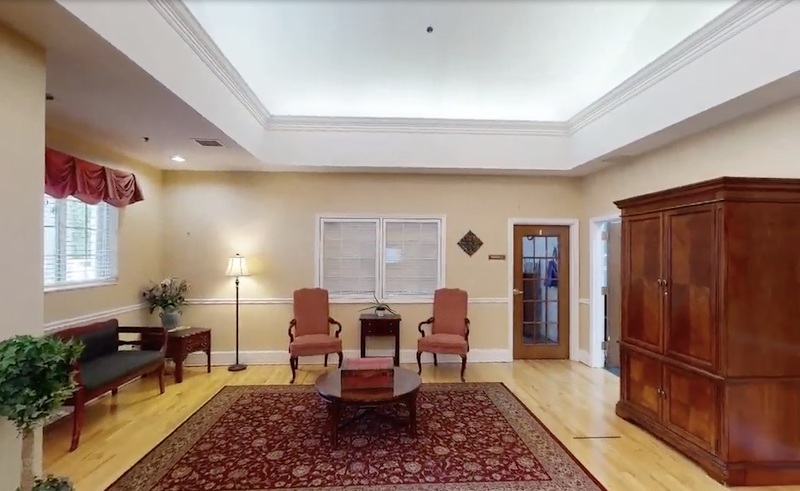
How is Majestic Care Of Whitehall Staffed?

CMS rates MAJESTIC CARE OF WHITEHALL's staffing level at 2 out of 5 stars, which is below average compared to other nursing homes. Staff turnover is 32%, compared to the Ohio average of 46%. This relatively stable workforce can support continuity of care.

What Have Inspectors Found at Majestic Care Of Whitehall?

State health inspectors documented 85 deficiencies at MAJESTIC CARE OF WHITEHALL during 2019 to 2025. These included: 1 that caused actual resident harm, 77 with potential for harm, and 7 minor or isolated issues. Deficiencies causing actual harm indicate documented cases where residents experienced negative health consequences.
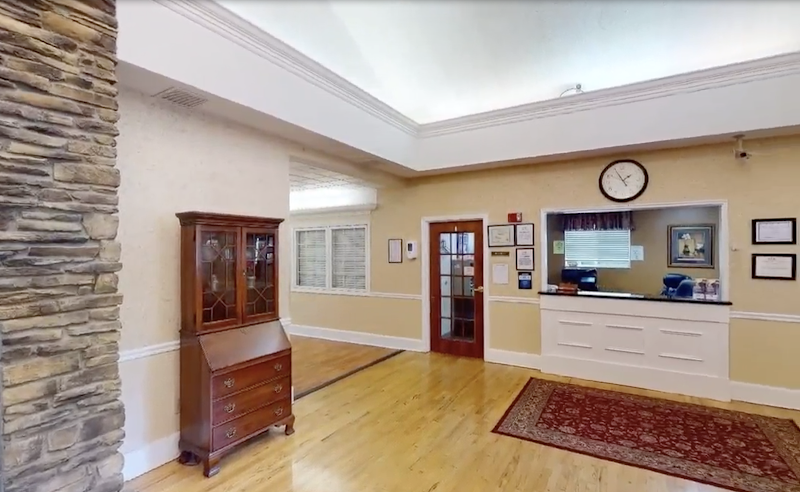
Who Owns and Operates Majestic Care Of Whitehall?

MAJESTIC CARE OF WHITEHALL is owned by a for-profit company. For-profit facilities operate as businesses with obligations to shareholders or private owners. The facility is operated by MAJESTIC CARE, a chain that manages multiple nursing homes. With 150 certified beds and approximately 124 residents (about 83% occupancy), it is a mid-sized facility located in WHITEHALL, Ohio.
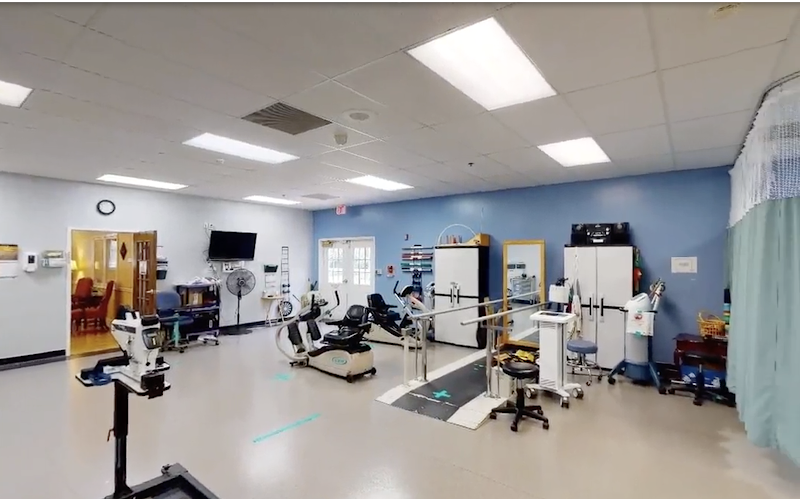
How Does Majestic Care Of Whitehall Compare to Other Ohio Nursing Homes?

Compared to the 100 nursing homes in Ohio, MAJESTIC CARE OF WHITEHALL's overall rating (2 stars) is below the state average of 3.2, staff turnover (32%) is significantly lower than the state average of 46%, and health inspection rating (1 stars) is much below the national benchmark.

What Should Families Ask When Visiting Majestic Care Of Whitehall?

Based on this facility's data, families visiting should ask: "Can you walk me through typical staffing levels on day, evening, and night shifts?" "Can I visit during a mealtime to observe dining assistance and food quality?" "How do you handle medical emergencies, and what is your hospital transfer rate?" "Can I speak with family members of current residents about their experience?" These questions are particularly relevant given the below-average staffing rating.

Is Majestic Care Of Whitehall Safe?

Based on CMS inspection data, MAJESTIC CARE OF WHITEHALL has a clean safety record: no substantiated abuse findings (meaning no confirmed cases of resident harm), no Immediate Jeopardy citations (the most serious violation level indicating risk of serious injury or death), and is not on the Special Focus Facility watch list (a federal program monitoring the lowest-performing 1% of nursing homes). The facility has a 2-star overall rating and ranks #100 of 100 nursing homes in Ohio. While no facility is perfect, families should still ask about staff-to-resident ratios and recent inspection results during their visit.

Do Nurses at Majestic Care Of Whitehall Stick Around?

MAJESTIC CARE OF WHITEHALL has a staff turnover rate of 32%, which is about average for Ohio nursing homes (state average: 46%). Moderate turnover is common in nursing homes, but families should still ask about staff tenure and how the facility maintains care continuity when employees leave.

Was Majestic Care Of Whitehall Ever Fined?

MAJESTIC CARE OF WHITEHALL has no federal fines on record. CMS issues fines when nursing homes fail to meet care standards or don't correct problems found during inspections. The absence of fines suggests the facility has either maintained compliance or corrected any issues before penalties were assessed. This is a positive indicator, though families should still review recent inspection reports for the full picture.

Is Majestic Care Of Whitehall on Any Federal Watch List?

MAJESTIC CARE OF WHITEHALL is not on any federal watch list. The most significant is the Special Focus Facility (SFF) program, which identifies the bottom 1% of nursing homes nationally based on persistent, serious quality problems. Not being on this list means the facility has avoided the pattern of deficiencies that triggers enhanced federal oversight. This is a positive indicator, though families should still review the facility's inspection history directly.