BELL AVENUE NURSING CENTER
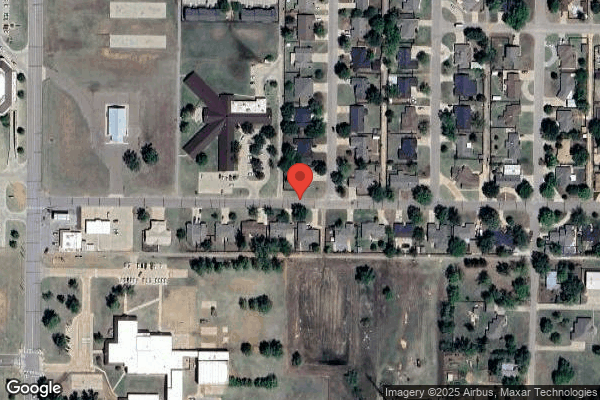
2301 BELL AVENUE, ELK CITY, OK 73644 (580) 225-3335
For profit - Limited Liability company 90 Beds RIVERS EDGE OPERATIONS Data: November 2025
Trust Grade
73/100
#43 of 282 in OK
Last Inspection: March 2025

Within standard 12-15 month inspection cycle. Federal law requires annual inspections.

Overview

Bell Avenue Nursing Center in Elk City, Oklahoma, has a Trust Grade of B, indicating it is a good choice among nursing homes. It ranks #43 out of 282 facilities statewide, placing it in the top half, and #2 of 3 in Beckham County, meaning only one other local option is better. The facility's performance has been stable, with eight issues reported consistently over recent years. Staffing is a strength here, with a 4-star rating and a turnover rate of 28%, well below the state average, suggesting that staff are experienced and familiar with the residents. However, it has concerning fines totaling $31,008, which is higher than 80% of Oklahoma facilities, indicating potential compliance issues. Specific incidents from inspections raised some red flags, such as the facility failing to protect residents from abuse, as two residents were identified as victims of resident-to-resident abuse. Additionally, they did not complete timely assessments for new admissions, and there were inaccuracies in medication assessments for residents on anticoagulant therapy. Overall, while there are notable strengths in staffing and overall care, families should be aware of these serious concerns before making a decision.

Trust Score
B
73/100
In Oklahoma
#43/282
Top 15%
Safety Record
Moderate
Needs review
Inspections
Holding Steady
3 → 3 violations
Staff Stability
✓ Good
28% annual turnover. Excellent stability, 20 points below Oklahoma's 48% average. Staff who stay learn residents' needs.
Penalties
✓ Good
$31,008 in fines. Lower than most Oklahoma facilities. Relatively clean record.
Skilled Nurses
⚠ Watch
Each resident gets only 16 minutes of Registered Nurse (RN) attention daily — below average for Oklahoma. Fewer RN minutes means fewer trained eyes watching for problems.
Violations
○ Average
8 deficiencies on record. Average for a facility this size. Mostly minor or procedural issues.
★★★★☆
4.0
Overall Rating
★★★★☆
4.0
Staff Levels
★★★☆☆
3.0
Care Quality
★★★★☆
4.0
Inspection Score
Stable
2024: 3 issues
2025: 3 issues

The Good

  • 4-Star Staffing Rating · Above-average nurse staffing levels
  • Low Staff Turnover (28%) · Staff stability means consistent care
  • Full Sprinkler Coverage · Fire safety systems throughout facility
  • No fines on record
  • Staff turnover is low (28%)

    20 points below Oklahoma average of 48%

Facility shows strength in staffing levels, staff retention, fire safety.

The Bad

Federal Fines: $31,008

Below median ($33,413)

Moderate penalties - review what triggered them

Chain: RIVERS EDGE OPERATIONS

Part of a multi-facility chain

Ask about local staffing decisions and management

The Ugly 8 deficiencies on record

1 actual harm
Mar 2025 3 deficiencies
CONCERN (D)

Potential for Harm - no one hurt, but risky conditions existed

Pharmacy Services (Tag F0755)

Could have caused harm · This affected 1 resident

Based on observation, record review, and interview, the facility failed to follow physician orders related to insulin administration for 1 (#205) of 3 sampled residents reviewed for insulin administra...

Read full inspector narrative →
Based on observation, record review, and interview, the facility failed to follow physician orders related to insulin administration for 1 (#205) of 3 sampled residents reviewed for insulin administration. The DON reported 11 residents received insulin at the facility. Findings: On 03/25/25 at 4:48 p.m., LPN #1 was observed to prepare supplies and obtain a FSBS for Resident #205. The FSBS was 367 mg/dl. They administered 10 units of Humalog. They did not document a follow-up for the high blood sugar reading. An Obtaining a Fingerstick Glucose Level policy, dated October 2011, read in part, Verify that there is a physician's order for this procedure. An Insulin Administration policy, dated September 2014, read in part, Check blood glucose per physician order or facility protocol. Resident #205's care plan, dated 03/07/25, showed the resident had diabetes mellitus and to administer diabetes medication as ordered and monitor for side effects and effectiveness. Resident #205's physician order, dated 03/17/25, showed a sliding scale for insulin. The order showed to inject 10 units of Humalog insulin for a FSBS between 351 mg/dl and 450 mg/dl every 60 minutes. The order showed to Redose every 60 minutes until less than 300 and notify primary care physician if not less than 400 mg/dl after three doses, call the primary care physician. On 03/26/25 at 10:44 a.m., the DON was asked about the FSBS readings recorded on 03/25/25 as 354 mg/dl and 367 mg/dl. They stated the nurse should have rechecked them and did not recheck them or document in the nurse's note. The DON stated the nurse did not follow the physician orders. The DON reported LPN #1 was not available today for interview. On 03/26/25 at 1:07 p.m., LPN #3 was asked about a FSBS recorded for Resident #205 on 03/21/25 as 401 mg/dl and 353 mg/dl. They stated they did not document in the nurse's note, but they knew they rechecked the residents blood sugar. They reported they were aware of the physician orders to check the FSBS every 60 minutes and to notify the physician.
CONCERN (E)

Potential for Harm - no one hurt, but risky conditions existed

Comprehensive Assessments (Tag F0636)

Could have caused harm · This affected multiple residents

**NOTE- TERMS IN BRACKETS HAVE BEEN EDITED TO PROTECT CONFIDENTIALITY** Based on record review and interview, the facility failed to conduct a comprehensive assessment within 14 calendar days of admis...

Read full inspector narrative →
**NOTE- TERMS IN BRACKETS HAVE BEEN EDITED TO PROTECT CONFIDENTIALITY** Based on record review and interview, the facility failed to conduct a comprehensive assessment within 14 calendar days of admission for 2 (#104 and #205) of 13 sampled residents reviewed for comprehensive assessments. The administrator reported 51 residents resided in the facility. Findings: A MDS Completion and Submission Timeframes policy, dated July 2017, read in part, Our facility will conduct and submit resident assessments with current federal and state submission timeframes. 1. Resident #104 had diagnoses which included acute osteomyelitis, right tibia and fibula, encounter for closed fracture with nonunion, and chronic obstructive pulmonary disease. Resident #104's entry assessment, dated 03/08/25, showed an admission date of 03/08/25. Resident #104's admission/5-day Medicare assessment, dated 03/15/25, showed to be in progress. On 03/26/25 at 9:47 a.m., the MDS coordinator reported they did not complete the admission/5 day-Medicare assessment for Resident #104. They reported they had been out sick. 2. Resident #205 was admitted to the facility on [DATE] with diagnoses which included diabetes mellitus. Resident #205's admission assessment, dated 03/13/25, showed to be in progress. On 03/26/25 at 9:47 a.m., the MDS coordinator reported they had not completed the admission assessment for Resident #205 and the assessment was late.
CONCERN (E)

Potential for Harm - no one hurt, but risky conditions existed

Assessment Accuracy (Tag F0641)

Could have caused harm · This affected multiple residents

Based on record review and interview, the facility failed to ensure assessments were accurate for 2 (#37 and #46) of 2 sampled residents reviewed for anticoagulant therapy. The administrator reported...

Read full inspector narrative →
Based on record review and interview, the facility failed to ensure assessments were accurate for 2 (#37 and #46) of 2 sampled residents reviewed for anticoagulant therapy. The administrator reported 51 residents resided in the facility. Findings: The facility had no policy for coding medication on MDS assessments. 1. Resident #37 had diagnosis which included cerebrovascular accident. A physician order, dated 05/09/24, showed to give the clopidogrel bisulfate (antiplatelet medication), 75 mg by mouth one time a day for cerebrovascular accident. The physician orders contained no anticoagulant medication. A quarterly assessment, dated 12/24/24, showed resident #37's cognition was moderately impaired with a BIMS score of 11. The assessment showed anticoagulant medication and no antiplatelet medication. 2. Resident #46 had diagnosis which included stroke. A physician order, dated 10/15/24, showed to give clopidogrel bisulfate oral tablet 75 mg, one tablet by mouth one time a day for previous stroke and Aspirin (an antiplatelet prevention medication) 81 mg, one capsule by mouth one time a day for cerebrovascular accident prevention. The physician order contained no anticoagulant medication use. A significant change assessment, dated 02/17/25, showed Resident #46's cognition was severely impaired with a BIMS score of 06. The assessment showed anticoagulant and antiplatelet medication use. On 03/26/25 at 10:43 p.m., the MDS coordinator reported they had always coded clopidogrel bisulfate as an anticoagulant and not an antiplatelet on the MDS. The MDS coordinator reported they documented aspirin as an antiplatelet. On 03/26/25 at 10:48 a.m., the MDS coordinator reported they checked the Centers for Medicare and Medicaid Services (CMS) website and confirmed that clopidogrel bisulfate was coded wrong and should have been coded as an antiplatelet for Resident #37 and Resident #46.
Dec 2024 1 deficiency
CONCERN (E) 📢 Someone Reported This

A family member, employee, or ombudsman was alarmed enough to file a formal complaint

Potential for Harm - no one hurt, but risky conditions existed

Accident Prevention (Tag F0689)

Could have caused harm · This affected multiple residents

**NOTE- TERMS IN BRACKETS HAVE BEEN EDITED TO PROTECT CONFIDENTIALITY** Based on record review and interview, the facility failed to ensure accurate wandering risk scale assessments were completed for...

Read full inspector narrative →
**NOTE- TERMS IN BRACKETS HAVE BEEN EDITED TO PROTECT CONFIDENTIALITY** Based on record review and interview, the facility failed to ensure accurate wandering risk scale assessments were completed for two (#2 and #3) of three residents sampled for accurate wandering risk scale assessments. The DON identified eight residents were at risk for wandering and elopement. Findings: The facility's Elopement and Wandering Residents policy, dated 01/13/21, read in part, Wandering is random or repetitive locomotion that may be goal directed (e.g., the person appears to be searching for something such as an exit) or non goal directed or aimless. The policy also read, The facility shall establish and utilize a systematic approach to monitoring and managing residence at risk for elopement or unsafe, wandering, including identification and assessment of risk, evaluations of hazards and risk, implementing interventions to reduce hazards and risk, and monitoring for effectiveness and modifying interventions when necessary. The policy also read, Residents will be assessed for risk of elopement and unsafe wandering upon admission and throughout their stay by the interdisciplinary care plan team. 1. Resident #2 was admitted to the facility on [DATE] with diagnoses which included paroxysmal atrial fibrillation, type 2 diabetes, and unspecified dementia. A nurse's note for Resident #2, dated 11/21/23, read in part, Resident has been very upset about being in this facility and was crying stating [they] wanted to go home. Resident was at the front door trying to get outside and was shaking door handle trying to open it. This nurse tried to calm resident down and resident said [they] wanted to go for a walk outside. Took resident for a short wheel/walk in wheelchair outside on sidewalk. Resident calmed down after walk. Not too long after coming back inside, kitchen staff seen resident out in parking lot by herself. Staff was unaware how [they] got out the front door. This nurse and CNA went and got resident and resident again stated she wanted to go home and have [their] [family member] come get [them] and was crying. Got resident back into facility and contacted [their] [family member] to notify [them] of [their] behavior. Resident calm down and went and ate supper. Resident #2's comprehensive assessment, dated 01/31/24, documented the resident's cognition was moderately impaired and they required substantial to maximal assistance with activities of daily living. Resident #2's Wandering Risk Scale assessments dated, 02/01/24, 05/01/24, 07/26/24, and 10/23/24 documented the resident had no history of wandering and had no reported episodes of wandering in the past six months. 2. Resident #3 was admitted to the facility on [DATE] with diagnoses which included unspecified dementia with agitation, edema, and age related physical disability. Resident #3's quarterly assessment, dated 01/31/24, documented the resident's cognition was significantly impaired and they were independent for assistance with activities of daily living. Resident #3's incident note, dated 07/13/24, read in part, this resident was walking down the street toward [name withheld]. This nurse stopped resident and brought [them] back into the facility. This nurse asked resident if [they] knew the code to the front door. Resident stated, no, I snuck out the door behind someone. The facility's #1248 Elopement incident report, dated 07/13/24, read in part, Resident was observed by staff walking down the street to the store. Staff intervened and brought the resident back to the facility. Resident #3's Wandering Risk Scale assessment dated , 07/14/24, documented the resident had no history of wandering and has had no reported episodes of wandering in the past six months. Resident #3's nurse progress note, dated 08/03/24, read in part, resident was seen by resident [name withheld] jumping the fence in the back yard. The facility's #1319 Elopement incident report, dated 08/03/24, read in part, resident was seen by resident [name withheld] jumping the fence in the back yard. It also read, Resident is an elopement risk. Resident #3's Wandering Risk Scale assessments dated, 09/09/24 and 12/06/24, documented the resident had no history of wandering and has had no reported episodes of wandering in the past six months. On 12/17/24 at 2:30 p.m., the administrator stated Resident #2 was out front in eyesight on 11/21/23 and never left the property. They stated they were unsure how Resident #2 got out on 11/21/23, but was within eyesight on the front porch sidewalk area. The administrator stated Resident #3's exit was seeking was for cigarettes on 07/13/24 and on 8/03/24. The administrator was asked to review the Elopement and Wandering Residents policy, dated 1/13/21, and the SOM with Elopements and Wandering definitions. The administrator stated that based upon their review, the wandering assessments for Resident #2 and Resident #3 were not accurate because they documented no history of wandering and no wandering in the past six months. They stated there was a confusion as they thought all wandering should be aimless and they were not considering goal directed as wandering.
Aug 2024 2 deficiencies 1 Harm
SERIOUS (H) 📢 Someone Reported This

A family member, employee, or ombudsman was alarmed enough to file a formal complaint

Actual Harm - a resident was hurt due to facility failures

Free from Abuse/Neglect (Tag F0600)

A resident was harmed · This affected multiple residents

Based on record review and interview, the facility failed to provide an environment free from abuse for two (#7 and #8) of five sampled residents reviewed for resident-to-resident abuse. The Administr...

Read full inspector narrative →
Based on record review and interview, the facility failed to provide an environment free from abuse for two (#7 and #8) of five sampled residents reviewed for resident-to-resident abuse. The Administrator identified 56 residents resided in the facility. Findings: An 'Abuse Prevention Program' policy, revised September 2015, read in parts, .It is the policy of the facility to prohibit abuse .The facility will investigate allegations and reported incidents .The investigation will include preventative measures when possible to prevent reoccurrence .Examples of plans of action may include a change in care, a change in medication . 1. Resident #6 A document titled Annual MDS Assessment, dated 06/24/24, Resident #6 cognition was severly impaired. The assessment further indicated Resident #6 was independent with transfer. Resident #6 was able to ambulate with assistance with a walker and wheel chair. A Physician's Order, dated 04/03/24, documented Resident #6 was started on Provera 2.5mg by mouth daily. A document titled Progress Notes, documented four occurrences of inappropriate behavior by Resident #6 towards female residents on the following days: 03/31/24, 04/01/24, 04/08/24 & 04/19/24 A document titled Psychiatric Progress Note, dated 04/17/24, Resident #6 was starte on Provera 2.5mg to reduce testosterone levels. A document titled Psychiatric Progress Note, dated 05/18/24, documented to increase Provera 2.5mg to Provera 5mg twice a day. Then to follow-up in 3 - 4 weeks. The medication administration record, dated 05/18/24 - 08/22/24, contained no documentation Resident #6 received Provera 5mg twice a day. There was no documentation to indicate that a follow-up was completed in 3-4 weeks. There was no documentation to indicate Resident #6's Provera was increased to 5mg twice a day. Resident #6 careplan, dated 03/31/24, documented Resident #6 had become more focused on women and thinking of sexual urges. It was documented Resident #6 touched another residents breast without consent. A careplan entry, dated 04/19/24, documented Resident #6 touched another residents breast and was slapped. A progress note, dated 04/21/24, documented four occuraences of inappropriate behavior by Resident #6 towards female residents on the following days: 04/21/24, 04/26/24, 04/29/24 & 08/21/24 There was no documentation to indicate that Resident # 6 careplan was updated. 2. Resident #7 had diagnoses that included senile degeneration of the brain and dementia. A 'Functional Abilities and Goals' assessment, dated 06/19/24, documented Resident #7 was wheelchair dependent and required substantial/maximum assistance for ADL's. Nurse Progress Note, dated 03/31/24 1:13 p.m., documented Resident #6 was observed with Resident #7 in a corner groping her breasts. 3. Resident #8 had diagnoses that included vascular dementia and aphasia. A 'Functional Abilities and Goals' assessment, dated 07/10/24, documented Resident #7 was wheelchair dependent and required assistance for ADL's. Nurse Progress Note for Resident #6, dated 04/19/24 8:15 p.m., documented Resident #6 was reported to have approached Resident #8, asked resident to lift their shirt and then tried to reach forward and grab Resident #8's breasts. A Psychiatric Progress Note for Resident #6, written 04/17/24, documented an order to increase Resident #6's Provera to 5mg BID to decrease testosterone due to continued exhibition of sexual behaviors towards other residents. There was no documentation that this order was carried out. A Psychiatric Progress Note for Resident #6, written 05/15/24, documented another order to increase Resident #6's Provera to 5mg BID. There was no documentation that this order was carried out. On 08/20/24 at 2:52 p.m., CNA #1 reported that Resident #6 had a problem with inappropriate touching, and staff were instructed to keep them away from the females, especially the ones that could not speak. On 08/21/24 at 1:10 p.m., the Administrator reported to this surveyor that Resident #6 was observed in the dining room during lunch today sitting beside Resident #8 and touching their breast. On 08/21/24 at 3:45 p.m., the DON was asked to review these incidents involving Resident #7 and Resident #8, along with four other documented incidents of inappropriate sexual behaviors exhibited by Resident #6 towards unnamed residents. When asked what interventions had been put into place to protect residents from Resident #6's inappropriate sexual behaviors, they stated Resident #6 was placed on medication to decrease their testosterone on 04/02/24. The DON was asked if the orders, written by Physician #1 on the psychiatric MD progress notes on 04/17/24 and 05/15/24, to increase Resident #6's Provera due to continued exhibition of sexual behaviors towards other residents had been carried out. The DON stated they were not aware of these orders. The DON was asked to review the above psychiatric progress notes and acknowledged the orders had not been forwarded to the Medical Director for approval. On 08/21/24 at 4:26 p.m., Physician #1 was asked if they had been notified of Resident #6's repeated inappropriate sexual behaviors that occurred today. They stated no. Physician #1 was asked if they were aware the orders written on 04/17/24 and 05/15/24 to increase Resident #6's Provera dose to decrease testosterone was never carried out. They stated no. Physician #1 was asked if these medication increases could have helped in preventing the abuse from reoccurring. They stated maybe.
CONCERN (D) 📢 Someone Reported This

A family member, employee, or ombudsman was alarmed enough to file a formal complaint

Potential for Harm - no one hurt, but risky conditions existed

Report Alleged Abuse (Tag F0609)

Could have caused harm · This affected 1 resident

Based on record review and interview, the facility failed to ensure incident reports were created for documented incidents of inappropriate sexual behavior by one (#6) of five sampled residents review...

Read full inspector narrative →
Based on record review and interview, the facility failed to ensure incident reports were created for documented incidents of inappropriate sexual behavior by one (#6) of five sampled residents reviewed for resident-to-resident abuse. The Administrator identified 56 residents resided in the facility. Findings: A 'Resident-to-Resident Altercations' policy, revised August 2011, read in parts, .If two residents are involved in an altercation, staff will .Complete an 'Report of Incident/Accident' form and document the incident, findings, and any corrective measures taken in the resident's medical/clinical record . A Nurse Progress Note, dated 04/01/24 at 9:23 a.m., documented Resident #6 was observed in the back of dining room with an unnamed female resident and had his penis exposed. A Nurse Progress Note, dated 04/08/24 at 4:00 p.m., documented Resident #6 was observed hugging and what appeared trying to kiss an unnamed female resident. A Nurse Progress Note, dated 04/21/24 at 8:35 p.m., documented Resident #6 wrote an unnamed female resident an inappropriate note and left it in her room while she wasn't there. A Nurse Progress Note, dated 04/29/24 at 5:51 p.m., documented Resident #6 left an inappropriate note in another unnamed female resident's room. There was no 'Report of Incident/Accident' form completed for either of the incidents listed above. Neither of the incidents were reported to OSDH or any other state agency. On 08/22/24 at 10:58 a.m., the DON was asked what the policy was for documenting incidents of sexually inappropriate behavior between residents. They stated that an internal report should be done and, if warranted, a report should be submitted within two hours to OSDH and other state agencies notified as needed. The DON was asked if an internal incident report had been completed for either of the incidents listed above. She stated no. The DON was asked if either of the incidents listed above warranted reporting to OSDH or other state agencies. They stated they were not sure.
Apr 2023 1 deficiency
CONCERN (E) 📢 Someone Reported This

A family member, employee, or ombudsman was alarmed enough to file a formal complaint

Potential for Harm - no one hurt, but risky conditions existed

Pharmacy Services (Tag F0755)

Could have caused harm · This affected multiple residents

**NOTE- TERMS IN BRACKETS HAVE BEEN EDITED TO PROTECT CONFIDENTIALITY** Based on record review and interview, the facility failed to establish a system of records of receipt and disposition, of contro...

Read full inspector narrative →
**NOTE- TERMS IN BRACKETS HAVE BEEN EDITED TO PROTECT CONFIDENTIALITY** Based on record review and interview, the facility failed to establish a system of records of receipt and disposition, of controlled drugs, to enable an accurate reconciliation for one (#2) of one resident reviewed for disposition of controlled drugs upon discharge. The Resident Census and Conditions of Residents report, dated 04/19/23, identified 47 residents who resided in the facility. Findings: A Documentation of Transfers/Discharges, dated April 2007, read in parts, .All documentation concerning the transfer or discharge of a resident must be recorded in the resident's medical record .Documentation from the Care Planning Team concerning all transfers or discharges must include, as a minimum, and as they may apply .Disposition of medications . A Controlled Substance Administration & Accountability policy, dated 05/12/21, read in parts, .It is the policy of this facility to promote safe, high quality patient care, compliant with state and federal regulations regarding monitoring the use of controlled substances. The facility will have safeguards in place in order to prevent loss, diversion or accidental exposure .In all cases, the dose noted on the usage must match the dose recorded on the Medication Administration Record (MAR), Controlled Drug Record, or other facility specified form and placed in the patient's medical record .The Controlled Drug Record (or other specified form) serves the dual purpose of recording both narcotic disposition and patient administration . A blank Medication Release Form, not dated, read in parts, .Last Name of Resident, First Name, Physician, Medication, Rx number, Amount, Nurse, Responsible party, date. The amount of medication on discharge has been counted and is correct and I (responsible party) am responsible for all medications until they are returned to the facility . Resident #2's Quarterly Assessment, dated 02/03/23, documented the resident was cognitively intact. Resident #2's Plan of Care, dated 10/30/22, documented the resident had anxiety and pain. Resident #2's Discharge Instruction Form, dated 03/28/23 at 10:19 a.m., read in parts, .Medications blank, Medication List blank . There were no medications documented on the resident's discharge instruction form. A Progress Note, dated 03/28/23 at 4:57 p.m., read in parts, .Resident informed this Nurse that his family from .was here to pick him up and take him back to . All Resident's personal belongings, meds, insulin and narcs were sent with resident. Discharge summary complete . This progress note did not specify the drugs, nor quantity of controlled drugs, that were returned to the resident. The facility did not provide an accurate accounting of the controlled drugs when resident #2 was released to home. RN#1 created the progress note. Resident #2's Controlled Drug Record, read in parts, .03/28/23 .Hydrocodone-Acetaminophen 10-325 mg give 1 tablet by mouth three times daily .amount remaining 7 .03/28/23 .Diazepam 5 mg tablet give 1 tablet three times daily .amount remaining 17 .03/26/23 .Hydrocodone-Acetaminophen 7.5 mg-325 mg give 1 tablet by mouth three times daily as needed for pain .amount remaining 66 . A total of 90 controlled drugs were not accounted for in Resident #2's clinical record. On 04/19/23 at 10:43 a.m., the DON was asked about a signed medication discharge form for resident #2's narcotics. They stated the CMA witnessed the resident sign the sheet, but they were still looking for the form. On 04/19/23 at 10:47 a.m., RN#1 was asked about a signed medication discharge record for resident #2's narcotics. They stated the document was signed by the resident, but they did not retain a copy. They witnessed the resident sign it, but it did not make it to the resident's clinical record. RN #1 reported being the nurse who was responsible for the resident's discharge on [DATE]. On 04/19/23 at 11:00 a.m., the DON was asked if the Discharge Summary included anything related to resident #2's medications. The DON stated, no, because there was nowhere to list it. The DON stated they print out the medication list and treatment list and review it with the resident. The DON was asked where would the resident sign for the narcotics to ensure accountability for the narcotics. The DON stated they thought staff had given the resident the original form, therefore, resident #2 would have the form. The DON was asked to provide the form which should have been in the clinical record to ensure accountability for resident #2's narcotics, and they provided a blank Medication Release Form. On 04/19/23 at 1:14 p.m., the DON was asked if they had located Resident #2's discharge medication form. The DON reported the form had not been located.
Jan 2023 1 deficiency
CONCERN (D)

Potential for Harm - no one hurt, but risky conditions existed

Drug Regimen Review (Tag F0756)

Could have caused harm · This affected 1 resident

Based on record review, observation, and interview, the facility failed to obtain an appropriate rationale for a pharmacy recommended gradual dose reduction (GDR) for one (#4) of five residents whose ...

Read full inspector narrative →
Based on record review, observation, and interview, the facility failed to obtain an appropriate rationale for a pharmacy recommended gradual dose reduction (GDR) for one (#4) of five residents whose records were reviewed for unnecessary medications. The Resident Census and Conditions of Residents, documented 38 residents resided in the facility and three residents were currently on antipsychotic medications. Findings: The facility's Consultant Pharmacist Reports policy, dated April 2015, read in parts, .Recommendations are acted upon and documented by the facility staff and/or the prescriber .Prescriber accepts and acts upon suggestion or rejects and provides an explanation for disagreeing . Resident #4 had diagnoses which included Schizophrenia, depression, anxiety, heart failure and diabetes. The resident's MDS Assessment, dated 11/24/21, documented the resident was cognitively intact. The assessment documented the resident received an antipsychotic, an antidepressant, and an antianxiety medication seven of seven days previous. The Monthly Behavior Monitoring Flowsheet for resident #4, dated January 2022, documented no behaviors for the month of January 2022. A Pharmacy Consultant Report for resident #4, dated 01/04/22, documented a recommendation for a GDR for Buspirone 10 mg TID, Cariprazine 6 mg QD, Cymbalta DR 60 mg QD, Latuda 120 mg QD, Lithium 300 mg BID, and Trintellix 10 mg QD. The physician response for the GDR recommendation, not dated, documented, Complex psychiatric patient under the care of a psychiatrist. Any objections to the medication regimen should be directed to the psychiatrist. The clinical record was reviewed and contained no documentation to indicate the resident was under the care of a psychiatrist at that time. The resident's Care Plan, dated 02/15/22, read in parts, .I am taking {Schizophrenia medications} on a routine basis to manage my Schizophrenia . Interventions .assess for continued need; if need continues, maintain on lowest possible effective dosage A Physicians Progress Note for resident #4, dated 09/02/22, documented Initial Psychiatric Evaluation. On 01/05/23 at 3:00 p.m., resident #4 was interviewed in her room and reported she felt like she was taking too many medications. The resident stated she had talked to her doctor about her medications but was told she needed all of her medications as currently ordered. On 01/05/23 at 4:30 p.m., the DON reported resident #4 did not have a consulting psychiatrist until September 2022. The DON reported no action was taken on the GDR recommendation in January 2022 because the resident didn't have a psychiatrist to review the medications.
Understanding Severity Codes (click to expand)
Life-Threatening (Immediate Jeopardy)
J - Isolated K - Pattern L - Widespread
Actual Harm
G - Isolated H - Pattern I - Widespread
Potential for Harm
D - Isolated E - Pattern F - Widespread
No Harm (Minor)
A - Isolated B - Pattern C - Widespread

Questions to Ask on Your Visit

  • "Can I speak with families of current residents?"
  • "What's your RN coverage like on weekends and overnight?"

Our Honest Assessment

Strengths
  • • 28% annual turnover. Excellent stability, 20 points below Oklahoma's 48% average. Staff who stay learn residents' needs.
Concerns
  • • 8 deficiencies on record, including 1 serious (caused harm) violation. Ask about corrective actions taken.
  • • $31,008 in fines. Higher than 94% of Oklahoma facilities, suggesting repeated compliance issues.
Bottom line: Mixed indicators with Trust Score of 73/100. Visit in person and ask pointed questions.

About This Facility

What is Bell Avenue Nursing Center's CMS Rating?

CMS assigns BELL AVENUE NURSING CENTER an overall rating of 4 out of 5 stars, which is considered above average nationally. Within Oklahoma, this rating places the facility higher than 99% of the state's 100 nursing homes. This rating reflects solid performance across the metrics CMS uses to evaluate nursing home quality.

How is Bell Avenue Nursing Center Staffed?

CMS rates BELL AVENUE NURSING CENTER's staffing level at 4 out of 5 stars, which is above average compared to other nursing homes. Staff turnover is 28%, compared to the Oklahoma average of 46%. This relatively stable workforce can support continuity of care.

What Have Inspectors Found at Bell Avenue Nursing Center?

State health inspectors documented 8 deficiencies at BELL AVENUE NURSING CENTER during 2023 to 2025. These included: 1 that caused actual resident harm and 7 with potential for harm. Deficiencies causing actual harm indicate documented cases where residents experienced negative health consequences.

Who Owns and Operates Bell Avenue Nursing Center?

BELL AVENUE NURSING CENTER is owned by a for-profit company. For-profit facilities operate as businesses with obligations to shareholders or private owners. The facility is operated by RIVERS EDGE OPERATIONS, a chain that manages multiple nursing homes. With 90 certified beds and approximately 52 residents (about 58% occupancy), it is a smaller facility located in ELK CITY, Oklahoma.

How Does Bell Avenue Nursing Center Compare to Other Oklahoma Nursing Homes?

Compared to the 100 nursing homes in Oklahoma, BELL AVENUE NURSING CENTER's overall rating (4 stars) is above the state average of 2.6, staff turnover (28%) is significantly lower than the state average of 46%, and health inspection rating (4 stars) is above the national benchmark.

What Should Families Ask When Visiting Bell Avenue Nursing Center?

Based on this facility's data, families visiting should ask: "Can I visit during a mealtime to observe dining assistance and food quality?" "How do you handle medical emergencies, and what is your hospital transfer rate?" "Can I speak with family members of current residents about their experience?"

Is Bell Avenue Nursing Center Safe?

Based on CMS inspection data, BELL AVENUE NURSING CENTER has a clean safety record: no substantiated abuse findings (meaning no confirmed cases of resident harm), no Immediate Jeopardy citations (the most serious violation level indicating risk of serious injury or death), and is not on the Special Focus Facility watch list (a federal program monitoring the lowest-performing 1% of nursing homes). The facility has a 4-star overall rating and ranks #1 of 100 nursing homes in Oklahoma. While no facility is perfect, families should still ask about staff-to-resident ratios and recent inspection results during their visit.

Do Nurses at Bell Avenue Nursing Center Stick Around?

Staff at BELL AVENUE NURSING CENTER tend to stick around. With a turnover rate of 28%, the facility is 18 percentage points below the Oklahoma average of 46%. Low turnover is a positive sign. It means caregivers have time to learn each resident's needs, medications, and personal preferences. Consistent staff also notice subtle changes in a resident's condition more quickly.

Was Bell Avenue Nursing Center Ever Fined?

BELL AVENUE NURSING CENTER has been fined $31,008 across 1 penalty action. This is below the Oklahoma average of $33,389. While any fine indicates a compliance issue, fines under $50,000 are relatively common and typically reflect isolated problems that were subsequently corrected. Families should ask what specific issues led to these fines and confirm they've been resolved.

Is Bell Avenue Nursing Center on Any Federal Watch List?

BELL AVENUE NURSING CENTER is not on any federal watch list. The most significant is the Special Focus Facility (SFF) program, which identifies the bottom 1% of nursing homes nationally based on persistent, serious quality problems. Not being on this list means the facility has avoided the pattern of deficiencies that triggers enhanced federal oversight. This is a positive indicator, though families should still review the facility's inspection history directly.