COLONIAL TERRACE CARE CENTER
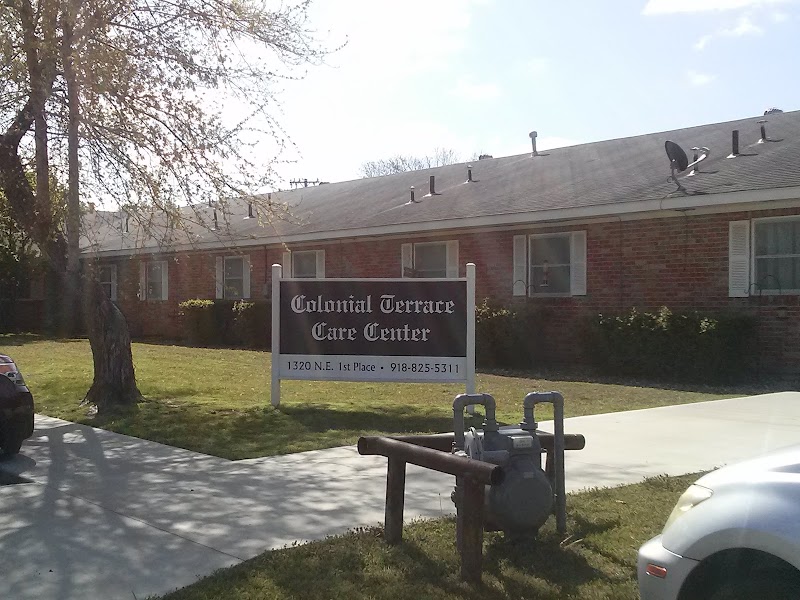
1320 NORTHEAST 1ST PLACE, PRYOR, OK 74362 (918) 825-5311
For profit - Limited Liability company 75 Beds BGM ESTATE Data: November 2025
Trust Grade
65/100
#48 of 282 in OK
Last Inspection: June 2024

Within standard 12-15 month inspection cycle. Federal law requires annual inspections.

Overview

Colonial Terrace Care Center has a trust grade of C+, indicating it is slightly above average but not particularly outstanding. It ranks #48 out of 282 facilities in Oklahoma, placing it in the top half, and #3 out of 4 in Mayes County, meaning there is only one local option that ranks higher. The facility shows an improving trend, reducing issues from 17 in 2023 to 7 in 2024, which is a positive sign. Staffing is a concern, receiving a rating of 2 out of 5 stars, and with a turnover rate of 64%, which is around the state average. While the facility has no fines, indicating good compliance, there have been specific incidents, such as failing to provide adequate RN coverage on multiple dates and administering incorrect medication doses to residents, which raise concerns about the quality of care.

Trust Score
C+
65/100
In Oklahoma
#48/282
Top 17%
Safety Record
Low Risk
No red flags
Inspections
Getting Better
17 → 7 violations
Staff Stability
⚠ Watch
64% turnover. Above average. Higher turnover means staff may not know residents' routines.
Penalties
✓ Good
No fines on record. Clean compliance history, better than most Oklahoma facilities.
Skilled Nurses
⚠ Watch
Each resident gets only 21 minutes of Registered Nurse (RN) attention daily — below average for Oklahoma. Fewer RN minutes means fewer trained eyes watching for problems.
Violations
⚠ Watch
29 deficiencies on record. Higher than average. Multiple issues found across inspections.
★★★★☆
4.0
Overall Rating
★★☆☆☆
2.0
Staff Levels
★★★★★
5.0
Care Quality
★★★☆☆
3.0
Inspection Score
Stable
2023: 17 issues
2024: 7 issues

The Good

  • 5-Star Quality Measures · Strong clinical quality outcomes
  • Full Sprinkler Coverage · Fire safety systems throughout facility
  • No fines on record

Facility shows strength in quality measures, fire safety.

The Bad

Staff Turnover: 64%

18pts above Oklahoma avg (46%)

Frequent staff changes - ask about care continuity

Chain: BGM ESTATE

Part of a multi-facility chain

Ask about local staffing decisions and management

Staff turnover is elevated (64%)

16 points above Oklahoma average of 48%

The Ugly 29 deficiencies on record

Jun 2024 6 deficiencies
CONCERN (D)

Potential for Harm - no one hurt, but risky conditions existed

Incontinence Care (Tag F0690)

Could have caused harm · This affected 1 resident

Based on observation, record review, and interview, the facility failed to ensure indwelling urinary catheter tubing was placed to maintain infection control for one (#16) of one sampled resident who ...

Read full inspector narrative →
Based on observation, record review, and interview, the facility failed to ensure indwelling urinary catheter tubing was placed to maintain infection control for one (#16) of one sampled resident who had an indwelling urinary catheter. Corporate nurse #1 identified one resident who had an indwelling urinary catheter. Findings: Resident #16 had diagnoses which included neuromuscular dysfunction of the bladder, retention of urine, and history of urinary tract infection. The quarterly assessment, dated 05/03/24, documented the resident had an indwelling urinary catheter and required maximal assistance for transfers to the chair. On 06/18/24 at 9:15 a.m., Resident #16 was observed in the hall in their wheel chair. The catheter tubing was observed to touch the floor. On 06/19/24 at 8:42 a.m., Resident #16 was observed in their room sitting in their wheel chair. They stated they were totally dependent on staff for transfers. The catheter tubing was observed to touch the floor. On 06/19/24 at 11:29 a.m., Resident #16 was observed by the nurses station in their wheel chair. The catheter tubing was observed to drag on the floor under the wheel chair. On 06/20/24 at 8:26 a.m., CNA #1 stated indwelling urinary catheter tubing was not to touch the floor. On 06/20/24 at 10:02 a.m., RN #1 stated indwelling urinary catheter tubing was not to touch the floor. They stated they would need to set up monitoring to ensure infection control was maintained regarding the placement of catheter tubing.
CONCERN (D)

Potential for Harm - no one hurt, but risky conditions existed

Deficiency F0697 (Tag F0697)

Could have caused harm · This affected 1 resident

Based on record review and interview, the facility failed to ensure pain medication was administered per the physician's order for one (#1) of six sampled residents whose medications were reviewed. Co...

Read full inspector narrative →
Based on record review and interview, the facility failed to ensure pain medication was administered per the physician's order for one (#1) of six sampled residents whose medications were reviewed. Corporate nurse #1 identified 29 residents on routine pain medication. Findings: Resident #1 had diagnoses which included neuropathy. The Care Plan, dated 02/21/24, documented to administer pain medication as ordered by the physician. The Prescription Order, dated 03/16/24, documented the resident had been ordered diclofenac sodium 1% (a pain reliever) topically to bilateral feet twice daily. The Treatment Administration History, dated 04/01/24 through 04/30/24, did not contain documentation the diclofenac had been administered on 04/08/24 for the a.m. shift or 04/11/24 for the a.m. or p.m. shift. The Treatment Administration History, dated 05/30/24, did not contain documentation the diclofenac had been administered on the a.m. or p.m. shift. The Treatment Administration History, dated 06/10/24, did not contain documentation the diclofenac had been administered on the p.m. shift. Review of the progress notes for April, May, and June 2024 did not reveal documentation regarding the missing documentation of the diclofenac. On 06/19/24 at 10:17 a.m., Resident #1 stated some days they did not receive the medication for their feet and they wanted the medication to be provided twice daily as ordered for pain management. On 06/20/24 1:27 p.m., Corporate nurse #1 stated they had no documentation as to why the diclofenac was not documented as administered per the physician's order. On 06/21/24 at 7:52 a.m., RN #1 stated the Resident # 1 would usually remind the nurses about the diclofenac gel for their feet. RN #1 stated the lack of documentation related to administration was an oversight and did not know why the pain medication was not documented as administered per the physician's order.
CONCERN (E)

Potential for Harm - no one hurt, but risky conditions existed

Notification of Changes (Tag F0580)

Could have caused harm · This affected multiple residents

Based on record review and interview, the facility failed to ensure resident representatives were notified of change for one (#32) of one sampled resident reviewed for notification of change. The admi...

Read full inspector narrative →
Based on record review and interview, the facility failed to ensure resident representatives were notified of change for one (#32) of one sampled resident reviewed for notification of change. The administrator identified 39 residents who resided in the facility. Findings: The undated Notification of Change policy, read in parts, .The nurse will immediately notify the resident .resident representative for the following [list is not all inclusive]: A need to alter treatment significantly [a need to discontinue or change an existing form of treatment due to adverse consequences, or to commence a new form of treatment] .Document the notification and record any new orders in the resident's medical record . Resident #32 had diagnoses which included dementia, recurrent depressive disorders, and constipation. The Medication Administration Record, dated 01/01/24 through 01/31/24, documented the resident's Zoloft was increased from 25 mg daily to 50 mg daily for depression on 01/18/24 and had been ordered Namenda 5mg twice daily for dementia on 01/19/24. A Progress Note, dated 01/19/24, documented Resident #32 had new orders for Namenda and the Zoloft had been increased. The note did not reveal the resident's representative had been notified of the medication changes. The Medication Administration Record, dated 05/01/24 through 05/31/24, documented the resident was ordered a Fleets enema once daily, as needed, on 05/09/24. A Progress Note, dated 05/09/24, documented Resident #32 had been administered an enema for complaints of constipation with positive results. Review of the progress notes did not reveal the resident's representative had been notified of the order for the Fleets enema. The quarterly assessment, dated 05/21/24, documented the resident was severely impaired in cognition for daily decision making. On 06/19/24 at 2:53 p.m., the resident's representative stated they would like to be notified of medication changes and new orders. On 06/21/24 at 9:52 a.m., RN #1 stated they were to notify residents and/or resident representatives of medication order changes and document the notification in the progress notes. On 06/21/24 at 10:15 a.m., Corporate nurse #1 stated they did not have documentation the representative for Resident #32 had been notified of the medication changes.
CONCERN (E)

Potential for Harm - no one hurt, but risky conditions existed

Pharmacy Services (Tag F0755)

Could have caused harm · This affected multiple residents

Based on observation, record review, and interview, the facility failed to ensure residents were administered the correct doses of medications ordered by their physician for two (#19 and #93) of six s...

Read full inspector narrative →
Based on observation, record review, and interview, the facility failed to ensure residents were administered the correct doses of medications ordered by their physician for two (#19 and #93) of six sampled residents reviewed for medication administration. A facility resident roster, dated 06/17/24, documented 39 residents resided at the facility. Findings: An Adverse Consequences and Medication Errors policy, dated 2001, read in part, A medication error is defined as the preparation or administrator of drugs or biological which is not in accordance with physician's orders, manufacturer specifications, or accepted professional standards and principles of the professional(s) providing services. 1. Resident #19 had diagnoses which included acute kidney failure and diabetes mellitus with diabetic neuropathy. A Medications Administration Record for Resident #19, dated 06/01/24 - 06/18/24, documented the resident was to be administered five units of lispro insulin from a 200 unit per milliliter strength insulin pen before each meal. The order had a start date of 01/09/24 and an open end date. The record documented the resident had 52 doses of the medication between 06/01/24 and 06/18/24. On 06/18/24 at 11:21 a.m., RN #1 was observed administering insulin to Resident #19. RN #1 set the dose on an insulin pen and showed it to the surveyor. The pen was observed to be lispro 100 units per milliliter and was set to administer 5 units. RN #1 was then observed administering the medication. On 06/18/24 at 12:15 p.m., RN #1 and the surveyor reviewed Resident #19's medication orders in the resident's electronic medical record and then the insulin pen that had been used. RN #1 stated the pen that was used at 11:21 a.m. had a strength of 100 units per milliliter but the order was to use a pen with the strength of 200 units per milliliter. RN #1 stated the resident had been under-dosed. They stated the insulin pens in the medication cart had not been replaced since the order was change in January. 2. Resident #93 had diagnoses which included paroxysmal atrial fibrillation. A prescription order form, dated 06/07/24, documented Resident #93 was to be administered one Sotalol [an oral medication use to treat atrial fibrillation]120 mg tablet every morning. A Medication Administration Record form for Resident #93, dated 06/01/24 - 06/20/24, documented the resident had received 12 doses of Sotalol 120 mg tablets between 06/07/24 and 06/19/24. On 06/19/24 at 8:00 a.m., RN #1 was observed administering medications to Resident #93. RN #1 removed a tablet from a container and presented the container to the surveyor. The container label documented the medication was Sotalol 80 mg tablets and one was to be administered to the resident. RN #1 was observed administering the medication. On 06/19/24 at 9:04 a.m., RN #1 and the surveyor reviewed Resident #93's medication orders in the resident's electronic medical record and then the container of Sotalol that had been administered that morning. RN #1 stated the order for Sotalol was for one 120 mg tablet but the container read 80 mg tablets. RN #1 stated the resident had been under-dosed. They stated they had since looked in the medication cart and the correct dose was there. They stated they had not looked close enough and had given the 80 mg tablet instead of the 120 mg tablet. They stated there was a problem with communication amongst the nursing staff and discontinued meds have been left in the carts instead of moved to the DON's office. On 06/20/24 at 10:24 a.m., Regional Nurse stated that when RN #1 had administer the insulin to Resident #19 and Sotalol to Resident #93, they had not followed facility policy or the standards of care when they did not check the actual medications on hand against the physician's order.
CONCERN (E)

Potential for Harm - no one hurt, but risky conditions existed

Unnecessary Medications (Tag F0759)

Could have caused harm · This affected multiple residents

Based on observation, record review, and interview, the facility failed to ensure a medication error rate of less than five percent. A facility resident roster, dated 06/17/24, documented 39 residents...

Read full inspector narrative →
Based on observation, record review, and interview, the facility failed to ensure a medication error rate of less than five percent. A facility resident roster, dated 06/17/24, documented 39 residents resided at the facility. Findings: An Adverse Consequences and Medication Errors policy, dated 2001, read in part, A medication error is defined as the preparation or administrator of drugs or biological which is not in accordance with physician's orders, manufacturer specifications, or accepted professional standards and principles of the professional(s) providing services. A Treatments Administration History form for Resident #19, dated 06/01/24 - 06/19/24, read in part, Humalog KwikPen Insulin (insulin lispro) Insulin pen; 200 unit/mL (3 mL); Amount to administer: 5 units; subcutaneous .The form further documented the resident received the afternoon dose of the medication on 06/18/24. A Medication Administration Record form for Resident #93, dated 06/01/24 - 06/20/24, read in part, sotalol tablet; 120 mg; Amount to Administer: 1 tab; gastric tube . The form further documented the resident received the morning dose of the medication on 06/19/24. On 06/18/24 at 11:21 a.m., RN #1 was observed administering insulin to Resident #19. RN #1 set the dose on an insulin pen and showed it to the surveyor. The pen was observed to be lispro 100 units per milliliter and was set to administer 5 units. RN #1 was observed administering the medication. On 06/18/24 at 12:15 p.m., RN #1 and the surveyor reviewed Resident #19's medication orders in the resident's electronic medical record and then the insulin pen that had been used. RN #1 stated the pen uses was 100 units per milliliter but the order was to use a pen with the strength of 200 units per milliliter. RN #1 stated the resident had been under-dosed. On 06/19/24 at 8:00 a.m., RN #1 was observed administering medications to Resident #93. RN #1 removed a tablet from a container and presented the container to the surveyor. The container label documented the medication was Sotalol [an medication to treat atrial fibrillation] 80 mg tablets and one was to be administered to the resident. RN #1 was observed administering the medication. On 06/19/24 st 9:04 a.m., RN #1 and the surveyor reviewed Resident #93's medication orders in the resident's electronic medical record and then the container of Sotalol that had been administered that morning. RN #1 stated the order for Sotalol was for one 120 mg tablet but the container read 80 mg tablets. RN #1 stated the resident had been under-dosed. On 06/20/24 at 10:24 a.m., Regional Nurse stated that when RN #1 had administer the insulin to Resident #19 and Sotalol to Resident #93, they had not followed facility policy or the standards of care when they did not check the actual medications on hand against the physician's order.
CONCERN (E)

Potential for Harm - no one hurt, but risky conditions existed

Food Safety (Tag F0812)

Could have caused harm · This affected multiple residents

Based on observation, record review, and interview, the facility failed to ensure the ice machine was maintained in a sanitary manner for one of one ice machines observed. Corporate nurse #1 identifie...

Read full inspector narrative →
Based on observation, record review, and interview, the facility failed to ensure the ice machine was maintained in a sanitary manner for one of one ice machines observed. Corporate nurse #1 identified 38 residents who received nourishment from the kitchen. Findings: The untitled, undated policy, read in parts, .It is the policy .that ice machines will be cleaned weekly and as needed. Maintenance will clean ice machine at a minimum of weekly . The Ice Machine Log, dated June 2024, documented the ice machine had been cleaned on 06/03/24, 06/10/24, and 06/17/24. On 06/17/24 at 9:02 a.m., the ice machine was observed with the dietary manager. The deflector panel on the inside of the ice machine was observed to contain a black/brown substance that was easily wiped off with a paper towel. The dietary manager stated the maintenance supervisor was responsible to clean the ice machine. The coil cover in the top portion of the ice machine was observed to contain a orange/yellow substance that was easily wiped with a paper towel. On 06/17/24 at 9:05 a.m., the maintenance supervisor stated the ice machine was cleaned weekly. The maintenance supervisor observed the ice machine and stated it looked like it needed to be cleaned more often due to the buildup.
Apr 2024 1 deficiency
CONCERN (E) 📢 Someone Reported This

A family member, employee, or ombudsman was alarmed enough to file a formal complaint

Potential for Harm - no one hurt, but risky conditions existed

Resident Rights (Tag F0550)

Could have caused harm · This affected multiple residents

Based on observation, record review, and interview, the facility failed to promote resident dignity by staff standing over residents while assisting them to eat for two (#9 and #11) of three sampled r...

Read full inspector narrative →
Based on observation, record review, and interview, the facility failed to promote resident dignity by staff standing over residents while assisting them to eat for two (#9 and #11) of three sampled residents reviewed for dignity. The administrator identified 38 residents resided in the facility. Findings: 1. Res #9 had diagnoses which included achondroplasia. A significant change assessment, dated 03/15/24, documented the resident's cognition was severly impaired and they required partial/moderate assistance with eating. On 04/10/24 at 8:18 a.m., CNA #3 was observed standing over the resident in the dining room while assisting them to eat their breakfast. On 04/10/24 at 8:31 a.m., CNA #3 was asked asked what was the protocol for assisting residents with eating. They stated they should sit next to the residents while assisting them with their meals. They were asked if they sat while assisting Res #9 with their breakfast. They stated they did not sit. 2. Res #11 had diagnoses which included CHF, SOB, diabetes, and seizures. A quarterly assessment, dated 01/17/24, documented the resident's cognition was moderately impaired and they required substantial/maximal assistance with eating. On 04/10/24 at 8:12 a.m., the DON was observed standing over the resident in the dining room while assisting them to eat their breakfast. On 04/10/24 at 8:47 a.m., the DON was asked what was the protocol for assisting residents with eating. They stated they should have sat down next to Res #11 while assisting them with their breakfast.
May 2023 17 deficiencies
CONCERN (D)

Potential for Harm - no one hurt, but risky conditions existed

Deficiency F0578 (Tag F0578)

Could have caused harm · This affected 1 resident

Based on record review and interview, the facility failed to ensure code status was accurate for one (#37) of one sampled residents who were reviewed for advance directives. The Resident Census and Co...

Read full inspector narrative →
Based on record review and interview, the facility failed to ensure code status was accurate for one (#37) of one sampled residents who were reviewed for advance directives. The Resident Census and Conditions of Residents report, dated 05/09/23, documented 48 residents resided in the facility. Findings: The Do Not Resuscitate Order policy, dated April 2017, read in part, .Do not resuscitate orders must be signed by the resident's attending physician on the physician's order sheet maintained in the resident's medical record . Resident #37 had diagnoses which included chronic obstructive pulmonary disease. The Care Plan, dated 10/03/22, documented the resident had a DNR. Review of the electronic face sheet for Resident #37 revealed the code status was DNR. A signed DNR, dated 10/04/22, was observed in the electronic clinical record. A Physician's Order, dated 02/23/23, documented the resident was a full code. On 05/15/23 at 2:13 p.m., RN #1 was asked where the code status' were documented. They stated they referred to the electronic clinical record or the code status binder at the nurses station. RN #1 was asked what the code status was for Resident #37. They reviewed the electronic clinical record and stated the face sheet documented the resident was a DNR. They were asked why the physician orders documented Resident #37 was as full code. They stated they were not sure. They stated the resident may have had a change in status and the clinical record had not been updated by the MDS coordinator. On 05/15/23 at 2:33 p.m., the DON was asked what the code status was for Resident #37. They reviewed the electronic clinical record and stated the face sheet documented the resident was a DNR. They were asked what the physician's order was regarding code status. They stated the physician's order documented the resident was a full code. They stated they would need to check into the discrepancy. On 05/15/23 at 4:40 p.m., the DON stated they were not sure why the physician's order indicated the resident was a full code when there was a signed DNR in the clinical record. The DON was asked how they monitored to ensure there were not discrepancies regarding residents' code status. They stated the MDS coordinator and the administrator reviewed the code status binder at the nurses station. They were asked how often physician orders were reviewed to ensure the code status was accurate. They stated they thought they were reviewed quarterly. The DON was asked when the physician's orders for Resident #37 were last reviewed. They stated they had reviewed them in late March 2023. They were asked why the discrepancy had not been identified during the review. They stated they had not seen the order for the full code status.
CONCERN (D)

Potential for Harm - no one hurt, but risky conditions existed

Deficiency F0645 (Tag F0645)

Could have caused harm · This affected 1 resident

Based on record review and interview, the facility failed to request a level II PASARR for one (#23) of one sampled resident reviewed for level II PASARRs. Corporate Nurse #1 identified eight residen...

Read full inspector narrative →
Based on record review and interview, the facility failed to request a level II PASARR for one (#23) of one sampled resident reviewed for level II PASARRs. Corporate Nurse #1 identified eight residents with level two PASARR assessments who resided in the facility. Findings: Resident #23 had diagnoses which included anxiety, major depressive disorder, and schizophrenia. An admission assessment, dated 06/10/21, documented Resident #23 had a diagnosis of schizophrenia. A level I PASARR, dated 06/11/21, documented Resident #23 had no diagnosis of serious mental illness. An annual assessment, dated 05/02/23, documented Resident #23 had diagnoses which included depression, schizophrenia, and anxiety. Section A question A1500 asked if Resident #23 was currently considered by the state level II PASARR process to have serious mental illness and/or intellectual disability or a related condition. The selected answer was no. Resident #23 did not have a completed level II PASARR in the clinical record. On 05/16/23 at 9:40 a.m., Corporate Nurse #1 was asked what diagnosis of mental disorder was coded on the admission or annual assessment. They stated there was no mental disorder coded. The corporate nurse was asked what diagnoses Resident #23 had when they admitted to the facility. They stated schizophrenia. The corporate nurse was asked what mental disorder was coded on the level I PASARR. They stated there was no mental disorder listed on the level I PASARR. On 05/16/23 at 11:30 a.m., the administrator was asked what the process/protocol was for PASARRs. They stated they usually reviewed them, if there was any psychological diagnosis they referred to OHCA (Oklahoma Health Care Authority) for a level II PASARR. The administrator was asked who was responsible to monitor to ensure level I PASARRs were completed and referred when necessary. They stated the MDS coordinator would bring the PASARR to either the DON or the administrator.
CONCERN (D)

Potential for Harm - no one hurt, but risky conditions existed

Deficiency F0655 (Tag F0655)

Could have caused harm · This affected 1 resident

**NOTE- TERMS IN BRACKETS HAVE BEEN EDITED TO PROTECT CONFIDENTIALITY** Based on record review and interview, the facility failed to ensure baseline care plans were completed for two (#10 and #37) of ...

Read full inspector narrative →
**NOTE- TERMS IN BRACKETS HAVE BEEN EDITED TO PROTECT CONFIDENTIALITY** Based on record review and interview, the facility failed to ensure baseline care plans were completed for two (#10 and #37) of four sampled residents reviewed for baseline care plans within 48 hours of admission. Corporate Nurse #1 identified 17 residents who were admitted to the facility in the past six months. Findings: The policy Care Plans - Baseline, dated December 2016, read in parts, .A baseline plan of care to meet the resident's immediate needs shall be developed for each resident within forty-eight .hours of admission . 1. Resident #10 was admitted on [DATE] and had diagnoses which included chronic obstructive pulmonary disease. Review of the clinical record did not reveal a baseline care plan had been developed for the resident. On 05/12/23 at 4:50 p.m., the MDS coordinator was asked who was responsible to develop baseline care plans. They stated they were responsible. They were asked where the baseline care plan was documented for Resident #10. They stated a baseline care plan had not been developed for the resident. 2. Resident #37 was admitted on [DATE] and had diagnoses which included chronic obstructive pulmonary disease. Review of the clinical record did not reveal a baseline care plan had been developed for the resident. On 05/15/23 at 1:08 p.m., the MDS coordinator was asked where baseline care plans were documented. They stated they were documented on a paper form. The baseline care plan was requested for Resident #37. On 05/15/23 at 1:45 p.m., Corporate Nurse #1 stated they had not completed a baseline care plan for Resident #37.
CONCERN (D)

Potential for Harm - no one hurt, but risky conditions existed

Deficiency F0657 (Tag F0657)

Could have caused harm · This affected 1 resident

Based on record review and interview, the facility failed to ensure care plans were reviewed and revised after a quarterly assessment for one (#42) of twelve sampled residents whose care plans were re...

Read full inspector narrative →
Based on record review and interview, the facility failed to ensure care plans were reviewed and revised after a quarterly assessment for one (#42) of twelve sampled residents whose care plans were reviewed. The Resident Census and Conditions of Residents report, dated 05/09/23, documented 48 residents resided at the facility. Findings: A Care Plans, Comprehensive Person-Centered policy, dated December 2016, read in part, .The interdisciplinary team must review and update the care plan .at least quarterly, in conjunction with the required quarterly MDS assessment . Resident #42 had diagnoses which included Alzheimer's disease, schizophrenia, and anxiety disorder. Review of the clinical record revealed the care plan for Resident #42 was last revised on 01/23/23. A review of the clinical record for Resident #42 revealed a quarterly assessment was completed on 03/16/23. On 05/17/23 at 2:38 p.m., the MDS coordinator was asked when the care plan for Resident #42 was revised. They reviewed the electronic record and stated 01/23/23, but Resident #42 had a comprehensive assessment on 03/16/23 and it should have been updated on that date. The MDS coordinator was asked why the care plan was not updated and revised after the comprehensive assessment. They stated they did not know, they were not employed at the facility at that time.
CONCERN (D)

Potential for Harm - no one hurt, but risky conditions existed

Deficiency F0661 (Tag F0661)

Could have caused harm · This affected 1 resident

Based on record review and interview, the facility failed to ensure a discharge summary which included a recapitulation of the resident's stay was completed for one (#51) of one sampled resident revie...

Read full inspector narrative →
Based on record review and interview, the facility failed to ensure a discharge summary which included a recapitulation of the resident's stay was completed for one (#51) of one sampled resident reviewed for a resident initiated discharge from the facility. Corporate Nurse #1 identified five residents who were discharged in the past three months. Findings: A Discharge Summary and Plan policy, dated December 2016, read in part, .The discharge summary will include a recapitulation of the resident's stay .shall include a description of the resident's: current diagnosis; medical history .course of illness, treatment and/or therapy; current laboratory .and diagnostic test results .special treatments or procedures .mental and psychosocial status .rehabilitation potential .cognitive status .and medication therapy . Resident #51 had diagnoses which included benign neoplasm of cerebral meninges (a treatable brain tumor). A Discharge Summary, dated 04/28/23, documented an incomplete recapitulation for Resident #51. The recapitulation did not include the reason for discharge, the rehabilitative services provided, outstanding events, or hospitalizations during the resident's stay. The discharge summary was completed and signed by the administrator. A progress note, dated 04/28/23, documented Resident #51 was discharged to home with hospice services related to end stage support, medications, treatments, and personal effects. Resident #51 was discharged with their niece and other family members. On 05/12/23 at 12:16 p.m., the DON was asked why Resident #51 was discharged home with hospice. They stated the family arrived unannounced to take Resident #51 home. On 05/12/23 at 12:23 p.m., the administrator was asked why Resident #51 was discharged home with hospice. They stated four or five family members came and informed the facility they were taking Resident #51 home without explanation. The administrator was asked where the reason for discharge was documented in the clinical record. After reviewing the clinical record, the administrator stated they did not see a reason for discharge documented. The administrator was asked who was involved with the discharge. They stated under normal circumstances, the DON, social services director, and anyone who provided services such as therapies. The administrator was asked what services Resident #51 received while at the facility. They stated Resident #51 received skilled services prior to having a change in condition and electing hospice. On 05/12/23 at 3:52 p.m., the administrator was asked who was responsible to complete discharge summaries. They stated the discharge planning was done by social services and they had to document some of the discharge summaries to ensure they were completed. The administrator was asked why a complete recapitulation of Resident #51's stay was not documented on the discharge summary. They stated they were trying to get it done in a timely manner.
CONCERN (D)

Potential for Harm - no one hurt, but risky conditions existed

Pressure Ulcer Prevention (Tag F0686)

Could have caused harm · This affected 1 resident

Based on observation, record review, and interview, the facility failed to assess and monitor pressure ulcers for one (#34) of one sampled resident who was reviewed for pressure ulcers. The Resident C...

Read full inspector narrative →
Based on observation, record review, and interview, the facility failed to assess and monitor pressure ulcers for one (#34) of one sampled resident who was reviewed for pressure ulcers. The Resident Census and Condition Residents report, dated 05/09/23, documented two residents had pressure ulcers. Findings: The Pressure Ulcers/Skin Breakdown-Clinical Protocol policy, dated April 2018, read in part, .the nurse shall describe and document/report the following: a. Full assessment of pressure sore including location, stage, length, width and depth, presence of exudates or necrotic tissue . Resident #34 had diagnoses which included pressure ulcer of unspecified heel, heart failure, and paraplegia. A Physician's Order, dated 10/26/22, documented a skin assessment was to be completed on the day shift every Wednesday. The significant change assessment, dated 01/23/23, documented the resident was at risk for pressure ulcers. The TAR, dated March 2023, documented the weekly skin assessments and wound care treatments had been completed as ordered. The Weekly Skin Integrity Review, dated 03/01/23, documented the resident had open areas to the coccyx, right lower extremity, and bilateral heels, under the section titled skin condition. No other information regarding the resident's wounds was documented and review of the clinical record did not reveal any other Weekly Skin Integrity Review assessments had been completed for March 2023. The TAR, dated April 2023, documented weekly skin assessments and wound care treatments had been completed as ordered. The quarterly assessment, dated 04/02/23, documented the resident was at risk for pressure ulcers and had a Stage II pressure ulcer which was present upon admission or readmission. Review of the clinical record did not reveal a care plan had been developed regarding pressure ulcers. The Weekly Wound Documentation form, dated 04/05/23, documented the resident had a Stage III pressure ulcer to the right heel that measured 3 x 2 x 0.25 cm. The form documented the wound was in-house acquired but the resident was readmitted at a higher stage on 03/31/23 and was now considered to be admitted with the wound. The form read in part, .Wound has noted decline since discharge to hospital and then return to the facility . Review of the clinical record did not reveal any other Weekly Wound Documentation forms were completed for April 2023. The TAR, dated 05/01/23 through 05/15/23, documented weekly skin assessments and wound care treatments had been completed as ordered. The Weekly Wound Documentation form, dated 05/16/23, documented the resident had a facility acquired Stage II pressure ulcer to the right heel that measured 3 x 3 x 0.1 cm. Review of the clinical record did not reveal any other Weekly Wound Documentation forms were completed from 05/01/23 through 05/16/23. On 05/16/23 at 12:24 p.m., RN #1 was asked what the wound status was for Resident #34. They stated the resident's wound had improved. They were asked when weekly skin assessments were performed for Resident #34. They stated on Wednesdays on the day shift. RN #1 was asked what skin assessments entailed. They stated they performed a full body assessment of the skin but they did not undo any intact wound dressings and make observations. They were asked where they documented skin assessments. They stated in the electronic clinical record under observations. They reviewed the electronic clinical record and stated they had not been documenting the skin assessments. RN #1 stated they initialed that they were completed on the TAR but did not document their findings. They were asked who was responsible to obtain wound measurements. They stated the night shift nurses completed the dressing changes but the nurses had not been measuring wounds like they were supposed to. On 05/16/23 at 12:57 p.m., the DON was asked what the status was of Resident #34's skin. They reviewed the electronic clinical record and stated there was not documentation about the resident's wound. They stated they thought the resident had a Stage II on the coccyx and boggy heels bilaterally. The DON was asked who was responsible to perform skin assessments. They stated the nurses were responsible to perform them and should perform them every shift. The DON was asked where skin assessments were documented. They stated they should be documented in the progress notes. The DON was asked how often wounds were measured. They stated they did not know. The DON was asked how they determined if a wound was improving or declining. They stated from the day to day assessments of the residents. They were asked how day to day assessments of the residents determined a decline or improvement in the wound status. They stated they obtained report from the nurses. The DON was asked what system was in place to ensure wounds were monitored and assessed. They stated aside from daily nurse assessments there was nothing in place to monitor the progress of the wounds. On 05/16/23 at 2:12 p.m., the administrator was asked how often wounds were measured. They stated they were to be measured weekly and as needed. They were asked what system was in place to ensure wounds were monitored and assessed to determine progress. They stated themselves and the DON communicated daily but there was not a system in place to monitor the progression of wounds. On 05/16/23 at 2:31 p.m., Corporate Nurse #1 stated they were supposed to be completing a wound log and filling out weekly skin assessments under observations in the electronic clinical record. Corporate Nurse #1 was asked why the wound status for Resident #34 had not been monitored and descriptive documentation of weekly skin assessments completed. Corporate Nurse #1 stated there was not an excuse or a reason as to why it had not been occurring.
CONCERN (D)

Potential for Harm - no one hurt, but risky conditions existed

Incontinence Care (Tag F0690)

Could have caused harm · This affected 1 resident

Based on record review and interview, the facility failed to ensure urinary catheter care was performed to prevent the risk of infection for one (#7) of three sampled residents reviewed for urinary ca...

Read full inspector narrative →
Based on record review and interview, the facility failed to ensure urinary catheter care was performed to prevent the risk of infection for one (#7) of three sampled residents reviewed for urinary catheter care. The Resident Census and Conditions of Residents report, dated 05/09/23, documented four residents had urinary catheters that resided in the facility. Findings: The Catheter Care, Urinary policy, dated September 2014, read in part, .The following information should be recorded in the resident's medical record .the date and time that catheter care was given .the name and title of individual(s) giving the catheter care .all assessment data obtained when giving catheter care . Resident #7 had diagnoses which included benign prostatic hyperplasia with lower urinary tract symptoms. A Physician's Order, dated 03/17/23, instructed to change the urinary catheter every month and as need for obstruction/occlusion on the 17th of the month. An admission assessment, dated 03/24/23, documented the resident had a urinary catheter. The Care Plan, revised 04/17/23, documented Resident #7 had a urinary catheter and required urinary catheter care and output every shift. Review of the May 2023 MAR for Resident #7 did not reveal urinary catheter care had been performed. Review of the current physician orders did not reveal an order for urinary catheter care in the clinical record. On 05/09/23 at 9:59 a.m., Resident #7 was asked how long they had a urinary catheter. They stated they came with it from the hospital. Resident #7 was asked if staff had provided urinary catheter care daily or changed the catheter since the resident was admitted . They stated the catheter had not been cleaned but staff had changed the urinary catheter one time. On 05/16/23 at 11:59 a.m., CNA #2 was asked how many residents in their care had urinary catheters. They stated none. CNA #2 was asked when catheter care was provided for those who had urinary catheters. They stated in the morning they emptied the urinary catheter bags. CNA #2 was asked what other care was provided for the urinary catheter. No response was received. CNA #2 was asked if peri-care for residents with urinary catheters was performed. They stated peri-care was provided every day or every other day. CNA #2 was asked where the care was documented. They stated peri-care was not documented in the clinical record. CNA #2 was asked to come to the room of Resident #7. CNA #2 stated they had forgotten Resident #7 had a urinary catheter. CNA #2 was asked when Resident #7 had last received urinary catheter care. They stated Resident #7 was already awake and up when they had arrived and they had not yet provided catheter care. On 05/16/23 at 12:14 p.m., RN #1 was asked how often urinary catheter care was completed. They stated daily. RN #1 was asked where urinary catheter care was documented. They stated in the electronic clinical record. RN #1 was asked where the physician's order for catheter care for Resident #7 was documented. They reviewed the electronic clinical record and stated Resident #7 did not have an order for urinary catheter care. On 05/16/23 at 12:21 p.m., the DON was asked where the physician's order for catheter care for Resident #7 was documented. They stated the agency nurse and themselves went to the room of Resident #7 the previous evening to collect a urine sample and performed the urinary catheter care at that time. The DON was asked where they had documented the catheter care. They stated they did not know that it was documented. The DON was asked how urinary catheter care was monitored. They stated they checked with the patient and asked them if staff had provided urinary catheter care. The DON was asked where they had documented the response from Resident #7. They stated they had documented in a progress note. Review of the progress notes did not reveal the DON or the agency nurse had documented the catheter care provided for Resident #7. On 05/16/23 at 12:29 p.m., Corporate Nurse #1 was asked how urinary catheter care was monitored. They stated it had not been monitored. By the end of the survey documentation of catheter care had not been provided to the survey team for Resident #7.
CONCERN (D)

Potential for Harm - no one hurt, but risky conditions existed

Respiratory Care (Tag F0695)

Could have caused harm · This affected 1 resident

Based on observation, interview, and record review, the facility failed to ensure oxygen humidification bottles were maintained for two (#2 and #31) of three sampled residents who were reviewed for ox...

Read full inspector narrative →
Based on observation, interview, and record review, the facility failed to ensure oxygen humidification bottles were maintained for two (#2 and #31) of three sampled residents who were reviewed for oxygen. Corporate nurse #1 identified nine residents who utilized supplemental oxygen. Findings: 1. Resident #2 had diagnoses which included chronic obstructive pulmonary disease and dependence on supplemental oxygen. A Physician's Order, dated 08/01/22, documented the resident required three liters of oxygen via nasal cannula 24 hours a day. A Physician's Order, dated 02/23/23, documented the CMA was to change out all oxygen tubing and the humidification bottle every Monday on the day shift. The March 2023 and April 2023 TARs documented the oxygen tubing and humidification bottle had been changed seven out of eight opportunities. The 03/20/23 entry on the TAR documented the CMA had not had time to change the oxygen tubing or humidification bottle. The May 2023 TAR documented the oxygen tubing and humidification bottle was changed on 05/01/23 and 05/08/23. On 05/10/23 at 11:18 a.m., Resident #2 was observed in bed with a nasal cannula in place. The humidification bottle for Resident #2 was observed to be dated 01/22/23. 2. Resident #31 had diagnoses which included chronic obstructive pulmonary disease. A Physician's Order, dated 09/23/22, documented the resident had oxygen ordered as needed and the CMA was to change out all oxygen tubing and the humidification bottle every Monday on the day shift. The March 2023 and April 2023 TARs documented the oxygen tubing and humidification bottle was changed as ordered by the physician. The May 2023 TAR documented the oxygen tubing and humidification bottle was changed on 05/01/23 and 05/08/23. On 05/09/23 at 4:21 p.m., Resident #31 was observed in bed with a nasal cannula in place. The humidification bottle was observed to be empty and dated 01/23/23. The resident was asked who refilled the humidification bottle. Resident #31 stated the staff refilled it. The resident stated sometimes their nose would get dry and irritated when the bottle was empty. On 05/10/23 at 11:16 a.m., CNA #1 was observed to exit the resident's room. CNA #1 was asked what care they had provided Resident #31. They stated they had refilled the humidification bottle on the oxygen concentrator. On 05/11/23 at 3:26 p.m., CMA #1 was asked who changed oxygen tubing and humidification bottles. They stated the CMAs. They were asked where they documented when they changed the oxygen tubing and humidification bottles. They reviewed the electronic clinical record and stated on the MAR/TAR. They were asked when the humidification bottle for Resident #2 and Resident #31 had last been changed. They reviewed the MAR/TAR and stated both had been changed on 05/08/23. The CMA was asked what date was on the humidification bottle for Resident #2. They observed the bottle and stated 01/22/23. The CMA was asked what date was on the humidification bottle for Resident #31. They observed the bottle and stated 01/23/23. CMA #1 was asked who changed the oxygen tubing and humidification bottles on 05/08/23 for Resident #2 and Resident #31. They stated they had changed only the oxygen tubing for Resident #2. They were asked the reason why they had not changed the humidification bottle. They stated they had forgotten. They stated another CMA had documented they changed the oxygen tubing and humidification bottle for Resident #31. On 05/11/23 at 3:33 p.m., RN #1 was asked how they monitored to ensure oxygen tubing and humidification bottles were changed according to physician's orders. They stated they checked the dates on the bottles and they changed them if needed. RN #1 was asked why the humidification bottle for Resident #2 was dated 01/22/23 and Resident #31 was dated 01/23/23. They stated they did not know. On 05/11/23 at 3:46 p.m., the DON was asked how humidification bottles were monitored to ensure they were changed per physician's orders. They stated they would check. On 05/11/23 at 4:02 p.m., the DON stated the humidification bottles were to be dated and timed when they were changed. The DON stated the humidification bottles for Resident #2 and Resident #31 had not been changed since January 2023. They were asked the reason why the bottles had not been changed. They stated they did not know.
CONCERN (D)

Potential for Harm - no one hurt, but risky conditions existed

Unnecessary Medications (Tag F0759)

Could have caused harm · This affected 1 resident

Based on observation, record review, and interview, the facility failed to ensure a medication error rate of 5% or less. The facility had a 5.41% medication error rate when two medication errors were ...

Read full inspector narrative →
Based on observation, record review, and interview, the facility failed to ensure a medication error rate of 5% or less. The facility had a 5.41% medication error rate when two medication errors were observed out of 37 opportunities. Findings: A physician order, dated 07/17/22, documented an order for Loratidine (an antihistamine) 10 mg by mouth once a day. A physician order, dated 03/08/23, documented an order for Lamotrigine 50 mg by mouth twice daily. On 05/12/23 at 9:16 a.m., CMA #2 was observed to administer Cetirizine (an antihistamine) 10 mg by mouth and Lamotrigine (an anticonvulsant medication) 25 mg by mouth to Resident #17. On 05/12/23 at 11:33 a.m., CMA #2 was asked what antihistamine had been administered to the resident. They reviewed the medication bottle and stated Cetirizine was administered. They were asked why Cetirizine was administered rather than the ordered Loratidine. They stated they utilized the house stock supply of Cetirizine and should have administered Loratidine from the pharmacy provided card of medication for Resident #17. CMA #2 was asked what the order was for Lamotrigine for Resident #17. They reviewed the physician's orders and stated they should have administered 50 mg of Lamotrigine but they had only administered 25 mg. They were asked why they had not administered 50 mg of Lamotrigine as ordered. They stated they were nervous and did not check the order closely enough. On 05/12/23 at 11:45 a.m., the DON was informed of the observed medication errors and the medication error rate. They were asked how they ensure medications were administered as per the physician's orders. They stated at the end of the shift they reviewed the MARs to ensure medications were administered. They were asked how they ensured, from reviewing the MAR, the correct medication and correct dose was actually administered. They stated they did not know.
CONCERN (D)

Potential for Harm - no one hurt, but risky conditions existed

Medical Records (Tag F0842)

Could have caused harm · This affected 1 resident

Based on interview and record review, it was determined the facility failed to ensure complete documentation for meal percentages for two (#37 and #10) of two sampled residents who were reviewed for n...

Read full inspector narrative →
Based on interview and record review, it was determined the facility failed to ensure complete documentation for meal percentages for two (#37 and #10) of two sampled residents who were reviewed for nutrition. The Resident Census and Conditions of Residents report, dated 05/09/23, identified 48 residents resided in the facility. Findings: 1. Resident #37 had diagnoses which included chronic obstructive pulmonary disease. A Physician's Order, dated 02/23/23, read in parts, .Document amount consumed for breakfast .Document amount consumed for dinner .Document amount consumed for lunch . 2. Resident #10 had diagnoses which included dysphagia. A Physician's Order, dated 11/21/22, read in parts, .Document amount consumed for breakfast .Document amount consumed for dinner .Document amount consumed for lunch . On 05/12/23 at 3:16 p.m., CNA #4 was asked where meal percentages were documented. They stated in the electronic clinical record. They were asked who was responsible to document meal percentages. They stated they thought the CNAs were to document but they were not sure. On 05/15/23 at 4:44 p.m., the DON was asked who was responsible to document meal percentages. They stated the nurses were responsible. They stated they had initiated a new program on 04/01/23 for the CNAs to document the meal percentages on a flow sheet and give them to the charge nurse at the end of the shift. They were asked how they monitored to ensure meal percentages were documented. They stated they reviewed the meal percentage forms daily. Documentation of meal percentages for April 2023 and May 2023 were requested from the DON. On 05/16/23 at 6:21 p.m., the DON provided meal percentage flow sheets for 04/15/23, 04/19/23, 05/07/23, 05/09/23, 05/10/23, 05/11/23, 05/13/23, and 05/14/23. The meal percentage flow sheets documented meal percentages 17 times out of 24 opportunities for Resident #10. The meal percentage flow sheets documented meal percentages 11 times out of 24 opportunities for Resident #37. The DON was asked why meal percentages had not been documented for each meal for Resident #37 and Resident #10. They stated they had not had time to follow up on the documentation of meal percentages after the implementation of the meal percentage flow sheet and could not locate the other flow sheets for April and May 2023.
CONCERN (E)

Potential for Harm - no one hurt, but risky conditions existed

Comprehensive Care Plan (Tag F0656)

Could have caused harm · This affected multiple residents

5. Resident #10 had diagnoses which included chronic obstructive pulmonary disease and chronic bronchitis. An admission assessment, dated 11/29/22, documented under the care area assessment summary th...

Read full inspector narrative →
5. Resident #10 had diagnoses which included chronic obstructive pulmonary disease and chronic bronchitis. An admission assessment, dated 11/29/22, documented under the care area assessment summary the resident had cognitive loss, visual function, communication, activity of daily living functional status, urinary incontinence/indwelling catheter, falls, pressure ulcer/injury, and psychotropic medication use. Review of the clinical record for Resident #10 did not reveal a care plan had been developed after the admission assessment. On 05/12/23 at 5:40 p.m., the MDS coordinator was asked what the protocol was for completing a comprehensive care plan. They stated a comprehensive care plan should be completed on admission, after a significant change, quarterly, and annually. The MDS coordinator was asked who was responsible to complete the comprehensive care plan. They stated the MDS nurse. The MDS coordinator was asked how care plans were monitored to ensure they were completed and accurate. They stated the DON/RN should review the care plans. The MDS coordinator was asked to provide the care plan for Resident #10. They stated Resident #10 did not have a comprehensive care plan. The MDS coordinator was asked why the care plan was not completed. They stated they did not know because they had not started working at the facility until March 2023. Based on record review and interview, the facility failed to complete comprehensive care plans for five (#2, 10, 26, 31, and #34) of 12 sampled residents whose care plans were reviewed. The Resident Census and Conditions of Residents report, dated 05/09/23, documented 48 residents resided in the facility. Findings: The Care Plans, Comprehensive Person-Centered policy, dated December 2016, read in part, .A comprehensive, person-centered care plan that includes measurable objectives and timetables to meet the resident's physical, psychosocial and functional needs is developed and implemented for each resident . 1. Resident #2 had diagnoses which included congestive heart failure. The quarterly assessment, dated 04/03/23, documented the resident was moderately impaired in cognition for daily decision making and required extensive assistance from staff for bed mobility. The assessment was not coded to indicate the resident utilized side rails. On 05/09/23 at 4:34 p.m., the resident was observed in bed with a half side rail in the raised position on the left side of the bed. Review of the clinical record did not reveal a care plan had been developed for the use of the half side rail. 2. Resident #26 had diagnoses which included congestive heart failure. The quarterly assessment, dated 03/16/23, documented the resident was cognitively intact for daily decision making and required limited assistance from staff for bed mobility. The assessment was not coded to indicate the resident utilized side rails. On 05/10/23 at 10:13 a.m., the resident was observed in bed with a half side rail in the raised position on the right side of the bed. Review of the clinical record did not reveal a care plan had been developed for the use of the half side rail. 3. Resident #31 had diagnoses which included vascular dementia. The quarterly assessment, dated 04/02/23, documented the resident was moderately impaired in cognition for daily decision making and required supervision from staff for bed mobility. The assessment was not coded to indicate the resident utilized side rails. On 05/09/23 at 4:23 p.m., the resident was observed in bed with a half side rail in the raised position on the left side of the bed. Review of the clinical record did not reveal a care plan had been developed for the use of the half side rail. On 05/15/23 at 1:08 p.m., the MDS coordinator and Corporate Nurse #1 was asked how often care plans were reviewed to ensure the resident had a comprehensive care plan in place. The MDS coordinator stated with quarterly, annual, or with significant change assessments. The MDS coordinator was asked why a comprehensive care plan for Resident #2, Resident #26, and Resident #31, had not been developed to include the residents' use of half side rails. They stated they had reviewed the care plan for Resident #2 after the quarterly assessment but had not included the use of half side rails. The MDS coordinator stated they did not know why a care plan for the use of half side rails had not been developed for Resident #26 and Resident #31. Corporate Nurse #1 stated there should be comprehensive care plans for the residents. 4. Resident #34 had diagnoses which included neuromuscular dysfunction of the bladder and excoriation (skin-picking) disorder. The significant change assessment, dated 01/23/23, documented the resident had an indwelling urinary catheter and was at risk for pressure ulcer development. The MAR, dated 03/01/23 through 03/31/23, documented the resident had treatment orders in place for a pressure ulcer to the left heel. The Care Plan, updated 03/16/23, did not include documentation regarding the resident's risk for pressure ulcer development, actual pressure ulcers, or the use of an indwelling urinary catheter. The quarterly assessment, dated 04/02/23, documented the resident had an indwelling urinary catheter, was at risk for pressure ulcers, and had an unhealed Stage II pressure ulcer. On 05/09/23 at 1:28 p.m., Resident #34 was observed to have an indwelling urinary catheter and bandages to bilateral feet. On 05/16/23 at 4:06 p.m., the MDS coordinator was asked why a comprehensive care plan had not been developed to include the resident's risk for pressure ulcers/actual pressure ulcers. They stated they did not know. On 05/17/23 at 9:44 a.m., the MDS coordinator was asked how long the resident had the indwelling urinary catheter. They reviewed the electronic clinical record and stated since October 2020. They were asked where the care plan for the indwelling urinary catheter was documented. They stated they could not find the care plan for use of a catheter. The MDS coordinator was asked why a comprehensive care plan had not been developed to include the use of an indwelling urinary catheter. They stated they were rebuilding the care plan.
CONCERN (E)

Potential for Harm - no one hurt, but risky conditions existed

Deficiency F0700 (Tag F0700)

Could have caused harm · This affected multiple residents

Based on observation, interview, and record review, the facility failed to ensure residents with bed rails were assessed for the use for three (#2, 26, and #31) of three sampled residents who were rev...

Read full inspector narrative →
Based on observation, interview, and record review, the facility failed to ensure residents with bed rails were assessed for the use for three (#2, 26, and #31) of three sampled residents who were reviewed for bed rails. Corporate Nurse #1 identified nine residents who utilized bed rails. Findings: The Proper Use of Side Rails policy, dated December 2016, read in part, .An assessment will be made to determine the resident's symptoms, risk of entrapment and reason for using side rails .The use of side rails as an assistive device will be addressed in the resident care plan .Documentation will indicate if less restrictive approaches are not successful, prior to considering the use of side rails . 1. Resident #2 had diagnoses which included congestive heart failure. The quarterly assessment, dated 04/03/23, documented the resident was moderately impaired in cognition for daily decision making and required extensive assistance from staff for bed mobility. The assessment was not coded to indicate the use of half side rails. The Care Plan, revised 04/05/23, did not reveal a care plan had been developed for the use of the half side rail. Review of the clinical record did not reveal an assessment for the use and safety of the bed rail or a physician's order. On 05/09/23 at 4:34 p.m., the resident was observed in bed with a half side rail in the raised position on the left side of the bed. On 05/10/23 at 10:49 a.m., the resident was observed in bed with a half side rail in the raised position on the left side of the bed. On 05/15/23 at 11:12 a.m., the resident was asked how the bed rail was raised and lowered. They stated they did not know how to do it and that staff raised and lowered the rail for them. The resident was asked how long they had the half bed rail. They stated they did not know. They stated when they pulled on it during repositioning the rail leans and wobbles. 2. Resident #26 had diagnoses which included congestive heart failure. The Care Plan, revised 12/27/22, did not reveal a care plan had been developed for the use of the half side rail. The quarterly assessment, dated 03/16/23, documented the resident was cognitively intact for daily decision making and required limited assistance from staff for bed mobility. The assessment was not coded to indicate the use of half side rails. Review of the clinical record did not reveal an assessment for the use and safety of the bed rail or a physician's order. On 05/10/23 at 10:13 a.m., the resident was observed in bed with a half side rail in the raised position on the right side of the bed. On 05/12/23 at 9:05 a.m., the resident was observed in bed with a half side rail in the raised position on the right side of the bed. On 05/15/23 at 12:39 p.m., the resident was asked how the half bed rail was raised and lowered. They stated they raised/lowered it themselves or the staff would do it if they asked. 3. Resident #31 had diagnoses which included vascular dementia. A Physician's Order, dated 01/05/23, documented half bed rails for repositioning and bed mobility. The Care Plan, dated 02/02/23, did not reveal documentation for the use of the half side rail. The quarterly assessment, dated 04/02/23, documented the resident was moderately impaired in cognition for daily decision making and required supervision from staff for bed mobility. The assessment was not coded to indicate the use of half side rails. Review of the clinical record did not reveal an assessment for the use and safety of the bed rail. On 05/09/23 at 4:23 p.m., the resident was observed in bed with a half side rail in the raised position on the left side of the bed. The resident was asked why they had a half side rail. They stated, To keep me from falling out of bed, I've fallen out before. The resident was asked when they had fallen out of bed. They stated approximately six months ago. They stated the maintenance supervisor installed the bed rail after the fall. On 05/10/23 at 10:46 a.m., Resident #31 was observed in bed with a half side rail in the raised position on the left side of the bed. On 05/10/23 at 11:23 a.m., the resident was observed in bed with the half bed rail in the raised position on the left side of the bed. The resident was observed to utilize the bed rail to sit on the side of their bed. The bed rail moved back and forth and side to side when the resident pulled on it. On 05/15/23 at 11:13 a.m., CNA #1 was asked why Resident #2 had a half bed rail. They stated to assist with turning. They were asked how long they had the half bed rail. They stated as far as they knew the resident had the half bed rail since October 2022. CNA #1 was asked how the half bed rail was raised and lowered. They stated the staff raised and lowered the bed rail but the resident leaned to the left so they kept a pillow against the bed rail to assist with positioning. CNA #1 was asked why Resident #31 had the half bed rail. They stated the bed rail was used to assist the resident to get out of bed. They stated the resident raised and lowered the half bed rail themselves. On 05/15/23 at 11:20 a.m., CNA #5 was asked why Resident #26 had a half bed rail. They stated they were not sure but thought it was to keep the resident from falling. On 05/15/23 at 11:29 a.m., RN #1 was asked who was responsible to assess residents for the use of bed rails. They stated they did not know. They were asked how they determined a resident was safe to utilize bed rails. They stated they assessed the residents' ability to keep themselves upright in bed. They were asked why Resident #2 had a half bed rail. They stated it was to keep the resident from leaning too much and they were scared the resident would fall out of bed. They stated the resident was not aware of their body position. They were asked how long the resident had the half bed rail. They stated for approximately seven months. RN #1 was asked why Resident #26 had a half bed rail. They stated to help the resident with repositioning. RN #1 was asked how long Resident #31 had the half bed rail. They stated four to five months. They were asked why the resident had a half bed rail. They stated the resident requested it because he fell out of bed approximately four to five months ago and they did not feel safe. RN #1 was asked what other interventions had been implemented before the placement of the half rail. They stated a lot of times if a resident falls out of bed they implement a fall mat or bed rails. RN #1 was asked what risks were associated with utilizing bed rails for a resident with a history of falling out of bed. They stated the residents' clothing could get caught in the bed rail or their hand could get caught when the staff lowered the bed rail. On 05/15/23 at 11:46 a.m., the DON was asked how many residents utilized bed rails. They stated approximately half. The DON was asked who was responsible to assess residents for the use of bed rails. They stated the charge nurses. They were asked where the assessments for the use of bed rails were documented. They stated in the progress notes. The DON was asked how often residents were assessed for the use of bed rails. They stated they thought it was an ongoing assessment.
CONCERN (E)

Potential for Harm - no one hurt, but risky conditions existed

Drug Regimen Review (Tag F0756)

Could have caused harm · This affected multiple residents

Based on record review and interview, the facility failed to ensure pharmacy recommendations were addressed by the physician and implemented for four (#7, 17, 18, and #42) of five sampled residents re...

Read full inspector narrative →
Based on record review and interview, the facility failed to ensure pharmacy recommendations were addressed by the physician and implemented for four (#7, 17, 18, and #42) of five sampled residents reviewed for unnecessary medications. Corporate Nurse #1 identified 48 residents who received medications. Findings: An undated Drug Regimen Review Policy, read in parts, .The attending physician will document in the resident record, that the identified irregularity has been reviewed and what, if any action has been taken to address it. If the physician chooses not to act upon the pharmacy consultant recommendations, the physician must document rationale as to why the change is not indicated in the resident record . 1. Resident #7 had diagnoses which included depression. A Medication Regimen Review, dated 03/29/23, documented a recommendation to add Famotidine 20 mg twice a day or Omeprazole 20 mg every day. The physician addressed and agreed with the recommendation. Review of the clinical record revealed the facility had not implemented the recommendation for Resident #7. 2. Resident #18 had diagnoses which included chronic obstructive pulmonary disease. A Medical Director Report, dated 05/12/22, documented recommendation for a gradual dose reduction attempt for Paroxetine 20 mg every day. A Medical Director Report, dated 06/18/22, documented a recommendation for a gradual dose reduction attempt for Clonazepam 0.5 mg every four hours as needed. A Medical Director Report, dated 09/22/22, read in parts, .Gradual Dose Reduction Attempt .Trazodone 100mg HS .Do you feel a reduction could be attempted on the above medication(s) at this time . A Medical Director Report, dated 02/24/23, documented a recommendation to change Combivent Respimat to one puff four times a day due to manufacturer recommended dosing or change to Trelegy which was one puff daily. A Medical Director Report, dated 03/29/23, documented a recommendation to reduce the muscle relaxer, tizanidine 4 mg twice a day, to as needed due to the medication being poorly tolerated by older adults because of anticholinergic adverse effects, sedation, and increased risk for fractures. The Medical Director Reports, dated 05/12/22, 06/18/22, 09/22/22, 02/24/23, and 03/29/23 for Resident #18 were not signed by the physician. Review of the clinical record did not reveal the pharmacist recommendations had been addressed by the physician for Resident #18. 3. Resident #42 had diagnoses which included delusional disorder, schizophrenia, and depressive disorder. A Medication Regimen Review, dated 05/11/22, documented a gradual dose reduction attempt for Mirtazapine 15 mg HS. A Gradual Dose Reduction, dated 09/21/22, documented an attempt to reduce Trazodone 100 mg HS, venlafaxine ER 150 mg every day, and Buspirone 5 mg four times a day. The Gradual Dose Reduction for Resident #42 was not signed by the physician. A Medication Regimen Review, dated 11/21/22, documented a recommendation to discontinue Vitamin D 5000 U every day, Vitamin C 500 mg twice daily, and Zinc 50 mg every day related to a COVID-19 diagnosis. A Medical Director Report, dated 01/23/23, read in parts, .an antipsychotic order for Olanzapine 20mg HS for Delusional disorders of note, dementia dx on file. Black box warning the antipsychotic use gradual dose reduction was sent 1/2023 to the facility . The Medical Director Report for Resident #42 was not signed by the physician. A Gradual Dose Reduction was not located in the clinical record for Resident #42. The Medication Regimen Reviews, dated 05/11/22 and 11/21/22 were not signed by the physician. Review of the clinical record did not reveal the pharmacist recommendations had been addressed by the physician for Resident #42 4. Resident #17 had diagnoses which included diabetes mellitus and hypokalemia. A Medical Director Report, from the consultant pharmacist, dated 10/26/22, read in part, .10/19/22 - Novolog AC PRN SS Sliding scale insulin use is on the Beers Criteria List, not recommended in LTC setting due to a higher risk of hypoglycemia without improvement in hyperglycemia management .Recommend DC of SS insulin, increase Trulicity to 1.5mg QW after 4 to 8 weeks if needed to achieve glycemic goals. If not DC'd, can we change first administration of sliding scale insulin to start at 250-300 at 3 units . A Medication Regimen Review, dated 02/23/23, read in parts, .Sliding scale insulin use is on the Beers Criteria List, not recommended in LTC setting due to higher risk of hypoglycemia without improvement in hyperglycemia management .Recommend DC of SS insulin . A Medical Director Report, from the consultant pharmacist, dated 02/24/23, .Recommend recheck of CMP level r/t increase in Potassium dose . The Medical Director Reports, dated 10/26/22 and 02/24/23 had not been signed by the physician. The Medication Regimen Review, dated 02/23/23, had not been signed by the physician. Review of the electronic clinical record did not reveal the physician had addressed the recommendations listed above from the consultant pharmacist for Resident #17. On 05/15/23 at 4:29 p.m., the DON was asked who was responsible to ensure gradual dose reductions and pharmacist recommendations were addressed by the physician. They stated the administrator and themselves were responsible. The DON was asked why the pharmacist recommendations, based on the Medical Director Reports, were not addressed by the physician for Resident #18, Resident #42, and Resident #17. They stated they did not know. They stated they were probably in the stacks of papers they found when they began employment at the facility. The DON was asked how they ensured recommendations from the consultant pharmacist were implemented. They stated once the physician faxed the signed recommendations to the facility the orders were put in the electronic clinical record. The DON was asked why the 03/29/23 pharmacist recommendation, which was signed by the physician, had not been implemented for Resident #7. They stated they did not know why it was not implemented. On 05/16/23 at 9:05 a.m., the consultant pharmacist was asked how the facility was notified of their recommendations to the physician. They stated after they had completed their consultation they emailed the reports to the facility. They stated the facility had access to the program they utilized and could access current and previous reports and recommendation as needed.
CONCERN (E) 📢 Someone Reported This

A family member, employee, or ombudsman was alarmed enough to file a formal complaint

Potential for Harm - no one hurt, but risky conditions existed

Food Safety (Tag F0812)

Could have caused harm · This affected multiple residents

Based on observation, record review, and interview, the facility failed to ensure the ice machine was maintained in a sanitary manner for one of one ice machines observed and failed to ensure foods we...

Read full inspector narrative →
Based on observation, record review, and interview, the facility failed to ensure the ice machine was maintained in a sanitary manner for one of one ice machines observed and failed to ensure foods were prepared in a sanitary manner for one (the evening meal) of one meal preparation observed. Corporate Nurse #1 identified 48 residents who received nourishment from the kitchen. Findings: The undated Policy & Procedure for Ice Machine Maintenance & Cleaning policy, read in part, .Cleaning to be performed Quarterly or as deemed necessary .Use clean rags or disposable wipes to scrub all surfaces/including the ice storage compartments with ice machine cleaner or fresh distilled vinegar solutions .Clean reservoir and hoses .Clean condenser . 1. The Weekly Ice Machine Maintenance log entry, dated 04/12/23, read in part, .Wiped down and checked machine-it is clean . The Weekly Ice Machine Maintenance log entry, dated 04/19/23, read in part, .Wiped down splash curtain . The Weekly Ice Machine Maintenance log did not reveal any further monitoring/cleaning after 04/19/23. On 05/09/23 at 9:50 a.m., the ice machine was observed with the dietary manager. The dietary manager removed the front panel of the ice machine. The dietary manager stated, That's not clean. The panel of coils was observed to have a black, brown, and orange substance under, on top of, and on the sides of the panel. A slab of ice was observed to be against the black, brown, and orange substance and then fell into the bin of the ice machine. The deflector panel, in the bin of the ice machine, was observed to contain a light brown substance when wiped with white napkin. On 05/09/23 at 9:51 a.m., the dietary manager was asked what the black, brown, and orange substance was around the coils in the top portion of the ice machine. They stated dust accumulated on the coils and made a mud-type substance. The dietary manager stated, We can't use this ice, this is not clean at all. The dietary manager was asked who was responsible to ensure the ice machine was maintained in a sanitary manner. They stated they had cleaned it in December 2022 and it was worse than this. They stated the maintenance supervisor was responsible to clean the ice machine. They were asked how the ice machine was monitored to ensure it was maintained in a sanitary manner. They stated they needed to start monitoring the ice machine. On 05/09/23 at 10:27 a.m., the maintenance supervisor was asked who was responsible to ensure the ice machine was maintained in a sanitary manner. They stated they were responsible. They were asked why the ice machine had a black, brown, and orange substance around the coils and a light brown substance on the deflector panel in the bin. They stated they had recently returned from a two week vacation and no one had cleaned the ice machine during that time. They were asked how often the ice machine was cleaned. They stated they checked it once a week and wiped it down if needed. They stated they cleaned the deflector panel weekly and emptied the ice machine on 03/25/23. They stated they would empty the ice machine and run a cleaner through it every three to four months. They were asked when the ice machine last had the cleaner run through it. They stated approximately two weeks ago. They were asked where they documented the cleaning of the ice machine. They stated in the maintenance log. 2. On 05/09/23 at 5:07 p.m., [NAME] #1 was observed to prepare ham and cheddar croissant sandwiches for the evening meal. [NAME] #1 was observed to don gloves and touch ladle handles, the food trays, the counter top in the food service area, and would then place the top of the croissant onto the sandwich, hold it onto the plate with their gloved hand, and cut it in half. [NAME] #1 was observed, at times to obtain slices of ham and cheese to place on the croissants with the same gloved hands. On 05/09/23 at 5:21 p.m., [NAME] #2 was observed to prepare a bacon, lettuce, and tomato sandwich and french fries for a resident. [NAME] #2 was observed to don gloves, touch the counter top in the food preparation area, the spatula handle used to cook the bacon, and plates. The cook was observed to open a bag of sliced bread, obtain two slices, place them on the plate with the same gloved hands. Once the sandwich was assembled, [NAME] #2 was observed to pick up the prepared sandwich and smash it between their same gloved hands. [NAME] #2 was observed to empty the cooked french fries onto the plate and used their same gloved hands to ensure the french fries did not fall off the plate. On 05/10/23 at 10:29 a.m., [NAME] #1 was asked how food was to be handled to maintain infection control during meal service. They stated they were to use utensils, including tongs, and change their gloves as needed. [NAME] #1 was asked why utensils had not been used and their gloves changed to maintain infection control during the evening meal service on 05/09/23. They stated they did not know. On 05/10/23 at 10:32 a.m., [NAME] #2 was asked how food was to be handled to maintain infection control during meal preparation and food service. They stated they were to wear gloves at all times. They were asked when gloves were to be changed. They stated when their hands got sweaty or if they had to obtain a different food item. [NAME] #2 was asked how bagged, sliced bread was to be obtained. They stated they could obtain it straight from the bag as long as they had gloves on. They were asked why utensils had not been used and their gloves changed when they prepared the bacon, lettuce, and tomato sandwich for the evening meal on 05/09/23. They stated they should have changed their gloves. On 05/10/23 at 10:36 a.m., the dietary manager was asked how food was to be handled to maintain infection control during meal service. They stated staff were to wash their hands, wear gloves at all times, and utilize utensils or deli papers to obtain food. They were asked how they monitored to ensure infection control was maintained during meal preparation and food service. They stated they observed the staff. They were asked why the staff had not maintained infection control during food service and meal preparation during the evening meal on 05/09/23. They stated it was a crazy day.
CONCERN (E)

Potential for Harm - no one hurt, but risky conditions existed

Antibiotic Stewardship (Tag F0881)

Could have caused harm · This affected multiple residents

Based on record review and interview, the facility failed to implement the facility's antibiotic stewardship program. The Resident Census and Conditions of Residents report, dated 05/09/23, documented...

Read full inspector narrative →
Based on record review and interview, the facility failed to implement the facility's antibiotic stewardship program. The Resident Census and Conditions of Residents report, dated 05/09/23, documented 48 residents resided in the facility. Findings: An Infection Prevention and Control Program policy, revised October 2018, read in parts, .Culture reports, sensitivity data, and antibiotic usage review are included in surveillance activities .Medical criteria and standardized definitions of infections are used to help recognize and manage infections . A review of the facility's antibiotic stewardship and surveillance book did not reveal antibiotic use protocols or an active system to monitor antibiotic use had been documented. On 05/15/23 at 1:46 p.m., Corporate Nurse #1, was asked to provide the antibiotic stewardship. They stated they were not doing it and it had been a year since it was last done. They stated the antibiotic surveillance and stewardship was to be documented in the electronic clinical record, but they had not been completing it.
CONCERN (E)

Potential for Harm - no one hurt, but risky conditions existed

Deficiency F0909 (Tag F0909)

Could have caused harm · This affected multiple residents

Based on observation, interview, and record review, the facility failed to ensure residents' beds were maintained when bed rails were utilized for three (#2, 26, and #31) of three sampled residents wh...

Read full inspector narrative →
Based on observation, interview, and record review, the facility failed to ensure residents' beds were maintained when bed rails were utilized for three (#2, 26, and #31) of three sampled residents who were reviewed for bed rails. Corporate nurse #1 identified nine residents who utilized bed rails. Findings: The Bed Safety policy, dated December 2007, read in parts, .Ensure that bed side rails are properly installed .The maintenance department shall provide a copy of inspections to the administrator .If side rails are used, there shall be an interdisciplinary assessment of the resident, consultation with the attending physician, and input from the resident and/or legal representative . 1. Resident #2 had diagnoses which included congestive heart failure. On 05/09/23 at 4:34 p.m., the resident was observed in bed with a half bed rail in the raised position on the left side of the bed. On 05/10/23 at 10:49 a.m., the resident was observed in bed with a half bed rail in the raised position on the left side of the bed. On 05/15/23 at 11:12 a.m., the resident stated when they pulled on the half bed rail during repositioning the rail leans and wobbles. 2. Resident #26 had diagnoses which included congestive heart failure. On 05/10/23 at 10:13 a.m., the resident was observed in bed with a half bed rail in the raised position on the right side of the bed. On 05/12/23 at 9:05 a.m., the resident was observed in bed with a half bed rail in the raised position on the right side of the bed. 3. Resident #31 had diagnoses which included vascular dementia. A Physician's Order, dated 01/05/23, documented half bed rails for repositioning and bed mobility. On 05/09/23 at 4:23 p.m., the resident was observed in bed with a half bed rail in the raised position on the left side of the bed. The resident was asked why they had a half bed rail. They stated, To keep me from falling out of bed, I've fallen out before. They stated the maintenance supervisor installed the bed rail. On 05/10/23 at 11:23 a.m., the resident was observed in bed with the half bed rail in the raised position. The resident was observed to utilize the bed rail to sit on the side of their bed. The bed rail was observed to move back and forth and side to side when the resident pulled on it. On 05/15/23 at 12:26 p.m., the administrator was asked who was responsible to ensure residents' beds were safe and bed rails were properly installed and maintained. They stated the maintenance supervisor but they had recently ended employment at the facility. The administrator was asked where the safety inspections, including that of bed rails, was documented. They stated in the maintenance logs. On 05/15/23 at 12:32 p.m., the administrator observed the bed rail for Resident #31. The administrator stated the bed rail seemed secure. Resident #31 stated to the administrator they utilized the bed rail because they had fallen out of bed. On 05/15/23 at 12:36 p.m., the administrator observed the bed rail for Resident #2. The administrator stated the bed rail could be more secure when they moved the bed rail from side to side and back and forth. On 05/15/23 at 12:39 p.m., the administrator observed the bed rail for Resident #26 and stated the rail could use tightening. On 05/15/23 at 1:44 p.m., the administrator stated they had reviewed the maintenance log but bed and bed rail safety were not documented. The administrator was asked when they had last reviewed the maintenance log to ensure beds and bed rails had been inspected for proper installation and safety. They stated it was probably in March 2023. They stated they had no documentation from maintenance to provide.
CONCERN (F) 📢 Someone Reported This

A family member, employee, or ombudsman was alarmed enough to file a formal complaint

Potential for Harm - no one hurt, but risky conditions existed

Deficiency F0727 (Tag F0727)

Could have caused harm · This affected most or all residents

Based on record review and interview, the facility failed to ensure an RN worked seven days a week, eight hours a day, for nine of nine days reviewed. The Resident Census and Conditions of Residents r...

Read full inspector narrative →
Based on record review and interview, the facility failed to ensure an RN worked seven days a week, eight hours a day, for nine of nine days reviewed. The Resident Census and Conditions of Residents report, dated 05/09/23, documented 48 residents resided in the facility. Findings: The PBJ report for quarter one, documented no RN hours were reported for 11/09/22, 11/19/22, 11/20/22, 11/26/22, 11/27/22, 12/03/22, 12/10/22, 12/24/22, and 12/25/22. On 05/17/23 at 2:35 p.m., documentation of RN coverage was requested for the above dates from the BOM. On 05/17/23 at 2:50 p.m., the BOM stated they did not have any RNs who worked on the provided dates. They stated neither of the core facility RNs clocked in and they did not have agency RNs that were working in the facility. On 05/17/23 at 2:53 p.m., the administrator was asked what the facility protocol was regarding RN coverage. They stated there would be an RN seven days a week, eight hours per day. The administrator was asked who was responsible to ensure RN coverage. They stated the administrator and the DON. The administrator was asked why there was no RN coverage on the above listed dates. They stated because the DON was not here. The administrator was asked what other resources the facility had for RN coverage. They stated they could utilize RNs from sister homes and agency staffing.
Oct 2019 5 deficiencies
CONCERN (D)

Potential for Harm - no one hurt, but risky conditions existed

Drug Regimen Review (Tag F0756)

Could have caused harm · This affected 1 resident

Based on interview and record review, it was determined the facility failed to ensure a drug regimen review was completed for one (#8) of five sampled residents who were reviewed for drug regimen revi...

Read full inspector narrative →
Based on interview and record review, it was determined the facility failed to ensure a drug regimen review was completed for one (#8) of five sampled residents who were reviewed for drug regimen reviews. The facility identified 43 residents who resided at the facility. Findings: Resident #8 had diagnoses which included dementia in other diseases classified elsewhere with behavioral disturbance, other specified depressive episodes, brief psychotic disorder, unspecified mood affective disorder, and intermittent explosive disorder. A quarterly assessment, dated 10/18/19, documented the resident was administered an antipsychotic and antidepressant medication during the seven day look back period. The resident's clinical record or the facility's MRR white notebook did not contain a DRR for 08/2019. On 10/24/19 at 9:43 a.m., the DON was asked if there was a DRR completed for the resident on 08/2019. She checked the resident's electronic record and stated she would need to check. At 10:10 a.m., the DON stated the pharmacist did not review all the residents medications every month. She stated a 08/2019 DRR was not completed for the resident. She was asked if she knew when the resident's DRR should be completed. She stated, she did not know.
CONCERN (E)

Potential for Harm - no one hurt, but risky conditions existed

Accident Prevention (Tag F0689)

Could have caused harm · This affected multiple residents

Based on observation, interview, and record review, it was determined the facility failed to provide an environment free of accident hazards for two (#25 and #35) of 16 sampled residents whose rooms w...

Read full inspector narrative →
Based on observation, interview, and record review, it was determined the facility failed to provide an environment free of accident hazards for two (#25 and #35) of 16 sampled residents whose rooms were observed for accident hazards. The facility identified 43 residents who resided in the facility. Findings: An undated and untitled facility policy documented, .It is the policy of [name deleted facility] to ensure the facility provides an environment that is free from accident hazards over which the facility has control and provides supervision and assistive devices to each resident to prevent avoidable accidents. This includes: Identifying hazard(s) and risk(s) .'Hazards' refer to elements of the resident environment that have the potential to cause injury or illness .'Hazards over which the facility has control' are those hazards in the resident environment where reasonable efforts by the facility could influence the risk for resulting injury or illness . An in-service form, dated 09/10/19, documented, .Accident's & Supervision .Intent .To provide an environment that is free from accident hazards over which the facility has control and provides supervision and assistive devices to prevent avoidable accidents: Identifying hazards and risks .Evaluating and analyzing hazards and risks .Implementing interventions to reduce hazards and risks . 1. Resident #35 was admitted to the facility with diagnoses which included unspecified intellectual disability. The care plan, dated 06/11/19, documented, .Problem: [Resident #25] needs specialized care d/t Intellectual Diability [sic] . The quarterly assessment, dated 09/11/19, documented the resident was cognitively intact. The assessment documented the resident was not steady but able to stabilize without staff assistance in balance during transitions and walking. On 10/16/19 at 2:49 p.m., the room for resident #35 was observed. An open blade of a pocket knife was observed on top of the bed spread in the center of the resident's bed. The bed was cluttered with pictures cut from magazines and other reading materials. Resident #35 was not present in the room but the resident's roommate was present. On 10/16/19 at 3:21 p.m., the DON was asked if a resident was allowed to have pocket knives in their possession. She stated no. She stated the residents were not even allowed to have scissors or nail clippers because they might hurt themselves. At 3:23 p.m., the resident's room was observed with the DON. The open blade pocket knife was brought to her attention. The DON stated she did not know where the resident obtained the knife from as he did not have visitors. She stated the resident liked to cut out pictures for collages and make activity packets for residents and staff. She was asked if an unsupervised open bladed knife would be considered an accident hazard. She stated, Oh most definitely yes. 2. Resident #25 had diagnoses which included muscle wasting, lack of coordination, Parkinson's disease, and glaucoma. The quarterly assessment, dated 08/08/19, documented the resident was cognitively intact and required up to one person assist for activities of daily living. On 10/16/19 at 3:50 p.m., resident #25 was observed in her room. The resident was asked about the care of her respiratory equipment. The resident stated she cleaned the equipment herself after each use. She was asked where she cleaned her equipment. She stated in her bathroom. She was asked what she cleaned her equipment with. She stated vinegar which she stored on the floor below her sink. The resident's bathroom was observed and cleaning vinegar was observed on the floor, under the resident's sink, and in full view from the resident's room. On 10/16/19 at 4:50 p.m., the DON was asked who was responsible for cleaning respiratory equipment such as concentrators and C-PAP machines. She stated nursing was responsible for cleaning the equipment and oxygen tubing was changed every Sunday. She stated she often cleaned the C-PAP machines personally. She was asked if any resident cleaned their own C-PAP machines. She stated no. The DON was shown the vinegar bottle on the floor under the resident's sink. The DON stated, Well, how did she get that. I did not know it was there. She was asked if she considered vinegar a chemical. She stated it was a household product. She was asked if she considered the bottle of vinegar stored under the resident's sink a household product. She stated, Oh most definitely yes.
CONCERN (E)

Potential for Harm - no one hurt, but risky conditions existed

Medication Errors (Tag F0758)

Could have caused harm · This affected multiple residents

**NOTE- TERMS IN BRACKETS HAVE BEEN EDITED TO PROTECT CONFIDENTIALITY** Based on interview and record review, it was determined the facility failed to ensure a resident did not receive unnecessary psy...

Read full inspector narrative →
**NOTE- TERMS IN BRACKETS HAVE BEEN EDITED TO PROTECT CONFIDENTIALITY** Based on interview and record review, it was determined the facility failed to ensure a resident did not receive unnecessary psychotropic medications without adequate monitoring for one (#32) of five sampled residents who were reviewed for unnecessary medications. The resident census and condition report identified 20 residents who were administered psychotropic medications. Findings: Resident #32 was admitted to the facility on [DATE] with diagnoses which included dementia in other diseases classified elsewhere with behavioral disturbance, generalized anxiety disorder, and adjustment disorder with mixed anxiety and depressed mood. The resident's care plan, dated 08/26/19, addressed the resident's behavior of aggression and verbal behavior. An admission assessment, dated 08/30/19, documented the resident was cognitively intact, had psychosis of delusions, had verbal behaviors directed toward others, other behavioral symptoms not directed toward others, and was administered an antipsychotic and antidepressant medication for seven days during the look back period. The monthly October Physician's orders documented the resident received: Lamictal twice daily for an adjustment disorder with mixed anxiety and depressed mood; Lexapro twice daily for an adjustment disorder with mixed anxiety and depressed mood; Risperdal twice daily for dementia with behavioral disturbance; and Depakote at bedtime for dementia with behavioral disturbance. On 10/24/19 at 8:57 a.m., a behavior or side effect monitoring form could not be located for the resident in the facility's behavior monitoring notebook. On 10/24/19 at 9:38 a.m., LPN #2 was asked for documentation of the resident's behavior and side effects monitoring since his admission. The LPN looked in the resident's electronic record and stated they did not do one. The LPN was asked if a behavior and side effect monitoring form should have been completed. She stated yes. On 10/24/19 at 10:25 a.m., the DON stated she did not know why the resident was not in the behavior book (for behavior and side effect monitoring). She stated he had been sent out of the facility twice since his admission. She stated, for kind of like a severe dementia outburst.
CONCERN (E)

Potential for Harm - no one hurt, but risky conditions existed

Unnecessary Medications (Tag F0759)

Could have caused harm · This affected multiple residents

Based on observation, interview, and record review, it was determined the facility failed to ensure a medication error rate of less than five percent for one (#42) of four sampled residents who were o...

Read full inspector narrative →
Based on observation, interview, and record review, it was determined the facility failed to ensure a medication error rate of less than five percent for one (#42) of four sampled residents who were observed during 30 opportunities of medication administration. Two medication errors were identified which resulted in a medication error rate of 6.6%. The facility identified 43 residents received medications. Findings: 1. Resident #42 had diagnoses which included chronic combined systolic and diastolic heart failure, seasonal allergic rhinitis, and hyperlipidemia. A physician's order, dated 09/16/19, documented to take one 500 mg tablet of Niacin by mouth with breakfast. On 10/23/19 at 9:14 a.m., CMA #1 was observered during the medication pass. CMA #1 administered one 500 mg tablet of Niacin by mouth with no food and an unmeasured amount of water. The CMA did not encourage the resident to eat. At 11:10 a.m., CMA #1 was informed of the medication error. She stated she did not realize the medication was to be given with food. 2. Resident #42 had diagnoses which included chronic combined systolic and diastolic heart failure, seasonal allergic rhinitis, and hyperlipidemia. A physician's order, dated 09/16/19, documented to administer one 50 mcg spray of Flonase allergy relief in each nostril two times a day. At 9:14 a.m., CMA #1 was observed during the medication pass. CMA #1 handed the Flonase allergy relief nasal spray to the resident to self administer. No instruction was given. The resident administered two 50 mcg sprays in each nostril. The CMA made no comment to the resident. At 11:10 a.m., CMA #1 was informed of the medication error. She stated the resident liked to do it herself. She stated she did not realize the resident did not do it correctly. At 11:15 a.m., the DON was informed of the medication errors for resident #42. She was asked if the errors should have occurred. She stated no.
CONCERN (E)

Potential for Harm - no one hurt, but risky conditions existed

Infection Control (Tag F0880)

Could have caused harm · This affected multiple residents

Based on observation, interview, and record review, it was determined the facility failed to: -- administer finger stick blood sugars in a manner to prevent cross contamination for two (#29 and #35) o...

Read full inspector narrative →
Based on observation, interview, and record review, it was determined the facility failed to: -- administer finger stick blood sugars in a manner to prevent cross contamination for two (#29 and #35) of two residents who were observed for finger stick blood sugars on the medication pass. The facility identified 13 residents who received finger stick blood sugars; and -- prevent the potential cross contamination of blood borne pathogens onto food served for one (noon meal on 10/22/19) of one meal observed in the kitchen. The facility identified 43 residents who ate meals prepared in the kitchen. Findings: 1. Monthly physician's orders for 10/2019 for resident #29, documented, .FSBS at AC & HS [DX: Diabetes mellitus .]. On 10/22/19 at 11:04 a.m., LPN #1 was observed to perform a finger stick blood sugar on resident #29. Without washing or sanitizing his hands, the LPN donned gloves. He obtained a drop of blood from the resident's finger and stated the glucometer machine [which measured blood sugar] had timed out and he would need to obtain another blood sample. He placed the machine and glucometer stick with blood onto the medication cart. A drop of blood fell to the note paper under the machine. The LPN obtained another glucometer stick and obtained another blood sample. The reading on the machine was 119. With his gloved hands the LPN wrote the reading into a log book on top of the cart. He then removed his gloves and without washing or sanitizing his hands he retrieved a bleach cleaning wipe from inside the medication cart and cleaned the glucometer. 2. Monthly physician's orders for 10/2019 for resident #35, documented, .FSBS at AC & HS [DX: Type 2 diabetes mellitus .]. On 10/22/19 at 11:13 a.m., LPN #1 was observed to perform a finger stick blood sugar on resident #35. Without washing/sanitizing his hands, LPN #1 donned gloves and performed a finger stick blood sugar for the resident. While wearing the same gloves he wrote the results in the log book and placed the glucometer on the medication cart. While the LPN documented the FSBS, the dietary manager approached the cart and asked the LPN for a measuring strip. The LPN opened the cart and used his gloved hands to pick up several containers inside the cart. He removed a measuring strip and gave it to the dietary manager. The dietary manager was observed walking into the dining room with the measuring strip in her possession. The LPN removed his gloves and took a bleach wipe from the cart and cleaned the glucometer. He then used hand sanitizer. On 10/22/19 at 11:16 a.m., the dietary manager entered the kitchen from the dining room and handed the measuring strip to cook #1. Using the measuring strip and her clean bare hands, cook #1 was observed to measure and cut the corn bread into two inch by three inch (2in x 3in) square servings. The cook was observed to handle the measuring strip with both hands prior to handling the dishes and serving utensils to plate the corn bread to serve to the residents. On 10/23/19 at 2:40 p.m., LPN #1 was asked the procedure for finger stick blood sugars. He stated he should have washed/sanitized his hands before and after and removed his gloves and sanitized his hands before he retrieved items from the cart. He was asked about the drop of blood that fell on the paper on top of the treatment cart. He stated the blood from the finger stick had gotten on his paper and he had later removed it with an alcohol wipe. He stated he should have sanitized the contaminated area on the cart as well. He was asked what the paper was. He stated it was his notes on resident care/treatments he was to do on his shift and was for his use only. He stated it was not part of the resident's clinical record. On 10/24/19 at 9:00 a.m., the dietary manager was asked about where she obtained the measurement paper strip to measure food in the kitchen. She stated from the LPN who was doing blood sugars. She was asked if he was wearing gloves when he obtained the measurement strip for her. She stated she did not remember. She was asked if he had washed his hands before he obtained the measurement strip out of the cart. She stated, he did not wash his hands. She was asked if the strip was used to measure the cut portions of the corn bread in the kitchen. She stated yes. She was asked if the measuring strip touched the food. She stated she did not think it had touched any food. At 10:20 a.m., the DON was informed of the infection control concern regarding the measurement strip, hand hygiene not being performed, and the contaminated gloves regarding handling the log book, and retrieving items from the treatment cart. She stated the nurse was a new LPN and needed repetitive training.
Understanding Severity Codes (click to expand)
Life-Threatening (Immediate Jeopardy)
J - Isolated K - Pattern L - Widespread
Actual Harm
G - Isolated H - Pattern I - Widespread
Potential for Harm
D - Isolated E - Pattern F - Widespread
No Harm (Minor)
A - Isolated B - Pattern C - Widespread

Questions to Ask on Your Visit

  • "Why is there high staff turnover? How do you retain staff?"
  • "Can I speak with families of current residents?"
  • "What's your RN coverage like on weekends and overnight?"

Our Honest Assessment

Strengths
  • • No major safety red flags. No abuse findings, life-threatening violations, or SFF status.
  • • No fines on record. Clean compliance history, better than most Oklahoma facilities.
Concerns
  • • 29 deficiencies on record. Higher than average. Multiple issues found across inspections.
  • • 64% turnover. Above average. Higher turnover means staff may not know residents' routines.
Bottom line: Mixed indicators with Trust Score of 65/100. Visit in person and ask pointed questions.

About This Facility

What is Colonial Terrace's CMS Rating?

CMS assigns COLONIAL TERRACE CARE CENTER an overall rating of 4 out of 5 stars, which is considered above average nationally. Within Oklahoma, this rating places the facility higher than 99% of the state's 100 nursing homes. This rating reflects solid performance across the metrics CMS uses to evaluate nursing home quality.

How is Colonial Terrace Staffed?

CMS rates COLONIAL TERRACE CARE CENTER's staffing level at 2 out of 5 stars, which is below average compared to other nursing homes. Staff turnover is 64%, which is 18 percentage points above the Oklahoma average of 46%. High turnover can affect care consistency as new staff learn residents' individual needs.

What Have Inspectors Found at Colonial Terrace?

State health inspectors documented 29 deficiencies at COLONIAL TERRACE CARE CENTER during 2019 to 2024. These included: 29 with potential for harm.

Who Owns and Operates Colonial Terrace?

COLONIAL TERRACE CARE CENTER is owned by a for-profit company. For-profit facilities operate as businesses with obligations to shareholders or private owners. The facility is operated by BGM ESTATE, a chain that manages multiple nursing homes. With 75 certified beds and approximately 37 residents (about 49% occupancy), it is a smaller facility located in PRYOR, Oklahoma.

How Does Colonial Terrace Compare to Other Oklahoma Nursing Homes?

Compared to the 100 nursing homes in Oklahoma, COLONIAL TERRACE CARE CENTER's overall rating (4 stars) is above the state average of 2.6, staff turnover (64%) is significantly higher than the state average of 46%, and health inspection rating (3 stars) is at the national benchmark.

What Should Families Ask When Visiting Colonial Terrace?

Based on this facility's data, families visiting should ask: "How do you ensure continuity of care given staff turnover, and what is your staff retention strategy?" "Can you walk me through typical staffing levels on day, evening, and night shifts?" "Can I visit during a mealtime to observe dining assistance and food quality?" "How do you handle medical emergencies, and what is your hospital transfer rate?" These questions are particularly relevant given the facility's high staff turnover rate and the below-average staffing rating.

Is Colonial Terrace Safe?

Based on CMS inspection data, COLONIAL TERRACE CARE CENTER has a clean safety record: no substantiated abuse findings (meaning no confirmed cases of resident harm), no Immediate Jeopardy citations (the most serious violation level indicating risk of serious injury or death), and is not on the Special Focus Facility watch list (a federal program monitoring the lowest-performing 1% of nursing homes). The facility has a 4-star overall rating and ranks #1 of 100 nursing homes in Oklahoma. While no facility is perfect, families should still ask about staff-to-resident ratios and recent inspection results during their visit.

Do Nurses at Colonial Terrace Stick Around?

Staff turnover at COLONIAL TERRACE CARE CENTER is high. At 64%, the facility is 18 percentage points above the Oklahoma average of 46%. High turnover means new staff may not know residents' individual needs, medications, or preferences. It can also be disorienting for residents, especially those with dementia who rely on familiar faces. Families should ask: What is causing the turnover? What retention programs are in place? How do you ensure care continuity during staff transitions?

Was Colonial Terrace Ever Fined?

COLONIAL TERRACE CARE CENTER has no federal fines on record. CMS issues fines when nursing homes fail to meet care standards or don't correct problems found during inspections. The absence of fines suggests the facility has either maintained compliance or corrected any issues before penalties were assessed. This is a positive indicator, though families should still review recent inspection reports for the full picture.

Is Colonial Terrace on Any Federal Watch List?

COLONIAL TERRACE CARE CENTER is not on any federal watch list. The most significant is the Special Focus Facility (SFF) program, which identifies the bottom 1% of nursing homes nationally based on persistent, serious quality problems. Not being on this list means the facility has avoided the pattern of deficiencies that triggers enhanced federal oversight. This is a positive indicator, though families should still review the facility's inspection history directly.