SOUTH HILLS REHABILITATION CENTER
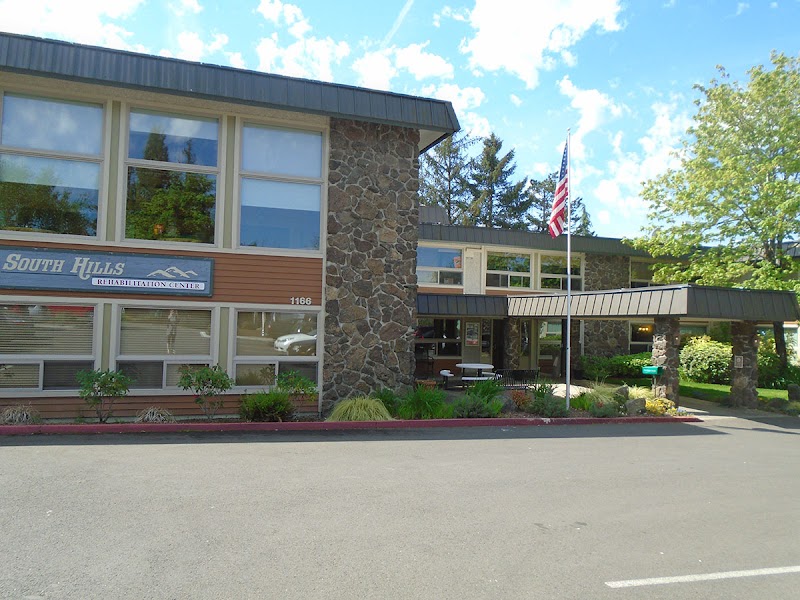
1166 E. 28TH AVENUE, EUGENE, OR 97403 (541) 345-0534
For profit - Limited Liability company 110 Beds VOLARE HEALTH Data: November 2025 1 Immediate Jeopardy citation
Trust Grade
0/100
#122 of 127 in OR
Last Inspection: August 2025

Inspected within the last 6 months. Data reflects current conditions.

Overview

South Hills Rehabilitation Center has received a Trust Grade of F, indicating significant concerns about the quality of care provided. Ranked #122 out of 127 facilities in Oregon, this places them in the bottom half of the state, and #12 out of 13 in Lane County, meaning there is only one local option that performs worse. The facility's trend is improving, having reduced issues from 41 in 2024 to 12 in 2025, but it still faces serious challenges, including a staffing turnover rate of 70%, which is significantly higher than the state average of 49%. While there have been no fines reported, the center has concerning RN coverage, being below 94% of Oregon facilities, which can lead to missed health issues. Specific incidents include a critical failure to implement infection control measures for a highly contagious infection, and a serious incident where a resident suffered second-degree burns due to delayed treatment after spilling hot coffee, highlighting both the need for better staff training and improved safety protocols.

Trust Score
F
0/100
In Oregon
#122/127
Bottom 4%
Safety Record
High Risk
Review needed
Inspections
Getting Better
41 → 12 violations
Staff Stability
⚠ Watch
70% turnover. Very high, 22 points above average. Constant new faces learning your loved one's needs.
Penalties
✓ Good
No fines on record. Clean compliance history, better than most Oregon facilities.
Skilled Nurses
⚠ Watch
Each resident gets only 19 minutes of Registered Nurse (RN) attention daily — below average for Oregon. Fewer RN minutes means fewer trained eyes watching for problems.
Violations
⚠ Watch
63 deficiencies on record. Higher than average. Multiple issues found across inspections.
★☆☆☆☆
1.0
Overall Rating
★☆☆☆☆
1.0
Staff Levels
★★★☆☆
3.0
Care Quality
★★☆☆☆
2.0
Inspection Score
Stable
2024: 41 issues
2025: 12 issues

The Good

  • Full Sprinkler Coverage · Fire safety systems throughout facility
  • No fines on record

Facility shows strength in fire safety.

The Bad

1-Star Overall Rating

Below Oregon average (3.0)

Significant quality concerns identified by CMS

Staff Turnover: 70%

24pts above Oregon avg (46%)

Frequent staff changes - ask about care continuity

Chain: VOLARE HEALTH

Part of a multi-facility chain

Ask about local staffing decisions and management

Staff turnover is very high (70%)

22 points above Oregon average of 48%

The Ugly 63 deficiencies on record

1 life-threatening 1 actual harm
Aug 2025 12 deficiencies 1 IJ (1 facility-wide)
CRITICAL (L)

Immediate Jeopardy (IJ) - the most serious Medicare violation

Infection Control (Tag F0880)

Someone could have died · This affected most or all residents

⚠️ Facility-wide issue

**NOTE- TERMS IN BRACKETS HAVE BEEN EDITED TO PROTECT CONFIDENTIALITY** Based on observation, interview, and record review it was determined the facility failed to implement infection control practice...

Read full inspector narrative →
**NOTE- TERMS IN BRACKETS HAVE BEEN EDITED TO PROTECT CONFIDENTIALITY** Based on observation, interview, and record review it was determined the facility failed to implement infection control practices to prevent the spread of clostridioides difficile (c-diff, a bacterium that can cause severe diarrhea and inflammation of the colon) for all residents, staff, and visitors for 1 of 1 sampled resident (#78). This failure, determined to be an Immediate Jeopardy situation, placed all residents, staff, and visitors at risk for exposure to c-diff, which is highly contagious and can cause serious illness, including life-threatening colitis and death. Findings include:The online reference CDC Preventing C-Diff. revealed the best way to prevent the spread of C-Diff from person to person was for all healthcare workers to wash their hands with soap and water before and after touching contaminated surfaces and for proper disinfection of bleaching surfaces. The online reference CDC How C-Diff. spreads revealed any surface, device or material that becomes contaminated with feces could serve as a reservoir for C- Diff spores. C- Diff spores can transfer to patients by the hands of healthcare personnel who have touched a contaminated surface or item. C-Diff can live on inanimate surfaces for up to five months. A contaminated wheelchair becomes a vector for transmission to other residents, staff, and visitors. The online reference CDC The Progression of C-Diff. Infection revealed C-Diff can be colonized, but the bacteria itself can be spread through spores even in the absence of detectable toxin levels. Resident 78 admitted to the facility on [DATE] with diagnoses including C-Diff, weakness, and nicotine dependence. A review of the 7/29/25 Hospital Discharge Summary revealed Resident 78 had a diagnosis of C-Diff. The C-Diff DNA revealed it was positive, and the toxin was negative (can indicate colonization rather than active infection). The resident was to continue with oral antibiotics through 8/5/25 and was to be on isolation enteric precautions (including PPE gloves and a gown, disinfect all equipment used before it left the room and hand washing with soap and water prior to exit of the room). A review of the 7/30/25 Smoking Safety Assessment revealed the resident was assessed for smoking safety and was deemed independent, able to smoke in the designated smoking area at the facility. A review of the facility floor plan revealed the designated smoking area for the residents was located on the second floor of the facility. The 7/30/25 care plan for C-Diff indicated Resident 78 was on contact isolation precautions and all equipment used was to be disinfected before it left the room. A review of the August 2025 MAR revealed Resident 78 completed a course of antibiotics on 8/3/25.Bowel records from 8/2/25 through 8/7/25 indicated Resident 78 had 13 bowel movements; nine were loose/diarrhea; bowel movements each day. The last loose stool was on 8/7/25 at 1:00 PM.On 8/4/25 at 1:53 PM Resident 78 was observed to exit her/his room independently on the first floor and self-propel the wheelchair down the hallway to the elevator. The resident did not disinfect her/his wheelchair before it left the room, and no staff members were observed to exit the resident's room after the resident.On 8/7/25 at 1:50 PM Resident 78 was observed to exit her/his room independently on the first floor and self-propelled the wheelchair down the hallway to the elevator. The resident did not disinfect her/his wheelchair before it left the room, and no staff members were observed to exit the resident's room after the resident.On 8/7/25 at 4:13 PM Resident 78 was observed to exit the elevator independently on the second floor and self-propel towards the back exit that led to the dedicated smoking area for residents. Staff 4 (CNA) greeted Resident 78 and asked if she/he wanted assistance outside; Resident 78 accepted. Staff 4 was observed to wheel Resident 78 to the back door, open the locked back door using a key card that was on her person with non-gloved hands and assist the resident by pushing the wheelchair outside to the smoking area. Staff 4 was observed to have re-entered the facility using her key card with a non-gloved hand and proceeded to her job duties without washing her hands with soap and water after assisting Resident 78. On 8/7/25 at 4:16 PM and at 6:21 PM Staff 4 stated she was unaware Resident 78 was on contact precautions. Staff 4 stated it was not communicated to staff who worked on the second floor any resident who was on transmission-based precautions from the first floor. Staff 4 confirmed she did not wash her hands with soap and water after contact with Resident 78's wheelchair. On 8/7/25 at 4:41 PM Staff 10 (CNA) and at 4:46 PM Staff 11 (CNA) both stated they worked on the second floor and were unaware of any resident who was on contact precautions from the first floor as that was not communicated to them. On 8/7/25 at 5:09 PM Staff 12 (CNA) stated he worked on the first and second floors and was aware of Resident 78's contact precautions; however, he was unsure how that was communicated to the staff on the second floor. On 8/7/25 at 5:15 PM Staff 13 (CNA) stated she worked on the second floor only and it was not communicated to her if any residents from the first floor were on contact precautions. On 8/7/25 at 6:16 PM Staff 14 (CNA) stated she assisted any resident who was an independent smoker to the smoking area by using her key card to unlock the door. She stated she was unaware of residents on precautions from the first floor. On 8/7/25 at 7:00 PM Staff 5 (CNA) stated he worked on the first floor, worked with Resident 78, and was aware of the contact precautions in place. Staff 5 stated Resident 78's wheelchair was on a cleaning schedule for night shift to complete but was not disinfected with bleach each time the resident left her/his room. Staff 5 stated Resident 78 was an independent smoker and left her/his room often to go the smoking area on the second floor. On 8/7/25 at 8:10 PM Staff 1 (Administrator), Staff 3 (Vice President of Operations), and Staff 6 (Regional RN) were informed the facility's failure to implement appropriate precautions to prevent the spread of C-Diff constituted an Immediate Jeopardy situation. An IJ start date was determined as 7/29/25. An IJ removal plan was requested. On 8/7/25 at 10:32 PM an acceptable facility IJ removal plan was submitted by the facility. The plan indicated the facility would implement the following actions:-Resident 78 requested to stay in her/his room except for medically necessary transport. Smoking privileges with one-on-one escort until transmission-based precautions were discontinued per Infection Preventionist (IP) order. -Resident 78 identified as having or being at risk for C-Diff was reviewed by the Director of Nursing (DON) and with the Medical Director on 8/7/25. -Contact Precautions Re-Education: All staff were reminded verbally and in writing that Resident 78 was on Contact Precautions- including gown and gloves upon room entry, hand hygiene with soap and water upon exit of room or after disinfection or contact with contaminated equipment, and disinfection of all equipment after use. -Wheelchair Disinfection: Resident 78's wheelchair was sanitized with bleach wipes prior to exit and re-entry to her/his room and after any use. A dedicated wheelchair was labeled and restricted to Resident 78 only. - Hand Hygiene Enforcement: Staff member involved in breach (Staff 4) was re-educated immediately on proper C-Diff protocol, specifically that alcohol-based sanitizer is ineffective against spores; soap and water are required. Staff 4 was removed from direct resident care until re-education was completed, and competency was validated. -Environmental Cleaning: Housekeeping performed immediate bleach-based cleaning of all surfaces touched by Resident 78 and/or the resident's wheelchair (elevator buttons, back door, and smoking area entrance). -Resident 78 was placed on one-on-one to ensure compliance with C-Diff precautions. The immediacy was removed on 8/11/25 after onsite verification of the IJ removal plan.
CONCERN (D)

Potential for Harm - no one hurt, but risky conditions existed

Deficiency F0554 (Tag F0554)

Could have caused harm · This affected 1 resident

Based on observation, interview and record review the facility failed to assess a resident for safe self-administration of medication for 1 of 1 sampled resident (#15) reviewed for choices. This place...

Read full inspector narrative →
Based on observation, interview and record review the facility failed to assess a resident for safe self-administration of medication for 1 of 1 sampled resident (#15) reviewed for choices. This placed resident at risk for adverse side-affects. Findings include: Resident 15 was admitted to the facility in 7/2025 with diagnoses including Chronic Obstructive Pulmonary Disease (COPD) and muscle weakness.No documentation was found in the clinical record to indicate the resident was assessed to self-administer her/his medication. On 8/6/25 at 8:17 AM, Resident 15 was observed sitting in her/his room with one inhaler on the bedside table and a second inhaler on the nightstand. Resident 15 stated staff were aware of the inhalers in her/his room. Resident 15 explained she/she uses the inhaler when her/his COPD flares up and expressed concern that if they had to wait 10 minutes for staff during a flareup, they would be dead.On 8/6/25 at 8:18 AM, Staff 27 (CNA) confirmed Resident 15 had an inhaler at her/his bedside and reported this to the charge nurse. Staff 27 stated she was unaware if the resident was authorized to have the inhaler and would need to confirm with the nurse. Staff 27 later confirmed Resident 15 had two inhalers at her/his bedside. On 8/6/25 at 8:20 AM, Staff 26 (LPN) stated he was aware residents are required to be assessed prior to keeping medications at the bedside but did not know if Resident 15 had been assessed. Staff 26 checked both inhalers and confirmed one inhaler had two doses remaining and the other had 200 doses remaining. Staff 26 stated he would follow up with administration to determine if the resident had been assessed to self-administer medications. Staff 26 left both inhalers in Resident 15's room. On 8/6/25 at 8:59 AM, Staff 6 (Corporate DNS) acknowledged resident 15 had two inhalers in her/his room. Staff 6 confirmed Resident 15 did not have an order to self-administer her/his inhalers and had not been assessed to self-administer medications.
CONCERN (D)

Potential for Harm - no one hurt, but risky conditions existed

Notification of Changes (Tag F0580)

Could have caused harm · This affected 1 resident

**NOTE- TERMS IN BRACKETS HAVE BEEN EDITED TO PROTECT CONFIDENTIALITY** Number of residents sampled:Number of residents cited:F580- Based on interview and record review the facility failed to notify t...

Read full inspector narrative →
**NOTE- TERMS IN BRACKETS HAVE BEEN EDITED TO PROTECT CONFIDENTIALITY** Number of residents sampled:Number of residents cited:F580- Based on interview and record review the facility failed to notify the physician of a resident's change of condition for 1 of 2 sampled residents (#40 and 72) reviewed for hospitalizations. Findings include: Based on interview and record review the facility failed to notify the physician of a resident's change of condition for 1 of 2 sampled residents (# 72) reviewed for hospitalizations. Findings include: 1. Resident 72 was admitted to the facility in 5/2025 with diagnoses including acute kidney disease.An admission MDS dated [DATE] revealed Resident 72 had a BIMS score of 14, which indicated the resident was cognitively intact.A review of the nursing notes dated 6/1/24 at 6:44 PM, revealed nursing staff documented Resident 72's blisters forming on her/his chest were draining. The resident also complained of feeling she/he was on fire and being stabbed with needles. Resident 72 was sent to the emergency department. A review of Resident 72's medical records revealed the physician was not notified of the change of condition the evening of 6/1/24.On 8/08/2025 at 10:58 AM, Staff 6 (Corporate DNS) confirmed the lack of documentation and stated the physician was not notified. On 8/08/2025 at 10:58 AM staff 2 (Director of nursing) and staff (Regional nurse) acknowledged physician notification had not occurred.
CONCERN (D)

Potential for Harm - no one hurt, but risky conditions existed

Free from Abuse/Neglect (Tag F0600)

Could have caused harm · This affected 1 resident

Based on observation, interview and record review it was determined the facility failed to ensure residents were free from abuse for 2 of 3 sampled residents (#s 43 and 49) reviewed for abuse. This pl...

Read full inspector narrative →
Based on observation, interview and record review it was determined the facility failed to ensure residents were free from abuse for 2 of 3 sampled residents (#s 43 and 49) reviewed for abuse. This placed residents at risk for further abuse. Findings include:The Abuse Policy revised 5/14/23 stated abuse included verbal abuse. The policy applies to any person who is an owner, operator, employee, manager, agent or contractor of the facility. It further states it is not necessary for the reporter to categorize the event as abuse for the facility to consider the potential for abuse and act accordingly.1. Resident 43 was admitted to the facility in 6/2025 with diagnoses including respiratory failure.Resident 43's admission MDS from 6/2025 revealed a BIMS score of 14, indicating the resident was cognitively intact.A progress note on 7/23/25 revealed a resident verbally abused a Spanish-speaking resident who was visiting with her/his family by making comments including, these people need to go back to where they belong, they are taking over. I thought these was the United States (sic). A progress note dated 7/30/25 revealed the resident again yelled at the Spanish-speaking resident, who was speaking on the telephone at the time. On 8/7/25 at 4:50 PM, Witness 1 (family) stated another resident at the facility had rude outbursts demanding, why don't you speak English this is America speak English (sic), and on 8 different occasions multiple family members, as well as staff and residents, witnessed these verbal outbursts. Witness 1 stated the staff apologized to Resident 43 and made her stay away instead of dealing with the resident who was having outbursts. Witness 1 stated Resident 43 was sitting in the dining area on a phone call, and the other resident was watching TV. She/he told Resident 43, shut up. Why can't you speak English? You are in America (sic), and continued being rude, obnoxious and disrespectful. Witness 1 stated the facility staff told the family to ignore the other resident. On 8/8/25 at 10:06 AM, Witness 2 (Community Partner) stated Resident 43's family called her and wanted to file a complaint about the facility's failure to intervene because another resident was making racial slurs toward the resident and her/his family. Witness 2 stated the family member told her the statements were making the resident uncomfortable, and even though Resident 43 was not sure what was being said, (Resident 43) knows it is bad. Witness 2 also stated the family member told her the resident no longer wanted to go into the communal areas of the facility because of the hostile behavior of the other resident. On 8/8/25 at 11:30 AM, Staff 26 (LPN) stated if there were verbal confrontations between residents, he was trained to speak with the residents then talk to the unit manager, and, if necessary, follow up with the DNS. He stated he was not sure why Resident 43 was moved to another room and stated he was not aware of verbal aggression toward Resident 43. Staff 26 stated most of the time Resident 43 would go outside when she/he was out of her/his room and had not been sitting in the dining room recently.On 8/11/25 at 8:00 AM, Staff 20 (Nursing Assistant) stated Resident 43 did not want to come into the second-floor dining area when the other resident was there because the other resident said racist things to Resident 43. Staff 20 stated Resident 43 would go outside instead of being in the second-floor common area to avoid the resident. Staff 20 stated she was not aware of facility staff doing anything to stop the verbal abuse by the resident. She stated Resident 43 talked to her about it because she speaks Spanish and took the time to listen to Resident 43's concerns. Staff 20 stated she recognized the other resident's behavior as verbal abuse.On 8/11/25 at 12:45 PM Resident 43 stated she/he was talking with her/his grandson and his girlfriend in the common area and another resident turned and stared at them and said, Why are you guys speaking in Spanish don't you know you are in America (sic)? Resident 43 stated the other resident kept talking but the staff ignored it. Resident 43 stated there were other times the same resident made racial comments to her/him and her/his family. When her/his grandson came back the next time, staff took him aside and told him not to take it personal and just ignore the resident's comments. Her/his grandson was very upset by the staff's comments.Resident 43 stated she/he was on phone with her/his granddaughter and the other resident started making racial comments again so Resident 43 ended her/his phone call. A CNA asked Resident 43 if she/he wanted to go to another room or table and the other resident just kept saying things. Resident 43 confirmed she/he would not go out in the common areas if the other resident was there, so she/he goes outside or stays away from the common area. Resident 43 stated she/he feels targeted because she/he is from a different race and stands out from the rest of the residents. Resident 43 stated she/he was moved to another hall to be further away from the other resident.On 8/11/25 at 3:30 PM, Staff 1 (Administrator) and Staff 2 (DNS) stated they learned of the verbal abuse to Resident 43 on 8/8/25. Staff 3 (Vice President of Operations) entered the room and much of the conversation was repeated. 2. Resident 49 was admitted to the facility in 3/2025 with diagnoses including dementia and anxiety.Resident 49's St. Louis Mental Status Exam (SLUMS) was 2/30 indicating mild cognitive impairment. On 8/4/25 at 10:35 AM, Resident 49 stated her/his former roommate and Resident 49 had been arguing about the volume of the televisions in the room. Resident 49 stated a staff person came into the room and talked with them and when the staff person left the roommate made a racial slur. Resident 49 stated she/he was moved to her/his current room after the argument. Resident 49 stated as a result of the comment she/he no longer wants to go out into the facility because she/he does not want to interact with the other resident.On 8/8/25 at 12:08 PM, Staff 21 (CNA) stated since the incident, Resident 49 prefers to stay in her/his room. Staff 21 stated before the incident Resident 49 used to come out and sit in the common area on the second floor.On 8/11/25 at 3:30 PM, Staff 1 (Administrator) and Staff 2 (DNS) stated Resident 49 suffered from a urinary tract infection at the time of the argument with her/his roommate which caused her/him to be confused. During the interview with Staff 1 and Staff 2, Staff 3 (Vice President of Operations) entered the room and much of the conversation was repeated.
CONCERN (D)

Potential for Harm - no one hurt, but risky conditions existed

Report Alleged Abuse (Tag F0609)

Could have caused harm · This affected 1 resident

Based on observation, interview, and record review it was determined the facility failed to prevent abuse for 2 of 3 residents (#s 43 and 49) reviewed for abuse. This placed residents at risk for abus...

Read full inspector narrative →
Based on observation, interview, and record review it was determined the facility failed to prevent abuse for 2 of 3 residents (#s 43 and 49) reviewed for abuse. This placed residents at risk for abuse. Findings include: The Abuse Policy revised 5/14/23 states abuse included verbal abuse. The policy applies to any person who is an owner, operator, employee, manager, agent or contractor of the facility. It further states it is not necessary for the reporter to categorize the event as abuse for the facility to consider the potential for abuse and act accordingly and it remains the responsibility of the covered individual to verify the report (to appropriate entity) timely.1. Resident 43 was admitted to the facility in 6/2025 with diagnoses including respiratory failure.Resident 43's admission MDS completed in 6/2025 revealed a BIMS score of 14, indicating the resident was cognitively intact. A progress note on 7/23/25 revealed a resident verbally abused a Spanish-speaking resident who was visiting with her/his family by making comments including, these people need to go back to where they belong, they are taking over. I thought these was the United States (sic). A progress note dated 7/30/25 revealed the resident again yelled at the Spanish-speaking resident, who was speaking on the telephone at the time. On 8/7/25 at 4:50 PM, Witness 1 (family) stated another resident at the facility made rude outbursts demanding, why don't you speak English? This is America, speak English (sic). On 8 different occasions multiple family members, as well as staff and residents, witnessed these verbal outbursts. Witness 1 stated the staff apologized to Resident 43 and made her stay away instead of dealing with the resident who was having outbursts. Witness 1 stated Resident 43 was in the facility sitting in the dining area on a phone call and the other resident was watching TV and told Resident 43, Shut up. Why can't you speak English? You are in America (sic), and continued being rude, obnoxious and disrespectful. Witness 1 stated the facility staff told them to ignore the other resident. On 8/8/25 at 10:06 AM, Witness 2 (Community Partner) stated Resident 43's family called her and wanted to file a complaint about the facility's failure to intervene because another resident was making racial slurs toward the resident and her/his family. Witness 2 stated the family member told her the statements were making the resident uncomfortable, and even though Resident 43 was not sure what was being said, (Resident 43) knows it is bad. Witness 2 also stated the family member told her the resident no longer wanted to go into the communal areas of the facility because of the hostile behavior of the other resident. On 8/11/25 at 12:45 PM Resident 43 stated she/he was talking with her/his grandson and his girlfriend in the common area and another resident turned and stared at them and then said, Why are you guys speaking in Spanish? Don't you know you are in America (sic)? Resident 43 stated the staff ignored it. Resident 43 stated there were other times the same resident made racial comments to her/him and her/his family. When her/his grandson came back the next time, staff took him aside and told him not to take it personal and just ignore the resident's comments. Her/his grandson was very upset by the staff's comments.Resident 43 stated she/he was on phone with her/his granddaughter and the other resident started making racial comments again so Resident 43 ended her/his phone call. A CNA asked Resident 43 if she/he wanted to go to another room or table while the other resident just kept saying things. On 8/5/25 Staff 1 (Administrator) was asked to provide copies of all internal and facility-reported incidents (FRI) involving alleged abuse. Staff 1 did not provide any documentation of an investigation or FRI for the events related to verbal abuse of Resident 43. On 8/11/25 at 3:30 PM, Staff 1 (Administrator) and Staff 2 (DNS) stated they learned of the verbal abuse to Resident 43 on 8/8/25. During the interview with Staff 1 and Staff 2, Staff 3 (Vice President of Operations) entered the room and much of the conversation was repeated. 2. Resident 49 was admitted to the facility in 3/2025 with diagnoses including dementia and anxiety.Resident 49's St. Louis Mental Status Exam (SLUMS) was 2/30 indicating mild cognitive impairment. On 8/4/25 at 10:35 AM, Resident 49 stated her/his former roommate and Resident 49 had been arguing about the volume of the televisions in the room. Resident 49 stated a staff person came into the room and talked with them and when the staff person left the roommate made a racial slur. Resident 49 stated she/he was moved to her/his current room after the argument. Resident 49 stated as a result of the comment, she/he no longer wants to go out into the facility because she/he does not want to interact with the other resident.On 8/5/25 Staff 1 (Administrator) was asked to provide copies of all internal and facility-reported incidents (FRI) involving alleged abuse. Staff 1 did not provide any documentation of an investigation or FRI for the events related to verbal abuse of Resident 49. On 8/11/25 at 3:30 PM, Staff 1 and Staff 2 (DNS) stated Resident 49 suffered from a urinary tract infection at the time of the argument with her/his roommate which caused her/him to be confused. During the interview with Staff 1 and Staff 2, Staff 3 (Vice President of Operations) entered the room and much of the conversation was repeated.
CONCERN (D)

Potential for Harm - no one hurt, but risky conditions existed

Investigate Abuse (Tag F0610)

Could have caused harm · This affected 1 resident

Based on interview and record review, the facility failed to report an allegation of abuse for 3 of 3 sampled residents reviewed for abuse resident (#s 43, 49 and 69). This placed residents at risk fo...

Read full inspector narrative →
Based on interview and record review, the facility failed to report an allegation of abuse for 3 of 3 sampled residents reviewed for abuse resident (#s 43, 49 and 69). This placed residents at risk for uninvestigated abuse. Findings include: The Abuse Policy revised 5/14/23 states abuse included verbal abuse. The policy applies to any who is an owner, operator, employee, manager, agent or contractor of the facility. It further states it is not necessary for the reporter to categorize the event as abuse for the facility to consider the potential for abuse and act accordingly and it remains the responsibility of the covered individual to verify the report (to appropriate entity) timely.1. Resident 43 was admitted in 6/2025 with diagnoses including respiratory failure.Resident 43's admission MDS completed in 6/2025 revealed a BIMS score of 14, indicating the resident was cognitively intact.1. Resident 43 was admitted in 6/2025 with diagnoses including respiratory failure.Resident 43's admission MDS completed in 6/2025 revealed a BIMS score of 14, indicating the resident was cognitively intact.A progress note on 7/23/25 revealed a resident verbally abused a Spanish-speaking resident who was visiting with her/his family by making comments including, these people need to go back to where they belong they are taking over. I thought these was the United States (sic). A note dated 7/30/25 revealed the resident again yelled at the Spanish-speaking resident, who was speaking on the telephone at the time. On 8/7/25 at 4:50 PM, Witness 1 (family) stated another resident at the facility had rude outbursts demanding, why don't you speak English this is America speak English (sic), and on 8 different occasions multiple family members, as well as staff and residents, witnessed these verbal outbursts. Witness 1 stated the staff would apologize to Resident 43 and make her stay away instead of dealing with the resident who was having outbursts. Witness 1 stated Resident 43 was in the facility sitting in the dining area on a phone call and the other resident was watching TV and told telling Resident 43, Shut up why can't you speak English you are in America (sic), and continued being rude, obnoxious and disrespectful. Witness 1 stated the facility staff had not discussed the outbursts with the family other than to tell them to ignore the other resident. On 8/8/25 at 10:06 AM, Witness 2 (Community Partner) stated the Resident 43's family called her and wanted her to file a complaint about the facility's failure to intervene because another resident was making racial slurs toward the resident and her/his family. Witness 2 stated the family member told her the statements were making the resident uncomfortable, and even though Resident 43 was not sure what is being said, (Resident 43) knows it is bad. Witness 2 also stated the family member told her the resident no longer wanted to go into the communal areas of the facility because of the hostile behavior of the other resident. On 8/11/25 at 12:45 PM Resident 43 stated she/he was talking with her/his grandson and his girlfriend in the common area and another resident turned and stared at them and then said, Why are you guys speaking in Spanish don't you know you are in America (sic)? Resident 43 stated the other resident kept talking and saying other things but the staff ignored it. Resident 43 stated there were other times the same resident made racial comments to her/him and her/his family. When her/his grandson came back the next time staff took him aside and told him not to take it personal and just ignore the resident's comments and her/his grandson was very upset by the staff's comments.Resident 43 stated she/he was on phone with her/his granddaughter and the other resident started making racial comments again so Resident 43 ended her/his phone call. A CNA asked Resident 43 if she/he wanted to go to another room or table and the other resident just kept saying things. On 8/5/25 Staff 1 (Administrator) was asked to provide copies of all internal and facility-reported incidents (FRI) involving alleged abuse. Staff 1 did not provide any documentation of an investigation or FRI for the events related to verbal abuse of Resident 43. On 8/11/25 at 3:30 PM, Staff 1 (Administrator) and Staff 2 (DNS) stated they learned of the verbal abuse to Resident 43 on 8/8/25, implying they had not had time to initiate an investigation. During the interview with Staff 1 and Staff 2, Staff 3 (Vice President of Operations) entered the room and much of the conversation was repeated. Staff 3 stated, Thank you, we will look into this.2. Resident 49 was admitted to the facility in 3/2025 with diagnoses including dementia and anxiety.A Psychiatric Evaluation conducted 5/13/25 indicated Resident 43 had a SLUMS On 8/4/25 at 10:35 AM, Resident 49 stated her/his former roommate and Resident 49 had been arguing about the volume of televisions in the room. Resident 49 stated a staff person came into the room and talked with them and when the staff person left the roommate made a racial slur. Resident 49 stated the slur was not made directly at her/him but was stated at a volume Resident 49 would not be able to avoid hearing. Resident 49 was very reserved in his language and bearing and would not repeat the exact language her/his former resident used. Resident 49 stated she/he was moved to her/his current room after the argument. Resident 49 stated as a result of the comment she/he no longer wants to go out into the facility because she/he does not want to interact with the other resident.Resident 49's St. Louis Mental Status Exam (SLUMS) was 2/30 indicating mild cognitive impairment. A review of the resident's clinical record revealed a Psych Note dated 5/19/25 stating the resident was irritable and expressed persecutory beliefs after an incident involving a racial slur, which resulted in Resident 49 being moved to another unit. On 8/5/25 Staff 1 (Administrator) was asked to provide copies of all internal and facility-reported incidents (FRI) involving alleged abuse. Staff 1 did not provide any documentation of an investigation or FRI for the events related to verbal abuse of Resident 49. On 8/11/25 at 3:30 PM, Staff 1 and Staff 2 (DNS) stated Resident 49 had suffered from a urinary tract infection at the time of the argument with her/his roommate which caused her/him to be confused. Staff 1 and Staff 2 did not comment on the lack of investigation of verbal abuse of Resident 43. During the interview with Staff 1 and Staff 2, Staff 3 (Vice President of Operations) entered the room and much of the conversation was repeated. Staff 3 stated, Thank you, we will look into this.
CONCERN (D)

Potential for Harm - no one hurt, but risky conditions existed

Deficiency F0628 (Tag F0628)

Could have caused harm · This affected 1 resident

**NOTE- TERMS IN BRACKETS HAVE BEEN EDITED TO PROTECT CONFIDENTIALITY** Based on interview and record review the facility failed to inform the resident of the Bed Hold Policy for 2 of 2 sampled reside...

Read full inspector narrative →
**NOTE- TERMS IN BRACKETS HAVE BEEN EDITED TO PROTECT CONFIDENTIALITY** Based on interview and record review the facility failed to inform the resident of the Bed Hold Policy for 2 of 2 sampled residents (#40 and 72) reviewed for hospitalization. This placed residents at risk for being uninformed of their rights. Findings include: Resident 40 was admitted to the facility in 1/2023 with diagnoses including Type 2 diabetes mellitus. Resident 40 has a BIMS of 15 (cognitively intact). The undated Bed Hold Policy stated before the facility transferred a resident to a hospital the facility shall provide the resident a copy of the Bed Hold Policy and document in the resident's record whether the resident or resident's representative declined or agreed to pay to hold the bed. According to the policy, if a resident was unable to make a decision due to physical or mental incapacity and there was no legal representative to make a decision, the information would be documented in the resident's clinical record. A 3/4/25 Progress Note indicated Resident 40's roommate informed staff Resident 40 had fallen. Resident 40 was falling asleep as staff attempted to assess her/his condition and her CBG (blood glucose) was 63. The resident began exhibiting agonal breathing (an abnormal, gasping pattern of respiration that often indicates a medical emergency) and EMS was called. Resident 40 was transported to the hospital by EMS. On 8/7/24 at 4:28 PM, Staff 23 (LPN) stated the process when a resident needs to be sent to the hospital was to notify the doctor and unit manager and if it was a crisis, to call 911 and request an ambulance. Staff 23 stated if the resident was coherent, they would offer them a bed hold verbally but not provide a written notice. On 8/7/25 at 4:35 PM, Staff 8 (LPN/Unit Manager) stated staff were to call the family and inform them of the bed hold. On 8/7/25 at 4:53 PM, Resident 40 stated she/he was unconscious and not in any condition to get information when she/he was sent out the hospital on 3/4/25. Resident 40 stated she/he did not receive any paperwork from the facility when she/he was taken to the hospital. On 8/7/25 at 4:55 PM, Staff 3 (VP of Operations) stated the Discharge Transfer Notice was to be handed to the resident by nursing staff as they were wheeled out of the facility. On 8/7/25 at 5:05 PM, Staff 1 (Administrator) stated residents were supposed to get the pre-printed brochure and a copy of the Bed Hold Policy when they discharged to the hospital. 2. Resident 72 was admitted to the facility in 5/2025 with diagnoses including acute kidney disease. An admission MDS dated [DATE] revealed Resident 72 had a BIMS score of 14, which indicated the resident was cognitively intact. A review of the nursing notes dated 6/1/24 at 6:44 PM revealed the nurse documented Resident #72 developed blisters forming on her chest that are draining. The resident also complained of feeling she is on fire and being stabbed with needles. Resident was sent to emergency department. No documentation was found in clinical record informing resident 72 of Bed Hold Policy or written notice of transfer to the hospital. On 8/07/2025 5:32 PM Staff 2 (DNS) stated she could not find notice in clinical record for resident 72. On 8/07/2025 at 5:27 PM Staff 1 (Administrator) and Staff 2 (DNS) confirmed there was no bed hold notice given for resident 72. On 8/07/2025 5:39 PM, Staff 3 (VP of Operations) Staff 16 (SSD) did not give discharge and treatment notice, we dropped the ball.
CONCERN (D)

Potential for Harm - no one hurt, but risky conditions existed

Quality of Care (Tag F0684)

Could have caused harm · This affected 1 resident

**NOTE- TERMS IN BRACKETS HAVE BEEN EDITED TO PROTECT CONFIDENTIALITY** Based on interview and record review it was determined the facility failed to follow physician orders related to labs for 1 of 1...

Read full inspector narrative →
**NOTE- TERMS IN BRACKETS HAVE BEEN EDITED TO PROTECT CONFIDENTIALITY** Based on interview and record review it was determined the facility failed to follow physician orders related to labs for 1 of 1 sampled residents (#62) reviewed for mood and behavior. This placed residents as risk for unmet needs. Findings include:Resident 62 was admitted to the facility on [DATE] with diagnoses including a stroke with fluency disorder (disrupts the natural flow of speech) and depression. The 7/28/25 psychiatric admission progress note indicated a new order for CBC (Complete Blood Count) lab.A review of Resident 62's medical record revealed no indication a CBC lab draw was obtained.On 8/11/25 at 2:22 PM Staff 2 (DNS) stated she was not aware of the laboratory order for Resident 62, and it was not completed.
CONCERN (D)

Potential for Harm - no one hurt, but risky conditions existed

Accident Prevention (Tag F0689)

Could have caused harm · This affected 1 resident

Based on observations, interviews, and record reviews it was determined the facility failed to monitor a resident after a fall for 1 of 3 sampled residents (# 10) reviewed for accidents. This placed r...

Read full inspector narrative →
Based on observations, interviews, and record reviews it was determined the facility failed to monitor a resident after a fall for 1 of 3 sampled residents (# 10) reviewed for accidents. This placed residents at risk for injury. Findings include: Resident 10 was admitted to the facility in 7/2025 with diagnoses including stroke.A Fall Investigation Report indicated that on 6/12/25 at 4:10 AM, Staff 24 (Former LPN) responded to Resident 10's call light and found her/him on the floor next to her/his bed. It was determined Resident 10 fell out of bed and her/his roommate activated the call light. Resident 10 was unable to recall how she/he ended up on the floor and did not know if she/he struck her/his head.On 6/12/25 at 4:10 AM, neurological checks were initiated. The Neurological Check Assessment form directed staff to complete neurological checks every 15 minutes for one hour, every 30 minutes for one hour, and every hour for four hours. Resident 10's clinical record contained documentation of only one neurological assessment.On 8/11/25 at 11:00 AM, Staff 23 (LPN) stated that when a resident experienced an unwitnessed fall, staff were expected to complete and document neurological assessments.On 8/11/25 at 11:32 AM, Staff 2 (DNS) stated nurses were expected to complete and document neurological checks following an unwitnessed fall. Staff 2 acknowledged neurological assessments were not completed for Resident 10.
CONCERN (D)

Potential for Harm - no one hurt, but risky conditions existed

Garbage Disposal (Tag F0814)

Could have caused harm · This affected 1 resident

Based on observation and interview the facility failed to ensure refuse containers were covered for 1 of 1 exterior refuse containers. This placed residents at risk for pest infestations. Findings inc...

Read full inspector narrative →
Based on observation and interview the facility failed to ensure refuse containers were covered for 1 of 1 exterior refuse containers. This placed residents at risk for pest infestations. Findings include:On 8/4/25 at 9:45 AM, the outdoor refuse container for the facility was observed during a walk through with Staff 9 (Dietary Manager) of the outdoor trash and recycling area for the facility. The lid to the dumpster was open with a gap of about twelve to fifteen inches between the lid and body of the dumpster at the front of the unit. Staff 9 stated the staff did not always close the dumpster because it was difficult to close. When Staff 9 attempted to close the lid of the dumpster, he was unable to do so and stated the cranking mechanism used to close the dumpster appeared to be broken.
CONCERN (E)

Potential for Harm - no one hurt, but risky conditions existed

Deficiency F0725 (Tag F0725)

Could have caused harm · This affected multiple residents

Based on observation and record review it was determined the facility failed to ensure adequate staffing for 15 out of 33 days for 1 of 1 facility reviewed for sufficient staffing. This placed residen...

Read full inspector narrative →
Based on observation and record review it was determined the facility failed to ensure adequate staffing for 15 out of 33 days for 1 of 1 facility reviewed for sufficient staffing. This placed residents at risk for unmet needs. Findings include:The Direct Care Staffing Daily Report forms 7/1/25 through 8/3/25 revealed the facility did not have sufficient CNA staffing for six out of 33 days reviewed. -7/3/25, (day shift).-7/4/25, (evening shift).-7/22/25, 7/5/25, 7/8/25, 7/19/25, (night shift). On 5/9/25 at 9:09 AM, Staff 25 (Regional Staffing Coordinator) confirmed the facility did not have sufficient staffing on the above dates.
CONCERN (E)

Potential for Harm - no one hurt, but risky conditions existed

Food Safety (Tag F0812)

Could have caused harm · This affected multiple residents

Based on observation and interview the facility failed to ensure staff properly washed hands for 2 of 3 kitchen staff observed. This placed residents at risk for foodborne illness. Findings include:On...

Read full inspector narrative →
Based on observation and interview the facility failed to ensure staff properly washed hands for 2 of 3 kitchen staff observed. This placed residents at risk for foodborne illness. Findings include:On 8/4/25 at 12:12 PM, Staff 30 (Dietary Aide) grabbed a plate cover from other staff that had left kitchen and placed it on the dirty dish counter and went back to plating lunches without washing his hands. On 8/4/25 at 12:20 PM, Staff 30 washed his hands, shut off the water with a paper towel and then dried his hands with the same paper towel. On 8/4/2025 12:23 PM, Staff 31 (Prep Cook/Dietary Aide) opened the refrigerator to remove items. After completing her task she washed hands, turned off the faucet with wet hands then dried her hands with a towel. On 8/4/25 a 12:25 PM, Staff 30 washed his hands, turned off the faucet with wet hands and dried his hands with a paper towel before returning to plating food. On 8/4/2025 at 12:36 PM Staff 30 stated he was trained to turn off the faucet with a paper towel then dry his hands with it and had not been aware the towel he used to turn off the faucet was contaminated. On 8/4/25 at 12:41 PM, Staff 19 (Corporate Dietary Manager) was present in the kitchen during lunch preparation and stated Staff 30 and Staff 31 did not follow the correct hand washing procedure.
Oct 2024 8 deficiencies
CONCERN (D) 📢 Someone Reported This

A family member, employee, or ombudsman was alarmed enough to file a formal complaint

Potential for Harm - no one hurt, but risky conditions existed

Free from Abuse/Neglect (Tag F0600)

Could have caused harm · This affected 1 resident

Based on interview and record review it was determined the facility failed to protect residents' right to be free from verbal abuse by staff for 1 of 3 residents (#10) reviewed for abuse and neglect. ...

Read full inspector narrative →
Based on interview and record review it was determined the facility failed to protect residents' right to be free from verbal abuse by staff for 1 of 3 residents (#10) reviewed for abuse and neglect. This placed residents at risk for abuse. Findings include: Resident 10 admitted to the facility in 9/2024 with diagnoses including chronic ulcer to left lower leg, and fracture to the sacrum. An Investigation Report, with an investigation date from 10/3/24 through 10/8/24, revealed on 10/3/24 at approximately 11:00 AM Resident 10 asked Staff 17 (Admissions Coordinator) to assist with filling out a grievance form. Resident 10 stated she/he was asleep and Staff 4 (CNA) came into the room and, with a loud voice, stated I need your vitals. Staff 4 was loud enough to wake Resident 10 from a deep sleep. Resident 10 stated she/he did not know why Staff 4 was yelling. Staff 4 continued to yell and his voice got louder. Resident 10 stated she/he raised her/his voice to match Staff 4's voice. Staff 4 informed Resident 10 he was at the facility for three years and stated he was going to do what he does. Staff 4 left the room, and then came back and told Resident 10 to turn the TV down because it was too loud, and then he left. Staff 4 came back a third time and yelled I'm going to do what I have to do. Resident 4 stopped talking and listening to Staff 4 because his voice was too loud. Staff 4 came back into the room again and stated, It does not matter what you say to anyone, I'm going to do what I want to do. Resident 10 repeated what Staff 4 said, and Staff 4 started calling Resident 10 a lair. Staff 4 called Resident 10 a liar multiple times with each time getting louder. Resident 10 asked Staff 4 to leave the room multiple times, but he continued to stay and call Resident 10 a liar. A 10/7/24 MDS indicated Resident 10's BIMS score was 15 indicating she/he was cognitively intact. Resident 10 exhibited no physical, verbal, or other behavioral symptoms during the seven days look back period. On 10/8/24 at 10:56 AM Resident 10 stated Staff 4 called her/him a damn liar six to eight times. Resident 10 stated Staff 4's voice was strong and when Staff 4 came into the room he just slapped the blood pressure cuff on her/him while she/he was still in a daze from waking up. Staff 4 told Resident 10 he needed to get the vitals checks completed. Staff 4 told Resident 10 he was so loud because his roommate was hard of hearing. Staff 4 came back into the room later and told Resident 10 to turn down her/his TV. Resident 10 stated she/he felt like Staff 4 verbally abused her/him. Resident 10 stated she/he told Staff 4 to leave her/his room six to eight times. Resident 10 stated Staff 32 could also hear what occurred. On 10/14/24 at 10:58 AM Staff 17 stated on 10/3/24 she went into Resident 10's room and she/he reported Staff 4 verbally abused her/him. Resident 10 requested to speak to the Staff 1 (Administrator) or Staff 2 (DNS) and if they were not available to fill out a grievance. Staff 17 did not find Staff 1 or Staff 2 so as she brought back a grievance form to Resident 10's room, she could hear yelling down the hallway coming from Resident 10's area. When Staff 17 arrived at Resident 10's door Staff 4 was at the foot of Resident 10's bed, and Staff 32 (LPN) was standing by the closets in the room. Staff 4 was apologizing to Resident 10, Resident 10 interrupted Staff 4 and asked him to get out of her/his room. As Staff 4 walked out of the room he stopped three different times and yelled at Resident 10 she/he was a lair. After Staff 4 left the room Staff 32 informed Resident 10 she would replace Staff 4 with another CNA. Attempts to contact Staff 32 on 10/11/24, 10/14/24 and 10/15/24 by phone were unsuccessful. On 10/15/24 at 8:43 AM Staff 4 stated he went into Resident 10's room, obtained her/his vital signs, and she/he was upset about Staff 4 waking her/him up. Staff 4 then went to obtain Resident 10's roommate's vital signs, it was bothering Resident 10, and she/he asked Do you have to be so fucking loud? Staff 4 brought Resident 10 breakfast and later she/he stated Staff 4 did not bring her/his breakfast. Staff 4 came back to the room to apologize and stated to Resident 10 they did not have a good start to the day, but Resident 10 was still upset. Staff 4 stated he did call Resident 10 a liar but did not yell at her/him. On 10/16/24 at 10:30 AM Staff 1, Staff 2 and Staff 37 (Regional Nurse Consultant) stated during their investigation Staff 17 did not say Staff 4 was yelling at Resident 10. Staff 2 confirmed their investigation was found to be unsubstantiated. Staff 2 stated Staff 4 should have left Resident 10's room and reported Resident 10's behavior to a charge nurse when Resident 10's behavior escalated and she/he told Staff 4 to leave the room.
CONCERN (D) 📢 Someone Reported This

A family member, employee, or ombudsman was alarmed enough to file a formal complaint

Potential for Harm - no one hurt, but risky conditions existed

Report Alleged Abuse (Tag F0609)

Could have caused harm · This affected 1 resident

Based on interview and record review it was determined the facility failed to report investigations timely to the State Survey Agency for 3 of 6 sampled residents (#s 12, 19, and 20) reviewed for medi...

Read full inspector narrative →
Based on interview and record review it was determined the facility failed to report investigations timely to the State Survey Agency for 3 of 6 sampled residents (#s 12, 19, and 20) reviewed for medications, abuse, and neglect. This placed residents at risk for abuse and neglect. Findings include: 1. Resident 12 admitted to the facility in 9/2024 with diagnoses including anxiety and a leg fracture. A FRI form dated 9/22/24 indicated an incident was reported to the State Agency on 9/22/24 for an unknown incident date. A related Investigation Report with an investigation date of 9/22/24 through 9/27/24 was received by the State Agency on 10/2/24. On 10/16/24 at 10:49 AM Staff 1 (Administrator), Staff 2 (DNS) and Staff 37 (Regional Nurse Consultant) stated Staff 2 thought she emailed the investigation timely, but she did not, and confirmed the investigation was sent late to State Agency. 2. Resident 19 admitted to the facility in 5/2024 with diagnoses including pain and surgical aftercare. A FRI form dated 6/24/24 indicated an incident was reported to the State Agency on 6/24/24 for a 6/19/24 incident. The facility was made aware of the incident on 6/24/24. An Investigation Report with an investigation date of 6/19/24 through 7/1/24 was received by the State Agency on 7/4/24. On 10/16/24 at 10:58 AM Staff 1 (Administrator), Staff 2 (DNS) and Staff 37 (Regional Nurse Consultant) stated the facility had issues contacting one of the witnesses and confirmed the investigation was sent late to the State Agency. 3. Resident 20 admitted to the facility in 5/2024 with diagnoses including a leg fracture. A FRI form dated 9/27/24 indicated an incident was reported to the State Agency on 9/27/24 for a 9/27/24 incident. The facility was made aware of the incident on 9/27/24. An Investigation Report with an investigation date of 9/27/24 through 10/10/24 was received by the State Agency on 10/10/24. On 10/16/24 at 11:27 AM Staff 1 (Administrator), Staff 2 (DNS) and Staff 37 (Regional Nurse Consultant) confirmed the 9/27/24 investigation was sent late to the State Agency.
CONCERN (D) 📢 Someone Reported This

A family member, employee, or ombudsman was alarmed enough to file a formal complaint

Potential for Harm - no one hurt, but risky conditions existed

Investigate Abuse (Tag F0610)

Could have caused harm · This affected 1 resident

Based on interview and record review it was determined the facility failed to conduct timely or thorough investigations for 3 of 6 sampled residents (#s 11, 19, and 20) reviewed for medications and ac...

Read full inspector narrative →
Based on interview and record review it was determined the facility failed to conduct timely or thorough investigations for 3 of 6 sampled residents (#s 11, 19, and 20) reviewed for medications and accidents. This placed residents at risk for falls, uncontrolled pain, and overdose. Findings include: 1. Resident 11 admitted to the facility in 3/2023 with diagnoses including arthritis. Review of a Progress Note dated 6/3/24 revealed Resident 11 was found on the floor next to her/his bed laying on her/his left side. A review of an Un-witnessed Fall investigation dated 6/3/24 revealed Resident 11 was found on the floor next to her/his bed laying on her/his left side. The investigation was completed on 6/26/24. On 10/16/24 at 10:39 AM Staff 1 (Administrator), Staff 2 (DNS) and Staff 37 (Regional Nurse Consultant) confirmed Resident 11's fall investigation for her/his 6/3/24 fall was completed late. 2. Resident 19 admitted to the facility in 5/2024 with diagnoses including pain and surgical aftercare. A review of the TAR dated 6/2024 instructed staff to change Resident 19's right lower leg dressing daily with a start date of 5/28/24. On 6/19/24 and 6/21/24 Staff 18 (Agency LPN) completed Resident 19's wound treatment. An Investigation Report with an investigation date of 6/24/24 through 7/1/24 indicated Resident 19 submitted a grievance on 6/24/24 alleging Staff 18 (Agency LPN) was rough during care and had poor bedside manner during wound care treatment on 6/19/24. Resident 19 indicated the application of skin prep was more sensitive and caught [her/him] off guard. Staff 18 was taken off the facility's schedule and would not be rescheduled. Allegations of mistreatment and abuse were unsubstantiated. The investigation did not include witness statements of other residents, staff, or Staff 18. Attempts to reach Resident 19 on 10/8/24 and 10/9/24 were unsuccessful. On 10/14/24 at 10:21 AM Staff 18 stated the facility did not contact her regarding the concern about Resident 19's wound care and she was unaware there was a concern. On 10/16/24 at 11:03 AM Staff 1 (Administrator), Staff 2 (DNS) and Staff 37 (Regional Nurse Consultant) confirmed the investigation should have included information about Resident 19's pain medication. Staff 2 stated they were unable to contact Staff 18 for a witness statement. Staff 2 stated she was out of the facility and may not have followed up after her return. 3. Resident 20 admitted to the facility in 5/2024 with diagnoses including a leg fracture. A review of a Nursing Note dated 9/27/24 indicated Resident 20 was unresponsive roughly an hour after a medication administration. An Investigation Report with an investigation date of 9/27/24 through 10/10/24 revealed Resident 20's family member reported the facility was sedating and abusing Resident 20. On 9/22/24 a floor nurse reported altered mentation of the resident, Resident 20 was examined at a hospital emergency department (ED), and then returned to the facility. Resident 20 complained of inadequate pain control and repeatedly requested more narcotic pain and sedating medications. There was discussion of narcotic influence as the longer she/he was in the ED the normal she/he presented. The physician indicated it was suspected Resident 20 had altered mentation due to sedation from pain medications. The conclusion of the investigation revealed abuse and neglect were ruled out, Resident 20 had altered mentation on 9/27/24 and the facility responded timely. Per provider and family direction the facility was to assist the resident to balance and manage pain with pain medications, but not over-sedate the resident. The investigation included a paragraph regarding a different resident and a verbal altercation with another resident unrelated to Resident 20's investigation. The investigation did not include a reconciliation of Resident 20's medications or review of administration of narcotics or sedating medications administered. On 10/14/24 at 9:53 AM Staff 26 (LPN) stated on 9/27/24 Resident 20 was completely cognitively intact and, after medication administration, Resident 20 was unresponsive and she/he was sent to the ED. On 10/16/24 at 11:28 AM Staff 1 (Administrator), Staff 2 (DNS) and Staff 37 (Regional Nurse Consultant) stated they were focusing on the general complaint and communication between the facility and the emergency room visits. Staff 37 stated she reviewed medications to ensure administered as ordered but did not include in the investigation. Refer to F842.
CONCERN (D) 📢 Someone Reported This

A family member, employee, or ombudsman was alarmed enough to file a formal complaint

Potential for Harm - no one hurt, but risky conditions existed

Deficiency F0658 (Tag F0658)

Could have caused harm · This affected 1 resident

Based on interview and record review it was determined facility staff failed to follow professional standards of practice during care and services for 1 of 3 (#12) sampled residents reviewed for abuse...

Read full inspector narrative →
Based on interview and record review it was determined facility staff failed to follow professional standards of practice during care and services for 1 of 3 (#12) sampled residents reviewed for abuse and neglect. This placed residents at risk for abuse and neglect. Findings include: Resident 12 admitted to the facility in 9/2024 with diagnoses including a leg fracture. A FRI was received on 9/23/24 which indicated Staff 7 (CNA) was a little too personal with her. Staff 7 spent too much time with Resident 12, rubbed cream on her/his buttocks and massaged her/his right hip in a way which felt inappropriate, and unlike any other staff. Staff 7 also gave Resident 12 a big hug. Staff 7 provided his personal phone number to Resident 12 and reported to her/him that he could be her/his personal caregiver at her/his home when she/he discharged from the facility. Staff 7 also spent way too much time with Resident 12 and came into her/his room and visited with her/him. On 10/8/24 at 12:58 PM Resident 12 stated Staff 7 massaged her/his leg, and no other CNAs were massaging her/him. Staff 7 came and sat in Resident 12's room for a long time and when he left, he asked Resident 12 for a hug as he told her/him he was not coming back. Resident 12 stated she/he felt Staff 7 was going over the line. Staff 7 also provided his name, address, and phone number to be a possible in-home caregiver after she/he discharged from the facility. Resident 12 stated she/he did not feel it was sexual abuse but felt Staff 7's behavior was not professional. On 10/11/24 at 8:17 AM Witness 7 (Family Member) stated Resident 12 reported to her that Staff 7 was overly friendly and wrote his name and phone number on paper to be Resident 12's home caregiver. Witness 7 stated Staff 36 (Speech Therapist) took a photo of the paper. Staff 7 also took a tube of cream out of her/his pocket and told Resident 12 it was a cream he used on her/his bad back, and he applied the cream on Resident 12. Witness 7 stated Resident 12 never complained of any of the other staff members and she/he no longer wanted Staff 7 to provide care to her/him. On 10/11/24 at 9:25 AM Staff 36 stated she saw the paper with Staff 7's contact information he provided to Resident 12, and she photographed the paper and reported the information to Staff 35 (Director of Rehabilitation). On 10/11/24 at 9:41 AM Staff 35 stated he reported the information from Staff 36 regarding Staff 7's contact information to Staff 1 (Administrator) as he was told it was inappropriate. Staff 35 stated it was in their hands after he reported it. On 10/11/24 at 11:41 AM Staff 7 stated he provided his phone number to Resident 12's family for possible in-home caregiving. Staff 7 stated he did not sit with Resident 12 and visit with her/him in her/his room. Staff 7 stated he believed Resident 12 gave him a hug once as a friendly thank you type hug. Staff 7 denied massaging Resident 12's hip but did provide incontinent care and barrier cream. On 10/16/24 at 10:43 AM Staff 1 (Administrator), Staff 2 (DNS) and Staff 37 (Regional Nurse Consultant) confirmed it was against facility policy and a conflict of interest for Staff 7 to provide his phone number and solicit work outside of the facility to Resident 12, and Resident 12 was modest but did not feel inappropriate physical contact occurred. Resident 12 reported that conversations between Staff 7 and Resident 12 were odd.
CONCERN (D) 📢 Someone Reported This

A family member, employee, or ombudsman was alarmed enough to file a formal complaint

Potential for Harm - no one hurt, but risky conditions existed

ADL Care (Tag F0677)

Could have caused harm · This affected 1 resident

**NOTE- TERMS IN BRACKETS HAVE BEEN EDITED TO PROTECT CONFIDENTIALITY** Based on interview and record review it was determined the facility failed to ensure dependent residents received required assis...

Read full inspector narrative →
**NOTE- TERMS IN BRACKETS HAVE BEEN EDITED TO PROTECT CONFIDENTIALITY** Based on interview and record review it was determined the facility failed to ensure dependent residents received required assistance with ADLs for 2 of 3 sampled residents (#s 21 and 22) reviewed for ADLs. This placed residents at risk for unmet needs. Findings include: 1. Resident 21 admitted to the facility in 8/2024 with diagnoses including dementia and anxiety. A review of Resident 21's care plan dated 8/20/24 indicated Resident 21 had an ADL self-care performance deficit and required substantial to maximal assistance from staff with bathing. The admission MDS dated [DATE] revealed Resident 21's BIMS score was four, which indicated severe cognitive impairment. A review of the Documentation Survey Report (DSR) for 8/20/24 through 8/31/24 revealed Resident 21's bathing days were Monday and Thursday, and she/he required substantial to maximal assistance from staff for bathing on 8/22/24. On 8/26/24 there was no documentation Resident 21 received bathing. On 8/29/24 documentation indicated Resident 21 refused bathing. The DSR from 9/1/24 through 9/16/24 revealed Resident 21 received bathing on 9/5/24, and refused bathing on 9/2/24 and 9/12/24. On 9/9/24 Staff 19 (CNA) documented bathing was not attempted due to environmental limitations. Resident 21 went 13 days without bathing from 8/23/24 to 9/5/24, and seven days from 9/6/24 through 9/16/24. A review of 8/2024 and 9/2024 Skin and Shower Review sheets revealed on 8/26/24 a sheet was filled out with no resident signature of refusal and was signed by a CNA and nurse. No other information was on the form. On 8/28/24 the sheet was signed by Resident 21 as refused bathing and signed by the CNA and nurse. No other documentation of Skin and Shower Review sheets were found in Resident 21's clinical record. On 10/10/24 at 12:18 PM Staff 19 stated he only worked at the facility for a few weeks and did not know to mark environmental issues instead of resident refusal when there was a lack of staff, and he could not complete Resident 21's bathing. On 10/14/24 at 9:20 AM Staff 27 (CNA) stated the process when a resident refused a shower was to reapproach the resident, complete a Skin and Shower Review sheet, have the resident sign the sheet that she/he refused the shower, and then the nurse would also sign the sheet. On 10/16/24 at 11:29 AM Staff 1 (Administrator), Staff 2 (DNS) and Staff 37 (Regional Nurse Consultant) stated they were starting a new tracking system for missed showers. 2. Resident 22 admitted to the facility in 7/2024 with diagnoses including history of falling, dementia, and anxiety. On 8/28/24 the State Survey Agency received a public complaint which indicated Resident 22 had an incontinent episode because it took staff longer to assist residents as the facility was short-staffed. A review of Resident 22's care plan dated 7/22/24 indicated she/he had an ADL self-care performance deficit and was totally dependent on one staff for toilet use and transferring. Resident 22 had occasional bladder incontinence and used a bedside commode. The admission MDS dated [DATE] revealed Resident 22 was rarely understood, required substantial to maximal assistance with toilet transfers and was occasionally incontinent of bladder. A Direct Care Staffing Daily Report revealed on 8/2024 during the evening shift Resident 22 was continent 22 times out of 31 opportunities. On 8/13/24 there was no documentation of bladder elimination. There were five instances Resident 22 was documented as wet and one time as soaked. A Direct Care Staff Daily Report dated 8/28/24 revealed on evening shift the facility was not staffed to meet the state minimum staffing requirements. On 10/9/24 at 9:59 AM Witness 4 (Complainant) confirmed Resident 22 had an incontinent episode due to a long wait for staff assistance. On 10/8/24 at 10:36 AM Staff 28 stated there were negative outcomes to the residents because the facility was short-staffed including continent residents experiencing incontinent episodes. On 10/16/24 at 11:32 AM Staff 1 (Administrator), Staff 2 (DNS) and Staff 37 (Regional Nurse Consultant) stated staff were supposed to call Staff 2 even if it was the middle of the night if they needed assistance because of low staffing.
CONCERN (D) 📢 Someone Reported This

A family member, employee, or ombudsman was alarmed enough to file a formal complaint

Potential for Harm - no one hurt, but risky conditions existed

Pharmacy Services (Tag F0755)

Could have caused harm · This affected 1 resident

Based on interview and record review it was determined the facility failed to ensure resident records related to controlled medications were complete and accurate for 1 of 3 sampled residents (#20) re...

Read full inspector narrative →
Based on interview and record review it was determined the facility failed to ensure resident records related to controlled medications were complete and accurate for 1 of 3 sampled residents (#20) reviewed for medications. This placed residents at risk for medication errors. Findings include: Resident 20 admitted to the facility in 5/2024 with diagnoses including a leg fracture. Review of the 9/2024 Narcotic Logbook (NLB) revealed the following regarding oxycodone (narcotic pain medication) related to Resident 20: Oxycodone five mg one tablet twice daily PRN start date 9/18/24: -9/20/24 4:30 AM one tablet, 8:13 AM two tablets, and 8:45 PM two tablets. -9/21/24 2:15 AM two tablets, 7:07 AM one two tablets, 1:30 PM two tablets, 4:19 PM one tablet, 8:45 PM two tablets. -9/22/24 7:05 AM two tablets 9/27 (under 9/22/24) 8:30 PM two tablets. -9/23/24 7:19 AM one tablet, 1:04 PM one tablet, and 8:35 PM two tablets. -9/24/24 9:34 AM one tablet, 1:19 PM two tablets, and 7:30 PM one tablet. Resident 20 was administered two tablets instead of one on nine occurrences and was administered over the twice a day order on four days. Oxycodone five mg one tablet every four to six hours start date 9/17/24: -9/17/24 7:26 PM two tablets -9/18/24 12:00 AM, one tablet 8:45 AM, 3:02 PM one tablet, 8:00 PM was documented three times on lines 5, 6, and 7 with one tablet documented on each line (one wasted so two total administered). -9/19/24 12:36 AM one tablet, 3:00 PM one tablet, Line 11 time was illegible with one tablet administered and quantity going from two tablets to zero tablets. Resident 20 was administered two tablets instead of one physician ordered tablet two occurrences. Oxycodone one tablet every six hours not to exceed three tablets in a day start date 9/7/24: -9/10/24 2:09 AM one tablet -9/12/24 12:08 AM one tablet -9/14/24 4:16 PM one tablet, 10:25 PM one tablet, 9/14/24 5:45 AM (next line under the 10:25 PM administration) one tablet. -9/19/24 8:00 PM one tablet -9/25/24 11:41 PM one tablet -9/26/24 3:00 AM one tablet -9/27/24 10:10 PM one tablet, 7:00 PM one tablet -9/29/24 7:37 AM one tablet (next line under was illegible date with no time or signature documented one tablet) -9/30/24 4:50 PM one tablet Review of the 9/2024 MAR instructed staff to administer the following oxycodone medication: Oxycodone 10 mg one tablet three times a day for pain start date 9/18/24. No oxycodone 10 mg was documented on the NLB. Oxycodone five mg one tablet three times a day start date 9/25/24: no oxycodone five mg one tablet scheduled three times a day was documented on the NLB. Oxycodone five mg one tablet every 12 hours PRN start date 9/18/24: -9/19/24 at 12:36 AM date and time matched with oxycodone one tablet every four to six hours. -9/19/24 at 12:38 PM no match found on the NLB. Oxycodone five mg every four hours as needed one to two tablets start date 9/10/24 discontinued 9/17/24. No match found on the NLB. Oxycodone five mg every four hours PRN start date 9/17/24 and discontinued on 9/18/24. No match found on the NLB. On 10/16/24 at 11:28 AM Staff 1 (Administrator), Staff 2 (DNS) and Staff 37 (Regional Nurse Consultant) stated she reviewed Resident 20's medications and Resident 20 received medications as physician ordered, but staff used the same page in the NLB after changes in Resident 20's physician orders.
CONCERN (E) 📢 Someone Reported This

A family member, employee, or ombudsman was alarmed enough to file a formal complaint

Potential for Harm - no one hurt, but risky conditions existed

Deficiency F0725 (Tag F0725)

Could have caused harm · This affected multiple residents

**NOTE- TERMS IN BRACKETS HAVE BEEN EDITED TO PROTECT CONFIDENTIALITY** Based on observation, interview, and record review it was determined the facility failed to provide sufficient staffing to meet ...

Read full inspector narrative →
**NOTE- TERMS IN BRACKETS HAVE BEEN EDITED TO PROTECT CONFIDENTIALITY** Based on observation, interview, and record review it was determined the facility failed to provide sufficient staffing to meet the needs of residents for 3 of 5 sampled residents (#14, 17, and 22) and 2 of 2 floors (1st floor and 2nd floor) reviewed for staffing. This placed residents at risk for unmet needs. Findings include: 1. Resident 17 admitted to the facility in 4/2024 with diagnoses including paraplegia and pressure ulcer. A review of Resident 17's care plan dated 4/16/24 indicated Resident 17 was at risk for falls and to ensure the resident's call light was in reach, to encourage the resident to use it for assistance, and she/he needed prompt response to all requests for assistance. A review of Resident 17's admission MDS dated [DATE] revealed Resident 17's BIMS score was 15 which indicated she/he was cognitively intact. On 10/8/24 at 10:10 AM Resident 17 stated the facility was short-staffed in 8/2024 and 9/2024 and there were times when here/his call light was activated for multiple hours without response. Weekends were horrible with one CNA to 45 residents. On 10/8/24 at 10:36 AM Witness 3 (Complainant) stated she quit working at the facility because the short staffing was unsafe for the residents. Every weekend was short-staffed. One weekend she was assigned 23 residents on day shift. Witness 3 stated residents did not receive showers, and there were incontinent episodes for residents who were continent as well as many falls. On 10/15/24 at 8:41 AM Staff 4 (CNA) stated when he took breaks and lunches the other CNAs did not answer his call lights and, as a result, residents had to wait. Staff 4 stated the short staffing at the facility was ridiculous. On 10/16/24 at 11:05 AM Staff 1 (Administrator), Staff 2 (DNS) and Staff 37 (Regional Nurse Consultant) stated they worked with their corporate office to address the concern of staffing. 2. Resident 22 admitted to the facility in 7/2024 with diagnoses including history of falling, dementia and anxiety. On 8/28/24 the State Survey Agency received a public complaint which indicated Resident 22 had an incontinent episode because it took staff longer to assist residents as the facility was short-staffed. The admission MDS dated [DATE] revealed Resident 22 was rarely understood, required substantial to maximal assistance with toilet transfers and was occasionally incontinent of bladder. A Direct Care Staffing Daily Report for 8/2024 revealed on evening shift Resident 22 was continent 22 times out of 31 opportunities. On 8/13/24 there was no documentation of bladder elimination. There were five instances Resident 22 was documented as wet and one time as soaked. A Direct Care Staff Daily Report dated 8/28/24 revealed on evening shift the facility was not staffed to meet the state minimum CNA staffing requirements. On 10/9/24 at 9:59 AM Witness 4 (Complainant) confirmed Resident 22 had an incontinent episode because she/he had to wait for staff assistance. On 10/16/24 at 11:05 AM Staff 1 (Administrator), Staff 2 (DNS) and Staff 37 (Regional Nurse Consultant) stated they worked with their corporate office to address the concern of staffing. 3. On 10/8/24 at 10:36 AM Staff 28 stated there were negative outcomes to the residents because the facility was short-staffed including continent residents experiencing incontinent episodes. On 10/8/24 at 10:36 AM Staff 28 (CNA) stated the short staffing at the facility made it unsafe for the residents in 8/2024 and 9/2024. Every weekend the facility was short-staffed, and one day shift she was assigned 23 residents. Bathing was not completed, residents who were continent had incontinent episodes, and there were many falls. Some residents required one-to-one care and there was not enough staff to do so. On 10/11/24 at 8:54 AM Staff 5 (Agency CNA) stated in 8/2024 low staffing was an issue at the facility. One resident was non-weight-bearing, and she/he positioned her/his commode closer to the bed to try and self-transfer because staff could not get there to assist. Another resident did not receive wound care treatments as ordered and refused showers because she/he was concerned her/his wound would get wet and staff would not have time to change the dressing. Staff 5 stated she did not see the facility administration assist when the facility was short-staffed. On 10/11/24 at 11:26 AM Staff 15 (Former CNA) stated there was always a staffing issue at the facility. Staff 15 stated residents fell because of short staffing as it was difficult to keep eyes on everyone who was a fall risk. Staff 15 stated she did not always have time to complete showers and she quit her job at the facility because of the staffing issues. On 10/11/24 at 11:41 AM Staff 7 (CNA) stated it was very common for the facility to be short-staffed, and when he was not working, he received text messages every day during all shifts to come and assist. During one evening shift in 8/2024 he was assigned 24 residents, and he stated at times he did not have time to complete resident bathing and personal hygiene tasks. On 10/14/24 at 9:07 AM Staff 31 (CNA) stated the facility was short-staffed. Staff 31 stated she assigned to provide care for 22 residents and after working four days in a row had to take two days off because her back hurt so bad. Staff 31 stated the short staffing was causing burnout. When Staff 31 came to work there were instances when residents were soaked with urine as a result of deficits with the previous shift. Staff 31 stated some CNAs did their jobs and others reported to her that a resident was strange and those were instances where usually the CNA staff did not provide incontinent care. On 10/14/24 at 9:20 AM Staff 27 (CNA) stated there were staffing concerns off and on, and on 10/13/24 one staff member worked for 24 hours straight, and then he came in and worked a 12 hour shift. Staff 27 stated it was a mess on day shift. Staff 27 stated he usually worked the first floor which was usually not fully staffed. Staff 27 stated, depending on who was working, there were long call light wait times. On 10/14/24 at 11:12 AM Staff 10 (Unit Manager) stated weekend staffing could be a challenge. During the Summer, short staffing on weekends was common and staff had to work harder than normal to complete needed assignments. On 10/15/24 at 8:13 AM Staff 3 (LPN) stated on 10/14/24 a nurse worked by herself for four hours and had two new resident admissions to the facility. There were assignments which were not completed on the previous shift that were passed on to her, and Staff 3 also had to assist in completing that work. Staff 3 stated the facility was almost always short-staffed of CNAs. On 10/15/24 at 9:06 AM Staff 38 (Agency CNA) stated when she first arrived at the facility, she received no orientation and had to ask many questions to know what to do. Staff 38 stated another agency staff provided her information. Staff 38 stated she attempted to complete charting on residents' care, but could not get into the electronic health record system. Staff 38 stated she could not access residents' care plans to know their care needs, and had to ask another temporary agency staff member to find out the care needs of the residents. On 10/15/24 at 9:11 AM Staff 39 (CNA) stated the facility was short-staffed and CNAs responded to call lights the best they could. Staff 39 stated recently on day shift she was assigned 16 to 17 residents. On 10/16/24 at 7:54 AM Staff 30 (Former LPN) stated she quit working at the facility because of low staffing levels. The facility could not keep staff and most of the CNAs were agency staff. There were concerns of residents falling because of low staffing. The CNAs between the first floor and the second floor were not always assigned residents according to State required minimum stafing levels; one CNA may have less than the maximum number of residents, and another more. On 10/16/24 at 8:18 AM Resident 25 confirmed she/he attended an 8/23/24 resident council meeting. Resident 25 was surprised no mention of staffing concerns were documented on the resident council minutes. Resident 25 stated the facility lost the staffing coordinator and on 10/15/24 during the night there was not enough staff in the facility. On 10/16/24 at 8:22 AM Resident 26 confirmed she/he attended an 8/23/24 resident council meeting and thought the reason staffing was not mentioned during resident council meeting was because there was nothing which could be done to solve it, so it did not do any good to mention the staffing concerns during the meeting. On 10/16/24 at 9:15 AM Staff 41 (Former Unit Manager) stated she worked with residents many times to cover for nurses who did not show up to work or called off of work. Staff 41 stated the facility was consistently short one to two CNAs. Call light wait times for residents were over 30 minutes, and resident had falls because there were not enough staff to supervise residents who were impulsive and were fall risks. On 10/16/24 at 11:05 AM Staff 1 (Administrator), Staff 2 (DNS) and Staff 37 (Regional Nurse Consultant) stated they worked with their corporate office to address the concern of staffing.
CONCERN (E) 📢 Someone Reported This

A family member, employee, or ombudsman was alarmed enough to file a formal complaint

Potential for Harm - no one hurt, but risky conditions existed

Staffing Information (Tag F0732)

Could have caused harm · This affected multiple residents

Based on observation, interview, and record review it was determined the facility failed to post accurate and complete staffing information for 1 of 1 facility reviewed for staffing. This placed resid...

Read full inspector narrative →
Based on observation, interview, and record review it was determined the facility failed to post accurate and complete staffing information for 1 of 1 facility reviewed for staffing. This placed residents at risk for incomplete and inaccurate staffing information. Findings include: A review of the Direct Care Staff Daily Reports (DCSDR) from 7/1/24 through 7/30/24, and 8/1/24 through 8/31/24 revealed the following: -7/3/24 no census documented on evening and night shift. -7/7/24 no census documented on night shift. -7/8/24 no DCSDR completed. -7/17/24 no hours worked documented for CNAs on day shift. -7/18/24 no DCSDR completed. -7/21/24 no census documented on night shift -8/10/24 no census documented on night shift -8/23/24 day shift census documented as 27, evening shift documented as 29 and night shift documented as 74. (8/22/24 census was 74 on day shift and 73 on evening and night shift.) A review of Daily Punches (staff time sheet) dated 8/15/24 and 8/28/24 revealed the following: -8/15/24 evening shift: four CNA staff worked a total of 32.5 hours, plus one CNA worked two hours and another CNA worked five hours for a grand total of 39.5 hours worked across six CNA staff. -8/28/24 evening shift: five CNA staff worked a total of 40 hours, plus one CNA worked one hour for a grand total of 41 hours worked across six CNA staff. Review of the DCSDRs for evening shift dated 8/15/24 and 8/28/24 revealed the following: -8/15/24 evening shift: seven CNA staff worked with a total of 56 hours worked. -8/28/24 evening shift: six and a half CNA staff worked with total of 52 hours. On 10/8/24 at 8:37 AM the DCSDR was observed on the wall which all three shifts for 10/7/24 were documented and the 10/8/24 DCSDR was not posted. On 10/9/24 at 10:39 AM and 11:04 AM the DCSDR was observed on the wall which had the day shift staff and hours worked but no census was documented. On 10/16/24 at 11:08 AM Staff 1 (Administrator), Staff 2 (DNS) and Staff 37 (Regional Nurse Consultant) stated the facility had new nurses in general and additional education on completion of the DCSDR sheets was needed.
Mar 2024 33 deficiencies
CONCERN (D)

Potential for Harm - no one hurt, but risky conditions existed

Deficiency F0554 (Tag F0554)

Could have caused harm · This affected 1 resident

Based on observation, interview, and record review it was determined the facility failed to ensure residents were assessed to self-administer medications for 2 of 2 sampled residents (#s 13 and 47) re...

Read full inspector narrative →
Based on observation, interview, and record review it was determined the facility failed to ensure residents were assessed to self-administer medications for 2 of 2 sampled residents (#s 13 and 47) reviewed for pain and dialysis (process to remove fluids and waste from the blood when kidney function fails). This placed residents at risk for an ineffective medication regimen. Findings include: 1. Resident 13 was admitted to the facility in 2022 with a diagnosis of kidney disease. A 2/16/24 Progress Note by Staff 16 (RD) revealed she spoke to the RD at the dialysis center for Resident 13. The note indicated Staff 16 would communicate with the resident's unit manager and see if the resident was appropriate to self-administer a phosphorous binder (medication to lower the mineral phosphate in the blood). Staff 16 also communicated with the unit manager on ensuring staff administered Resident 13's phosphorous binder with meals and not before or after meals. A 3/3/24 quarterly MDS revealed Resident 13 was cognitively intact. On 3/21/24 at 2:35 PM Resident 13 stated she/he was capable and wanted like to self-administer her/his phosphorous binder, but staff did not speak to her/him about the process. Resident 13 stated staff usually brought in the binder after meals and not with meals. On 3/21/24 at 2:38 PM Staff 16 stated she spoke to the RD at the dialysis center for Resident 13 on a regular basis. Approximately one month prior, Staff 16 stated she spoke to Staff 15 (LPN Unit Manager) to see if staff would assess Resident 13 for self-administration of the phosphorous binder. On 3/21/24 at 2:50 PM Staff 15 stated she did not assess Resident 13 for self-administration of her/his medication. 2. Resident 47 was admitted to the facility in 2023 with a diagnosis of diabetes. A 12/19/23 quarterly MDS revealed Resident 47 was cognitively intact. On 3/18/24 at 1:18 PM one tube of medicated cream for external use was observed on Resident 47's bedside table. Resident 47 stated she/he applied the cream PRN. Review of Resident 47's clinical record revealed no self-administration assessment for the cream. On 3/20/24 at 11:26 AM Staff 47 (LPN) stated a resident was to be assessed prior to a resident being able to self-administer medications. Staff 47 stated the resident also had to have an order for the self-administration, a care plan, and the medication needed stored in a secure manner. Staff 47 stated the resident did not have an assessment in her/his clinical record.
CONCERN (D) 📢 Someone Reported This

A family member, employee, or ombudsman was alarmed enough to file a formal complaint

Potential for Harm - no one hurt, but risky conditions existed

Notification of Changes (Tag F0580)

Could have caused harm · This affected 1 resident

3. Resident 19 was admitted to the facility in 1/2020 with diagnoses including diabetes. A review of Resident 19's Physician Orders dated 10/2/22 revealed blood sugar levels were to be checked before ...

Read full inspector narrative →
3. Resident 19 was admitted to the facility in 1/2020 with diagnoses including diabetes. A review of Resident 19's Physician Orders dated 10/2/22 revealed blood sugar levels were to be checked before meals and at bedtime. Staff were to call the provider for results above 300. A review of Resident 19's 2/2024 and 3/2024 Diabetic Administration Records revealed the following: -2/2024 there were 29 instances when Resident 19's blood sugar level exceeded 300. -3/2024 there were six instances when Resident 19's blood sugar level exceeded 300. A review of Resident 19's medical record revealed there was no indication the physician was notified of the resident's high blood sugars. On 3/20/24 at 6:36 PM Staff 34 (Agency LPN) stated she checked the resident's blood sugar levels and the results exceeded 300 at times. Staff 34 stated staff were expected to notify the physician when the resident's blood sugar level was outside the physician parameters. On 3/21/24 at 2:22 PM Staff 15 (LPN Unit Manager) and Staff 26 (Staff Development Coordinator RN) stated staff were expected to follow physician order parameters for monitoring blood sugar levels, including notifying the physician if Resident 19's blood sugar level exceeded 300 and documenting the notification in the resident's medical record. Based on interview and record review it was determined the facility failed to notify residents' representatives regarding changes in status or condition for 3 of 9 sampled residents (#s 19, 41, and 220) reviewed for notification failure and medications. This placed residents and responsible parties at risk for delayed notification. Findings include: 1. Resident 41 was admitted to the facility in 2022 with a diagnosis including respiratory failure. A 9/14/23 at 4:10 PM Nursing Note indicated Witness 3 (Family Member-emergency contact) called to check status of Resident 41 and no one informed her Resident 41 had COVID-19. A 9/14/23 at 6:24 PM Nursing Note indicated Staff 14 (Former DNS) called Witness 3 regarding communication complaints. Staff 14 apologized for poor communication and provided an update on Resident 41's status. On 3/21/24 at 12:13 PM Staff 13 (Social Services) stated the nurse was to notify the family member when a resident obtained COVID-19. Staff 13 stated she only sent out general notifications of COVID-19 in the building. On 3/19/24 at 8:59 AM Witness 3 stated she was not notified Resident 41 tested positive for COVID-19 on 9/11/23, but she was notified on 9/14/23 after she called to check on Resident 41's status. In an interview on 3/22/24 at 10:31 AM Staff 1 (Administrator), Staff 2 (DNS), Staff 37 (Regional Director of Social Services and Activities), Staff 38 (Regional Director of Clinical) and Staff 39 (Northern Regional Director of Operations) stated it was the resident's preference if a family was notified if the resident was their own representative. No documentation was found in Resident 41's clinical record to indicate she/he did not want Witness 3 to be notified of a change in condition. 2. Resident 220 was admitted to the facility in 2023 with diagnosis including brain damage. A 5/16/23 Investigation Report revealed on the evening of 5/16/23 Resident 220 had two episodes of wandering on facility property. A 5/18/23 Nursing Note revealed Staff 14 (Former DNS) spoke to Resident 220 and Witness 1 (Family Member) regarding Resident 220 exit seeking on 5/16/23. Witness 1 was upset that she was not notified Resident 220 left the facility unattended. Staff 14 apologized and assured education would be provided to staff. On 3/19/24 at 7:59 AM Witness 1 (Family Member) confirmed she was not notified of Resident 220's elopement and she spoke to Staff 14 about her concerns. On 3/21/24 at 8:34 AM Staff 14 confirmed the nurse did not notify Witness 1 of Resident 220's elopement. In an interview on 3/22/24 at 10:19 AM with Staff 1 (Administrator), Staff 2 (DNS), Staff 37 (Regional Director of Social Services and Activities), Staff 38 (Regional Director of Clinical) and Staff 39 (Northern Regional Director of Operations), Staff 1 stated it was recommended to attempt to reach a resident's representative the day an elopement occurred. Refer to F689
CONCERN (D) 📢 Someone Reported This

A family member, employee, or ombudsman was alarmed enough to file a formal complaint

Potential for Harm - no one hurt, but risky conditions existed

Safe Environment (Tag F0584)

Could have caused harm · This affected 1 resident

Based on observation and interview it was determined the facility failed to ensure rooms were homelike and in good repair for 2 of 10 sampled residents (#s 2 and 7) reviewed for environment. This plac...

Read full inspector narrative →
Based on observation and interview it was determined the facility failed to ensure rooms were homelike and in good repair for 2 of 10 sampled residents (#s 2 and 7) reviewed for environment. This placed residents at risk for lack of a homelike environment and disrepair. Findings include: Random observations from 3/18/24 through 3/21/24 revealed the following: -The footboard of Resident 7's bed was damaged. It was mended with electrical tape encircling its entire vertical width. Additionally, the fractured segment was angled away from the mattress, failing to align seamlessly with the bed. -A wall in Resident 2's room had multiple large gouges that exposed the underlying drywall, along with numerous black vertical streaks extending approximately four feet in width and four feet in length. On 3/18/24 at 12:57 PM Resident 2 stated the black marks and exposed drywall were present for approximately six to seven months back to when she/he moved rooms. On 3/21/24 at 11:43 AM Staff 42 (Maintenance Director) stated he was aware Resident 7's footboard was broken for roughly two weeks, but did not order a replacement for the damaged piece. Staff 42 entered Resident 2's room with the surveyor. Staff 42 was unaware of the gouges and marks on the resident's wall.
CONCERN (D)

Potential for Harm - no one hurt, but risky conditions existed

Grievances (Tag F0585)

Could have caused harm · This affected 1 resident

Based on interview and record review it was determined the facility failed to ensure a resident's missing items were addressed timely for 1 of 2 sampled residents (#22) reviewed for personal property....

Read full inspector narrative →
Based on interview and record review it was determined the facility failed to ensure a resident's missing items were addressed timely for 1 of 2 sampled residents (#22) reviewed for personal property. This placed residents at risk for loss of meaningful items. Findings include: Resident 22 admitted to the facility in 2024 with a diagnosis of heart disease. On 3/18/24 at 12:38 PM Witness 8 (Family Member) stated approximately one month prior, in 2/2024, he reported to the laundry staff Resident 22's favorite shirt was missing and approximately two weeks ago the resident's new blanket went missing. Witness 8 indicated the staff stated they would look for the items but after he reported the missing items no resolution was provided. On 3/19/24 at 13:35 PM Staff 38 (Regional Director of Clinical) stated there were no missing item forms filled out for Resident 22. On 3/20/24 at 9:32 AM Staff 3 (Laundry Manager) stated a hand-written note was provided to the laundry staff indicating the resident lost a blanket. Staff looked for the item, but did not yet find it. The item did not have the resident's name on it. A grievance form was not filled out and Staff 3 was no longer able to locate the note. On 3/20/24 at 10:10 AM Staff 39 (Northern Regional Director of Operations) stated if a resident reported a missing item it should be documented on a form and staff should provide a response to the resident or responsible party within seven days.
CONCERN (D)

Potential for Harm - no one hurt, but risky conditions existed

Deficiency F0604 (Tag F0604)

Could have caused harm · This affected 1 resident

Based on observation, interview, and record review it was determined the facility failed to monitor and assess the continued use of a physical restraint for 1 of 4 sampled residents (#4) reviewed for ...

Read full inspector narrative →
Based on observation, interview, and record review it was determined the facility failed to monitor and assess the continued use of a physical restraint for 1 of 4 sampled residents (#4) reviewed for accidents. This placed residents at risk for potential abuse or neglect. Findings include: Resident 4 was admitted to the facility in 2022 with diagnoses including muscle wasting and atrophy (shrinkage of muscles or nerve tissues). An 8/14/23 revised care plan indicated Resident 4 was an elopement risk due to dementia and wandering behavior. Interventions included distract Resident 4 from wandering and ensure a Wander Guard placed to the right wrist was working by testing the device every Thursday. A 3/2024 Documentation Survey Report indicated to verify placement of the Wander Guard on the right wrist every shift for elopement prevention. From 3/1/24 through 3/5/24 out of 15 opportunities there was no documentation the device was verified for placement four times. No documentation was found to indicate the device placement was verified from 3/13/24 through 3/22/24. A 3/2024 TAR instructed staff to test the Wander Guard weekly on Thursdays. The order was discontinued on 3/11/24. A 3/15/24 Hospice Facility Visit Note indicated Resident 4 appeared fragile and was at risk for a rapid decline. On 3/18/24 at 2:46 PM Resident 4 was in bed with a Wander Guard placed on her/his right wrist. A 3/20/24 Nursing Note indicated Resident 4 no longer attempted to elope and requested orders to discontinue the Wander Guard. On 3/21/24 at 11:35 AM Staff 15 (LPN Unit Manager) stated Resident 4 was not a wander risk. On 3/22/24 at 6:47 AM Resident 4 was in the downstairs dining room with the Wander Guard in place to right wrist. The alarm to front door triggered and a staff member stated it was Resident 4's Wander Guard causing the alarm to go off as he attempted to take Resident 4 out of the facility for an appointment.
CONCERN (D) 📢 Someone Reported This

A family member, employee, or ombudsman was alarmed enough to file a formal complaint

Potential for Harm - no one hurt, but risky conditions existed

Report Alleged Abuse (Tag F0609)

Could have caused harm · This affected 1 resident

Based on interview and record review it was determined the facility failed to report an elopement event to the State Survey Agency within 24 hours of the incident for 1 of 4 sampled residents (#220) r...

Read full inspector narrative →
Based on interview and record review it was determined the facility failed to report an elopement event to the State Survey Agency within 24 hours of the incident for 1 of 4 sampled residents (#220) reviewed for accidents. This placed residents at risk for accidents. Findings include: Resident 220 was admitted to the facility in 2023 with diagnosis including brain damage. A 5/16/23 Investigation Report revealed on the evening of 5/16/23 Resident 220 had two episodes of wandering on facility property. A FRI form dated 5/18/23 indicated on 5/16/23 Resident 220 walked outside to the facility smoking area without informing staff of her/his intended whereabouts. The FRI was received at the State agency via email on 5/19/23 at 12:24 AM. In an interview on 3/22/24 at 10:20 AM with Staff 1 (Administrator), Staff 2 (DNS), Staff 37 (Regional Director of Social Services and Activities), Staff 38 (Regional Director of Clinical) and Staff 39 (Northern Regional Director of Operations), Staff 1 confirmed the incident was not reported to the State Agency in a timely manner.
CONCERN (D)

Potential for Harm - no one hurt, but risky conditions existed

Deficiency F0637 (Tag F0637)

Could have caused harm · This affected 1 resident

Based on interview and record review it was determined the facility failed conduct a Significant Change MDS assessment within the required timeframe for 1 of 1 sampled resident (#22) reviewed for hosp...

Read full inspector narrative →
Based on interview and record review it was determined the facility failed conduct a Significant Change MDS assessment within the required timeframe for 1 of 1 sampled resident (#22) reviewed for hospice. This placed residents at risk for unassessed needs. Findings include: Resident 22 was admitted to the facility 2024 with a diagnosis including heart disease. A 2/3/24 signed hospice narrative revealed the resident was approved and certified for hospice services by the physician on 2/3/24. Review of Resident 22's clinical record revealed a significant change MDS was not completed within 14 days after the resident was admitted to hospice. On 3/20/24 at 12:54 PM Staff 11 (MDS Coordinator) acknowledged she did not do the significant change MDS after the resident was admitted to hospice. Refer to F849.
CONCERN (D)

Potential for Harm - no one hurt, but risky conditions existed

Deficiency F0657 (Tag F0657)

Could have caused harm · This affected 1 resident

Based on interview and record review it was determined the facility failed to ensure a care plan was revised for 3 of 3 sampled residents (#s 13, 22, and 47) reviewed for dialysis, hospice and pain. T...

Read full inspector narrative →
Based on interview and record review it was determined the facility failed to ensure a care plan was revised for 3 of 3 sampled residents (#s 13, 22, and 47) reviewed for dialysis, hospice and pain. This placed residents at risk for increased injury and pain. Findings include: 1. Resident 13 admitted to the facility in 2022 with a diagnosis including kidney failure. A Progress note dated 1/12/24 revealed Resident 13's dialysis (process to remove fluids and wastes from the blood when the kidneys stop functioning) start times were to change on 1/29/24. On Mondays, Wednesdays, and Fridays Resident 13 was to be at the dialysis center at 7:40 AM and dialysis was to start at 8:00 AM. A Care Plan revised on 9/12/23 revealed Resident 13 had dialysis on Monday, Wednesday, and Friday and she/he was picked up between 8:00 AM and 8:10 AM. A 3/3/24 quarterly MDS revealed Resident 13 was cognitively intact. On 3/18/24 at 2:52 PM Resident 13 stated on dialysis days she/he needed to leave the facility by 7:00 AM. On 3/21/24 at 2:50 PM Staff 15 (LPN Unit Manager) acknowledged the care plan was not updated when the dialysis times changed. Refer to F698 2. Resident 22 admitted to the facility in 2024 with a diagnosis including heart disease. A 2/3/24 signed hospice narrative revealed the resident was approved and certified for hospice services by the physician on 2/3/24. Resident 22's care plan last updated on 2/12/24 revealed the following: -Resident 22 was independent to eat. -Hospice would address the resident's advance directive status. -There was no revision of the care plan related to admission to hospice including the name of the agency. -The discharge plan was to be determined. A 2/22/24 Care Plan Conference form revealed hospice attended the conference. It was determined hospice was to review the resident's advance directive status with the resident and staff were to assist the resident with meals and transfers and not family. The form also indicated the resident was to remain at the facility for care. A 2/22/24 hospice note indicated staff were to notify hospice if Resident 22 had pain, anxiety, or agitation. Staff were also to call hospice if the resident fell. The resident's care plan was not updated to reflect hospice notification, staff only to assist the resident with cares, and the resident's plan to continue to reside in the facility. On 3/19/24 at 12:38 PM Staff 43 (CNA) stated Resident 22 had a private aide and family who assisted the resident to eat. On 3/20/24 at 9:26 AM Staff 13 (Social Services) stated she did not communicate with hospice in order to update the care plan related to advance directive information. On 3/20/24 at 1:05 PM Staff 11 (MDS Coordinator) stated if she did not attend the care conference staff were to notify her of changes which were needed to update the care plan. Staff 11 stated she was not aware of the care conference recommended changes. Refer to F849. 3. Resident 47 admitted to the facility in 2023 with diagnoses including diabetes. A 12/19/23 quarterly MDS revealed Resident 47 was cognitively intact. Progress notes revealed the following: -12/24/23 Resident 47 reported increased pain due to hemorrhoids. -1/5/24 refused cream for hemorrhoid pain due to burning. -1/31/24 Resident 47 reported rectal pain, the resident was assessed, and cream applied. -2/1/24 a new order for hemorrhoids was obtained. -2/2/24 an unscheduled provider visit occurred due to Resident 47's report of increased pain from hemorrhoids. On 3/18/24 at 1:18 PM Resident 47 stated she/he had pain for months related to hemorrhoids. Resident 47's current care plan was not revised to include pain related to hemorrhoids. On 3/20/24 at 1:05 PM Staff 11 (MDS Coordinator) stated if she was not made aware of changes she could not update the care plans. Staff 11 acknowledged Resident 47 had pain related to hemorrhoids since 12/2023 and the care plan was not updated. Refer to F697
CONCERN (D) 📢 Someone Reported This

A family member, employee, or ombudsman was alarmed enough to file a formal complaint

Potential for Harm - no one hurt, but risky conditions existed

ADL Care (Tag F0677)

Could have caused harm · This affected 1 resident

**NOTE- TERMS IN BRACKETS HAVE BEEN EDITED TO PROTECT CONFIDENTIALITY** Based on observation, interview, and record review it was determined the facility failed to ensure dependent residents received ...

Read full inspector narrative →
**NOTE- TERMS IN BRACKETS HAVE BEEN EDITED TO PROTECT CONFIDENTIALITY** Based on observation, interview, and record review it was determined the facility failed to ensure dependent residents received required assistance with ADLs for 3 of 9 sampled residents (#s 4, 35, and 41) reviewed for ADLs and accidents. This placed resident at risk for unmet needs. Findings include: 1. Resident 4 was admitted to the facility in 2022 with diagnoses including muscle wasting and atrophy (shrinkage of muscles or nerve tissues.) A 2/23/23 care plan indicated Resident 4 required extensive assist of one staff with bathing. A 3/2024 Documentation Survey Report (DSR) revealed no documentation Resident 4 received any type of bathing from 3/1/24 through 3/6/24. Resident 41 was admitted to the hospital on [DATE] and readmitted to the facility on [DATE]. The DSR revealed no documentation Resident 4 received any type of bathing from 3/13/24 through 3/20/24. On 3/20/24 at 11:27 AM Staff 12 (CNA) stated she did not always have time to complete all assigned cares for residents and at times had to prioritize taking residents' vitals over completing showers. In an interview on 3/22/24 at 10:33 AM Staff 1 (Administrator), Staff 2 (DNS), Staff 37 (Regional Director of Social Services and Activities), Staff 38 (Regional Director of Clinical) and Staff 39 (Northern Regional Director of Operations) stated Staff 2 was new and was currently going through all of the facility systems. Staff 2 stated continued education was needed. 2. Resident 41 was admitted in 2022 with diagnosis which included stroke. A 7/9/23 Annual MDS indicated Resident 41's BIMS was a 15 which indicated she/he was cognitively intact. Resident 41 required one-person staff assistance with bathing. An 10/18/23 care plan indicated Resident 41 required partial to moderate assistance for bathing and preferred her/his bathing days on Monday and Thursday. On 3/18/24 at 1:15 PM Resident 41 was observed with oily hair and white flakes on her/his shirt. Resident 41 stated it was over a week since she/he was bathed. A review of the 3/2023 Documentation Survey Report revealed Resident 41's last bathing occurred on 3/11/24. No documentation was found in Resident 41's clinical record she/he was offered bathing from 3/12/24 through 3/21/24 (nine days). On 3/20/24 at 11:27 AM Staff 12 (CNA) stated she did not always have time to complete all assigned cares for residents and at times had to prioritize taking residents' vitals over completing showers. In an interview on 3/22/24 at 10:33 AM Staff 1 (Administrator), Staff 2 (DNS), Staff 37 (Regional Director of Social Services and Activities), Staff 38 (Regional Director of Clinical) and Staff 39 (Northern Regional Director of Operations) stated Staff 2 was new and was currently going through all of the facility systems. Staff 2 stated continued education was needed. 3. Resident 35 was admitted to the facility in 2021 with diagnoses including stroke. A care plan revised 1/2024 revealed Resident 35 required extensive assistance of two staff for bathing and dressing and needed supervision/touching assistance with personal hygiene. a. On 3/19/24 at 1:34 PM Witness 9 (Friend) stated Resident 35's nails were often long and dirty and staff did not assist the resident. Witness 9 stated two weeks prior he cut the resident's nails. On 3/19/24 at 2:46 PM with Staff 44 (LPN) Resident 35 was observed to have long fingernails with brown debris underneath the free edges. Staff 44 acknowledged the resident's nails were long, dirty, and needed to be trimmed. Staff 44 stated the resident's nails had to be trimmed by a nurse because the resident was on blood thinning medication. Staff 44 also stated the nurses did not have Resident 35's nail care on the TAR but the CNAs were to notify the nurses when the resident's nails were long. b. Review of Resident 35's 9/2023 showers revealed the resident had nine opportunities for showers. Resident 35 received a shower or bath on 9/9/23, 9/16/23, and 9/19/23. It was documented the resident refused a shower on 9/26/23. Progress notes did not have documentation related to Resident 35's 9/26/23 shower refusal. Review of Resident 35's 3/2024 showers revealed Resident 35 had six opportunities for showers and received a shower or bath on 3/5/24 and 3/9/24. Resident 35 was documented to refuse a shower on 3/12/24. Progress Notes did not have documentation related to Resident 35's 3/12/24 shower refusal. On 3/21/24 at 3:14 PM Staff 15 (LPN Unit Manager) stated if a resident refused a shower the nurse was to communicate with the resident and document in the progress notes. The CNAs were to attempt multiple times, and offer a bed bath or a shower the next day. A request was made of Staff 15 to provide documentation the resident was provided more than three showers in 9/2023 and more than two showers in 3/2024. No additional information was provided.
CONCERN (D) 📢 Someone Reported This

A family member, employee, or ombudsman was alarmed enough to file a formal complaint

Potential for Harm - no one hurt, but risky conditions existed

Quality of Care (Tag F0684)

Could have caused harm · This affected 1 resident

Based on interview and record review it was determined the facility failed to provide care and treatment as care planned, follow physician orders for blood sugar parameters, and provide bowel care for...

Read full inspector narrative →
Based on interview and record review it was determined the facility failed to provide care and treatment as care planned, follow physician orders for blood sugar parameters, and provide bowel care for 3 of 9 residents (#s 4, 35 and 41) reviewed for accidents, and medications. This placed residents at risk for delayed treatment, constipation, and risk for adverse side effects. Findings include: 1. Resident 4 was admitted to the facility in 2022 with diagnoses including muscle wasting and atrophy (shrinkage of muscles or nerve tissues). A 7/10/23 revised care plan indicated Resident 4 had an ADL self-care performance deficit due to weakness and she/he used a soft pad call light to call for assistance. On 3/19/24 at 8:25 AM and 3/21/24 at 7:55 AM Resident 4 was in bed with a regular call light button next to him/her in bed. On 3/20/24 at 10:35 AM Staff 11 (MDS Coordinator) stated she did not know why Resident 4's call light was a regular call light and not a soft pad call light. Staff 11 stated she/he was care planned for a soft pad call light. On 3/20/24 at 11:27 AM Staff 12 (Agency CNA) stated Resident 4 would benefit from having a soft pad call light. 2. Resident 41 was admitted to the facility in 2022 with diagnosis which included dysphagia (a condition with difficulty in swallowing food or liquid). A 9/2023 comprehensive care plan indicated Special Instructions; medications whole in applesauce or pudding one at a time. A 9/10/23 Nursing Note indicated Resident 41 had a significant coughing episode when administered her/his medications without pudding. On 3/20/24 at 10:20 AM Staff 11 (MDS Coordinator) stated she was in the room when the nurse administered Resident 41's medication without applesauce or pudding and she/he started coughing. In an interview on 3/22/24 at 10:31 AM Staff 1 (Administrator), Staff 2 (DNS), Staff 37 (Regional Director of Social Services and Activities), Staff 38 (Regional Director of Clinical) and Staff 39 (Northern Regional Director of Operations) stated it was the expectation of staff to review the care plan for any special instructions. 3. Resident 35 was admitted to the facility in 2021 with diagnosis of a stroke. A 9/2023 bowel record revealed Resident 35 did not have a bowel movement from 9/2/23 through 9/9/23 and from 9/20/23 through 9/28/23. A 9/2023 MAR and TAR revealed Resident 35 was administered a suppository for constipation on 9/6/23 but the results were unknown. No additional bowel care was provided. Progress notes revealed the following: -9/6/23 Resident 35 reported constipation and the nurse was notified. There was no assessment of the resident's abdomen. -9/9/23 the resident did not have a bowel movement for 21 shifts. The resident's abdomen was firm with bowel tones. The resident denied pain. The note indicated a request was made to the physician for an enema. -9/20/23 Resident 35 had a bloody bowel movement and the physician was notified. -9/21/23 and 9/22/23 the resident did not have a bloody bowel movement or abdominal pain. -9/29/23 Resident 35 did not have a bowel movement since 9/20/23. The resident had sluggish bowel tones (decreased bowel motility), denied pain and refused a suppository. On 3/20/24 at 11:59 AM Staff 15 (LPN Unit Manager) acknowledged the resident had multiple days without a bowel movement. A request was made of Staff 15 to provide documentation if bowel care was provided or the resident had additional bowel movements. No additional information was provided. On 3/20/24 at 8:46 PM Staff 45 (LPN) stated if a resident did not have a bowel movement for six shifts bowel care was to be initiated. The bowel care started with oral medications, then progressed to a suppository, then the last step was to administer an enema. If the resident did not have a bowel movement for nine shifts the physician was to be notified.
CONCERN (D)

Potential for Harm - no one hurt, but risky conditions existed

Deficiency F0688 (Tag F0688)

Could have caused harm · This affected 1 resident

**NOTE- TERMS IN BRACKETS HAVE BEEN EDITED TO PROTECT CONFIDENTIALITY** Based on observation, interview, and record review it was determined the facility failed to provide splints to reduce contractur...

Read full inspector narrative →
**NOTE- TERMS IN BRACKETS HAVE BEEN EDITED TO PROTECT CONFIDENTIALITY** Based on observation, interview, and record review it was determined the facility failed to provide splints to reduce contractures (a permanent tightening of muscles, and tendons) for 1 of 1 sampled resident (#18) reviewed for position and mobility. This placed residents at risk for compromised mobility and pain. Findings include: Resident 18 was admitted to the facility in 2019 with diagnoses including contractures of the left and right elbows. An 8/1/23 revised care plan indicated Resident 18 was to receive elbow braces to her/his right and left elbows during the day for six hours. A 2/28/24 quarterly MDS revealed no splint or brace was provided to Resident 18 during a seven-day review period. The [NAME] (care plan for CNAs) reviewed on 3/20/24 had no reference to Resident 18's elbow braces. On 3/19/24 at 9:44 AM Resident 18 was observed in her/his bed with no braces applied to her/his right and left elbows. Resident 18 stated her/his elbow braces were offered inconsistently and last applied three days prior. Resident 18 stated staff did not know how to correctly apply her/his elbow braces and she/he felt less painful when her/his elbows braces were in place. On 3/20/24 at 8:06 AM Staff 29 (CNA) stated she worked with Resident 18 routinely over the last two months and was not aware of the resident's need for elbow braces until 3/19/24. On 3/21/24 at 12:27 PM Staff 28 (LPN-Unit Manager) acknowledged Resident 18's left and right elbow braces were not consistently placed and needed to be in the [NAME] so CNAs were aware.
CONCERN (D)

Potential for Harm - no one hurt, but risky conditions existed

Incontinence Care (Tag F0690)

Could have caused harm · This affected 1 resident

Based on observation, interview, and record review it was determined the facility failed to provide catheter care for 1 of 3 sampled residents (#6) reviewed for catheter care. This placed residents at...

Read full inspector narrative →
Based on observation, interview, and record review it was determined the facility failed to provide catheter care for 1 of 3 sampled residents (#6) reviewed for catheter care. This placed residents at risk for increased infections. Findings include: Resident 6 admitted to the facility in 7/2022 with diagnoses including quadriplegia (paralysis of all four limbs) and dysfunction of the bladder. Review of Resident 6's care plan revised on 12/23/23 revealed the resident had a history of UTIs related to a chronic indwelling catheter. A suprapubic (situated above the pubis) catheter was placed on 11/1/23 due to a dysfunction of the bladder. Resident 6 had an 18 FR [French Foley], 8 cc [cubic centimeter] balloon. A 1/3/24 urology clinic note revealed Resident 6 had her/his suprapubic tube replaced with an 18 French Foley catheter and placed 8cc in the balloon. There was no concern with the suprapubic replacement. Resident 6 was to have a follow-up appointment in one week to exchange the suprapubic tube. A review of Resident 6's medical record from 1/4/24 through 3/17/24 revealed no follow-up urology appointment was made. On 3/18/24 in an Alert Note from Staff 26 (Staff Development Coordinator RN) the Nurse Practitioner asked when Resident 6's last suprapubic catheter change was completed. Staff 26 was unable to locate the information and placed a call to the urology clinic. On 3/20/24 at 10:15 AM Resident 6 was observed on a gurney at the nurses' station. Staff 46 (LPN) stated the resident was scheduled for a urology appointment to have her/his suprapubic catheter changed. A 3/20/24 Nursing Note by Staff 46 at 10:57 AM revealed Resident 6 returned from the urology appointment because it had been canceled and the suprapubic catheter changes can be done at facility, no need for [Resident 6] to go in. A 3/20/24 Order Administration note by Staff 46 at 6:58 PM revealed per urology clinic to change the suprapubic tube with 18 french Foley with 8 ml in balloon. Obtain ua [urinalysis] after changed tube and send to lab. Unable to change as appropriate size catheter not in stock. [Staff 2 (DNS)] aware and will work with supply to obtain. A 3/21/24 Alert Note revealed staff were awaiting supplies to be delivered to change Resident 6's suprapubic catheter and management was aware. On 3/21/24 at 2:09 PM Staff 15 (Unit Manager LPN) and Staff 26 (Staff Development Coordinator RN) acknowledged Resident 6 was not scheduled for a follow-up urology appointment after her/his 1/3/24 appointment, indicating the follow-up was overlooked. Staff 26 stated Resident 6 returned from the 3/20/24 appointment because the urology clinic informed the facility they could change the suprapubic catheter, but the facility lacked the correct supplies to perform the care and was waiting for the supplies.
CONCERN (D)

Potential for Harm - no one hurt, but risky conditions existed

Deficiency F0692 (Tag F0692)

Could have caused harm · This affected 1 resident

Based on observation, interview, and record review the facility failed to maintain healthy parameters of nutritional status for 1 of 3 sampled residents (#4) reviewed for nutrition. This placed reside...

Read full inspector narrative →
Based on observation, interview, and record review the facility failed to maintain healthy parameters of nutritional status for 1 of 3 sampled residents (#4) reviewed for nutrition. This placed residents at risk for weight loss. Findings include: Resident 4 admitted to the facility in 2022 with diagnosis including dysphagia (a condition with difficulty in swallowing food or liquid). The most recent comprehensive care plan for Resident 4 revealed the following: -Interventions for nutrition: supervision and set up assistance for eating, needs to be UP in wheelchair for all meals, cue to take small sips between bites, mug with handle, lid and straw as needed. -Swallowing problem with coughing or choking during meals, order for thickened liquids. Interventions: small bites and sips, use teaspoon for eating, Do not use straws. Eat in upright position, eat slowly, chew each bite thoroughly, Supervision/frequent checks with meals. -Nutritional problem physician order for unavoidable weigh loss was requested on 1/16/24 because of high supplementation and meal fortification. The RD was to evaluate and make diet change recommendations; the resident ate in the dining room. Provide nutritional supplements, offer fluids at bedside. A 3/2024 MAR instructed staff to provide Resident 4 with Ensure Enlive (nutritional supplement) three times a day. From 3/1/24 through 3/6/24 the nutritional supplement was documented as refused one time. Ensure Enlive was discontinued on 3/11/24. The MAR also instructed staff to provide TwoCal (nutritional supplement) three times a day with meals. From 3/1/24 through 3/6/24 it was documented Resident 4 refused the nutritional supplement one time. TwoCal was discontinued on 3/11/24. A 3/14/24 Nutritional Evaluation indicated Resident 4 weighed 116 pounds and her/his ideal body weight was 166 pounds. Resident 4 needed an altered texture diet and liquids with no adaptive equipment, she/he received a nutritional supplement three times a day, and supplement intakes were not applicable. Resident 4 was at nutrition risk because of the altered textured diet, low body mass index, limited food choices, dementia, and dysphagia. Goals were to maintain or improve nutritional status to increase acceptance of meals. Interventions included continuation of supplements, monitor intake and monitor weight. On 3/19/24 the following was observed: -8:20 AM a staff member brought in Resident 4's breakfast tray into her/his room and then left the room to continue delivering meal trays. -8:25 AM Resident 4 was in her/his room eating with a teaspoon, Resident 4 ate in her/his room and had one cup with a handle and another cup with no handle with a plastic lid on the cup with no handle. No straws were observed. No staff were observed in Resident 4's room. Resident 4 could not be seen from the hallway. -8:40 AM Resident 4 attempted to remove the plastic lid with her/his spoon. Staff 12 (Agency CNA) was requested to go into Resident 4's room and assist (20 minutes with no supervision). On 3/20/24 at 10:35 AM Staff 11 (MDS Coordinator) stated, regarding the care plan, she somehow missed where in one area Resident 4 was care planned to use straws and another area indicated she/he did not use straws. On 3/20/24 at 11:27 AM Staff 12 stated she was told the care plan was not updated and she did not check Resident 4's care plan to see if she/he needed to be supervised or not during meals. Staff 12 stated she trusted the staff verbal report and should have checked the care plan. On 3/21/24 at 11:22 AM Staff 16 (RD) stated Resident 4 recently started hospice and she did not want to order nutritional supplements unless Resident 4 enjoyed the nutritional supplements. On 3/21/24 at 11:35 AM Staff 15 (LPN Unit Manager) stated there was a standing order if a resident did not eat 50 percent of their meal the resident was offered a health shake. Resident 4 did not drink liquid unless it was from a straw. Staff 15 confirmed after Resident 4 was readmitted , all the physician orders were unclear and needed clarified with the physician. Staff 15 stated Resident 4 refused nutritional supplements. No documention related to Resident 4's refusals of nutritional supplements was provided.
CONCERN (D)

Potential for Harm - no one hurt, but risky conditions existed

Deficiency F0697 (Tag F0697)

Could have caused harm · This affected 1 resident

Based on observation, interview, and record review it was determined the facility failed to ensure pain interventions were implemented to ensure a resident's pain was managed for 1 of 1 sampled reside...

Read full inspector narrative →
Based on observation, interview, and record review it was determined the facility failed to ensure pain interventions were implemented to ensure a resident's pain was managed for 1 of 1 sampled resident (#47) reviewed for pain. This placed residents at risk for decreased activity. Findings include: Resident 47 admitted to the facility in 2023 with diagnoses including diabetes. A 12/19/23 quarterly MDS revealed Resident 47 was cognitively intact. Progress notes revealed the following: -12/24/23 Resident 47 reported increased pain due to hemorrhoids. -1/5/24 refused cream for hemorrhoid pain due to burning. -1/31/24 Resident 47 reported rectal pain, she/he was assessed, and cream was applied. -2/1/24 a new order regarding hemorrhoids was obtained. -2/2/24 an acute provider visit occurred due to the resident's report of increased pain from hemorrhoids. -3/1/24 NP progress note revealed the resident continued with hemorrhoid pain and the plan was for a roho cushion. Resident 47's care plan last revised on 2/29/24 was not revised to include pain related to hemorrhoids. On 3/20/24 at 1:05 PM Staff 11 (MDS Coordinator) stated if she was not made aware of changes, she could not update the care plans. Staff 11 acknowledged Resident 47 had pain related to hemorrhoids since 12/2023 and the care plan was not updated. A 3/2024 MAR revealed the resident was to be administered a pad with witch hazel (herbal treatment) PRN for hemorrhoidal pain. There was no documentation to indicate the medication was administered or refused. The start date was 3/15/24. On 3/18/24 at 1:18 PM and 3/20/24 at 2:59 PM Resident 47 stated she/he had hemorrhoid pain for about two months. The facility was to provide witch hazel and a special cushion for her/his wheelchair but did not. Resident 47 stated she/he could not sit up for meals or go to activities due to pain. Resident 47 stated no one communicated with her/him if the witch hazel was prescribed. On 3/20/24 at 2:19 PM Staff 28 (LPN Unit Manager) stated the previous week she spoke to Resident 47's NP and the NP prescribed pads with witch hazel for the resident's hemorrhoids. Staff 28 stated she did not speak to the resident about the order. The facility did not have the pads with just witch hazel and only carried the pads with 50 percent witch hazel which caused the resident pain. On 3/20/24 at 3:03 PM and 3:05 PM Staff 47 (LPN) stated the only medicated pads in the central stores had alcohol in them. She requested the facility obtain the pads without alcohol, then provided them to the resident and the pads were effective for the resident. On 3/21/24 at 11:22 AM Staff 27 (Director of Therapy Services) stated he was not aware the NP ordered the specialized cushion on 3/1/24. Staff 27 stated on 3/20/24, once therapy was notified, the cushion was provided to the resident.
CONCERN (D)

Potential for Harm - no one hurt, but risky conditions existed

Drug Regimen Review (Tag F0756)

Could have caused harm · This affected 1 resident

Based on interview and record review it was determined the facility failed to address pharmacy recommendations for 1 of 5 sampled residents (#43) reviewed for medications. This placed residents at ris...

Read full inspector narrative →
Based on interview and record review it was determined the facility failed to address pharmacy recommendations for 1 of 5 sampled residents (#43) reviewed for medications. This placed residents at risk for medication complications. Findings include: Resident 43 was admitted to the facility in 2023 with diagnoses including arthritis and anxiety. A pharmacy review dated 12/25/23 recommended labs be obtained to evaluate several medications the resident received. There was no evidence in the clinical record the labs were obtained. On 3/21/24 at 2:54 PM Staff 26 (Staff Development Coordinator) confirmed the labs were not obtained timely.
CONCERN (D)

Potential for Harm - no one hurt, but risky conditions existed

Deficiency F0757 (Tag F0757)

Could have caused harm · This affected 1 resident

Based on interview and record review it was determined the facility failed to obtain routine labs to monitor medication effectiveness for 1 of 5 sampled residents (#43) reviewed for medications. This ...

Read full inspector narrative →
Based on interview and record review it was determined the facility failed to obtain routine labs to monitor medication effectiveness for 1 of 5 sampled residents (#43) reviewed for medications. This placed residents at risk for ineffective medication management and unnecessary medications. Findings include: A pharmacy review dated 12/25/23 identified the need for routine labs to evaluate Resident 43's medications used to treat high cholesterol, diabetes, vitamin D, B12 deficiencies, sodium, and potassium levels. A pharmacy review dated 2/27/24 noted the labs were ordered by the physician on 2/19/24 and requested the facility obtain a copy of the results to be included into Resident 43's clinical record. There was no evidence in Resident 43's clinical record the labs were obtained until 3/1/24. On 3/21/24 at 2:54 PM Staff 26 (Staff Development Coordinator) confirmed the labs were not obtained as recommended until 3/1/24.
CONCERN (D)

Potential for Harm - no one hurt, but risky conditions existed

Deficiency F0776 (Tag F0776)

Could have caused harm · This affected 1 resident

Based on interview and record review it was determined the facility failed to ensure a resident colonoscopy (scope passed through the rectum to visualize the large intestine and part of the small inte...

Read full inspector narrative →
Based on interview and record review it was determined the facility failed to ensure a resident colonoscopy (scope passed through the rectum to visualize the large intestine and part of the small intestine) was rescheduled for 1 of 3 sampled residents (#35) reviewed for nutrition. This placed residents at risk for delayed treatment. Findings include: Resident 35 admitted to the facility in 2021 with a diagnosis of a stroke. A provider Progress Note dated 2/7/24 revealed Resident 35 had abnormal weight loss. A colonoscopy was scheduled for 2/15/24. After the colonoscopy additional tests would be completed to assist in diagnosing possible causes of the resident's weight loss. The resident verbalized the desire to complete the colonoscopy. Resident 35's clinical record did not indicate if the 2/15/24 colonoscopy was completed. In interview on 3/20/24 at 11:48 AM with Staff 26 (Staff Development Coordinator) and Staff 15 (LPN Unit Manager) Staff 26 stated the resident was to have the colonoscopy on 2/15/24. The preparation for the test came from the pharmacy on 2/14/24 and the resident refused to consume all the medication. The physician was notified, and the test was to be rescheduled. Staff 15 stated the notification to the resident's physician and the canceled test was not documented in the resident's clinical record. Staff 15 was not certain if a follow-up was made. On 3/20/24 at 11:59 AM Staff 48 (Medical Records) stated at this time a colonoscopy was not rescheduled for Resident 35.
CONCERN (D)

Potential for Harm - no one hurt, but risky conditions existed

Dental Services (Tag F0791)

Could have caused harm · This affected 1 resident

Based on interview and record review it was determined the facility failed to obtain dental services for 1 of 1 sampled resident (#18) reviewed for dental. This placed residents at risk for dental pai...

Read full inspector narrative →
Based on interview and record review it was determined the facility failed to obtain dental services for 1 of 1 sampled resident (#18) reviewed for dental. This placed residents at risk for dental pain and difficulty eating. Findings include: Resident 18 was admitted to the facility with diagnoses including malnutrition and quadriplegia (a form of paralysis that affects all four limbs). The 2/28/24 quarterly MDS indicated Resident 18 did not have dentures. A 3/1/24 revised care plan indicated Resident 18 had her/his teeth extracted in 5/2023 and arrangements for dental care and transportation should be coordinated. On 3/19/24 at 9:34 AM Resident 18 stated she/he continued to ask for dentures and there remained no update regarding her/his request. On 3/20/24 at 9:44 AM Staff 23 (Social Worker) stated she worked to get a denture appointment for Resident 18 and waited for Staff 2 (DNS) to speak with Resident 18 about the risks and benefit of sitting in a dental chair for an extended period of time. On 3/21/24 at 9:21 AM Staff 2 stated she was first approached in 2/2024 about Resident 18's request for dentures and acknowledged the follow-up related to her/his request was lacking.
CONCERN (D)

Potential for Harm - no one hurt, but risky conditions existed

Deficiency F0809 (Tag F0809)

Could have caused harm · This affected 1 resident

Based on observation, interview, and record review it was determined the facility failed to ensure snack requests were honored and provided for 1 of 5 sampled residents (#2) and 1 of 1 Resident Counci...

Read full inspector narrative →
Based on observation, interview, and record review it was determined the facility failed to ensure snack requests were honored and provided for 1 of 5 sampled residents (#2) and 1 of 1 Resident Council reviewed for dining. This placed residents at risk for lack of response to dietary requests and snack preferences. Findings include: 1. Resident 2 was admitted to the facility in 2023 with diagnoses including kidney disease and diabetes. Resident 2 resided on the second floor. The 1/30/24 through 2/1/24 Snack List indicated the residents' snack refrigerator on the second floor did not have string cheese or yogurts in stock at the time the snack inventory was taken. No additional Snack List inventory sheets during the last three months were provided. A 2/8/24 revised care plan indicated to provide Resident 2 additional protein intake for wound healing. A 2/20/24 Dietary Profile indicated Resident 2 requested yogurt and sandwiches as snacks. On 3/20/24 at 8:00 AM the second floor resident snack refrigerator was observed with no yogurt. On 3/21/24 at 2:00 PM Staff 30 (Cook) stated she often stocked the residents' snack refrigerators in the evenings and lacked an adequate supply of dairy items 50 percent of the time. On 3/21/24 at 2:35 PM Staff 31 (Dietary Manager) indicated Resident 2, who requested yogurt and sandwiches as a snack, should have been provided both items. Staff 31 acknowledged the residents' snack refrigerators were not stocked with ample yogurt and cheese stick snacks to meet the requests of residents. 2. The 1/30/24 through 2/1/24 Snack List indicated the residents' snack refrigerator on the second floor did not have string cheese or yogurts in stock at the time the snack inventory was taken. No additional Snack List inventory sheets during the last three months were provided. The 3/13/24 Dining Committee minutes indicated residents voiced concerns related to the lack of an adequate amount of string cheese. Additionally Staff 31 (Dietary Manager) acknowledged the kitchen ran out of milk one day during the week and she was not informed of the issue. On 3/19/24 at 3:05 PM during a Resident Council meeting, residents in attendance indicated they did not receive snacks at bedtime when requested and items like milk, string cheese and sandwiches were insufficient. Residents believed with a grocery store in the vicinity, they should not need to go without those items. On 3/20/24 at 8:00 AM the second floor resident snack refrigerator was observed with no yogurt. On 3/21/24 at 2:00 PM Staff 30 (Cook) stated she often stocked the residents' snack refrigerators in the evenings and lacked an adequate supply of dairy items 50 percent of the time. On 3/21/24 at 2:35 PM Staff 31 (Dietary Manager) indicated she did not use available documentation in order to monitor what resident snacks were in high demand. Staff 31 acknowledged the residents' snack refrigerators were not stocked with ample snacks to meet the requests of residents.
CONCERN (D) 📢 Someone Reported This

A family member, employee, or ombudsman was alarmed enough to file a formal complaint

Potential for Harm - no one hurt, but risky conditions existed

Deficiency F0849 (Tag F0849)

Could have caused harm · This affected 1 resident

Based on interview and record review it was determined the facility failed to coordinate care with hospice for 1 of 1 sampled resident (#22) reviewed for hospice. This placed residents at risk for unm...

Read full inspector narrative →
Based on interview and record review it was determined the facility failed to coordinate care with hospice for 1 of 1 sampled resident (#22) reviewed for hospice. This placed residents at risk for unmet needs. Findings include: Resident 22 was admitted to the facility in 2024 with a diagnosis of heart disease. A 2/3/24 signed hospice narrative revealed the resident was approved and certified for hospice services by the physician on 2/3/24. Resident 22's clinical record did not have a significant change MDS completed with an assessment of the resident's end of life care needs with coordination from hospice, resident, family, and facility. Resident 22's care plan last updated on 2/12/24 revealed the following: -Resident 22 was independent to eat. -Hospice would address the resident's advance directive status. -There was no revision of the care plan related to admission to hospice including the name of the agency. -The discharge plan was to be determined. A 2/22/24 Care Plan Conference form revealed hospice attended the conference. It was determined hospice was to review the resident's advance directive status with the resident and staff were to assist the resident with meals and transfers and not family. The form also indicated the resident was to remain at the facility for care. A 2/22/24 hospice note indicated staff were to notify hospice if Resident 22 had pain, anxiety, or agitation. Staff were also to call hospice if the resident fell. The resident's care plan was not updated to reflect hospice notification, staff only to assist the resident with cares, and the resident's plan to continue to reside in the facility. On 3/18/24 at 12:56 PM Witness 8 (Family) stated the coordination of care was not good. Witness 8 indicated the family was told they could not assist the resident to eat, but staff did not assist the resident. On 3/19/24 at 12:38 PM Staff 43 (CNA) stated Resident 22 had a private aide and family who usually assisted the resident. On 3/20/24 at 9:26 AM Staff 13 (Social Services) stated she did not communicate with hospice in order to update the care plan related to advance directive information. On 3/20/24 at 1:05 PM at Staff 11 (MDS Coordinator) stated if she did not attend the care conference, staff were to notify her of changes which were needed to update the care plan. Staff 11 stated she was not aware of the care conference changes and recommendations.
CONCERN (D) 📢 Someone Reported This

A family member, employee, or ombudsman was alarmed enough to file a formal complaint

Potential for Harm - no one hurt, but risky conditions existed

Antibiotic Stewardship (Tag F0881)

Could have caused harm · This affected 1 resident

Based on interview and record review it was determined the facility failed to ensure an antibiotic was indicated for use for 1 of 3 sampled residents (#60) reviewed for beneficiary. This placed reside...

Read full inspector narrative →
Based on interview and record review it was determined the facility failed to ensure an antibiotic was indicated for use for 1 of 3 sampled residents (#60) reviewed for beneficiary. This placed residents at risk for antibiotic resistant organisms. Findings include: Resident 60 admitted to the facility in 2023 with a diagnosis of dementia with behaviors. 2/2024 through 3/2024 Vital Signs records revealed Resident 60's highest temperature was 99 F which was on 2/23/24. Progress notes revealed the following: -2/27/24 Resident 60's urinary catheter was removed on 2/26/24. -2/28/24 a NP progress note indicated the resident wanted her/his urinary catheter replaced because she/he had urgency and frequency and could not sleep. Staff monitored the resident and the staff reported the resident did not have urinary retention (urine remains in the bladder after attempting to urinate). The resident's symptoms were possibly a response from the catheter removal or a UTI. The resident did not have a fever or bloody urine. The resident's recent blood test showed a slightly elevated white count of 15.1 (normal range 4-11/elevated range could indicate an infection, stress, allergies etc.). The note indicated the resident was to be started on an antibiotic pending the results of the UA and culture. -2/28/24 Resident 60 was alert, oriented, urinated three times, and her/his bladder was not painful or distended. -2/29/24 Resident 60 continued to urinate without issue and alert charting was discontinued. -3/1/24 staff called the lab to verify if the resident's urine specimen was sent. Resident 60's antibiotic was to start 3/2/24. -3/4/24 Resident 60 had 600 ml of urine after attempting to urinate and refused to be catheterized. Resident 60 denied pain and did not have bladder distention. -3/4/24 Resident 60 was urinating without difficulty. A Final Diagnostic lab form revealed Resident 60's urine sample was submitted on 2/29/24. The resident's urine sample was not able to be tested. The information was reported to the facility on 3/4/24. A 3/2024 MAR revealed staff were to administer Cipro (antibiotic) for five days from 3/2/24 through 3/6/24. Resident 60 was administered all doses of the antibiotic. There was no documentation in the resident's record to indicate the facility notified the physician there was no urine tested and no culture to verify if the antibiotic was indicated. There was no rationale for the continued use of the antibiotic after the facility was notified the resident's urine sample was not tested. On 3/22/24 at 10:45 AM Staff 2 (DNS) was asked to provide documentation to indicate the resident met criteria to continue the use of the antibiotic or the rationale to continue the antibiotic despite no laboratory data. No additional information was provided.
CONCERN (E) 📢 Someone Reported This

A family member, employee, or ombudsman was alarmed enough to file a formal complaint

Potential for Harm - no one hurt, but risky conditions existed

Deficiency F0561 (Tag F0561)

Could have caused harm · This affected multiple residents

Based on observation, interview, and record review it was determined the facility failed to address resident choice for 5 of 22 sampled residents (#s 2, 18, 30, 35, and 38) reviewed for dining. This p...

Read full inspector narrative →
Based on observation, interview, and record review it was determined the facility failed to address resident choice for 5 of 22 sampled residents (#s 2, 18, 30, 35, and 38) reviewed for dining. This placed residents at risk for lack of choice and meal satisfaction. Findings include: On 3/18/24 at 10:45 AM and 11:51 AM posted daily menus were observed in the facility on the first and second floors and no weekly menus were found. On 3/18/24 at 11:41 AM Resident 35 stated she/he normally ate in her/his room and she/he no longer had choices available regarding her/his meal selections because the option was taken away. On 3/18/24 at 12:23 PM Resident 30 stated both snack and meal choices were changed, were inadequate, and she/he planned to discuss these concerns with Staff 1 (Administrator). On 3/18/24 at 12:48 PM Resident 2 stated the facility implemented a new system and the daily choice to receive one of two meal options was no longer available. Resident 2 stated she/he was aware the kitchen required a three hour notice for menu changes but the only available menu was posted in the hall and difficult to access for residents who did not get out of bed. On 3/18/24 at 1:27 PM Resident 38 indicated she/he was new to the facility, had no choices related to her/his daily meal options, and wanted an alternative to the hot dog that was provided for dinner. On 3/19/24 at 9:21 AM Resident 18 stated staff no longer discussed the daily menu with her/him, menu choices were no longer available and she/he never knew what was on the menu until it arrived. On 3/19/24 at 1:39 PM Staff 46 (LPN) was unaware of what menu for residents was accurate since not every resident room had menu information. Staff 46 stated residents constantly voiced concerns that menu choices were removed and they were not involved. On 3/21/24 at 2:35 PM Staff 31 (Dietary Manager) and Staff 16 (RD) acknowledged there were no printed menus for residents and the lack of access to menus made it difficult for residents to understand their menu choices. On 3/22/24 at 10:55 AM Staff 1 and Staff 39 (Northern Regional Director of Operations) stated there was no menu information in new admissions packets and acknowledged resident menus were to be printed, distributed and placed in every resident room.
CONCERN (E)

Potential for Harm - no one hurt, but risky conditions existed

Deficiency F0565 (Tag F0565)

Could have caused harm · This affected multiple residents

Based on interview and record review it was determined the facility failed to respond timely to resident concerns related to dining for 1 of 1 Resident Council reviewed for dining. This placed residen...

Read full inspector narrative →
Based on interview and record review it was determined the facility failed to respond timely to resident concerns related to dining for 1 of 1 Resident Council reviewed for dining. This placed residents at risk for unresolved dining issues. Finding include: The 11/2023 Council Minutes indicated: -Residents had concerns that the always available menus were not current in residents' rooms on the first floor. The facility responded that the menus would be updated. -Residents asked what day the weekly menu would be available each week. The facility responded on Wednesday for the next week. The 1/2024 Council Minutes indicated no old business was reviewed. The 2/2024 Council Minutes indicated residents with dietary concerns were to attend the Dining Committee and no old business was reviewed. The 3/13/24 Council Minutes indicated residents requested weekly menus so residents could make menu choices. The facility responded they could send out a week at a glance menu to residents. On 3/21/24 at 2:35 PM Staff 31 (Dietary Manager) and Staff 16 (RD) acknowledged printed menus for residents were not available due to other priorities in dining. On 3/22/24 at 10:55 AM Staff 1 (Administrator) and Staff 37 (Regional Director of Social Services and Activities) acknowledged residents' concerns raised in Resident Council and Dining Committee meetings should be addressed during the next meetings the following month respectively.
CONCERN (E)

Potential for Harm - no one hurt, but risky conditions existed

Deficiency F0576 (Tag F0576)

Could have caused harm · This affected multiple residents

Based on interview it was determined the facility failed to have a system in place to deliver mail on Saturdays for 1 of 1 facility reviewed for Resident Council. This placed residents at risk for lac...

Read full inspector narrative →
Based on interview it was determined the facility failed to have a system in place to deliver mail on Saturdays for 1 of 1 facility reviewed for Resident Council. This placed residents at risk for lack of timely written communications. Findings include: On 3/19/24 at 3:05 PM during a Resident Council meeting Resident 23 stated for a long time residents did not receive mail on Saturdays. On 3/21/24 at 12:04 PM, Staff 40 (Activity Director) stated when the facility had an activity assistant mail was delivered on Saturdays. The facility currently did not have anyone in that position. For approximately the last month mail was not delivered on Saturdays.
CONCERN (E)

Potential for Harm - no one hurt, but risky conditions existed

Deficiency F0577 (Tag F0577)

Could have caused harm · This affected multiple residents

Based on observation and interview it was determined the facility failed to ensure past survey results were readily available for 1 of 1 facility reviewed for survey results. This placed residents and...

Read full inspector narrative →
Based on observation and interview it was determined the facility failed to ensure past survey results were readily available for 1 of 1 facility reviewed for survey results. This placed residents and visitors at risk for not being informed of the facility's survey results. Findings include: On 3/19/24 at 3:05 PM during the resident council interview residents stated they did not know where the past survey results were kept and they thought it was at the nurses' station. On 3/21/24 at 10:23 AM the past survey results were observed in a clear wall mounted bin that was labeled Requests, concerns, and suggestions. In the front of the survey binder, obscuring it from view, was information regarding following rules for visits, grievance forms, and other unrelated facility forms. On 3/21/24 at 10:25 AM Staff 1 (Administrator) confirmed the above noted location was where the facility normally kept the survey results.
CONCERN (E) 📢 Someone Reported This

A family member, employee, or ombudsman was alarmed enough to file a formal complaint

Potential for Harm - no one hurt, but risky conditions existed

Accident Prevention (Tag F0689)

Could have caused harm · This affected multiple residents

**NOTE- TERMS IN BRACKETS HAVE BEEN EDITED TO PROTECT CONFIDENTIALITY** Based on interview and record review it was determined the facility failed to provide care and treatment to prevent accidents fo...

Read full inspector narrative →
**NOTE- TERMS IN BRACKETS HAVE BEEN EDITED TO PROTECT CONFIDENTIALITY** Based on interview and record review it was determined the facility failed to provide care and treatment to prevent accidents for 4 of 10 sampled residents (#s 4, 22, 35, and 220) reviewed for accidents, hospice, ADLs and medications. This placed residents at risk for injury. Findings include: 1. Resident 4 was admitted to the facility in 2022 with diagnoses including dysphagia (a condition with difficulty in swallowing food or liquid). The most recent comprehensive care plan for Resident 4 revealed the following: -Interventions for nutrition: supervision and set up assistance for eating, needs to be UP in wheelchair for all meals, cue to take small sips between bites, mug with handle, lid and straw as needed. -Swallowing problem with coughing or choking during meals, order for thickened liquids. Interventions: small bites and sips, use teaspoon for eating, Do not use straws. Eat in upright position, eat slowly, chew each bite thoroughly, Supervision/frequent checks with meals. Resident 4 ate in the dining room. A 3/11/24 hospital Speech Language Pathology Brief Note indicated Resident 4 choked and coughed with her/his lunch. Resident 4's diet was changed to puree. A 3/2024 Documentation Survey Report indicated to monitor Resident 4 and document any signs of aspiration including fever, coughing when eating or drinking, difficulty eating, gagging, drooling, regurgitating food or drink, abnormal breath sounds, and impaired voice. Documentation was completed from 3/1/24 through 3/5/24. Documentation was not restarted after Resident 4 readmitted to the facility on [DATE]. On 3/19/24 the following was observed: -8:20 AM a staff member brought in Resident 4's breakfast tray, then left the room and continued to deliver trays. -8:25 AM Resident 4 was in her/his room eating with a teaspoon. Resident 4 had one cup with a handle and one cup with no handle with a plastic lid still on the cup. No staff were observed in Resident 4's room. Resident 4 could not be seen from the hallway. -8:40 AM Resident 4 attempted to remove a plastic lid off the cup with no handle with a spoon. Staff 12 (Agency CNA) was requested to go into Resident 4's room and assist (20 minutes with no supervision). On 3/20/24 at 11:27 AM Staff 12 (Agency CNA) stated she was told the care plan was not updated and she did not check Resident 4's care plan to see if she/he needed to be supervised during meals. Staff 12 stated she trusted the verbal report from staff and should have checked the care plan. On 3/21/24 at 11:35 AM Staff 15 (LPN Unit Manager) confirmed after Resident 4 readmitted with unclear physician orders. The orders should be clarified with the physician. Staff 15 stated Resident 4 was discussed the morning of 3/21/24 for speech and language therapy. 2. Resident 220 was admitted to the facility in 2023 with diagnoses including brain damage. A 5/16/23 admission MDS revealed Resident 220's BIMS was seven indicating severe cognitive impairment. A 5/16/23 Investigation Report revealed on the evening of 5/16/23. The first incident was witnessed by staff and the second was unwitnessed. At approximately 7:40 PM Resident 220 reported to Staff 10 (LPN) she/he wanted to go outside and walk. Staff 10 indicated to Resident 220 she/he could not go out alone but could sit out on the back patio for fresh air. Staff 6 (Agency CNA) was out on the back patio eating her lunch and witnessed Resident 220 walk toward the west side of the building. Staff 9 (OT) was in the therapy office and witnessed Resident 220 unchaining the chain to the wheelchair ramp and walk through. Resident 220 was brought back into the building. Approximately 30 minutes later Staff 10 checked on Resident 220, and she/he had her/his eyes closed in her/his recliner in her/his room. At around 9:15 PM the on-duty LPN on the second floor called down and reported Resident 220 was found in the upstairs smoking area. Resident 220 was sitting in the outside smoking area. Conclusion of the investigation was Resident 220 eloped from the facility but remained on the facility grounds. The facility gathered estimates on a more secure gate for the back patio which would prevent resident elopement in the future. A 5/18/23 Nursing Note indicated Resident 220 asked if she/he could take a walk outside after 7:30 PM. Staff 10 indicated there was a patio where Resident 220 could sit down, but could not allow her/him to walk in front of the facility. Two to five minutes later therapy staff came out of the therapy gym and stated Resident 220 had unlatched the chain which led to the back of the facility. Staff 10 led Resident 220 back to the patio and explained to the resident it was unsafe. Resident 220 was placed in her/his recliner in her/his room and was checked later and was found to be sleeping in her/his chair. 5/18/24 and 5/19/23 witness statements revealed the following occurred on 5/16/23: -Staff 17 (Admissions Coordinator) indicated on 5/16/23 at approximately 5:30 PM Resident 220 attempted to leave the building but did not leave because the door alarms sounded. Resident 220 returned to her/his room (this was not included in the investigation). -Staff 6 indicated between 7:05 PM and 7:35 PM she saw Resident 220 come outside unattended and walk past the therapy office. Later in the evening he asked for a key to get out of the back door of the first floor (this was not included in the investigation). -Staff 7 (CNA) stated between 9:00 PM and 9:15 PM she took the trash outside and saw Resident 220 sitting in a chair. Resident 220 asked to come inside the facility with Staff 7. -Security video tape revealed Resident 220 walked down to the smoking area from the sidewalk at 9:02 PM (this was not included in the investigation). Observation on 3/21/24 at 8:15 AM revealed a sliding glass door adjacent to the downstairs dining room opened to a patio area with chairs and tables. Facing the back of the facility a concrete wheelchair ramp was observed to go up the hill on the right. A chain to the wheelchair ramps off the patio area was unlatched. The wheelchair ramp went in two directions. One continued up a hill to the left and ended at small dirt path which continued up the hill to a curb and pavement. The other wheelchair ramp went from the back of the building and turned to the side of the building and ended with an approximate two to three-foot drop into shrubbery. On 3/21/24 at 7:34 AM Staff 7 (CNA) stated the main garbage dumpster was off the second floor level and when she went to take the garbage out the evening of 5/16/23 Resident 220 was sitting in the smoking section. Resident 220 stated to her that she/he needed to sit as she/he had walked all the way around the building. On 3/21/24 at 9:34 AM Staff 17 confirmed the witness statement and stated it was correct. In an interview on 3/22/24 at 10:16 AM Staff 1 (Administrator), Staff 2 (DNS), Staff 37 (Regional Director of Social Services and Activities), Staff 38 (Regional Director of Clinical) and Staff 39 (Northern Regional Director of Operations) stated it was expected of staff to have a resident at risk for elopement within line of sight or have a wander guard device placed on the resident. Staff 1 stated the facility requested a bid for a gate off the back patio and they were currently waiting for a couple more contractors to provide bids. 3. Resident 22 was admitted to the facility in 2024 with a diagnosis of heart failure. A 1/8/24 admission MDS and associated CAAs revealed Resident 22 was at risk for falls. Resident 22 had falls prior to admission to the facility, had decreased mobility, impaired memory, and visual deficits. Resident 22 was assessed to be incontinent and staff were to check on the resident at least every two hours. A care plan would be developed to prevent falls. A care plan initiated 1/2/24 revealed staff were to keep commonly used items within reach such as water, call light and the resident's phone. Staff were also to ensure the resident wore appropriate footwear (non-skid footwear or shoes) before transfers. a. A 1/27/24 Unwitnessed fall report revealed on 1/27/24 at 2:55 AM Resident 22 was found on the floor. The resident reported she/he was going to the bathroom. The investigation indicated the call light was activated prior to her/his fall. The investigation revealed the last time staff visualized the resident the resident was in bed with her/his eyes shut. The investigation failed to indicate when the resident was last visualized or how long the call light was activated. New interventions to be implemented were non-skid socks. On 3/20/24 at 11:56 AM Staff 26 (Staff Development Coordinator) acknowledged the investigation did not indicate how long the call light was on. On 3/20/24 at 1:05 PM Staff 11 (MDS Coordinator) stated the investigation indicated new interventions included non-skid socks, but that was not a new intervention. Non-skid socks was an intervention implemented on 1/6/24, prior to the fall. No additional interventions were developed to prevent falls. b. A 2/17/24 Unwitnessed fall report revealed on 2/17/24 Resident 22 fell at 12:25 AM. The investigation revealed Resident 22 reached for her/his snack, which was not within reach, and fell. Resident 22 did not sustain an injury. On 3/20/24 at 11:55 AM Staff 15 (LPN Unit Manager) acknowledged the care plan was not followed when Resident 22 fell. 4. Resident 35 was admitted to the facility in 2021 with a diagnosis of a stroke. Review of an undated list of residents who smoked, provided by the facility on 3/18/24, did not include Resident 35. A 1/31/24 Smoking Screen indicated Resident 35 smoked two to five times a day. The resident had dexterity problems, had a history if hiding smoking materials, and a history of being noncompliant with the facility smoking policy. The resident was assessed to be able to light her/his own cigarette and was to be an unsupervised smoker. On 3/18/24 at 7:58 AM and 3/19/24 at 9:34 AM Resident 35 stated she/he smoked about three times a week, was an independent smoker and was not supervised. Resident 35 stated she/he kept her/his smoking materials in a locked box. On 3/21/24 at 9:24 AM Resident 35 was observed outside smoking with three other residents. The ground of the designated smoking area was cement and there were three designated receptacles for residents to dispose of the cigarettes. Locked boxes were observed to the right of the smoking area for residents' smoking materials. Resident 35 was not observed to have tremors or burn holes in her/his clothing. Resident 35 threw her/his cigarette in the drain grate in the ground. The drain was observed to have liquid in it. The resident did not use the designated receptacles to dispose her/his cigarettes. On 3/20/24 at 11:37 AM Staff 15 (LPN Unit Manager) stated Resident 35 occasionally smoked and usually went out with a community friend or a facility friend who lived a few rooms from the resident. Staff 15 reviewed the resident's 1/2024 smoking assessment and stated she did not perform the assessment. Staff 15 stated based on the resident's health status, which deteriorated, and the 1/2024 Smoking Assessment, the resident should be a supervised smoker due to her/his risk factors. On 3/21/24 at 2:20 PM Staff 1 (Administrator) and Staff 39 (Northern Regional Director of Operations) stated Resident 35's 1/31/24 Smoking Screen did not reflect a resident who should be independent and a new screening assessment was to be completed.
CONCERN (E) 📢 Someone Reported This

A family member, employee, or ombudsman was alarmed enough to file a formal complaint

Potential for Harm - no one hurt, but risky conditions existed

Deficiency F0725 (Tag F0725)

Could have caused harm · This affected multiple residents

Based on interview, and record review it was determined the facility failed to have adequate staff available to meet the needs of residents in a timely manner for 1 of 14 sampled residents (#10) and 1...

Read full inspector narrative →
Based on interview, and record review it was determined the facility failed to have adequate staff available to meet the needs of residents in a timely manner for 1 of 14 sampled residents (#10) and 1 of 2 floors (2nd floor) reviewed for staffing. This placed residents at risk for unmet needs. Findings include: 1. Resident 10 admitted in 2020 with diagnoses including difficulty in walking and a stroke. A 11/1/23 care plan indicated Resident 10 required supervision and touching assistance with transferring on and off the bedside commode and was dependent on staff for toileting hygiene, and adjusting of clothing before and after toileting. A 2/12/24 annual MDS indicated Resident 10 was continent of bowel and bladder and was cognitively intact with a BIMs of 15. On 3/19/24 at 6:40 AM Resident 10 stated call light wait times were over 15 minutes and about once a month over 30 minutes. Resident 10 stated she/he had incontinent episodes multiple times because she/he had to wait for assistance. A 3/2024 Documentation Survey Report indicated Resident 10 was incontinent on the evening shift of 3/13/24 and on night shift of 3/14/24. On 3/20/24 at 11:27 AM Staff 12 (CNA) stated approximately two shifts a week she was assigned 12 to 13 residents. Staff 12 stated at times she had to prioritize collecting vital signs over resident care. Residents complained of long call light wait times of 20 to 30 minutes. Staff 12 experienced starting her shift with residents soaked in urine or soiled with feces. On 3/22/24 at 10:10 AM in an interview with Staff 1 (Administrator), Staff 2 (DNS), Staff 37 (Regional Director of Social Services and Activities), Staff 38 (Regional Director of Clinical) and Staff 39 (Northern Regional Director of Operations) it was stated the facility continued to actively hiring staff. 2. The 11/2023 resident Council Minutes indicated staff went into residents' rooms when a call light was activated, turned it off and left without asking how they could assist the resident. Call light wait times were as long as an hour on day shift. Staff assisted residents to the restroom and then went on break or lunch leaving a resident in the restroom. The following interviews occurred on 3/18/24: -11:40 AM Resident 35 stated call light wait times were up to 30 minutes. -11:48 AM Resident 19 stated the facility was short-staffed. Call light wait times were up to 30 minutes during shift change. Resident 19 felt she/he was not cared for during rounds for incontinent checks. -12:26 PM Resident 30 stated call light wait times were 30 minutes and longer all three shifts. -12:39 PM Witness 8 (Family Member) stated short-staffing occurred all three shifts. Witness 8 came to visit in the mornings, and he would find Resident 22 incontinent and soiled. Witness 8 activated the call light and the wait was 30 minutes. -12:54 PM Resident 2 stated the facility was short-staffed and the wait for assistance with toileting was 20 to 25 minutes. -1:03 PM Resident 43 stated because the facility was short-staffed, she/he was not getting her/his showers. At times Resident 43 refused and staff did not try and reschedule them. Call light wait times were 30 minutes and she/he had to wait for water or assistance getting dressed. -1:25 PM Resident 47 stated she/he had to wait for an hour and a half the morning of 3/18/24 for the call light to be answered. -1:51 PM Resident 18 stated she/he had to wait for over an hour for call light response multiple times and the facility did not have enough staff. Resident 18 stated on the night of 3/17/24 there were only two CNAs for the second floor with approximately 40 residents. -2:47 PM Resident 13 stated there were issues with staff shortages approximately ten percent of the time which was usually weekends. -3:31 PM Resident 23 stated the facility was understaffed. Resident 23 waited over an hour for staff to answer call lights. The following interviews occurred on 3/20/24: -9:44 AM Staff 28 (Unit Manager-LPN) stated there were concerns with short staff and the facility was behind in completing wound care. -10:42 AM Staff 21 (CNA) stated the facility was consistently short of CNA staff on day and evening shift. Staff 21 stated it was difficult to find another staff member to assist when two-person assistance was required. -11:27 AM Staff 12 (CNA) stated approximately two shifts a week she was assigned 12 to 13 residents. Staff 12 stated at times she had to prioritize collecting vital signs over care of residents. Residents complained of long call light wait times of 20 to 30 minutes. Staff 12 experienced coming on shift to find residents soaked in urine or soiled in feces. -3:51 PM Staff 25 (Former CNA) stated in 11/2023 residents were not receiving their showers because the facility was short-staffed. At times Staff 25 placed someone on a bedside commode and the resident was on the commode for 30 minutes or longer. -6:36 PM Staff 34 (Agency-LPN) stated from 4/2023 to 12/2023 she worked upstairs, and she could not complete all assigned care for residents. CNA staffing was short and staff were not coming to work as assigned. Residents complained of long call light wait times as long as 45 minutes. At times CNAs went on their break and a resident was left on a bedside commode for 20 minutes or longer. CNA staff did not communicate with each other. The following interviews occurred 3/21/24: -8:44 AM Staff 36 (LPN) stated on 3/20/24 there was only one nurse to complete medication pass, process two resident admissions, complete wound care, an IV treatment, and process any discharges. The facility continued to admit residents even when short-staffed. -11:45 AM Resident 14 stated on 3/18/24 she/he waited one hour for assistance and experienced an incontinent episode in bed. Resident 14 stated with the lack of staff she/he had to clean herself/himself and it was difficult. On 3/22/24 at 10:10 AM in an interview with Staff 1 (Administrator), Staff 2 (DNS), Staff 37 (Regional Director of Social Services and Activities), Staff 38 (Regional Director of Clinical) and Staff 39 (Northern Regional Director of Operations) it was stated the facility continued actively hiring staff.
CONCERN (E) 📢 Someone Reported This

A family member, employee, or ombudsman was alarmed enough to file a formal complaint

Potential for Harm - no one hurt, but risky conditions existed

Deficiency F0727 (Tag F0727)

Could have caused harm · This affected multiple residents

Based on interview and record review it was determined the facility failed to staff a registered nurse for 8 consecutive hours per day 7 days per week for 15 out of 123 days reviewed for staffing. Thi...

Read full inspector narrative →
Based on interview and record review it was determined the facility failed to staff a registered nurse for 8 consecutive hours per day 7 days per week for 15 out of 123 days reviewed for staffing. This placed residents at risk for unmet assessment needs. Findings include: Review of the Direct Care Staff Daily Reports from 5/1/23 through 5/31/23, 6/1/23 through 6/31/23, 8/1/23 through 8/31/23 and 2/17/24 through 3/17/24 revealed the facility did not have RN coverage on all three shifts on the following days: 5/18/23, 5/24/23, 5/30/23, 5/31/23, 6/6/23, 8/1/23, 8/2/23, 8/9/23, 8/15/23 2/18/24, 2/27/24, 3/3/24, 3/5/24, 3/10/24, and 3/12/24. On 3/22/24 at 10:10 AM in an interview with Staff 1 (Administrator), Staff 2 (DNS), Staff 37 (Regional Director of Social Services and Activities), Staff 38 (Regional Director of Clinical) and Staff 39 (Northern Regional Director of Operations) it was stated the facility continued actively hiring staff.
CONCERN (E) 📢 Someone Reported This

A family member, employee, or ombudsman was alarmed enough to file a formal complaint

Potential for Harm - no one hurt, but risky conditions existed

Deficiency F0730 (Tag F0730)

Could have caused harm · This affected multiple residents

Based on interview and record review it was determined the facility failed to ensure CNA staff annual performance reviews were completed for 5 of 5 sampled CNA staff (#s 18, 19, 20, 21, and 22) review...

Read full inspector narrative →
Based on interview and record review it was determined the facility failed to ensure CNA staff annual performance reviews were completed for 5 of 5 sampled CNA staff (#s 18, 19, 20, 21, and 22) reviewed for staffing. This placed residents at risk for lack of competent staff. Findings include: On 3/21/24 at 9:50 AM Staff 1 (Administrator) provided the most recent performance reviews for Staff 18 (CNA), Staff 19 (CNA), Staff 20 (CNA), Staff 21 (CNA), and Staff 22 (CNA). - Staff 18 was hired on 12/14/13 and the facility was unable to provide a performance review. - Staff 19 was hired on 1/9/19 and the facility was unable to provide a performance review. - Staff 20 was hired on 10/7/21 and the facility was unable to provide a performance review. - Staff 21 was hired on 12/18/15 and the facility was unable to provide a performance review. - Staff 22 was hired on 12/14/21 and the facility was unable to provide a performance review. On 3/21/24 at 10:43 AM Staff 1 (Administrator) confirmed there were no performance reviews for Staff 18, Staff 19, Staff 20, Staff 21, and Staff 22.
CONCERN (E)

Potential for Harm - no one hurt, but risky conditions existed

Medication Errors (Tag F0758)

Could have caused harm · This affected multiple residents

Based on interview and record review it was determined the facility failed to adequately monitor psychotropic medications for 1 of 5 sampled residents (#19) reviewed for medications. This placed resid...

Read full inspector narrative →
Based on interview and record review it was determined the facility failed to adequately monitor psychotropic medications for 1 of 5 sampled residents (#19) reviewed for medications. This placed residents at risk for lack of effective medication management. Findings include: Resident 19 was admitted to the facility in 1/2020 with diagnoses including bipolar disorder with depression, personality disorder and agoraphobia (fear of entering crowded places) with panic disorder. A review of Resident 19's Physician Orders dated 2/2024 revealed the following medications: -Duloxetine (for depression) 120 mg, two tablets for mood disorder with depression. -Rexuliti (an antipsychotic) 1 mg at bedtime for bipolar disorder. A review of Resident 19's 2/2024 and 3/2024 MARs revealed facility staff were to monitor for adverse reactions to the antidepressant and antipsychotic medications each shift. Review of the monitoring documentation revealed the following: -2/2024: out of 87 opportunities facility staff did not monitor Resident 19 for adverse reactions to her/his antidepressant or antipsychotic medication on 32 occasions. -3/2024: out of 57 opportunities facility staff did not monitor Resident 19 for adverse reactions to her/his antidepressant or antipsychotic medication on 25 occasions. On 3/20/24 at 9:43 AM Staff 47 (LPN) and at 6:36 PM Staff 34 (Agency LPN) stated they were required to monitor for adverse reactions to Resident 19's antidepressant and antipsychotic medication use, but they did not consistently document appropriately in the resident's medical record. On 3/21/24 at 2:22 PM Staff 15 (LPN Unit Manager) and Staff 26 (Staff Development Coordinator RN) stated staff were expected to monitor and document adverse reactions every shift related to Resident 19's use of her/his antidepressant and antipsychotic medications.
CONCERN (E)

Potential for Harm - no one hurt, but risky conditions existed

Garbage Disposal (Tag F0814)

Could have caused harm · This affected multiple residents

Based on observation and interview it was determined the facility failed to ensure waste was properly contained in the garbage storage area for 1 of 1 garbage area reviewed for kitchen sanitation. Thi...

Read full inspector narrative →
Based on observation and interview it was determined the facility failed to ensure waste was properly contained in the garbage storage area for 1 of 1 garbage area reviewed for kitchen sanitation. This placed residents at risk for exposure to pathogens related to pests. Findings include: On 3/21/24 at 12:36 PM the outside garbage area was observed with a garbage container lid open and on the ground of the surrounding area was observed broken doors, unused resident commodes, dirty disposable gloves, miscellaneous wood pieces, and outdoor debris accumulated in the corner of the building. On 3/21/24 at 12:40 PM Staff 42 (Maintenance Director) acknowledged the garbage area was dirty, not organized, and Staff 42 lacked the time since 2/2024 to clean it. On 3/21/24 at 12:44 PM Staff 41 (CNA) stated she came outside routinely and the garbage area frequently had debris around it including dirty disposable gloves on the ground. On 3/22/24 at 9:11 AM the outside garbage area was observed with Staff 31 (Dietary Manager). The lid on the garbage container was open and multiple dirty gloves were on the ground nearby. Staff 31 stated she was unaware of any requirement to monitor the garbage area but acknowledged it should be kept clean.
CONCERN (E) 📢 Someone Reported This

A family member, employee, or ombudsman was alarmed enough to file a formal complaint

Potential for Harm - no one hurt, but risky conditions existed

Staffing Data (Tag F0851)

Could have caused harm · This affected multiple residents

Based on interview and record review it was determined the facility failed to submit mandatory staffing information based on the payroll data journal and other verifiable and auditable data as require...

Read full inspector narrative →
Based on interview and record review it was determined the facility failed to submit mandatory staffing information based on the payroll data journal and other verifiable and auditable data as required. This placed residents at risk for inaccurate staffing information. Findings include: Review of the Payroll Based Journal Staffing Data for fiscal year, quarter two, 2023 (4/1/23 through 6/30/24) indicated the facility failed to submit required data for the quarter. On 3/22/24 at 10:10 AM in an interview with Staff 1 (Administrator), Staff 2 (DNS), Staff 37 (Regional Director of Social Services and Activities), Staff 38 (Regional Director of Clinical) and Staff 39 (Northern Regional Director of Operations) it was stated the corporate office handled submitting data and they were unaware it was not submitted.
CONCERN (E) 📢 Someone Reported This

A family member, employee, or ombudsman was alarmed enough to file a formal complaint

Potential for Harm - no one hurt, but risky conditions existed

Infection Control (Tag F0880)

Could have caused harm · This affected multiple residents

**NOTE- TERMS IN BRACKETS HAVE BEEN EDITED TO PROTECT CONFIDENTIALITY** 2. On 3/21/24 at 9:15 AM Staff 32 (CNA) walked towards room [ROOM NUMBER] and carried dirty linens in her hands instead of being...

Read full inspector narrative →
**NOTE- TERMS IN BRACKETS HAVE BEEN EDITED TO PROTECT CONFIDENTIALITY** 2. On 3/21/24 at 9:15 AM Staff 32 (CNA) walked towards room [ROOM NUMBER] and carried dirty linens in her hands instead of being placed in a disposable bag. On 3/21/24 at 10:13 AM Staff 32 was observed leaving room [ROOM NUMBER] carrying dirty linens in her hands without a disposable bag, and then placed them in a dirty linen container in the shower room. Staff 32 stated the facility did not maintain a supply of disposable bags necessary to carry out tasks for resident care and maintain infection control standards since 12/2023. On 3/21/24 at 10:36 AM a dispenser filled with disposable bags was observed installed on the wall in the bathroom of room [ROOM NUMBER] with Staff 33 (Housekeeper). Staff 33 stated each resident bathroom was equipped with the dispenser and she had no knowledge the facility lacked disposable bags. On 3/21/24 at 12:27 PM Staff 28 (LPN-Unit Manager) confirmed she observed staff walk out of residents' rooms without placing the linens in disposable bags. Staff 28 did not address the infection control issue with CNA staff at that time, and was not aware of the dispensers with disposable bags that were installed in residents' bathrooms. Staff 28 acknowledged disposable bags and not bare hands should be used to transport dirty linens. Based on observation, interview, and record review it was determined the facility failed to follow infection control standards for 1 of 4 sampled residents (#4) and 1 of 2 floors (1st floor) reviewed for accidents and infection control. This placed residents at risk for cross contamination. Findings include: 1. Resident 4 was admitted to the facility in 2022 with diagnoses including prostate cancer. An 8/14/23 care plan indicated Resident 4 had a catheter due to a history of prostate cancer and urinary retention. On 3/19/24 at 8:25 AM Resident 4 was observed with her/his catheter bag attached to small garbage can next to the bed. On 3/20/24 at 8:58 AM and 9:33 AM Resident 4 was observed in the dining room with her/his catheter bag attached to her/his wheelchair with approximately one fourth of the catheter bag in contact with the floor and falling out of the privacy bag. On 3/20/24 at 11:27 AM Staff 12 (Agency CNA) stated she attached Resident 4's catheter bag to the garbage can as the bed was in a low position and she did not know where else to attach the bag. On 3/22/24 at 10:28 AM in an interview Staff 1 (Administrator), Staff 2 (DNS), Staff 37 (Regional Director of Social Services and Activities), Staff 38 (Regional Director of Clinical) and Staff 39 (Northern Regional Director of Operations) were notified of Resident 4's catheter bag being secured to a garbage can and the catheter bag on the floor.
Mar 2023 2 deficiencies 1 Harm
SERIOUS (G) 📢 Someone Reported This

A family member, employee, or ombudsman was alarmed enough to file a formal complaint

Actual Harm - a resident was hurt due to facility failures

Accident Prevention (Tag F0689)

A resident was harmed · This affected 1 resident

**NOTE- TERMS IN BRACKETS HAVE BEEN EDITED TO PROTECT CONFIDENTIALITY** Based on interview and record review it was determined the facility failed to assess, monitor and provide treatment timely after...

Read full inspector narrative →
**NOTE- TERMS IN BRACKETS HAVE BEEN EDITED TO PROTECT CONFIDENTIALITY** Based on interview and record review it was determined the facility failed to assess, monitor and provide treatment timely after spilling hot coffee for 1 of 5 sampled residents (#1) reviewed for accidents. Resident 1 required hospitalization and was diagnosed with 2nd degree burns of the left thigh and back. Findings include: Resident 1 was admitted to the facility in 7/2022 with diagnoses including quadriplegia. Review of a Care Plan dated 12/29/22 revealed the resident required assistance with set up for meals but was otherwise independent with eating and drinking. Review of a Nursing Facility Reported Incident form dated 2/25/23 revealed on 2/24/23 at 8 AM Resident 1 requested coffee reheated and then spilled the coffee on himself/herself which resulted in burns to the resident chest and legs. There was no documentation on 2/24/23 at 8 AM regarding the incident in the progress notes and no documentation the resident's wound was assessed, monitored or treated until 2/25/23 at 6:35 AM. Review of a progress note dated 2/25/23 at 6:35 AM by Staff 2 (LPN) revealed At shift change 6pm CNA stated res spilled coffee on himself/herself and the CNA would change the resident sheets. This morning at 5am CNA went in room to change resident. CNA reported fluid filled blisters and redness on the resident left side and back. The note indicated the DNS and the on-coming nurse were notified. Review of a progress note by Staff 2 on 2/25/23 at 7:02 AM revealed the resident's physician was notified. There was no documentation an incident report was initiated. Review of a skin assessment dated [DATE] at 4:56 PM revealed Resident 1 had burns to the left thigh measuring 32 cm by 12 cm. The assessment indicated the resident had just returned from a local hospital with an intact dressing over the wound. Review of an incident investigation dated 3/3/23 revealed Resident 1 sustained 2nd degree burns after spilling coffee on himself/herself. The resident requested coffee around 7-8 PM on 2/24/23. A CNA heated the coffee in a microwave, placed a lid on the cup and placed a straw through the lid to give to the resident. A CNA was notified by the charge nurse around 8 PM that the resident had spilled the coffee and needed new sheets. A CNA went to the resident's room to change the sheets and notice the resident had pink skin and informed the charge nurse. The investigation indicated the resident's burns were not assessed until the afternoon of 2/25/23. In an interview on 3/22/23 at 9:48 AM Staff 3 (CNA) stated Resident 1 requested a cup of coffee around 8:30 PM on 2/24/23 and heated the coffee in the microwave for less than a minute. Staff 3 gave the resident the coffee and told him to be careful the coffee was hot. Around 9:00 PM Staff 2 informed her the resident had spilled coffee on himself/herself and brought in new sheets and blankets to change the residents linens. Staff 3 said the resident refused the linen change and the linens did not feel wet. Staff 3 said another staff had changed the linens and at 10 PM and the resident was asleep. In an interview on 3/23/23 at 9:42 AM Staff 4 (CMA) said she administered Resident 1's medications between 7:30 PM and 8:00 PM and witnessed the resident take the medication with a cup of coffee. Staff 2 was the charge nurse from 2 PM to 10 PM and did not inform her the resident had spilled coffee. In an interview on 3/24/23 at 11:52 AM Staff 6 (CNA) said she worked on 2/24/23 on the evening shift and around 7:30 PM Resident 1 told her he/she had spilled coffee. Resident 1 said he/she told Staff 2 of the spill. Staff 2 told Staff 6 she looked at the resident's skin and Staff 6 did not know if Staff 2 did anything else. Staff 6 said she changed the resident's chux pad and sheets which were hot to the touch. Staff 6 said the resident's skin was [NAME] than normal and the chux pad was stuck to the resident's skin. Staff 6 said there was a coffee cup on the resident's bed side table. In an interview on 3/27/23 at 9:12 AM Staff 2 said she worked a 12 hour shift from 6 PM on 2/24/23 to 6 AM on 2/25/23. Staff 2 said she overheard another staff Resident 1 had spilled coffee on himself/herself around 7-8 PM. It was reported to her the resident's skin was red on the left side. Staff 2 checked on the resident around 12 AM. Staff 2 said she did not assess or monitor the resident's skin because she got busy. Staff 2 said on 2/25/23 around 5 AM she checked on the resident and noticed a large blister and redness to the resident's left side hip and lower back. Staff 2 said she was shocked and not aware of the injury. Staff 2 called Staff 1, completed an incident report and made a progress note. It was determined this citation met the criteria for Past Non-compliance based on the following: The facility was found in non-compliance with the regulatory requirement at F689 on 2/24/23 when Resident 1 spilled the coffee. The facility reported the incident to the State Agency on 2/25/23. The accident involving Resident 1 occurred after the most recent complaint survey of 2/21/23 and before this current survey of 3/7/23. The facility corrected the non-compliance by completion of an incident investigation, identified the regulatory non-compliance and in-serviced all staff on the following resident care plans and hot beverage policies and procedures. The facility conducted weekly audits to keep resident safe from further incidents and no additional incidents occurred since the accident on 2/24/23.
CONCERN (D) 📢 Someone Reported This

A family member, employee, or ombudsman was alarmed enough to file a formal complaint

Potential for Harm - no one hurt, but risky conditions existed

ADL Care (Tag F0677)

Could have caused harm · This affected 1 resident

Based on interview and record review it was determined the facility failed to provide the necessary services to maintain personal hygiene according to the resident's preference for 1 of 5 sampled resi...

Read full inspector narrative →
Based on interview and record review it was determined the facility failed to provide the necessary services to maintain personal hygiene according to the resident's preference for 1 of 5 sampled residents (#3) reviewed for ADLs. The placed resident at risk for poor hygiene. Findings include: Resident 3 was admitted to the facility in 1/2020 with diagnoses including diabetes and morbid obesity. Review of a February 2023 ADL report revealed no documentation the resident received a shower. Review of a March 2023 ADL report revealed no documentation the resident received a shower. Review of shower sheets from February 2023 through March 2023 revealed the resident received a shower on 2/2/23 and 3/21/23. The resident refused a shower on 2/6/23 and no further documentation was provided. In an interview on 3/22/23 at 10:26 AM Resident 3, who was alert and oriented, indicated she/he received a shower on 2/2/23 and did not receive another shower until 3/21/23. Resident 3 said she/he did not receive any bed baths and did not refuse any showers. Resident 3 indicated she/he had body odor and greasy hair because she/he had gone so long without a shower. Resident 3 said she/he preferred to received at least one shower a week. In an interview on 3/22/23 at 12:00 PM Staff 1 (DNS) acknowledged the documentation showed the resident only received a shower on 2/2/23 and 3/21/23. Staff 1 also acknowledged the facility did not honor the resident's preference to receive at least one shower a week.
Apr 2019 8 deficiencies
CONCERN (D)

Potential for Harm - no one hurt, but risky conditions existed

Resident Rights (Tag F0550)

Could have caused harm · This affected 1 resident

**NOTE- TERMS IN BRACKETS HAVE BEEN EDITED TO PROTECT CONFIDENTIALITY** Based on observation, interview and record review it was determined the facility failed to treat residents with dignity and resp...

Read full inspector narrative →
**NOTE- TERMS IN BRACKETS HAVE BEEN EDITED TO PROTECT CONFIDENTIALITY** Based on observation, interview and record review it was determined the facility failed to treat residents with dignity and respect during dining for 1 of 3 sampled residents (#5) reviewed for dignity. This placed residents at risk for an undignified dining experience. Findings include: Resident 5 was admitted to the facility in 2018 with diagnoses including Parkinson's disease. Resident 5's Annual MDS dated [DATE] indicated the resident was not cognitively intact and was completely dependent on staff for all ADL needs. On 4/2/19 at 9:09 AM Resident 5 was in the dining room at a table with a meal and beverage in front of her/him. Staff 26 (CNA) was standing over the resident assisting him to eat and drink. When Staff 26 was asked why she was not sitting down to assist Resident 5 to eat she stated she was assisting other residents at other tables at the same time. She acknowledged the proper procedure was to sit when assisting a resident to eat but she did not get a chair and sit down. On 4/2/19 at 5:04 PM Resident 5 was in the dining room at a table when Staff 27 (CNA) put a garment protector on the resident without asking permission and then stated you need this on. On 4/2/19 at 5:39 PM Resident 5 was at a table in the dining room and had a meal and beverage in front of her/him. Staff 27 moved the resident in his wheelchair closer to the table and said You've got to eat something. Then she stood over Resident 5 and started feeding her/him. When asked if she should stand at the table to assist the residents to eat, she confirmed the proper procedure was to sit at the table while assisting residents to eat. On 4/2/19 at 5:47 PM Staff 1 (Administrator) and Staff 2 (DNS) acknowledged both CNAs should have sat at the table while assisting Resident 5 to eat and drink. On 4/3/19 at 10:31 AM Staff 3 (Unit manager LPN) confirmed staff were to sit down while assisting residents to eat and drink and were to ask residents if they wanted a garment protector before placing them on the residents.
CONCERN (D)

Potential for Harm - no one hurt, but risky conditions existed

Investigate Abuse (Tag F0610)

Could have caused harm · This affected 1 resident

Based on interview and record review it was determined the facility failed to investigate an incident related to medications for 2 of 2 sampled residents (#s 70 and 275) reviewed for discharge and dig...

Read full inspector narrative →
Based on interview and record review it was determined the facility failed to investigate an incident related to medications for 2 of 2 sampled residents (#s 70 and 275) reviewed for discharge and dignity. This placed residents at risk for drug diversion. Findings include: Resident 275 admitted to the facility in 3/2019 with diagnoses including PTSD (post traumatic stress disorder). A 3/25/19 nursing assessment indicated the resident was alert, oriented and able to state her/his needs. A physician's order dated 3/25/19 directed staff to administer Oxycodone (a narcotic pain medication) every three hours as needed for pain, one to three tablets given as needed and document the dose. Review of the March 2019 MAR indicated Resident 275 was administered her/his Oxycodone as requested on 3/26/19. In an interview on 4/2/19 at 9:40 AM Resident 275 stated on 3/26/19 Staff 30 (LPN) brought in some medication, handed her/him the pills and left the room. The resident said the pills she/he received were not Oxycodone and she/he reported this to Staff 25 (LPN). In an interview on 4/4/19 at 10:15 AM Staff 25 (LPN) stated on 3/27/19 the resident handed her a container that had four unidentified pills. Staff 25 said the resident told her Staff 30 did not given her/him Oxycodone. Staff 25 stated she took the four unidentified pills from the resident, reported the incident and gave the pills to Staff 7 (LPN-Unit Manger) and Staff 2 (DNS). In an interview on 4/4/19 at 1:22 PM Staff 30 (LPN) stated on 3/26/19 the resident requested pain medication. Staff 30 said he took the medication into the resident's room and administered the Oxycodone to Resident 275. In an interview on 4/5/19 at 8:19 AM Staff 7 (LPN-Unit Manager) stated she was aware of the incident on 3/26/19. Staff 7 indicated on 3/27/19 Staff 25 brought her a cup with four unidentified pills and Staff 7 was not sure where the four pills came from but when Staff 2 (DNS) arrived they disposed of the medications. Record review revealed no evidence a facility investigation was conducted regarding the unidentified medication. In an interview on 4/5/19 at 9:50 AM Staff 2 (DNS) stated she was aware of the incident that occurred on 3/26/19 and acknowledged she should have initiated an investigation. 2. Resident 73 was admitted to the facility in 12/2018 with diagnoses including chronic pain and failure to thrive. A 1/1/19 physician order directed staff to apply a Lidocaine (a pain reliever) patch to the thoracic spine topically in the morning at 8:00 AM for pain and remove the patch at 8:00 PM daily. A review of the 1/2019 MARS revealed no documentation Resident 73 was administered a Lidocaine patch on 1/20/19, 1/21/19, 1/22/19 or 1/23/19. A nursing note dated 1/20/19 revealed the resident did not receive her/his Lidocaine patch because the patches were not able to be located in the facility. The note indicated a call was placed to the pharmacy and pharmacy reported the patches were delivered to the facility on 1/12/19. Record review revealed no evidence a facility investigation was conducted regarding the missing Lidocaine patches for 1/21/19, 1/22/19 or 1/23/19. In an interview on 4/5/19 at 12:55 PM Staff 2 (DNS) was unaware of the missing Lidocaine patches and acknowledged an investigation was not initiated regarding the missing Lidocaine patches.
CONCERN (D)

Potential for Harm - no one hurt, but risky conditions existed

Comprehensive Care Plan (Tag F0656)

Could have caused harm · This affected 1 resident

Based on observation, interview and record review it was determined the facility failed to develop and implement a compressive person centered care plan for 1 of 1 sampled residents (#26) reviewed for...

Read full inspector narrative →
Based on observation, interview and record review it was determined the facility failed to develop and implement a compressive person centered care plan for 1 of 1 sampled residents (#26) reviewed for dental needs. This placed residents at risk for unmet dental needs. Findings include: Resident 26 was admitted to the facility in 2016 with a diagnoses of dysphasia (difficulty with swallowing). Review of the 5/17/18 Dental CAA indicated Resident 26 had obvious or likely cavity or broken natural teeth. Resident 26 had only six teeth in poor condition and the resident was looking forward to a set of dentures. The care plan revised on 2/26/19 for Resident 26 revealed no comprehensive care plan for Resident 26's dental care needs included measurable objectives and timeframes to meet the resident's needs, goals, outcome and preferences. On 04/01/19 at 11:12 AM Resident 26 was observed eating breakfast in the dining room and she/he had a difficult time chewing food. On 4/2/19 at 9:35 AM Resident 26 stated she/he had very few teeth and chewing food was difficult. On 4/3/19 at 3:10 PM Staff 3 (LPN/Unit Manager) acknowledged the 5/17/18 Dental CAA was not reflected on the comprehensive care plan.
CONCERN (D)

Potential for Harm - no one hurt, but risky conditions existed

Deficiency F0657 (Tag F0657)

Could have caused harm · This affected 1 resident

Based on interview and record review it was determined the facility failed to review and revise the in-room care plan for 1 of 1 sampled resident (#26) reviewed for dental needs. This placed resident ...

Read full inspector narrative →
Based on interview and record review it was determined the facility failed to review and revise the in-room care plan for 1 of 1 sampled resident (#26) reviewed for dental needs. This placed resident at risk for unmet dental needs. Findings include: Resident 26 was admitted to the facility in 2016 with a diagnoses of dysphasia (difficulty with swallowing). Resident 26's diet order updated on 2/14/18 indicated the resident was to receive a controlled carbohydrate (CCHO) diet, regular texture, and thin consistency. On 4/5/19 at 10:09 AM review of Resident 26's in room care plan indicated two different diet orders. Diet texture mechanical soft, CCHO, mechanical soft bread products (must be moistened with butter/jelly etc). Diet texture regular, CCHO, thin liquids using flow control cup (cup used to control liquid flow) only no straws. On 4/5/19 at 10:58 AM Staff 2 (DNS) acknowledged that Resident 26's in room care plan had two different dietary orders.
CONCERN (D)

Potential for Harm - no one hurt, but risky conditions existed

ADL Care (Tag F0677)

Could have caused harm · This affected 1 resident

**NOTE- TERMS IN BRACKETS HAVE BEEN EDITED TO PROTECT CONFIDENTIALITY** Based on observation, interview and record review it was determined the facility failed to ensure adequate nail care was provide...

Read full inspector narrative →
**NOTE- TERMS IN BRACKETS HAVE BEEN EDITED TO PROTECT CONFIDENTIALITY** Based on observation, interview and record review it was determined the facility failed to ensure adequate nail care was provided for 1 of 2 residents (#35) reviewed for ADLs. This placed residents at risk for poor grooming and bleeding related to anticoagulant use. Findings include: Resident 35 was admitted to the facility in 2018 with diagnoses including diabetes and dementia. Resident 35's 30-day Medicare MDS dated [DATE] indicated the resident was cognitively impaired and needed assistance with ADLs. Resident 35's care plan dated 11/30/18 indicated a nurse was to provide nail care due to the resident's diagnoses of diabetes and use of a blood thinner. A review of Resident 35's clinical record 3/28/19 revealed no documentation on how often the resident's nails were to be trimmed and when the resident's nails were last trimmed. On 4/1/19 at 3:30 PM and on 4/3/19 at 9:15 AM Resident 35 was observed to have long fingernails with debris underneath them. On 4/3/19 at 11:05 AM Staff 3 (Unit Manager LPN) stated the nurses were expected to trim Resident 35's fingernails and confirmed the resident's fingernails needed to be trimmed and cleaned.
CONCERN (D)

Potential for Harm - no one hurt, but risky conditions existed

Quality of Care (Tag F0684)

Could have caused harm · This affected 1 resident

**NOTE- TERMS IN BRACKETS HAVE BEEN EDITED TO PROTECT CONFIDENTIALITY** 2. Resident 50 was admitted to the facility in 7/2017 with diagnoses including quadriplegia (paralysis of all four limbs). A 3/2...

Read full inspector narrative →
**NOTE- TERMS IN BRACKETS HAVE BEEN EDITED TO PROTECT CONFIDENTIALITY** 2. Resident 50 was admitted to the facility in 7/2017 with diagnoses including quadriplegia (paralysis of all four limbs). A 3/29/19 physician order directed staff to alternate an air splint on the right and left arm every two hours or as tolerated throughout the day. On 4/1/19 through 4/4/19 periodic observations of Resident 50 revealed no air splint was applied to the right or left arm. In an interview on 4/1/19 at 11:40 AM Staff 12 (CNA) stated the resident was to have an air splint placed on her/his right and left arm and they were to alternate the air splint every two hours. In an interview on 4/4/19 at 12:10 PM Resident 50 stated they often forgot to apply her/his air splint because staff were too busy. In an interview on 4/5/19 at 8:24 AM Staff 7 (LPN-Unit Manager) and Staff 11 (RN-MDS Coordinator) indicated the air splint order was relatively new and staff were to alternate the air splint (right and left arm) every couple of hours. In an interview on 4/5/19 at 10:07 AM Staff 2 (DNS) stated she would expect staff to follow the 3/29/19 physician's order related to the air splint. 3. Resident 73 was admitted to the facility in 12/2018 with diagnoses including chronic pain and failure to thrive. A 1/1/19 physician order directed staff to apply a Lidocaine (a pain reliever) patch to the thoracic spine topically in the morning at 8:00 AM for pain and remove the patch at 8:00 PM daily. A review of the 1/2019 MARS revealed no documentation Resident 73 was administered a Lidocaine patch on 1/20/19, 1/21/19, 1/22/19 or 1/23/19. A nursing note dated 1/20/19 revealed the resident did not receive her/his Lidocaine patch because the patches were not able to be located in the facility. The note indicated a call was placed to the pharmacy and pharmacy reported the patches were delivered to the facility on 1/12/19. No information was located in Resident 73's medical record regarding the missing lidocaine patches for 1/21/19, 1/22/19 or 1/23/19. In an interview on 4/5/19 at 12:55 PM Staff 2 (DNS) acknowledged the Lidocaine patches were not administered from 1/20/19 through 1/23/19 per physician orders and believed the patches were misplaced in the medication cart. Based on observation, interview and record review it was determined the facility failed to follow or obtain physician orders for 3 of 7 sampled residents (#s 50, 73 and 126) reviewed for respiratory care, discharge and mobility. This placed residents at risk for unmet needs. Findings include: 1. Resident 126 was readmitted to the facility on [DATE] with diagnoses including dementia. Review of physician orders dated 3/28/19 revealed no documentation the resident was to receive oxygen therapy. On 4/1/19 through 4/3/19 periodic observations of Resident 126 revealed the resident used oxygen per nasal cannula at 2 liters per minute. On 4/3/19 at 10:38 AM Staff 7 (LPN/Unit Manager) and Staff 11 (MDS Coordinator) both acknowledged the resident did not have a physician's order for the use of oxygen after the resident was readmitted to the facility on [DATE].
CONCERN (D)

Potential for Harm - no one hurt, but risky conditions existed

Dental Services (Tag F0791)

Could have caused harm · This affected 1 resident

Based on observation, interview and record review it was determined the facility failed to provide routine dental services for 1 of 1 sampled resident (#26) reviewed for routine dental care. This plac...

Read full inspector narrative →
Based on observation, interview and record review it was determined the facility failed to provide routine dental services for 1 of 1 sampled resident (#26) reviewed for routine dental care. This placed residents at risk for unmet dental needs. Findings include: Resident 26 was admitted to the facility in 2016 with a diagnoses of dysphasia (difficulty with swallowing). A 5/17/18 Annual MDS assessment indicated Resident 26 was cognitatively intact, able to express ideas wants and understood others. A 5/17/18 Dental CAA indicated Resident 26 had obvious or likely cavity or broken natural teeth. Resident 26 had only six teeth on lower jaw and the teeth appeared to be in very poor condition. Resident 26 was scheduled for an appointment to address tooth extraction and dentures. On 5/22/18 Resident 26 was pre-authorized for dentures. On 4/1/19 at 11:12 AM Resident 26 was observed eating breakfast in the dining room and having a difficult time chewing food. On 4/2/19 at 9:35 AM Resident 26 stated she/he had very few teeth and chewing food was difficult. Resident 26 further stated she/he was waiting to see the dentist for her/his set of dentures. Resident 26 could not recall which staff member was helping her/him with the dental appointments. Review of Resident 26's clinical records indicated there was no dental appointment scheduled for extraction or follow up for dentures. On 4/3/19 at 10:26 AM Staff 18 (Social Services) stated the unit manager usually addressed dental concerns but for immediate concerns she set up referrals and made appointments. Staff 18 acknowledged that no documentation was found regarding Resident 26's dental referrals. On 4/3/19 at 3:10 PM Staff 3 (LPN/Unit Manager) acknowledged Resident 26's follow up dental appointments were not made according to resident preference and dentists recommendations. On 4/4/19 at 1:51 PM Staff 2 (DNS) confirmed no documentation was found to indicate Resident 26's dental appointment was scheduled.
CONCERN (D)

Potential for Harm - no one hurt, but risky conditions existed

Infection Control (Tag F0880)

Could have caused harm · This affected 1 resident

Based on observation, interview and record review it was determined the facility failed to ensure resident equipment was kept sanitary and failed to ensure proper hand hygiene was completed during mea...

Read full inspector narrative →
Based on observation, interview and record review it was determined the facility failed to ensure resident equipment was kept sanitary and failed to ensure proper hand hygiene was completed during meals for 2 of 5 sampled residents (#s 50 and 60) reviewed for environment, positioning and mobility. This placed residents at risk for cross contamination. Findings include: 1. Resident 50 was admitted to the facility in 7/2017 with diagnoses including quadriplegia (paralysis of all four limbs). The 4/3/19 revised care plan indicated Resident 50 was totally dependent on staff and required extensive assistance with eating. An observation on 4/2/19 at 5:24 PM Staff 14 (CNA) revealed assisting Resident 50 with eating dinner. She removed the lid from the plate and then applied her gloves. The resident stated she/he needed to spit and Staff 14 grabbed a tissue and allowed the resident to spit into the tissue. She removed her gloves and placed a new pair on and proceeded to feed the resident. In an interview on 4/5/19 at 10:16 AM Staff 2 (DNS) stated she expected staff to wash their hands after removing gloves or in between glove changes. 2. Resident 60 admitted to the facility in 5/2011 with diagnoses including end stage renal disease and heart failure. On 4/1/19 through 4/3/19 periodic observations of Resident 60 revealed the resident had bilateral grab bars to assist with positioning. The right grab bar was wrapped with a washcloth,gauze and tape to secure in place. The gauze was dingy brown in color. In an interview on 4/4/19 at 1:47 PM Staff 13 (CNA) stated the right grab bar with the washcloth, gauze and tape was dirty. In an interview on 4/5/18 at 8:40 AM Staff 7 (LPN-Unit Manager) and Staff 11 (RN-MDS Coordinator) acknowledged the right grab bar with the washcloth and gauze were dirty and should be changed out on Resident 60's shower days. In an interview on 4/5/19 at 10:16 AM Staff 2 (DNS) stated she expected staff to change the washcloth on Resident 50's right grab bar for cleanliness purposes.
Understanding Severity Codes (click to expand)
Life-Threatening (Immediate Jeopardy)
J - Isolated K - Pattern L - Widespread
Actual Harm
G - Isolated H - Pattern I - Widespread
Potential for Harm
D - Isolated E - Pattern F - Widespread
No Harm (Minor)
A - Isolated B - Pattern C - Widespread

Questions to Ask on Your Visit

  • "What changes have you made since the serious inspection findings?"
  • "What safeguards are in place to prevent abuse and neglect?"
  • "Why is there high staff turnover? How do you retain staff?"
  • "Can I speak with families of current residents?"
  • "What's your RN coverage like on weekends and overnight?"

Our Honest Assessment

Strengths
  • • No fines on record. Clean compliance history, better than most Oregon facilities.
Concerns
  • • Multiple safety concerns identified: Federal abuse finding, 1 life-threatening violation(s), 1 harm violation(s). Review inspection reports carefully.
  • • 63 deficiencies on record, including 1 critical (life-threatening) violation. These warrant careful review before choosing this facility.
  • • Grade F (0/100). Below average facility with significant concerns.
  • • 70% turnover. Very high, 22 points above average. Constant new faces learning your loved one's needs.
Bottom line: This facility has a substantiated abuse finding. Extreme caution advised. Explore alternatives.

About This Facility

What is South Hills Rehabilitation Center's CMS Rating?

CMS assigns SOUTH HILLS REHABILITATION CENTER an overall rating of 1 out of 5 stars, which is considered much below average nationally. Within Oregon, this rating places the facility higher than 0% of the state's 100 nursing homes. A rating at this level reflects concerns identified through health inspections, staffing assessments, or quality measures that families should carefully consider.
How is South Hills Rehabilitation Center Staffed?

CMS rates SOUTH HILLS REHABILITATION CENTER's staffing level at 1 out of 5 stars, which is much below average compared to other nursing homes. Staff turnover is 70%, which is 24 percentage points above the Oregon average of 46%. High turnover can affect care consistency as new staff learn residents' individual needs. RN turnover specifically is 73%, which is notably high. RNs provide skilled clinical oversight, so turnover in this role can affect medical care quality.

What Have Inspectors Found at South Hills Rehabilitation Center?

State health inspectors documented 63 deficiencies at SOUTH HILLS REHABILITATION CENTER during 2019 to 2025. These included: 1 Immediate Jeopardy (the most serious level, indicating potential for serious harm or death), 1 that caused actual resident harm, and 61 with potential for harm. Immediate Jeopardy findings are rare and represent the most serious regulatory concerns. They require immediate corrective action.
Who Owns and Operates South Hills Rehabilitation Center?

SOUTH HILLS REHABILITATION CENTER is owned by a for-profit company. For-profit facilities operate as businesses with obligations to shareholders or private owners. The facility is operated by VOLARE HEALTH, a chain that manages multiple nursing homes. With 110 certified beds and approximately 62 residents (about 56% occupancy), it is a mid-sized facility located in EUGENE, Oregon.
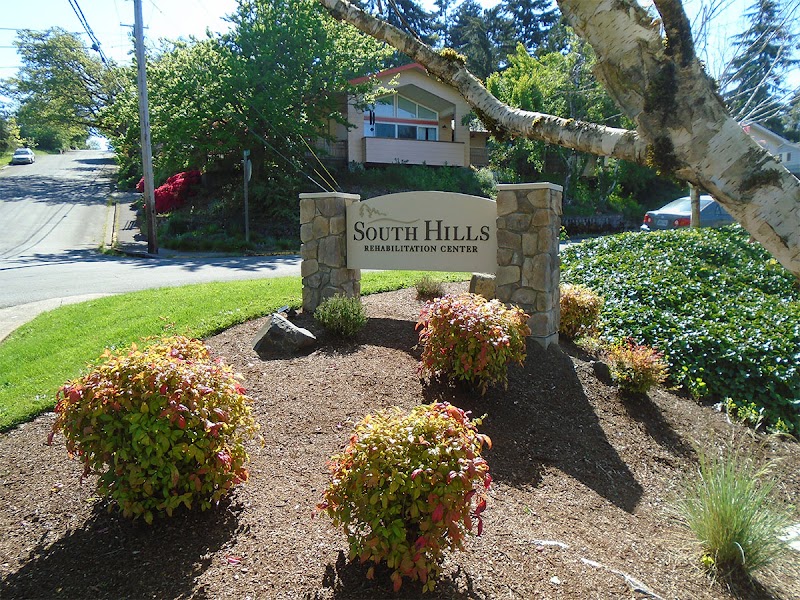
How Does South Hills Rehabilitation Center Compare to Other Oregon Nursing Homes?

Compared to the 100 nursing homes in Oregon, SOUTH HILLS REHABILITATION CENTER's overall rating (1 stars) is below the state average of 3.0, staff turnover (70%) is significantly higher than the state average of 46%, and health inspection rating (2 stars) is below the national benchmark.

What Should Families Ask When Visiting South Hills Rehabilitation Center?

Based on this facility's data, families visiting should ask: "What changes have been made since the serious inspection findings, and how are you preventing similar issues?" "What safeguards and monitoring systems are in place to protect residents from abuse or neglect?" "How do you ensure continuity of care given staff turnover, and what is your staff retention strategy?" "Can you walk me through typical staffing levels on day, evening, and night shifts?" These questions are particularly relevant given the facility's Immediate Jeopardy citations, the substantiated abuse finding on record, the facility's high staff turnover rate, and the below-average staffing rating.

Is South Hills Rehabilitation Center Safe?

Based on CMS inspection data, SOUTH HILLS REHABILITATION CENTER has documented safety concerns. The facility has 1 substantiated abuse finding (meaning confirmed case of resident harm by staff or other residents). Inspectors have issued 1 Immediate Jeopardy citation (the most serious violation level indicating risk of serious injury or death). The facility has a 1-star overall rating and ranks #100 of 100 nursing homes in Oregon. Families considering this facility should ask detailed questions about what corrective actions have been taken since these incidents.

Do Nurses at South Hills Rehabilitation Center Stick Around?

Staff turnover at SOUTH HILLS REHABILITATION CENTER is high. At 70%, the facility is 24 percentage points above the Oregon average of 46%. Registered Nurse turnover is particularly concerning at 73%. RNs handle complex medical decisions and coordinate care — frequent RN changes can directly impact care quality. High turnover means new staff may not know residents' individual needs, medications, or preferences. It can also be disorienting for residents, especially those with dementia who rely on familiar faces. Families should ask: What is causing the turnover? What retention programs are in place? How do you ensure care continuity during staff transitions?

Was South Hills Rehabilitation Center Ever Fined?

SOUTH HILLS REHABILITATION CENTER has no federal fines on record. CMS issues fines when nursing homes fail to meet care standards or don't correct problems found during inspections. The absence of fines suggests the facility has either maintained compliance or corrected any issues before penalties were assessed. This is a positive indicator, though families should still review recent inspection reports for the full picture.

Is South Hills Rehabilitation Center on Any Federal Watch List?

SOUTH HILLS REHABILITATION CENTER is not on any federal watch list. The most significant is the Special Focus Facility (SFF) program, which identifies the bottom 1% of nursing homes nationally based on persistent, serious quality problems. Not being on this list means the facility has avoided the pattern of deficiencies that triggers enhanced federal oversight. This is a positive indicator, though families should still review the facility's inspection history directly.