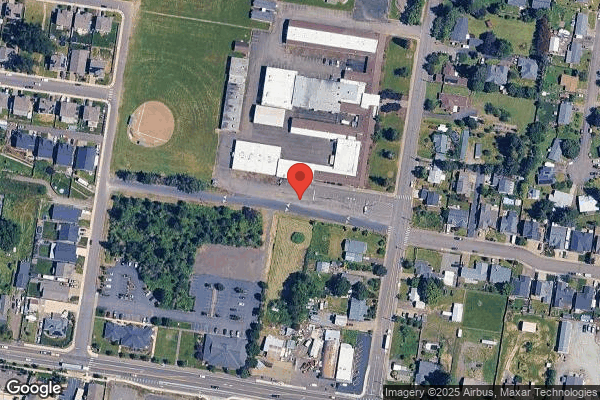
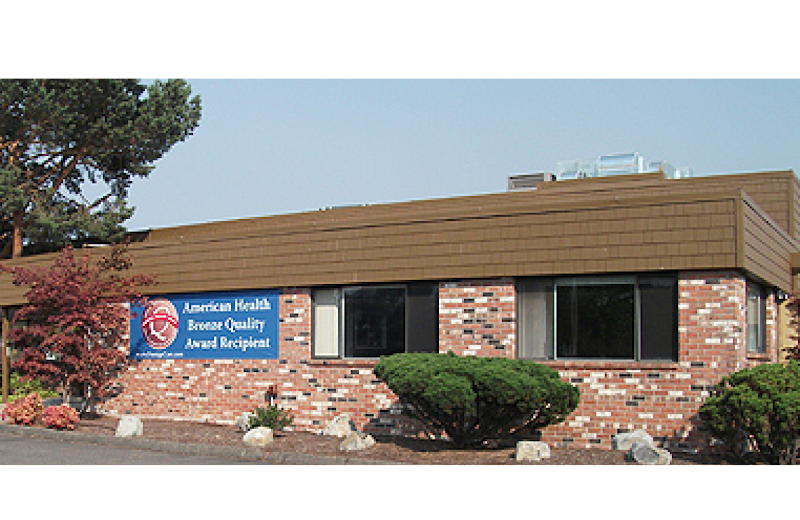
WOODSIDE POST ACUTE

301 RIDINGS AVENUE, MOLALLA, OR 97038 (503) 829-5591
For profit - Limited Liability company 92 Beds PACS GROUP Data: November 2025 2 Immediate Jeopardy citations
Trust Grade
0/100
#127 of 127 in OR
Last Inspection: May 2025

Inspected within the last 6 months. Data reflects current conditions.

Overview

Woodside Post Acute in Molalla, Oregon, has received a Trust Grade of F, indicating poor performance and significant concerns about care quality. Ranked #127 out of 127 facilities in Oregon, they are in the bottom tier, suggesting they are not a reliable option for families. The facility is reportedly improving, with issues decreasing from 12 in 2024 to 4 in 2025, but they still have a concerning staff turnover rate of 70%, significantly higher than the state average. Additionally, they faced $51,890 in fines, which is higher than 79% of Oregon facilities, indicating possible compliance problems. On a positive note, their staffing rating is average at 3 out of 5 stars, but RN coverage is below average, meaning residents may not receive as much oversight from registered nurses as in many other facilities. Notably troubling incidents include a failure to provide timely CPR to a resident, which put all residents at risk, and a situation where a resident with dementia left the facility unsupervised, posing a risk for serious injury or death. While there are some improvements, families should carefully consider these significant weaknesses before making a decision.

Trust Score
F
0/100
In Oregon
#127/127
Bottom 1%
Safety Record
High Risk
Review needed
Inspections
Getting Better
12 → 4 violations
Staff Stability
⚠ Watch
70% turnover. Very high, 22 points above average. Constant new faces learning your loved one's needs.
Penalties
✓ Good
$51,890 in fines. Lower than most Oregon facilities. Relatively clean record.
Skilled Nurses
⚠ Watch
Each resident gets only 22 minutes of Registered Nurse (RN) attention daily — below average for Oregon. Fewer RN minutes means fewer trained eyes watching for problems.
Violations
⚠ Watch
23 deficiencies on record. Higher than average. Multiple issues found across inspections.
★☆☆☆☆
1.0
Overall Rating
★★★☆☆
3.0
Staff Levels
★★★★☆
4.0
Care Quality
★☆☆☆☆
1.0
Inspection Score
Stable
2024: 12 issues
2025: 4 issues

The Good

  • 4-Star Quality Measures · Strong clinical quality outcomes
  • Full Sprinkler Coverage · Fire safety systems throughout facility
  • No fines on record

Facility shows strength in quality measures, fire safety.

The Bad

1-Star Overall Rating

Below Oregon average (3.0)

Significant quality concerns identified by CMS

Staff Turnover: 70%

24pts above Oregon avg (46%)

Frequent staff changes - ask about care continuity

Federal Fines: $51,890

Above median ($33,413)

Moderate penalties - review what triggered them

Chain: PACS GROUP

Part of a multi-facility chain

Ask about local staffing decisions and management

Staff turnover is very high (70%)

22 points above Oregon average of 48%

The Ugly 23 deficiencies on record

2 life-threatening
Jul 2025 1 deficiency 1 IJ
CRITICAL (J) 📢 Someone Reported This

A family member, employee, or ombudsman was alarmed enough to file a formal complaint

Immediate Jeopardy (IJ) - the most serious Medicare violation

Deficiency F0678 (Tag F0678)

Someone could have died · This affected 1 resident

**NOTE- TERMS IN BRACKETS HAVE BEEN EDITED TO PROTECT CONFIDENTIALITY** Based on interview and record review, it was determined the facility failed to timely administer CPR for 1 of 3 sampled resident...

Read full inspector narrative →
**NOTE- TERMS IN BRACKETS HAVE BEEN EDITED TO PROTECT CONFIDENTIALITY** Based on interview and record review, it was determined the facility failed to timely administer CPR for 1 of 3 sampled residents (#1) reviewed for CPR. This failure, determined to be an immediate jeopardy situation, resulted in Resident 1 receiving emergency CPR 13 to 20 minutes after Resident 1 was found unresponsive. This placed all residents at risk for not receiving timely CPR and constituted substandard quality of care. Findings include: The facility's [DATE] Policy and Procedure on Code Status and CPR stated in the event of a medical emergency where a resident is observed not breathing a staff member should initiate the following steps: - Call for help and bring crash cart to the area;- First CPR responder will verify code status of the resident in the EHR;- If the resident is full code, CPR will be initiated and 911 will be called. CPR will be continued until EMTs arrive to take over CPR.Resident 1 was admitted to the facility in 7/2025, with diagnoses including hemiparesis and tracheostomy. Resident 1's POLST status was identified as Full Code, which required CPR. Resident 1's [DATE] Care Plan identified the resident was at risk for complications of hypoxia related to acute and chronic respiratory failure, which included altered levels of consciousness.The facility's Investigation Report indicated that on [DATE] at around 9:30 AM, staff noticed Resident 1 was non-responsive and sought assistance from nursing. The nurse on scene indicated a response time of 10 to 20 minutes after the resident's initial assessment. Resident 1 was identified to be a full code status. The nurse's delay in initiating CPR resulted in an extensive delay of immediate lifesaving treatment for Resident 1.Per Resident 1's Progress Note dated [DATE] at 11:04 AM, Staff 5 (CNA) noted between 9:20 and 9:30 AM, Resident 1 was unresponsive to physical and verbal stimulation and reported the concern to Staff 4 (LPN). Staff 4, upon examination, declared Resident 1 dead at 9:33 AM. Staff 4 contacted Staff 2 (DNS) between 9:35 AM to 9:40 AM for further instruction, and from 9:40-9:45 AM, Staff 2 instructed Staff 4 to gather DNR status, start CPR, and call EMS. On [DATE] at 1:20 PM, Staff 4 (LPN) stated he did not initiate CPR lifesaving services due to his belief that the resident was already deceased . Staff 4 stated he determined Resident 1 deceased as of 9:33 AM due to the resident's lack of physical or verbal stimulation and yellowing of the skin near the resident's face. Staff 4 stated that around 9:42 AM, he received instructions from Staff 2 to check Resident 1's code status and initiate CPR. Staff 4 confirmed he began initiating CPR between 13 and 20 minutes after receiving direction from Staff 2 (DNS). Staff 4 further confirmed he did not call a Code Blue and did not check on Resident 1's code status because he declared Resident 1 had passed away. On [DATE] at 1:57 PM, Staff 5 (CNA) stated he was the care staff member who discovered Resident 1 was nonresponsive and had called for immediate assistance. Staff 5 stated he had noticed Resident 1 looked yellow and was nonresponsive. Staff 5 reported to Staff 4 of the event and further stated Code Blue and CPR was not initiated as Staff 4 believed Resident 1 was dead. Staff 5 stated he saw Resident 1 still conscious around 8:40 AM with no signs of concern. On [DATE] at 2:50 PM, Staff 6 (LPN) stated she was the additional nurse called to the emergency. Staff 6 stated at least 10 minutes or longer had passed between the time Resident 1 was assessed to when CPR services had begun. Staff 6 stated a Code Blue had not been called, but Staff 6 had contacted 911 for emergency services. On [DATE] at 3:07 PM, Staff 2 (DNS) stated that around 9:30 AM, Staff 4 contacted Staff 2 to request if law enforcement or if family needed to be contacted as Resident 1 had been determined by Staff 4 to be deceased . Staff 2 requested Staff 4 to begin CPR services after Resident 1's code status was determined. On [DATE] at 1:30 PM, Staff 1 (Administrator) confirmed the facility did not initiate CPR services in a timely manner to Resident 1. On [DATE] at 4:06 PM, the facility was notified of the Immediate Jeopardy (IJ) situation and immediacy removal plan was requested. On [DATE] at 5:19 PM, the facility submitted an acceptable immediacy removal plan.The deficient practice was identified as Past Noncompliance based on the following:On [DATE], the deficient practice was identified by the facility to be corrected when the facility completed a root causes analysis of the incident and determined there was a delay in initiating and conducting CPR. The Plan of Correction included:Re-educating LNs on the process of verifying code status, including POLST or physician orders when residents were observed with no pulse or respirations. All LNs were reeducated before their oncoming shift including float and agency LNs on emergency response.Medical records conducted audits on all new residents for a signed POLST or physician's order to determine resident's status until substantial compliance was met. Daily audits were immediately implemented to ensure proper initiation of emergency CPR services were provided during mock code blue for all shifts with no deficient practice found.
May 2025 2 deficiencies
CONCERN (D)

Potential for Harm - no one hurt, but risky conditions existed

Deficiency F0773 (Tag F0773)

Could have caused harm · This affected 1 resident

Based on interview and record review it was determined the facility failed to notify the physician of blood sugar measurements outside of parameters for 1 of 5 sampled residents (#4) reviewed for medi...

Read full inspector narrative →
Based on interview and record review it was determined the facility failed to notify the physician of blood sugar measurements outside of parameters for 1 of 5 sampled residents (#4) reviewed for medications. This placed residents at risk for diabetic complications. Findings include: Resident 4 was admitted to the facility in 2020 with diagnoses including diabetes and dementia. A 4/11/25 physician order indicated staff were to check Resident 4's CBG (blood sugar measurement) level three times a day and to notify the physician for a CBG level less than 70 or greater than 350. A review of the 4/2025 Diabetic Administration Record revealed the following occurrences of a CBG greater than 350: -4/16/25 at 12:00 PM, CBG was 379. -4/29/25 at 12:00 PM, CBG was 442. -4/29/25 at 5:30 PM, CBG was 427. -4/30/25 at 12:00 PM, CBG was 368. No documentation was found in Resident 4's clinical record to indicate the physician was notified of the elevated CBGs. On 5/9/25 at 12:26 PM Staff 18 (RN) stated she did not notify the physician as Resident 4's CBG was not over 450. On 5/9/25 at 12:29 PM Staff 2 (DNS) acknowledged staff were not notifying the physician due to the belief it was not needed unless Resident 4's CBG was over 450.
CONCERN (E)

Potential for Harm - no one hurt, but risky conditions existed

Abuse Prevention Policies (Tag F0607)

Could have caused harm · This affected multiple residents

Based on interview and record review it was determined the facility failed to implement policies and procedures for screening potential employees to prevent abuse for 3 of 3 sampled new employees (#s ...

Read full inspector narrative →
Based on interview and record review it was determined the facility failed to implement policies and procedures for screening potential employees to prevent abuse for 3 of 3 sampled new employees (#s 16, 17, and 18) reviewed for employee screening. This placed residents at risk for abuse. Findings include: The facility's Abuse Screening, Training, Identification, Investigation, Reporting, and Protection policy, dated 8/2024, indicated the screening process for potential employees included: - Contact previous employers requesting employment history to include but not limited to: dates of service, position held, performance history, history of abuse, neglect, misappropriation of resident property, exploitation, or mistreating residents. - Obtain criminal background information. 1. On 5/8/25 at 11:00 AM a random sample of newly hired staff members was reviewed for reference checks with Staff 14 (Human Resources) and Staff 15 (Human Resources Business Partner). Staff 15 stated reference checks were not completed for Staff 16 (CNA), Staff 17 (CNA), and Staff 18 (RN). On 5/8/25 at 3:33 PM Staff 1 (Administrator) acknowledged the new employee reference checks were not completed for Staff 16, Staff 17, and Staff 18 per the facility abuse screening policy. 2. On 5/8/25 at 11:00 AM a random sample of newly hired staff members was reviewed for criminal background checks with Staff 14 (Human Resources) and Staff 15 (Human Resources Business Partner). The review revealed the following: - Staff 16 (CNA) began working in the facility on 2/7/25, but her criminal background check was not started until 5/7/25. - Staff 17 (CNA) began working in the facility on 4/21/25, but her criminal background check was not started until 4/30/25. - Staff 18 (RN) began working in the facility on 4/16/25, but her criminal background check was not started until 5/7/25. On 5/8/25 at 3:33 PM Staff 1 (Administrator) acknowledged the criminal background checks were not completed for Staff 16, Staff 17, and Staff 18 per the facility abuse screening policy.
Feb 2025 1 deficiency
CONCERN (D) 📢 Someone Reported This

A family member, employee, or ombudsman was alarmed enough to file a formal complaint

Potential for Harm - no one hurt, but risky conditions existed

Accident Prevention (Tag F0689)

Could have caused harm · This affected 1 resident

**NOTE- TERMS IN BRACKETS HAVE BEEN EDITED TO PROTECT CONFIDENTIALITY** Based on observation, interview and record review it was determined the facility failed to provide care and assistance to preven...

Read full inspector narrative →
**NOTE- TERMS IN BRACKETS HAVE BEEN EDITED TO PROTECT CONFIDENTIALITY** Based on observation, interview and record review it was determined the facility failed to provide care and assistance to prevent accidents for 1 of 5 sampled residents (#1) reviewed for accidents. This placed residents at risk for unmet care needs. Findings include: Resident 1 was admitted to the facility in 10/2024 with diagnoses including traumatic brain injury and anxiety disorder. Resident 1's MDS 5-Day assessment dated [DATE] revealed a BIMS score of 11, indicating moderate cognitive impairment. Resident 1's revised Care Plan dated 11/11/24 revealed she/he was at risk for falls related to her/his immobility. Care plan interventions were to anticipate and meet needs, educate and remind the resident to call for assistance with all transfers and to provide verbal cues for assistance. On 1/31/25 the facility submitted a report to the State Agency which revealed Resident 1 was found with her/his legs hanging off the bed. Resident 1's left leg was observed lying on the baseboard heater and Staff 4 (CNA) immediately placed the resident's legs back on her/his bed. Staff 4 observed redness and what appeared to be a burn on the resident's leg. Staff 3 (LPN) was notified and provided care to the wound. Resident 1 was unable to tell staff what happened due to her/his confusion. On 2/4/25 at 12:30 PM, Staff 3 stated she was the nurse on duty the day of the incident on 1/31/25. She stated in late afternoon, Staff 4 informed her he had found the resident with her/his legs dangling off the bed touching the heating unit which resulted in a burn on the resident's leg. She immediately went to the resident's room and observed the resident's bed was really close to the heating unit, approximately 1 to 2 feet away. She told Staff 4 that was too close to the heating unit and they moved the bed away from it. Staff 3 stated she examined Resident 1's lower left leg and noted the skin was red, slightly peeled and the wound appeared to be a burn. Staff 3 treated the wound, bandaged it and stated the resident was fine, was conversing and seemed okay. She stated she did not observe any other objects around the resident's bed that could have caused the injury and in her opinion the wound appeared to be a burn. On 2/4/25 at 1:34 PM, Staff 5 (CNA) stated he was familiar with Resident 1 and the resident frequently tried to get out of bed. He stated care plan interventions were to offer to get the resident up and in her/his wheelchair and to make sure no objects were around or blocking the bed due to Resident 1's fall risk. He stated the resident moved her/his legs around frequently. On 2/4/25 at 1:40 PM, Staff 6 (Housekeeping) stated she was familiar with Resident 1 and she/he frequently swung her/his legs off the bed. She stated residents' beds were supposed to be 3 feet away from the heaters. On 2/4/25 at 2:00 PM, Staff 7 (CNA) stated she was familiar with Resident 1 and she/he was a wiggle worm, frequently wiggled around in the bed and staff frequently did checks on her/him. She stated she had not heard of any incidents of this type in the year and a half she had worked at the facility. On 2/4/25 at 2:25 PM, Staff 4 stated he was Resident 1's assigned CNA on 1/31/25, and heard the resident calling for help. Staff 4 went into Resident 1's room and observed her/him in bed, with both legs off the bed and her/his hands holding onto the bed rail. Staff 4 stated he observed the resident's lower left leg was lying on the top of the heating unit and Resident 1 acted like she/he was in pain, saying help me. Staff 4 moved the resident's legs onto the bed, observed the injury on the leg and immediately left to find Staff 3, who was in another resident room. When Staff 3 was available, she and Staff 4 went back to Resident 1's room and Staff 4 stated he observed the skin on the lower left leg peeling back a little. Staff 4 stated the skin touching the heating unit was where the injury was and he did not observe any other objects between the resident's bed and the heating unit which could have caused the injury. Staff 4 stated the resident's bed was close to the heating unit and demonstrated the distance of approximately 1 foot between the heating unit and the resident's bed. Staff 4 did not recall how long the resident's bed had been near the heating unit. On 2/4/25 at 3:40 PM, Staff 2 (DNS) stated she had provided wound care to Resident 1 earlier in the afternoon and the wound's measurements were 4.5 cm long and 2.4 cm wide. The resident reported no pain during the wound care. Observations were made of Resident 1 on 2/4/25 from 11:00 AM through 4:00 PM. Resident 1 was observed in bed with a bandage on her/his lower left leg but was not interviewed due to her/his confusion. Random audits were completed on 2/4/25 of baseboard heaters throughout the day with Staff 8 (Maintenance Director). An infrared heat detector was utilized to obtain temperatures, which were found to be under 120 degrees Fahrenheit. Resident 1's heating unit was very warm to the touch on the top of the unit. Staff 8 stated he completed weekly audits of the heating units and provided reports that confirmed his weekly audits. On 2/5/24 at 4:00 PM, Staff 1 (Administrator) and Staff 2 (DNS) were informed of the findings of the investigation and provided no additional information.
Nov 2024 1 deficiency 1 IJ
CRITICAL (J) 📢 Someone Reported This

A family member, employee, or ombudsman was alarmed enough to file a formal complaint

Immediate Jeopardy (IJ) - the most serious Medicare violation

Accident Prevention (Tag F0689)

Someone could have died · This affected 1 resident

**NOTE- TERMS IN BRACKETS HAVE BEEN EDITED TO PROTECT CONFIDENTIALITY** Based on interview and record review it was determined the facility failed to ensure a resident was safe from elopement for 1 of...

Read full inspector narrative →
**NOTE- TERMS IN BRACKETS HAVE BEEN EDITED TO PROTECT CONFIDENTIALITY** Based on interview and record review it was determined the facility failed to ensure a resident was safe from elopement for 1 of 1 sampled resident (#9) reviewed for elopement. This failure, determined to be an immediate jeopardy situation, resulted in Resident 9 leaving the facility without appropriate supervision and placed the resident at risk for serious injury or death. Findings include: Resident 9 admitted to the facility on [DATE] with diagnoses including stroke and dementia. The 7/30/24 hospital referral records indicated Resident 9 was withdrawn, and answered most questions with, I don't know. The record indicated, disorientation noted overnight and patient trying to leave, though was redirectable. The record also indicated, At this time the resident does not have the capacity to make decisions regarding leaving the hospital so [she/he] would be placed on elopement precautions. Resident 9's Elopement Risk Evaluations indicated the following: -8/20/24: the resident had poor impulse control and was at risk for elopement. -9/12/24: the resident had two attempts to get out of the side door unattended. -11/5/24: the resident eloped, did not communicate when leaving, and left to the community. The 9/12/24 care plan indicated Resident 9 had impaired cognitive function related to dementia and was an elopement risk due to impaired safety awareness. Progress Notes indicated the following: -8/27/24: Resident unable to communicate wants and needs, has a history of wandering and innocently wandered out of facility about 6:00 PM. -8/28/24: Resident wandered out of the facility about 6:00 PM. The note stated, Located 5 minutes at back entrance of facility. -9/12/24: Resident Care Manager notified by medication aide that the resident attempted to leave the building out the side door two times yesterday. The resident was easily redirected, but was confused with cognitive impairment. The resident's information was placed in elopement book. -11/3/24 at 1:30 PM: The note indicated staff were notified that Resident 9 absconded from the facility's property, local law enforcement was notified. Administrative staff were notified and were waiting for local law enforcement. -11/3/24 at 2:45 PM: Resident 9 returned to the facility unharmed, and stated, I'm cold. The resident was offered hot chocolate and a snack. -11/5/24: Resident 9 stated she/he would like to leave and go home, staff asked if she/he knew how to get there, and the resident stated, No. Later in the shift the resident was seen at the back door looking up in the doorway to show the nurse she/he knew the door code. The nurse told the resident it was dark and cold and she/he should not go outside. The resident stated, ok. The resident continued to walk around the building but no other attempts to get outside of the door were made. -11/10/24 at 11:56 AM: Resident 9 was found in the parking lot in the morning, was able to be redirected back to the facility, and then asked when she/he would be discharged . No facility investigations were found related to Resident 9's elopements on 8/27/24, 8/28/24, and 11/10/24. The 11/7/24 Facility Investigation of the 11/3/24 elopement indicated on 11/3/24 at 1:30 PM staff became aware Resident 9 was missing and the on duty nurse called local police to notify them that the resident was not able to be located. During this time the facility received a call from the off-duty Activities Director who reported she saw Resident 9 at a convenience store parking lot about ten minutes walking distance from the facility. The resident was quickly redirected back to the facility and was back inside the facility by 2:30 PM. No harm or injuries were noted at the time of her/his return. The resident was fully clothed in a long-sleeved shirt and jeans but did make a statement that she/he was cold. She/he was given a blanket and some hot chocolate to warm up and was content. During the time Resident 9 was gone, staff thought she/he was wandering around the facility or the outdoor courtyard per her/his usual routine. Observations on 11/13/24 from 10:54 AM through 3:06 PM revealed Resident 9 walked independently throughout the facility, participated in activities, and sat on the bed in her/his room. On 11/13/24 at 11:18 AM one of the facility's exit doors was observed to open without entering a code. The outside area led to a set of double gates that were open and led to the road. On 11/13/24 at 11:30 AM Staff 1 (Administrator) was observed to walk out of the identified exit door without entering a code. Staff 1 stated the door was supposed to shut and lock. Staff 1 acknowledged the door leading to the outside area was unlocked and the outside area led to the road and parking lot. On 11/13/24 at 11:36 AM Staff 3 (Maintenance Director) was observed to walk out the identified exit door without entering a code. Staff 3 acknowledged the door was not locked and stated a code should be entered to unlock the door. On 11/13/24 at 3:06 PM Resident 9 was alert but not oriented to place and time. Resident 9 stated she/he wanted to go home and started crying. During the interview the resident stated she/he was trapped here. Resident 9 stated she/he left the facility and went to a convenience store previously. Resident 9 stated she/he knew the numbers on the doors to get out of the facility and went to the window and stated she/he could exit out the window. The surveyor observed it appeared possible for the resident to exit through the window, but the resident did not attempt to go out the window at that time. Staff interviews from 11/13/24 at 11:30 AM to 11/14/24 at 12:28 PM indicated the following: -Staff 4 (CNA) stated Resident 9 wanted to go home and attempted to open the doors using the door codes. Staff 4 stated the identified door did not always lock and staff had to pull on the door to get it to lock and it was like that for a long time. Staff 4 stated she was unsure if it was reported to maintenance. Staff 4 further stated that several staff including agency staff were unaware the door did not close and had to be pulled shut. Staff 4 stated Resident 9 was exit-seeking on a daily basis. -Staff 5 (CNA) stated Resident 9 got bored, wanted to go outside and asked a couple of times for the door code. Staff 5 stated the resident sought outside activities but the resident was not safe to go outside alone. -Staff 6 (CNA) stated today was her first day working here and she was unaware of any residents who were at risk for elopement, and nobody told her of residents who were an elopement risk. -Staff 7 (NA) stated there was one resident who was exit-seeking but he could not remember the resident's name. -Staff 8 (CNA) stated Resident 9 was an elopement risk and the resident eloped to the front parking lot on two occasions. Staff 8 stated Resident 9 was the only resident who was an elopement risk. -Staff 9 (CNA) stated he worked at the facility for a month and was not aware of residents who were at risk for elopement. -Staff 10 (CNA) stated Resident 9 attempted to leave the facility multiple times by using the door codes and was able to figure out the codes no matter how many times they were changed. Staff 10 stated on one occasion about a week or week and half ago the resident's roommate reported the resident was down by the street and brought Resident 9 back inside the facility. Staff 10 stated she reported the incident to the charge nurse but could not remember the nurse's name. -Staff 11 (LPN) stated Resident 9 had dementia and was able to go outside the facility on multiple occasions. Staff 11 stated on one occasion the resident went to a convenience store and police were notified and the resident arrived back to the facility by her/himself. Staff 11 stated the resident was out in the parking lot at least two weeks prior to going to the convenience store. Staff 11 stated on one occasion when the resident was in the parking lot a dietary staff made him aware the resident was outside. Staff 11 stated the door codes were changed multiple times, but the resident was able to figure out the codes. -Staff 12 (LPN Resident Care Manager) stated Resident 9 eloped on one occasion to a convenience store and on another occasion was found in the parking lot. Staff 12 stated she read a progress note by Staff 11 that indicated the resident got out to the parking lot and the resident should not be alone. Staff 12 stated an investigation was not completed for the incident when the resident got out to the parking lot and was unsure if the resident was unattended in the parking lot. On 11/13/24 at 1:35 PM and 3:40 PM Staff 1 and Staff 2 stated Resident 9 eloped to a convenience store on 11/3/24 and the off-duty activity person stopped there and talked to her/him. The resident stated she/he was out for a walk. The staff told the resident to return to the facility and she contacted the nurse at the facility. Staff 1 stated after the resident was found at the convenience store, she/he was determined to be an elopement risk. Staff 1 and Staff 2 stated after the elopement to the convenience store the resident was placed on 1:1 supervision until the door codes could be changed the following day. Staff 1 and Staff 2 were asked about the 11/10/24 progress note that indicated Resident 9 was found in the parking lot by nursing staff. Staff 1 and Staff 2 acknowledged an investigation was not completed for the 11/10/24 incident when Resident 9 was found outside the facility unattended. Staff 1 and Staff 2 stated they were unaware of any other elopement attempts by Resident 9. The staff indicated the facility had other residents who were also at risk for elopement. On 11/13/24 at 4:22 PM Staff 1 and Staff 2 were notified of the Immediate Jeopardy (IJ) situation and provided a copy of the IJ template related the to facility's failure to ensure individualized care planned interventions to prevent elopement were implemented. On 11/13/24 at 6:12 PM an acceptable facility IJ removal plan was submitted by the facility. The plan indicated the facility would implement the following actions: *11/13/24 at 5:15 PM the facility immediately placed Resident 9, who was at the highest risk for elopement, on one-to-one supervision and was care planned accordingly to prevent any possibility of elopement. This would be indefinite until the resident's discharge. *The facility would perform a full facility chart audit to identify any other residents at risk for elopement and their care plans would be updated. *A facility wide inspection would be conducted immediately by the environmental services team and nursing staff to identify any doorways that may not be properly secured. All doors would be inspected to ensure locking mechanisms are functional. Any issues identified would be resolved. *A staff-wide education had begun and all staff would be in-serviced on the elopement policy, elopement binder, and all residents at risk for elopement and their care plans. Alerting administration of attempted or actual elopements, ensuring doors remain locked. All staff would sign off on this education prior to beginning their next shift. Any agency or outside staff would be alerted prior to their entering the facility regarding the elopement procedures and policy and would be shown at entry where the elopement binder was and associated policies were located. *The administrator or designee would audit all doors to ensure locking mechanisms were functioning and doors were locked daily x 7, biweekly x 2 weeks, weekly x 1 month, and results would be taken to QAPI to identify any further trends and concerns. The immediacy was removed on 11/14/24 after verifying the plan of correction was sufficiently implemented.
Jan 2024 11 deficiencies
CONCERN (D) 📢 Someone Reported This

A family member, employee, or ombudsman was alarmed enough to file a formal complaint

Potential for Harm - no one hurt, but risky conditions existed

Resident Rights (Tag F0550)

Could have caused harm · This affected 1 resident

Based on interview, and record review it was determined the facility failed to ensure a resident was treated in a dignified manner for 1 of 4 sampled residents (#2) reviewed for ADL care. This placed ...

Read full inspector narrative →
Based on interview, and record review it was determined the facility failed to ensure a resident was treated in a dignified manner for 1 of 4 sampled residents (#2) reviewed for ADL care. This placed residents at risk for being treated in a dishonorable manner. Findings include: Resident 2 was admitted to the facility in 2008 with diagnoses including dementia and a communication deficit. Review of Resident 2's care plan dated 1/11/24 revealed the resident was independent with eating, required set up assistance and staff were to cut up meats and other food items. Staff were to assist the resident with meals as needed. Resident 2 preferred to eat in her/his room and eating - Feeder. Encourage fluids. On 1/10/24 at 1:14 PM Staff 12 (CNA) stated Resident 2 was a feeder and she/he needed assistance with her/his meals. Staff 12 stated the facility had a lot of feeders and not enough staff to assist with meals. On 1/11/24 at 9:10 AM Staff 10 (CNA) stated Resident 2 was a supervised feeder but needed staff to sit with her/him to assist with her/his meals. On 1/17/24 at 12:44 PM Staff 1 (Administrator) and Staff 2 (Interim DNS) stated staff were not to refer to Resident 2 or any other resident as a feeder as it was not consistent with treating residents with dignity and respect. Refer to F677
CONCERN (D) 📢 Someone Reported This

A family member, employee, or ombudsman was alarmed enough to file a formal complaint

Potential for Harm - no one hurt, but risky conditions existed

ADL Care (Tag F0677)

Could have caused harm · This affected 1 resident

Based on observation, interview, and record review it was determined the facility failed to ensure residents received appropriate ADL assistance for 1 of 4 sampled residents (#2) reviewed for activiti...

Read full inspector narrative →
Based on observation, interview, and record review it was determined the facility failed to ensure residents received appropriate ADL assistance for 1 of 4 sampled residents (#2) reviewed for activities of daily living. This placed residents at risk for lack of nutritional intake, grooming and hygiene. Findings include: Resident 2 was admitted to the facility in 2008 with diagnoses including dementia and a communication deficit. a. Review of Resident 2's care plan dated 1/11/24 revealed the resident was independent with eating, required set up assistance and staff were to cut up meats and other food items. Staff were to assist the resident with meals as needed. Resident 2 preferred to eat in her/his room. Resident 2 had 32 meal intake opportunities from 12/31/23 through 1/11/23 and revealed the following consumption: -22 times Resident 2 consumed zero to 25 percent of her/his meal. -Five times Resident 2 consumed 26 percent to 50 percent of her/his meal. -Two times Resident 2 consumed 51 percent to 75 percent of her/his meal. -One time Resident 2 consumed 76 percent to 100 percent of her/his meal. -Four times Resident 2 refused her/his meals. On 1/9/24 at 9:04 AM and 1/10/24 at 9:10 AM Resident 2 was observed in bed, with breakfast in front of her/him and the meal was untouched. On 1/10/24 at 7:05 AM Staff 6 (CNA) stated Resident 2 was alert but not always oriented. Staff 6 stated the resident was independent but needed a staff person to sit with the resident and assist her/him with meals. Staff 6 stated she reported her concerns to management but nothing was done. On 1/10/24 from 12:23 PM through 1:00 PM Resident 2 was observed in bed, with her/his lunch which included carrots and ravioli with cheese. Resident 2 had not touched her/his meal. Staff 12 (CNA) placed a lid on the cup of milk and placed a straw in the cup of milk. The resident sipped on the milk through a straw once Staff 12 encouraged her/him to take a drink. Staff 12 left the room and the resident picked up her/his meal tray ticket but did not consume any of her/his lunch. At 1:00 PM Staff 12 stated Resident 2 was not eating her/his meals on a consistent basis and only ate zero to 25 percent of her/his breakfast and lunch meal. On 1/10/24 at 1:14 PM Staff 12 stated Resident 2 needed assistance with her/his meals because the resident was not always able to lift her/his fork to her/his mouth. Staff 12 stated Resident 2's food consumption declined over the last couple of months. On 1/11/24 at 9:10 AM Staff 10 (CNA) stated Resident 2 was supervised but needed staff to sit with her/him to assist with her/his meals. Staff 10 stated Resident 2 was unable to lift her/his silverware to her/his mouth most of the time. On 1/17/24 at 12:44 PM Staff 1 (Administrator) and Staff 2 (Interim DNS) stated staff were expected to provide appropriate assistance with eating based off of the residents' care plan. b. Review of Resident 2's care plan dated 9/28/23 revealed the resident had broken and decayed teeth. The resident required one-person extensive assistance with oral care two times daily and as needed. The resident required two-person extensive assistance two times weekly for bathing and staff were to encourage the resident to wash her/his face and arms. A review of Resident 2's showers and oral care records from 12/14/23 through 1/11/24 revealed the following: -Resident 2 had eight opportunities for showers: -On 12/18/23, 12/28/23 and 1/11/24 showers were completed. -On 12/14/23, 12/21/23 and 1/1/24 Resident 2 refused showers. -On 12/28/23 and 1/8/24 the documentation indicated Activity did not occur. -Resident 2 had 58 opportunities for oral care: -Resident 2's oral care ranged from set up, supervision or substantial assistance and this occurred 41 times. -Resident 2 required dependent assistance from staff seven times. -Resident 2 refused oral care eight times. On 1/8/24 at 3:01 PM Witness 1 (Family Member) stated when she visited Resident 2 her/his hair was greasy and Resident 2's teeth were often not cleaned. During random observations from 1/8/24 through 1/12/24 Resident 2 was observed in bed, with greasy hair and her/his teeth had plaque build-up. On 1/10/24 at 7:05 AM Staff 6 (CNA) stated Resident 2 had baseline confusion and required assistance with brushing her/his teeth and bathing. Staff 6 stated the resident refused showers and oral care a lot. Staff 6 acknowledged the resident's hair was greasy and her/his teeth were not clean. Staff 6 stated she reported her concerns to the nurse regarding refusal of cares. Staff 6 stated she documented refusals in the health record. On 1/10/24 at 1:14 PM Staff 12 (CNA) stated Resident 2 preferred a bed bath and often refused her/his hair to be washed. Staff 12 stated the resident never let her brush her/his teeth and she attempted to use a mouth swab but Resident 2 swatted her hand away. Staff 12 stated Resident 2 was dependent on staff for ADL care and needed cueing and encouragement to complete her/his ADL care. On 1/11/24 at 9:10 AM Staff 10 (CNA) stated Resident 2 only allowed her to bathe her/him one time but allowed bed/baths the other times. Staff 10 stated Resident 2 refused oral care often and her/his teeth were not clean. Staff 10 indicated she attempted to reapproach when Resident 2 refused and then reported her concerns to the nurse. On 1/11/24 at 10:59 AM Staff 10 (RN) stated Resident 2 preferred a bed bath and often refused showers. Staff 10 was unsure of the resident's oral care but expected CNAs to report to the nurse if Resident 2 refused oral care. On 1/17/24 at 12:44 PM Staff 1 (Administrator) and Staff 2 (Interim DNS) stated staff were expected to provide ADL care and follow the care plan. Staff 2 stated if residents refused showers and oral care CNAs were expected to reapproach and report to the nurse. Staff 2 stated refusals were to be documented in the resident's health record.
CONCERN (D) 📢 Someone Reported This

A family member, employee, or ombudsman was alarmed enough to file a formal complaint

Potential for Harm - no one hurt, but risky conditions existed

Quality of Care (Tag F0684)

Could have caused harm · This affected 1 resident

2. Resident 11 admitted to the facility in 9/2020 with diagnoses including kidney failure and congestive heart failure. The facility's 2/2019 Bowel Care Policy indicated: -The nurse was to review re...

Read full inspector narrative →
2. Resident 11 admitted to the facility in 9/2020 with diagnoses including kidney failure and congestive heart failure. The facility's 2/2019 Bowel Care Policy indicated: -The nurse was to review residents' bowel results daily and initiate a list of residents who did not have a BM (bowel movement) for three days. -The nurse will review the MAR to determine if the PRN Bowel Protocol was initiated by the previous shift. -Residents who have not had a BM in three days will be given Milk of Magnesia (a laxative). -If no BM by the following shift, a Dulcolax suppository is given. -If resident continues without BM by the next shift a Fleet enema is given. -Residents who are noted as having small BMs will be assessed for constipation. -If resident exceeds four days without a BM the nurse will complete an abdominal assessment and the physician will be notified for further orders. Resident 11's Physician Order Summary as of 1/11/24 indicated the following PRN bowel medication orders: -Bisacodyl Oral Tablet Delayed Release. Give one or two tablets every 24 hours for constipation. -Bisacodyl Rectal Suppository 10MG. Insert one application as needed for constipation one daily. -Milk of Magnesia. Give every 72 hours as needed for constipation if no BM x three days. -Polyethylene Glycol 3350 Powder. Give every 12 hours as needed for constipation. -Senna Oral Tablet. Give every 12 hours as needed. Resident 11's BM records from 12/15/23 through 1/15/24 indicated the resident did not have a BM from 12/27/23 through 1/4/24 (nine days). A review of 12/2023 and 1/2024 MAR revealed no indication Resident 11 was offered or refused PRN bowel medication from 12/27/23 through 1/3/24. No evidence was found in the resident's clinical record to indicate the physician was notified. On 1/11/24 at 10:42 AM Staff 9 (RN) stated Resident 11 refused her/his bowel medications and was always on the bowel list. Staff 9 stated she documented Resident 11's refusals and thought the physician was aware of Resident 11's refusal of bowel medications because she/he refused all the time. On 1/17/24 at 12:37 PM Staff 2 (Interim DNS) stated she expected staff to initiate the Bowel Care Policy, document resident refusals and notify the physician. 3. Resident 13 admitted to the facility in 2020 with diagnoses including congestive heart failure. The facility's 2/2019 Bowel Care Policy indicated: -The nurse was to review residents' bowel results daily and initiate a list of residents who did not have a BM (bowel movement) for three days. -The nurse will review the MAR to determine if the PRN Bowel Protocol was initiated by the previous shift. -Residents who have not had a BM in three days will be given Milk of Magnesia (a laxative). -If no BM by the following shift, a Dulcolax suppository is given. -If resident continues without BM by the next shift a Fleet enema is given. -Residents who are noted as having small BMs will be assessed for constipation. -If resident exceeds four days without a BM the nurse will complete an abdominal assessment and the physician will be notified for further orders. Resident 13's Physician Order Summary as of 1/11/24 indicated the following PRN bowel medication orders: Resident 13's BM records from 12/1/23 through 12/31/23 indicated the resident did not have a BM from 12/19/23 through 12/27/23 (nine days). A review of 12/2023 MAR revealed no indication Resident 13 was offered or refused PRN bowel medication from 12/19/23 through 12/26/23. No evidence was found in the resident's clinical record to indicate the physician was notified. On 1/11/24 at 10:47 AM Staff 11 (LPN) stated Resident 13 refused her/his bowel medications all the time and was always on the bowel list. Staff 11 stated she documented Resident 13 refused bowel care and was pretty sure the physician was aware of Resident 13's refusals. On 1/17/24 at 12:37 PM Staff 2 (Interim DNS) stated she expected staff to initiate the Bowel Care Policy, document resident refusals, and notify the physician. Based on interview and record review it was determined the facility failed to implement physician orders timely for bowel care for 3 of 7 sampled residents (#s 11, 13 and 88) reviewed for ADLs and pressure ulcers. This placed residents at risk for medical complications from ongoing diarrhea. Findings include: 1. Resident 88 was admitted to the facility in 12/2023 with diagnoses including a heart valve replacement and diabetes. The facility's 2/2024 Bowel Care Policy indicated: -The facility was to monitor and provide interventions to ensure routine bowel elimination occurred. -Residents who had diarrhea and/or loose stools were assessed for constipation/fecal impaction. Resident 88's BM (bowel movement) records from 12/23/23 through 1/8/24 revealed she/he had diarrhea on the following days: -12/23/23 had two instances of diarrhea. -12/24/23. -12/26/23. -12/27/23. -12/28/23. -12/29/23 had four instances of diarrhea. -12/30/23. -12/31/23 had four instances of diarrhea. -1/1/24. -1/2/24 had two instances of diarrhea. -1/3/24 had two instances of diarrhea. -1/4/24 had three instances of diarrhea. -1/6/23. Resident 88's Physician Order dated 1/2/24 indicated the resident was to receive Imodium (used to treat diarrhea) one tablet every six hours as needed for diarrhea. A physician order was received 10 days after resident's initial diarrhea episode. On 1/8/24 at 2:30 PM Resident 88 stated she/he had diarrhea, ongoing since her/his admission and felt it was not addressed timely. On 1/10/24 at 7:05 AM Staff 6 (CNA) stated Resident 88 had diarrhea often and the diarrhea smelled acidic. Staff 6 stated she reported her concerns to the nurse. On 1/11/24 at 9:17 AM Staff 10 (CNA) stated Resident 88 was alert and able to state her/his needs. Staff 10 stated the resident was incontinent of bowel and had diarrhea on a couple different occasions. On 1/11/24 at 10:47 AM Staff 9 (RN) stated Resident 88 needed assistance with her/his ADL care needs. Staff 9 was not aware Resident 88 experienced diarrhea. Staff 9 reviewed the resident's bowel care records and confirmed the resident had ongoing diarrhea and she expected CNAs to report the concern to her. Staff 9 stated the resident's diarrhea should have been addressed much sooner. On 1/17/24 at 12:44 PM Staff 2 (Interim DNS) stated she was not aware of Resident 88's diarrhea but expected CNAs to report diarrhea concerns to the nurse so the resident could be assessed.
CONCERN (D) 📢 Someone Reported This

A family member, employee, or ombudsman was alarmed enough to file a formal complaint

Potential for Harm - no one hurt, but risky conditions existed

Incontinence Care (Tag F0690)

Could have caused harm · This affected 1 resident

**NOTE- TERMS IN BRACKETS HAVE BEEN EDITED TO PROTECT CONFIDENTIALITY** Based on observation, interview, and record review it was determined the facility to provide appropriate bowel incontinence care...

Read full inspector narrative →
**NOTE- TERMS IN BRACKETS HAVE BEEN EDITED TO PROTECT CONFIDENTIALITY** Based on observation, interview, and record review it was determined the facility to provide appropriate bowel incontinence care for 1 of 1 sampled resident (#237) reviewed for incontinence care. This placed residents at risk for skin breakdown and lack of dignity. Findings include: Resident 237 was admitted to the facility in 1/2024 with diagnoses including dementia. The Five Day MDS dated [DATE] revealed Resident 237 had a BIMS score of seven, which indicated severe cognitive impairment. The care plan dated 1/4/24 indicated Resident 237 was incontinent of bowel and bladder, was at risk for skin breakdown, and required one-person assistance with incontinence care. On 1/10/24 at 9:04 AM Staff 12 (CNA) stated she checked on Resident 237 four times per shift to provide ADL care as needed. On 1/11/24 at 9:16 AM an odor of bowel movement was observed coming from Resident 237's room which emanated into the hallway. On 1/11/24 during a continuous observation from 9:06 AM through 11:27 AM the surveyor witnessed staff members walk by Resident 237's room or enter the resident's room [ROOM NUMBER] times without providing incontinent care. On 1/11/24 at 11:21 AM the surveyor entered Resident 237's room and observed the resident had the call light in her/his left hand. The surveyor asked if the resident could activate the call light. At 11:25 AM the resident pressed the call light button. On 1/11/24 at 11:27 AM Staff 12 (CNA) was observed to prepare to enter Resident 237's room to provide care. Staff 12 stated the facility was fully staffed but staff were very busy answering call lights. The surveyor observed Staff 12 provide incontinent care to Resident 237. The resident indicated her/his buttocks was painful. On 1/17/24 at 12:49 PM Staff 1 (Administrator) and Staff 2 (Interim DNS) stated CNA staff were expected to provide timely bowel incontinence care for Resident 237.
CONCERN (D) 📢 Someone Reported This

A family member, employee, or ombudsman was alarmed enough to file a formal complaint

Potential for Harm - no one hurt, but risky conditions existed

Deficiency F0806 (Tag F0806)

Could have caused harm · This affected 1 resident

**NOTE- TERMS IN BRACKETS HAVE BEEN EDITED TO PROTECT CONFIDENTIALITY** Based on observation, interview, and record review it was determined the facility failed to ensure residents' food preferences w...

Read full inspector narrative →
**NOTE- TERMS IN BRACKETS HAVE BEEN EDITED TO PROTECT CONFIDENTIALITY** Based on observation, interview, and record review it was determined the facility failed to ensure residents' food preferences were honored for 2 of 6 sampled residents (#s 5 and 12) reviewed for food. This placed residents at risk for food preferences not being honored. Findings include: 1. Resident 12 was admitted to the facility in 2020 with diagnoses including Alzheimer's. The Annual MDS dated [DATE], revealed Resident 12 had a BIMs score of 11, which indicated the resident had moderate cognitive impairment. A breakfast meal ticket dated 1/11/24 revealed Resident 12 disliked French toast, pancakes, waffles and the resident was not to have peas. On 1/11/24 at 12:42 PM, Resident 12 was observed eating lunch in the memory care unit dining room and had green peas on her/his lunch plate. The resident stated she/he often received food items she/he did not like, such as pancakes and waffles for breakfast. The resident further stated she/he did not like peas but they were on her/his plate for lunch. On 1/11/24 at 12:42 PM Staff 4 (CNA) and Staff 21 (CNA) stated Resident 12 often received pancakes and waffles for breakfast, even though the food items were listed as a dislike on the resident's meal ticket. Staff 4 indicated Resident 12 disliked peas, but they were on her/his plate at lunch time. Staff 4 and Staff 21 stated this was a recurring problem with the kitchen. On 1/11/24 at 2:44 PM Staff 22 (Dietary Manager) stated she updated meal tickets on a quarterly basis to honor preferences and adjust them based on staff reports. Staff 22 stated when meals were prepared the dish aide read the meal ticket to the cook, who put the right food items on the plate. Staff 22 stated CNAs checked the meal ticket after the trays arrived at the halls and were expected to return any incorrect meals to the kitchen. 2. Resident 5 was admitted to the facility in 2020 with diagnoses including dementia and a stroke. The quarterly MDS dated [DATE], revealed Resident 5 had a BIMs score of 15 which indicated the resident was cognitively intact. A breakfast meal ticket dated 1/11/24 revealed Resident 5 disliked squash and preferred scrambled eggs only. On 1/11/24 at 12:36 PM Resident 5 was observed eating lunch in the memory care unit dining room and Staff 4 (CNA) assisted the resident with her/his meal. The resident had squash on her/his plate and indicated she/he did not like squash. Resident 5 stated she/he received incorrect food items often. On 1/11/24 at 12:39 PM Staff 4 (CNA) and Staff 21 (CNA) stated Resident 5 often received food she/he did not like. Staff 21 stated for breakfast, the resident refused an omelet and oatmeal because she/he preferred scrambled eggs only. Staff 4 and Staff 21 stated for lunch, the resident's plate had squash which was also a dislike. Staff 4 and Staff 21 stated this was a recurring problem with the kitchen. On 1/11/24 at 2:44 PM Staff 22 (Dietary Manager) stated she updated meal tickets on a quarterly basis to honor preferences and adjust them based on staff reports. Staff 22 stated when meals were prepared the dish aide read the meal ticket to the cook, who put the right food items on the plate. Staff 22 stated CNAs checked the meal ticket after the trays arrived at the halls and were expected to return any incorrect meals to the kitchen.
CONCERN (D) 📢 Someone Reported This

A family member, employee, or ombudsman was alarmed enough to file a formal complaint

Potential for Harm - no one hurt, but risky conditions existed

Deficiency F0813 (Tag F0813)

Could have caused harm · This affected 1 resident

Based on observation, interview and record review it was determined the facility failed to monitor the use and storage of food in resident personal refrigerators for 1 of 9 sampled residents (#15) rev...

Read full inspector narrative →
Based on observation, interview and record review it was determined the facility failed to monitor the use and storage of food in resident personal refrigerators for 1 of 9 sampled residents (#15) reviewed for activities of daily living. This placed residents at risk cross-contamination and food-borne illness. Findings include: The facility's 2/2019 Non-Kitchen Cold Storage Monitoring policy indicated: -Refrigerators in resident rooms would have temperatures logged daily by nursing employee, cleaning schedule completed by housekeeping weekly and as needed. On 1/9/24 at 2:06 PM Resident 15 stated her/his refrigerator was cleaned and temperature checked daily by housekeeping staff. Resident 15 stated the policy changed and the CNAs were responsible, but the CNAs did not have time. On 1/9/24 at 4:06 PM Staff 24 (CNA) stated she sometimes does not have time to clean or check the temperature of the residents' refrigerator because of short staffing. Staff 24 stated the CNAs were given the added refrigerator task recently without any training. On 1/9/24 at 6:12 PM Staff 26 (CNA) stated she tried to check the refrigerator temperatures but was never properly trained. A review of the CNA Fridge Task Temperature log from 12/18/23 through 1/16/24, CNAs marked Not Applicable for refrigerator and freezer temperature on the following dates: -12/23/23 -12/24/23 -12/25/23 -12/26/23 -12/27/23 -12/29/23 -12/31/23 On 1/17/24 at 12:49 PM Staff 2 (Interim DNS) stated it was her expectation the CNAs checked and charted the refrigerator temperatures daily.
CONCERN (E) 📢 Someone Reported This

A family member, employee, or ombudsman was alarmed enough to file a formal complaint

Potential for Harm - no one hurt, but risky conditions existed

Safe Environment (Tag F0584)

Could have caused harm · This affected multiple residents

**NOTE- TERMS IN BRACKETS HAVE BEEN EDITED TO PROTECT CONFIDENTIALITY** Based on observation, interview and record review it was determined the facility failed to maintain a comfortable and homelike e...

Read full inspector narrative →
**NOTE- TERMS IN BRACKETS HAVE BEEN EDITED TO PROTECT CONFIDENTIALITY** Based on observation, interview and record review it was determined the facility failed to maintain a comfortable and homelike environment for 3 of 3 halls reviewed for environment. This placed residents at risk for living in an uncomfortable and unhomelike environment. Findings include: 1. Observations on 1/8/24 at 12:53 PM and on 1/11/24 at 9:48 AM revealed eight ceiling tiles on the South Hall, two ceiling tiles on the East Hall, and two ceiling tiles on the North Hall all had brown or gray stains. On 1/11/24 at 9:48 AM Staff 15 (Maintenance Director) acknowledged the stains and stated the gray stains on the ceiling tiles were from tape used when separating the hall during COVID isolation. Staff 15 stated the brown stains were from an unknown source and were there for some time. Staff 15 stated the facility had no current plans to change the tiles. On 1/17/24 at 12:48 PM Staff 1 (Administrator) stated she was not aware of the stains on the ceiling tiles. 2. Observations on 1/8/24 at 12:53 PM and on 1/11/24 at 2:35 PM revealed one air vent on the South Hall, two air vents on the East Hall, and two air vents on the North Hall had rust stains on the air vents. On 1/11/24 at 9:48 AM Staff 15 (Maintenance Director) acknowledged the rust stains on the air vents and stated he repainted the air vents every year, but the air vents leaked water during heavy rain which caused the rust. On 1/11/24 at 11:32 AM Staff 15 provided a work order invoice dated 8/24/21 to address the water leak through the air vents. Staff 15 stated he was trained by the contractor and fixed the roof leak with duct tape. On 1/11/24 at 2:35 PM water was observed dripping from the air vent on the East Hall between room [ROOM NUMBER] and room [ROOM NUMBER]. Staff 11 (CNA) stated every time it rained the air vents leaked. Staff 11 stated a wet floor sign and a bucket was provided for the CNAs to put under the leak on each hall. On 1/11/24 at 3:01 PM Staff 15 acknowledged water leaked from the air vents. On 1/17/24 at 12:48 PM Staff 1 (Administrator) stated she was not aware the air vents leaked during heavy rain.
CONCERN (E) 📢 Someone Reported This

A family member, employee, or ombudsman was alarmed enough to file a formal complaint

Potential for Harm - no one hurt, but risky conditions existed

Comprehensive Assessments (Tag F0636)

Could have caused harm · This affected multiple residents

4. Resident 11 admitted to the facility in 9/2020 with diagnoses including kidney failure and congestive heart failure. Resident 11's 11/25/23 CAA for Dehydration/Fluid Maintenance did not include ho...

Read full inspector narrative →
4. Resident 11 admitted to the facility in 9/2020 with diagnoses including kidney failure and congestive heart failure. Resident 11's 11/25/23 CAA for Dehydration/Fluid Maintenance did not include how constipation was a problem for the resident or the impact on the resident. On 1/17/24 at 12:37 PM Staff 1 (Administrator) and Staff 2 (Interim DNS) were presented with the lack of comprehensive information in Resident 11's CAA. Staff 1 and Staff 2 stated the Dehydration/Fluid Maintenance CAAs were completed by an outside provider, and they were not aware of the process, but indicated the CAAs were utilized to initiate the care plan for all residents 5. Resident 13 admitted to the facility in 12/1/2020 with diagnoses including congestive heart failure. Resident 13's 10/4/23 CAA for Cognitive Loss/Dementia had no information and failed to indicate specific cognitive changes, how the resident's cognitive changes manifested, and the impact on the resident. On 1/17/24 at 12:30 PM Staff 1 (Administrator) and Staff 2 (Interim DNS) were presented with the lack of comprehensive information in Resident 13's Cognition Loss/Dementia CAA. Staff 1 and Staff 2 stated CAAs were completed by an outside provider, and they were not aware of the process, but indicated the CAAs were utilized to initiate the care plan for all residents. 3. Resident 21 was admitted to the facility in 6/2022 with diagnoses including morbid obesity. Resident 21's 7/12/23 Nutrition Status CAA indicated the resident had a weight gain of more than ten percent since admission to the facility. The CAA did not include the resident's status or weight, any alternatives discussed or tried, and did not contain an overall analysis of the weight gain and the impact on the resident. The 7/21/23 hospital discharge summary indicated Resident 21's BMI was 100.07 and impacted all aspects of the resident's care. On 1/17/24 at 12:30 PM Staff 1 (Administrator) and Staff 2 (Interim DNS) were presented with the lack of comprehensive information in Resident 21's Nutrition Status CAA. Staff 1 and Staff 2 stated CAAs were completed by an outside provider, and they were not aware of the process, but indicated the CAAs were utilized to initiate the care plan for all residents. Based on interview and record review it was determined the facility failed to comprehensively assess 5 of 9 sampled residents (#s 2, 5, 11, 13 and 21) reviewed for medications and ADLs. This placed residents at risk for lack of timely assessment care needs. Findings include: 1. Resident 2 was admitted to the facility in 2008 with diagnoses including dementia and a communication deficit. A review of the 1/1/24 Psychotropic Drug Use CAA revealed referred to provider notes and H & P (History and Physical). The CAA did not include information regarding Resident 2's potential problems, risk factors and rationale for the care plan. The assessments or documentation referred to did not include any specific dates or time frames to refer to. On 1/17/24 at 12:30 PM Staff 1 (Administrator) and Staff 2 (Interim DNS) were presented with the lack of comprehensive information in Resident 2's Psychotropic Drug Use CAA. Staff 1 and Staff 2 stated CAAs were completed by an outside provider, and they were not aware of the process, but indicated the CAAs were utilized to initiate the care plan for all residents. 2. Resident 5 was admitted to the facility in 2020 with diagnoses including dementia and a stroke. A review of the 7/12/23 Psychotropic Drug Use CAA revealed Resident 5 was on psychotropic drugs and was followed in monthly psychotropic review monthly and quarterly. The CAA did not include information regarding Resident 5's potential problems, risk factors and rationale for the care plan. On 1/17/24 at 12:30 PM Staff 1 (Administrator) and Staff 2 (Interim DNS) were presented with the lack of comprehensive information in Resident 5's Psychotropic Drug Use CAA. Staff 1 and Staff 2 stated CAAs were completed by an outside provider, and they were not aware of the process, but indicated the CAAs were utilized to initiate the care plan for all residents.
CONCERN (E) 📢 Someone Reported This

A family member, employee, or ombudsman was alarmed enough to file a formal complaint

Potential for Harm - no one hurt, but risky conditions existed

Deficiency F0725 (Tag F0725)

Could have caused harm · This affected multiple residents

**NOTE- TERMS IN BRACKETS HAVE BEEN EDITED TO PROTECT CONFIDENTIALITY** 2. Resident 237 was admitted to the facility in 1/2024 with diagnosis including dementia. The Five-Day MDS dated [DATE] reveale...

Read full inspector narrative →
**NOTE- TERMS IN BRACKETS HAVE BEEN EDITED TO PROTECT CONFIDENTIALITY** 2. Resident 237 was admitted to the facility in 1/2024 with diagnosis including dementia. The Five-Day MDS dated [DATE] revealed Resident 237 had a BIMS score of seven, which indicated severe cognitive impairment. On 1/11/24 at 9:06 AM Resident 237 was observed in bed with unbrushed hair, a breakfast tray was in front of her/him, and there was an odor of bowel movement in and around the room. Resident 237 had white film at the corners of her/his mouth. On 1/11/24 during a continuous observation from 9:06 AM through 11:27 AM the surveyor witnessed staff members walk by Resident 237's room or enter the resident's room [ROOM NUMBER] times without providing incontinent care. On 1/11/24 at 11:27 AM Staff 12 (CNA) was observed to prepare to enter Resident 237's room to provide care. Staff 12 stated the facility was fully staffed but staff were very busy answering call lights. On 1/17/24 at 12:49 Staff 1 (Administrator) and Staff 2 (Interim DNS) stated CNA staff were expected to provide appropriate timely incontinent care for Resident 237. Staff 1 and Staff 2 stated the facility staffed to the state minimum ratios. Refer to F690. Based on observation, interview, and record review the facility failed to provide sufficient nursing staff to ensure residents attained or maintained their highest practicable mental, physical, and psychosocial well-being for 6 of 7 sampled residents (#s 3, 15, 30, 33, 88 and 237) and 2 of 3 halls reviewed for call light wait times and staffing. This placed residents at risk for delayed ADL care needs. Findings include: 1. On 1/8/23 the facility provided lists of residents who: -Required assistance with eating: 2 -Required a mechanical lift: 9 -Required two-person assistance with ADL care: 15 -Required interventions for behaviors: 22 -Required supervision for smoking: 7 -Required bariatric care: 5 Interviews with residents revealed the following concerns: On 1/8/24 at 11:18 AM Resident 15 stated the facility was short staffed all the time and had pissed herself/himself because no one answered the call lights. Resident 15 stated call light response times were at least 30 minutes long. On 1/8/24 at 11:36 AM Resident 3 stated call light response times ranged from five minutes to the next day. Resident 3 stated she/he was sick during the week of Christmas and requested a basin to vomit in and staff never retrieved one for her/him. Resident 3 stated the call light system did not work well at all. On 1/8/24 at 2:21 PM Resident 88 stated she/he had diarrhea issues and waited 15 to 45 minutes on evening and night shift to receive assistance. Resident 88 stated she/he sat in a soaked brief and bed on more than one occasion. On 1/8/24 at 4:01 PM Resident 30 stated the facility did not have enough staff to provide care and she/he did not always receive her/his showers timely. On 1/9/24 at 8:59 AM Resident 33 stated call lights were long. The resident stated staff turned the call light off, did not assist her/him, said, I will be back, and then did not return timely. Interviews with staff revealed the following concerns: On 1/10/24 at 7:05 AM Staff 6 (CNA) stated the facility did not have enough staff based off acuity in the building, the amount of two-person assistance and bariatric residents. Staff 6 indicated they were short staffed since approximately 7/2023. Staff 6 stated residents often sat in wet and soiled briefs longer than 15 minutes especially around mealtime and during shift change. Staff 6 further stated two CNAs were assigned in the memory care unit and were not always available to assist on the other two hallways. On 1/10/24 at 10:14 AM Staff 4 (CNA) stated staffing was a concern because two CNAs were designated for the memory care unit which put extra burden on the remaining CNAs for the other two hallways due to acuity. Staff 4 stated this was an issue since the summer of 2023. Staff 4 stated residents complained because they sat in a wet or a soiled brief for extended periods of time which ranged from 20 minutes up to 60 minutes. Staff 4 further stated it was difficult to find additional staff for those residents who needed two-person assistance with transfers or ADL care needs. On 1/10/24 at 1:14 PM Staff 12 (CNA) stated the facility consistently (since 7/2023) was short staffed and residents were upset because they sat in wet or soiled briefs for greater than 30 minutes. Staff 12 stated only CNAs carried a phone to answer call lights and the computer screen at the nurses station displayed how long the call lights were on, but there was not always staff at the nurses station to monitor or assist with call lights. Staff 12 stated two CNAs were assigned to the memory care unit and were difficult to utilize on the other two hallways. Staff 12 stated all the residents that were smokers in the building were supervised and during smoke break times a CNA was pulled from the floor to assist the smokers outside. Staff 12 stated the CNA who assisted with the supervised smokers was unavailable for greater than 30 minutes. Staff 12 further stated it was frustrating because she could not provide adequate ADL care and was always running to get to the next resident. On 1/10/24 at 12:41 PM Staff 11 (LPN) stated she worked long hours and struggled at times to prioritize her workload due to acuity. Staff 11 stated timing of diabetic medications, wound treatments, and tube feedings were a challenge. Staff 11 stated roughly 11 to 14 residents had a variety of creams, powders, pain patches or a muscle rub and she was not always able to provide them to the residents. Staff 11 stated she utilized CNAs as much as possible but they were busy as well. Staff 11 stated residents complained about not receiving their muscle rubs and powders. On 1/11/24 at 9:30 AM Staff 10 (CNA) stated the facility was short staffed since the summer of 2023 consistently and a lot of residents in the building required two-person extensive assist with ADLs. Staff 10 stated they had approximately 8 to 10 residents who were supervised smokers and required a CNA to be pulled from the floor to assist with the smoke breaks, which took roughly 30 minutes. Staff 10 stated she had difficulty finding a hall partner the week of 1/1/24 for a resident who sat in a shower chair while wet and cold for greater than 20 minutes after a shower was completed because there was not enough staff to go around. On 1/11/24 at 11:03 AM Staff 9 (RN) stated she worked long hours and there was not enough of her to go around and she rarely took a break. Staff 9 stated the facility did not provide enough staff based on acuity in the building. On 1/16/24 at 12:33 PM Staff 25 (CNA) stated staffing was an ongoing issue since 7/2023 and call light response times could be longer than 20 minutes due to staffing. Staff 25 stated meals, smoke breaks for residents and shift change were the most difficult. Staff 25 stated many residents required two-person extensive assistance for ADL care and there was just not enough staff to go around. Staff 25 stated residents sat in wet and soiled briefs on multiple occasions and felt this infringed on residents' dignity. On 1/11/24 at 9:30 AM Staff 1 (Administrator) and Staff 2 (Interim DNS) stated the facility staffed to the state minimum ratios including the bariatric guidance. Staff 1 stated they provided two CNAs for the memory care unit, which was required but one CNA could assist with the other two halls as needed. Staff 1 stated all seven residents who were smokers in the building were supervised and required one CNA to assist with the smoking breaks. Staff 1 stated only CNAs carried phones for the call light system and the computer at the nurses stations were watched by the nurses and CMAs. Staff 1 stated no audible sound was present at the nurses station or on the hallways for the call light system but CNAs were alerted on their phones.
CONCERN (E) 📢 Someone Reported This

A family member, employee, or ombudsman was alarmed enough to file a formal complaint

Potential for Harm - no one hurt, but risky conditions existed

Deficiency F0730 (Tag F0730)

Could have caused harm · This affected multiple residents

Based on interview and record review it was determined the facility failed to ensure CNAs received annual performance reviews for 4 of 5 randomly selected CNA staff (#s 5, 6, 7 and 8) reviewed for sta...

Read full inspector narrative →
Based on interview and record review it was determined the facility failed to ensure CNAs received annual performance reviews for 4 of 5 randomly selected CNA staff (#s 5, 6, 7 and 8) reviewed for staffing. This placed residents at risk for lessened quality of care. Findings include: The Facility's 1/2024 Team Member Handbook indicated the following about performance evaluations: - The performance evaluation process was designed to provide a dialogue between the supervisor and the team member on job performance, competencies, and goals. - Performance evaluations were conducted annually. - Annual performance evaluations for non-exempt team members were scheduled to be completed on the anniversary of the date of hire. A review of personnel records on 1/12/24 indicated Staff 5 (CNA), Staff 6 (CNA), Staff 7 (CNA), and Staff 8 (CNA) had annual performance reviews in 2023 which lacked the following documentation: - Date of the appraisal. - Three of four did not contain the supervisor/reviewer's name. - Staff self-assessment. - Development plan and/or goals. - Competency review. - Signature of the staff. - Signature of the supervisor/reviewer. The performance appraisals for Staff 5, Staff 6, Staff 7, and Staff 8 all indicated staff did not participate in their performance reviews. On 1/16/24 at 9:01 AM Staff 7 stated she was aware she had an appointment for her performance review but left after her shift and was not reapproached to receive the review. On 1/16/24 at 12:33 PM Staff 5 stated she did not receive a performance review in 2023. Staff 5 revealed she had an appointment for her performance review, but the managers were in a meeting during her appointment time, and she did not yet receive her review. On 1/17/24 at 1:16 PM Staff 1 (Administrator) and Staff 2 (Interim DNS) stated the purpose of performance reviews was to give staff feedback about their performance and areas in which they were excelling or needed improvement. Staff 1 and Staff 2 could not speak to the lack of information of the performance reviews for Staff 5, Staff 6, Staff 7, and Staff 8.
CONCERN (E) 📢 Someone Reported This

A family member, employee, or ombudsman was alarmed enough to file a formal complaint

Potential for Harm - no one hurt, but risky conditions existed

Deficiency F0947 (Tag F0947)

Could have caused harm · This affected multiple residents

Based on interview and record review it was determined the facility failed to have a system in place to ensure CNA staff received 12 hours of in-service training annually for 4 of 5 randomly selected ...

Read full inspector narrative →
Based on interview and record review it was determined the facility failed to have a system in place to ensure CNA staff received 12 hours of in-service training annually for 4 of 5 randomly selected staff members (#s 5, 6, 7, and 8) reviewed for in-service training. This placed residents at risk for lack of competent staff. Findings include: A review of the facility's staff training records revealed the following: - Staff 5 (CNA) received 0.5 hours of annual training. - Staff 6 (CNA) received zero hours of annual training. - Staff 7 (CNA) received 0.5 hours of annual training. - Staff 8 (CNA) received 0.5 hours of annual training. On 1/17/24 at 1:16 PM Staff 1 (Administrator) and Staff 2 (Interim DNS) stated a new computer-based program was implemented in response to staff education completion rates and needed improvement. Staff 1 acknowledged Staff 5, Staff 6, Staff 7, and Staff 8 lacked the required 12 hours of in-service training.
Oct 2022 7 deficiencies
CONCERN (D)

Potential for Harm - no one hurt, but risky conditions existed

Deficiency F0657 (Tag F0657)

Could have caused harm · This affected 1 resident

Based on interview and record review it was determined the facility failed to provide timely care conferences to ensure the resident or resident representative had an opportunity to participate in the...

Read full inspector narrative →
Based on interview and record review it was determined the facility failed to provide timely care conferences to ensure the resident or resident representative had an opportunity to participate in the review or revision of her/his care plan for 1 of 1 sampled resident (#10) reviewed for care plans. This placed residents at risk for a lack of a person-centered care plan. Findings include: Resident 10 admitted to the facility in 10/2020 with diagnosis including dysphagia (swallowing disorder). Resident 10's care plan lasted updated 11/4/21, indicated resident to be provided with terminal care related to dysphagia and indicated a goal to be provided with comfort care. Review or Resident 10's 5/13/22 through 8/31/22 clinical records revealed no quarterly care conference On 10/20/22 at 11:13 AM Staff 11 (Social Services Director) confirmed Resident 10's last care conference was 5/13/22 and her/his care conference was overdue. On 10/20/22 at 11:35 AM Staff 2 (DNS) acknowledged Resident 10's did not have a care conference since 5/13/22.
CONCERN (D)

Potential for Harm - no one hurt, but risky conditions existed

Deficiency F0658 (Tag F0658)

Could have caused harm · This affected 1 resident

**NOTE- TERMS IN BRACKETS HAVE BEEN EDITED TO PROTECT CONFIDENTIALITY** Based on interview and record review it was determined the facility failed to ensure Staff 4 (Former Staff/LPN) adhered to profe...

Read full inspector narrative →
**NOTE- TERMS IN BRACKETS HAVE BEEN EDITED TO PROTECT CONFIDENTIALITY** Based on interview and record review it was determined the facility failed to ensure Staff 4 (Former Staff/LPN) adhered to professional standards related to a change of condition and documentation. This placed residents at risk for unmet care needs, increased pain and worsening conditions. Findings include: The 5/2019 facility policy and procedure Managing Acute Condition Change indicated the following: 1. Assess the resident experiencing an acute change. Information may include .vital signs that are out of parameters in addition to direct observation and reporting by others. 3. Notify the physician and family/responsible party without delay. 4. Document the current status of the resident in the progress notes. 5. Initiate alert charting for the resident by entering a clinical alert for the assessed change of condition. Resident 143 admitted to the facility on [DATE] with diagnoses including atrial fibrillation (rapid heart rhythm that can lead to blood clots in the heart). The 5/31/22 at 11:19 PM Progress Note by Staff 4 (Former Staff/LPN) indicated the following: This [licensed nurse] went into room [ROOM NUMBER] to give Enoxaparin [anticoagulant medication] and PRN Guaifenesin [cough syrup] at [7:04 PM], at this time residents pulse was 152. This nurse explained that high pulse was usually caused by pain, and the med-aid would give resident pain meds. Pulse was checked again at [7:40 PM] and was still high. PRN Diazepam [used for muscle spasms] was given at [7:56 PM]. CNAs were checking pulse every 1/2 hour and it was slowly going down. Scheduled Baclofen [muscle relaxer], Cyclobenzaprine [for muscle spasms] and Metoprolol [blood pressure medication] were given at [9:00 PM]. This nurse was not asked to visit [her/him] again until [10:18 PM] when the daughter stated that resident wanted to go to the hospital. [The physician] was called at [10:20 PM] and EMS was called at [10:22 PM]. EMT's arrived at [10:25 PM] and took [her/him] to [the] Hospital at [10:30 PM]. [The] resident's daughter was complaining as she left that they were asking for a nurse for 2 hours before this [licensed nurse] showed up to [her/his] room. As they were leaving the building [the] daughter commented that we did nothing for 5 1/2 hours. This [licensed nurse] tried to lower [her/his] pulse from the time it was noticed [her/his] pulse was high. [The] CNA noted that while changing resident for 5-10 minutes at [8:15 PM] that neither resident or daughter asked for a nurse. Med-aid was in room and also wrote a note about resident and daughter not asking for anything, even after they were asked if needed anything. Resident 143's Pulse Summary indicated the following: *Normal pulse according to hopkinsmedicine.org is 60-100 beats per minute. -5/31/22 7:57 PM 152 beats per minute. -6/1/22 12:40 AM 152 beats per minute. Resident 143's Respiration Summary indicated the following: *Normal respirations according to hopkinsmedicine.org is 12-16 breaths per minute. -5/31/22 7:14 AM 16 breaths per minute. -6/1/22 12:40 AM 26 breaths per minute. Resident 143's Oxygen Saturation Summary indicated the following: *Normal oxygen saturations according to my.clevelandclinic.org is 92-100%. -5/31/22 7:14 AM 98% on room air. -6/1/22 12:40 AM 95% on room air. Resident 143's Temperature Summary indicated the following: *Normal temperature according to hopkinsmedicine.org is 97.8-99. -5/31/22 7:14 AM 98.4. -6/1/22 12:40 AM 98.2. Resident 143's Blood Pressure Summary indicated the following: -Normal blood pressure according to hopkinsmedicine.org is 120/80. -5/31/22 7:14 AM 149/87. -6/1/22 12:40 AM 154/85. On 10/19/22 at 5:04 PM and 10/21/22 at 11:03 AM attempts were made to contact Staff 4. A return call was not received. On 10/19/22 at 3:21 PM Staff 14 (CNA) stated she worked with Resident 143 on night shift on 5/31/22. Staff 14 stated when she first came on shift Staff 4 (Former Staff/LPN) requested for her to take Resident 143's vital signs. Staff 14 stated Resident 143's heart rate was extremely high, her/his respirations were high, the resident was in distress and stated she/he was having pain. Staff 14 stated she wrote the vital signs on a piece of paper and gave it to Staff 4 and reported the resident's status. Staff 14 stated Staff 4 tried to reach the doctor to get permission to send the resident out. Staff 14 stated the EMTs arrived within 15 minutes after they were called and the resident was sent out. Staff 14 further stated Resident 143's change of condition had already been going on between 9:00 PM and 10:00 PM and the family was angry. On 10/19/22 at 5:37 PM Witness 7 (Family Member) stated she visited Resident 143 on 5/31/22 and stayed late because she/he looked really tired, the vein on her/his neck was popping out and [she/he] looked unwell. Witness 7 stated she asked a CNA to take vital signs and the resident's heart rate and blood pressure were high, her/his face was flushed and she/he was having shortness of breath. Witness 7 stated Resident 143 told her she/he was short of breath, exhausted, and felt like[ her/his] body was on fire. Witness 7 stated a CNA staff came in and out of the room four times and said he would tell the nurse about the resident's condition. Witness 7 further stated the CNA kept checking on Resident 143 because her/his vital signs were not good. Witness 7 stated after shift change one staff came into the room and was upset nobody was helping the resident and immediately sent the resident out. Witness 7 stated they waited 2.5 to 3 hours from the time she alerted nursing staff and the resident had elevated vital signs until she/he was sent to the hospital. Witness 7 stated the CNAs were trying to get help from the nurse and he wasn't doing anything. Witness 7 stated when Resident 143 got to the ambulance she/he had a high fever, shortness of breath, had almost 3 liters of urine retention and her blood pressure and heart rate were not normal. Witness 7 stated Resident 143 was septic and was in the hospital for a couple of weeks. On 10/20/22 at 2:21 PM Staff 28 (CNA) stated he recalled working the evening shift of 5/31/22 with Resident 143. Staff 28 stated between 6:00 PM and 7:00 PM he noticed a change in Resident 143 when she/he pushed her call light and the resident's daughter stated the resident reported her/his heart was racing. Staff 28 stated Resident 143's heart rate was very high, it was consistently 125-132 [beats per minute] and he repeatedly told Staff 4 (Former Staff/LPN) of the resident's increased heart rate. Staff 28 stated he stayed in the room because he was so concerned about the resident and continued to take her/his vital signs every 15 minutes, wrote them down on a piece of paper and kept Staff 4 informed of her/his vital signs and condition. Staff 28 further stated he, the resident's daughter, and the resident were all concerned of the resident's condition. Staff 28 stated he reported concerns to Staff 4, Staff 4 stated the resident received her/his scheduled medications which included pain medication and he was busy and would take care of it. Staff 28 stated at one point the resident became diaphoretic (sweating), was anxious and having a hard time breathing. They symptoms were reported it to Staff 4 and Staff 4 kept pushing it off like it was nothing. Staff 28 stated he was frightened [Resident 143] was not going to make it through my shift, she/he was very flush and toward the end of the night she/he was pale and gray. Staff 28 stated Staff 29 (CNA) arrived for night shift 5-10 minutes early and he immediately reported his concerns including that nothing was happening regarding Resident 143. Staff 28 stated before he left that night he gave the piece of paper with the 8 or 9 sets of Resident 143's vital signs to Staff 4 and Staff 4 stated he would chart the vitals. On 10/20/22 at 4:29 PM Staff 29 (CNA) stated he arrived to work on night shift on 5/31/22 and received report from Staff 28 that he had been trying to get help for Resident 143 due to her/his change in condition. Staff 29 stated he walked in Resident 143's room and her/his daughter was very upset and he immediately took Resident 143's vital signs and went and reported the vital signs to Staff 4. Staff 29 and told him he needed to call 911 now because Resident 143 was pale, having a hard time breathing and her/his vital signs were abnormal. Staff 29 stated he told Staff 4 that if he did not call 911 that Staff 29 would call 911 himself. Staff 29 stated Staff 4 called 911 and the resident went out to the hospital. On 10/21/22 at 9:21 AM and 12:57 PM Staff 12 (Administrator) stated on 5/31/22 Resident 143 had a change of condition and Resident 143's family requested that she/he be sent to the hospital. Staff 12 stated Staff 4 did not notify the physician after he identified the resident's change in condition and did not start the resident on alert charting. Staff 12 stated the expectation was for Staff 4 to notify the physician after Resident 143's pulse was 152 at 7:04 PM. Staff 12 acknowledged alert charting was not completed and the physician was not notified until 10:20 PM on 5/31/22.
CONCERN (D)

Potential for Harm - no one hurt, but risky conditions existed

Deficiency F0661 (Tag F0661)

Could have caused harm · This affected 1 resident

Based on interview and record review it was determined the facility failed to ensure the discharge summary was thoroughly completed for 1 of 2 sampled residents (#193) reviewed for discharge. This pla...

Read full inspector narrative →
Based on interview and record review it was determined the facility failed to ensure the discharge summary was thoroughly completed for 1 of 2 sampled residents (#193) reviewed for discharge. This placed residents at risk for a lack of coordinated care needs. Findings include: Resident 193 was admitted to the facility in 12/2021 with diagnoses including quadriplegia and a pressure wound on her/his gluteal fold (the horizontal fold of the buttock). She/he discharged from the facility on 8/31/22. The 8/2022 physician orders revealed instructions for staff to treat an unstageable pressure ulcer on the resident's right gluteal fold which included cleansing and applying a medication. The 8/2022 TAR revealed the resident's pressure wound treatment was completed daily through 8/31/22. An 8/16/22 care conference note revealed a discharge planning meeting was held with Resident 193 and her/his representative. Resident 193 was planned to be discharged .once home health was in place. There was no evidence indicating the resident's pressure wound status was discussed. The facility's 8/25/22 SNF Skin - Wound document revealed Resident 193 had an unstageable pressure wound on her/his right gluteal fold. The 8/29/22 SNF - Face to Face Discharge Order revealed Resident 193 had quadriplegia and was incontinent. The post discharge needs section revealed the resident needed home health services which included an evaluation and treatment from an RN. There were no wound care instructions, this section was left blank. There was no evidence in Resident 193's health record indicating home health nursing services were in place before she/he discharged from the facility. The 8/31/22 Discharge MDS Assessment revealed Resident 193 had quadriplegia and an unhealed pressure ulcer. On 10/18/22 at 12:20 PM Witness 3 (Complainant) stated she was Resident 193's caregiver and was at her/his home when she/he arrived by medical transport after being discharged from the facility on 8/31/22. Witness 3 stated Resident 193 was discharged from the facility with no home health nursing services in place and she found a pressure wound on the resident's backside when she helped her/him with incontinence care. Witness 3 added it took a week after the resident's discharge from the facility for wound care and nursing services to start at the resident's home. On 10/19/22 at 10:39 AM Witness 4 (Family Member) stated the facility did not ensure home health services were in place and did not provide information regarding Resident 193's pressure wound before she/he was discharged from the facility. Witness 4 said home health nursing services started eight days after Resident 193 discharged from the facility. On 10/20/22 at 12:50 PM Staff 11 (SSD) stated Resident 193's discharge was her first discharge and she did not know the services she secured for caregiving did not include home health nursing services. Staff 11 said That's where I messed up. I dropped the ball on that one, and confirmed Resident 193 was referred to home health after her/his discharge. On 10/21/22 at 12:21 PM Staff 12 (Administrator) stated she remembered Resident 193 and she/he had a pressure wound. Staff 12 acknowledged home health nursing services was not set up before Resident 193 discharged from the facility.
CONCERN (D)

Potential for Harm - no one hurt, but risky conditions existed

Deficiency F0676 (Tag F0676)

Could have caused harm · This affected 1 resident

Based on observation, interview and record review it was determined the facility failed to ensure a communication device was implemented for 1 of 1 sampled resident (#19) reviewed for communication. T...

Read full inspector narrative →
Based on observation, interview and record review it was determined the facility failed to ensure a communication device was implemented for 1 of 1 sampled resident (#19) reviewed for communication. This placed residents at risk for a decrease in communication and quality of life. Findings include: Resident 19 admitted to the facility in 10/2018 with diagnosis including aphasia (a speech disorder) following a stroke. Resident 19's 1/13/21 care plan indicated staff were encouraged to use speech generating device during communication exchanges due to expressive aphasia. On 10/19/22 at 10:37 AM Staff 21 (CNA) communicated with the resident through a game of charades and often had difficulty understanding resident needs. Staff 21 confirmed she had not seen or used a communication device with Resident 19. On 10/19/22 at 10:52 AM Staff 7 (CNA) located Resident 19's uncharged device used for generating speech in her/his dresser drawer. Staff 7 (CNA) confirmed the device should be turned on and near the residents bedside and was unsure as to why it was not being used. On 10/19/22 at 11:01 AM Staff 19 (RN) indicated she along with care staff used hand gestures and pointing to communicate with Resident 19. Staff 19 stated she was not aware of Resident 19 using any speech generating devices. On 10/19/22 at 11:17 AM Staff 2 (DNS) stated she was unaware of Resident 19's communication needs. On 10/20/22 at 1:26 PM Staff 12 (Administrator) acknowledged Resident 19 had a communication device and staff did not use it.
CONCERN (D)

Potential for Harm - no one hurt, but risky conditions existed

Quality of Care (Tag F0684)

Could have caused harm · This affected 1 resident

**NOTE- TERMS IN BRACKETS HAVE BEEN EDITED TO PROTECT CONFIDENTIALITY** Based on interview and record review it was determined the facility failed to address a change of condition for 1 of 1 sampled r...

Read full inspector narrative →
**NOTE- TERMS IN BRACKETS HAVE BEEN EDITED TO PROTECT CONFIDENTIALITY** Based on interview and record review it was determined the facility failed to address a change of condition for 1 of 1 sampled resident (#143) reviewed for change of condition. This placed residents at risk for unmet care needs and worsening conditions. Findings include: The 5/2019 facility policy and procedure Managing Acute Condition Change indicated the following: 1. Assess the resident experiencing an acute change. Information may include .vital signs that are out of parameters in addition to direct observation and reporting by others. 3. Notify the physician and family/responsible party without delay. 4. Document the current status of the resident in the progress notes. 5. Initiate alert charting for the resident by entering a clinical alert for the assessed change of condition. Resident 143 admitted to the facility on [DATE] with diagnoses including atrial fibrillation (rapid heart rhythm that can lead to blood clots in the heart). The 5/31/22 at 11:19 PM Progress Note by Staff 4 (Former Staff/LPN) indicated the following: This [licensed nurse] went into room [ROOM NUMBER] to give Enoxaparin [anticoagulant medication] and PRN Guaifenesin [cough syrup] at [7:04 PM], at this time residents pulse was 152. This nurse explained that high pulse was usually caused by pain, and the med-aid would give resident pain meds. Pulse was checked again at [7:40 PM] and was still high. PRN Diazepam [used for muscle spasms] was given at [7:56 PM]. CNAs were checking pulse every 1/2 hour and it was slowly going down. Scheduled Baclofen [muscle relaxer], Cyclobenzaprine [for muscle spasms] and Metoprolol [blood pressure medication] were given at [9:00 PM]. This nurse was not asked to visit [her/him] again until [10:18 PM] when the daughter stated that resident wanted to go to the hospital. [The physician] was called at [10:20 PM] and EMS was called at [10:22 PM]. EMT's arrived at [10:25 PM] and took [her/him] to [the] Hospital at [10:30 PM]. [The] resident's daughter was complaining as she left that they were asking for a nurse for 2 hours before this [licensed nurse] showed up to [her/his] room. As they were leaving the building [the] daughter commented that we did nothing for 5 1/2 hours. This [licensed nurse] tried to lower [her/his] pulse from the time it was noticed [her/his] pulse was high. [The] CNA noted that while changing resident for 5-10 minutes at [8:15 PM] that neither resident or daughter asked for a nurse. Med-aid was in room and also wrote a note about resident and daughter not asking for anything, even after they were asked if needed anything. Resident 143's Pulse Summary indicated the following: *Normal pulse according to hopkinsmedicine.org is 60-100 beats per minute. -5/31/22 7:57 PM 152 beats per minute. -6/1/22 12:40 AM 152 beats per minute. Resident 143's Respiration Summary indicated the following: *Normal respirations according to hopkinsmedicine.org is 12-16 breaths per minute. -5/31/22 7:14 AM 16 breaths per minute. -6/1/22 12:40 AM 26 breaths per minute. Resident 143's Oxygen Saturation Summary indicated the following: *Normal oxygen saturations according to my.clevelandclinic.org is 92-100%. -5/31/22 7:14 AM 98% on room air. -6/1/22 12:40 AM 95% on room air. Resident 143's Temperature Summary indicated the following: *Normal temperature according to hopkinsmedicine.org is 97.8-99. -5/31/22 7:14 AM 98.4. -6/1/22 12:40 AM 98.2. Resident 143's Blood Pressure Summary indicated the following: -Normal blood pressure according to hopkinsmedicine.org is 120/80. -5/31/22 7:14 AM 149/87. -6/1/22 12:40 AM 154/85. On 10/19/22 at 5:04 PM and 10/21/22 at 11:03 AM attempts were made to contact Staff 4. A return call was not received. On 10/19/22 at 3:21 PM Staff 14 (CNA) stated she worked with Resident 143 on night shift on 5/31/22. Staff 14 stated when she first came on shift Staff 4 (Former Staff/LPN) requested for her to take Resident 143's vital signs. Staff 14 stated Resident 143's heart rate was extremely high, her/his respirations were high, the resident was in distress and stated she/he was having pain. Staff 14 stated she wrote the vital signs on a piece of paper and gave it to Staff 4 and reported the resident's status. Staff 14 stated Staff 4 tried to reach the doctor to get permission to send the resident out. Staff 14 stated the EMTs arrived within 15 minutes after they were called and the resident was sent out. Staff 14 further stated Resident 143's change of condition had already been going on between 9:00 PM and 10:00 PM and the family was angry. On 10/19/22 at 5:37 PM Witness 7 (Family Member) stated she visited Resident 143 on 5/31/22 and stayed late because she/he looked really tired, the vein on her/his neck was popping out and [she/he] looked unwell. Witness 7 stated she asked a CNA to take vital signs and the resident's heart rate and blood pressure were high, her/his face was flushed and she/he was having shortness of breath. Witness 7 stated Resident 143 told her she/he was short of breath, exhausted, and felt like[ her/his] body was on fire. Witness 7 stated a CNA staff came in and out of the room four times and said he would tell the nurse about the resident's condition. Witness 7 further stated the CNA kept checking on Resident 143 because her/his vital signs were not good. Witness 7 stated after shift change one staff came into the room and was upset nobody was helping the resident and immediately sent the resident out. Witness 7 stated they waited 2.5 to 3 hours from the time she alerted nursing staff and the resident had elevated vital signs until she/he was sent to the hospital. Witness 7 stated the CNAs were trying to get help from the nurse and he wasn't doing anything. Witness 7 stated when Resident 143 got to the ambulance she/he had a high fever, shortness of breath, had almost 3 liters of urine retention and her blood pressure and heart rate were not normal. Witness 7 stated Resident 143 was septic and was in the hospital for a couple of weeks. On 10/20/22 at 2:21 PM Staff 28 (CNA) stated he recalled working the evening shift of 5/31/22 with Resident 143. Staff 28 stated between 6:00 PM and 7:00 PM he noticed a change in Resident 143 when she/he pushed her call light and the resident's daughter stated the resident reported her/his heart was racing. Staff 28 stated Resident 143's heart rate was very high, it was consistently 125-132 [beats per minute] and he repeatedly told Staff 4 (Former Staff/LPN) of the resident's increased heart rate. Staff 28 stated he stayed in the room because he was so concerned about the resident and continued to take her/his vital signs every 15 minutes, wrote them down on a piece of paper and kept Staff 4 informed of her/his vital signs and condition. Staff 28 further stated he, the resident's daughter, and the resident were all concerned of the resident's condition. Staff 28 stated he reported concerns to Staff 4, Staff 4 stated the resident received her/his scheduled medications which included pain medication and he was busy and would take care of it. Staff 28 stated at one point the resident became diaphoretic (sweating), was anxious and having a hard time breathing. They symptoms were reported it to Staff 4 and Staff 4 kept pushing it off like it was nothing. Staff 28 stated he was frightened [Resident 143] was not going to make it through my shift, she/he was very flush and toward the end of the night she/he was pale and gray. Staff 28 stated Staff 29 (CNA) arrived for night shift 5-10 minutes early and he immediately reported his concerns including that nothing was happening regarding Resident 143. Staff 28 stated before he left that night he gave the piece of paper with the 8 or 9 sets of Resident 143's vital signs to Staff 4 and Staff 4 stated he would chart the vitals. On 10/20/22 at 4:29 PM Staff 29 (CNA) stated he arrived to work on night shift on 5/31/22 and received report from Staff 28 that he had been trying to get help for Resident 143 due to her/his change in condition. Staff 29 stated he walked in Resident 143's room and her/his daughter was very upset and he immediately took Resident 143's vital signs and went and reported the vital signs to Staff 4. Staff 29 and told him he needed to call 911 now because Resident 143 was pale, having a hard time breathing and her/his vital signs were abnormal. Staff 29 stated he told Staff 4 that if he did not call 911 that Staff 29 would call 911 himself. Staff 29 stated Staff 4 called 911 and the resident went out to the hospital. On 10/21/22 at 9:21 AM and 12:57 PM Staff 12 (Administrator) stated on 5/31/22 Resident 143 had a change of condition and Resident 143's family requested that she/he be sent to the hospital. Staff 12 stated Staff 4 did not notify the physician after he identified the resident's change in condition and did not start the resident on alert charting. Staff 12 stated the expectation was for Staff 4 to notify the physician after Resident 143's pulse was 152 at 7:04 PM. Staff 12 acknowledged alert charting was not completed and the physician was not notified until 10:20 PM on 5/31/22.
CONCERN (E)

Potential for Harm - no one hurt, but risky conditions existed

Deficiency F0730 (Tag F0730)

Could have caused harm · This affected multiple residents

Based on interview and record review it was determined the facility failed to ensure CNA staff annual performance reviews were completed for 2 of 3 sampled CNA staff (#s 26 and 27) reviewed for staffi...

Read full inspector narrative →
Based on interview and record review it was determined the facility failed to ensure CNA staff annual performance reviews were completed for 2 of 3 sampled CNA staff (#s 26 and 27) reviewed for staffing. This placed residents at risk for a lack of competent staff. Findings include: The facility provided a list of hire dates for the following CNA staff: *Staff 26 (CNA), hired on 7/1/91. *Staff 27 (CNA), hired on 12/1/19. On 10/21/22 annual performance reviews were requested for Staff 26 and Staff 27. On 10/21/22 at 12:20 PM Staff 12 (Administrator) stated Staff 26 and Staff 27 did not have annual performance reviews completed. Staff 12 stated the last one completed for Staff 26 was 7/13/21 and the last one completed for Staff 27 was 1/14/21. Staff 1 stated the performance reviews were not completed per hire dates annually.
CONCERN (F)

Potential for Harm - no one hurt, but risky conditions existed

Food Safety (Tag F0812)

Could have caused harm · This affected most or all residents

Based on observation, interview and record review it was determined the facility failed to prepare, serve, and handle food in a sanitary manner in 1 of 1 kitchen. This placed residents at risk for foo...

Read full inspector narrative →
Based on observation, interview and record review it was determined the facility failed to prepare, serve, and handle food in a sanitary manner in 1 of 1 kitchen. This placed residents at risk for food borne illness. Findings include: Observations of the food preparation and cooking area revealed the following: On 10/19/22 at 11:34 AM Staff 24 (Cook) was observed using a wet sanitizing solution cloth to wipe the kitchen countertop. Staff 24 continued with food preparation with no change of gloves and no hand hygiene was performed. Observations on 10/19/22 from 11:35 AM throught 11:57 AM Staff 24 (Cook) was observed chopping and handling cooked chicken without gloved hands. Staff 24 placed gloves on hands and began plate preparation, no hand hygiene was performed. On 10/19/22 at 12:16 PM Staff 24 indicated that she believed it was okay to continue with food preparation and tray service with the same gloves on after wiping the countertops with the rag that contained a sanitizing solution. Staff 24 stated she felt it was safe to handle food with. On 10/19/22 at 12:19 PM Staff 23 (Dietary Manager) confirmed kitchen staff were expected to follow the food safety guidelines related to preparation, cooking, and sanitation.
Understanding Severity Codes (click to expand)
Life-Threatening (Immediate Jeopardy)
J - Isolated K - Pattern L - Widespread
Actual Harm
G - Isolated H - Pattern I - Widespread
Potential for Harm
D - Isolated E - Pattern F - Widespread
No Harm (Minor)
A - Isolated B - Pattern C - Widespread

Questions to Ask on Your Visit

  • "What changes have you made since the serious inspection findings?"
  • "Why is there high staff turnover? How do you retain staff?"
  • "Can I speak with families of current residents?"
  • "What's your RN coverage like on weekends and overnight?"

Our Honest Assessment

Strengths
  • • Licensed and certified facility. Meets minimum state requirements.
Concerns
  • • Multiple safety concerns identified: 2 life-threatening violation(s), $51,890 in fines. Review inspection reports carefully.
  • • 23 deficiencies on record, including 2 critical (life-threatening) violations. These warrant careful review before choosing this facility.
  • • $51,890 in fines. Extremely high, among the most fined facilities in Oregon. Major compliance failures.
  • • Grade F (0/100). Below average facility with significant concerns.
Bottom line: Trust Score of 0/100 indicates significant concerns. Thoroughly evaluate alternatives.

About This Facility

What is Woodside Post Acute's CMS Rating?

CMS assigns WOODSIDE POST ACUTE an overall rating of 1 out of 5 stars, which is considered much below average nationally. Within Oregon, this rating places the facility higher than 0% of the state's 100 nursing homes. A rating at this level reflects concerns identified through health inspections, staffing assessments, or quality measures that families should carefully consider.

How is Woodside Post Acute Staffed?

CMS rates WOODSIDE POST ACUTE's staffing level at 3 out of 5 stars, which is average compared to other nursing homes. Staff turnover is 70%, which is 24 percentage points above the Oregon average of 46%. High turnover can affect care consistency as new staff learn residents' individual needs. RN turnover specifically is 80%, which is notably high. RNs provide skilled clinical oversight, so turnover in this role can affect medical care quality.

What Have Inspectors Found at Woodside Post Acute?

State health inspectors documented 23 deficiencies at WOODSIDE POST ACUTE during 2022 to 2025. These included: 2 Immediate Jeopardy (the most serious level, indicating potential for serious harm or death) and 21 with potential for harm. Immediate Jeopardy findings are rare and represent the most serious regulatory concerns. They require immediate corrective action.

Who Owns and Operates Woodside Post Acute?

WOODSIDE POST ACUTE is owned by a for-profit company. For-profit facilities operate as businesses with obligations to shareholders or private owners. The facility is operated by PACS GROUP, a chain that manages multiple nursing homes. With 92 certified beds and approximately 60 residents (about 65% occupancy), it is a smaller facility located in MOLALLA, Oregon.

How Does Woodside Post Acute Compare to Other Oregon Nursing Homes?

Compared to the 100 nursing homes in Oregon, WOODSIDE POST ACUTE's overall rating (1 stars) is below the state average of 3.0, staff turnover (70%) is significantly higher than the state average of 46%, and health inspection rating (1 stars) is much below the national benchmark.

What Should Families Ask When Visiting Woodside Post Acute?

Based on this facility's data, families visiting should ask: "What changes have been made since the serious inspection findings, and how are you preventing similar issues?" "How do you ensure continuity of care given staff turnover, and what is your staff retention strategy?" "Can I visit during a mealtime to observe dining assistance and food quality?" "How do you handle medical emergencies, and what is your hospital transfer rate?" These questions are particularly relevant given the facility's Immediate Jeopardy citations and the facility's high staff turnover rate.

Is Woodside Post Acute Safe?

Based on CMS inspection data, WOODSIDE POST ACUTE has documented safety concerns. Inspectors have issued 2 Immediate Jeopardy citations (the most serious violation level indicating risk of serious injury or death). The facility has a 1-star overall rating and ranks #100 of 100 nursing homes in Oregon. Families considering this facility should ask detailed questions about what corrective actions have been taken since these incidents.

Do Nurses at Woodside Post Acute Stick Around?

Staff turnover at WOODSIDE POST ACUTE is high. At 70%, the facility is 24 percentage points above the Oregon average of 46%. Registered Nurse turnover is particularly concerning at 80%. RNs handle complex medical decisions and coordinate care — frequent RN changes can directly impact care quality. High turnover means new staff may not know residents' individual needs, medications, or preferences. It can also be disorienting for residents, especially those with dementia who rely on familiar faces. Families should ask: What is causing the turnover? What retention programs are in place? How do you ensure care continuity during staff transitions?

Was Woodside Post Acute Ever Fined?

WOODSIDE POST ACUTE has been fined $51,890 across 3 penalty actions. This is above the Oregon average of $33,598. Fines in this range indicate compliance issues significant enough for CMS to impose meaningful financial consequences. Common causes include delayed correction of deficiencies, repeat violations, or care failures affecting resident safety. Families should ask facility leadership what changes have been made since these penalties.

Is Woodside Post Acute on Any Federal Watch List?

WOODSIDE POST ACUTE is not on any federal watch list. The most significant is the Special Focus Facility (SFF) program, which identifies the bottom 1% of nursing homes nationally based on persistent, serious quality problems. Not being on this list means the facility has avoided the pattern of deficiencies that triggers enhanced federal oversight. This is a positive indicator, though families should still review the facility's inspection history directly.