AVAMERE TRANSITIONAL CARE AT SUNNYSIDE
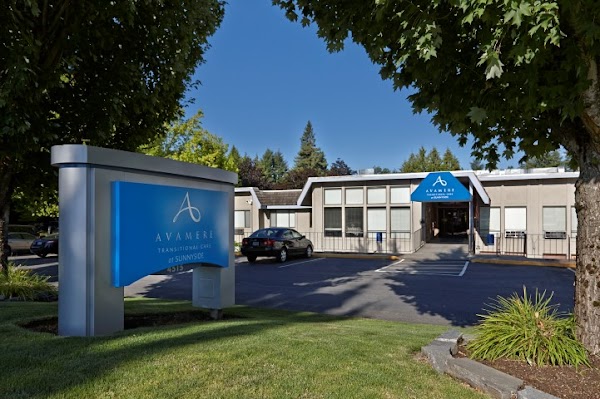
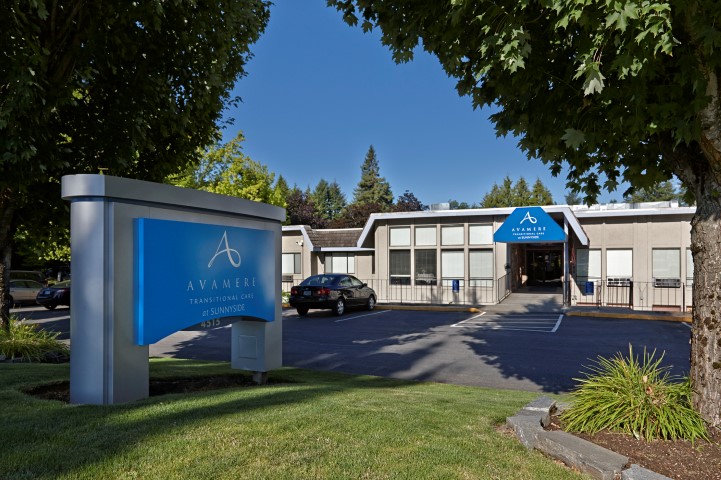
4515 SUNNYSIDE ROAD SE, SALEM, OR 97302 (503) 370-8284
For profit - Limited Liability company 88 Beds AVAMERE Data: November 2025
Trust Grade
50/100
#79 of 127 in OR
Last Inspection: June 2025

Inspected within the last 6 months. Data reflects current conditions.

Overview

Avamere Transitional Care at Sunnyside has a Trust Grade of C, which means it is average and in the middle of the pack compared to other facilities. It ranks #79 out of 127 in Oregon, placing it in the bottom half of state facilities, and #4 out of 8 in Marion County, indicating only three local options are better. The facility is stable with issues remaining constant at 13 over the past two years, but it has a concerning level of RN coverage, falling short of 77% of Oregon facilities. Staffing is relatively strong, with a 4 out of 5 star rating and a turnover rate of 41%, which is below the state average. However, there are notable weaknesses, including long wait times for call light responses, with one resident waiting over 30 minutes for assistance while sitting in soiled conditions. Additionally, there were incidents of improper food handling, such as a staff member forgetting to wear gloves while preparing food, and issues with insufficient dietary staff, risking residents’ meal preferences and safety. Overall, while there are strengths in staffing and no fines, the facility's concerns regarding care and food safety should be carefully considered.

Trust Score
C
50/100
In Oregon
#79/127
Bottom 38%
Safety Record
Low Risk
No red flags
Inspections
Holding Steady
13 → 13 violations
Staff Stability
○ Average
41% turnover. Near Oregon's 48% average. Typical for the industry.
Penalties
✓ Good
No fines on record. Clean compliance history, better than most Oregon facilities.
Skilled Nurses
○ Average
Each resident gets 31 minutes of Registered Nurse (RN) attention daily — about average for Oregon. RNs are the most trained staff who monitor for health changes.
Violations
⚠ Watch
53 deficiencies on record. Higher than average. Multiple issues found across inspections.
★★☆☆☆
2.0
Overall Rating
★★★★☆
4.0
Staff Levels
★★★★☆
4.0
Care Quality
★★☆☆☆
2.0
Inspection Score
Stable
2024: 13 issues
2025: 13 issues

The Good

  • 4-Star Staffing Rating · Above-average nurse staffing levels
  • 4-Star Quality Measures · Strong clinical quality outcomes
  • Full Sprinkler Coverage · Fire safety systems throughout facility
  • No fines on record
  • Staff turnover below average (41%)

    7 points below Oregon average of 48%

Facility shows strength in staffing levels, quality measures, fire safety.

The Bad

2-Star Overall Rating

Below Oregon average (3.0)

Below average - review inspection findings carefully

Staff Turnover: 41%

Near Oregon avg (46%)

Typical for the industry

Chain: AVAMERE

Part of a multi-facility chain

Ask about local staffing decisions and management

The Ugly 53 deficiencies on record

Jun 2025 8 deficiencies
CONCERN (D)

Potential for Harm - no one hurt, but risky conditions existed

Deficiency F0552 (Tag F0552)

Could have caused harm · This affected 1 resident

Based on interview and record review it was determined the facility failed to ensure residents were able to be fully informed in language that she/he can understand of her/his health status and partic...

Read full inspector narrative →
Based on interview and record review it was determined the facility failed to ensure residents were able to be fully informed in language that she/he can understand of her/his health status and participate in health care decisions for 1 of 7 sampled residents (#39). This placed residents at risk for not being able to fully participate in their own health care. Findings include: Resident 39 was admitted to the facility in 8/2022 with diagnoses including hypertension (high blood pressure). A review of Resident 39's care plan initiated in 9/2022 revealed the resident was Spanish-speaking and stated translation services would be available to her/him. On 6/3/25 at 2:02 PM, Resident 39 stated some staff did not take the time to understand her/him and were impatient when she/he tried to communicate her/his needs. On 6/4/25 at 10:15 AM, Staff 5 (LPN) stated on the morning of 6/4/25 Staff 5 observed Staff 6 (CNA) tell Resident 39 to stop talking while he was attempting to take Resident 39's blood pressure. Staff 5 stated Resident 39 was trying to explain she/he wanted her/his blood pressure taken with the manual cuff rather than the tower. Staff 6 was not using the tablet translator. On 6/5/25 at 7:36 AM, Resident 39 stated she/he was not respected by staff when they did not bother to understand her/his needs or communicate with the resident when providing care. Resident 39 stated she/he was frustrated because Staff 6 did not understand Resident 39 did not like her/his blood pressure taken with the tower monitor and wanted it taken manually. On 6/6/25 at 8:57 AM, Staff 6 stated he was trying to take Resident 39's blood pressure and Resident 39 was getting very upset because the tower monitor was not reading correctly. Staff 6 stated he was blunt and straightforward with Resident 39 and did tell him to stop talking so he could take her/his blood pressure manually. Staff 6 stated he did not use the tablet translator. Staff 6 stated he thought it was unfair to residents that they could not easily communicate their needs when they didn't understand or speak English. On 6/6/25 at 1:04 PM, Staff 2 (DNS) stated staff were expected to use translator tablets. Staff 2 stated she did not provide any recent training on communicating with non-English speaking residents but assumed the training was part of their orientation. Staff 2 stated Staff 6 was placed on leave pending investigation for his interaction with Resident 39.
CONCERN (D)

Potential for Harm - no one hurt, but risky conditions existed

Grievances (Tag F0585)

Could have caused harm · This affected 1 resident

Based on interview and record review it was determined the facility failed to provide a written grievance resolution or communication with a resident regarding the resolution of a resident's grievance...

Read full inspector narrative →
Based on interview and record review it was determined the facility failed to provide a written grievance resolution or communication with a resident regarding the resolution of a resident's grievance for 1 of 1 sampled resident (#69) reviewed for dignity. This placed residents at risk for unaddressed concerns and grievances. Findings include: Resident 69 was admitted to the facility in 5/2025 with diagnoses including chronic pain and PTSD (Post Traumatic Stress Disorder). Resident 69's 5/24/25 admission MDS indicated the resident was cognitively intact. The facilities Grievance Policy dated 1/1/17 indicated concerns will be forwarded to the grievance official and appropriate department supervisor for action. The grievance official or department supervisor will contact the concerned resident or representative to inform them of the resolution of their concern. The grievance official and administrator will review the grievance and then forward a copy to the appropriate department manager for action within 72 hours of the receipt. The grievance official and appropriate department supervisor will take immediate action towards resolution of the concern upon receiving a copy of the grievance communication form and will record this action and resolution on the bottom section of the form. The grievance official, administrator or department manager will then contact the concerned party to inform them of the resolution to their concern. On 6/2/25 at 11:02 AM, Resident 69 reported that on 5/28/25 she/he spoke with Staff 2 (DNS) regarding staff not giving her/his pain medication in a timely manner. Resident 69 stated Staff 2 responded by expressing disapproval of residents entering her office to voice complaints about staff. Staff 2 stated she did not have time for this discussion and directed the resident to leave her office. Resident 69 described Staff 2's demeanor as rude and disrespectful. Resident 69 reported feeling she/he was not treated with dignity and respect. Resident 69 stated she/he told two staff members about her/his conversation with Staff 2 and they encouraged her/him to fill out a grievance form and provided one for that purpose. Resident 69 stated she/he completed the grievance communication form handed it to Staff 25 (RN) and she slid it under the administrators office door so they would not be noticed. On 6/4/25 at 9:14 AM, Resident 69 stated staff did not follow up with her/him regarding their grievance. The resident expressed concerns Staff 2 might confront her/him and become upset. Resident 69 also stated Staff 2 did not apologize and she/he felt disrespected. Resident 69 provided a copy of the 5/28/25 Grievance Communication Form which stated the following: The resident reported being prescribed oxycodone (narcotic pain medication) every four hours and alleged nursing staff were an hour late in administering her/his medication. The resident stated they informed a CNA of her/his upcoming physical therapy session and requested the nurse be notified to administer pain medications beforehand. After waiting 45 minutes, the resident reported speaking with Staff 2, who asked the resident to leave her office and expressed disapproval of complaints about the staff. The resident also reported Staff 2 was rude. The resident expressed dissatisfaction with the facilities pain management and rehabilitation services. On 6/5/25 at 8:44 AM, Staff 22 (CNA) stated last week Resident 69 requested pain medication but waited for an hour, as the nurse was attending to another resident and the medication aid was on lunch. Staff 22 noted Resident 69 was in more pain than usual and became upset, and she/he did not want to participate in physical therapy due to the pain. On 6/5/25 at 9:46 AM, Staff 21 (CNA) stated last week Resident 69 became upset because she/he waited over an hour for her/his pain medication. Resident 69 stated she/he talked to Staff 2 and felt like she lied to her/him. Staff 21 encouraged Resident 69 to fill out a grievance. On 6/6/25 at 8:02 AM, Staff 24 (Social Service Director) stated she was unaware Resident 69 filled out a grievance and she would follow up with the resident. On 6/6/25 at 8:18 AM, Staff 2 confirmed last week she had a discussion with Resident 69 regarding the resident's concerns about pain medication not being administered in a timely manner. Staff 2 reported she completed a risk management form related to the concern and provided staff education. She further stated the resident did not give her a grievance form and she believed the issue was resolved. On 6/6/25 at 1:08 PM, Staff 1 (Administrator) stated he was not aware Resident 69 submitted a grievance. Staff 1 reported his expectation was for all grievances to be brought to his attention as soon as possible and the resident to be contacted or provided with the investigative conclusion to the grievance. Staff 1 stated he would follow up with Resident 69. On 6/6/25 at 1:28 PM, Staff 25 confirmed around 6:00 PM on 5/28/25, Resident 69 approached her and stated she/he was very upset after a conversation with Staff 2. The resident reported she/he was never spoken to in that manner before and felt disrespected. Staff 25 stated Resident 69 completed a grievance form. Staff 25 stated she had a key to Staff 1's office and placed the grievance form in his mailbox. Staff 25 stated staff did not follow up with her regarding any additional information. On 6/6/25 at 3:00 PM, Staff 1 stated he found the missing grievance. Staff 1 confirmed the grievance process was not followed.
CONCERN (D)

Potential for Harm - no one hurt, but risky conditions existed

Deficiency F0628 (Tag F0628)

Could have caused harm · This affected 1 resident

Based on interview and record review it was determined the facility failed to provide residents with a written bed hold notification, including reserved bed hold payment, at the time of transfer to th...

Read full inspector narrative →
Based on interview and record review it was determined the facility failed to provide residents with a written bed hold notification, including reserved bed hold payment, at the time of transfer to the hospital for 1 of 1 sampled resident (#18) reviewed for hospitalization. This placed residents at risk for lack of knowledge regarding their choices and potential financial responsibilities. Findings include: A review of the facility's Bed Holds and Returns Policy dated 10/2022 stated residents, regardless of payer source, are provided written notice about these policies [.] at the time of transfer. Resident 18 was admitted to the facility in 11/2017 with diagnoses including congestive heart failure, COPD (chronic obstructive pulmonary disease), and respiratory failure. A review of Resident 18's clinical record revealed she/he was transferred to the hospital on 5/27/25. No evidence was found in Resident 18's clinical record to indicate written notice of the facility's bed hold policy was provided to the resident or her/his representative when she/he was transferred to the hospital. On 6/6/25 at 8:55 AM, Staff 2 (DNS) stated a written bed hold notification was not provided to Resident 18 or her/his representative at the time of transfer to the hospital because her/his payer source was Medicaid. On 6/6/25 at 10:33 AM, Staff 17 (Regional Nurse Consultant) confirmed a written bed hold policy, including reserved payment, needed to be provided to Resident 18 or her/his representative at the time she/he was transferred to the hospital.
CONCERN (D)

Potential for Harm - no one hurt, but risky conditions existed

Respiratory Care (Tag F0695)

Could have caused harm · This affected 1 resident

Based on observation, interview, and record review, it was determined the facility failed to provide respiratory care and services under physician orders for 1 of 2 sampled residents (#47) reviewed fo...

Read full inspector narrative →
Based on observation, interview, and record review, it was determined the facility failed to provide respiratory care and services under physician orders for 1 of 2 sampled residents (#47) reviewed for respiratory services. This placed residents at risk for unmet respiratory needs. Findings include: Resident 47 was admitted to the facility in 8/2024 with diagnoses including COPD (Chronic Obstructive Pulmonary Disease an airway disease which restricts breathing) and diabetes. The undated facility Oxygen Administration policy and procedures revealed: 1. Verify a physician's order for the procedure. Review the physicians' orders or facility protocol for oxygen administration. 2. Review the resident's care plan to assess for any special needs of the resident. The 12/24/24 care plan indicated Resident 47 experienced shortness of breath with decreased energy and fatigue. Interventions included learning signs of respiratory compromise, encouraging sustained deep breaths, and monitoring and documenting changes in orientation, increased restlessness, anxiety, and air hunger. Resident 47 was to have oxygen via nasal cannula PRN. O2 Sat Summary (Oxygen Saturation Summary) printed on 6/4/25 revealed from 5/1/25 through 6/3/25, Resident 47's oxygen vitals were checked 45 times, and the resident was documented as being on oxygen via nasal cannula 32 times. Resident 47's 5/16/25 Quarterly MDS indicated the resident was cognitively intact. On 6/2/25 at 12:50 PM, and 6/4/25 at 8:53 AM, Resident 47 was observed in bed with oxygen administered through a nasal cannula. On 6/3/25 at 8:08 AM, Resident 47 was observed in bed with oxygen administered through a nasal cannula. On 6/5/25 at 7:28 AM, Staff 3 (CNA) stated Resident 47 used oxygen while she/he was in bed but did not use it when she/he was up in her/his wheelchair. On 6/5/25 at 9:01 AM, Resident 47 was observed with oxygen administered through a nasal cannula. A review of the Resident 47's clinical record found no documentation of physician orders for oxygen administration, how often the oxygen filter was to be cleaned, checked, or how often the oxygen tubing was to be changed. On 6/5/25 at 10:28 AM, Staff 2 stated Resident 47 did not have any current orders for oxygen.
CONCERN (D)

Potential for Harm - no one hurt, but risky conditions existed

Deficiency F0697 (Tag F0697)

Could have caused harm · This affected 1 resident

Based on interview and record review, the facility failed to provide appropriate pain management for 1 of 2 sampled residents (#55) reviewed for pain. This placed residents at risk for uncontrolled pa...

Read full inspector narrative →
Based on interview and record review, the facility failed to provide appropriate pain management for 1 of 2 sampled residents (#55) reviewed for pain. This placed residents at risk for uncontrolled pain. Findings include: Resident 55 was admitted to the facility in 2/2025 with diagnoses including osteoarthritis of the hip and knee and chronic pain. A 4/16/25 Physician's Progress Note indicated Resident 55 experienced severe osteoarthritis. The recommendation was to continue pain management with PRN acetaminophen. A revised 4/17/25 care plan revealed Resident 55 experienced chronic pain due to gout, and bilateral severe osteoarthritis of the hip. Interventions included attempting non-pharmaceutical interventions before administering pain medications per physician orders and report to the nurse complaints of pain or requests for pain treatment. Resident 55's 5/21/25 Quarterly MDS indicated the resident was cognitively intact. Resident 55 received scheduled pain medication and no PRN pain medications. Resident 55 was in almost constant pain, which affected sleep, day-to-day activities, and therapy frequently. The resident reported a pain level of seven on a scale from 0-10. A 6/2025 MAR instructed staff to administer gabapentin 300 mg by mouth in the afternoon for pain and gabapentin 300 mg two capsules two times a day for pain at 8:00 AM and 8:00 PM. Resident 55 was also ordered to have acetaminophen 500 mg two tablets every 8 hours for pain. Both orders were administered as physician ordered. On 6/2/25 at 12:48 PM and 6/5/25 at 8:51 AM, Resident 55 stated she/he was asking for something to assist with breakthrough pain, but nothing had happened yet. Resident 55 stated there were days when she/he was very painful and needed additional medication. Resident 55 stated she/he took gabapentin and acetaminophen and did not take anything for breakthrough pain. Resident 55 stated she/he put in a request a couple of weeks ago and nothing was done. Resident 55 stated topical creams did not work. No documentation or communication with the provider about pain management was found in Resident 55's clinical record. On 6/5/25 at 11:21 AM, Staff 2 (DNS) stated she could not find any information to indicate the physician was contacted for clarification for the PRN acetaminophen. Staff 2 stated she expected staff to contact the physician to clarify the information in the physician's progress note.
CONCERN (D) 📢 Someone Reported This

A family member, employee, or ombudsman was alarmed enough to file a formal complaint

Potential for Harm - no one hurt, but risky conditions existed

Safe Environment (Tag F0921)

Could have caused harm · This affected 1 resident

Based on observation and interview it was determined the facility failed to ensure sufficient supplies were available to ensure a functional and comfortable environment for one of two floors reviewed ...

Read full inspector narrative →
Based on observation and interview it was determined the facility failed to ensure sufficient supplies were available to ensure a functional and comfortable environment for one of two floors reviewed for environment. This placed residents at risk for an uncomfortable living environment. Findings include: A public complaint received on 2/13/25 indicated the facility failed to provide enough supplies to meet resident care needs. On 6/5/25 at 9:24 AM, Staff 21 (CNA) reported since 2/2025 the facility experienced on-going shortages of bariatric sheets and towels for residents. As a result, residents often waited for clean linens before staff could change their beds. Staff 21 stated she reported these concerns to management however the issues continued to occur. On 6/5/25 at 9:25 AM, Staff 21 confirmed no bariatric sheets or towels were available for resident use in the North Hall linen closet. On 6/5/25 at 9:45 AM, Staff 29 (CNA) stated she looked for towels for a resident and was unable to find any in the North Hall linen closet. She further stated this was a common occurrence and she often searched other areas of the facility to locate linens for all residents. On 6/5/25 at 10:00 AM, Resident 43 stated the facility never had the right size sheets for her/his bariatric bed and the sheets frequently slipped off her/his mattress. Resident 43 also stated the facility frequently ran out of sheets, and she/he waited more than 20 minutes before staff could change her/his bedding. On 6/5/25 at 10:31 AM, Staff 22 (CNA) stated on weekends, the facility always ran out of bed pads and bariatric sheets. She informed the housekeeping management of the issue over the past few months however the facility still did not have enough linens for the residents. On 6/5/25 at 10:57 AM, Resident 31 stated for a period of time, the facility ran out of bariatric sheets several times a week. Resident 31 stated nine times out of 10 the CNA's were unable to make her/his bed until later in the day due to lack of bariatric sheets. On 6/5/25 at 11:16 AM, Staff 30 (CNA) stated the facility had multiple bedbound bariatric residents. Staff 30 reported the facility ran out of bariatric sheets daily, resulting in residents having to wait before their bedding could be changed. Staff 30 stated this made it difficult to provide care particularly on shower days when staff were expected to change resident sheets but often waited for supplies or searched throughout the facility to locate them. On 6/6/25 at 9:45 AM, Staff 27 (Maintenance Director) confirmed over the past several months both residents and staff expressed concerns about not having enough bariatric sheets and towels. On 6/6/25 at 1:19 PM, Staff 1 (Administrator) confirmed he was aware the facility had an ongoing issue with not having sufficient linens to meet the needs of all the residents.
CONCERN (E) 📢 Someone Reported This

A family member, employee, or ombudsman was alarmed enough to file a formal complaint

Potential for Harm - no one hurt, but risky conditions existed

Deficiency F0659 (Tag F0659)

Could have caused harm · This affected multiple residents

Based on interview and record review, it was determined the facility failed to ensure qualified staff administered medications for one of one facility reviewed for medication administration. This plac...

Read full inspector narrative →
Based on interview and record review, it was determined the facility failed to ensure qualified staff administered medications for one of one facility reviewed for medication administration. This placed residents at risk for receiving medication errors. Findings included: The Oregon State Board of Nursing indicated the title abbreviation CMA is protected by Oregon law and means Certified Medication Aide, not Certified Medical Assistant. The abbreviation CMA could not be used by medical assistants in Oregon. Medical assistants are unregulated personnel and work in outpatient settings under the direction of a physician. The facility's Administering Medications policy, dated 4/2019, indicated only persons licensed or permitted by the state could prepare, administer, and document the administration of medications. A public complaint was received on 3/15/25, which alleged the facility failed to ensure staff were qualified to administer medications to residents. On 6/3/25 at 11:36 AM, Staff 20 (Staffing Coordinator) stated she posted on an agency website the facility needed CMAs to pass medications on day shift. Staff 19 (Agency Medical Assistant) signed up for the shift and passed medications on the first and second floors of the facility. It was not until the end of the day shift the facility realized Staff 19 was a Medical Assistant, not a CMA, and could not administer medications to residents in a nursing facility. On 6/4/25 at 11:51 AM, Staff 2 (DNS) stated Staff 19 told Staff 2 she was a medication aide. Staff 19 passed medications on 3/15/25, on day shift. Staff 2 stated Staff 19 did not pass the medications per established protocols and the nurses questioned her ability, so they looked up her license to find out she was a Medical Assistant not a CMA. On 6/5/25 at 11:06 AM, Staff 19 stated she was told she could administer medications at the nursing facility if she was working under a nurse or physician. Staff 19 stated she had worked eight hours in the facility on 3/15/25. On 6/6/25 at 1:15 PM, Staff 1 (Administrator), Staff 2, and Staff 3 (Regional Clinical Nurse) acknowledged Staff 19 administered medications to residents in the facility. Staff 2 stated the staffing agency was called, and the facility no longer used the staffing agency's services. Staff 2 stated her expectation was for nursing staff to be licensed or certified to work in the facility
CONCERN (E) 📢 Someone Reported This

A family member, employee, or ombudsman was alarmed enough to file a formal complaint

Potential for Harm - no one hurt, but risky conditions existed

Pharmacy Services (Tag F0755)

Could have caused harm · This affected multiple residents

Based on interview and record review, it was determined the facility failed to ensure narcotic drug records were in order, and an account of all controlled drugs was maintained for 4 of 4 medication c...

Read full inspector narrative →
Based on interview and record review, it was determined the facility failed to ensure narcotic drug records were in order, and an account of all controlled drugs was maintained for 4 of 4 medication carts reviewed for medication administration. This placed residents at risk for drug diversion. Findings included: On 6/4/25 at 11:14 AM, book four on the South hall's 5/2025 medication cart Narcotic log book revealed 57 times out of 186 counting opportunities the facility staff did not sign verification the narcotic count was accurate. On 6/4/25 at 11:30 AM, book four on the South hall's 4/2025 medication cart Narcotic log book revealed 45 times out of 180 counting opportunities the facility staff did not sign verification the narcotic count was accurate. On 6/4/25 at 11:45 AM, book seven on the North hall's 3/2025 medication cart Narcotic log book revealed 92 times out of 186 counting opportunities the facility staff did not sign verification the narcotic count was accurate. On 6/4/25 at 11:50 AM, book seven on the North hall's 4/2025 medication cart Narcotic log book revealed 82 times out of 180 counting opportunities the facility staff did not sign verification the narcotic count was accurate. On 6/4/25 at 11:55 AM, book seven on the North hall's 5/2025 medication cart Narcotic log book revealed 64 times out of 186 counting opportunities the facility staff did not sign verification the narcotic count was accurate. On 6/4/25 at 12:00 PM, book 14 on the South hall's 3/2025 medication cart Narcotic log book revealed 94 times out of 186 counting opportunities the facility staff did not sign verification the narcotic count was accurate. On 6/4/25 at 12:05 PM, book 14 on the North hall's 4/2025 medication cart Narcotic log book revealed 52 times out of 186 counting opportunities the facility staff did not sign verification the narcotic count was accurate. On 6/4/25 at 12:10 PM, book 14 on the North hall's 5/2025 medication cart Narcotic log book revealed 36 times out of 180 counting opportunities the facility staff did not sign verification the narcotic count was accurate. On 6/4/25 at 12:22 PM, Staff 2 (DNS) verified the missing signatures in the Narcotic books. Staff 2 acknowledged the Narcotic book always needed to be signed by two nurses or CMAs to verify the count was accurate.
Jan 2025 5 deficiencies
CONCERN (D) 📢 Someone Reported This

A family member, employee, or ombudsman was alarmed enough to file a formal complaint

Potential for Harm - no one hurt, but risky conditions existed

Resident Rights (Tag F0550)

Could have caused harm · This affected 1 resident

Based on observation, interview, and record review it was determined the facility failed to ensure residents' rights to a dignified existence for 2 of 5 sampled residents (#s 3 and 15) reviewed for di...

Read full inspector narrative →
Based on observation, interview, and record review it was determined the facility failed to ensure residents' rights to a dignified existence for 2 of 5 sampled residents (#s 3 and 15) reviewed for dignity and respect. This placed residents at risk for diminished quality of life. Findings include: 1. Resident 3 was admitted to the facility in 2020 with diagnoses including morbid obesity and depression. A care plan dated 2/1/20, revealed Resident 3 was independent with transferring herself/himself in the room, utilized a bed side commode, and required one-person assistance with toileting hygiene. A Grievance Communication Form Dated 9/30/24, revealed the following: - Resident 3 turned on the call light for help at 12:15 PM. At 12:30 PM, Resident 3 placed herself/himself on the beside commode. At 1:15 PM, her/his roommate went out and asked staff for help. At 1:20 PM, almost one hour after the resident turned on the call light, a CNA entered the room and helped Resident 3 off the bedside commode. -Staff 41 (Former CNA) stated Resident 3 indicated her/his call light was on for 45 minutes and Staff 41 told Resident 3 she was the only one answering call lights because the other CNA was providing another resident a shower after lunch. Staff 41 apologized. -Staff 2 (DNS) indicated Resident 3 was independent in her/his room for the most part and Staff 41 intended to assist Resident 3, but another resident was crying in the hall and was distraught. Staff 41 made a judgement call. -Staff 41 apologized to Resident 3 post incident. Resident 3 was upset and crying and stated, It wasn't fair. -Staff 2 indicated the long call light did occur. Staff were not ignoring the call light, or Resident 3's needs, because the CNAs were working the best they could. On 1/2/25 and 1/3/25 attempts to contact Staff 41 were unsuccessful. On 1/2/25 at 11:20 AM, Resident 3 was observed sitting on the edge of her/his bed. The resident's bedside commode was adjacent to the bed. A call light was attached to the wall next to the bedside commode. Resident 3 stated she/he completed a grievance form regarding the 9/30/24 incident. Resident 3 stated she/he could get onto the bedside commode herself/himself but needed assistance with wiping. Resident 3 stated she/he sat on the bedside commode for almost an hour without assistance and was in tears because her/his bottom hurt from the hard plastic. Resident 3 stated this occurred on more than one occasion and was very frustrating. On 1/6/25 at 2:11 PM, Staff 11 (LPN-Resident Care Manager) stated he spoke with Resident 3 after the incident on 9/30/24, and she/he was upset regarding the incident. On 1/6/25 at 3:39 PM, Staff 2 stated she was aware of the incident on 9/30/24, and Resident 3 was upset from sitting on the bedside commode for an extended period. Staff 2 stated she encouraged the resident to turn her/his call light on sooner when Resident 3 knew when she/he was going to use the commode. 2. Resident 15 was admitted to the facility in 2024 with diagnoses including morbid obesity and anxiety. A care plan dated 8/15/24, and revised on 12/24/24, revealed Resident 15 needed to be supervised when smoking. Resident 15 obtained her/his smoking materials from staff, and returned them when she/he was done smoking. A review of progress notes from 8/30/24 through 9/7/24 revealed Resident 15 was found to have smoking paraphernalia on her/him and was caught smoking while unsupervised. The resident handed over her/his smoking paraphernalia to staff when asked. A Progress Noted dated 9/13/24 at 10:43 AM, revealed the following: -Staff 30 (Former Nursing Student) went into Resident 15's room to provide wound care after the resident returned from visiting with a friend. Therapy was working with the resident. -Staff 30 completed the resident's wound treatment and asked if it was ok if she checked the resident's makeup bag. Staff 30 requested to check due to patient's friend having history of bringing patient paraphernalia. -Resident 15 agreed to have her/his bag searched, and the therapist was present. Staff 30 found a white oval pill with M367 scripted on one side and a lighter. Staff 30 confiscated the pill, took the lighter, and reported the information to Staff 9 (LPN), who then contacted Staff 2 (DNS). The items were given to Staff 2. -Staff 30 spoke with Staff 31 (Former LPN-Resident Care Manager), who requested staff to do a room search immediately and to check Resident 15 when she/he came back downstairs. -Staff 30 indicated two additional nurses went and searched Resident 15's room and belongings, but no smoking paraphernalia was found. -Resident 15 returned to her/his room and was upset, and yelled at the staff for being in her/his room, saying, You guys need to get the fuck out of my room. You have no right to be in my fucking room. Get the hell out of here. This isn't right, you can't do this, you need to tell [Resident 15] before you search [Resident 15's] room. -Staff 31 informed Resident 15 staff were doing this per administration's direction and needed to complete a full body check on Resident 15. Staff communicated with the resident about which body part needed to be checked prior to touching the resident. The search was completed, and nothing was found on the resident. -Staff 31 let the resident know she/he did not need to yell and indicated to talk nicely to staff. Staff 31 tried to let the resident know staff already searched the room and the resident did not need to leave her/his room. -Resident 15 proceeded to go downstairs and felt she/he was being targeted by staff due to her/his room being searched without permission. On 1/6/25 at 12:10 PM, Resident 15 was observed in her/his room seated in her/his wheelchair. Resident 15 stated she recalled the 9/13/24 incident and stated a staff person sniffed her/his hair upon returning from outside. When the resident returned to her/his room, a staff person approached the resident and asked if she could look into Resident 15's bag, to which the resident agreed. Resident 15 stated they found a Vicodin (pain pill) and a lighter, which the staff member confiscated. Resident 15 stated she/he and the staff person left the room. Resident 15 stated when she/he returned there were multiple staff in her/his room conducting a search. Resident 15 stated W.T.F., you searched [Resident 15's] room without [Resident 15's] permission. Resident 15 stated she/he was flustered, and staff indicated they needed to complete a body search. Resident 15 stated she felt coerced and let Staff 31 complete the body search. Resident 15 stated Staff 31 indicated she was told by Staff 1 (Administrator) and Staff 2 the search needed to be completed. Resident 15 stated the staff found nothing on her/him or in the room. Resident 15 stated she/he felt humiliated, targeted, and angry. On 1/6/25 at 12:54 PM, Staff 9 stated she was aware of the incident on 9/13/24 and was directed by Staff 31 to search Resident 15's room and assist with a body search. Staff 9 stated she could not recall if the resident was in the room during the search or if the staff asked the resident's permission to search the room. Staff 9 stated she was not comfortable with the search but did what was asked of her. Staff 9 stated Resident 15 was extremely upset and angry about what happened and felt her/his rights were violated. On 1/6/25 at 3:05 PM, Staff 31 stated she was not involved with the incident but only heard about Resident 15's room search and body search. Staff 31 stated Staff 1 and Staff 2 were aware and followed up regarding the 9/13/24 incident. On 1/6/25 at 4:37 PM, Staff 30 stated Resident 15 had a history of being non-compliant with smoking paraphernalia and had items confiscated from her/him before the 9/13/24 incident. Staff 30 stated Staff 1 and Staff 2 told her to an keep an eye on the resident due to non-compliance with smoking. Staff 30 stated she was in Resident 15's room to provide treatment, and the resident had a purse which was unzipped, in which she saw a lighter. Staff 30 stated she asked the resident if she could search her/his purse and the resident agreed. Staff 30 stated she found a pill and lighter in the resident's purse, confiscated them, and informed Staff 31. Staff 30 indicated she and a couple other staff members were told to search the resident's room and had done so without permission. Resident 15 was out of the room during the search, and no one asked permission to search her/his room. Staff 30 stated upon Resident 15's return, she was extremely upset, stating, You should not be going through my stuff without my permission. Staff 30 stated Staff 31 informed the resident a body search needed to be completed and Staff 31 conducted the body search. Staff 30 stated Resident 15 was very upset, cursed, and nothing was found in the resident's room or on her/his body. Staff 30 stated the incident made her very uncomfortable and she never experienced anything else like it. On 1/6/25 at 4:13 PM and 5:37 PM, Staff 1 and Staff 2 were present for an interview. Staff 1 and Staff 2 stated Resident 15 was non-compliant with smoking paraphernalia, and both were aware of the incident that occurred on 9/13/24. However, both staff stated they were unaware Resident 15's room was searched, or a body search was completed without the resident's permission. Staff 1 stated she expected staff to ask permission prior to searching the resident's room or when conducting a body search.
CONCERN (D) 📢 Someone Reported This

A family member, employee, or ombudsman was alarmed enough to file a formal complaint

Potential for Harm - no one hurt, but risky conditions existed

Notification of Changes (Tag F0580)

Could have caused harm · This affected 1 resident

Based on interview and record review it was determined the facility failed to notify the physician regarding a change in condition for 1 of 4 sampled residents (#5) reviewed for change of condition. T...

Read full inspector narrative →
Based on interview and record review it was determined the facility failed to notify the physician regarding a change in condition for 1 of 4 sampled residents (#5) reviewed for change of condition. This placed residents at risk for lack of physician involvement. Findings include: The facility's Change in a Resident's Condition or Status Policy Statement dated 2/2021 directed the nurse to notify the resident's attending physician or the on-call physician of a significant change in the resident's physical condition. Resident 5 was admitted to the facility in 10/2023 with diagnoses including Congestive Heart Failure (a chronic condition in which the heart does not pump blood as well as it should) and a below the knee amputation. Review of Resident 5's clinical record revealed the following: - On 10/27/24 Resident 5 had a 4.9 pound weight gain in 24 hours. No evidence was found to indicate the physician was notified. - On 10/29/24 Resident 5 had a 10.2 pound weight gain in the past seven days. No evidence was found to indicate the physician was notified. - On 11/1 Resident 5 had a 4 pound weight gain in 24 hours. No evidence was found to indicate the physician was notified. - On 11/3 Resident 5's had a 3.2 pound weight gain in 24 hours. No evidence was found to indicate the physician was notified. A Nursing Care Note dated 11/10/24 revealed the provider was notified of Resident 5's weight gain - to188.2 pounds [8.4-pound gain in one week]. Resident 5 was sent to the hospital and admitted for evaluation of lower extremity swelling. On 1/2/25 at 2:50 PM Staff 32 (LPN-Resident Care Manager) stated when daily weights were ordered for patients with CHF the nurse was expected to report a weight gain of two pounds in 24 hours or five pounds in a week. Staff 32 stated she did not notify the provider of any weight changes. On 1/2/25 at 3:56 PM Staff 34 (LPN) stated she recalled Resident 5 being upset about her/his weight gain but could not recall the exact date. Staff 34 stated she did not notify the provider of any weight gains. On 1/6/25 at 11:18 AM Staff 2 (DNS) confirmed the physician was not notified for dates identified. Staff 2 stated she expected nursing staff to notify the physician when a resident had weight gain of two or three pounds within a 24-hour period, or if a resident had a five-pound increase within a week. On 1/6/25 at 3:10 PM Staff 42 (Medical Director) stated staff should follow the American Heart Association recommendations and notify the provider regarding a resident who had weight gain of two or three pounds within a 24-hour period, or if a resident had a five-pound increase within a week, which could be a potential sign of worsening heart failure.
CONCERN (D) 📢 Someone Reported This

A family member, employee, or ombudsman was alarmed enough to file a formal complaint

Potential for Harm - no one hurt, but risky conditions existed

Deficiency F0806 (Tag F0806)

Could have caused harm · This affected 1 resident

Based on observation, interview, and record review it was determined the facility failed to ensure residents food preferences were honored for 1 of 3 sampled resident (#3) reviewed for food. This plac...

Read full inspector narrative →
Based on observation, interview, and record review it was determined the facility failed to ensure residents food preferences were honored for 1 of 3 sampled resident (#3) reviewed for food. This placed residents at risk for food lessened quality of life. Findings include: Resident 3 was admitted to the facility in 2020 with diagnoses including morbid obesity and diabetes. A 12/27/24 meal ticket revealed Resident 3 ordered barbecue country ribs, scalloped potatoes, mixed vegetables, fruit salad, two strawberry kiwi juices and two diet lemon sodas. On 12/27/24 at 12:21 PM, Resident 3 was observed eating lunch in her/his room and the meal consisted of barbecue country ribs, scalloped potatoes, and mixed vegetables. The resident received one strawberry kiwi juice and one diet lemon lime soda. There was only one beverage each and no fruit salad delivered with the meal. On 12/27/24 at 12:25 PM, Resident 3 stated she/he did not receive what she/he requested which occurred often. Staff 12 (CNA) was present and acknowledged the resident did not receive what she/he requested, and which was a common occurrence. On 12/31/24 at 8:14 AM, Staff 12 (CNA) delivered Resident 3's breakfast which included a Belgian waffle with syrup, oatmeal, Canadian bacon, scrambled eggs, coffee and one milk. Nothing on the meal ticket was circled and Resident 3 stated she/he did not order any of the breakfast items because the resident was never given the menu on 12/30/24 to be completed. Staff 12 confirmed this happened often because residents were not always given menus the day before. On 12/31/24 at 8:25 AM, Staff 12 stated Resident 3's preferences were often not honored. The resident liked to receive two bowls of Cheerios, a yogurt, and a cup of hot chocolate. On 12/21/24 at 1:26 PM, Staff 25 (Dietary Manager) stated CNAs were responsible to ensure residents completed menus for the next day's meal and turn the menu selection in the day before to ensure residents' preferences were honored. Staff 25 stated she was not aware Resident 3 did not receive what she/he ordered on 12/27/24. Staff 25 stated when a menu selection was not submitted, residents received whatever printed out on the meal ticket. Staff 25 acknowledged she was unaware of Resident 3's preference because she was new to the position and was learning the dietary meal ticket system on the computer.
CONCERN (E) 📢 Someone Reported This

A family member, employee, or ombudsman was alarmed enough to file a formal complaint

Potential for Harm - no one hurt, but risky conditions existed

Deficiency F0558 (Tag F0558)

Could have caused harm · This affected multiple residents

4. Resident 6 admitted to the facility in 5/2019 with diagnoses including Guillain-Barre Syndrome (a neurological disorder which causes muscle weakness, tingling, and paralysis). A 7/23/24 Wound Evalu...

Read full inspector narrative →
4. Resident 6 admitted to the facility in 5/2019 with diagnoses including Guillain-Barre Syndrome (a neurological disorder which causes muscle weakness, tingling, and paralysis). A 7/23/24 Wound Evaluation revealed Resident 6 had a Stage 4 pressure wound (a wound that extends completely through all layers of the skin, exposing muscle, tendon, or bone) on her/his coccyx (tailbone). An 8/2/24 Progress Note revealed Resident 6 complained to staff about facility staff using face towels to do wound care and the Resident Care Manager requested an order for wet wipes due to Resident 6's skin breakdown. A review of Resident 6's orders revealed no orders for staff to use wet wipes instead of washcloths for incontinence care and wound care on the coccyx. On 12/31/24 at 1:50 PM and on 1/2/25 at 12:58 PM Resident 6 stated the facility staff used washcloths to clean the area around her/his coccyx wound. Resident 6 stated Staff 2 (DNS) had the facility staff use washcloths instead of wet wipes. Resident 6 stated the facility staff used the washcloths for incontinence care currently when the facility ran out of wet wipes and it was painful due to the wound on her/his coccyx area. On 1/2/25 at 2:12 PM Staff 46 (CNA) stated the staff did not have access to enough wet wipes for all the personal care provided daily and the staff were to fill out a slip to request wipes to be delivered by Staff 2 once a day. Staff 46 stated the staff were to use washcloths to do incontinence care for Resident 6 and she/he complained about it being very rough because her/his skin was delicate. On 1/2/25 at 3:49 PM Staff 37 (CNA) stated the facility staff were required to use washcloths for incontinence care and on resident wounds. Staff 37 stated Resident 6 complained about the washcloths being uncomfortable. On 1/6/25 at 12:54 PM Staff 2 stated the facility moved to using washcloths for residents rather than wet wipes for all residents except those with skin breakdown; and those with skin breakdown were added to a list and approved for use of wet wipes. On 1/6/25 at 2:30 PM Staff 2 provided an undated Resident Approved for Wet Wipes List of residents who were approved for wet wipes for incontinence care and stated the facility moved to washcloths on 7/16/24. The Resident Approved for Wet Wipes List revealed Resident 6 was not approved to receive incontinence care with wet wipes until 8/2/24. Staff 2 confirmed Resident 6 should have always been on the list of residents to use wet wipes instead of wash cloths but there was a time staff used wash cloths for incontinence care. Staff 2 reviewed the orders for residents with approval for wet wipes and confirmed Resident 6 did not have an order for the staff to use wet wipes instead of wash cloths. Based on observation, interview, and record review it was determined the facility failed to accommodate residents with the correct fit of incontinence briefs for 4 of 13 sampled residents (#s 1, 6, 13 and 15) reviewed for dignity and respect and accommodation of need. This placed residents at risk skin breakdown and discomfort. Findings include: 1. Resident 1 was admitted to the facility in 2015 with diagnoses including diabetes and renal disease. A care plan dated 9/5/23, and revised on 12/5/24, revealed Resident 1 was incontinent of bowel and bladder, and used a brief with tabs, size three extra-large. Staff were to ensure the brief tabs were secure, so they did not scratch the skin, and use barrier cream between skin if tab contact was anticipated. Resident 1 required two-person assistance for bed mobility and one or two-person assistance for a brief change. On 12/27/24 at 1:30 PM, Witness 20 (Complainant) stated Resident 1 was recently switched to a different brief size for incontinence care, and the brief was too small, was tight, and caused red marks on the resident's skin. Witness 20 stated the resident reported concerns to staff, but the resident was still in the smaller brief. Interviews were conducted on 12/30/24 from 12:32 PM through 3:35 PM, with Staff 12 (CNA), Staff 43 (CNA), and Staff 13 (CNA). Staff 12, Staff 43, and Staff 13 stated Resident 1 was incontinent of bowel and bladder and required one or two persons to provide incontinence care. Staff 12, Staff 43, and Staff 13 stated residents were changed over to new brief sizes and Resident 1 complained the new brief was too small, cut into her/his skin, and rubbed uncomfortably. Staff 13 stated Resident 1's previous brief went over the top of the resident's pannus area, but the new sized brief went under the pannus, causing the tabs to rub, and resulting in red skin around the area. Staff 12 stated the new briefs were decided based on height and weight only, and nothing else about Resident 1 was considered. On 12/30/24 at 3:53 PM, Resident 1 was observed in bed. Resident 1 stated she/he was provided a new brief size, and the brief was way too small. The resident pulled down her/his blankets, and lifted her/his pannus, and the brief was visible along with where the tabs attached to the brief. Resident 1 stated the brief was too tight around her/his legs, rubbed on her/him, and was very uncomfortable. Resident 1 further stated she/he spoke with Staff 2 (DNS) and Staff 11 (LPN/Resident Care Manager), but both staff indicated the brief was the correct size based off her/his height and weight and did not allow her/him a different size. On 1/6/25 at 1:48 PM, Staff 11 stated Resident 1 was sized for a new brief based off the resident's height and weight. The brief she/he was fitted for did not recommend a larger brief size, according to the chart. Staff 11 stated he was aware Resident 1 was not comfortable in the new brief and the resident preferred a brief that went over the top of her/his pannus. On 1/6/25 at 3:13 PM, Staff 2 stated all residents were sized for new briefs and she was not sure what size Resident 1 wore prior to the brief change, but the old brief was place over the resident's pannus area. The new sized brief was based on height and weight, and staff were trained on the new brief sizes. Staff 2 stated she was unaware there were concerns regarding Resident 1's new brief size. 2. Resident 13 was admitted to the facility in 2021 with diagnoses including a stroke and anxiety. A care plan dated 3/10/21, and revised on 12/5/24, revealed Resident 13 was frequently incontinent of urine, and used a brief with tabs, size three extra-large. Staff were to assist Resident 13 with incontinent care after each episode. Resident 13 required substantial/maximum to dependent assistance with toileting hygiene. On 12/30/24 at 10:57 AM, Resident 13 stated she/he was very upset due to being placed in a new brief size. Resident 13 stated the brief she/he was fitted for was too small, and was tight around the thighs, and crotch area. Resident 13 stated CNAs could not supply her/him with a bigger brief size because of what her/his care plan indicated. Resident 13 stated, This is just not right. On 12/31/24 at 9:35 AM Witness 23 (Complainant) stated Resident 13 was recently switched to a different brief size for incontinence care and the brief was too small, tight, and uncomfortable for Resident 13. Witness 23 stated the resident was very upset regarding the new brief and asked for a different size brief but was told the brief fit her/him appropriately and was based off her/his height and weight. Witness 23 stated upper management did not consider Resident 13's waist size or lower body size. Witness 23 further stated upper management told residents they needed to buy their own briefs if the residents were unhappy with the size of brief provided. On 12/31/24 at 2:13 PM, Staff 16 (CNA), and on 1/3/25 at 2:13 PM, Staff 28 (CNA) stated Resident 13 was frequently incontinent of bladder, and required one staff person to assist with her/his incontinent care needs. Staff 16 and Staff 28 stated Resident 13 was extremely upset about the new brief sizes because the new brief was tight around her thighs, and crotch area. Staff 16 and Staff 28 stated to their knowledge, Resident 13 did not have redness or skin breakdown. On 1/2/25 at 2:35 PM, Staff 7 (LPN) stated Resident 13 was very upset regarding her/his brief size change and felt the brief was too small. Staff 7 stated a brief specialist was in the building and assisted with determining the correct brief size for each resident, which was based off height and weight. On 1/6/25 at 3:57 PM Staff 2 (DNS) stated she was aware Resident 13 was upset about the new brief sizing and was focused on the color of the brief. Staff 2 stated the new briefs were determined by height and weight for each resident. Staff 2 stated she was unaware Resident 13 had concerns regarding the brief being too small and uncomfortable. 3. Resident 15 was admitted to the facility in 2024 with diagnoses including morbid obesity and anxiety. A care plan dated 8/15/24, and revised on 12/4/24, revealed Resident 15 required one-person assistance with toileting, and used size two extra large briefs without tabs. Staff were to ensure the brief was securely fastened. On 12/31/24 at 9:35 AM Witness 23 (Complainant) stated Resident 15 was recently switched to a different brief size for incontinence care and the brief was too small, tight, and uncomfortable for Resident 15. Witness 23 stated the resident was very upset regarding the new brief and asked for a different size brief but was told the brief fit her/him appropriately and was based off her/his height and weight. Witness 23 stated upper management did not consider Resident 15's waist size or lower body size. Witness 23 further stated upper management told residents they needed to buy their own briefs if the residents were unhappy with the size of brief provided. On 1/3/25 at 10:50 AM, Resident 15 was observed sitting in her/his wheelchair, well groomed with no odors. Resident 15 stated she/he required one staff person to assist with toileting and pulling up her/his clothing. Resident 15 stated she/he was switched to a smaller brief than her/his prior size and the new brief was way too small. Resident 15 stated it was tight and rubbed on her/his thighs. Resident 15 stated she/he reported concerns to upper management, and was told to buy her/his own briefs and would not be supplied with a larger brief size. Resident 15 stated it was very upsetting. On 1/3/25 at 11:30 AM, Staff 16 (CNA) and at 11:57 AM, Staff 29 (CNA) stated Resident 15 was a one- person assist with toileting but was known to self-transfer. Staff 16 and Staff 29 stated the resident complained of the new brief size change and indicated the briefs were too tight, pinching her/him and the tabs that attach to the brief do not stay adhered. Staff 16 and Staff 29 stated the resident was informed to buy her/his own supplies from upper management because Staff 2 (DNS) would not supply the resident with a larger brief. On 1/6/25 at 4:13 PM, Staff 2 and at 5:37 PM, Staff 1 (Administrator) stated all residents were sized for new briefs and was not sure what size Resident 15 wore prior to the brief change. Staff 1 and Staff 2 stated the new sized brief was based on height and weight, and staff were trained on the new brief sizes. Staff 1 and Staff 2 stated they were unaware Resident 15 was uncomfortable in her/his brief and did not know the resident was buying her/his own supply.
CONCERN (F) 📢 Someone Reported This

A family member, employee, or ombudsman was alarmed enough to file a formal complaint

Potential for Harm - no one hurt, but risky conditions existed

Deficiency F0725 (Tag F0725)

Could have caused harm · This affected most or all residents

Based on observation, interview and record review the facility failed to provide sufficient nursing staff to ensure residents attained or maintained their highest practicable mental, physical, and psy...

Read full inspector narrative →
Based on observation, interview and record review the facility failed to provide sufficient nursing staff to ensure residents attained or maintained their highest practicable mental, physical, and psychosocial well-being for 4 of 7 sampled residents (#s 1, 2, 3, and 13) and 2 of 2 floors reviewed for call light wait times and staffing. This placed residents at risk for lack of ADL care needs. Findings include: 1. Resident 1 was admitted to the facility in 2015 with diagnoses including diabetes, and renal disease. A care plan dated 9/5/23, and revised on 12/5/24, revealed Resident 1 was incontinent of bowel and bladder. Resident 1 required one or two-person assistance for all ADL care needs and required a mechanical lift for transfers. On 12/27/24 at 1:30 PM, Witness 20 (Complainant) stated Resident 1 had concerns regarding long call light response times, which were 30 minutes or longer. Witness 20 stated the resident called him on multiple occasions when she/he was sitting in a wet and soiled brief. Witness 20 stated ongoing concerns with staffing and long call light response times dated back to July 2024. On 12/30/24 at 12:32 PM, Staff 12 (CNA) and at 3:35 PM, Staff 13 (CNA) stated the resident was dependent on ADL care needs and had concerns with not enough staff to answer call lights. Staff 12 stated Resident 1 sat in wet and soiled briefs for 20 minutes or longer on more than one occasion. On 12/30/24 at 3:53 PM, Resident 1 was observed in bed. Resident 1 stated the facility did not have enough CNAs, which was a concern since the beginning of summer and continued to be an issue. Resident 1 stated call lights were long, at times up to 30 plus minutes. Resident 1 further stated she/he sat in a wet and soiled brief on multiple occasions. On 1/6/25 at 1:48 PM, Staff 11 (LPN-Resident Care Manager) stated Resident 1 had concerns of long call light wait times, since the summer months and was due to being short staffed. On 1/6/25 at 5:22 PM, Staff 1 (Administrator) and Staff 2 (DNS) stated they were aware of call lights being a concern and it was an ongoing issue. Staff 1 and Staff 2 stated all staff were responsible for answering call lights in a timely manner. Staff 1 and Staff 2 acknowledged the facility struggled with appropriate CNA staffing ratios. 2. Resident 2 was admitted to the facility in 2024 with diagnoses including a stroke and depression. A care plan dated 6/28/24, and revised on 7/13/24, revealed Resident 2 was on a toileting program due to mixed bowel and bladder incontinence. Resident 2 required one-person assistance for all ADL care needs. On 12/27/24 at 12:30 PM, Resident 2 indicated she/he needed assistance with toileting due to her/his left sided weakness. Resident 2 stated there were concerns with long call light response times and she/he had sat in a wet and soiled brief for 20 plus minutes once when she/he was first admitted and another episode towards the beginning of December 2024. Resident 2 stated long call light wait times were 20 to 30 plus minutes and was an ongoing concern. On 12/30/24 at 12:32 PM, Staff 12 (CNA) and on 12/31/24 at 2:13 PM, Staff 16 (CNA) stated Resident 2 required assistance with toileting but at times soiled herself/himself because of long call light response times. Staff 12 and Staff 16 stated long call light response times and being short staffed were an ongoing concern. On 12/31/24 at 9:45 AM, Staff 9 (LPN) stated Resident 2 concerns regarding long call light response times and had wet herself/himself on more than one occasion. Staff 9 stated the long call light response times were due to lack of staff which was an ongoing concern. On 1/6/25 at 5:22 PM Staff 1 (Administrator) and Staff 2 (DNS) stated they were aware of call lights being a concern and it was an ongoing issue. Staff 1 and Staff 2 stated all staff were responsible for answering call lights in a timely manner. Staff 1 and Staff 2 acknowledged the facility struggled with appropriate CNA staffing ratios. 3. Resident 3 was admitted to the facility in 2020 with diagnoses including morbid obesity and depression. A care plan dated 2/1/20, revealed Resident 3 was independent with transferring herself/himself in the room, utilized a bed side commode, and required one-person assistance with toileting hygiene. On 12/27/24 at 10:44 AM, and 1/2/25 at 11:20 AM, Resident 3 was observed sitting on the edge of her/his bed, well groomed. Resident 3 stated there were ongoing concerns with long call light wait times and the facility was short staffed from July 2024 to present. Resident 3 stated she/he could get onto the bedside commode herself/himself but needed assistance with wiping. Resident 3 stated she/he sat on the bedside commode for greater than 20 minutes to almost an hour without assistance, which occurred on more than one occasion and was very frustrating. On 12/30/24 from 11:00 AM, through 3:01 PM, Staff 22 (CNA), Staff 12 (CNA), and Staff 43 (CNA) were interviewed and stated Resident 3 needed assistance with wiping after she/he was on the bedside commode. Staff 22, Staff 12, and Staff 43 stated the resident sat on her/he bedside commode on multiple occasions for greater than 30 minutes. Staff 43 stated Resident 3 was frustrated and upset on those occasions because the bedside commode was uncomfortable. On 1/6/25 at 2:11 PM, Staff 11 (LPN-Resident Care Manager) stated he was aware Resident 3 had concerns with long call light wait times and sat on her/his bedside commode for extended periods of time due to being short staffed. Staff 11 stated call lights and staffing was an ongoing issue. On 1/6/25 at 5:22 PM, Staff 1 (Administrator) and Staff 2 (DNS) stated they were aware of call lights being a concern and it was an ongoing issue. Staff 1 and Staff 2 stated all staff were responsible for answering call lights in a timely manner. Staff 1 and Staff 2 acknowledged the facility struggled with appropriate CNA staffing ratios. 4. Resident 13 was admitted to the facility in 2021 with diagnoses including a stroke and anxiety. A care plan dated 3/10/21, and revised on 12/5/24, revealed Resident 13 was frequently incontinent of urine. Staff were to assist Resident 13 with incontinent care after each episode. Resident 13 required substantial/maximum to dependent assistance with toileting hygiene. On 12/30/24 at 10:57 AM, and 1/2/25 at 12:30 PM, Resident 13 stated call light response times were terrible, CNAs passed by her/his room without answering the call lights, and took upwards of 40 minutes or longer. Resident 13 stated she/he sat in a wet brief on more than one occasion. Resident 13 stated every shift was terrible, but weekends were the worst. On 12/31/24 at 2:13 PM, Staff 16 (CNA) and on 1/3/25 at 2:13 PM, Staff 28 (CNA) were interviewed. Staff 16 and Staff 28 stated Resident 13 reported concerns with sitting in wet briefs on multiple occasions due to long call light response times of 20 to 30 minutes. Staff 16 and Staff 28 stated the resident was upset because it occurred on all shifts, but especially on the weekends. On 1/6/25 at 5:22 PM Staff 1 (Administrator) and Staff 2 (DNS) stated they were aware of call lights being a concern and it was an ongoing issue. Staff 1 and Staff 2 stated all staff were responsible for answering call lights in a timely manner. Staff 1 and Staff 2 acknowledged the facility struggled with appropriate CNA staffing ratios. 5. A review of the Direct Care Staff Daily Reports from 7/4/24 through 1/1/25 revealed state minimum bariatric CNA staffing requirements were not maintained for 74 of 90 days reviewed for staffing. On 12/27/24 the facility provided lists of residents who: -Required assistance with eating and were considered an aspiration risk: 13 -Required two-person assistance with transfers or mechanical lift: 35 -Required assistance with toileting: 41 -Residents who were incontinent: 52 -Residents who required behavioral healthcare needs: 9 -Residents who required bariatric healthcare needs: 10 Review of Resident Council Notes revealed the following concerns from 6/2024 through 12/2024: June 2024: Call lights were too long on evening shift. July 2024: Call lights response times were horrible especially on weekends. August 2024: Not enough staff on the weekends so terrible. Call light response times up to an hour wait. September 2024: Call light response time on swing shift were on average 30 to 45 minutes. October 2024: Call light response time on evening shift were 40 plus minutes. Resident 3 utilized call light for assistance off her/his bedside commode and just waits because no CNAs come to assist her/him. November 2024: Long call light response times on evening and swing shift. Residents called out for CNAs and they walked by the room and ignored the residents' call lights. December 2024: Long call lights on evening shift and a resident waited 80 minutes for assistance. CNAs made excuses as to why they were unable to answer call lights timely. Showers were not completed at the scheduled time. Interviews with staff revealed the following: On 12/27/24 at 9:41 AM, Staff 23 (CNA) and at 11:00 AM, Staff 22 (CNA) both stated staffing was terrible. The facility was short staffed all the time since 7/2024 and continued to be a struggle. Staff 22 and Staff 23 stated call lights could be 45 minutes or longer, and residents sat in wet and soiled briefs on multiple occasions. Staff 22 and Staff 23 further stated there was high acuity residents, including bariatric residents, which took more time. Staff 23 and Staff 22 stated wet wipe and briefs were difficult to access, because those supplies were no longer stored in the linen closets and had to be requested and turned into Staff 2 (DNS), which took time away from resident care. On 12/30/24 at 12:32 PM, Staff 12 (CNA) and at 2:20 PM, Staff 21 (CNA), and at 3:35 PM, Staff 48 (CNA) were interviewed. Staff stated they worked on both floors and staffing was not great. Staff 12, Staff 21 and Staff 48 stated the facility was short staffed constantly, as far back as 7/2024 and continued to be short staffed. Both floors had high acuity residents, as well as bariatric residents. Staff 12, Staff 21 and Staff 48 stated residents complained constantly regarding long call light response times, which ranged from 30 to 40 minutes, and residents sat in wet and soiled briefs due to lack of staffing. Staff 12, Staff 21 and Staff 48 stated the linen closets no longer had wet wipes or briefs and they had to request for additional wet wipes when running low or out and request more briefs, which at times made it difficult to provide timely care because CNAs had to turn in a form to Staff 2 (DNS) to receive the supplies, which resulted in longer call light wait times. Staff 12, Staff 21, and Staff 48 stated at times it was difficult to assist with getting residents up timely for meals and showers. Staff 12, Staff 21 and Staff 48 stated the facility was constantly short staffed, management was aware, and weekends were awful. On 12/31/24 at 9:45 AM Witness 23 (Complainant) stated the facility was constantly short staff dating back to 7/2024 and continued struggling to meet the acuity of residents in the building. Witness 23 stated call lights were greater than 25 to 30 minutes at times, depending on how short staffed the facility was. Witness 23 stated residents were very upset regarding lack of care and sitting in soiled briefs. Staff 23 further stated CNAs had to request wet wipes and brief supplies which slowed staff down because CNAs were to turn in a form to Staff 2 before acquiring more wet wipes or briefs. If Staff 2 was not available, the nursing staff had to access the supply room to retrieve more briefs for residents which took away from resident care. On 12/31/24 at 2:13 PM, Staff 16 (CNA) stated he worked on both floors and the lack of staffing went back to during the summer months, and was ongoing. Staff 16 stated the facility was constantly short staffed and call light response times were 15 minutes on a good day. Staff 16 stated residents complained of sitting in wet and soiled briefs and were very upset about lack of staff. Staff 16 stated the summer months were worse. On 1/2/25 at 10:00 AM, Staff 6 (RN) stated the facility struggled with staffing since 7/2024 and it was an ongoing concern. Staff 6 stated call light response times were long, and residents were very upset regarding call light response times. Staff 6 indicated it was difficult for her at times with CNAs not having access to wet wipes or briefs. If a CNA ran out of wet wipes and briefs, they completed a form and turned the form into Staff 2, to receive more supplies. If Staff 2 was not available, she would be responsible to retrieve more briefs from central supply for CNAs, which took time away from her resident care. Staff 6 stated she had never experienced anything like this. On 1/2/25 at 2:03 PM, Staff 19 (CNA) stated being short staffed and long call light response times were an ongoing issue as far back as 7/2024. Staff 19 stated residents sat in wet and soiled briefs for 30 minutes or longer due to being short staffed. Staff 19 stated many residents required two-person assistance or were dependent on ADL care. Staff 19 further stated residents were very upset regarding lack of care being provided. Staff 19 stated management was aware but it continued to be an issue. On 1/6/25 at 5:22 PM, Staff 1 (Administrator) and Staff 2 (DNS) stated they were aware CNA staffing shortages dating back to 7/2024 and they continued to work on hiring more CNAs and meeting the appropriate ratios. Staff 1 and Staff 2 acknowledged there were concerns regarding call light response times. Staff 1 and Staff 2 stated all staff were responsible for answering call lights in a timely manner.
Jan 2024 13 deficiencies
CONCERN (D) 📢 Someone Reported This

A family member, employee, or ombudsman was alarmed enough to file a formal complaint

Potential for Harm - no one hurt, but risky conditions existed

Resident Rights (Tag F0550)

Could have caused harm · This affected 1 resident

Based on observation, interview, and record review it was determined the facility failed to ensure residents' rights to a dignified existence and self-determination for 1 of 1 sampled resident (#56) r...

Read full inspector narrative →
Based on observation, interview, and record review it was determined the facility failed to ensure residents' rights to a dignified existence and self-determination for 1 of 1 sampled resident (#56) reviewed for dialysis. This placed residents at risk for a diminished quality of life. Findings include: Resident 56 was admitted to the facility in 12/2023 with diagnoses including diabetes and end stage kidney disease. On 1/24/24 at 11:50 AM Resident 56 was observed in her/his wheelchair in the hallway talking to Resident 11. Both residents decided to eat lunch together and Resident 56 moved her/his bedside table next to Resident 11's door. Resident 11 received her/his lunch at 11:53 AM and started eating, but Resident 56's meal did not arrive. Resident 56 stated I never get my meals with the other residents. At 12:00 PM Resident 56 asked Staff 9 (CNA) and Staff 14 (LPN) about her/his lunch and stated I did not get my breakfast this morning either. Staff 9 told Resident 56 the kitchen lost her/his meal slip and asked Resident 56 what she/he wanted for lunch. Resident 56 requested a burger and tater tots. Resident 11 stated I want some tater tots too. Staff 9 brought tater tots for Resident 11 at 12:05 PM, but Resident 56 still had no lunch. Resident 56 stated she/he was hungry and frustrated because she/he wanted to eat her/his lunch with Resident 11. Resident 56 received her/his burger and tater tots At 12:15 PM after Resident 11 was almost finished with her/his lunch. On 1/24/24 at 12:15 PM Staff 9 and Staff 14 stated Resident 56's meal slip was misplaced in the kitchen, which caused her/his breakfast and lunch delivery to be delayed. Staff 9 stated Resident 56 was upset about missing her/his meals and not eating lunch with Resident 11. On 1/24/24 at 2:05 PM Staff 13 (Dietary Manager) stated Resident 56's meal slip was misplaced and thought it was on her desk. Staff 13 stated the meal trays and meal slips were supposed to be arranged by room numbers for the hall carts. Staff 13 stated she expected meals to be served timely.
CONCERN (D) 📢 Someone Reported This

A family member, employee, or ombudsman was alarmed enough to file a formal complaint

Potential for Harm - no one hurt, but risky conditions existed

Report Alleged Abuse (Tag F0609)

Could have caused harm · This affected 1 resident

Based on interview and record review it was determined the facility failed to report results of abuse investigations to the State Survey Agency within the required time frame for 2 of 4 sampled reside...

Read full inspector narrative →
Based on interview and record review it was determined the facility failed to report results of abuse investigations to the State Survey Agency within the required time frame for 2 of 4 sampled residents (#s 34 and 49) reviewed for abuse. This placed residents at risk for abuse. Findings include: A 9/18/23 FRI for abuse involving a verbal abuse altercation when Resident 13 yelled at Resident 34 and Resident 49. The investigation was completed and submitted to the State Agency on 9/26/23 (three days late). On 1/25/24 at 1:59 PM Staff 2 (Interim DNS) acknowledged the facility investigation was not reported to the State Survey Agency within five working days.
CONCERN (D) 📢 Someone Reported This

A family member, employee, or ombudsman was alarmed enough to file a formal complaint

Potential for Harm - no one hurt, but risky conditions existed

Quality of Care (Tag F0684)

Could have caused harm · This affected 1 resident

Based on interview and record review it was determined the facility failed to provide bowel medications as ordered for 1 of 1 sampled resident (#16) reviewed for bowel care. This placed residents at r...

Read full inspector narrative →
Based on interview and record review it was determined the facility failed to provide bowel medications as ordered for 1 of 1 sampled resident (#16) reviewed for bowel care. This placed residents at risk for constipation. Findings include: The facility 10/2020 Bowel Care Protocol indicated the following: -If a resident has not had a bowel movement for three consecutive days, then evening shift was to run a report for residents who did not have a bowel movement. -Day shift was to administer milk of magnesia and if no results, then evening shift was to administer a suppository, if no results then, night shift was to administer a Fleets enema. Resident 16 admitted to the facility in 2019 with diagnoses including dementia. The 12/21/23 physician orders indicated Resident 16 was to receive a bisacodyl suppository every 24 hours PRN for constipation. Resident 16's 12/2023 and 1/2024 bowel records indicated the following days with no bowel movement: -12/29/23 -12/30/23 -12/31/23 -1/1/24 -1/2/24 -1/3/24 (Six days without a bowel movement) -1/8/24 -1/9/24 -1/10/24 -1/11/24 (Four days without a bowel movement) Resident 16's 12/2023 and 1/2024 MARs indicated the following: -12/29/23 through 12/31/23 there was no indication a bisacodyl suppository was offered or administered. -1/1/24 a bisacodyl suppository was not administered because Staff 19 (RN) did not have time to administer it. -1/2/24 a bisacodyl suppository was not administered because Staff 19 did not have time to administer it. -1/3/24 a bisacodyl suppository was administered at 10:49 PM and it was ineffective. -1/8/24 through 1/11/24 there was no indication a bisacodyl suppository was offered or administered. On 1/23/24 at 2:16 PM Staff 19 stated she did not administer the bisacodyl suppository as ordered on 1/1/24 and 1/2/24 because she did not have time. On 1/24/24 at 11:12 AM Staff 2 (Interim DNS) acknowledged Resident 16 did not have a bowel movement from 12/29/23 through 1/3/24 (six days) and 1/8/24 through 1/11/24 (four days), and acknowledged physician orders were not followed and the bowel protocol was not implemented.
CONCERN (D) 📢 Someone Reported This

A family member, employee, or ombudsman was alarmed enough to file a formal complaint

Potential for Harm - no one hurt, but risky conditions existed

Pressure Ulcer Prevention (Tag F0686)

Could have caused harm · This affected 1 resident

Based on interview and record review it was determined the facility failed to address recommendations to promote wound healing for 1 of 2 sampled residents (#37) reviewed for pressure ulcers. This pla...

Read full inspector narrative →
Based on interview and record review it was determined the facility failed to address recommendations to promote wound healing for 1 of 2 sampled residents (#37) reviewed for pressure ulcers. This placed residents at risk for delayed healing and worsening of wounds. Findings include: The facility's 8/2020 Wound Management Policy and Guidelines indicated after the initial referral was sent to the Registered Dietitian, facility staff were to follow up on recommendations provided by the Registered Dietitian. Resident 37 admitted to the facility in 9/2020 with diagnoses including dementia and diabetes. The 9/6/23 Annual MDS indicated Resident 37 was at risk for pressure ulcer development. The resident's care plan for pressure ulcers, last updated 1/15/24, indicated the resident was at risk for pressure ulcers due to decreased mobility, incontinence of bowel, and comorbidities including diabetes. A 1/15/24 Progress Note indicated the resident was found to have two open areas on her/his coccyx (tail bone). 1/16/24 and 1/23/24 wound provider notes indicated the resident was assessed for two open areas on the coccyx. The wound provider recommended a house protein supplement twice a day. Resident 37's 1/17/24 Nutrition Review completed by Staff 17 (Registered Dietitian) recommended a house protein supplement twice a day. A review of Resident 37's medical record revealed the house protein supplement was not addressed. On 1/25/24 at 2:21 PM Staff 16 (LPN Resident Care Manager) acknowledged the recommendations on 1/16/24, 1/17/24, and 1/23/24 from the wound provider and Staff 17 were not addressed for Resident 37.
CONCERN (D) 📢 Someone Reported This

A family member, employee, or ombudsman was alarmed enough to file a formal complaint

Potential for Harm - no one hurt, but risky conditions existed

Accident Prevention (Tag F0689)

Could have caused harm · This affected 1 resident

Based on observation, interview, and record review it was determined the facility failed to put services in place to eliminate the risk of elopement for 1 of 1 sampled resident (#48) reviewed for acci...

Read full inspector narrative →
Based on observation, interview, and record review it was determined the facility failed to put services in place to eliminate the risk of elopement for 1 of 1 sampled resident (#48) reviewed for accidents. This placed residents at risk for elopement from the facility. Findings include: Resident 48 was admitted to the facility in 2022 with diagnoses including Chronic Obstructive Pulmonary Disease (group of diseases that cause airflow blockage and breathing problems). A review of Resident 48's progress notes revealed Resident 48 had two prior elopement incidents at the facility on 8/26/22 and 8/27/23. On 9/1/23 Resident 48 received a new diagnosis of vascular dementia. A 9/4/23 Smoking Safety Evaluation revealed Resident 48 was independent to smoke and went to the designated smoking area outside. A FRI submitted on 9/11/23 revealed on 9/10/23 at 2:56 PM Resident 48 eloped from the facility from the smoking area at the back of the building. Resident 48 was located approximately 45 minutes later at a grocery store parking lot adjacent to the facility by Staff 16 (LPN RCM). Resident 48's 9/12/23 Care Plan indicated the resident was at risk for elopement related to high level cognition deficits, and lack of awareness regarding safety of oneself. Interventions included a WanderGuard (wearable monitoring device) on her/his right lower extremity. On 1/22/24 at 2:07 PM Staff 18 (CNA) stated Resident 48 required supervision because she/he attempted to elope in the past. Staff 18 was not sure if Resident 48 wore a WanderGuard, and thought she/he had the WanderGuard attached to her/his wheelchair. Staff 18 was not able to locate the WanderGuard on the wheelchair. On 1/22/24 at 2:12 PM the Surveyor observed Resident 48 did not have a WanderGuard on her/his ankles, wrists, or wheelchair. On 1/22/24 at 2:27 PM Staff 19 (RN) stated she was not sure if Resident 48 was an elopement risk. Staff 19 stated she was unaware of how the WanderGuard system worked and how she would be alerted if the alarm went off. A 1/22/24 progress note by Staff 2 (Interim DNS) revealed Resident 48 did not have a WanderGuard on her/his ankles, wrists, or wheelchair. On 1/26/24 at 11:12 AM Staff 2 acknowledged Resident 48 was a risk for elopement. Staff 2 stated she expected staff to ensure Resident 48 had her/his WanderGuard on her/his right lower ankle per the care plan.
CONCERN (D) 📢 Someone Reported This

A family member, employee, or ombudsman was alarmed enough to file a formal complaint

Potential for Harm - no one hurt, but risky conditions existed

Deficiency F0691 (Tag F0691)

Could have caused harm · This affected 1 resident

Based on observation, interview, and record review it was determined the facility failed to ensure physician orders related to an ileostomy were followed and implemented for 1 of 1 sampled resident (#...

Read full inspector narrative →
Based on observation, interview, and record review it was determined the facility failed to ensure physician orders related to an ileostomy were followed and implemented for 1 of 1 sampled resident (#53) reviewed for ostomy care. This placed residents at risk for skin breakdown. Findings include: Resident 53 was admitted to the facility in 4/2023 with diagnoses including the presence of an Ileostomy (an artificial opening on the abdominal wall through which waste material passes out of the body from the bowel). Resident 53's 11/21/23 Care Plan indicated the resident was at risk for a potential infection related to an open wound on her/his abdomen, fistula and ileostomy status. Resident 53's Bowel Documentation records from 12/1/23 through 1/25/24 indicated the resident had output from her/his ileostomy which was loose or a diarrhea consistency. The Physician Order Summary as of 1/26/24 included the following order: - Change midline pouch, ileostomy pouch, and mucous fistula (attaches part of the intestine to a surgically created opening on the abdomen) dressing twice a week. - Remove old pouch using adhesive remover. - Clean skin with warm water and wash cloth and pat dry. - Apply skin barrier spray to surrounding intact skin and let air dry. - Cover open wound with silver alginate and 4 x 4 hydrocolloid (dressing that promotes wound healing). - Apply ostomy paste around fistula. - Remove paper backing from fistula pouch, apply and be sure to cut to fit the wound. - Cover the fistula and ileostomy with gauze and tape. On 1/22/24 at 9:35 AM Resident 53 was observed to have a towel covering her/his abdomen taped around the edges. The resident stated she/he used the last ostomy pouch the day before and the facility did not have ostomy pouches available. On 1/22/24 at 1:05 PM a Trauma and Acute Care Surgery wound and ostomy nurse note indicated when Resident 53 managed the pouch change, it leaked and required multiple pouch changes. On 1/23/24 at 1:08 PM Resident 53 stated the facility still did not have ostomy pouches available and she/he was noted to have a towel covering her/his abdomen secured with tape. The resident stated the output from the ostomy was burning her/his skin. A review of Resident 53's medical record revealed no indication the resident had: - ostomy supplies available and the resident was without an ostomy bag from 1/21/24 through 1/23/24. - been assessed or educated on the ability to provide self-care and pouch changes for the ileostomy and fistula. - a physician order for PRN changes of the ileostomy and fistula pouches. On 1/23/24 at 1:45 PM Staff 14 (LPN) stated Resident 53 was adamant about performing her/his own ileostomy and fistula care and used up to 12 pouches a week. Staff 14 stated ostomy pouches were not available for the ostomy and kept a towel over her/his abdomen because the facility was out of ostomy pouches. A nursing progress note dated 1/23/24 at 2:04 PM revealed Resident 53 complained of increased abdominal cramps and the pain was not relieved with medications. The doctor was contacted and ordered labs and a urinary analysis. The resident was sent to the hospital at her/his request. A review of hospital records dated 1/23/24 at 10:46 PM revealed Resident 53 was admitted to the hospital with a recurrent bowel obstruction. The hospital records did not indicate the resident had an infection to her/his ostomy, fistula or the skin surrounding these areas. On 1/24/24 at 9:54 AM Staff 16 (LPN) stated Resident 53 independently performed her/his wound care including the change of the ileostomy and fistula pouches. Staff 16 stated the ostomy wound center indicated the resident was only to change the ostomy pouch a few times a week. Staff 16 stated he assessed the resident's wound on 1/23/24 and the wound bed had a little more slough (contributes to delayed wound healing) this week. Staff 16 stated the resident did not have an ostomy pouch on at the time of the assessment as the facility was out of the ostomy pouches. On 1/24/24 at 11:43 AM Staff 11 (Activities Director/Central Supply) stated Resident 53 went though ostomy pouches and other ostomy supplies quickly. The facility was out of ostomy pouches and was waiting for supplies for the resident. On 1/25/24 at 1:41 PM Staff 6 (LPN) stated Resident 53 did not want nurses to change her/his ileostomy or fistula pouches, and wanted to change them out herself/himself. Staff 6 stated the resident changed the pouches frequently and went through supplies quickly. Staff 6 stated Resident 53 removed the last pouch the facility had on 1/21/24 and used towels to cover her/his ostomy site. Staff 6 stated the use of a towel to cover the resident's ileostomy and fistula was unsanitary. Staff 6 stated the resident placed the towel herself/himself and was not instructed by the nurse to do so. On 1/26/24 at 10:32 AM Staff 2 (Interim DNS) stated she was unable to locate education and assessment related to Resident 53's ability to perform her/his ileostomy and fistula care and pouch changes on her/his own. Staff 2 stated the resident refused to allow facility nurses to provide ileostomy and fistula care. Staff 2 confirmed Resident 53 had a treatment order for the pouch to be changed twice a week and the resident changed the pouch up to 10 times a week without a PRN order for the pouch change. Staff 2 verified there was not a physician's order for the resident's ileostomy and fistula care to be completed by the resident. Staff 2 confirmed Resident 53 ran out of ostomy pouches on 1/21/24 (two days without ostomy supplies before the resident was sent to the hospital) and expected staff to notify her and the ostomy nurse for a viable option. Staff 2 stated she was not notified about the lack of resident ostomy supplies and the use of a towel was not a viable option.
CONCERN (D) 📢 Someone Reported This

A family member, employee, or ombudsman was alarmed enough to file a formal complaint

Potential for Harm - no one hurt, but risky conditions existed

Respiratory Care (Tag F0695)

Could have caused harm · This affected 1 resident

Based on observation, interview, and record review it was determined the facility failed to ensure oxygen equipment was properly maintained for 1 of 1 sampled resident (#265) reviewed for respiratory ...

Read full inspector narrative →
Based on observation, interview, and record review it was determined the facility failed to ensure oxygen equipment was properly maintained for 1 of 1 sampled resident (#265) reviewed for respiratory care. This placed residents at risk for respiratory complications. Findings include: Resident 265 admitted to the facility in 1/2024 with diagnoses including chronic kidney disease. Observations from 1/22/24 through 1/25/24 revealed Resident 265 used an oxygen concentrator (generates medical-grade oxygen from surrounding air) through a nasal cannula (tubing with two prongs placed in nostrils). Resident 265's 1/2024 TAR indicated: - Oxygen one to four liters via nasal cannula PRN for comfort or shortness of breath. - Oxygen concentrator filters were to be changed or cleaned every four weeks for oxygen maintenance. - Change and date the oxygen nasal cannula tubing once weekly. Observations of the oxygen concentrator and oxygen tubing from 1/22/24 through 1/25/24 revealed: - the oxygen concentrator had a built-up layer of dust on the machine. - the two external filters on the oxygen concentrator were dislodged at the upper and lower aspects of the machine. - the nasal cannula tubing was not labeled with the date to indicate when the tubing was last changed. On 1/25/24 at 8:26 AM Staff 26 (LPN) stated resident oxygen tubing was to be changed as indicated on the TAR and labeled with a piece of tape which indicated the date the tubing was changed. She verified Resident 265's oxygen tubing was not dated. Staff 26 stated the filters on the resident's oxygen concentrator were out a bit on both sides of the concentrator. Staff 26 confirmed the concentrator was dusty and stated it was time for a deep clean. On 1/25/24 at 10:12 AM Staff 2 (Interim DNS) verified the resident's oxygen tubing was to be changed weekly and dated when changed. Staff 2 stated she expected the oxygen concentrator to be maintained and cleaned.
CONCERN (D) 📢 Someone Reported This

A family member, employee, or ombudsman was alarmed enough to file a formal complaint

Potential for Harm - no one hurt, but risky conditions existed

Unnecessary Medications (Tag F0759)

Could have caused harm · This affected 1 resident

Based on observation, interview and record review it was determined the facility failed to ensure a medication error rate of less than five percent for 1 of 3 sampled residents (#14) reviewed for medi...

Read full inspector narrative →
Based on observation, interview and record review it was determined the facility failed to ensure a medication error rate of less than five percent for 1 of 3 sampled residents (#14) reviewed for medication administration. The facility's medication error rate was 6.67%. This placed residents at risk for adverse medication consequences. Findings include: Resident 14 admitted to the facility in 4/2023 with diagnoses including respiratory failure and COPD (chronic obstructive pulmonary disease). Resident 14's 1/2024 physician orders included the following orders: - Advair Diskus (an inhaled combination medication to treat COPD) one puff two times a day; rinse mouth after every application. - Incruse Ellipta (an inhaled medication to treat COPD) one puff once a day; rinse mouth after every application. Advair Diskus manufacturer instructions indicated the user was to rinse their mouth with water without swallowing following inhalation to help reduce the risk of thrush (fungal infection in the mouth). On 1/24/24 at 7:05 AM Staff 25 (CMA) was observed to give Resident 14 the Advair Diskus and Incruse Ellipta inhalers for the resident to self-administer the medications. Staff 25 did not instruct, assist, or remind Resident 14 to rinse her/his mouth with water and spit it out after inhalation of Advair Diskus and Incruse Ellipta inhaled medications. On 1/24/24 at 12:43 PM Staff 25 stated his process was to offer residents water and encourage residents to swish and spit after the use of an inhaler. Staff 25 verified he did not instruct, assist, or remind Resident 14 to rinse and spit after the administration of the resident's inhalers. On 1/25/24 at 10:06 AM Staff 2 (Interim DNS) was informed of the inhaler medication errors observed during a medication administration observation. Staff 2 stated her expectation was for staff to administer medications as the physician ordered and staff were expected to encourage Resident 14 to swish and spit after the use of her/his inhalers.
CONCERN (D) 📢 Someone Reported This

A family member, employee, or ombudsman was alarmed enough to file a formal complaint

Potential for Harm - no one hurt, but risky conditions existed

Infection Control (Tag F0880)

Could have caused harm · This affected 1 resident

2. Resident 2 admitted to facility in 2023 with diagnosis of obstructive uropathy (blockage of normal urine flow). On 1/22/24 at 11:14 AM Resident 2 was observed lying in bed with her/his catheter bag...

Read full inspector narrative →
2. Resident 2 admitted to facility in 2023 with diagnosis of obstructive uropathy (blockage of normal urine flow). On 1/22/24 at 11:14 AM Resident 2 was observed lying in bed with her/his catheter bag sitting on the bottom cross bar leg of an over bed table without a privacy bag. On 1/24/24 at 1:45 PM Resident 2 was observed lying in bed with her/his catheter bag laying on the floor without a privacy bag. On 1/24/24 at 1:56 PM Staff 4 (CNA) confirmed Resident 2's catheter bag was on the floor, and acknowledged catheter bags were not to be laid on the floor. Staff 4 stated Resident 2's urinary catheter bag was to be placed in a privacy bag. On 1/25/24 at 11:07 AM Staff 19 (LPN) stated catheter bags should be in a privacy bag attached to the bed. On 1/25/24 at 11:37 Staff 2 (Interim DNS) stated she expected staff to ensure Resident 2's urinary catheter bag was placed in a privacy bag and was not to be laid on the floor when the resident was in bed. Based on observation, interview, and record review it was determined the facility failed to ensure proper placement of a resident's urinary catheter bag and appropriate infection control practices were in place for 2 of 2 sampled residents (#s 2 and 53) reviewed for infection control. This placed residents at risk for cross-contamination and infection. Findings include: 1. Resident 53 was admitted to the facility in 4/2023 with diagnoses including presence of an ileostomy (an artificial opening on the abdominal wall through which waste material passes out of the body from the bowel). On 1/22/24 at 9:35 AM Resident 53 was observed to have a towel covering her/his abdomen taped around the edges. On 1/23/24 at 1:08 PM Resident 53 stated the facility still did not have ostomy pouches available and she/he was noted to have a towel covering her/his abdomen secured with tape. On 1/23/24 at 1:45 PM Staff 14 (LPN) stated the resident kept a towel over her/his abdomen because the facility was out of ostomy pouches. On 1/25/24 at 1:41 PM Staff 6 (LPN) stated Resident 53 removed the last pouch the facility had on 1/21/24 and used towels to cover her/his ostomy site. Staff 6 stated the use of the towel was unsanitary. Staff 6 stated the resident placed the towel herself/himself and was not instructed by the nurse to do so. On 1/26/24 at 10:32 AM Staff 2 (Interim DNS) confirmed Resident 53 ran out of ostomy pouches on 1/21/24 (two days without ostomy supplies before the resident was sent to the hospital). Staff 2 stated she was not notified of the lack of resident ostomy supplies and the use of a towel was not a viable option and put the resident at risk for skin damage. Refer to F691.
CONCERN (E) 📢 Someone Reported This

A family member, employee, or ombudsman was alarmed enough to file a formal complaint

Potential for Harm - no one hurt, but risky conditions existed

Deficiency F0565 (Tag F0565)

Could have caused harm · This affected multiple residents

Based on interview and record review it was determined the facility failed to promptly respond to grievances and recommendations from the resident council for 4 of 4 months reviewed and ensure clothin...

Read full inspector narrative →
Based on interview and record review it was determined the facility failed to promptly respond to grievances and recommendations from the resident council for 4 of 4 months reviewed and ensure clothing and missing personal property were addressed timely for 2 of 3 sampled residents (#s 53 and 56) reviewed for personal property. This placed residents at risk for unresolved quality of life and care issues. Findings include: 1. The 6/2004 Grievance Policy indicated the Activities Director or designee was to complete a grievance form when a global issue was raised at a resident council meeting. The form was to be given to the appropriate department head for follow up and departments were to respond within five days. During a resident group meeting on 1/24/24 at 1:30 PM residents stated facility staff did not consistently respond to suggestions timely or concerns offered by the resident council. Residents indicated they did not feel staff communicated with them effectively and did not feel fully informed of the actions taken in response to their concerns. Resident Council Minutes from 9/2023, 10/2023, 11/2023 and 12/2023 revealed the following resident issues: 9/2023: -Residents felt the return of missing clothing was improved, but there was still a long delay for items to be returned. Laundry services responded a new staff person would start in 10/2023 to assist with laundry services. -Residents reported call light wait times were too long, and CNAs ignored call lights if not assigned to them. The staffing coordinator indicated call light audits would be completed, and CNAs were re-educated regarding call light response times and the responsibility of all CNAs to answer call lights. -Residents requested more board games and physical games, such as ping pong. The activities department did not respond regarding the suggestion. 10/2023: -Residents reported call light response times were sometimes 45 minutes and CNAs told residents they did not have enough staff in the building. The staffing coordinator indicated they were actively recruiting to help with appropriate coverage. They also sent out alerts in staff meetings and staff huddles to remind CNAs about call light response times. 11/2023: -Residents reported clothing items were missing for a few residents. Laundry services indicated they would be on the lookout for the clothing items. -Residents felt like call light wait times were still too long. CNAs stated they are not your CNA and can't help. The staffing coordinator indicated CNAs would be re-educated regarding answering call lights timely, and all CNAs were to answer call lights even if not assigned to the resident/section. 12/2023: -Residents reported ongoing concerns about not getting clothing items back and their clothing items not being labeled. Laundry services indicated they were short-staffed and doing their best to get clothing items returned as quickly as possible. On 1/24/24 at 1:54 PM Staff 15 (Social Services Director) stated a grievance was to be completed for missing clothing items and she then attempted to locate the missing items. If a missing clothing item was not found it was replaced, and grievances were addressed within five days. Staff 15 stated residents complained about delays in getting their clothes back timely and Staff 12 (Account Manager) handled laundry services. On 1/24/24 at 2:20 PM Staff 12 stated she was in charge of laundry services and was short-staffed for a couple of months. Staff 12 stated she had trouble with laundry services, including residents' clothing items. Staff 12 stated clothes should be sorted, washed and returned to residents in two or three days, but clothes took more than seven days to return to residents. Staff 12 further stated she had some racks of unidentified clothes in laundry services, but did not have time to sort them. On 1/25/24 at 10:26 AM Staff 11 (Activities Director/Central Supply) stated she took notes during resident council and placed the completed forms with identified concerns in each department heads' mail box to address, and each department had three to five days to respond to the concern. Staff 11 stated once a response was completed from each department, the forms were given to Staff 1 (Administrator) to review. On 1/25/24 at 12:32 PM Staff 1 and Staff 2 (Interim DNS) stated they were aware of concerns with laundry services. Staff 1 stated they were collaborating with laundry services to resolve the staffing concern and the delays in returning clothes to residents. Staff 1 stated he expected grievances, including resident council concerns, to be followed up on as soon as possible, but typically it took five business days to complete. Staff 1 and Staff 2 stated they were aware of staffing issues and were actively working on ensuring call light response times were addressed and all staff were responsible for answering call lights, not just CNAs. 2. Resident 56 was admitted to the facility in 12/2023 with diagnoses including diabetes and end stage kidney disease. On 1/22/24/24 at 10:30 AM and 1/24/24 at 9:09 AM Resident 56 stated laundry services was short staffed and she/he had missing clothing items for approximately three weeks including shirts, pants and bras. Resident 56 stated she completed paperwork regarding the missing items but no one followed up with her/him and the clothing items had not been returned. On 1/24/24 at 9:33 AM Staff 9 (CNA) stated Resident 56 reported she/he was missing shirts, pants and bras. Staff 9 stated laundry services were slow and there were concerns with clothing items not being returned timely for Resident 56. On 1/24/24 at 1:54 PM Staff 15 (Social Director) stated she was unaware of Resident 56's missing clothing items and a grievance was to be completed for the missing items. Staff 15 stated residents complained about delays in getting their clothes back timely and Staff 12 (Account Manager) handled laundry services. On 1/24/24 at 2:20 PM Staff 12 stated she was in charge of laundry services and was short staffed. Staff 12 stated she had trouble with laundry services, including residents' clothing items. Staff 12 stated clothes should be sorted, washed and returned to residents in two or three days, but clothes took more than seven days to return for residents. Staff 12 further stated she had some racks of unidentified clothes in laundry services, but did not have time to sort them. On 1/25/24 at 12:32 PM Staff 1 (Administrator) and Staff 2 (Interim DNS) stated they were aware of concerns with laundry services. Staff 1 stated they were collaborating with laundry services to resolve the staffing concern and the delays in returning clothes to residents. 3. Resident 53 admitted to the facility in 4/2023 with diagnoses including malnutrition. On 1/22/24 at 11:23 AM Resident 53 stated three to four months ago her/his property was placed in the hallway while the flooring was replaced. During that time she/he saw two residents going through her/his property. Resident 53 stated she/he was missing a cell phone when the property was returned to her/his room. Resident 53 stated a grievance form was completed and she/he did not receive a response from facility staff regarding the missing cell phone. Resident 53's 4/16/23 Inventory of Personal Property indicated the resident had a cell phone. On 1/25/24 at 1:52 PM Staff 15 (Social Services Director) stated when she received a grievance form from a resident who was missing a personal property item she delegated the grievance to the appropriate facility staff, such as Staff 12 (Account Manager) or Staff 1 (Administrator). Staff 15 stated she received a grievance form from Resident 53 about a missing cell phone. Staff 15 stated she delegated the grievance form regarding Resident 53's missing cell phone to Staff 1. Staff 15 stated she was unable to locate the grievance form related to Resident 53's missing cell phone. On 1/25/24 at 1:57 PM Staff 1 (Administrator) stated he was unaware of Resident 53's missing cell phone, had not received a grievance form, and therefore the resident's missing item was not investigated.
CONCERN (E) 📢 Someone Reported This

A family member, employee, or ombudsman was alarmed enough to file a formal complaint

Potential for Harm - no one hurt, but risky conditions existed

Deficiency F0725 (Tag F0725)

Could have caused harm · This affected multiple residents

Based on observation, interview, and record review it was determined the facility failed to ensure sufficient staffing to meet resident care needs for 4 of 4 halls reviewed for staffing. This placed r...

Read full inspector narrative →
Based on observation, interview, and record review it was determined the facility failed to ensure sufficient staffing to meet resident care needs for 4 of 4 halls reviewed for staffing. This placed residents at risk for delayed and unmet care needs. Findings include: On 1/25/24 the facility provided lists of residents who: -Required assistance with eating: 5 -Required assistance with dressing: 49 -Required assistance with bathing: 58 -Required assistance with toileting: 52 -Required two-person assistance with transfers: 10 -Required mechanical lift transfers: 21 -Required incontinence care: 32 -Had wandering behaviors: 4 -Had behavioral healthcare needs: 18 Resident Council Notes were reviewed and indicated the following: 9/2023: call light response times were up to one hour and there were not enough staff to give showers. A lot of CNAs turned off call lights and stated they would be back, but never returned. 10/2023: Call light response times were still too long, staff indicated they would be back in a minute and never came back. 11/2023: Call light response was still an issue. 12/2023: Call light response still took too long and there were CNAs who did not help. A review of the facility Direct Care Staff Daily Reports from 12/23/23 through 1/21/24 revealed the facility had insufficient CNA staff for one or more shifts to meet the state minimum staffing requirement on the following dates: -12/23/23 -12/28/23 -1/5/24 -1/6/24 -1/8/24 -1/12/24 -1/17/24 Interviews with residents revealed the following concerns: -On 1/22/24 at 1:05 PM Resident 56 stated the facility was short-staffed on evenings and weekends. She/he stated it took 30-45 minutes to get assistance and sometimes it's too late, I go in my briefs and I have to get changed. -On 1/22/24 at 10:22 AM Resident 6 stated she/he got up to the wheelchair by her/himself because she/he waited too long for assistance. Resident 6 stated it took up to one hour to get help. Interviews with staff revealed the following concerns: -On 1/23/24 at 2:16 PM Staff 19 (RN) stated she did not have time to administer Resident 16's ordered bowel medications on 1/1/24 and 1/2/24 because there was not enough staff and she had to prioritize the other residents' needs. Staff 19 further stated if a resident was critically ill or if there were new admissions it was difficult to get everything done. -On 1/24/24 at 10:07 AM Staff 21 (CNA) stated several residents required mechanical lifts which made it difficult to complete showers because it took up to 40 minutes to complete a shower for those residents. Staff 21 further stated she was not always able take a lunch because she was too busy. -On 1/24/24 at 10:14 AM Staff 14 (LPN) stated morning medication pass was heavy. Staff 14 further stated there were some treatments including dressing changes which she was not able to complete during her shift and often passed treatments to the next shift. -On 1/24/24 at 12:43 PM Staff 22 (RN) stated medication pass was difficult for one person to complete and she often had to do both medication pass and treatments. Staff 22 stated medications were given up to an hour late due to the heavy workload. Staff 22 further stated the 100 hall had residents that required a lot of care, CNAs often reported they were not able to get everything done, and she often had to help the CNAs with resident care. -On 1/25/24 at 10:00 AM Staff 23 (CNA) stated prior to 1/2024 staff were not able to complete showers. Staff 23 stated residents were often given a bed bath instead of a shower due to time constraints. Staff 23 stated meals were given late and the food was served cold due to being short staffed. On 1/25/24 at 10:46 AM and 1/26/24 at 11:27 AM Staff 1 (Administrator) acknowledged staffing concerns included nursing staff not being able to administer ordered medications due to not having enough time. Staff 1 acknowledged the facility had a lot of residents with high acuity needs and the facility continued to work on staffing issues. Refer to F684.
CONCERN (E) 📢 Someone Reported This

A family member, employee, or ombudsman was alarmed enough to file a formal complaint

Potential for Harm - no one hurt, but risky conditions existed

Deficiency F0761 (Tag F0761)

Could have caused harm · This affected multiple residents

Based on observation, interview and record review it was determined the facility failed to ensure appropriate medication storage temperatures were logged and maintained for 2 of 2 medication storage r...

Read full inspector narrative →
Based on observation, interview and record review it was determined the facility failed to ensure appropriate medication storage temperatures were logged and maintained for 2 of 2 medication storage refrigerators reviewed for safe medication storage. This placed residents at risk for receiving medications with reduced efficacy. Findings include: 1. On 1/24/24 at 12:48 PM the medication refrigerator on the 200 hall was observed with Staff 27 (RN). Review of the refrigerator temperature log indicated temperatures were to be maintained between 36 to 46 degrees. The Logs from 1/1/24 through 1/24/24 revealed 20 instances with no temperatures logged. The medication refrigerator contained tuburculin (used for testing and diagnoses of Tuburculosis) and influenza vaccines (vaccines which require refrigeration). On 1/24/24 at 1:20 PM Staff 2 (Interim DNS) stated the medication refrigerator was to be checked twice a day (AM/PM). Staff 2 further stated there was not to be any holes in the temperature logs especially with vaccines in the medication refrigerators. 2. On 1/24/24 at 1:16 PM the medication refrigerator on the 100 hall was observed with Staff 27 (RN). Review of the refrigerator temperature log indicated temperatures were to be maintained between 36 to 46 degrees. The logs from 1/1/24 through 1/24/24 revealed 12 instances with no temperatures logged. The medication refrigerator contained Tuburculin (used for testing and diagnoses of Tuburculosis) and influenza vaccines (vaccines which require refrigeration). On 1/24/24 at 1:20 PM Staff 2 stated the refrigerator was to be checked twice a day (AM/PM). Staff 2 further stated there was not to be any holes in the temperature logs especially with vaccines in the medication refrigerators.
CONCERN (F) 📢 Someone Reported This

A family member, employee, or ombudsman was alarmed enough to file a formal complaint

Potential for Harm - no one hurt, but risky conditions existed

Food Safety (Tag F0812)

Could have caused harm · This affected most or all residents

Based on observation and interview it was determined the facility failed to store and handle food in a sanitary manner for 1 of 1 facility kitchen reviewed for sanitary food storage and handling. This...

Read full inspector narrative →
Based on observation and interview it was determined the facility failed to store and handle food in a sanitary manner for 1 of 1 facility kitchen reviewed for sanitary food storage and handling. This placed residents at risk for food-borne illness and contamination. Findings include: 1. On 1/22/24 at 9:23 AM during the initial tour of the main kitchen, the following was observed regarding refrigerator two: -One plastic carton of moldy strawberries. -One container with a lid of sliced lemon wedges with no date. -One bag of sliced bread with a date, but not sealed. On 1/22/24 at 9:27 AM Staff 13 (Dietary Manager) confirmed the identified items were not appropriately stored. 2. On 1/24/24 at 11:31 AM Staff 24 (Cook/Dietary Aide) was observed to pick up a hamburger bun with ungloved hands and place it on the plate. She was observed to place a hamburger patty on the bun with tongs and then proceeded to move aside the hamburger bun with ungloved hands. The surveyor stopped Staff 24 and questioned why she was not wearing gloves. Staff 24 stated she forgot to put a pair on. Staff 13 (Dietary Manager) was present during this observation and interview. On 1/24/24 at 2:25 PM Staff 13 acknowledged Staff 24 was not wearing gloves while handling food during the lunch service on 1/24/24. She stated it was her expectation for staff to wear gloves when directly handling food items.
Oct 2023 1 deficiency
CONCERN (E) 📢 Someone Reported This

A family member, employee, or ombudsman was alarmed enough to file a formal complaint

Potential for Harm - no one hurt, but risky conditions existed

Deficiency F0575 (Tag F0575)

Could have caused harm · This affected multiple residents

Based on observation and interview it was determined the facility failed to have the required Long Term Care Ombudsman (LTCO) poster posted for 1 of 2 floors observed for the LTCO poster. This placed ...

Read full inspector narrative →
Based on observation and interview it was determined the facility failed to have the required Long Term Care Ombudsman (LTCO) poster posted for 1 of 2 floors observed for the LTCO poster. This placed residents and visitors at risk for not knowing how to reports concerns. Findings include: On 10/5/23 at 8:36 AM an observation of the first floor revealed the LTCO poster was not posted. On 10/5/23 at 8:36 AM Staff 9 (LPN) stated the first floor used to have the LTCO poster poster and verified the LTCO poster was no longer posted.
Sept 2023 14 deficiencies
CONCERN (D) 📢 Someone Reported This

A family member, employee, or ombudsman was alarmed enough to file a formal complaint

Potential for Harm - no one hurt, but risky conditions existed

Notification of Changes (Tag F0580)

Could have caused harm · This affected 1 resident

Based on interview and record review it was determined the facility failed to notify the resident representative of a hospital transfer for 1 of 3 sampled residents (#1) reviewed for notifications. Th...

Read full inspector narrative →
Based on interview and record review it was determined the facility failed to notify the resident representative of a hospital transfer for 1 of 3 sampled residents (#1) reviewed for notifications. This placed resident representatives at risk for being uninformed of current resident status. Findings include: Resident 1 admitted to the facility in 2015 with diagnoses including end stage renal disease. The 7/12/23 Discharge Summary indicated Resident 1 was transferred to the hospital from the dialysis facility. Review of Resident 1's medical record revealed no evidence Resident 1's representative was notified of the hospital transfer on 7/12/23. On 8/23/23 at 5:00 PM Witness 1 (Complainant) stated Resident 1 was transferred to the hospital and she/he was not notified. On 8/23/23 at 11:30 AM Staff 4 (LPN Resident Care Manager) verified Resident 1's representative was not notified of the hospital transfer on 7/12/23.
CONCERN (D) 📢 Someone Reported This

A family member, employee, or ombudsman was alarmed enough to file a formal complaint

Potential for Harm - no one hurt, but risky conditions existed

Deficiency F0602 (Tag F0602)

Could have caused harm · This affected 1 resident

Based on interview and record review it was determined the facility failed to ensure residents were free from misappropriation for 4 of 6 sampled residents (#s 2, 16, 17 and 18) reviewed for abuse. Th...

Read full inspector narrative →
Based on interview and record review it was determined the facility failed to ensure residents were free from misappropriation for 4 of 6 sampled residents (#s 2, 16, 17 and 18) reviewed for abuse. This placed residents at risk for financial abuse. Findings include: Resident 2 was admitted to the facility in 2021 with diagnoses including dementia. Resident 16 was admitted to the facility in 2022 with diagnoses including hypertension. Resident 17 was admitted to the facility in 2022 with diagnoses including diabetes. Resident 18 was admitted to the facility in 2022 with diagnoses including convulsions. The 8/17/23 facility records indicated Resident 2 reported she/he and three other residents loaned Staff 21 (CNA) money and did not get paid back. The 8/17/23 Facility Investigation indicated Resident 2 loaned Staff 21 twenty dollars and did not get the money back. Resident 16 indicated Staff 21 asked her/him for one hundred dollars as he did not have money for food, Resident 16 loaned it to him but did Staff 21 did not pay the money. Resident 17 requested Staff 21 give twenty dollars to someone and not sure if Staff 21 did. Resident 18 indicated she/he loaned money to Staff 21 but did not get the money back. On 8/29/23 Staff 21 stated the allegation he took money from four residents was false. On 8/29/23 at 8:54 AM Staff 3 (Regional RN) verified the Facility Investigation was correct and misappropriation of resident funds was substantiated. On 8/29/23 at 10:35 AM Resident 16 stated Staff 21 came to us with a sob story all the time, I have cancer, I have this, I've been sick and asked for money and said he couldn't pay us back. On 8/29/23 at 10:39 AM Resident 17 verified she/he gave money to Staff 21.
CONCERN (D) 📢 Someone Reported This

A family member, employee, or ombudsman was alarmed enough to file a formal complaint

Potential for Harm - no one hurt, but risky conditions existed

Deficiency F0657 (Tag F0657)

Could have caused harm · This affected 1 resident

Based on interview and record review it was determined the facility failed to revise a residents plan of care for 1 of 2 sampled residents (#18) reviewed for dining. This placed residents at risk for ...

Read full inspector narrative →
Based on interview and record review it was determined the facility failed to revise a residents plan of care for 1 of 2 sampled residents (#18) reviewed for dining. This placed residents at risk for lack of food. Findings include: Resident 18 re-admitted to the facility in 2022 with diagnoses including depression. The current Nutrition Care Plan revealed an 11/24/20 intervention which indicated Resident 18's family would bring in lunch and dinner. The 11/27/20 intervention instructed staff to check with Resident 18 to ensure her/his family brought in lunch and dinner, if not to notify the kitchen daily. Records revealed Resident 18's family was out of state and unable to bring the resident lunch and dinner. On 9/7/23 at 2:12 PM Staff 2 (DNS) stated the family member lives out of state every summer and the care plan needed to be updated.
CONCERN (D) 📢 Someone Reported This

A family member, employee, or ombudsman was alarmed enough to file a formal complaint

Potential for Harm - no one hurt, but risky conditions existed

Deficiency F0658 (Tag F0658)

Could have caused harm · This affected 1 resident

Based on interview and record review it was determined the facility failed to ensure services provided met professional standards of quality for 5 of 7 sampled residents (#s 2, 3, 16, 17 and 18) revie...

Read full inspector narrative →
Based on interview and record review it was determined the facility failed to ensure services provided met professional standards of quality for 5 of 7 sampled residents (#s 2, 3, 16, 17 and 18) reviewed for medications and abuse. This placed residents at risk for missed medications and financial abuse. Findings include: 1. Resident 3 admitted to the facility in 2022 with diagnoses of diabetes and glaucoma. The 7/17/23 Facility Records indicated Resident 3 requested her/his medications, Staff 22 (LPN) did not understand Resident 3's Spanish so told the resident to return to their room and to speak English, not Spanish. Resident 3 stated Staff 22 did not administer the medications and documented she/he refused the medications which she/he did not. The July 2023 MARs revealed the following 8:00 PM and 9:00 PM medications documented as refused: *Lidocaine External Patch 4%, remove per schedule (pain patch) *Systane Nighttime Ophthalmic Ointment. (artificial tears eye drops) *Xalantan Ophthalmic sol 0.005% (glaucoma eye drops) *Brimonidine Tartrate Ophthalmic sol 0.2% (glaucoma eye drops) *Cosopt Ophthalmic sol 22.3-6/8 mg/ml (glaucoma eye drops) *metformin HCL (diabetes medication) *Senna (bowel medication) *gabapentin (nerve pain medication) *Refresh plus ophthalmic 0.5% (artificial tears eye drops) The 7/17/23 12:31 AM Progress Note revealed Resident 3 requested her/his 8:00 PM and 9:00 PM medications when she arrived on shift 7/16/23 which was refused on swing shift. The medication was administered after contacting the Resident Care Manager for guidance. The 7/17/23 Facility Investigation indicated Resident 3 approached Staff 22 and requested her/his evening medications. Staff 23 (CNA) indicated Staff 22 instructed Resident 3 to go back to her/his room and stated I can't think with you talking and breathing down my neck. Resident 3 stated she/he was told if you don't speak English then nothing. Documentation revealed Staff 22 documented Resident 3 refused the medications. On 8/23/23 at 8:20 AM Resident 3 stated she/he usually got her/his evening medications between 8:00 PM and 8:30 PM. Resident 3 stated at almost 9:00 PM she/he went to then nurse's station to find out who was passing the medications. Staff 22 showed up, it was overwhelming and talking crazy. Staff 22 went to the medication cart, she/he followed and requested her/his medicaitons. A CNA translated the conversation. Resident 3 further stated Staff 22 told her/him she would not give me my pills unless I talked in English. Resident 3 stated Staff 22 then went back to the nurse's station, she/he followed her and explained all she/he wanted was her/his medicaitons. The staff member who translated earlier asked for her/him to return to her/his room which she/he did. At 10:30 PM Resident 3 stated she/he asked for her/his medications again and the night shift nurse said I had refused them. Resident 3 stated she/he finally got the medications around midnight. Resident 3 stated she/he reported the incident the next morning. Two unsuccessful attempts were made to contact Staff 22 on 8/28/23 and 8/29/23. On 8/29/23 at 9:40 AM Staff 2 (DNS) verified Staff 22 did not administer Resident 3's medications as ordered, falsely documented the medication was refused, abuse was substantiated and Staff 22 was terminated. Refer to F684. 2. Resident 2 was admitted to the facility in 2021 with diagnoses including dementia. Resident 16 was admitted to the facility in 2022 with diagnoses including hypertension. Resident 17 was admitted to the facility in 2022 with diagnoses including diabetes. Resident 18 was admitted to the facility in 2022 with diagnoses including convulsions. The 8/17/23 facility records indicated Resident 2 reported she/he and three other residents loaned Staff 21 (CNA) money and did not get paid back. The 8/17/23 Facility Investigation indicated Resident 2 loaned Staff 21 twenty dollars and did not get the money back. Resident 16 indicated Staff 21 asked her/him for one hundred dollars as he did not have money for food, Resident 16 loaned it to him but Staff 21 did not pay the money. Resident 17 requested Staff 21 give twenty dollars to someone and not sure if Staff 21 did. Resident 18 indicated she/he loaned money to Staff 21 but did not get the money back. On 8/29/23 Staff 21 stated the allegation he took money from four residents was false. On 8/29/23 at 8:54 AM Staff 3 (Regional RN) verified the Facility Investigation was correct and misappropriation of resident funds was substantiated. On 8/29/23 at 10:35 AM Resident 16 stated Staff 21 came to us with a sob story all the time, I have cancer, I have this, I've been sick and asked for money and said he couldn't pay us back. On 8/29/23 at 10:39 AM Resident 17 verified she/he gave money to Staff 21. Refer to F602.
CONCERN (D) 📢 Someone Reported This

A family member, employee, or ombudsman was alarmed enough to file a formal complaint

Potential for Harm - no one hurt, but risky conditions existed

Quality of Care (Tag F0684)

Could have caused harm · This affected 1 resident

Based on interview and record review it was determined the facility failed to administer medications as ordered for 2 of 3 sampled residents (#s 1 and 3) reviewed for medications. This placed resident...

Read full inspector narrative →
Based on interview and record review it was determined the facility failed to administer medications as ordered for 2 of 3 sampled residents (#s 1 and 3) reviewed for medications. This placed residents at risk for worsening medical symptoms. Findings include: 1. Resident 1 admitted to the facility in 2015 with diagnoses including hypertension and end stage renal disease. The 7/20/23 Physician Order instructed to administer Midodrine HCL 10 mg tablet every six hours and to hold for systolic blood pressure greater than 110. The July 2023 MARs revealed the Midodrine was administered as ordered on 7/28/23. The medication instructed to administer one 10 mg tablet (not two tablets). The 7/28/23 Facility Investigation revealed Staff 5 administered two tablets instead of one of Midodrine to Resident 1 on 7/28/23. The bubble pack (medication dispensing form) for the Midodrine had 2 tablets inside each bubble pack. The directions indicated to give 10 mg; it did not indicate the dosage of each tablet. The CMA immediately reported the medication error, and both the pharmacy and physician were notified. Monitoring began and there was no identified adverse outcome. On 8/23/23 11:40 AM Staff 2 (DNS), Staff 3 (Regional RN) and Staff 4 (LPN Resident Care Manager) verified Resident 1 was given twice the ordered dose of Midodrine. Staff 2 further verified if the seven medication rights were completed when the medication was prepared then Staff 5 would have caught the labeling discrepancy prior to making the medication error. 2. Resident 3 admitted to the facility in 2022 with diagnoses of diabetes and glaucoma. The 7/17/23 Facility Records indicated Resident 3 requested her/his medications, Staff 22 (LPN) did not understand Resident 3's Spanish so she told the resident to return to their room and to speak English, not Spanish. Resident 3 stated Staff 22 did not administer the medications and documented she/he refused the medications which she/he did not. The July 2023 MARs revealed the following 8:00 PM and 9:00 PM medications documented as refused: *Lidocaine External Patch 4%, remove per schedule (pain patch) *Systane Nighttime Ophthalmic Ointment. (artificial tears eye drops) *Xalantan Ophthalmic sol 0.005% (glaucoma eye drops) *Brimonidine Tartrate Ophthalmic sol 0.2% (glaucoma eye drops) *Cosopt Ophthalmic sol 22.3-6/8 mg/ml (glaucoma eye drops) *metformin HCL (diabetes medication) *Senna (bowel medication) *gabapentin (nerve pain medication) *Refresh plus ophthalmic 0.5% (artificial tears eye drops) The 7/17/23 12:31 AM Progress Note revealed Resident 3 requested her/his 8:00 PM and 9:00 PM medications when she arrived on shift 7/16/23 which was refused on swing shift. The medication was administered after contacting the Resident Care Manager for guidance. The 7/17/23 Facility Investigation indicated Resident 3 approached Staff 22 and requested her/his evening medications. Staff 23 (CNA) indicated Staff 22 instructed Resident 3 to go back to her/his room and stated I can't think with you talking and breathing down my neck. Resident 3 stated she/he was told if you don't speak English then nothing. Documentation revealed Staff 22 documented Resident 3 refused the medications. On 8/23/23 at 8:20 AM Resident 3 stated she/he usually got her/his evening medications between 8:00 PM and 8:30 PM. Resident 3 stated at almost 9:00 PM she/he went to then nurse's station to find out who was passing the medications. Staff 22 showed up, it was overwhelming and talking crazy. Staff 22 went to the medication cart, she/he followed and requested her/his medicaitons. A CNA translated the conversation. Resident 3 further stated Staff 22 told her/him she would not give me my pills unless I talked in English. Resident 3 stated Staff 22 then went back to the nurse's station, she/he followed her and explained all she/he wanted was her/his medicaitons. The staff member who translated earlier asked for her/him to return to her/his room which she/he did. At 10:30 PM Resident 3 stated she/he asked for her/his medications again and the night shift nurse said I had refused them. Resident 3 stated she/he finally got the medications around midnight. Resident 3 stated she/he reported the incident the next morning. Two unsuccessful attempts were made to contact Staff 22 on 8/28/23 and 8/29/23. On 8/29/23 at 9:40 AM Staff 2 (DNS) verified Staff 22 did not administer Resident 3's medications as ordered.
CONCERN (D) 📢 Someone Reported This

A family member, employee, or ombudsman was alarmed enough to file a formal complaint

Potential for Harm - no one hurt, but risky conditions existed

Deficiency F0805 (Tag F0805)

Could have caused harm · This affected 1 resident

Based on interview it was determined the facility failed to serve residents the correct texture food for 1 of 1 kitchens reviewed for dining. This placed residents at risk for aspiration. Findings inc...

Read full inspector narrative →
Based on interview it was determined the facility failed to serve residents the correct texture food for 1 of 1 kitchens reviewed for dining. This placed residents at risk for aspiration. Findings include: On 8/30/23 Staff 11 (Cook) due to staffing concerns residents were sent out food with the wrong tray tickets and not getting the correct texture as ordered. Staff 11 offered an example from the day prior when a resident was given taquitos and the tray was returned to the kitchen because it was the wrong texture. On 9/7/23 at 7:45 AM Staff 10 (CNA) stated dietary gave a resident who was on a regular puree diet the wrong textured food. The CNA discovered the error before the resident started to eat. On 9/7/23 at 8:26 AM Staff 18 (Dietary Aide) verified residents were sometimes getting the wrong tray card on their tray and occasionally trays were sent out with the incorrect texture.
CONCERN (D) 📢 Someone Reported This

A family member, employee, or ombudsman was alarmed enough to file a formal complaint

Potential for Harm - no one hurt, but risky conditions existed

Deficiency F0806 (Tag F0806)

Could have caused harm · This affected 1 resident

**NOTE- TERMS IN BRACKETS HAVE BEEN EDITED TO PROTECT CONFIDENTIALITY** Based on interview and record review it was determined the facility failed to ensure a residents food preferences were honored f...

Read full inspector narrative →
**NOTE- TERMS IN BRACKETS HAVE BEEN EDITED TO PROTECT CONFIDENTIALITY** Based on interview and record review it was determined the facility failed to ensure a residents food preferences were honored for 2 of 3 sampled residents (#s 6 and 18) reviewed for dining. This placed residents at risk for weight loss and malnutrition. Findings include: 1. Resident 18 was readmitted to the facility in 2022 with diagnoses including depression. The current Nutrition Care Plan revealed a 9/7/21 revision for the resident to have vanilla or chocolate ice cream at every meal. The 8/5/22 Nutrition Assessment indicated Resident 19 received two ice creams with each meal. On 8/30/23 Staff 11 (Cook) stated the dietary staff was understaffed, they were not getting the food they needed because they had to stay within budget and verified food was sent out with the wrong try tickets/food. On 9/7/23 at 7:20 AM Staff 22 (CNA) stated the dietary staff are frequently making mistakes on the food trays. Staff 22 stated the resident dislikes were missed or the residents did not receive what they asked for. Staff 22 verified Resident 18 rarely received the chocolate or vanilla ice cream on her/his food tray. Staff 22 further stated, if she/he did receive any ice cream, which was rare, she/he would be given strawberry. On 9/7/23 at 11:42 AM Staff 26 (RD) stated Resident 18's tray tickets and [NAME] (care plan) indicated the resident was to have vanilla or chocolate ice cream at every meal. Staff 26 stated the facility does not always follow her recommendations and had to request things two to three times before the facility would implement them. Additionally, Staff 26 stated, she completed an audit the previous month, notified management of the concerns that need fixed or changed, sounded the alarms, but it appeared that the management did not want to hear it. 2. Resident 6 readmitted to the facility in 2023 with diagnoses including malnutrition. Resident 6's meal monitor indicated Resident 6 frequently refused meals. On 9/7/23 at 7:20 AM Staff 22 (CNA) stated Resident 6 quit eating the facility food for about a week because she/he wanted a grilled cheese and the kitchen refused to make it for her/him. Additionally, Staff 22 stated, the kitchen would send up old, rotted banana's for the CNA's to give to the residents. On 9/7/23 at 7:35 AM Staff 25 (LPN) verified Resident 6 went on a food strike because she/he wanted a grilled cheese sandwich and many of the residents did not receive their food preferences. On 9/7/23 at 8:26 AM Staff 18 (Dietary Aide) verified food preferences were not always honored.
CONCERN (D) 📢 Someone Reported This

A family member, employee, or ombudsman was alarmed enough to file a formal complaint

Potential for Harm - no one hurt, but risky conditions existed

Medical Records (Tag F0842)

Could have caused harm · This affected 1 resident

Based on interview and record review it was determined the facility failed to accurately document in the medical record for 1 of 3 sampled residents (#3) reviewed for medications. This placed resident...

Read full inspector narrative →
Based on interview and record review it was determined the facility failed to accurately document in the medical record for 1 of 3 sampled residents (#3) reviewed for medications. This placed residents at risk for inaccurate medical records. Findings include: Resident 3 admitted to the facility in 2022 with diagnoses of diabetes and glaucoma. The 7/17/23 Facility Records indicated Resident 3 requested her/his medications, Staff 22 (LPN) did not understand Resident 3's Spanish so told the resident to return to their room and to speak English, not Spanish. Resident 3 stated Staff 22 did not administer the medications and documented she/he refused the medications which she/he did not. The July 2023 MARs revealed the following 8:00 PM and 9:00 PM medications documented as refused: *Lidocaine External Patch 4%, remove per schedule (pain patch) *Systane Nighttime Ophthalmic Ointment. (artificial tears eye drops) *Xalantan Ophthalmic sol 0.005% (glaucoma eye drops) *Brimonidine Tartrate Ophthalmic sol 0.2% (glaucoma eye drops) *Cosopt Ophthalmic sol 22.3-6/8 mg/ml (glaucoma eye drops) *metformin HCL (diabetes medication) *Senna (bowel medication) *gabapentin (nerve pain medication) *Refresh plus ophthalmic 0.5% (artificial tears eye drops) The 7/17/23 12:31 AM Progress Note revealed Resident 3 requested her/his 8:00 PM and 9:00 PM medications when she arrived on shift 7/16/23 which was refused on swing shift. The medication was administered after contacting the Resident Care Manager for guidance. The 7/17/23 Facility Investigation indicated Resident 3 approached Staff 22 and requested her/his evening medications. Staff 23 (CNA) indicated Staff 22 instructed Resident 3 to go back to her/his room and stated I can't think with you talking and breathing down my neck. Resident 3 stated she/he was told if you don't speak English then nothing. Documentation revealed Staff 22 documented Resident 3 refused the medications. On 8/23/23 at 8:20 AM Resident 3 stated she/he usually got her/his evening medications between 8:00 PM and 8:30 PM. Resident 3 stated at almost 9:00 PM she/he went to then nurse's station to find out who was passing the medications. Staff 22 showed up, it was overwhelming and talking crazy. Staff 22 went to the medication cart, she/he followed and requested her/his medicaitons. A CNA translated the conversation. Resident 3 further stated Staff 22 told her/him she would not give me my pills unless I talked in English. Resident 3 stated Staff 22 then went back to the nurse's station, she/he followed her and explained all she/he wanted was her/his medicaitons. The staff member who translated earlier asked for her/him to return to her/his room which she/he did. At 10:30 PM Resident 3 stated she/he asked for her/his medications again and the night shift nurse said I had refused them. Resident 3 stated she/he finally got the medications around midnight. Resident 3 stated she/he reported the incident the next morning. Two unsuccessful attempts were made to contact Staff 22 on 8/28/23 and 8/29/23. On 8/29/23 at 9:40 AM Staff 2 (DNS) verified Staff 22 falsely documented Resident 3 refused her/his medications.
CONCERN (D) 📢 Someone Reported This

A family member, employee, or ombudsman was alarmed enough to file a formal complaint

Potential for Harm - no one hurt, but risky conditions existed

Room Equipment (Tag F0908)

Could have caused harm · This affected 1 resident

**NOTE- TERMS IN BRACKETS HAVE BEEN EDITED TO PROTECT CONFIDENTIALITY** Based on observation, interview and interview it was determine the facilty failed to ensure resident equipment was in good worki...

Read full inspector narrative →
**NOTE- TERMS IN BRACKETS HAVE BEEN EDITED TO PROTECT CONFIDENTIALITY** Based on observation, interview and interview it was determine the facilty failed to ensure resident equipment was in good working order for 2 of 2 floors reviewed for equipment. This placed residents at risk for accidents and injuries. Findings include: 1. The August 2023 maintenance records revealed Resident 19's bed had multiple work order requests for the bed to be fixed. On 8/29/23 at 10:57 AM Staff 10 (CNA) stated Resident 19's bed was broken, the foot of the bed would not go up, the resident would slide down and need to get boosted up three to four times each shift. The issue was put into the maintenance event log system several times but the bed had still not been fixed. On 8/29/23 at 11:07 an observation was completed of Resident 19's bed with Staff 3 (Regional RN). The bottom of the bed was at a lower angle. An unsuccessful attempt was made to move the foot of the bed up. Staff 3 verified Resident 19's bed was not in good working order as the foot of the bed was not level with the rest of the bed and not able to move upward. 2. On 8/29/23 at 10:57 AM Staff 10 (CNA) stated Resident 20 was supposed to go to an appointment the previous week however the wheelchair was broken so the transportation company refused to transport her/him. Staff 10 stated the maintenance director never fixed things and could always be found outside the building. On 8/29/23 at 11:11 AM an observation of Resident 20's wheelchair was completed with Staff 3 (Regional RN) and the back right wheel was not sitting on the wheelchair correctly. The resident was unable to say how long the wheel was broken. Staff 3 verified the right back wheel was broken and needed repair. 3. On 8/29/23 at 11:14 AM an unidentified CNA stated the bed in room [ROOM NUMBER]B had a bed remote that sometimes works, sometimes doesn't. The CNA stated staff had to crawl under the bed to take out the bed plug and than put it back in to get the remote to work again. On 8/29/23 at 11:15 AM Staff 3 (Regional RN) acknowledged the concern with Bed 105B's bed remote. 4. Request to review facility maintenance records for mechanical lifts revealed no documentation of any regular maintenance or calibration checks. On 9/7/23 at 9:07 AM Staff 24 (CNA) stated the facility stopped maintaining the mechanical lifts and were no longer being checked monthly like they were supposed to. Staff 24 said there was one mechanical lift that staff had to wiggle the wires to get it to work. On 9/7/23 at 7:45 AM Staff 28 (CNA) stated one mechanical lift did not work, the battery was fine, but staff had to wiggle it up and down to get it to work. On 9/7/23 at 8:05 AM Staff 29 (Maintenance Director) stated he thought the mechanical lifts received maintenance and calibration every six months. Staff 29 stated they just called one day, said we were due and came out the next day. Staff 29 stated he was unsure what the maintenance and calibration schedule was supposed to be and did not have any documentation when the maintenance check last occurred. .
CONCERN (E) 📢 Someone Reported This

A family member, employee, or ombudsman was alarmed enough to file a formal complaint

Potential for Harm - no one hurt, but risky conditions existed

Safe Environment (Tag F0584)

Could have caused harm · This affected multiple residents

**NOTE- TERMS IN BRACKETS HAVE BEEN EDITED TO PROTECT CONFIDENTIALITY** Based on observation, interview and record review it was determined the facility failed to provide a safe, comfortable and homel...

Read full inspector narrative →
**NOTE- TERMS IN BRACKETS HAVE BEEN EDITED TO PROTECT CONFIDENTIALITY** Based on observation, interview and record review it was determined the facility failed to provide a safe, comfortable and homelike environment for 2 of 2 floors reviewed for environment. This placed residents at risk for an unclean and unsafe environment. Findings include: 1. The 4/27/23 and 5/31/23 Resident Council Notes revealed the residents verbalized concerns related to unclean bathrooms, cob webs, odor and sticky floors. On 8/30/23 at approximately 8:30 AM an environmental observation of the facility was started with Staff 20 (Infection Preventionist). The following concerns were identified: Second Floor: *205 - The floor was dirty, had black tire track marks throughout room and dirt marks on wall. *206 - The floor and wall was dirty, black marks all over the floor, duct tape on floor and paint peeling off wall behind both beds. *208: The floors were dirty with black lines on floor and the windowsill was scratched up. *210: There were black lines on floor. *212: The floors were dirty with cracked linoleum and one linoleum square by the bed missing 1/3 of the square. *213: The floors were extremely dirty, especially near the closet and the bathroom door. the linoleum was in disrepair and there was paint off of the wall behind both beds and door. *217: The floors were dirty and the linoleum was in disrepair especially by the bathroom. *218: There were black marks on floor and the linoleum in disrepair. *220: There was a paint spot (rectangle shape) on the wall of a different color. *221: The floors were dirty and had black marks. The paint on the walls was scuffed up. The bathroom door stuck on the floor when it opened and closed. The shared bathroom was very dirty. The door needed to be repainted on both sides. *222: The floors were dirty with black marks. There was missing flooring under the closets. * The family/staff room had dirty floors with part of the floor missing. The freezer was dirty and sticky. There were paint scratches on the walls and the door. * The OT Kitchen had dirty floors with cracked linoleum and the floor trim was dirty. * The lab supply door had peeling pain and the bottom of the door was very dirty. * The south shower room had a black, mold-like substance on the floor, the floor tile had cracks and overall, the floors were dirty. The wall Sharps container had two razors sticking out of the top opening. The back of door was all scratched up and had paint off of it. * the north shower room floors had a black, mold-like substance and there was paint scratched off interior the door. * The common bathroom [ROOM NUMBER] had pain coming off of the outside door and multiple areas inside the room that needed paint. The interior bathroom, especially the sink was very dirty. * The common bathroom [ROOM NUMBER] had paint scratches off of the door, the painted wall had a rectangle painted area of a different color and the garbage overflowing. * The common dining room needed paint touched up in multiple areas, the outside windows were filthy and hard to see through. There were scattered floor pieces peeling up on their ends which created a tripping hazard and the wheelchair scale and shred cart were placed in a large corner of the room which created a non-homelike environment. First Floor: *103: There were black lines on the floor. *105: There was old duct tape on the floor and gaps in linoleum. *106: The linoleum tile spacing had gaps and was not a cleanable surface. *108: The corner drywall was scuffed, the toilet had an active leak with towels all over floor, the resident stated toilet leaked for the past four days and there were cracks in linoleum. *109: The floormats by the bed were not a cleanable surface due to disrepair. The linoleum was cracked and there was paint off of the wall, especially behind the bed. *111: The call light did not work, the linoleum was cracked and there were multiple areas where the paint was off the walls. *112: There were black marks on the floor and the edge of wall and trim were in disrepair. *120: There were discolored white spots on the floor. *121: The floors were dirty and in disrepair. *122: The floor had black lines on it. *124: The walls and floor trim were dirty and the floors had black marks. * The resident activity room had dirty floors which were disrepair, especially under the ice machine. The floor under the ice machines was very dirty. * The dining room contained a shred cart and wheelchair scale which created a non-homelike environment. The linoleum had scuffs and cracks, the windows were dirty and difficult to see through. * The common bathroom [ROOM NUMBER] had multiple paint scuffs on the door and the floor was extremely dirty. * The common bathroom [ROOM NUMBER] had tile floor spacing with gaps and black substance in the gaps. There was paint off of the outside of door. *The north shower room door needed paint touch-ups and the floor had a black substance in tile cracks. * The south linen door had paint off both sides, especially interior side. On 8/29/23 at 10:42 AM Staff 9 (Housekeeping Account Manager) stated the facility was very under-staffed and were unable to keep up general housekeeping. On 8/30/23 at 9:45 AM the environment tour with Staff 20 was completed. Staff 20 verified all findings were correct. 2. The following overhead announcements were observed which created a non-homelike environment: *8/30/23 8:07 AM: CNA's, your hall cart is here, north. *9/1/23 8:23 AM: Second hall north hall is out, second hall your north hall is out. *9/7/23 7:29 AM: First floor, your hall cart is here. *9/7/23 8:02 AM: Second hall, your food cart is out. On 8/30/23 at approximately 8:30 AM Staff 20 (Infection Preventionist) acknowledged the overhead announcements for the dietary carts did not create a home-like environment. 3. Observations of facility linen closets on 9/1/23 revealed the both the first and second floor had minimal linen present. On 8/29/23 at 10:42 AM Staff 9 (Housekeeping Account Manager) stated the facility was very under-staffed and were unable to keep up with the laundry. On 8/29/23 at 10:57 Staff 10 (CNA) stated the facility routinely ran out of both linen and slings. Staff 10 stated the night shift CNA's used to do some laundry so the day shift would have linen at the start of the shift but new locks were put on the door so they no longer had access to the laundry. On 9/7/23 at 7:20 AM Staff 24 (CNA) verified the facilty ran out of linen and stated it was a common problem on the weekend.
CONCERN (E) 📢 Someone Reported This

A family member, employee, or ombudsman was alarmed enough to file a formal complaint

Potential for Harm - no one hurt, but risky conditions existed

Accident Prevention (Tag F0689)

Could have caused harm · This affected multiple residents

Based on observation and interview it was determined the facility failed to maintain the exterior safety railing for 1 of 1 buildings reviewed for accident hazards. This placed residents, visitors and...

Read full inspector narrative →
Based on observation and interview it was determined the facility failed to maintain the exterior safety railing for 1 of 1 buildings reviewed for accident hazards. This placed residents, visitors and staff at risk for serious injury. Findings include: On 8/23/23 at approximately 9:00 AM two residents were observed to be in the sitting in their wheelchairs on the front sidewalk. The residents did not touch the safety railing. On 8/23/23 at 11:30 AM Resident 3 was observed in her/his wheelchair on the front sidewalk. The resident did not touch the safety railing. From 8/23/23 through 9/7/23 the outside metal staircase to walk down to the first floor (and is attached to the safety railing) had yellow caution tape around it. On 9/7/23 at 8:18 AM the safety railing parallel to the parking lot and alongside the sidewalk was found to have two large sections where the railing was not secure and able to be easily pushed in toward the hill that it was protecting residents, visitors and staff from falling down. The north side of the building had approximately six to seven loose sidewalk sections and the south side of the building had four sidewalk sections which were loose. On 9/7/23 at 7:20 AM Staff 24 (CNA) stated the safety rails in the parking lot and side of the building were falling apart, they would fall if pushed on and if a resident, visitor or staff fell against it they would fall down the hill.
CONCERN (E) 📢 Someone Reported This

A family member, employee, or ombudsman was alarmed enough to file a formal complaint

Potential for Harm - no one hurt, but risky conditions existed

Infection Control (Tag F0880)

Could have caused harm · This affected multiple residents

**NOTE- TERMS IN BRACKETS HAVE BEEN EDITED TO PROTECT CONFIDENTIALITY** Based on observation, interview and record review it was determined the facility failed to ensure clean, safe drinking water was...

Read full inspector narrative →
**NOTE- TERMS IN BRACKETS HAVE BEEN EDITED TO PROTECT CONFIDENTIALITY** Based on observation, interview and record review it was determined the facility failed to ensure clean, safe drinking water was served to the residents on 1 of 2 floors (2nd floor) observed for dining services. This placed residents at risk of food-borne illness. Findings include: The 4/27/23 and 5/31/23 Resident Council Notes revealed cobwebs in the bathrooms and overall the bathrooms need attention. On 8/30/23 at 8:05 AM a general observation of the second resident rooms was conducted. The bathrooms were dirty and in need of cleaning. On 9/7/23 at 7:35 AM room [ROOM NUMBER] was observed to have plastic, disposable water bottles in the room. On 9/7/23 at 7:40 AM an observation of the second floor revealed no public drinking water station and no sinks to obtain water from in the public areas. On 9/7/23 at 7:35 AM Staff 10 (CNA) and Staff 24 (CNA) stated the only place staff could get water for the residents was the bathroom sink. Staff 10 stated the facility previously had a water station but staff were told it was too expensive so the residents had to drink water from the bathroom sink. Staff 10 further stated the residents in rooms [ROOM NUMBERS] bought their own water because they did not want to drink bathroom sink water. Staff 10 stated this option was too expensive for the other residents so many of the other residents switched to juice. Staff 10 stated when a new resident was admitted and asked for water, staff would take their cup out of the room and fill it up in another bathroom so they would not know.
CONCERN (F) 📢 Someone Reported This

A family member, employee, or ombudsman was alarmed enough to file a formal complaint

Potential for Harm - no one hurt, but risky conditions existed

Deficiency F0802 (Tag F0802)

Could have caused harm · This affected most or all residents

Based on observation, interview and record review it was determined the facility failed to ensure enough dietary personal was assigned each shift for 31 of 31 days reviewed for dining. This placed res...

Read full inspector narrative →
Based on observation, interview and record review it was determined the facility failed to ensure enough dietary personal was assigned each shift for 31 of 31 days reviewed for dining. This placed residents at risk for not getting preferences honored, being served the incorrect food and incorrect food textures. Findings include: A review of the August 2023 Dietary Staff Timecards revealed the following number of shifts worked over eight hours: *Staff 12 (Dietary Aide) - 15 shifts up to 14.75 hours * Staff 13 (Dietary Aide) - 9 shifts up to 8.5 hours * Staff 14 (Cook) - 10 shifts up to 13.75 hours * Staff 15 (Dietary Aide) - 4 shifts ranging up to 9 hours * Staff 17 (Hospitality Aide) - partial month, 2 shifts up to 10.5 hours * Staff 19 (Cook) - partial month, 3 shifts up to 8.75 hours * Staff 28 (Cook) - 16 shifts up to 15 hours * Staff 29 (Dietary Aide) - 19 shifts up to 15.25 hours On 8/30/23 at approximately 8:30 AM an observation with Staff 20 (Infection Preventionist) of the resident refrigerators on both the first and second floor revealed the temperatures were not checked in August 2023. Staff 20 stated this was the job duty of the kitchen staff. On 8/30/23 at 9:40 AM Staff 11 (Cook) stated the facility did not have a current dietary manager, only had two full-time cooks, she had worked multiple double shifts, came in on previously scheduled days off and had to do the food ordering and scheduling. Staff 11 stated due to lack of staff they had sent out food with the wrong tray tickets, residents did not always get the correct ordered food texture and they served food not on the posted menu because the food was not available. Staff 11 further stated they would get a cook from another facility come and help occasionally but it was not enough. On 8/30/23 at 12:12 PM Staff 2 (DNS) verified the Dietary Manager was on leave since 8/16/23. On 9/7/23 at 7:20 AM Staff 24 (CNA) stated resident trays came out with the wrong tray cards on the food trays and resident preferences and dislikes were missed. Staff 24 stated Resident 18 was supposed to get chocolate or vanilla ice cream on her/his tray but the kitchen almost always forgot it. If they did remember, they would serve strawberry ice cream. Staff 24 further stated Resident 8 consistently received green beans when she/he disliked them and Resident 6 did not eat for a week because she/he wanted a grilled cheese sandwich which the kitchen refused to make. On 9/7/23 at 7:35 AM Staff 25 (LPN) verified residents were not getting their food preferences and Resident 6 went on a hunger strike because she/he wanted a grilled cheese sandwich. On 9/7/23 at 7:45 AM Staff 16 (CNA) stated a resident who was prescribed a regular, puree diet was served the wrong texture earlier in the week but the CNA recognized the error prior to the resident eating. Staff 16 further stated, residents who prefer to have their food cut up no longer get the food cut for them in the kitchen. On 9/7/23 at 2:23 PM Staff 27 (Payroll) verified the listed shifts above when staff worked over eight hours in a shift.
CONCERN (F) 📢 Someone Reported This

A family member, employee, or ombudsman was alarmed enough to file a formal complaint

Potential for Harm - no one hurt, but risky conditions existed

Menu Adequacy (Tag F0803)

Could have caused harm · This affected most or all residents

Based on observation, interview and record review it was determined the facility failed to follow posted menu's for 2 of 2 meals observed for dining. This placed residents at risk for unmet dietary n...

Read full inspector narrative →
Based on observation, interview and record review it was determined the facility failed to follow posted menu's for 2 of 2 meals observed for dining. This placed residents at risk for unmet dietary needs. Findings include: On 8/30/23 at 9:40 AM Staff 11 (Cook) stated she was not able to order the food she needed because she had to stay within budget which resulted in the facility not serving the food on the menus because they did not have the needed food. Staff 11 stated the days menu listed chicken carbonara but the facility did not have the sauce or tortilla's so they would substitute chicken alfredo with rice and refried beans instead. Staff 11 further stated the residents were tired of the food offerings and wanted more of a variety. Staff 11 stated residents mostly received broccoli or green beans for vegetables. On 9/1/23 at 8:25 AM Staff 10 (CNA) verified the breakfast tray ticket listed pancakes, syrup, oatmeal, bacon strips, mixed fruit cup and drinks as the menu items. Staff 10 verifed the resident food trays did not include bacon and the mixed fruit cup was substituted with mandarin oranges. On 9/7/23 at 8:10 AM Staff 10 compared the food on the breakfast trays to the meal tickets and stated none of the trays included the mixed fruit cup which was listed on the meal tickets. On 9/7/23 at 8:30 AM Staff 11 (Cook) stated the previous day's food order was denied because it was too much money. Staff 11 stated she had to reorder, get less food and the following week she would not be serving everything on the menu and menu substitutions would made.
Dec 2022 1 deficiency
CONCERN (D) 📢 Someone Reported This

A family member, employee, or ombudsman was alarmed enough to file a formal complaint

Potential for Harm - no one hurt, but risky conditions existed

Laboratory Services (Tag F0770)

Could have caused harm · This affected 1 resident

Based on interview and record review it was determined the facility failed to process physician laboratory orders timely for 1 of 3 sampled residents (#2) reviewed for UTIs (Urinary Tract Infection). ...

Read full inspector narrative →
Based on interview and record review it was determined the facility failed to process physician laboratory orders timely for 1 of 3 sampled residents (#2) reviewed for UTIs (Urinary Tract Infection). This placed residents at risk for UTIs. Findings include: Resident 2 admitted to the facility in 7/2022 with diagnoses including schizoaffective (mood fluctuations which could cause symptoms, such as hallucinations or delusions) disorder and obesity. A physician order dated 8/3/22 indicated staff were to obtain a UA (urinalysis) with culture and sensitivity for Resident 2 every shift and staff were to discontinue the order once completed. A review of Resident 2's clinical record from 8/3/22 through 8/12/22 revealed the following: -8/3/22 at 4:54 PM the physician was notified because Resident 2 reported ongoing frequent urination. The physician implemented a UA order. -8/3/22 at 8:00 PM Resident 2's UA could not be completed until 8/8/22, then the lab would pick up the UA. -8/7/22 UA was collected but there were no specimen cups and tube to reserve the sample. -8/8/22 No UA cups were available. Supply request form was completed and faxed to the lab for delivery. -8/9/22 at 4:14 PM UA and culture sensitivity was not collected and at 11:59 PM UA with culture and sensitivity was awaiting the lab. -8/10/22 Facility staff called the lab to inquire if Resident 2's UA had results and the lab clinical staff indicated they had not received any specimens for Resident 2. Facility staff explained the urine sample had been sent along with a fax but the lab clinical staff stated they had not received the specimen or a fax. A new UA was needed and awaiting collection of the new UA sample for Resident 2. A Urinalysis Culture Lab result dated 8/10/22 (eight days later) revealed a UA was completed for Resident 2 and was negative. The result was faxed back to the facility on 8/12/22 (10 days later). On 12/28/22 at 8:55 AM Staff 1 (Regional Interim DNS) acknowledged the UA was not obtained timely because in 8/2022 they transitioned to a new laboratory clinic and struggled receiving supplies from the new laboratory clinic.
Nov 2022 11 deficiencies
CONCERN (D)

Potential for Harm - no one hurt, but risky conditions existed

Deficiency F0558 (Tag F0558)

Could have caused harm · This affected 1 resident

**NOTE- TERMS IN BRACKETS HAVE BEEN EDITED TO PROTECT CONFIDENTIALITY** Based on observation and interview it was determined the facility failed to keep a bathroom call light at accessible length for ...

Read full inspector narrative →
**NOTE- TERMS IN BRACKETS HAVE BEEN EDITED TO PROTECT CONFIDENTIALITY** Based on observation and interview it was determined the facility failed to keep a bathroom call light at accessible length for 1 of 1 sampled resident (#40) reviewed for environment. This placed residents at risk for not being able to call for assistance in the event of a fall. Findings include: Resident 40 admitted to the facility in 2022 with diagnoses including post-traumatic stress disorder. Resident 40 resided in room [ROOM NUMBER]. The 9/2/19 Care Plan indicated Resident 40 was independent to moderate assistance with toileting. The Care plan indicate the resident was a moderate risk for falls related to weakness. On 10/31/22 at 12:30 PM the call light cord in the bathroom between rooms [ROOM NUMBERS] was observed to be about eight inches long and not able to be reached from the floor level. On 11/4/22 at 11:45 AM the call light cord in the bathroom was observed to be short and frayed at the end. The cord measured seven inches long. Staff 20 (CNA) stated Resident 40 used the bathroom independently. Staff 20 stated she was not aware the call light string was short. Staff 20 confirmed the call light cord was not long enough and if a resident were to fall the cord could not be reached from ground level.
CONCERN (D)

Potential for Harm - no one hurt, but risky conditions existed

Deficiency F0582 (Tag F0582)

Could have caused harm · This affected 1 resident

Based on interview and record review it was determined the facility failed to provide a written notification to 2 of 4 sampled residents (#s 53 and 264) reviewed for Beneficiary Protection Notices. Th...

Read full inspector narrative →
Based on interview and record review it was determined the facility failed to provide a written notification to 2 of 4 sampled residents (#s 53 and 264) reviewed for Beneficiary Protection Notices. This placed residents at risk for unknown financial liabilities. Findings include: 1. Resident 53 was admitted to the facility with Medicare Part A services (skilled services including therapy) on 7/21/22. The resident's last covered day of Part A services was 10/5/22 with the facility issuing a Skilled Nursing Facility Advanced Beneficiary Notice of Non-Coverage (SNF ABN) letting the resident know of potential financial liability because Resident 53 remained in the facility after Medicare Part A ended. There was no documentation indicating Resident 53 was issued a Notice of Medicare Non-Coverage (NOMNC) which notified the resident skilled services were ending and their right to an appeal. On 11/2/22 at 1:58 PM Staff 5 (Social Services) stated she issued both the NOMNC and SNF ABN at the time of Resident 53's discharge from skilled services however she was unable to provide documentation the NOMNC was issued as required. 2. Resident 264 was admitted to the facility with Medicare Part A services (skilled services including therapy) on 7/16/22. The resident's last covered day of Part A services was 8/10/22 and the facility initiated a discharge from Part A services before benefit days were exhausted. The resident remained in the facility. A review of Resident 264's record indicated a Skilled Nursing Facility Advanced Beneficiary Notice of Non-Coverage (SNF ABN) was not issued. On 11/3/22 at 12:57 PM Staff 5 (Social Services) stated she was not aware a Notice of Medicare Non-Coverage (NOMNC) and SNF ABN were both required to be issued to a resident if the resident remained in the facility if the skilled benefits were not exhausted.
CONCERN (D)

Potential for Harm - no one hurt, but risky conditions existed

Safe Environment (Tag F0584)

Could have caused harm · This affected 1 resident

1. Based on observation and interview it was determined the facility failed to ensure comfortable sound levels were maintained in 1 of 2 halls (North Hall) for 3 residents (#s 13, 29 and 44) reviewed ...

Read full inspector narrative →
1. Based on observation and interview it was determined the facility failed to ensure comfortable sound levels were maintained in 1 of 2 halls (North Hall) for 3 residents (#s 13, 29 and 44) reviewed for environment. This placed residents at risk for an unhomelike environment. Findings include: From 10/31/22 through 11/3/22 the following observations were made from the hall and with residents present both in the hallway and in rooms with open doors: - 10/31/22 at 11:30 AM Resident 21 was sitting up in a wheelchair and was yelling out while in her/his room. One staff came into room and the resident continued to yell once the staff left the room. -10/31/22 at 12:04 PM the resident was yelling. -11/2/22 from 11:13 AM to 11:20 AM the resident was up in the wheelchair yelling off and on in a high pitch with periods of laughing. A staff was observed attempting to distract the resident, once the staff left the resident continued to yell. -On 11/2/22 at 11:13 AM Resident 13 was in her/his room (next to Resident 21) and heard Resident 21 yelling out and told the resident to shut up. Resident 13 stated she/he did not care who fucking heard her/him yell at the resident. -11/3/21 at 11:19 AM Resident 21 was assisted to the wheelchair. Resident 21 started yelling and laughing intermittently in a high-pitched level. The following resident and staff interviews were completed: - On 10/31/22 at 11:30 AM Resident 29 stated Resident 21 yelled all day, and it was difficult to live like this. Resident 29 stated she/he stayed up stairs most of the time due to the noise. Resident 29 stated the yelling did not help her/his mental health. - On 11/3/22 at 9:17 AM Resident 13 stated she/he heard Resident 21 yelling for hours at a time day and night. Resident 13 stated she/he was woken up during the night because of the yelling and it took her a while to go back to sleep. Resident 13 stated the resident yelled at different times during the night and even made her/him jump due to the noise. - On 11/3/22 at 9:14 AM Staff 11 (Personal Care Assistant) stated she did not know much about Resident 21 but was told the yelling due to anxiety. Staff 11 stated Resident 21 yelled on and off and sometimes the resident was quieter than other days. - On 11/3/22 at 9:34 AM Staff 12 (CNA) stated Resident 21's yelling had gotten worse. Staff 12 stated she believed the resident was not able to control the yelling. Staff 12 stated Resident 21 yelled during the night and woke up the other residents on the hall. Staff 12 stated residents do get upset with Resident 21's yelling and will tell the resident to shut up. On 11/3/22 at 12:12 PM Staff 2 (DNS) and Staff 3 (Cooperate RN) confirmed Resident 21's yelling affected other resident's homelike environment. Refer to F740 2. Based on interview and record review it was determined the facility failed to ensure resident reported missing property was addressed and followed up on in a timely manner for 2 of 2 sampled residents (#s 12 and 49) reviewed for personal property. This place residents at risk for lost personal items. Findings include: The facility's 2004 Lost Item Policy indicated items brought to the facility were marked with the resident's name and recorded on a personal inventory sheet. If an item is noted to be missing, the resident or responsible party is expected to inform a staff member. A Lost item form is completed and forwarded to social services. If items are not recovered in initial search (three business days after receipt of the Lost Item form), then Administrator would determine further action needed or means of restitution. a. Resident 12 admitted to the facility in 3/2022 with diagnoses including diabetes. The 9/19/22 Quarterly MDS indicated Resident 12 was cognitively intact. Review of Resident 12's undated and unsigned inventory sheet indicated she/he had a night gown. On 10/31/22 at 1:49 PM and 11/1/22 at 1:16 PM Resident 12 stated she/he had lost several items a few months ago, including a small mirror, two pairs of black pants, a blue silk night gown with flowers and a white long summer dress. Resident 12 stated she/he reported the missing items, but nothing had come of it. The resident stated the items had not been found nor was she/he reimbursed for the items. Resident 12 stated she/he reported the missing items to Staff 4 (LPN Resident Care Manager Assistant) and recalled completing a missing item form. On 11/4/22 at 9:46 AM laundry staff indicated they were not aware of reported missing clothing for Resident 12. The unclaimed clothing rack was observed to not have Resident 12's missing clothing. On 11/4/22 at 11:15 AM Staff 5 (Social Services) stated she was not aware of reported clothing items or receiving a missing item form from Resident 12. On 11/4/22 at 12:51 PM Staff 4 (LPN Resident Care Manager Assistant) stated she recalled speaking to Resident 12 about missing clothing and other items. Staff 4 stated the resident was going to fill out the missing item form. Staff 4 stated the process was for her to obtain the completed form and work with laundry in looking for the missing items. Staff 4 stated she did not follow up with Resident 12 to ensure the form was completed or follow up to locate the missing reported items. b. Resident 49 was admitted to the facility in 2020 with diagnoses including kidney disease. On 10/31/22 at 5:11 PM Witness 1 (Significant Other) stated Resident 49 had two white blankets with multi-colored stripes and both blankets were missing. Witness 1 stated one month prior she/he notified staff, including Staff 4 (LPN Resident Care Manager Assistant), but Witness 1 did not receive any follow-up from staff. On 11/3/22 at 9:27 AM Staff 5 (Social Services) stated if a resident or family reported a missing item a Missing Item form was filled out. Staff would verify if the resident had the item in the facility, would look for the item and if the item was not found, staff would communicate with the resident or family in order to agree on a resolution. Staff 5 stated she was not aware Resident 49 had missing blankets. On 11/3/22 at 11:23 AM Staff 4 stated she recalled Witness 1 mentioned missing blankets and she asked a CNA to look for the blankets. Staff 4 indicated she may have asked Witness 1 to fill out a Missing Item form but did not follow up with her/him.
CONCERN (D)

Potential for Harm - no one hurt, but risky conditions existed

Assessment Accuracy (Tag F0641)

Could have caused harm · This affected 1 resident

Based on interview and record review it was determined the facility failed to accurately code the MDS for 2 of 3 sampled residents (#s 19 and 62) reviewed for hospitalizations and vision. This placed ...

Read full inspector narrative →
Based on interview and record review it was determined the facility failed to accurately code the MDS for 2 of 3 sampled residents (#s 19 and 62) reviewed for hospitalizations and vision. This placed residents at risk for inaccurate assessments. Findings include: 1. Resident 19 admitted in 2022 with diagnoses including diabetes. Resident 19's 9/2022 admission MDS indicated she/he had mild cognitive impairment, and her/his vision was adequate with corrective lenses. On 11/2/22 at 12:55 PM Staff 9 (LPN Resident Care Manager Assistant) stated she was unaware Resident 19 had glasses and did not believe she/he wore glasses. On 11/4/22 at 2:00 PM Staff 2 (DNS) and Staff 3 (Corporate RN) were provided this information and affirmed the MDS was likely coded in error. 2. Resident 62 admitted to the facility in 2022 with diagnoses including adult failure to thrive. The 8/7/22 Discharge Return not Anticipated MDS coded Resident 62 as discharging to an acute hospital. An 8/7/22 progress note indicated Resident 62 discharged home. On 11/3/22 at 2:50 PM Staff 6 (RN, MDS Coordinator) confirmed 62's MDS was coded incorrectly, and the resident did not discharge to the hospital.
CONCERN (D)

Potential for Harm - no one hurt, but risky conditions existed

Deficiency F0685 (Tag F0685)

Could have caused harm · This affected 1 resident

Based on observation interview and record review it was determined the facility failed to address vision needs in a timely manner for 1 of 2 sample residents (#19) reviewed for vision needs. This plac...

Read full inspector narrative →
Based on observation interview and record review it was determined the facility failed to address vision needs in a timely manner for 1 of 2 sample residents (#19) reviewed for vision needs. This placed residents at risk impaired interaction with staff and the environment. Findings include Resident 19 admitted in 2022 with diabetes. Resident 19's 9/2022 admission MDS indicated she/he had mild cognitive impairment, and her/his vision was adequate with corrective lenses. On 10/31/22 at 11:00 AM Resident 19 stated she/he needed a vision appointment, but no one talked to her/him about this. A review of Resident 19's medical record revealed no documentation that indicated any steps were taken including offering services, contacting family, or making an appointment, to manage her/his vision needs. On 11/2/22 at 12:55 PM - Staff 9 (LPN Resident Care Manager Assistant) stated normally we try to schedule residents with services promptly. Staff 9 confirmed this did not occur for Resident 19.
CONCERN (D)

Potential for Harm - no one hurt, but risky conditions existed

Deficiency F0688 (Tag F0688)

Could have caused harm · This affected 1 resident

Based on observation, interview and record review it was determined the facility failed to ensure the facility applied a splint for a resident with impaired ROM for 1 of 2 sampled residents (#28) revi...

Read full inspector narrative →
Based on observation, interview and record review it was determined the facility failed to ensure the facility applied a splint for a resident with impaired ROM for 1 of 2 sampled residents (#28) reviewed for ROM. This placed residents at risk for pain. Findings include: Resident 28 was admitted to the facility in 2020 with diagnoses including dementia. A 1/2/22 OT Evaluation and Plan of Treatment form revealed the resident had a contracture of the left hand. The goal was for the resident to tolerate daily positioning with custom splinting to reduce contractures. On 10/31/22 at 11:48 AM a sign was observed to be posted in Resident 28's room above her/his bed. The sign was dated 1/2/22 and indicated the resident was to have a left hand splint. The splint was to be worn for four hours and was to be removed for one hour during the day or if the splint was not used gauze was to be placed under the fingers. A 10/2022 TAR revealed a left hand splint was applied at 8:00 AM on 10/1/22 and removed at 8:00 PM on 10/1/22. The treatment was discontinued after 10/1/22. A Care Plan updated on 10/2/22 indicated the resident had limited ROM and a splint was to be applied to the left hand in the morning and removed at bedtime. On 11/2/22 at 9:05 AM Resident 28 was observed in a wheel chair and was observed without a splint or gauze to the left hand. On 11/2/22 at 12:11 PM Staff 10 (CNA) stated she did not apply the resident's splint since her day shift started. Staff 10 indicated she was not aware the CNA staff were to apply the splint because at one time the nurses were putting the splint on the resident's hand and this was the first time she worked with the resident in a long time. On 11/02/22 at 10:38 AM Staff 8 (Restorative Aid) stated the nurses applied the splint but at times she helped the nurses. On 11/2/22 at 12:00 PM Staff 4 (LPN Resident Care Manager Assistant) stated the resident's contractures did not worsen since admission. The resident was not on a restorative program and the CNA staff were to apply the brace. Staff 4 acknowledged there was no task in the plan of care to direct the CNA staff to apply the splint. Staff 4 acknowledged there was no documentation to verify if the splint was applied after 10/2/22. Staff 4 also acknowledged the information from therapy which was dated 1/2/22 was not the same as what was on the resident's care plan and was not sure which treatment plan was accurate.
CONCERN (D)

Potential for Harm - no one hurt, but risky conditions existed

Deficiency F0692 (Tag F0692)

Could have caused harm · This affected 1 resident

**NOTE- TERMS IN BRACKETS HAVE BEEN EDITED TO PROTECT CONFIDENTIALITY** Based on interview and record review it was determined the facility failed to ensure resident received sufficient fluid intake a...

Read full inspector narrative →
**NOTE- TERMS IN BRACKETS HAVE BEEN EDITED TO PROTECT CONFIDENTIALITY** Based on interview and record review it was determined the facility failed to ensure resident received sufficient fluid intake and failed to follow RD recommendations for nutritional supplements for 3 of 4 sampled residents (#s 1, 25 and 49) reviewed for hydration and nutrition. This placed residents at risk for dehydration and weight loss. Findings include: 1. Resident 1 was admitted to facility in 2/2019 with diagnoses including diabetes and functional quadriplegia (complete immobility due to severe physical disability or frailty). The 9/26/22 Annual MDS indicated Resident 1 required extensive assistance, one-person with eating/drinking and had range of motion impairment to both her/his upper and lower extremities. Resident 1's 10/5/22 Care Plan included potential for fluid deficit related to dependence on staff for fluids. Interventions included hydration pass and assistance with intake. On 10/31/22 at 11:36 AM Witness 2 (Family) reported Resident 1's skin and lips were often dry and stated a request was made to the facility to offer Resident 1 hydration in between meals. When family visited Resident 1 and offered fluids to Resident 1, she/he would drink fluids quickly and wanted more. Resident 1 was observed on 10/31/22 at 11:16 AM and on 11/1/22 at 2:02 PM with dry, flaky skin around her/his cheeks and lips. On 11/1/22 between 9:10 AM to 11: 05 AM and 11/3/22 between 1:18 PM to 3:13 PM Resident 1 was observed to not have any fluids on her/his bedside table for hydration. On 11/2/22 at 10:24 AM Staff 18 (CNA) reported she was aware Resident 1 needed extra hydration, and usually gave her/him a drink during a snack pass but that intervention was not on the [NAME]. Staff 18 stated Resident 1 would drink all the fluids when offered. On 11/4/22 at 12:32 PM Staff 9 (LPN Resident Care Manager Assistant) reviewed the resident's Care Plan and hydration pass task and acknowledged there was no documentation for the past 30 days. She stated the original order started in March 2022 and restarted in July 2022 with no associated documentation to indicate the intervention was ever implemented. Staff 9 stated the order was entered into the electronic health record incorrectly and did not show up in the [NAME] for the staff to follow. 2. Resident 25 was admitted to the facility in 2016 with diagnoses including traumatic brain injury. A 5/29/22 Nutrition Assessment indicated the resident was assisted by staff to eat and was supervised for meals. The resident required 1800 to 2400 ml/day. The resident's hydration status was assessed to be good. A Care Plan revised 2/2020 indicated the resident was at risk for aspiration and required staff to assist the resident with fluids. Fluids were not to be left at the bedside. The Care Plan also indicated the resident was at risk for dehydration, was on a Fluid Enhancement Program (scheduled fluids) and staff were to provide the resident 120 ml of fluids three times a day. The resident's 10/2022 MAR and TAR did not indicate fluids were provided to the resident three times a day. Resident 25's CNA Hydration Pass documentation for the last 30 days revealed no data. On 11/3/22 at 9:51 AM Staff 14 (CNA) stated the resident at times could drink on her/his own but had to sit upright and had to be supervised. The resident usually drank at meals. If the resident wanted fluids between meals they would provide the resident fluids. On 11/3/22 at 9:53 AM Staff 13 (LPN) stated if fluids were scheduled between meals it was often documented on the MAR or TAR, but other times the CNAs documented if fluids were provided between meals. On 11/3/22 at 10:45 AM Staff 4 (LPN Resident Care Manager Assistant) stated the resident at times could drink independently but staff supervised the resident when she/he drank fluids. The resident usually drank plenty of fluids with meals while in the dining room. Staff 4 stated if a resident was on a Fluid Enhancement Program it was usually documented on the MAR or TAR. Staff 4 acknowledged the resident's Care Plan had interventions for staff to provide extra fluids three times a day. When Resident 25 was hospitalized 5/2022 the intervention was not re-implemented. 3. Resident 49 was admitted to the facility in 2020 with diagnoses including kidney disease. A Care Plan initiated 8/15/20 revealed Resident 49 went to dialysis (treatment which filters wastes/toxins from blood due to kidney failure) on Tuesdays, Thursdays and Saturdays with a start time of 7:15 AM. A September 2022 MAR revealed the resident was to be administered a nutritional supplement daily at 8:00 AM. The resident was not administered the supplement on Tuesdays, Thursdays and Saturdays because the resident was out of the facility. At times on non-dialysis days the resident refused the supplement. A 9/30/22 RD Progress Note indicated the resident was overweight but had undesired weight loss despite interventions. The resident was to be provided a nutritional supplement daily and the resident did not receive the supplement three times a week because the resident was at dialysis. The recommendations was to change the administration times of the supplements to ensure it was administered when the resident was not at dialysis. Review of the October 2022 MAR revealed the supplement administration time was not changed. On 11/3/22 at 11:08 AM Staff 4 (LPN Resident Care Manager Assistant) stated after the RD made a recommendation the facility staff were to implement the changes. Staff 4 acknowledged the 9/30/22 RD recommendations were not implemented.
CONCERN (D)

Potential for Harm - no one hurt, but risky conditions existed

Deficiency F0740 (Tag F0740)

Could have caused harm · This affected 1 resident

Based on observations, interview and record review it was determined the facility failed to re-evaluate, assess and implement interventions of behavioral needs for 1 of 1 sampled resident (#21) review...

Read full inspector narrative →
Based on observations, interview and record review it was determined the facility failed to re-evaluate, assess and implement interventions of behavioral needs for 1 of 1 sampled resident (#21) reviewed for behavior/emotional health. This placed residents at risk for unmet psychosocial well being. Findings include: Resident 21 admitted to the facility in 2018 with diagnoses including Alzheimer's Disease, schizophrenia, depression and altered mental status. From 10/31/22 through 11/3/22 the following observations were made from the hall and with residents present both in the hallway and residents' room: -10/31/22 at 11:30 AM Resident 21 was sitting up in a wheelchair and was yelling out while in her/his room. One staff came into the room and the resident continued to yell once the staff left the room. - 10/31/22 at 12:04 PM the resident continued to yell. - 11/2/22 from 11:13 AM to 11:20 AM the resident was up in the wheelchair yelling off and on in a high pitch with periods of laughing. Staff were observed attempting to distract the resident. Once the staff left the resident continued to yell. - On 11/2/22 at 11:13 AM Resident 13 was in her/his room (next to resident 21's room) and Resident 21 was heard yelling out and told the resident to shut up. Resident 13 stated she/he did not care who fucking heard her/him yell at the resident. - 11/3/21 at 11:19 AM Resident 21 was assisted to the wheelchair. Resident 21 started yelling and laughing intermittently in a high-pitched tone. Resident and staff interviews revealed the following: - On 10/31/22 at 11:30 AM Resident 29 stated Resident 21 yelled all day and it was difficult to live like this. Resident 29 stated she/he stayed upstairs most of the time due to the noise. Resident 29 stated the yelling did not help her/his mental health. - On 11/3/22 at 9:17 AM Resident 13 stated she/he heard Resident 21 yelling for hours at a time day and night. Resident 13 stated she/he was woken up during the night because of the yelling and it took her a while to go back to sleep. Resident 13 stated the resident yelled at different times during the night and even made her/him jump due to the noise. - On 11/3/22 at 9:14 AM Staff 11 (Personal Care Assistant) she did not know much about Resident 21 but was told the yelling was due to anxiety. Staff 11 stated Resident 21 yelled on and off and sometimes the resident was quieter than other days. - On 11/3/22 at 9:34 AM Staff 12 (CNA) stated Resident 21's yelling had gotten worse. Staff 12 stated she believed the resident was not able to control the yelling. Staff 12 stated Resident 21 yelled during the night and woke up the other residents on the hall. Staff 12 stated residents would get upset with Resident 21's yelling and would tell the resident to shut up. The 10/24/18 Care Plan indicated Resident 21 displayed ineffective coping with displays of verbal aggression and hallucinations related to mental illness. Resident 21 was noted to be resistive to cares at times with staff. Interventions included keep schedules and routines, notify the physician if behaviors interfere with functioning and to refer to mental health evaluation as needed. There was no indication the care plan was updated related to Resident 21's behaviors of yelling out and laughing with interventions to alleviate the behaviors. Review of progress notes revealed the following: - 7/25/22 care conference summary indicated Resident 21 often yelled, hooted and laughed inappropriately when up in chair at times. - 8/15/22 physician visit indicated Resident 21 had a reduction in psychotropic medications but continued to be loud, laugh, woo/hoo very loud. Resident showed no signs of distress or anxiety. - 9/10/22 Resident 21 continued to yell and make loud noises when up in wheelchair and when taken to dining room or the hallway. Resident was noted to have behaviors related to being overstimulated. - 9/12/22 Resident 21 denied pain or discomfort but still called out when overstimulated. - 10/23/22 Resident 21 remained in her/his room and hollered out of anxiety and did not like lots of noise or people as it caused stress. Resident 21 was noted to like to watch movies. Social Services noted the resident whoops. The resident no longer ate in the dining room related to distress. - 10/25/22 Resident 21 was alert with confusion, called out more often and appeared anxious when awake. The resident was noted to call out with hysterical laughing at times. Hospice was discussed with Resident 21's family. - 10/29/22 Resident 21 continued to yell impulsively. A 9/28/22 Mental Health evaluation indicated Resident 21 demonstrated inappropriate laughter. Resident 21's medications were recently changed, and it was unable to be determined if psychotic symptoms were related to the resident's mental health, overall, cognitively decline or multifactorial. A neurological consult was recommended for worsening dementia symptoms and behaviors. There was no indication in Resident 21's medical record of any specific interventions implemented related to the behaviors, behavior monitoring, documented follow up related to the recommendation for a neurological consult or assessments related to how to address the residents' behaviors. On 11/3/22 at 12:12 PM Staff 2 (DNS) and Staff 3 (Cooperate RN) confirmed Resident 21's behaviors were not reflected on the care plan. Staff 3 stated there was no behavior monitoring in place and both staff confirmed Resident 21's behaviors were not being addressed adequately.
CONCERN (D)

Potential for Harm - no one hurt, but risky conditions existed

Dental Services (Tag F0791)

Could have caused harm · This affected 1 resident

2. Resident 19 admitted in 2022 with diagnoses including diabetes. Resident 19's 9/2022 admission MDS indicated she/he had mild cognitive impairment and had obvious or likely cavities or broken natura...

Read full inspector narrative →
2. Resident 19 admitted in 2022 with diagnoses including diabetes. Resident 19's 9/2022 admission MDS indicated she/he had mild cognitive impairment and had obvious or likely cavities or broken natural teeth. On 10/31/22 at 11:00 AM Resident 19 stated she/he needed a dental appointment and wanted dentures, but no one had done anything. A review of Resident 19's medical record revealed no documentation that indicated any steps were taken including offering services, contacting family, or making an appointment, to manage her/his dental needs. On 11/2/22 at 12:55 PM Staff 9 (LPN Resident Care Manager Assistant) stated normally we will try and get residents scheduled with services promptly. Staff 9 confirmed this did not occur for Resident 19. Based on observation, interview and record review it was determined the facility failed to ensure a resident was assisted in obtaining timely dental services for 2 of 4 sampled residents (#s 19 and 32) reviewed for dental services. This placed residents at risk for worsening dental status. Findings include: 1. Resident 32 was admitted to the facility in 2022 with diagnoses including heart disease. A 5/21/21 Significant Change MDS indicated the resident was discharged from hospice. The resident was assessed to have broken front teeth, likely had cavities but denied pain. The resident was able to eat as desired. A Care Plan initiated in 2020 indicated the resident had dental health problems related to missing and broken teeth and staff were to coordinate arrangements for dental care as needed. The resident's record revealed dental services were not provided until 10/13/22. Resident 32's 10/13/22 dental visit summary note revealed the plan was to remove non-fixable decayed teeth and make a partial. On 11/3/22 at 9:24 AM Staff 5 (Social Services Director) stated if a resident was assessed to have dental issues a referral was made for the dentist. Staff 5 stated she was not sure the reason Resident 32 was not provided dental services prior to 10/2022. On 11/3/22 at 10:58 AM a request was made to Staff 4 (LPN Resident Care Manage Assistant) to provide documentation if dental services were offered to Resident 32 prior to 10/2022. No additional information was provided.
CONCERN (D)

Potential for Harm - no one hurt, but risky conditions existed

Medical Records (Tag F0842)

Could have caused harm · This affected 1 resident

Based on interview and record review it was determined the facility failed to ensure residents' medical records were complete and accurate for 2 of 7 sampled residents (#s 15 and 19) reviewed for care...

Read full inspector narrative →
Based on interview and record review it was determined the facility failed to ensure residents' medical records were complete and accurate for 2 of 7 sampled residents (#s 15 and 19) reviewed for care planning and unnecessary medications. This placed residents at risk for inaccurate medical records. Findings include: 1. Resident 15 admitted in 2022 with diagnoses including major depression. Resident 15 had a prescription for Aripiprazole 5 mg which was reduced via gradual dose reduction (GDR) from 10 mg on 7/4/2021. Documentation revealed there was no subsequent GDR attempted. On 11/4/22 at 11:30 AM Staff 9 (LPN care manager) located documentation that indicated Resident 15 was not on Aripiprazole from 4/29/22 through 5/3/22. On 11/4/22 at 1:30 PM Staff 3 (Corporate RN) located documentation indicating a GDR attempt that was not carried out due to Resident 15 discharging to the hospital in 4/2022. Staff 3 confirmed none of the information provided by Staff 9 or herself was locatable in the medical record. 2. Resident 19 admitted in 2022 with diagnoses including major depressive disorder. A review of Resident 19's medical record revealed a physician's order for Zyprexa (an antipsychotic) with an indication for use of Major depression. On 11/3/22 at 1:50 PM Staff 4 (LPN Care Manager) located a 9/22/22 pharmacy review signed by the physician on 9/28/22 and noted by her. The 9/22/22 pharmacy review indicated the major depressive disorder diagnosis was not an appropriate diagnosis for the use of Zyprexa. The physician signed in agreement to change the diagnosis to mood disorders (e.g. bipolar . and/or psychotic features). Staff 4 stated she did not know why the diagnosis change was not input into Resident 19's chart but it should have been. 3. Resident 19 admitted in 2022 with diagnoses including chronic pain. Resident 19's 9/2022 admission MDS indicated she/he had mild cognitive impairment and was frequently in moderate pain. On 10/31/22 at 11:00 AM Resident 19 stated the facility changed her/his medication orders without involving her/him. Resident 19 further stated there was no problem with the prior order, so she/he did not understand why the order was changed. Resident 19 indicated her/his PRN order had changed from every 6 hours to every 8 hours. A review of Resident 19's medical record indicated she/he admitted with a PRN pain control order to be administered no more often than every six hours. The medical record provided no indication when Resident 19 was made aware the order was changed to every eight hours. On 11/4/22 at 2:45 PM Staff 4 (LPN Resident Care Manager Assistant) stated she spoke with the resident's physician and resident about adjusting her/his pain control and the physician stated to change the interval to every eight hours. Staff 4 confirmed that information was not in Resident 19's medical record.
CONCERN (E) 📢 Someone Reported This

A family member, employee, or ombudsman was alarmed enough to file a formal complaint

Potential for Harm - no one hurt, but risky conditions existed

Deficiency F0725 (Tag F0725)

Could have caused harm · This affected multiple residents

**NOTE- TERMS IN BRACKETS HAVE BEEN EDITED TO PROTECT CONFIDENTIALITY** Based on observation, interview and record review it was determined the facility failed to ensure sufficient staffing to ensure ...

Read full inspector narrative →
**NOTE- TERMS IN BRACKETS HAVE BEEN EDITED TO PROTECT CONFIDENTIALITY** Based on observation, interview and record review it was determined the facility failed to ensure sufficient staffing to ensure call lights were answered timely and bathing was completed for 1 of 2 floors (first floor) reviewed for staffing. This placed residents at risk for lack of hygiene and delayed care. Findings include 1. Resident Council Notes for 9/2022 and 10/2022 were reviewed with Staff 17 (Activities) and revealed the residents reported long call light response times. On 11/2/22 at 3:15 PM room [ROOM NUMBER]'s call light was activated by the resident. At 3:30 PM non-nursing staff entered the resident's room and the resident stated she/he was waiting for her/his CNA. At 3:47 PM, 32 minutes later, Staff 15 (CNA) entered the resident's room. At 11/2/22 at 3:54 PM Staff 15 stated she was assisting another resident with bathing and she was not able to answer the call light for room [ROOM NUMBER]. Staff 15 stated her/his hall partner was split between the first and second floor and the hall partner was not available to answer the light when she was bathing the other resident. Staff 15 stated when there were only four staff scheduled on the evening shift on the first floor it was very difficult to ensure call lights were answered timely. On 10/31/22 at 10:19 AM Resident 3 (9/21/22 MDS-Cognitively Intact) stated on the evening shift it took up to 30 minutes for the call light to be answered. Resident 3 denied negative outcomes with the long wait times. On 10/31/22 at 11:36 AM Resident 39 (8/26/22 MDS-Cognitively Intact) stated she/he waited up to 40 minutes on evening shift because there was not enough staff. On 11/1/22 at 3:06 PM Staff 16 (LPN) stated staffing was difficult for the first floor. There were many residents who required mechanical lifts and two staff for cares. Staffing ratios did not always seem to be based on acuity. On 11/3/22 at 1:06 PM findings were reviewed with Staff 2 (DNS). Staff 2 stated call lights ideally should be answered within 15 minutes. 2. a. Resident 30 was admitted to the facility in 2016 with diagnoses including chronic lung disease. Resident 30's bathing record revealed the resident refused a bath on 10/29/22. On 11/2/22 at 9:31 AM and 11/2/22 at 10:49 AM Staff 7 (CNA) stated the facility was short staffed on 10/29/22 and she was not able to give a bath to Resident 30. It was documented as refused but she did not know how else to document, but verified she did not provide the resident bathing because she did not have time. On 11/3/22 at 1:06 PM findings were reviewed with Staff 2 (DNS). No additional information was provided. b. Resident 24 was admitted to the facility in 2021 with diagnoses including heart disease. Resident 24's bathing record revealed she/he refused bathing on 10/29/22. On 11/2/22 at 9:31 AM and 11/2/22 at 10:49 AM Staff 7 (CNA) stated the facility was short staffed on 10/29/22 and she was not able to give a bath to Resident 24. It was documented as refused, but she did not know how else to document, but verified she did not provide the resident bathing because she did not have time. On 11/3/22 at 1:06 PM findings were reviewed with Staff 2 (DNS). No additional information was provided.
Understanding Severity Codes (click to expand)
Life-Threatening (Immediate Jeopardy)
J - Isolated K - Pattern L - Widespread
Actual Harm
G - Isolated H - Pattern I - Widespread
Potential for Harm
D - Isolated E - Pattern F - Widespread
No Harm (Minor)
A - Isolated B - Pattern C - Widespread

Questions to Ask on Your Visit

  • "Can I speak with families of current residents?"
  • "What's your RN coverage like on weekends and overnight?"

Our Honest Assessment

Strengths
  • • No major safety red flags. No abuse findings, life-threatening violations, or SFF status.
  • • No fines on record. Clean compliance history, better than most Oregon facilities.
  • • 41% turnover. Below Oregon's 48% average. Good staff retention means consistent care.
Concerns
  • • 53 deficiencies on record. Higher than average. Multiple issues found across inspections.
  • • Grade C (50/100). Below average facility with significant concerns.
Bottom line: Mixed indicators with Trust Score of 50/100. Visit in person and ask pointed questions.

About This Facility

What is Avamere Transitional Care At Sunnyside's CMS Rating?

CMS assigns AVAMERE TRANSITIONAL CARE AT SUNNYSIDE an overall rating of 2 out of 5 stars, which is considered below average nationally. Within Oregon, this rating places the facility higher than 0% of the state's 100 nursing homes. A rating at this level reflects concerns identified through health inspections, staffing assessments, or quality measures that families should carefully consider.
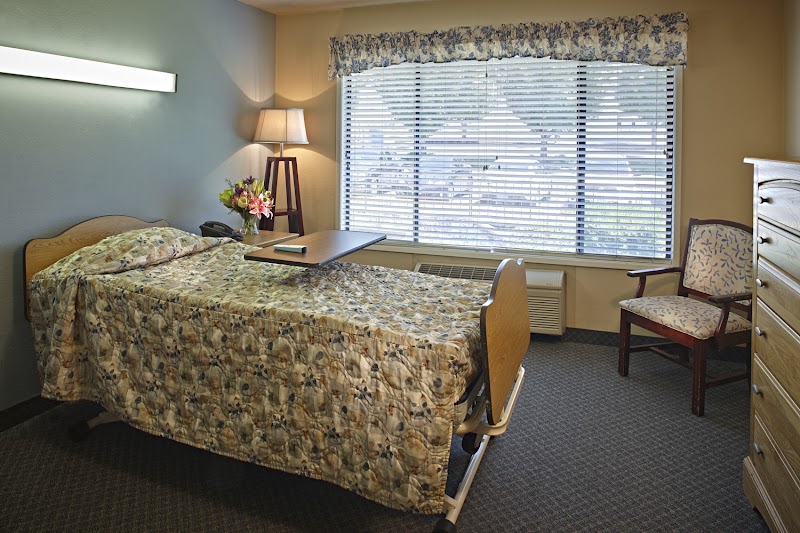
How is Avamere Transitional Care At Sunnyside Staffed?

CMS rates AVAMERE TRANSITIONAL CARE AT SUNNYSIDE's staffing level at 4 out of 5 stars, which is above average compared to other nursing homes. Staff turnover is 41%, compared to the Oregon average of 46%. This relatively stable workforce can support continuity of care.

What Have Inspectors Found at Avamere Transitional Care At Sunnyside?

State health inspectors documented 53 deficiencies at AVAMERE TRANSITIONAL CARE AT SUNNYSIDE during 2022 to 2025. These included: 53 with potential for harm. While no single deficiency reached the most serious levels, the total volume warrants attention from prospective families.
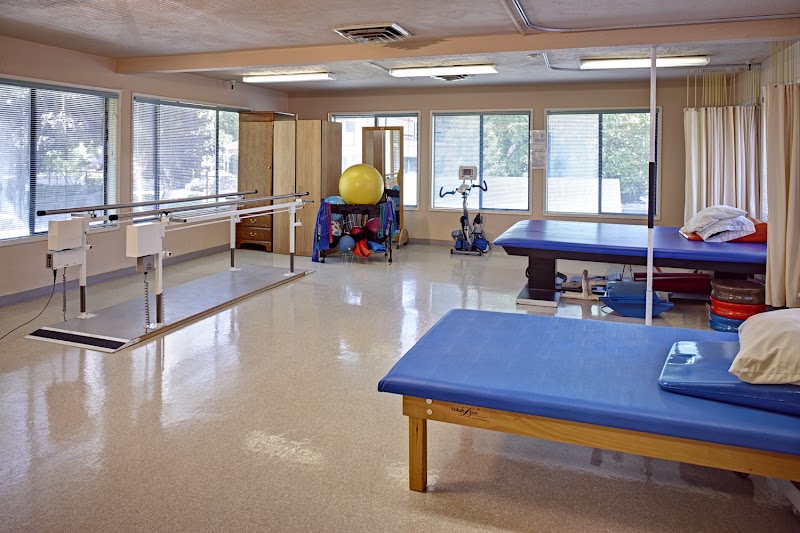
Who Owns and Operates Avamere Transitional Care At Sunnyside?

AVAMERE TRANSITIONAL CARE AT SUNNYSIDE is owned by a for-profit company. For-profit facilities operate as businesses with obligations to shareholders or private owners. The facility is operated by AVAMERE, a chain that manages multiple nursing homes. With 88 certified beds and approximately 67 residents (about 76% occupancy), it is a smaller facility located in SALEM, Oregon.
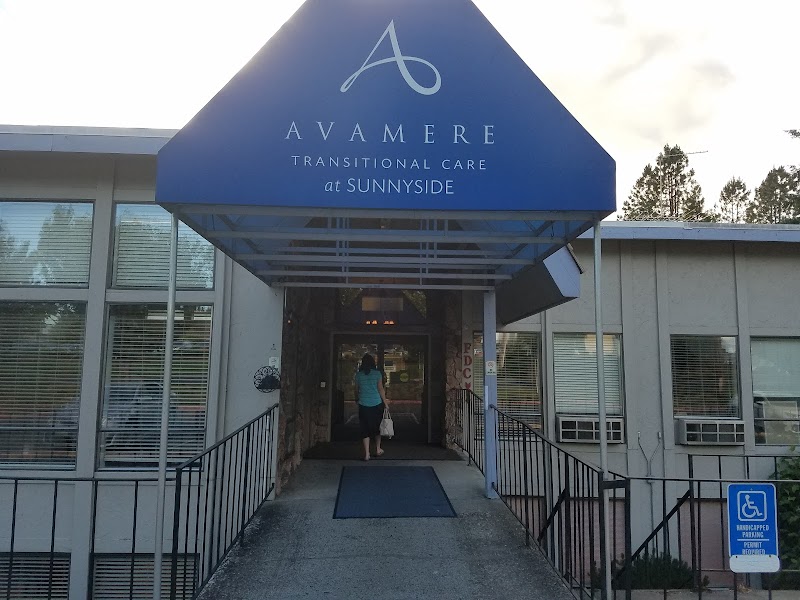
How Does Avamere Transitional Care At Sunnyside Compare to Other Oregon Nursing Homes?

Compared to the 100 nursing homes in Oregon, AVAMERE TRANSITIONAL CARE AT SUNNYSIDE's overall rating (2 stars) is below the state average of 3.0, staff turnover (41%) is near the state average of 46%, and health inspection rating (2 stars) is below the national benchmark.

What Should Families Ask When Visiting Avamere Transitional Care At Sunnyside?

Based on this facility's data, families visiting should ask: "Can I visit during a mealtime to observe dining assistance and food quality?" "How do you handle medical emergencies, and what is your hospital transfer rate?" "Can I speak with family members of current residents about their experience?"

Is Avamere Transitional Care At Sunnyside Safe?

Based on CMS inspection data, AVAMERE TRANSITIONAL CARE AT SUNNYSIDE has a clean safety record: no substantiated abuse findings (meaning no confirmed cases of resident harm), no Immediate Jeopardy citations (the most serious violation level indicating risk of serious injury or death), and is not on the Special Focus Facility watch list (a federal program monitoring the lowest-performing 1% of nursing homes). The facility has a 2-star overall rating and ranks #100 of 100 nursing homes in Oregon. While no facility is perfect, families should still ask about staff-to-resident ratios and recent inspection results during their visit.

Do Nurses at Avamere Transitional Care At Sunnyside Stick Around?

AVAMERE TRANSITIONAL CARE AT SUNNYSIDE has a staff turnover rate of 41%, which is about average for Oregon nursing homes (state average: 46%). Moderate turnover is common in nursing homes, but families should still ask about staff tenure and how the facility maintains care continuity when employees leave.

Was Avamere Transitional Care At Sunnyside Ever Fined?

AVAMERE TRANSITIONAL CARE AT SUNNYSIDE has no federal fines on record. CMS issues fines when nursing homes fail to meet care standards or don't correct problems found during inspections. The absence of fines suggests the facility has either maintained compliance or corrected any issues before penalties were assessed. This is a positive indicator, though families should still review recent inspection reports for the full picture.

Is Avamere Transitional Care At Sunnyside on Any Federal Watch List?

AVAMERE TRANSITIONAL CARE AT SUNNYSIDE is not on any federal watch list. The most significant is the Special Focus Facility (SFF) program, which identifies the bottom 1% of nursing homes nationally based on persistent, serious quality problems. Not being on this list means the facility has avoided the pattern of deficiencies that triggers enhanced federal oversight. This is a positive indicator, though families should still review the facility's inspection history directly.