

MAPLE FARM

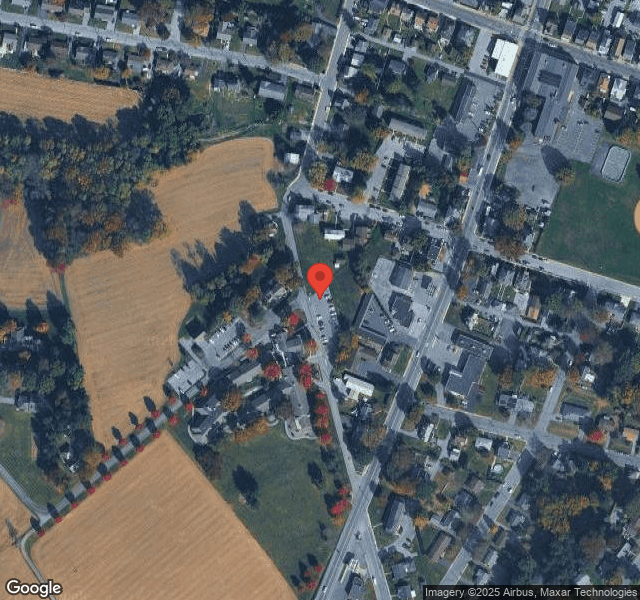
604 OAK STREET, AKRON, PA 17501 (717) 859-1191
Non profit - Corporation 46 Beds Independent Data: November 2025
Trust Grade
90/100
#78 of 653 in PA
Last Inspection: May 2025

Inspected within the last 6 months. Data reflects current conditions.

Overview

Maple Farm in Akron, Pennsylvania, has earned a Trust Grade of A, indicating it is an excellent choice for care. Ranked #78 out of 653 facilities in the state, it is in the top half of Pennsylvania nursing homes and ranks #8 out of 31 in Lancaster County, indicating only seven local options are better. However, the facility's trend is concerning as it has worsened over time, with the number of issues increasing from 1 in 2023 to 4 in 2025. Staffing is a strong point, with a 5/5 rating and a turnover rate of 36%, which is lower than the state average. Notably, there have been no fines reported, but specific incidents show areas for improvement, such as failing to obtain consent for new medications for several residents and not providing adequate notification regarding a resident's appeal rights related to a hospital transfer.

Trust Score
A
90/100
In Pennsylvania
#78/653
Top 11%
Safety Record
Low Risk
No red flags
Inspections
Getting Worse
1 → 4 violations
Staff Stability
○ Average
36% turnover. Near Pennsylvania's 48% average. Typical for the industry.
Penalties
✓ Good
No fines on record. Clean compliance history, better than most Pennsylvania facilities.
Skilled Nurses
✓ Good
Each resident gets 66 minutes of Registered Nurse (RN) attention daily — more than 97% of Pennsylvania nursing homes. RNs are the most trained staff who catch health problems before they become serious.
Violations
✓ Good
Only 5 deficiencies on record. Cleaner than most facilities. Minor issues only.
★★★★★
5.0
Overall Rating
★★★★★
5.0
Staff Levels
★★★☆☆
3.0
Care Quality
★★★★☆
4.0
Inspection Score
Stable
2023: 1 issues
2025: 4 issues

The Good

  • 5-Star Staffing Rating · Excellent nurse staffing levels
  • Full Sprinkler Coverage · Fire safety systems throughout facility
  • No fines on record
  • Staff turnover below average (36%)

    12 points below Pennsylvania average of 48%

Facility shows strength in staffing levels, fire safety.

The Bad

Staff Turnover: 36%

10pts below Pennsylvania avg (46%)

Typical for the industry

The Ugly 5 deficiencies on record

May 2025 4 deficiencies
CONCERN (D)

Potential for Harm - no one hurt, but risky conditions existed

Deficiency F0628 (Tag F0628)

Could have caused harm · This affected 1 resident

Based on clinical record review and staff interview, it was determined that the facility failed to ensure that the resident and/or their representative received written notice of a statement of the re...

Read full inspector narrative →
Based on clinical record review and staff interview, it was determined that the facility failed to ensure that the resident and/or their representative received written notice of a statement of the resident's appeal rights, including the name, address (mailing and email), telephone number of the entity which receives such requests, and the name, address (mailing and email), and telephone number of the Office of the State Long-Term Care Ombudsman; and failed to provide notice of the transfer to the Office of the State Long-Term Care Ombudsman for one of two residents reviewed for hospital transfers ( Resident 7). Findings Include: Review of Resident 7's physician orders revealed diagnoses that included age-related macular degeneration (an eye disease that affects central vision) and muscle weakness. Review of Resident 7's clinical record revealed a transfer to the hospital on March 4, 2025. Review of Resident 7's hospital transfer information failed to include documentation of written notice of appeals information provided to the Resident and/or the Representative. Review of the facility's documentation of the monthly notice to the Long-Term Care Ombudsman failed to include Resident 7's hospital transfer. An interview with the Nursing Home Administrator, on May 29, 2025, at 12:06 PM, revealed the facility is not providing appeals information during resident hospital transfers, and also revealed the facility only notifies the Long-Term Care Ombudsman of residents not returning to the facility and does not include residents transferred to the hospital with plans to return. 28 Pa. Code 201.14 (a) Responsibility of licensee
CONCERN (D)

Potential for Harm - no one hurt, but risky conditions existed

Comprehensive Care Plan (Tag F0656)

Could have caused harm · This affected 1 resident

Based on policy review, clinical record review, and staff interview, it was determined that the facility failed to implement a comprehensive person-centered care plan for one of 12 residents reviewed ...

Read full inspector narrative →
Based on policy review, clinical record review, and staff interview, it was determined that the facility failed to implement a comprehensive person-centered care plan for one of 12 residents reviewed (Resident 7). Findings Include: Review of the facility's policy, titled Comprehensive Care Plans, recently reviewed May 21, 2025, reads [Facility] will develop a comprehensive care plan for each resident which includes measurable goals and timetables to meet a resident's medical, nursing, and mental and psychosocial needs that are identified in the comprehensive assessment. Review of Resident 7's physician orders revealed diagnoses that included age-related macular degeneration (an eye disease that affects central vision) and muscle weakness. Review of Resident 7's clinical record revealed outpatient consults with eye professionals for treatment of macular degeneration, including eye injections. Review of Resident 7's interdisciplinary plan of care revealed no care plan regarding the Resident's vision or eye consultations and treatments. An interview with the Nursing Home Administrator on May 29, 2025, at 11:07 AM, confirmed that a care plan related to Resident 7's vision was developed and added to the plan of care. 28 Pa. Code 211.12 (d) (5) Nursing services
CONCERN (D)

Potential for Harm - no one hurt, but risky conditions existed

Tube Feeding (Tag F0693)

Could have caused harm · This affected 1 resident

Based on facility policy review, observation, clinical record review, and staff interviews, it was determined that the facility failed to provide appropriate care and services to residents receiving t...

Read full inspector narrative →
Based on facility policy review, observation, clinical record review, and staff interviews, it was determined that the facility failed to provide appropriate care and services to residents receiving tube feedings for one of one resident's reviewed receiving a tube feeding (Resident 3). Findings include: Review of facility policy, Medication Administration, revision date June 19, 2023, read, in part, the nurse who administers the medication and/or treatment (medications, IV feedings, etc.) shall document such by initialing electronically signing the MAR (Medication Administration Record - form used to document physician's orders as well as when and how medications are administered to a resident) as soon as possible following administration. If the resident refuses medications, the nurse shall notify the physician after two consecutive refusals and document the refusal in the Medical Record. Supplementary feeding that is withheld shall be designated in the electronic system as held on the MAR or TAR. The nurse shall document the reason the supplementary feeding was not administered. Review of facility policy, Enteral Feeding and Medication Administration, revised February 3, 2023, read, in part, the container holding feeding is labeled with date and time started. The orders will include the formula name, the rate (cc/hr.) for how many hours. The orders will also include the amount of water to flush the tube with to meet the resident's hydration needs. Review of Resident 3's clinical record revealed diagnoses that included traumatic brain injury (brain dysfunction caused by an outside force), paraplegia (loss of motor and sensory functions in the lower half of the body typically affecting both legs), dysphagia (difficulty swallowing), aphasia (language disorder that affects a person's ability to communicate), anxiety (a feeling of worry, nervousness, or unease), and depression (feelings of severe despondency and dejection). Observation May 27, 2025, at 11:19 AM, revealed an Isosource (a dense complete nutrition formula) supplement bag and bag of fluid/flush not labeled, or date marked. Interview on May 27, 2025, at 11:24 AM, Employee 1 (Licensed Practical Nurse) stated the aforementioned bags were put up on evening shift and are taken down on dayshift. It was also revealed that both bags should contain a sticker noting the contents and the date and time the bags were hung; it was confirmed neither bag were labeled, or date marked. Review of Resident 3's physician orders included: Isosource 1.5 tube feeding @ 60cc/hr. x 18 hours or until 1080cc total volume has infused. Water flushes 10cc/hr. take down/stop at 1:00 PM and start tube feed at 7:00 PM daily, start date May 16, 2025; Isosource 1.5 tube feeding @ 64cc/hr. x 18 hours or until 1152cc total volume has infused. Water flushes 10cc/hr. take down/stop at 1:00 PM and start tube feed at 7:00 PM daily, start date April 30, 2024, discontinued May 15, 2025; Isosource 1.5 tube feeding @ 68cc/hr. x 18 hours or until 1224cc total volume has infused. Water flushes 10cc/hr. take down/stop at 1:00 PM and start tube feed at 7:00 PM daily, start date April 4, 2025, discontinued April 30, 2025; Isosource 1.5 tube feeding @ 74cc/hr. x 18 hours or until 1332cc total volume has infused. Water flushes 10cc/hr. take down/stop at 1:00 PM and start tube feed at 7:00 PM daily, start date March 15, 2025, discontinued April 3, 2025; and Isosource 1.5 tube feeding @ 78cc/hr. x 18 hours or until 1404cc total volume has infused. Take down/stop at 1:00 PM and start tube feed at 7:00 PM daily, start date January 18, 2024, discontinued March 14, 2025. Review of Resident 3's May 2025 MAR documentation for total volume of Isosource at 2:00 PM was less than the physician ordered total volume of 1080cc on: 22nd= 825cc; 24th= 990c; 25th= 995cc; and 26th= 990cc. Review of Resident 3's April 2025 MAR documentation for total volume of Isosource at 2:00 PM was less than the physician ordered total volume of 1224cc on the 23rd = 1118cc. Review of Resident 3's March 2025 MAR documentation for total volume of Isosource at 2:00 PM was less than the physician ordered total volume of 1404cc on the 10th = 918cc, and 13th = 507cc. Progress notes failed to document rational for not infusing to total amount of Isosource per physician order for the aforementioned dates. During an interview with the Nursing Home Administrator on May 29, 2025, at 10:57 AM, it was revealed that the tube feeding bags are to be labeled with a sticker and staff have been educated. It was also revealed that the stickers fall off sometimes. During an interview with Employee 2 (Registered Nurse) on May 29, 2025, at 12:26 PM, it was revealed that the tube feeding orders were written for 18 hours or until a specific total volume was infused. 28 Pa. Code: 201.18(b)(1) Management 28 Pa. Code: 211.10(c) Resident care policies
CONCERN (E)

Potential for Harm - no one hurt, but risky conditions existed

Deficiency F0552 (Tag F0552)

Could have caused harm · This affected multiple residents

Based on review of facility policy, staff interviews, and clinical record review, it was determined that the facility failed to discuss the risks/benefits and obtain consent for newly ordered antipsyc...

Read full inspector narrative →
Based on review of facility policy, staff interviews, and clinical record review, it was determined that the facility failed to discuss the risks/benefits and obtain consent for newly ordered antipsychotic and opioid medications for three of twelve residents records reviewed (Residents 2, 22, and 29). Findings include: Review of Resident 2's clinical record revealed diagnoses that included Alzheimer's disease (loss of cognitive functioning such as thinking, remembering, and reasoning and interferes with a person's daily life) and dementia (a condition characterized by progressive loss of intellectual functioning, impairment of memory, and abstract thinking) with psychosis (a mental health condition characterized by a loss of touch with reality). Review of Resident 2's physician orders included: Seroquel 25 milligrams (MG) give 0.5 tablet (12.5 MG) one time a day for psychosis, start date December 21, 2024, and discontinue date December 30, 2024; Seroquel 25 MG give 0.5 tablet (12.5 MG) two times a day, start date December 30, 2024, and discontinue date January 21, 2025; Seroquel 25 MG two times a day, start date January 21, 2025, discontinue date January 24, 2025 (due to hospitalization); and Seroquel 50 MG two times a day, start date January 31, 2025. Review of clinical record on May 28, 2025, at 11:00 AM, failed to include documentation that the risk/benefit for Seroquel was reviewed with the Responsible Party or that consent was obtained. Interview with Nursing Home Administrator (NHA) on May 28, 2025, at 12:58 PM, revealed the facility does not have a consent and risk/benefit form, but they are in the process of formulating one. The facility calls the Resident Representative to inform of the new medication and discuss risks and benefits. Additional clinical record review on May 29, 2025, documented the facility form Informed Consent for Psychotropic Medication Use was completed for Resident 2 for an antipsychotic, which included review of the risks and benefits, and verbal consent from her grandson. Review of Resident 22's clinical record revealed diagnoses that included depression (feelings of severe despondency and dejection), psychosis (a mental health condition characterized by a loss of touch with reality), schizoaffective disorder (a mental health condition that is marked by a mix of hallucinations, delusions, depression and mania), anxiety (a feeling of worry, nervousness, or unease), vascular dementia (a condition characterized by progressive loss of intellectual functioning, impairment of memory and abstract thinking), insomnia (difficulty sleeping), and hemiplegia (paralysis or severe weakness on one side of the body) on right dominant side. Review of Resident 22's physician orders included: Seroquel 25 MG give 0.5 tablet two times a day for psychosis, start date May 13, 2025; Sertraline 25 MG one time a day related to depression, start date May 13, 2025. Review of clinical record on May 28, 2025, at 10:00 AM, failed to include documentation that the risk/benefit of Seroquel and Sertraline use was reviewed with the Responsible Party and that consent was obtained. Interview with NHA on May 28, 2025, at 12:58 PM, revealed the facility does not have a consent and risk/benefit form, but they are in the process of formulating one. The facility will call the Resident Representative to inform them of the new medication and discuss risks and benefits. Additional clinical record review on May 29, 2025, documented the facility form Informed Consent for Psychotropic Medication Use was completed for Resident 22 for an antidepressant and antipsychotic, which included review of the risks and benefits, and verbal consent from his Resident Representative/ Power of Attorney. Review of Resident 29's clinical record revealed diagnoses that included psychotic disorder (a severe mental disorder characterized by a significant disconnect from reality, involving abnormal thinking, perceptions, and behavior) and vascular dementia (a common form of dementia caused by an impaired supply of blood to the brain, such as may be caused by a series of small strokes). Review of Resident 29's physician orders revealed the medication Seroquel 25 MG with directions of give 0.5 tablet by mouth at bedtime related to psychotic disorder with hallucinations. Review of Resident 29's clinical record revealed no documentation to support the Resident and/or Representative were informed of the risks/benefits of the use of the antipsychotic medication. An interview with the NHA on May 29, 2025, at 11:56 AM, revealed Resident 29's Representative was informed of the addition of the Seroquel, however, no discussion of the risks/benefits was found. 28 Pa. Code 201.29(j) Resident rights
Jun 2023 1 deficiency
CONCERN (D)

Potential for Harm - no one hurt, but risky conditions existed

Notification of Changes (Tag F0580)

Could have caused harm · This affected 1 resident

**NOTE- TERMS IN BRACKETS HAVE BEEN EDITED TO PROTECT CONFIDENTIALITY** Based on a review of the facility's policy, review of the clinical record and hospital records, and staff interviews, it was det...

Read full inspector narrative →
**NOTE- TERMS IN BRACKETS HAVE BEEN EDITED TO PROTECT CONFIDENTIALITY** Based on a review of the facility's policy, review of the clinical record and hospital records, and staff interviews, it was determined that the facility failed to ensure the physician was appropriately notified of a change in condition for one of the 14 residents reviewed (Resident 92) Findings include: Review of the facility's policy titled Transcription of Physicians Orders with an effectivity date of September 1, 2009, revealed that a resident-centric secure conversation will be started by a nurse only if the situation does not need immediate attention by the practitioner. The practitioner will view the message, may review the resident's chart, then respond to the message with acknowledgment, new order, or questions. Review of the nursing progress notes dated May 3, 2023, revealed Resident 92 was admitted to the facility post small bowel resection (Surgery to remove part of the small intestine). Review of the physician's notes dated May 10, 2023, revealed resident received exploratory laparotomy in the hospital (surgery to open the abdomen to find the cause of the problems that testing could not diagnose), and a small bowel resection. The resident has an abdominal surgical wound with staples which will be followed by the surgeon. The note revealed that during the May 10 (2023) evaluation, the resident was clear and coherent, reported feeling well, and not having any residual abdominal pain. The resident had been eating and drinking well. Vitals were blood pressure- 134/71 mm; heart rate-69 per min.; respirations 16 per min., and temperature 98.1 Fahrenheit (F). Review of the nursing progress notes dated May 16, 2023, at 7:39 p.m., revealed resident appeared tired and flushed in the face. The resident complained of lower back pain, and the temperature was 100.9 F, as needed Tylenol was administered (medication to treat mild pain and fever). Review of the Secure Conversation dated May 16, 2023, at 9:02 p.m., documented by the nursing supervisor, Employee E3, revealed a message with a subject of temperature elevation and complaint of back pain. The message revealed that Employee E3 was notified of a resident not feeling well with a flushed face, the temperature was 100.9 F with mild lower back pain and medication the nurse administered as needed Tylenol order. The resident's temperature was checked at 8:55 p.m. and found to be 97.9F, with no complaint of discomfort or feeling feverish. Conversation participants include Employee E3, Employee E5, and the Nurse Practitioner. Review of the Secure Conversation documentation revealed no response from the practitioner. The clinical records review failed to reveal that a follow-up call/message was sent to the practitioner. Clinical records failed to reveal that the practitioner had received, reviewed, and acknowledged the message sent via secure conversation. Interview conducted with licensed nurse Employee E4 on June 1, 2023; revealed she/he was a regular evening shift nurse of Resident 92. Employee E4 reported approximately 7:00 p.m., the resident's temperature was 101 F. The nurse continued to relay that she/he checked the resident's baseline vitals and confirmed that the temperature was elevated from the baseline. Employee E4 confirmed that she/he never received any previous report of elevated temperature for the resident, and this was the first time he/she had a temperature of 101 F while caring for the resident. Employee E4 confirmed that the elevated temperature was a change in condition for the resident. The nurse notified the nursing supervisor of the resident's condition and administered with needed Tylenol for the fever. Employee E4 reported that the nursing supervisor had reached out to the provider but was not sure of the mode of notification. Employee E4 reported that it was the facility's protocol to notify the nursing supervisor and they are the one who notifies the NP/MD. Employee E4 reported that the incoming shift reported the resident's condition. Review of Resident 92'a May 2023, Medication Administration Record (MAR) revealed Resident 92 was administered with Acetaminophen 500 mg extra strength two tablets (1000mg) on May 16, 2023, at 7:44 p.m. Interview conducted with licensed nurse Employee E5 on June 1, 2023 revealed he/she was the nursing supervisor on May 17, 2023, morning shift. Employee E5 explained that the Secure Conversation are messages sent to the nurse practitioner and used for issues like medications. Employee E5 confirmed that for a resident's significant change in condition, the on-call physician should have been called. Employee E5 reported that upon reading the secure conversation indicating that the resident had an elevated temperature the night before and still with an elevated temperature in the morning, the physician who was in the building was notified. Review of the physician's notes dated May 17, 2023, at 8:50 a.m., revealed resident developed a fever of 101.5 F last night and was given Tylenol, for some reason the on-call physician was not notified of the fever last night. This morning the resident is weak, has a slight cough, and is having difficulty getting out of bed when he/she was prior independent. Spoke with the physical therapist and nurse and they noticed significant change. Resident appears flushed and warm, heart rate was 120 /min., and his temperature is 101F. The Resident complained of slight back pain today, seemed thirsty, appears dyspneic (short of breath), and has a slight cough with some clear mucus. Review of the nursing progress notes dated May 17, 2023, at 11:23 a.m., revealed resident was assessed by the physician and continued with a fever of 100.1 F, the physician ordered to send the resident to the ER (Emergency Room) for evaluation and treatment, 911 was called, the wife was notified. Review of the hospital records and discharge summary revealed resident was admitted to the hospital on [DATE], with admitting diagnosis of Sepsis - (The body's extreme reaction to an infection, without prompt treatment can lead to organ failure, tissue damage, and death). The problem list revealed sepsis end-organ dysfunction suspected secondary to residual fluid collections, and peritonitis (inflammation of the membrane lining of the abdominal wall and covering abdominal organs) after recent bowel perforation. Possibly UTI (urinary tract infection). Followed by an Infectious Disease doctor and treated with antibiotics. Interview conducted with the Director of Nursing (DON) on June 2, 2023, at 11:00 a.m. confirmed there was no documented evidence the on-call physician was notified of the resident's elevated temperature on the night of May 16, 2023. Clinical records review revealed a Secure Conversation was sent to the NP (Nurse Practitioner) instead calling the on-call physician on the night of June 16, 2023, for Resident 92's complaint of not feeling well, back pain, and elevated temperature. The facility failed to ensure Resident 92's change in condition, elevated temperature was appropriately communicated with the physician. 28 Pa. Code 211.5(f) Clinical records 28 Pa. Code 211.12(d)(1)(5) Nursing services 28 Pa. Code 211.10(c) Resident Care Policies
Understanding Severity Codes (click to expand)
Life-Threatening (Immediate Jeopardy)
J - Isolated K - Pattern L - Widespread
Actual Harm
G - Isolated H - Pattern I - Widespread
Potential for Harm
D - Isolated E - Pattern F - Widespread
No Harm (Minor)
A - Isolated B - Pattern C - Widespread

Questions to Ask on Your Visit

  • "Can I speak with families of current residents?"
  • "What's your RN coverage like on weekends and overnight?"

Our Honest Assessment

Strengths
  • • Grade A (90/100). Above average facility, better than most options in Pennsylvania.
  • • No major safety red flags. No abuse findings, life-threatening violations, or SFF status.
  • • No fines on record. Clean compliance history, better than most Pennsylvania facilities.
  • • Only 5 deficiencies on record. Cleaner than most facilities. Minor issues only.
Concerns
  • • No significant concerns identified. This facility shows no red flags across CMS ratings, staff turnover, or federal penalties.
Bottom line: Generally positive indicators. Standard due diligence and a personal visit recommended.

About This Facility

What is Maple Farm's CMS Rating?

CMS assigns MAPLE FARM an overall rating of 5 out of 5 stars, which is considered much above average nationally. Within Pennsylvania, this rating places the facility higher than 99% of the state's 100 nursing homes. This rating reflects solid performance across the metrics CMS uses to evaluate nursing home quality.

How is Maple Farm Staffed?

CMS rates MAPLE FARM's staffing level at 5 out of 5 stars, which is much above average compared to other nursing homes. Staff turnover is 36%, compared to the Pennsylvania average of 46%. This relatively stable workforce can support continuity of care.

What Have Inspectors Found at Maple Farm?

State health inspectors documented 5 deficiencies at MAPLE FARM during 2023 to 2025. These included: 5 with potential for harm.

Who Owns and Operates Maple Farm?

MAPLE FARM is owned by a non-profit organization. Non-profit facilities reinvest revenue into operations rather than distributing to shareholders. The facility operates independently rather than as part of a larger chain. With 46 certified beds and approximately 42 residents (about 91% occupancy), it is a smaller facility located in AKRON, Pennsylvania.

How Does Maple Farm Compare to Other Pennsylvania Nursing Homes?

Compared to the 100 nursing homes in Pennsylvania, MAPLE FARM's overall rating (5 stars) is above the state average of 3.0, staff turnover (36%) is significantly lower than the state average of 46%, and health inspection rating (4 stars) is above the national benchmark.

What Should Families Ask When Visiting Maple Farm?

Based on this facility's data, families visiting should ask: "Can I visit during a mealtime to observe dining assistance and food quality?" "How do you handle medical emergencies, and what is your hospital transfer rate?" "Can I speak with family members of current residents about their experience?"

Is Maple Farm Safe?

Based on CMS inspection data, MAPLE FARM has a clean safety record: no substantiated abuse findings (meaning no confirmed cases of resident harm), no Immediate Jeopardy citations (the most serious violation level indicating risk of serious injury or death), and is not on the Special Focus Facility watch list (a federal program monitoring the lowest-performing 1% of nursing homes). The facility has a 5-star overall rating and ranks #1 of 100 nursing homes in Pennsylvania. While no facility is perfect, families should still ask about staff-to-resident ratios and recent inspection results during their visit.

Do Nurses at Maple Farm Stick Around?

MAPLE FARM has a staff turnover rate of 36%, which is about average for Pennsylvania nursing homes (state average: 46%). Moderate turnover is common in nursing homes, but families should still ask about staff tenure and how the facility maintains care continuity when employees leave.

Was Maple Farm Ever Fined?

MAPLE FARM has no federal fines on record. CMS issues fines when nursing homes fail to meet care standards or don't correct problems found during inspections. The absence of fines suggests the facility has either maintained compliance or corrected any issues before penalties were assessed. This is a positive indicator, though families should still review recent inspection reports for the full picture.

Is Maple Farm on Any Federal Watch List?

MAPLE FARM is not on any federal watch list. The most significant is the Special Focus Facility (SFF) program, which identifies the bottom 1% of nursing homes nationally based on persistent, serious quality problems. Not being on this list means the facility has avoided the pattern of deficiencies that triggers enhanced federal oversight. This is a positive indicator, though families should still review the facility's inspection history directly.