ZERBE SISTERS NURSING CENTER,

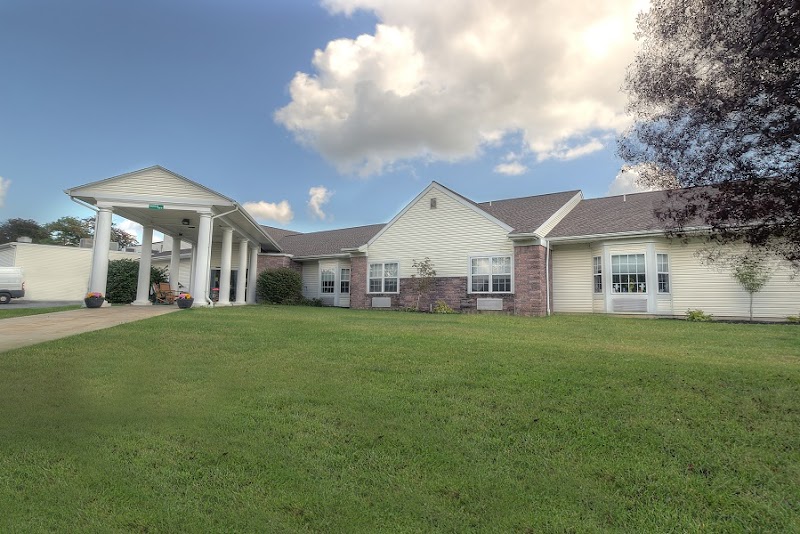
2499 ZERBE ROAD, NARVON, PA 17555 (717) 445-4551
For profit - Corporation 87 Beds Independent Data: November 2025
Trust Grade
78/100
#150 of 653 in PA
Last Inspection: February 2025

Within standard 12-15 month inspection cycle. Federal law requires annual inspections.

Overview

Zerbe Sisters Nursing Center has a Trust Grade of B, indicating it is a good choice but not without some concerns. It ranks #150 out of 653 facilities in Pennsylvania, placing it in the top half, and #17 out of 31 in Lancaster County, meaning there are only a few better local options. The facility is experiencing a worsening trend, with issues doubling from one in 2024 to two in 2025. Staffing is rated at 4 out of 5 stars, which is a strength, although the turnover rate is concerning at 45%, slightly below the state average. However, there are serious issues to note; one resident suffered a skin tear and bruising due to neglect, and another experienced a medication error that led to hospitalization. Additionally, a resident fell during toileting because proper supervision was not provided, highlighting areas for improvement.

Trust Score
B
78/100
In Pennsylvania
#150/653
Top 22%
Safety Record
Moderate
Needs review
Inspections
Getting Worse
1 → 2 violations
Staff Stability
⚠ Watch
45% turnover. Above average. Higher turnover means staff may not know residents' routines.
Penalties
✓ Good
$18,223 in fines. Lower than most Pennsylvania facilities. Relatively clean record.
Skilled Nurses
○ Average
Each resident gets 37 minutes of Registered Nurse (RN) attention daily — about average for Pennsylvania. RNs are the most trained staff who monitor for health changes.
Violations
✓ Good
Only 4 deficiencies on record. Cleaner than most facilities. Minor issues only.
★★★★★
5.0
Overall Rating
★★★★☆
4.0
Staff Levels
★★★★★
5.0
Care Quality
★★★★☆
4.0
Inspection Score
Stable
2024: 1 issues
2025: 2 issues

The Good

  • 4-Star Staffing Rating · Above-average nurse staffing levels
  • 5-Star Quality Measures · Strong clinical quality outcomes
  • Full Sprinkler Coverage · Fire safety systems throughout facility
  • No fines on record

Facility shows strength in staffing levels, quality measures, fire safety.

The Bad

Staff Turnover: 45%

Near Pennsylvania avg (46%)

Higher turnover may affect care consistency

Federal Fines: $18,223

Below median ($33,413)

Minor penalties assessed

The Ugly 4 deficiencies on record

2 actual harm
Feb 2025 2 deficiencies
CONCERN (D)

Potential for Harm - no one hurt, but risky conditions existed

Accident Prevention (Tag F0689)

Could have caused harm · This affected 1 resident

Based on clinical record review, facility investigation review, and staff interview, it was determined the facility failed to ensure adequate supervision was provided during toileting transfer resulti...

Read full inspector narrative →
Based on clinical record review, facility investigation review, and staff interview, it was determined the facility failed to ensure adequate supervision was provided during toileting transfer resulting in a fall of one of 20 residents reviewed (Resident 55). Findings include: A review of Resident 55's diagnosis list includes repeated falls, generalized weakness, abnormalities with gait and mobility, and Congestive Heart Failure (CHF-weakened heart condition that causes fluid buildup in the feet, arms, lungs, and other organs). A review of Resident 55's Quarterly Minimum Data Set (MDS-a standardized assessment tool that measures health status in long-term care residents), dated December 11, 2024, revealed that the resident was cognitively intact. The same MDS revealed that the resident required extensive two-person assistance for both transferring and toileting. A review of Resident 55's care plan, developed on November 18, 2024, revealed an ADL (activities of daily living) care plan for self-performance deficit due to recent falls and left shoulder injury, impaired mobility, muscle weakness, and overall decline. Interventions/tasks included two (person) assists with rolling walker with transfers and two (person) assists with toileting-bathroom grab bars. A review of the nursing progress notes dated December 16, 2024, revealed that at 8:13 p.m., the nurse was notified by an NA (nurse aide) that Resident 55 was lowered to the floor during the transfer from the toilet to a wheelchair. The resident was observed sitting on her bottom with their back against the wheelchair. The resident stated, I just couldn't move. A review of the facility's investigation report revealed a statement from NA Employee E3, dated December 16, 2024, stating: She/he was transferring from the toilet and her knees started to buckle. I did my best to lower her slowly to the ground. A review of the facility's investigation report revealed a statement from NA Employee E4, dated December 18, 2024, stating I had [name of NA- Employee E3] for orientation, I told her/him to get [resident's name] ready to toilet and wait for me to transfer. She/he did not wait and lowered her to the floor. She did not use a gait belt (Also known as a transfer belt. A device put on a patient who has mobility issues, by a caregiver before that caregiver moving the patient) An interview conducted with the Director of Nursing on December 27, 2025, at 10:00 a.m., confirmed that Resident 55 required two-person assistance with toileting and transfers. The DON confirmed that the resident was provided with one person's assistance with transfers despite needing two as indicated in the resident's plan of care. The facility failed to ensure Resident 55 was provided with adequate supervision during toileting transfers resulting in a fall. 28 Pa Code 211.12 (c)(d)(1)(3) Nursing Service Previously cited 3/8/24
CONCERN (D)

Potential for Harm - no one hurt, but risky conditions existed

Pharmacy Services (Tag F0755)

Could have caused harm · This affected 1 resident

**NOTE- TERMS IN BRACKETS HAVE BEEN EDITED TO PROTECT CONFIDENTIALITY** Based on review of facility policy, observations, and interviews, it was determined the facility failed to document medication d...

Read full inspector narrative →
**NOTE- TERMS IN BRACKETS HAVE BEEN EDITED TO PROTECT CONFIDENTIALITY** Based on review of facility policy, observations, and interviews, it was determined the facility failed to document medication disposition for two of three discharged residents. (Resident 7 and Resident 76) Findings include: Review of facility policy titled Discarding and Destroying Medications, documents disposal of controlled substances must take place immediately (no longer than three days) after discontinuation of use by resident. Disposal must be documented on the medication disposition record, with the signature of at least two witnesses. The medication disposition record will contain the resident's name, date medication disposed, name and strength of medication, name of dispensing pharmacy, quantity disposed, reason for disposition and signature of witnesses. Review of resident 76's clinical records revealed physician orders that included Buspirone (for anxiety) 5mg, Gabapentin (for nerve pain) 900mg, and Zoloft (for depression) 12.5 mg. Review of Resident 76's clinical records revealed a discharge summary date [DATE], documenting the resident expired while hospitalized at Tower Heath Reading Hospital. Resident 76 was transferred to the hospital on [DATE], due to change of mental status and shortness of breath, she was admitted with Congestive Heart Failure exacerbation (impairment in the heart's ability to fill with and pump blood) on [DATE], the facility was notified that Resident 76 ceased to breath while hospitalized . Review of Resident 76's clinical records failed to reveal a medication disposition form. Review of Resident 7's clinical records revealed physician orders that include Duloxetine (for depression) HCI 60mg, Apixaban (for irregular heartbeat) 5mg, and Digoxin (for chronic heart failure) 125mcg. Review of Resident 7's clinical records revealed a Discharge summary dated [DATE], documenting the resident discharged to home on February 21, 2025. The discharge summary documents medication reconciliation of all pre-discharge medications with post discharge medications was completed. Review of Resident 7's clinical records revealed a medication list that did not include the quantity of each medication dispensed. Interview on February 27, 2025, at 1:30 p.m., with Director of Nursing (DON) when the above information was presented, The DON confirmed there was no medication disposition sheet for Resident 76, and Resident 7's medication disposition sheet did not document the quantity of medications disposed. 28 Pa. Code 211.9(j) Pharmacy services. 28 Pa. Code 211.12(d)(1)(5) Nursing services.
Mar 2024 1 deficiency 1 Harm
SERIOUS (G)

Actual Harm - a resident was hurt due to facility failures

Free from Abuse/Neglect (Tag F0600)

A resident was harmed · This affected 1 resident

**NOTE- TERMS IN BRACKETS HAVE BEEN EDITED TO PROTECT CONFIDENTIALITY** Based on review of facility policies, facility documentation, clinical records and staff interviews, it was determined that the ...

Read full inspector narrative →
**NOTE- TERMS IN BRACKETS HAVE BEEN EDITED TO PROTECT CONFIDENTIALITY** Based on review of facility policies, facility documentation, clinical records and staff interviews, it was determined that the facility failed to protect residents from neglect for one of eighteen residents reviewed (Resident 47). Resulting in actual harm of skin tear and bruising to Resident 47. Findings include: The facility's policy Preventing Resident abuse revised April 2019, indicated abuse is defined as the willful infliction of injury, unreasonable confinement, intimidation, or punishment with resulting physical harm, pain or mental anguish. Additional review of same policy defines neglect as failure to provide goods and services as necessary to avoid physical harm, mental anguish, or mental illness. Review of Resident 47's clinical record indicated Resident 47 was admitted to the facility on [DATE]. Review of Resident 47's Minimum Data Set (MDS - periodic assessment of care needs) dated January 31, 2024, indicated Resident 26's diagnoses include but not limited to Alzheimer's disease (decline in memory, thinking, learning and organizing skills over time.), Peripheral Artery Disease (condition of narrowed arteries reducing blood flow to the arms or legs), Depression (persistent feeling of sadness and loss of interest), and Anxiety Further review of Resident 47's MDS dated [DATE] Section C; revealed a completed Brief Interview for Mental Status (BIMS -tool used to measure a person's cognition) with score of 3 (indicating severe impairment). Review of Resident 47's ADL (Activities of Daily Living) care plan dated December 27, 2023, revealed the following interventions for Resident 47: requires an assist for two for bed mobility (initiated on July 11, 2019), requires an assist of two for transfers (initiated on July 11, 2019), requires an assist of one for dressing (initiated July 11, 2019), and requires an assist of one with personal hygiene (initiated on July 11, 2019). Review of Resident 47's clinical record revealed Resident 47 was administered the following medications: Eliquis (blood thinner used to prevent blood clots), Remeron (used to treat depression), Ativan (used to treat anxiety). Review of information dated September 4, 2023 submitted by the facility submitted on September 4, 2023 revealed Resident 47 experienced neglect during afternoon care on September 4, 2023, at 11:30 a.m. from Certified Nursing Assistant (CNA) Employee E1. Further review of the information dated September 4, 2023 submitted on September 4, 2023 summarized; E1 entered Resident 47's room to get resident up and dressed, per E1 [he/she] told Resident 47 it was time to get ready for lunch, informing [resident] [he/she] was going to wash and dress [resident]. Resident 47 responded get the hell out of here. E1 went and gathered [his/her] supplies and reapproached the Resident 47, Resident 47 did not respond, so E1 initiated care, Resident 47 was calm until E1 began providing incontinence care when Resident 47 began to yell and tried to swing back and hit E1. E1 placed Resident 47 on [resident] back and calmly asked what is wrong, Resident 47 continued to yell Get the hell away from me. E1 waited a minute until Resident 47 calmed and explained once again, we have to get dressed. E1 then continued to wash Resident 47's bottom, Resident 47 pushed back and began to hit, at that time the E1 folded Resident 47's arms on her chest and tried to get a brief on her. E1 let [resident] arms go to roll Resident 47 back to the right side, as E1 did the Resident 47 started swinging [his/her] arms and trying to bite E1. When E1 sat Resident 47 on the side of the bed, E1 saw a skin tear. Resident 47 was calmed and assisted with transferring [resident] to the recliner with walker to chair, Resident 47 then began to yell get the hell out of here and E1 immediately reported skin tear. Review of Nurse Aide, Employee E2 witness statement dated September 4, 2023, indicated there was bruising on Resident 47's left arm and bruising and a skin tear on Resident 47's right arm. E2 also indicated, I went to check on Resident 47 at 2:15 p.m. and Resident 47 said she held both of my arms and there was nothing I could do. Review of Nurse Aide, Employee E1's witness statement revealed, Nurse Aide, Employee E1 folded Resident 47's arms against her chest which resulted in Resident 47 sustaining multiple bruises and skin tears. Review of facility investigative documentation including the PB-22 (form that is utilized to report instances of abuse, neglect, or exploitation of vulnerable adults) completed by the facility dated September 6, 2023, at 3:18 p.m. substantiated the information indicated above and concluded that Resident 47 experienced neglect from E1 resulting in bruising and skin tears to bilateral (right and left) lower arms. Additional review facility investigative document PB-22 revealed E1 was removed from the facility and placed on the do not return list, [Nursing Agency] employer notified via phone call of events and staff member status. Review of Resident 47's clinical record revealed a progress note by psychiatric-mental health nurse practitioner (PMHNP) dated September 5, 2023, at 7:00 p.m. indicating, contacted by SW (social worker). Resident 47 with recent increase in aggression. Hit and bit staff. Aggressive with care. DVT (Deep vein thrombosis, a blood clot forms in one or more of the deep veins in the body) currently being treated. Increased pain. Probable increase in anxiety r/t (related to) care. Recommend Ativan .25 mg (milligrams) q (every) 12 hours for anxiety x 14 days. Hold of sedation. Resident 47 was unavailable for an interview due to being admitted to the hospital on [DATE]. Interview conducted with the Nursing Home Administrator (NHA) on March 8, 2024, at 10:30 a.m. confirmed that the facility failed to protect residents from abuse for one of eighteen residents reviewed resulting in actual harm to the resident (Resident 47). 28 Pa Code: 201.14 (a ) Responsibility of licensee 28 Pa Code: 201.18 (b)(1)(3) Management 28 Pa Code: 211.10 (d) Resident care policies 28 Pa Code 211.12 (d)(3) Nursing services
Apr 2023 1 deficiency 1 Harm
SERIOUS (G)

Actual Harm - a resident was hurt due to facility failures

Deficiency F0760 (Tag F0760)

A resident was harmed · This affected 1 resident

**NOTE- TERMS IN BRACKETS HAVE BEEN EDITED TO PROTECT CONFIDENTIALITY** Based upon review of facility policy and procedure, clinical records and documentation provided by the facility, it was determin...

Read full inspector narrative →
**NOTE- TERMS IN BRACKETS HAVE BEEN EDITED TO PROTECT CONFIDENTIALITY** Based upon review of facility policy and procedure, clinical records and documentation provided by the facility, it was determined that the facility failed to ensure residents were free from significant medication errors causing harm of hospitaization to one of eighteen residents reviewed (Resident 230). Findings include: Review of facility policy and procedure titled Medication Administration revealed The individual administering medications verifies the resident's identity before giving the resident his/her medications. Methods of identifying the resident include checking identification band; checking photograph attached to medical records and if necessary, verifying resident identification with other facility personnel. Additional review of the Medication Administration policy revealed The individual administering medication checks the label three (3) times to verify the right resident, right medication, right dosage, right time and right method (route) of administration before giving the medication. Further review of the Medication Administration policy revealed the following information is checked/verified for each resident prior to administering medications: a) allergies to medications; and (b) vital signs if necessary. Review of Resident 230's diagnosis list revealed diagnoses including acute respiratory failure with hypoxia, Chronic Kidney Disease (failure of the kidneys to function properly), and Congestive Heart Failure (excessive body/lung fluid caused by a weakened heart muscle). Review of Resident 230's allergy list included allergies to Baclofen (muscle relaxant) and Gabapentin (anti-seizure and nerve pain medication). Review of Resident 230's clinical progress notes dated December 7, 2022, revealed [nurse practitioner] made aware of med error, patient was given another patient's medication. Gabapentin which causes patient to hallucinate and Baclofen which causes restless leg syndrome and insomnia in patient. New verbal order received and noted. RP [representative] needs to be made aware 12/8/2022. Neuro checks time 72 hours. Further review of Resident 230's clinical progress notes dated December 8, 2022, revealed This RN [Registered Nurse] and DON [Director Of Nursing] assessed [resident] this morning. [resident] was laying in her bed appeared to be sleeping, attempts made to arouse her via verbal and tactile stimuli. She was unresponsive, blood sugar 108, BP [blood pressure] 111/59, HR [heart rate] 68, pulse ox [oxygen saturation in blood] 94% with periods of apnea. [nurse practitioner] notified order to start oxygen at 2 liters and transport to ED [emergency department] for further evaluation. Review of hospital documentation dated December 8, 2022, revealed resident presented to the hospital with altered mental status after being administered Gabapentin 400 mg [milligram], Baclofen 20 mg and Melatonin 9 mg and found to be unresponsive this morning and had to be intubated for airway protection. Review of hospital history and physical documentation dated December 8, 2022, revealed given wrong medications at SNF [skilled nursing facility], became obtunded [reduced level of alertness or consciousness], intubated December 8, 2022, extubated December 9, 2022. Review of hospital admitting diagnosis dated December 8, 2022, revealed acute hypoxemic respiratory failure. Review of Resident 230's clinical record revealed that Resident 230 was readmitted to the facility on [DATE]. Review of facility documentation dated December 7, 2022, revealed [nurse] gave [resident] another resident's medication. [Resident] has allergy to baclofen and gabapentin. Interview with the Nursing Home Administrator and Director of Nursing on April 20, 2022, revealed that Resident 230 was administered another resident's medication on December 7, 2022, which resulted in Resident 230 becoming unresponsive and being transferred to an acute care facility. The facility failed to ensure residents were free from significant medication errors causing hospitalization, intubation and harm to Resident 230. 28 Pa. Code 211.12(c)(d)(1)(3) Nursing Services Previously cited 5/12/2022
Understanding Severity Codes (click to expand)
Life-Threatening (Immediate Jeopardy)
J - Isolated K - Pattern L - Widespread
Actual Harm
G - Isolated H - Pattern I - Widespread
Potential for Harm
D - Isolated E - Pattern F - Widespread
No Harm (Minor)
A - Isolated B - Pattern C - Widespread

Questions to Ask on Your Visit

  • "Can I speak with families of current residents?"
  • "What's your RN coverage like on weekends and overnight?"

Our Honest Assessment

Strengths
  • • Licensed and certified facility. Meets minimum state requirements.
Concerns
  • • 4 deficiencies on record, including 2 serious (caused harm) violations. Ask about corrective actions taken.
  • • $18,223 in fines. Above average for Pennsylvania. Some compliance problems on record.
Bottom line: Generally positive indicators. Standard due diligence and a personal visit recommended.

About This Facility

What is Zerbe Sisters Nursing Center,'s CMS Rating?

CMS assigns ZERBE SISTERS NURSING CENTER, an overall rating of 5 out of 5 stars, which is considered much above average nationally. Within Pennsylvania, this rating places the facility higher than 99% of the state's 100 nursing homes. This rating reflects solid performance across the metrics CMS uses to evaluate nursing home quality.
How is Zerbe Sisters Nursing Center, Staffed?

CMS rates ZERBE SISTERS NURSING CENTER,'s staffing level at 4 out of 5 stars, which is above average compared to other nursing homes. Staff turnover is 45%, compared to the Pennsylvania average of 46%. This relatively stable workforce can support continuity of care.

What Have Inspectors Found at Zerbe Sisters Nursing Center,?

State health inspectors documented 4 deficiencies at ZERBE SISTERS NURSING CENTER, during 2023 to 2025. These included: 2 that caused actual resident harm and 2 with potential for harm. Deficiencies causing actual harm indicate documented cases where residents experienced negative health consequences.
Who Owns and Operates Zerbe Sisters Nursing Center,?

ZERBE SISTERS NURSING CENTER, is owned by a for-profit company. For-profit facilities operate as businesses with obligations to shareholders or private owners. The facility operates independently rather than as part of a larger chain. With 87 certified beds and approximately 75 residents (about 86% occupancy), it is a smaller facility located in NARVON, Pennsylvania.
How Does Zerbe Sisters Nursing Center, Compare to Other Pennsylvania Nursing Homes?

Compared to the 100 nursing homes in Pennsylvania, ZERBE SISTERS NURSING CENTER,'s overall rating (5 stars) is above the state average of 3.0, staff turnover (45%) is near the state average of 46%, and health inspection rating (4 stars) is above the national benchmark.

What Should Families Ask When Visiting Zerbe Sisters Nursing Center,?

Based on this facility's data, families visiting should ask: "Can I visit during a mealtime to observe dining assistance and food quality?" "How do you handle medical emergencies, and what is your hospital transfer rate?" "Can I speak with family members of current residents about their experience?"

Is Zerbe Sisters Nursing Center, Safe?

Based on CMS inspection data, ZERBE SISTERS NURSING CENTER, has a clean safety record: no substantiated abuse findings (meaning no confirmed cases of resident harm), no Immediate Jeopardy citations (the most serious violation level indicating risk of serious injury or death), and is not on the Special Focus Facility watch list (a federal program monitoring the lowest-performing 1% of nursing homes). The facility has a 5-star overall rating and ranks #1 of 100 nursing homes in Pennsylvania. While no facility is perfect, families should still ask about staff-to-resident ratios and recent inspection results during their visit.

Do Nurses at Zerbe Sisters Nursing Center, Stick Around?

ZERBE SISTERS NURSING CENTER, has a staff turnover rate of 45%, which is about average for Pennsylvania nursing homes (state average: 46%). Moderate turnover is common in nursing homes, but families should still ask about staff tenure and how the facility maintains care continuity when employees leave.

Was Zerbe Sisters Nursing Center, Ever Fined?

ZERBE SISTERS NURSING CENTER, has been fined $18,223 across 2 penalty actions. This is below the Pennsylvania average of $33,261. While any fine indicates a compliance issue, fines under $50,000 are relatively common and typically reflect isolated problems that were subsequently corrected. Families should ask what specific issues led to these fines and confirm they've been resolved.

Is Zerbe Sisters Nursing Center, on Any Federal Watch List?

ZERBE SISTERS NURSING CENTER, is not on any federal watch list. The most significant is the Special Focus Facility (SFF) program, which identifies the bottom 1% of nursing homes nationally based on persistent, serious quality problems. Not being on this list means the facility has avoided the pattern of deficiencies that triggers enhanced federal oversight. This is a positive indicator, though families should still review the facility's inspection history directly.