GOOD SHEPHERD HOME RAKER CENTER
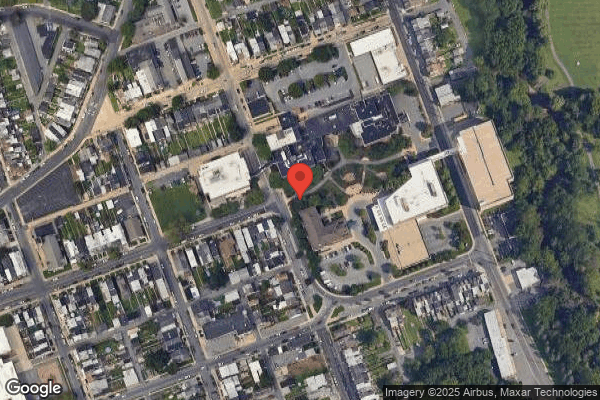
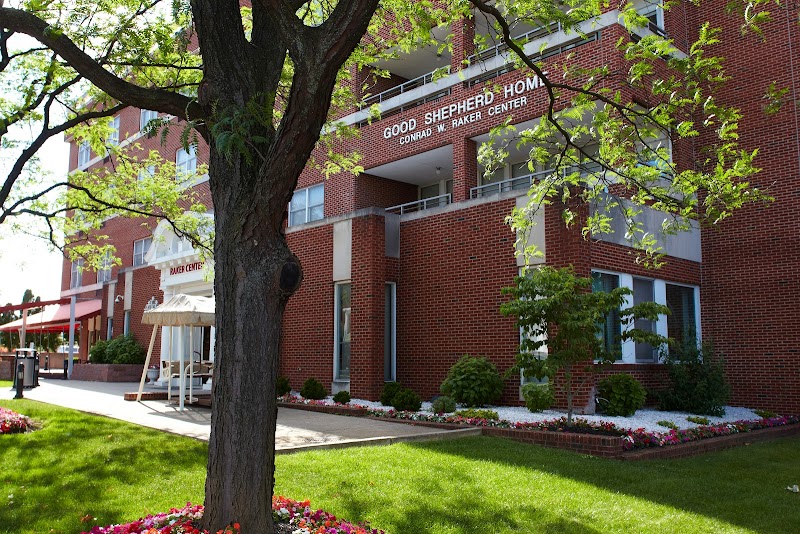
601 ST JOHN STREET, ALLENTOWN, PA 18103 (610) 776-3199
Non profit - Church related 99 Beds Independent Data: November 2025
Trust Grade
70/100
#289 of 653 in PA
Last Inspection: August 2024

Within standard 12-15 month inspection cycle. Federal law requires annual inspections.

Overview

Good Shepherd Home Raker Center has received a Trust Grade of B, indicating it's a solid choice for families looking for care. It ranks #289 out of 653 facilities in Pennsylvania, placing it in the top half, but is #13 out of 16 in Lehigh County, meaning only a few local options are better. The facility is improving, with issues decreasing from five in 2023 to four in 2024. Staffing is a strength here, with a 4/5 star rating and only 19% turnover, which is well below the state average. Although there have been no fines, recent inspections revealed concerns such as food being stored unsafely and a need for a more comfortable environment, indicating room for improvement in cleanliness and facility upkeep.

Trust Score
B
70/100
In Pennsylvania
#289/653
Top 44%
Safety Record
Low Risk
No red flags
Inspections
Getting Better
5 → 4 violations
Staff Stability
✓ Good
19% annual turnover. Excellent stability, 29 points below Pennsylvania's 48% average. Staff who stay learn residents' needs.
Penalties
✓ Good
No fines on record. Clean compliance history, better than most Pennsylvania facilities.
Skilled Nurses
✓ Good
Each resident gets 94 minutes of Registered Nurse (RN) attention daily — more than 97% of Pennsylvania nursing homes. RNs are the most trained staff who catch health problems before they become serious.
Violations
⚠ Watch
13 deficiencies on record. Higher than average. Multiple issues found across inspections.
★★★☆☆
3.0
Overall Rating
★★★★☆
4.0
Staff Levels
★★★☆☆
3.0
Care Quality
★★★☆☆
3.0
Inspection Score
Stable
2023: 5 issues
2024: 4 issues

The Good

  • 4-Star Staffing Rating · Above-average nurse staffing levels
  • Low Staff Turnover (19%) · Staff stability means consistent care
  • Full Sprinkler Coverage · Fire safety systems throughout facility
  • No fines on record
  • Staff turnover is low (19%)

    29 points below Pennsylvania average of 48%

Facility shows strength in staffing levels, staff retention, fire safety.

The Bad

3-Star Overall Rating

Near Pennsylvania average (3.0)

Meets federal standards, typical of most facilities

The Ugly 13 deficiencies on record

Aug 2024 4 deficiencies
CONCERN (D)

Potential for Harm - no one hurt, but risky conditions existed

Deficiency F0558 (Tag F0558)

Could have caused harm · This affected 1 resident

**NOTE- TERMS IN BRACKETS HAVE BEEN EDITED TO PROTECT CONFIDENTIALITY** Based on clinical record review, observation, and resident interview, it was determined that the facility failed to ensure that ...

Read full inspector narrative →
**NOTE- TERMS IN BRACKETS HAVE BEEN EDITED TO PROTECT CONFIDENTIALITY** Based on clinical record review, observation, and resident interview, it was determined that the facility failed to ensure that a call bell was accessible for one of 20 sampled residents. (Resident 53) Findings include: Clinical record review revealed that Resident 53 had diagnoses that included multiple sclerosis (damage to the nerves), quadriplegia (paralysis that affects all limbs of the body), and depression. Review of the Minimum Data Set assessment dated [DATE], revealed that the resident had no cognitive impairment and was dependent on staff for activities of daily living. Review of the care plan revealed that staff was to ensure that the resident's call bell was within reach at all times. On August 20, 2024, at 1:07 p.m., Resident 53 was observed in her wheelchair in her room. The resident stated she wanted assistance to go back to bed. The call bell was placed on top of the resident's bed. The resident stated that the call bell was difficult to reach when it was on top of her bed. On August 21, 2024, at 12:51 p.m., the resident was observed in her room in her wheelchair. The call bell was not visible and the resident stated that she did not know where it was located. 28 Pa. Code 211.12(d)(1)(5) Nursing services.
CONCERN (D)

Potential for Harm - no one hurt, but risky conditions existed

MDS Data Transmission (Tag F0640)

Could have caused harm · This affected 1 resident

Based on review of the Resident Assessment Instrument (RAI) User's Manual and clinical record review, it was determined that the facility failed to timely complete and transmit Minimum Data Set (MDS) ...

Read full inspector narrative →
Based on review of the Resident Assessment Instrument (RAI) User's Manual and clinical record review, it was determined that the facility failed to timely complete and transmit Minimum Data Set (MDS) assessments for three of 20 sampled residents. (Residents 32, 48, 67) Findings include: The Long Term Care Facility RAI User's Manual which provides instructions and guidelines for completing required MDS assessments, (mandated assessments of a residents' abilities and care needs), dated October 2019, indicated that annual, quarterly, and admission assessments were to be completed and transmitted electronically to the Centers for Medicare/Medicaid services (CMS) no later than 14 days after the Assessment Reference Date (ARD) which refers to the last day of the assessment observation period. Clinical record review revealed that Resident 32 had a quarterly MDS assessment, dated July 11, 2024, with an ARD of July 26, 2024, noted as still in progress and had not yet been completed or transmitted as per the time requirements. This quarterly assessment was overdue and had not been completed within the required time frame. Clinical record review revealed that Residents 48 and 67 had annual MDS assessments, dated July 15, 2024, with an ARD of July 24, 2024, noted as still in progress and had not yet been completed or transmitted as per the time requirements. These annual assessments were overdue and had not been completed within the required time frame.
CONCERN (D)

Potential for Harm - no one hurt, but risky conditions existed

Quality of Care (Tag F0684)

Could have caused harm · This affected 1 resident

Based on clinical record review, resident interview, and staff interview, it was determined that the facility failed to ensure that physician's orders were implemented for two of 20 sampled residents....

Read full inspector narrative →
Based on clinical record review, resident interview, and staff interview, it was determined that the facility failed to ensure that physician's orders were implemented for two of 20 sampled residents. (Residents 50, 61) Findings include: Clinical record review revealed that Resident 50 had diagnoses that included myotonic muscular dystrophy (genetic disorder that causes progressive muscle loss), congestive heart failure, and respiratory failure. A physician's order dated July 22, 2024, directed staff to weigh the resident every week on Mondays due to congestive heart failure and weight loss. There was no evidence that staff attempted to weigh the resident on July 29, 2024, and August 5, 12, and 19, 2024. In an interview on August 22, 2024, at 12:38 a.m., the Director of Nursing confirmed that there was no evidence that staff weighed the resident per physician's order. Clinical record review revealed that Resident 61 had diagnoses that included multiple sclerosis (damage to the nerves), quadriplegia (paralysis that affects all limbs of the body), neuromuscular dysfunction of the bladder, and depression. The resident used a urinary catheter (a tube used to drain urine from the bladder). In an interview on August 20, 2024, at 12:30 p.m., the resident stated that she occasionally had pain to the catheter insertion site. She stated she was to see a urologist but has not yet had an appointment. A physician's order dated July 15, 2024, directed staff to consult urology for the resident's catheter tube site pain. There was no evidence that staff scheduled the urologist appointment. In an interview on August 22, 2024, at 11:26 a.m., the Director of Nursing confirmed that staff did not schedule the urologist appointment, per the physician's order. 28 Pa. Code 211.12(d)(1)(5) Nursing services.
CONCERN (F)

Potential for Harm - no one hurt, but risky conditions existed

Food Safety (Tag F0812)

Could have caused harm · This affected most or all residents

Based on observation and review of facility documentation, it was determined that the facility failed to store and serve food under sanitary conditions in the kitchen. Findings include: Observation ...

Read full inspector narrative →
Based on observation and review of facility documentation, it was determined that the facility failed to store and serve food under sanitary conditions in the kitchen. Findings include: Observation of the kitchen on August 20, 2024, at 10:15 a.m. revealed the following: There were two fruit flies in the food preparation area. There was a large fly on the cold preparation station. There was a pan of chicken on the same preparation station. The plastic wrap on the pan did not fully cover the pan and the chicken was open to air. There was an uncovered garbage can by the coffee preparation station. There was cheese in the reach in refrigerator with a use by date of August 18, 2024. There was a cup used to scoop thickener powder that was stored in the container, in direct contact with the thickener. Observation of the tray line service on August 21, 2024, at 11:10 a.m., revealed the following: Dietary Employee 1 (DE 1) was wearing gloves and operating the tray line. On multiple occasions, DE 1 turned away from the tray line and obtained food items from the refrigerator. DE 1 returned to the tray line and continued assembling resident meals, which included touching ready to eat foods without changing gloves or performing hand hygiene. There was a cooler that contained items for meal service, which included yogurt, a potentially hazardous food item. The door to the cooler was propped open during tray line service. Observation of the thermometer in the cooler at 11:40 a.m., revealed that the internal temperature was above proper refrigeration and cold holding temperature of 41 degrees Fahrenheit (F) and had reached 55 degrees F. There was a second cooler that contained juice and thickened beverages. The cooler was also kept open during meal service, there was no thermometer observed in the second cooler. Review of facility temperature logs revealed that food temperatures were to be monitored and recorded when the food items were cooked and while they were held for service. Review of temperature logs for August 2024, revealed the following: There was no evidence that staff monitored the holding temperatures for the breakfast meal on August 1 through 21, 2024. There was no evidence that staff monitored the holding temperatures for the lunch meal on August 1, 2, 3, 4, 5, 6, 7, 8, 10, 11, 14, 16, 17, 18, and 19, 2024. There was no evidence that staff monitored the holding temperatures for the dinner meal on August 3 and 4, 2024. 28 Pa. Code 201.18 (b)(3)(e)(2.1) Management.
Oct 2023 4 deficiencies
CONCERN (D)

Potential for Harm - no one hurt, but risky conditions existed

Deficiency F0688 (Tag F0688)

Could have caused harm · This affected 1 resident

**NOTE- TERMS IN BRACKETS HAVE BEEN EDITED TO PROTECT CONFIDENTIALITY** Based on clinical record review, observation and staff interview, it was determined that the facility failed to provide services...

Read full inspector narrative →
**NOTE- TERMS IN BRACKETS HAVE BEEN EDITED TO PROTECT CONFIDENTIALITY** Based on clinical record review, observation and staff interview, it was determined that the facility failed to provide services and treatment to prevent further limitations in range of motion for one of six sampled residents with limitations in range of motion. (Resident 72) Findings include: Clinical record review revealed that Resident 72 had diagnoses of hemiplegia, (paraplegia), of the left non-dominant side after a stroke, and dementia. The Minimum Data Set assessment dated [DATE], indicated that the resident had memory impairment, was totally dependent on staff for dressing, and had impairment in range of motion on both sides of her upper and lower extremities. Review of an occupational therapy screen dated July 17, 2023, revealed that the resident was to wear a left upper extremity comfy orthosis, (hand splint), when she was out of bed. A current physician order wad for the resident to wear a left upper extremity hand splint when she was out of bed. Observation on October 11, 2023, at 11:00 a.m., 1:07 p.m., and 1:22 p.m., revealed that the resident was out of bed, dressed and seated in her wheelchair. She did not have the left upper extremity hand splint in place as recommended by occupational therapy and as ordered by the physician. In an interview on October 13, 2023, at 9:14 a.m., the Administrator confirmed that the splint was to be in place as ordered by the physician. 28 Pa. Code 211.12(d)(1)(5) Nursing services.
CONCERN (E)

Potential for Harm - no one hurt, but risky conditions existed

Safe Environment (Tag F0584)

Could have caused harm · This affected multiple residents

**NOTE- TERMS IN BRACKETS HAVE BEEN EDITED TO PROTECT CONFIDENTIALITY** Based on observation, it was determined that the facility failed to provide a comfortable, homelike environment for residents, s...

Read full inspector narrative →
**NOTE- TERMS IN BRACKETS HAVE BEEN EDITED TO PROTECT CONFIDENTIALITY** Based on observation, it was determined that the facility failed to provide a comfortable, homelike environment for residents, staff and public on two of three nursing units. ([NAME] 3 and [NAME] 4) Findings include: Observation on October 11, 2023, at 10:22 a.m., revealed that the walls throughout the [NAME] 3 nursing unit were marred and scratched above and below the handrails, and the panels on the doors to resident rooms were also marred and scratched. The door jams to the main resident areas were marred and slightly damaged. Observations on October 11 and 12, 2023, at various times throughout the day, revealed that the lower half of the walls throughout the [NAME] 4 nursing unit were marred and scratched. The panels on the doors to resident rooms were marred, and the door jams to the main resident areas and the elevator doors had chipped paint and were slightly damaged. In room [ROOM NUMBER], the walls were marred and scratched. In room [ROOM NUMBER], there was exposed drywall with large areas of chipped paint near the bathroom. In room [ROOM NUMBER], the walls were marred with chipped paint and there was crumbled drywall in the corner near the bathroom. In room [ROOM NUMBER], there was crumbled drywall at the base of the wall. In room [ROOM NUMBER], the walls were marred with chipped paint, the sink countertop was chipped in several spots and the rubber baseboard molding around the room had multiple holes. In room [ROOM NUMBER], the base of the wall had crumbled drywall. 28 Pa. Code 201.18(b)(3)(e)(2.1) Management.
CONCERN (F)

Potential for Harm - no one hurt, but risky conditions existed

Food Safety (Tag F0812)

Could have caused harm · This affected most or all residents

Based on observation and interview, it was determined that the facility failed to store food under sanitary conditions in the kitchen. Findings include: Observation of the kitchen on October 11, 202...

Read full inspector narrative →
Based on observation and interview, it was determined that the facility failed to store food under sanitary conditions in the kitchen. Findings include: Observation of the kitchen on October 11, 2023, at 9:05 a.m. revealed two bottles of thickened water with a use by date of August 2, 2023, and September 2, 2023. There were four bottles of thickened prune juice with use by dates of October 8, 2023, and two bottles of thickened prune juice with use by dates of September 25, 2023. There was an accumulation of a brown substance on the handle of the meat slicer. In the walk-in refrigerator, there were eight half gallons of milk with use by dates of October 6, 2023. In the second walk-in refrigerator, there was a container of pickles dated October 2, 2023, and a container of olives dated October 1, 2023. There was a tray of two boxes of raw bacon stored over ready to eat hard boiled eggs. In the reach-in refrigerator, there were three wrapped blocks of sliced cheese that were not in the original packaging and not labeled or dated. There was an unidentified food substance that was not in the original packaging that was not labeled or dated. In an interview at the time of the kitcehn tour the Director of Dining Services confirmed that the items should have been labeled and dated. 28 Pa. Code 201.18(b)(3)(e)(2.1) Management.
MINOR (C)

Minor Issue - procedural, no safety impact

Garbage Disposal (Tag F0814)

Minor procedural issue · This affected most or all residents

Based on observation, it was determined that the facility failed to dispose of trash and refuse properly. Findings include: Observation of the trash compactor area on October 11, 2023, at 9:40 a.m., ...

Read full inspector narrative →
Based on observation, it was determined that the facility failed to dispose of trash and refuse properly. Findings include: Observation of the trash compactor area on October 11, 2023, at 9:40 a.m., revealed an accumulation of debris that included gloves, cups, a plastic lid, paper items, a beverage carton, and a plastic syringe. FR 483.60(i) Food Safety Requirements Previously cited 11/10/22 28 Pa. Code 201.18(b)(3) Management.
May 2023 1 deficiency
CONCERN (D) 📢 Someone Reported This

A family member, employee, or ombudsman was alarmed enough to file a formal complaint

Potential for Harm - no one hurt, but risky conditions existed

Deficiency F0558 (Tag F0558)

Could have caused harm · This affected 1 resident

**NOTE- TERMS IN BRACKETS HAVE BEEN EDITED TO PROTECT CONFIDENTIALITY** Based on observation and resident interview, it was determined that the facility failed to provide a reasonable accommodation of...

Read full inspector narrative →
**NOTE- TERMS IN BRACKETS HAVE BEEN EDITED TO PROTECT CONFIDENTIALITY** Based on observation and resident interview, it was determined that the facility failed to provide a reasonable accommodation of needs for one of five sampled residents. (Resident 1) Findings include: Clinical record review revealed that Resident 1 had diagnoses that included depression and hemiplegia (paralysis) to the left side. Review of the Minimum Data Set assessment dated [DATE], revealed that the resident was totally dependent on staff for activities of daily living. Review of the care plan revealed that the resident was incontinent of bowel and the intervention was for staff to take the resident to the toilet at the same time each day, which was typically after breakfast and lunch. On May 4, 2023, at 12:16 p.m., Resident 1 was observed out of bed in the wheelchair after the lunch meal. The resident rang the call bell and stated she needed to go to the bathroom. At 12:17 p.m., Nurse Aide 1 (NA 1) entered the resident's room and deactivated the call bell. The resident was observed at 12:28 p.m., seated in the wheelchair in her room. The resident stated staff had not yet provided assistance. At 12:40 p.m., Resident 1 was observed still in her wheelchair in the doorway to her room. The resident asked NA 2 for assistance. NA 2 stated, I can't, I don't have time. At 12:47 p.m., Resident 1 was observed in her room in her wheelchair. The resident stated that staff had not yet provided assistance in response to her initial request. She was not assisted with toileting after lunch per her care plan. At 12:57 p.m., staff was observed assisting Resident 1 with toileting, over 40 minutes after the resident rang the call bell and asked for assistance. CFR 483.10 (e)(3) Accommodation of needs and preferences previously cited 8/19/22 28 Pa. Code 201.29(j) Resident rights. 28 Pa. Code 211.12(d)(1)(5) Nursing services.
Nov 2022 4 deficiencies
CONCERN (D)

Potential for Harm - no one hurt, but risky conditions existed

Deficiency F0688 (Tag F0688)

Could have caused harm · This affected 1 resident

**NOTE- TERMS IN BRACKETS HAVE BEEN EDITED TO PROTECT CONFIDENTIALITY** Based on clinical record review, observation, and staff interview, it was determined that the facility failed to provide interve...

Read full inspector narrative →
**NOTE- TERMS IN BRACKETS HAVE BEEN EDITED TO PROTECT CONFIDENTIALITY** Based on clinical record review, observation, and staff interview, it was determined that the facility failed to provide interventions to prevent further decrease in range of motion for one of five sampled residents with limited range of motion. (Resident 74) Findings include: Clinical record review revealed that Resident 74 had diagnoses that included quadriplegia, and contractures affecting both hands. The Minimum Data Set assessment dated [DATE], indicated the resident was unable to communicate, was dependent on staff for activities of daily living, and had limitation in range of motion of both arms and legs. A physician's order dated September 13, 2021, directed staff to apply palm protectors to the resident's hands when in and out of bed as tolerated. An occupational therapy screening dated October 12, 2022, indicated that the the palm protectors were to be worn to protect skin in the palm areas and reduce increased tone in each hand and fingers. Observations on November 8, 2022, at 10:24 a.m., 10:56 a.m., and 1:21 p.m., and on November 9, 2022, at 10:12 a.m. and 12:34 p.m., revealed that Resident 74 was in bed and not wearing the palm protectors. In an interview on November 10, 2022, at 9:25 a.m., the Nursing Home Administrator confirmed that the resident should have had the palm protectors in place. 28 Pa. Code 211.12(d)(1)(5) Nursing services.
CONCERN (D)

Potential for Harm - no one hurt, but risky conditions existed

Deficiency F0697 (Tag F0697)

Could have caused harm · This affected 1 resident

Based on facility policy review, clinical record review, and staff interview, it was determined that the facility failed to attempt non-pharmacological interventions to alleviate pain prior to or in c...

Read full inspector narrative →
Based on facility policy review, clinical record review, and staff interview, it was determined that the facility failed to attempt non-pharmacological interventions to alleviate pain prior to or in conjunction with the administration of pain medication that was ordered on an as needed (PRN) basis for two of 21 sampled residents. (Residents 37, 41) Findings include: Review of the facility policy entitled, Assessment and Management of Pain, dated October 20, 2022, revealed that pain management was to include the assessment of pain and, if appropriate, treatment of pain to meet the needs of the residents. Treatment of pain may include the use of medications or application of other modalities and medical devices. A variety of measures (pharmacological, non-pharmacological and interpersonal) were to be selected to facilitate pain management. Clinical record review revealed that Resident 37 had diagnoses that included osteoporosis and chronic pain. There was a physician's order, dated September 29, 2022, that staff provide the resident with narcotic pain medication (Percocet) every eight hours as needed for moderate to severe pain. Review of the October and November 2022, Medication Administration Records (MARs) and nursing notes revealed that there was a lack of documentation to support that the resident was offered non-pharmacological interventions prior to or in conjunction with the administration of the as needed pain medication on 15 of 15 occurrences. Clinical record review revealed that Resident 41 had diagnoses that included osteoarthritis and chronic pain. There was a physician's order, dated August 25, 2022, that staff provide the resident with narcotic pain medication (tramadol) every six hours as needed for moderate to severe pain. Review of the October and November 2022, MARs and nursing notes revealed that there was a lack of documentation to support that the resident was offered non-pharmacological interventions prior to or in conjunction with the administration of the as needed pain medication on 61 of 61 occurrences. During an interview on November 9, 2022, the Director of Nursing stated that the use of non-pharmacological interventions for pain should be documented in the nursing progress notes. On November 10, 2022, at 2:35 p.m., the DON confirmed that there was no evidence that non-pharmacological interventions were attempted when as needed pain medications were administered to Residents 37 and 41. 28 Pa. Code 211.9(a)(1) Pharmacy services. 28 Pa. Code 211.12(d)(1)(5) Nursing services.
CONCERN (E) 📢 Someone Reported This

A family member, employee, or ombudsman was alarmed enough to file a formal complaint

Potential for Harm - no one hurt, but risky conditions existed

Deficiency F0561 (Tag F0561)

Could have caused harm · This affected multiple residents

**NOTE- TERMS IN BRACKETS HAVE BEEN EDITED TO PROTECT CONFIDENTIALITY** Based on clinical record review and resident interview, it was determined the facility failed to provide showers and bathing as ...

Read full inspector narrative →
**NOTE- TERMS IN BRACKETS HAVE BEEN EDITED TO PROTECT CONFIDENTIALITY** Based on clinical record review and resident interview, it was determined the facility failed to provide showers and bathing as scheduled/preferred to eight of 21 sampled residents. (Residents 24, 27, 34, 37, 44, 51, 88, 93) Findings include: Clinical record review revealed that Resident 24 had diagnoses that included paraplegia and mood disorder. Review of the Minimum Data Set (MDS) assessment dated [DATE], revealed that the resident was totally dependent on staff for bathing. Review of the resident's bathing record revealed bathing and showers were scheduled for Wednesday and Friday each week. In an interview on November 8, 2022, at 12:05 p.m., Resident 24 stated that she is unsure of the last time she received a shower per her schedule and preference. Review of bathing documentation revealed no evidence that Resident 24 received a shower or was bathed in accordance with the schedule three of seven times on October 2022. Clinical record review revealed that Resident 27 had diagnoses that included muscular dystrophy and quadriplegia. Review of the MDS assessment dated [DATE], indicated that the resident was alert and oriented and was dependent on staff for bathing. In an interview on November 8, 2022, at 10:26 a.m., the resident stated, I want a shower and I don't always get one. Review of the bathing schedule revealed that the resident was to have a shower twice a week, on Monday and Thursday mornings. Review of nursing documentation revealed that during the month of October 2022, there was a lack of documentation to support that a shower was offered on seven of nine scheduled days. Clinical record review revealed that Resident 34 had diagnoses that included quadriplegia and fusion of the spine. Review of the MDS assessment dated [DATE], indicated that the resident was alert and oriented and was dependent on staff for bathing. In an interview on November 8, 2022, at 9:45 a.m., the resident stated, I don't always get my showers. Review of the bathing schedule revealed that the resident was to have a shower twice a week on Thursday and Sunday evenings. Review of nursing documentation revealed that during the month of October 2022, there was no evidence that a shower was offered to the resident on five of nine scheduled days. Clinical record review revealed that Resident 37 had diagnoses that included hemiplegia of the dominant side. Review of the MDS assessment dated [DATE], indicated that the resident required staff assistance for bathing. Review of the bathing schedule revealed that the resident had a physician's order for staff to provide a shower to the resident twice a week. Review of nursing documentation revealed there was a lack of documentation to support that the resident was offered a shower on two of eight days in October and one of three days in November 2022. Clinical record review revealed that Resident 44 had diagnoses that included quadriplegia and complete lesion of cervical spinal cord. Review of the MDS assessment dated [DATE], indicated that the resident was alert and oriented and was dependent on staff for bathing. In an interview on November 8, 2022, at 1:45 p.m., the resident stated, I don't always get a shower. Review of the bathing schedule identified that the resident was to have a shower twice a week on Monday and Thursday mornings. Review of nursing documentation revealed that during the month of October 2022, there was a lack of documentation to support that a shower was offered to the resident on four of nine scheduled days. Clinical record review revealed that Resident 51 had diagnoses that included quadriplegia and intracranial injury. Review of the MDS assessment dated [DATE], revealed that Resident 51 was oriented and totally dependent on staff for bathing. Review of the bathing schedule revealed bathing and showers were scheduled for Monday and Friday each week. In an interview on November 10, 2022, at 1:27 p.m., the resident stated staff occasionally did not provide up to two scheduled showers per week. Review of the bathing record revealed no evidence that Resident 51 received a shower or was bathed in accordance with the schedule on October 24, 2022. Clinical record review revealed that Resident 88 had diagnoses that included muscular dystrophy and quadriplegia. Review of the MDS assessment dated [DATE], indicated that the resident was alert and oriented and was dependent on staff for bathing. In an interview on November 8, 2022, at 10:45 a.m., the resident stated, I have not been getting showers. Review of the bathing schedule identified that the resident was to have a shower twice a week on Tuesday and Saturday evenings. Review of the clinical record revealed there was a lack of documentation to support that a shower was offered on six of eight scheduled days in October and three of three scheduled days in November 2022. Clinical record review revealed that Resident 93 had diagnoses that included hemiplegia of the dominant side and cerebral palsy. Review of the MDS assessment dated [DATE], indicated that the resident was dependent on staff for bathing. Review of the bathing schedule revealed that the resident had a physician's order for staff to provide a shower to the resident twice a week. Review of nursing documentation revealed there was a lack of documentation to support that the resident was offered a shower on two of eight scheduled days in October 2022. 28 Pa. Code 201.29(j) Resident rights.
MINOR (C)

Minor Issue - procedural, no safety impact

Garbage Disposal (Tag F0814)

Minor procedural issue · This affected most or all residents

Based on observation, it was determined that the facility failed to dispose of garbage and refuse properly. Findings include: Observation of the dumpster area on November 8, 2022, at 9:55 a.m., and No...

Read full inspector narrative →
Based on observation, it was determined that the facility failed to dispose of garbage and refuse properly. Findings include: Observation of the dumpster area on November 8, 2022, at 9:55 a.m., and November 10, 2022, at 10:25 a.m., revealed various particles of debris, including blue disposable gloves and various paper products, on the ground surrounding the trash compactor.
Understanding Severity Codes (click to expand)
Life-Threatening (Immediate Jeopardy)
J - Isolated K - Pattern L - Widespread
Actual Harm
G - Isolated H - Pattern I - Widespread
Potential for Harm
D - Isolated E - Pattern F - Widespread
No Harm (Minor)
A - Isolated B - Pattern C - Widespread

Questions to Ask on Your Visit

  • "Can I speak with families of current residents?"
  • "What's your RN coverage like on weekends and overnight?"

Our Honest Assessment

Strengths
  • • No major safety red flags. No abuse findings, life-threatening violations, or SFF status.
  • • No fines on record. Clean compliance history, better than most Pennsylvania facilities.
  • • 19% annual turnover. Excellent stability, 29 points below Pennsylvania's 48% average. Staff who stay learn residents' needs.
Concerns
  • • 13 deficiencies on record. Higher than average. Multiple issues found across inspections.
Bottom line: Mixed indicators with Trust Score of 70/100. Visit in person and ask pointed questions.

About This Facility

What is Good Shepherd Home Raker Center's CMS Rating?

CMS assigns GOOD SHEPHERD HOME RAKER CENTER an overall rating of 3 out of 5 stars, which is considered average nationally. Within Pennsylvania, this rating places the facility higher than 0% of the state's 100 nursing homes. This mid-range rating indicates the facility meets federal standards but may have areas for improvement.

How is Good Shepherd Home Raker Center Staffed?

CMS rates GOOD SHEPHERD HOME RAKER CENTER's staffing level at 4 out of 5 stars, which is above average compared to other nursing homes. Staff turnover is 19%, compared to the Pennsylvania average of 46%. This relatively stable workforce can support continuity of care.

What Have Inspectors Found at Good Shepherd Home Raker Center?

State health inspectors documented 13 deficiencies at GOOD SHEPHERD HOME RAKER CENTER during 2022 to 2024. These included: 11 with potential for harm and 2 minor or isolated issues.

Who Owns and Operates Good Shepherd Home Raker Center?

GOOD SHEPHERD HOME RAKER CENTER is owned by a non-profit organization. Non-profit facilities reinvest revenue into operations rather than distributing to shareholders. The facility operates independently rather than as part of a larger chain. With 99 certified beds and approximately 95 residents (about 96% occupancy), it is a smaller facility located in ALLENTOWN, Pennsylvania.

How Does Good Shepherd Home Raker Center Compare to Other Pennsylvania Nursing Homes?

Compared to the 100 nursing homes in Pennsylvania, GOOD SHEPHERD HOME RAKER CENTER's overall rating (3 stars) matches the state average, staff turnover (19%) is significantly lower than the state average of 46%, and health inspection rating (3 stars) is at the national benchmark.

What Should Families Ask When Visiting Good Shepherd Home Raker Center?

Based on this facility's data, families visiting should ask: "Can I visit during a mealtime to observe dining assistance and food quality?" "How do you handle medical emergencies, and what is your hospital transfer rate?" "Can I speak with family members of current residents about their experience?"

Is Good Shepherd Home Raker Center Safe?

Based on CMS inspection data, GOOD SHEPHERD HOME RAKER CENTER has a clean safety record: no substantiated abuse findings (meaning no confirmed cases of resident harm), no Immediate Jeopardy citations (the most serious violation level indicating risk of serious injury or death), and is not on the Special Focus Facility watch list (a federal program monitoring the lowest-performing 1% of nursing homes). The facility has a 3-star overall rating and ranks #1 of 100 nursing homes in Pennsylvania. While no facility is perfect, families should still ask about staff-to-resident ratios and recent inspection results during their visit.

Do Nurses at Good Shepherd Home Raker Center Stick Around?

Staff at GOOD SHEPHERD HOME RAKER CENTER tend to stick around. With a turnover rate of 19%, the facility is 27 percentage points below the Pennsylvania average of 46%. Low turnover is a positive sign. It means caregivers have time to learn each resident's needs, medications, and personal preferences. Consistent staff also notice subtle changes in a resident's condition more quickly. Registered Nurse turnover is also low at 18%, meaning experienced RNs are available to handle complex medical needs.

Was Good Shepherd Home Raker Center Ever Fined?

GOOD SHEPHERD HOME RAKER CENTER has no federal fines on record. CMS issues fines when nursing homes fail to meet care standards or don't correct problems found during inspections. The absence of fines suggests the facility has either maintained compliance or corrected any issues before penalties were assessed. This is a positive indicator, though families should still review recent inspection reports for the full picture.

Is Good Shepherd Home Raker Center on Any Federal Watch List?

GOOD SHEPHERD HOME RAKER CENTER is not on any federal watch list. The most significant is the Special Focus Facility (SFF) program, which identifies the bottom 1% of nursing homes nationally based on persistent, serious quality problems. Not being on this list means the facility has avoided the pattern of deficiencies that triggers enhanced federal oversight. This is a positive indicator, though families should still review the facility's inspection history directly.