LEHIGH VALLEY HOSPITAL TSU

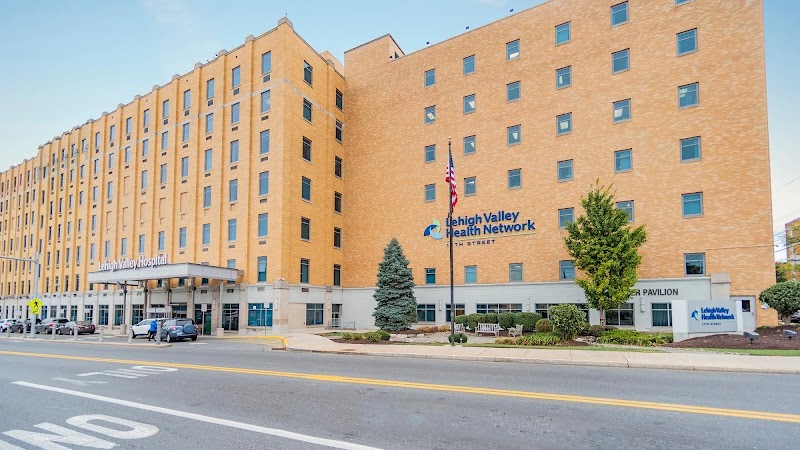
17TH & CHEW STS, ALLENTOWN, PA 18105 (610) 969-4225
Non profit - Other 52 Beds Independent Data: November 2025 1 Immediate Jeopardy citation
Trust Grade
53/100
#453 of 653 in PA
Last Inspection: April 2025

Within standard 12-15 month inspection cycle. Federal law requires annual inspections.

Overview

Lehigh Valley Hospital TSU has received a Trust Grade of C, which means it is average and falls in the middle of the pack. It ranks #453 out of 653 facilities in Pennsylvania, placing it in the bottom half of nursing homes in the state, and #14 out of 16 in Lehigh County, indicating limited options for better care nearby. The facility is new, with its first inspection revealing one critical issue related to unsafe water temperatures that could lead to thermal burns, which raises concerns about resident safety. On the positive side, staffing is a strong point, earning a 5-star rating with a low turnover rate of 24%, and it has no fines, which is encouraging. Additionally, the facility boasts more registered nurse coverage than 99% of Pennsylvania facilities, which is vital for catching potential problems early.

Trust Score
C
53/100
In Pennsylvania
#453/653
Bottom 31%
Safety Record
High Risk
Review needed
Inspections
Too New
0 → 1 violations
Staff Stability
✓ Good
24% annual turnover. Excellent stability, 24 points below Pennsylvania's 48% average. Staff who stay learn residents' needs.
Penalties
✓ Good
No fines on record. Clean compliance history, better than most Pennsylvania facilities.
Skilled Nurses
✓ Good
Each resident gets 213 minutes of Registered Nurse (RN) attention daily — more than 97% of Pennsylvania nursing homes. RNs are the most trained staff who catch health problems before they become serious.
Violations
✓ Good
Only 1 deficiencies on record. Cleaner than most facilities. Minor issues only.
★★☆☆☆
2.0
Overall Rating
★★★★★
5.0
Staff Levels
★★★★★
5.0
Care Quality
★☆☆☆☆
1.0
Inspection Score
Stable
: 0 issues
2025: 1 issues

The Good

  • 5-Star Staffing Rating · Excellent nurse staffing levels
  • 5-Star Quality Measures · Strong clinical quality outcomes
  • Low Staff Turnover (24%) · Staff stability means consistent care
  • Full Sprinkler Coverage · Fire safety systems throughout facility
  • No fines on record
  • Staff turnover is low (24%)

    24 points below Pennsylvania average of 48%

Facility shows strength in staffing levels, quality measures, staff retention, fire safety.

The Bad

2-Star Overall Rating

Below Pennsylvania average (3.0)

Below average - review inspection findings carefully

The Ugly 1 deficiencies on record

1 life-threatening
Apr 2025 1 deficiency 1 IJ (1 facility-wide)
CRITICAL (L)

Immediate Jeopardy (IJ) - the most serious Medicare violation

Accident Prevention (Tag F0689)

Someone could have died · This affected most or all residents

⚠️ Facility-wide issue

**NOTE- TERMS IN BRACKETS HAVE BEEN EDITED TO PROTECT CONFIDENTIALITY** Based on a review of facility policy, observation, interviews with residents and staff, and review of facility documentation, i...

Read full inspector narrative →
**NOTE- TERMS IN BRACKETS HAVE BEEN EDITED TO PROTECT CONFIDENTIALITY** Based on a review of facility policy, observation, interviews with residents and staff, and review of facility documentation, it was determined that the facility failed to ensure water temperatures in the central shower room and resident bathroom sinks were maintained at a safe temperature for the Transitional Skilled Unit (TSU). This failure placed residents on the TSU at risk for serious injury from thermal burns and resulted in an Immediate Jeopardy situation. Findings include: Review of facility policy titled, Water Intrusion Response Algorithm, dated April 7, 2025, revealed that the facility was to maintain hot water temperatures allowable by state regulations or codes for nursing care facilities between 95 degrees Fahrenheit (F) and 110 degrees F to help minimize the risk of scalding. Observation of the TSU, on April 15, 2025, between 12:30 p.m. and 12:50 p.m., with the Employee 1 (Facilities Management) and Employee E2 (Engineering Maintenance), revealed the following: In room [ROOM NUMBER], the hot water from the resident hand sink in the bathroom was 122.5 degrees F. In room [ROOM NUMBER], the hot water from the resident hand sink in the bathroom was 126.1 degrees F. In room [ROOM NUMBER], the hot water from the resident hand sink in the bathroom was 125.0 degrees F. In room [ROOM NUMBER], the hot water from the resident hand sink in the bathroom was 130.0 degrees F. In room [ROOM NUMBER], the hot water from resident hand sink in the bathroom was 134.2 degrees F. In room [ROOM NUMBER], the hot water from the resident hand sink was 125.1 degrees F. Observation of the thermostatic mixing valves (valves that blend hot water with cold water to ensure constant, safe shower and bath outlet temperatures to prevent scalding, using a built-in thermostat to control the temperature of the mixed water) on April 15, 2025, at 12:52 p.m., with Employee E1 and Employee E2, revealed the temperature on two of three thermostatic mixing valves was identified between 120 and 130 degrees F. At the time of the observation, Employee E1, stated that the thermostatic mixing valves should not exceed 110 degrees F, and that the mixing valves regulated the hot water to all residents' rooms, the shower room, and all care areas on the TSU. He further stated that the temperatures were to be recorded weekly. A review of March and April 2025 water temperature logs revealed hot water temperatures were not recorded. In an interview on April 15, 2025, at 12:15 p.m., Resident 5, stated that the hot water from his hand sink inside his bathroom was too hot. During interviews on April 15, 2025, between 1:35 p.m. and 2:00 p.m., Residents 33, 35, 83, and 84 stated that the hot water was too hot and they were able to independently use the hand sink in their rooms. In an interview on April 15, 2025, at 2:05 p.m., a nurse aide (Employee 3) stated that the hot water temperatures in the shower rooms had been too hot for up to two months. In an interview on April 15, 2025, at 2:10 p.m., a nurse aide (Employee 4) stated that the hot water temperatures in the shower rooms had been too hot for a few weeks, and that there were no thermometers available to check the water temperature prior to providing showers. During an interview on April 15, 2025, at 2:24 p.m., the occupational therapist (Employee 12) stated that no thermometers were available in resident shower rooms. Based on the above findings, notification of Immediate Jeopardy to the safety of the residents on the TSU was provided to the Nursing Home Administrator on April 15, 2025, at 3:35 p.m., for failure to ensure that hot water temperatures were maintained to ensure the safety of residents in the facility. The Nursing Home Administrator was provided with the Immediate Jeopardy Template (document which included information necessary to establish each of the key components of immediate jeopardy) and an immediate action plan was requested. On April 15, 2025, at 6:15 p.m., the facility provided the following corrective action plan. - At 1:00 p.m., when the TSU was alerted regarding the high temperatures on the TSU, the facility also identified that a bypass valve was left in the open position which prevented the hot and cold water from mixing. The valve was immediately closed and high temperatures were reset. A lockout tag was installed on the bypass valve to prevent the bypass valve from being placed in the open position. - At 2:30 p.m., the water temperatures were rechecked after the bypass valve was closed and temperatures were noted to be 106 degrees F. - The facility checked the sink water temperature in all resident rooms and shower rooms on the TSU after a lockout tag was placed on the bypass valve. All temperatures were noted to be below the 110-degree F threshold. There were no additional high temperatures identified. - A policy for the TSU was to be developed to address water temperature safety and monitoring by April 16, 2025. - Employees that were working on the day and evening shift were educated on the water temperature policy, including acceptable hot water temperature ranges, appropriate methods to check hot water temperatures, and measures to take if temperatures were outside acceptable parameters. All staff were to be educated by the next shift worked. Methods included: - Water temperatures will be checked using a thermometer that is accessible and available on the unit prior to assisting a resident in the shower. - Facilities Management or designee will conduct random audits of a minimum of ten sinks daily for four weeks. Water temperatures will be recorded. - Facilities Management or designee will complete a daily log with visual inspection of the lockout tags being in place. - The logs (temperature and visual inspection) will be audited by the Nursing Home Administrator or designee weekly. The team will review the findings with the Quality Assurance Performance Improvement Committee for recommendations. - Facilities Management will educate maintenance staff on temperature monitoring required for random water temperature audits and on documentation of temperatures by the completion of their next shift. - Staff will be re-educated on temperature monitoring required for showers by the Nursing Home Administrator or designee by completion of the next working shift and documented on a sign-in sheet. - If the water feels or measures out of range, engineering will be contacted for immediate correction. - The Medical Director was updated on the Correction and Removal-Abatement Plan, as well as occurrences of which this plan pertains. Monitoring will be initiated and completed by the Administrator and/or designee as indicated above. Maintenance and supervisory staff were observed checking water temperatures and completing audit logs. Water temperature logs were reviewed and revealed appropriate water temperatures. The water temperature policy was reviewed on April 16, 2025, and safe processes for monitoring water temperatures had been developed. Interviews were conducted on April 15, 2025, between 4:00 p.m. and 7:00 p.m., with nursing staff. Nursing staff were able to verbalize the facility's water policy, including that water temperatures should not exceed 110 degrees F, what to do prior to assisting a resident in the shower, what to do if water temperatures were found to be too hot, and how to check water temperatures. The hot water on the TSU at residents' hand sinks and in the Central Shower Room were tested and verified that they did not exceed 110 degrees F. Following verification of the implementation of the immediate action plan, review of water temperature logs, and review of staff education documentation, the Immediate Jeopardy was lifted on April 15, 2025, at 7:37 p.m. 28 Pa. code 201.14(a) Responsibility of licensee. 28 Pa. Code 201.18(b)(1)(3) Management. 28 Pa. Code 205.63(c) Plumbing and piping systems required for existing and new construction. 28 Pa. Code 211.12(d)(5) Nursing services. .
Understanding Severity Codes (click to expand)
Life-Threatening (Immediate Jeopardy)
J - Isolated K - Pattern L - Widespread
Actual Harm
G - Isolated H - Pattern I - Widespread
Potential for Harm
D - Isolated E - Pattern F - Widespread
No Harm (Minor)
A - Isolated B - Pattern C - Widespread

Questions to Ask on Your Visit

  • "What changes have you made since the serious inspection findings?"
  • "Can I speak with families of current residents?"
  • "What's your RN coverage like on weekends and overnight?"

Our Honest Assessment

Strengths
  • • No fines on record. Clean compliance history, better than most Pennsylvania facilities.
  • • 24% annual turnover. Excellent stability, 24 points below Pennsylvania's 48% average. Staff who stay learn residents' needs.
Concerns
  • • Multiple safety concerns identified: 1 life-threatening violation(s). Review inspection reports carefully.
  • • 1 deficiencies on record, including 1 critical (life-threatening) violation. These warrant careful review before choosing this facility.
  • • Grade C (53/100). Below average facility with significant concerns.
Bottom line: Mixed indicators with Trust Score of 53/100. Visit in person and ask pointed questions.

About This Facility

What is Lehigh Valley Hospital Tsu's CMS Rating?

CMS assigns LEHIGH VALLEY HOSPITAL TSU an overall rating of 2 out of 5 stars, which is considered below average nationally. Within Pennsylvania, this rating places the facility higher than 0% of the state's 100 nursing homes. A rating at this level reflects concerns identified through health inspections, staffing assessments, or quality measures that families should carefully consider.
How is Lehigh Valley Hospital Tsu Staffed?

CMS rates LEHIGH VALLEY HOSPITAL TSU's staffing level at 5 out of 5 stars, which is much above average compared to other nursing homes. Staff turnover is 24%, compared to the Pennsylvania average of 46%. This relatively stable workforce can support continuity of care.

What Have Inspectors Found at Lehigh Valley Hospital Tsu?

State health inspectors documented 1 deficiencies at LEHIGH VALLEY HOSPITAL TSU during 2025. These included: 1 Immediate Jeopardy (the most serious level, indicating potential for serious harm or death). Immediate Jeopardy findings are rare and represent the most serious regulatory concerns. They require immediate corrective action.
Who Owns and Operates Lehigh Valley Hospital Tsu?

LEHIGH VALLEY HOSPITAL TSU is owned by a non-profit organization. Non-profit facilities reinvest revenue into operations rather than distributing to shareholders. The facility operates independently rather than as part of a larger chain. With 52 certified beds and approximately 29 residents (about 56% occupancy), it is a smaller facility located in ALLENTOWN, Pennsylvania.
How Does Lehigh Valley Hospital Tsu Compare to Other Pennsylvania Nursing Homes?

Compared to the 100 nursing homes in Pennsylvania, LEHIGH VALLEY HOSPITAL TSU's overall rating (2 stars) is below the state average of 3.0, staff turnover (24%) is significantly lower than the state average of 46%, and health inspection rating (1 stars) is much below the national benchmark.

What Should Families Ask When Visiting Lehigh Valley Hospital Tsu?

Based on this facility's data, families visiting should ask: "What changes have been made since the serious inspection findings, and how are you preventing similar issues?" "Can I visit during a mealtime to observe dining assistance and food quality?" "How do you handle medical emergencies, and what is your hospital transfer rate?" "Can I speak with family members of current residents about their experience?" These questions are particularly relevant given the facility's Immediate Jeopardy citations.

Is Lehigh Valley Hospital Tsu Safe?

Based on CMS inspection data, LEHIGH VALLEY HOSPITAL TSU has documented safety concerns. Inspectors have issued 1 Immediate Jeopardy citation (the most serious violation level indicating risk of serious injury or death). The facility has a 2-star overall rating and ranks #100 of 100 nursing homes in Pennsylvania. Families considering this facility should ask detailed questions about what corrective actions have been taken since these incidents.

Do Nurses at Lehigh Valley Hospital Tsu Stick Around?

Staff at LEHIGH VALLEY HOSPITAL TSU tend to stick around. With a turnover rate of 24%, the facility is 22 percentage points below the Pennsylvania average of 46%. Low turnover is a positive sign. It means caregivers have time to learn each resident's needs, medications, and personal preferences. Consistent staff also notice subtle changes in a resident's condition more quickly. Registered Nurse turnover is also low at 20%, meaning experienced RNs are available to handle complex medical needs.

Was Lehigh Valley Hospital Tsu Ever Fined?

LEHIGH VALLEY HOSPITAL TSU has no federal fines on record. CMS issues fines when nursing homes fail to meet care standards or don't correct problems found during inspections. The absence of fines suggests the facility has either maintained compliance or corrected any issues before penalties were assessed. This is a positive indicator, though families should still review recent inspection reports for the full picture.

Is Lehigh Valley Hospital Tsu on Any Federal Watch List?

LEHIGH VALLEY HOSPITAL TSU is not on any federal watch list. The most significant is the Special Focus Facility (SFF) program, which identifies the bottom 1% of nursing homes nationally based on persistent, serious quality problems. Not being on this list means the facility has avoided the pattern of deficiencies that triggers enhanced federal oversight. This is a positive indicator, though families should still review the facility's inspection history directly.