ATHENS NURSING AND REHABILITATION CENTER

200 SOUTH MAIN ST, ATHENS, PA 18810 (570) 731-6919
For profit - Corporation 90 Beds GABRIEL SEBBAG & THE SAMARA FAMILY Data: November 2025
Trust Grade
35/100
#526 of 653 in PA
Last Inspection: July 2025

Inspected within the last 6 months. Data reflects current conditions.

Overview

Athens Nursing and Rehabilitation Center has a Trust Grade of F, which indicates significant concerns about the quality of care provided. They rank #526 out of 653 facilities in Pennsylvania, placing them in the bottom half of the state, and #3 out of 4 in Bradford County, meaning there is only one local option that is better. The trend is improving, as the number of reported issues decreased from 23 in 2024 to 12 in 2025. Staffing is a weakness with a rating of 2 out of 5 stars and a high turnover rate of 58%, which is above the state average. While the facility has not incurred any fines, there are serious concerns regarding food safety, such as the lack of a qualified full-time dietitian and unsanitary conditions in the kitchen, where food debris and dead insects were found, posing potential health risks.

Trust Score
F
35/100
In Pennsylvania
#526/653
Bottom 20%
Safety Record
Low Risk
No red flags
Inspections
Getting Better
23 → 12 violations
Staff Stability
⚠ Watch
58% turnover. Above average. Higher turnover means staff may not know residents' routines.
Penalties
✓ Good
No fines on record. Clean compliance history, better than most Pennsylvania facilities.
Skilled Nurses
○ Average
Each resident gets 32 minutes of Registered Nurse (RN) attention daily — about average for Pennsylvania. RNs are the most trained staff who monitor for health changes.
Violations
⚠ Watch
53 deficiencies on record. Higher than average. Multiple issues found across inspections.
★☆☆☆☆
1.0
Overall Rating
★★☆☆☆
2.0
Staff Levels
★☆☆☆☆
1.0
Care Quality
★★☆☆☆
2.0
Inspection Score
Stable
2024: 23 issues
2025: 12 issues

The Good

  • Full Sprinkler Coverage · Fire safety systems throughout facility
  • No fines on record

Facility shows strength in fire safety.

The Bad

1-Star Overall Rating

Below Pennsylvania average (3.0)

Significant quality concerns identified by CMS

Staff Turnover: 58%

12pts above Pennsylvania avg (46%)

Frequent staff changes - ask about care continuity

Chain: GABRIEL SEBBAG & THE SAMARA FAMILY

Part of a multi-facility chain

Ask about local staffing decisions and management

Staff turnover is elevated (58%)

10 points above Pennsylvania average of 48%

The Ugly 53 deficiencies on record

Jul 2025 9 deficiencies
CONCERN (D)

Potential for Harm - no one hurt, but risky conditions existed

Deficiency F0578 (Tag F0578)

Could have caused harm · This affected 1 resident

**NOTE- TERMS IN BRACKETS HAVE BEEN EDITED TO PROTECT CONFIDENTIALITY** Based on clinical record review and staff interview, it was determined that the facility failed to establish clear advance direc...

Read full inspector narrative →
**NOTE- TERMS IN BRACKETS HAVE BEEN EDITED TO PROTECT CONFIDENTIALITY** Based on clinical record review and staff interview, it was determined that the facility failed to establish clear advance directives for one of 24 residents reviewed (Resident 28). Findings include: Clinical record review for Resident 28 revealed a physician's order dated [DATE], indicating the resident was to be a DNR (do not resuscitate, do not perform CPR (cardiopulmonary resuscitation) if the person has no pulse and is not breathing). Record review for Resident 28 also revealed a POLST (Pennsylvania orders for lift sustaining treatment) dated [DATE], that indicated Resident 28 desired to be a full code (attempt CPR when the person has no pulse and is not breathing). The POLST was signed by the resident. There was no documented evidence identified or provided by facility staff to indicate Resident 28 completed an updated POLST after [DATE], or had discussions with facility staff or the physician indicating a change in wishes for life sustaining treatment was desired. The above information regarding Resident 28 was reviewed during an interview with the Nursing Home Administrator and Director of Nursing on [DATE], at 12:05 PM. 28 Pa. Code 211.12(d)(1)(3)(5) Nursing services
CONCERN (D)

Potential for Harm - no one hurt, but risky conditions existed

Safe Environment (Tag F0584)

Could have caused harm · This affected 1 resident

Based on observation and staff interview, it was determined that the facility failed to provide a clean, comfortable, homelike environment on one of two nursing units (Sage; Residents 27 and 66). Find...

Read full inspector narrative →
Based on observation and staff interview, it was determined that the facility failed to provide a clean, comfortable, homelike environment on one of two nursing units (Sage; Residents 27 and 66). Findings include: Observation on July 1, 2025, at 11:42 AM revealed Resident 27's room had damage to the wall next to the bathroom door. There was 10 to 12 inches of exposed drywall paper. A hand sanitizer dispenser was installed, covering a portion of the damaged area. Observation on July 1, 2025, at 11:55 AM of Resident 66 room revealed a 2-inch area of exposed drywall paper on the wall next to the bathroom door. A hand sanitizer dispenser was installed, covering a portion of the damaged area. Observation of the Sage Nursing unit hallway on July 1, 2025, at 12:05 PM revealed a painted handrail with the paint rubbed off, exposing the underlying metal. This damage was most severe at the intersection of two hallways, next to the nursing station. Dried brown liquid splatter was observed on the lower portion of the wall behind two medication carts located across from the nursing station. A vent above the nursing station contained visible dust hanging on the interior and exterior of the vent extending to the surrounding ceiling tiles. The surveyor reviewed the above findings with the Nursing Home Administrator and the Director of Nursing on July 2, 2025, at 11:58 AM. 483.10(i) Housekeeping and Maintenance Services 28 Pa. Code 201.18(b)(3)(e)(2.1) Management
CONCERN (D)

Potential for Harm - no one hurt, but risky conditions existed

Accident Prevention (Tag F0689)

Could have caused harm · This affected 1 resident

Based on observation, clinical record review, and staff interview, it was determined that the facility failed to implement interventions related to fall prevention for two of six residents reviewed (R...

Read full inspector narrative →
Based on observation, clinical record review, and staff interview, it was determined that the facility failed to implement interventions related to fall prevention for two of six residents reviewed (Residents 7 and 46). Findings include: Clinical record review for Resident 7 revealed a diagnosis list that included the following: unsteadiness on feet, dementia (a group of symptoms related to loss of memory, judgment, language, complex motor skills, and other intellectual function, caused by the permanent damage or death of the brain's nerve cells, or neurons), abnormalities of gait and mobility, and muscle weakness. Clinical record review for Resident 7 revealed a quarterly Minimum Data Set Assessment (MDS, an assessment completed at specific intervals to determine care needs) dated May 6, 2025, that noted facility staff assessed the resident as having a BIMS (Brief Interview for Mental Status) of 4, which indicated severe cognitive impairment. Current physician orders for Resident 7 dated April 28, 2025, at 10:30 PM indicated the resident was to have a bed/chair alarm and check placement and function every shift. Review of Resident 7's care plan revealed that the resident is at risk for falls related to limited mobility and dementia. An intervention included a chair alarm. Nursing documentation dated May 1, 2025, at 10:16 AM revealed an interdisciplinary note for a fall risk meeting that noted Resident 7 had a fall on April 28, 2025. The root cause was noted as self-transferring from the wheelchair to the bed. An intervention was to place a chair alarm. Observation of Resident 7 on July 1, 2025, at 1:58 PM and 3:20 PM revealed the resident was in a wheelchair. Continued observation revealed the resident was able to self-propel the wheelchair and was mobile in the hallway and his room. There was no observed chair alarm on the wheelchair. The alarm was observed hanging on the resident's dresser next to the bed. Interview with Employee 4, licensed practical nurse, on July 1, 2025, at 3:29 PM revealed that Resident 7 should have a chair alarm on his wheelchair. Employee 4 proceeded to take the alarm hanging on the resident's dresser, power it on, and placed it on Resident 7's wheelchair. The above information for Resident 7 was reviewed in a meeting with the Nursing Home Administrator and Director of Nursing on July 2, 2025, at 11:30 AM. Clinical record review for Resident 46 revealed a physician's order dated March 18, 2025, for staff to implement a chair alarm (a pressure sensitive device that alarms when a person moves and releases the pressure on the alarm) and to check for function and placement every shift. Observation of Resident 46 on the following dates and times revealed that they were seated in a wheelchair but did not have a chair alarm per their physician order: July 1, 2025, 11:14 AM July 2, 2025, 8:52 AM, 9:20 AM, 9:25AM, and 12:06 PM Concurrent interview with Employee 5, licensed practical nurse, during the July 2, 2025, 9:25 AM observation confirmed that Resident 46 did not have a chair alarm while seated in their wheelchair. The surveyor reviewed this information during an interview with the Nursing Home Administrator and Director of Nursing home on July 2, 2025, at 11:35 AM 483.25(d)(1)(2) Free of Accident Hazards/supervision/devices Previously cited deficiency 5/8/25 28 Pa. Code 211.12(d)(1)(3)(5) Nursing services
CONCERN (D)

Potential for Harm - no one hurt, but risky conditions existed

Infection Control (Tag F0880)

Could have caused harm · This affected 1 resident

Based on observation, clinical record review, and staff interview, it was determined that the facility failed to implement appropriate Enhanced Barrier Precautions (EBP) for one of 24 residents review...

Read full inspector narrative →
Based on observation, clinical record review, and staff interview, it was determined that the facility failed to implement appropriate Enhanced Barrier Precautions (EBP) for one of 24 residents reviewed (Resident 276). Findings include: Review of the memo entitled Enhanced Barrier Precautions (EBP, gown and glove use) in Nursing Homes to Prevent the Spread of Multi-drug Resistant Organisms released by the Center for Medicaid and Medicare Services (CMS) on March 20, 2024, with an implementation date of April 1, 2024, revealed that nursing care facilities are to use EBP for residents with chronic wounds or indwelling medical devices during high-contact resident care activities regardless of their multidrug-resistant organism status. High-contact activity would include dressing, transferring, changing linens, providing hygiene, changing briefs, wound care, device care, etc. During an observation and interview with Resident 276 on July 1, 2025, at 3:07 PM an enhanced barrier sign was observed outside Resident 276's door. Resident 276 indicated that he had a urinary foley catheter (a medical device consisting of tubing inserted into the urethra to collect urine) and a chest tube (a medical device consisting of a tube inserted through the chest cavity wall to collect drainage). Resident 276's clinical record revealed an active physician's order dated June 27, 2025, that reads Enhanced barrier precautions for indwelling foley and chest tube. An observation of a chest tube dressing change on Resident 276 on July 2, 2025, at 11:16 AM revealed Employee 3, Registered Nurse, entered Resident 276's room, donned gloves, removed the dressing, and cleansed around the chest tube insertion site, changed gloves, and applied a new dressing. Employee 3 did not don a gown during this high-contact procedure, as required for EBP. The surveyor reviewed the above information with the Nursing Home Administrator and the Director of Nursing on July 2, 2025, at 12:29PM. 483.80(a)(1)(2)(4)(e)(f) Infection Prevention and Control 28 Pa. Code 211.12(d)(1) Nursing services
CONCERN (E)

Potential for Harm - no one hurt, but risky conditions existed

Deficiency F0583 (Tag F0583)

Could have caused harm · This affected multiple residents

Based on observation and staff interview, it was determined that the facility failed to ensure resident's privacy during a medication pass while utilizing staff personal electronic devices for two of ...

Read full inspector narrative →
Based on observation and staff interview, it was determined that the facility failed to ensure resident's privacy during a medication pass while utilizing staff personal electronic devices for two of two nursing units (Ivy and Sage Nursing Units) for one of 19 sampled residents (Residents 20). Findings include: Review of facility documentation entitled, Athens Nursing and Rehabilitation Center Orientation, revealed that all staff attend and review this orientation upon hire. The orientation documentation revealed that staff received education on the HIPPA (Health insurance Portability and Accountability) Act of 1996, confidentiality, privacy, and resident rights. HIPPA protects protective sensitive patient information from being disclosed without their consent or knowledge. A HIPPA violation is punishable by law and could be subject to fines or jail time. Residents have the right to have their personal information kept private. Interview with the Nursing Home Administrator (NHA) on July 2, 2025, at 2:200 PM confirmed that staff complete orientation and that this information was reviewed during mandatory yearly in-services as well. Review of Employee 5, LPN (licensed practical nurse), Employee 6, NA (nurse aide), and Employee 7, NA's employee file revealed Employee 5 completed their orientation/in-service training on March 6, 2025, Employee 6 completed their orientation/in-service training on September 10, 2024, and Employee 7 completed their orientation/in-service training on June 18, 2025. Observation of the Ivy nursing unit on July 2, 2025, at 9:04 AM revealed that Employee 5 was passing medications to Resident 20. Employee 5 was utilizing the facility's identified electronic documentation system (point click care, PCC) to access Resident 20's medical record to identify, administer, and chart their medications. Concurrent interview with Employee 5 revealed that they accessed Resident 20's medical record via their own personal electronic device that they bring from home to work. Employee 5 indicated that there are not enough facility supplied electronic devices on the Ivy nursing to access resident medical records to timely administer medications and document on residents; therefore, she brings her own electronic device to ensure she has access when needed. Observation of the Sage nurse's station and interview with Employee 7, NA on July 2, 2025, at 10:05 AM revealed that there were four facility supplied laptops available for staff use. When questioned if anyone had brought a personal electronic device from home to chart or document in a resident record Employee 7 indicated that they had brought their own electronic device into the facility to utilize. Interview with the NHA on July 2, 2025, at 11:45 AM confirmed there was a concern with staff accessing resident clinical records via their personal electronic devices due to HIPPA, confidentiality, and resident privacy. The NHA requested that their corporate office purchase four laptops on June 24, 2025, due to only having two laptops available at the time for six to seven NAs to chart with. At the time of the interview, the facility had not received the requested laptops Observation of the Ivy nurse's station and interview with Employee 5 on July 2, 2025, at 11:50 AM revealed that the nursing unit was supposed to have two laptops and one iPad for staff usage. Observation of the station revealed one facility supplied laptop (labeled Sage) and one facility supplied iPad were available. Employee 5 revealed that she was unsure where the second laptop was located. At the time of the observation, there was a personal iPad, identified to be owned by Employee 6, NA, lying on the nurse's station desk, which staff utilize to chart care and services in resident records. Review of the staffing schedule for July 2, 2025, day shift, revealed that there were eight NAs, three LPNs and one RN working to share the five facility supplied laptops and one facility supplied iPad to chart care and services in resident's clinical record. The facility was unable to ensure that resident personal and private information contained in a resident's clinical record was secure due to staff utilizing their own personal electronic devices and accessing residents clinical records. 28 Pa. Code 201.29 (c.3)(4) Resident rights
CONCERN (E)

Potential for Harm - no one hurt, but risky conditions existed

Quality of Care (Tag F0684)

Could have caused harm · This affected multiple residents

Based on clinical record review and staff interview, it was determined that the facility failed to provide the highest practicable care regarding physician ordered interventions and treatments for one...

Read full inspector narrative →
Based on clinical record review and staff interview, it was determined that the facility failed to provide the highest practicable care regarding physician ordered interventions and treatments for one of 19 residents (Resident 67). Findings include: Clinical record review for Resident 67 revealed physician orders for the following: Ordered on May 29, 2025, and discontinued on June 22, 2025, for only registered nursing (RN) staff to drain the Aspira catheter (a chest tube/catheter inserted into the lung area/cavity to drain excessive fluids) every other day on day shift. RN staff were not to exceed 1000 ml (milliliters) of fluid each time. Staff were to document the output, color, and character of drainage in a progress note, Ordered on May 29, 2025, and discontinued on June 22, 2025, for only RN staff to change the Aspira chest tube/catheter drain dressing every other day on day shift. Ordered on June 5, 2025, and discontinued on June 22, 2025, for only RN staff to change the Aspira chest tube/catheter drain connecting valve weekly on day shift. Clinical record review for Resident 67 revealed there was no documentation that RN staff drained the Aspira catheter on June 2, 4, 8, 12, 16, and 18, 2025. Upon further review, licensed practical nursing (LPN) staff documented completion of draining the Aspira catheter on June 10 and 14, 2025. There was no documentation that RN staff changed the Aspira catheter dressing on June 2, 4, 8, 12, 16, and 18, 2025. Upon further review, LPN staff documented completion of the Aspira catheter dressing on June 10 and 14, 2025. There was no documentation that RN staff changed the Aspira catheter connecting valve on June 12 and 19, 2025. Upon further review, LPN staff documented completion of the Aspira catheter connecting valve change on June 5, 2025. Review of staffing education for Aspira catheter drains revealed that the facility educated RN staff on May 29, 2025. There was no documentation that the facility educated LPN staff on Resident 67's Aspira catheter. The above information was reviewed during an interview on July 3, 2025, at 9:50 AM with the Director of Nursing. 483.25 Quality of Care Previously cited 6/14/24 28 Pa. Code 211.10(c) Resident care policies 28 Pa. Code 211.12(c)(d)(1)(3)(5) Nursing Services
CONCERN (F)

Potential for Harm - no one hurt, but risky conditions existed

Deficiency F0801 (Tag F0801)

Could have caused harm · This affected most or all residents

Based on staff interview, it was determined that the facility failed to employ a full-time qualified director of food and nutrition services in the absence of a full-time qualified dietitian. Findings...

Read full inspector narrative →
Based on staff interview, it was determined that the facility failed to employ a full-time qualified director of food and nutrition services in the absence of a full-time qualified dietitian. Findings include: During an interview on July 1, 2025, at 10:10 AM, Employee 2, registered dietitian indicated she was only employed at the facility three days a week (not full-time). Concurrently, Employee 1, dietary manager, indicated she was not a certified dietary manager, certified food service manager, did not have a national certification for food service management and safety, and did not hold a degree in food service management. In a follow up interview on July 1, 2025, at 12:00 PM the Nursing Home Administrator confirmed the facility did not employe a full-time qualified dietitian or qualified director of food and nutrition services. Cross Refer F812 28 Pa. Code 201.18(b)(1)(3) Management
CONCERN (F)

Potential for Harm - no one hurt, but risky conditions existed

Food Safety (Tag F0812)

Could have caused harm · This affected most or all residents

Based on observation and staff interview, it was determined that the facility failed to maintain food service equipment in accordance with professional standards for food service safety and store food...

Read full inspector narrative →
Based on observation and staff interview, it was determined that the facility failed to maintain food service equipment in accordance with professional standards for food service safety and store food in a sanitary manner in the facility's main kitchen and on two of two nursing units (Sage and Ivy). Findings include: An observation in the facility's main kitchen on July 1, 2025, at 10:10 AM with Employee 1, dietary manager, revealed the following: The interior of the water wells of the steam table were observed on (hot), with water in the compartments (wells that hold water produce the steam to keep pans of food placed above the water hot). Employee 1 indicated breakfast had been served and the breakfast pans had already been removed from the steam table. The interior base of the steam table compartments was coated in a buildup of brown film. A significant amount of food debris was also observed floating in the water of the compartments including vegetables, potatoes, and other food debris that was not served at breakfast. A two-door cooler was observed with three plastic bins on the shelf in the cooler. The bins were filled cups that had milk poured in them. The cups of milk were not covered or dated as to when they were placed there or when they needed used by. The ceiling over the dish room area contained multiple areas of rust-colored spots. A pipe extending through the dish washing area near the ceiling was covered in visible dust. The light covers over the area were dirty with blackened areas and dried food splatter. The walk-in freezer contained large chunks of ice on the floor behind the condenser area. The lower freezer shelves where food products were stored were lined with a porous wood covering presenting a risk for harboring bacteria/organisms. The dry storage area contained multiple wire rack shelving units holding food products. The lower shelves throughout the dry storage room were also lined with the same porous wood coverings. Multiple areas of the wood shelf coverings were observed with dried liquid stains in the wood. A concurrent observation of the Sage nursing unit pantry, which extends from the main kitchen to the Sage hallway was observed with a buildup of dust, debris, and dried spills on the flooring of the pantry. A large round garbage can in the area had dried food splatter in several spots on the exterior of the can. The wall behind and beside the garbage can was covered in dried food splatter from three feet up the wall to the floor. The refrigerator in the Sage pantry was soiled on the interior base and the lower vent unit at the front of the refrigerator was soiled and dusty. An observation of the Ivy nursing unit pantry on July 1, 2025, at 10:30 AM revealed the flooring in the area was blackened and dirty. The interior of a single door cooler in the pantry was soiled with dried purple liquid on the interior base of the cooler. The above findings in the main kitchen were reviewed with the Nursing Home Administrator and Director of Nursing on May 2, 2025, at 12:00 PM. 483.60(i)(2) Store, prepare, food safe and sanitary Previously cited 6/14/24 28 Pa. Code 201.14 (a) Responsibility of Licensee
MINOR (C)

Minor Issue - procedural, no safety impact

Deficiency F0628 (Tag F0628)

Minor procedural issue · This affected most or all residents

Based on clinical record review and staff interview, it was determined that the facility failed to notify the Office of the State Long-Term Care Ombudsman upon transfer to the hospital for nine of 10 ...

Read full inspector narrative →
Based on clinical record review and staff interview, it was determined that the facility failed to notify the Office of the State Long-Term Care Ombudsman upon transfer to the hospital for nine of 10 residents reviewed for hospitalizations (Residents 13, 23, 26, 28, 50, 55, 57, 64, and 66). Findings include: Clinical record review for Resident 23 revealed nursing documentation dated April 8, 2025, at 9:15 AM that noted the resident was sent to the hospital due to chest pain. Nursing documentation for Resident 23 revealed a health status note dated April 9, 2025, at 9:21 AM that noted the resident was admitted to the hospital. Nursing documentation for Resident 23 dated April 14, 2025, at 5:53 PM revealed the resident returned to the nursing facility. Clinical record review for Resident 50 revealed nursing documentation dated May 6, 2025, at 2:07 PM that noted the resident was sent to the hospital for a change in condition. Nursing documentation for Resident 50 dated May 6, 2025, at 10:45 PM revealed that the resident was admitted to the hospital. Nursing documentation for Resident 50 dated May 12, 2025, at 4:18 PM revealed that the resident returned to the facility and was transferred back to the hospital for re-evaluation. An interview with the Nursing Home Administrator on July 2, 2025, at 3:16 PM revealed the ombudsman was not notified of the transfers to the hospital for Residents 23 and 50. Clinical record review for Resident 55 revealed that they were transferred to the hospital on November 18, 2024, after there was a change in their condition. There was no documentation that the facility provided written notification to the State Ombudsman as required regarding the transfer. Clinical record review for Resident 64 revealed that they were transferred to the hospital on June 21, 2025, after there was a change in their condition. There was no documentation that the facility provided written notification to the State Ombudsman as required regarding the transfer. Clinical record review for Resident 26 revealed the resident was sent to the hospital on April 24, 2025, for a change in condition and admitted . Clinical record review for Resident 28 revealed the resident was sent to the hospital on May 26, 2025, for a change in condition and admitted . Clinical record review for Resident 57 revealed the resident was sent to the hospital on January 30, 2025, for a change in condition and admitted . There was no evidence facility staff notified the States Ombudsman of the transfers out of the facility for Residents 25, 26, and 57. Interview the Nursing Home Administrator on July 2, 2025, at 2:08 PM revealed facility staff had not been notifying the States Ombudsman of transfers to the hospital as required. Clinical record review for Resident 13 revealed a nursing note dated June 6, 2025, at 5:35 PM indicating the resident was transferred to the hospital. There was no documentation that the facility provided the required written notification to the State Ombudsman regarding the transfer. Clinical record review for Resident 66 revealed the facility transferred him to the hospital on March 21, 2025, March 31, 2025, and April 11, 2025. There was no documentation that the facility provided the required written notification to the State Ombudsman regarding the transfer. The surveyor reviewed the above information with the Nursing Home Administrator on July 2, 2025, at 2:50 PM. The Administrator stated they do not send notifications for hospital admissions. 28 Pa. Code 201.14(a) Responsibility of license 28 Pa. Code 201.29(a) Resident rights
May 2025 2 deficiencies
CONCERN (D) 📢 Someone Reported This

A family member, employee, or ombudsman was alarmed enough to file a formal complaint

Potential for Harm - no one hurt, but risky conditions existed

Accident Prevention (Tag F0689)

Could have caused harm · This affected 1 resident

Based on clinical record review and staff interview, it was determined that the facility failed to ensure an environment free from potential accident hazards for two of three residents reviewed (Resid...

Read full inspector narrative →
Based on clinical record review and staff interview, it was determined that the facility failed to ensure an environment free from potential accident hazards for two of three residents reviewed (Residents 2 and CR1). Findings include: Closed clinical record review for Resident CR1 revealed nursing documentation dated April 9, 2025, at 7:38 PM that the licensed practical nurse (LPN) noted an .obvious smell of marijuana attempting to be covered by (scented brand) air spray. Per the documentation, the LPN notified the registered nurse supervisor of the situation. Resident CR1's closed clinical record contained no evidence that the registered nurse supervisor investigated the allegation of potentially illegal drugs in the facility. Nursing documentation by a different LPN on April 12, 2025, at 2:30 PM revealed that Resident CR1's room smelled like marijuana. When the LPN asked Resident CR1 if she was smoking marijuana in her room, Resident CR1 reportedly .just smiled and stated well I need some kind of pain relief. Per the documentation, the LPN notified the registered nurse supervisor and the Director of Nursing. Resident CR1's closed clinical record contained no evidence that the facility administrative staff investigated this second allegation of Resident CR1's use of illegal drugs in the facility. Social services documentation (by Employee 4, social services) dated May 8, 2025, at 10:56 AM as a late entry for April 22, 2025, at 10:53 AM revealed that Resident CR1 admitted to giving Resident 2 a cigarette. Clinical record review for Resident 2 revealed LPN nursing documentation dated April 12, 2025, at 2:10 PM that the writer noticed what appeared to be a black vape on the bed next to Resident 2's left arm. The LPN asked that Resident 2 relinquish the device so she could secure it; however, Resident 2, refused multiple times throughout the day to let staff obtain this vape. The writer indicated that the registered nurse supervisor and the Director of Nursing was made aware of the situation. Resident 2's clinical record contained no evidence that the facility administration staff investigated the allegation of potentially hazardous smoking materials in the facility. Nursing documentation dated April 20, 2025, at 5:35 PM revealed that the registered nurse caught Resident 2 smoking a cigarette in her room, and she had a lighter in her room. Social services documentation by Employee 4 dated May 8, 2025, at 10:51 AM as a late entry for April 20, 2025, at 5:35 PM revealed that Resident 2 was caught smoking in her room. Resident 2 refused to tell Employee 4 where she obtained the cigarette because she is not a rat. Resident 2 reportedly told Employee 4 that she only had one cigarette and flushed what was left of the cigarette down the toilet. The documentation did not indicate that Employee 4 removed a lighter from Resident 2's room. Resident 2's clinical record did not contain evidence that the facility took measures to ensure that Resident 2 did not possess any potentially hazardous smoking materials in her room (e.g., room search). Interview with the Nursing Home Administrator and the Director of Nursing on May 8, 2025, at 10:27 AM confirmed that the Nursing Home Administrator, the Director of Nursing, and Employee 4, were aware of instances of inappropriate smoking allegations for Residents CR1 and 2; however, the facility did not complete incident investigations that would include staff witness statements or remedial interventions to ensure that there were no potentially hazardous, or potentially illegal, smoking materials in the facility. 28 Pa. Code 201.14(a) Responsibility of licensee 28 Pa. Code 201.18(b)(1)(e)(1) Management 28 Pa. Code 211.12(d)(1) Nursing services
CONCERN (E) 📢 Someone Reported This

A family member, employee, or ombudsman was alarmed enough to file a formal complaint

Potential for Harm - no one hurt, but risky conditions existed

Deficiency F0726 (Tag F0726)

Could have caused harm · This affected multiple residents

Based on a review of facility documentation, employee personnel record information, and staff interview, it was determined that the facility failed to ensure that nurse aide staff possessed the specif...

Read full inspector narrative →
Based on a review of facility documentation, employee personnel record information, and staff interview, it was determined that the facility failed to ensure that nurse aide staff possessed the specific competencies, and skill sets related to transfer techniques for three of three employees reviewed (Employees 1, 2, and 3). Findings include: The Centers for Medicare and Medicaid Services (CMS) QSO-24-13-NH memo dated June 18, 2024, noted that requirements specify that the facility assessment must include an evaluation of diseases, conditions, physical or cognitive limitations of the resident population, acuity (the level of severity of residents' illnesses, physical, mental, and cognitive limitations, and conditions), and any other pertinent information about the resident population as a whole that may affect the services the facility must provide. The assessment of the resident population should drive staffing decisions and inform the facility about what skills and competencies staff must possess to deliver the necessary care required by the residents being served. The Facility Assessment reviewed during the onsite survey (last updated April 21, 2025) revealed that most all residents have either a cognitive or physical disability. The assessment indicated that, at the time of the review, 93 percent of residents required assistance with bathing, 95 percent of residents required assistance with transfers, and 45 percent of residents required assistance with eating. The assessment identified four categories of competencies: knowledge, assessment, pharmacological/treatment/care considerations, and technical/hands-on skills. The assessment referred to the worksheet Facility Education/Staff Competencies Necessary to Care for Resident Population (defined as the worksheet that identified which staff require certain competencies and skill sets, and the frequency of education). A worksheet provided by the facility entitled, CNA (certified nurse aide) Competencies, listed 41 care interventions facility nurse aides are expected to perform that included: Stand and pivot transfer Ambulation Mechanical lift Use of gait belt Hand and nail care Bathing Meal consumption Th surveyor requested evidence of competencies completed regarding safe transfer techniques/mechanical lifts, bathing, and feeding for three nurse aides (Employees 1, 2, and 3) during an interview with the Nursing Home Administrator on May 8, 2025, at 11:12 AM. Review of Employee 1's personnel record information revealed that the facility hired her on May 12, 2022. Review of Employee 1's training records revealed that Employee 1 completed a worksheet entitled, CNA Yearly Competency, where Employee 1 initialed items reviewed on April 30, 2025, that pertained to resident care. Employee 1 signed the form and Employee 5 (licensed practical nurse, LPN/assistant director of nursing) signed the same form as the Auditor. There was no evidence that the facility completed the CNA Competencies worksheet with Employee 1. Review of Employee 2's personnel record information revealed that the facility hired her on November 9, 2023. Review of Employee 2's training records revealed that Employee 2 completed worksheets entitled, CNA Skills List, where Employee 2 initialed items reviewed on April 29, 2025; and other worksheets entitled, Mechanical Lift Competency, Ambulation Competency, Stand Pivot Transfer Competency, Feeding Competency, Bathing Competency, and CNA Yearly Competency, where Employee 2 signed the form and Employee 5 signed the same forms as the Auditor. There was no evidence that the facility completed the CNA Competencies, worksheet with Employee 2. Review of Employee 3's personnel record information revealed that the facility hired her on April 18, 2025. Review of Employee 3's training records revealed that Employee 3 attended orientation in-service education on April 22, 2025, where she acknowledged training (by initial) regarding topics such as serving meals, mechanical lift safety, and the documentation of care; however, there was no evidence that the facility evaluated Employee 3's knowledge through return demonstration following the in-service education for any physical skill activity. The documentation provided by the facility for Employee 3 did not include acknowledgement by another facility staff that attested to Employee 3's demonstration of knowledge and skills. Interview with Employee 5 on May 8, 2025, at 11:50 AM revealed that because she is an LPN, she is responsible for only the competency training for nurse aides. Employee 5 stated that nurse aides are given a packet of information and her signature on the training documentation indicates that she verified that staff acknowledged that they read the information. Employee 5 stated that there are no return demonstrations to verify competency with any physical skill for any nurse aide. The procedure she described applied to all nurse aides employed by the facility. The surveyor reviewed the above concern regarding the evaluation of nurse aide skill set competency with the Nursing Home Administrator and the Director of Nursing on May 8, 2025, at 2:15 PM. 483.35(a)(3)(4)(d) Competent Nursing Staff Previously cited deficiency 6/14/24 28 Pa. Code 201.19(7) Personnel policies and procedures 28 Pa. Code 201.20(a)(6)(d) Staff development
Apr 2025 1 deficiency
CONCERN (E) 📢 Someone Reported This

A family member, employee, or ombudsman was alarmed enough to file a formal complaint

Potential for Harm - no one hurt, but risky conditions existed

Infection Control (Tag F0880)

Could have caused harm · This affected multiple residents

Based on a review of select facility policies and procedures, Centers for Disease Control (CDC) standards, clinical record review, review of personnel payroll records, and staff interview, it was dete...

Read full inspector narrative →
Based on a review of select facility policies and procedures, Centers for Disease Control (CDC) standards, clinical record review, review of personnel payroll records, and staff interview, it was determined that the facility failed to ensure an environment free from the potential spread of COVID-19 infection related to work exclusions for two of two employees reviewed (Employees 1 and 2), contact tracing for four of four residents reviewed (Sage nursing unit: Residents CR1, 1, 2, and 3), and transmission based precautions for two of four residents reviewed (Residents 1 and 3). Findings include: The facility policy entitled, Coronavirus Disease (COVID-19) Work Restrictions and Return to Work Criteria for Staff, last reviewed March 1, 2025, revealed that staff with mild to moderate illness who are not moderately to severely immunocompromised may return to work after the following criteria are met: At least seven days have passed since symptoms first appeared if a negative viral test is obtained within 48 hours prior to returning to work (or 10 days if testing is not performed or if a positive test at day five to seven); Either a NAAT (molecular) or antigen (rapid) test may be used. If using an antigen test, staff should have a negative test obtained on day five and again 48 hours later; and At least 24 hours have passed since last fever without the use of fever-reducing medications; and Symptoms (e.g., cough, shortness of breath) have improved. The facility policy entitled, Coronavirus (COVID-19) and COVID-19 Vaccine Policy, last reviewed March 1, 2025, revealed that the response to the current outbreak of the Coronavirus disease and all infection prevention and control measures are based on the most current national standards and recommendations from health policy officials, state agencies and the federal government. Staff will be subject to all applicable screening, guidance, and restriction criteria and asked to stay home or be sent home if they have symptoms of respiratory infections as per the most current CDC, federal, state, and/or local guidance. Educate and communicate with your staff on COVID-19 along with infection prevention practices such as handwashing, isolation practices/protocols, and proper personal protective equipment (PPE, isolation gowns, gloves, and eye protection) and usage. Stay current with federal, CDC, state, and local health department guidance and recommendations. Testing of staff and residents is to be completed as per the most current CDC, federal, state, or local guidance. Follow CDC, federal, local, and/or state guidance for reporting and documentation guidelines for testing and any possible COVID-19 illness in residents or staff. Current CDC Infection Control Guidance for SARS-CoV-2 (COVID-19), at https://www.cdc.gov/covid/hcp/infection-control/index.html, revealed that asymptomatic residents with close contact with someone with COVID-19 infection should have a series of three viral tests for COVID-19 infection. Testing is recommended immediately (but not earlier than 24 hours after the exposure) and, if negative, again 48 hours after the first negative test and, if negative, again 48 hours after the second negative test. This will typically be at day one (where day of exposure is day zero), day three, and day five. Healthcare facilities should have a plan for how COVID-19 exposures in a healthcare facility will be investigated and managed and how contact tracing will be performed. If healthcare-associated transmission is suspected or identified, facilities might consider expanded testing of HCP (health care personnel), and residents as determined by the distribution and number of cases throughout the facility and ability to identify close contacts. The IPC (infection prevention and control) recommendations described below (e.g., resident placement, recommended PPE) also apply to residents with symptoms of COVID-19 (even before results of diagnostic testing) and asymptomatic residents who have met the criteria for TBP (TBP, a set of guidelines used in healthcare settings to prevent the spread of infections. The type of precautions required depends on the transmission route of the microorganism, which can be contact, droplet, or airborne. TBP for COVID-19 require the use of isolation gowns, gloves, and eye protection.) based on close contact with someone with COVID-19 infection. Examples of when TBP following close contact may be considered include: Resident is unable to be tested or wear source control as recommended for the 10 days following their exposure Resident is residing on a unit experiencing ongoing COVID-19 transmission that is not controlled with initial interventions Residents placed in TBP based on close contact with someone with COVID-19 infection should be maintained in TBP for the following time periods. Residents can be removed from TBP after day seven following the exposure (count the day of exposure as day zero) if they do not develop symptoms and all viral testing as described for asymptomatic individuals following close contact is negative. If viral testing is not performed, residents can be removed from TBP after day 10 following the exposure (count the day of exposure as day zero) if they do not develop symptoms. Duration of TBP for residents with COVID-19 infection with mild to moderate illness who are not moderately to severely immunocompromised: At least 10 days have passed since symptoms first appeared and At least 24 hours have passed since last fever without the use of fever-reducing medications and Symptoms (e.g., cough, shortness of breath) have improved When performing an outbreak response to a known case, facilities should always defer to the recommendations of the jurisdiction's public health authority. A single new case of COVID-19 infection in any HCP or resident should be evaluated to determine if others in the facility could have been exposed. The approach to an outbreak investigation could involve either contact tracing or a broad-based approach; however, a broad-based (e.g., unit, floor, or other specific area(s) of the facility) approach is preferred if all potential contacts cannot be identified or managed with contact tracing or if contact tracing fails to halt transmission. Perform testing for all residents and HCP identified as close contacts or on the affected unit(s) if using a broad-based approach, regardless of vaccination status. Testing is recommended immediately (but not earlier than 24 hours after the exposure) and, if negative, again 48 hours after the first negative test and, if negative, again 48 hours after the second negative test. This will typically be at day one (where day of exposure is day zero), day three, and day five. In the event of ongoing transmission within a facility that is not controlled with initial interventions, strong consideration should be given to use of TBP for residents and work restriction of HCP with higher-risk exposures. If additional cases are identified, strong consideration should be given to shifting to the broad-based approach if not already being performed and implementing quarantine for residents in affected areas of the facility. As part of the broad-based approach, testing should continue on affected unit(s) or facility-wide every three to seven days until there are no new cases for 14 days. An exposure of 15 minutes or more is considered prolonged. This could refer to a single 15-minute exposure to one infected individual or several briefer exposures to one or more infected individuals adding up to at least 15 minutes during a 24-hour period. However, the presence of extenuating factors (e.g., exposure in a confined space, performance of aerosol-generating procedure) could warrant more aggressive actions even if the cumulative duration is less than 15 minutes. For example, any duration should be considered prolonged if the exposure occurred during performance of an aerosol-generating procedure. For this guidance it is defined as: Being within six feet of a person with confirmed COVID-19 infection or Having unprotected direct contact with infectious secretions or excretions of the person with confirmed COVID-19 infection. Distances of more than six feet might also be of concern, particularly when exposures occur over long periods of time in indoor areas with poor ventilation. For individuals with confirmed COVID-19 who developed symptoms, consider the exposure window to be two days before symptom onset through the time when the individual meets criteria for discontinuation of transmission-based precautions For individuals with confirmed COVID-19 infection who never developed symptoms, determining the infectious period can be challenging. In these situations, collecting information about when the asymptomatic individual with COVID-19 infection may have been exposed could help inform the period when they were infectious. If the date of exposure cannot be determined, although the infectious period could be longer, it is reasonable to use a starting point of two days prior to the positive test through the time when the individual meets criteria for discontinuation of TBP for contact tracing. Closed clinical record review for Resident CR1 (who resided on the Sage nursing unit) revealed nursing documentation dated April 1, 2025, at 9:09 AM that he had shortness of breath, low oxygen saturation while on supplemental oxygen, and received a respiratory treatment of his Duo medication (DuoNeb, a medication administered via an aerosol, that opens airways and reduces inflammation in the lungs). The certified registered nurse practitioner (CRNP) at his bedside ordered the facility to send Resident CR1 to the emergency room (ER) for evaluation. Emergency medical service (EMS) personnel arrived at the facility and transported Resident CR1 at 9:30 AM. Nursing documentation dated April 1, 2025, at 1:15 PM revealed that the ER admitted Resident CR1 to the hospital with diagnoses of hypoxia (low blood oxygen levels) and a COVID-19 positive test. Interview with the Nursing Home Administrator and the Director of Nursing on April 23, 2025, at 11:05 AM revealed that the facility did not perform contact tracing to determine what staff (e.g., the nurse who administered Resident CR1's aerosol medication) or residents (e.g., residents cared for by the nurse who administered Resident CR1's aerosol medication) potentially had close contact with Resident CR1 before his confirmed diagnosis of COVID-19. The interview confirmed that the facility did not have universal source control measures (e.g., all individuals in the facility wearing tight-fitting masks) in place in the facility at the time of Resident CR1's illness and COVID-19 diagnosis. Clinical record review for Resident 2 (who resided on the Sage nursing unit) revealed nursing documentation dated April 8, 2025, at 8:07 AM that at 7:00 AM Resident 2 had, .respiratory issues, a high blood pressure (recorded as 188/84, normal 120/80 millimeters of mercury), a high heart rate (recorded as 109 beats per minute, normal 60 to 100 beats per minute), audible wheezing and rhonchi (low-pitched rattling sounds that resemble snoring) noted in her lungs, and a harsh cough, which was productive for blood-tinged sputum. Staff documented that they administered a nebulizer treatment (medication administered via an aerosol) that had no effect on Resident 2. Staff contacted the CRNP who agreed to send Resident 2 to the ER. Nursing documentation dated April 8, 2025, at 2:02 PM revealed that the hospital admitted Resident 2 with diagnoses of pneumonia (lung infection) and COVID-19. Interview with the Nursing Home Administrator and the Director of Nursing on April 23, 2025, at 11:05 AM revealed that the facility did not perform contact tracing to determine what residents (e.g., residents cared for by the nurse who administered Resident 2's aerosol medication) potentially had close contact with Resident 2 before her confirmed diagnosis of COVID-19. The interview confirmed that the facility did not have universal source control measures in place in the facility at the time of Resident 2's illness and COVID-19 diagnosis. Clinical record review for Resident 1 (who resided on the Sage nursing unit) revealed nursing documentation dated April 8, 2025, at 11:45 AM that therapy staff noted Resident 1 slumped over in her bed, presenting with convulsions. The nurse assessed Resident 1 as having a slightly elevated temperature of 99.4 degrees Fahrenheit (average normal is 98.6 degrees Fahrenheit) and a low oxygen saturation (recorded as 67 percent; normal range is greater than 90 percent) while wearing supplemental oxygen at two liters per minute. Staff increased Resident 1's supplemental oxygen to six liters per minute via a mask with minimal beneficial results (assessed as increased to 70 percent). Staff increased the supplemental oxygen again to 12 liters per minute via a specialized mask (non-rebreather mask that provides a high concentration of oxygen but does not allow the person to breathe in any room air) and assessed Resident 1's oxygen saturation as still low at 74 percent. Staff contacted EMS who transported Resident 1 to the ER. Nursing documentation dated April 8, 2025, at 2:02 PM revealed that the hospital admitted Resident 1 with diagnoses of pneumonia and COVID-19. Nursing documentation dated April 17, 2025, at 5:07 PM revealed that the facility readmitted Resident 1. Staff assessed Resident 1 as an oxygen saturation of 96 percent while wearing supplemental oxygen at four liters per minute, with diminished lung sounds, and a congested cough. Resident 1's clinical record did not contain evidence that staff maintained TBP for Resident 1 when she returned to the facility despite the facility admitted her day nine from her COVID-19 diagnosis without any evidence of negative COVID-19 testing. Interview with the Nursing Home Administrator and the Director of Nursing on April 23, 2025, at 11:05 AM revealed that the facility did not perform contact tracing to determine what individuals had close contact with Resident 1 (e.g., therapy staff or residents) before her confirmed diagnosis of COVID-19. The interview confirmed that the facility did not have universal source control measures in place in the facility at the time of Resident 1's illness and COVID-19 diagnosis. The interview confirmed that the facility had no physician order or evidence to substantiate the implementation of droplet isolation precautions (isolation gown, gloves, tight-fitting mask, and eye protection) for Resident 1 upon her readmission to the facility with the COVID-19 diagnosis. Clinical record review for Resident 3 revealed nursing documentation dated April 8, 2025, at 5:22 PM that in-house wound care staff assessed his right lateral heel ulcer. Nursing documentation dated April 10, 2025, at 10:34 AM revealed that Resident 3 tested positive for COVID-19. Resident 3 had complaints of, stuffiness, a dry cough, and shortness of breath. A physician's order dated April 11, 2025, instructed staff to implement droplet precautions for COVID-19 for 10 days (April 11 through 21, 2025). Nursing documentation dated April 11, 2025, at 10:09 AM reiterated that Resident 3 tested positive for COVID-19 and the presence of, Precautions. Resident 3's clinical record did not contain evidence that staff implemented droplet TBP immediately upon his diagnosis of COVID-19 on April 10, 2025. Interview with the Nursing Home Administrator and the Director of Nursing on April 23, 2025, at 12:28 PM revealed that the facility did not perform contact tracing to determine what individuals had close contact with Resident 3 (e.g., in-house wound care staff, residents, and other residents treated by in-house wound care staff after their exposure to Resident 3) within the two days before his confirmed diagnosis of COVID-19. The interview confirmed that the facility did not have universal source control measures in place in the facility at the time of Resident 3's illness and COVID-19 diagnosis. The interview confirmed that the facility had no physician order or evidence to substantiate the implementation of droplet isolation precautions immediately upon Resident 3's COVID-19 diagnosis. The interview also confirmed that the facility did no COVID-19 testing with residents as a part of contact tracing when eight facility residents tested positive for COVID-19 on two of two nursing units (four on the Sage nursing unit and four on the Ivy nursing unit) from April 1 to 10, 2025. Interview with Employee 1 (licensed practical nurse/infection preventionist) on April 23, 2025, at 10:32 AM revealed that she tested positive for COVID-19 while working on April 11, 2025. Employee 1 stated that she began her medication administration pass on the Ivy nursing unit, felt too sick to continue working, tested positive at the facility, and was sent home. Employee 1 stated that she tested negative via a rapid (antigen) test on April 14, 2025, and returned to work April 15, 2025. Employee 1 confirmed that the facility did not implement universal source control in the building during the month of April 2025 and that although she, personally, chose to wear a surgical mask, it was not mandatory that staff wear N95 (also known as N95 respirators, face masks that are designed to filter out particles smaller than those filtered by surgical masks) masks in the building. Employee 1 denied knowledge that any residents cared for by her before she left on April 11, 2025, were tested for COVID-19. Interview with the Director of Nursing on April 23, 2025, at 11:05 AM revealed that Employee 1 reported to her that her symptoms of COVID-19 started on April 9, 2025. Review of Employee 1's timecard dated April 2025 revealed the following resident direct care hours: April 9, 2025, (day zero) 5:15 AM to 5:15 PM April 10, 2025 (day one) 6:27 AM to 2:37 PM April 11, 2025 (day two) 6:25 AM - 9:20 AM April 15, 2025 (day six) 6:27 AM to 2:34 PM April 16, 2025 (day seven) 4:13 AM to 3:20 PM April 18, 2025 (day nine) 6:21 AM to 2:39 PM April 19, 2025 (day ten) 6:25 AM to 2:39 PM April 20, 2025 (day eleven) 6:24 AM to 2:32 PM April 21, 2025 (day twelve) 6:27 AM to 2:42 PM Interview with the Nursing Home Administrator and the Director of Nursing on April 23, 2025, at 11:06 AM confirmed that Employee 1 returned to work on day six from her COVID-19 symptom onset, the fourth day after her positive COVID-19 test, without two negative antigen tests. The interview confirmed that Employee 2 (licensed practical nurse) worked the same nursing unit hall (Ivy nursing unit) and utilized the same medication cart on the second shift after Employee 1. Employee 2 tested positive for COVID-19 on the same day as Employee 1. The interview confirmed that no residents on the Ivy nursing unit were COVID-19 tested (e.g., on days one, three and five) after potential COVID-19 exposure from Employees 1 and 2. The interview confirmed that Employee 2 returned to work on the sixth day without two negative antigen tests. Review of Employee 2's timecard dated April 2025 revealed the following resident direct care hours: April 10, 2025, (day one from symptom onset) 2:11 PM to 10:40 PM April 11, 2025 (day two) 11:00 AM to 3:23 PM April 15, 2025 (day six) 2:19 PM to 10:58 PM April 16, 2025 (day seven) 2:16 PM to 10:46 PM April 17, 2025 (day eight) 2:17 PM to 10:39 PM April 19, 2025 (day ten) 2:23 PM to 10:44 PM April 20, 2025 (day eleven) 2:14 PM to 10:39 PM April 21, 2025 (day twelve) 2:24 PM to 10:34 PM 483.80(a)(1)(2)(4)(e)(f) Infection Control Previously cited deficiency 6/14/24 and 8/1/24 28 Pa. Code 201.18(b)(3)(d)(e)(1) Management 28 Pa. Code 211.12(d)(1)(5) Nursing services
Aug 2024 2 deficiencies
CONCERN (E) 📢 Someone Reported This

A family member, employee, or ombudsman was alarmed enough to file a formal complaint

Potential for Harm - no one hurt, but risky conditions existed

Deficiency F0661 (Tag F0661)

Could have caused harm · This affected multiple residents

**NOTE- TERMS IN BRACKETS HAVE BEEN EDITED TO PROTECT CONFIDENTIALITY** Based on closed clinical record review and staff interview it was determined that the facility failed to provide a discharge sum...

Read full inspector narrative →
**NOTE- TERMS IN BRACKETS HAVE BEEN EDITED TO PROTECT CONFIDENTIALITY** Based on closed clinical record review and staff interview it was determined that the facility failed to provide a discharge summary with the necessary components for two of two closed records reviewed (Residents CR1 and CR2). Findings include: Closed clinical record review for Resident CR1 revealed nursing documentation dated July 10, 2024, at 5:33 PM that Resident CR1 was discharged to home with home health services. An electronic Discharge summary dated [DATE], revealed no evidence that Resident CR1 or her responsible party received the document. The document did not include a reconciliation of all medications with Resident CR1. Closed clinical record review for Resident CR2 revealed nursing documentation dated July 26, 2024, at 3:14 PM that arrangements were made for home health and infusion (intravenous medication) therapy to assist with wound treatment and continuous antibiotic infusion in her home. Resident CR2's son assisted Resident CR2 from the facility via the family car. The documentation indicated that a discharge summary was reviewed with Resident CR2 that included future appointments. The documentation indicated that Resident CR2 received wound dressing supplies and her belongings; however, the documentation did not include the disposition or reconciliation of Resident CR2's medications. An electronic discharge summary for a discharge date of July 26, 2024, revealed no evidence that Resident CR2 or her responsible party received the document. The document did not include a reconciliation of all medications with Resident CR2. The surveyor reviewed the above concerns regarding the discharge instructions provided to Residents CR1 and CR2 during an interview with the Nursing Home Administrator and Employee 1 (clinical consultant) on August 1, 2024, at 3:05 PM. The interview confirmed that the facility had no evidence the resident or responsible party received discharge instructions that included medication reconciliation, prescriptions needed, or prescriptions/medications provided. There was no indication that medications were sent with the residents when they were discharged from the facility. 28 Pa. Code 211.12(d)(1)(3)(5) Nursing services
CONCERN (E) 📢 Someone Reported This

A family member, employee, or ombudsman was alarmed enough to file a formal complaint

Potential for Harm - no one hurt, but risky conditions existed

Infection Control (Tag F0880)

Could have caused harm · This affected multiple residents

Based on review of select facility policies and procedures, observation, clinical record review, and staff interview, it was determined that the facility failed to ensure an environment free from the ...

Read full inspector narrative →
Based on review of select facility policies and procedures, observation, clinical record review, and staff interview, it was determined that the facility failed to ensure an environment free from the potential spread of infection for two of two residents reviewed for COVID-19 transmission based precaution concerns (Residents 1 and 3). Findings include: The facility policy entitled, Coronavirus Disease (COVID-19) - Infection Prevention and Control Measures, last reviewed without changes on August 1, 2023, revealed that the facility follows infection prevention and control (IPC) practices recommended by the Centers for Disease Control (CDC) and Prevention to prevent the transmission of COVID-19 within the facility. The infection prevention and control measures that are implemented to address the SARS-CoV-2 are incorporated into the facility infection prevention and control plan. These measures include: Ensuring everyone is aware of recommended IPC practices in the facility, including the use of visual alerts with dates to reflect that recommendations are current and implementing source control measures. The policy references referred to the Interim Infection Prevention and Control Recommendations for Healthcare Personnel During the Coronavirus Disease 2019 (COVID-19) Pandemic. The Interim Infection Prevention and Control Recommendations for Healthcare Personnel (HCP) During the Coronavirus Disease 2019 (COVID-19) Pandemic, https://www.cdc.gov/coronavirus/2019-ncov/hcp/infection-control-recommendations.html, notes that the facility should ensure everyone is aware of recommended IPC practices in the facility. Post visual alerts (e.g., signs, posters) at the entrance and in strategic places (e.g., waiting areas, elevators, cafeterias). These alerts should include instructions about current IPC recommendations (e.g., when to use source control and perform hand hygiene). Source control options for HCP include a NIOSH (National Institute for Occupational Safety and Health, federal agency that conducts research, training, and surveillance to prevent work-related illnesses and injuries) approved particulate respirator with N95 filters or higher; a respirator approved under standards used in other countries that are similar to NIOSH-approved N95 filtering facepiece respirators (Note: These should not be used instead of a NIOSH-approved respirator when respiratory protection is indicated); a barrier face covering that meets ASTM F3502-21 (voluntary standard for mask manufacturers) requirements including Workplace Performance and Workplace Performance Plus masks; or a well-fitting facemask. If they are used during the care of patient for which a NIOSH-approved respirator or facemask is indicated for personal protective equipment (PPE) (e.g., NIOSH-approved particulate respirators with N95 filters or higher during the care of a patient with SARS-CoV-2 (COVID-19) infection, or during care of a patient on droplet precautions), they should be removed and discarded after the patient care encounter and a new one should be donned. Source control is recommended for individuals in healthcare settings who have suspected or confirmed SARS-CoV-2 infection. CDC Transmission-Based Precautions, https://www.cdc.gov/infection-control/hcp/basics/transmission-based-precautions.html, note that the recommendation is to use droplet precautions for patients known or suspected to be infected with pathogens transmitted by respiratory droplets that are generated by a patient who is coughing, sneezing, or talking. The CDC sign for droplet precautions indicates that everyone must make sure their eyes, nose, and mouth are fully covered before room entry. Observation of Resident 1's room doorway on August 1, 2024, at 12:15 PM revealed a sign for contact precautions (use of a gown and gloves for all interactions that involve contact with the resident or resident's environment). The sign included handwritten, Droplet, in black marker over the word, Contact. The sign for contact precautions did not include reference to eye protection. The door included a yellow PPE organizer that included gowns, gloves, surgical masks, and N95 masks. Clinical record review for Resident 1 revealed nursing documentation dated July 31, 2024, at 2:01 PM that Resident 1's nephew was updated on his positive COVID status. Observation of Resident 3's room doorway on August 1, 2024, at 12:23 PM revealed a sign for contact precautions. The sign included handwritten, Droplet, in black marker over the word, Contact. The sign for contact precautions did not include reference to eye protection. The door included a yellow PPE organizer that included gowns, gloves, surgical masks, and N95 masks. Clinical record review for Resident 3 revealed nursing documentation dated July 29, 2024, at 2:16 PM that Resident 3 tested positive for COVID during routine testing. Interview with Employee 3 (registered nurse) on August 1, 2024, at 12:49 PM confirmed that Residents 1 and 3 were the only residents in the facility currently isolated for COVID-19 infection. Employee 3 confirmed that the signage on the doorways for Residents 1 and 3 did not include measures necessary for droplet precautions (eye protection); and that the facility used the sign intended for contact precautions and just overwrote the word, Contact, with, Droplet. Observation of Resident 1's room on August 1, 2024, at 1:04 PM revealed Employee 2 (nurse aide) inside the doorway removing personal protective equipment. Employee 2 removed a blue surgical (not N95) mask. Interview with Employee 2 on August 1, 2024, at 1:05 PM indicated that she just finished emptying the urine storage bag for Resident 1's indwelling urinary catheter (catheter inserted through the penis and into the bladder to drain urine). Employee 2 confirmed that she needed to be within a few feet of Resident 1 to access his urine collection bag. Employee 2 stated that she, just grabbed the one on top (surgical mask versus N95 mask), and that the sign, doesn't say, which mask is required. Employee 2 verified N95 masks were available in the PPE organizer. Employee 2 questioned, Well, why do they have them (blue surgical masks) there? The surveyor reviewed the above concerns regarding COVID isolation precautions during an interview with the Nursing Home Administrator and Employee 1 (clinical consultant) on August 1, 2024, at 1:14 PM. 483.80(a)(1)(2)(4)(e)(f) Infection Control Previously cited deficiency 6/14/24 28 Pa. Code 201.18(b)(3)(d)(e)(1) Management 28 Pa. Code 211.12(d)(1)(5) Nursing services
Jun 2024 19 deficiencies
CONCERN (D)

Potential for Harm - no one hurt, but risky conditions existed

Safe Environment (Tag F0584)

Could have caused harm · This affected 1 resident

Based on observation and staff interview, it was determined that the facility failed to provide adequate housekeeping and maintenance services to ensure a clean, safe, and comfortable environment on o...

Read full inspector narrative →
Based on observation and staff interview, it was determined that the facility failed to provide adequate housekeeping and maintenance services to ensure a clean, safe, and comfortable environment on one of two nursing units (Ivy Nursing Unit) and a facility dining room. Findings include: Observation of the facility's dining room located adjacent to the main kitchen on June 12, 2024, at 11:41 AM and June 13, 2024, at 10:40 AM revealed the following: various stains on the floor, the overhead lights had various debris in the protective covers, there were two stained ceiling tiles and one tile had a large crack in it near the middle of the room above where the residents were sitting for lunch service, debris and dust on the windowsills, and multiple dried splash stains on the glass of the windows. Observation of the shower room on June 12, 2024, at 12:26 PM revealed the following: a scratched and marred commode seat, dried and brown colored stains on the commode seat, the area behind the toilet paper roll had chipped paint, dead insects in the protective covering over the ceiling light near the commode, a significant build-up of debris under the blue cushion of the shower gurney, an opening in the brick wall behind the jet tub with an accumulation of cobwebs, various linens discarded on the sink, and a significant build-up of debris in the shower drain. Observation of the shower room on June 13, 2024, at 10:31 AM revealed the same findings as above in addition to the following: different linens on the sink that included seven folded towels and a washcloth and two wash cloths on the rails in the shower room. The above information was reviewed in a meeting with the Nursing Home Administrator and Director of Nursing on June 13, 2024, at 2:15 PM. 28 Pa. Code 201.18(b)(3)(e)(2.1) Management
CONCERN (D)

Potential for Harm - no one hurt, but risky conditions existed

Deficiency F0676 (Tag F0676)

Could have caused harm · This affected 1 resident

Based on clinical record review and staff interview, it was determined that the facility failed to complete a restorative nursing program for one of three residents reviewed for activities of daily li...

Read full inspector narrative →
Based on clinical record review and staff interview, it was determined that the facility failed to complete a restorative nursing program for one of three residents reviewed for activities of daily living concerns (Resident 18). Findings include: Clinical record review for Resident 18 revealed a diagnoses list that included the following: osteoarthritis (a degenerative joint disease) of the knee, abnormalities of gait and mobility, and muscle weakness. Review of the current care plan for Resident 18 revealed the resident requires assistance with walking and transferring. An intervention included one-assist with a rolling walker for mobility. Further review of the current care plan for Resident 18 revealed a restorative nursing program that noted a goal that the resident will ambulate up to 70 feet with a rolling walker, one-assist daily, and a wheelchair to follow for safety. The target date was noted as June 24, 2024. Interventions included the following: allow rest breaks as needed, encourage the resident to ambulate at her own pace, and the resident will ambulate up to 70 feet with a rolling walker/ one-assist daily/ wheelchair to follow for safety. Review of the Physical Therapy Discharge Summary for Resident 18 dated March 22, 2024, at 3:58 PM revealed the discharge recommendation of a restorative nursing program. The restorative program noted the resident will ambulate 70 feet with a rolling walker, one-assist daily, and a wheelchair to follow for safety. The resident's prognosis was noted as Good with consistent staff follow-through. A review of the current tasks for Resident 18 revealed the following nursing restorative task: Resident will ambulate up to 70 feet with rolling walker, one-assist daily, wheelchair to follow for safety. Review of the restorative nursing program documentation for the last 30 days revealed the following: May 16, 22, 25, 2024, no documentation noted to indicate the task was completed as recommended. June 1, 7, 2024, no documentation noted to indicate the task was completed as recommended. The following days were marked by various staff as Not Applicable: May 15, 17, 19, 20, 21, 23, 26, 29, 30, 2024; June 6, 8, 9, 11, 2024. An interview with Employee 7, Director of Therapy, on June 13, 2024, at 11:00 AM revealed that the resident was discharged to the restorative program. Employee 7 was unsure what the documentation of Not Applicable meant and reported that the nurse aides do the restorative program with the residents. An interview with Employee 8, nurse aide, on June 13, 2024, at 11:16 AM revealed that she had documented not applicable on several days because it meant she did not see Resident 18 complete the program during the shift so marked not applicable. The facility failed to complete the restorative nursing program for Resident 18 as recommended by therapy upon discharge from physical therapy. The above information for Resident 18 was reviewed in a meeting with the Nursing Home Administrator and Director of Nursing on June 13, 2024, at 2:15 PM. 28 Pa. Code 211.12(d)(1)(3)(5) Nursing services
CONCERN (D)

Potential for Harm - no one hurt, but risky conditions existed

Quality of Care (Tag F0684)

Could have caused harm · This affected 1 resident

**NOTE- TERMS IN BRACKETS HAVE BEEN EDITED TO PROTECT CONFIDENTIALITY** Based on clinical record review, observation, and staff interview, it was determined that the facility failed to provide the hig...

Read full inspector narrative →
**NOTE- TERMS IN BRACKETS HAVE BEEN EDITED TO PROTECT CONFIDENTIALITY** Based on clinical record review, observation, and staff interview, it was determined that the facility failed to provide the highest practicable care related to intravenous access and an implanted pacemaker for one of 13 residents reviewed (Resident 22). Findings include: The surveyor requested the facility's policy or procedure regarding care and services for the use of a PICC (PICC, long, thin, tube that is inserted through a vein in the arm and passed through to a larger vein near the heart. The line requires careful care and monitoring for complications including bleeding, infection, and blood clots) line during an interview with the Nursing Home Administrator, Director of Nursing, and Employee 6 (clinical consultant) on June 12, 2024, at 2:15 PM, and June 13, 2024, at 2:00 PM. The facility did not provide a policy pertaining to the use of a PICC line during the onsite survey. Information regarding PICC line care available from the Mayo clinic (https://www.mayoclinic.org/tests-procedures/picc-line/about/pac-20468748) instruct that the arm used for the PICC line should be protected (i.e., do not lift heavy objects, do not have blood pressure readings taken from that arm, and avoid submerging the PICC line in water). Risks associated with PICC line use include a blocked or broken PICC line and bleeding. Clinical record review for Resident 22 revealed documentation by the physician dated May 23, 2024, at 11:39 AM that Resident 22 was admitted to the facility with a diagnosis of bacteremia (infection in the blood) and would receive intravenous antibiotics for six weeks. The documentation also included Resident 22's surgical history, which included a pacemaker implantation (small device implanted into the chest used to control and/or monitor the heartbeat). Documentation by the physician dated May 24, 2024, at 2:26 PM included that a PICC site to Resident 22's right upper extremity was clean and dry. Observation of Resident 22 on June 11, 2024, at 12:56 PM revealed a PICC line access site on the inside of his right bicep. Observation of Resident 22 and Resident 22's room revealed no indication of any restrictions preventing use of his right arm for blood pressures or venipunctures (blood draws). There was no emergency equipment readily visible in Resident 22's room in the event of complications from the PICC line access (such as clamps or compression dressing kit in the event of bleeding). Interview with Employee 11 (licensed practical nurse) on June 11, 2024, at 1:02 PM confirmed that there was no signage or information readily visible for caregiving staff to deter the use of Resident 22's right arm. Employee 11 also confirmed that there were no supplies for staff to use in an emergency should a potential complication occur with the PICC line. Clinical record review for Resident 22 revealed no care plan developed by the facility to address Resident 22's diagnosis of bacteremia, intravenous antibiotic administration, PICC line use, or implanted pacemaker care. The surveyor reviewed the above concerns regarding Resident 22's PICC line and implanted pacemaker during an interview with the Nursing Home Administrator, the Director of Nursing, and Employee 6 (clinical consultant) on June 13, 2024, at 2:13 PM. Physician orders obtained following the surveyor's questioning (dated June 13, 2024) instructed staff to measure the PICC line catheter length on admission and with each dressing change, change needleless connector weekly and as needed, change intermittent tubing every 24 hours, and keep a bag of emergency supplies in Resident 22's room for the PICC line. New physician orders dated June 13, 2024, also instructed staff to arrange a cardiology consult for Resident 22. A plan of care pertaining to Resident 22's implanted pacemaker initiated by the facility on June 13, 2024 (following the surveyor's questioning) included: Resident 22 has a [NAME] pacemaker related to dysrhythmias (an abnormal or irregular heartbeat that can be harmless or serious) Resident 22 has a [NAME] transmitter that must be connected at all times; placed on a nightstand or table close to the bed The [NAME] home transmitter front needs to be facing the resident for it to properly read the device Scheduled sessions and device checks occur automatically if requested by your doctor or clinic. How often the [NAME]@home transmitter collects data from your implanted device is determined by your doctor or clinic. Commonly, the information transfer occurs sometime during the night while you sleep Observation of Resident 22's room on June 14, 2024, at 9:43 AM revealed a machine on the bedside table with the name, [NAME], on it. Interview with Resident 22 on the date and time of the observation indicated that staff questioned him the previous day about his pacemaker monitoring; and he told them that he had a monitoring machine at home. Resident 22 stated that staff put the machine in his room the day before (June 13, 2024). Interview with the Director of Nursing on June 14, 2024, at 10:28 AM confirmed that she interviewed the resident and determined that he had a monitoring machine at his home. Facility staff contacted Resident 22's wife and arranged for facility staff to pick up the monitoring machine from Resident 22's house; and staff brought the machine to the facility on June 13, 2024. 483.25 Quality of Care Previously cited deficiency 2/7/24 28 Pa. Code 211.10(a)(d) Resident care policies 28 Pa. Code 211.12(d)(1)(3)(5) Nursing services
CONCERN (D)

Potential for Harm - no one hurt, but risky conditions existed

Deficiency F0698 (Tag F0698)

Could have caused harm · This affected 1 resident

Based on clinical record review and staff interview, it was determined that the facility failed to provide the coordination of dialysis services and administration of physician ordered medications for...

Read full inspector narrative →
Based on clinical record review and staff interview, it was determined that the facility failed to provide the coordination of dialysis services and administration of physician ordered medications for one of one resident reviewed (Resident 28). Findings include: Review of Resident 28's clinical record revealed that she received kidney dialysis (a procedure to remove waste products and excess fluid from the blood when the kidneys stop working properly) on Tuesdays, Thursdays, and Saturdays at an outside provider. Resident 28 leaves the facility to go to dialysis prior to breakfast being served around 6:45 AM. Review of Resident 28's current physician orders revealed that nursing staff are to administer the following medications in the morning: Miralax (stool softener) 17 grams, one scoop at 8:00 AM Protonix (treats acid reflux) 40 mg (milligrams) at 8:00 AM Eliquis (a blood thinner) 2.5 mg at 8:00 AM Simethicone (relives symptoms of extra gas) 125 mg at 7:00 AM Review of Resident 28's Medication Administration Record (MAR, a form utilized to document the administration of medications) dated June 2024, revealed that there were several days when nursing staff did not administer the above medications in the morning due to Resident 28 being at dialysis. There was no documented evidence in Resident 28's clinical record to indicate that the facility coordinated care with dialysis or her physician to determine if the medications were to be given at a different time or if they were appropriate to be skipped on dialysis days. Interview with the Director of Nursing on June 14, 2024, at 10:30 AM confirmed the above findings for Resident 28. 28 Pa. Code 211.12(d)(1)(3)(5) Nursing services
CONCERN (D)

Potential for Harm - no one hurt, but risky conditions existed

Deficiency F0700 (Tag F0700)

Could have caused harm · This affected 1 resident

**NOTE- TERMS IN BRACKETS HAVE BEEN EDITED TO PROTECT CONFIDENTIALITY** Based on review of select facility policies and procedures, clinical record review, observation, and staff interview, it was det...

Read full inspector narrative →
**NOTE- TERMS IN BRACKETS HAVE BEEN EDITED TO PROTECT CONFIDENTIALITY** Based on review of select facility policies and procedures, clinical record review, observation, and staff interview, it was determined that the facility failed to properly assess and obtain informed consent or provide the resident and/or responsible party with the risks and benefits for the use of side rails for two of 11 residents reviewed (Residents 10 and 34). Findings include: The policy entitled Use of Bed Rails, last reviewed without changes on August 1, 2023, revealed the purpose of the guidelines is to ensure the safe use of bed rails as resident mobility aids and to prohibit the use of bed rails as restraints unless necessary to treat a resident's medical symptoms. Further review of the policy included a section titled, General Guidelines, which noted that an assessment will be made to determine the resident's symptoms, risk of entrapment, and reason for using the bed rails. When used for mobility or transfer, an assessment will include review of the resident's bed mobility, ability to change positions, transfer to and from bed or chair, to stand and toilet, potential risks with the use of bed rails, and that the bed's dimensions are appropriate for the resident's size and weight. The policy noted that consent for using restrictive devices will be obtained from the resident or legal representative per facility protocol. When bed rail use is appropriate, the facility will assess the space between the mattress and bed rails to reduce the risk of entrapment (the amount of space may vary depending on the type of bed and mattress being used). Observation of Resident 10 on June 11, 2024, at 12:58 PM revealed the resident's bed had a right sided enabler bar (halo type) on it. The other side of the bed was against the wall and did not have an observed enabler bar or side rail. Observation of Resident 10 on June 14, 2024, at 10:30 AM revealed the resident was in bed. The enabler bar was again noted on the resident's right side of the bed. The other side of the bed remained against the wall. Clinical record review for Resident 10 revealed an MDS assessment (Minimum Data Set, an assessment tool completed at specific intervals to determine resident care needs) dated May 2, 2024, that revealed the resident had severely impaired cognitive skills with a BIMS (Brief Interview for Mental Status) score of two indicating severe cognitive impairment. The current care plan for Resident 10 revealed the resident had an activities of daily living (ADL) self-care performance deficit related to a history of a cerebrovascular accident (CVA, stroke). An intervention noted the resident required one staff to reposition and turn in bed for bed mobility. Facility documentation titled, Communication Memo, for Resident 10 and dated March 20, 2023, revealed the resident needs bed rails and had a written B circled indicating bilateral bed rails. A handwritten notation indicated Done 3/21/23. The room for Resident 10 was a different room than the current room the resident was observed in by the surveyor. A Bed Rail Evaluation dated March 21, 2023, revealed the resident had the following checked under recommendations: Bed rails or grab bars are indicated and serve as an enabler to promote independence with bed mobility and positioning. Facility documentation titled, Bed System Measurement Device Test Results Worksheet, dated March 21, 2023, noted a Bed ID of 69. The bed make was written as DS Panacea and a model 1500. Entrapment zones were assessed for bilateral bed rails per the documentation. An interview with Employee 10, Maintenance Director, on June 14, 2024, at 10:48 AM revealed that maintenance usually installs the bed rails and assesses the entrapment zones with a device they have. Employee 10 confirmed the document for Resident 10 titled, Bed System Measurement Device Test Results Worksheet, indicated that bilateral bed rails were assessed. Observation of Resident 10's bed with Employee 10 on June 14, 2024, at 10:52 AM revealed that the current bed is different than what was assessed on the documentation provided by the facility. The resident was currently in a Hill-Rom bed, which is a different bed than what was originally assessed. The enabler bars are also different than what was originally assessed per Employee 10. Employee 10 further noted there was no maintenance order to reassess the bed when the resident changed rooms. A review of the census documentation for Resident 10 revealed the resident was admitted to the facility on [DATE]. The census indicated the resident changed rooms on April 10, 2023, June 22, 2023, March 14, 2024, and April 28, 2024, (where the resident currently resides). Further clinical record review revealed no documentation that Resident 10's enabler bar(s) and bed was reassessed or transferred with the resident to the different rooms. There was also no evidence of any type of informed consent explaining the risks and benefits of the enabler bar(s). The facility could provide no further documentation regarding Resident 10's enabler bar. An interview on June 14, 2024, at 11:07 AM revealed that the Nursing Home Administrator was aware of the above information for Resident 10. Further interview on June 14, 2024, at 12:58 PM with the Nursing Home Administrator and Employee 6, registered nurse clinical consultant, revealed there was no further evidence to indicate that the resident or responsible party was informed of the risks and benefits of enabler bars. Observation of Resident 34's room on June 11, 2024, at 2:04 PM revealed assistive devices mounted bilaterally to Resident 34's bed. The surveyor requested documentation regarding Resident 34's assessed need for assistive devices on her bed, consent for their use, and assessments pertaining to entrapment risks during an interview with the Nursing Home Administrator, Director of Nursing, and Employee 6 (clinical consultant) on June 12, 2024, at 2:00 PM. Clinical record review for Resident 34 revealed occupational therapy documentation dated August 24, 2022, that Resident 34 had enabler (Halo) bars installed and tested on the right side of her bed. A Bed System Measurement Device Test Results Worksheet dated August 25, 2022, indicated that potential zones of entrapment were evaluated on the right side of Resident 34's bed. There were no zones assessed on the left side of Resident 34's bed. Handwritten documentation on this form that were undated and unsigned noted that Resident 34 moved rooms twice and had an, R, and an, L, circled. Resident 34's clinical record contained no evidence that the facility completed a bed rail evaluation since August 22, 2022, even though Resident 34 moved to a different room twice and the intervention was revised from one side to bilaterally. The facility did not provide evidence that Resident 34 or her responsible party signed a consent for the use of the enabler devices. The surveyor confirmed the above concerns regarding Resident 34's assistive devices during an interview with the Nursing Home Administrator, the Director of Nursing, and Employee 6 on June 13, 2024. 28 Pa. Code 211.12 (d)(1)(3)(5) Nursing services
CONCERN (D)

Potential for Harm - no one hurt, but risky conditions existed

Deficiency F0726 (Tag F0726)

Could have caused harm · This affected 1 resident

Based on staff interview, it was determined that the facility failed to ensure that nursing staff possessed the appropriate competencies and skill sets related to wound care (Employees 1 and 2). Findi...

Read full inspector narrative →
Based on staff interview, it was determined that the facility failed to ensure that nursing staff possessed the appropriate competencies and skill sets related to wound care (Employees 1 and 2). Findings include: A review of the facility's current resident population documentation revealed that the facility had four residents who had skin concerns and/or wounds. A request for nursing staff competencies for wound care revealed the facility was unable to provide any. Interview with Employee 6, clinical consultant, on June 14, 2024, at 12:15 PM revealed that the facility does not have any competencies on Employee 1 or Employee 2 (both licensed practical nurses). The findings were reviewed with the Administrator and Director of Nursing on June 14, 2024, at 12:30 PM. 28 Pa Code 201.20(a) Staff development
CONCERN (D)

Potential for Harm - no one hurt, but risky conditions existed

Deficiency F0730 (Tag F0730)

Could have caused harm · This affected 1 resident

Based on review of active nurse aides and staff interview, it was determined that the facility failed to complete a performance evaluation of every nurse aide at least once every 12 months for three o...

Read full inspector narrative →
Based on review of active nurse aides and staff interview, it was determined that the facility failed to complete a performance evaluation of every nurse aide at least once every 12 months for three of three nurse aides reviewed (Employees 3, 4, and 5). Findings Include: Review of the facility's list of active nurse aide staff revealed Employee 3 with a hire date in 2022; Employee 4 with hire date in 2022; and Employee 5 with a hire date in 2022. Requests to review Employees 3, 4, and 5's performance evaluations revealed no documented evidence that the facility is completing the evaluations at least once every 12 months. Interview with Employee 6, clinical consultant, on June 14, 2024, at 12:13 PM confirmed the above findings and indicated that no performance evaluations can be provided on any current nurse aide working in the facility. 28 Pa. Code 201.19 Personnel policies and procedures
CONCERN (D)

Potential for Harm - no one hurt, but risky conditions existed

Room Equipment (Tag F0908)

Could have caused harm · This affected 1 resident

Based on observation and staff interview, it was determined that the facility failed to ensure that essential equipment was in safe operating condition for the facility's main kitchen. Findings inclu...

Read full inspector narrative →
Based on observation and staff interview, it was determined that the facility failed to ensure that essential equipment was in safe operating condition for the facility's main kitchen. Findings include: Observation and concurrent interview with Employee 12, Dietary Manager, of the walk-in freezer on June 11, 2024, at 11:00 AM revealed the emergency release on the interior of the freezer was broken and introduced an entrapment risk if the door would close and lock with a staff member inside of the freezer. It was unknown how long the emergency release was not functional. Employee 12 further noted that two staff members are supposed to be present when using the walk-in freezer so one staff member can stay outside to prevent the door from fully closing. Employee 12 indicated that maintenance is aware of the issue, but it has not been fixed. The Nursing Home Administrator was made aware of the issue on June 11, 2024, at 12:17 PM and again at 2:00 PM. The above was also reviewed in a meeting with the Nursing Home Administrator and Director of Nursing on June 13, 2024, at 2:15 PM. 28 Pa. Code 207.2(a) Administrator's responsibility
CONCERN (E)

Potential for Harm - no one hurt, but risky conditions existed

Deficiency F0625 (Tag F0625)

Could have caused harm · This affected multiple residents

Based on clinical record review and staff interview, it was determined that the facility failed to ensure that the resident or resident representative received written notice of the facility bed hold ...

Read full inspector narrative →
Based on clinical record review and staff interview, it was determined that the facility failed to ensure that the resident or resident representative received written notice of the facility bed hold policy at the time of transfer for six of seven residents reviewed for hospitalization concerns (Residents 3, 37, 59, 19, 34, and 60). Findings include: Clinical record review for Resident 3 revealed nursing documentation dated April 3, 2024, at 1:34 PM that Resident 3 was admitted to the hospital from her appointment with the wound care consultant provider. Resident 3 had a surgical procedure for a below the knee amputation. Nursing documentation dated May 11, 2024, at 1:36 AM revealed that Resident 3 had emesis resembling coffee grounds (indicative of gastrointestinal bleeding), had abdominal discomfort, and staff called emergency transport. An emergency room history and physical dated May 10, 2024, indicated that Resident 3 was admitted from the emergency room. A review of a Bed Hold/Transfer/Therapeutic Leave Notification form (form the facility utilized to communicate to a resident and resident's representative that a resident transferred out of the facility) dated April 3, 2024, and May 10, 2024, included no evidence that the facility provided written notification of the state bed-hold policy to either Resident 3 or her representative at the time of Resident 3's hospitalizations. Clinical record review for Resident 19 revealed nursing documentation dated April 15, 2024, at 12:51 PM that Resident 19 had a severe congested cough, difficulty with deep breathing, and chest pain when breathing. The physician instructed staff to send the resident to the emergency room. A review of a Bed Hold/Transfer/Therapeutic Leave Notification form dated April 15, 2024, revealed no evidence that staff provided written notification to Resident 19's representative (daughter) of the state bed-hold policy. Clinical record review for Resident 34 revealed nursing documentation dated April 6, 2024, at 3:21 PM that Resident 34 had an irregular heart rate (appeared to be atrial fibrillation, an irregular and often very rapid heart rhythm). Nursing documentation dated April 7, 2024, at 8:27 PM revealed that Resident 34 was holding her chest area and requested to go to the emergency room for evaluation. Staff notified the physician and arranged emergency transport to the emergency room. Nursing documentation dated April 20, 2024, at 9:15 PM revealed that staff believed Resident 34 had blood clots from her vaginal opening. Resident 34 left the facility via emergency transport at 9:10 PM. Nursing documentation dated April 21, 2024, at 10:34 AM indicated that the hospital admitted Resident 34 with a urinary tract infection. Review of Bed Hold/Transfer/Therapeutic Leave Notification forms dated April 7, 2024, and April 20, 2024, revealed no evidence that staff provided written notification to Resident 34's representative (sister-in-law) of the state bed-hold policy. Clinical record review for Resident 60 revealed documentation from the certified registered nurse practitioner dated February 8, 2024, at 11:38 AM that Resident 60 had lack of feeling and movement on her right side (change from baseline). Resident 60 was sent to the emergency room for evaluation and treatment. The facility could not provide a Bed Hold/Transfer/Therapeutic Leave Notification form for Resident 60's hospitalization on February 8, 2024. Nursing documentation dated May 17, 2024, at 4:27 AM revealed that Resident 60 was very diaphoretic (sweating), had a low-grade temperature of 99.9 (Fahrenheit), and had a deteriorating pressure wound on her coccyx (tailbone) area that was foul-smelling. Nursing documentation dated May 17, 2024, at 7:00 AM indicated that staff made the physician aware of Resident 60's change in condition that included altered mental status, fever, skin ulcer, diaphoresis, and increased confusion. The physician responded with instructions to send Resident 60 to the emergency room for evaluation. Nursing documentation dated May 17, 2024, at 7:35 AM revealed Resident 60 left the facility via emergency transport. Review of a Bed Hold/Transfer/Therapeutic Leave Notification form dated May 17, 2024, revealed no evidence that staff provided written notification to Resident 60's representative (son) of the state bed-hold policy. The surveyor reviewed the above findings for Residents 3, 19, 34, and 60 during an interview with the Director of Nursing, the Nursing Home Administrator, and Employee 6, on June 13, 2024, at 2:00 PM. Review of Resident 37's clinical record revealed that the facility transferred him to the hospital on February 27, 2024, after a fall with injuries. Resident 37 was admitted to the hospital and returned on March 6, 2024. The facility could not provide a Bed Hold/Transfer/Therapeutic Leave Notification form for Resident 37's hospitalization on February 27, 2024. Review of Resident 59's clinical record revealed that the facility transferred her to the hospital on March 29, 2024. Resident 59 was admitted to the hospital and returned on April 3, 2024. The facility could not provide a Bed Hold/Transfer/Therapeutic Leave Notification form for Resident 59's hospitalization on March 29, 2024. Interview with the Administrator on June 14, 2024, at 10:49 AM confirmed the above findings for Resident 37 and 59. 483.15(d) Notice of Bed Hold Policy Before/Upon Transfer Previously cited deficiency 7/21/23 28 Pa. Code 201.14(a) Responsibility of licensee 28 Pa. Code 201.29(f) Resident rights
CONCERN (E) 📢 Someone Reported This

A family member, employee, or ombudsman was alarmed enough to file a formal complaint

Potential for Harm - no one hurt, but risky conditions existed

Pressure Ulcer Prevention (Tag F0686)

Could have caused harm · This affected multiple residents

Based on observation, clinical record review, and staff interview, it was determined that the facility failed to provide treatment and services to promote healing and prevent infections regarding pres...

Read full inspector narrative →
Based on observation, clinical record review, and staff interview, it was determined that the facility failed to provide treatment and services to promote healing and prevent infections regarding pressure ulcers for two of seven residents reviewed (Residents 58 and 59). Findings include: Review of Resident 58's clinical record revealed a physician's order dated March 16, 2024, indicating that nursing staff were to perform wound care to Resident 58's coccyx (sacral area) wound twice a day by packing the wound with half strength betadine-soaked gauze and a dry dressing. Review of Resident 58's Treatment Administration Record (TAR, a form utilized to document the completion of treatments) dated March 2024, revealed that nursing staff did not complete the treatments on the evening of March 16, 2024, and March 18, 2024, the morning of March 19, 2024, and March 21, 2024. There was no additional documented evidence to indicate that nursing staff completed Resident 58's wound care as ordered by her physician. Review of Resident 58's weekly wound assessments revealed that the wound consultant assessed her sacral pressure ulcer on March 25, 2024, as being a Stage 4 (full thickness tissue loss with exposed bone, muscle, or tendon) measuring 10 cm (centimeter) by 8 cm by 1 cm. There was no documented evidence that the facility assessed or measured Resident 58's sacral pressure area until the wound consultant completed it on April 23, 2024. There was no documented evidence to indicate that the facility assessed and measured Resident 58's coccyx wound the week of April 1, April 8, or April 15, 2024. Review of Resident 59's clinical record revealed a physician's order dated March 19, 2024, that indicated nursing staff were to cleanse her sacral wound with normal saline, apply betadine, and a border lite dressing twice a day. Review of Resident 59's TAR dated March 2024, revealed that nursing staff did not complete the treatments on the evening of March 22, 2024, and the morning of March 27, 2024. A physician's order dated April 4, 2024, indicated that nursing staff were to change Resident 59's sacral wound dressing twice a day by packing it with betadine and saline gauze and cover with a dry dressing. Review of Resident 59's TAR dated April 2024, revealed that nursing staff did not complete the treatment on the evenings of April 23, 2024, and April 24, 2024. Review of Resident 59's TAR dated May 2024, revealed that nursing staff did not complete the treatment on the evenings of May 1, 2, 8, and 14, 2024. Observation on June 13, 2024, at 10:10 AM revealed Employee 1, licensed practical nurse, performing wound care for Resident 59's sacral wound. Employee 1 gathered all the dressing care supplies with gloved hands. Employee 1 placed supplies on top of Resident 59's bed side table, while preparing a field on top of Resident 59's bed. Employee 1 used the same gloved hands to open dressing supplies, and placed gauze into a betadine solution. Employee 1 used the same gloved hands to clean Resident 59's wound and placed the betadine-soaked gauze into her wound. Interview with Employee 1 at this time revealed that she should have changed her gloves and washed her hands between gathering supplies and before applying a clean dressing to Resident 59's wound. Interview with the Director of Nursing on June 14, 2024, at 10:20 AM confirmed the above findings for Residents 58 and 59. 28 Pa. Code 211.12 (c)(d)(1)(5) Nursing services
CONCERN (E) 📢 Someone Reported This

A family member, employee, or ombudsman was alarmed enough to file a formal complaint

Potential for Harm - no one hurt, but risky conditions existed

Deficiency F0692 (Tag F0692)

Could have caused harm · This affected multiple residents

Based on clinical record review and staff interview, it was determined that the facility failed to provide physician ordered interventions for two of six residents reviewed for nutritional risk (Resid...

Read full inspector narrative →
Based on clinical record review and staff interview, it was determined that the facility failed to provide physician ordered interventions for two of six residents reviewed for nutritional risk (Residents 25 and 59). Findings include: Review of Resident 25's plan of care dated August 6, 2020, and last revised on December 25, 2023, indicated that the facility determined he was a nutritional risk. The facility indicated that an intervention of a nutritional supplement would benefit him and maintain his skin integrity. A physician's order dated July 25, 2023, indicated that nursing staff were to provide 8 oz (ounces) of Boost (a nutritional supplement) twice a day. Review of Resident 25's Medication Administration Record (MAR, a form utilized to document the administration of select physician orders) dated April 2024, indicated that nursing staff did not give him the Boost five times, documenting that it was unavailable or on order. Review of Resident 25's MAR dated May 2024, indicated that nursing staff did not give him the Boost 26 times documenting that it was unavailable, none in facility, or on order. A dietary note dated May 28, 2024, indicated that Resident 25 prefers to follow a high protein diet and to continue using Boost, as Resident 25 has a history of skin breakdown. Nursing documentation dated June 7, 2024, at 9:51 PM indicated that nursing staff found a small open area on Resident 25's scrotum. Review of Resident 59's clinical record revealed a dietary note dated March 26, 2024, indicating that Resident 59 had an open wound and recommended to start Boost twice a day. A physician's order dated April 4, 2024, indicated that nursing staff were to provide Boost before meals. Review of Resident 59's MAR dated April 2024 indicated that nursing staff did not give her the Boost seven times documenting that it was unavailable. Review of Resident 59's MAR dated May 2024, indicated that nursing staff did not give her the Boost 31 times documenting that it was unavailable. A dietary note dated May 7, 2024, indicated that Resident 59 was now experiencing a significant weight loss of 9 percent in one month. The dietary note indicated to continue the Boost. Interview with Employee 13, medical records and purchasing, on June 13, 2024, at 11:14 AM confirmed that the facility does not always receive the supply of Boost that is initially ordered. Interview with the Administrator and Director of Nursing on June 13, 2024, at 2:00 PM acknowledged the above findings for Residents 25 and 59. 28 Pa. Code 211.12(d)(1)(3)(5) Nursing services
CONCERN (E)

Potential for Harm - no one hurt, but risky conditions existed

Drug Regimen Review (Tag F0756)

Could have caused harm · This affected multiple residents

Based on clinical record review and staff interview, it was determined that the facility failed to ensure that the resident's attending physician addressed pharmacy recommendations for four of five re...

Read full inspector narrative →
Based on clinical record review and staff interview, it was determined that the facility failed to ensure that the resident's attending physician addressed pharmacy recommendations for four of five residents reviewed (Residents 10, 22, 25, and 46). Findings include: Review of Resident 10's clinical record revealed that the pharmacist made recommendations on the following dates: February 25, 2024, and November 20, 2023. There was no documented evidence in Resident 10's clinical record to indicate what the recommendations were and if the recommendations were acted upon. Interview with the Director of Nursing (DON) on June 14, 2024, at 12:00 PM confirmed the recommendations could not be located for Resident 10. Review of Resident 46's clinical record revealed that the pharmacist made recommendations on the following dates: March 28, 2024, February 25, 2024, January 28, 2024, November 20, 2023, and September 22, 2023. There was no documented evidence in Resident 46's clinical record to indicate what the recommendations were or if the recommendations were acted upon. Interview with the DON on June 14, 2024, at 12:00 PM confirmed the recommendations could not be located for Resident 46. Review of Resident 25's clinical record revealed that the pharmacist made recommendation on the following dates: October 16, 2023, December 19, 2023, and March 28, 2024. There was no documented evidence in Resident 25's clinical record to indicate what the recommendations were or if the recommendations were acted upon. Interview with the Administrator on June 14, 2024, at 9:46 AM confirmed the above findings for Resident 25. Clinical record review for Resident 22 revealed documentation by the consultant pharmacist dated May 26, 2024, that indicated recommendations were made and to, review Clinical Pharmacy Report. Resident 22's clinical record did not contain a Clinical Pharmacy Report, or documentation as to the details of the recommendation or if a physician acted upon the recommendation. The surveyor requested any additional information available to resolve the above concern for Resident 22 during an interview with the Nursing Home Administrator, the Director of Nursing, and Employee 6, on June 13, 2024, at 2:22 PM; however, the facility did not provide any additional information during the onsite survey. 483.45(c)(1)(2)(4)(5) Drug Regimen Review, Report Irregular, Act On Previously cited deficiency 7/21/23 28 Pa. Code 211.9 (d)(k) Pharmacy services 28 Pa. Code 211.12(d)(3)(5) Nursing services
CONCERN (E)

Potential for Harm - no one hurt, but risky conditions existed

Medical Records (Tag F0842)

Could have caused harm · This affected multiple residents

**NOTE- TERMS IN BRACKETS HAVE BEEN EDITED TO PROTECT CONFIDENTIALITY** Based on clinical record review and staff interview, it was determined that the facility failed to ensure accurate clinical docu...

Read full inspector narrative →
**NOTE- TERMS IN BRACKETS HAVE BEEN EDITED TO PROTECT CONFIDENTIALITY** Based on clinical record review and staff interview, it was determined that the facility failed to ensure accurate clinical documentation for two of 13 residents reviewed (Residents 20 and 50). Findings include: Clinical record review for Resident 20 revealed that the resident was discharged from hospice services on March 17, 2023. Clinical documentation for Resident 20 dated May 16, 2024, at 2:21 PM revealed a physician's progress note that indicated under the notes section titled Care Plan to Continue Hospice care. Under the section titled Counseling and/or Coordination of Care of the same note it indicated to Continue skilled level of care. Clinical documentation for Resident 20 dated May 9, 2024, at 2:20 PM revealed a physician's progress note that indicated under the notes section titled Care Plan to Continue Hospice care. Under the section titled Counseling and/or Coordination of Care of the same note it indicated to Continue skilled level of nursing. Clinical documentation for Resident 20 dated April 4, 2024, at 2:06 PM revealed a physician's progress note that indicated under the notes section titled Subjective the, Patient will continue with Hospice care. Under the section titled Care Plan the documentation noted that, Patient is on Hospice will continue current Tx (treatment). Clinical documentation for Resident 20 dated March 21, 2023, at 4:56 PM revealed a physician's progress note that indicated under the notes section titled Subjective the, Patient will continue with Hospice care. Under the note section titled Care Plan to Continue Hospice care. Under Assessment four of the note, the documentation noted, Patient is on hospice and will continue current Tx (treatment). An interview with the Nursing Home Administrator and Director of Nursing on June 13, 2024, at 2:15 PM confirmed the resident was discharged from hospice services on March 17, 2023. It was unclear why the above documentation for Resident 20 continued to mention hospice care, but believed it was related to documentation errors. Clinical record review for Resident 50 revealed that the resident was on Gabapentin (a medication that can be used to treat seizures and nerve pain) oral capsule and give 300 milligrams (mg) by mouth three times a day for neuropathy (pain caused by nerve damage). This order was discontinued on May 1, 2024. A review of the census information for Resident 50 revealed the resident was hospitalized from [DATE], to May 7, 2024. A Discharge Summary for Resident 50 from the hospital revealed a discharge medication list that did not include gabapentin. The gabapentin was not reordered by the facility upon return from the hospital and was not listed under the current orders for Resident 50. Clinical documentation for Resident 50 revealed a Nurse Practitioner Progress Note dated May 30, 2024, at 3:29 PM that indicated an assessment and plan that noted pain and to continue with Tylenol (a medication used to treat pain and fever), lidocaine patch (a transdermal patch that goes on the skin that contains a medication used to treat pain), and gabapentin 300 mg by mouth three times a day as ordered. Clinical documentation for Resident 50 revealed a Nurse Practitioner Progress Note dated June 6, 2024, at 5:03 PM that indicated an assessment and plan that noted pain and to discontinue the lidocaine patch five percent, start Aspercreme patch (a transdermal patch used to treat pain), continue Tylenol, and gabapentin 300 mg by mouth three times a day as ordered. The above information for Resident 50 was reviewed in a meeting with the Nursing Home Administrator and Director of Nursing on June 13, 2024, at 2:15 PM. An interview with the Director of Nursing on June 14, 2024, at 10:14 AM confirmed that the gabapentin was discontinued on May 1, 2024, by the physician and there was not a current order to administer it. It was believed that the above documentation for Resident 50 was a documentation error since there were no current orders entered in the electronic medical record to administer the gabapentin. 28 Pa. Code 211.5(i) Medical records 28 Pa. Code 211.12(d)(1)(3)(5) Nursing services
CONCERN (E)

Potential for Harm - no one hurt, but risky conditions existed

Deficiency F0848 (Tag F0848)

Could have caused harm · This affected multiple residents

Based on review of the facility's arbitration agreements and staff interview, it was determined that the facility's arbitration agreements failed to ensure a neutral and fair arbitration process by en...

Read full inspector narrative →
Based on review of the facility's arbitration agreements and staff interview, it was determined that the facility's arbitration agreements failed to ensure a neutral and fair arbitration process by ensuring the selection of a neutral arbitrator for six of six residents reviewed with a signed arbitration agreement (Residents 34, 47, 16, 62, 49, and 26). Findings include: Review of a Mandatory Binding Arbitration Agreement (an agreement that the resident and the facility will resolve legal disputes through binding arbitration, waiving their right to a trial) signed by Resident 34 on August 22, 2022, revealed that the document stipulated that, All Arbitrations shall be administered by (name of arbitrator services company which the facility utilized). The document also stipulated that if, .(name of arbitrator services company which the facility utilized), is unable or unwilling to handle the Arbitration, the parties will work in good faith to agree on an alternative neutral arbitration service, and if the parties cannot reach an agreement within thirty (30) days, the Facility will select a neutral arbitrator to resolve the arbitration . The agreement afforded the facility the selection of the arbitrator (third-party decision-maker contracted to resolve a dispute) initially and/or if the parties cannot reach an agreement on a neutral arbitration service within 30 days. Review of a Mandatory Binding Arbitration Agreement signed by Resident 47 on December 29, 2022, revealed that she signed a document with the same verbiage as Resident 34 that afforded the facility the selection of the arbitrator initially and/or if the parties cannot reach an agreement on a neutral arbitration service within 30 days. Review of an Arbitration Agreement signed by Resident 16 on October 14, 2023, revealed that the document stipulated, To start an Arbitration, a party must submit a written request for Arbitration to the other party within the time limit required by this Arbitration Agreement. At that point the parties will work together in good faith to agree upon a neutral arbitrator to resolve the dispute. By signing this Arbitration Agreement, the parties hereby agree that if the parties cannot agree on a neutral arbitrator after thirty (30) days, then (name of arbitrator services company which the facility utilized) will serve as neutral arbitrator . Review of an Arbitration Agreement signed by Resident 62 on June 11, 2024, revealed that she signed a document with the same verbiage as Resident 16 that afforded the facility the selection of the arbitrator if the parties cannot reach an agreement on a neutral arbitration service within 30 days. Resident 49's representative signed this version of an Arbitration Agreement on February 13, 2024. Resident 26's representative signed this version of an Arbitration Agreement on February 9, 2024. Interview with Employee 13 (medical records) on June 13, 2024, at 11:08 AM and 1:17 PM confirmed that all arbitration agreements reviewed for Residents 34, 47, 16, 62, 49, and 26 afford the facility's selection of an arbitrator either initially and/or if the parties cannot reach an agreement on a neutral arbitration service within 30 days. The surveyor confirmed the above findings pertaining to arbitration agreements for Residents 34, 47, 16, 62, 49, and 26, during an interview with the Nursing Home Administrator, the Director of Nursing, and Employee 6 (clinical consultant), on June 13, 2024, at 2:00 PM. 28 Pa. Code 201.14(a) Responsibility of licensee 28 Pa. Code 201.18(b)(2) Management. 28 Pa. Code 201.29(a)(j) Resident rights
CONCERN (E)

Potential for Harm - no one hurt, but risky conditions existed

Infection Control (Tag F0880)

Could have caused harm · This affected multiple residents

**NOTE- TERMS IN BRACKETS HAVE BEEN EDITED TO PROTECT CONFIDENTIALITY** Based on observation, clinical record review, and staff interview, it was determined that the facility failed to implement appro...

Read full inspector narrative →
**NOTE- TERMS IN BRACKETS HAVE BEEN EDITED TO PROTECT CONFIDENTIALITY** Based on observation, clinical record review, and staff interview, it was determined that the facility failed to implement appropriate enhanced barrier transmission-based precautions for four of 13 residents reviewed (Residents 25, 49, 59, and 60). Findings include: Review of the memo entitled Enhanced Barrier Precautions (EBP, gown and glove use) in Nursing Homes to Prevent the Spread of Multi-drug Resistant Organisms released by the Center for Medicaid and Medicare Services (CMS) on March 20, 2024, with an implementation date of April 1, 2024, revealed that nursing care facilities are to use EBP for residents with chronic wounds or indwelling medical devices (i.e., indwelling urinary catheters) during high-contact resident care activities regardless of their multidrug-resistant organism status. High-contact activity would include things like dressing, transferring, changing linens, providing hygiene, changing briefs, wound care, or device care. Interview with Employee 5, nurse aide, on June 12, 2024, at 11:18 AM revealed that the nurses usually tell the aides if someone is using EBP and if there was PPE (personal protective equipment, such as gloves, masks, and gowns) hanging on the door. Employee 5 indicated that if they are not told or if no PPE is on the door, they would have no idea if a resident was on EBP or not. Review of Resident 25's clinical record revealed a Minimum Data Set Assessment (MDS, an assessment tool completed at specific intervals to determine care needs) dated May 28, 2024, that indicated the facility assessed Resident 25 as using an indwelling urinary catheter. There was no documented evidence in Resident 25's clinical record to indicate that the facility implemented the use of EBP. Observation of Resident 25's room on June 12, 2024, at 11:21 AM revealed no evidence that nursing staff were to use EBP when performing high-contact activity for Resident 25, such as signage or PPE. Review of Resident 49's clinical record revealed an MDS dated [DATE], that indicated the facility assessed Resident 49 as using an indwelling urinary catheter. There was no documented evidence in Resident 49's clinical record to indicate that the facility implemented the use of EBP. Observation of Resident 49's room on June 12, 2024, at 11:23 AM revealed no evidence that nursing staff were using EBP when performing high-contact activity for Resident 49, such as signage or PPE. Review of Resident 59's clinical record revealed an MDS dated [DATE], that indicated the facility assessed her as having a current unstageable pressure ulcer to her bottom. A skin assessment dated [DATE], indicated that the wound consultant assessed Resident 59's wound as being a Stage 4 (full thickness skin loss exposing muscle, bone, or tendon). There was no documented evidence in Resident 59's clinical record to indicate that the facility implemented the use of EBP. Observation of Resident 59's room on June 12, 2024, at 11:25 AM revealed no evidence that nursing staff were using EBP when performing high-contact activity for Resident 59, such as signage or PPE. Interview with the Administrator and Director of Nursing on June 12, 2024, at 2:07 PM confirmed the above findings for Residents 25, 49 and 59, and indicated that EBP should have been implemented. Observation of Resident 60 with Employee 14 (licensed practical nurse) on June 11, 2024, at 1:43 PM revealed she was in bed with an indwelling urinary catheter collection bag stored directly on the floor on the left side of her bed. A dignity bag (material bag used to hold and obscure the urinary collection bag that may keep the surface of the bag from potentially infectious surfaces) that was secured to the right side of her bed was empty. A yellow PPE organizer was hung from Resident 60's room door. Interview with Employee 14, on the date and time of the observation, indicated that Resident 60 required EBP due to an indwelling urinary catheter and a pressure ulcer. Employee 14 confirmed that Resident 60's room did not have bins to discard PPE (e.g., gowns or linens, etc.) before leaving Resident 60's room. Observation of Resident 60 on June 12, 2024, at 12:38 PM with Employee 14 and Employee 15 (nurse aide) revealed staff stored the urinary collection bag directly on the floor on the left side of the bed. The dignity bag also secured to the left side of Resident 60's bed was empty. Employee 15 repositioned the urinary collection bag to inside the dignity bag. The surveyor reviewed the above infection control concerns for Resident 60 with the Director of Nursing on June 14, 2024, at 10:30 AM. 28 Pa. Code 201.18(b)(3)(d)(e)(1) Management 28 Pa. Code 211.12(d)(1)(5) Nursing services
CONCERN (E)

Potential for Harm - no one hurt, but risky conditions existed

Deficiency F0882 (Tag F0882)

Could have caused harm · This affected multiple residents

Based on staff interview and a review of the facility's infection control program, it was determined that the facility failed to have a designated Infection Preventionist with the necessary qualificat...

Read full inspector narrative →
Based on staff interview and a review of the facility's infection control program, it was determined that the facility failed to have a designated Infection Preventionist with the necessary qualifications responsible for the facility's infection prevention and control program. Findings include: Interview with the Nursing Home Administrator on June 11, 2024, at 10:02 AM revealed that the facility's previous Director of Nursing from April 1, 2024, to June 2, 2024, fulfilled the position of infection preventionist until her discontinuation of employment on June 2, 2024. The interview indicated that a current licensed practical nurse employee assumed the infection preventionist position. Interview with the Nursing Home Administrator on June 13, 2024, at 10:04 AM confirmed that no staff currently employed by the facility has completed any specialized training in infection prevention and control. The interview also confirmed that the facility could not provide any evidence of infection control committee meetings (that included the required members) since the facility's last standard survey that ended on July 21, 2023. Interview with the Director of Nursing on June 14, 2024, at 10:30 AM indicated that she has not completed any specialized training in infection prevention and control; however, she has attempted to monitor antibiotic use and infection prevalence in the facility. The interview indicated that she could not provide a current line listing of the facility's infections or evidence of antibiotic surveillance that she has completed. The Director of Nursing also confirmed that she did not have access to the State's PA-PSRS (Pennsylvania Patient Safety Reporting System, a secure, web-based, system that permits healthcare facilities to submit reports that are defined as serious events and incidents) reporting system; she did not know who was performing that task. Interview with the Director of Nursing, the Nursing Home Administrator, and Employee 6 (clinical consultant) on June 14, 2024, at 11:45 AM confirmed the above findings regarding the infection preventionist position. 28 Pa. Code 201.18(b)(1)e)(1)(3)(6) Management 28 Pa. Code 201.19(3) Personnel policies and procedures 28 Pa. Code 211.12(c)(d)(1)(4)(5) Nursing services
CONCERN (E)

Potential for Harm - no one hurt, but risky conditions existed

Deficiency F0887 (Tag F0887)

Could have caused harm · This affected multiple residents

**NOTE- TERMS IN BRACKETS HAVE BEEN EDITED TO PROTECT CONFIDENTIALITY** Based on review of select facility policies and procedures, clinical record review, and staff interview, it was determined that ...

Read full inspector narrative →
**NOTE- TERMS IN BRACKETS HAVE BEEN EDITED TO PROTECT CONFIDENTIALITY** Based on review of select facility policies and procedures, clinical record review, and staff interview, it was determined that the facility failed to offer the COVID-19 vaccine as indicated by the Centers for Disease Control (CDC) for four of five residents reviewed for immunization concerns (Residents 2, 35, 36, and 60). Findings include: The facility policy entitled, Coronavirus Disease (COVID-19) - Infection Prevention and Control Measures, last reviewed without changes on August 1, 2023, revealed that the infection prevention and control measures that are implemented to address the SARS-Co V-2 are incorporated into the facility infection prevention and control plan. These measures include encouraging staff, residents, and visitors, to remain up to date with all COVID-19 vaccine doses. The policy provided by the facility did not include education provided to residents regarding benefits and potential risks associated with the COVID-19 vaccine, or the documentation maintained regarding education provided, administration of vaccines, or recommendations implemented per the CDC. Current CDC guidelines at https://www.cdc.gov/coronavirus/2019-ncov/vaccines/stay-up-to-date.html recommend that people aged 65 years and older who received one dose of any updated 2023-2024 COVID-19 vaccine (Pfizer-BioNTech, Moderna, or Novavax) should receive one additional dose of an updated COVID-19 vaccine at least four months after the previous updated dose. People aged 65 years and older are up to date when they have received two updated 2023-2024 COVID-19 vaccine doses. People aged 65 years and older who have not previously received any COVID-19 vaccine doses and choose to get Novavax should get two doses of updated Novavax vaccine, followed by one additional dose of any updated 2023-2024 COVID-19 vaccine to be up to date. Clinical record review for Resident 2 revealed that the facility admitted her on December 3, 2021; and that she was [AGE] years old. Review of immunization information contained in her medical record revealed that her last COVID-19 immunization was on August 2, 2022. There was no evidence that the facility provided vaccine information or offered any 2023-2024, or Novavax COVID-19 immunizations to Resident 2 after 2022. Clinical record review for Resident 35 revealed that the facility admitted her on July 31, 2020; and that she was [AGE] years old. Review of immunization information contained in her medical record revealed that her last COVID-19 immunization was on June 24, 2022. There was no evidence that the facility provided vaccine information or offered any 2023-2024, or Novavax COVID-19 immunizations to Resident 35 after 2022. Clinical record review for Resident 36 revealed that the facility admitted her on December 16, 2022, and that she was [AGE] years old. Review of immunization information contained in her medical record revealed that her last COVID-19 immunization was on December 8, 2021. There was no evidence that the facility provided vaccine information or offered any 2023-2024, or Novavax COVID-19 immunizations to Resident 36 after 2021. Clinical record review for Resident 60 revealed that the facility admitted her on December 30, 2023, and that she was [AGE] years old. Review of immunization information contained in her medical record revealed that her last COVID-19 immunization was on June 9, 2021. There was no evidence that the facility provided vaccine information or offered any 2023-2024, or Novavax COVID-19 immunizations to Resident 60. Interview with the Director of Nursing on June 14, 2024, at 10:30 AM requested any additional evidence regarding the COVID-19 immunizations for Residents 2, 35, 36, and 60. Interview with the Director of Nursing, the Nursing Home Administrator, and Employee 6 (clinical consultant) on June 14, 2024, at 11:45 AM confirmed that the facility had no additional information to evidence that Residents 2, 35, 36, and 60 were provided education regarding COVID 19 immunizations, or an immunization to remain up to date with the available COVID-19 vaccines. 28 Pa. Code 211.5(f) Medical records 28 Pa. Code 211.10(a)(d) Resident care policies 28 Pa. Code 211.12(d)(1)(5) Nursing services
CONCERN (F)

Potential for Harm - no one hurt, but risky conditions existed

Food Safety (Tag F0812)

Could have caused harm · This affected most or all residents

Based on observation and staff interview, it was determined that the facility failed to store food items and maintain equipment in a safe and sanitary manner in the facility's main kitchen. Findings ...

Read full inspector narrative →
Based on observation and staff interview, it was determined that the facility failed to store food items and maintain equipment in a safe and sanitary manner in the facility's main kitchen. Findings included: Initial tour of the facility's main kitchen on June 11, 2024, between 10:25 AM and 11:07 AM revealed the following: The clear lights on the ceiling had multiple dead insects and debris accumulated in the protective covers. There were opened bread products on a plastic rack near the kitchen entrance with no open dates that included the following: a partially used bag of hamburger buns, an open bag of hot dog buns, and a partially used loaf of bread. A wire storage rack in front of the sink had a build-up of debris on the bottom protective cover/shelf. There was a significant build-up of debris at the perimeter of the kitchen where the floor meets the wall. There was an extensive build-up of dust inside of the steamer exhaust area. A second wire storage rack had debris accumulating on the bottom cover/shelf. A clear plastic container holding various green and red lids that Employee 12, Dietary Manager, identified as clean had a dead insect in the bottom of the container. A plastic base of a stainless-steel coffee container was broken and cracked. A container of handled plastic adaptive cups and various other plastic cups were stained and there was debris in the bottom of the plastic container the cups were being stored in. There were 16 bowls of various cereals that were uncovered with no noted labels or dates. There were two slices of bread wrapped in saranwrap on the stainless-steel shelf above the steam table that were not labeled or dated. There were nine clear, small plastic containers of a brown sugar like substance with no labels or dates on them on the stainless-steel shelf above the steam table. The underside of the stainless-steel shelf above the steam table had an accumulation of debris. There was a significant accumulation of dust on top of the commercial coffee machine. Three frying pans of various sizes hanging from a rack near the middle of the kitchen had an extensive build-up of a black color, that appeared to be burnt on the cooking surface of the pans. Multiple clear plastic containers that were stored and stacked upside down on a shelf had an extensive volume of moisture between the containers. There were significant splash stains that were brown in color on the wall near the fire extinguisher. There was a container of Italian dressing with no open date in a refrigerator near the main entrance to the kitchen. There were eight cups of a milk like liquid, five cups that appeared to be orange juice, and a sealed Yoplait original container with no labels or dates in a refrigerator located near the fire extinguisher. The milk like liquid was spilled in the bottom of the container. There were 15 lidded plastic cups of fruit being stored in the refrigerator located near the fire extinguisher. Seven of the containers had dislodged lids which left the fruit open to the air. There was a large, lidded container of sliced American cheese in the refrigerator near the fire extinguisher. There were no labels or dates on the container. There were six pies with no labels or dates located in the refrigerator near the fire extinguisher. The roll-up door at the loading dock had an extensive build-up of cobwebs around the door. The light on the ceiling at the loading dock had a build-up of debris and dead insects on the exterior of it. The alcohol-based hand cleaner dispenser at the loading dock had a significant build-up of black-colored dust on it. The walk-in freezer had an extensive build-up of ice on multiple food items that included various sealed meats and boxes. There was a layer of ice on the interior ceiling of the freezer especially near the cooling fans. There were multiple icicles hanging from a black conduit pipe under the cooling fans. A concurrent interview with Employee 12 revealed the door to the freezer was bowed and this causes a bad ice build-up. Employee 12 further reported that maintenance uses a heat gun twice a week to help dethaw the freezer. There was a build-up of cobwebs on the ceiling at the entrance from the loading dock area to the main kitchen. There were extensive brown stains on the ceiling above the dishwasher area and there were areas of a black colored stains where the wall meets the ceiling above the dishwasher. The above findings were reviewed with Employee 12 on June 11, 2024, at 11:35 AM and the Nursing Home Administrator and Director of Nursing on June 13, 2024, at 2:15 PM. A review of the Refrigerator/Freezer Temperature Log for June 2024, for the refrigerator located as by door, revealed a notation that indicated, Refrigerator temperatures below 40 degrees. Review of the temperatures for Night Shift revealed the following dates where temperatures were above the desired 40 degrees: June 6, 2024, at 42 degrees; June 7, 2024, at 42 degrees; and June 10, 2024, at 46 degrees. There was no documented corrective action or recheck of the temperature documented on the form in the Corrective Action section for these dates. The above information regarding the temperature log was reviewed with the Nursing Home Administrator on June 14, 2024, at 1:14 PM. 28 Pa. Code 201.14(a) Responsibility of licensee
MINOR (B)

Minor Issue - procedural, no safety impact

Transfer Notice (Tag F0623)

Minor procedural issue · This affected multiple residents

Based on clinical record review and staff interview, it was determined that the facility failed to provide a written notice of transfer that included all the written components to the resident and/or ...

Read full inspector narrative →
Based on clinical record review and staff interview, it was determined that the facility failed to provide a written notice of transfer that included all the written components to the resident and/or the resident's responsible party and failed to notify the Office of the State Long-Term Care Ombudsman upon transfer to the hospital for six of seven residents reviewed (Resident 37, 59, 3, 19, 34, and 60). Findings include: Review of Resident 37's clinical record revealed that the facility transferred him to the hospital on February 27, 2024. There was no documented evidence that that the facility provided Resident 37 and/or his responsible party with a transfer notice that included all the required contents: State long term care appeal agency or contact and address information for the Office of the State Long-Term Care Ombudsman including email address. There was also no documented evidence that the facility notified the Office of the State Long-Term Care Ombudsman regarding Resident 37's transfer to the hospital on February 27, 2024. Review of Resident 59's clinical record revealed that the facility transferred her to the hospital on March 29, 2024. There was no documented evidence that the facility provided Resident 59 and/or her responsible party with a transfer notice that included all the above components, including notification to the Office of the State Long-Term Care Ombudsman. Interview with the Administrator on June 14, 2024, at 10:49 AM confirmed the above findings for Resident 37 and 59. Clinical record review for Resident 3 revealed nursing documentation dated April 3, 2024, at 1:34 PM that Resident 3 was admitted to the hospital from her appointment with the wound care consultant provider. Resident 3 had a surgical procedure for a below the knee amputation. Nursing documentation dated May 11, 2024, at 1:36 AM revealed that Resident 3 had emesis resembling coffee grounds (indicative of gastrointestinal bleeding), had abdominal discomfort, and staff called emergency transport. An emergency room history and physical dated May 10, 2024, indicated that Resident 3 was admitted from the emergency room. A review of a Bed Hold/Transfer/Therapeutic Leave Notification form (form the facility utilized to communicate to a resident and resident's representative that a resident transferred out of the facility) dated April 3, 2024, and May 10, 2024, included no evidence that the facility provided the State long term care appeal agency or contact and address information for the Office of the State Long-Term Care Ombudsman (including email address) to Resident 3 or her responsible party. There was also no documented evidence that the facility notified the Office of the State Long-Term Care Ombudsman regarding Resident 3's hospitalizations. Clinical record review for Resident 19 revealed nursing documentation dated April 15, 2024, at 12:51 PM that Resident 19 had a severe congested cough, difficulty with deep breathing, and chest pain when breathing. The physician instructed staff to send the resident to the emergency room. A review of a Bed Hold/Transfer/Therapeutic Leave Notification form dated April 15, 2024, revealed no evidence that staff provided written notification of the transfer to Resident 19 or Resident 19's representative (daughter) that contained all the required components (e.g., the State long term care appeal agency or contact information for the Office of the State Long-Term Care Ombudsman). There was also no documented evidence that the facility notified the Office of the State Long-Term Care Ombudsman regarding Resident 19's hospitalization. Clinical record review for Resident 34 revealed nursing documentation dated April 6, 2024, at 3:21 PM that Resident 34 had an irregular heart rate (appeared to be atrial fibrillation, an irregular and often very rapid heart rhythm). Nursing documentation dated April 7, 2024, at 8:27 PM revealed that Resident 34 was holding her chest area and requested to go to the emergency room for evaluation. Staff notified the physician and arranged emergency transport to the emergency room. Nursing documentation dated April 20, 2024, at 9:15 PM revealed that staff believed Resident 34 had blood clots from her vaginal opening. Resident 34 left the facility via emergency transport at 9:10 PM. Nursing documentation dated April 21, 2024, at 10:34 AM indicated that the hospital admitted Resident 34 with a urinary tract infection. Review of Bed Hold/Transfer/Therapeutic Leave Notification forms dated April 7, 2024, and April 20, 2024, revealed no evidence that staff provided written notification of Resident 34's transfers to Resident 34 or her responsible party that contained all the required components. Clinical record review for Resident 60 revealed documentation from the certified registered nurse practitioner dated February 8, 2024, at 11:38 AM that Resident 60 had lack of feeling and movement on her right side (change from baseline). Resident 60 was sent to the emergency room for evaluation and treatment. The facility could not provide a Bed Hold/Transfer/Therapeutic Leave Notification form for Resident 60's hospitalization on February 8, 2024, that contained all the required components. Nursing documentation dated May 17, 2024, at 4:27 AM revealed that Resident 60 was very diaphoretic (sweating), had a low-grade temperature of 99.9 (Fahrenheit), and had a deteriorating pressure wound on her coccyx (tailbone) area that was foul-smelling. Nursing documentation dated May 17, 2024, at 7:00 AM indicated that staff made the physician aware of Resident 60's change in condition that included altered mental status, fever, skin ulcer, diaphoresis, and increased confusion. The physician responded with instructions to send Resident 60 to the emergency room for evaluation. Nursing documentation dated May 17, 2024, at 7:35 AM revealed Resident 60 left the facility via emergency transport. Review of a Bed Hold/Transfer/Therapeutic Leave Notification form dated May 17, 2024, revealed no evidence that staff provided written notification of the transfer to Resident 60 or Resident 60's representative (son) that contained all the required components. There was also no documented evidence that the facility notified the Office of the State Long-Term Care Ombudsman regarding Resident 60's hospitalizations on February 8, 2024, or May 17, 2024. The surveyor confirmed the above findings for Residents 3, 19, 34, and 60 during an interview with the Director of Nursing, the Nursing Home Administrator, and Employee 6, on June 13, 2024, at 2:00 PM. 483.15(c)(3) Notice before Transfer Previously cited 7/21/23 28 Pa. Code 201.14(a) Responsibility of license 28 Pa. Code 201.29(a) Resident rights
Mar 2024 1 deficiency
CONCERN (D) 📢 Someone Reported This

A family member, employee, or ombudsman was alarmed enough to file a formal complaint

Potential for Harm - no one hurt, but risky conditions existed

Deficiency F0658 (Tag F0658)

Could have caused harm · This affected 1 resident

Based on review of clinical records and staff interview, it was determined that the facility failed to ensure that nursing services met professional standards of quality according to the Pennsylvania ...

Read full inspector narrative →
Based on review of clinical records and staff interview, it was determined that the facility failed to ensure that nursing services met professional standards of quality according to the Pennsylvania Code Title 49, Professional and Vocational Standards, by failing to ensure licensed nursing staff were knowledgeable in the necessary care and services for one of one resident reviewed with a PICC (peripherally inserted central catheter) (Resident 2) Findings include: The Pennsylvania Code, Title 49, Professional and Vocational Standards, State Board of Nursing 21.145 (f) An LPN may perform only the IV therapy functions for which the LPN possesses the knowledge, skill and ability to perform in a safe manner, except as limited under § 21.145a (relating to prohibited acts), and only under supervision as required under paragraph (1). (1) An LPN may initiate and maintain IV therapy only under the direction and supervision of a licensed professional nurse or health care provider authorized to issue orders for medical therapeutic or corrective measures (such as a CRNP, physician, physician assistant, podiatrist or dentist). (2) Prior to the initiation of IV therapy, an LPN shall: (i) Verify the order and identity of the patient. (ii) Identify allergies, fluid and medication compatibilities. (iii) Monitor the patient's circulatory system and infusion site. (iv) Inspect all equipment. (v) Instruct the patient regarding the risk and complication of therapy. (3) Maintenance of IV therapy by an LPN shall include ongoing observation and focused assessment of the patient, monitoring the IV site and maintaining the equipment. (4) For a patient whose condition is determined by the LPN's supervisor to be stable and predictable, and rapid change is not anticipated, the supervisor may supervise the LPN's provision of IV therapy by physical presence or electronic communication. If supervision is provided by electronic communication, the LPN shall have access to assistance readily available. (5) In the following cases, an LPN may provide IV therapy only when the LPN's supervisor is physically present in the immediate vicinity of the LPN and immediately available to intervene in the care of the patient: (i) When a patient's condition is critical, fluctuating, unstable or unpredictable. (ii) When a patient has developed signs and symptoms of an IV catheter-related infection, venous thrombosis or central line catheter occlusion. (iii) When a patient is receiving hemodialysis. (g) An LPN who has met the education and training requirements of § 21.145b (relating to IV therapy curriculum requirements) may perform the following IV therapy functions, except as limited under § 21.145a and only under supervision as required under subsection (f): (1) Adjustment of the flow rate on IV infusions. (2) Observation and reporting of subjective and objective signs of adverse reactions to any IV administration and initiation of appropriate interventions. (3) Administration of IV fluids and medications. (4) Observation of the IV insertion site and performance of insertion site care. (5) Performance of maintenance. Maintenance includes dressing changes, IV tubing changes, and saline or heparin flushes. (6) Discontinuance of a medication or fluid infusion, including infusion devices. (7) Conversion of a continuous infusion to an intermittent infusion. (8) Insertion or removal of a peripheral short catheter. (9) Maintenance, monitoring and discontinuance of blood, blood components and plasma volume expanders. (10) Administration of solutions to maintain patency of an IV access device via direct push or bolus route. (11) Maintenance and discontinuance of IV medications and fluids given via a patient-controlled administration system. (12) Administration, maintenance and discontinuance of parenteral nutrition and fat emulsion solutions. (13) Collection of blood specimens from an IV access device. Clinical record review revealed an order for nursing staff to administer Resident 2 Meropenem (an antibiotic) Intravenous Solution 1 gram intravenously two times a day for urosepsis from February 22 to March 3, 2024. Review of Resident 2's Medication Administration Record (MAR, a form utilized to document the administration of medications) revealed Employee 1 (licensed practical nurse) administered Resident 2's Meropenem on February 25, March 2, March 3, 2024. Interview with the Nursing Home Administrator and Director of Nursing on March 8, 2024, at 1:38 PM revealed that the facility was unable to provide any documentation that Employee 1 received training, supervision, or was deemed competent to administer medications through Resident 2's PICC. 28 Pa. Code 211.12(d)(1)(5) Nursing services.
Feb 2024 1 deficiency
CONCERN (E) 📢 Someone Reported This

A family member, employee, or ombudsman was alarmed enough to file a formal complaint

Potential for Harm - no one hurt, but risky conditions existed

Quality of Care (Tag F0684)

Could have caused harm · This affected multiple residents

Based on clinical record review, observation, and staff interview, it was determined that the facility failed to provide the highest practicable care regarding physician ordered vital signs, medicatio...

Read full inspector narrative →
Based on clinical record review, observation, and staff interview, it was determined that the facility failed to provide the highest practicable care regarding physician ordered vital signs, medications, and interventions for two of three residents reviewed (Residents 1 and 2). Findings include: Clinical record review for Resident 1 revealed a current physician's order for staff to administer Cinnamon 500 milligrams (mg) one tablet by mouth (PO) daily for diabetes mellitus and Chromium 200 micrograms (mcg) PO daily for diabetes mellitus. Review of Resident 1's January and February 2024 MAR (medication administration record, a form to document medication administration) revealed staff were administering his Cinnamon and Chromium medications daily with the Chromium being held 14 times and the Cinnamon being held 14 times in January. Neither medication was held in February. There was no documentation in Resident 1's nursing documentation that indicated justification as to why both medications were held. Observation of a facility medication cart on February 7, 2024, at 1:25 PM with Employee 1, licensed practical nurse, confirmed that the facility had Chromium 1000 mcg (not 200 mcg as ordered and five times the ordered dose) and Cinnamon 1000 mg (not 500 mg as ordered and twice the ordered dose) available for administration for Resident 1. Employee 1 acknowledged that she administered both medications to Resident 1 and failed to identify the incorrect milligram and/or microgram dosage for each medication. Observation of the same facility medication cart on February 7, 2024, at 2:32 PM with Employee 1 and the Nursing Home Administrator (NHA) revealed that there was an unopened bottle of Cinnamon 500 mg (Resident 1's correct physician ordered dosage) upside down in the bottom drawer of the cart where other overflow/overstock medications are stored. The NHA revealed that he had purchased the over-the-counter Cinnamon 500 mg bottle at a local business over this past weekend and provided it to nursing staff on February 5, 2024, upon return to work. Employee 1 revealed that she was unaware that the correct Cinnamon dosage was available to administer to Resident 1. The facility failed to procure and administer the correct dosage of Resident 1's Cinnamon and Chromium medications and failed to identify an incorrect dosage prior to administering Resident 1 medications. Clinical record review for Resident 2 revealed a current physician's order for staff to monitor their blood pressure BP (blood pressure) medications if her systolic blood pressure (pressure when the heart contracts) was less than 100 mmHg (millimeters of Mercury) and diastolic blood pressure (pressure when the heart rests) was less than 60 mmHg. Resident 2's physician ordered Lisinopril (for high blood pressure) 5 mg PO daily and Carvedilol (for high blood pressure) 12.5 mg PO twice daily. Review of Resident 2's clinical documentation revealed that staff documented her blood pressure as less than physician ordered parameters, but administered her Carvedilol and/or Lisinopril on the following dates: January 12, 2024, at 10:50 AM 94/50 mmHg January 13, 2024, at 10:15 AM 95/55 mmHg January 13, 2024, at 7:31 PM 94/58 mmHg January 14, 2024, at 11:49 AM 96/59 mmHg January 18, 2024, at 7:45 PM 86/49 mmHg January 19, 2024, at 9:28 AM 89/59 mmHg January 20, 2024, at 12:48 PM 87/54 mmHg January 23, 2024, at 9:50 AM 84/59 mmHg January 23, 2024, at 8:47 PM 88/54 mmHg January 24, 2024, at 7:22 PM 98/60 mmHg January 26, 2024, at 9:27 AM 80/58 mmHg January 27, 2024, at 9:06 AM 80/58 mmHg Further review of Resident 2's clinical documentation revealed that there was no documentation of her blood pressure on the following dates; however, staff administered her Lisinopril and/or Carvedilol : January 22, 2024, 8:00 PM January 25, 2024, 8:00 PM January 26, 2024, 8:00 PM February 3, 2024, 8:00 PM February 4, 2024, 8:00 AM The surveyor reviewed the above information during an interview on February 7, 2024, at 2:10 AM, with the Nursing Home Administrator. 28 Pa. Code 211.10(c) Resident care policies 28 Pa. Code 211.12(c)(d)(1)(3)(5) Nursing Services
Jul 2023 14 deficiencies
CONCERN (D) 📢 Someone Reported This

A family member, employee, or ombudsman was alarmed enough to file a formal complaint

Potential for Harm - no one hurt, but risky conditions existed

Deficiency F0578 (Tag F0578)

Could have caused harm · This affected 1 resident

**NOTE- TERMS IN BRACKETS HAVE BEEN EDITED TO PROTECT CONFIDENTIALITY** Based on review of select facility policies and procedures, clinical record review, and staff interview, it was determined that ...

Read full inspector narrative →
**NOTE- TERMS IN BRACKETS HAVE BEEN EDITED TO PROTECT CONFIDENTIALITY** Based on review of select facility policies and procedures, clinical record review, and staff interview, it was determined that the facility failed to establish clear advance directives for one of 10 residents reviewed (Resident 6). Findings include: A review of the facility policy titled, Advanced Directive Protocol, last reviewed without changes on [DATE], revealed this protocol should be followed to properly document and record a resident's choice regarding an advance directive. The advance directives will be reviewed at least quarterly and as needed with the resident and/or family/representative. Current physician orders for Resident 6 revealed an order that indicated the resident was a DNR (do not attempt resuscitation and CPR when the person has no pulse and is not breathing). A current care plan for Resident 6 revealed the resident is a full code (attempt resuscitation and CPR when the person has no pulse and is not breathing). Interventions included: the resident's advance directives will be honored, CPR (cardiopulmonary resuscitation) will be performed as needed, keep family informed of change in condition, and review the advance directives as needed with the resident and family. Clinical documentation for Resident 6 dated [DATE], and titled, Decision of Competent Resident Regarding CPR Status, revealed the resident wanted CPR. The facility failed to establish clear directives regarding Resident 6's advance directive. The findings for Resident 6 were reviewed in a meeting with the Nursing Home Administrator and Director of Nursing on [DATE], at 10:03 AM. 28 Pa. Code 211.12(d)(1)(3)(5) Nursing services
CONCERN (D) 📢 Someone Reported This

A family member, employee, or ombudsman was alarmed enough to file a formal complaint

Potential for Harm - no one hurt, but risky conditions existed

Deficiency F0582 (Tag F0582)

Could have caused harm · This affected 1 resident

Based on clinical record review and resident and staff interview, it was determined that the facility failed to provide required written notification to a resident whose payment coverage changed for o...

Read full inspector narrative →
Based on clinical record review and resident and staff interview, it was determined that the facility failed to provide required written notification to a resident whose payment coverage changed for one of three residents reviewed (Resident 47). Findings include: A review of the form Instructions for the Notice of Medicare Non-Coverage (NOMNC) CMS-10123, (a notice that informs the recipient when care received from the skilled nursing facility is ending; and how to contact a Quality Improvement Organization (QIO) to appeal) revealed instructions that a Medicare provider must ensure that the notice is delivered at least two calendar days before Medicare covered services end. The provider must ensure that the beneficiary or their representative signs and dates the NOMNC to demonstrate that the beneficiary or their representative received the notice and understands the termination of services can be disputed. If the provider is personally unable to deliver a NOMNC to a person acting on behalf of an enrollee, then the provider should telephone the representative to advise him or her when the enrollee's services are no longer covered. Confirm the telephone contact by written notice mailed on that same date. The beneficiary must be given a paper copy of the notice. Interview with Resident 47 on July 18, at 11:30 AM revealed that Employee 2, rehabilitation services director, came to her room a few weeks ago and demanded she sign a paper about her therapy stopping. Resident 47 stated she didn't sign the paper, and that no copy of the paper was left with her. Resident 47 indicated that she didn't even know what it was about, and that it was never explained. Review of Resident 47's clinical record revealed a Minimum Data Set Assessment (MDS, an assessment done at specific intervals to determine care needs) dated May 2, 2023, that indicated the facility assessed her as being cognitively intact and able to make her own decisions. Review the NOMNC dated June 29, 2023, indicated that Resident 47's therapy was going to be discontinued with her last date of covered services being July 3, 2023. Resident 47 had until noon the last day of covered services to appeal the decision. Interview with the Administrator and Employee 2 on July 20, at 11:00 AM confirmed the above findings and indicated that Resident 47 was provided a copy of the NOMNC dated June 29, 2023, today. However, it is now too late for Resident 47 to appeal the decision to discontinue her therapy services. 28 Pa. Code 201.18(b)(2)(e)(1) Management 28 Pa. Code 201.29(a) Resident rights
CONCERN (D) 📢 Someone Reported This

A family member, employee, or ombudsman was alarmed enough to file a formal complaint

Potential for Harm - no one hurt, but risky conditions existed

Abuse Prevention Policies (Tag F0607)

Could have caused harm · This affected 1 resident

Based on clinical record review, review of select facility policies and procedures, and staff interviews, it was determined that the facility failed to implement an abuse prohibition policy that requi...

Read full inspector narrative →
Based on clinical record review, review of select facility policies and procedures, and staff interviews, it was determined that the facility failed to implement an abuse prohibition policy that required a thorough investigation of abuse and reporting to the appropriate agencies regarding allegations of abuse for two of three residents reviewed (Residents 25 and 52). Findings include: The facility policy titled, Abuse Policy last reviewed without changes on July 1, 2023, revealed that the resident has the right to be free from abuse, neglect, misappropriation of resident property, and exploitation as defined. The policy further noted that all reports of resident abuse, neglect, exploitation, misappropriation of resident property, mistreatment, and/or injuries of unknown source, or a reasonable suspicion of a crime, shall be promptly reported to local, state, and federal agencies (as defined by current regulations) and thoroughly investigated by the administrator and or designee. Clinical record review for Resident 25 revealed a social services note dated July 13, 2023, at 11:45 AM that noted the social worker was notified of concerns with financial exploitations of the resident by his family. The resident reported the issues and concerns while completing his Medicaid application. The documentation further indicated that, Adult Protective Services was notified and they will be completing an investigation. An interview regarding the allegations in the clinical record of Resident 25 with the Nursing Home Administrator (NHA) on July 19, 2023, at 1:30 PM revealed that these allegations had to the with the property of the resident. The NHA was unaware of any investigation completed by the facility, but would have to look into it. An interview with the NHA regarding Resident 25 on July 21, 2023, at 9:58 AM revealed the allegations of financial exploitation had to do with the resident's property being sold by family members. The NHA reported she was not aware of the allegations until questioned by the surveyor. The facility did notify Adult Protective Services (APS) who initiated an investigation on their end, but the allegations of abuse were not reported to the Department of Health as required and the facility failed to initiate an investigation of their own. The above findings were reviewed with the Nursing Home Administrator and Director of Nursing on July 19, 2023, at 1:30 PM and again with the NHA on July 21, 2023, at 9:58 AM. Review of Resident 52's clinical record revealed social service documentation dated June 19, 2023, at 9:17 AM that indicated that the local police questioned Resident 52 about a personal check. The police indicated that the bank will reimburse the amount on the check that was forged, that the person responsible for the forged check will be charged with a felony, and that a warrant is out for her arrest. Interview with the Administrator on July 21, 2023, at 11:47 AM indicated that Resident 52 provided a person from the community with a written check for 100 dollars to help with setting up an apartment. This person changed the amount from 100 to an unknown larger amount and cashed the check. The Administrator could not give a timeline as to when this occurred, what the amount of the check was forged too, or who the person was who forged the check. The Administrator confirmed at this time that this incident involving misappropriation of Resident 52's funds was not reported to any state agencies, nor was an internal investigation completed or submitted to the Department of Health. 28 Pa. Code 201.14(a)(c) Responsibility of licensee 28 Pa. Code 201.18(b)(3) Management 28 Pa. Code 201.29(a) Resident rights 28 Pa. Code 211.12(d)(1)(5) Nursing services
CONCERN (D) 📢 Someone Reported This

A family member, employee, or ombudsman was alarmed enough to file a formal complaint

Potential for Harm - no one hurt, but risky conditions existed

Deficiency F0625 (Tag F0625)

Could have caused harm · This affected 1 resident

Based on clinical record review and staff interview, it was determined that the facility failed to notify the resident or the resident's responsible party in writing of the facility's bed hold policy ...

Read full inspector narrative →
Based on clinical record review and staff interview, it was determined that the facility failed to notify the resident or the resident's responsible party in writing of the facility's bed hold policy for three of seven residents reviewed for hospitalizations (Residents 13, 27, and 45). Findings include: Nursing documentation dated March 8, 2023, at 11:00 AM revealed that Resident 27's physician requested the resident be sent to the ER (emergency room) for evaluation after staff reported behaviors, confusion, extreme tremors, and anxiety. An interdisciplinary note for Resident 27 dated March 10, 2023, at 6:15 PM revealed the facility received a call from the resident's Power of Attorney (POA) that noted the resident remains in observation at the hospital. Further review of the clinical record for Resident 27 revealed no documentation that the facility provided written notification to Resident 27 or their responsible party notifying them of the facility's bed hold policy. Nursing documentation dated April 16, 2023, at 1:26 PM revealed that Resident 45 was having increased right-sided pain after a fall on April 13, 2023. The resident requested to go to the ER for evaluation and the resident's physician was made aware and gave the order. Nursing documentation dated April 16, 2023, at 6:08 PM revealed Resident 45 was admitted to the hospital for right rib fractures. Further review of Resident 45's clinical record revealed no documentation that the facility provided written notification to Resident 45 or their responsible party notifying them of the facility's bed hold policy. Clinical record review for Resident 13 revealed a nursing progress dated January 22, 2023, at 11:55 PM that indicated she was sent to the emergency room related to her oxygen levels dropping and a positive COVID-19 test. Resident 13 was admitted to the hospital with pneumonia due to COVID-19. Further clinical record review for Resident 13 revealed a progress note dated June 17, 2023, at 4:30 PM that indicated Resident 13 was sent to the ER related to her abdomen being distended and hard, she was having an increase in shortness of breath, and wheezing. Resident 13 was admitted to the hospital with pneumonia and a urinary tract infection. Clinical record review for Resident 13 revealed no documentation that the facility provided written notification to Resident 13 or her responsible party notifying them of the facility's bed hold policy when she was transferred to the hospital on January 22, 2023, and June 17, 2023. An interview on July 20, 2023, at 2:00 PM with the Nursing Home Administrator and Director of Nursing confirmed the facility did not provide Residents 13, 27, and 45 or their designated responsible party with a copy of the facility's bed hold policy. 28 Pa. Code 201.14(a) Responsibility of license 28 Pa. Code 201.29(a) Resident rights
CONCERN (D) 📢 Someone Reported This

A family member, employee, or ombudsman was alarmed enough to file a formal complaint

Potential for Harm - no one hurt, but risky conditions existed

Deficiency F0688 (Tag F0688)

Could have caused harm · This affected 1 resident

**NOTE- TERMS IN BRACKETS HAVE BEEN EDITED TO PROTECT CONFIDENTIALITY** Based on clinical record review, review of select facility policies, and staff and resident interview, it was determined that th...

Read full inspector narrative →
**NOTE- TERMS IN BRACKETS HAVE BEEN EDITED TO PROTECT CONFIDENTIALITY** Based on clinical record review, review of select facility policies, and staff and resident interview, it was determined that the facility failed to implement a restorative range of motion program after an identified decline for one of five residents reviewed (Resident 47). Findings include: The policy entitled Restorative Nursing Services, last reviewed on July 1, 2023, indicates that residents will receive restorative nursing care as needed to help promote optimal safety and independence. Restorative nursing care consists of nursing interventions that may or may not be accompanied by a formalized rehabilitative service. Review of Resident 47's clinical record revealed a Minimum Data Set Assessment (MDS, an assessment completed at specific intervals to determine care needs) dated February 6, 2023, indicated that the facility assessed Resident 47 as having no limitations to her range of motion in her lower extremities. An MDS dated [DATE], now indicated that the facility assessed Resident 47 as having limited range of motion to both sides of her lower extremities. Interview with Resident 47 on July 18, 2023, at 11:27 AM revealed that she has neuropathy (nerve damage and pain) and arthritis in her lower extremities and that no exercises are currently being done. Resident 47 said she tries to do her own movements in bed. There was no documented evidence in Resident 47's clinical record to indicate that the facility implemented a restorative nursing program to include range of motion exercises to Resident 47's lower extremities in response to her decline in range of motion. Interview with Employee 2, therapy services director, on July 20, 2023, at 11:26 AM confirmed the above findings and indicated that Resident 47 is not on any targeted range of motion exercises for her lower extremities. 483.25(c) Mobility Previously cited 8/19/22 28 Pa. Code 211.12 (d)(1)(2)(3)(5) Nursing services
CONCERN (D) 📢 Someone Reported This

A family member, employee, or ombudsman was alarmed enough to file a formal complaint

Potential for Harm - no one hurt, but risky conditions existed

Respiratory Care (Tag F0695)

Could have caused harm · This affected 1 resident

Based on clinical record review, observation, and staff interview, it was determined that the facility failed to store supplemental oxygen equipment per professional standards of practice for two of f...

Read full inspector narrative →
Based on clinical record review, observation, and staff interview, it was determined that the facility failed to store supplemental oxygen equipment per professional standards of practice for two of four residents reviewed (Residents 23 and 65). Findings include: Clinical record review for Resident 65 revealed a current physician's order that instructed staff to administer supplemental oxygen at two liters per minute (LPM) using a nasal cannula (medical tubing with two nasal prongs used to deliver supplemental oxygen into the nose). Care plan review for Resident 65 revealed a current care plan that noted the resident has an altered respiratory status and difficulty breathing related to respiratory failure. A physician's order for Resident 65 dated July 18, 2023, instructed staff to send the resident to the emergency room for evaluation and treatment. The resident was transported to the emergency room. Observation of Resident 65's wheelchair on July 18, 2023, at 12:29 PM revealed the nasal cannula was connected to a portable oxygen unit on the back of the wheelchair. The nasal cannula tubing was unbagged, unprotected, and directly on the floor of the room. Subsequent observation of Resident 65's wheelchair on July 19, 2023, at 11:30 AM revealed the nasal cannula remained unbagged and unprotected. Clinical record review for Resident 23 revealed a current physician's order that instructed staff to administer supplemental oxygen at two LPM using a nasal cannula. Care plan review for Resident 23 revealed a current care plan that noted the resident is dependent on supplemental oxygen due to the medical history. Observation of Resident 23 on July 19, 2023, at 10:23 AM revealed the resident was in bed on supplemental oxygen. Resident 23's broda chair (a type of wheelchair) was located outside of the resident's room in the hallway. A nasal cannula was observed draped over the back of the chair. The nasal cannula was unbagged and unprotected from contamination. A concurrent interview regarding Resident 23's oxygen with Employee 3, nurse aide, revealed she was unsure if the nasal cannula should be bagged and protected from contamination. The above findings were reviewed with the Nursing Home Administrator and Director of Nursing on July 21, 2023, at 10:00 AM. The Director of Nursing further confirmed that the nasal cannulas should be bagged and protected from contamination when not in use. 28 Pa. Code 211.10 (c) Resident care policies 28 Pa. Code 211.12(d)(1)(5) Nursing services
CONCERN (D) 📢 Someone Reported This

A family member, employee, or ombudsman was alarmed enough to file a formal complaint

Potential for Harm - no one hurt, but risky conditions existed

Deficiency F0697 (Tag F0697)

Could have caused harm · This affected 1 resident

Based on clinical record review and staff interview, it was determined that the facility failed to ensure the highest practicable pain management for one of eight residents reviewed (Resident 7). Find...

Read full inspector narrative →
Based on clinical record review and staff interview, it was determined that the facility failed to ensure the highest practicable pain management for one of eight residents reviewed (Resident 7). Findings include: Clinical record review for Resident 7 revealed that she had the following as needed physician orders for pain: Oxycodone HCI (a medication used to treat moderate to severe pain) 10 milligrams (mg) by mouth as needed for pain once daily. Acetaminophen (a medication used to treat mild pain) 325 mg two tablets every eight hours as needed for mild pain. Review of Resident 7's medication administration record for May, June, and July 2023, revealed that she received the acetaminophen as needed medication as follows: May 16, 2023, pain level of 4 June 8, 2023, pain level of 5 June 9, 2023, pain level of 5 She received the Oxycodone HCI 10 mg one tab as needed order as follows: May 20, 2023, pain level of 4 May 25, 2023, pain level of 4 May 31, 2023, pain level of 5 June 5, 2023, pain level of 3 June 7, 2023, pain level of 4 June 9, 2023, pain level of 5 June 10, 2023, pain level of 5 June 21, 2023, pain level of 5 June 22, 2023, pain level of 5 June 23, 2023, pain level of 5 June 24, 2023, pain level of 4 June 26, 2023, pain level of 5 June 27, 2023, pain level of 5 July 1, 2023, pain level of 4 July 4, 2023, pain level of 4 July 5, 2023, pain level of 5 July 16, 2023, pain level of 5 Resident 7's oxycodone order did not indicate a pain level parameter. There was no evidence in Resident 7's physician orders or care plan that indicated when staff should give the Acetaminophen verses the Oxycodone for mild pain. Interview with the Director of Nursing at 9:45 AM on July 21, 2023, revealed that the scale for mild pain is 1-3. She also acknowledged that Resident 7's Oxycodone had no pain level parameters and there was no definitive order related to when to give the acetaminophen for mild pain versus the Oxycodone. The facility failed to provide Resident 7 with the highest practicable pain management. 28 Pa. Code 211.12(d)(1)(5) Nursing services
CONCERN (D) 📢 Someone Reported This

A family member, employee, or ombudsman was alarmed enough to file a formal complaint

Potential for Harm - no one hurt, but risky conditions existed

Deficiency F0726 (Tag F0726)

Could have caused harm · This affected 1 resident

Based on observation and staff interview, it was determined that the facility failed to ensure a nurse demonstrated competency in skills necessary for medication administration for one of one licensed...

Read full inspector narrative →
Based on observation and staff interview, it was determined that the facility failed to ensure a nurse demonstrated competency in skills necessary for medication administration for one of one licensed nurse reviewed (Employee 1). Findings include: Observation of a medication administration pass with Employee 1, licensed practical nurse, on July 19, 2023, at 8:29 AM revealed she had committed seven medication errors out of 15 opportunities for error while administering medications to Resident 171. This resulted in an error rate of 46.67 percent. Concurrent interview with Employee 1 indicated that she was new, and this was only her second day. When asked if she had orientation with another licensed nurse to train on medication administration, she indicated that she did not. Employee 1 revealed that she has been per diem at the facility for the past 20 years but has not worked in over a year. Interview with the Director of Nursing and Nursing Home Administrator on July 20, 2023, at 1:50 PM revealed that they did not complete a medication administration competency on Employee 1 prior to the surveyor observing the medication administration pass with her on July 19, 2023, at 8:29 AM. The facility failed to ensure a licensed nurse demonstrated competency in medication administration to the residents. 28 Pa Code 201.20(a) Staff development
CONCERN (D) 📢 Someone Reported This

A family member, employee, or ombudsman was alarmed enough to file a formal complaint

Potential for Harm - no one hurt, but risky conditions existed

Drug Regimen Review (Tag F0756)

Could have caused harm · This affected 1 resident

Based on review of select facility policies, clinical record review, and staff interview, it was determined that the facility failed to ensure physician response to consultant pharmacist's recommendat...

Read full inspector narrative →
Based on review of select facility policies, clinical record review, and staff interview, it was determined that the facility failed to ensure physician response to consultant pharmacist's recommendations for five of five residents reviewed (Residents 2, 7, 32, 45, and 47). Findings include: The facility policy and procedure entitled, Consultant Pharmacist Reports last reviewed without changes on July 1, 2023, revealed that the consultant pharmacist works with the facility to establish a system whereby the consultant pharmacist's observations and recommendations regarding residents' medication therapy are communicated to those with authority and/or responsibility to implement the recommendations, and responded to in an appropriate and timely fashion. A record of the consultant pharmacist's observations and recommendations is made available in an easily retrievable form to nurses, physicians, and the care planning team. Comments and recommendations concerning medication therapy are communicated in a timely fashion. Recommendations are acted upon and documented by the facility staff and/or the prescriber. Review of monthly pharmacy reviews for Resident 7 revealed a pharmacy recommendation dated October 24, 2022, requesting the physician consider a gradual dose reduction (GDR) of the following medications: Citalopram (a medication used to treat depression) 20 milligrams (mg) daily, Olanzapine (a medication used to treat mental health disorders such as schizophrenia or bipolar disorder), 2.5 mg twice daily, and Clonazepam (used to treat anxiety), 0.5 mg twice daily. There was no evidence in Resident 7's clinical record that the physician addressed the pharmacy recommendations. A monthly pharmacy review for Resident 7 dated March 20, 2023, requested that the physician attempt a trial reduction or discontinuation of Omeprazole (a medication used to treat gastric reflux disease) 40 mg daily. There was no evidence in Resident 7's clinical record that her physician addressed the pharmacy recommendation. A monthly pharmacy review for Resident 7 dated April 25, 2023, requested again that for her physician to consider a GDR of the following medications: Citalopram 20 mg daily, Olanzapine 2.5 mg, twice daily, and Clonazepam 0.5 mg twice daily. There was no evidence in Resident 7's clinical record that the physician addressed the pharmacy recommendations. A monthly pharmacy review for Resident 7 dated May 18, 2023, indicated that she was on Cinacalcet (a medication used to lower the calcium level in the blood) and Magnesium (a supplement), and requested that the physician ensure periodic monitoring of labs. There was no evidence in Resident 7's clinical record that her physician addressed the pharmacy recommendation. There was no evidence of laboratory results that monitored her magnesium levels. Review of Resident 32's clinical record revealed a pharmacy recommendation dated December 19, 2022, that requested his physician evaluate Trazodone (used for depression) and Zoloft (used for depression) for a GDR. A pharmacy recommendation dated February 23, 2023, indicated that the pharmacist requested that Resident 32's physician evaluate the risks versus benefits of using Gabapentin (used to relieve nerve pain). A pharmacy recommendation dated March 21, 2023, indicated that the pharmacist requested that Resident 32's physician evaluate Zoloft for a GDR. There was no documented evidence in Resident 32's clinical record to indicate his physician reviewed or responded to the pharmacist recommendations in December 2022, February 2023, or March 2023. Review of Resident 47's clinical record revealed a pharmacy recommendation dated October 25, 2022, that indicated the pharmacist requested her physician evaluate the use of Paxil (used to treat depression) and Trazodone for a GDR. A pharmacy recommendation dated February 26, 2023, indicated the pharmacist requested that Resident 47's physician evaluate the risks versus benefits of using Gabapentin. A pharmacy recommendation dated April 27, 2023, indicated the pharmacist requested that Resident 47's physician evaluate the use of Paxil and Trazodone for a GDR. There was no documented evidence in Resident 47's clinical record to indicate her physician reviewed or responded to the pharmacist recommendations in October 2022, February 2023, and April 2023. Clinical record review for Resident 2 revealed that the monthly pharmacy reviews were completed and new pharmacy recommendations were made on November 20, 2022, to consider an attempted GDR on escitalopram (used to treat depression and anxiety) 5 mg daily and Duloxetine (used to treat depression and anxiety) 60 mg daily; April 26, 2023, to consider periodic labs due to the resident receiving lisinopril (used to treat high blood pressure) and levothyroxine (used to treat certain thyroid problems); May 18, 2023, to consider a GDR of escitalopram 5 mg daily; and June 23, 2023, to consider adding a diagnosis for Haldol (anti-psychotic medication), and consider the current pain management regimen for Morphine (used to treat pain). Further review of the clinical record for Resident 2 revealed no evidence that the physician was aware and responded to the recommendations for the resident. Clinical record review for Resident 45 revealed that the monthly pharmacy reviews were completed and new pharmacy recommendations were made on October 25, 2022, to consider a GDR of Duloxetine 60 mg daily and consider a dose reduction for melatonin (used to treat sleeplessness) 6 mg at bedtime; December 19, 2022, to evaluate reduction or discontinuation of Pantoprazole (used to treat certain stomach and esophagus problems) 40 mg twice daily; January 18, 2023, to consider a dose reduction for melatonin 6 mg at bedtime; April 26, 2023, to consider a dose reduction of melatonin 6 mg at bedtime and to consider a GDR of Duloxetine 60 mg daily; and May 18, 2023, to evaluate the risk verse benefits of gabapentin 400 mg three times a day and Hydrocodone/Tylenol (used to treat pain) 10/325 mg every six hours as needed. Further review of the clinical record for Resident 45 revealed no evidence that the physician was aware and responded to the recommendations for the resident. An interview with the Director of Nursing on July 21, 2023, at 9:38 AM confirmed the above noted findings related to Residents 2, 7, 32, 45, and 47's monthly pharmacist recommendations. The facility failed to ensure physician response to consultant pharmacist's recommendations. 483.45(c)(1)(2)(4)(5) Drug Regimen Review, Report Irregularities, Act On Previously cited deficiency 8/19/22 28 Pa. Code 211.9(a)(1) Pharmacy services 28 Pa. Code 211.2(a)(k) Physician services 28 Pa. Code 211.12(d)(3) Nursing services
CONCERN (D) 📢 Someone Reported This

A family member, employee, or ombudsman was alarmed enough to file a formal complaint

Potential for Harm - no one hurt, but risky conditions existed

Deficiency F0761 (Tag F0761)

Could have caused harm · This affected 1 resident

Based on observation, review of select policies and procedures, and staff interview, it was determined that the facility failed to secure medications on one of two nursing units (Unit B, Residents 32 ...

Read full inspector narrative →
Based on observation, review of select policies and procedures, and staff interview, it was determined that the facility failed to secure medications on one of two nursing units (Unit B, Residents 32 and 52). Findings include: Review of the policy entitled Storage of Medications, last reviewed July 1, 2023, indicates that medications and biologicals are stored safely, securely, and properly, following manufacture's recommendations or those of the supplier. Observation on July 18, 2023, at 11:40 AM revealed a Symbicort (helps with chronic respiratory illnesses) inhaler on top of Resident 32's bed side table. Resident 32 was not in his room. The Symbicort was accessible to other residents, visitors, and staff. Observation on July 18, 2023, at 11:45 AM revealed a souffle cup on top of Resident 52's bed side table. The souffle cup contained two tablets of Renvela (used to lower phosphorus in blood for people on dialysis). Resident 52's drawer in his bed side table was open to reveal further souffle cups with medications. A souffle cup contained an additional tablet of Renvela, a souffle cup contained four tablets of Imodium (treats loose stools), a souffle cup contained three tablets of Midodrine (helps raise blood pressure), and a souffle cup with two tablets of Acetaminophen (treats pain). Resident 52 was not in his room. The above medications were accessible to other residents, visitors, and staff. Interview with Employee 4, licensed practice nurse, on July 18, 2023, at 11:49 AM confirmed the above observations and confirmed the identification of the medications. 483.45(h) Storage of Drugs and Biologicals. Previously cited 8/19/22 28 Pa. Code 211.9 (k) Pharmacy services 28 Pa. Code 211.12 (c)(d)(1)(5) Nursing services
CONCERN (D) 📢 Someone Reported This

A family member, employee, or ombudsman was alarmed enough to file a formal complaint

Potential for Harm - no one hurt, but risky conditions existed

Dental Services (Tag F0791)

Could have caused harm · This affected 1 resident

**NOTE- TERMS IN BRACKETS HAVE BEEN EDITED TO PROTECT CONFIDENTIALITY** Based on clinical record review, review of select policies and procedures, and resident and staff interview, it was determined t...

Read full inspector narrative →
**NOTE- TERMS IN BRACKETS HAVE BEEN EDITED TO PROTECT CONFIDENTIALITY** Based on clinical record review, review of select policies and procedures, and resident and staff interview, it was determined that the facility failed to provide dental services for two of four residents reviewed (Resident 47 and 52). Findings include: Review of the policy entitled Dental Services, last reviewed July 1, 2023, revealed that routine and emergency dental services are available to meet the resident's oral health services in accordance with the resident's assessment and plan of care. All dental services provided are recorded in the resident medical record. Review of Resident 47's clinical record revealed that she was admitted to the facility on [DATE]. There was no documented evidence in Resident 47's clinical record to indicate that she was seen by a dentist or a dental hygienist for a cleaning. A Minimum Data Set Assessment (MDS, an assessment completed at specific intervals to determine care needs) dated July 20, 2023, that indicated Resident 47 was assessed as having some of her own teeth. Interview with Resident 47 on July 18, 2023, at 12:28 PM revealed that she has been in the facility a year and has not seen a dentist or a dental hygienist. Resident 47 indicated that she would like to have her teeth cleaned. The dentist visited the facility during the on-site survey on July 18, 2023, and saw Resident 47. The dentist provided an oral screening and started the process for Resident 47 to get partial dentures. There was no dental cleaning provided. Review of Resident 52's clinical record revealed that he was admitted to the facility on [DATE]. An MDS dated [DATE], indicated that the facility assessed Resident 52 as having some of his own teeth. Interview with Resident 52 on July 18, 2023, at 12:28 PM revealed that he just saw the dentist today and it's the first time since he has been here. Review of the dental consult dated July 18, 2023, revealed that the dentist provided an oral screening and x-rays. There was no dental cleaning provided. Interview with the Administrator and Director of Nursing on July 20, 2023, at 1:54 PM confirmed the above findings for Residents 47 and 52. 28 Pa. Code 211.15(a) Dental services
CONCERN (E) 📢 Someone Reported This

A family member, employee, or ombudsman was alarmed enough to file a formal complaint

Potential for Harm - no one hurt, but risky conditions existed

Accident Prevention (Tag F0689)

Could have caused harm · This affected multiple residents

**NOTE- TERMS IN BRACKETS HAVE BEEN EDITED TO PROTECT CONFIDENTIALITY** Based on observation, review of select facility policies, clinical record review, and staff interview, it was determined that th...

Read full inspector narrative →
**NOTE- TERMS IN BRACKETS HAVE BEEN EDITED TO PROTECT CONFIDENTIALITY** Based on observation, review of select facility policies, clinical record review, and staff interview, it was determined that the facility failed to implement interventions to prevent accidents for four of eight residents reviewed (Residents 2, 6, 38, and 62). Findings include: The facility policy entitled, Fall Management System last reviewed without changes on July 1, 2023, revealed that it is the policy of the center to provide each resident with appropriate evaluations and interventions to prevent falls and to minimize complications if a fall occurs. When a resident sustains a fall, the investigation and appropriate interventions will be evaluated at the time of the fall and reviewed by nursing management or the interdisciplinary team. Interventions secondary to the investigation will be documented in the care plan. Clinical record review for Resident 38 revealed a progress note dated April 1, 2023, at 2:45 PM that indicated she was found on the bathroom floor on her right side. She had her pants down and bowel movement was noted on the floor. A bruise was noted to her right wrist. A bed alarm was initiated. Clinical record review for Resident 38 revealed a progress note dated April 20, 2023, at 10:18 PM that indicated Resident 38 was found on the floor of her bathroom with blood on the side of her face at 9:45 PM. Assessment revealed that she had a laceration above her right eye with minor bruising to the right elbow. The progress notes also indicated that the residents motion sensor was not on at the time of the fall. Resident 38 was sent to the emergency room. New interventions implemented was for a therapy screen and frequent rounding to be completed by staff. A progress note dated April 21, 2023, at 10:19 PM revealed that Resident 38 was favoring her right upper extremity, so an Xray was performed. A progress note dated April 22, 2023, at 4:48 PM revealed that the Xray results were obtained, and she had a fracture of the lateral right clavicle. Interview with the Director of Nursing on July 20, 2023, at 1:40 PM revealed that the resident did not have a motion sensor, she had a cordless pressure alarm that is turned on and off from the desk. She confirmed that the alarm was not on at the time of the fall. Further clinical record review for Resident 38 revealed a progress note dated June 5, 2023, at 11:10 AM that indicated she was found on the floor on her right side in the hallway. Prior to the fall, she was in a regular chair at the nurse's station. Assessment revealed she was favoring her right leg. An order was received for a mobile Xray of her right hip, pelvis, and knee. A new intervention initiated was a chair alarm at all times. Observation of Resident 38 on July 20, 2023, at 11:20 AM revealed she was sitting in a chair at the table in the dining room. Resident 38 did not have a chair alarm on her chair. Interview with the Director of Nursing on July 21, 2023, at 9:50 AM confirmed that the chair alarm was never initiated for Resident 38 because she went out to the hospital. The surveyor indicated to the Director of Nursing that Resident 38 came back from the hospital the next day, June 6, 2023, and that the facility investigation into Resident 38's fall revealed a note dated June 12, 2023, that indicated a chair alarm was placed. Clinical record review for Resident 62 revealed a progress note dated June 13, 2023, at 3:36 PM that indicated she was found on the floor in the dining hall. It was noted that she had taken her sneakers off. Resident 62 was assessed for injury, and it was noted that she did not have any injuries. A chair alarm was initiated. Clinical record review for Resident 62 revealed a progress note dated June 13, 2023, at 6:24 PM that indicated she was found on the floor with her head bleeding. Resident 62 was sent to the emergency room. The facility investigation into the fall dated June 13, 2023, at 5:15 PM revealed that Resident 62 was found on the floor in her old room. She was found on her right side with blood coming from her head. She was sent to the emergency room. Her laceration was glued. The facility added bed and chair alarms due to her being impulsive. Review of Resident 62's care plan and physician orders revealed that the bed and chair alarms were not initiated until June 14, 2023. Interview with the Nursing Home Administrator and Director of Nursing on July 21, 2023, at 10:00 AM confirmed that the chair alarm was not initiated after Resident 62's first fall on June 13, 2023, at 3:36 PM, and that the chair alarm was not initiated until June 14, 2023. The facility failed to implement interventions to prevent falls with injuries for Residents 38 and 62. Review of current physician orders for Resident 2 revealed an order dated July 3, 2023, at 2:30 PM for a bed alarm every shift. A review of the current care plan for Resident 2 indicated the resident is at risk for falls related to limited mobility, weakness, cognitive impairment with poor safety awareness, and use of medications with known risks. An interventions included a bed alarm every shift. A review of the [NAME] (an informational device used by staff that includes pertinent resident care specifics) for Resident 2 instructed staff to perform a bed alarm check for placement and functioning every shift. Observation of Resident 2 on July 18, 2023, at 12:21 PM revealed the resident was in bed. There was no bed alarm as ordered by the physician. Observation of Resident 2 on July 20, 2023, at 11:40 AM revealed the resident was in bed. There was no bed alarm as ordered by the physician. This observation was confirmed with Employee 5, licensed practical nurse. Review of current physician orders for Resident 6 revealed an order dated January 14, 2023, that indicated a bed alarm. A review of the current care plan for Resident 6 indicated the resident has a potential for falls related to a decline in functional status and medications. Observation of Resident 6 on July 19, 2023, at 9:24 AM revealed the resident in bed. There was no bed alarm as ordered by the physician. Observation of Resident 6 on July 20, 2023, at 11:34 AM revealed the resident was in bed. There was no bed alarm as ordered by the physician. This observation was confirmed with Employee 5. The above information for Residents 2 and 6 were reviewed in a meeting with the Nursing Home Administrator and Director of Nursing on July 20, 2023, at 2:00 PM. 483.25(d)(1)(2) Free of Accident Hazards/Supervision/Devices Previously cited deficiency 8/19/22 28 Pa. Code 211.12(d)(1)(3)(5) Nursing services
CONCERN (E) 📢 Someone Reported This

A family member, employee, or ombudsman was alarmed enough to file a formal complaint

Potential for Harm - no one hurt, but risky conditions existed

Unnecessary Medications (Tag F0759)

Could have caused harm · This affected multiple residents

Based on observation, clinical record review, review of select facility policies and procedures, and staff interview, it was determined that the facility failed to ensure a medication error rate below...

Read full inspector narrative →
Based on observation, clinical record review, review of select facility policies and procedures, and staff interview, it was determined that the facility failed to ensure a medication error rate below five percent (Residents 121 and 171). Findings include: The facility's medication error rate was 27.28 percent based on 36 medication opportunities with 10 medication errors. The policy entitled Medication Administration-General Guidelines, last reviewed on July 1, 2023, indicates that medications are administered as prescribed in accordance with good nursing principles and practices. Prior to administration, the medication and dosage schedule on the resident's medication administration record is compared with the medication label. Medications are administered within 60 minutes of scheduled time, except before or after meal orders, which are administered based on mealtimes. Observation of a medication administration pass on July 19, 2023, at 9:20 AM revealed Employee 1, licensed practical nurse, preparing to administer Sucralfate (treats and prevents intestinal ulcers) 1 gm (gram), Flonase (a nose spray that treats seasonal allergies) nose spray, and Insulin Aspart (used to treat high blood sugar)10 units to Resident 121. Employee 1 handed the Flonase nose spray to Resident 121. Resident 121 administered one spray to each of her nostrils. Employee 1 did not prompt Resident 121 or provide education regarding the administration of the Flonase. Employee 1 administered the Insulin Apart to Resident 121's left arm, and gave her the Sucralfate 1 gm. Review of Resident 121's clinical record revealed current physician orders for nursing staff to administer Sucralfate 1 gm before meals, Flonase two sprays to each nostril once a day, and Insulin Aspart 10 units before meals. Interview with the Administrator on July 19, 2023, at 9:35 AM confirmed that breakfast is served around 7:20 AM. Employee 1 did not administer Resident 121's medications as ordered by her physician, and two hours after Resident 121's breakfast was served. Observation of a medication administration pass on July 19, 2023, at 8:29 AM revealed Employee 1, preparing to administer Multivitamin (a supplement) one tablet, Fluticasone Propionate (a steroid inhaler) one puff, Aspirin (an anti-inflammatory) 81 milligrams (mg), Magnesium oxide (a supplement) 400 mg, Zyrtec (used to treat allergies) 10 mg, Metoprolol succinate (used to treat high blood pressure) 50 mg, Sertraline (use to treat depression) 100 mg, Amlodipine Besylate (used to treat high blood pressure or cardiac disease) 10 mg, Folic acid (vitamin supplement) 1 mg, Gemtesa (used to treat over active bladder) 75 mg, Losartan (used to treat high blood pressure) 50 mg, Atorvastatin (used to treat high cholesterol) 80 mg, and montelukast sodium (used to treat asthma) 10 mg to Resident 171. After all medications were prepared, Employee 1 crushed all the oral medications and mixed them in applesauce. Upon entering Resident 171's room, Employee 1 administered one puff of the Fluticasone Propionate inhaler to her. She then administered the oral medications to her by spoon. Employee 1 then provided Resident 171 with a cup of water to drink. Employee 1 failed to instruct Resident 171 to rinse with water and spit it out after administering the Fluticasone Propionate. She also crushed and administered aspirin and metoprolol succinate and they were not to be crushed. Review of Resident 171's current physician orders after the medication administration to Resident 171 revealed that Employee 1 administered Atorvastatin 80 mg and Montelukast sodium 10 mg and they were both to be administered at 8:00 PM. The following medications were to be administered at 8:00 AM and were not: Thiamine HCL (a vitamin) 100 mg, or Clopidogrel Bisulfate (an antiplatelet medication used to prevent blood clots) 75 mg. Interview with Employee 1 at 9:25 AM confirmed the above noted findings related to Resident 171's observed medication administration pass. The Administrator was made aware of the above noted findings related to the medication administration pass for Residents 121 and 171's on July 19, 2023, at 1:55 PM. 483.45(f) Medication Errors. Previously cited 8/19/22. 28 Pa. Code 211.10(a) Resident care policies 28 Pa. Code 211.12(d)(1)(5) Nursing services
MINOR (B) 📢 Someone Reported This

A family member, employee, or ombudsman was alarmed enough to file a formal complaint

Minor Issue - procedural, no safety impact

Transfer Notice (Tag F0623)

Minor procedural issue · This affected multiple residents

Based on clinical record review and staff interview, it was determined that the facility failed to notify the representative of the Office of the State Long-Term Care Ombudsman about a resident transf...

Read full inspector narrative →
Based on clinical record review and staff interview, it was determined that the facility failed to notify the representative of the Office of the State Long-Term Care Ombudsman about a resident transfer, for four of seven residents reviewed for hospitalizations (Residents 13, 25, 27, and 45) and failed to provide a written notice of transfer to a resident or a resident's responsible party for four of seven residents reviewed for hospitalizations (Residents 13, 25, 27, and 45). Findings include: Clinical record review for Resident 25 revealed a nursing note dated June 28, 2023, at 8:10 PM that noted the resident had not returned from an appointment earlier and was sent to the emergency room (ER) due to an altered mental status, while at the clinic. Nursing documentation dated June 29, 2023, at 2:03 AM revealed that Resident 25 had been admitted to the hospital with a diagnosis of acute altered mental status and was being worked up for a transient ischemic attack (TIA, a stroke-like episode where symptoms resolve). There was no documentation that the facility provided written notification to Resident 25 or their responsible party regarding the transfer to the ER. Nursing documentation dated March 8, 2023, at 11:00 AM revealed that Resident 27's physician requested the resident be sent to the ER for evaluation after staff reported behaviors, confusion, extreme tremors, and anxiety. An interdisciplinary note for Resident 27 dated March 10, 2023, at 6:15 PM revealed the facility received a call from the resident's Power of Attorney (POA) that noted the resident remains in observation at the hospital. There was no documentation that the facility provided written notification to Resident 27 or their responsible party regarding the transfer to the ER. Further clinical record review for Resident 27 revealed no evidence that the Office of the State Long-Term Care Ombudsman was notified as required about the transfer to the hospital. Nursing documentation dated April 16, 2023, at 1:26 PM revealed that Resident 45 was having increased right-sided pain after a fall on April 13, 2023. The resident requested to go to the ER for evaluation and the resident's physician was made aware and gave the order. Nursing documentation dated April 16, 2023, at 6:08 PM revealed Resident 45 was admitted to the hospital for right rib fractures. There was no documentation that the facility provided written notification to Resident 45 or their responsible party regarding the transfer to the ER. Further clinical record review for Resident 45 revealed no evidence that the Office of the State Long-Term Care Ombudsman was notified as required about the transfer to the hospital. Clinical record review for Resident 13 revealed a progress note dated January 22, 2023, that indicated she was sent to the emergency room and was admitted related to positive COVID19 with pneumonia. Further clinical record review for Resident 13 revealed a progress note dated June 17, 2023, at 4:30 PM that indicated she was sent to the ER related to her abdomen being distended and hard, she was having an increase in shortness of breath, and wheezing. Resident 13 was admitted to the hospital with pneumonia and a urinary tract infection. There was no documentation that the facility provided written notification to Resident 13 or their responsible party regarding the two transfers to the hospital. Further clinical record review for Resident 13 revealed no evidence that the Office of the State Long-Term Care Ombudsman was notified as required about the transfer to the hospital. An interview on July 20, 2023, at 2:00 PM with the Nursing Home Administrator and Director of Nursing confirmed there were no transfer notices provided to Residents 13, 25, 27, and 45, or their designated responsible parties and confirmed the facility did not notify the Office of the State Long-Term Care Ombudsman about a resident transfer for Residents 13, 25, 27, and 45. 28 Pa. Code 201.14(a) Responsibility of license 28 Pa. Code 201.29(a) Resident rights
May 2023 1 deficiency
CONCERN (E) 📢 Someone Reported This

A family member, employee, or ombudsman was alarmed enough to file a formal complaint

Potential for Harm - no one hurt, but risky conditions existed

Pressure Ulcer Prevention (Tag F0686)

Could have caused harm · This affected multiple residents

**NOTE- TERMS IN BRACKETS HAVE BEEN EDITED TO PROTECT CONFIDENTIALITY** Based on review of select facility policy and procedures, observation, clinical record review, and staff interview, it was deter...

Read full inspector narrative →
**NOTE- TERMS IN BRACKETS HAVE BEEN EDITED TO PROTECT CONFIDENTIALITY** Based on review of select facility policy and procedures, observation, clinical record review, and staff interview, it was determined that the facility failed to appropriately assess pressure ulcers and document assessment data for two of two residents reviewed for pressure ulcers concerns (Residents CR1 and Resident 2). Findings include: A review of the policy titled, Wound Care, revealed that the following should be documented in the resident's medical record: type of wound care given, date and time the wound care was given, position in which the resident was placed, name and title of the individual performing the wound care, any change in condition, all assessment data (wound bed color, size, drainage etc.), how the resident tolerated the procedure, any problems or complaints made by the resident related to the procedure, refusals and reason(s) why, and the signature and title of the person recording the data. Closed clinical record review for Resident CR1 revealed that the facility admitted him on November 17, 2022, with diagnosis of cellulitis of the left lower extremity, disease of the circulatory system, and dementia. Resident CR1 was discharged and admitted to the hospital from [DATE]-29, 2023. Upon return form the hospital it was noted that his right lower extremity was cool to touch, he had 2 + edema of bilateral lower extremities and his left lower extremity had a brown discoloration from his shin to his calf. He was also noted to have deep purple discoloration of the left buttock. Review Resident CR1's care plan indicated the resident has potential/actual skin impairment related to decreased mobility and incontinence that was dated November 29, 2022. An intervention dated November 29, 2022, instructed staff to monitor and document location, size, and treatment of skin injury. Report abnormalities, failure to heal, signs/symptoms of infection, maceration, etc. to the physician. A Nursing Evaluation for Resident CR1 dated November 29, 2022, at 3:15 PM revealed a suspected deep tissue injury to the left buttock that measured 4 centimeters (cm) in length by 4 cm in width by 0 cm in depth. Calmoseptine (medication used to treat and prevent skin irritations) was ordered. Nursing documentation for Resident CR1 dated December 5, 2022, at 3:34 PM revealed the resident had a scabbed area on the left outer foot measuring 3 cm x 5 cm. The area was healed over with a scab. A weekly skin review for Resident CR1 dated December 8, 2022, at 12:48 PM revealed the resident had a pre-existing scabbed area with treatment in place to the left outer ankle. There were no measurements noted. A weekly skin review for Resident CR1 dated December 22, 2022, at 8:25 AM revealed documentation that noted pre-existing, treatment in place to the left outer ankle. There were no measurements or wound description noted. There was no note of the bilateral buttocks redness, which the resident was still receiving calmoseptine treatment for. A weekly skin review for Resident CR1 dated December 29, 2022, at 2:10 PM and January 5, 2023, at 9:56 AM revealed the skin was marked as intact. There was no documentation in the clinical record to indicate the above redness on his buttocks or scab to his left outer ankle was healed. A weekly skin review for Resident CR1 dated January 12, 2023, at 10:28 AM revealed that he had left and right heel wounds with necrotic (dead) tissue. There were no measurements noted and there was no mention of the redness on his buttocks or scab to his left outer ankle. A weekly skin review for Resident CR1 dated January 19, 2023, at 10:22 AM revealed documentation that left heel, left toe(s), and left instep had an eschar (dead tissue) spot. There were no measurements noted and no mention of any other wounds or red areas. Further clinical record review revealed that Resident CR1 went out to the hospital on January 20, 2023, related to chest pain. He returned on January 24, 2023. He was noted to have the following wounds on readmission: left outer foot 1.4 x 1.4 (no unit of measurements noted) eschar left heel 4.0 x 7.0 (no units of measurement noted) with eschar area at the top of the anal crease 1.5 x 1.5 x 0.1 (no units of measurement noted) A weekly skin review for Resident CR1 dated January 31, 2023, at 1:44 PM revealed he had pre-existing wounds. There were no measurements associated with the documentation. A weekly skin review for Resident CR1 dated February 7, 2023, at 10:57 AM revealed he had an open blister to the left outer calf and the left heel was documented as black. There was no documentation related to Resident CR1's area located on the top of the anal crease, on the weekly skin review. A wound care consultation dated February 8, 2023, revealed the resident was diagnosed with a pressure ulcer to the left heel and foot. The Left heel measured 6 x 2.5 x 0.1 cm. Left foot measured 1.1 x 1.1 x 0.1 cm. The Director of Nursing reported this was the resident's initial appointment with wound care. There was no documentation regarding the sacral or buttocks area as nursing reported in previous documentation. A weekly skin review for Resident CR1 dated February 14, 2023, at 2:01 PM revealed black eschar to the left and right heels. There were no measurements or documentation regarding the wounds. A weekly skin review for Resident CR1 dated February 21, 2023, at 2:02 PM revealed scabs to the left outer foot and open areas to the bilateral buttocks and right outer calf. There were no measurements. A wound care consultation note dated February 22, 2023, revealed Resident CR1 had the following wounds: left lateral foot 1.1 x 1.1 x 0.1 cm; left heel 6 x 2.5 x 0.1 cm; and left leg posterior 2.3 x 2 x 0.3 cm (new wound). There was no noted documentation regarding the open wounds on the buttocks. A wound care consultation dated February 27, 2023, revealed the following documentation related to wounds and their measurements: A full thickness ulceration of the sacrum 8.0 x 7.0 x 0.2 cm; full thickness ulceration of the right buttock 1.5 cm x 1.5 cm x 0.2 cm; full thickness wound to the right proximal calf 3.0 x 1.5 x 0.1 cm; full thickness wound to the right distal calf 8.0 x 3.0 x 0.2 cm; full thickness wound to the left calf 5.0 x 3.0 x 0.2 cm; full thickness wound to the left heel 5.0 x 7.0 x 0.0 cm; and a full thickness wound to the left lateral foot 1.0 x 1.0 x 0.0 cm. The wounds were described as unstageable pressure ulcer/injury of the right calf, left calf, sacrum, right buttock secondary to slough.' A weekly skin review for Resident CR1 dated February 28, 2023, at 12:40 PM revealed wounds to the buttocks, left foot, left heel, and top and middle of the right lower leg, but there were no measurements noted. A Nursing Evaluation for Resident CR1 dated March 13, 2023, at 7:01 PM revealed the resident had wounds to the left and right buttocks, left and right legs, left heel (documented as an unstageable pressure wound), and left foot (documented as an unstageable pressure wound). There were no associated measurements for the listed wounds or comprehensive assessments as instructed by the care plan. Weekly skin reviews for Resident CR1 dated March 14 and March 28, 2023, both revealed pre-existing wounds with no noted measurements. A wound clinic consultation note dated March 22, 2023, provided the following measurements related to Resident CR1's wounds: Right lower leg 9 x 5.8 x 0.7 cm, Left leg posterior 6.8 x 3.4 x 0.5 cm, left heel 5 x 2.3 x 0.1 cm, and left lateral foot 1.4 x 1.3 x 0.1 cm. A wound clinic consultation note for Resident CR1 dated April 5, 2023, provided the following measurements related to his wounds: left lateral foot 1.5 x 1.5 x 0.1 cm; left heel 6.5 x 3.7 x 0.1 cm; left leg posterior 7.5 x 3.0 x 0.5 cm; and right leg lateral 8 x 5.5 x 0.6 cm. The sacral ulcer was documented, but there were no measurements. Wound Evaluation Flow Sheets (these are comprehensive wound assessments) for Resident CR1 dated April 14, 2023, at 2:52 PM were completed for the resident's wounds that noted the following: Sacrum: type pressure sore; 5 cm (length) x 4 cm (width) x 0.2 cm (depth) and 1 cm tunneling at the 9 o'clock position Right lower leg (rear): type vascular wound; 10.4 cm x 2.5 cm x 0.3 cm; this joined with a second open area after week three of assessment per documentation. Right lower leg: type vascular; medial (middle) of three areas; 10 cm x 4 cm x 2.8 cm Right lower leg: type vascular; distal (farthest) area; 10.4 cm x 2.5 cm x 0.3 cm Right lower leg: type vascular; 2 cm x 1.8 cm x 0.2 cm Left lateral foot: scabbed area; 0.8 cm x 0.8 cm Left heel: type pressure; 4 cm x 6 cm x 0.7 cm Left lower leg: type vascular; 3 cm x 3.6 cm x 0.2 cm Left lower leg: distal to the first area; type vascular; 1 cm x 1 cm x 0.2 cm Left lower leg: type vascular; 7.3 cm x 2 cm x 1.6 cm Although the physician was involved and changed the treatments to the wounds as appropriate, the facility did not consistently measure Resident CR 1's pressure/vascular areas. Clinical record review for Resident 2 revealed he was admitted to the facility on [DATE]. Clinical record review for Resident 2 revealed a diagnosis dated August 1, 2022, that indicated the resident had a Stage III (full-thickness loss of skin, in which adipose (fat) tissue is visible in the ulcer) pressure ulcer of the left buttock. A review of the current care plan for Resident 2 revealed he has potential/actual impairment to skin integrity related to a pressure ulcer on his buttocks. An intervention instructed staff to monitor/document location, size, and treatment of skin injury. Report abnormalities, failure to heal, signs and symptoms of infection, maceration, etc. to the physician. Wound care consultation for Resident 2 dated March 13, 2023, revealed a Stage III pressure ulcer/injury to the left buttock measuring 2.0 x 2.0 x 2.0 cm Weekly skin reviews for Resident 2 on March 17, 24, and 31, 2023, at 9:26 AM revealed pre-existing wounds to the left and right gluteal folds with treatment in place. There were no measurements or further assessment of the wounds. Wound Evaluation Flow Sheets for Resident 2 dated April 18, 2023, were completed for Resident 2's wounds that noted the following: Left buttock Stage III pressure sore measuring 10 cm x 8 cm x 0.2 cm Right buttock Stage III pressure sore measuring 12 cm x 10 cm x 0.2 cm Wound care consultation for Resident 2 dated April 18, 2023, revealed a Stage III pressure ulcer/injury to the left and right buttocks. The left buttocks measurements were 10 x 8 x 0.2 cm. The right buttocks measurements were 12 x 10 x 0.2 cm. There was no noted evidence of any comprehensive assessments from March 13, 2023, to the next wound care appointment on April 18, 2023. Wound care consultation for Resident 2 dated April 28, 2023, revealed that he continued with a Stage III pressure ulcer/injury to the left buttocks with the same measurements as the previous visit. Wound care consultation for Resident 2 dated May 1, 2023, revealed that he continued with a Stage III pressure ulcer/injury to the left and right buttocks. The right buttocks had gotten larger and now measured 12 x 10 x 0.2 cm. An interview with the Director of Nursing on May 11, 2023, at 12:05 PM revealed she was, unaware to do weekly assessments until recently. The Director of Nursing further reported that the licensed practical nurses do the weekly skin reviews and not the registered nurses and therefore the wounds are not measured The facility failed to document, at least weekly, an evaluation of Resident CR1's and Resident 2's pressure ulcers to include at a minimum, the date observed, location and staging, size, exudate if present, pain, wound bed color, type of tissue including evidence of healing necrosis (slough or eschar), and description of wound edges and surrounding tissue. The above information for Resident CR1 and Resident 2 were reviewed with the Nursing Home Administrator and Director of Nursing on May 11, 2023, at 2:00 PM. 28 Pa. Code 211.12(d)(1)(3)(5) Nursing care services
Dec 2022 2 deficiencies
CONCERN (D)

Potential for Harm - no one hurt, but risky conditions existed

Deficiency F0887 (Tag F0887)

Could have caused harm · This affected 1 resident

Based on review of select facility policies and procedures, clinical record review, and staff interview, it was determined that the facility failed to provide evidence of refusal of the administration...

Read full inspector narrative →
Based on review of select facility policies and procedures, clinical record review, and staff interview, it was determined that the facility failed to provide evidence of refusal of the administration of a COVID-19 immunization for one of five residents selected for immunization review (Resident 2). Findings include: A review of the policy titled, Coronavirus (COVID-19) And COVID 19 Vaccine Policy noted a section of the policy titled Documentation of Vaccination for Residents that indicated documentation should include education to the resident/resident representative including the date and time and name of the representative (as applicable); date and time the offering of the vaccine took place; acceptance or refusal of the vaccine; identification of the sample of educational materials used to educate residents and the facility should be able to show the samples. Immunization review for Resident 2 indicated consent refused documented for the COVID-19 vaccinations in the electronic health record. Clinical record review for Resident 2 revealed documentation in a health status note dated September 23, 2021, at 12:24 PM that indicated the resident refused all vaccinations at the time. The documentation noted the resident was .educated on each immunization and pamphlet information was given on all immunizations. Documentation further noted that All consents signed and dated as declined. The facility was unable to provide evidence of these consents that indicated refusal of the vaccine. A meeting with the Director of Nursing on December 15, 2022, at 2:12 PM confirmed the above findings. 28 Pa. Code 211.12(d)(1)(3)(5) Nursing services
CONCERN (E)

Potential for Harm - no one hurt, but risky conditions existed

Deficiency F0883 (Tag F0883)

Could have caused harm · This affected multiple residents

Based on review of select facility policies and procedures, clinical record review, and staff interview, it was determined that the facility failed to ensure residents received the influenza immunizat...

Read full inspector narrative →
Based on review of select facility policies and procedures, clinical record review, and staff interview, it was determined that the facility failed to ensure residents received the influenza immunization for one of five residents reviewed (Resident 3) and the pneumococcal immunizations for four of five residents reviewed for immunization concerns (Residents 1, 2, 3, and 4). Findings include: A review of the policy titled, Pneumococcal Vaccine, noted that all residents will be offered the pneumococcal vaccine in order to aid in preventing pneumonia/pneumococcal infections. Residents will be assessed for eligibility to receive the vaccine and, when indicated, will be offered the vaccine series within 30 days of admission to the facility unless medically contraindicated or the resident has been vaccinated previously. The policy further noted that the vaccine will be administered to residents unless contraindicated, given, or refused. Residents/representatives have the right to refuse the vaccine and appropriate entries will be documented in the medical record. For residents that receive the vaccine, the date of vaccination, lot number, expiration date, person administering, and site will be documented in the medical record. A review of the policy titled, Influenza Vaccine, noted that all residents and employees who have no medical contraindications to the vaccine will be offered the vaccine annually to encourage and promote the benefits associated with vaccinations against influenza. The policy further noted that for those who received the vaccine, the date of vaccination, lot number, expiration date, person administering, and the site of vaccination will be documented in the medical record. A resident's refusal of the vaccine will be documented on the Informed Consent for Influenza Vaccine and placed in the medical record. Clinical record review for Resident 3 revealed no evidence that the facility administered the influenza or pneumococcal vaccine, evidence of refusal of the vaccines, evidence of contraindications to the vaccines, or evidence that Resident 3 had received the vaccines before admission to the facility. Clinical record review for Resident 1 revealed no evidence that the facility administered the pneumococcal vaccine, evidence of refusal of the vaccine, evidence of contraindications to the vaccine, or evidence that Resident 1 had received the pneumococcal vaccine before admission to the facility. An interview with the Director of Nursing (DON) on December 15, 2022, at 12:45 PM indicated that Resident 1's pneumococcal vaccine assessment was blank on admission, which further indicated that it was unknown whether the resident was offered the pneumococcal vaccine at that time. Clinical record review for Resident 2 revealed a document titled Influenza/Pneumococcal Immunization Consent or Refusal dated September 26, 2022, and signed by the resident's responsible party revealed a checkmark next to I do want to be given the pneumococcal vaccine. Clinical record review for Resident 2 revealed no evidence that the facility administered the pneumococcal vaccine per the resident's and responsible party's wishes. Immunization review for Resident 2 indicated consent refused documented for the pneumococcal vaccinations. Clinical record review for Resident 4 revealed an Immunization Consent document for the resident that was dated September 14, 2022, and signed by the resident and resident representative. The document noted an x located next to the option that the resident wanted to receive the pneumonia vaccine. Clinical record review for Resident 4 revealed no evidence that the facility administered the pneumococcal vaccine per the resident's wishes, evidence of later refusal of the vaccine, or evidence of contraindications to the vaccine. The above information was reviewed in a meeting with the Director of Nursing on December 15, 2022, at 2:15 PM. 28 Pa. Code 201.14(a) Responsibility of licensee 28 Pa. Code 201.18(b)(1) Management 28 Pa. Code 211.5(f) Clinical records 28 Pa. Code 211.12(d)(1)(5) Nursing services
Nov 2022 1 deficiency
CONCERN (D) 📢 Someone Reported This

A family member, employee, or ombudsman was alarmed enough to file a formal complaint

Potential for Harm - no one hurt, but risky conditions existed

Quality of Care (Tag F0684)

Could have caused harm · This affected 1 resident

**NOTE- TERMS IN BRACKETS HAVE BEEN EDITED TO PROTECT CONFIDENTIALITY** Based on clinical record review and interviews with staff, it was determined that the facility failed to provide the highest pra...

Read full inspector narrative →
**NOTE- TERMS IN BRACKETS HAVE BEEN EDITED TO PROTECT CONFIDENTIALITY** Based on clinical record review and interviews with staff, it was determined that the facility failed to provide the highest practicable care regarding the collection of a urinalysis for one of three residents reviewed (Resident 1). Findings include: The policy titled, Routine Urinalysis Specimen, revealed a purpose of the policy is to provide guidelines for the collection of a urine specimen for urinalysis. Further review revealed the specimen is to be sent to the lab for testing as ordered. The following will be documented: date and time the specimen was collected, name and title of individual who performed the procedure, character/quality/color of the urine, assessment data obtained during the procedure, how the resident tolerated, note interventions taken if the resident refused and the reason why, and the signature and title of the person recording the data. Any additional information is to be reported in accordance with facility policy and professional standards of practice. A review of Resident 1's clinical record revealed he was admitted to the facility on [DATE], with a diagnoses list that included: right renal mass, bladder mass, and benign prostatic hyperplasia without lower urinary tract symptoms (BPH, a condition where the prostate gland is abnormally enlarged and can impact urine flow). BPH can lead to urinary tract infections, bleeding, and bladder damage. A review of the paper chart for Resident 1 dated October 31, 2022, and signed November 1, 2022, revealed a history and physical from the medical provider that indicated the resident had dark color urine. Resident 1's current care plan dated November 1, 2022, revealed the resident was at risk for urinary complications due to benign prostatic hyperplasia. A nurse practitioner note dated November 2, 2022, at 9:00 AM revealed that Resident 1 was seen today. The documentation revealed the resident, States needs to drink more, that 'urine is dark and sometimes it hurts when I pee for some reason.' The same documentation further indicated to send urine for a urinalysis (a lab test to check the urine for abnormalities) with a reflex culture (additional lab tests based on the urinalysis to determine if certain organisms such as bacteria are growing in the urine) related to an elevated white blood cell count (a type of blood cell in the body) and complaints of dysuria (pain or burning when urinating). A physical therapy note dated November 15, 2022, at 7:50 AM revealed the therapist communicated with nursing staff on resident complaint of extreme pain while urinating. A review of the physician orders for Resident 1 dated November 2, 2022, instructed staff to send a urine sample for a urinalysis with reflex culture and sensitivity with a diagnosis of dysuria. A review of the Medication Administration Record (MAR) for Resident 1 for November 2022, revealed that the urine was documented as collected on November 2, 2022, at 9:17 PM. The MAR documentation dated November 2, 2022, at 9:17 PM noted the urine was collected by clean catch and placed in the refrigerator for the lab. There was no further documentation to indicate character, quality, or color of the specimen as indicated by the facility's policy. A review of the clinical record revealed no evidence that the urinalysis and associated culture and sensitivity was processed. An interview with the Director of Nursing (DON) on November 29, 2022, at 12:05 PM reported that Resident 1's urine was documented as collected, however, there was no indication that the urine was sent to the lab or processed. A review of the website with the DON of the facility where the labs are sent to be completed revealed no urinalysis or associated culture and sensitivity for Resident 1. There was no documented evidence of any follow-up regarding the urinalysis and associated culture and sensitivity. The above findings were reviewed with the Nursing Home Administrator and Director of Nursing on November 29, 2022, at 2:30 PM. 28 Pa. Code 211.12(d)(1)(3)(5) Nursing services 28 Pa. Code 211.10(c)(d) Resident care policies
Understanding Severity Codes (click to expand)
Life-Threatening (Immediate Jeopardy)
J - Isolated K - Pattern L - Widespread
Actual Harm
G - Isolated H - Pattern I - Widespread
Potential for Harm
D - Isolated E - Pattern F - Widespread
No Harm (Minor)
A - Isolated B - Pattern C - Widespread

Questions to Ask on Your Visit

  • "Why is there high staff turnover? How do you retain staff?"
  • "Can I speak with families of current residents?"
  • "What's your RN coverage like on weekends and overnight?"

Our Honest Assessment

Strengths
  • • No fines on record. Clean compliance history, better than most Pennsylvania facilities.
Concerns
  • • 53 deficiencies on record. Higher than average. Multiple issues found across inspections.
  • • Grade F (35/100). Below average facility with significant concerns.
  • • 58% turnover. Above average. Higher turnover means staff may not know residents' routines.
Bottom line: Trust Score of 35/100 indicates significant concerns. Thoroughly evaluate alternatives.

About This Facility

What is Athens's CMS Rating?

CMS assigns ATHENS NURSING AND REHABILITATION CENTER an overall rating of 1 out of 5 stars, which is considered much below average nationally. Within Pennsylvania, this rating places the facility higher than 0% of the state's 100 nursing homes. A rating at this level reflects concerns identified through health inspections, staffing assessments, or quality measures that families should carefully consider.
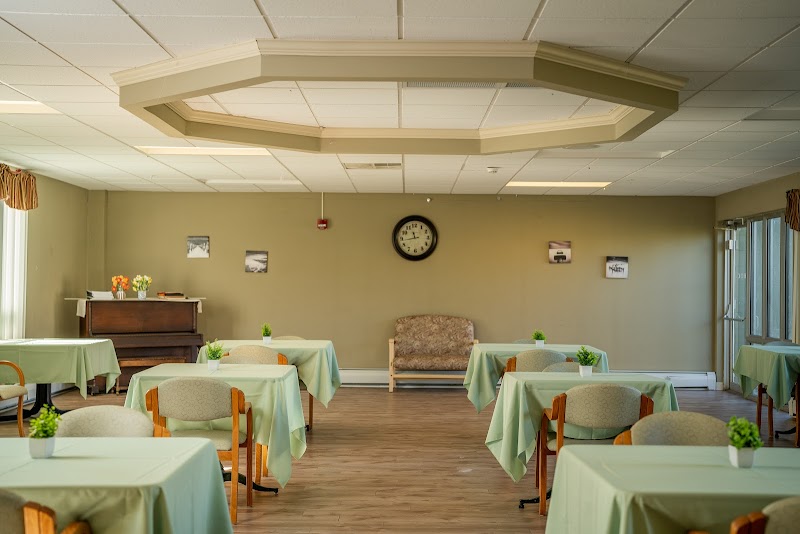
How is Athens Staffed?

CMS rates ATHENS NURSING AND REHABILITATION CENTER's staffing level at 2 out of 5 stars, which is below average compared to other nursing homes. Staff turnover is 58%, which is 12 percentage points above the Pennsylvania average of 46%. High turnover can affect care consistency as new staff learn residents' individual needs. RN turnover specifically is 64%, which is notably high. RNs provide skilled clinical oversight, so turnover in this role can affect medical care quality.

What Have Inspectors Found at Athens?

State health inspectors documented 53 deficiencies at ATHENS NURSING AND REHABILITATION CENTER during 2022 to 2025. These included: 50 with potential for harm and 3 minor or isolated issues. While no single deficiency reached the most serious levels, the total volume warrants attention from prospective families.
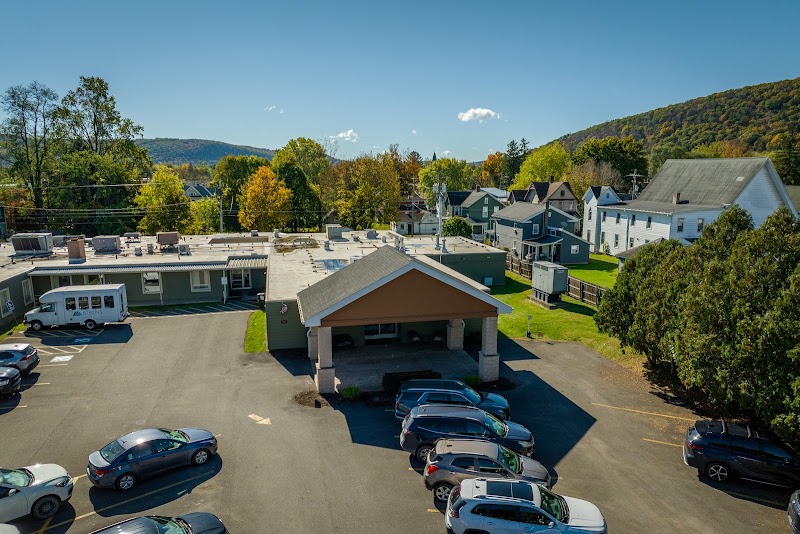
Who Owns and Operates Athens?

ATHENS NURSING AND REHABILITATION CENTER is owned by a for-profit company. For-profit facilities operate as businesses with obligations to shareholders or private owners. The facility is operated by GABRIEL SEBBAG & THE SAMARA FAMILY, a chain that manages multiple nursing homes. With 90 certified beds and approximately 70 residents (about 78% occupancy), it is a smaller facility located in ATHENS, Pennsylvania.

How Does Athens Compare to Other Pennsylvania Nursing Homes?

Compared to the 100 nursing homes in Pennsylvania, ATHENS NURSING AND REHABILITATION CENTER's overall rating (1 stars) is below the state average of 3.0, staff turnover (58%) is significantly higher than the state average of 46%, and health inspection rating (2 stars) is below the national benchmark.

What Should Families Ask When Visiting Athens?

Based on this facility's data, families visiting should ask: "How do you ensure continuity of care given staff turnover, and what is your staff retention strategy?" "Can you walk me through typical staffing levels on day, evening, and night shifts?" "Can I visit during a mealtime to observe dining assistance and food quality?" "How do you handle medical emergencies, and what is your hospital transfer rate?" These questions are particularly relevant given the facility's high staff turnover rate and the below-average staffing rating.

Is Athens Safe?

Based on CMS inspection data, ATHENS NURSING AND REHABILITATION CENTER has a clean safety record: no substantiated abuse findings (meaning no confirmed cases of resident harm), no Immediate Jeopardy citations (the most serious violation level indicating risk of serious injury or death), and is not on the Special Focus Facility watch list (a federal program monitoring the lowest-performing 1% of nursing homes). The facility has a 1-star overall rating and ranks #100 of 100 nursing homes in Pennsylvania. While no facility is perfect, families should still ask about staff-to-resident ratios and recent inspection results during their visit.

Do Nurses at Athens Stick Around?

Staff turnover at ATHENS NURSING AND REHABILITATION CENTER is high. At 58%, the facility is 12 percentage points above the Pennsylvania average of 46%. Registered Nurse turnover is particularly concerning at 64%. RNs handle complex medical decisions and coordinate care — frequent RN changes can directly impact care quality. High turnover means new staff may not know residents' individual needs, medications, or preferences. It can also be disorienting for residents, especially those with dementia who rely on familiar faces. Families should ask: What is causing the turnover? What retention programs are in place? How do you ensure care continuity during staff transitions?

Was Athens Ever Fined?

ATHENS NURSING AND REHABILITATION CENTER has no federal fines on record. CMS issues fines when nursing homes fail to meet care standards or don't correct problems found during inspections. The absence of fines suggests the facility has either maintained compliance or corrected any issues before penalties were assessed. This is a positive indicator, though families should still review recent inspection reports for the full picture.

Is Athens on Any Federal Watch List?

ATHENS NURSING AND REHABILITATION CENTER is not on any federal watch list. The most significant is the Special Focus Facility (SFF) program, which identifies the bottom 1% of nursing homes nationally based on persistent, serious quality problems. Not being on this list means the facility has avoided the pattern of deficiencies that triggers enhanced federal oversight. This is a positive indicator, though families should still review the facility's inspection history directly.