SLATE BELT HEALTH & REHABILITATION CENTER


701 SLATE BELT BLVD, RD 3, BANGOR, PA 18013 (610) 588-6161
For profit - Corporation 119 Beds SABER HEALTHCARE GROUP Data: November 2025
Trust Grade
80/100
#230 of 653 in PA
Last Inspection: February 2025

Within standard 12-15 month inspection cycle. Federal law requires annual inspections.

Overview

Slate Belt Health & Rehabilitation Center has a Trust Grade of B+, which means it is above average and generally recommended for families. It ranks #230 out of 653 facilities in Pennsylvania, placing it in the top half, but it is #11 out of 12 in Northampton County, indicating limited local competition. The facility's trend is improving, with the number of issues decreasing from 6 in 2024 to 3 in 2025. However, staffing is a weakness with a rating of 2 out of 5 stars and a turnover rate of 48%, which is around the state average, suggesting that staff may not stay long enough to build strong relationships with residents. On the positive side, there have been no fines recorded, which is a good sign of compliance. Additionally, although RN coverage is average, the facility has been cited for concerns like improper food storage and unsecured medication access, which could pose risks for residents. One specific incident involved a resident not receiving their meal while others were served, which raises concerns about maintaining dignity during mealtimes. Overall, while Slate Belt has strengths, it also has notable areas for improvement that families should consider.

Trust Score
B+
80/100
In Pennsylvania
#230/653
Top 35%
Safety Record
Low Risk
No red flags
Inspections
Getting Better
6 → 3 violations
Staff Stability
⚠ Watch
48% turnover. Above average. Higher turnover means staff may not know residents' routines.
Penalties
✓ Good
No fines on record. Clean compliance history, better than most Pennsylvania facilities.
Skilled Nurses
○ Average
Each resident gets 33 minutes of Registered Nurse (RN) attention daily — about average for Pennsylvania. RNs are the most trained staff who monitor for health changes.
Violations
○ Average
9 deficiencies on record. Average for a facility this size. Mostly minor or procedural issues.
★★★★☆
4.0
Overall Rating
★★☆☆☆
2.0
Staff Levels
★★☆☆☆
2.0
Care Quality
★★★★☆
4.0
Inspection Score
Stable
2024: 6 issues
2025: 3 issues

The Good

  • Full Sprinkler Coverage · Fire safety systems throughout facility
  • No fines on record

Facility shows strength in fire safety.

The Bad

Staff Turnover: 48%

Near Pennsylvania avg (46%)

Higher turnover may affect care consistency

Chain: SABER HEALTHCARE GROUP

Part of a multi-facility chain

Ask about local staffing decisions and management

The Ugly 9 deficiencies on record

Jun 2025 1 deficiency
CONCERN (E) 📢 Someone Reported This

A family member, employee, or ombudsman was alarmed enough to file a formal complaint

Potential for Harm - no one hurt, but risky conditions existed

Deficiency F0761 (Tag F0761)

Could have caused harm · This affected multiple residents

Based on a review of facility policy, observation, and staff interview, it was determined that the facility failed to ensure that medications/biologicals were securely stored in a manner that prevente...

Read full inspector narrative →
Based on a review of facility policy, observation, and staff interview, it was determined that the facility failed to ensure that medications/biologicals were securely stored in a manner that prevented unauthorized access on one of two nursing units. (Second floor) Findings include: Review of the facility policy entitled, Storage and Expiration Dating of Medications and Biologicals, last reviewed August 1, 2024, revealed that medications and biologicals, including treatment items, were to be securely stored in a locked cabinet/cart or locked medication room that is unaccessible by residents and visitors. Observation on June 2, 2025, at 10:20 a.m., on the second floor nursing unit, revealed that the treatment cart in the hallway was unlocked and unattended and contained several tubes of medicated creams for pain, bottles of saline solution for nose and eyes, and boxes of alcohol pads that were accessible. In an interview on June 2, 2025, at 10:30 a.m., the RN Supervisor confirmed that the treatment cart should have been locked. 28 Pa. Code 211.12(d)(1)(5) Nursing services.
Feb 2025 2 deficiencies
CONCERN (D)

Potential for Harm - no one hurt, but risky conditions existed

Resident Rights (Tag F0550)

Could have caused harm · This affected 1 resident

**NOTE- TERMS IN BRACKETS HAVE BEEN EDITED TO PROTECT CONFIDENTIALITY** Based on observation and resident interview, it was determined that the facility failed to ensure that meals were served in a ma...

Read full inspector narrative →
**NOTE- TERMS IN BRACKETS HAVE BEEN EDITED TO PROTECT CONFIDENTIALITY** Based on observation and resident interview, it was determined that the facility failed to ensure that meals were served in a manner that maintained each resident's dignity for one of 22 sampled residents. (Resident 79) Findings include: Clinical record review revealed that Resident 79 had diagnoses that included rheumatoid arthritis, dysphagia (difficulty swallowing), and protein-calorie malnutrition. The Minimum Data Set assessment dated [DATE], indicated that the resident was alert and oriented and had limitations on both sides of his upper extremities. The care plan identified that the resident had a self-care deficit related to muscle weakness and contractures. There was an intervention for staff to provide total assistance with eating. Observation of the lunch meal on the 2nd floor nursing unit on February 26, 2025, at 12:08 p.m., revealed Resident 39 and Resident 79 seated in their room awaiting lunch. At 12:12 p.m., Resident 39 was served and eating their meal. Resident 79 was observed without a meal and making comments, including, When do I get my food? At 12:35 p.m., Resident 79 used the call bell, State Trained Nursing Assistant (STNA) 1 entered the room, and Resident 79 stated, I didn't get my food. Resident 79 was not assisted with his lunch tray until 12:38 p.m. In an interview on February 27, 2025, the Director of Nursing stated that Residents 39 and 79 should have had their meals provided at the same time. 28 Pa. Code 201.29(a) Resident rights.
CONCERN (D)

Potential for Harm - no one hurt, but risky conditions existed

Quality of Care (Tag F0684)

Could have caused harm · This affected 1 resident

Based on clinical record review and staff interview, it was determined that the facility failed to implement physician's orders for one of 22 sampled residents. (Resident 85) Findings include: Clinic...

Read full inspector narrative →
Based on clinical record review and staff interview, it was determined that the facility failed to implement physician's orders for one of 22 sampled residents. (Resident 85) Findings include: Clinical record review revealed that Resident 85 had diagnoses that included congestive heart failure, pulmonary hypertension, and chronic kidney disease. A physician's order dated January 30, 2025, directed staff to weigh the resident daily. A review of the Medication Administration Record (MAR) for February 2025, revealed that there was no evidence that staff weighed Resident 85 as ordered on February 9, 11, 15, 16, and 25, 2025. In an interview on February 27, 2025, at 10:58 a.m., the Director of Nursing confirmed that there was no documented evidence that the resident was weighed as ordered. 28 Pa. Code 211.12(d)(1)(5) Nursing services.
Feb 2024 6 deficiencies
CONCERN (D)

Potential for Harm - no one hurt, but risky conditions existed

Notification of Changes (Tag F0580)

Could have caused harm · This affected 1 resident

**NOTE- TERMS IN BRACKETS HAVE BEEN EDITED TO PROTECT CONFIDENTIALITY** Based on facility policy review, clinical record review, and staff interview, it was determined that the facility failed to noti...

Read full inspector narrative →
**NOTE- TERMS IN BRACKETS HAVE BEEN EDITED TO PROTECT CONFIDENTIALITY** Based on facility policy review, clinical record review, and staff interview, it was determined that the facility failed to notify the resident's physician of an incident for two of 23 sampled residents. (Residents 75, 109) Findings include: Review of the facility policy entitled, Resident Change in Condition, last reviewed March 16, 2023, revealed that the physician would be notified as soon as the nurse identified a change in condition, accident, or incident. The nurse would record the notification in the resident's health record. Clinical record review revealed that Resident 75 was admitted to the facility on [DATE], with diagnoses that included muscle weakness, senile degeneration of the brain, and repeated falls. Review of a nurse's noted dated November 30, 2023, revealed that Resident 75 had a fall. There was no documented evidence that the resident's physician was notified of the fall. In an interview on February 2, 2024, at 9:42 a.m., the Regional Nurse confirmed that there was no documented evidence that the resident's physician was notified of the fall. Clinical record review revealed that Resident 109 was admitted to the facility on [DATE], with diagnoses that included hemiplegia and hemiparesis following a cerebral infarction (weakness or paralysis after a stroke), low back pain, anxiety, and depression. Review of a nurse's noted dated January 31, 2024, revealed that Resident 109 was found in possession of unmarked pills, empty medication bottles, medication bottles containing pills, and empty medication cards. There was no documented evidence that the resident's physician was notified of the incident per facility policy. In an interview on February 2, 2024, at 9:30 a.m., the Regional Nurse confirmed that there was no documented evidence that the resident's physician was notified at the time of the incident. 28 Pa. Code 211.12(d)(1)(5) Nursing services.
CONCERN (D)

Potential for Harm - no one hurt, but risky conditions existed

Comprehensive Care Plan (Tag F0656)

Could have caused harm · This affected 1 resident

**NOTE- TERMS IN BRACKETS HAVE BEEN EDITED TO PROTECT CONFIDENTIALITY** Based on clinical record review and staff interview, it was determined that the facility failed to develop a comprehensive care ...

Read full inspector narrative →
**NOTE- TERMS IN BRACKETS HAVE BEEN EDITED TO PROTECT CONFIDENTIALITY** Based on clinical record review and staff interview, it was determined that the facility failed to develop a comprehensive care plan to meet each resident's needs as identified in the comprehensive assessment for one of 23 sampled residents. (Resident 67) Findings include: Clinical record review revealed that Resident 67 was admitted to the facility on [DATE], with diagnoses that included hallucinations and dementia with mood disturbances, anxiety, and behavior disturbances. The Minimum Data Set assessment Care Area Assessment (CAA) summary dated December 30, 2023, noted that the resident's psychotropic drug use was to be addressed in the care plan. There was no documented evidence that interventions to address Resident 67's psychotropic drug use were included in the care plan. In an interview on February 2, 2024, at 9:40 a.m., the Regional Nurse confirmed that there was no documented evidence that the identified care area (psychotropic drug use) was addressed in Resident 67's current care plan. 28 Pa. Code 211.12(d)(1)(5) Nursing services.
CONCERN (D)

Potential for Harm - no one hurt, but risky conditions existed

Deficiency F0697 (Tag F0697)

Could have caused harm · This affected 1 resident

Based on facility policy review, clinical record review, and staff interview, it was determined that the facility failed to attempt non-pharmacological interventions to alleviate pain prior to the adm...

Read full inspector narrative →
Based on facility policy review, clinical record review, and staff interview, it was determined that the facility failed to attempt non-pharmacological interventions to alleviate pain prior to the administration of pain medication prescribed on an as needed basis for one of 23 sampled residents. (Resident 3) Findings include: Review of the facility policy entitled, Pain Management, last reviewed March 16, 2023, revealed that non-pharmacological interventions would be attempted prior to the administration of an as needed pain medication. Interventions for pain would be monitored for effectiveness in the electronic medication record. Clinical record review revealed that Resident 3 had diagnoses that included rheumatoid arthritis and muscle weakness. A physician's order dated January 15, 2024, directed staff to administer the narcotic pain medication, oxycodone, every four hours as needed for pain rated at four through seven of ten. Review of the care plan revealed the resident had chronic pain and interventions included that staff offer relaxation techniques to assist with pain control. Review of the January 2024, Medication Administration Record revealed that the resident received the as needed oxycodone 37 times without evidence to support that non-pharmacological interventions were offered prior to the administration of the as needed pain medication. In an interview on February 3, at 9:42 a.m., the Regional Nurse confirmed that there was no documented evidence staff offered non-pharmacological interventions prior to the administration of the as needed pain medication. 28 Pa. Code 211.12(d)(1)(5) Nursing services.
CONCERN (F)

Potential for Harm - no one hurt, but risky conditions existed

Food Safety (Tag F0812)

Could have caused harm · This affected most or all residents

Based on facility policy review, observation, and staff interview, it was determined that the facility failed to properly store food and maintain sanitary conditions in the dietary department. Findin...

Read full inspector narrative →
Based on facility policy review, observation, and staff interview, it was determined that the facility failed to properly store food and maintain sanitary conditions in the dietary department. Findings include: Review of the facility's policy entitled, Use-By Guide-Quick Reference, last reviewed March 16, 2023, revealed that the use-by date marked on a container should be followed and that time/temperature control for safety directed that foods (milk and meat items) would not be held more than seven days. Review of the facility's policy entitled, Storage of Dry Food Policy, last reviewed March 16, 2023, revealed that containers holding food removed from the original packaging were to be labeled and dated. Observation during the kitchen tour on January 30, 2024, at 9:40 a.m., revealed the following: In the dessert cooler, there was a pitcher of water with lemon slices in it and six small dishes of various salad dressings that were not dated. There was a container of frosting that was dated January 18, 2024. In the cook's cooler, there was an open container of cottage cheese with a use-by date of January 12, 2024. There was a package of sliced cheese and a bag of bread with illegible dates noted. There was a container of mozzarella cheese that was dated January 3, 2024. There was a large pan of chocolate mousse that was not labeled or dated. There were three packages of angel food cake and four bags of bread slices that were not dated. In the trayline cooler #1, there was a small cup of milk that was not dated. In trayline cooler #2, there was a pitcher of honey thick milk that was dated January 19, 2024, and 14 cups of milk that were not dated. In the walk-in cooler, there were 24 cartons of chocolate milk with a use-by date of January 28, 2024. In dry storage, there were two bins of white substances that were not labeled or dated. One bin had white food debris covering the top of the lid. The dish machine required a chemical solution to sanitize the dishware and when measured, the sanitizing solution did not meet the required parts per million to sanitize dishes. In an interview on January 30, 2024, at 11:00 a.m., the Registered Dietitian confirmed that the food items should have been labelled and dated and were not, the expired items should have been removed, and that during observation the dish machine was not properly sanitizing dishes. 28 Pa. Code 201.14(a) Responsibility of licensee.
MINOR (B)

Minor Issue - procedural, no safety impact

Transfer Notice (Tag F0623)

Minor procedural issue · This affected multiple residents

**NOTE- TERMS IN BRACKETS HAVE BEEN EDITED TO PROTECT CONFIDENTIALITY** Based on clinical record review and staff interview, it was determined that the facility failed to notify the resident's represe...

Read full inspector narrative →
**NOTE- TERMS IN BRACKETS HAVE BEEN EDITED TO PROTECT CONFIDENTIALITY** Based on clinical record review and staff interview, it was determined that the facility failed to notify the resident's representative(s) of transfer and the reasons for the move in writing for three of 23 sampled residents. (Residents 3, 57, 72) Findings include: Clinical record review revealed that Resident 3 was transferred to and admitted to the hospital on [DATE], after a change in condition. There was no documented evidence that the resident's responsible party was provided with written information regarding the resident's transfer to the hospital. Clinical record review revealed that Resident 57 was transferred to the hospital on January 14, 2024, after a change in condition. There was no documented evidence that the resident's responsible party was provided written information regarding the resident's transfer to the hospital. Clinical record review revealed that Resident 72 was transferred to the hospital on January 9, 2024, after a change in condition. There was no documented evidence that the resident's responsible party was provided written information regarding the resident's transfer to the hospital. In an interview on February 2, 2024, at 10:30 a.m., the Administrator confirmed that written transfer information, including the reasons for the move, was not provided to residents' representative(s).
MINOR (C)

Minor Issue - procedural, no safety impact

Abuse Prevention Policies (Tag F0607)

Minor procedural issue · This affected most or all residents

Based on facility policy review, personnel file review, and staff interview, it was determined that the facility failed to obtain reference checks prior to the start of employment for five of five new...

Read full inspector narrative →
Based on facility policy review, personnel file review, and staff interview, it was determined that the facility failed to obtain reference checks prior to the start of employment for five of five newly hired employees. (Employees 1, 2, 3, 4, and 5) Findings include: Review of the facility policy entitled, Pennsylvania Resident Abuse, last reviewed March 16, 2023, revealed that the facility prohibited abuse, mistreatment, neglect, misappropriation of resident property, and exploitation for all residents. The facility was to implement an abuse prohibition program by screening potential hires, including obtaining references from two prior employers from an applicant. Review of the personnel files for newly hired employees revealed the following: Employee 1 started on September 25, 2023, Employees 2 and 3 started on October 23, 2023, and Employees 4 and 5 started on November 13, 2023. For all five new hires, there was no documented evidence that reference checks were obtained through the screening process. In an interview on February 2, 2024, at 9:45 a.m., the Regional Nurse stated that reference checks were to be obtained through the screening process prior to hire. The Regional Nurse further stated that there was no documented evidence that reference checks were obtained for Employees 1, 2, 3, 4, and 5. 28 Pa. Code 201.14(a) Responsibility of licensee. 28 Pa. Code 201.19 Personnel policies and procedures.
Understanding Severity Codes (click to expand)
Life-Threatening (Immediate Jeopardy)
J - Isolated K - Pattern L - Widespread
Actual Harm
G - Isolated H - Pattern I - Widespread
Potential for Harm
D - Isolated E - Pattern F - Widespread
No Harm (Minor)
A - Isolated B - Pattern C - Widespread

Questions to Ask on Your Visit

  • "Can I speak with families of current residents?"
  • "What's your RN coverage like on weekends and overnight?"

Our Honest Assessment

Strengths
  • • Grade B+ (80/100). Above average facility, better than most options in Pennsylvania.
  • • No major safety red flags. No abuse findings, life-threatening violations, or SFF status.
  • • No fines on record. Clean compliance history, better than most Pennsylvania facilities.
Concerns
  • • No significant concerns identified. This facility shows no red flags across CMS ratings, staff turnover, or federal penalties.
Bottom line: Generally positive indicators. Standard due diligence and a personal visit recommended.

About This Facility

What is Slate Belt Health & Rehabilitation Center's CMS Rating?

CMS assigns SLATE BELT HEALTH & REHABILITATION CENTER an overall rating of 4 out of 5 stars, which is considered above average nationally. Within Pennsylvania, this rating places the facility higher than 99% of the state's 100 nursing homes. This rating reflects solid performance across the metrics CMS uses to evaluate nursing home quality.

How is Slate Belt Health & Rehabilitation Center Staffed?

CMS rates SLATE BELT HEALTH & REHABILITATION CENTER's staffing level at 2 out of 5 stars, which is below average compared to other nursing homes. Staff turnover is 48%, compared to the Pennsylvania average of 46%.

What Have Inspectors Found at Slate Belt Health & Rehabilitation Center?

State health inspectors documented 9 deficiencies at SLATE BELT HEALTH & REHABILITATION CENTER during 2024 to 2025. These included: 7 with potential for harm and 2 minor or isolated issues.
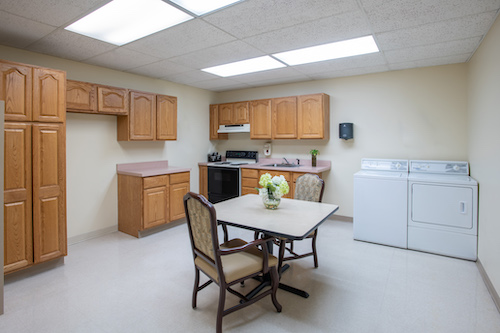
Who Owns and Operates Slate Belt Health & Rehabilitation Center?

SLATE BELT HEALTH & REHABILITATION CENTER is owned by a for-profit company. For-profit facilities operate as businesses with obligations to shareholders or private owners. The facility is operated by SABER HEALTHCARE GROUP, a chain that manages multiple nursing homes. With 119 certified beds and approximately 109 residents (about 92% occupancy), it is a mid-sized facility located in BANGOR, Pennsylvania.

How Does Slate Belt Health & Rehabilitation Center Compare to Other Pennsylvania Nursing Homes?

Compared to the 100 nursing homes in Pennsylvania, SLATE BELT HEALTH & REHABILITATION CENTER's overall rating (4 stars) is above the state average of 3.0, staff turnover (48%) is near the state average of 46%, and health inspection rating (4 stars) is above the national benchmark.

What Should Families Ask When Visiting Slate Belt Health & Rehabilitation Center?

Based on this facility's data, families visiting should ask: "Can you walk me through typical staffing levels on day, evening, and night shifts?" "Can I visit during a mealtime to observe dining assistance and food quality?" "How do you handle medical emergencies, and what is your hospital transfer rate?" "Can I speak with family members of current residents about their experience?" These questions are particularly relevant given the below-average staffing rating.

Is Slate Belt Health & Rehabilitation Center Safe?

Based on CMS inspection data, SLATE BELT HEALTH & REHABILITATION CENTER has a clean safety record: no substantiated abuse findings (meaning no confirmed cases of resident harm), no Immediate Jeopardy citations (the most serious violation level indicating risk of serious injury or death), and is not on the Special Focus Facility watch list (a federal program monitoring the lowest-performing 1% of nursing homes). The facility has a 4-star overall rating and ranks #1 of 100 nursing homes in Pennsylvania. While no facility is perfect, families should still ask about staff-to-resident ratios and recent inspection results during their visit.

Do Nurses at Slate Belt Health & Rehabilitation Center Stick Around?

SLATE BELT HEALTH & REHABILITATION CENTER has a staff turnover rate of 48%, which is about average for Pennsylvania nursing homes (state average: 46%). Moderate turnover is common in nursing homes, but families should still ask about staff tenure and how the facility maintains care continuity when employees leave.

Was Slate Belt Health & Rehabilitation Center Ever Fined?

SLATE BELT HEALTH & REHABILITATION CENTER has no federal fines on record. CMS issues fines when nursing homes fail to meet care standards or don't correct problems found during inspections. The absence of fines suggests the facility has either maintained compliance or corrected any issues before penalties were assessed. This is a positive indicator, though families should still review recent inspection reports for the full picture.

Is Slate Belt Health & Rehabilitation Center on Any Federal Watch List?

SLATE BELT HEALTH & REHABILITATION CENTER is not on any federal watch list. The most significant is the Special Focus Facility (SFF) program, which identifies the bottom 1% of nursing homes nationally based on persistent, serious quality problems. Not being on this list means the facility has avoided the pattern of deficiencies that triggers enhanced federal oversight. This is a positive indicator, though families should still review the facility's inspection history directly.